Mindful breathing and body scan meditation techniques integrated with daily self-care routines. Develops strategies for balancing life demands and advocating for personal wellness needs.
A comprehensive guide for managing anxiety using CBT-based techniques, specifically designed with simple language and concrete strategies for an 18-year-old autistic student. Includes grounding, thought-challenging, and social role-playing.
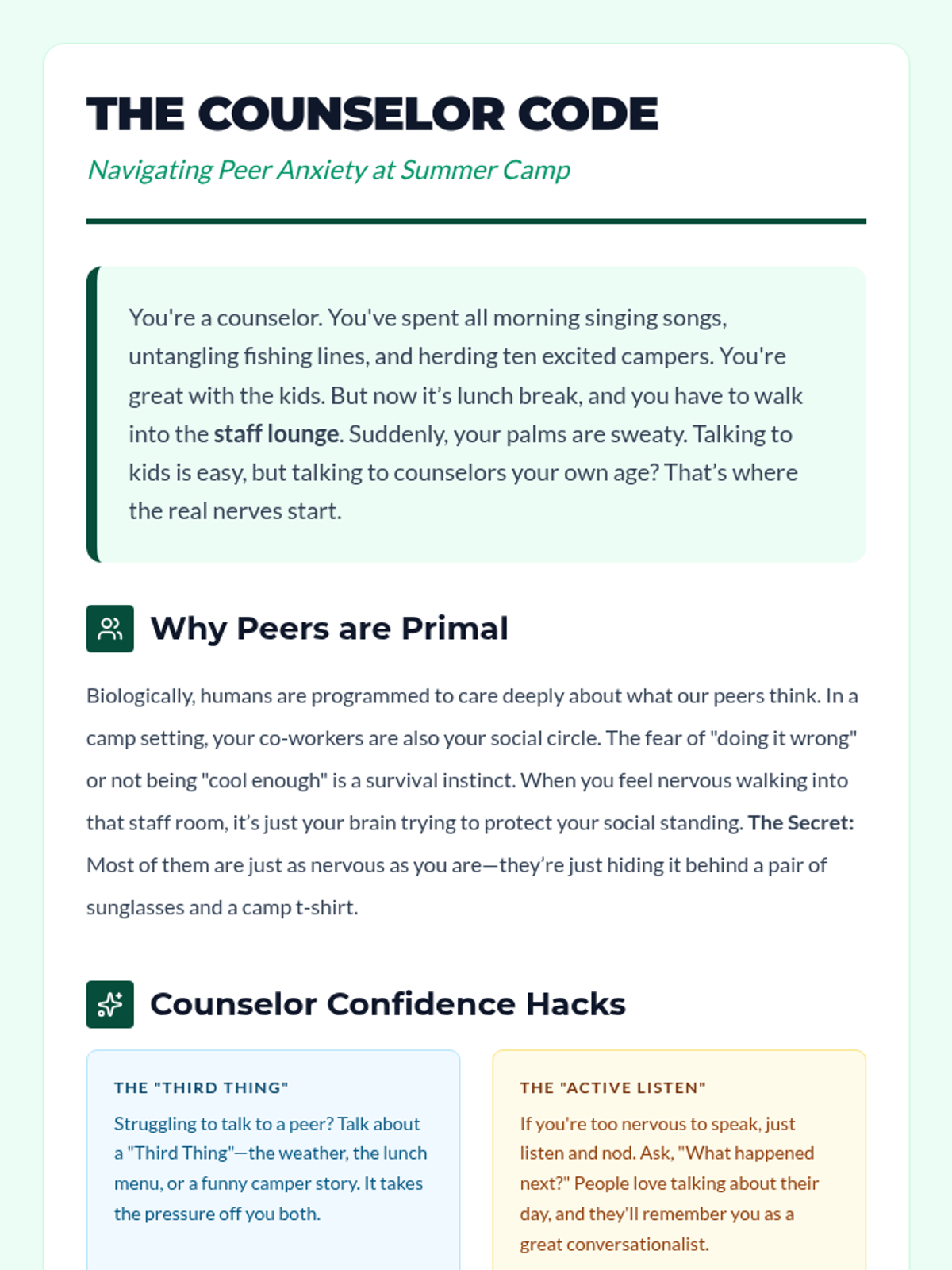
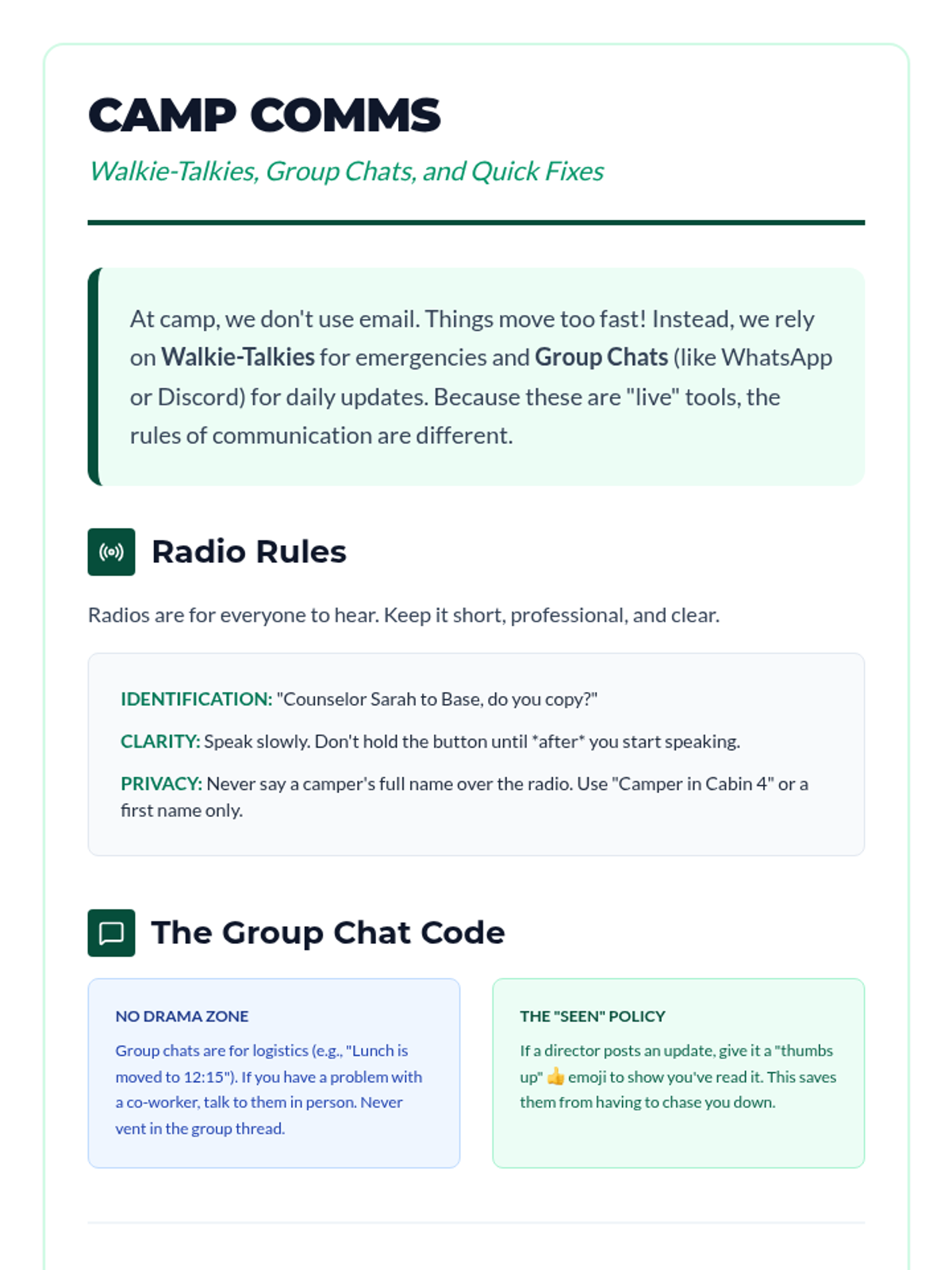
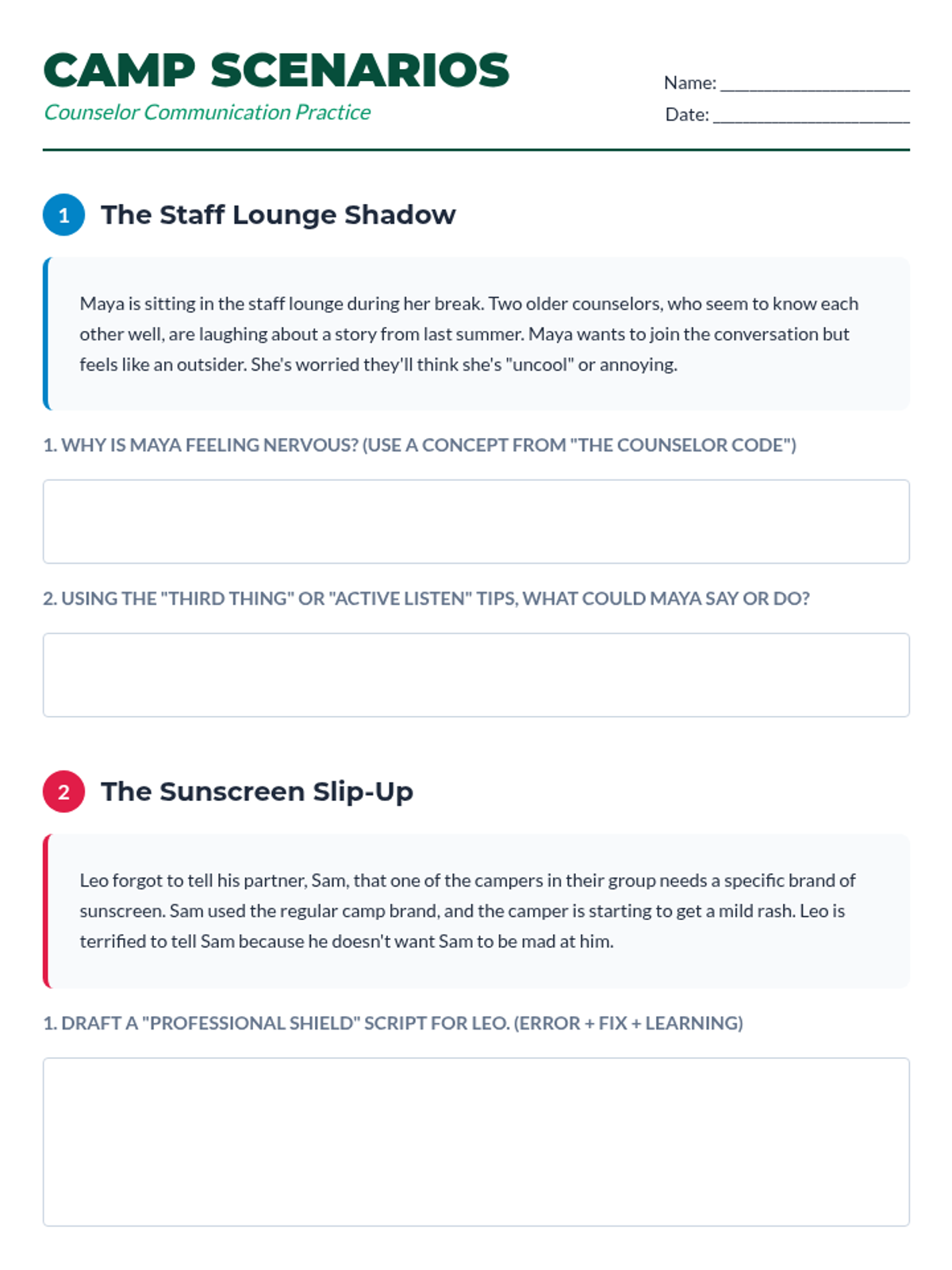
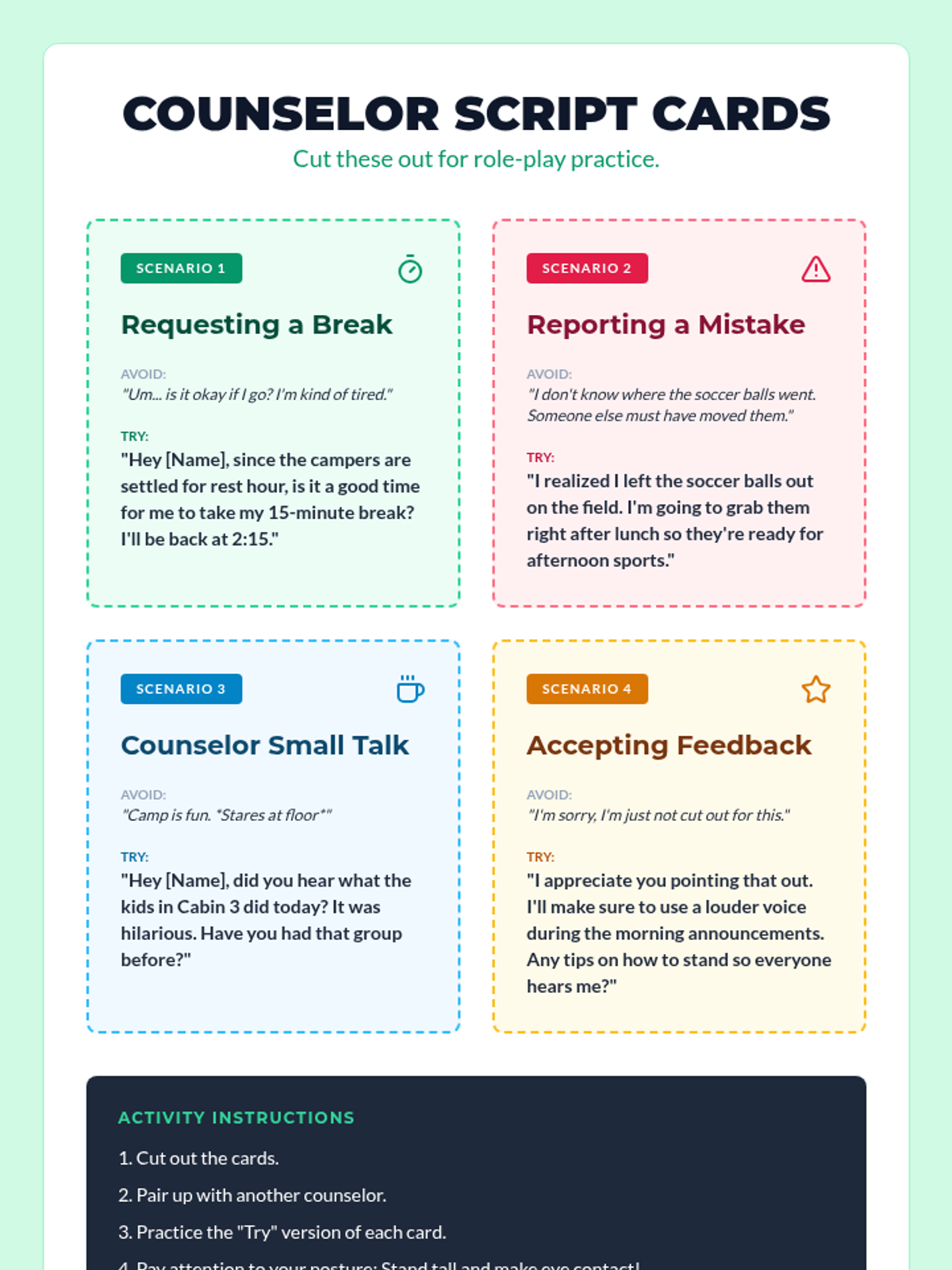
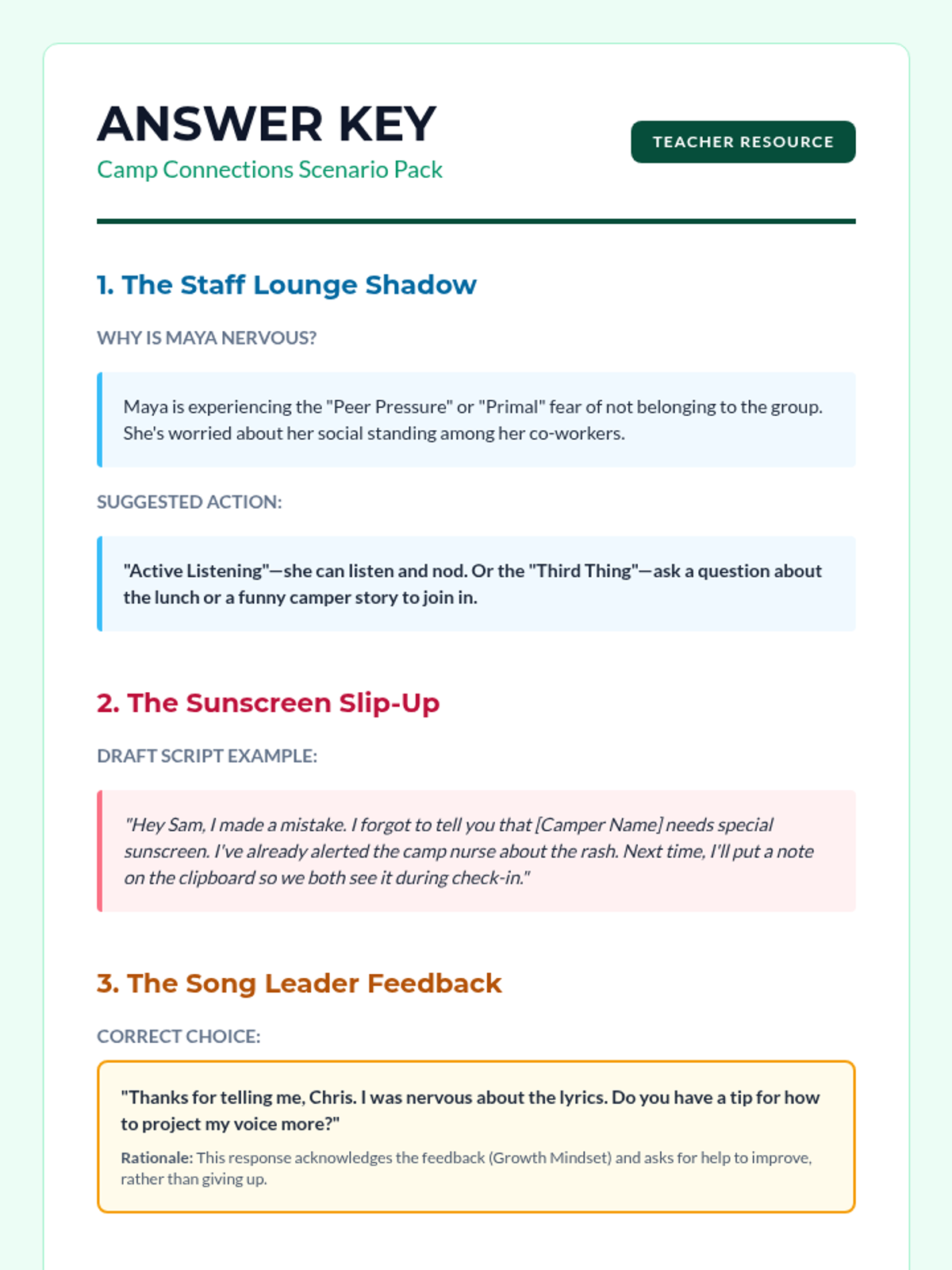
A comprehensive lesson on navigating professional workplace communication, focusing on building confidence and reducing anxiety in common social scenarios.
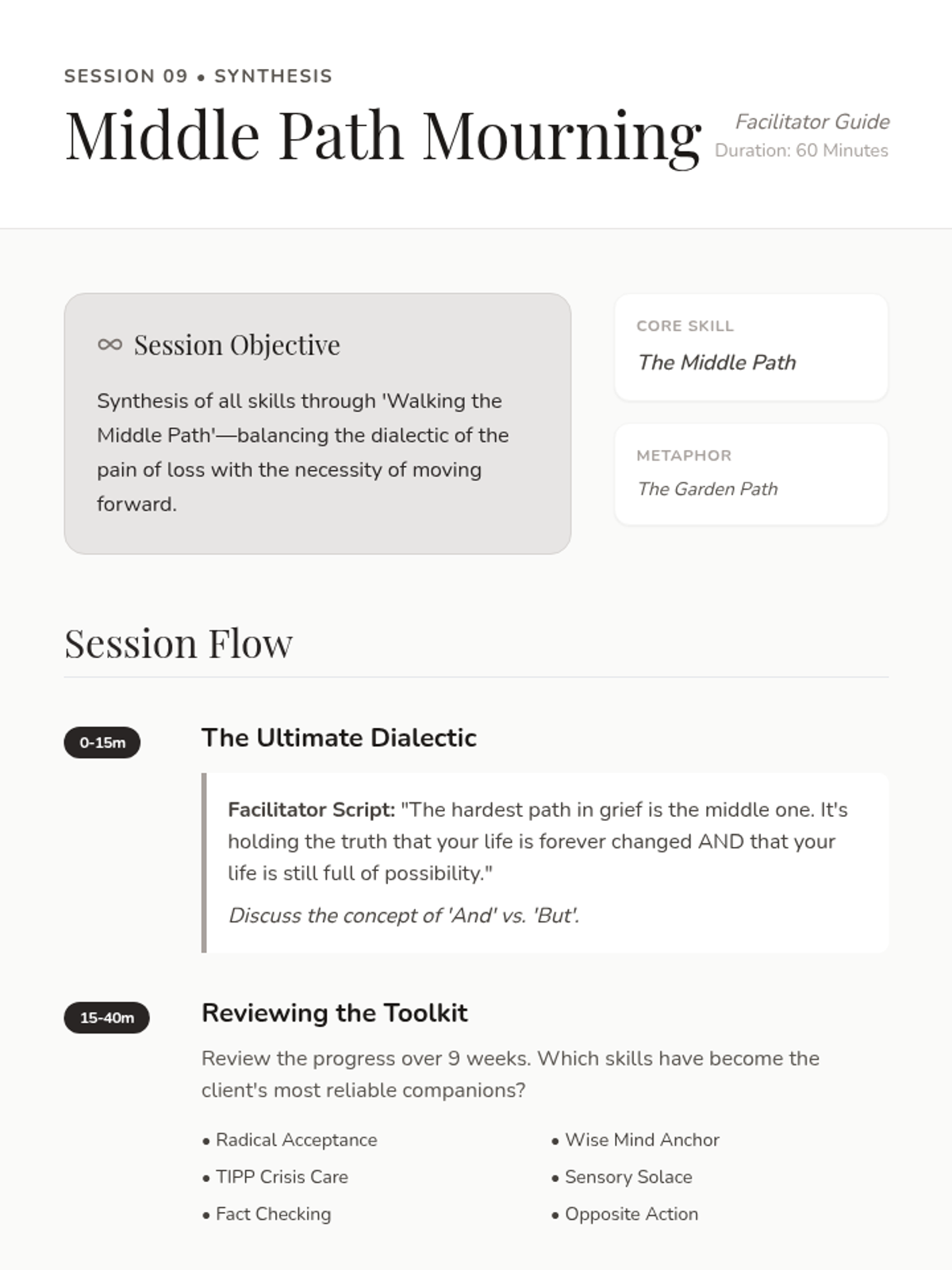
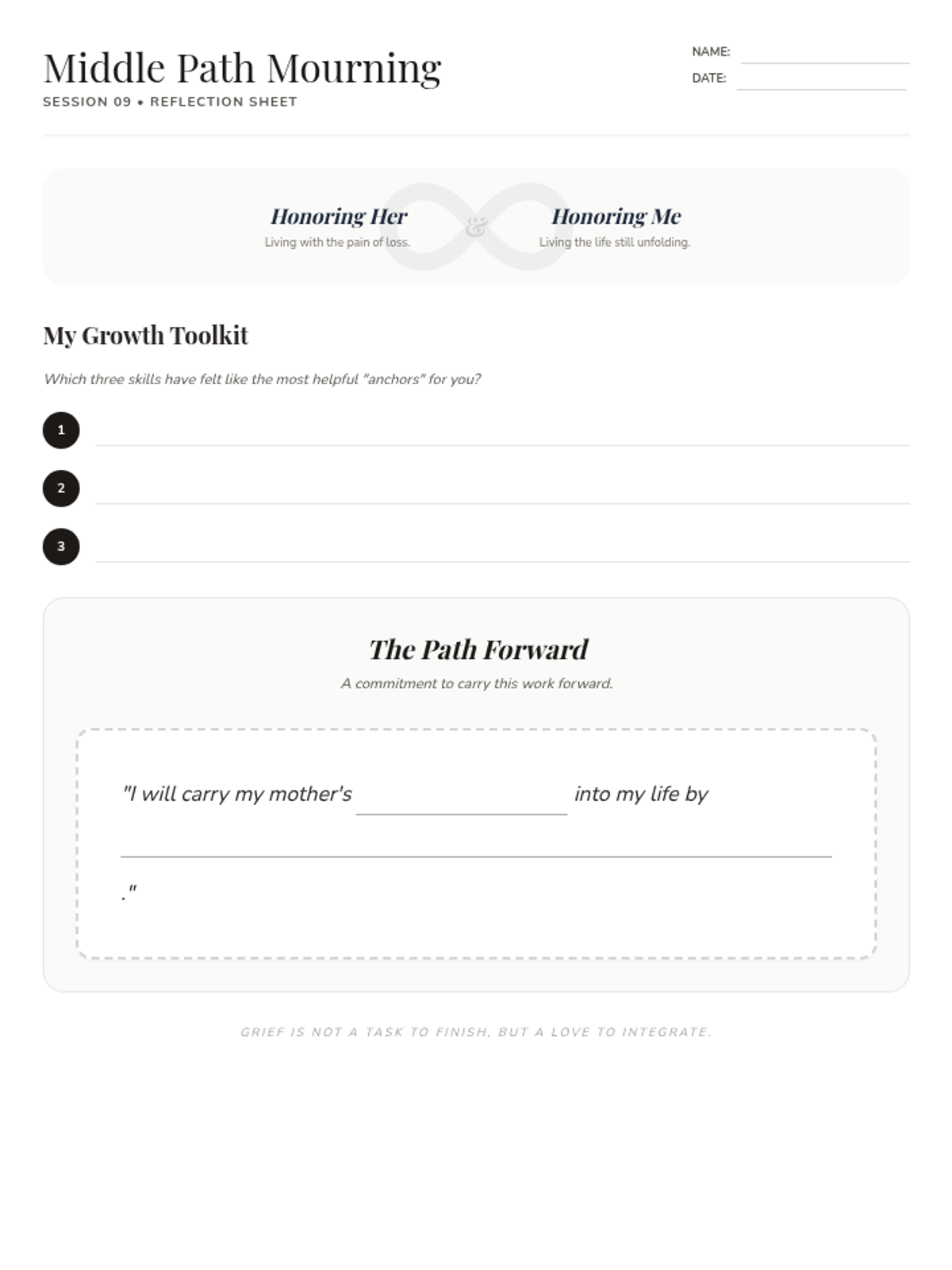
Synthesis of skills through 'Walking the Middle Path'—balancing the pain of loss with the necessity of moving forward.
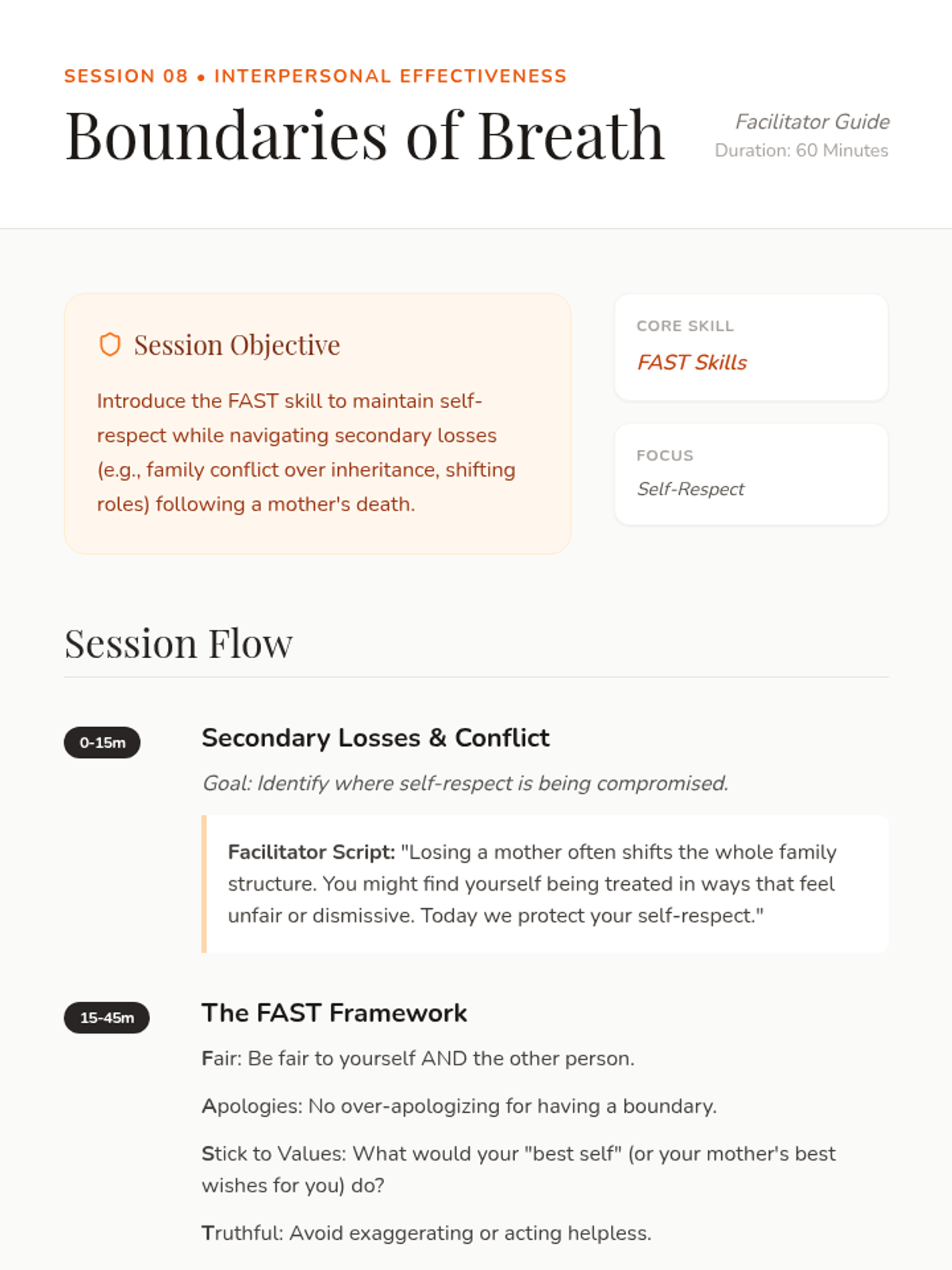
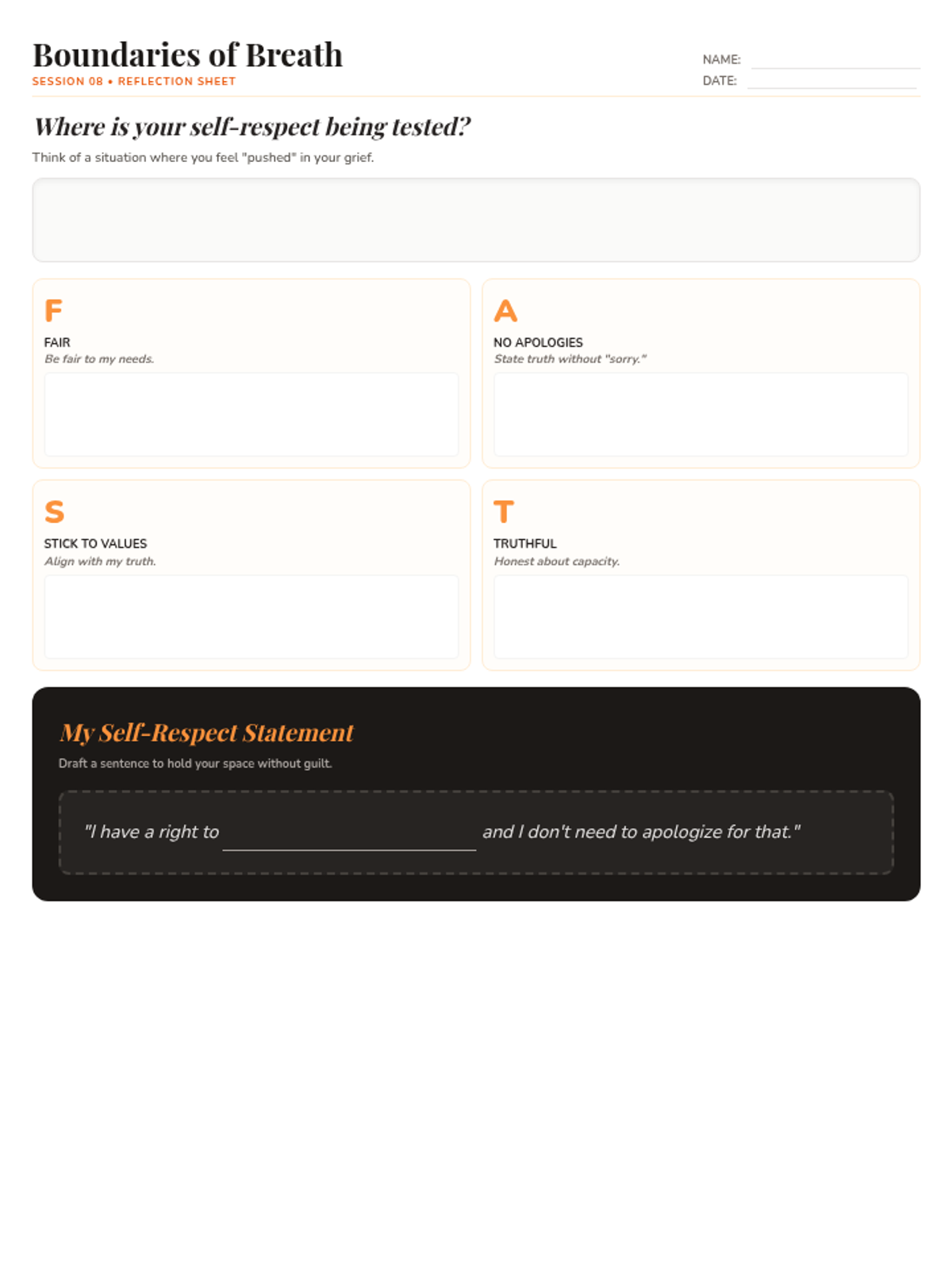
Applying the FAST skill to maintain self-respect and values when navigating the secondary losses associated with maternal death.
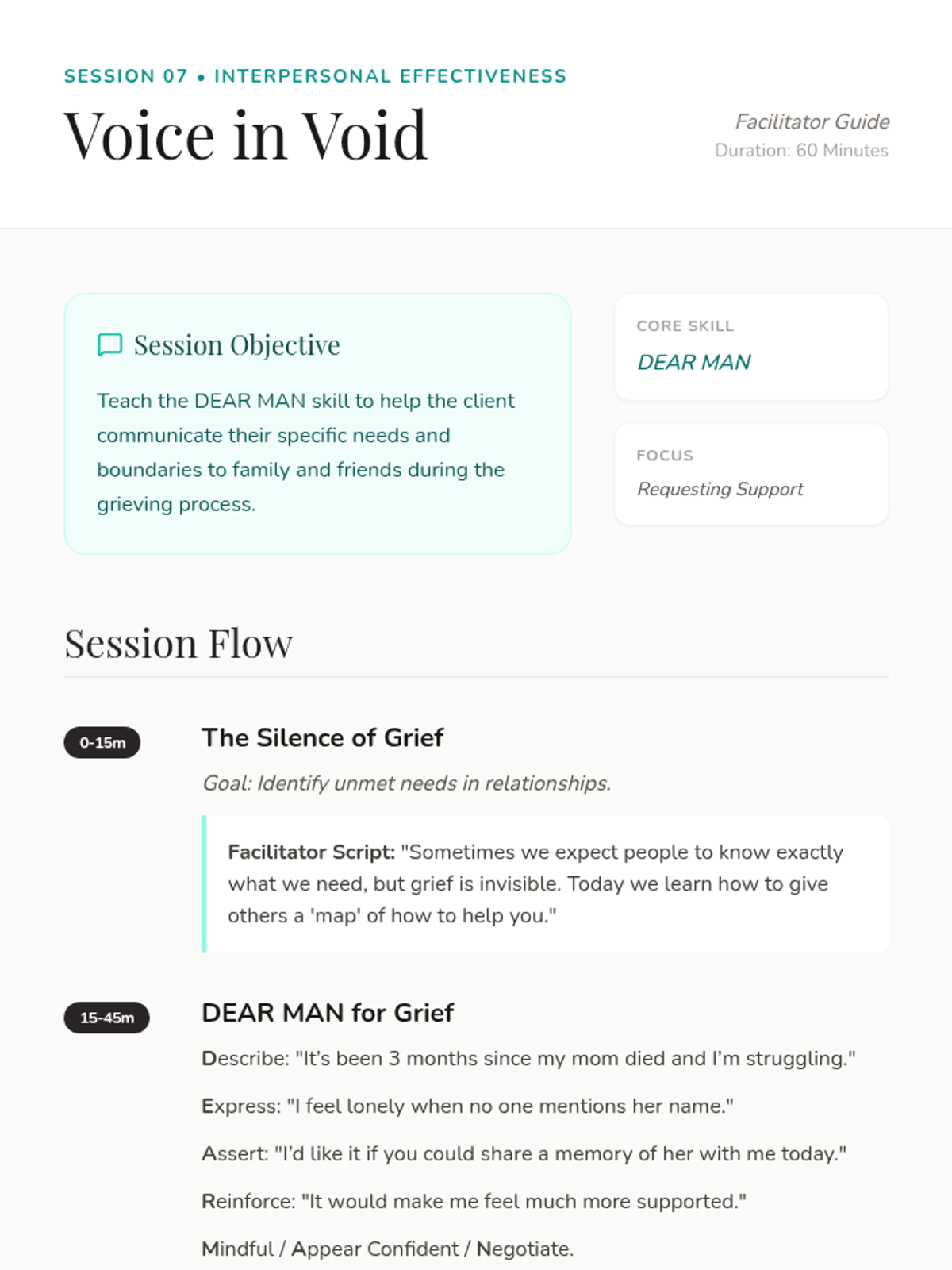
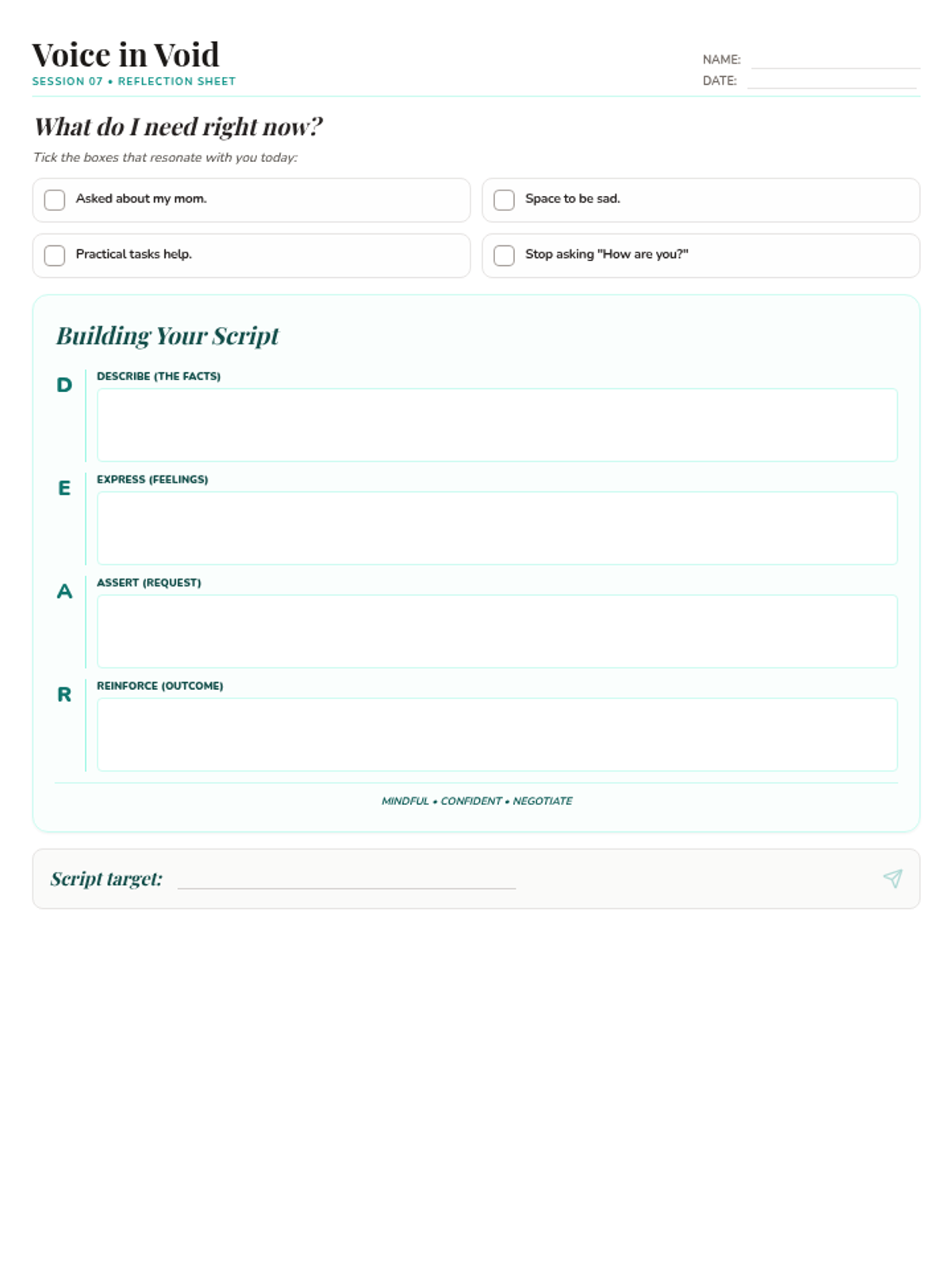
Using the DEAR MAN skill to communicate needs and boundaries to family and friends during the grieving process.
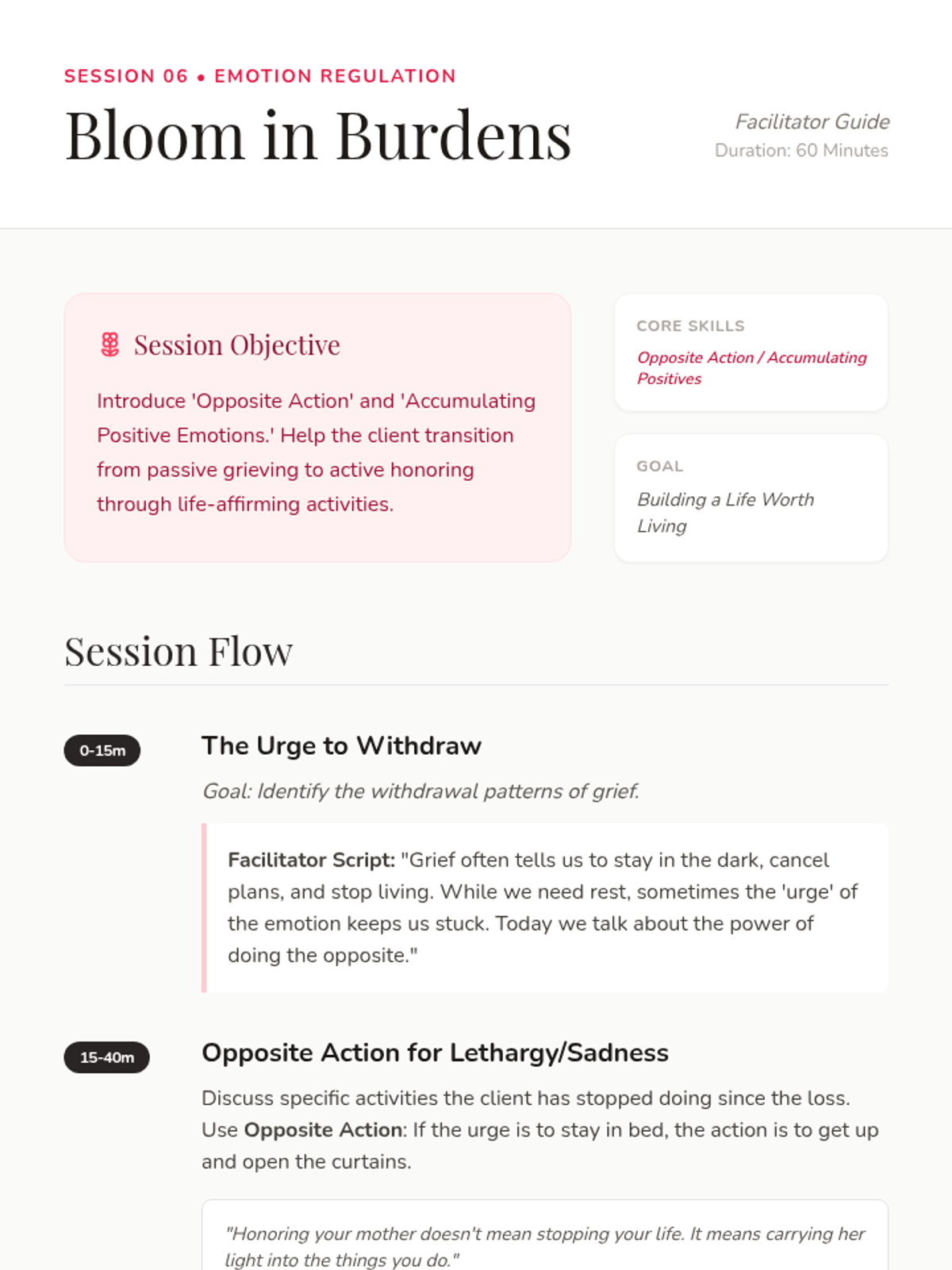
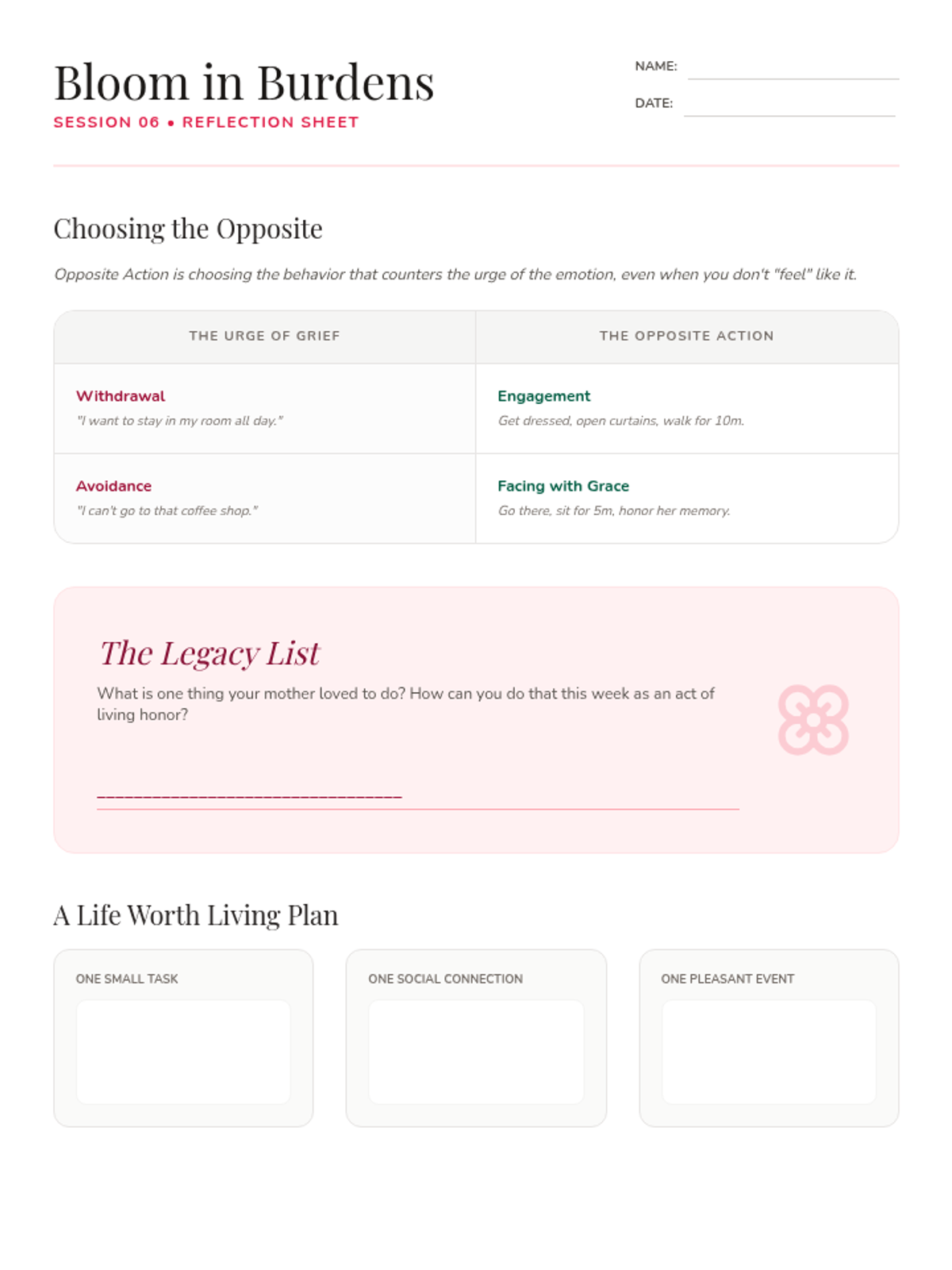
Implementing 'Opposite Action' and 'Building a Life Worth Living' by intentionally engaging in activities that honor the relationship.
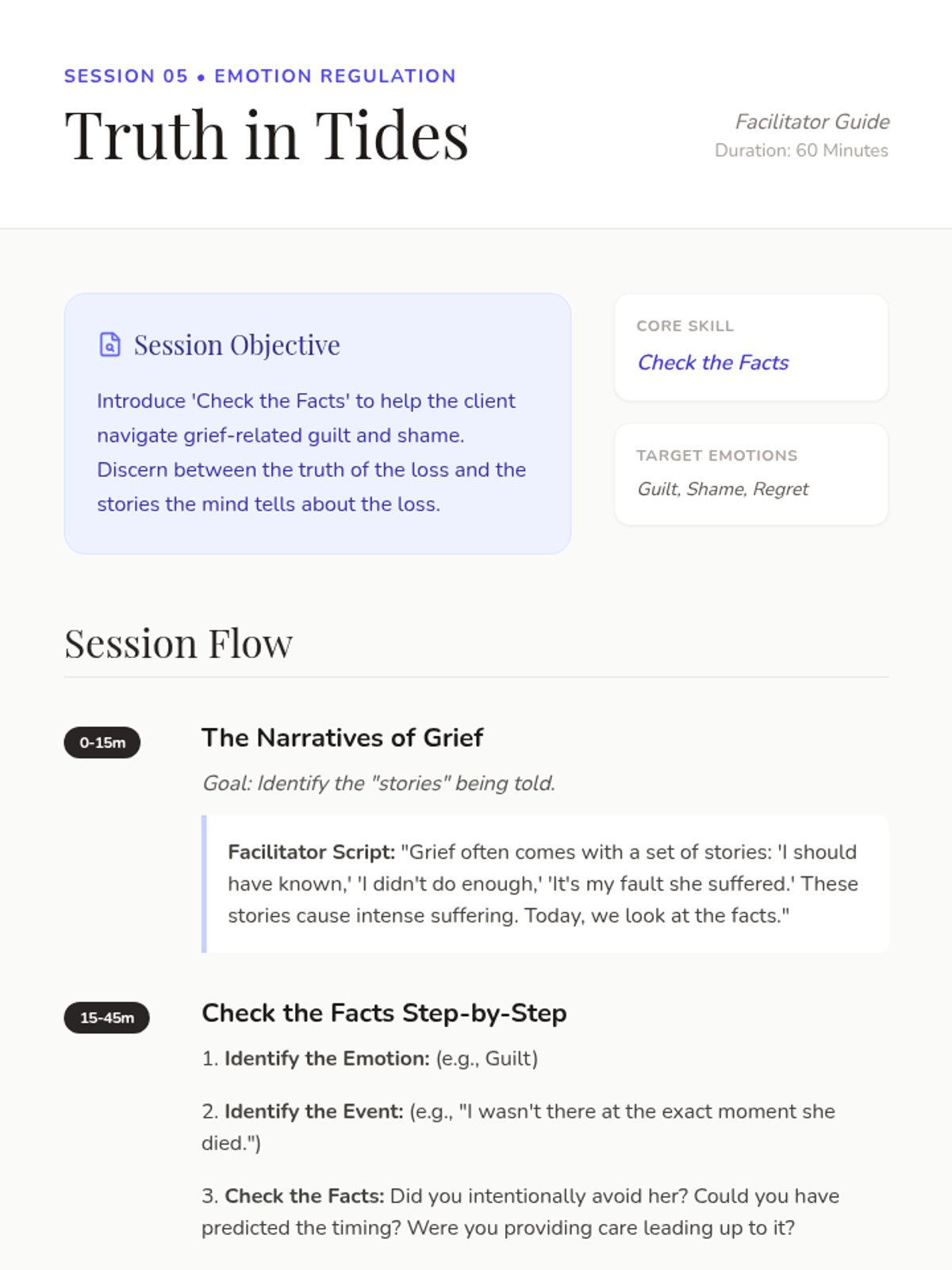
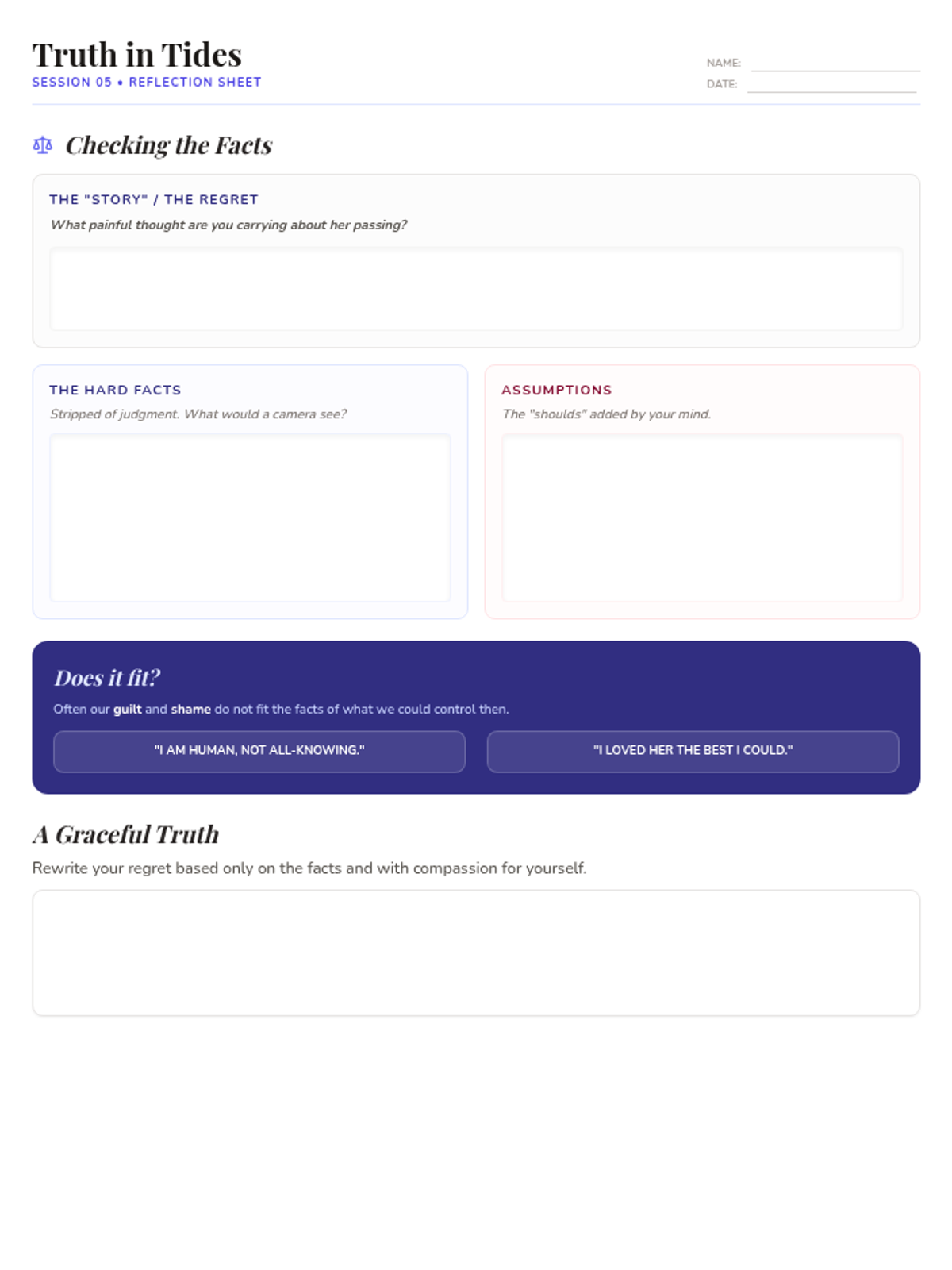
Applying 'Check the Facts' to common grief-related emotions like guilt, shame, and regret.
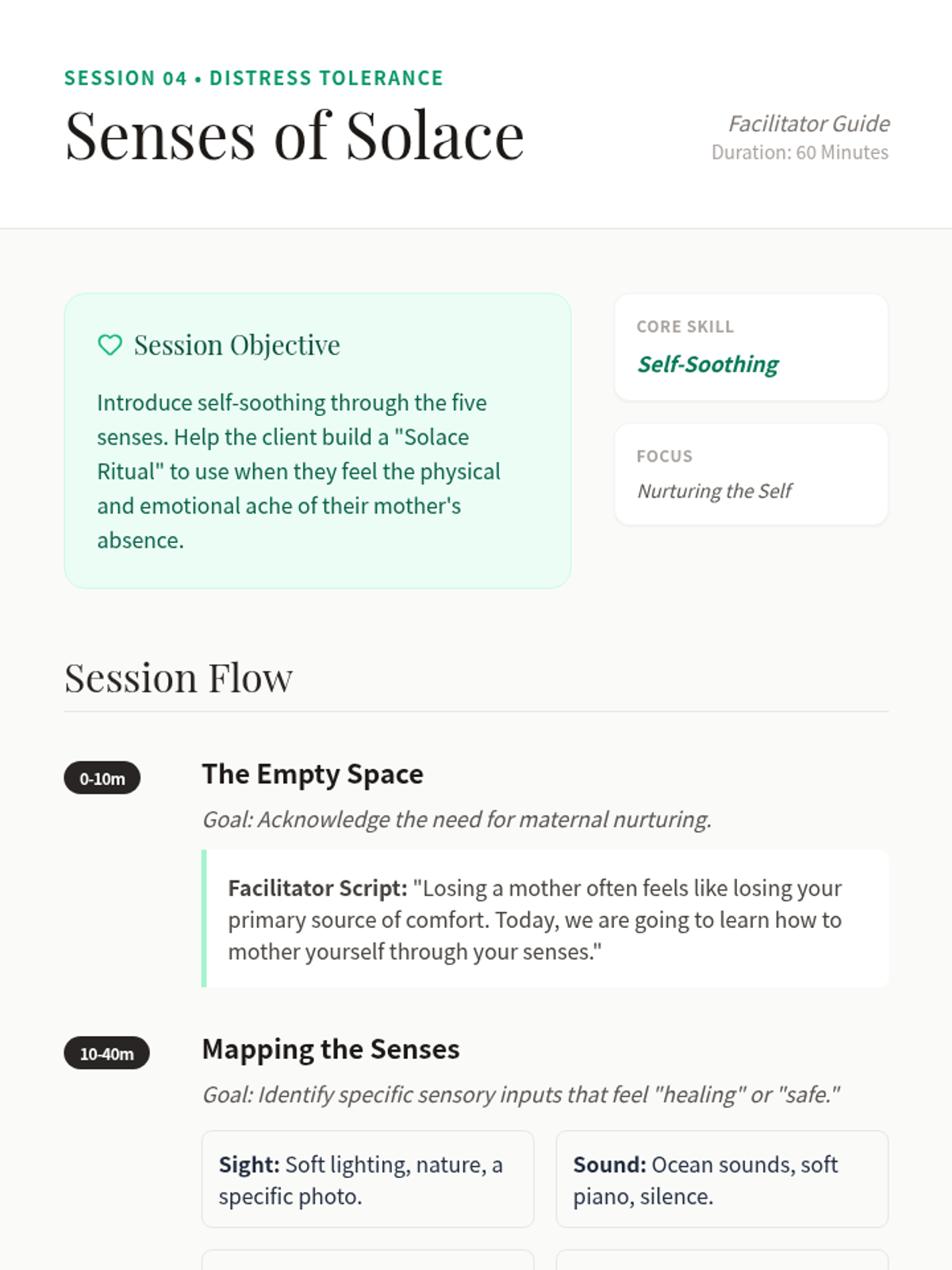
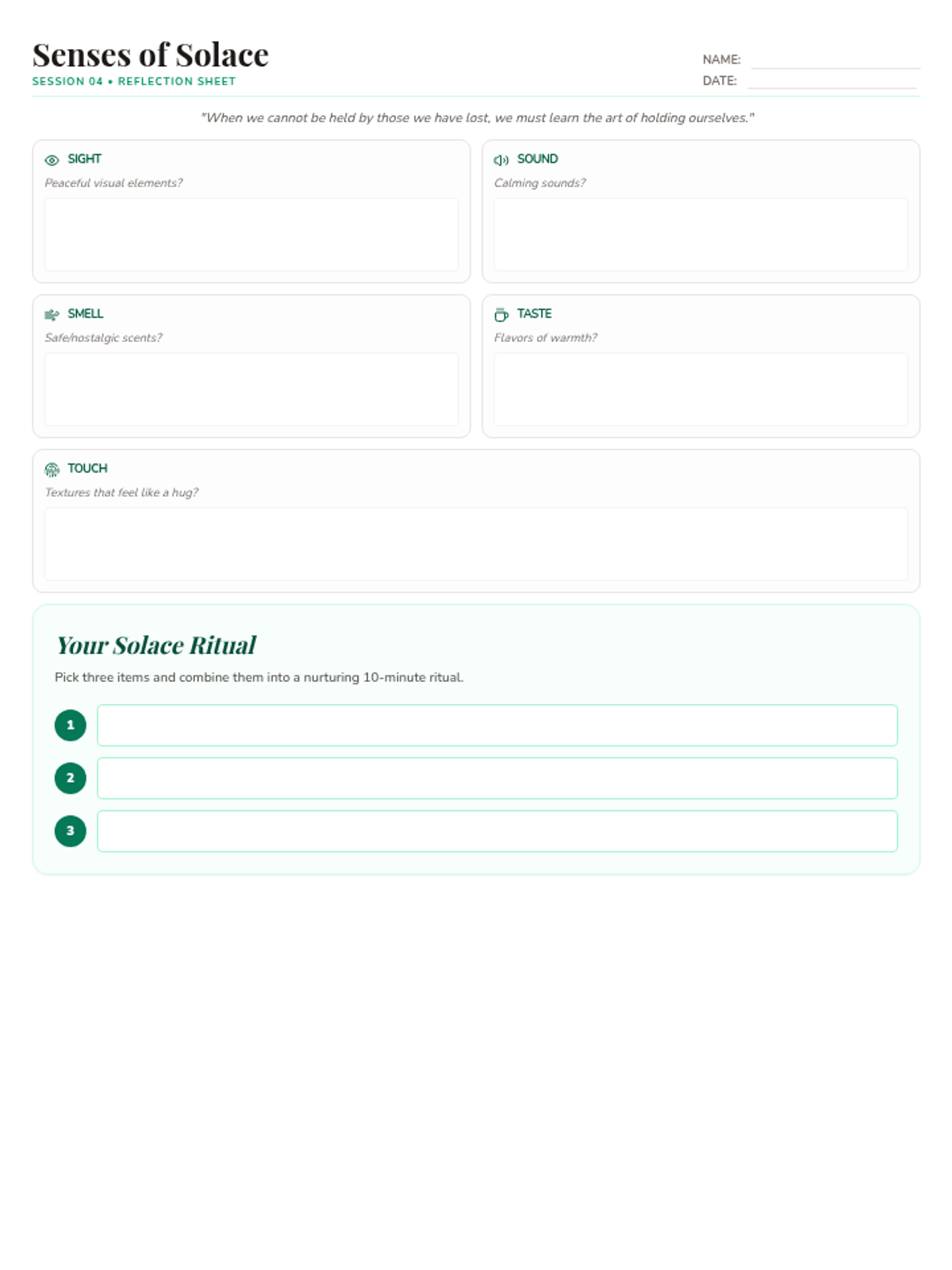
Using the five senses to create a self-soothing ritual for times when the absence of a mother is felt most acutely.
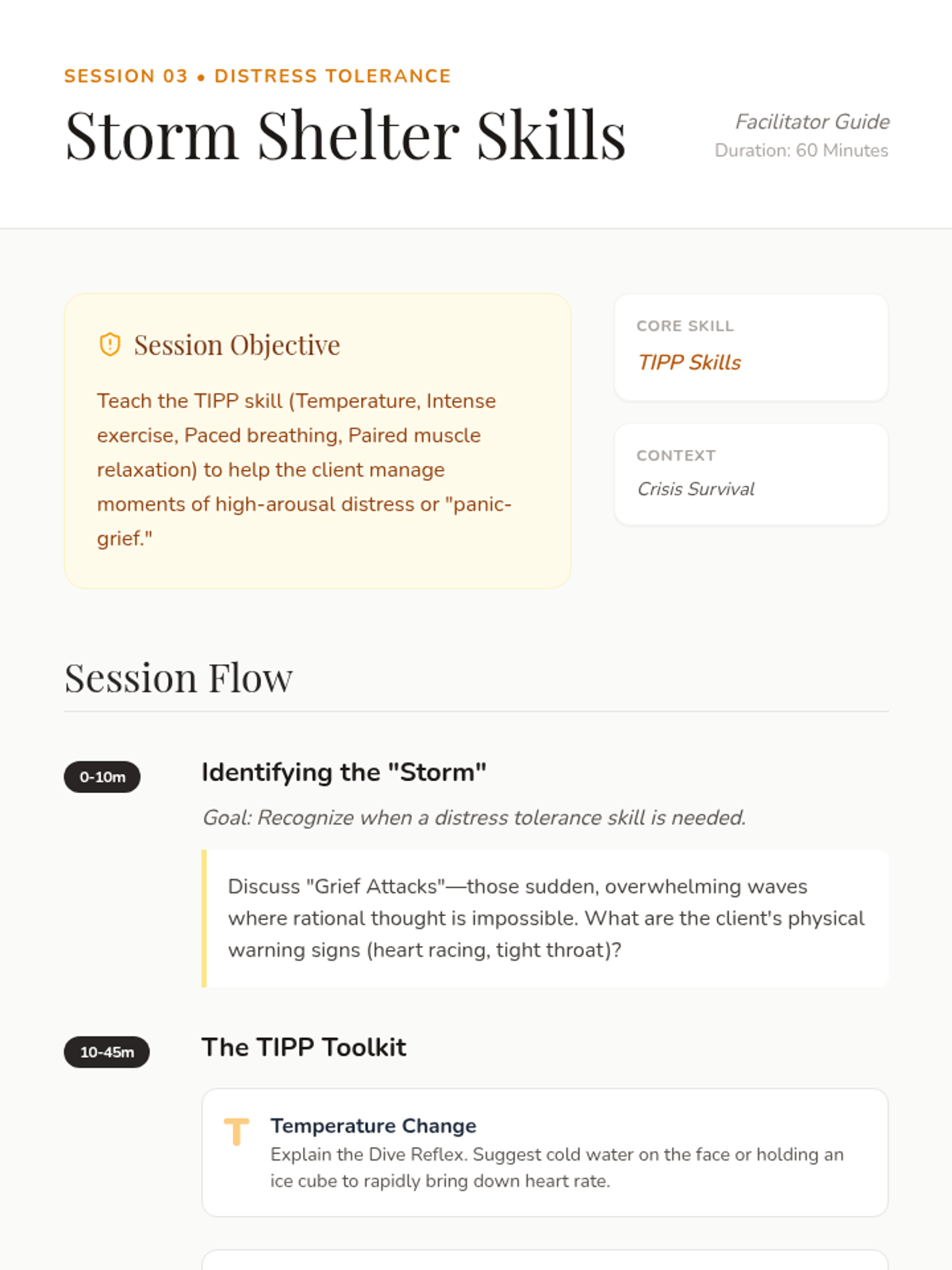
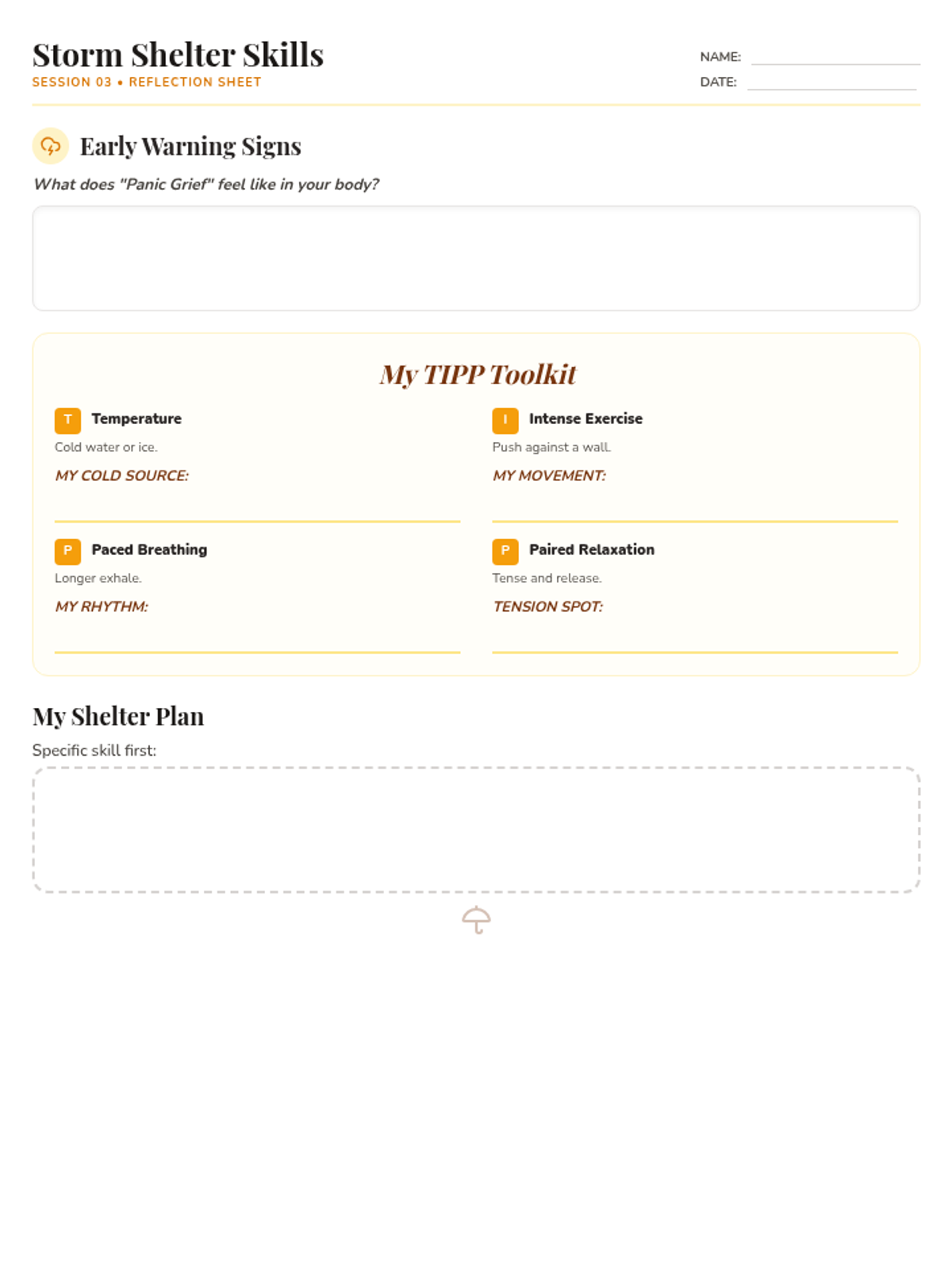
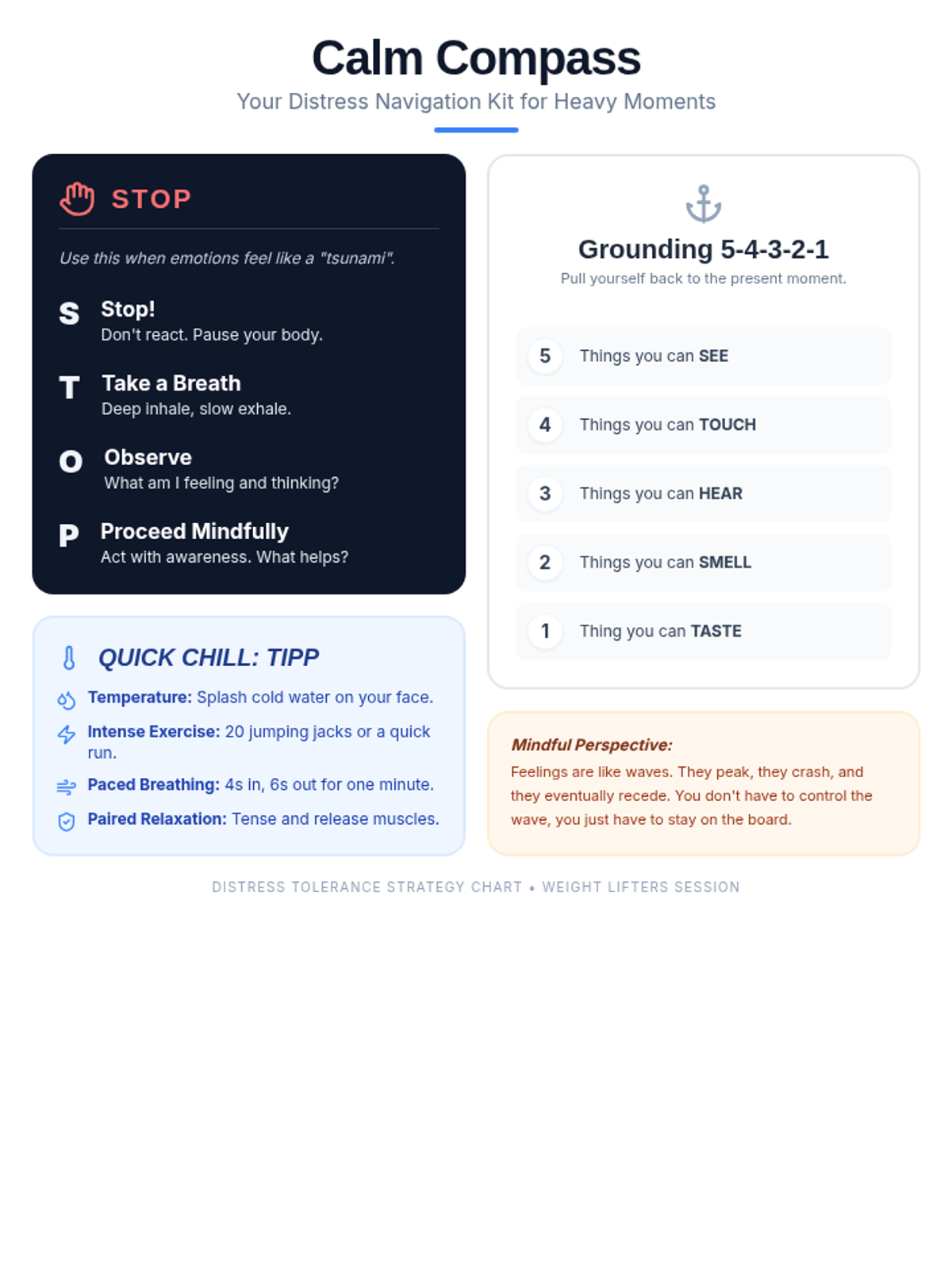
Teaching the TIPP skill to manage acute, overwhelming moments of distress during the mourning process.
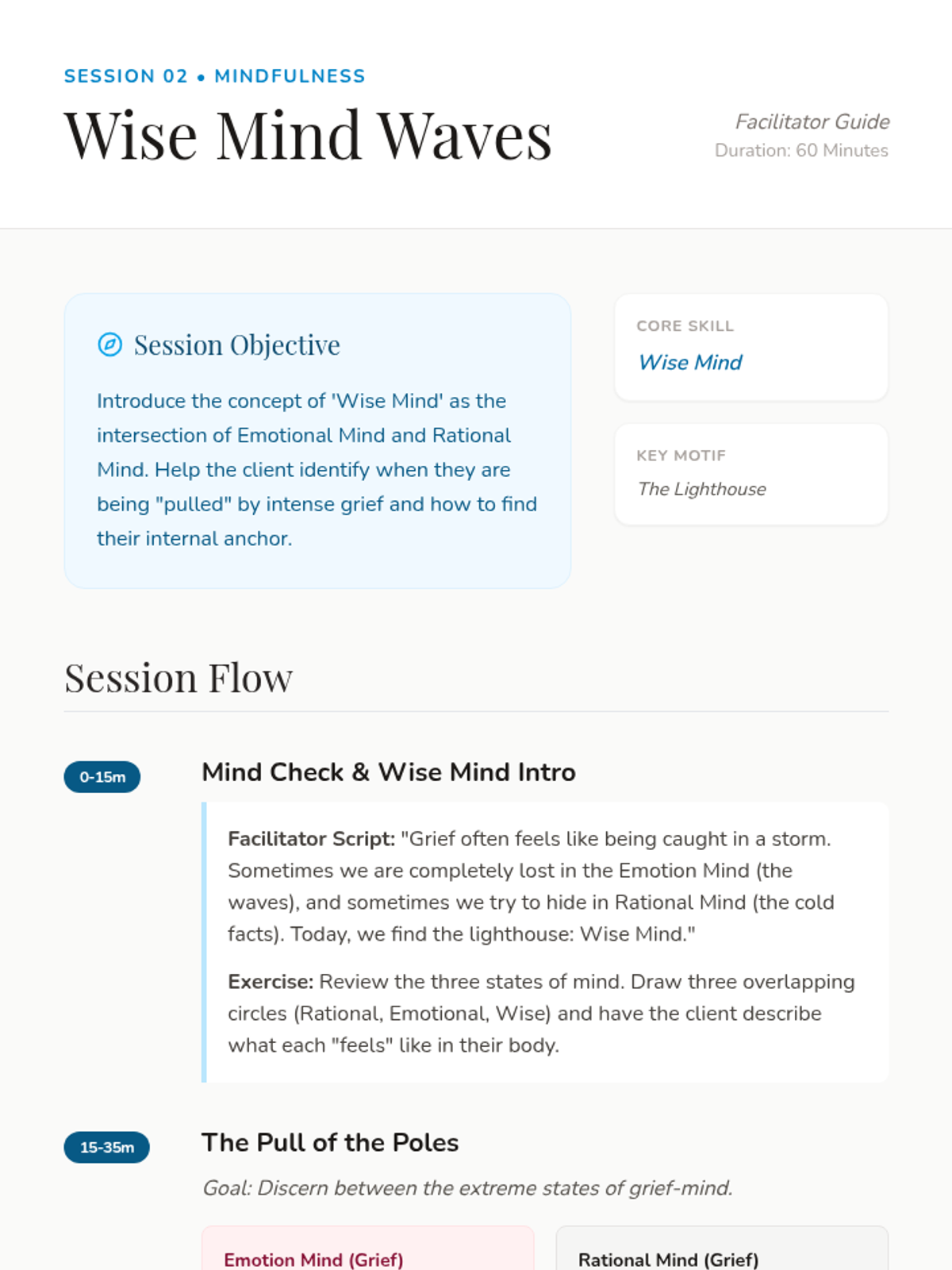
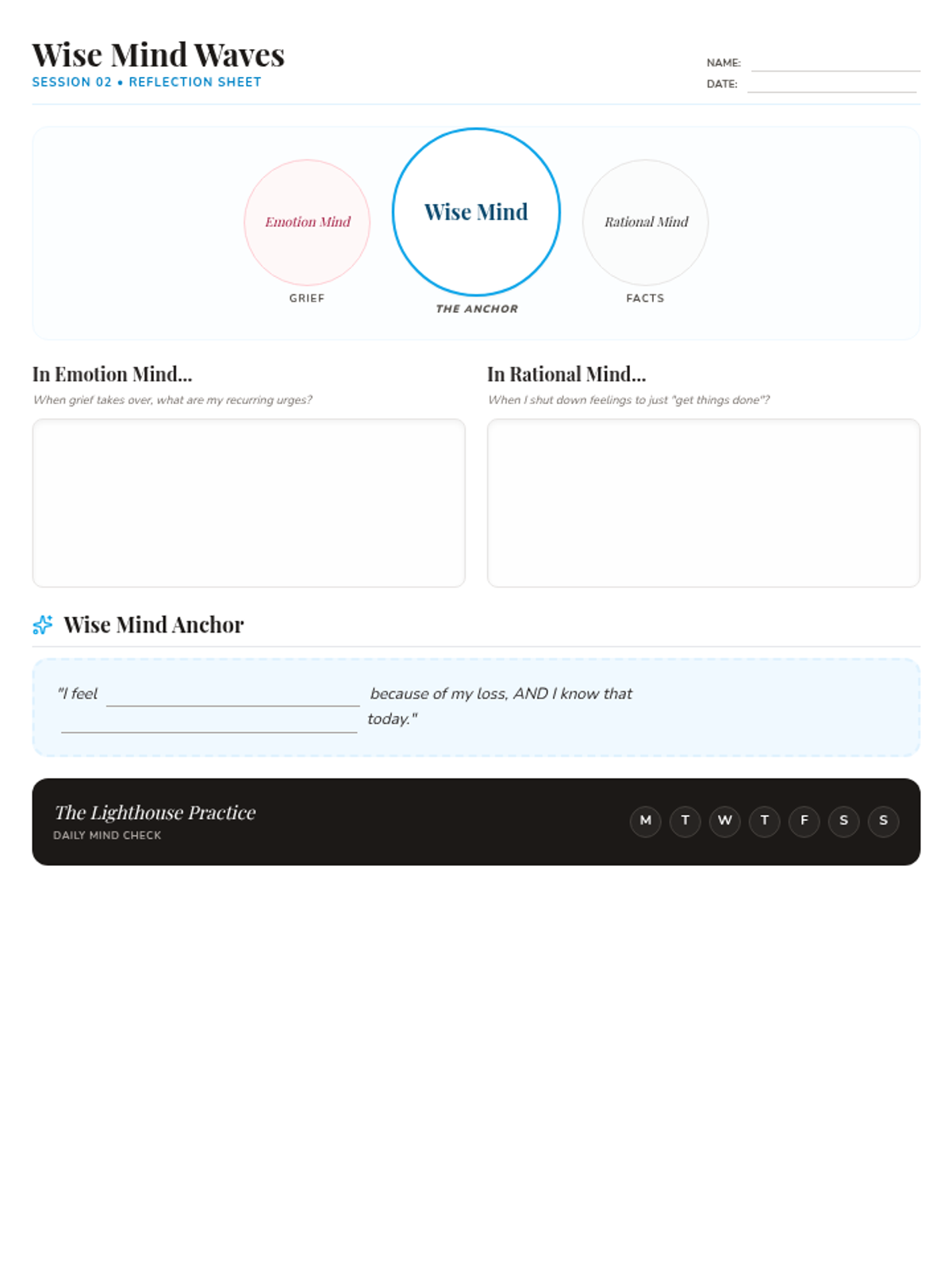
Exploring the balance between the 'Emotional Mind' of grief and the 'Rational Mind' of daily life to find 'Wise Mind'.
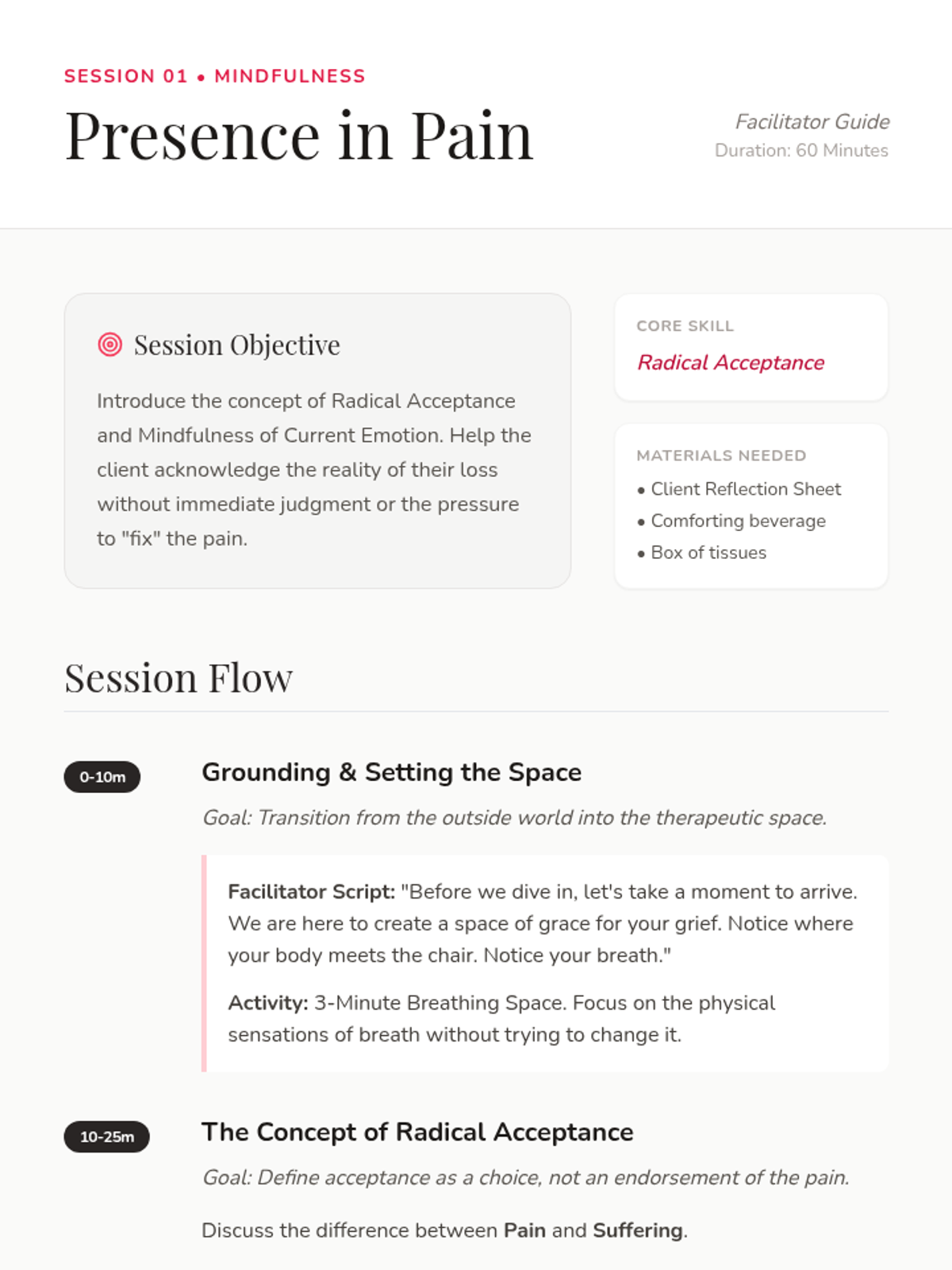
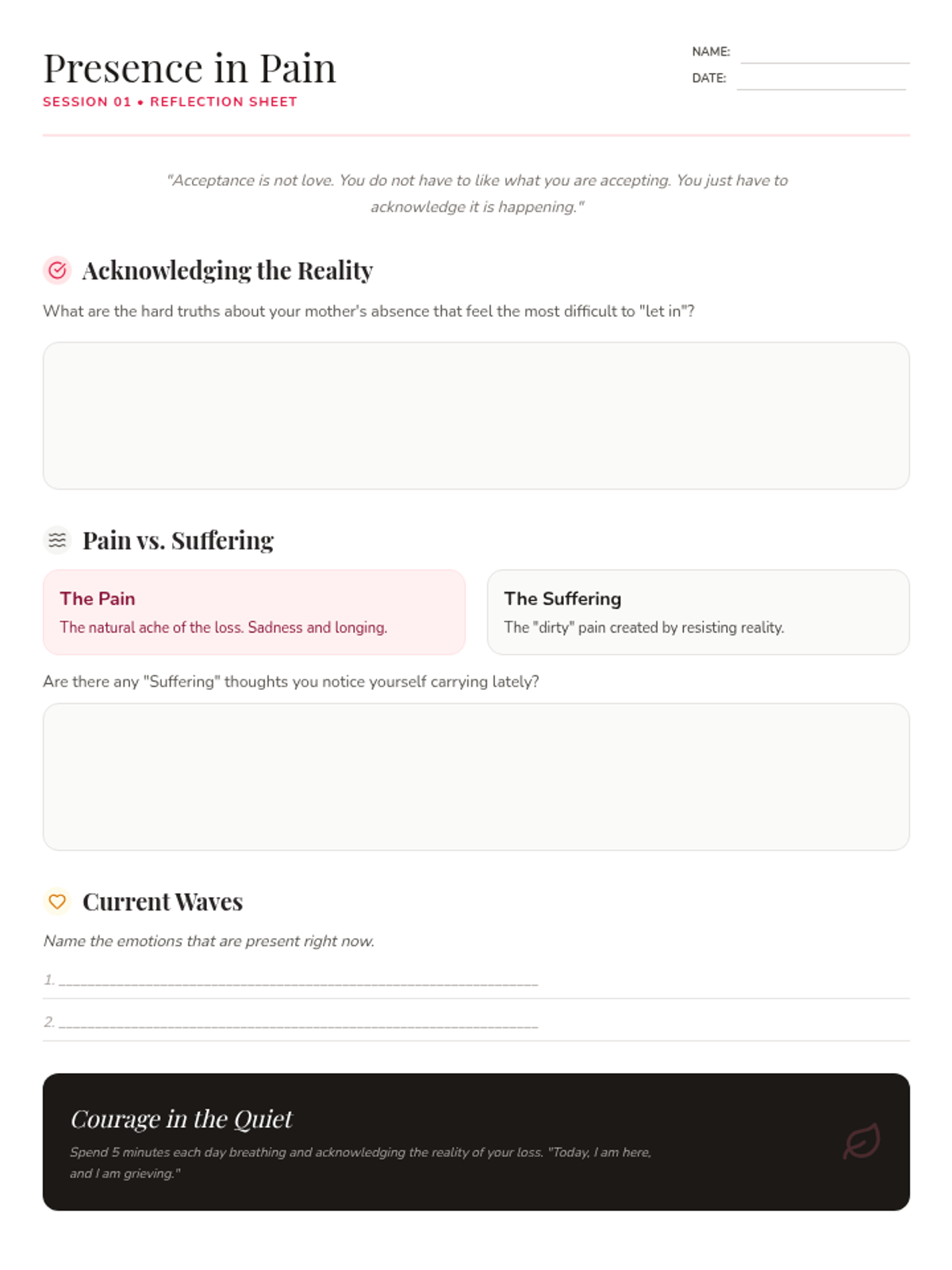
Introduction to Radical Acceptance and the concept of 'Mindfulness of Current Emotion' as it pertains to the initial stages of grief.
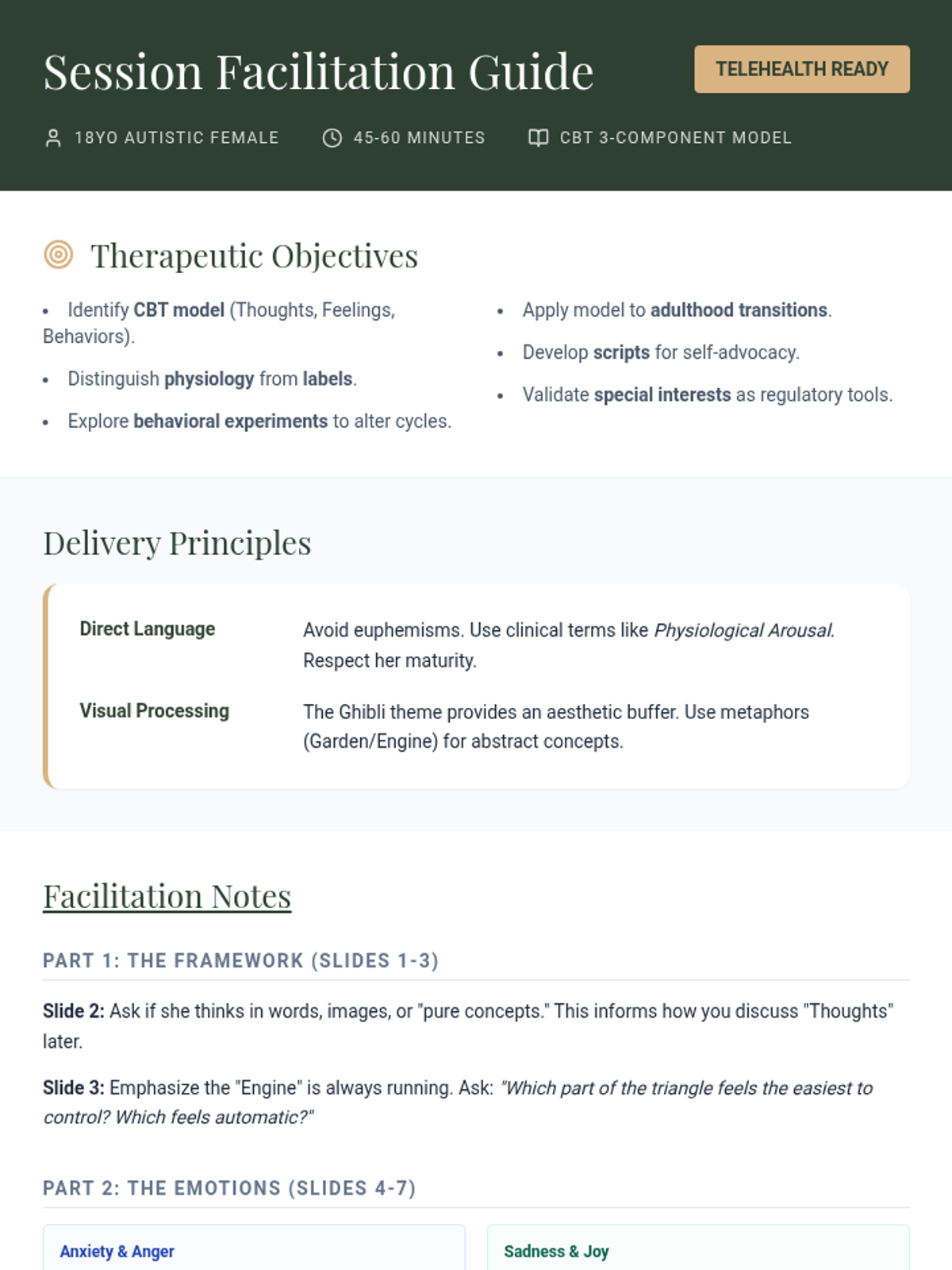
A psychoeducational exploration of the CBT triangle (thoughts, feelings, behaviors) tailored for an 18-year-old autistic girl, utilizing a mature Studio Ghibli-inspired aesthetic to navigate complex emotions and emerging adulthood.
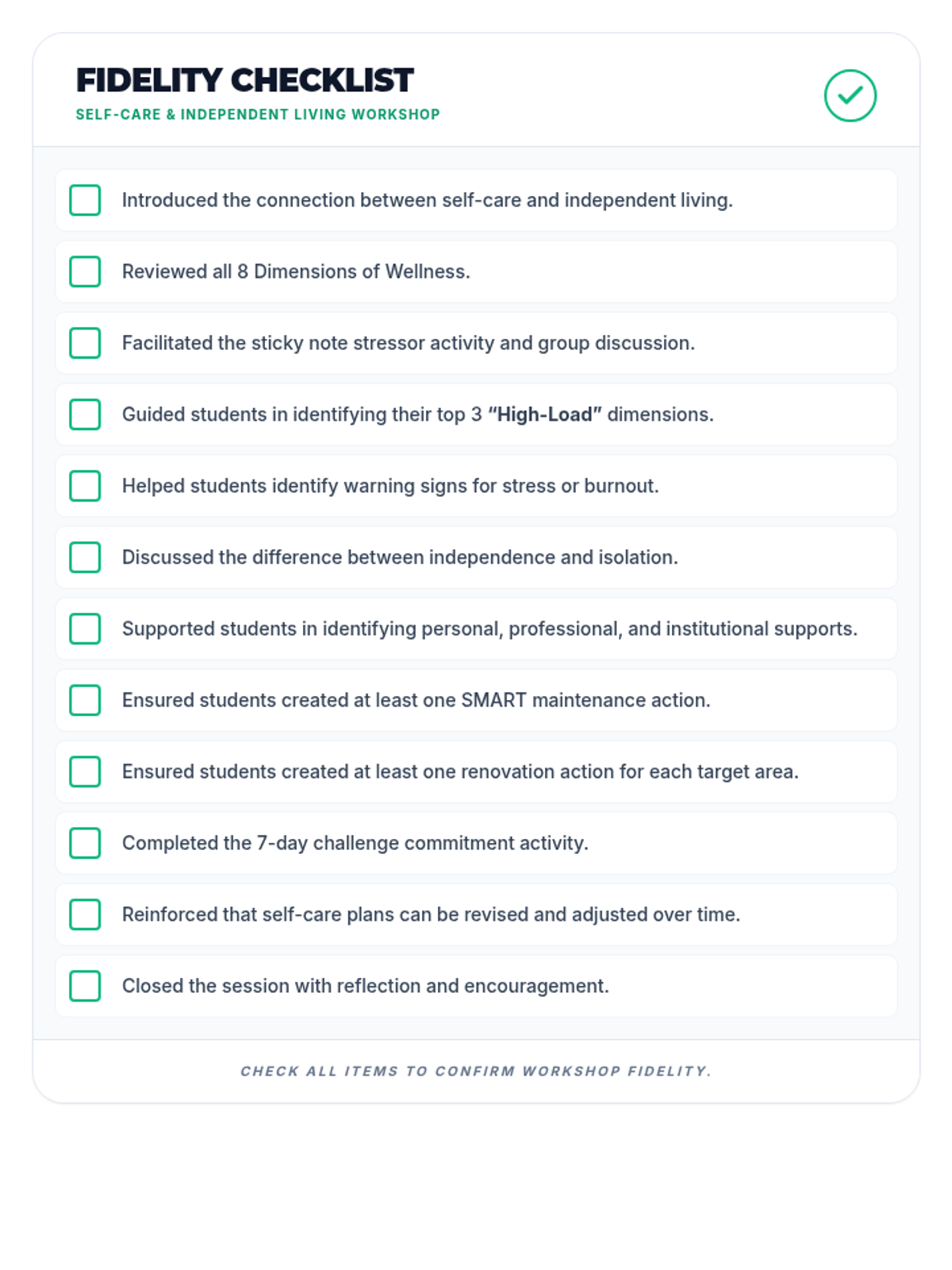
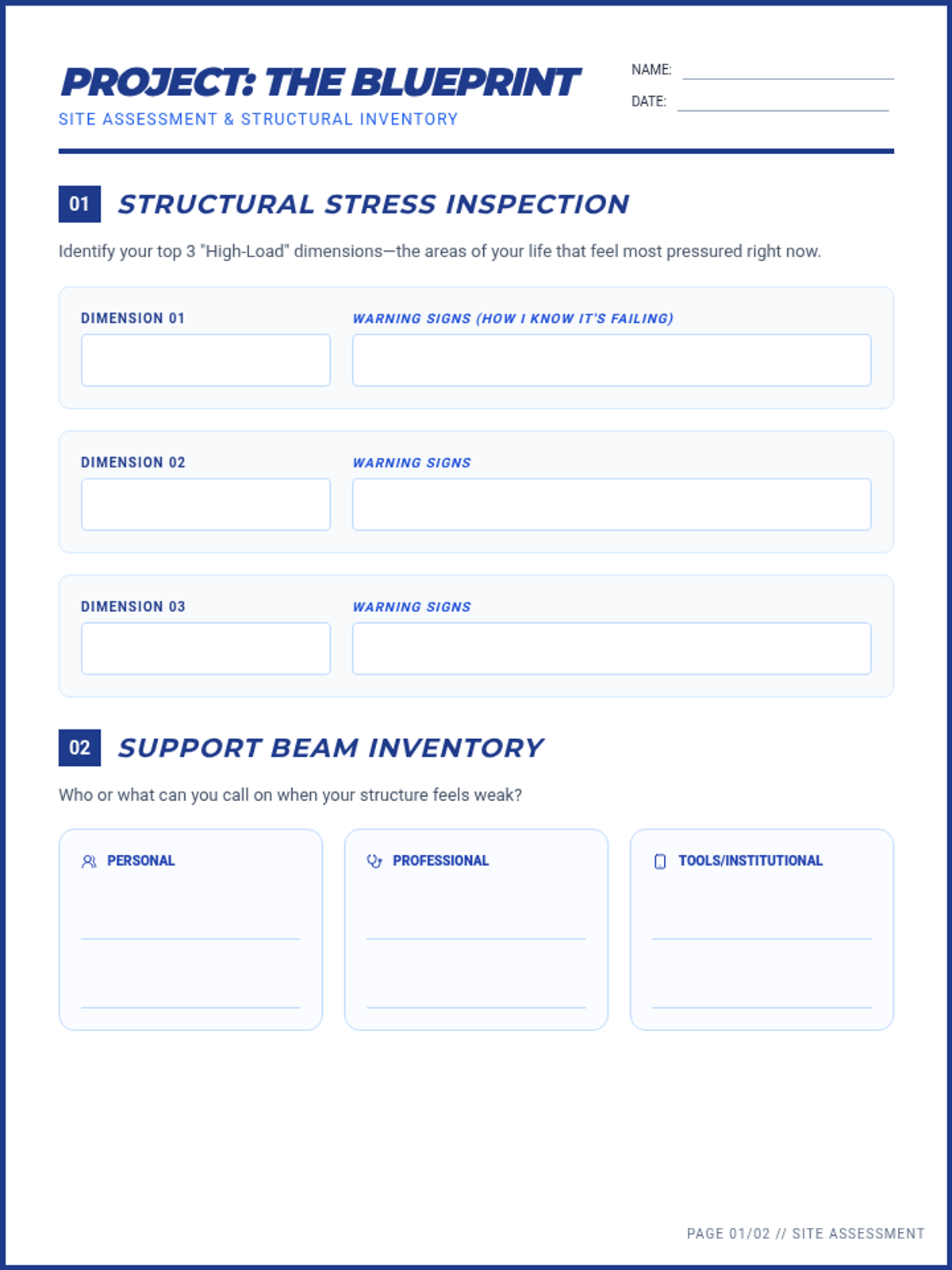
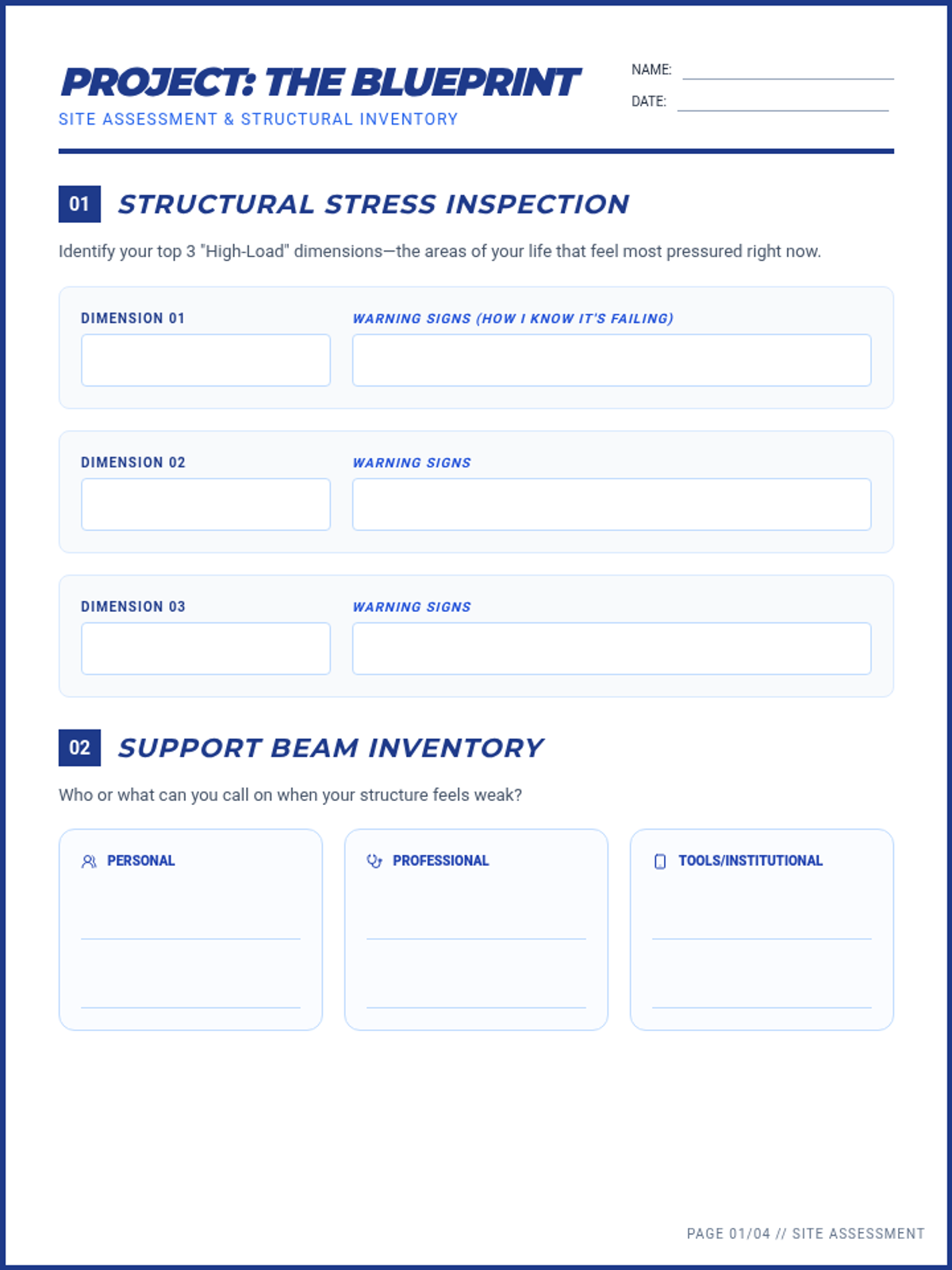
A workshop focused on self-care, wellness dimensions, and building sustainable maintenance and renovation plans for independent living.
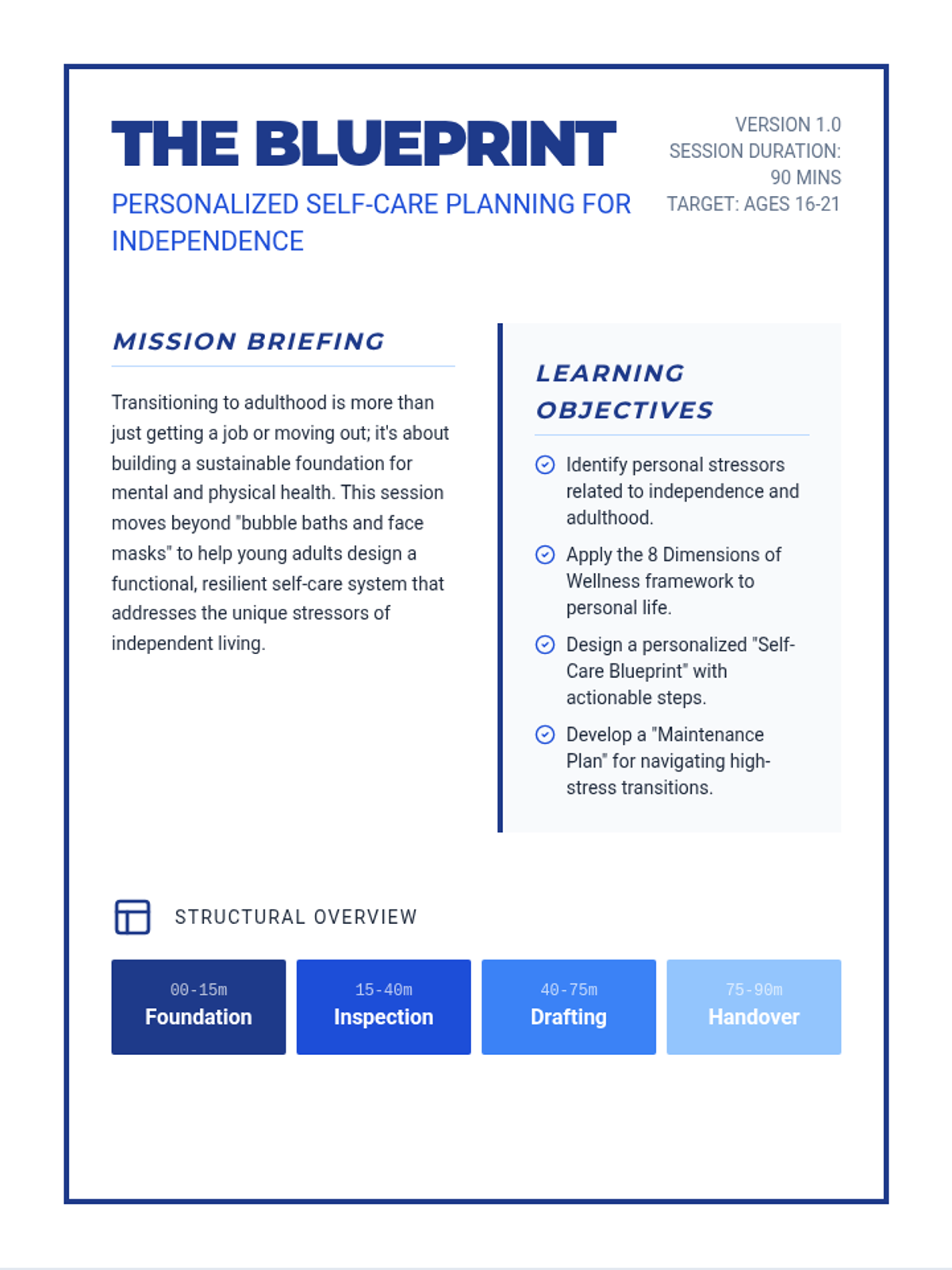
A 90-minute workshop designed for transition-age youth (16-21) to develop a personalized self-care blueprint. The session focuses on the 8 dimensions of wellness as a foundation for independent living and stress management.
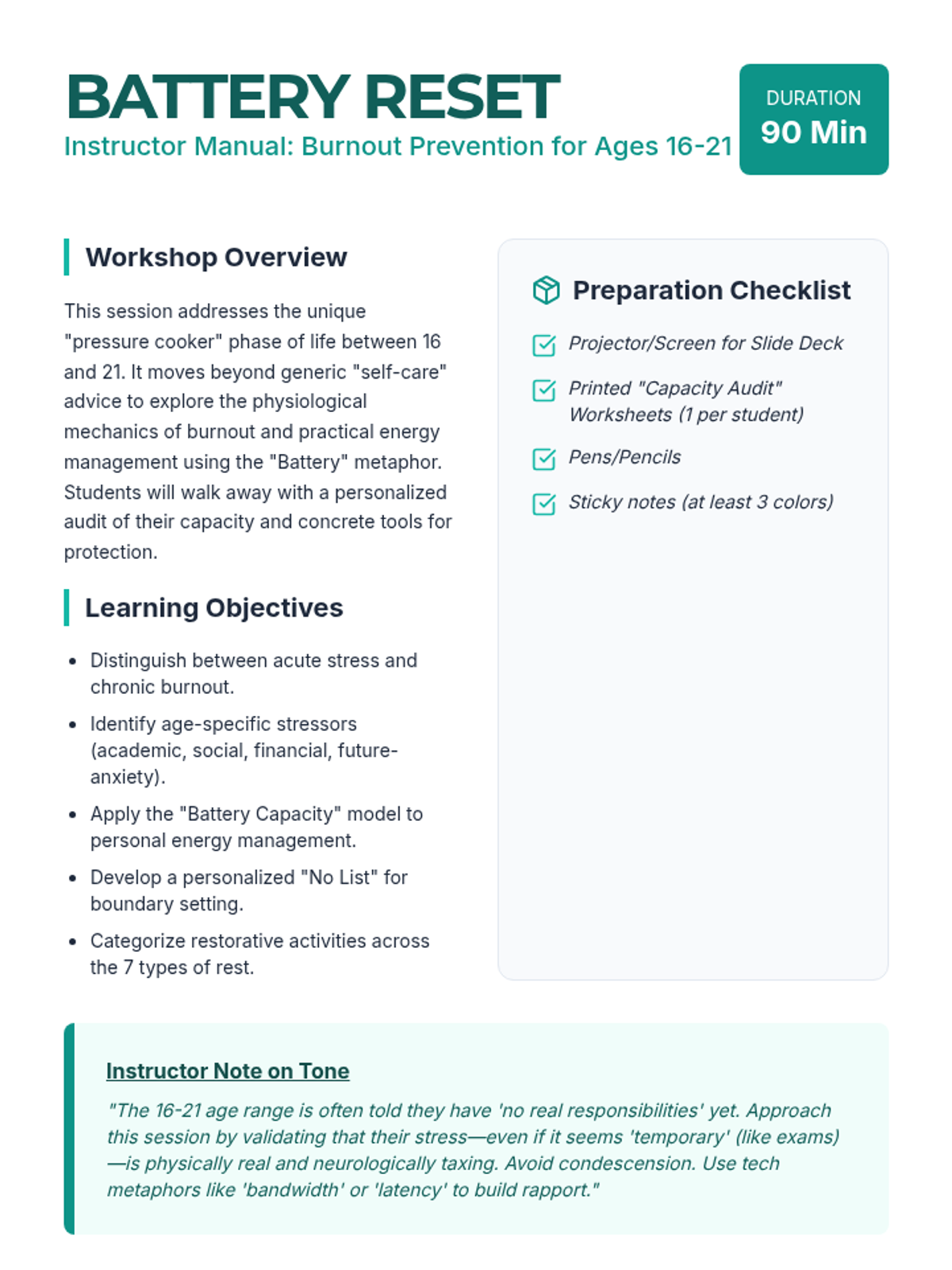
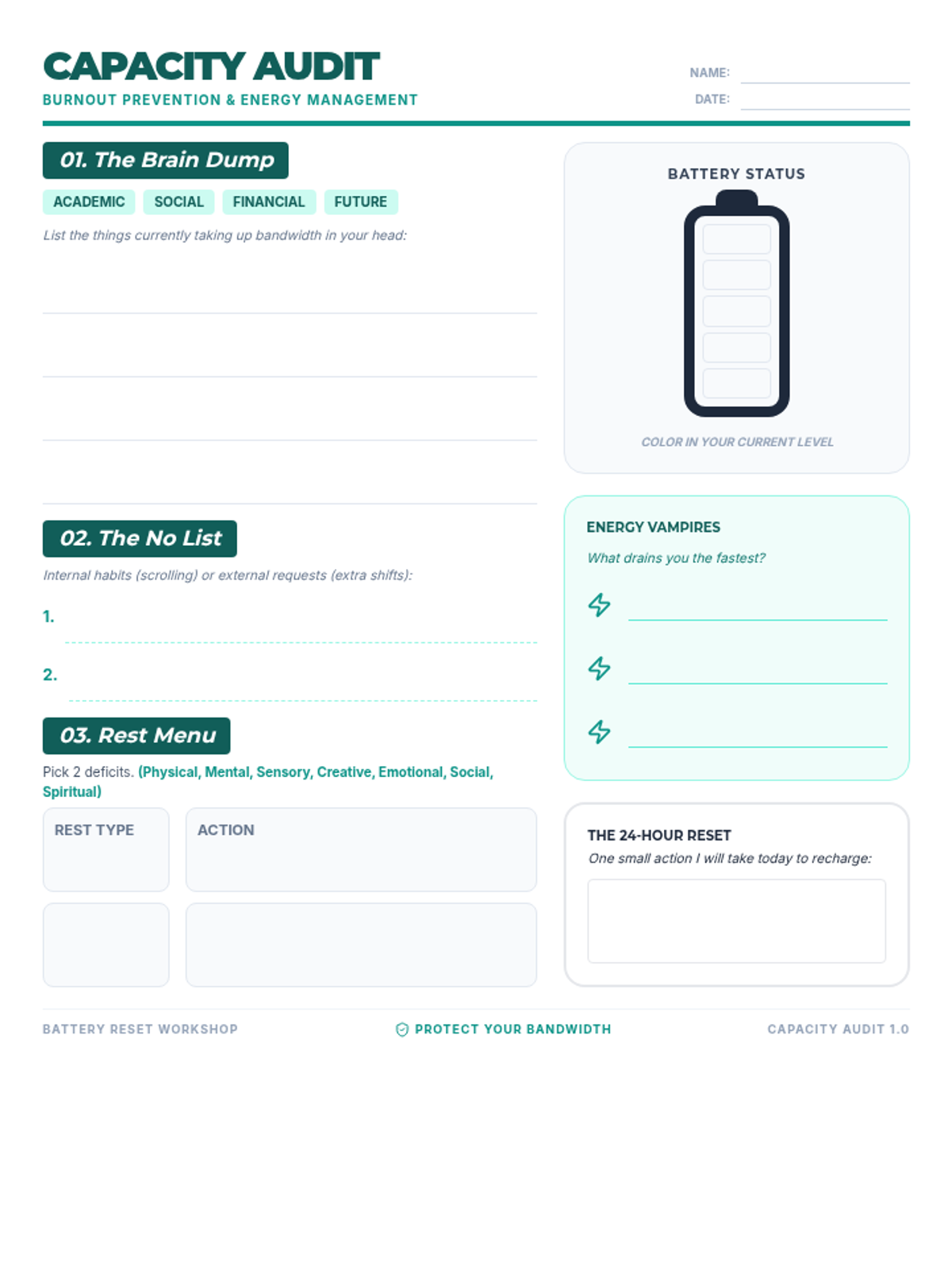
A comprehensive 90-minute workshop designed for transitional age youth (16-21) to identify stressors, understand the mechanics of burnout, and develop personalized energy management strategies.
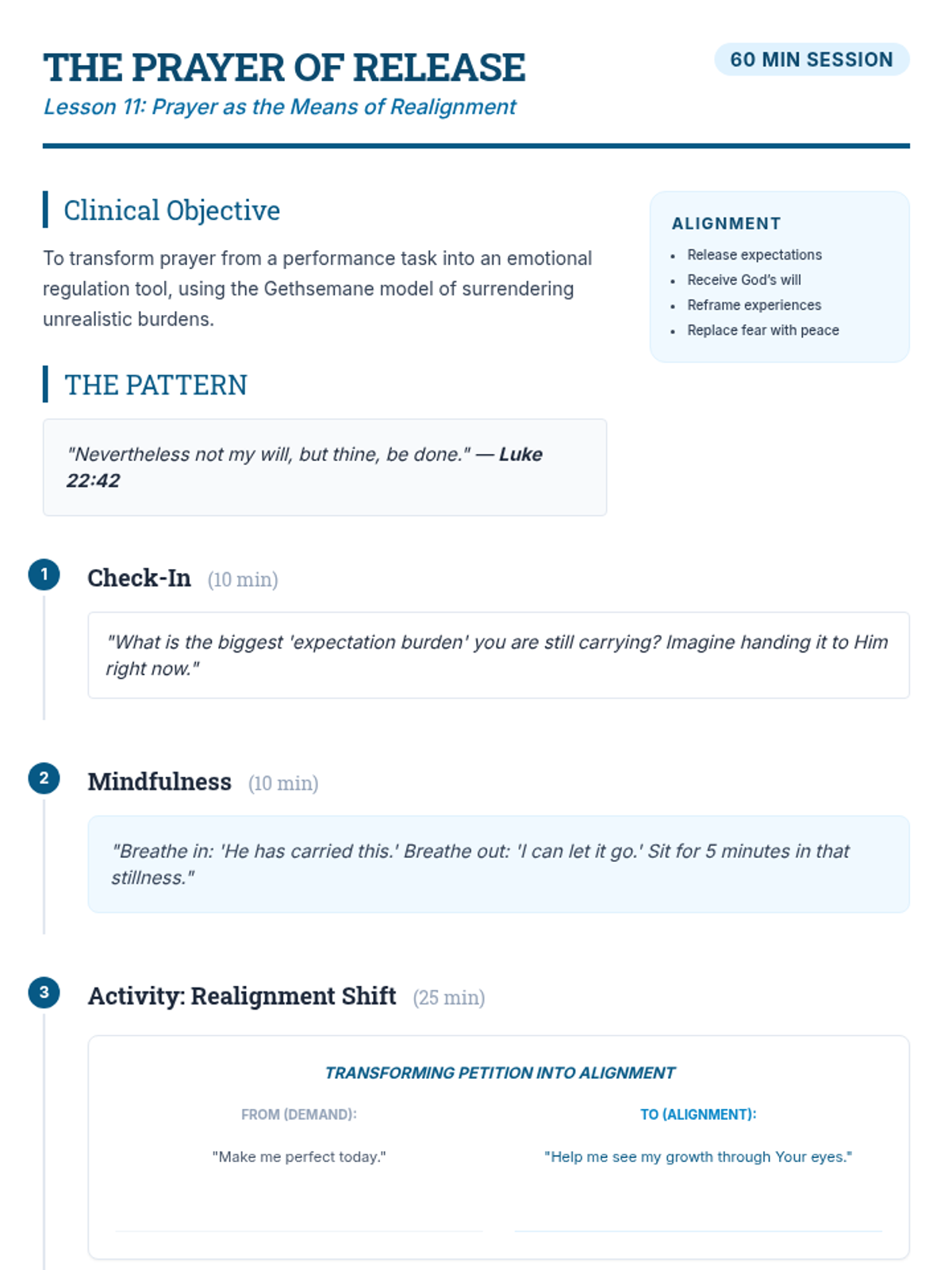
Uses prayer as a tool for realignment rather than just petition, focusing on 'not my will but thine' as a release of unrealistic burdens.
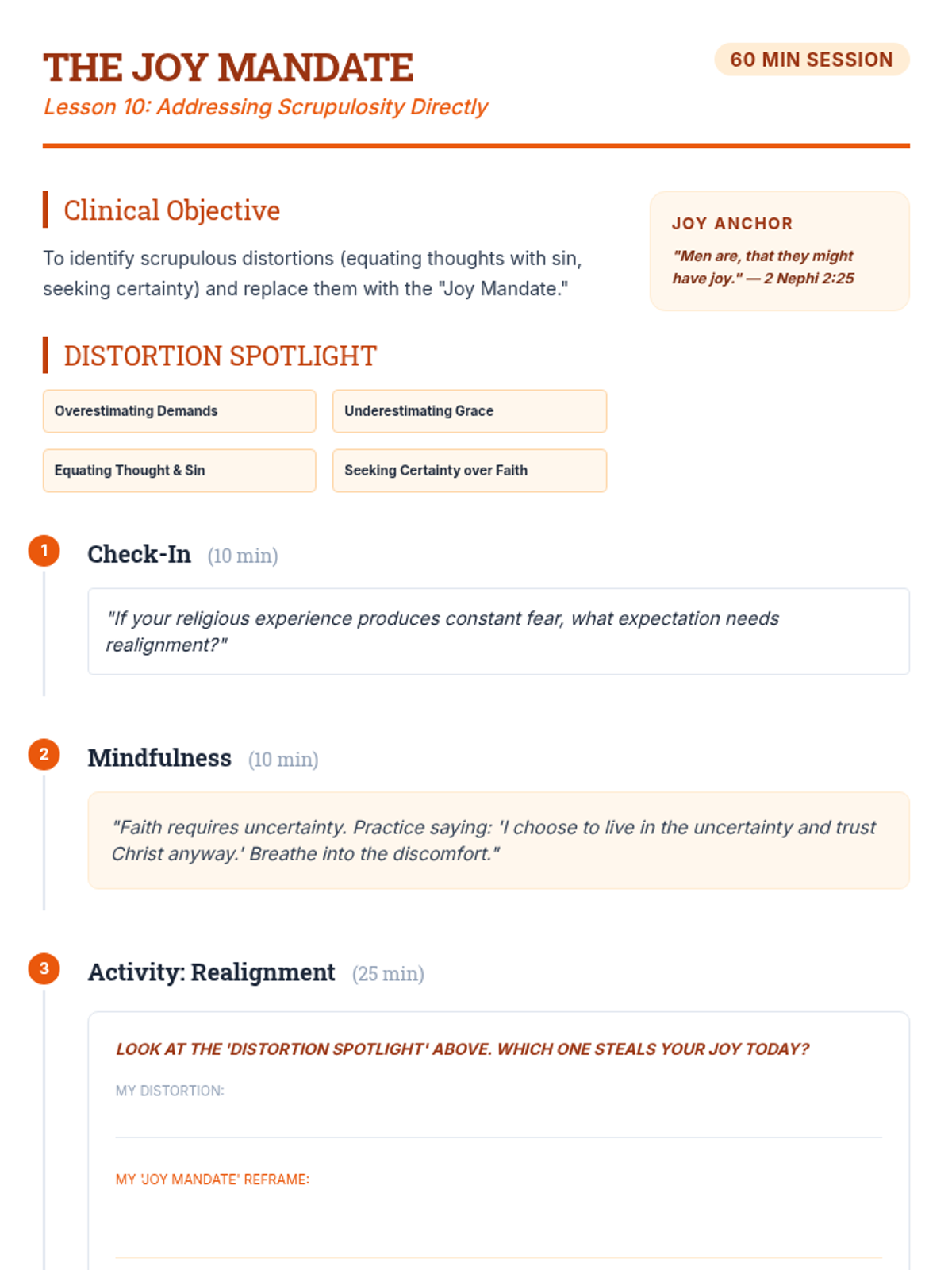
Identifies and provides tools to counter common scrupulous cognitive distortions like overestimating demands and underestimating grace.
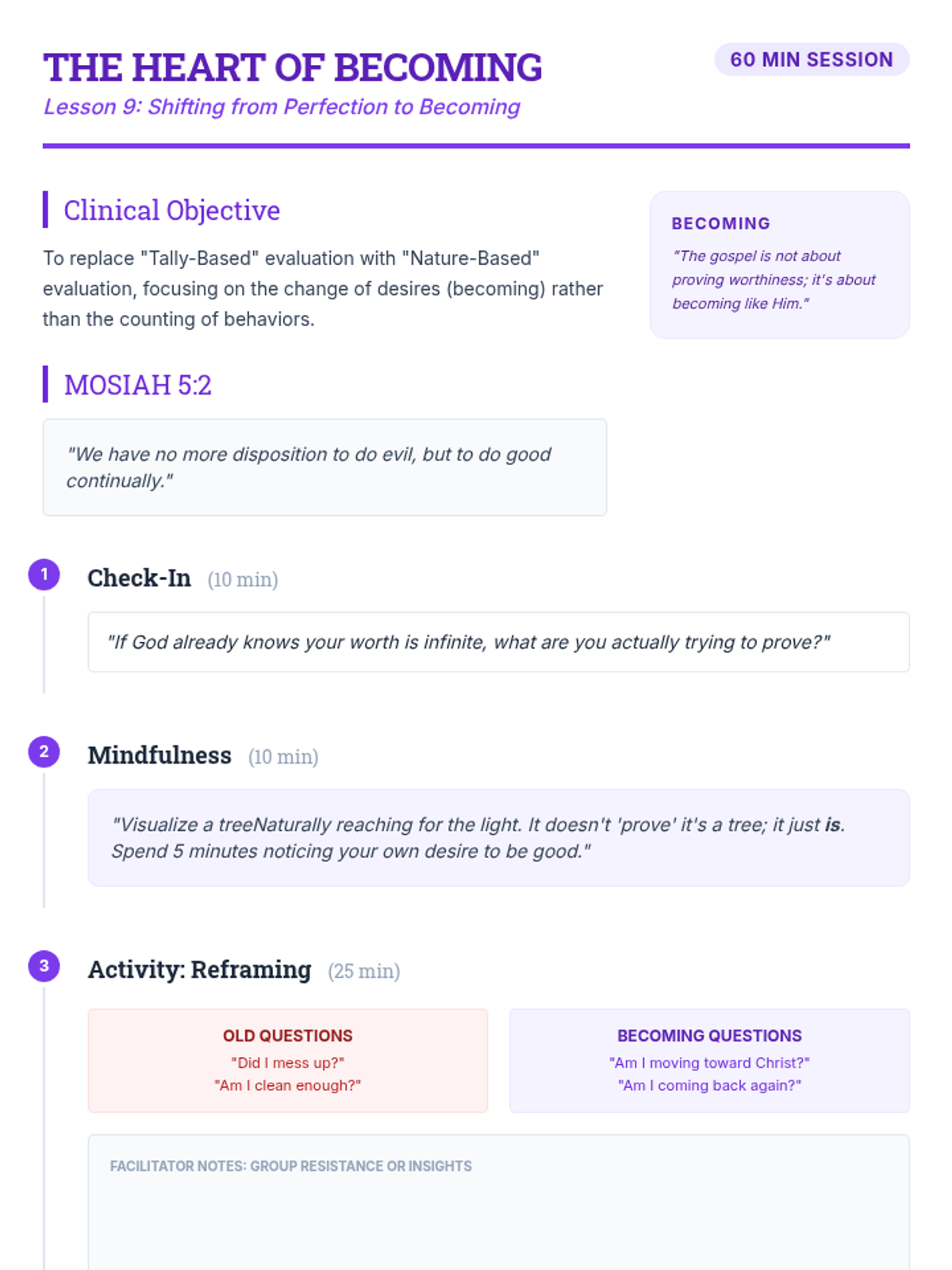
Focuses on the transformation of our nature (becoming) rather than the tallying of individual deeds.
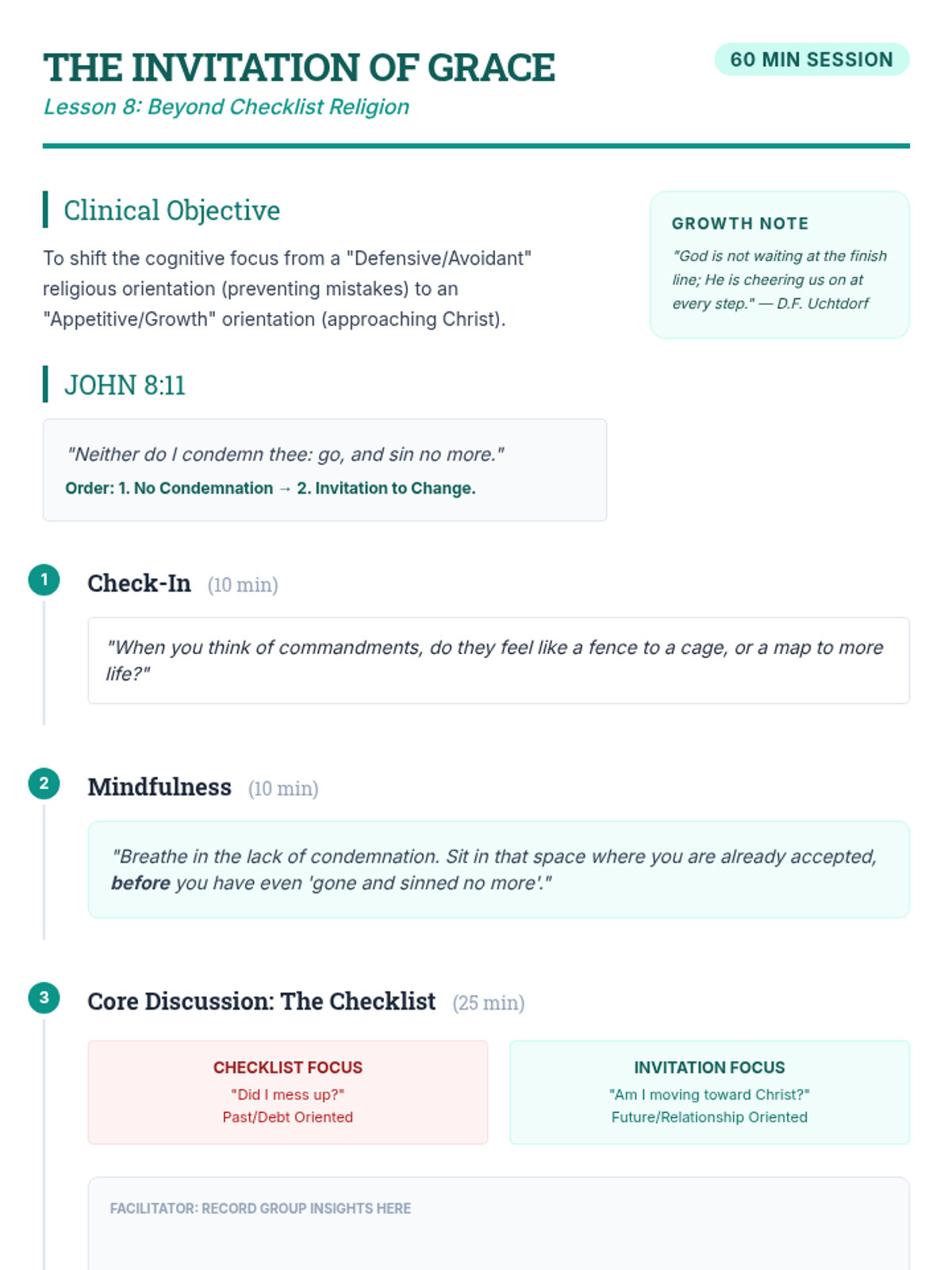
Shifts focus from fear-driven checklist religion to the Savior’s model of invitation and lack of condemnation.
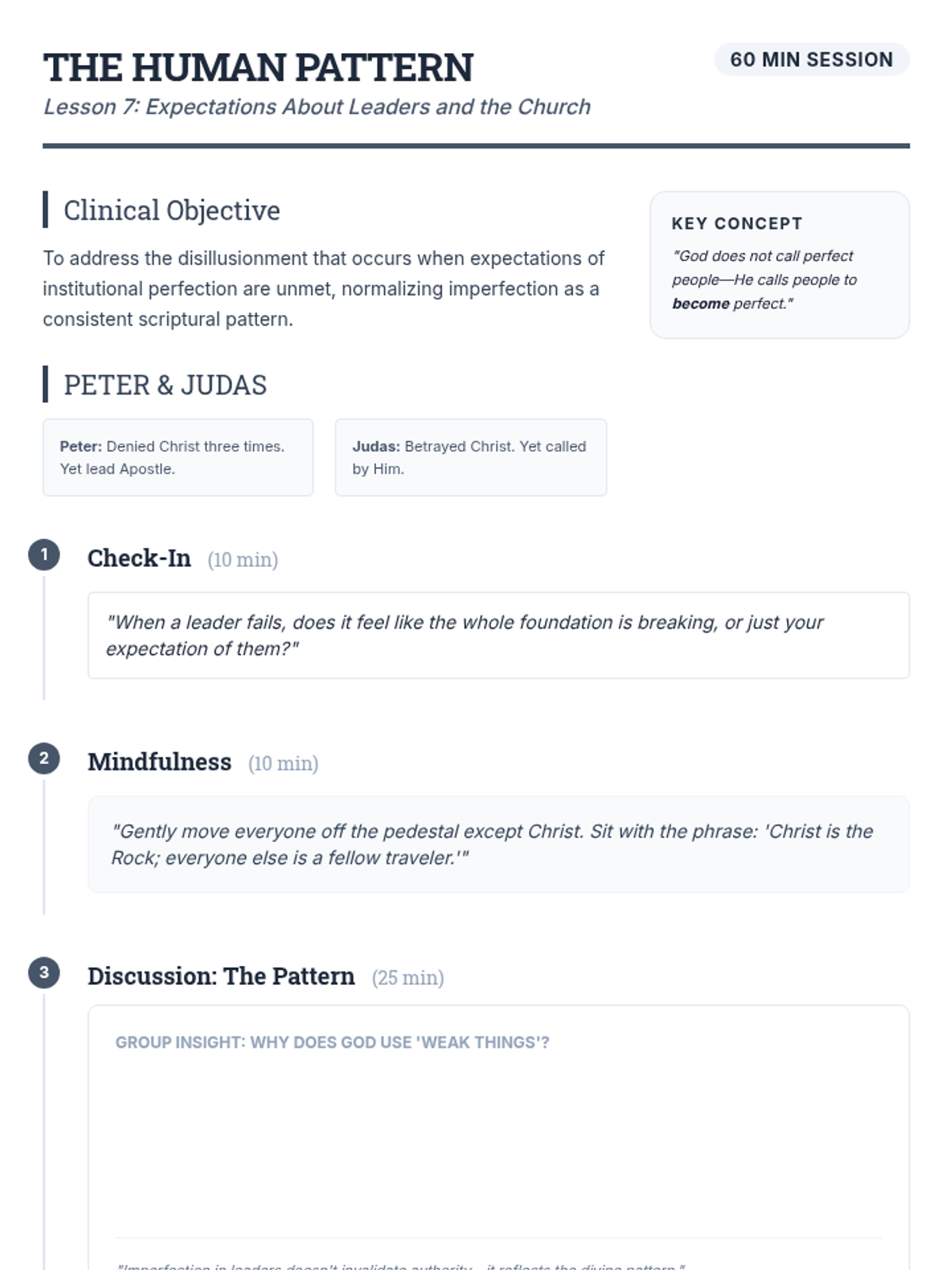
Discusses the reality of imperfect leaders and institutions as a reflection of the divine pattern of working with flawed individuals.
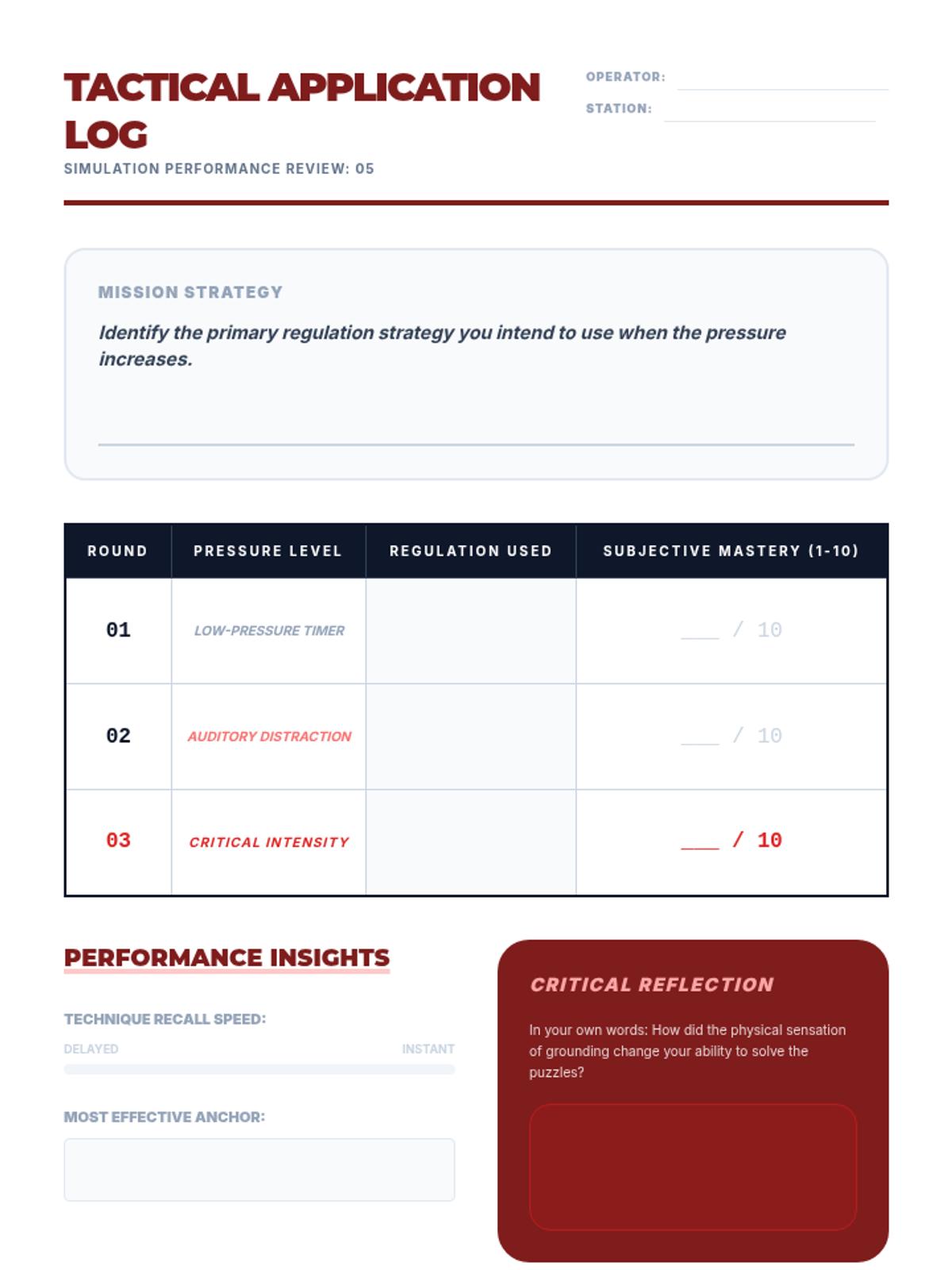
A culminating simulation where students face timed cognitive challenges while practicing their chosen regulation techniques. This bridges the gap between knowing a technique and using it under pressure.
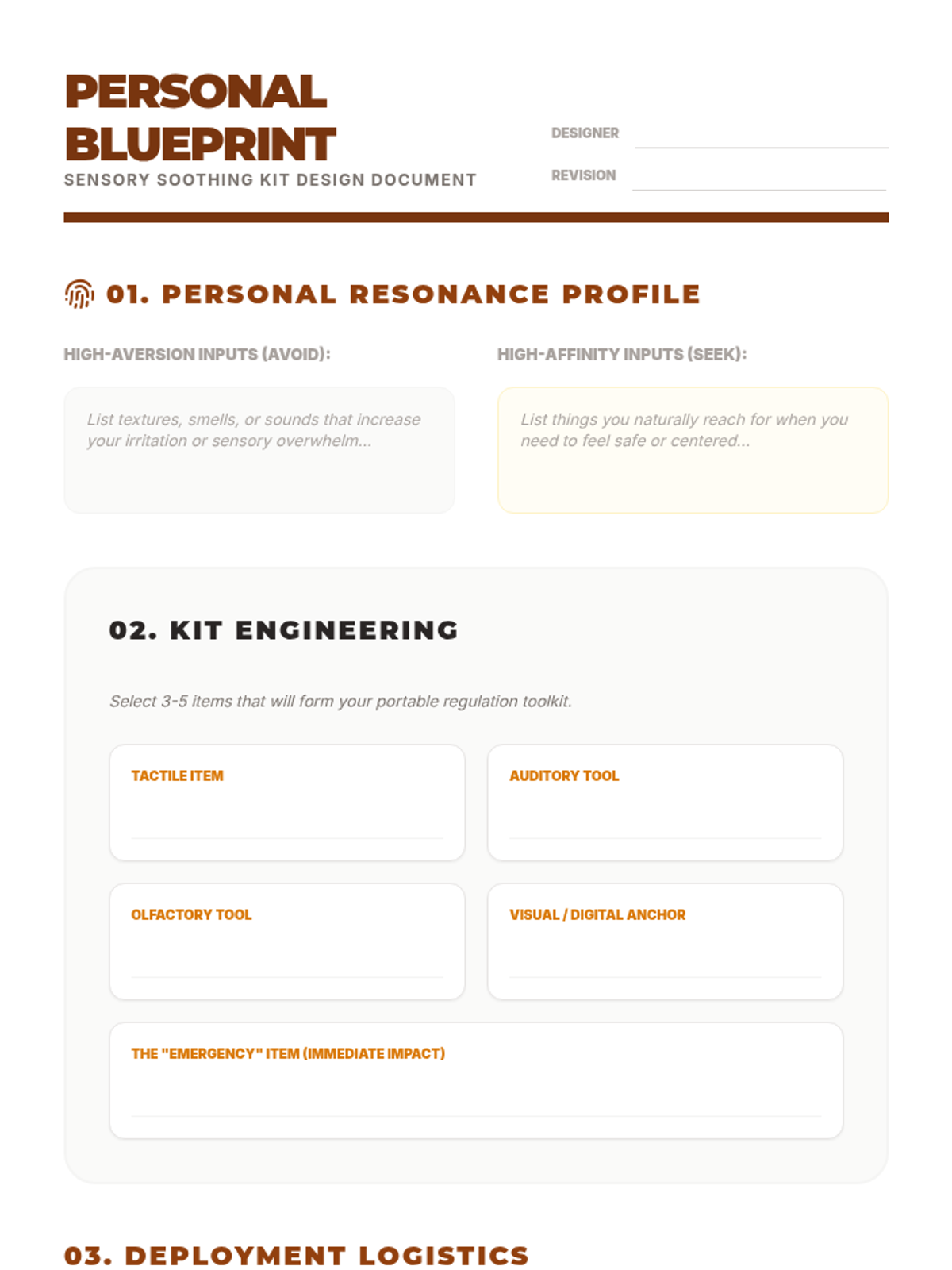
Learners identify personal sensory preferences that induce calm. They design and assemble a portable or digital 'kit' of resources to use during high-stress periods.
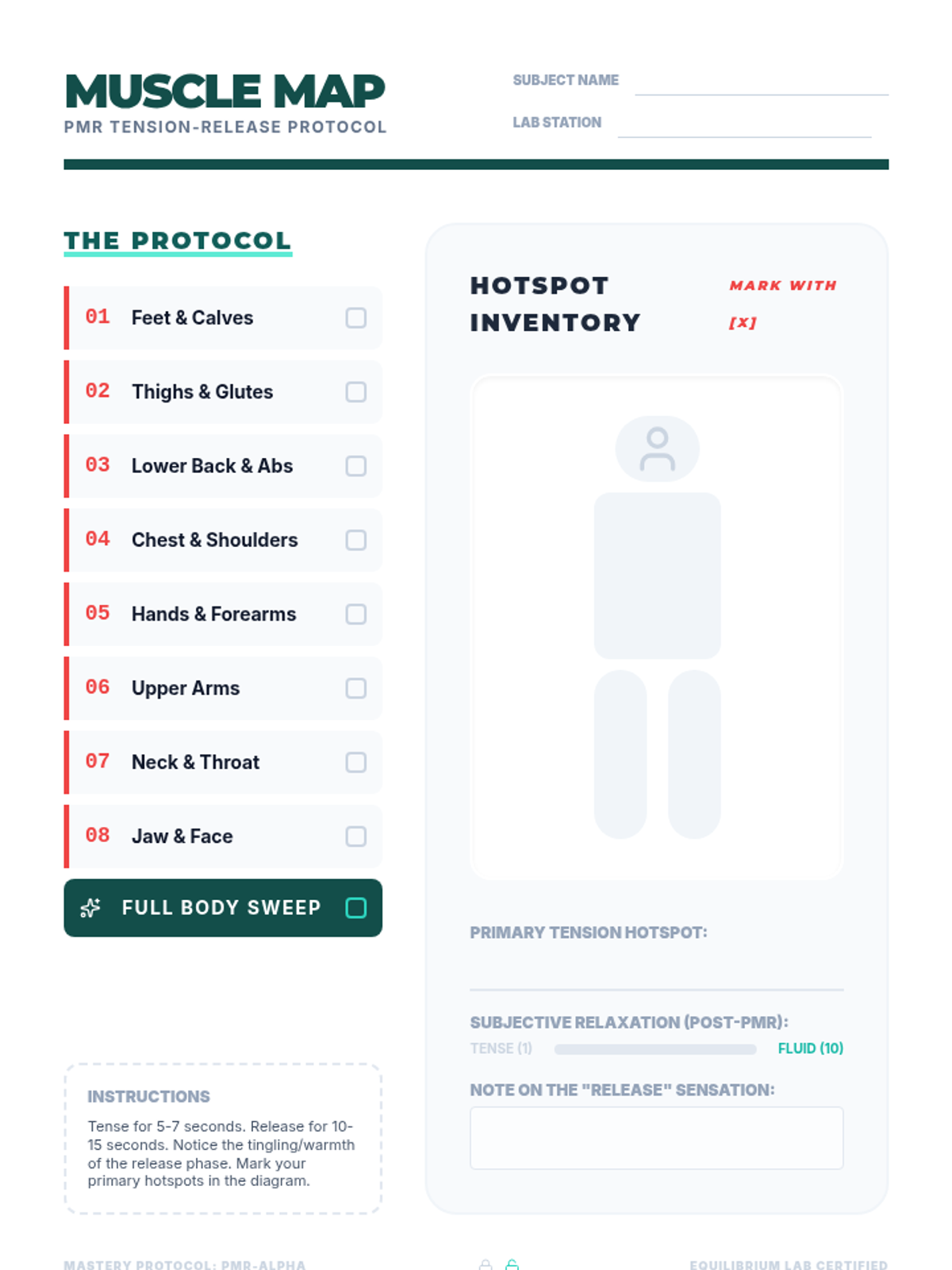
Students learn the sequence of tensing and releasing muscle groups to identify and release held physical tension. The lesson emphasizes the connection between physical relaxation and mental clarity.
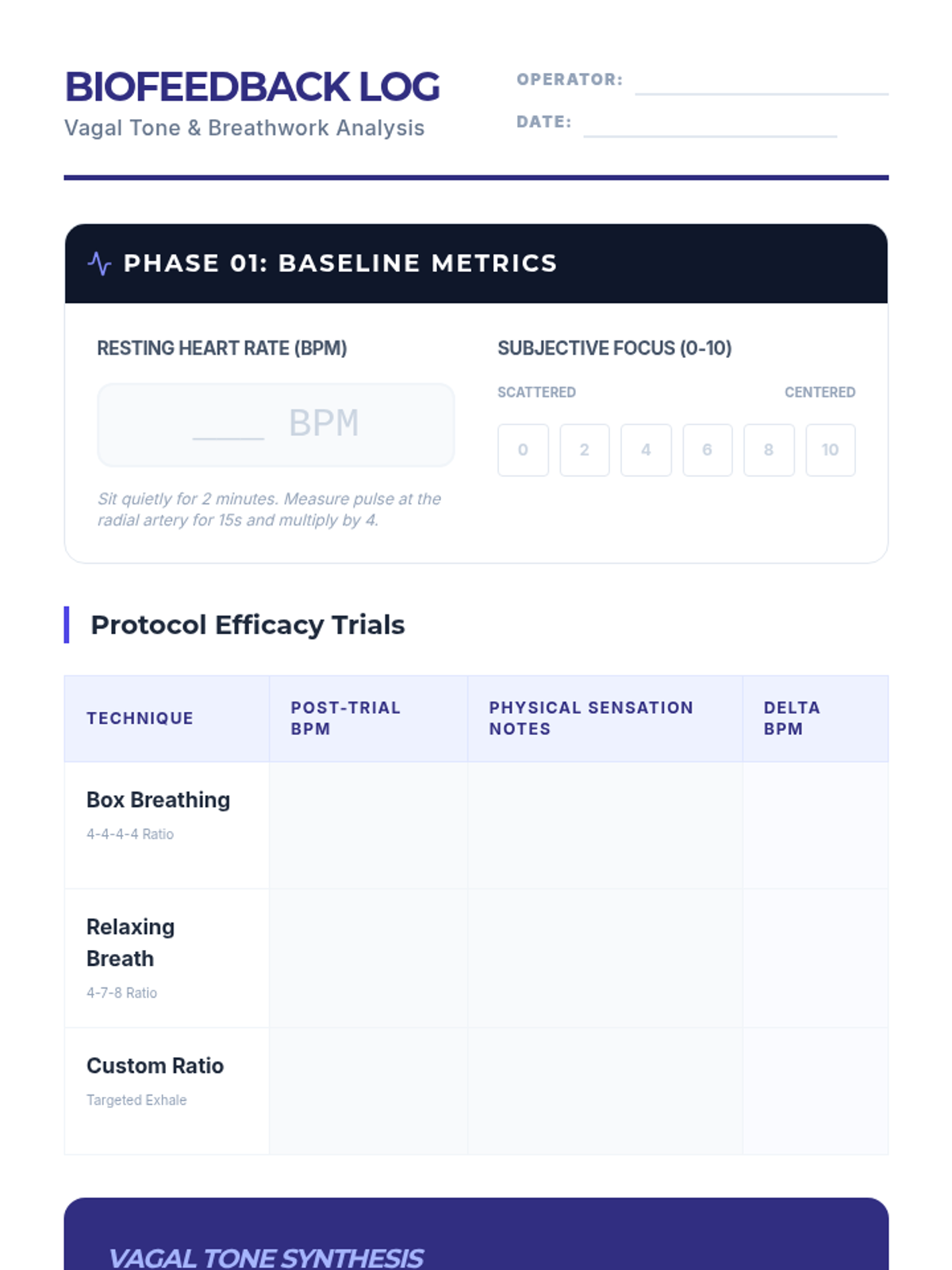
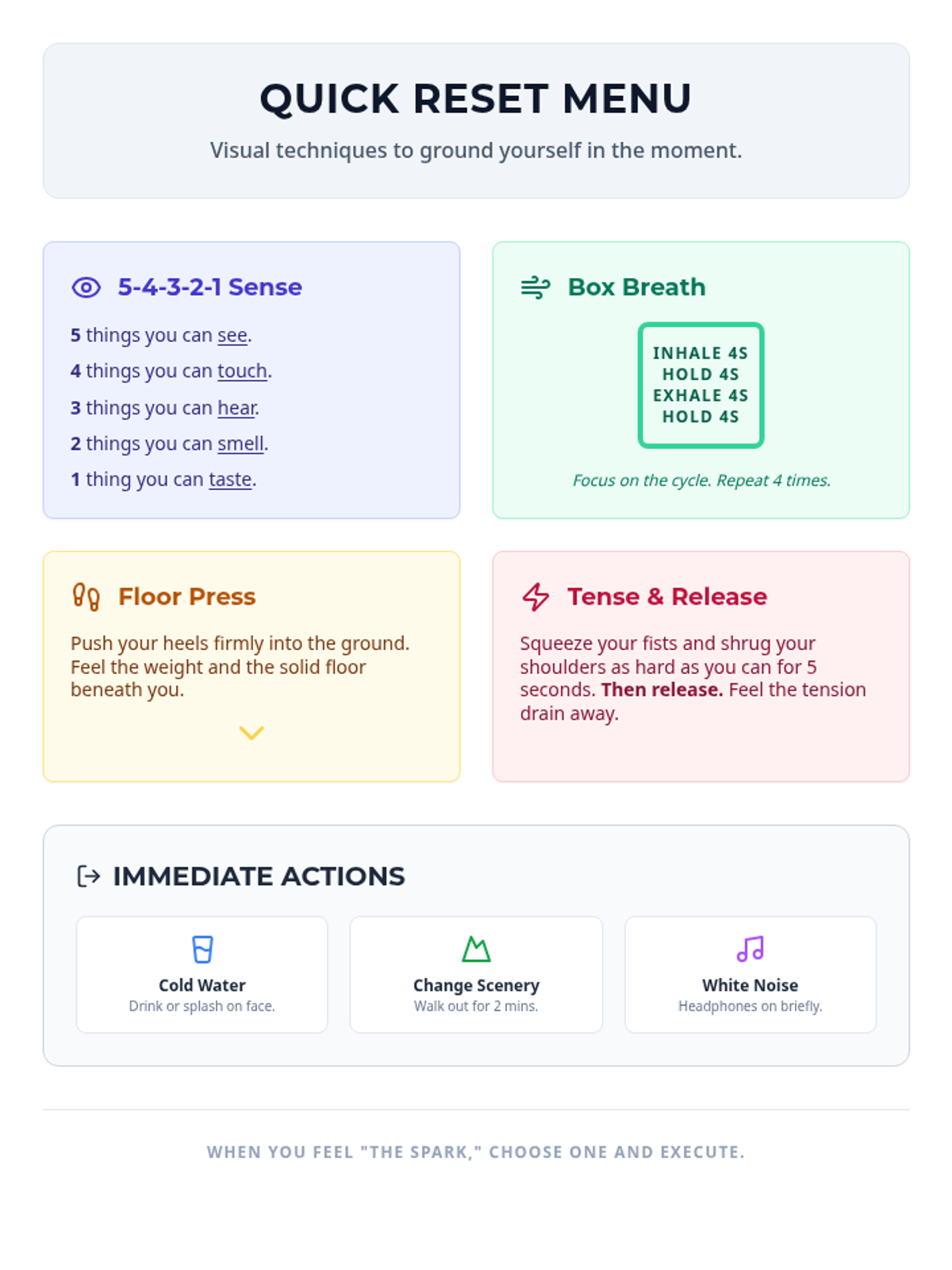
A technical workshop on breathwork, focusing on Box Breathing and 4-7-8 breathing to stimulate the parasympathetic nervous system. Students use biofeedback tools to measure the efficacy of different ratios.
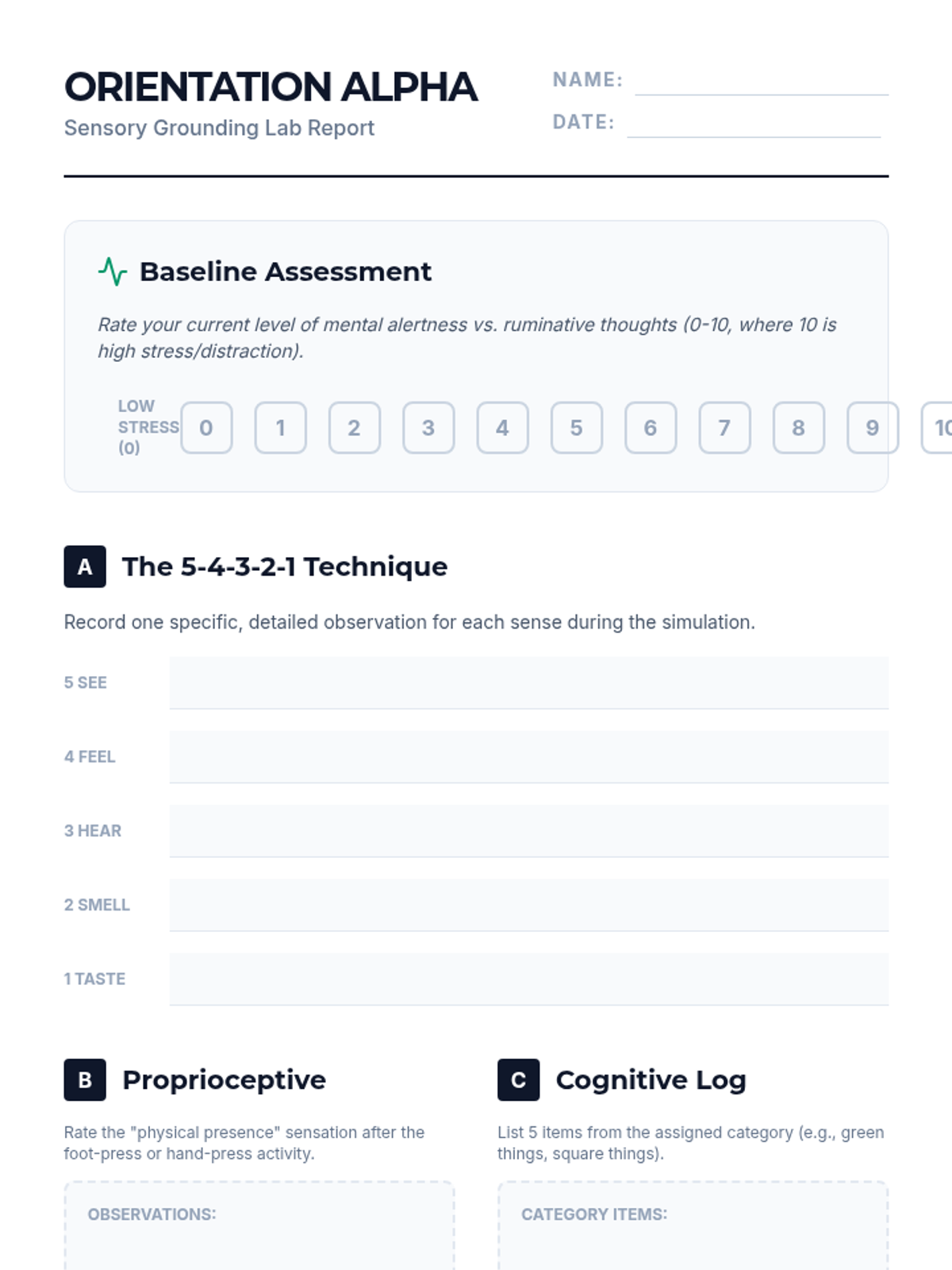
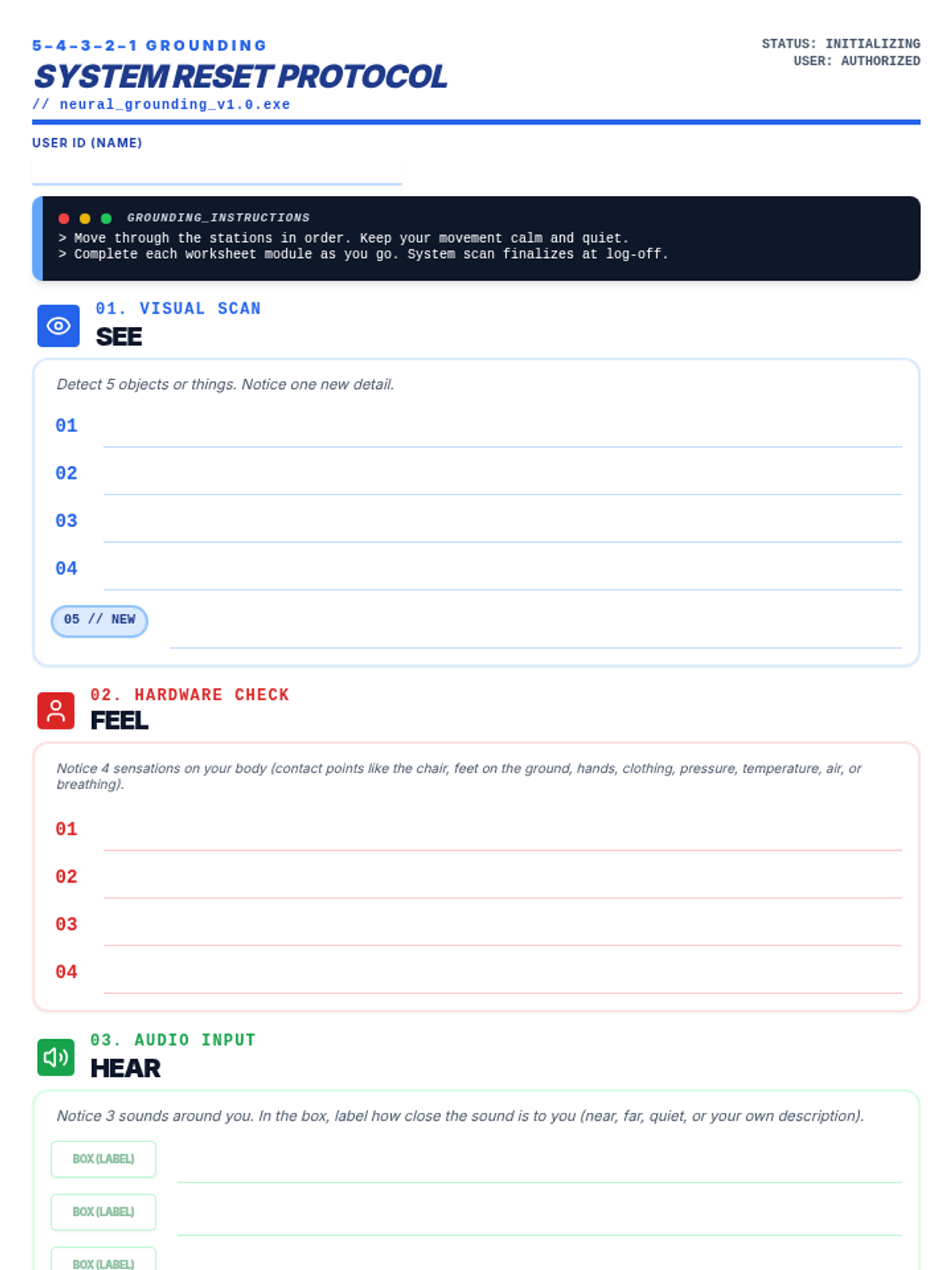
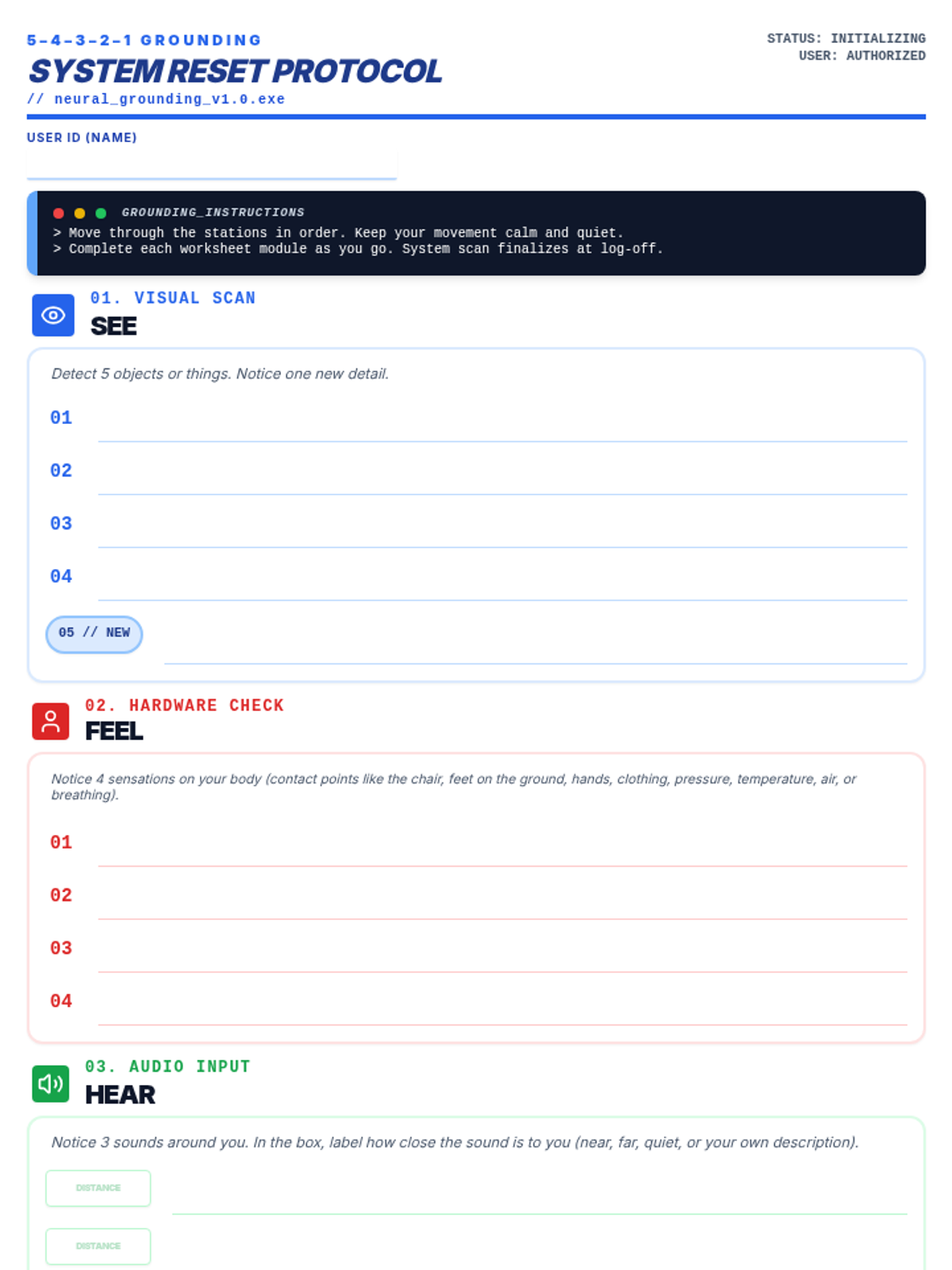
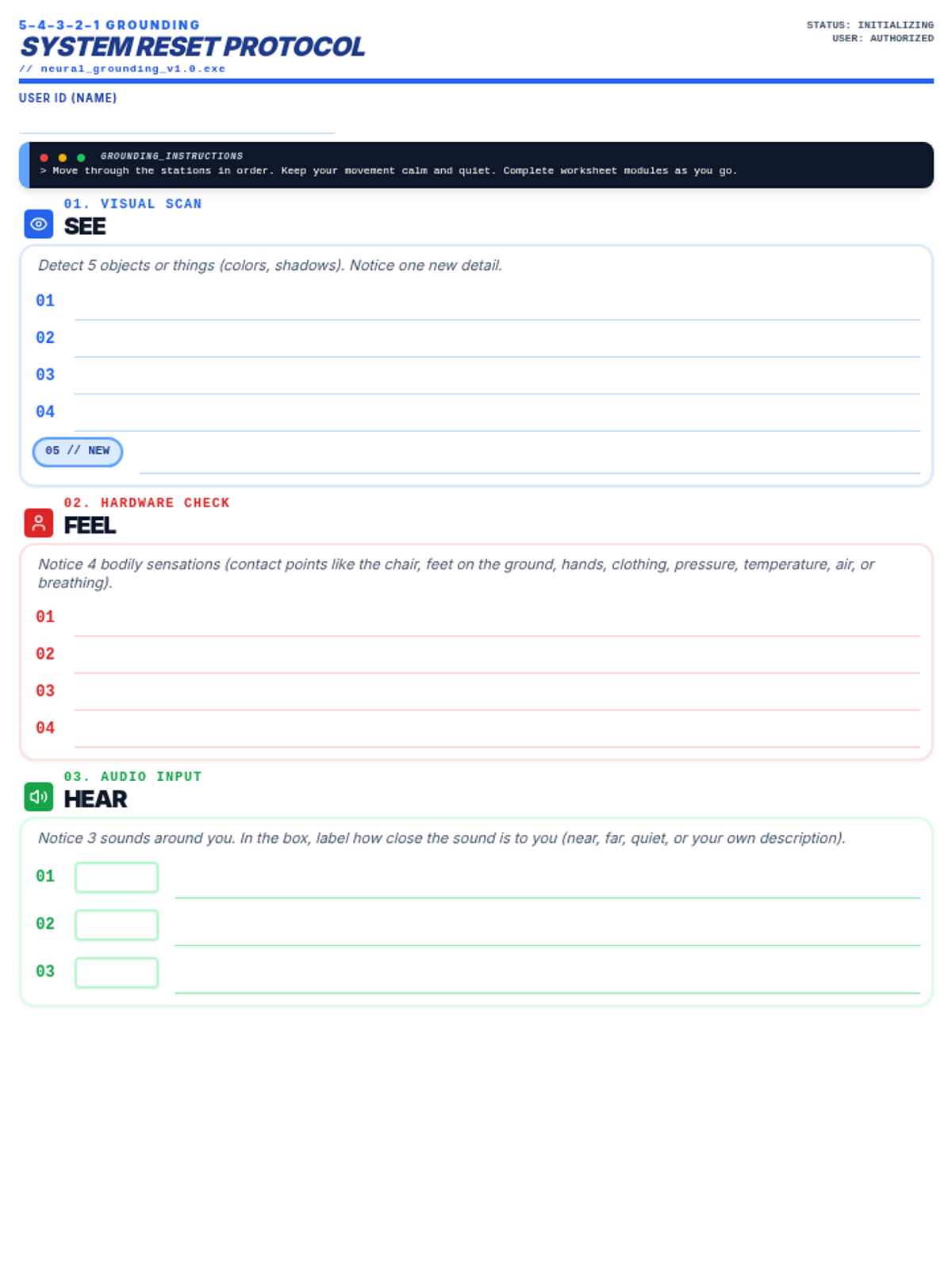
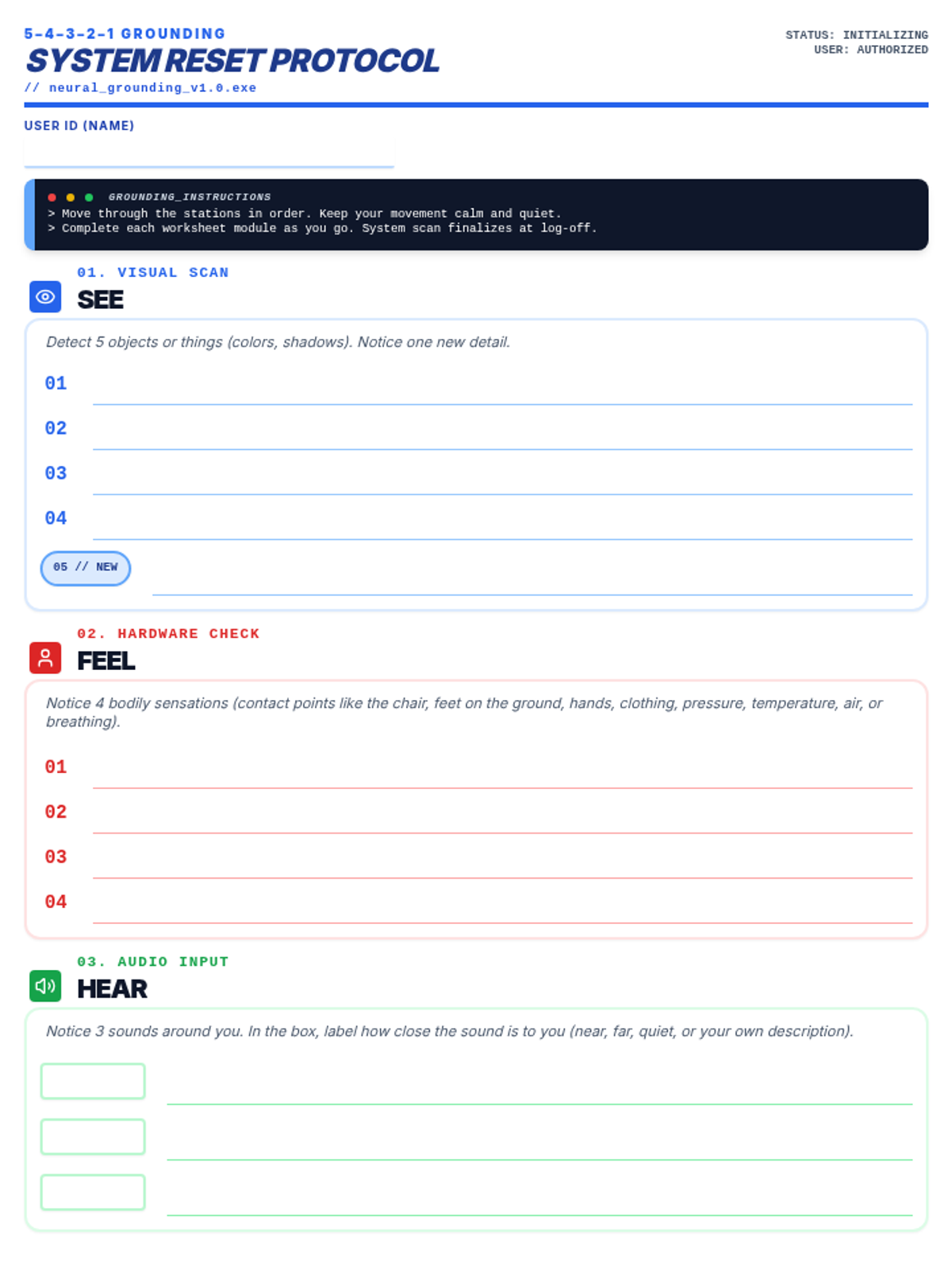
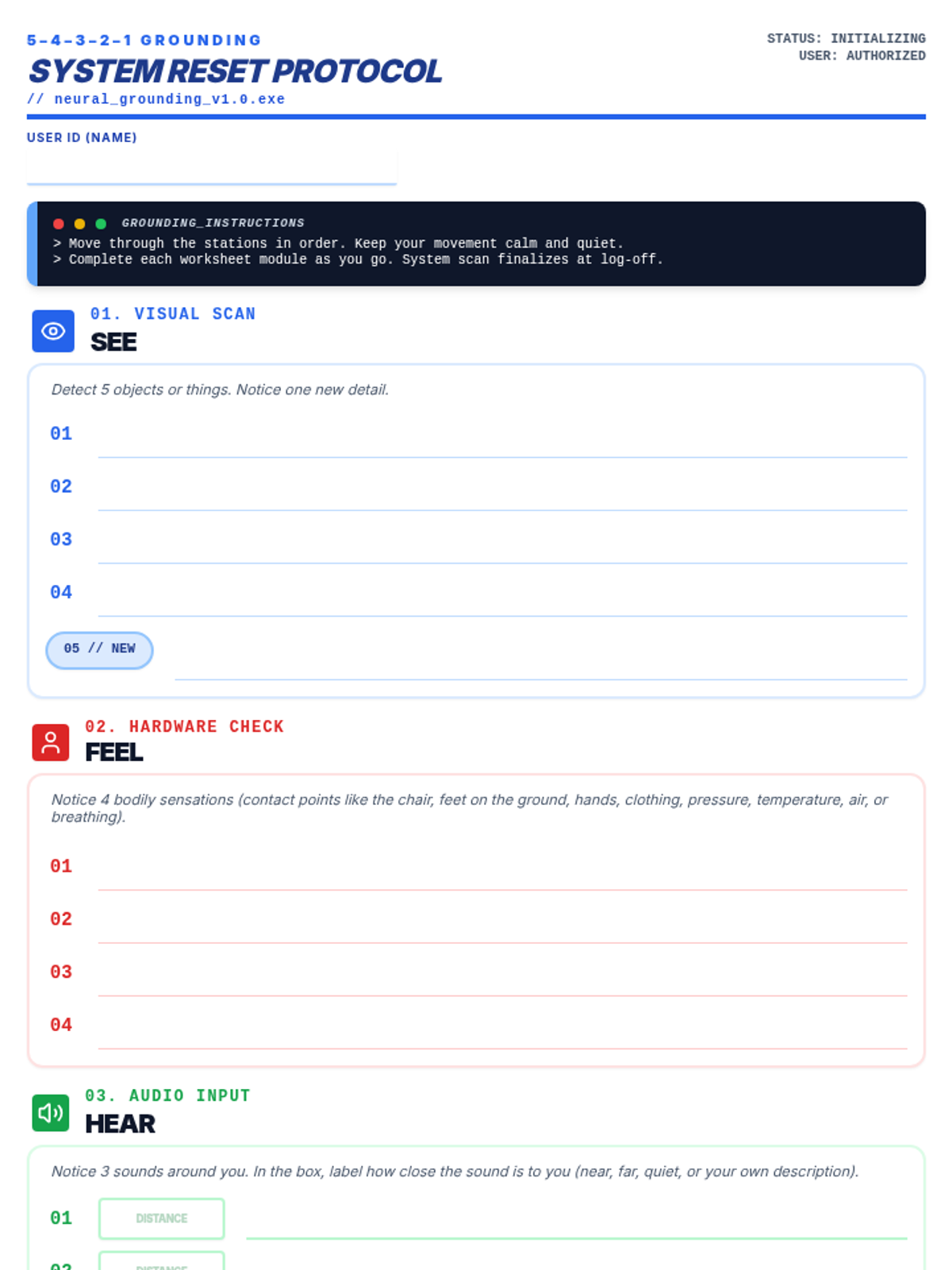
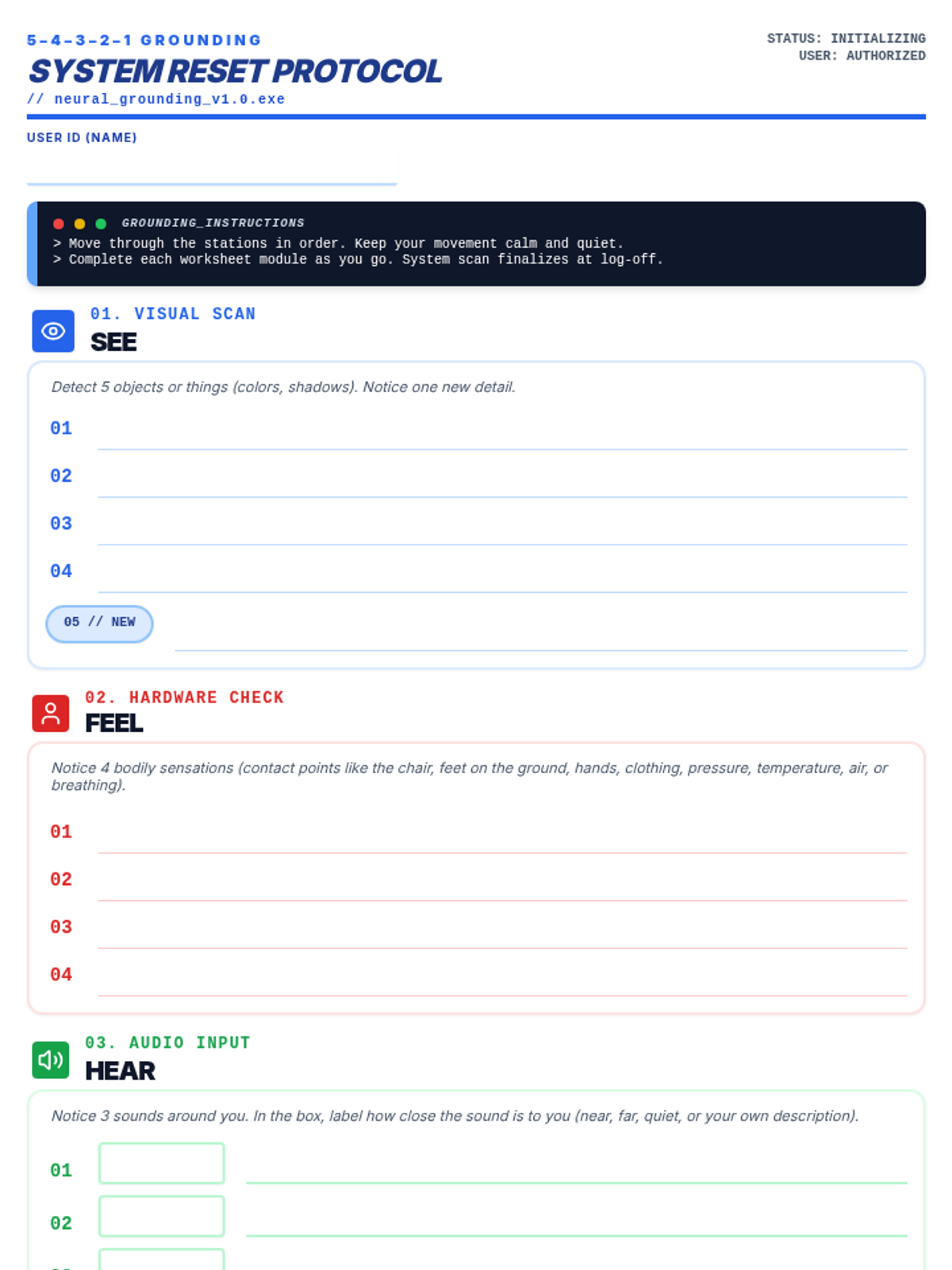
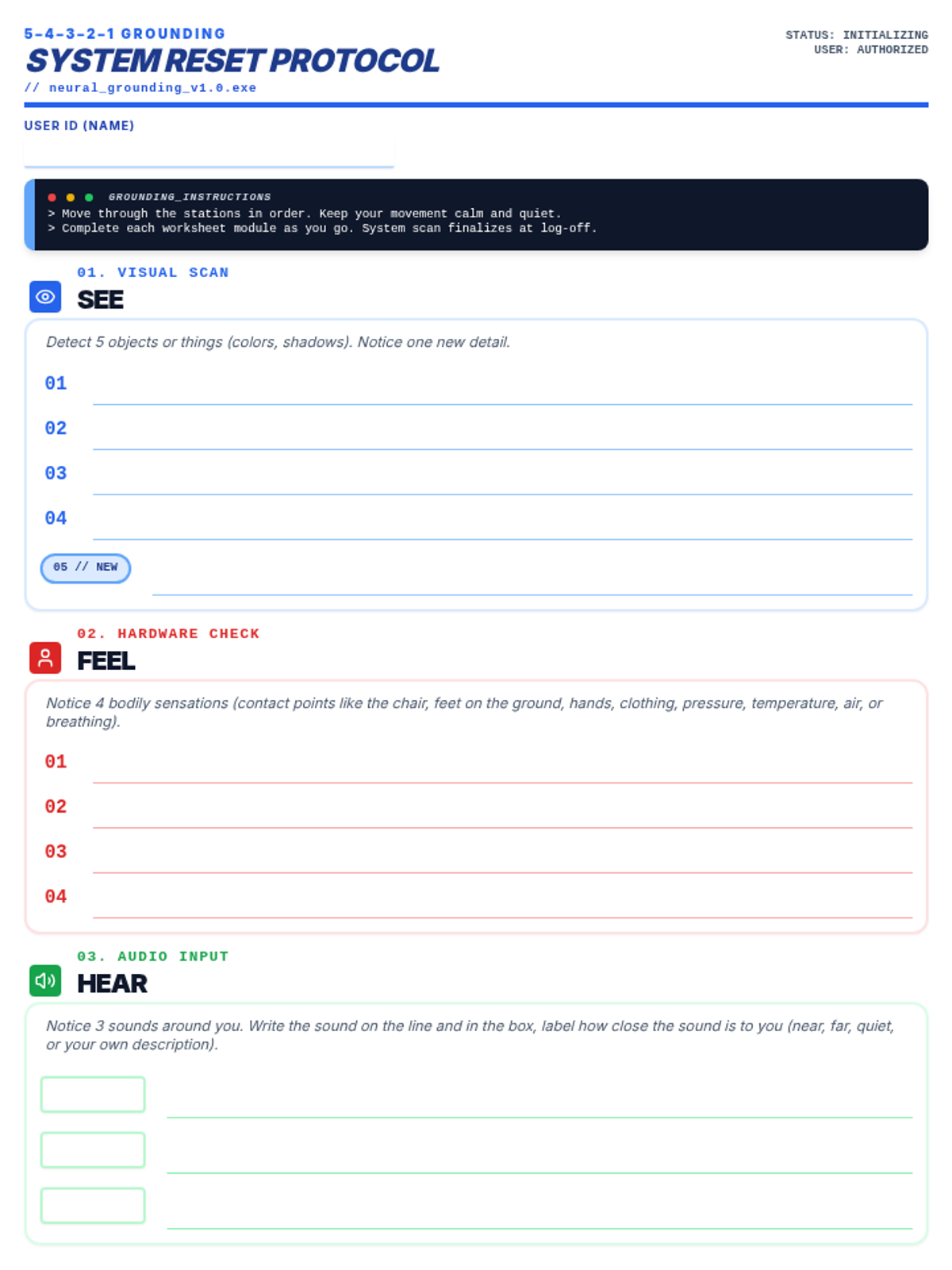
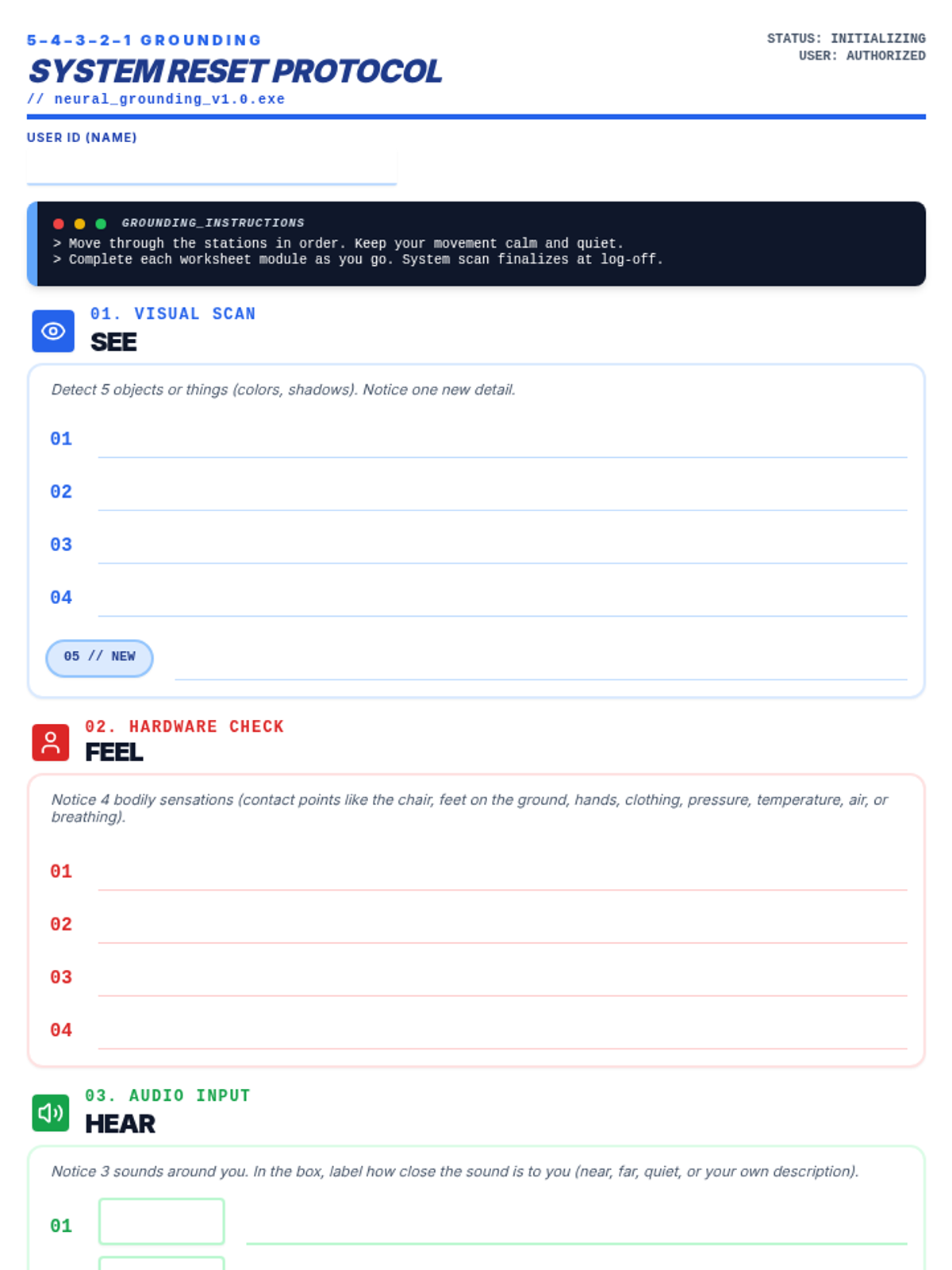
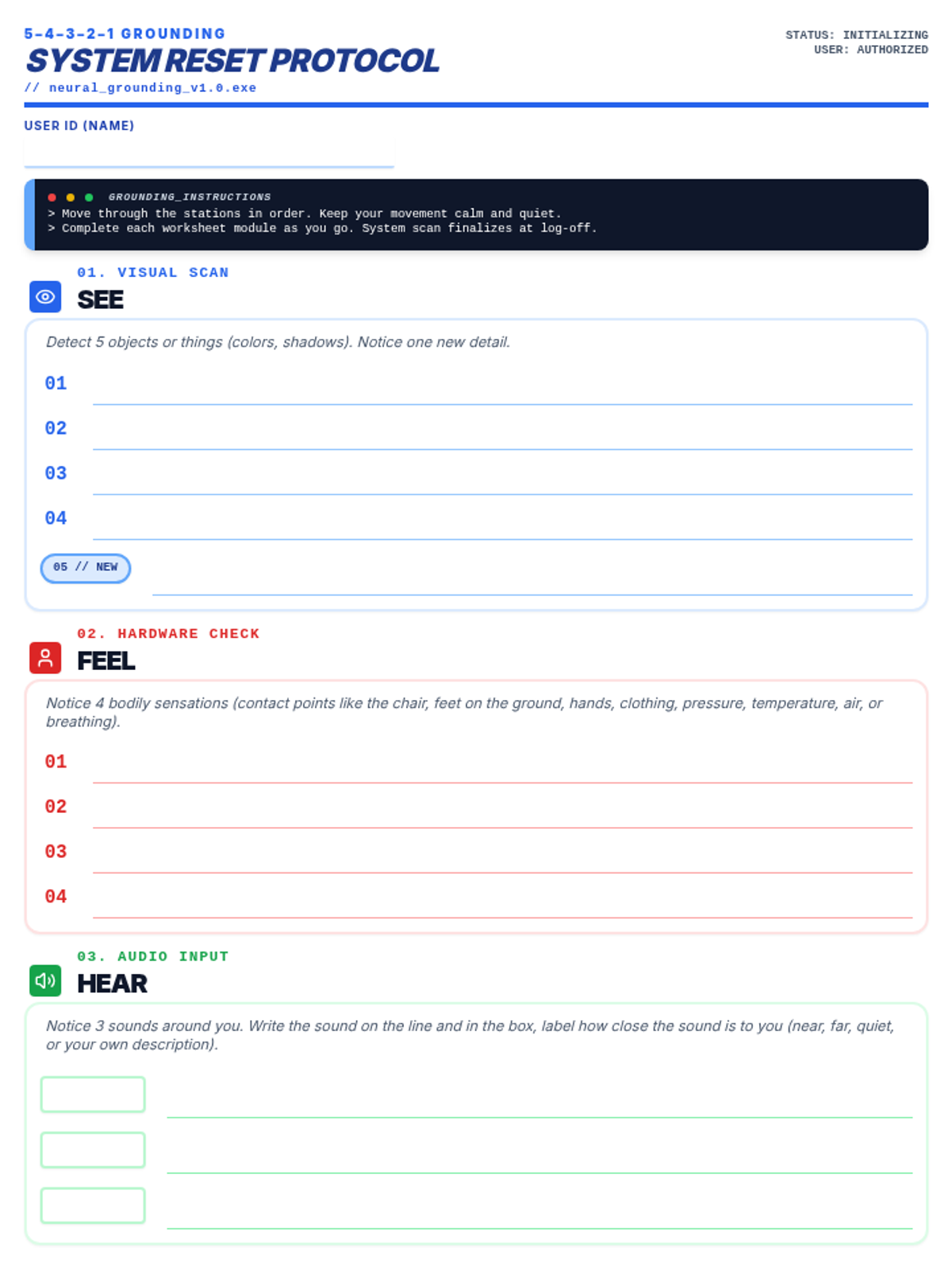
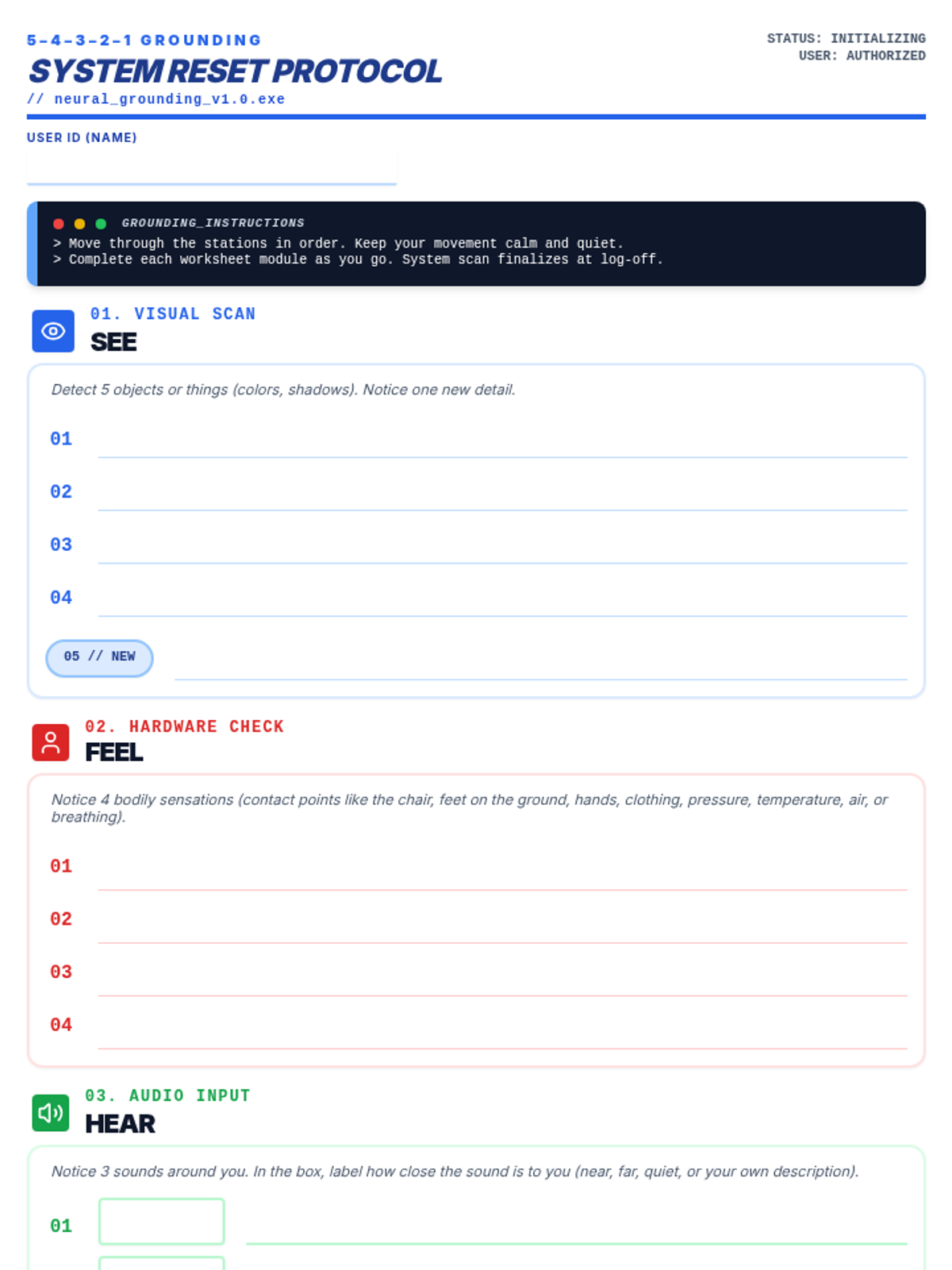
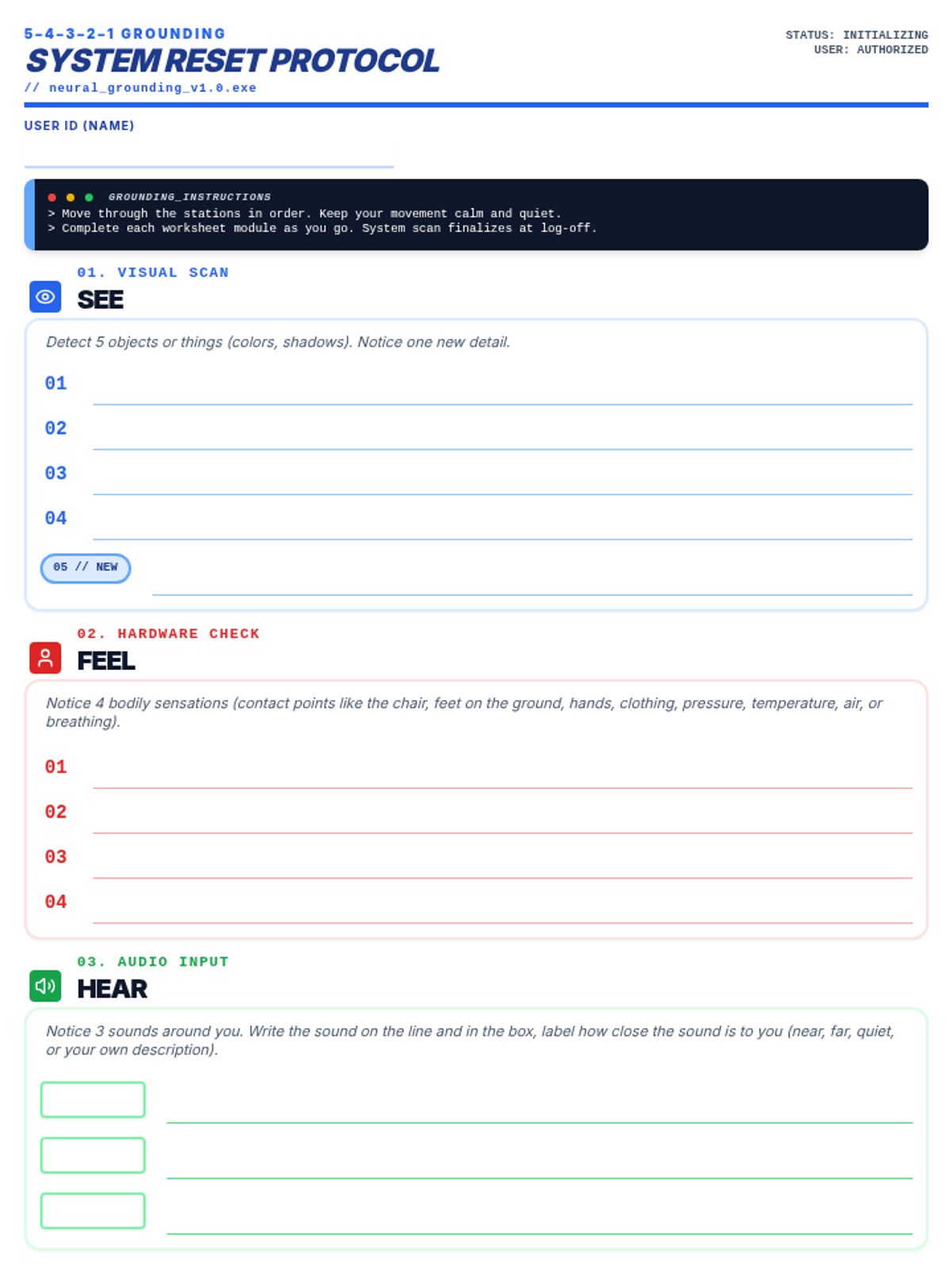
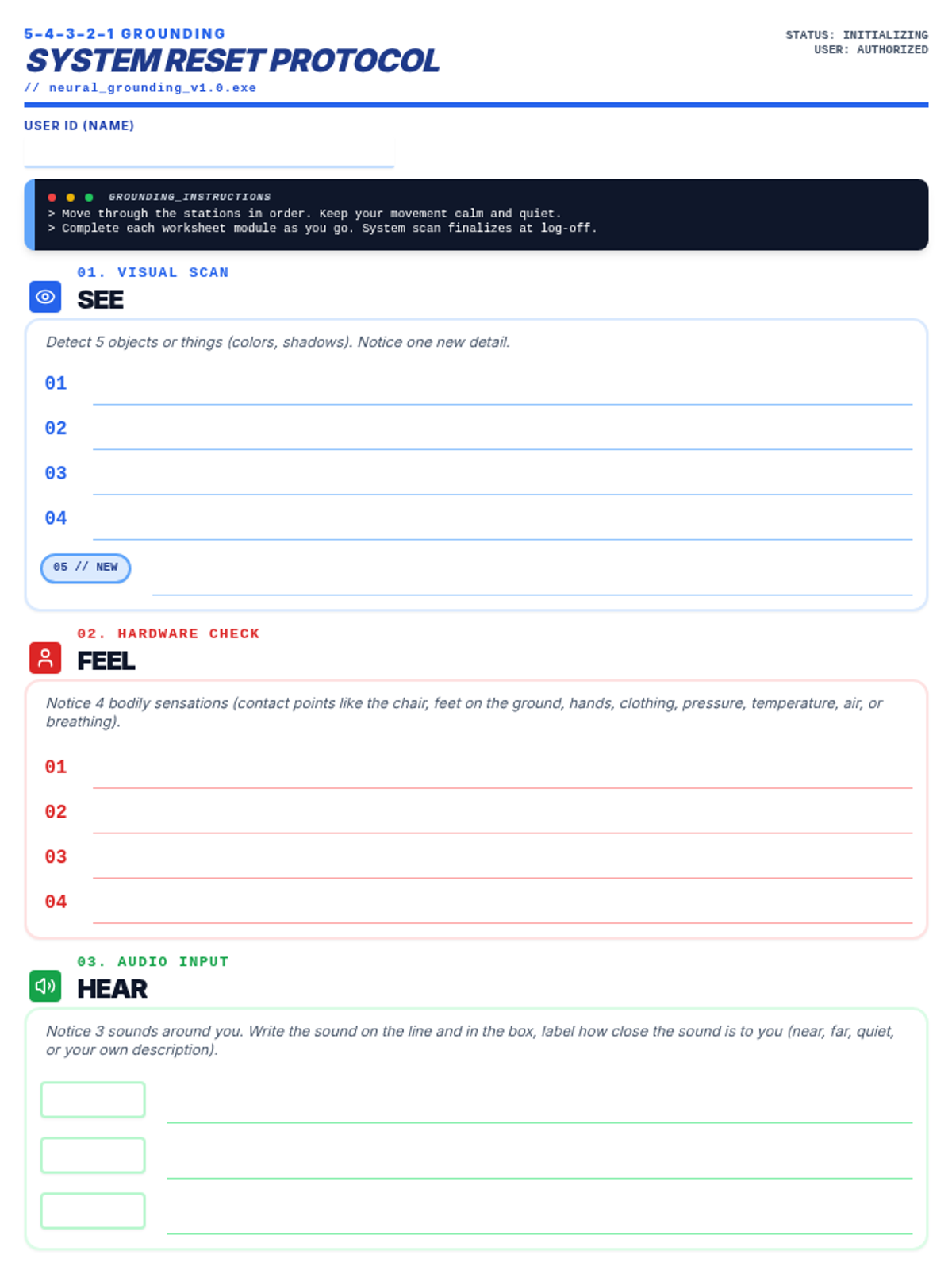
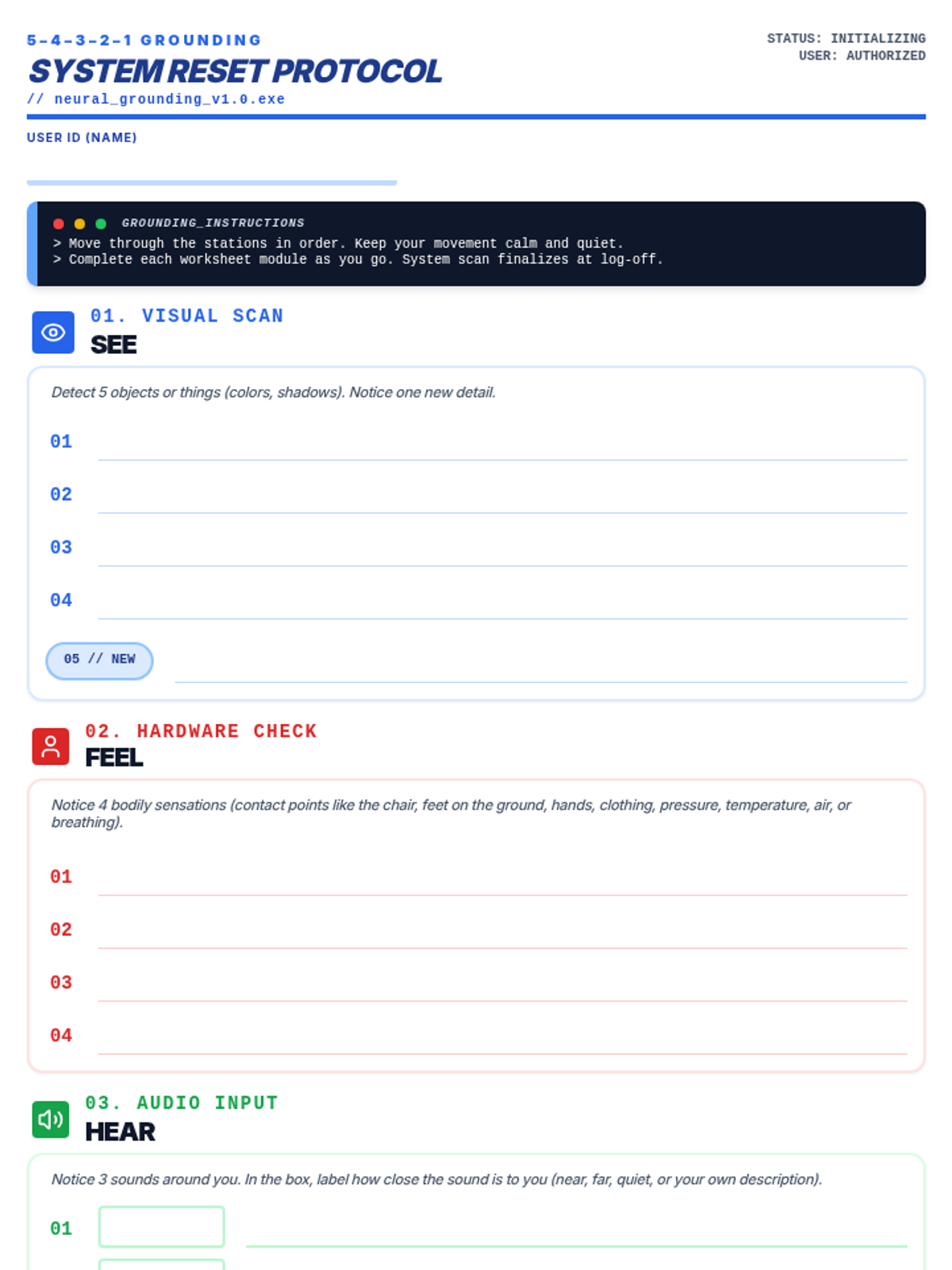
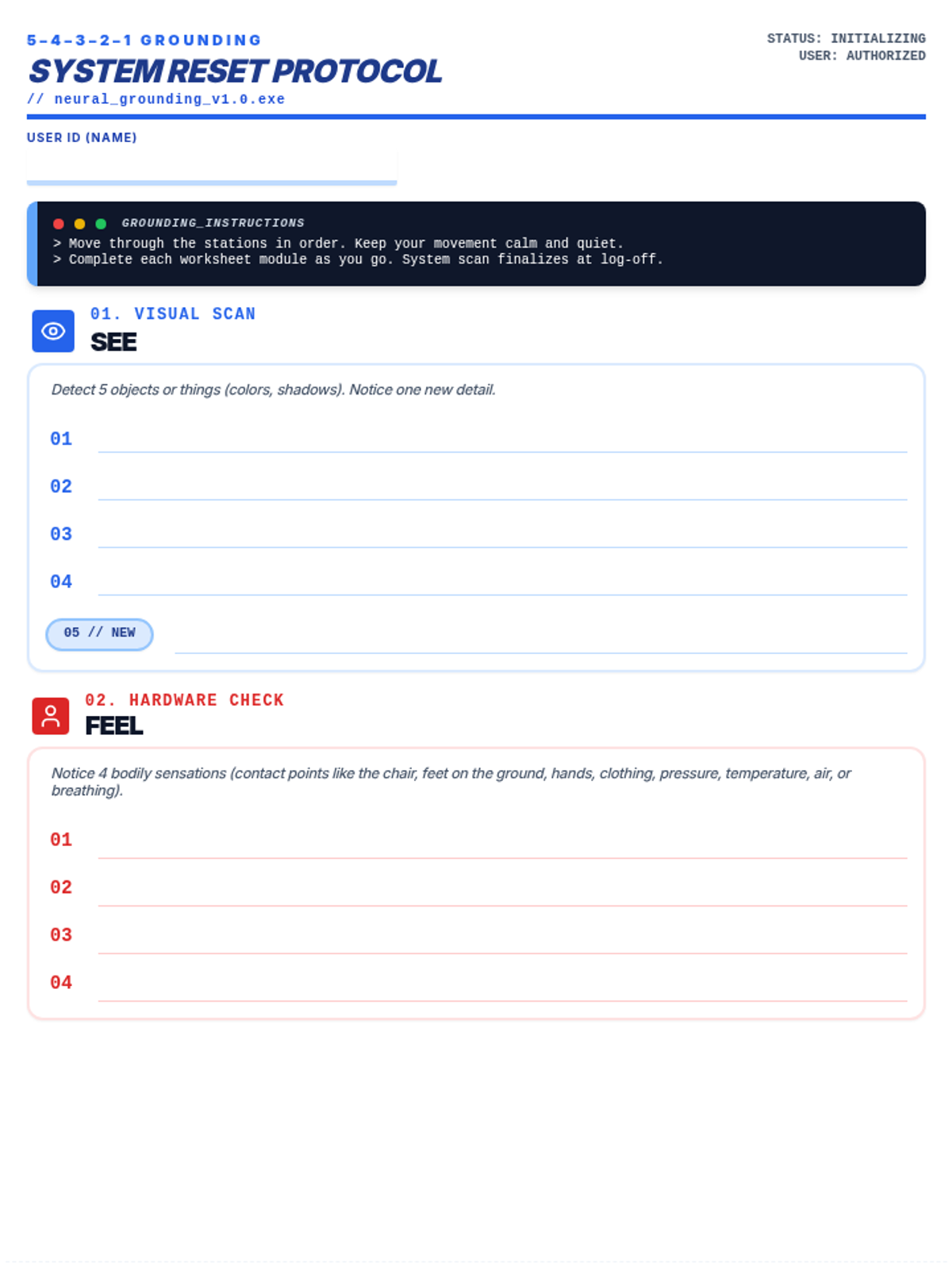
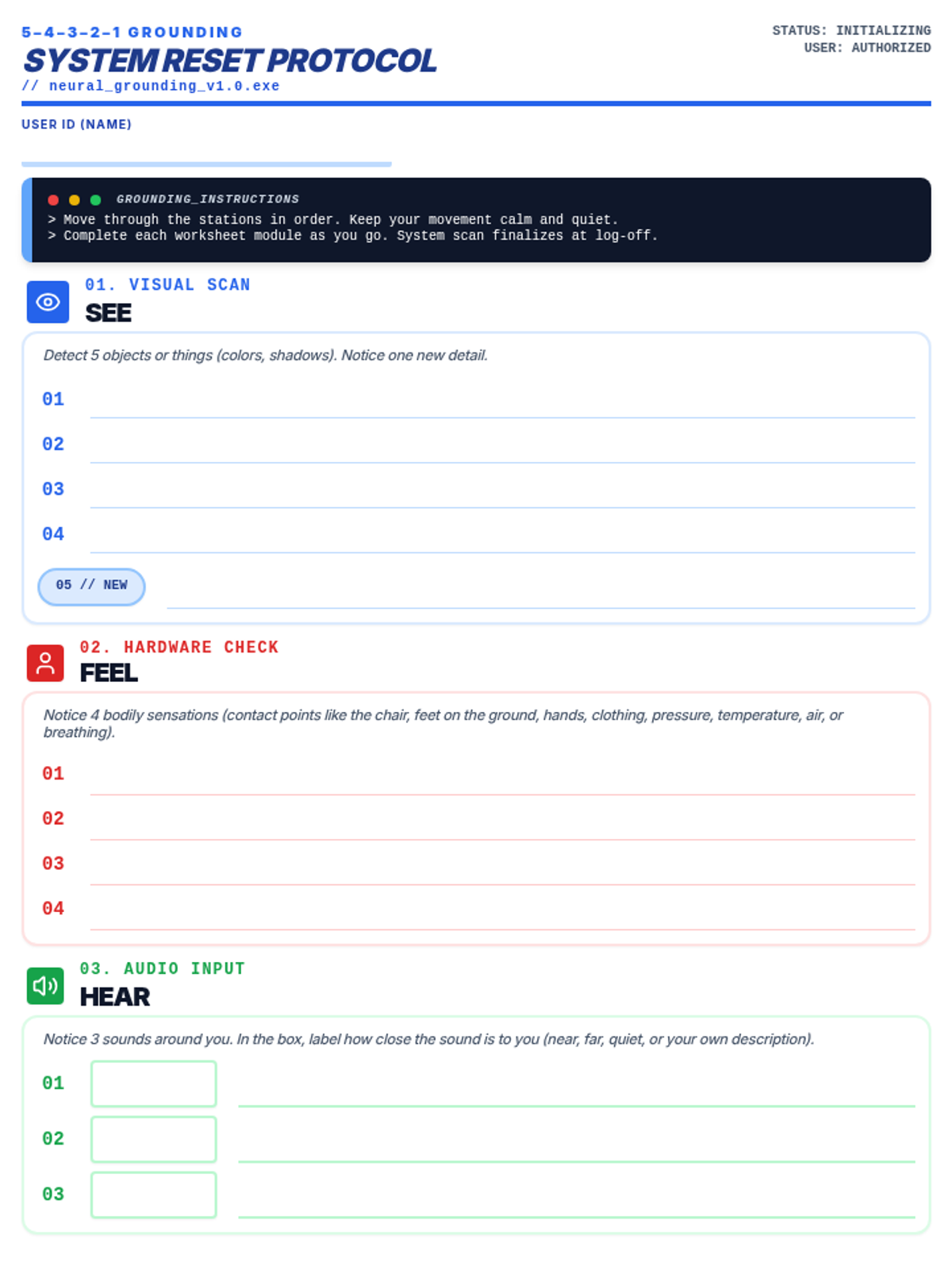
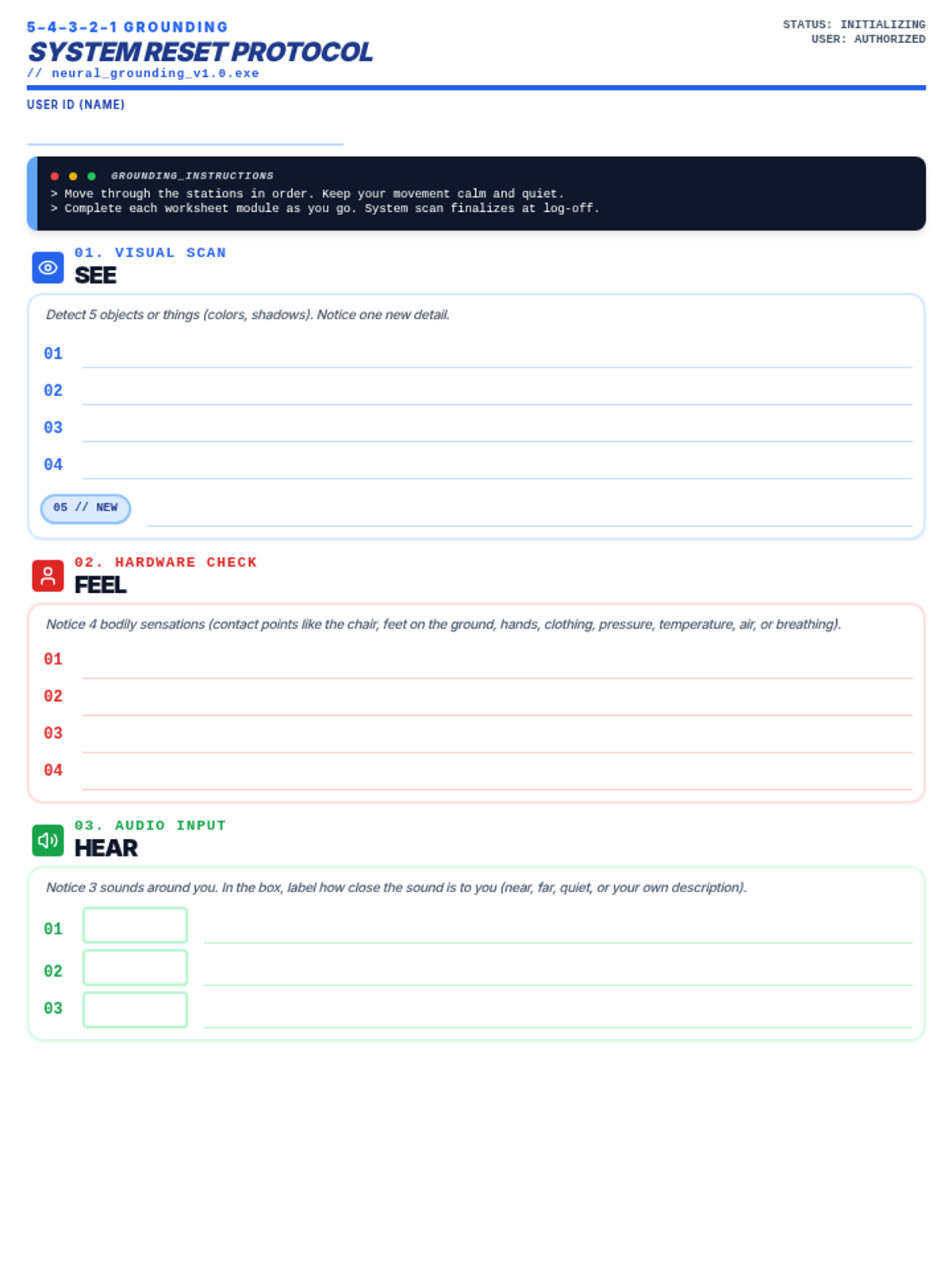
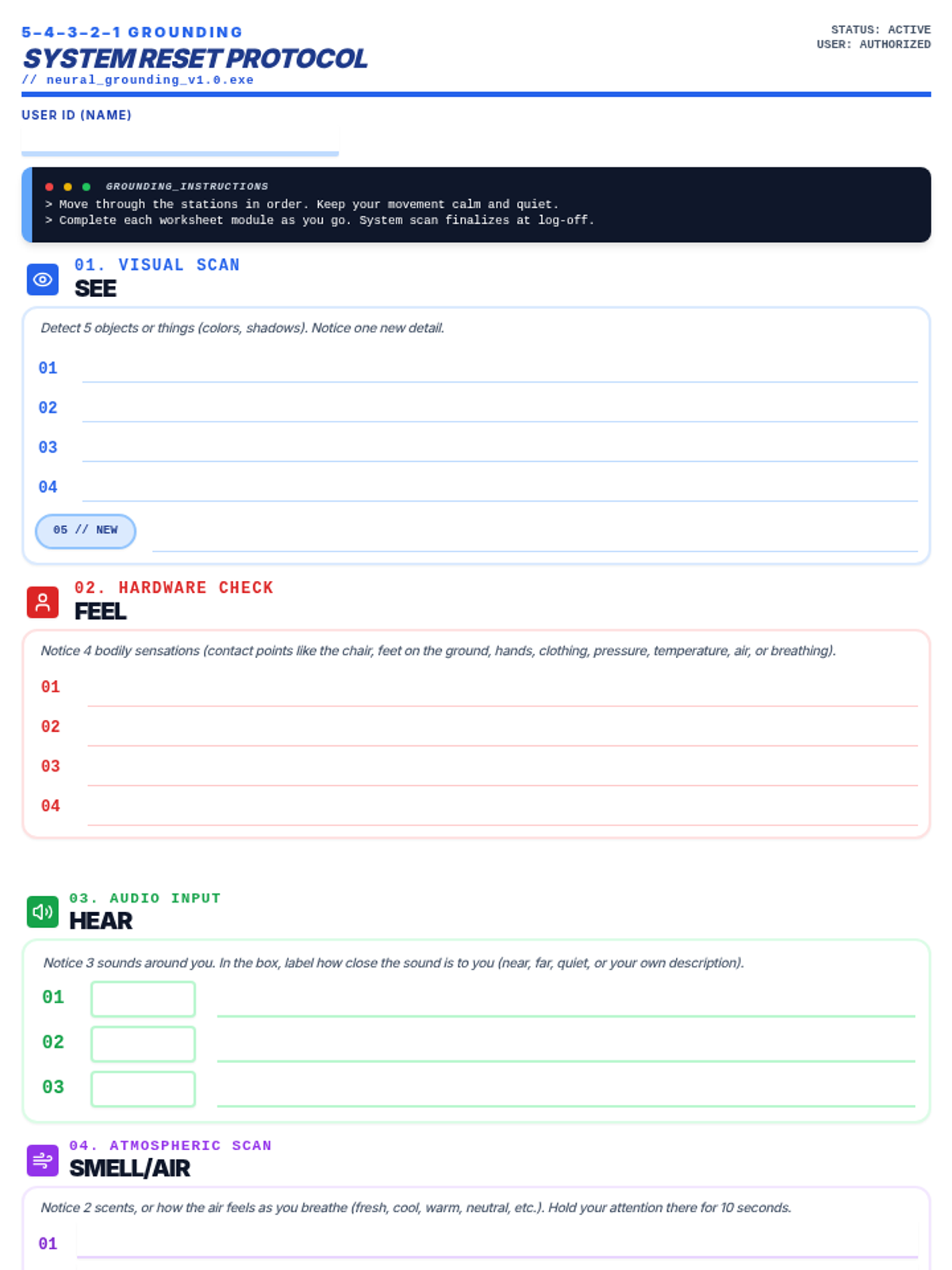
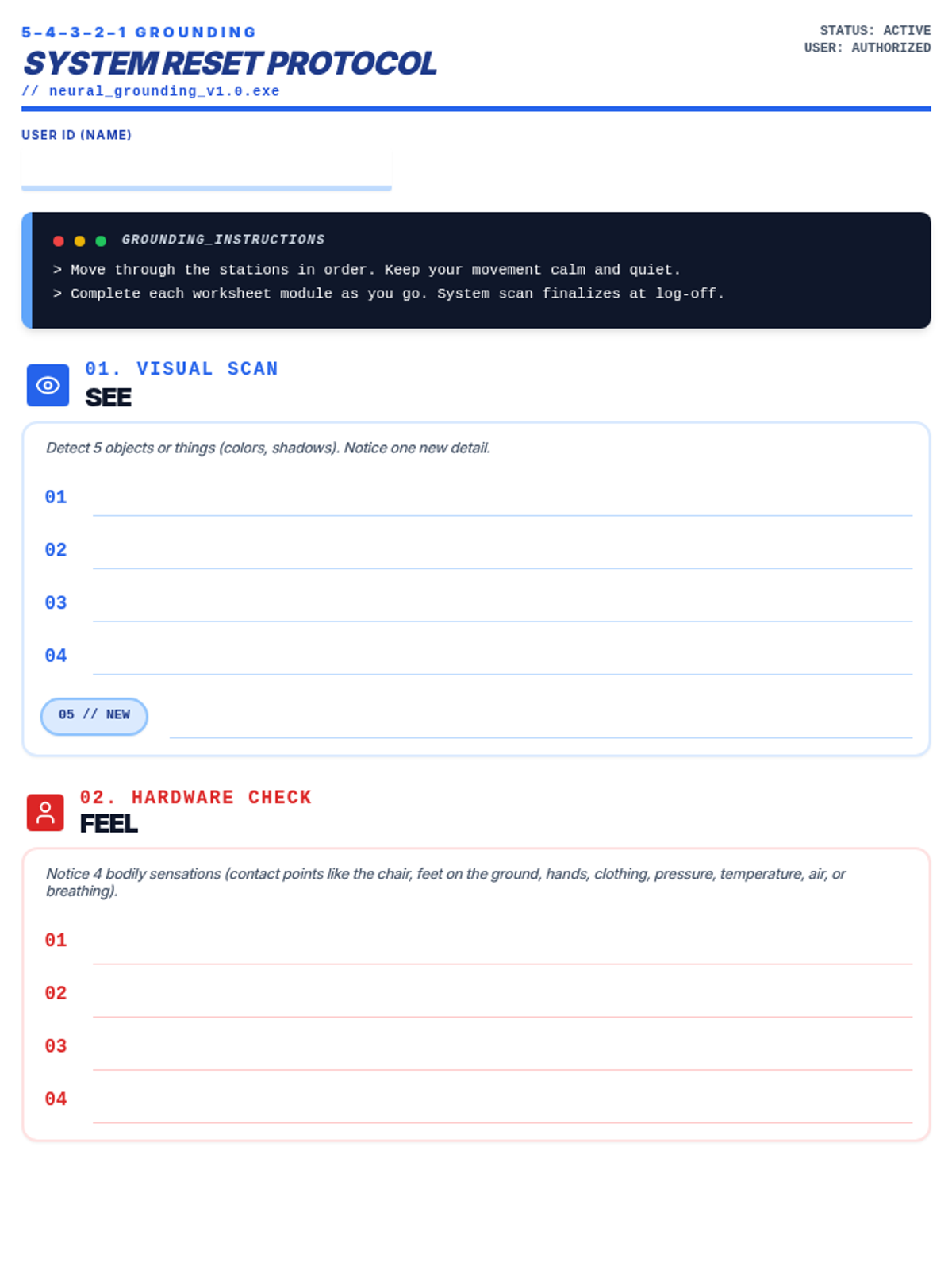
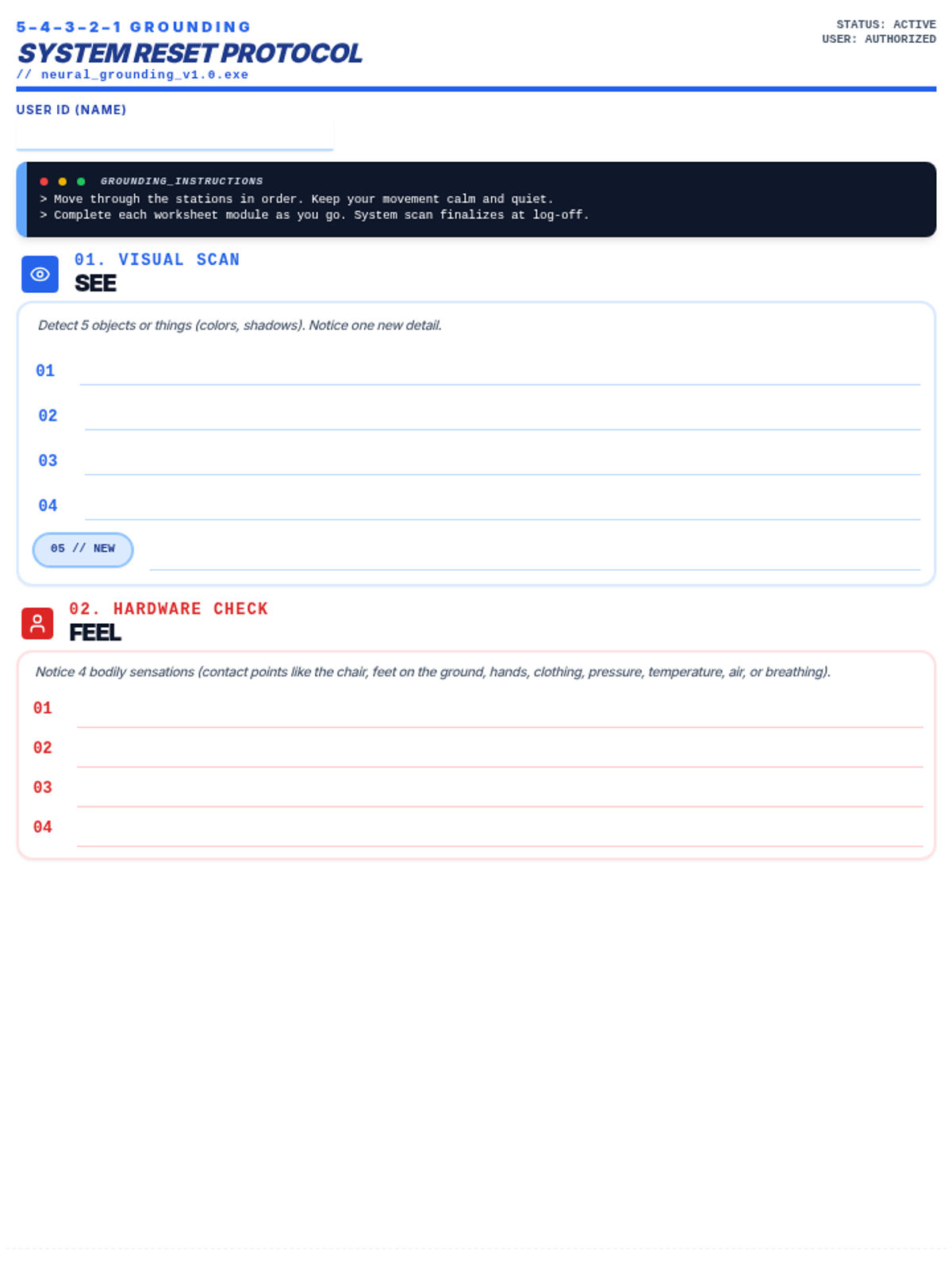
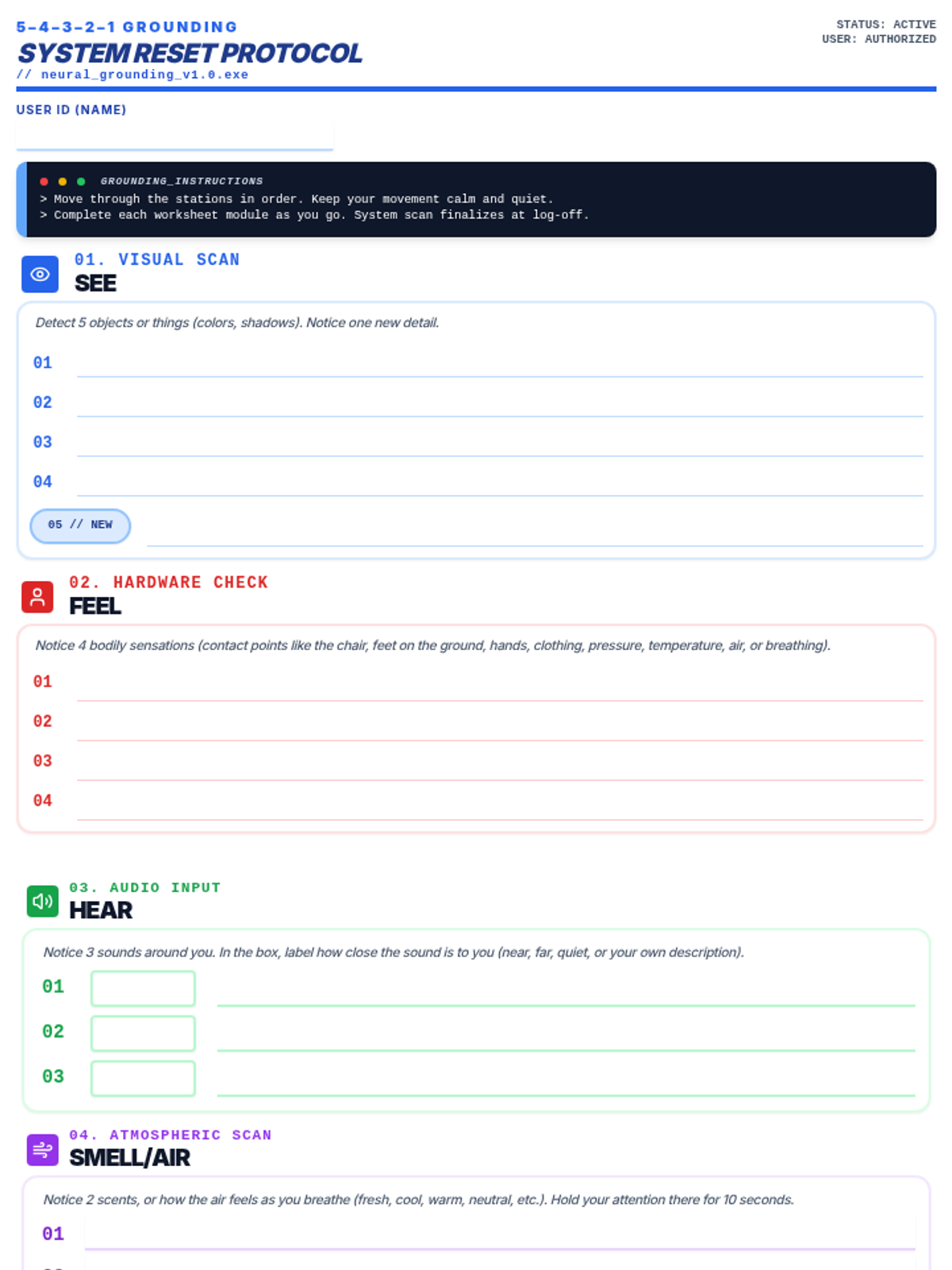
Students practice the 5-4-3-2-1 technique and other sensory-based orientation strategies to reconnect with the present moment. The lesson explains the science of how sensory input overrides ruminative thought loops.
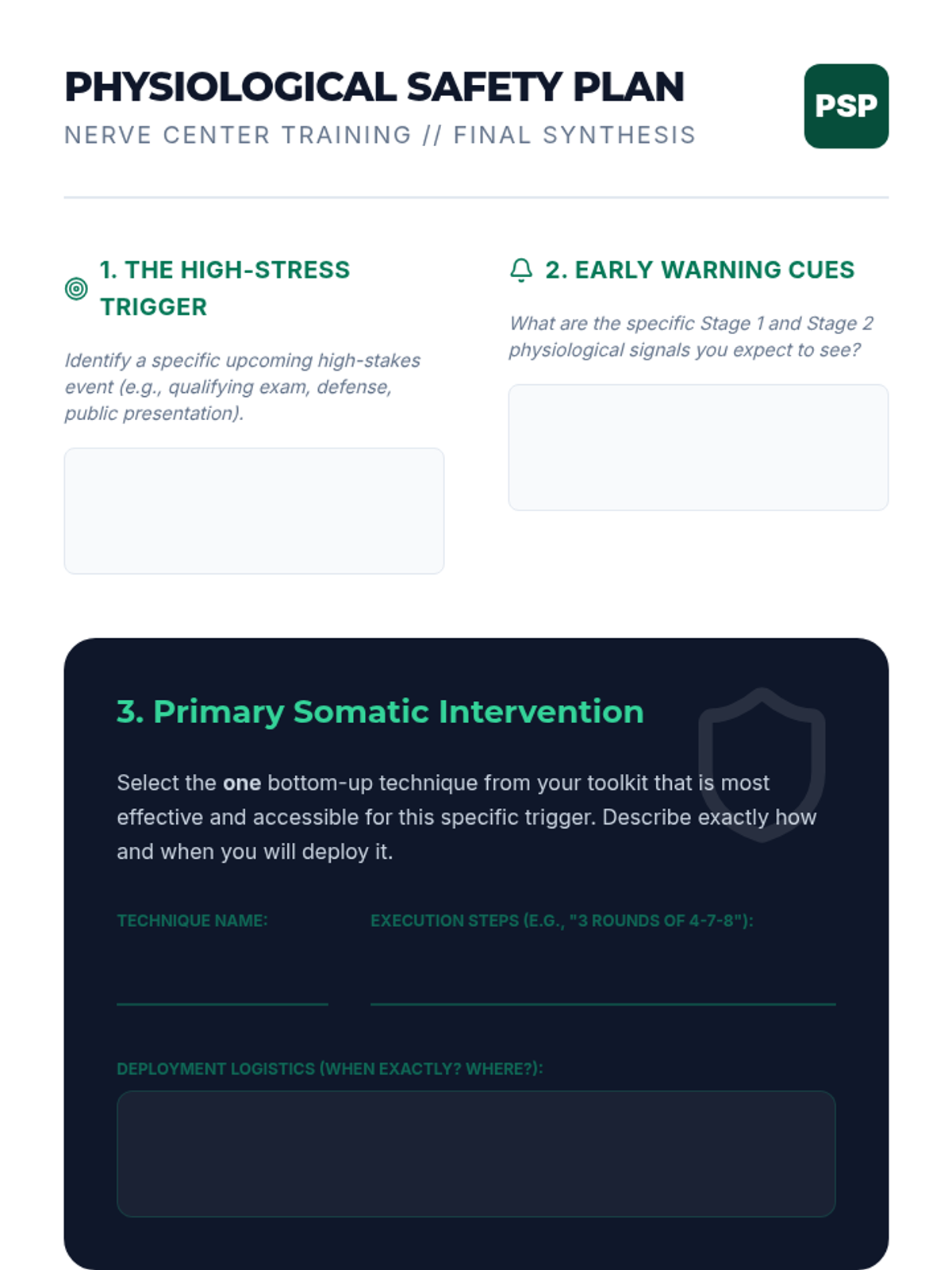
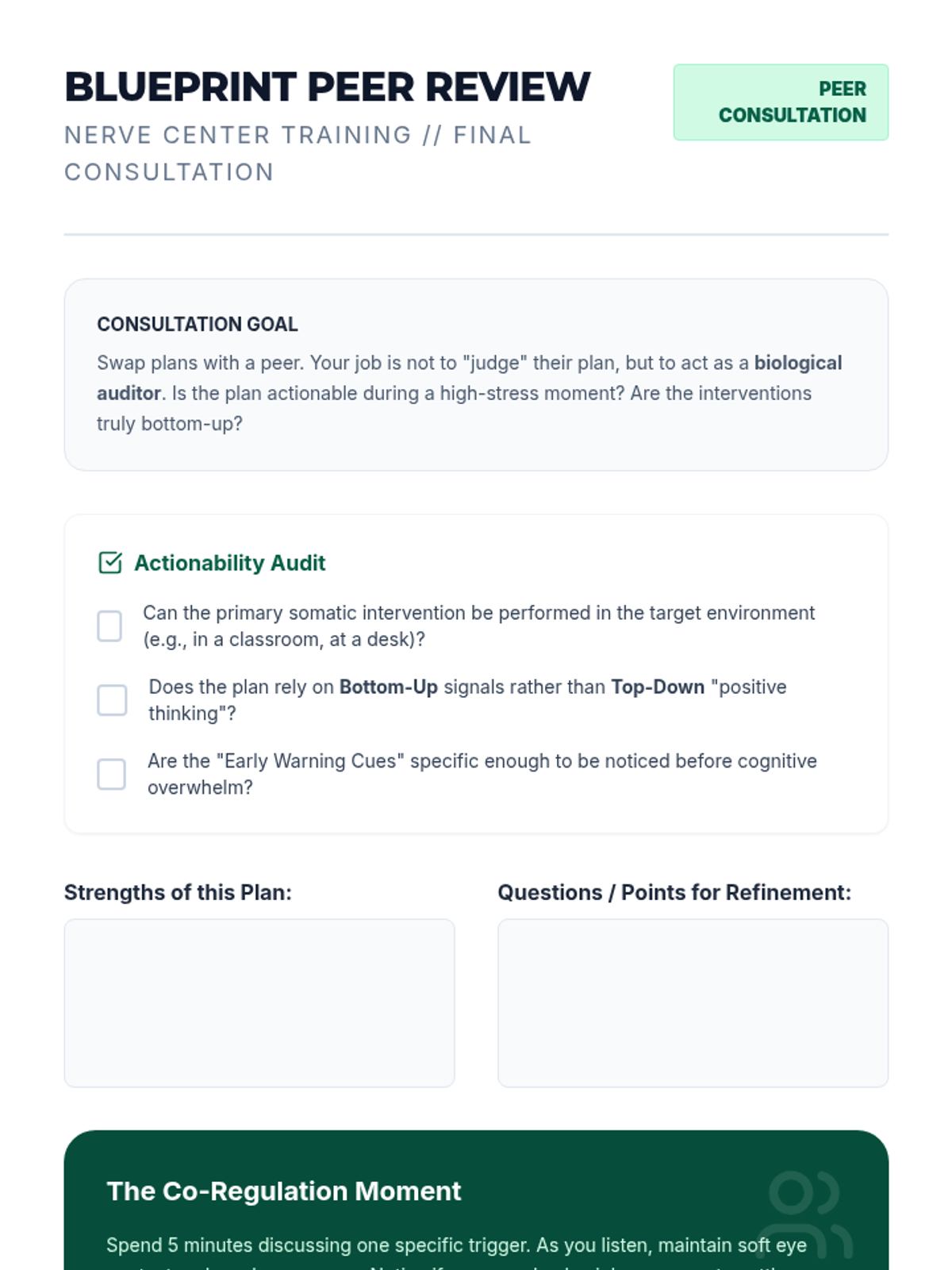
Students synthesize their knowledge to create a personalized physiological safety plan for high-stress periods. They identify triggers, early warning signs, and pre-planned somatic interventions.
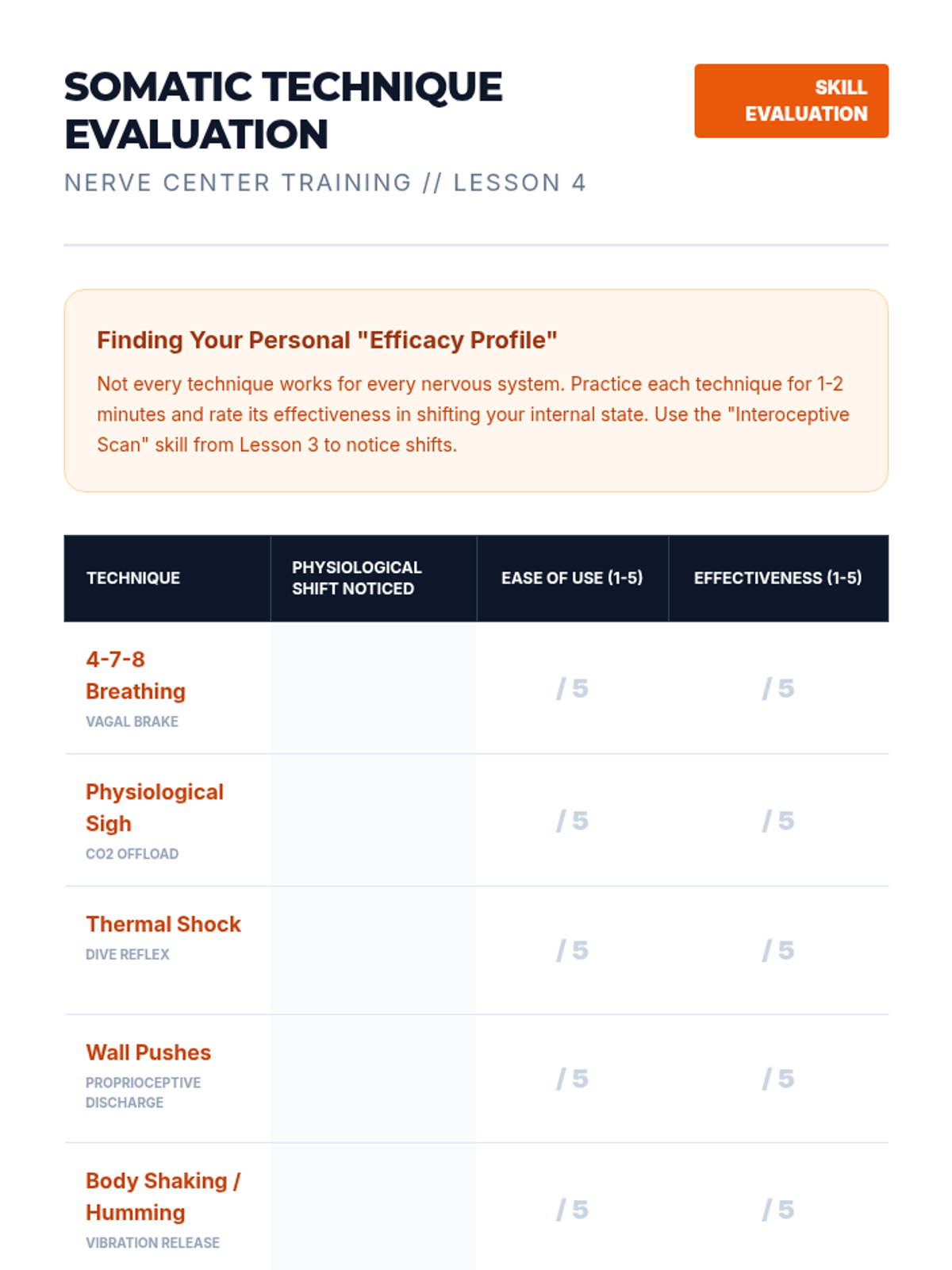
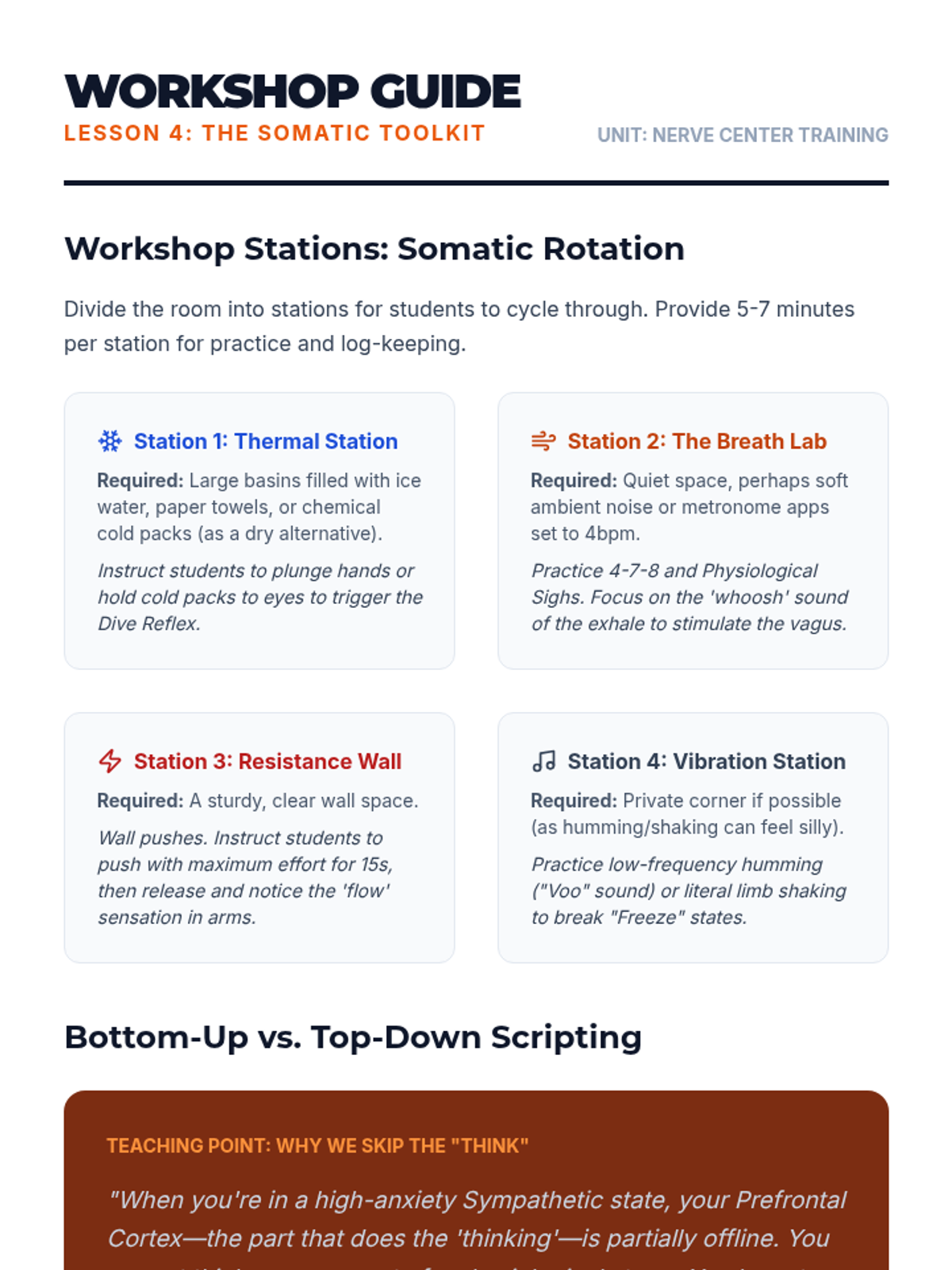
Students evaluate somatic bottom-up processing techniques like diaphragmatic breathing and thermal regulation. They learn to choose the right physical strategy for their specific physiological profile.
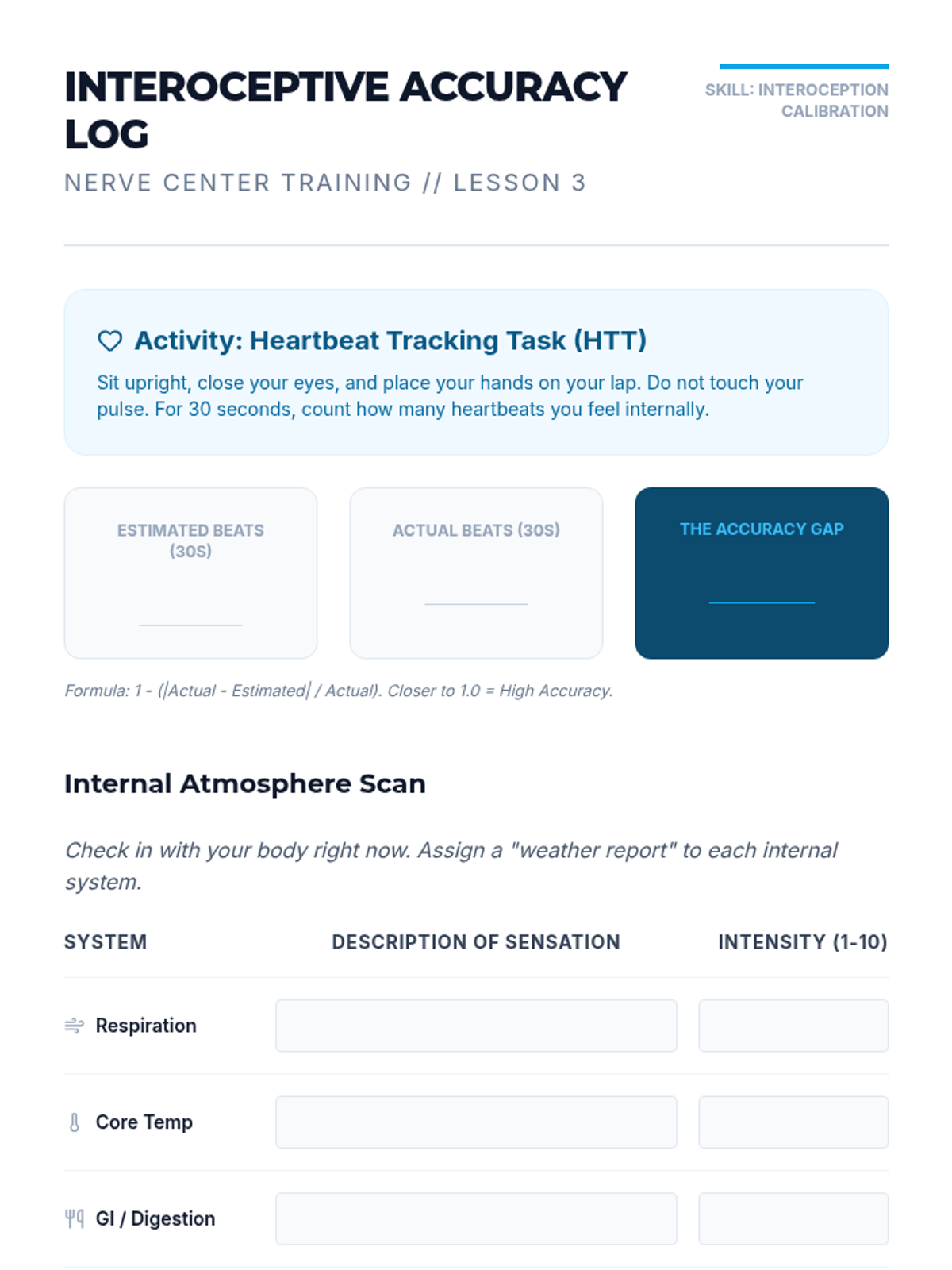
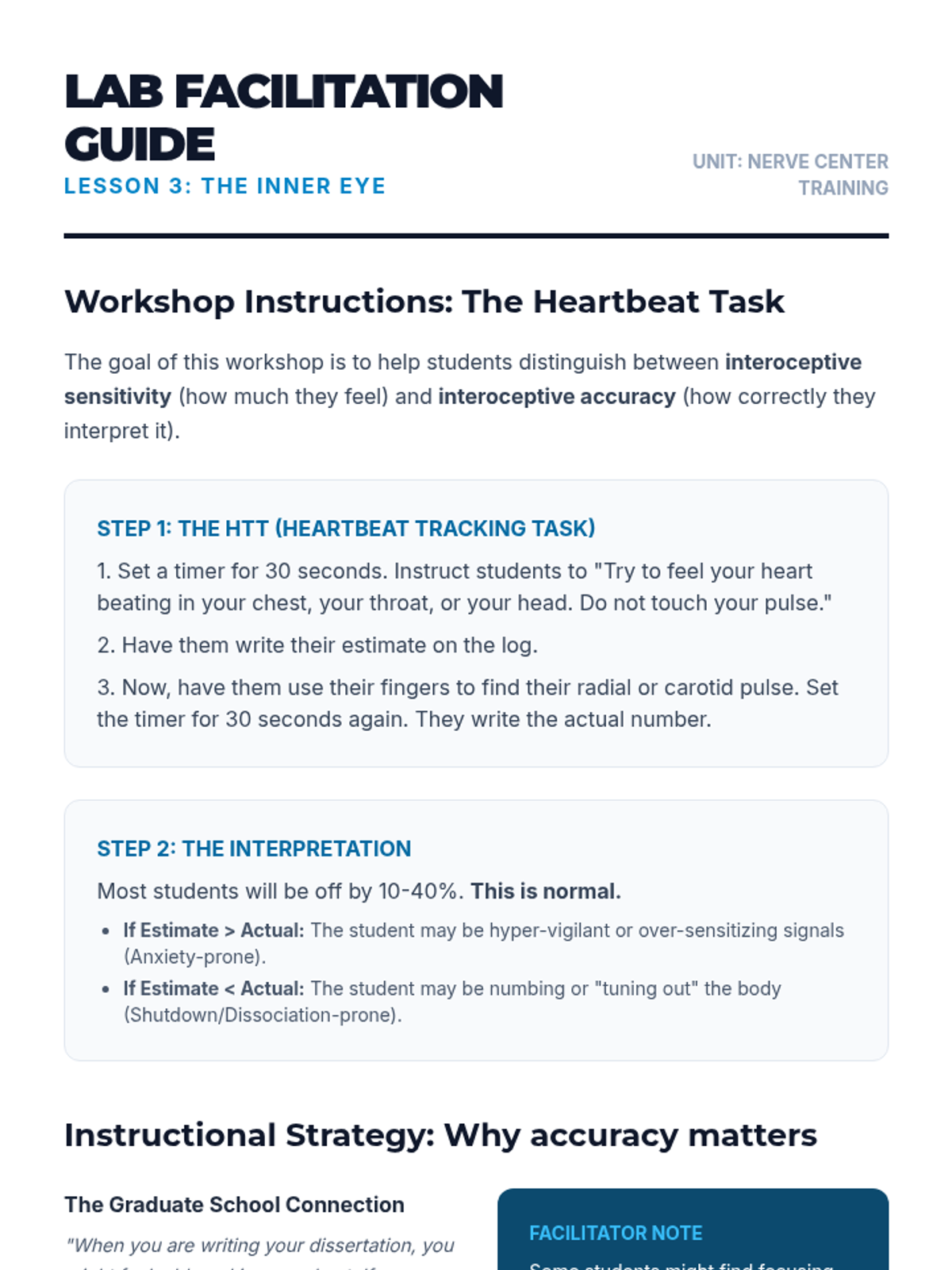
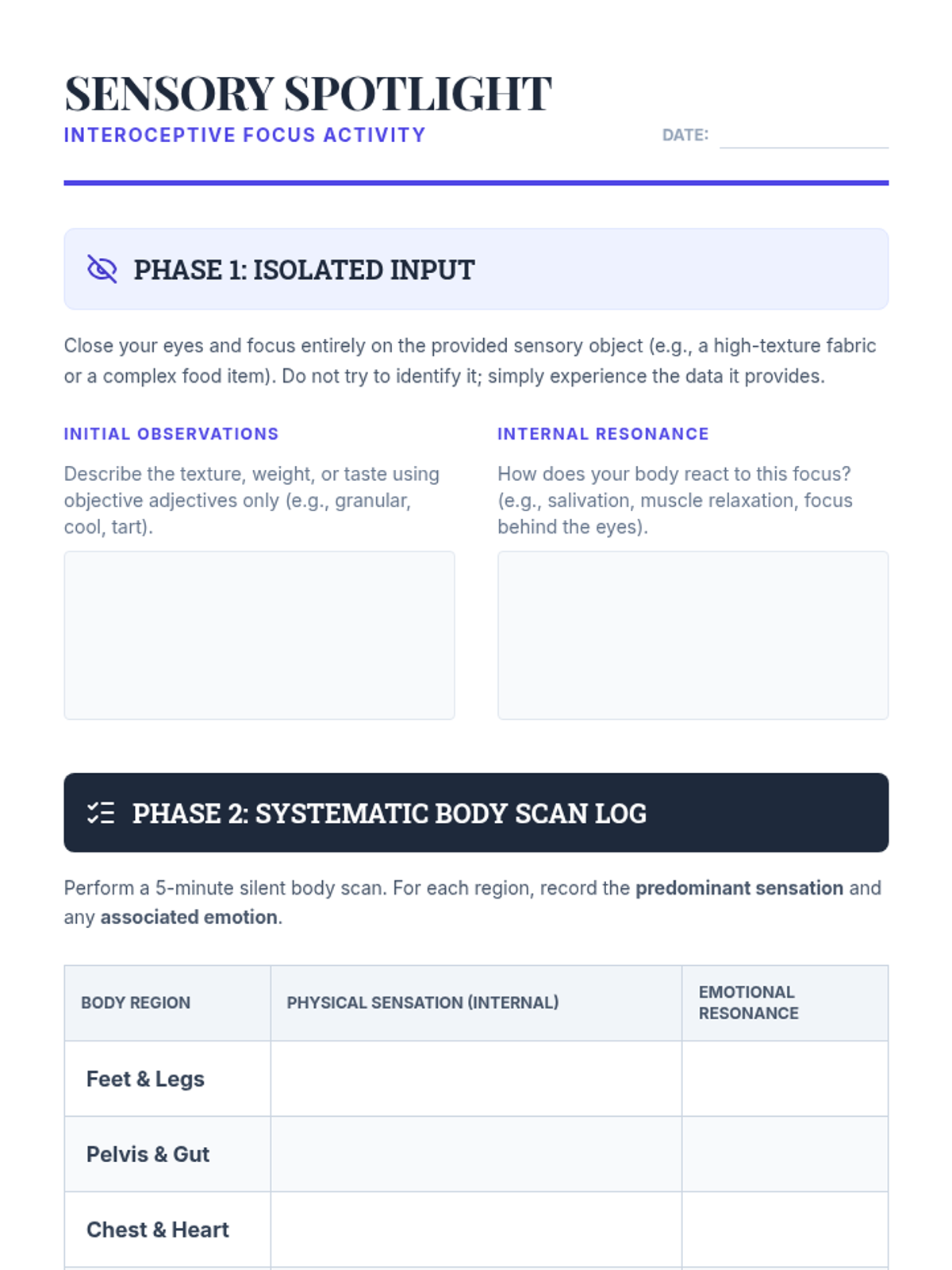
Learners practice interoception—the sense of the internal state of the body. They test their accuracy in detecting heart rate and tension, connecting poor awareness with high anxiety.
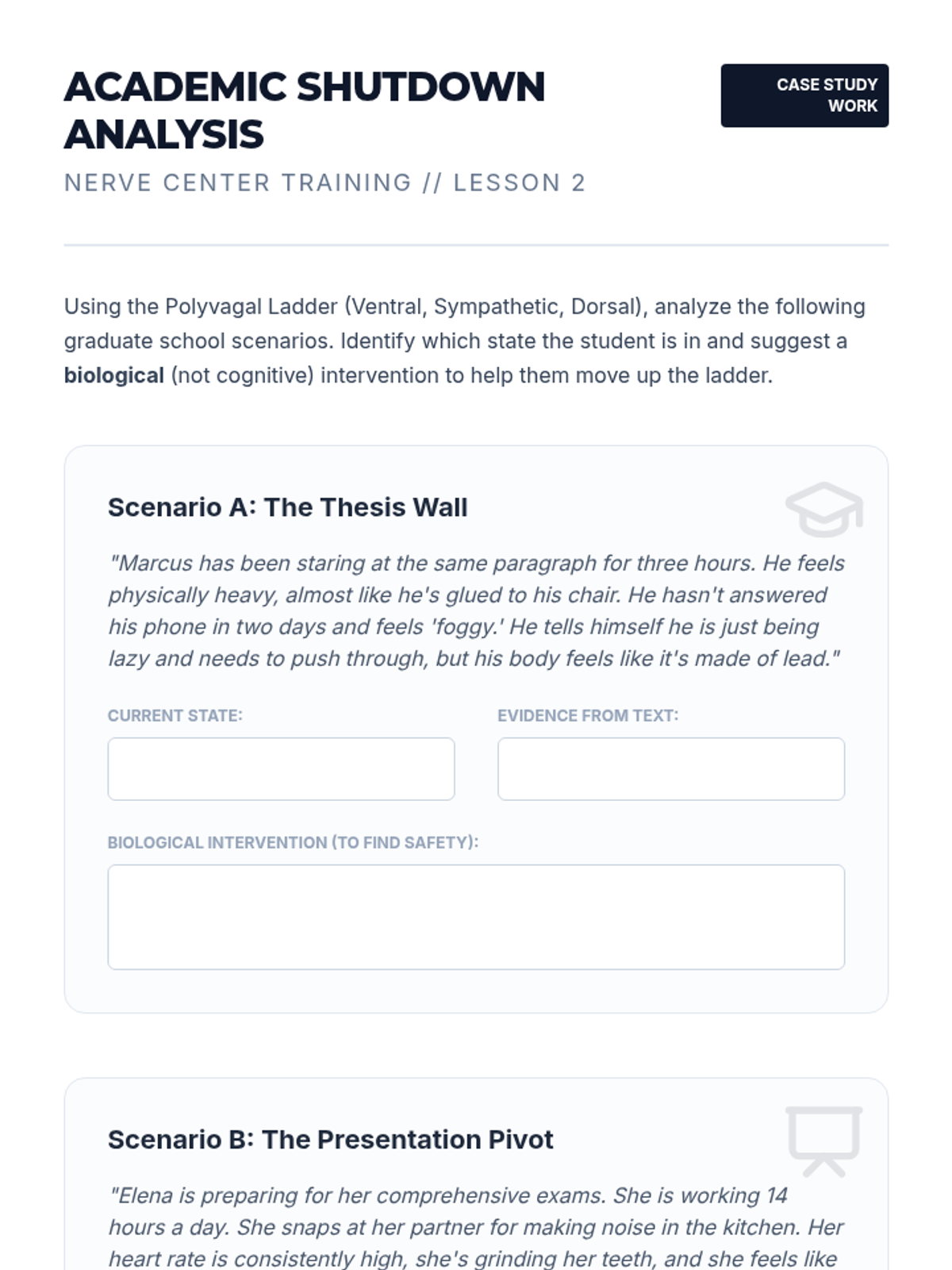
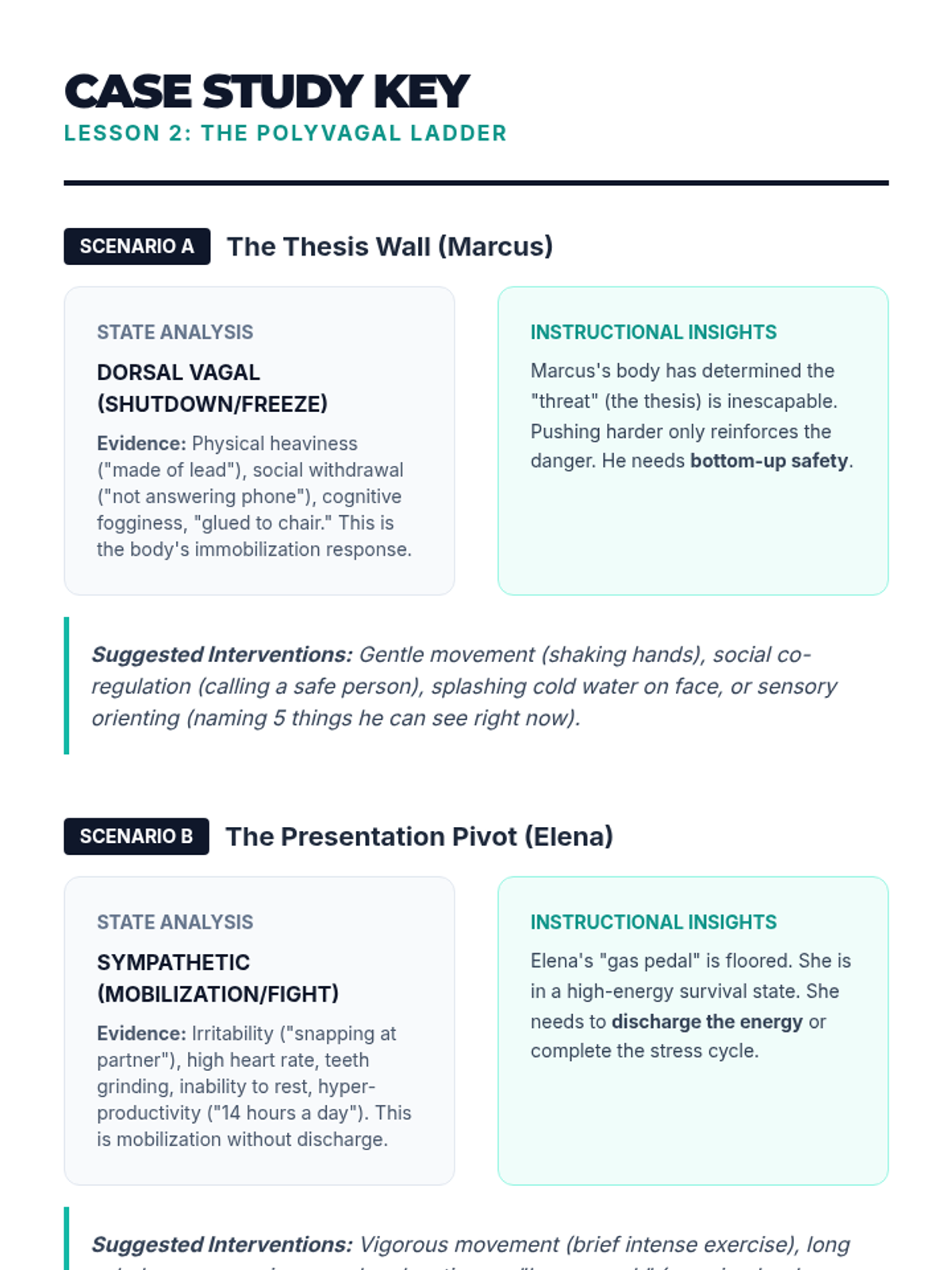
Dives into Polyvagal Theory to distinguish between fight/flight mobilization and dorsal vagal shutdown. Students analyze behaviors like procrastination and isolation as biological responses.
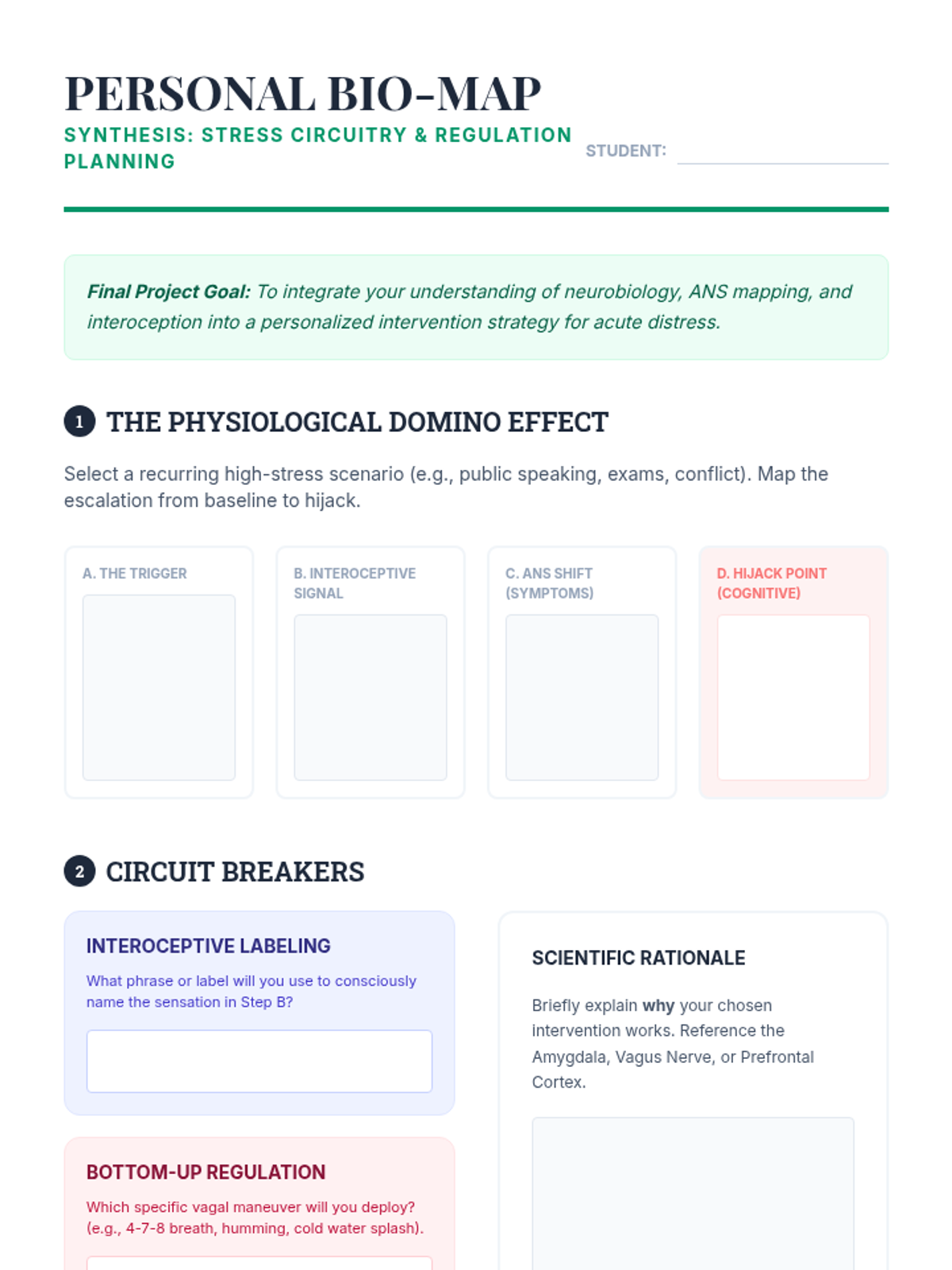
Students integrate their knowledge to create a personal 'bio-map' of their stress escalation cycle. They present how specific physiological interventions can interrupt this cycle at various stages.
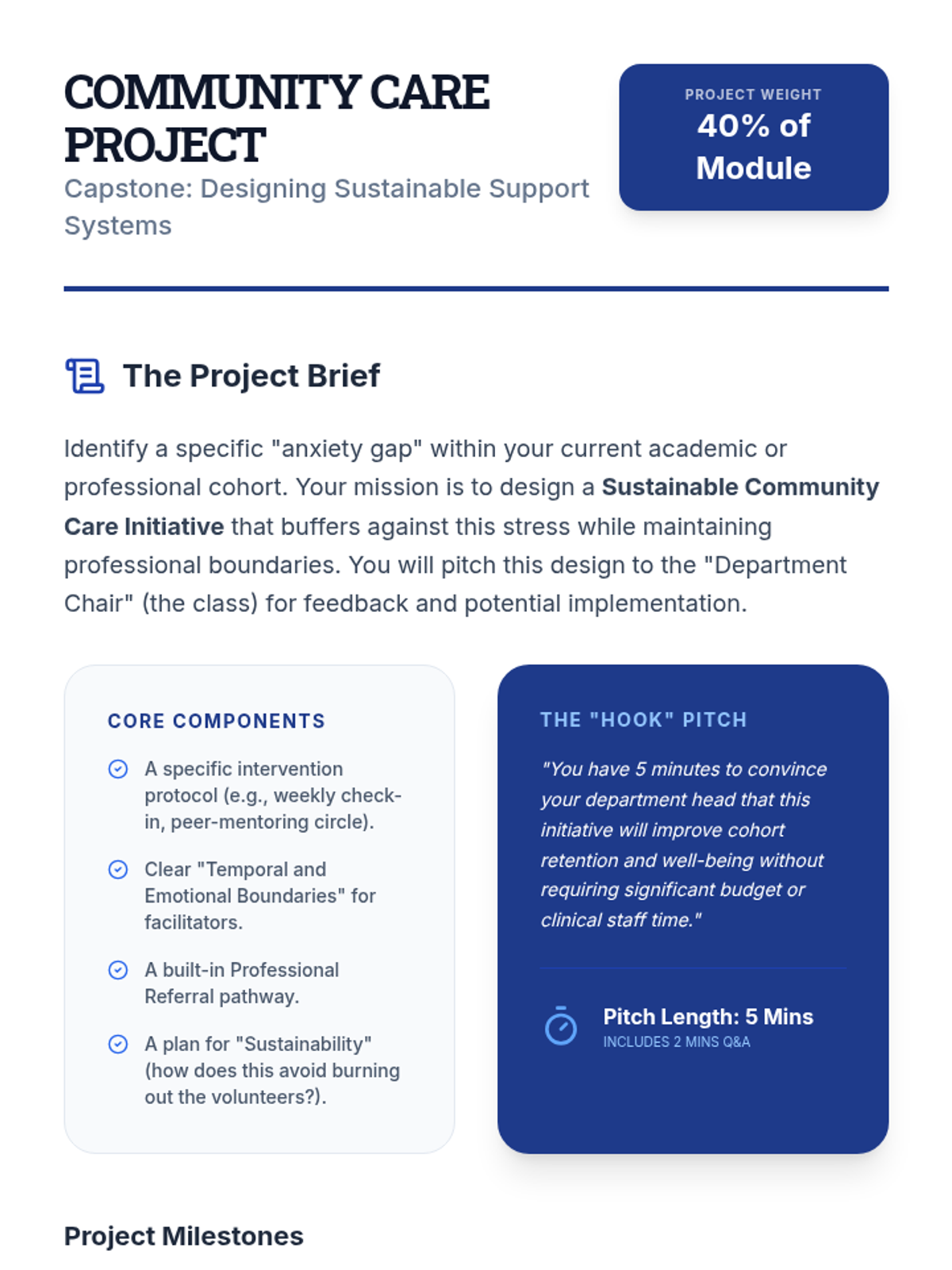
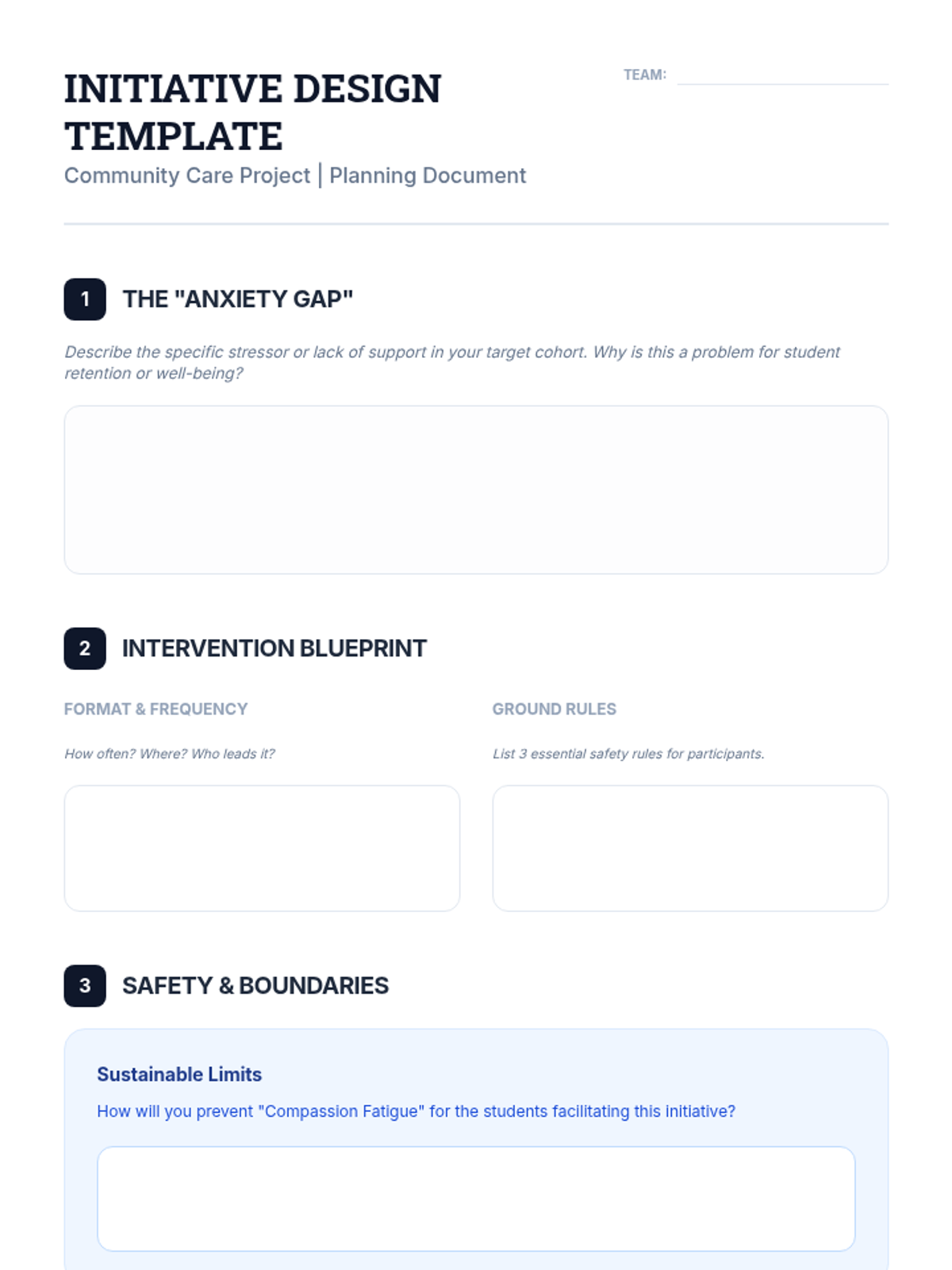
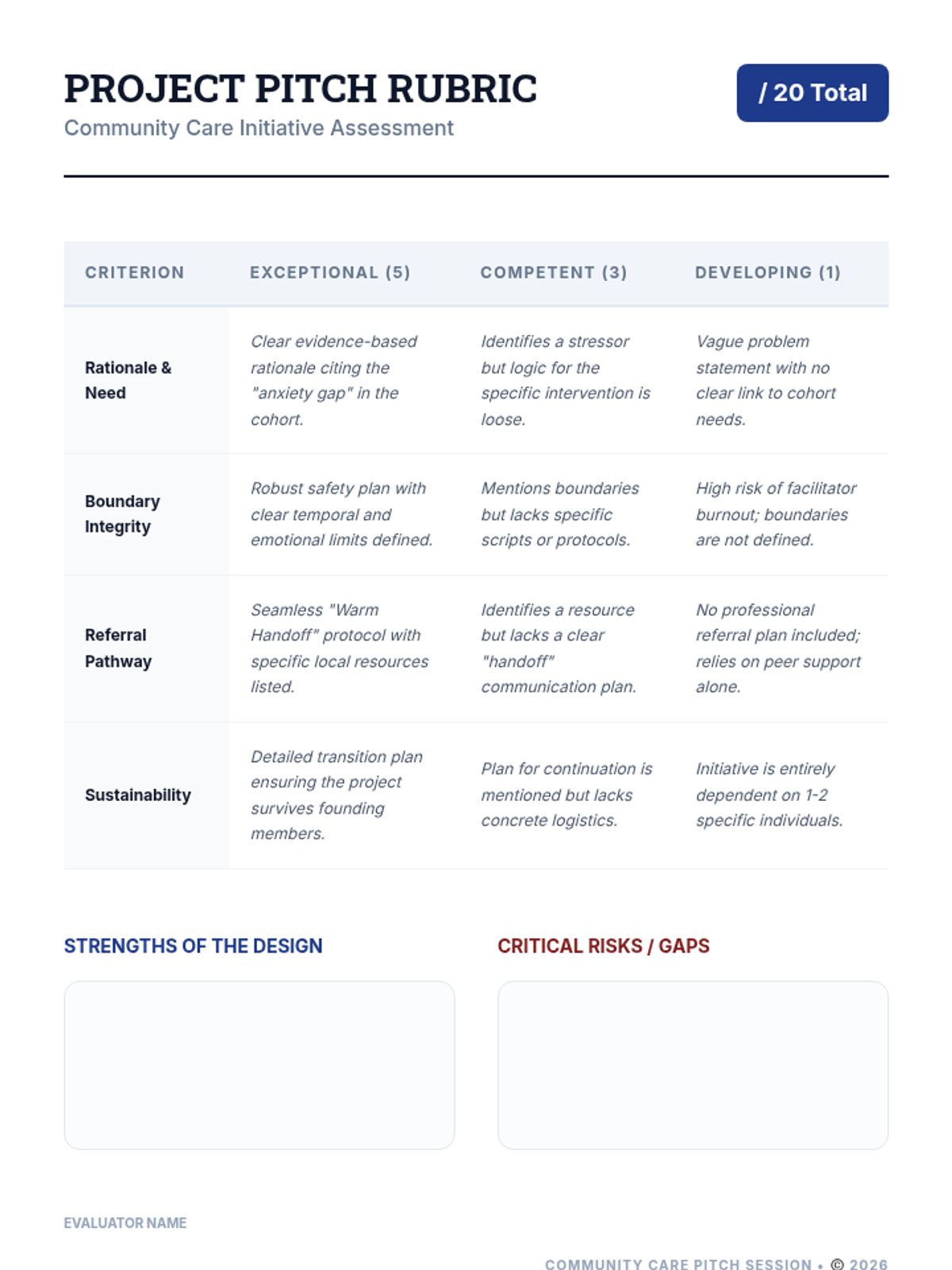
Students design and pitch a sustainable community care initiative tailored to their specific academic or professional cohort.
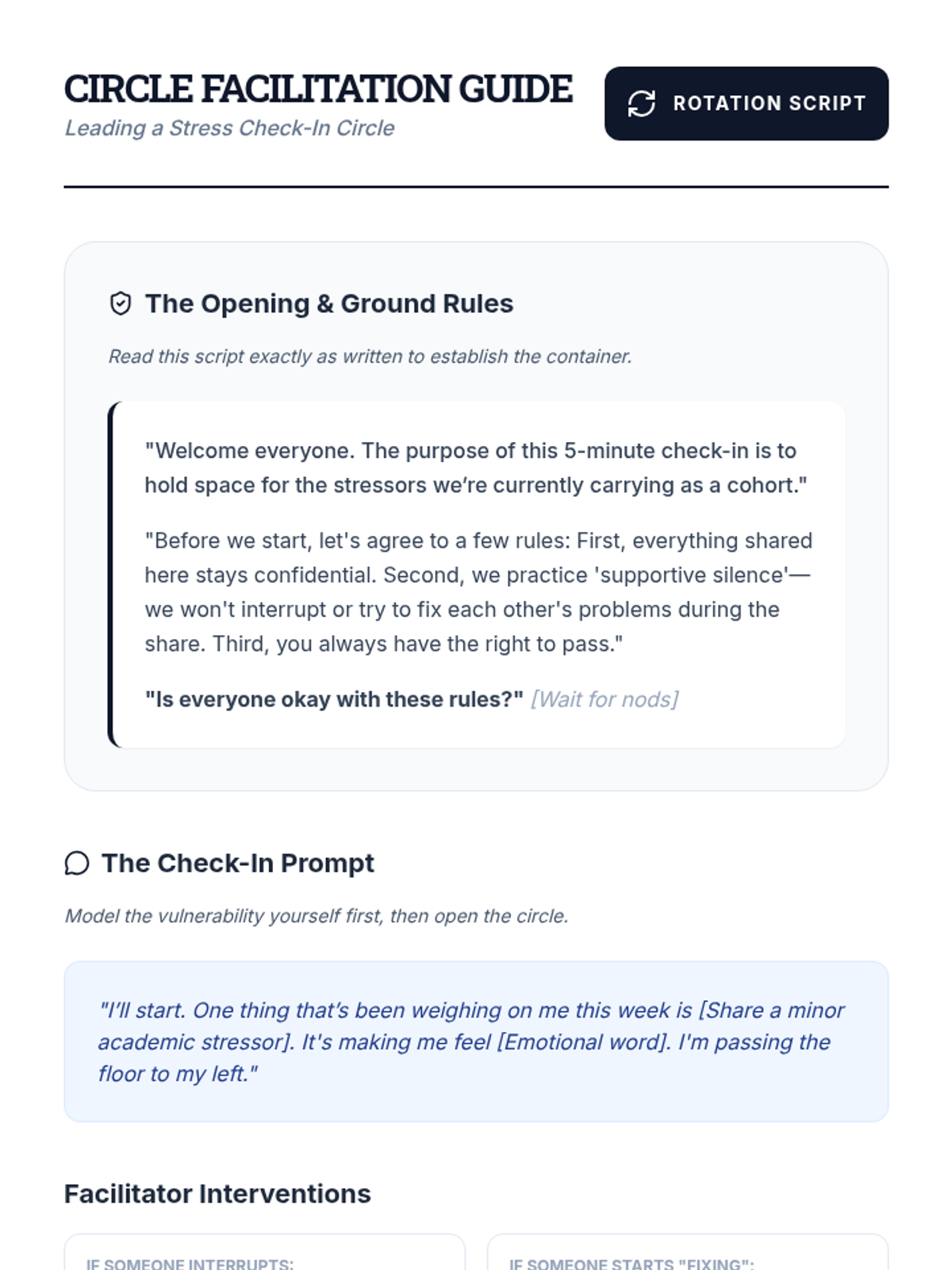
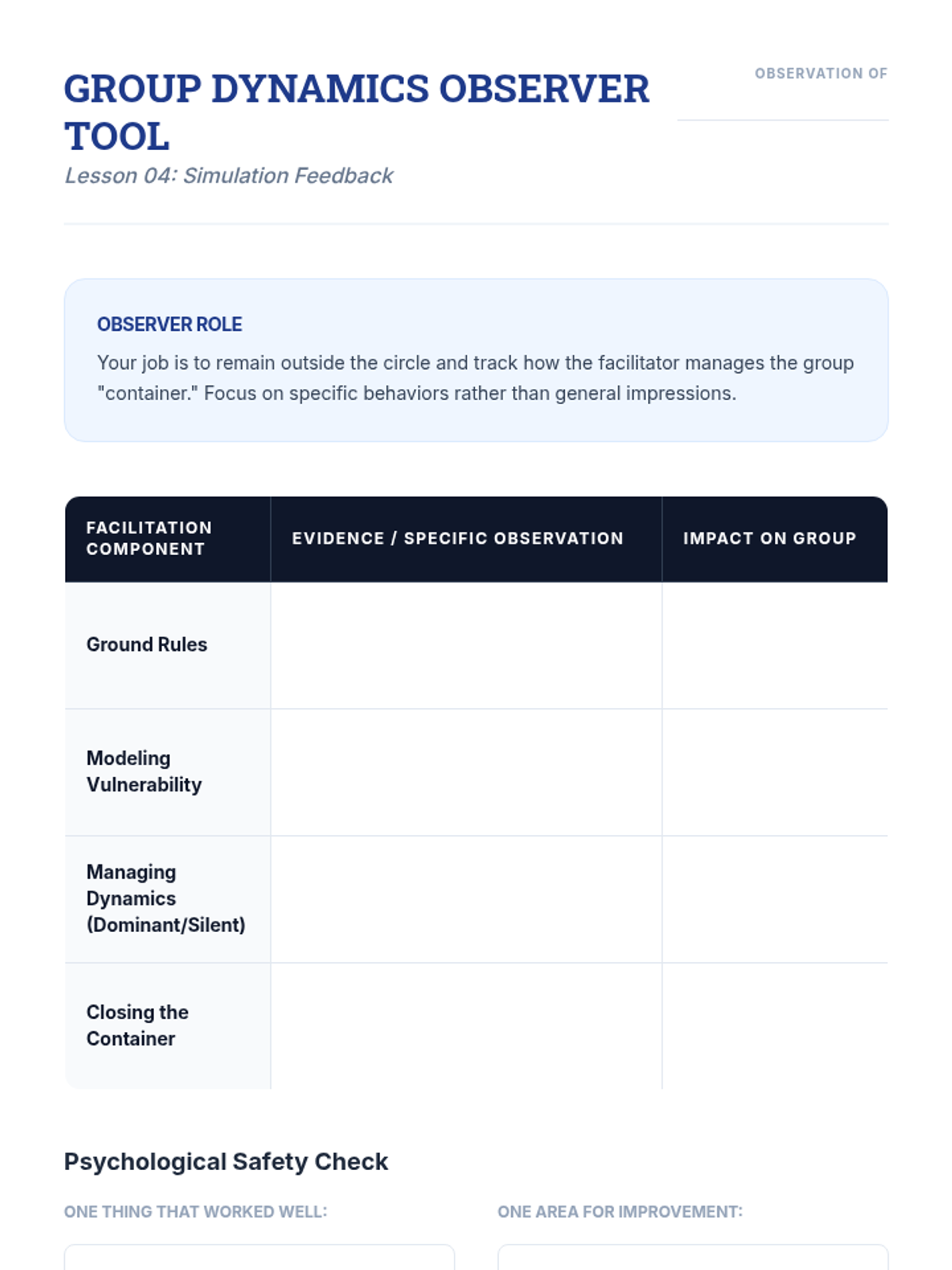
Develops skills for leading group stress check-ins, managing dynamics, and ensuring psychological safety in group settings.
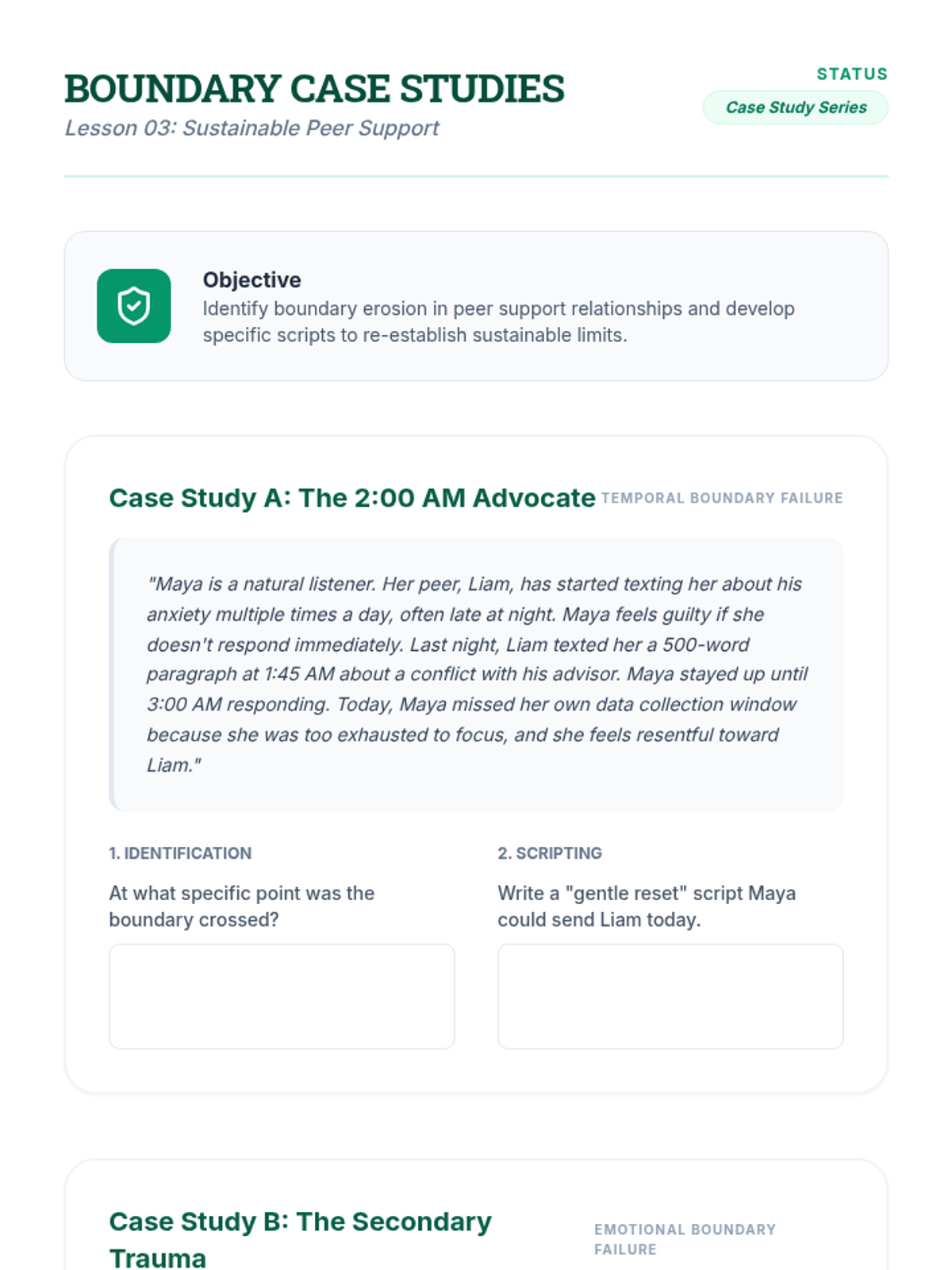
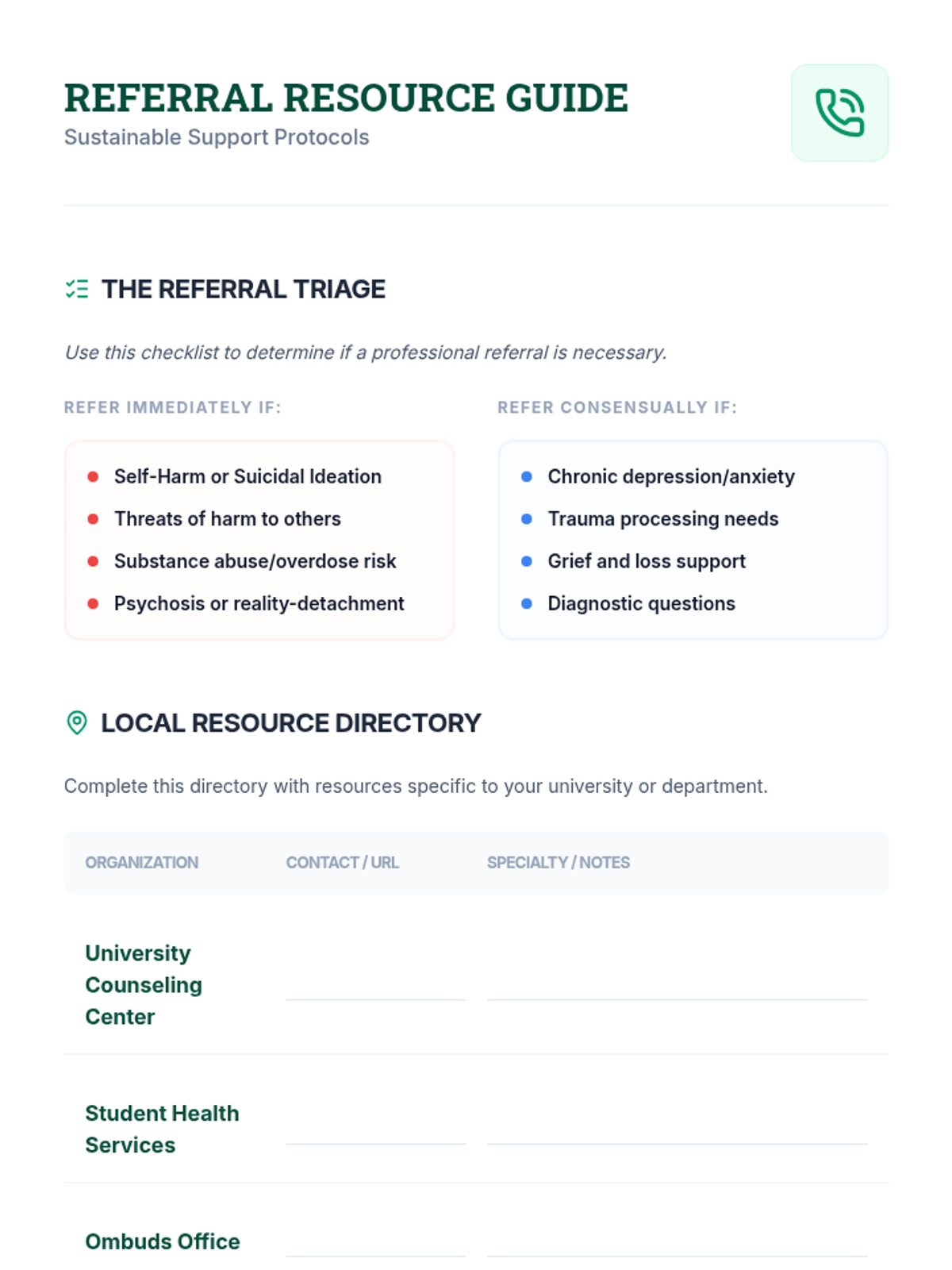
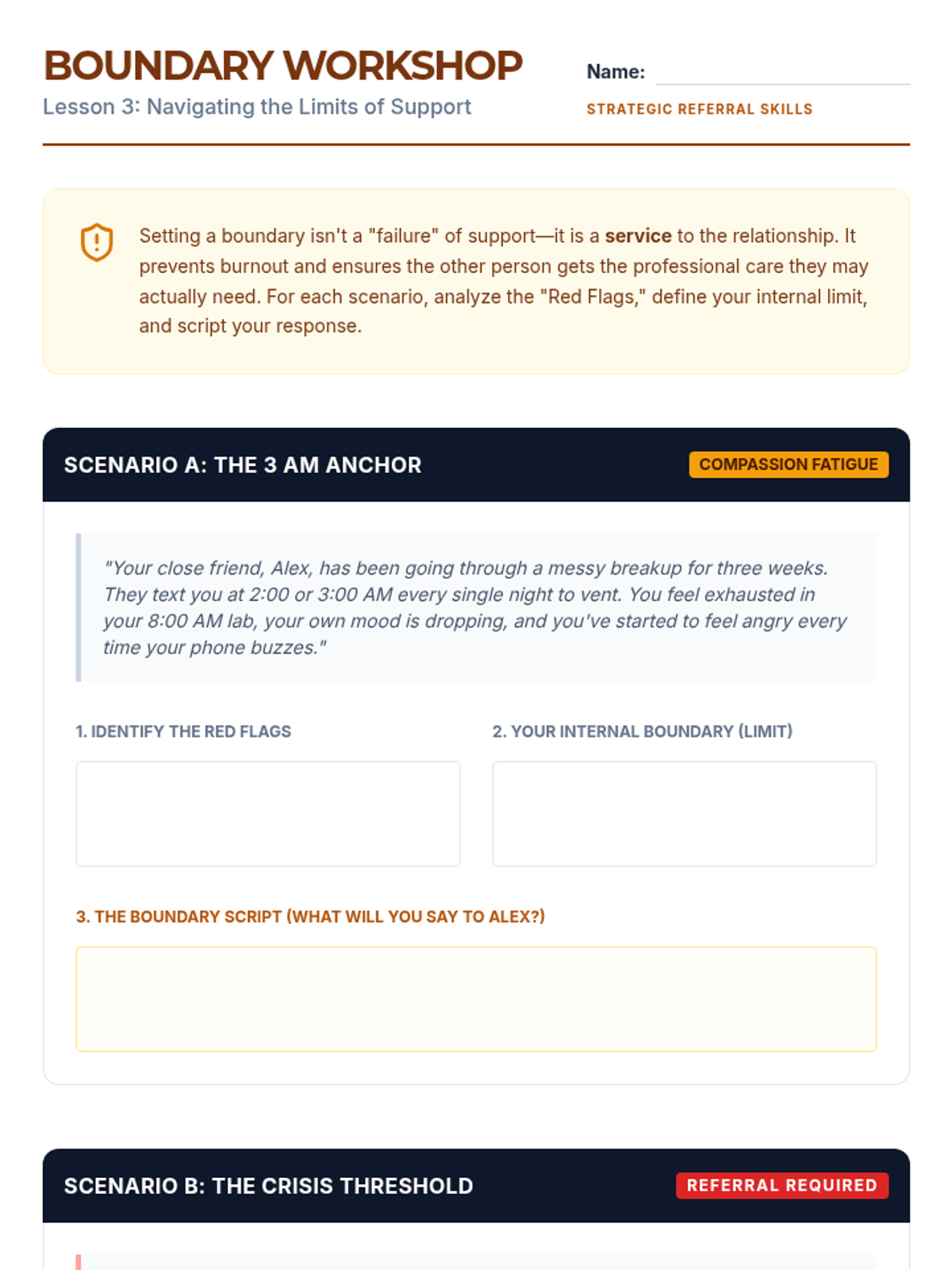
Focuses on preventing compassion fatigue through emotional and temporal boundaries and professional referral protocols.
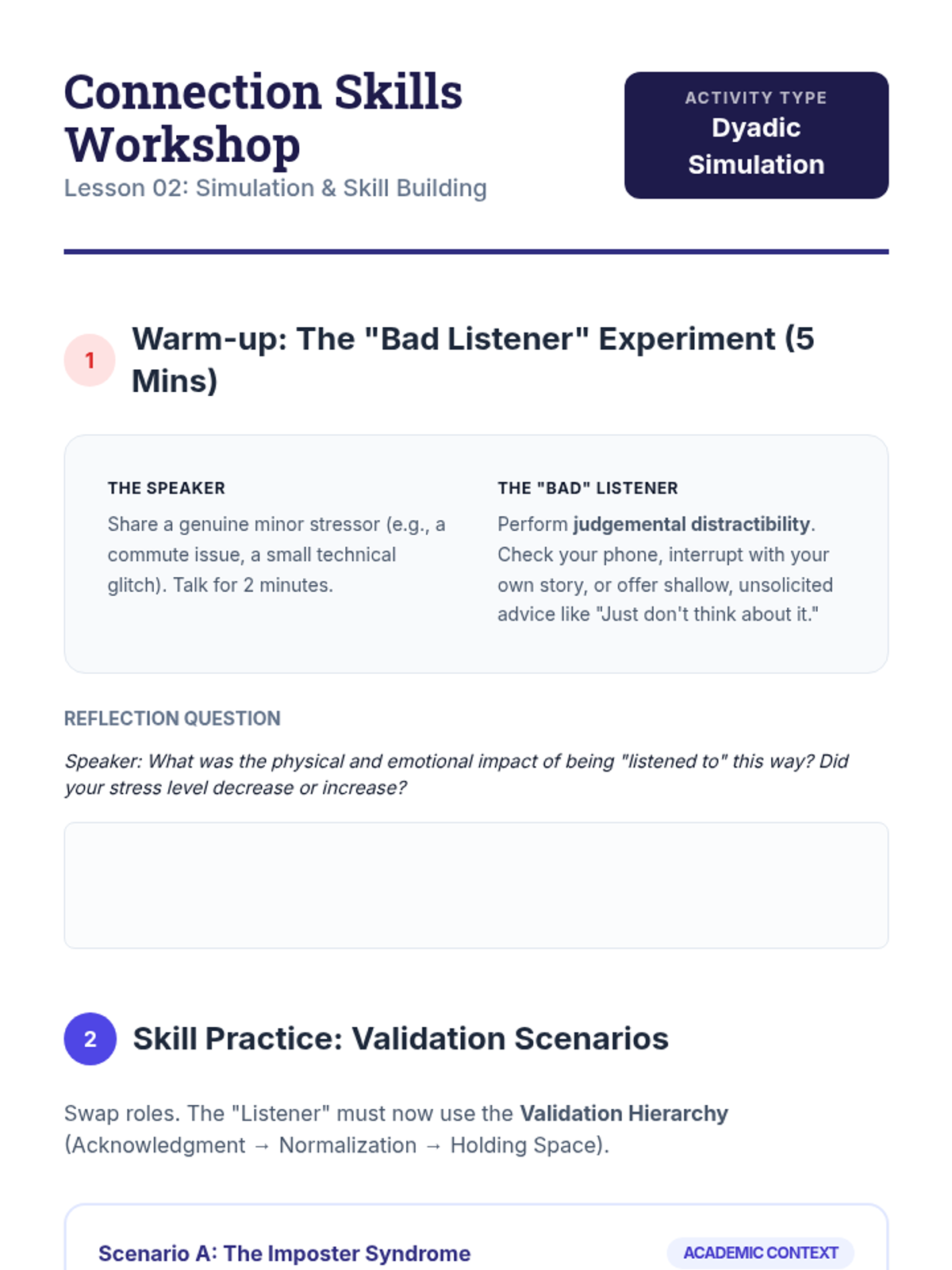
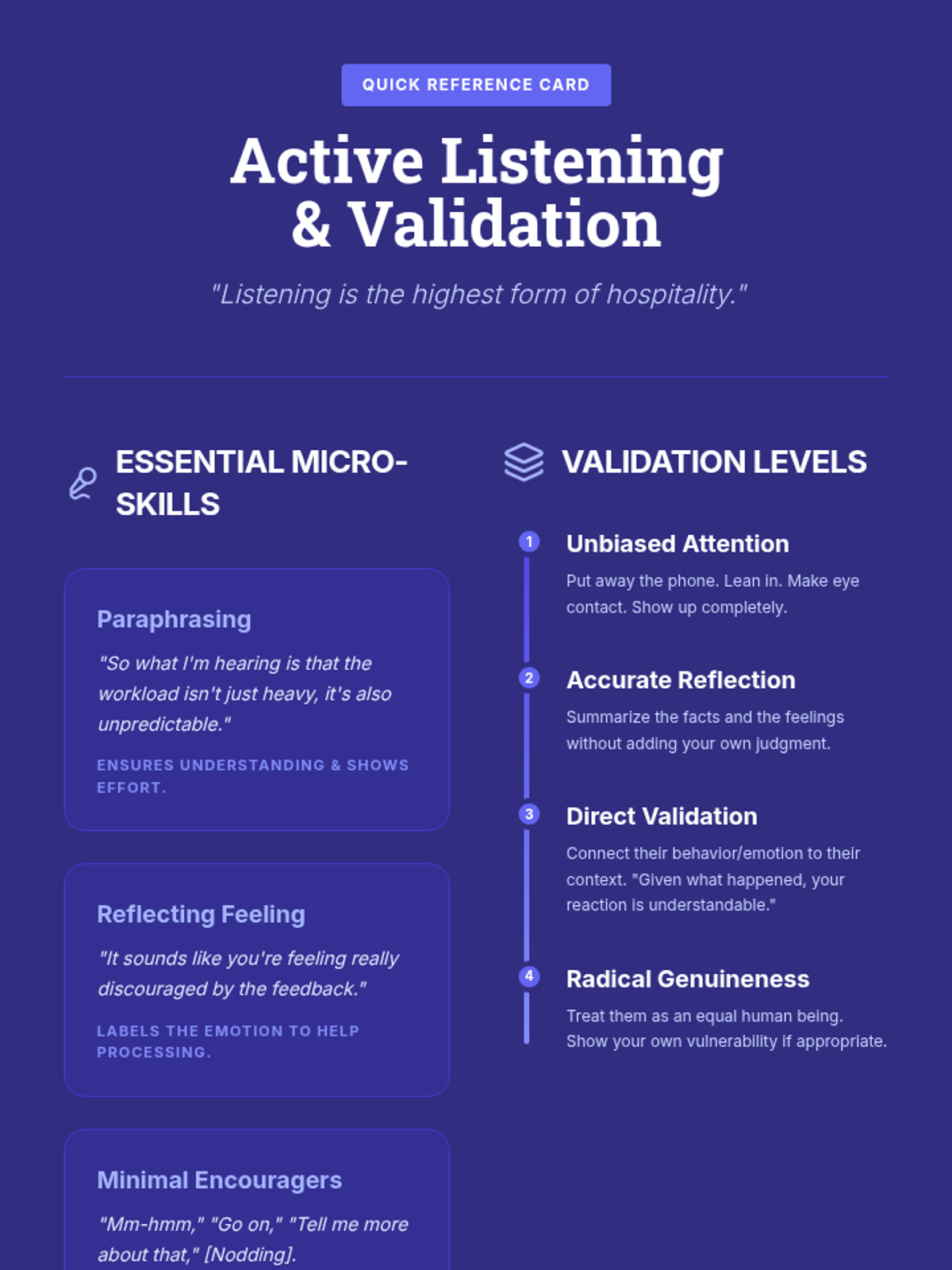
Practical workshop on active listening, validation, and holding space for peers without the pressure to provide immediate solutions.
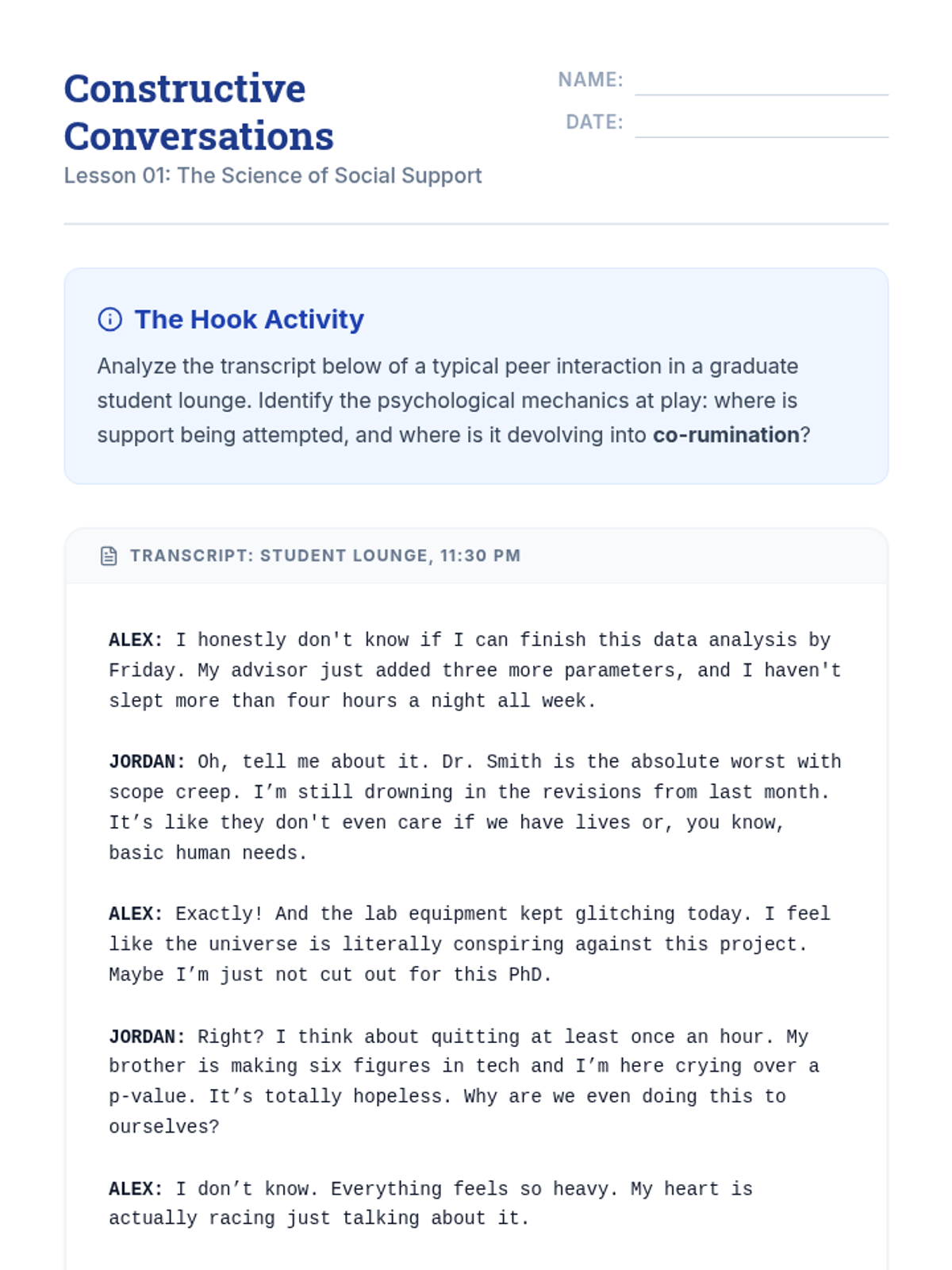
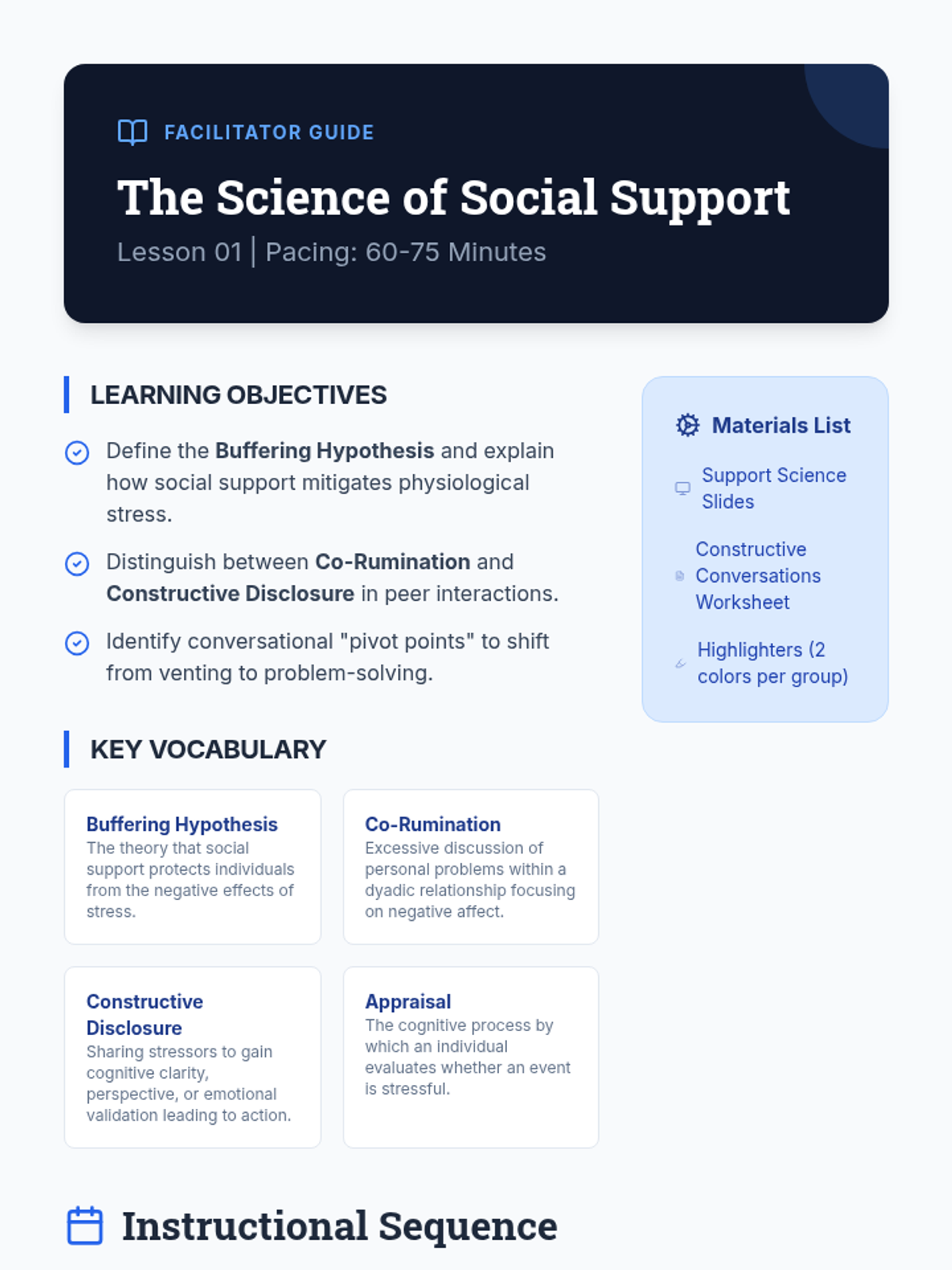
Examines the buffering hypothesis and the psychological mechanics of how social connection mitigates stress, contrasting co-rumination with constructive disclosure.
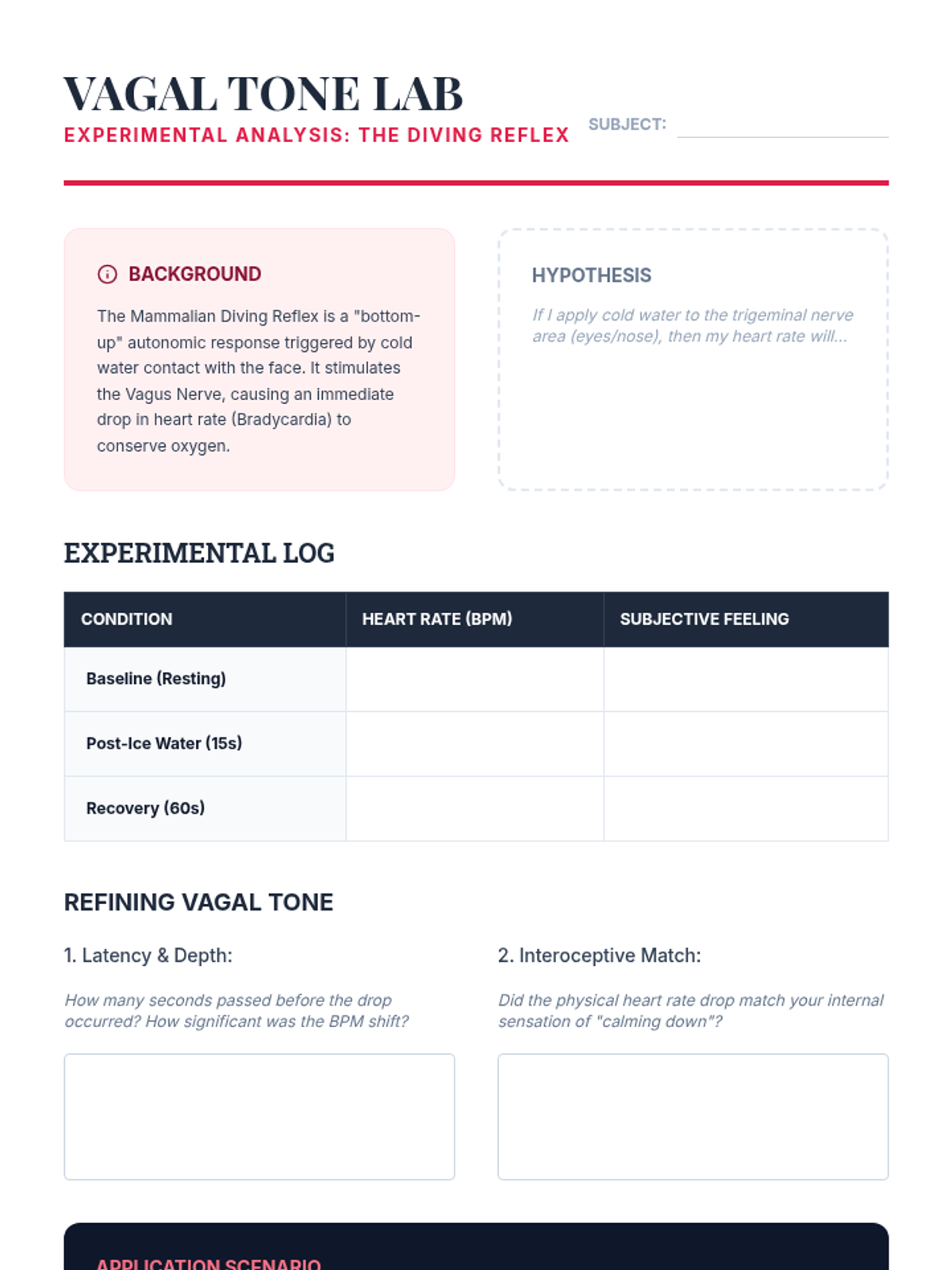
Participants investigate the role of the vagus nerve in regulating heart rate and calming the nervous system. They experiment with specific physical maneuvers (like cold exposure or humming) that stimulate vagal tone.
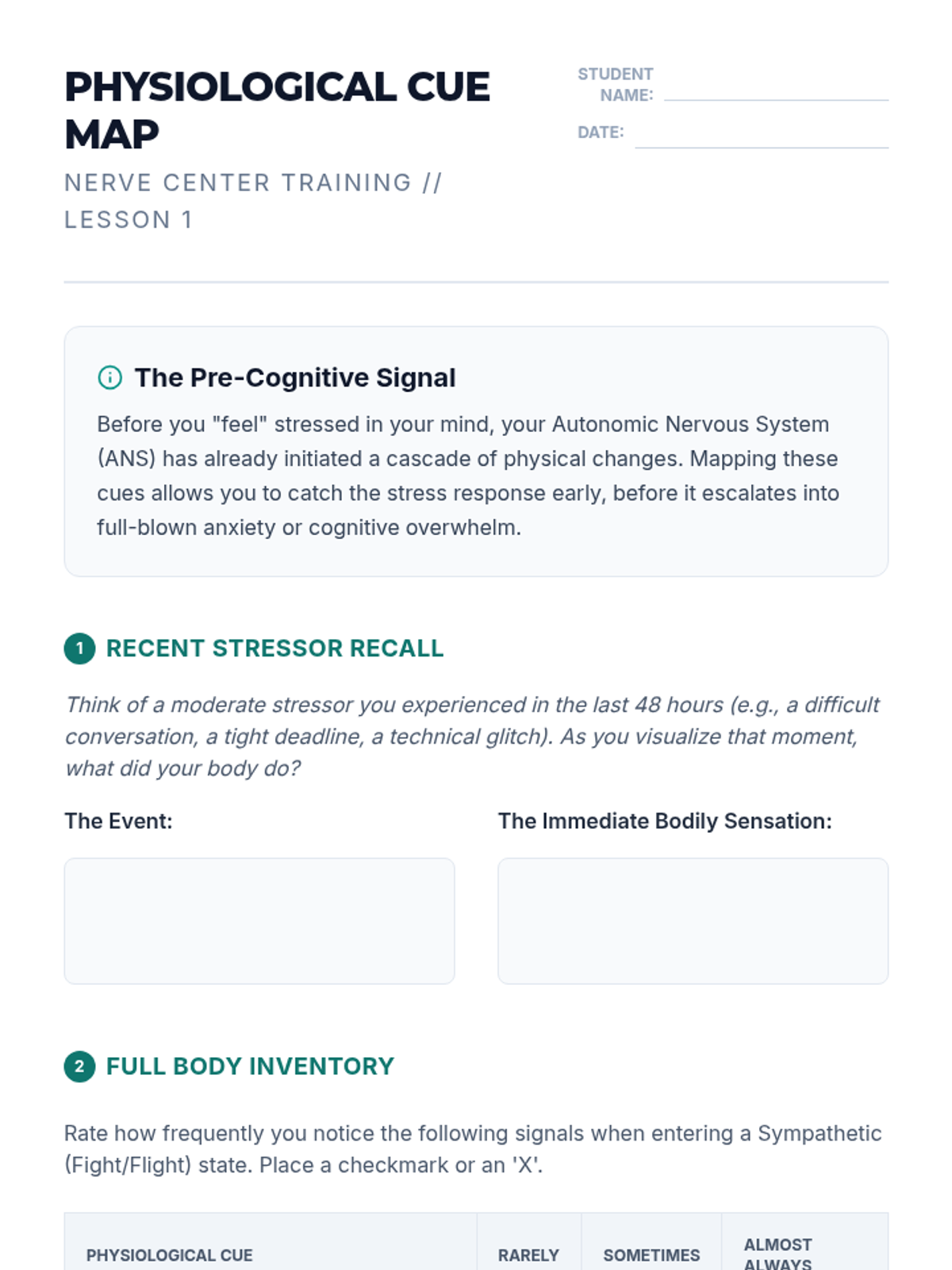
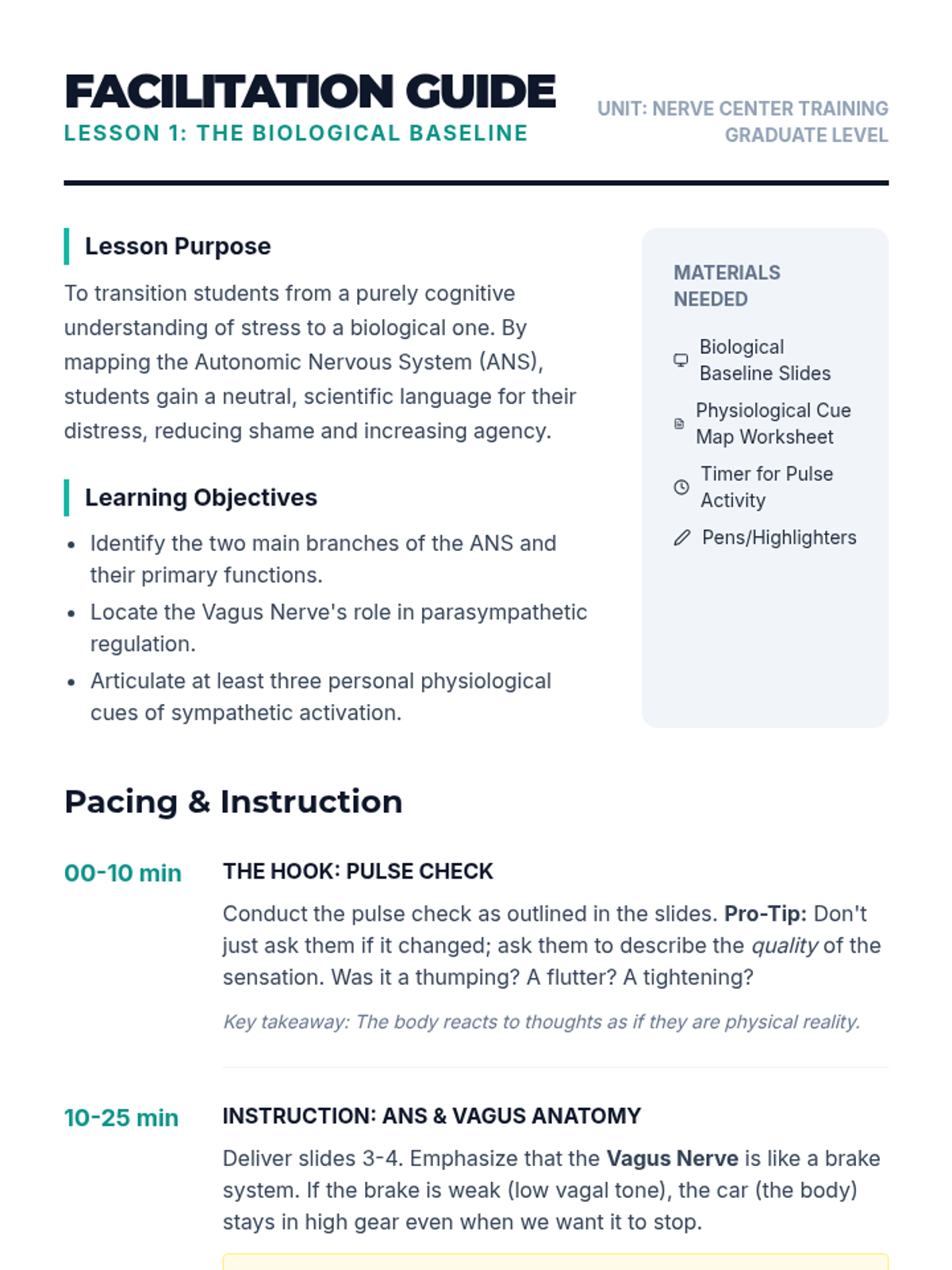
Focuses on the anatomy of the stress response, the sympathetic and parasympathetic branches of the ANS, and the role of the vagus nerve. Students map their own physiological 'early warning signs'.
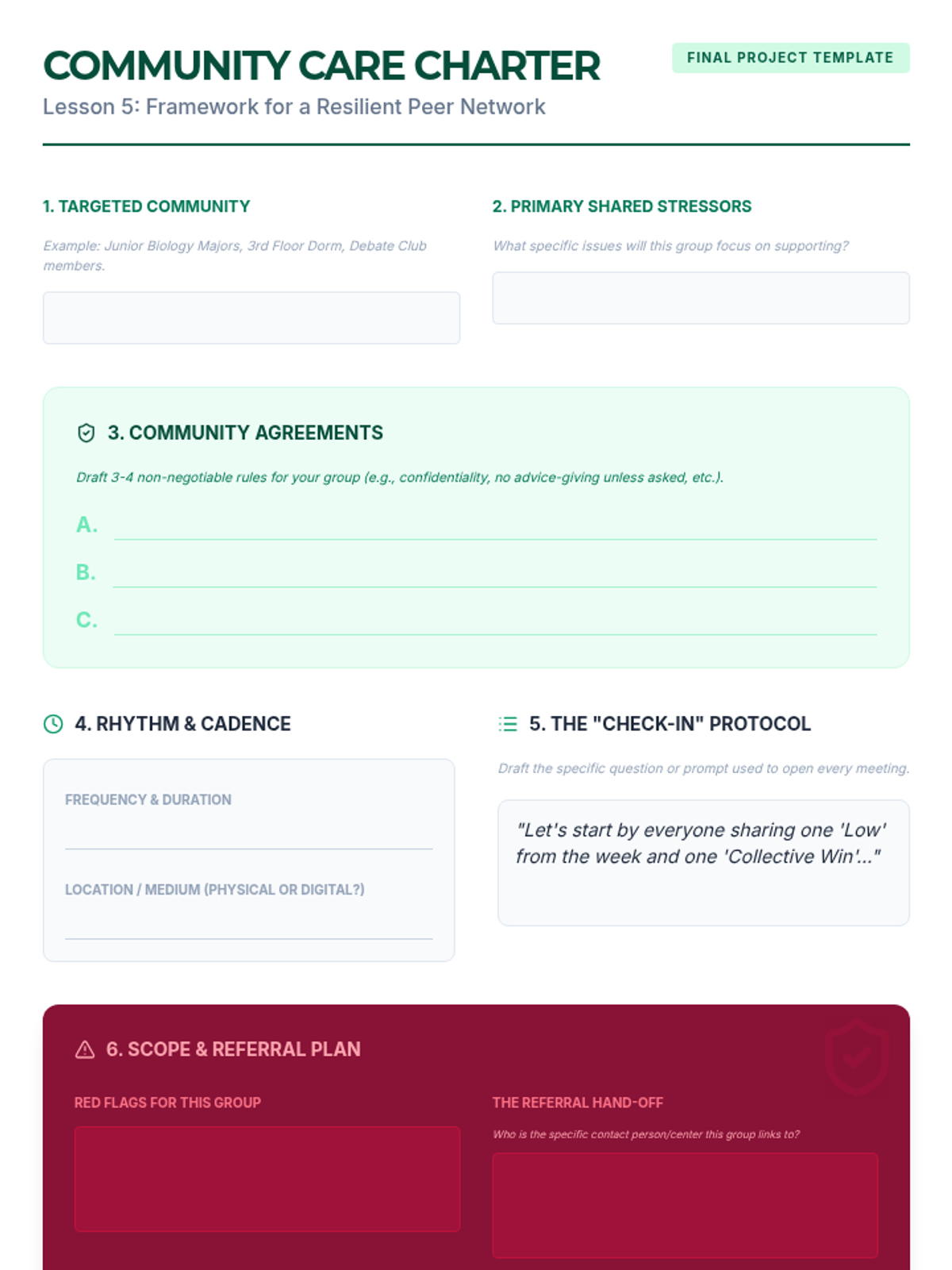
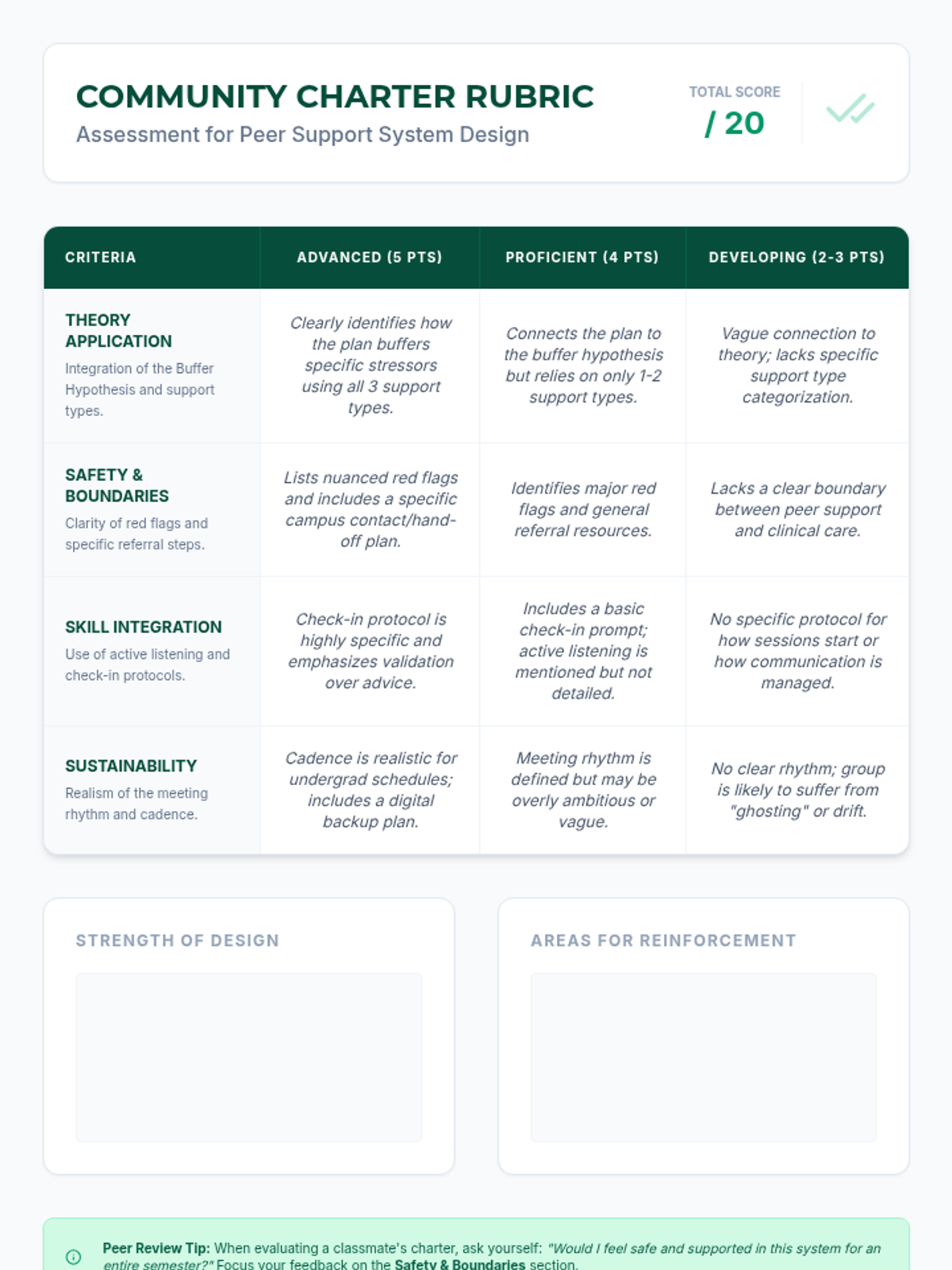
Students design a framework for a community care plan, producing a 'Community Charter' for peer support in a specific campus context.
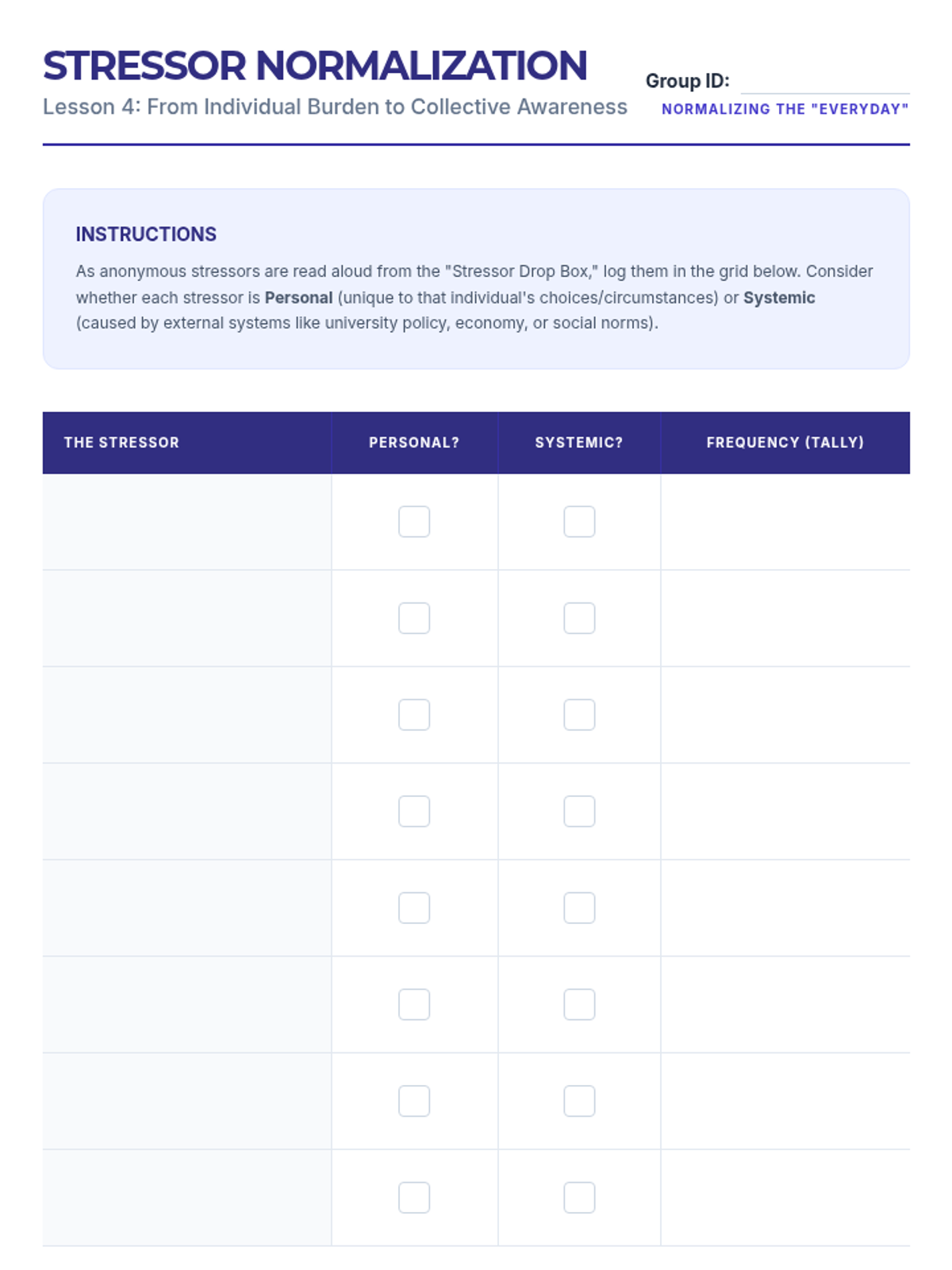
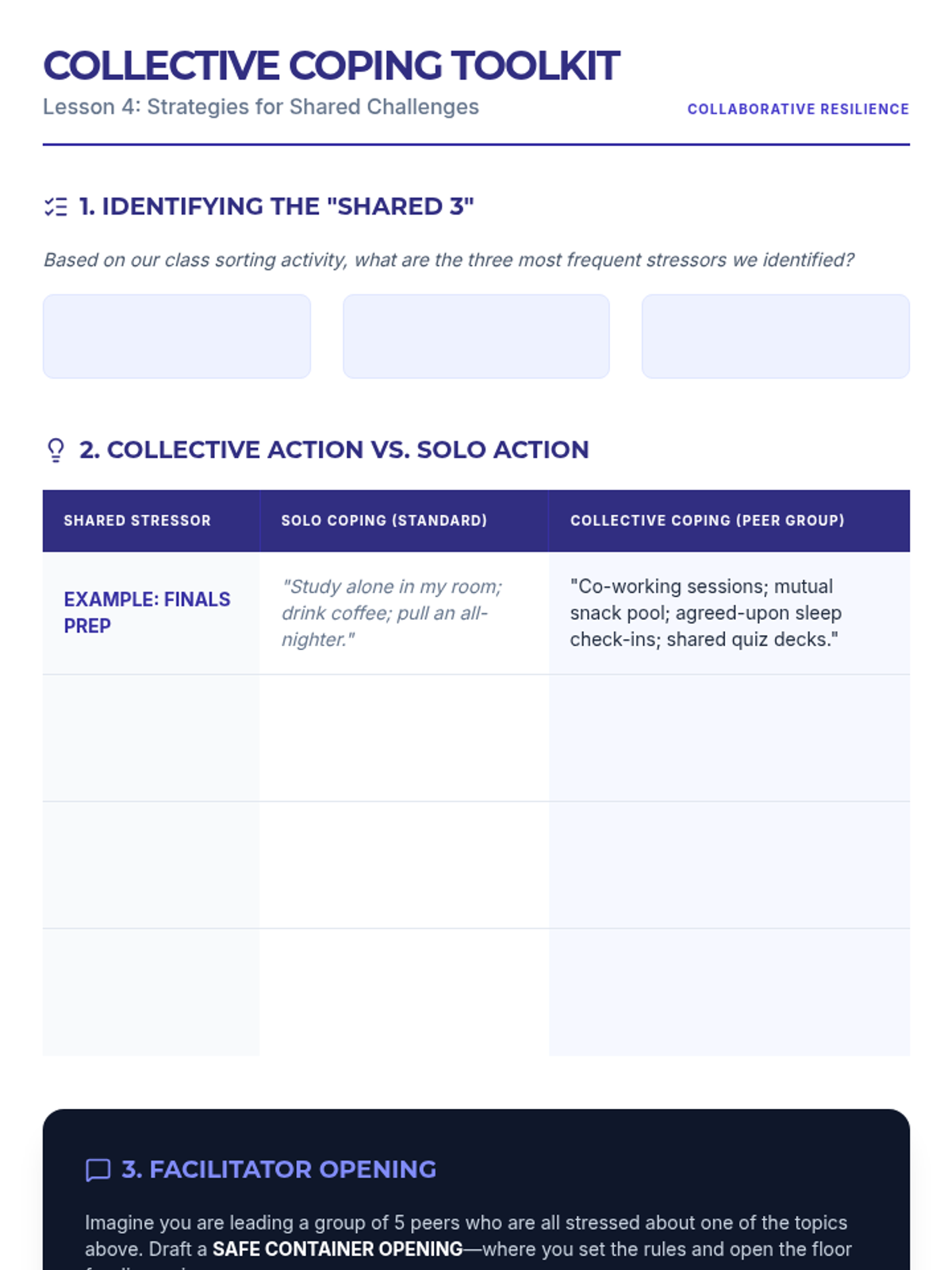
A facilitated dialogue session focusing on common undergraduate stressors, practicing normalization and collective coping strategies.
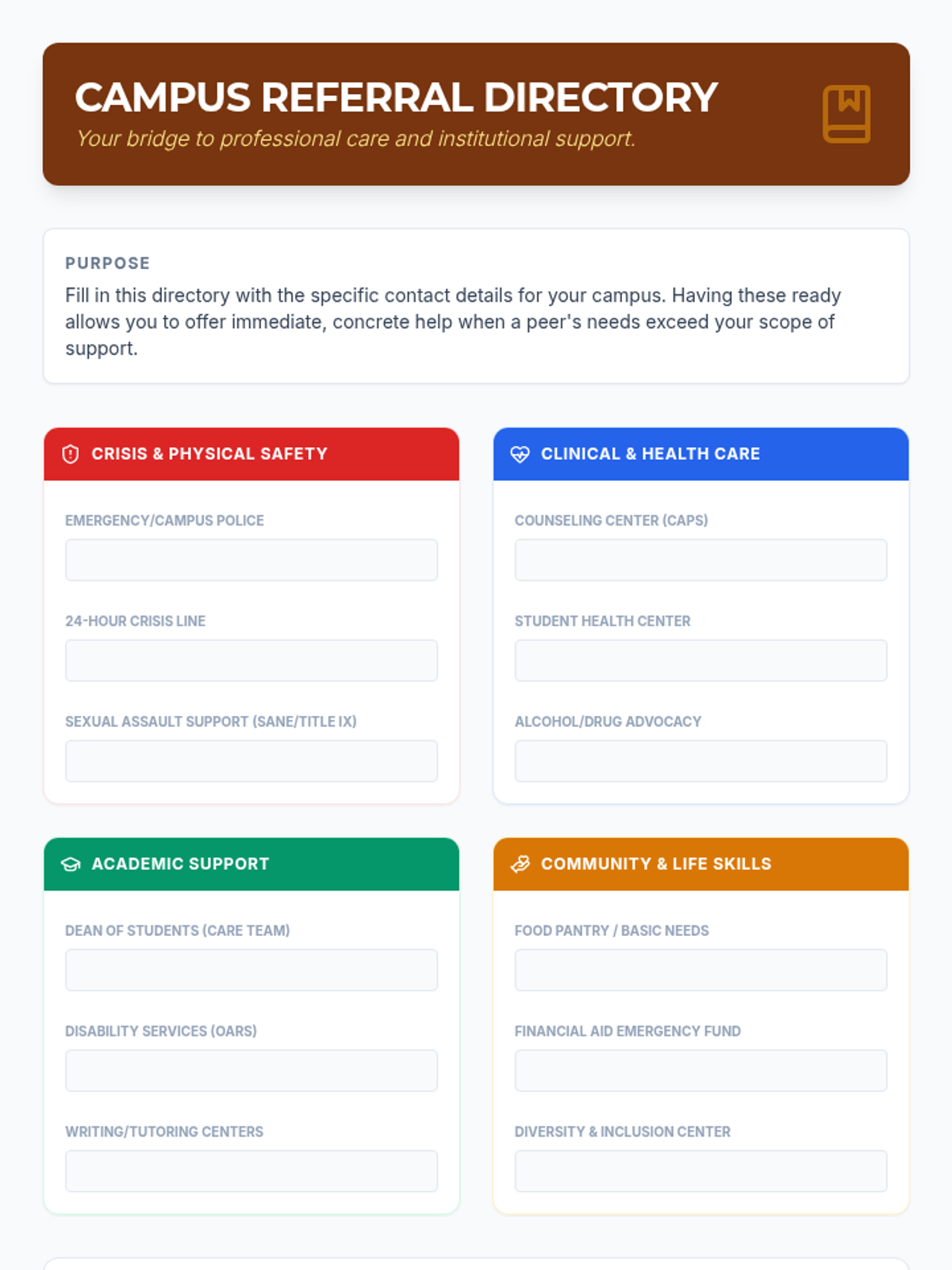
Training on recognizing the limits of peer support and when to refer to professionals, with a focus on setting emotional boundaries to prevent burnout.
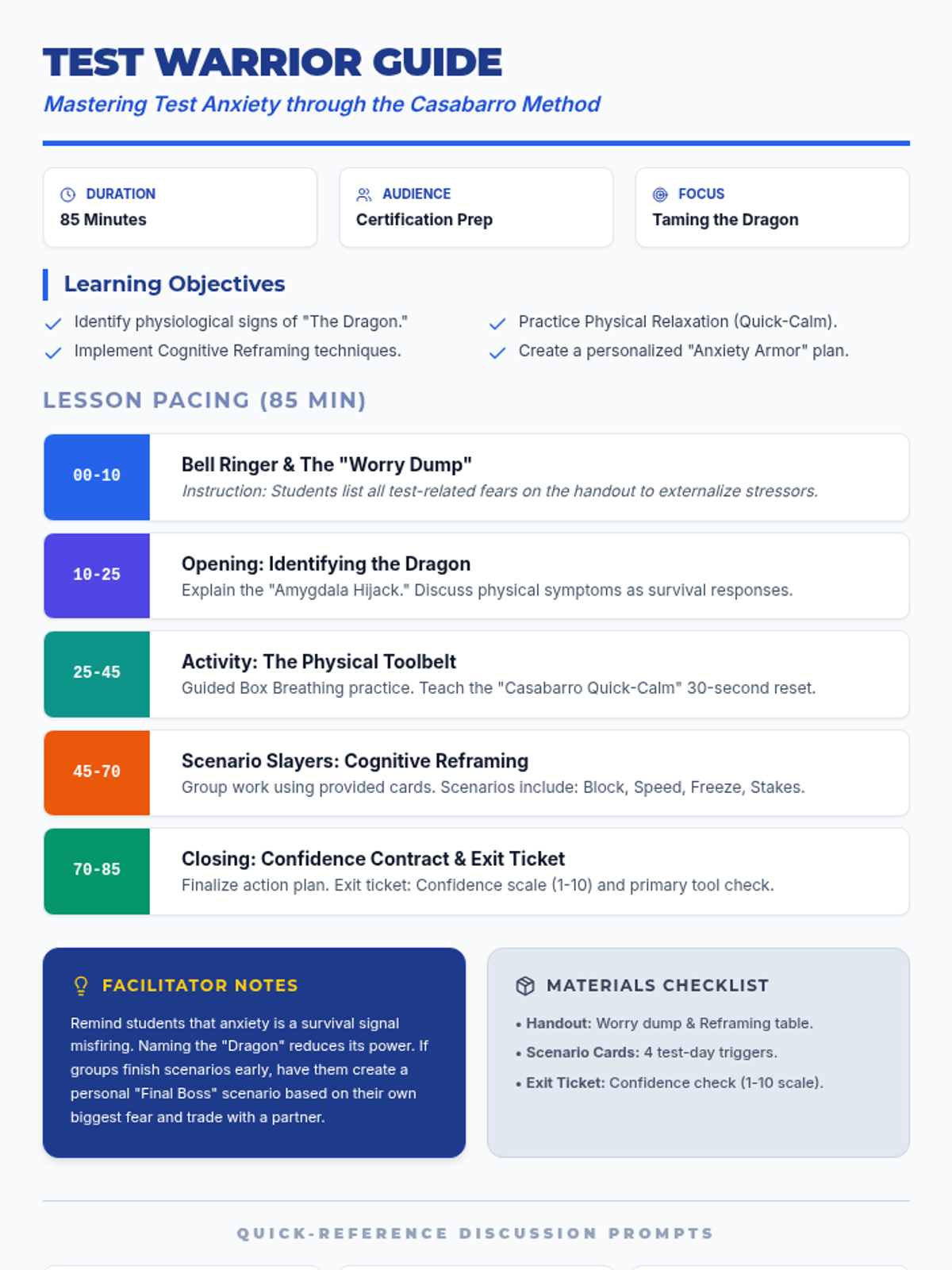
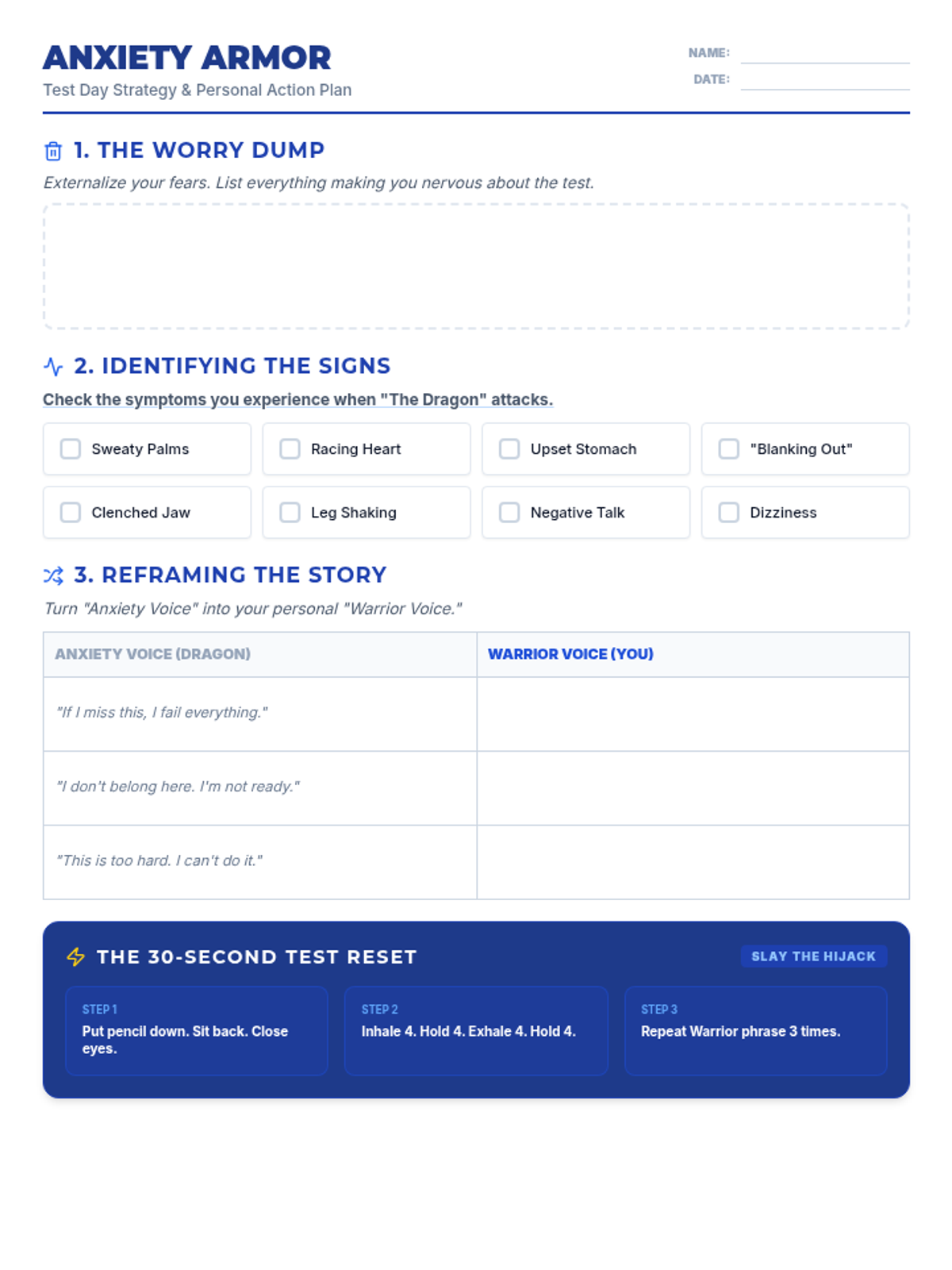
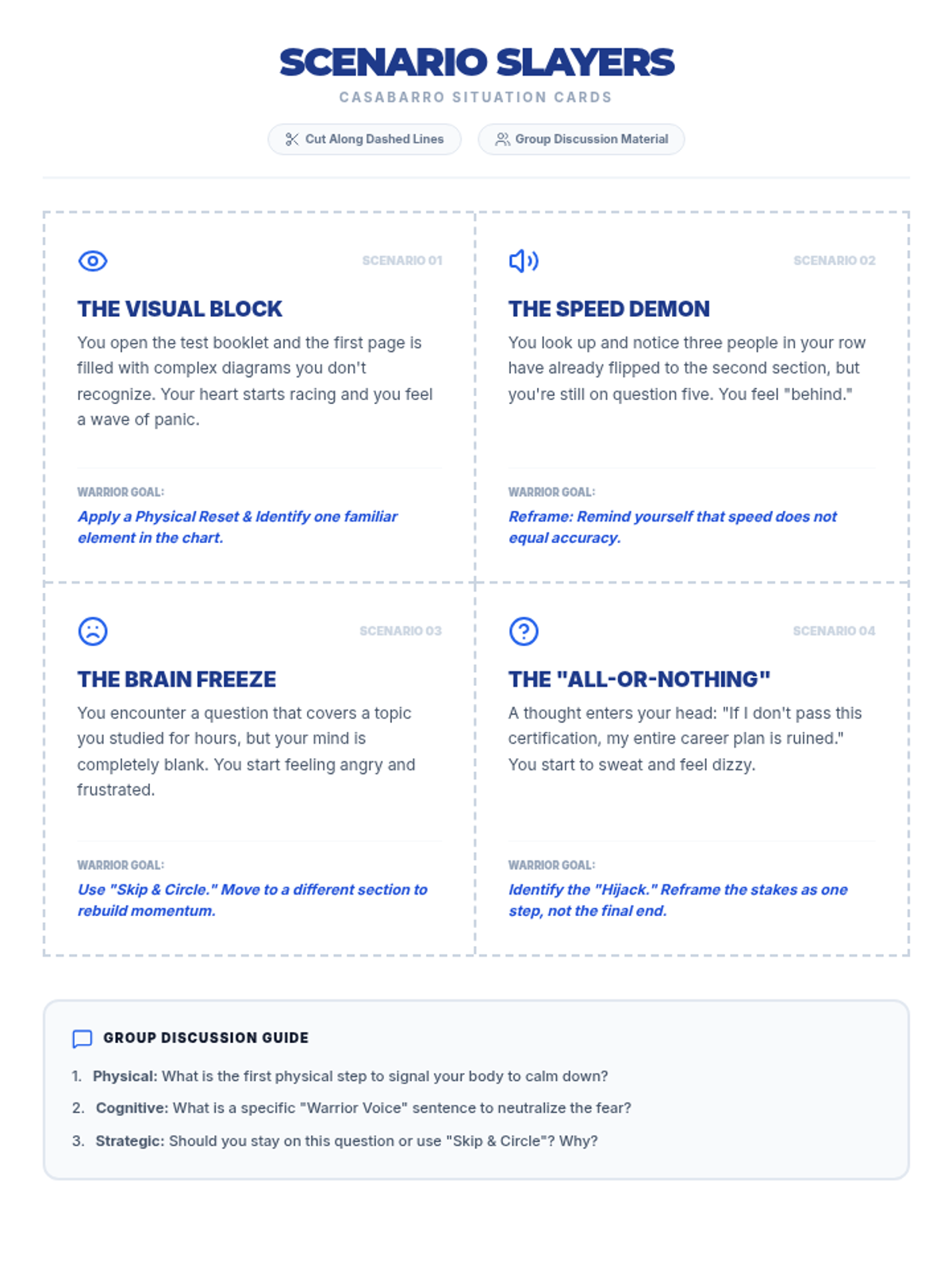
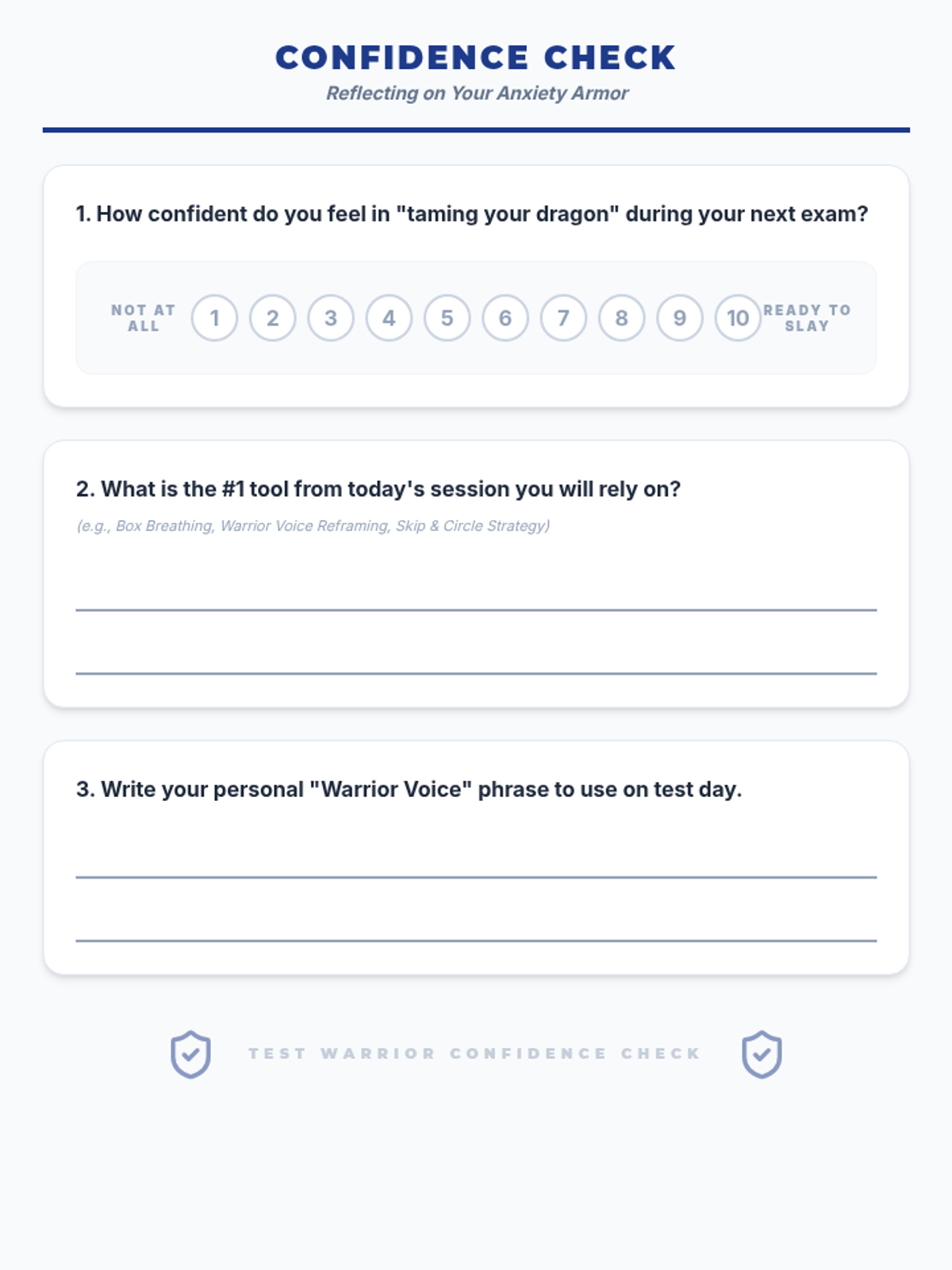
An 85-minute intensive session designed to help students identify, manage, and overcome test anxiety using Joseph Casabarro's 'Taming the Dragon' principles. Students will learn physiological calming techniques and cognitive reframing strategies.
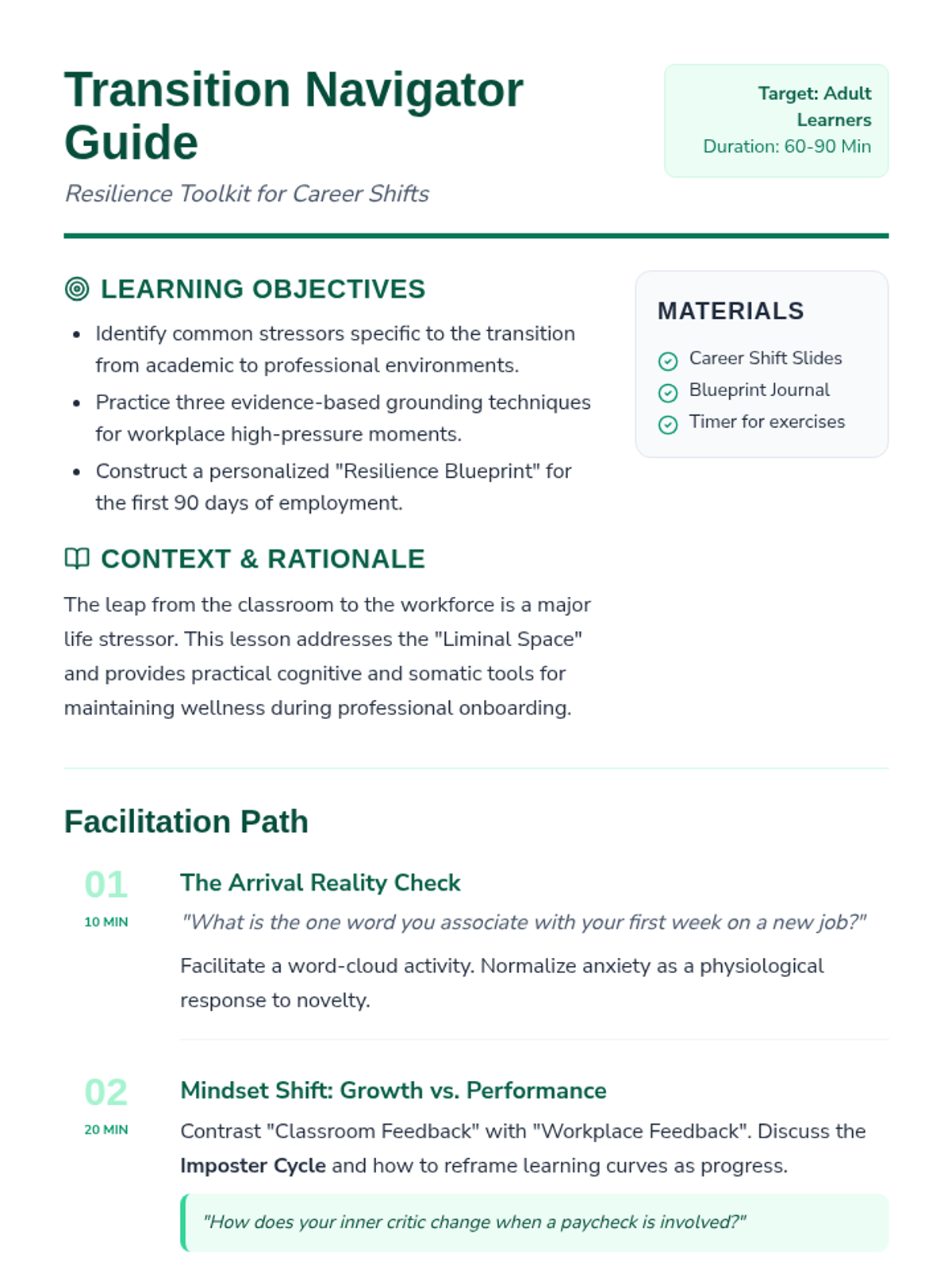
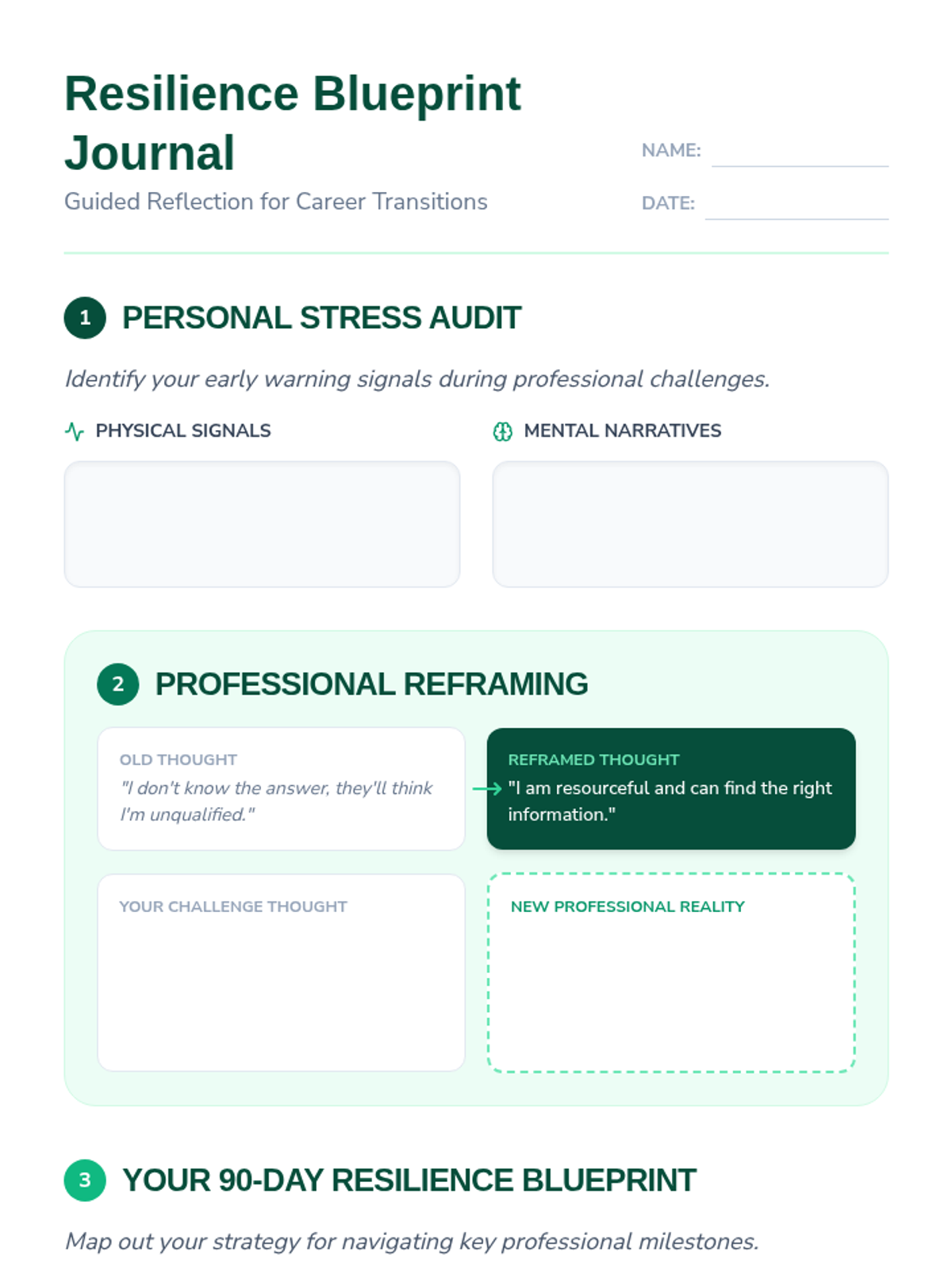
A wellness-focused lesson providing adult students with stress-management techniques specifically tailored for the transition from the classroom to the workforce. Includes a facilitator guide, instructional slides, and a guided reflection journal.
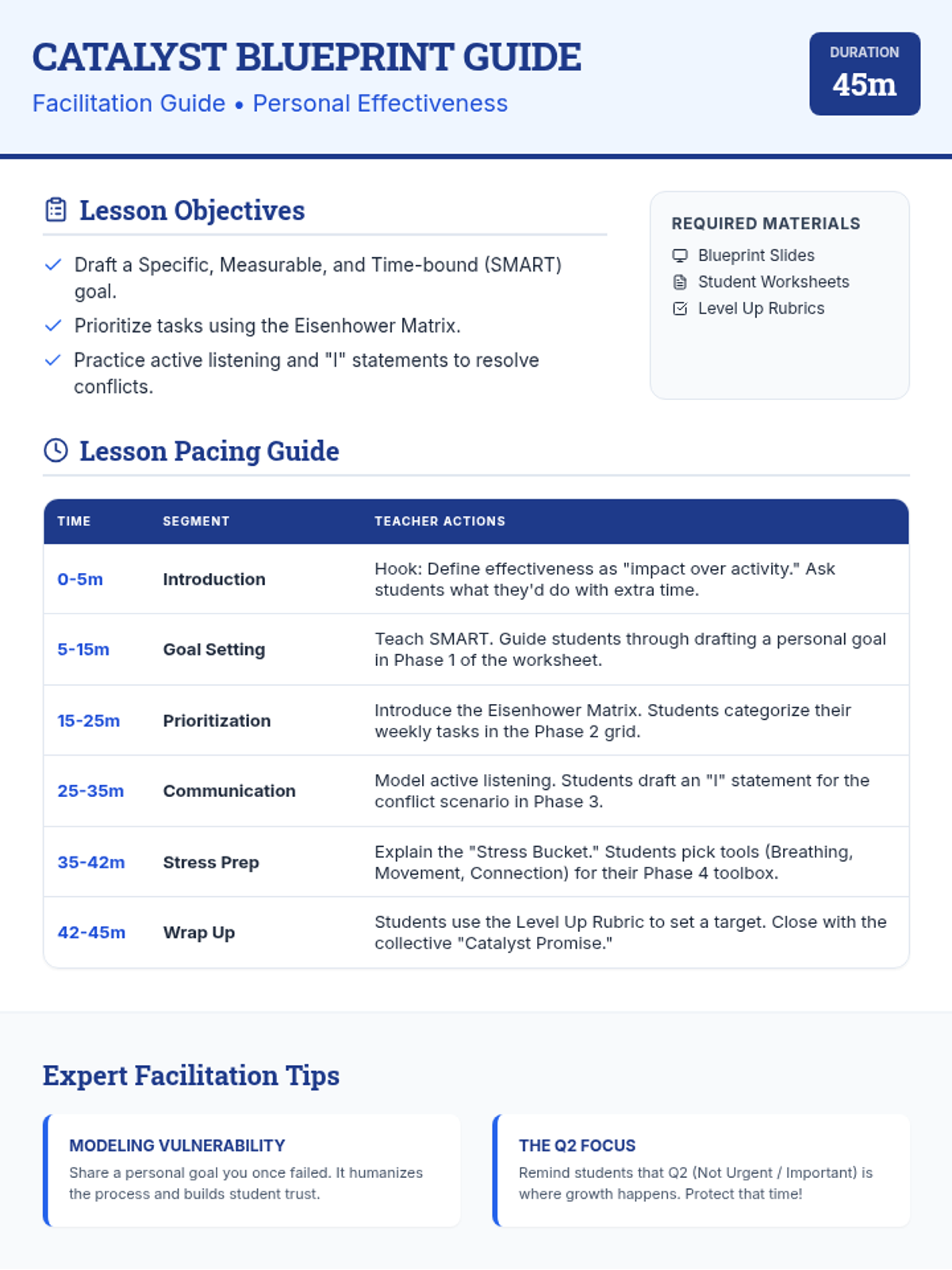
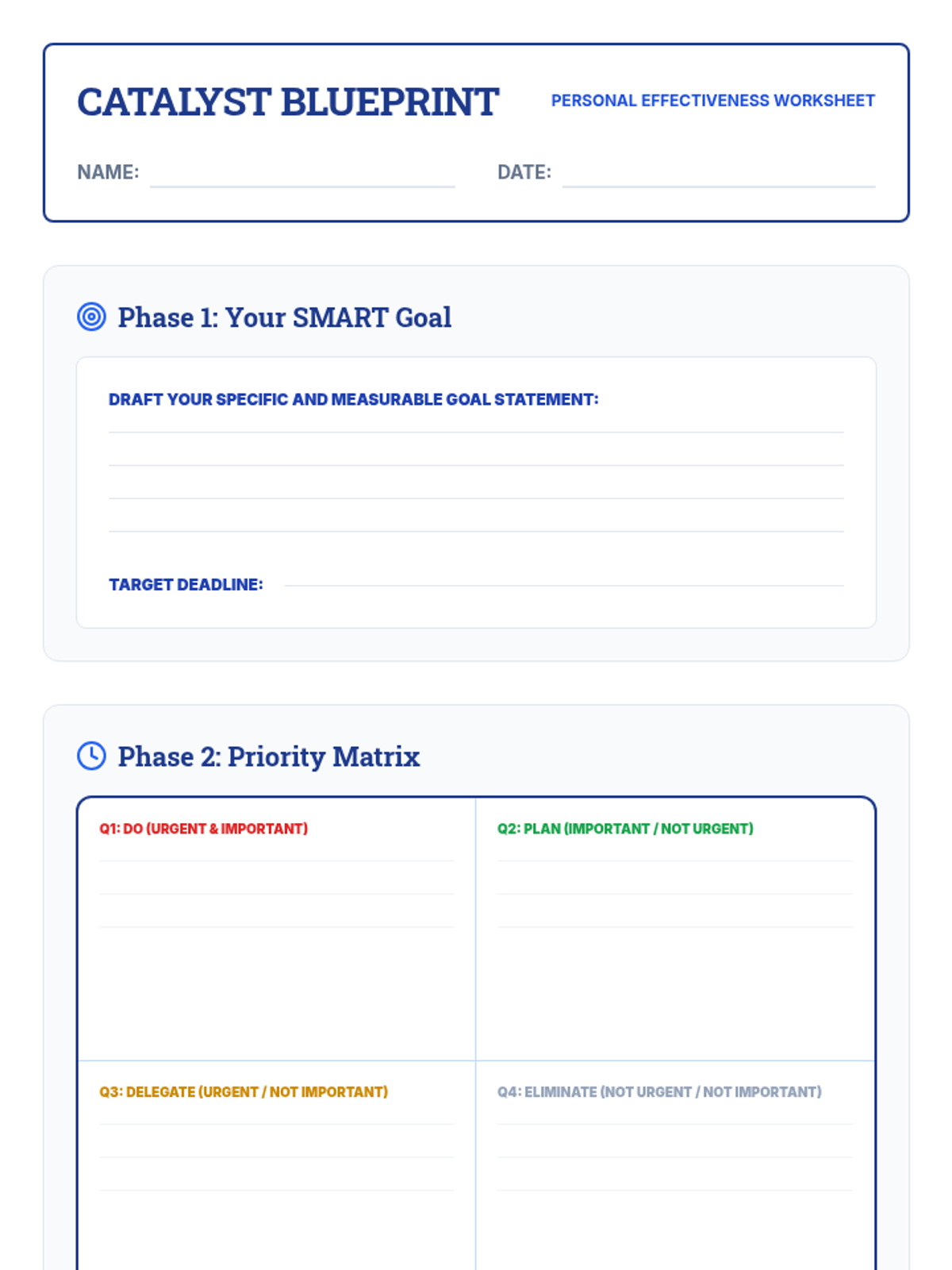
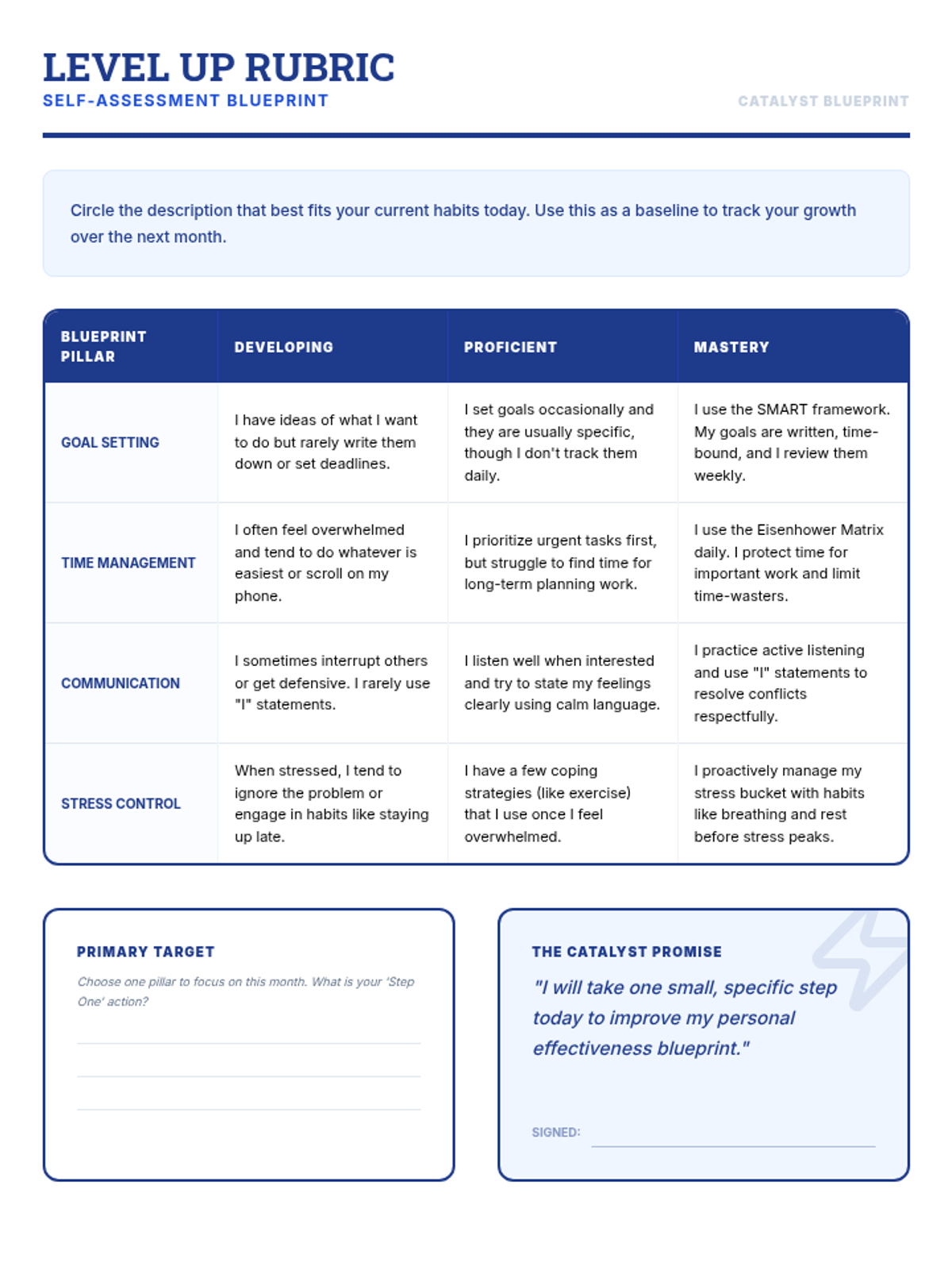
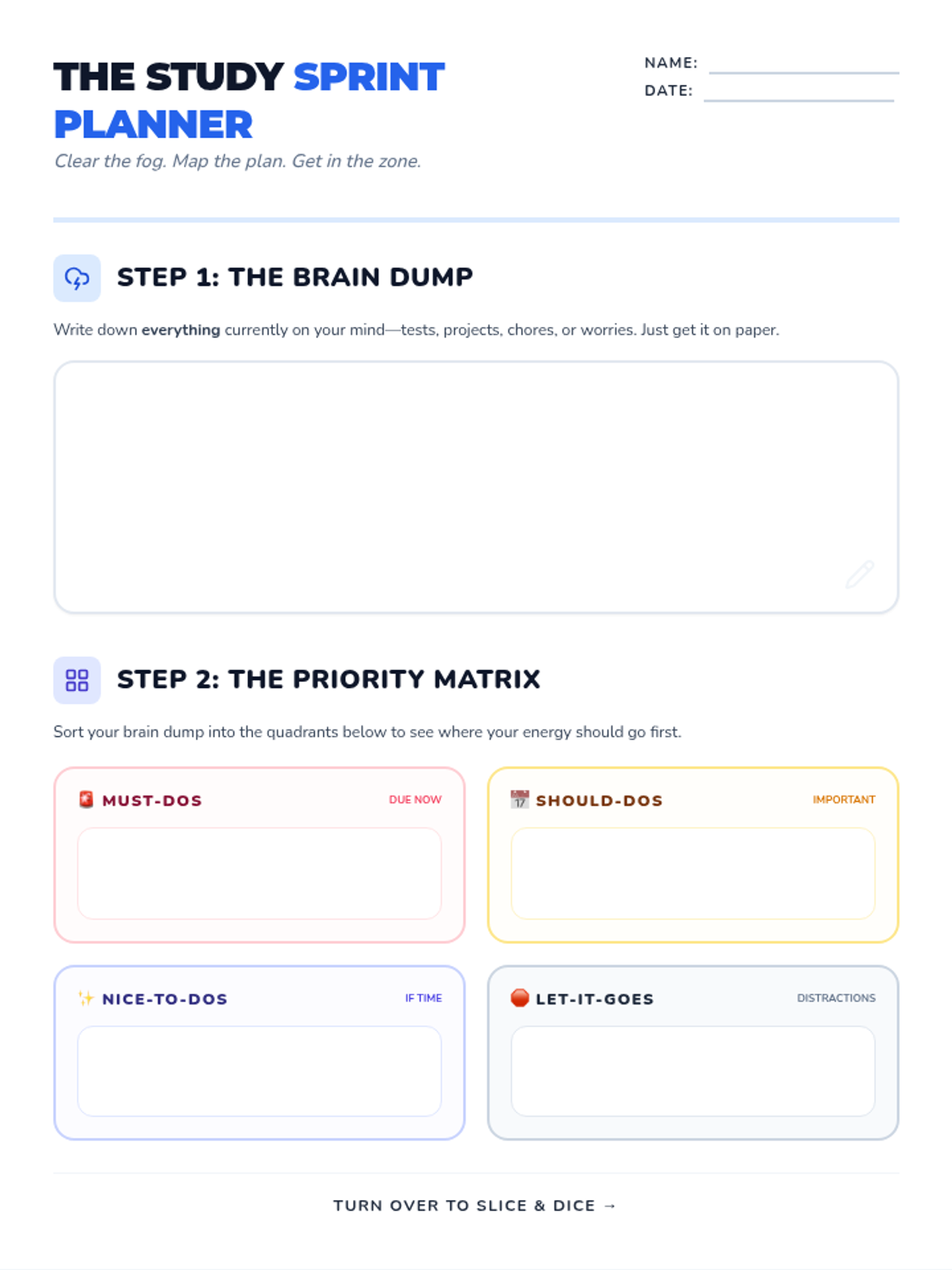
A comprehensive 45-minute session designed to equip students with core personal effectiveness skills including SMART goal setting, the Eisenhower Matrix for time management, active listening techniques, and stress reduction strategies.
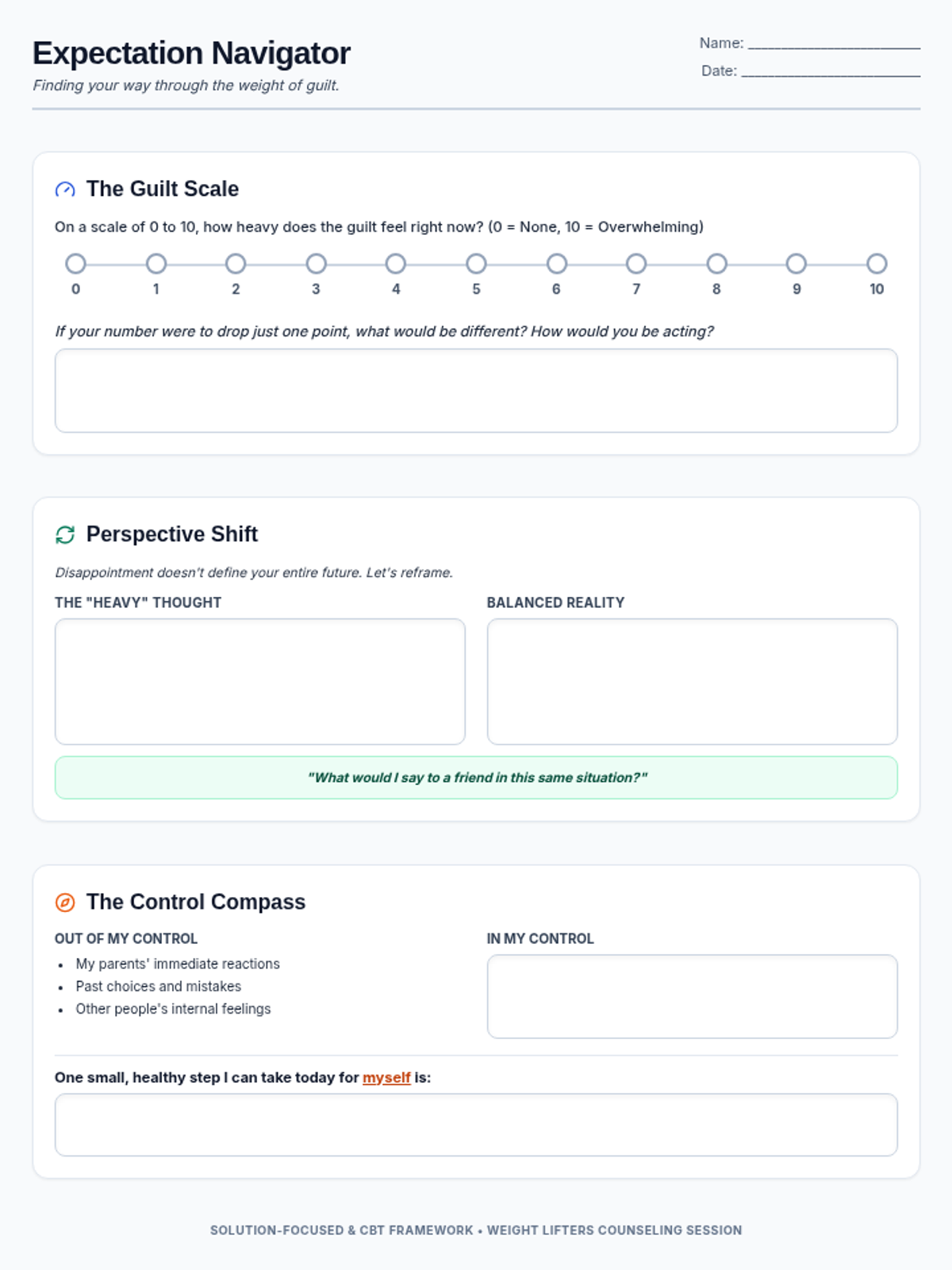
A counseling framework for students struggling with parental expectations and guilt. This session integrates CBT reframing, DBT distress tolerance, and SFBT scaling to help students process disappointment and regain emotional balance.
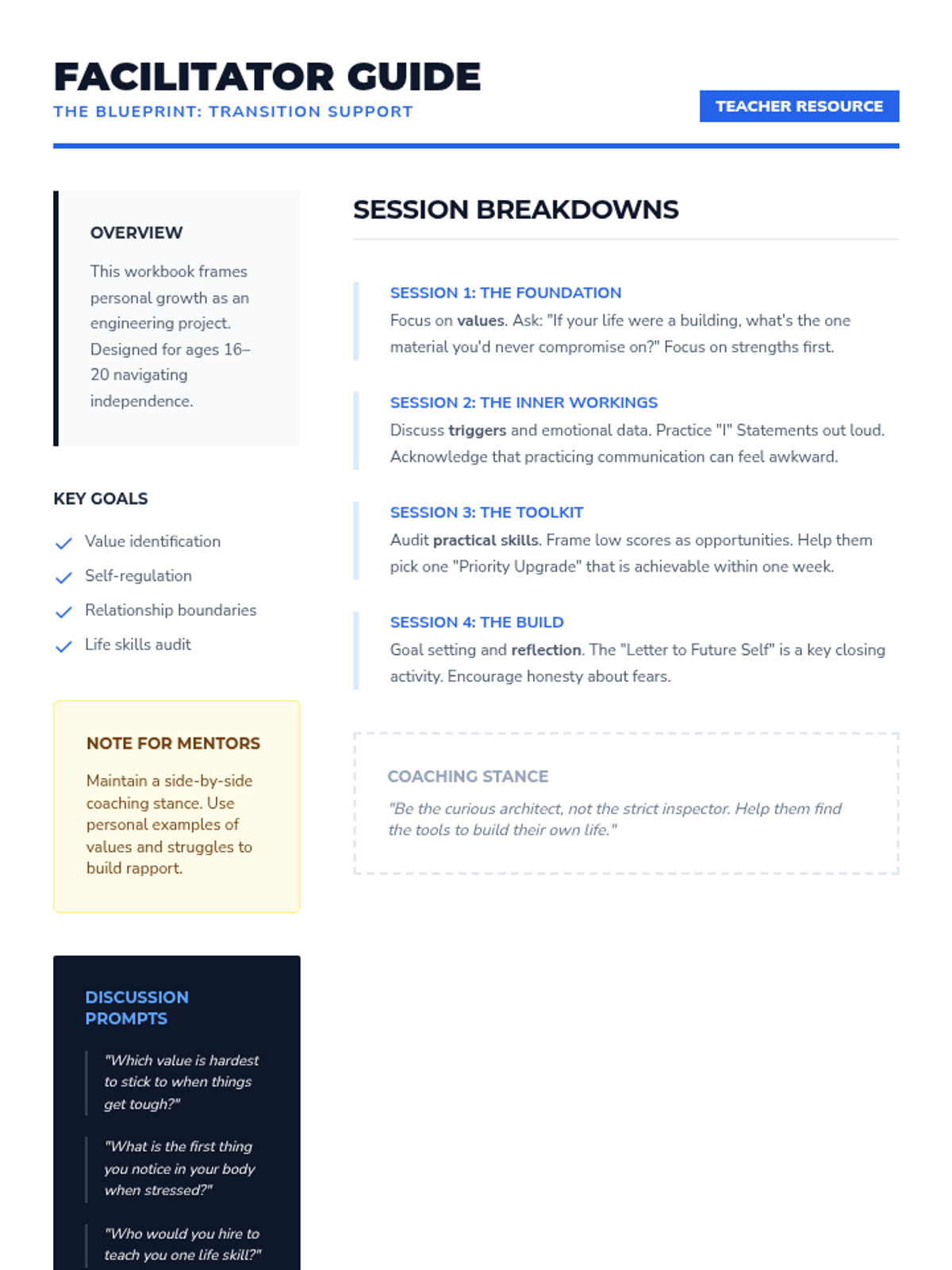
A comprehensive personal development lesson designed for young adults transitioning into independence. It features a 10-page workbook centered on values, emotional intelligence, and life skills, paired with a facilitator guide for mentors or therapists.
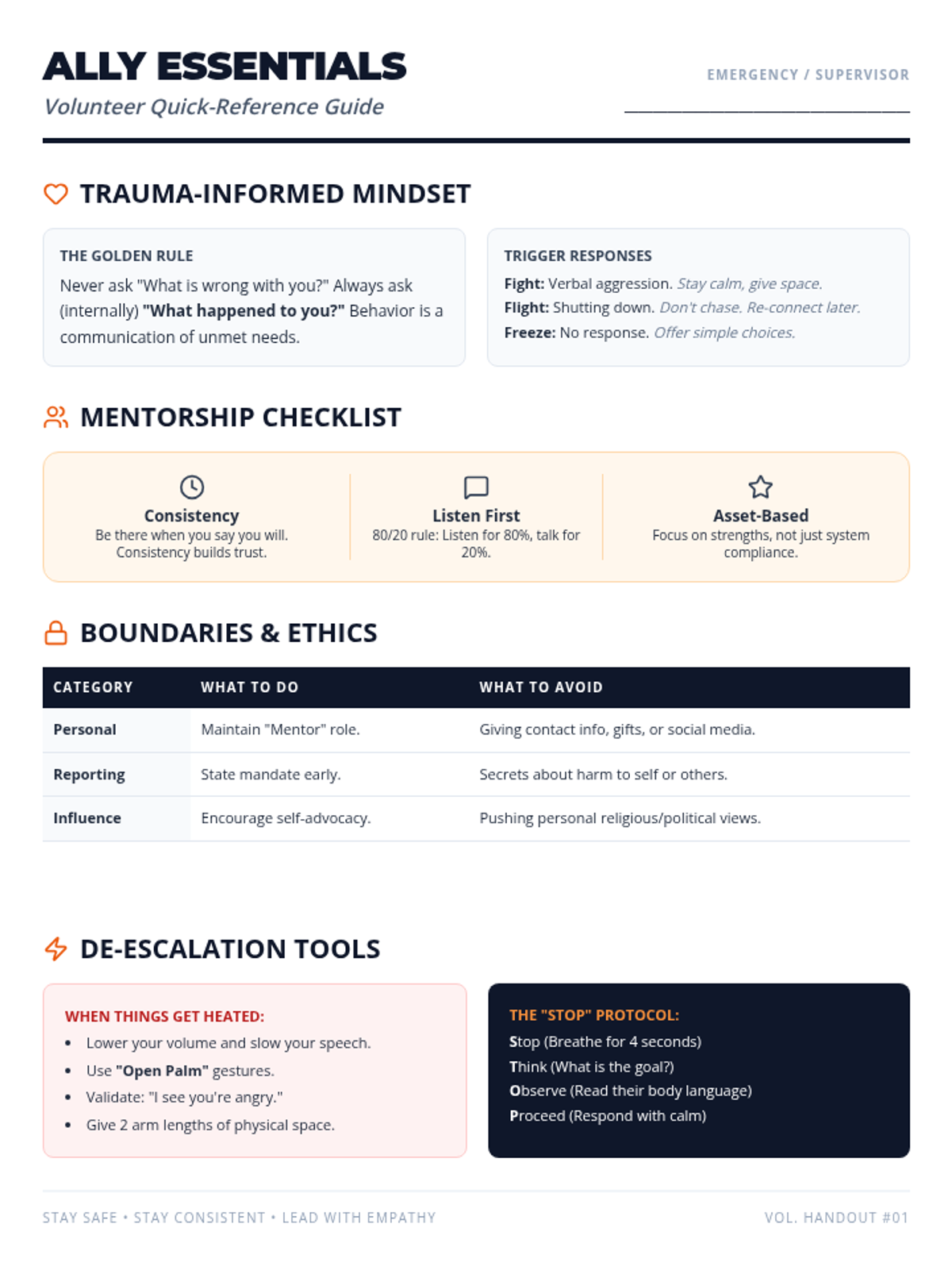
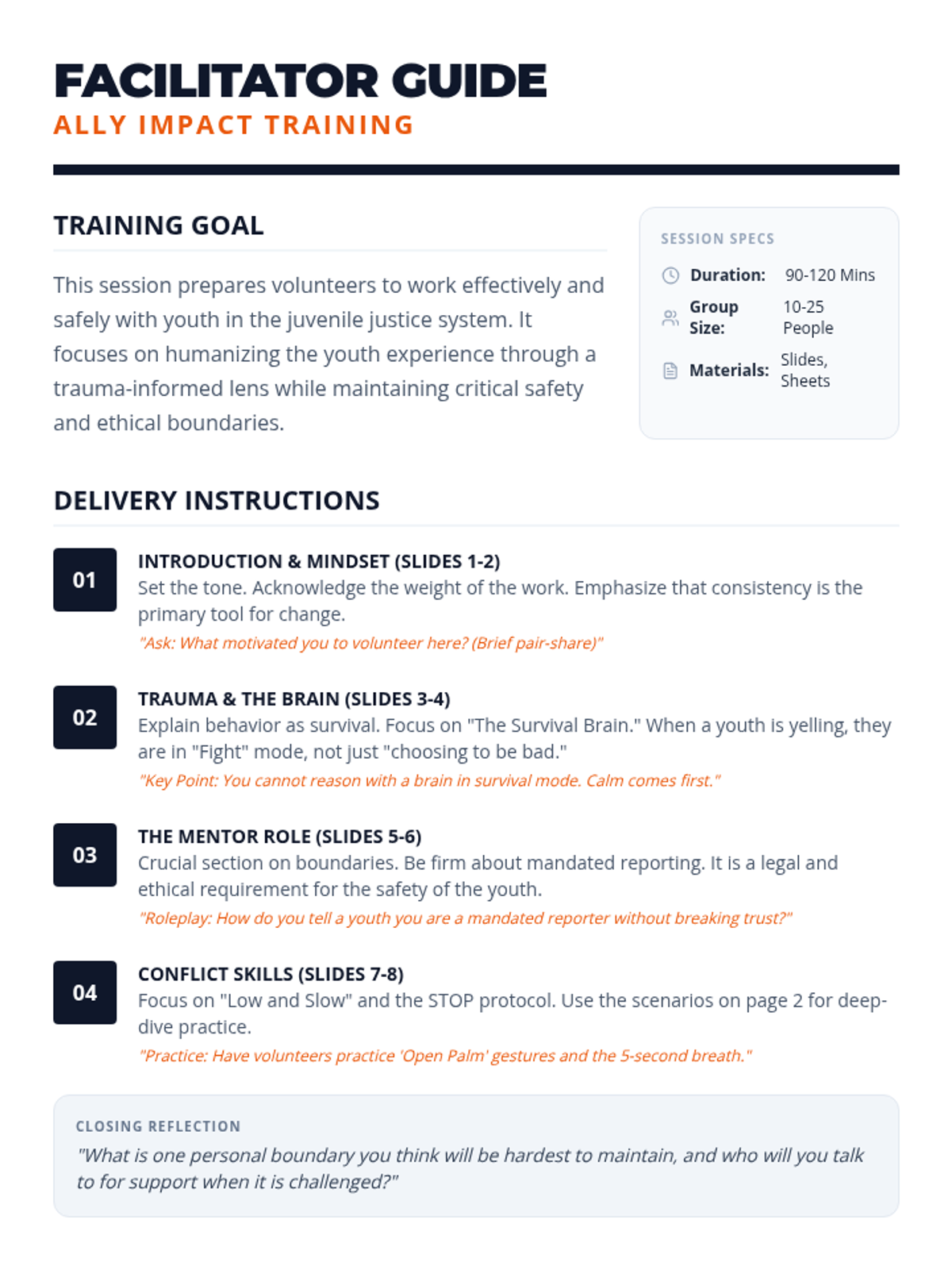
A comprehensive training package for volunteers entering the juvenile justice system, focusing on trauma-informed care, mentorship, boundaries, and conflict resolution.
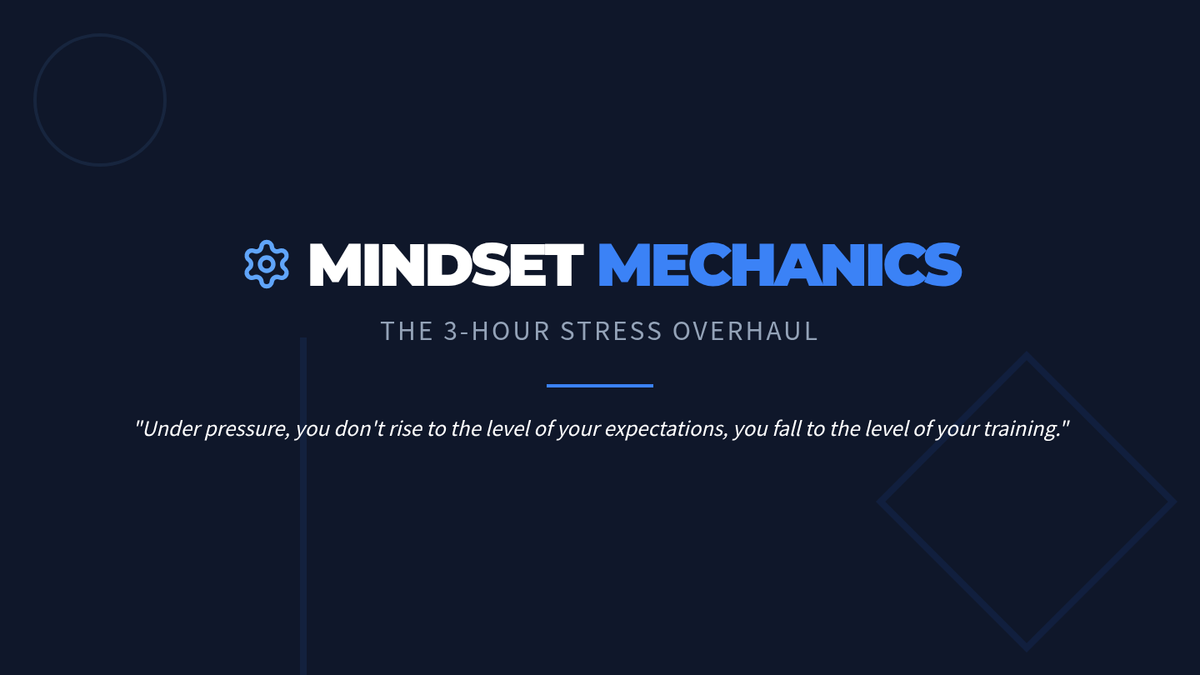
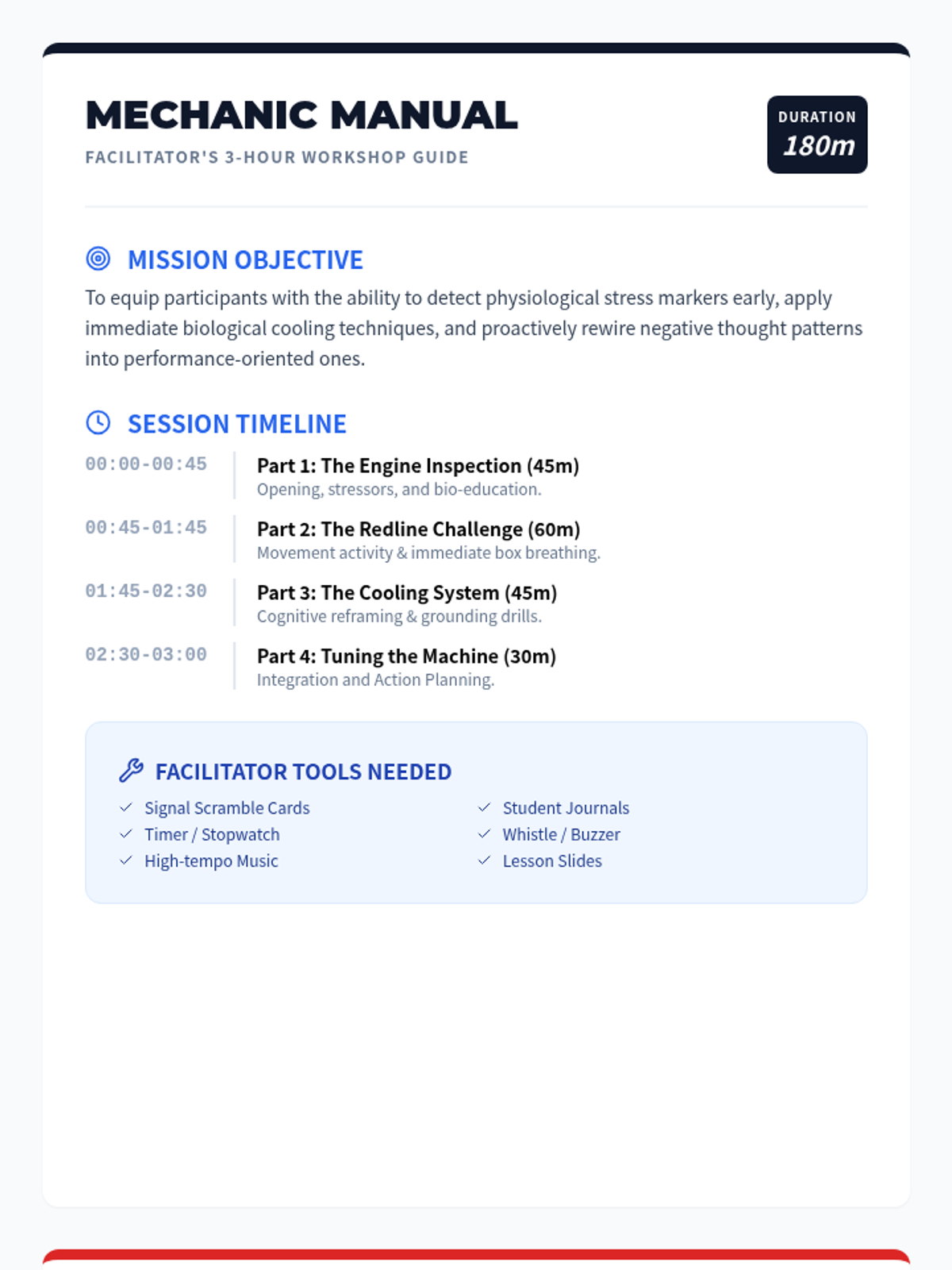
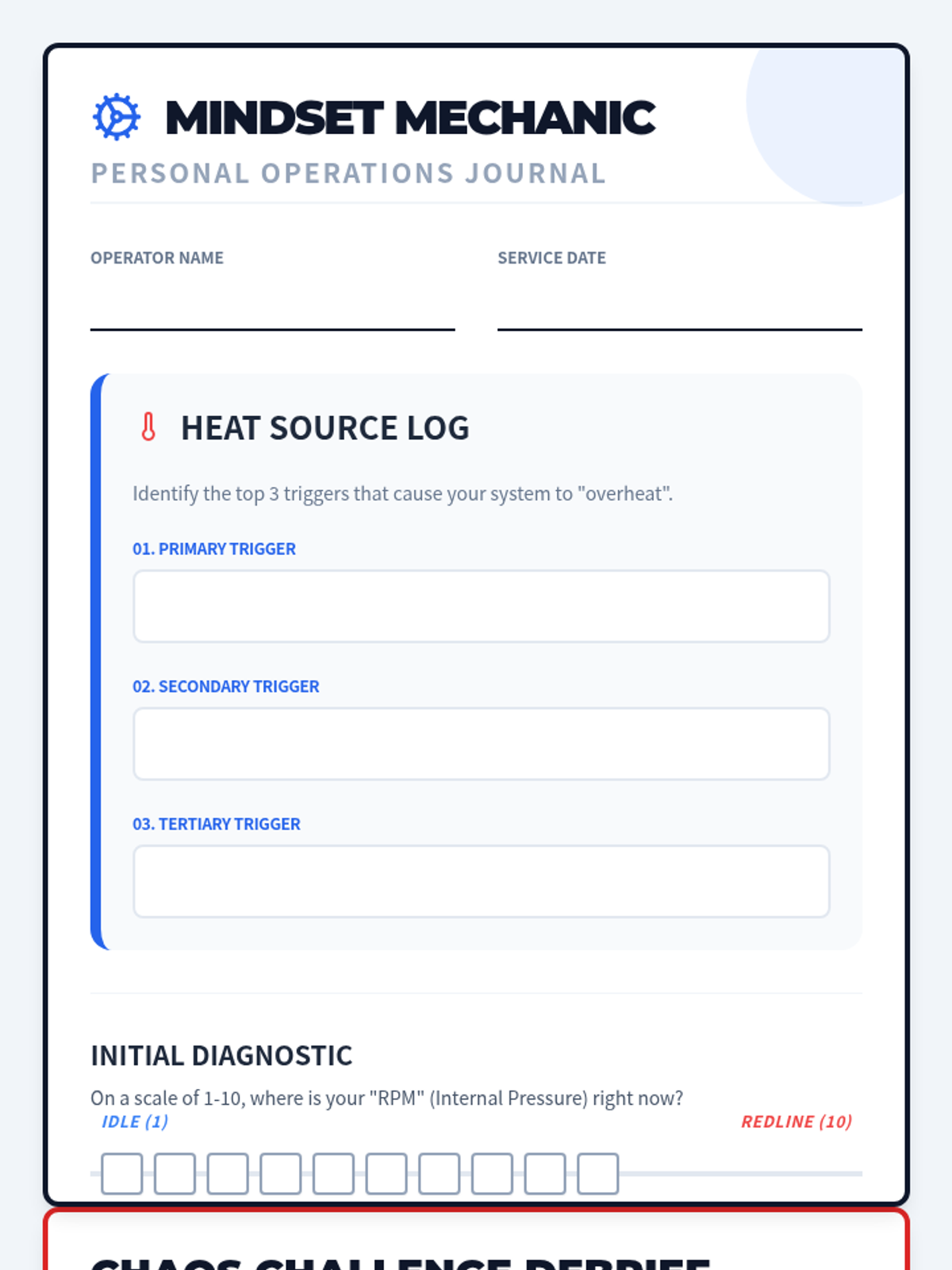
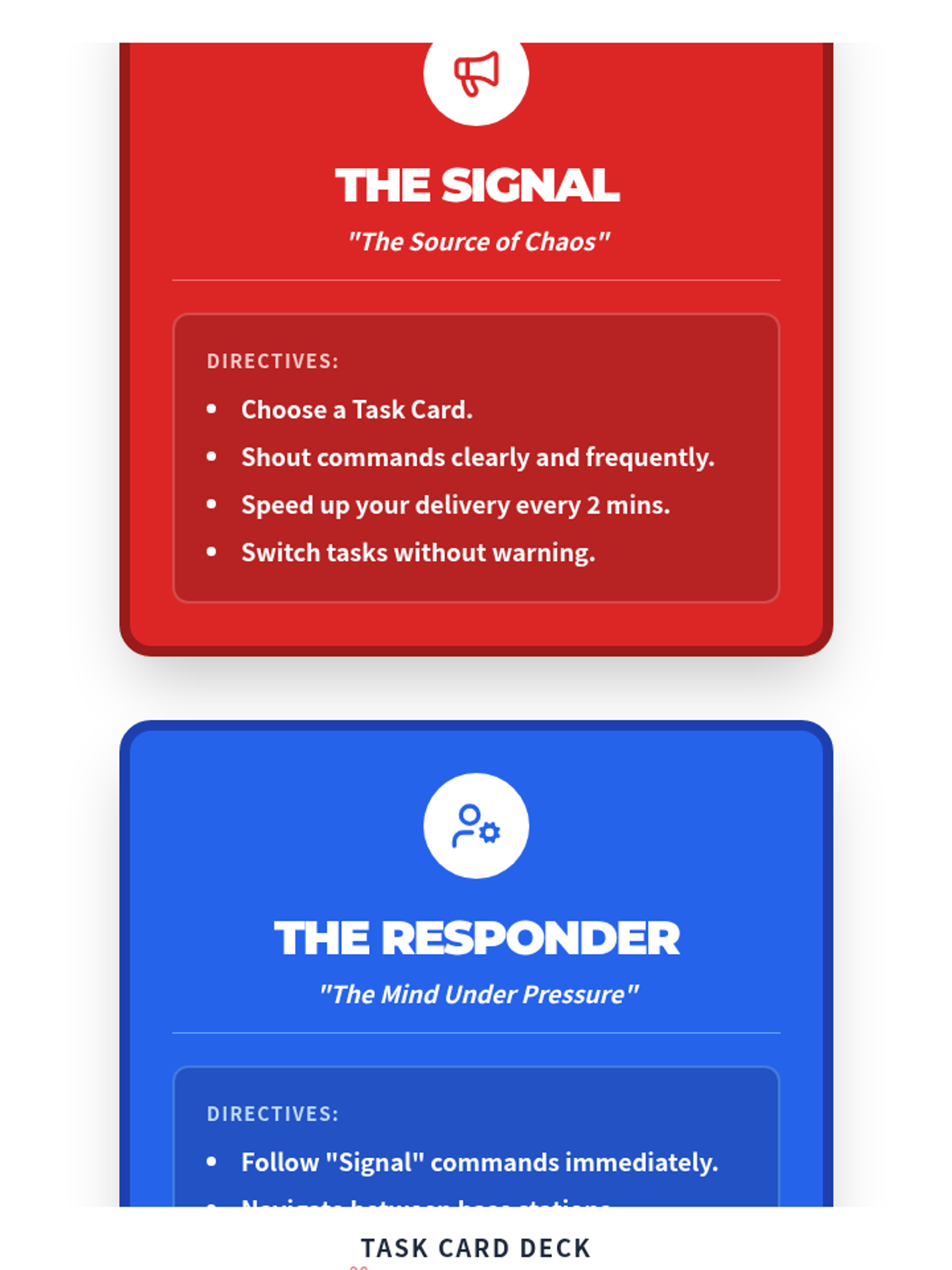
A comprehensive 3-hour workshop focused on identifying stress triggers, practicing immediate calming techniques through high-pressure challenges, and rewiring thought patterns for positive thinking.
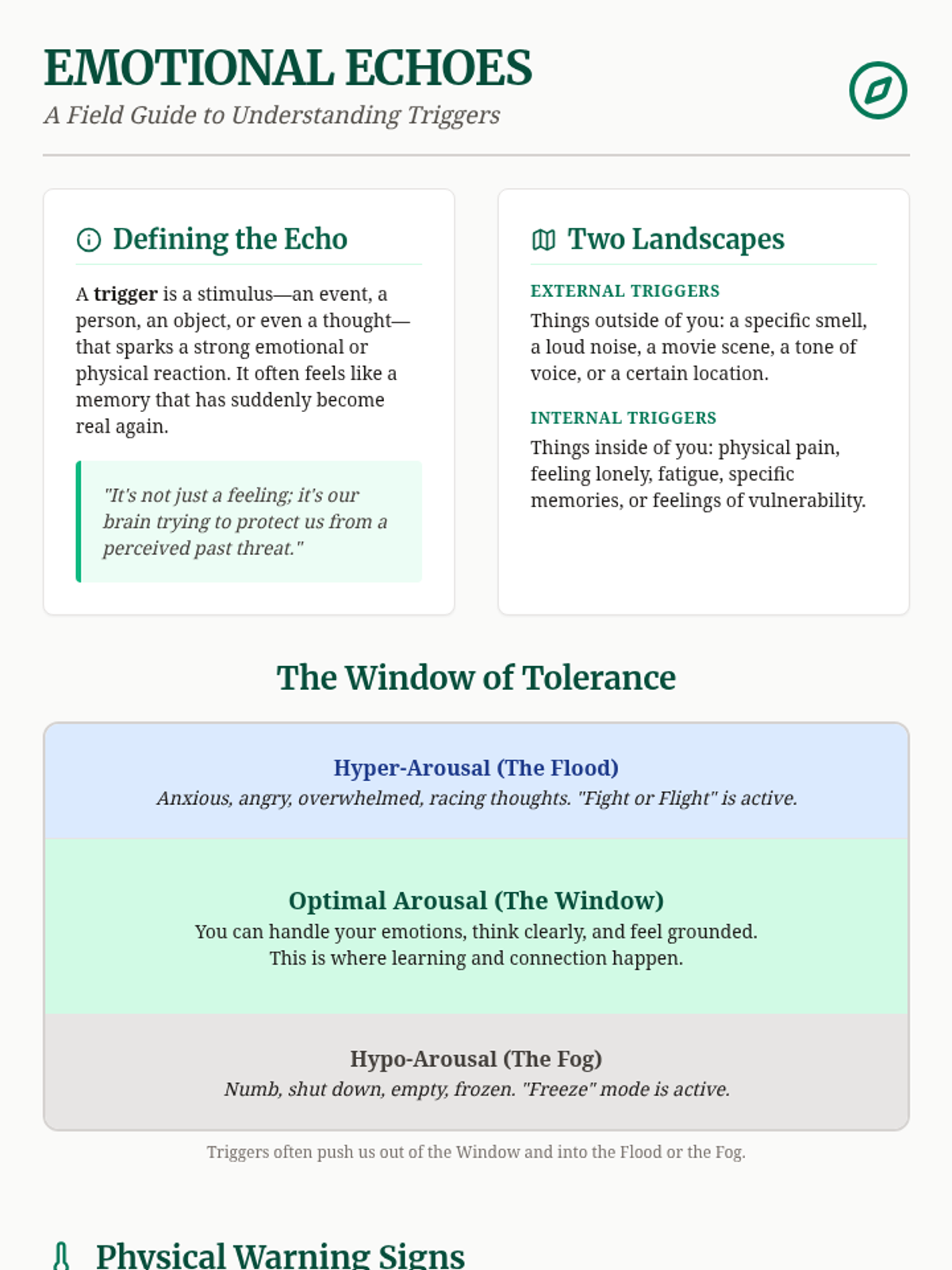
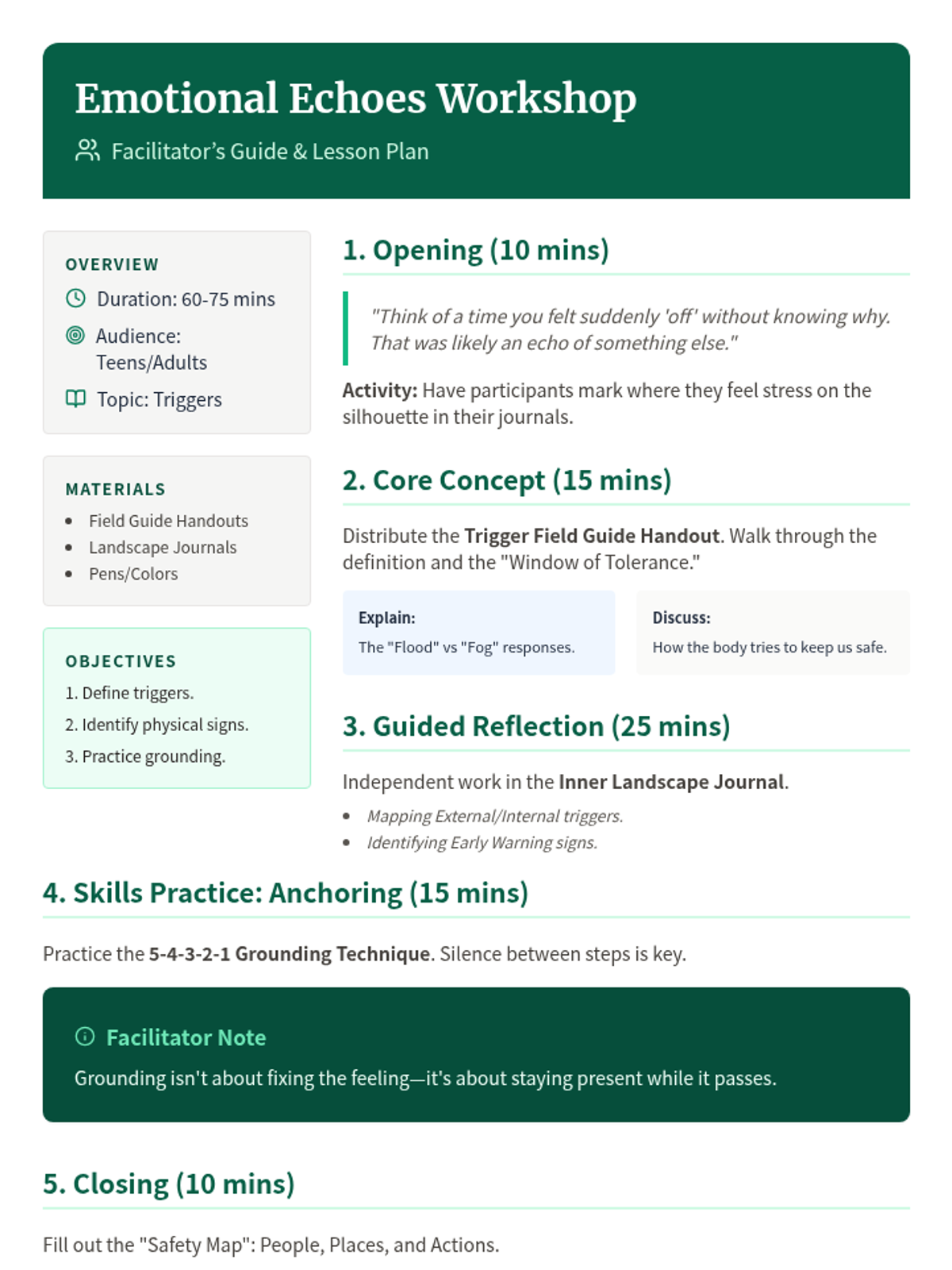
A comprehensive workshop and resource set designed to help students identify, understand, and navigate mental health triggers through self-reflection and grounding techniques.
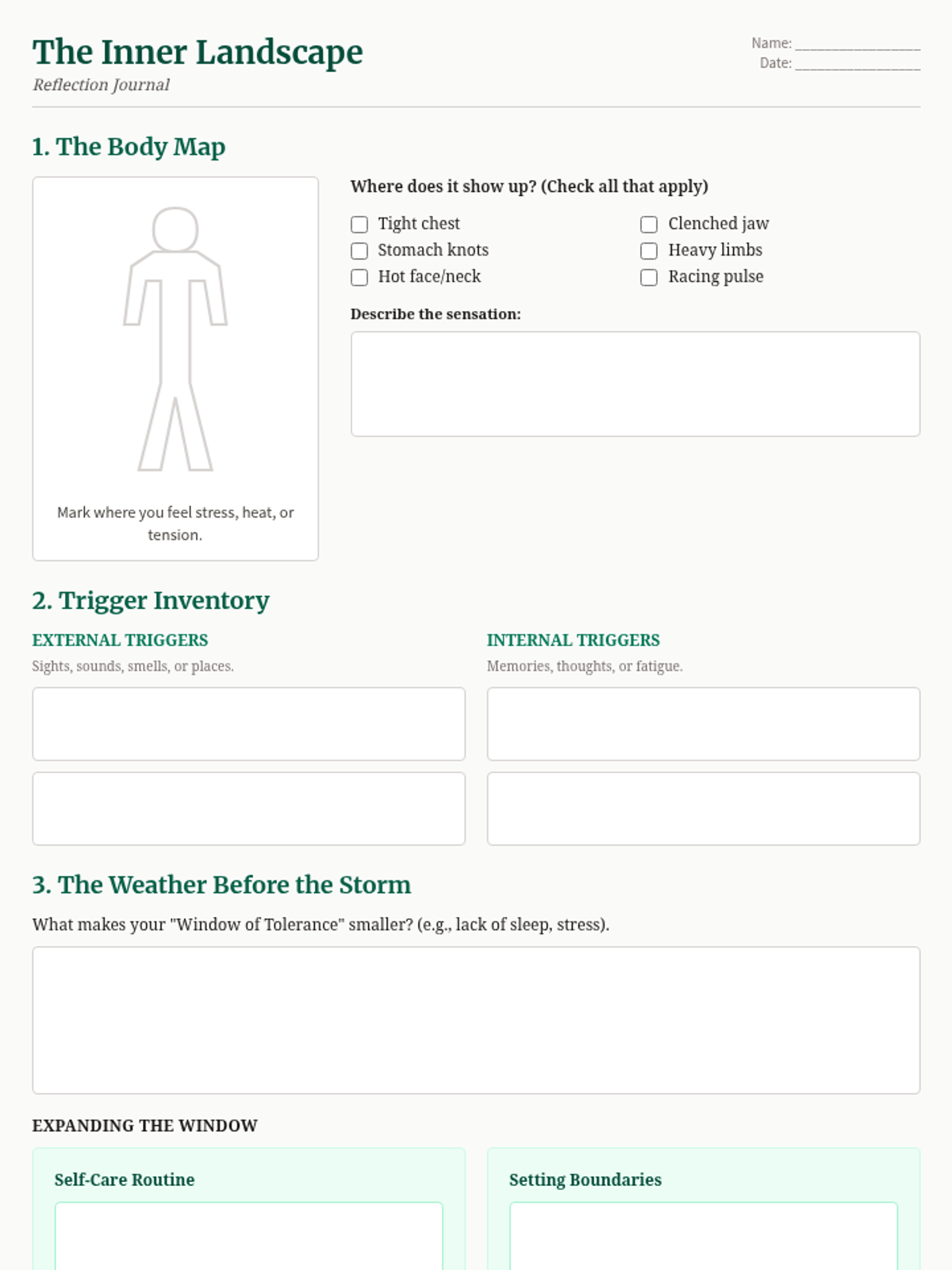
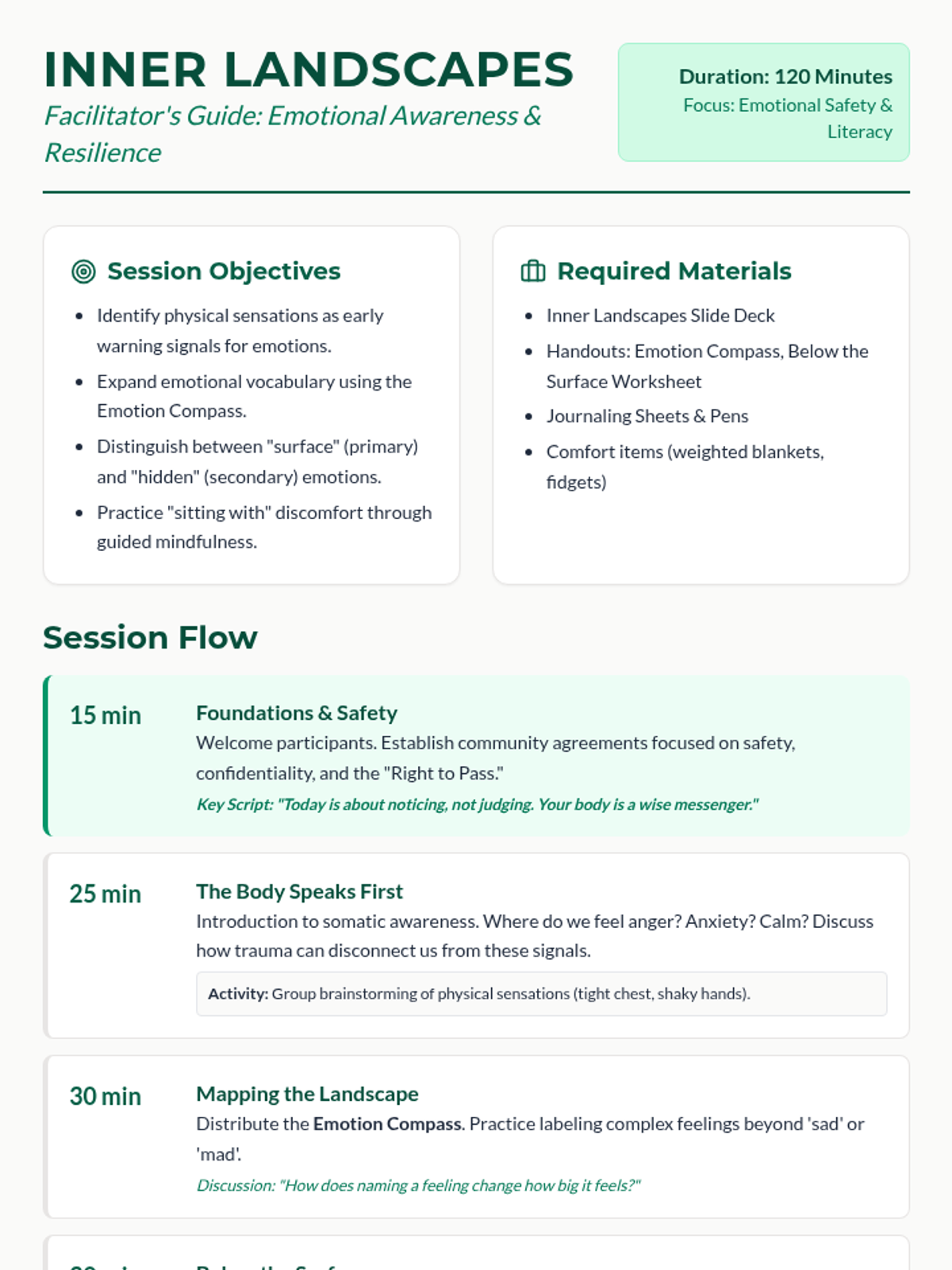
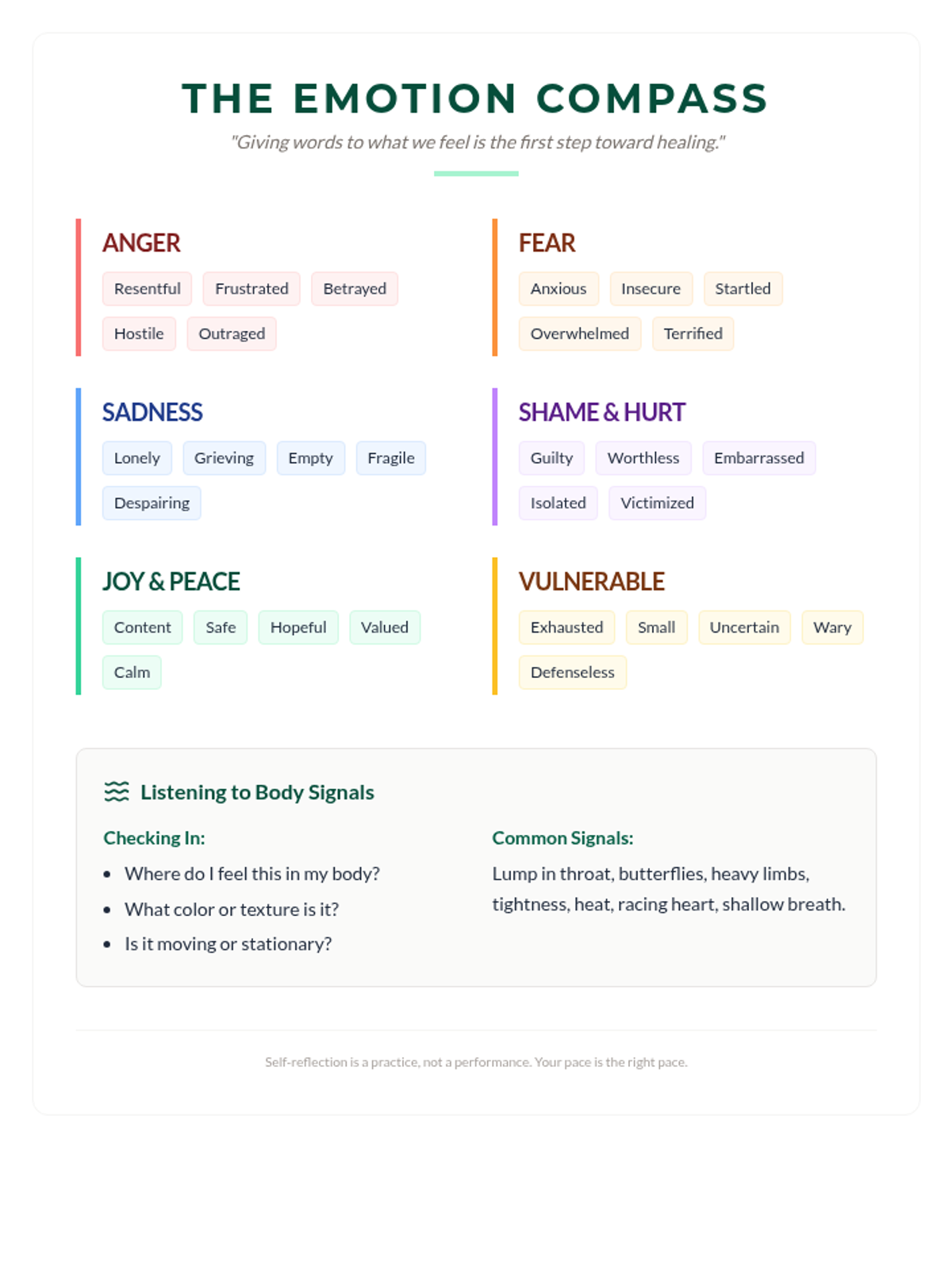
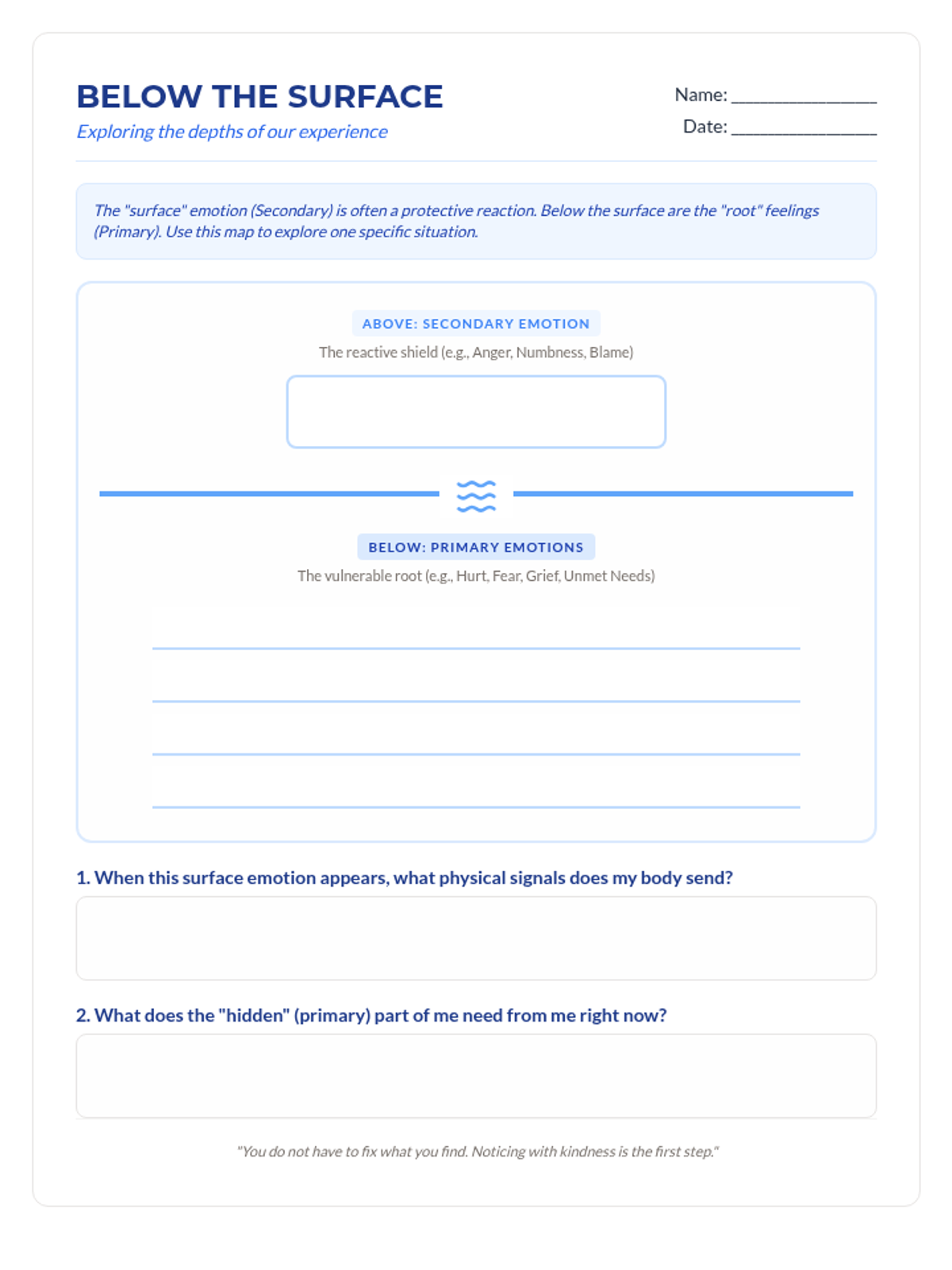
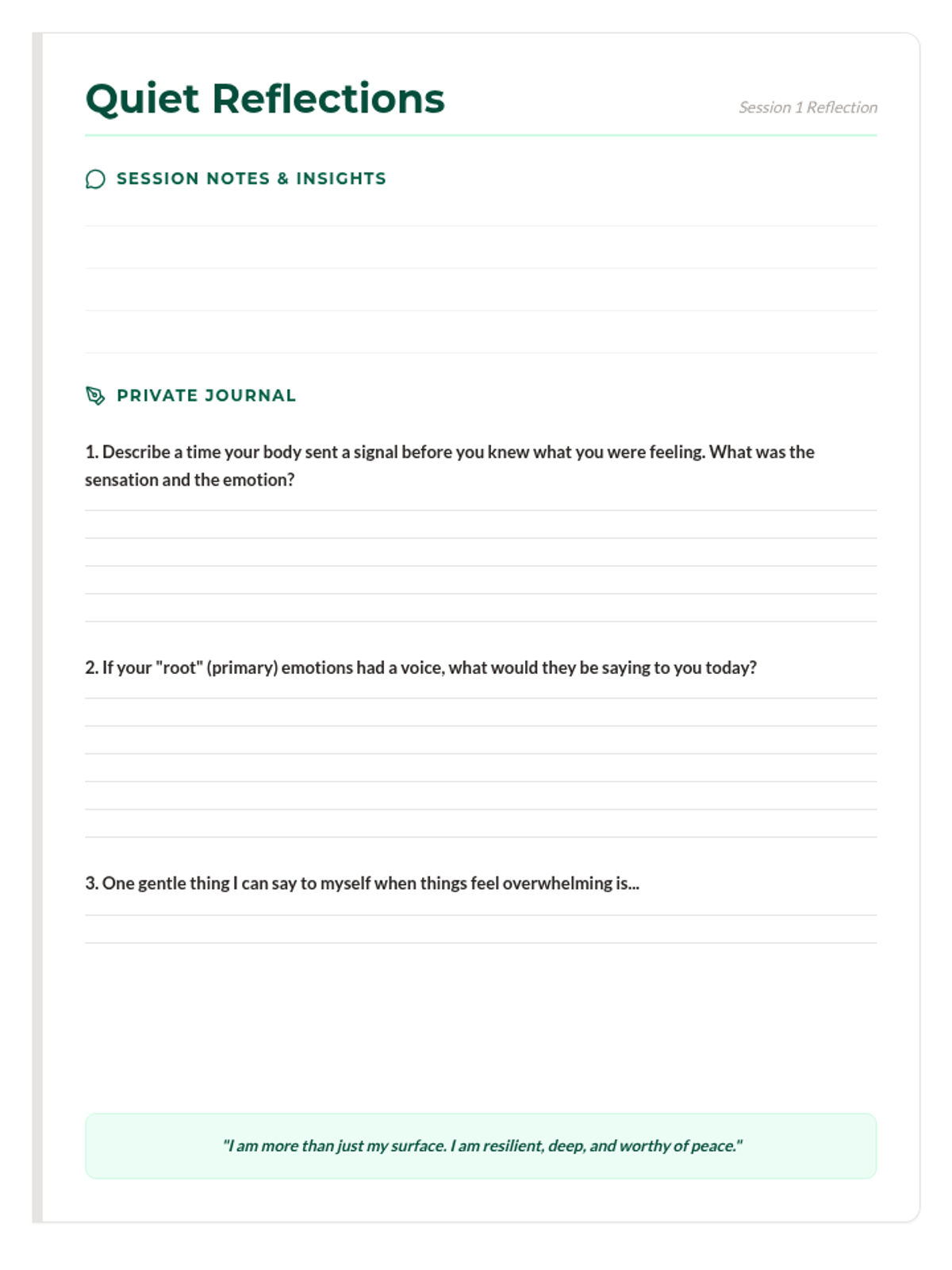
A 2-hour psychoeducational session for domestic violence survivors focused on emotional awareness, body signals, and identifying secondary emotions below the surface.
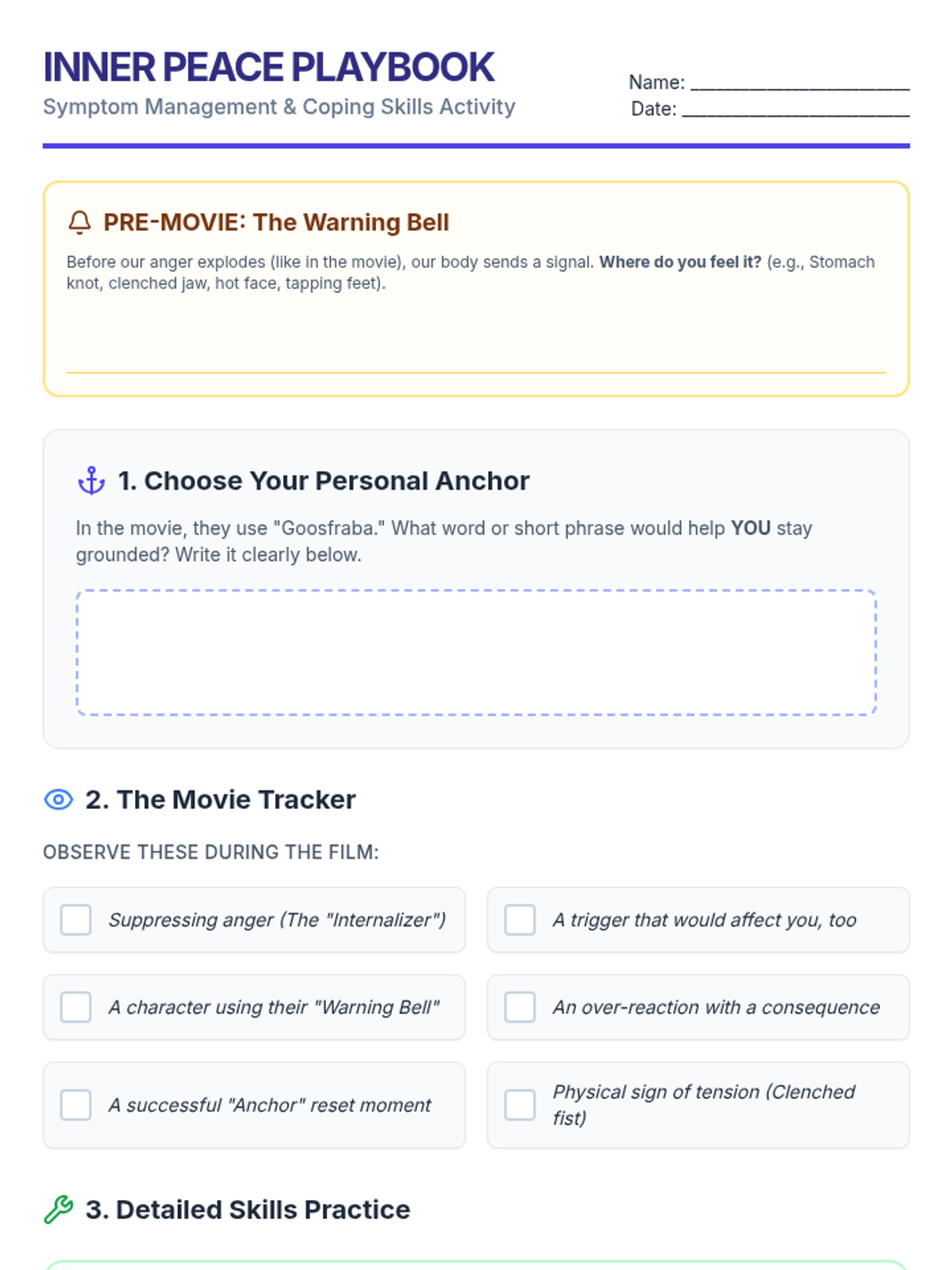
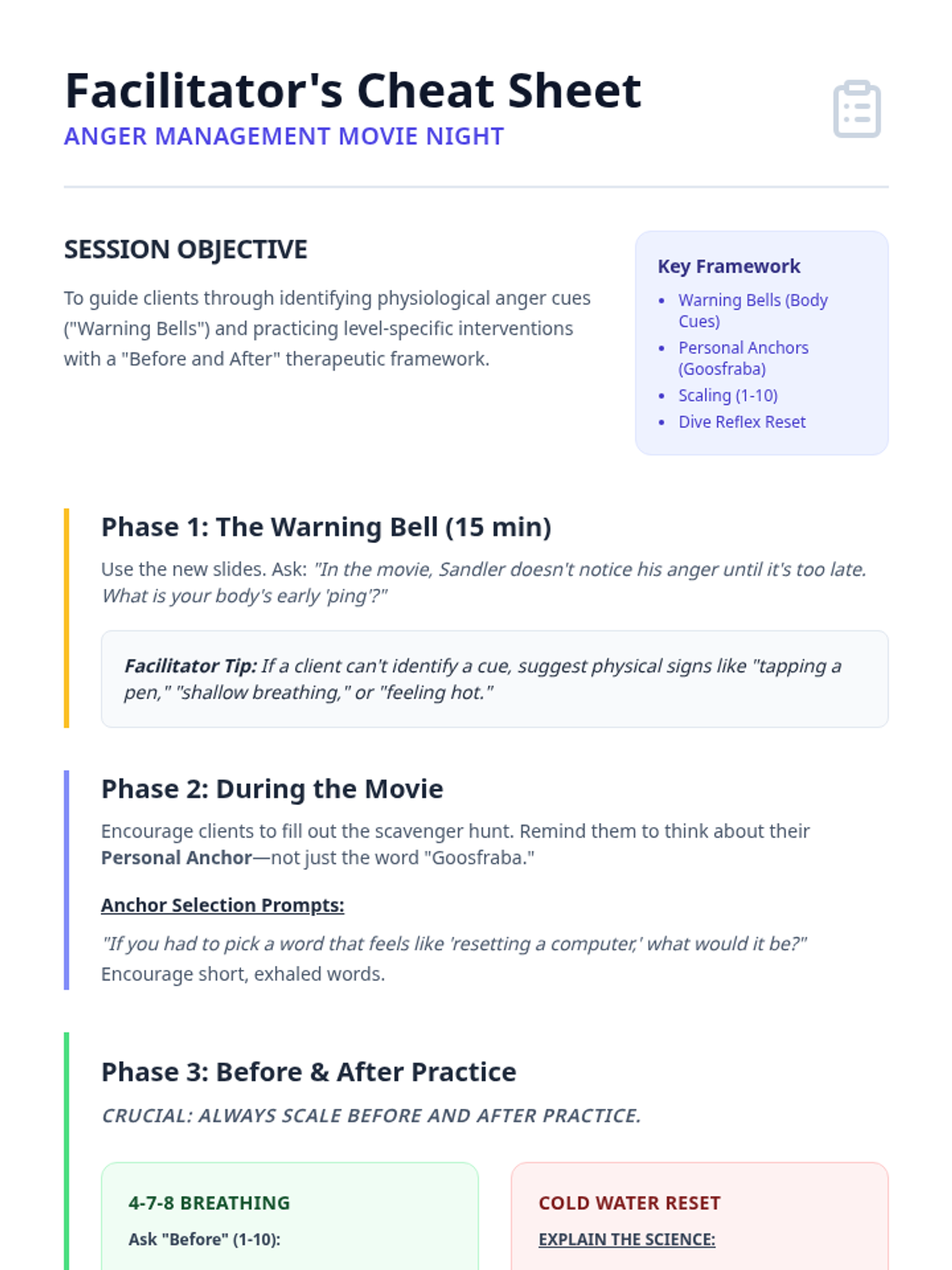
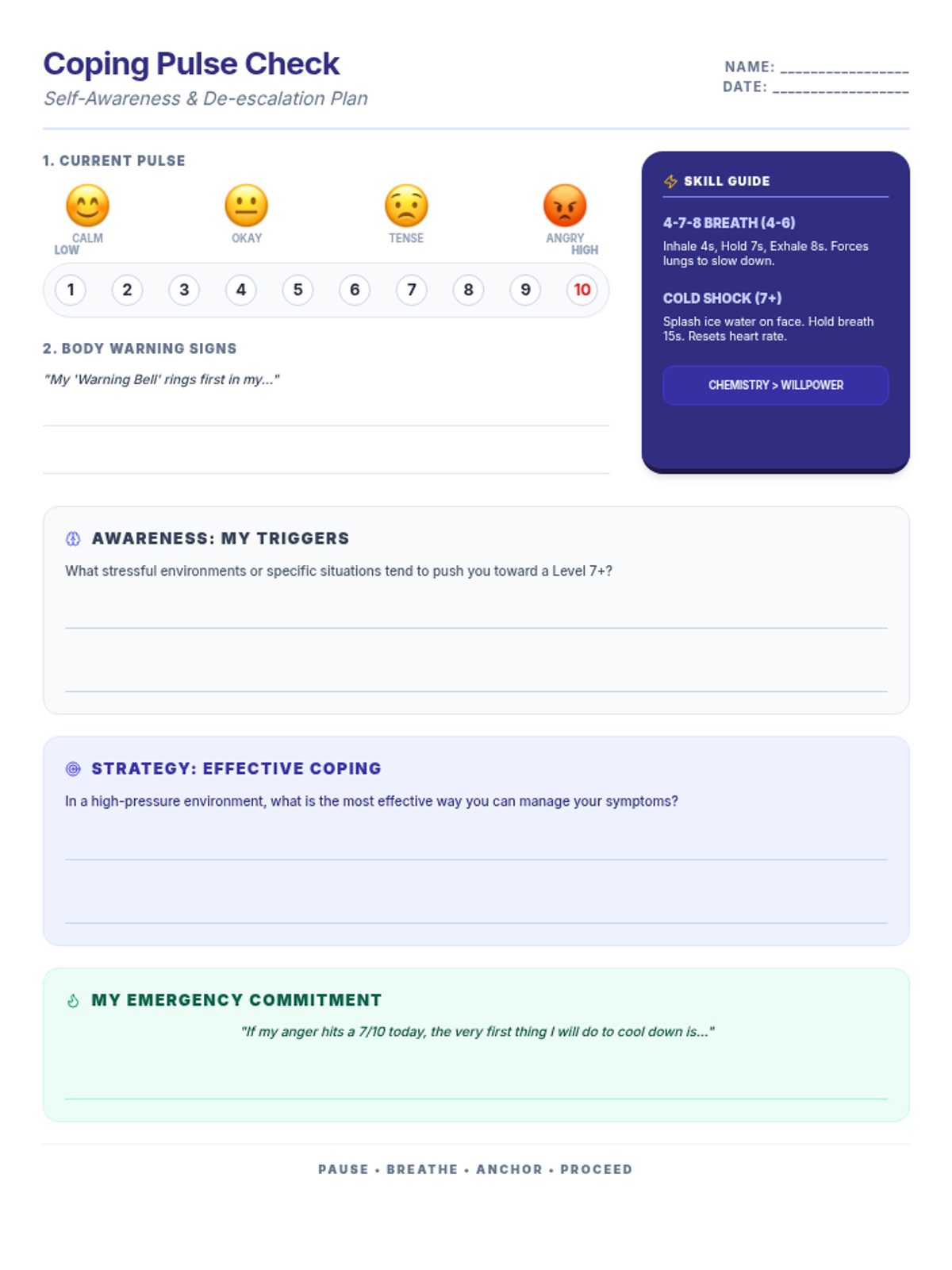
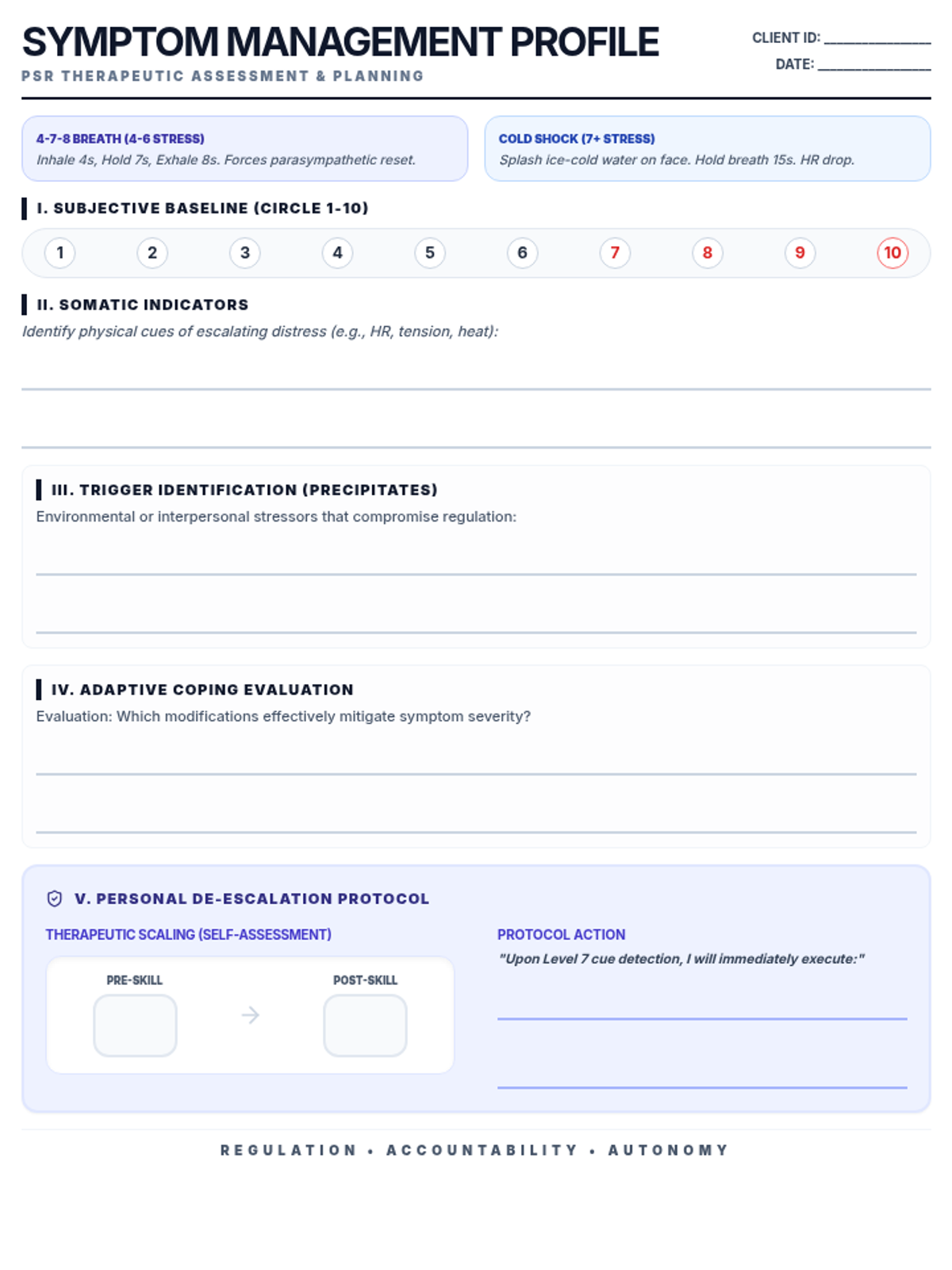
An interactive PSR group lesson centered on the movie 'Anger Management,' focusing on identifying personal triggers and building a hierarchy of coping skills from moderate stress to severe anger.
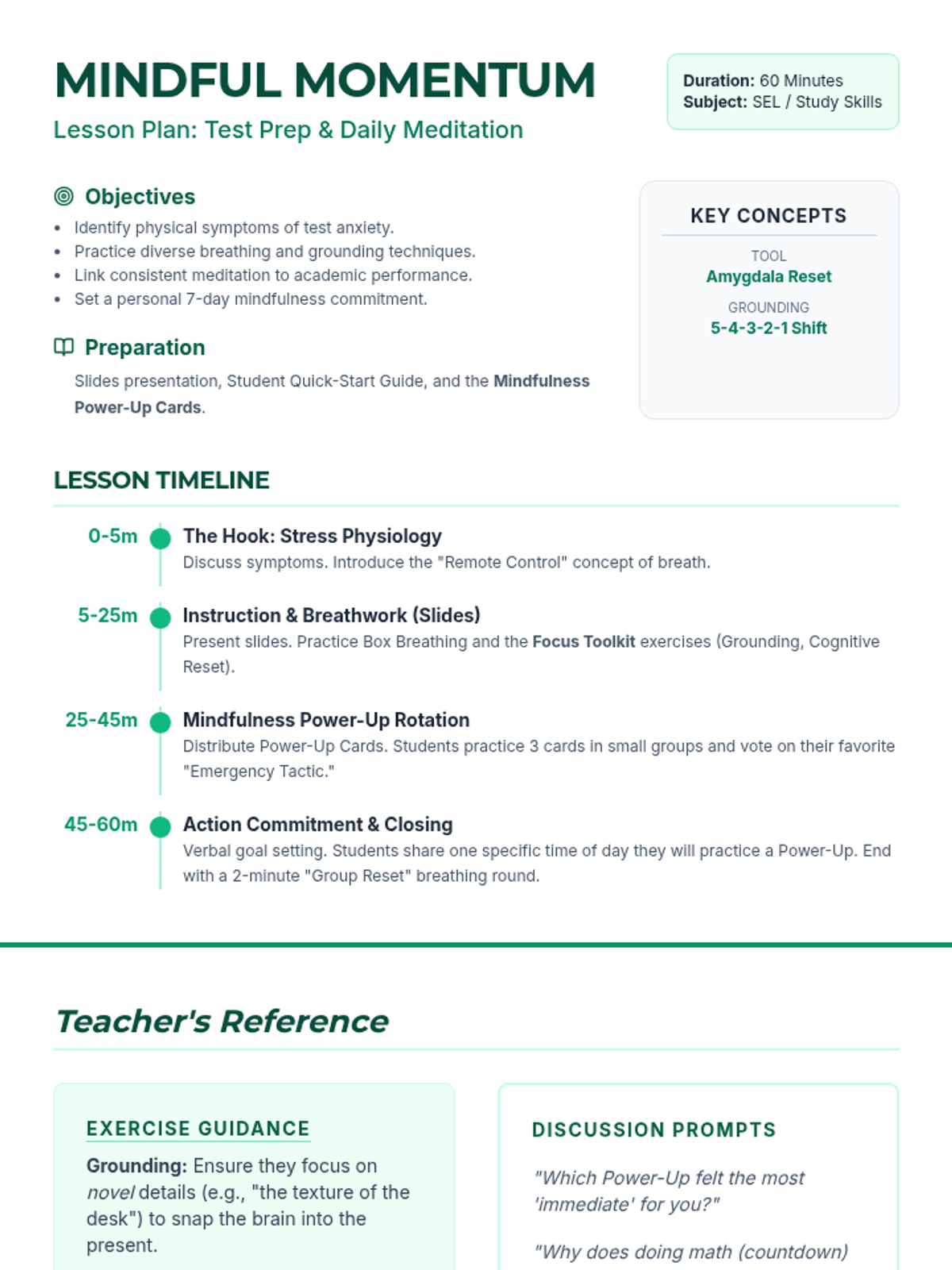
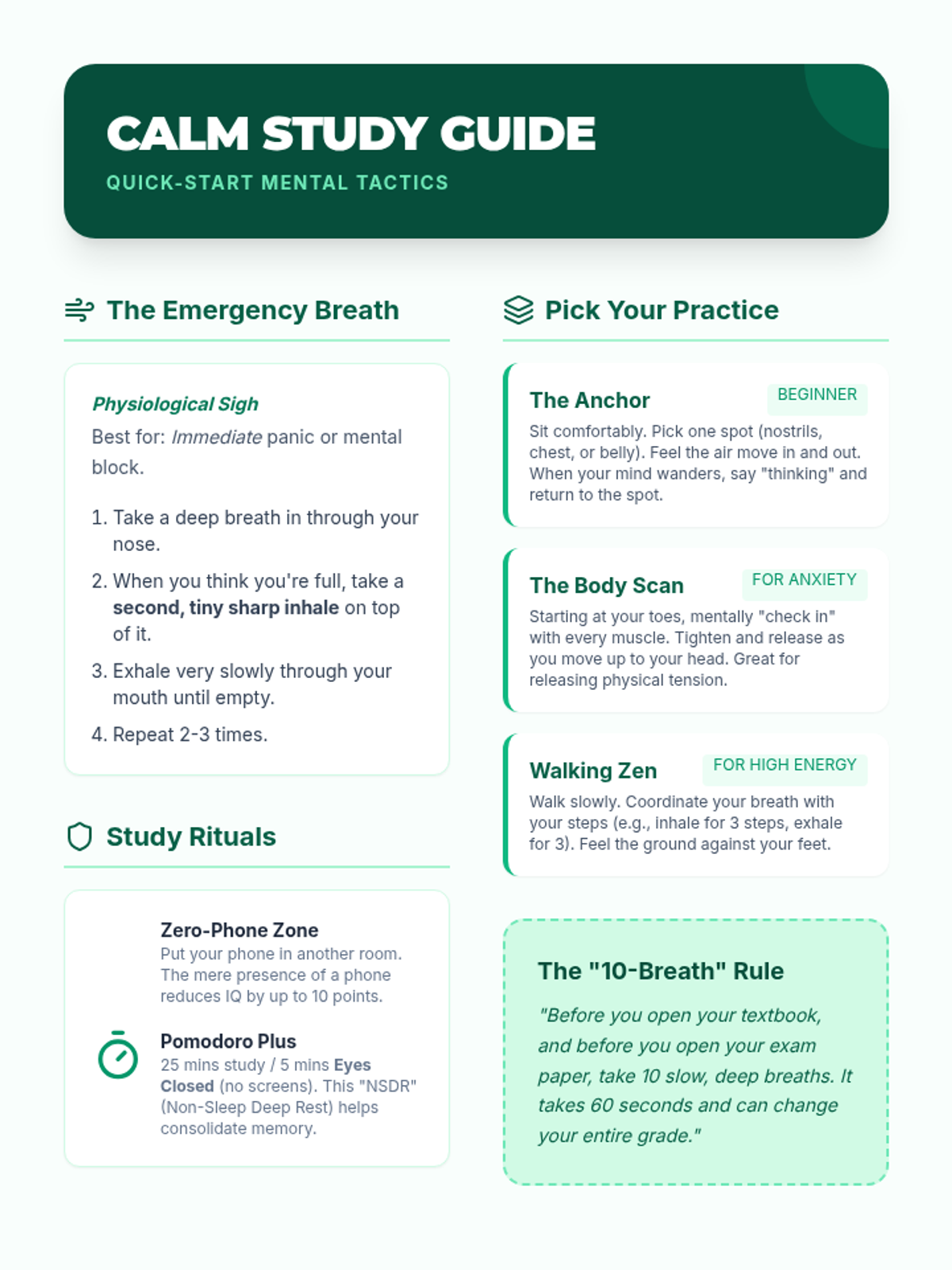
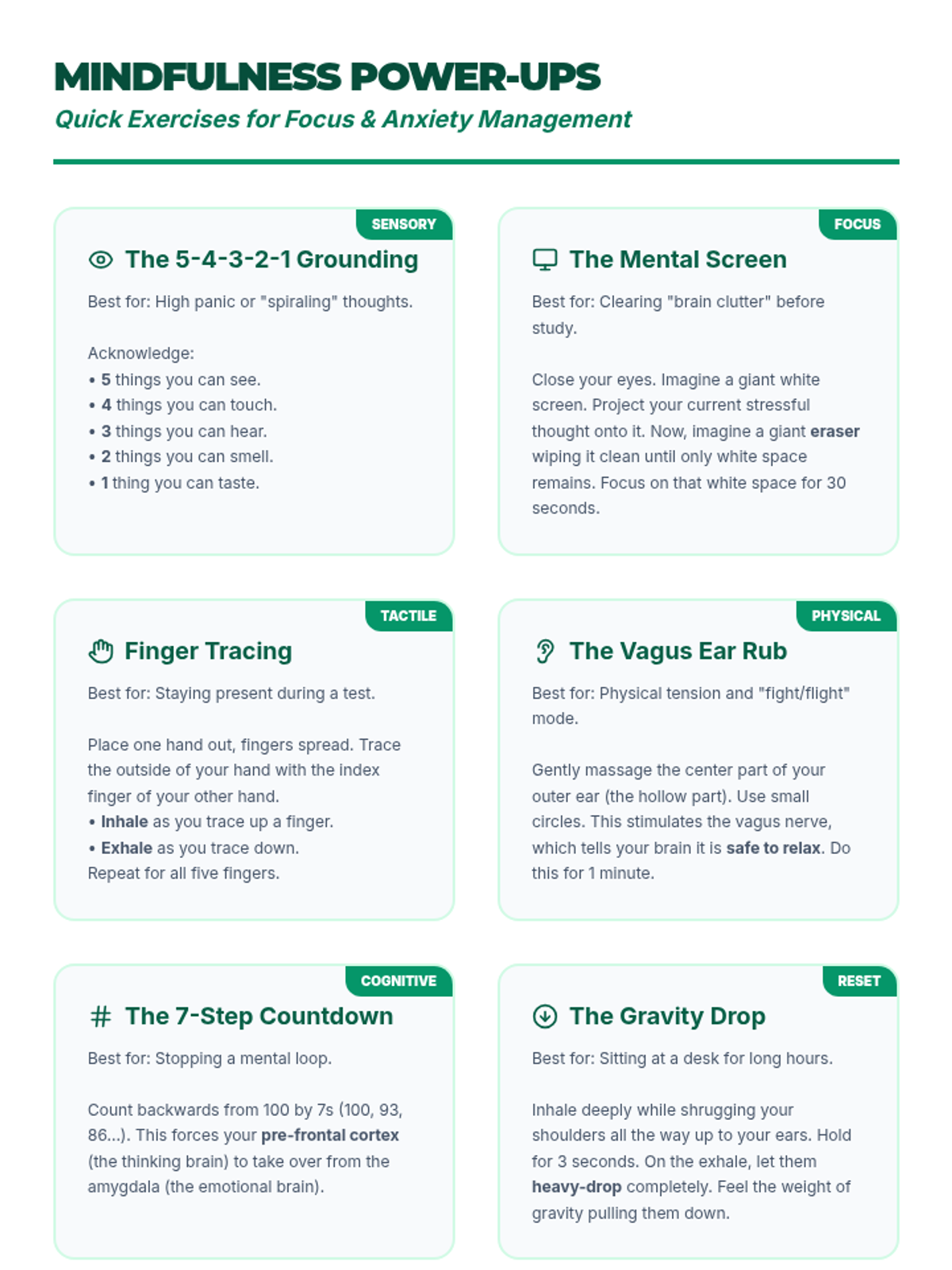
A 60-minute lesson designed to help students manage test anxiety and improve focus through daily meditation practices. This lesson combines psychological insights with practical mindfulness techniques for academic success.
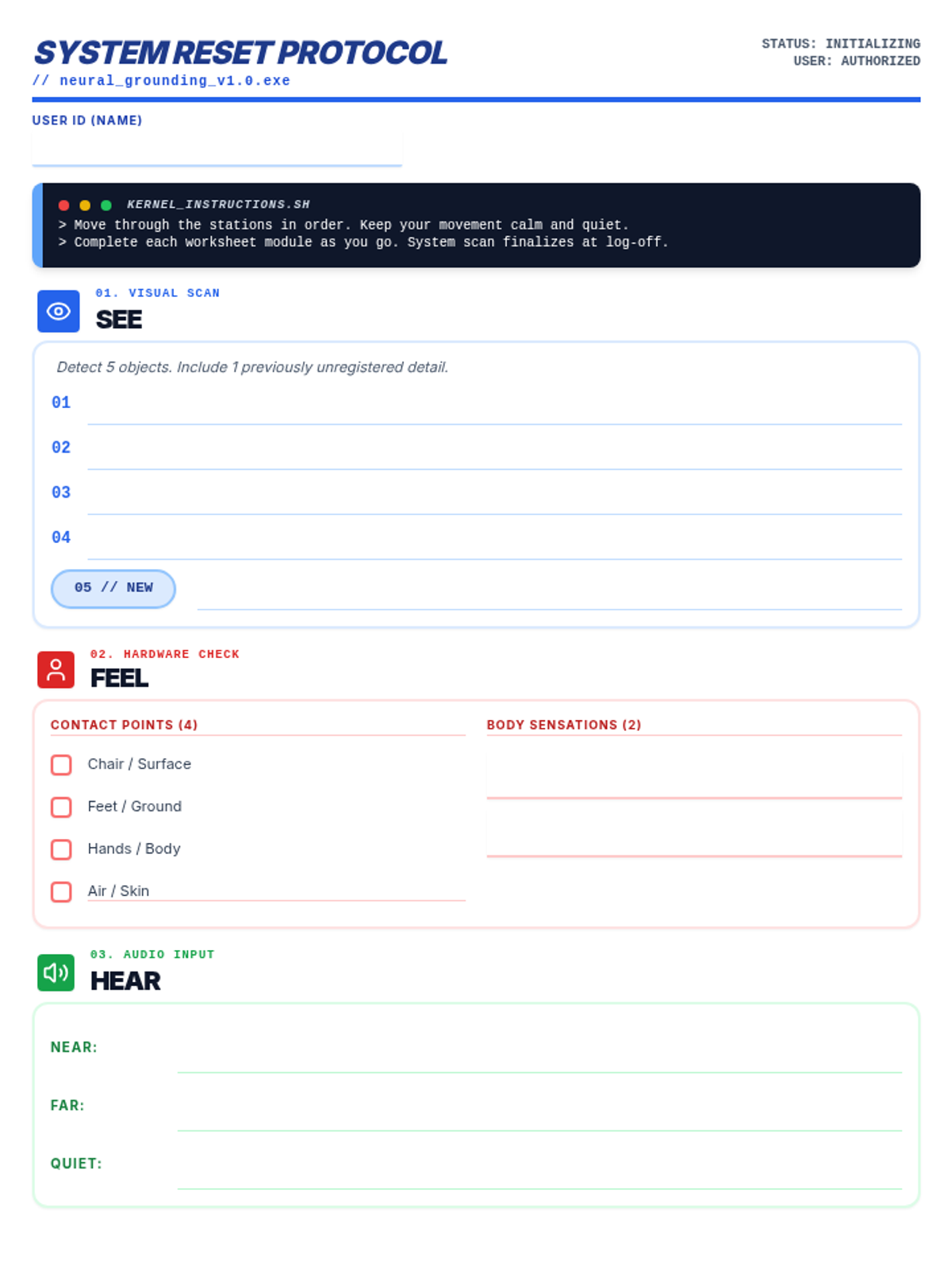
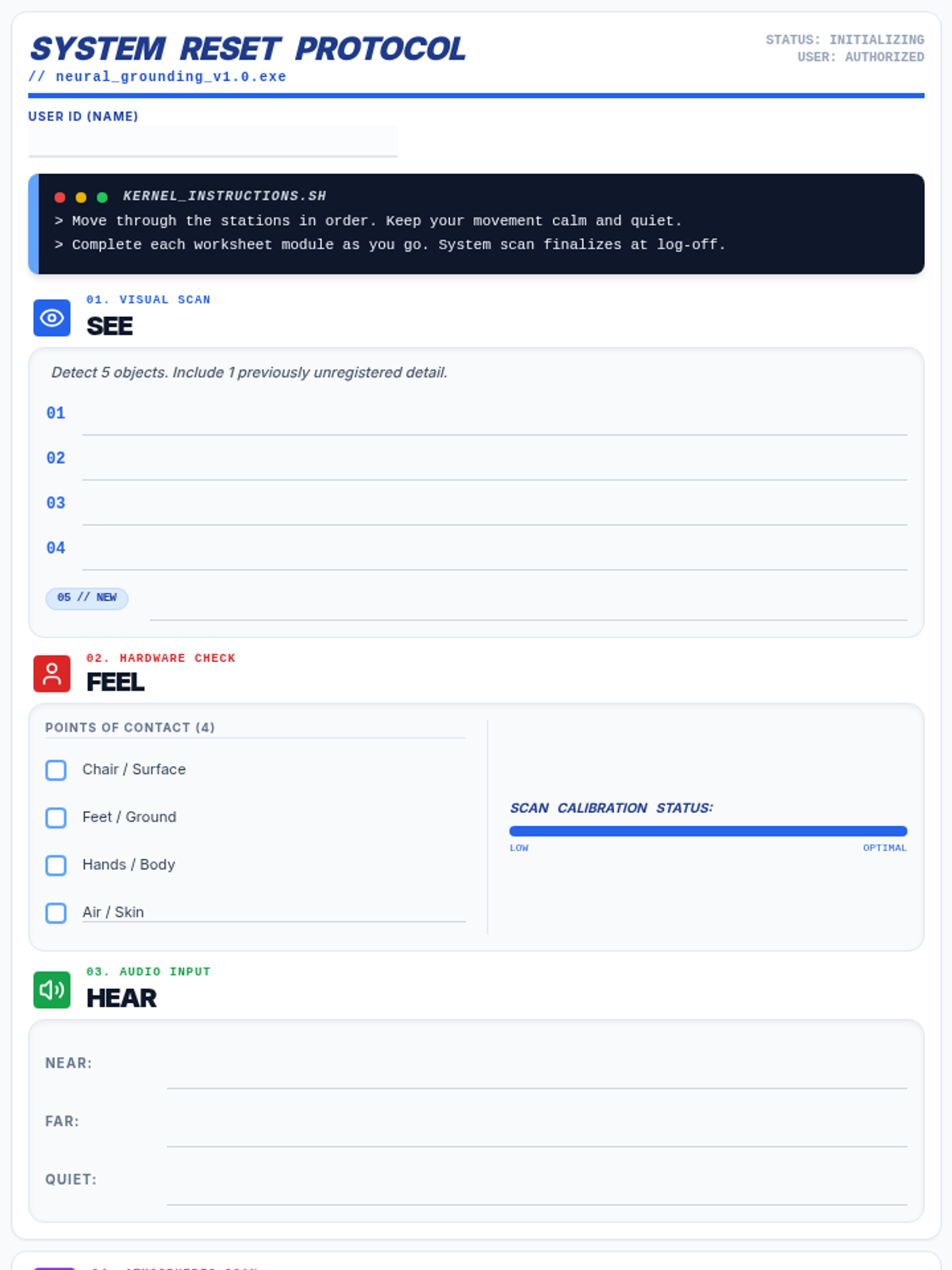
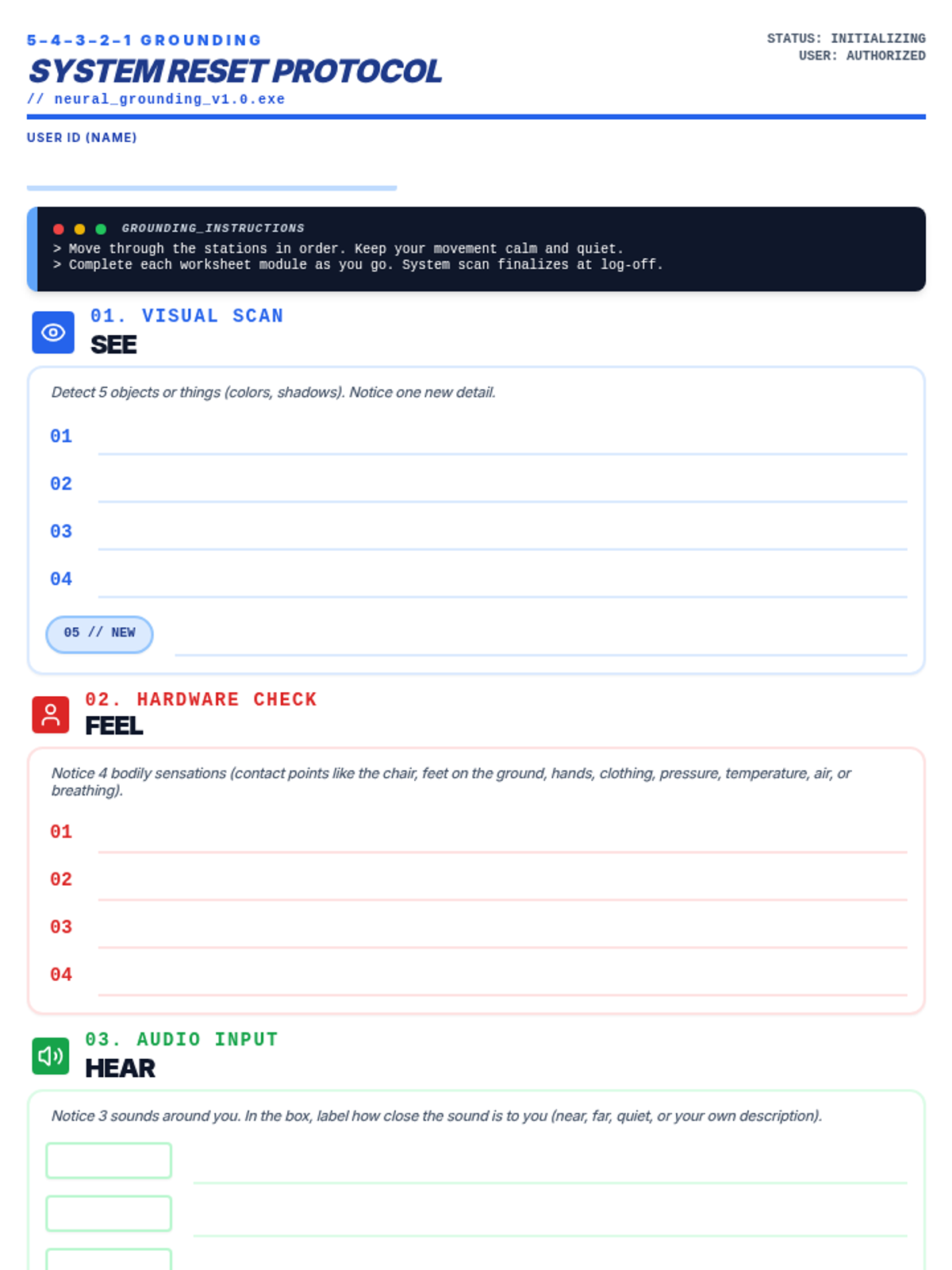
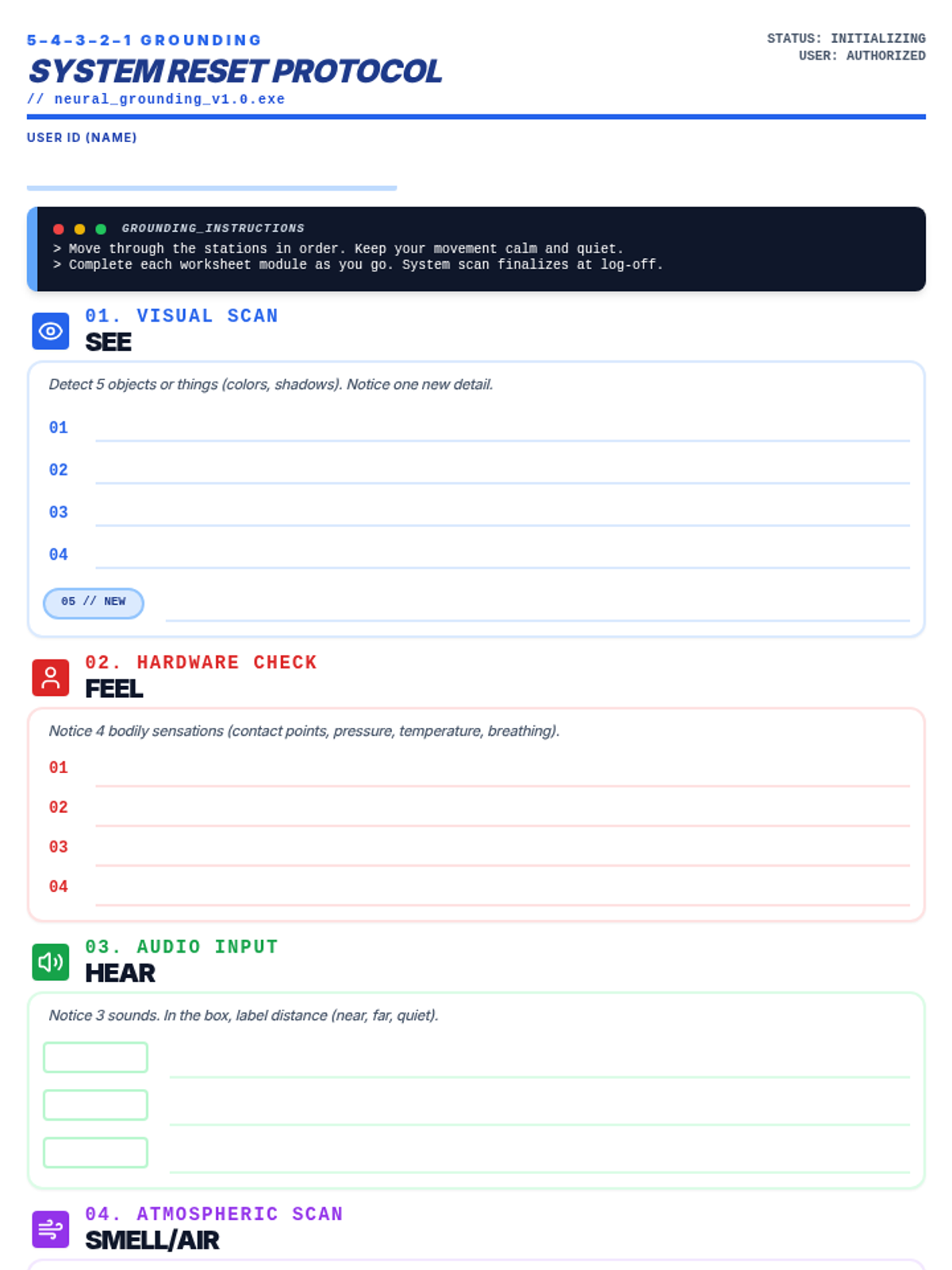
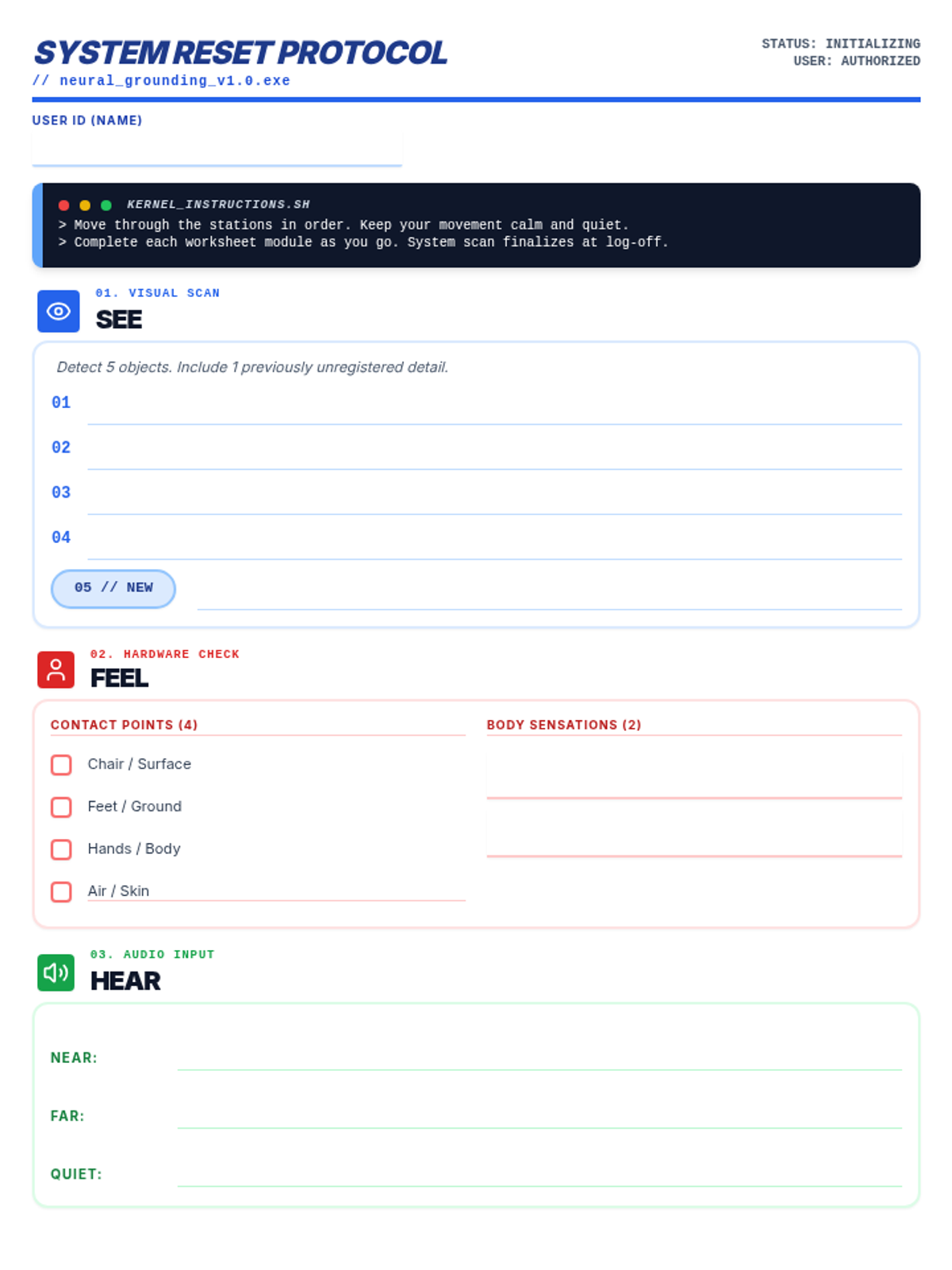
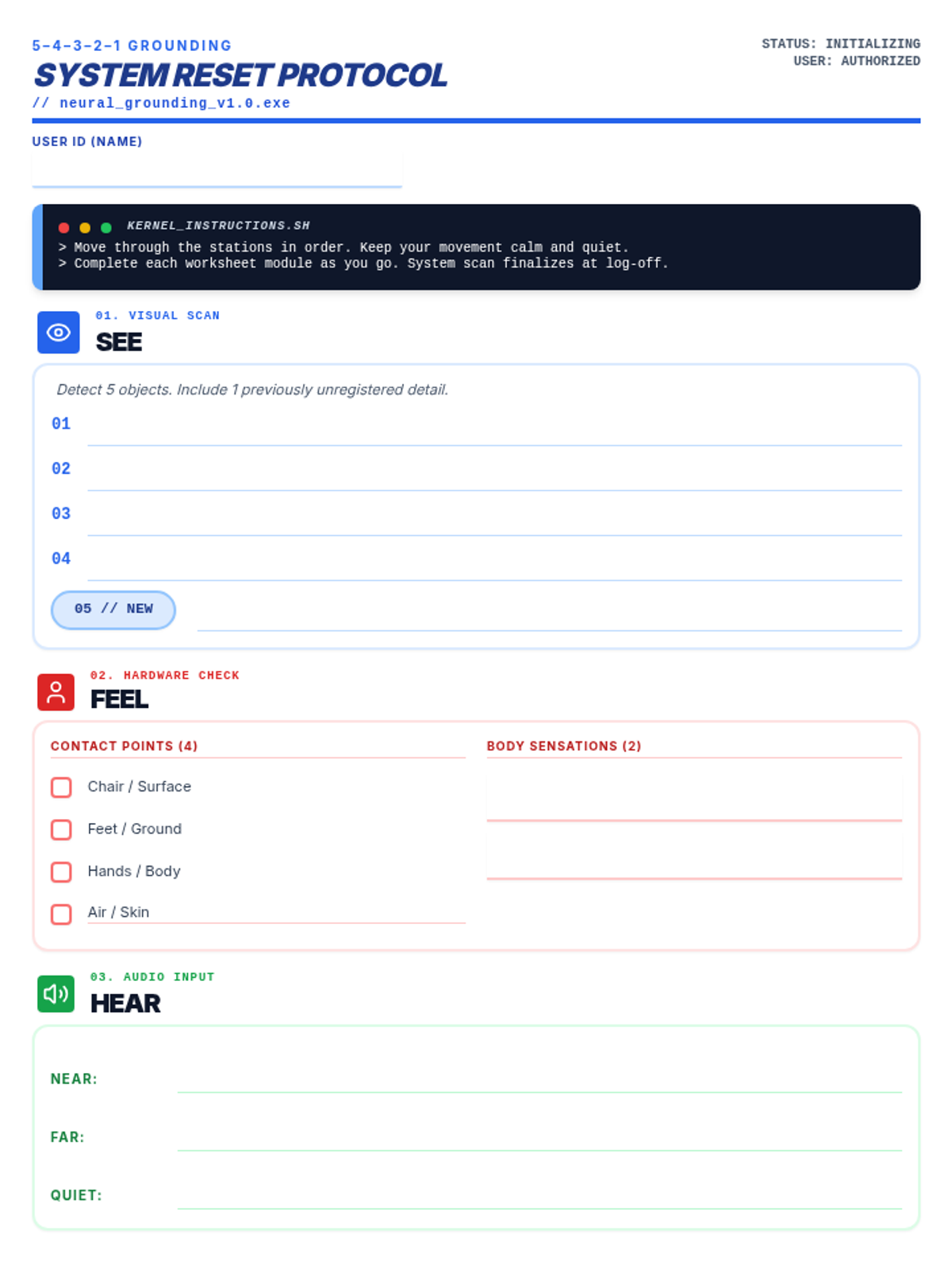
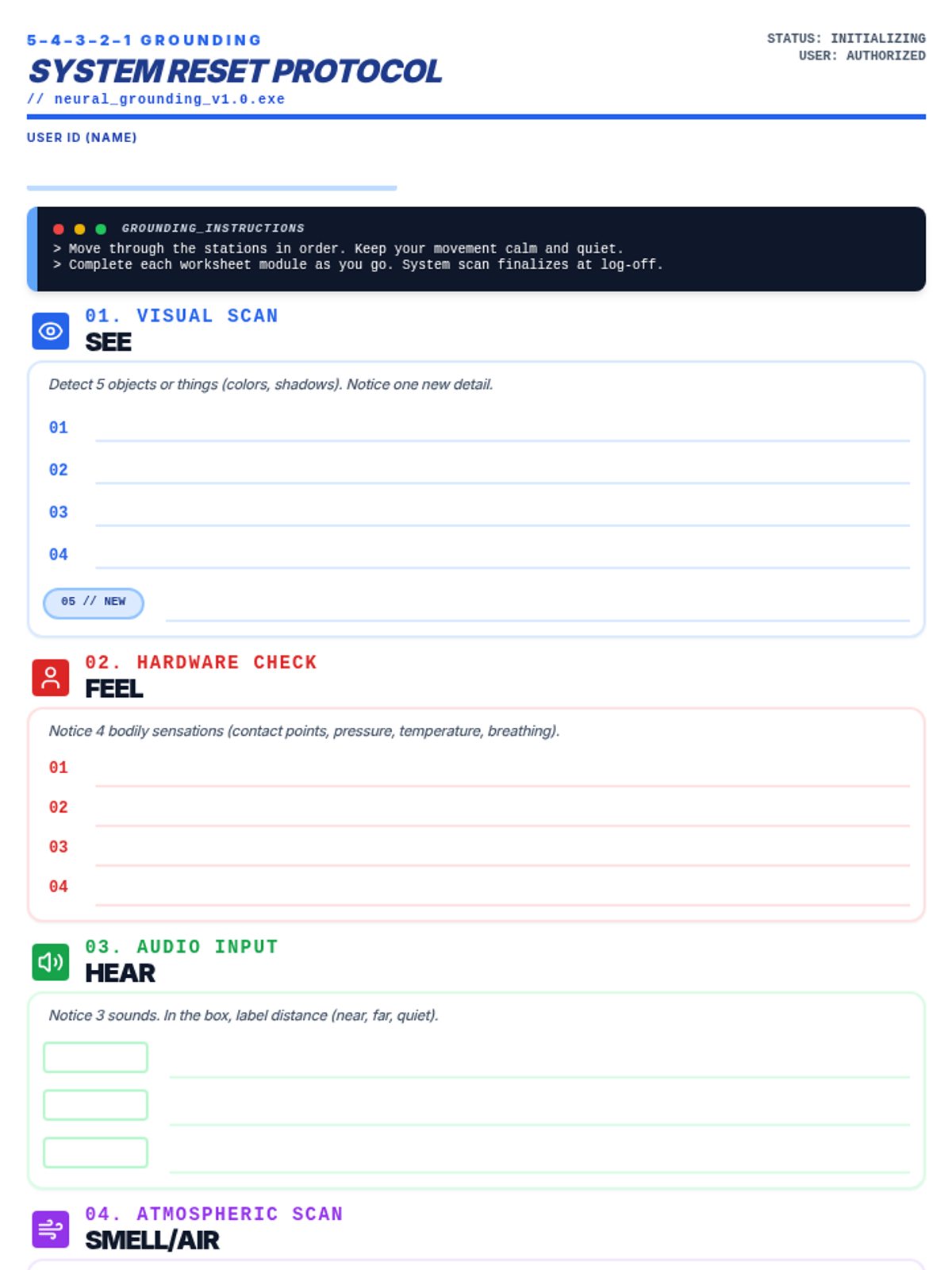
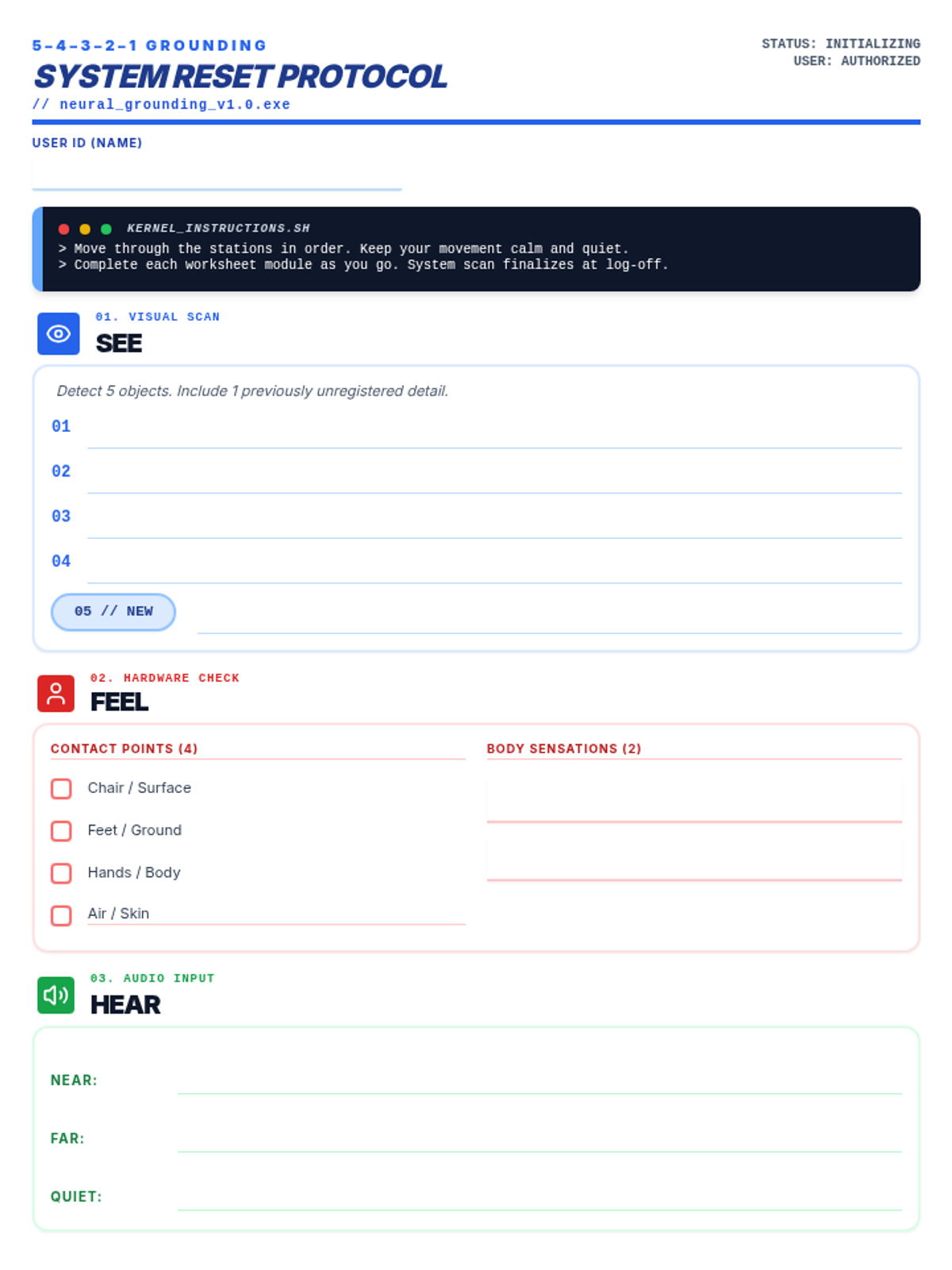
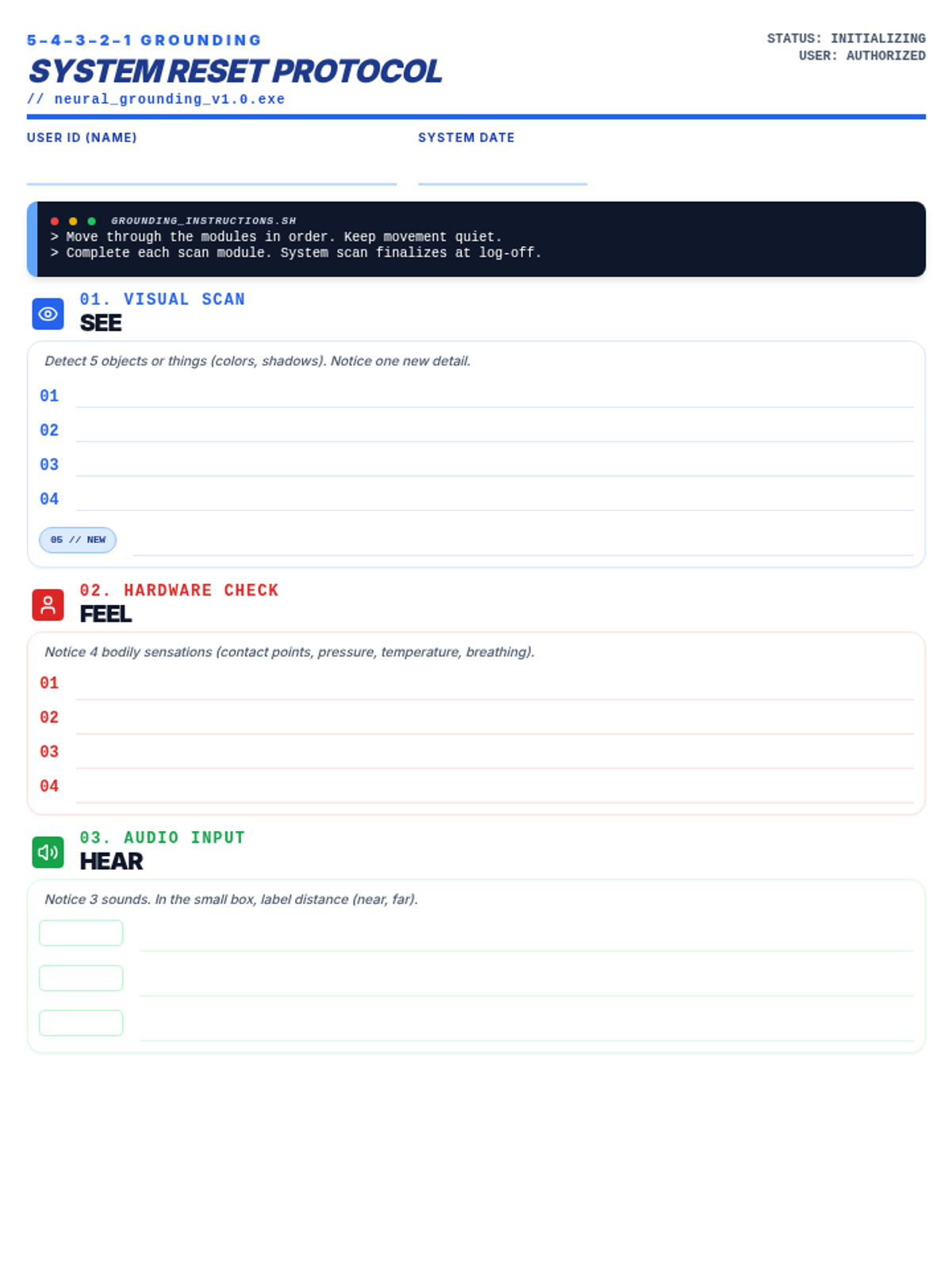
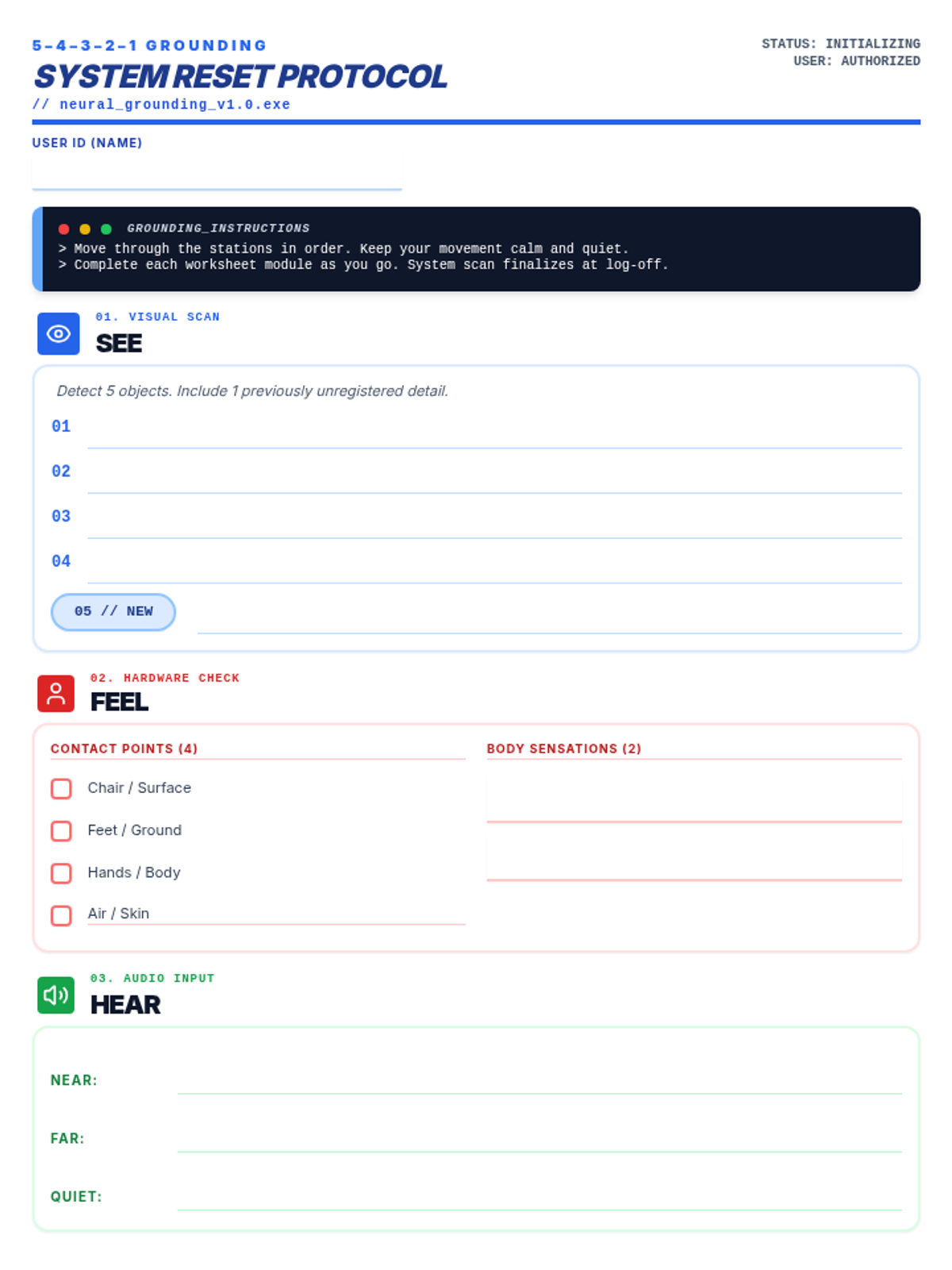
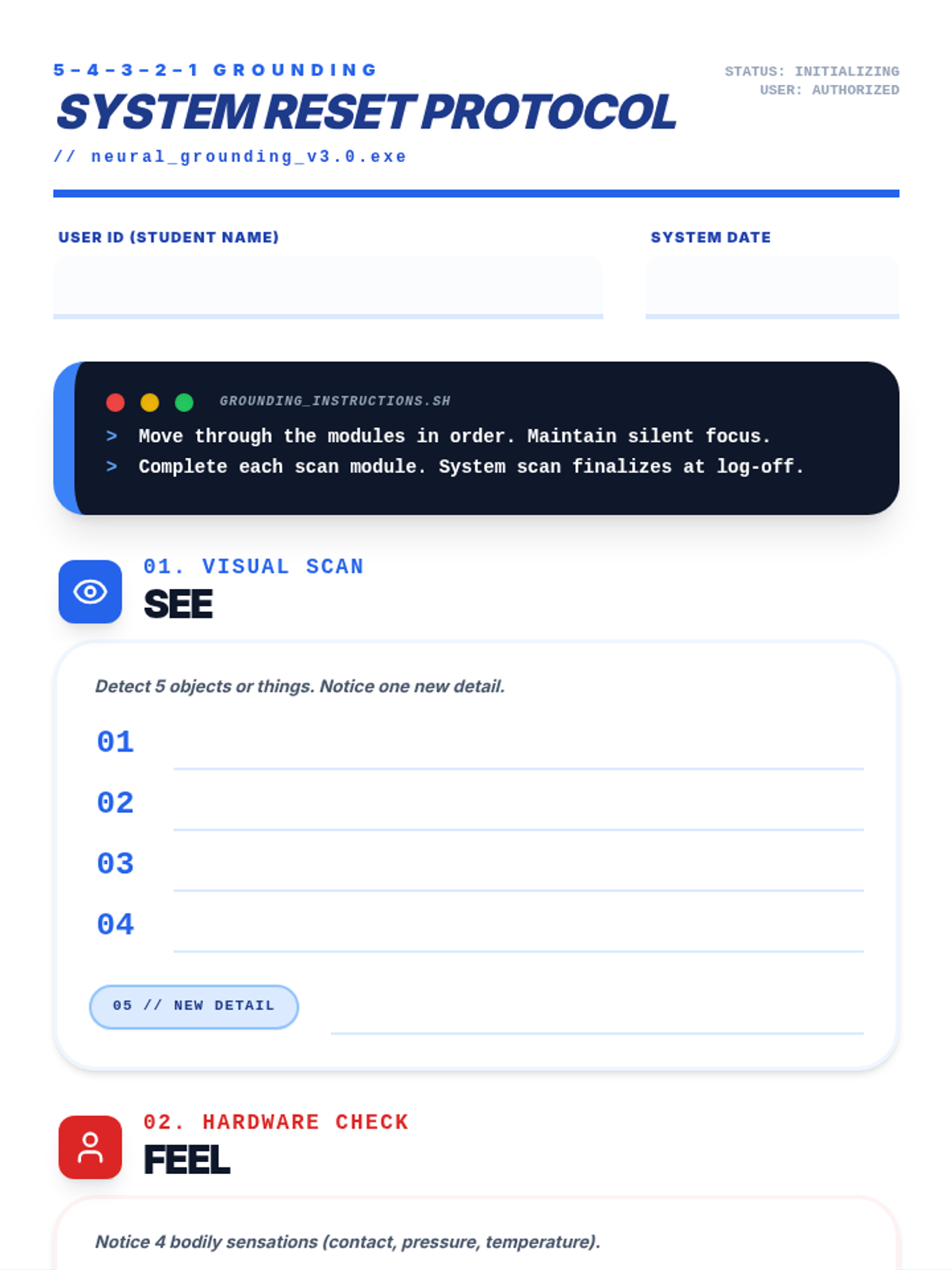
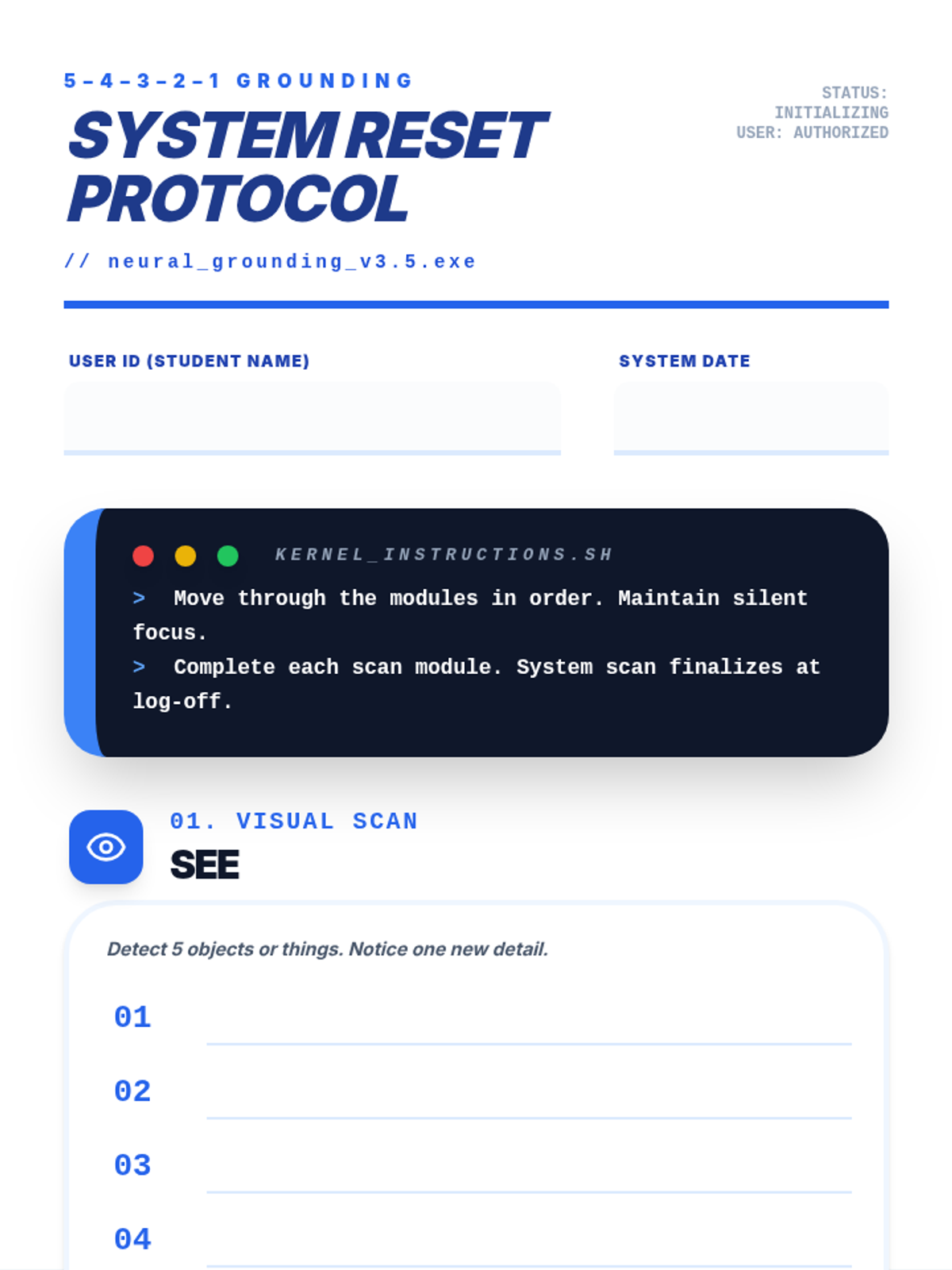
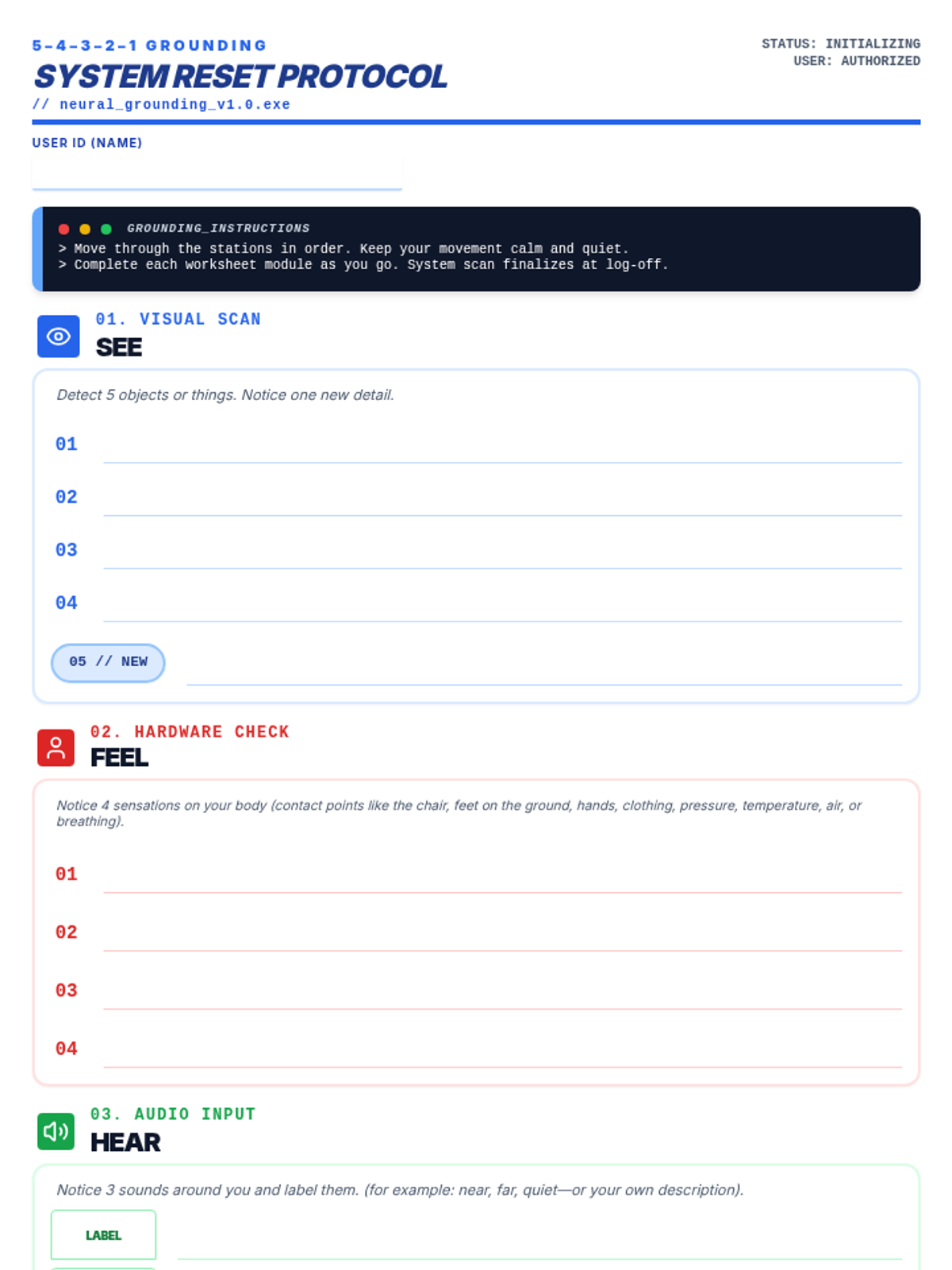
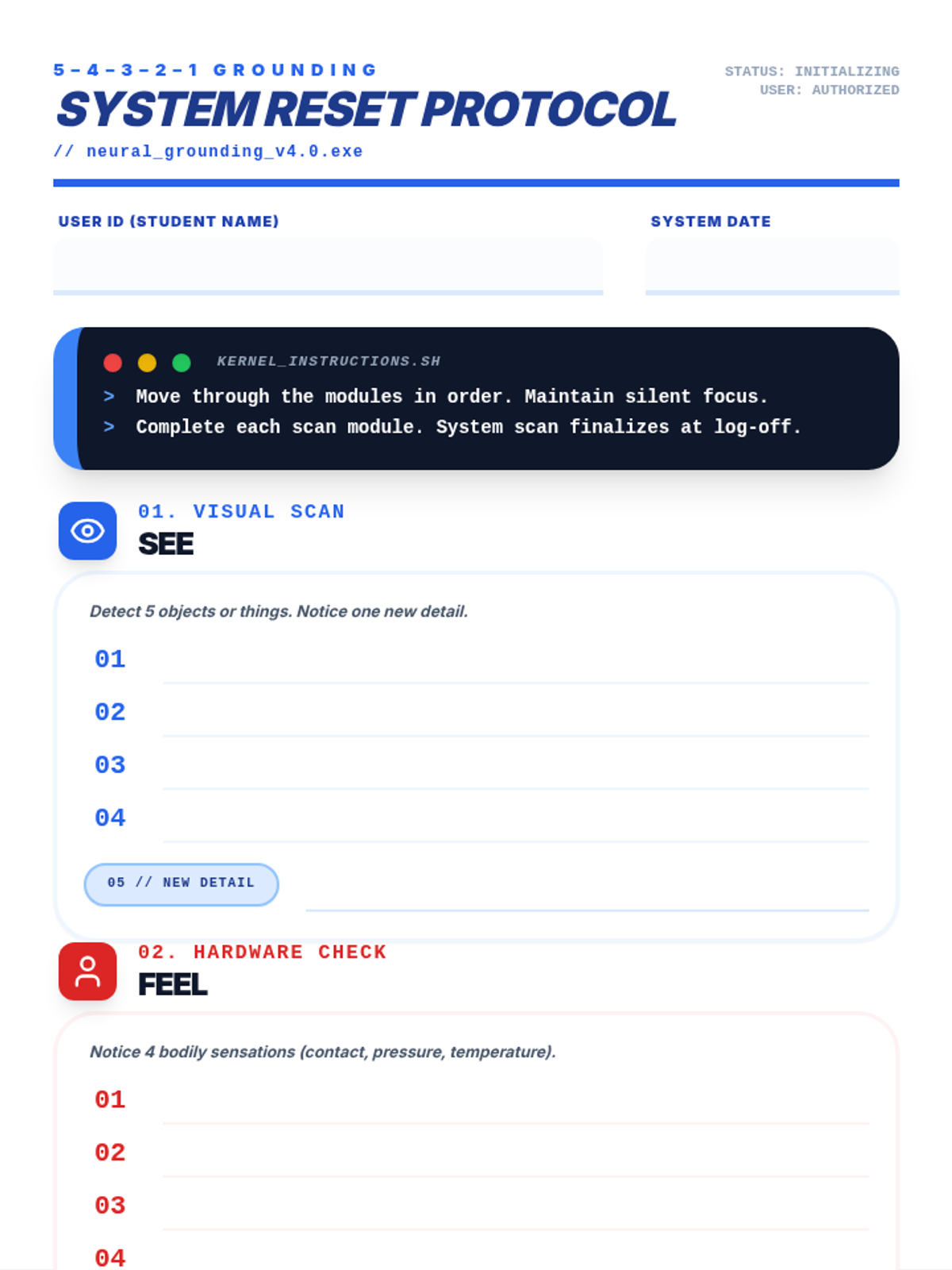
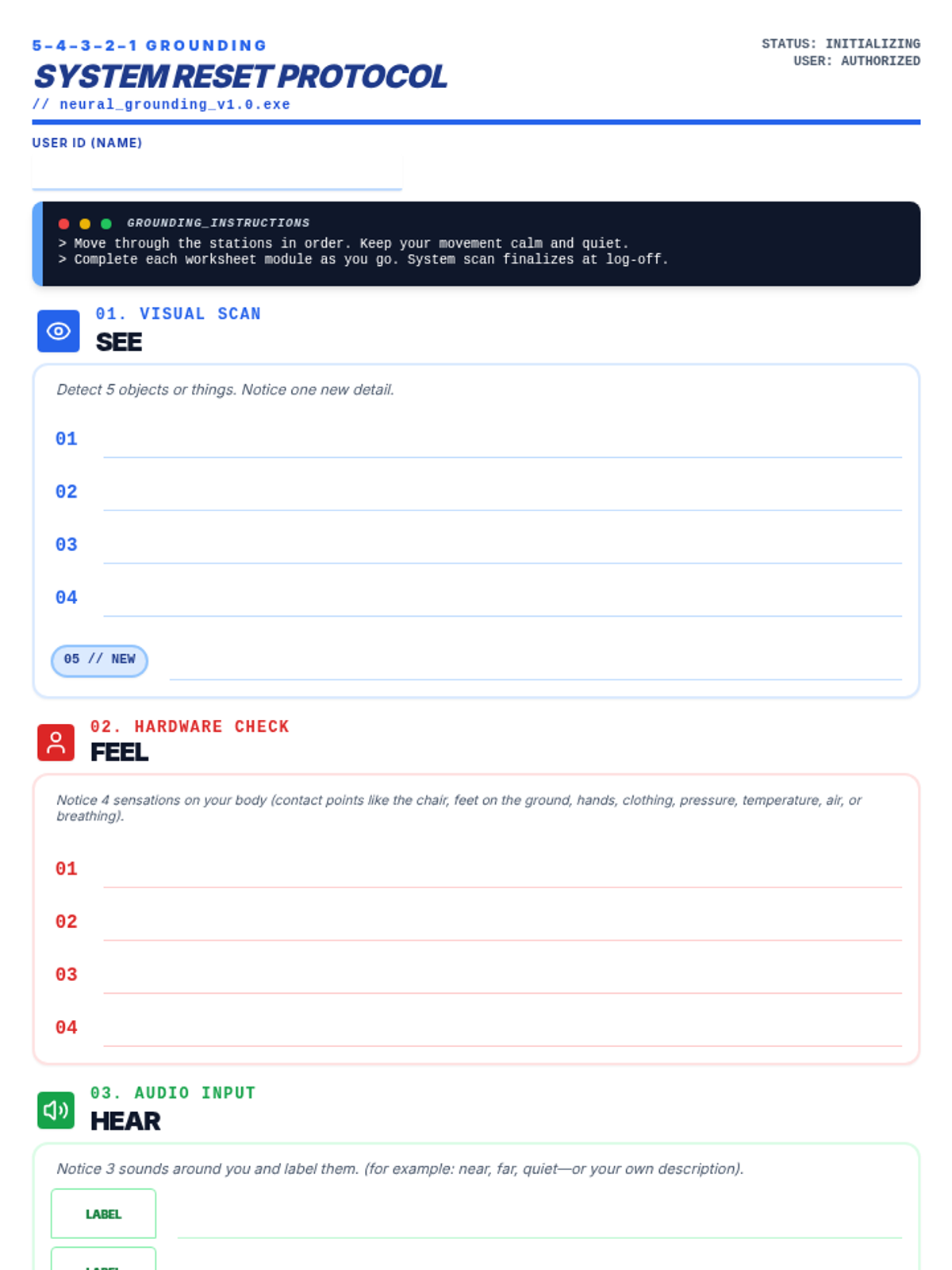
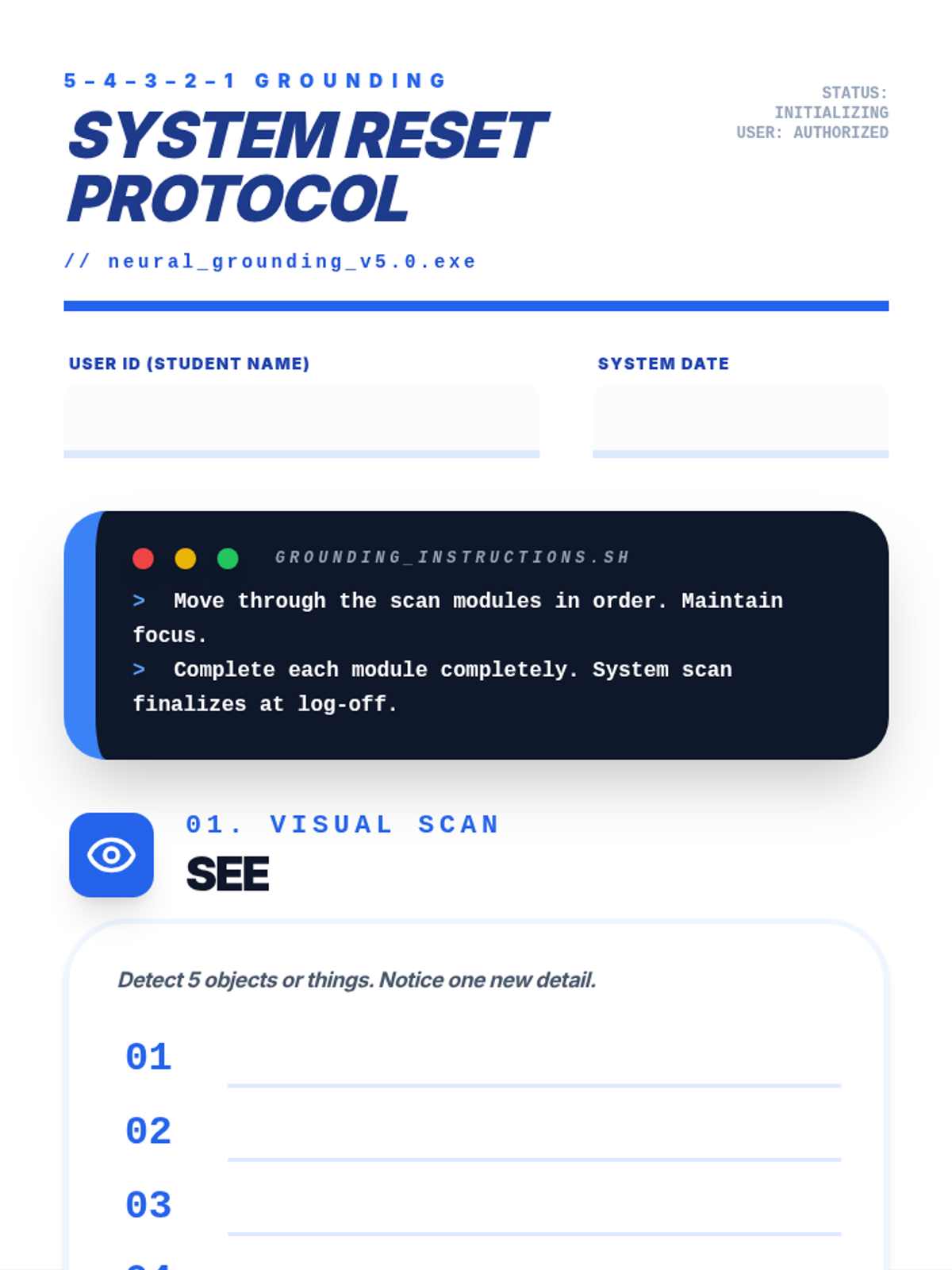
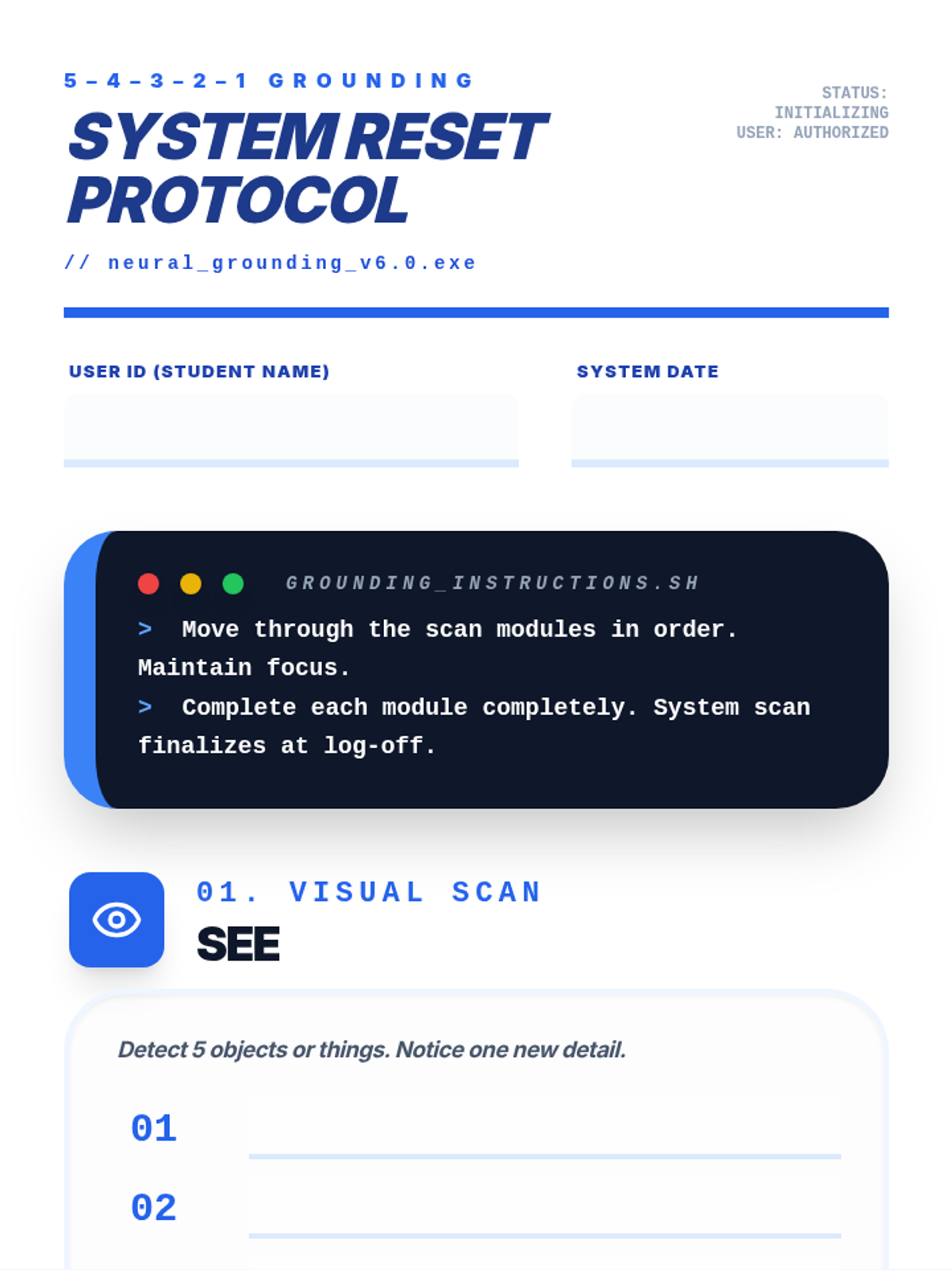
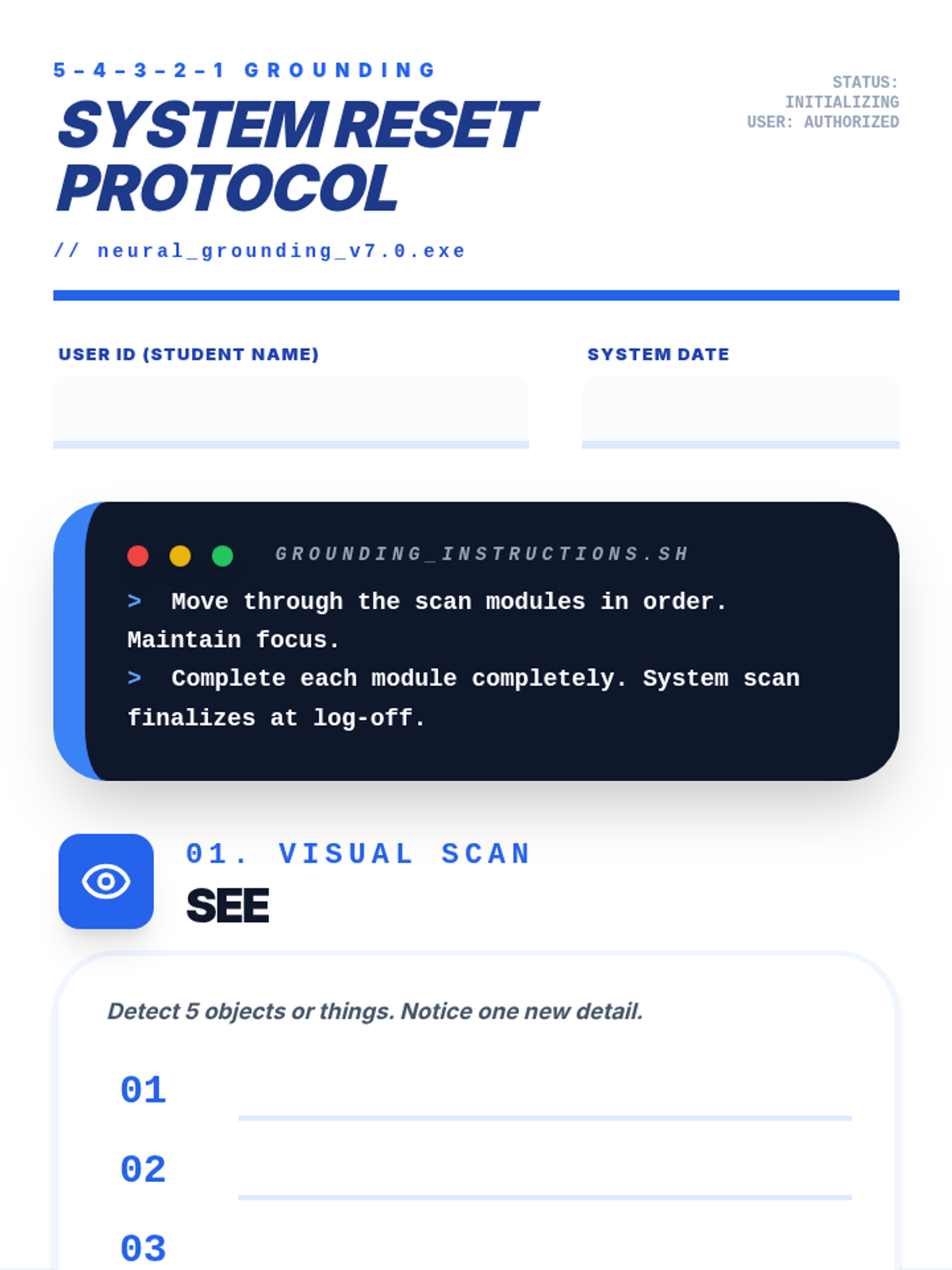
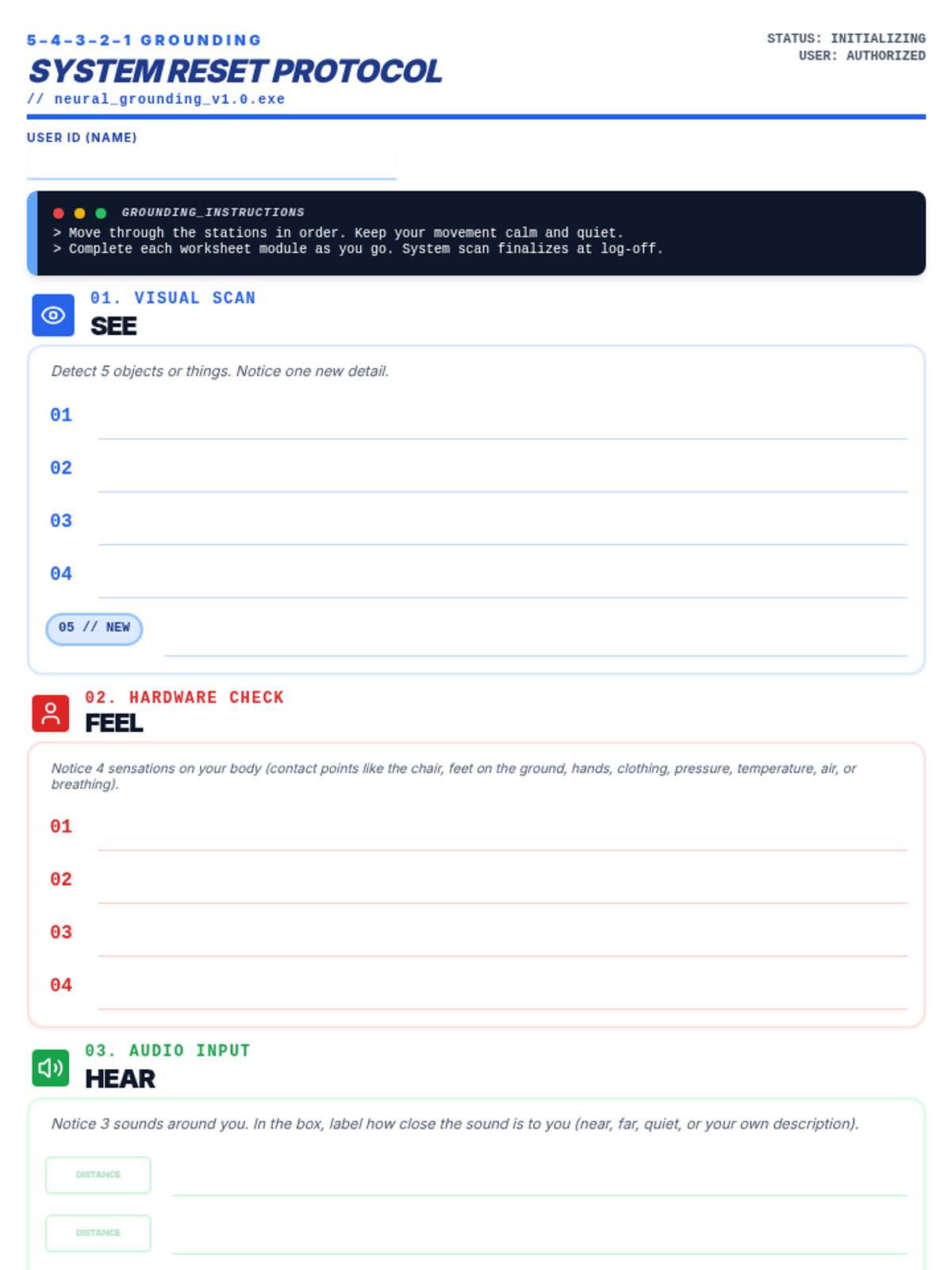
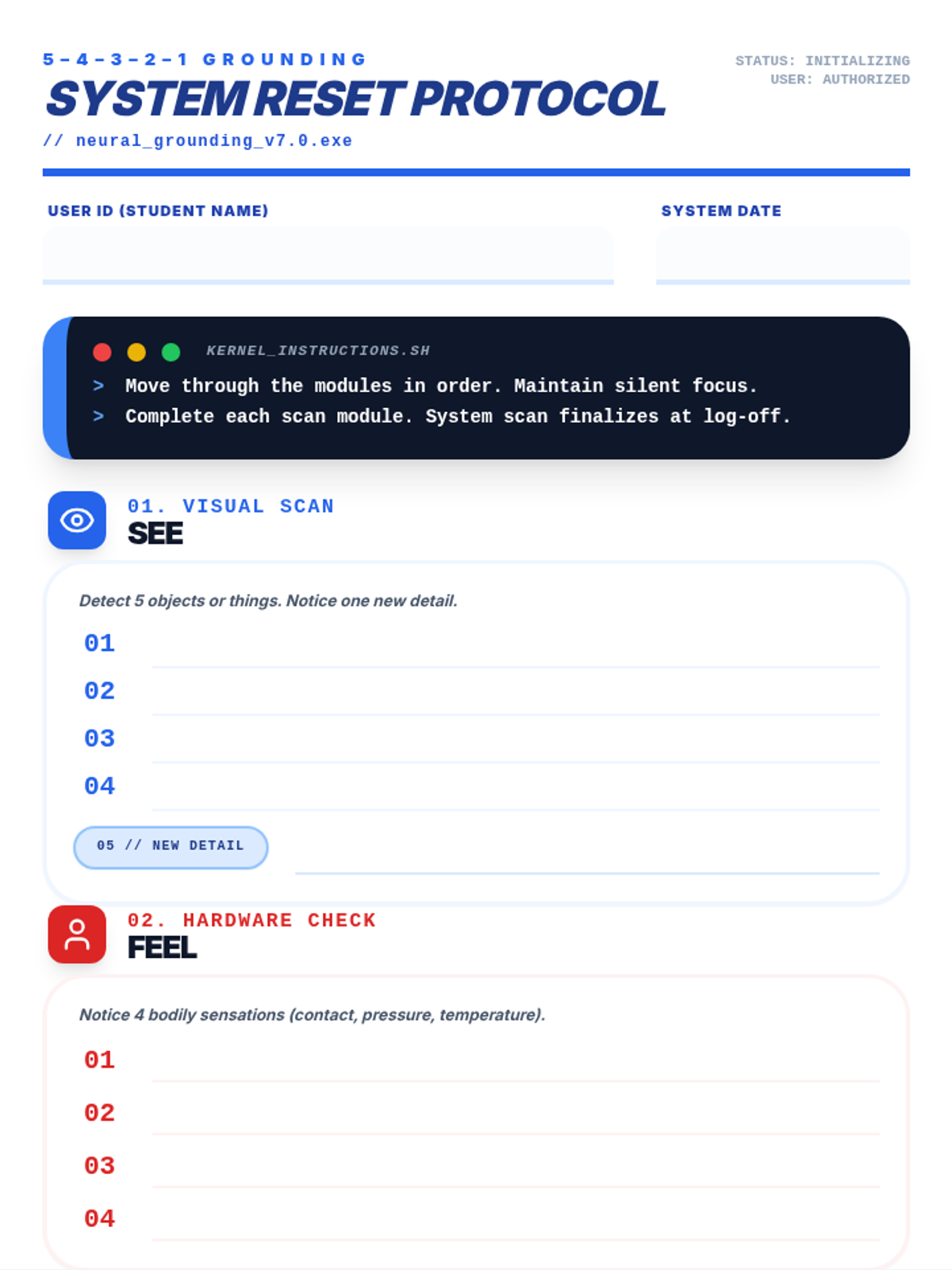
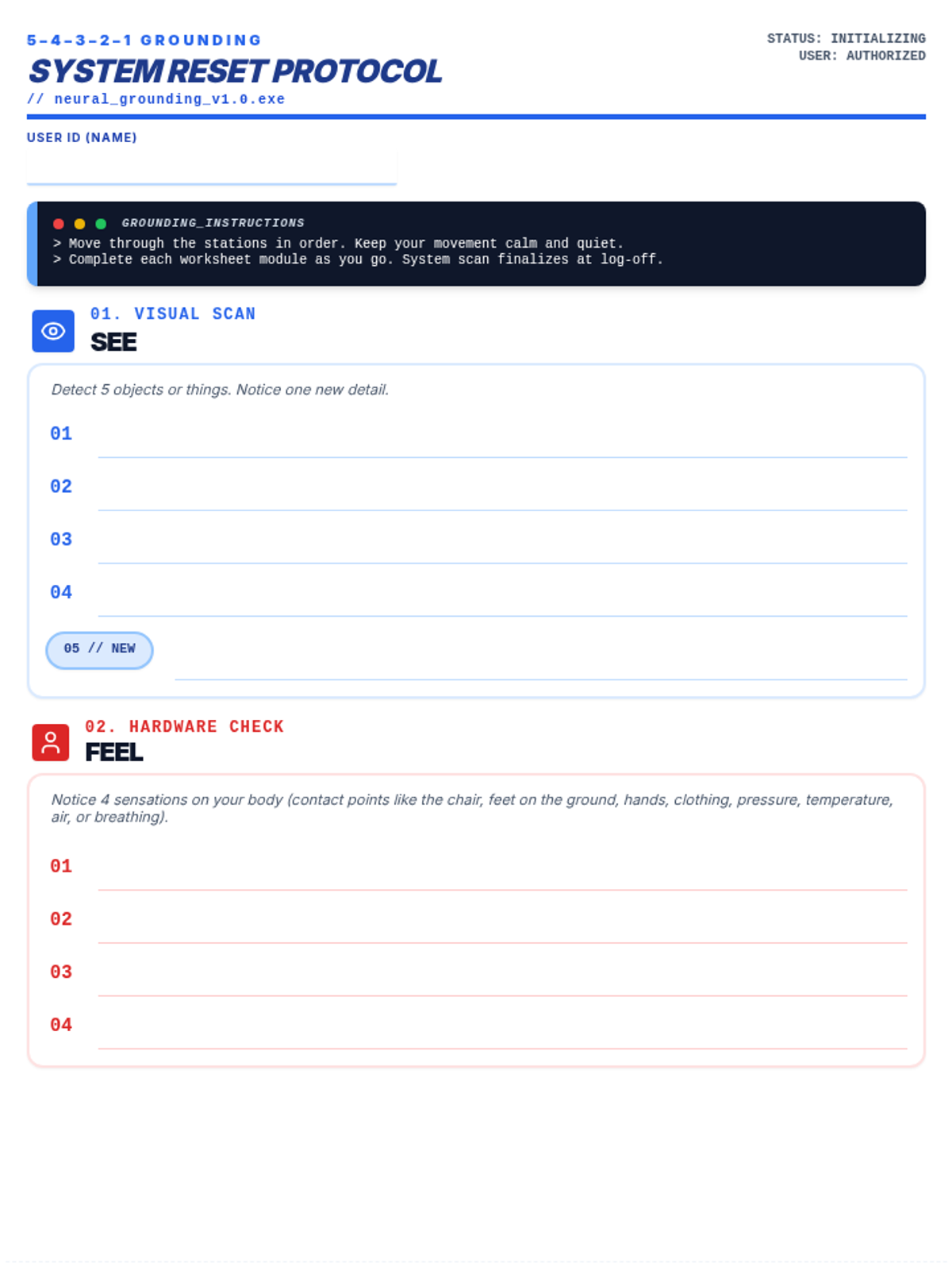
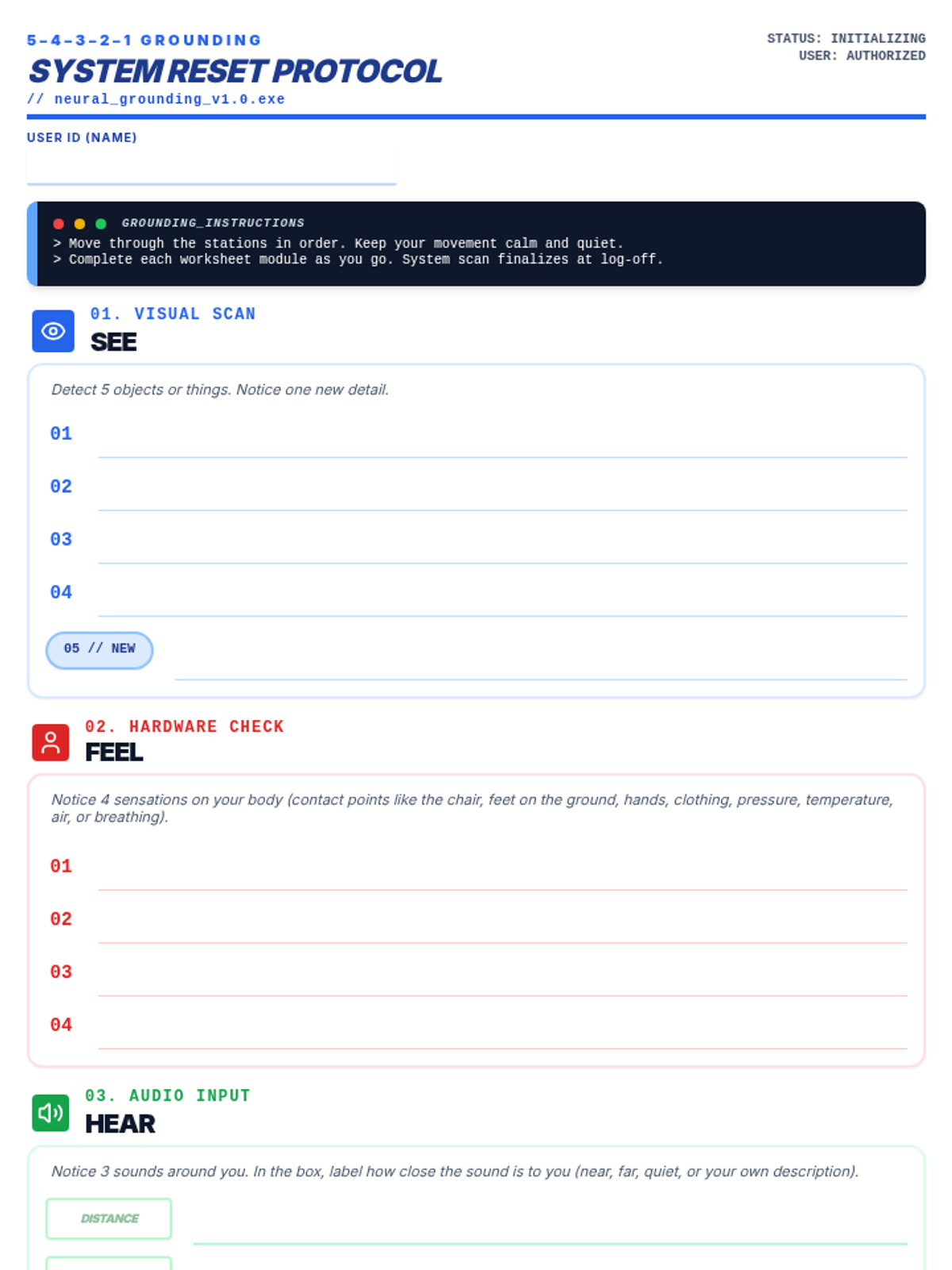
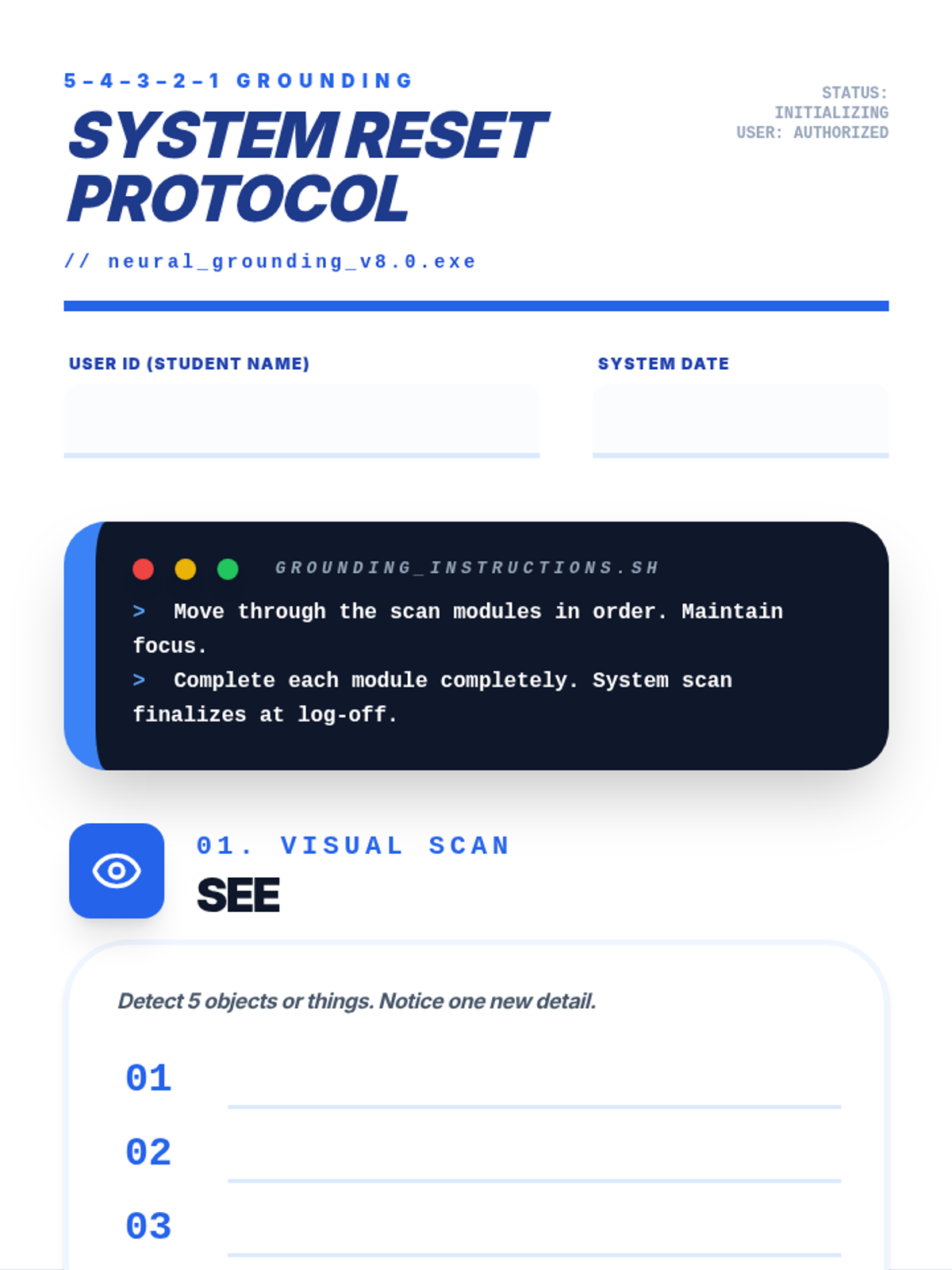
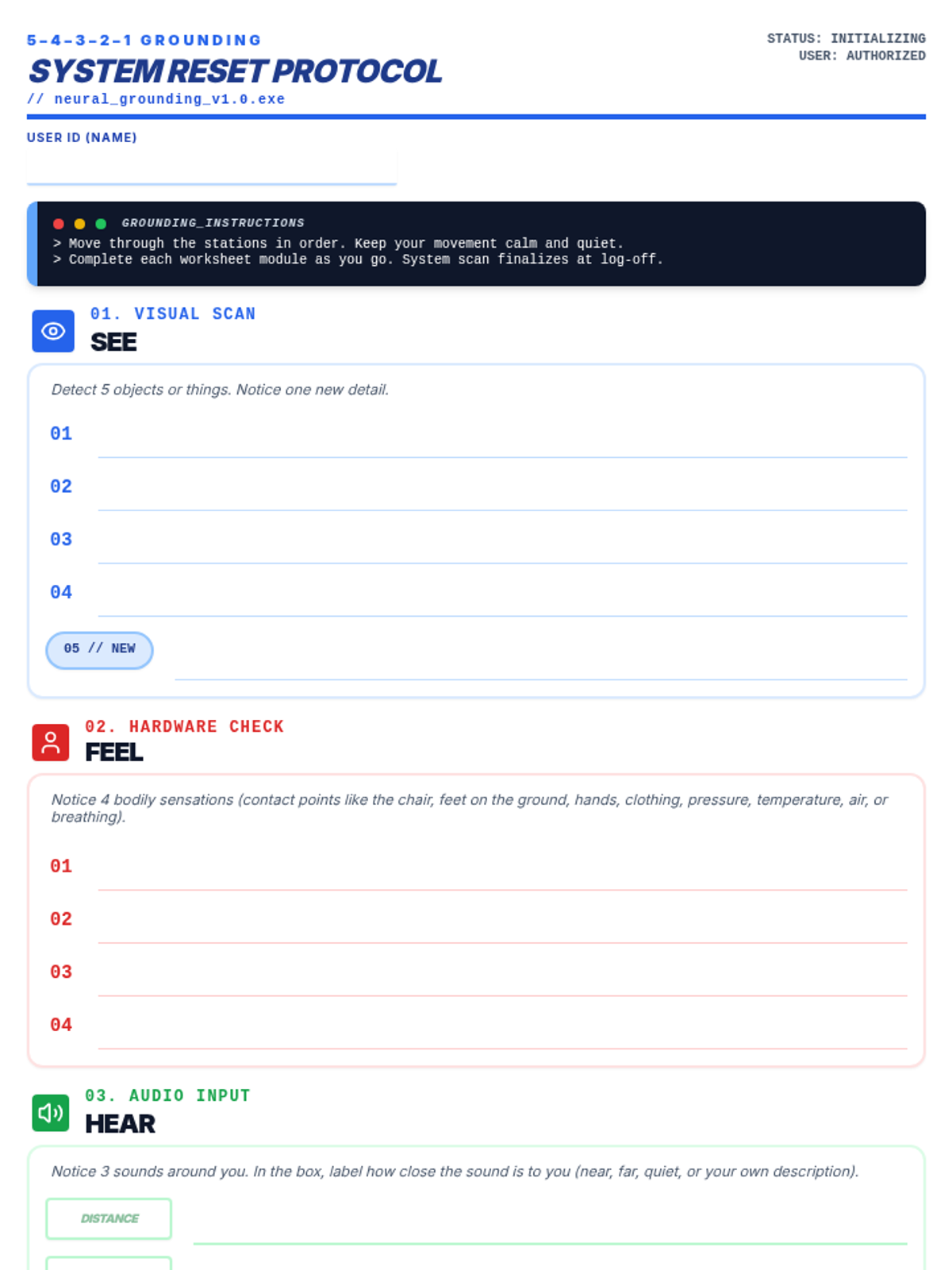
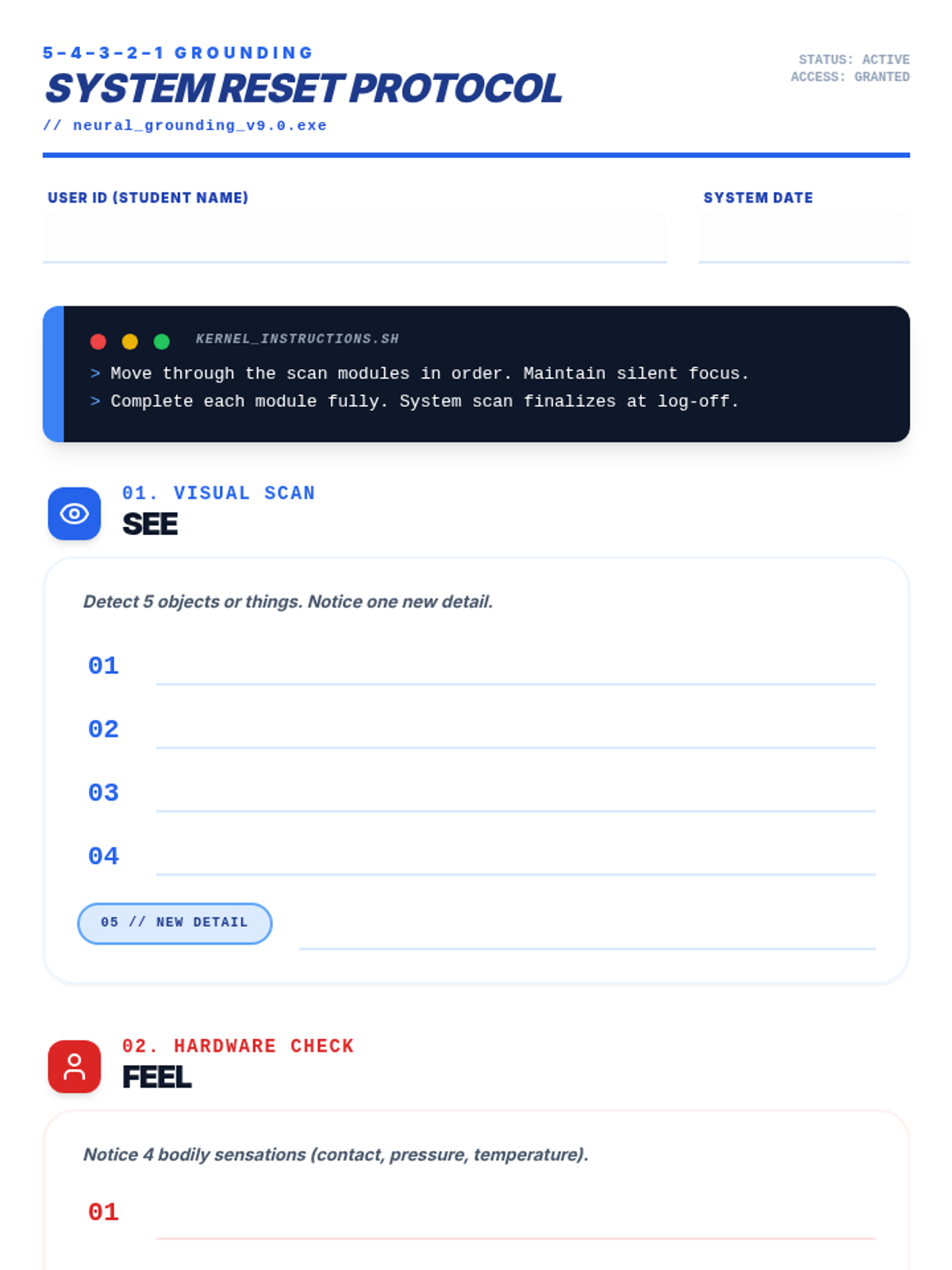
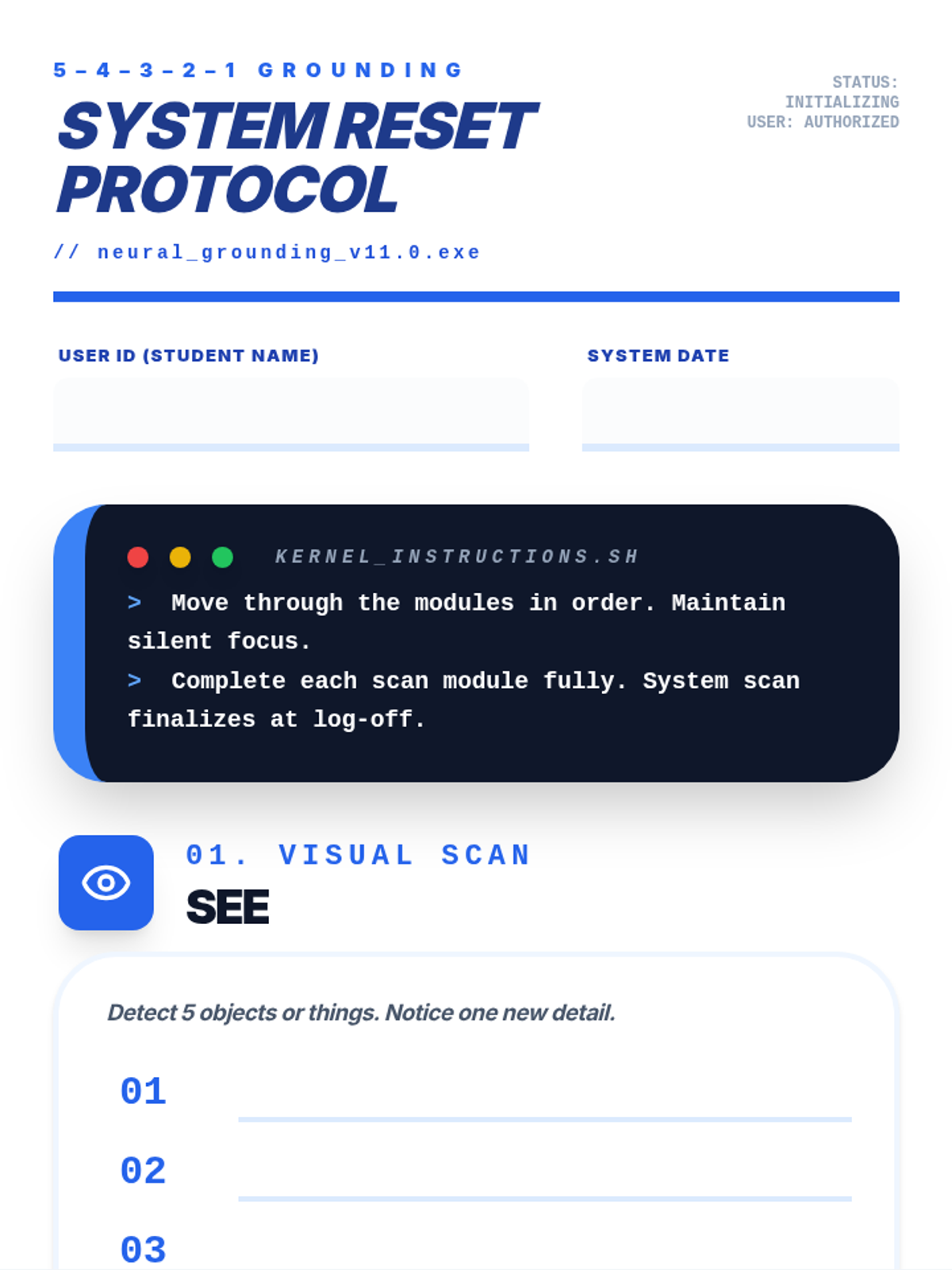
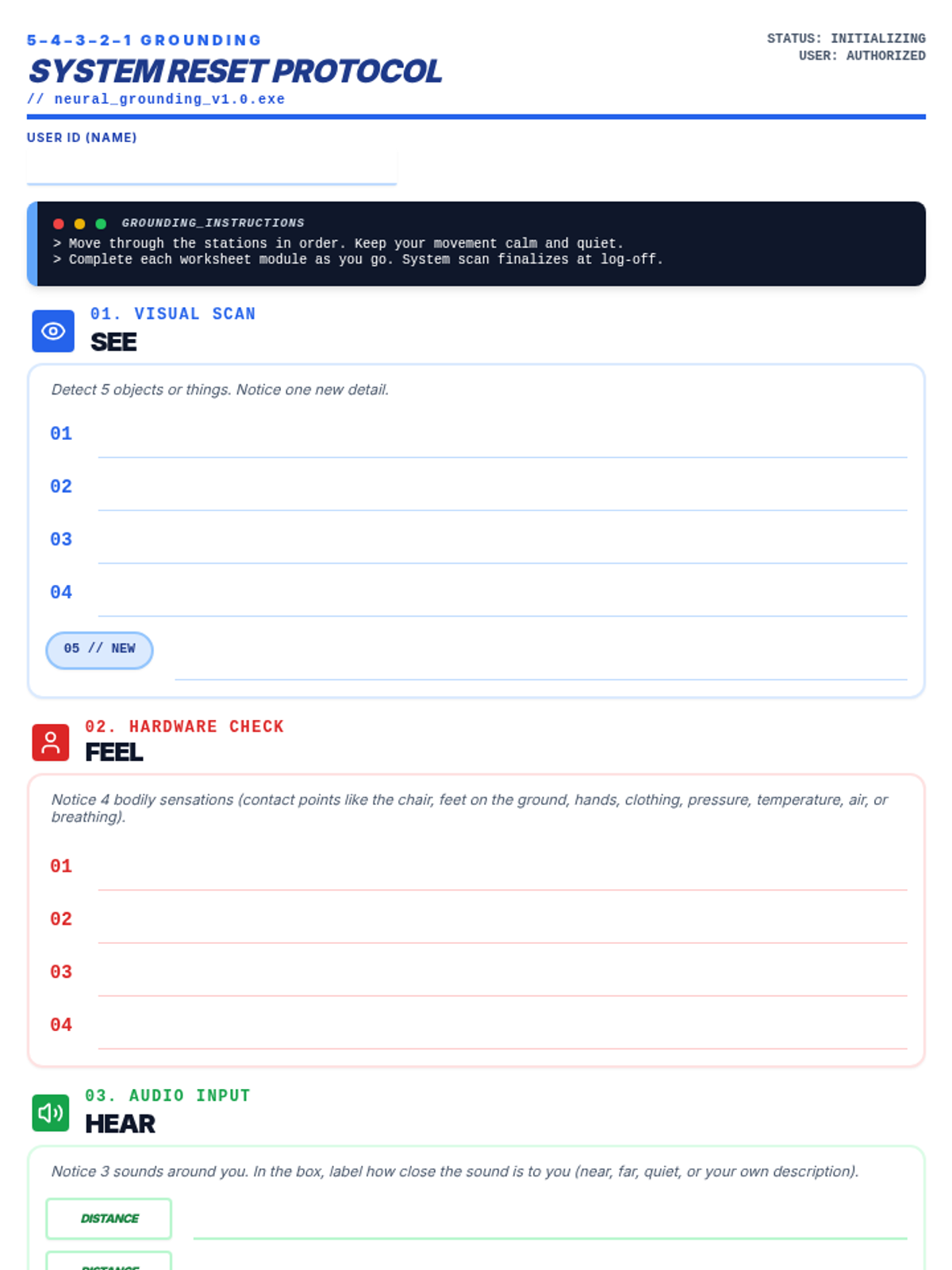
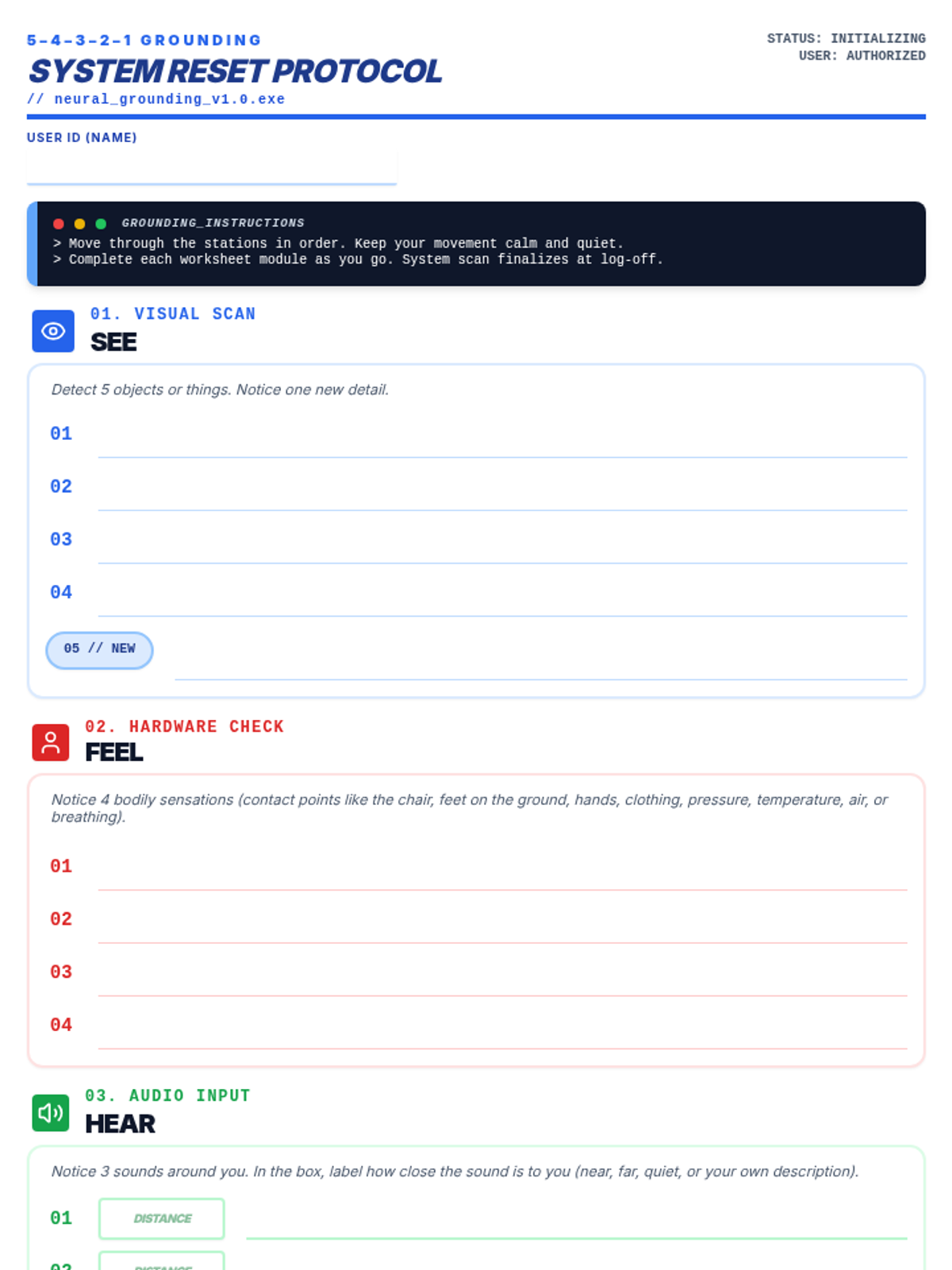
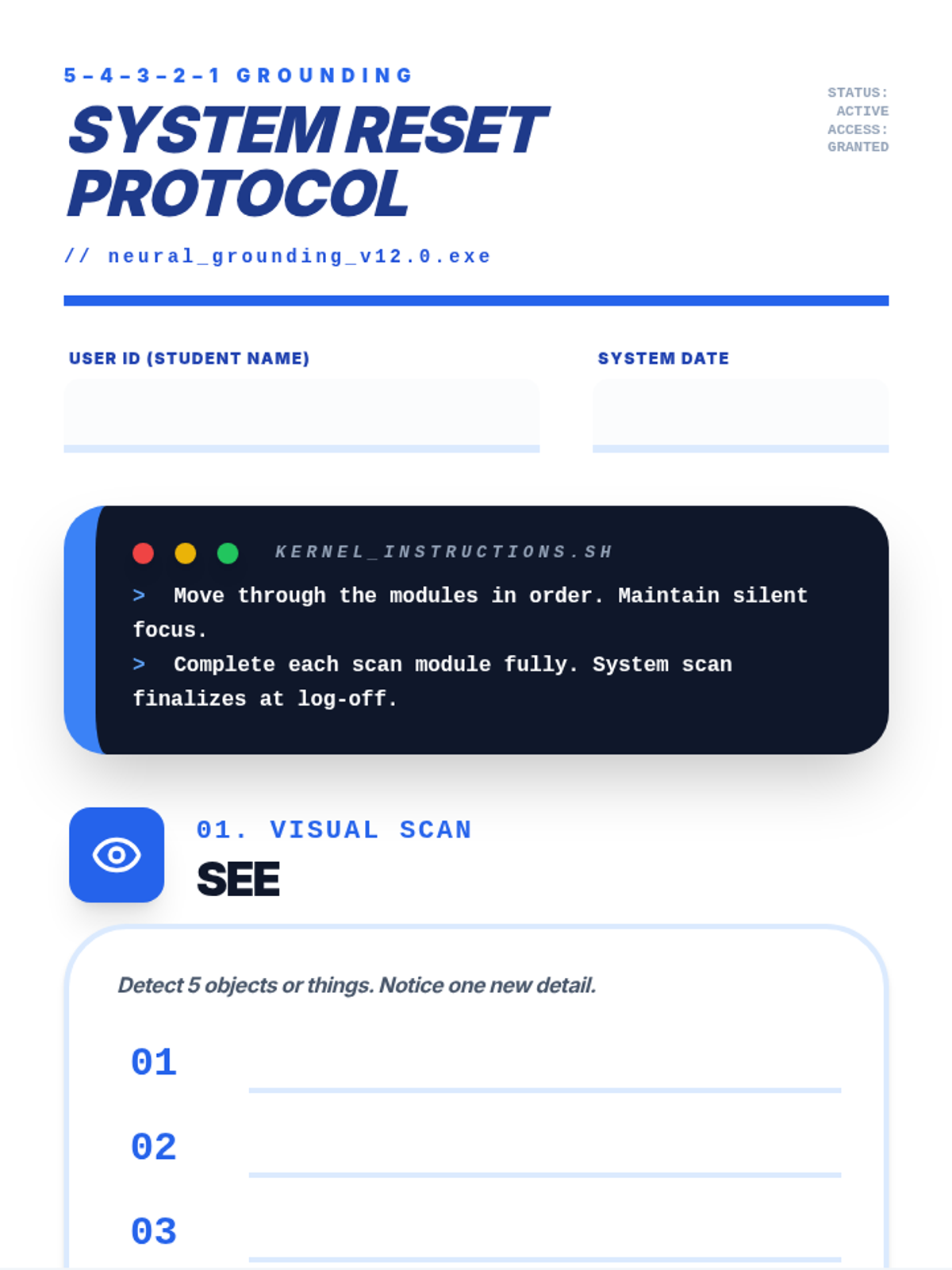
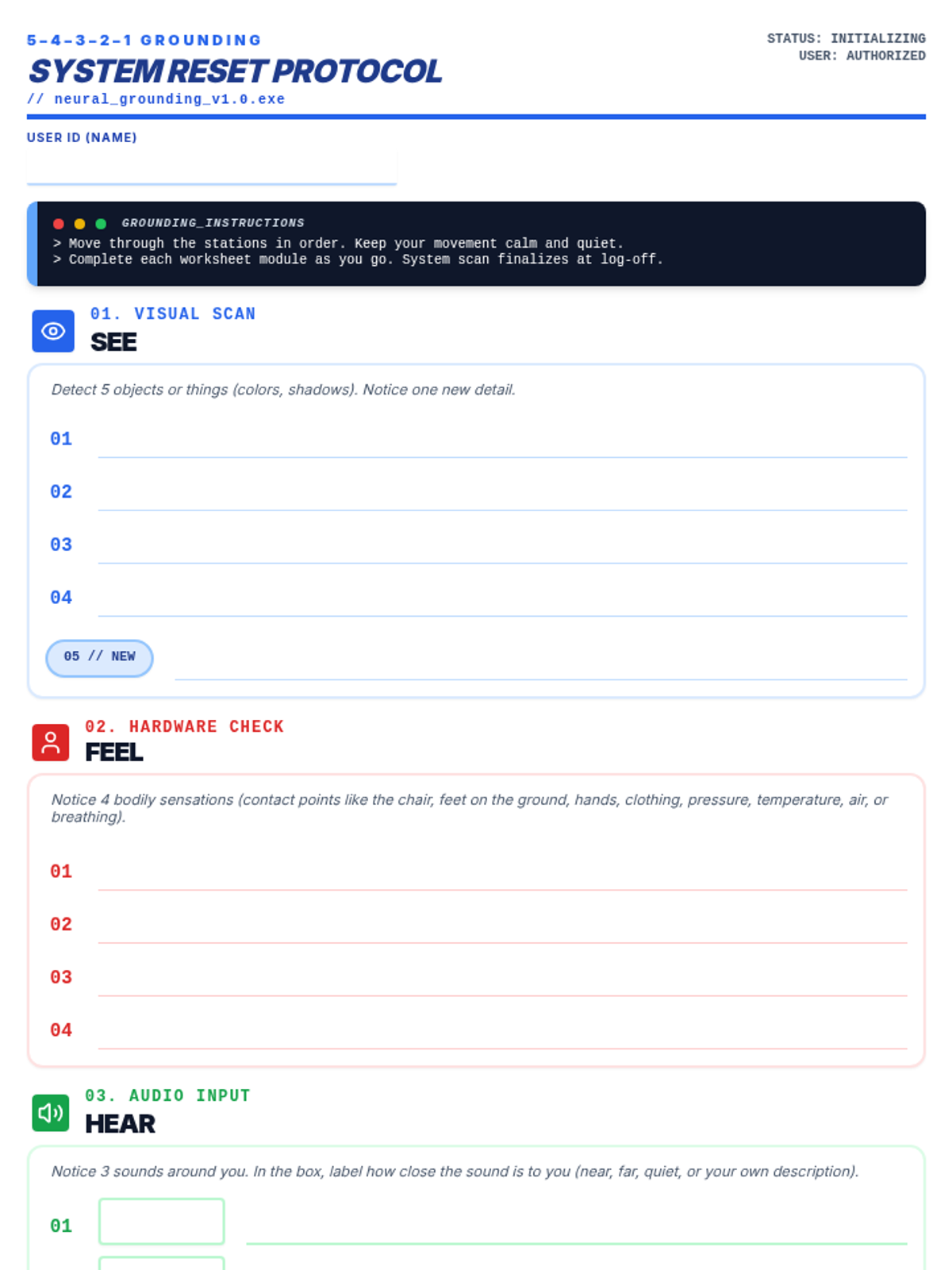
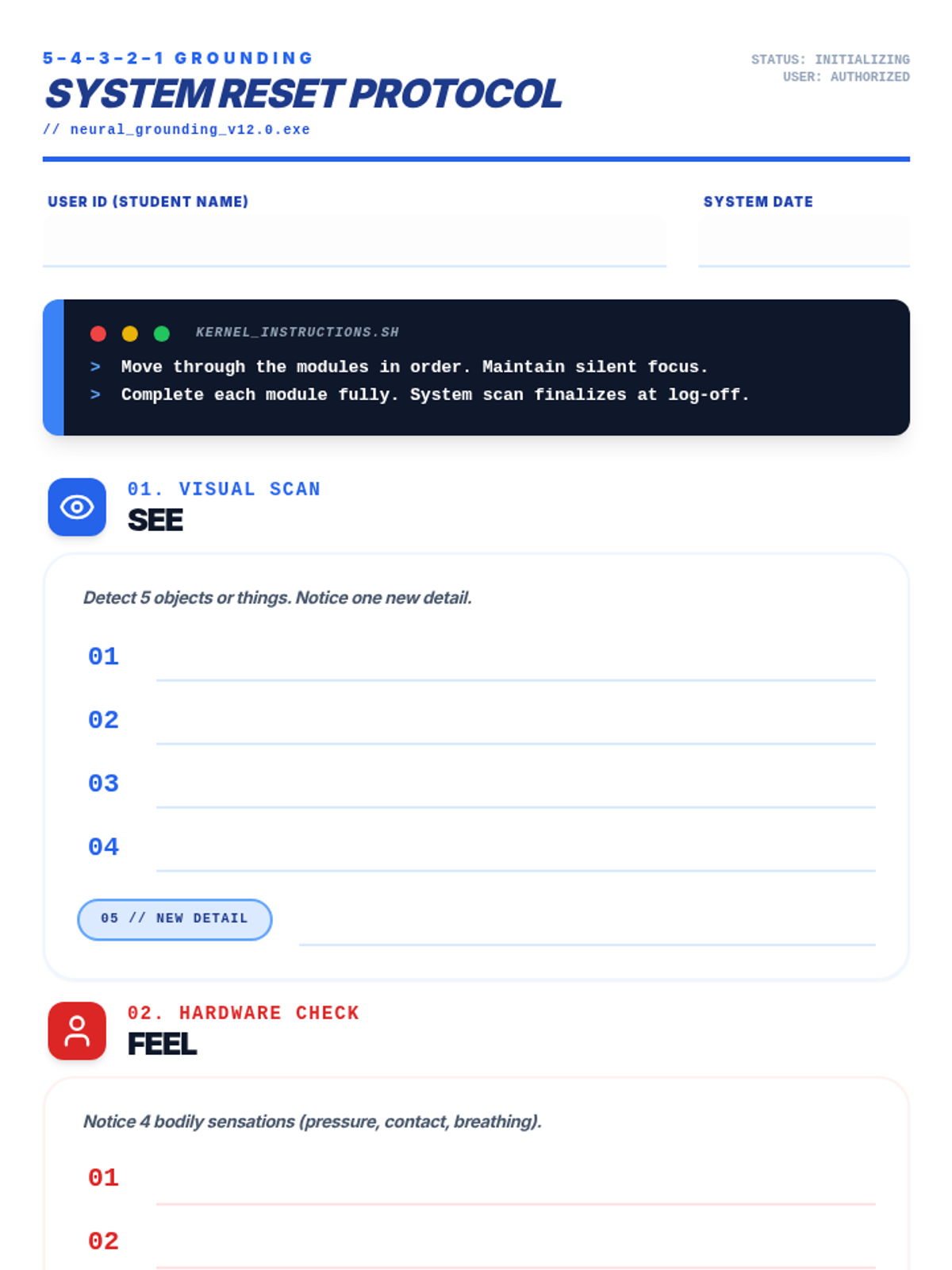
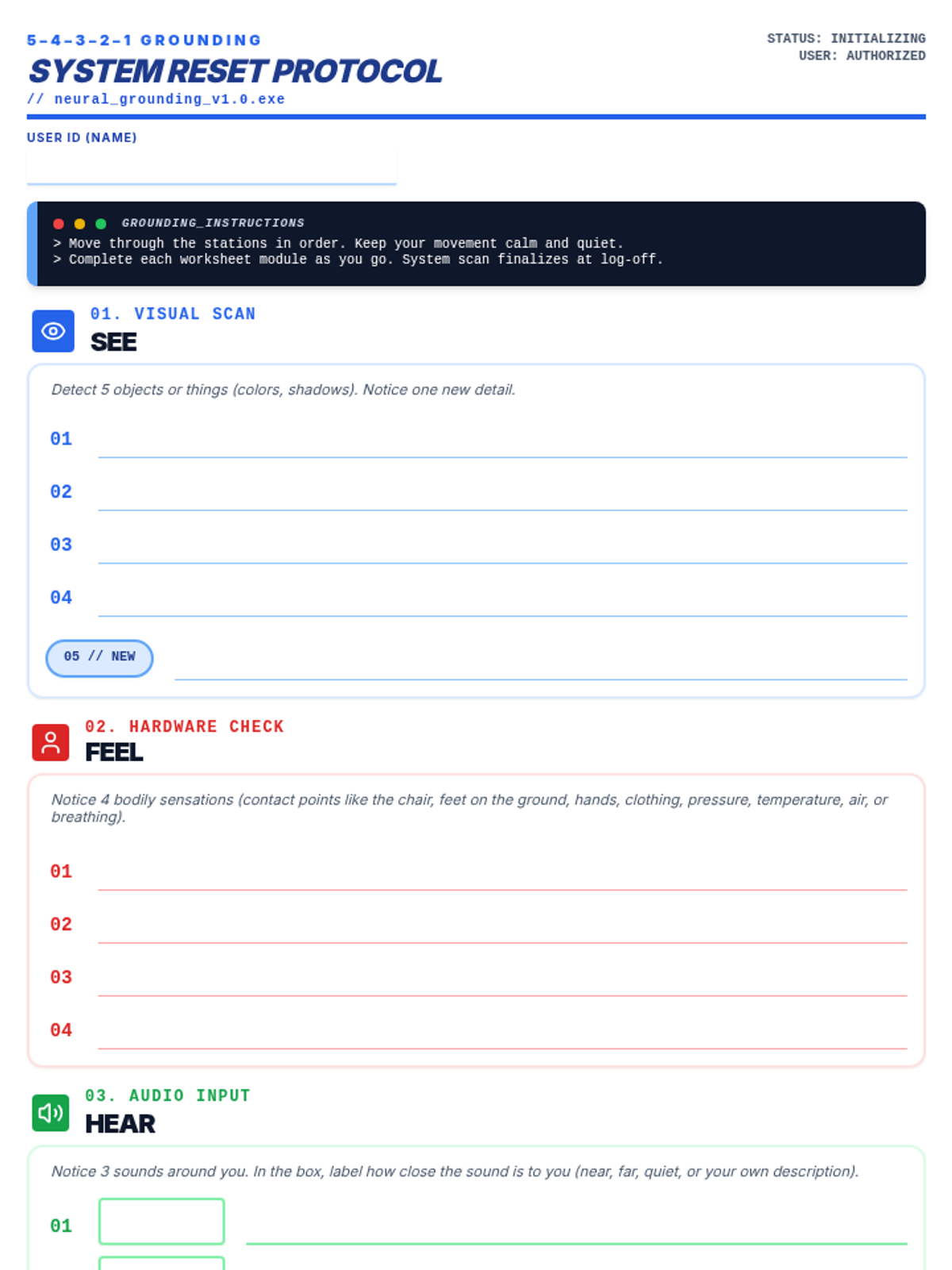
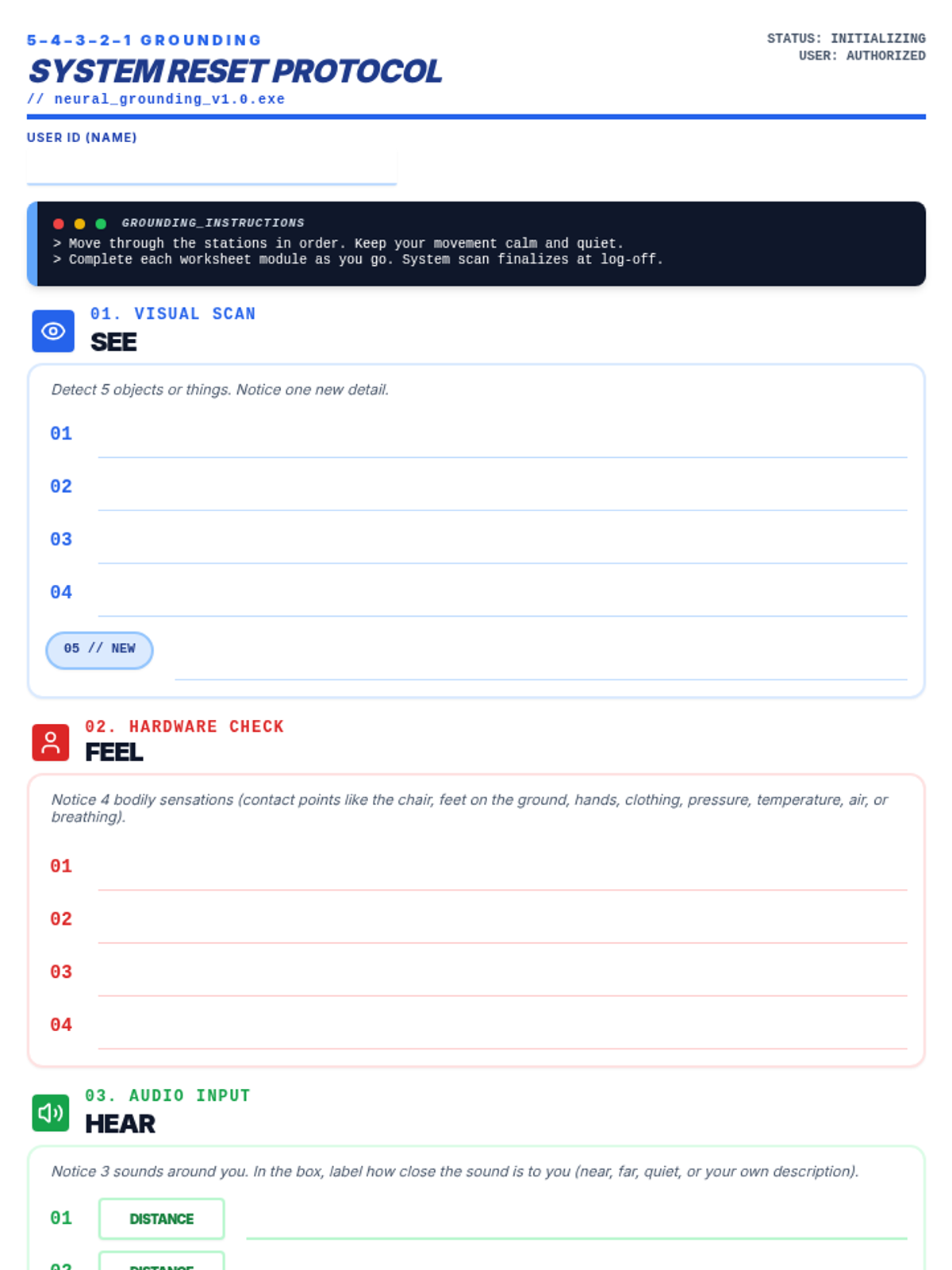
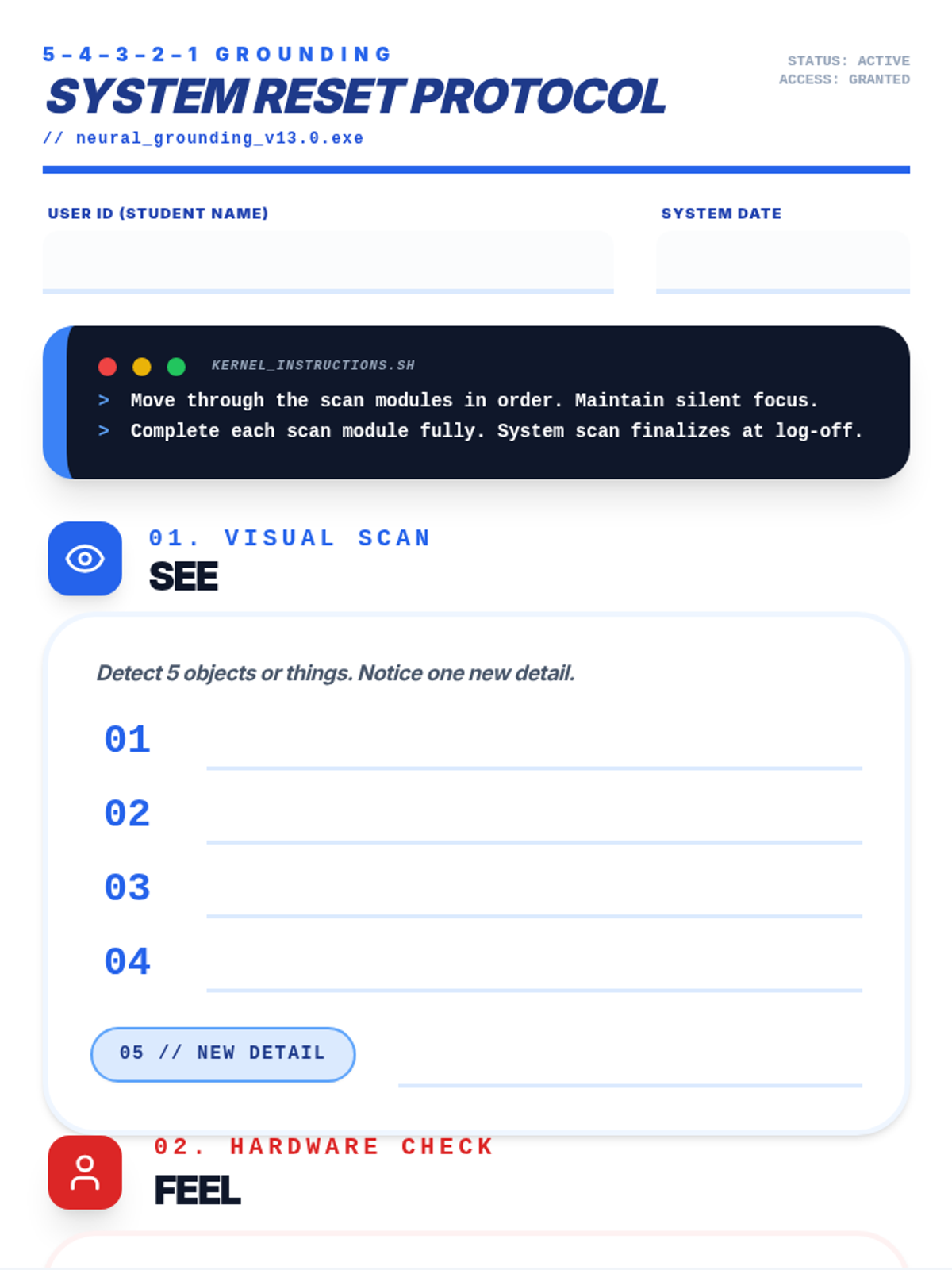
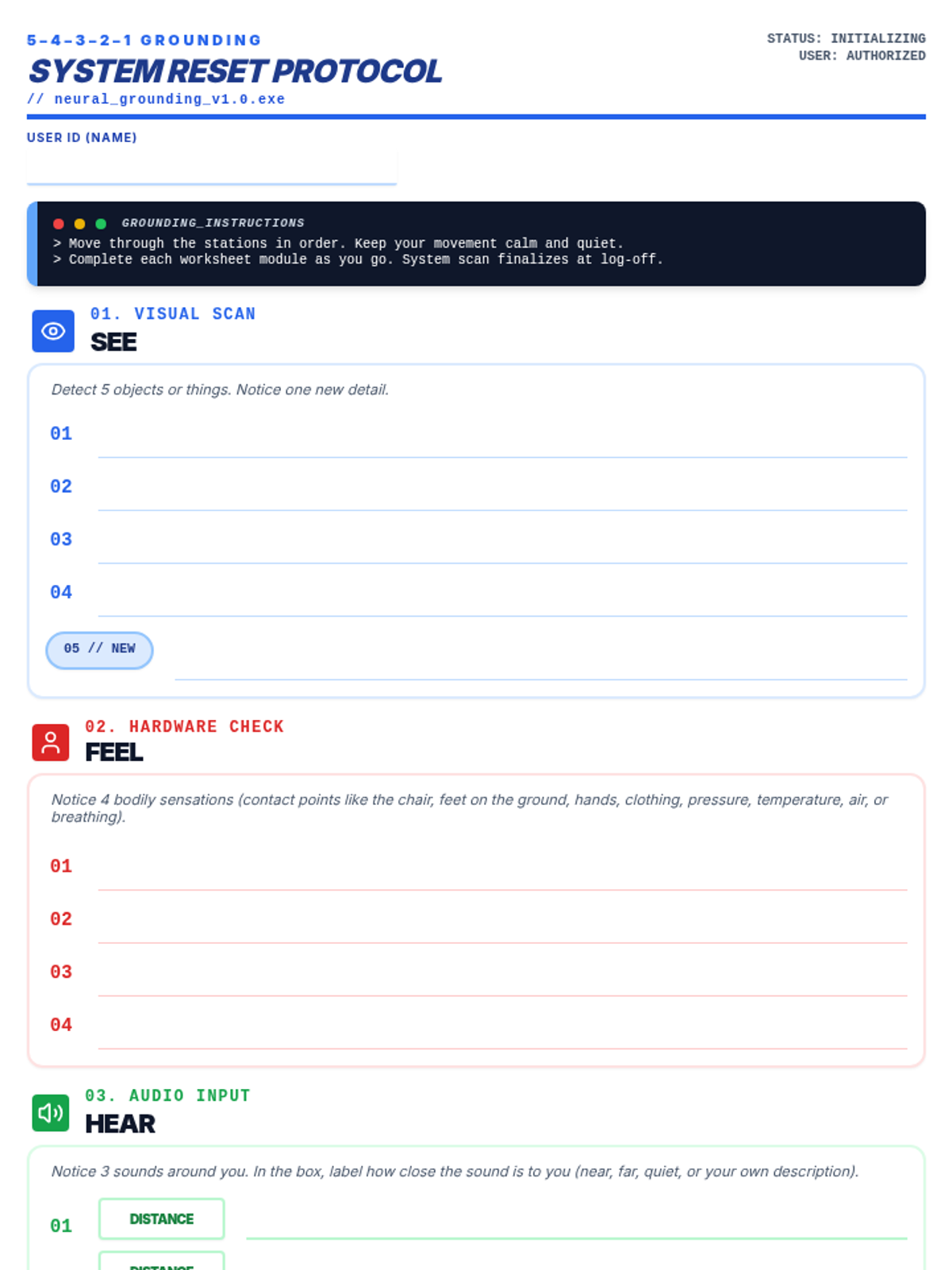
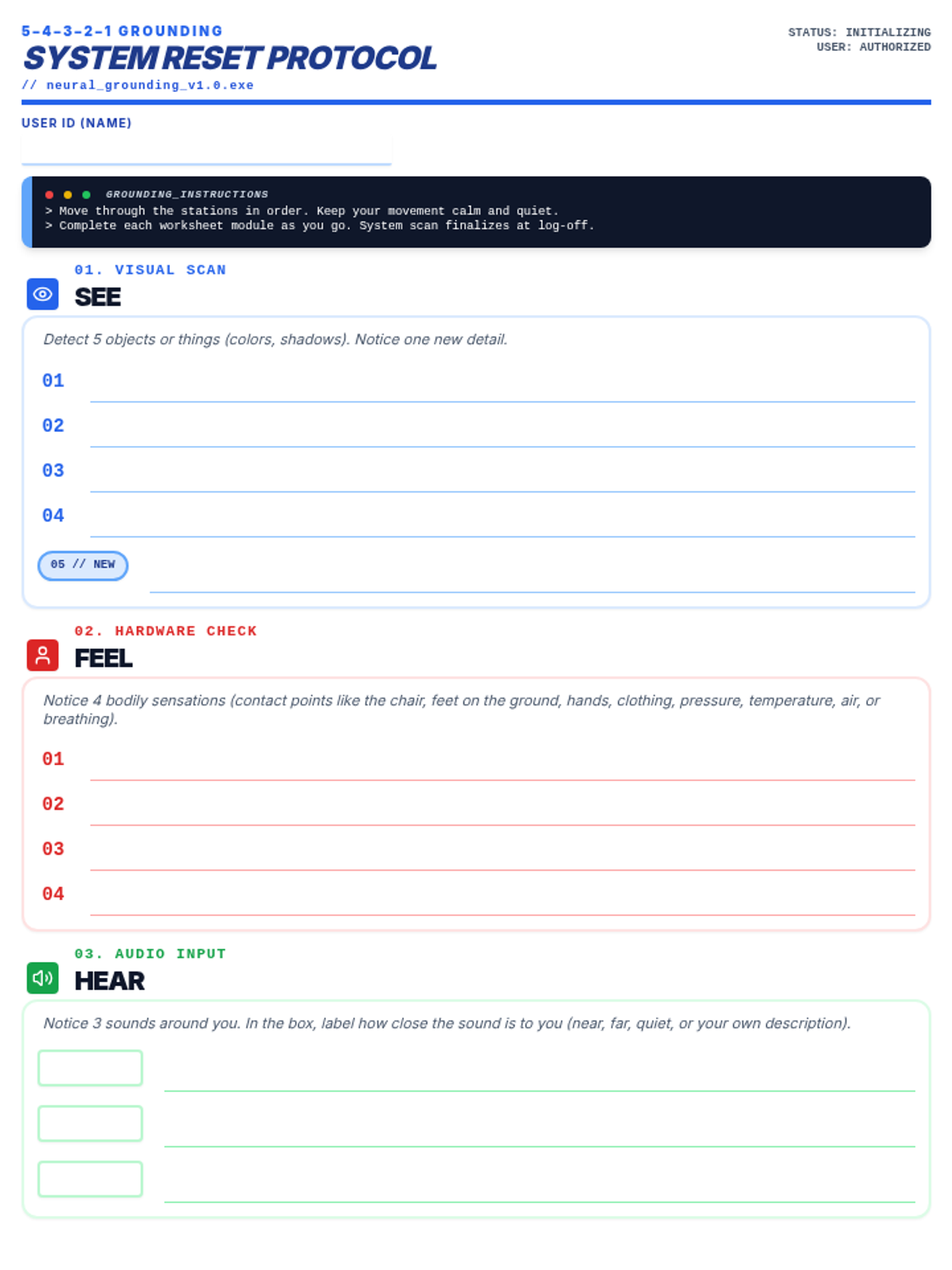
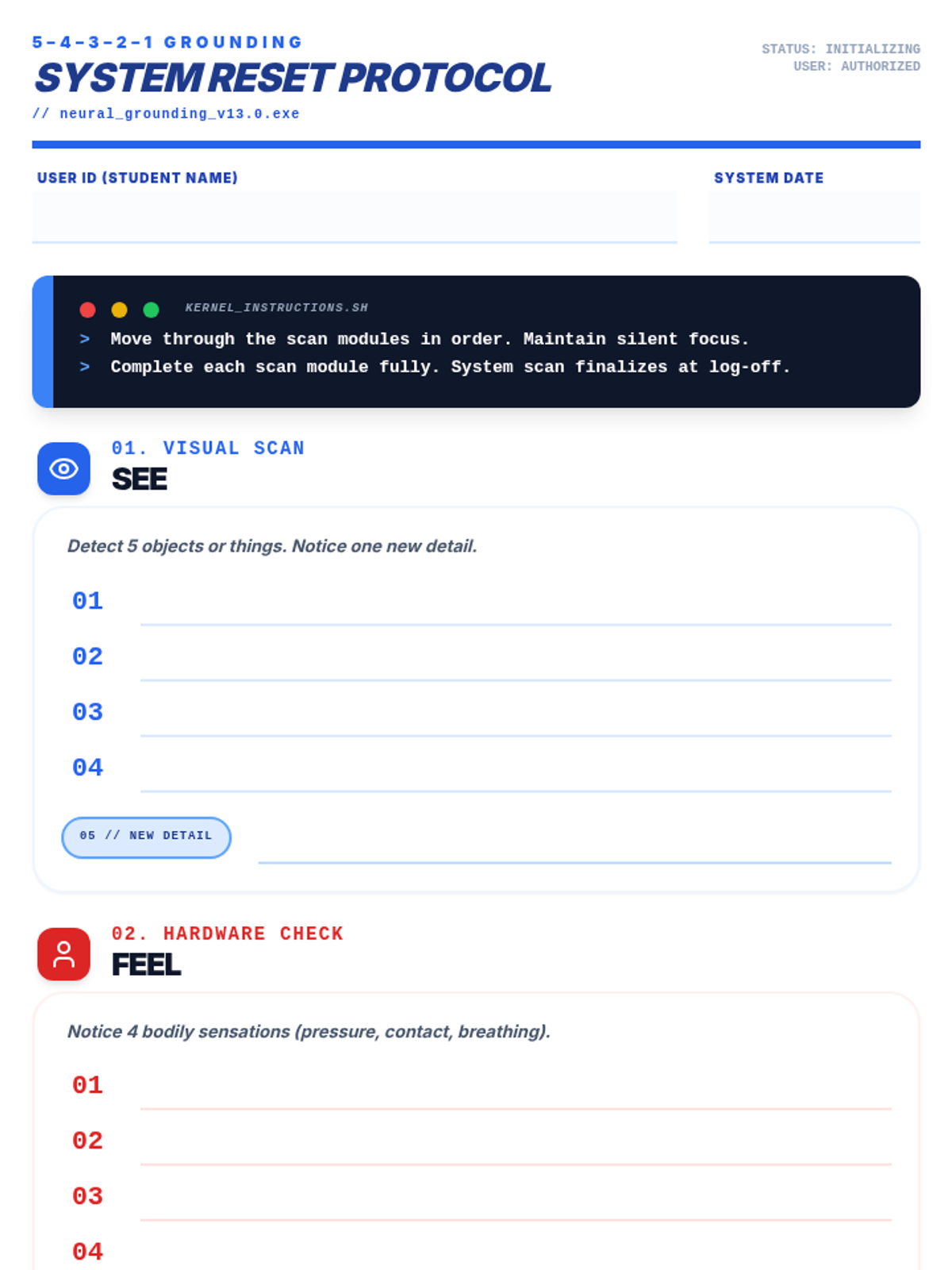
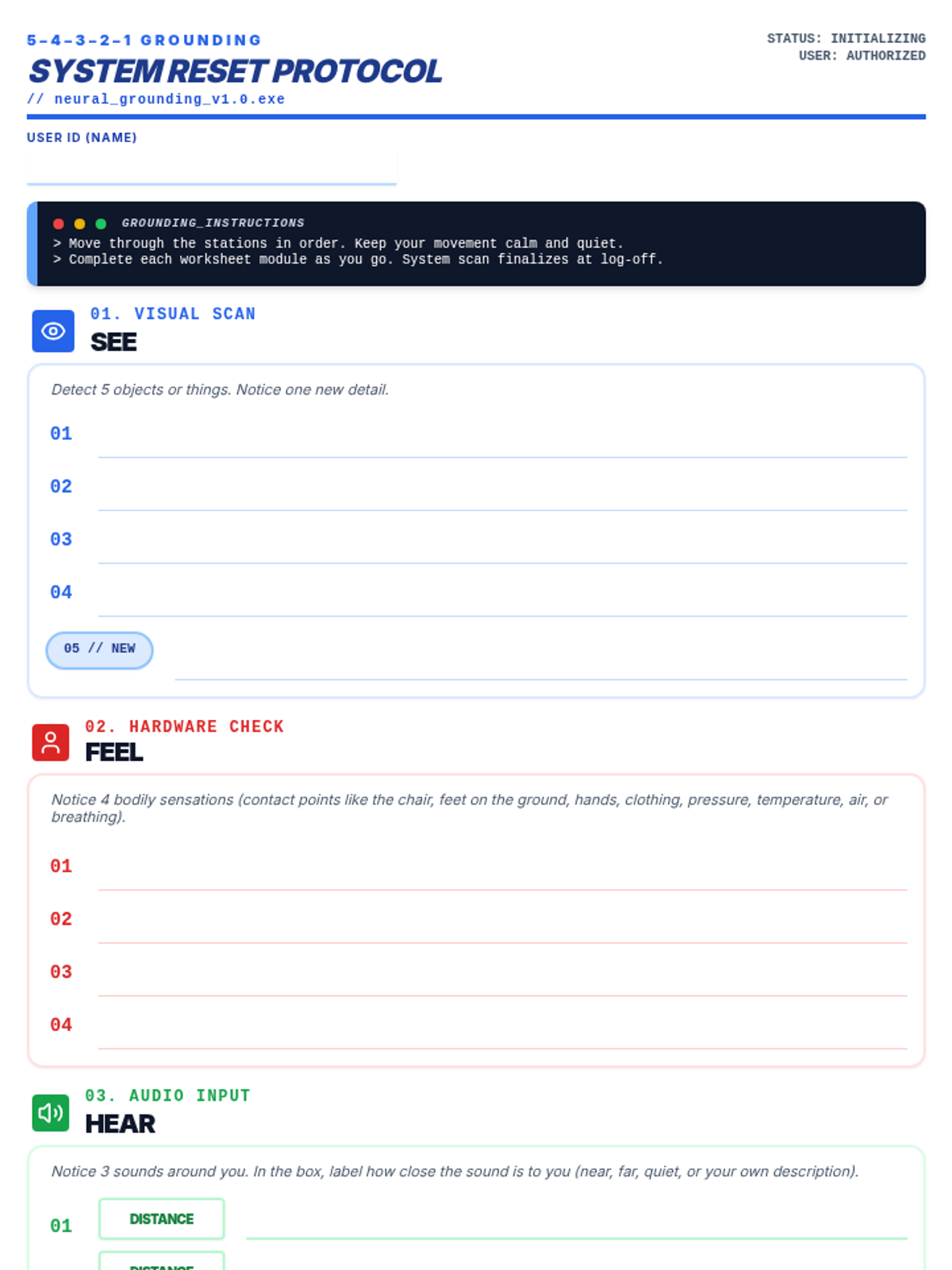
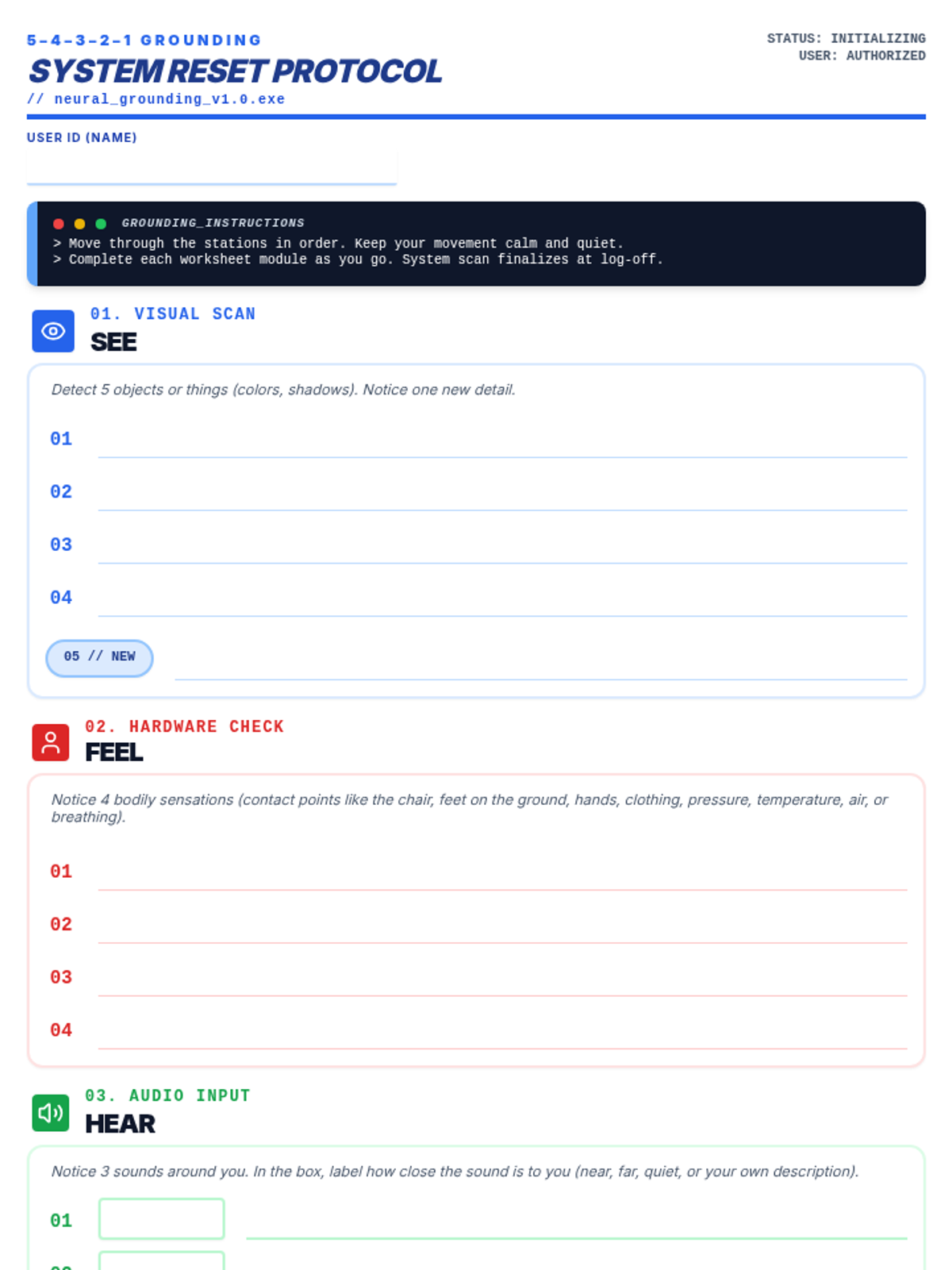
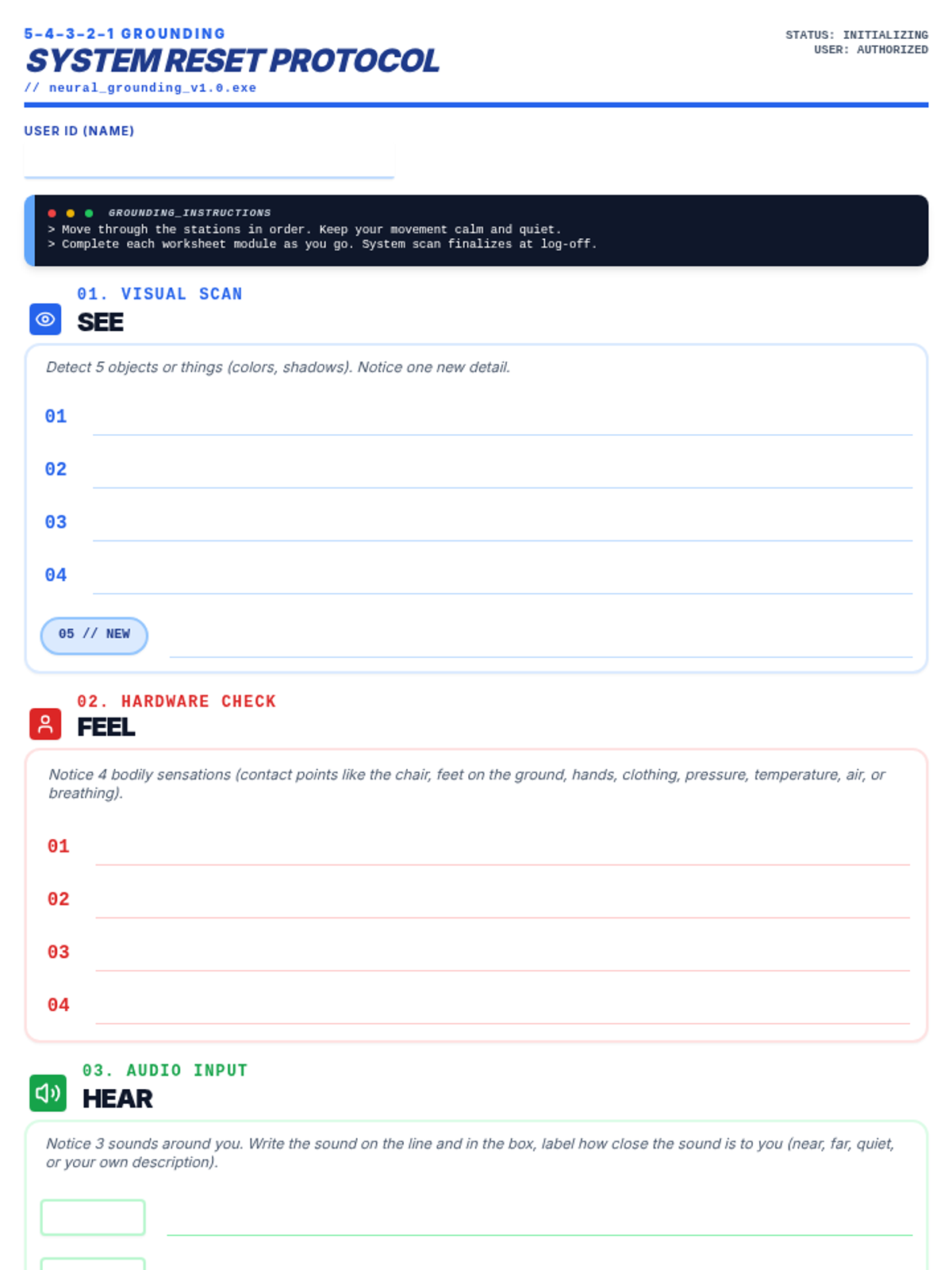
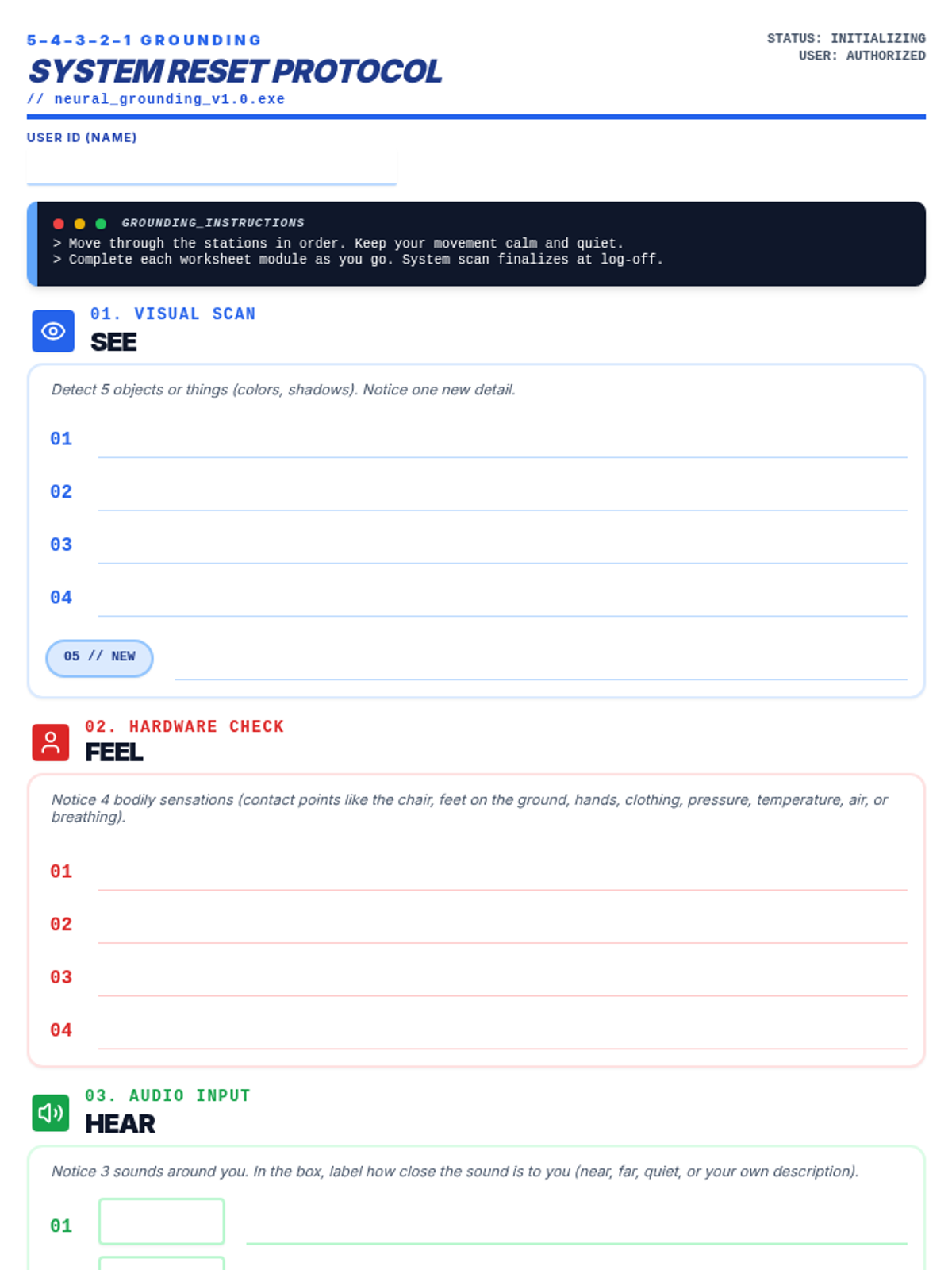
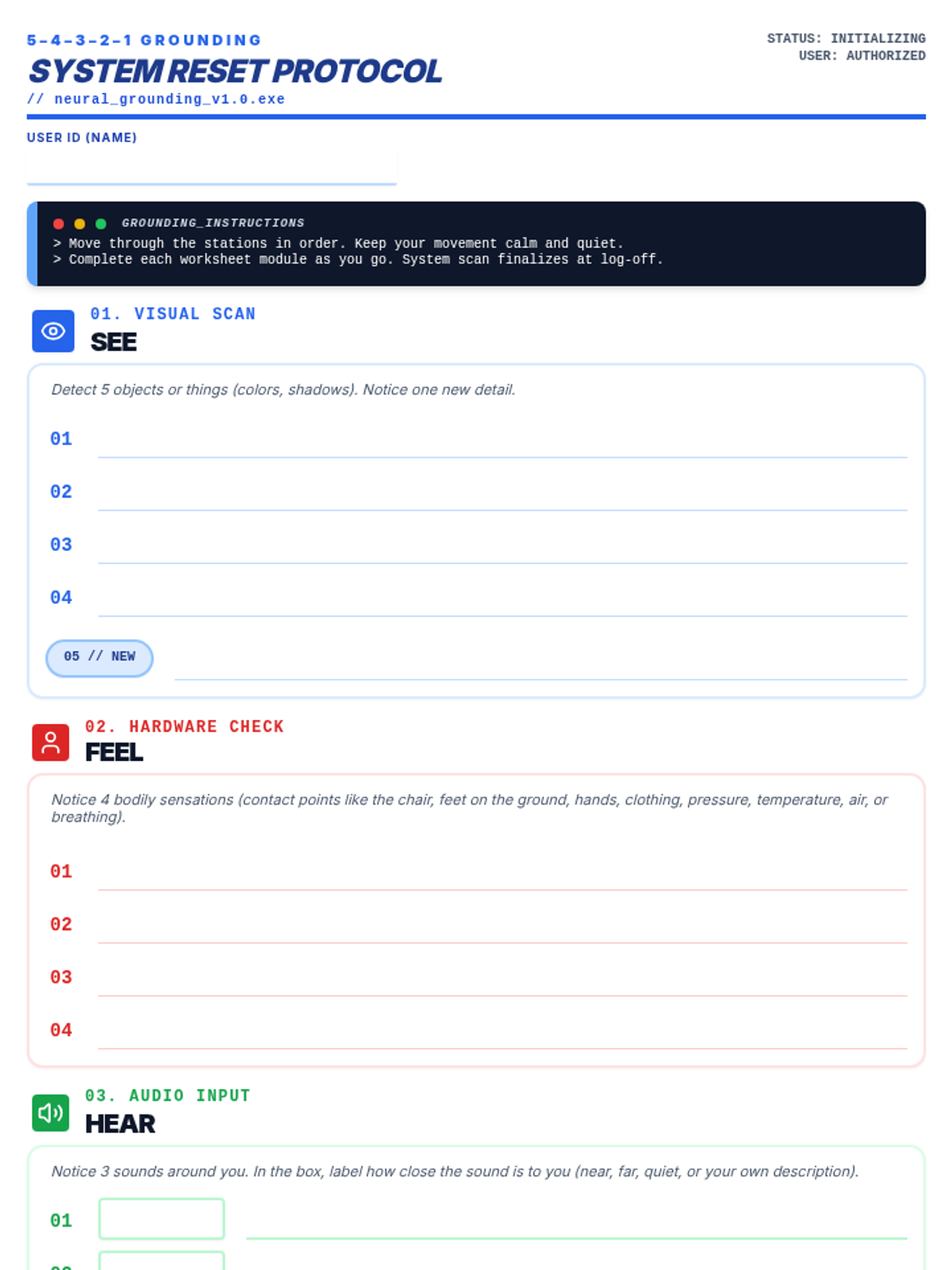
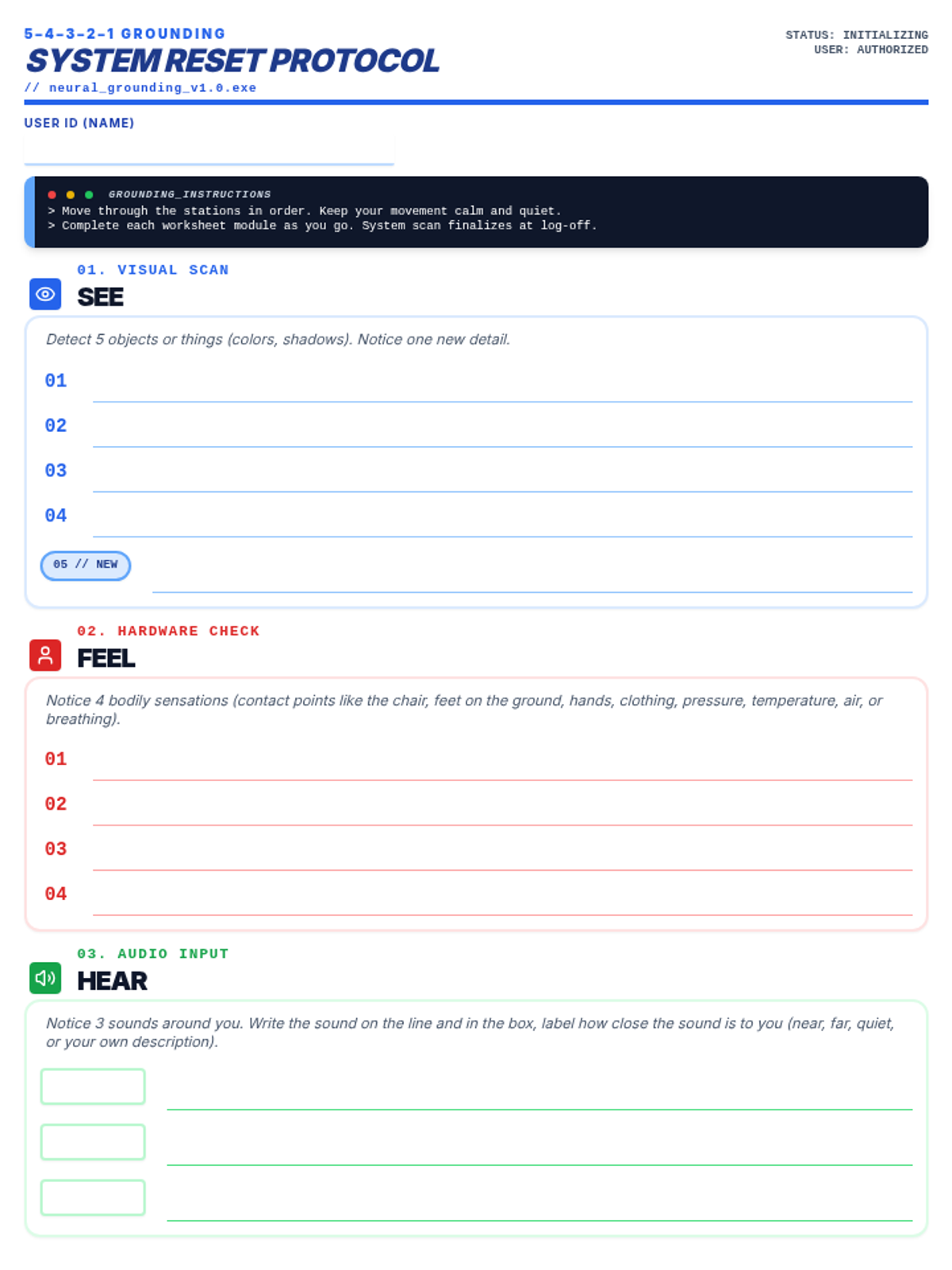
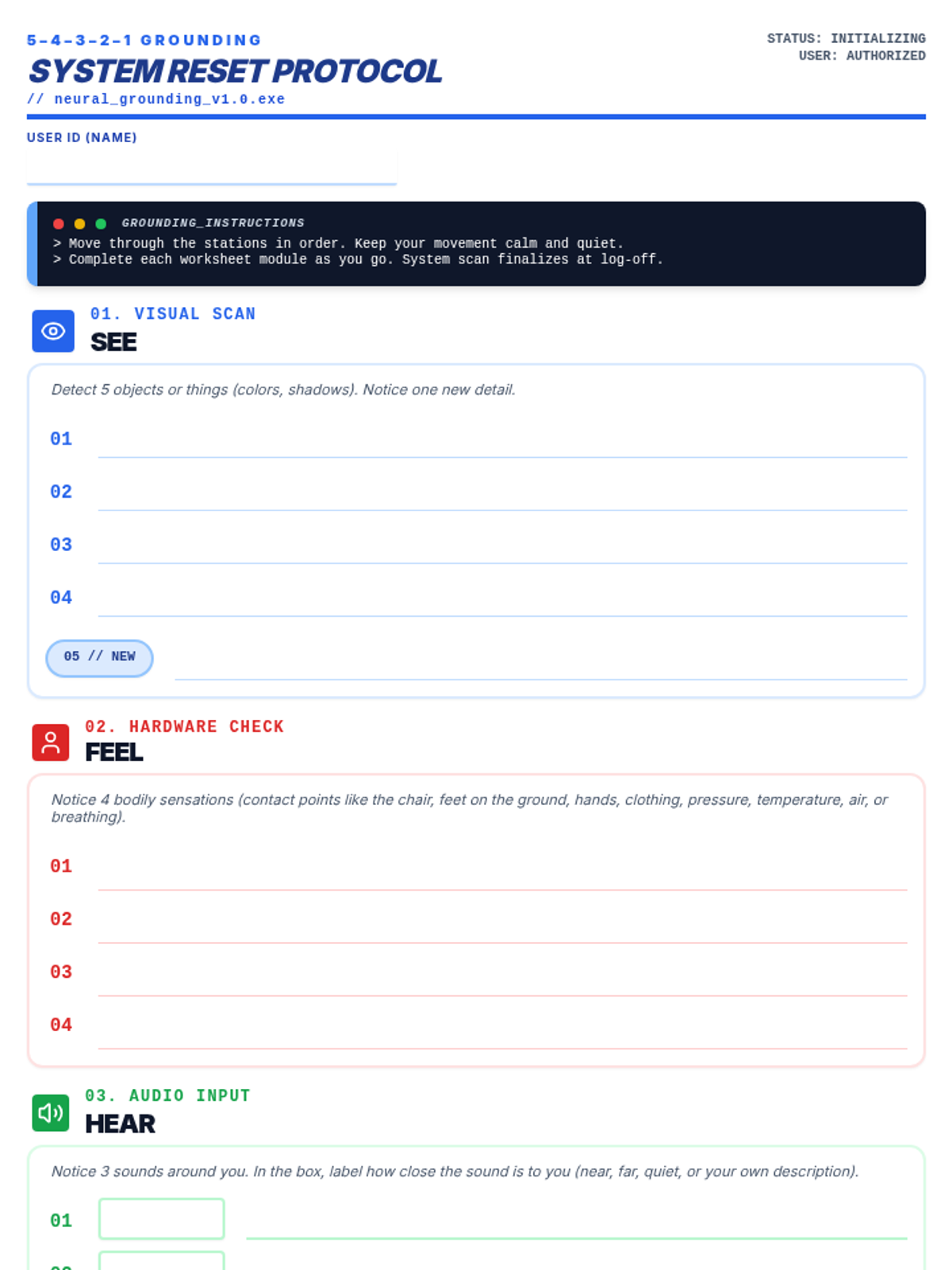
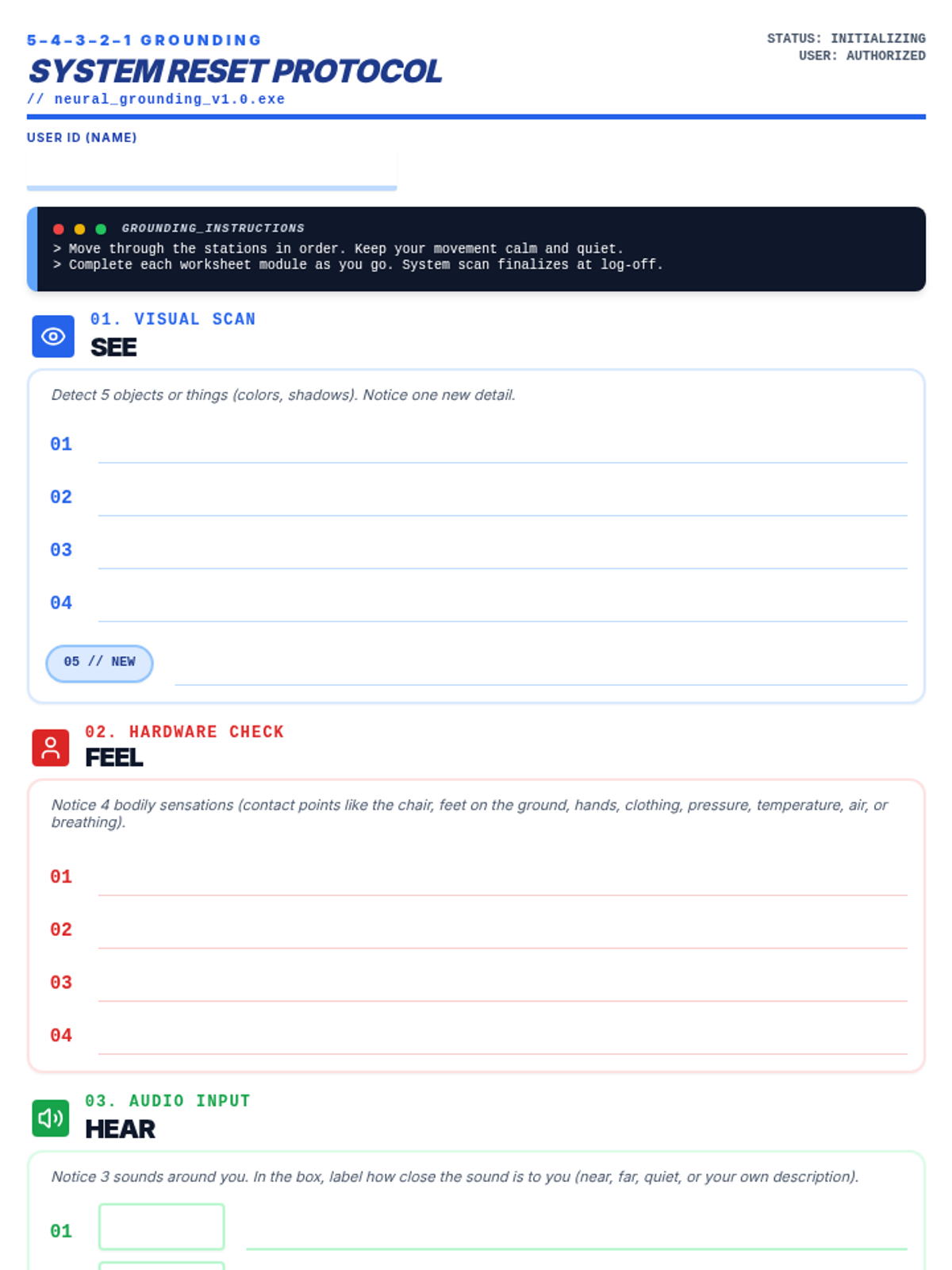
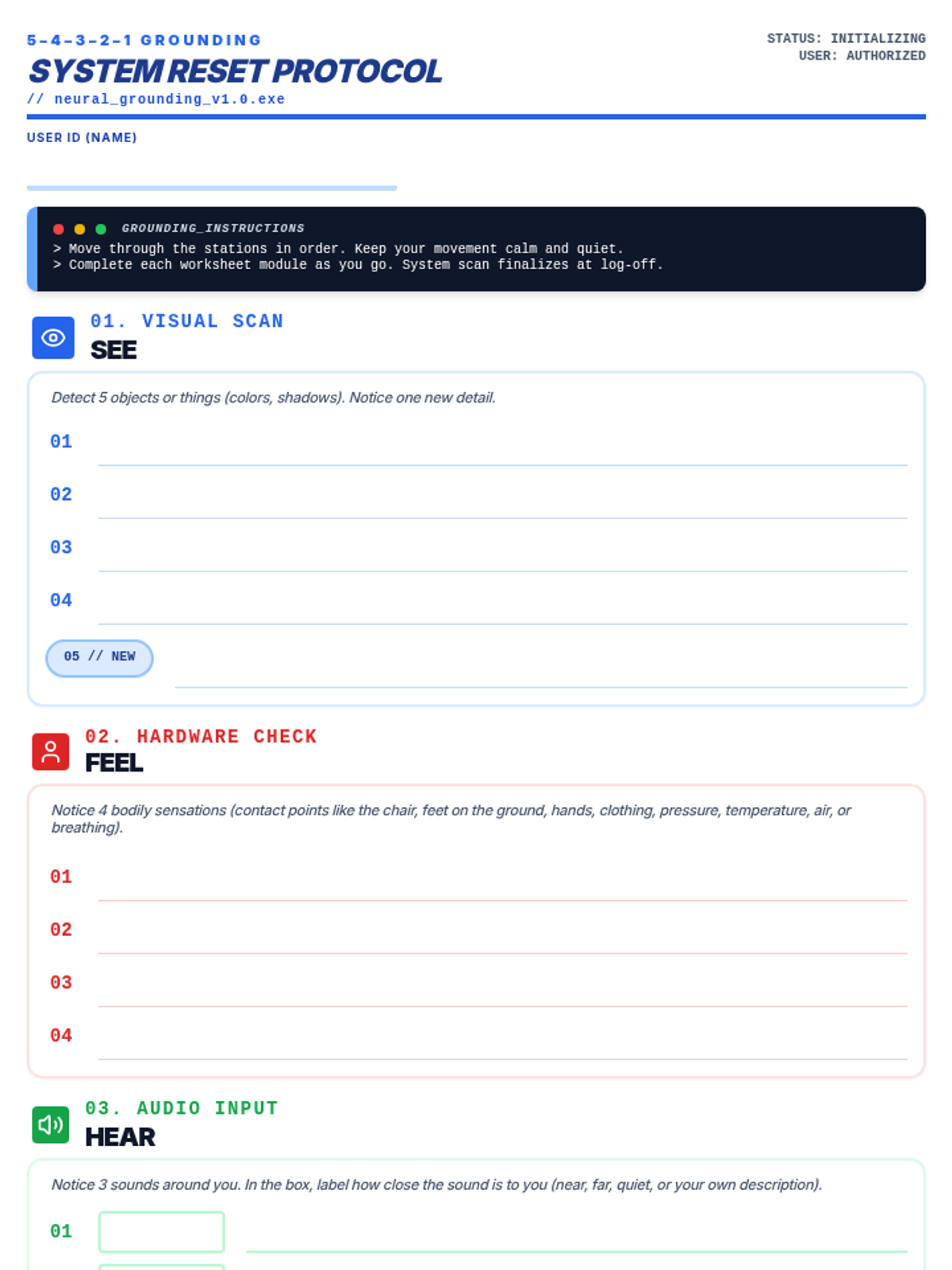
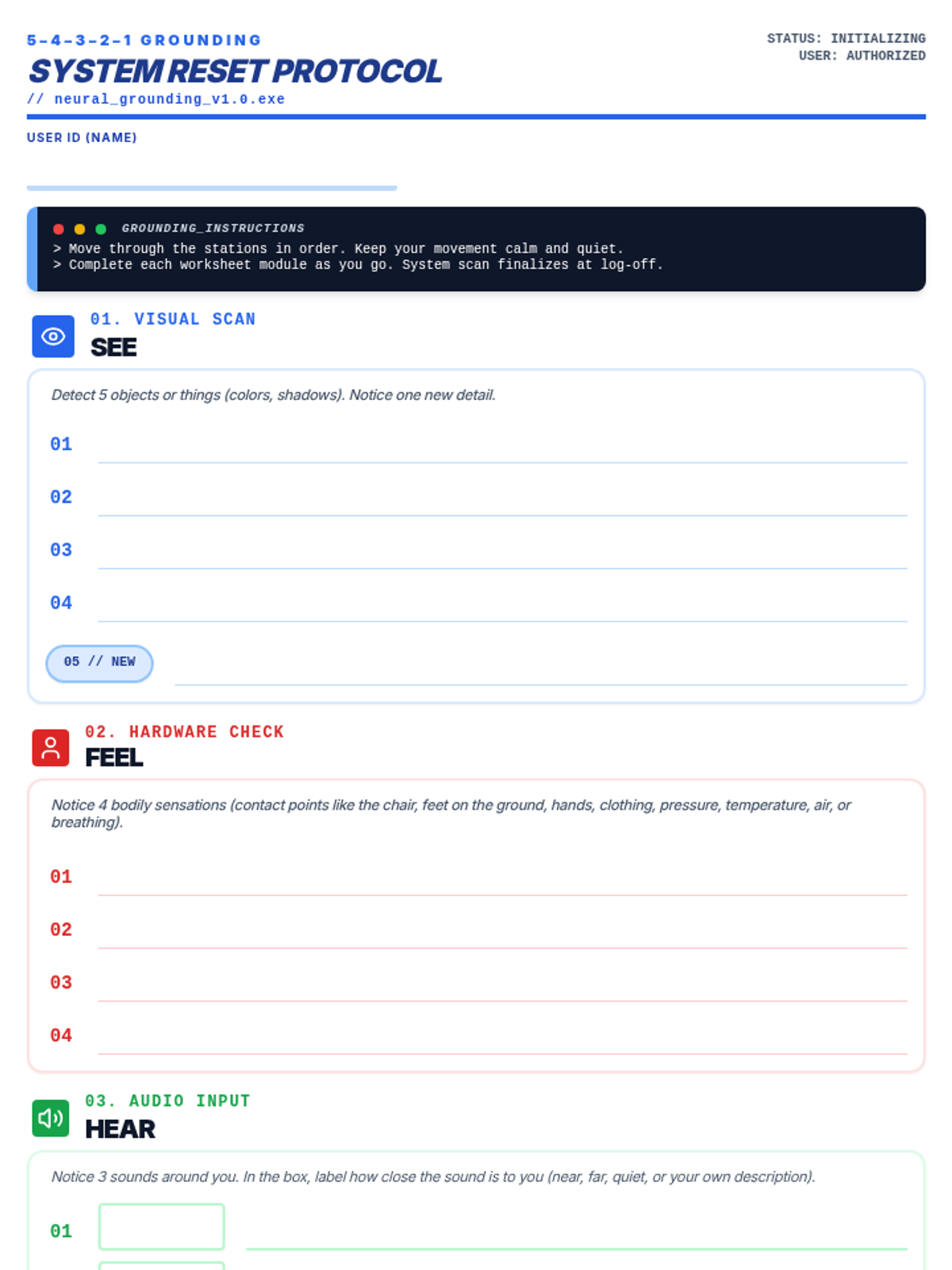
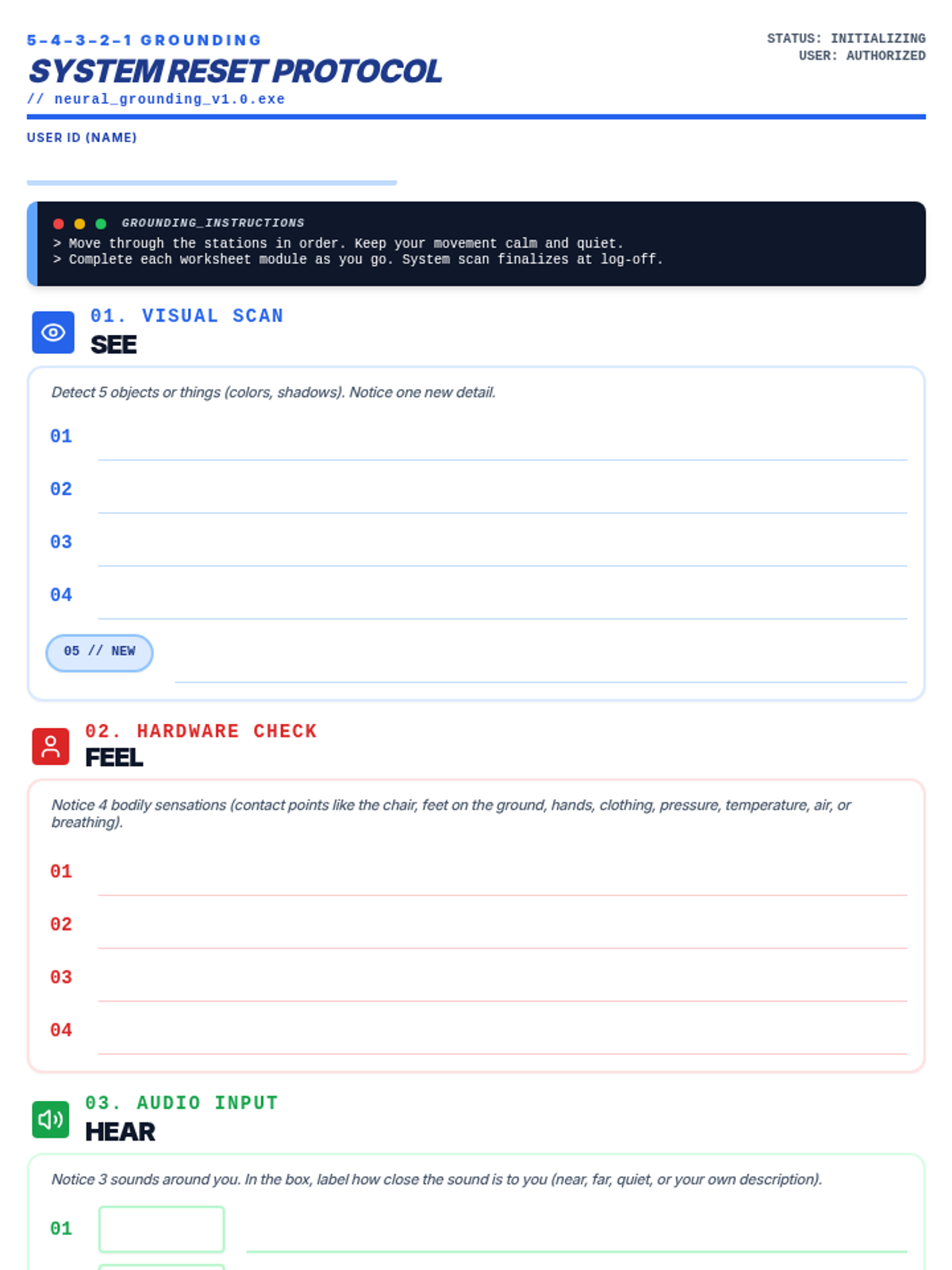
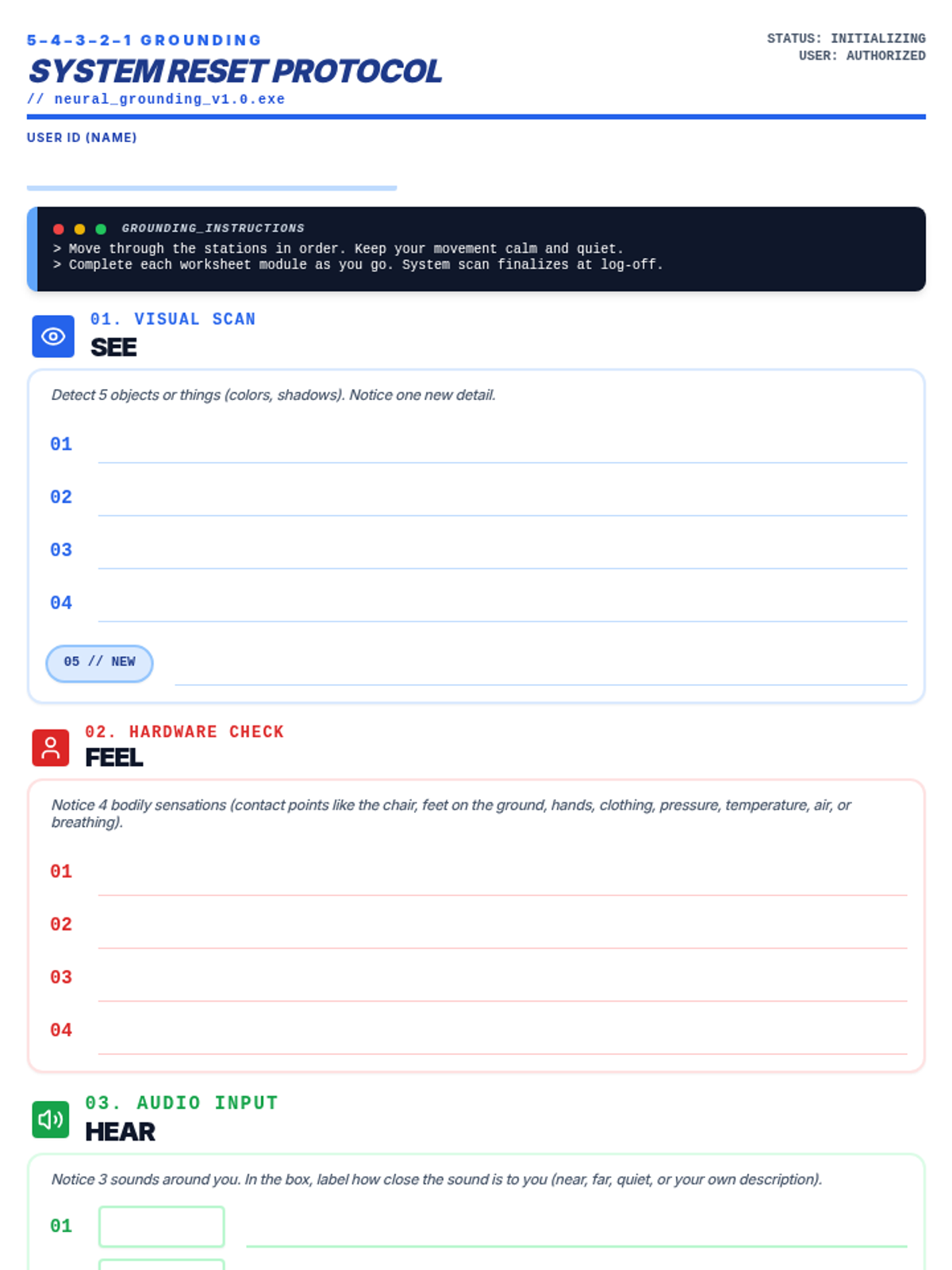
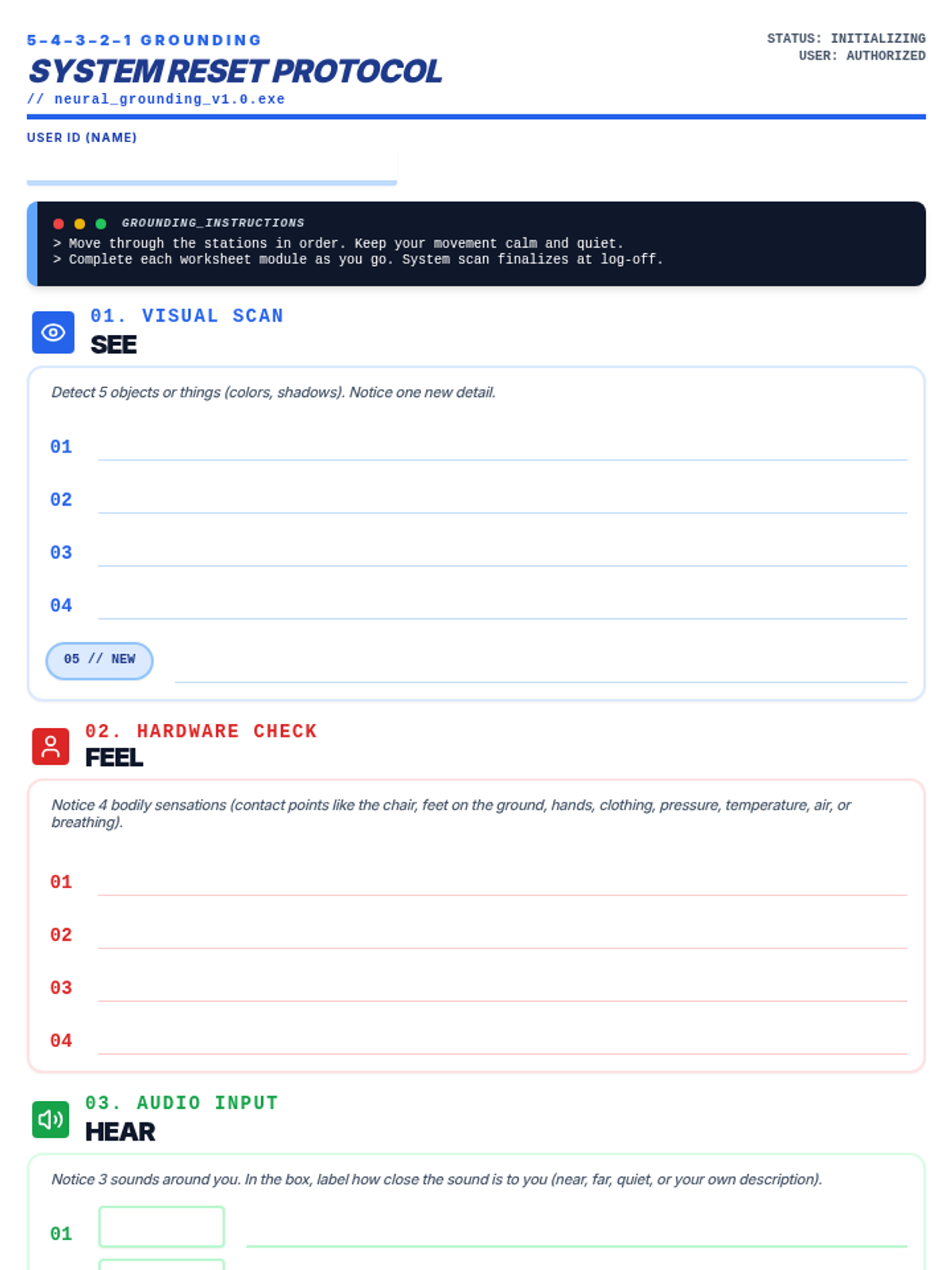
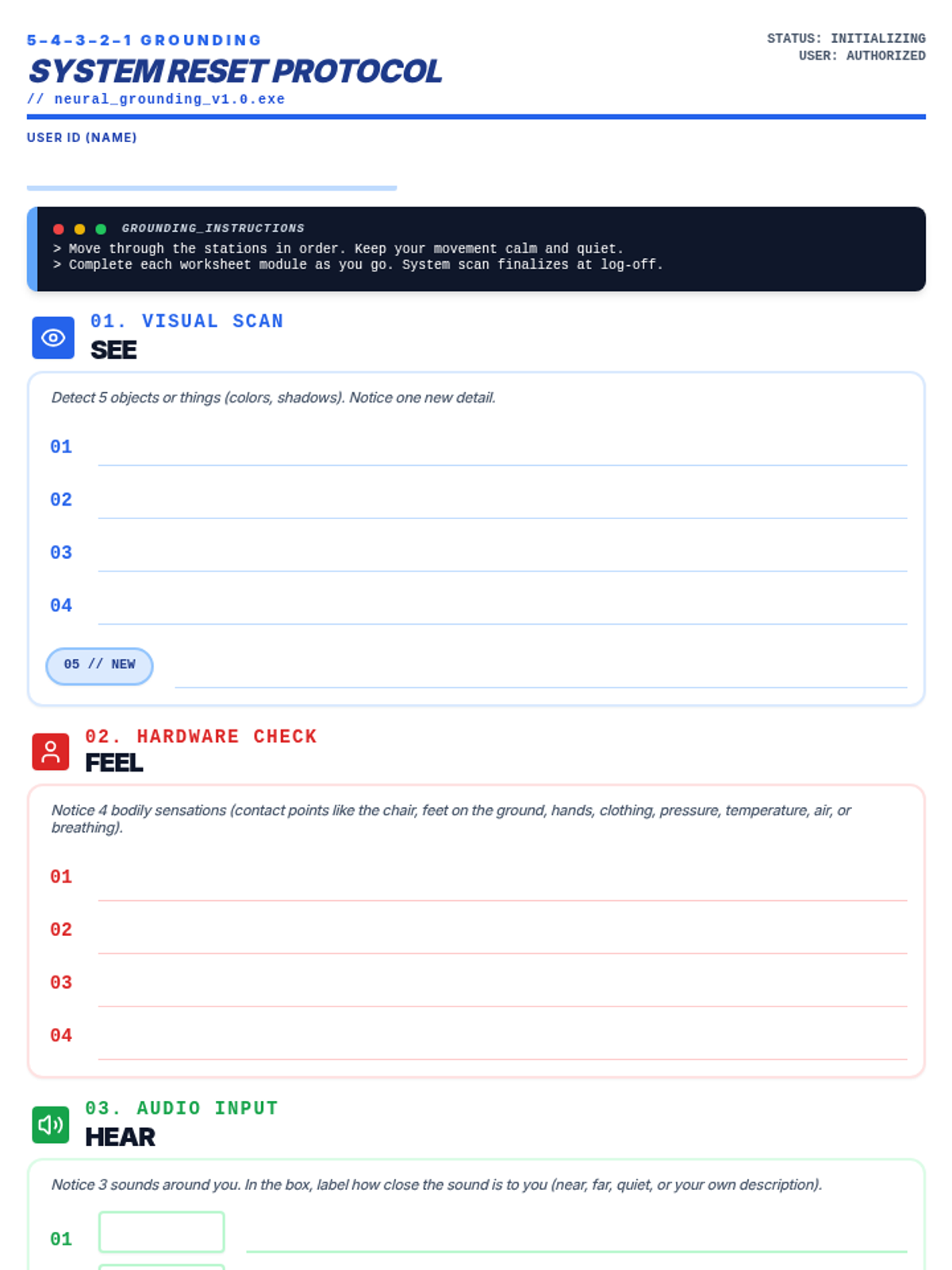
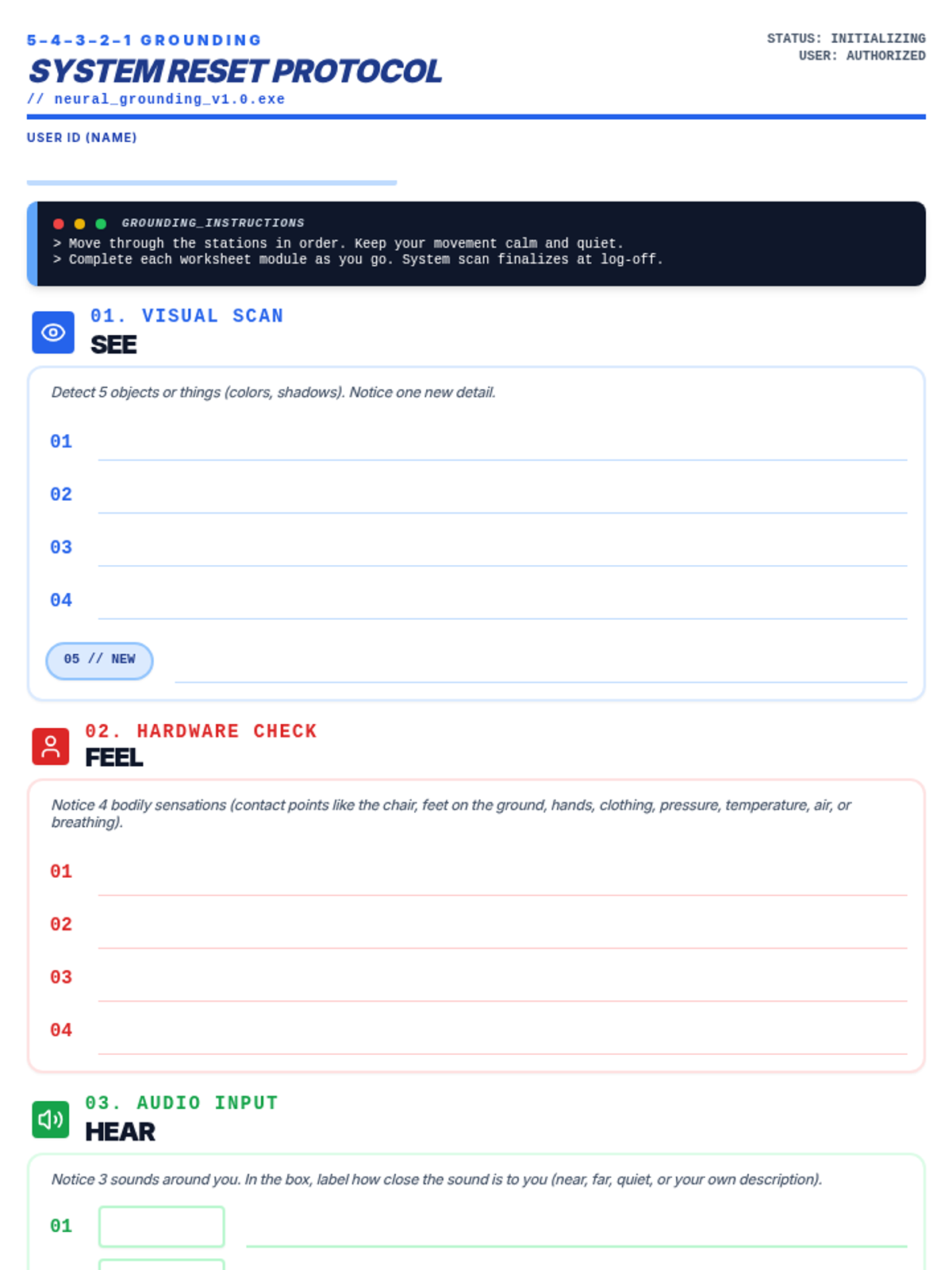
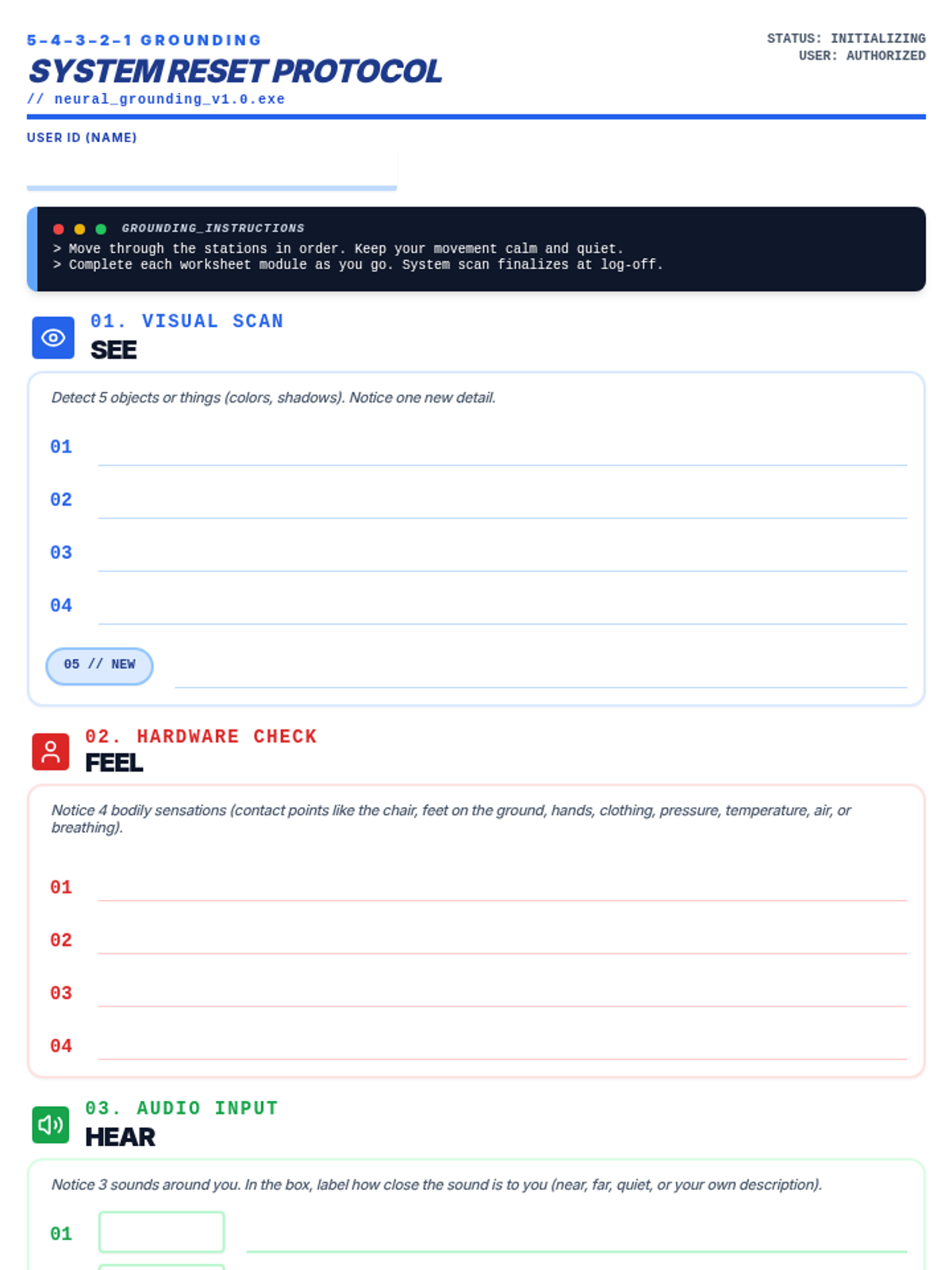
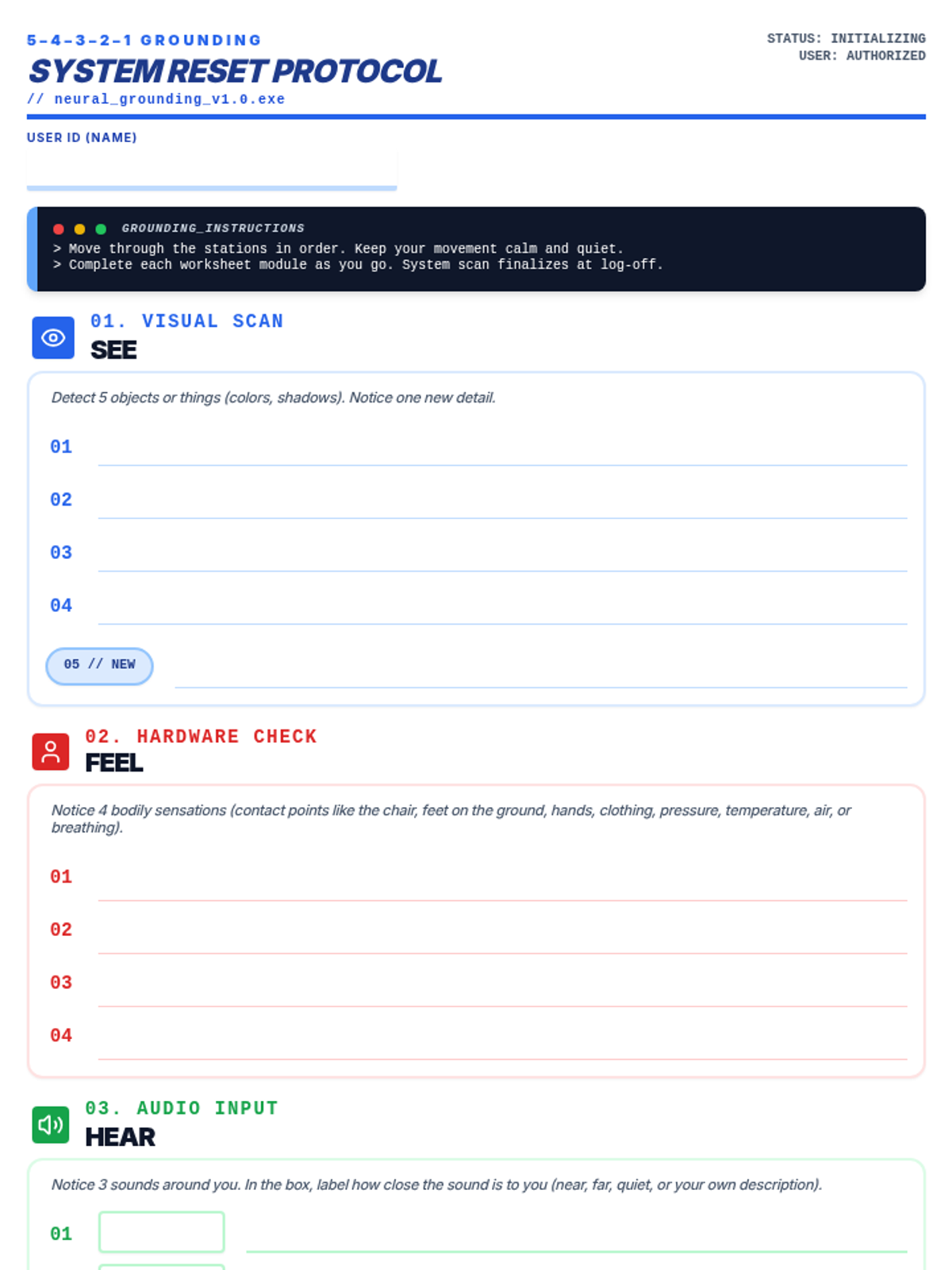
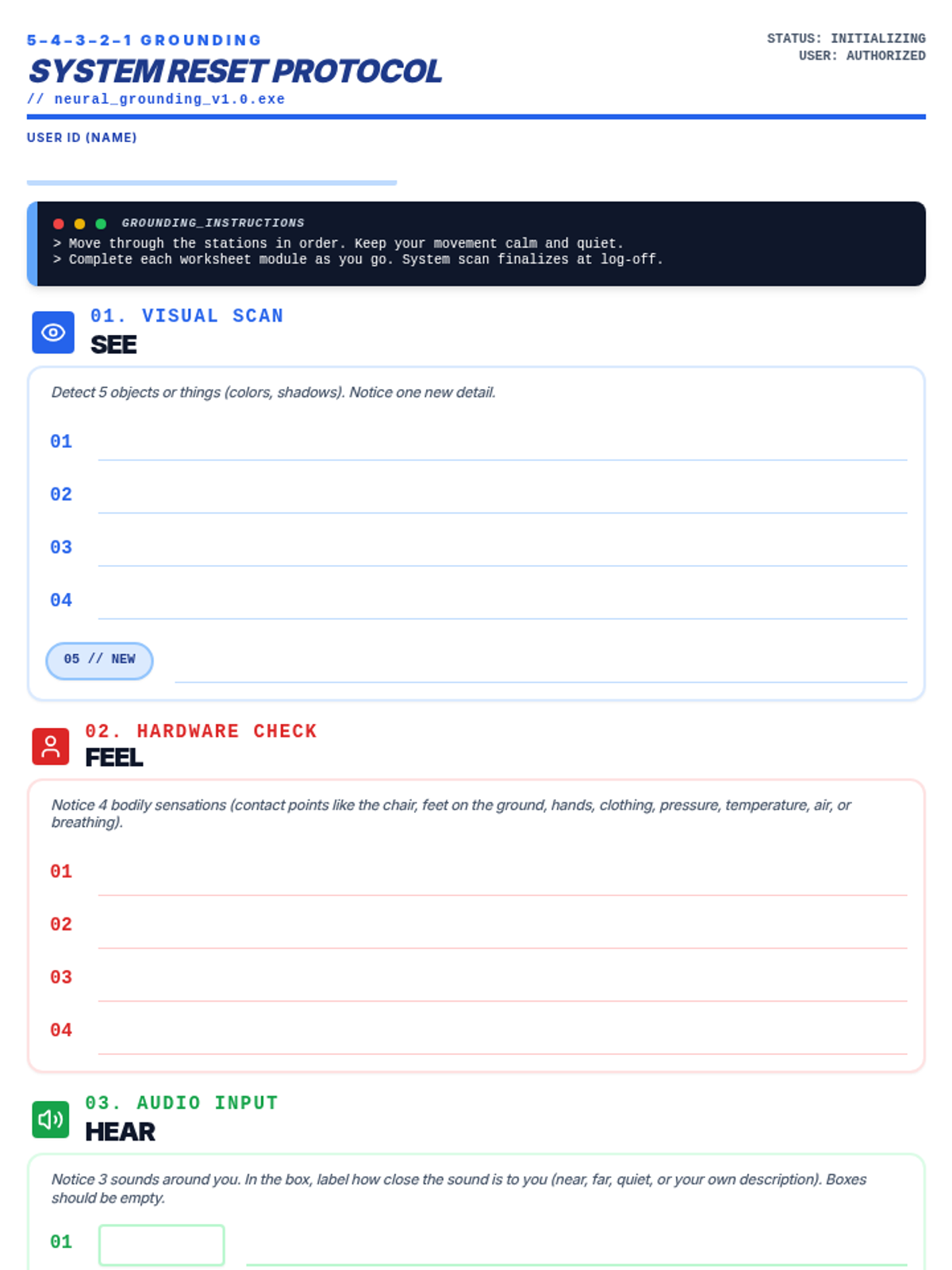
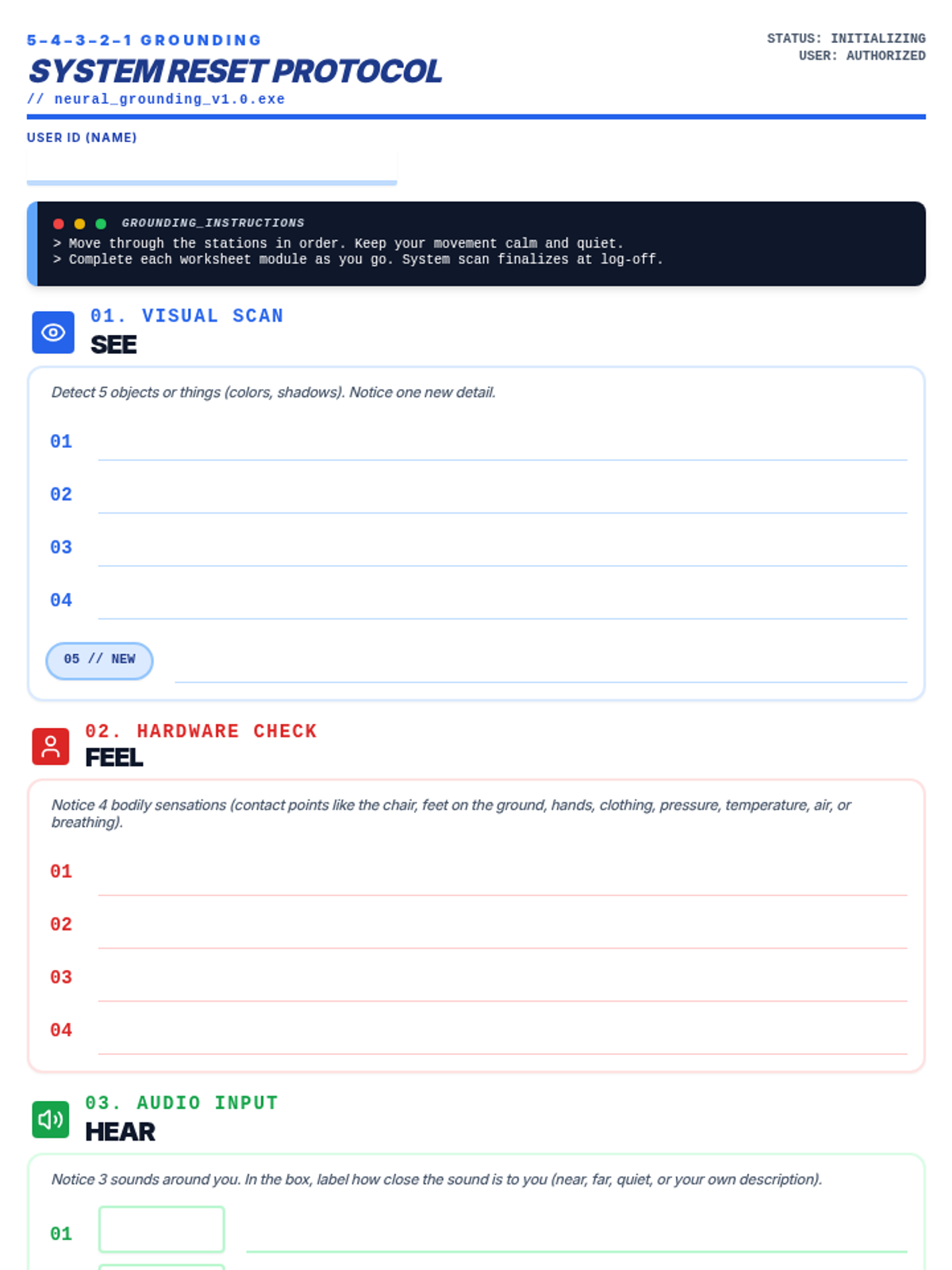
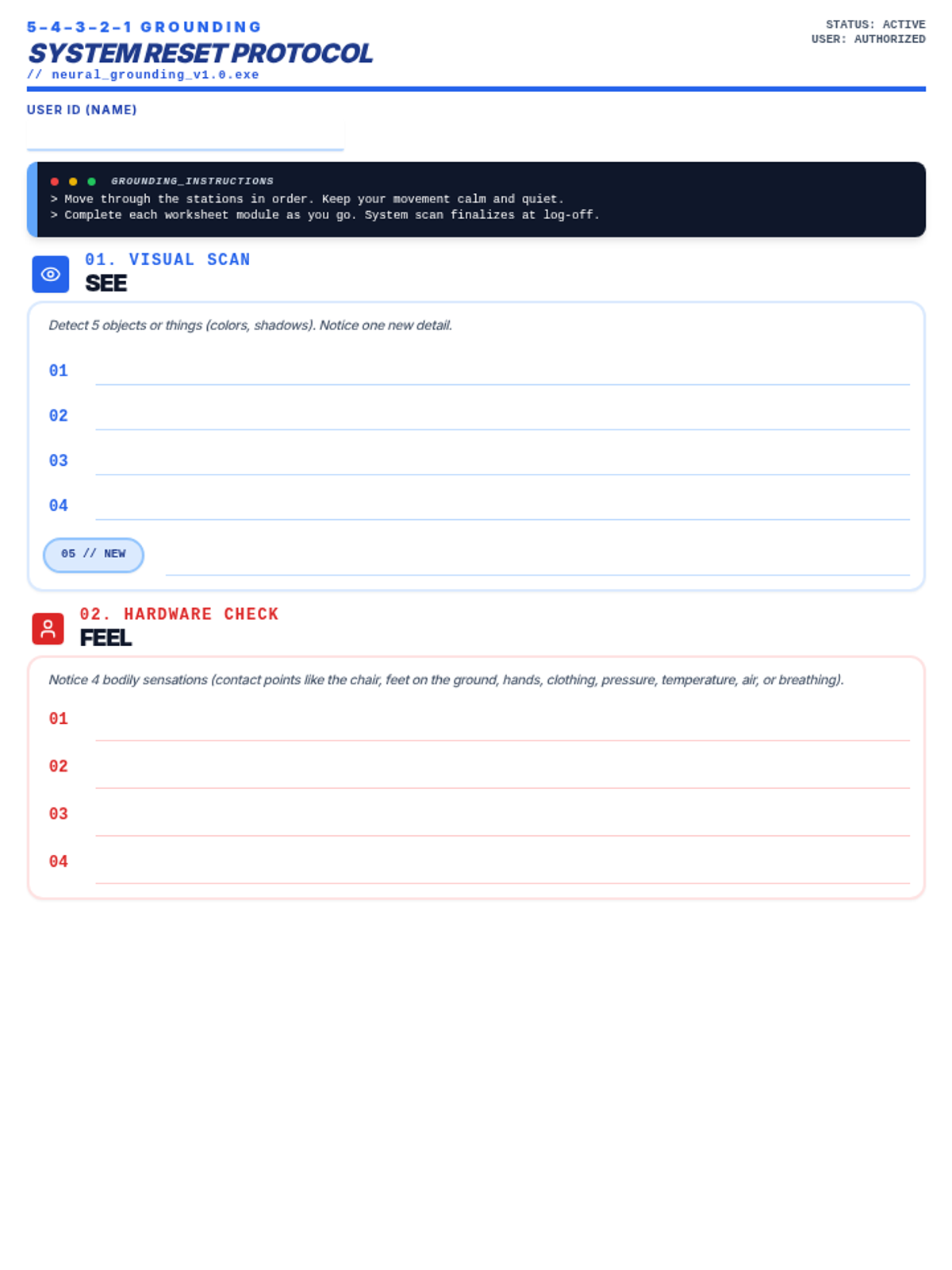
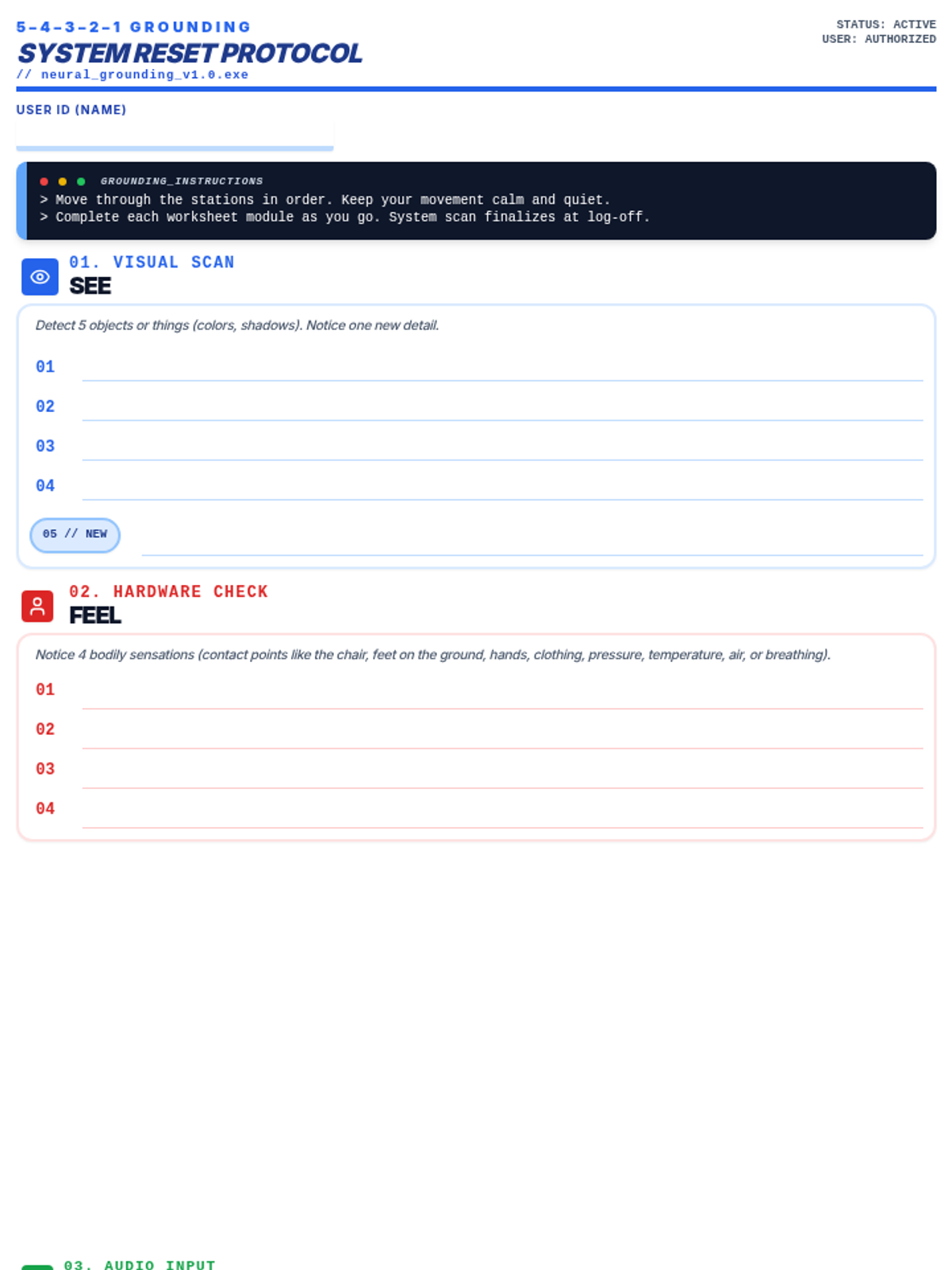
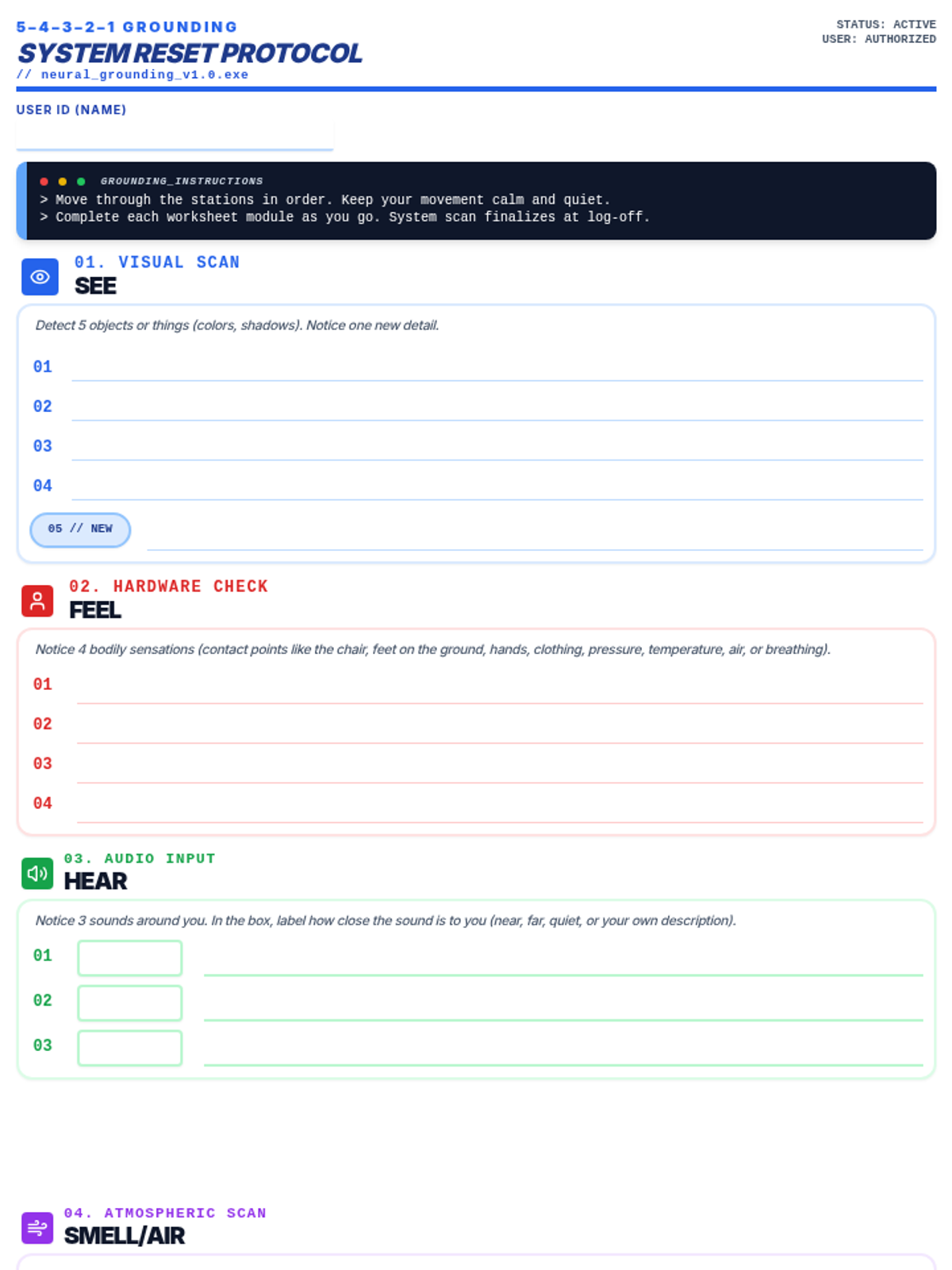
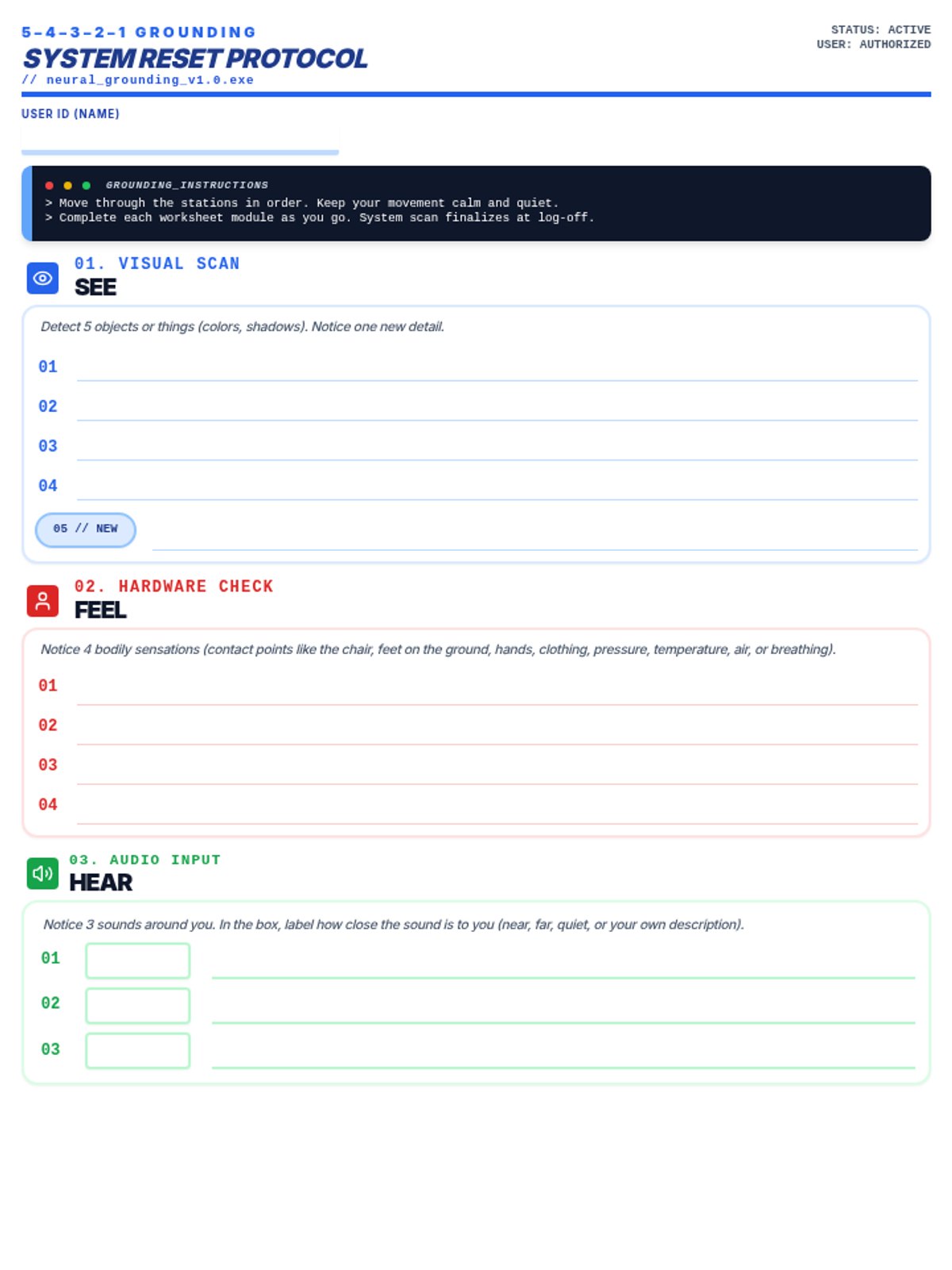
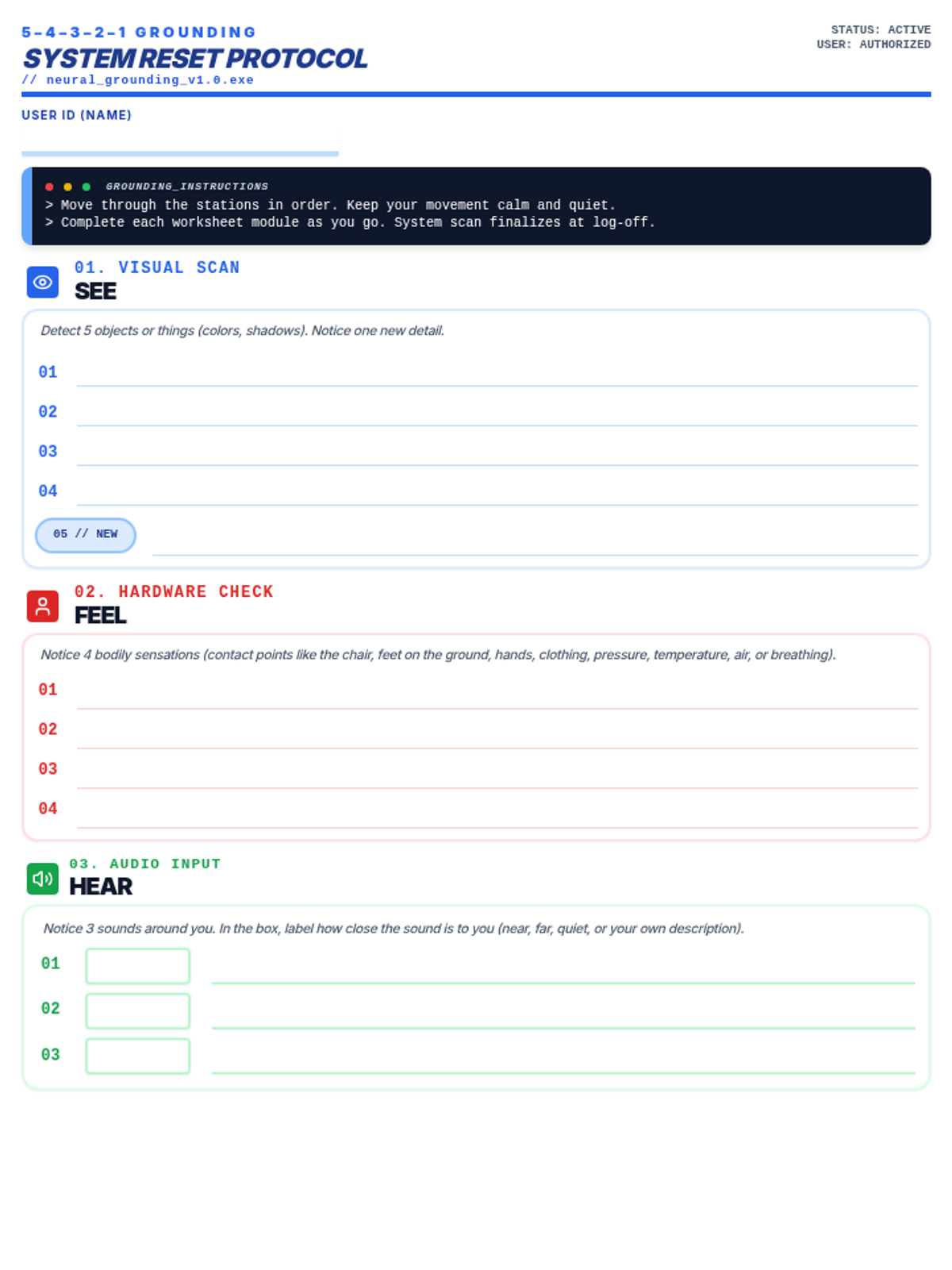
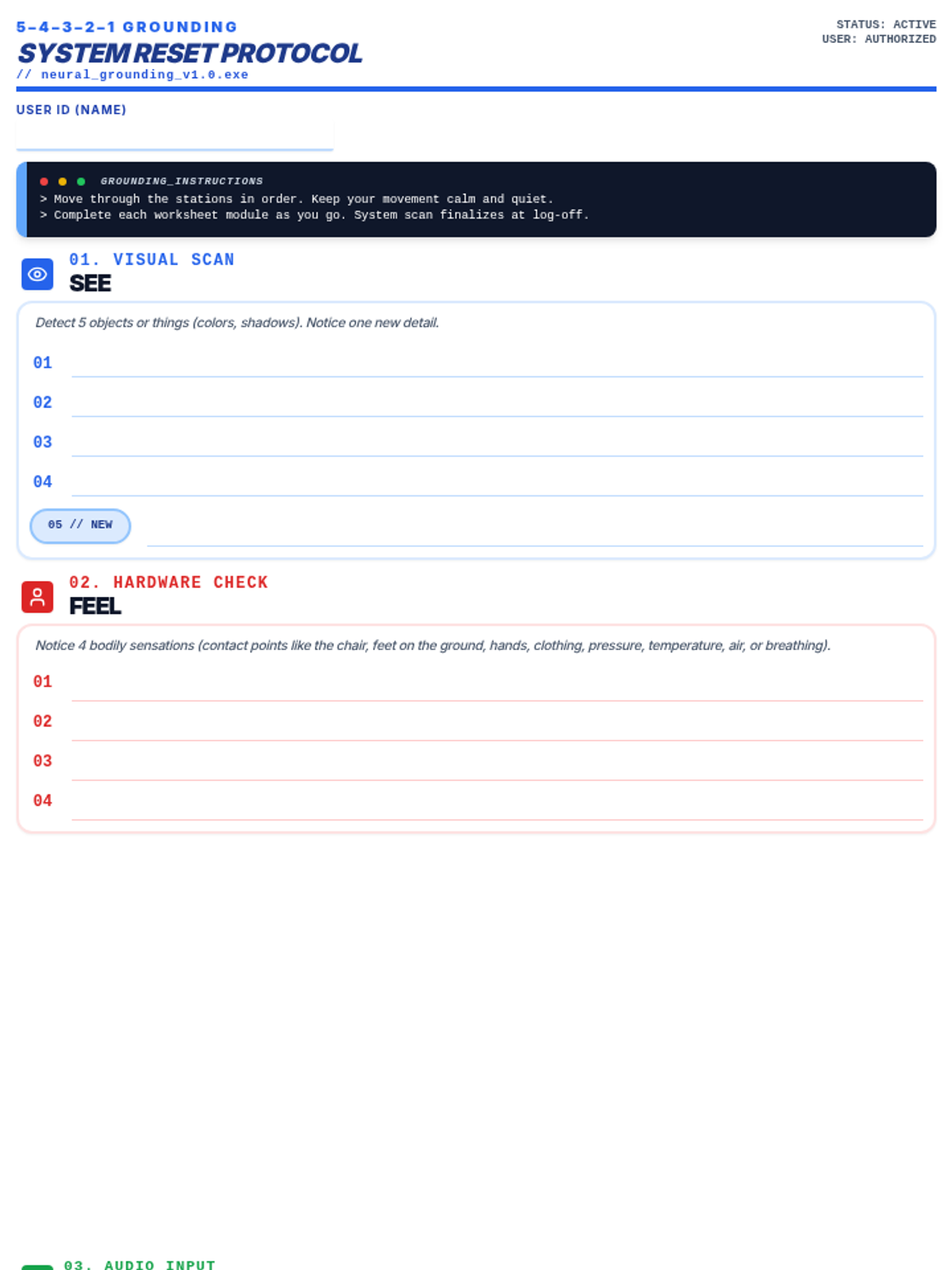
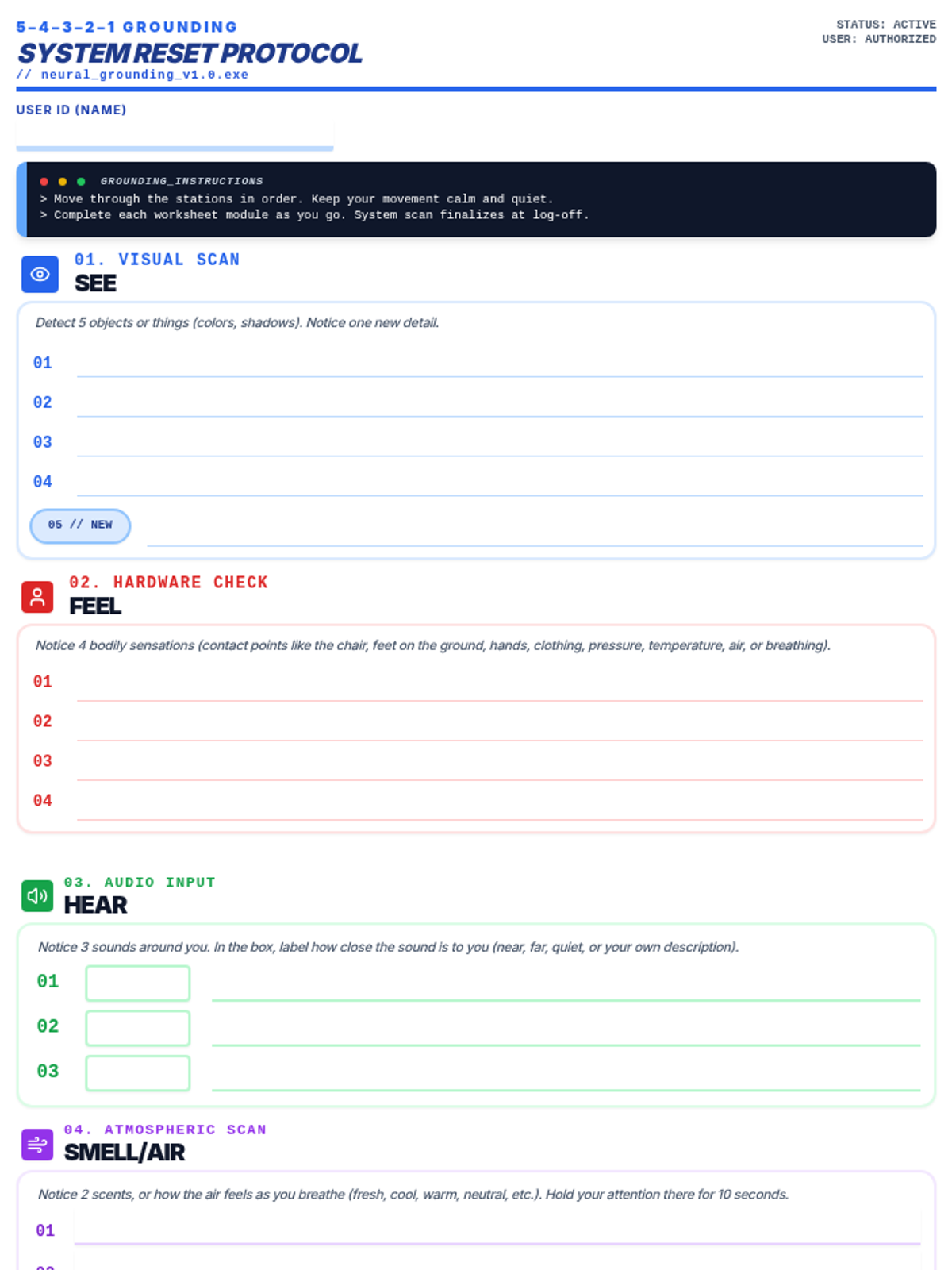
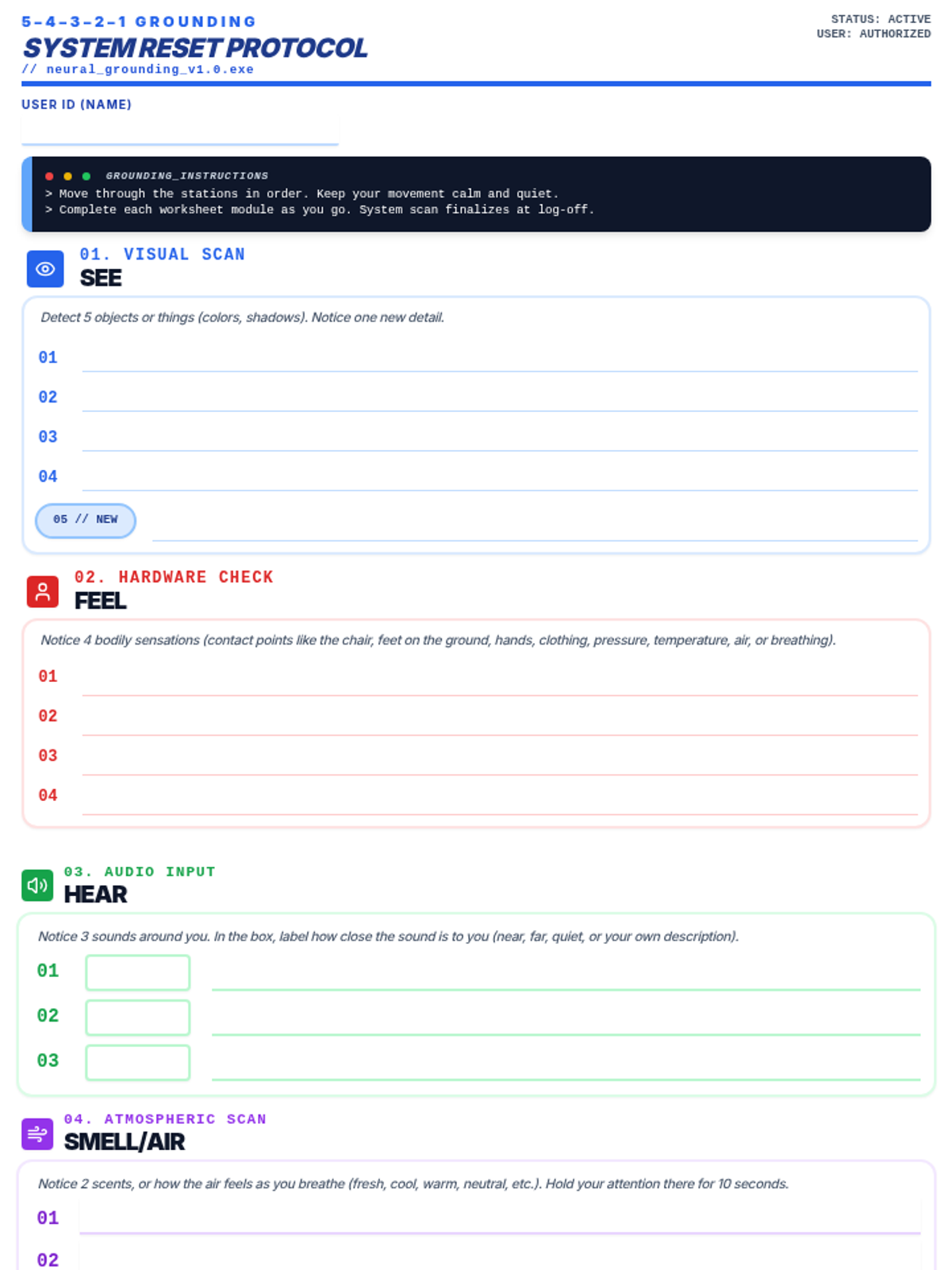
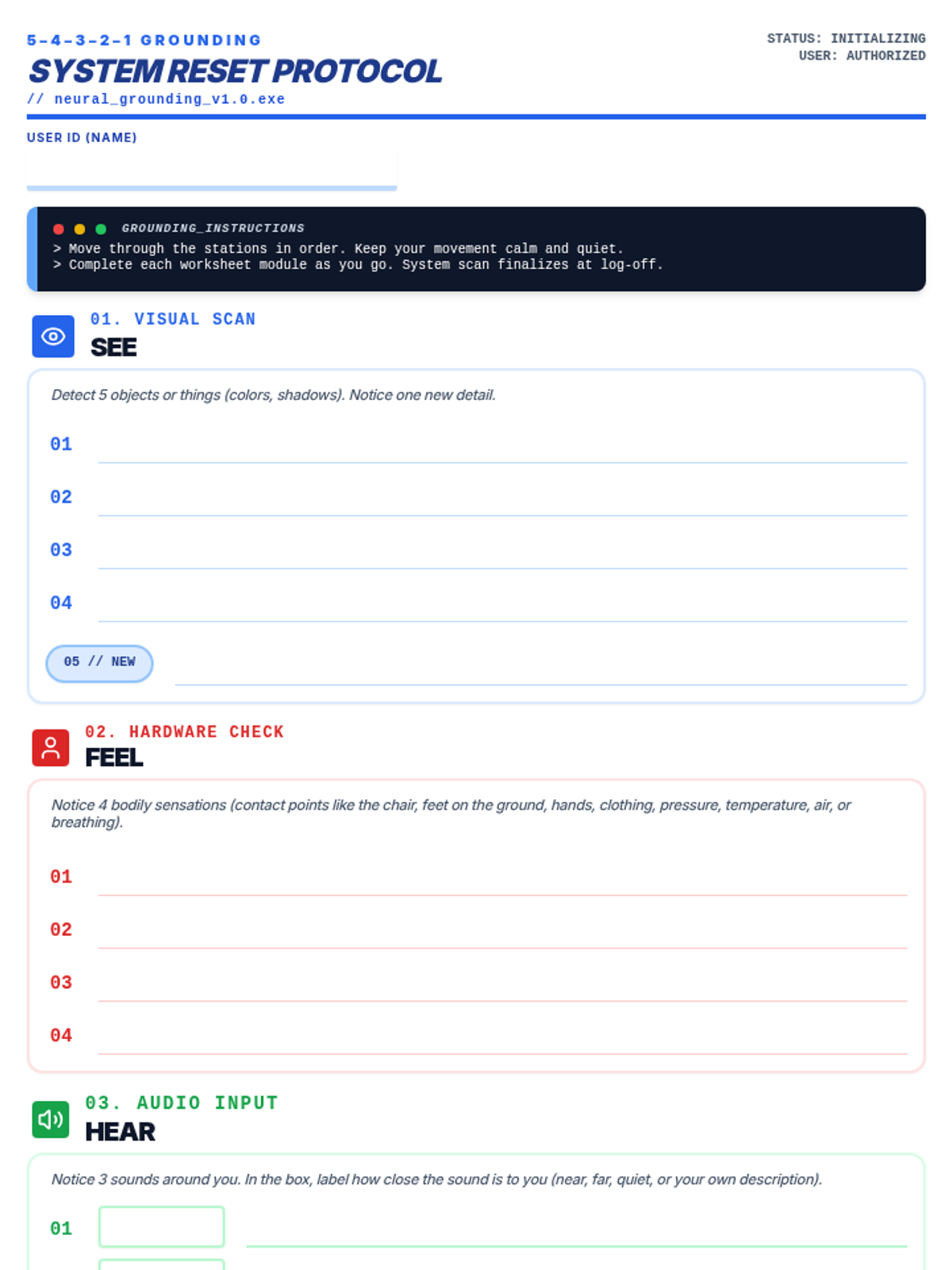
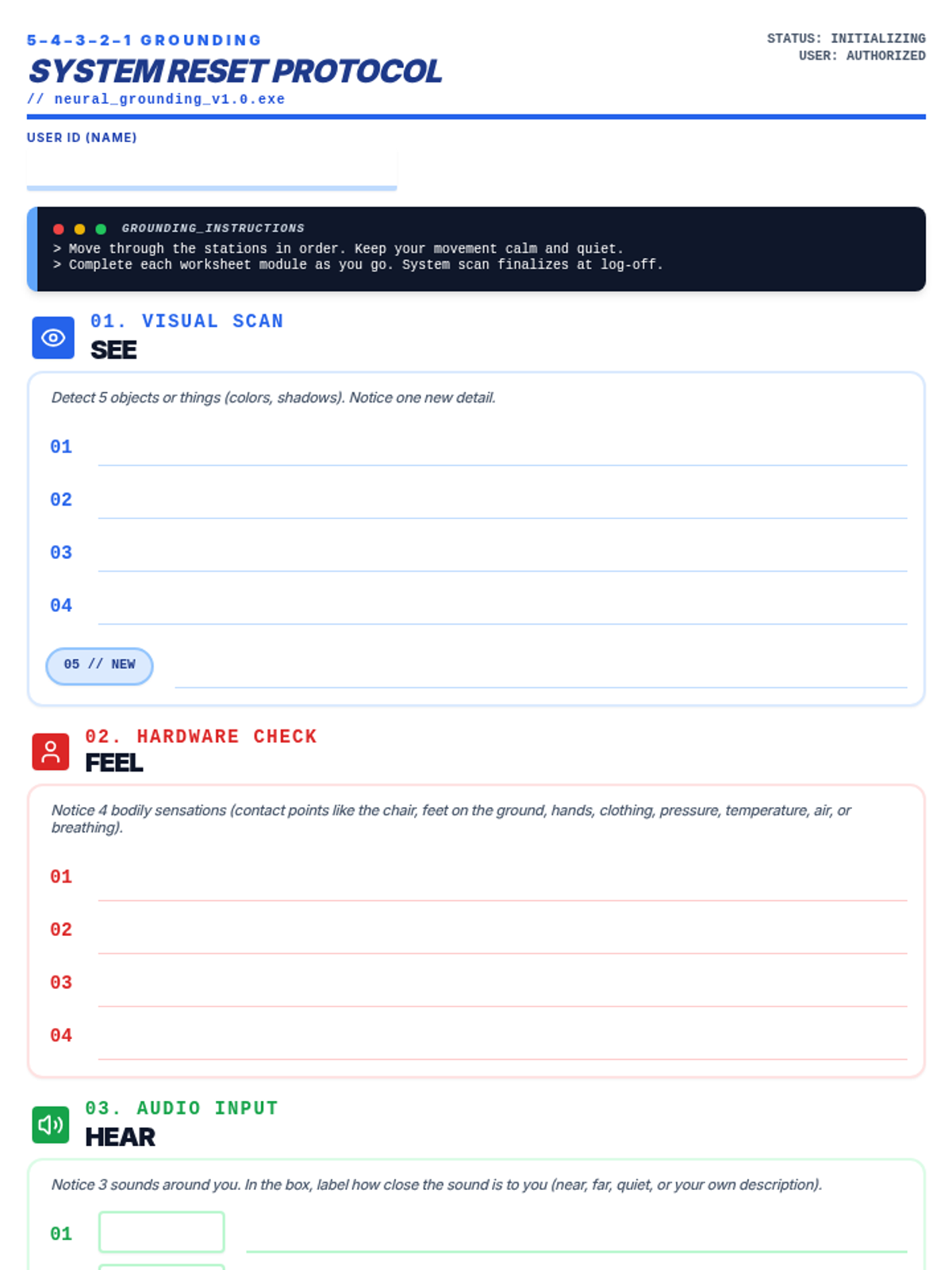
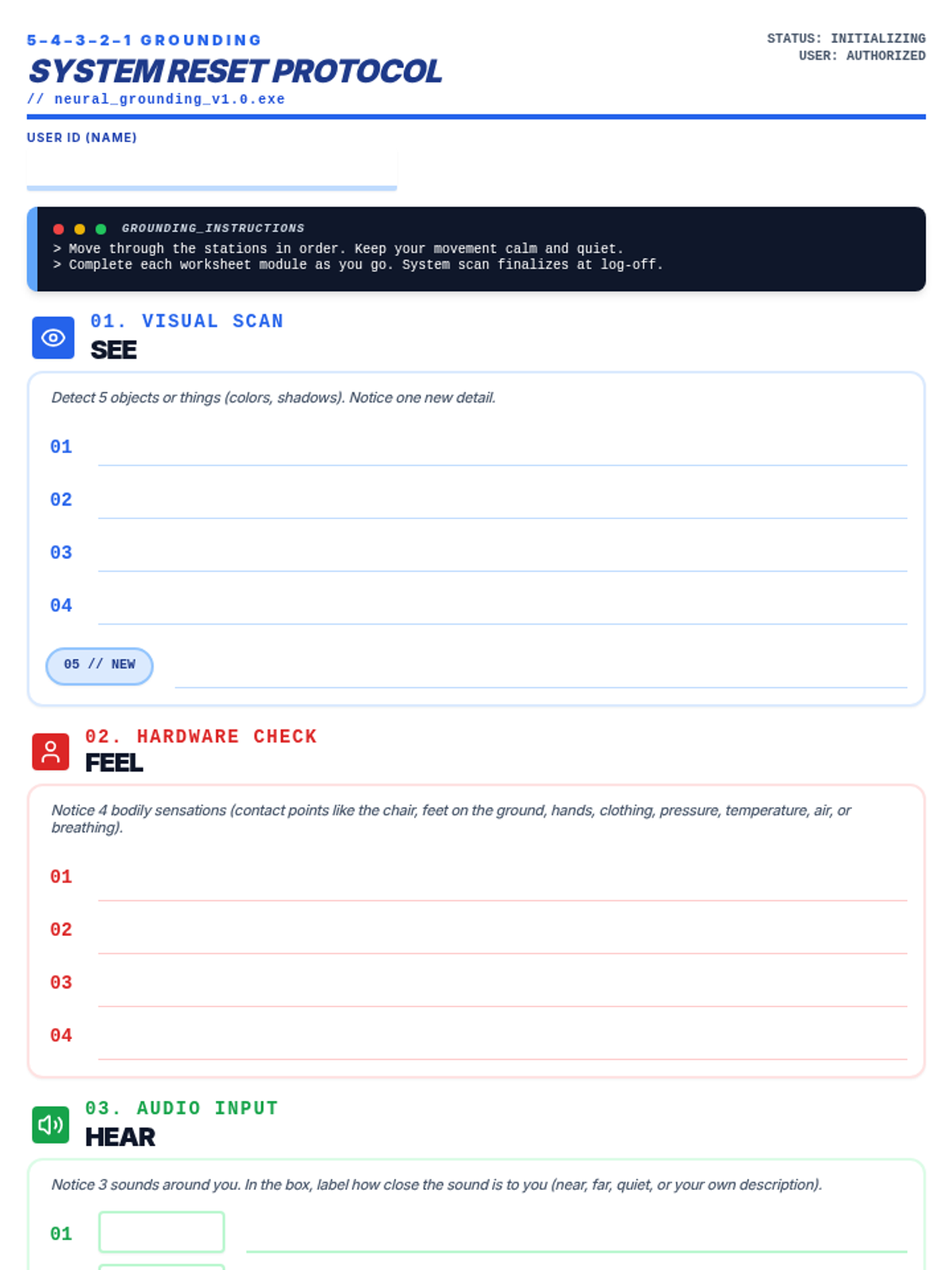
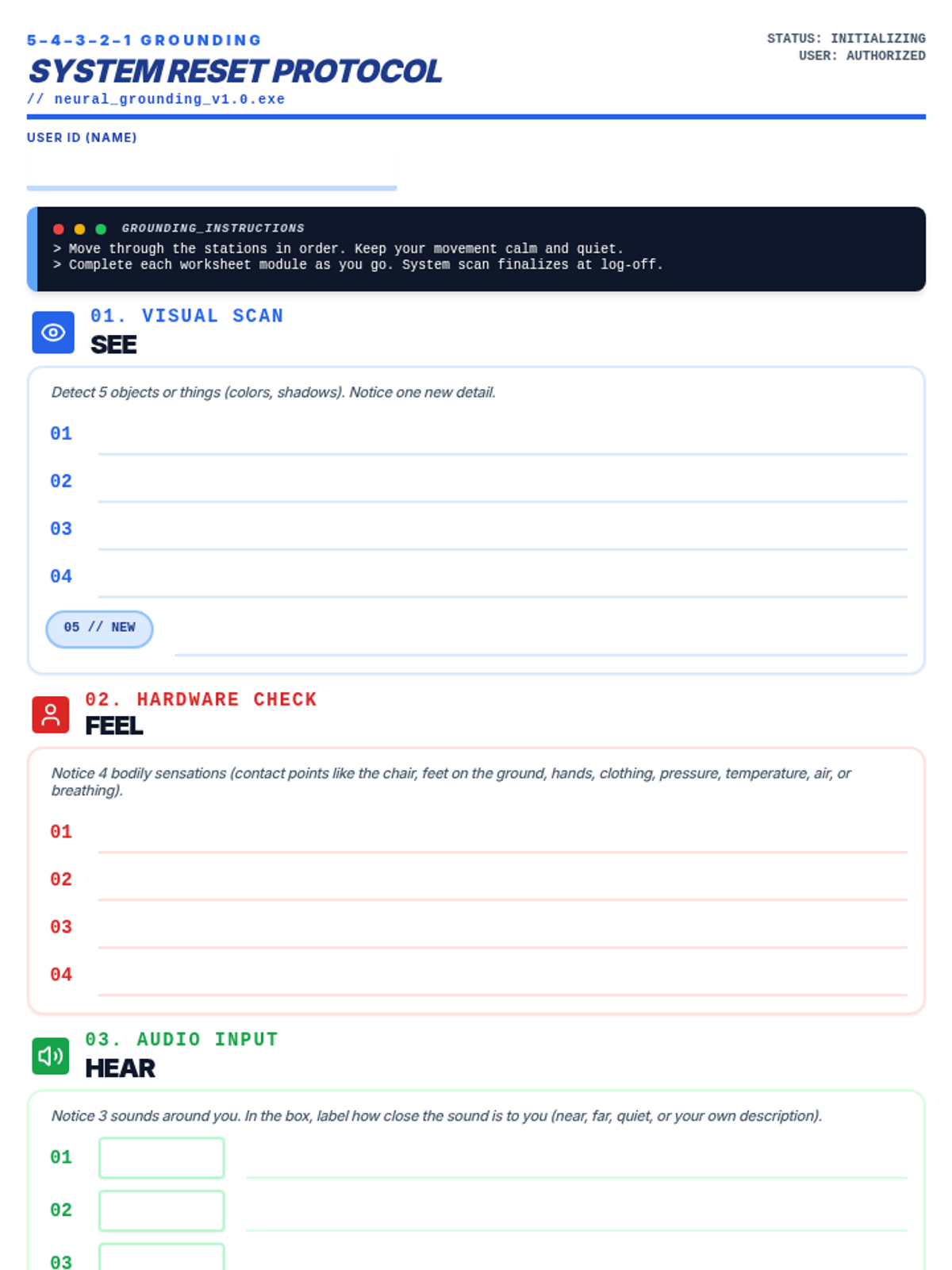
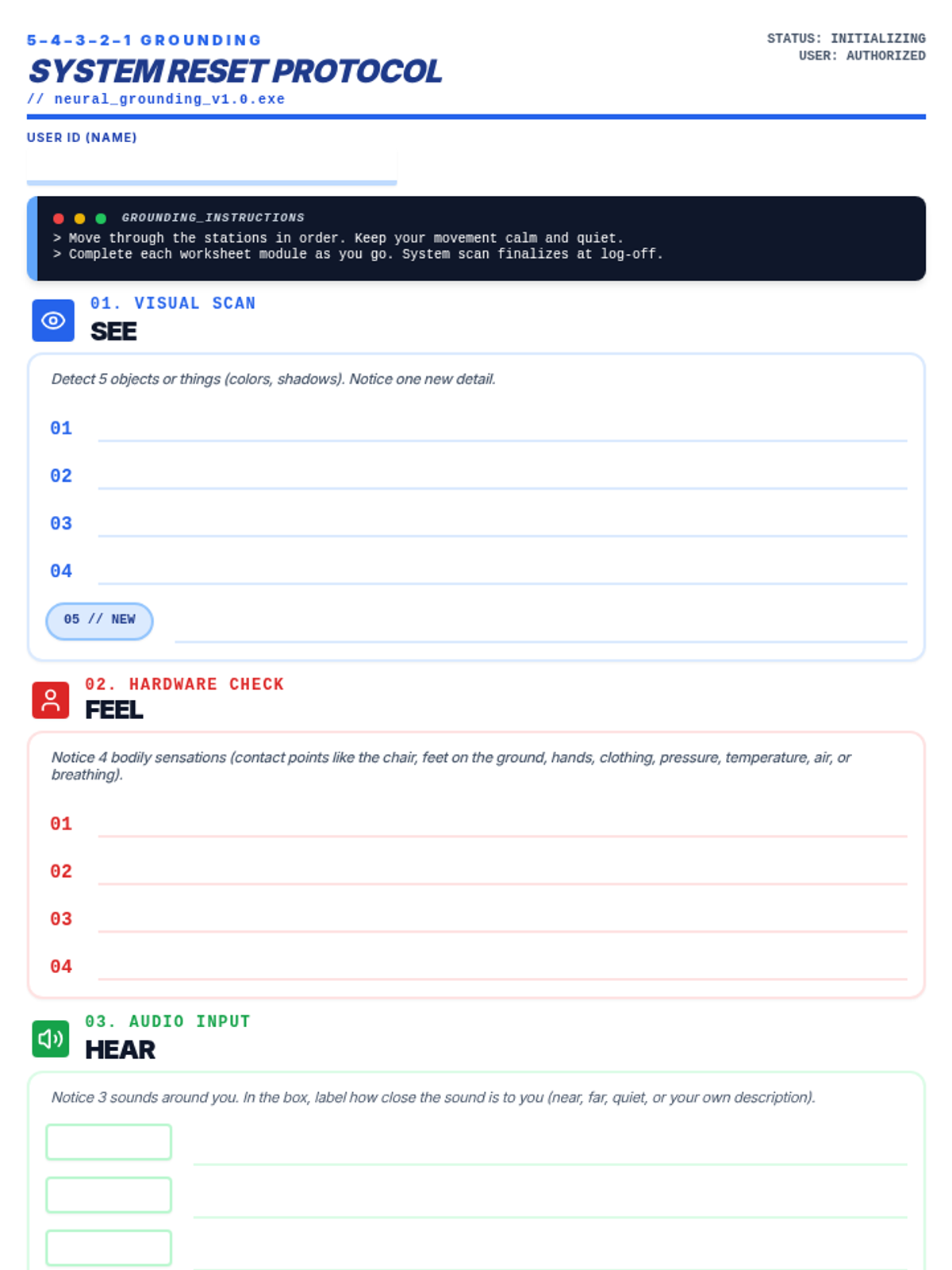
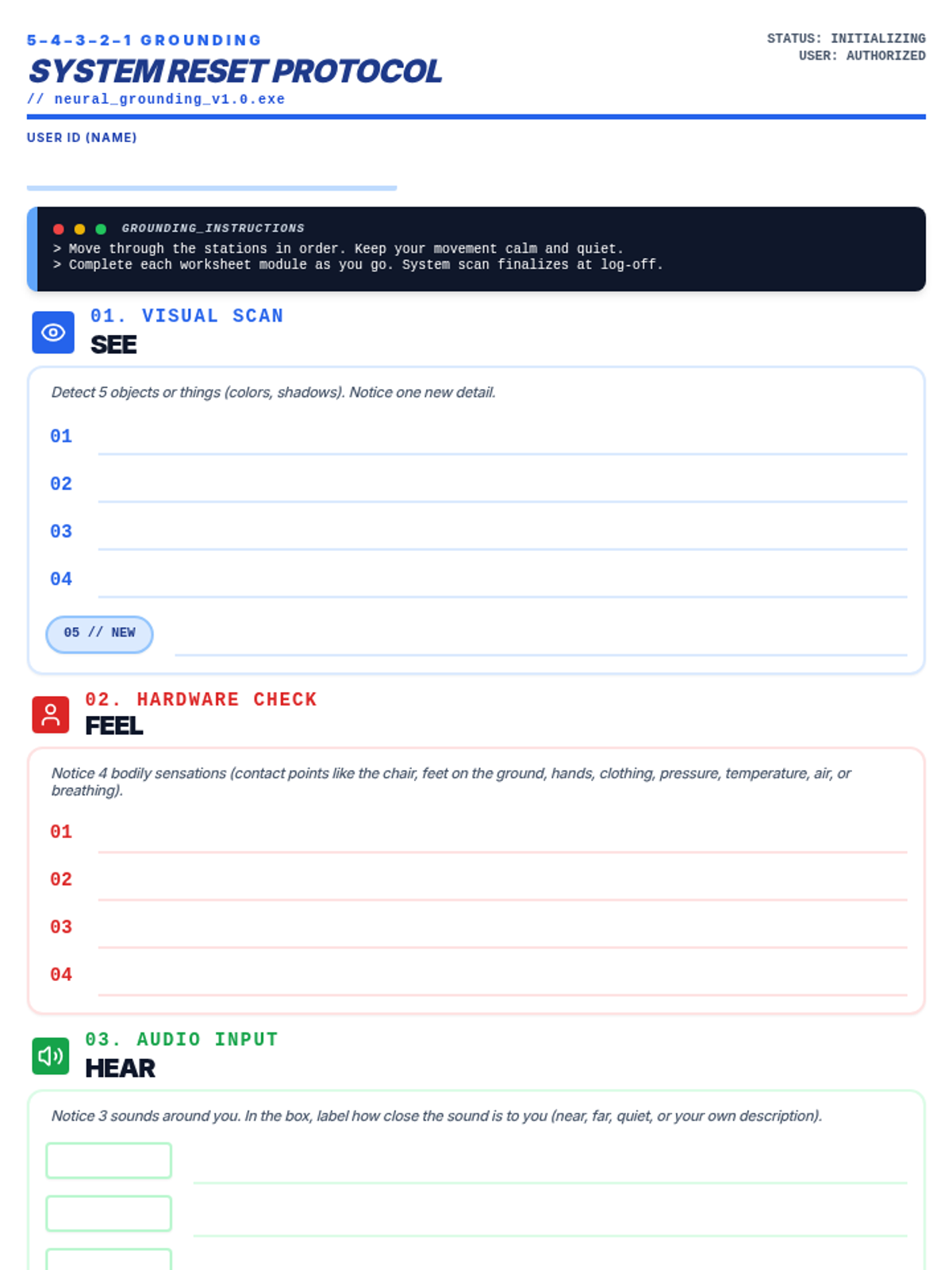
A grounding and mindfulness lesson using a coding-themed 'System Reset' protocol to help students focus and regulate their attention.
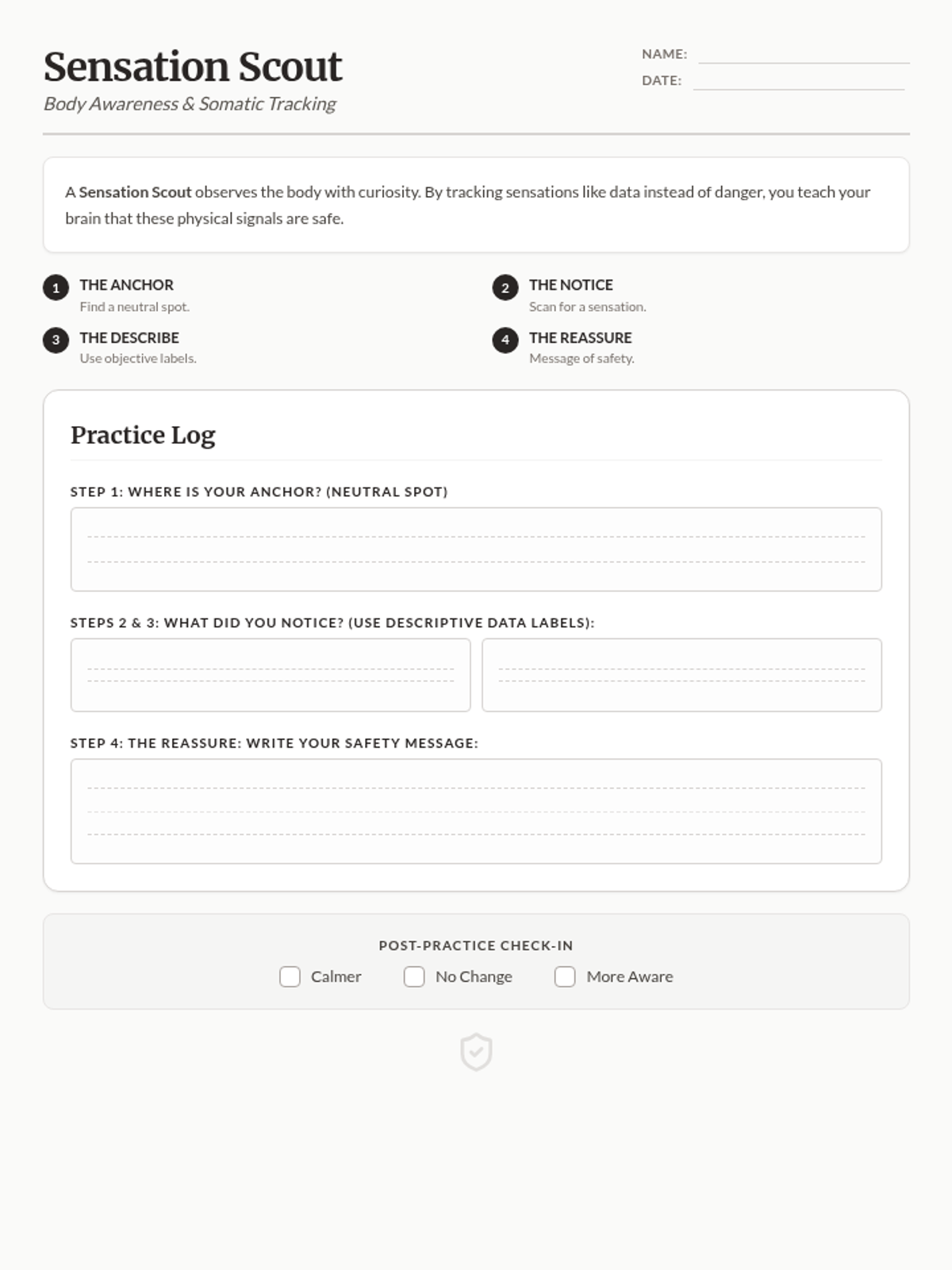
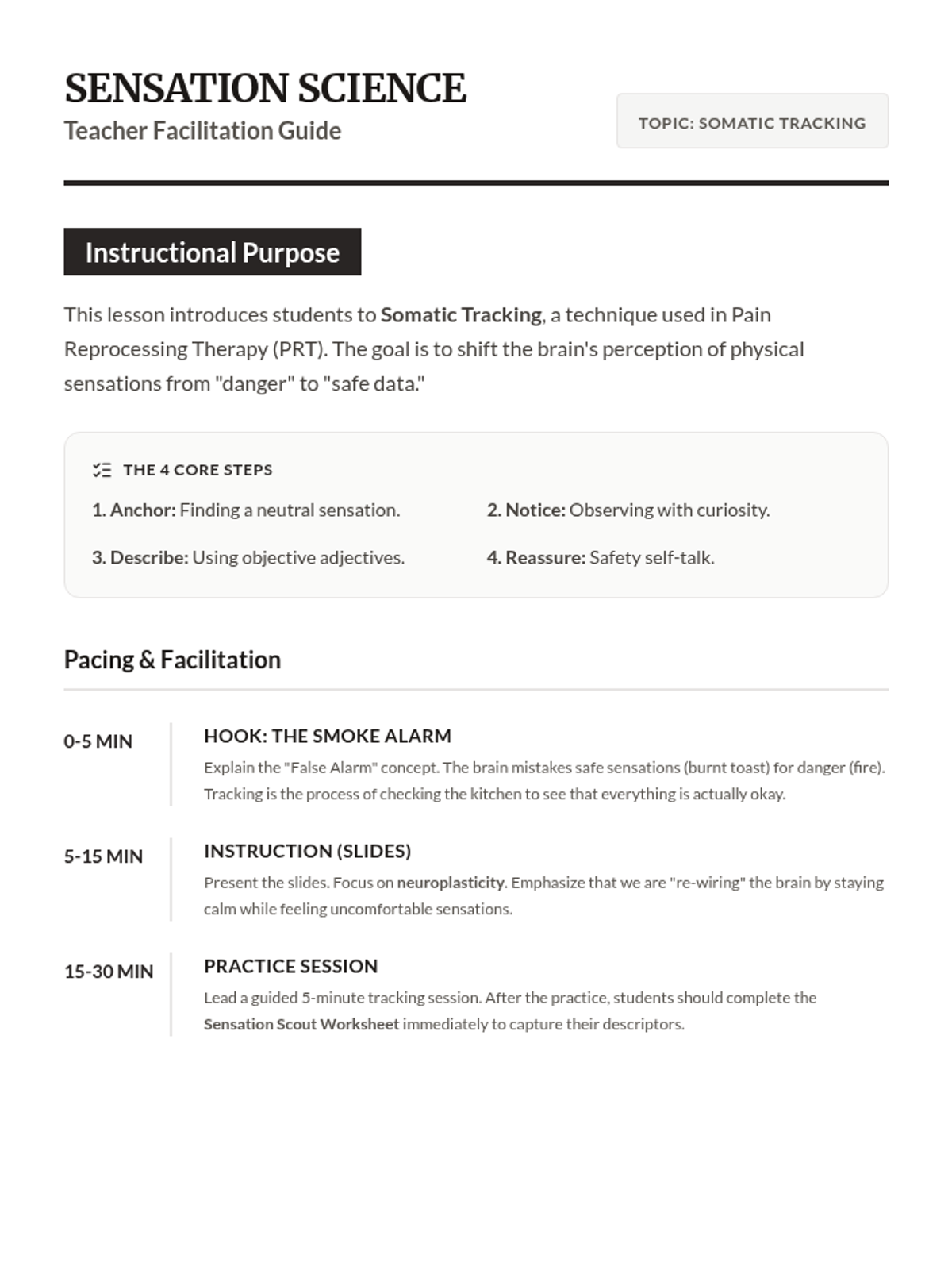
This lesson introduces the fundamentals of somatic tracking, a technique used to re-train the brain's response to physical sensations by observing them through a lens of safety and curiosity. Students will learn the four-step process of anchoring, noticing, describing, and reassuring to build foundational body awareness.
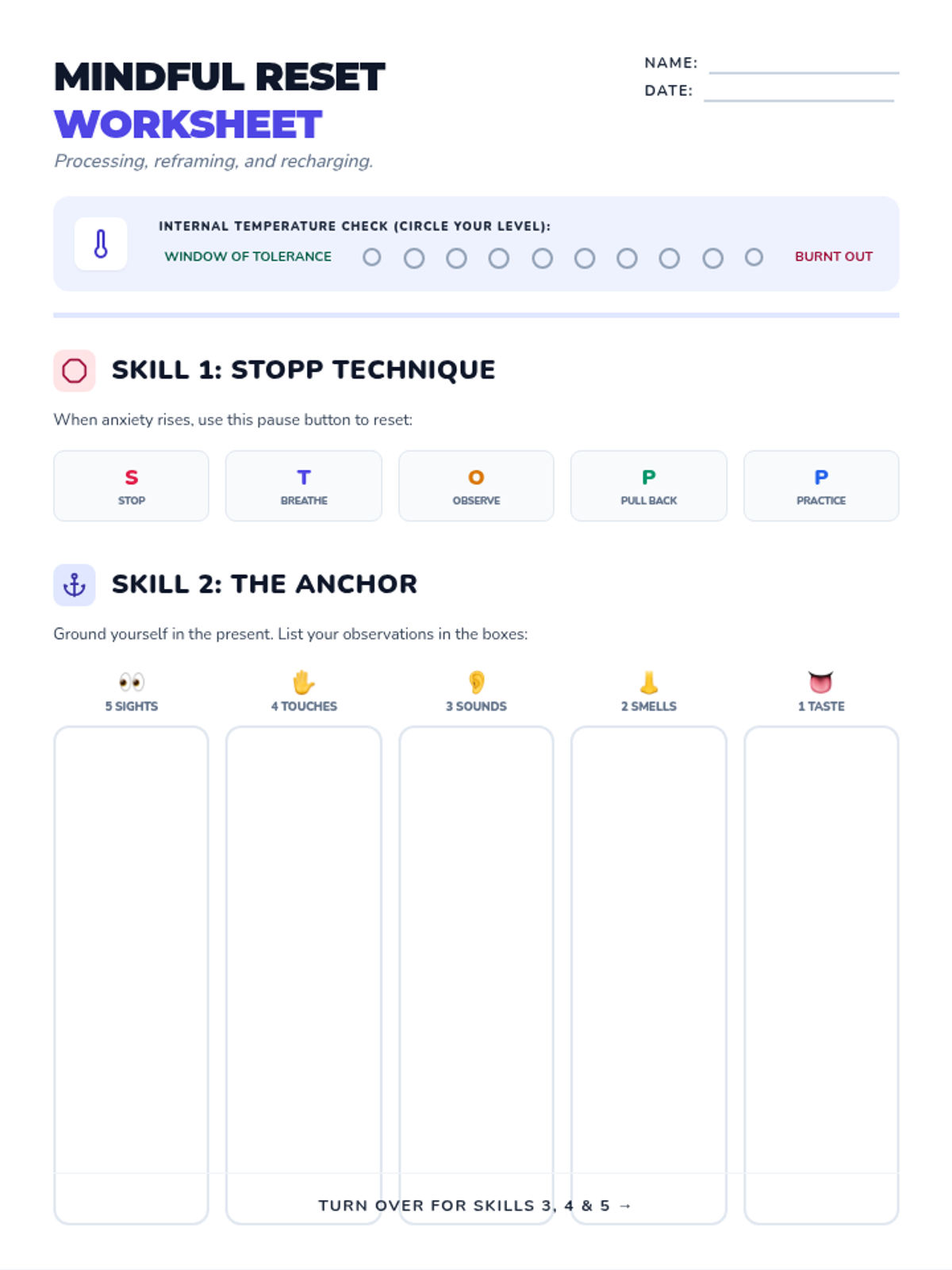
A comprehensive psychoeducational lesson for teenagers on understanding stress, identifying burnout, and applying CBT-based coping strategies including cognitive reframing, behavioral activation, and grounding.
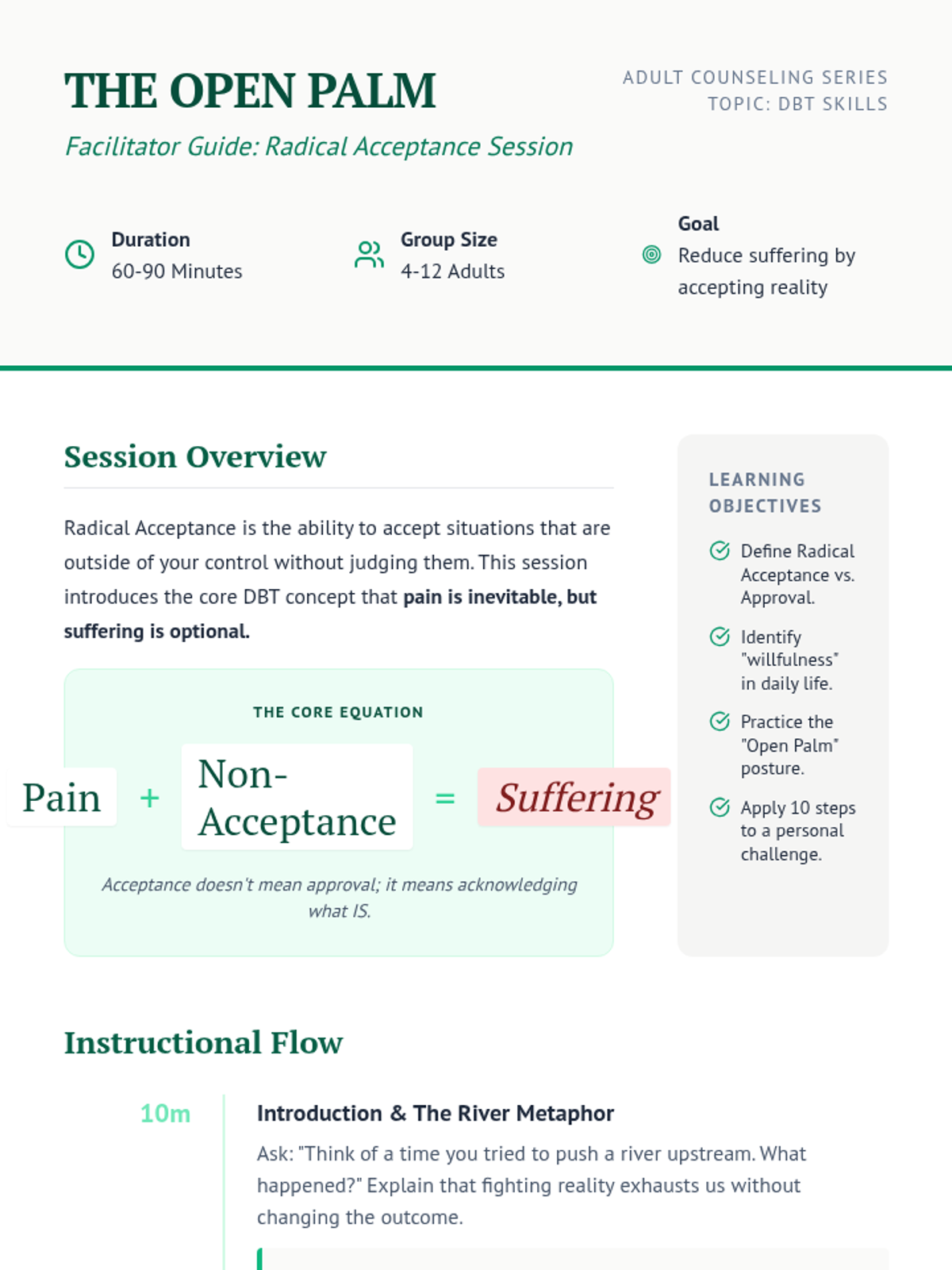
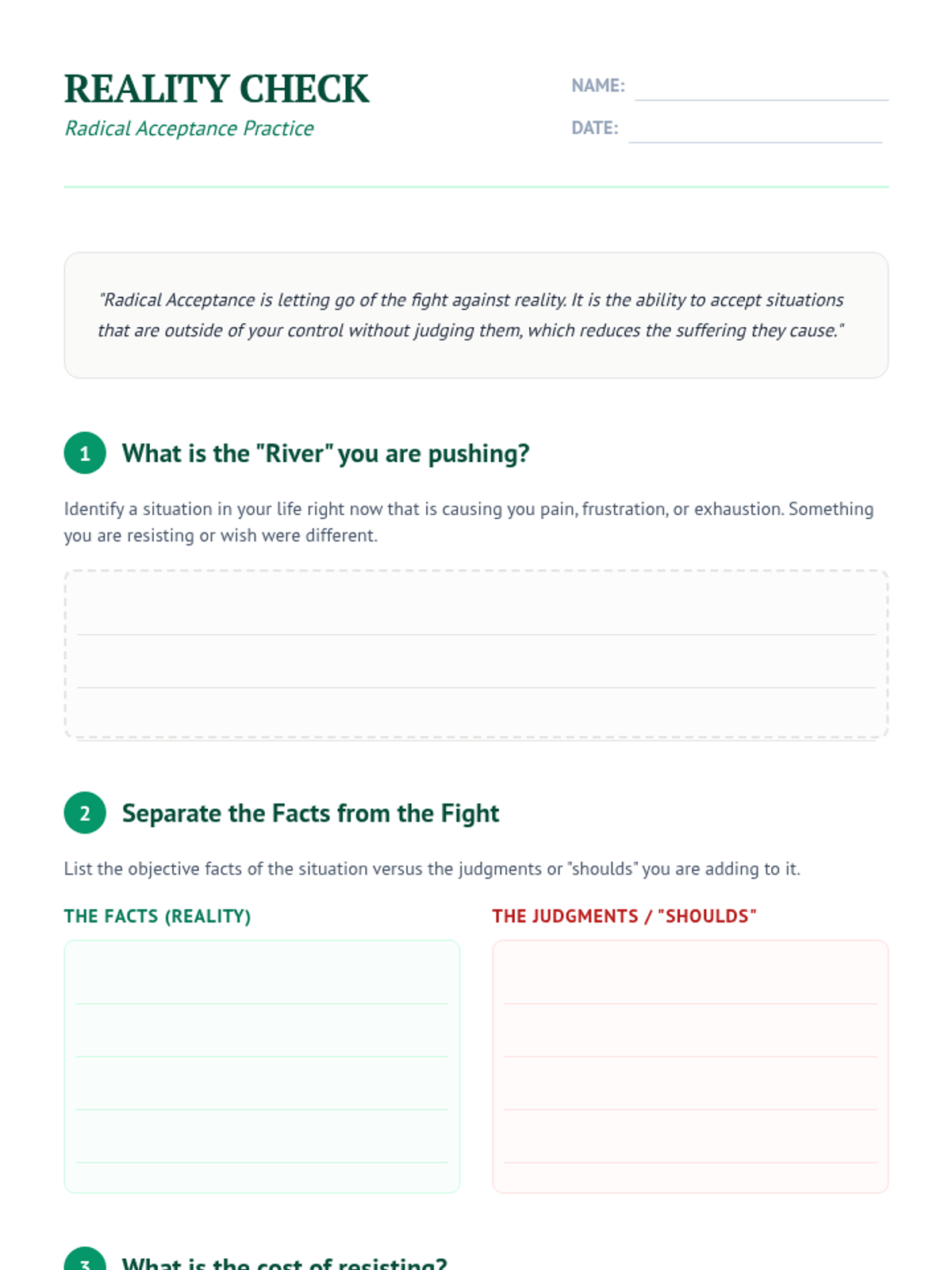
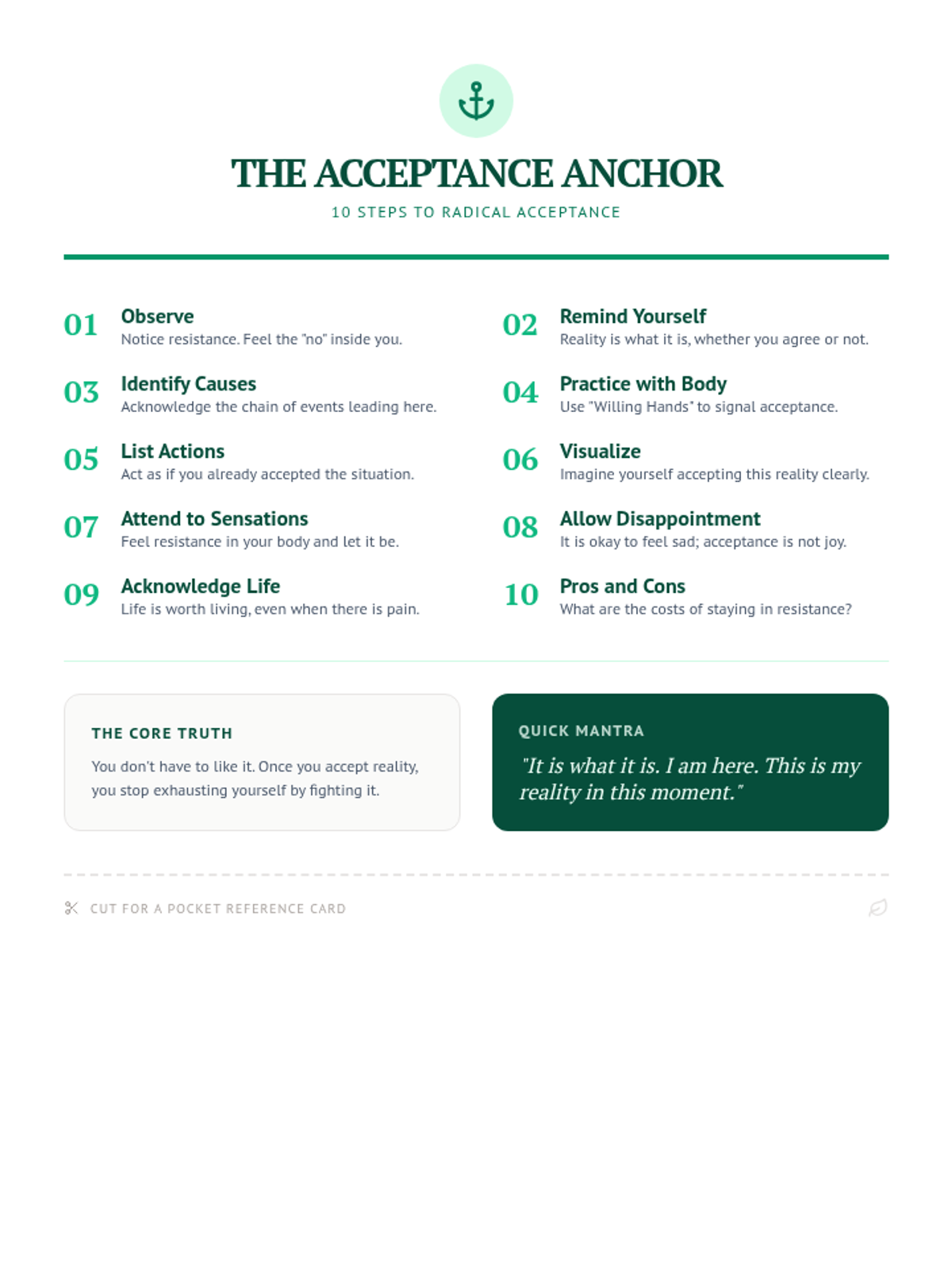
A comprehensive session on Radical Acceptance for adult counseling groups, focusing on the DBT concept of accepting reality without judgment to reduce suffering. The lesson includes a facilitator guide, visual slides, a participant worksheet, and a reference anchor sheet.
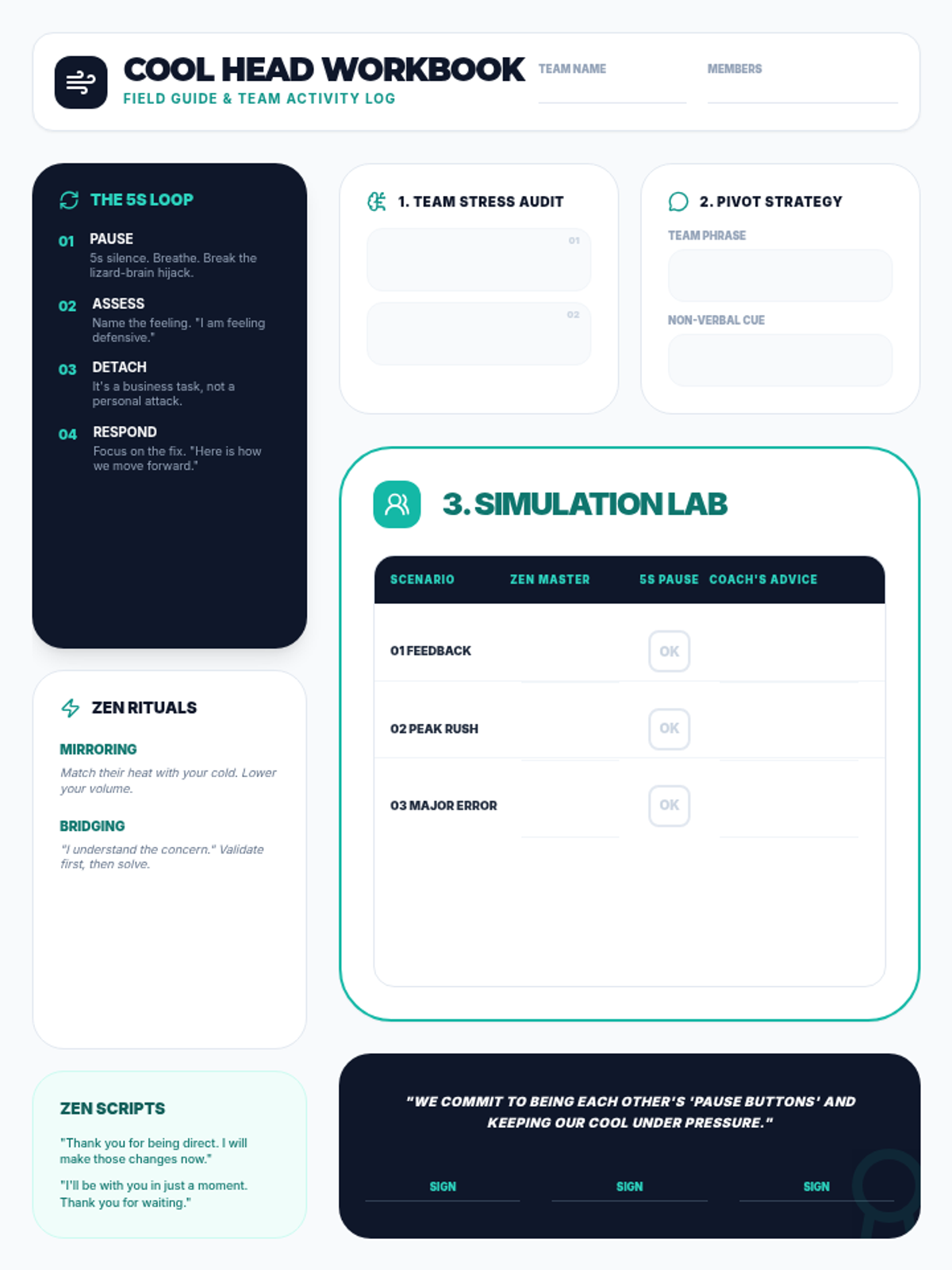
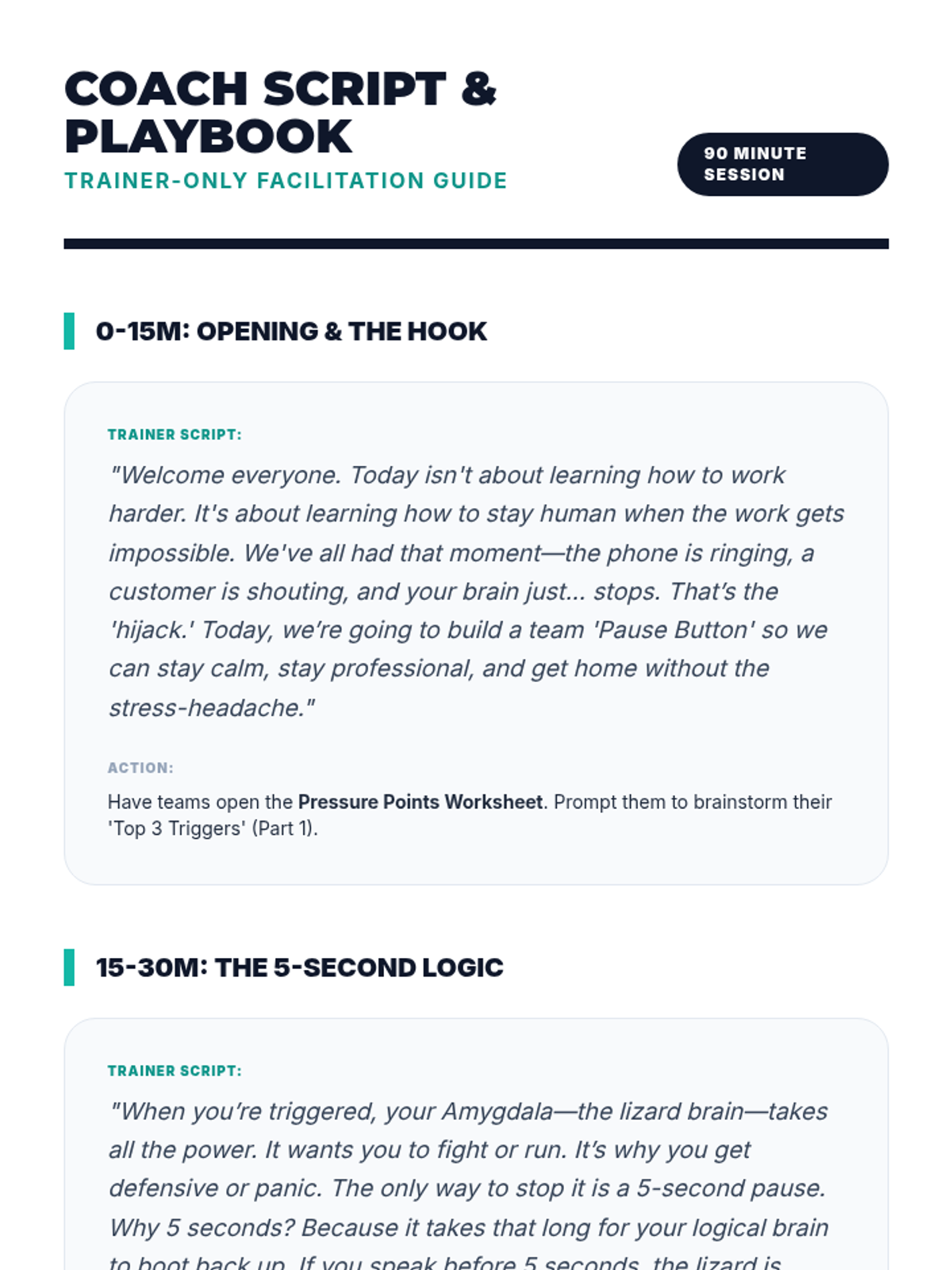
A training module focused on maintaining professional composure during high-stress workplace situations, including handling feedback and managing rushes.
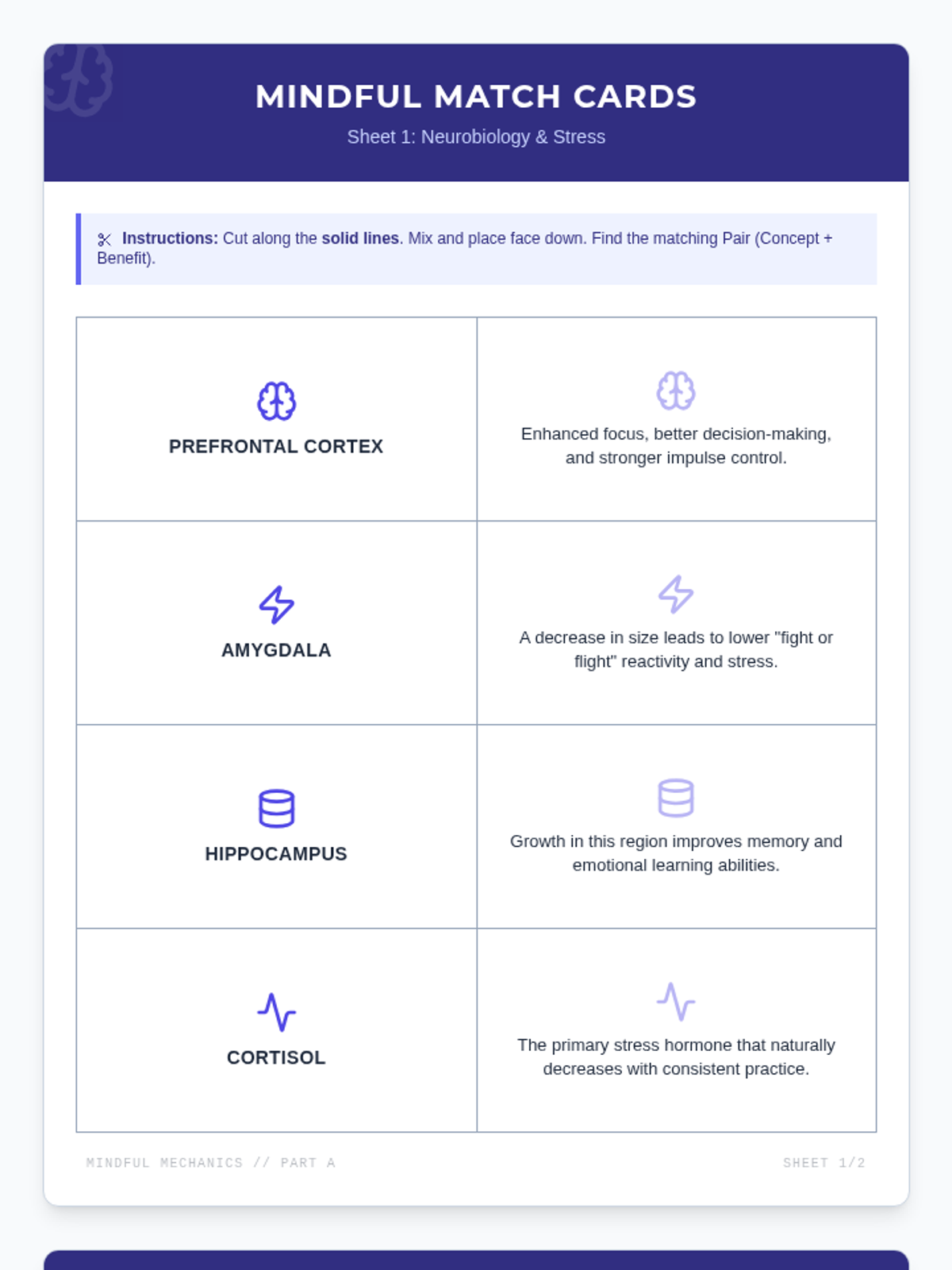
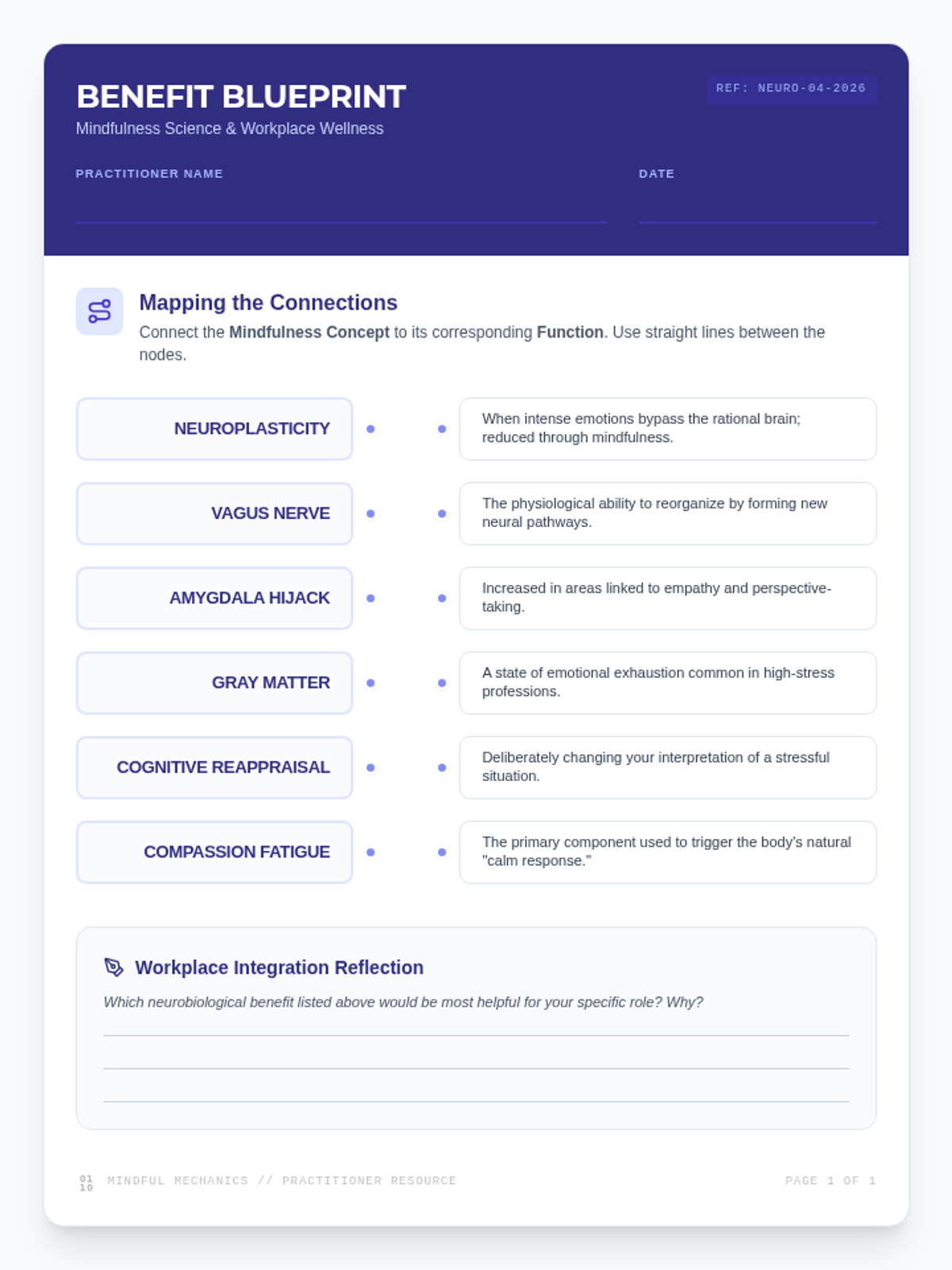
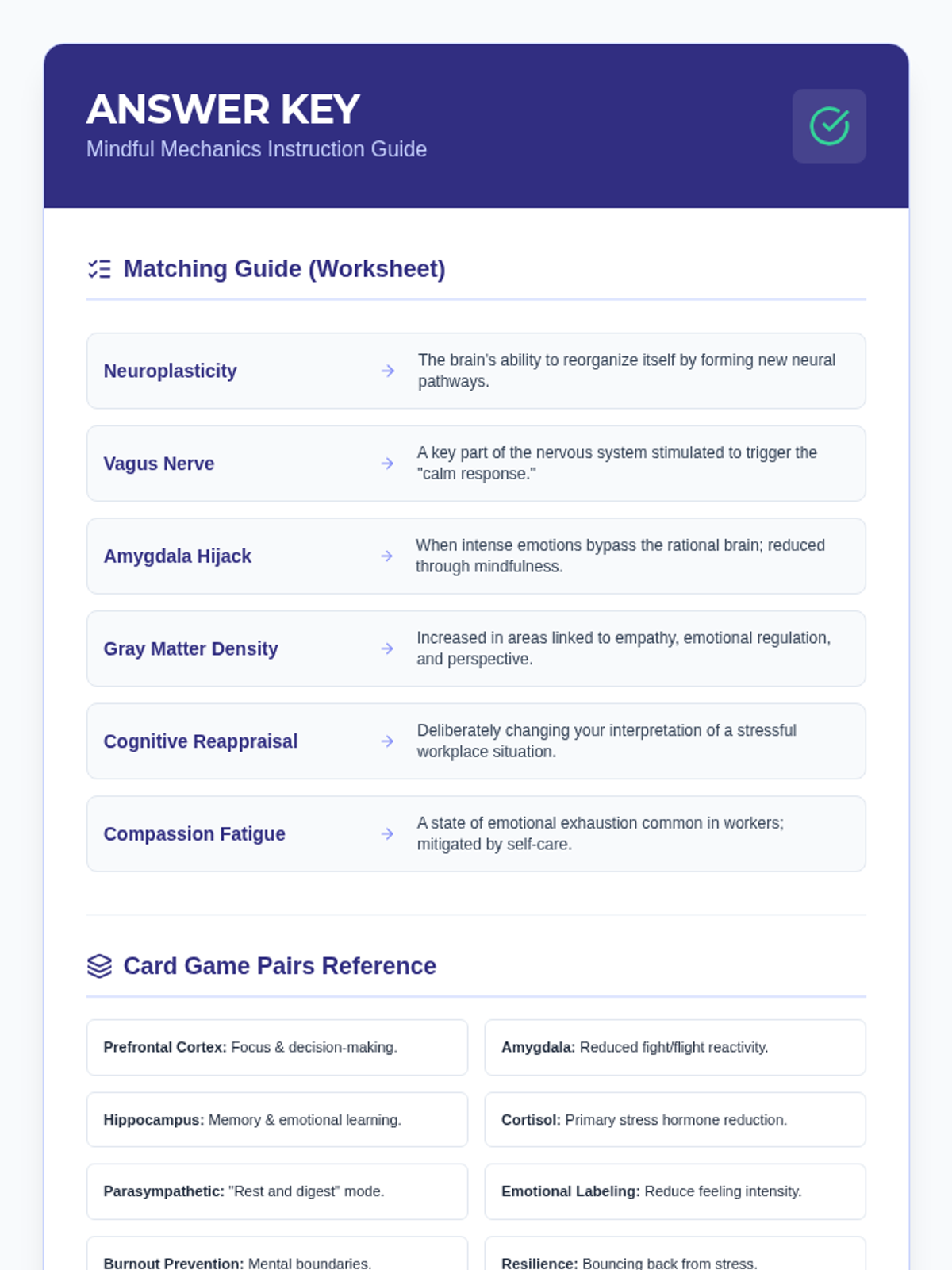
A lesson exploring the tangible physiological and psychological benefits of mindfulness, focusing on brain science, stress reduction, and workplace wellbeing.
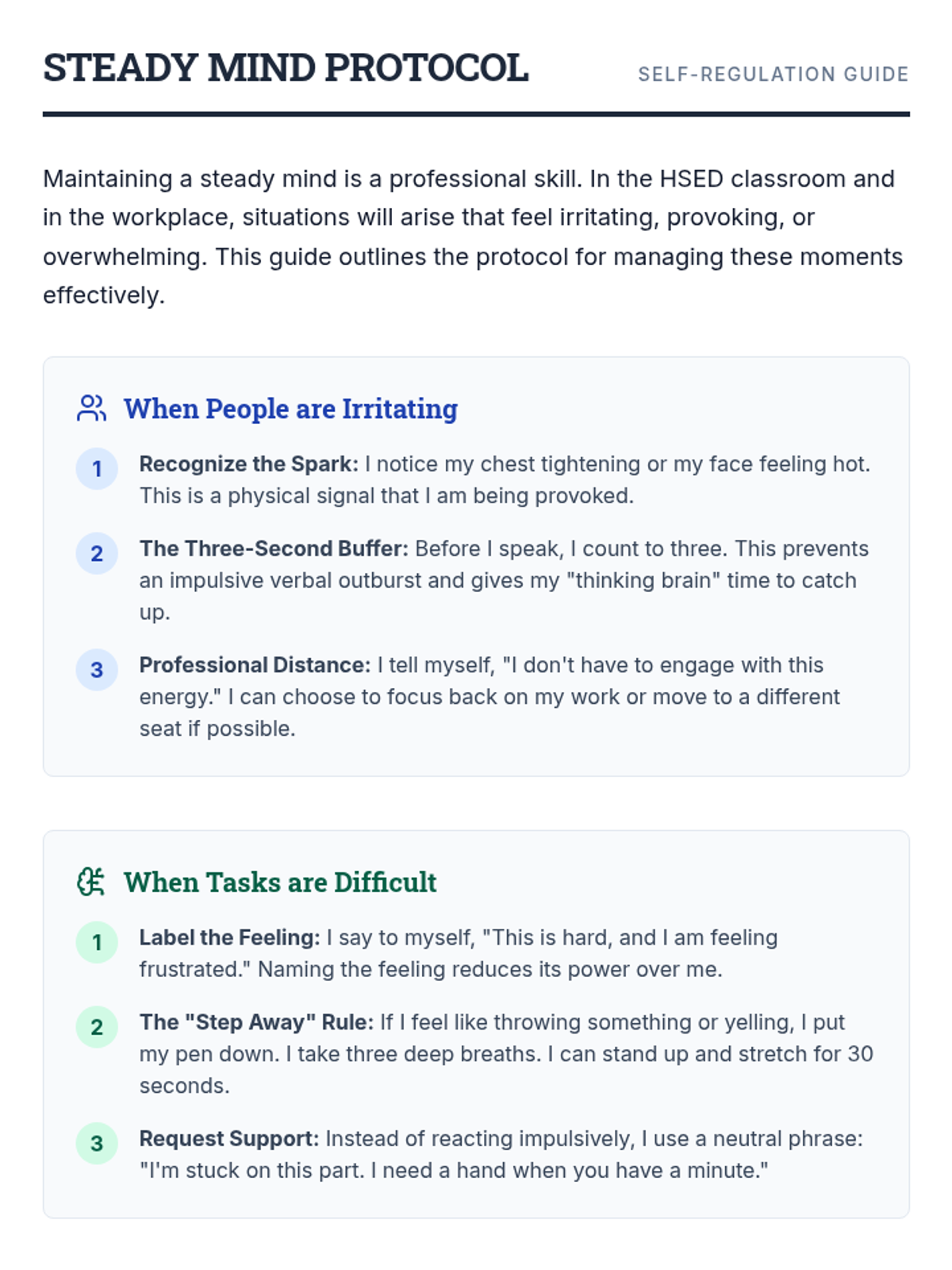
A comprehensive set of self-regulation tools for adult learners, focusing on managing frustration, impulsivity, and social provocation in educational and professional settings.
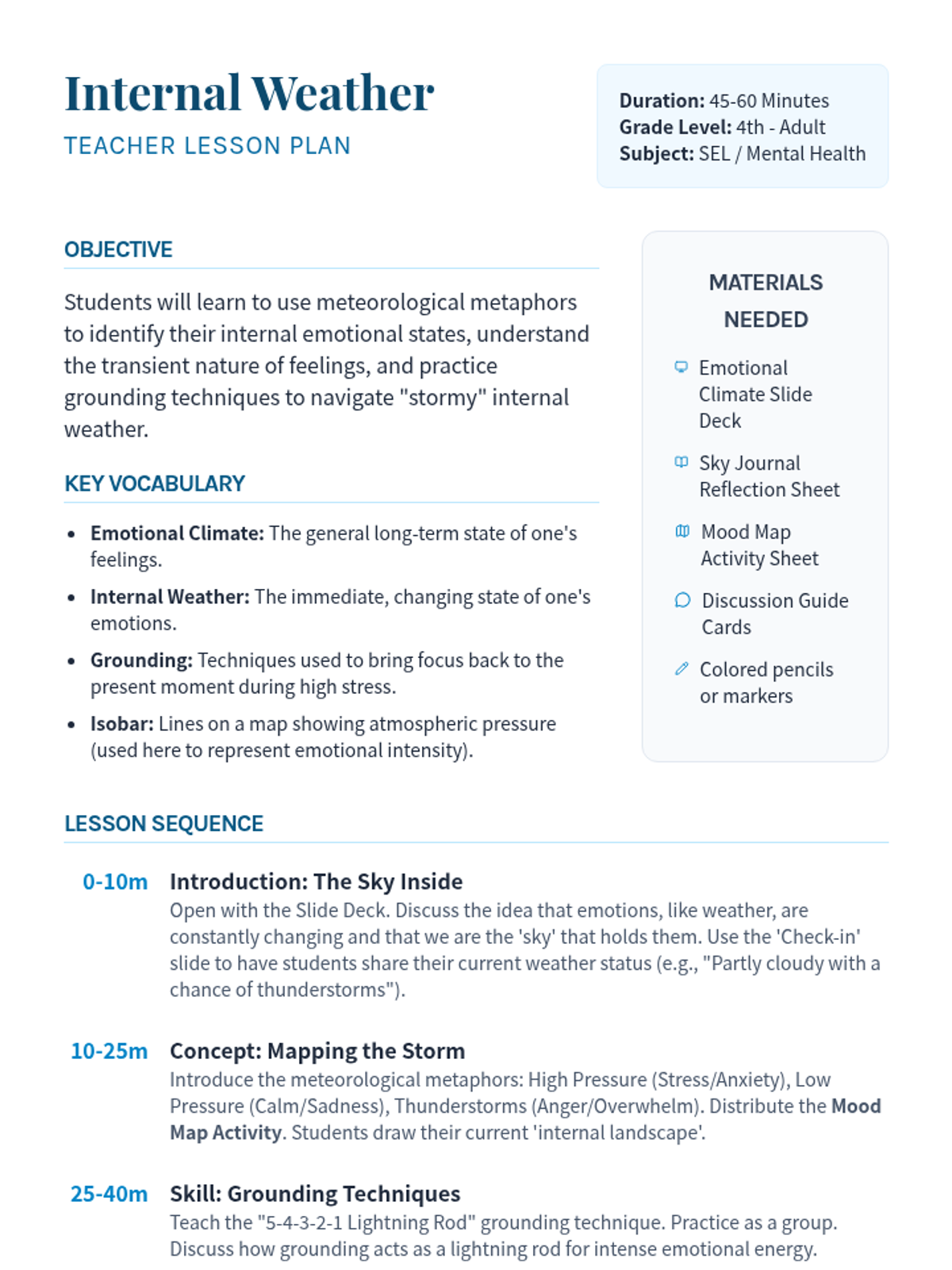
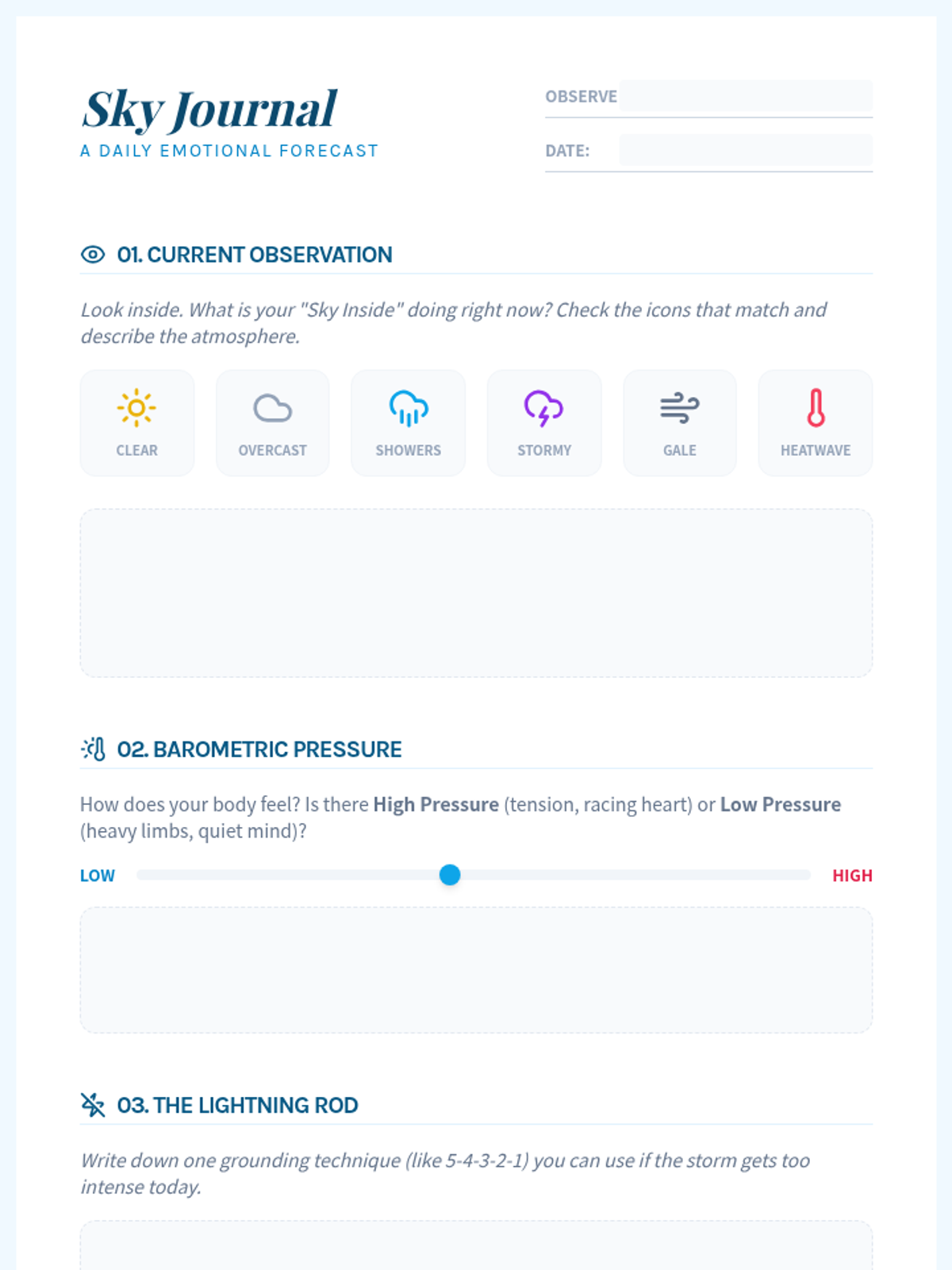
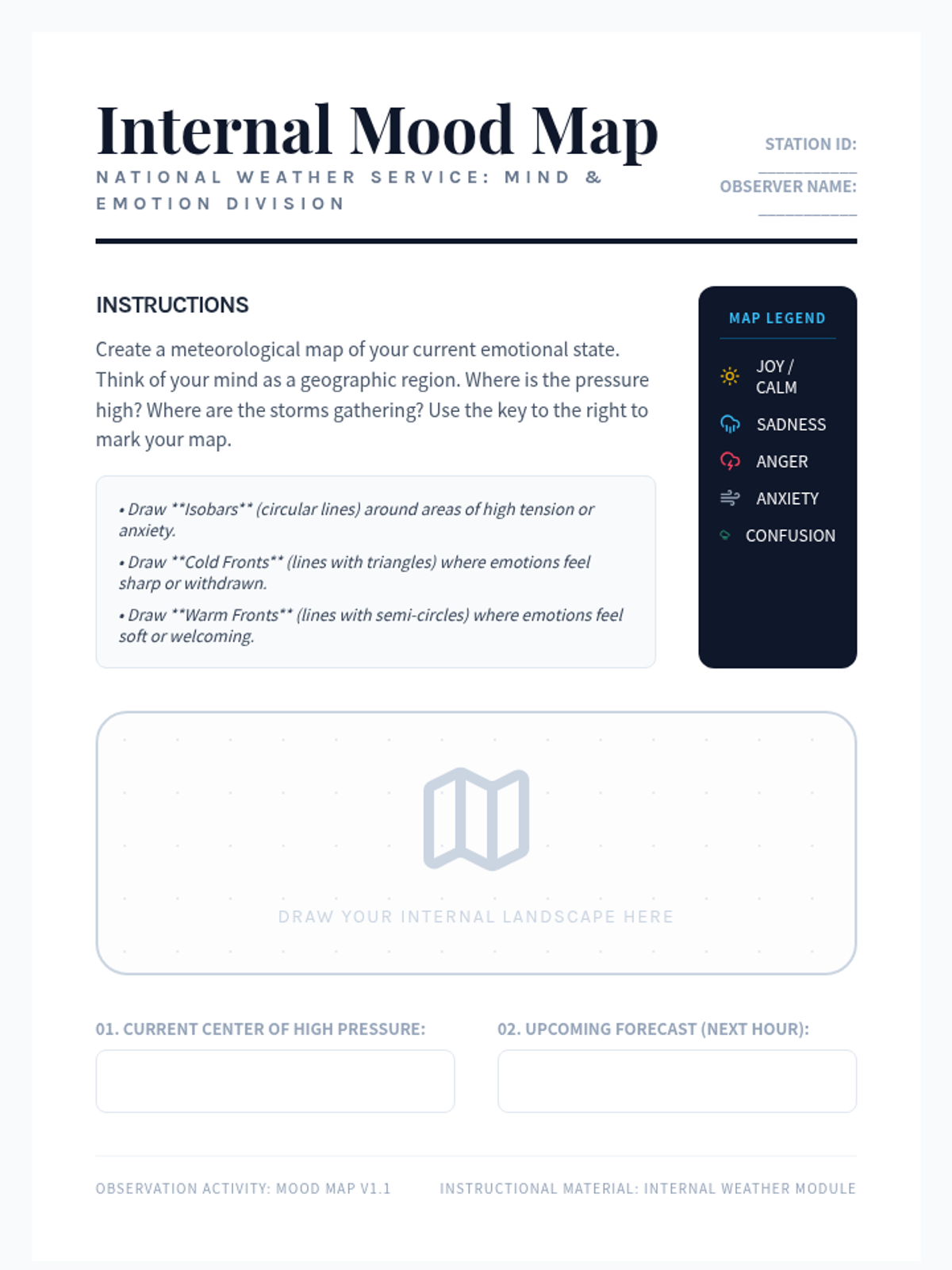
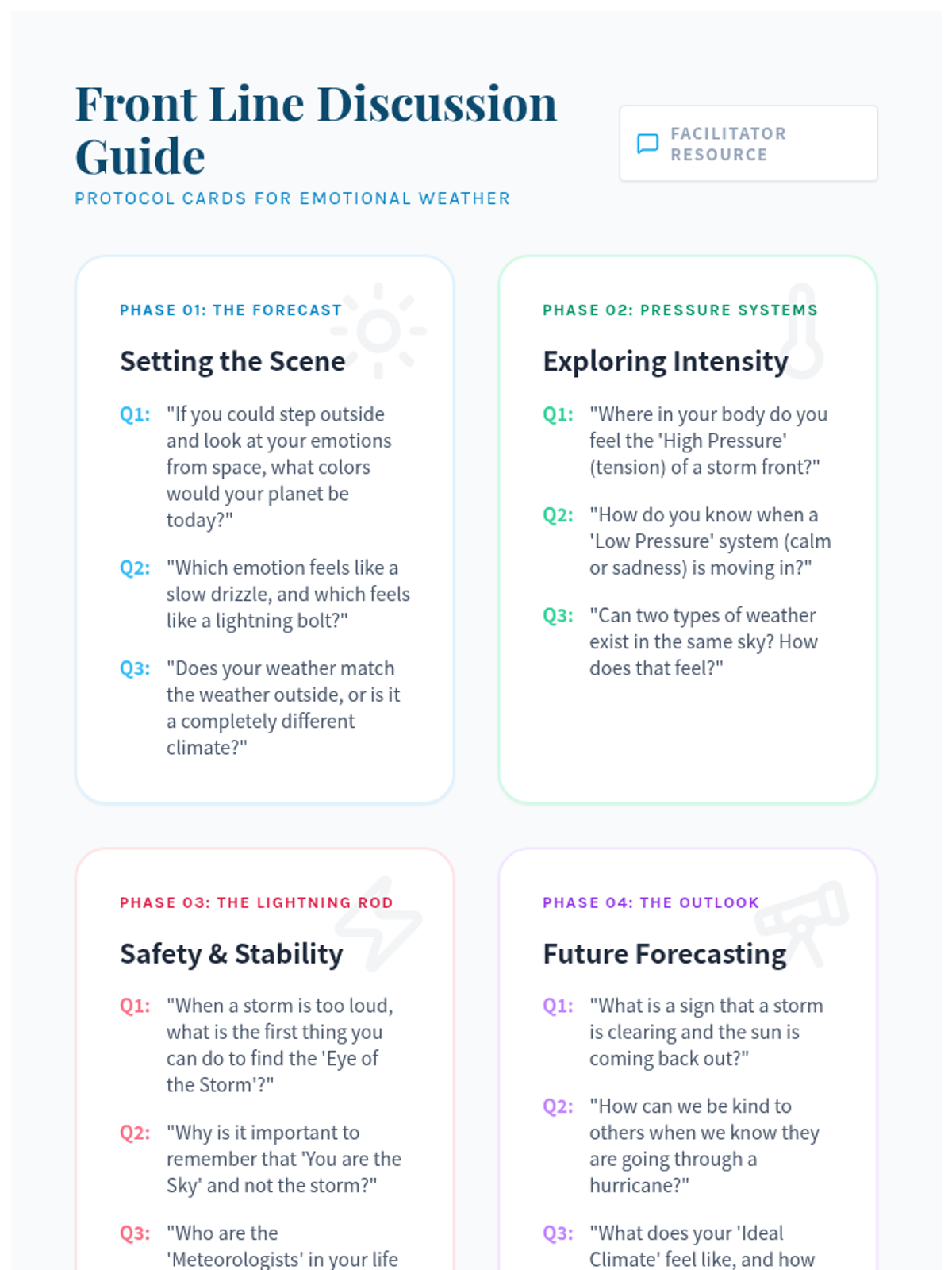
A social-emotional learning lesson that uses weather metaphors to help students identify, track, and regulate their emotions through 'internal forecasting' and grounding techniques.
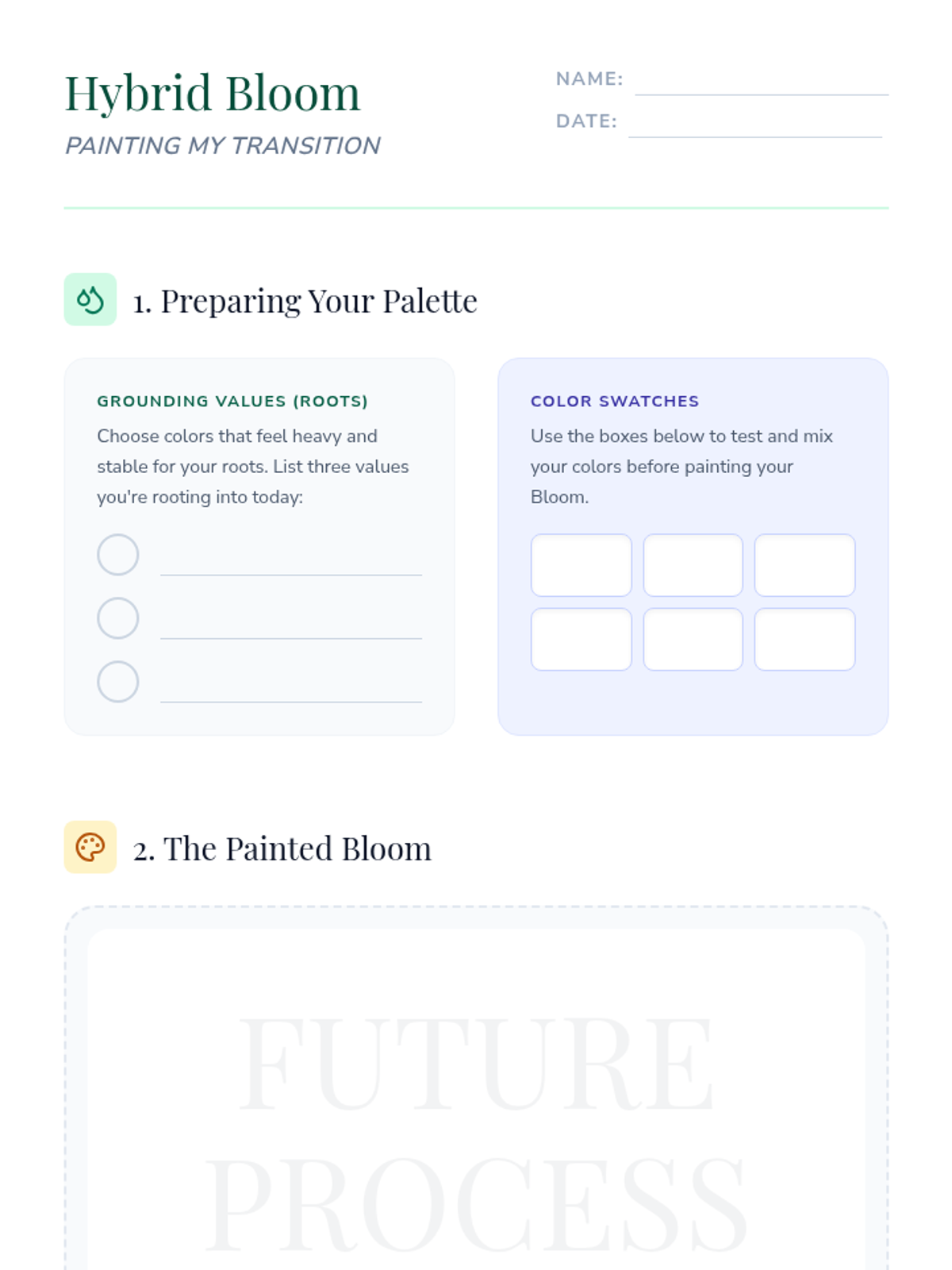
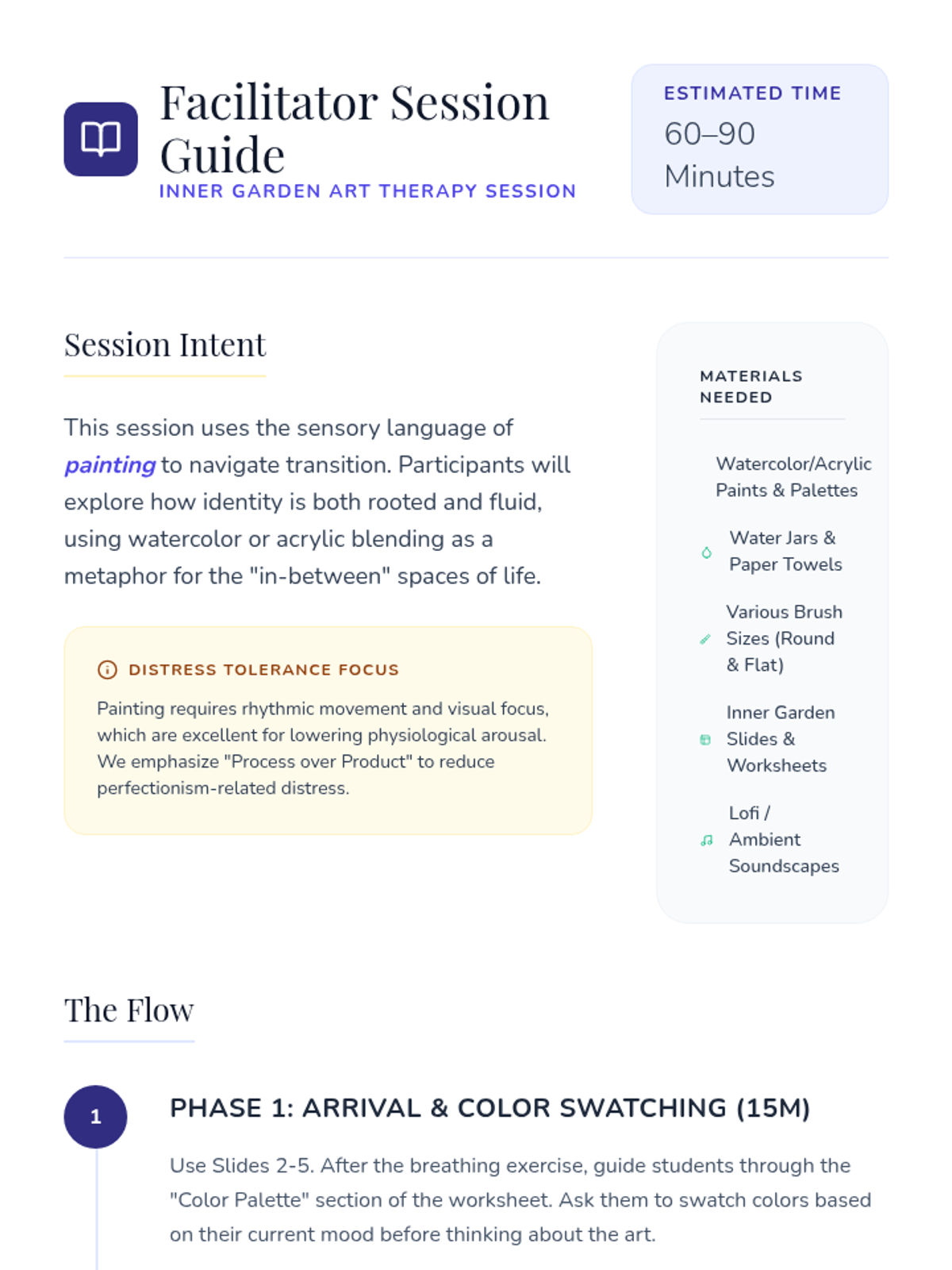
An art therapy session focused on exploring self-identity, navigating emotional transitions, and building distress tolerance through creative expression and mindfulness.
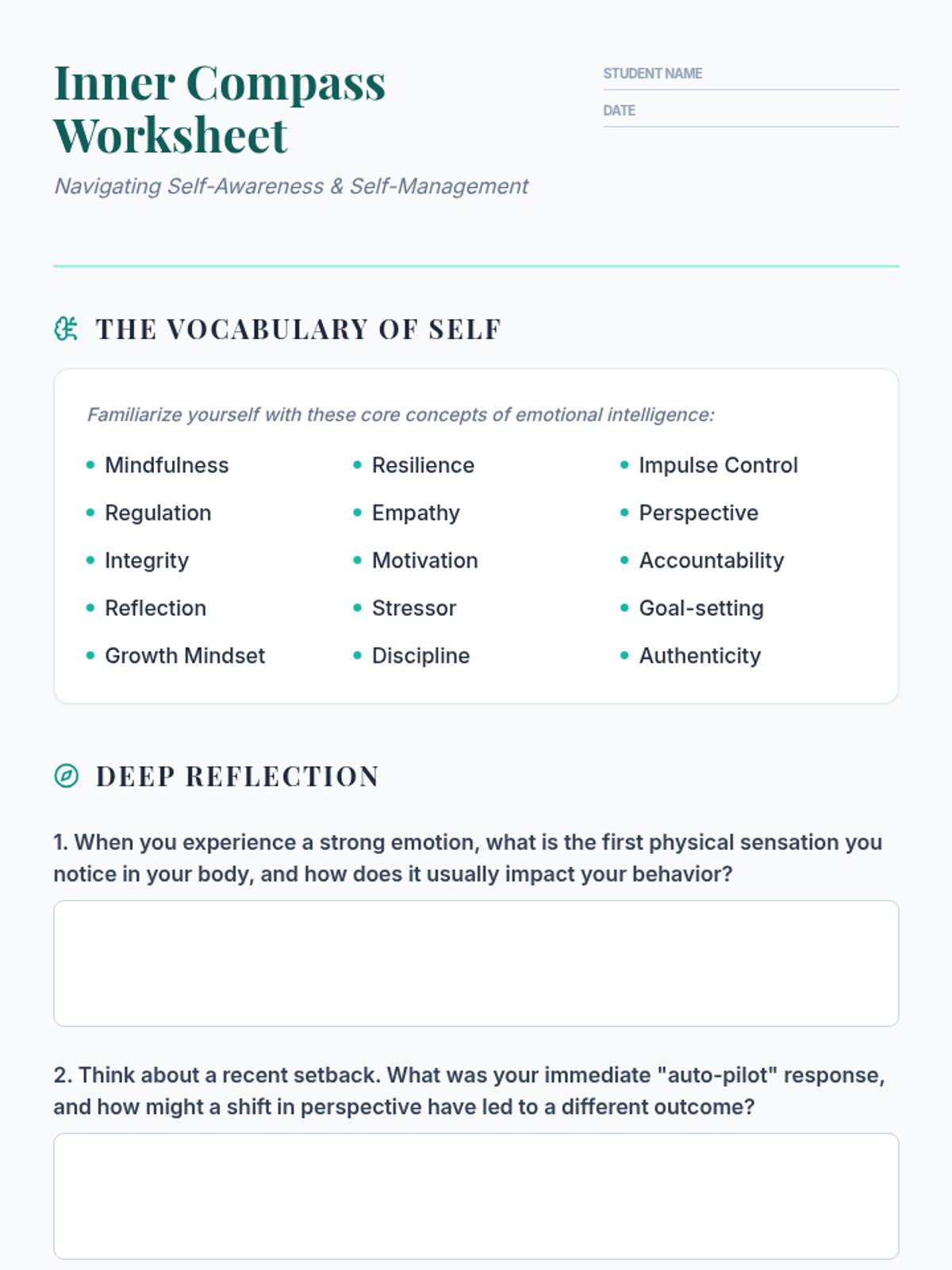
A lesson focused on developing core self-awareness and self-management skills through vocabulary and deep reflection.
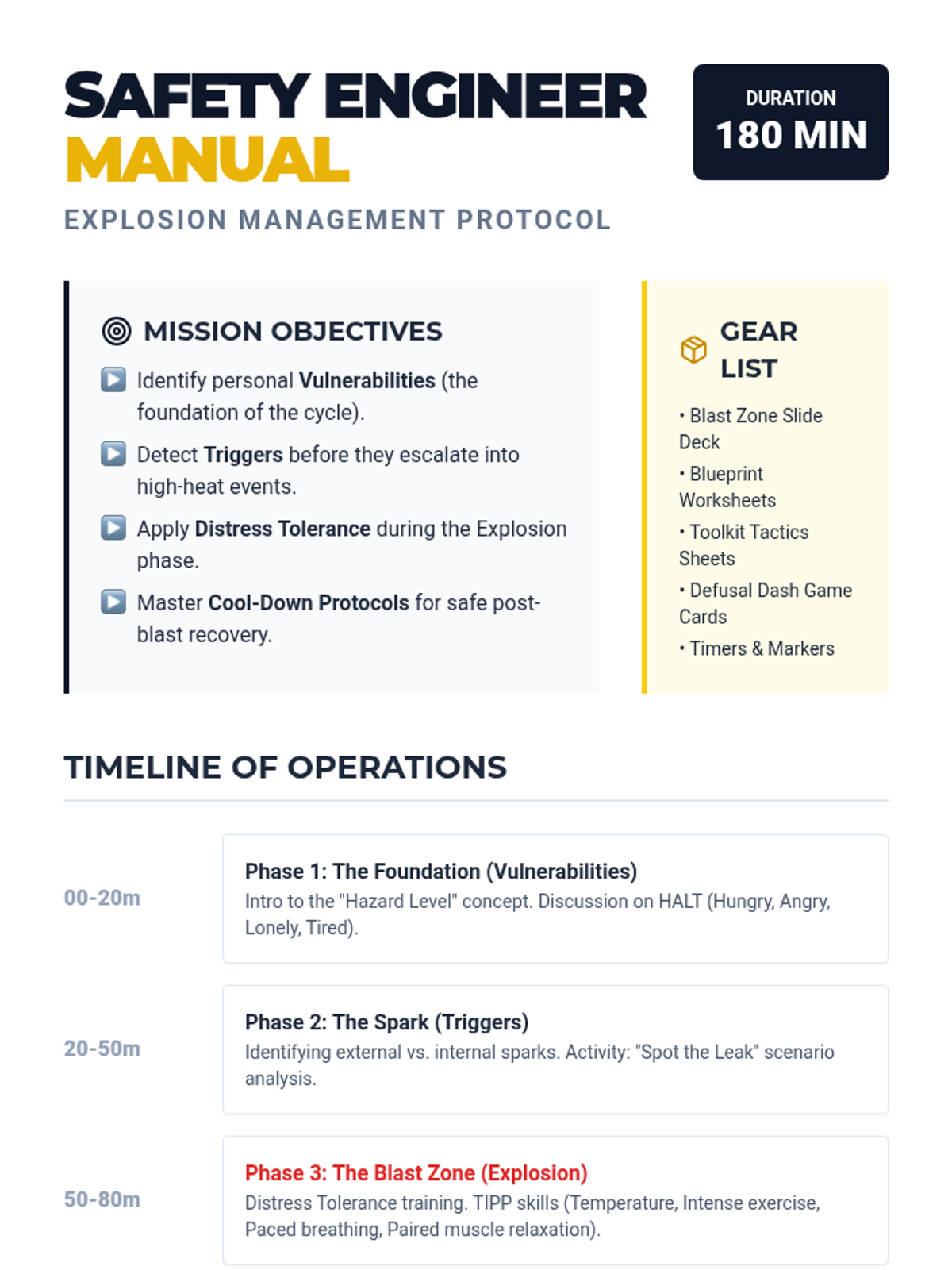
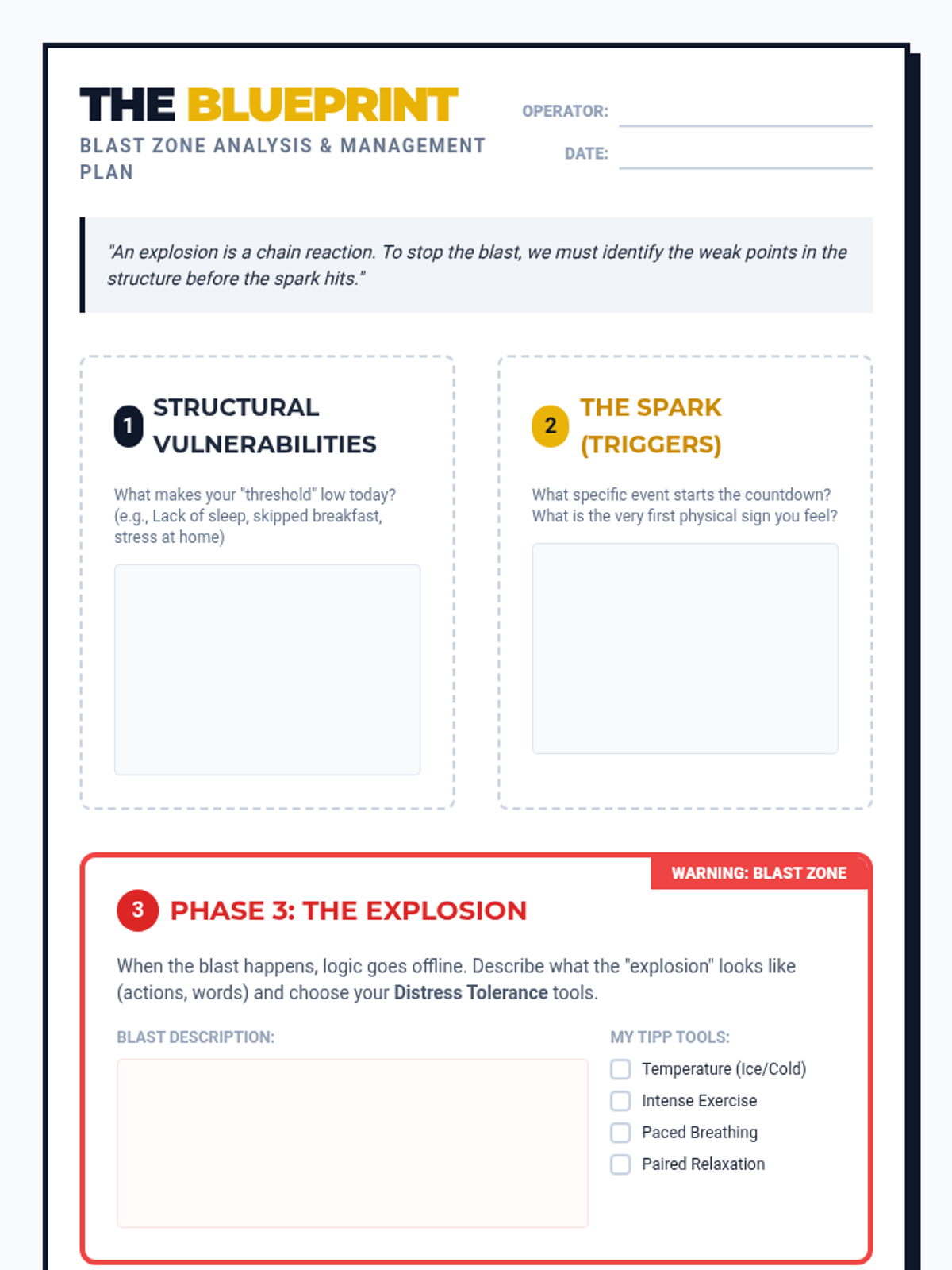
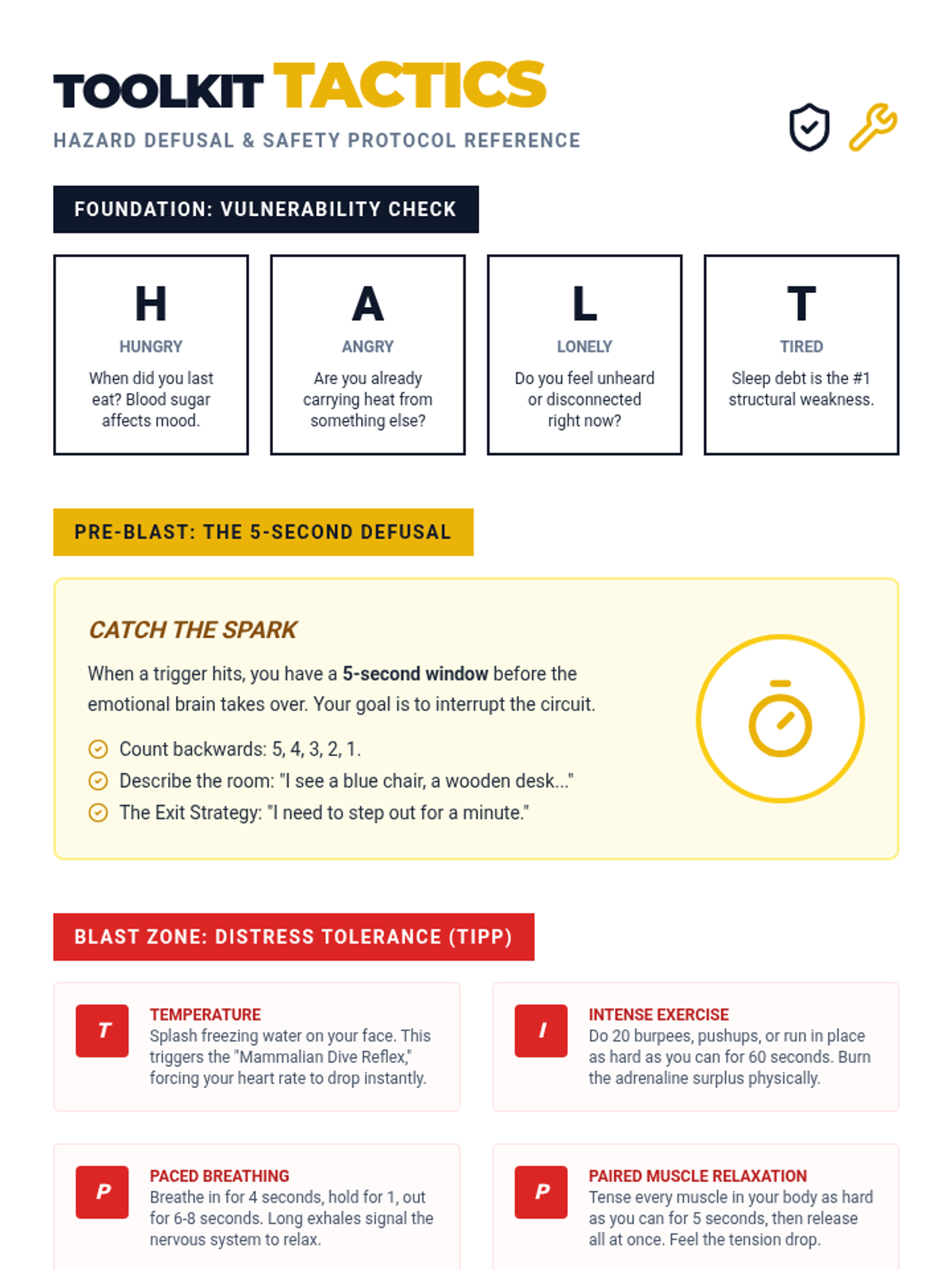
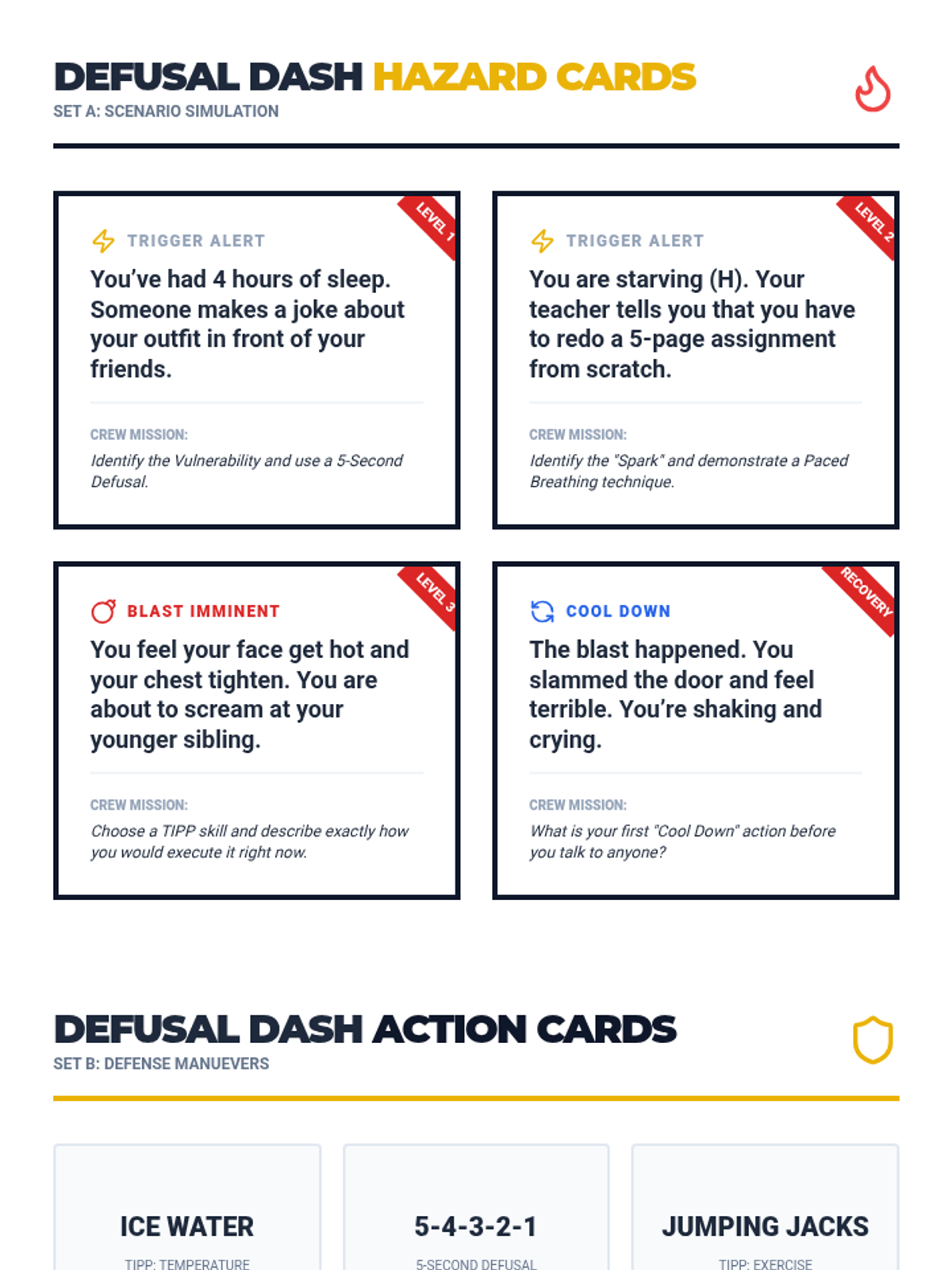
A comprehensive 3-hour workshop on emotional regulation, focusing on identifying vulnerabilities, triggers, the explosion phase, and recovery strategies through a hazard management lens.
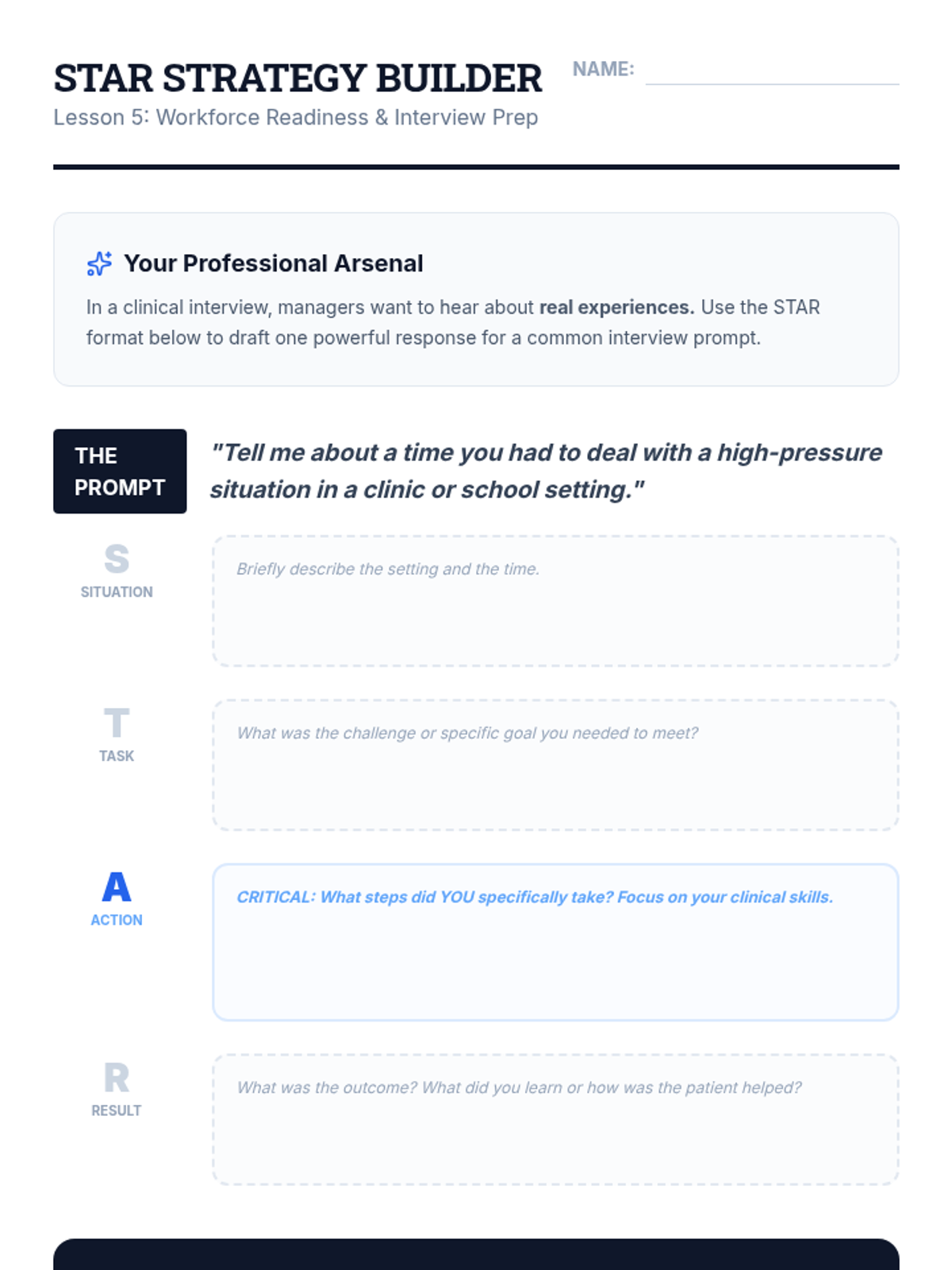
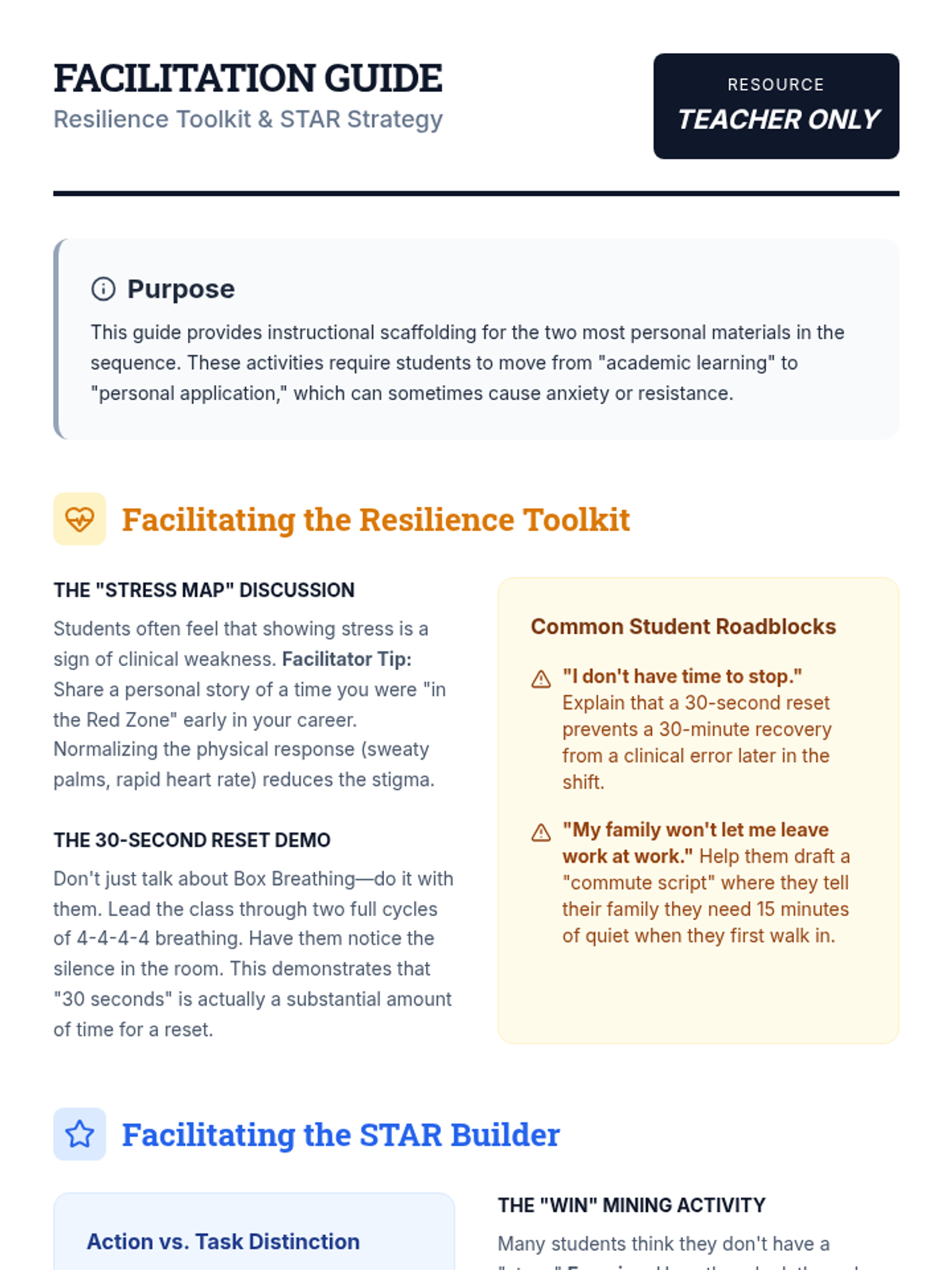
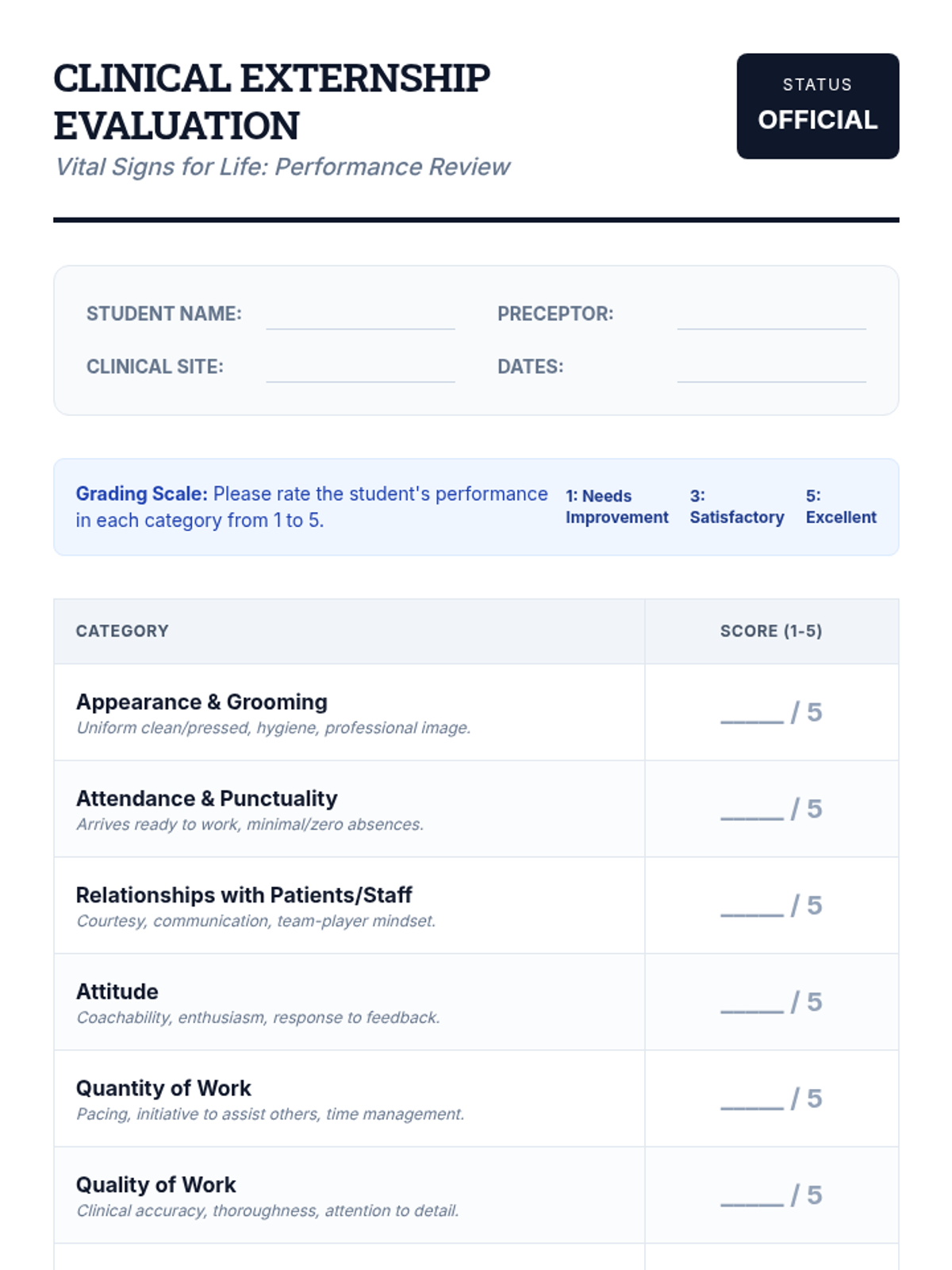
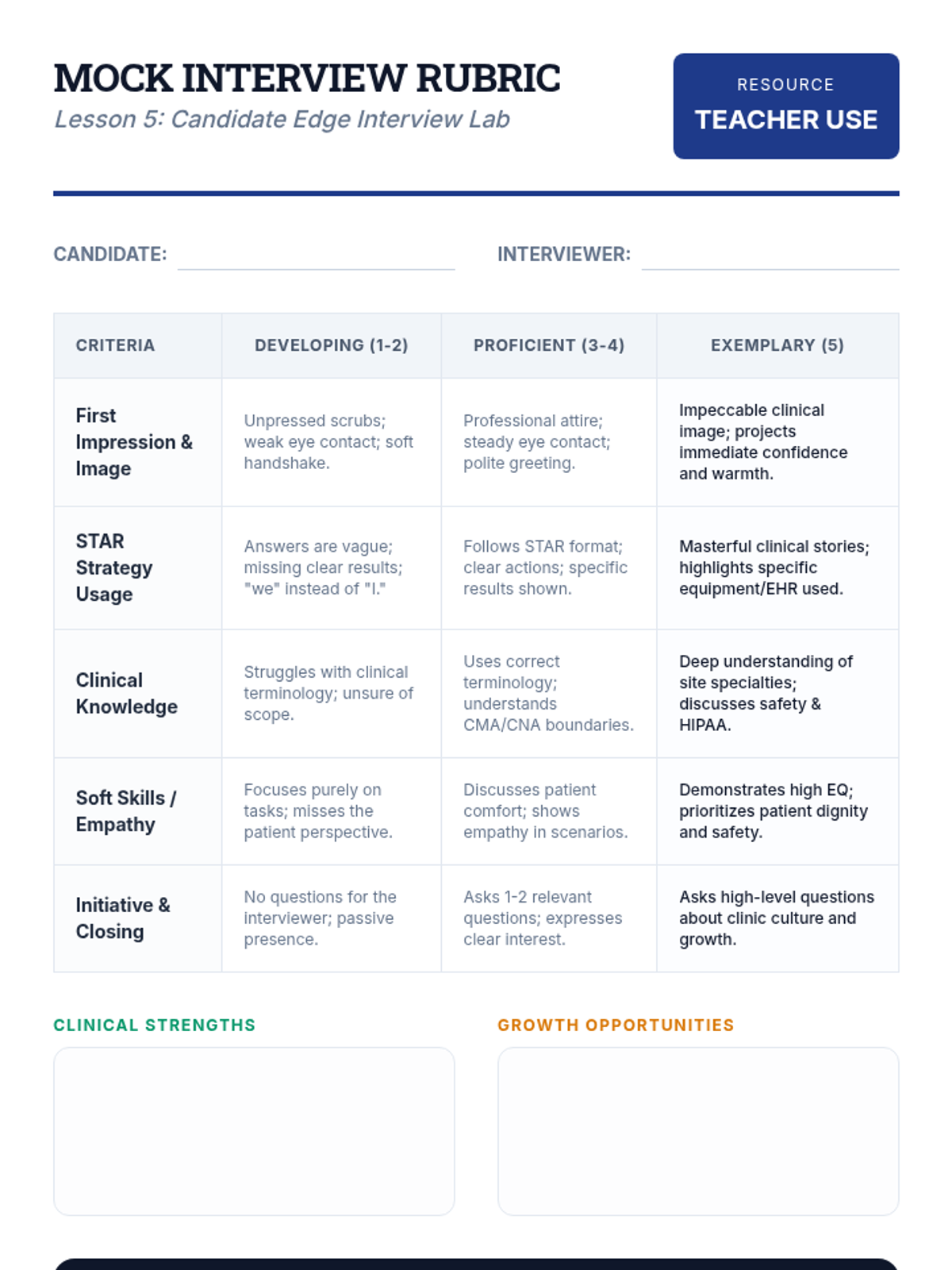
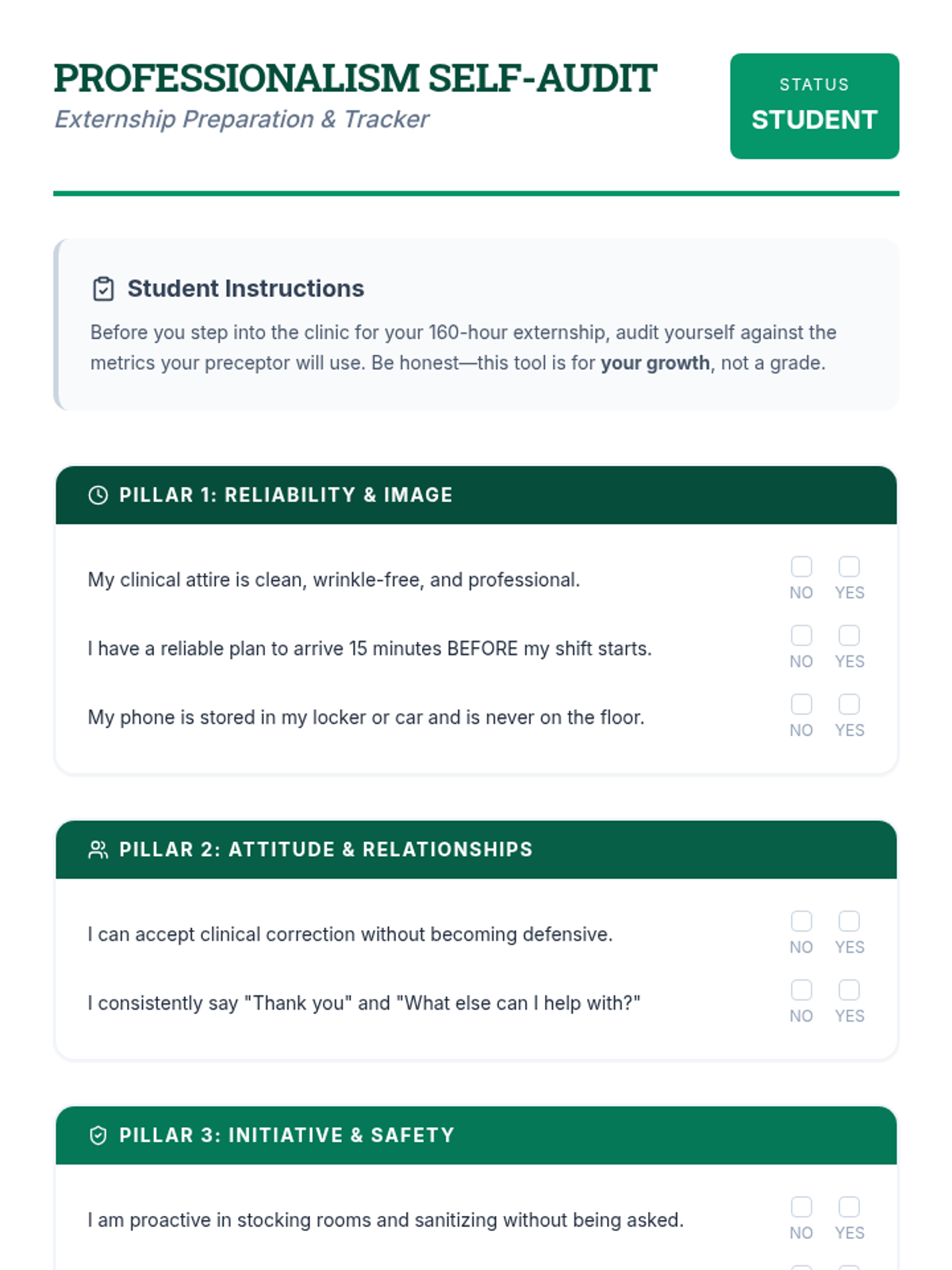
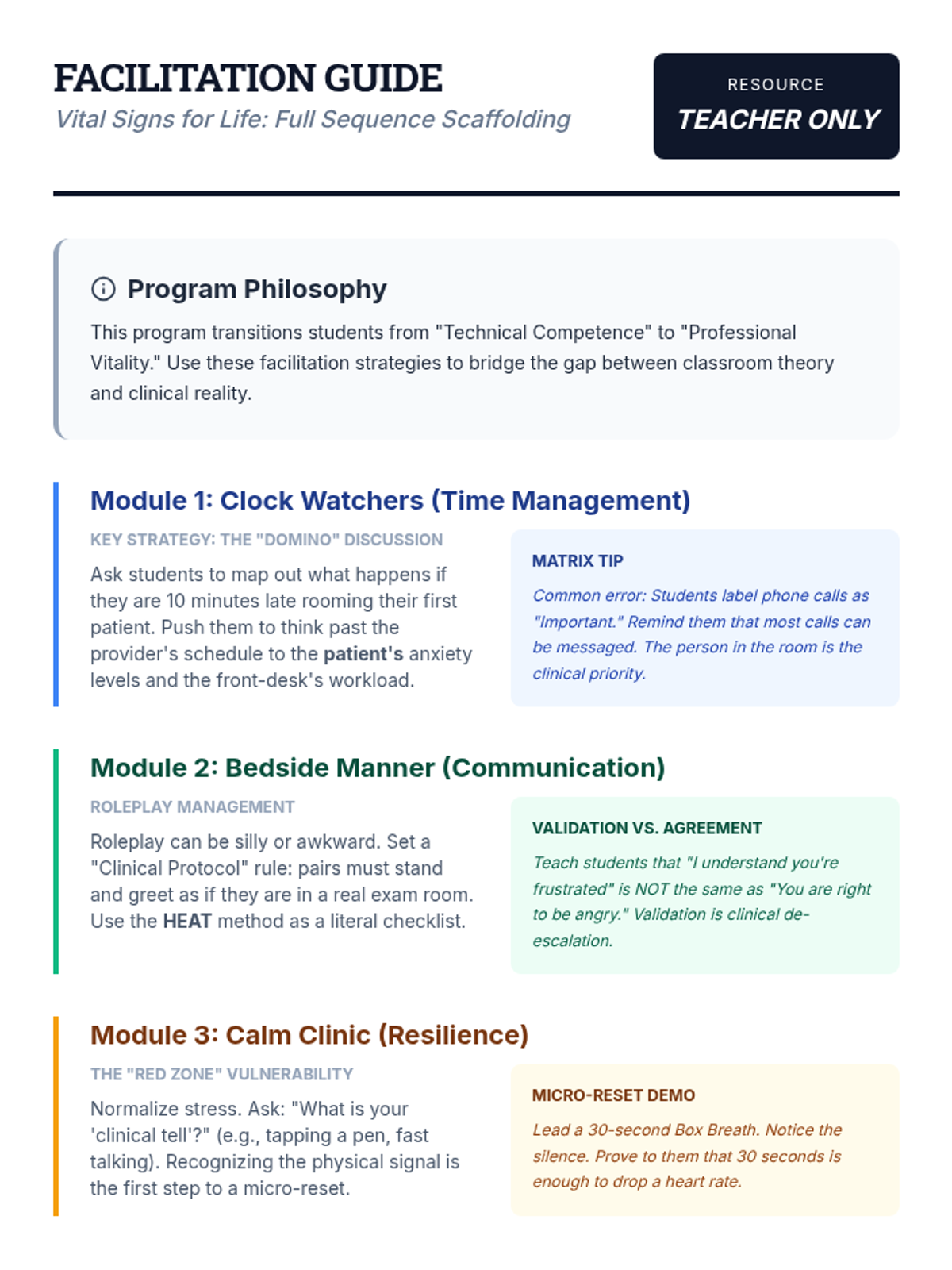
Focuses on preparing students for the transition from classroom to clinic, covering professional branding, resume highlights, and high-impact interview strategies using the STAR method.
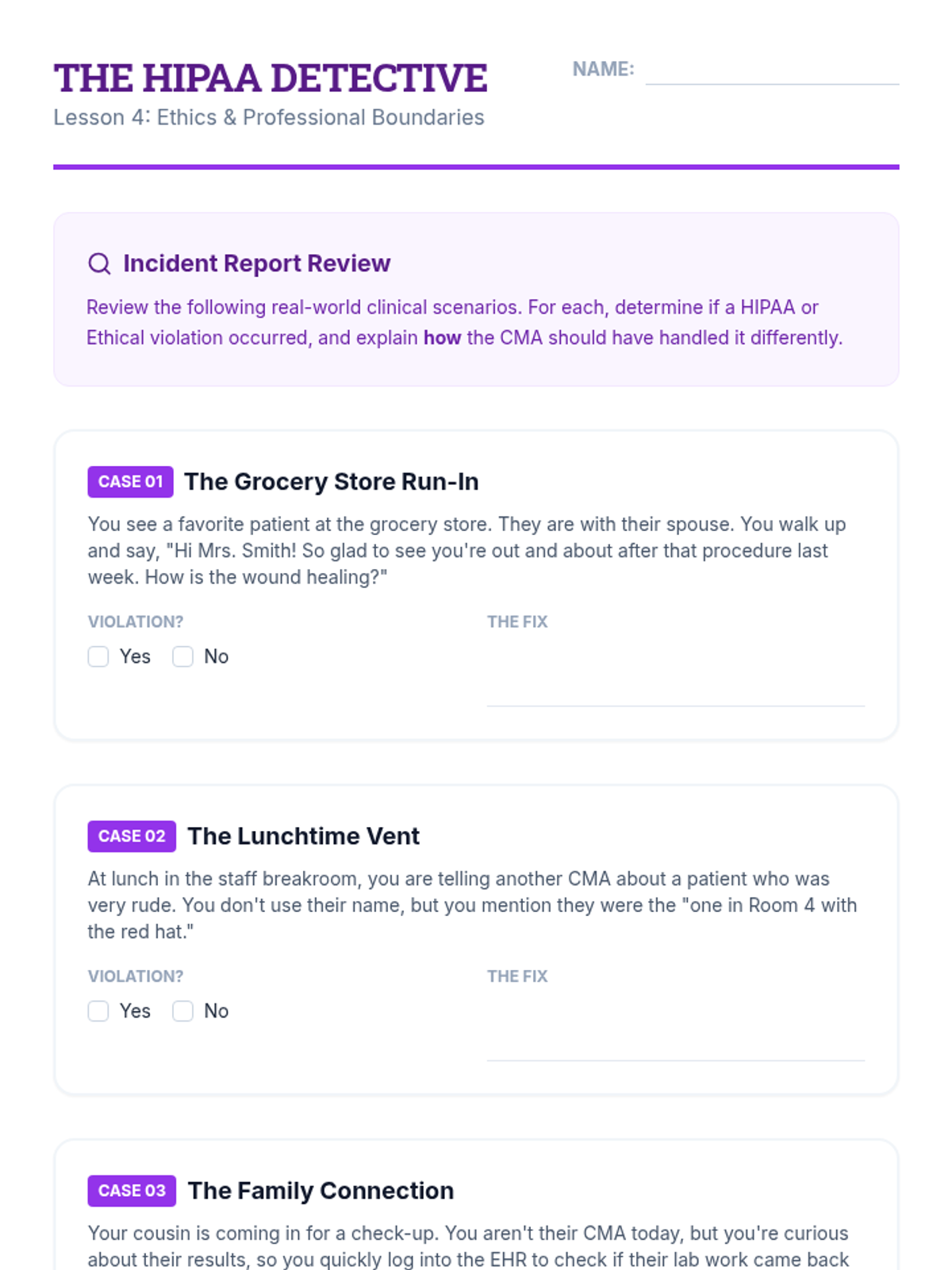
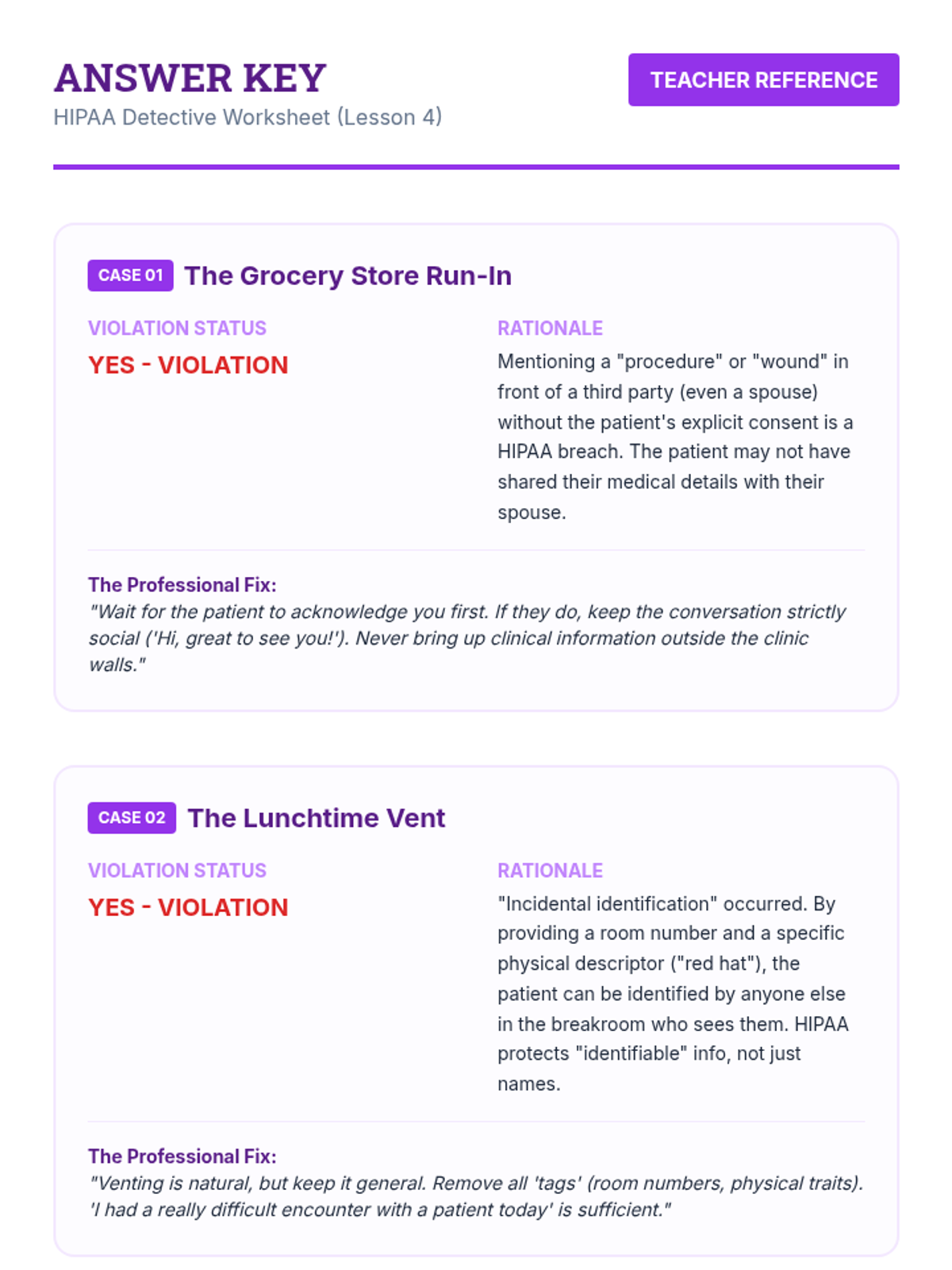
Covers HIPAA boundaries, professional reliability, and long-term career growth strategies for CMAs.
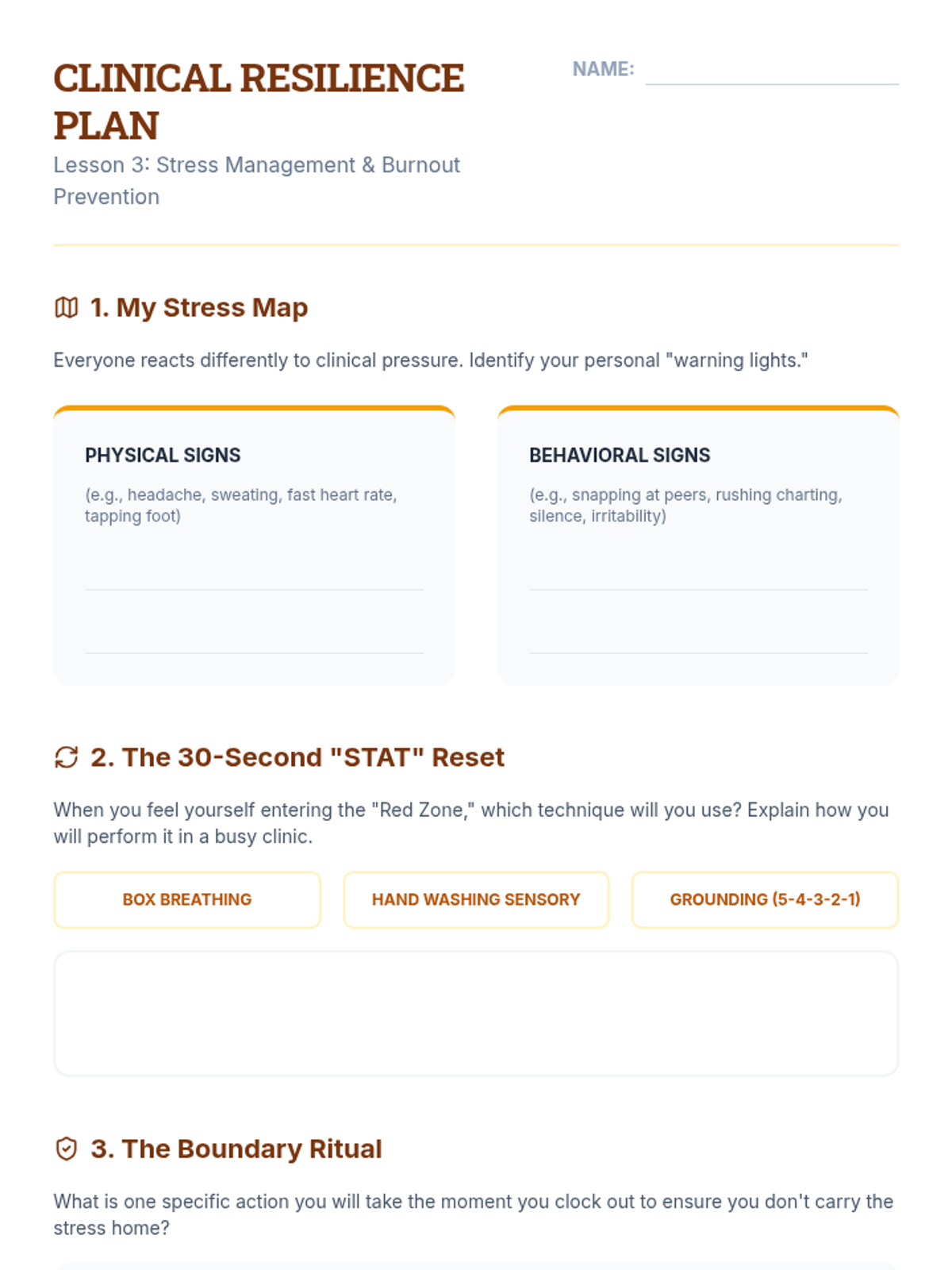
Equips students with practical tools to manage clinical stress, prevent burnout, and maintain personal well-being.
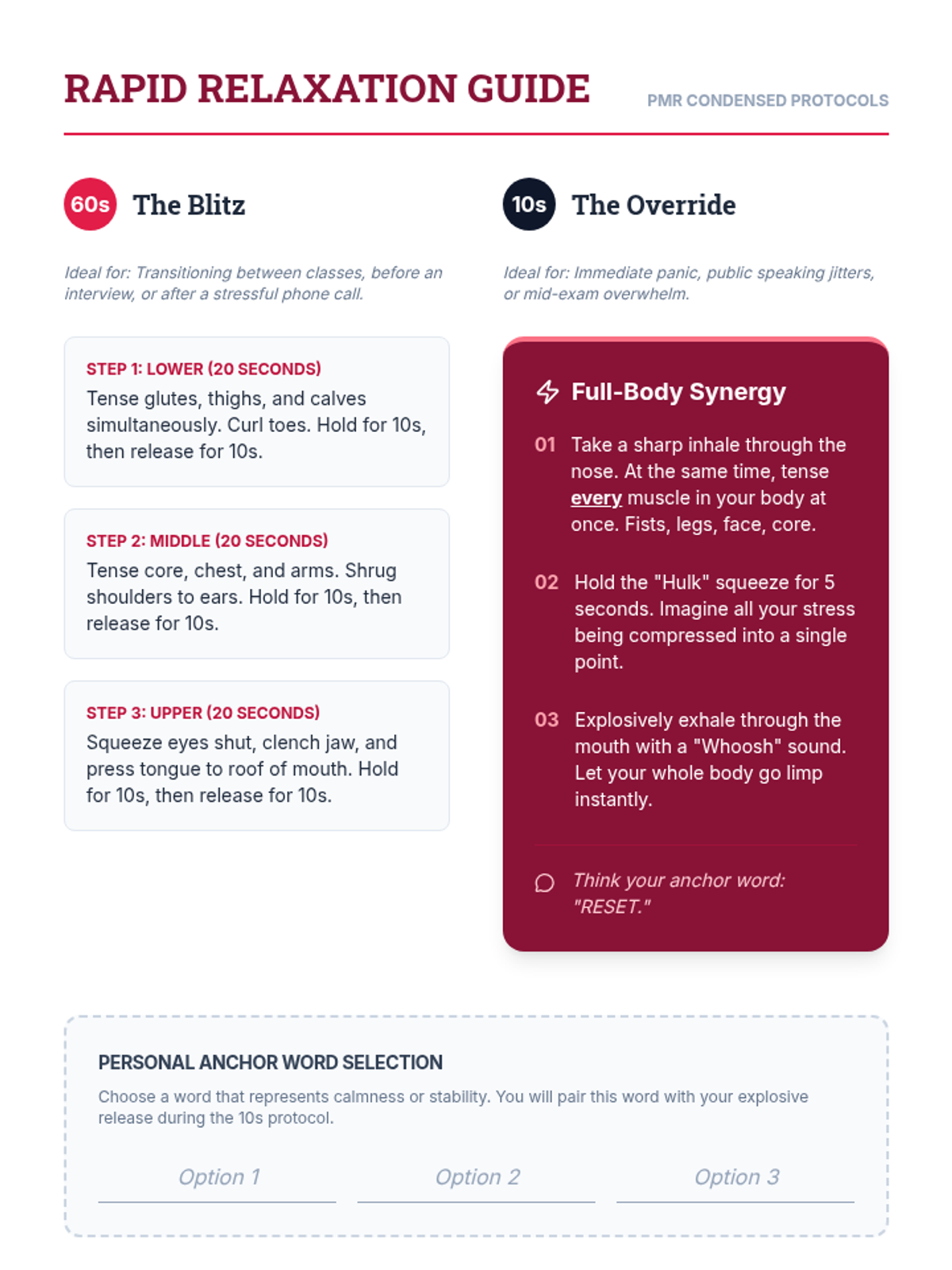
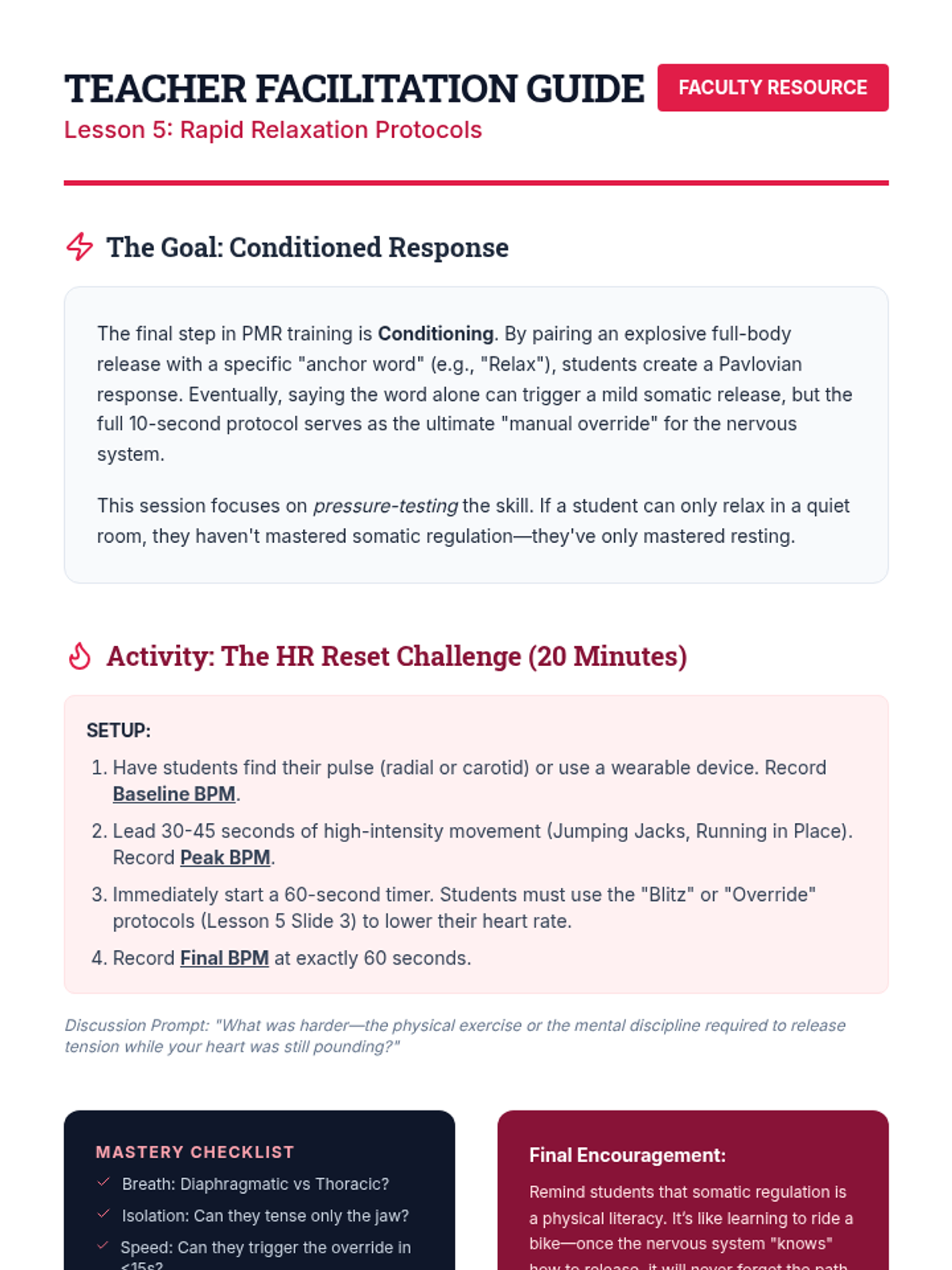
Students condense the full PMR session into 60-second and 10-second versions. They simulate high-stress environments to practice deploying these rapid techniques effectively.
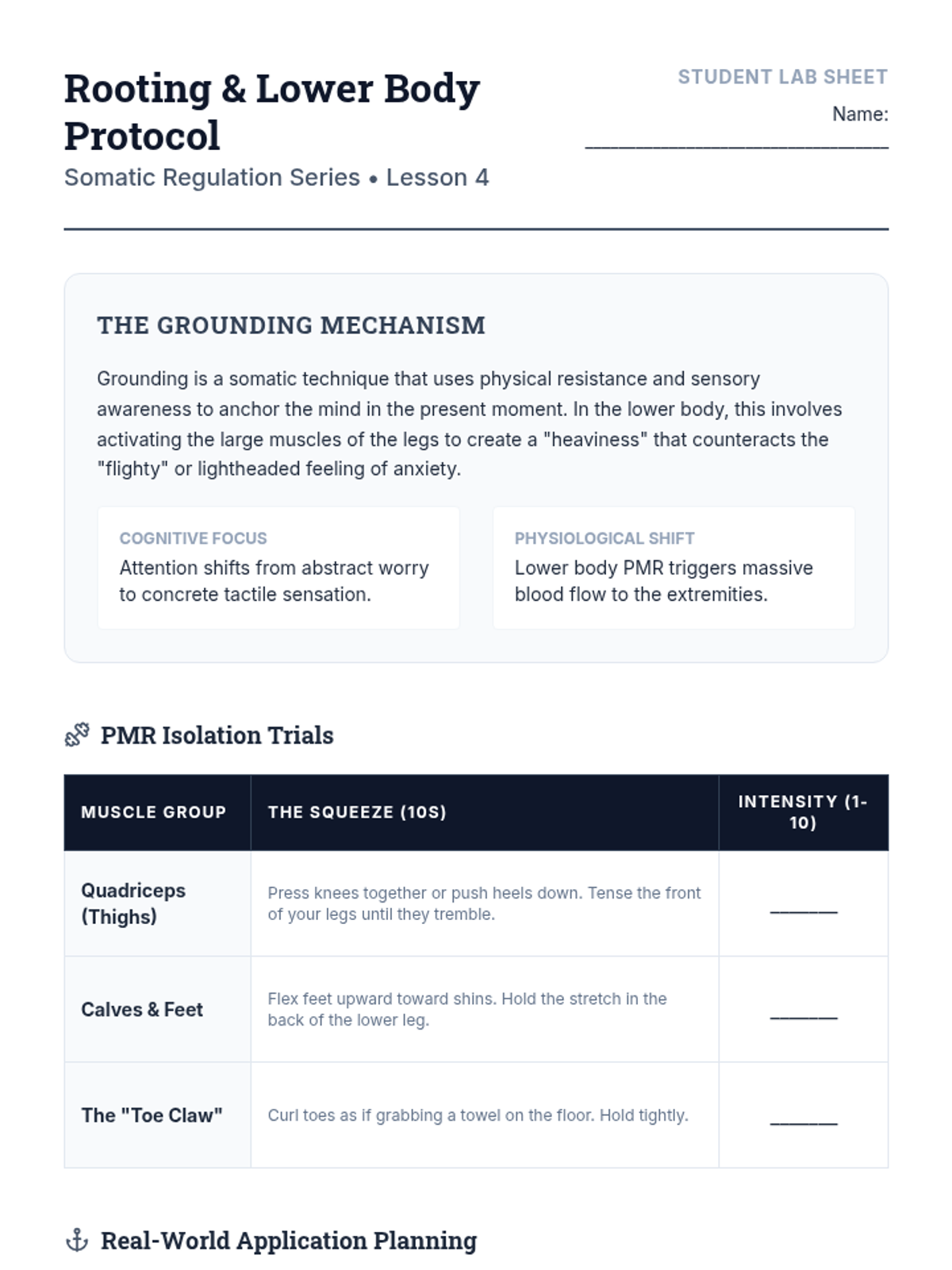
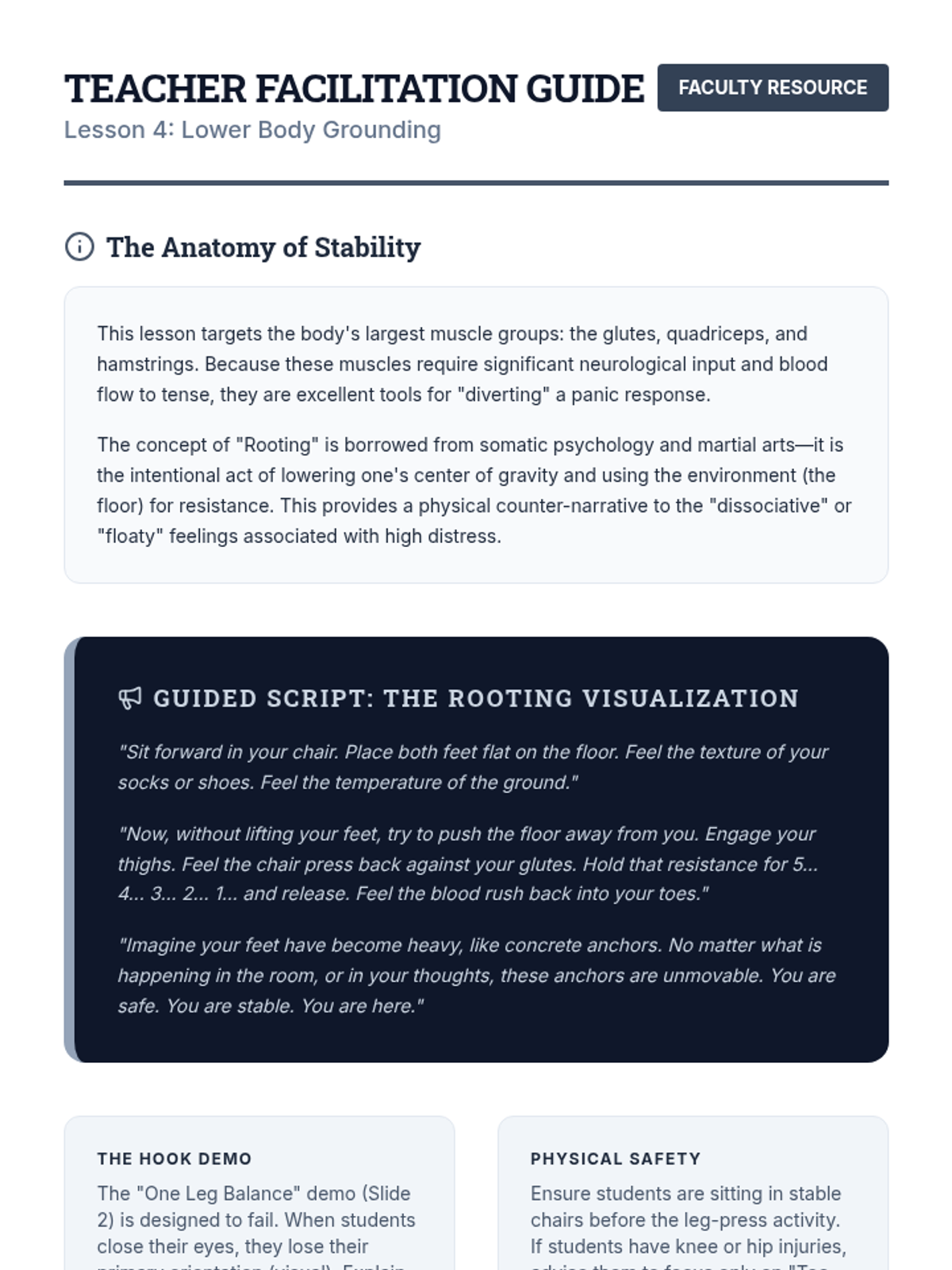
The focus shifts to the legs and feet to establish a physical sense of stability. Students learn to use the floor for resistance and grounding during seated lectures or exams.
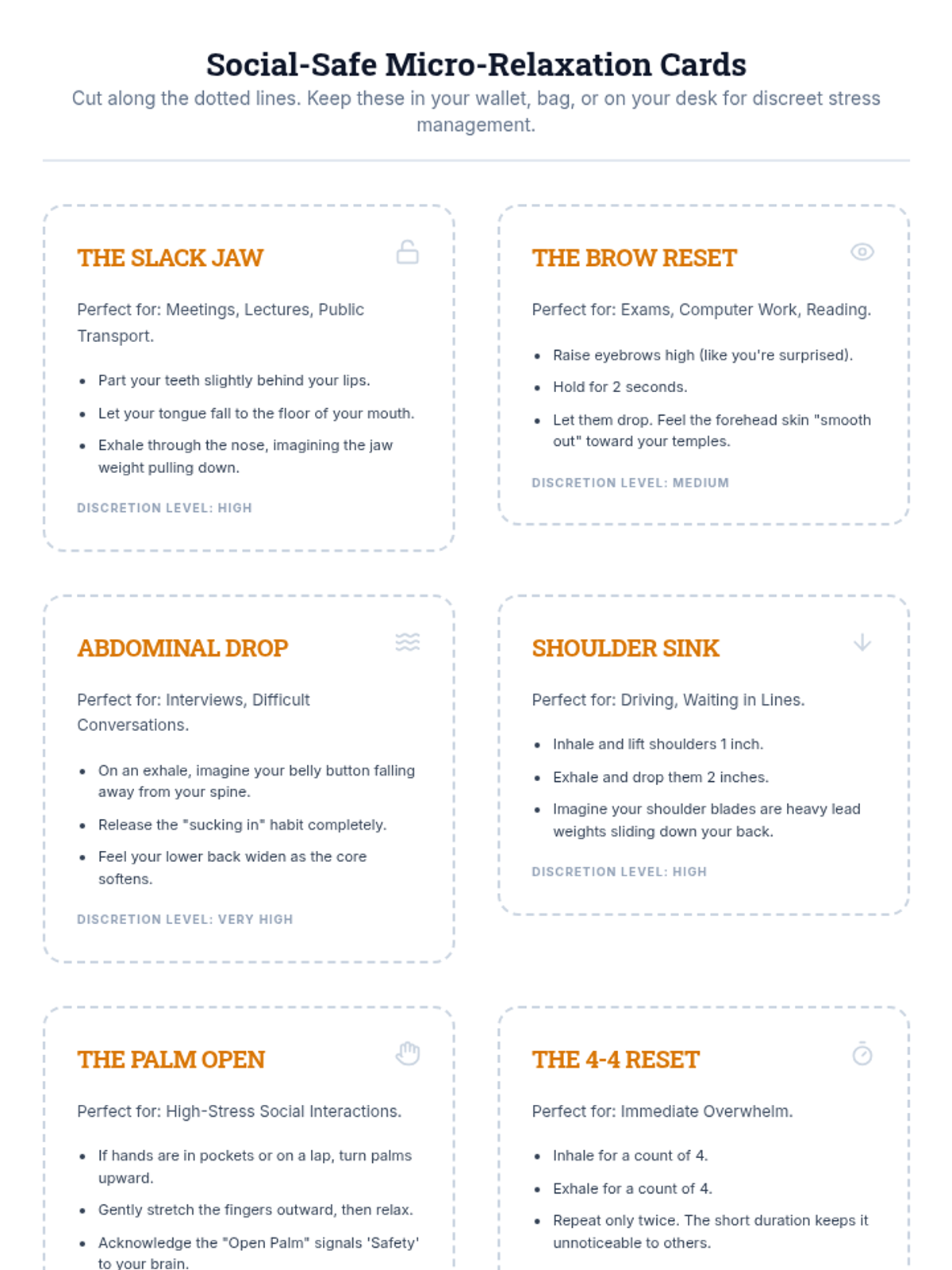
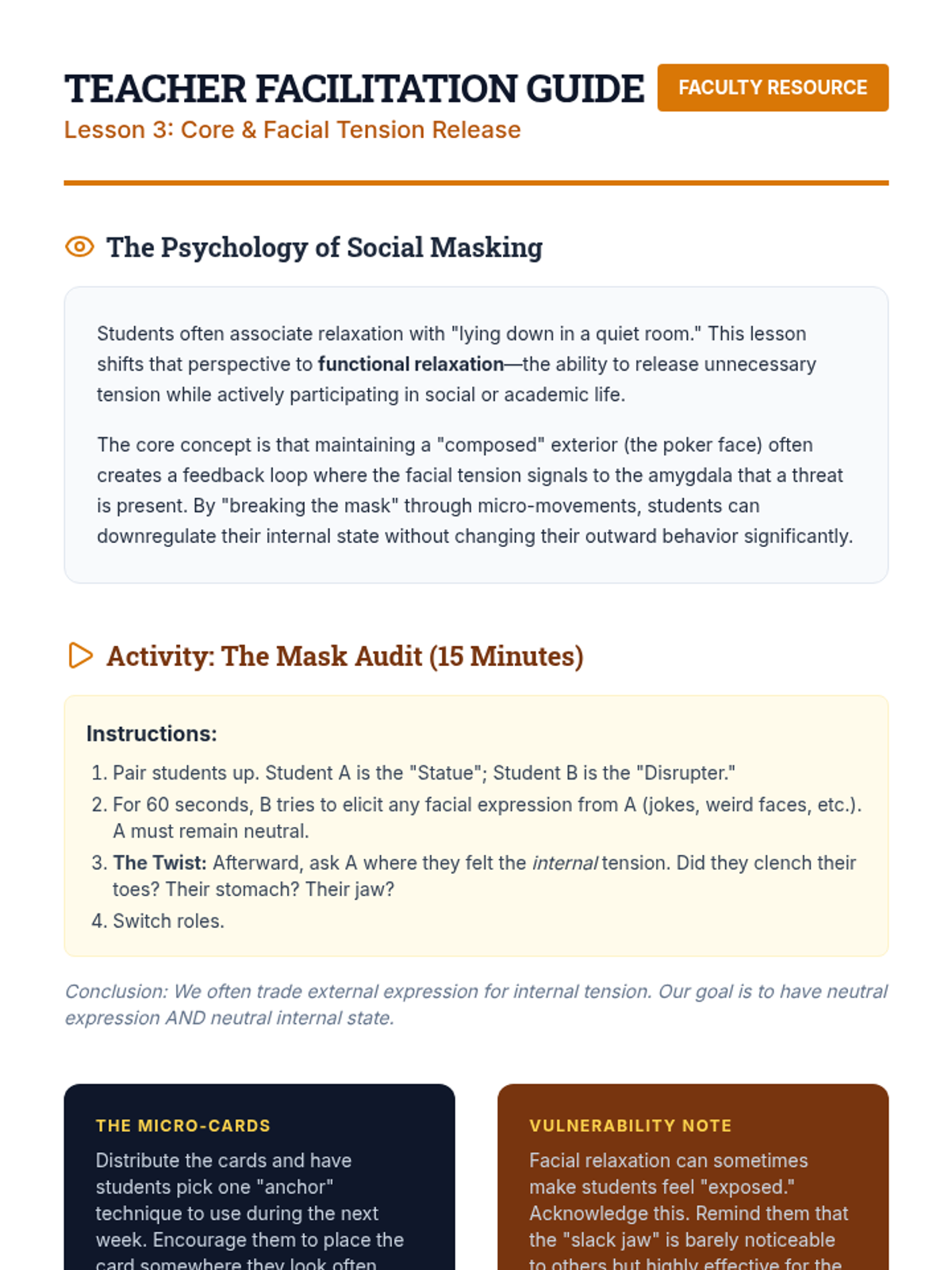
Students focus on the often-ignored areas of the jaw, forehead, and abdomen where stress accumulates. The lesson emphasizes micro-movements to release tension in social settings.
Students practice focused attention on internal bodily sensations to detect early warning signs of distress. The lesson moves from guided body scans to independent practice in identifying subtle tension.
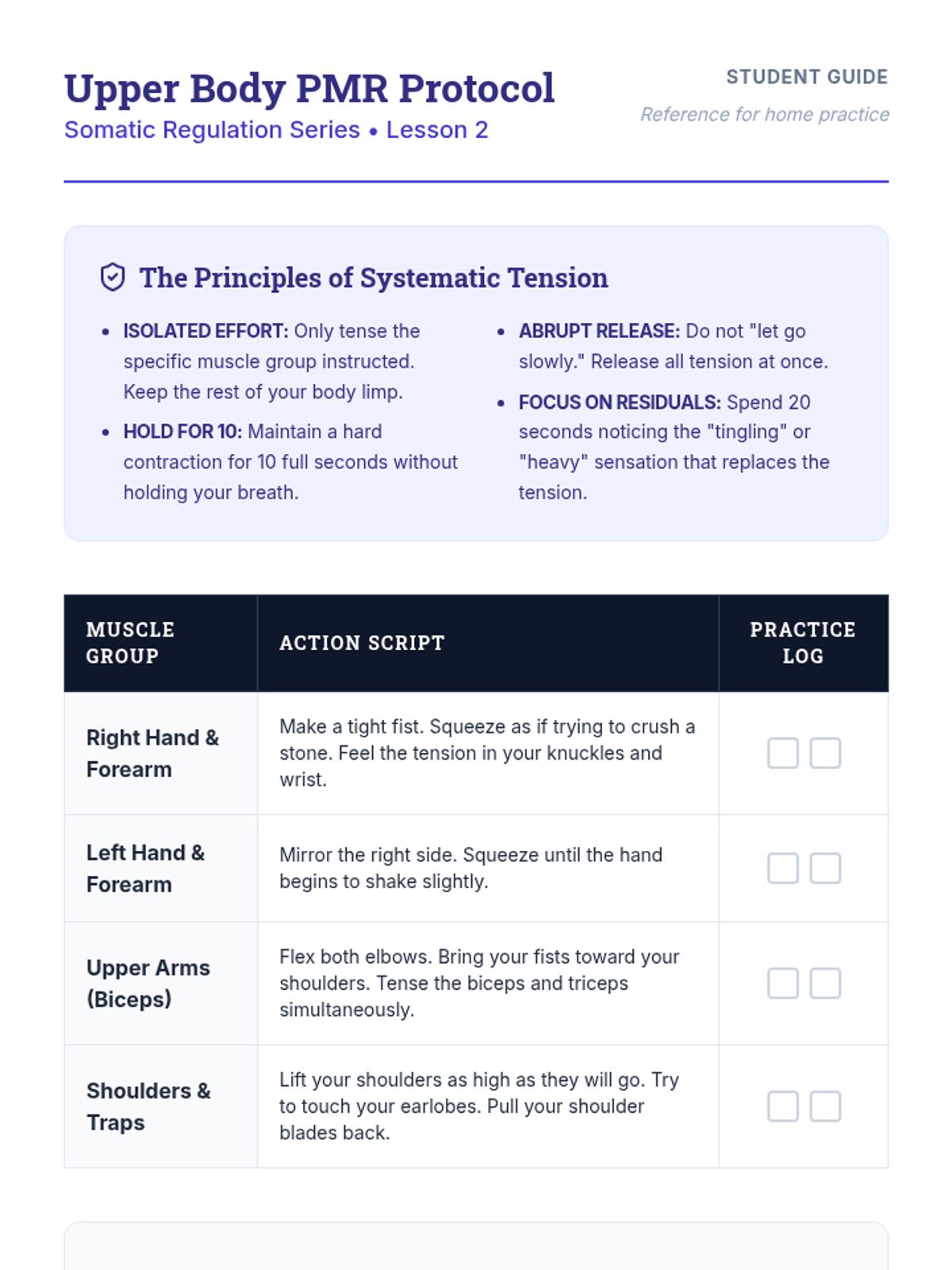
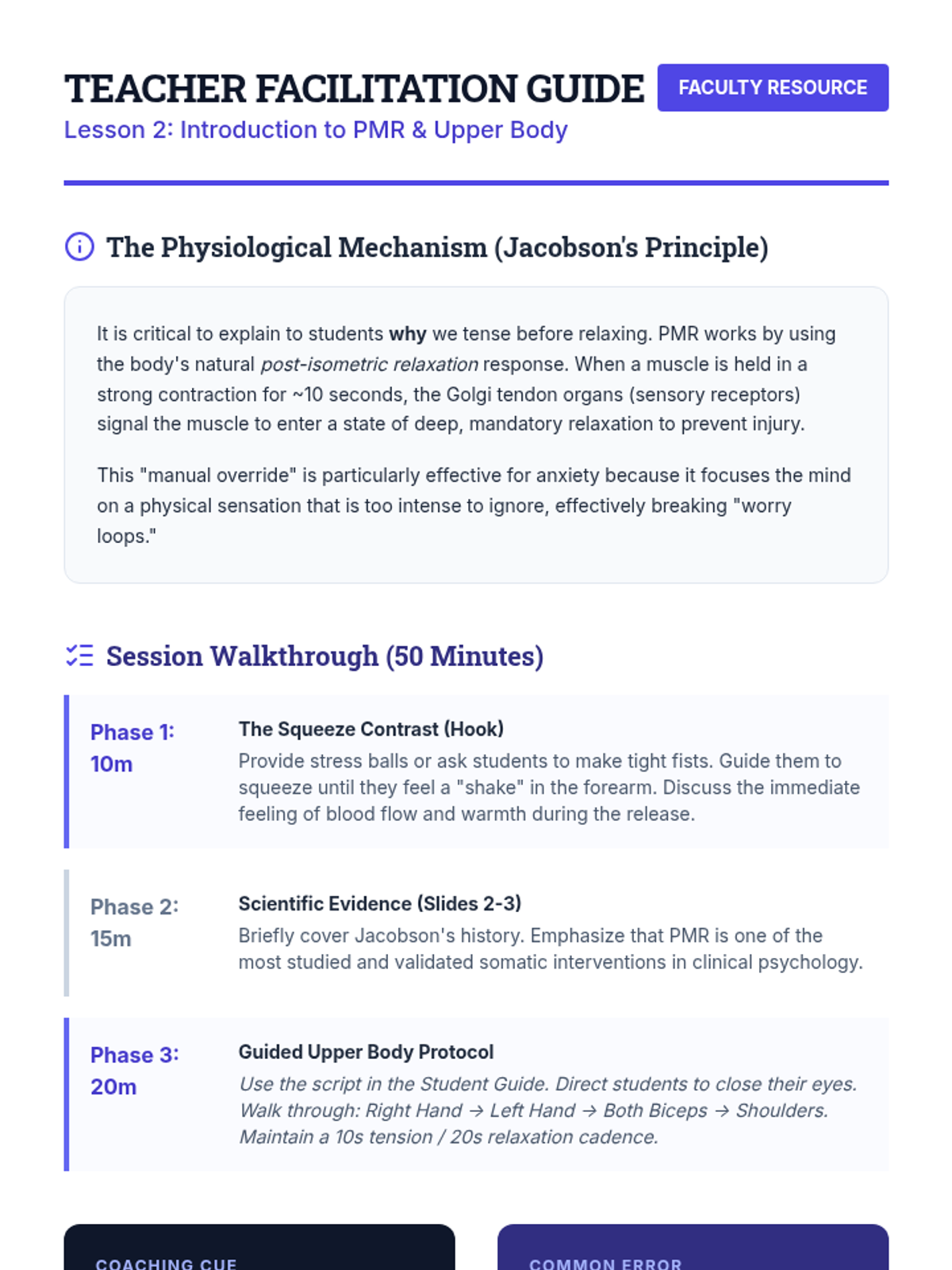
This lesson introduces the history and evidence base of PMR before guiding students through the isolation of upper body muscle groups. Students practice distinguishing between high tension and deep relaxation in the hands, arms, and shoulders.
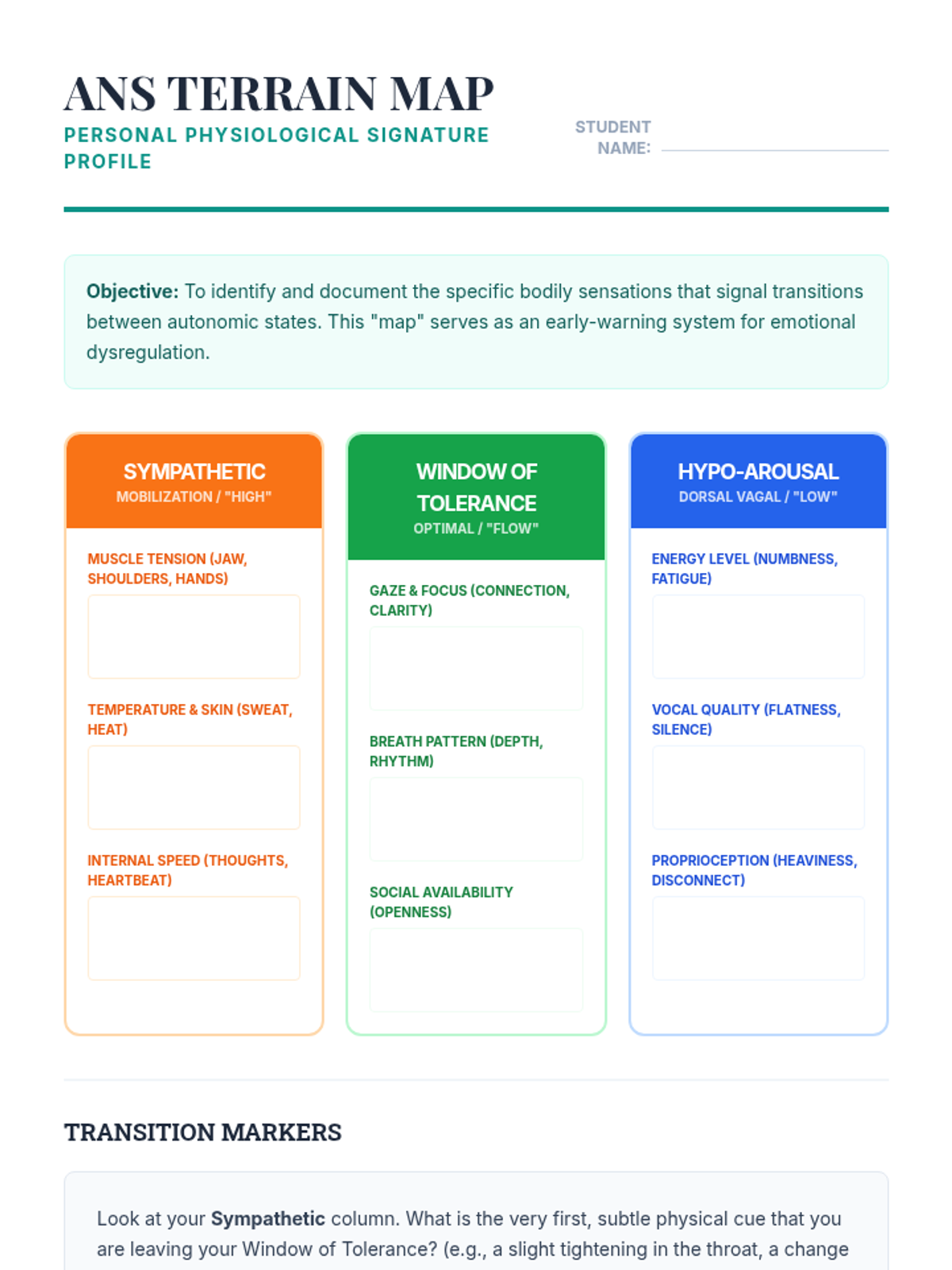
This lesson distinguishes between the sympathetic and parasympathetic nervous systems. Students map out the physiological symptoms associated with each state to better recognize when they are leaving the 'window of tolerance.'
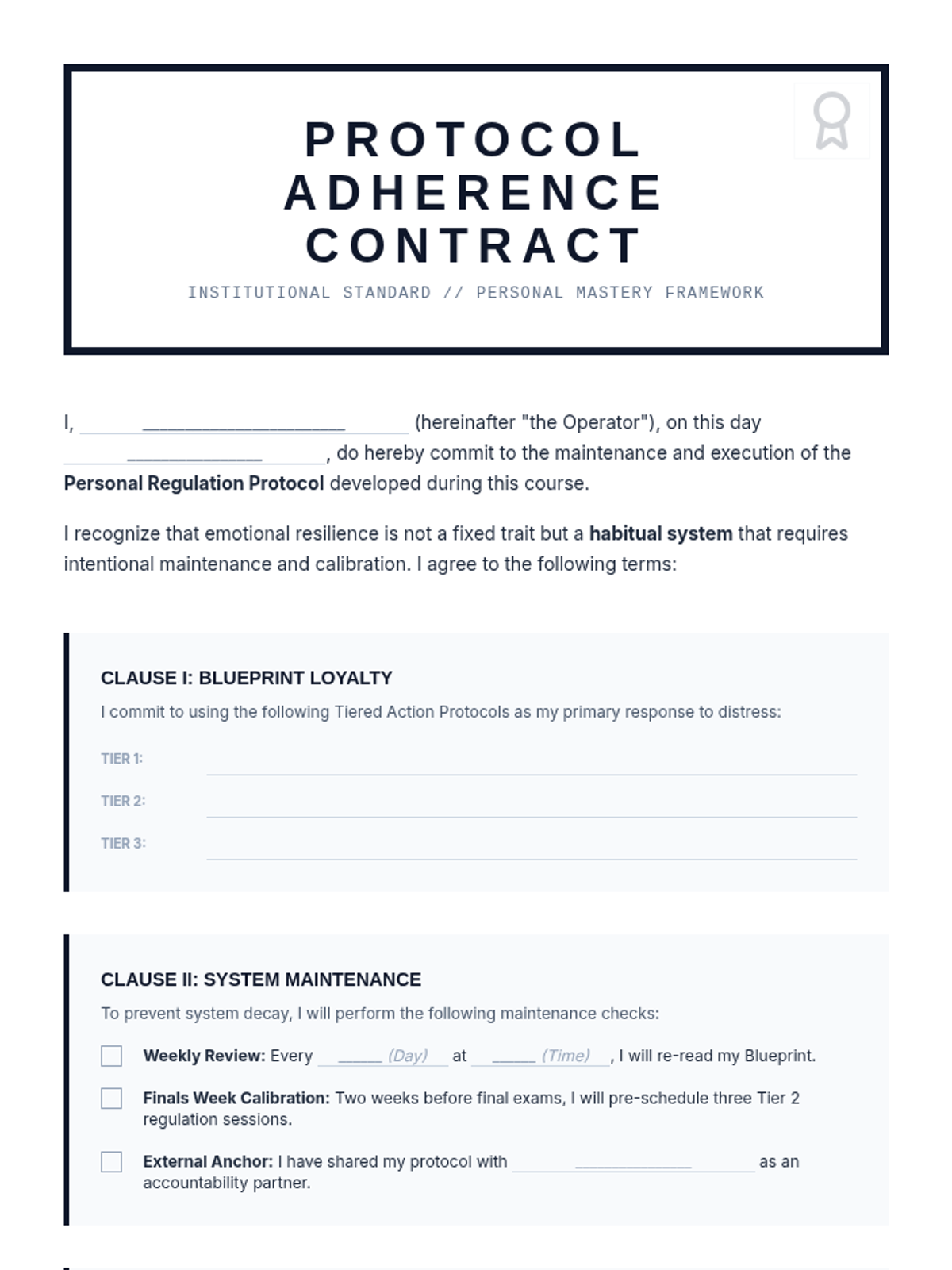
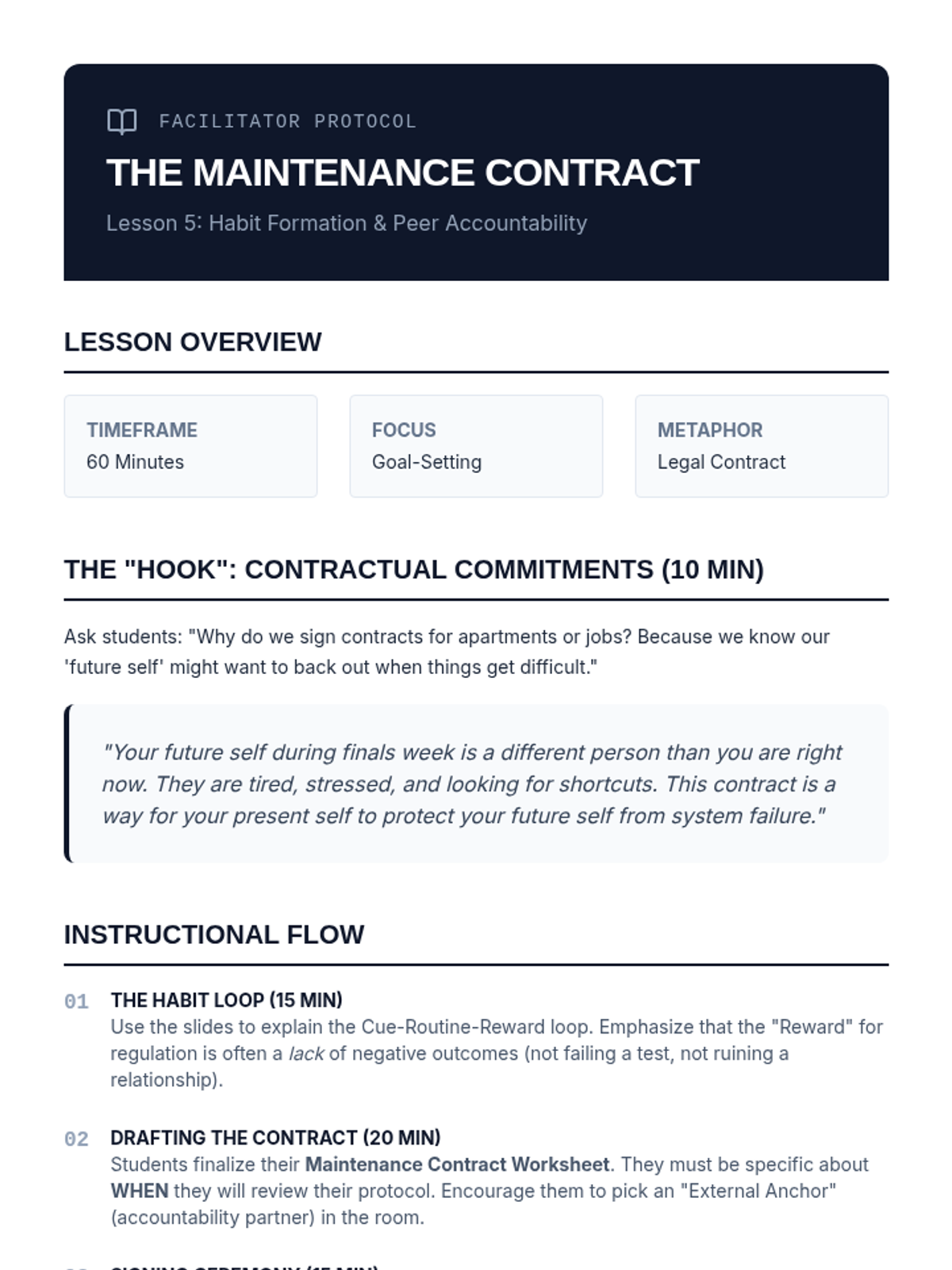
Students finalize their protocols and establish a formal maintenance contract to ensure long-term adherence and habit formation.
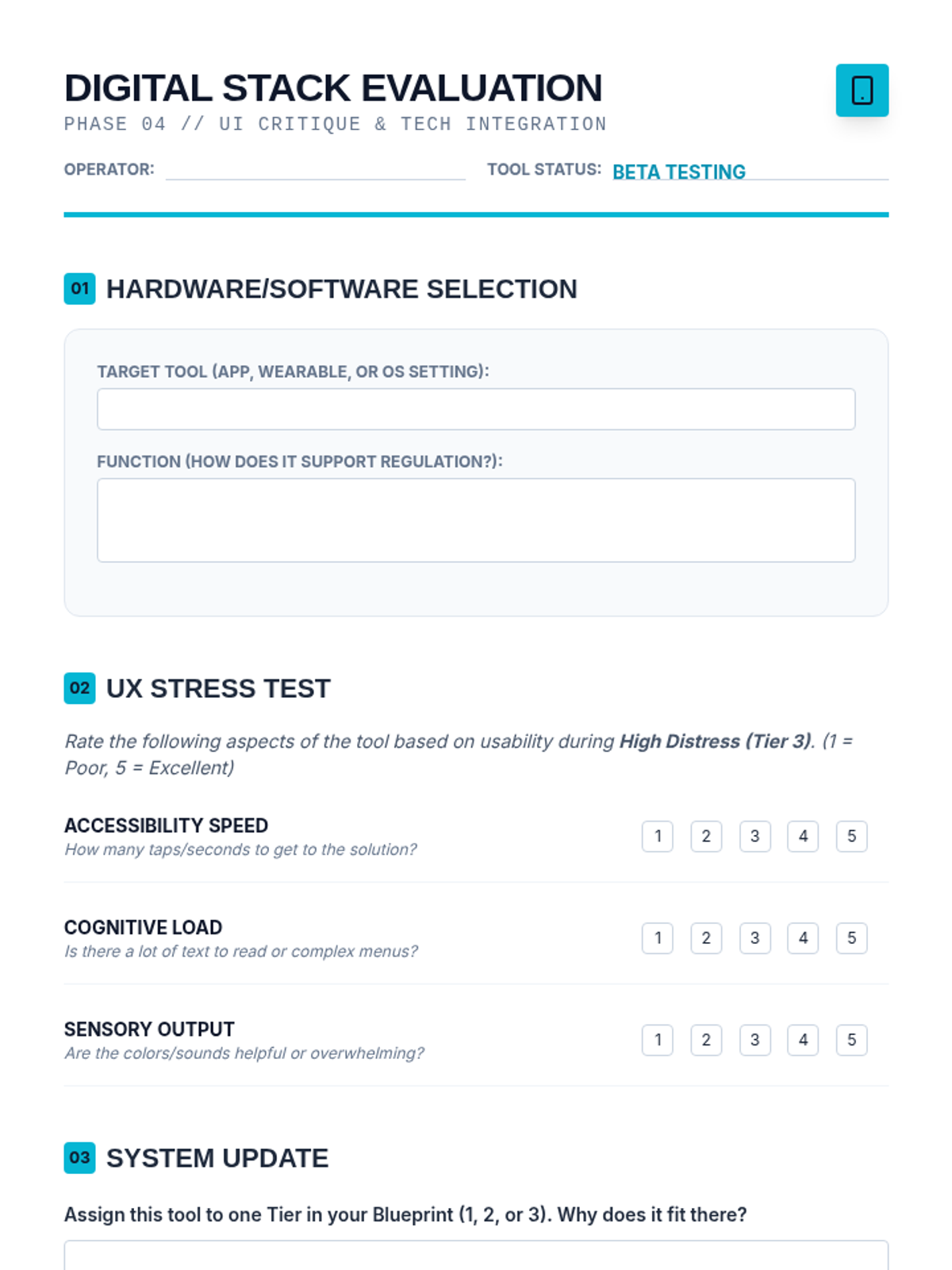
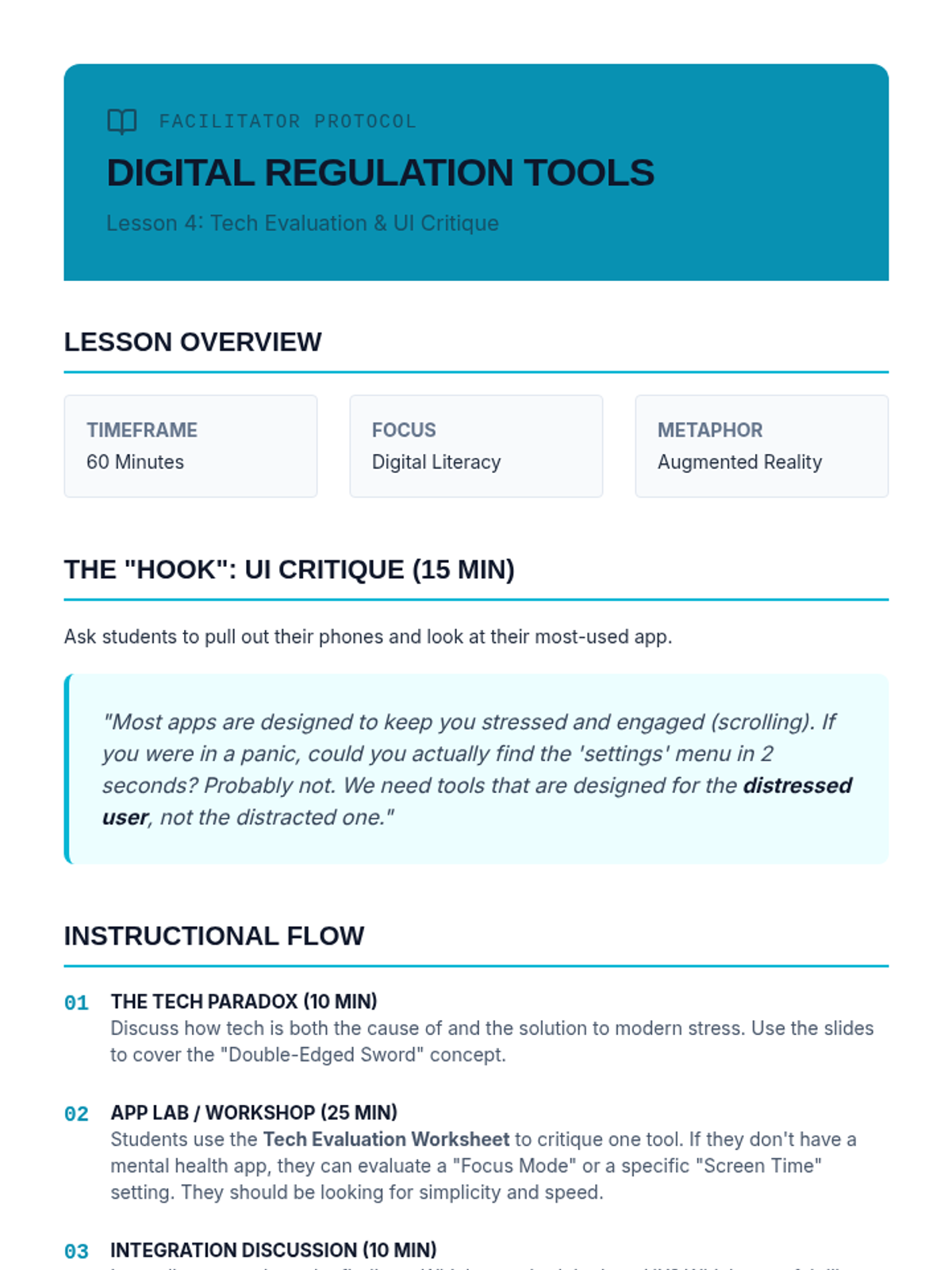
Students evaluate digital tools, apps, and wearables to integrate effective technological supports into their personalized regulation protocols.
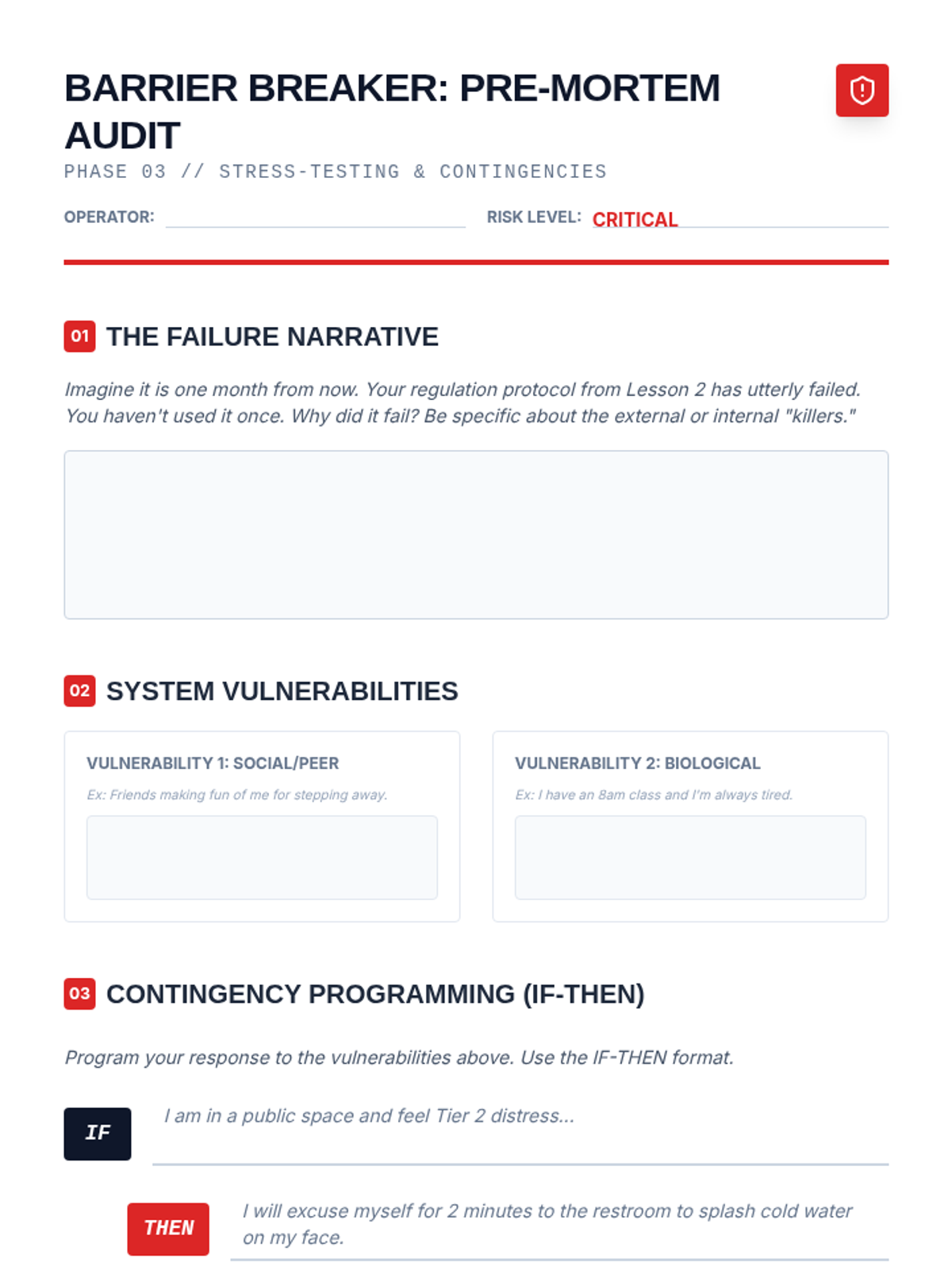
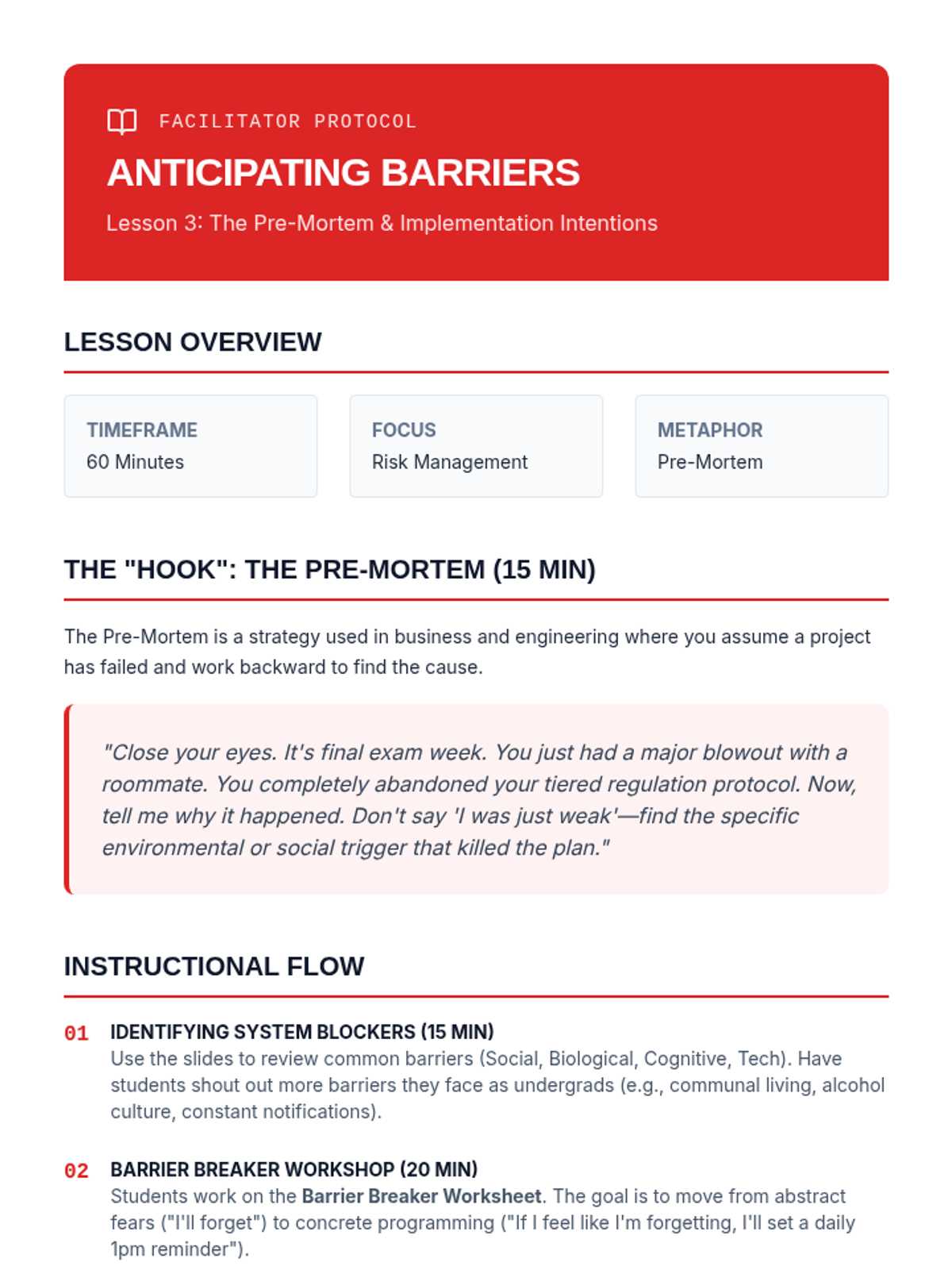
Students identify obstacles to their regulation plan and develop 'If-Then' implementation intentions to navigate triggers and barriers.
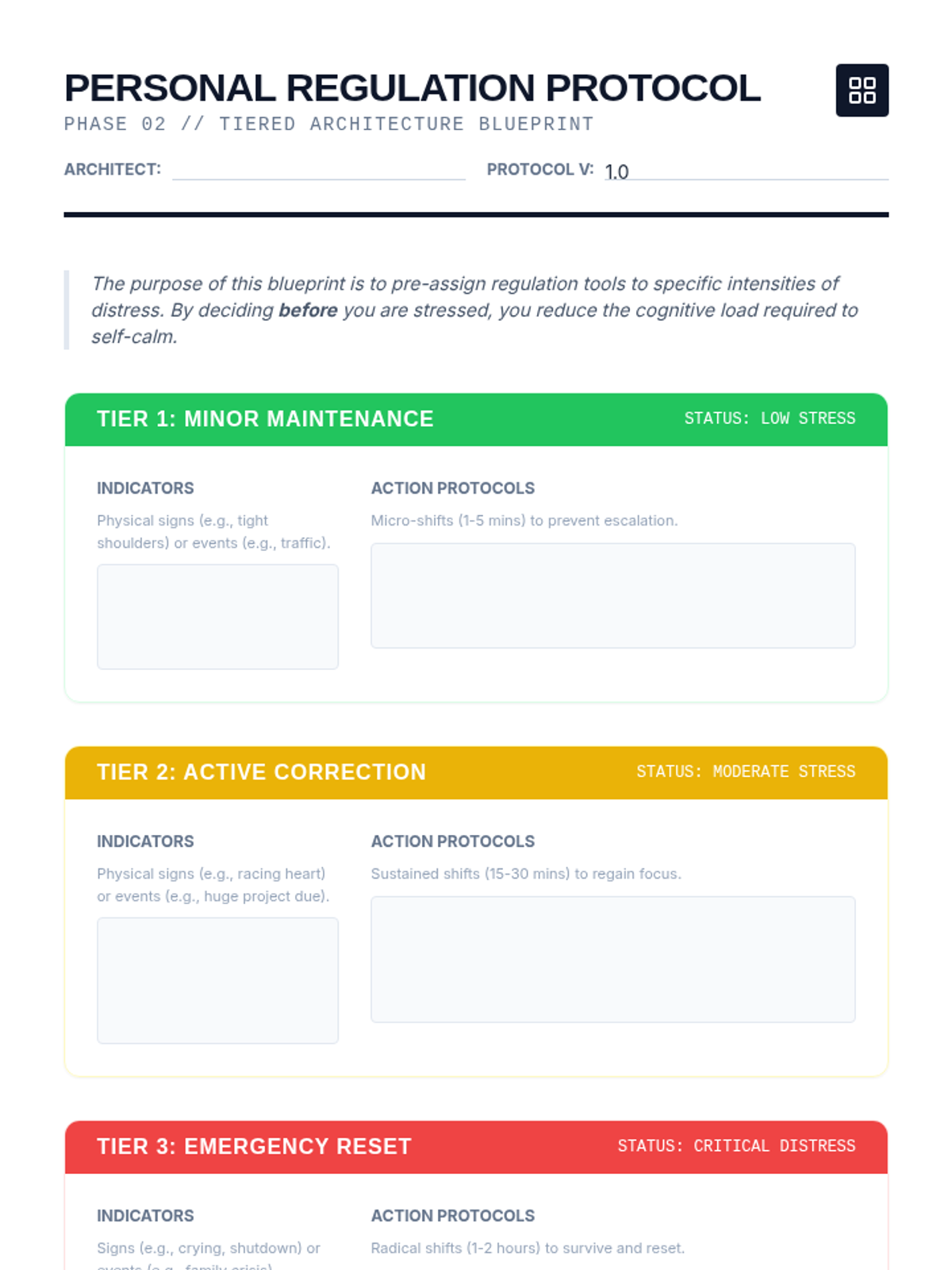
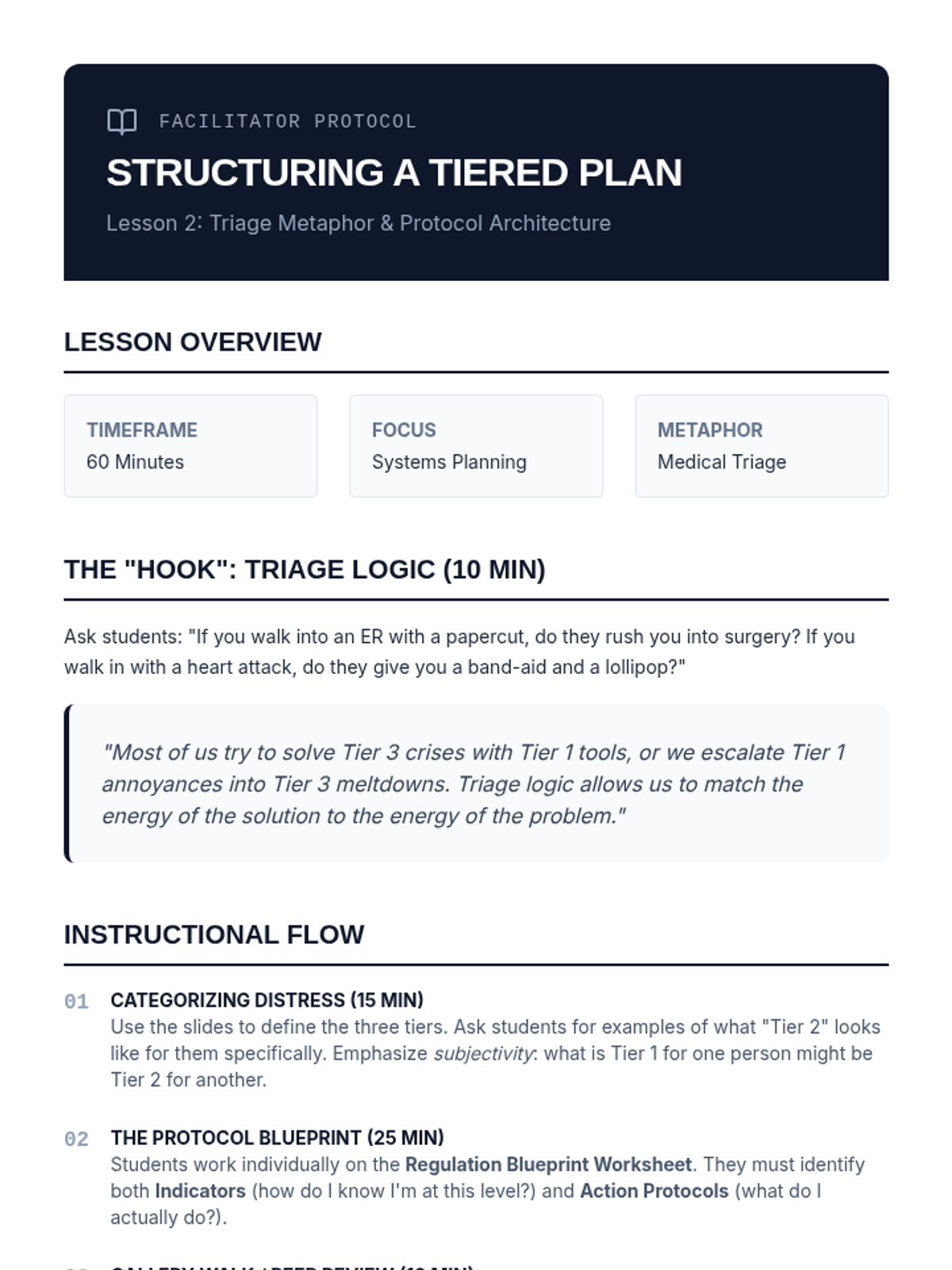
Students use a triage metaphor to design a three-tiered response plan, assigning specific self-calming tools to different intensities of distress.
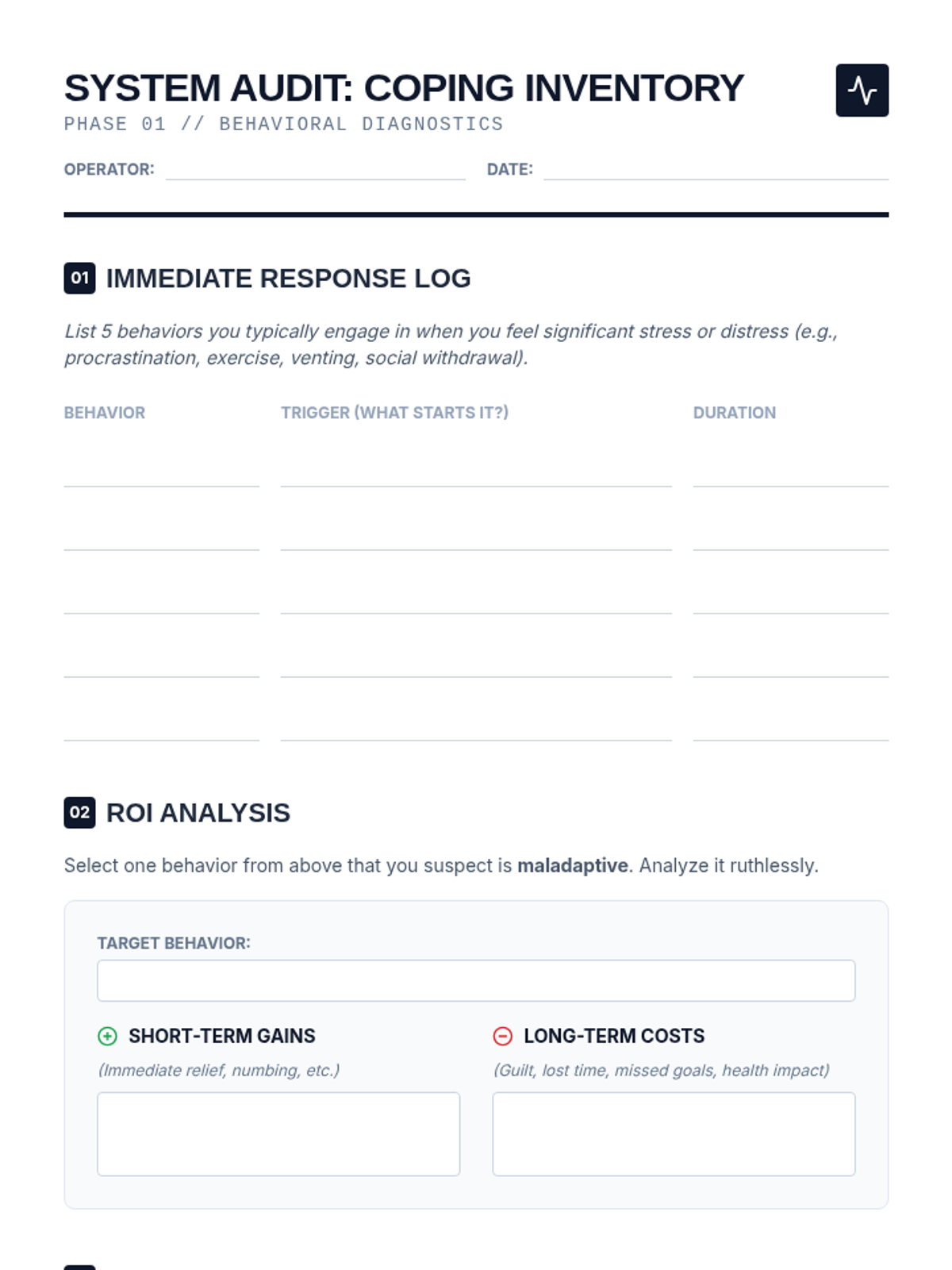
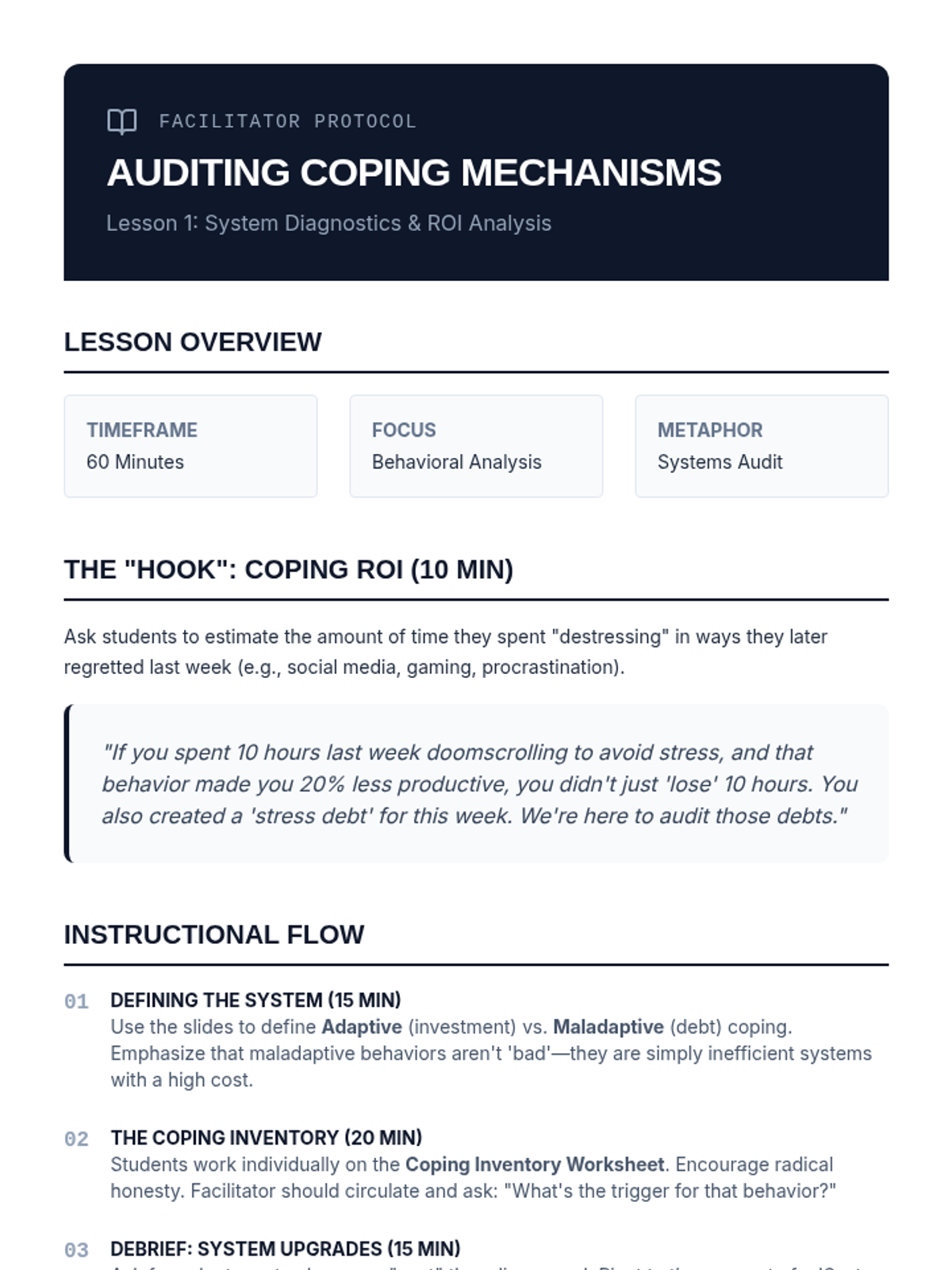
Students conduct an inventory of current stress responses and perform a cost-benefit analysis to distinguish between adaptive and maladaptive behaviors.
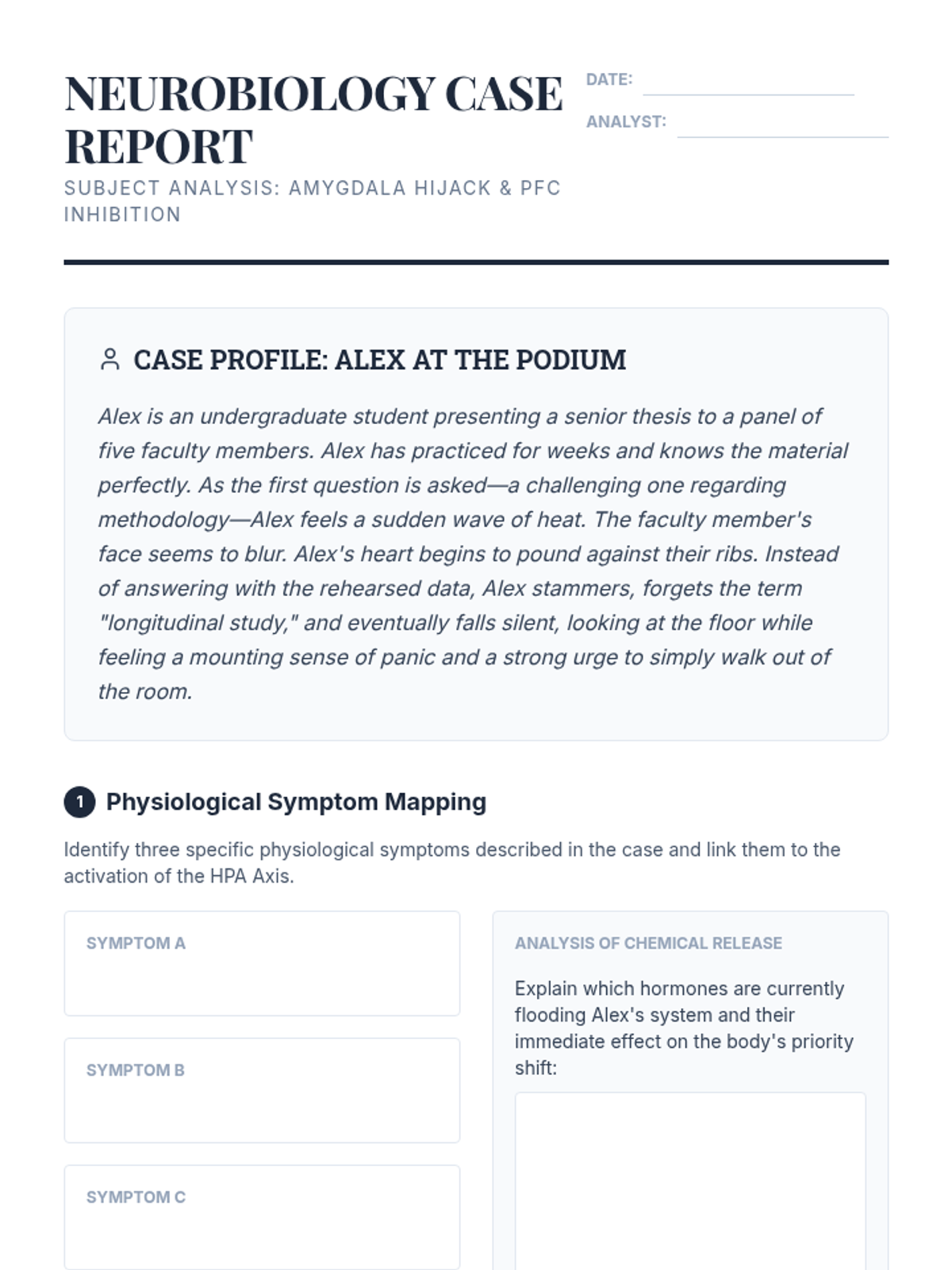
Students explore the functions of the amygdala, HPA axis, and prefrontal cortex during high-stress situations. Through case studies, they analyze how 'hijacking' occurs and impairs cognitive function.
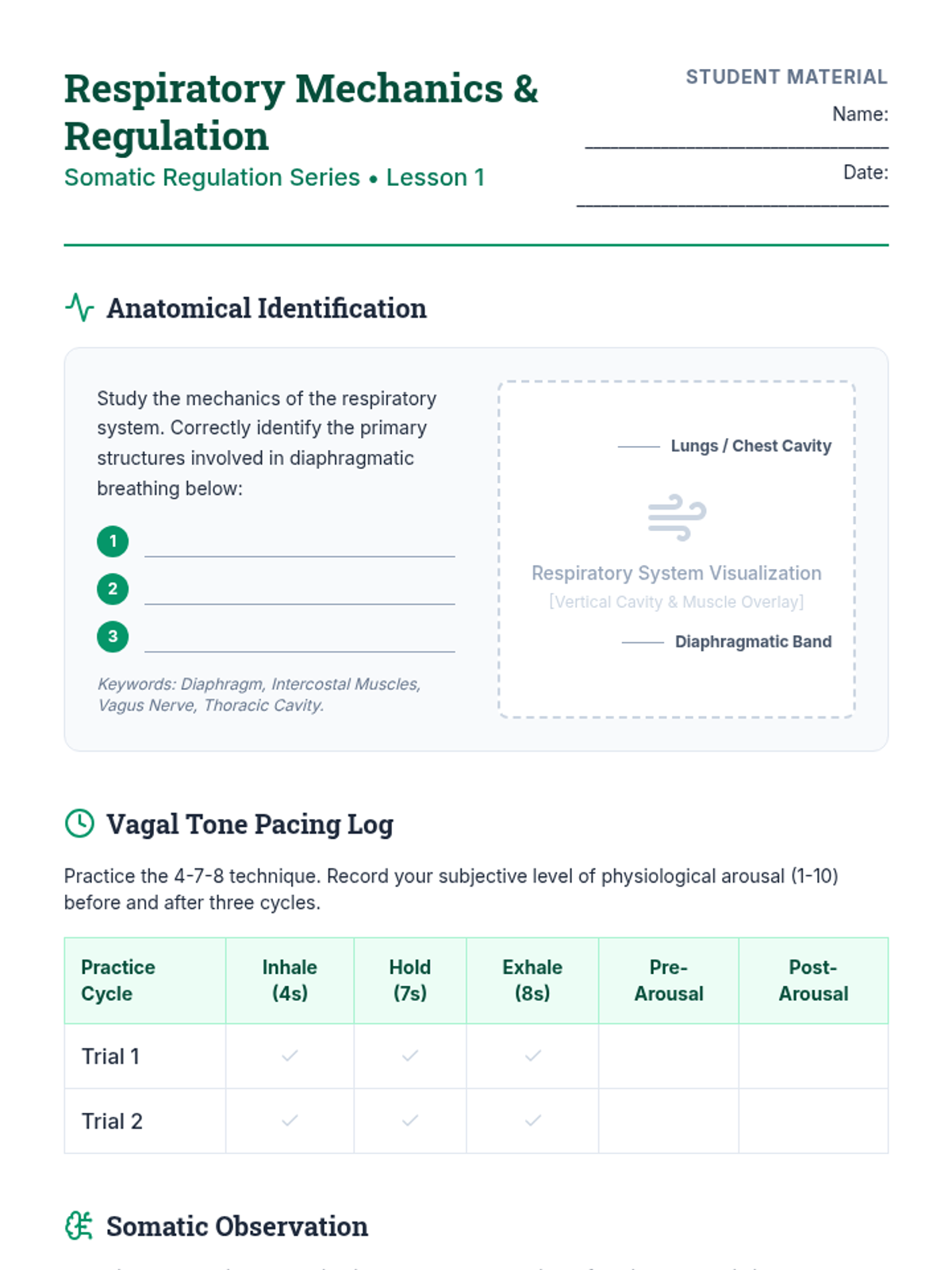
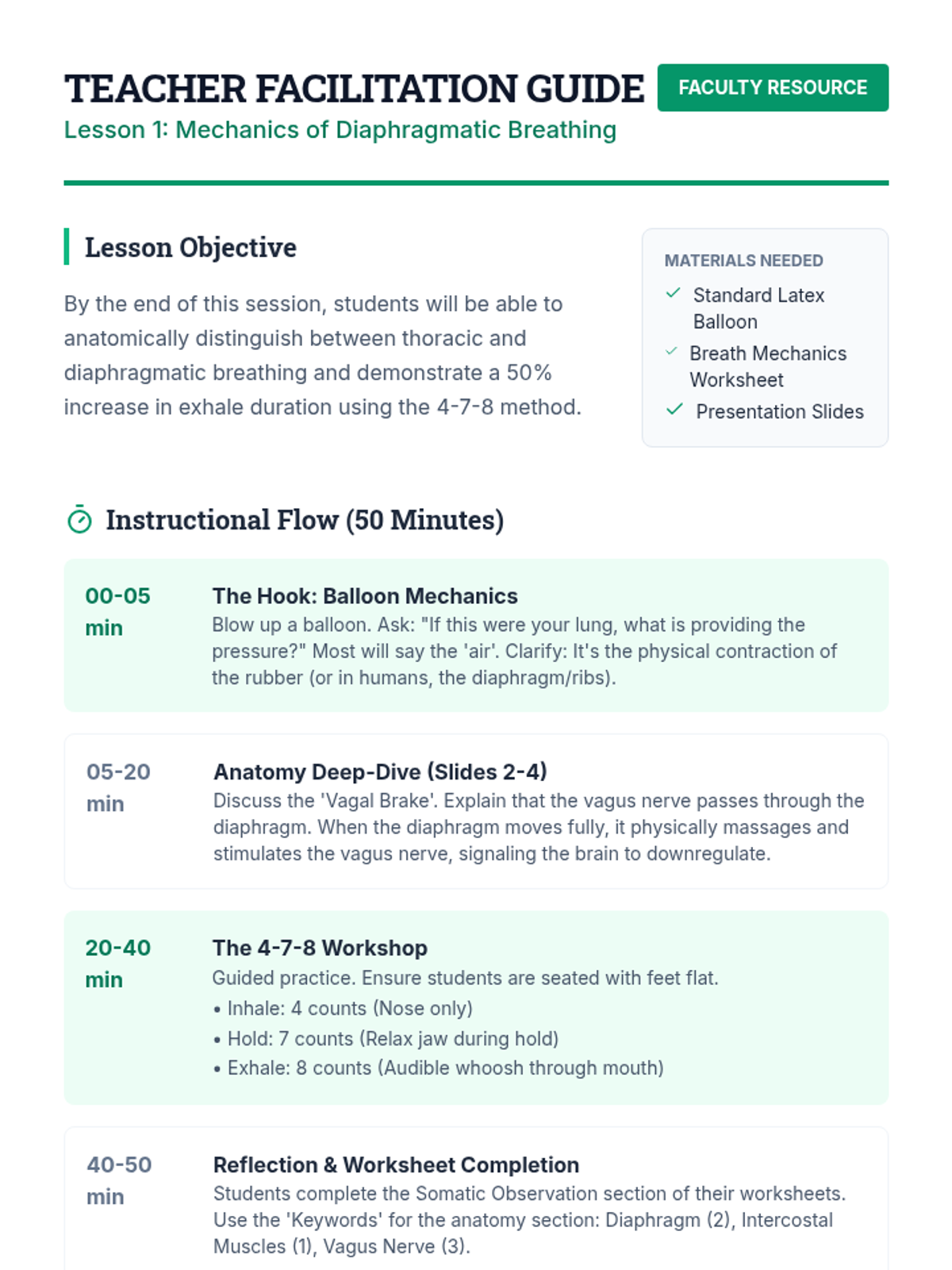
Students explore the anatomical mechanics of breathing, contrasting chest and diaphragmatic patterns. They learn how to use breath to influence the parasympathetic nervous system for immediate stress reduction.