Emotion recognition ranging from basic feelings to complex nuances and mixed states. Strengthens accurate self-assessment through identity exploration, strength identification, and values-based decision making.
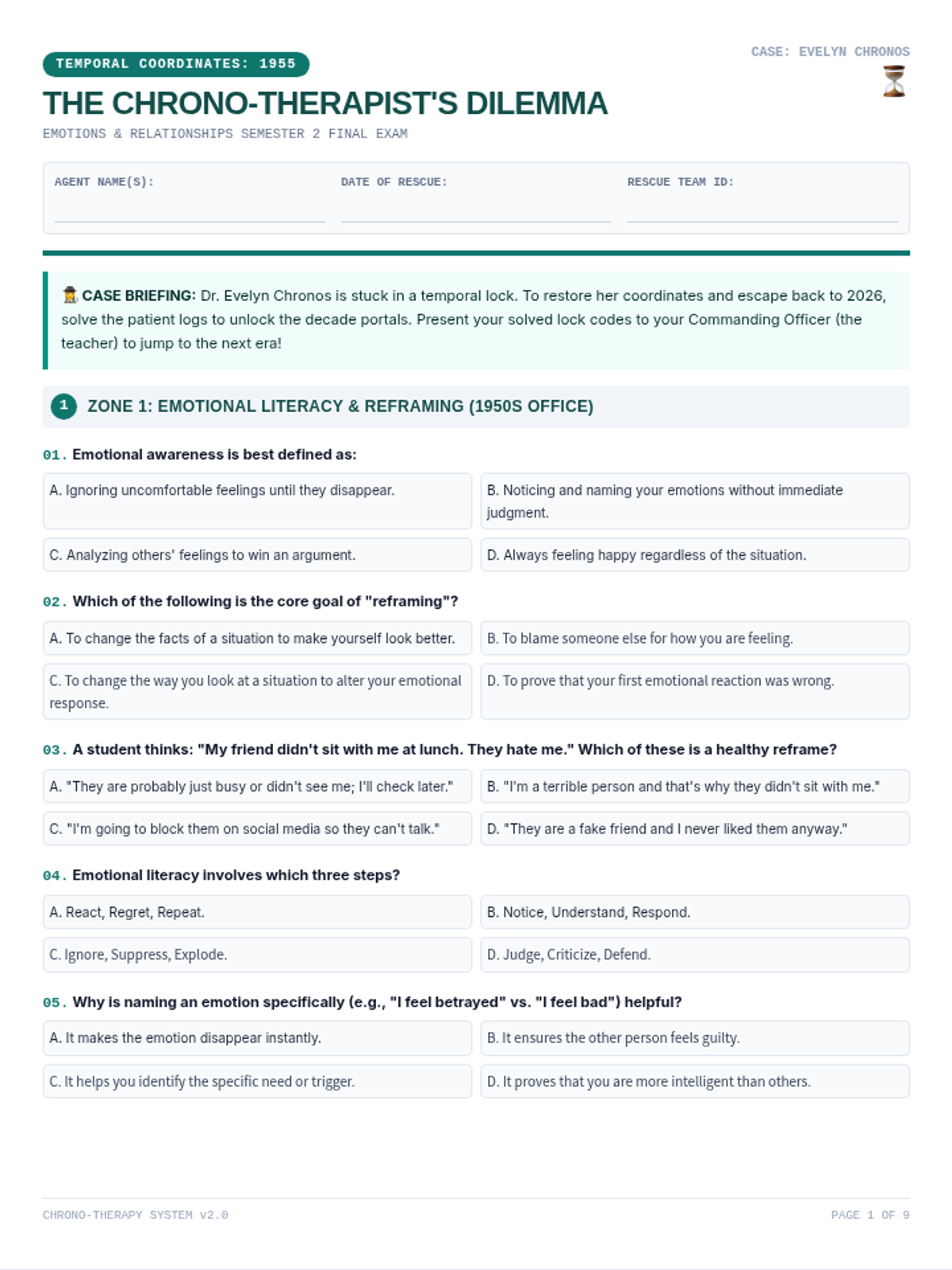
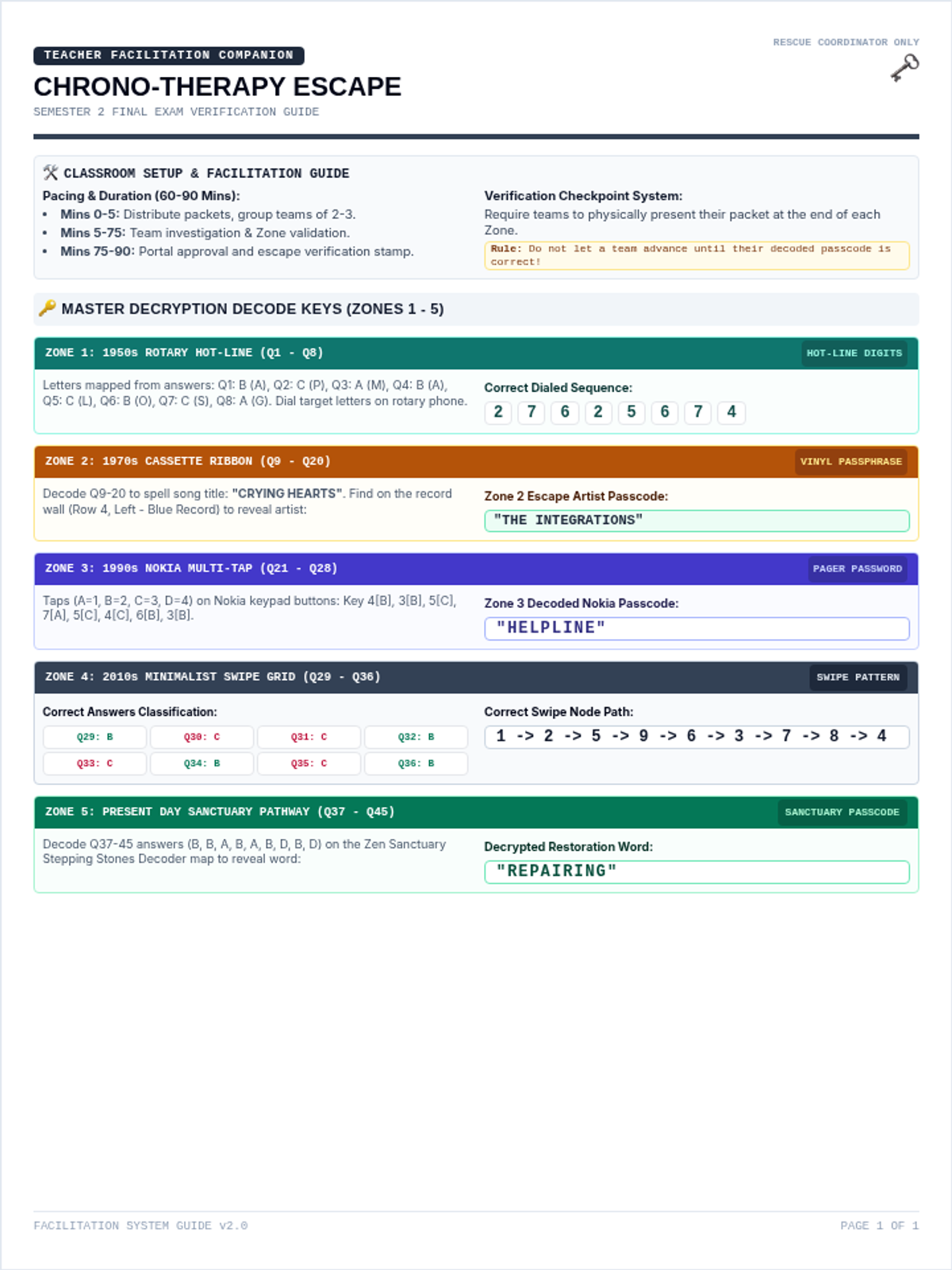
An immersive, multi-decade escape room activity designed to review relationships, grief, boundaries, and emotional regulation concepts for a Semester 2 final exam.
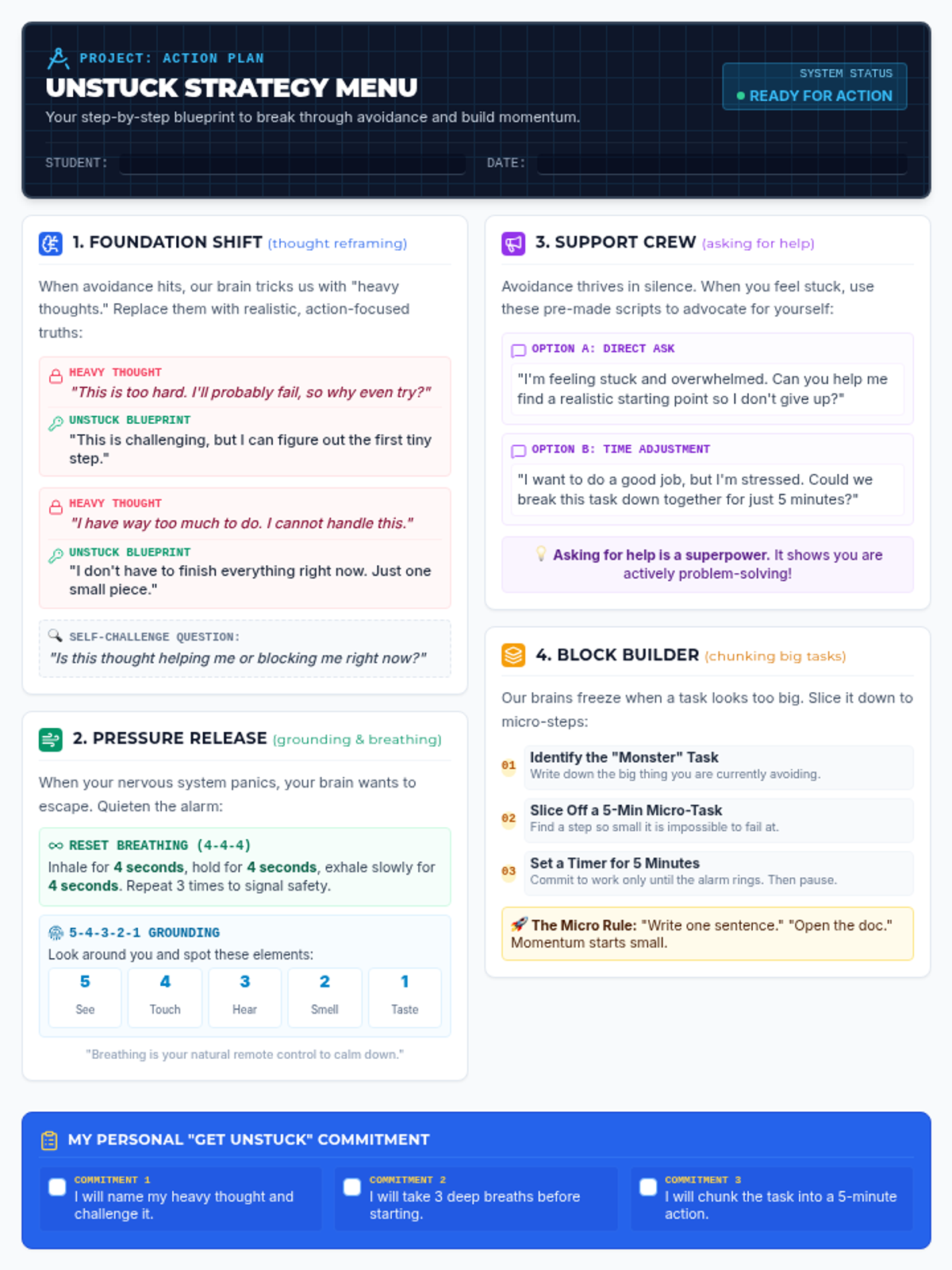
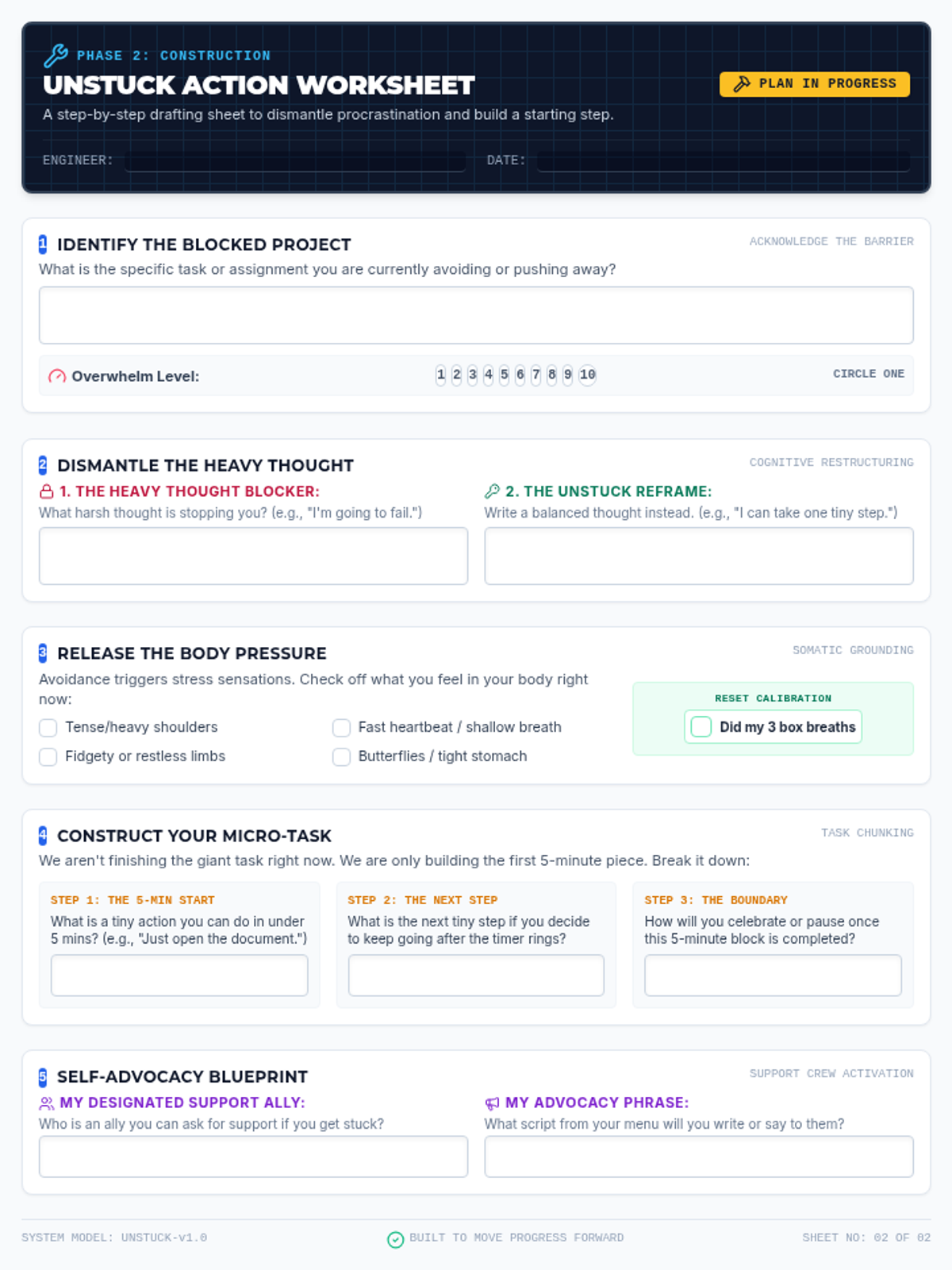
A structured problem-solving framework designed for students who use avoidance as a coping mechanism. This lesson provides practical tools for cognitive reframing, sensory grounding, self-advocacy, and task-chunking to help students move from avoidance to action.
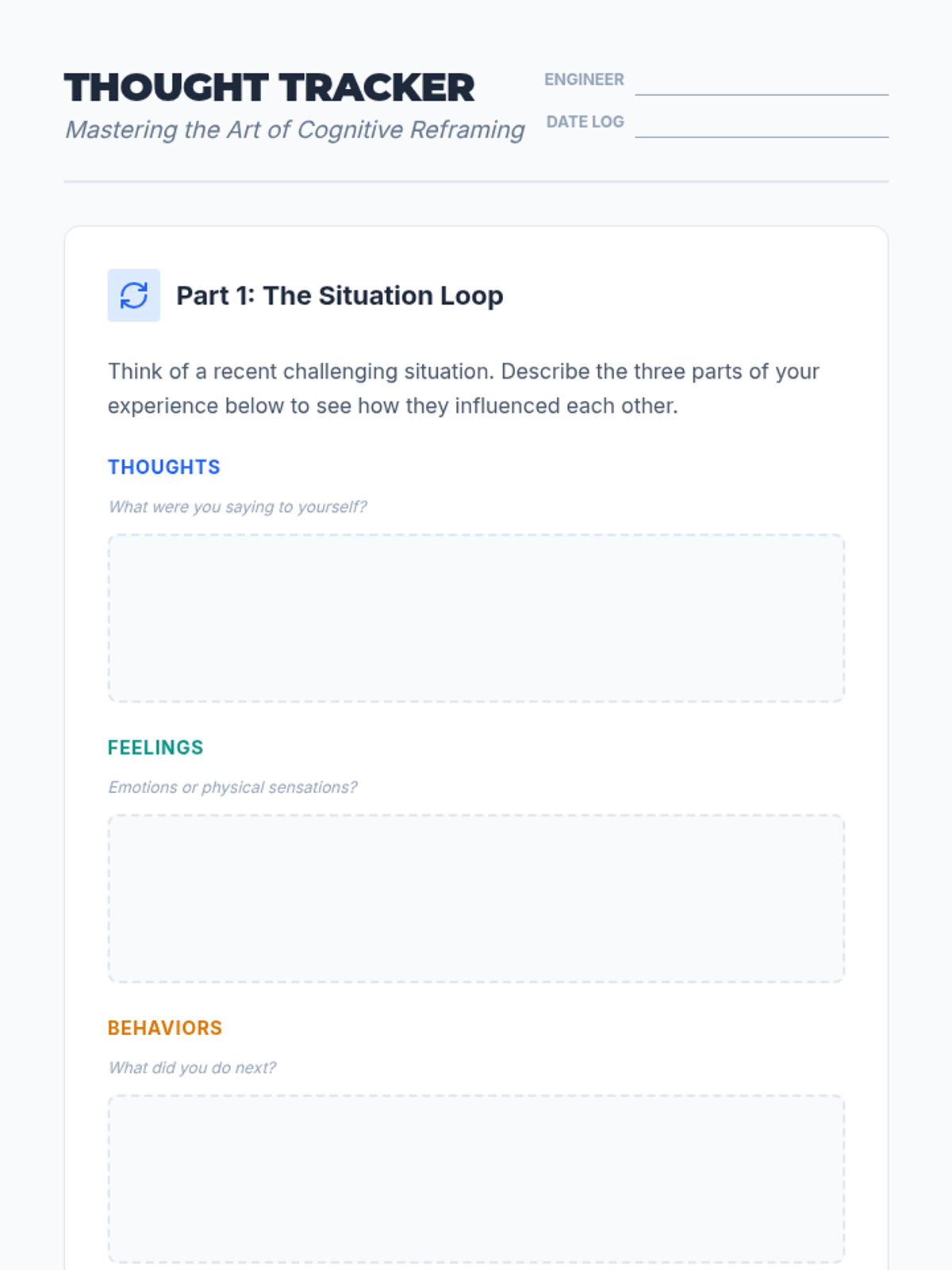
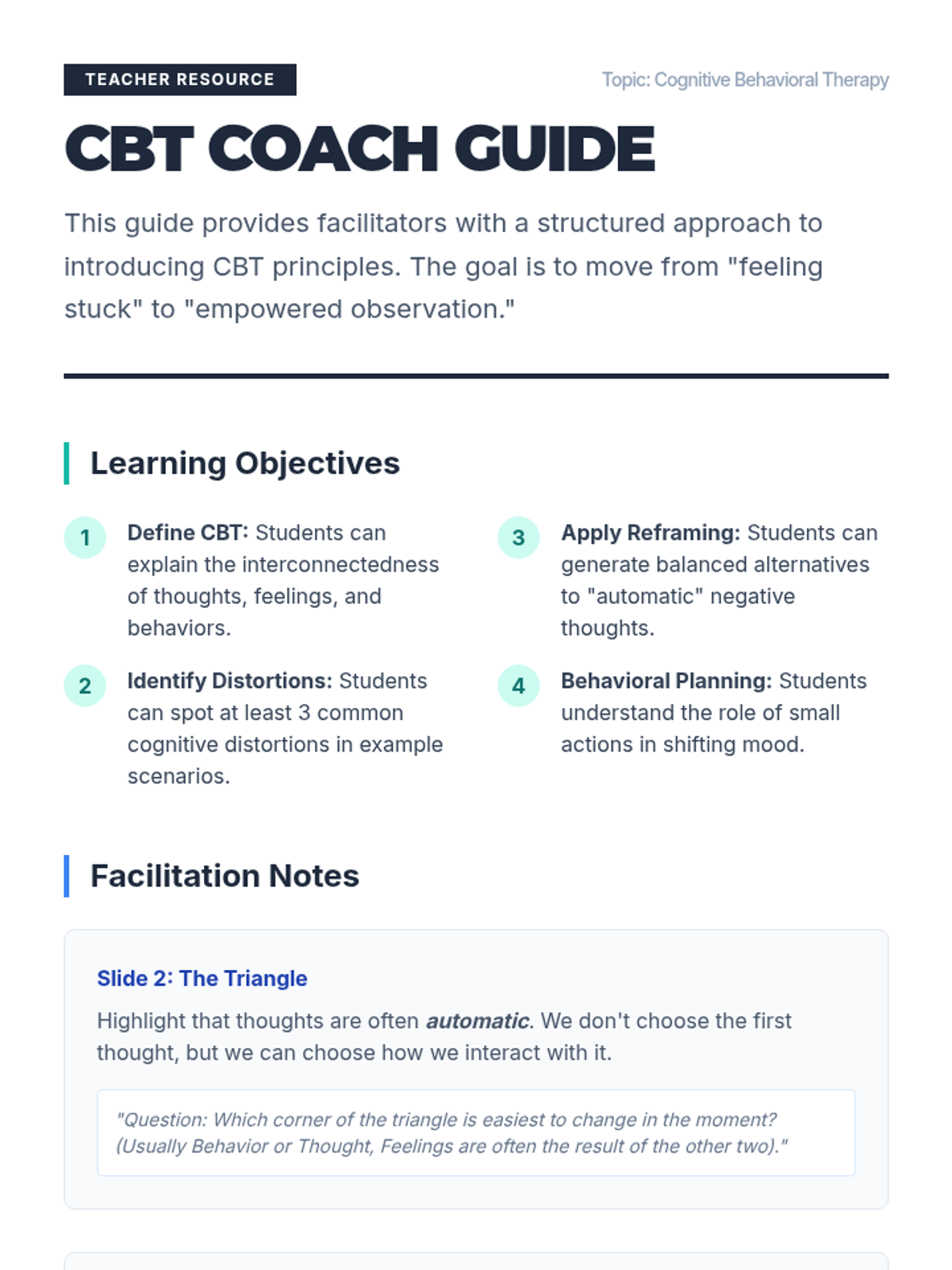
An introduction to Cognitive Behavioral Therapy (CBT) focusing on the connection between thoughts, feelings, and behaviors. Students learn to identify cognitive distortions and practice reframing techniques to improve mental well-being.
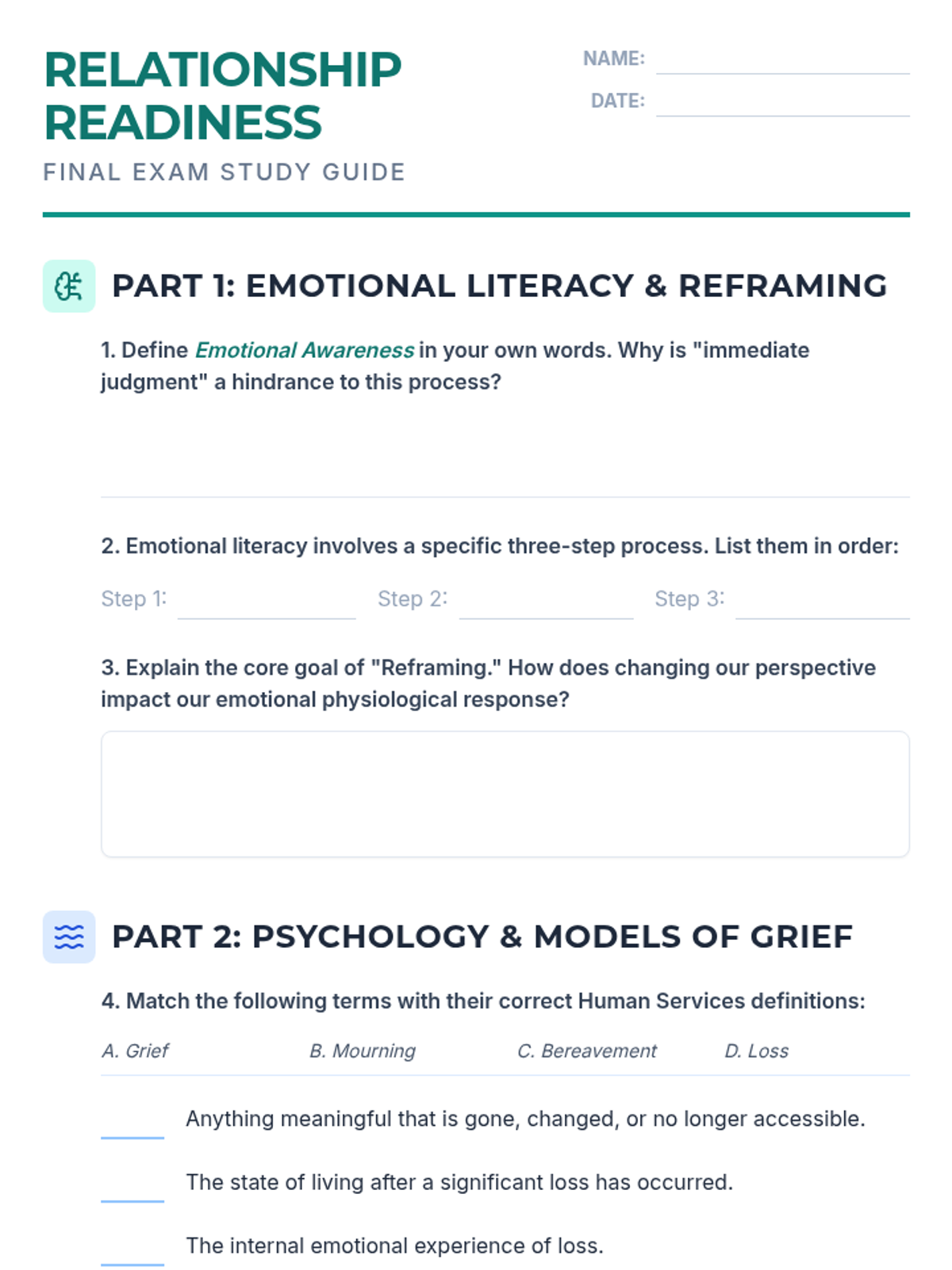
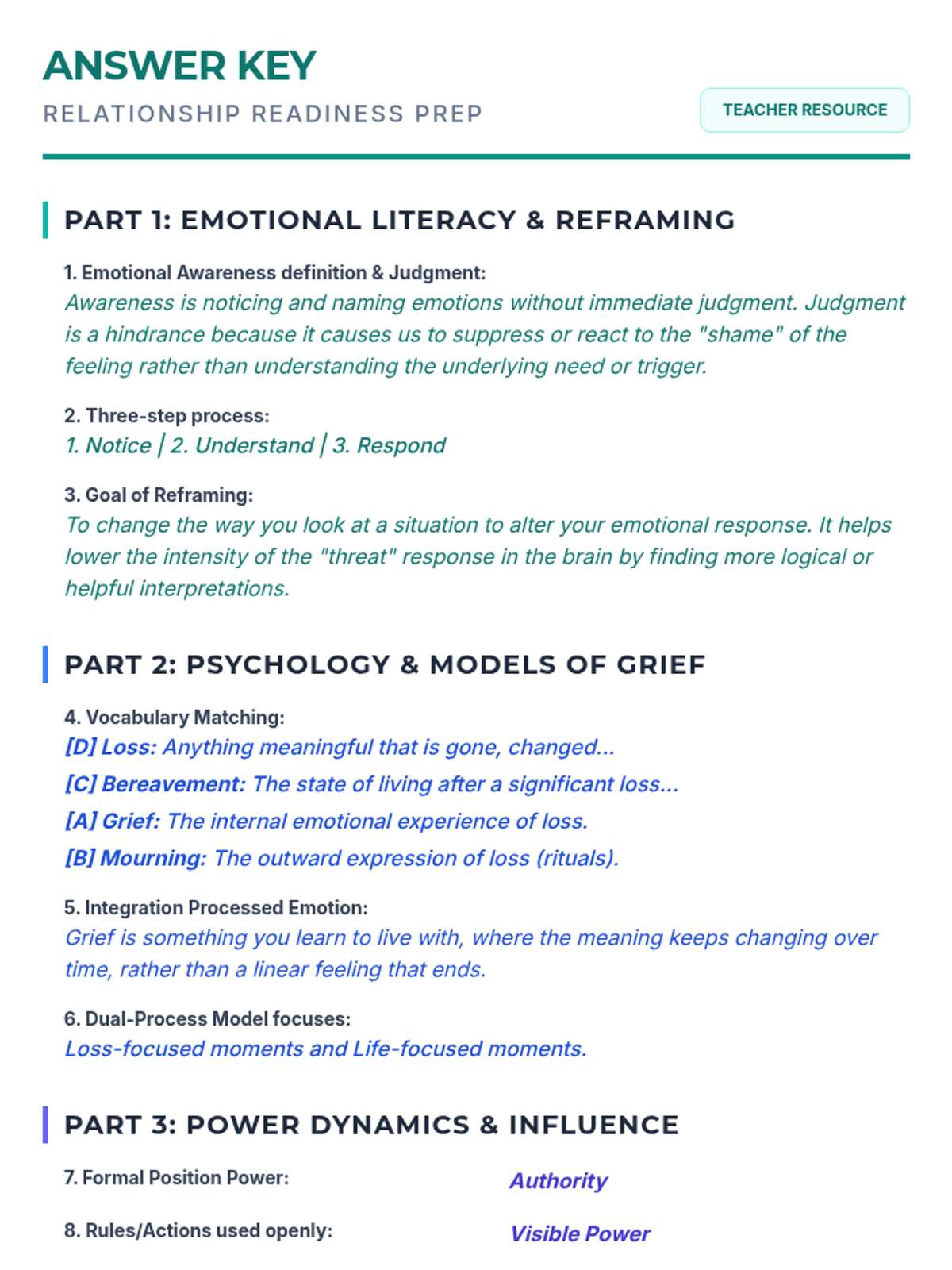
A comprehensive study guide and answer key designed to help junior and senior students prepare for their final exam on emotional literacy, grief models, power dynamics, and relationship repair.
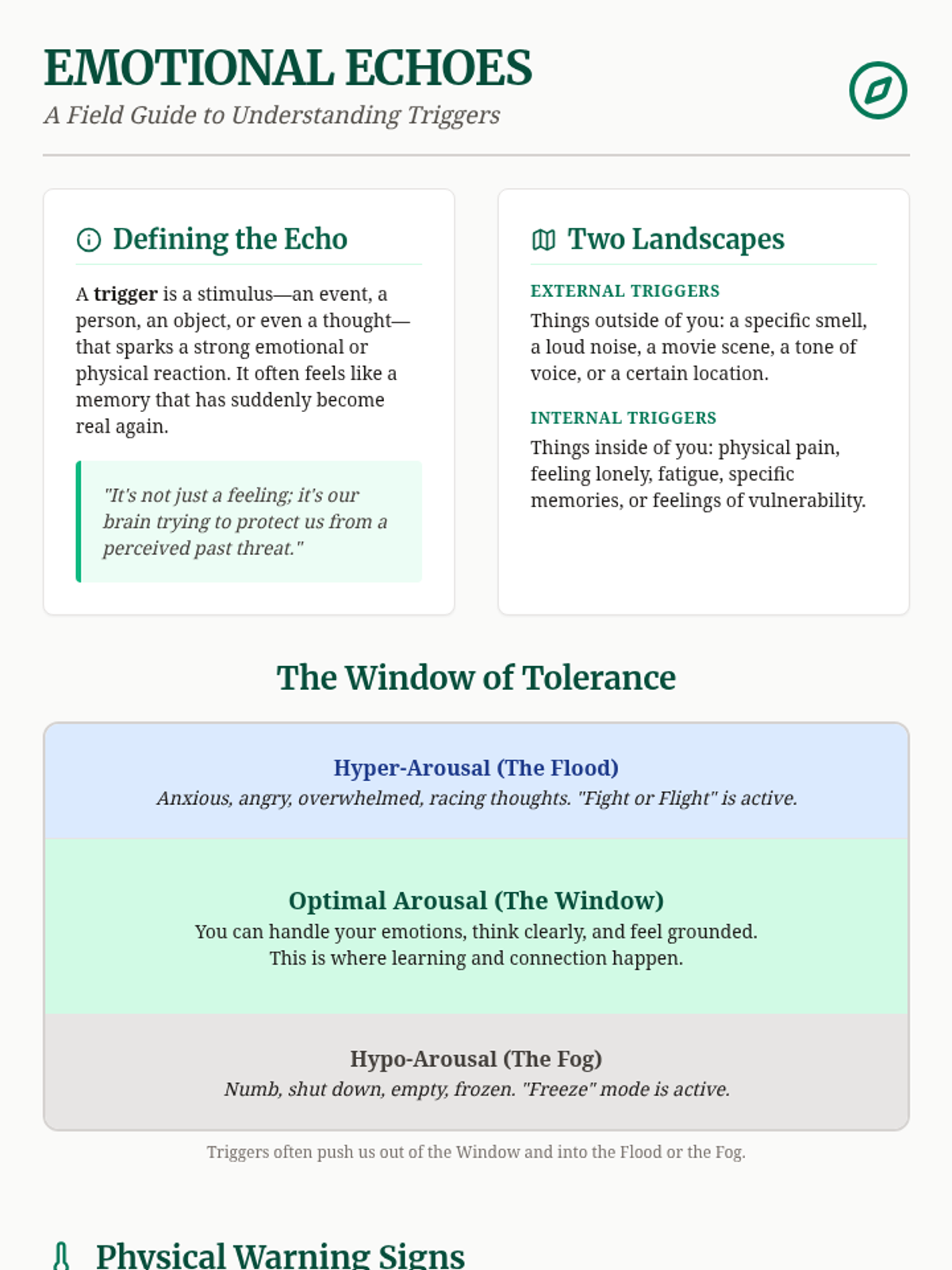
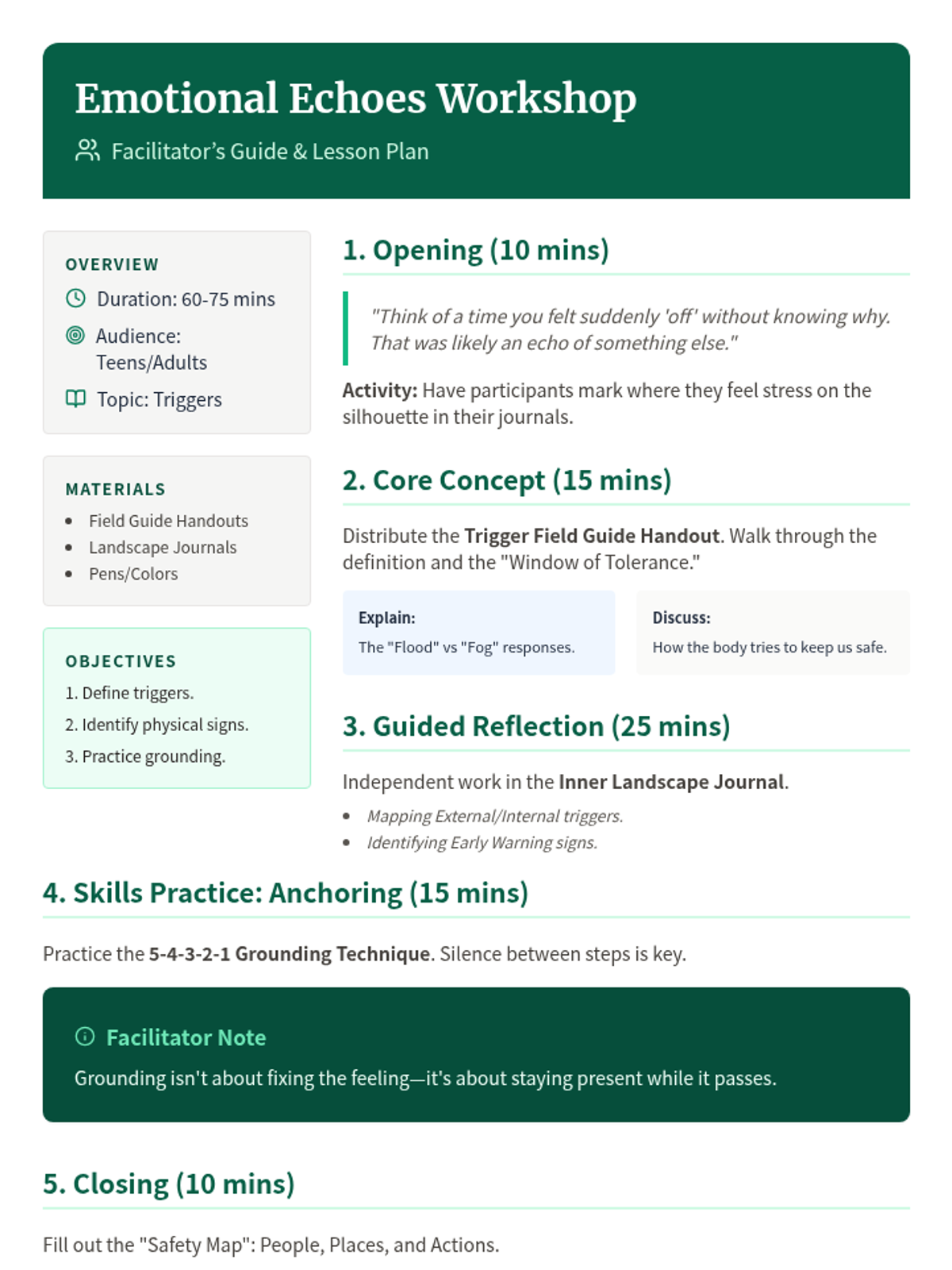
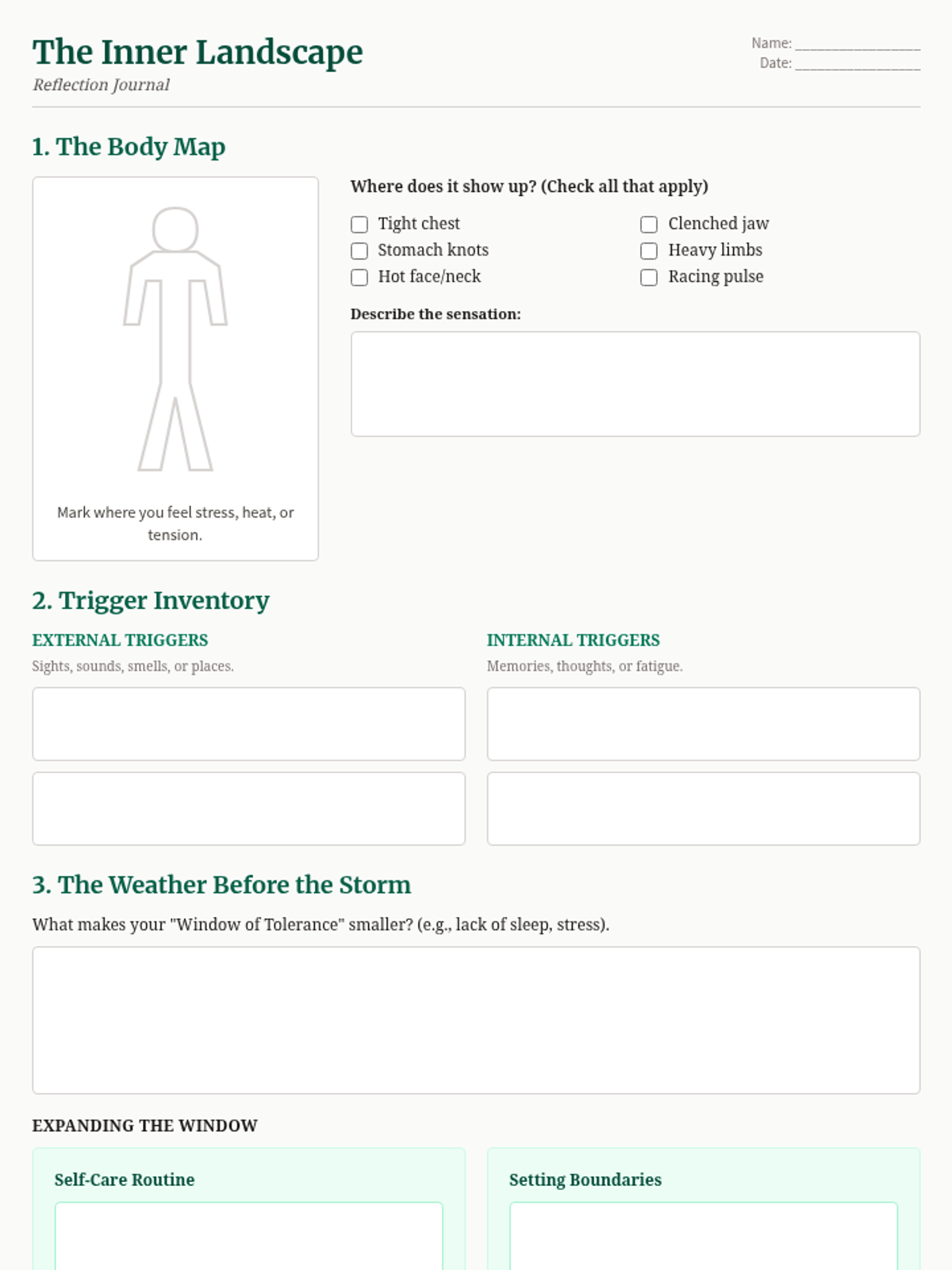
A comprehensive workshop and resource set designed to help students identify, understand, and navigate mental health triggers through self-reflection and grounding techniques.
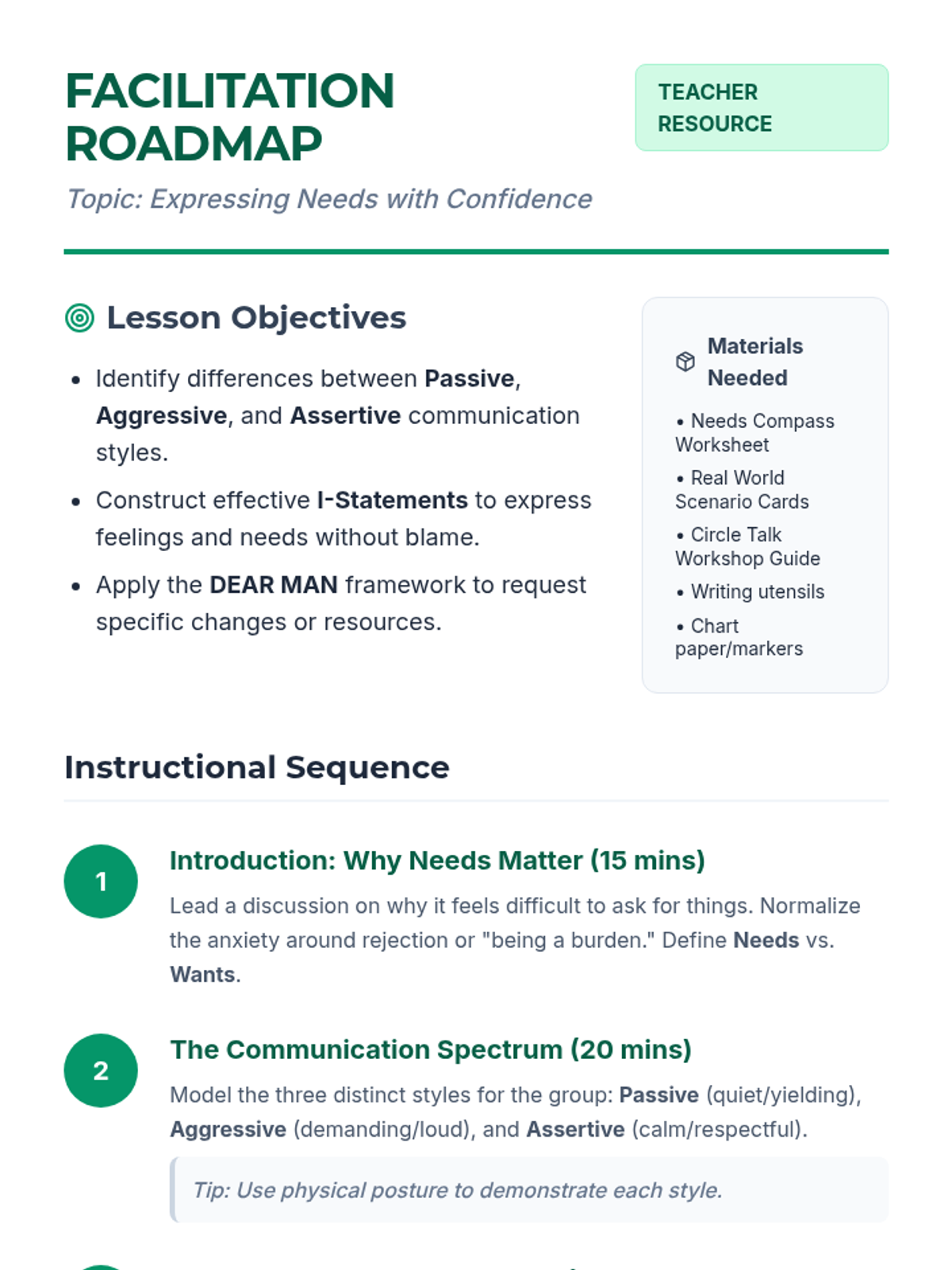
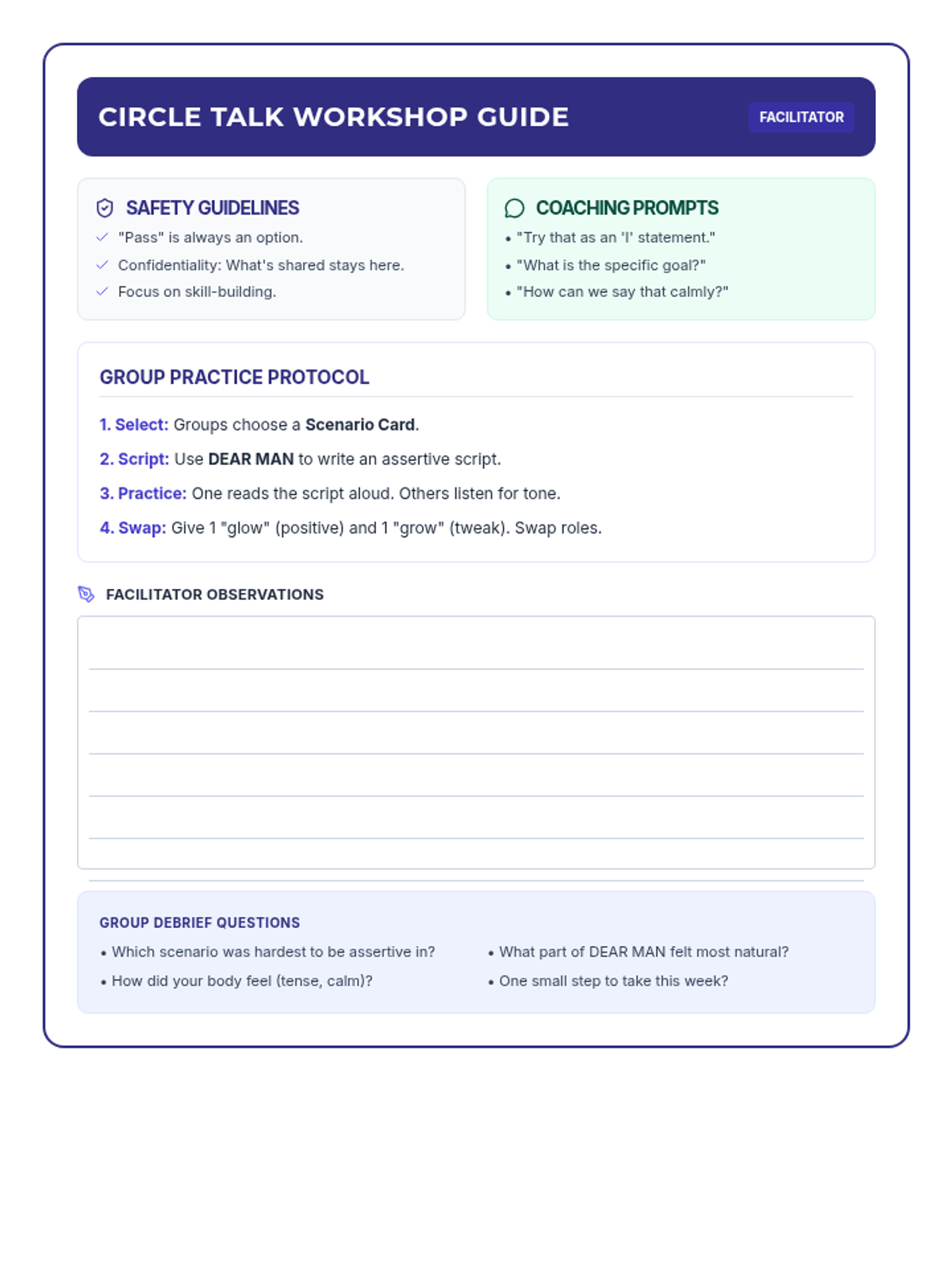
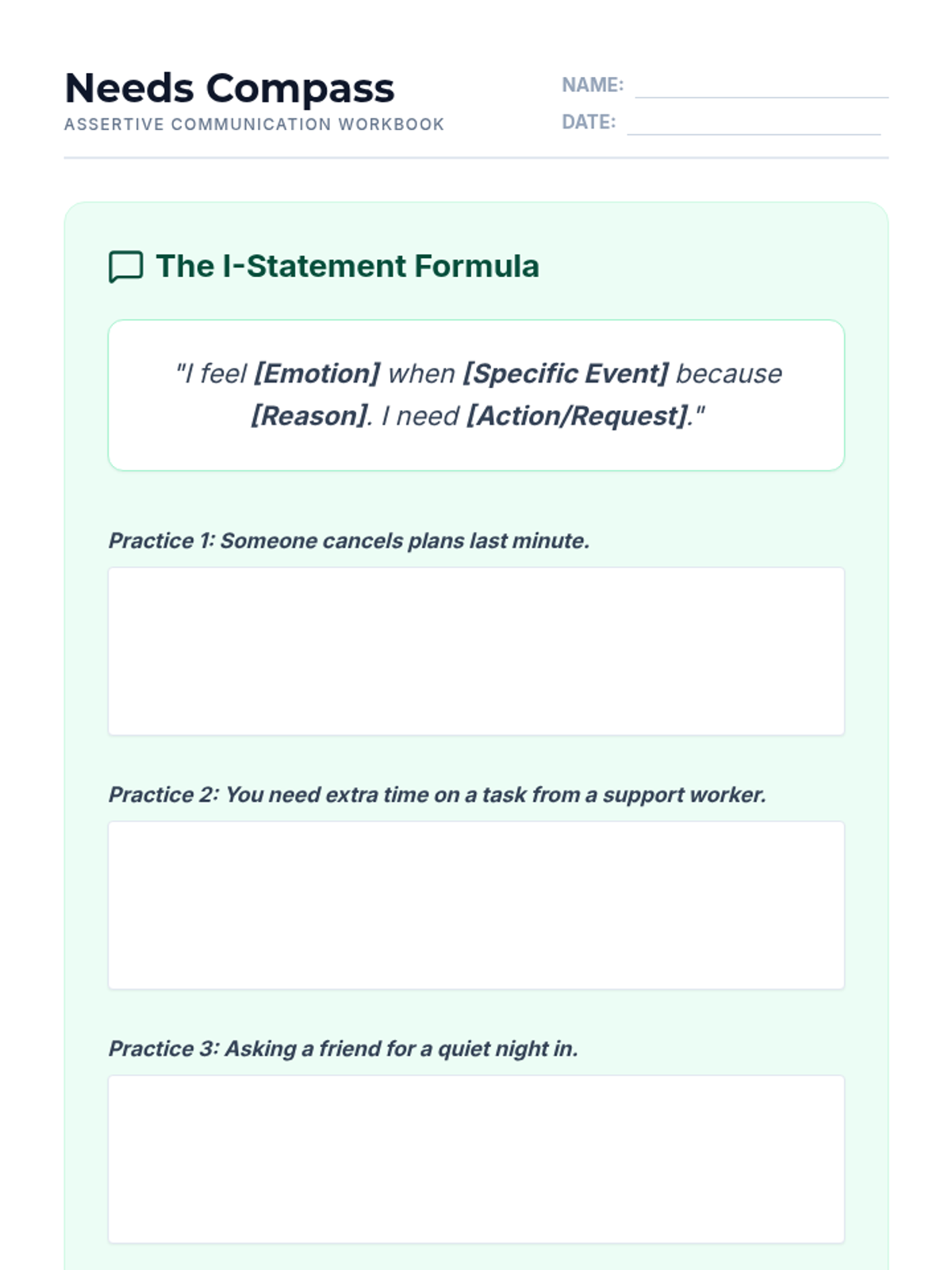
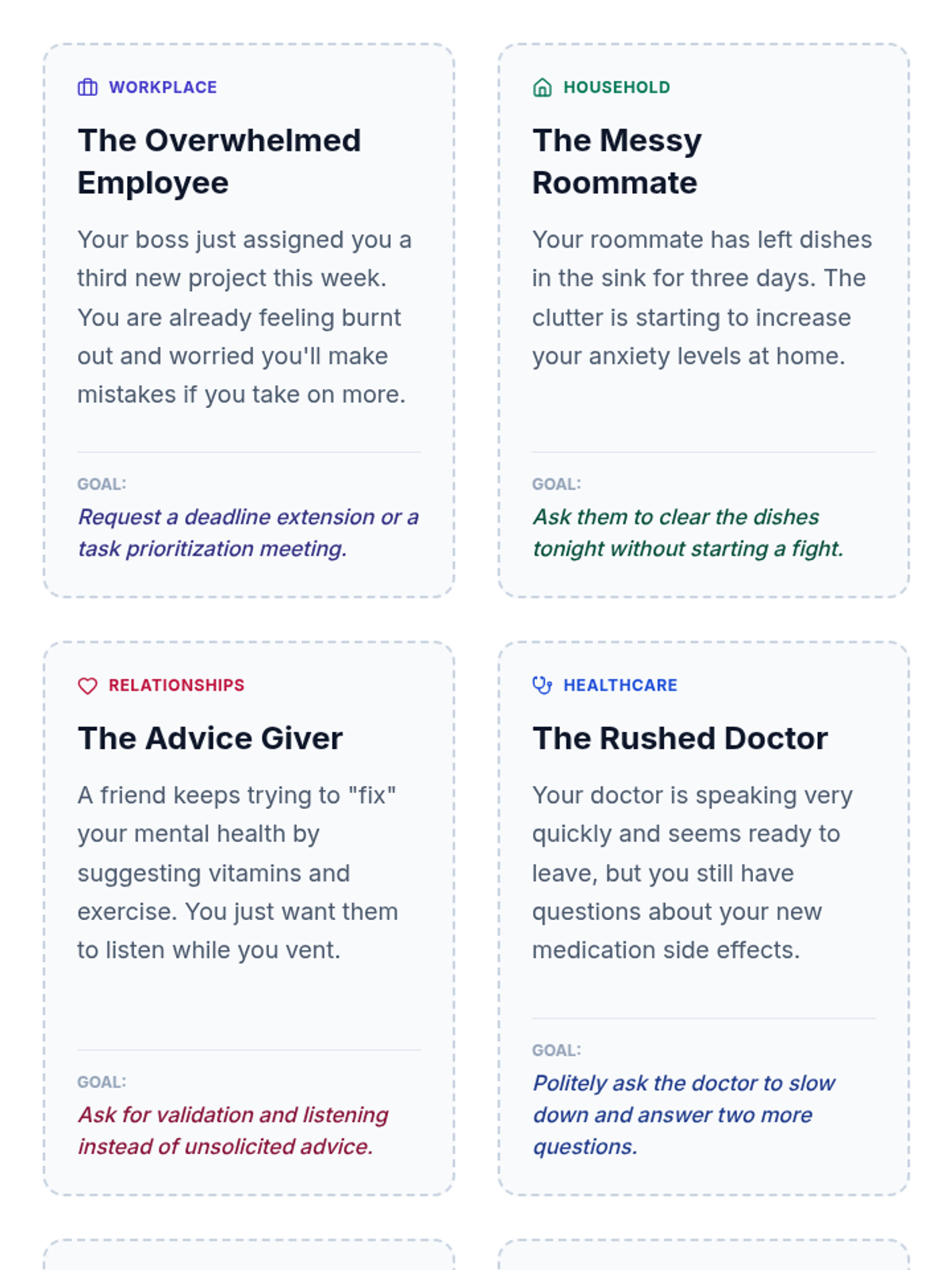
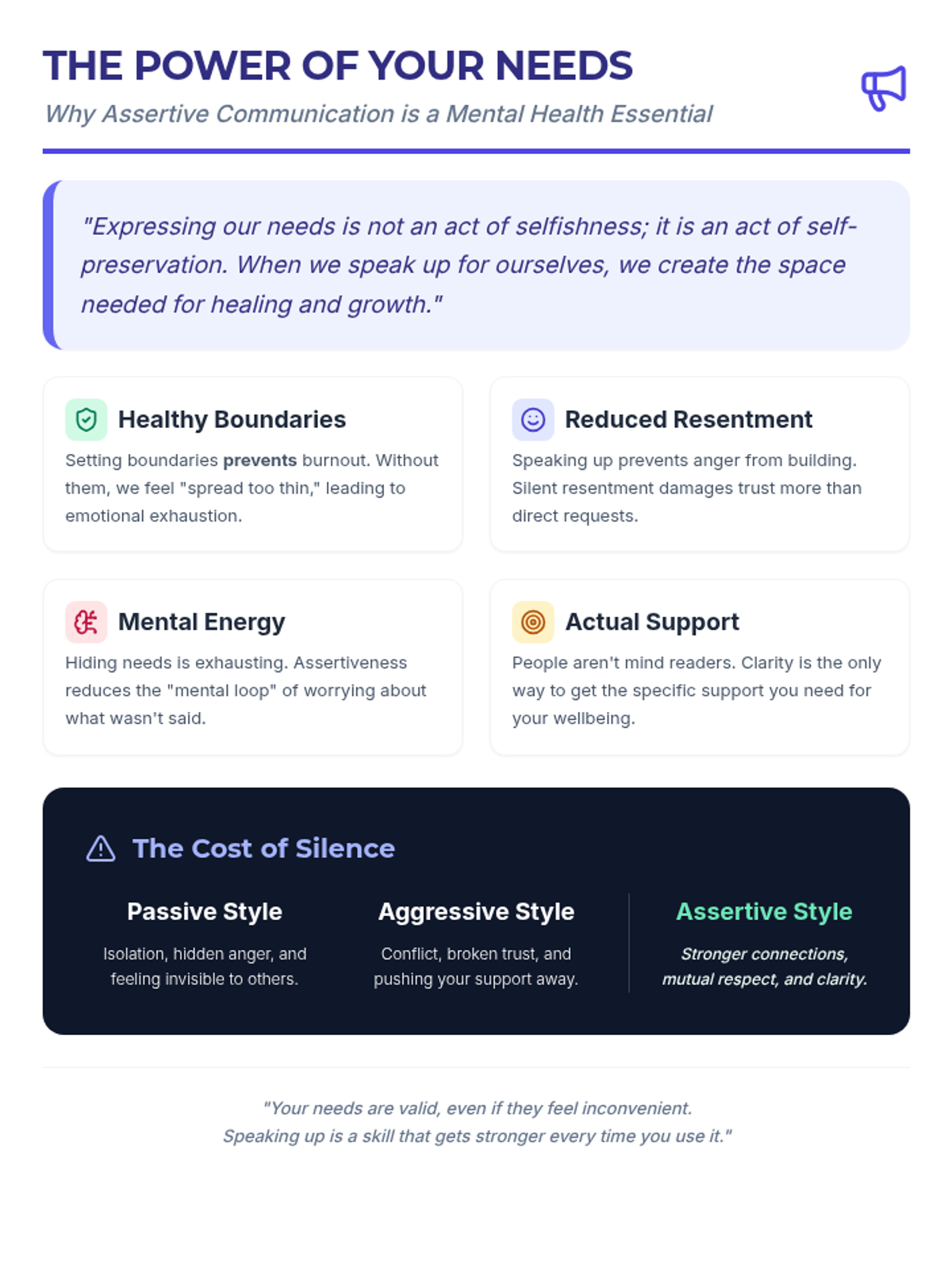
A comprehensive lesson designed for adult learners to master assertive communication techniques including I-Statements and the DBT DEAR MAN framework to effectively express personal needs in a mental health context.
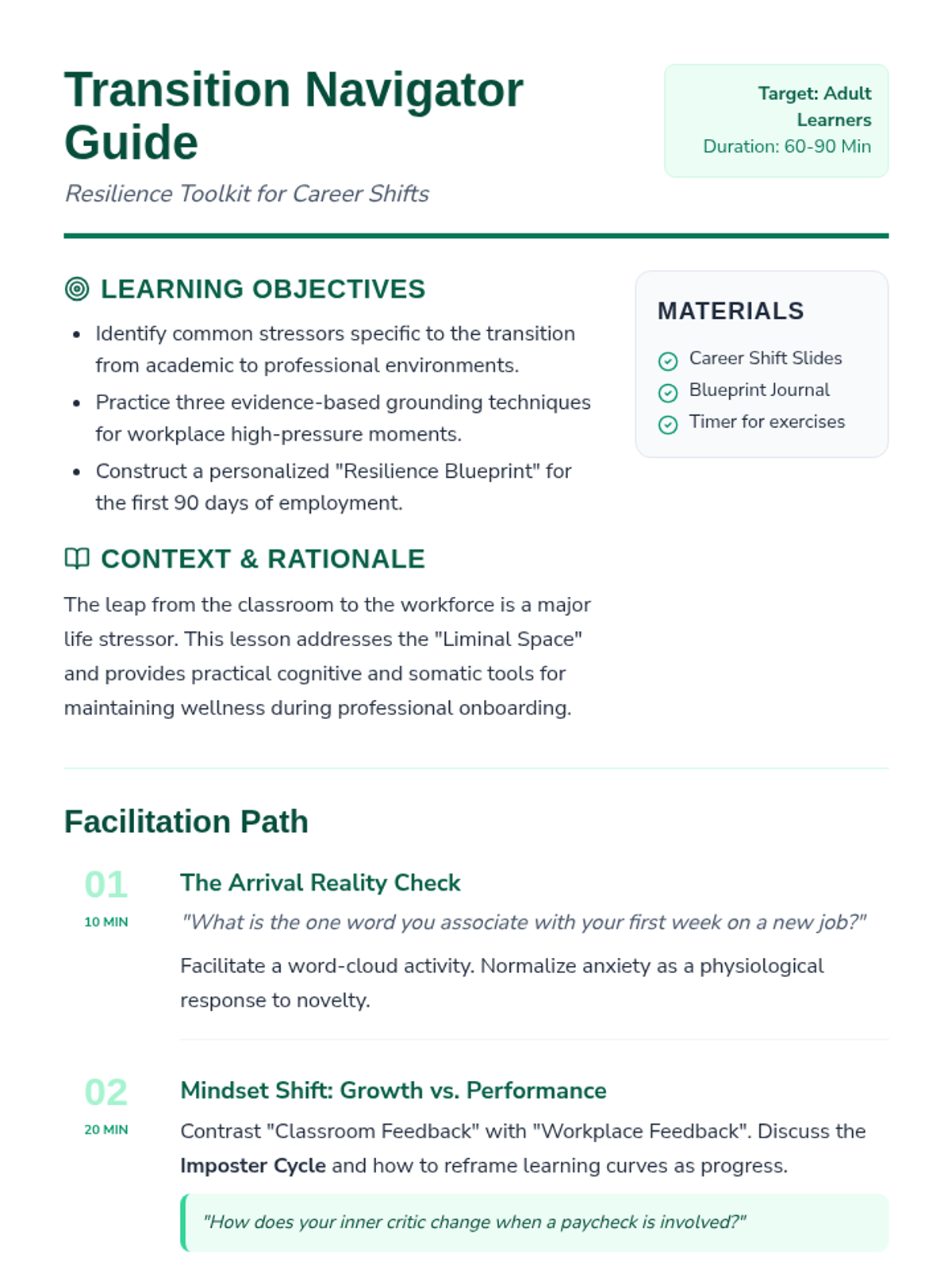
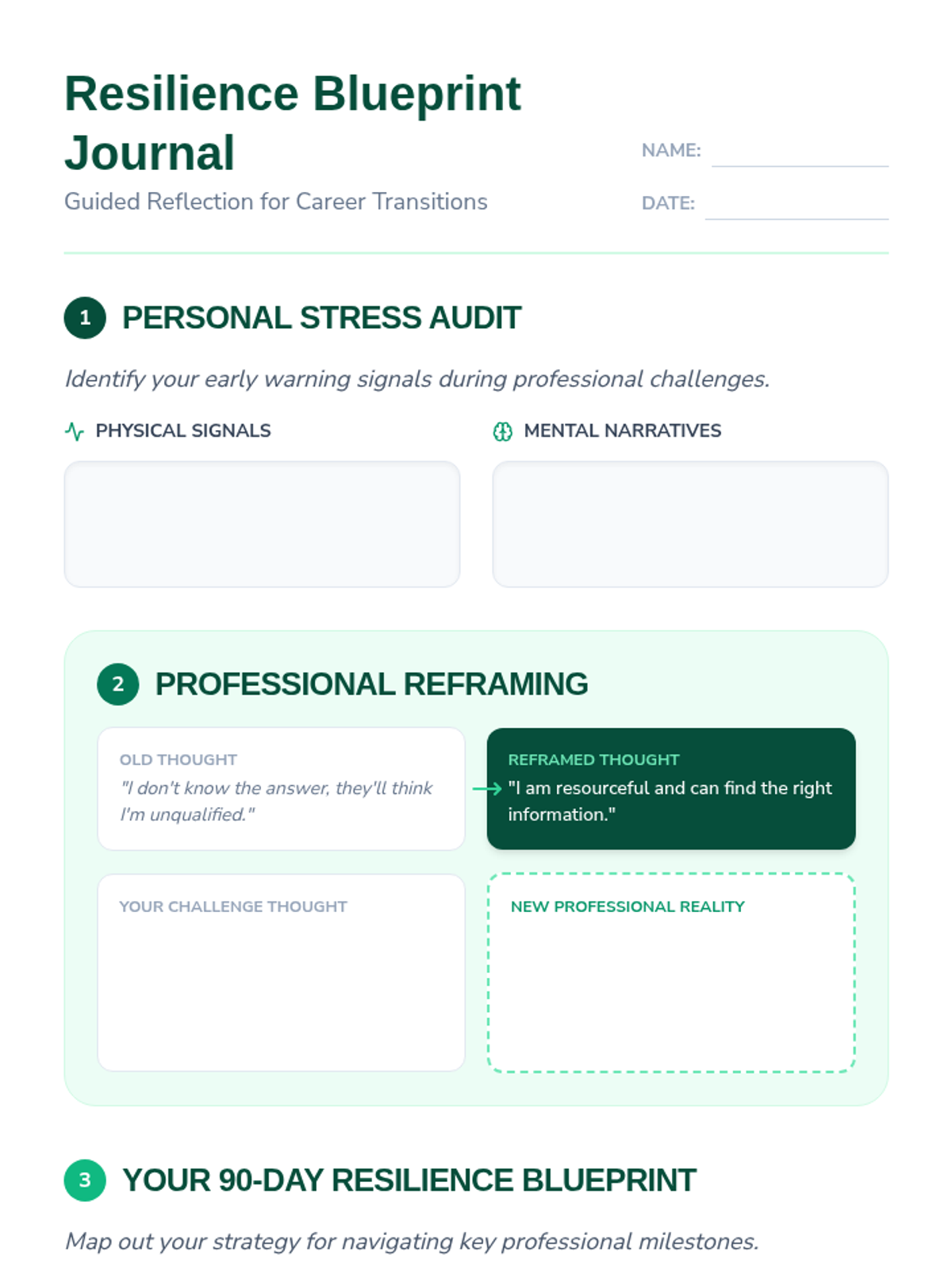
A wellness-focused lesson providing adult students with stress-management techniques specifically tailored for the transition from the classroom to the workforce. Includes a facilitator guide, instructional slides, and a guided reflection journal.
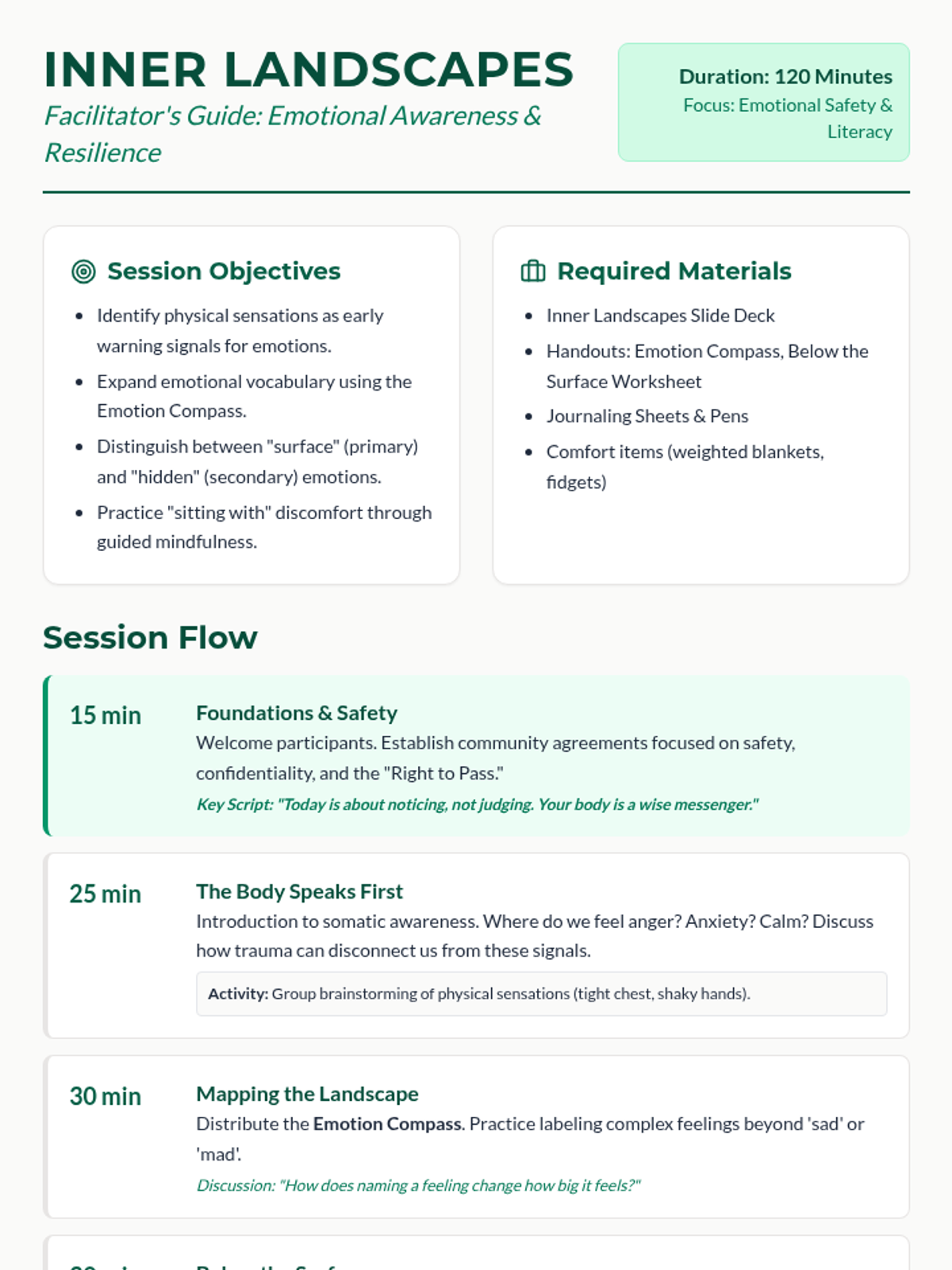
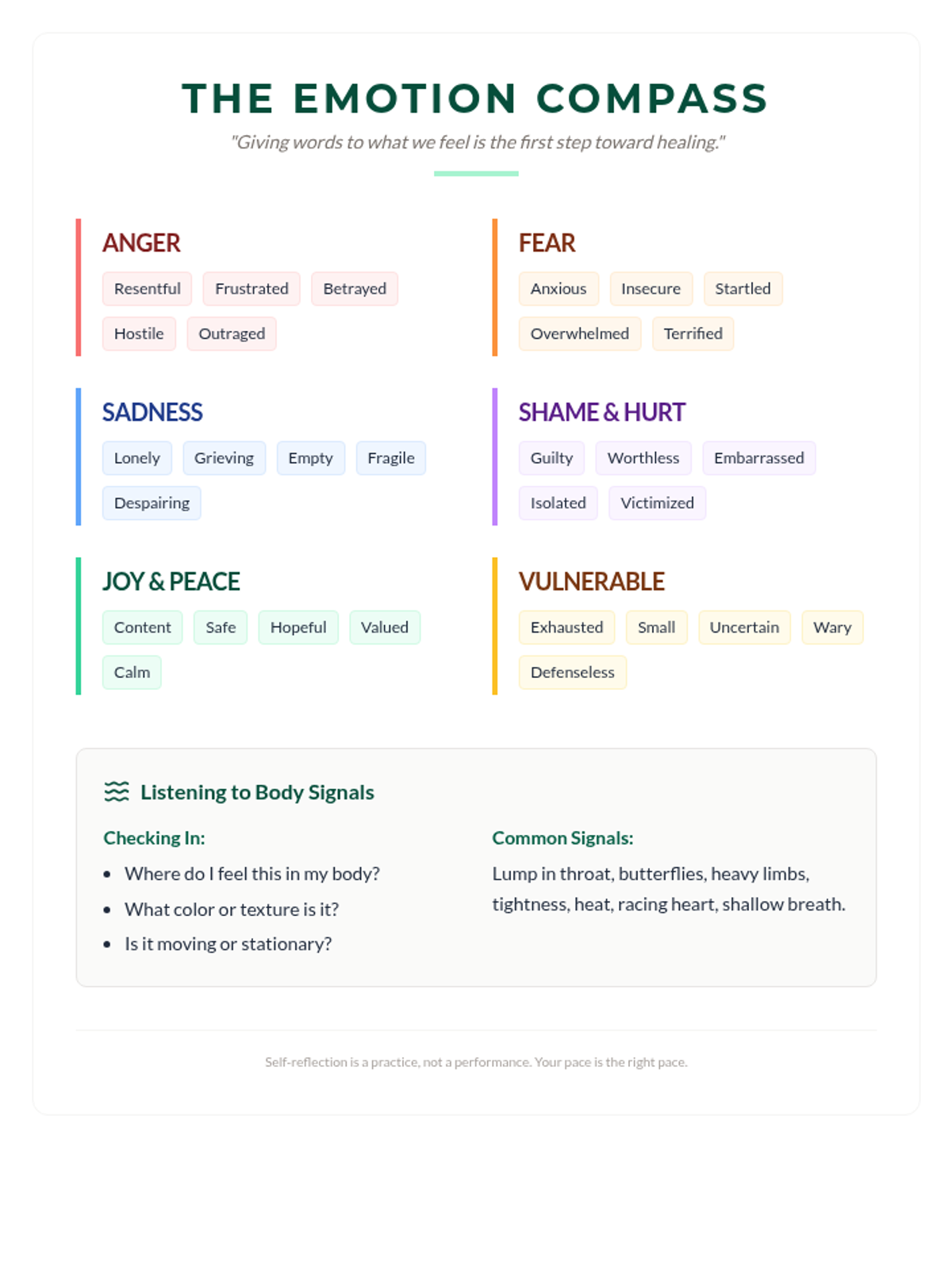
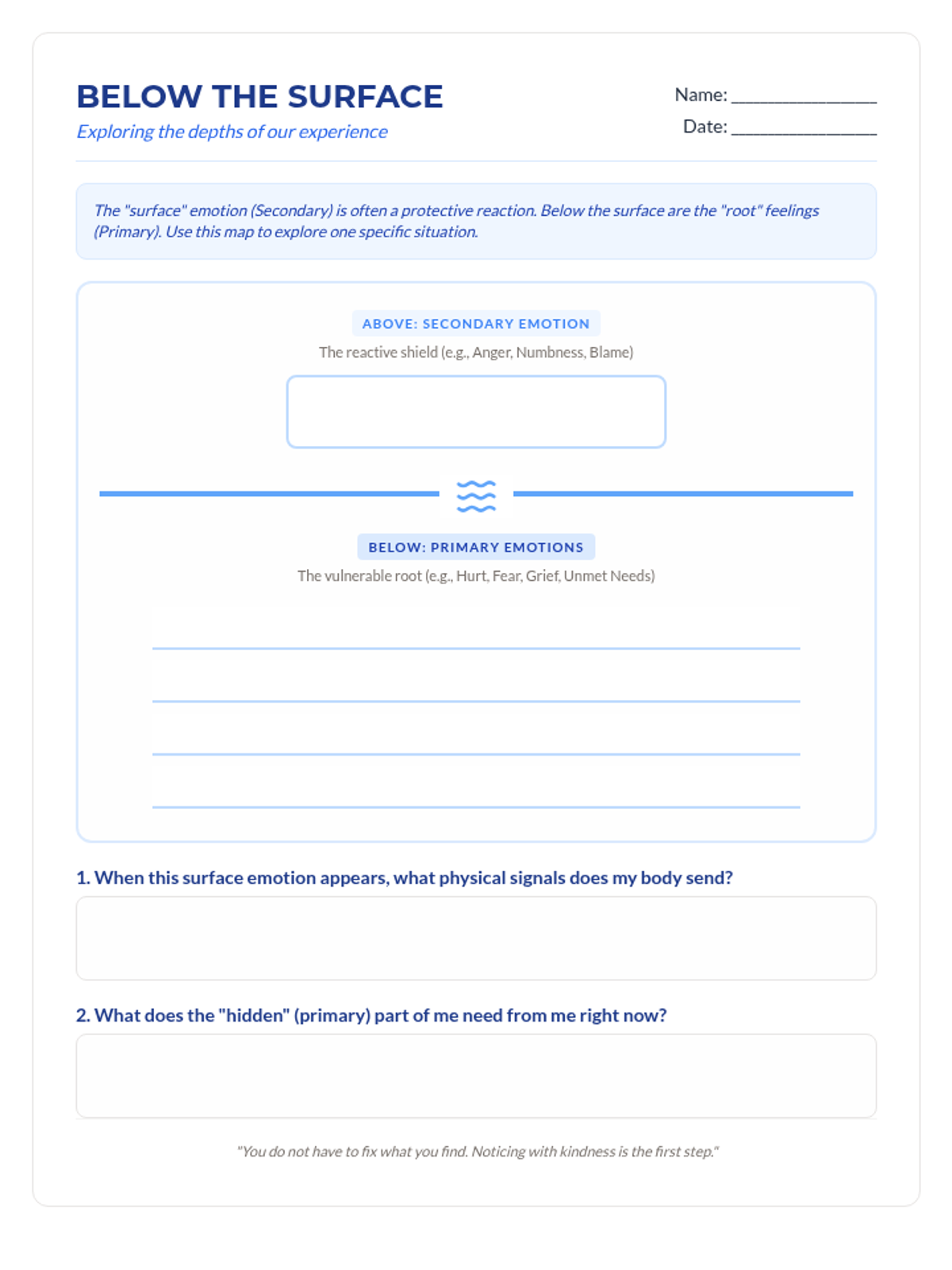
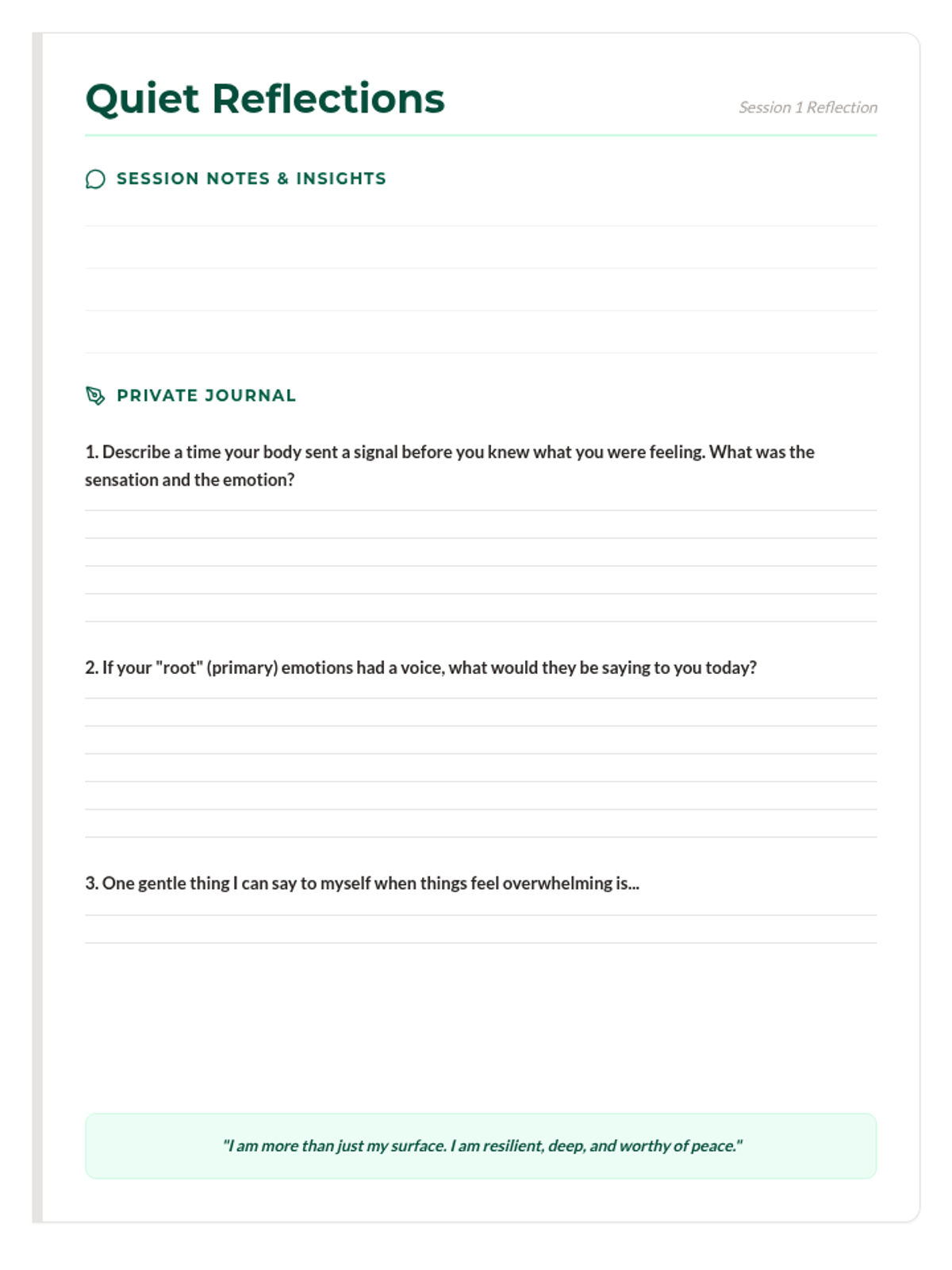
A 2-hour psychoeducational session for domestic violence survivors focused on emotional awareness, body signals, and identifying secondary emotions below the surface.
A comprehensive guide for managing anxiety using CBT-based techniques, specifically designed with simple language and concrete strategies for an 18-year-old autistic student. Includes grounding, thought-challenging, and social role-playing.
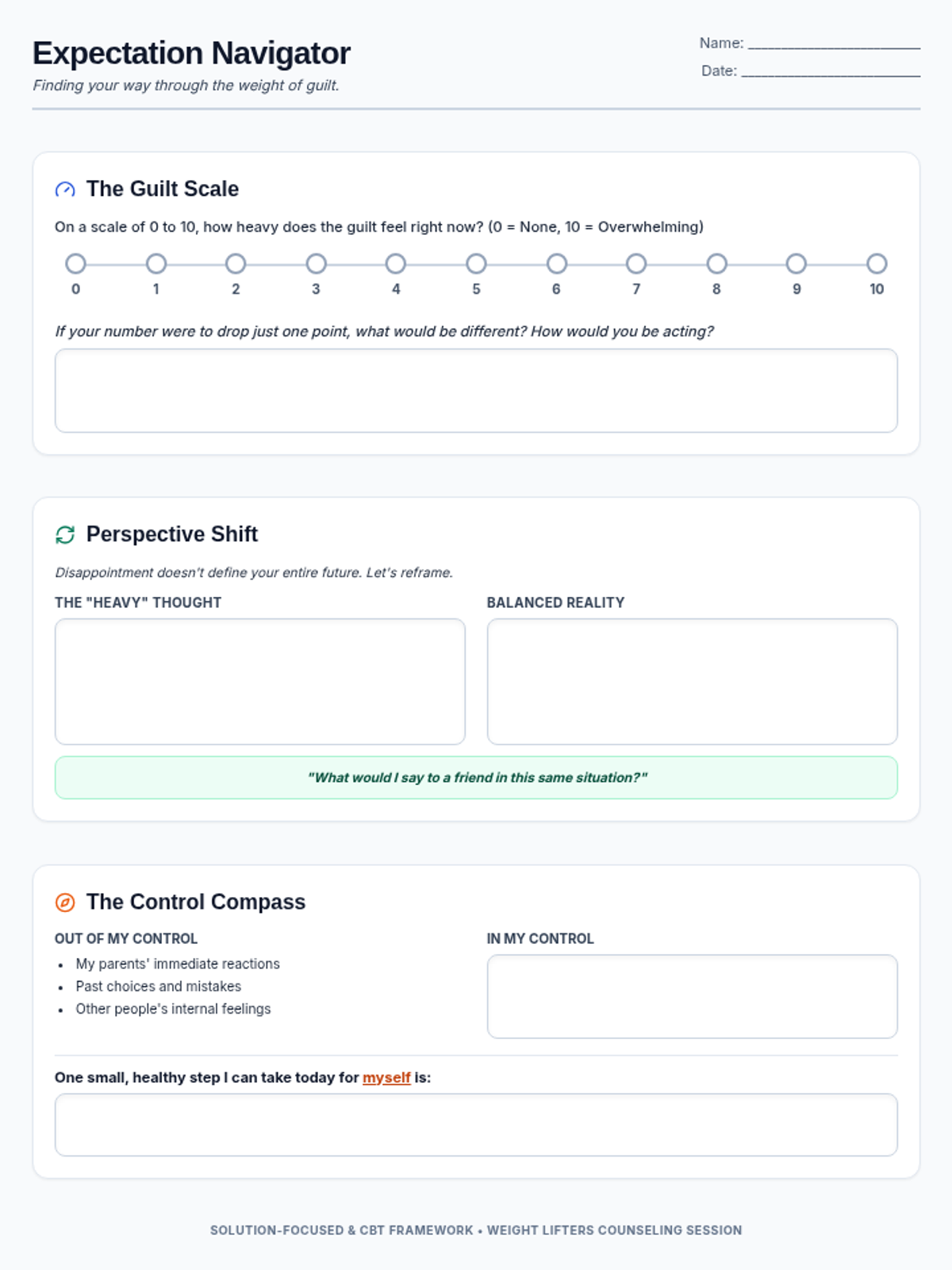
A counseling framework for students struggling with parental expectations and guilt. This session integrates CBT reframing, DBT distress tolerance, and SFBT scaling to help students process disappointment and regain emotional balance.
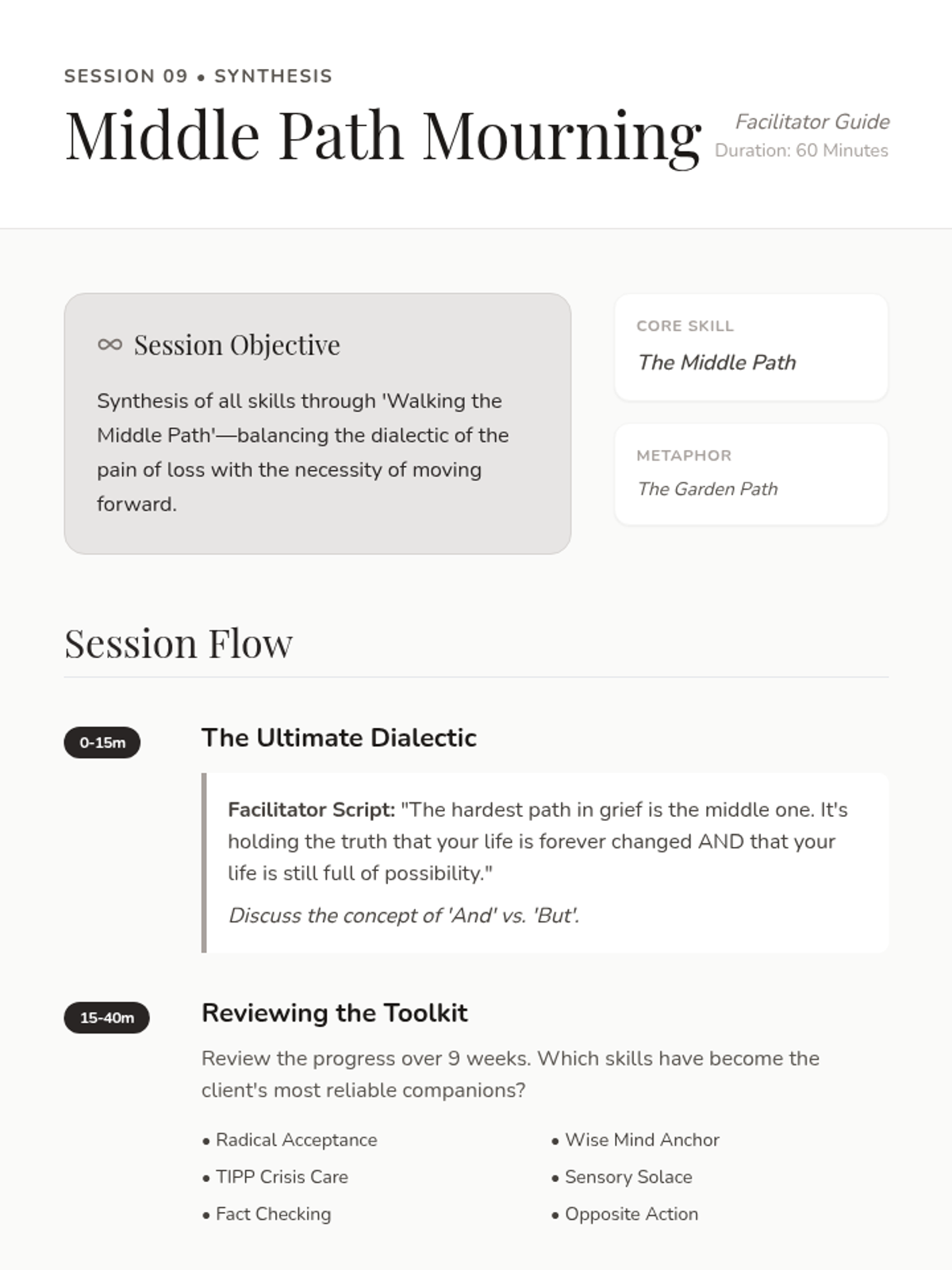
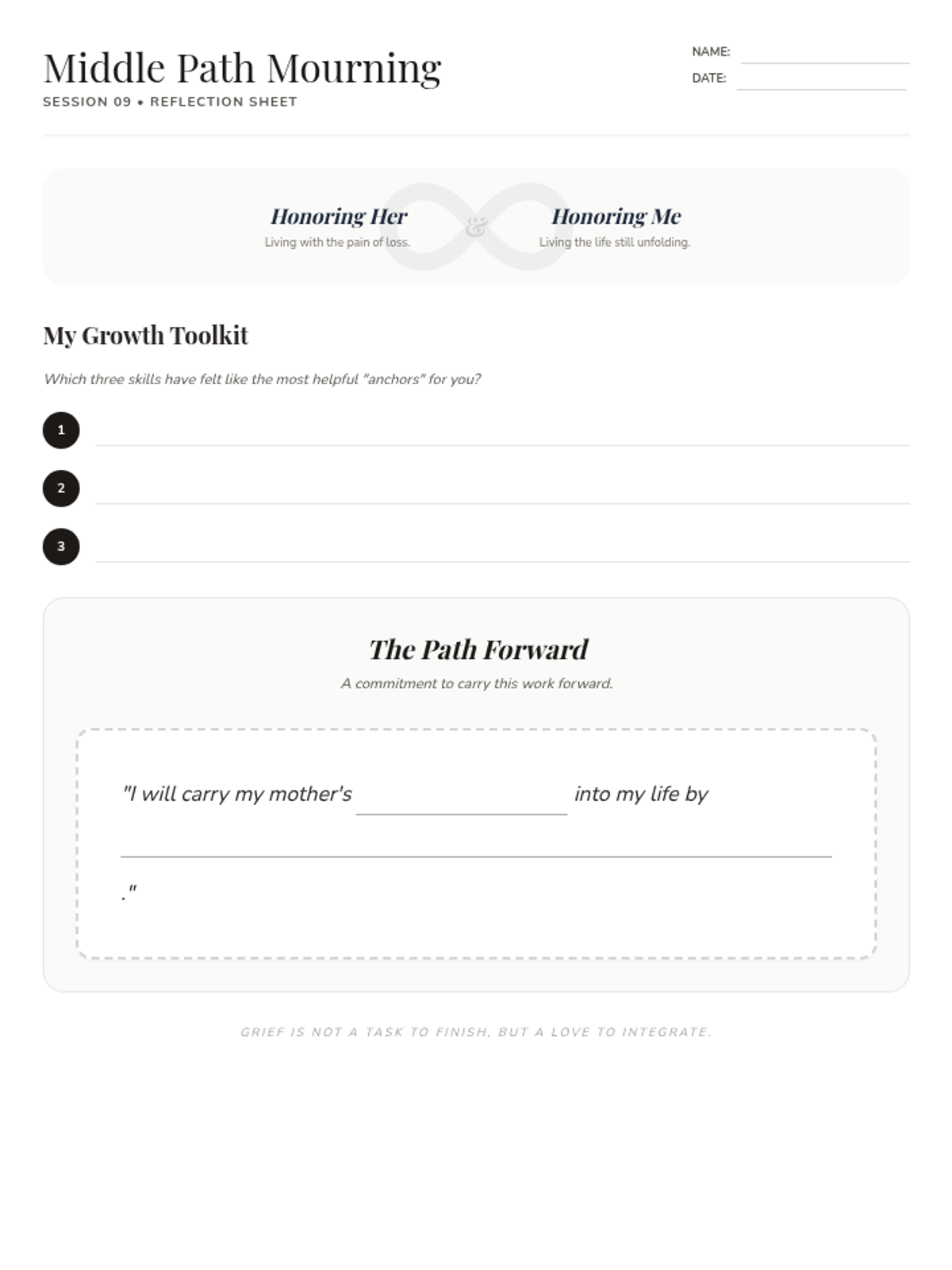
Synthesis of skills through 'Walking the Middle Path'—balancing the pain of loss with the necessity of moving forward.
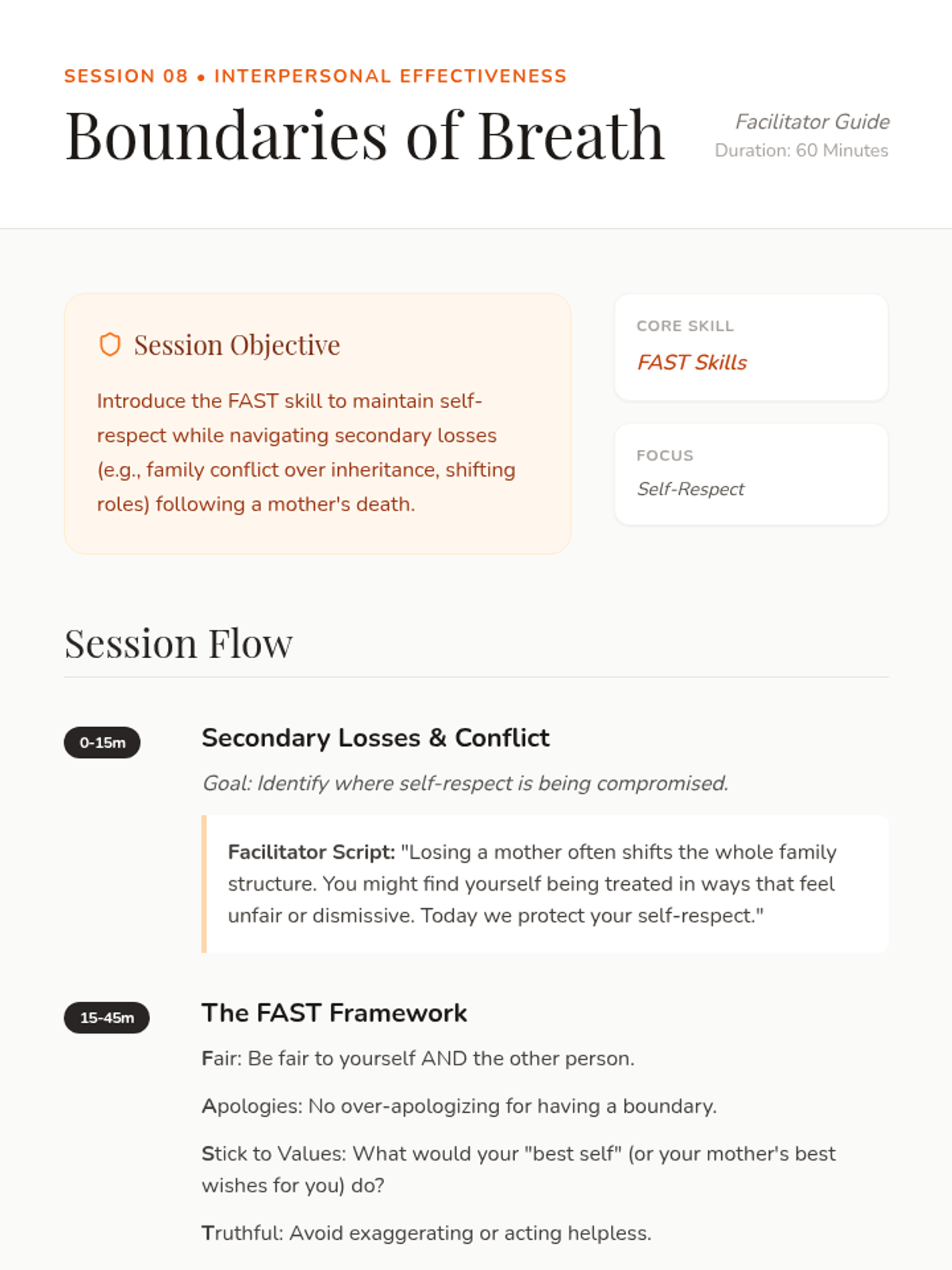
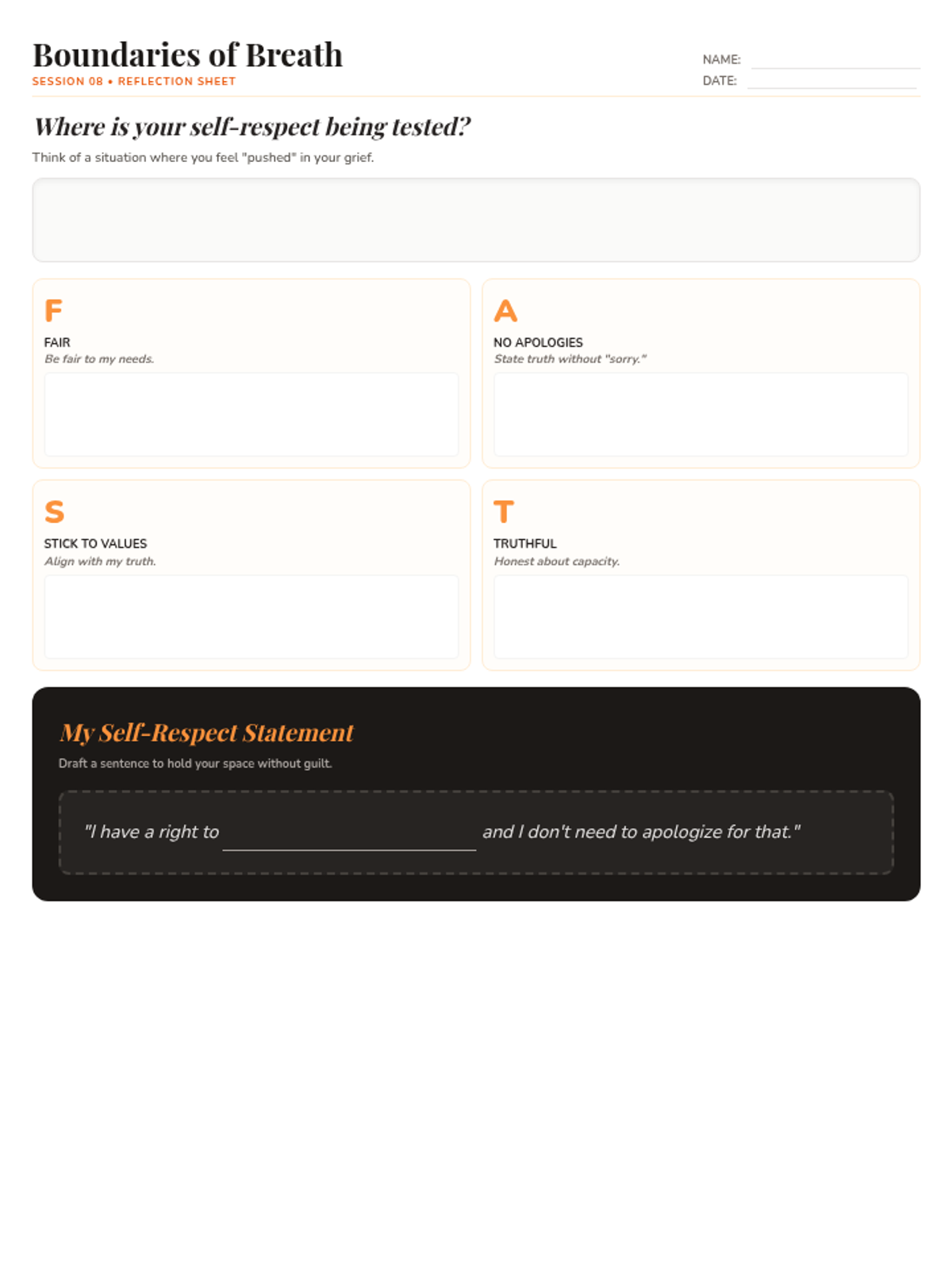
Applying the FAST skill to maintain self-respect and values when navigating the secondary losses associated with maternal death.
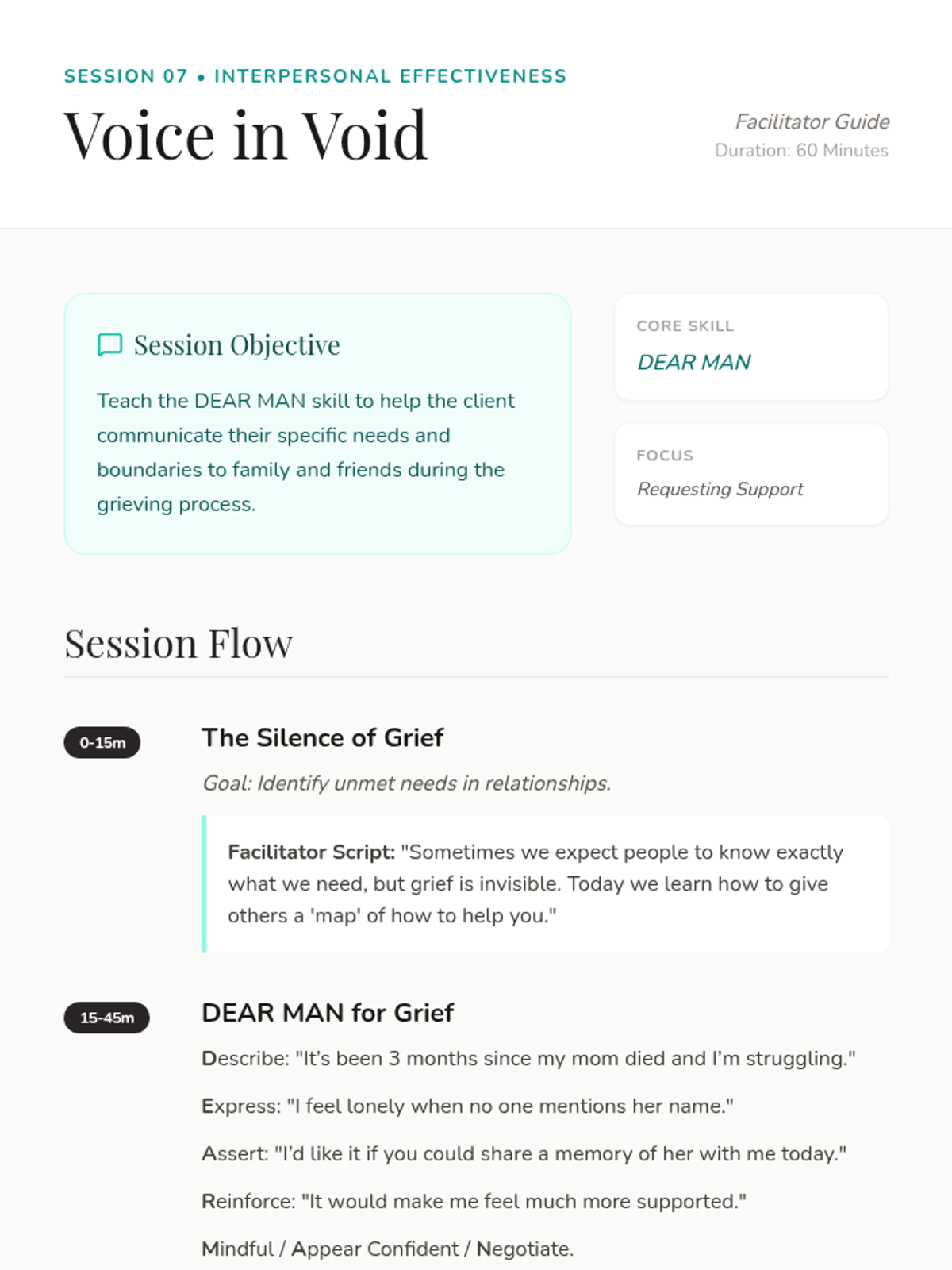
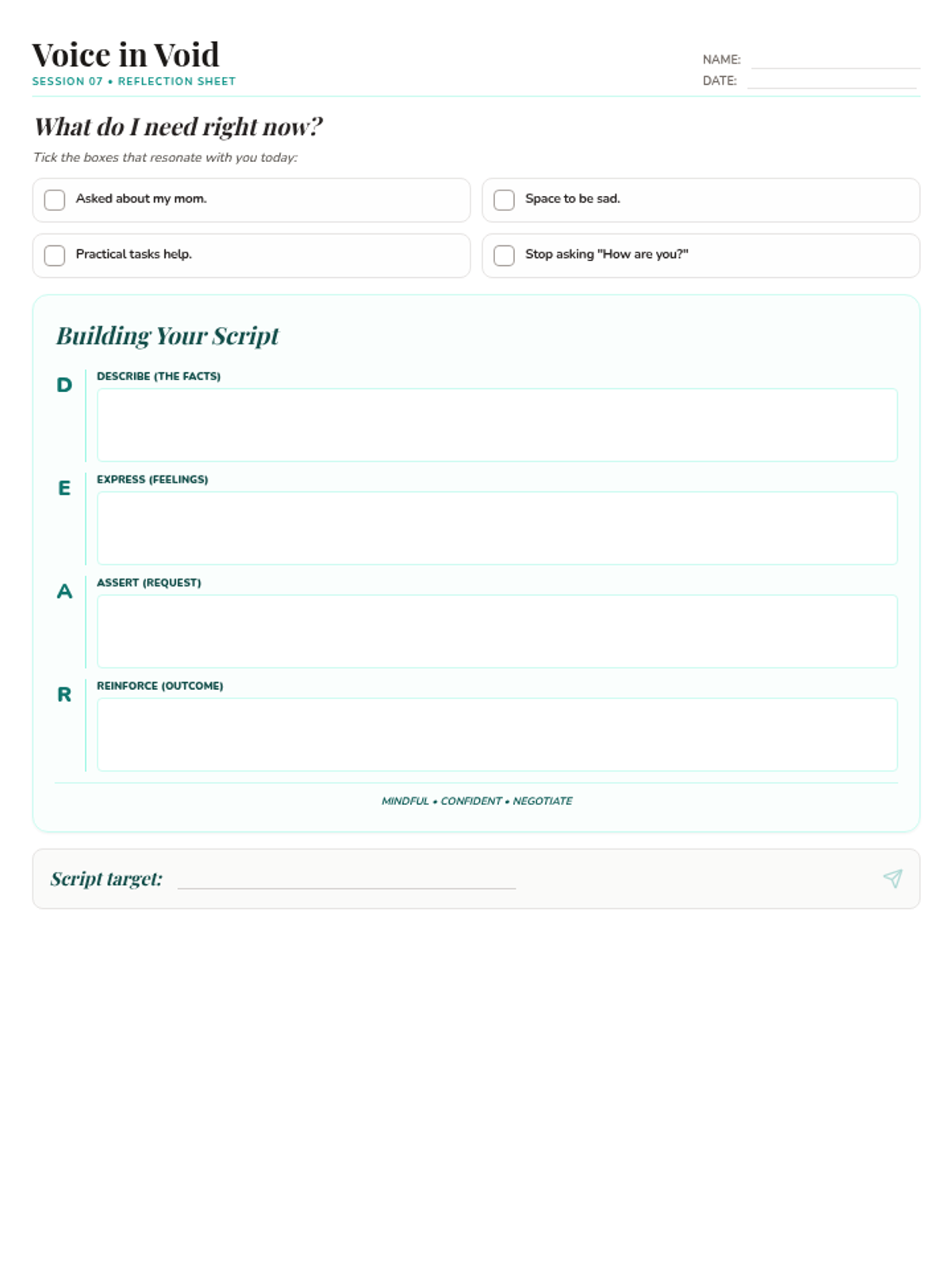
Using the DEAR MAN skill to communicate needs and boundaries to family and friends during the grieving process.
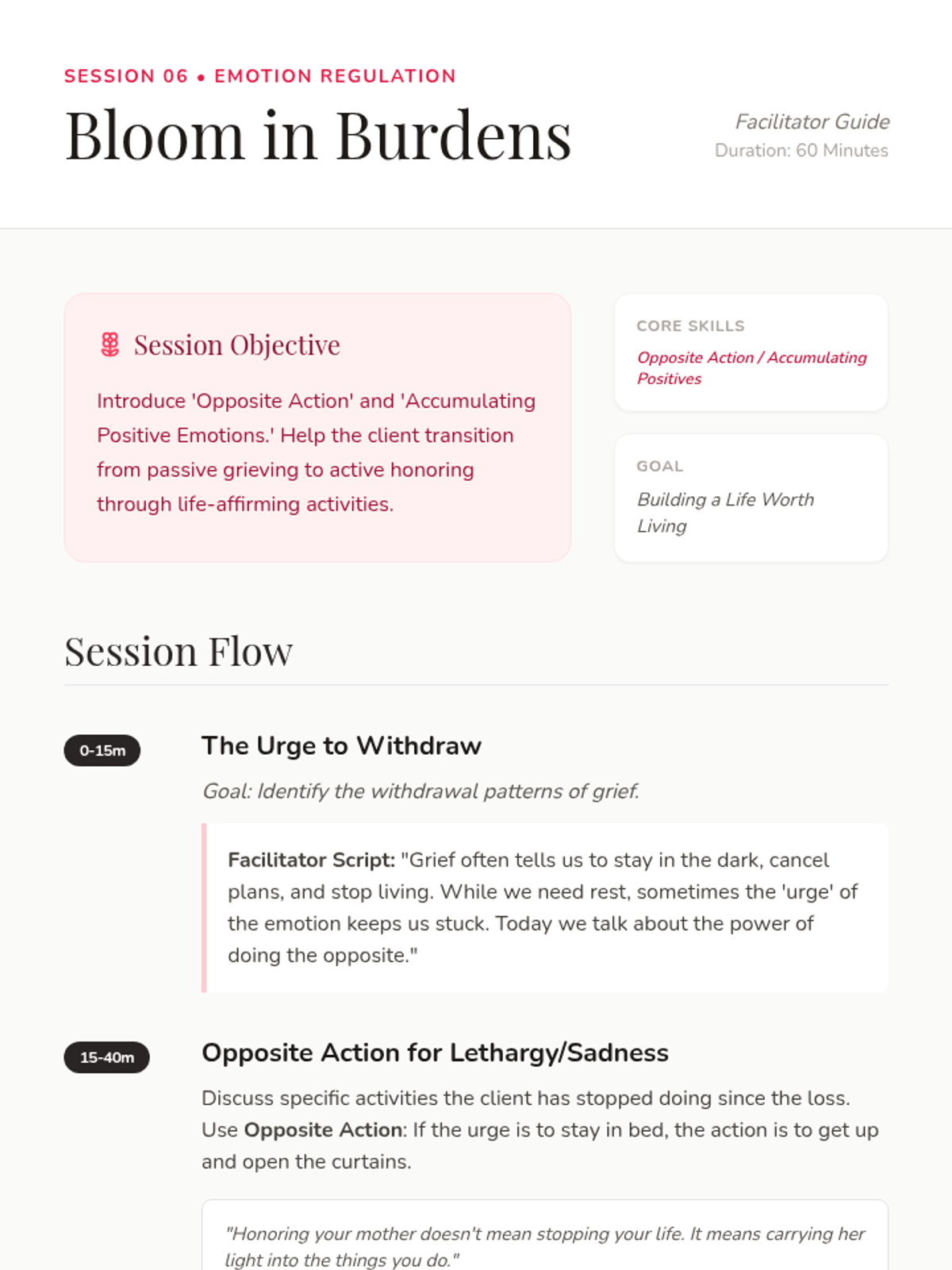
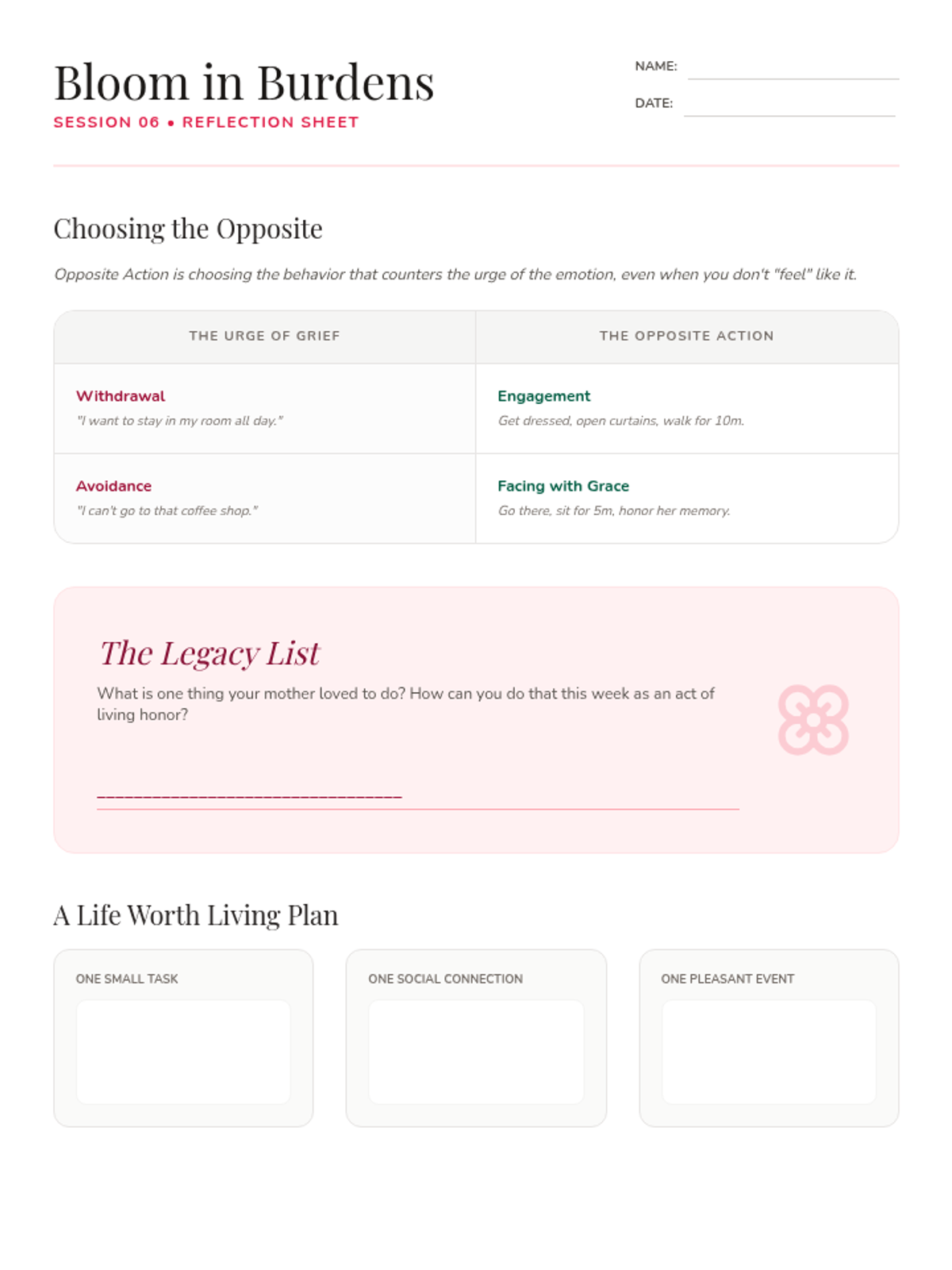
Implementing 'Opposite Action' and 'Building a Life Worth Living' by intentionally engaging in activities that honor the relationship.
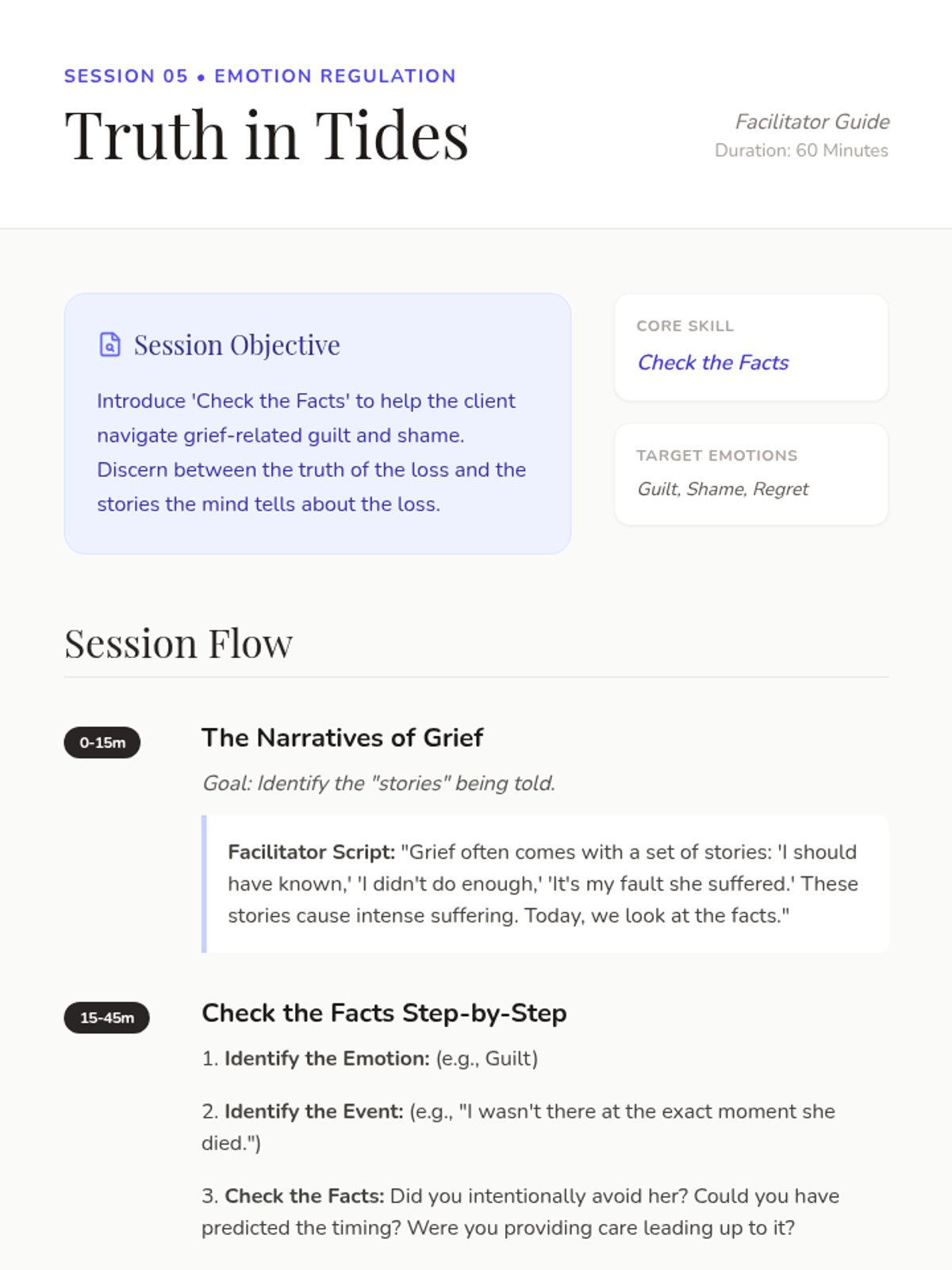
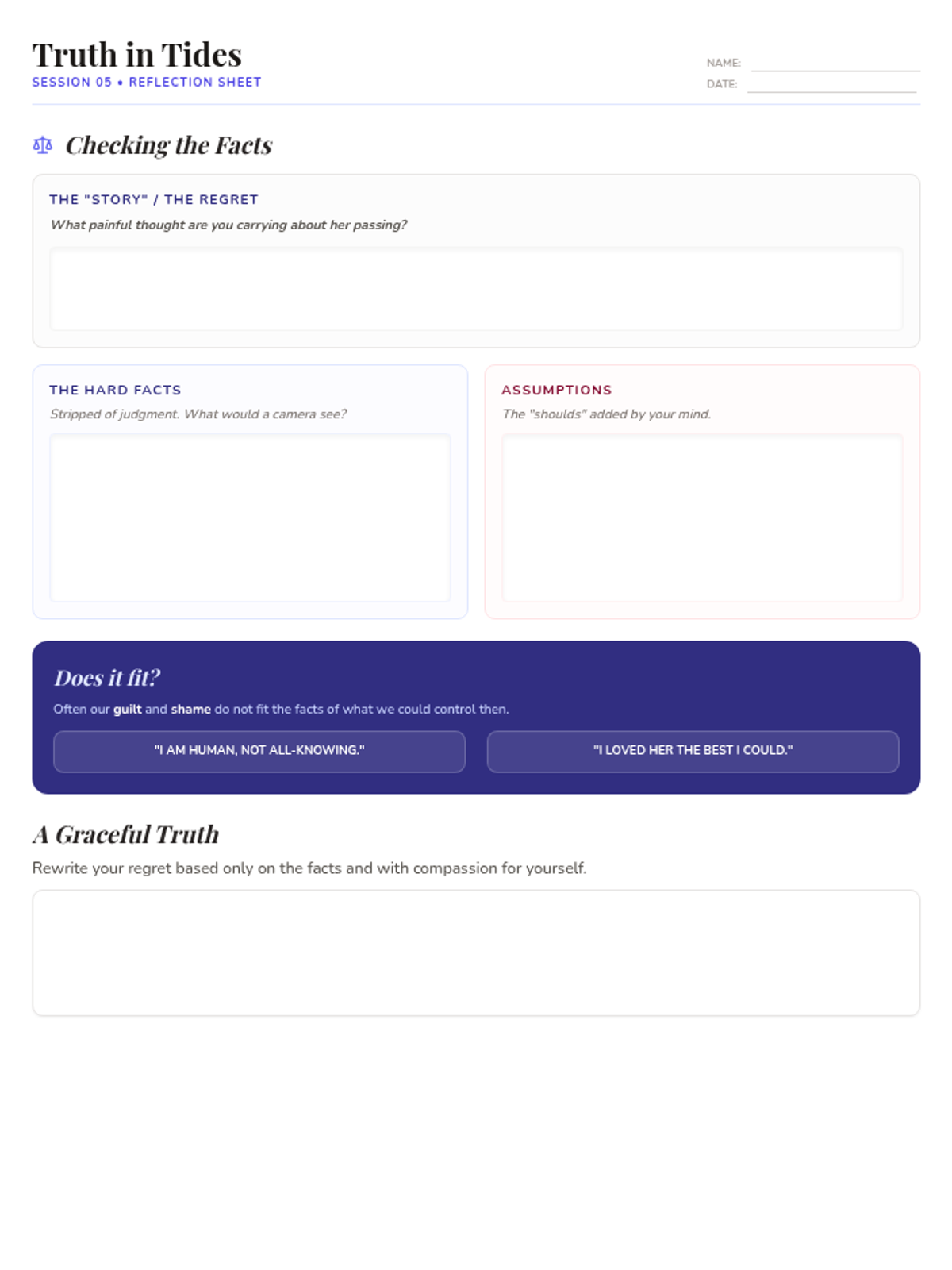
Applying 'Check the Facts' to common grief-related emotions like guilt, shame, and regret.
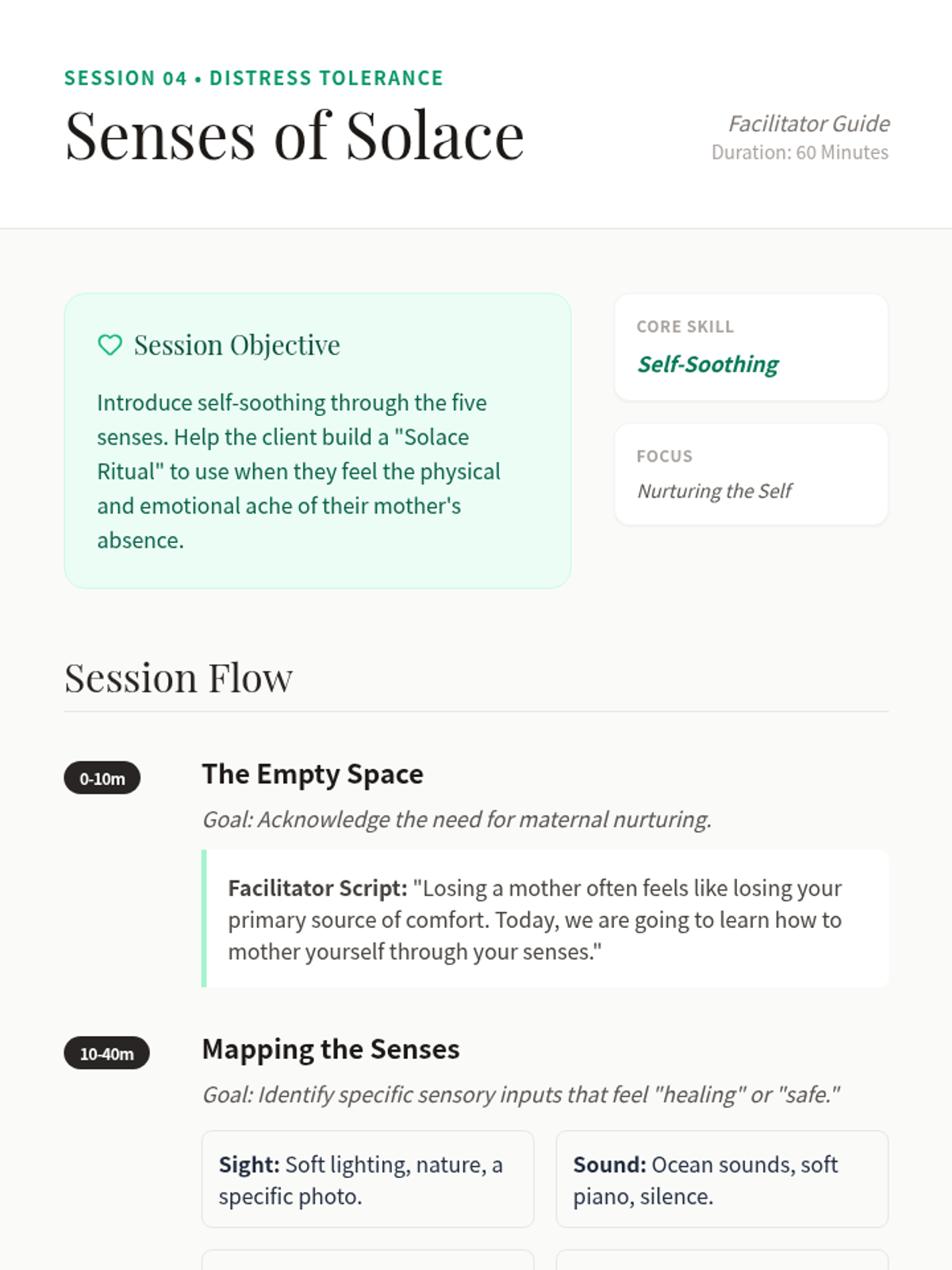
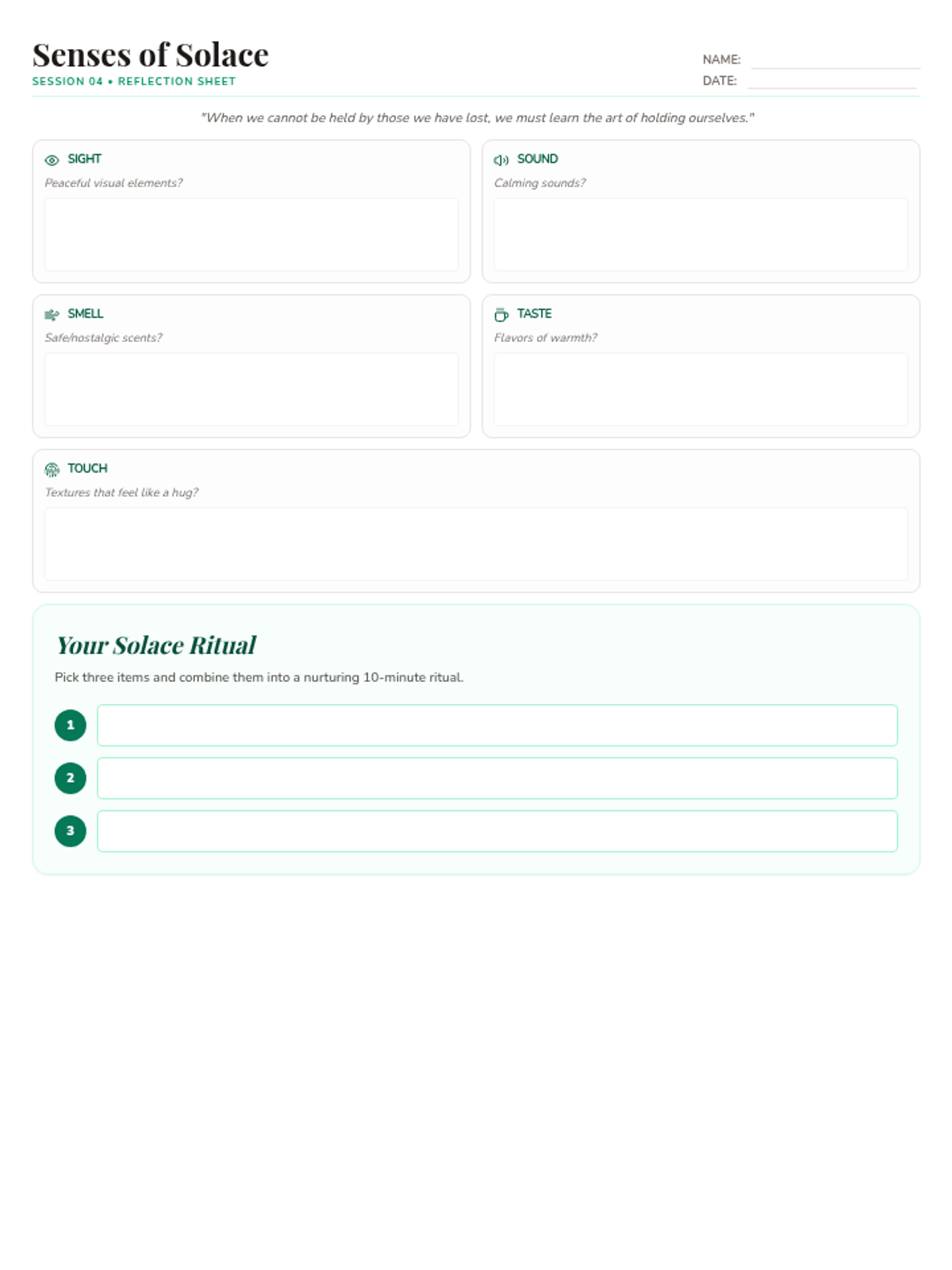
Using the five senses to create a self-soothing ritual for times when the absence of a mother is felt most acutely.
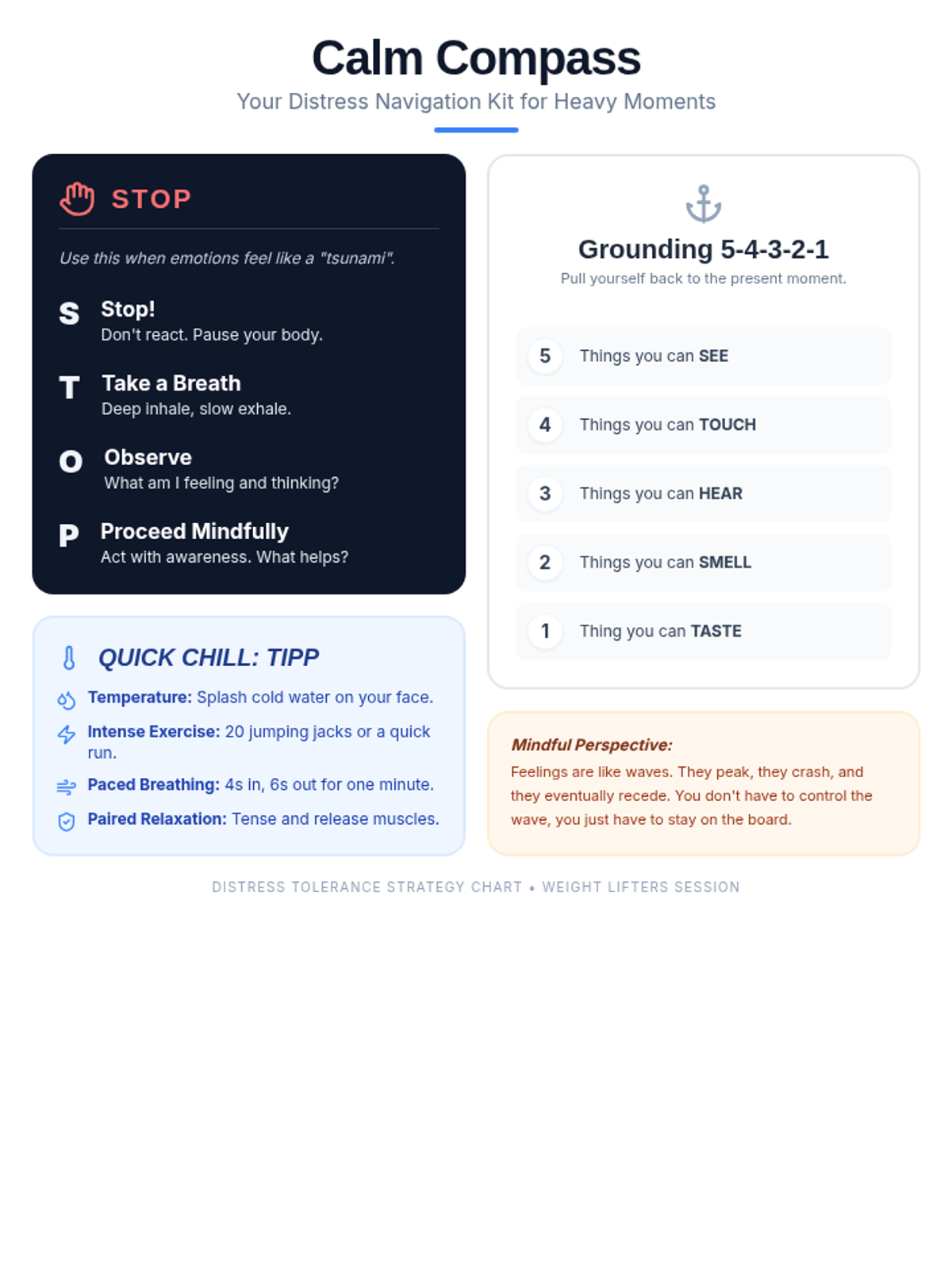
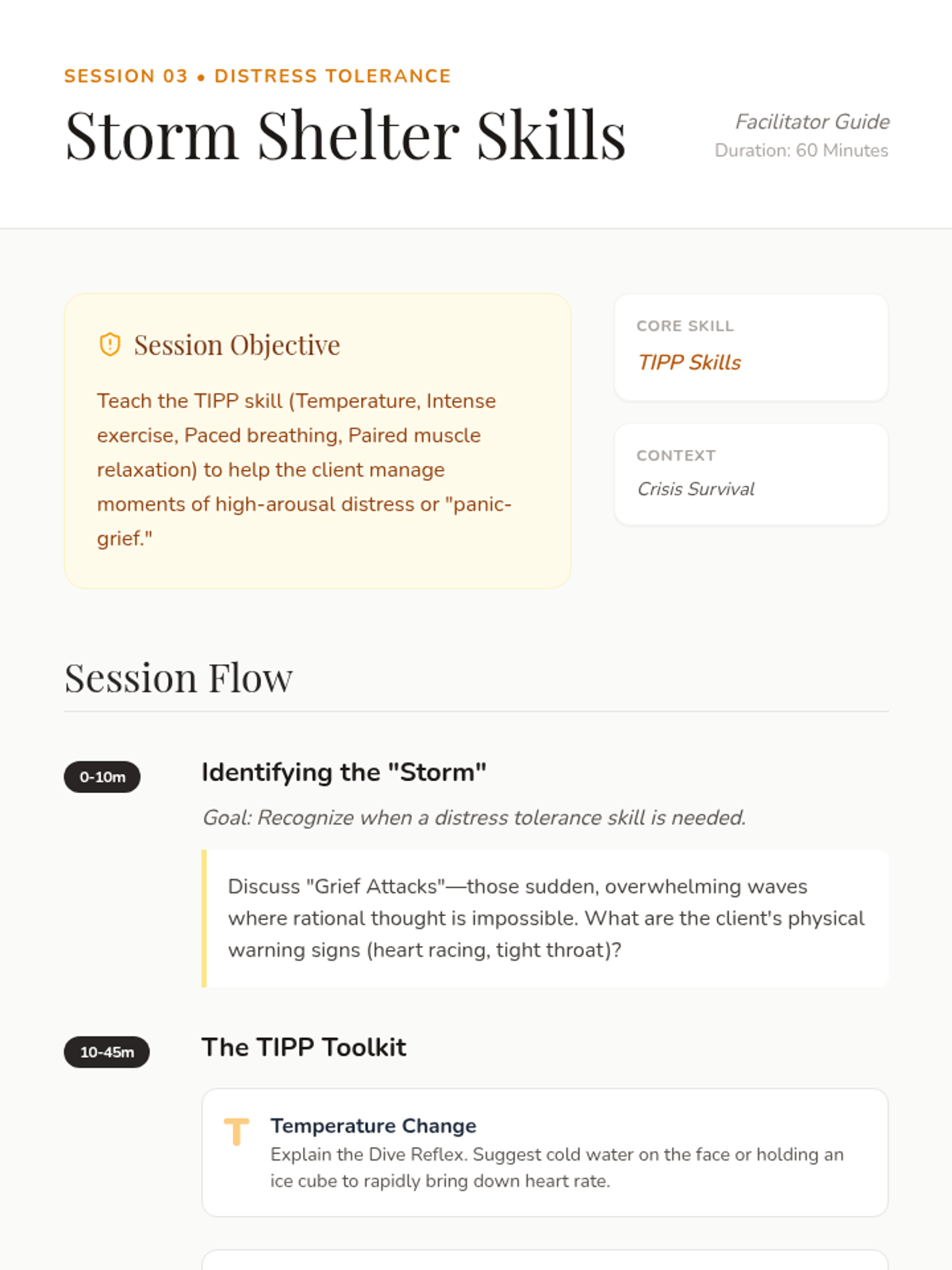
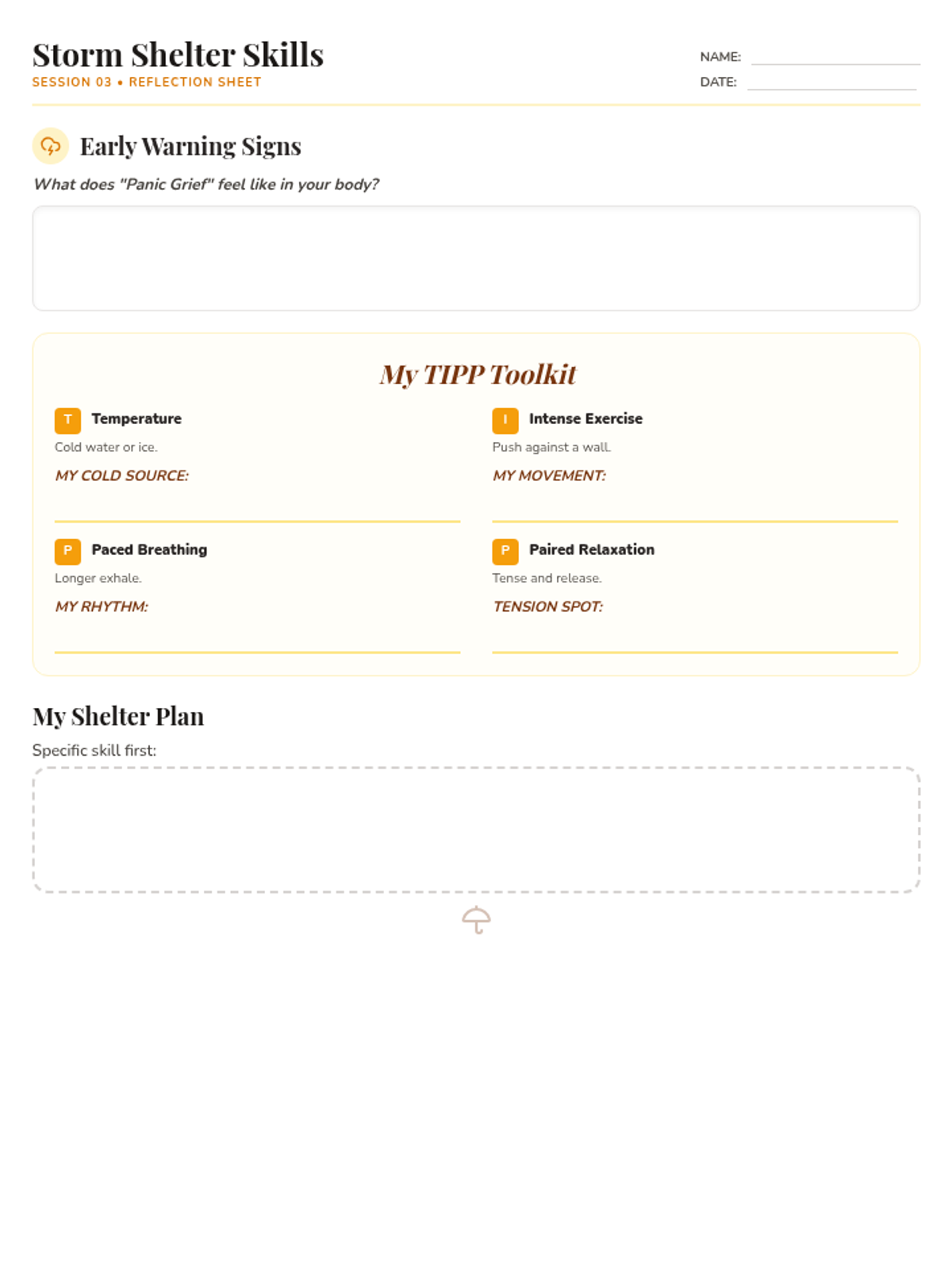
Teaching the TIPP skill to manage acute, overwhelming moments of distress during the mourning process.
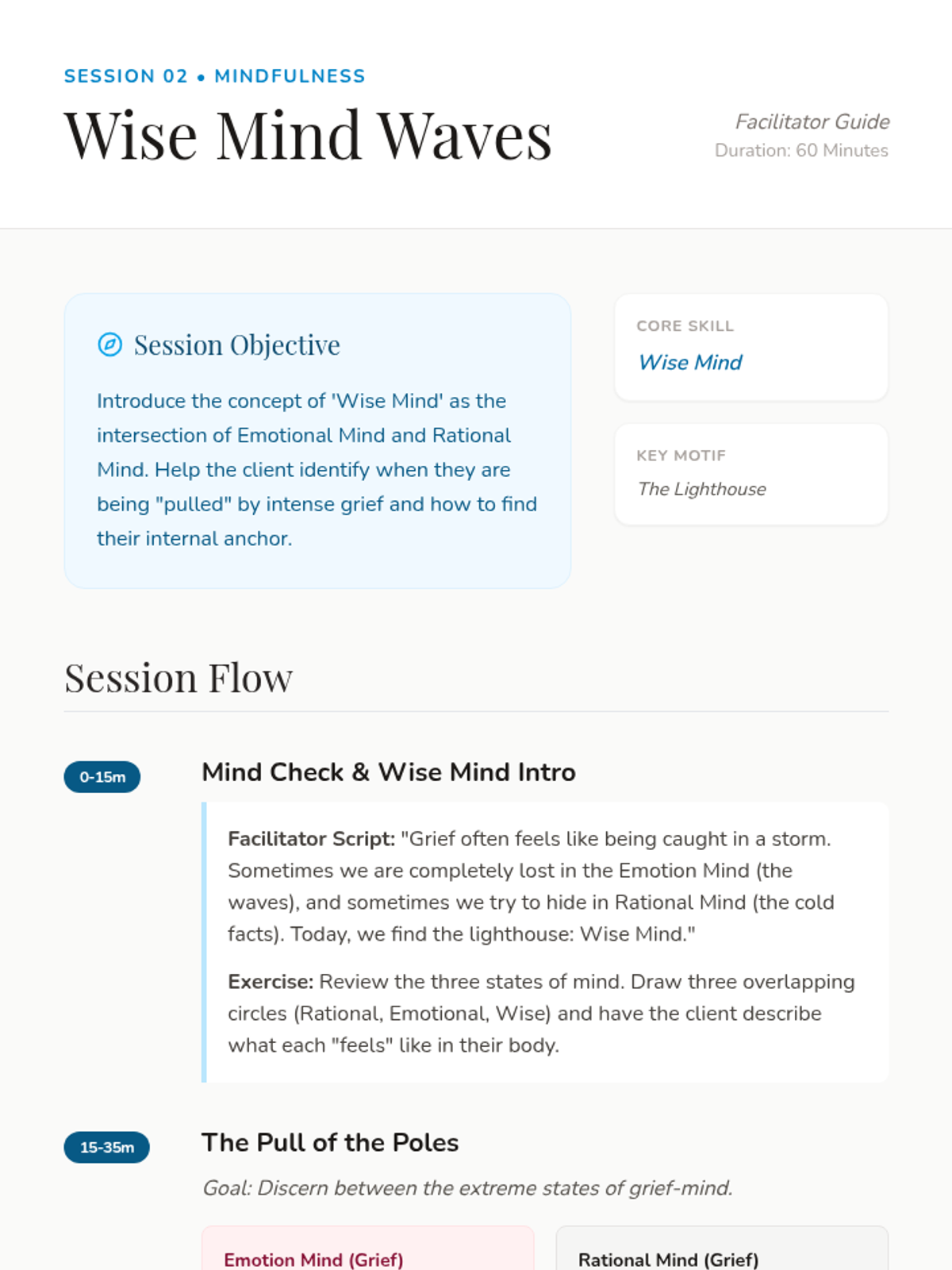
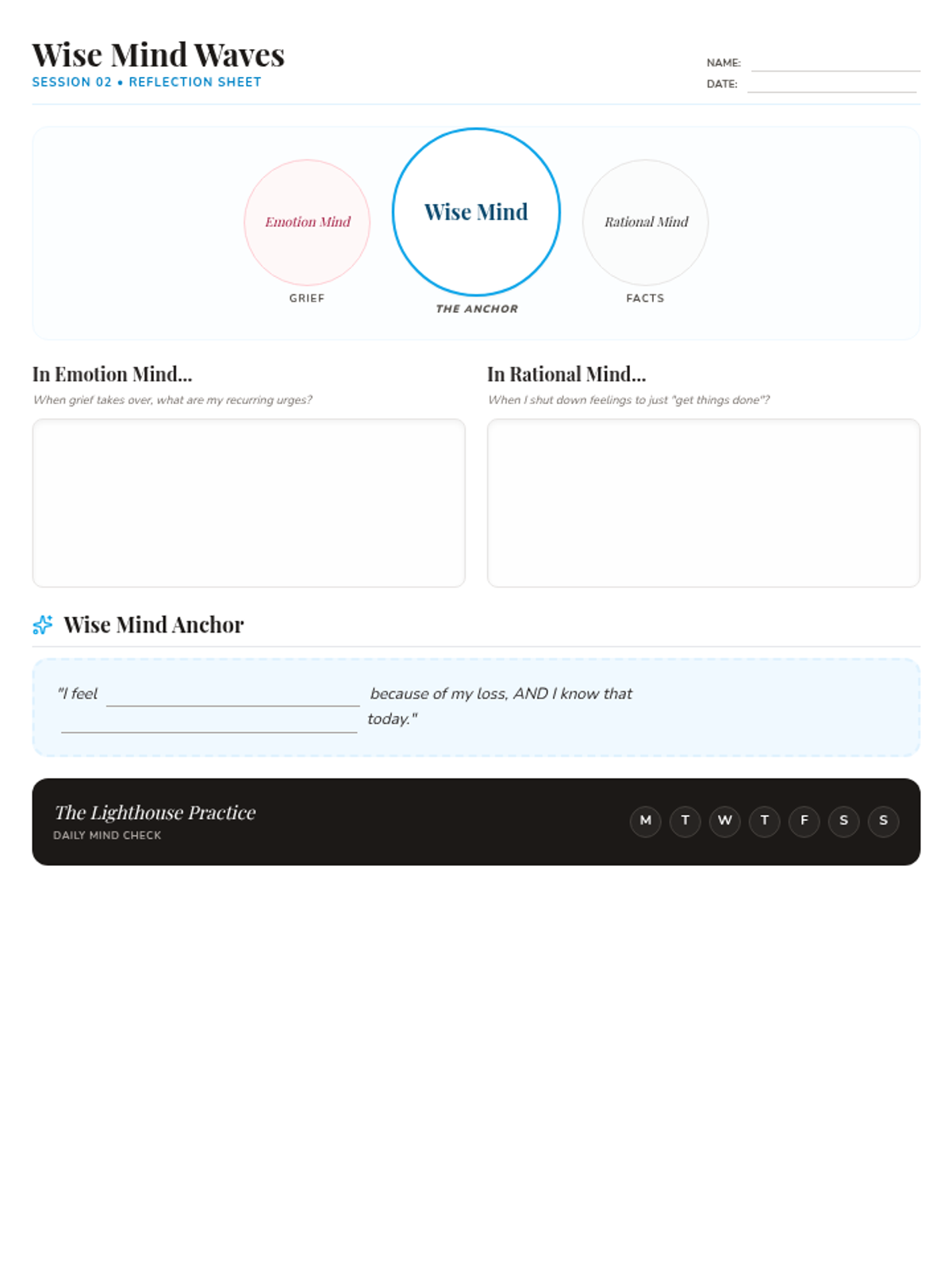
Exploring the balance between the 'Emotional Mind' of grief and the 'Rational Mind' of daily life to find 'Wise Mind'.
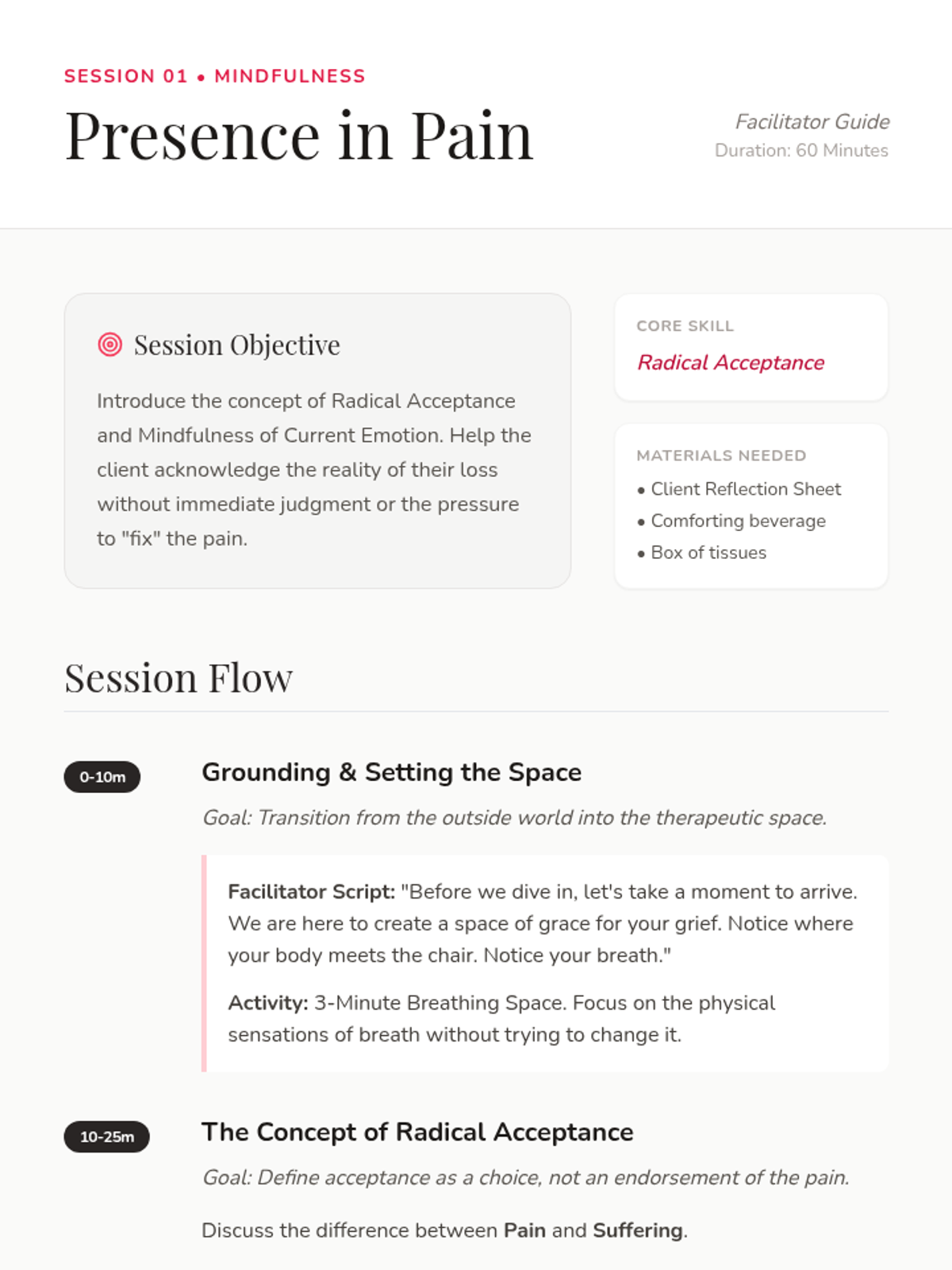
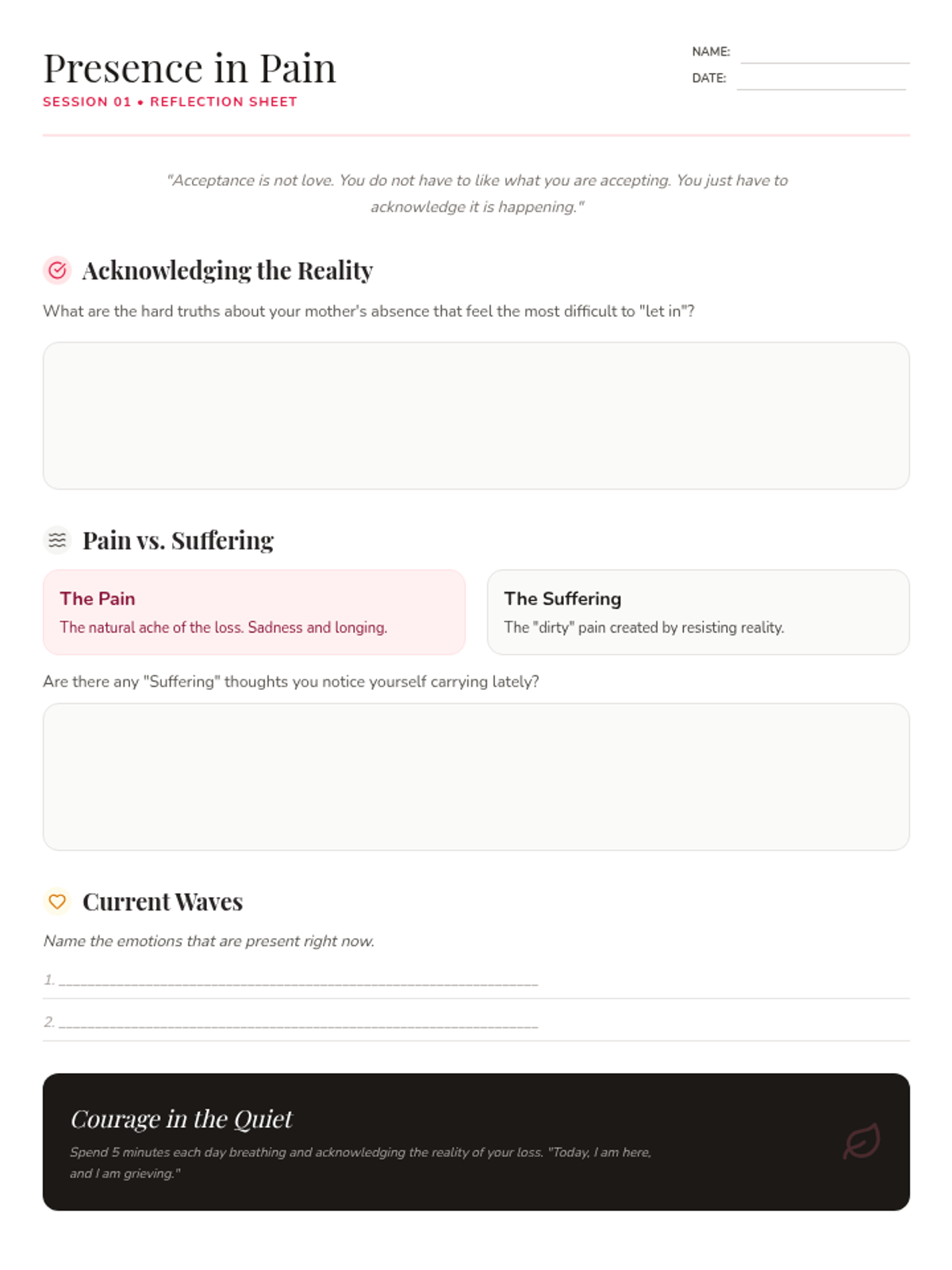
Introduction to Radical Acceptance and the concept of 'Mindfulness of Current Emotion' as it pertains to the initial stages of grief.
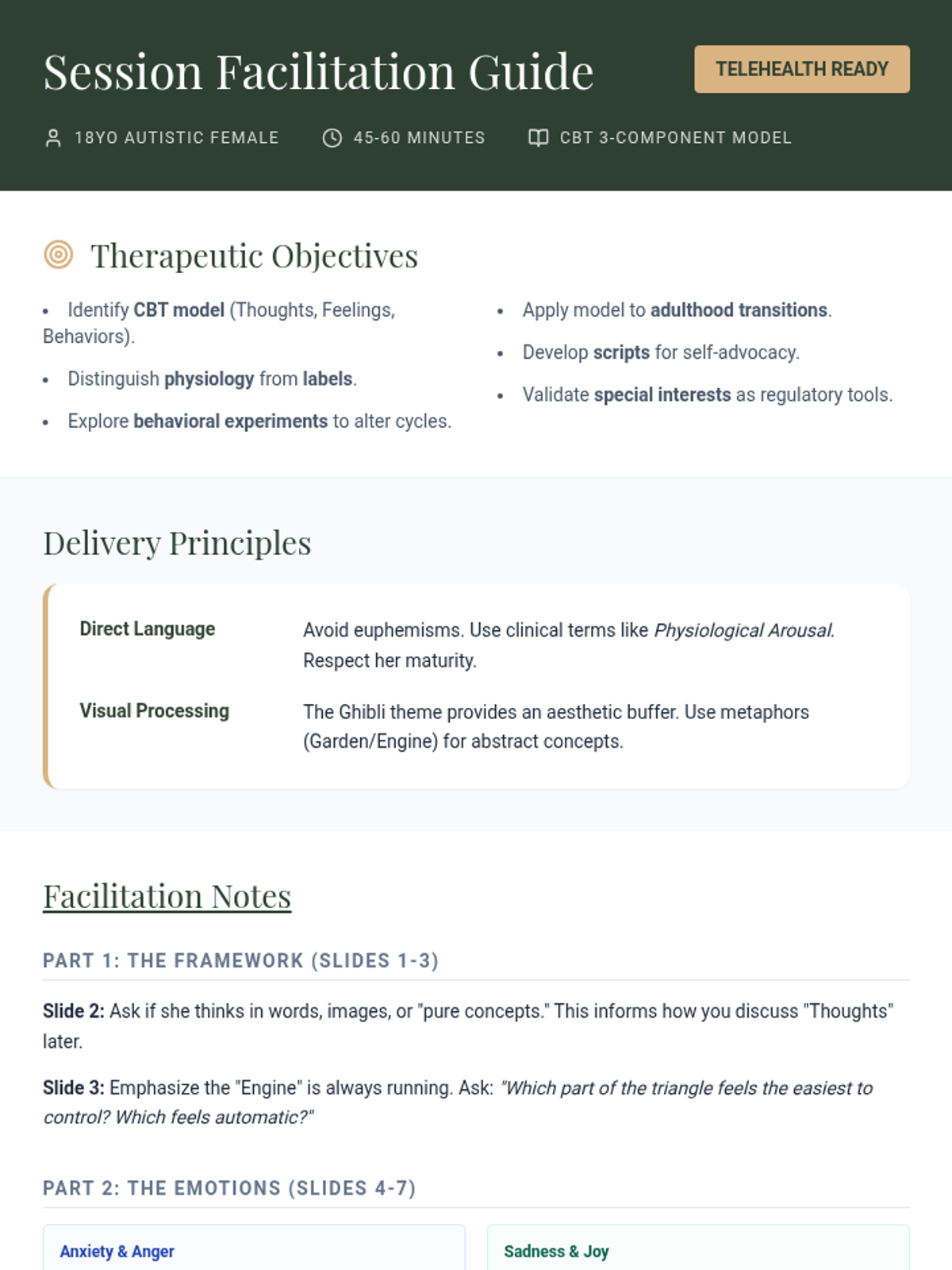
A psychoeducational exploration of the CBT triangle (thoughts, feelings, behaviors) tailored for an 18-year-old autistic girl, utilizing a mature Studio Ghibli-inspired aesthetic to navigate complex emotions and emerging adulthood.
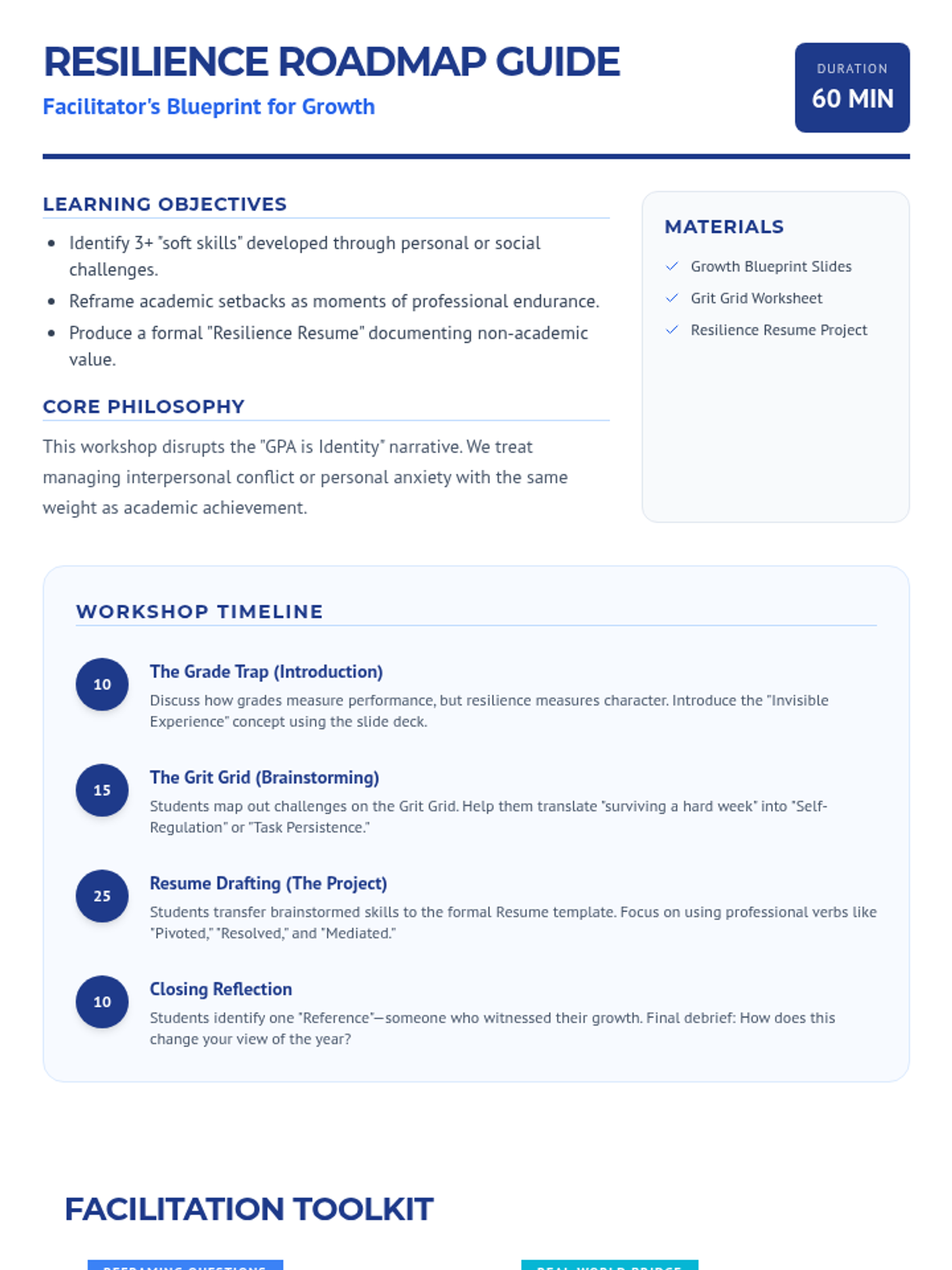
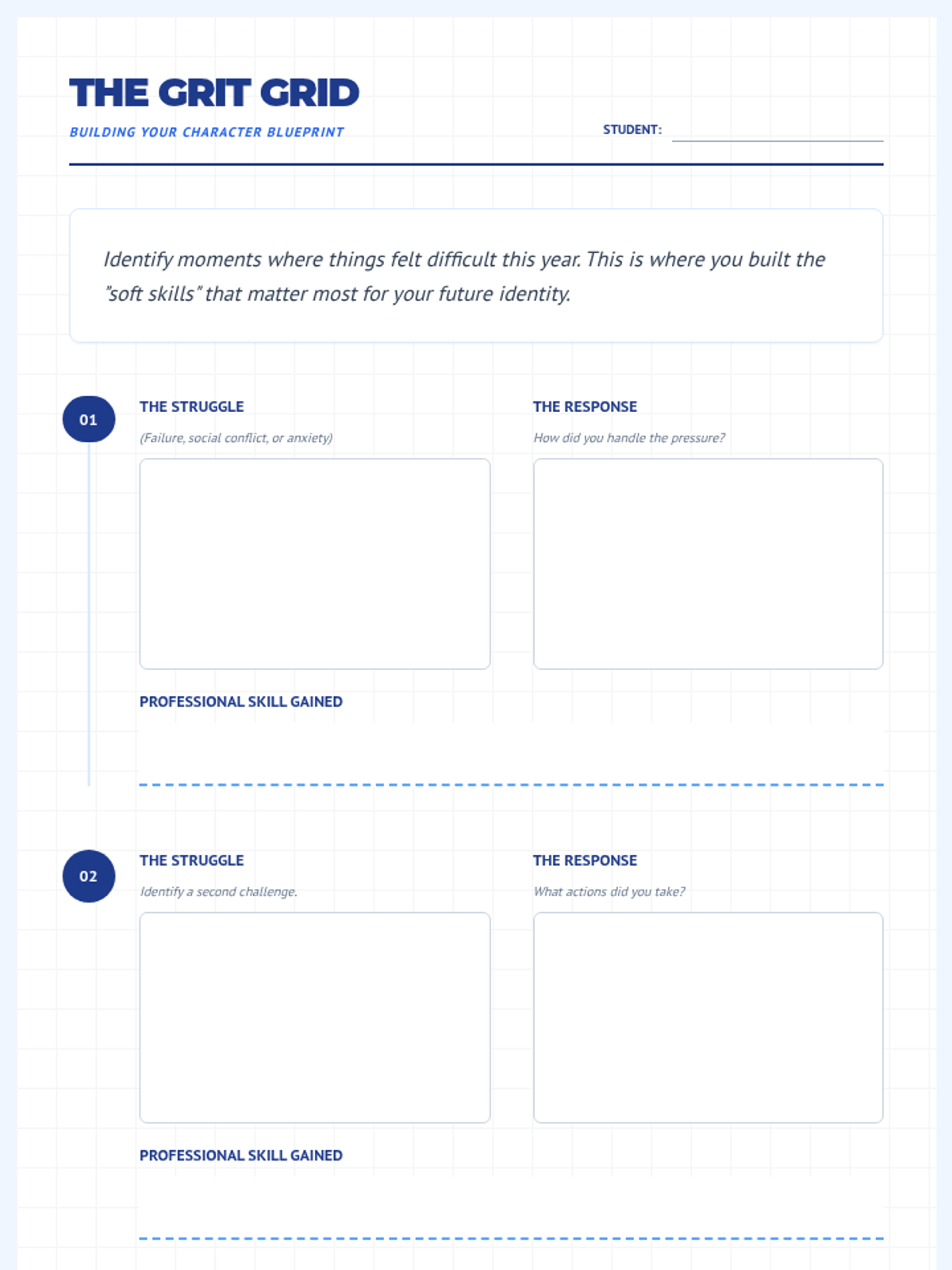
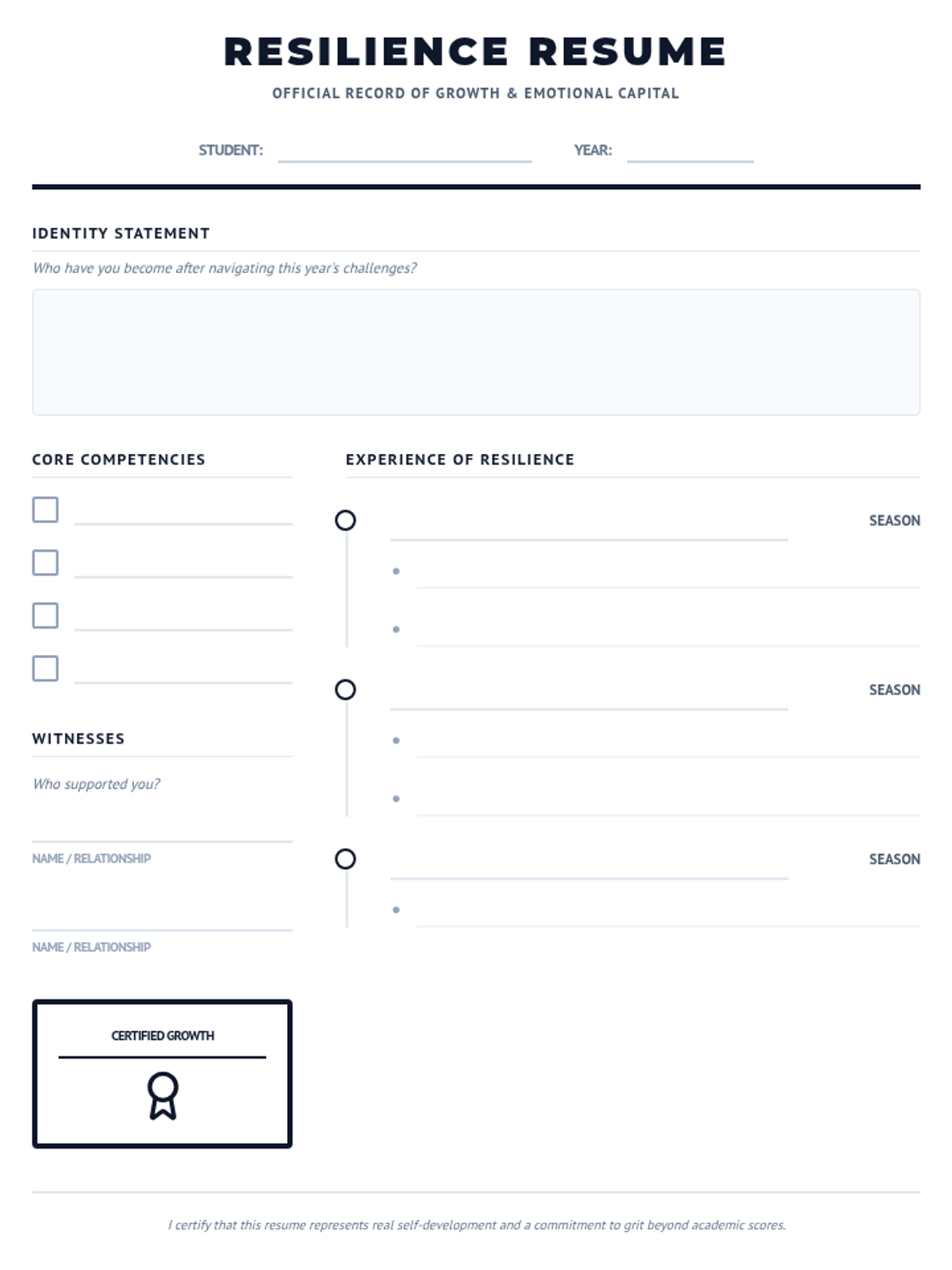
A workshop that reframes student achievements from academic grades to emotional endurance and social growth, culminating in a personal 'Resilience Resume' for the school year.
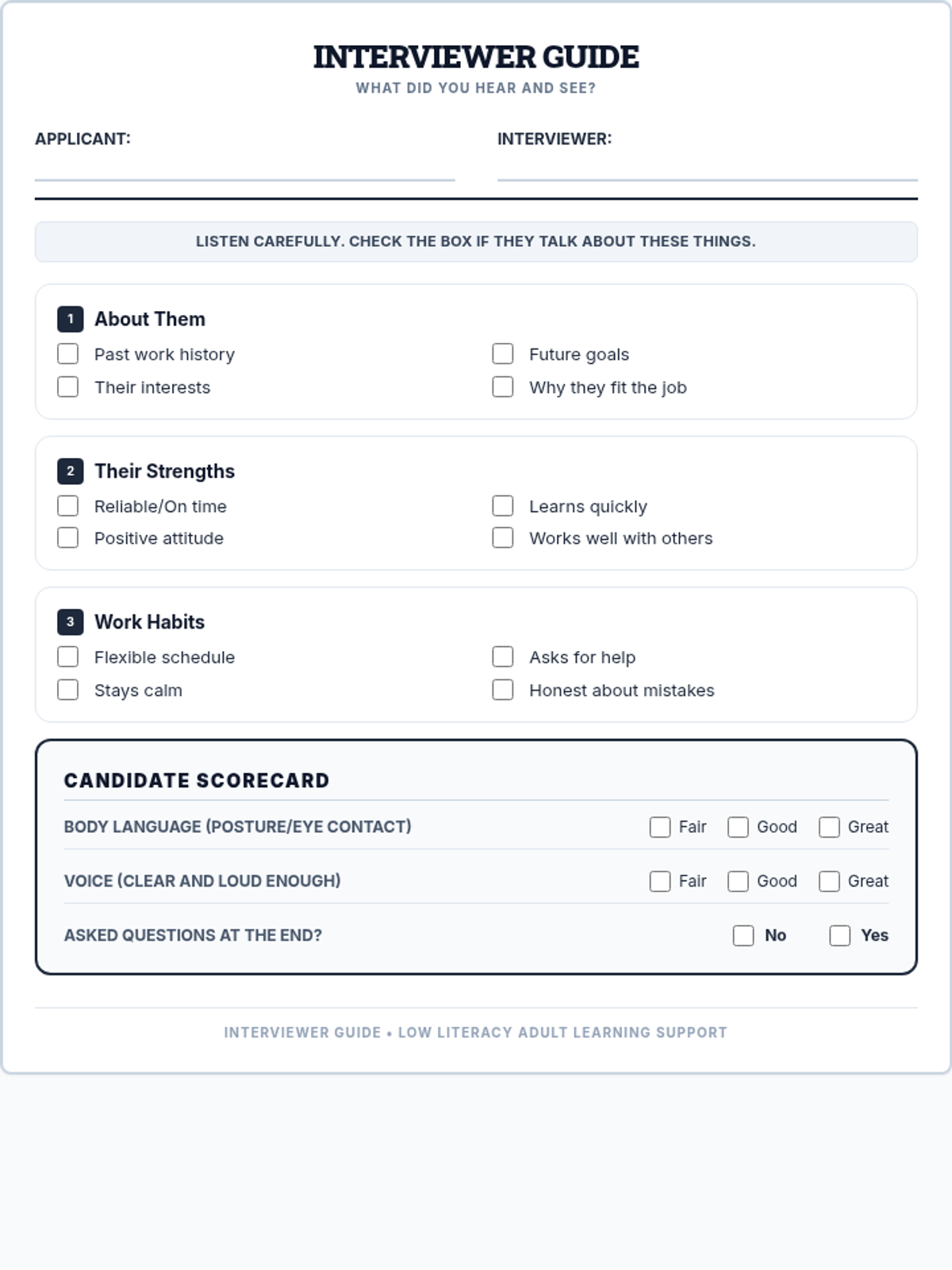
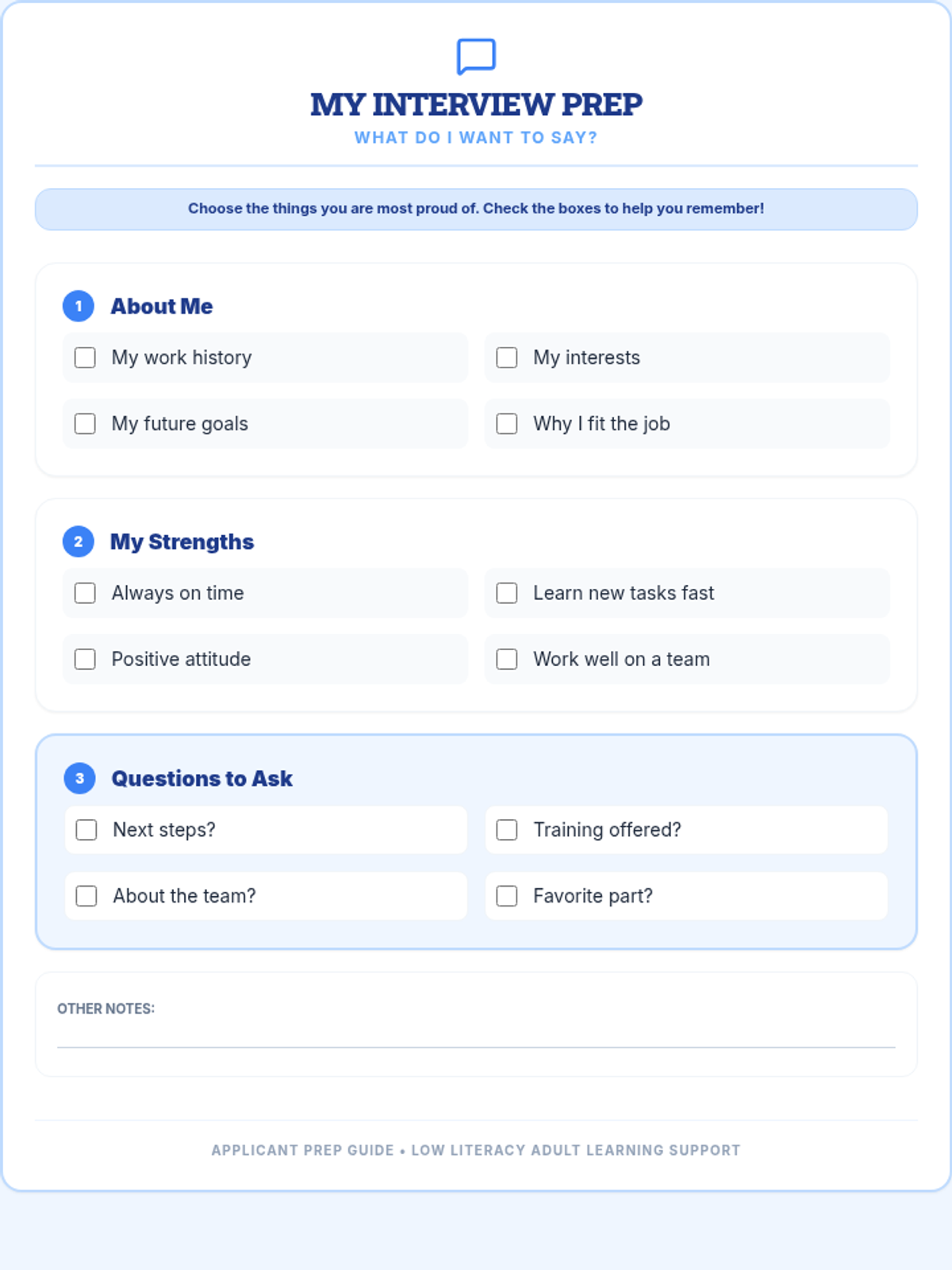
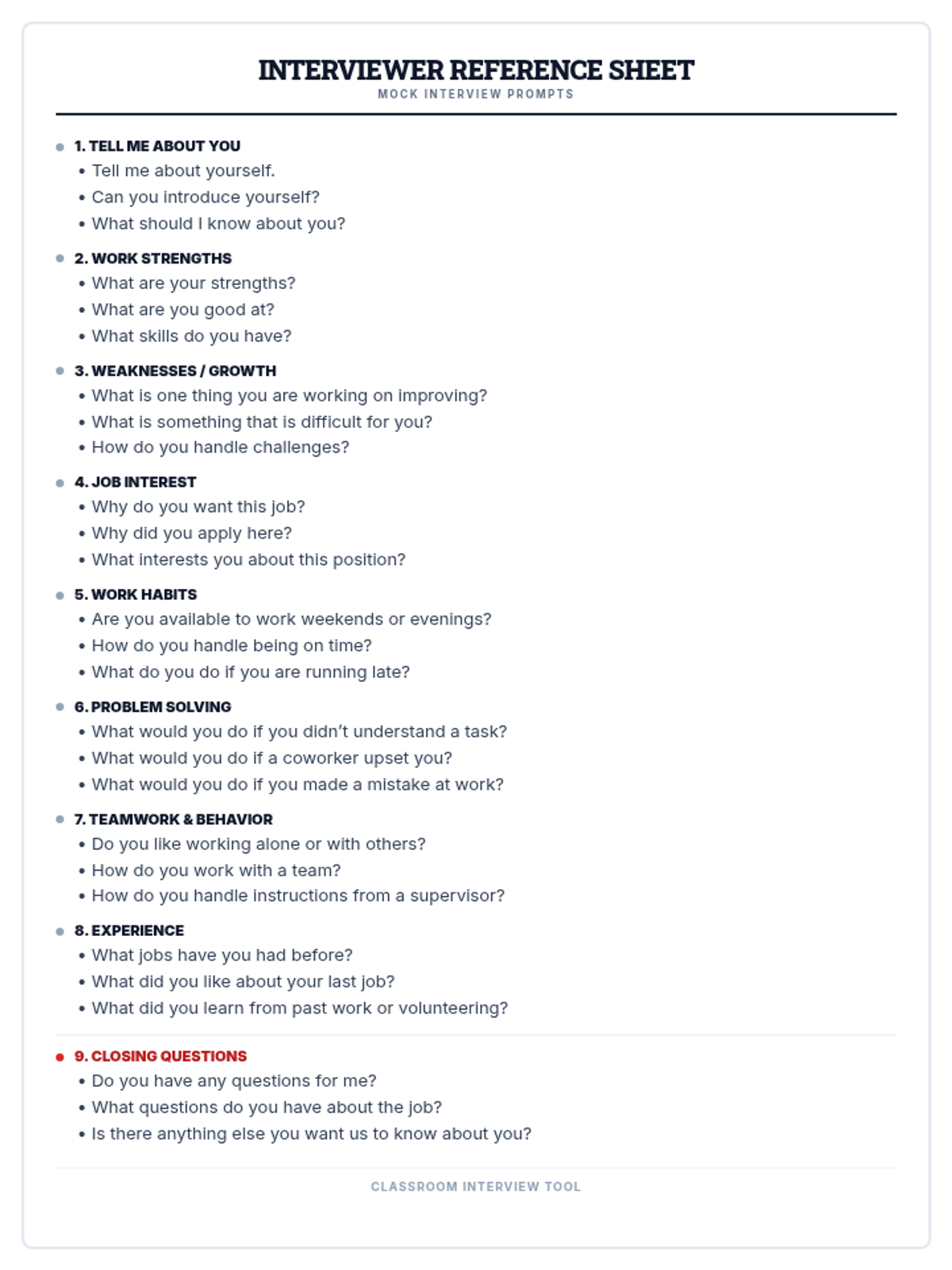
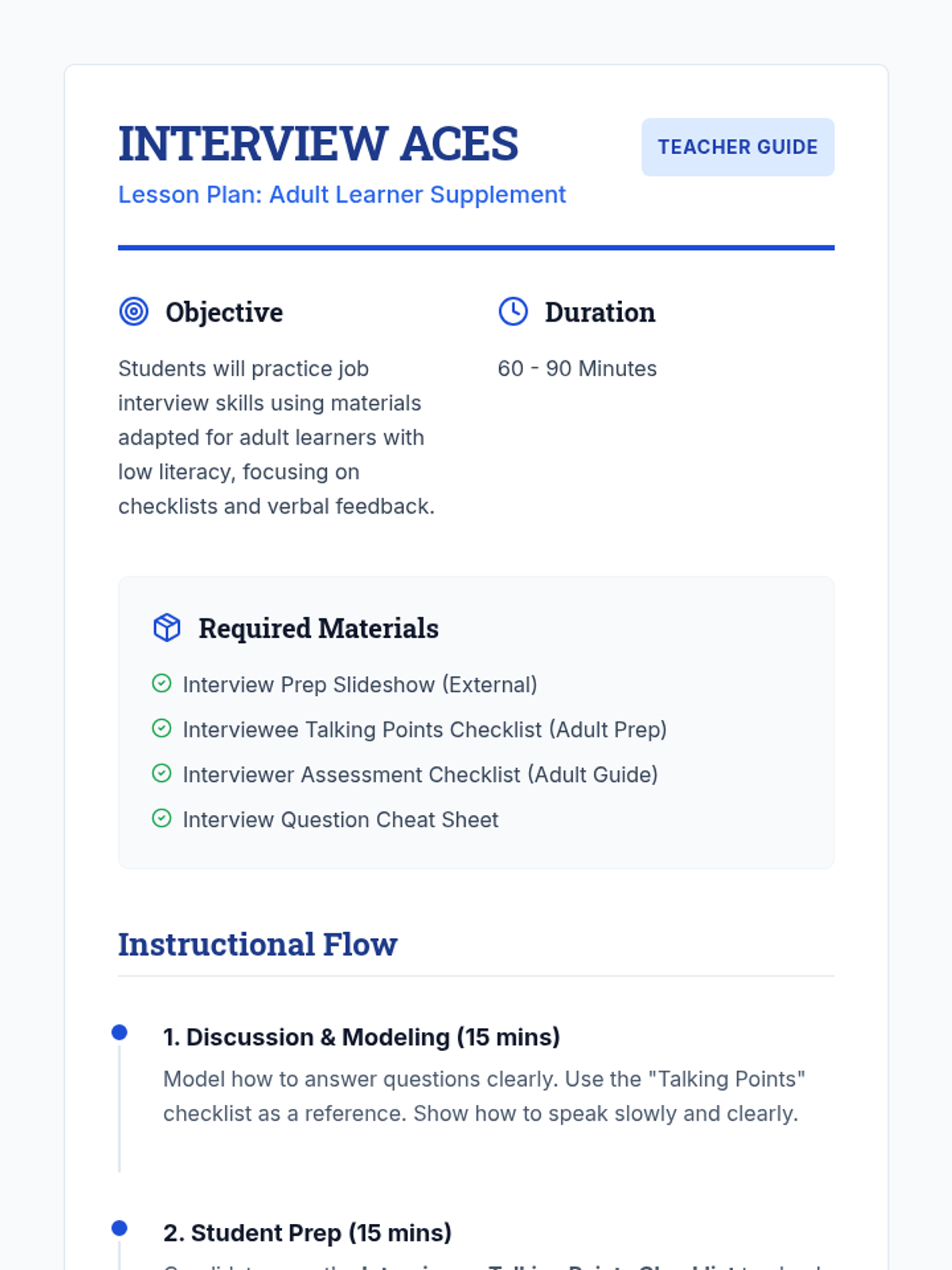
A comprehensive lesson on mastering job interviews through peer-to-peer practice, feedback loops, and self-reflection based on real-world interview categories.
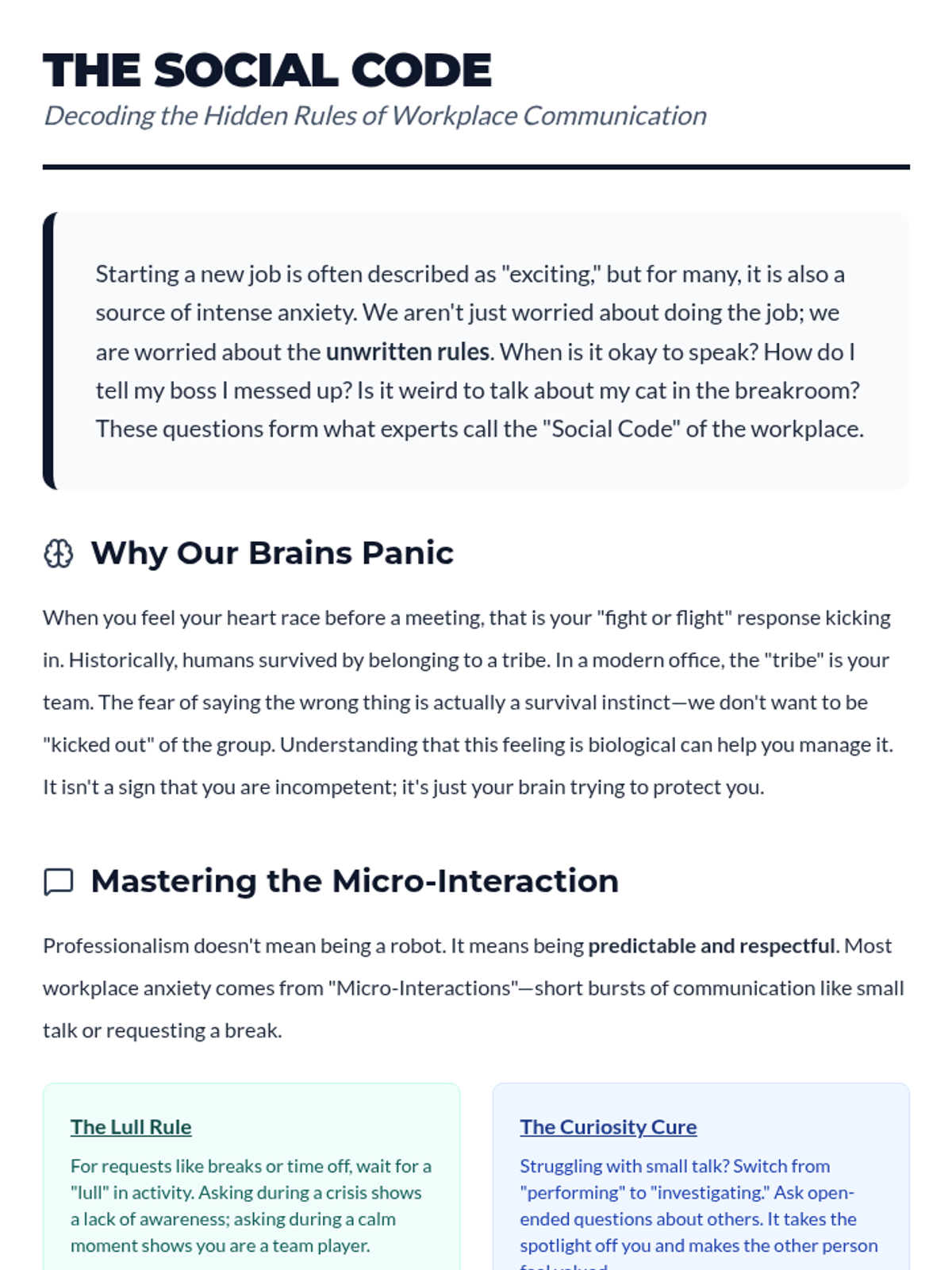
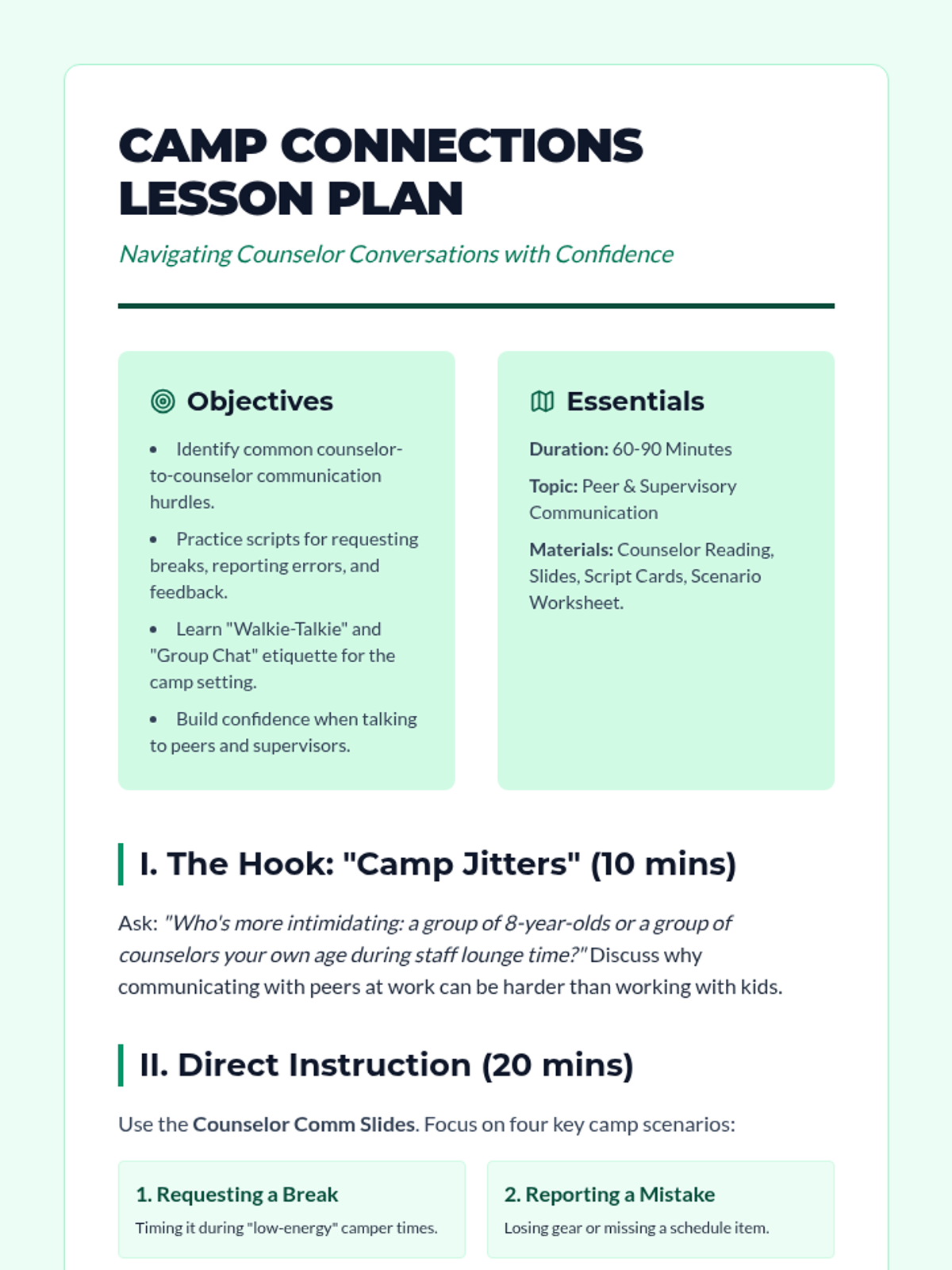
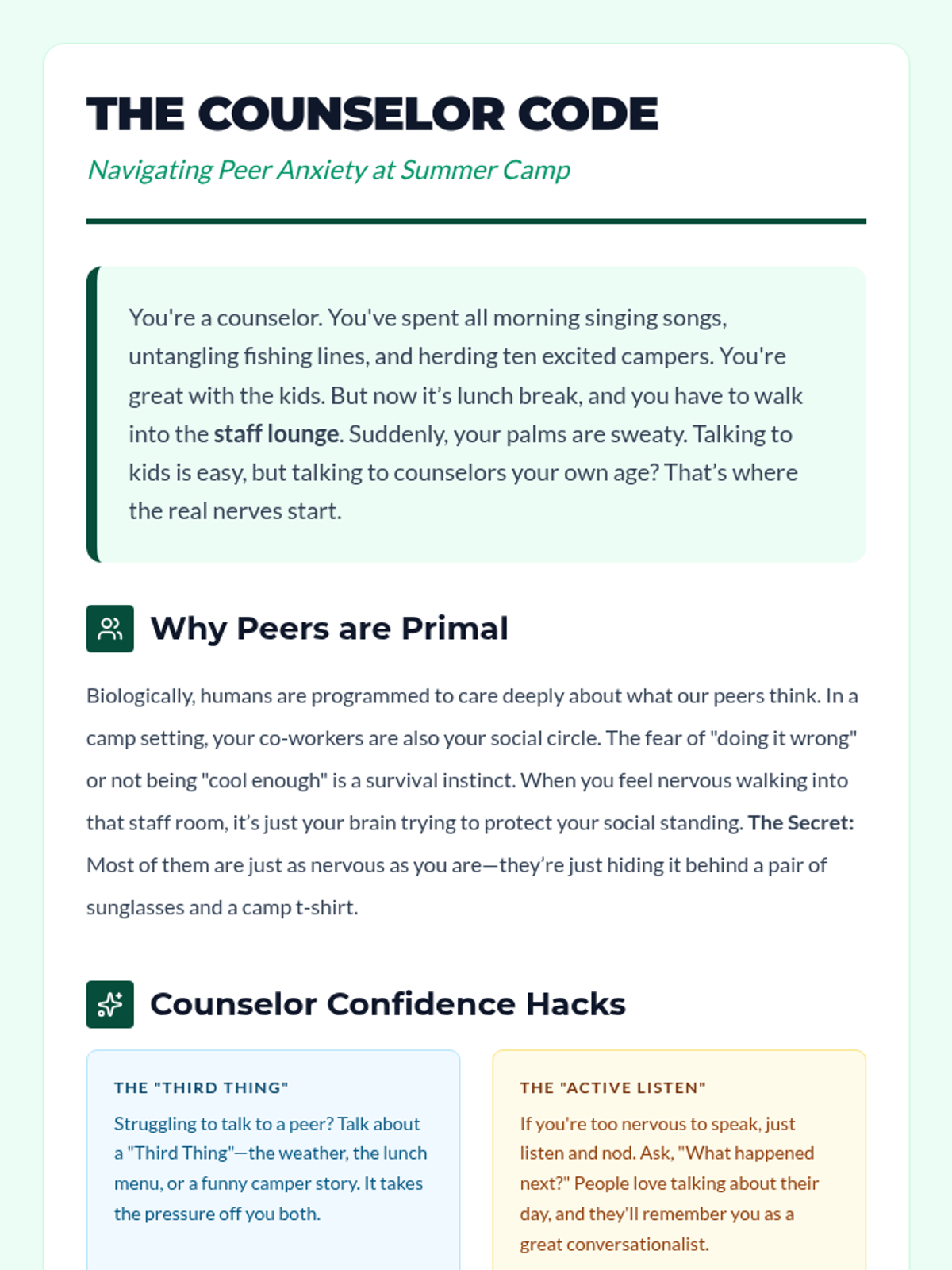
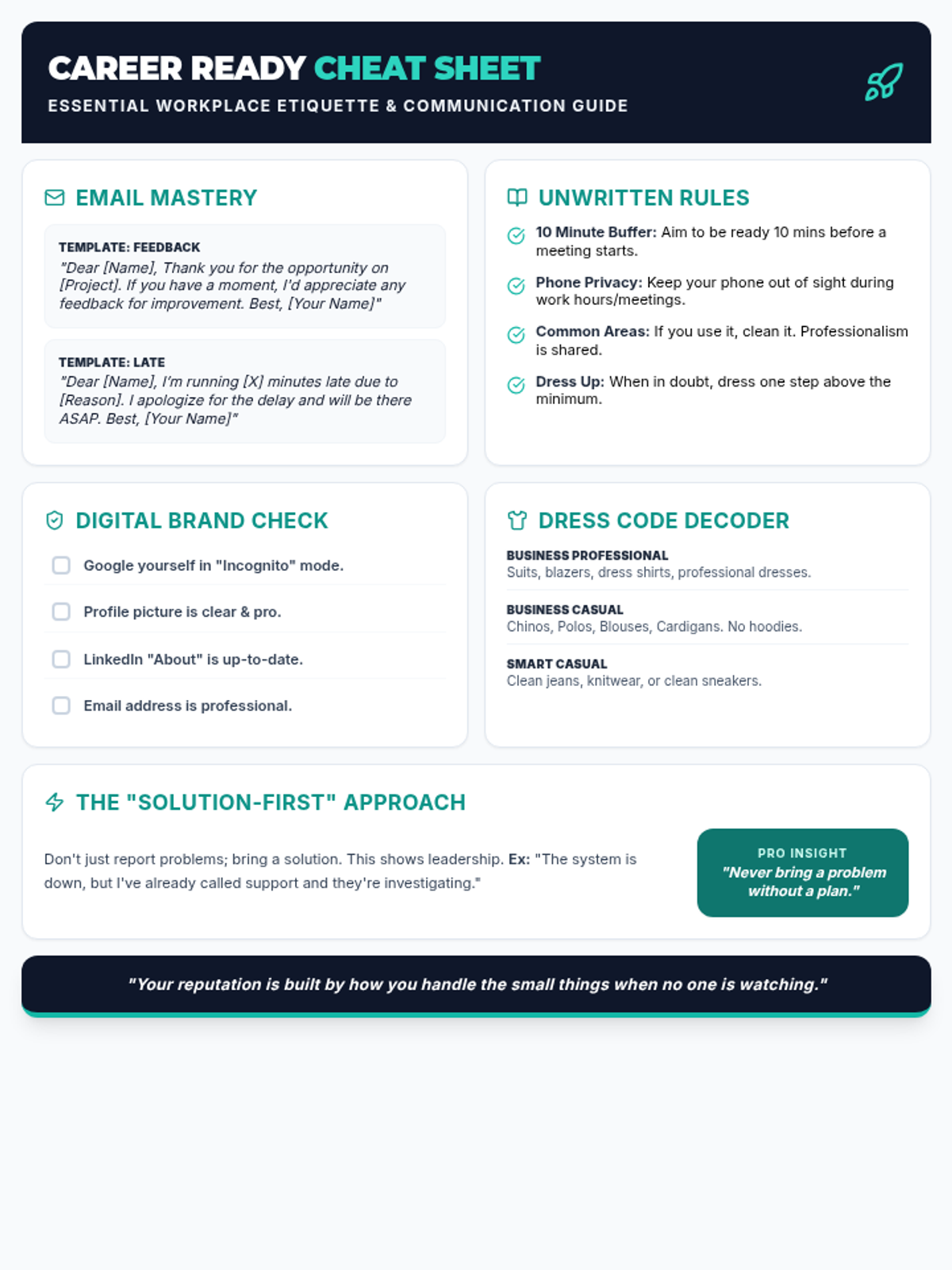
A comprehensive lesson on navigating professional workplace communication, focusing on building confidence and reducing anxiety in common social scenarios.
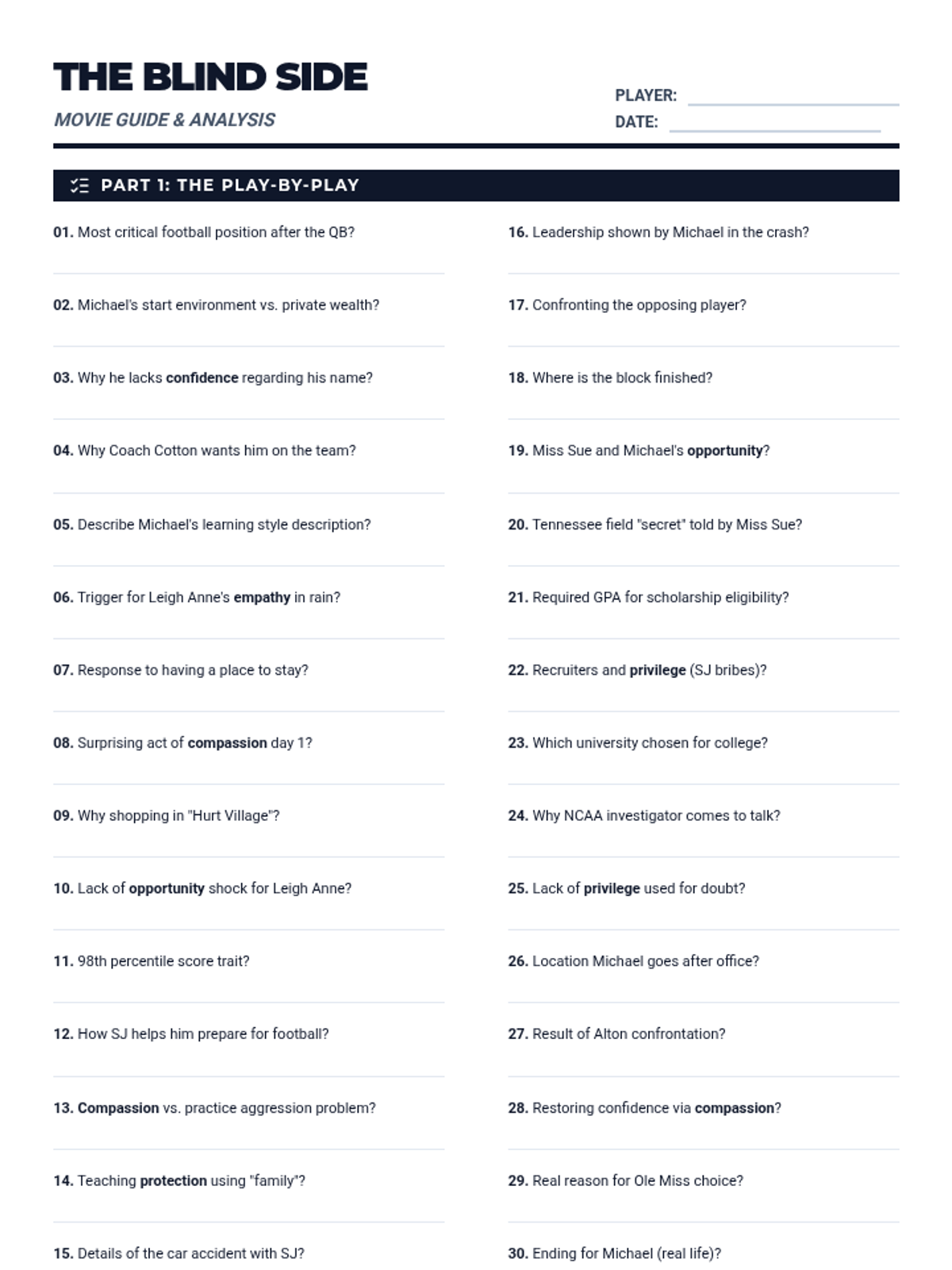
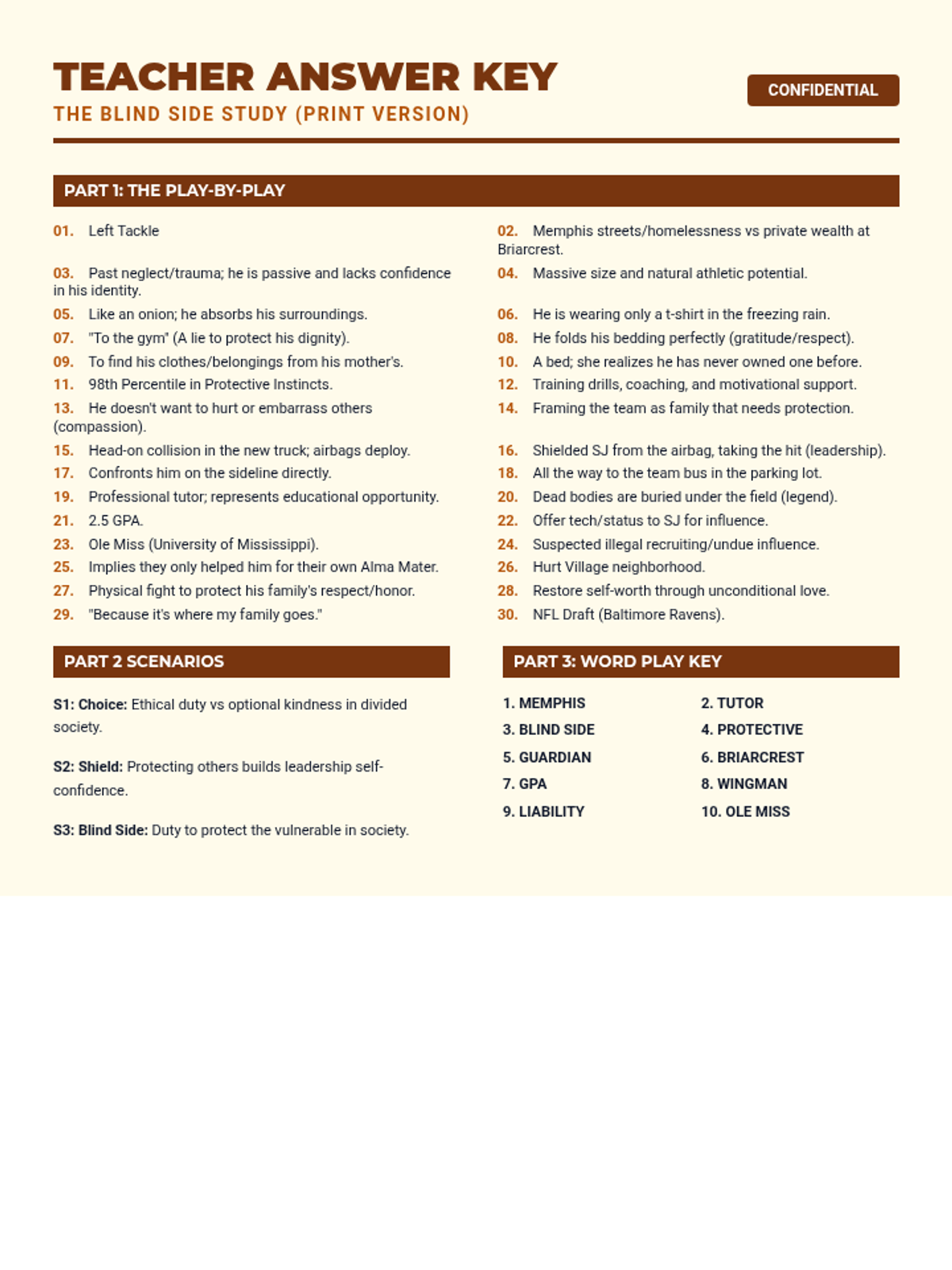
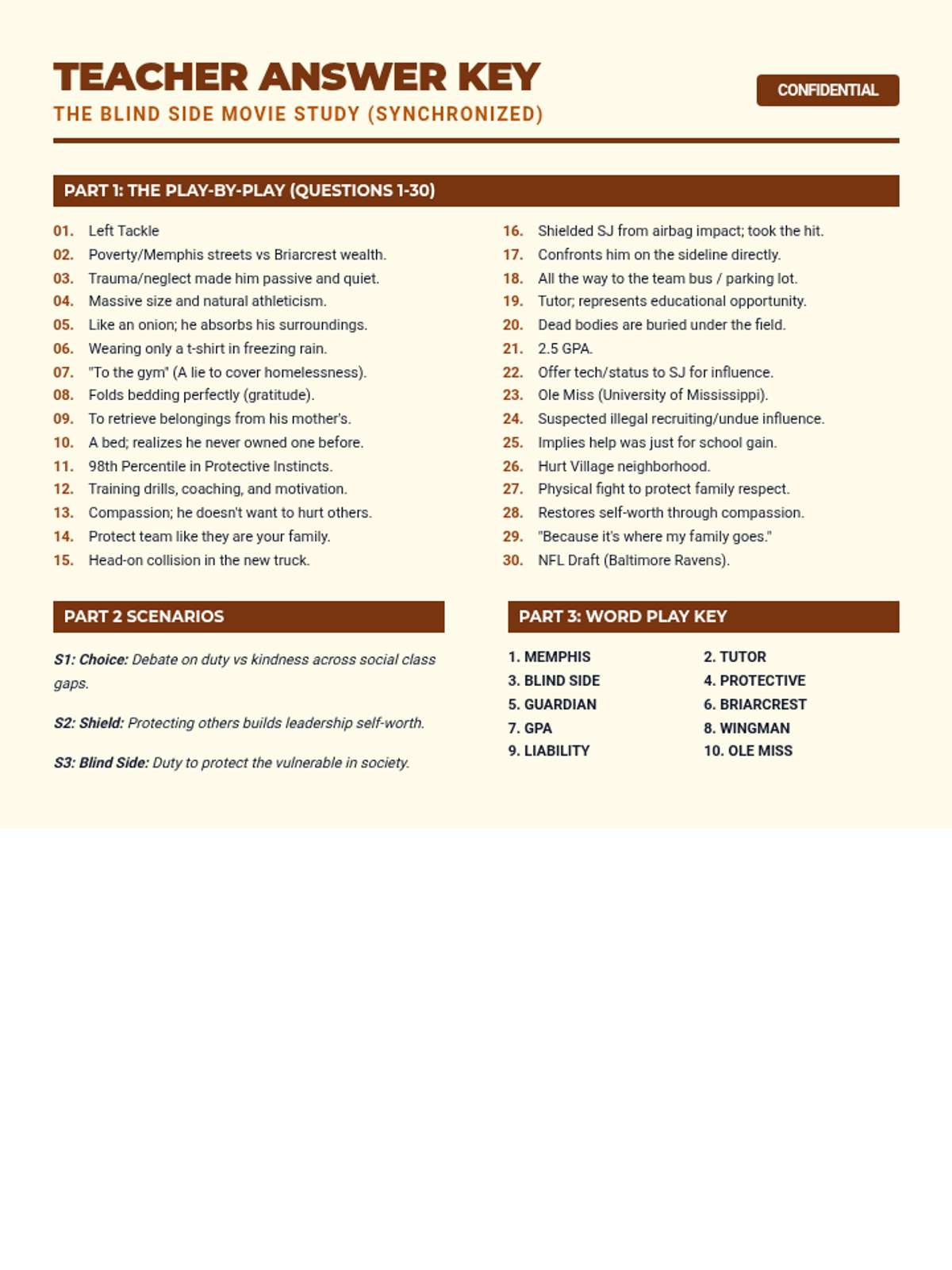
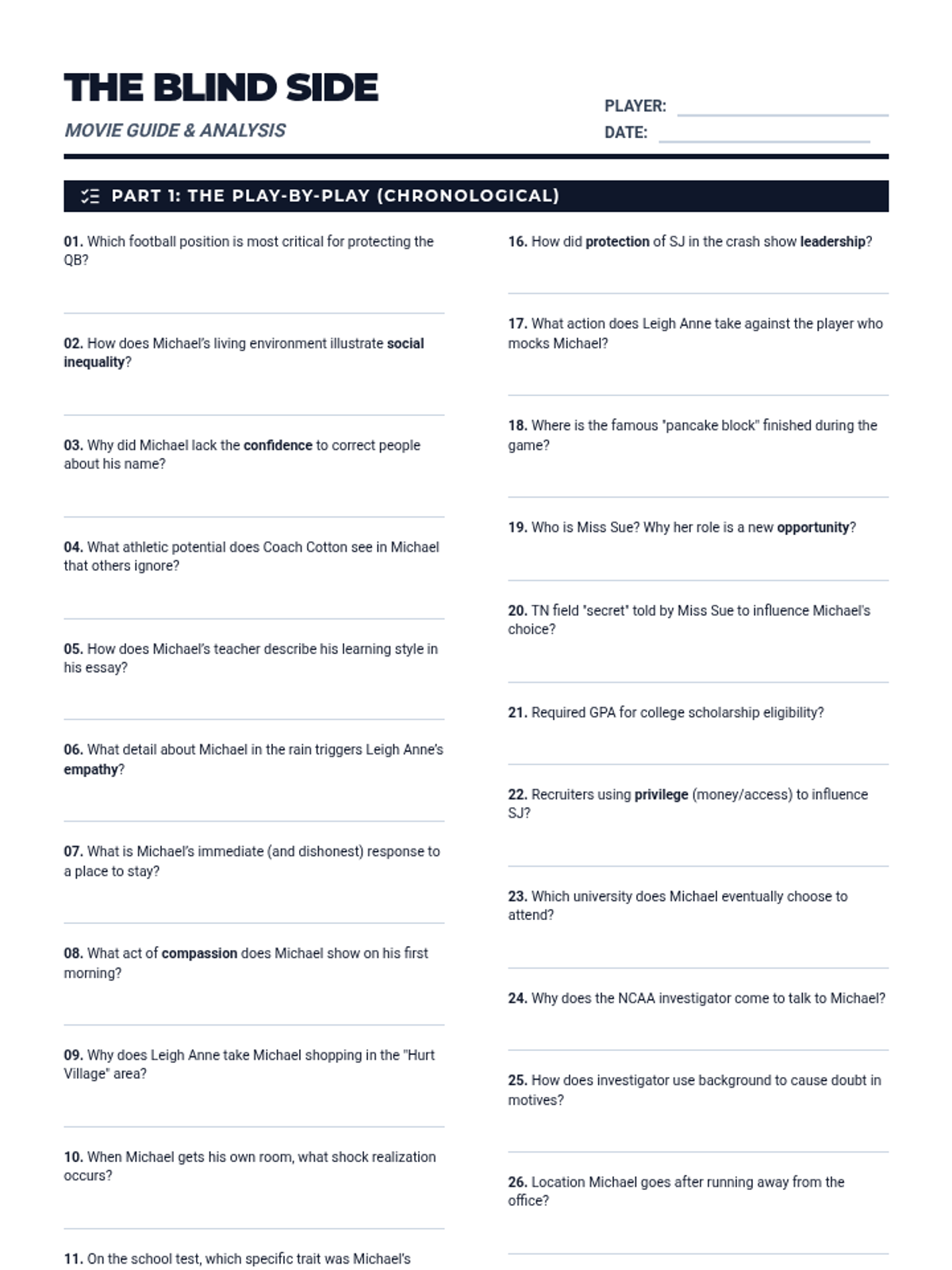
A comprehensive movie study for 'The Blind Side' focusing on character development, ethics, and leadership through Michael Oher's journey.
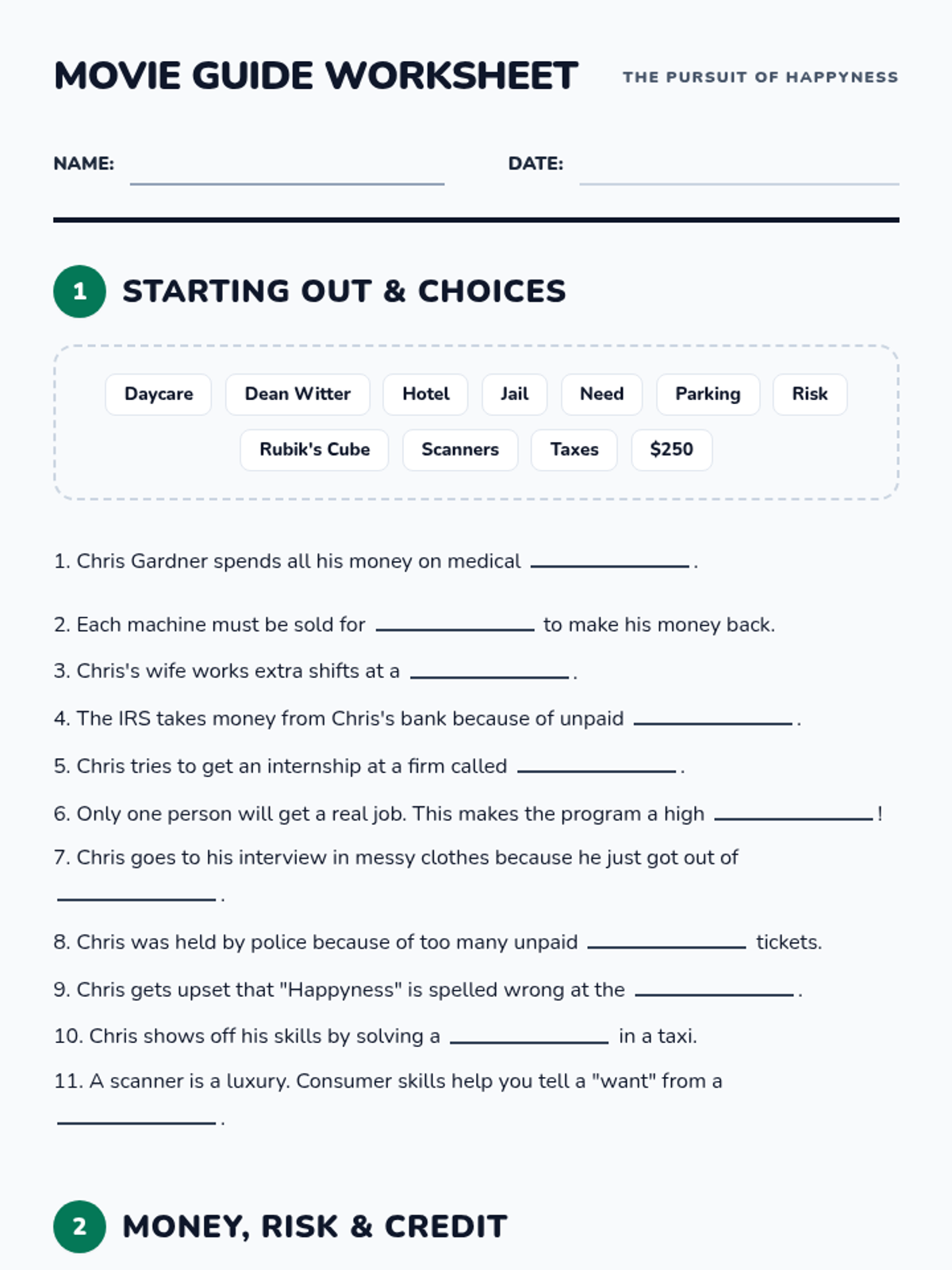
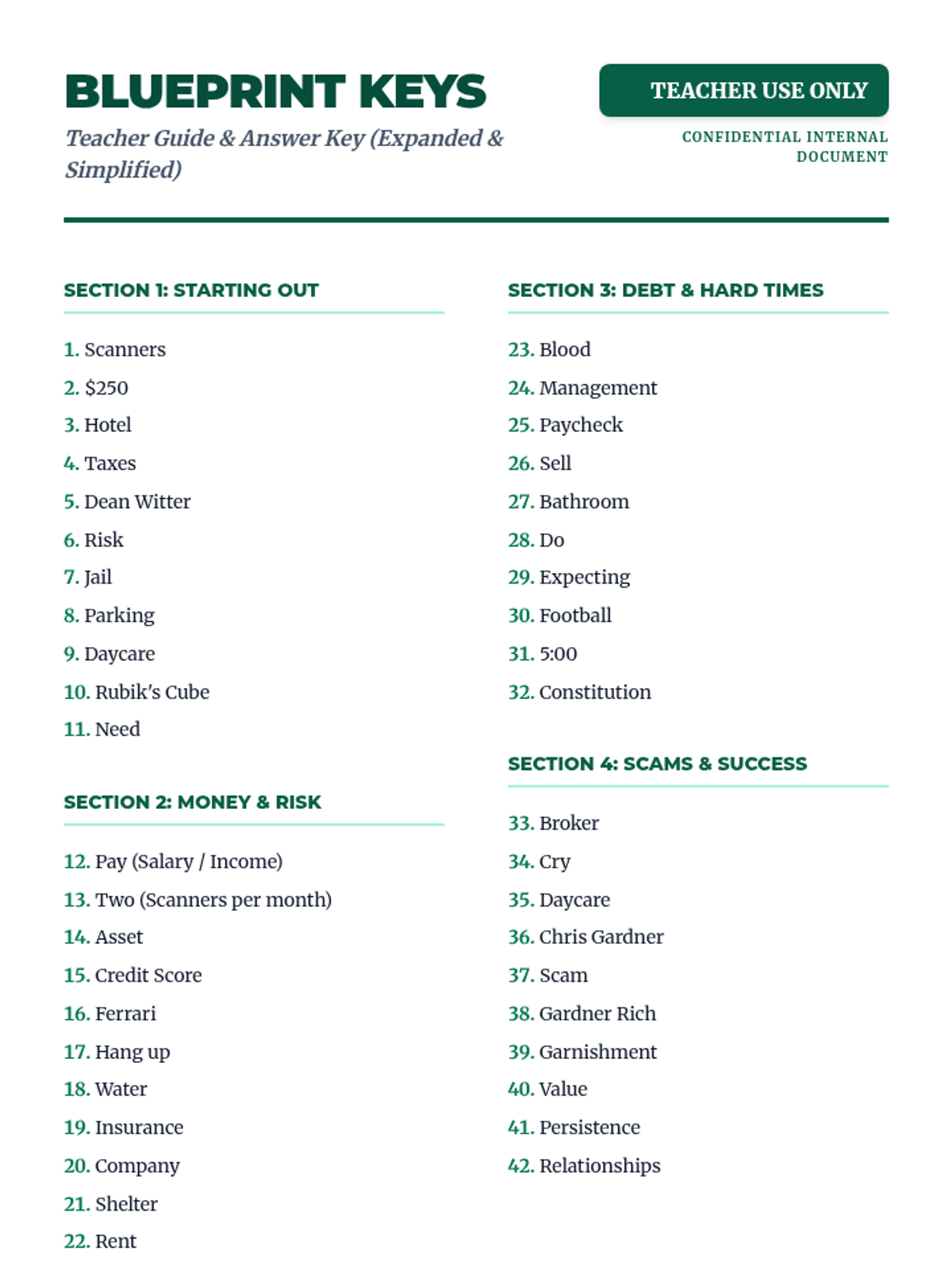
A deep dive into the personal finance themes of 'The Pursuit of Happyness,' focusing on income, assets, risk, and perseverance. Students analyze Chris Gardner's financial journey while tracking key plot points.
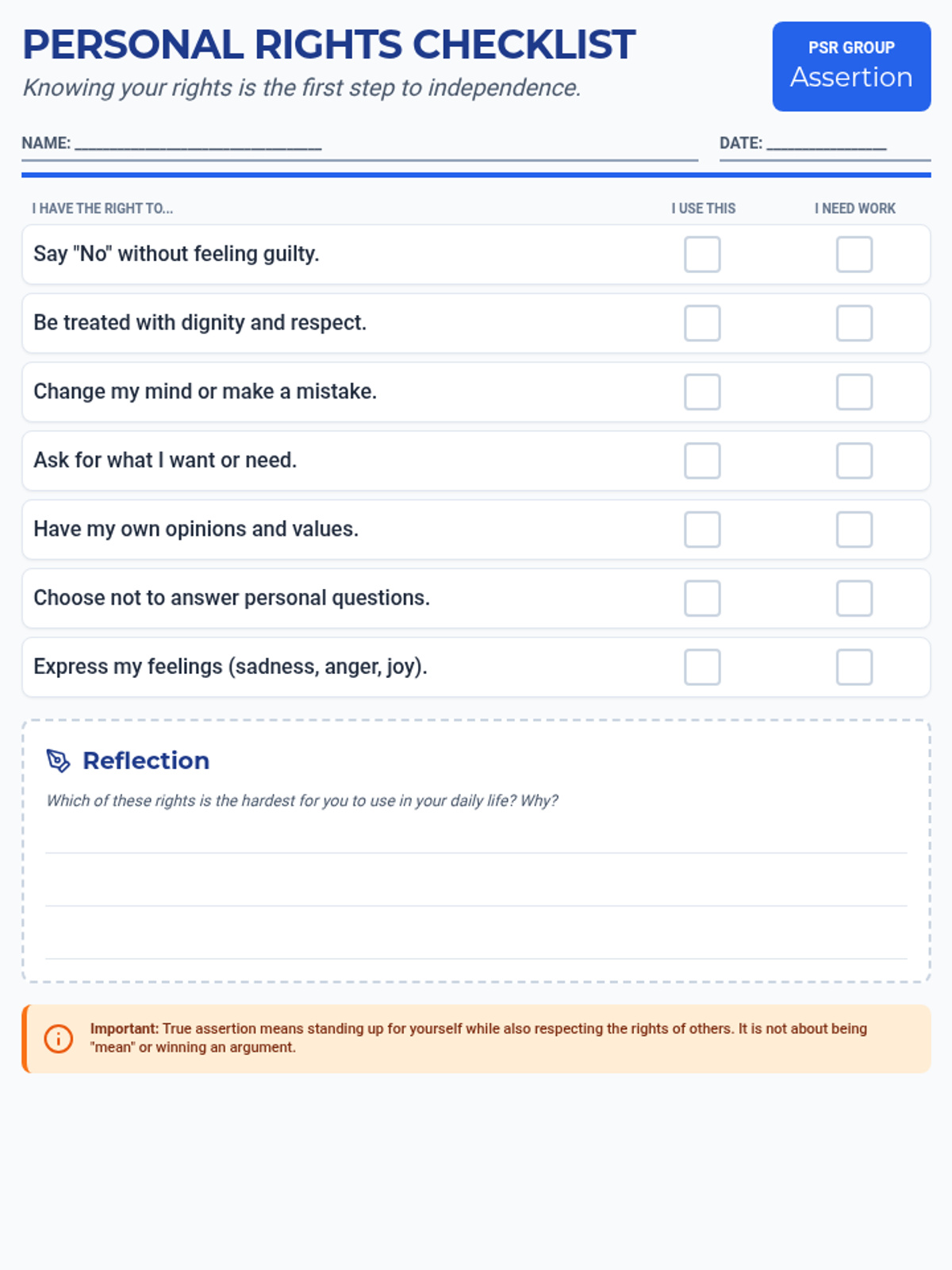
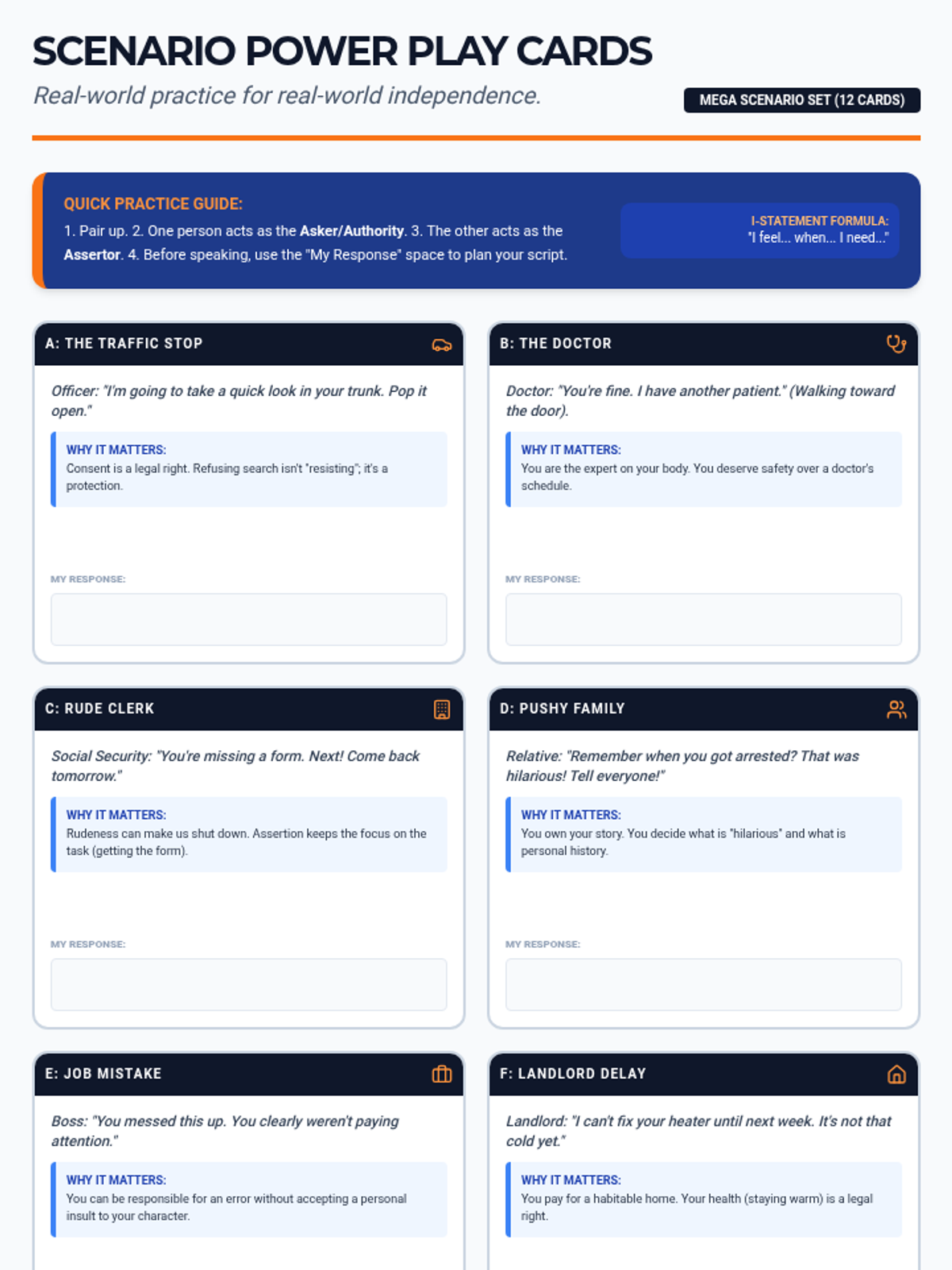
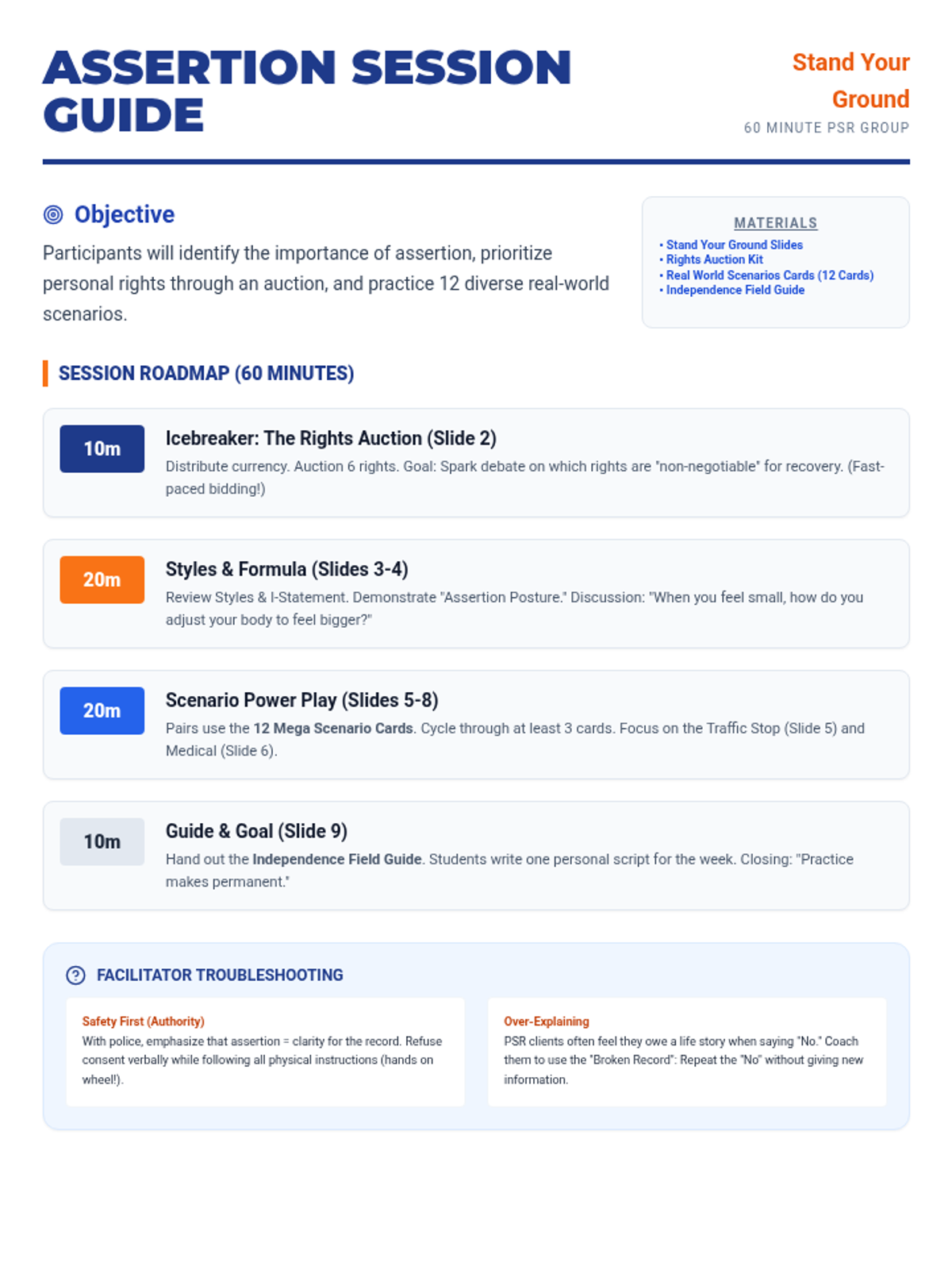
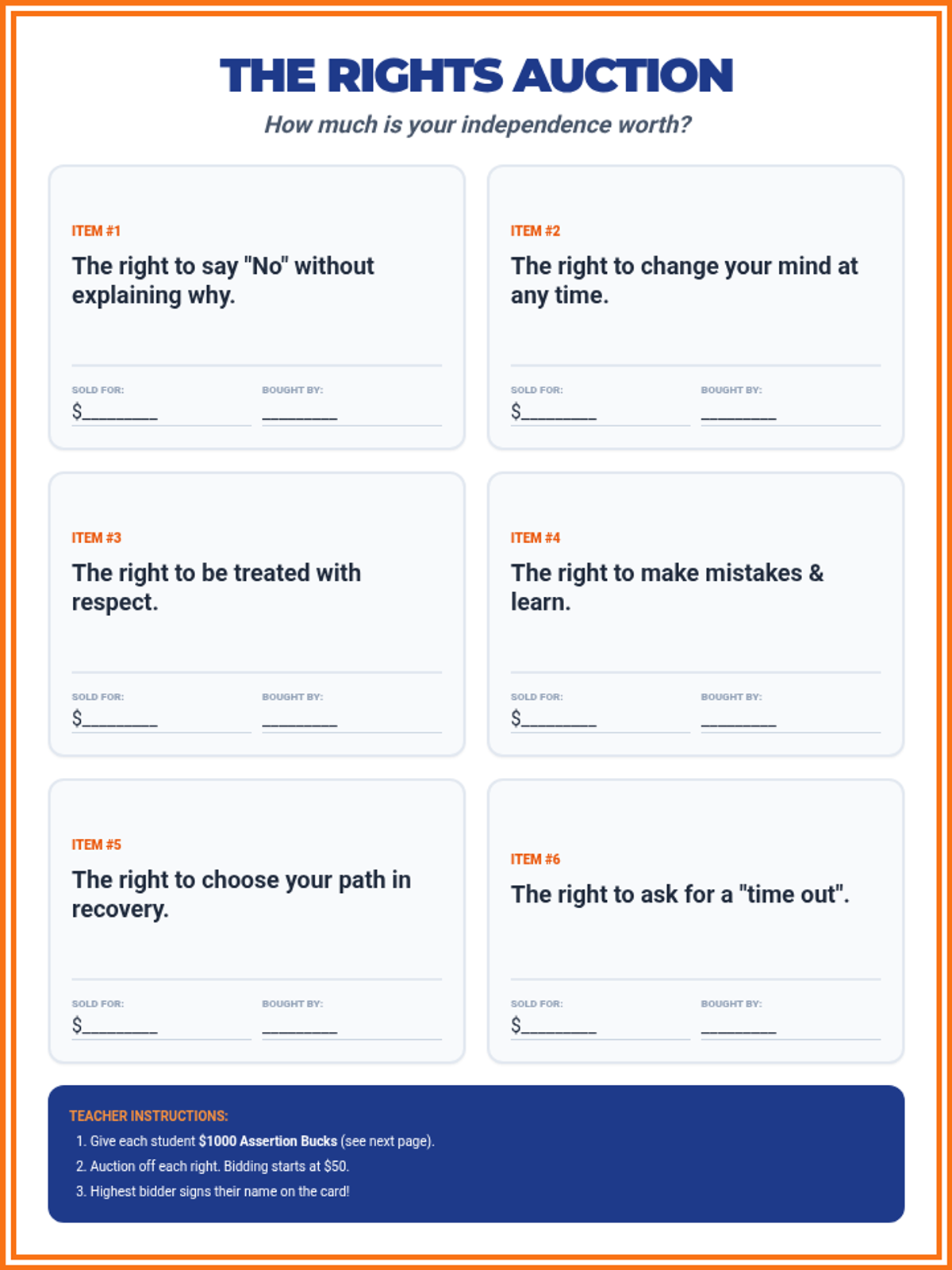
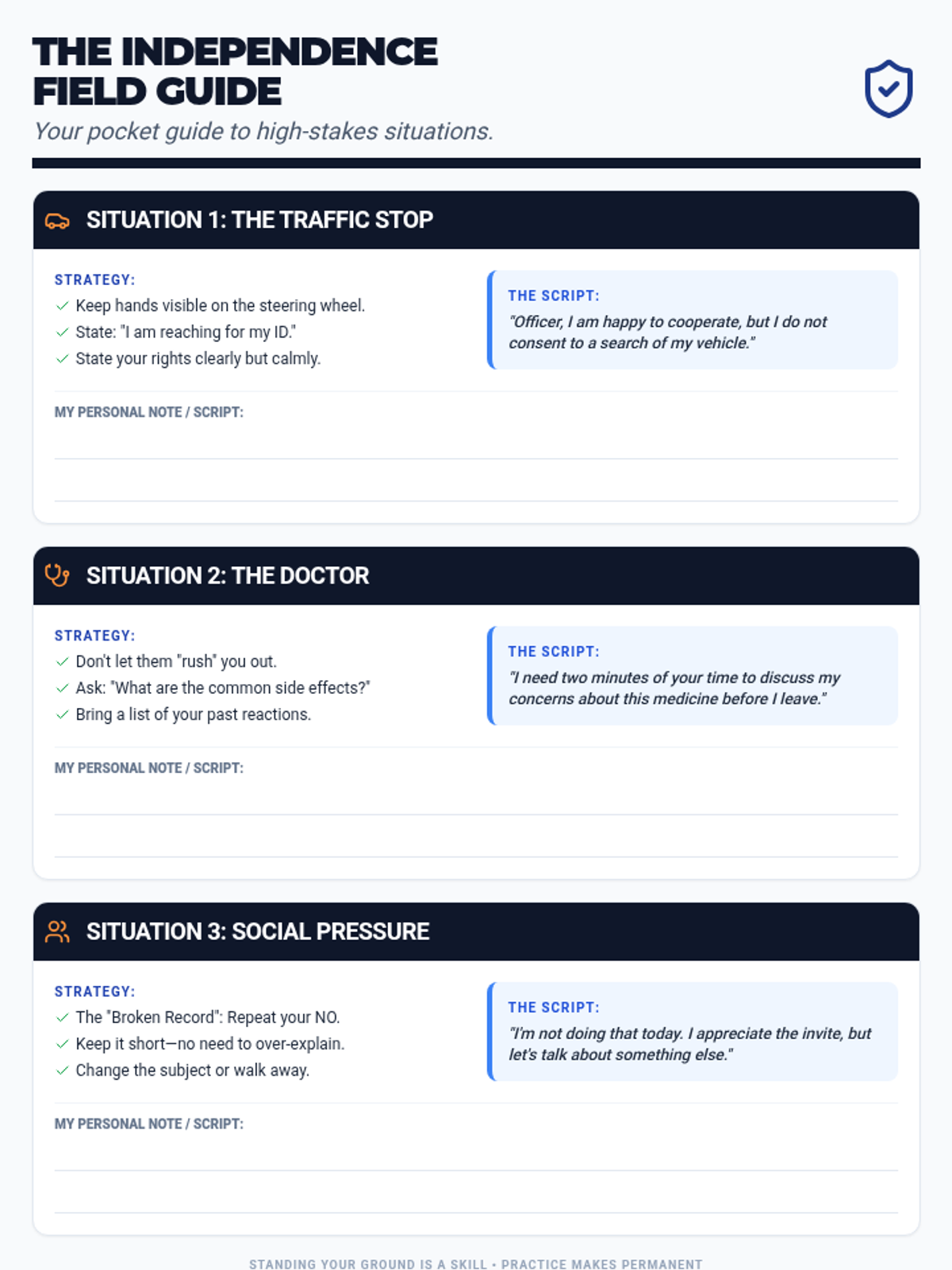
A 60-minute group session focused on empowering adults in PSR programs to understand their personal rights and practice assertive communication in real-world situations.
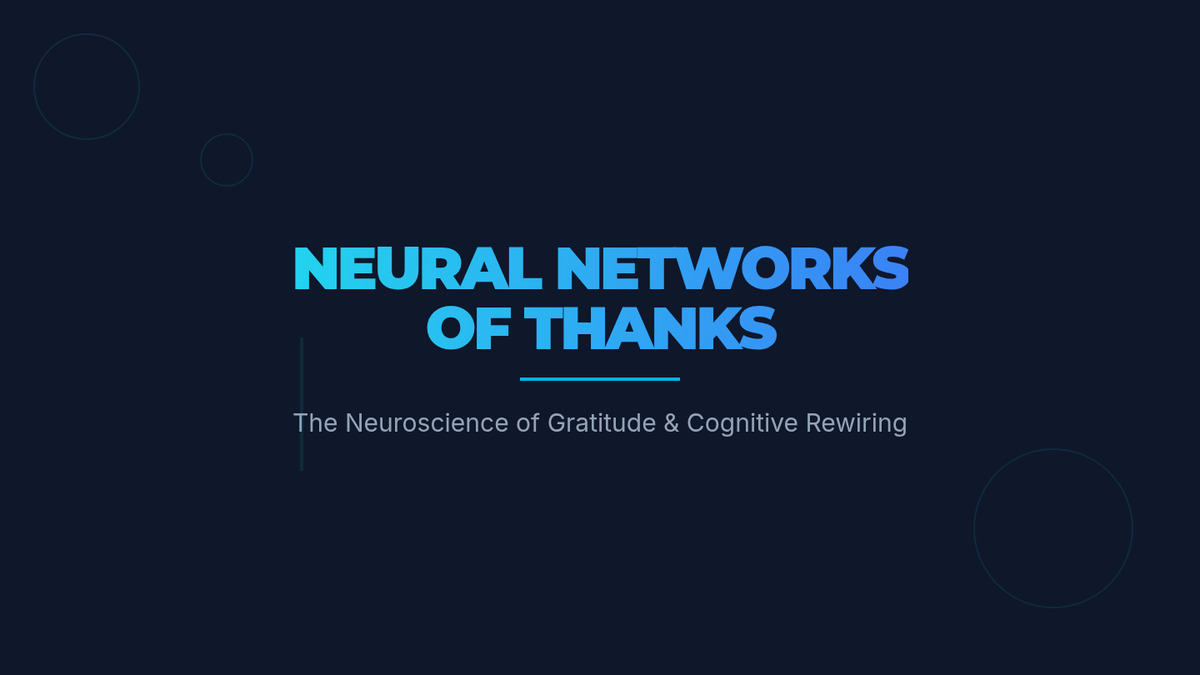
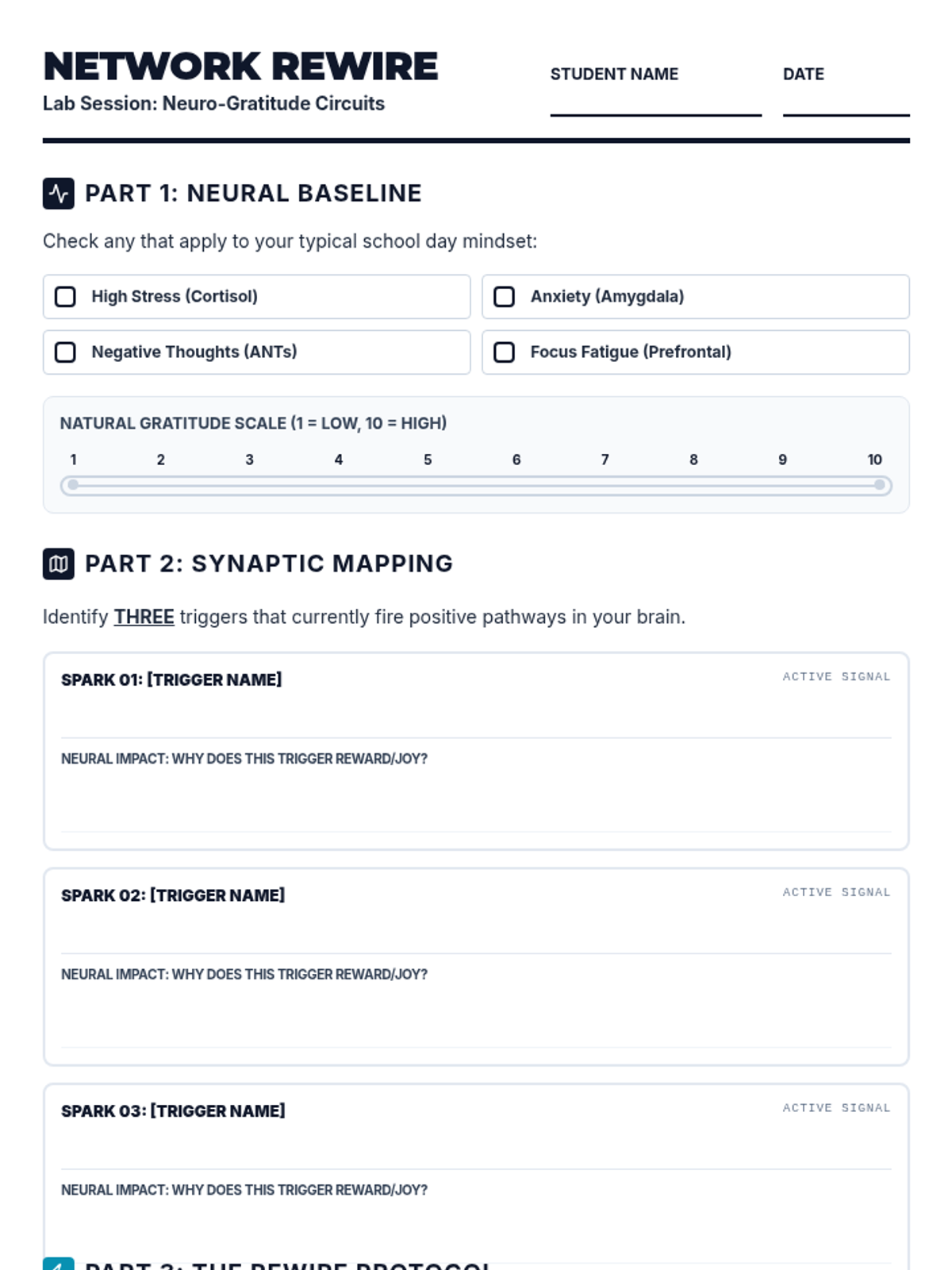
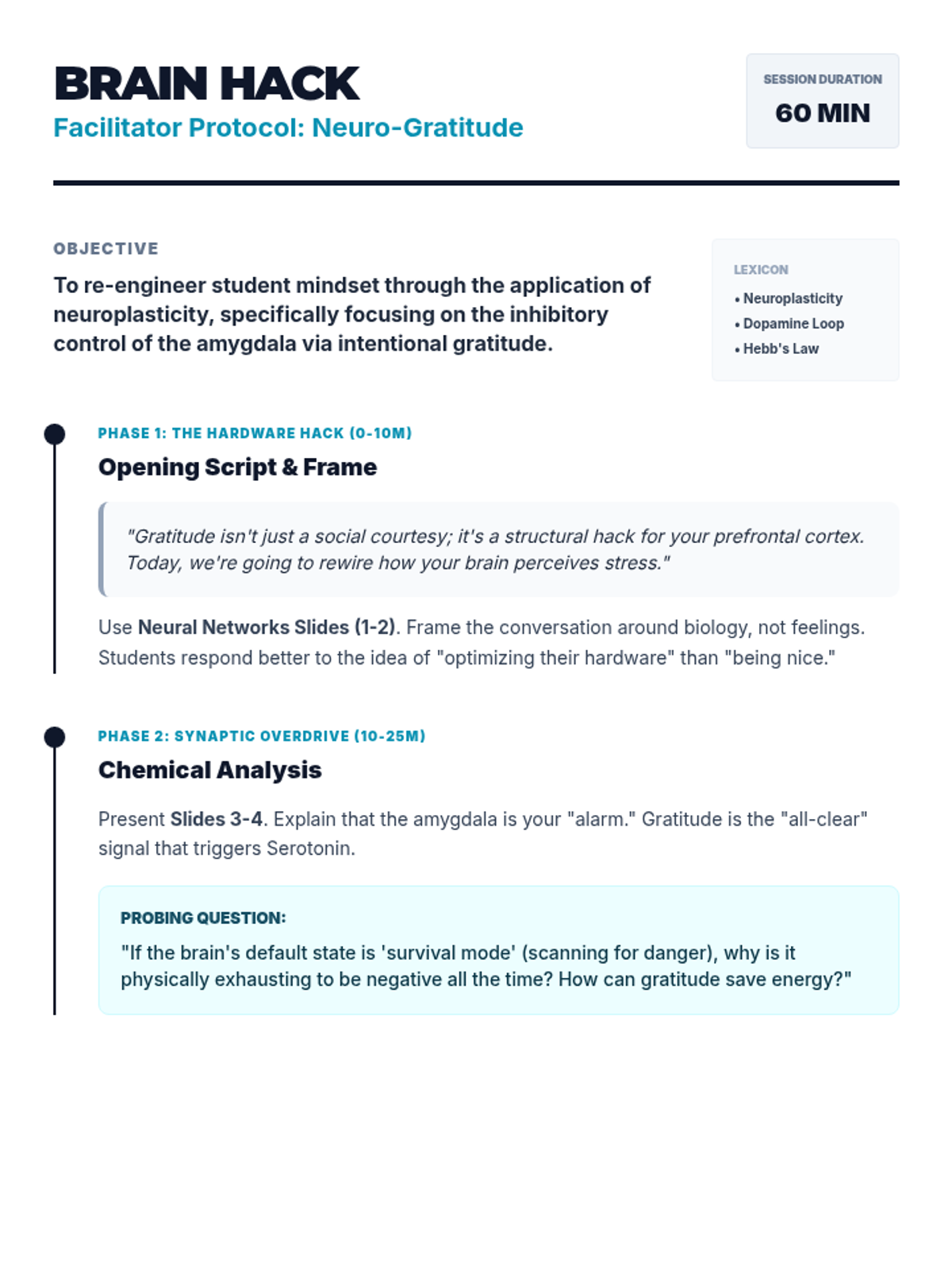
A deep dive into the neuroscience of gratitude, exploring how thankfulness triggers chemical changes in the brain and strengthens neural pathways for long-term well-being. Students will map their own 'gratitude circuits' and practice evidence-based techniques to rewire their thinking.
A lesson focused on teaching participants how to analyze and 'decode' job descriptions to identify key requirements and hidden expectations.
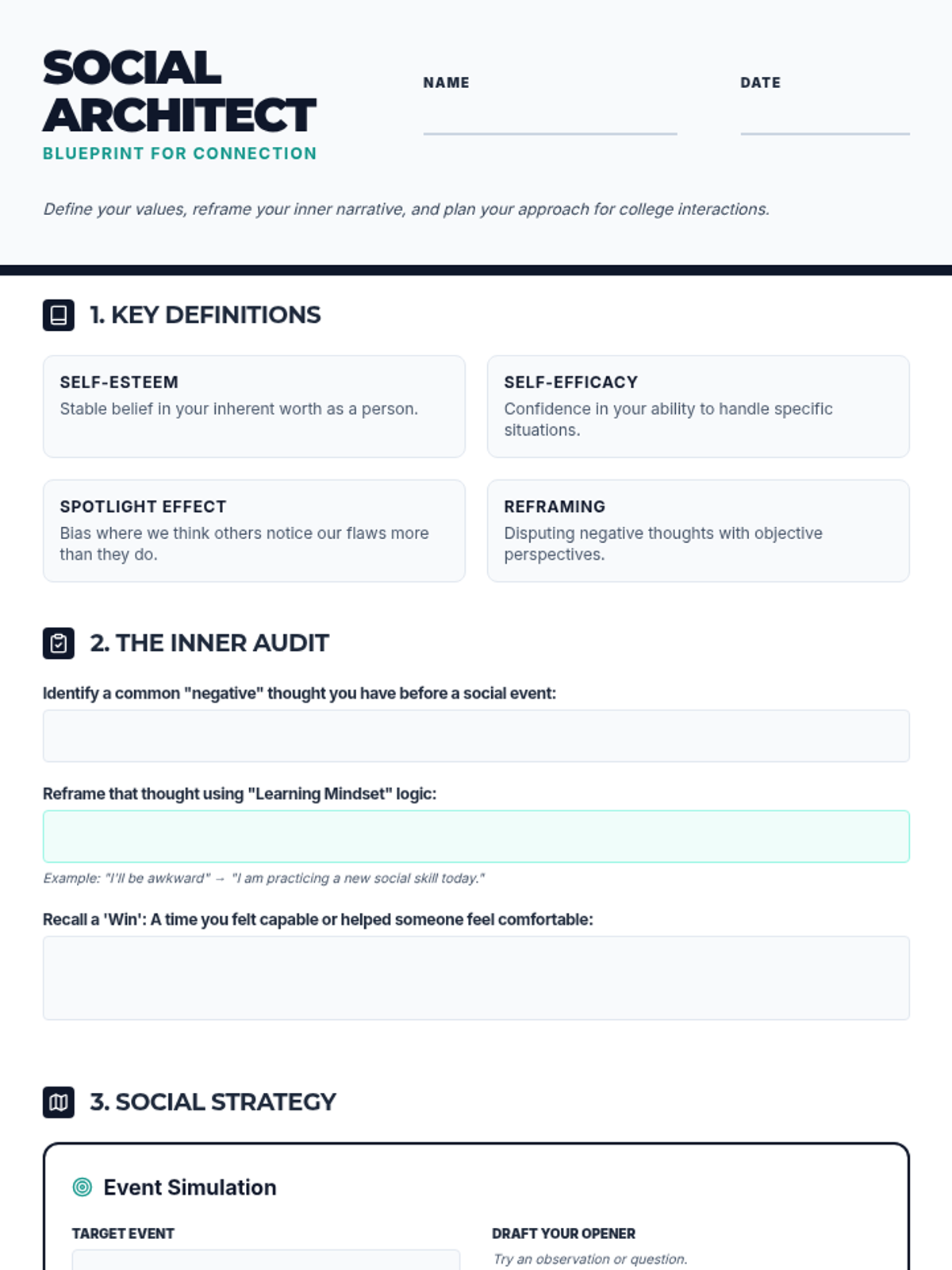
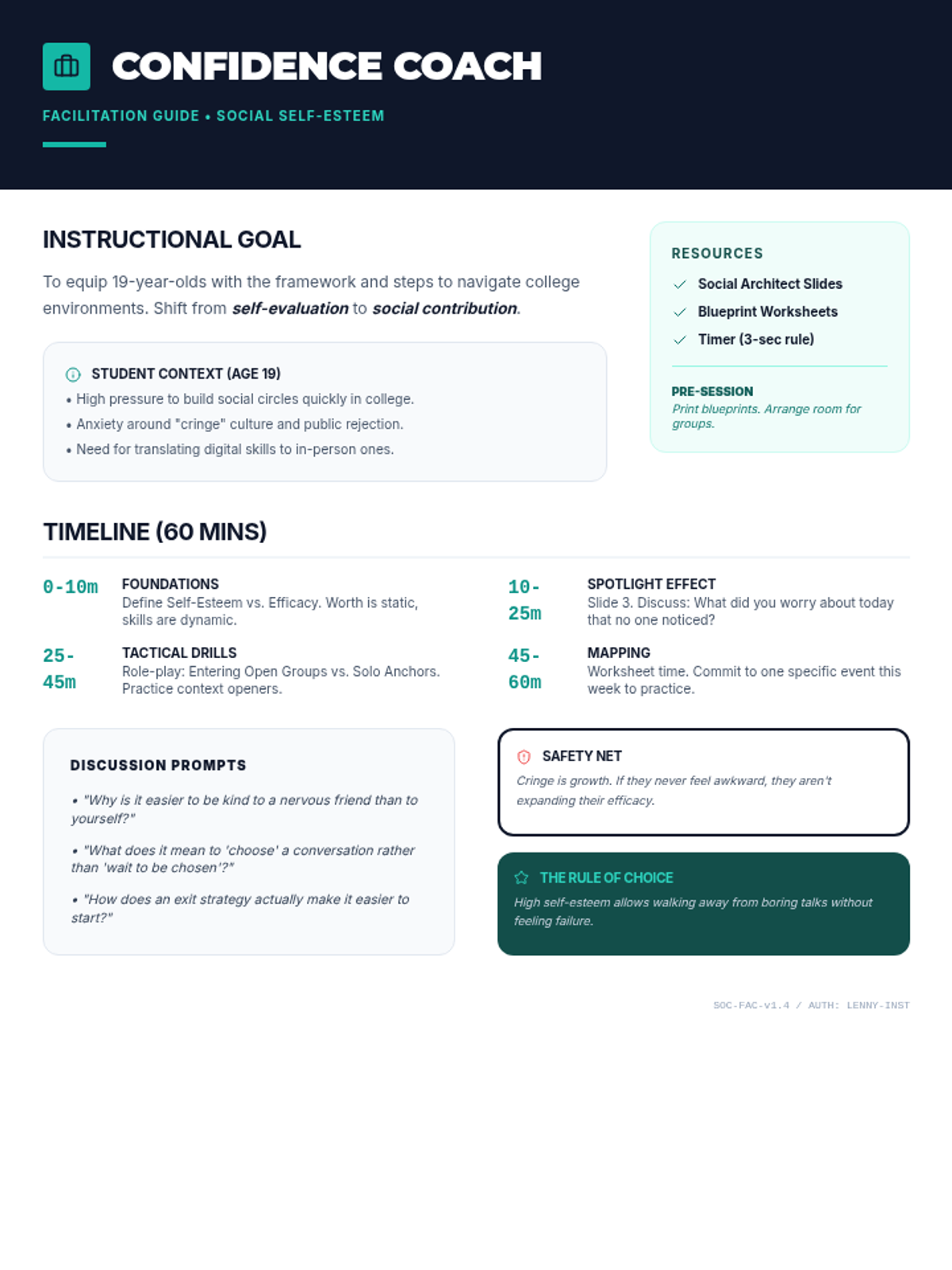
A comprehensive lesson designed for 19-year-olds to build self-esteem and practical social skills for college and event-based networking. Focuses on psychological definitions like the spotlight effect and provides a step-by-step framework for meeting new people.
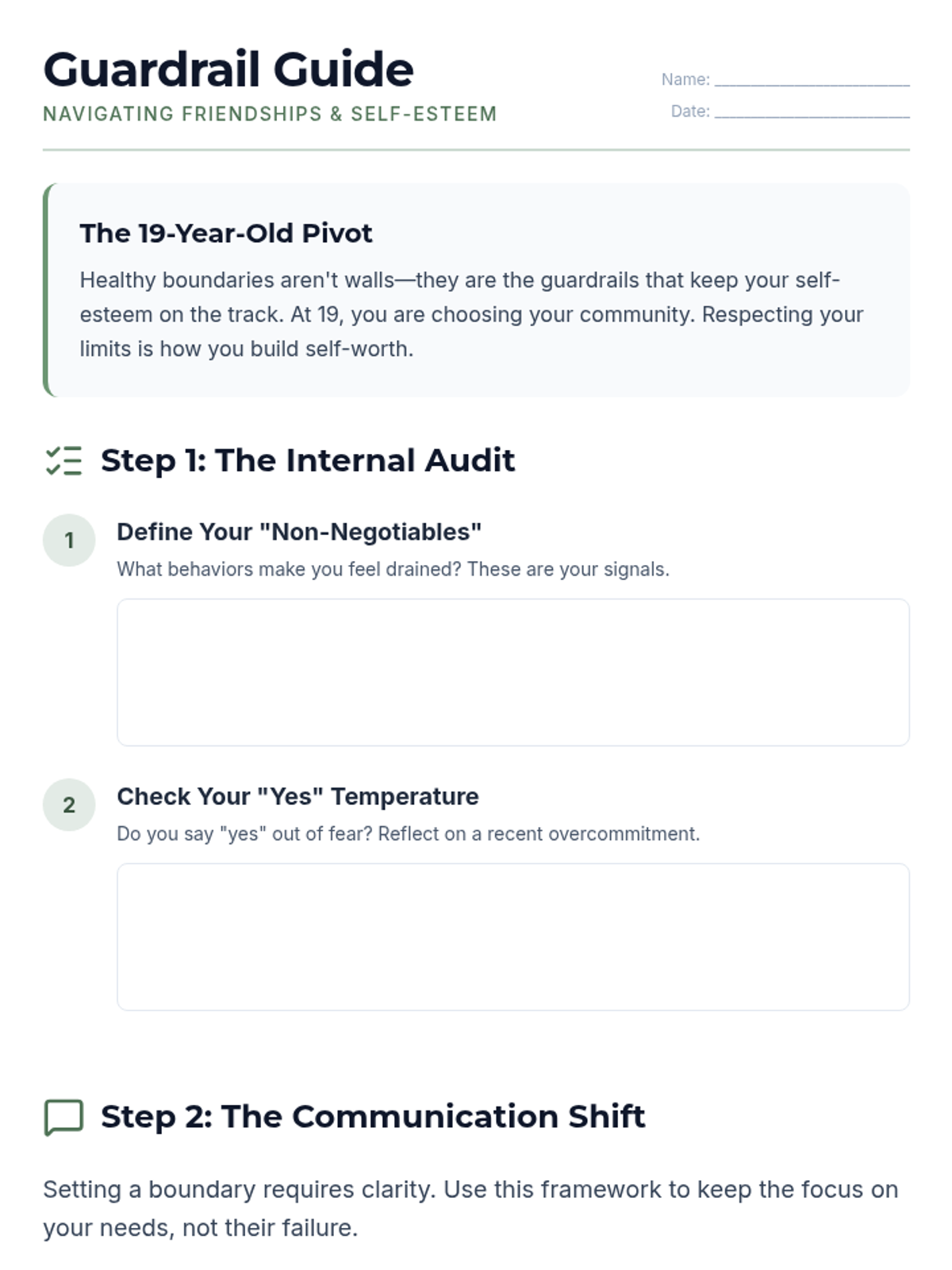
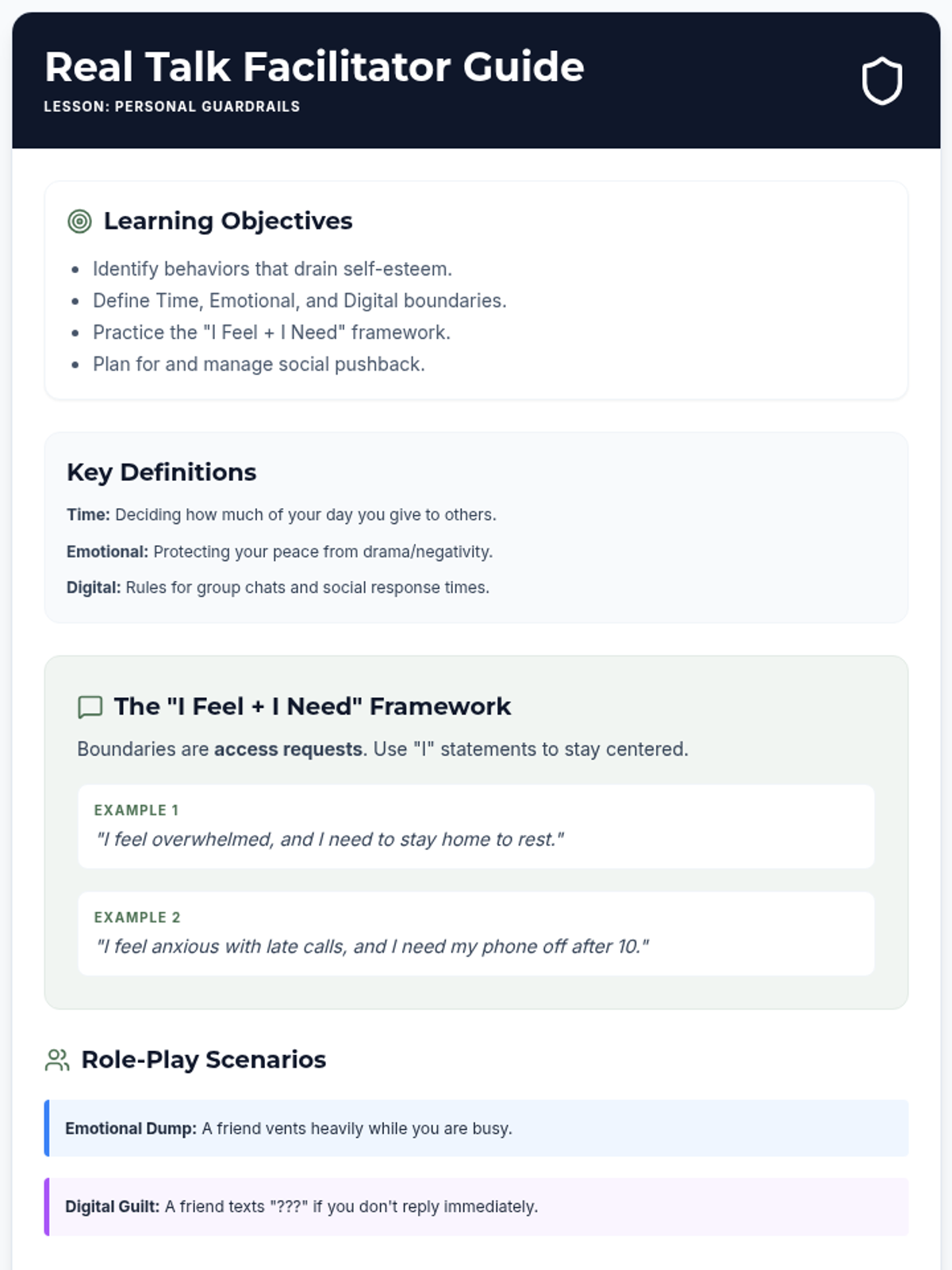
Practical strategies for 19-year-olds to define personal limits and build self-esteem through healthy friendship dynamics.
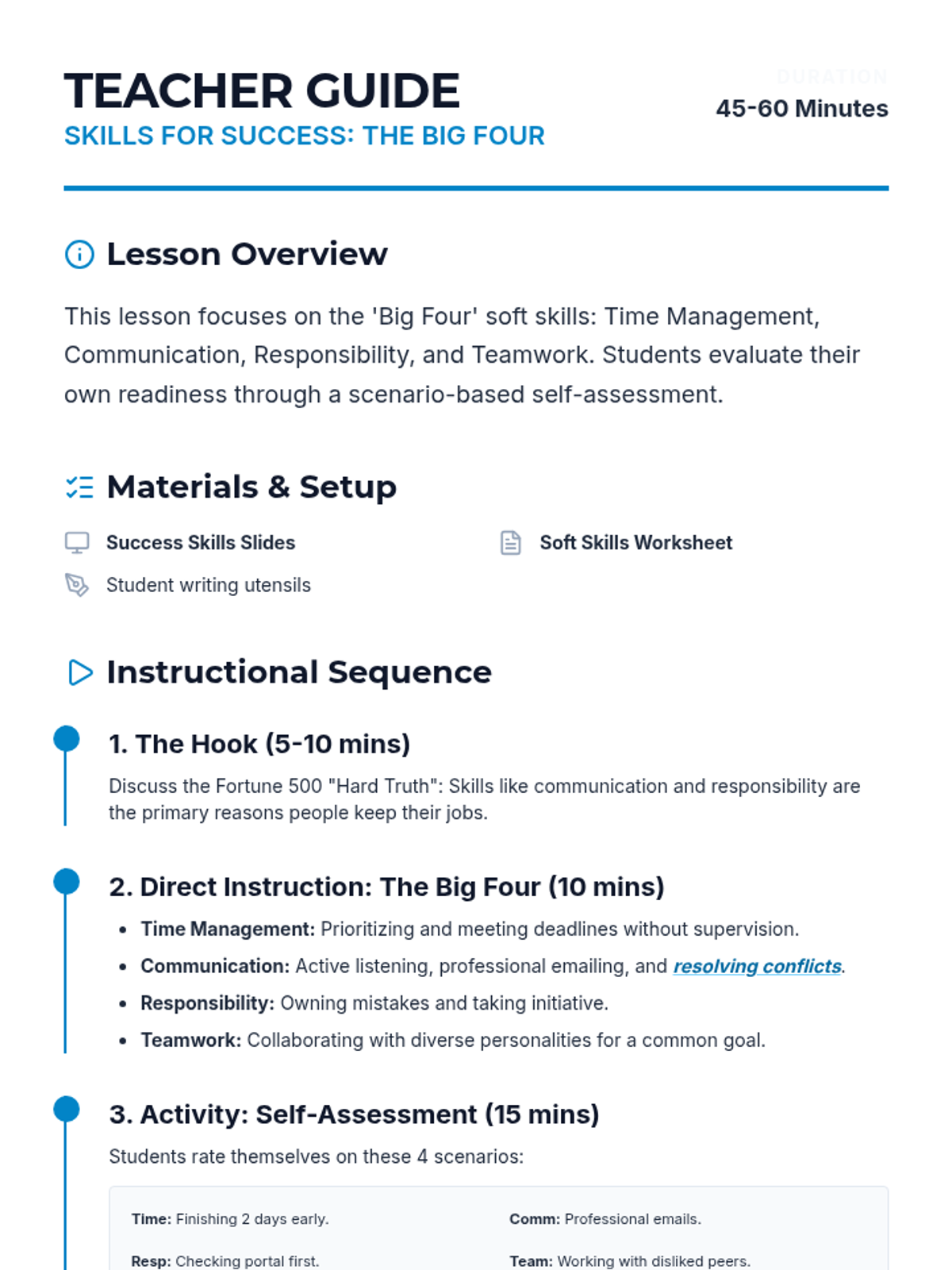
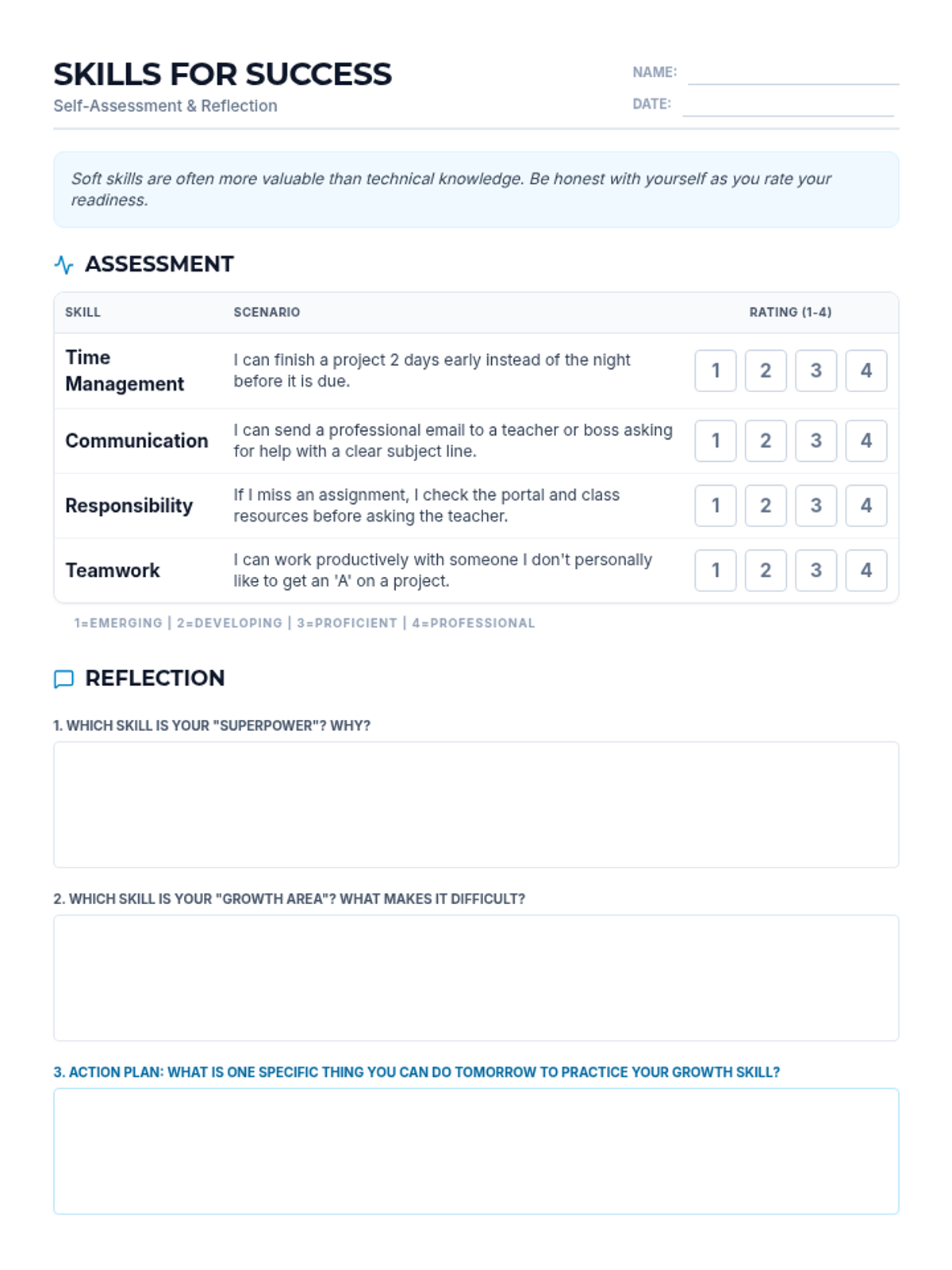
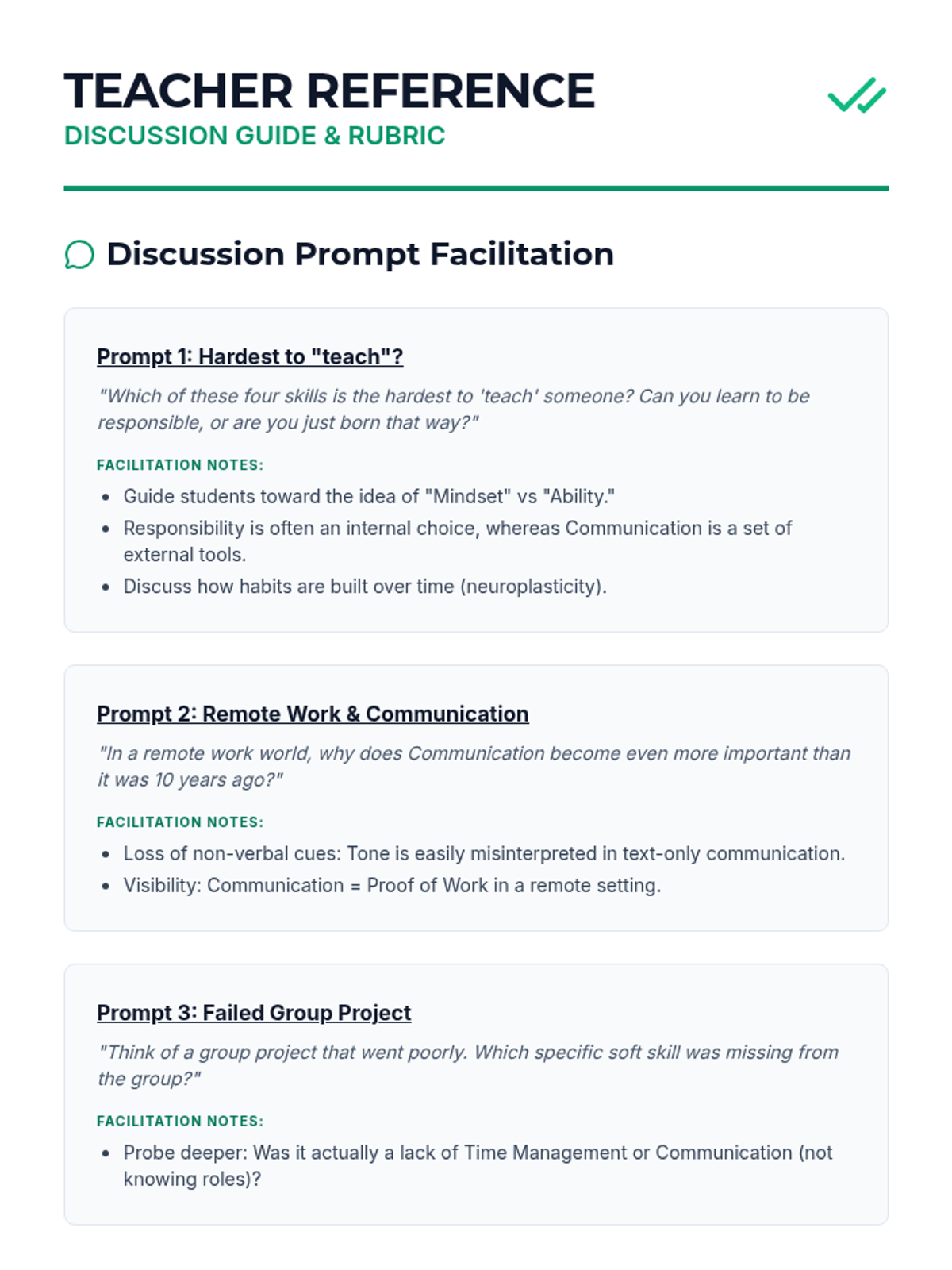
A lesson focused on the 'Big Four' soft skills: Time Management, Communication, Responsibility, and Teamwork. Students evaluate their own readiness through a scenario-based self-assessment and reflective discussion.
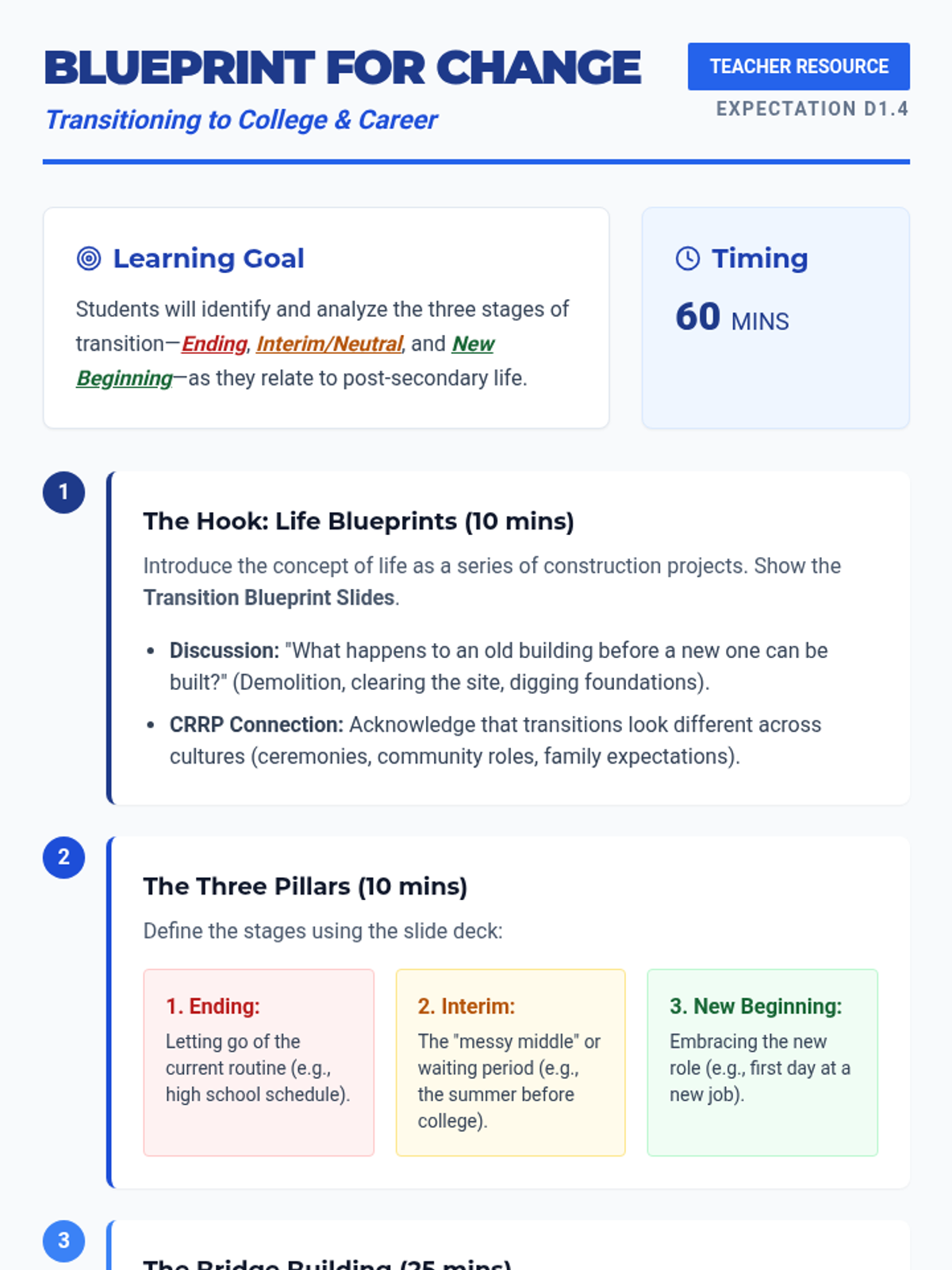
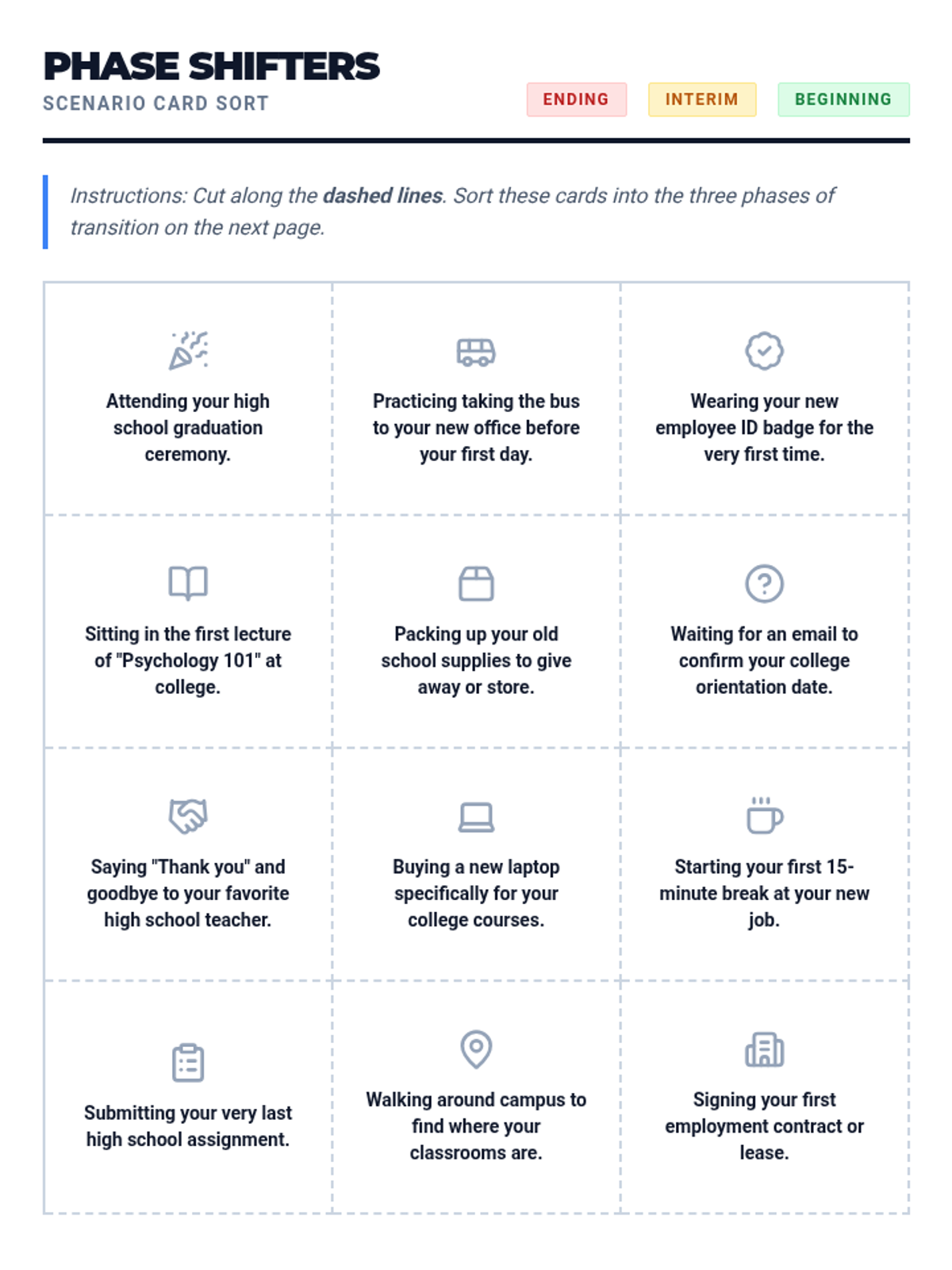
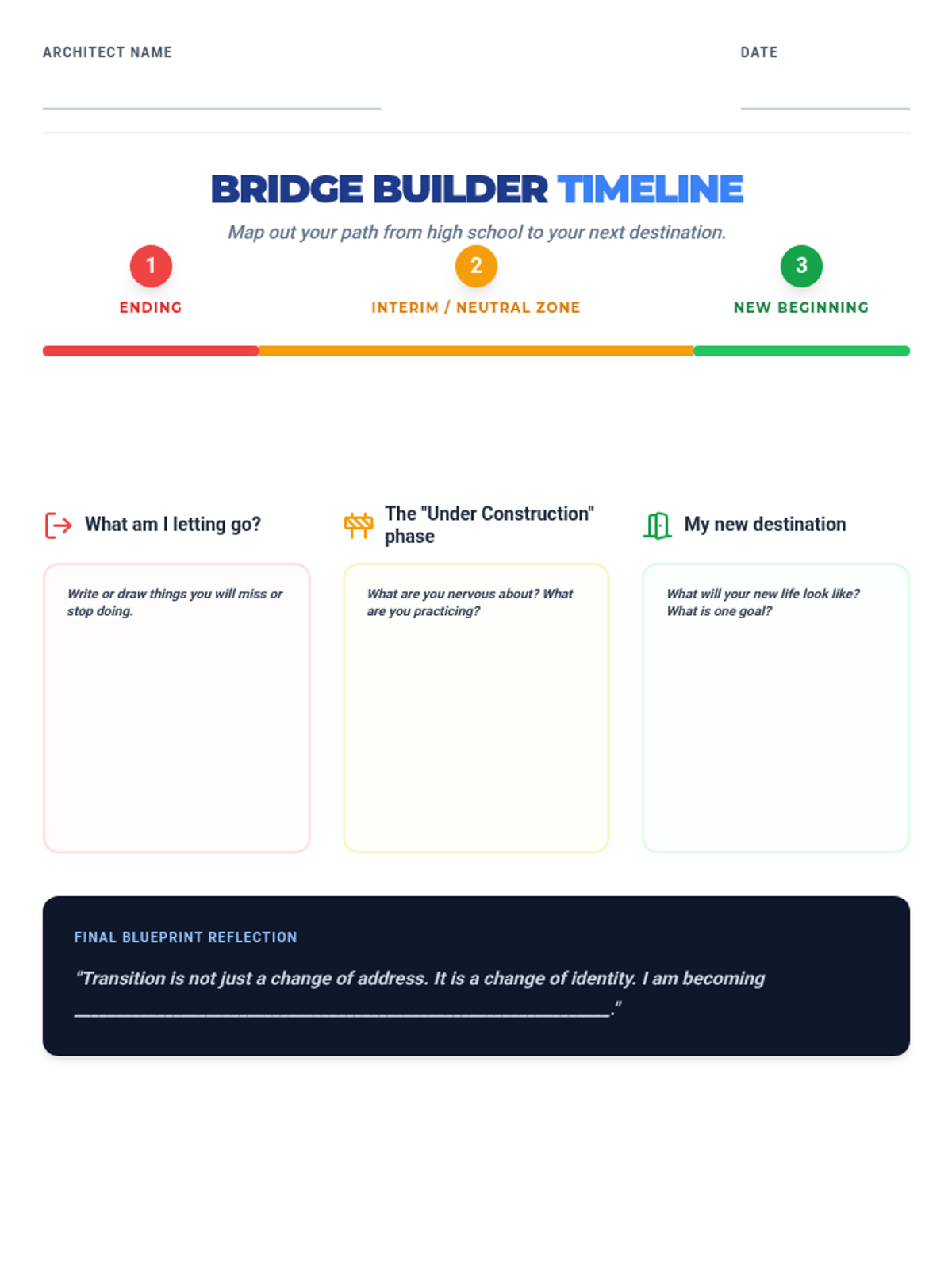
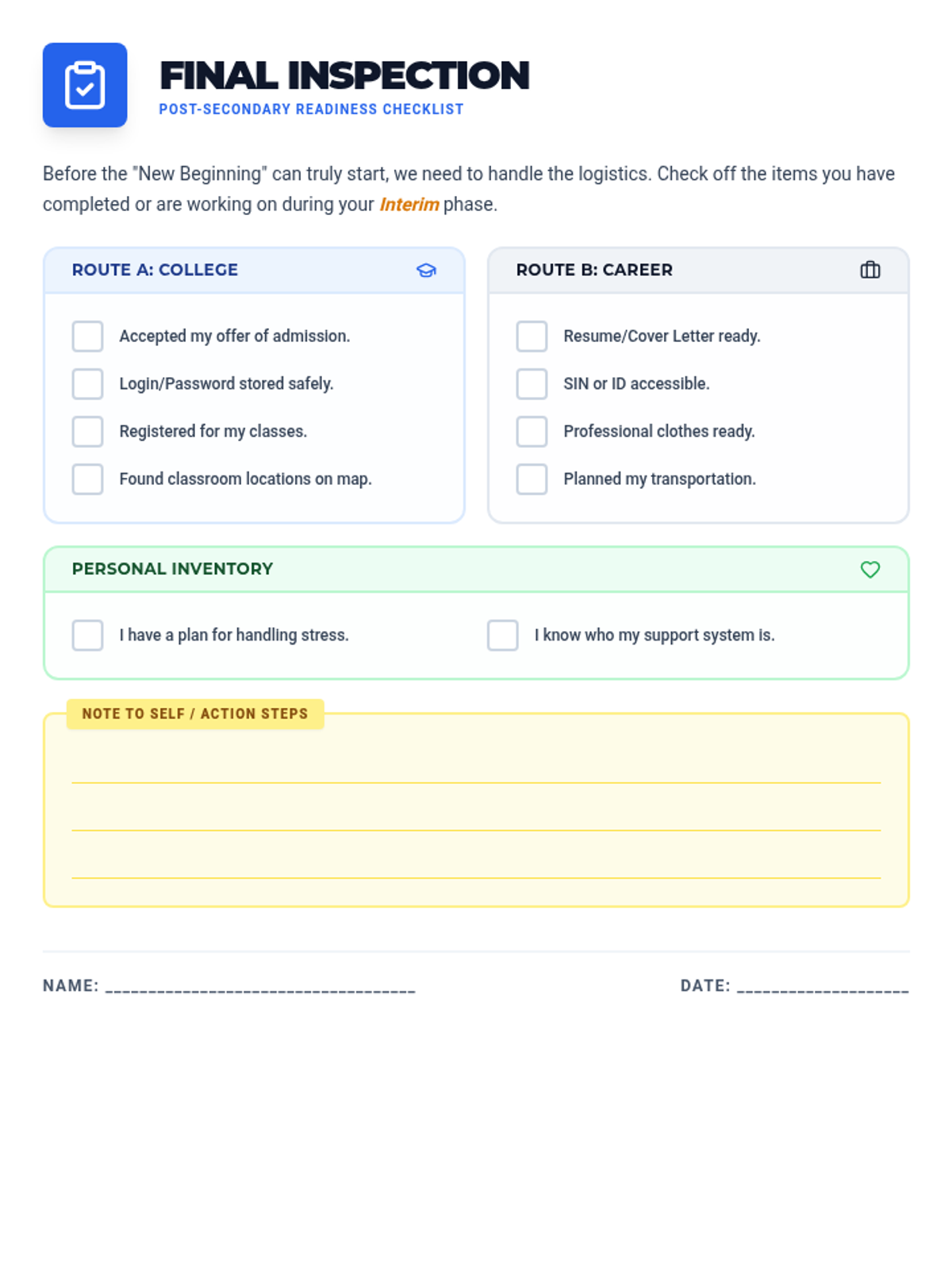
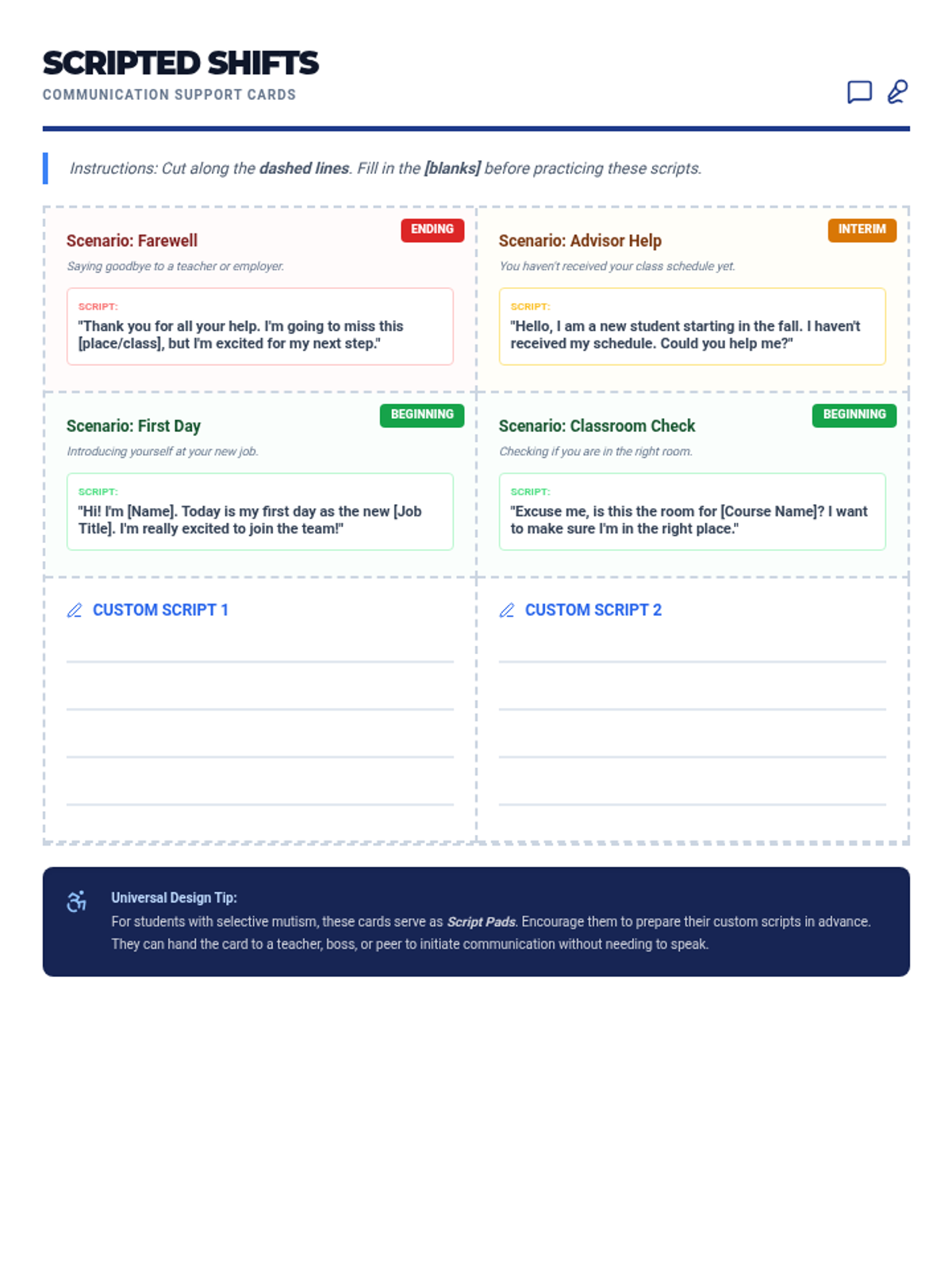
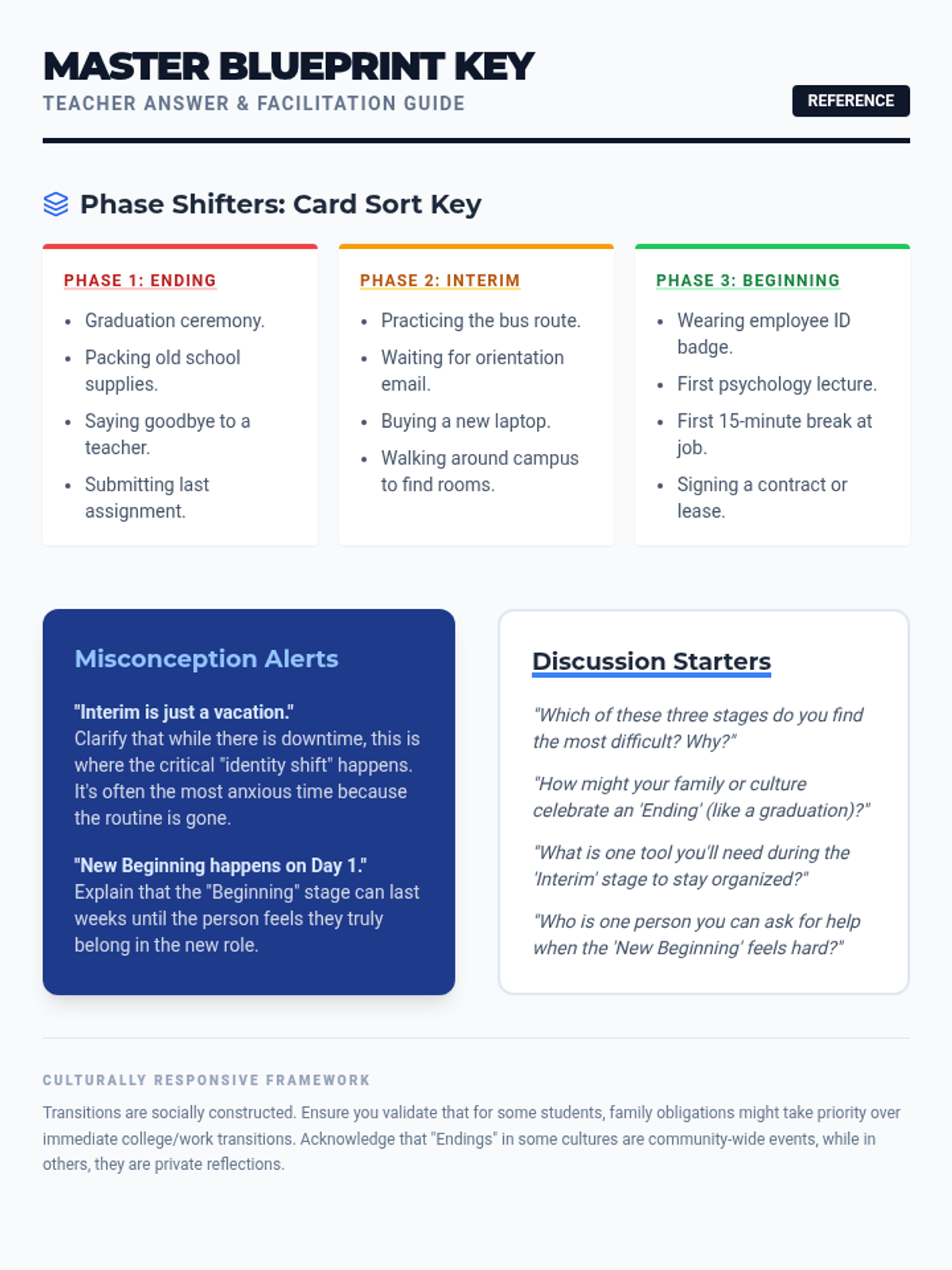
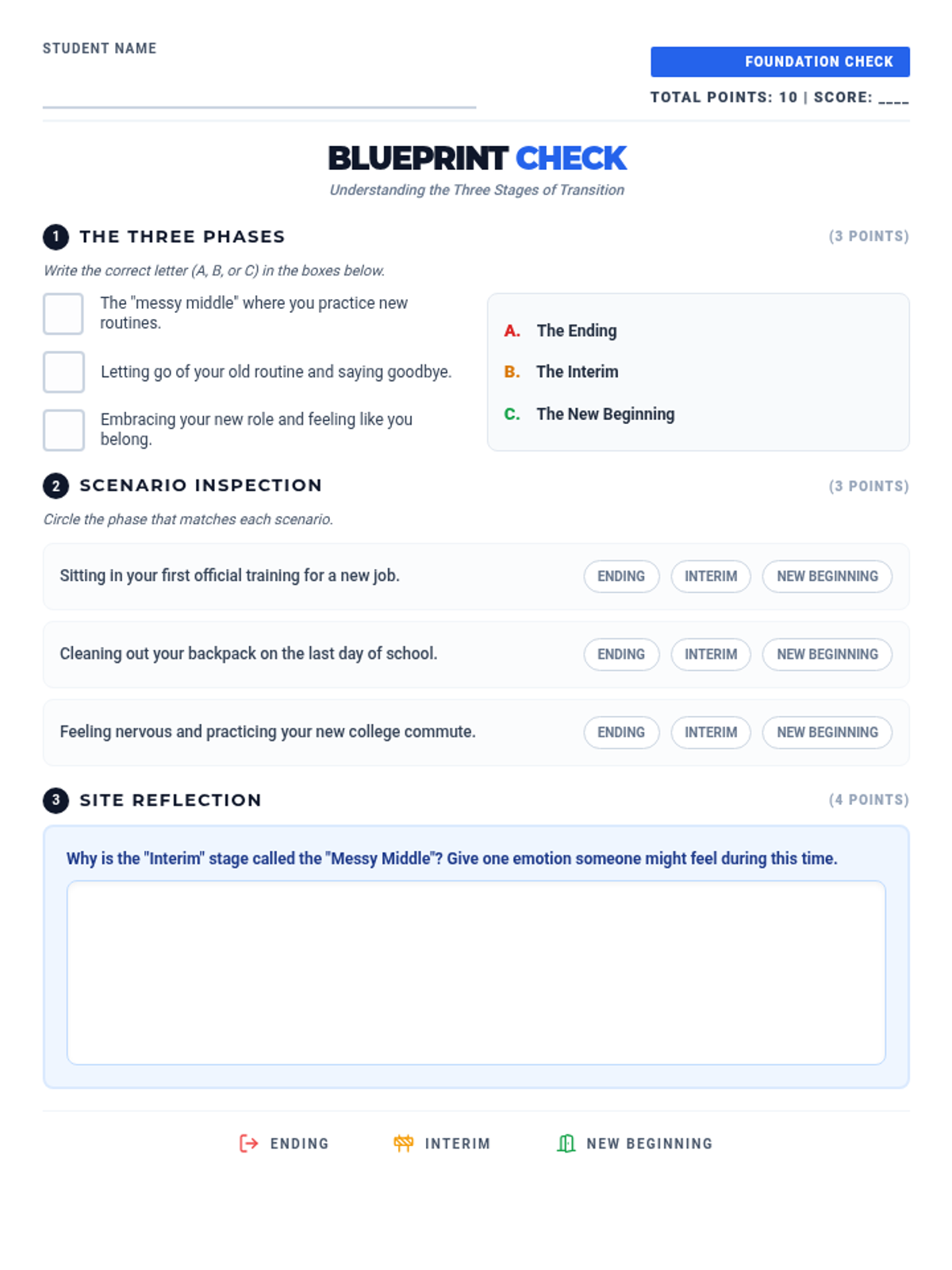
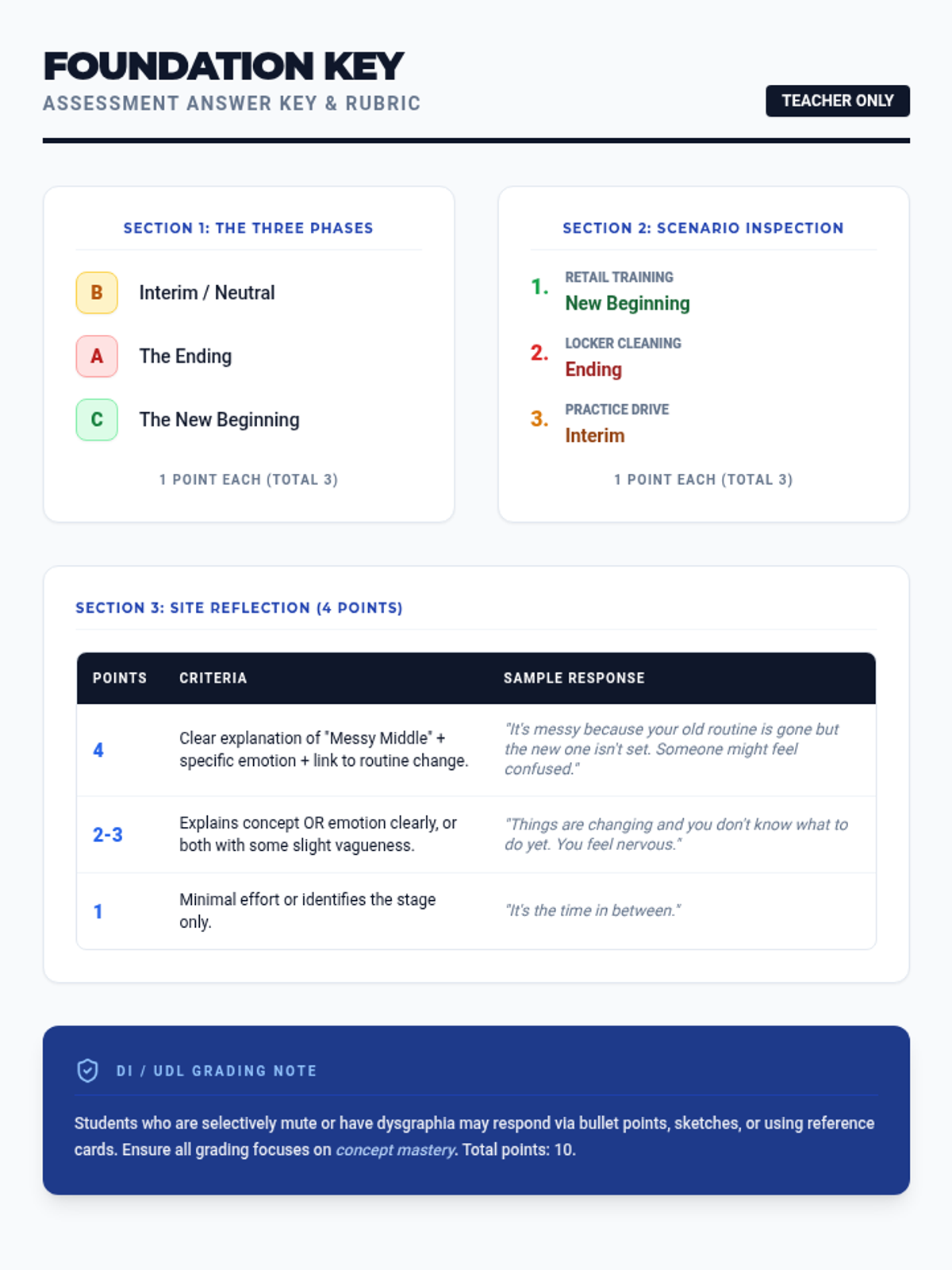
A comprehensive 60-minute lesson focused on the three stages of transition (Ending, Interim, and New Beginning) specifically tailored for students moving toward college or the workplace. This lesson employs UDL and DI strategies to support students with LD, autism, and those who are selectively mute through visual mapping and structured role-play.
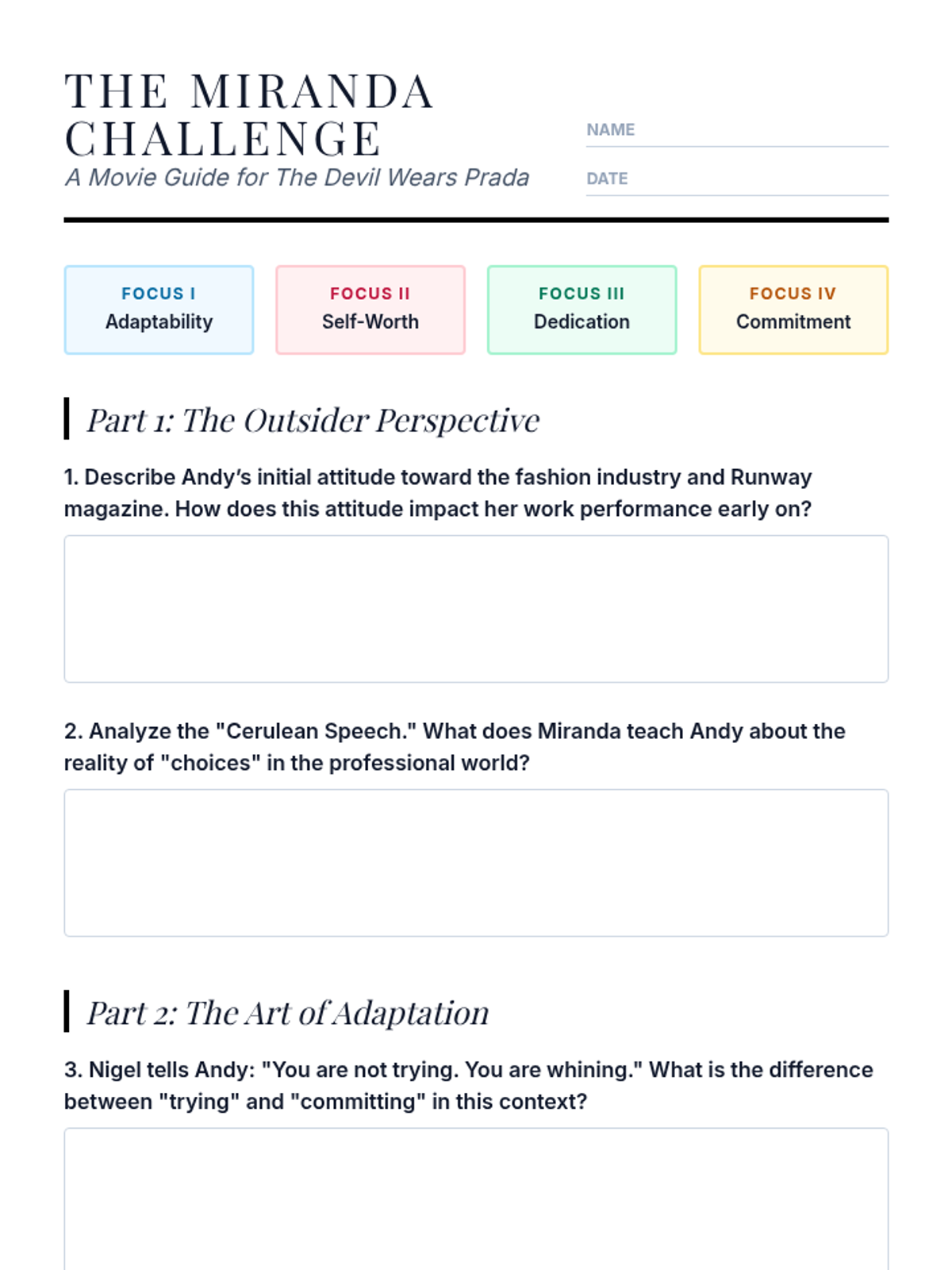
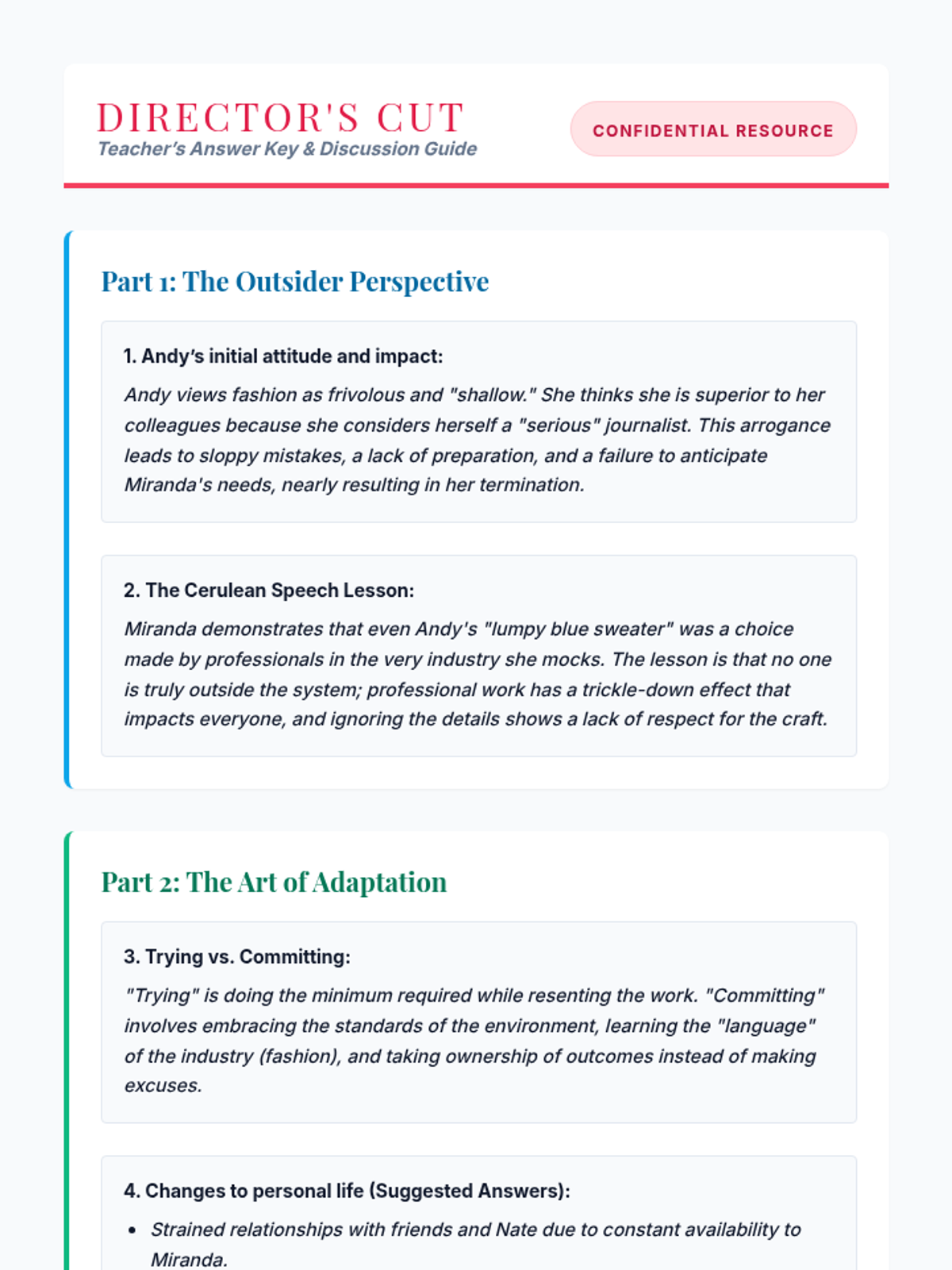
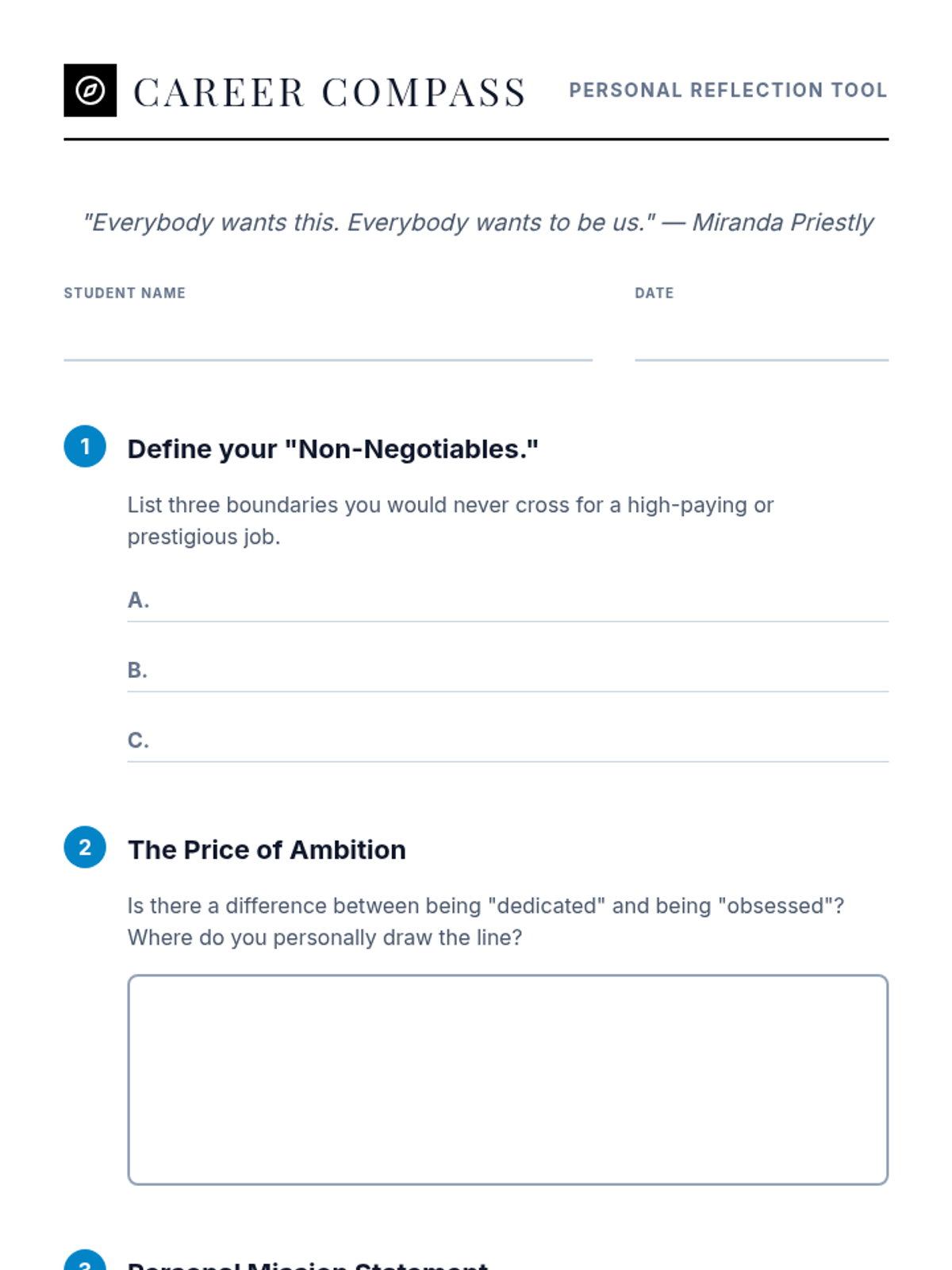
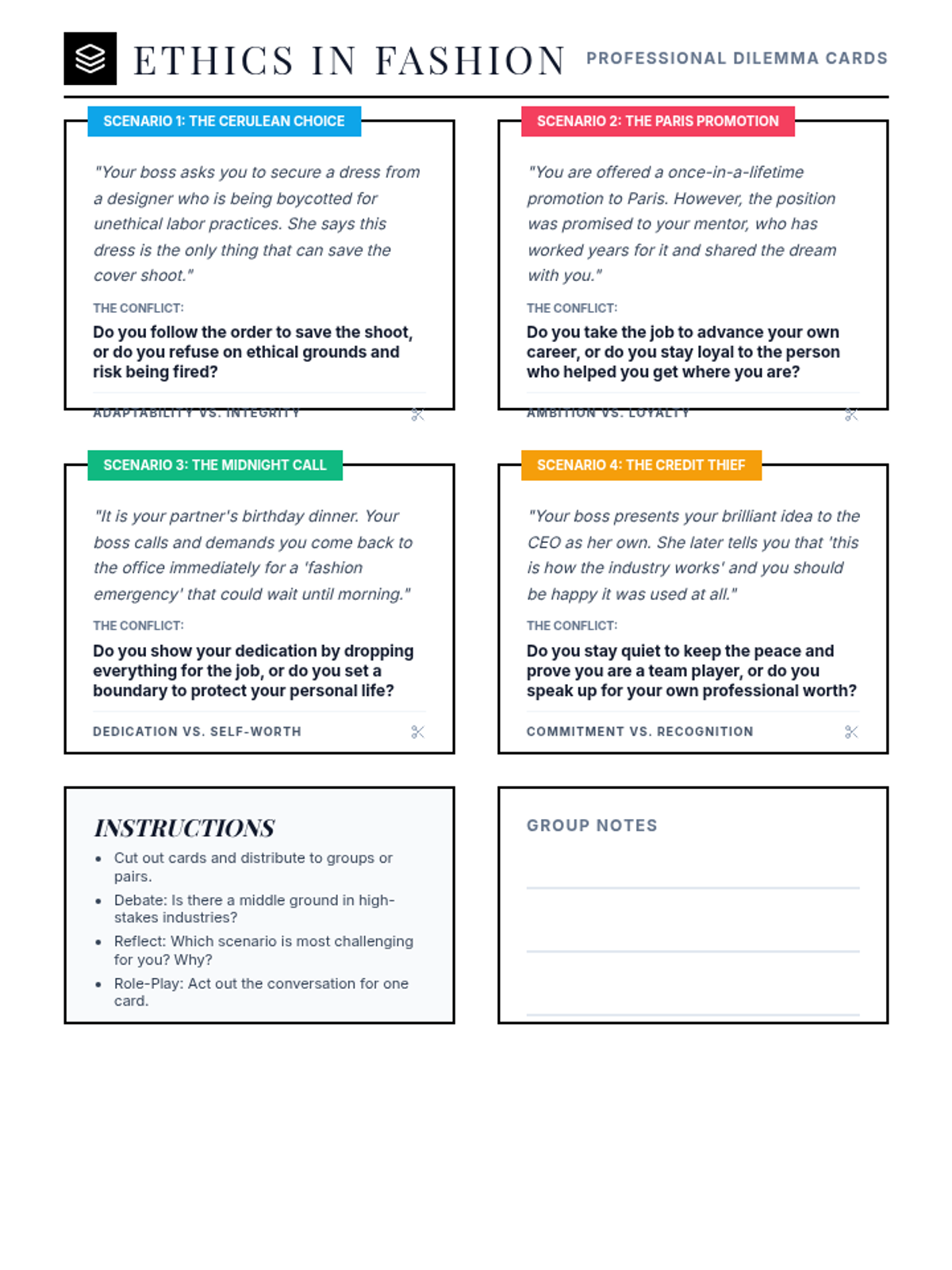
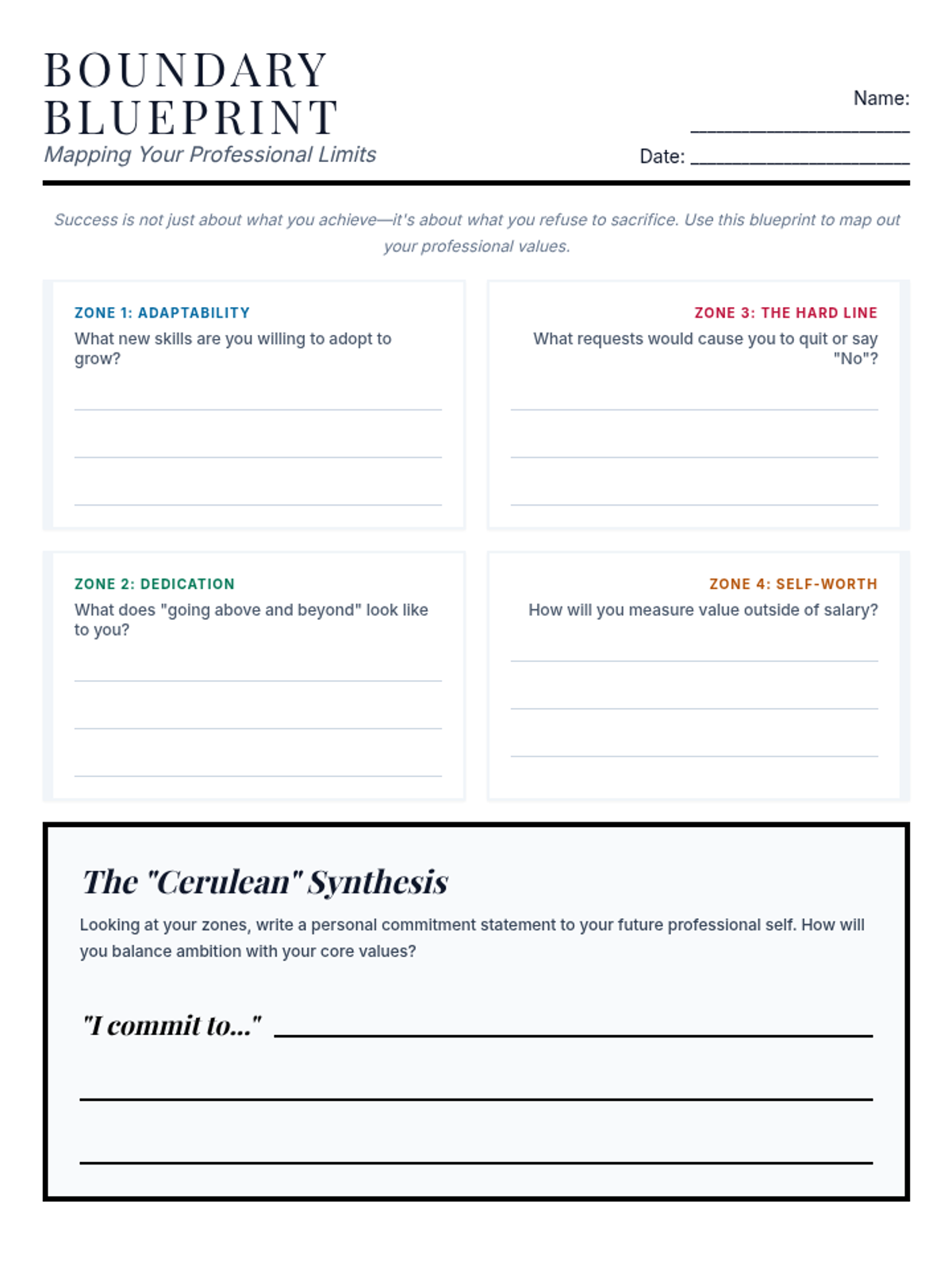
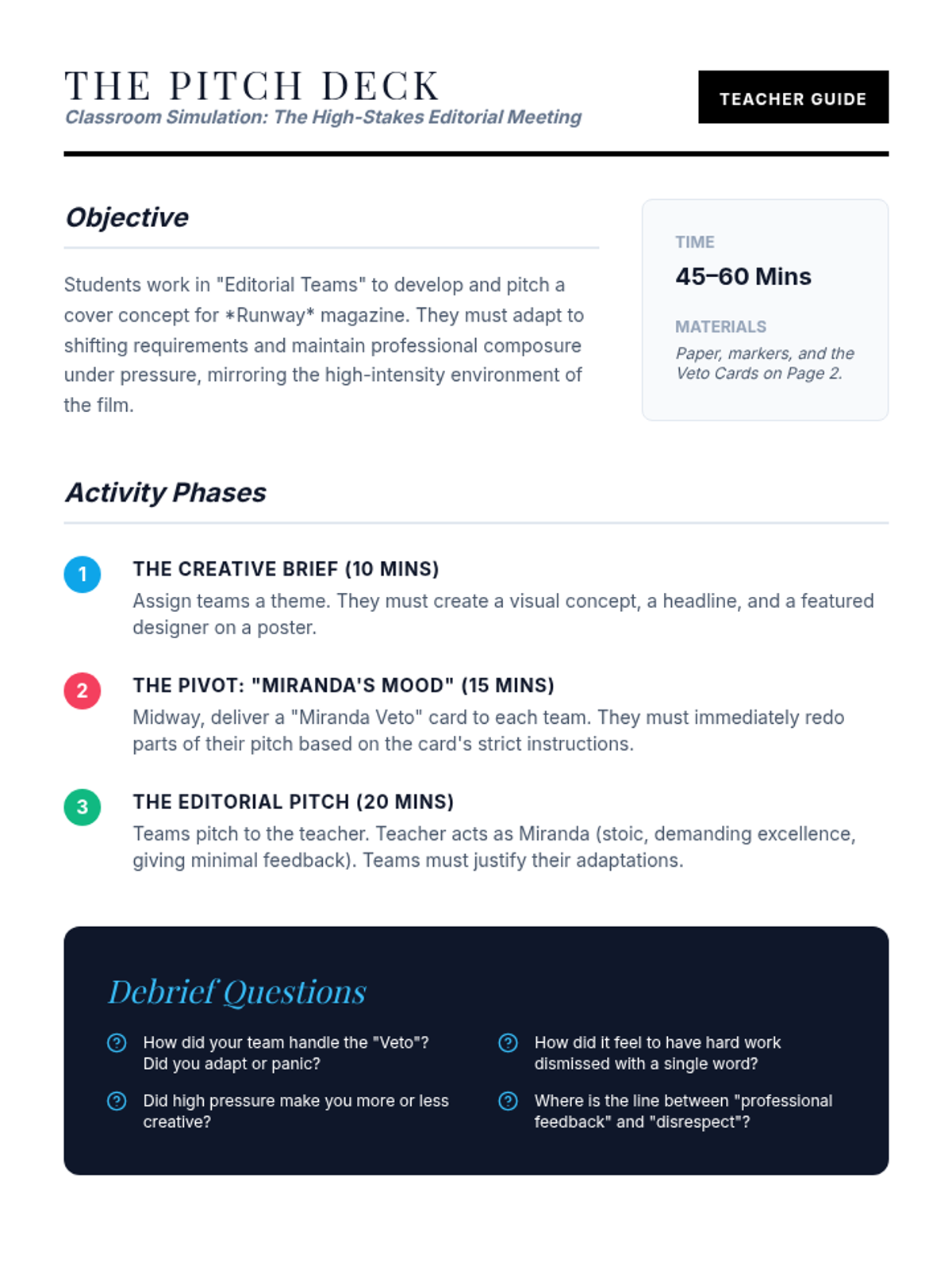
A movie-based exploration of professional adaptability, personal values, and the cost of ambition through the lens of 'The Devil Wears Prada'. Students analyze character transformations and define their own boundaries for career success.
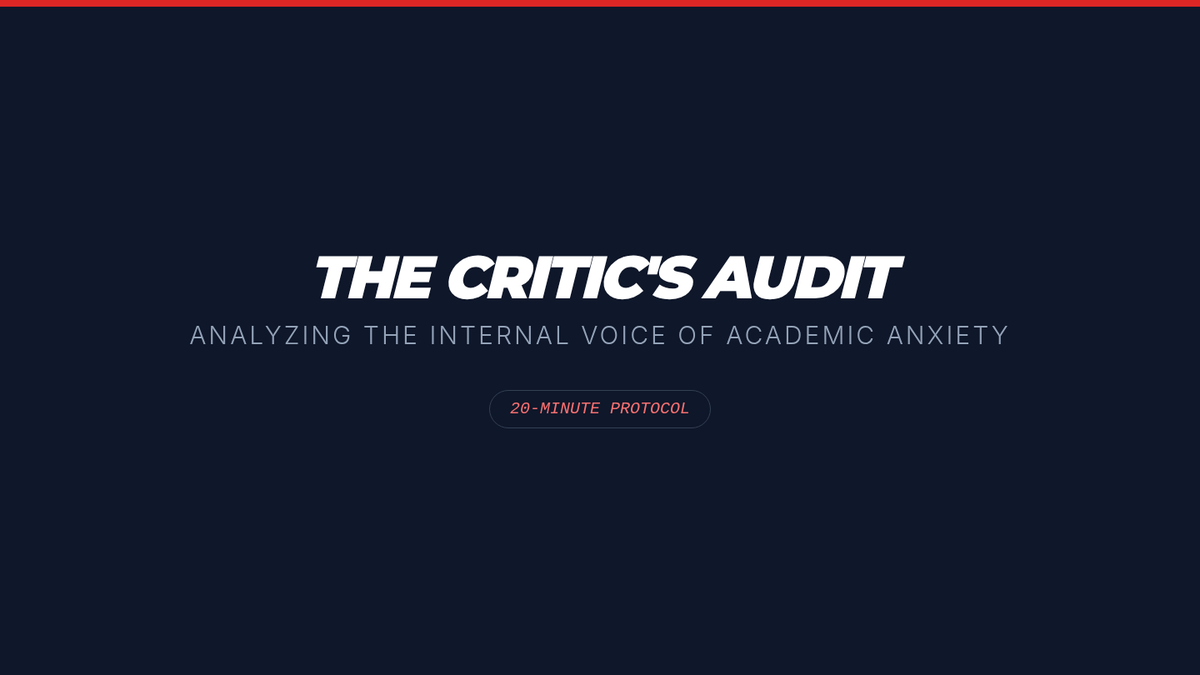
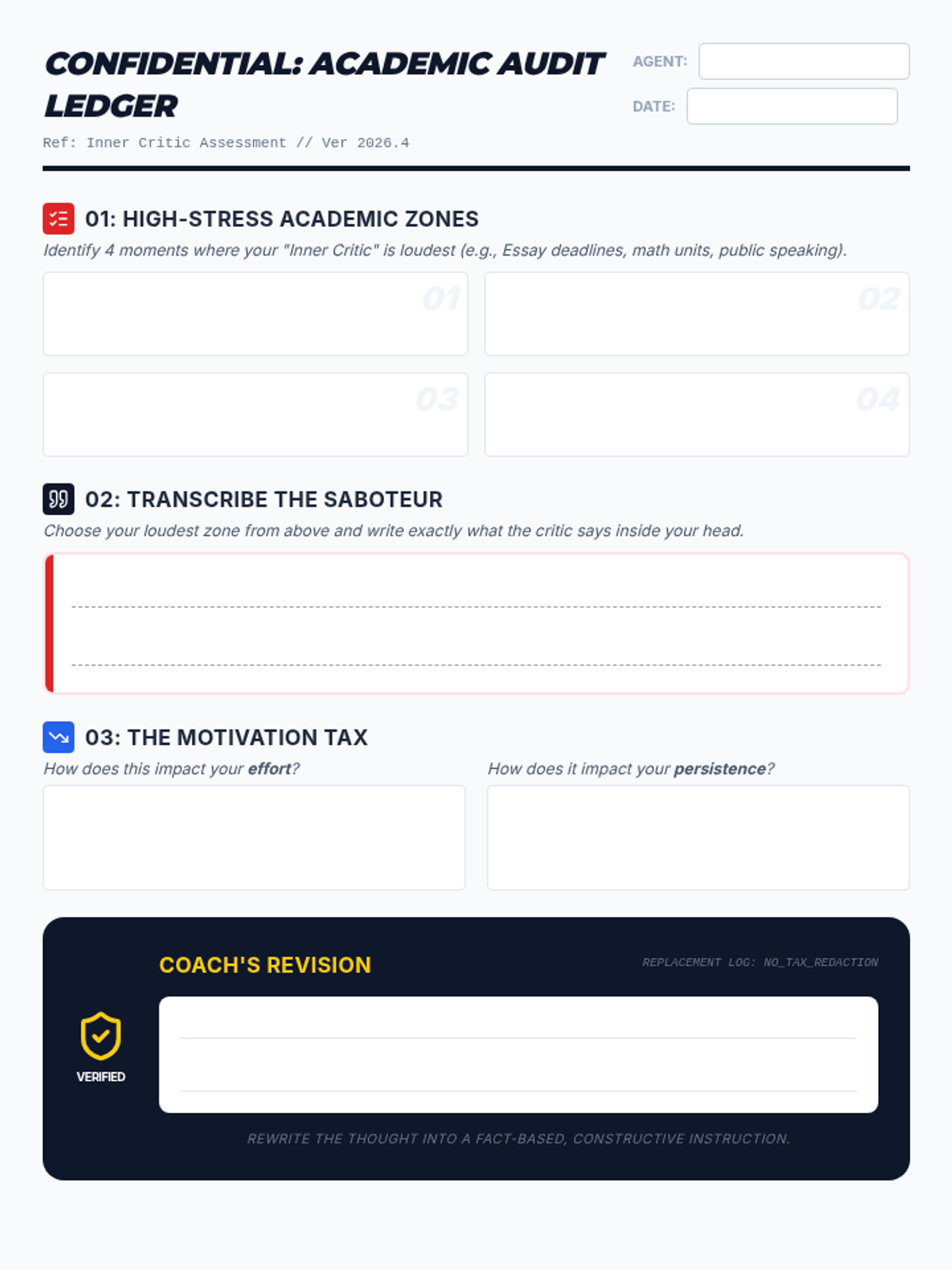
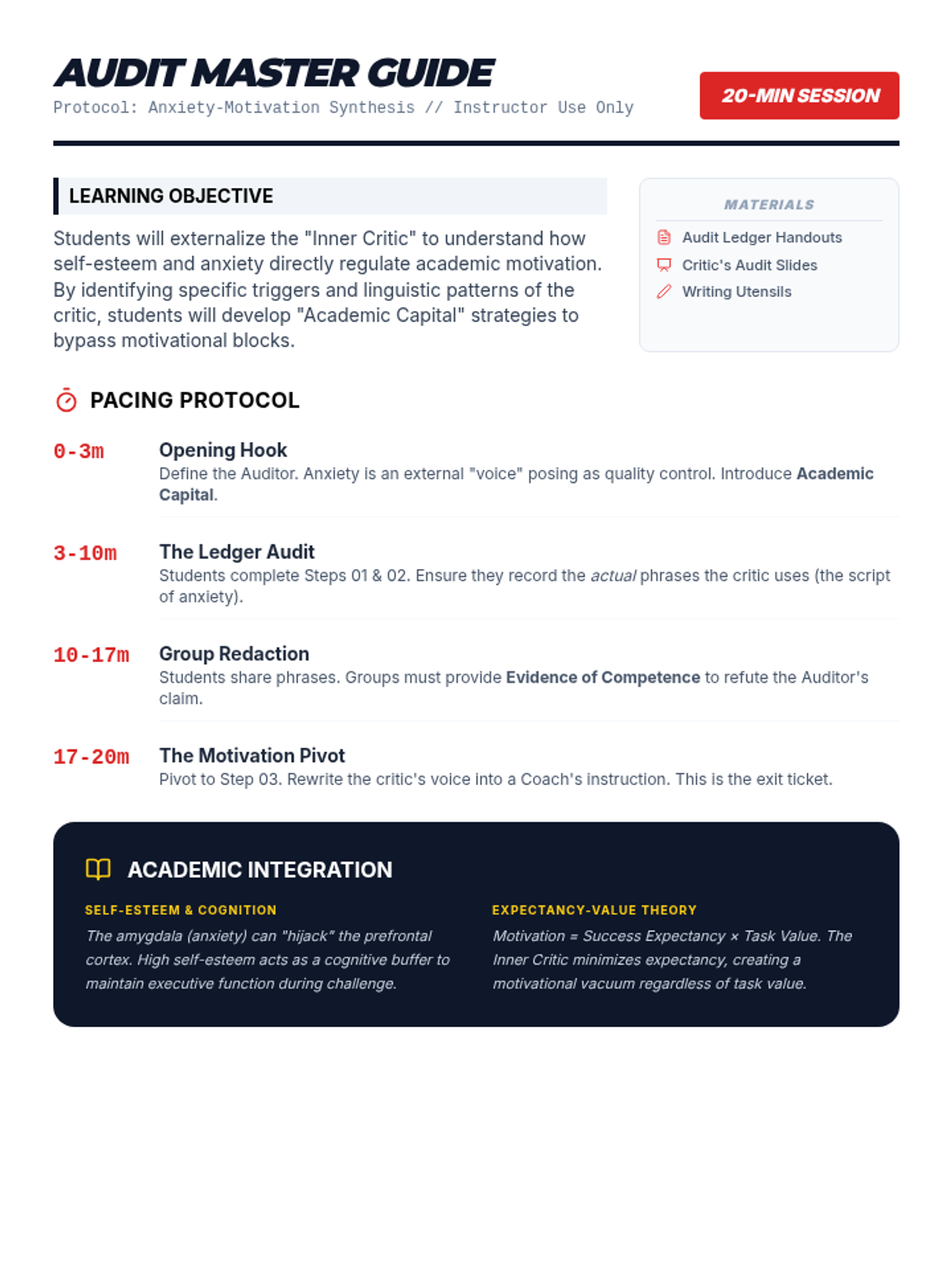
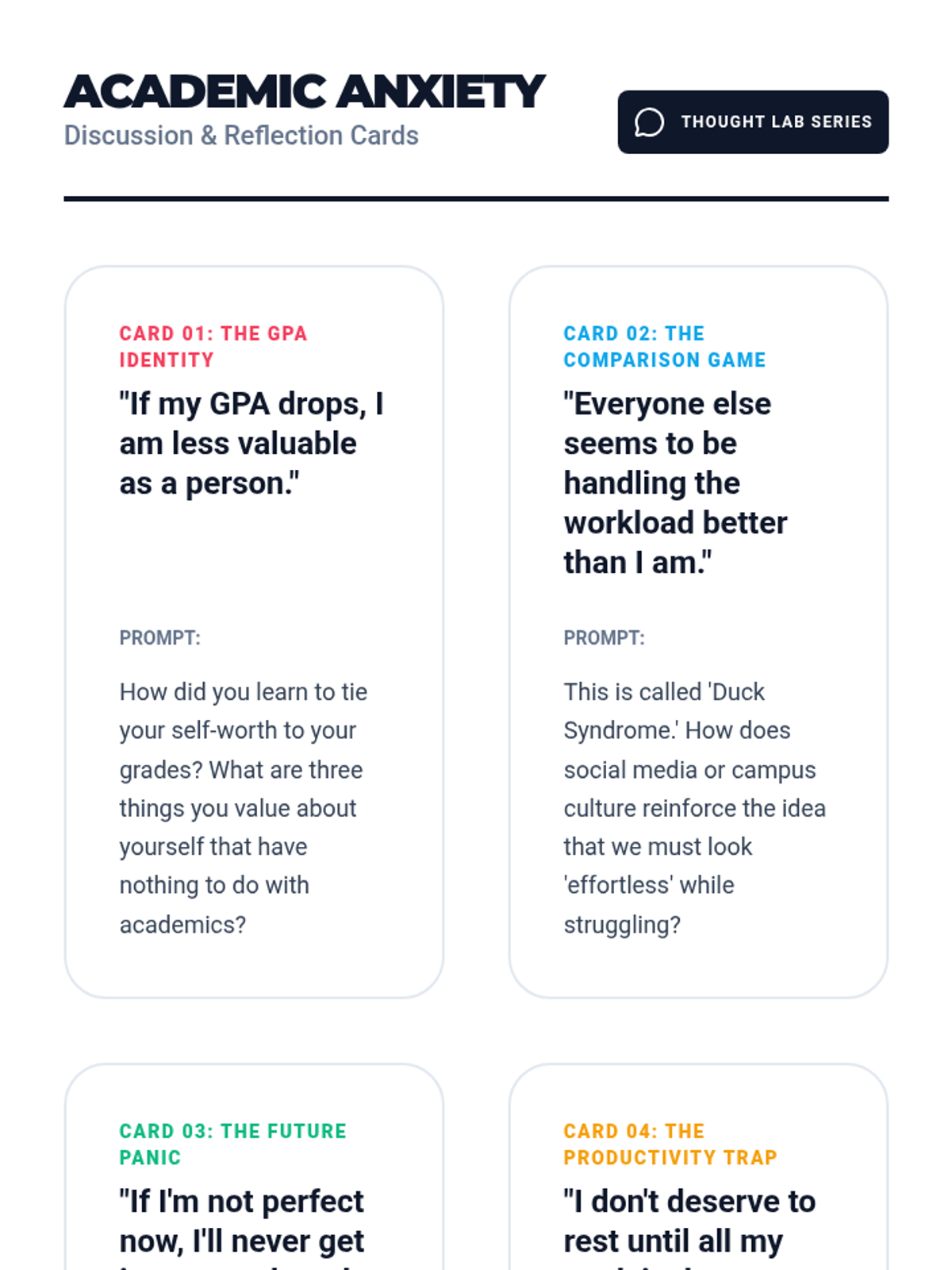
A high-impact 20-minute group activity that identifies the 'inner critic' in academic settings and explores how it impacts motivation and self-esteem. Students will conduct an 'academic audit' to transform anxious thoughts into motivational strategies.
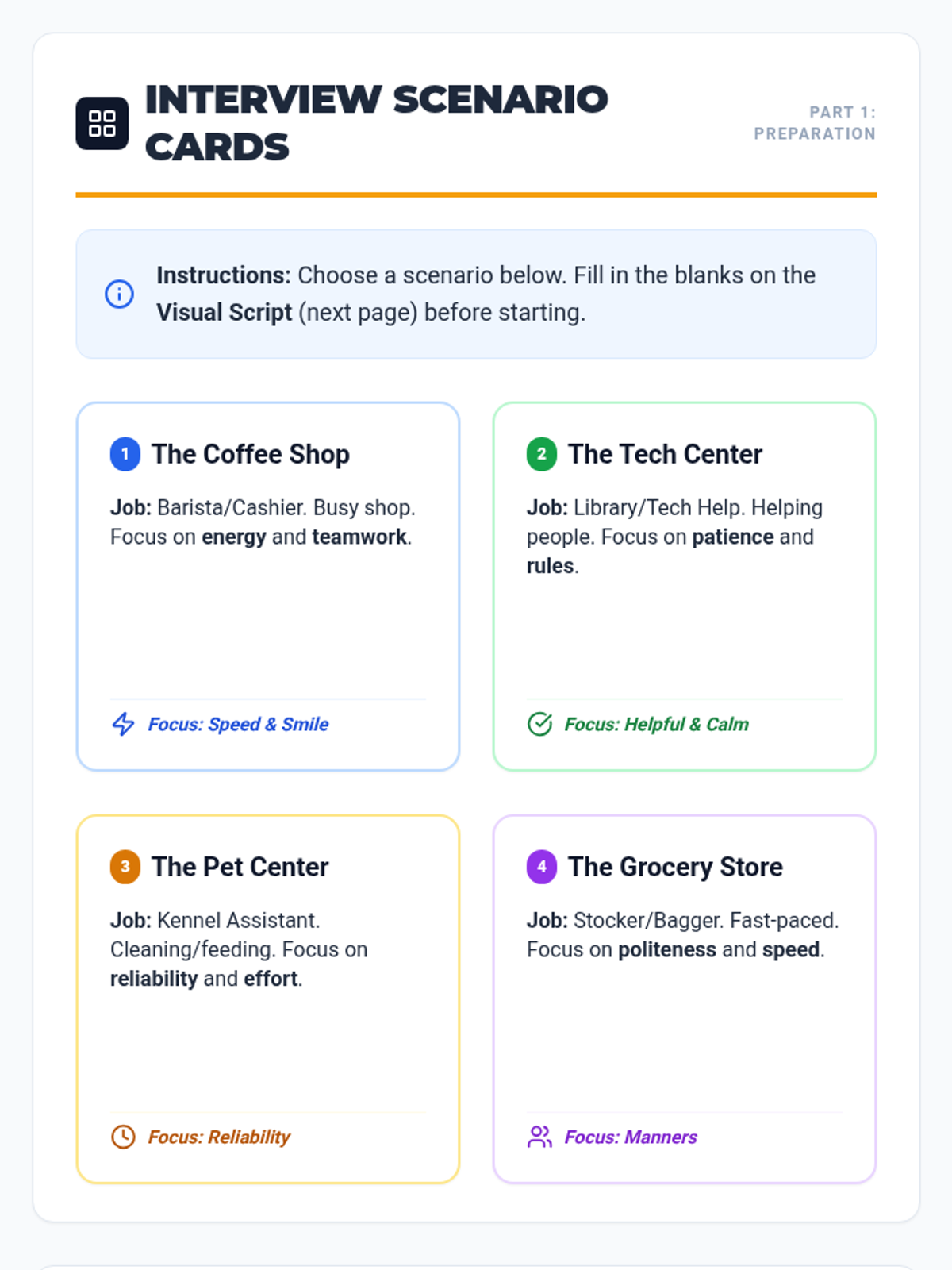
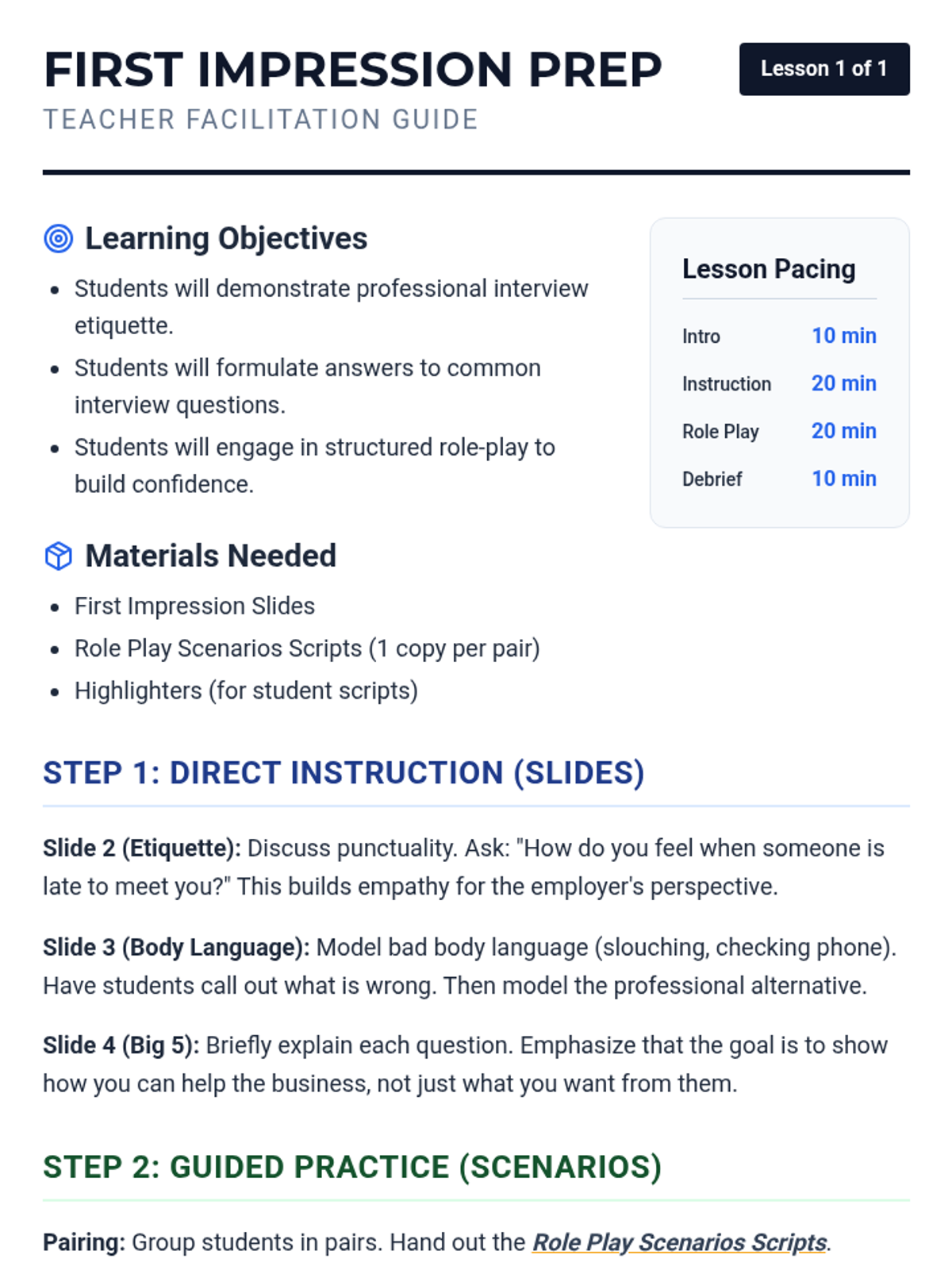
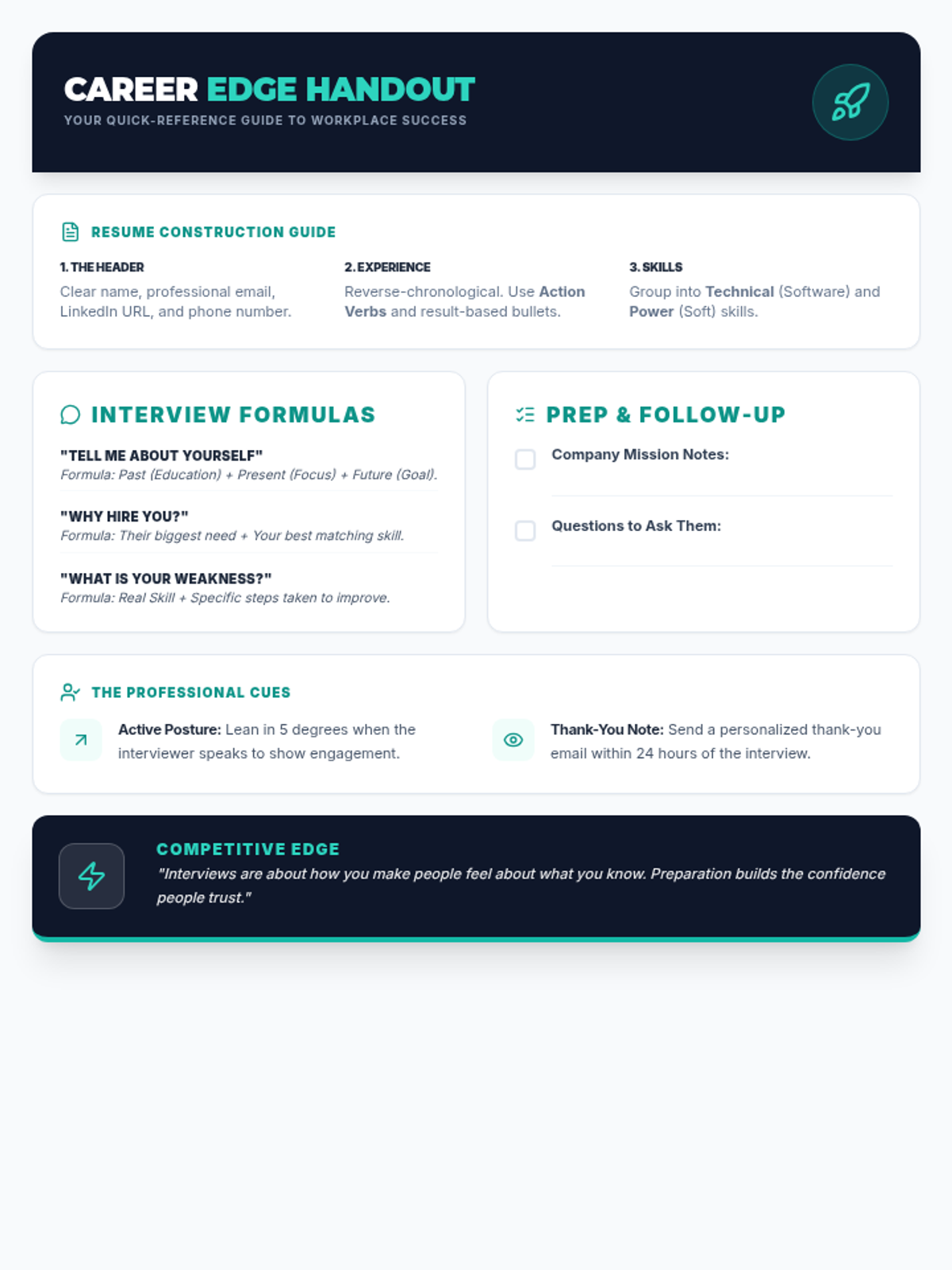
A comprehensive lesson on job interview preparation, covering professional etiquette, common questions, and structured role-play scenarios with visual scripts.
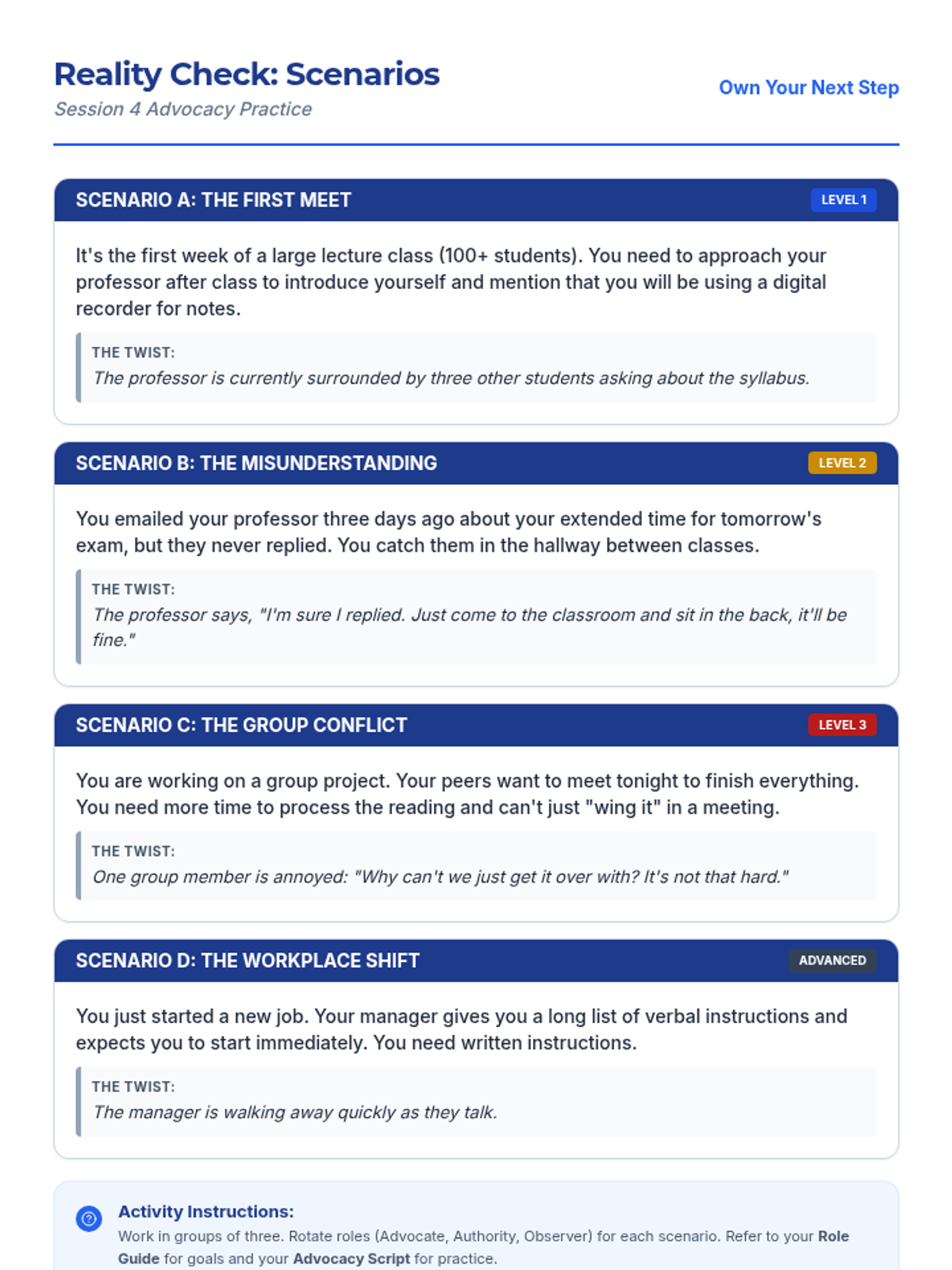
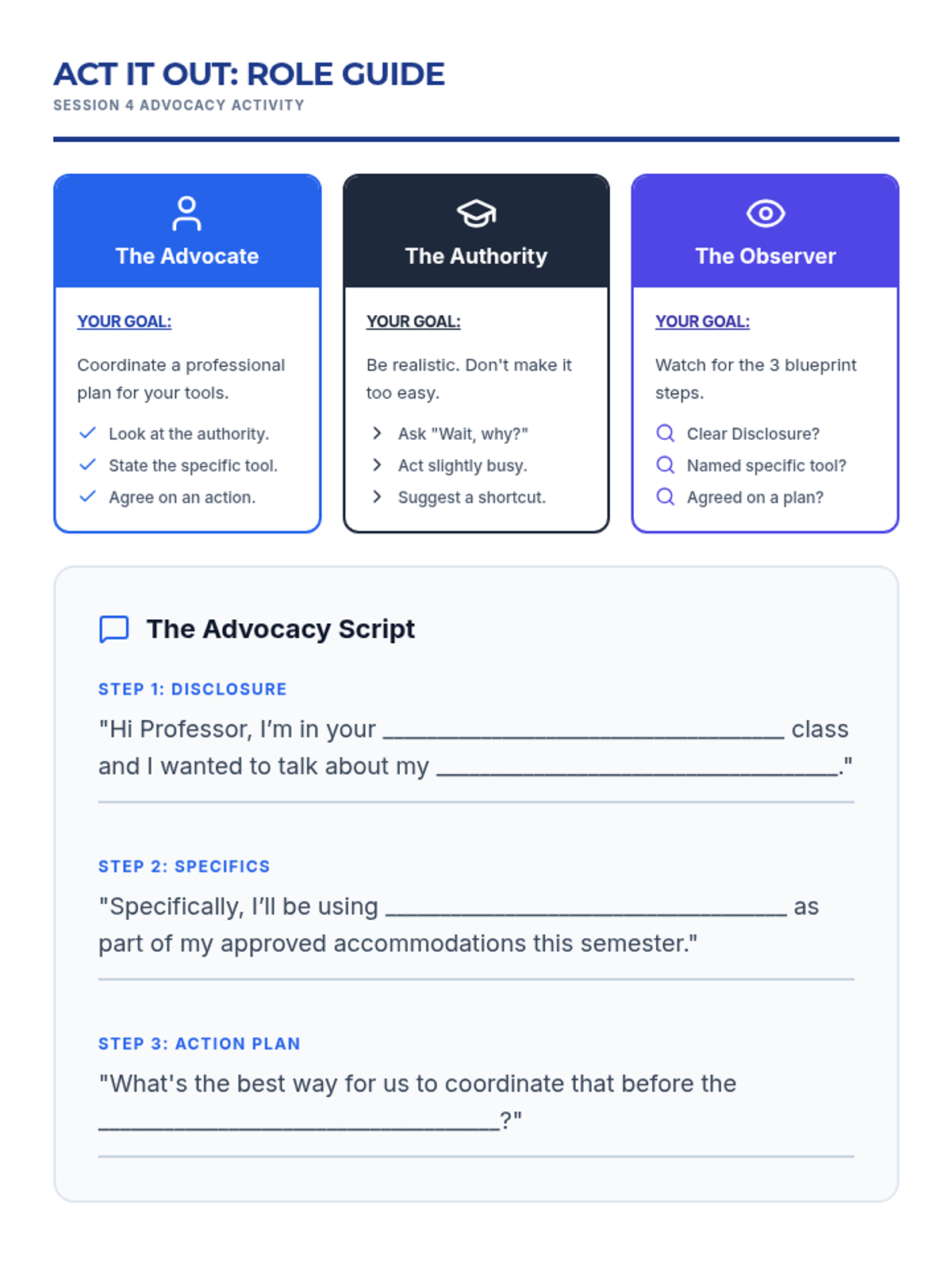
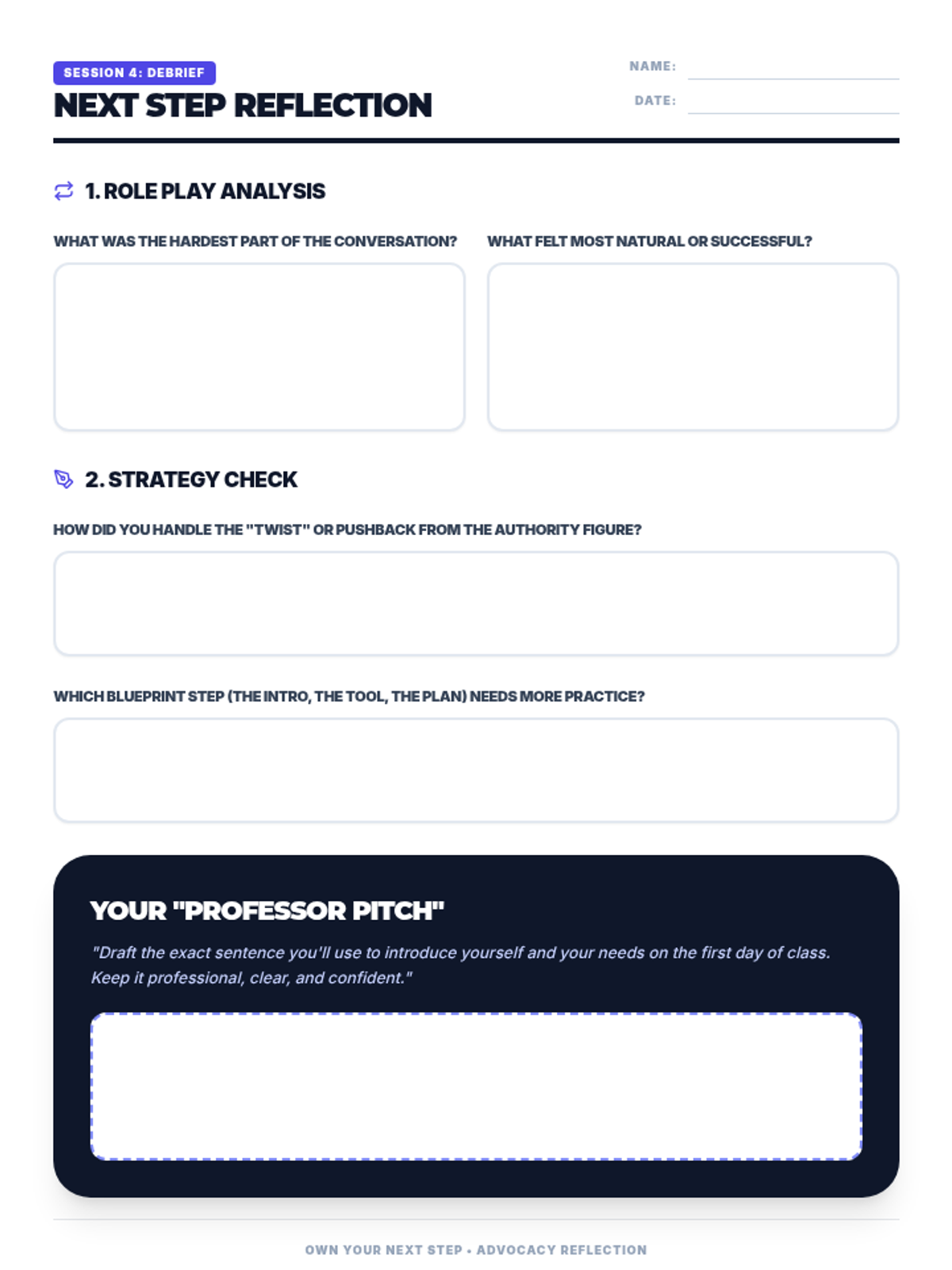
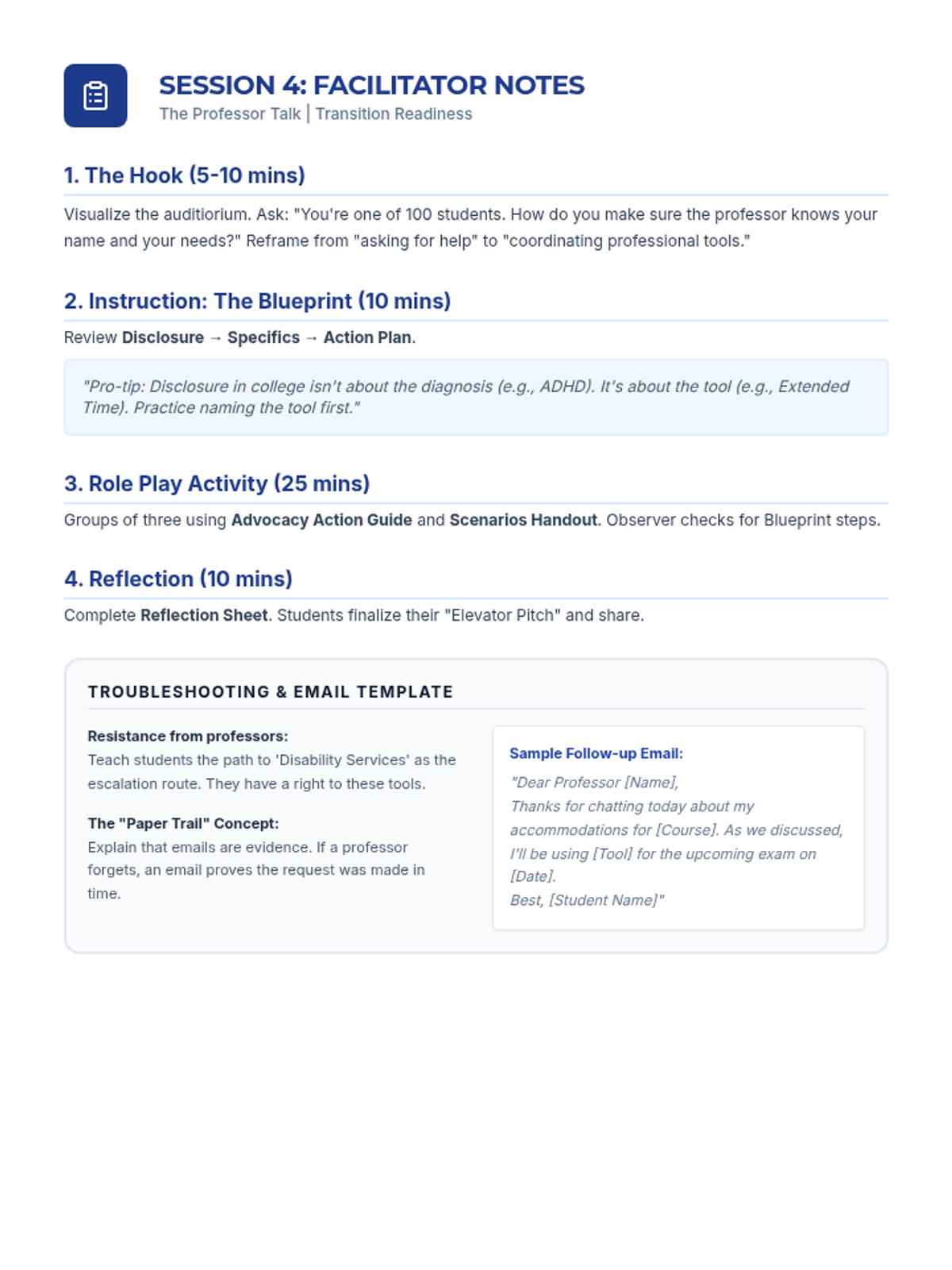
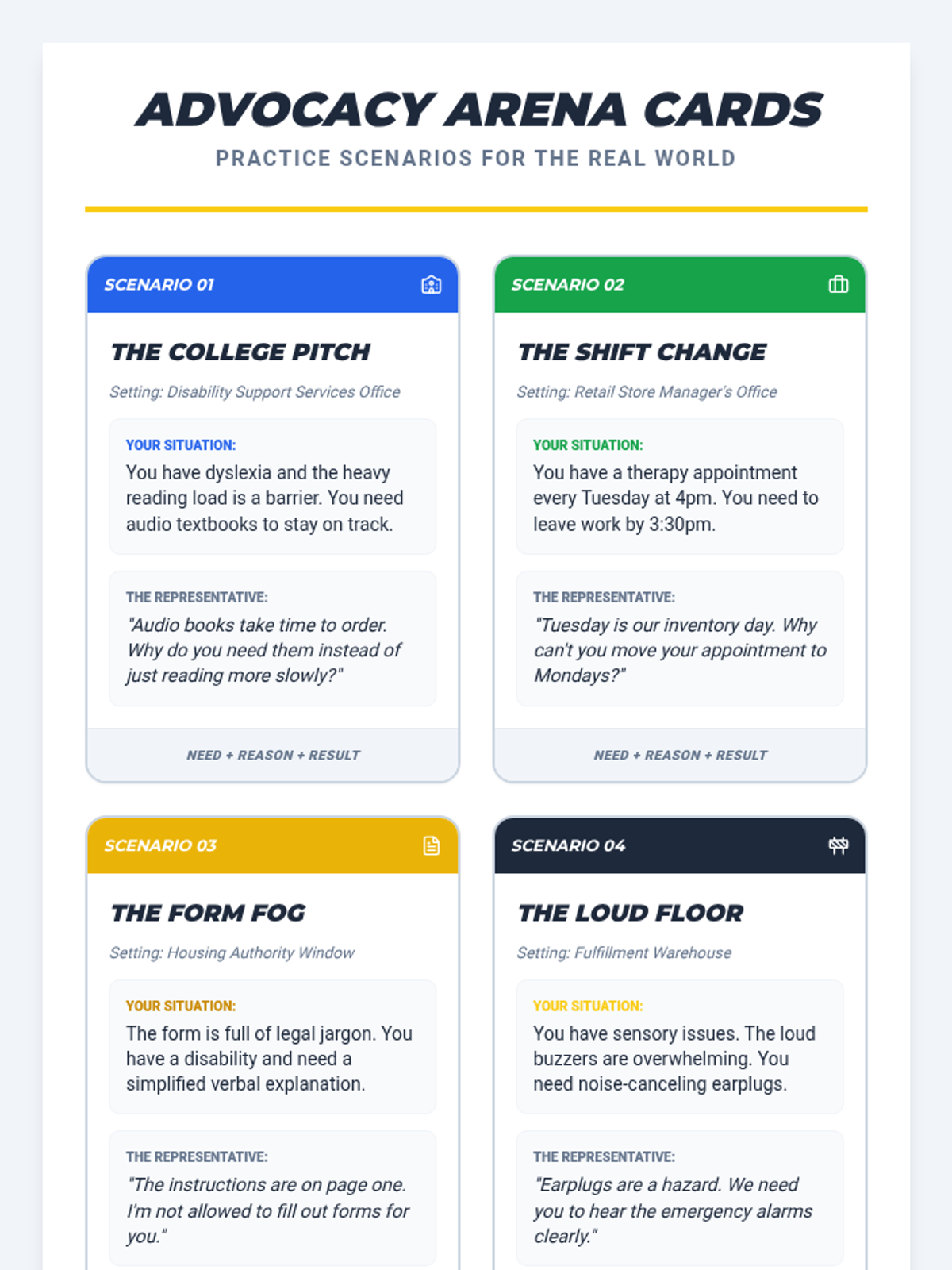
A focused session on postsecondary self-advocacy, teaching students with learning differences how to communicate their needs to professors and employers. The lesson emphasizes the transition from high school's automatic support to the self-initiated systems of college and the workplace.
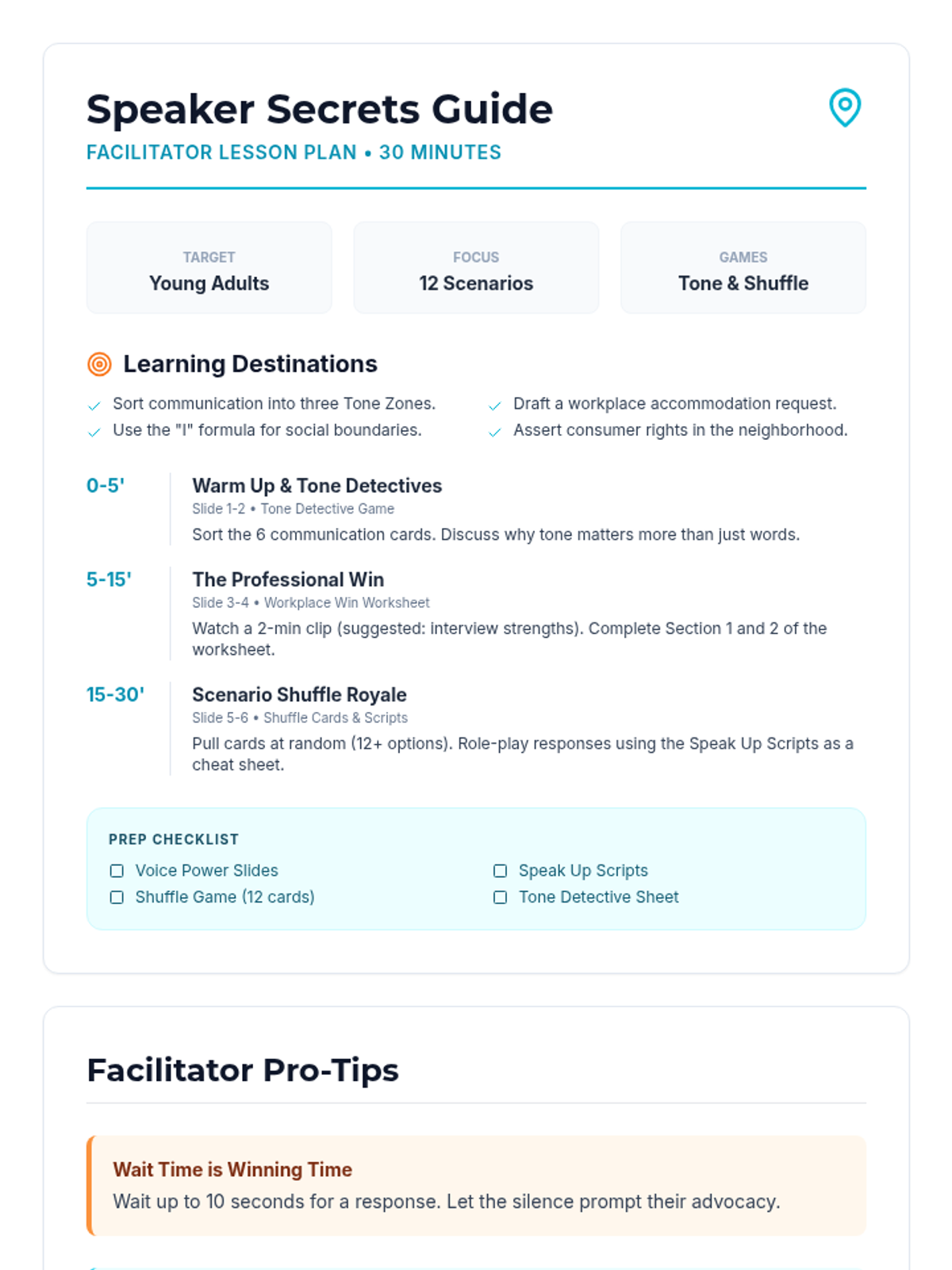
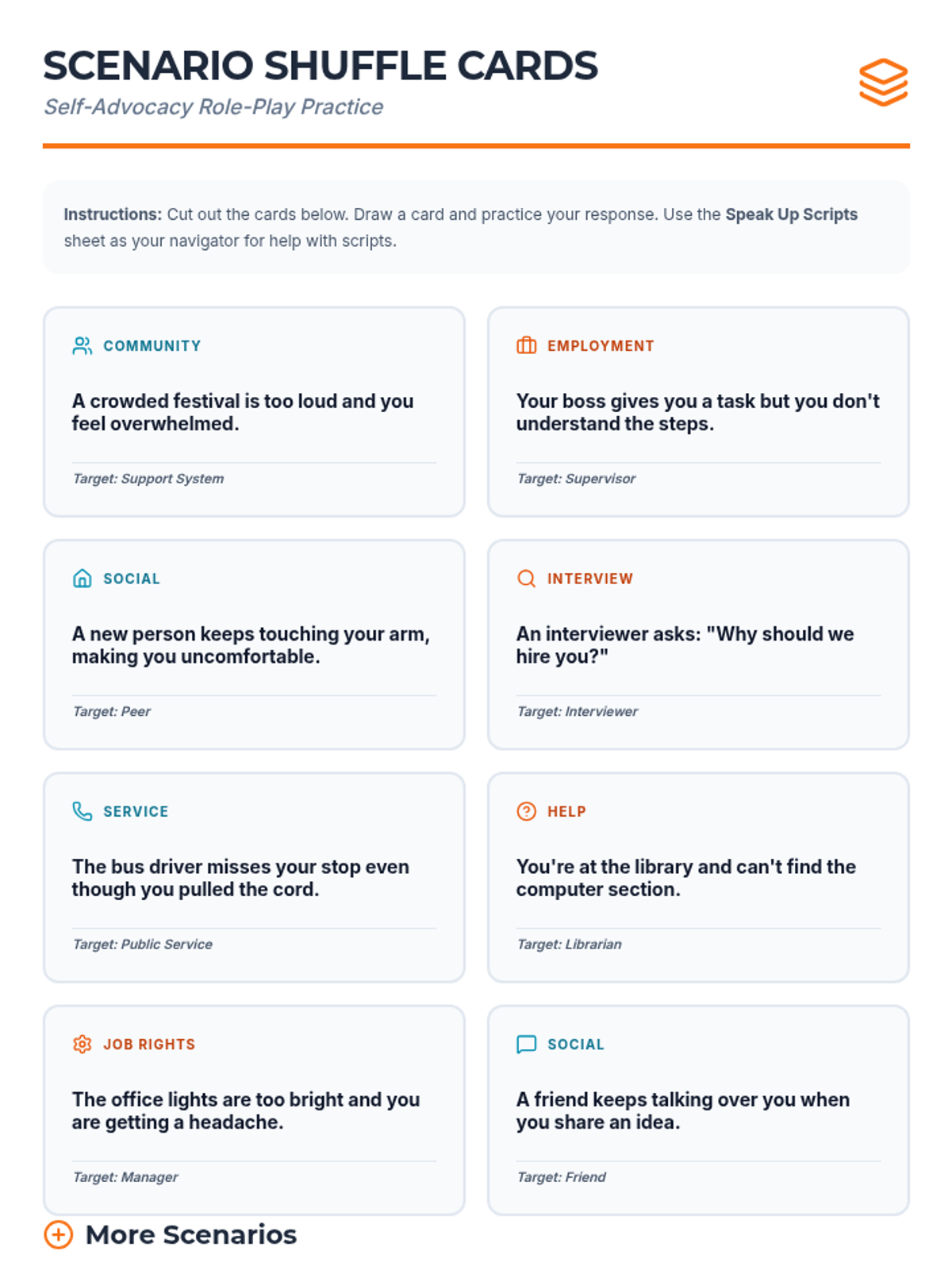
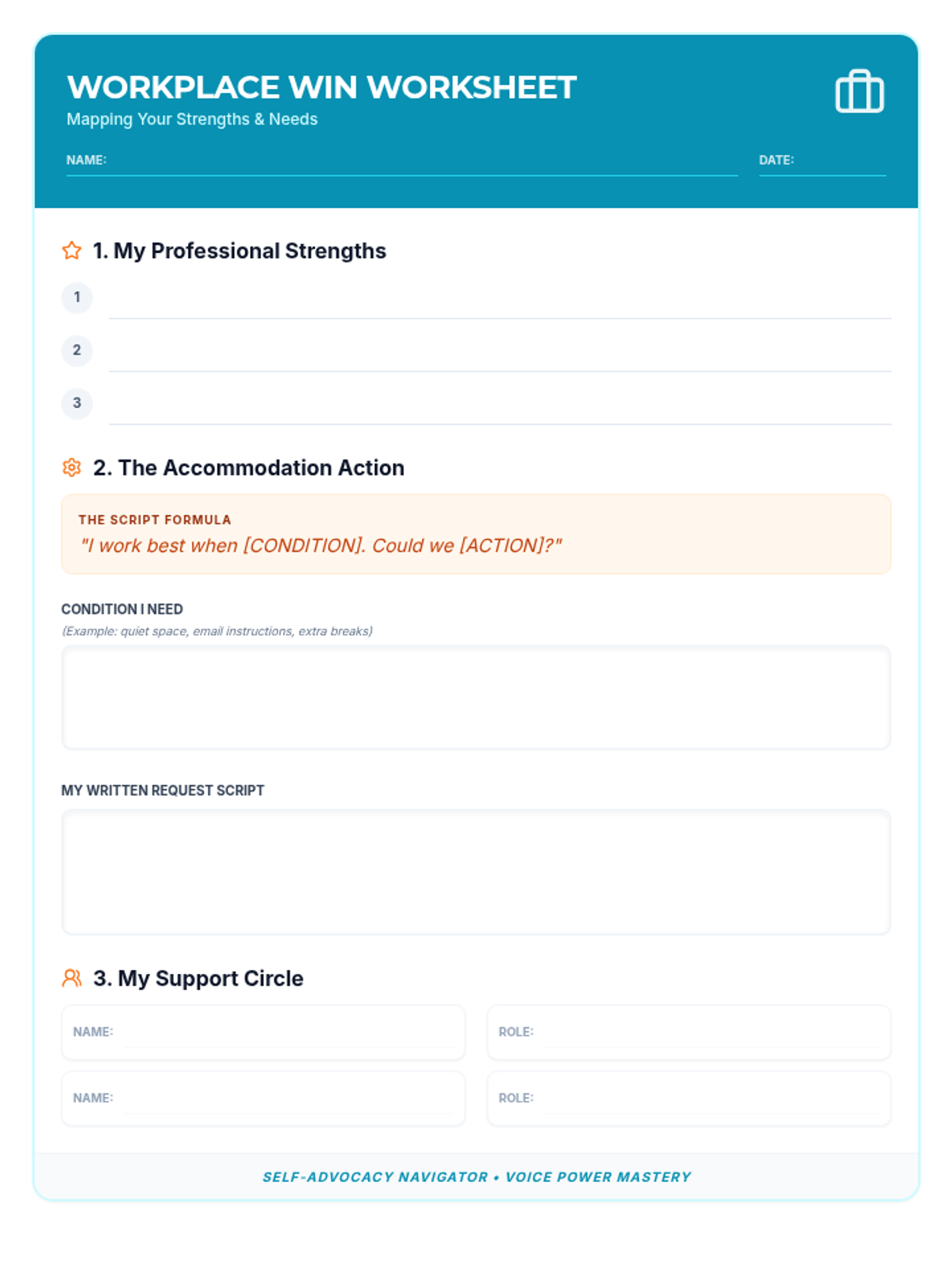
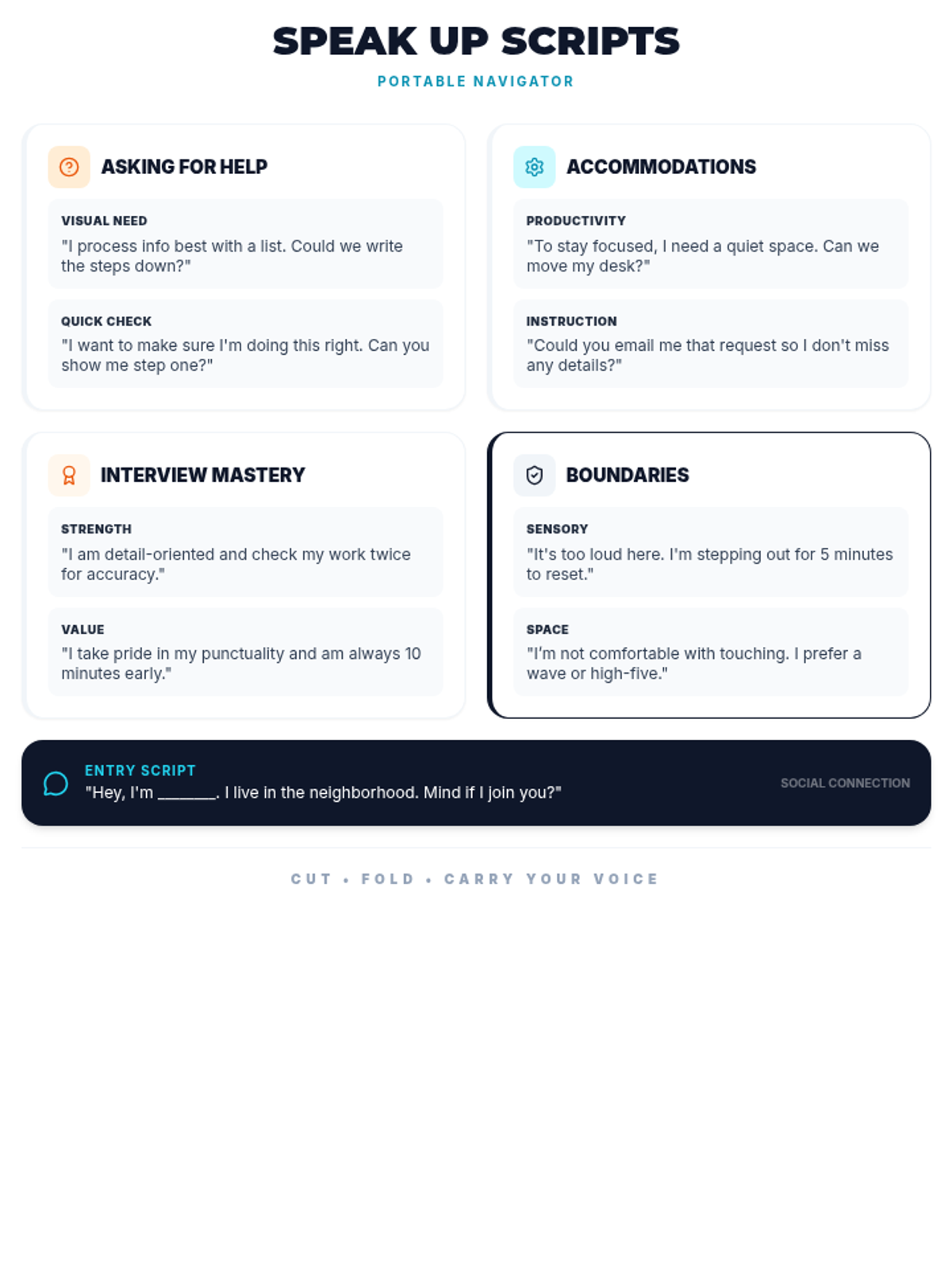
A high-energy, 30-minute coaching session focused on five critical self-advocacy scenarios. Includes role-play, visual aids, and practical toolkits for immediate application in real-world settings.
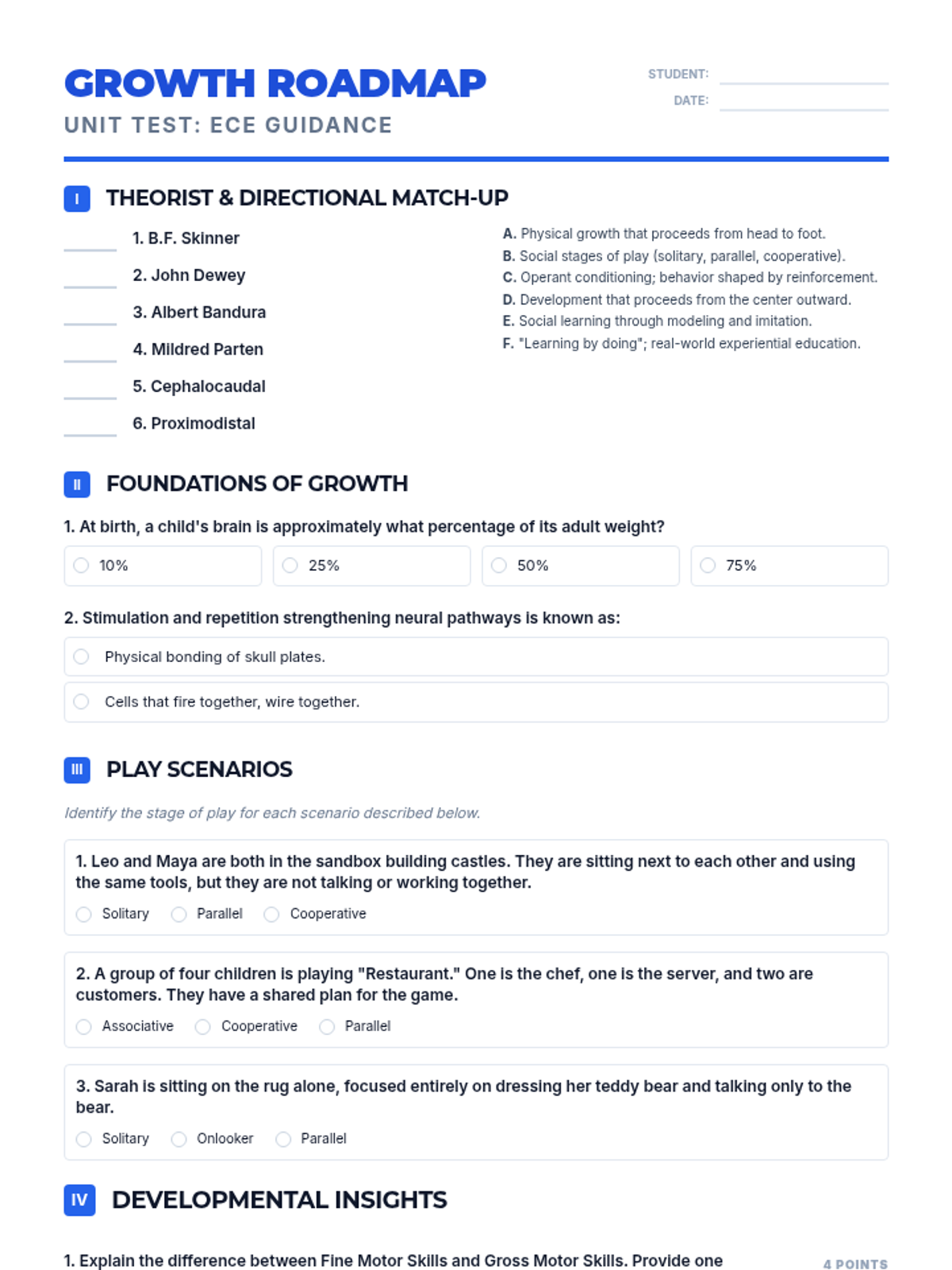
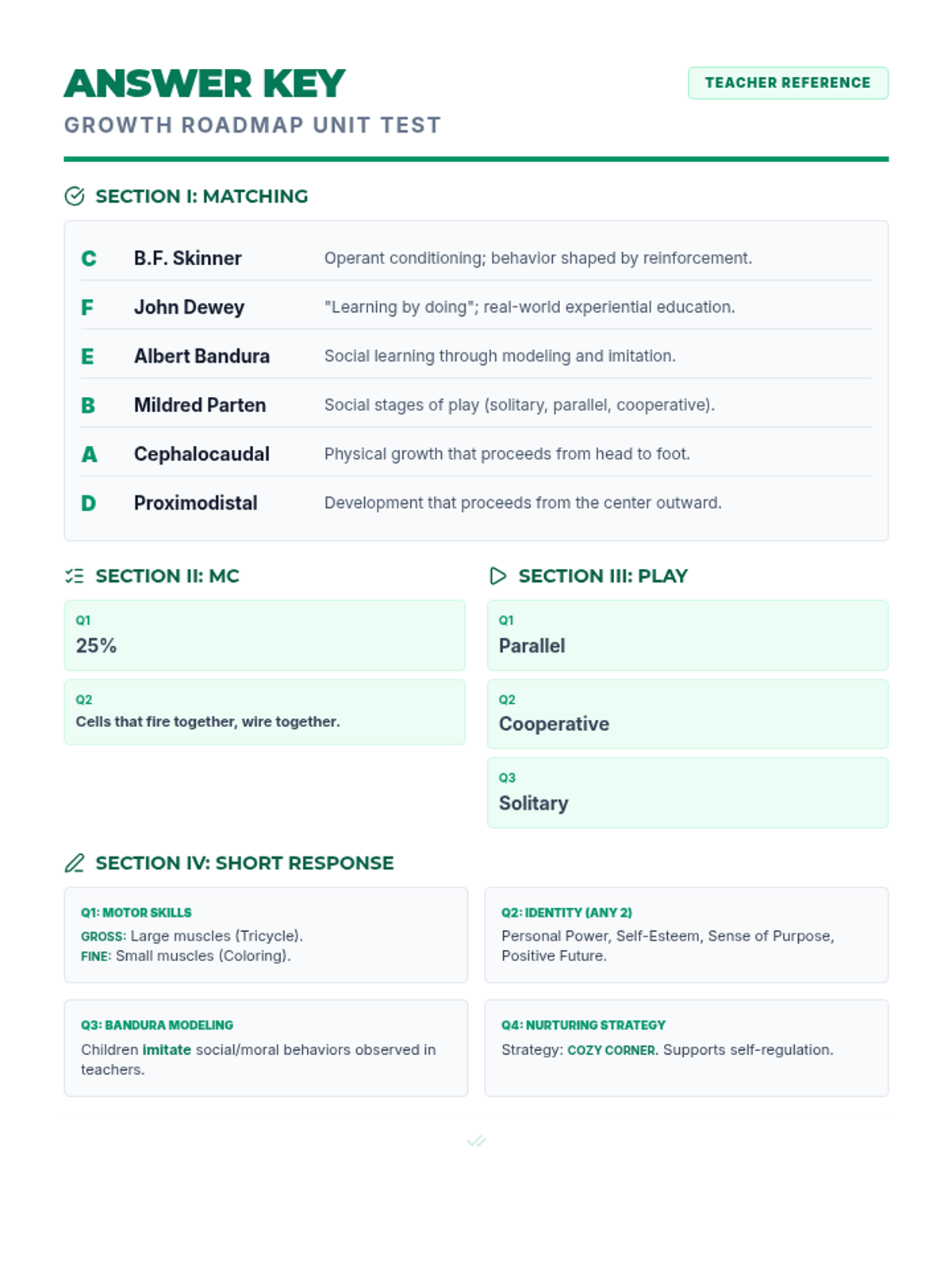
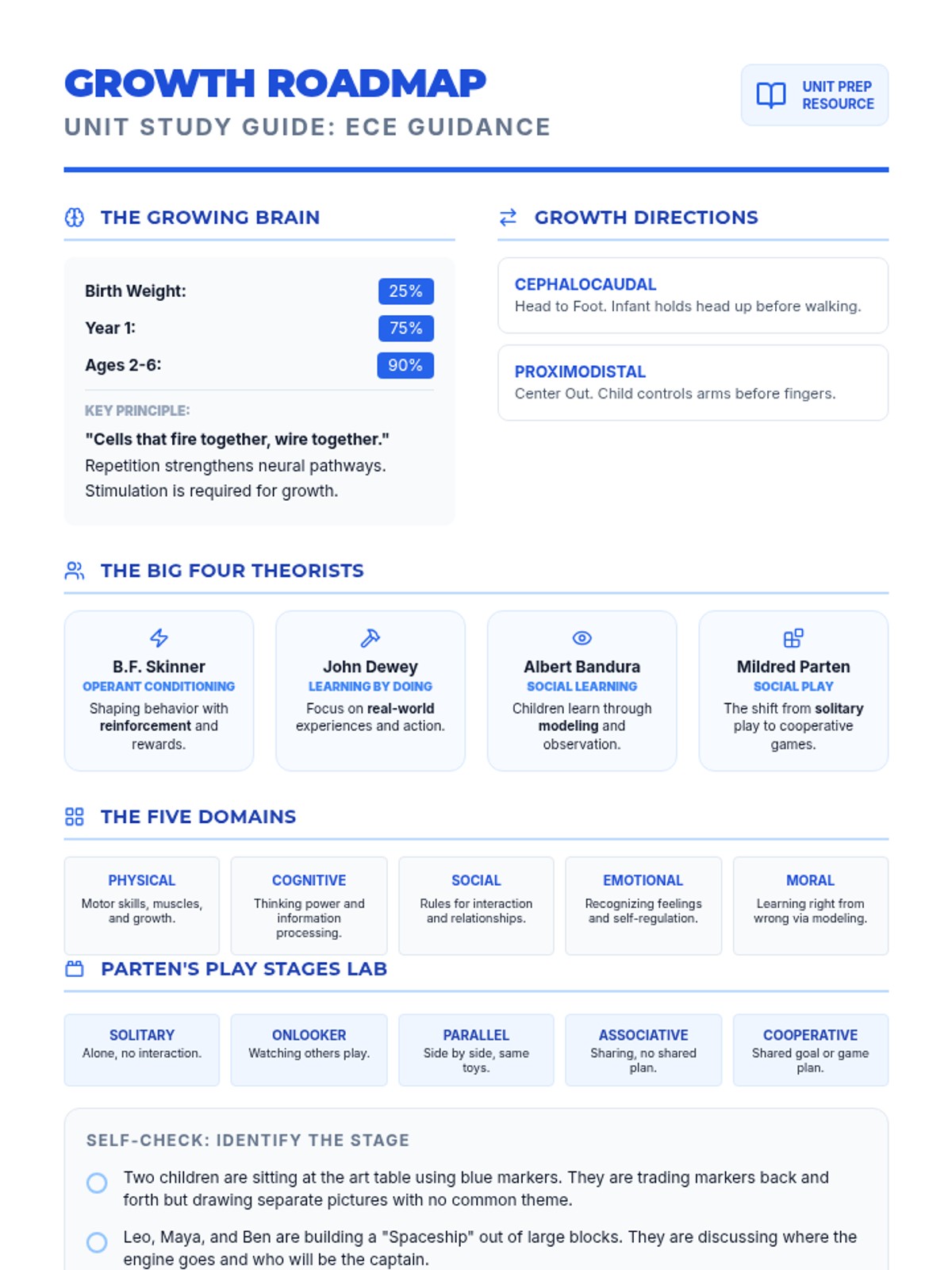
A comprehensive assessment covering developmental domains, brain growth, major ECE theorists, and strategies for supporting young children's self-concept and identity.
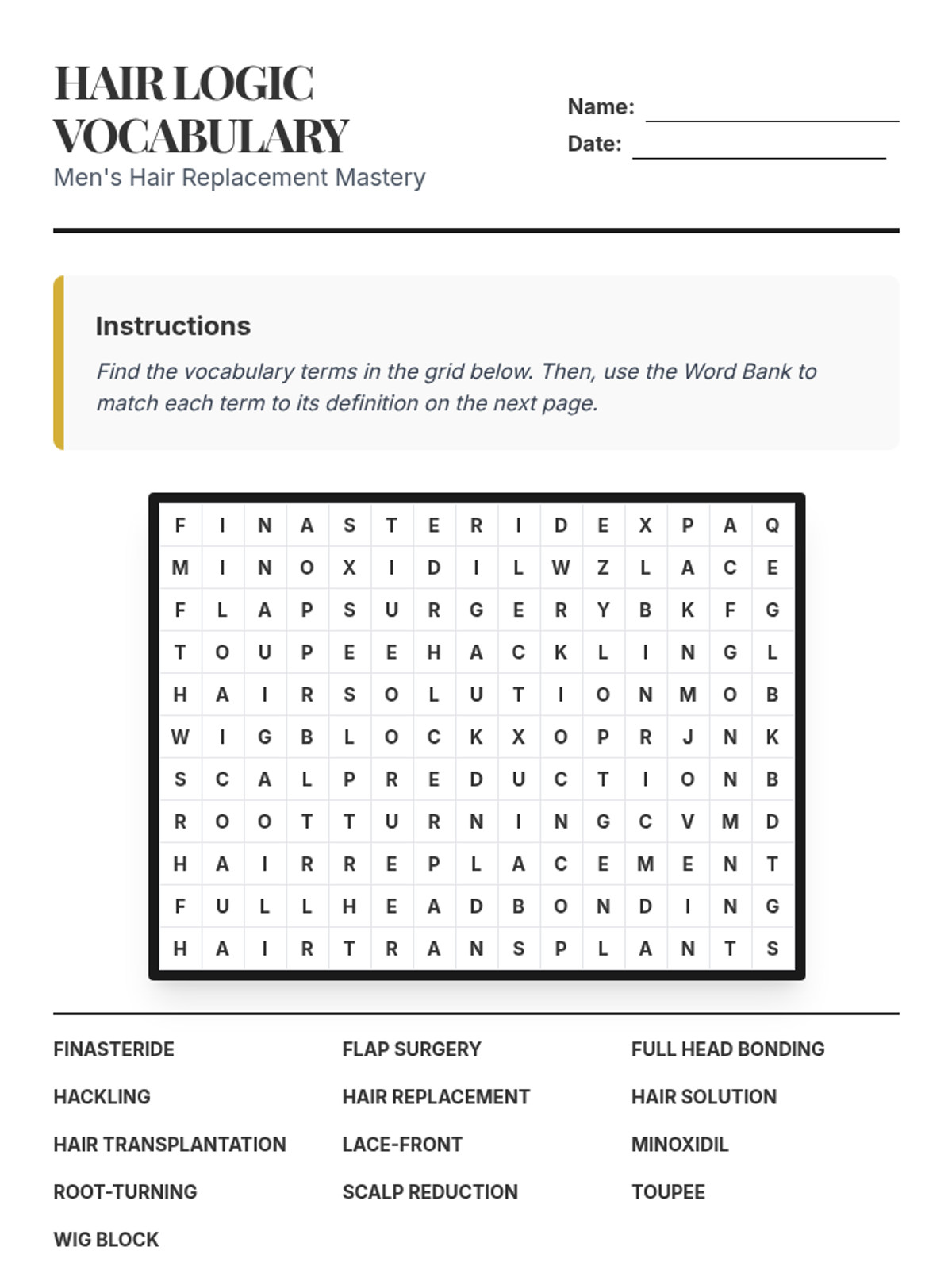
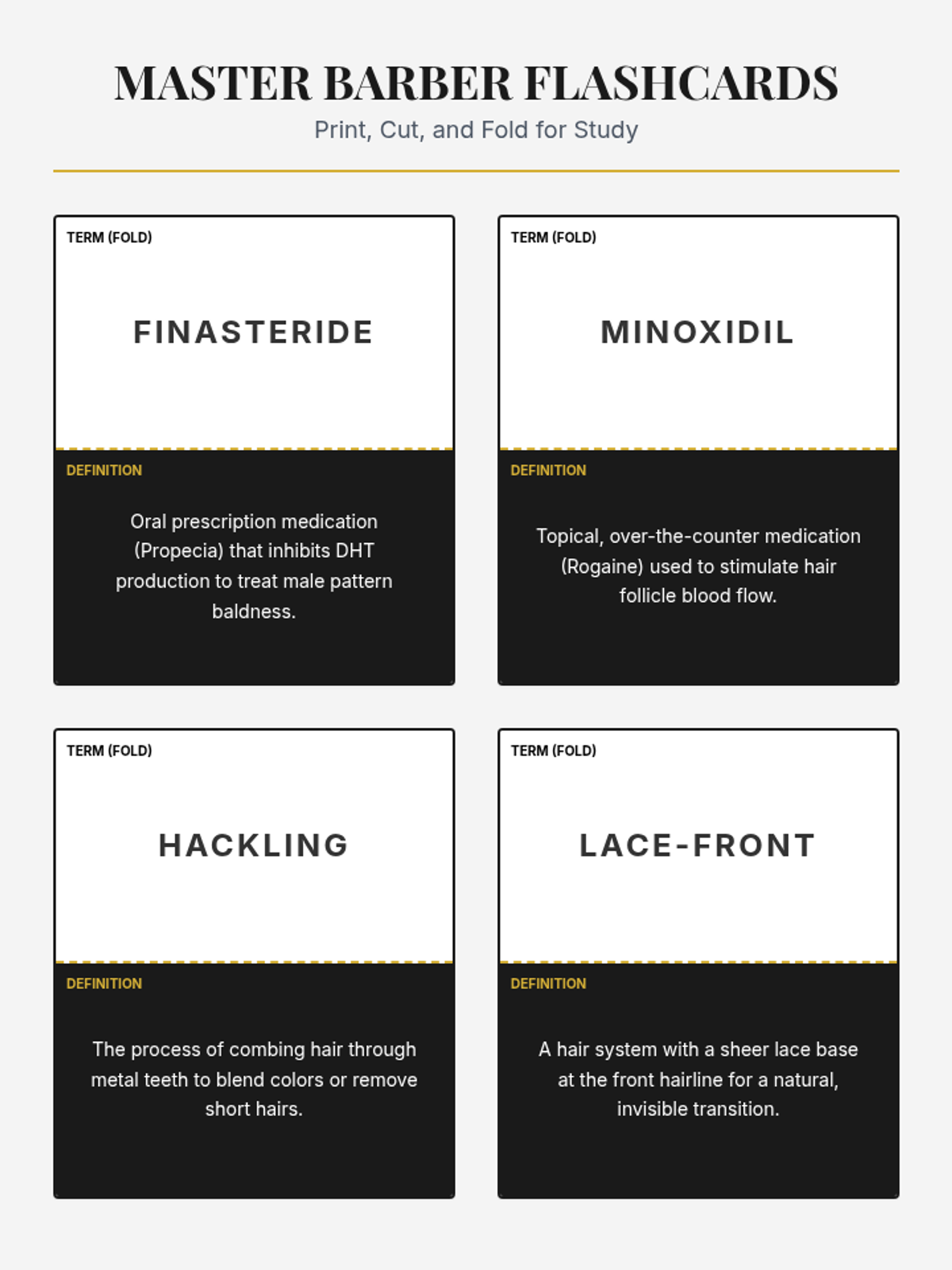
A comprehensive lesson on men's hair replacement systems, covering the psychological and practical reasons for hair replacement, surgical and non-surgical options, and professional terminology.
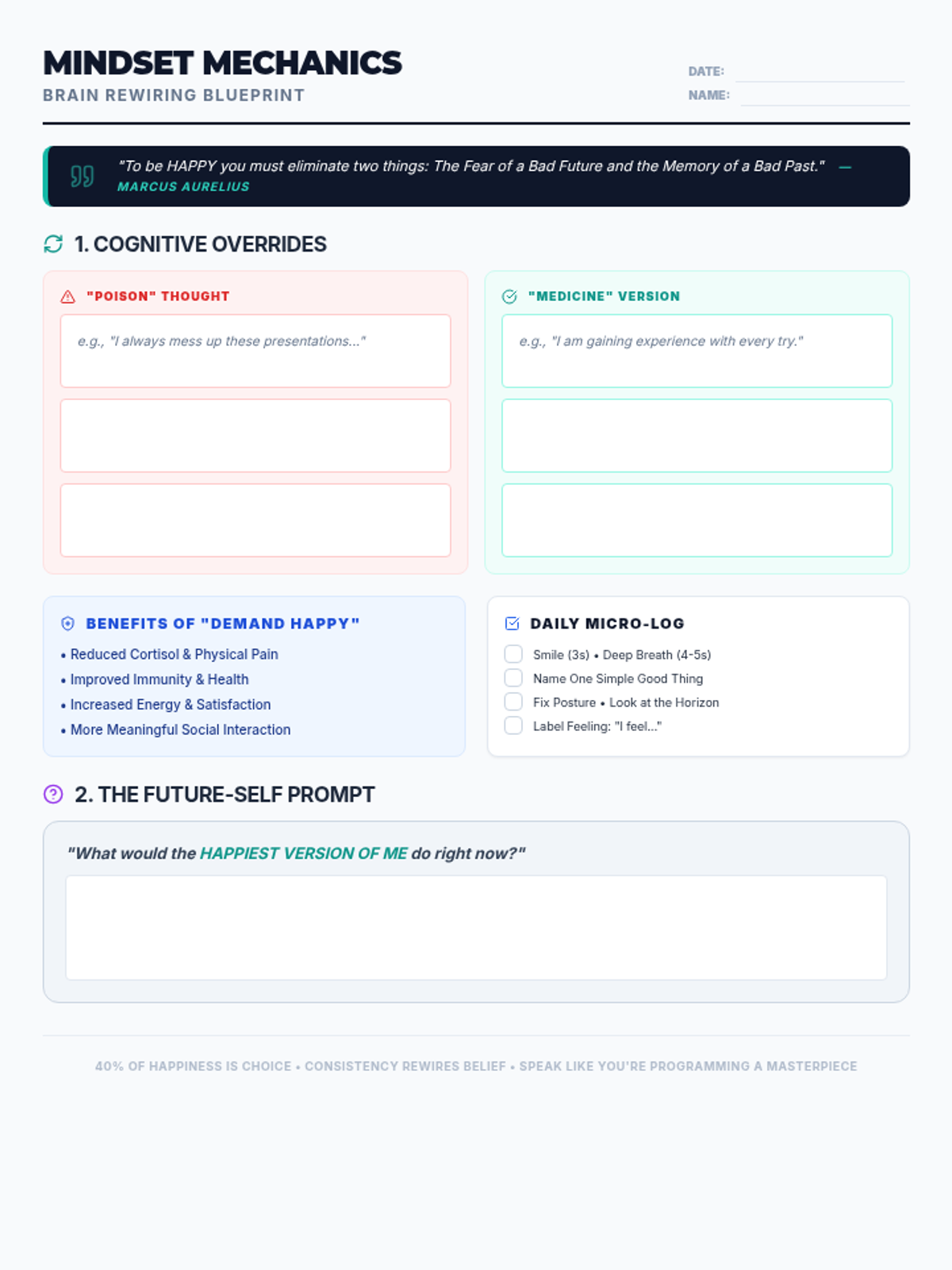
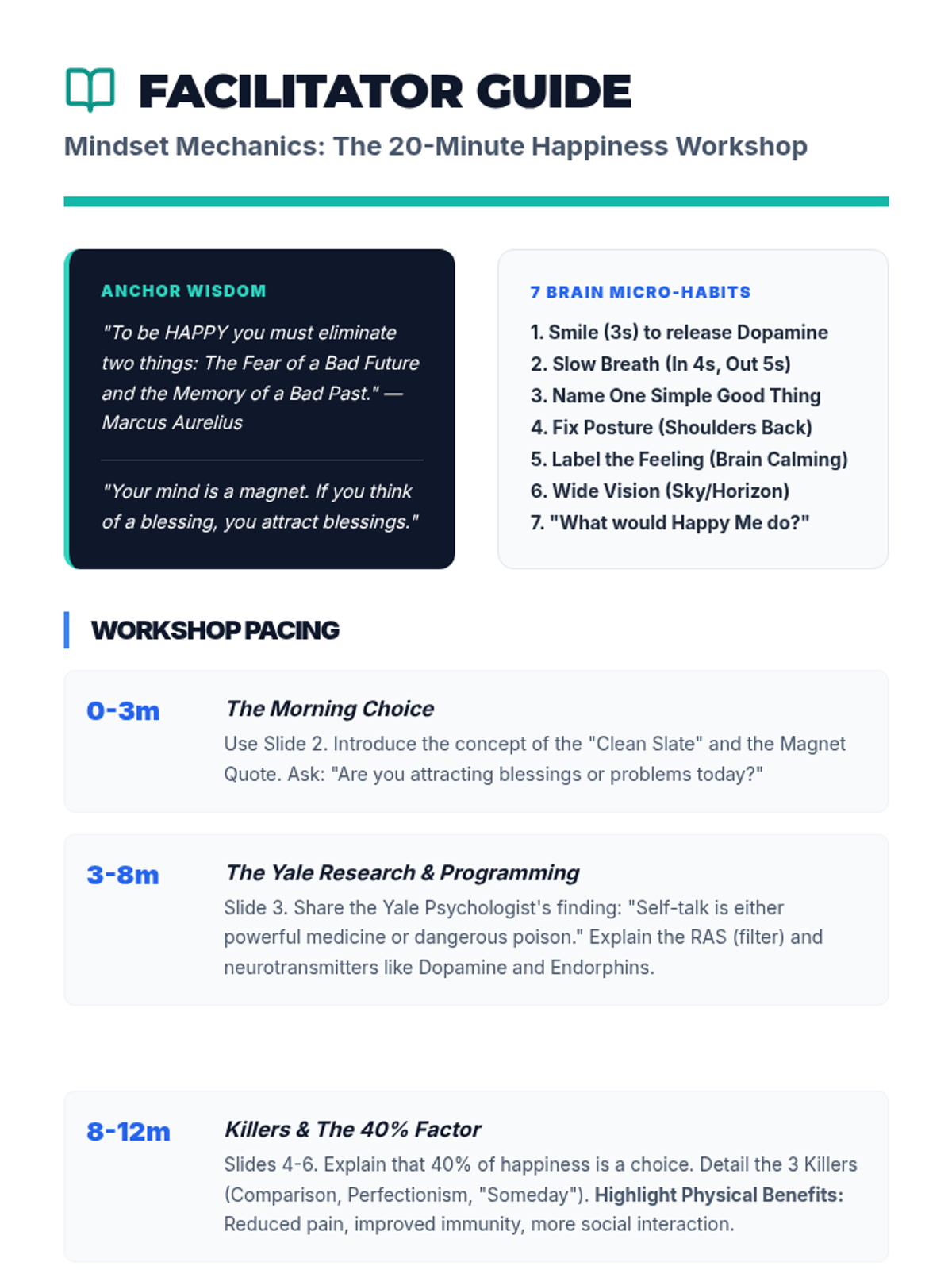
A transformative lesson on happiness as a trainable skill, focusing on the power of self-talk, daily habits, and cognitive reframing to improve mental well-being for both students and staff.
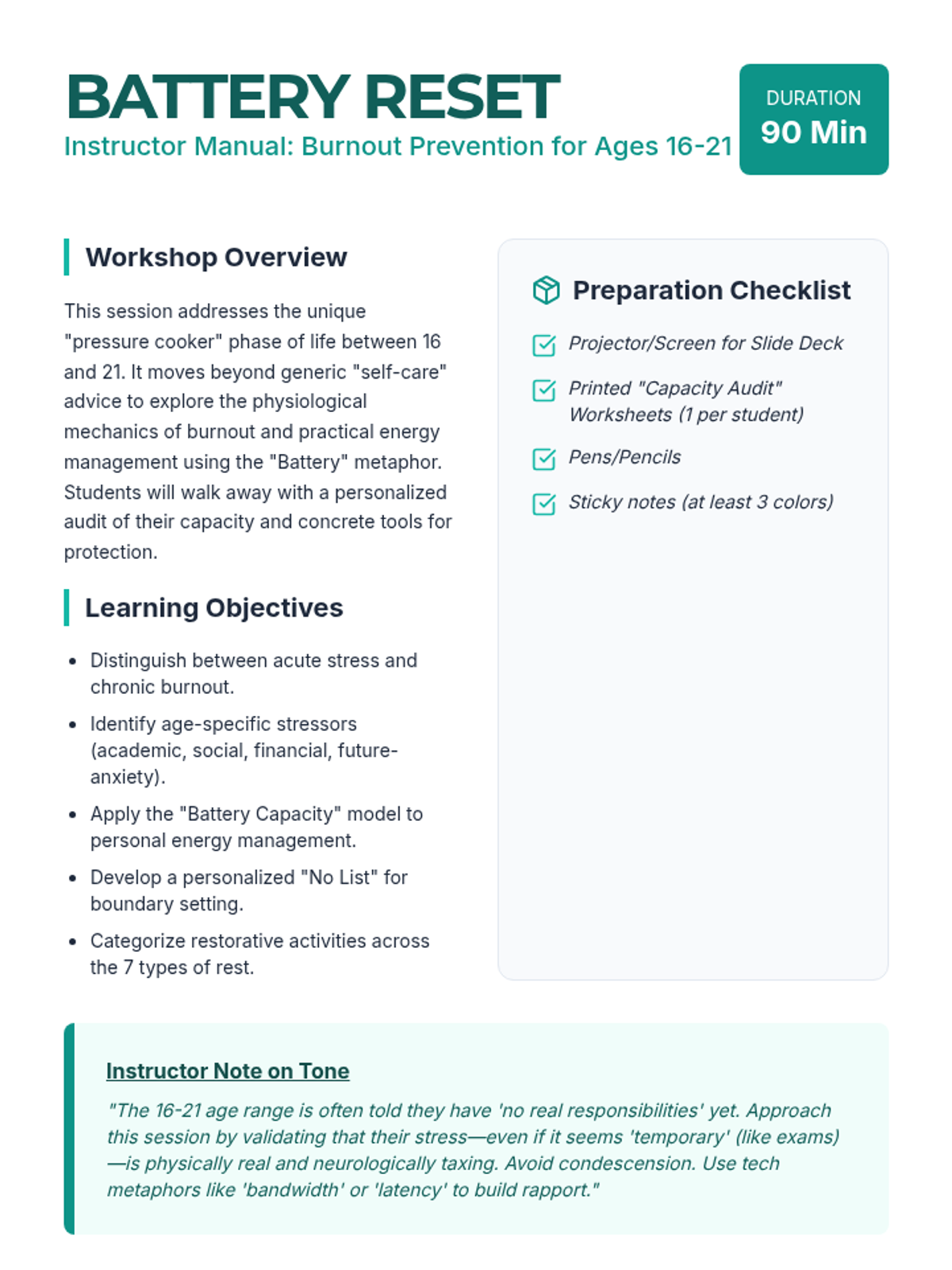
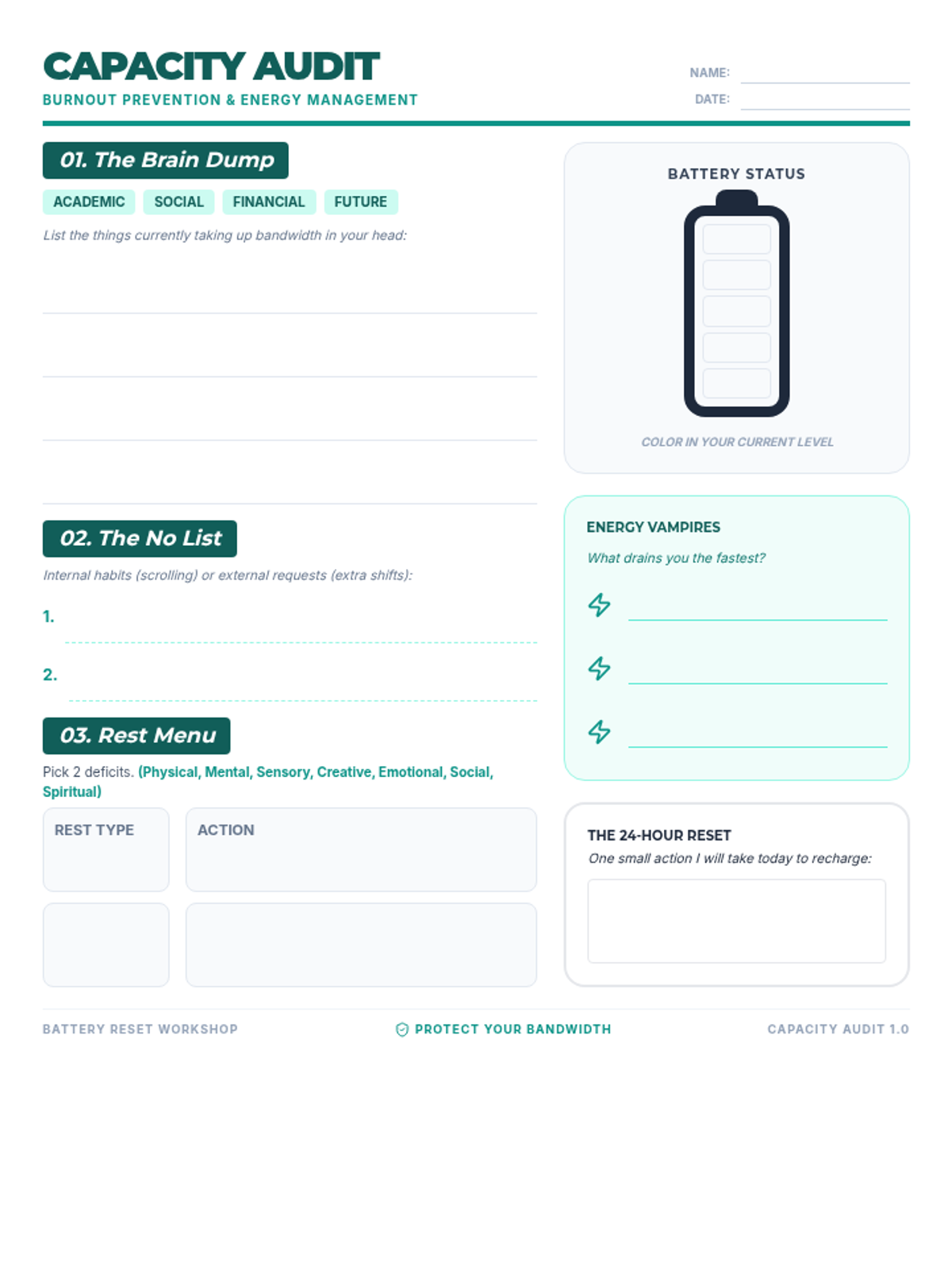
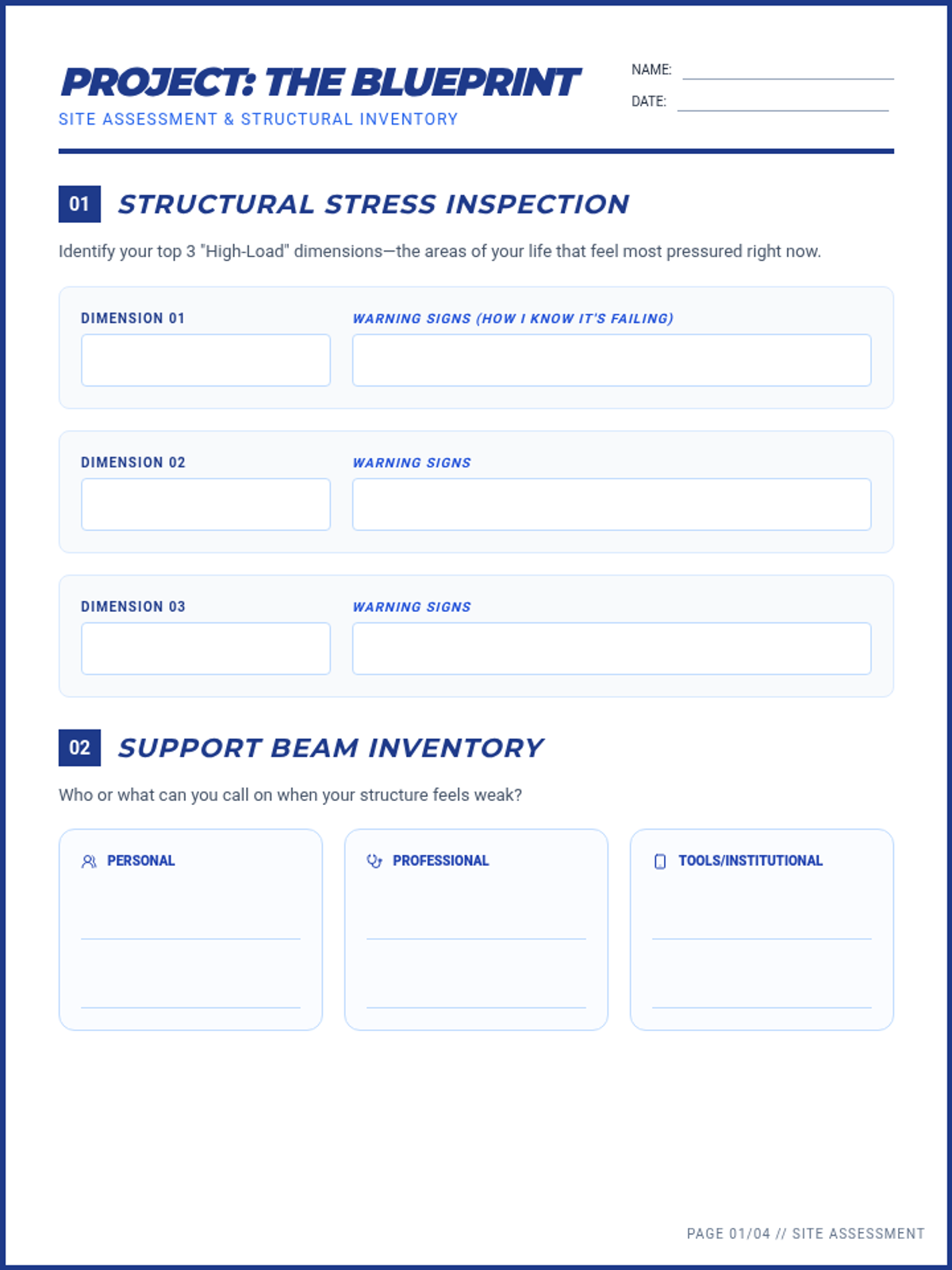
A comprehensive 90-minute workshop designed for transitional age youth (16-21) to identify stressors, understand the mechanics of burnout, and develop personalized energy management strategies.
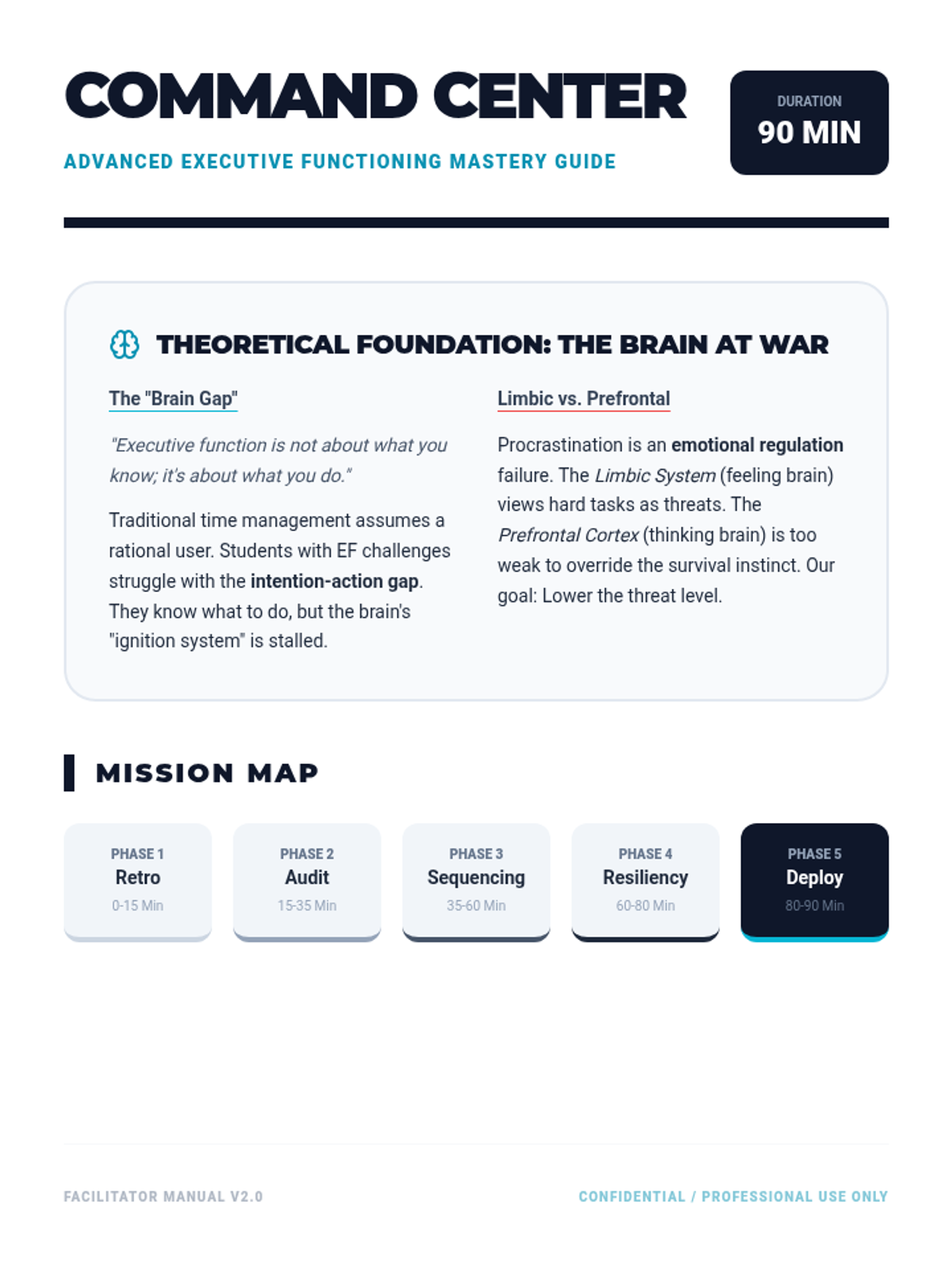
A 90-minute capstone session focused on synthesizing executive functioning skills, troubleshooting personal workflows, and creating a long-term optimization plan.
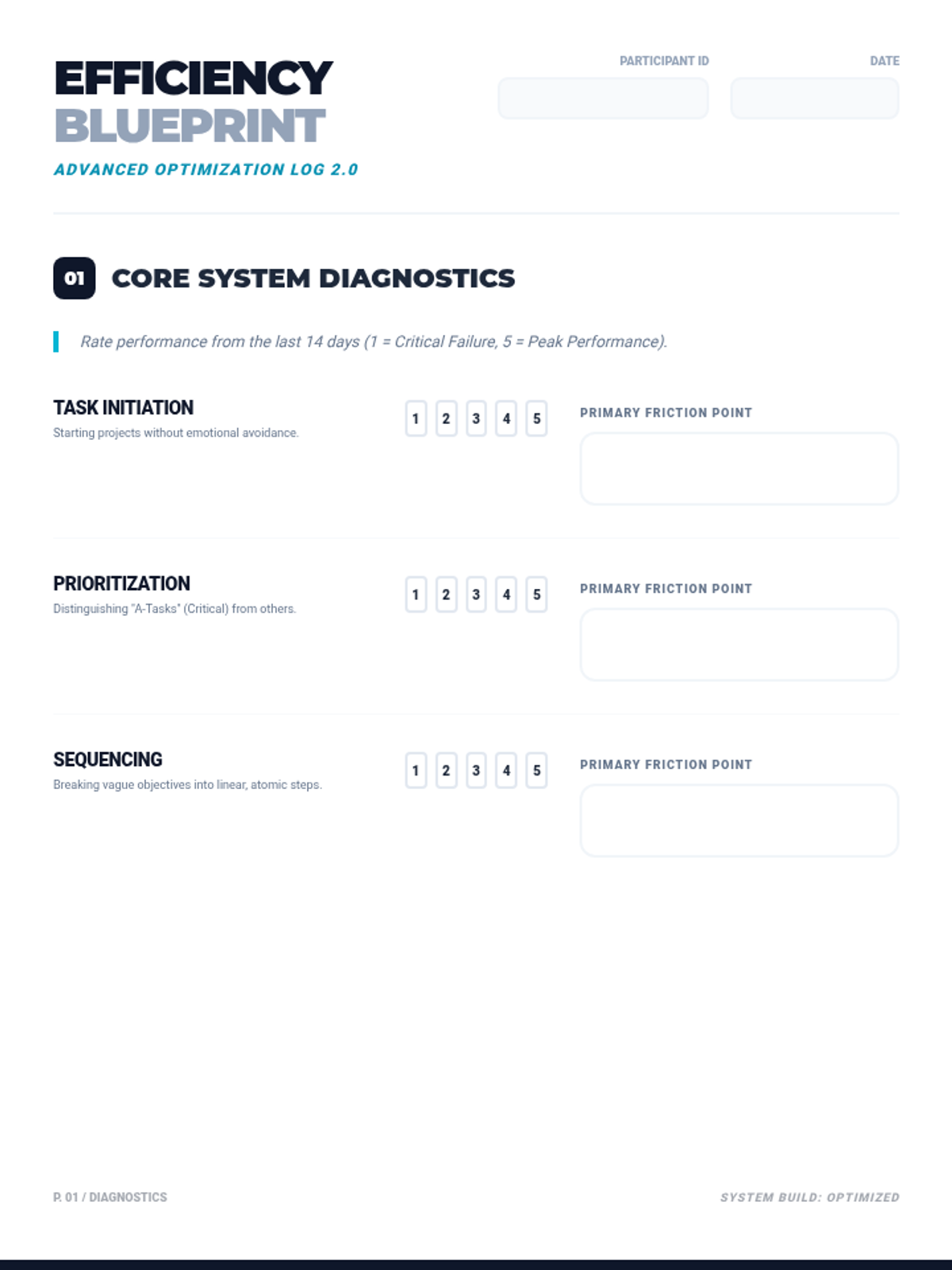
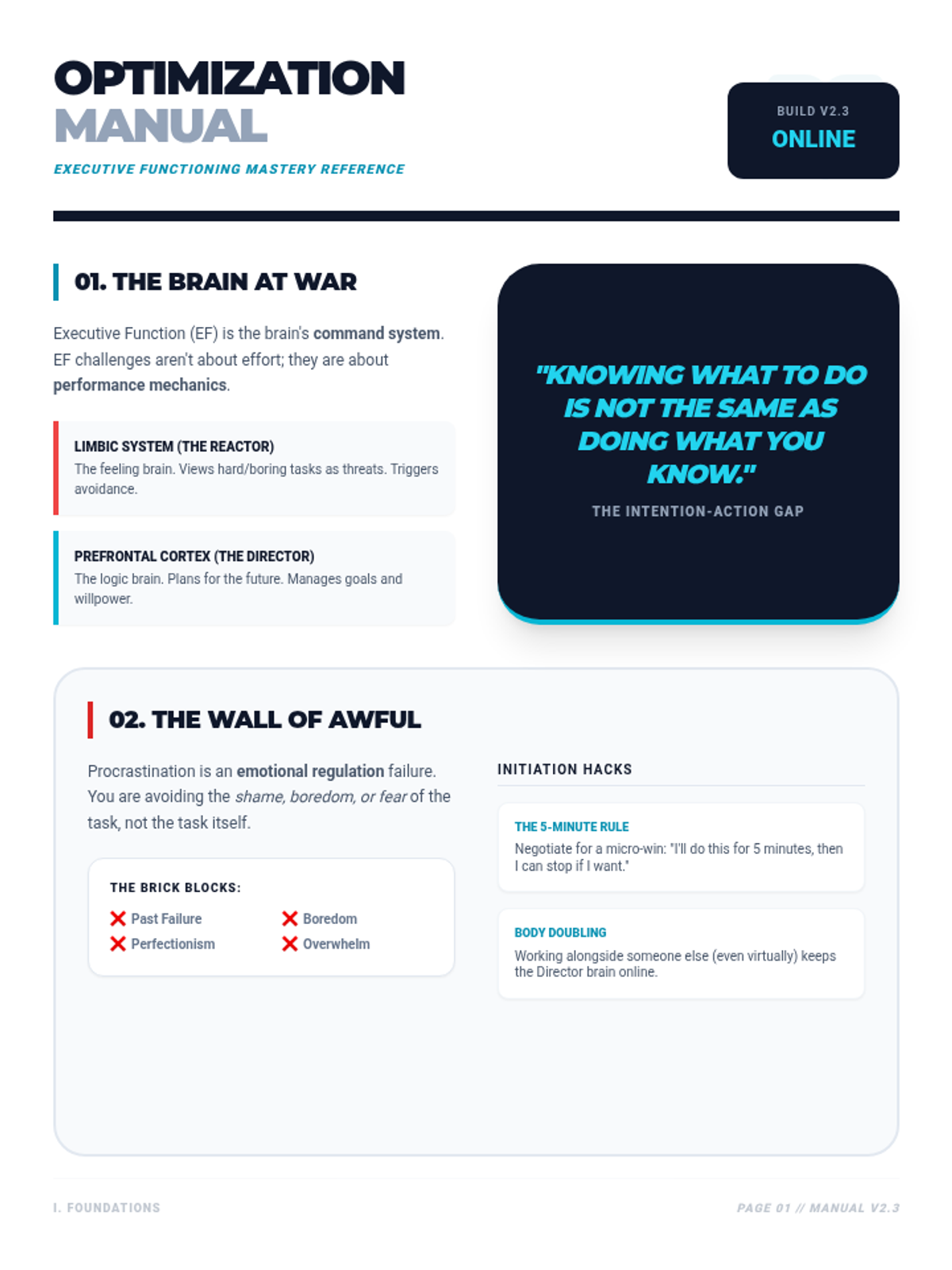
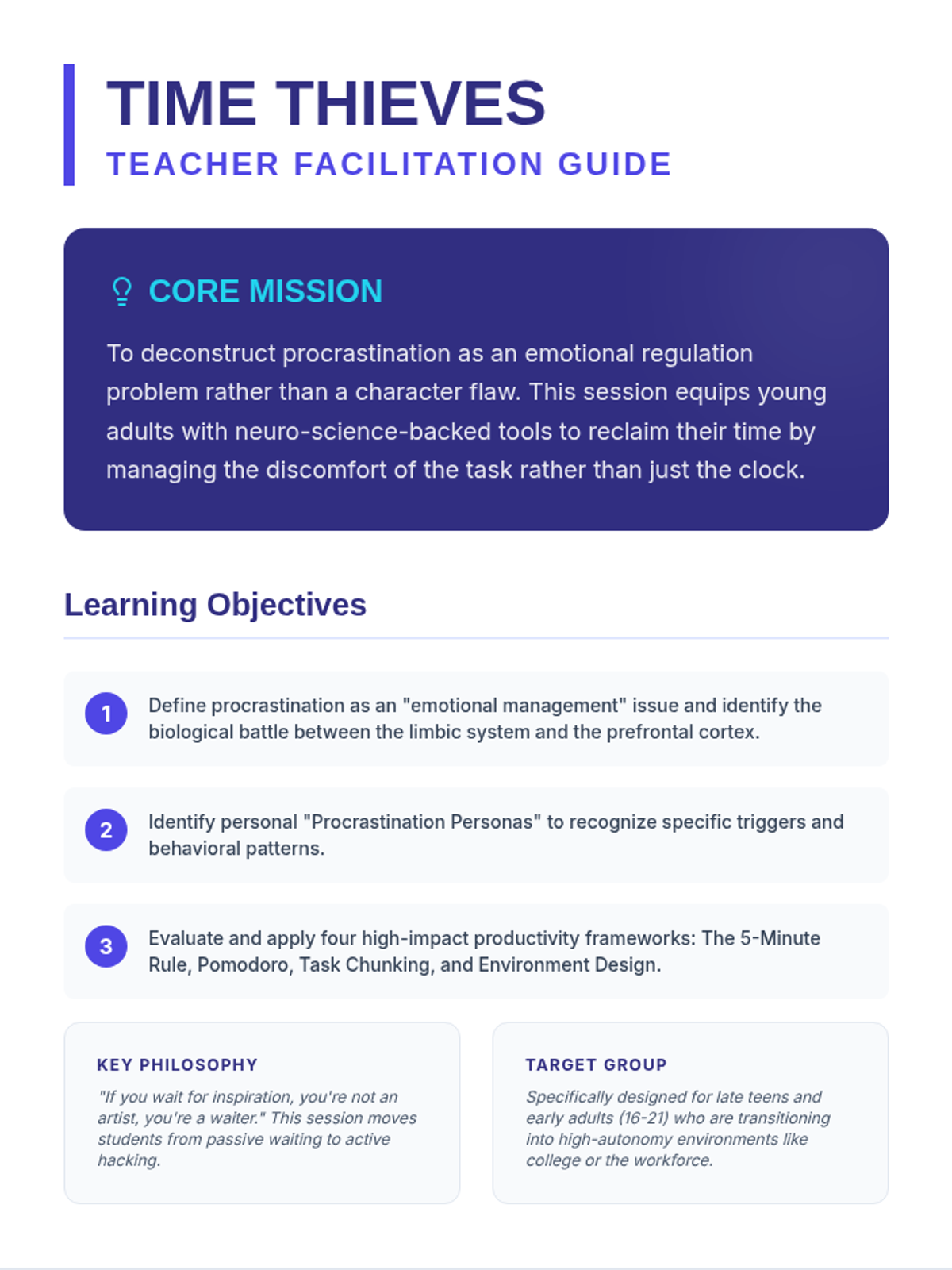
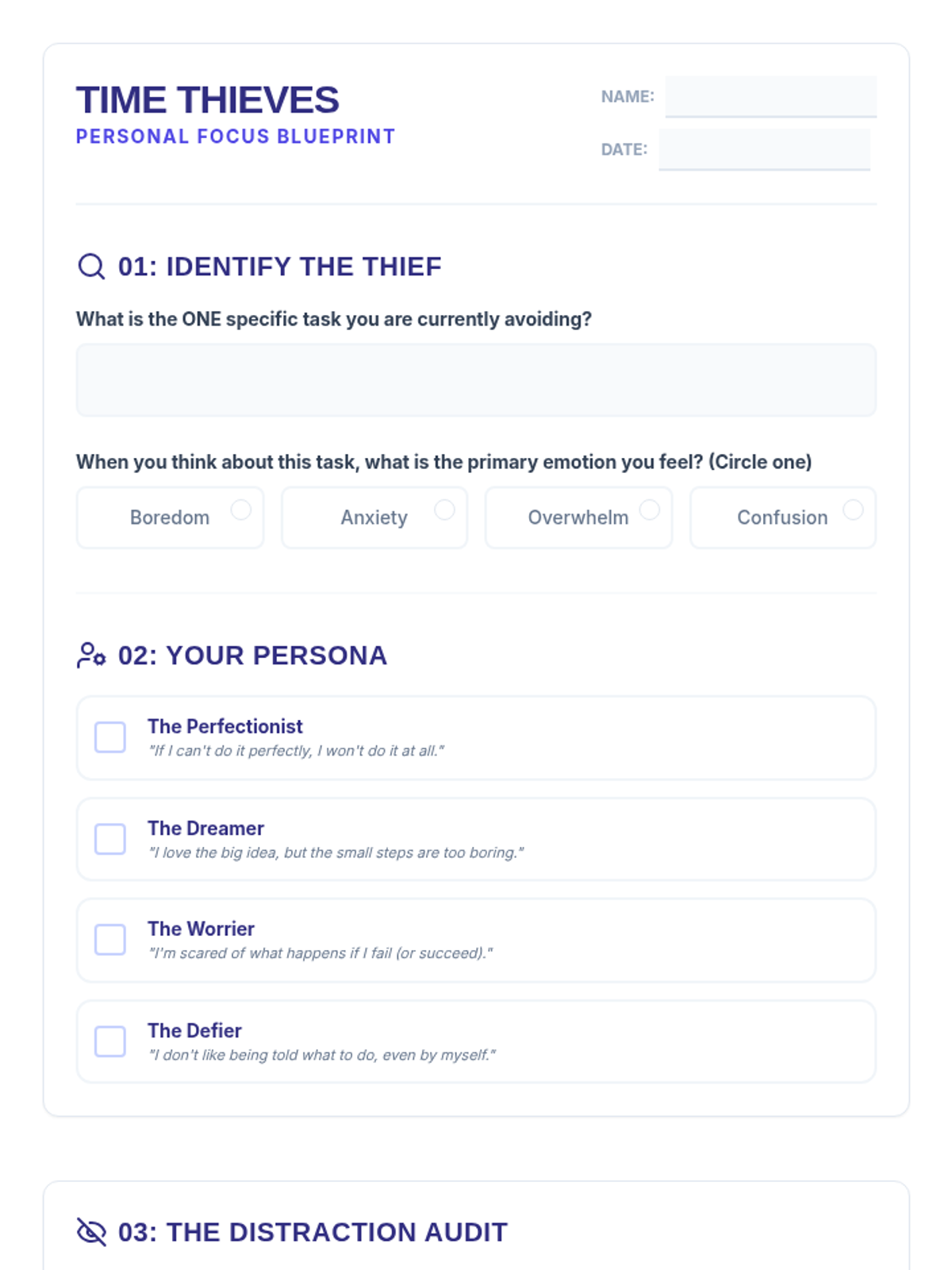
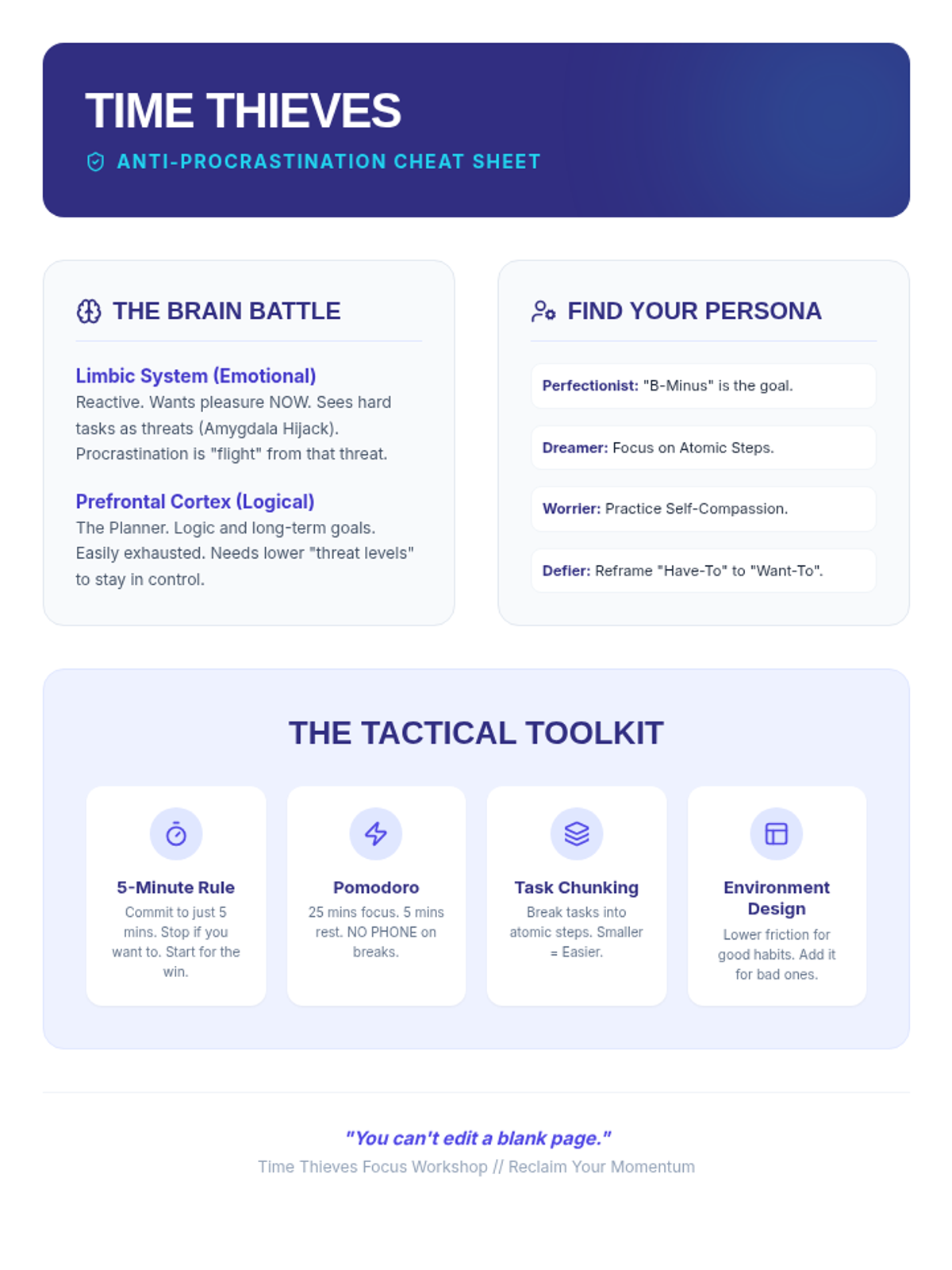
An in-depth exploration of the psychology of procrastination, identifying personal triggers, and implementing high-impact productivity strategies.
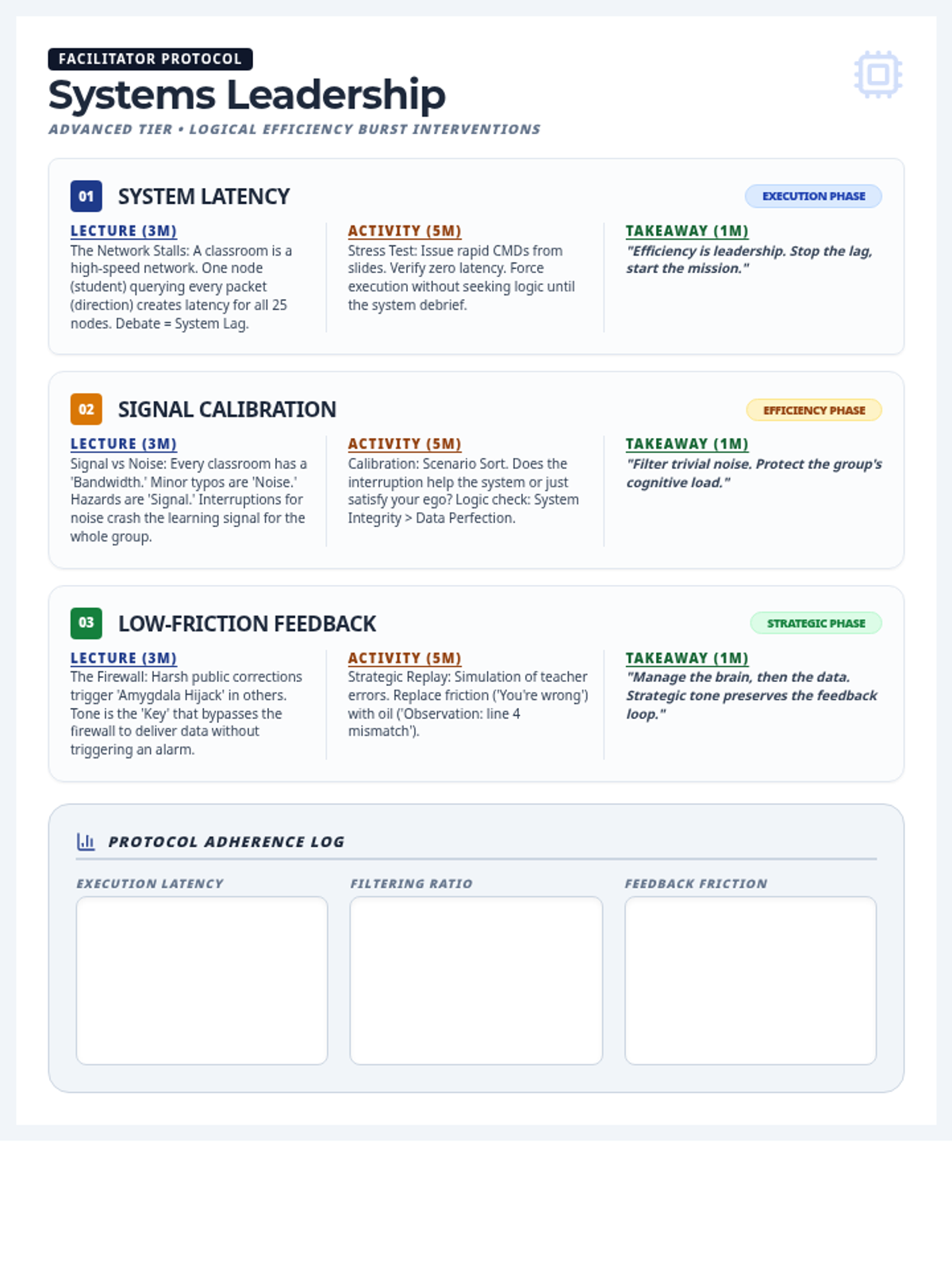
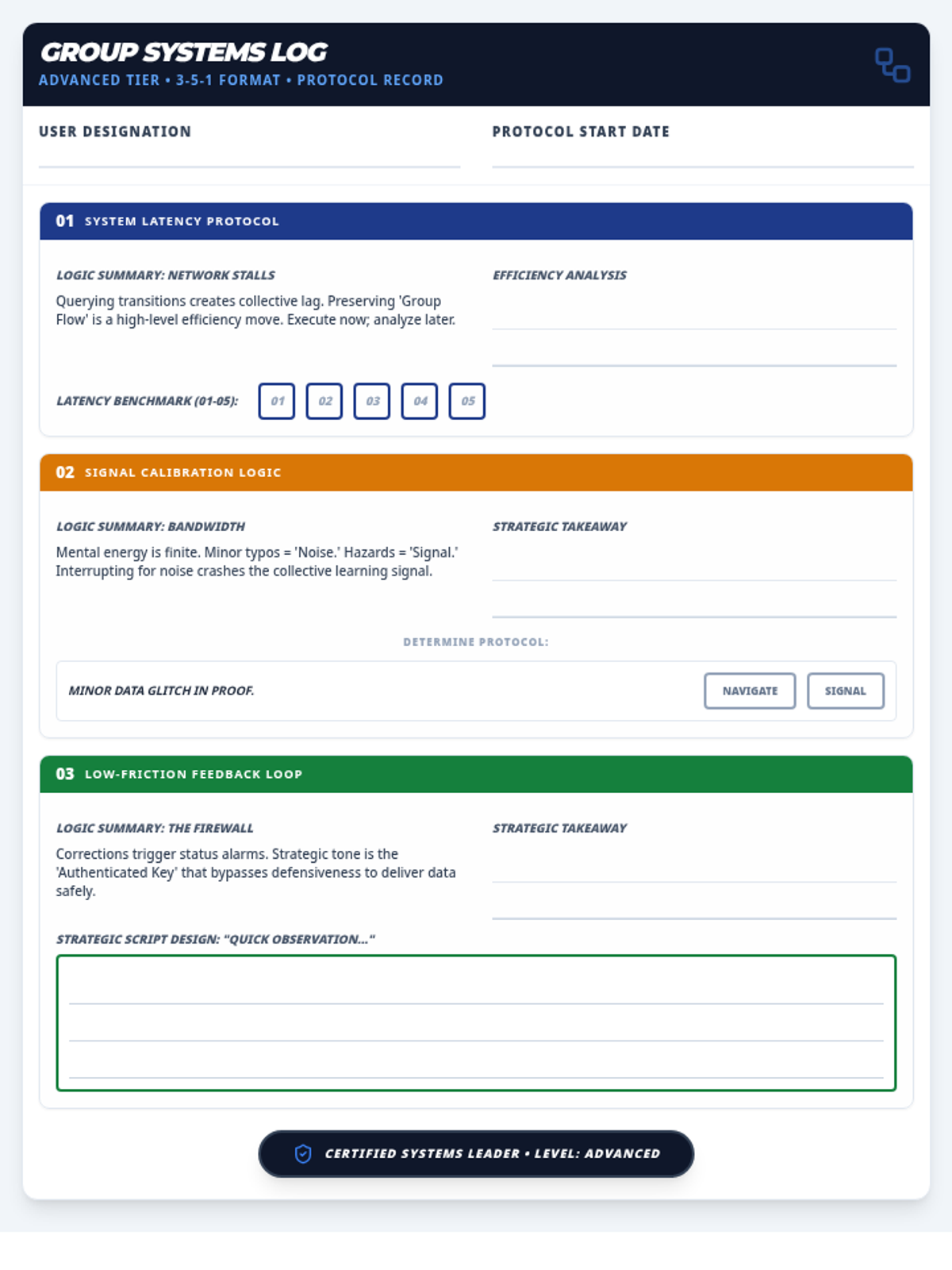
Advanced session on 'Strategic Communication'. Uses social neuroscience to explain how low-friction feedback bypasses defensive firewalls. Structure: 3-5-1 Minutes.
A session on 'Signal-to-Noise' calibration. Teaches students to logically calculate the interrupt cost of minor corrections versus major system failures. Structure: 3-5-1 Minutes.
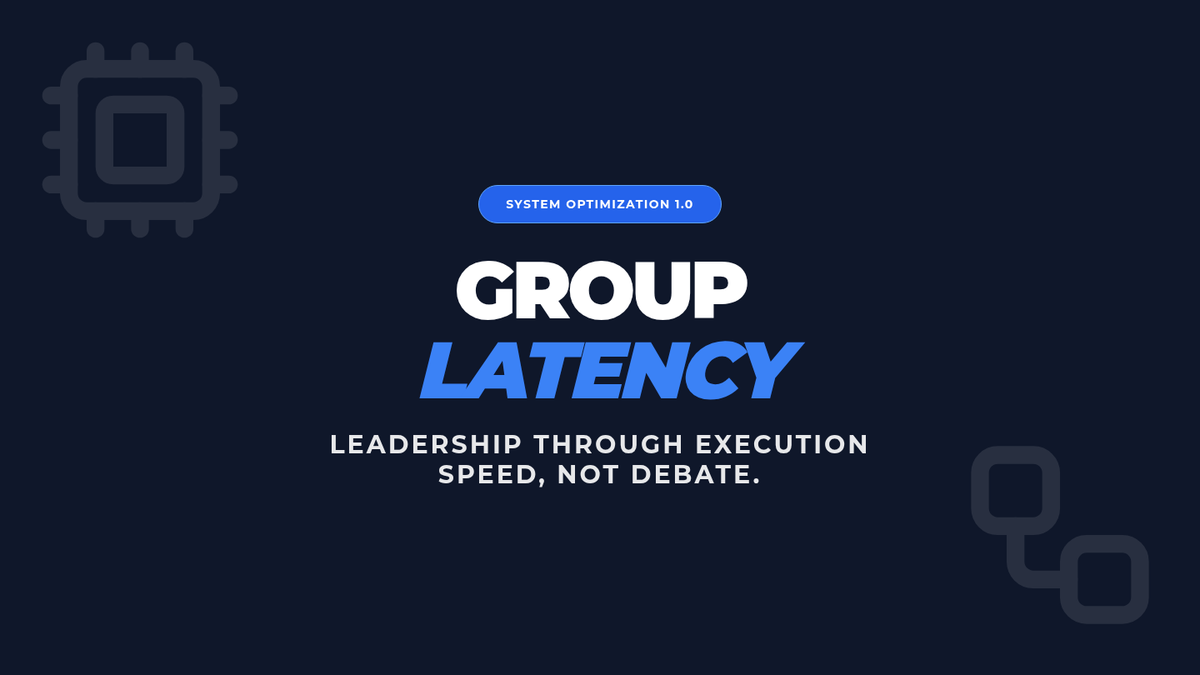
A high-level session on minimizing 'Group Latency'. Framing following directions as a system efficiency move rather than submission. Structure: 3-5-1 Minutes.
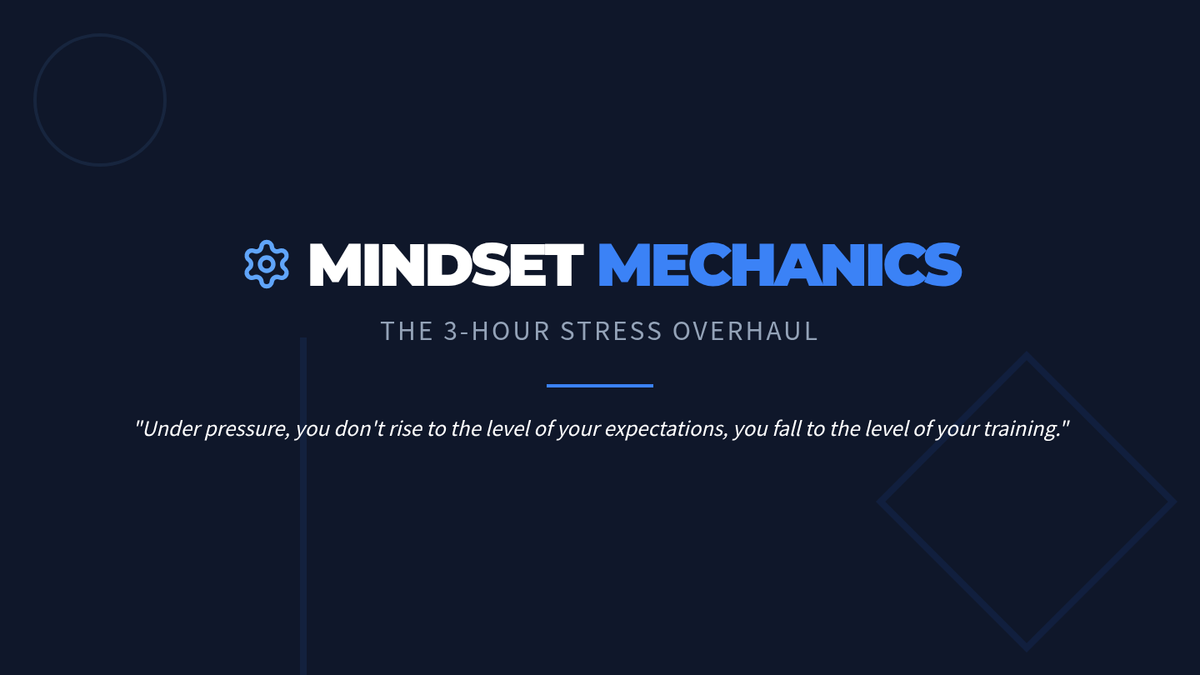
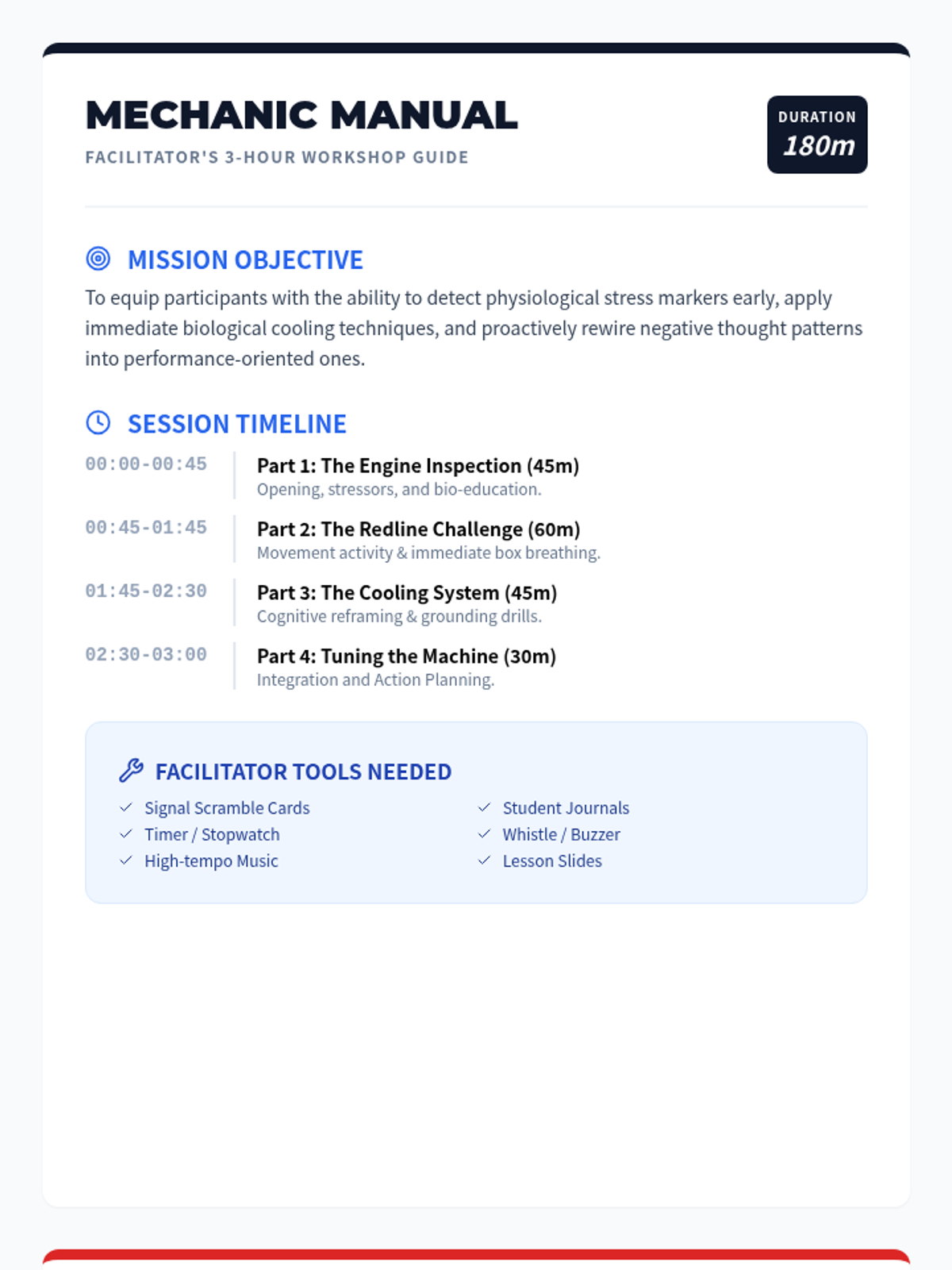
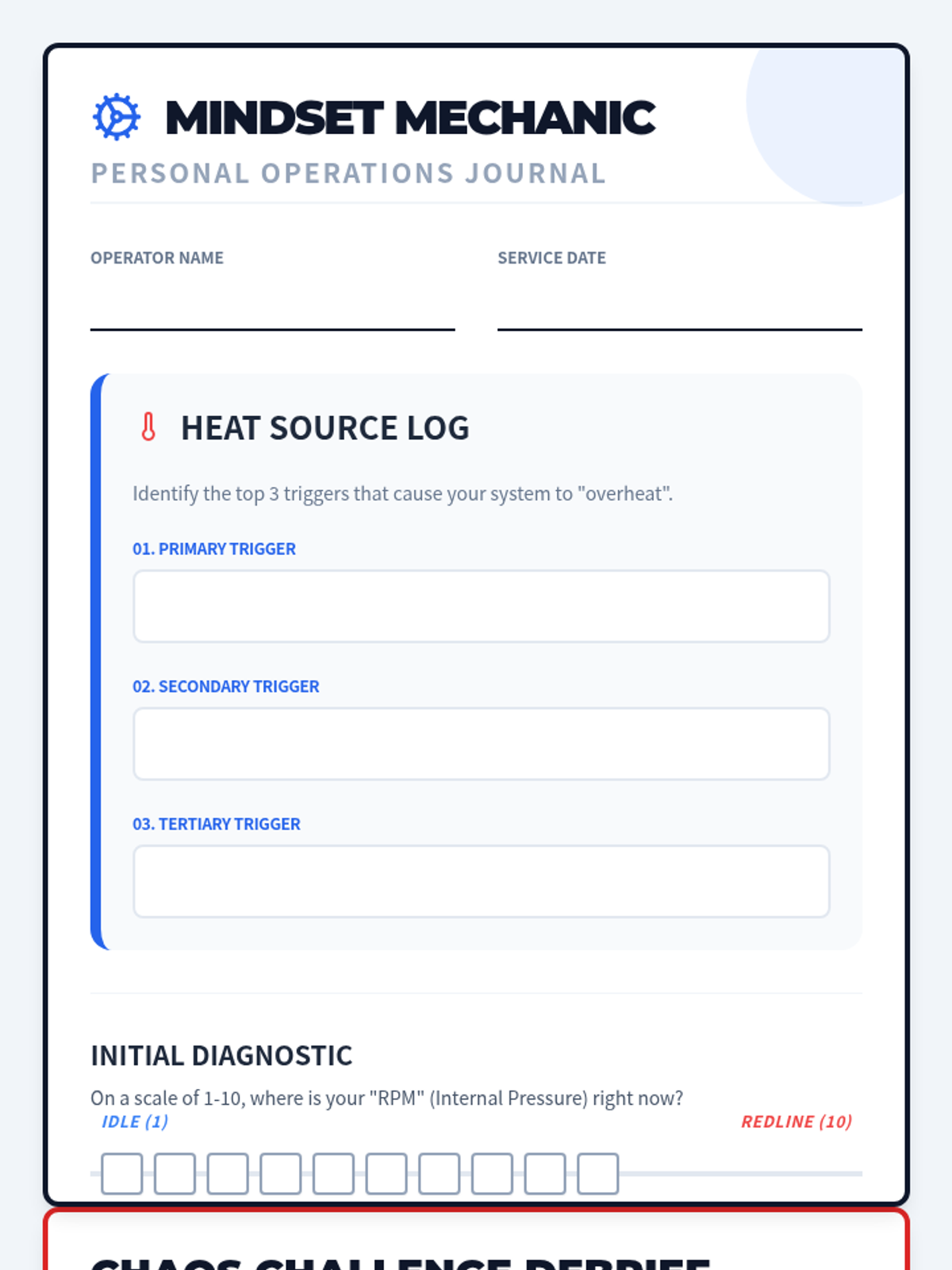
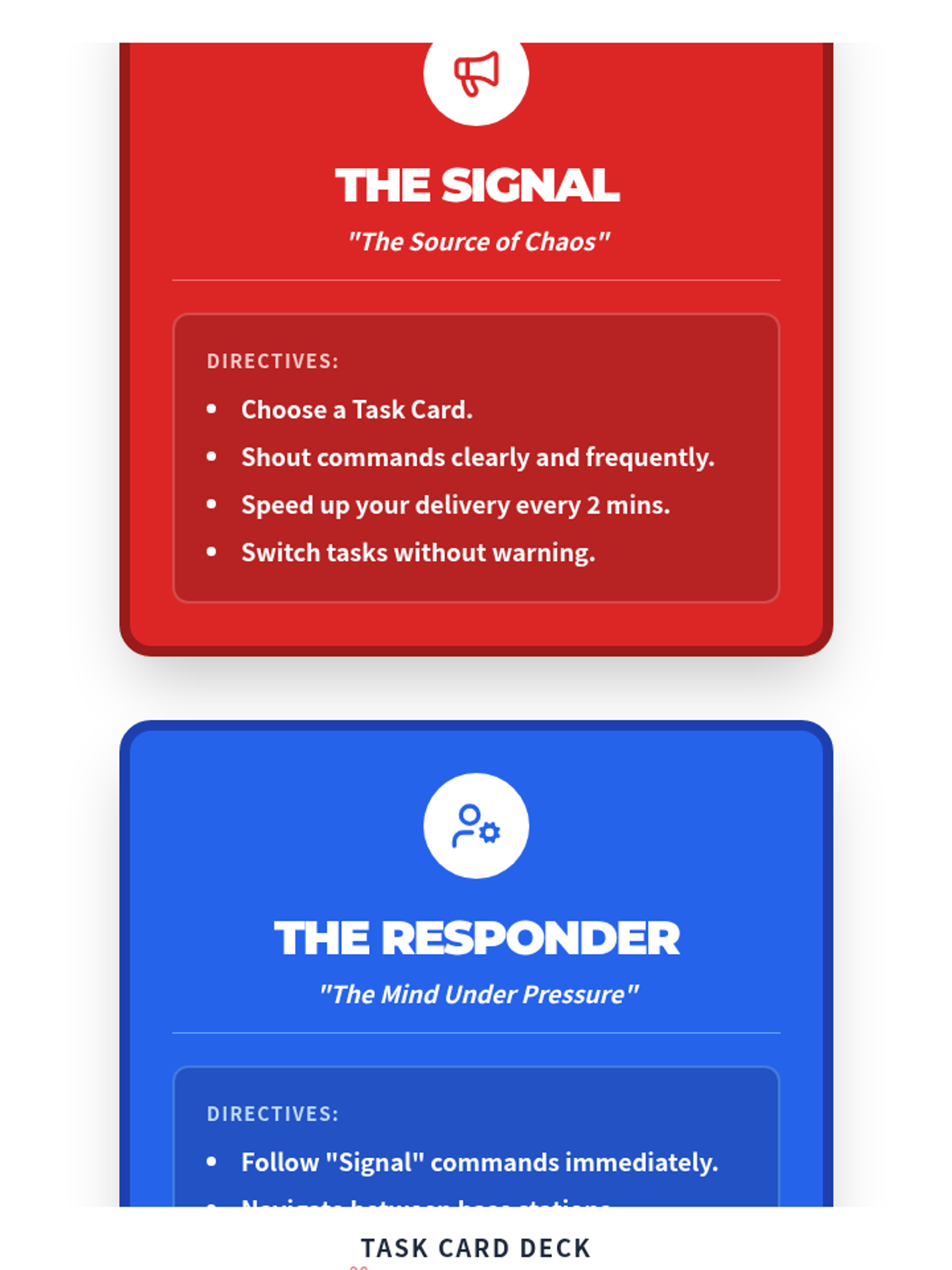
A comprehensive 3-hour workshop focused on identifying stress triggers, practicing immediate calming techniques through high-pressure challenges, and rewiring thought patterns for positive thinking.
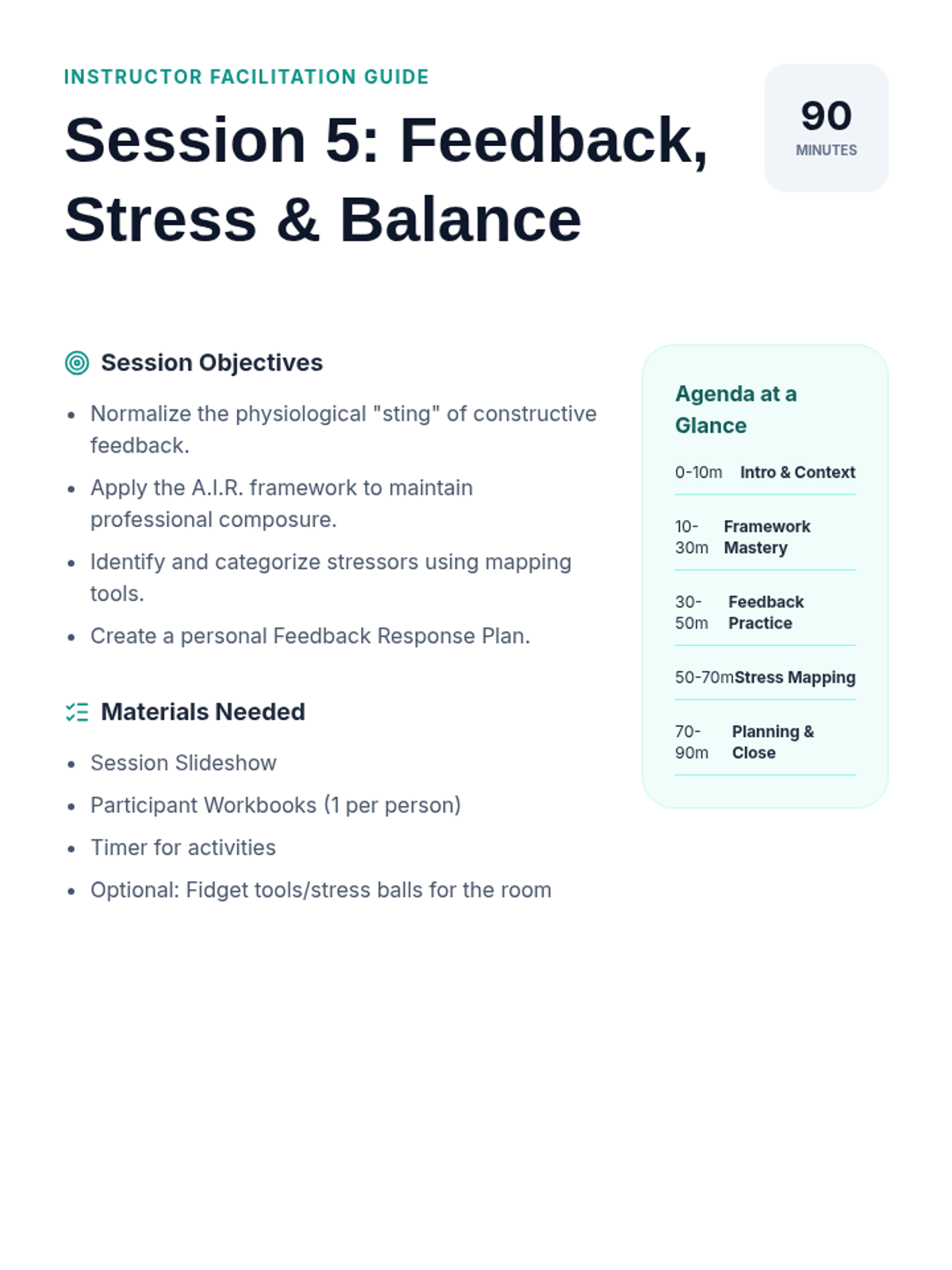
A 90-minute workshop on navigating feedback anxiety, responding with composure, and managing everyday stress through practical tools and frameworks.
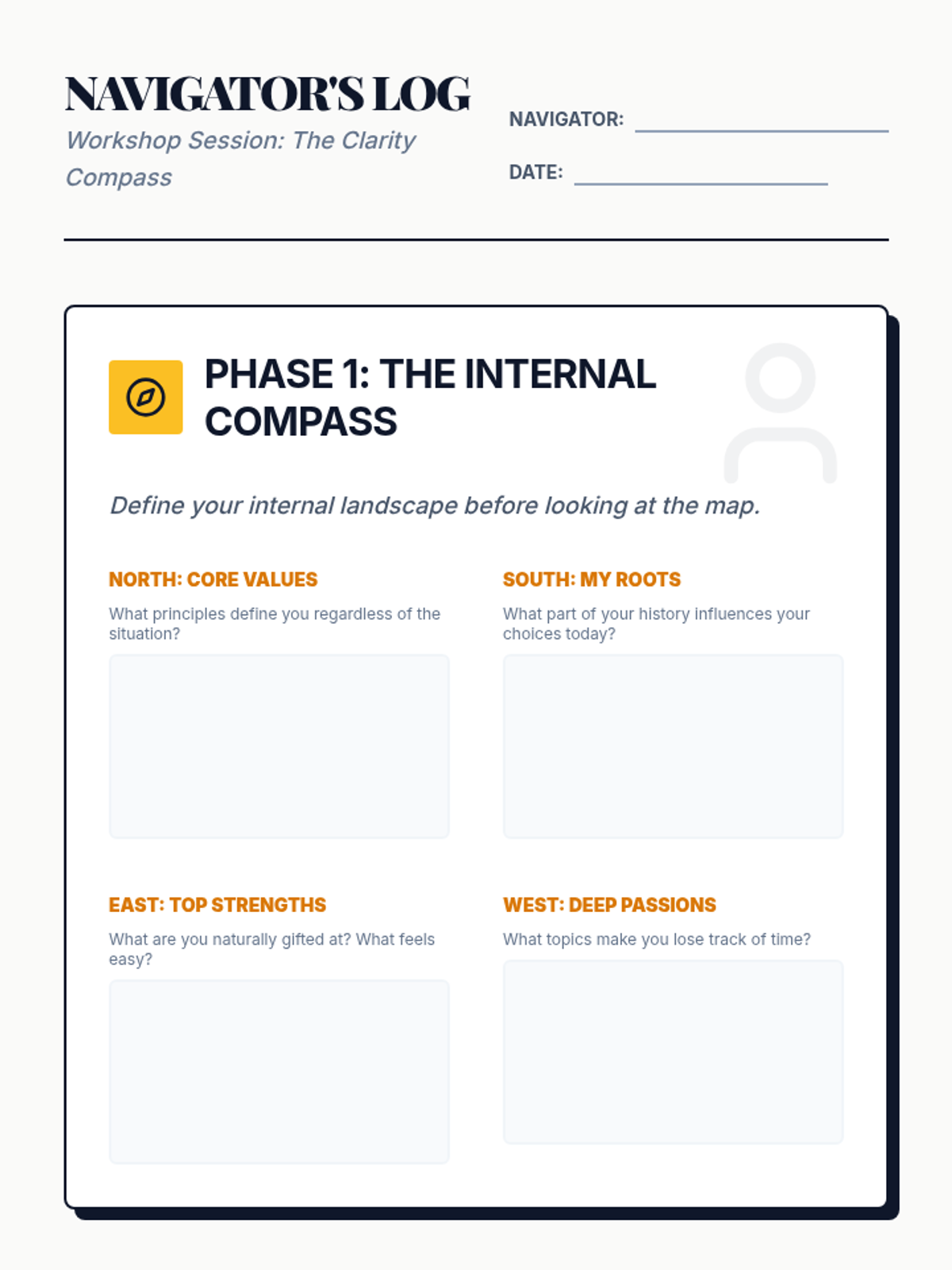
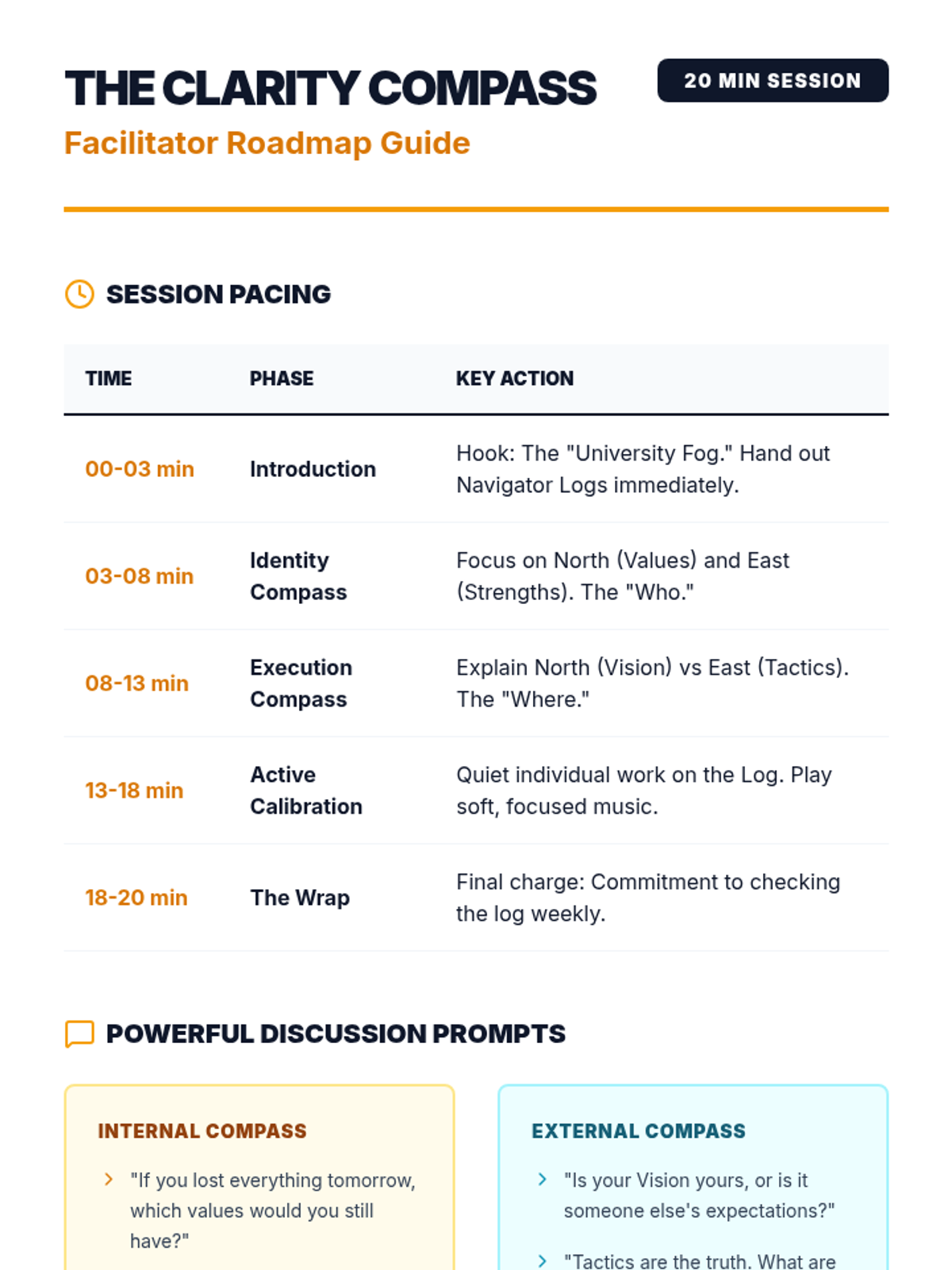
An introductory session that explores the Internal and External Clarity Compasses to help students align their personal values with actionable goals.
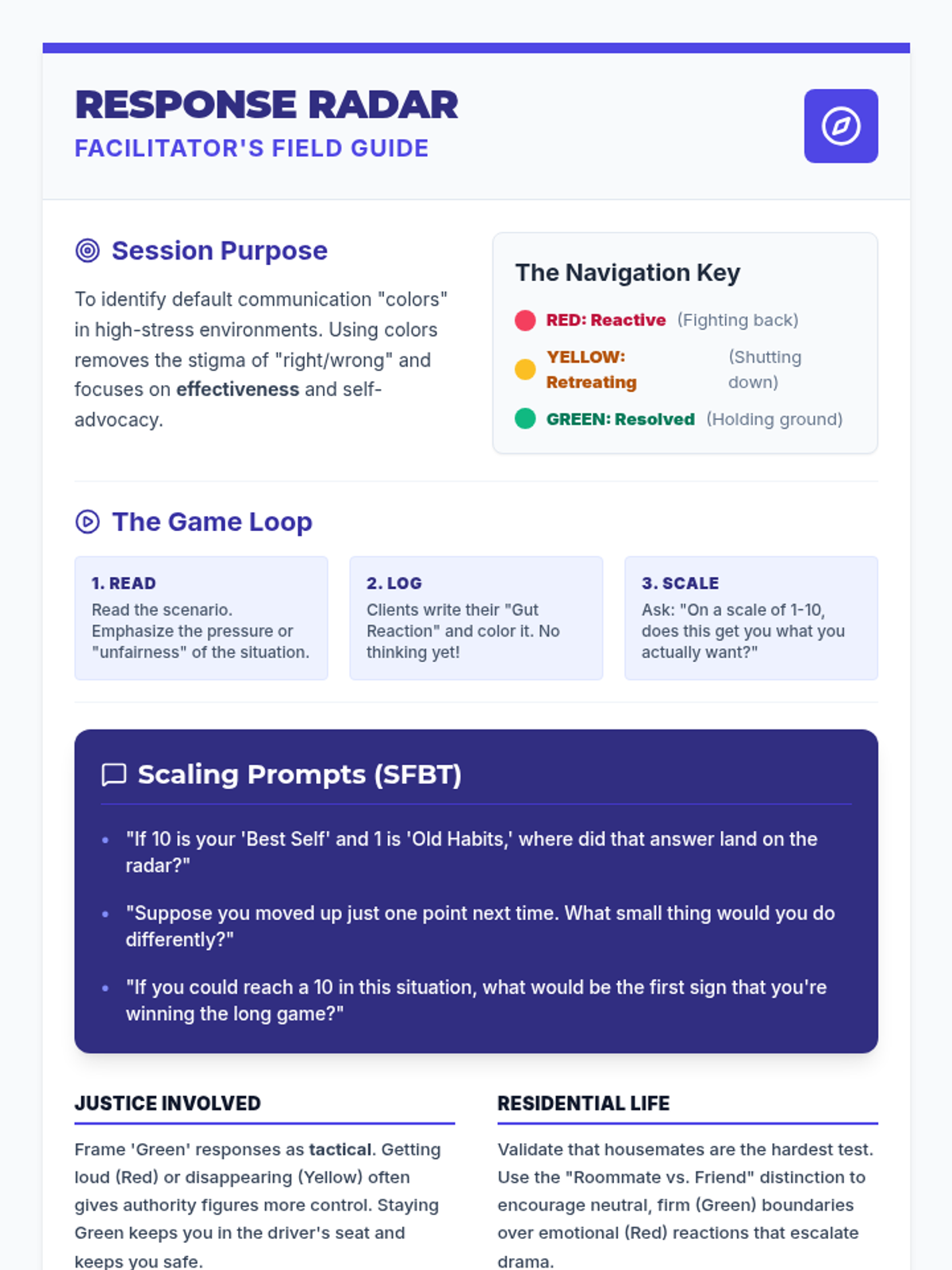
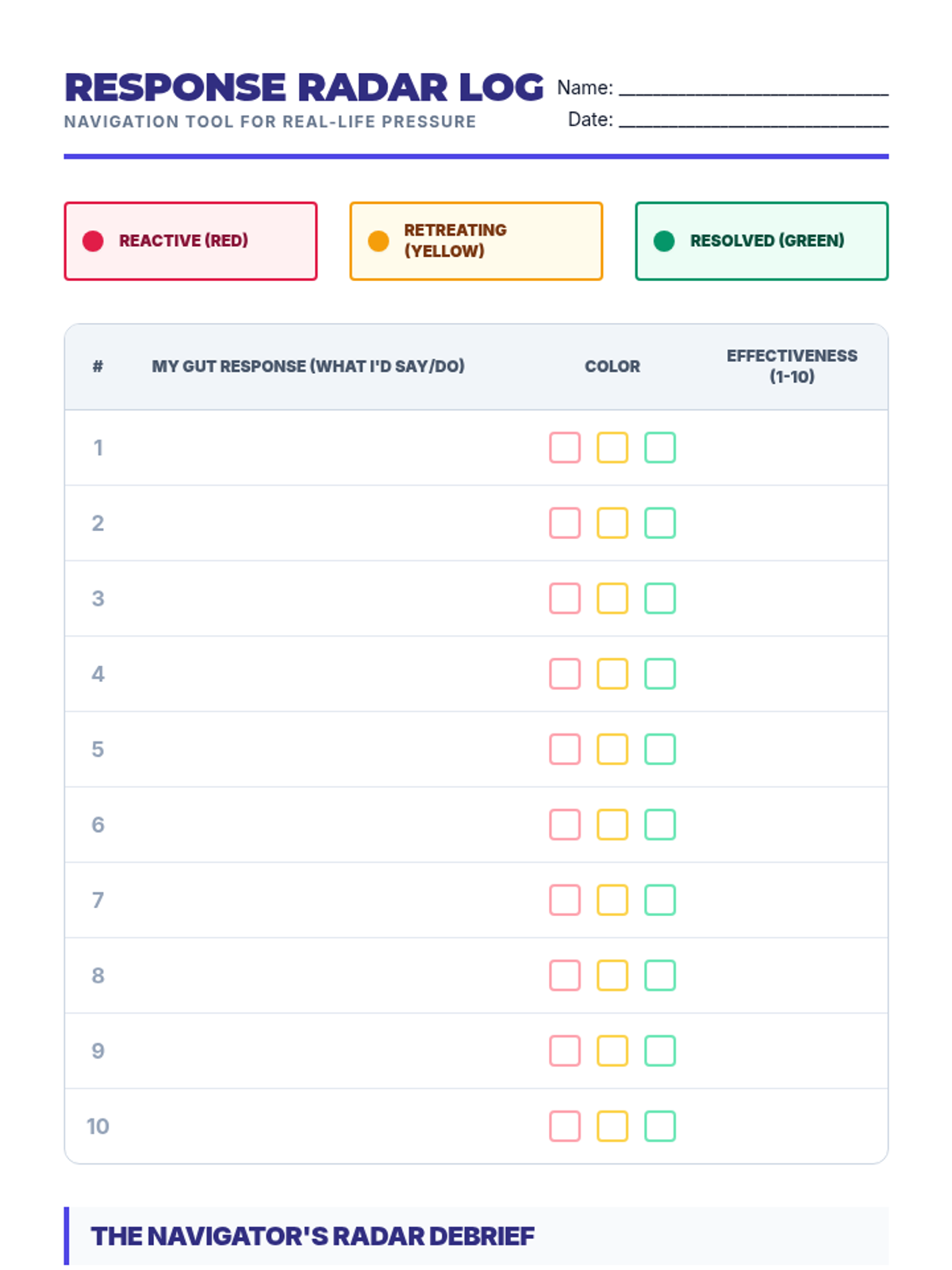
An interactive scenario-based session for clients in MH/SA or forensic settings to practice communication styles. Participants evaluate their responses using color-coded styles and SFBT scaling to identify patterns and areas for growth.
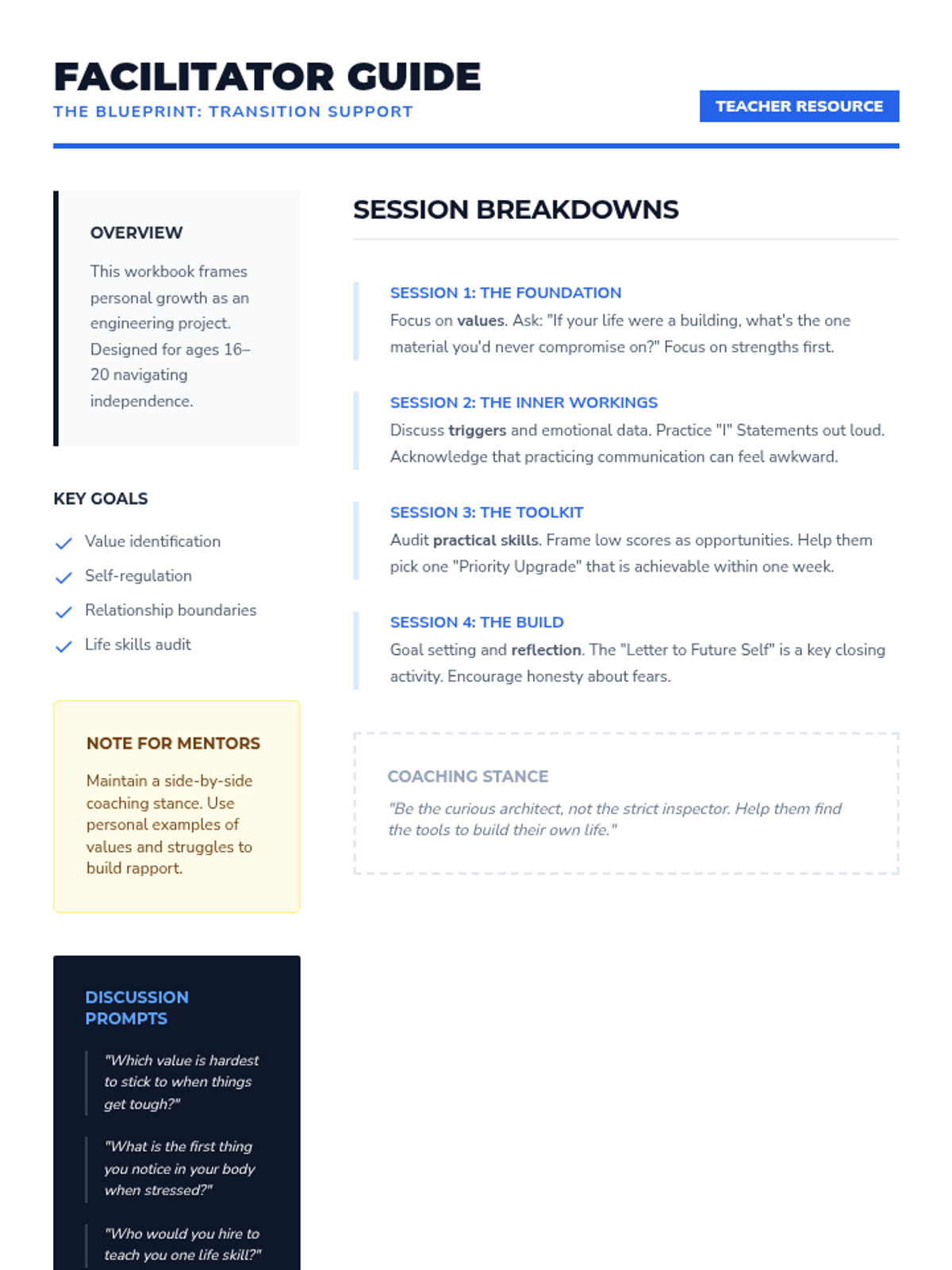
A comprehensive personal development lesson designed for young adults transitioning into independence. It features a 10-page workbook centered on values, emotional intelligence, and life skills, paired with a facilitator guide for mentors or therapists.
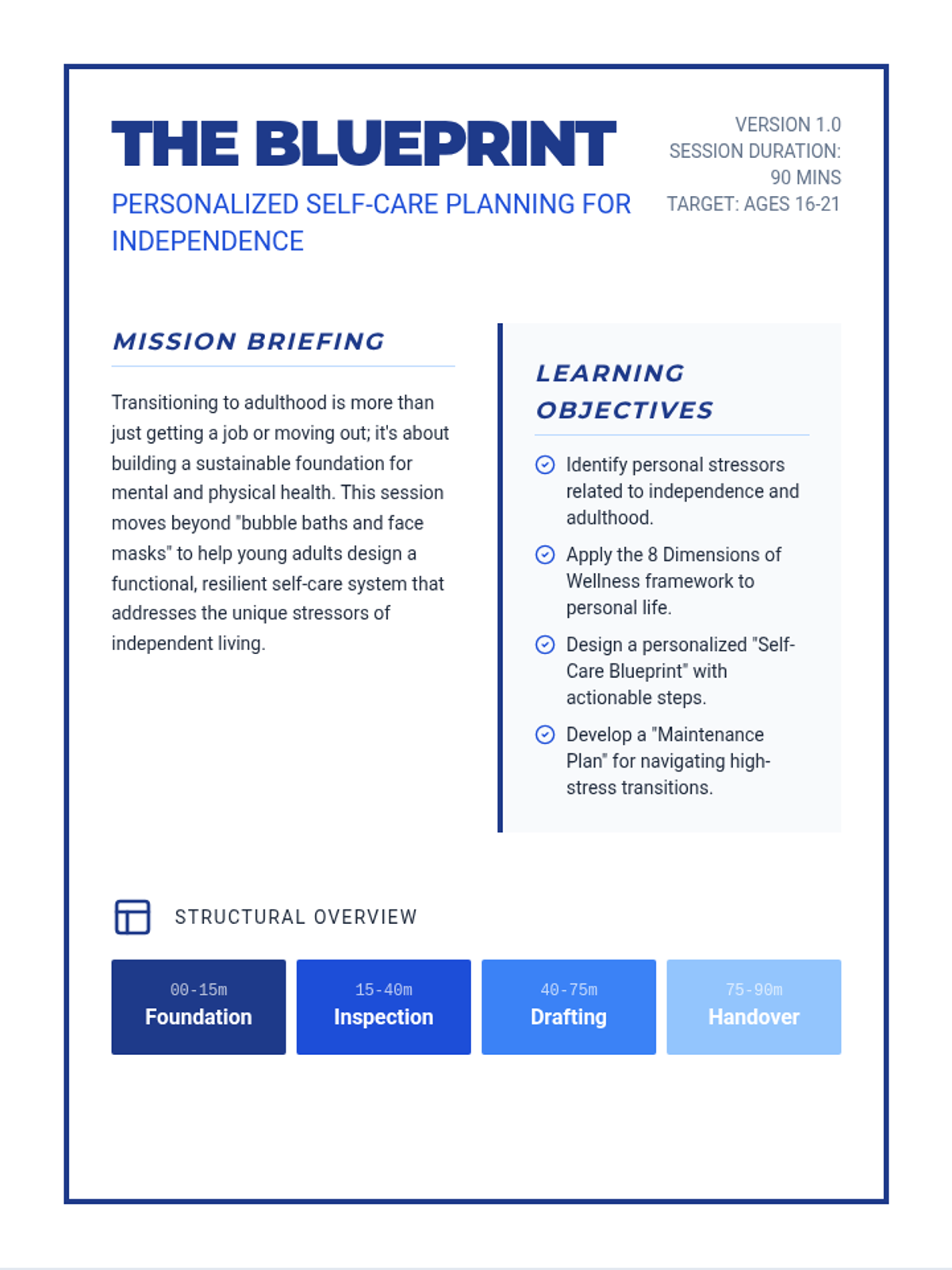
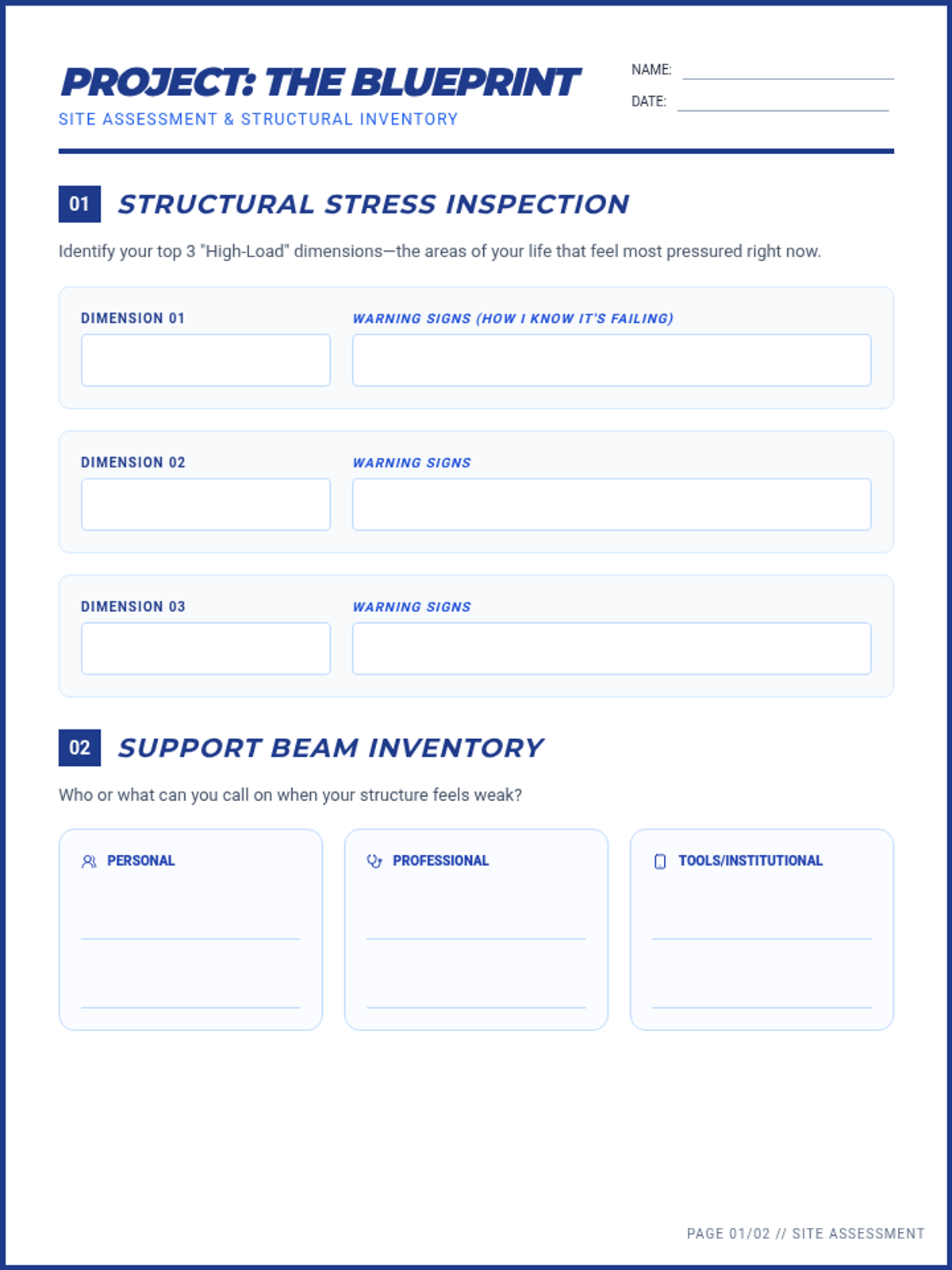
A 90-minute workshop designed for transition-age youth (16-21) to develop a personalized self-care blueprint. The session focuses on the 8 dimensions of wellness as a foundation for independent living and stress management.
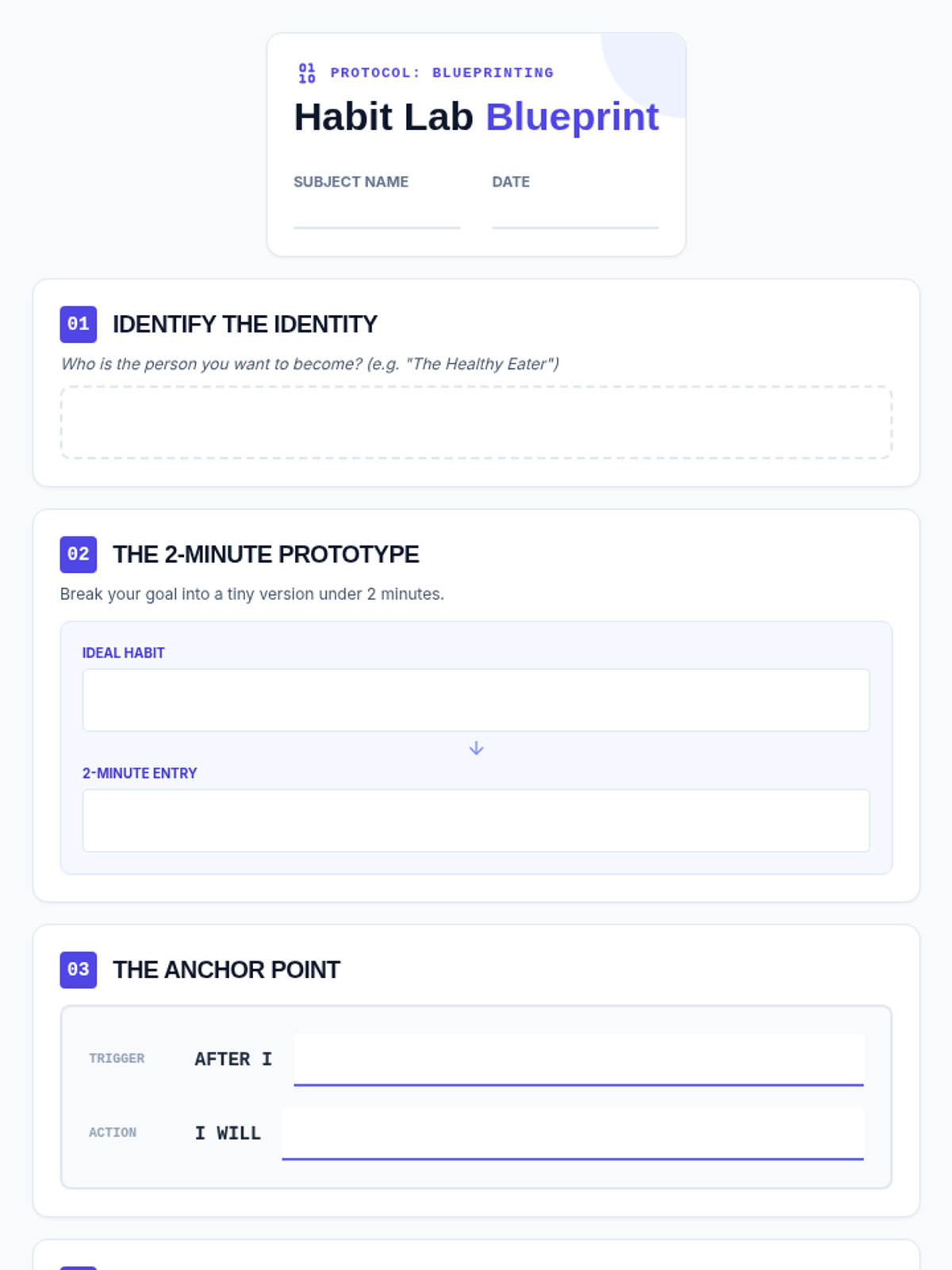
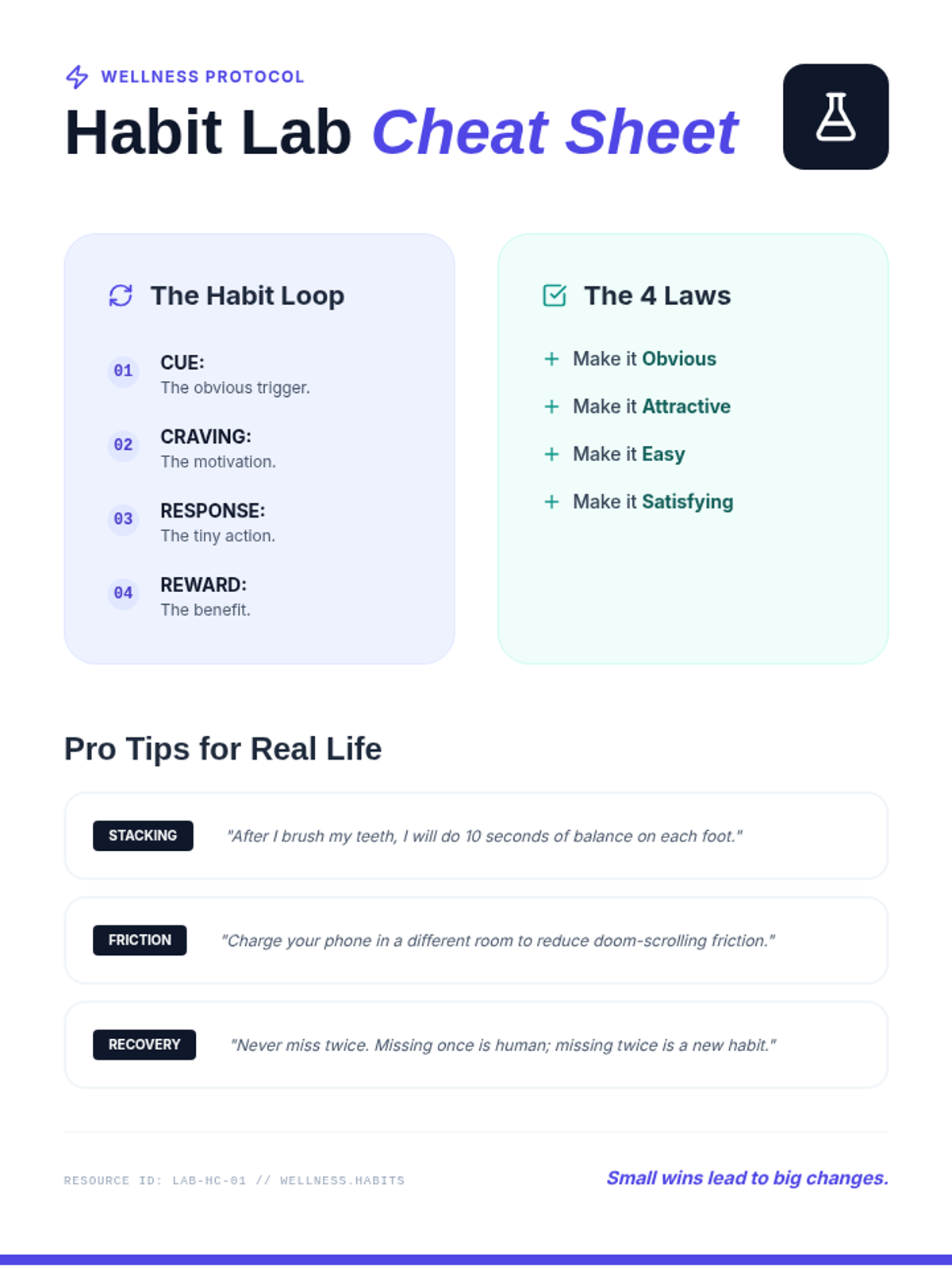
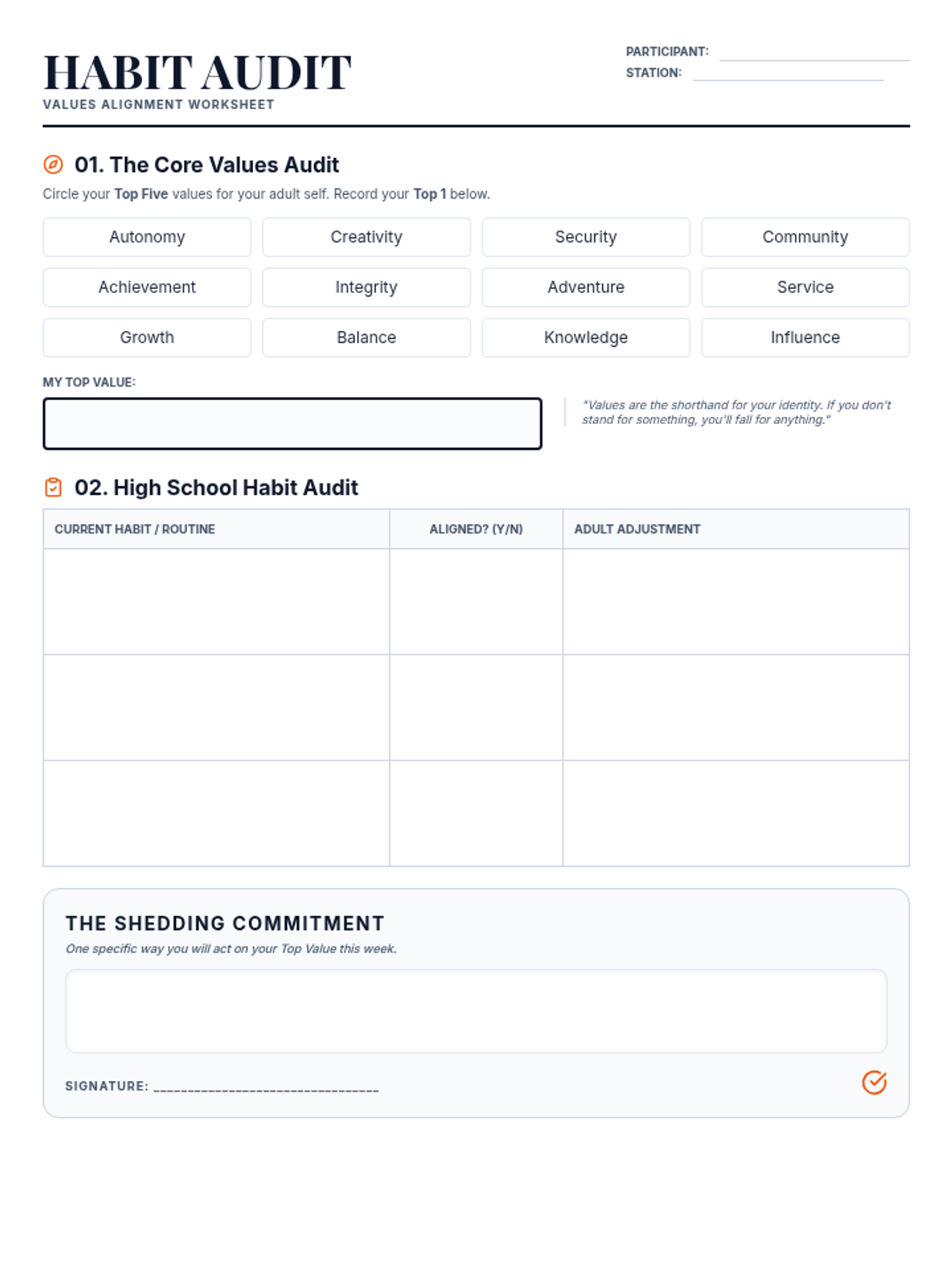
A comprehensive session for young adults on the science and practice of habit formation for long-term wellness. This lesson equips participants with practical tools to design systems that support their health, mental clarity, and productivity.
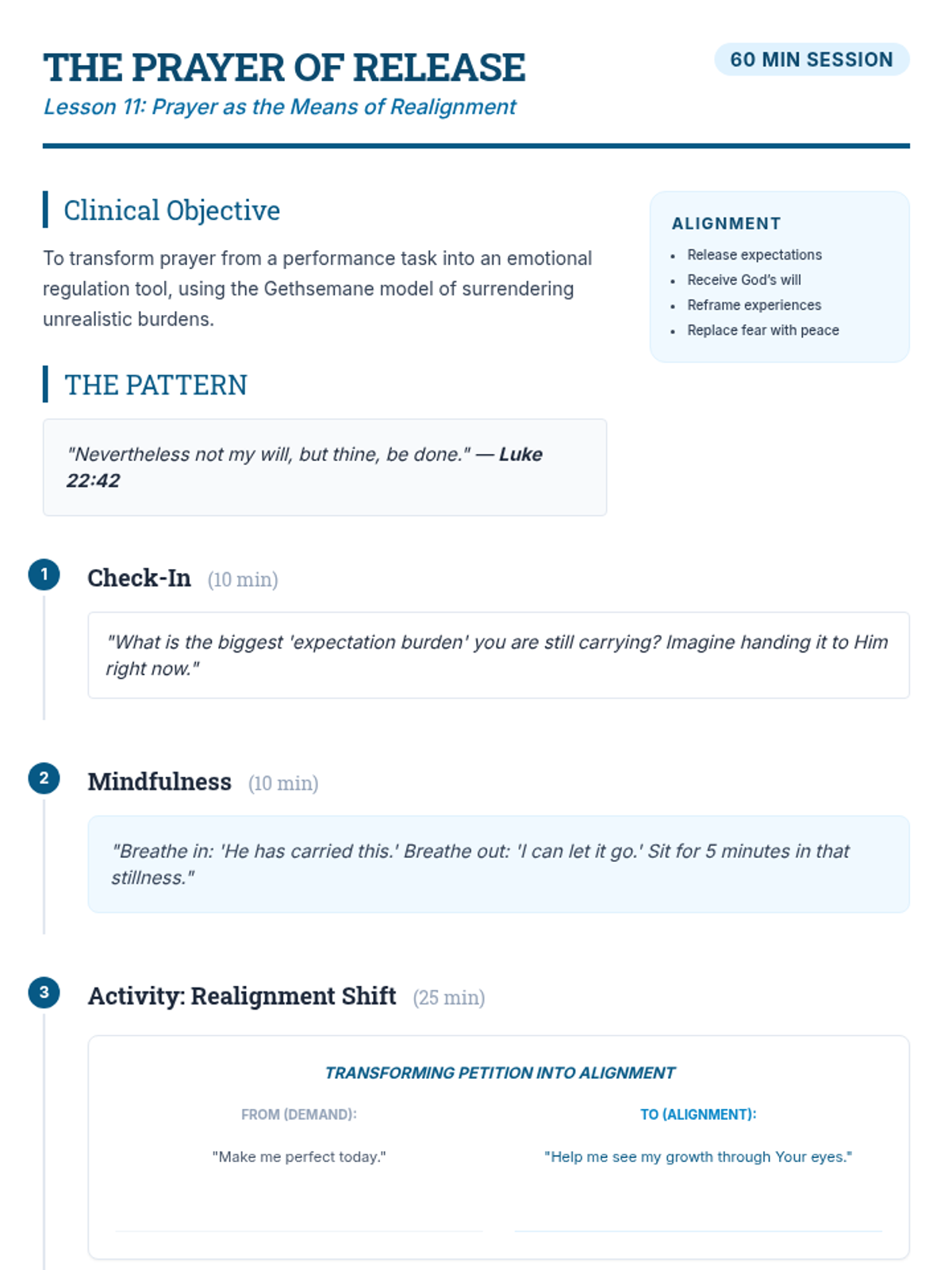
Uses prayer as a tool for realignment rather than just petition, focusing on 'not my will but thine' as a release of unrealistic burdens.
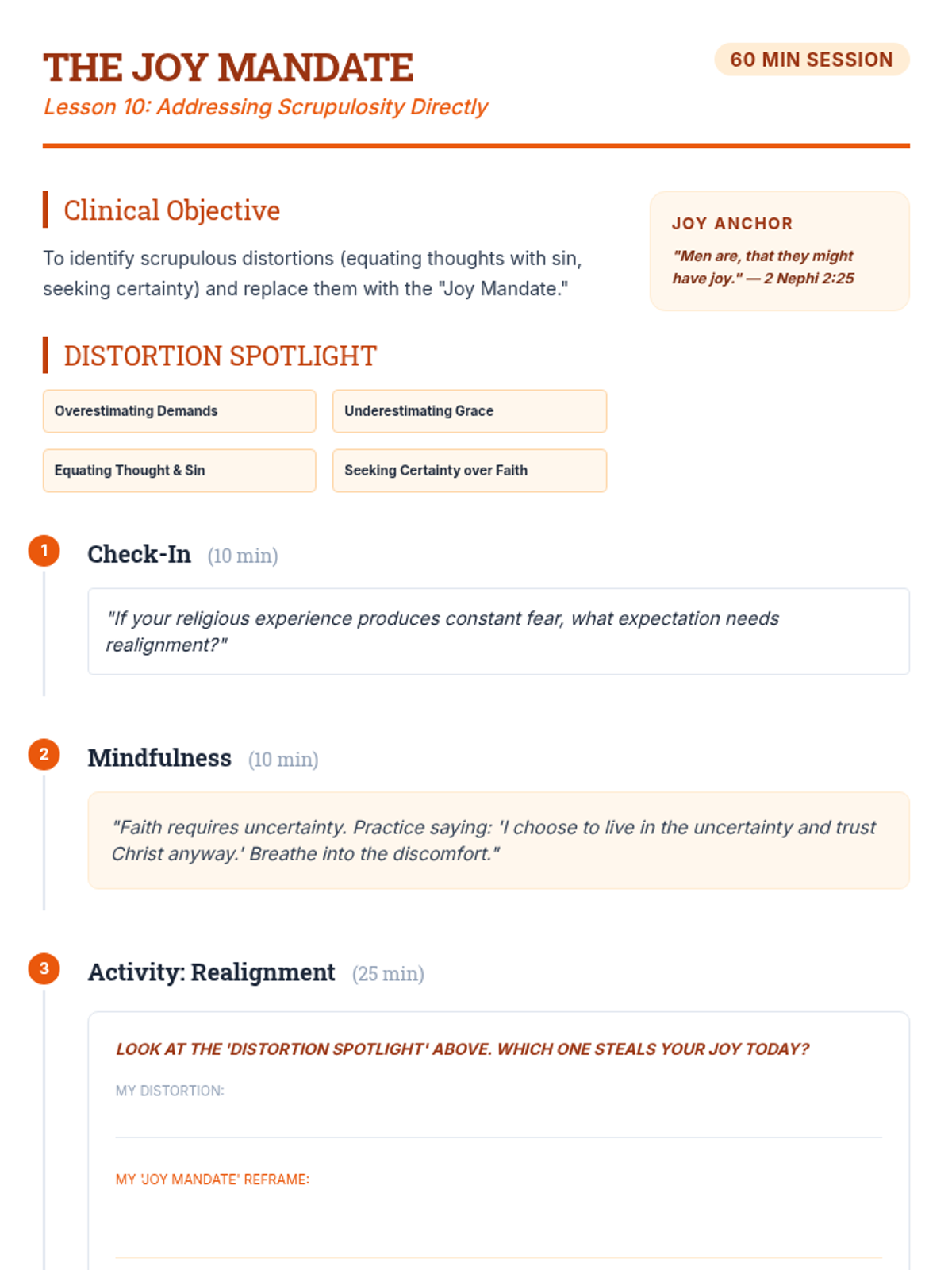
Identifies and provides tools to counter common scrupulous cognitive distortions like overestimating demands and underestimating grace.
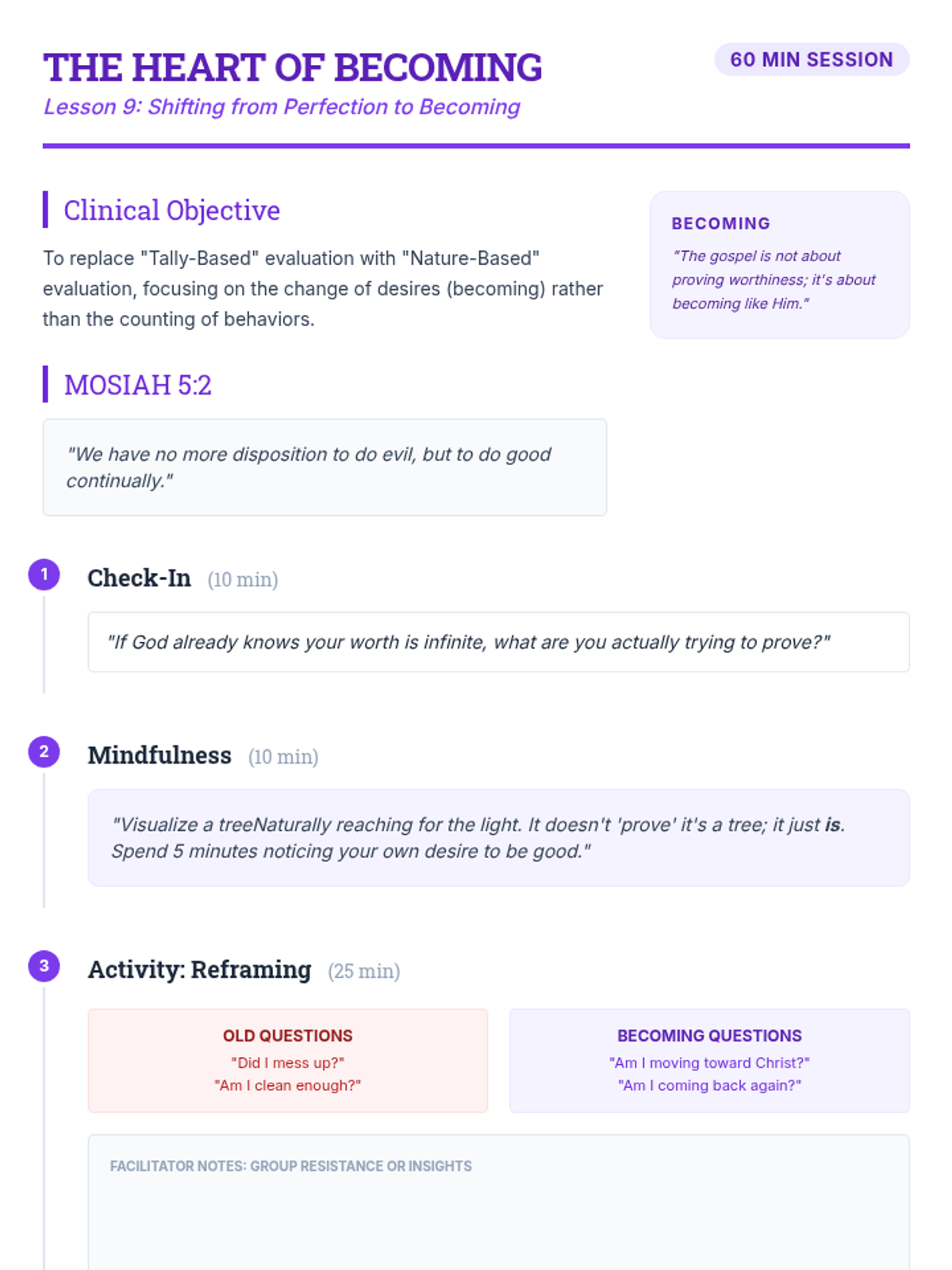
Focuses on the transformation of our nature (becoming) rather than the tallying of individual deeds.
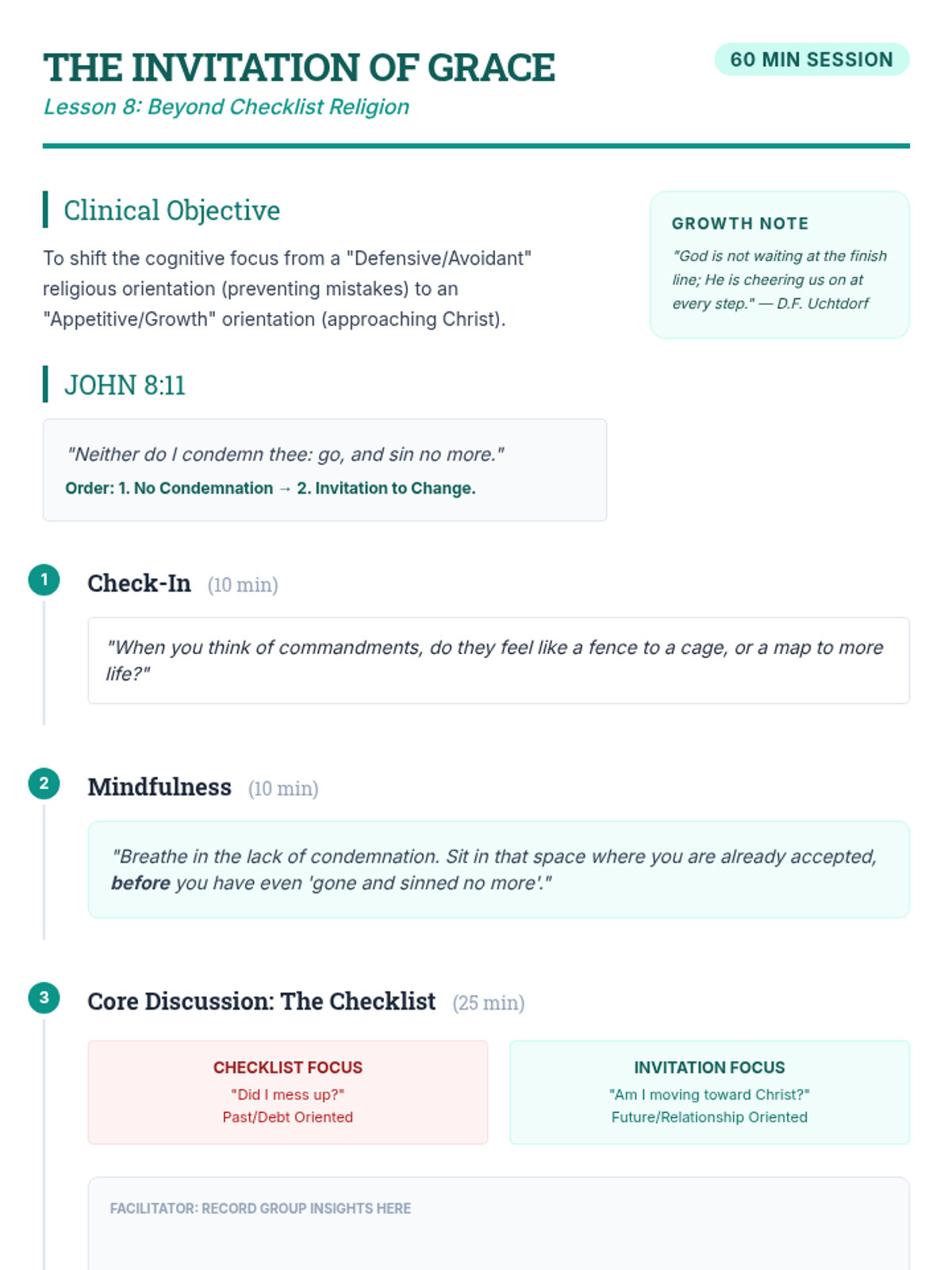
Shifts focus from fear-driven checklist religion to the Savior’s model of invitation and lack of condemnation.
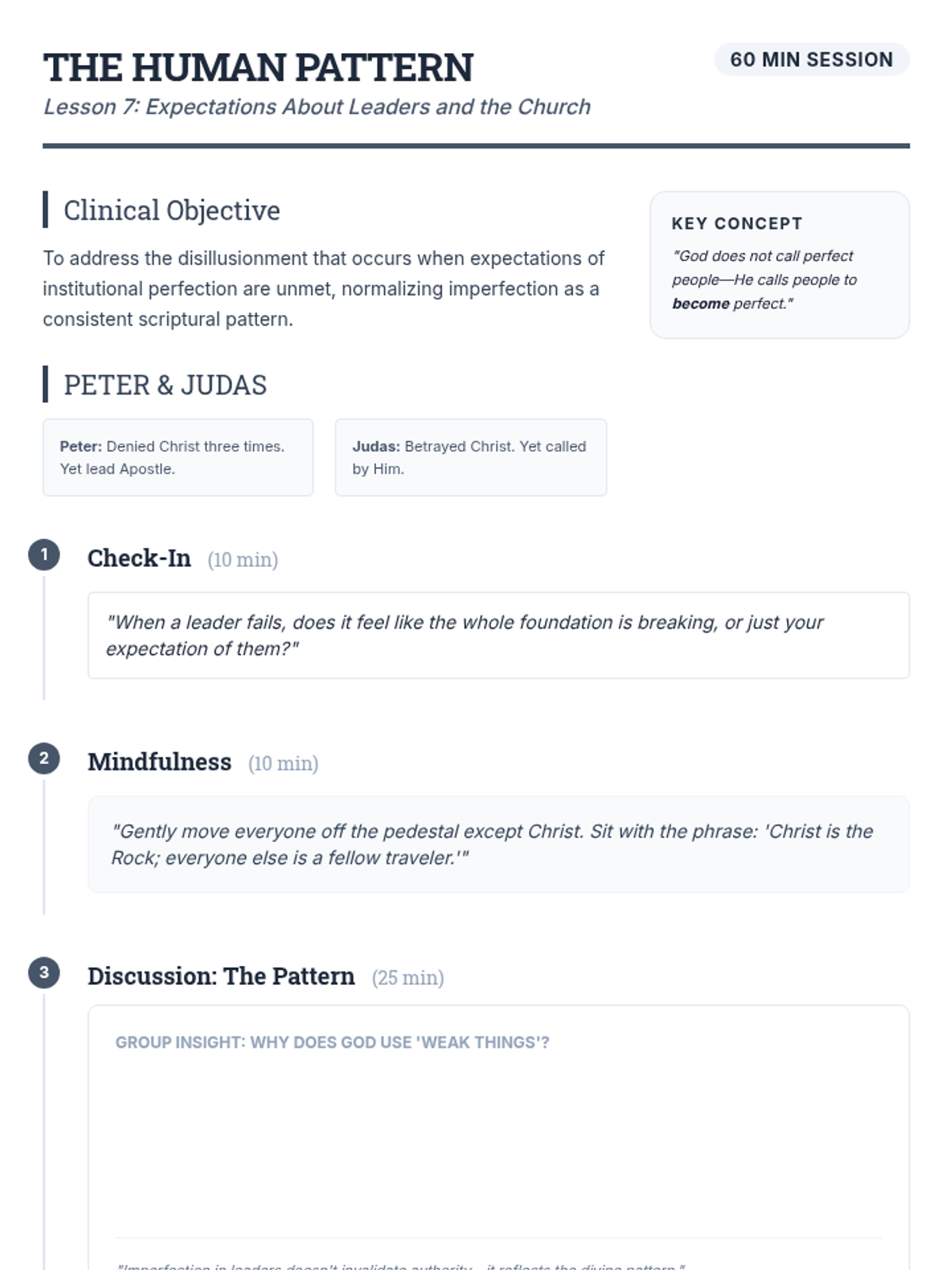
Discusses the reality of imperfect leaders and institutions as a reflection of the divine pattern of working with flawed individuals.
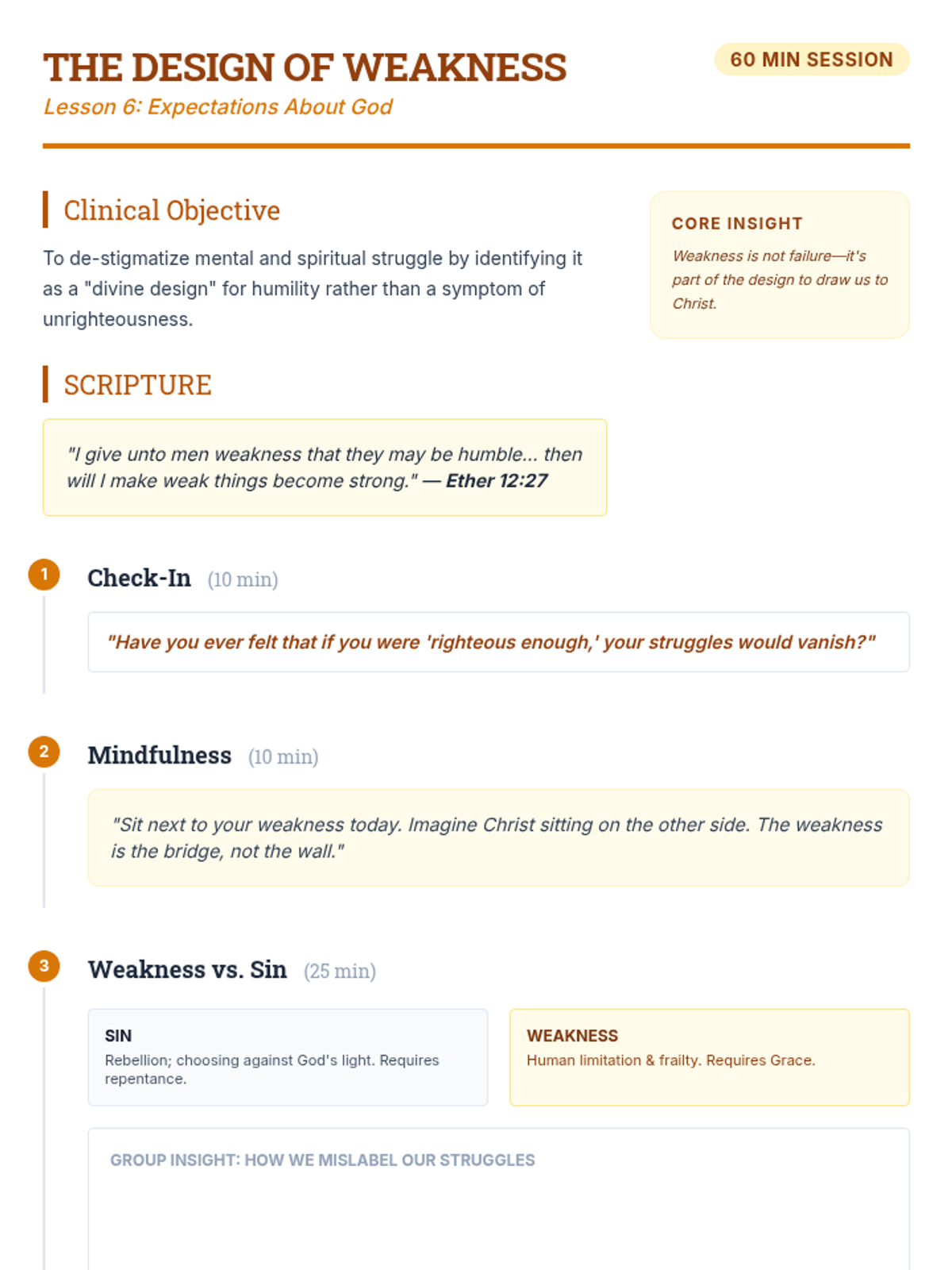
Explores the divine purpose of weakness as taught in Ether 12, reframing struggle as a tool for humility rather than evidence of failure.
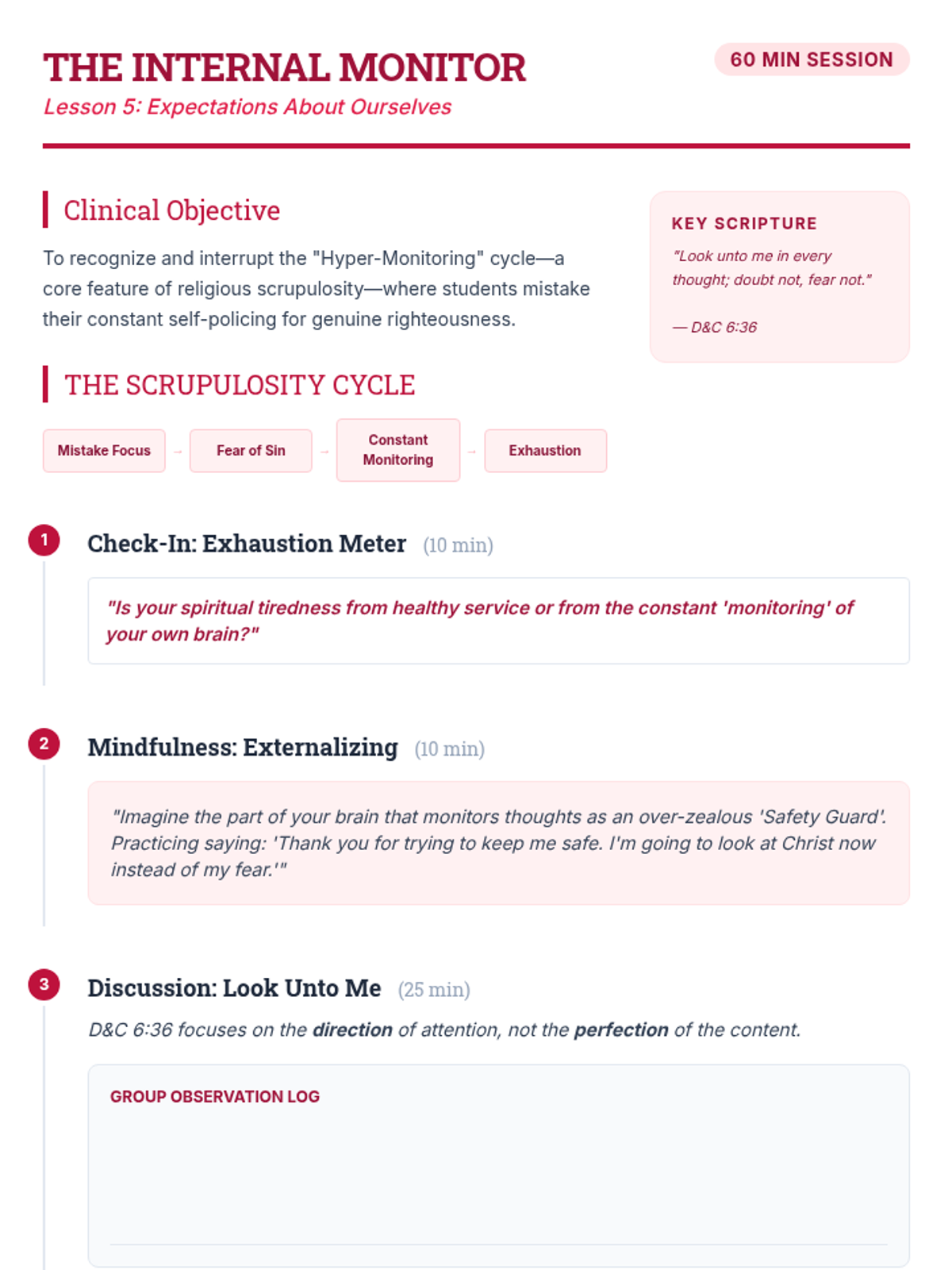
Addresses the clinical cycle of religious OCD, focusing on how hyper-monitoring and fear distort our self-perception and spiritual experience.
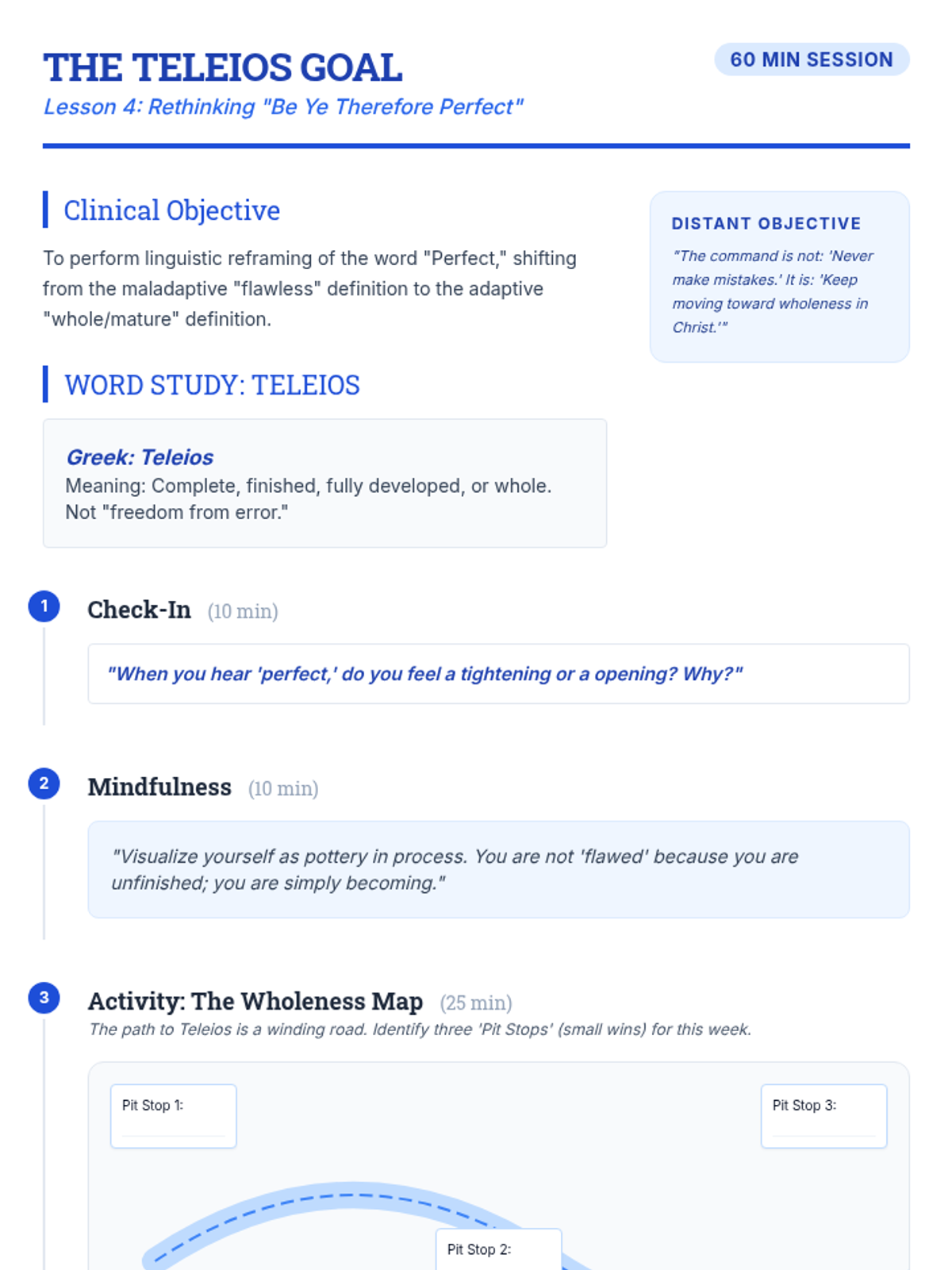
Reframes the command to 'be perfect' using the Greek 'teleios,' shifting the focus from 'flawless' to 'whole' and 'complete in Christ.'
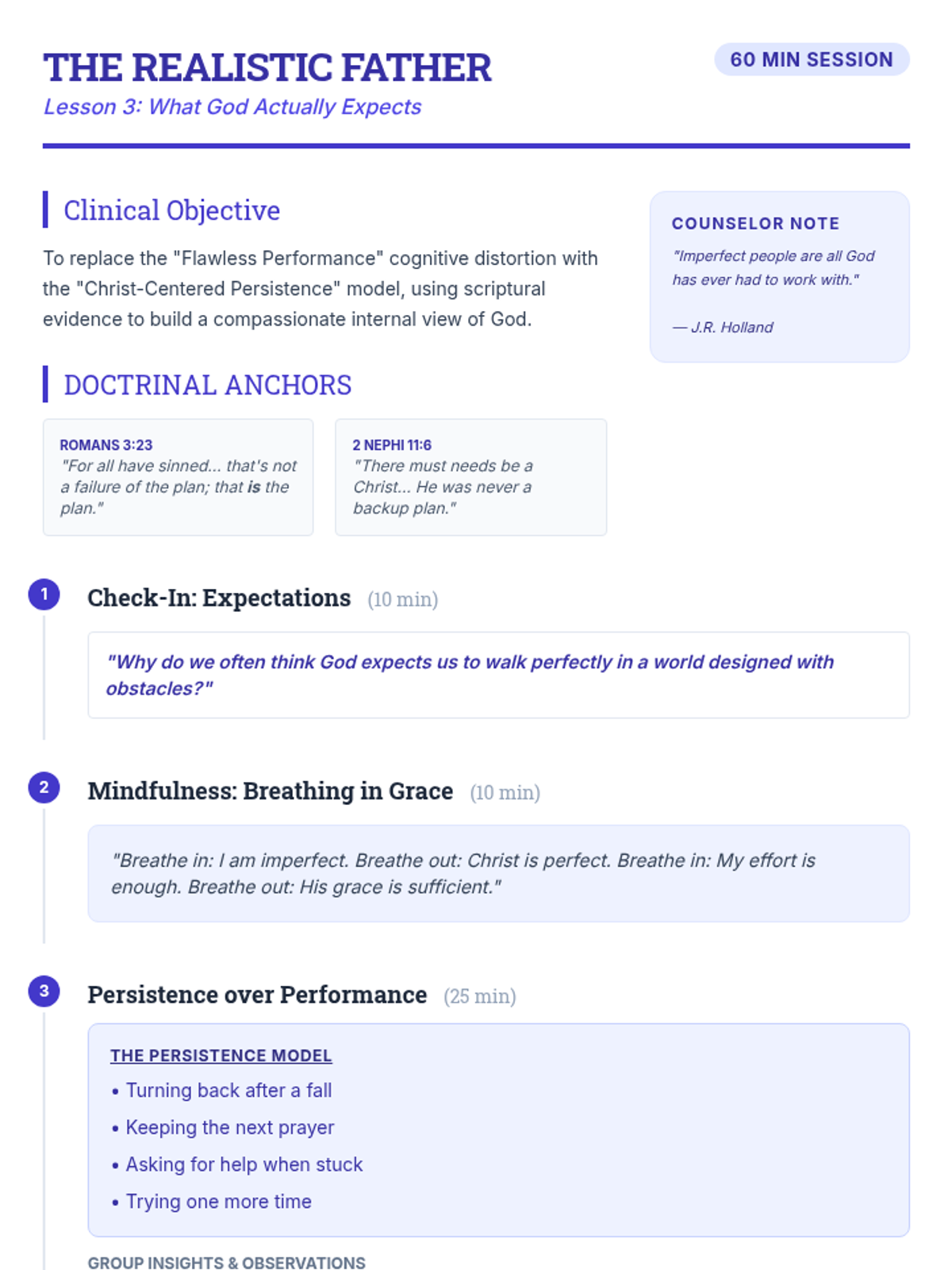
A deep dive into the doctrine that God expects persistence and Christ-centeredness rather than flawless performance in mortality.
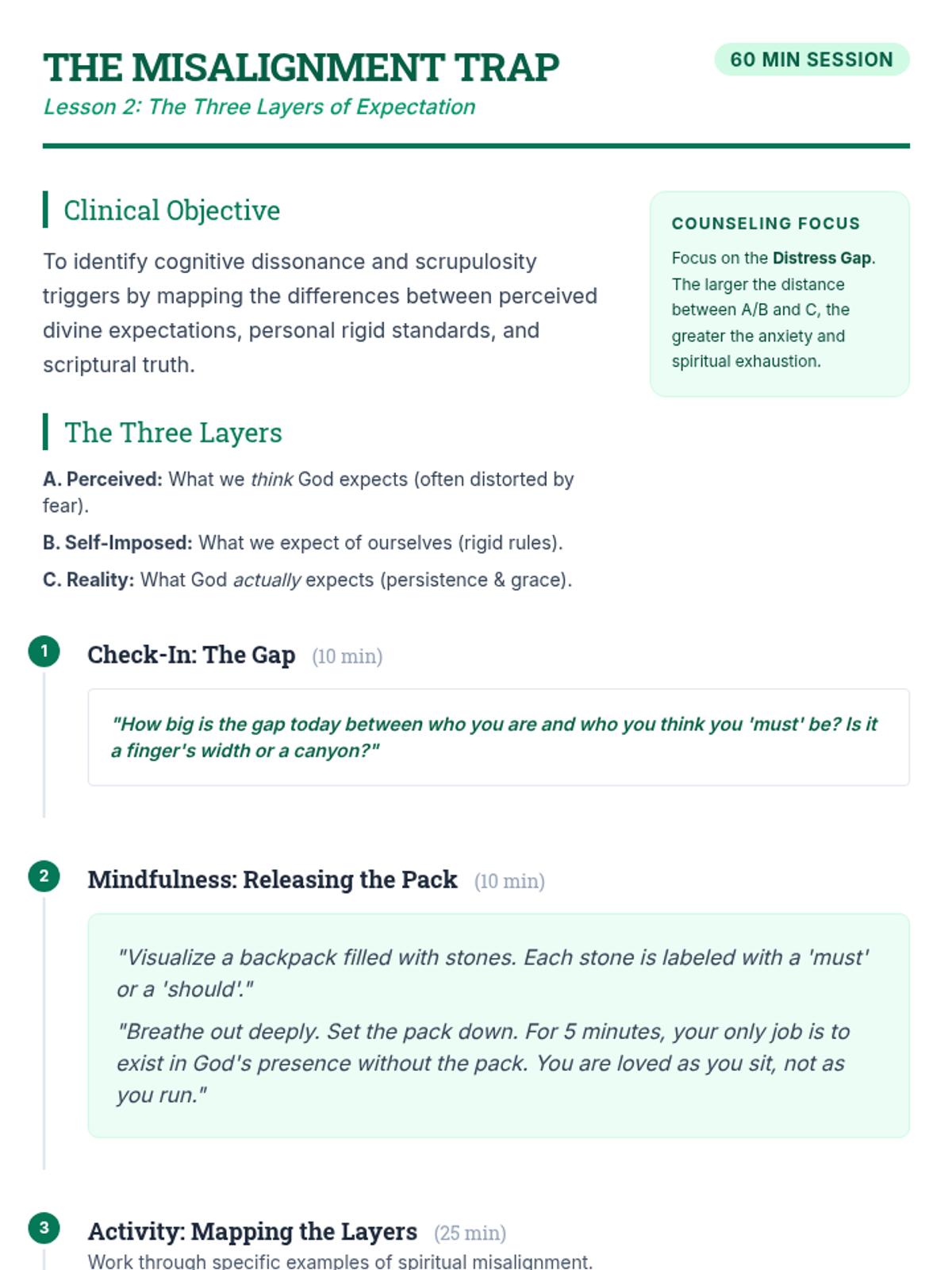
Identifies the three layers of expectations—what we think God wants, what we want, and what God actually wants—to find the source of religious distress.
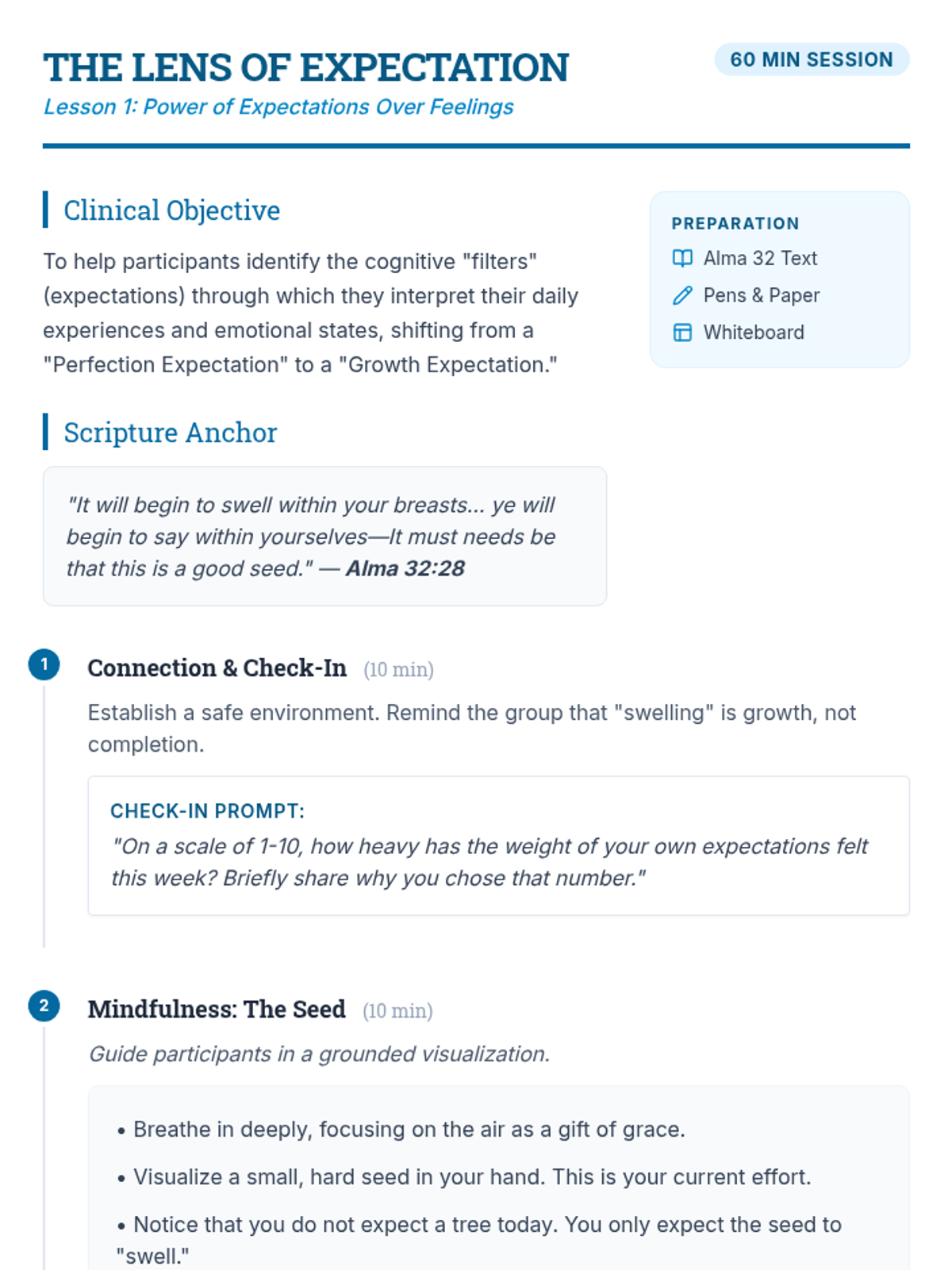
Explores how our internal expectations act as filters for our reality, using Alma 32 to reframe growth as a gradual process rather than immediate perfection.
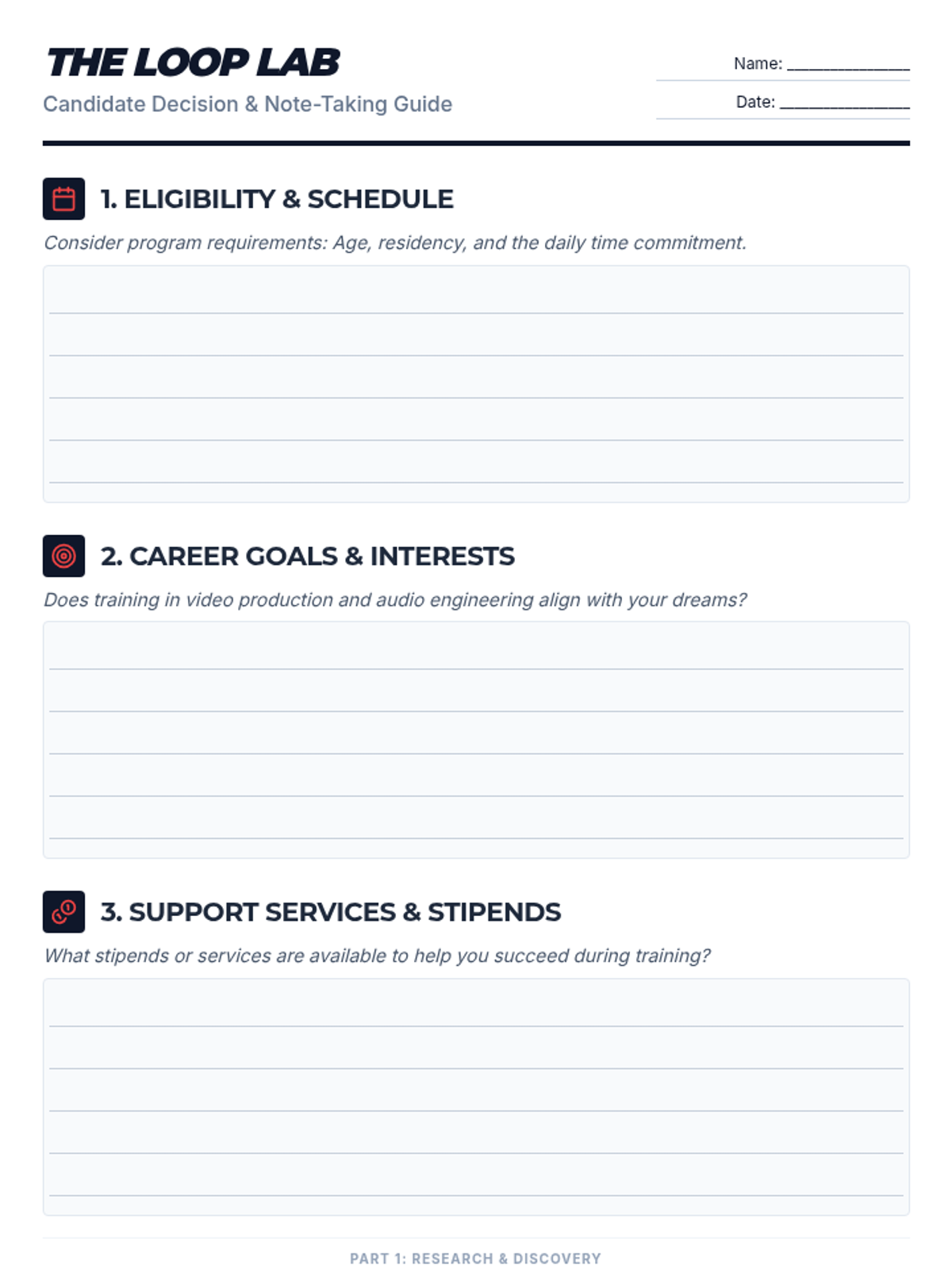
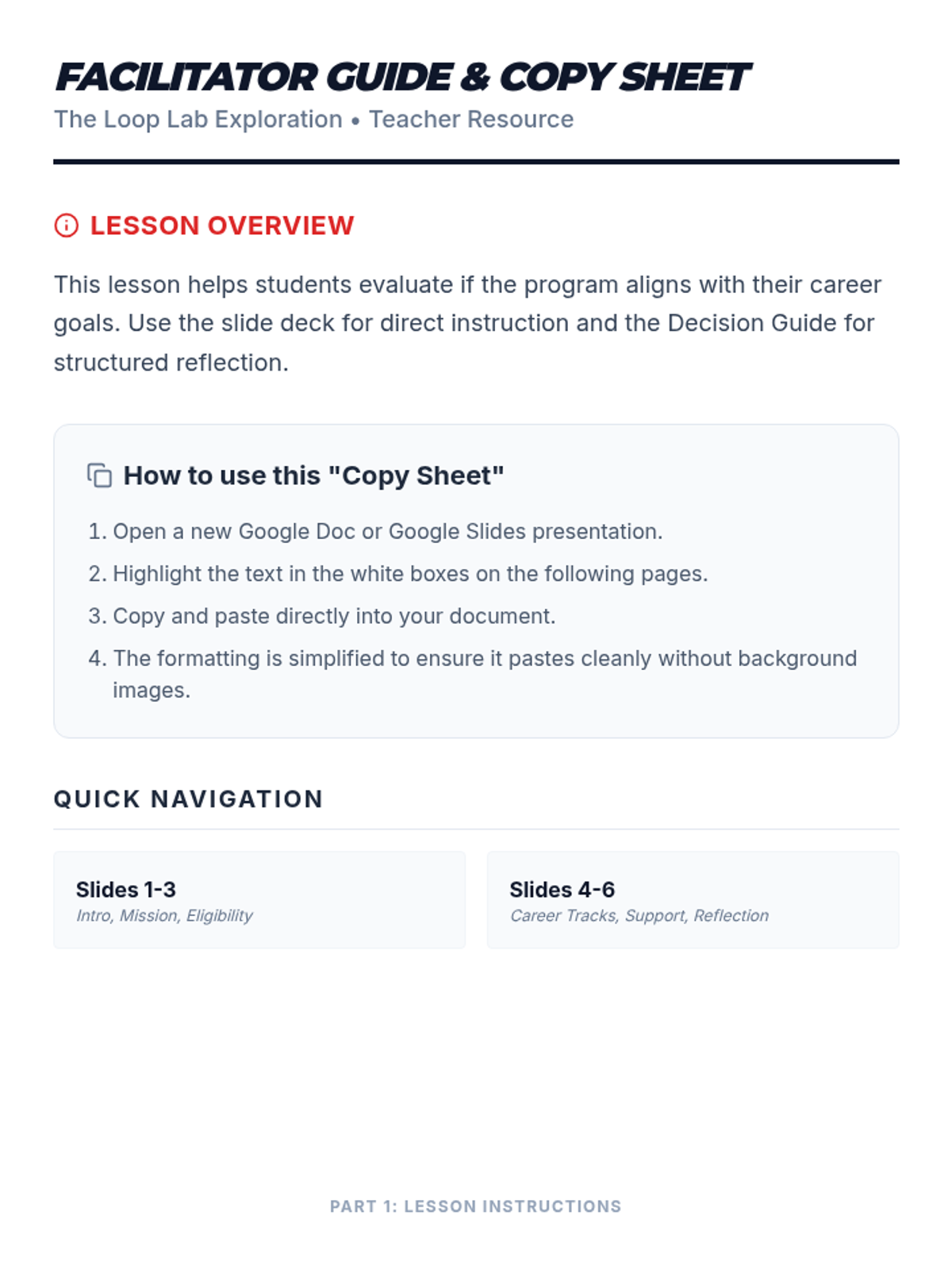
A lesson designed to help students evaluate their interest in and eligibility for The Loop Lab program, focusing on aligning personal career goals with the program's offerings.
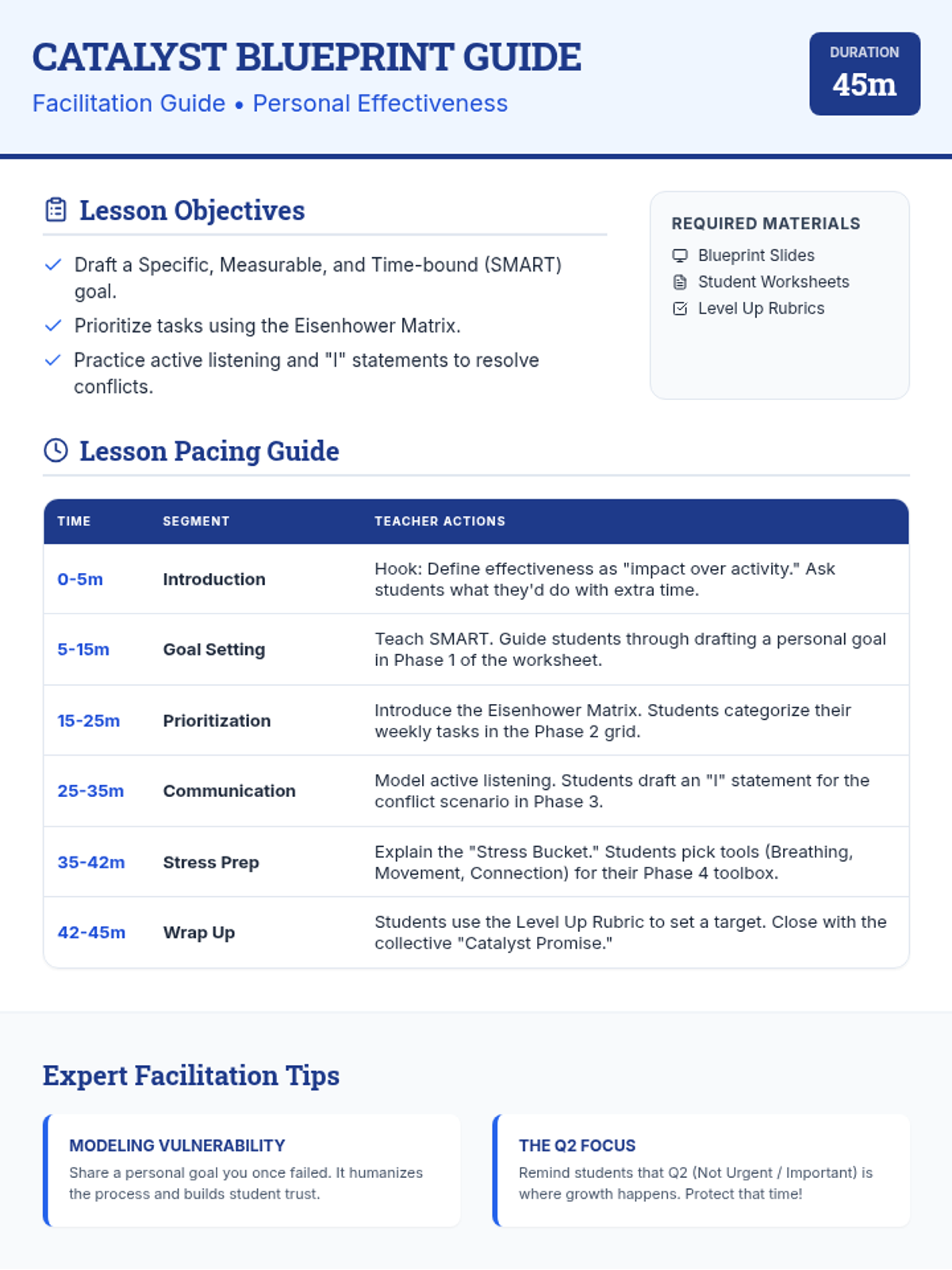
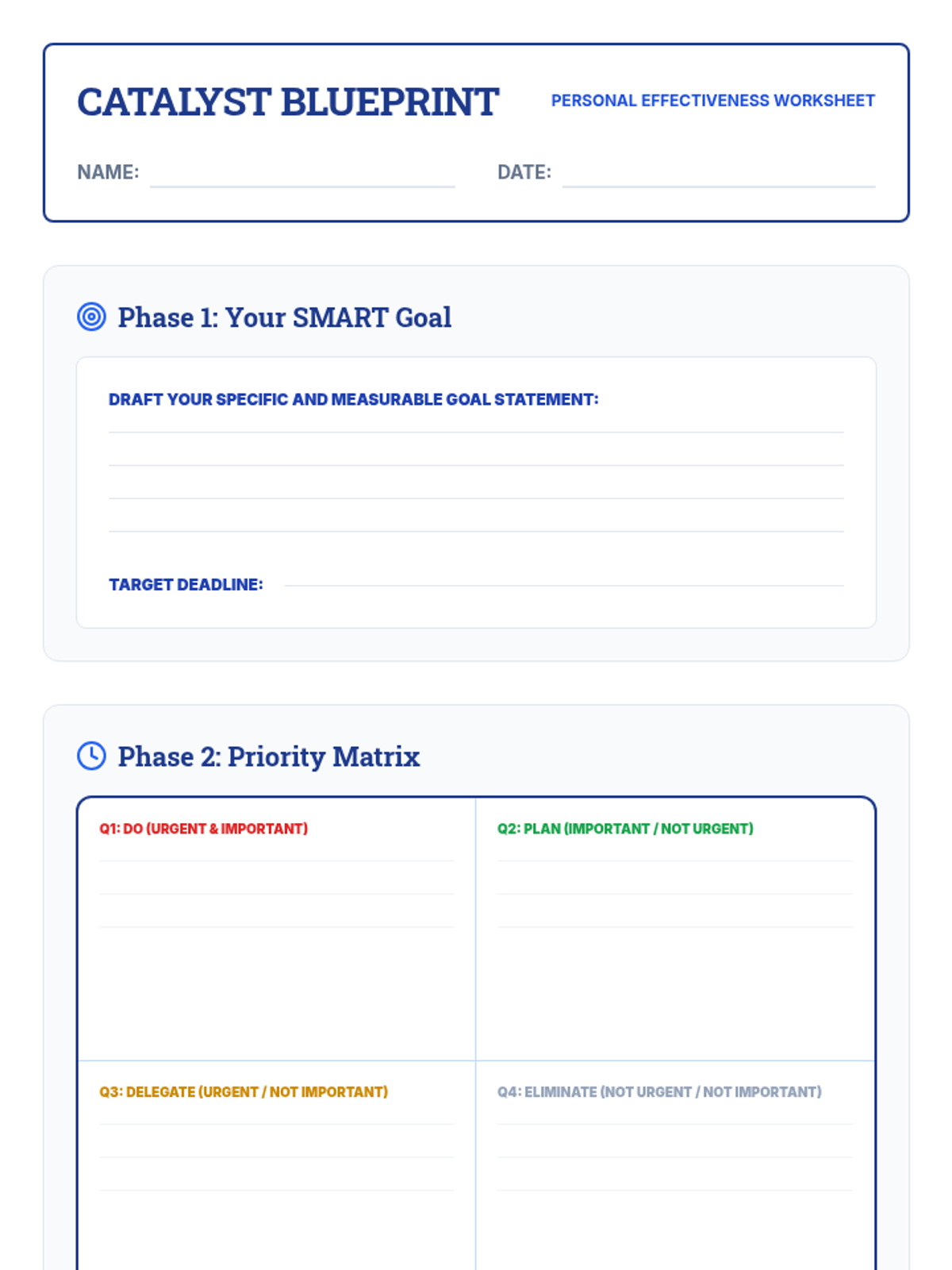
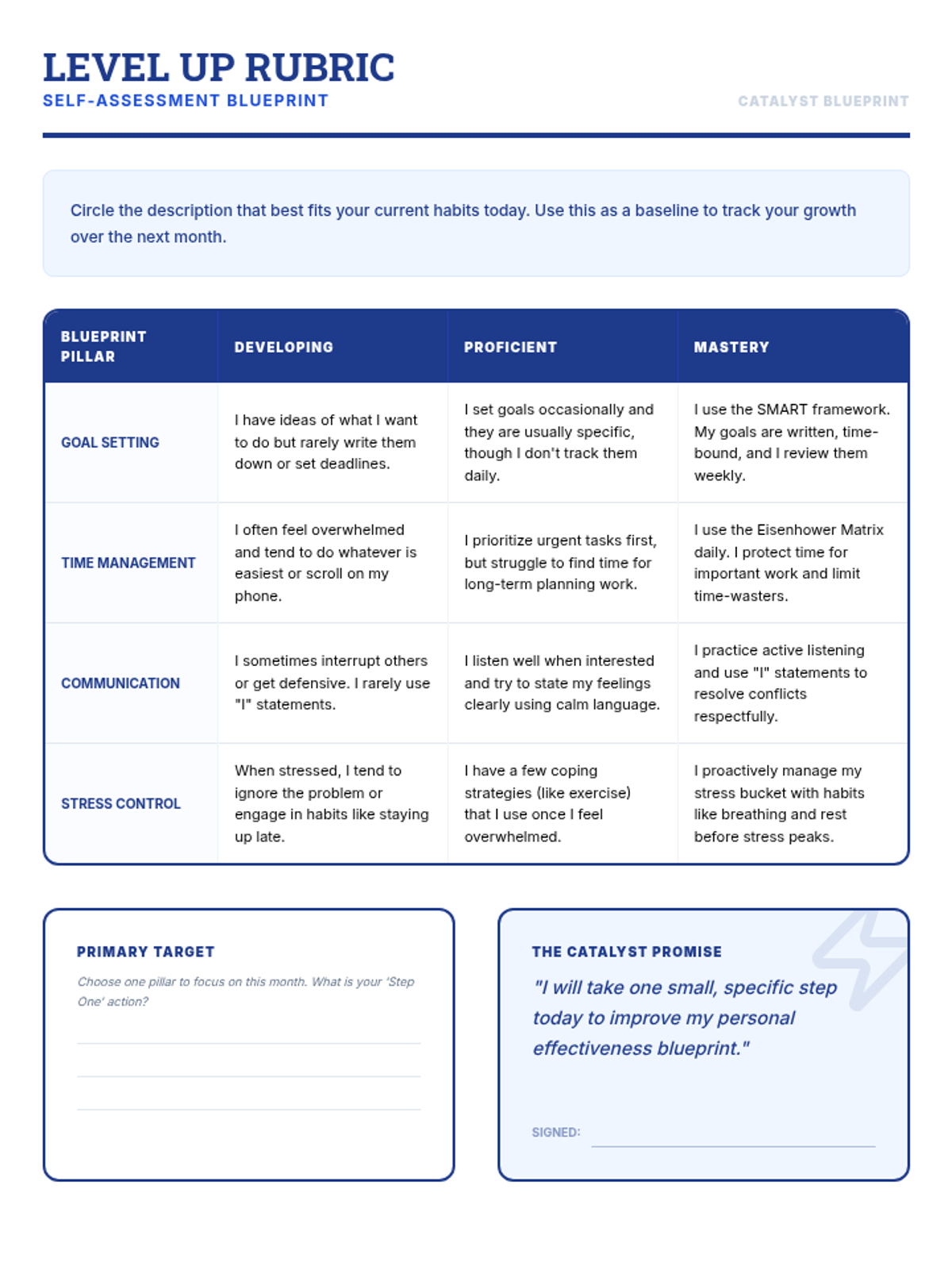
A comprehensive 45-minute session designed to equip students with core personal effectiveness skills including SMART goal setting, the Eisenhower Matrix for time management, active listening techniques, and stress reduction strategies.
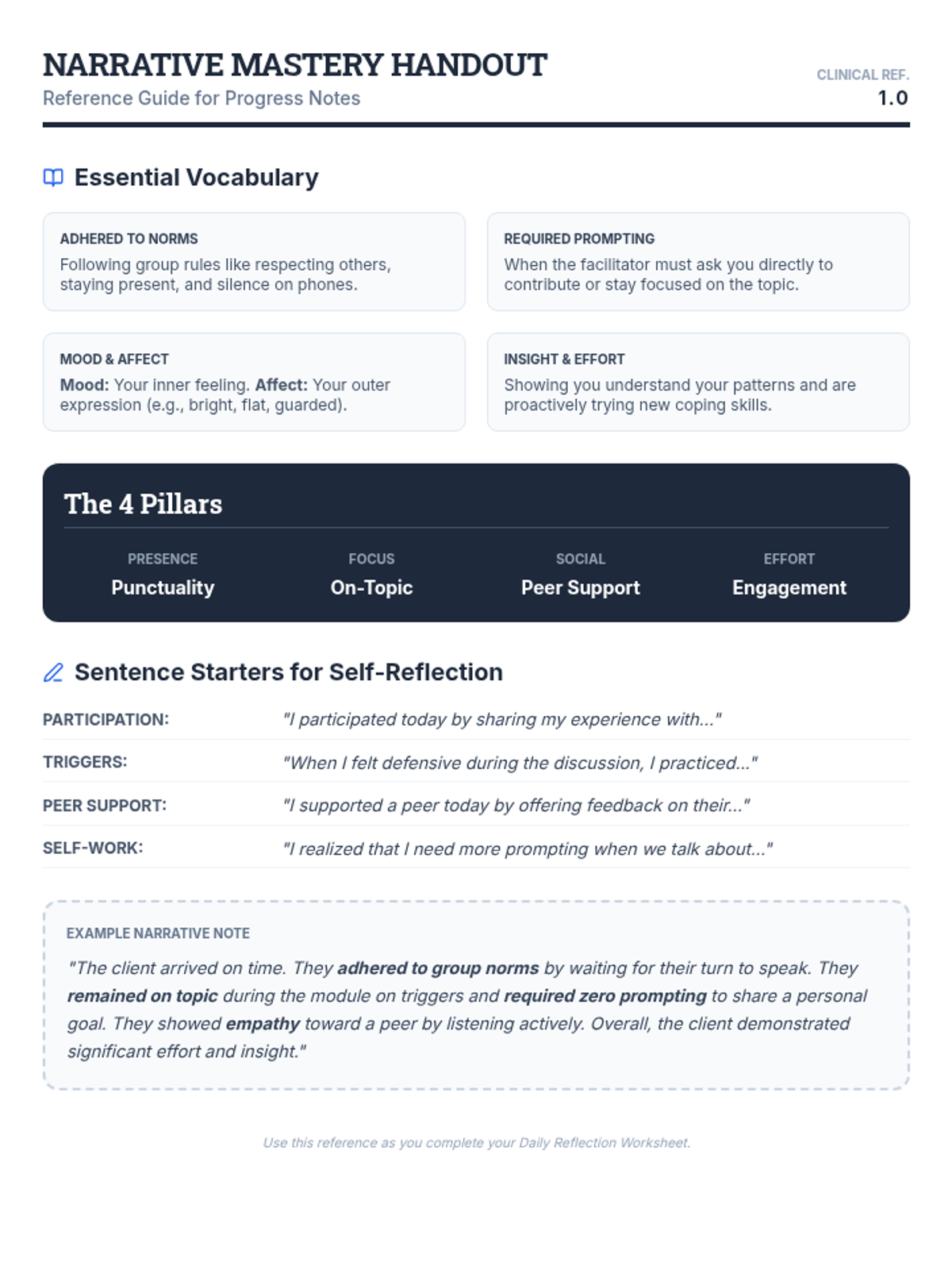
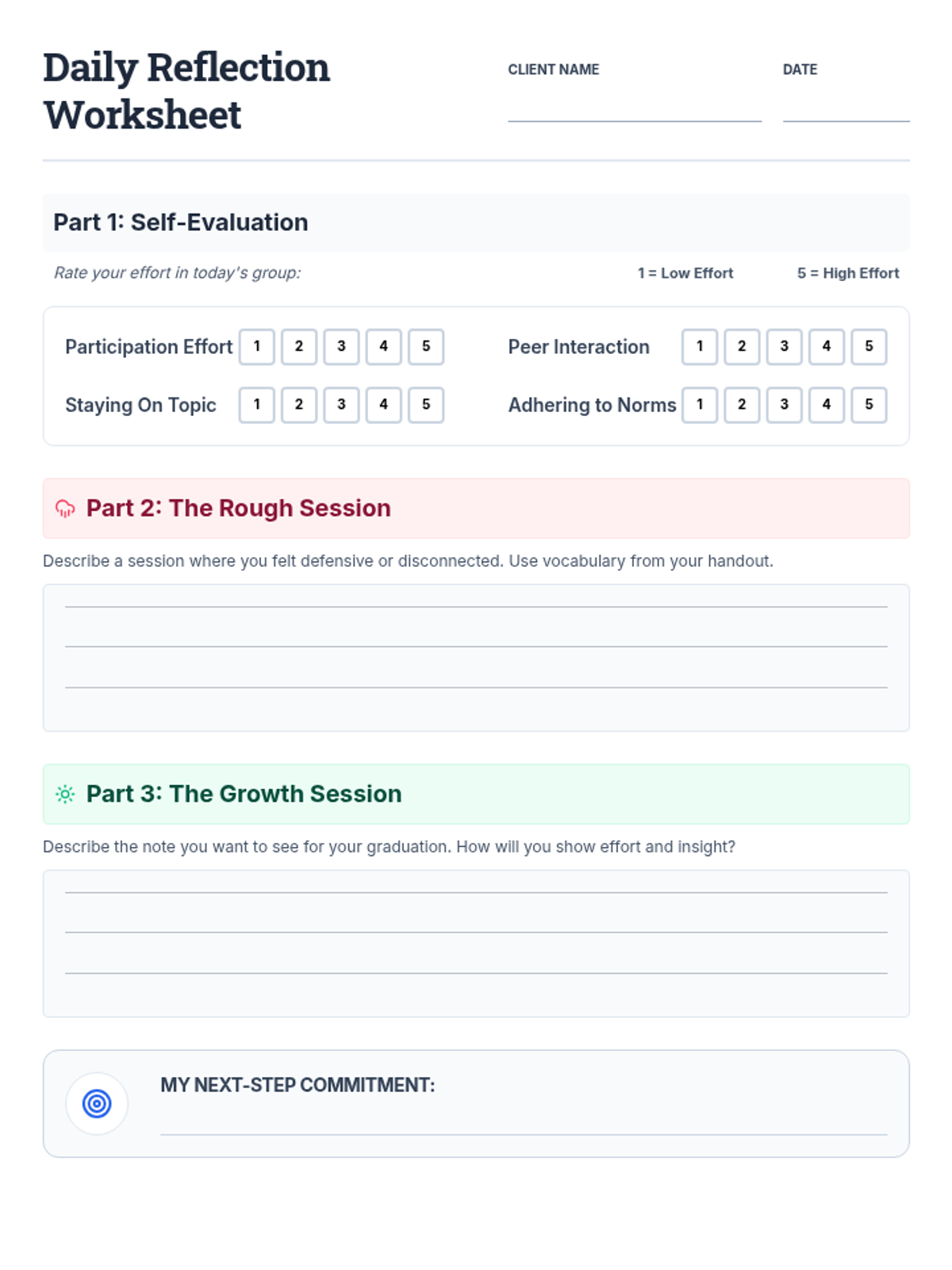
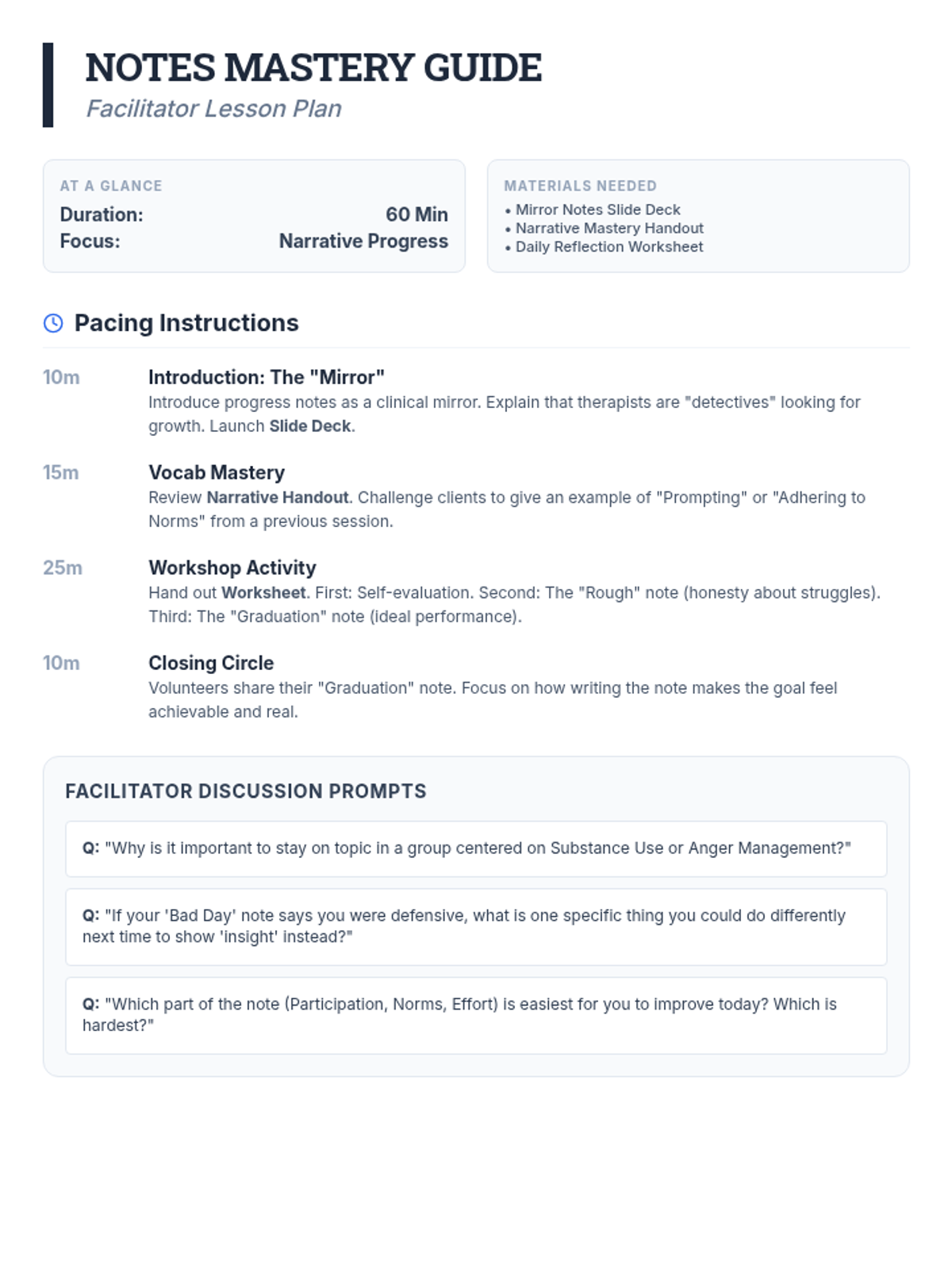
A lesson designed to empower clients in recovery to understand and write their own narrative progress notes, focusing on self-evaluation of group participation, behavior, and future goals.
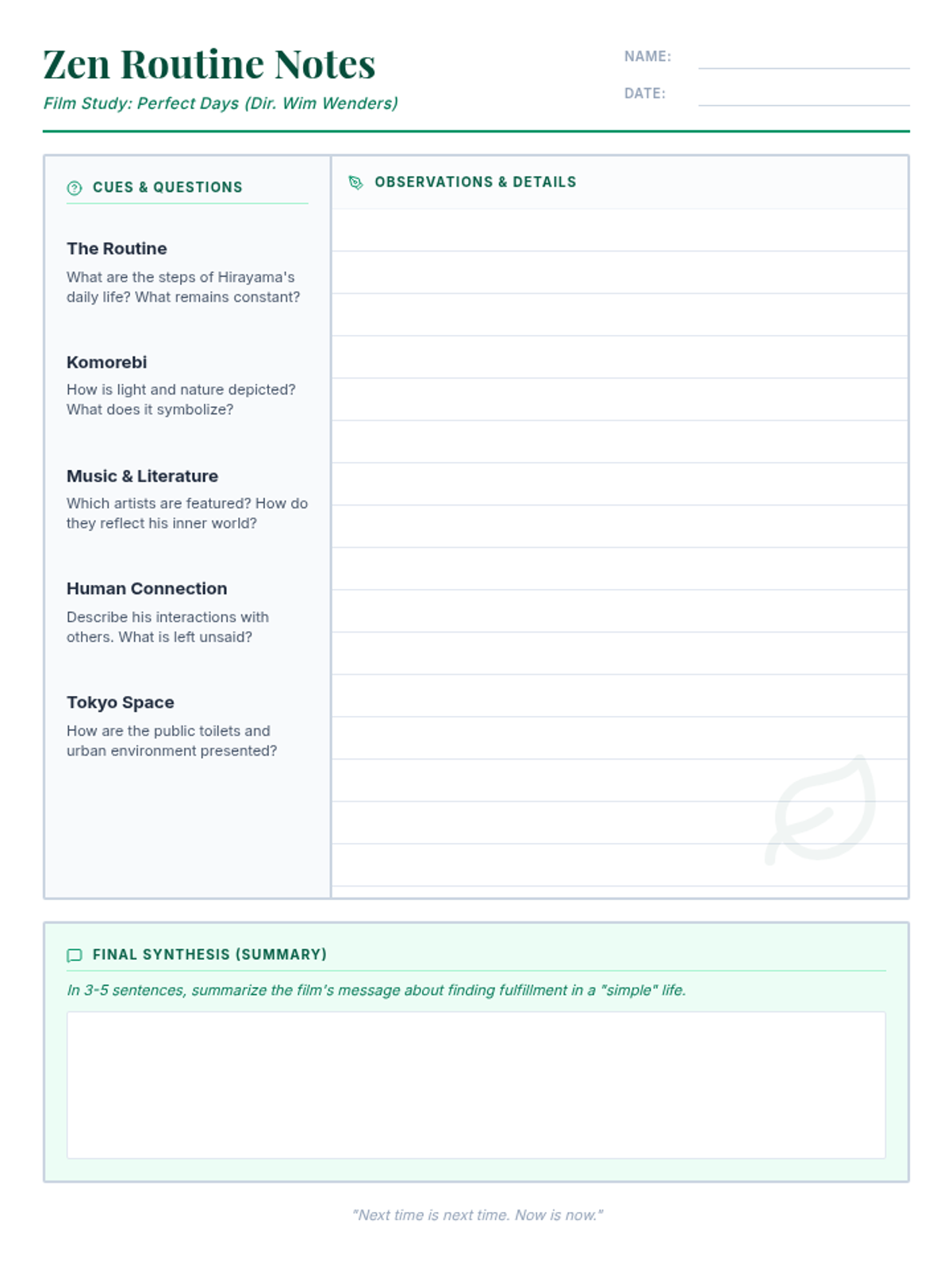
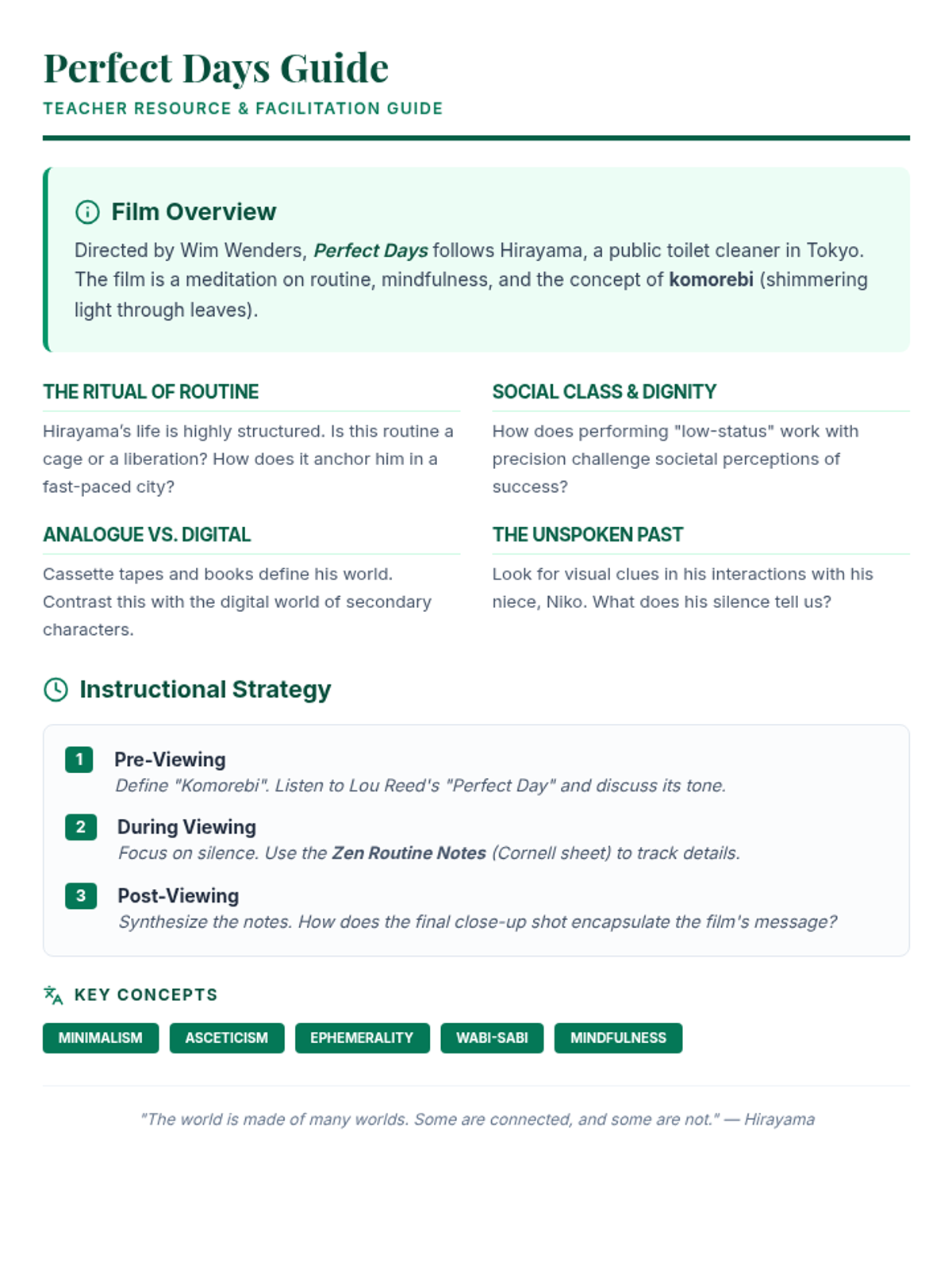
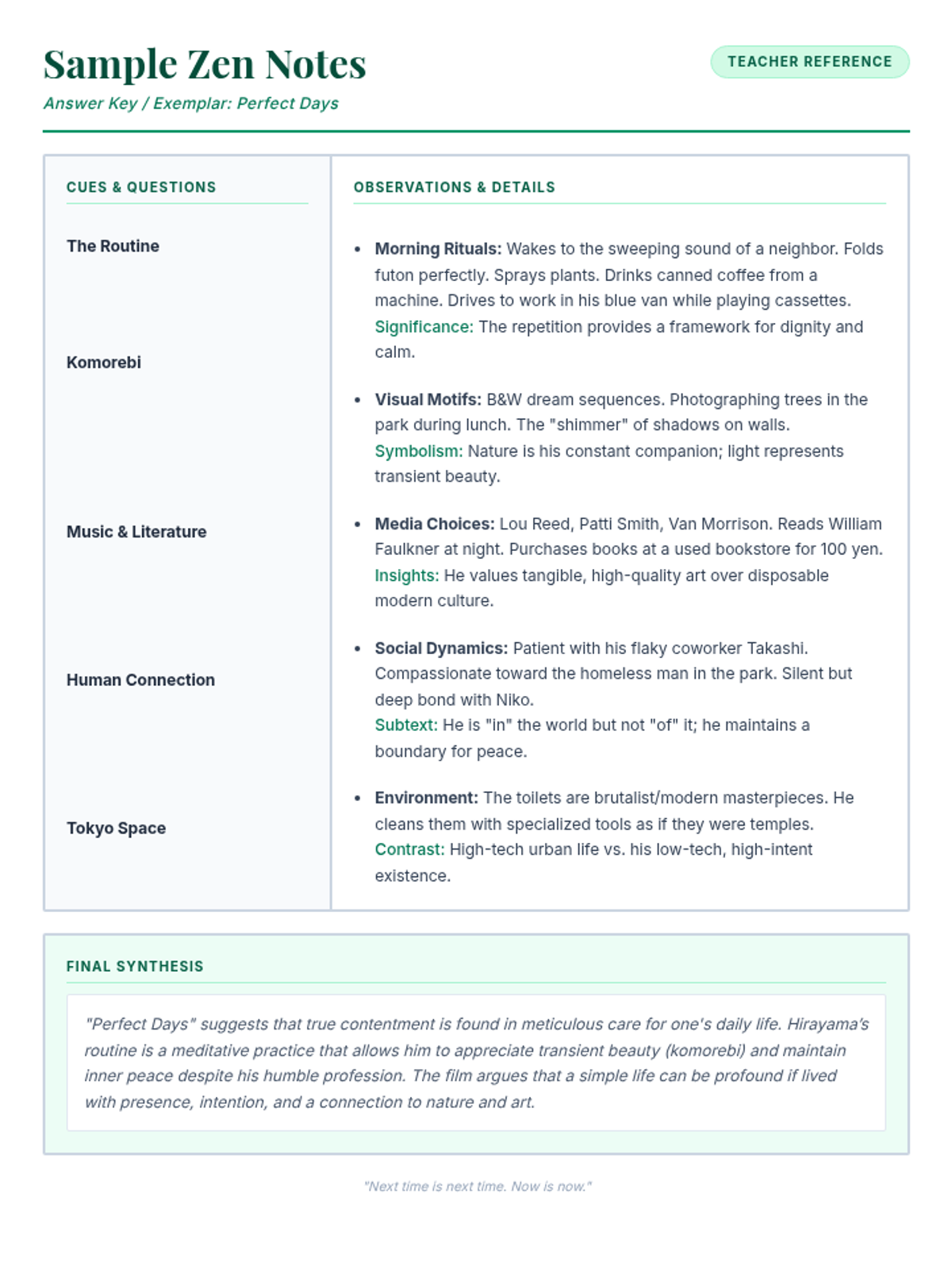
An exploration of Wim Wenders' film Perfect Days, focusing on themes of routine, mindfulness, and finding beauty in the everyday through Cornell note-taking.
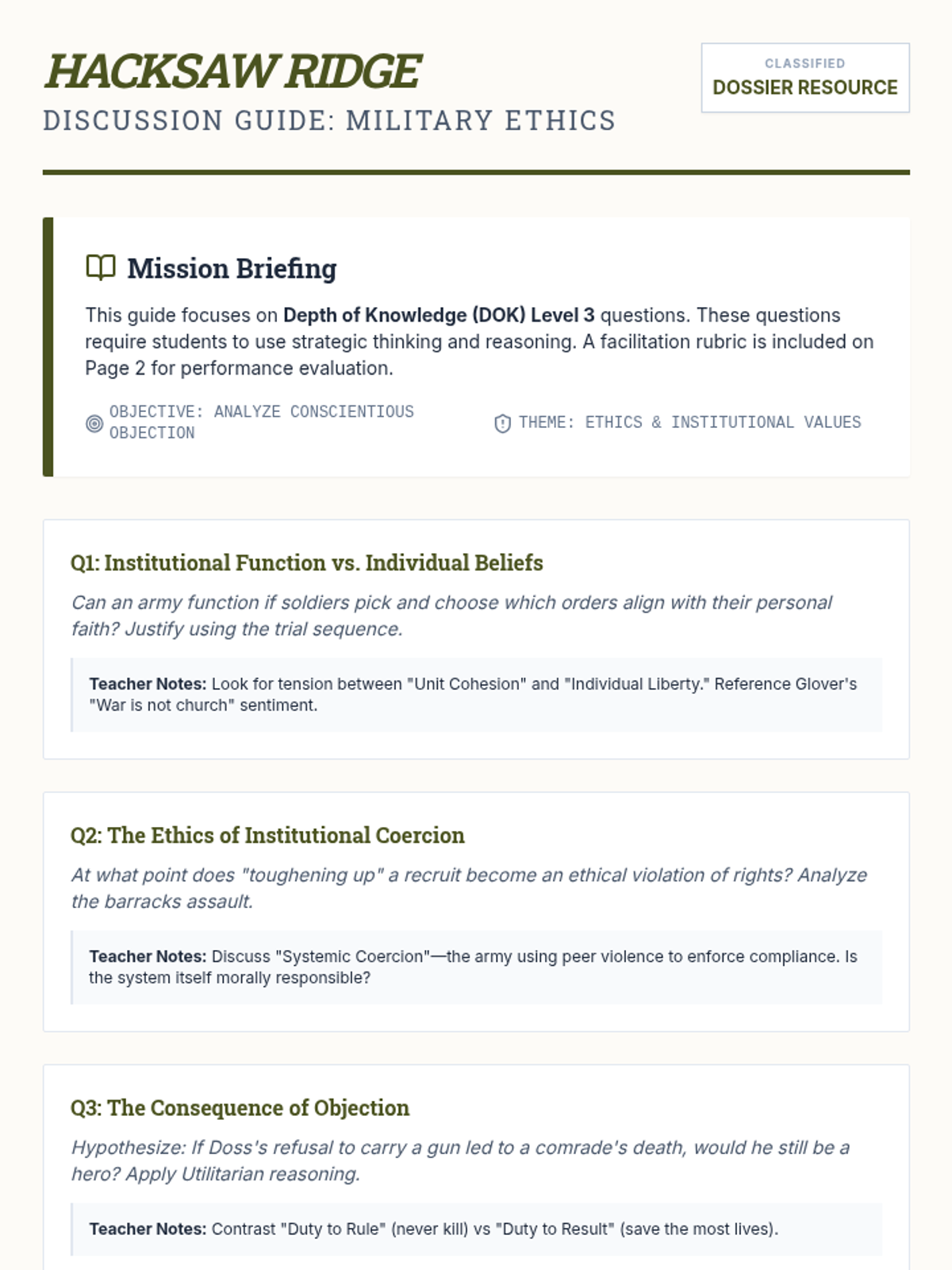
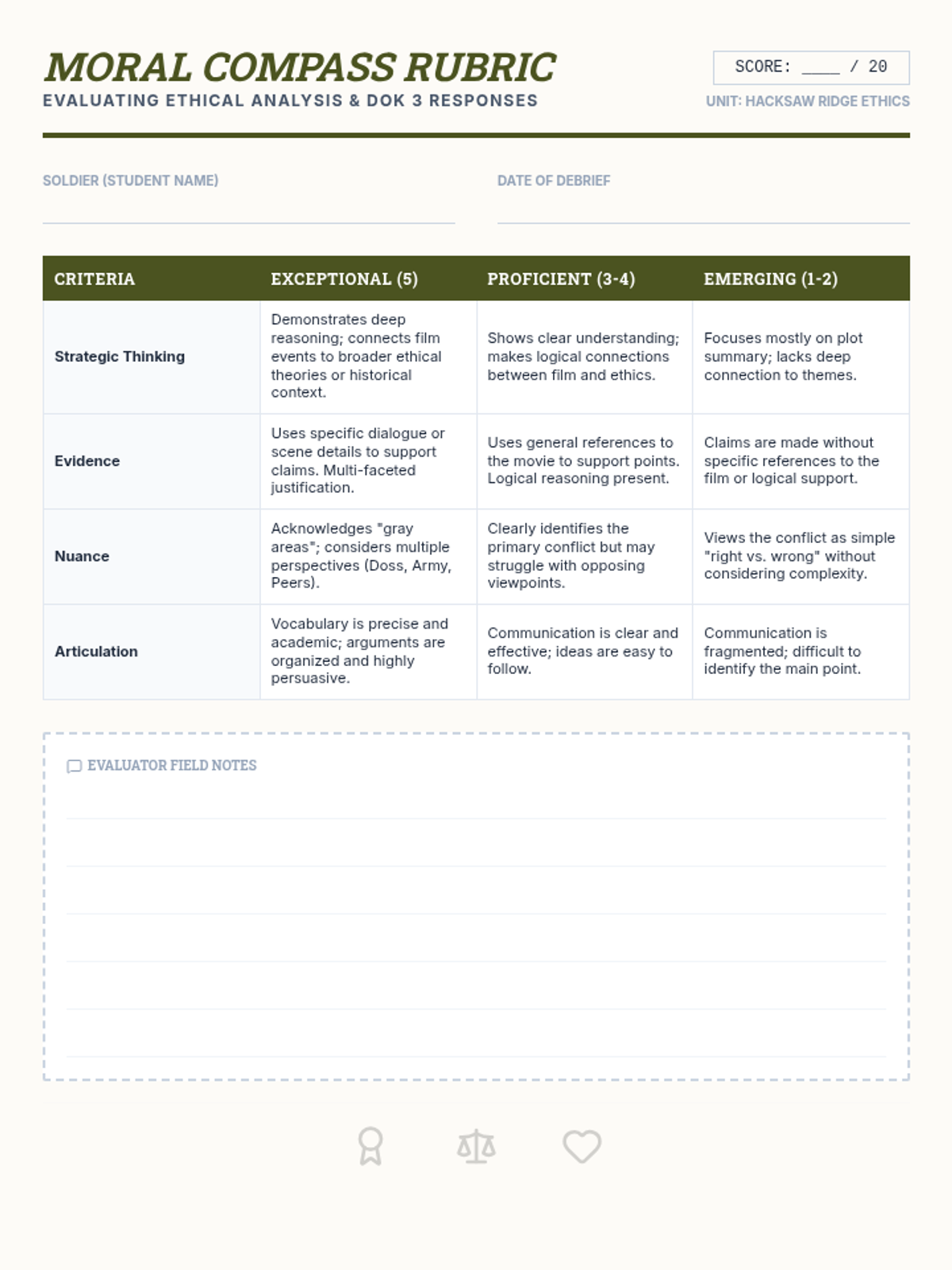
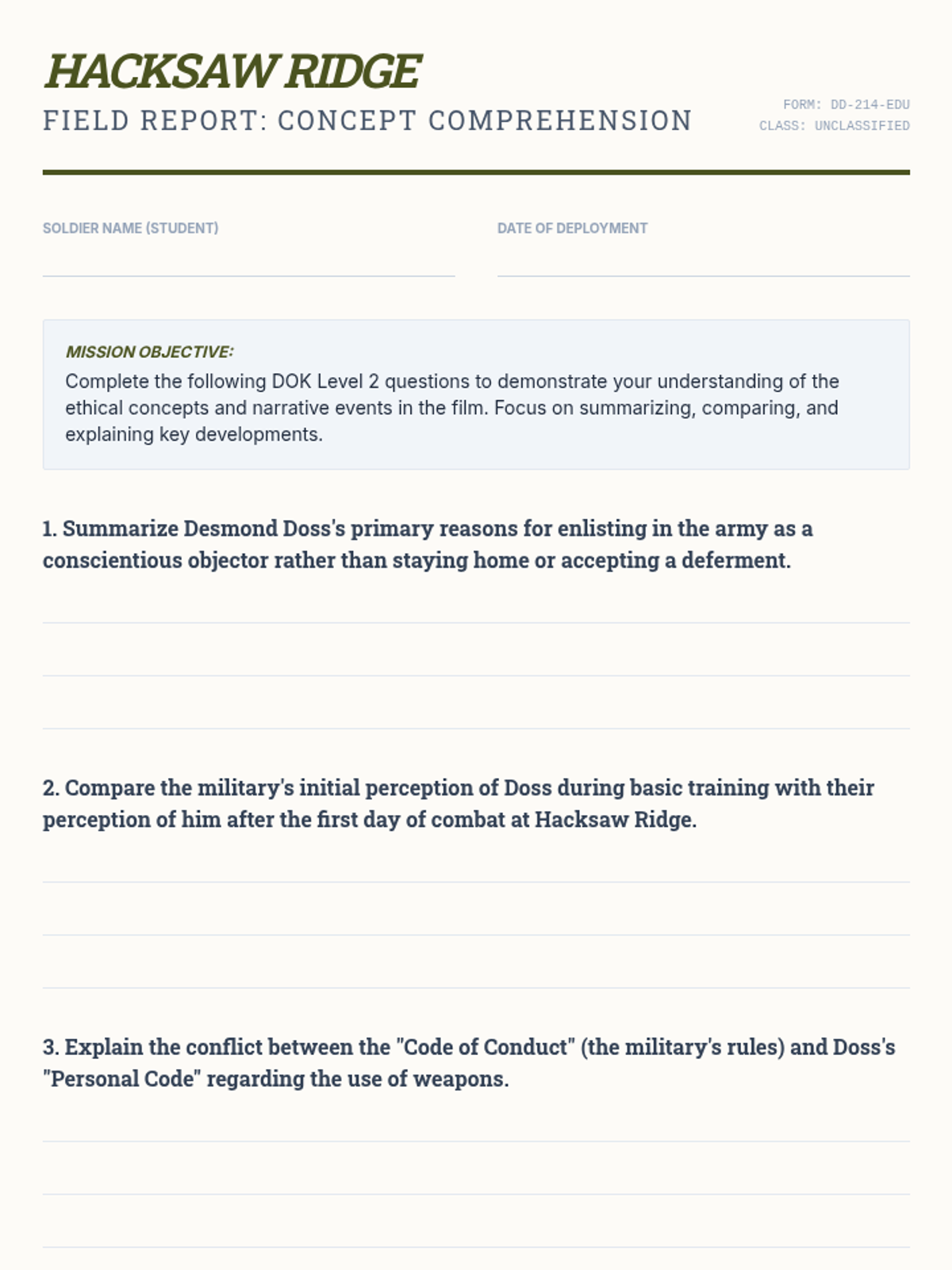
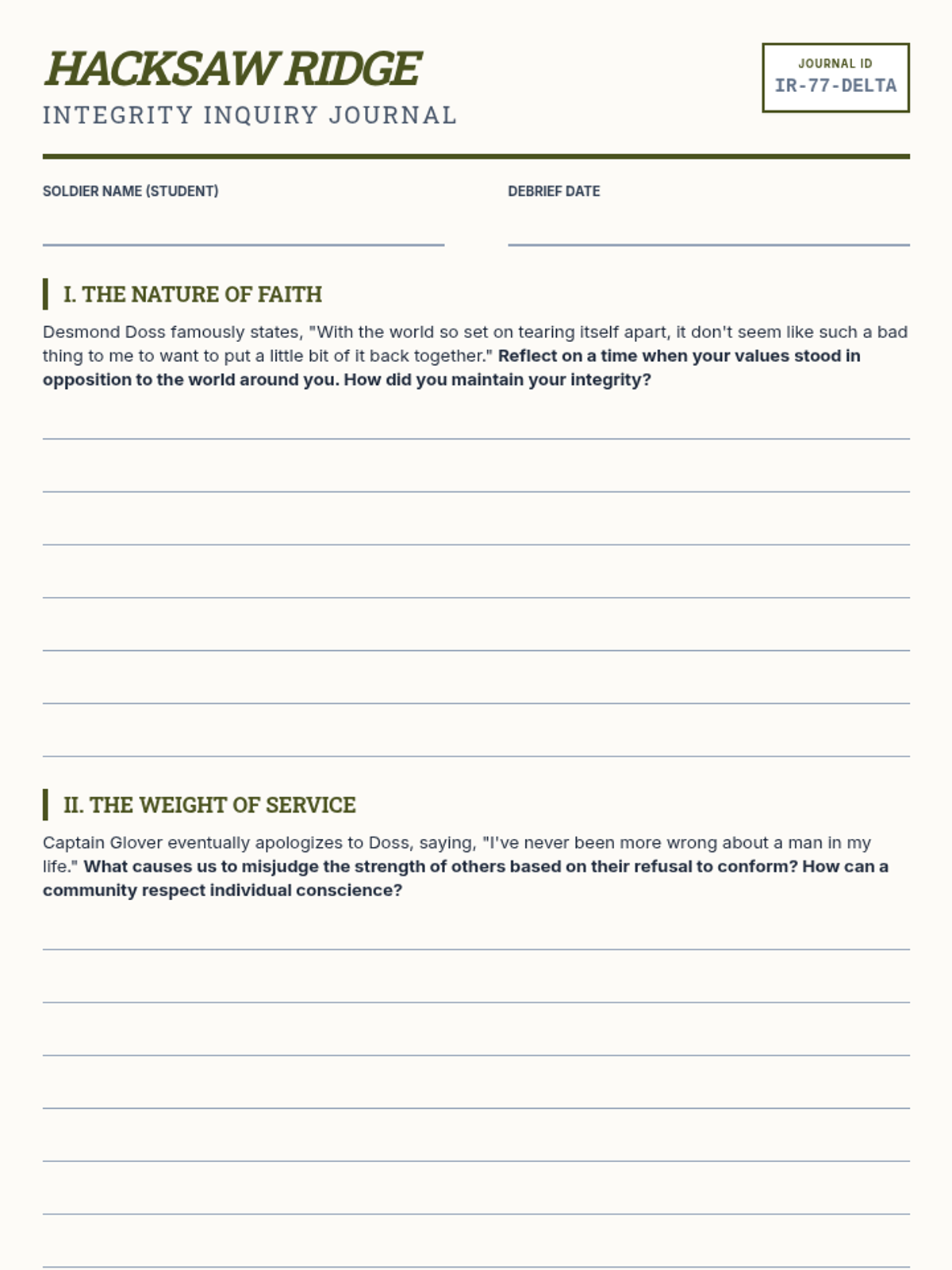
An in-depth exploration of conscientious objection and military ethics through the lens of the film Hacksaw Ridge, featuring DOK Level 3 discussion prompts and evaluation tools.
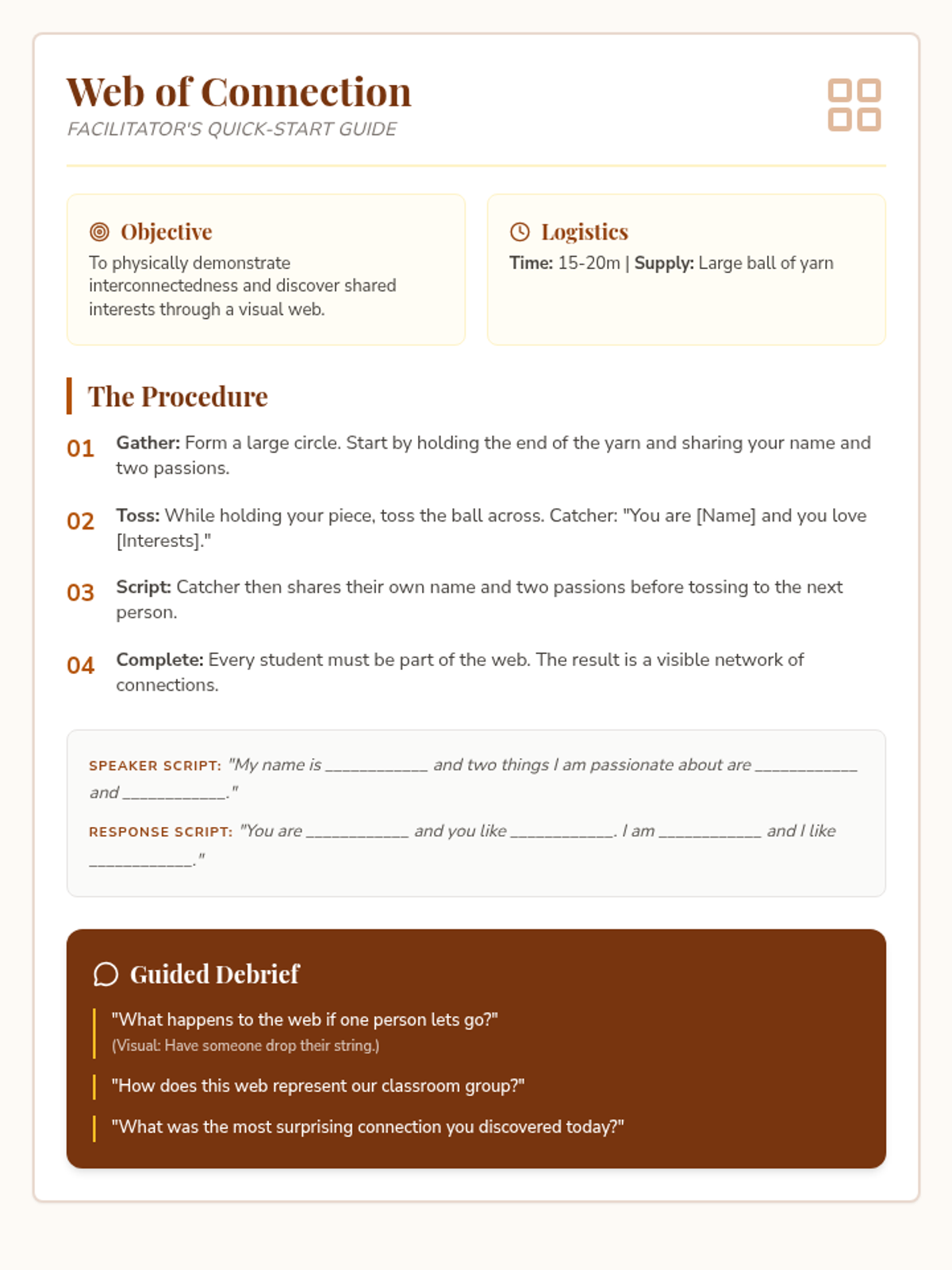
A community-building activity where students use a ball of string to create a physical web, visualizing their shared interests and the strength of their group connection.
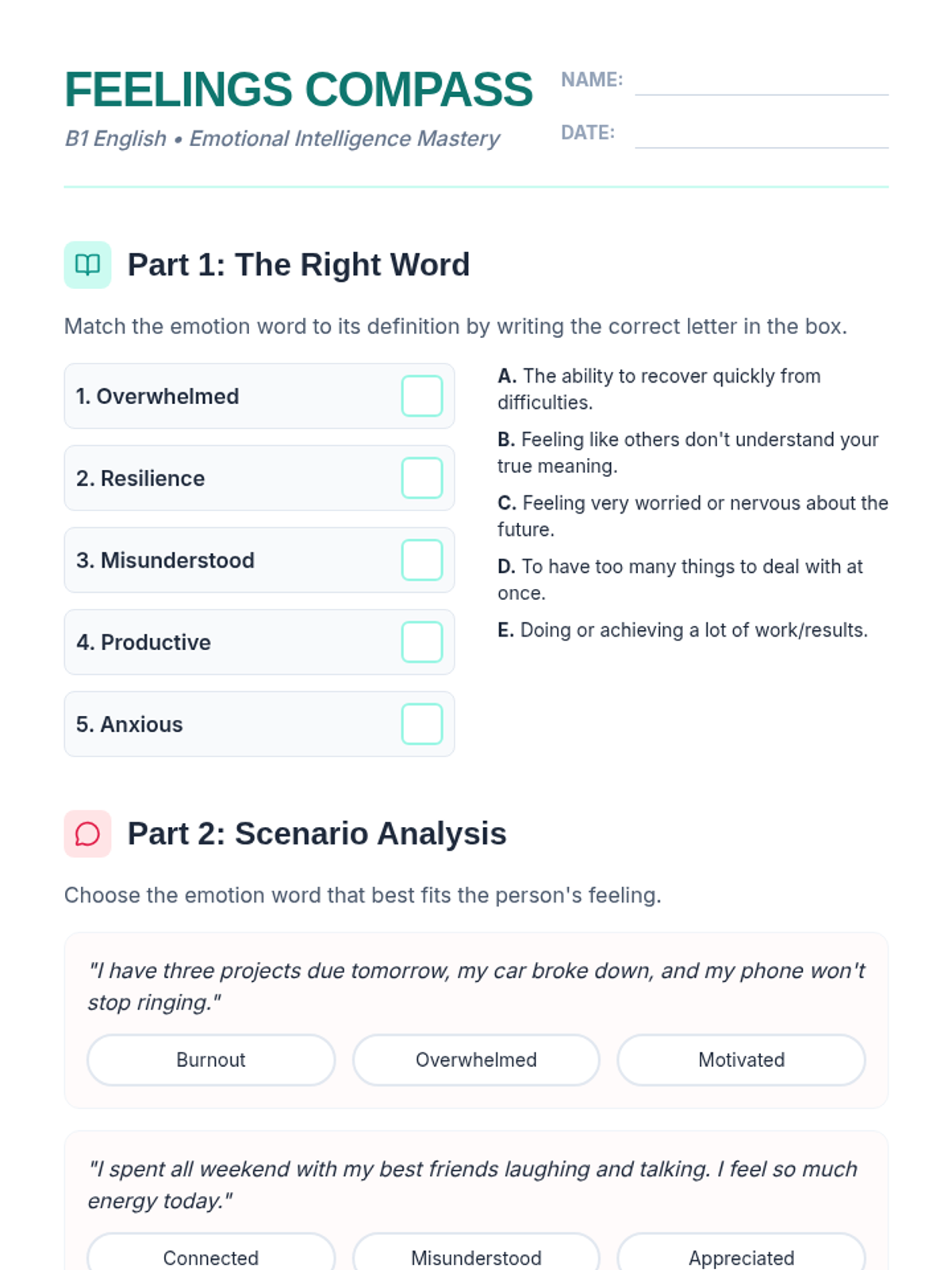
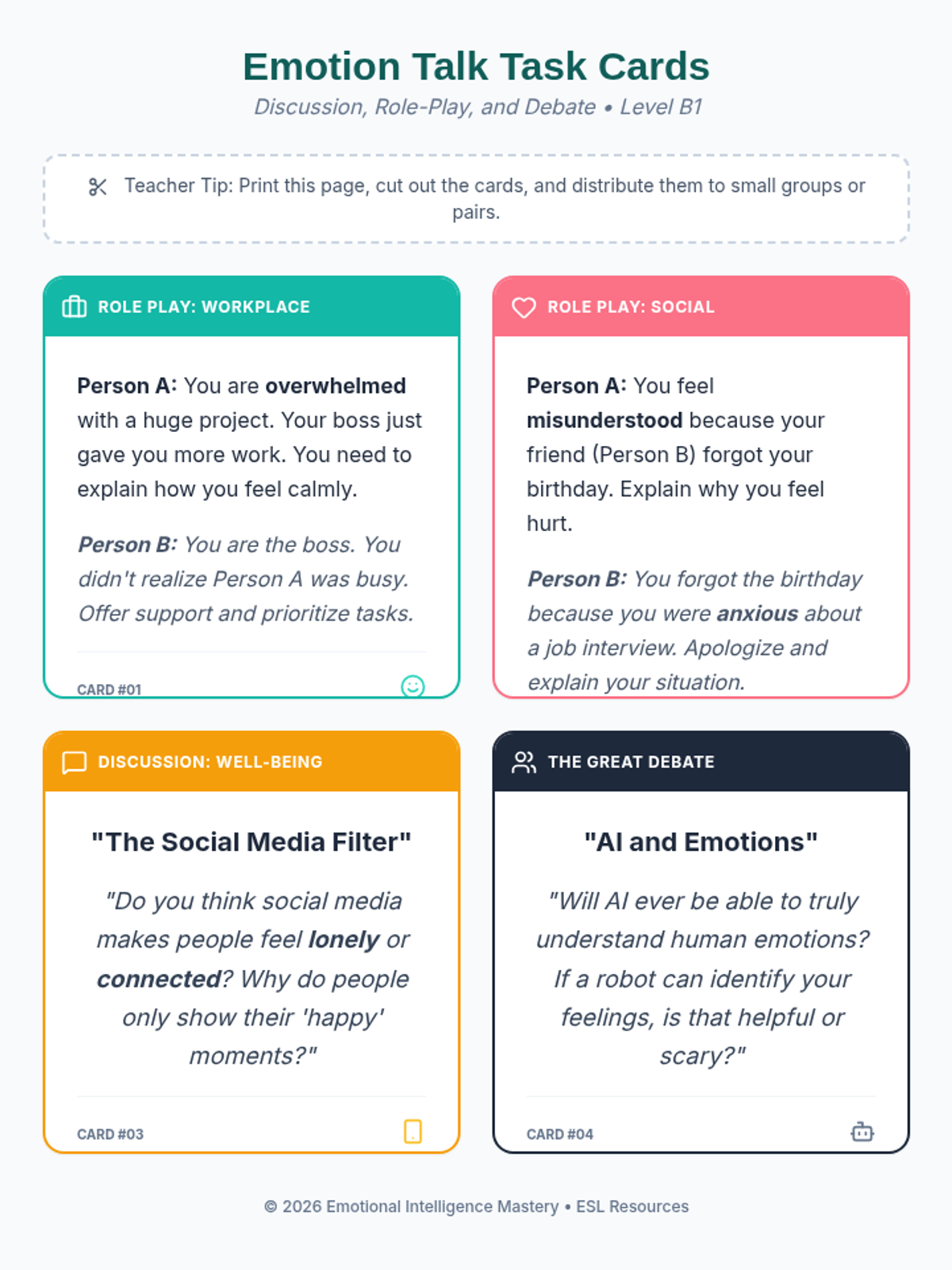
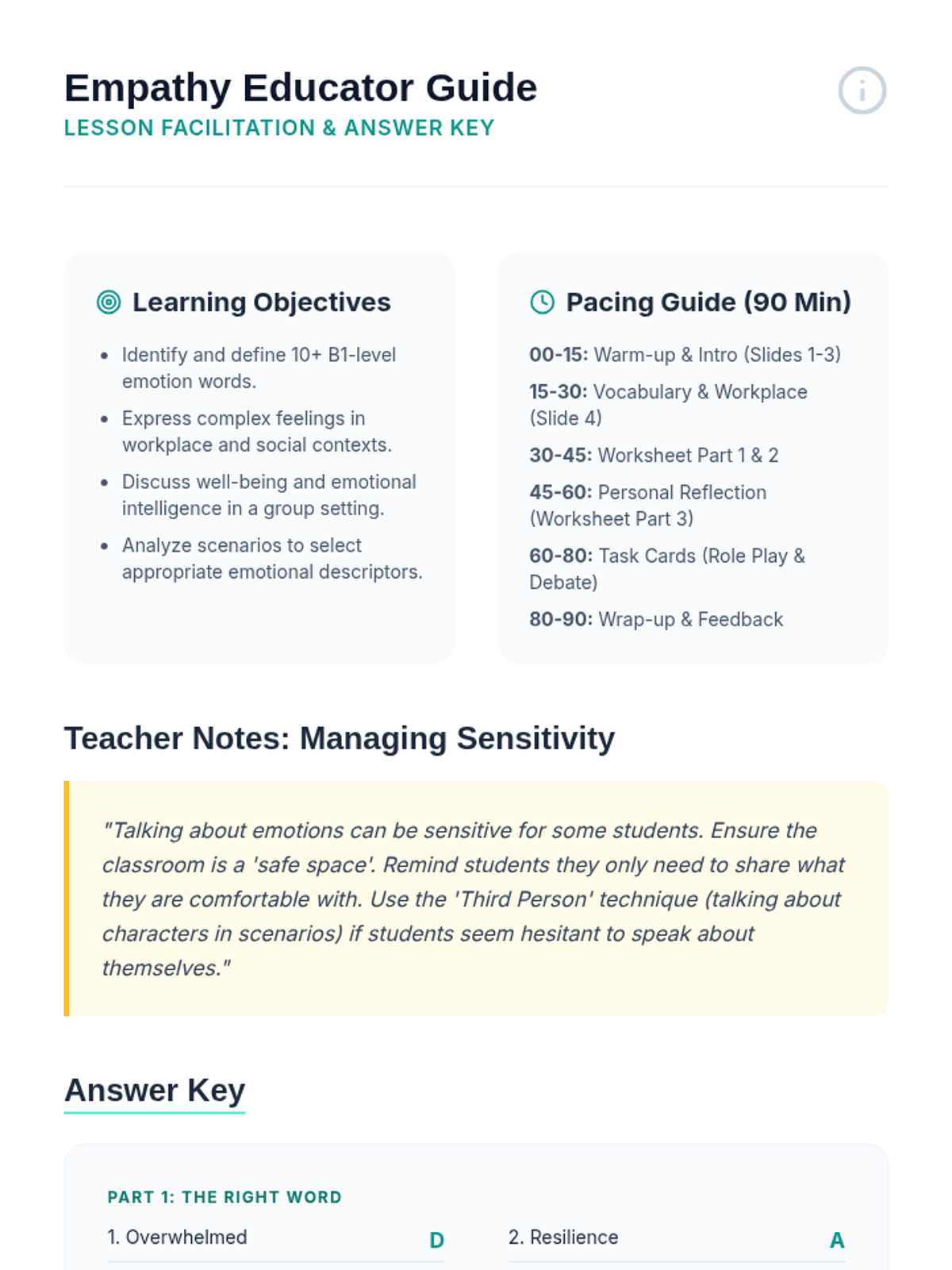
A comprehensive B1 ESL lesson focused on identifying and discussing complex emotions in workplace, social, and personal contexts through a structured emotions wheel and interactive speaking tasks.
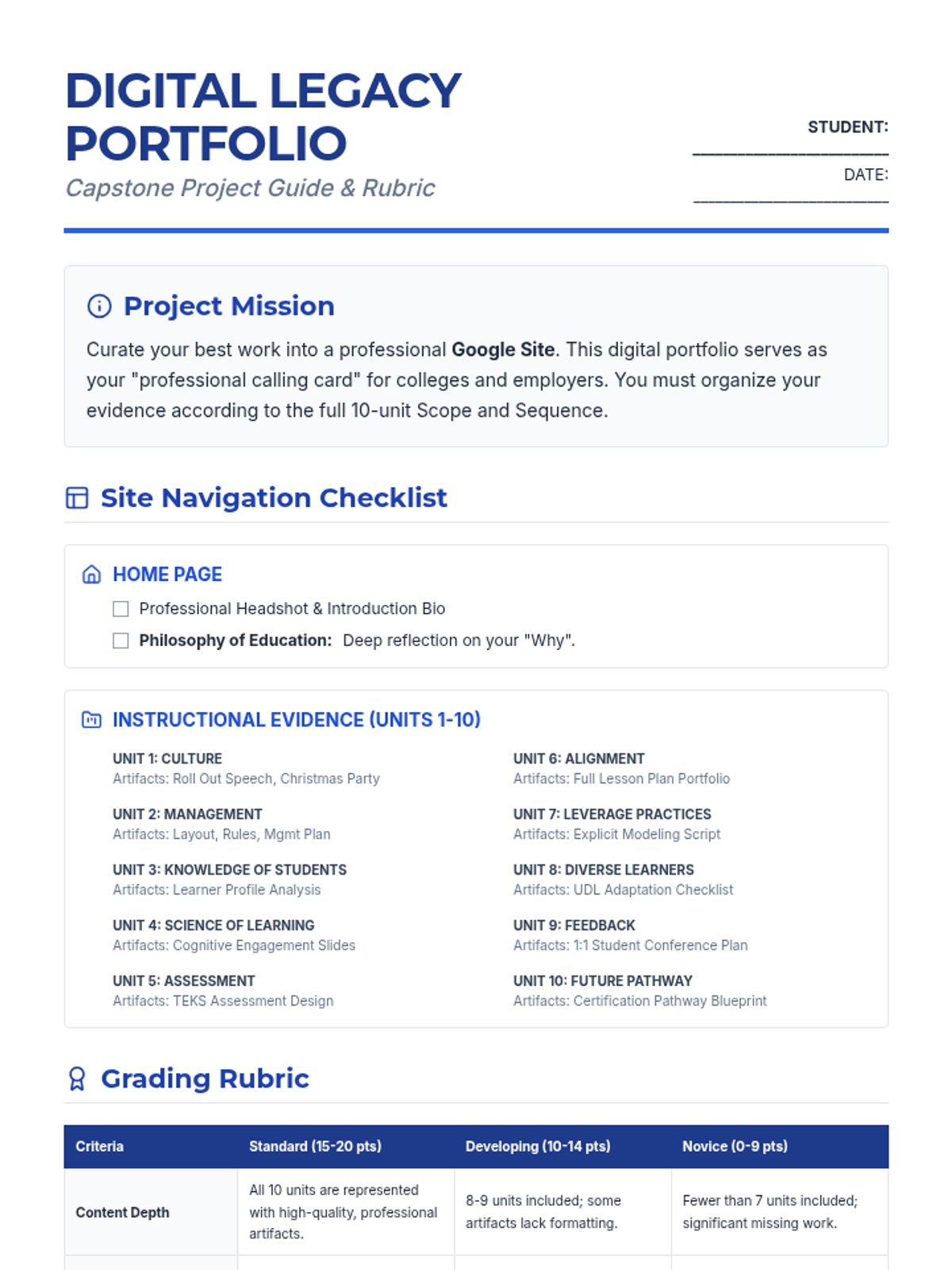
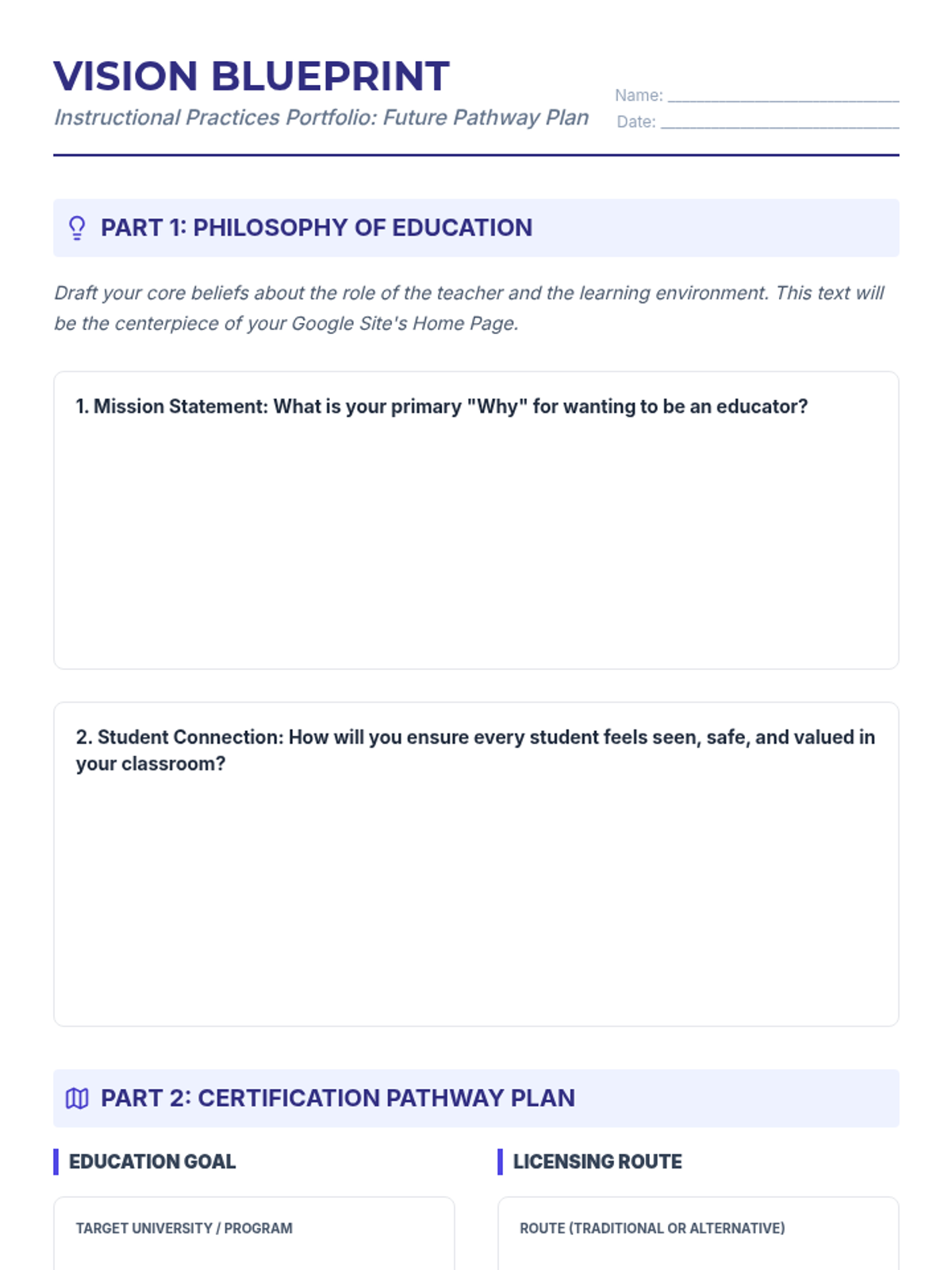
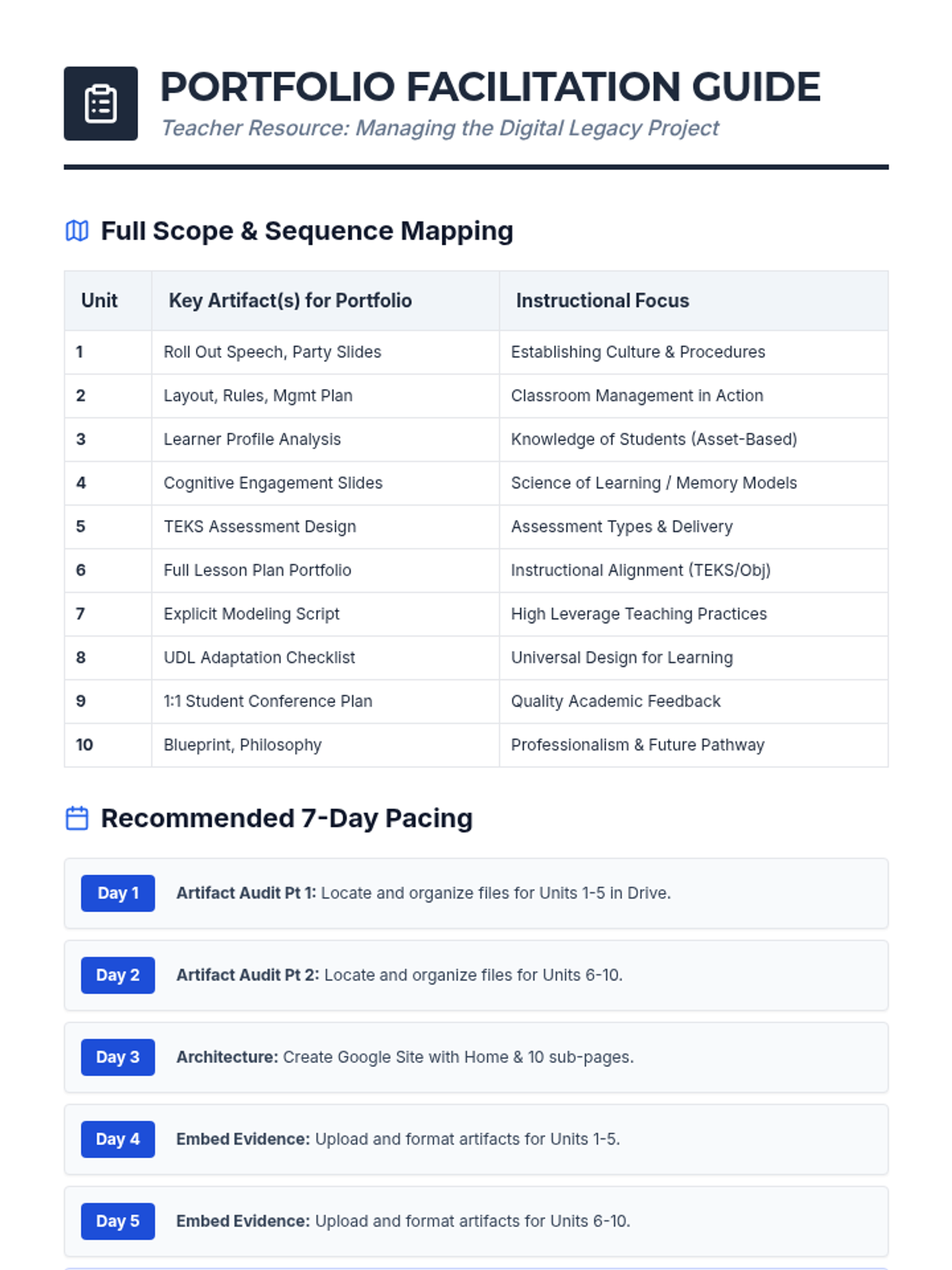
A comprehensive end-of-year portfolio project where students build a professional Google Site to showcase their instructional practices, previous projects, and future career plans in education.
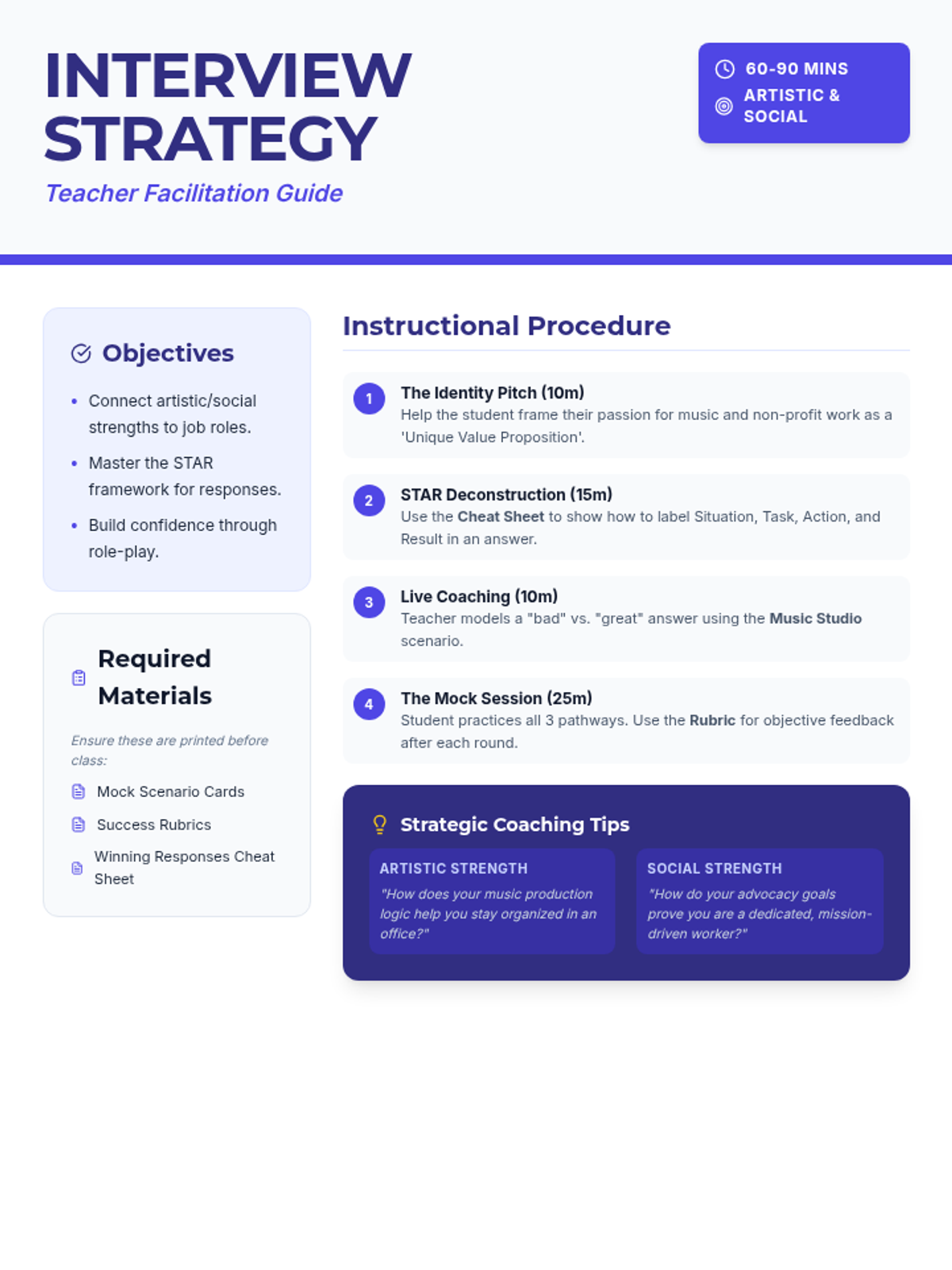
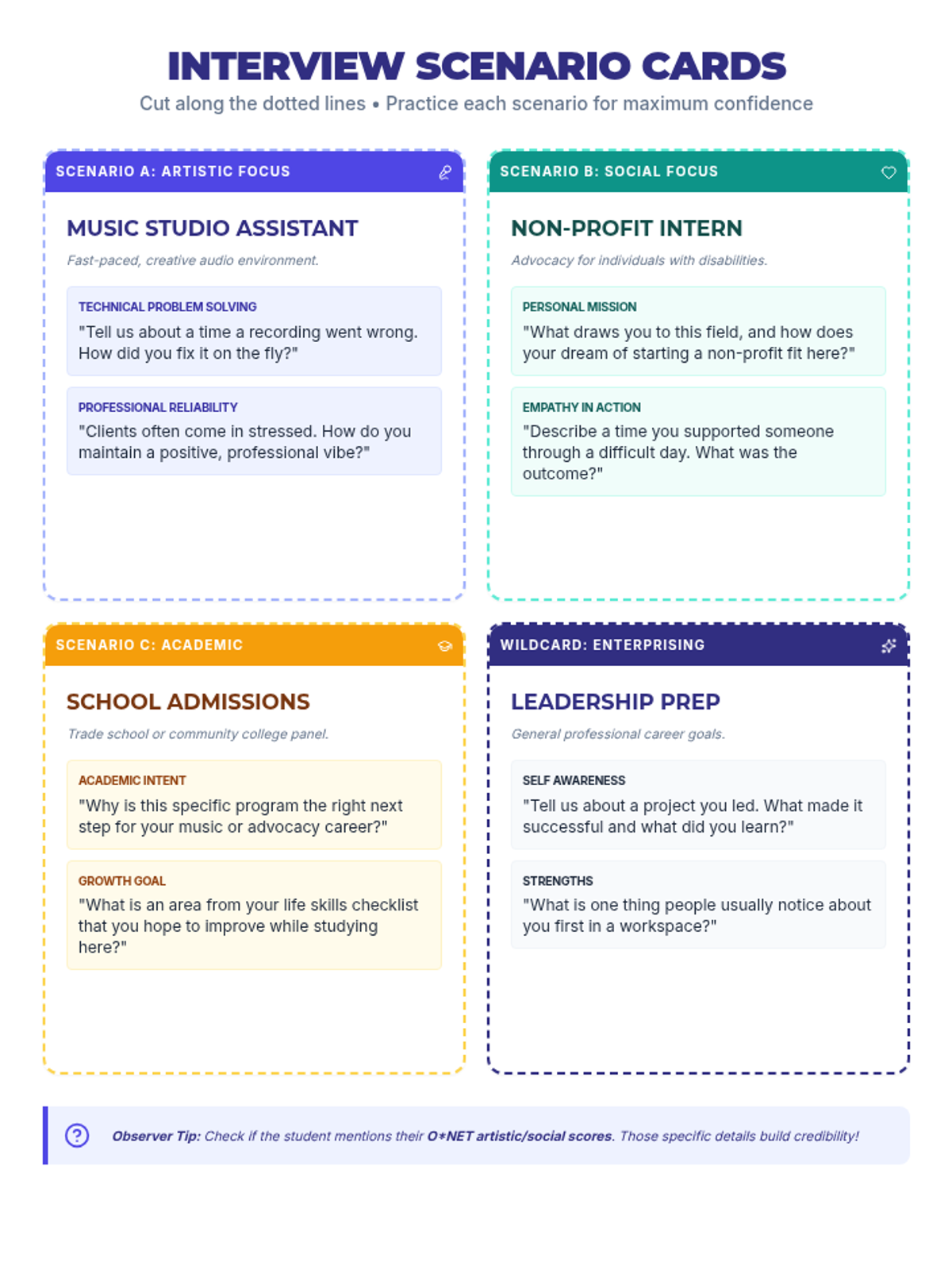
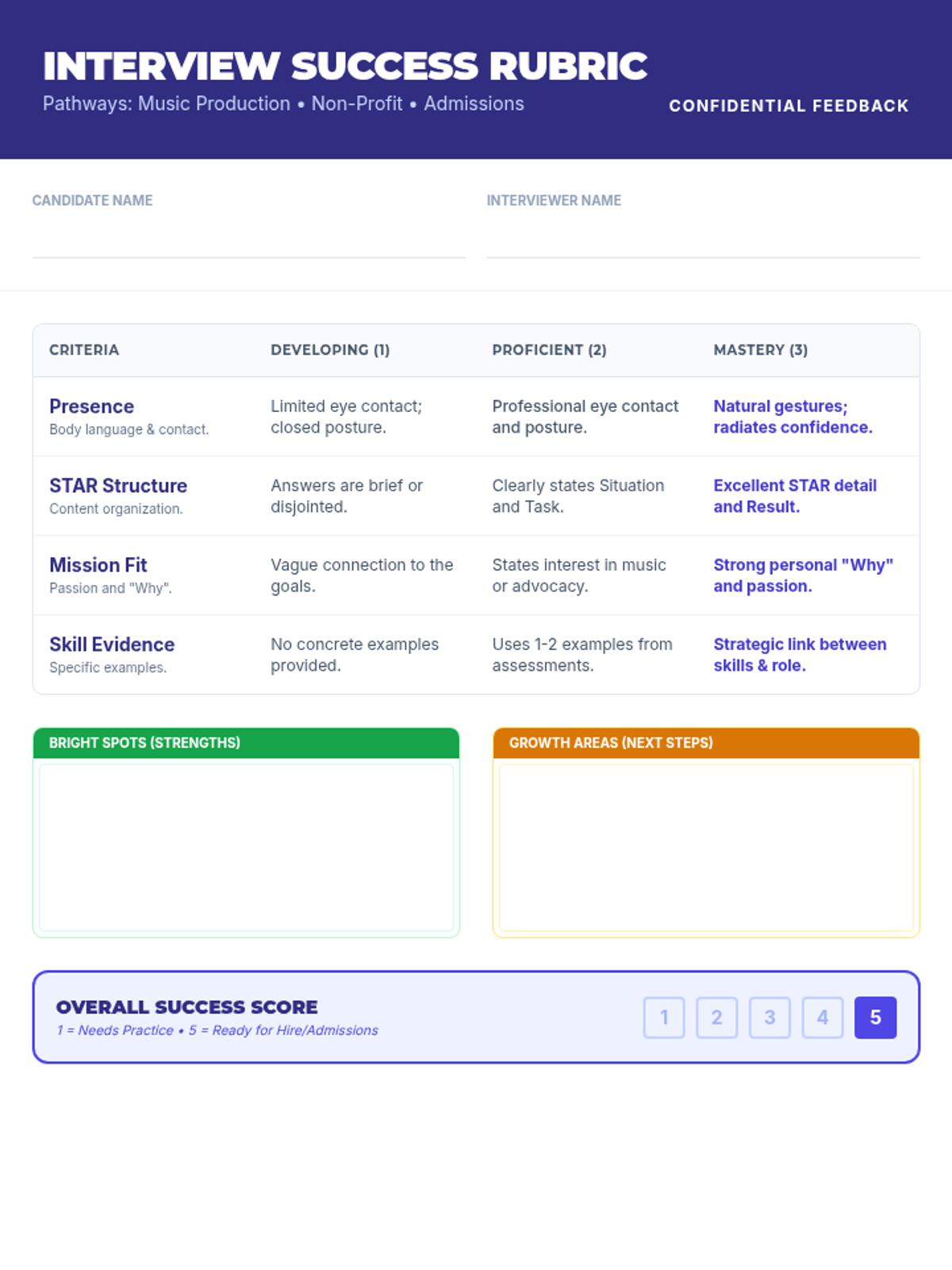
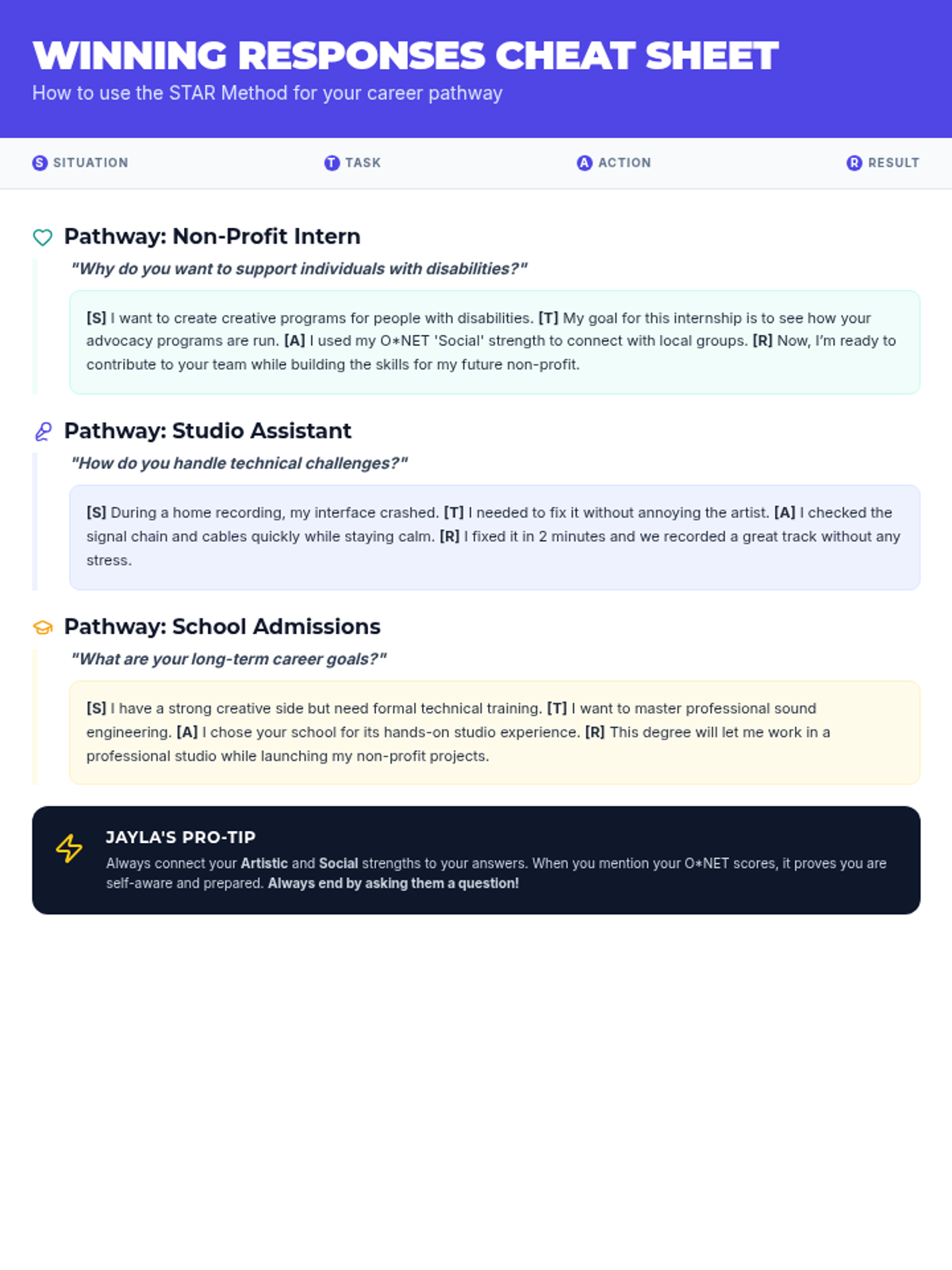
A comprehensive lesson designed to prepare students for interviews in non-profit, creative, and academic settings, featuring tailored role-play scenarios and feedback tools.
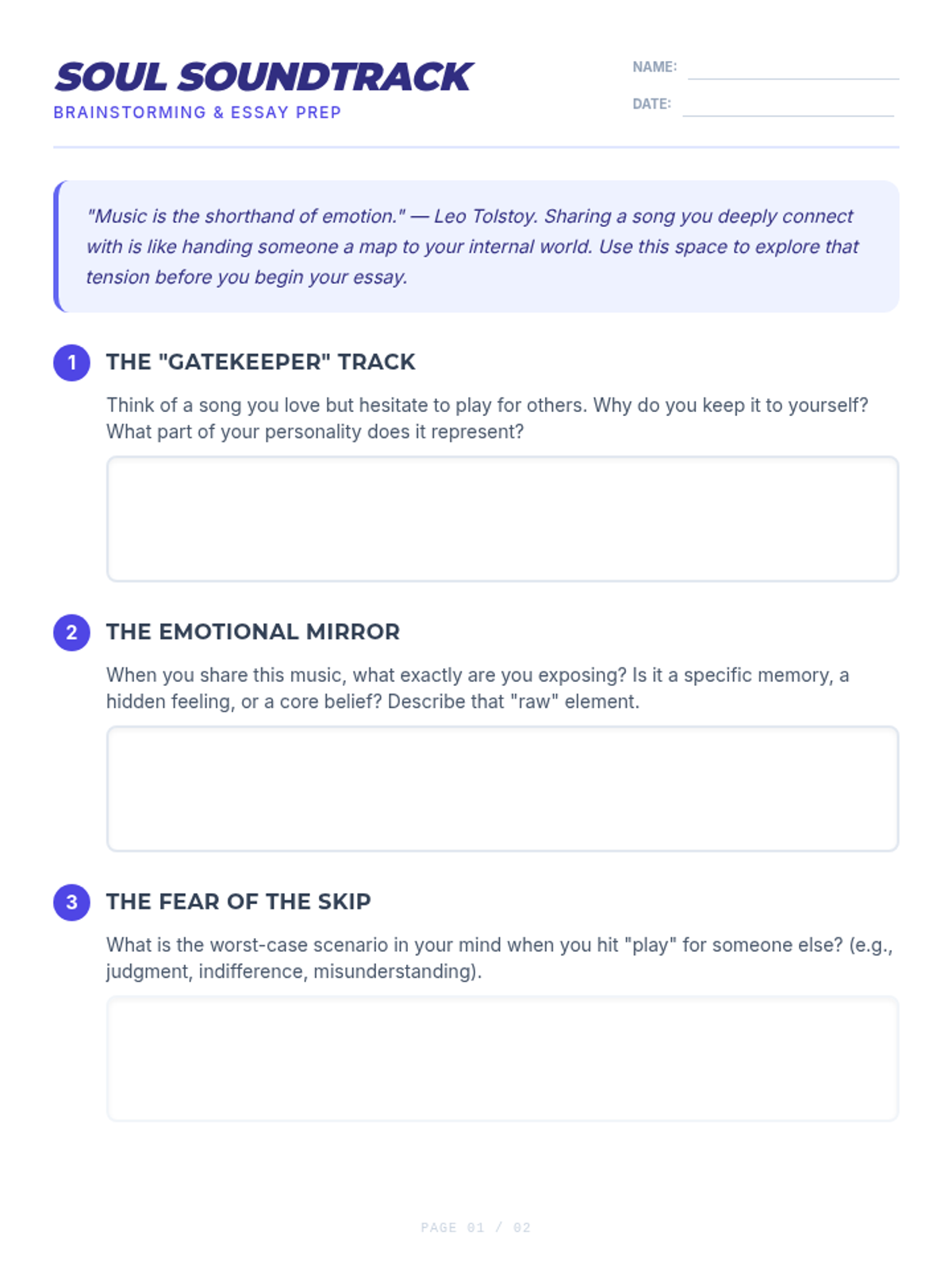
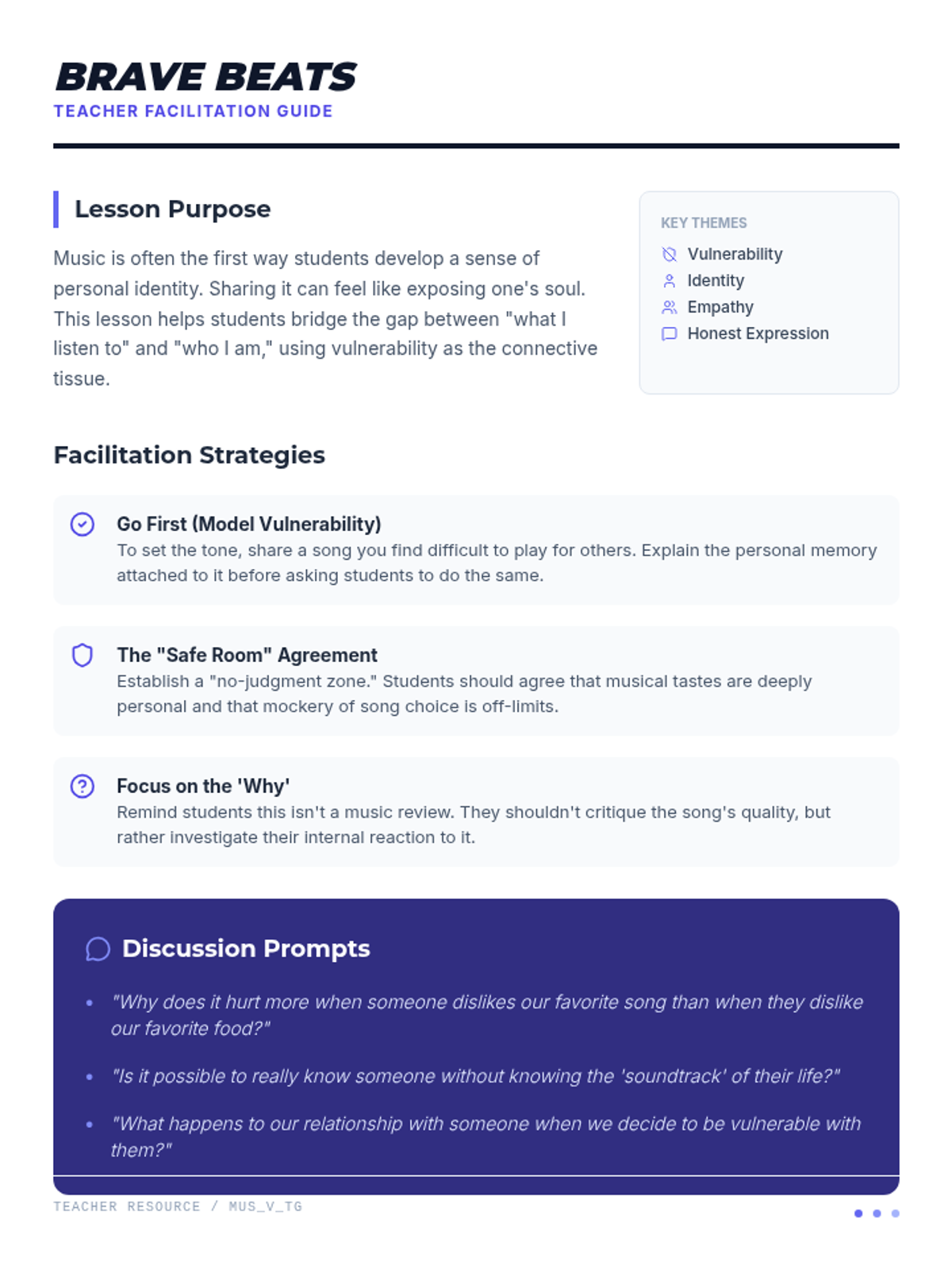
A lesson exploring the intersection of personal identity and music, focusing on the vulnerability required to share the songs that define us.
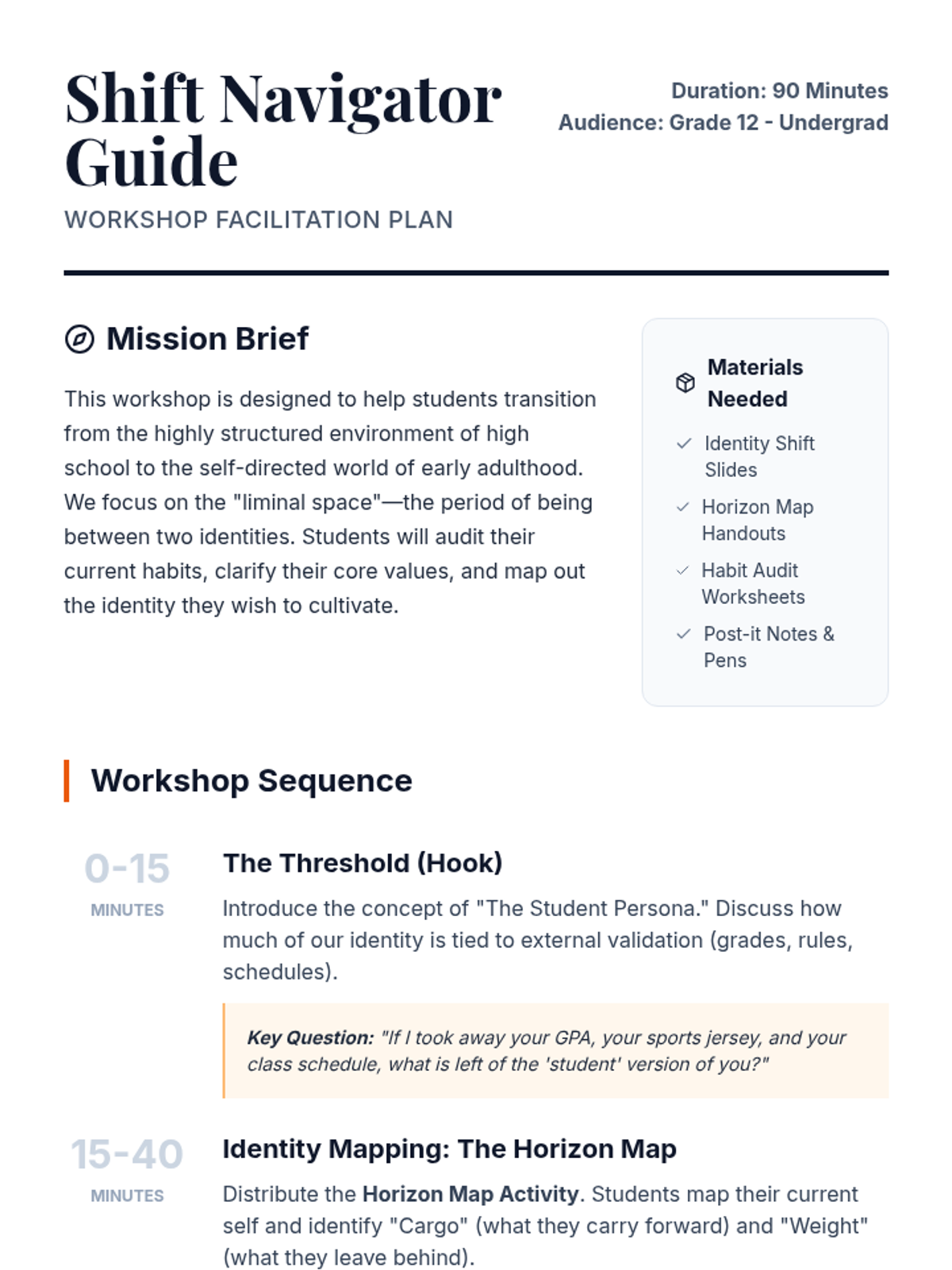
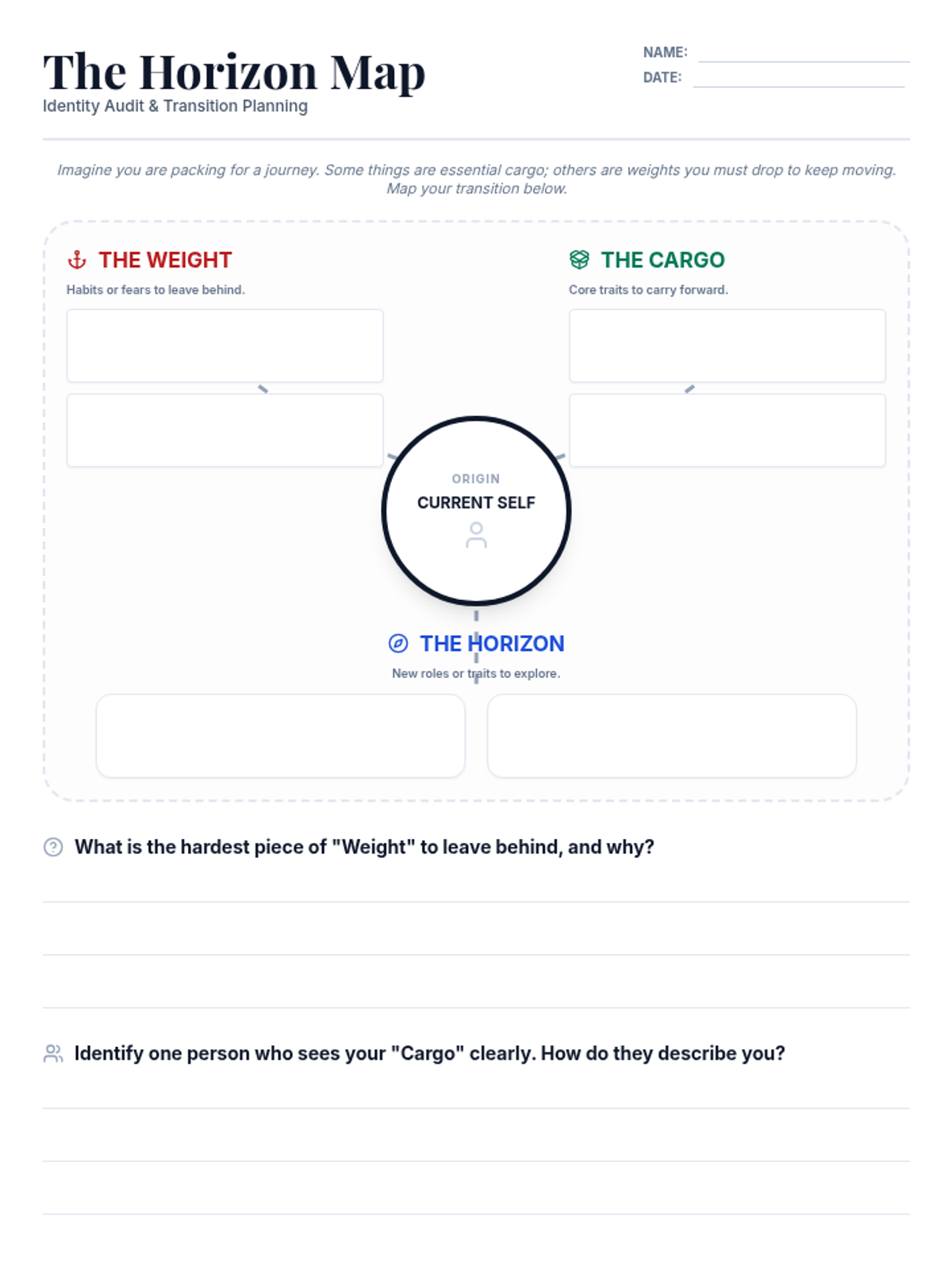
A workshop for graduating seniors and undergraduates to navigate the psychological transition into adulthood through identity mapping and values clarification.
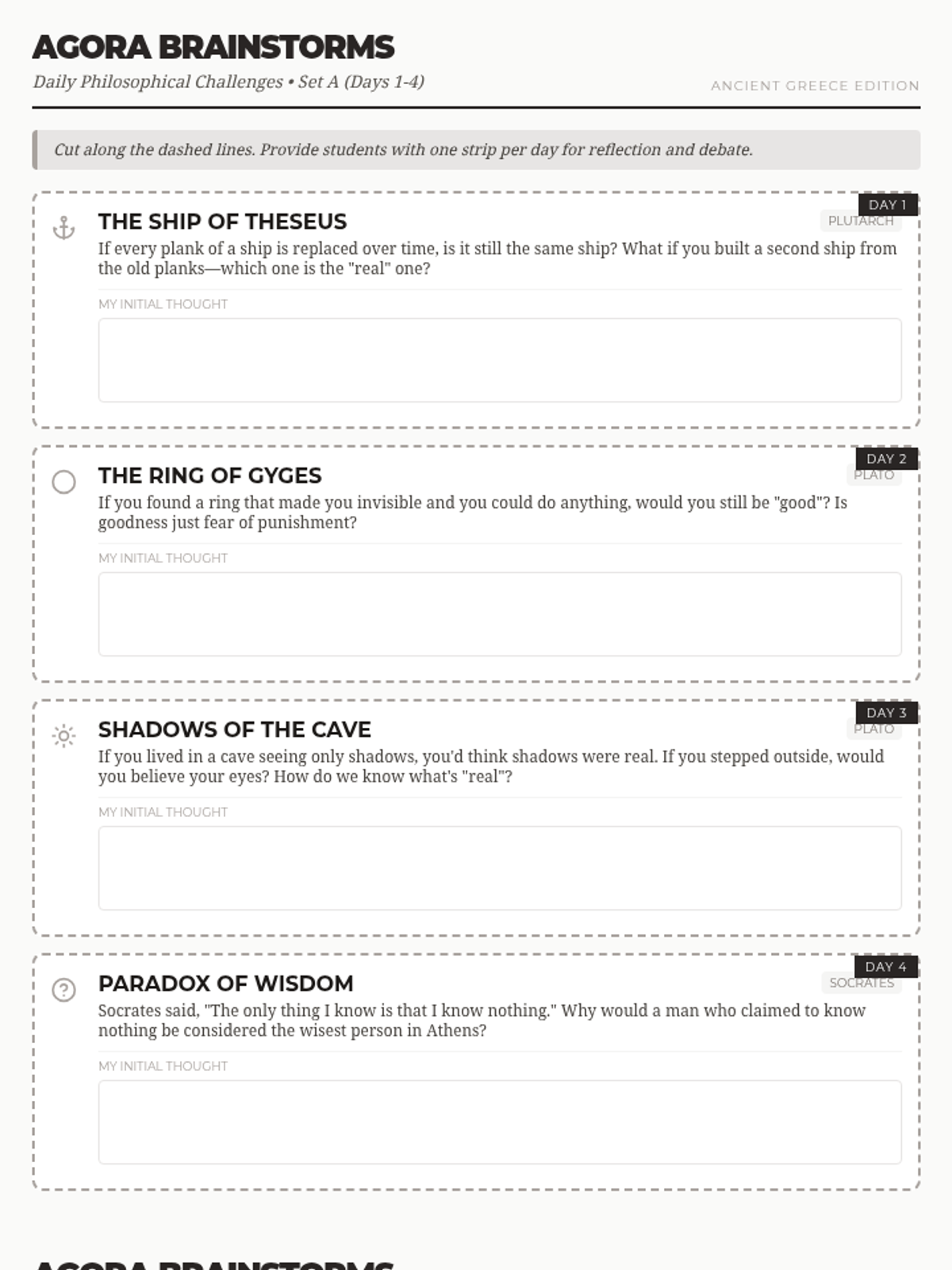
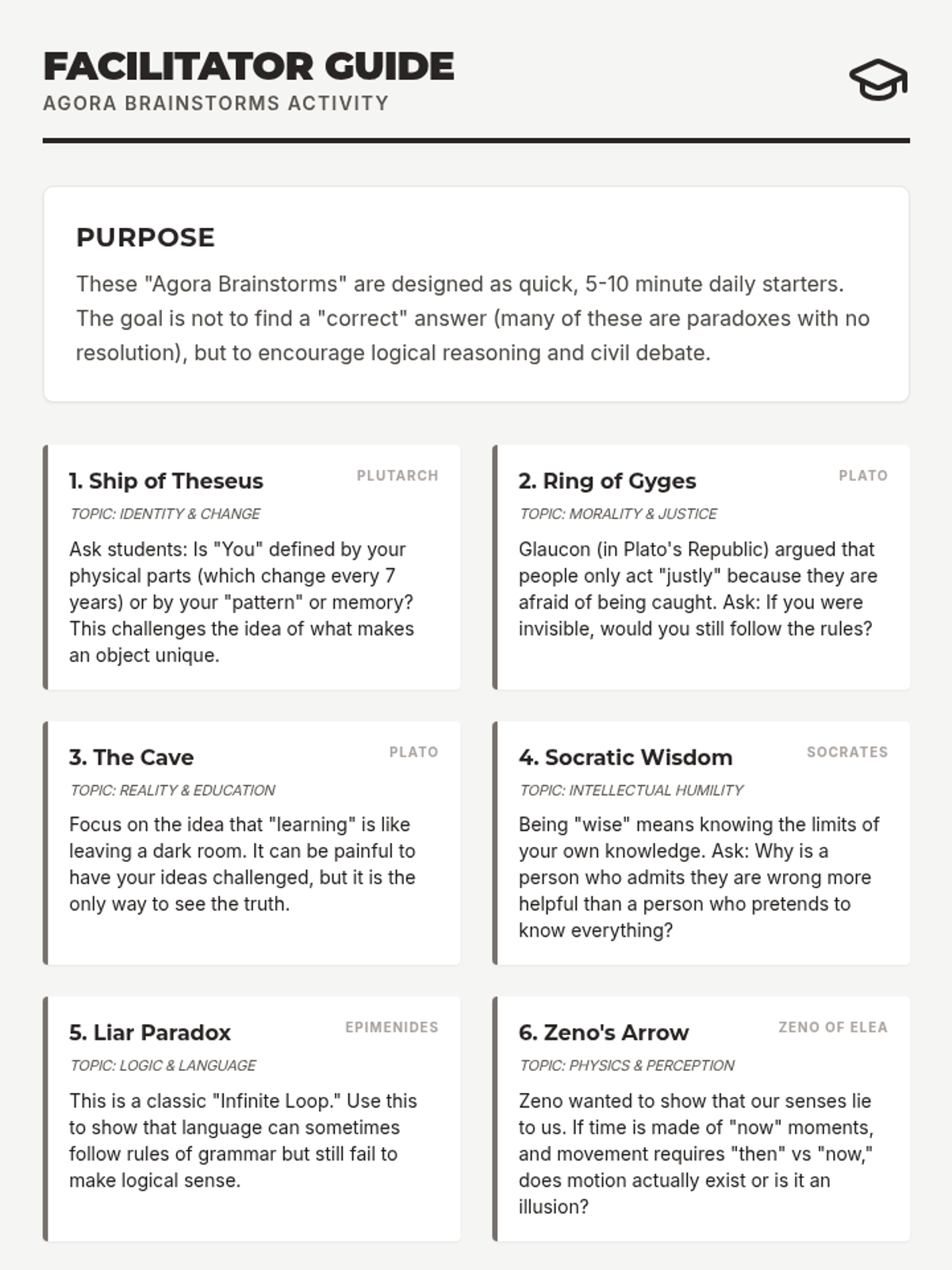
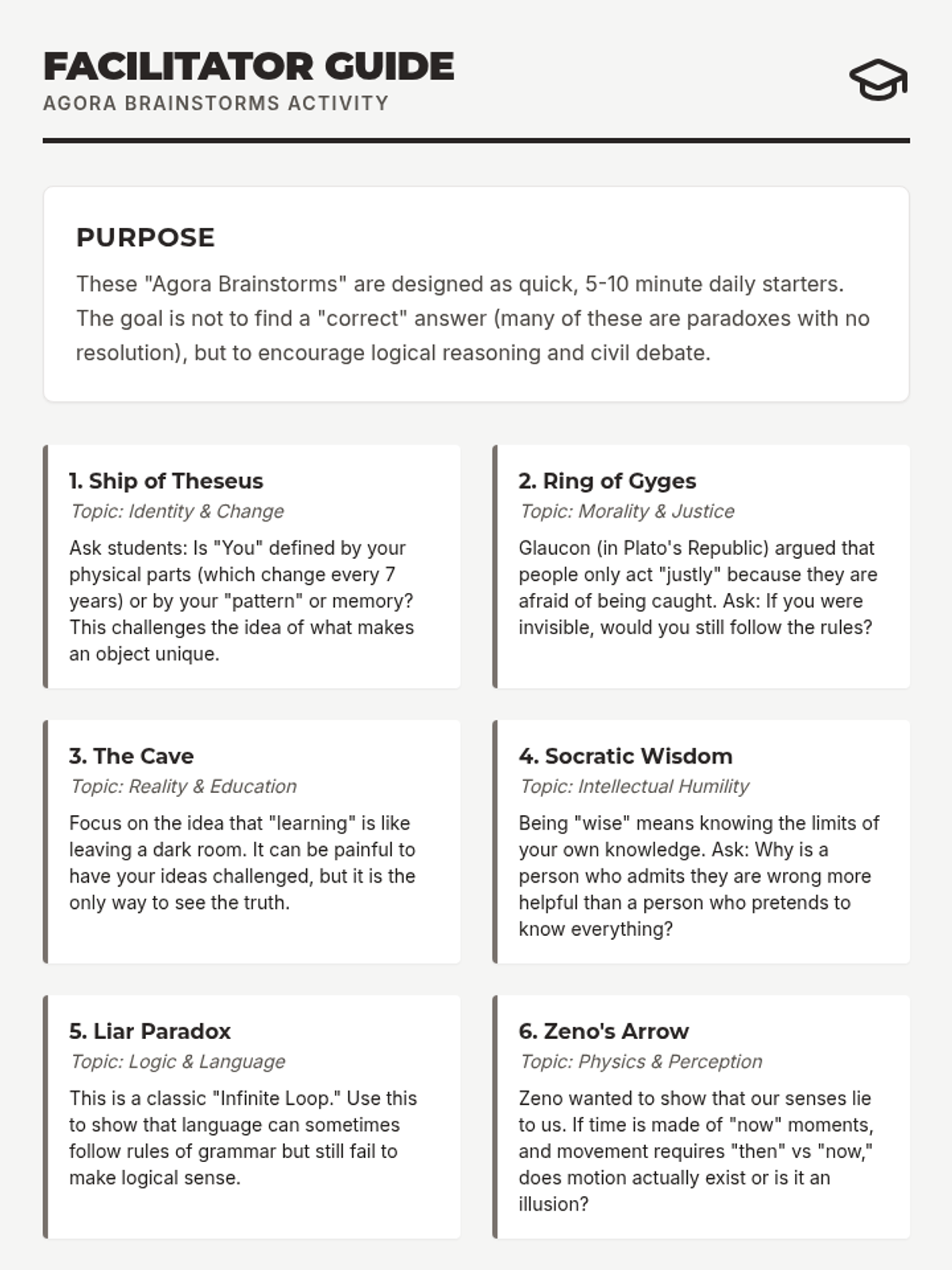
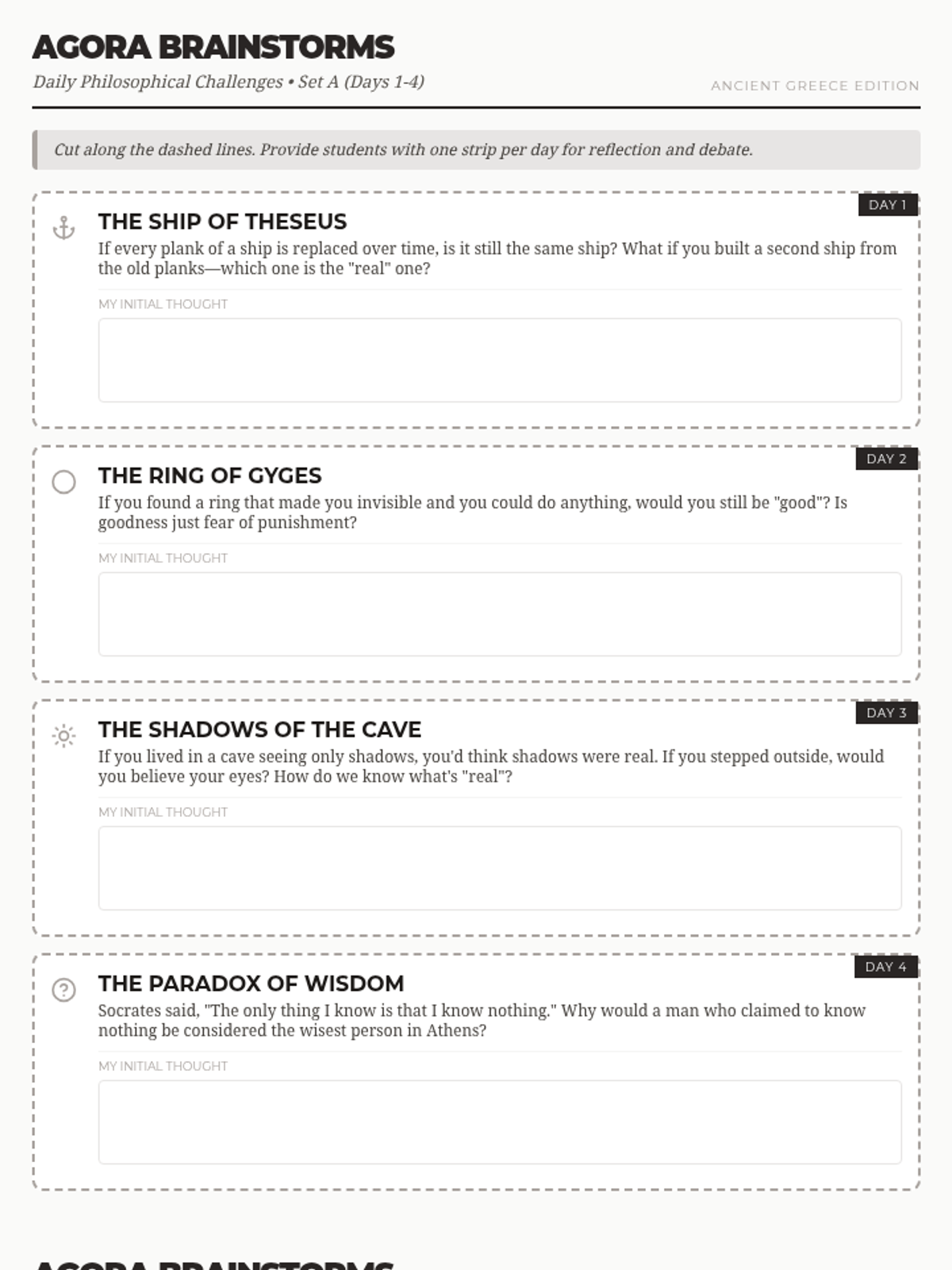
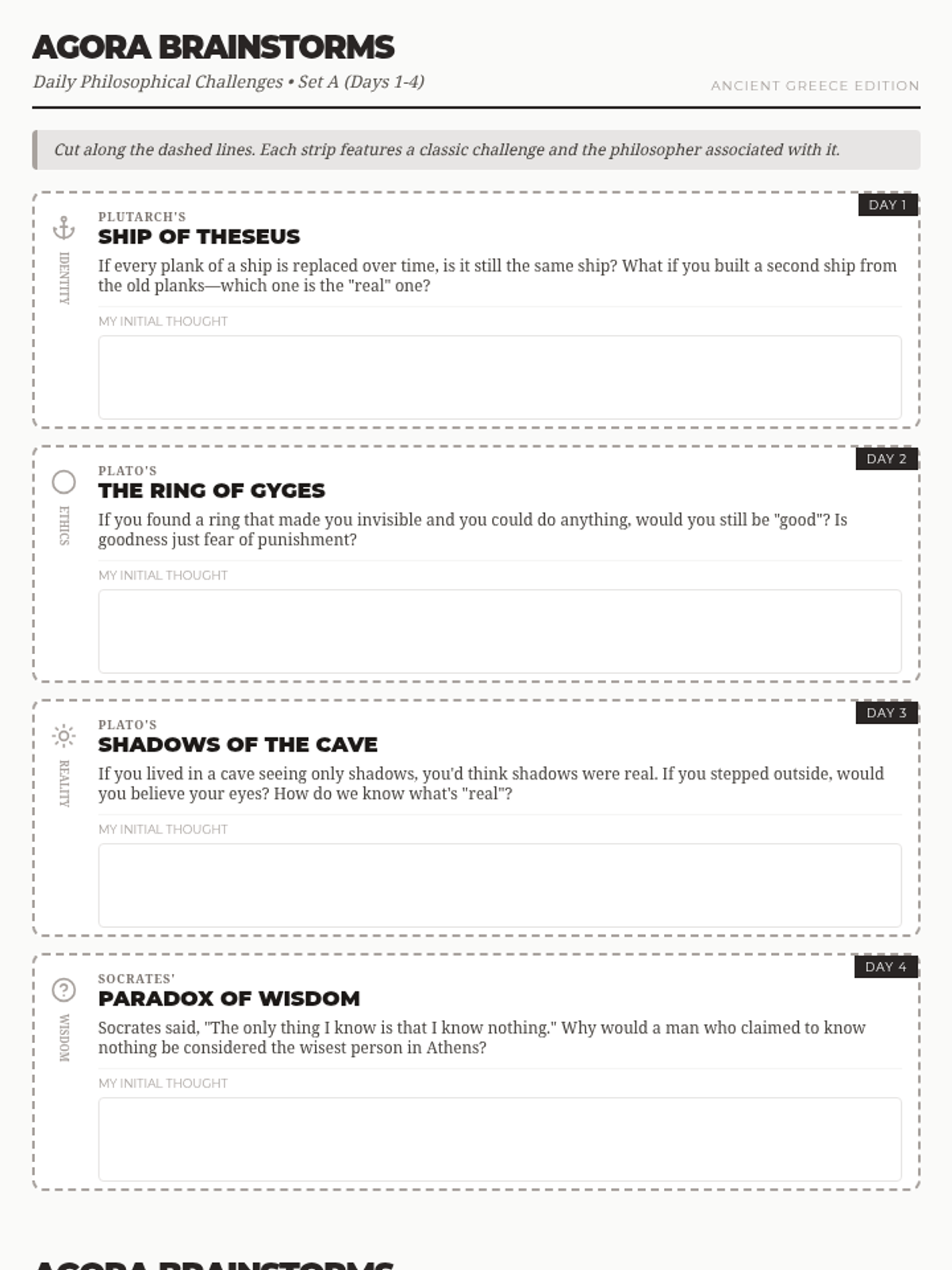
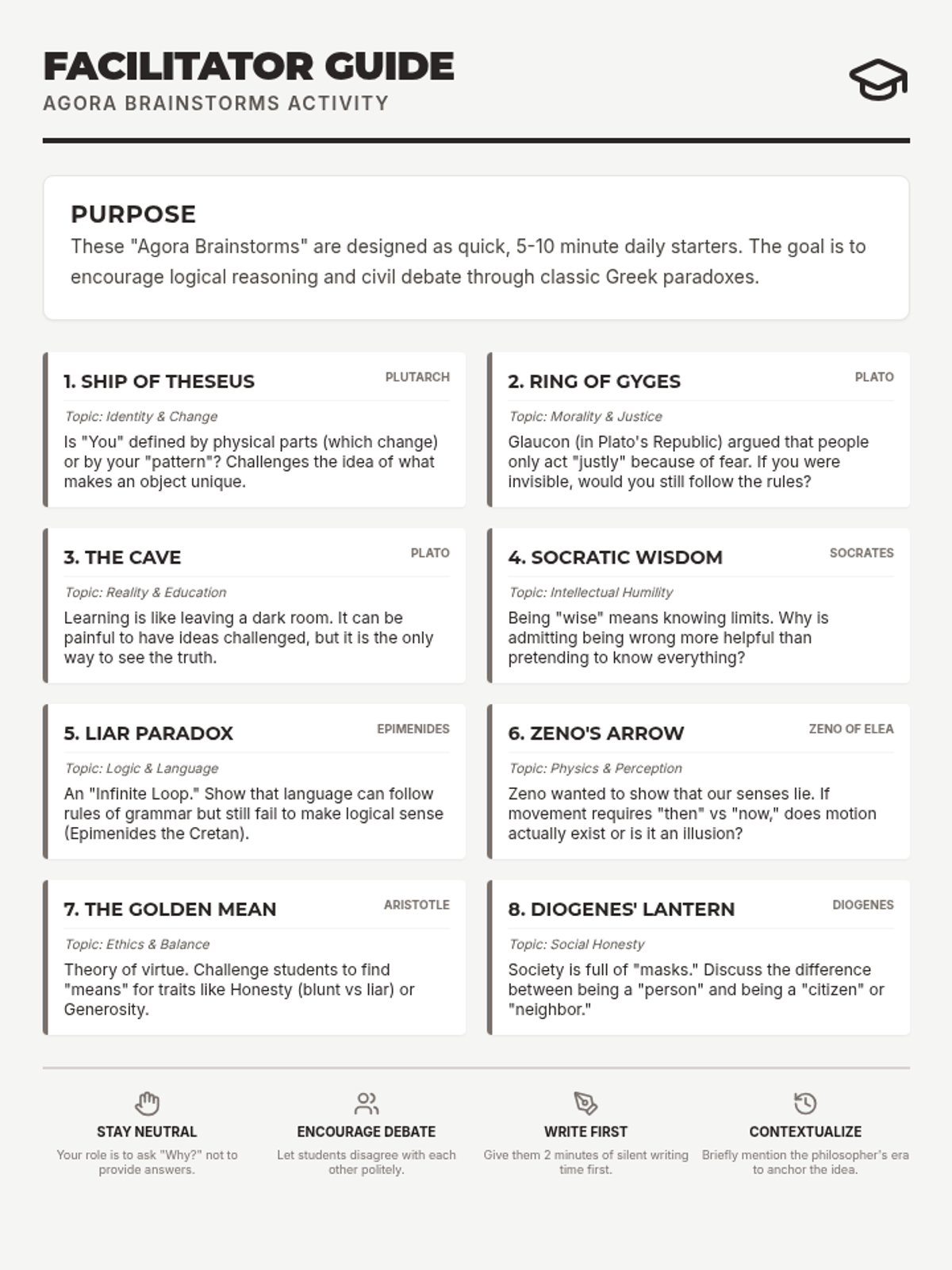
A series of daily philosophical challenges inspired by Ancient Greek paradoxes and thought experiments, designed to spark critical thinking and classroom debate.
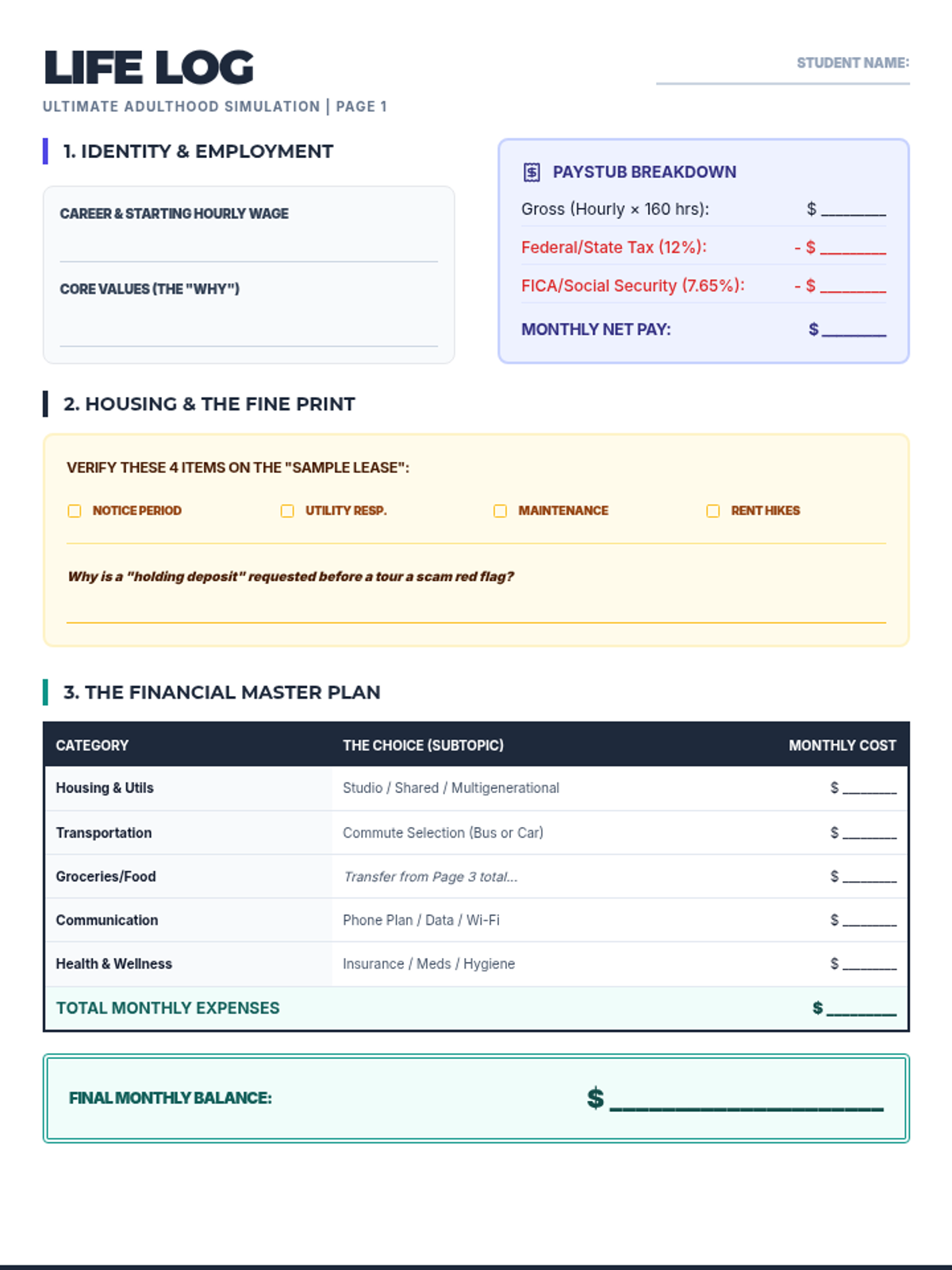
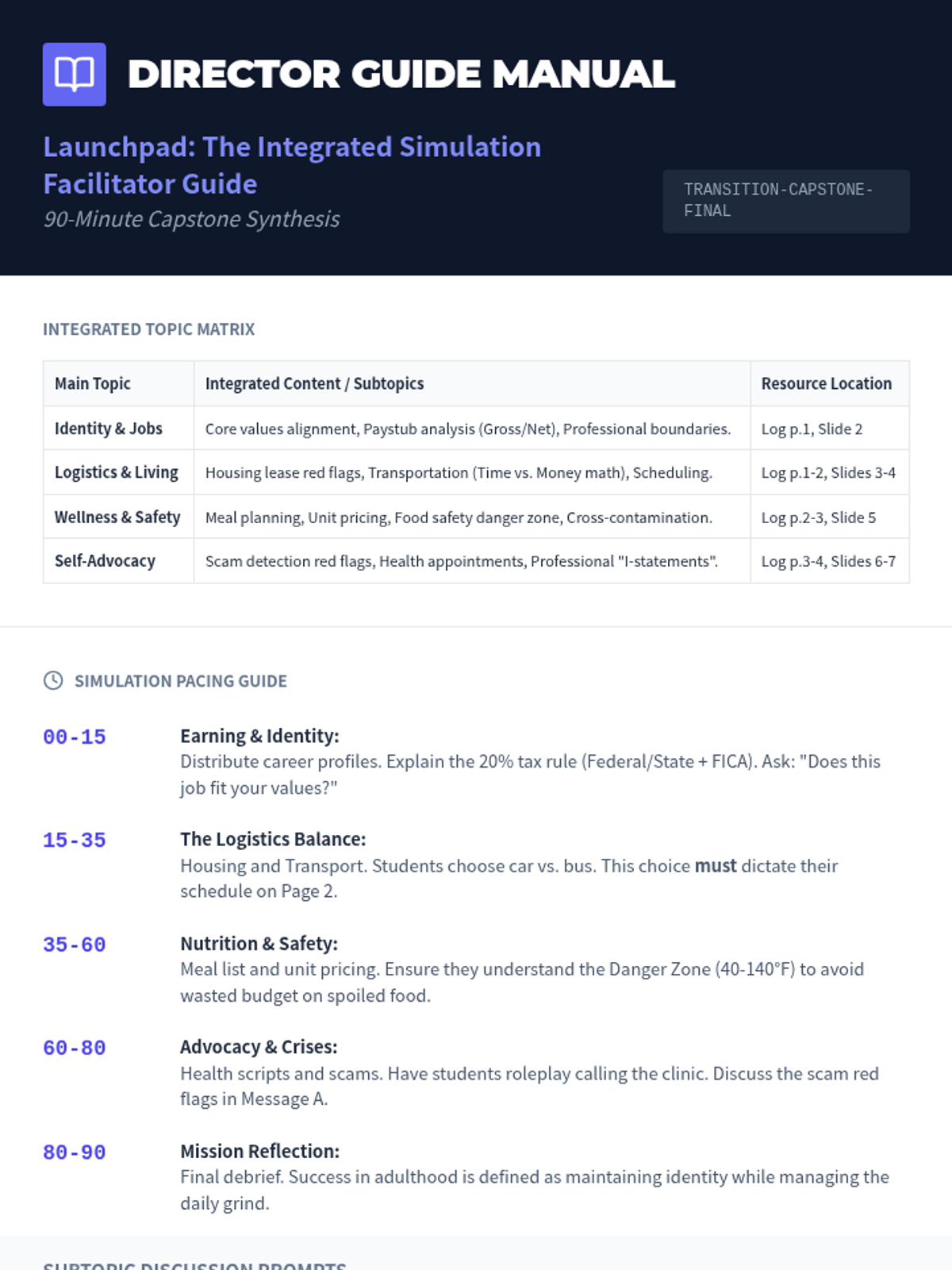
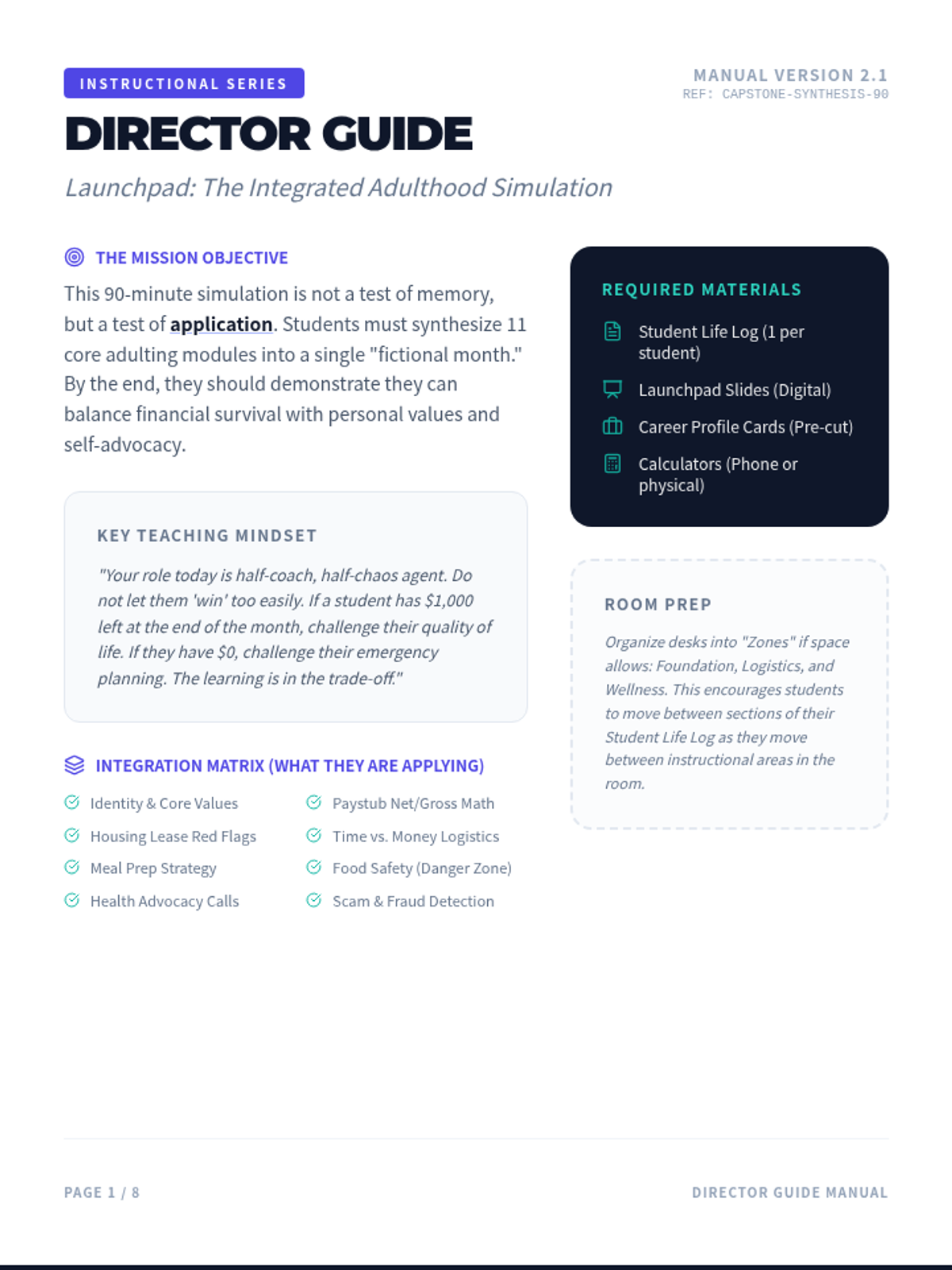
A comprehensive 90-minute capstone simulation where students apply everything they've learned about adulting to navigate a fictional month of independent living.
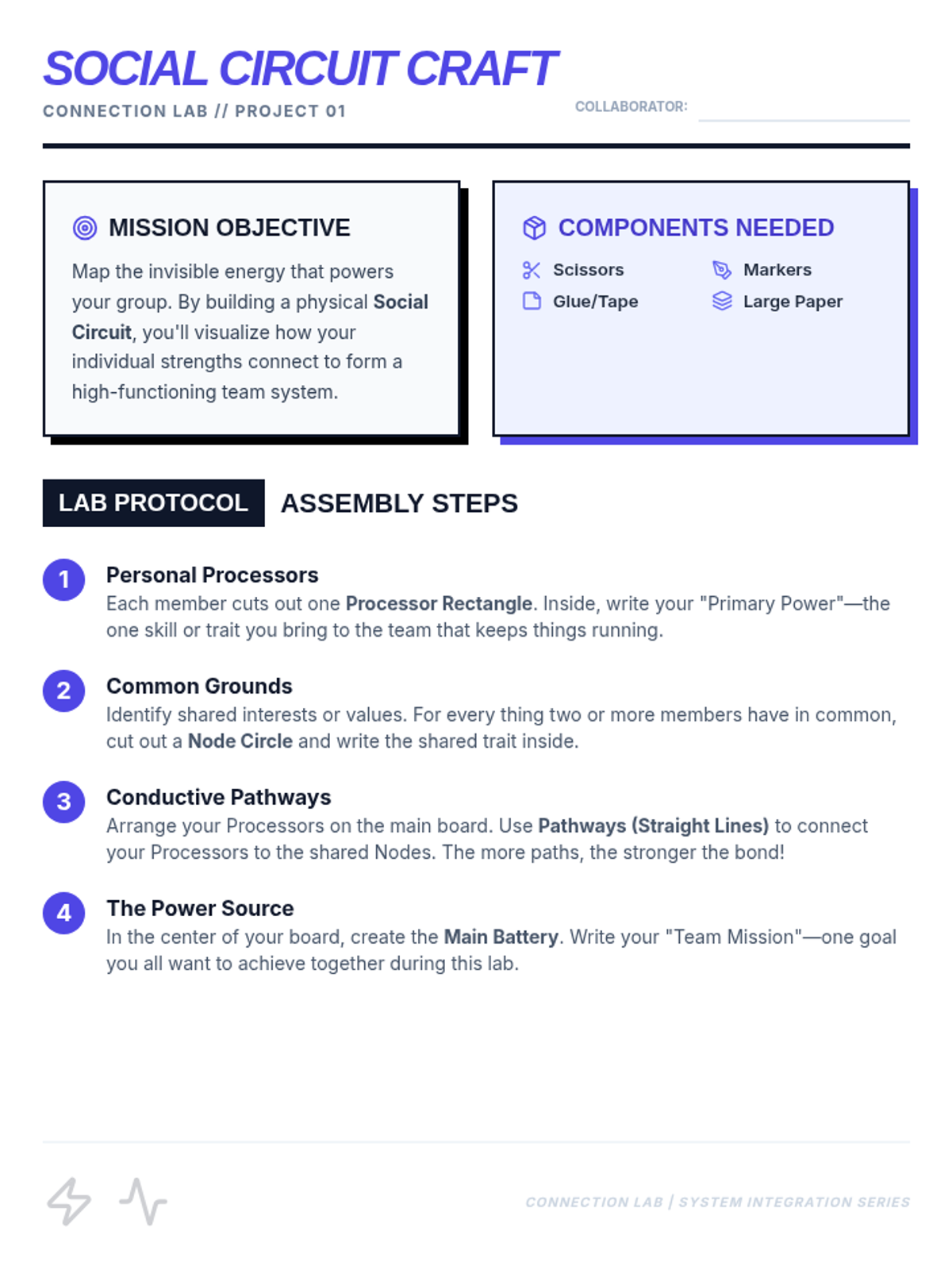
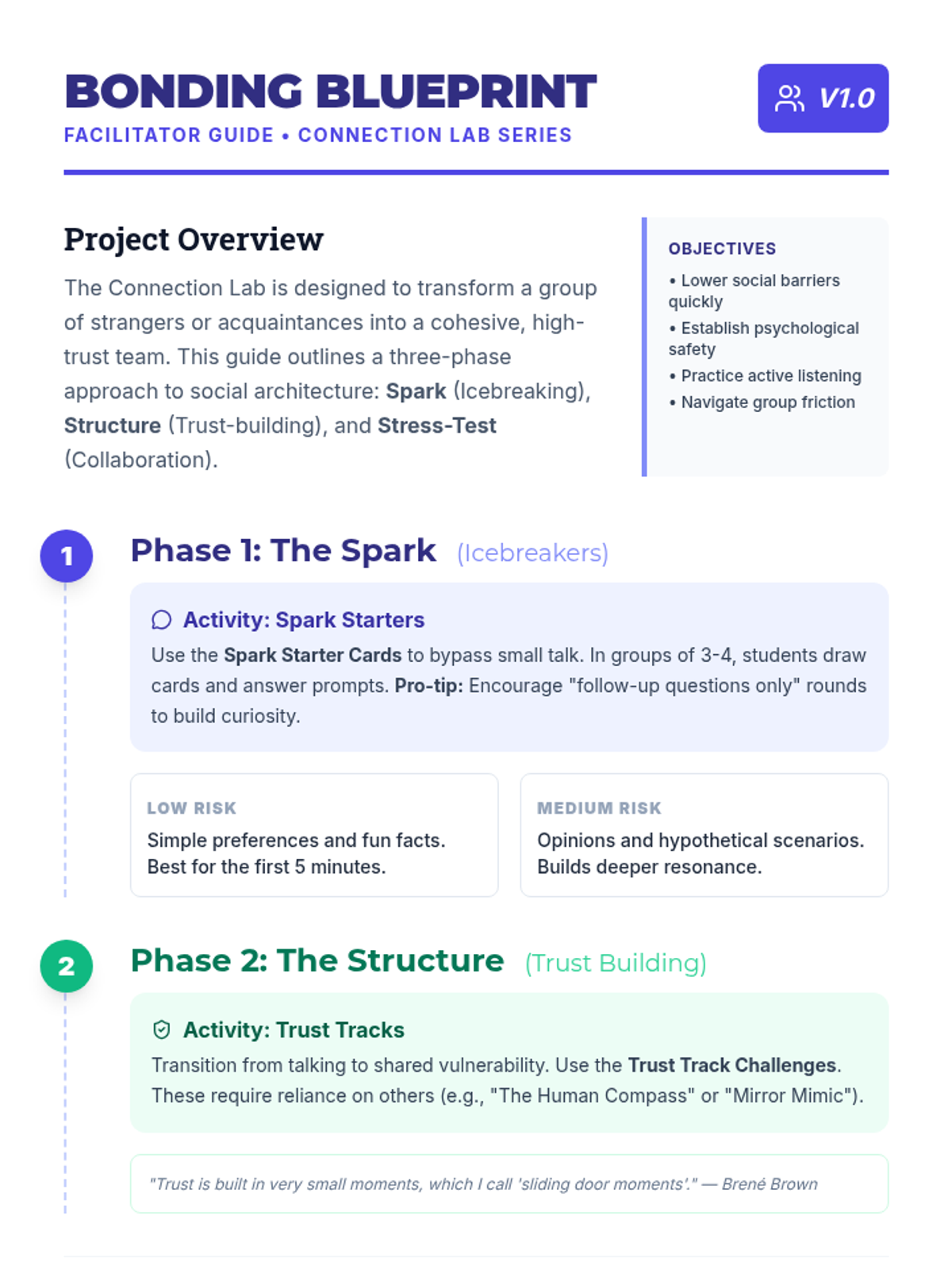
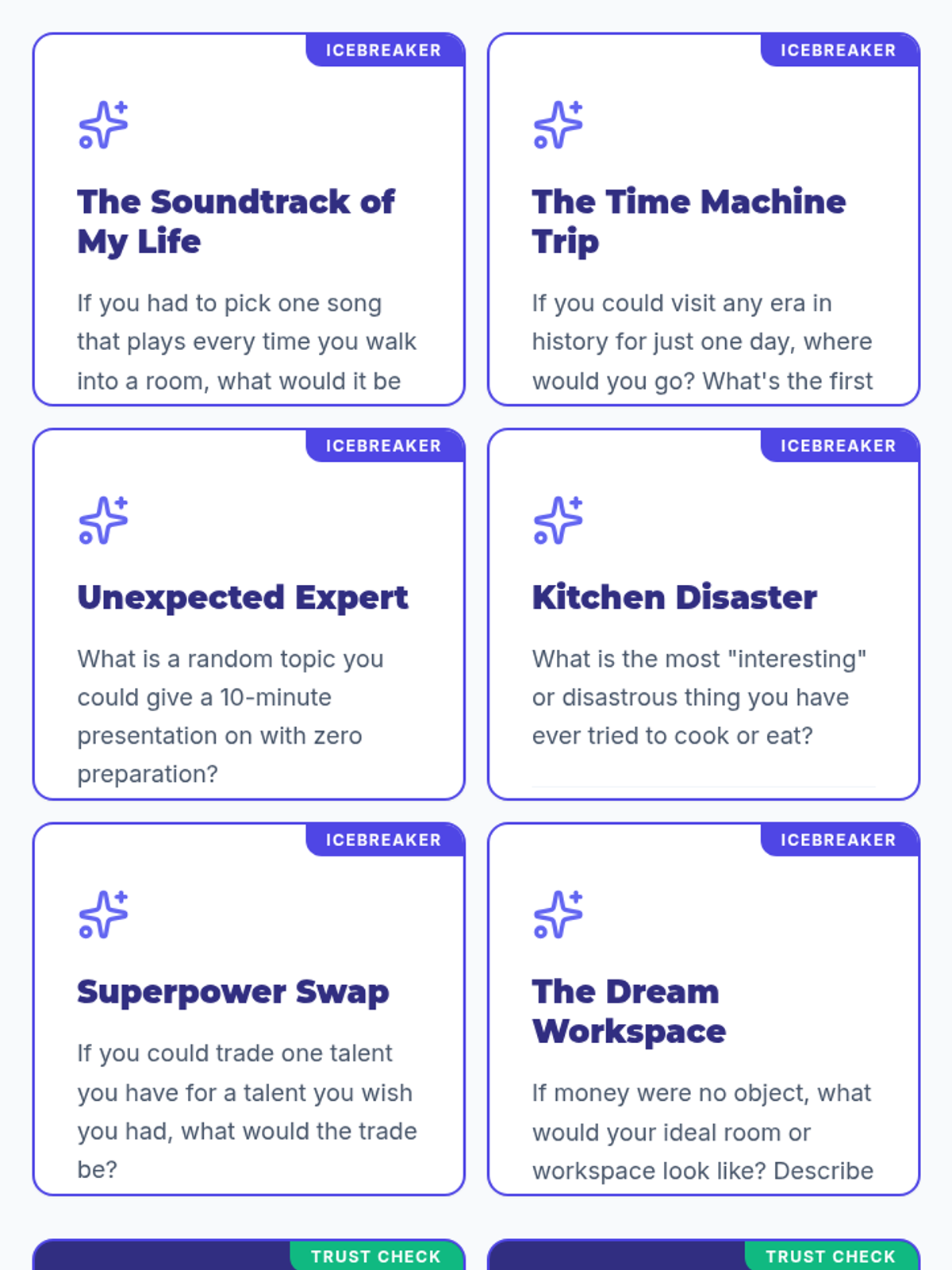
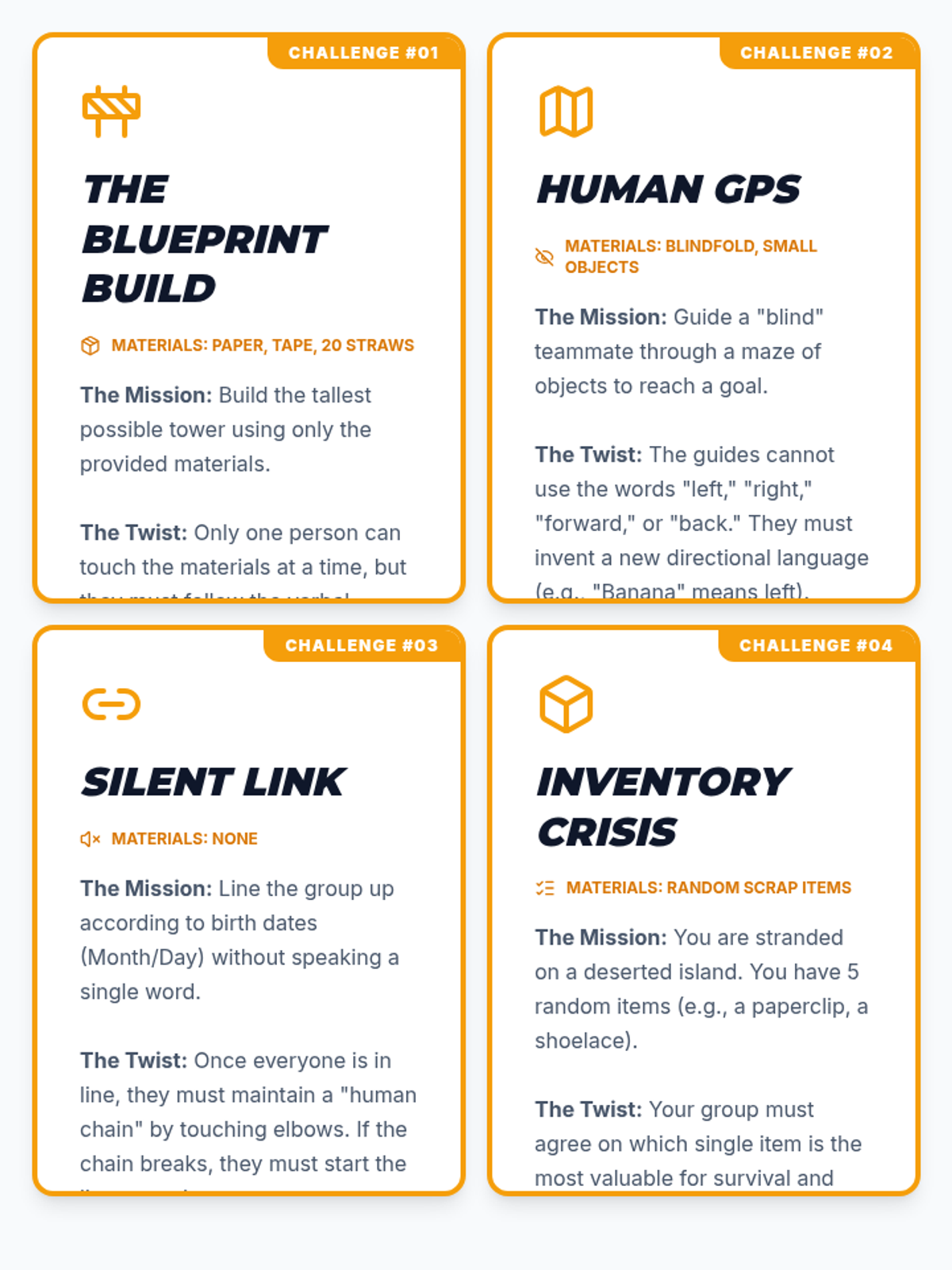
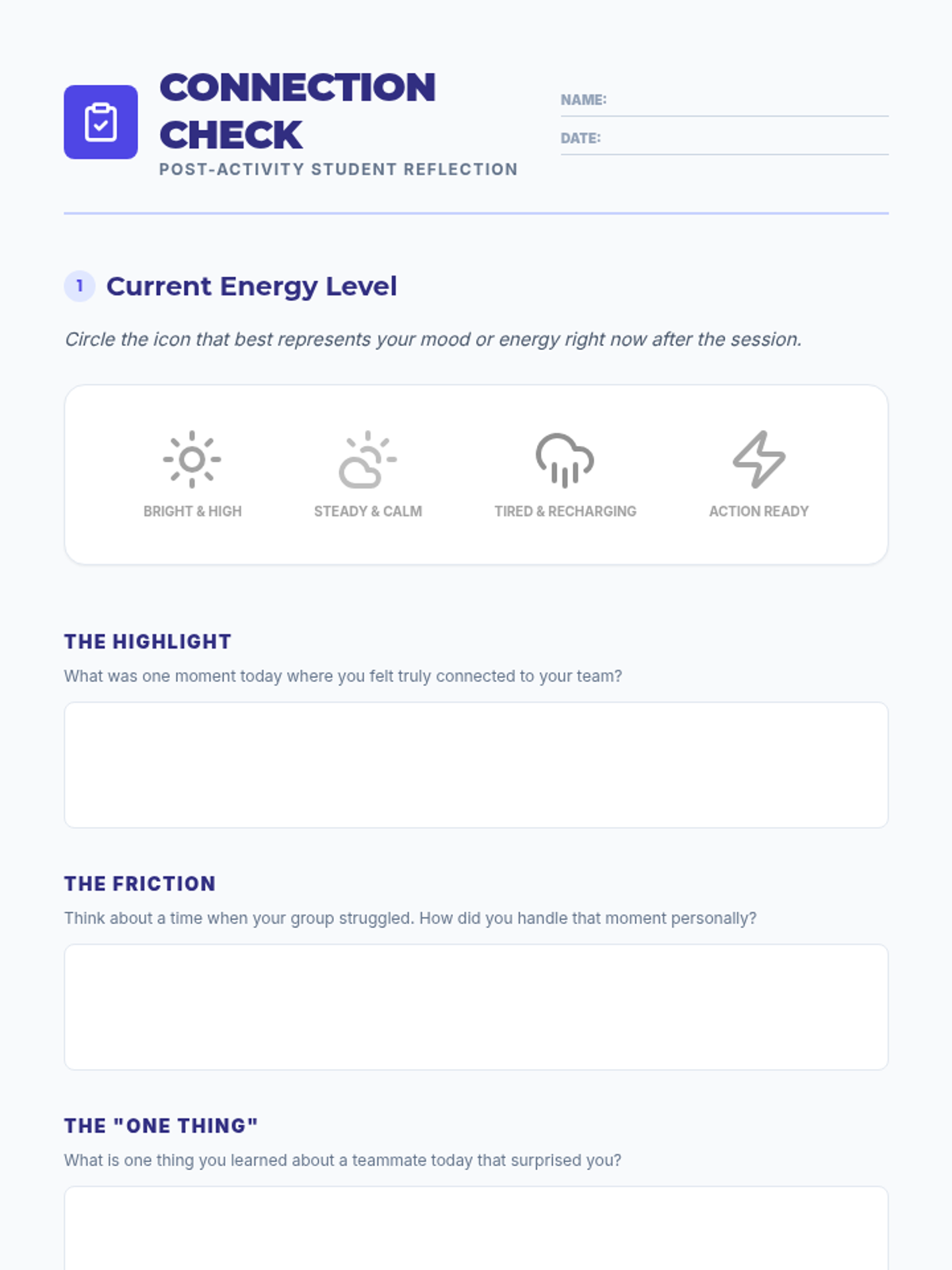
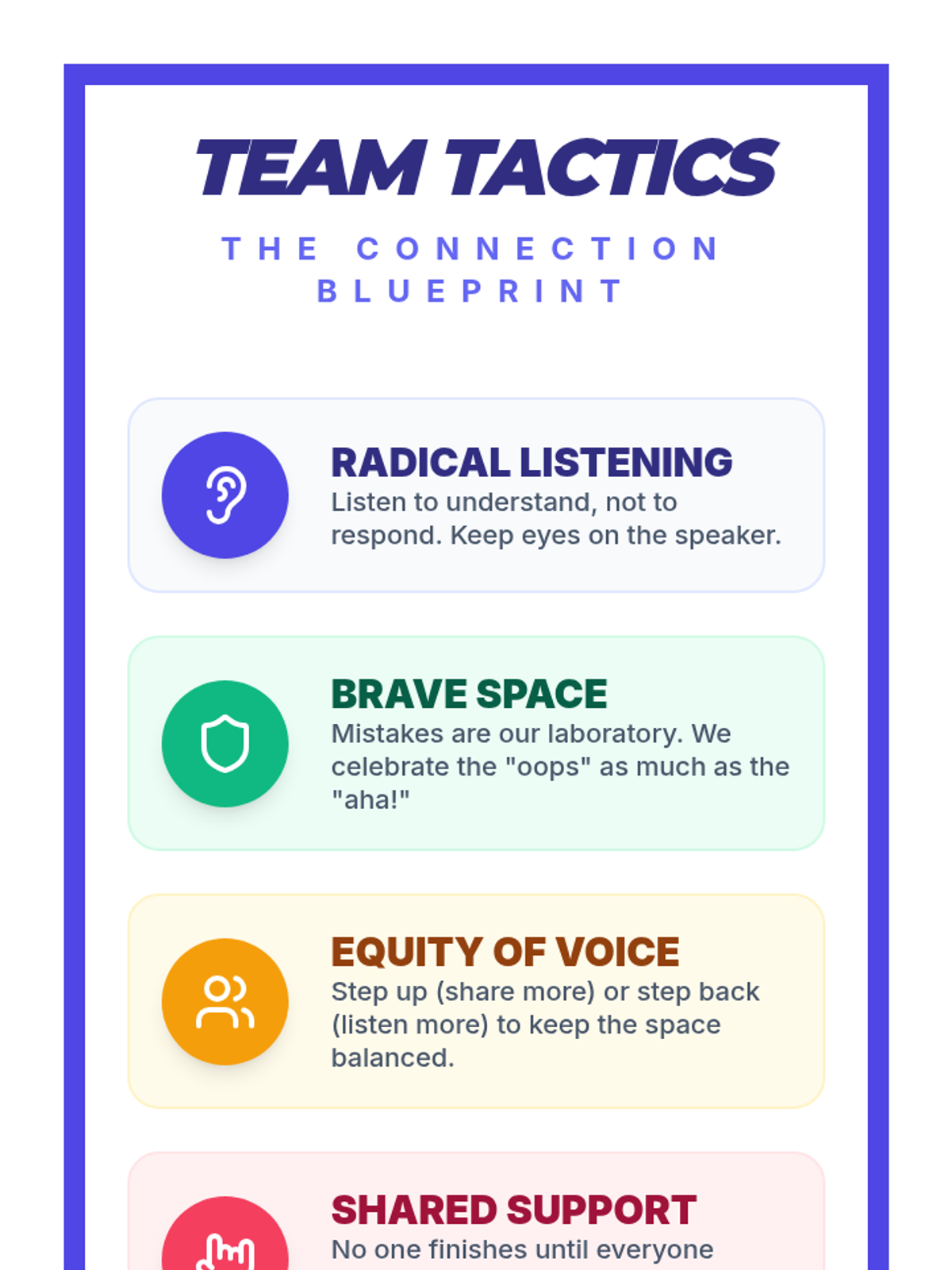
A comprehensive toolkit for small groups to build social bonds, establish trust, and master collaborative challenges through structured interaction.
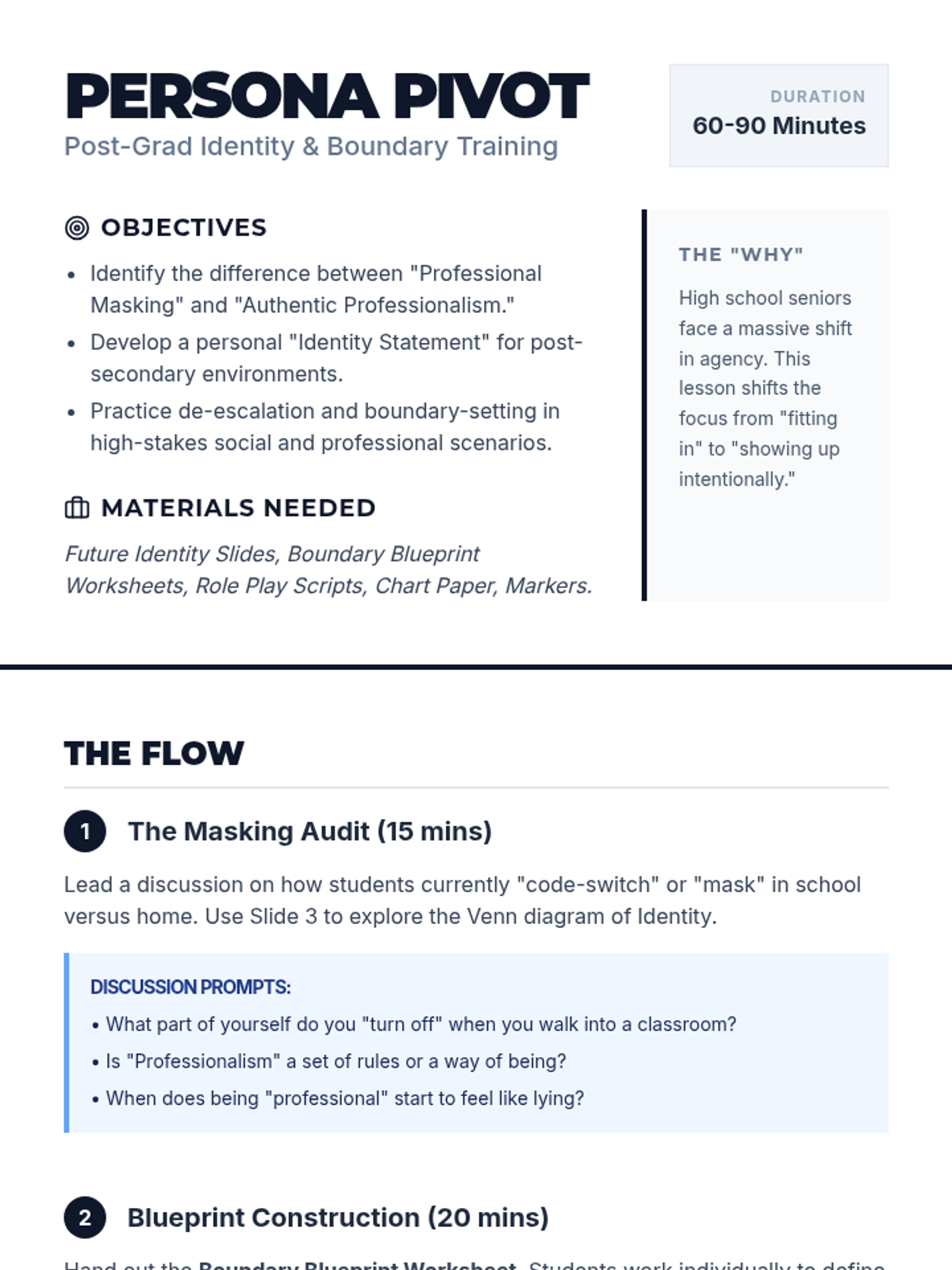
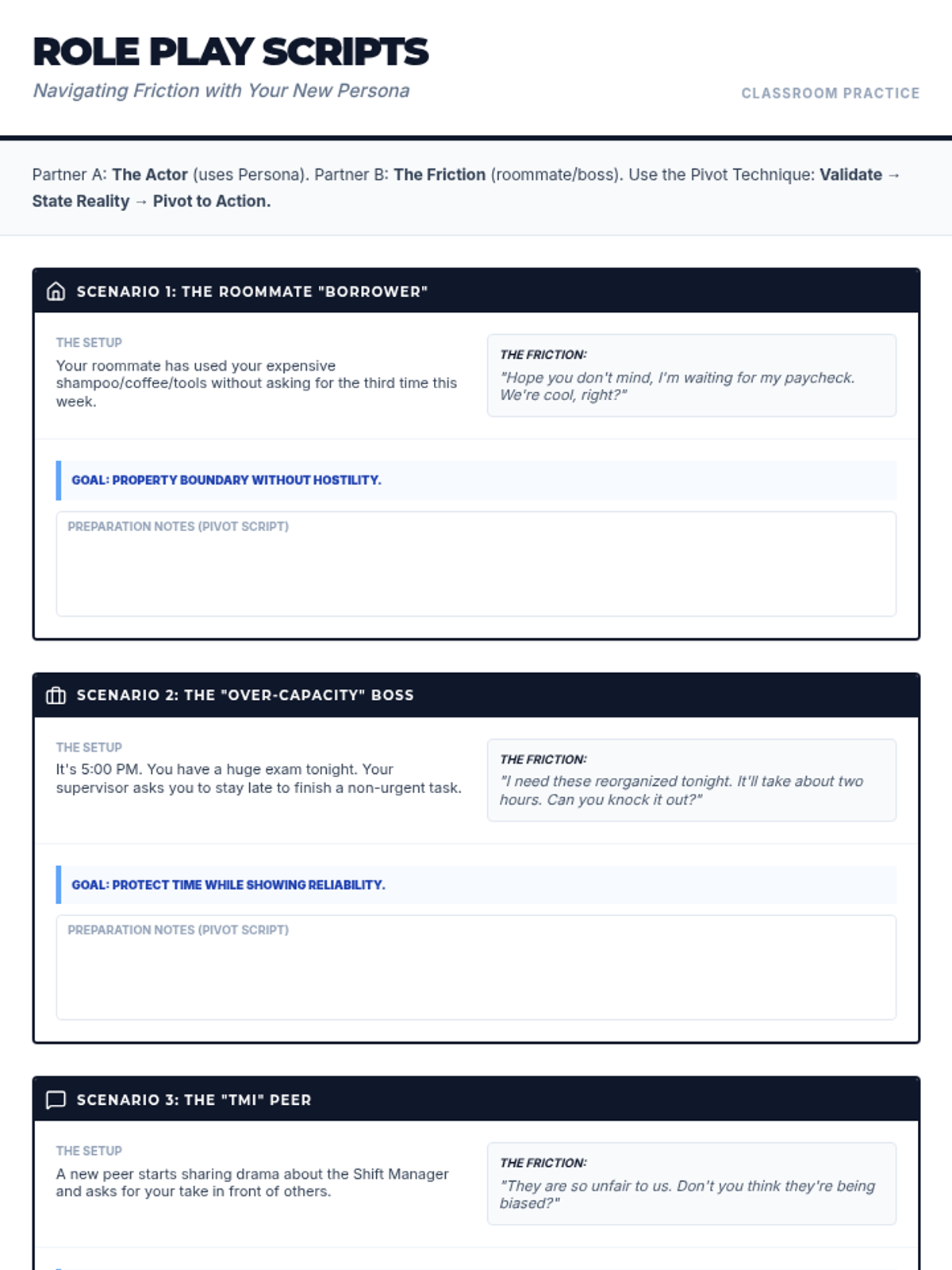
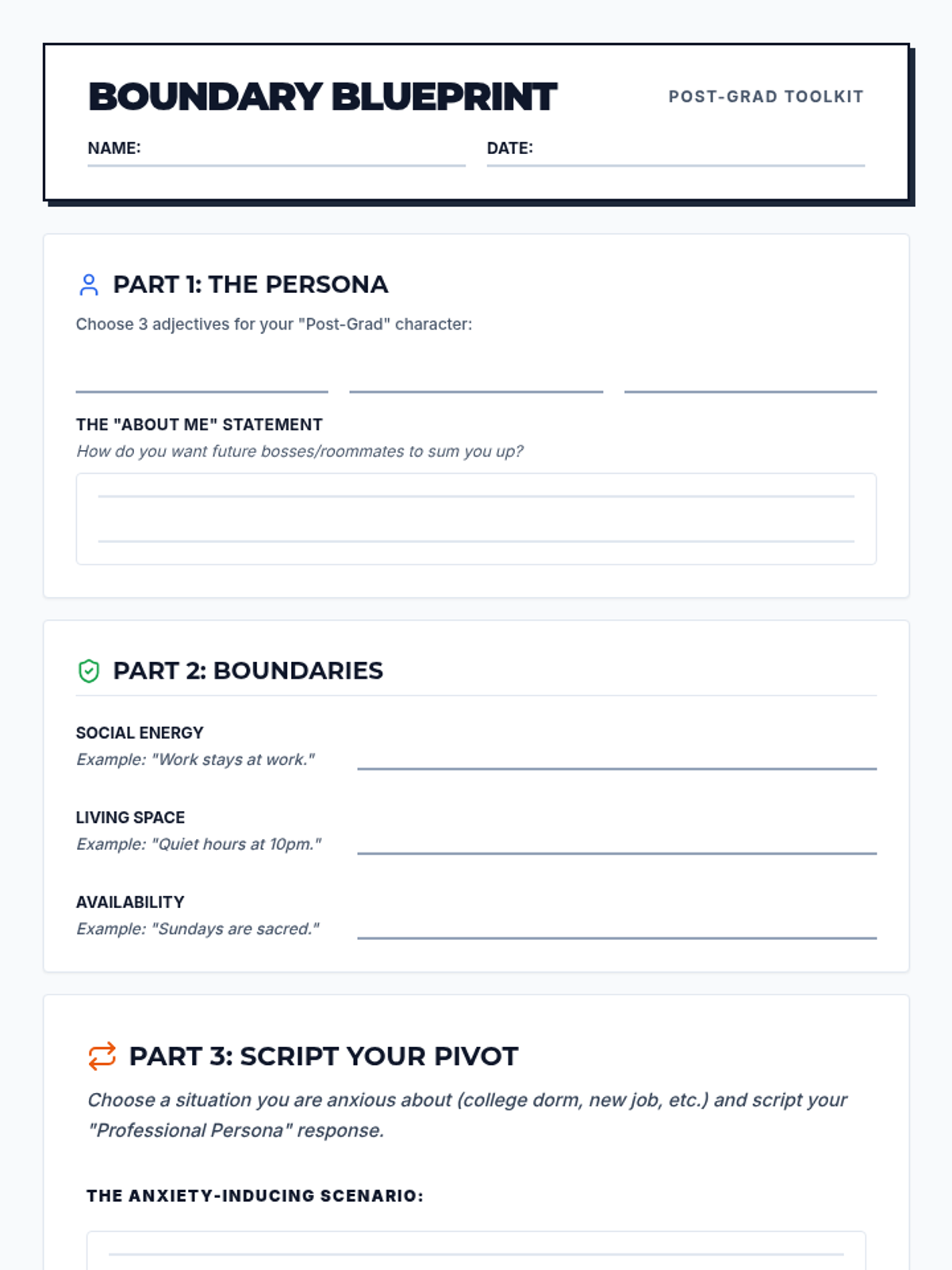
A lesson designed to help high school seniors navigate the transition to post-secondary life by developing a professional yet authentic identity and practicing difficult interpersonal conversations.
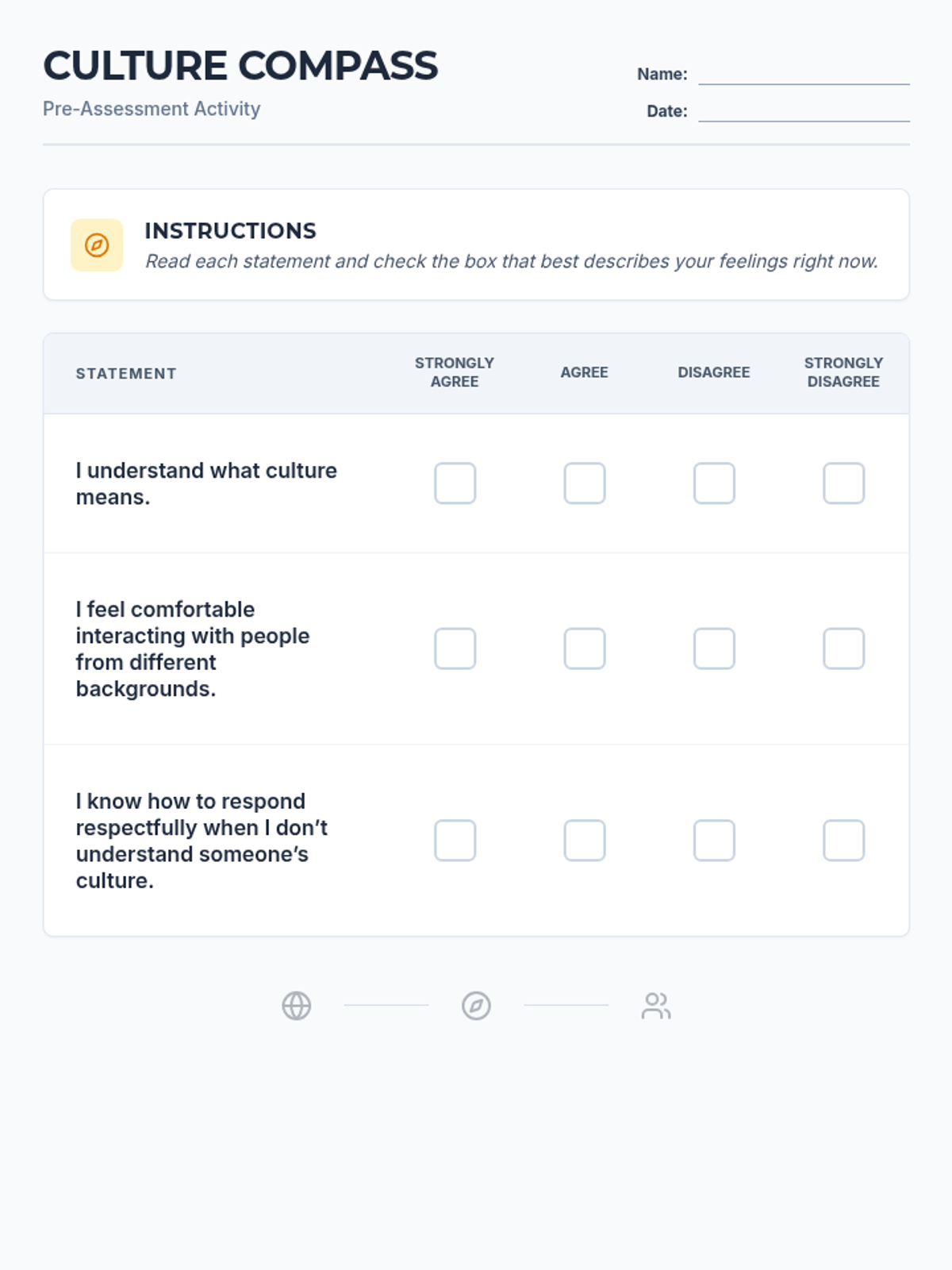
A foundational lesson exploring the concept of culture, self-awareness, and respectful cross-cultural interaction.
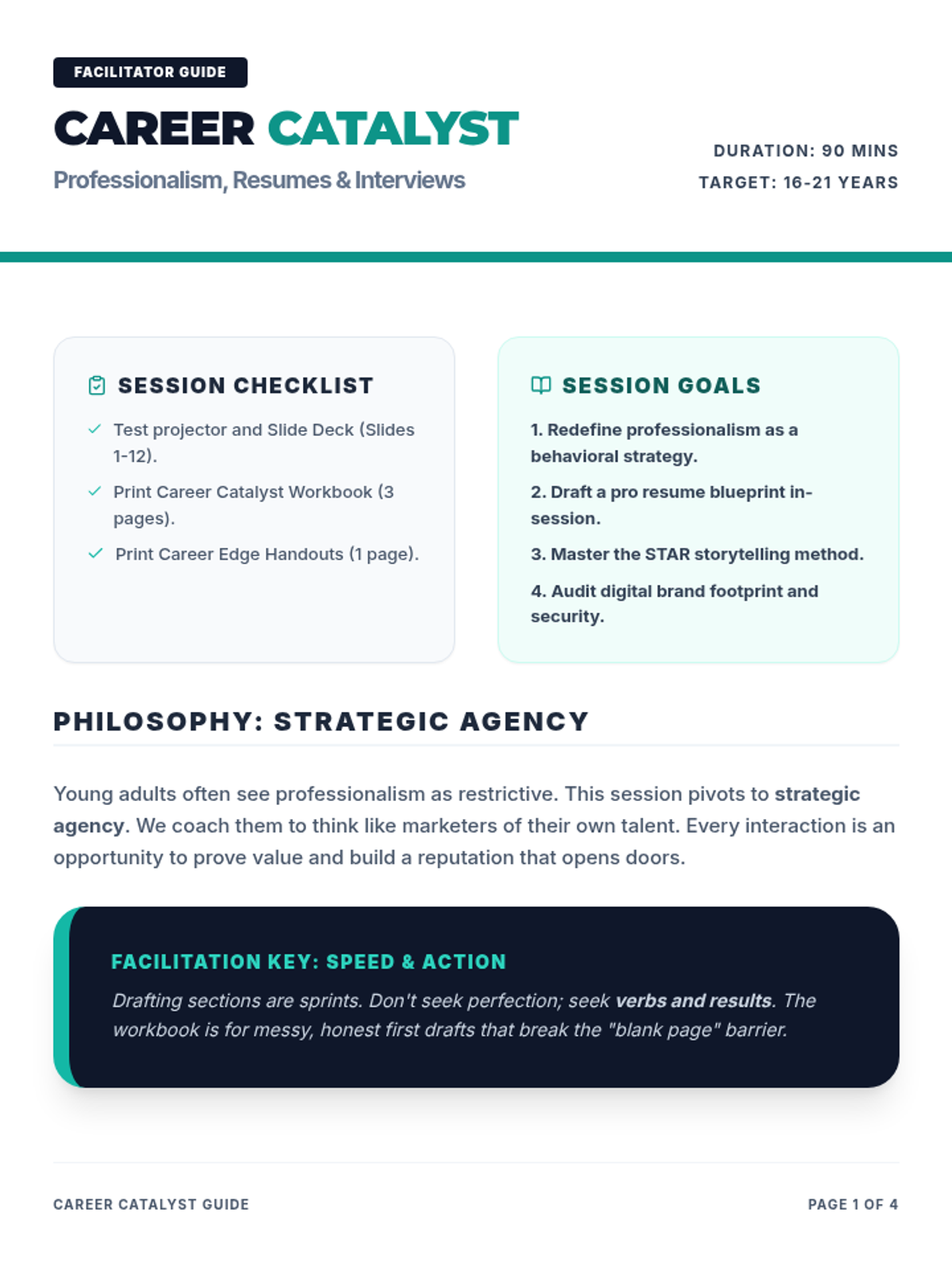
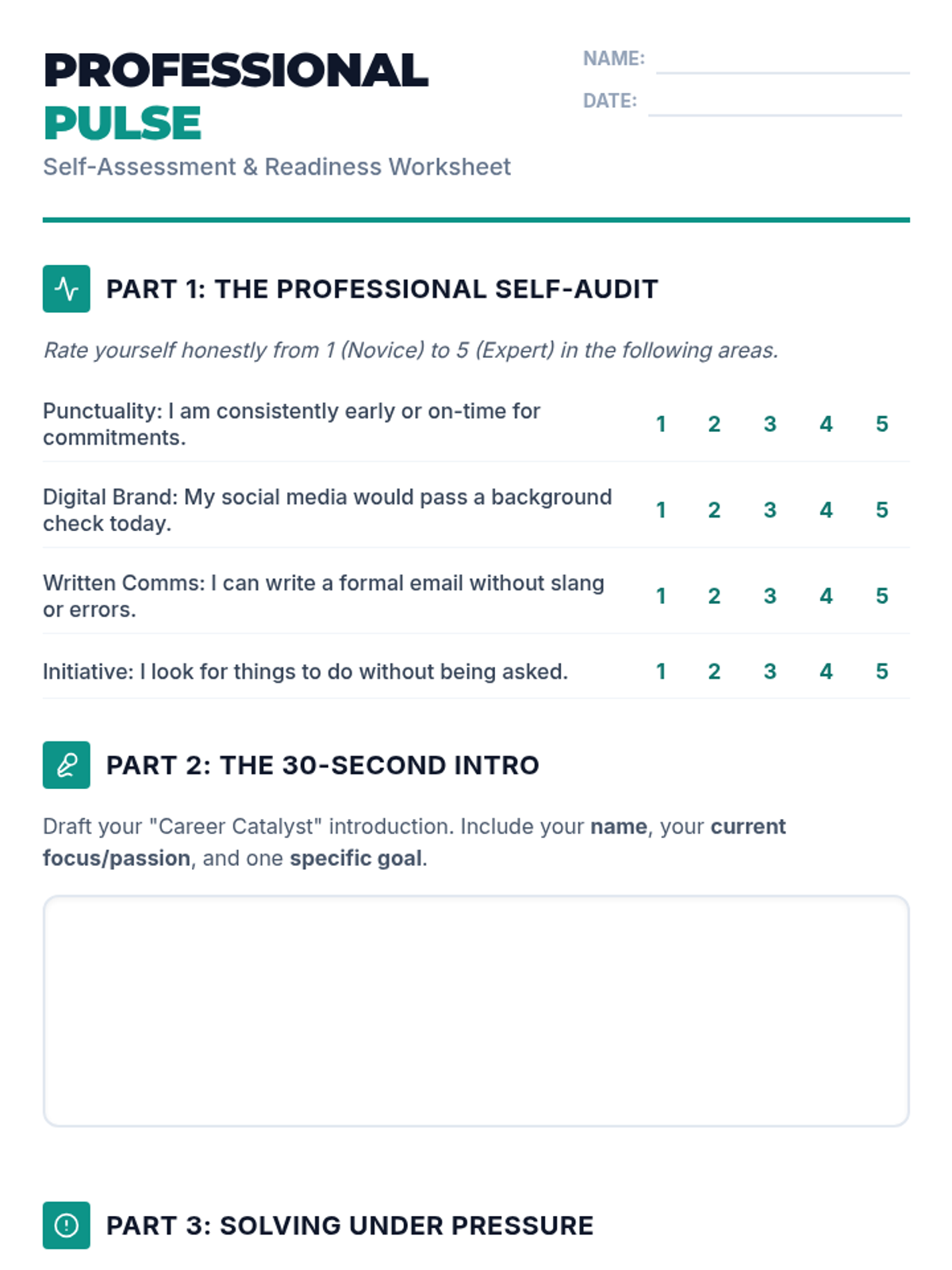
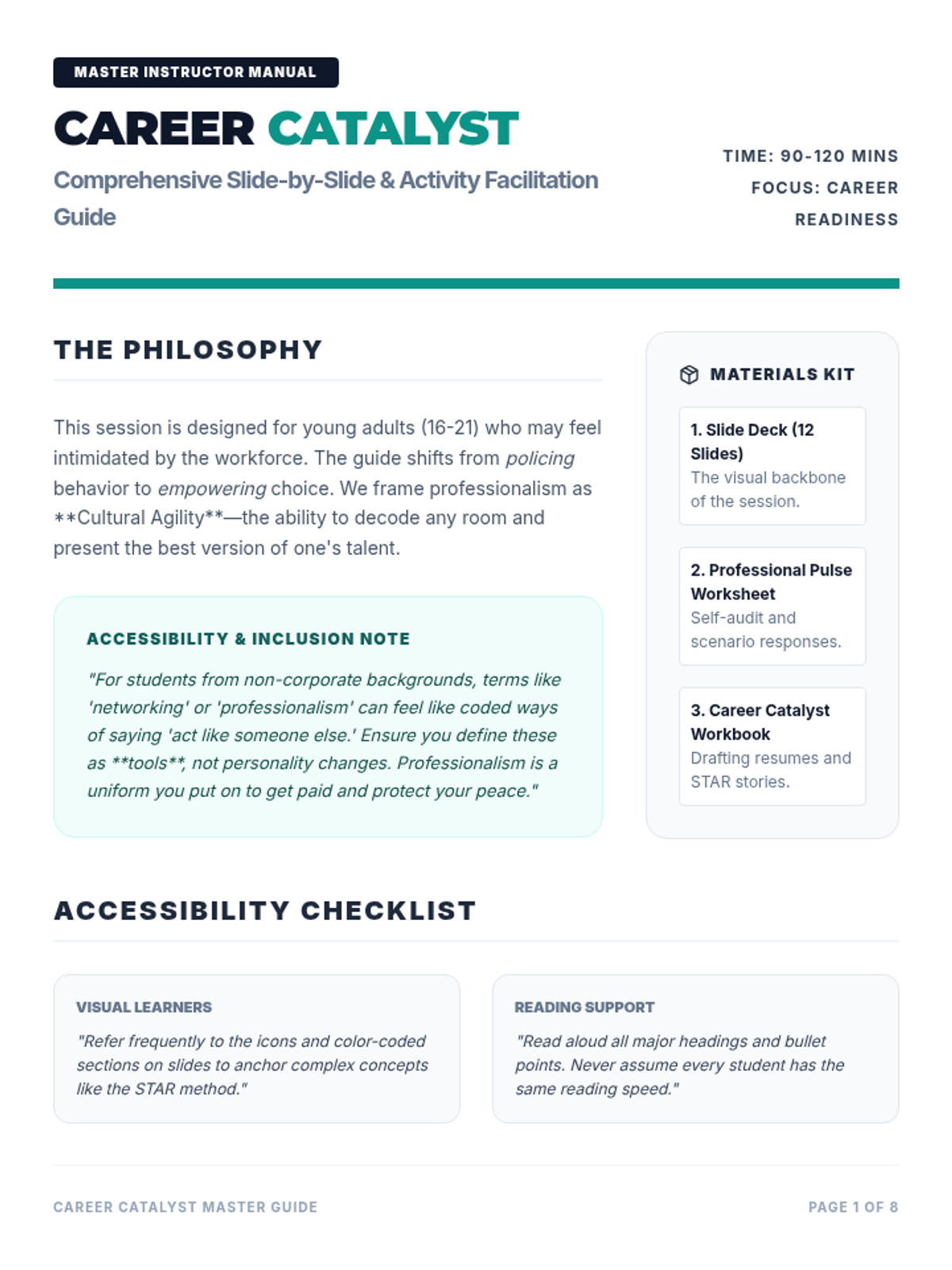
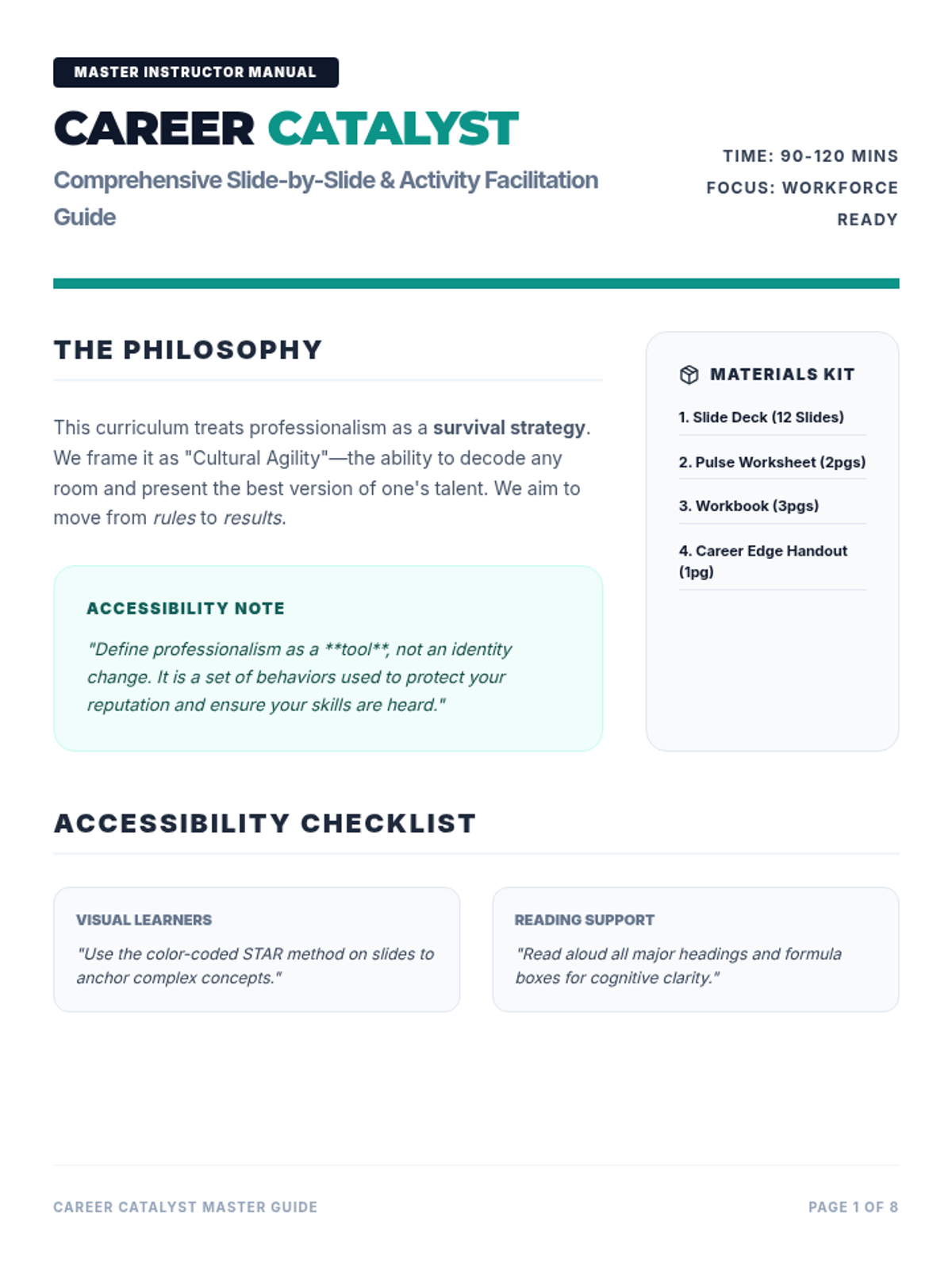
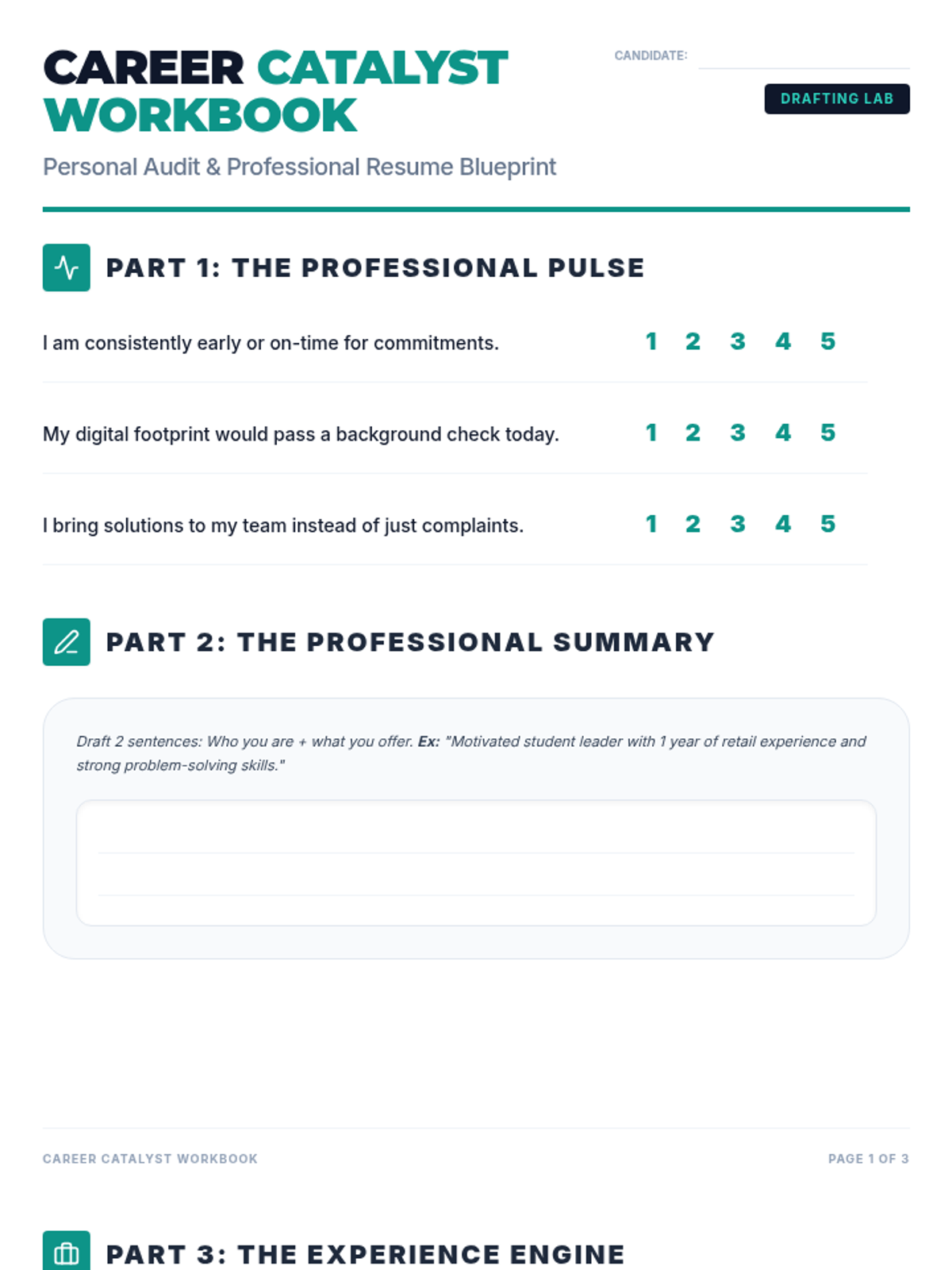
A comprehensive 90-minute session for young adults aged 16-21, focusing on the transition from student to professional through communication, reliability, and workplace etiquette.
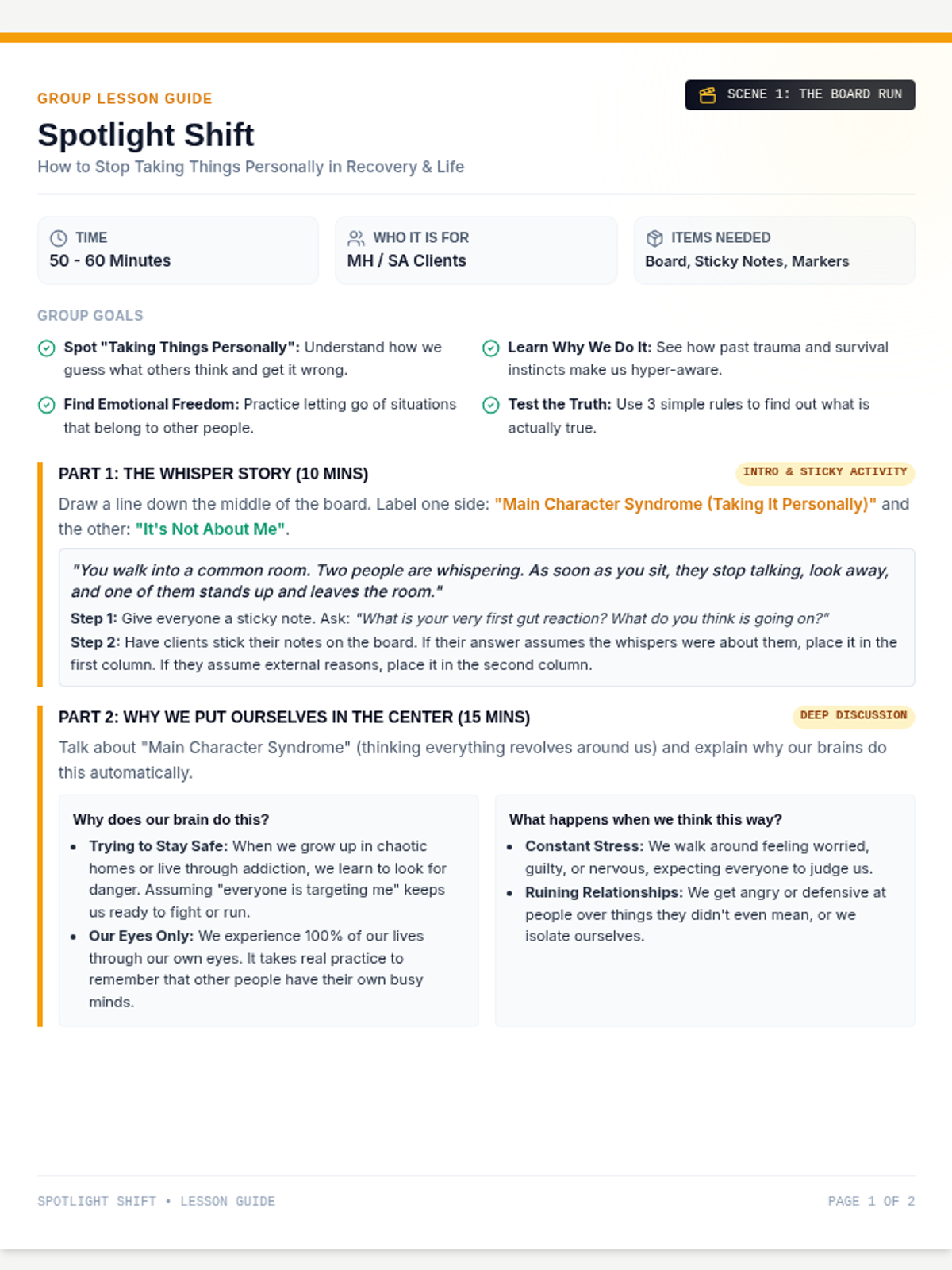
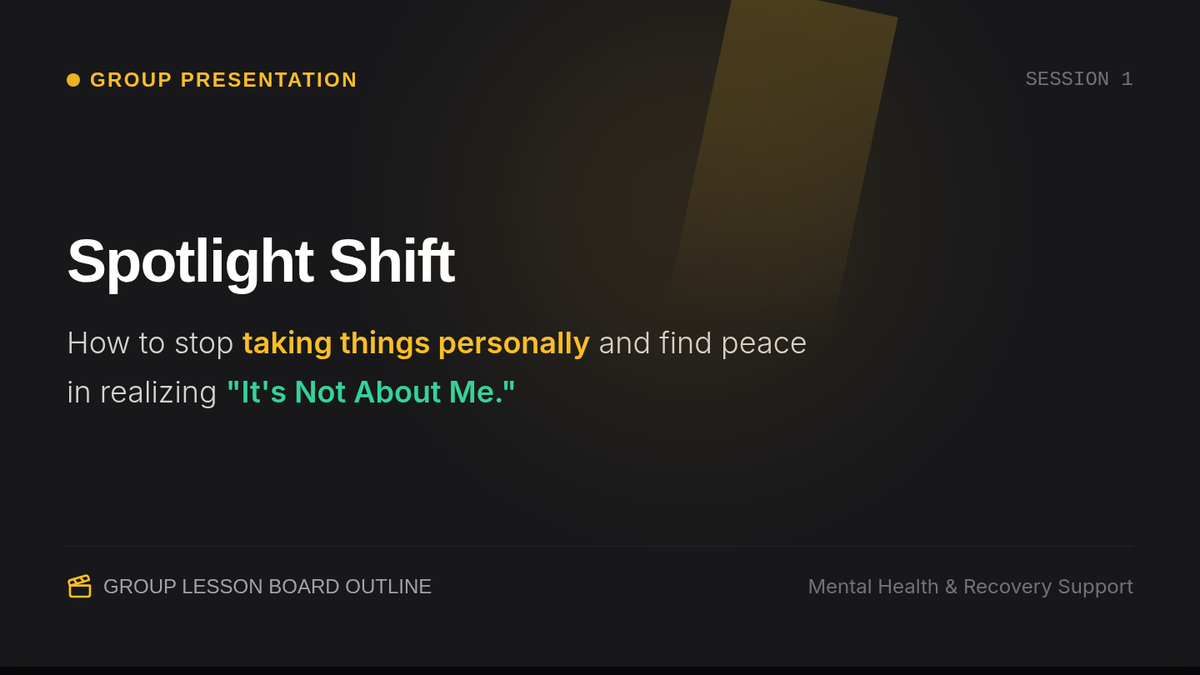
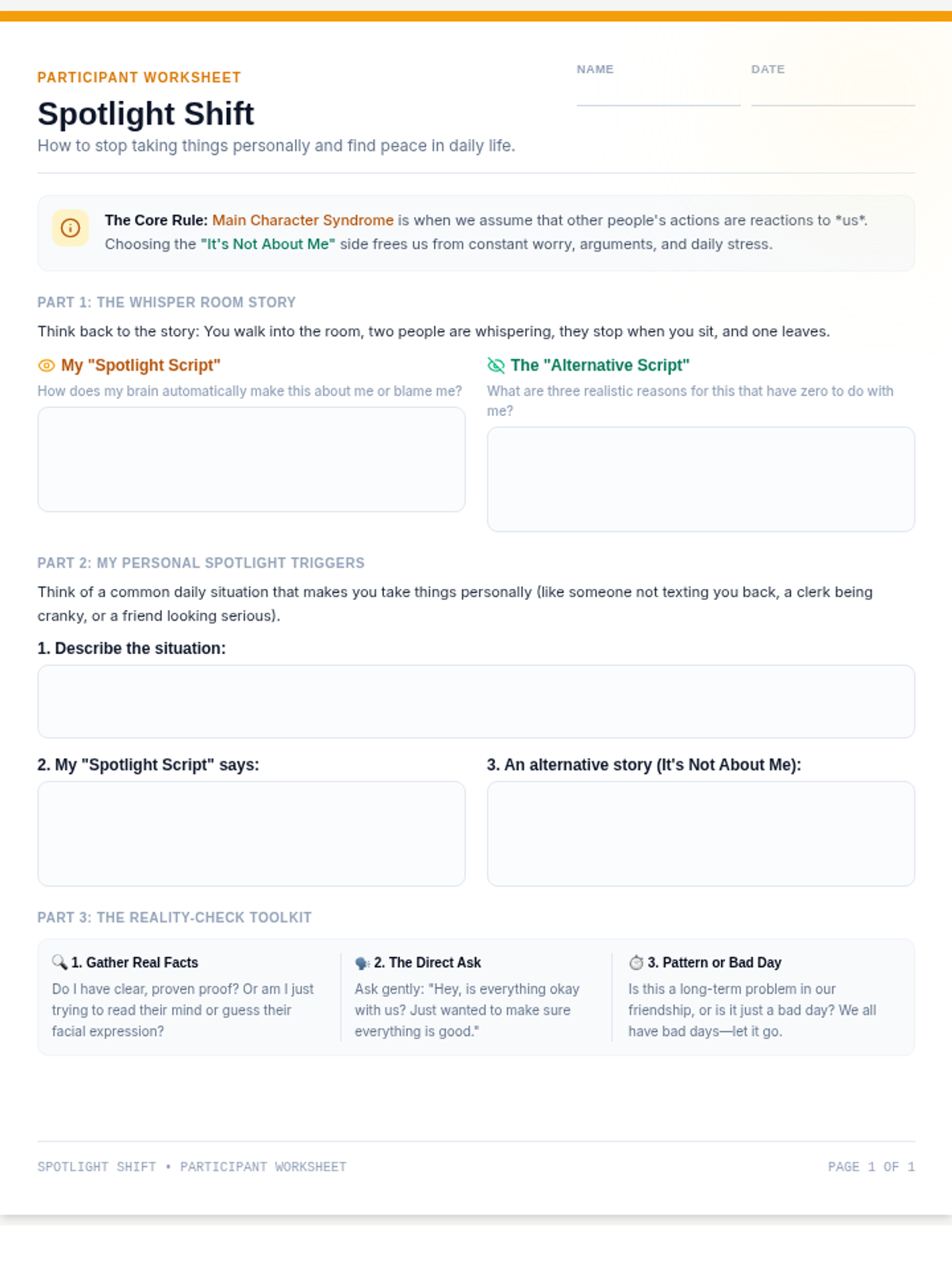
A psychoeducational group lesson designed for mental health and substance abuse clients. It explores 'Main Character Syndrome' (cognitive personalization) and the liberating perspective of 'It's Not About Me', offering clients practical reality-checking tools to navigate daily triggers without taking them personally.
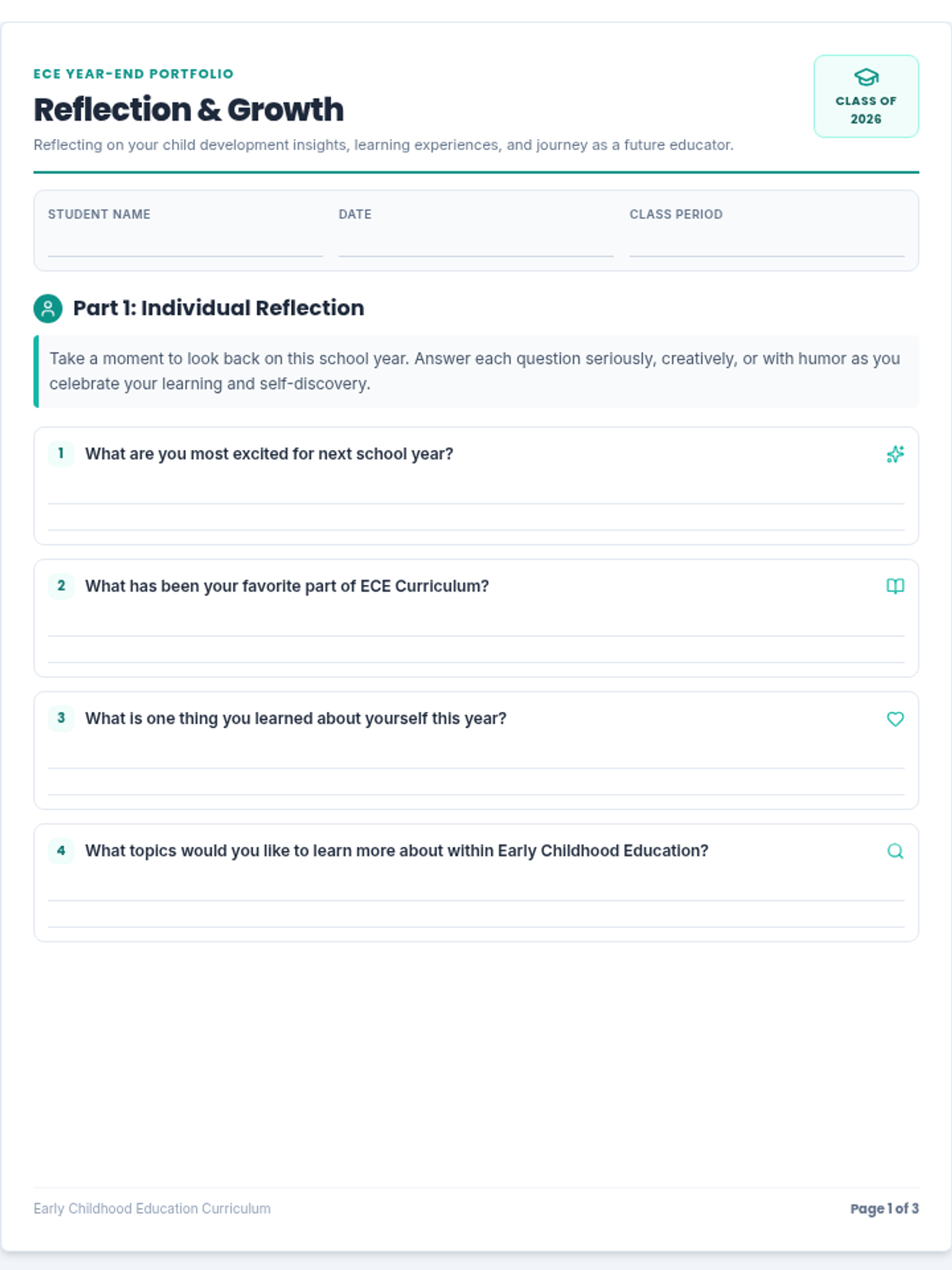
A reflective ECE lesson designed for students to document their academic growth, celebrate achievements, and collaboratively draft an unofficial class survival guide.
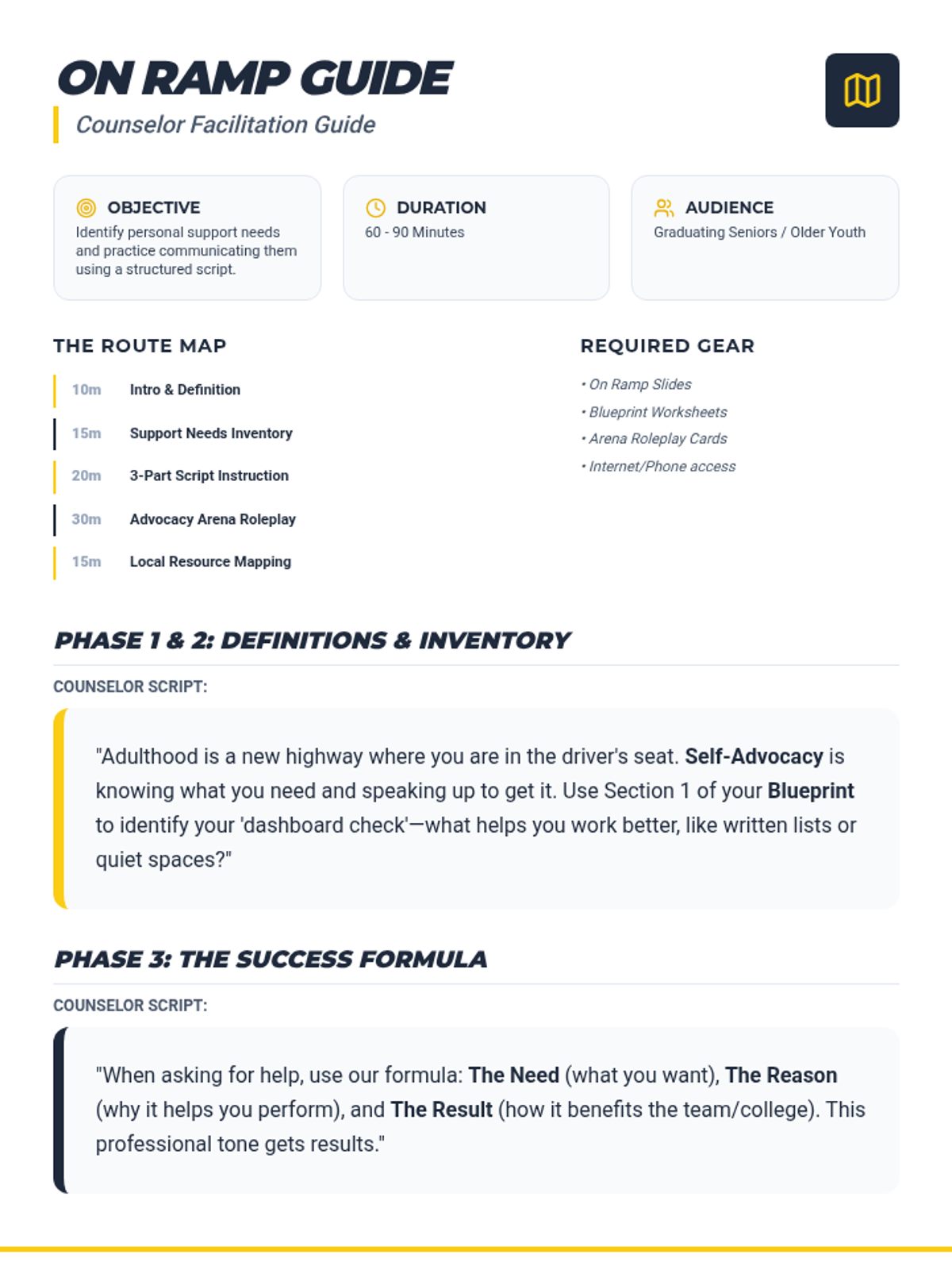
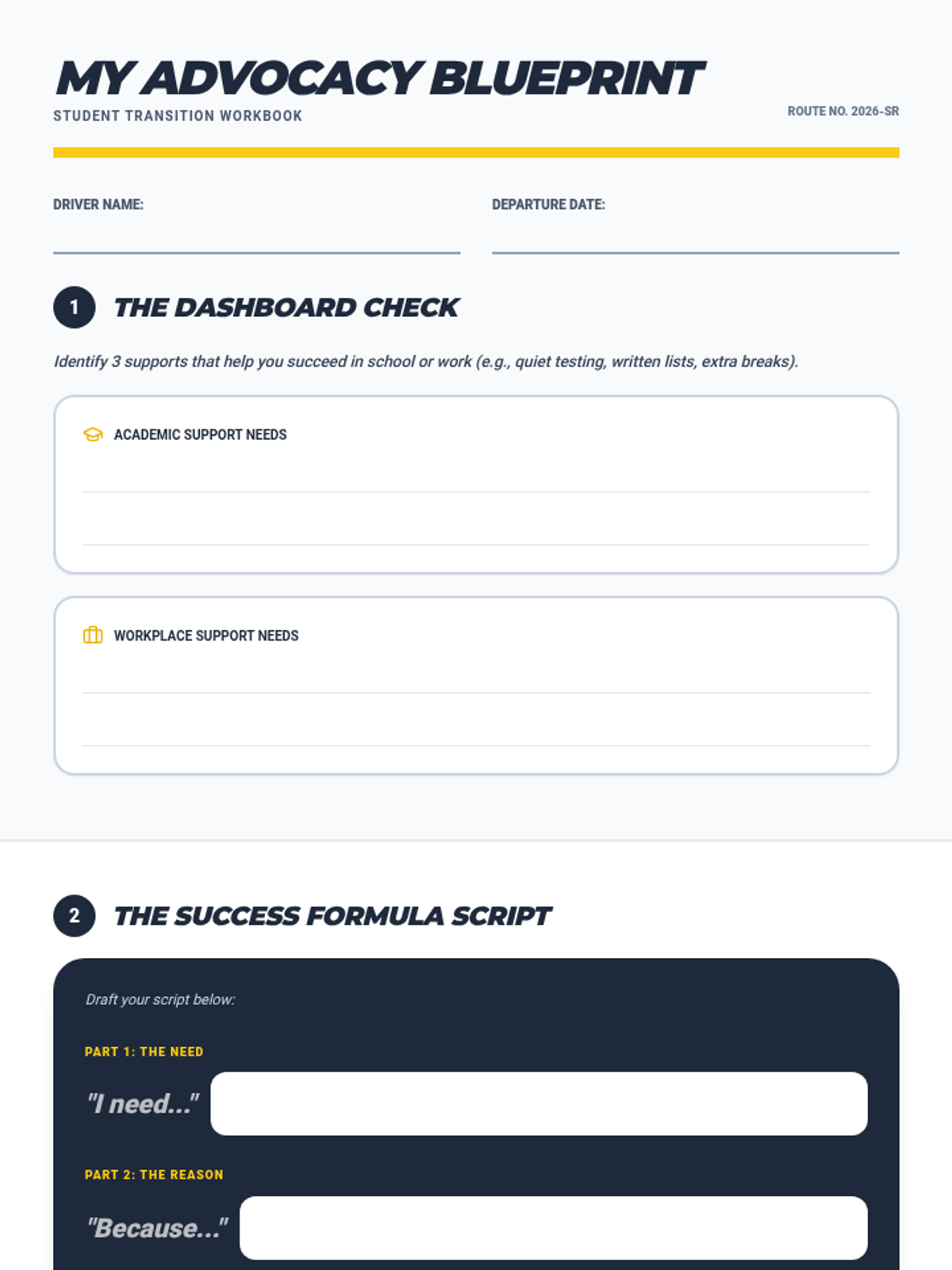
A comprehensive guide for counselors to help graduating students transition to adulthood by mastering self-advocacy skills. Students identify their support needs, practice communication scripts, and map out essential community resources for their next chapter.
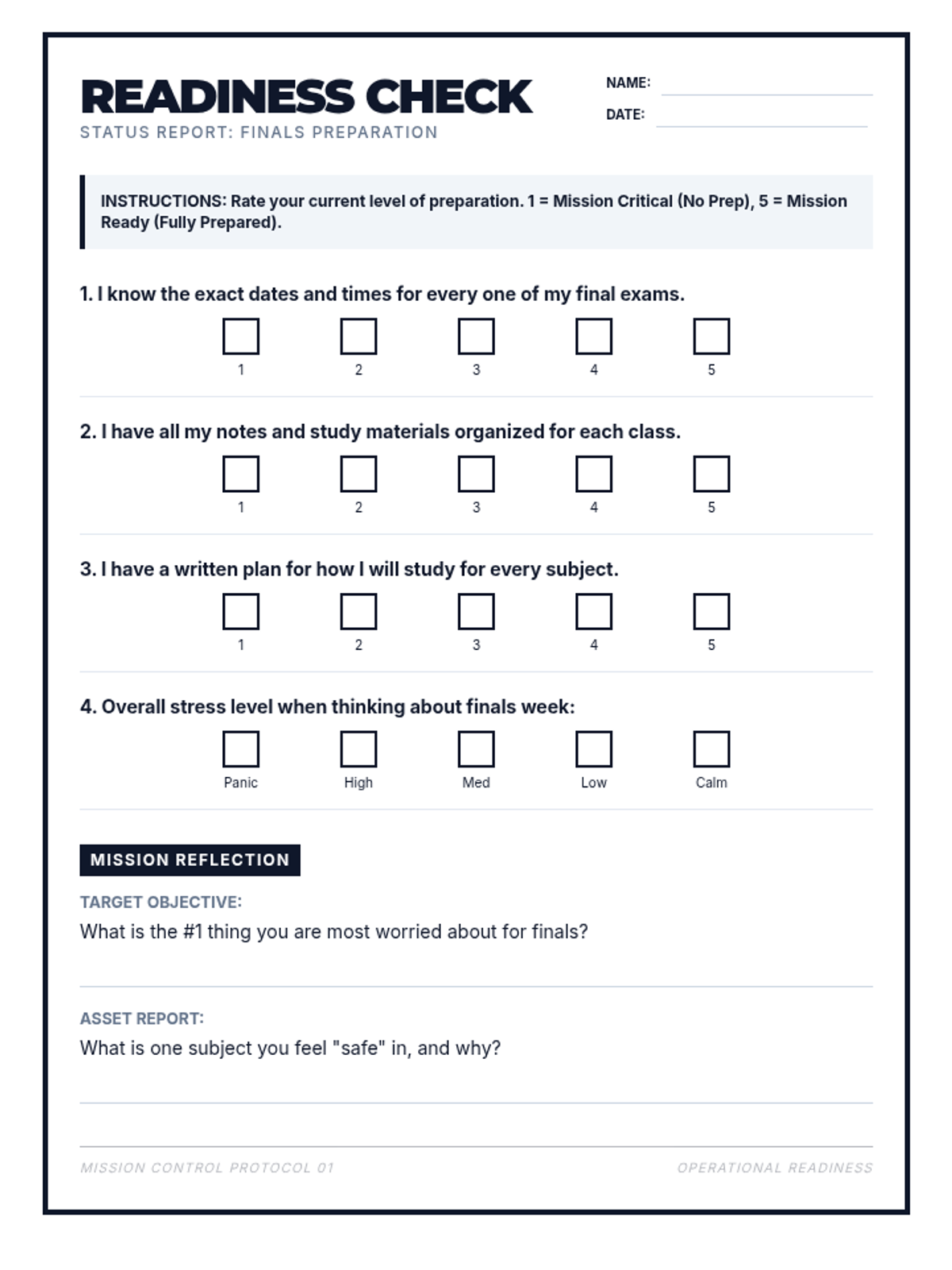
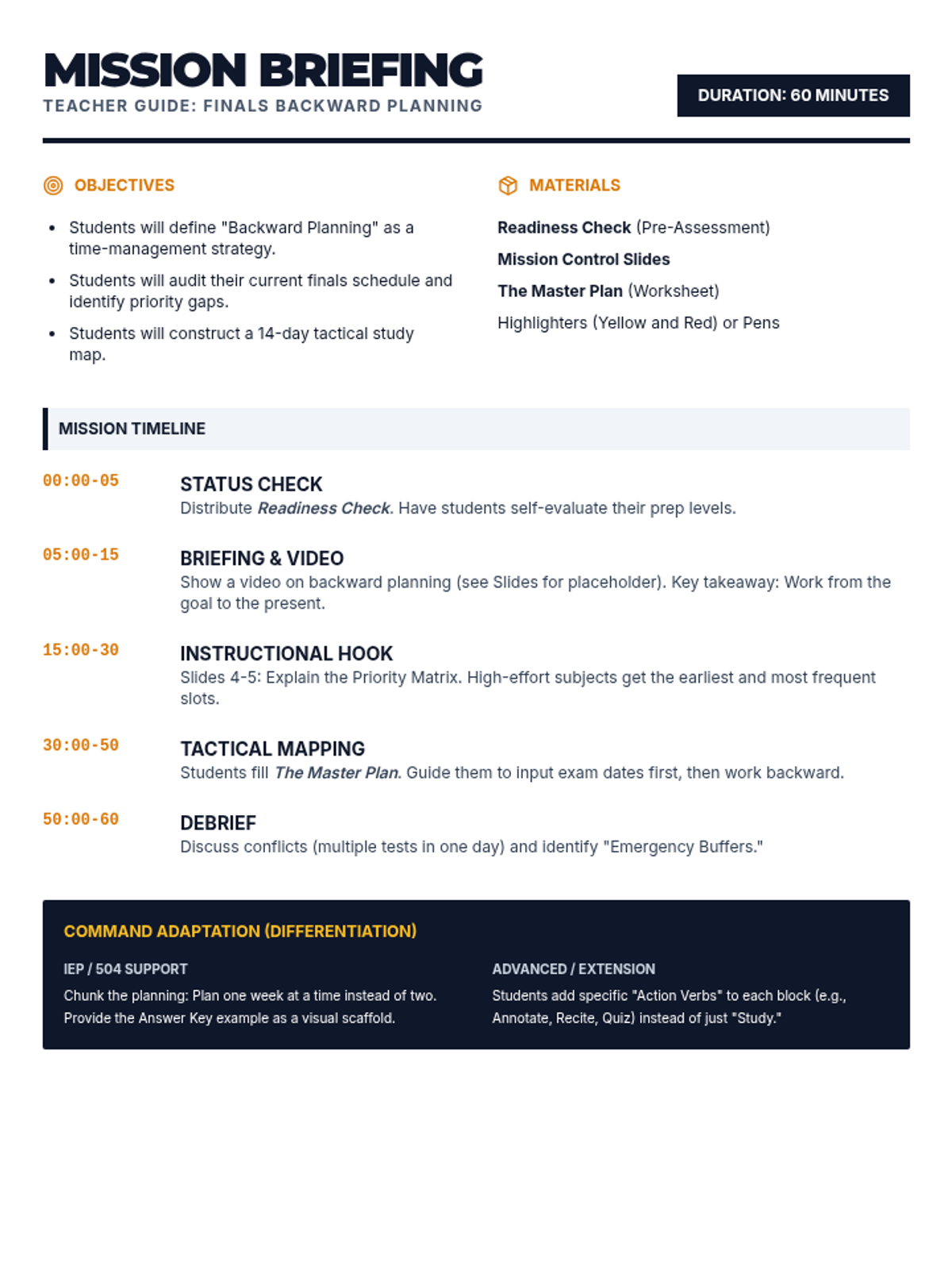
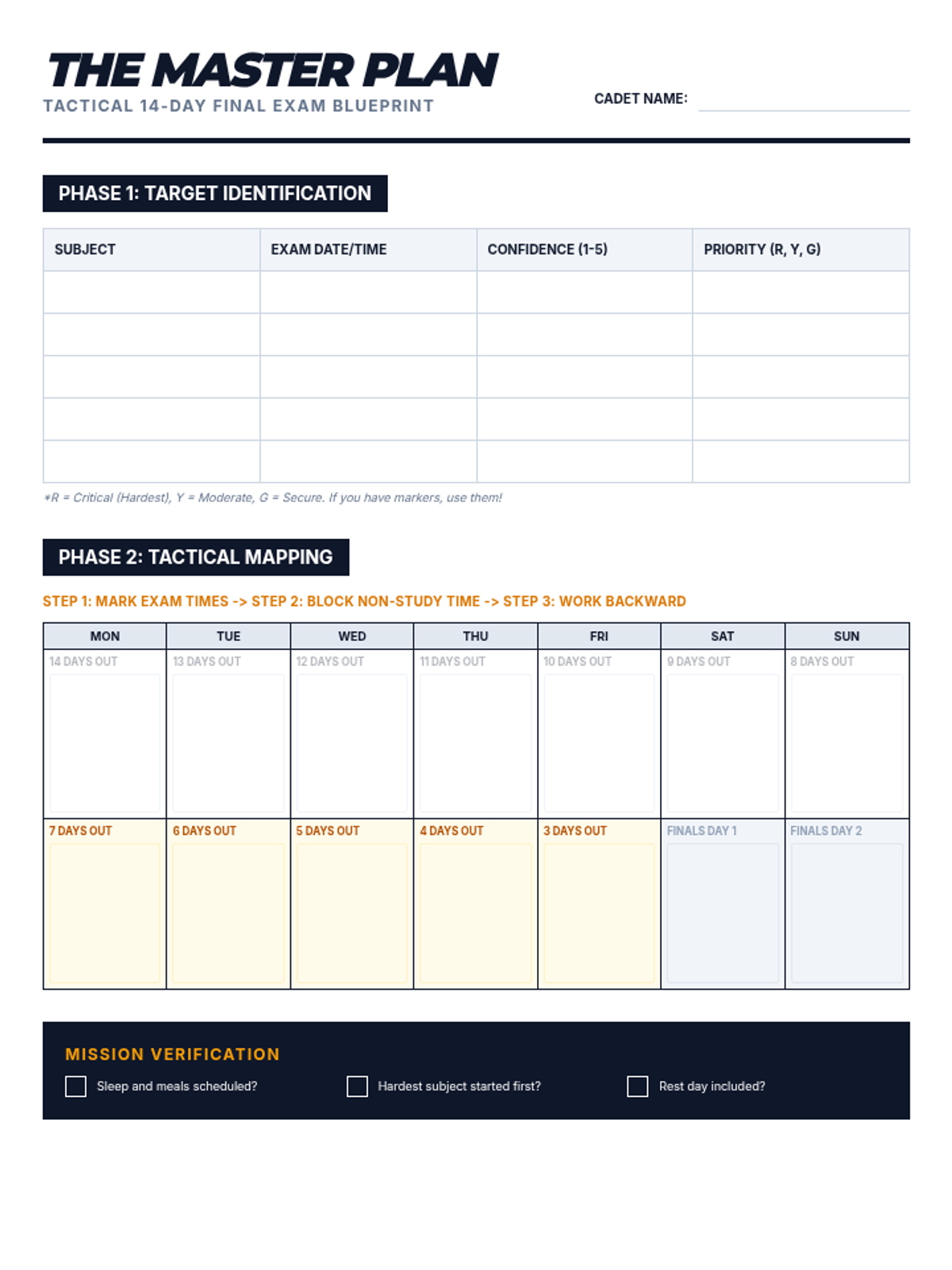
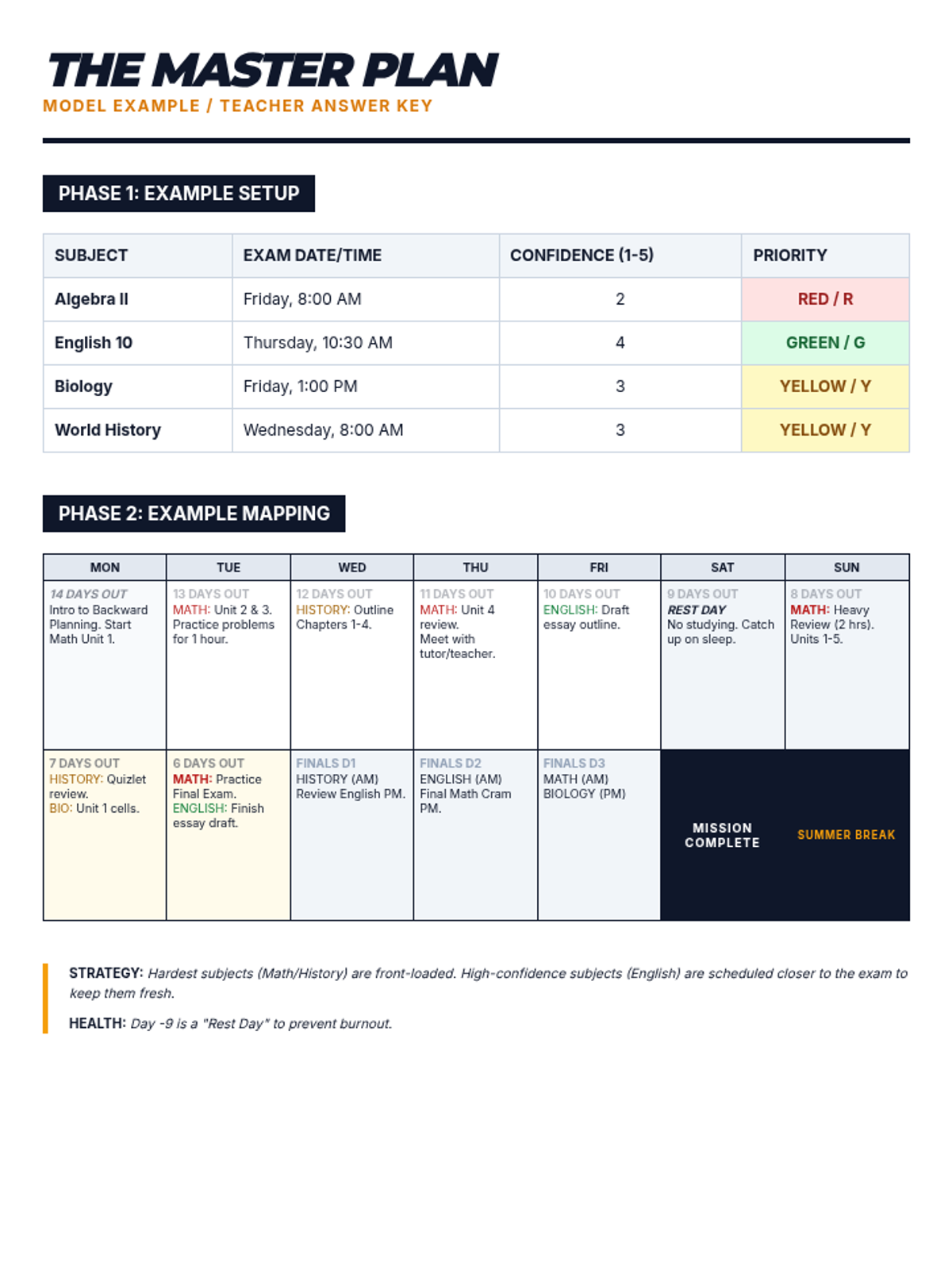
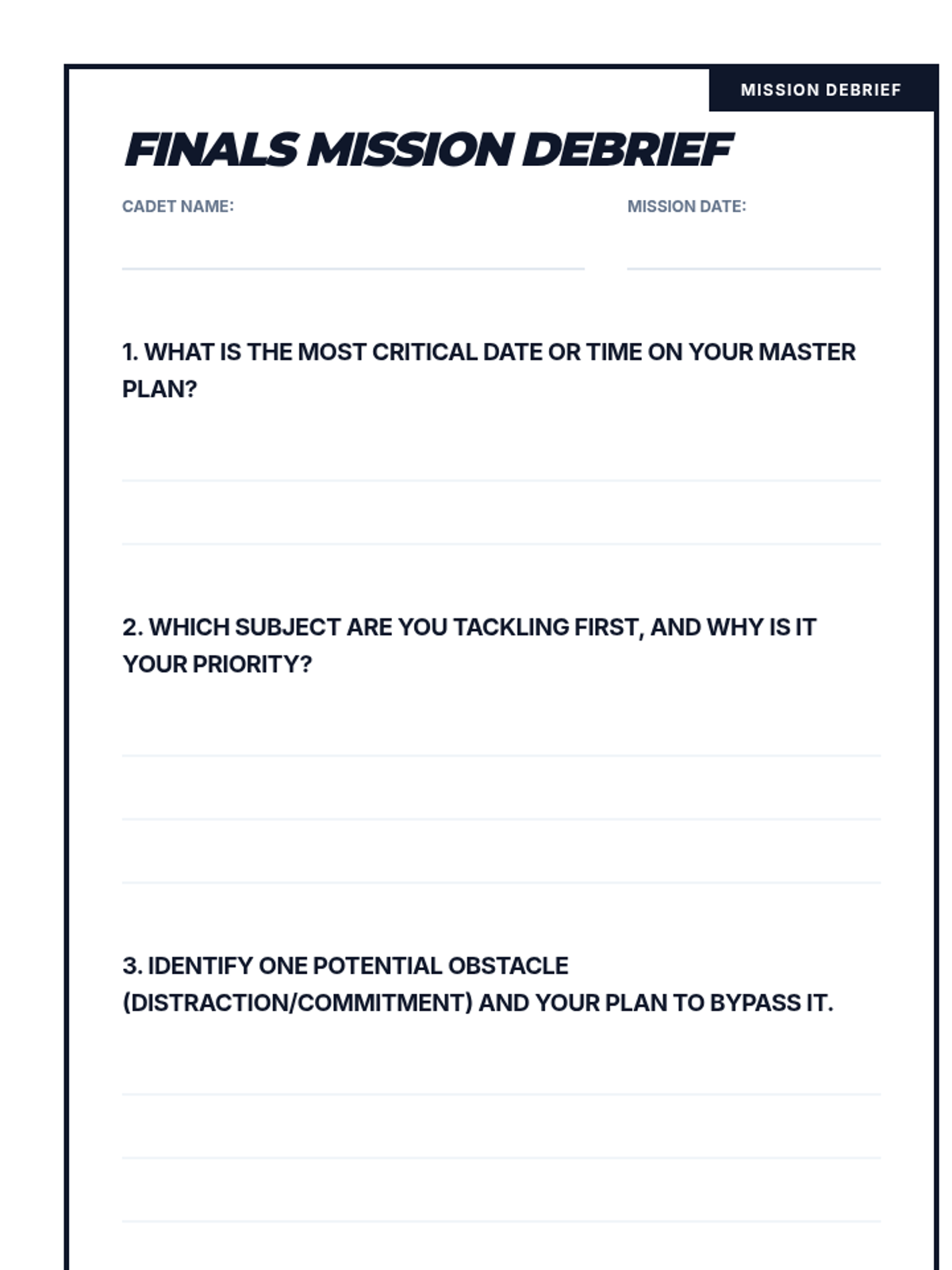
A tactical approach to finals preparation using backward design. Students will assess their readiness, learn the logic of starting from the finish line, and map out a concrete study schedule.
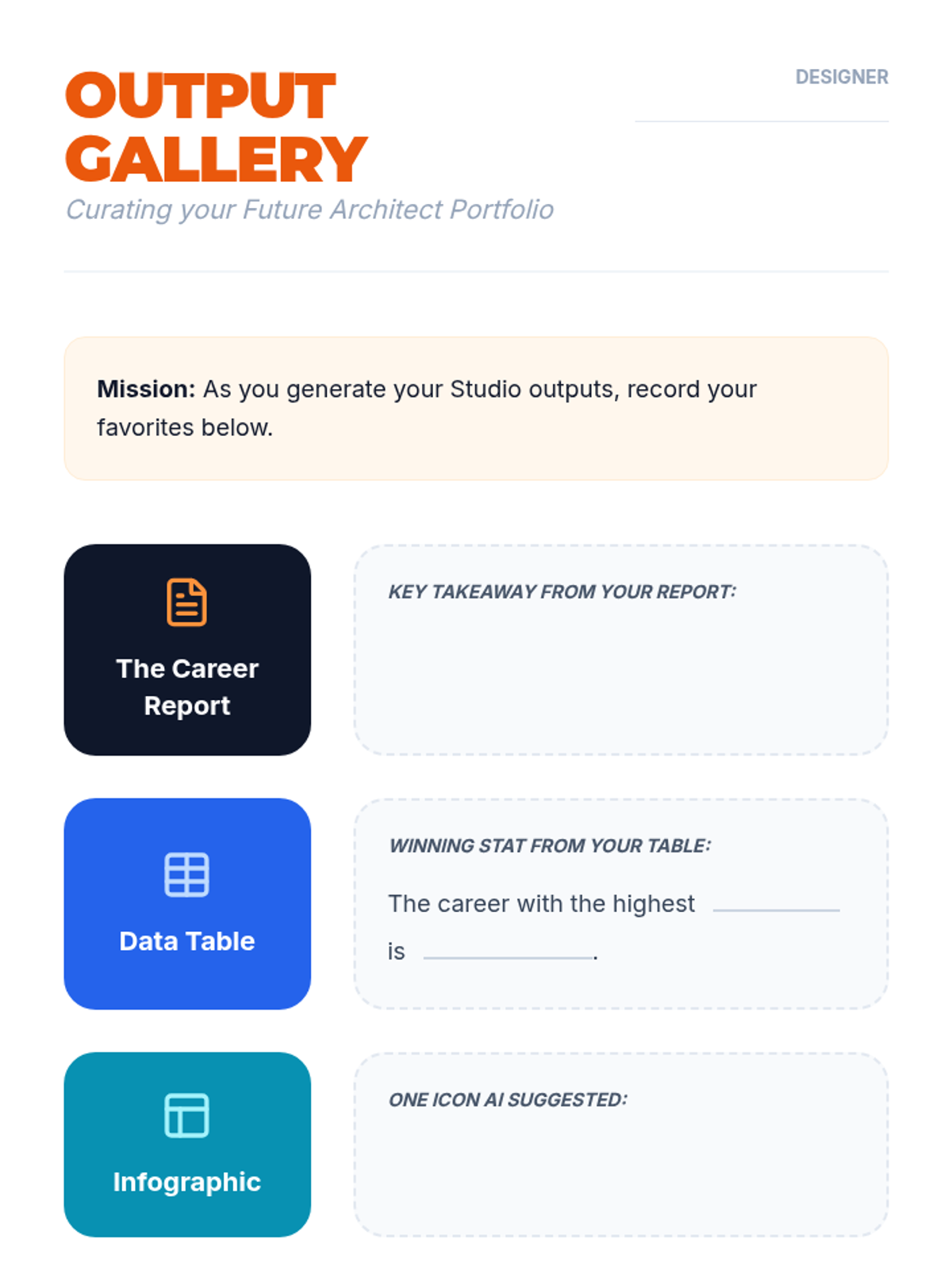
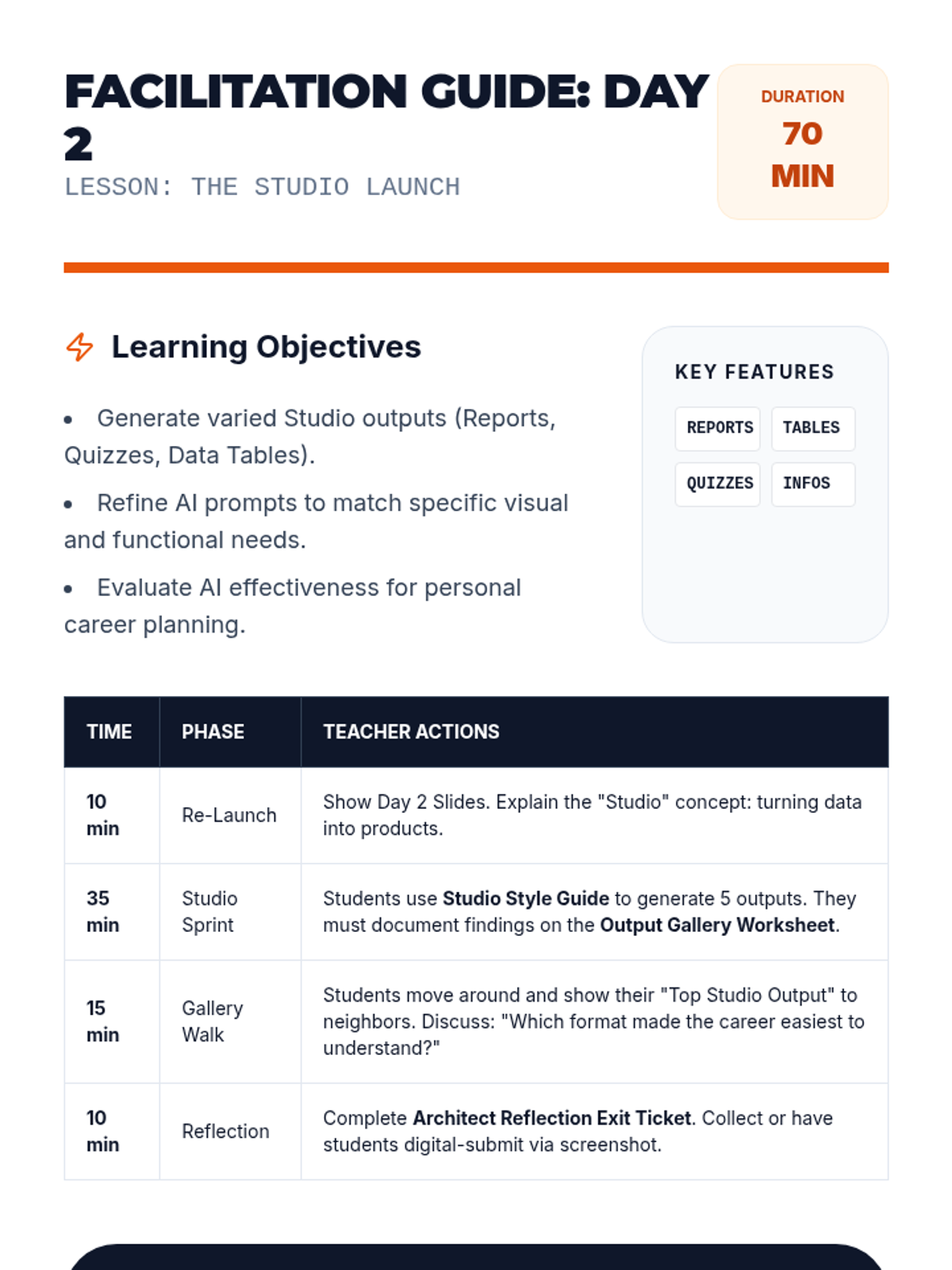
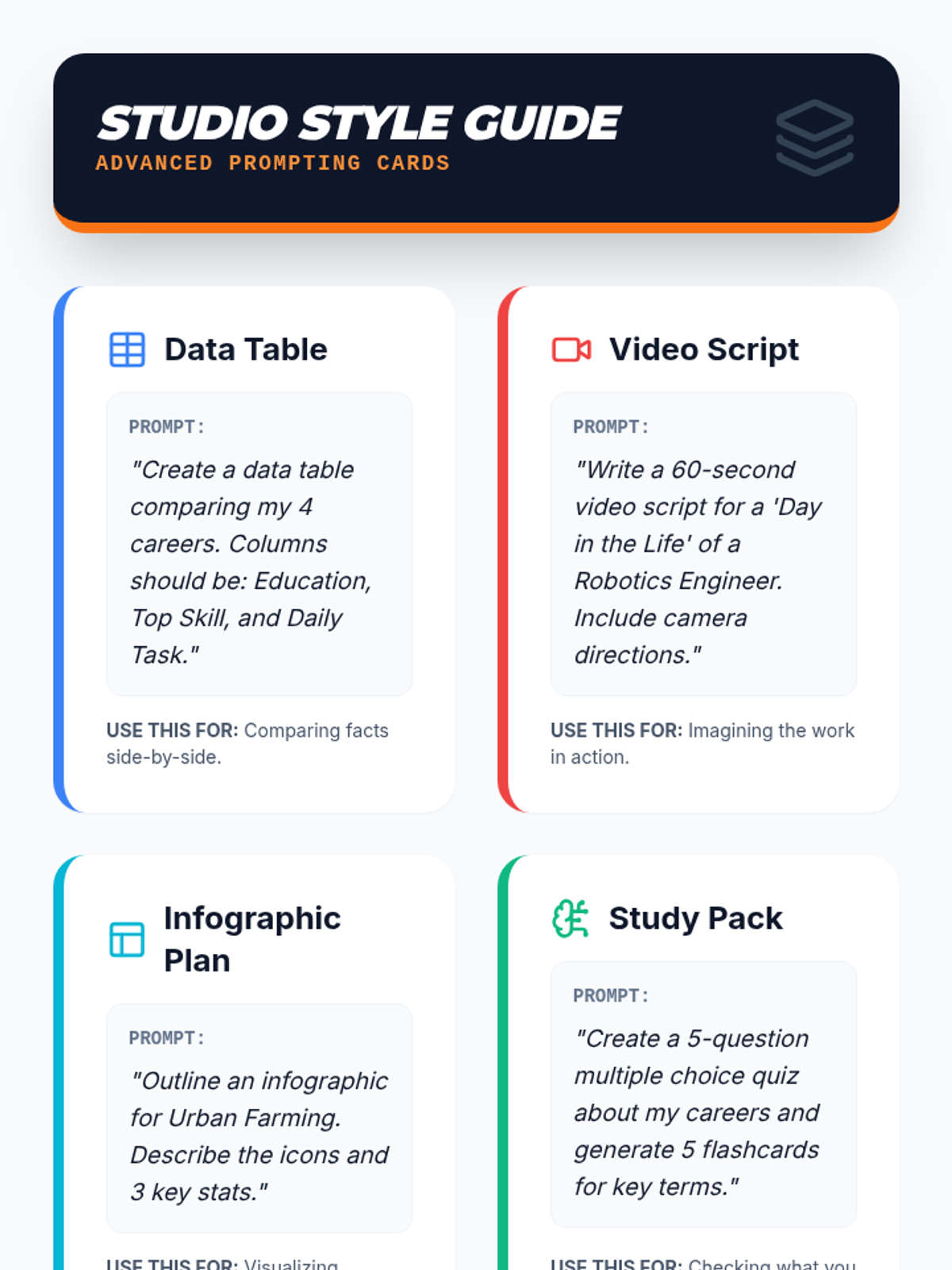
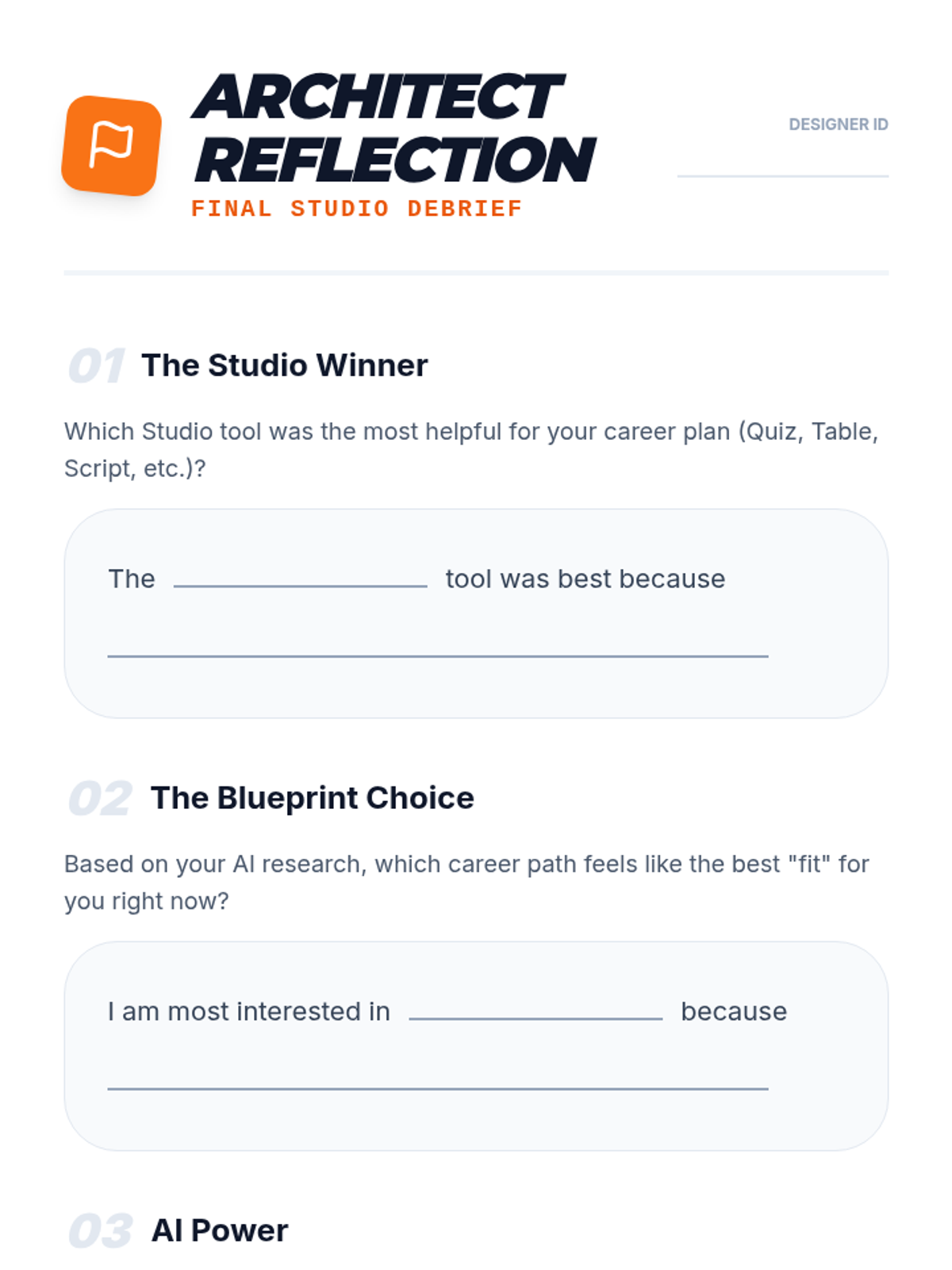
Students dive into the 'Studio' capabilities of NotebookLM, generating specific outputs like reports, quizzes, infographics, and data tables to refine their career plans.
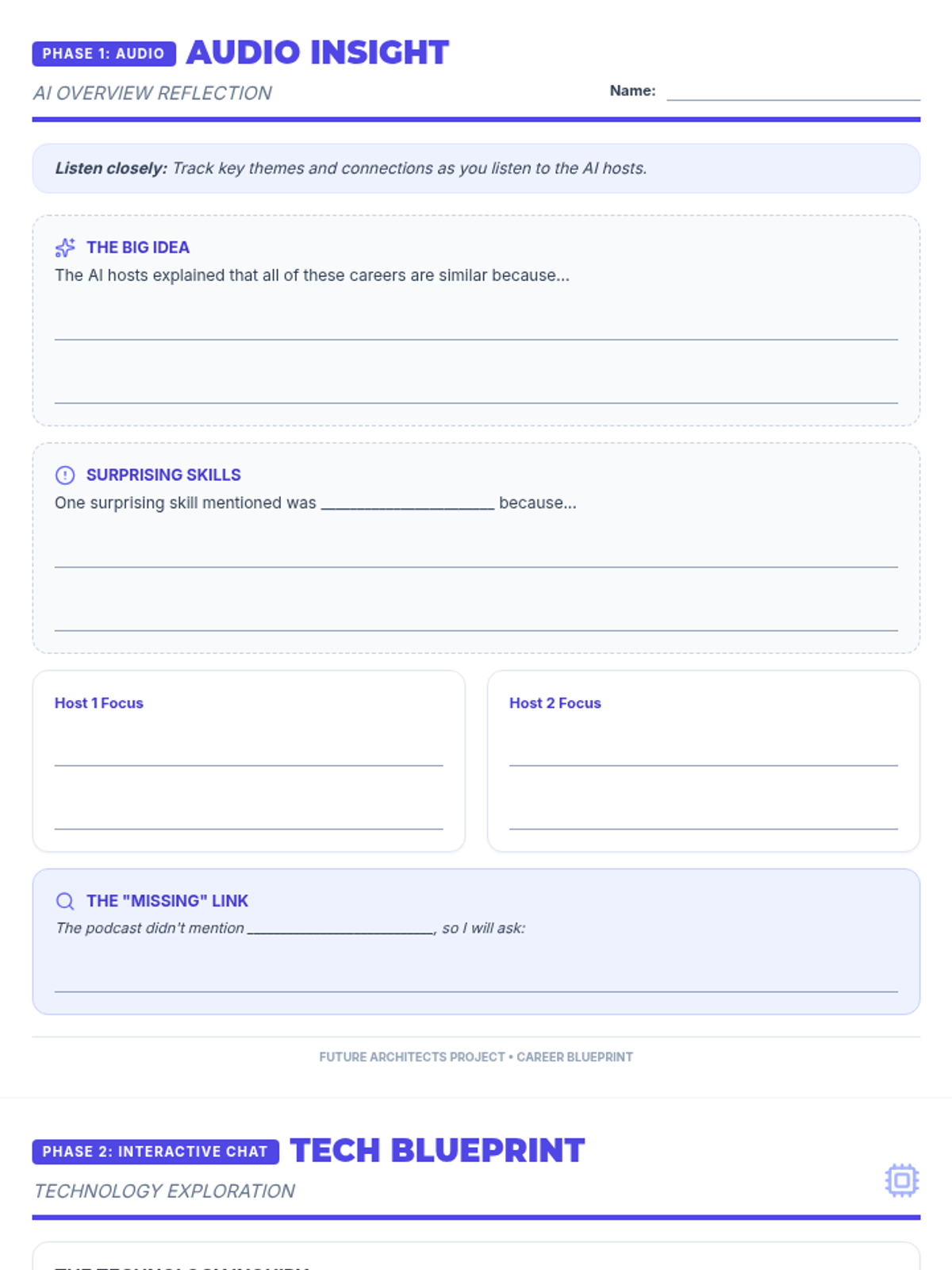
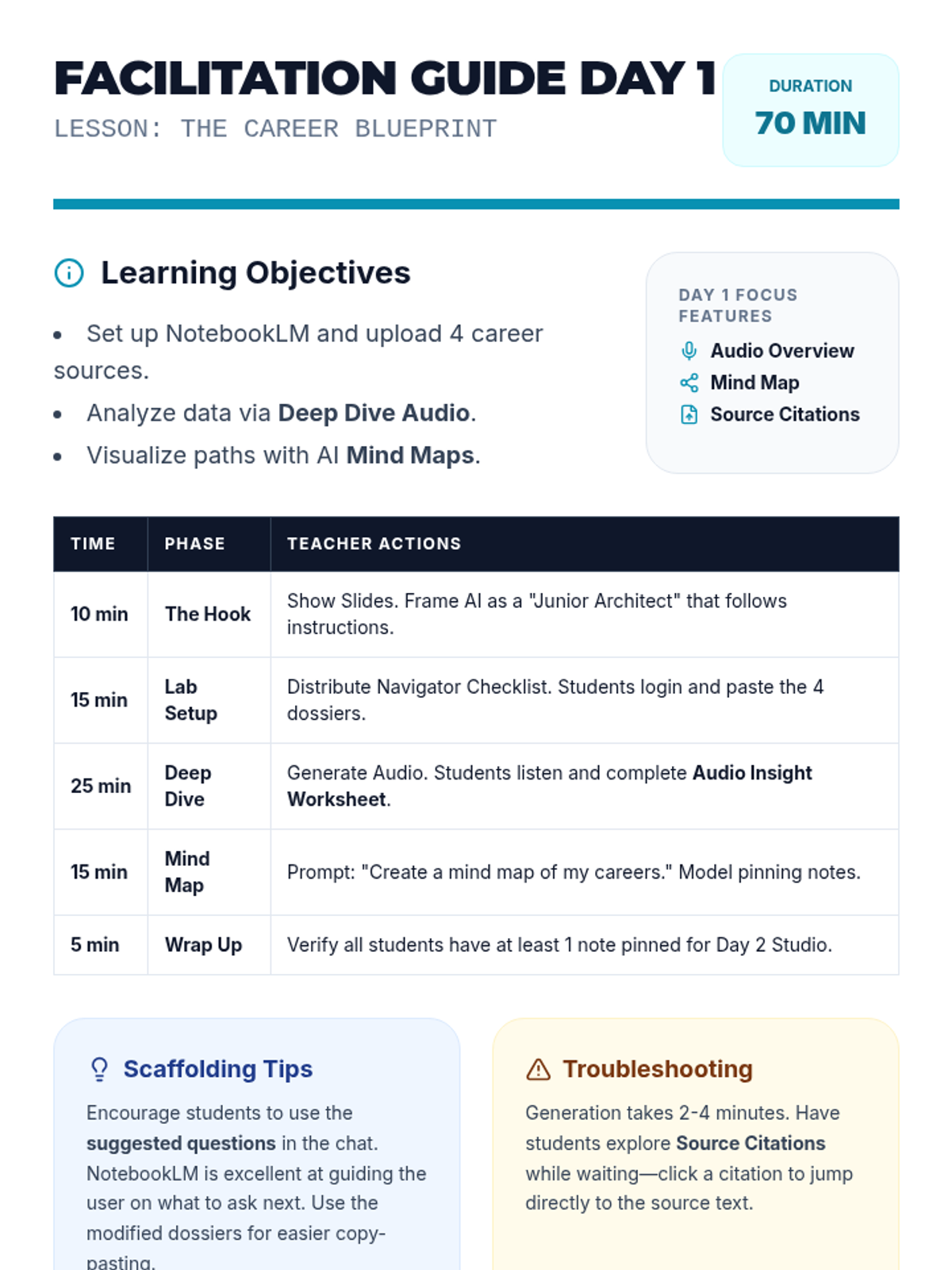
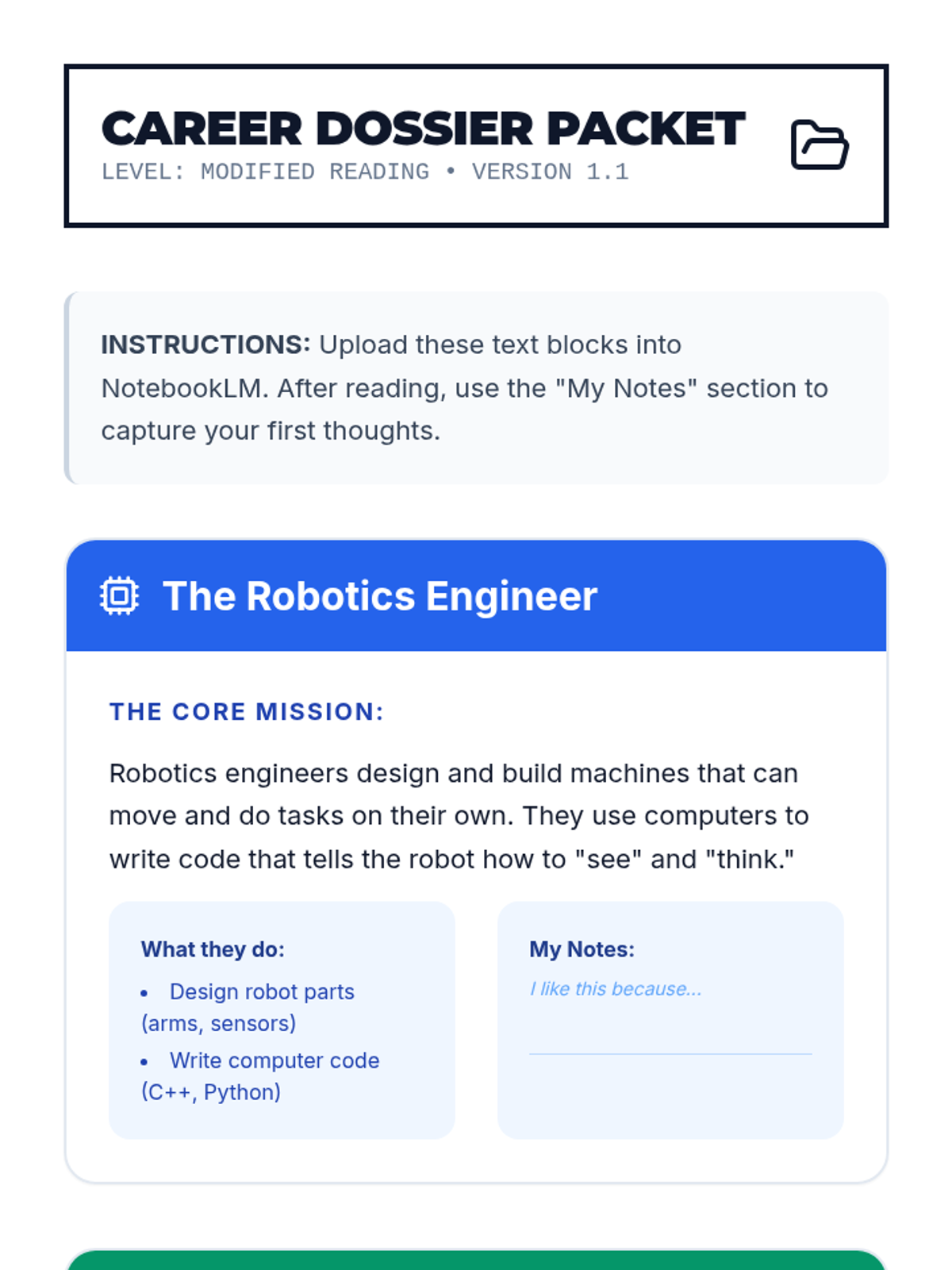
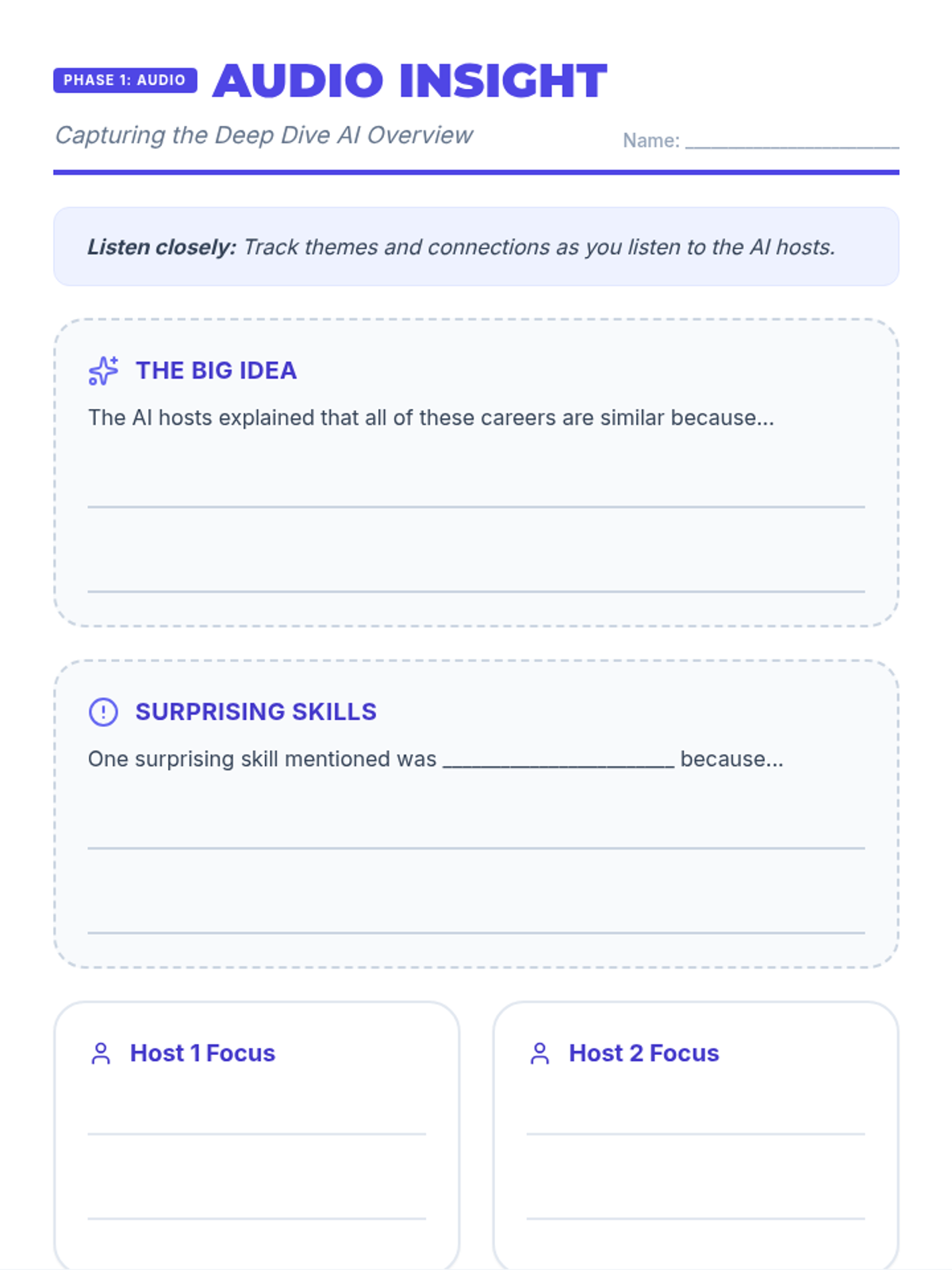
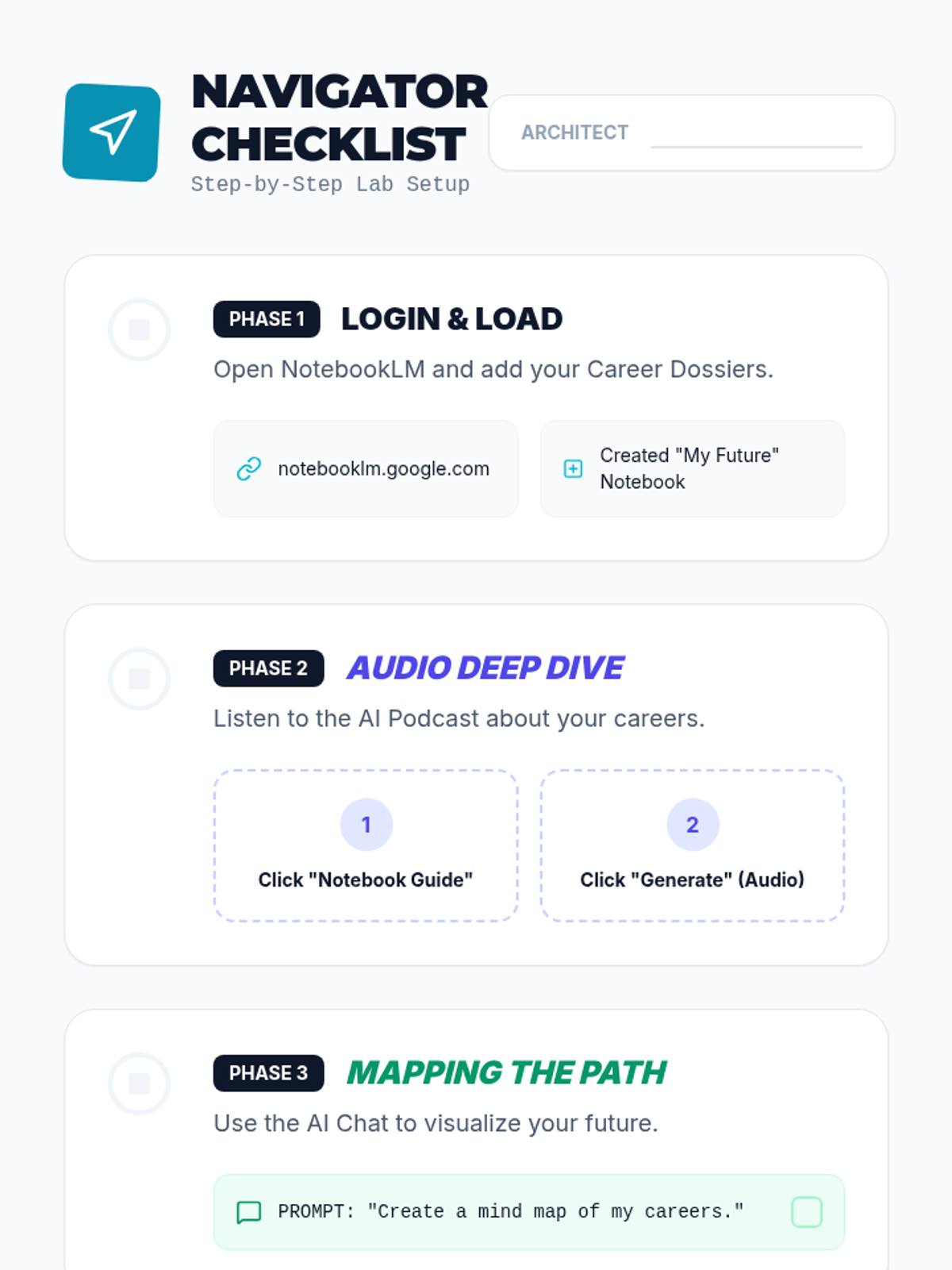
Students learn to set up their NotebookLM workspace, upload sources, and use high-level overview tools like Audio Overviews and Mind Maps to explore career options.
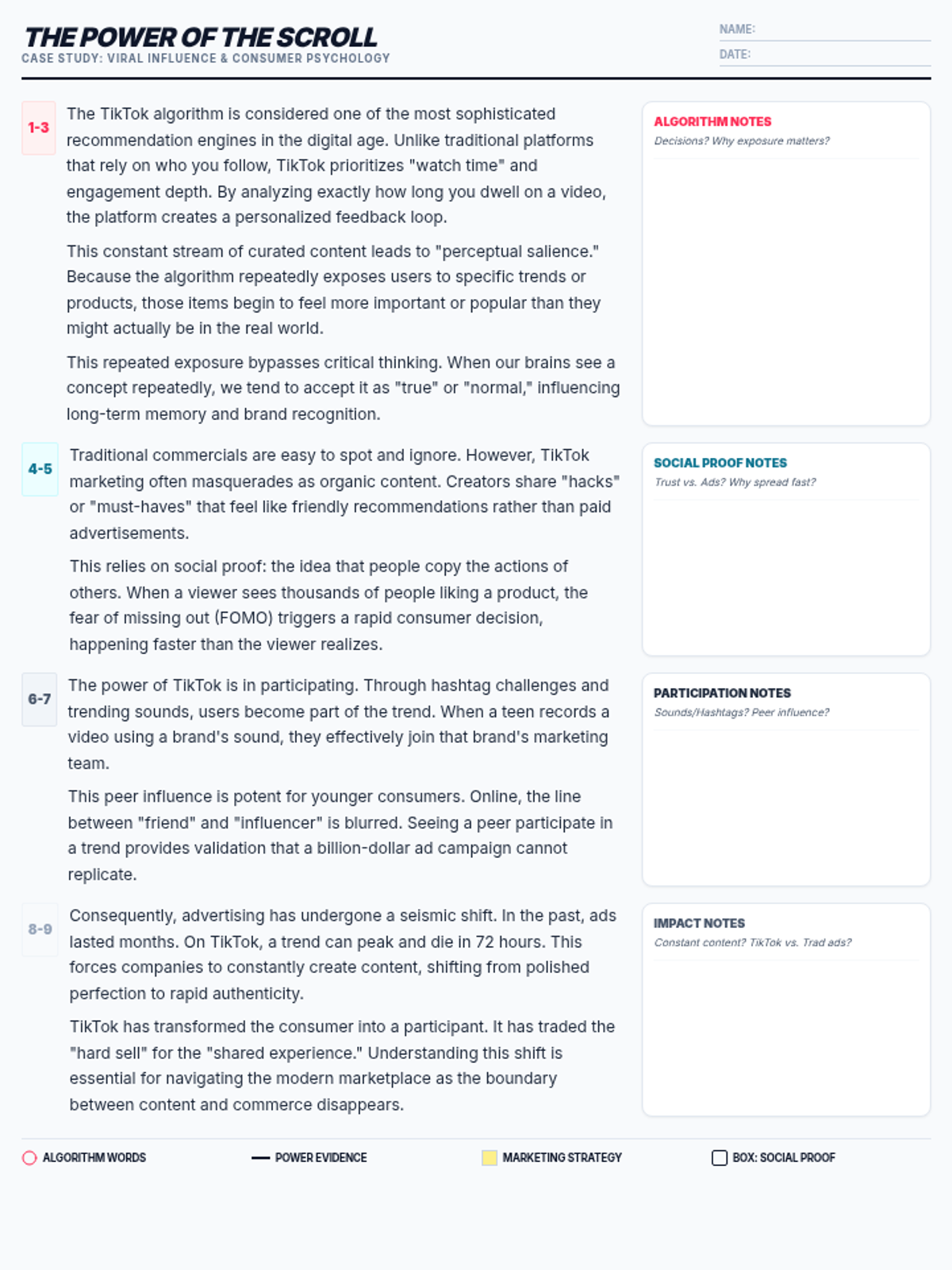
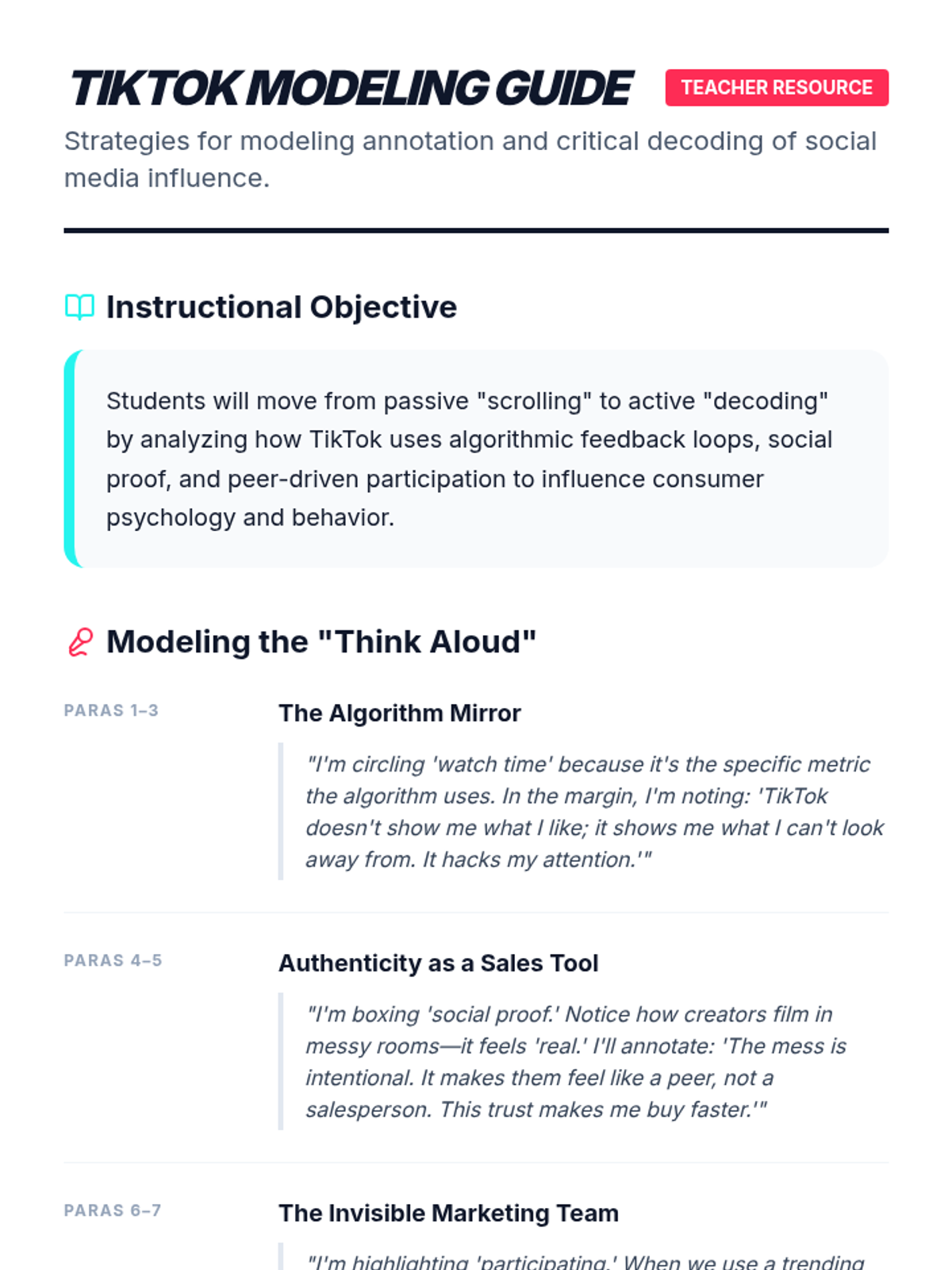
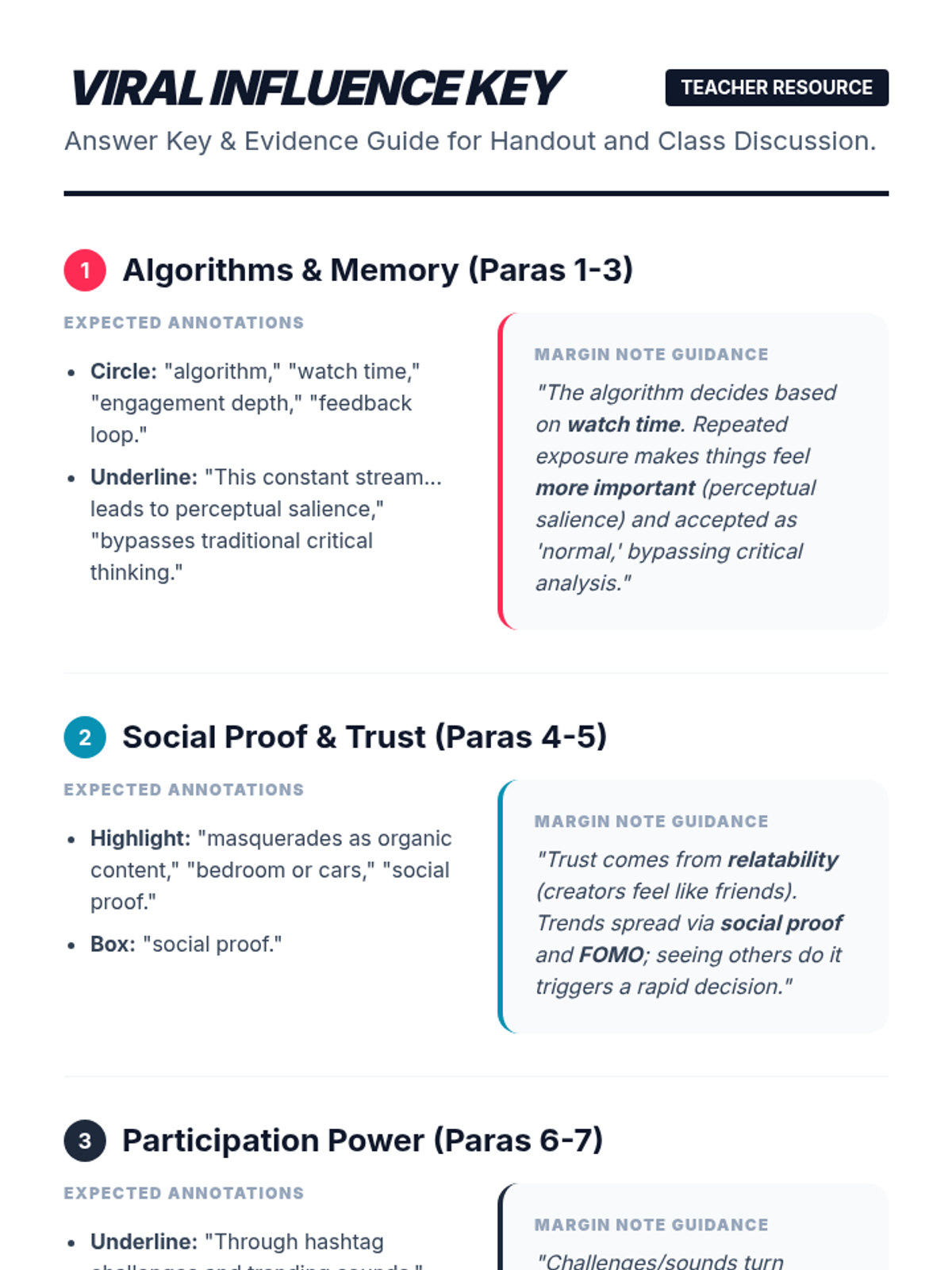
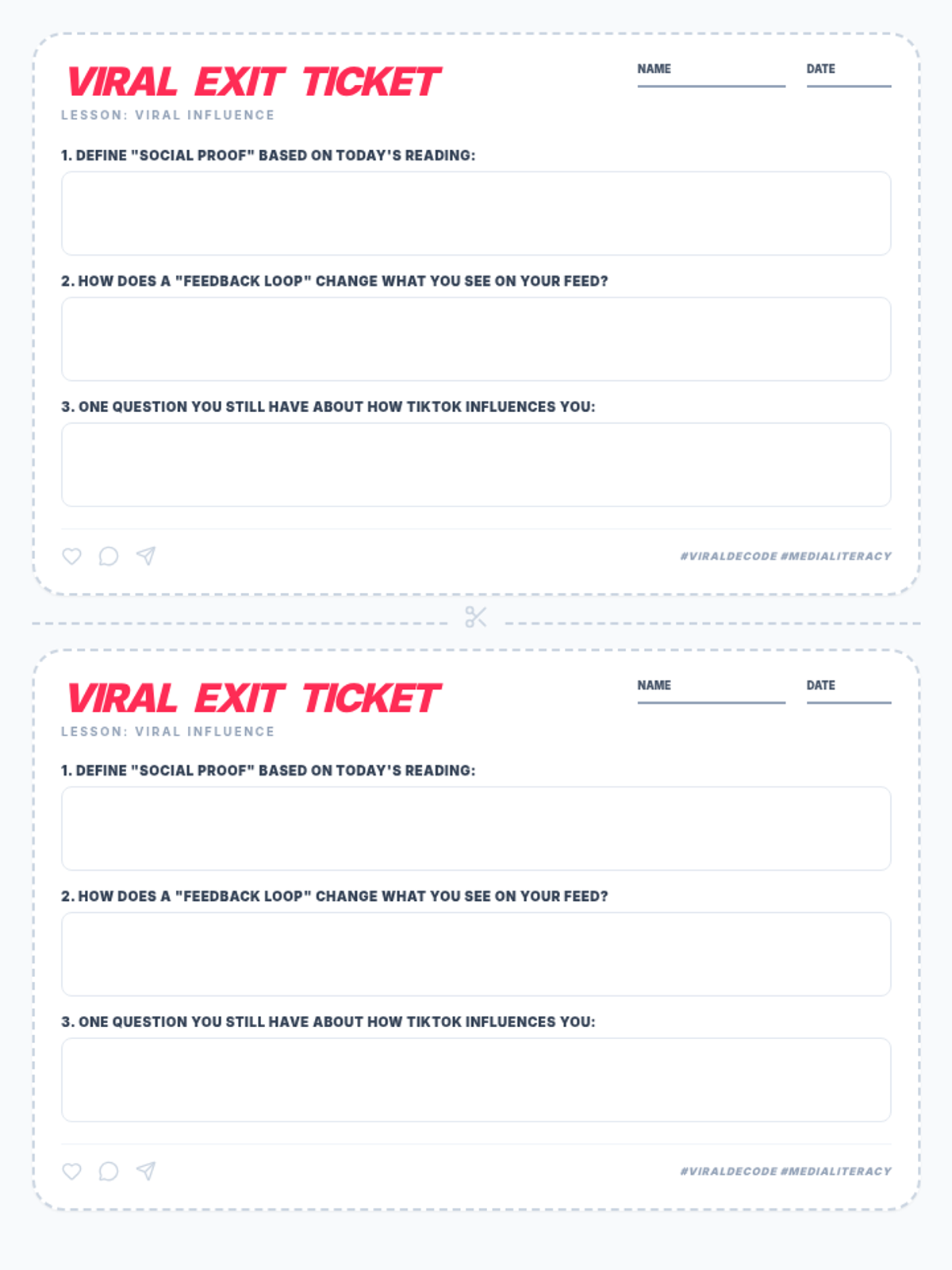
An exploration of TikTok's psychological and marketing influence, focusing on algorithmic power, social proof, and peer-driven trends through modeled annotation practices.
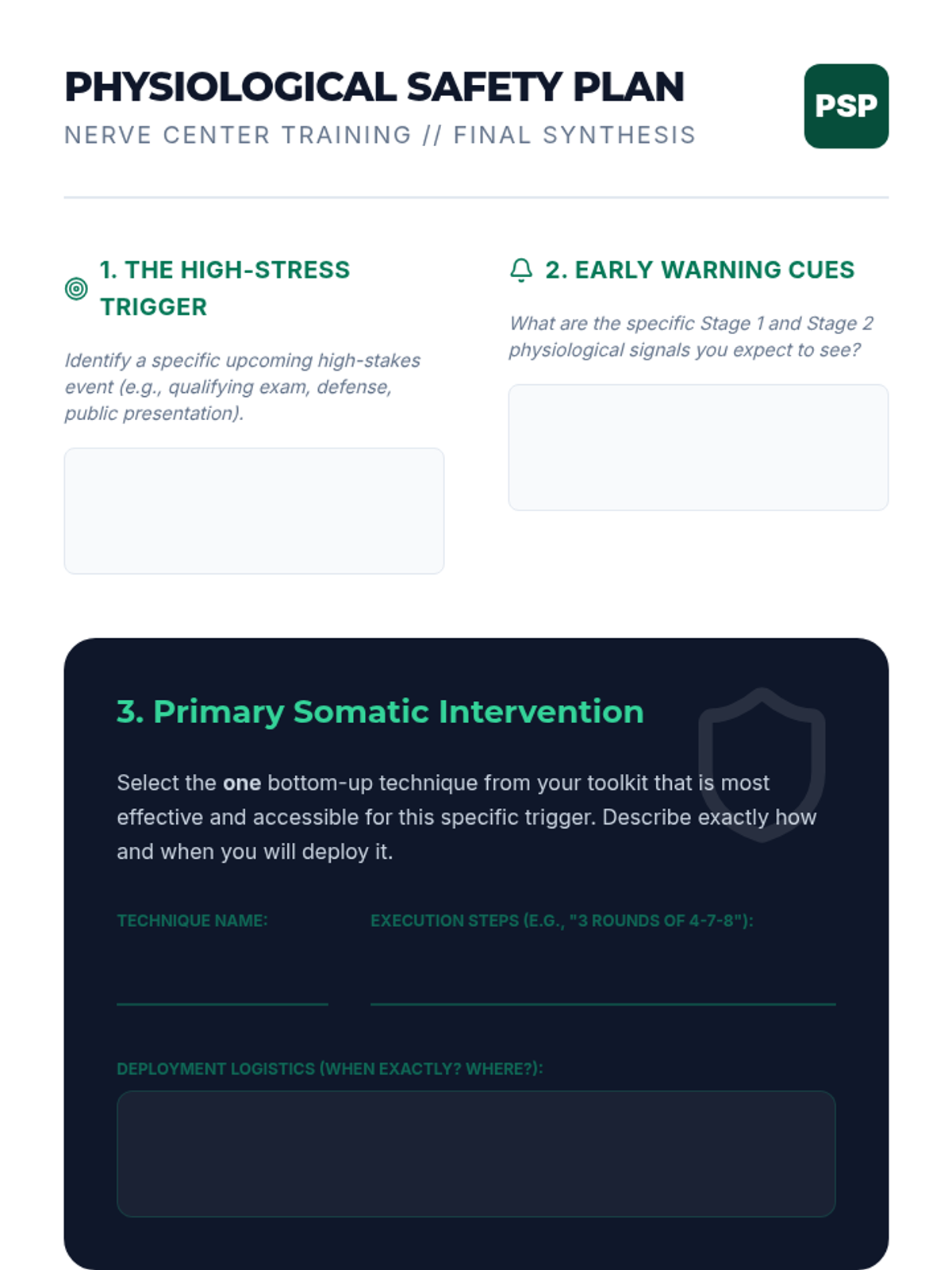
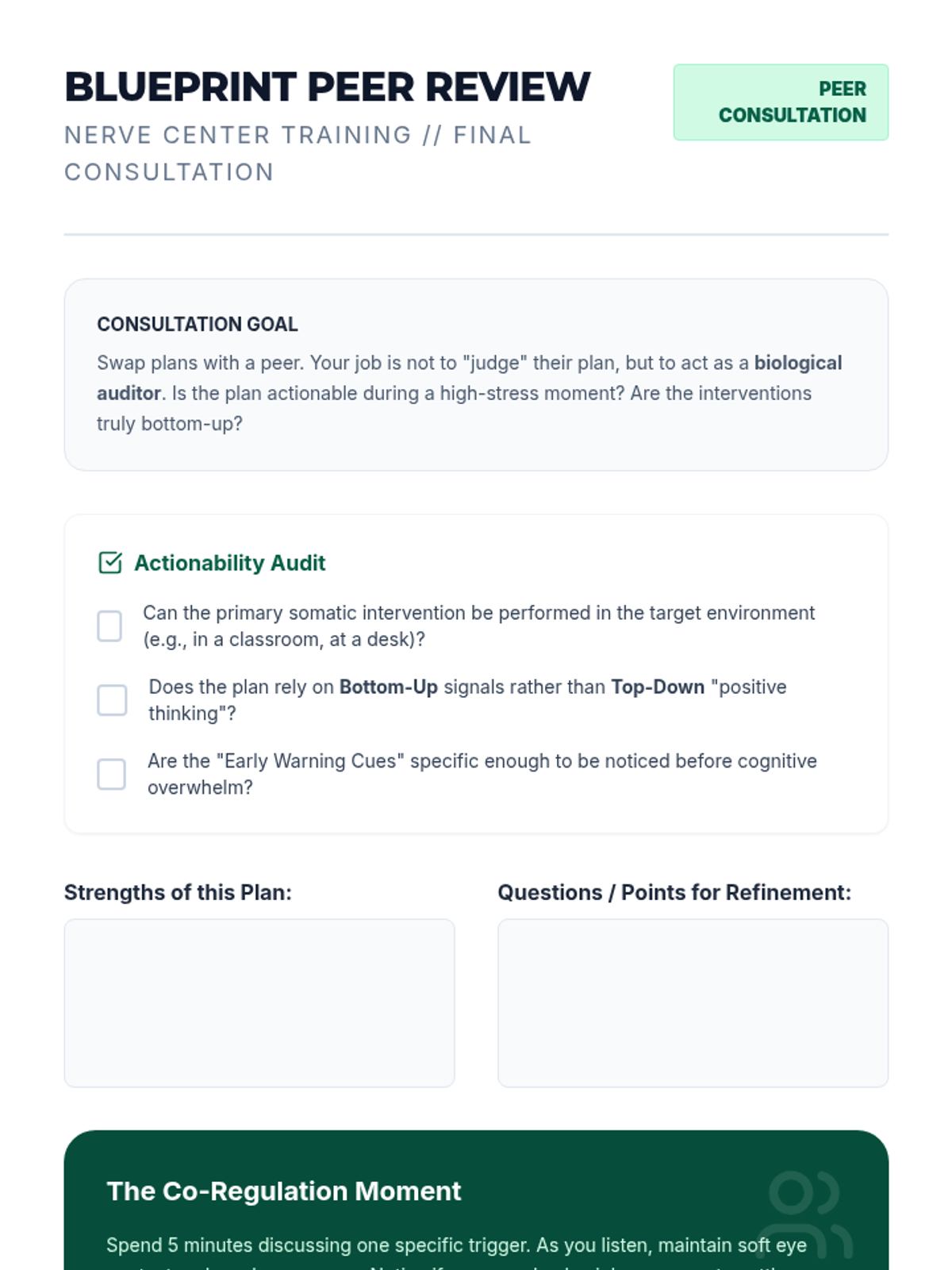
Students synthesize their knowledge to create a personalized physiological safety plan for high-stress periods. They identify triggers, early warning signs, and pre-planned somatic interventions.
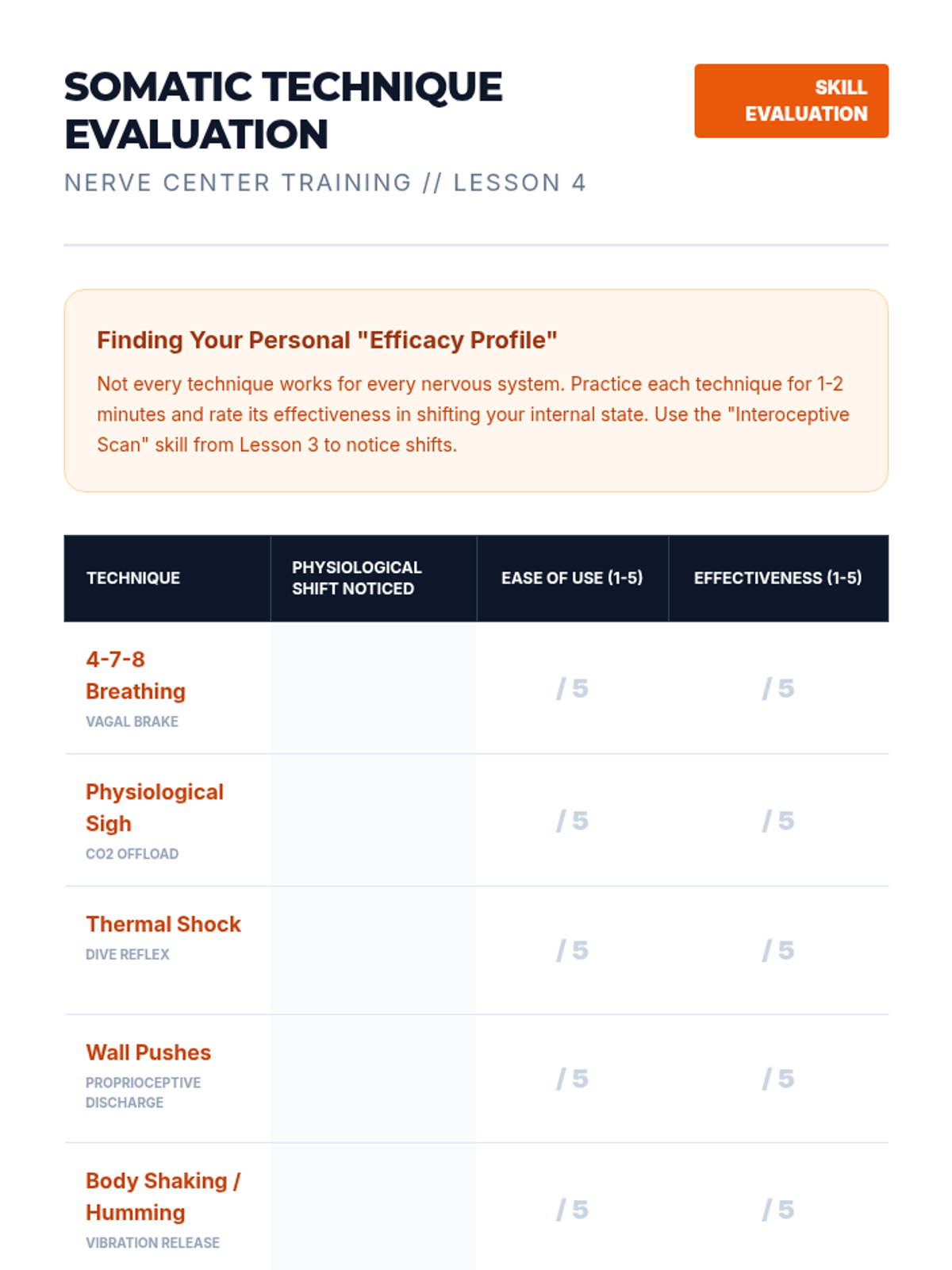
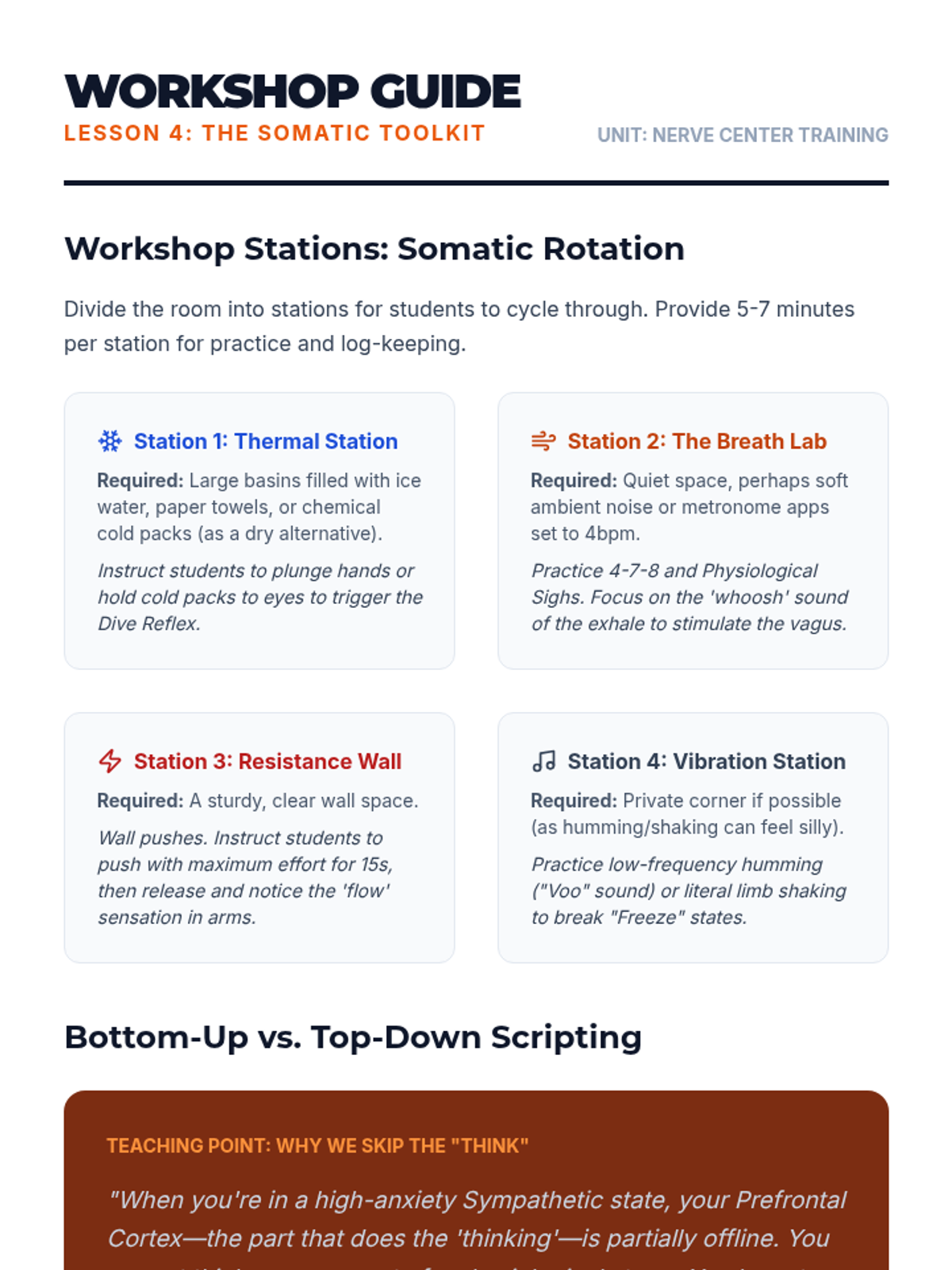
Students evaluate somatic bottom-up processing techniques like diaphragmatic breathing and thermal regulation. They learn to choose the right physical strategy for their specific physiological profile.
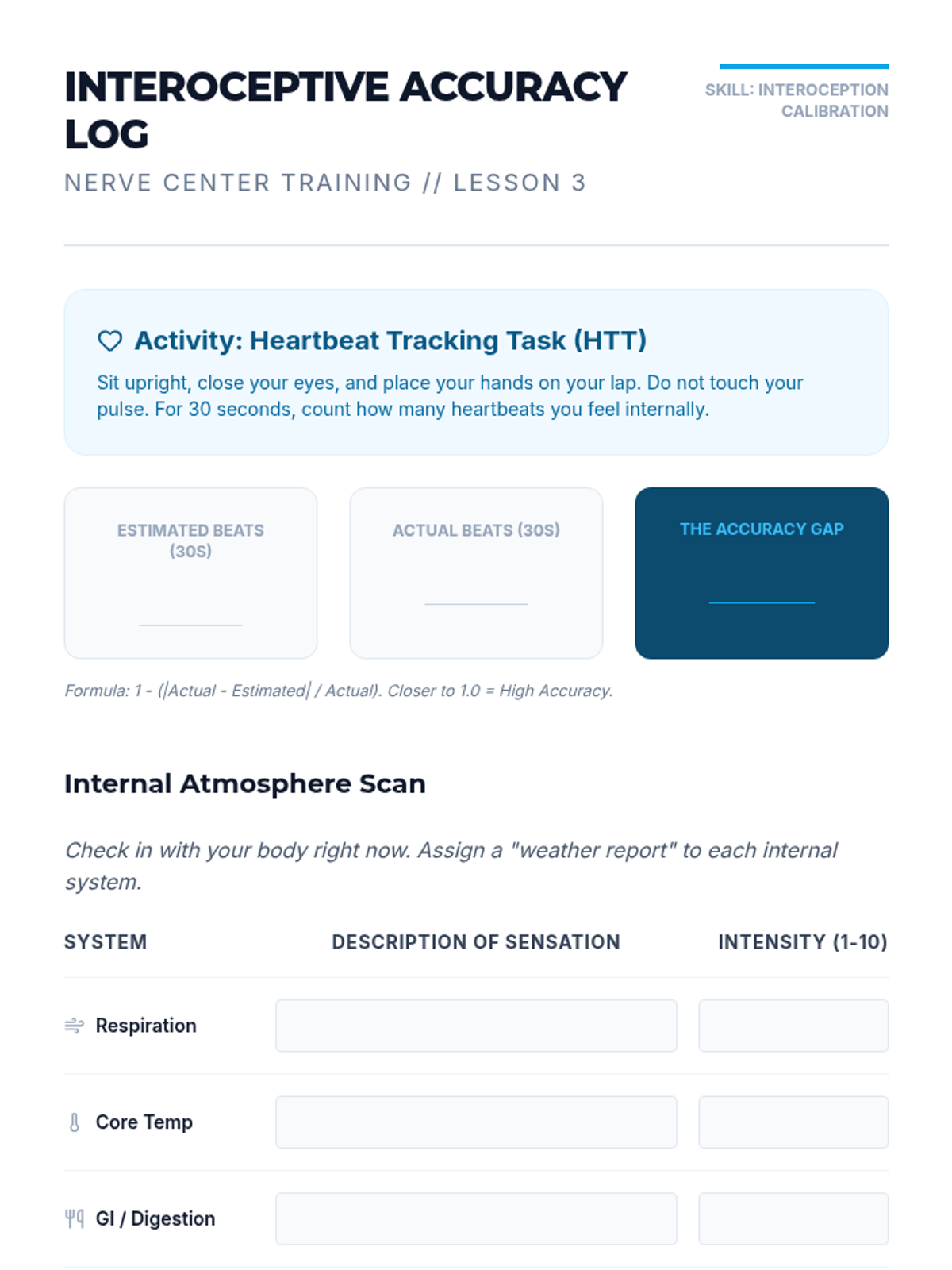
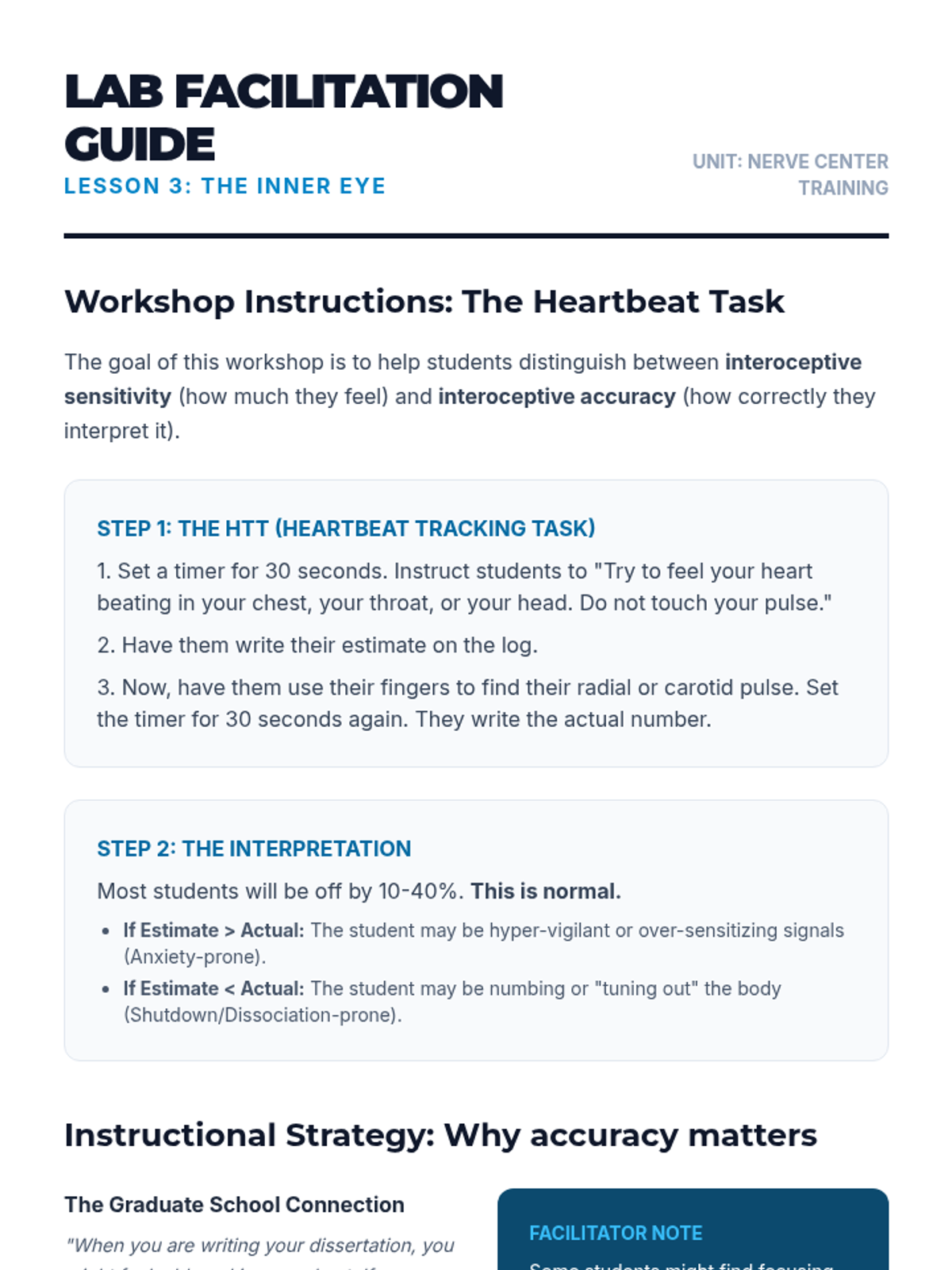
Learners practice interoception—the sense of the internal state of the body. They test their accuracy in detecting heart rate and tension, connecting poor awareness with high anxiety.
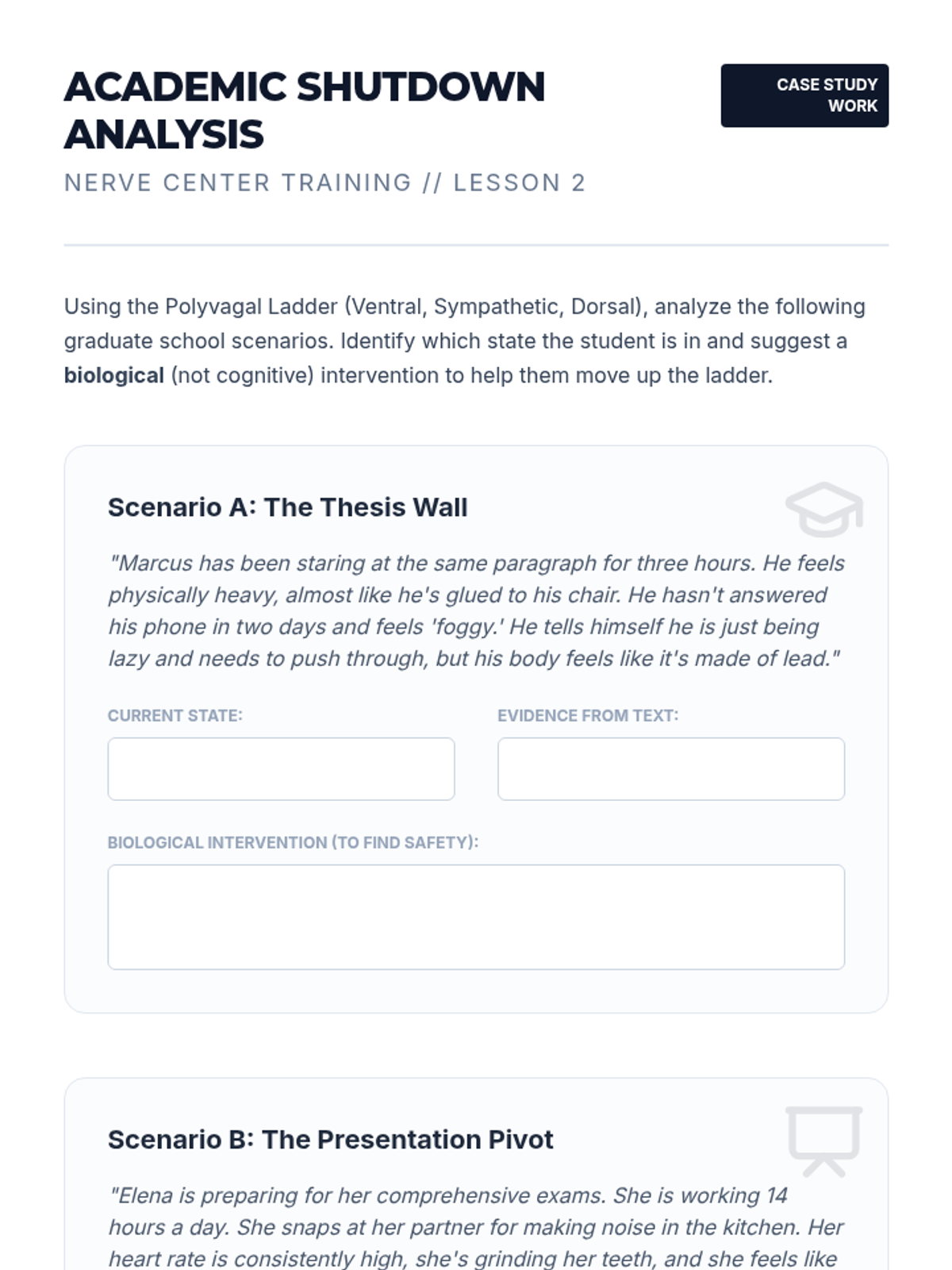
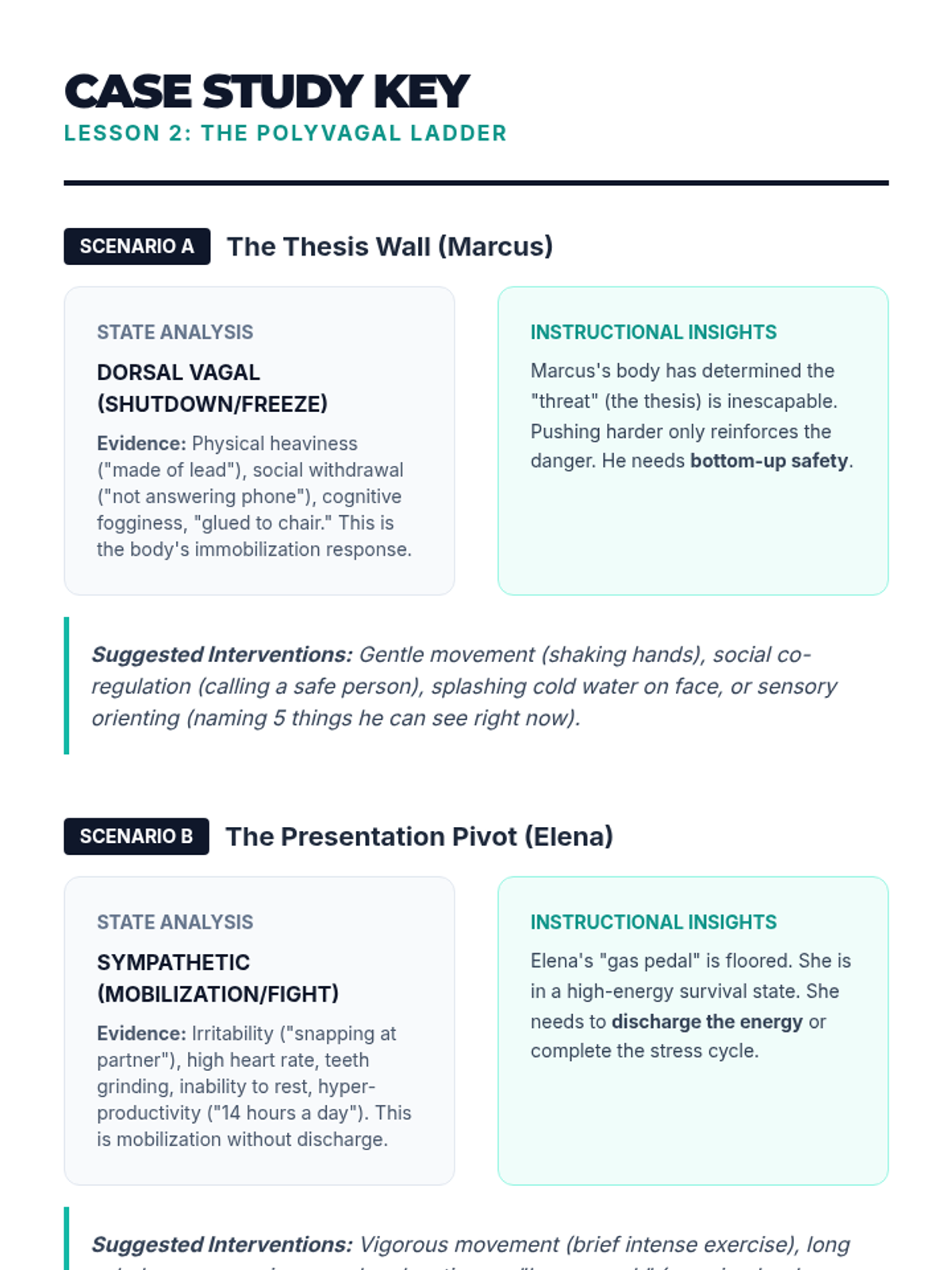
Dives into Polyvagal Theory to distinguish between fight/flight mobilization and dorsal vagal shutdown. Students analyze behaviors like procrastination and isolation as biological responses.
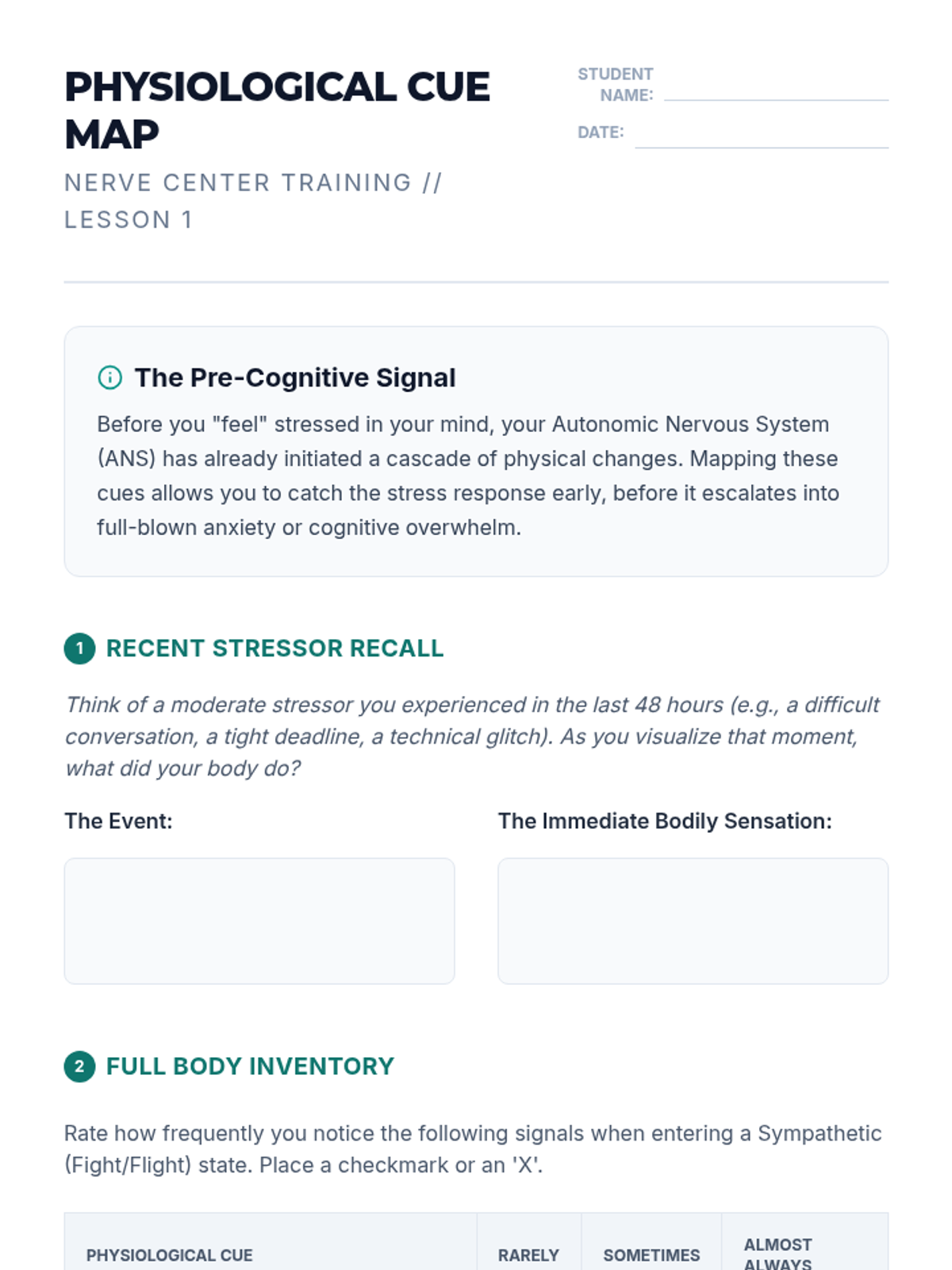
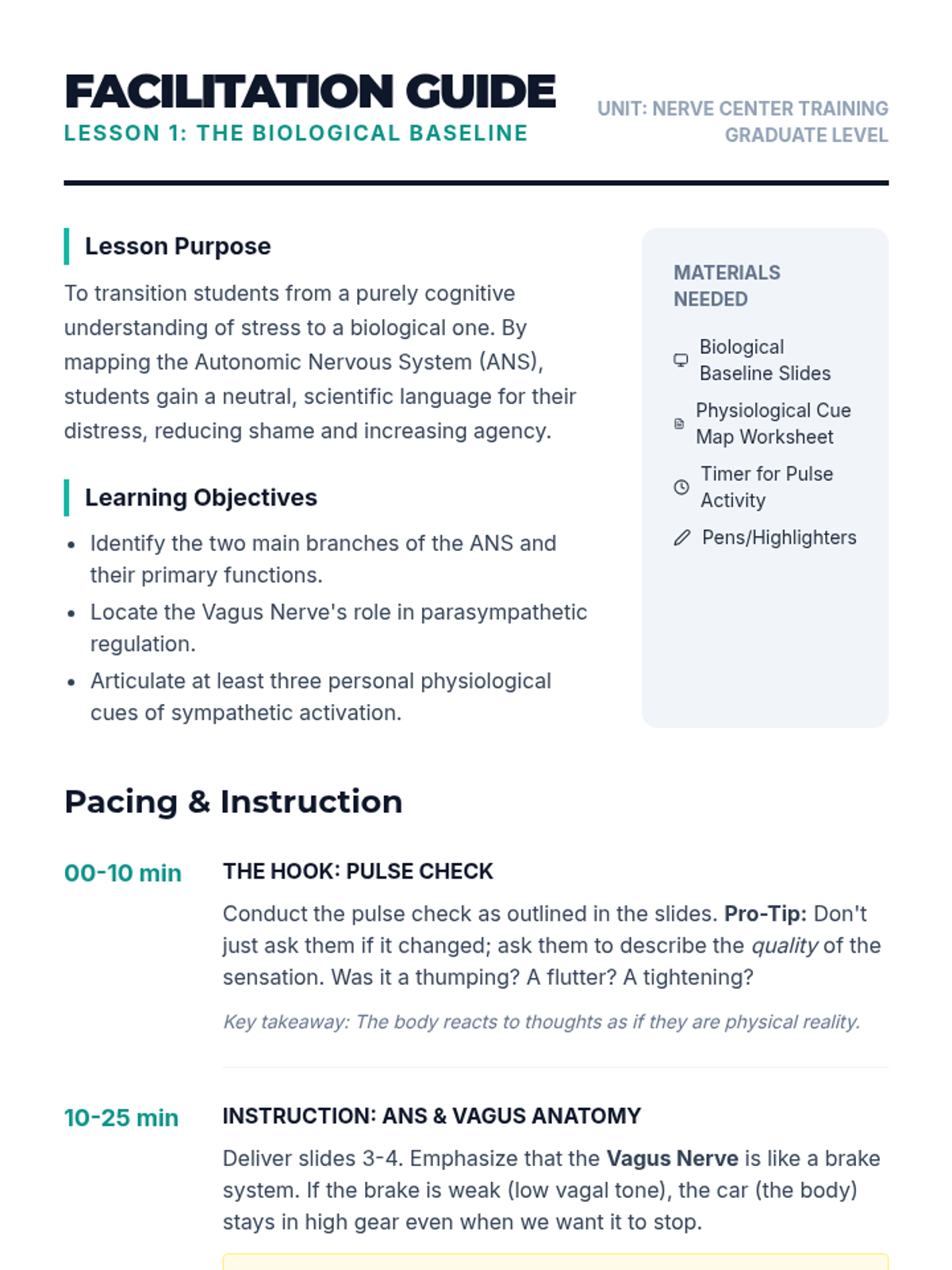
Focuses on the anatomy of the stress response, the sympathetic and parasympathetic branches of the ANS, and the role of the vagus nerve. Students map their own physiological 'early warning signs'.
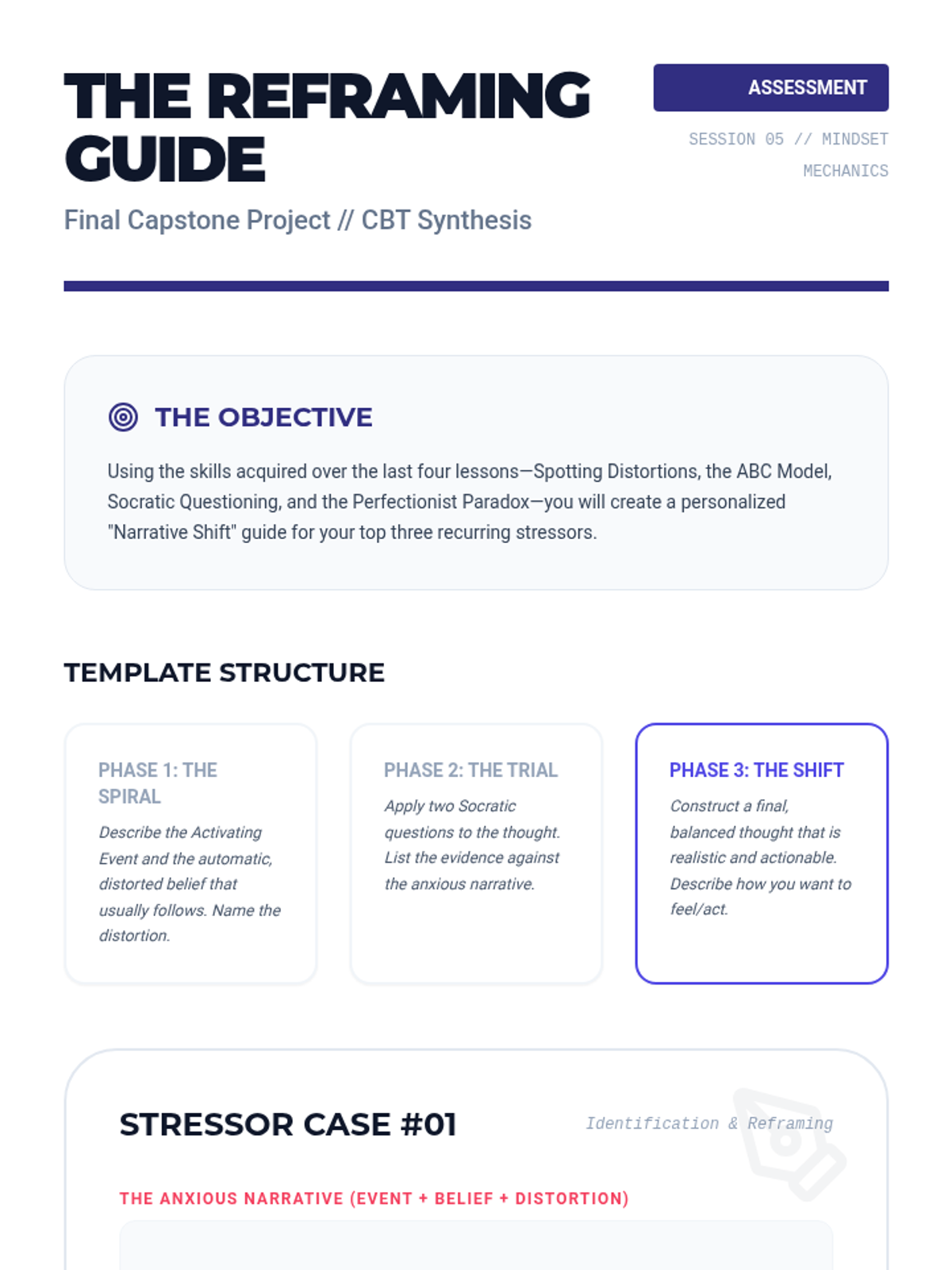
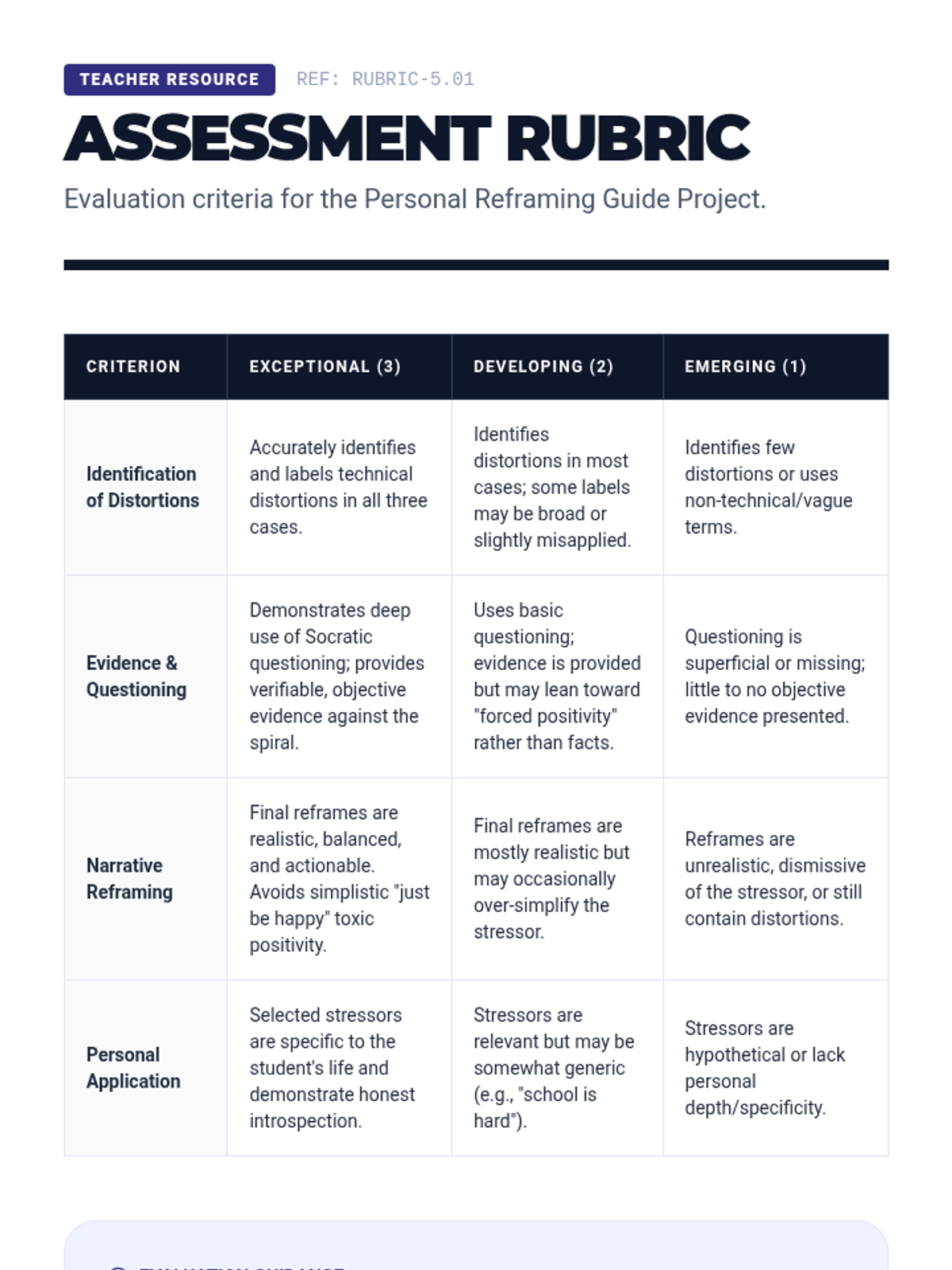
Synthesis of skills to create personal reframing guides, shifting from anxious spiraling to balanced, realistic internal narratives.
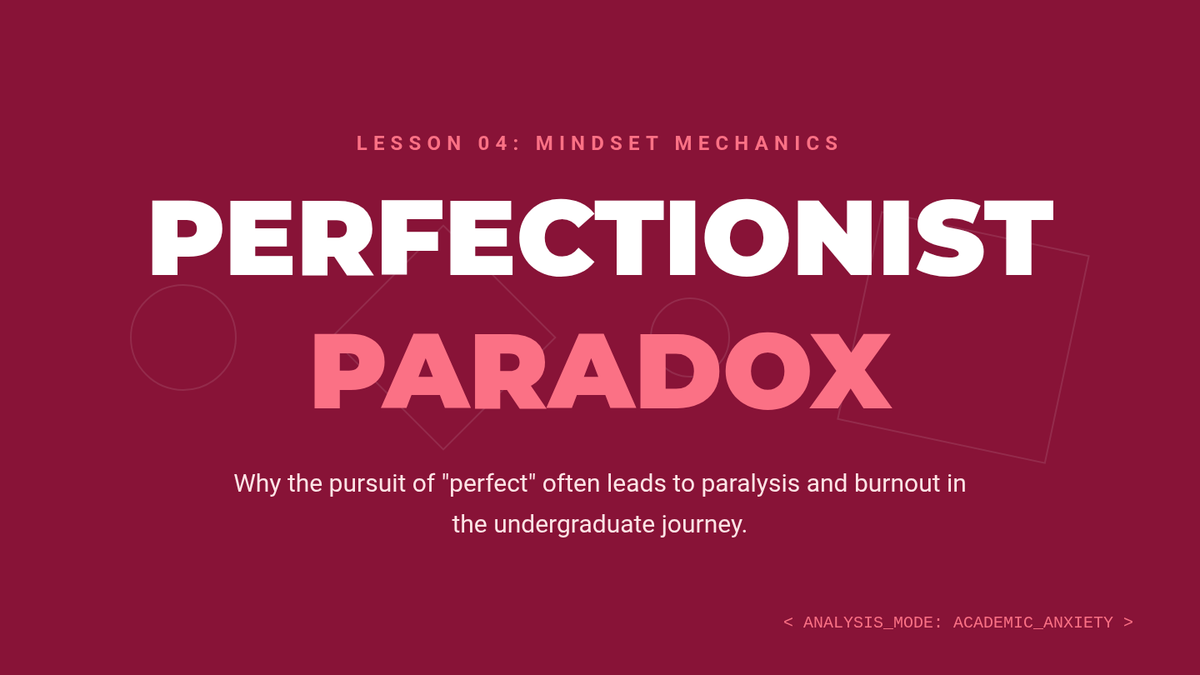
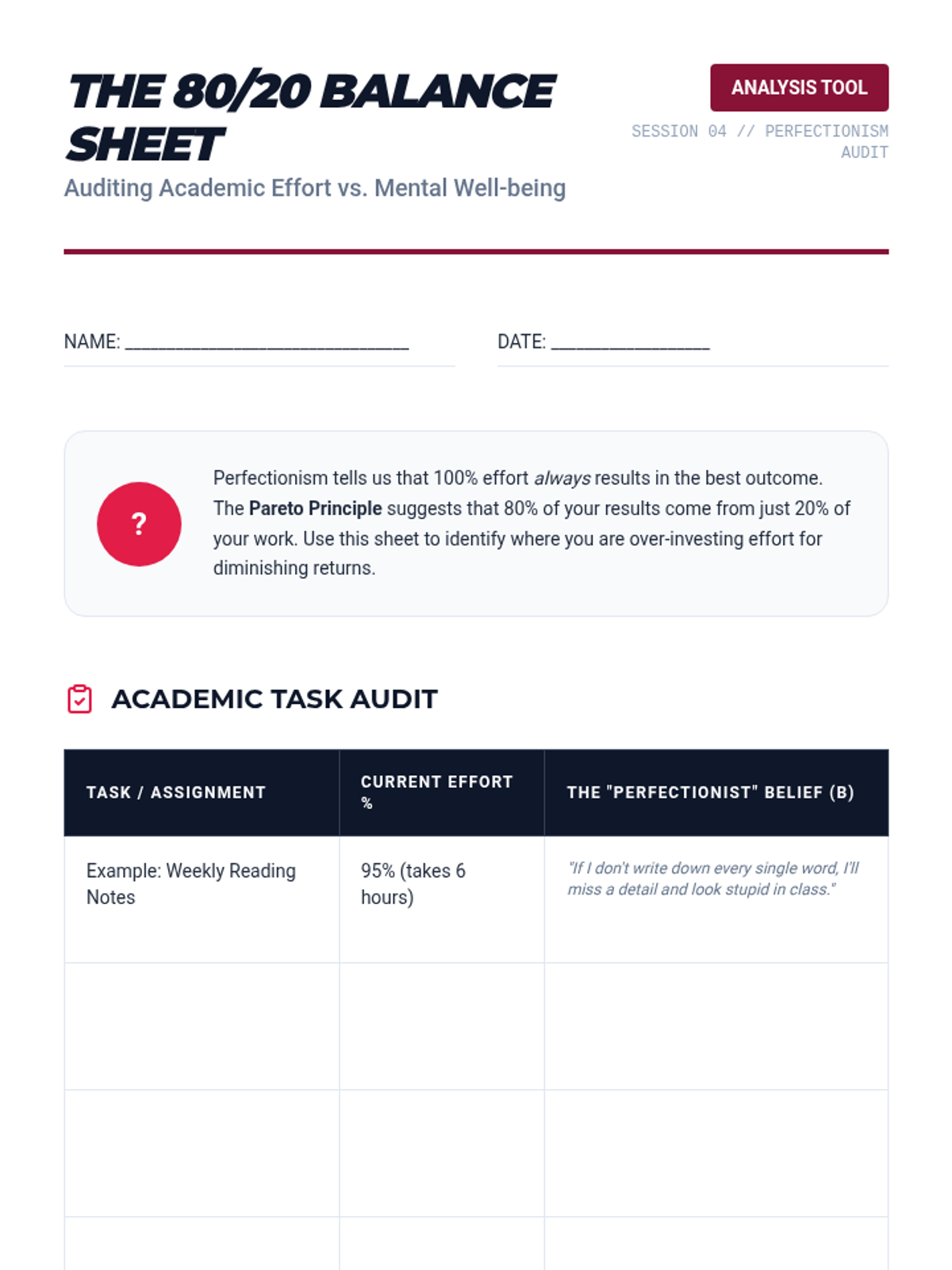
Exploration of perfectionism's role in undergraduate stress, utilizing the Pareto Principle to find balance in academic pursuits.
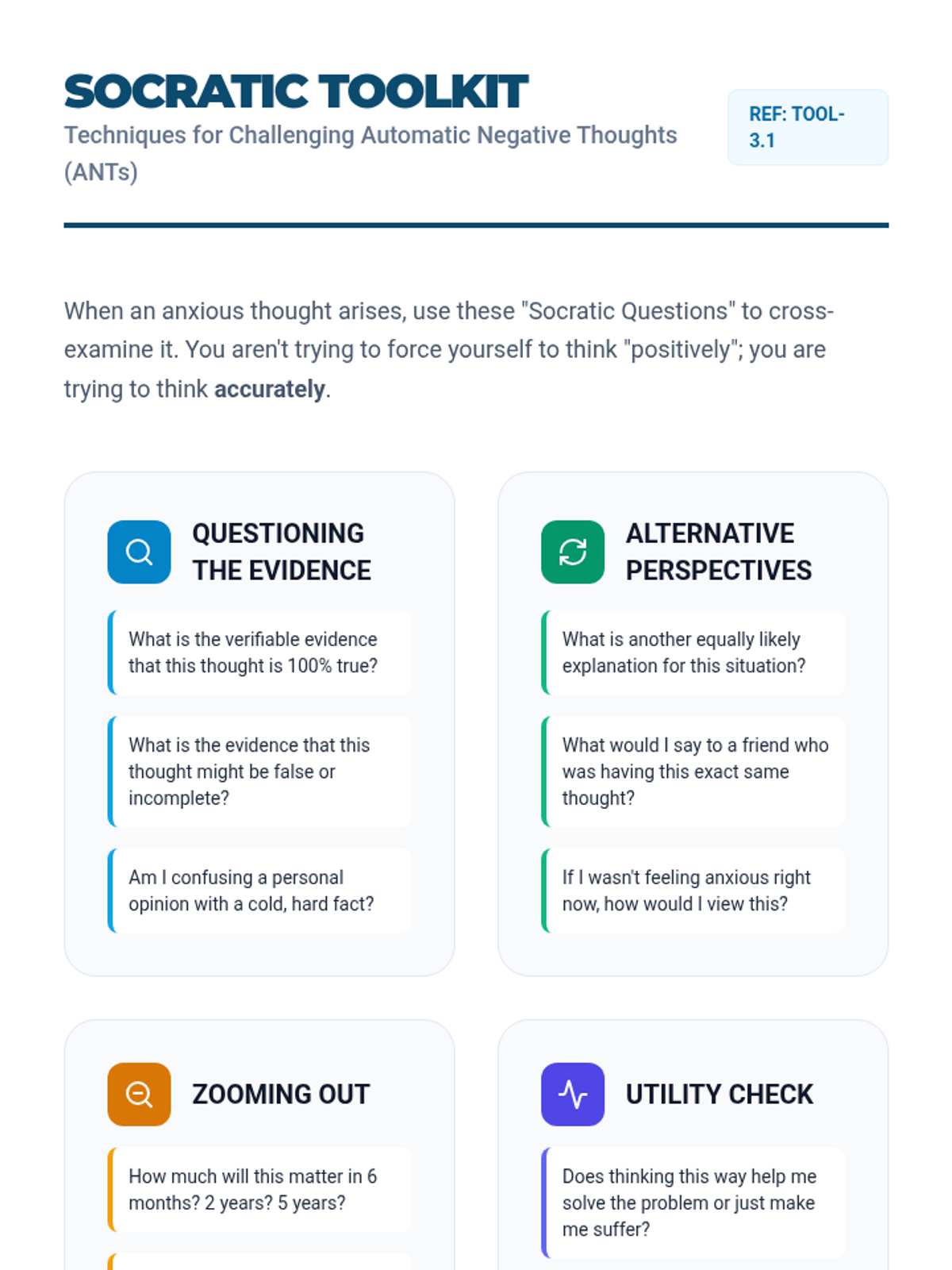
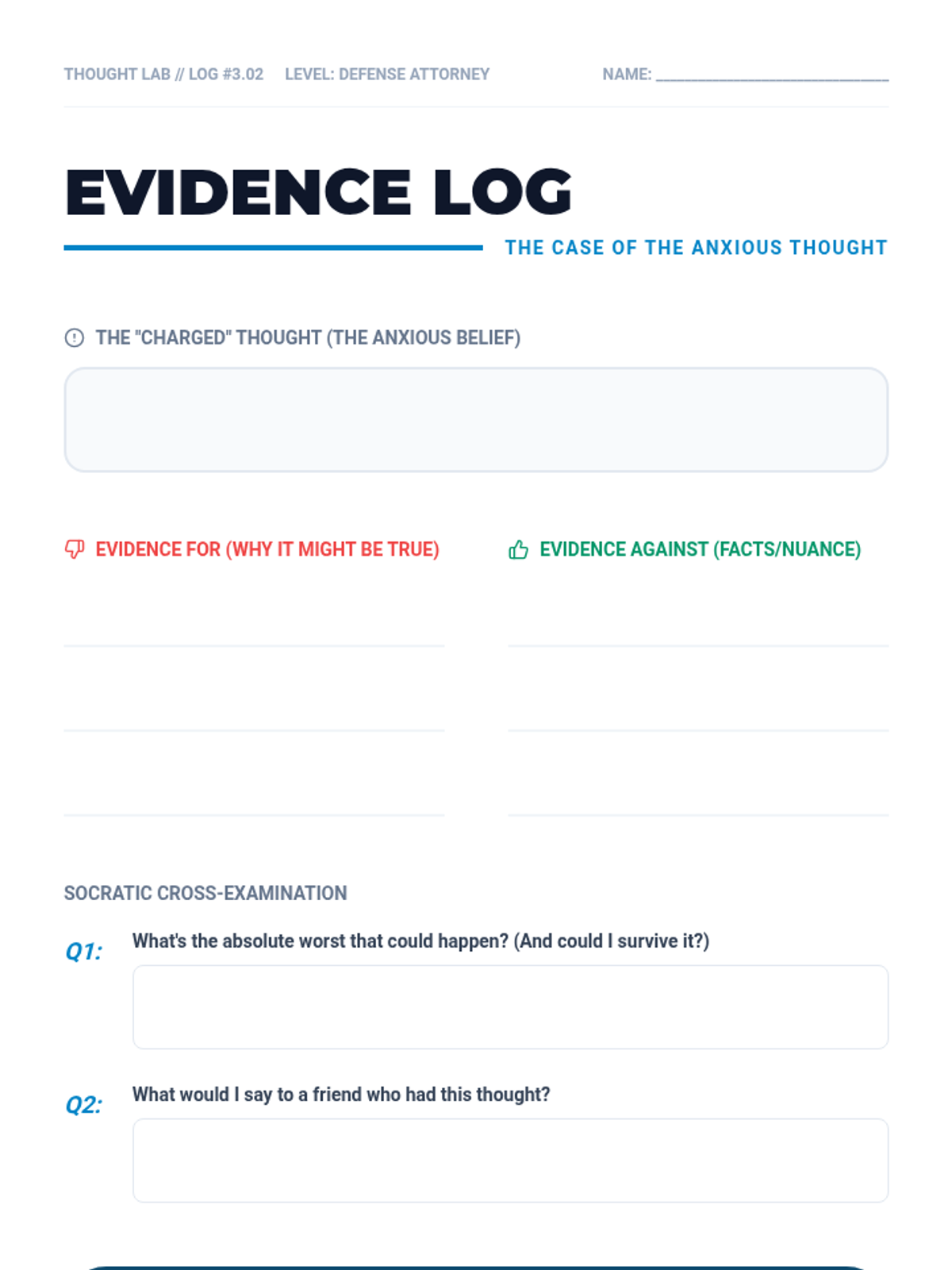
Application of Socratic questioning and evidence-based analysis to challenge and dismantle automatic negative thoughts (ANTs).
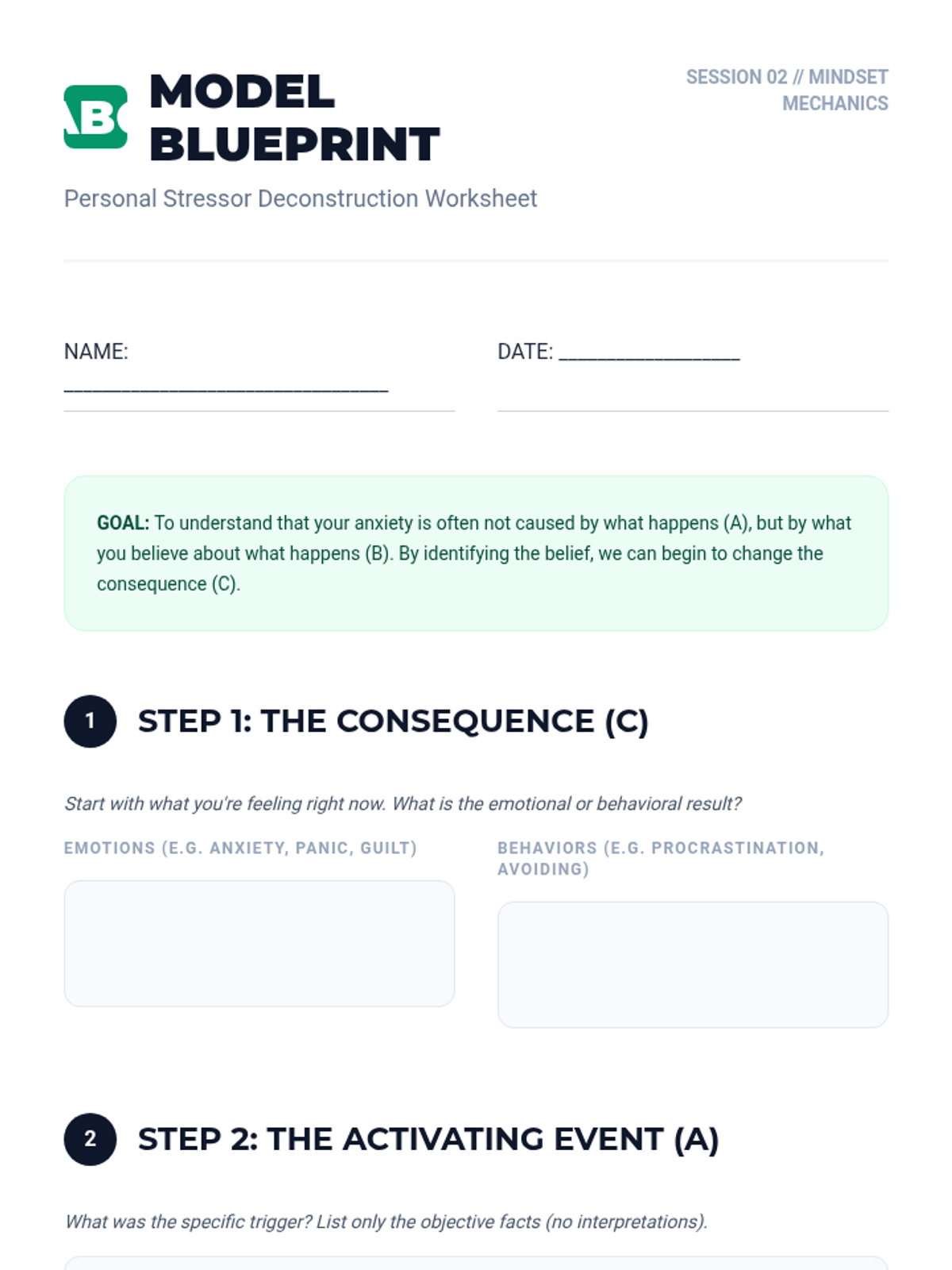
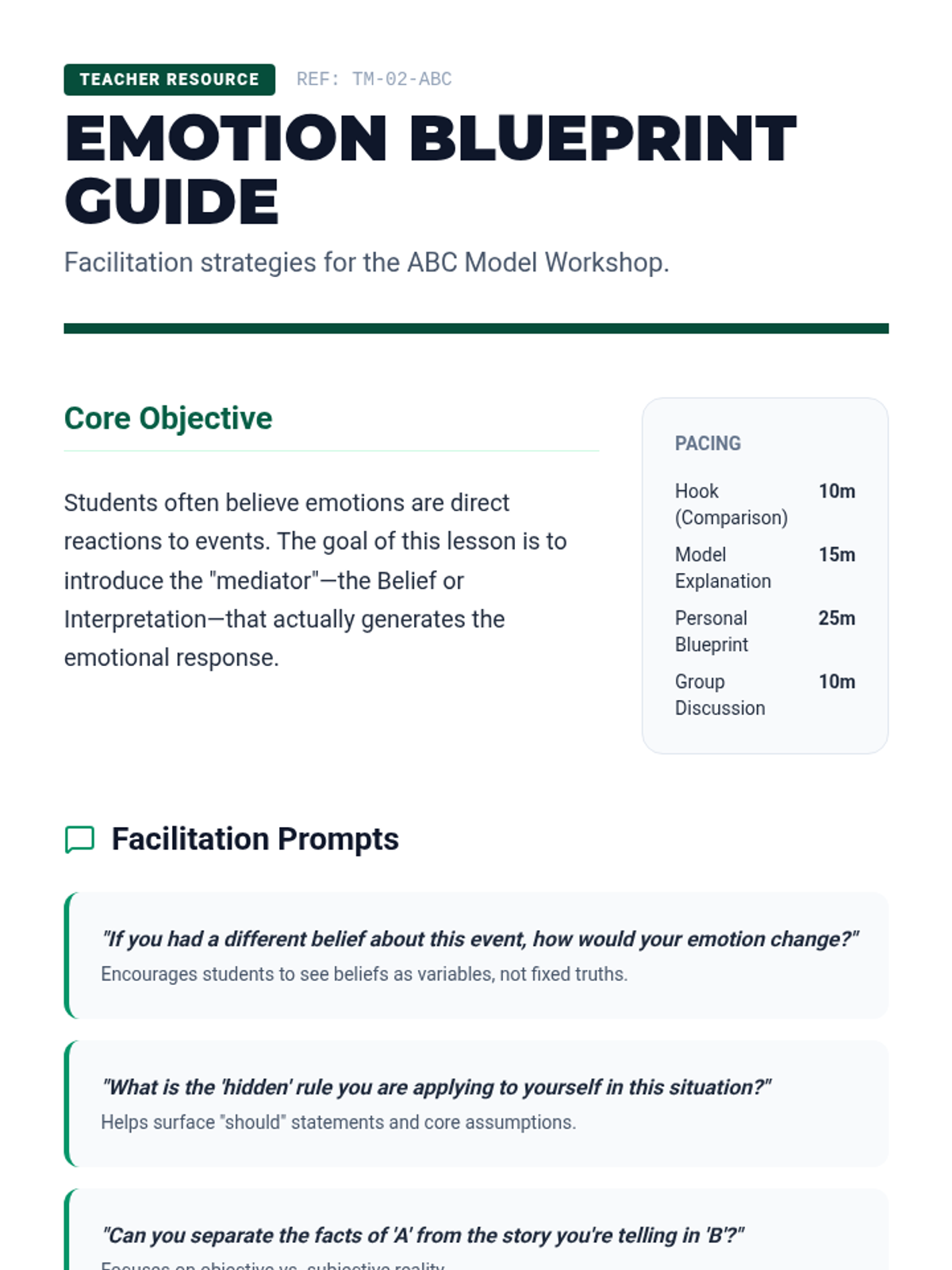
Deep dive into the Activating event, Belief, and Consequence (ABC) model to analyze the internal interpretations that trigger anxious responses.
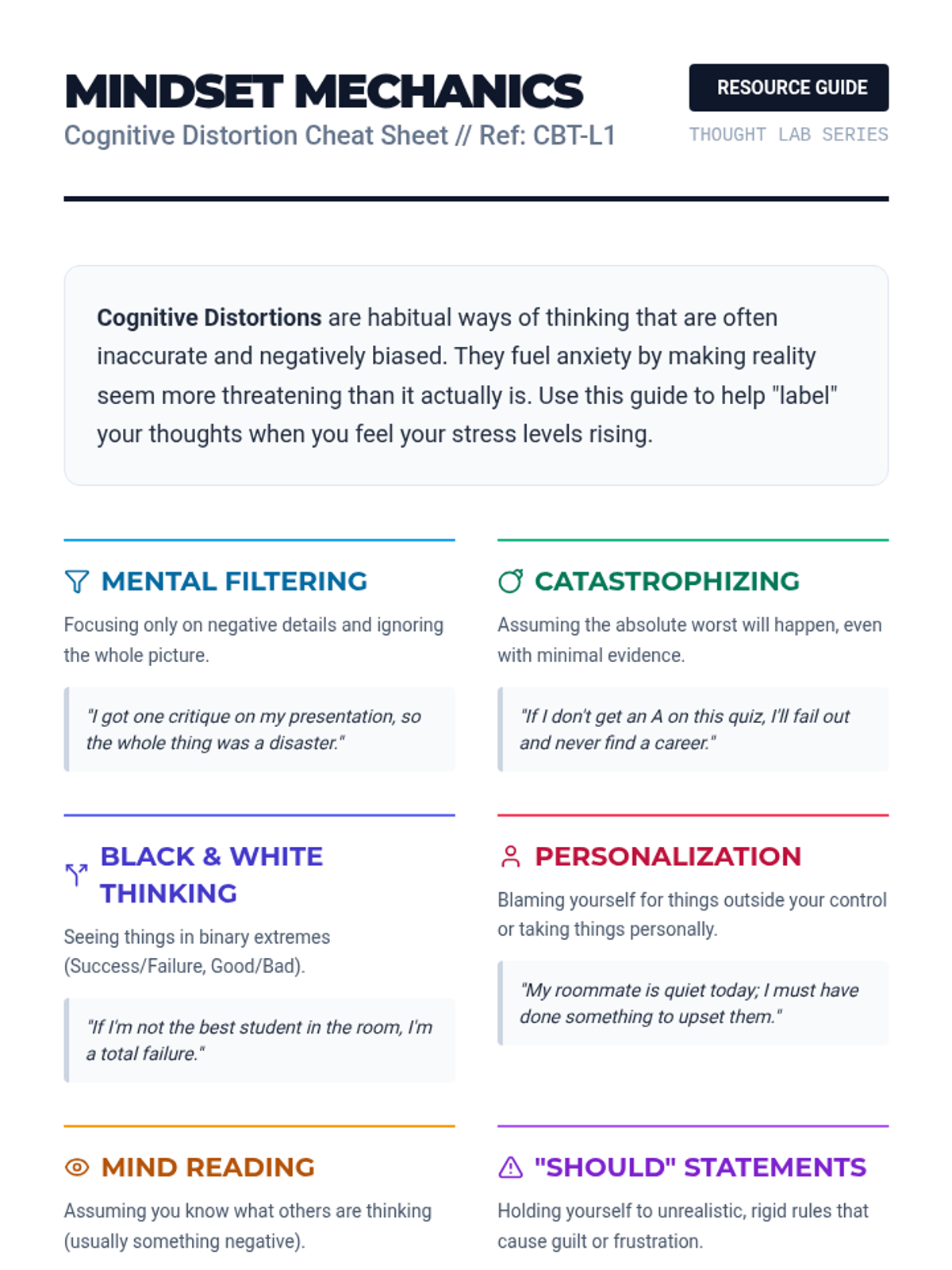
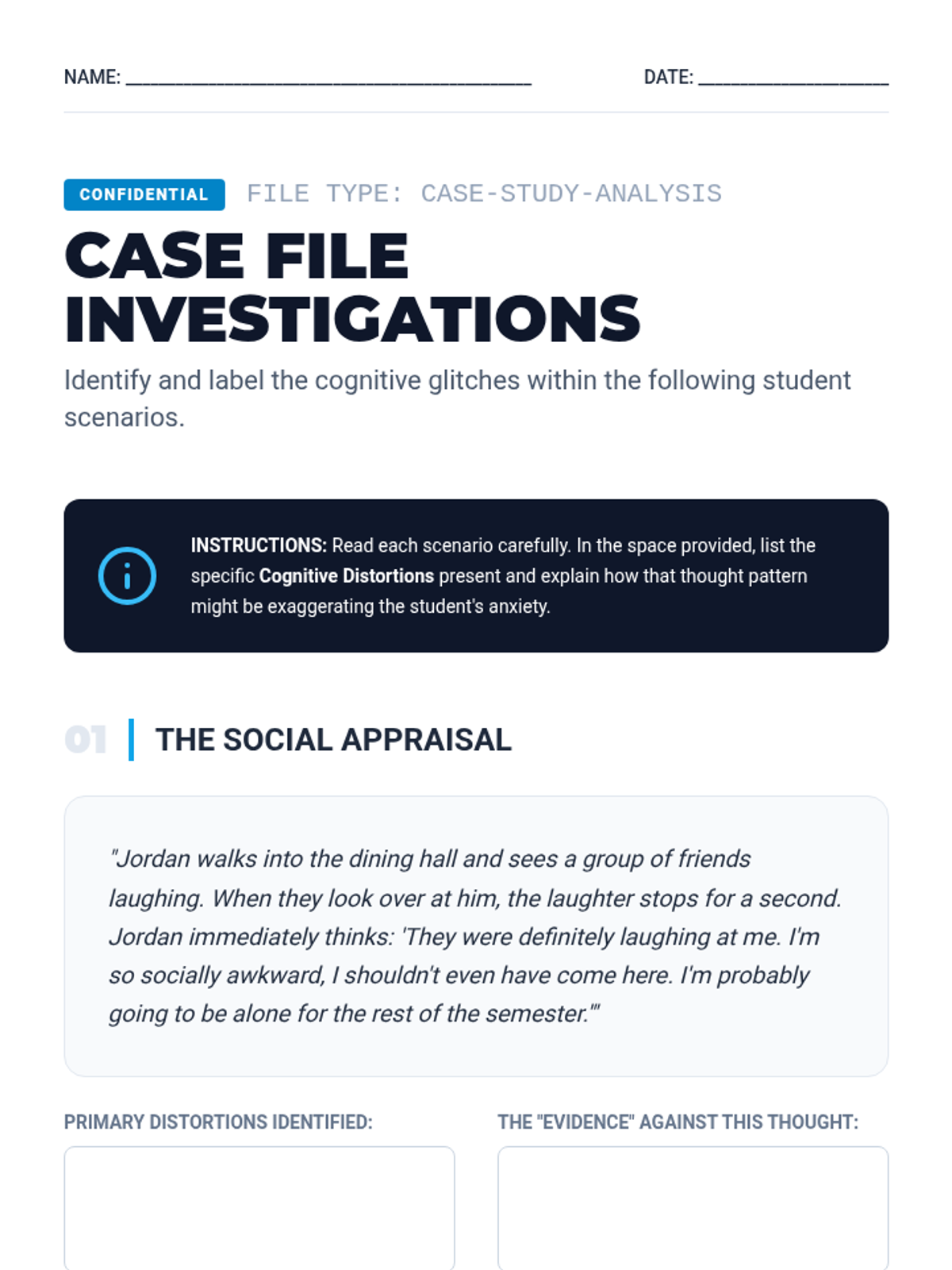
Introduction to common cognitive distortions like filtering, polarization, and catastrophizing through interactive scenarios and a technical cheat sheet.
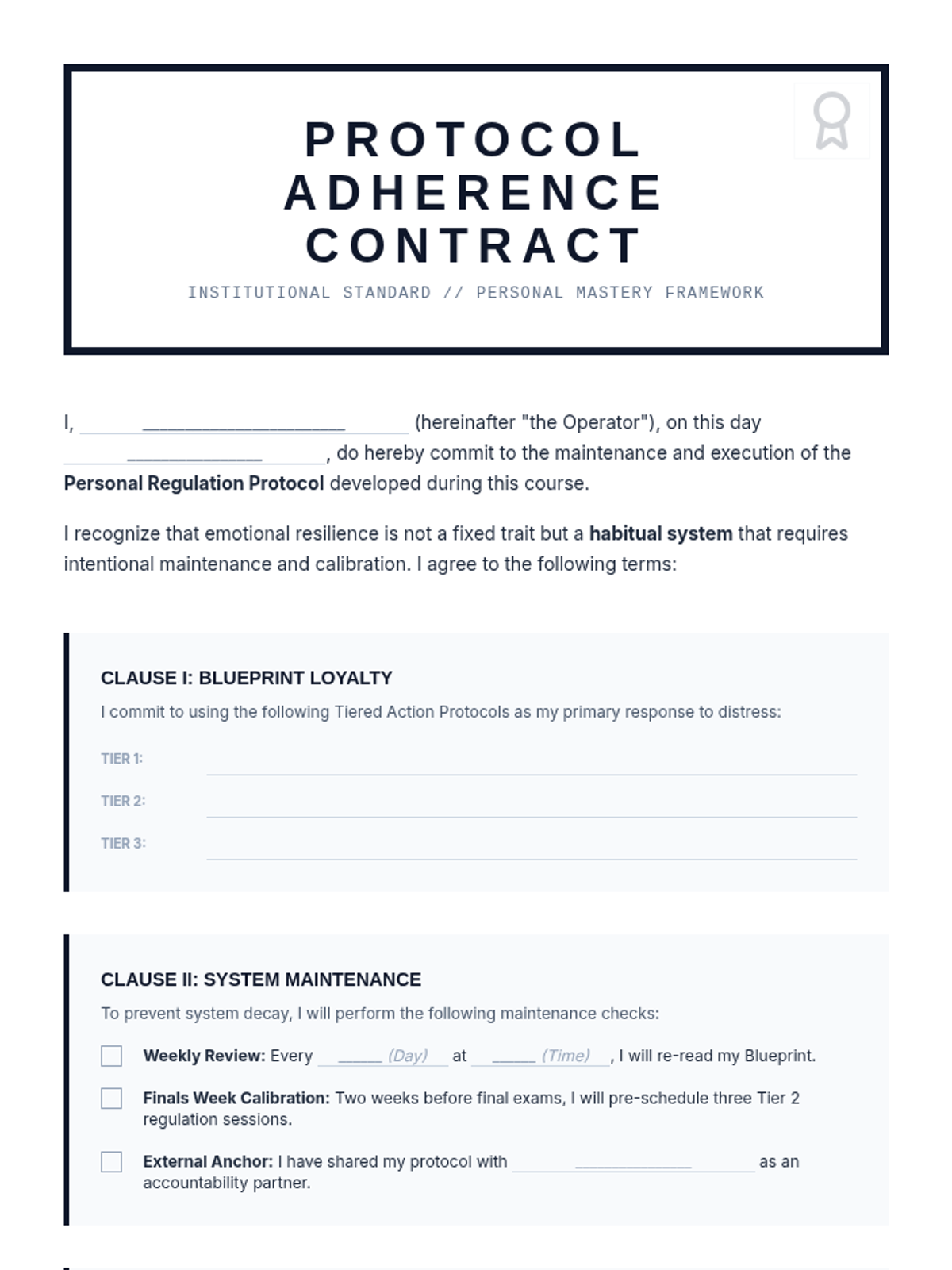
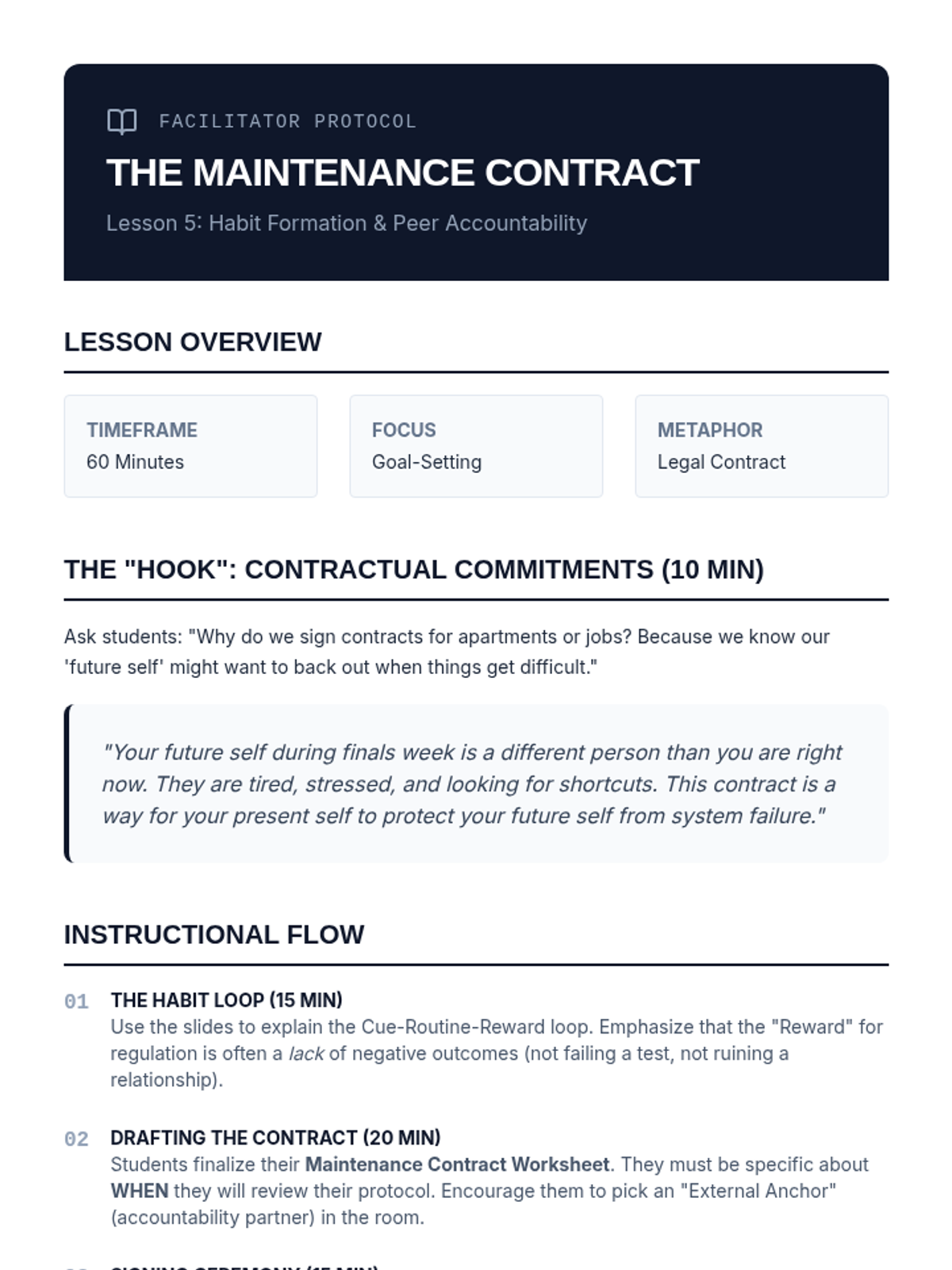
Students finalize their protocols and establish a formal maintenance contract to ensure long-term adherence and habit formation.
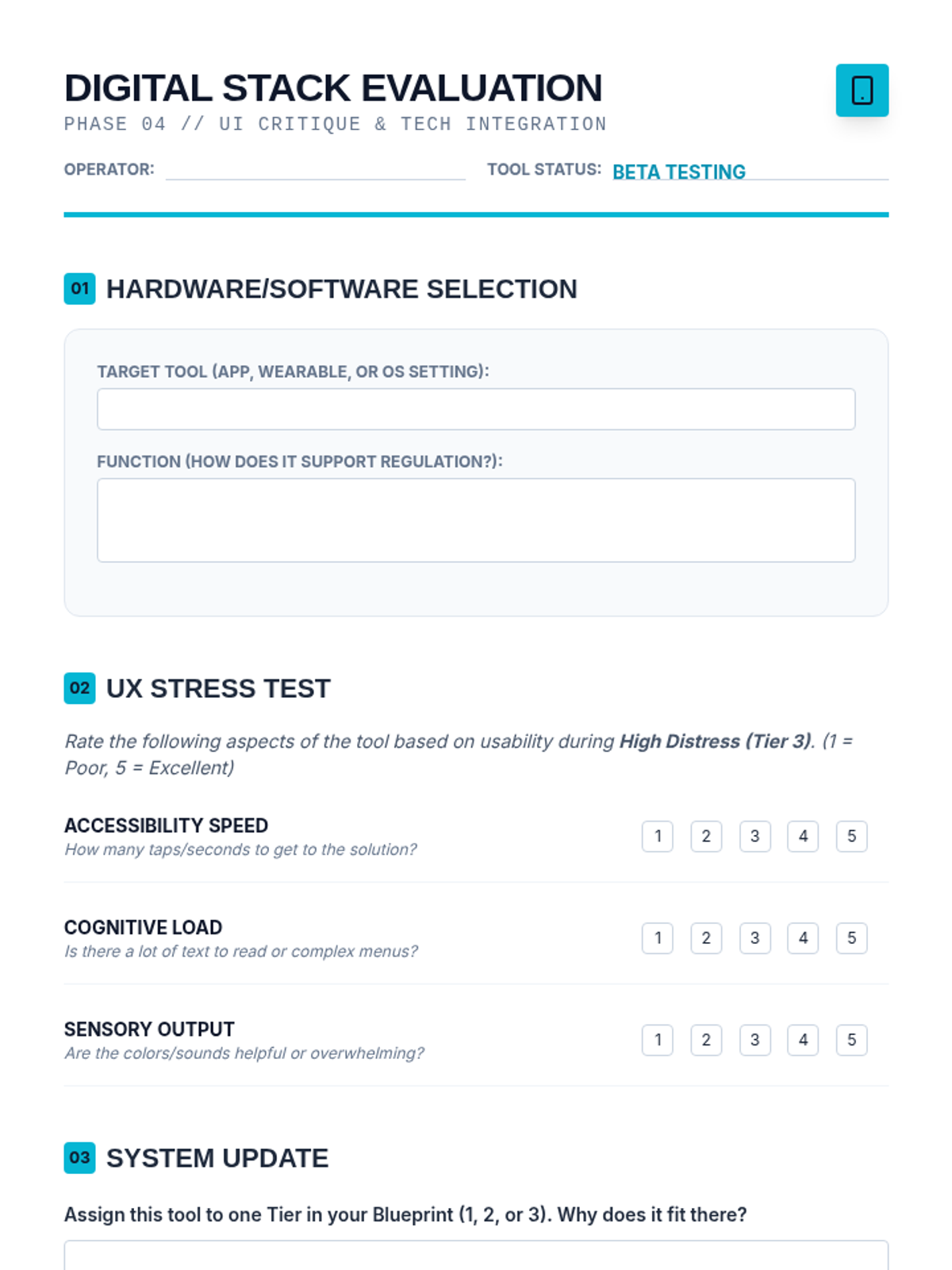
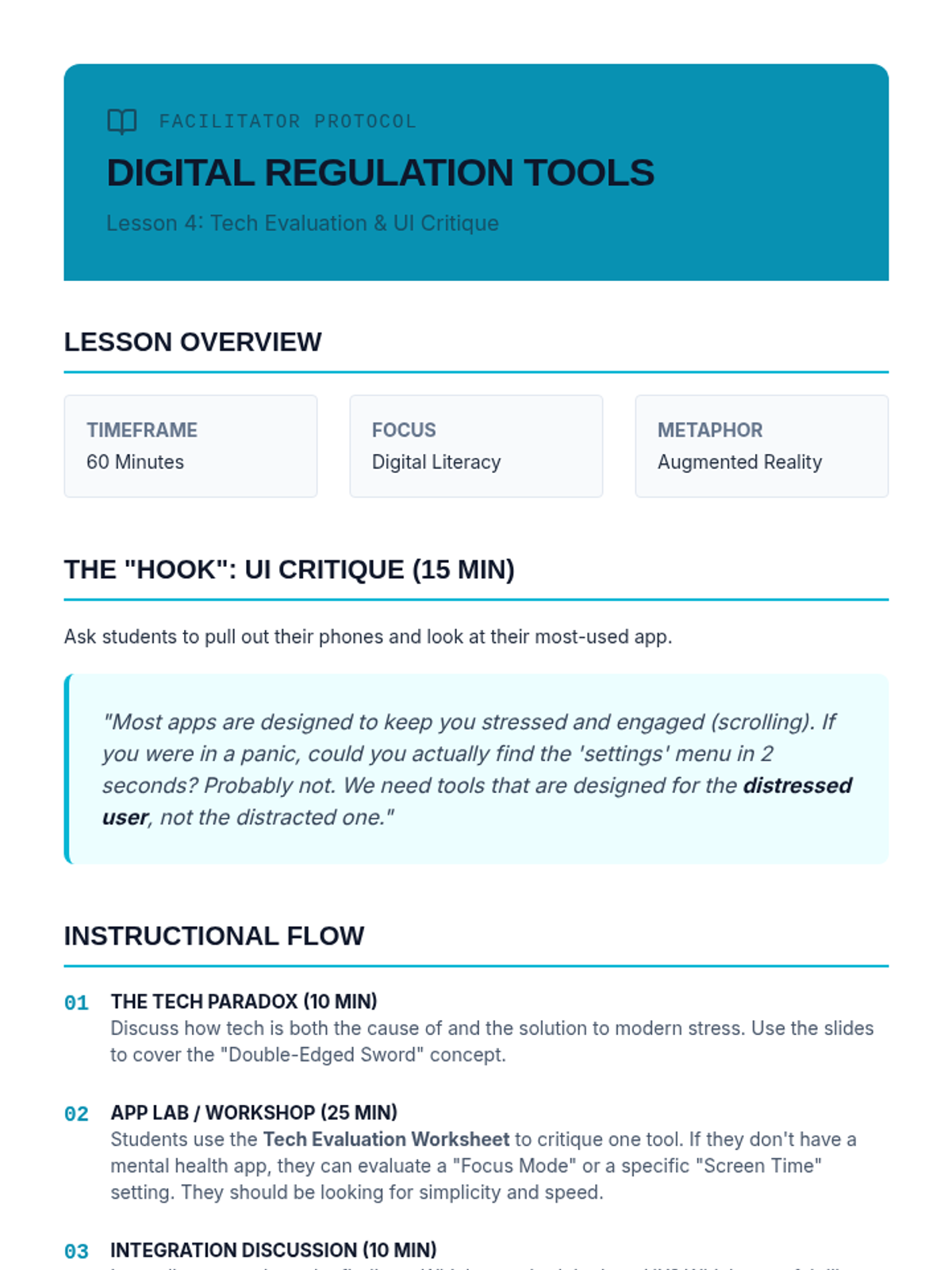
Students evaluate digital tools, apps, and wearables to integrate effective technological supports into their personalized regulation protocols.
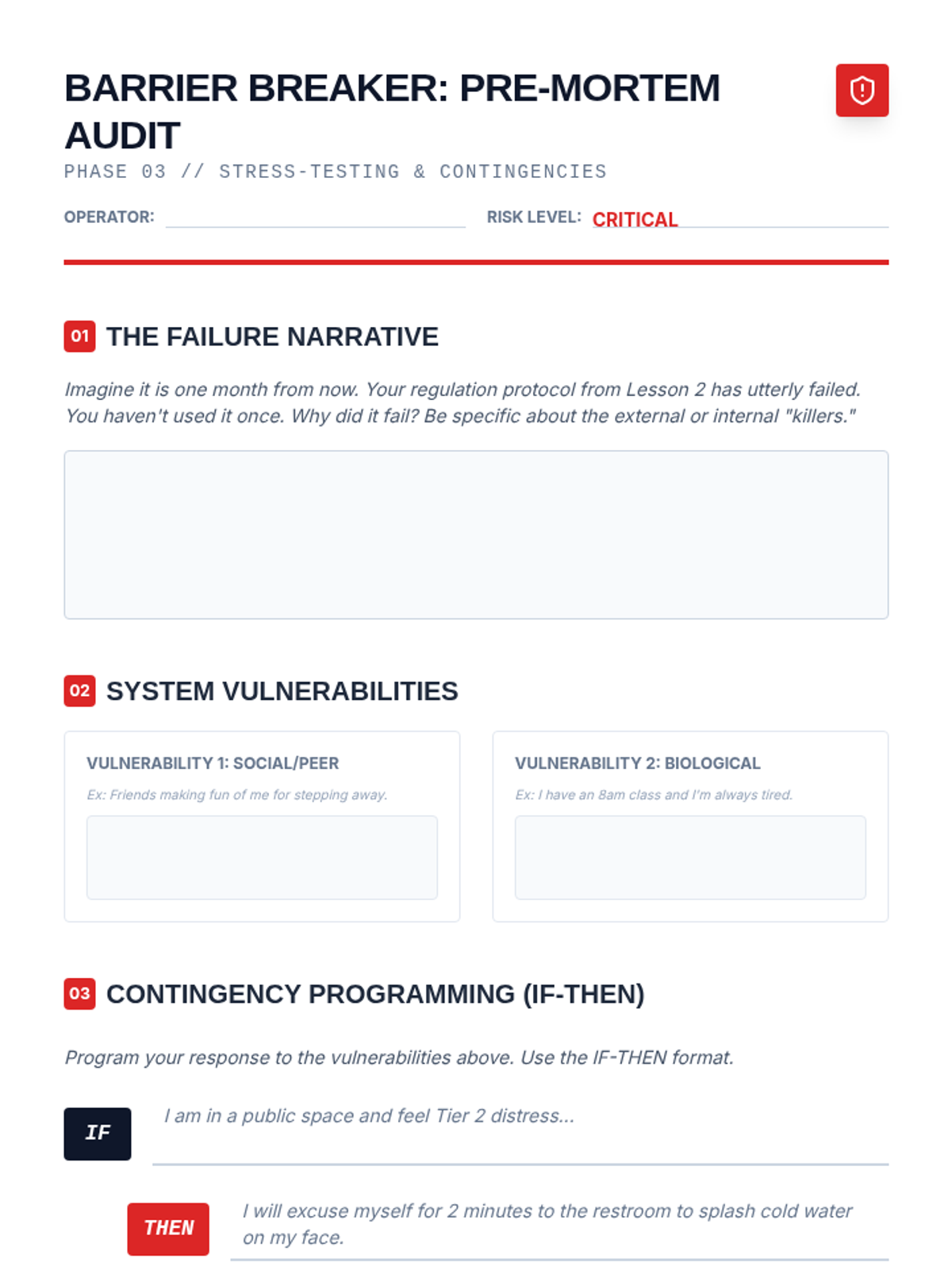
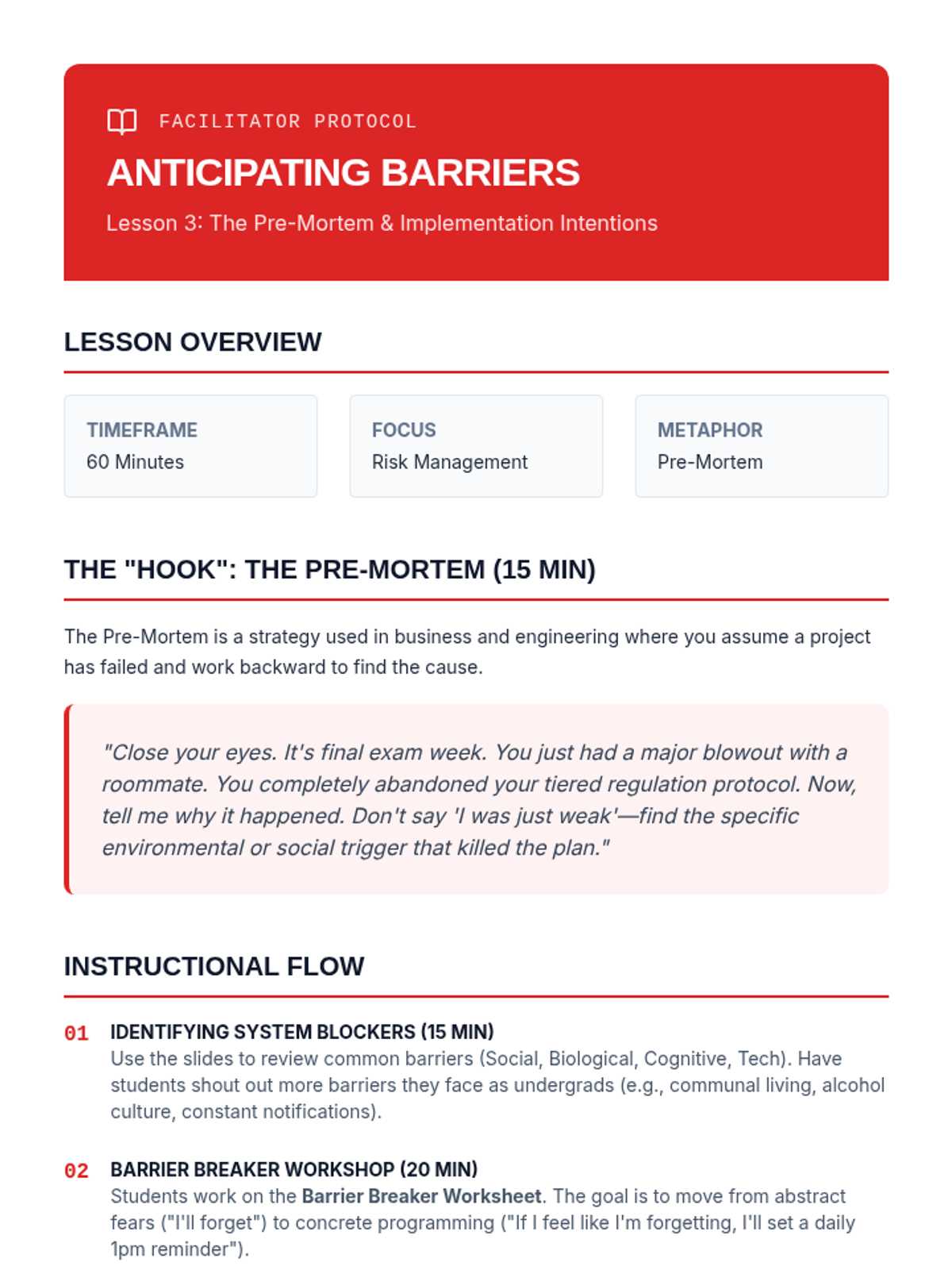
Students identify obstacles to their regulation plan and develop 'If-Then' implementation intentions to navigate triggers and barriers.
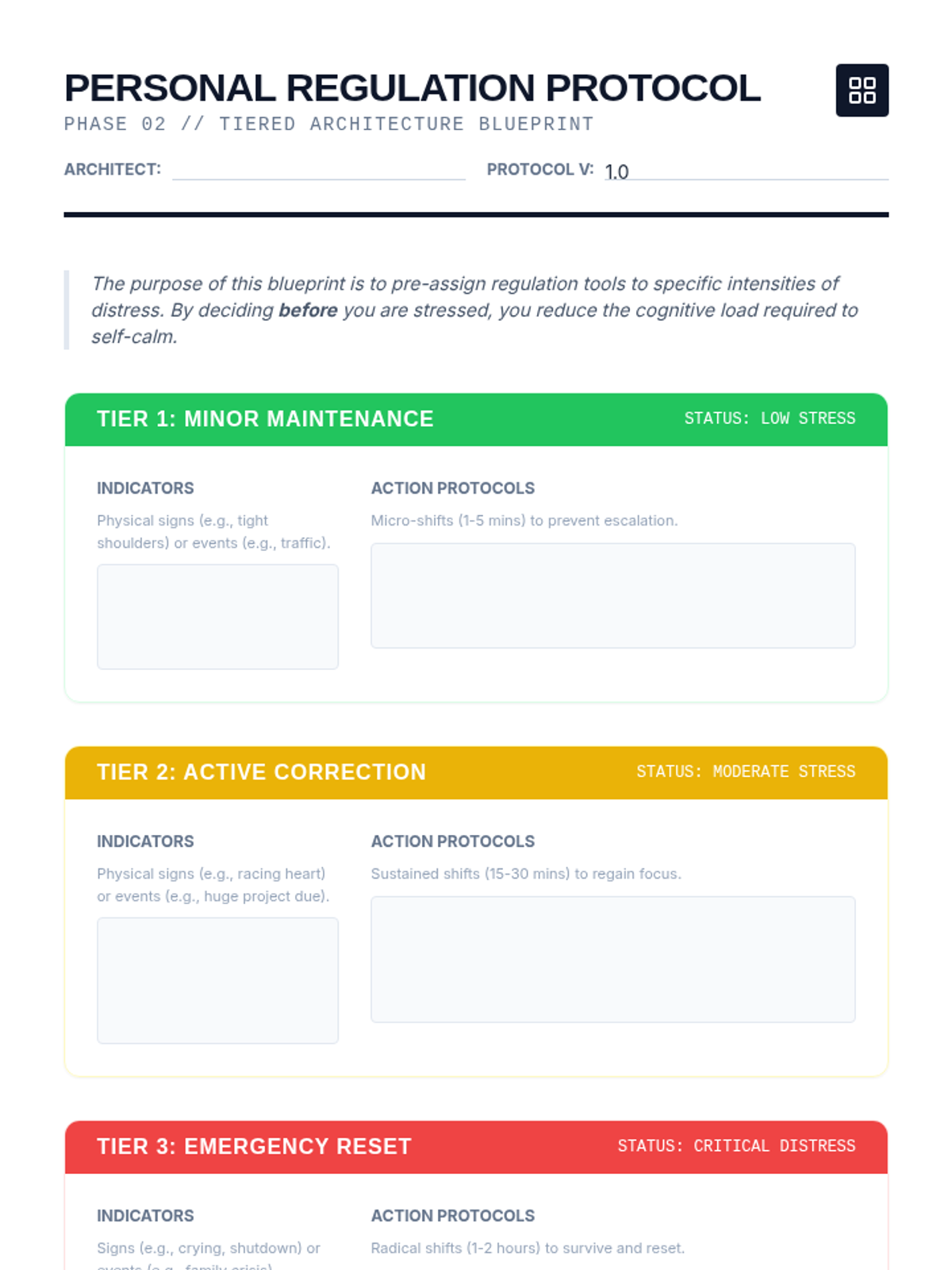
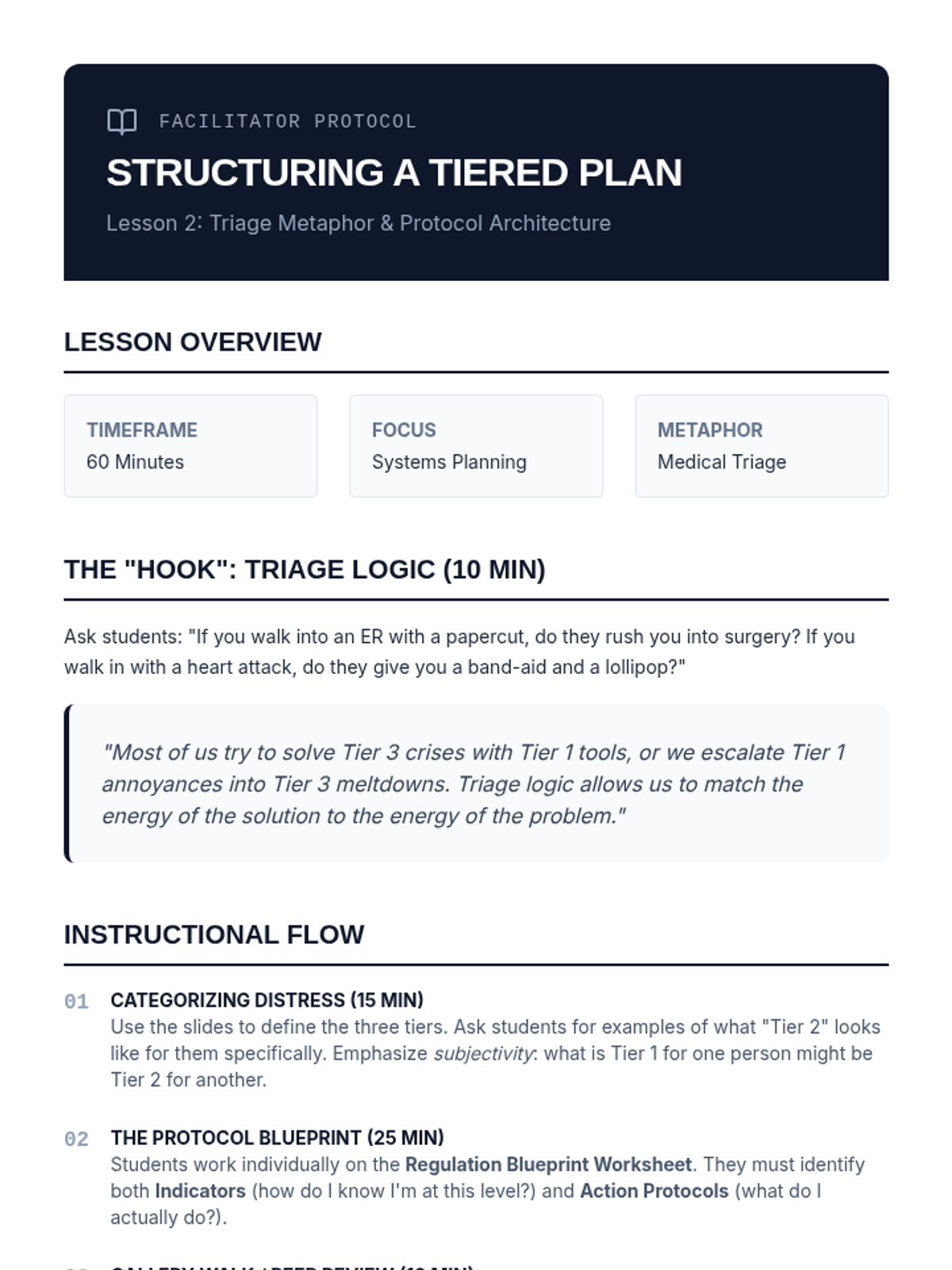
Students use a triage metaphor to design a three-tiered response plan, assigning specific self-calming tools to different intensities of distress.
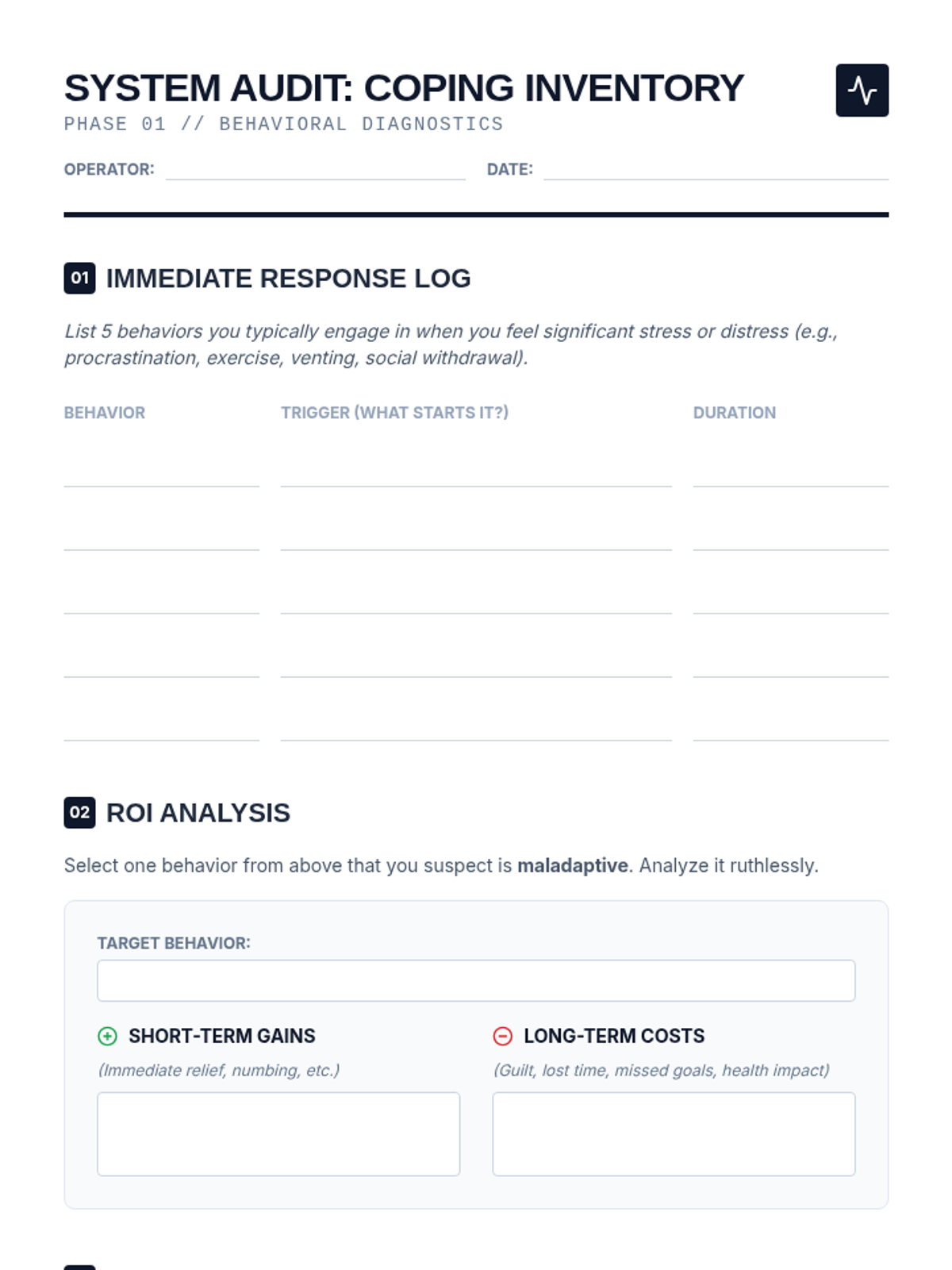
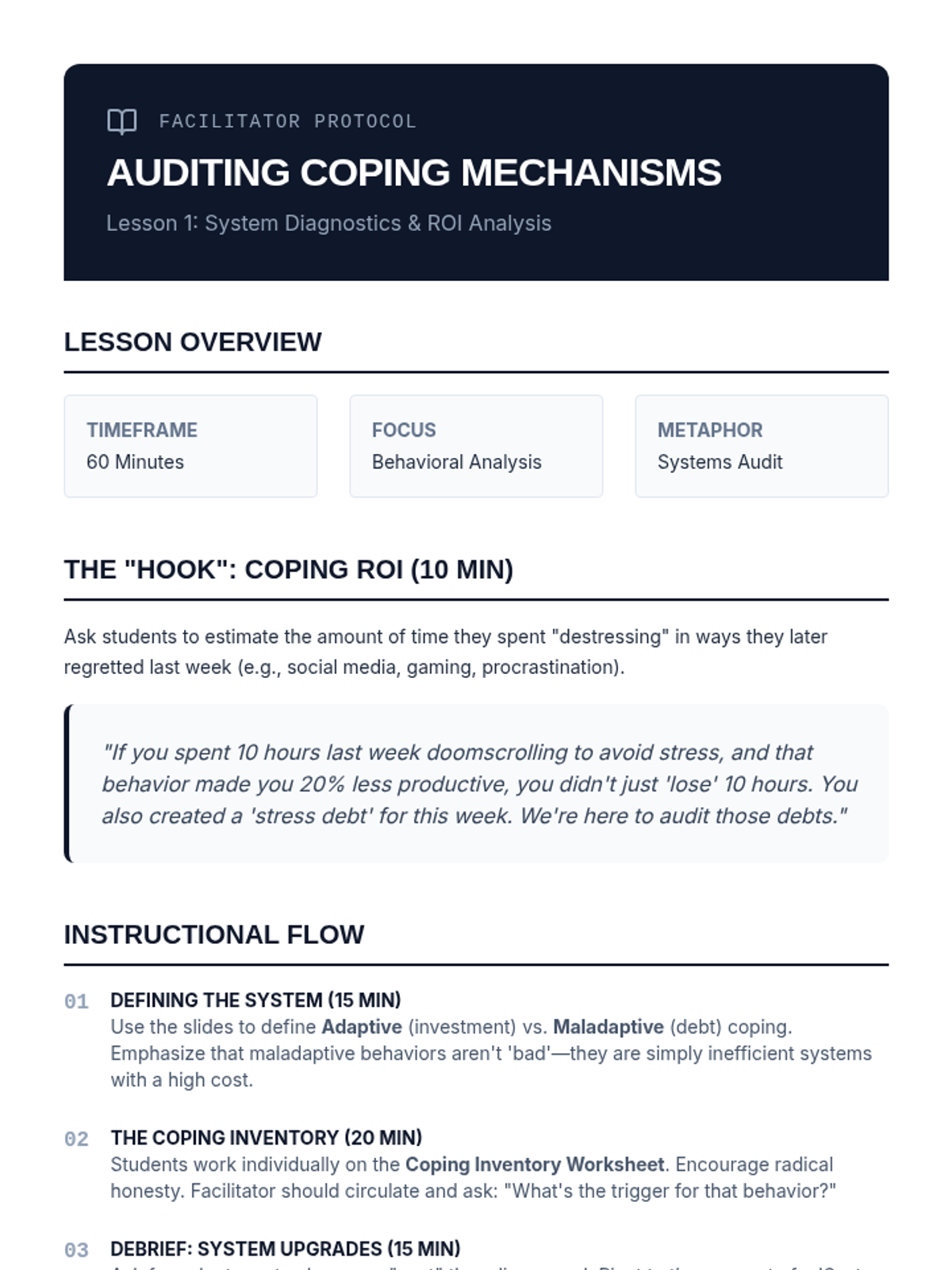
Students conduct an inventory of current stress responses and perform a cost-benefit analysis to distinguish between adaptive and maladaptive behaviors.
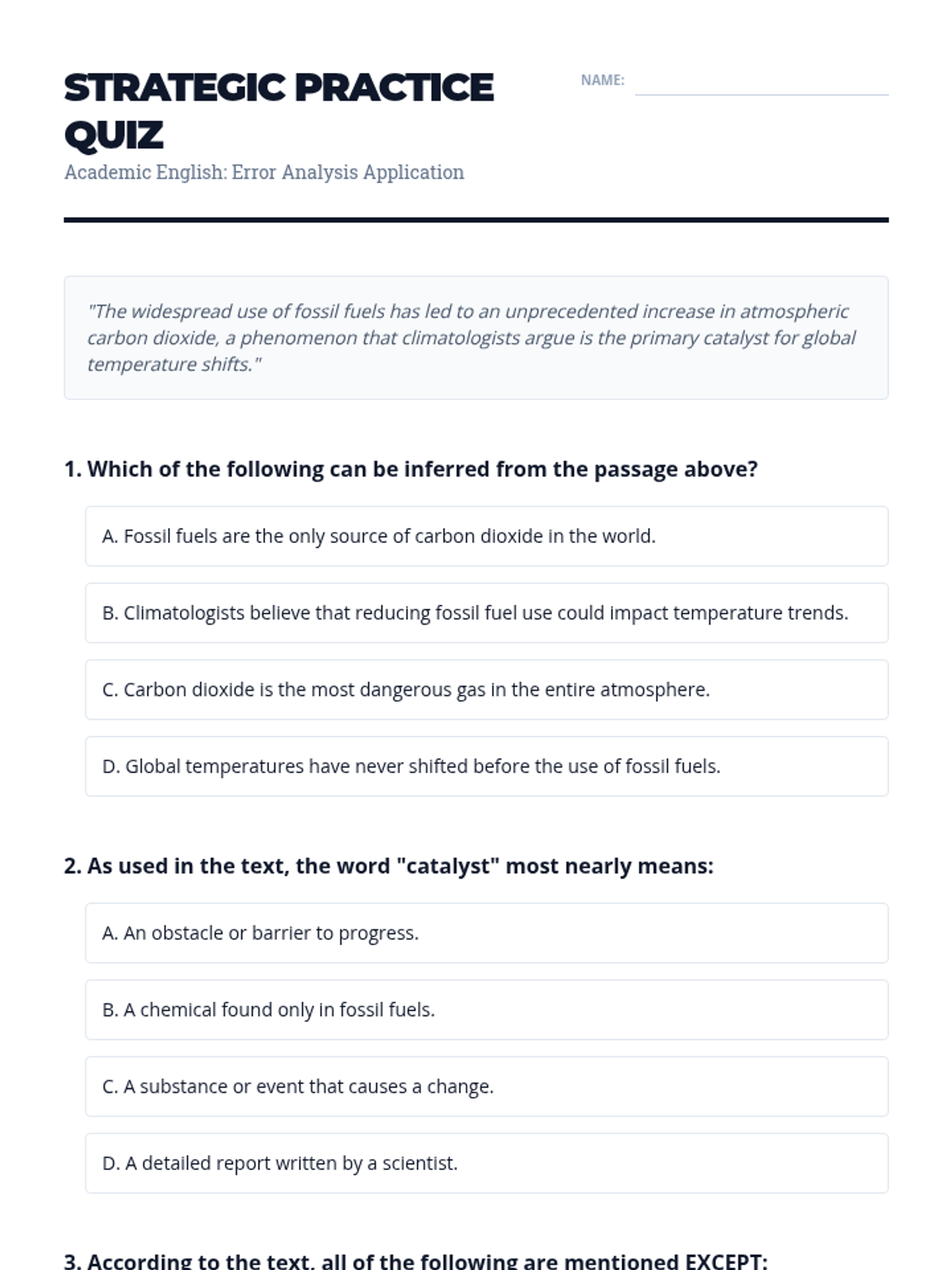
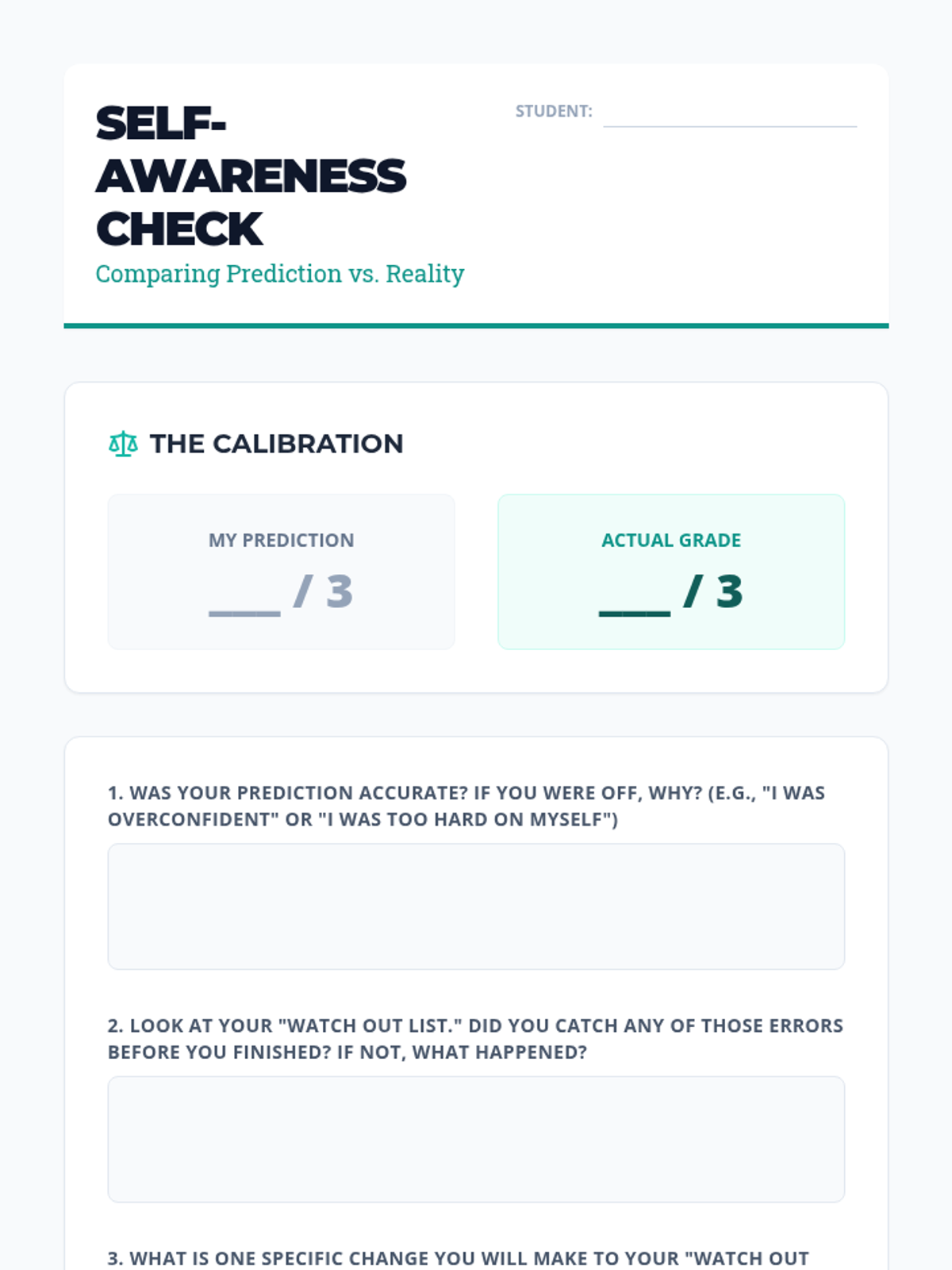
Students take a short assessment and immediately apply their error analysis protocol. They verify if their 'Watch Out' list helped them avoid previous habitual mistakes.
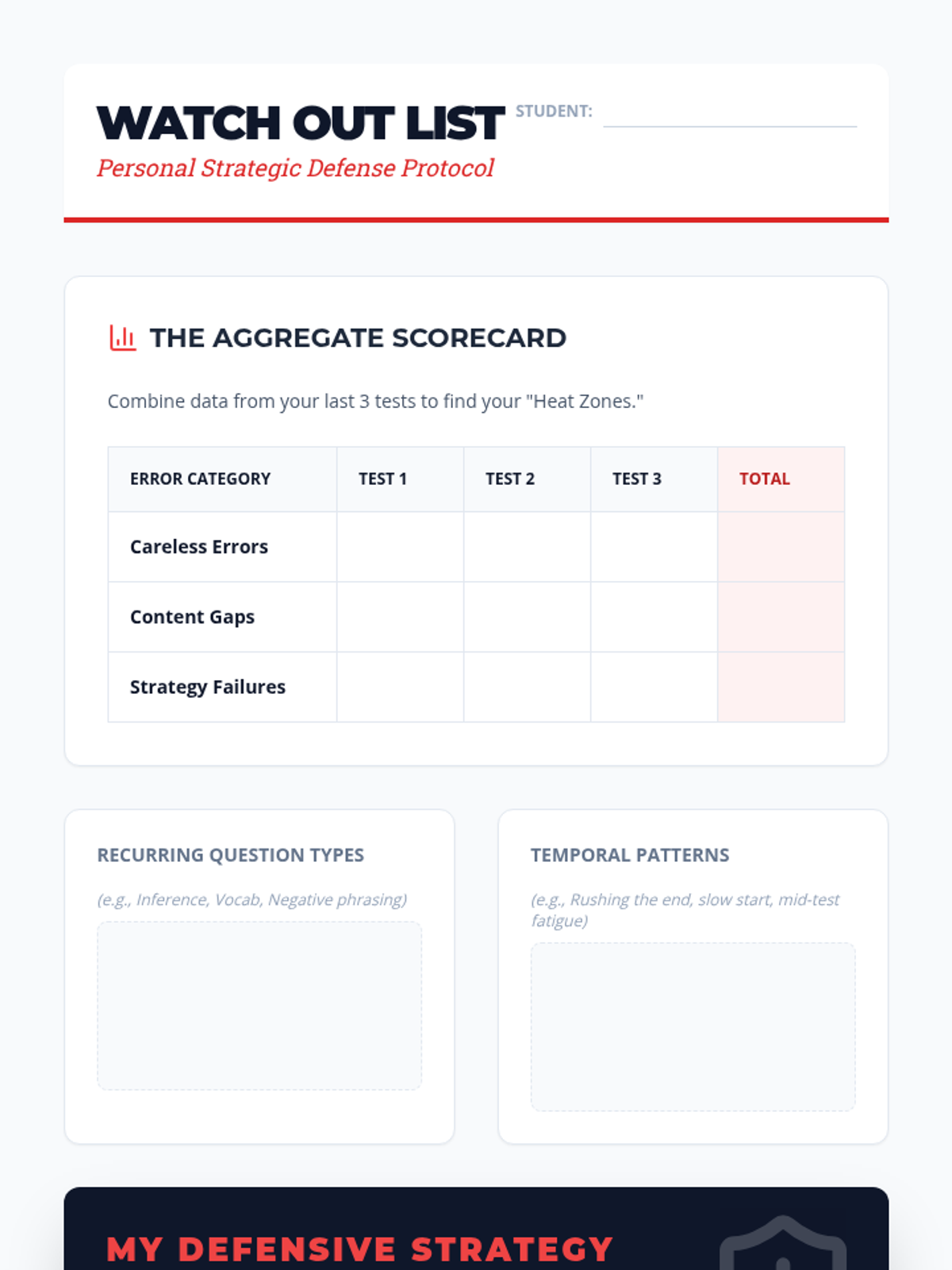
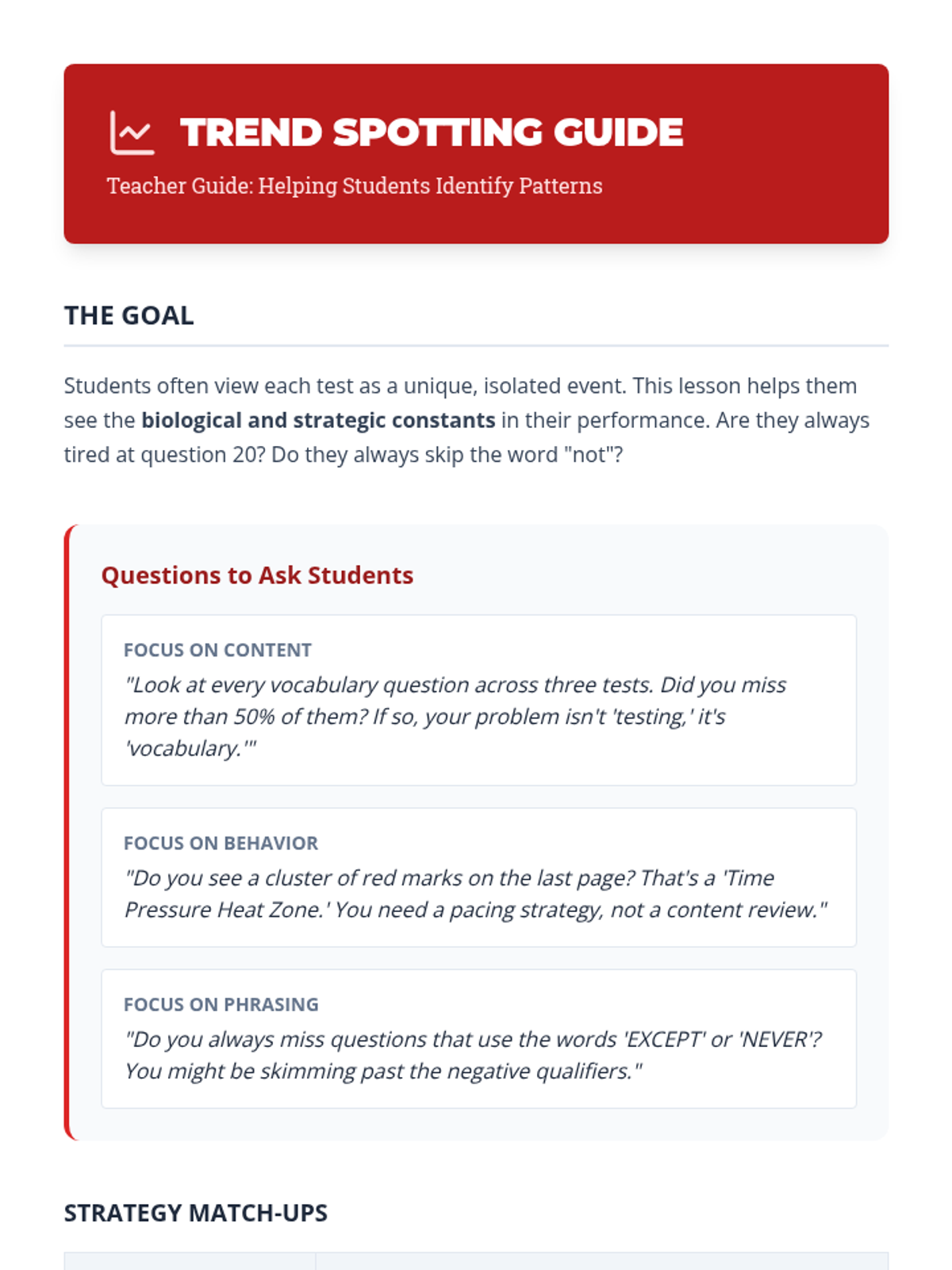
Students aggregate their error data to find personal patterns (e.g., 'I always miss inference questions' or 'I rush the last 5 minutes'). They create a personal 'Watch Out' list for future exams.
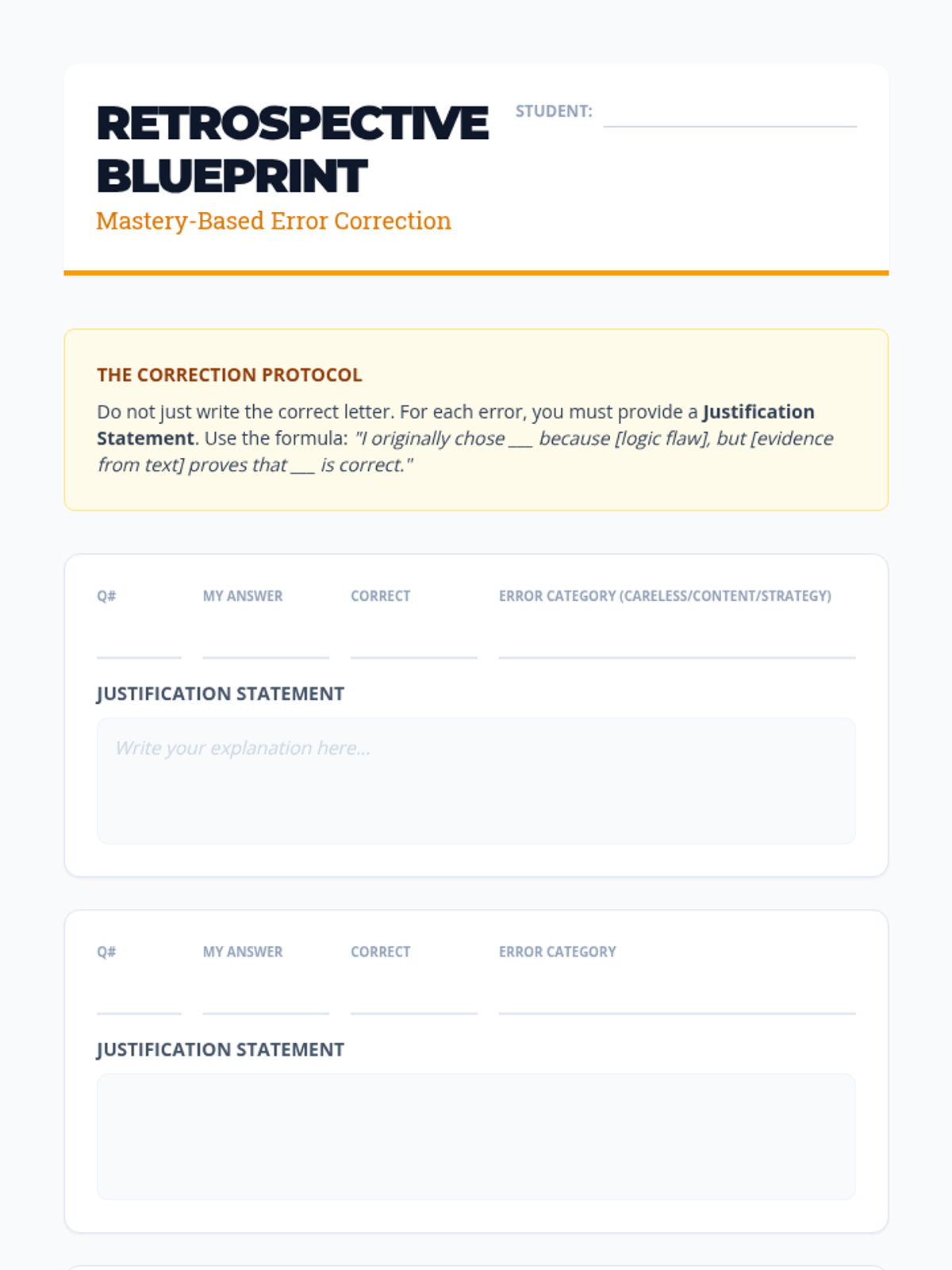
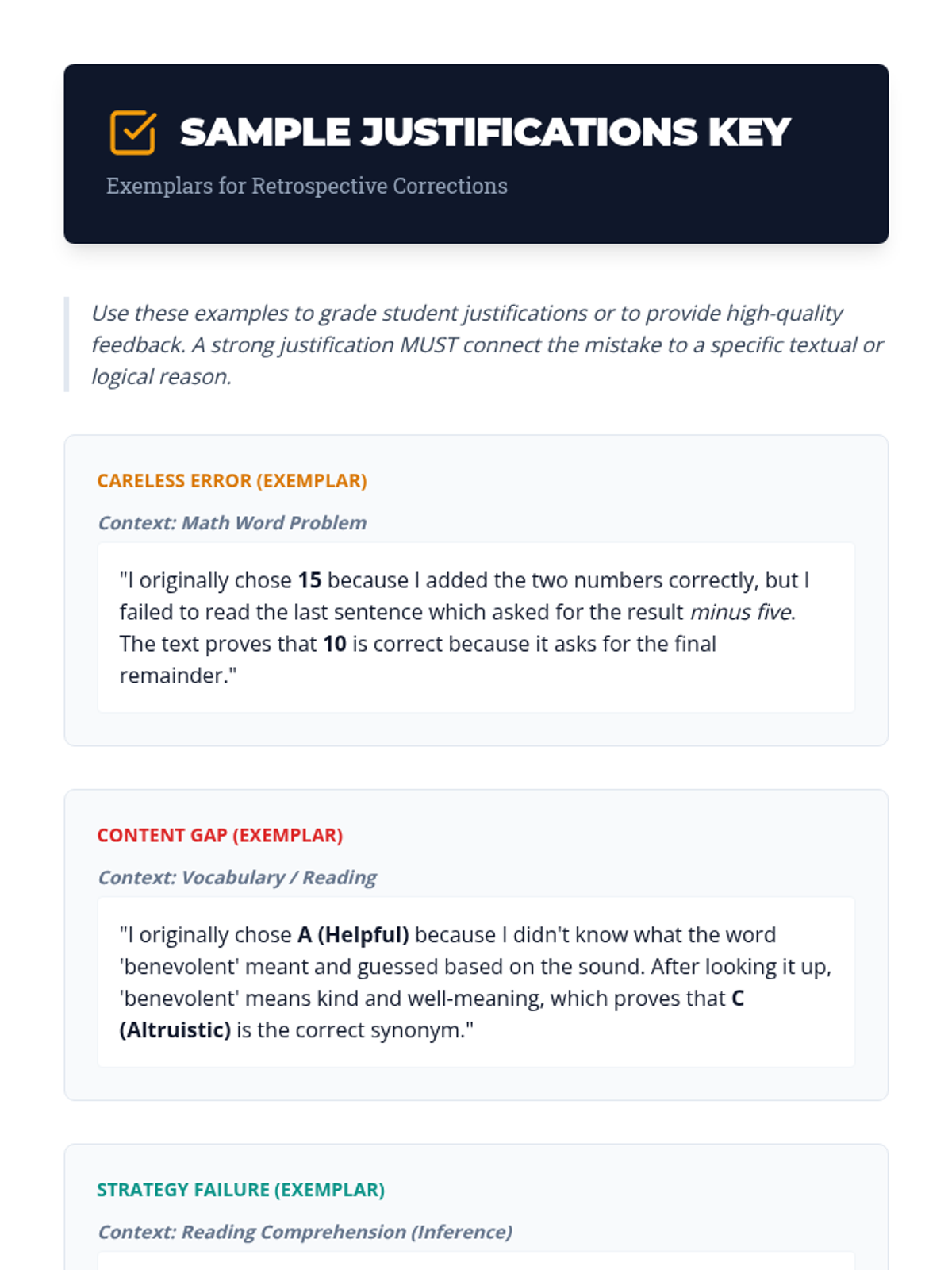
Instead of just marking correct answers, students must write a sentence explaining *why* their original answer was wrong and *why* the new answer is right. This ensures deep processing of the error.
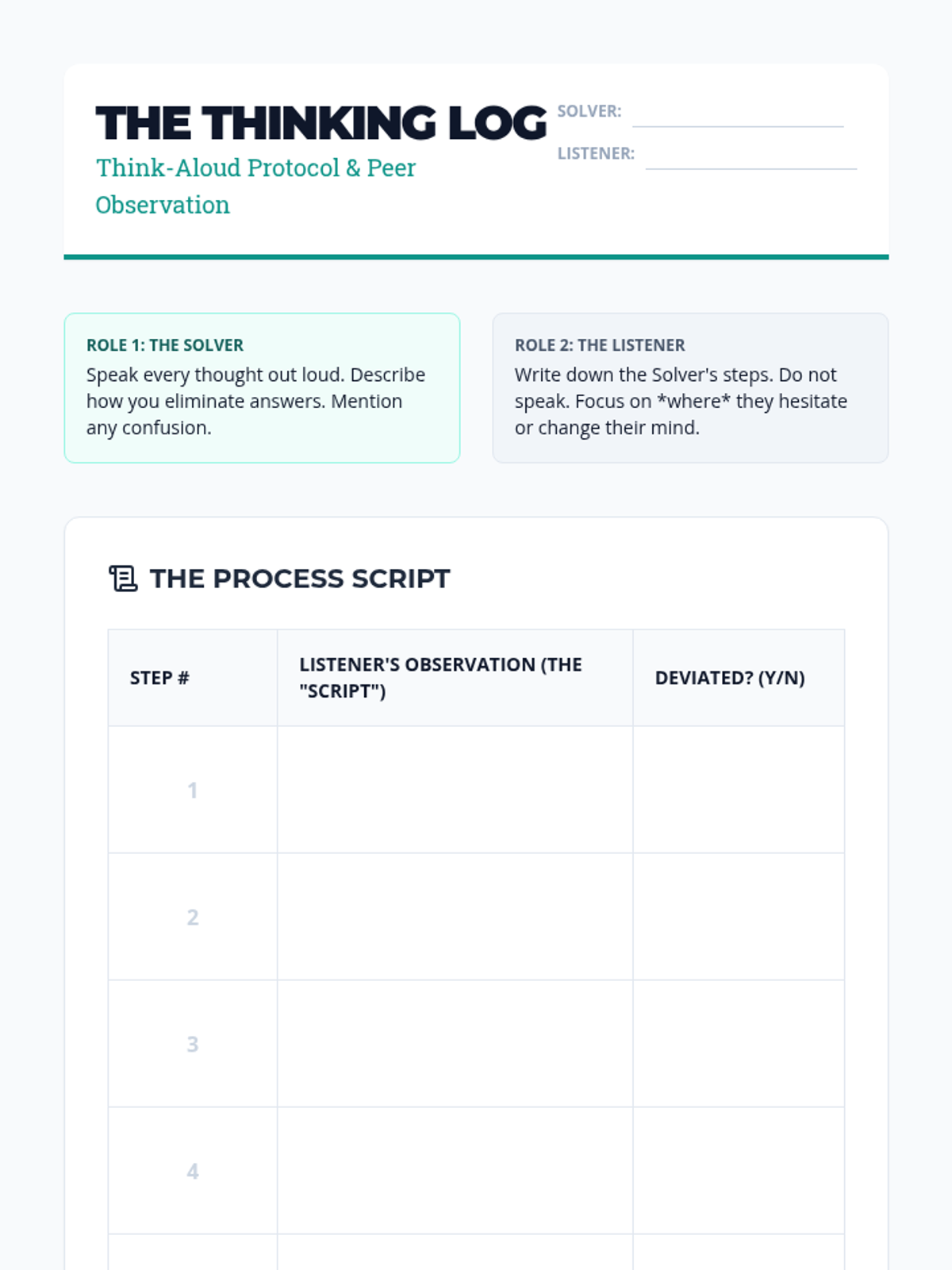
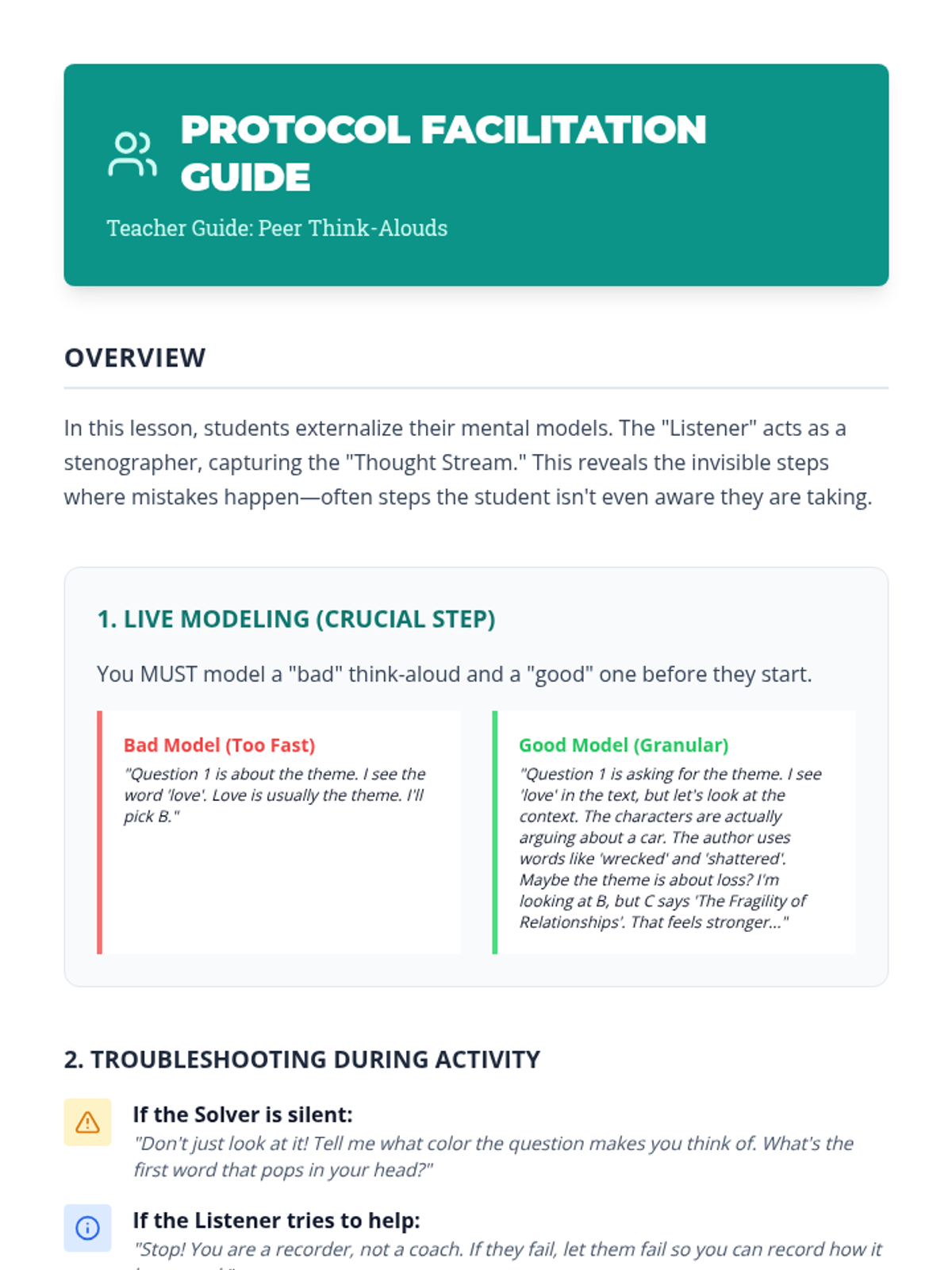
Working in pairs, students vocalize their thinking process while solving a problem while a partner records their steps. They analyze these recordings to identify where their logic deviated from the correct path.
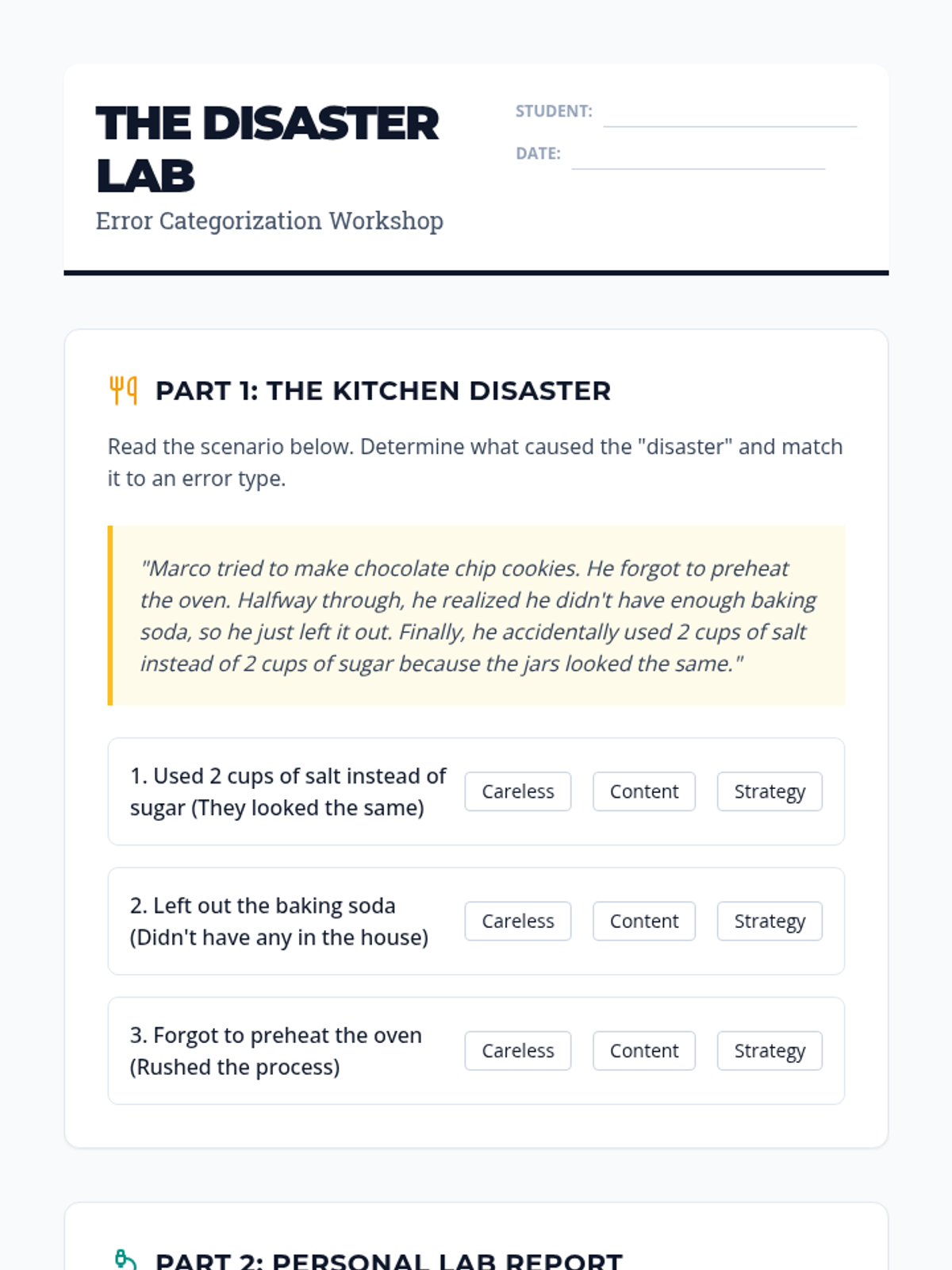
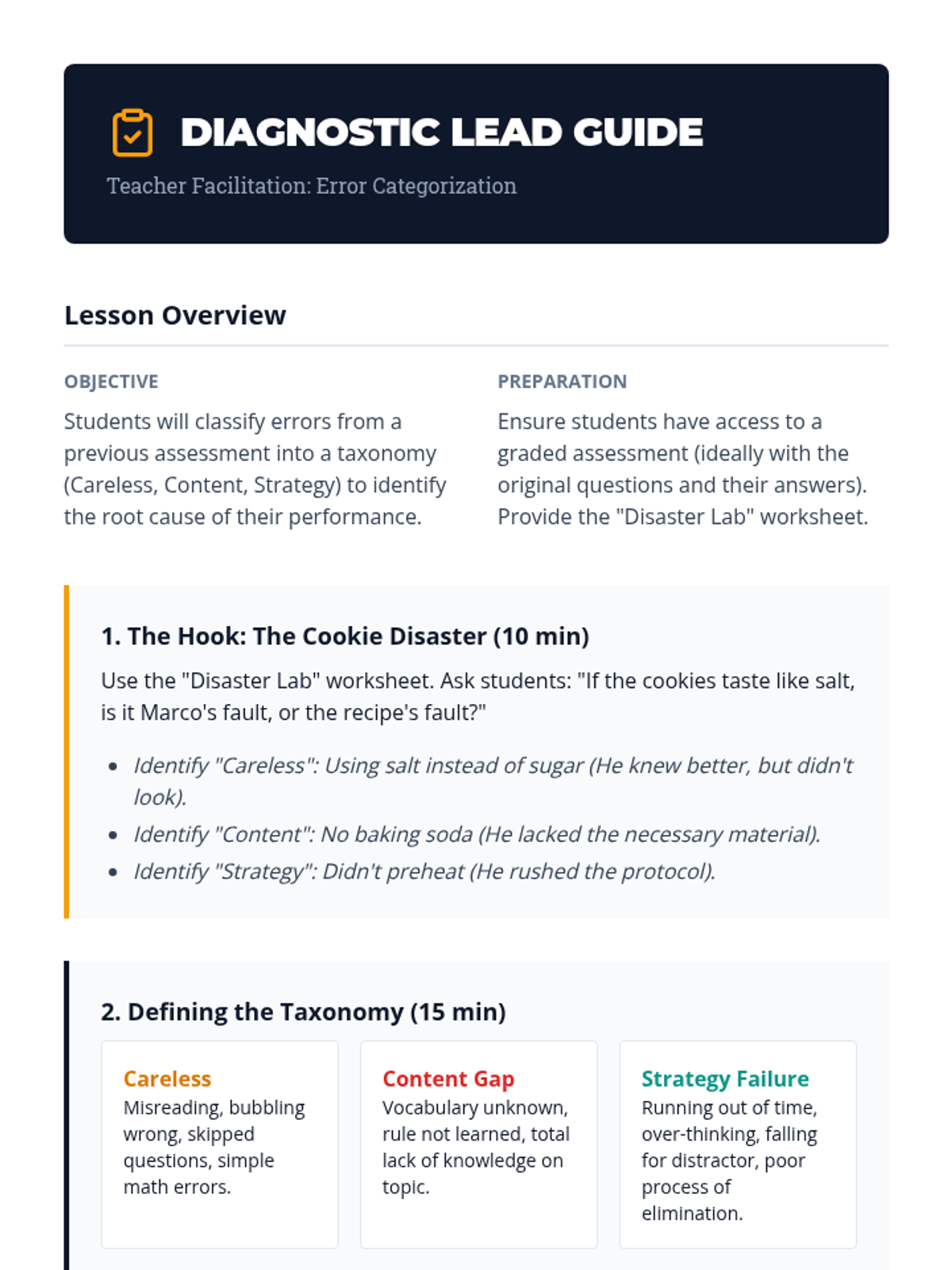
Students review a past assessment and categorize every incorrect answer as a 'Careless Error,' 'Content Gap,' or 'Strategy Failure.' This taxonomy helps them understand that not all mistakes are created equal.