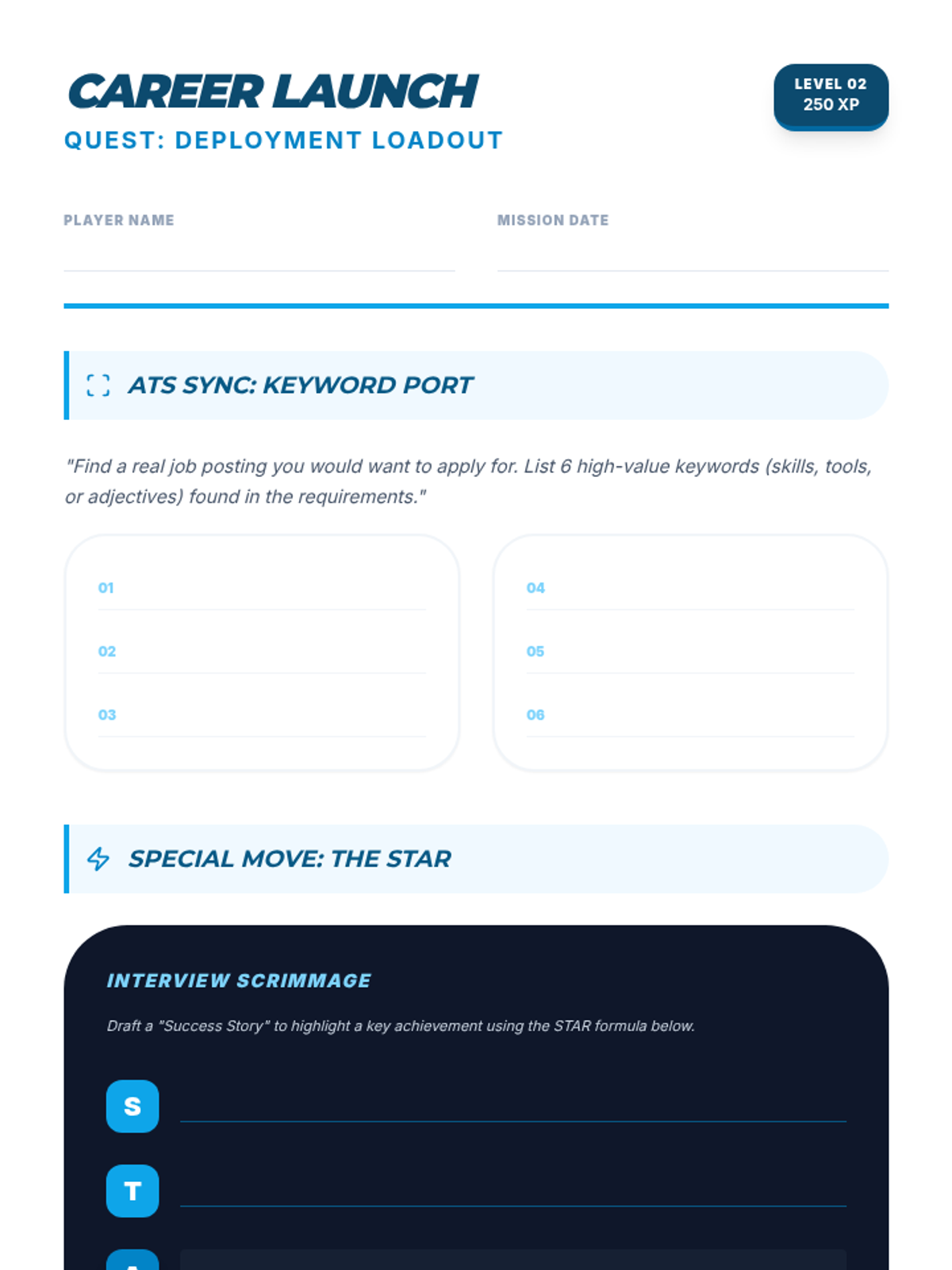
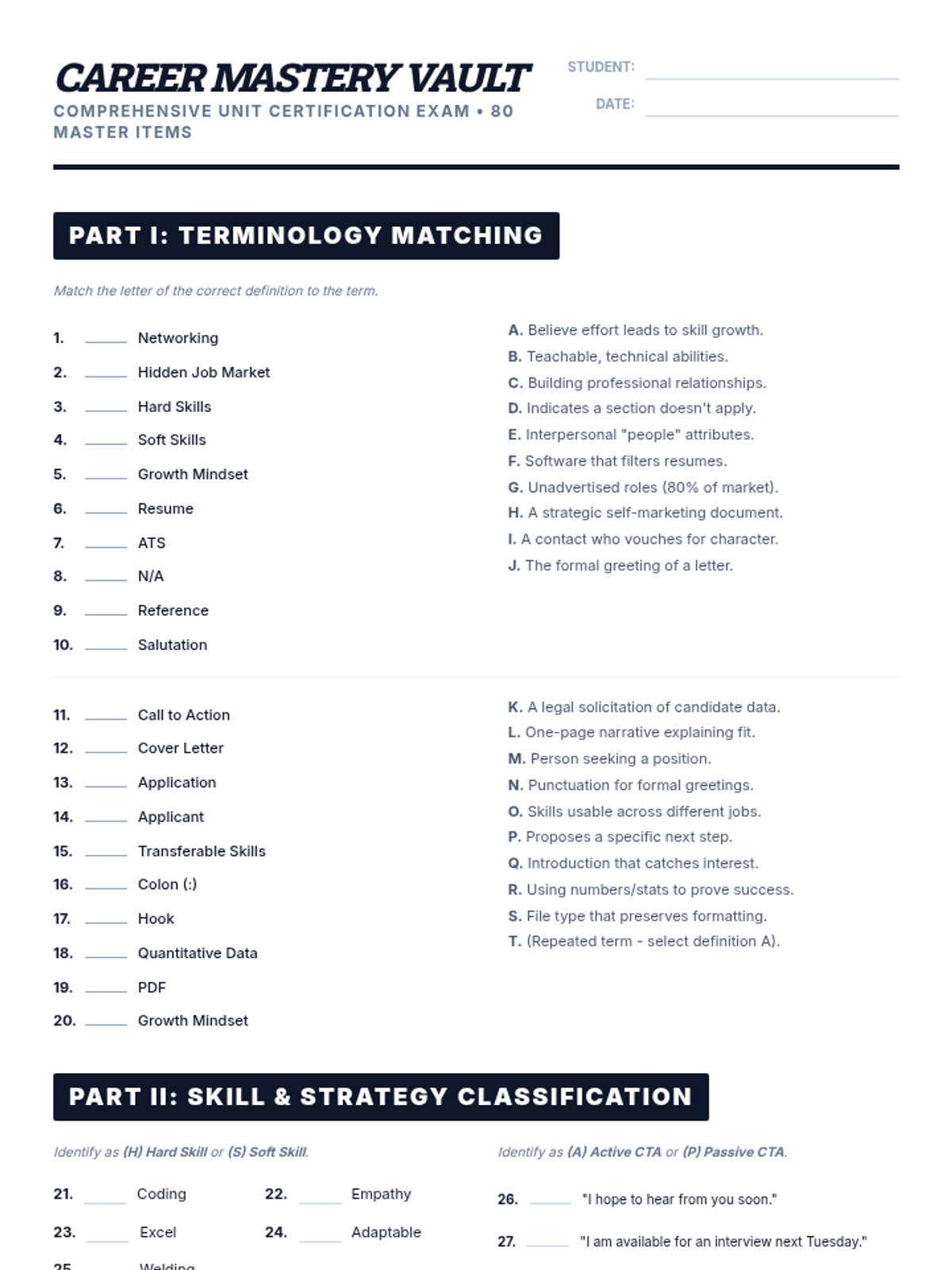
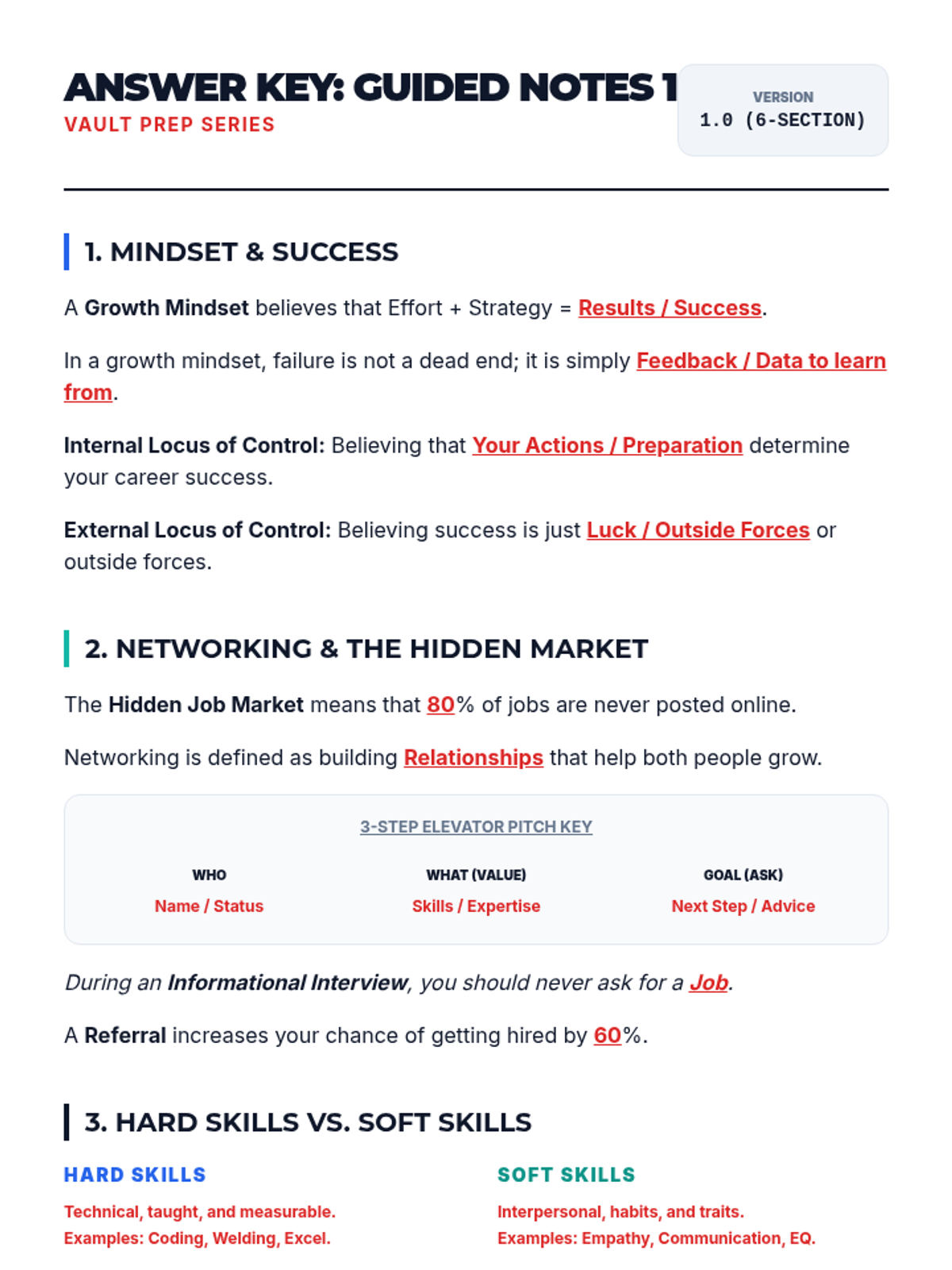
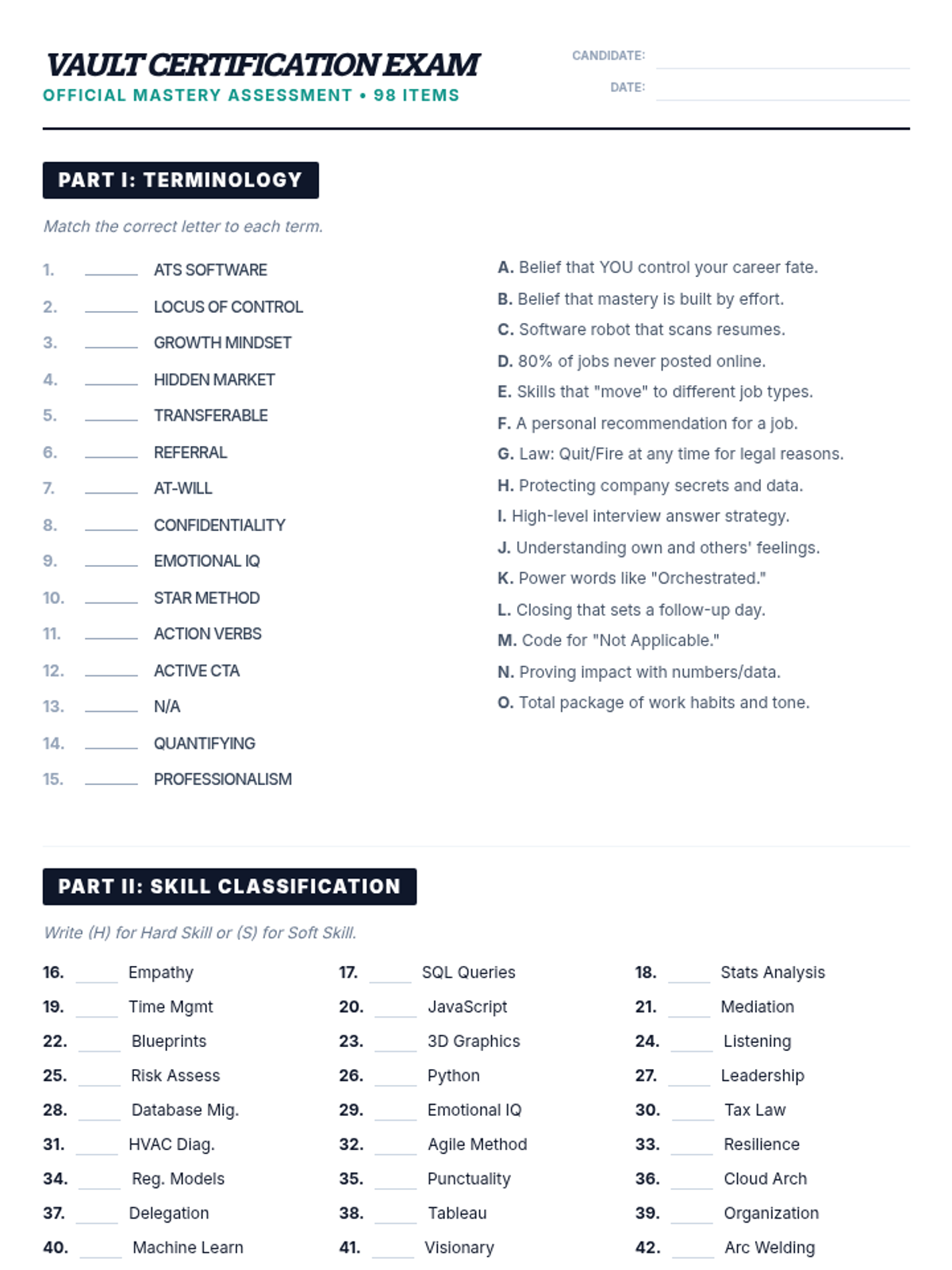
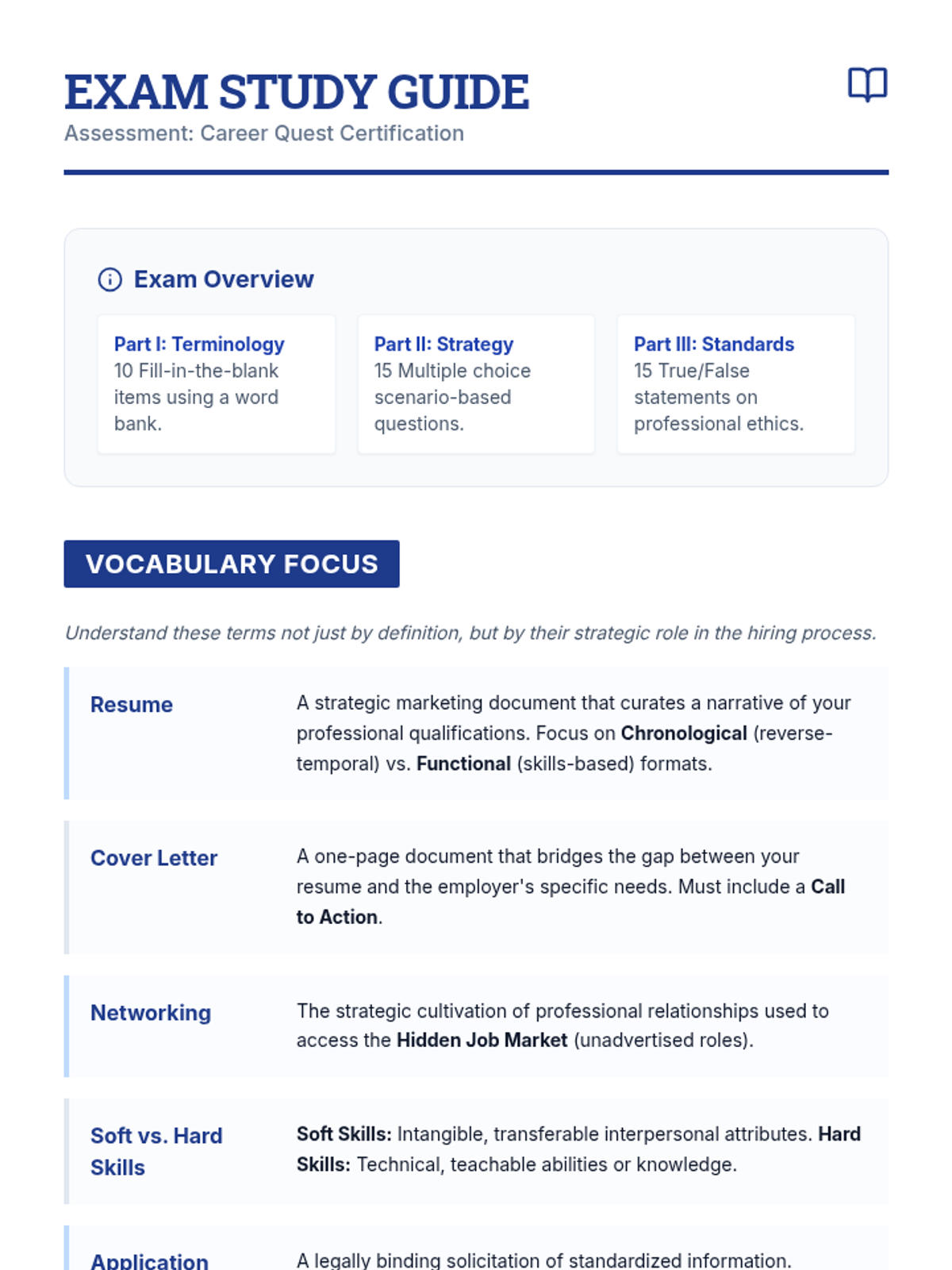
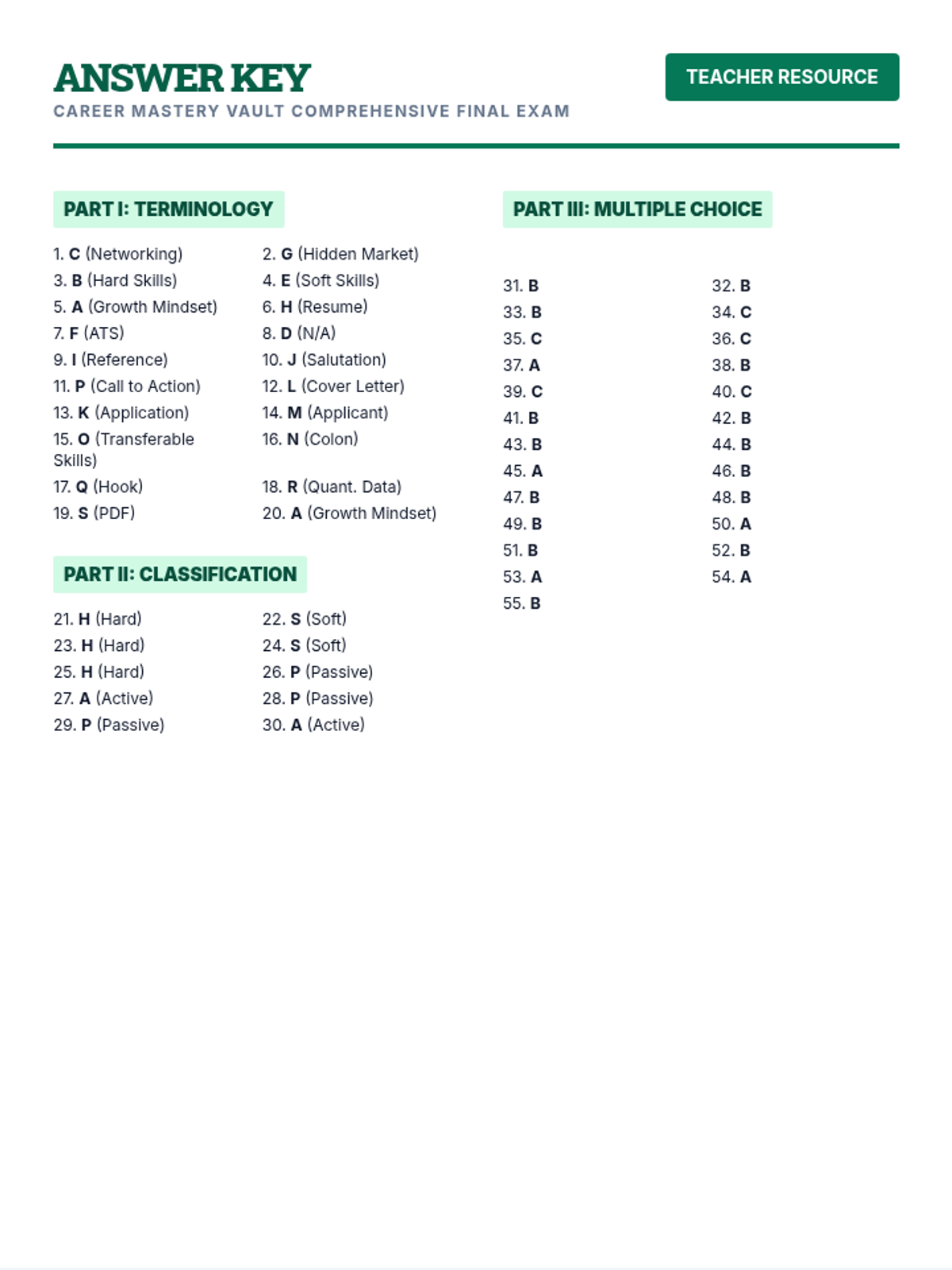
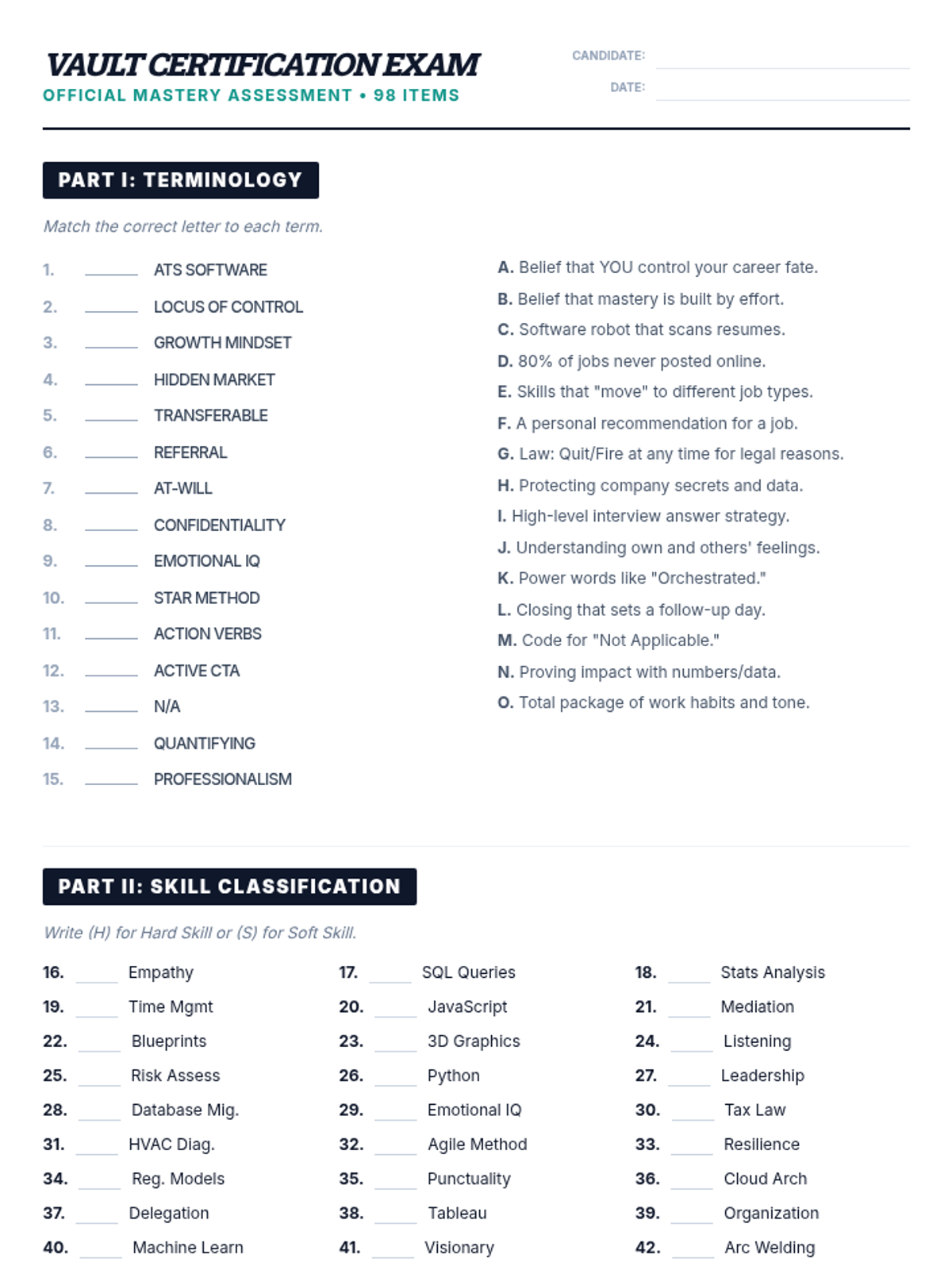
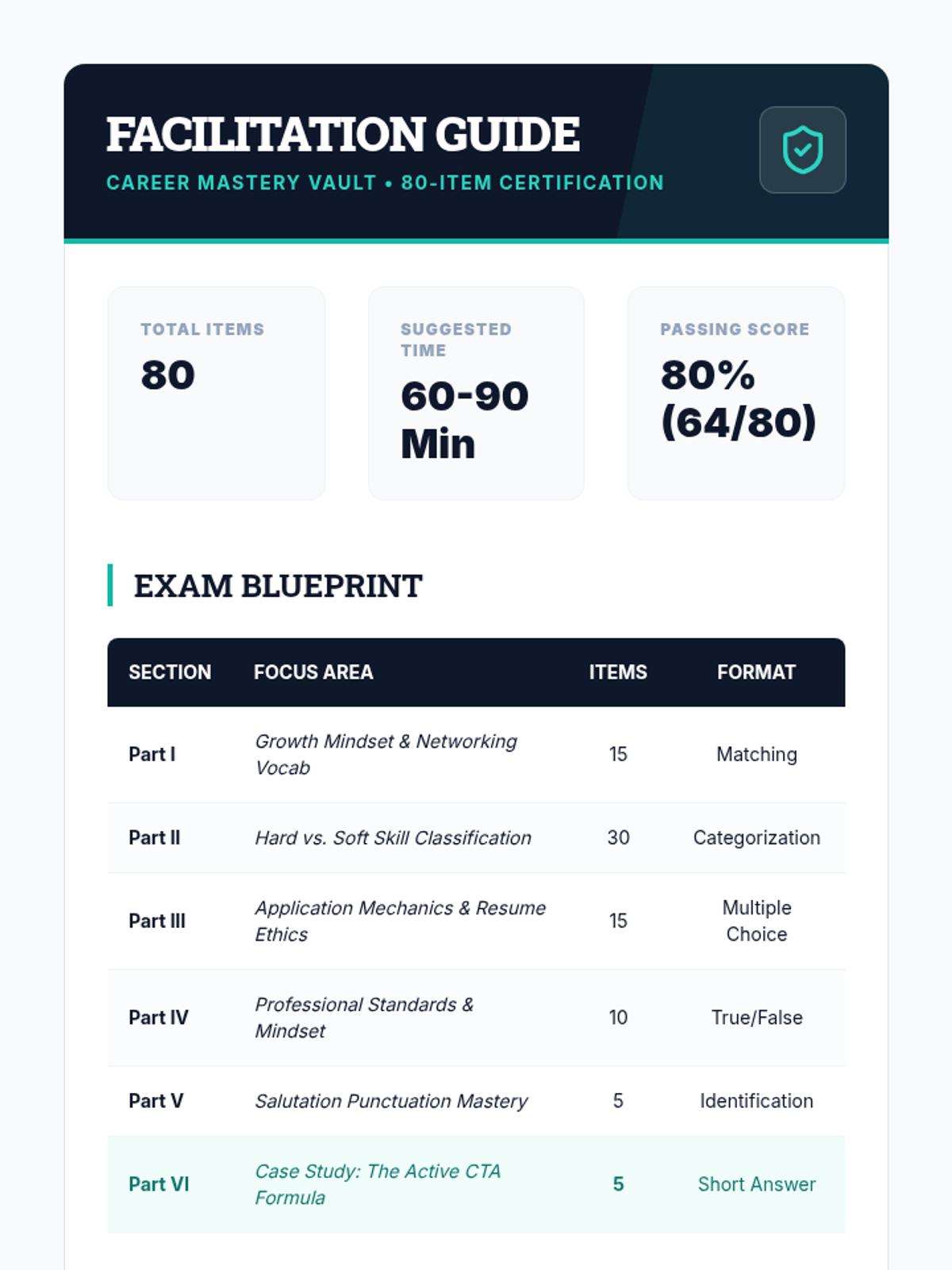
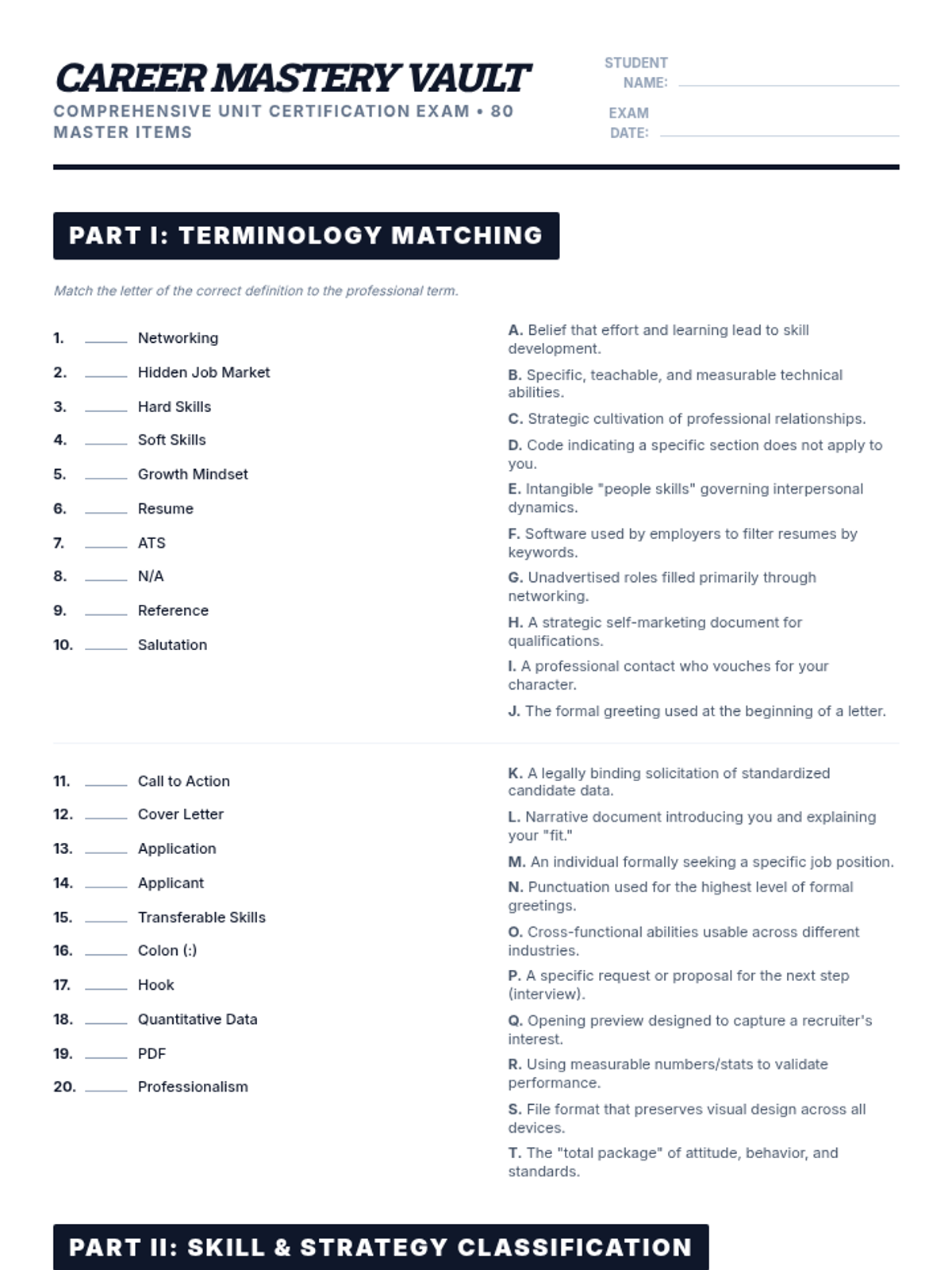
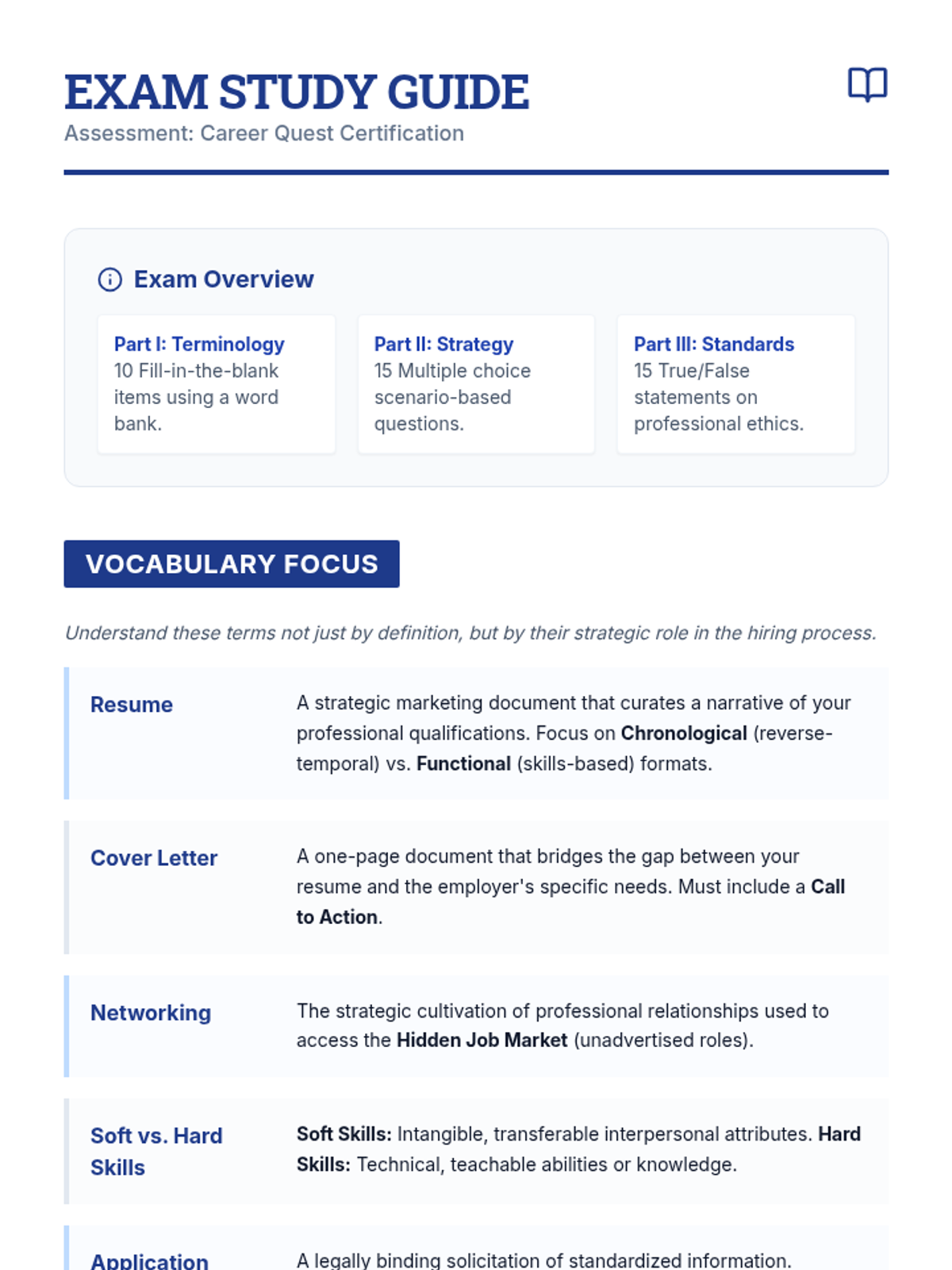
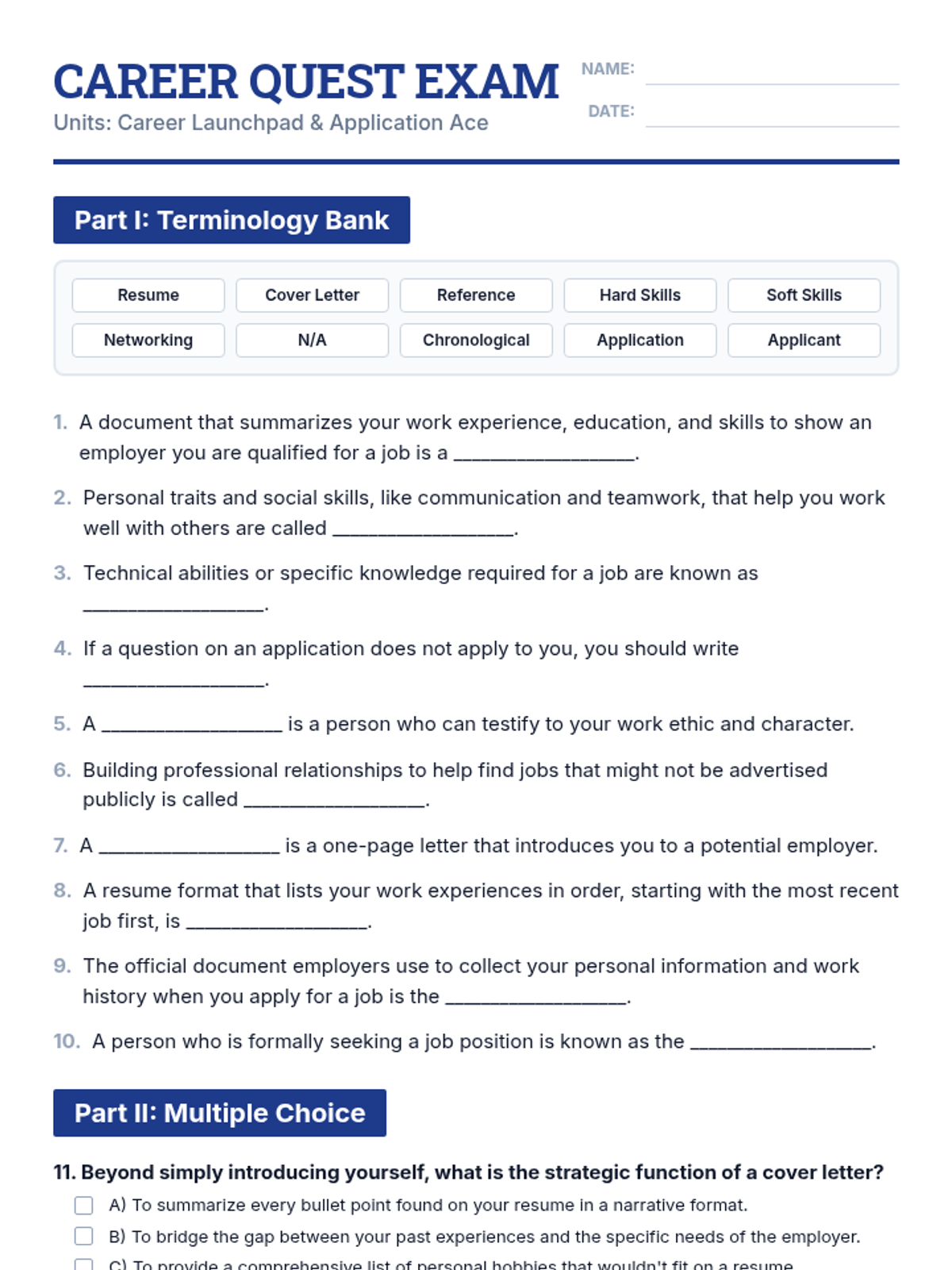
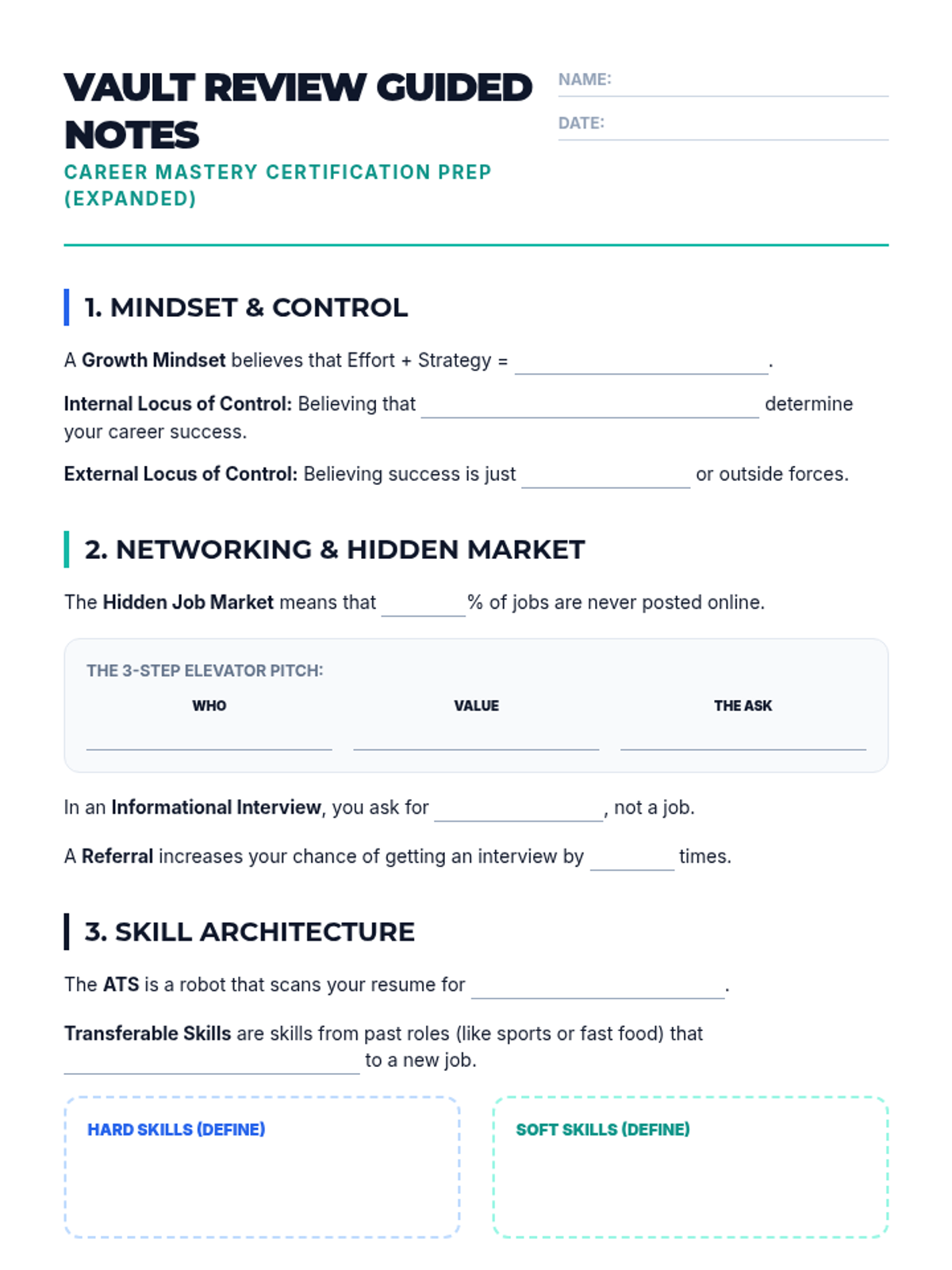
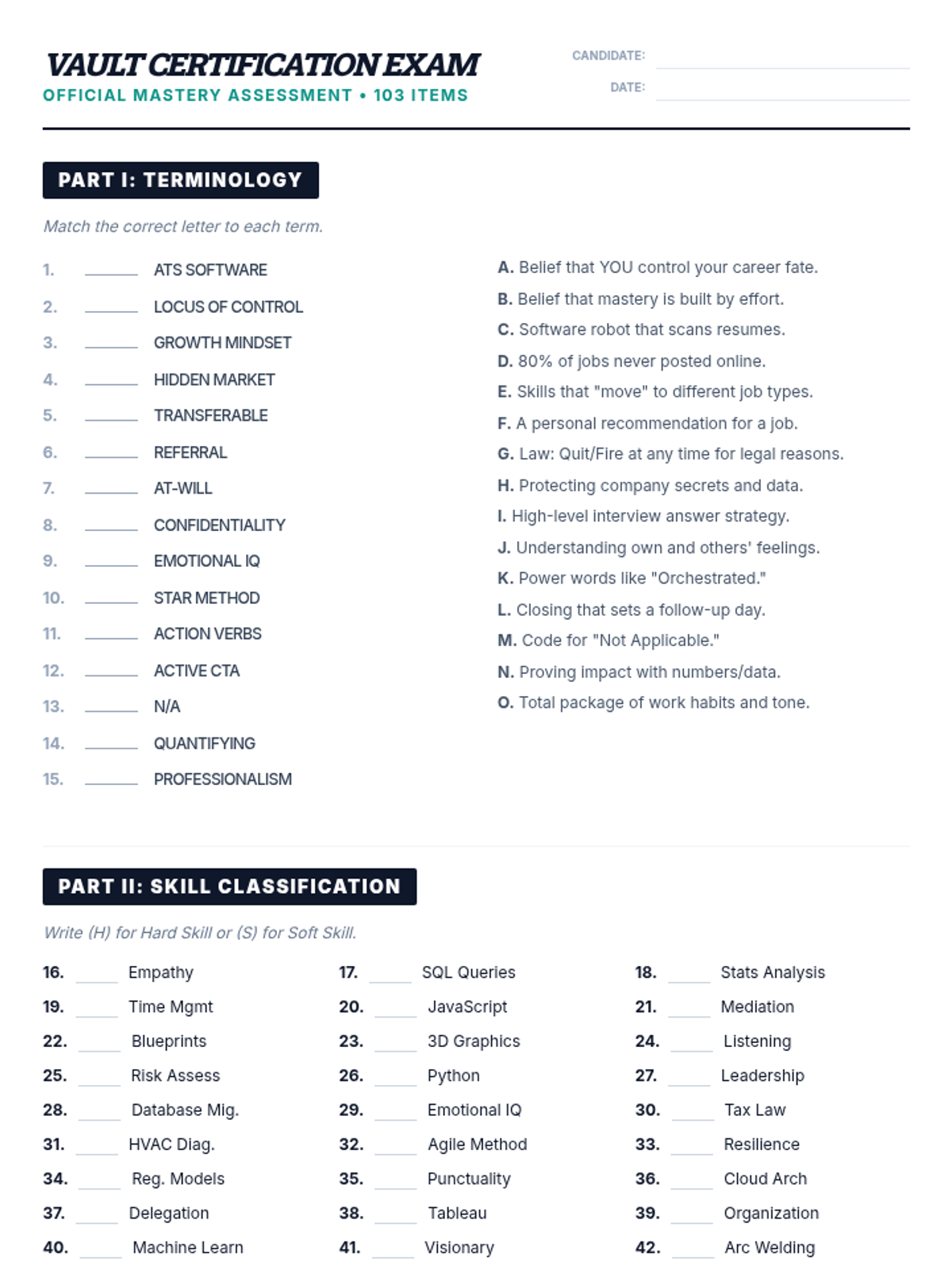
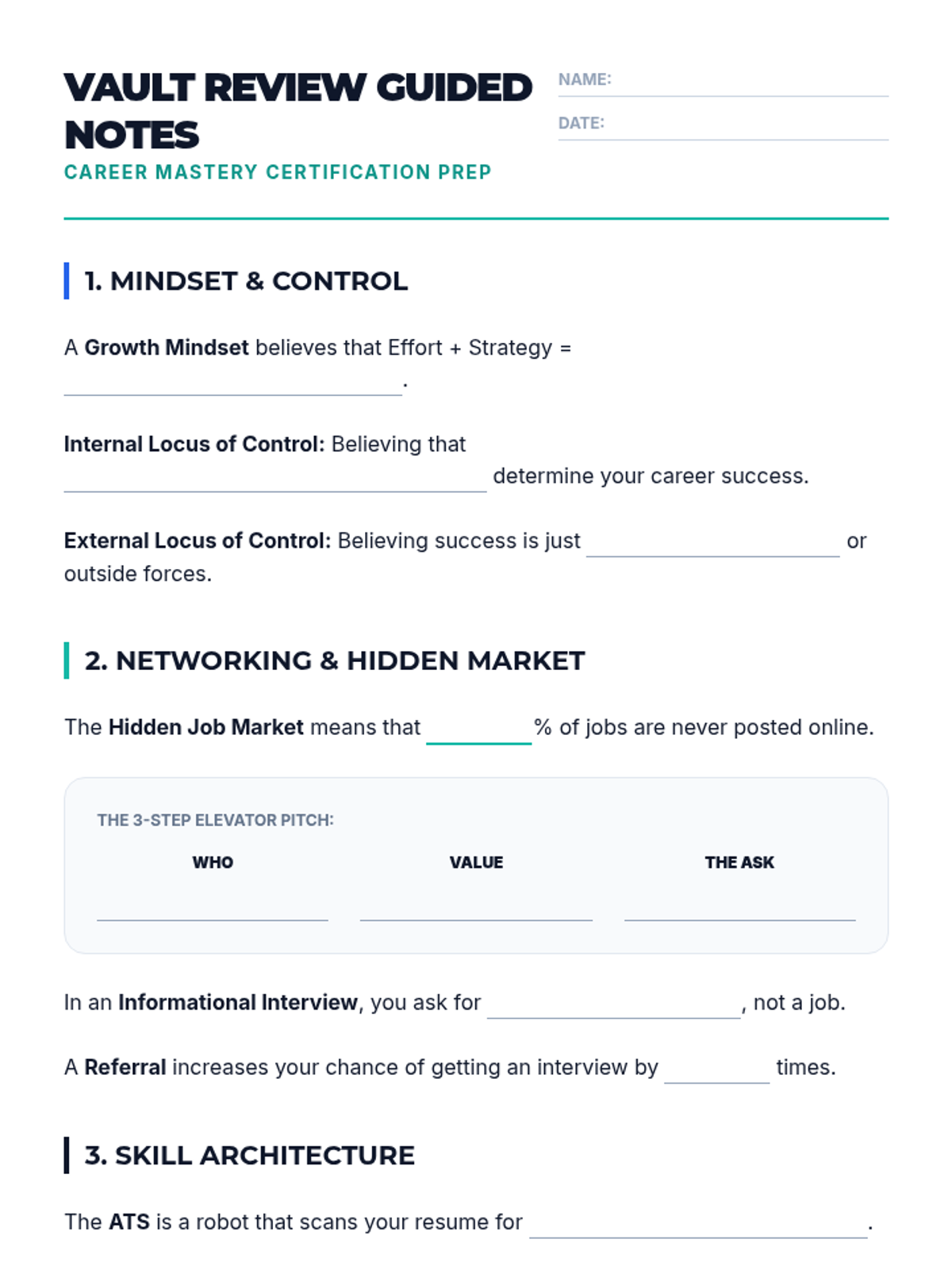
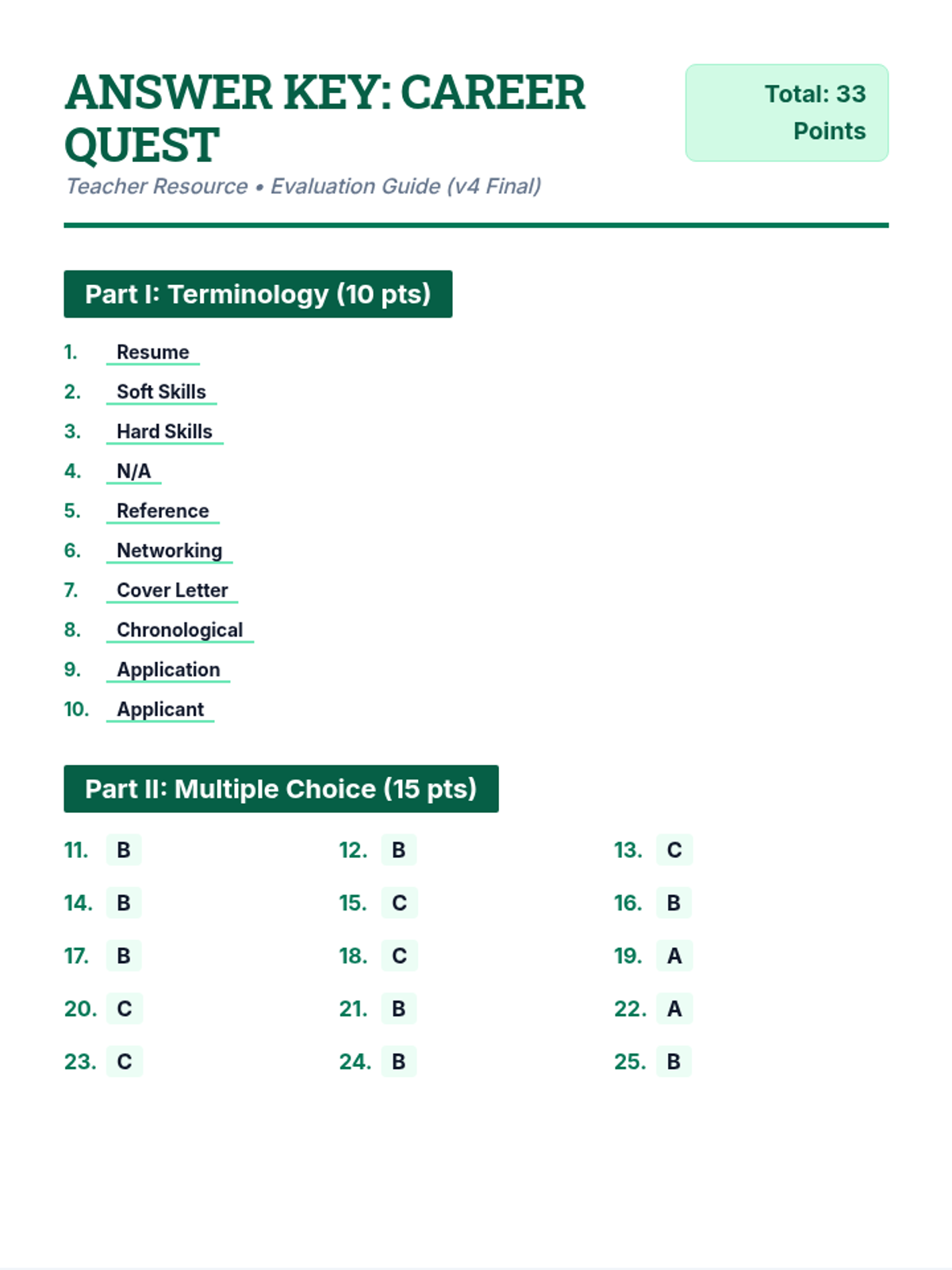
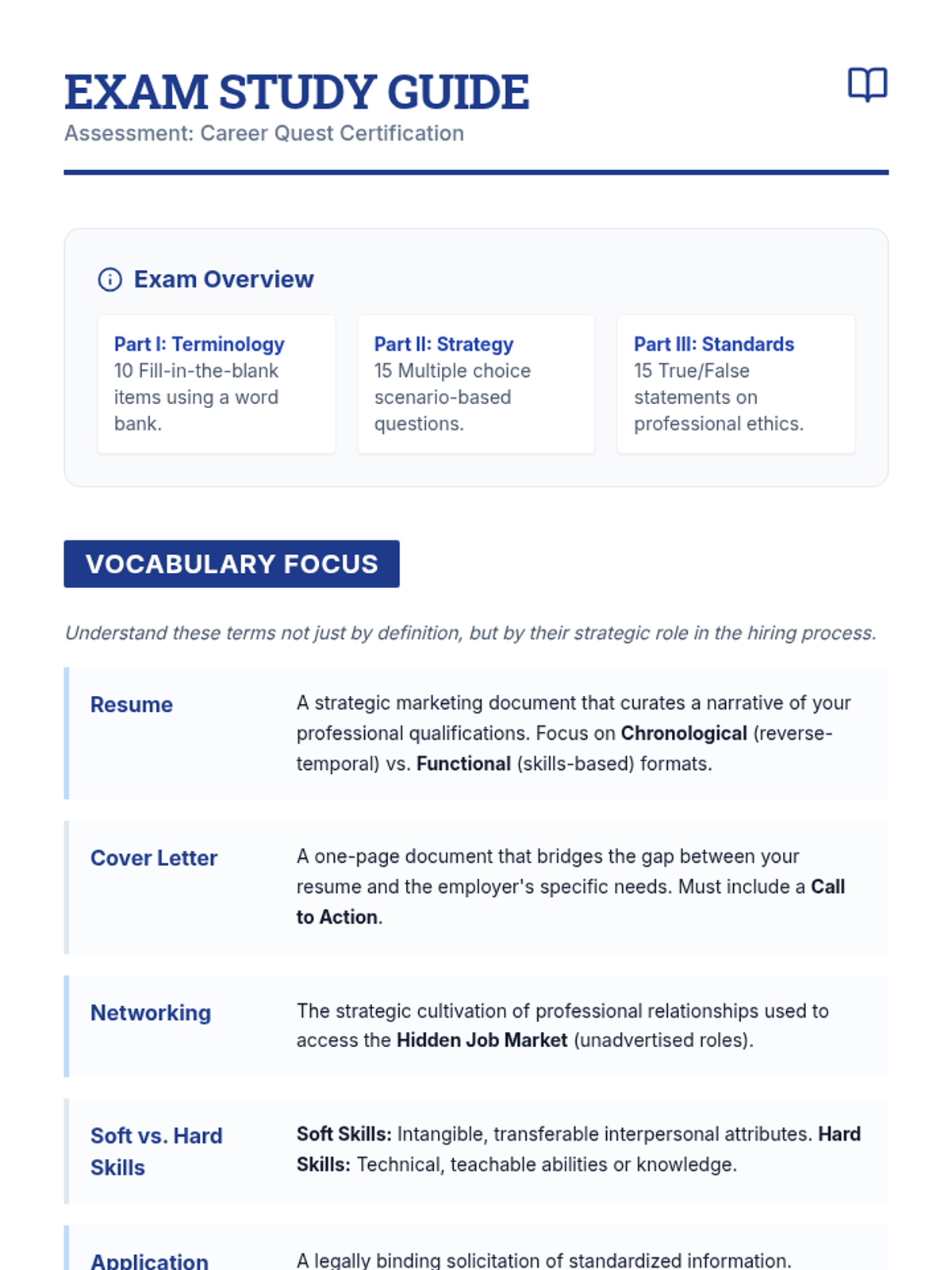
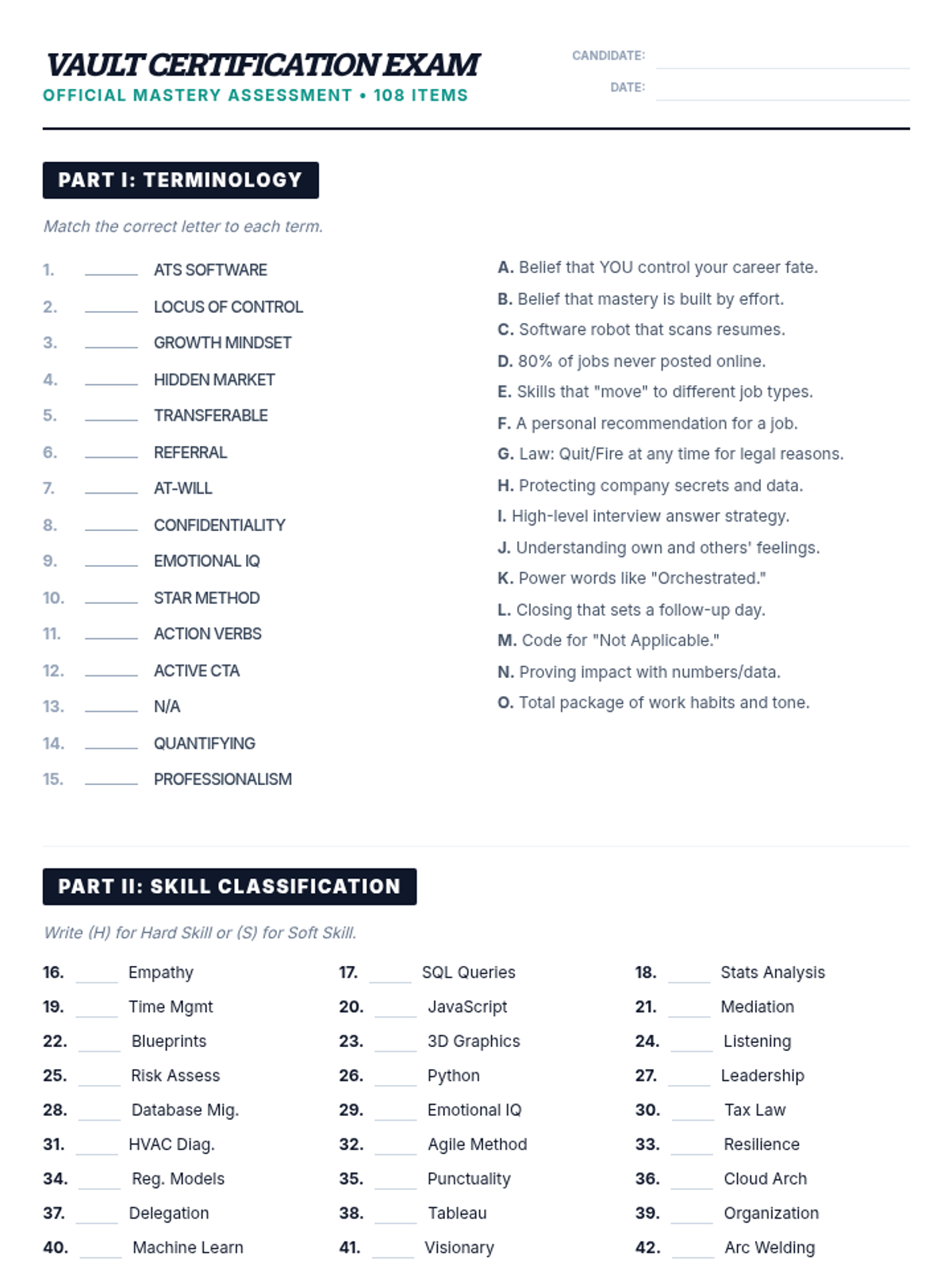
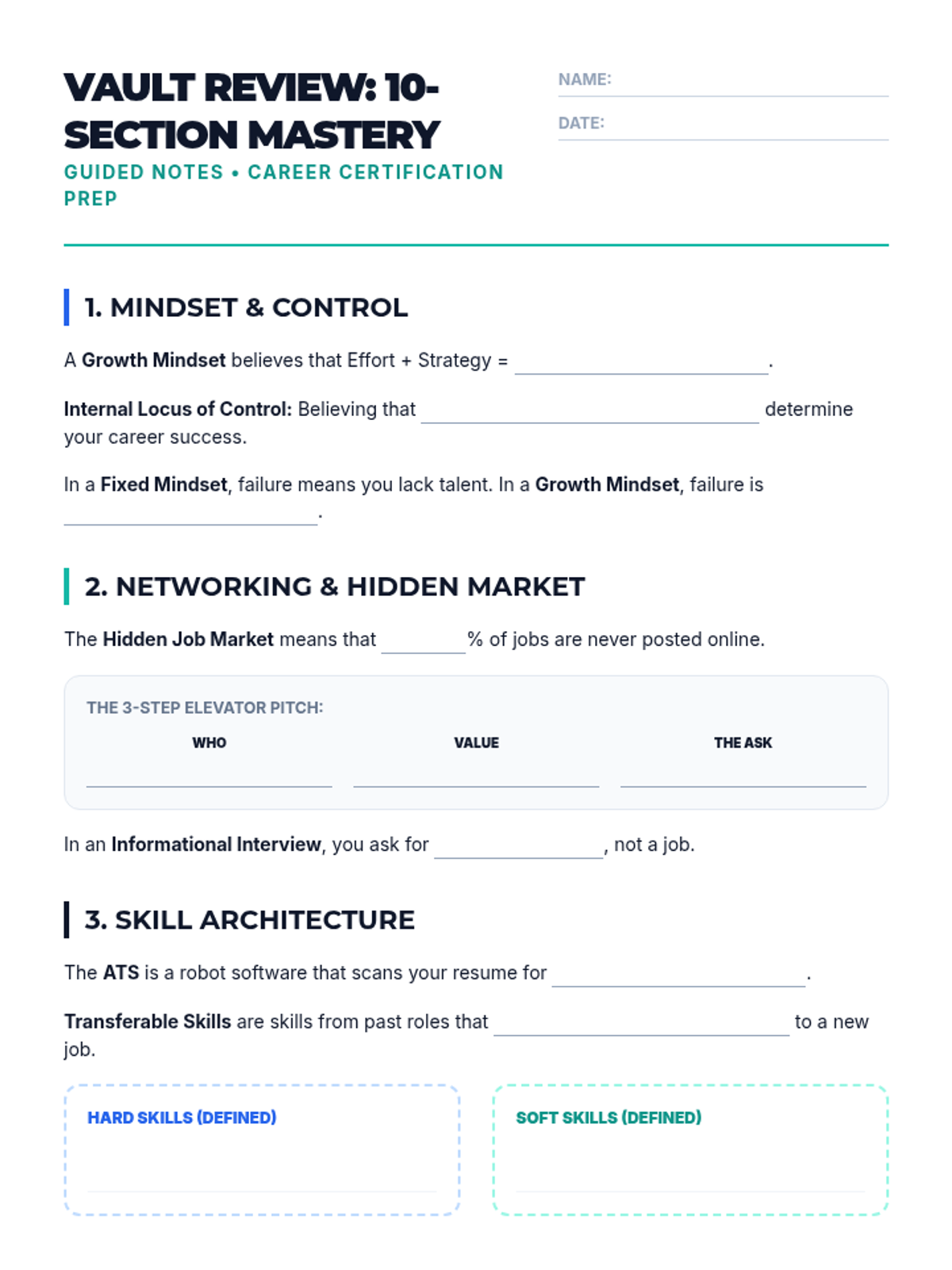
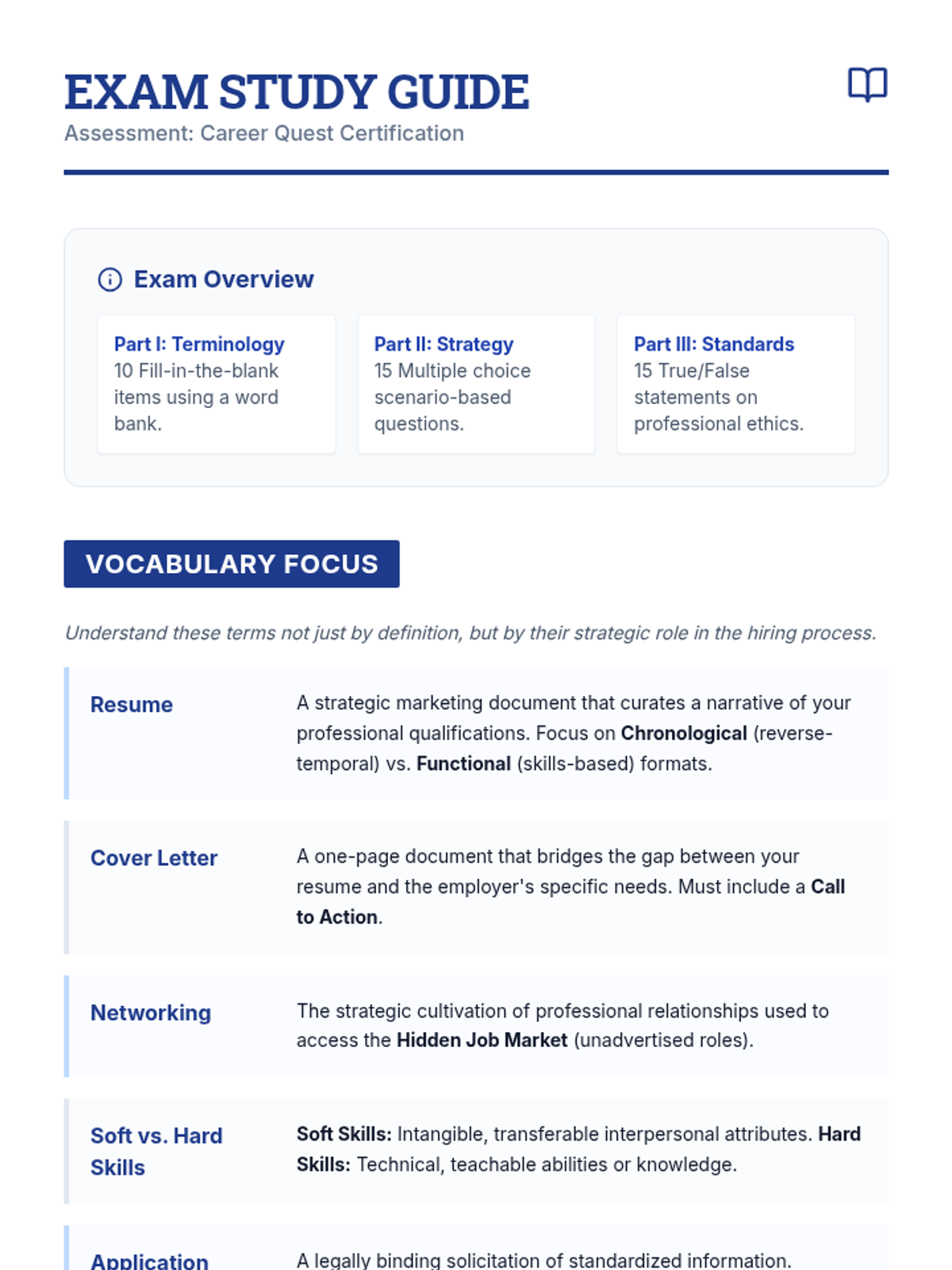
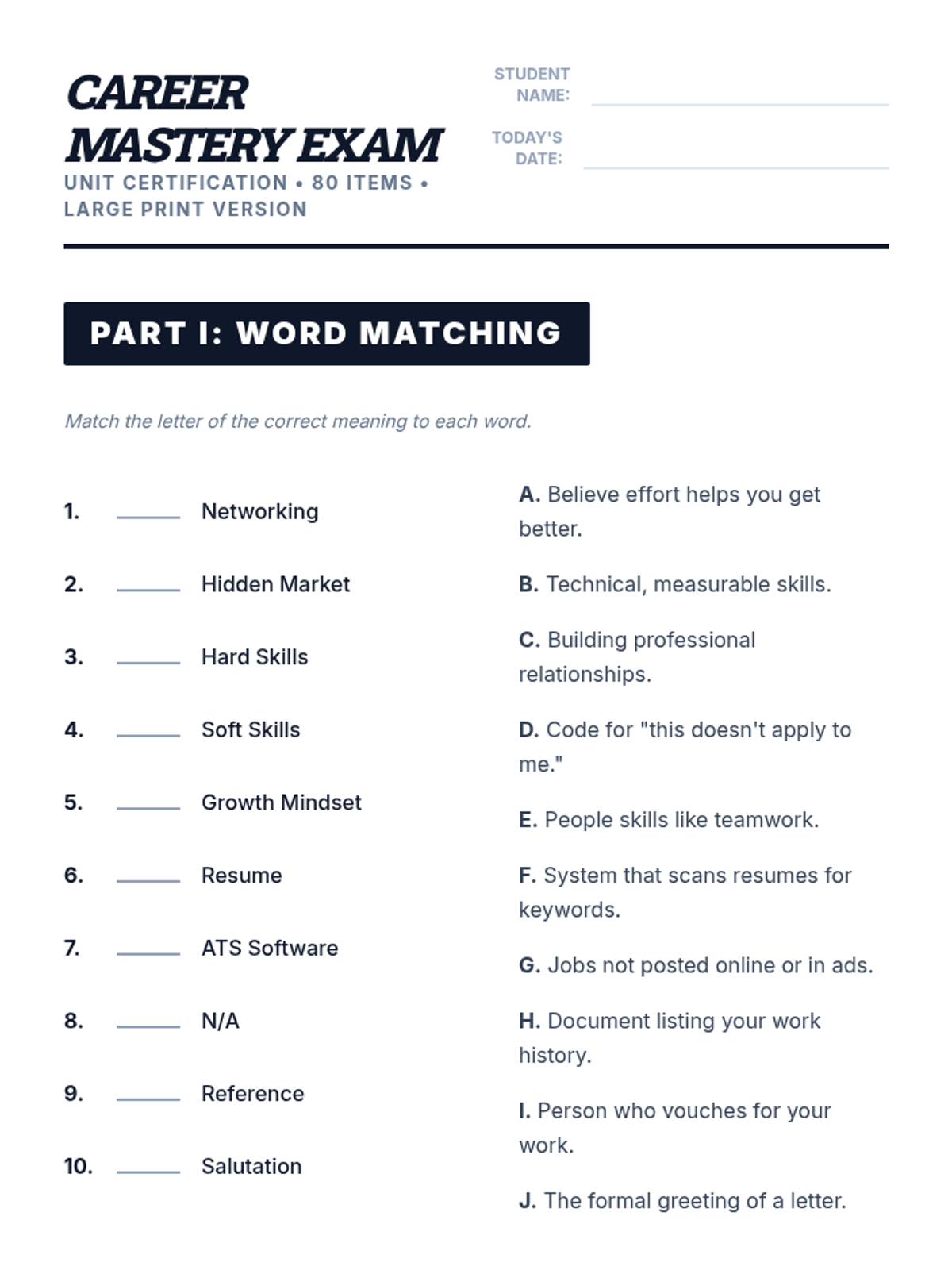
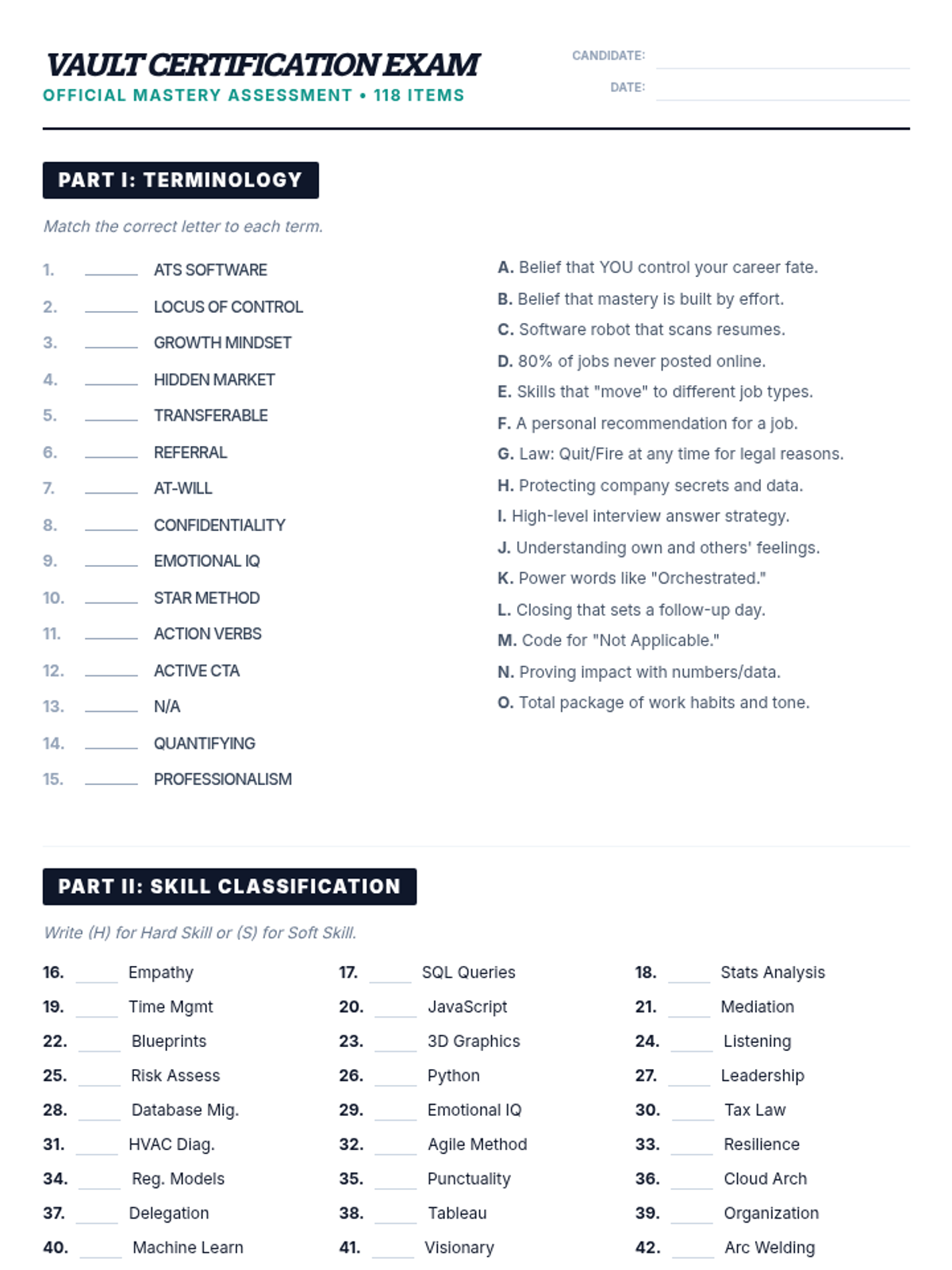
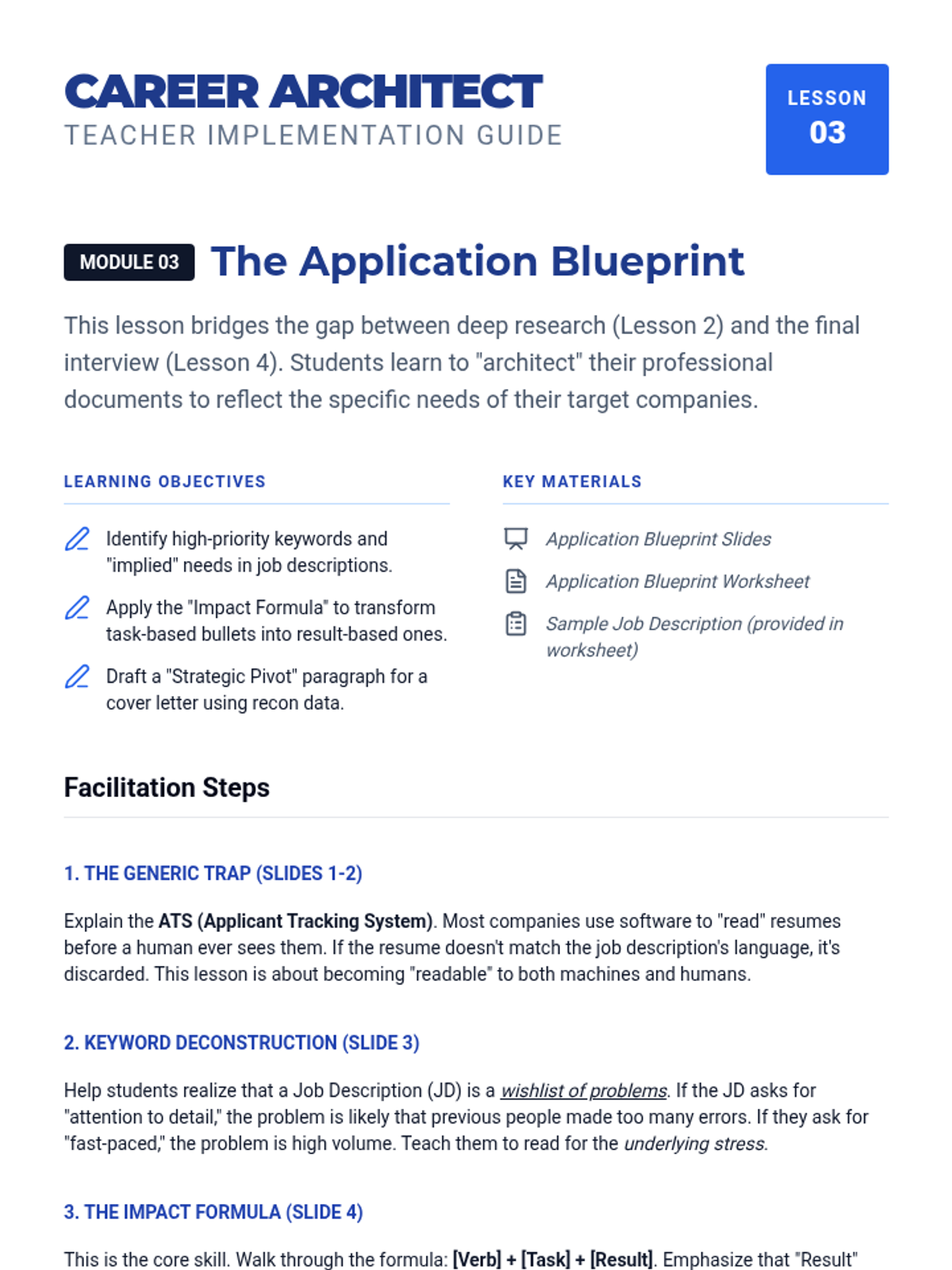
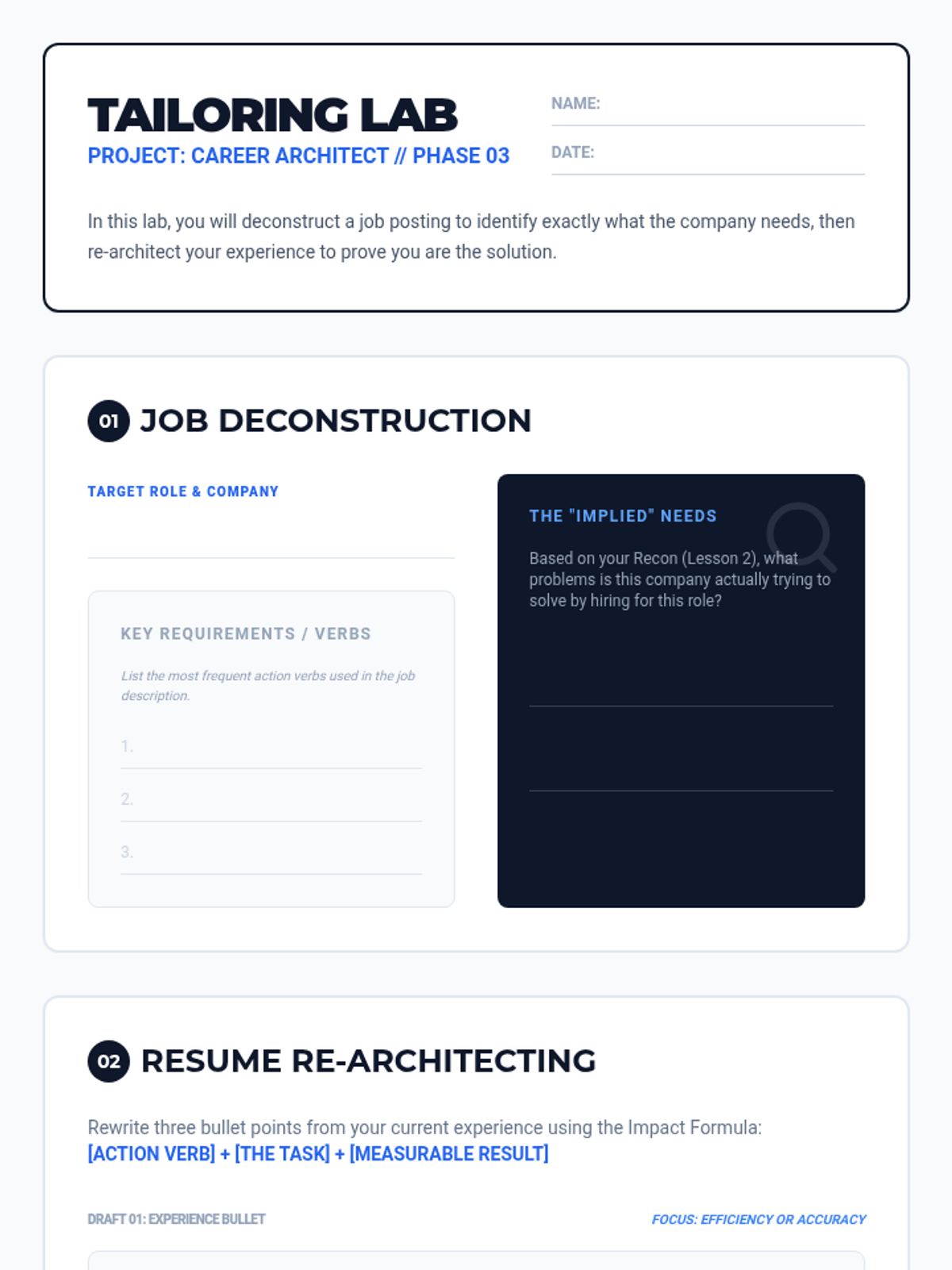
Resume construction, cover letter drafting, and networking techniques for modern job markets. Equips learners to analyze job descriptions and tailor applications using achievement-based language.
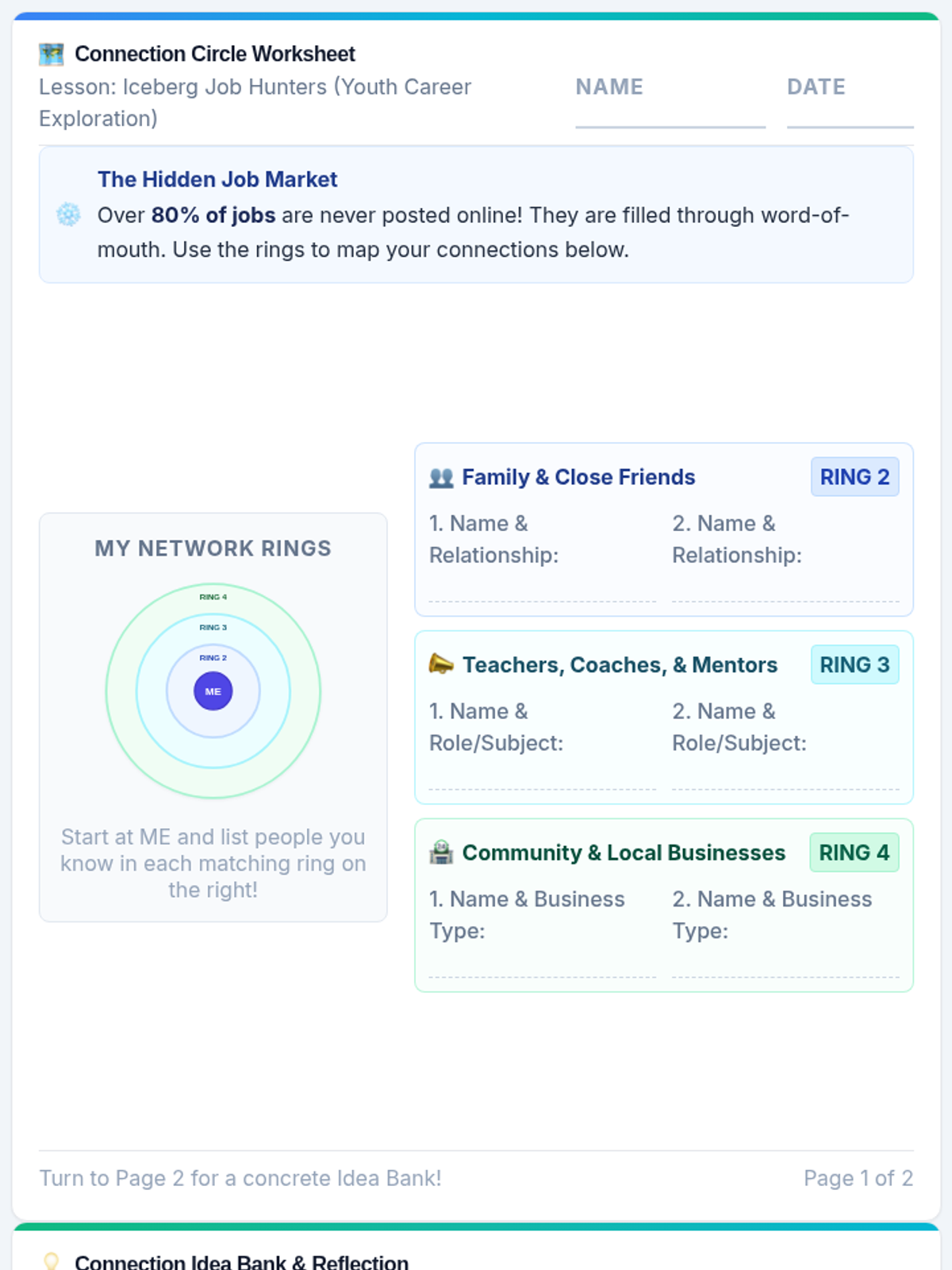
A highly visual career exploration lesson that introduces the Job Market Iceberg (Open vs. Hidden Job Market), guides students to map their network with concentric circles, and spotlights youth self-employment programs in Ontario. Includes visual symbols and concrete supports.
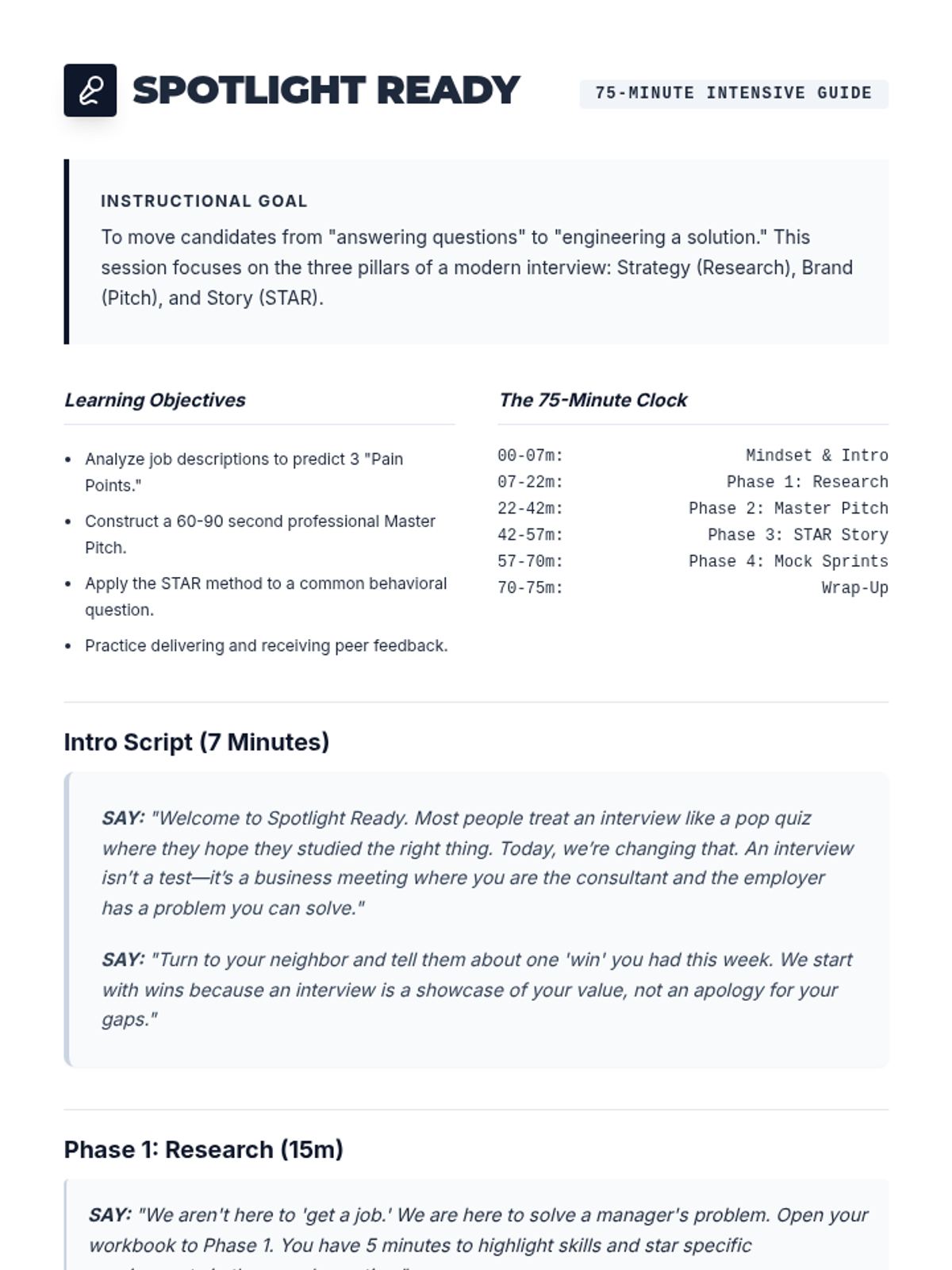
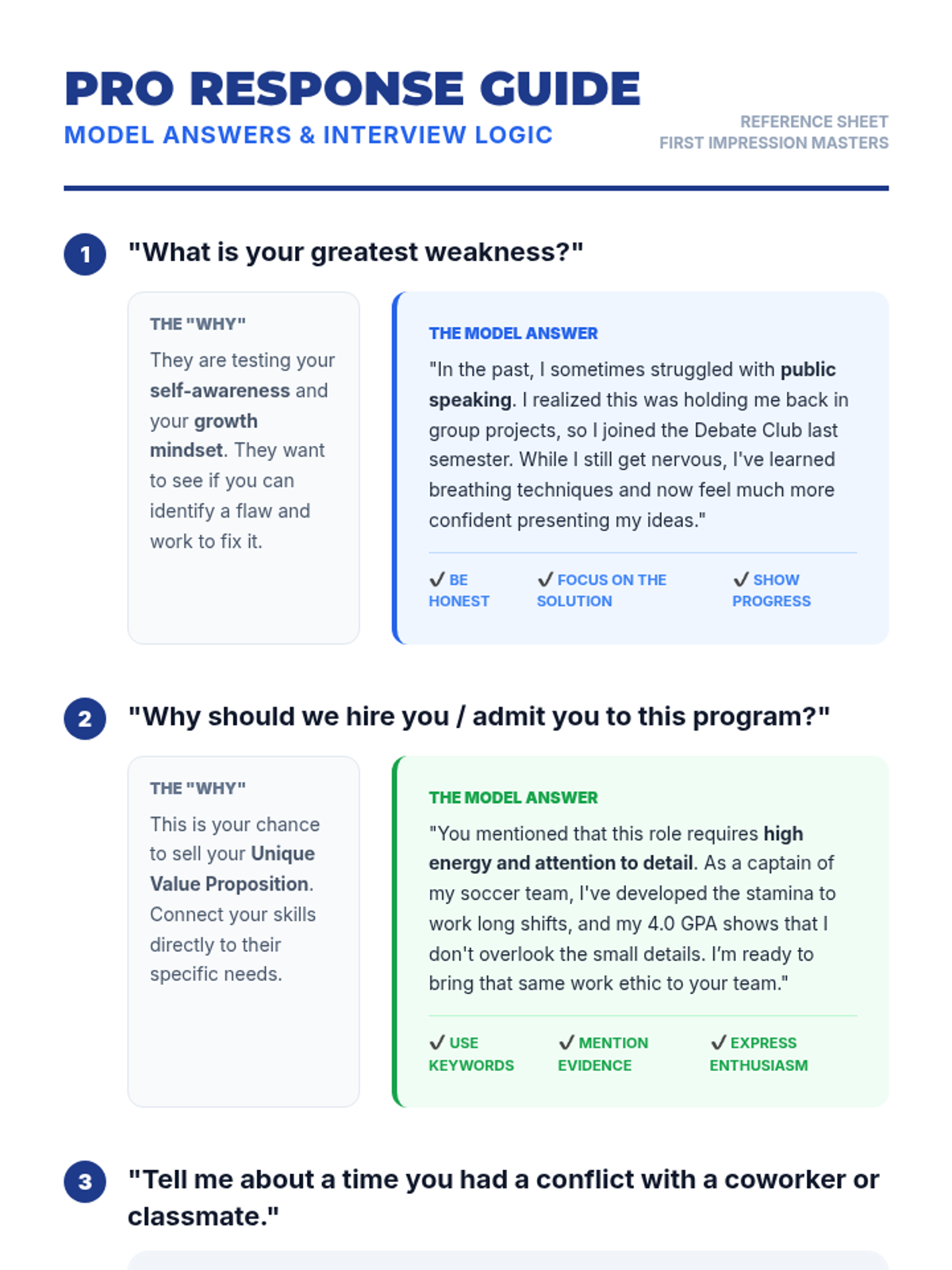
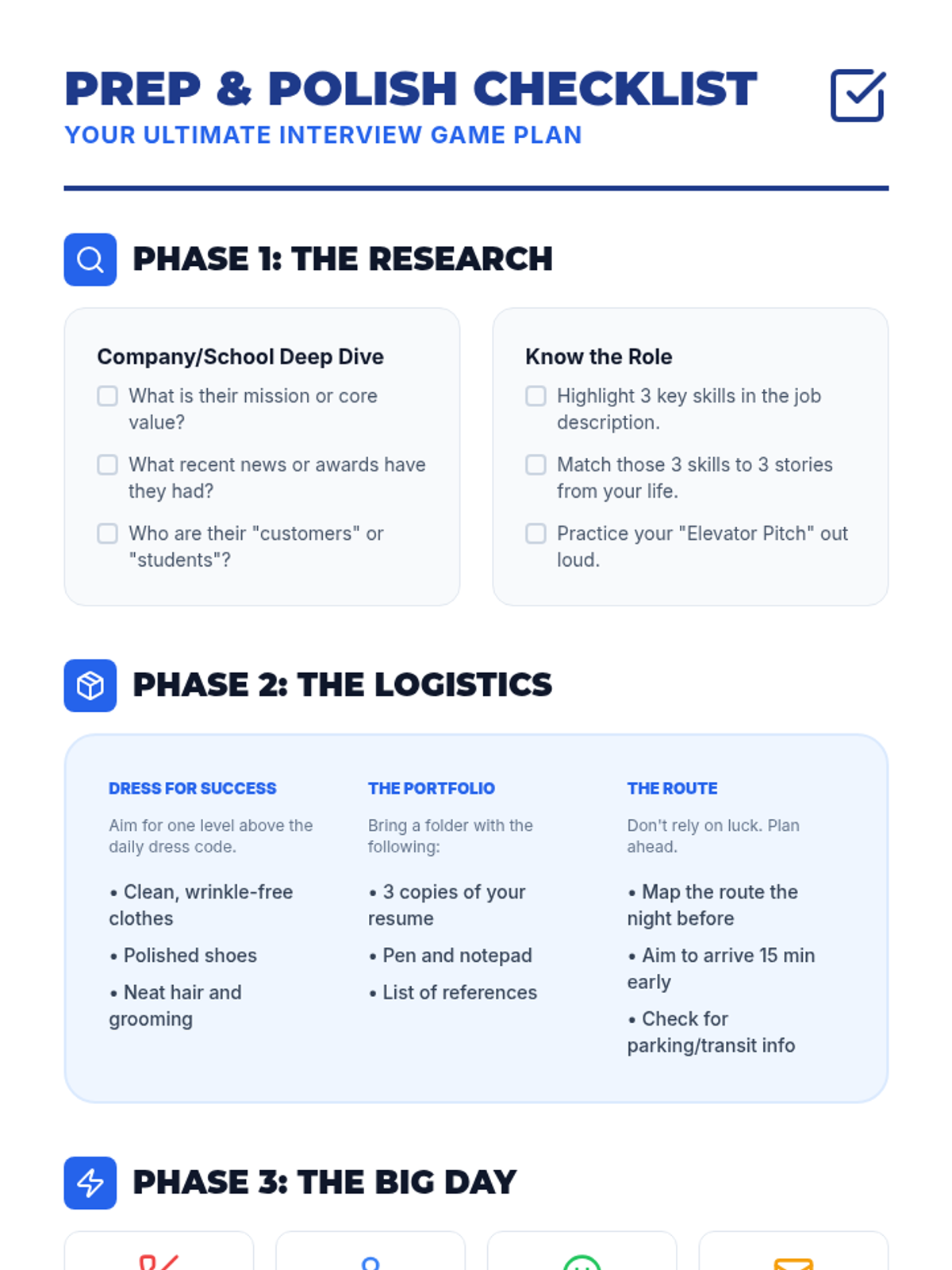
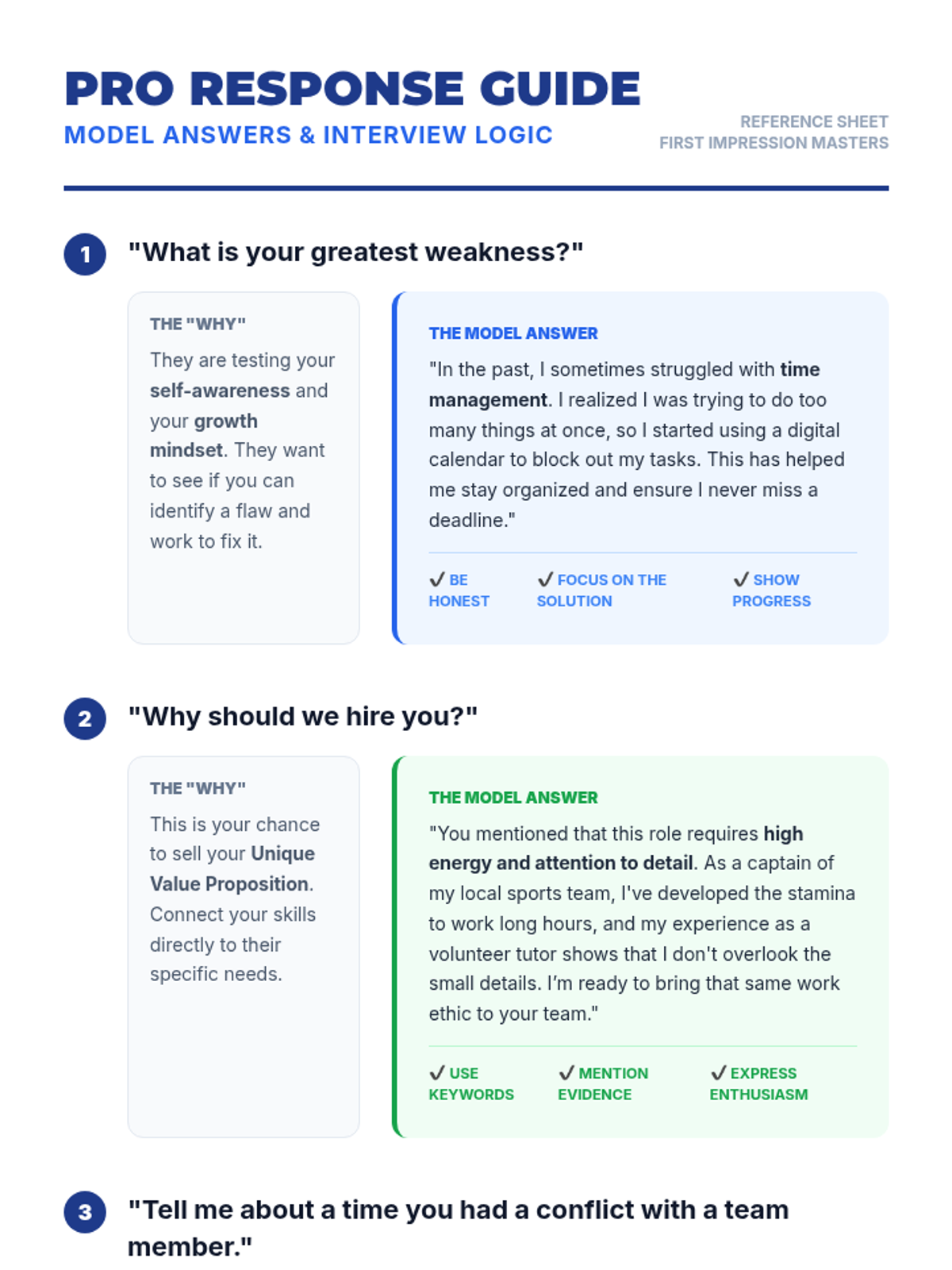
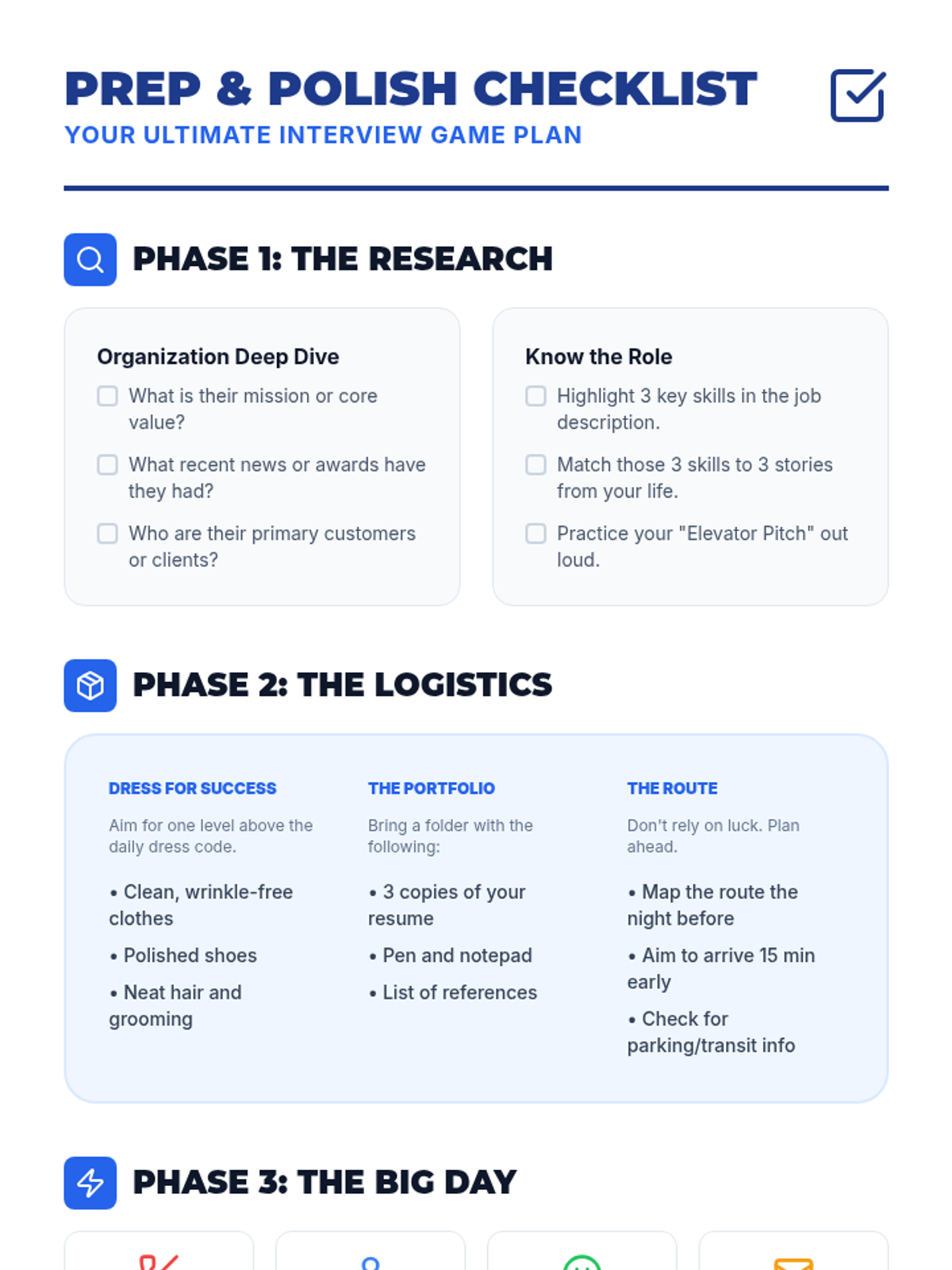
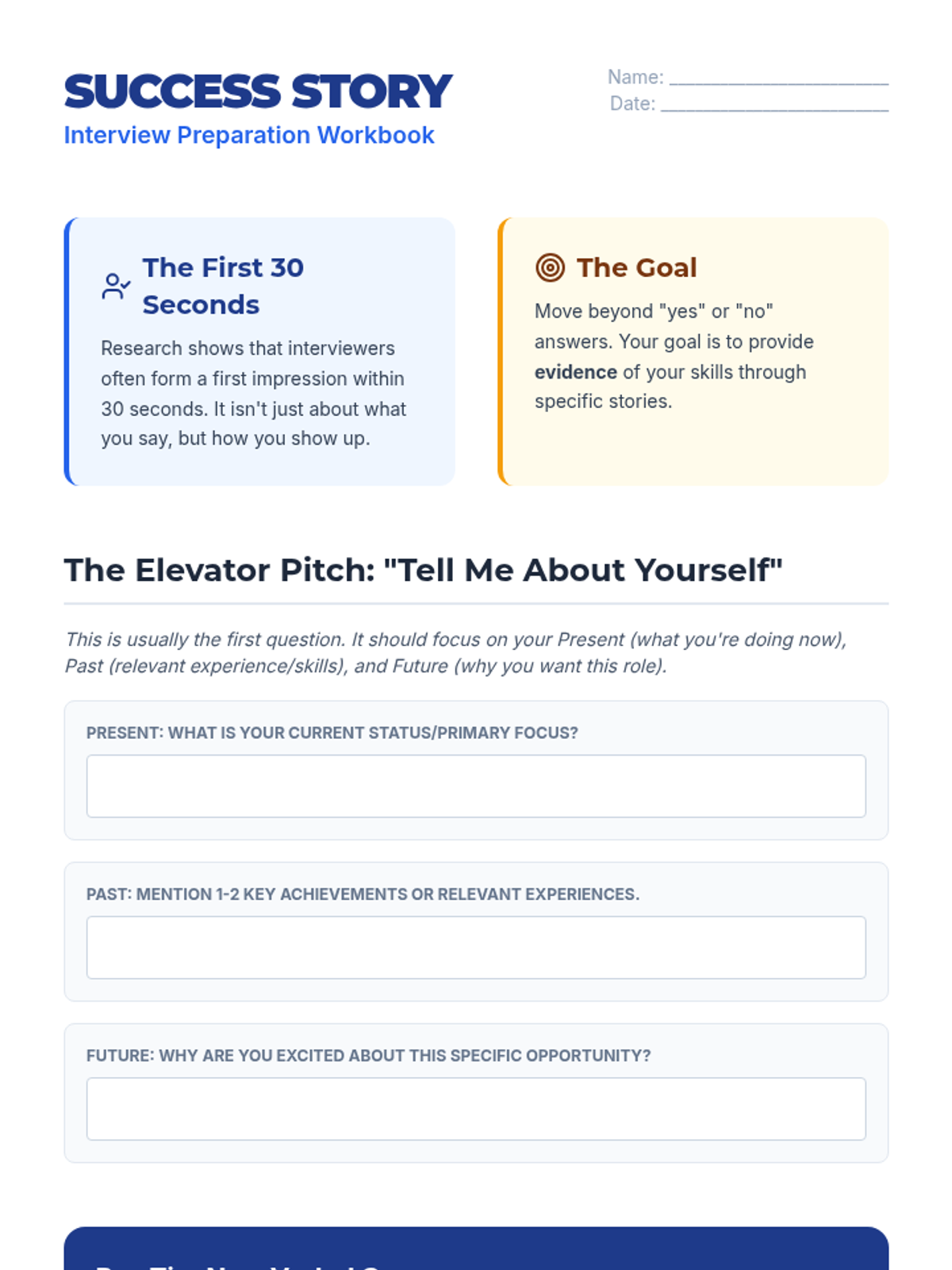
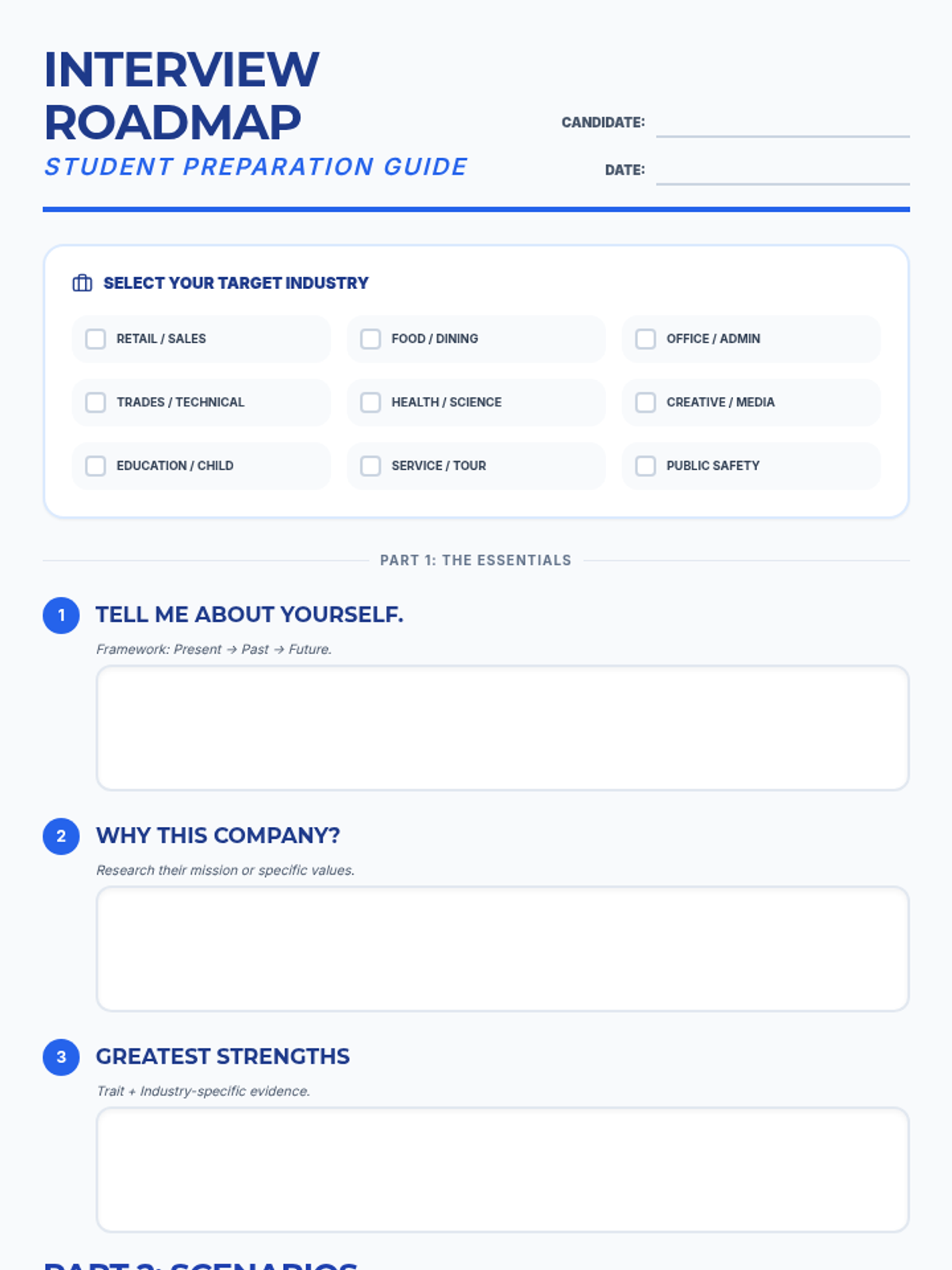
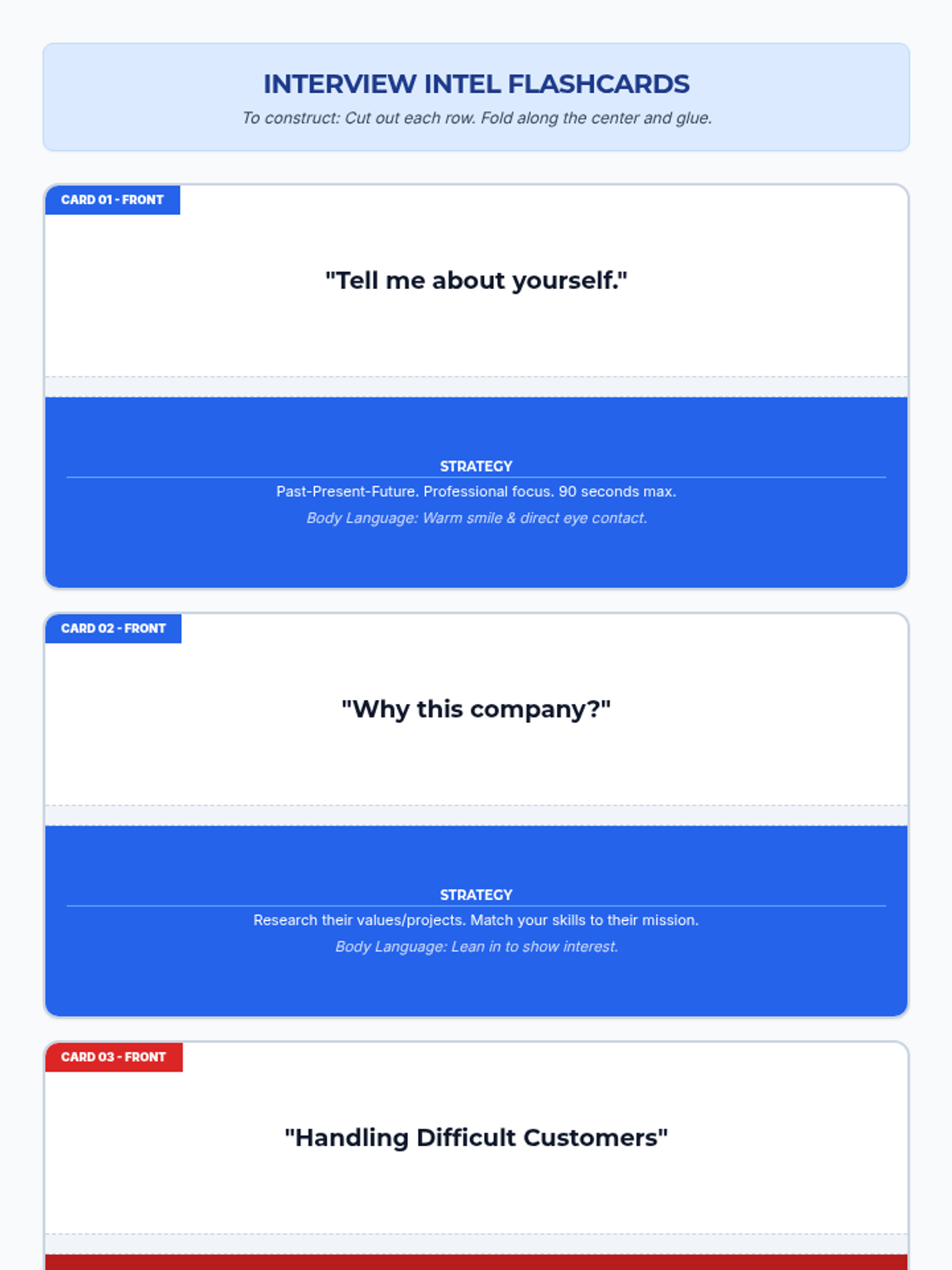
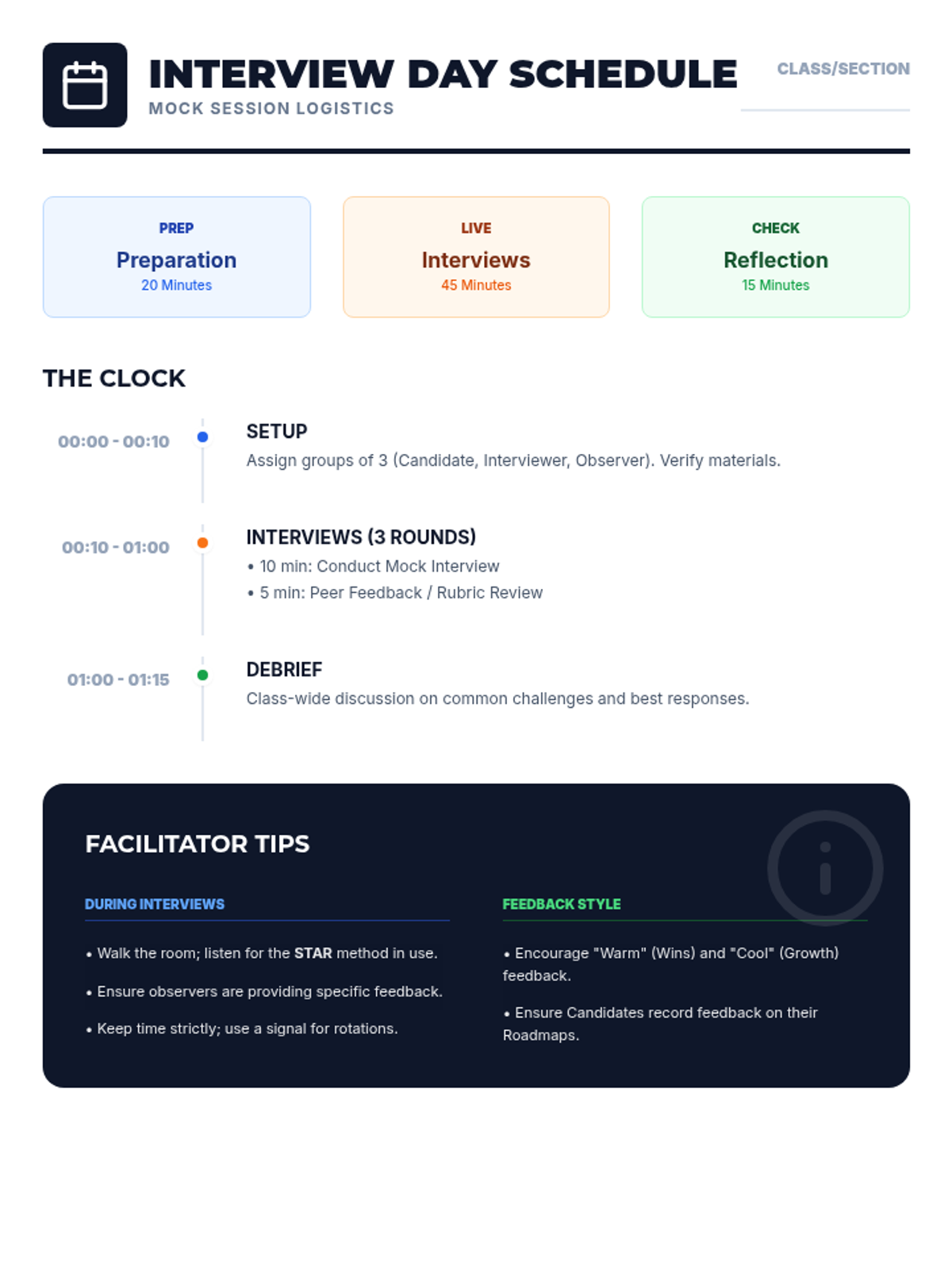
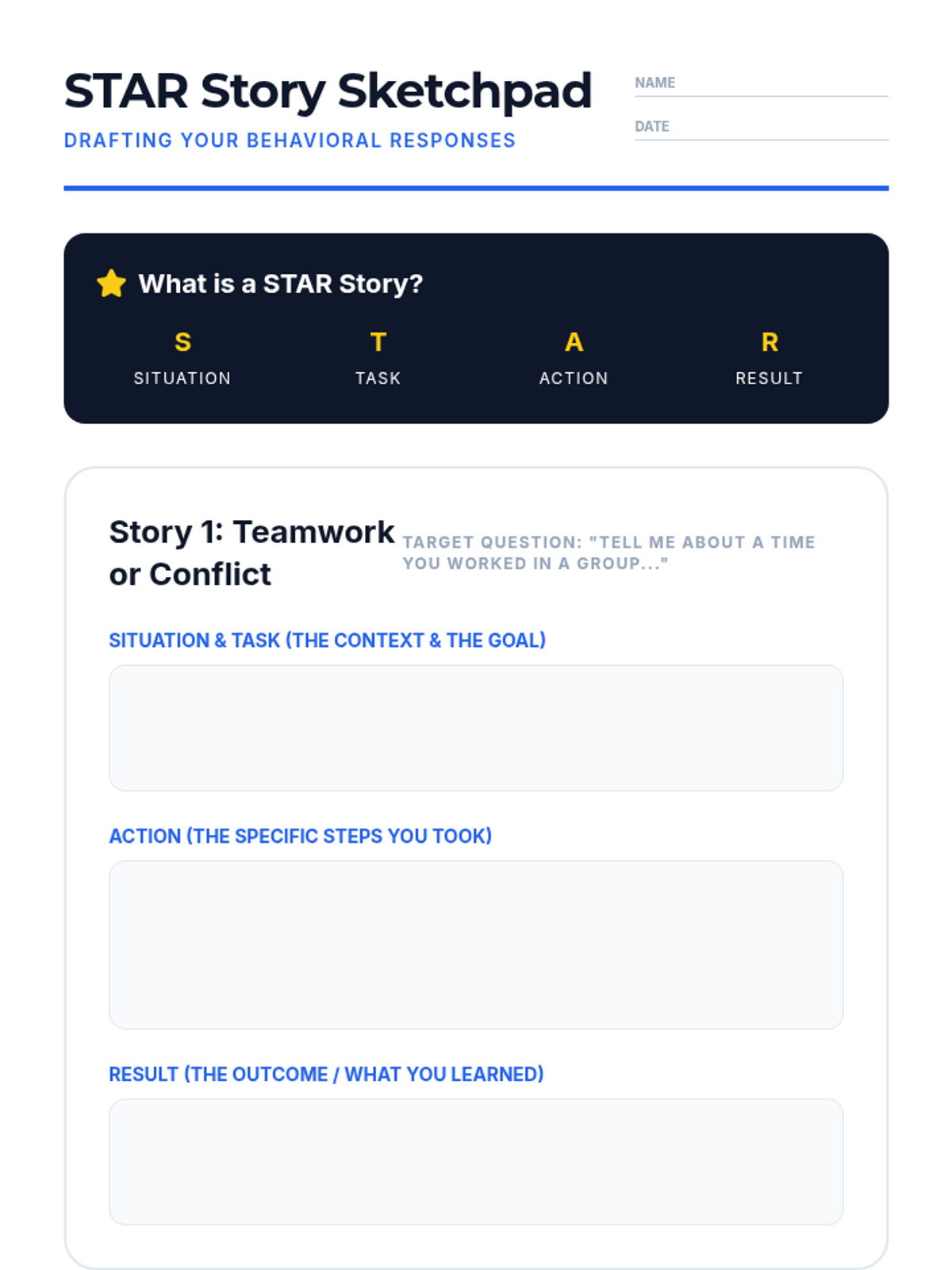
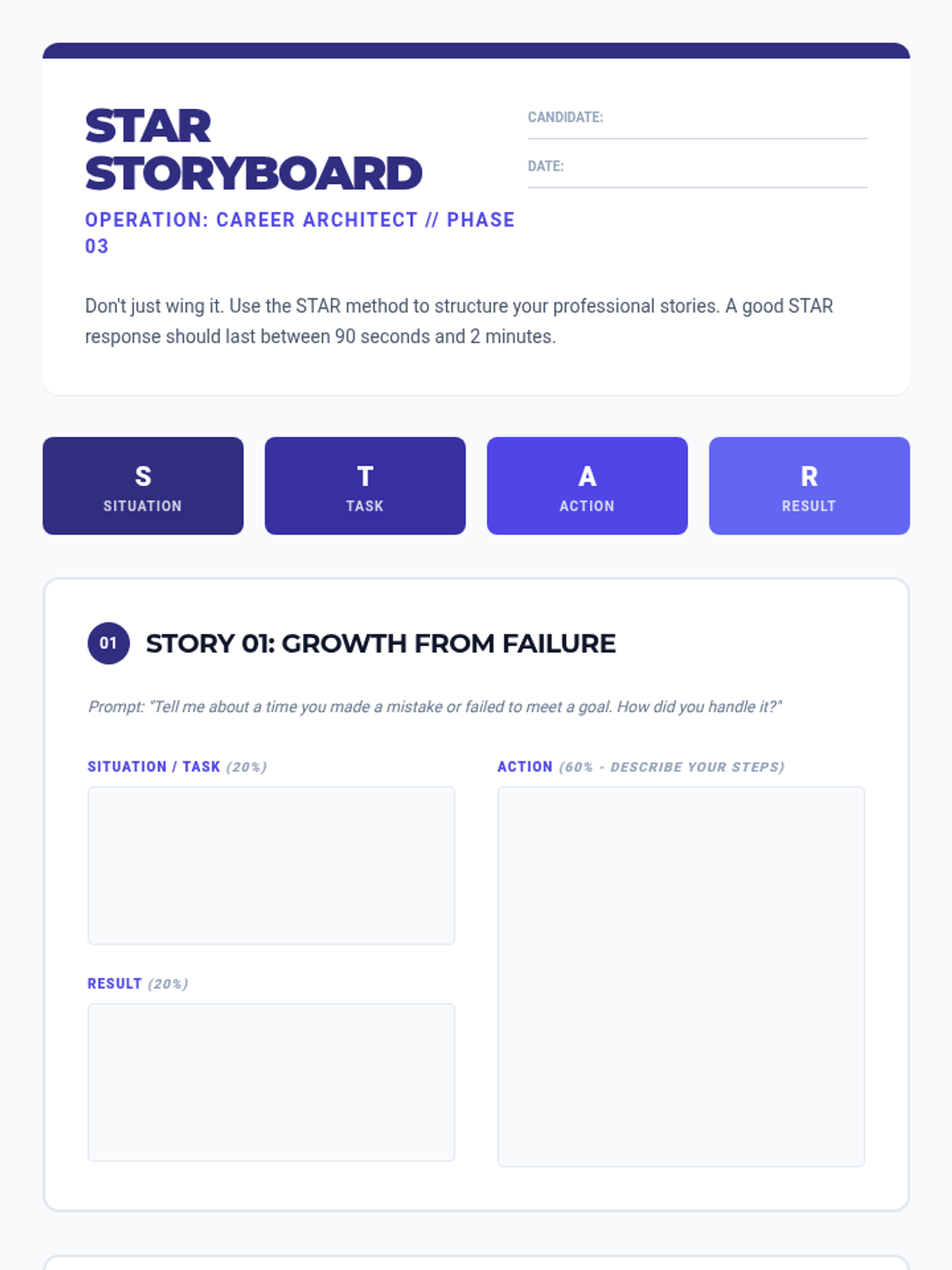
A high-impact 75-minute workshop designed to prepare candidates for interviews through research, personal branding (The Master Pitch), and behavioral storytelling (STAR Method). This condensed version focuses on active, hands-on practice and immediate application.
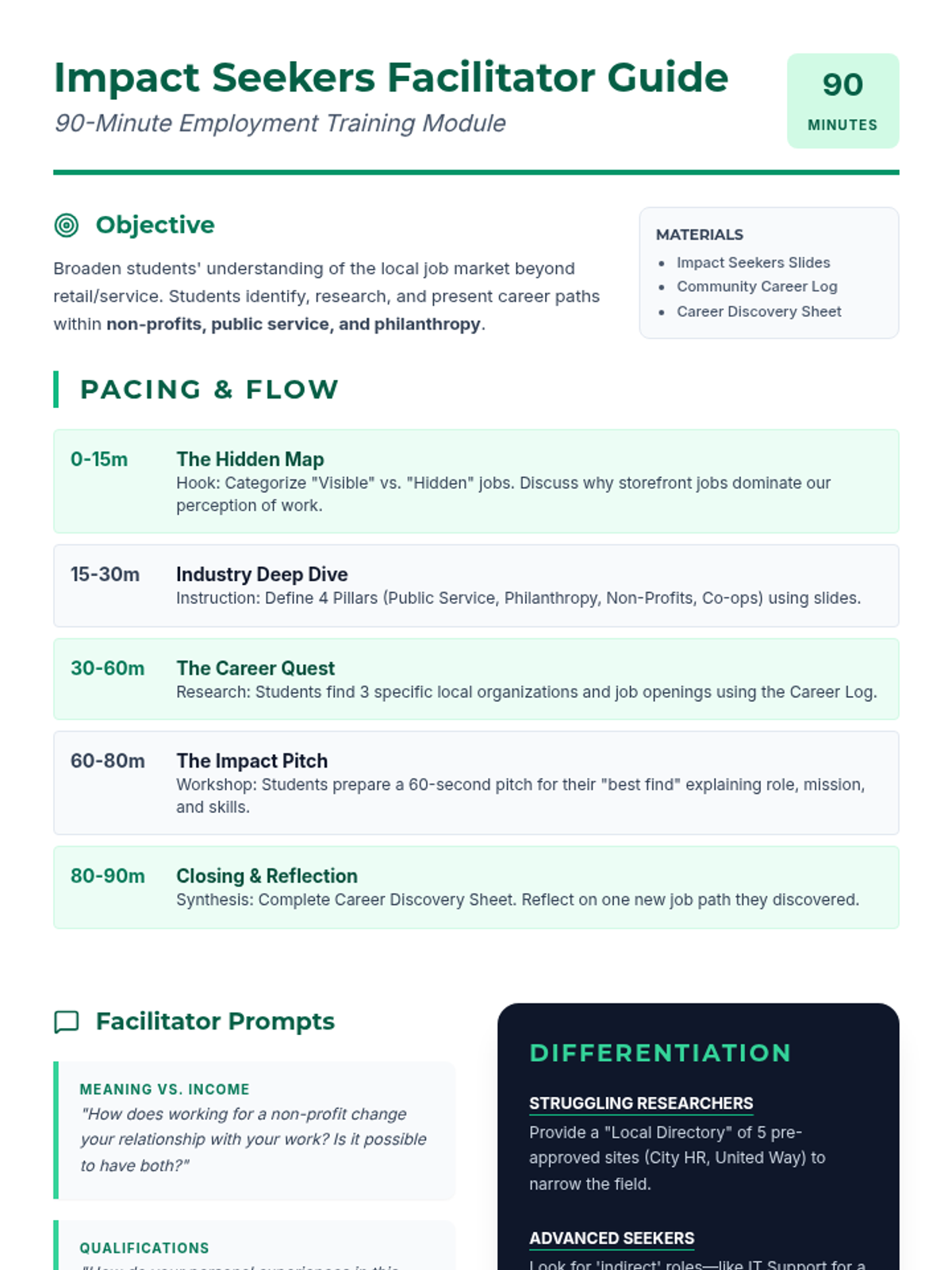
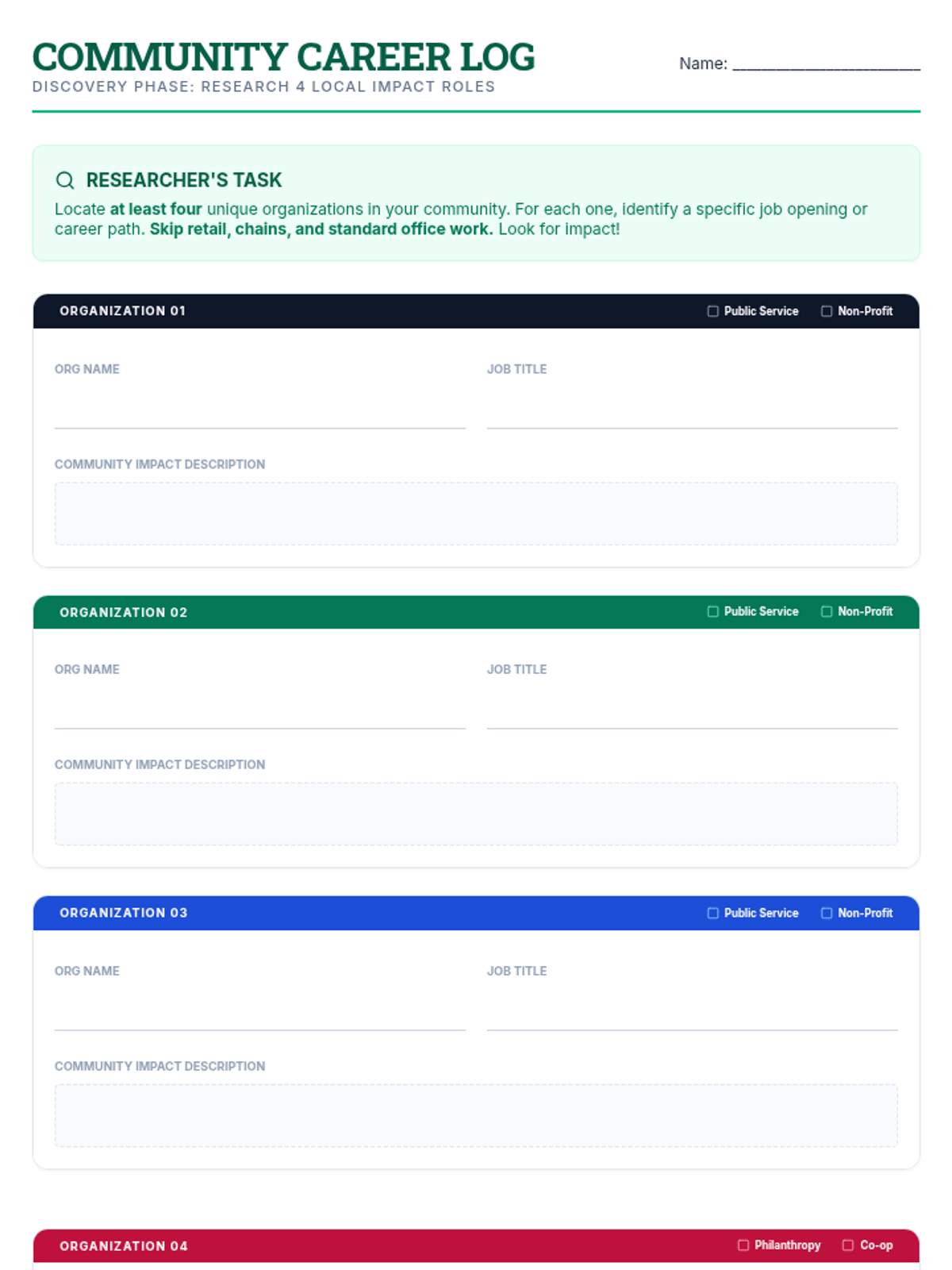
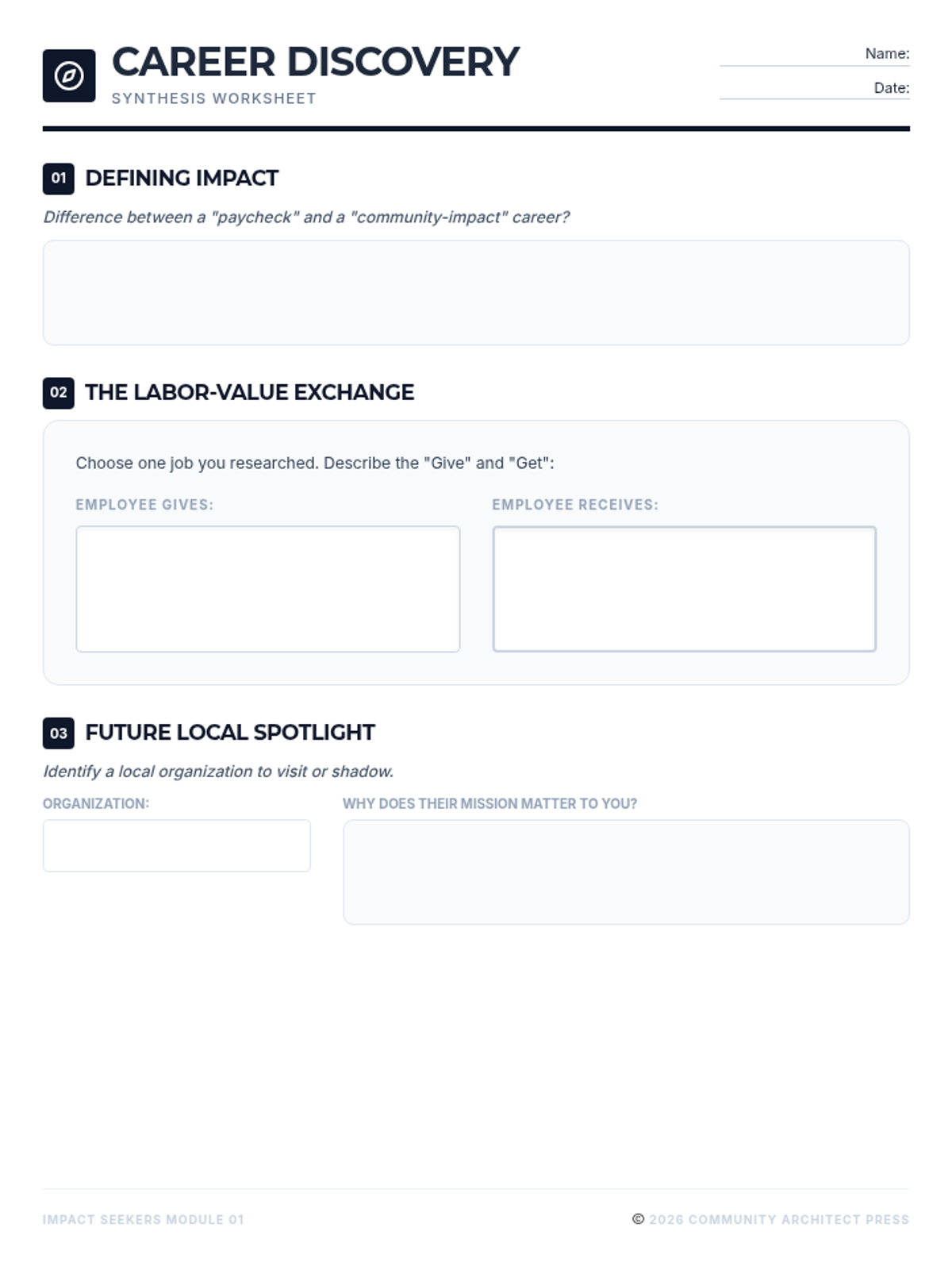
A 90-minute employment training session focused on discovering meaningful community-based careers beyond traditional retail. Students explore non-profits, public service, and philanthropic organizations to understand diverse career paths.
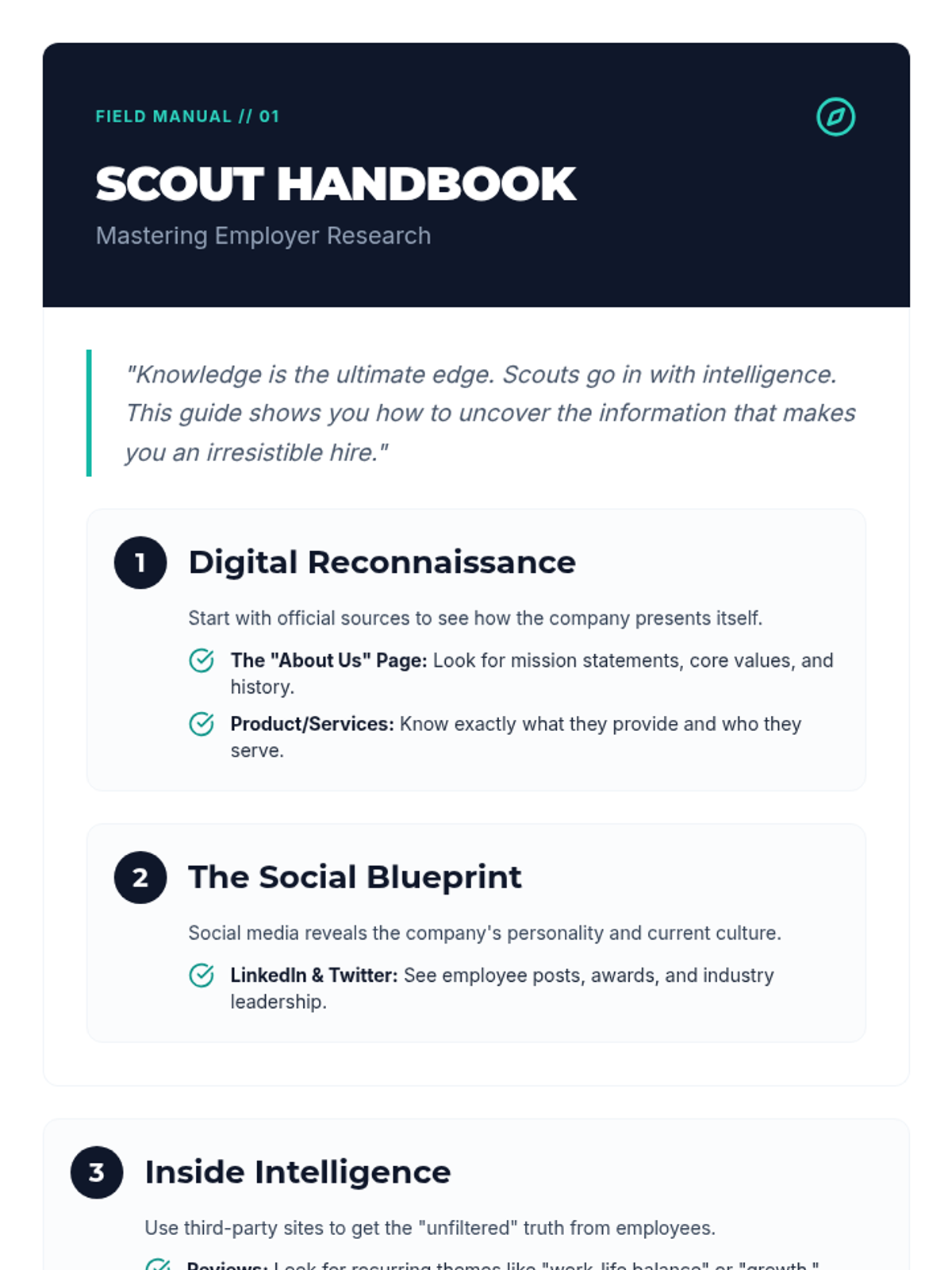
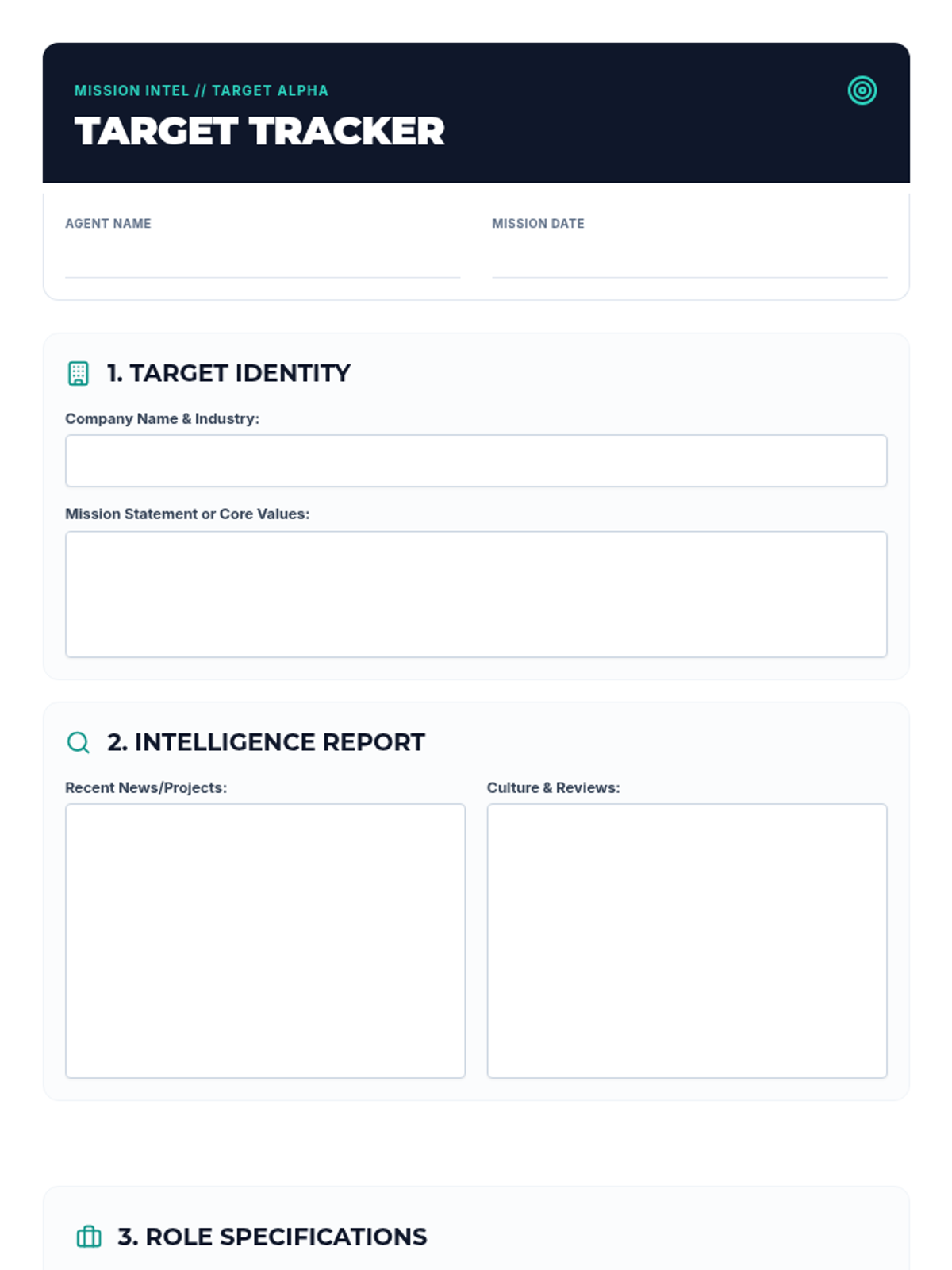
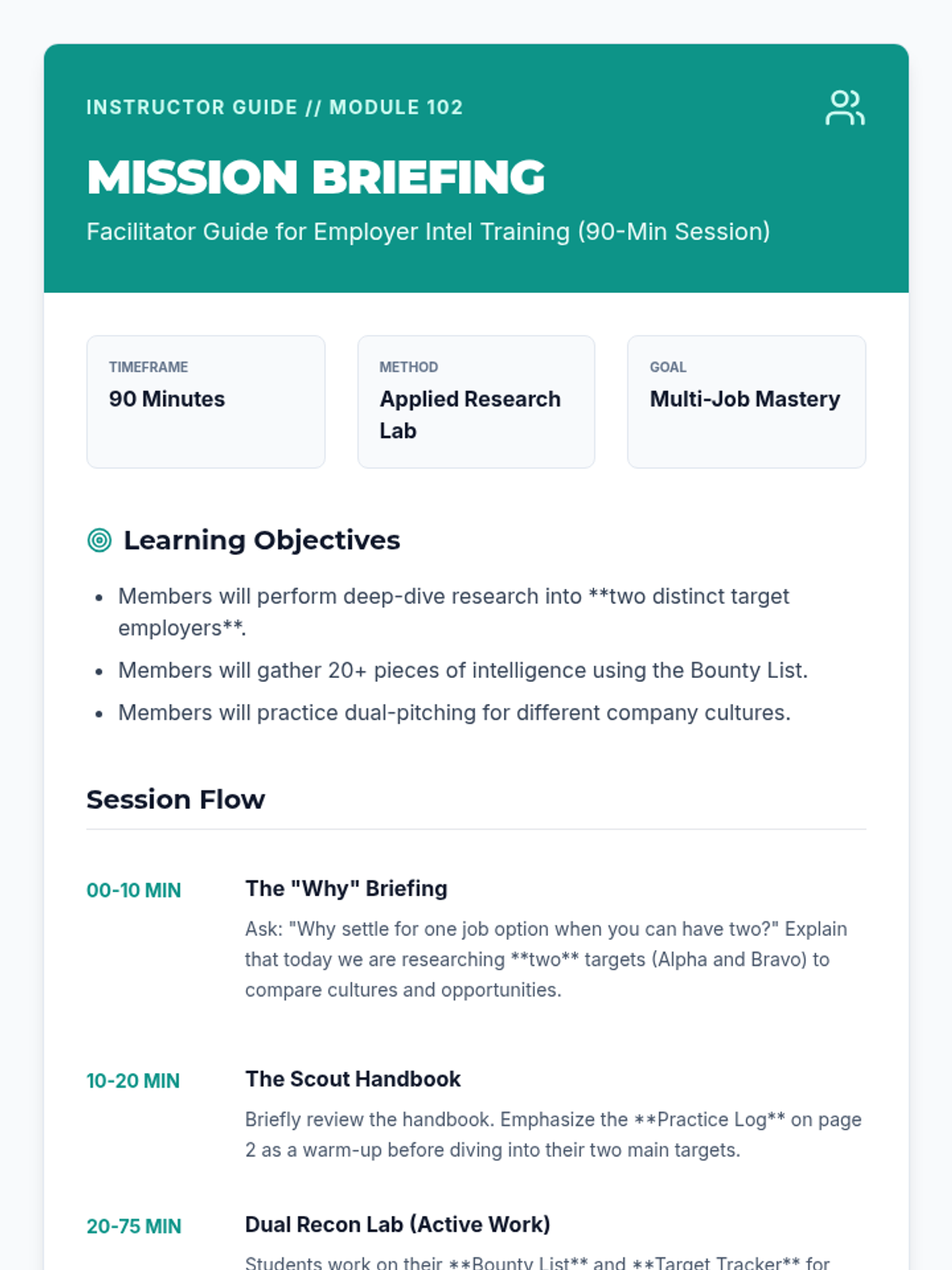
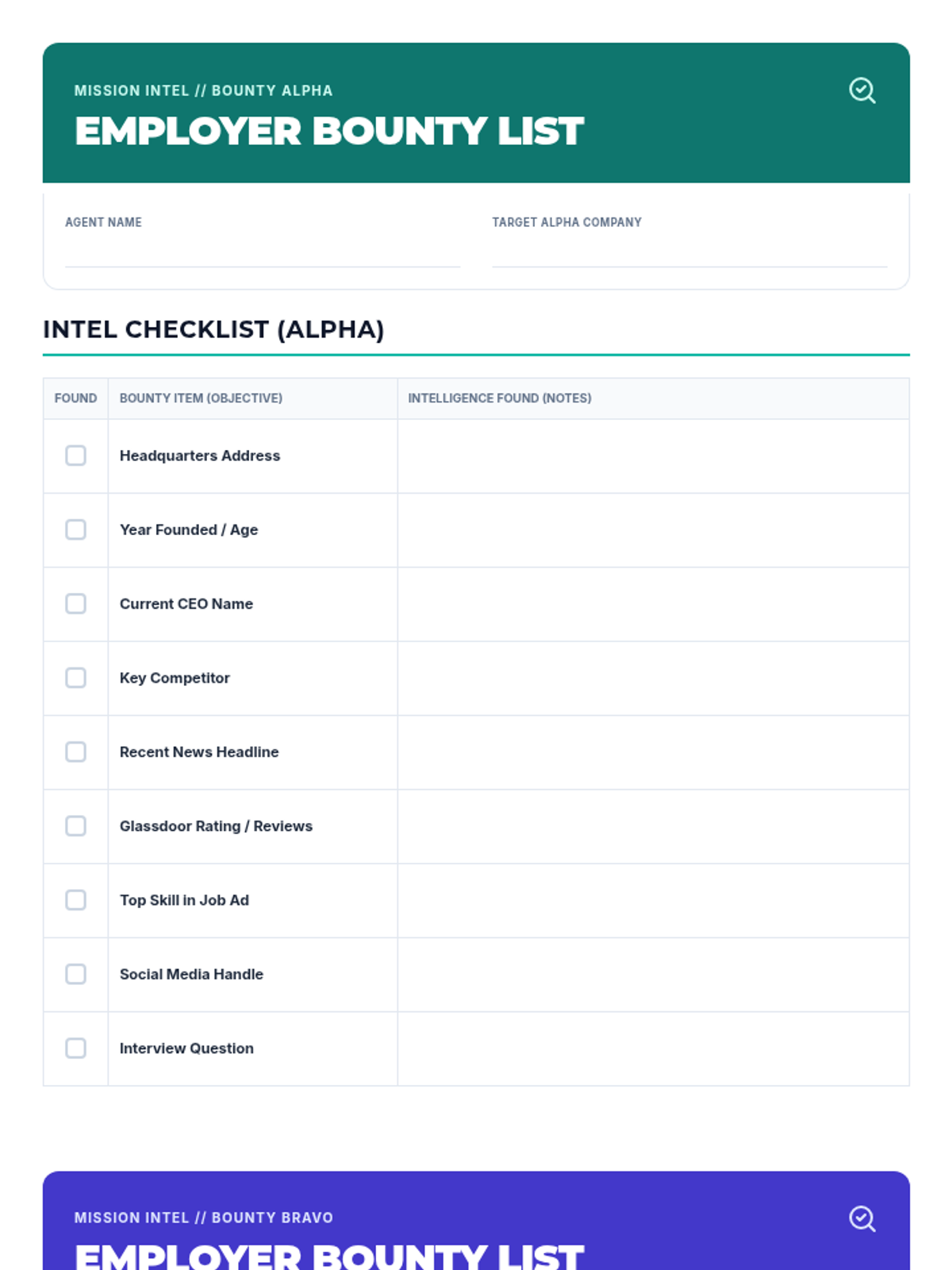
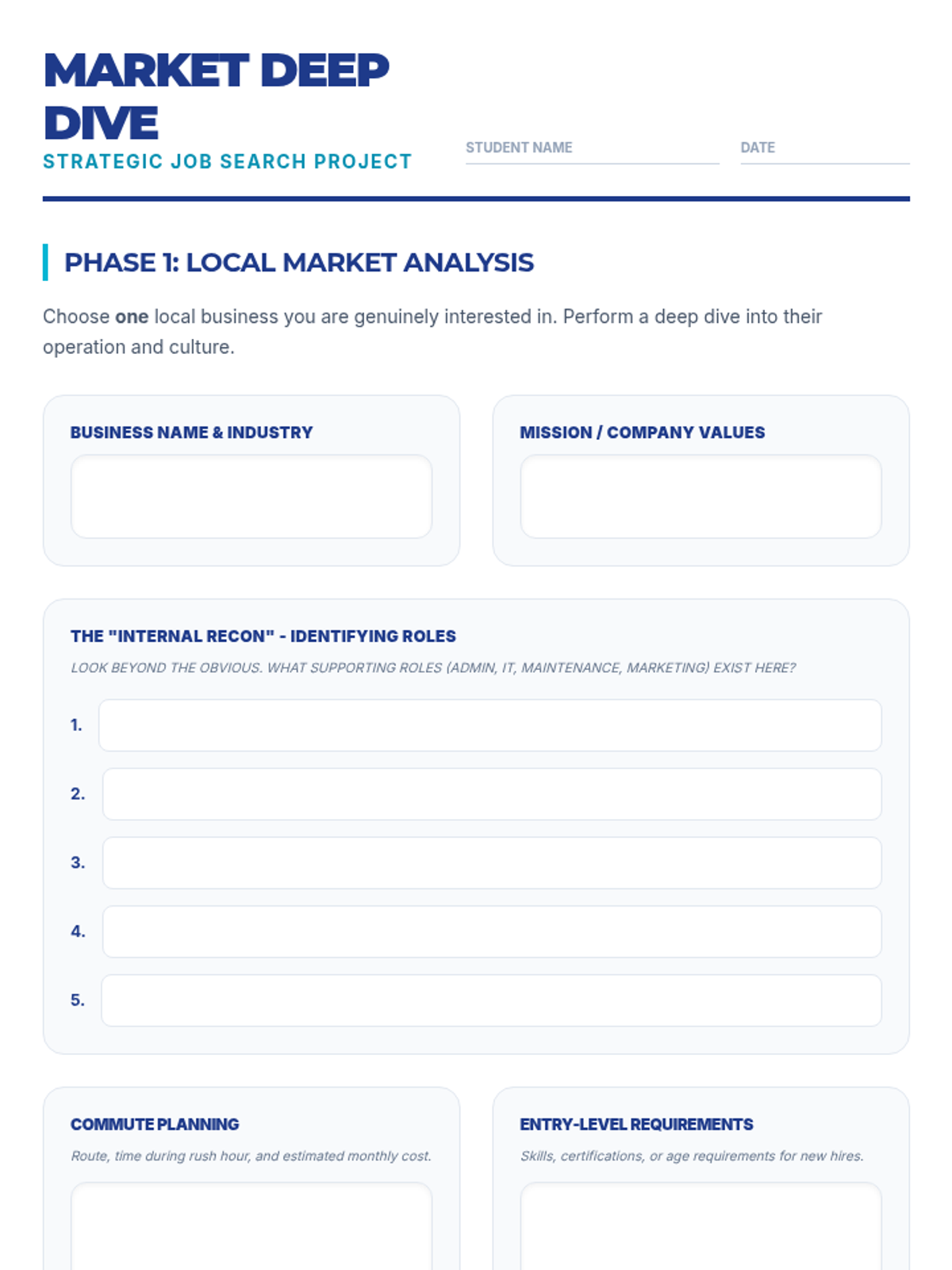
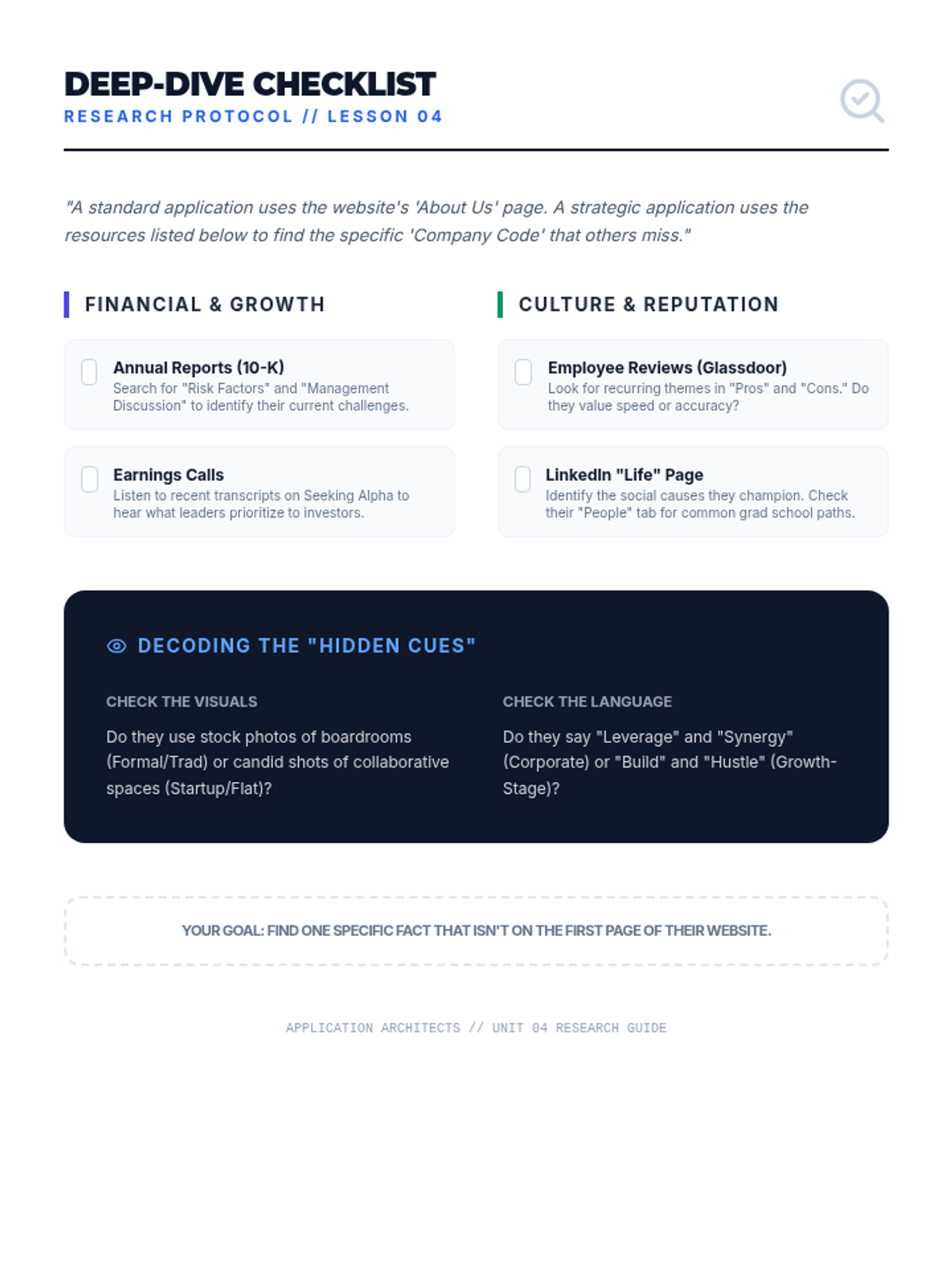
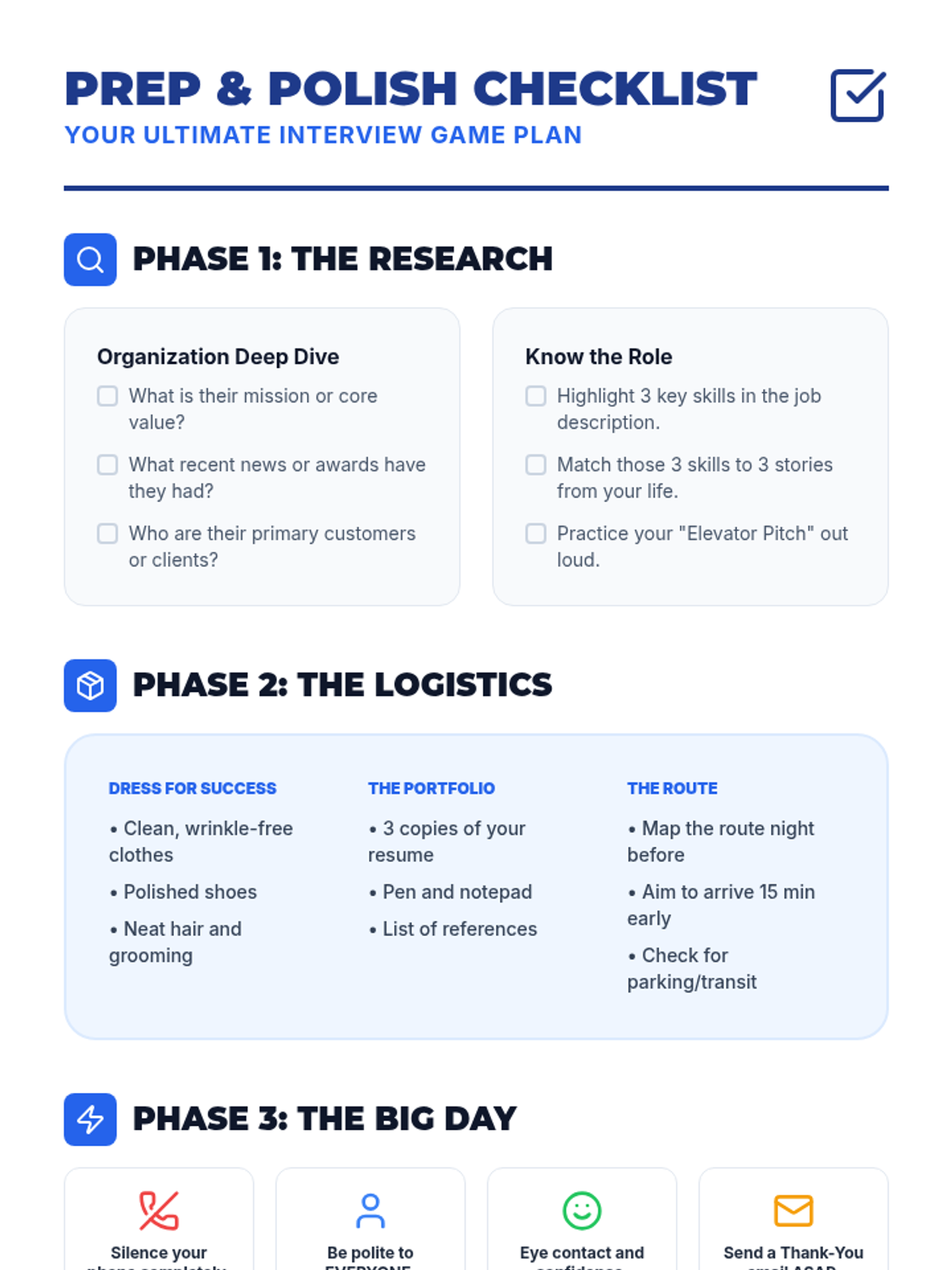
A comprehensive training module focused on teaching job seekers how to perform deep-dive research into potential employers and job listings to prepare for applications and interviews.
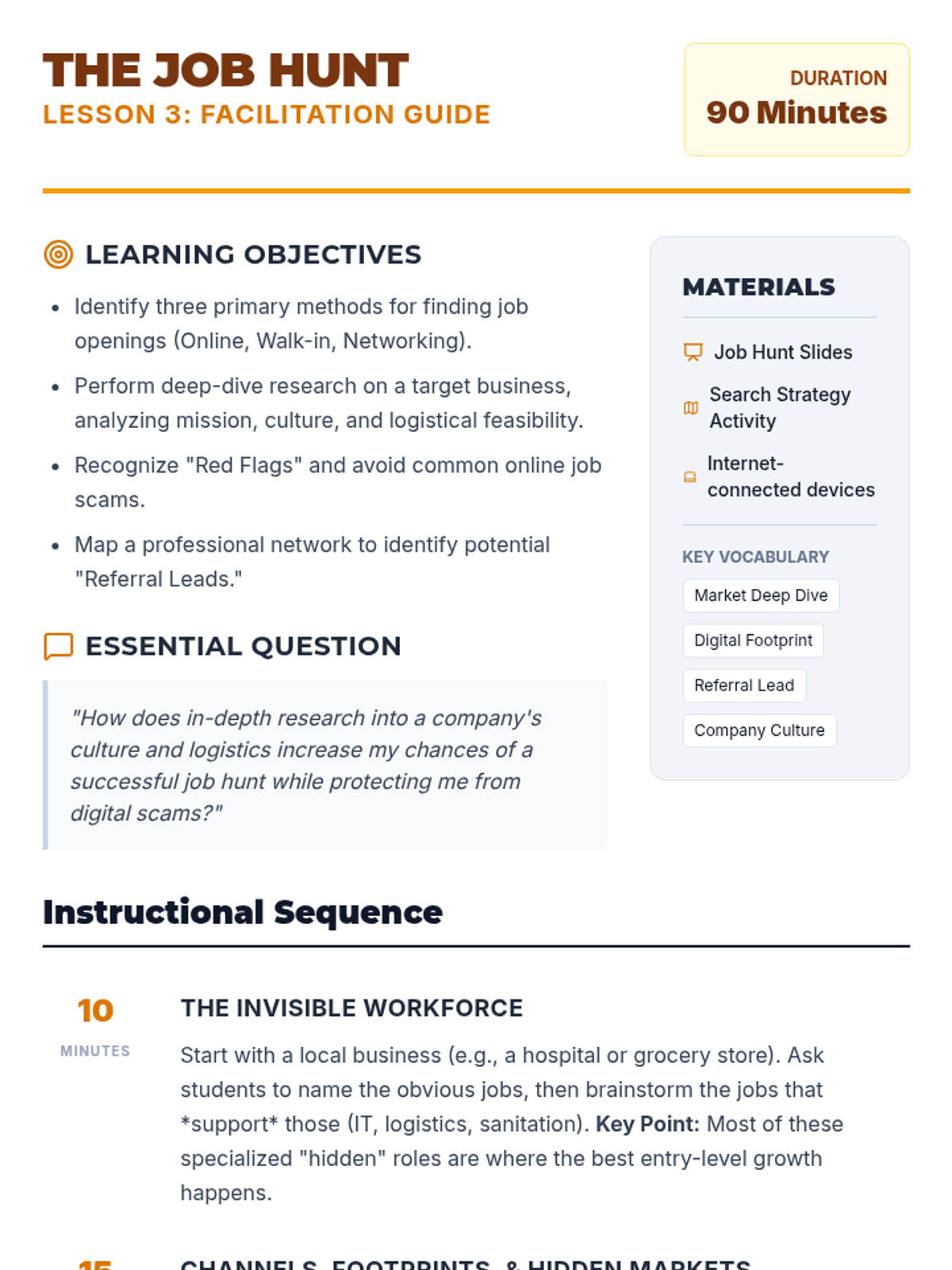
An expanded 90-minute lesson on job search strategies, covering digital platforms, the hidden job market, identifying job scams, and practicing professional elevator pitches.
A lesson focused on teaching participants how to analyze and 'decode' job descriptions to identify key requirements and hidden expectations.
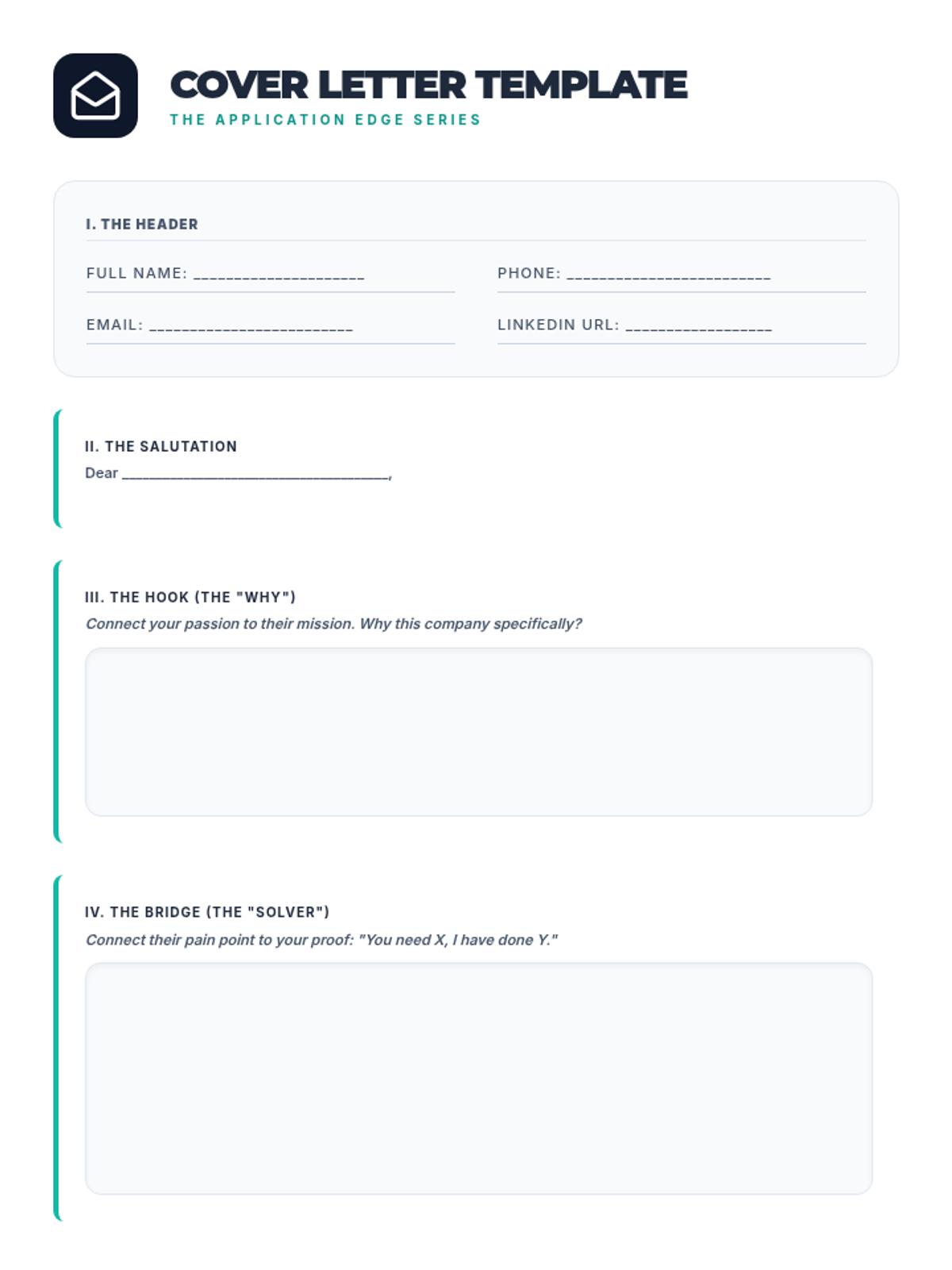
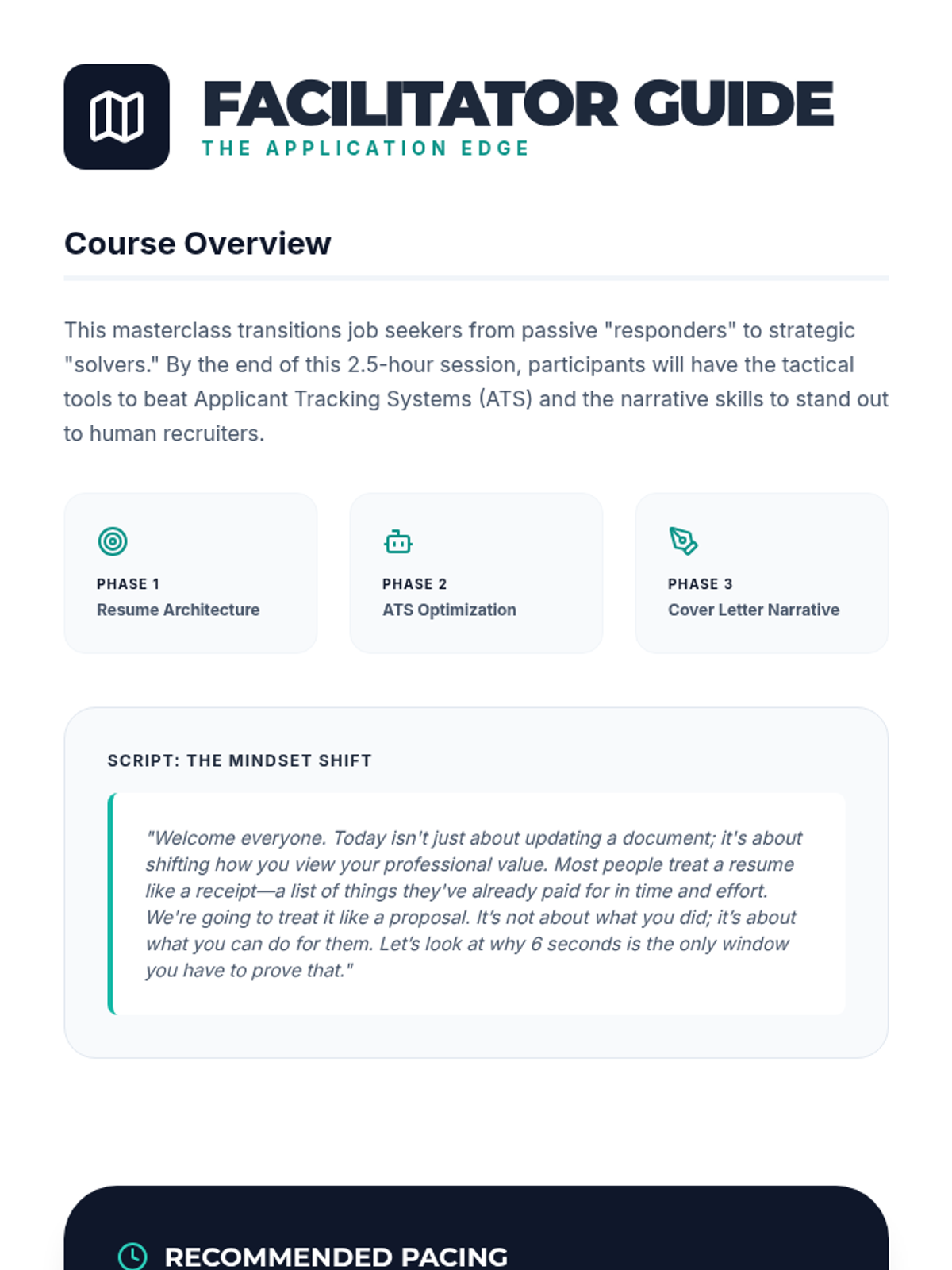
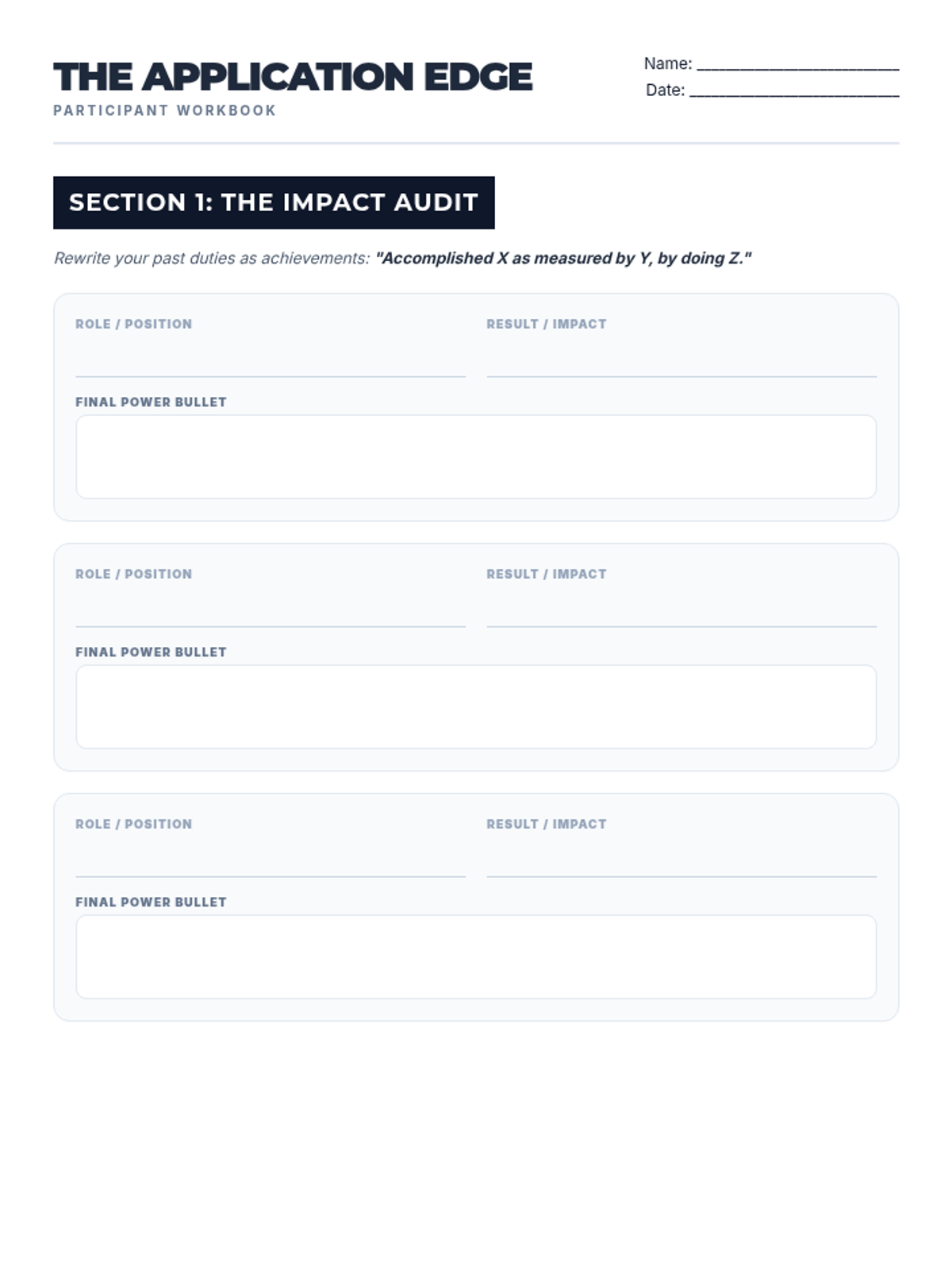
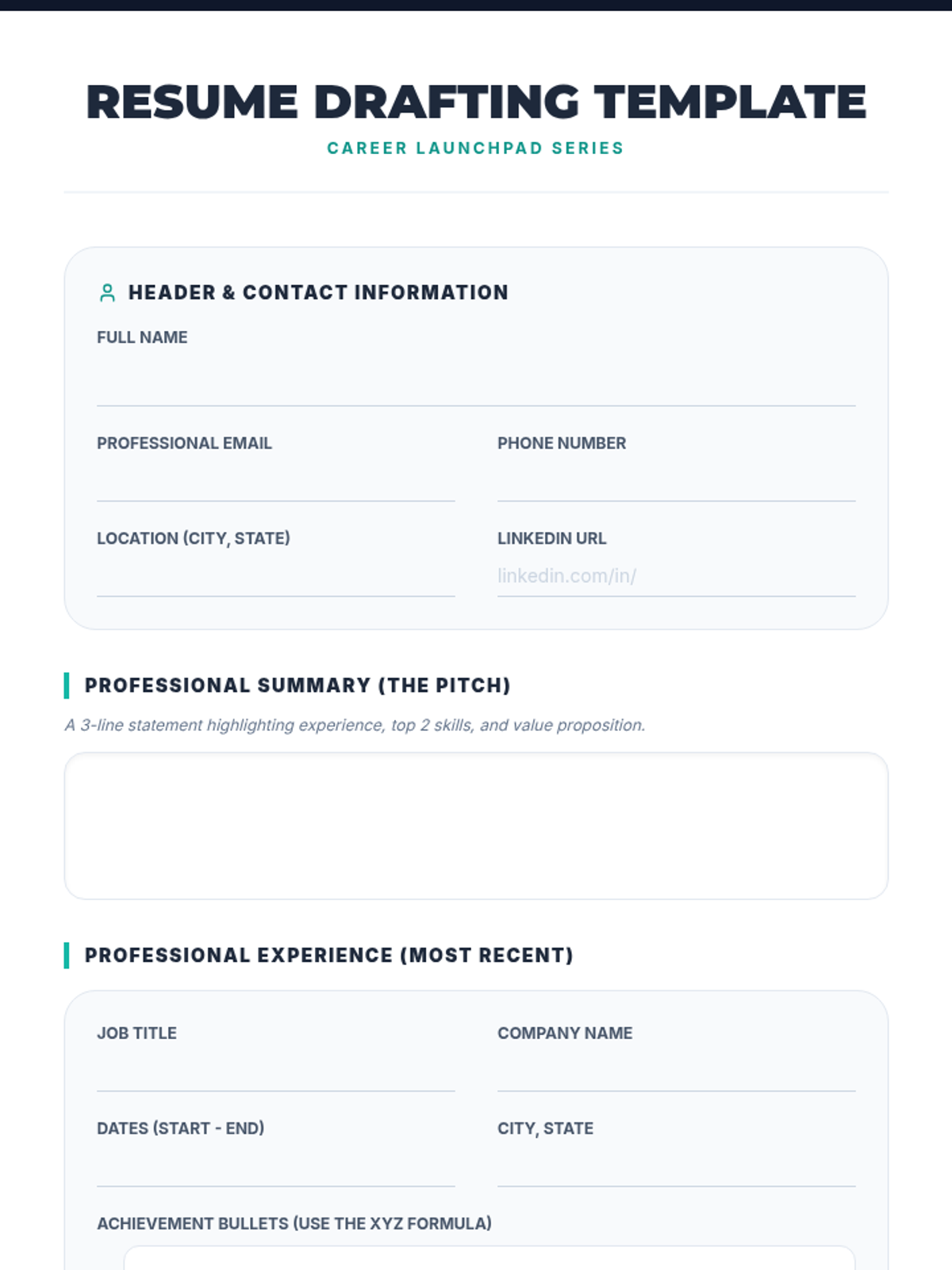
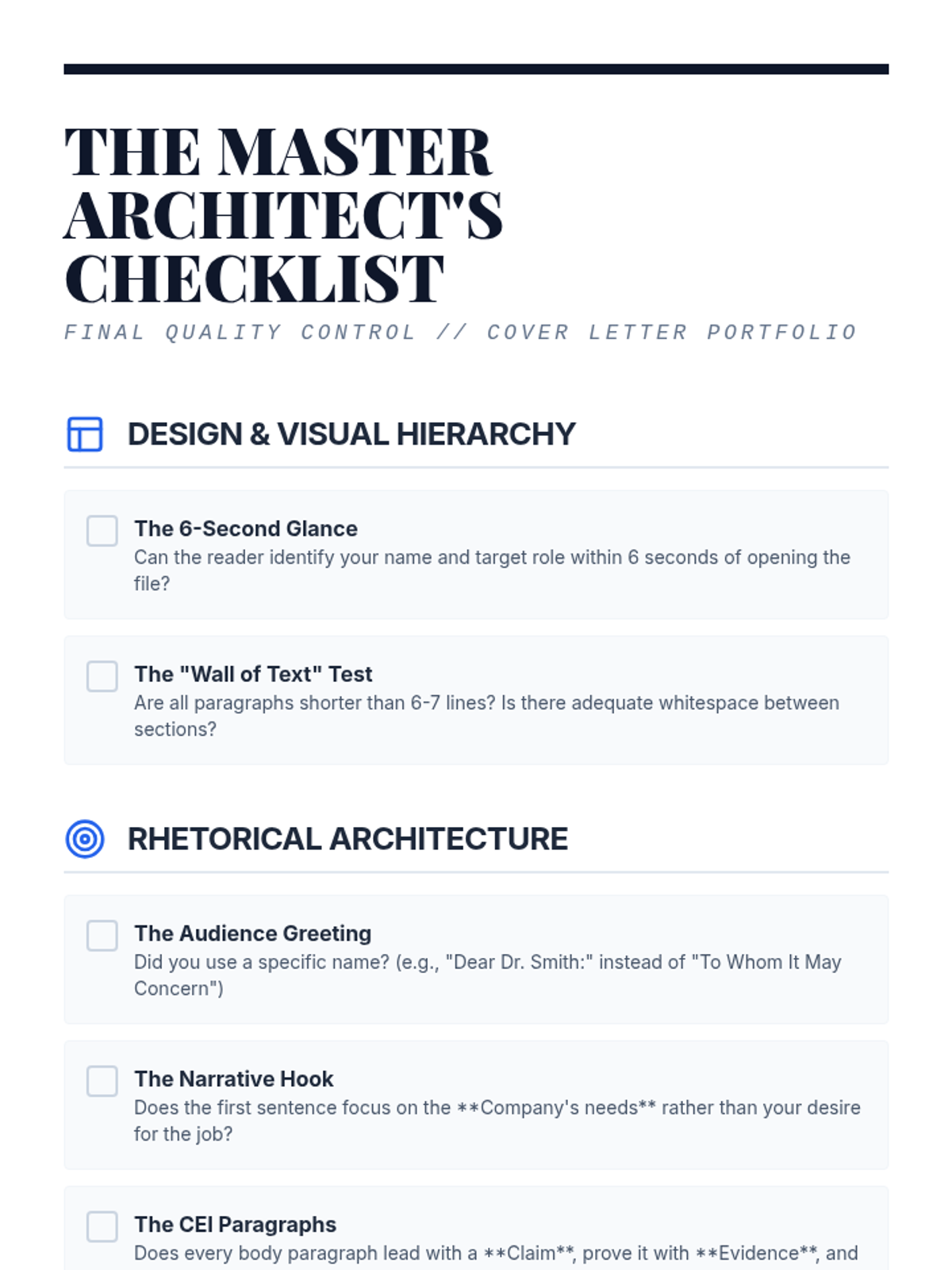
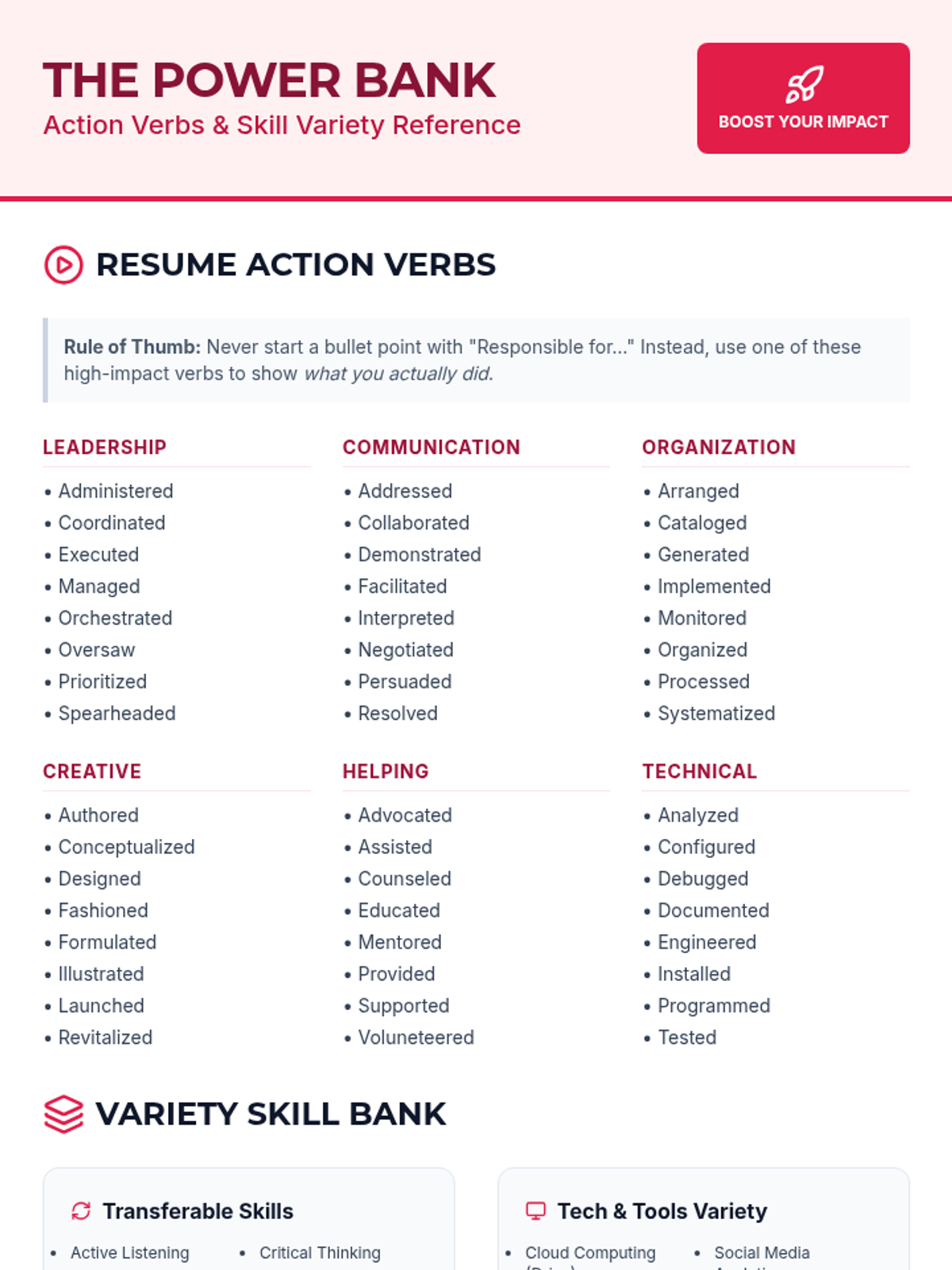
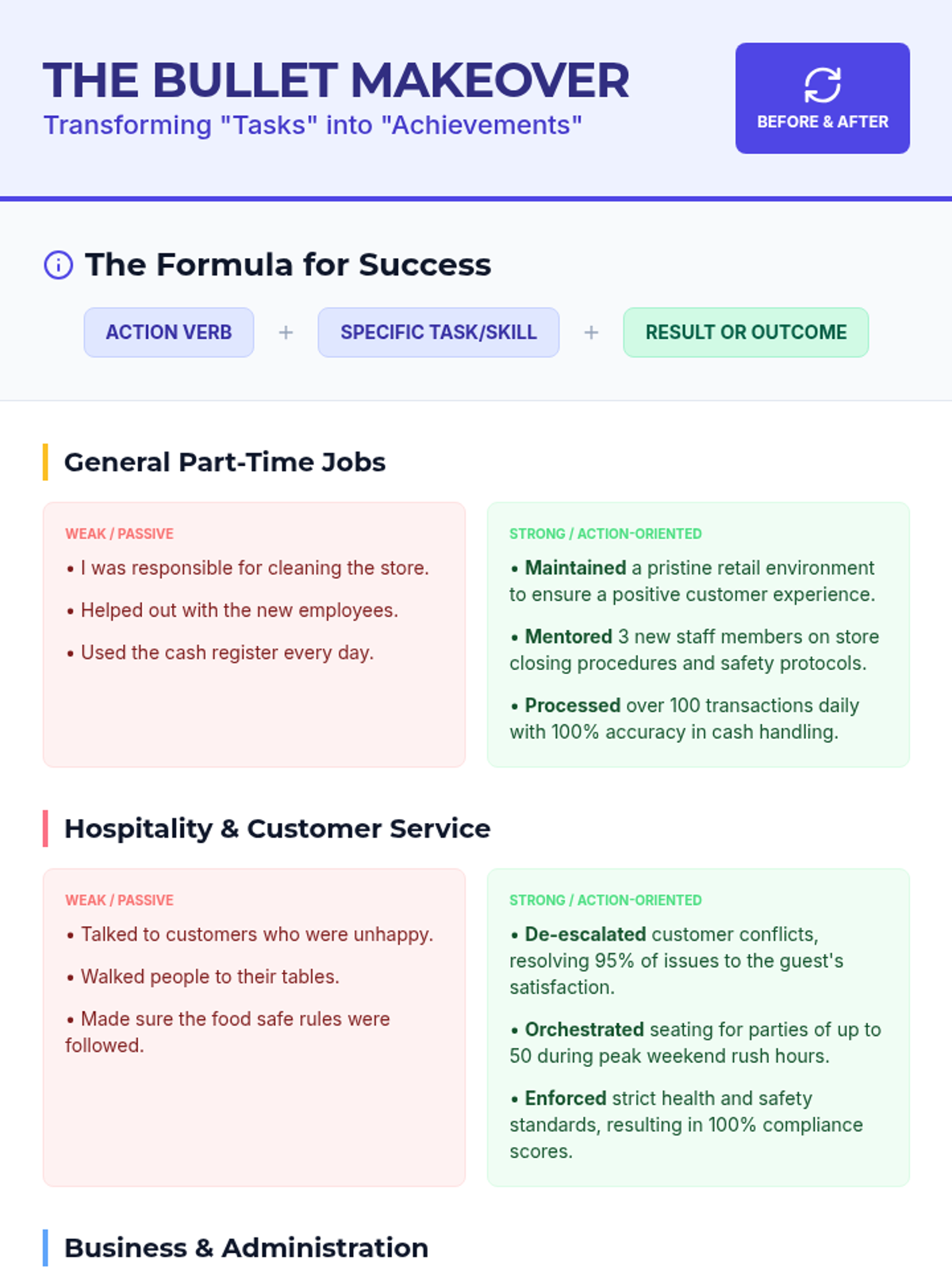
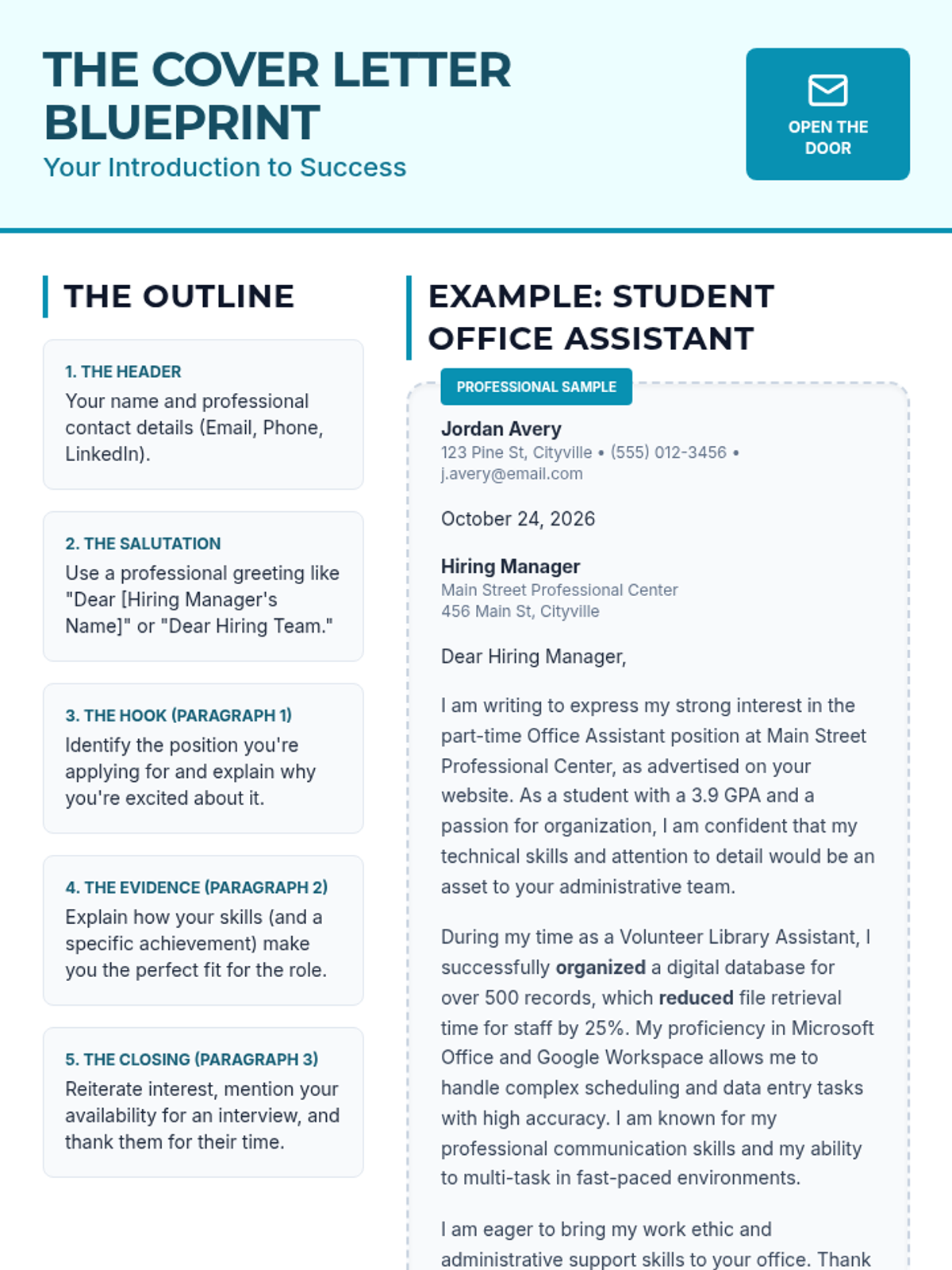
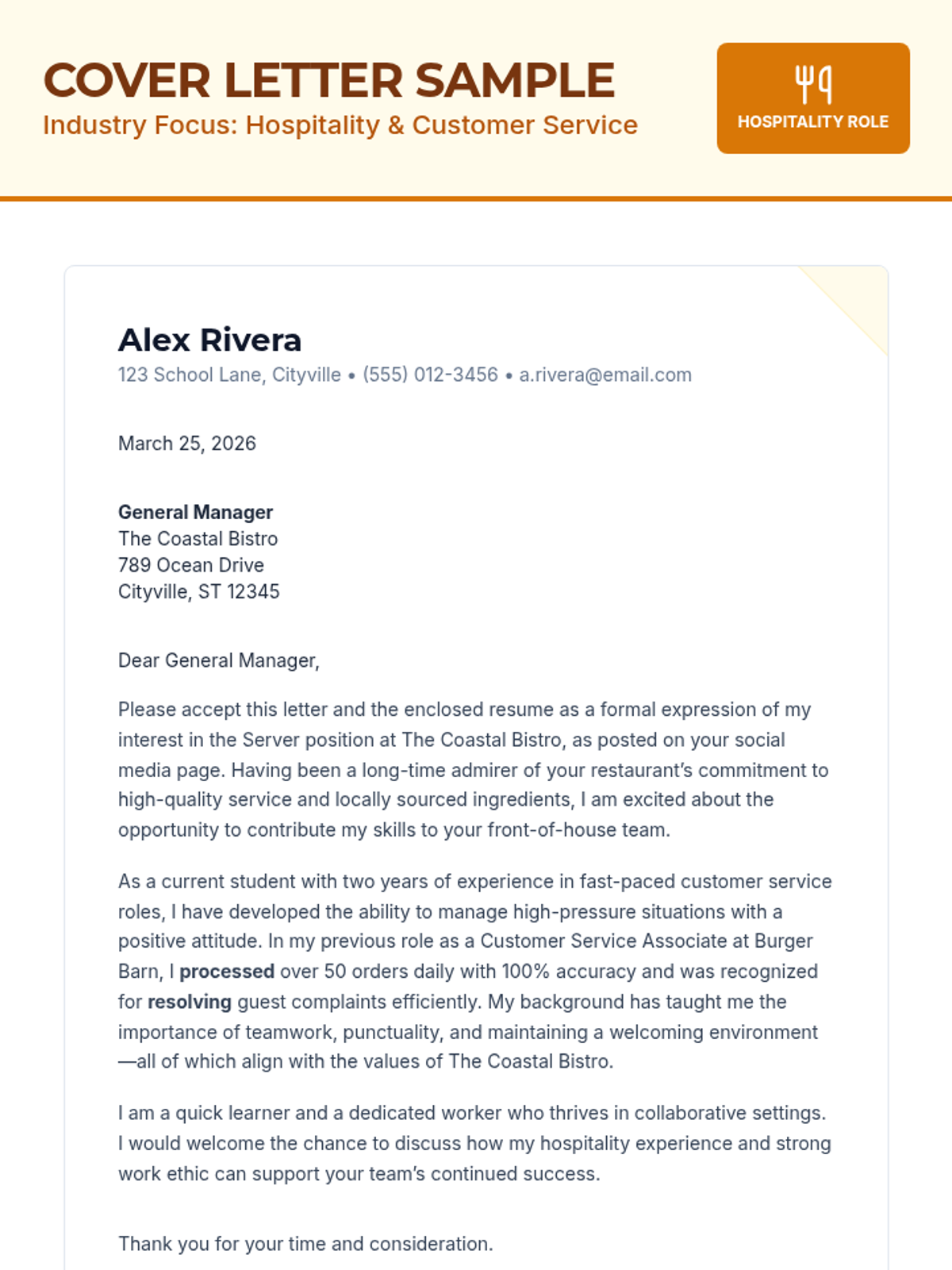
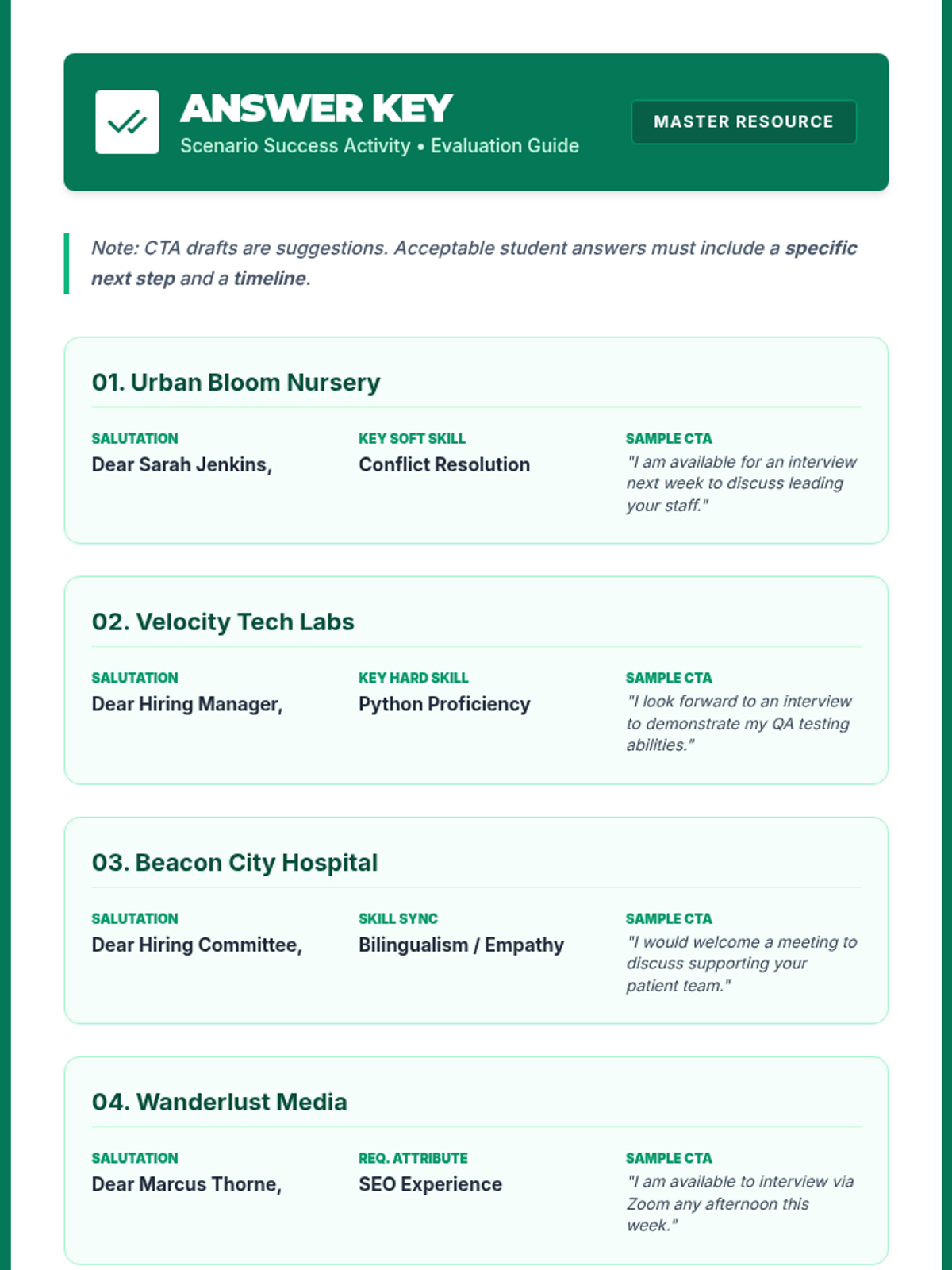
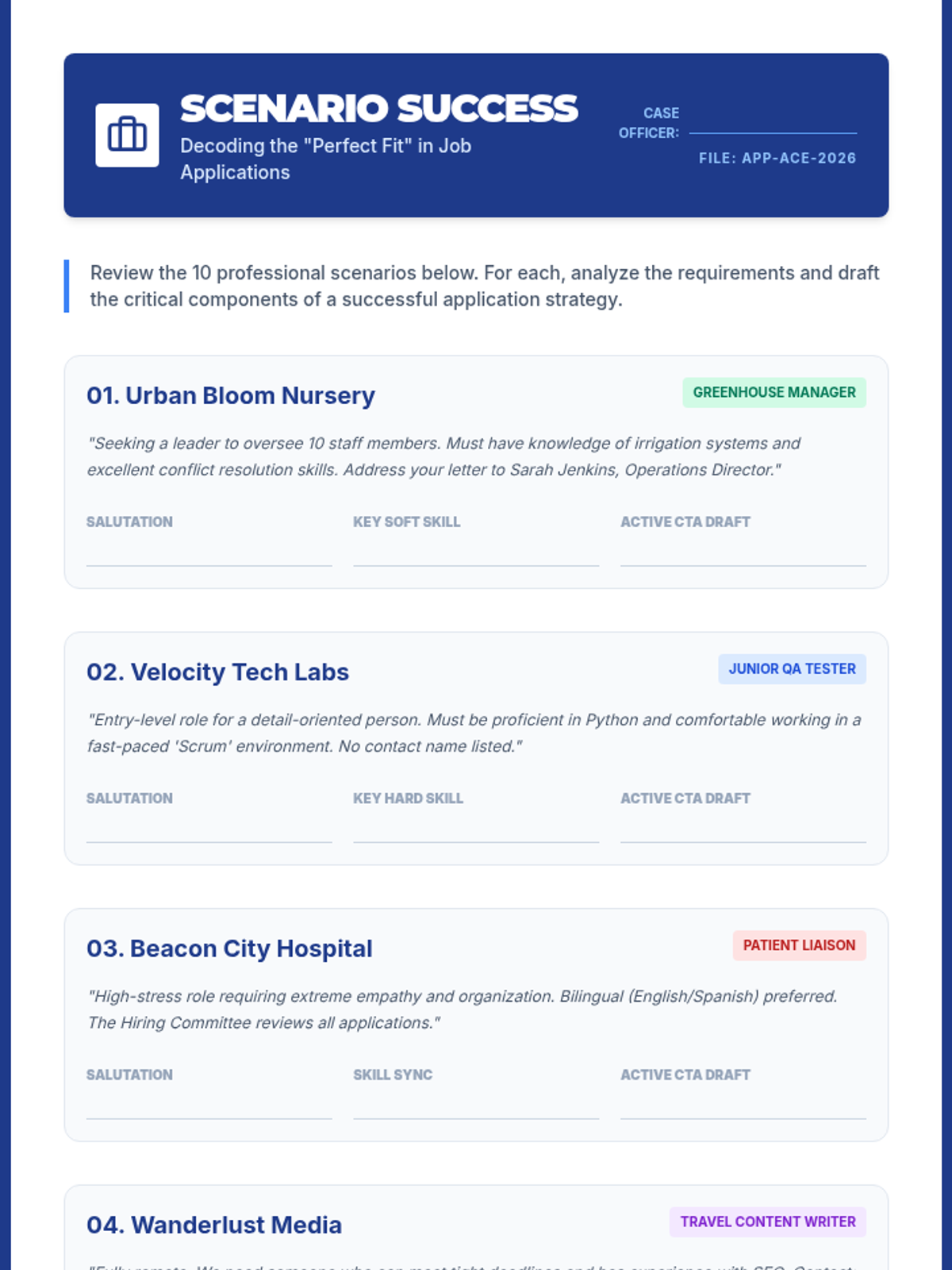
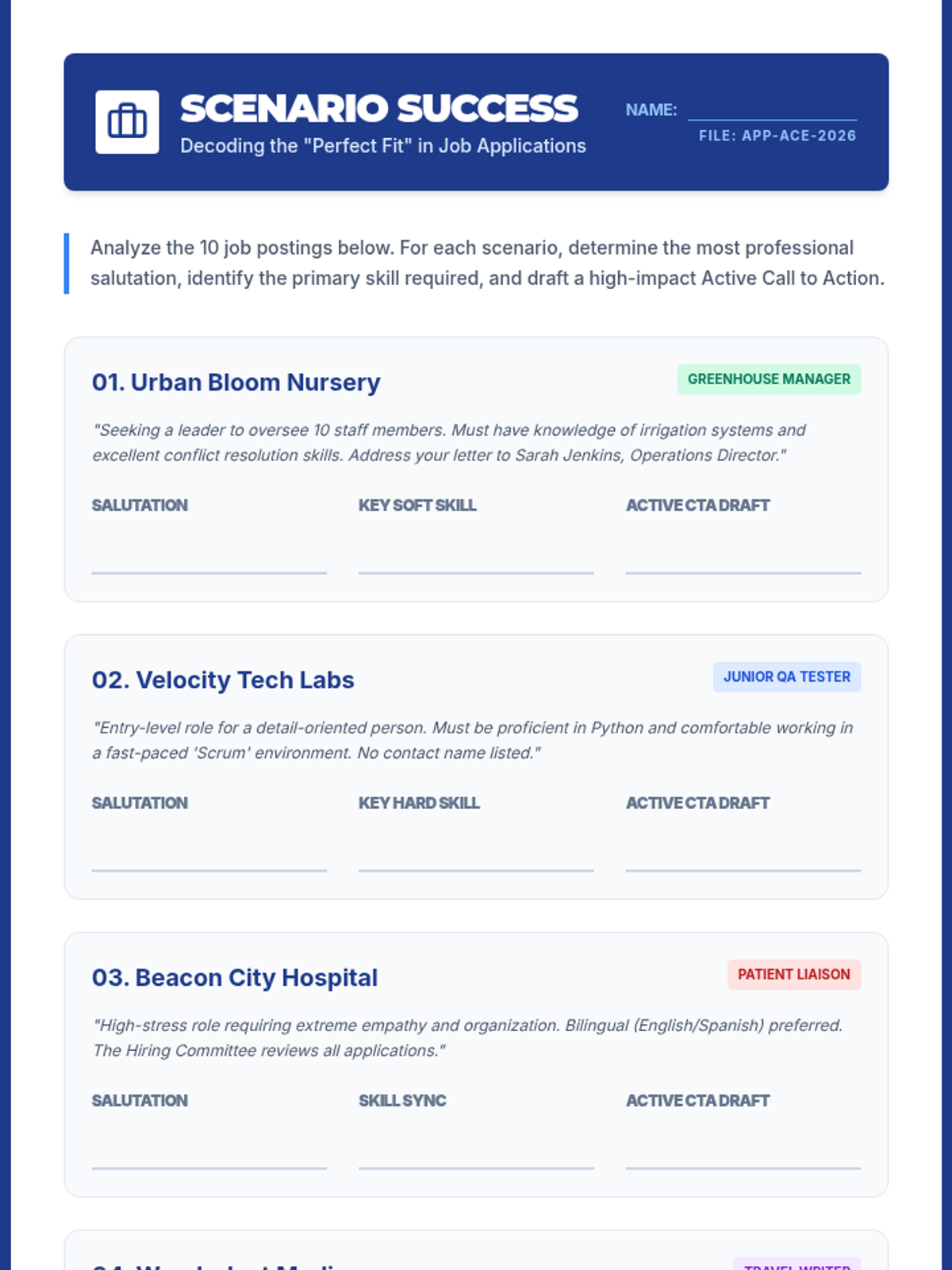
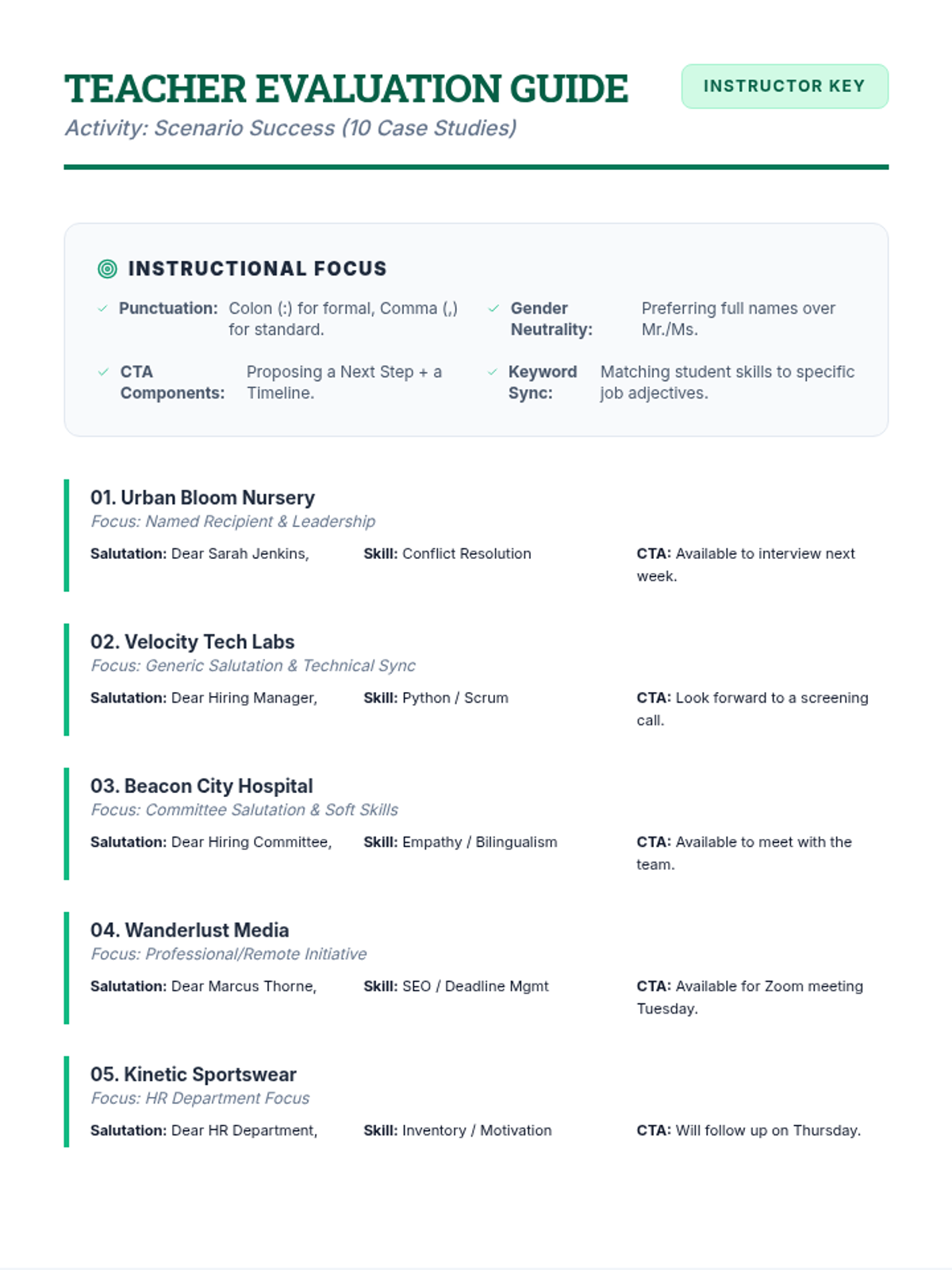
A masterclass in crafting professional application materials, including resumes that beat tracking systems and cover letters that tell a compelling story.
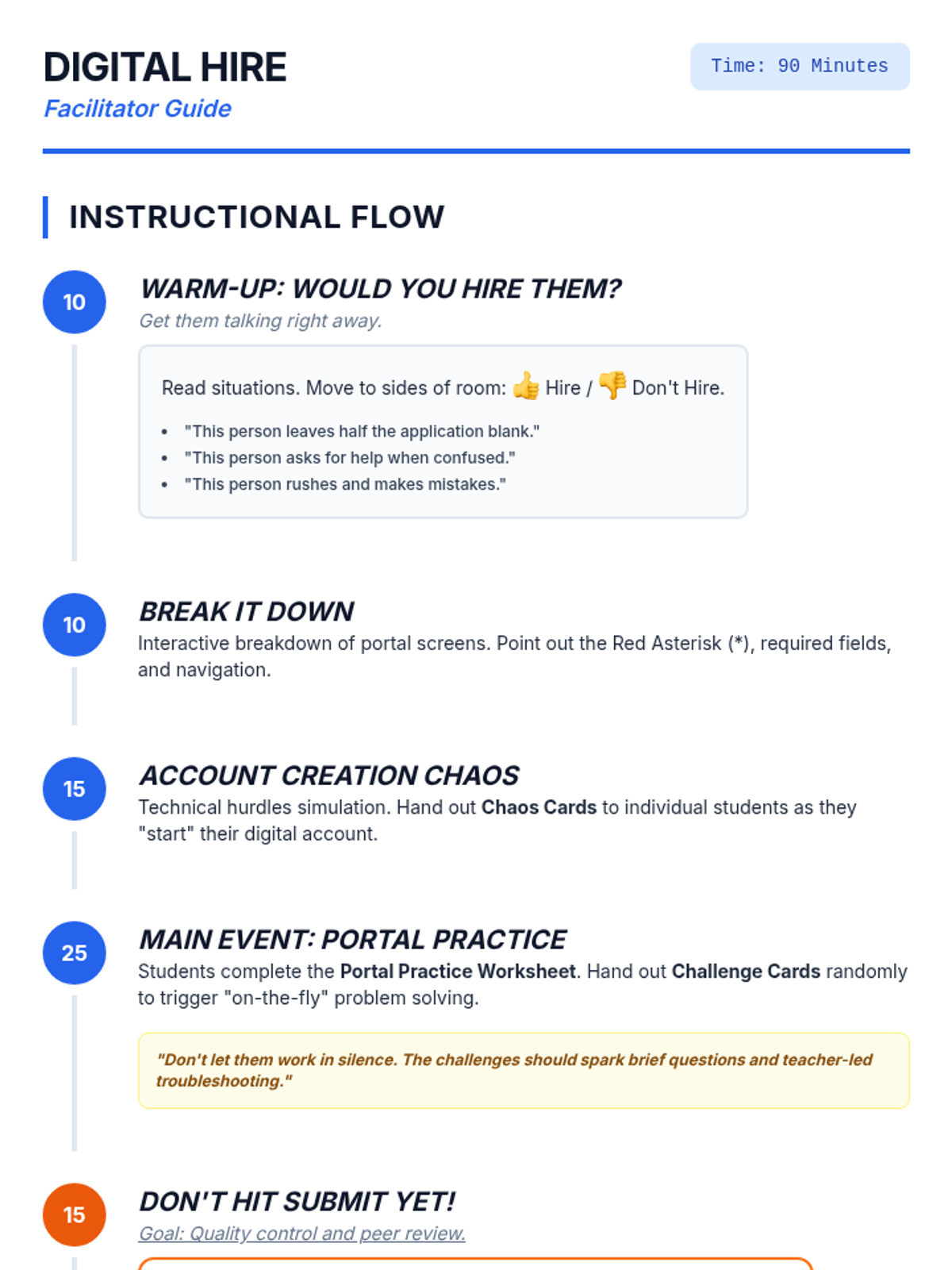
A comprehensive lesson on navigating the digital hurdles of modern job applications, from account creation to final submission. Participants practice technical skills and troubleshooting for online portals.
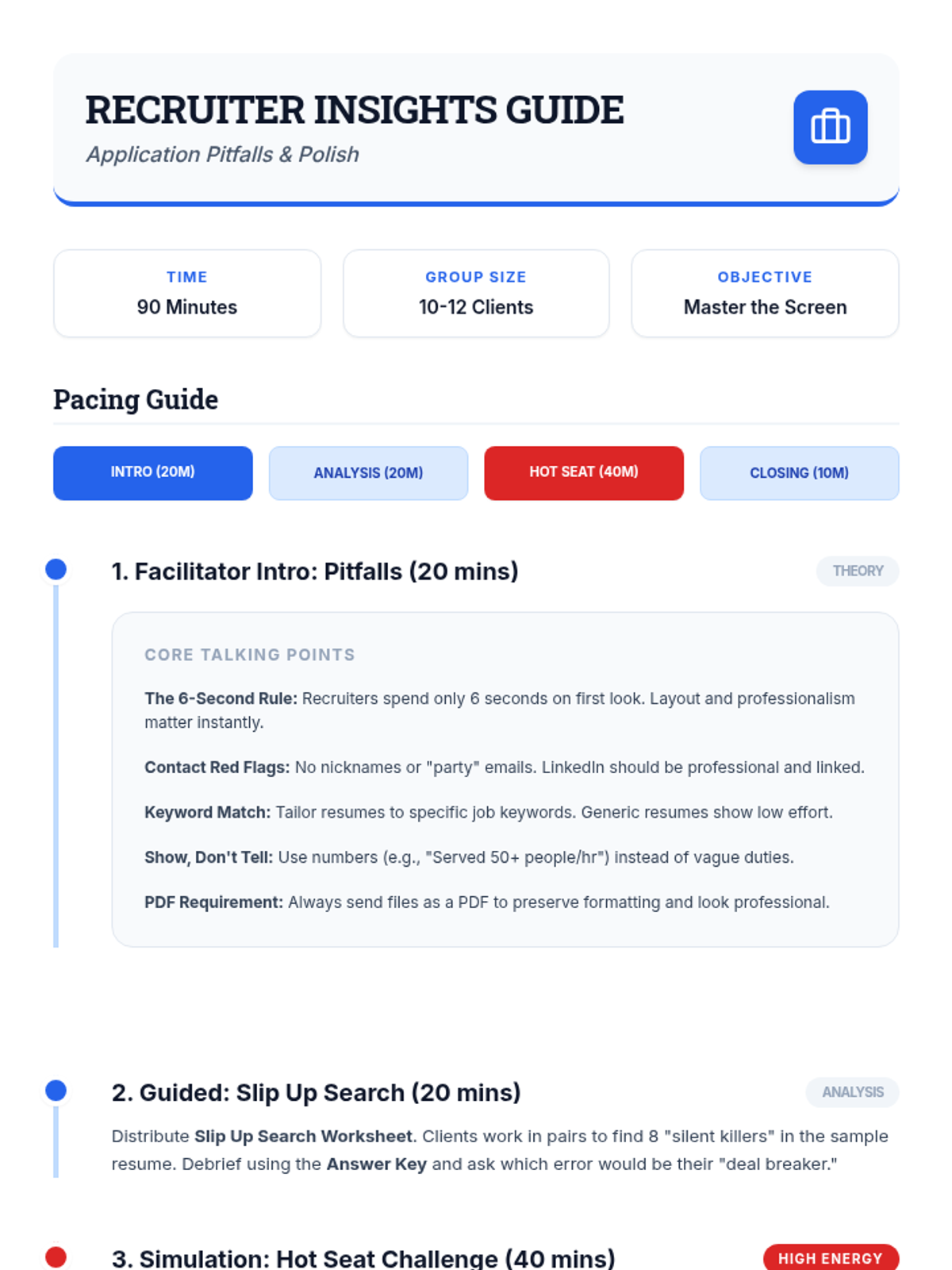
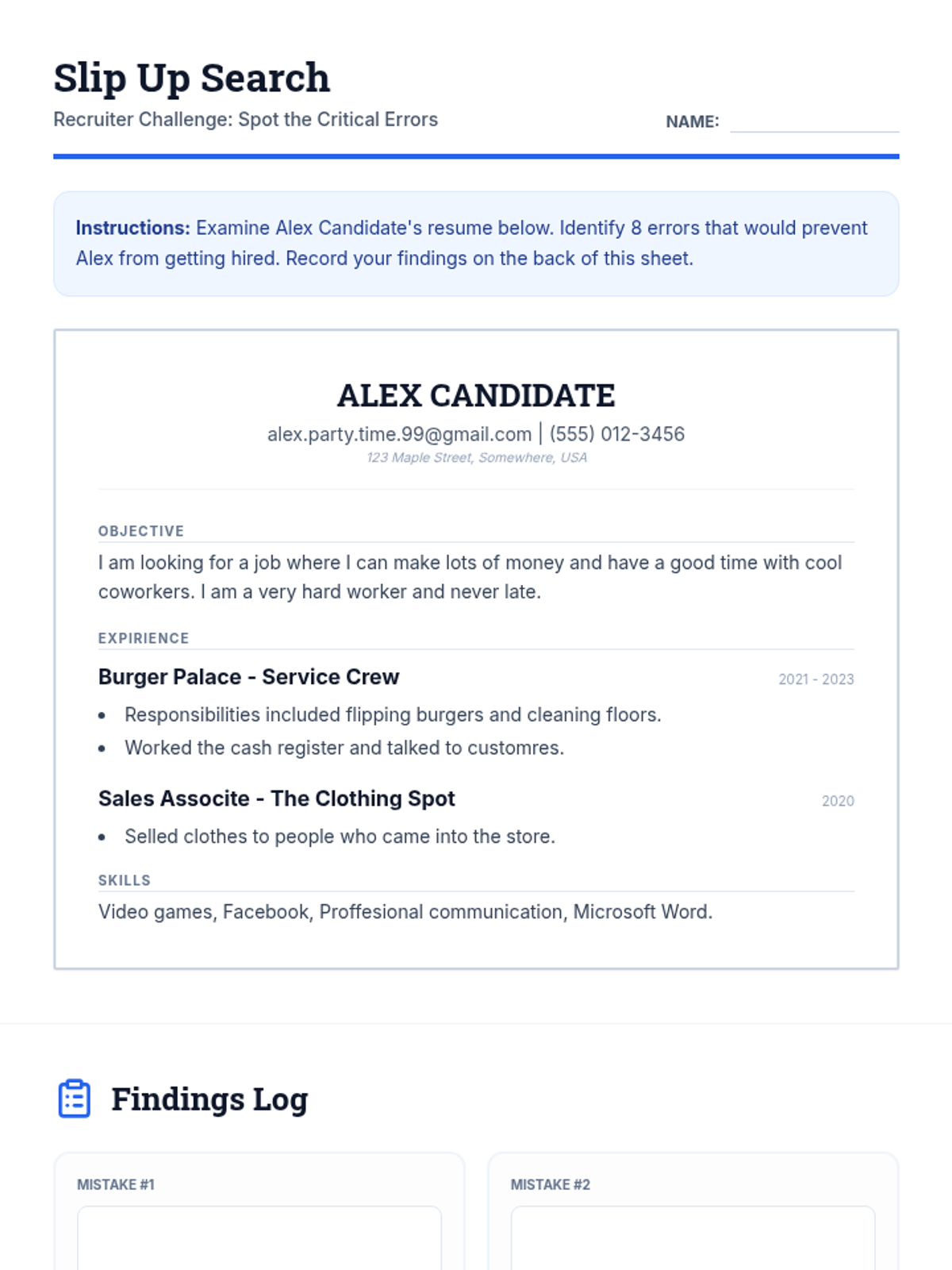
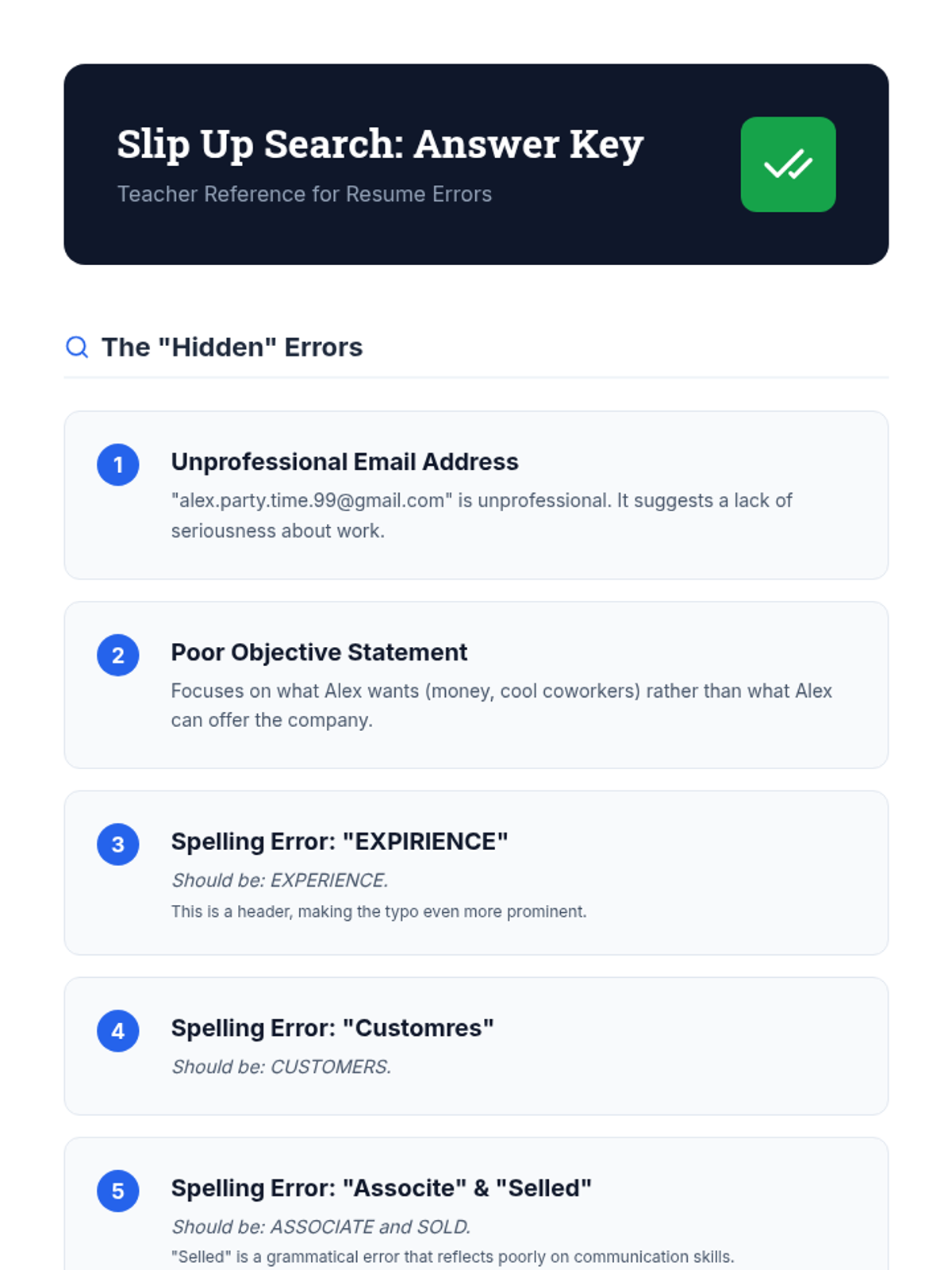
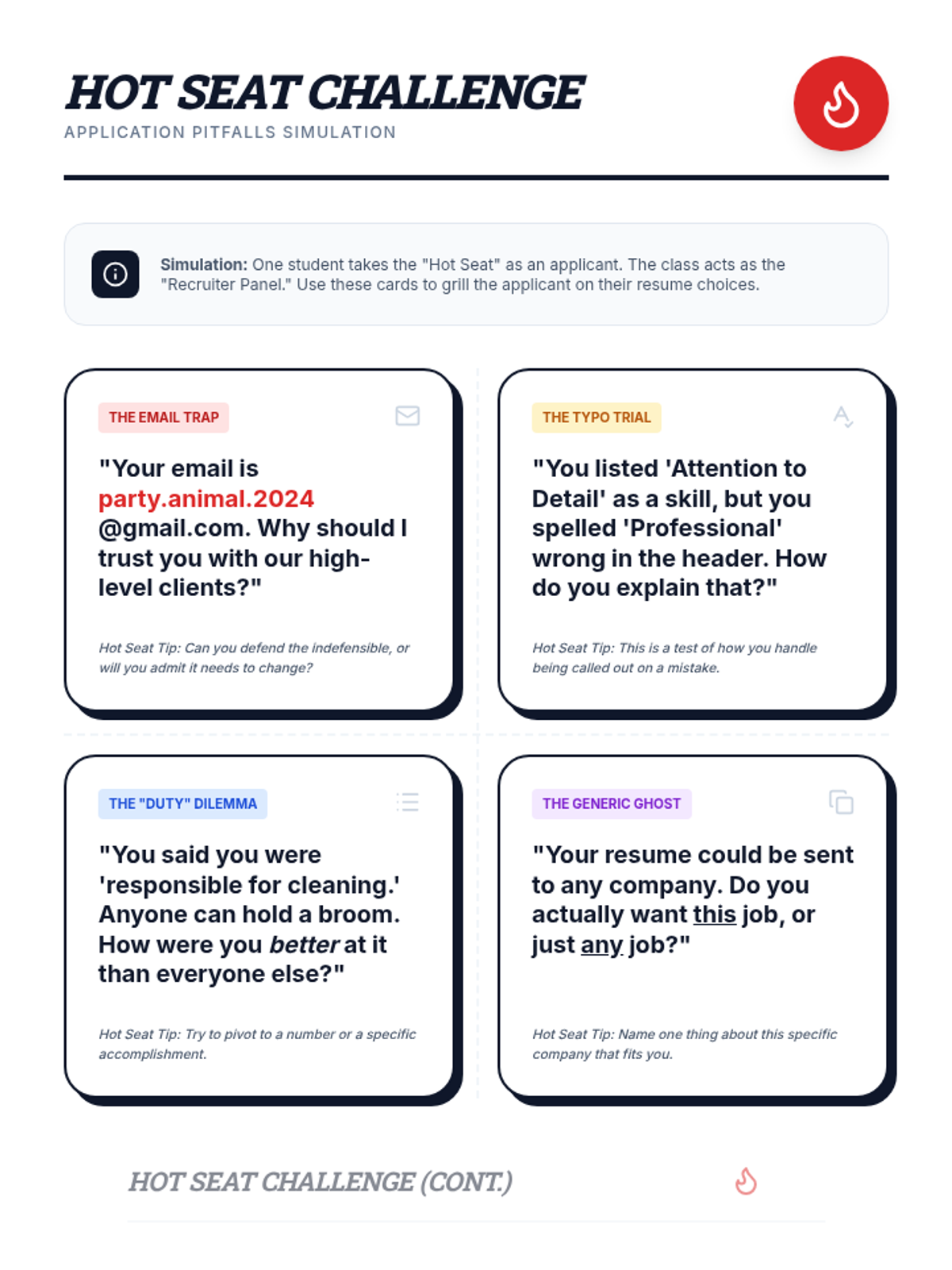
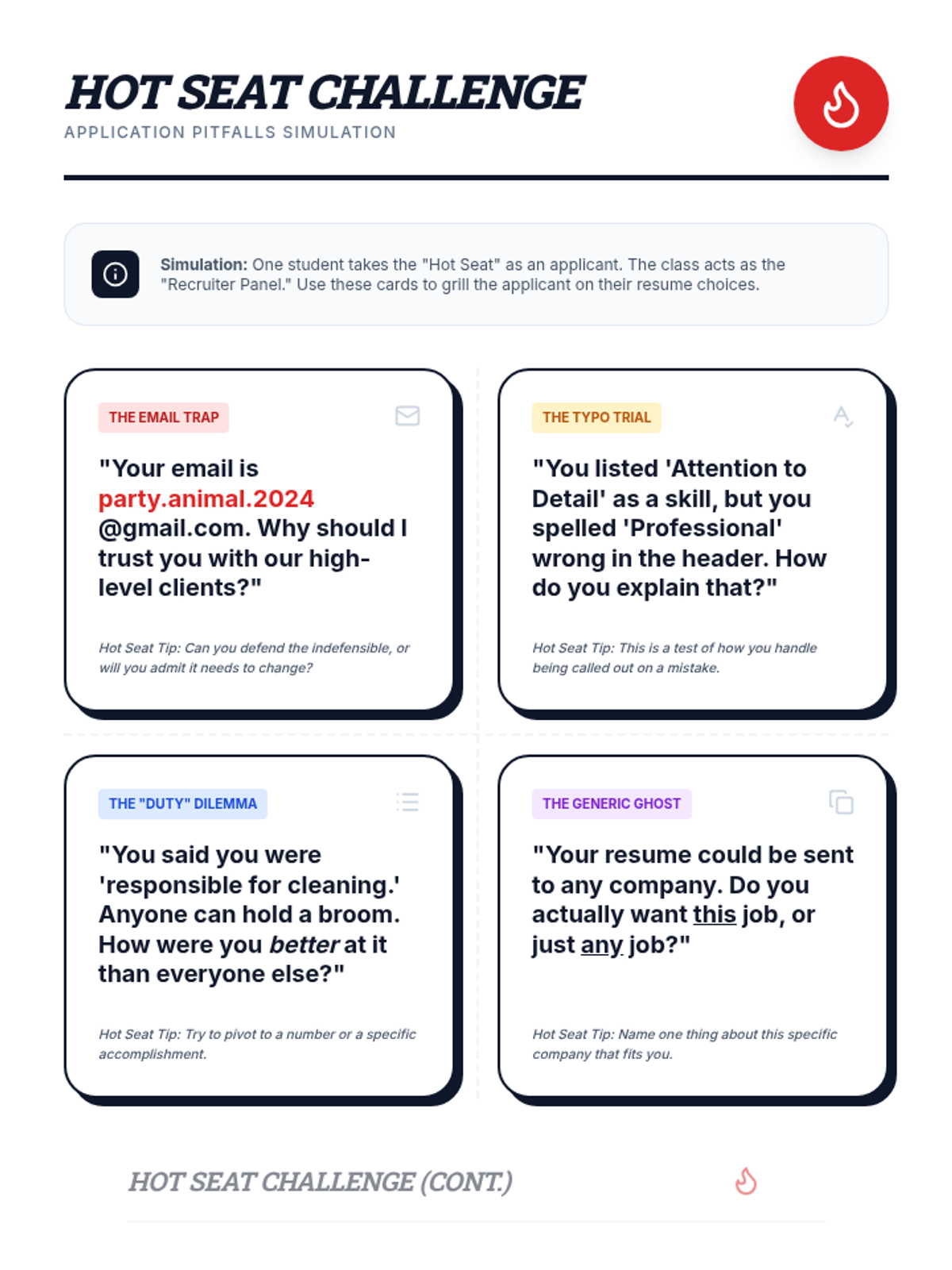
A comprehensive lesson identifying common workplace application errors, from resume typos to unprofessional email addresses, and how to fix them.
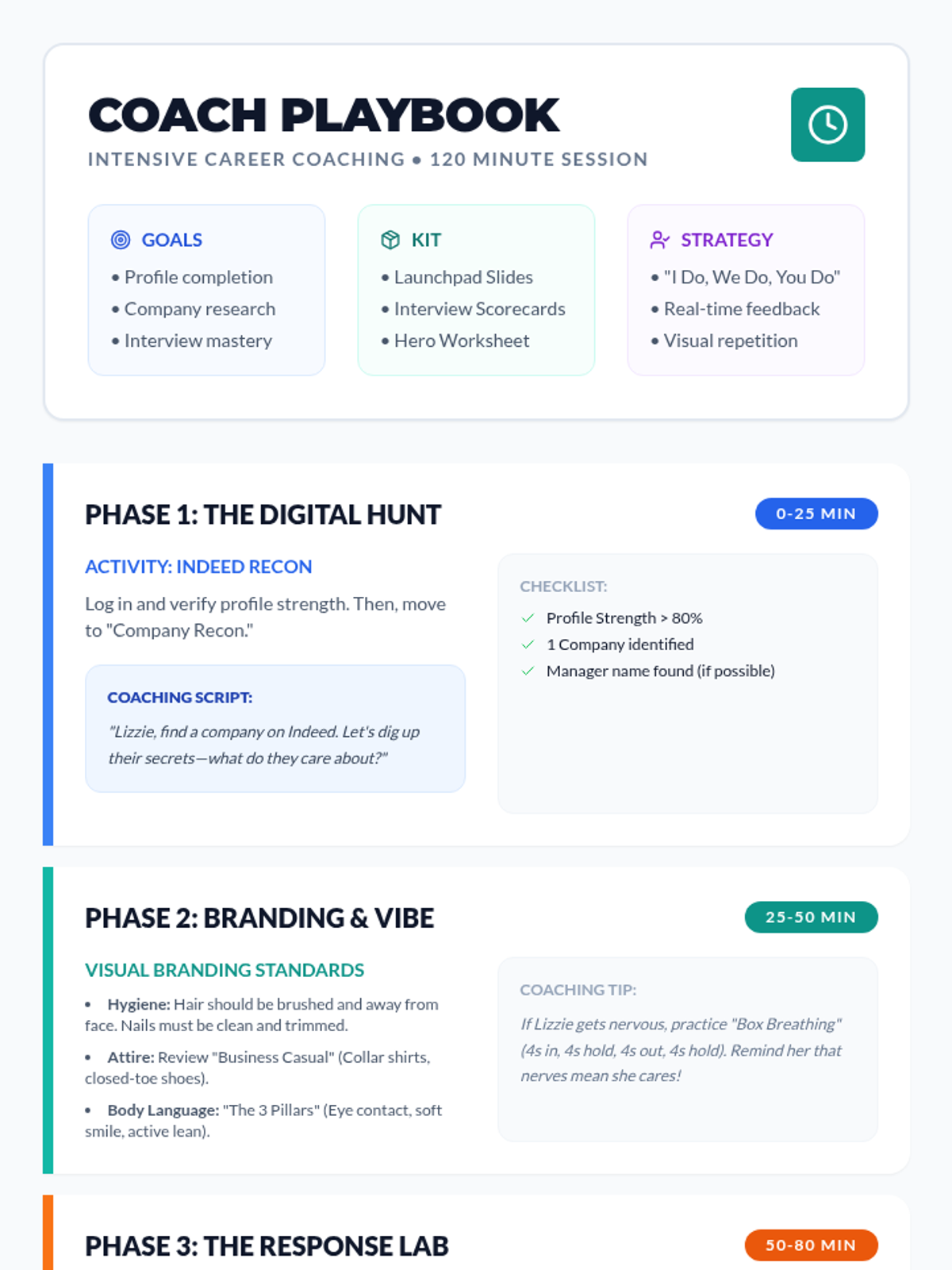
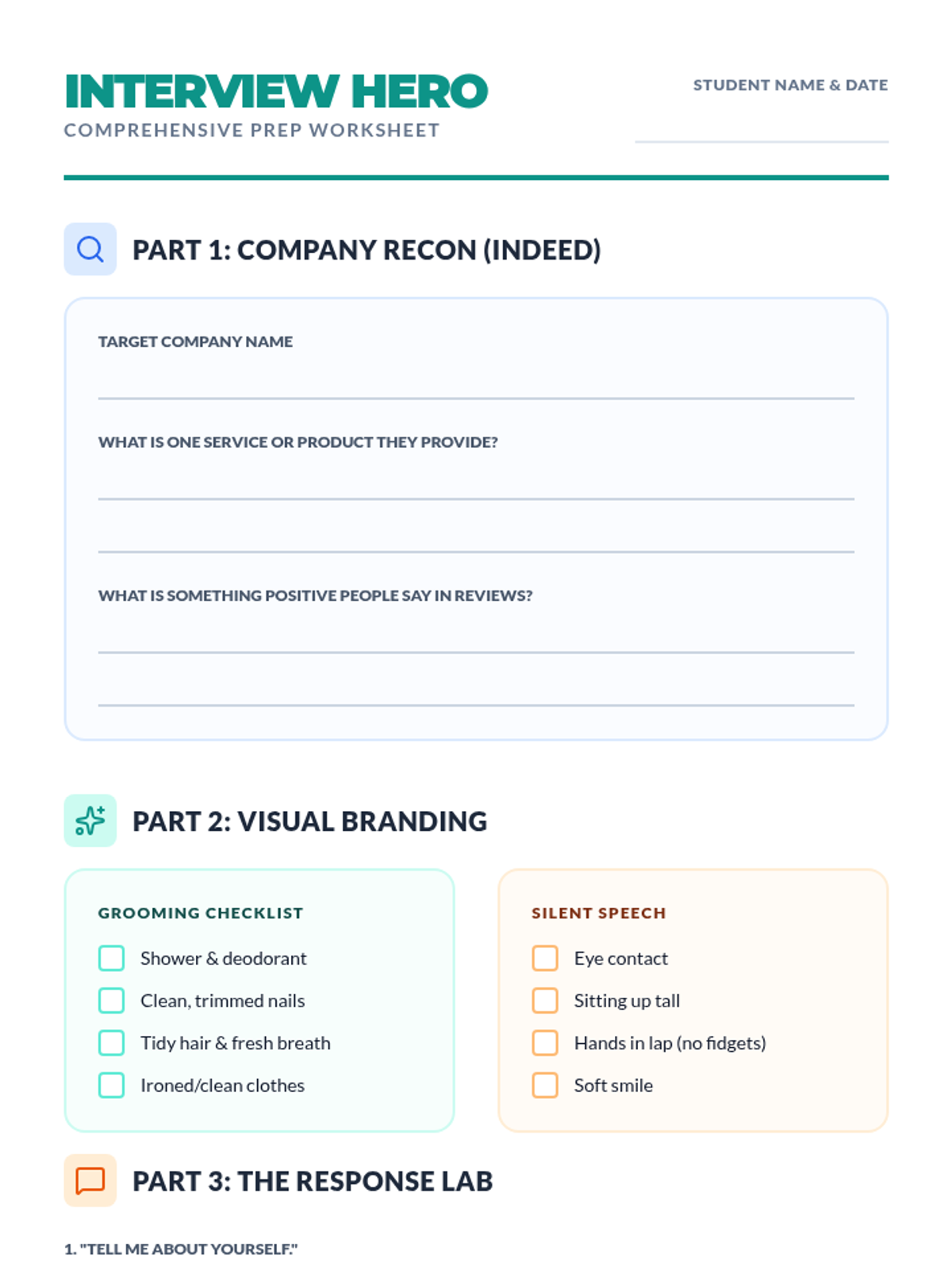
A vocational training lesson designed to help students master the job application process, from online profile management on Indeed to mastering the interview and follow-up.
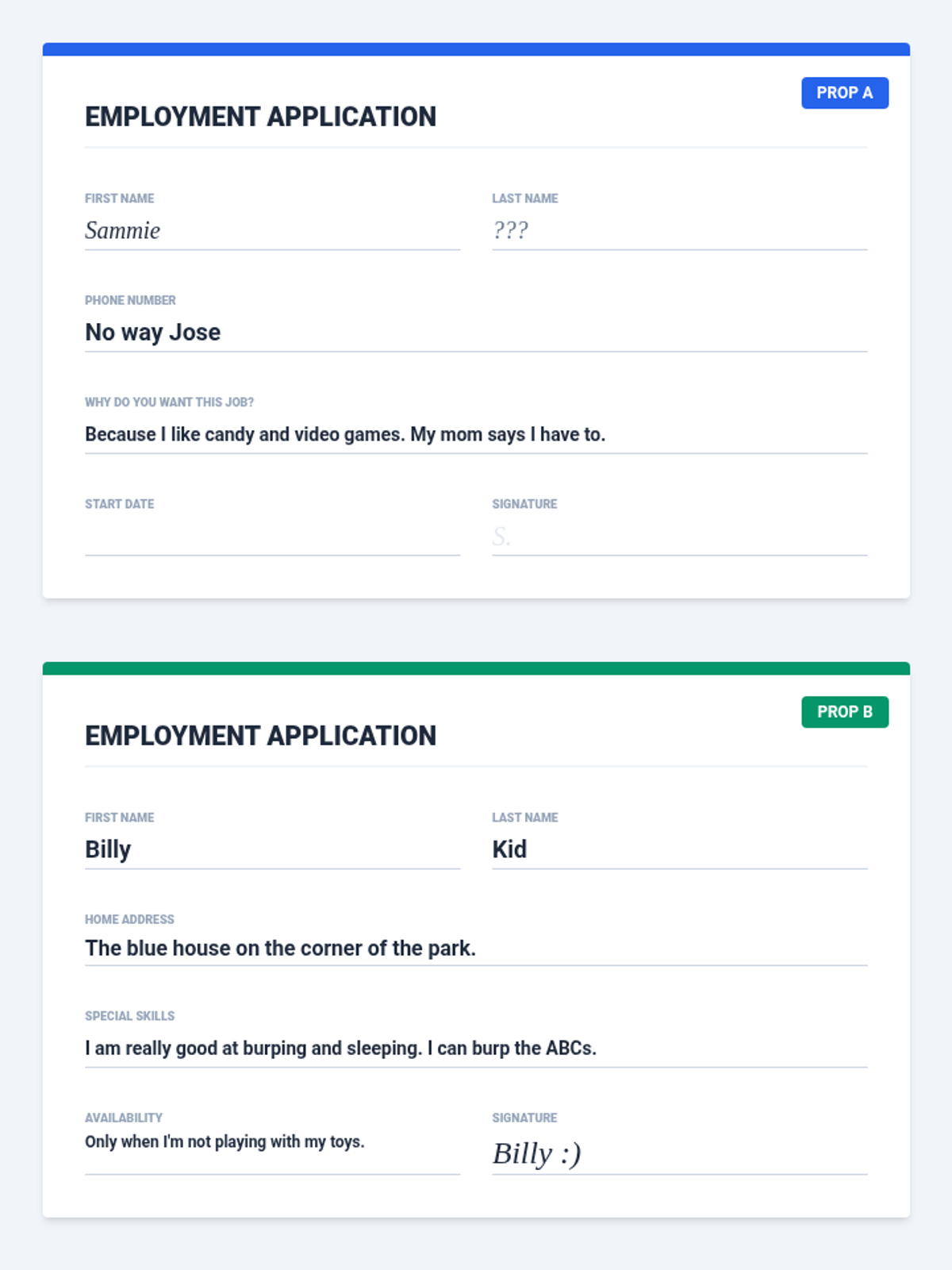
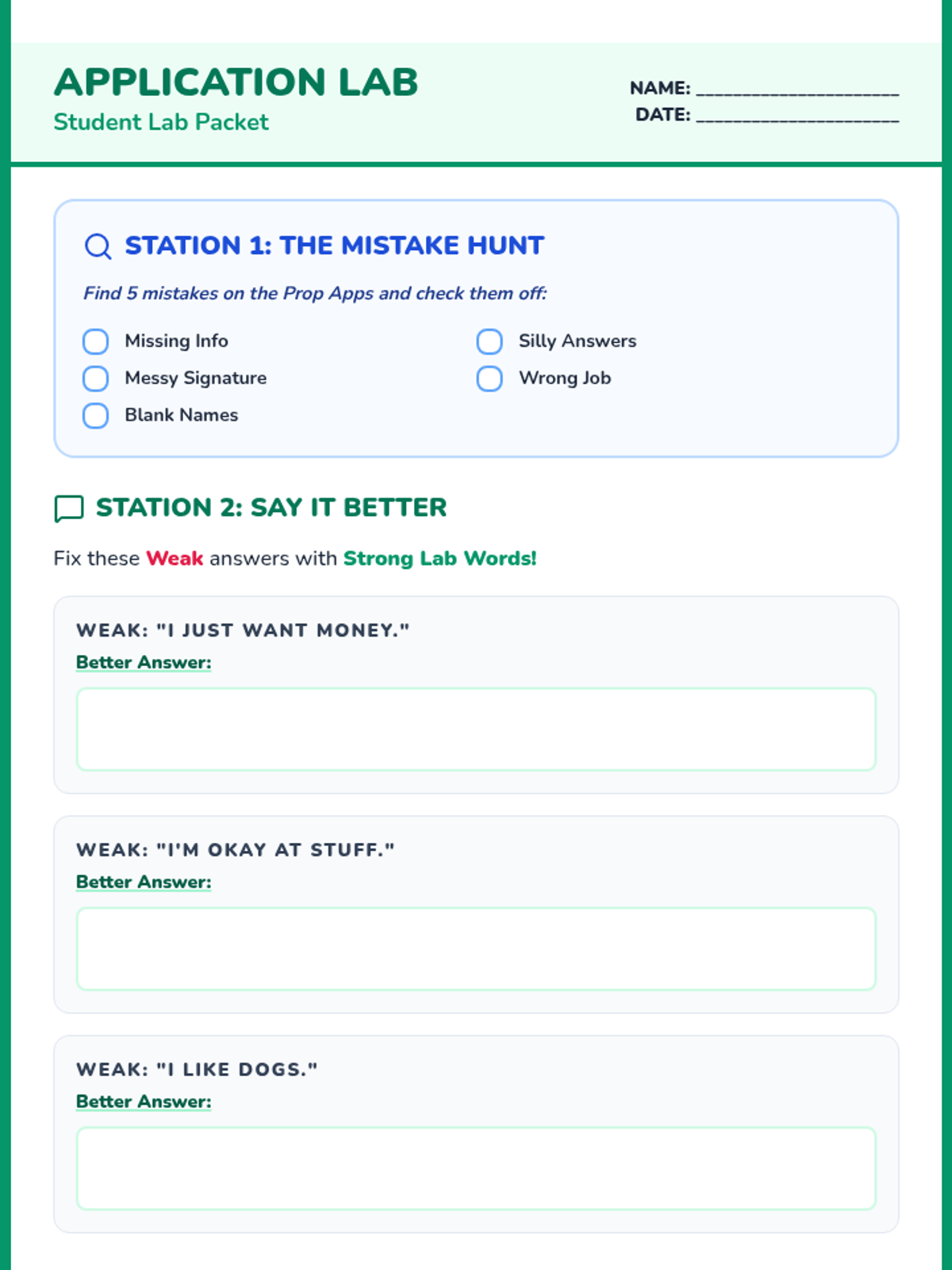
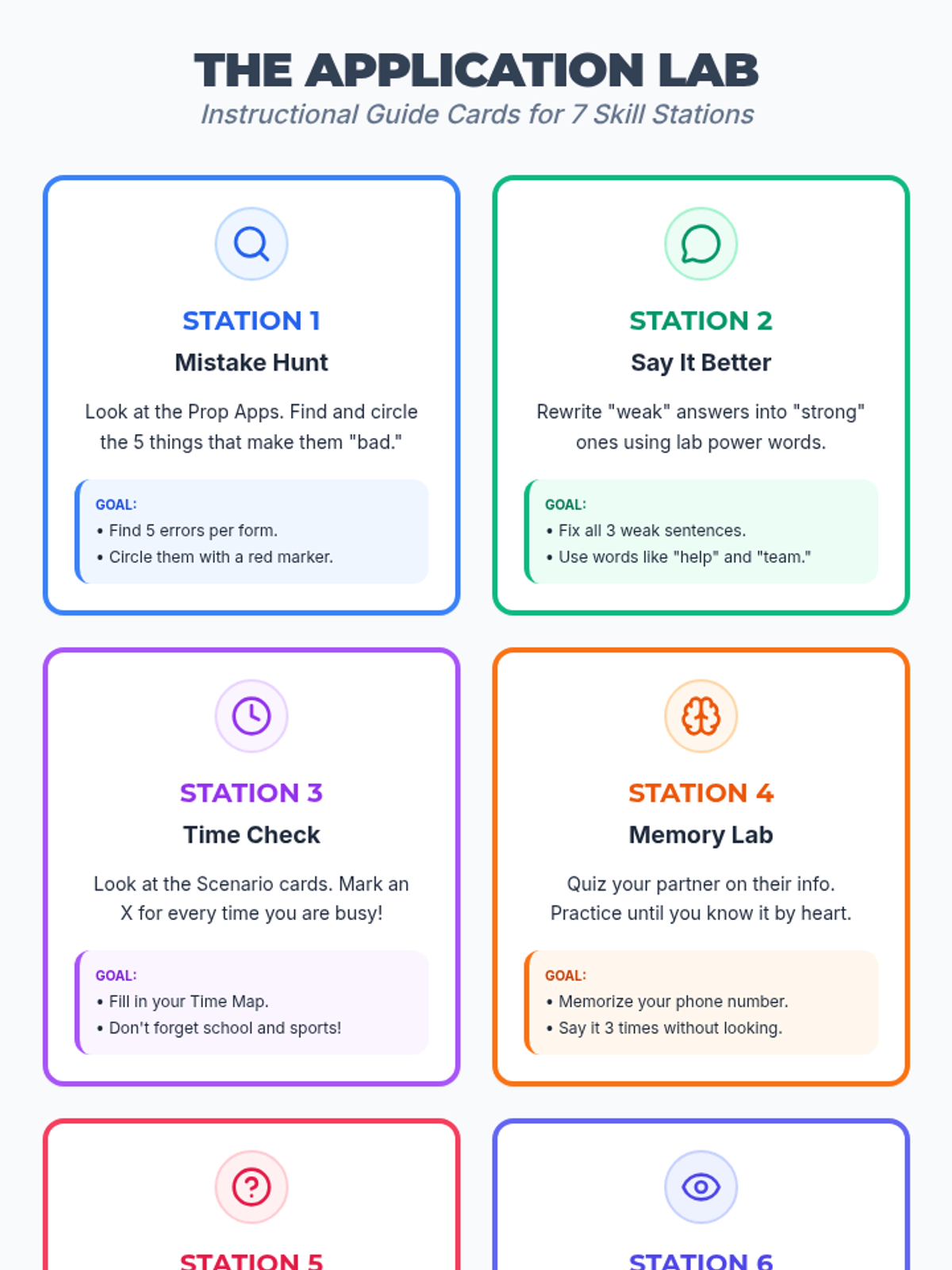
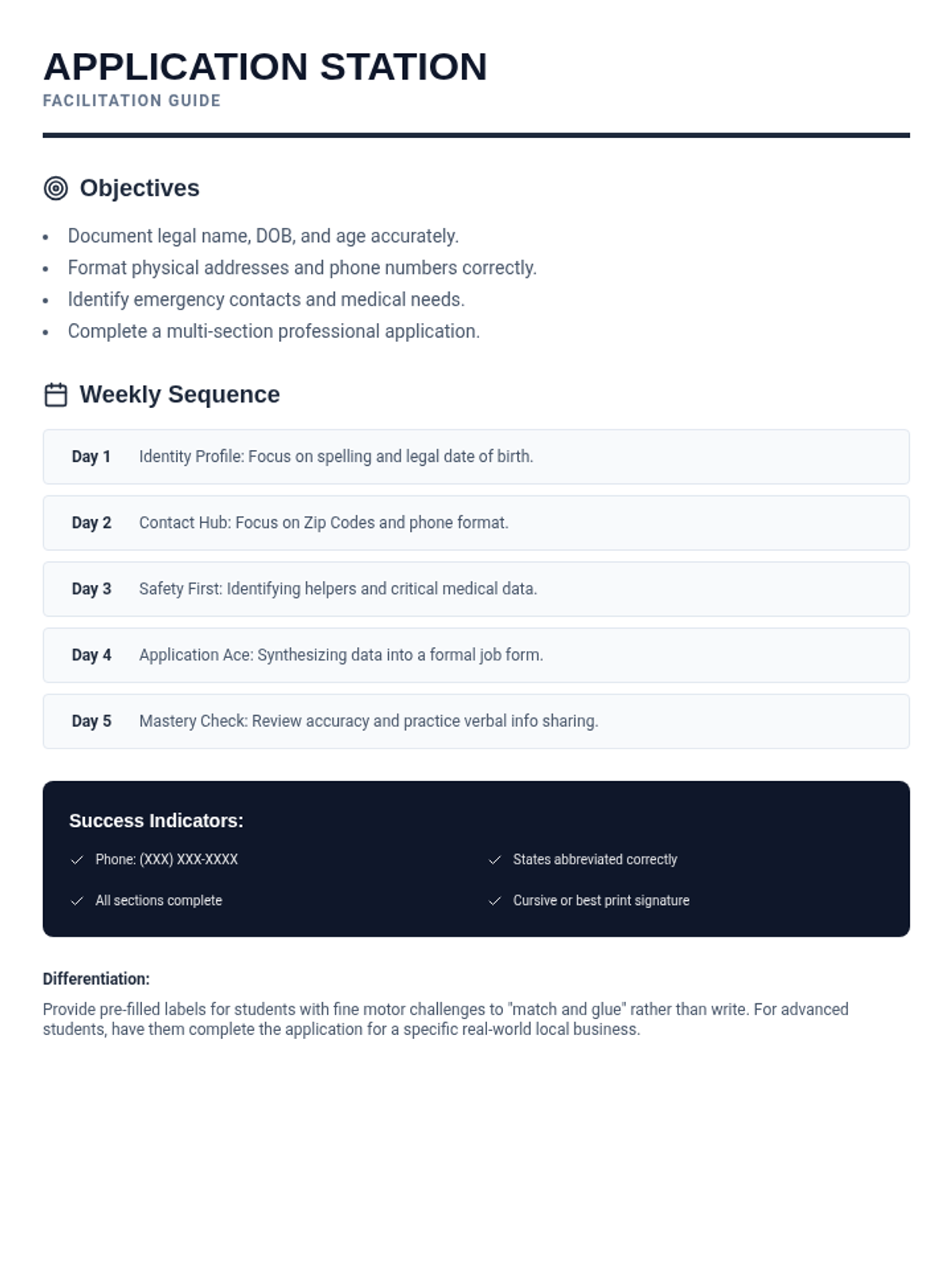
A hands-on, station-based lesson where students practice the component skills of filling out a job application using a science lab theme. Includes simplified text suitable for 2nd-3rd grade literacy levels.
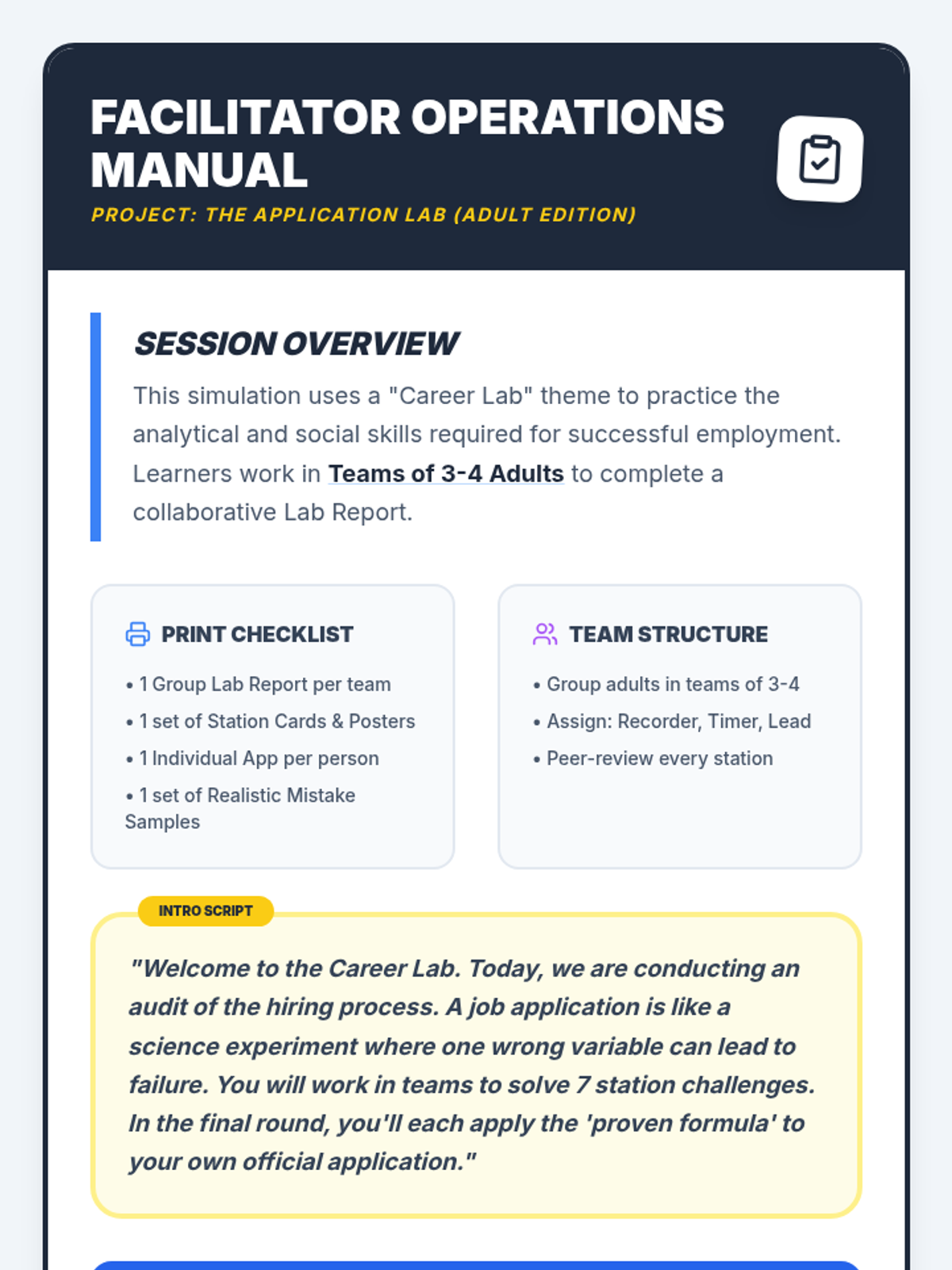
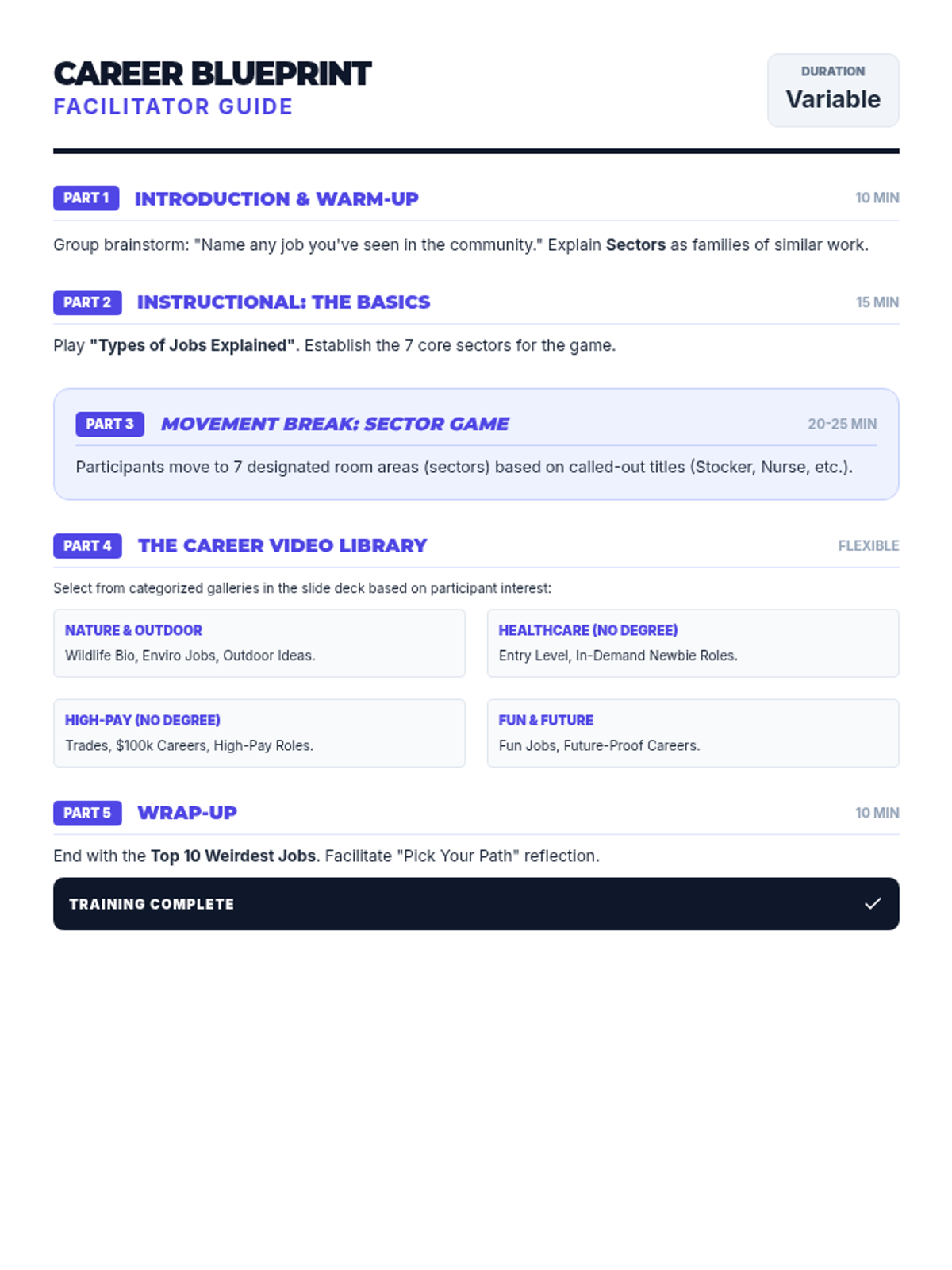
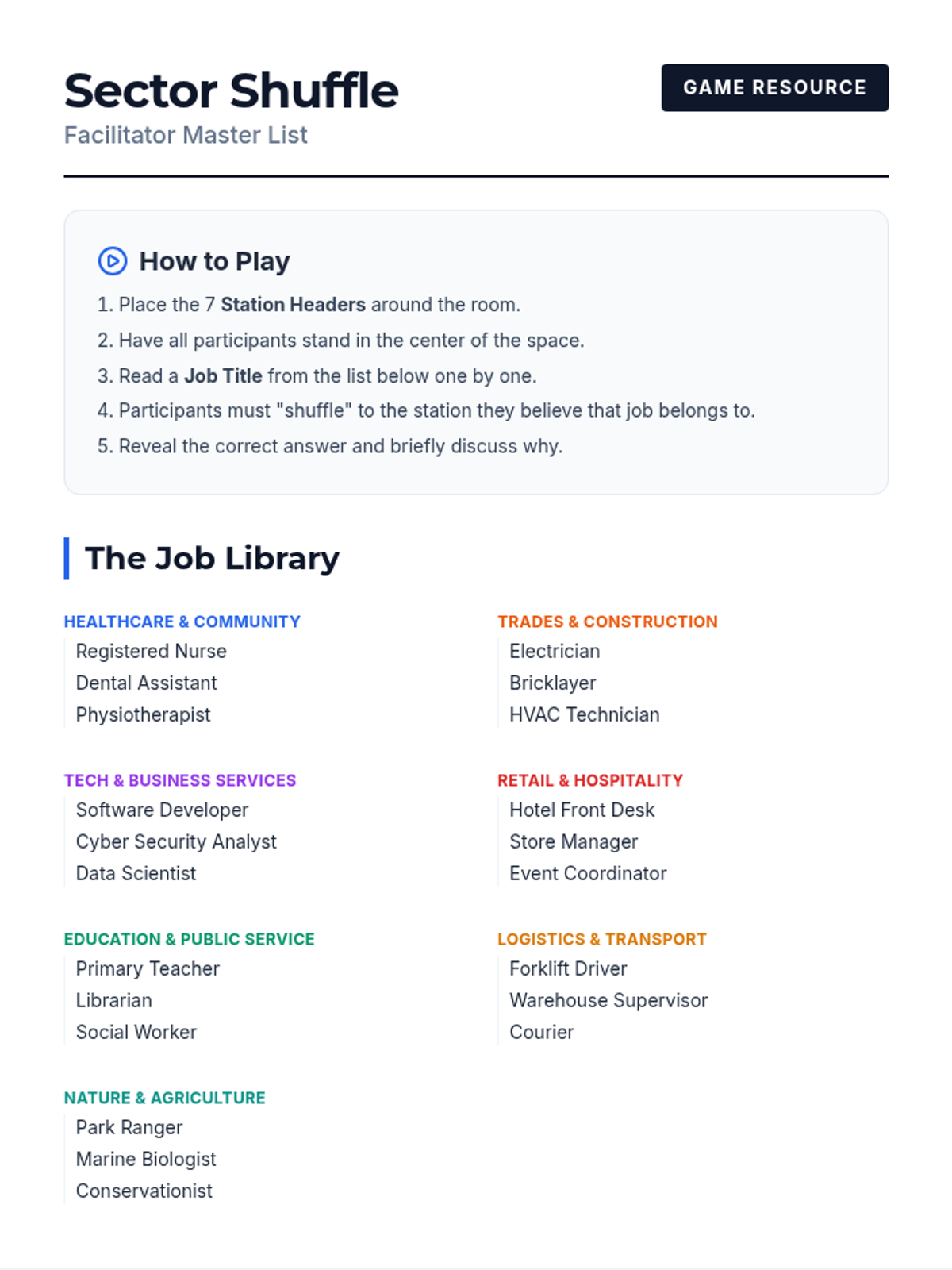
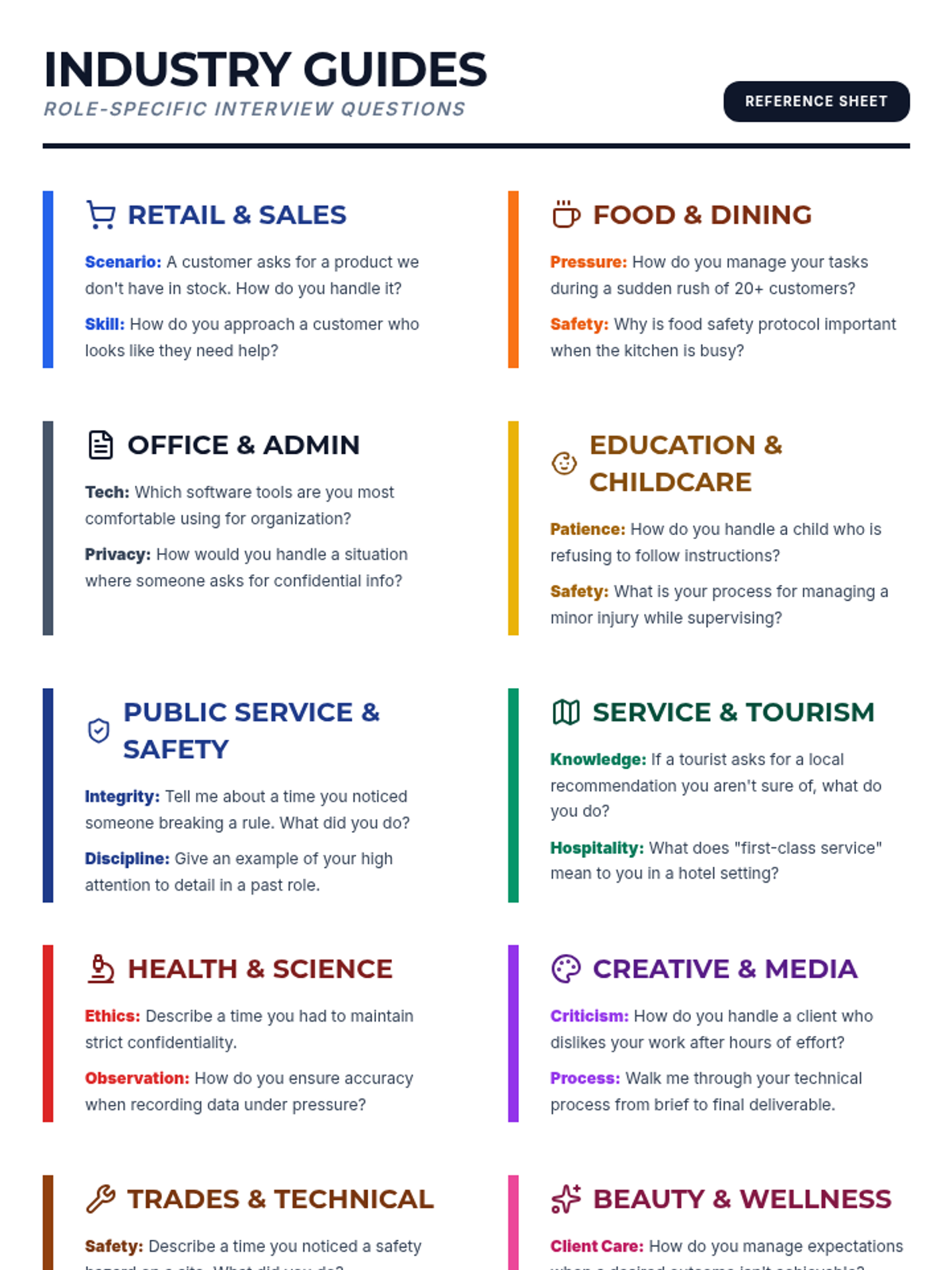
A professional and interactive employment training session for adults, focusing on 7 core industry sectors through real-world scenarios and collaborative decision-making.
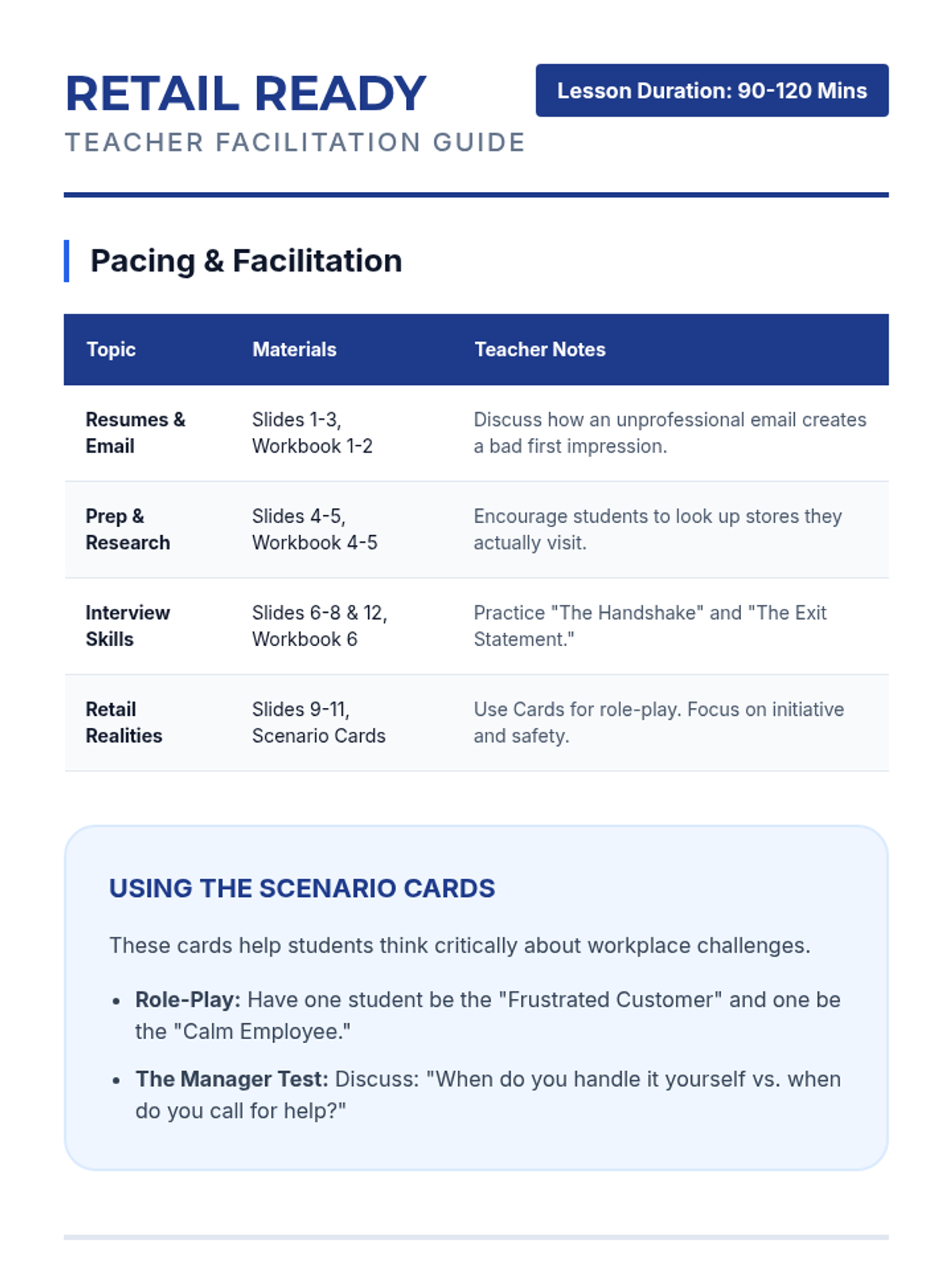
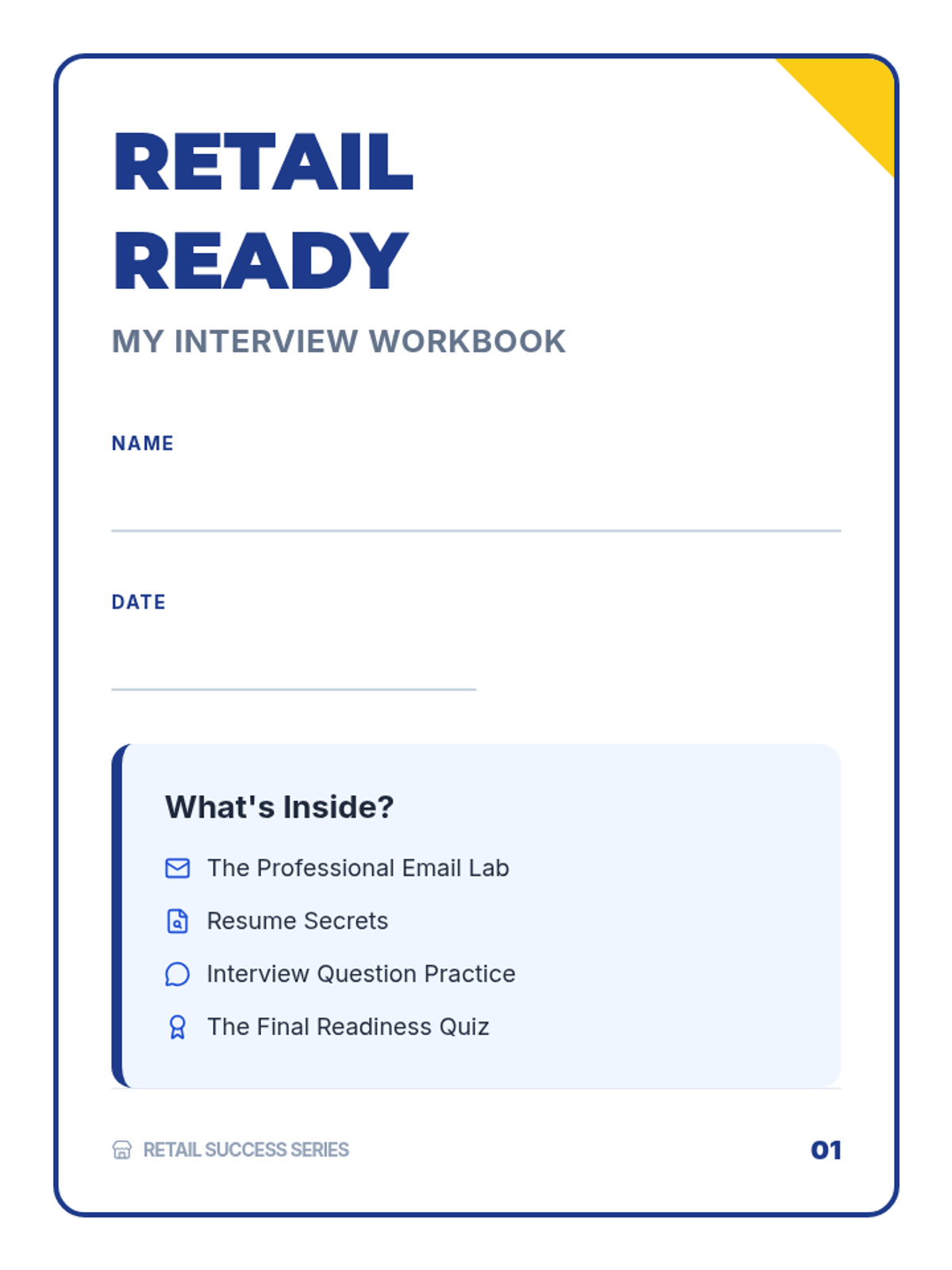
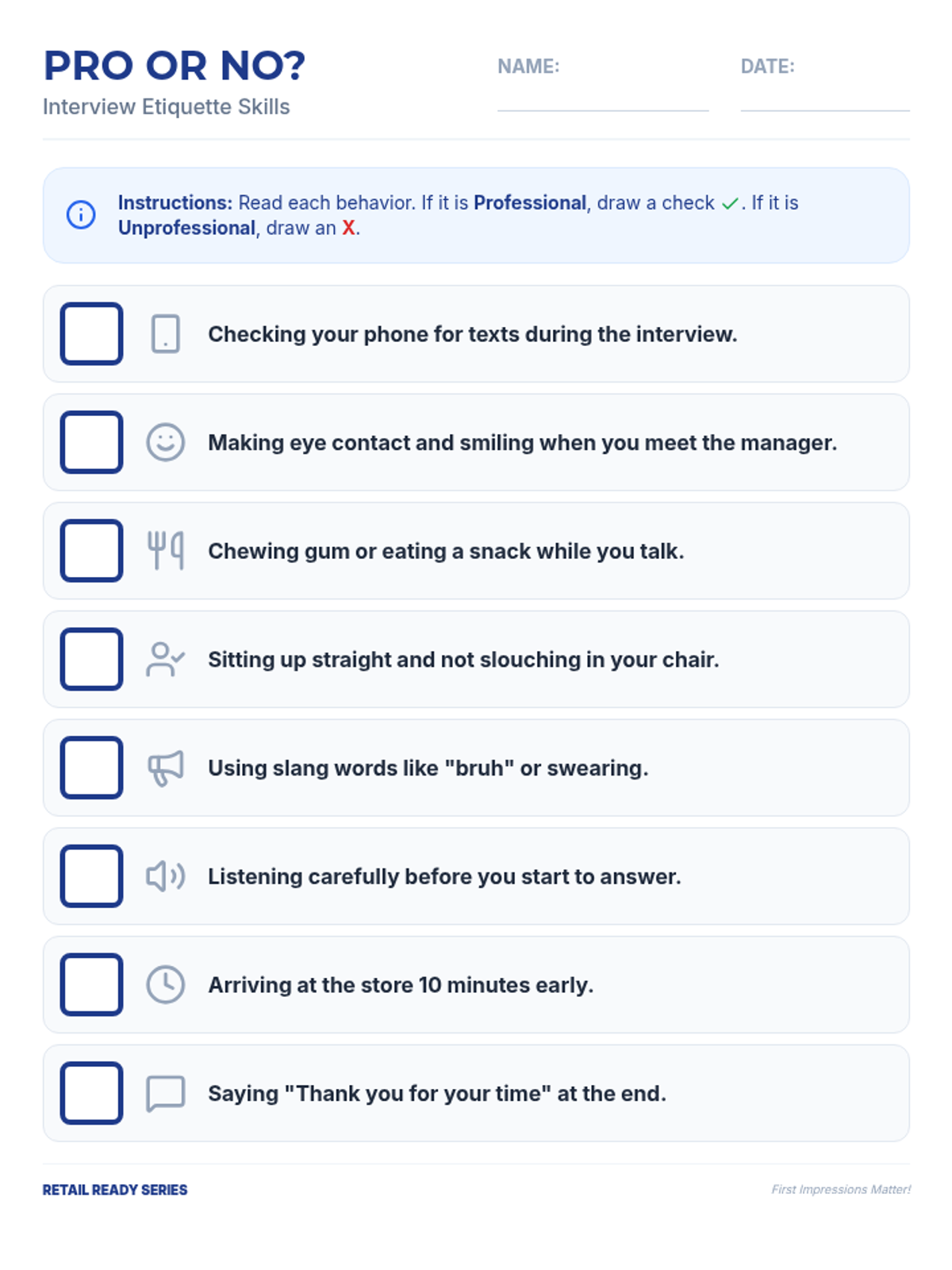
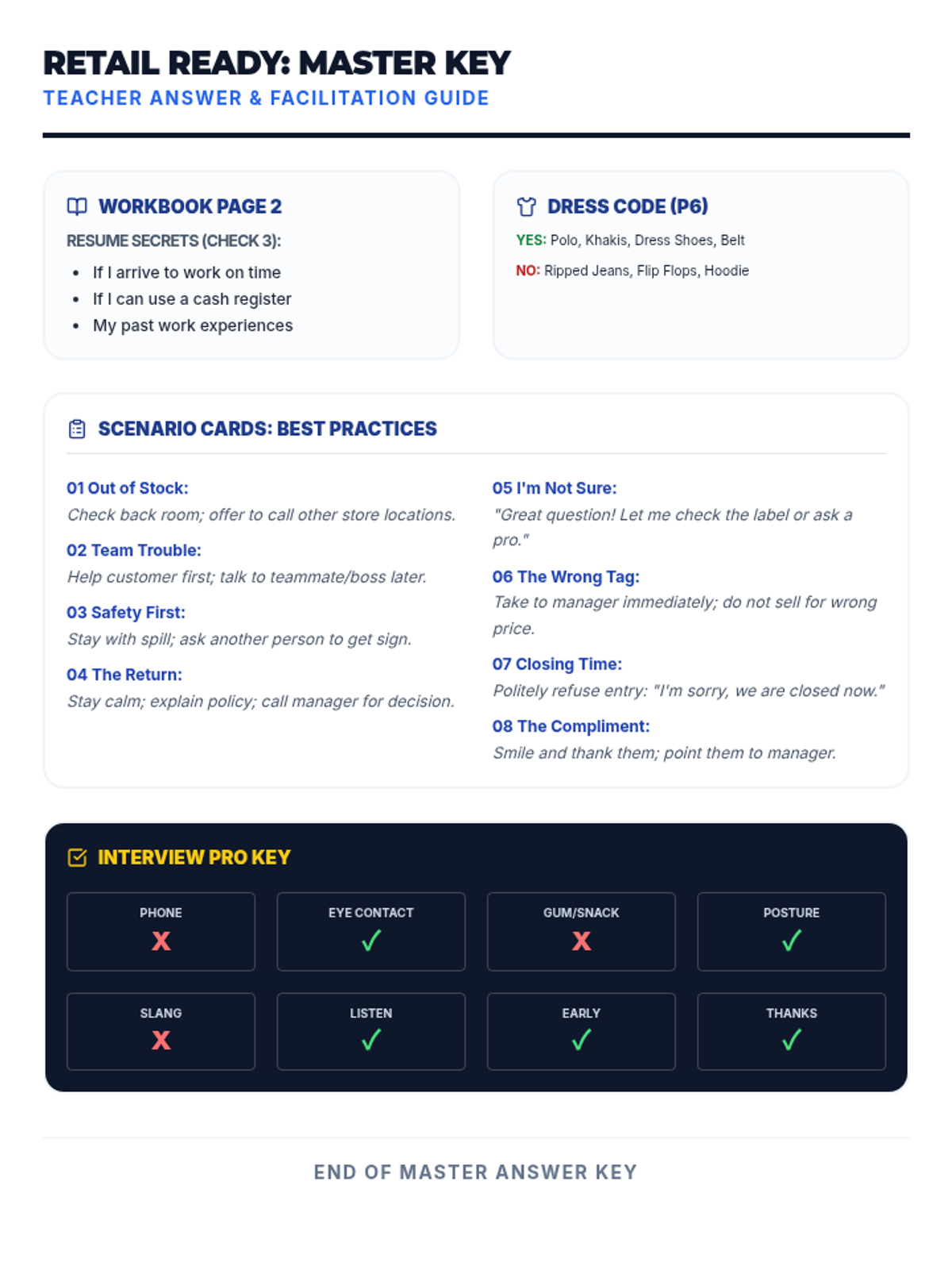
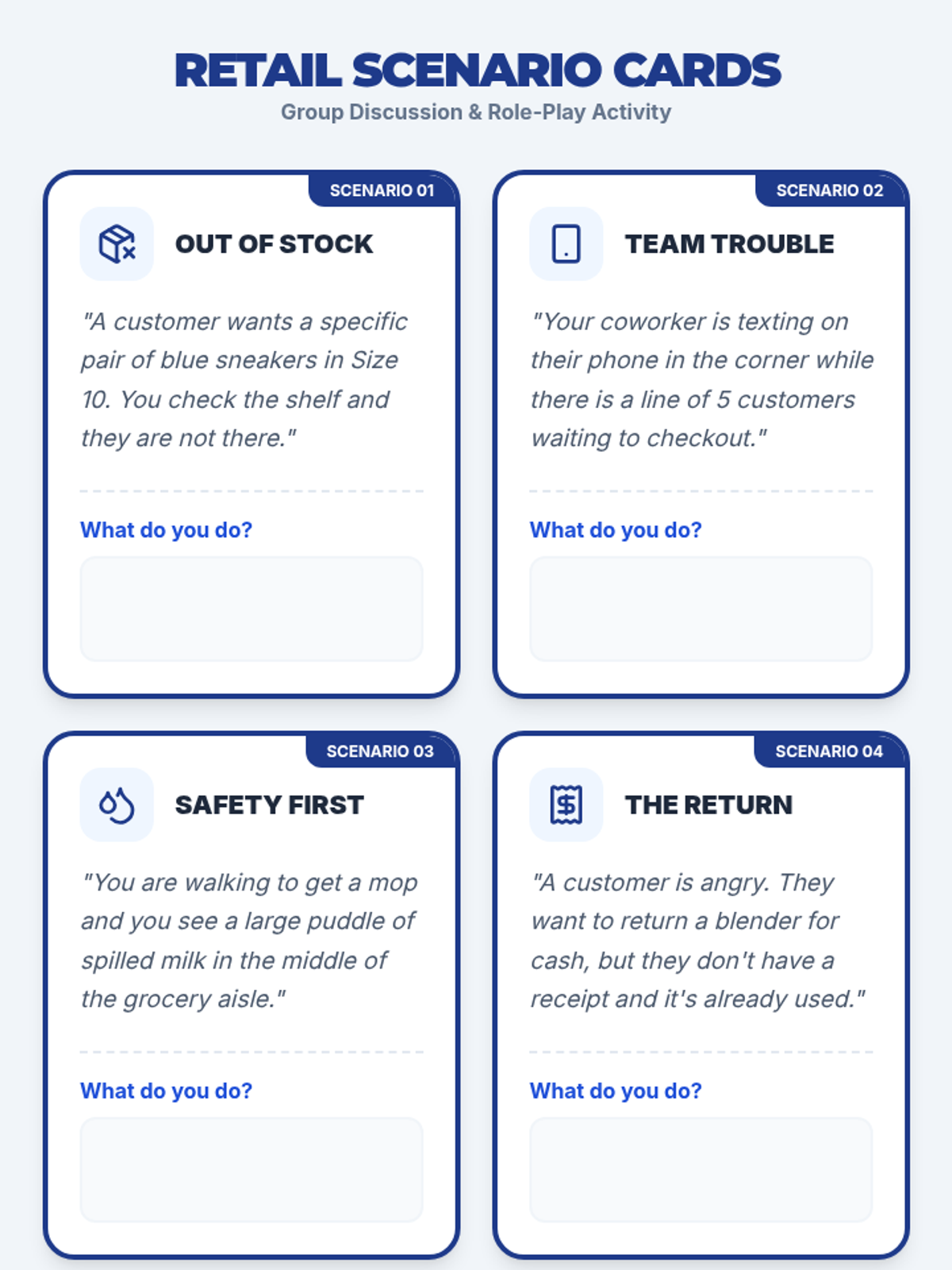
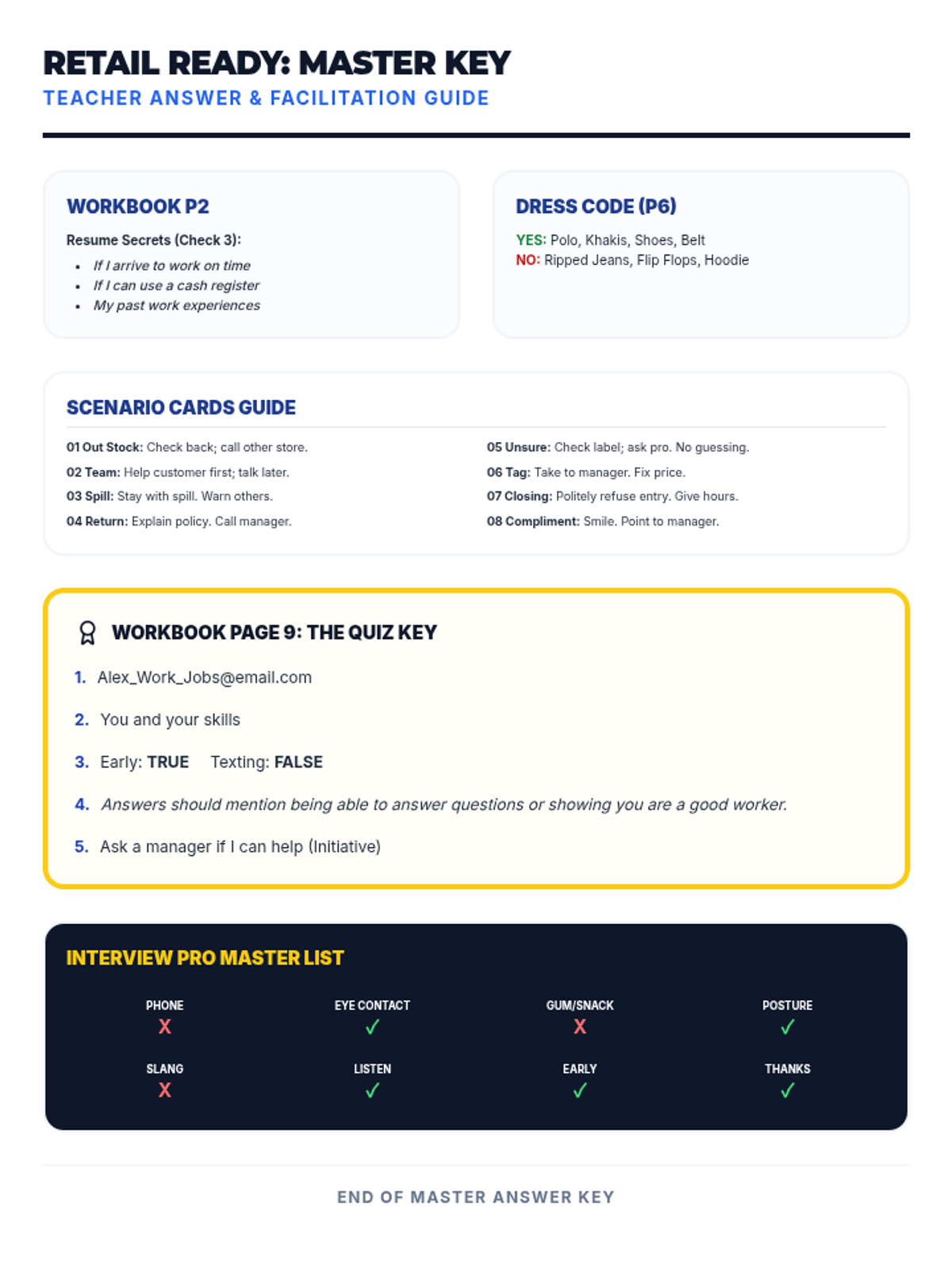
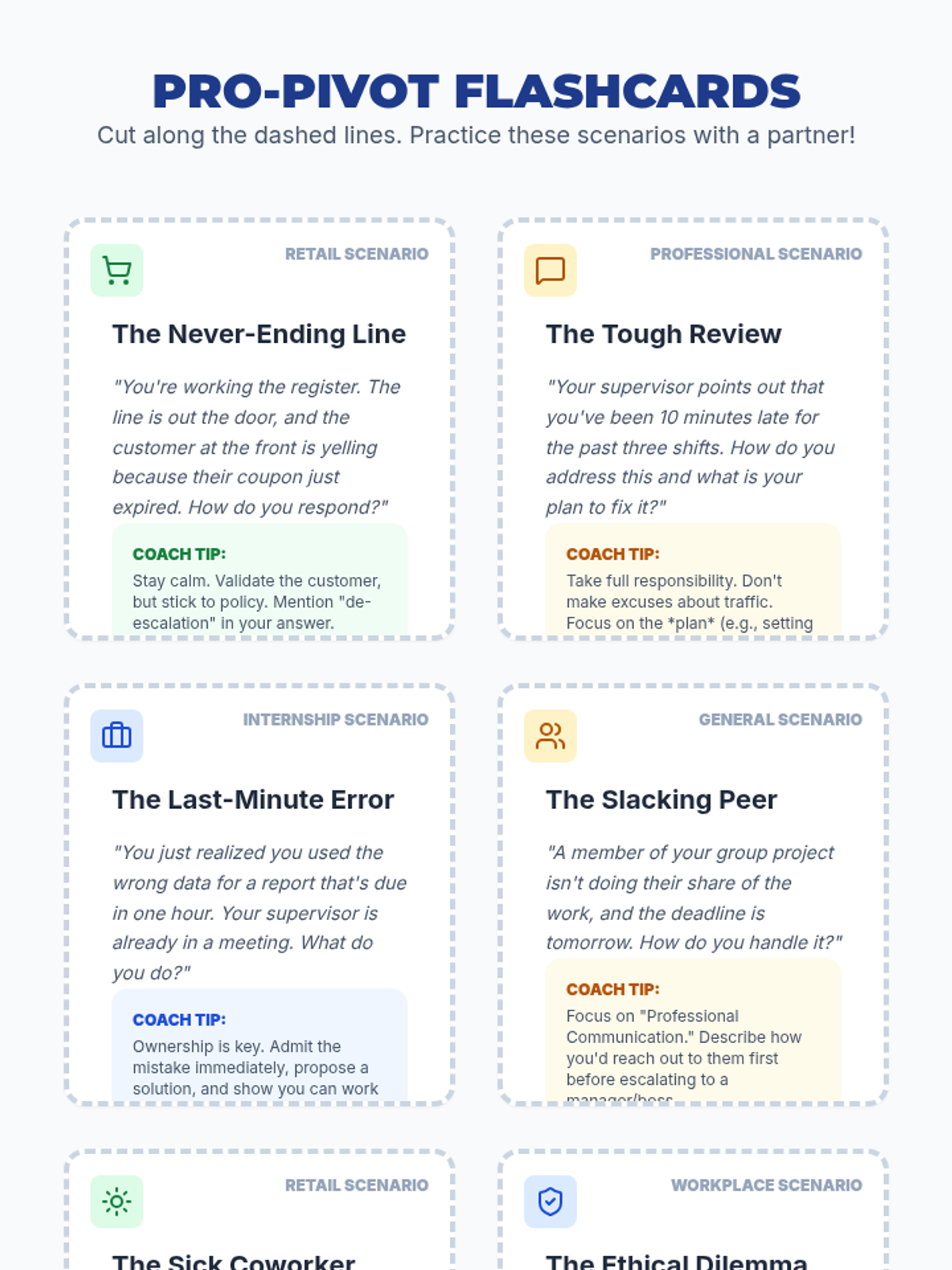
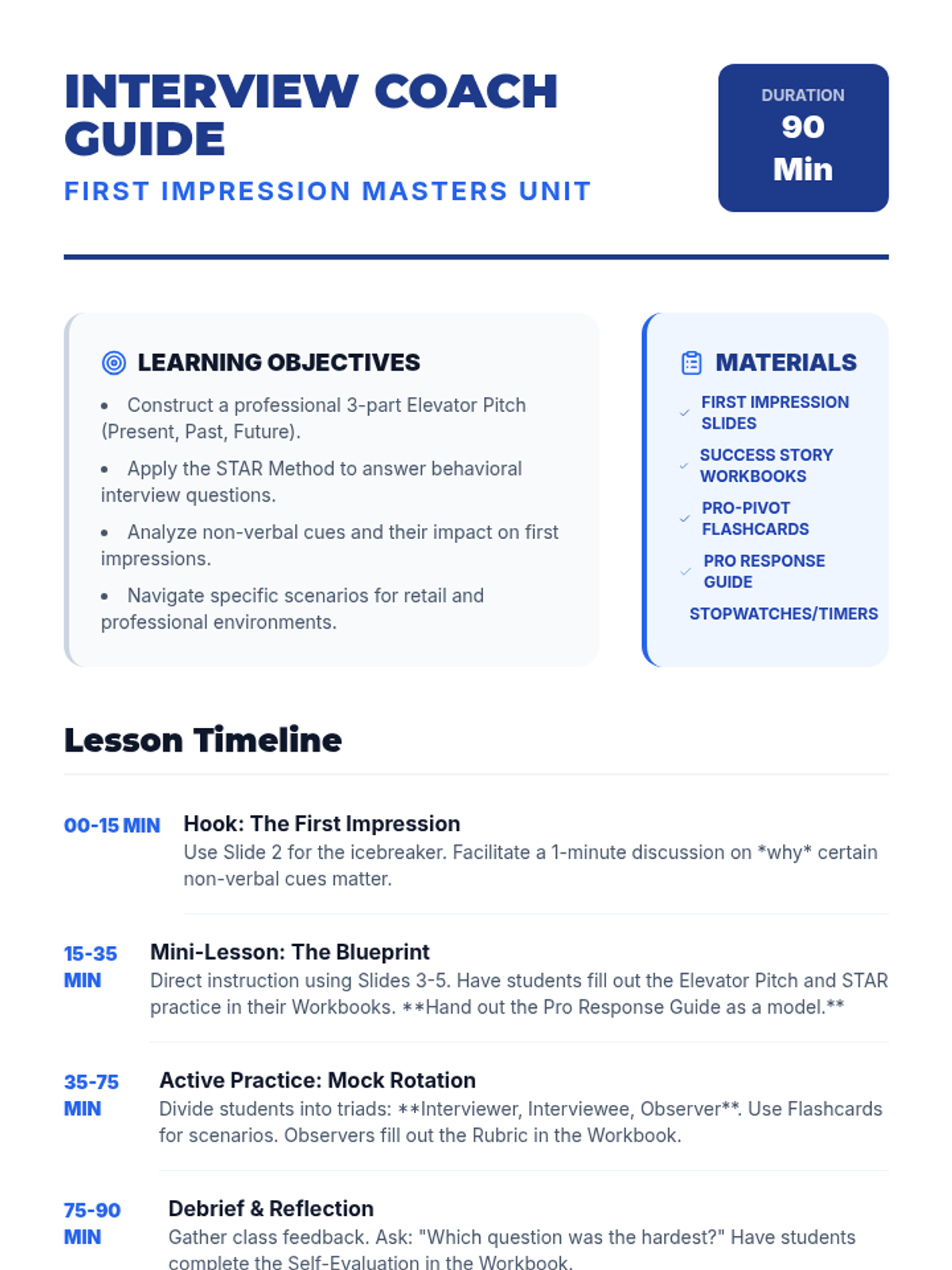
A comprehensive lesson preparing students and transition-aged adults for retail job interviews, covering everything from professional emails to post-interview etiquette.
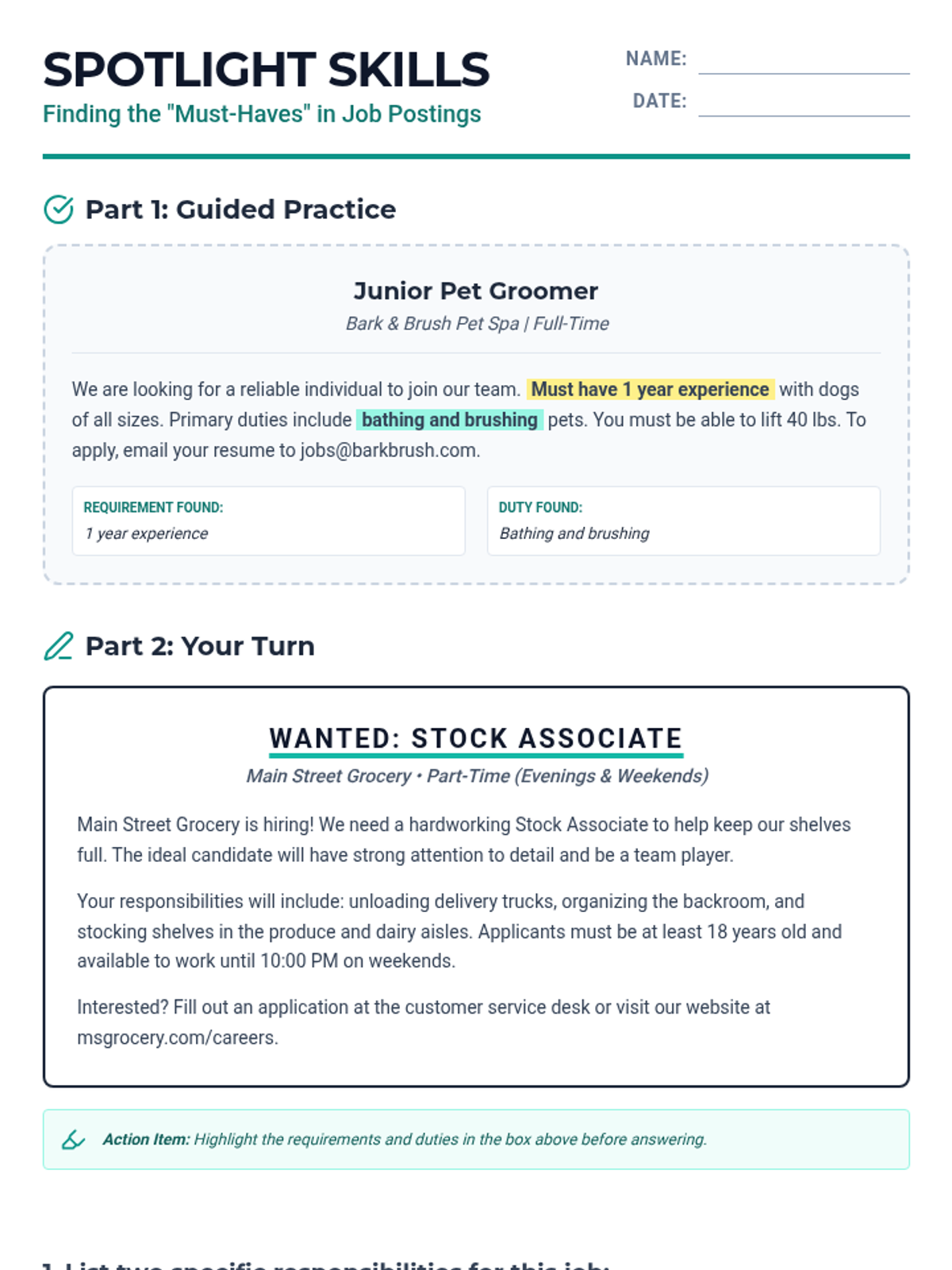
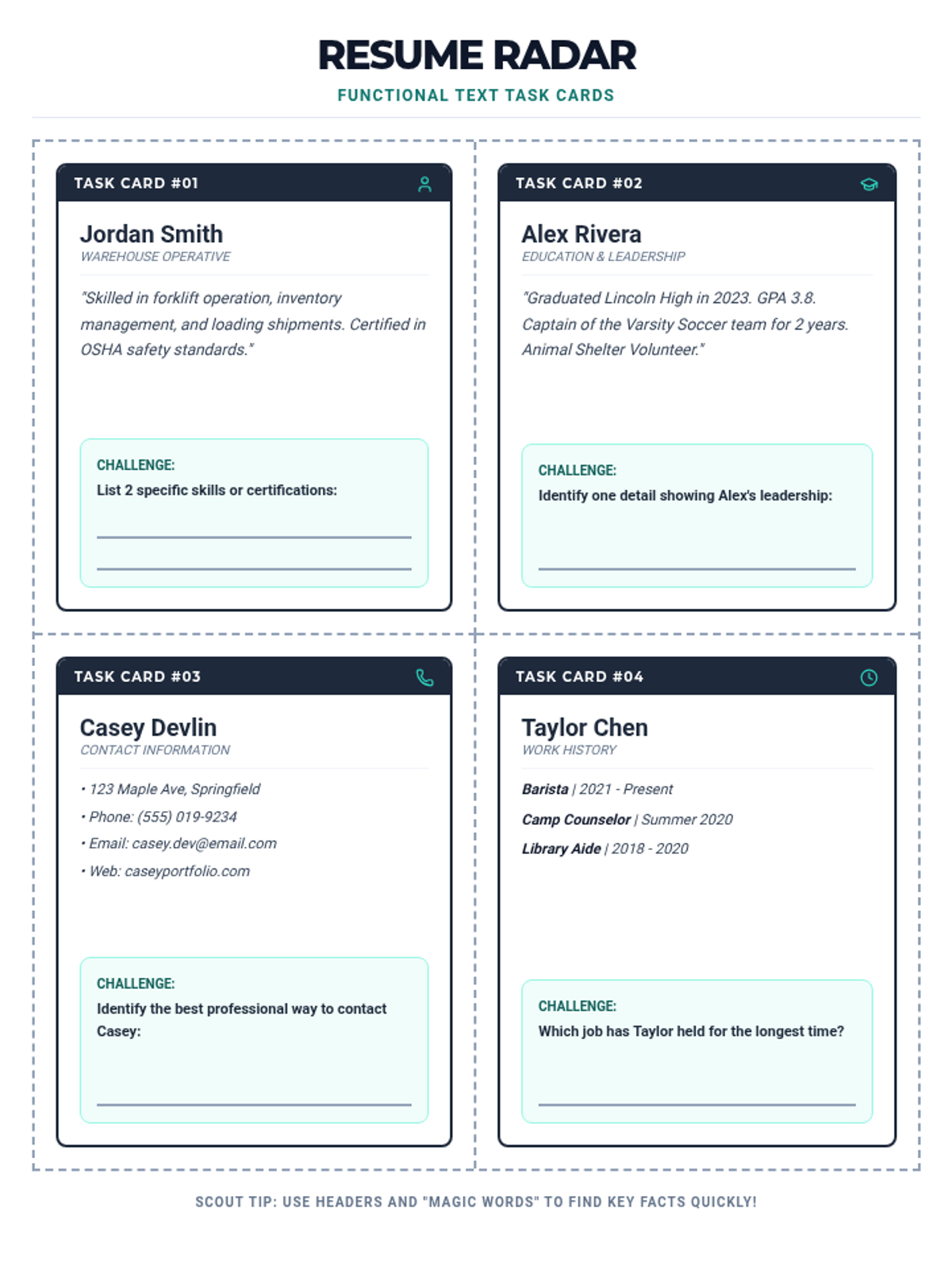
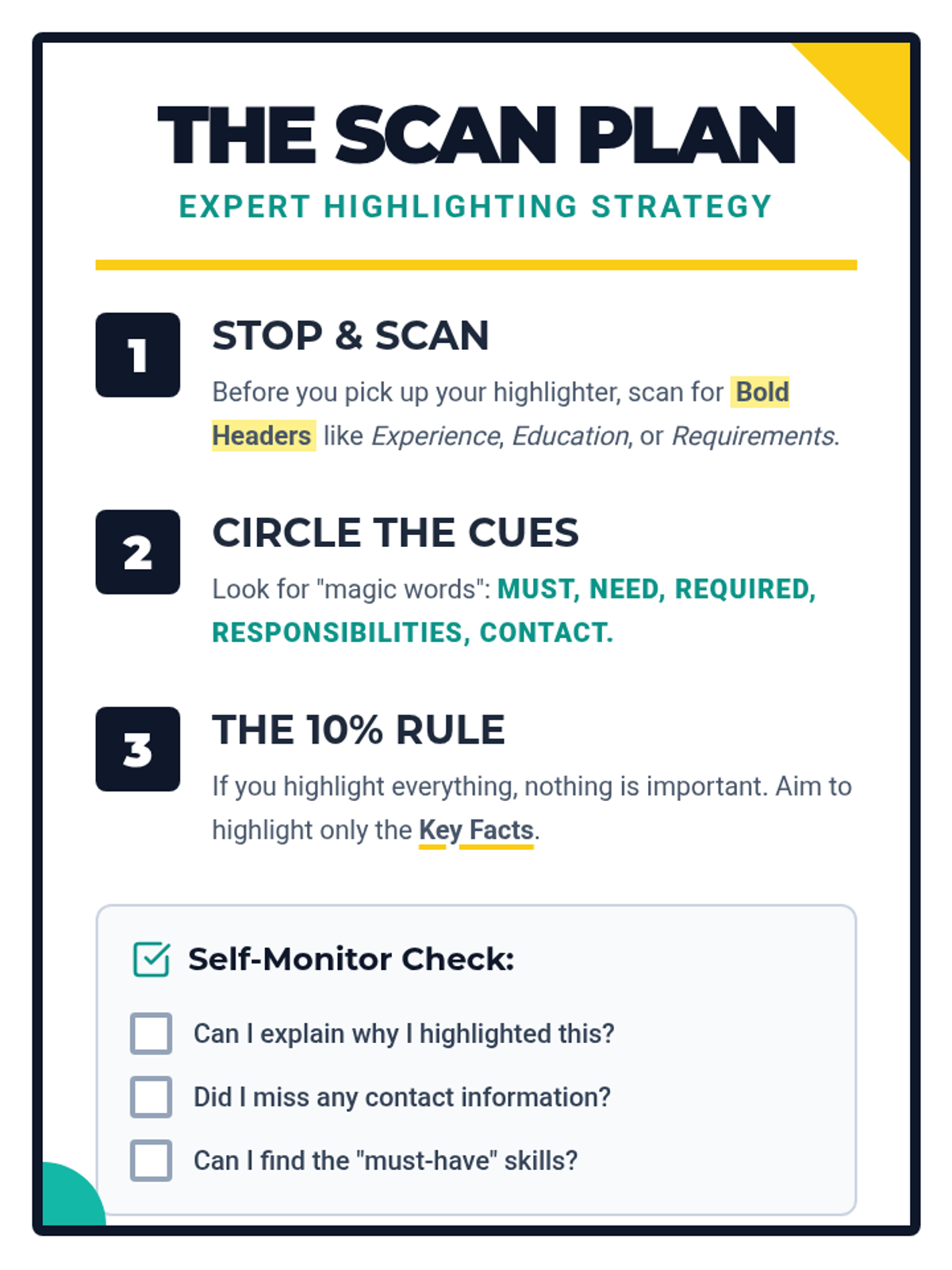
Students will learn to identify and highlight essential information in job-related texts like resumes and job postings using specific scanning and self-monitoring strategies.
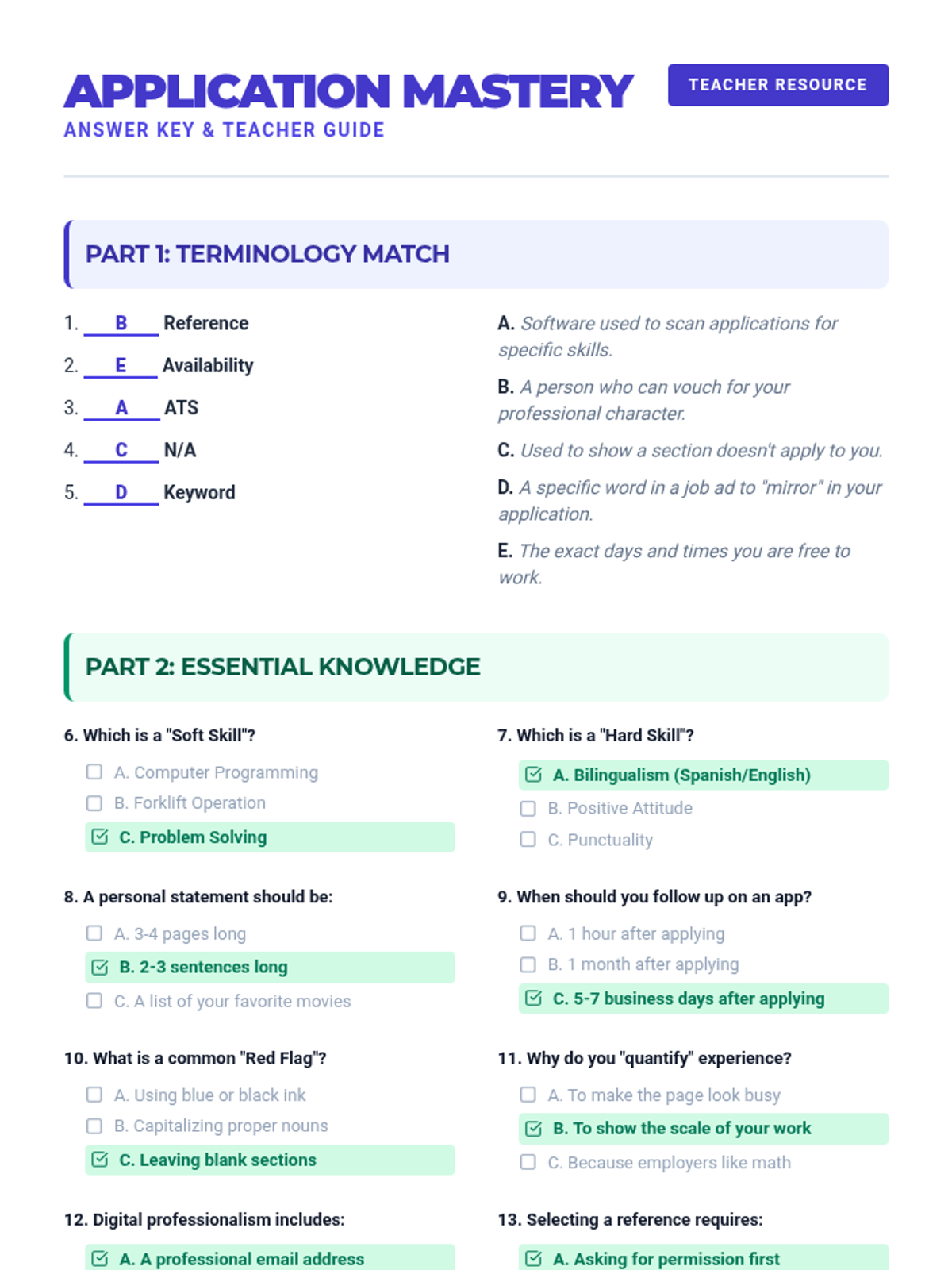
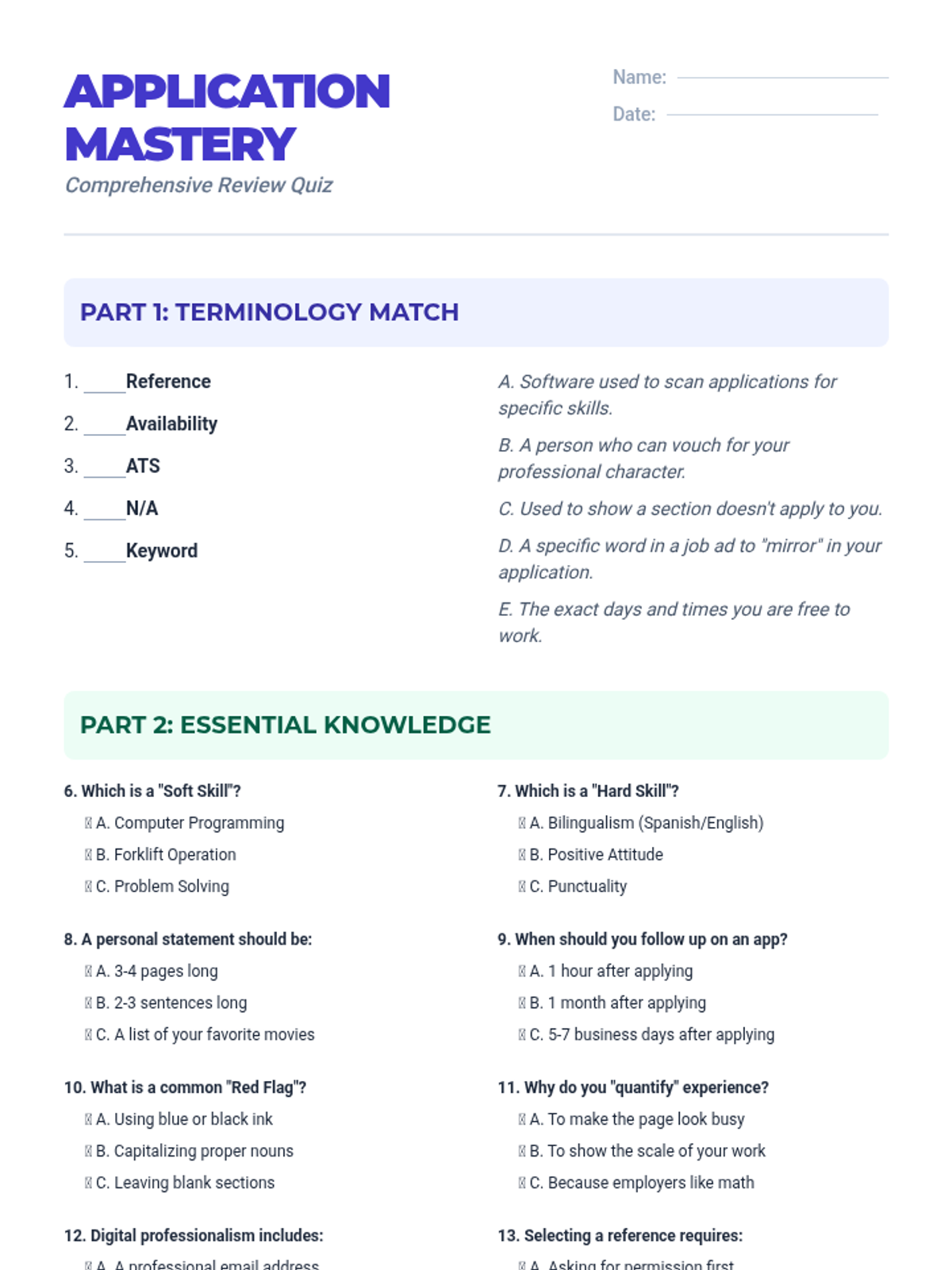
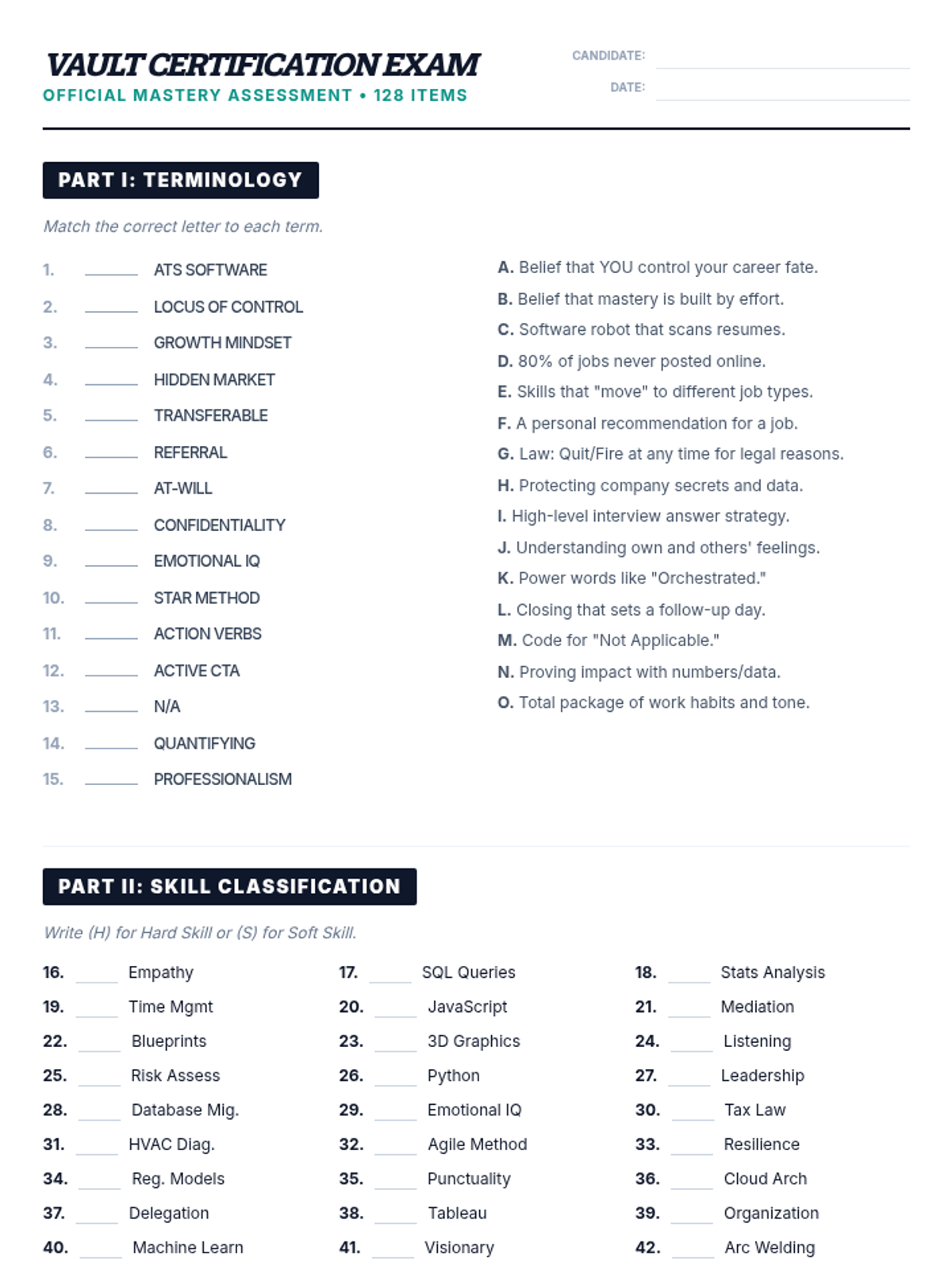
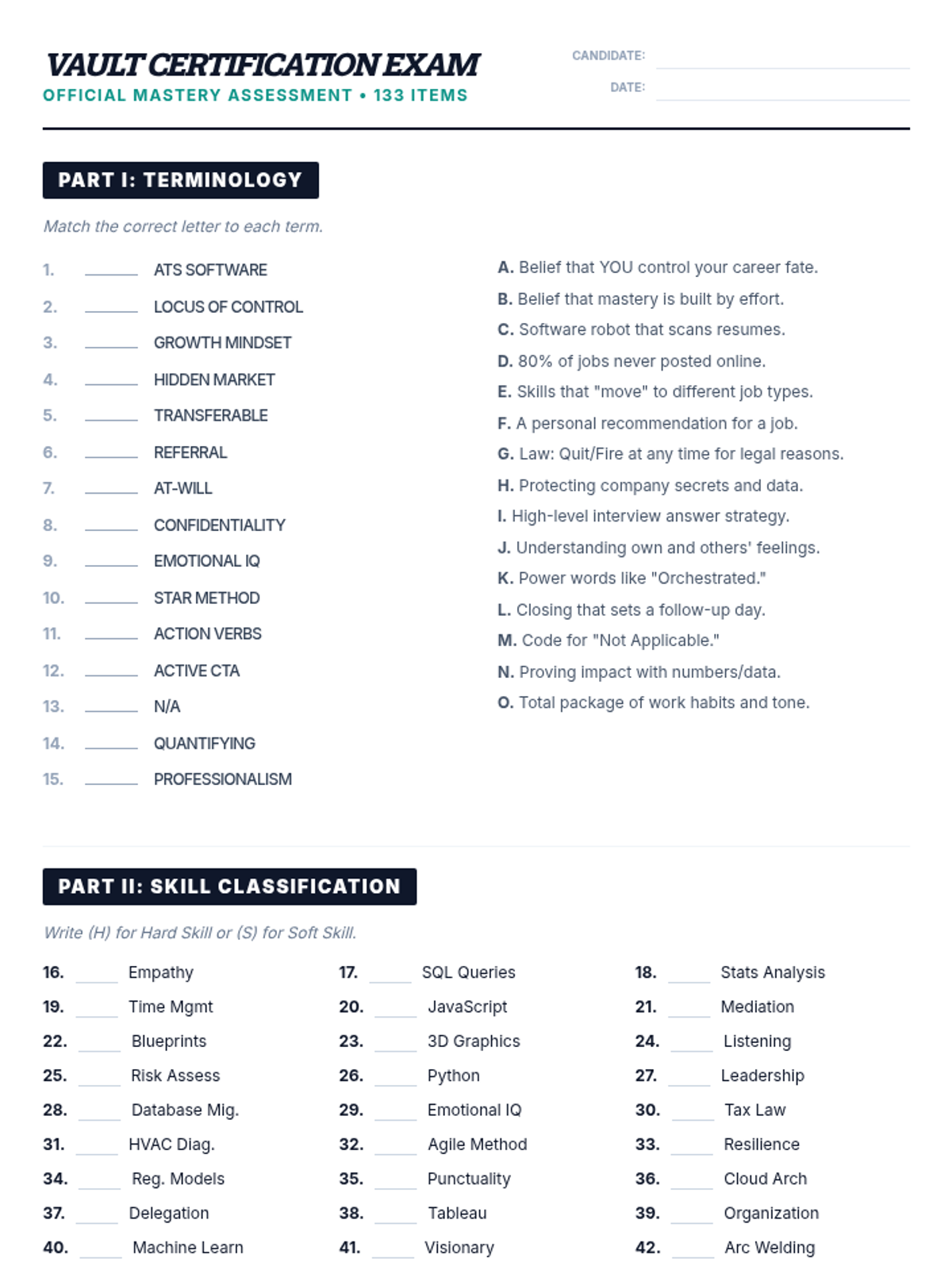
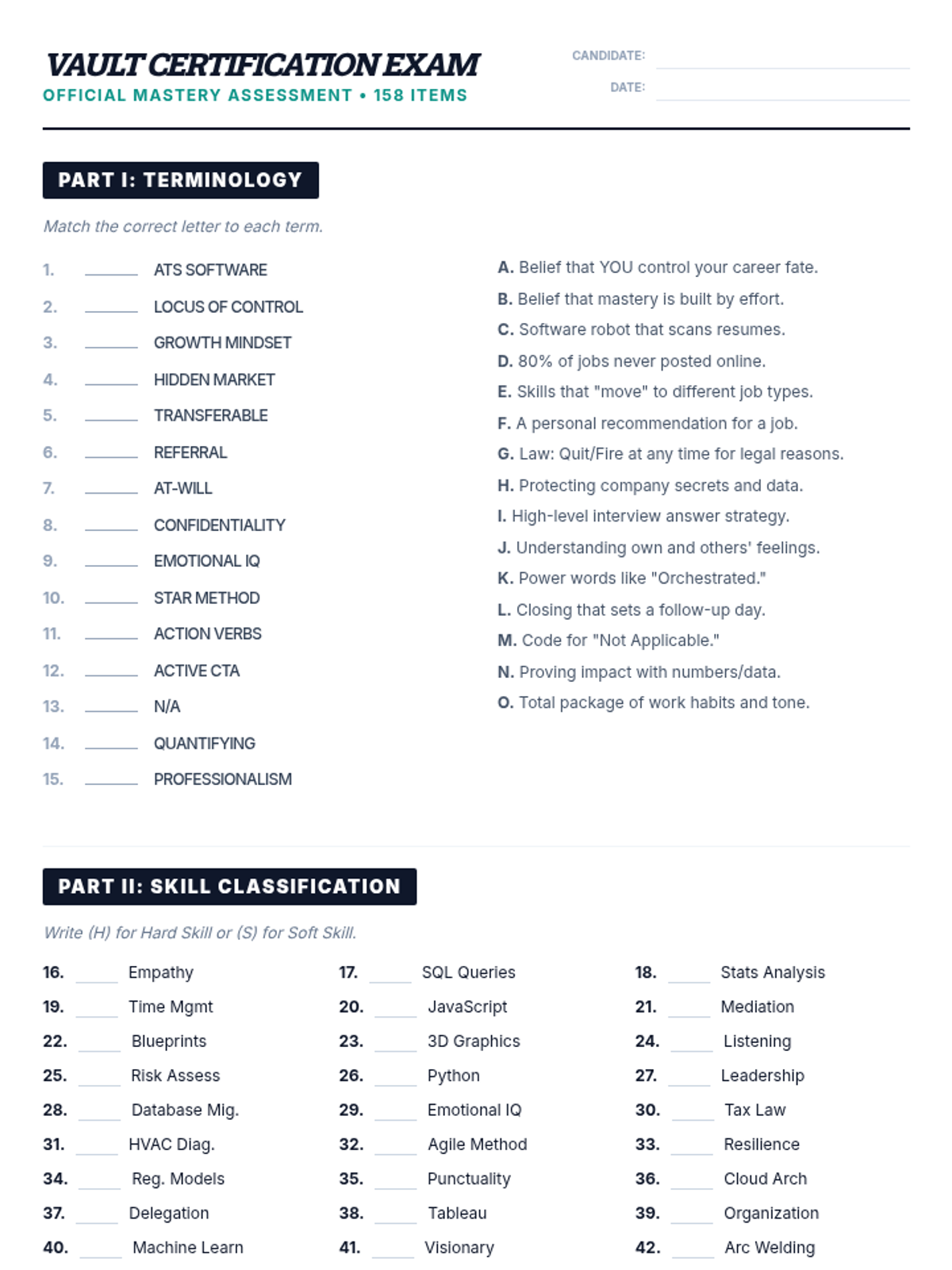
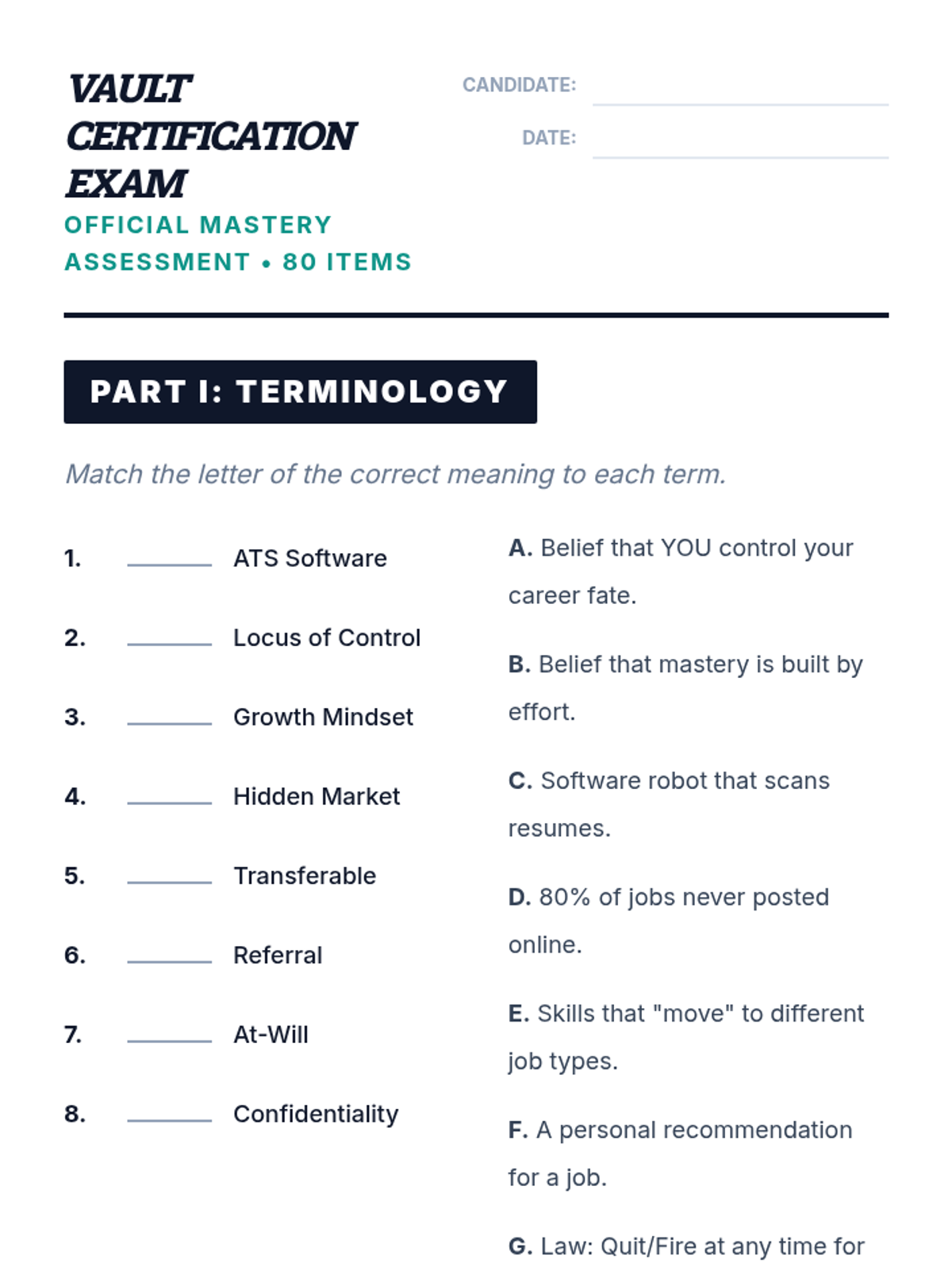
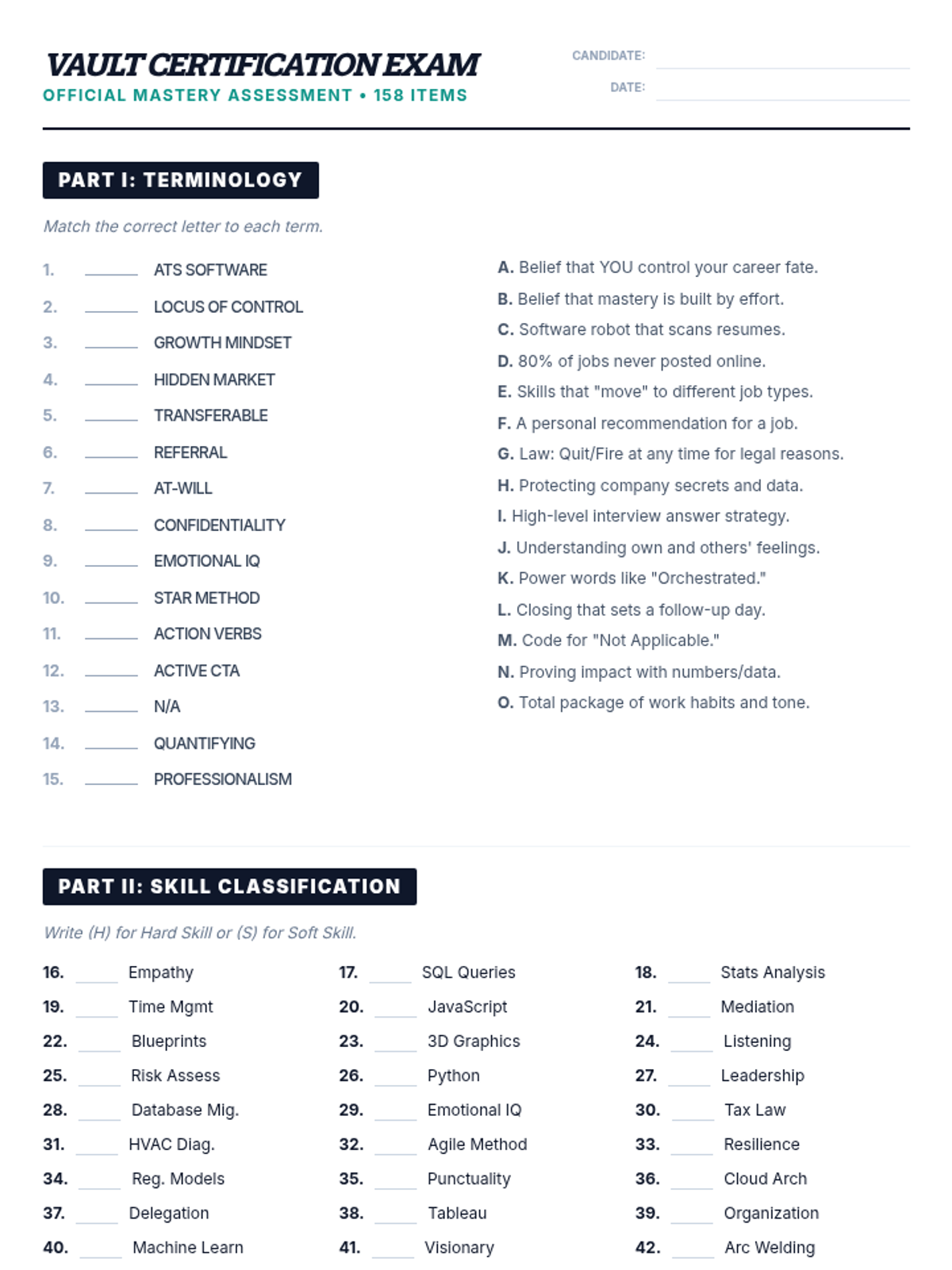
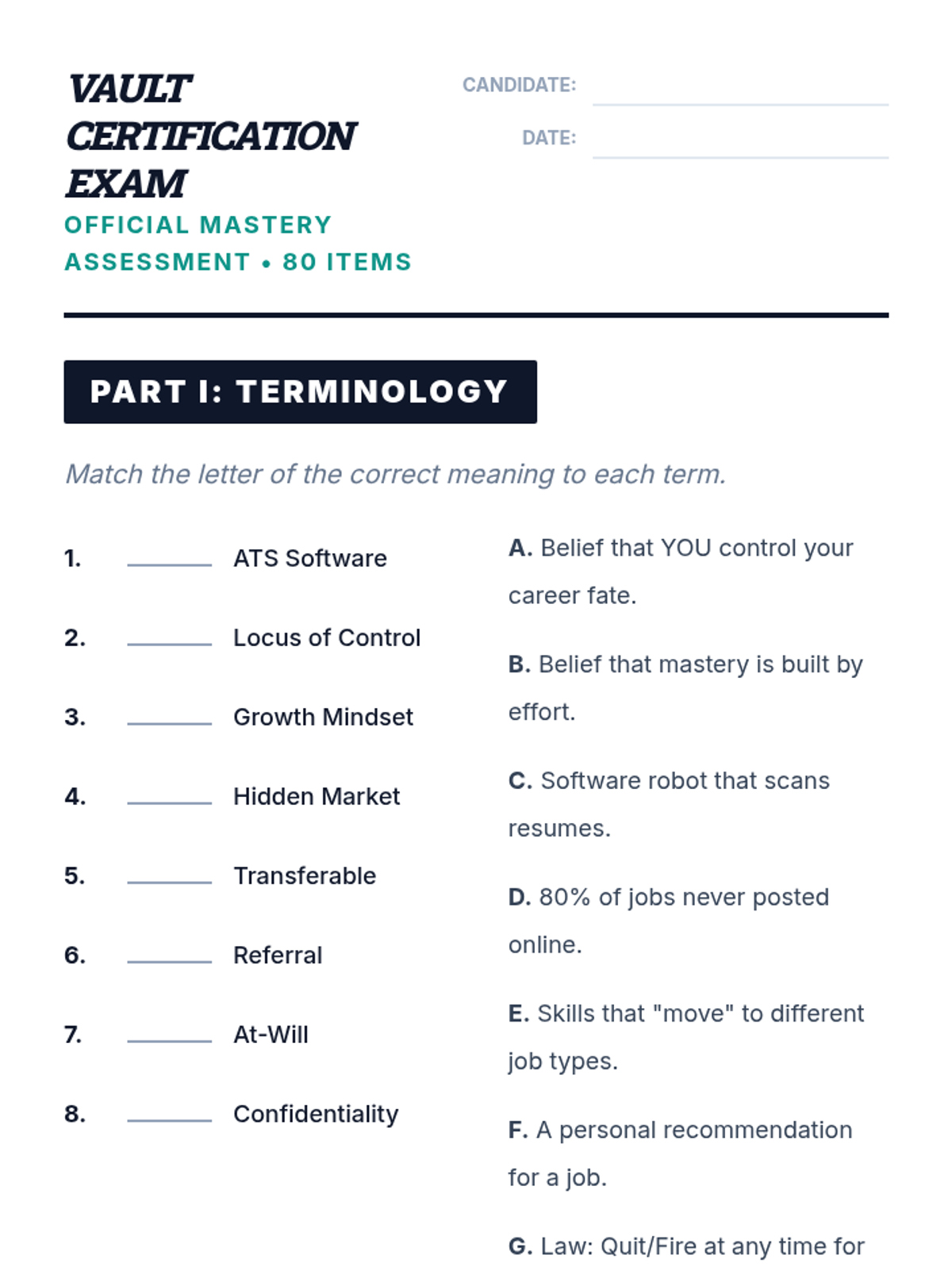
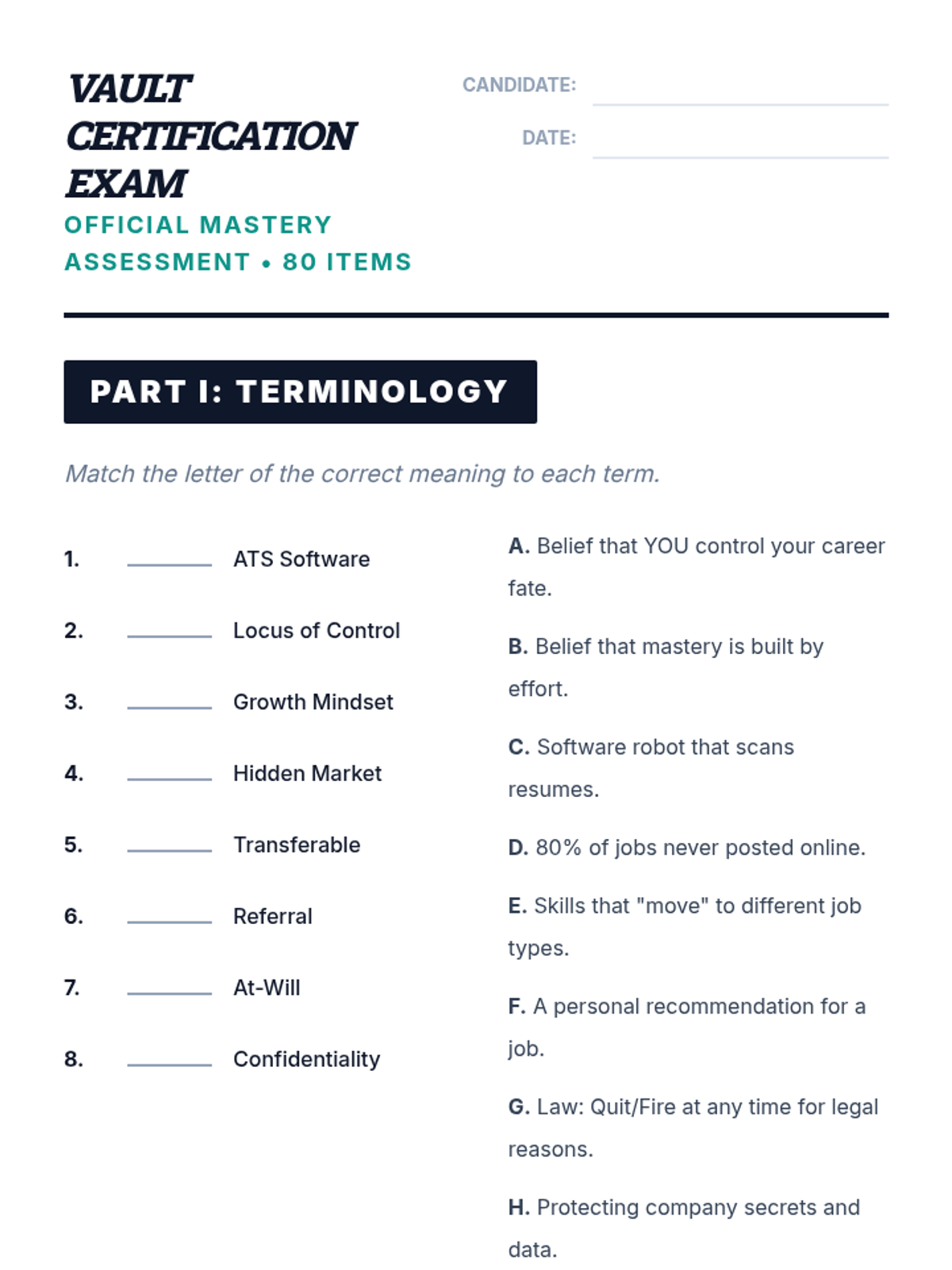
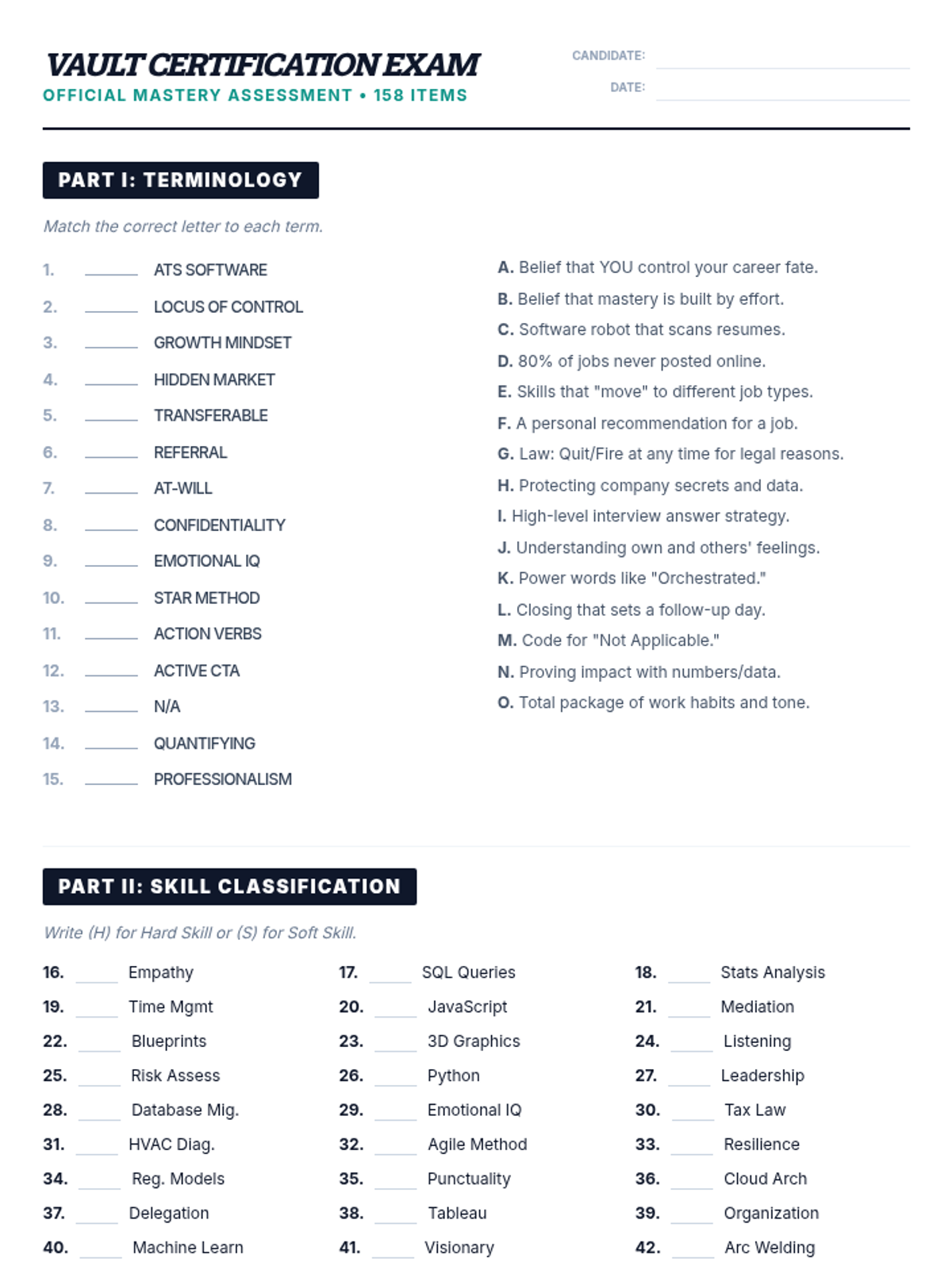
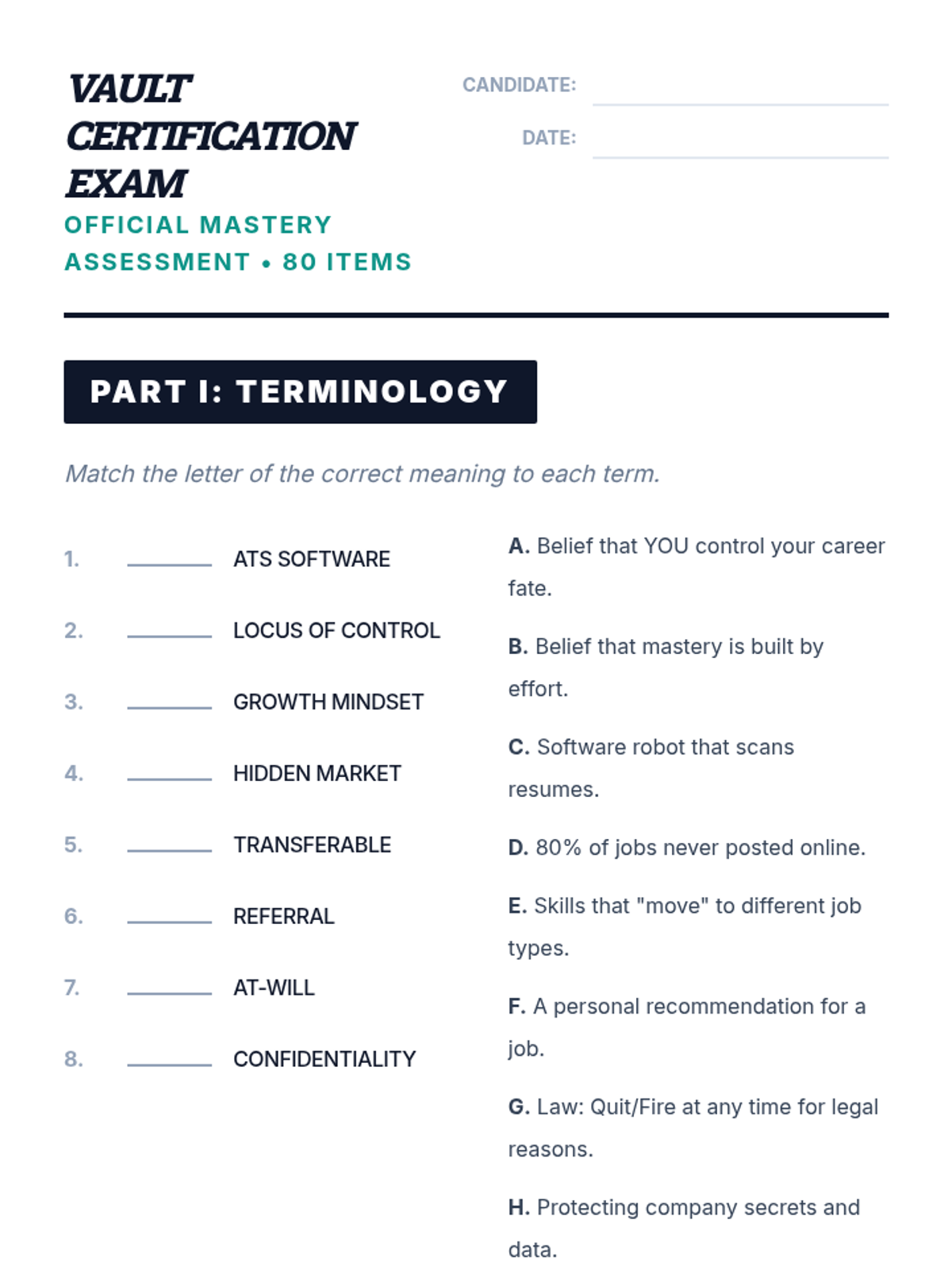
A comprehensive lesson focused on mastering the job application process, from understanding terminology to tailoring skills for specific roles.
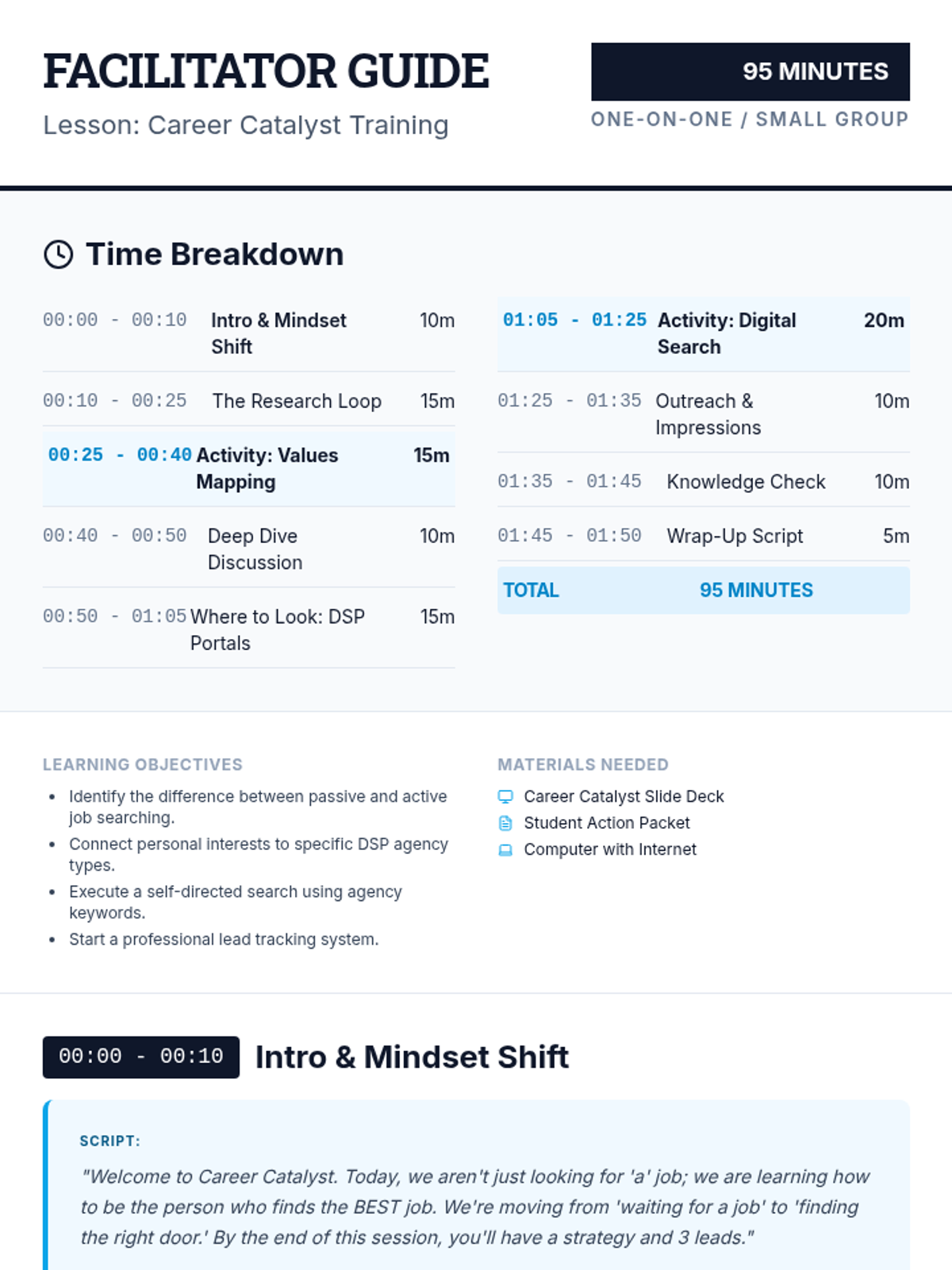
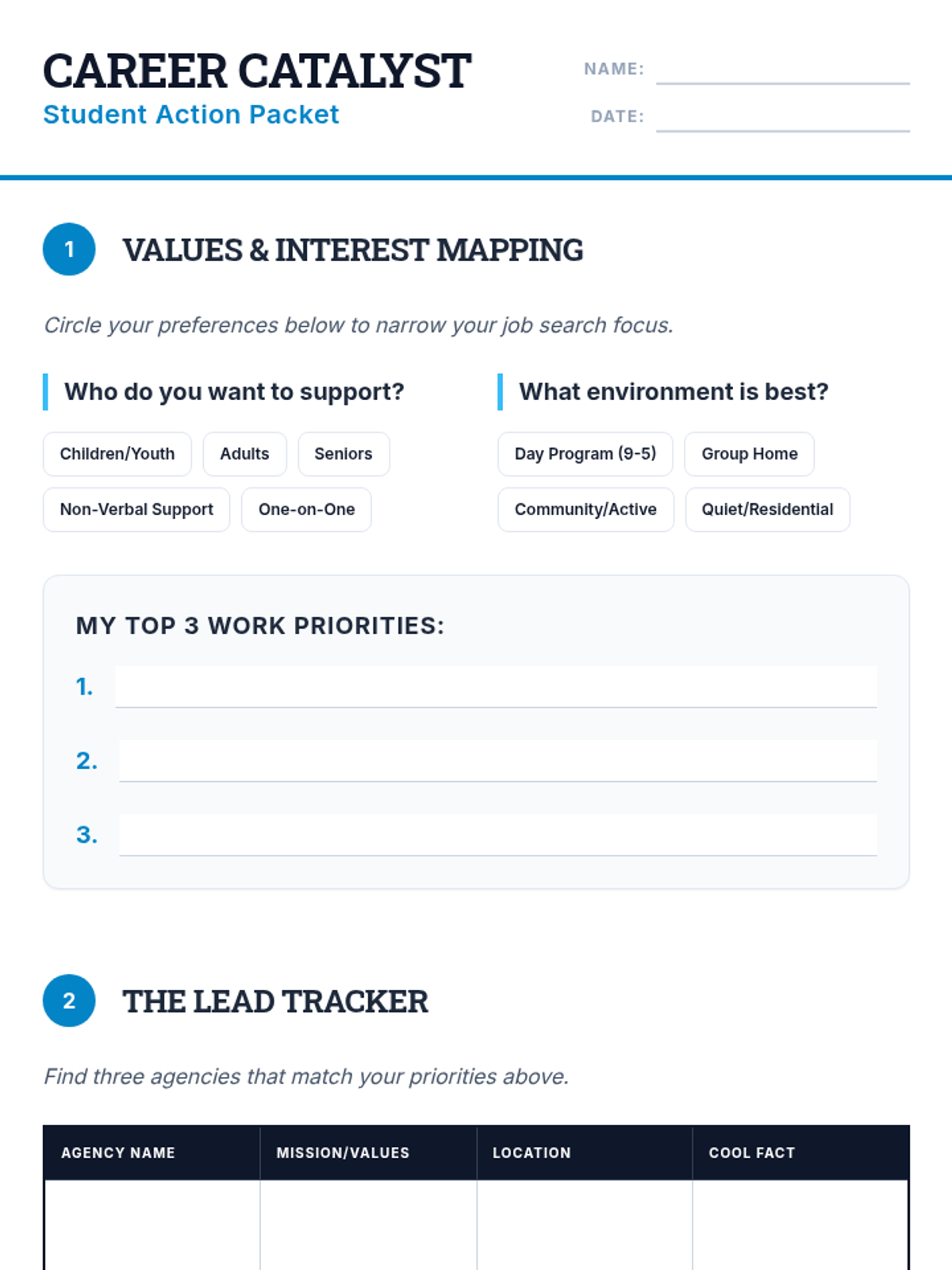
A comprehensive 95-minute training session designed to empower learners to take ownership of their job search, specifically tailored for the Direct Support Professional (DSP) field. This lesson covers mindset shifts, deep research techniques, and practical lead tracking.
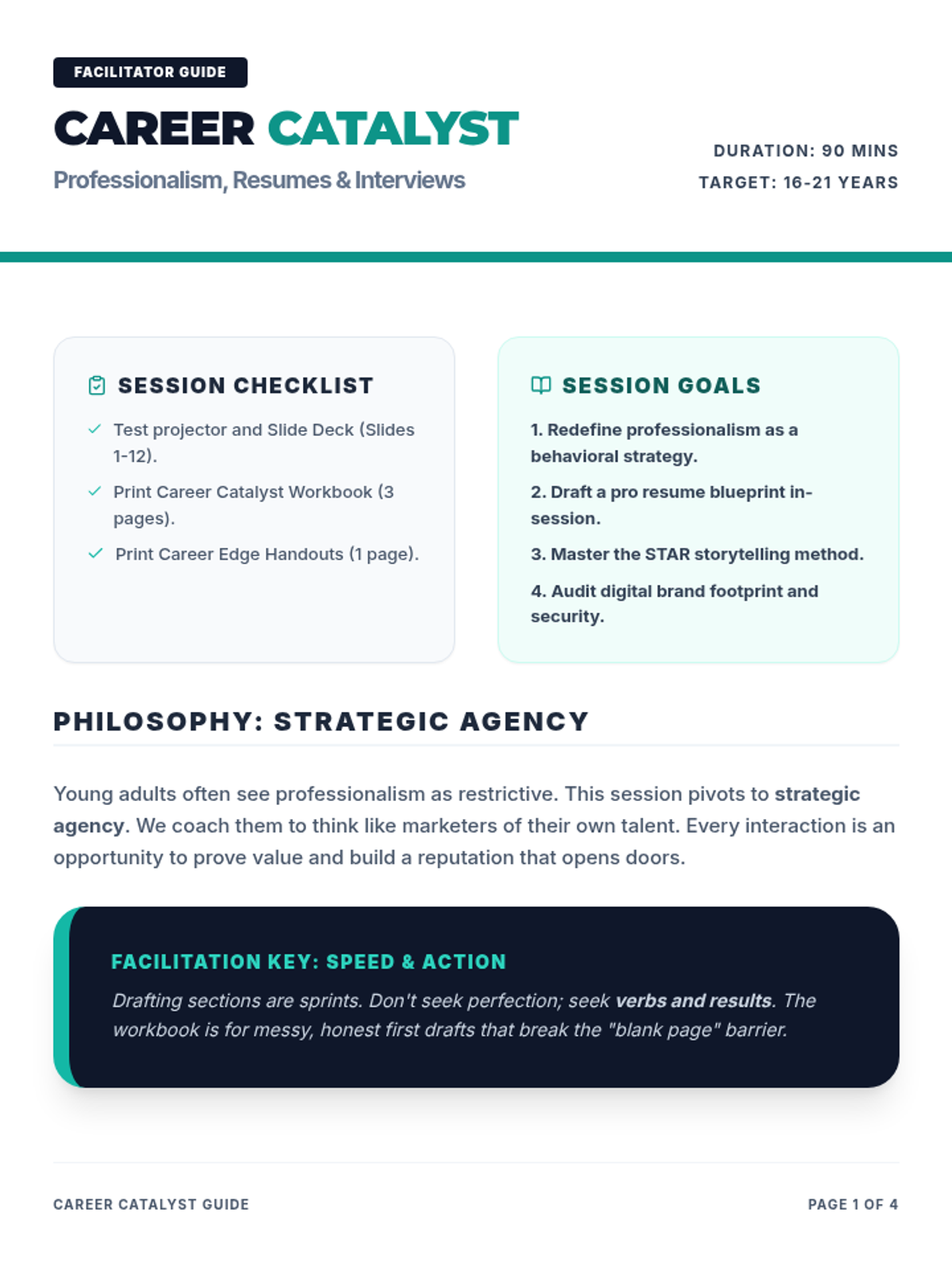
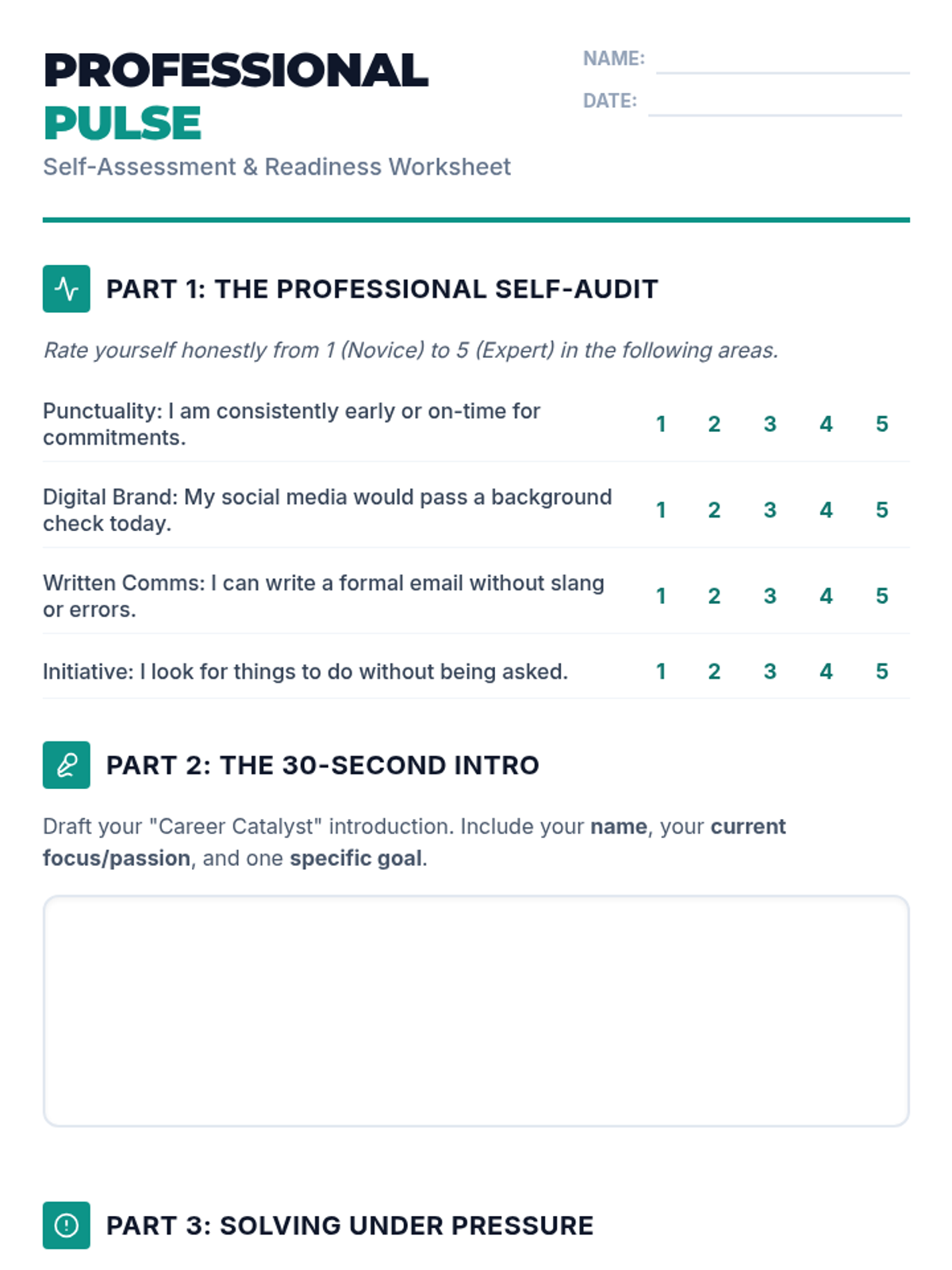
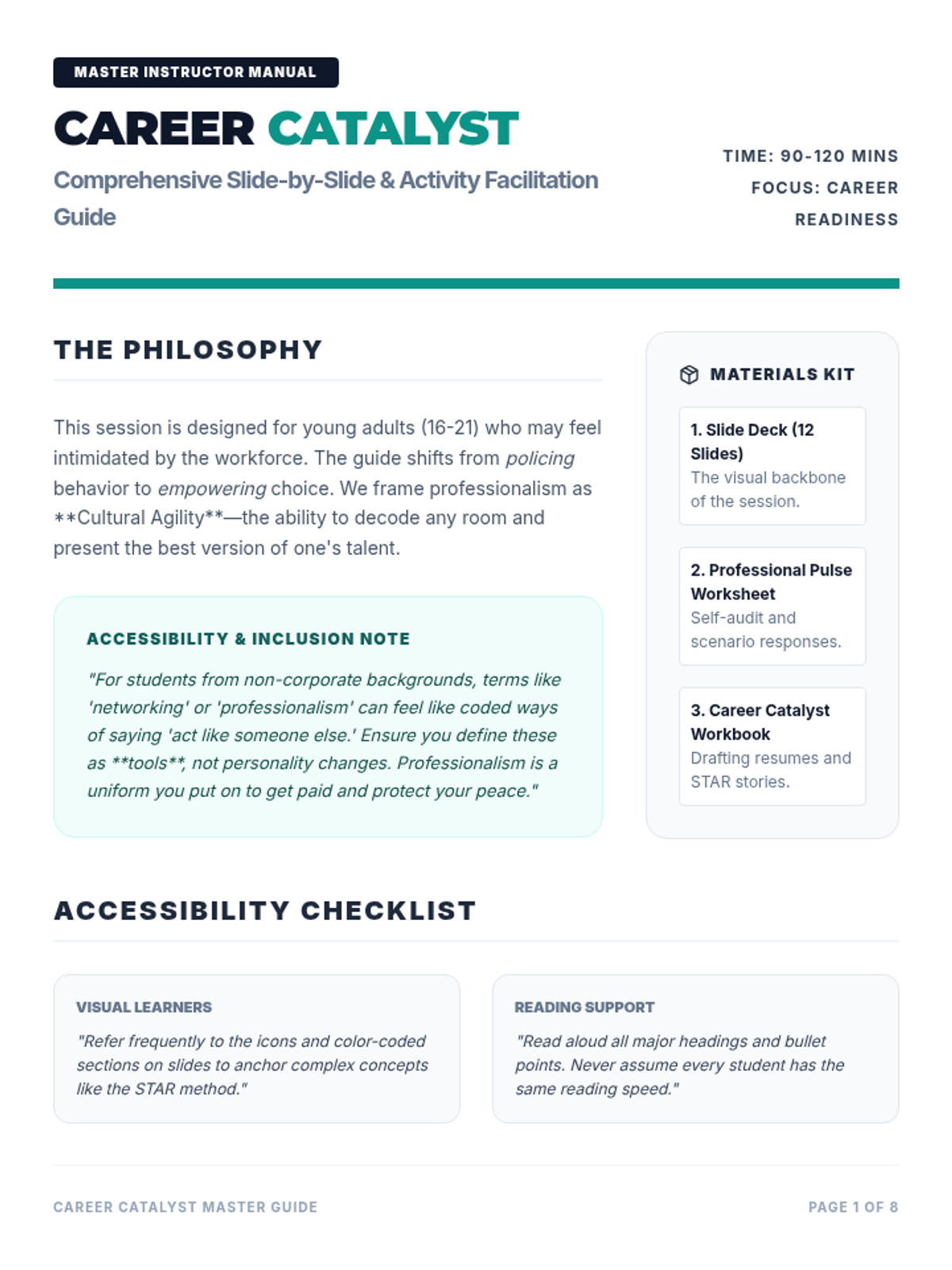
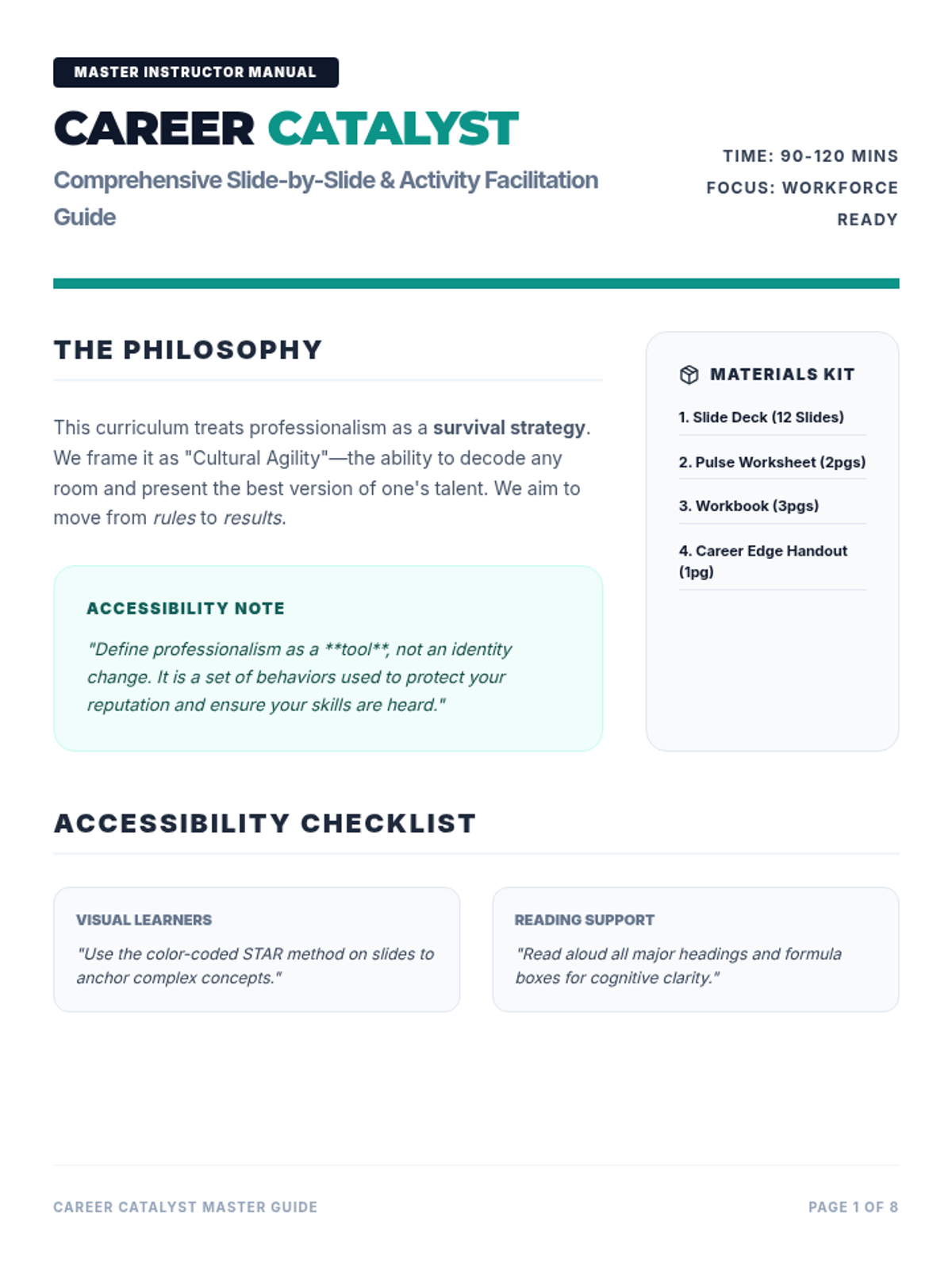
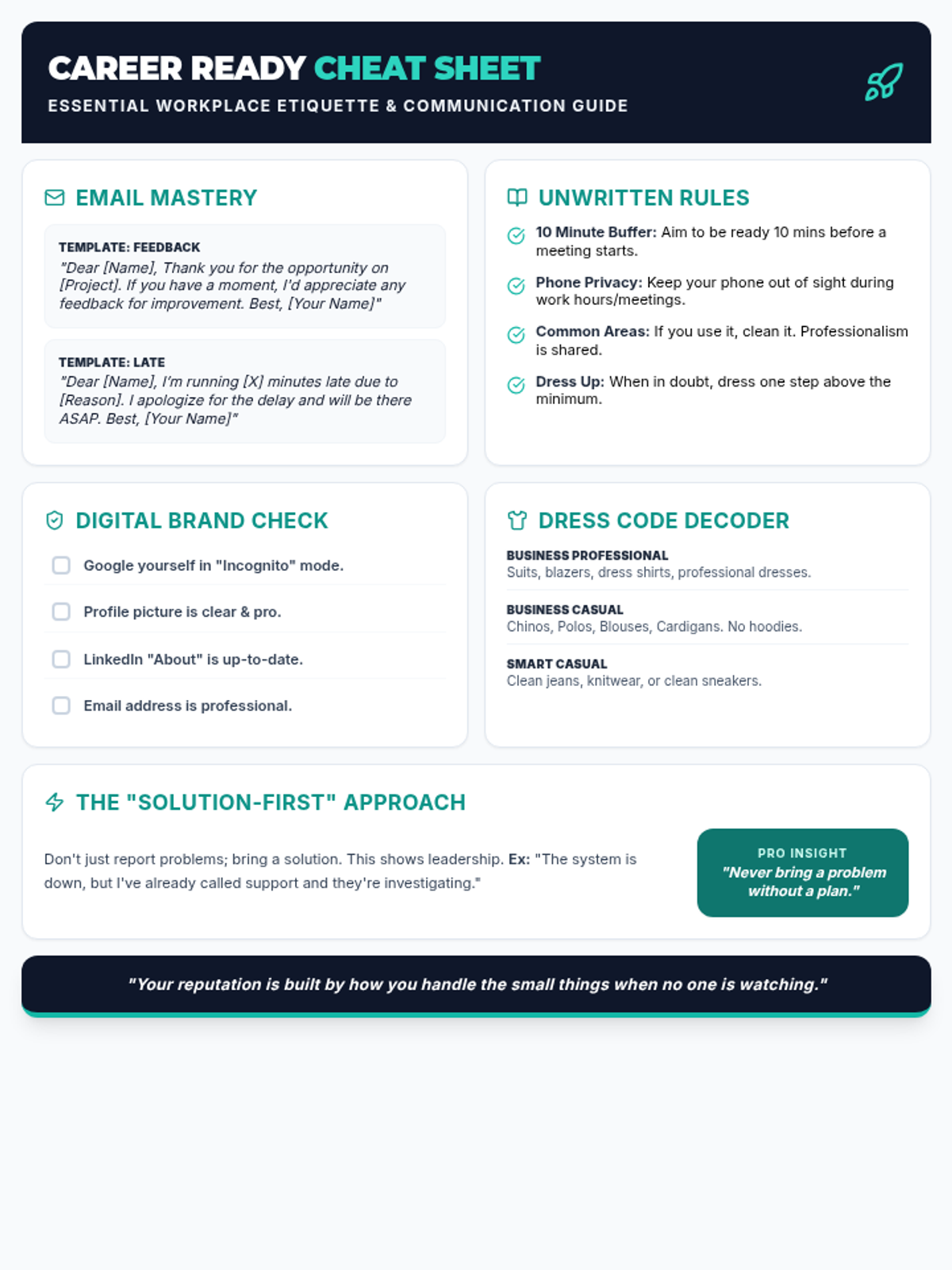
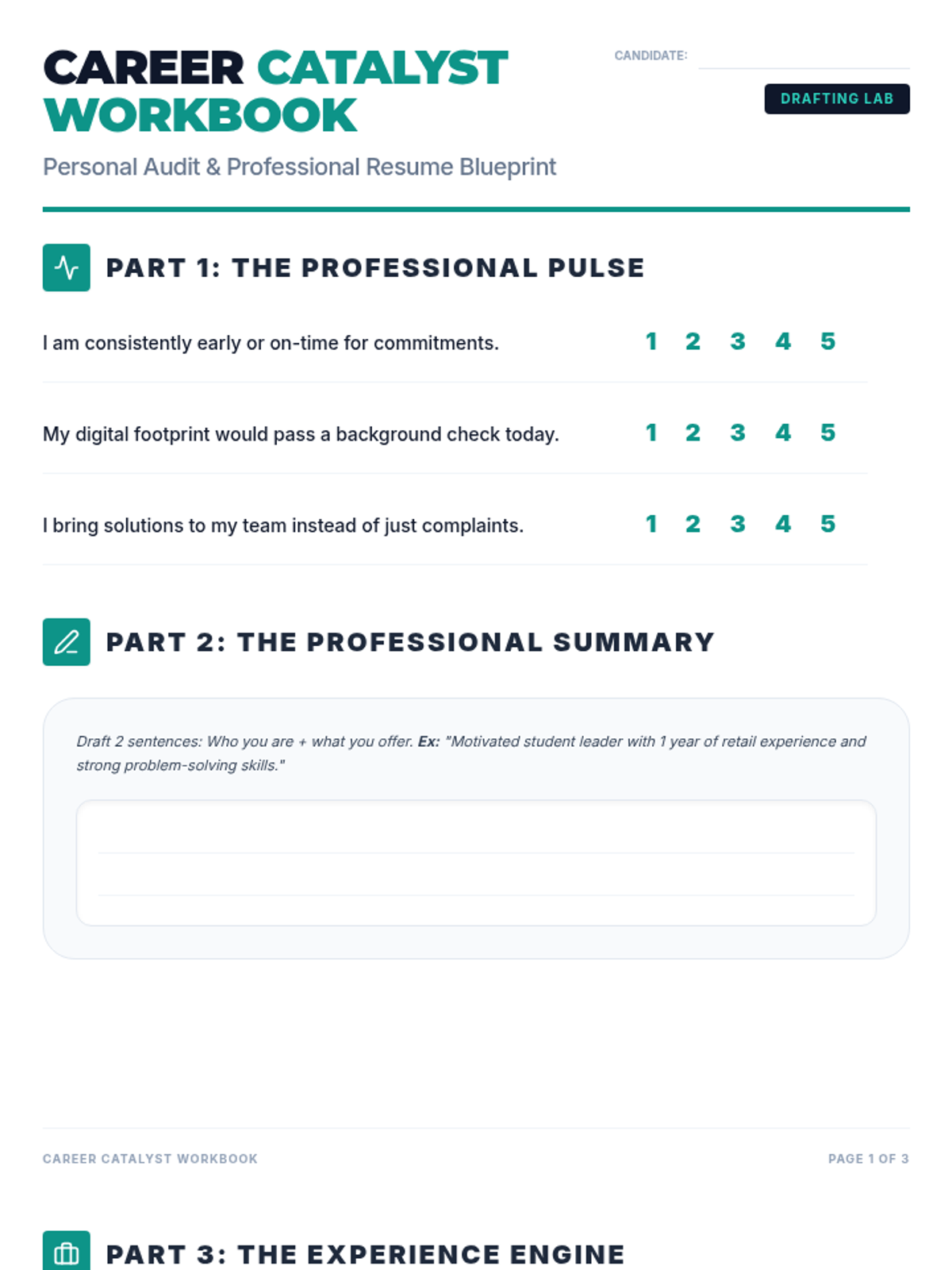
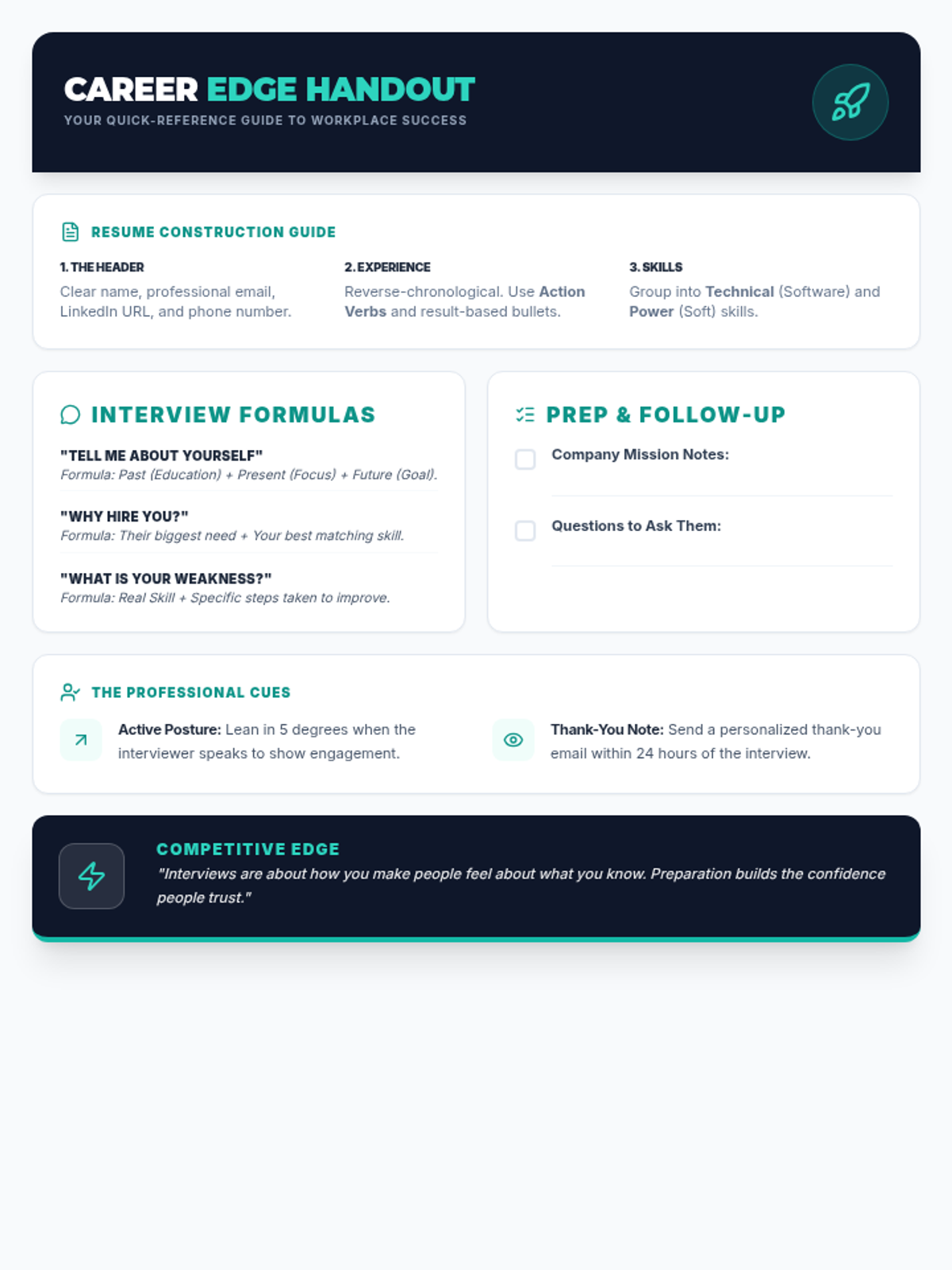
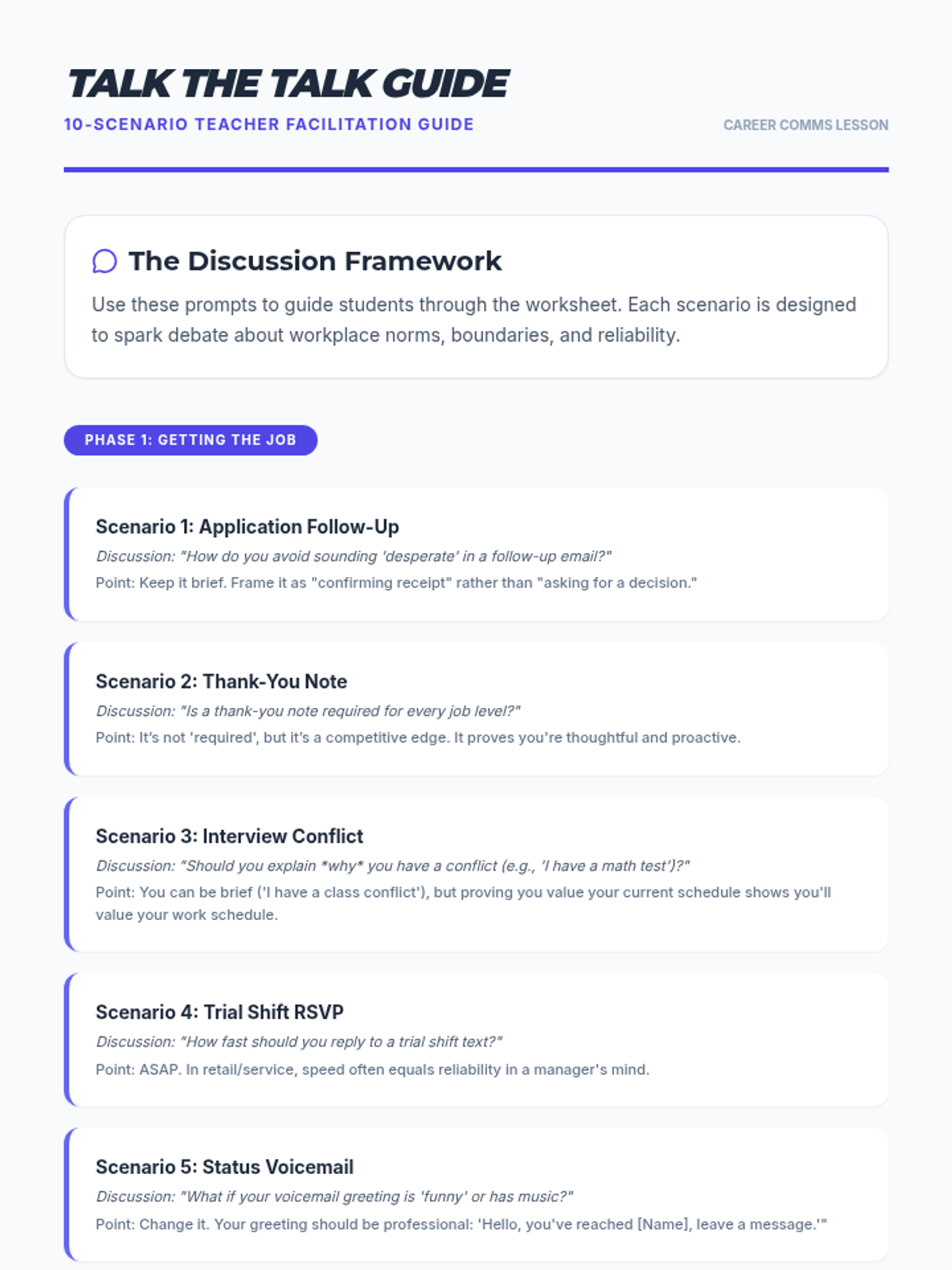
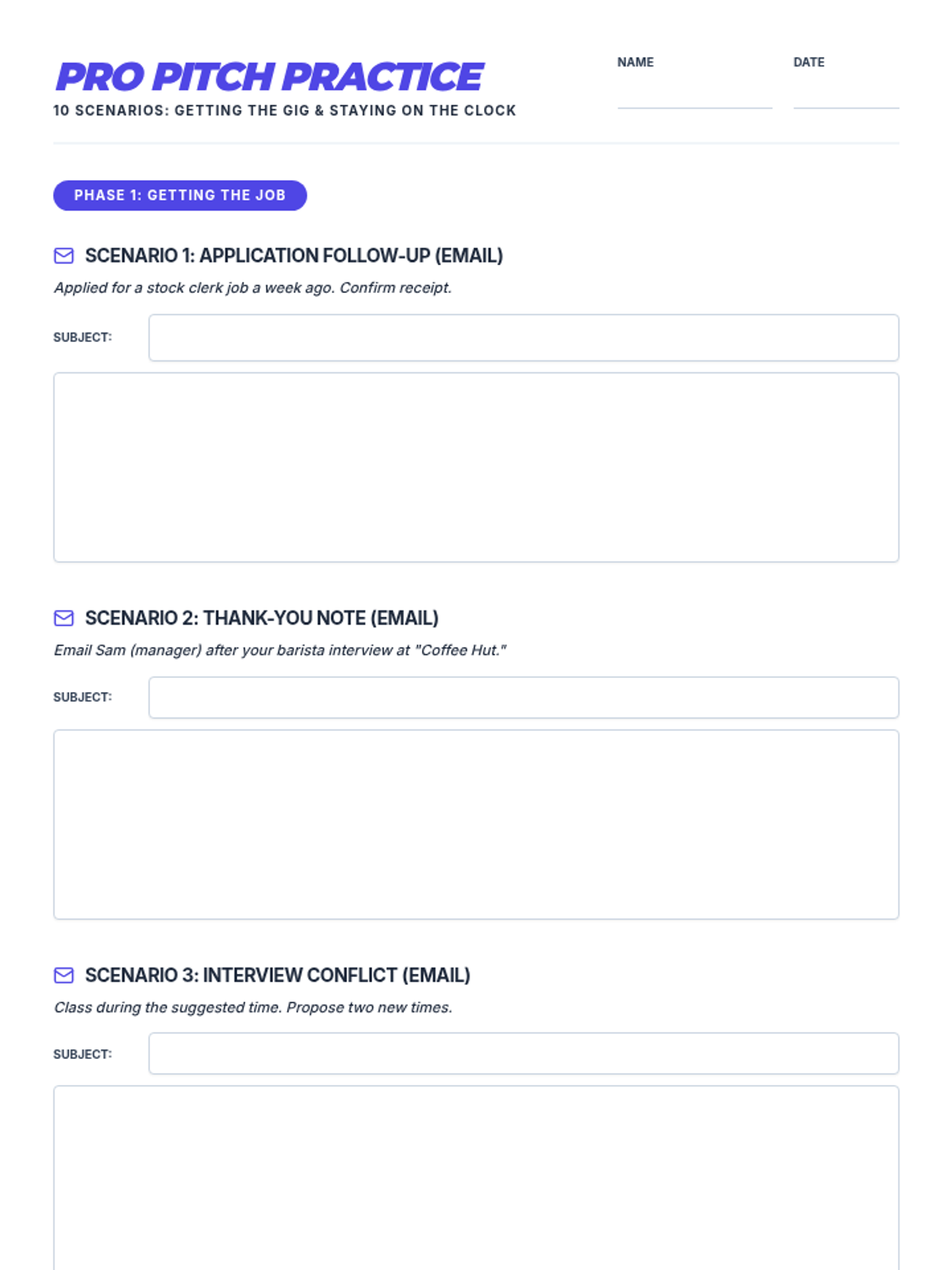
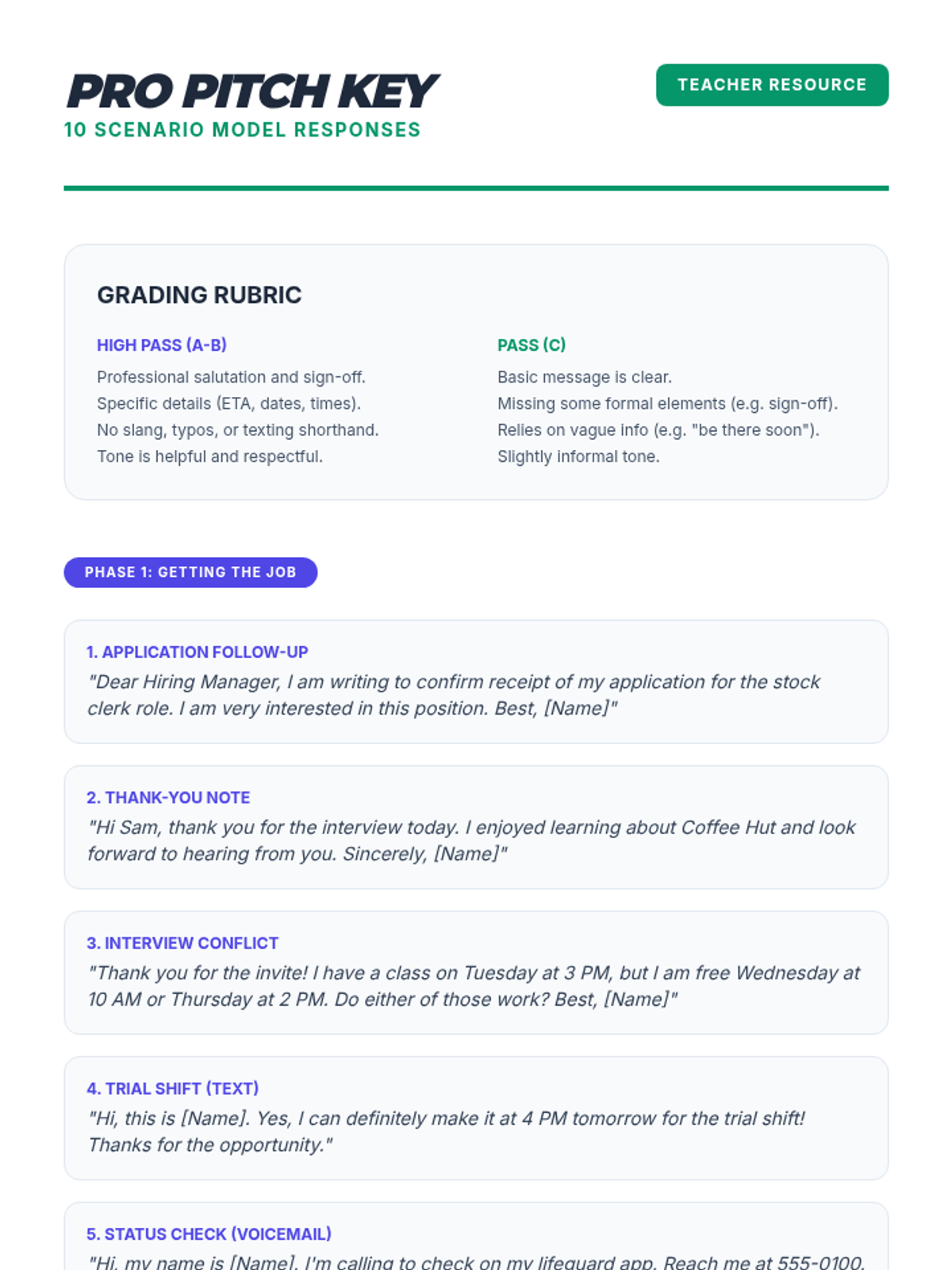
A comprehensive 90-minute session for young adults aged 16-21, focusing on the transition from student to professional through communication, reliability, and workplace etiquette.
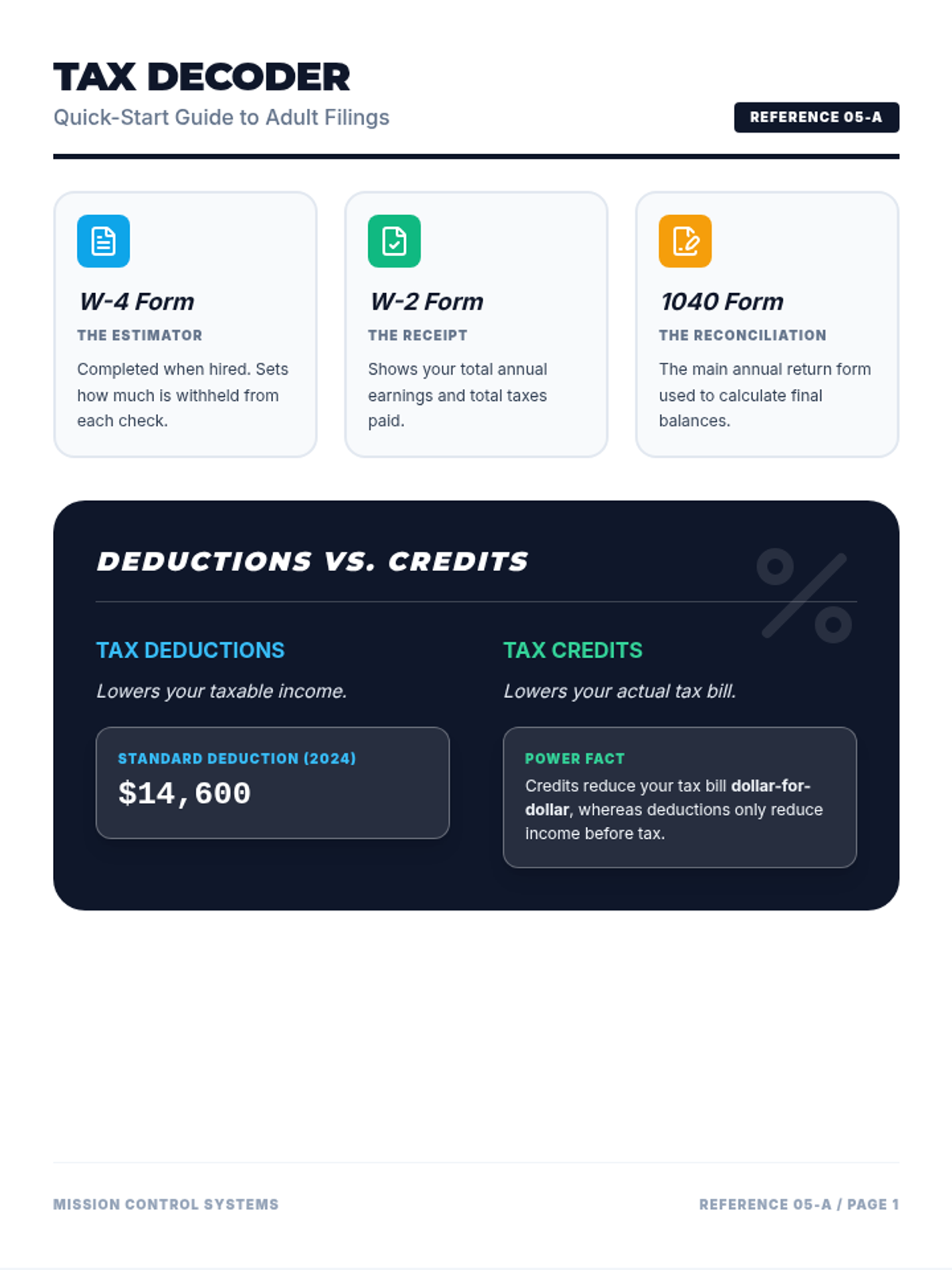
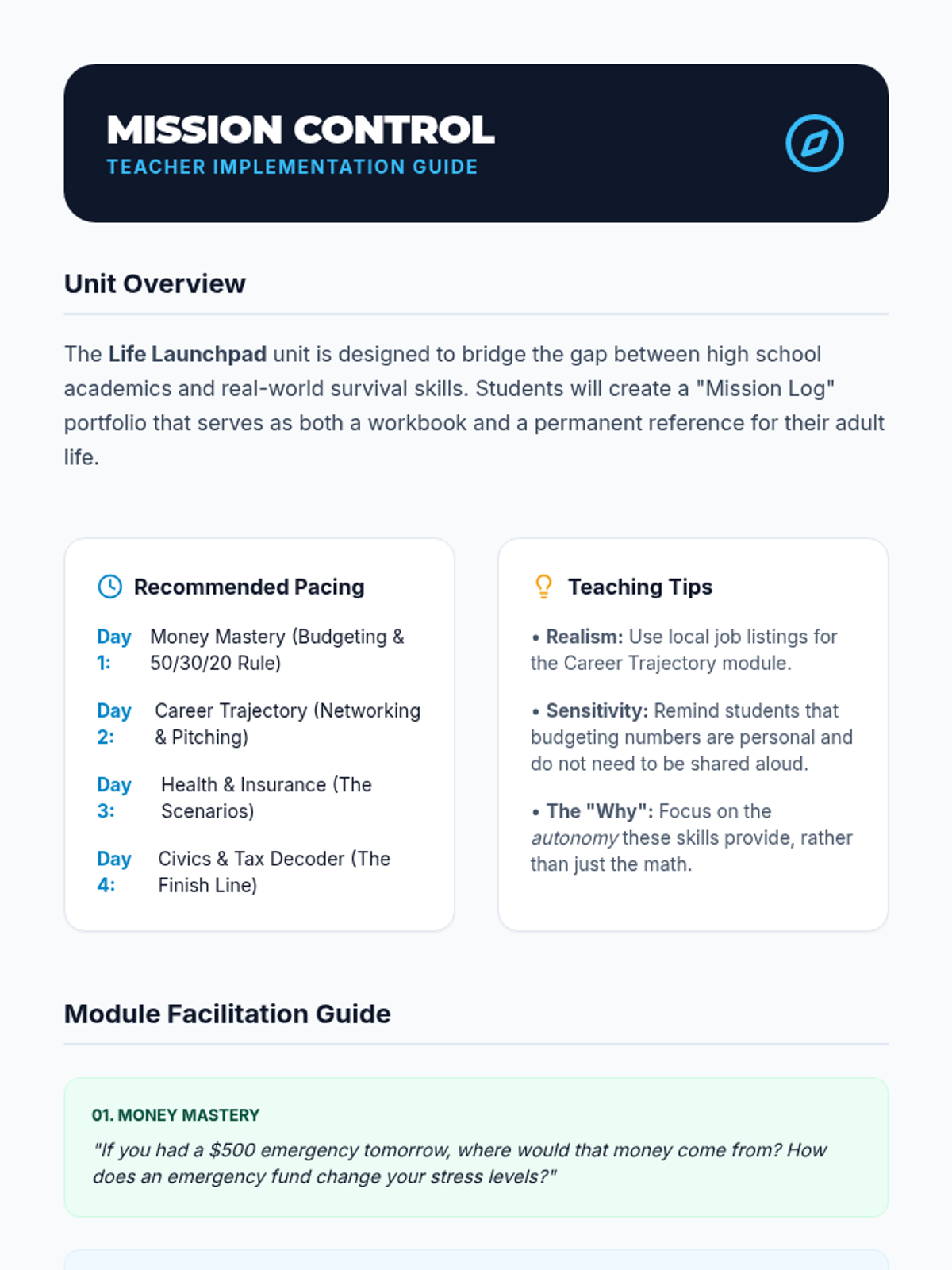
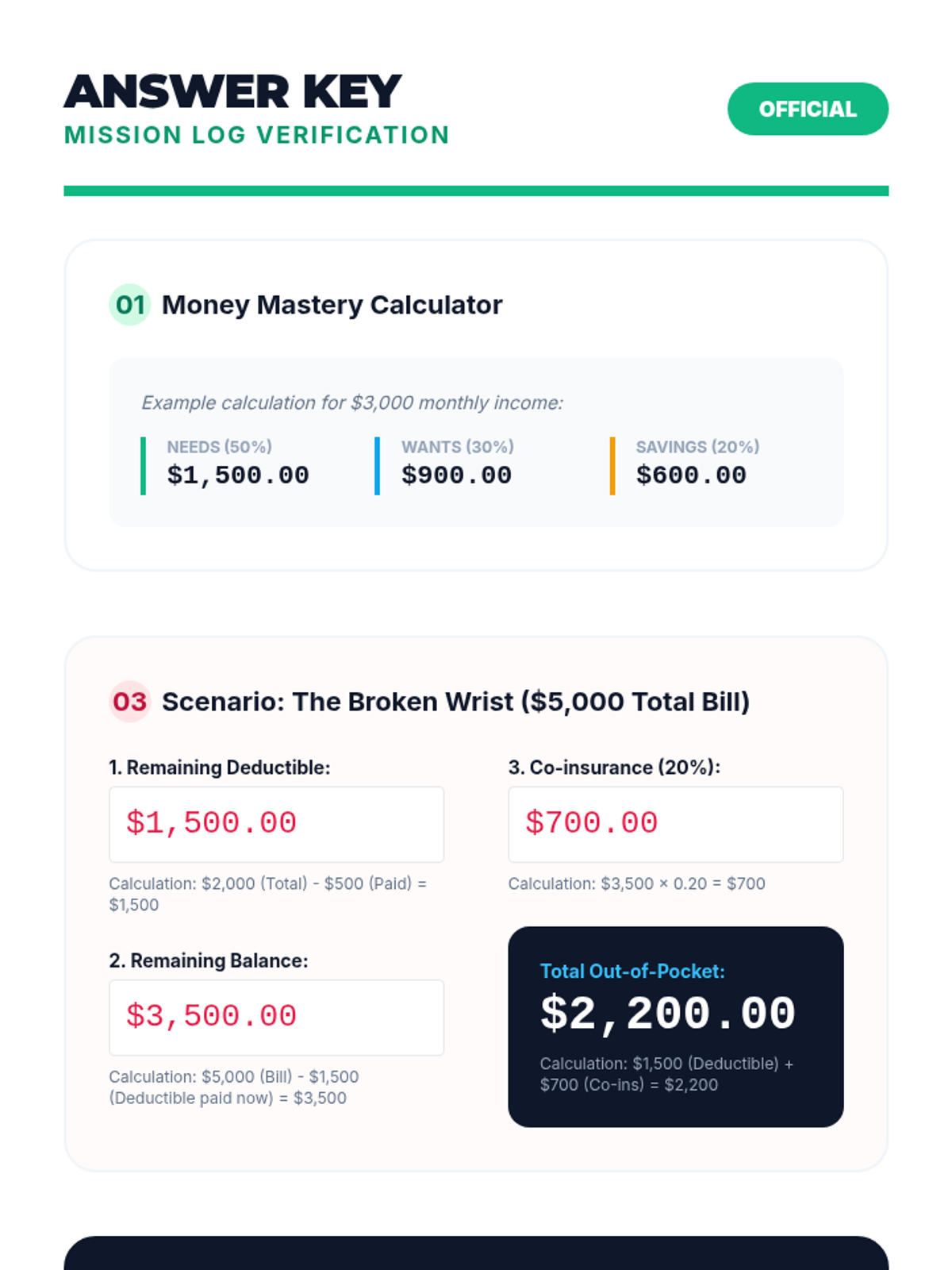
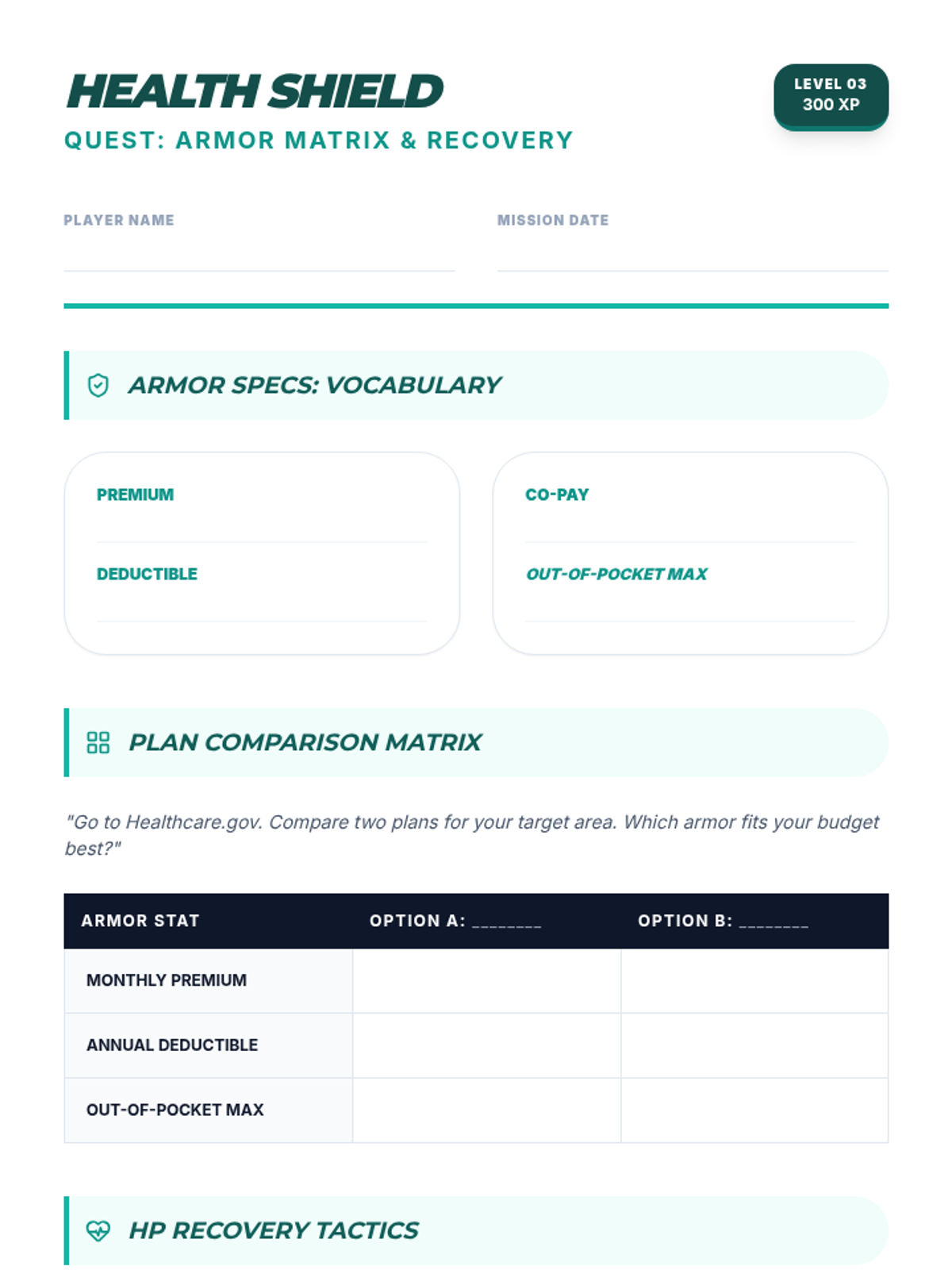
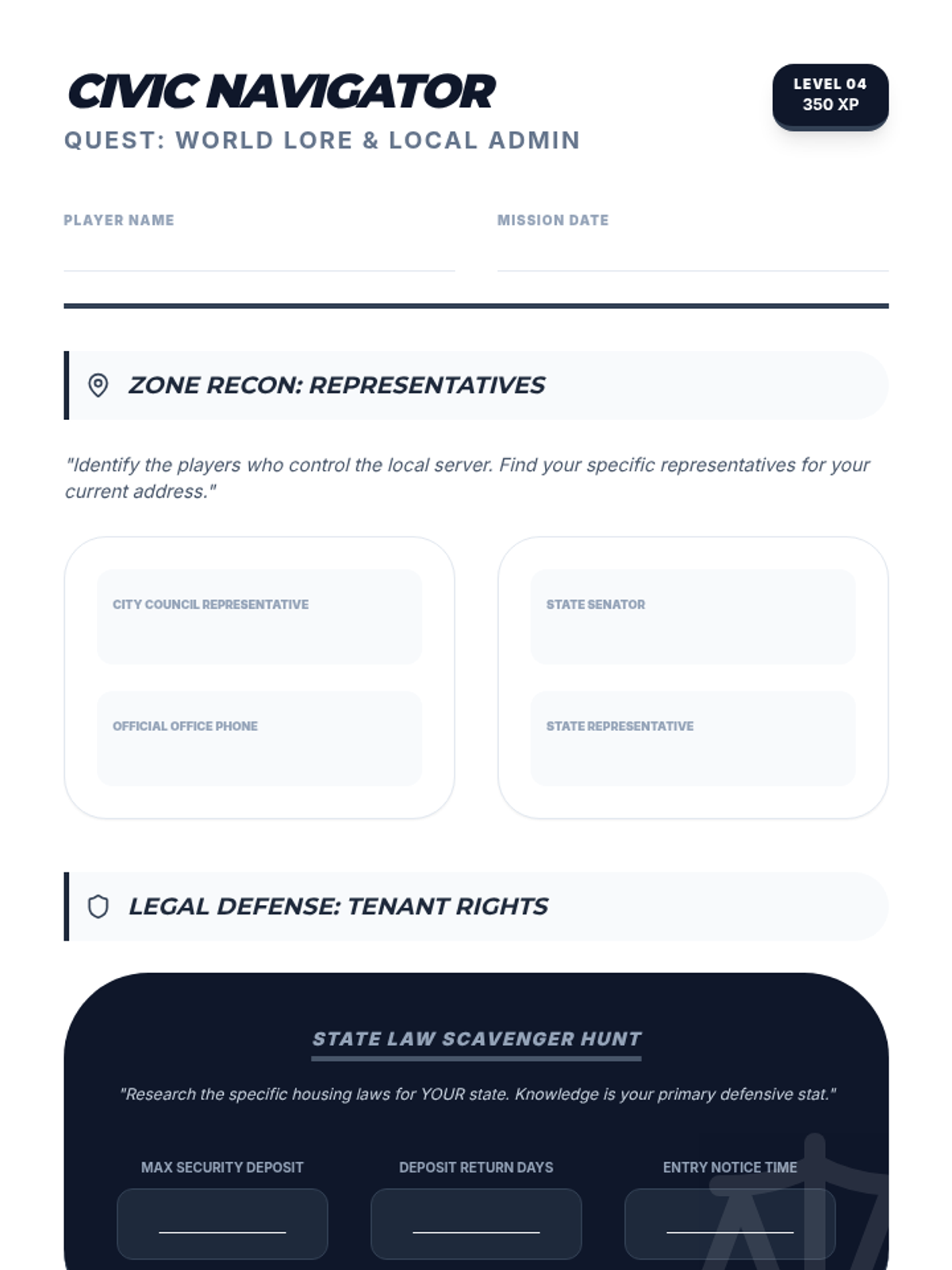
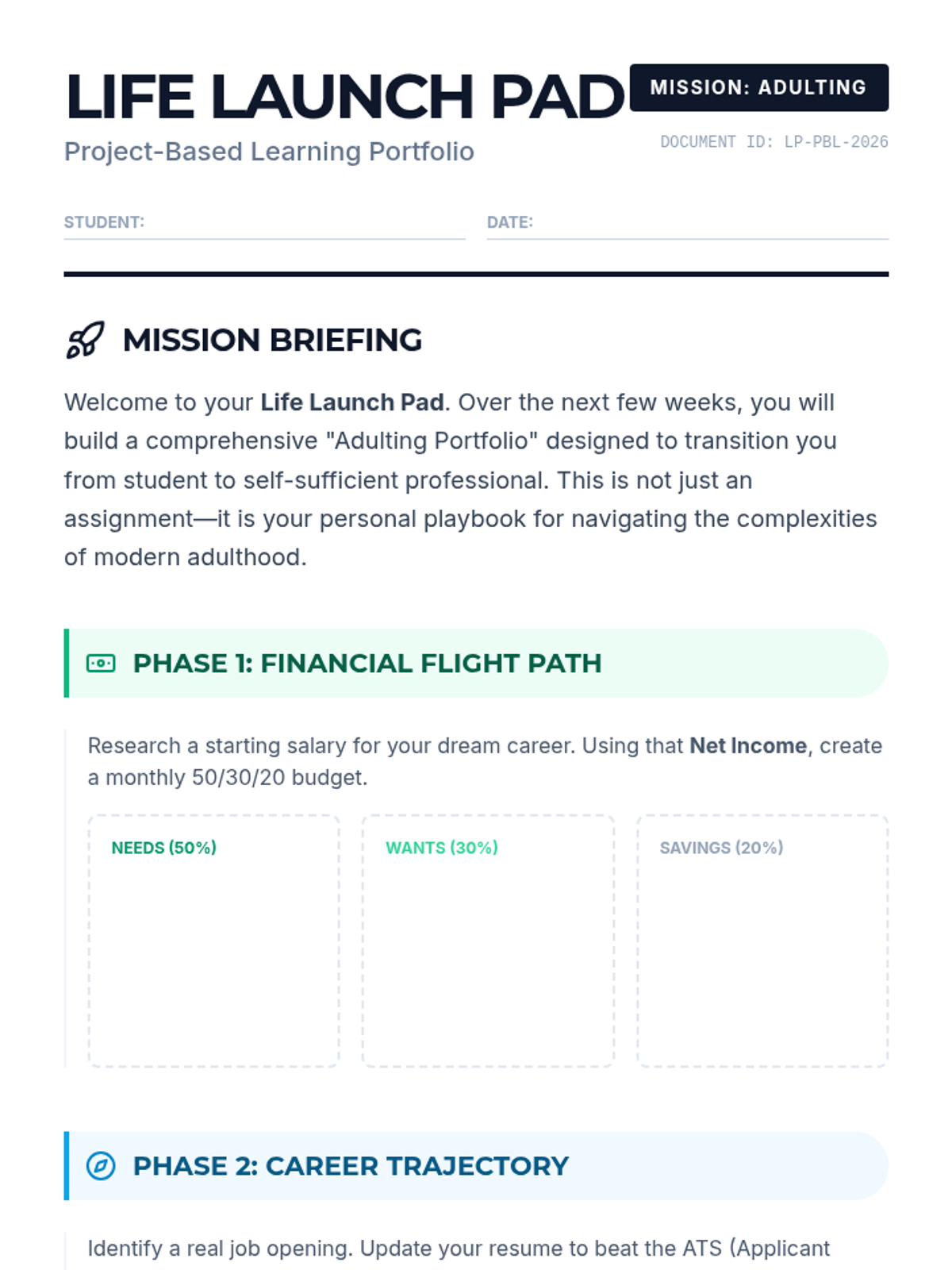
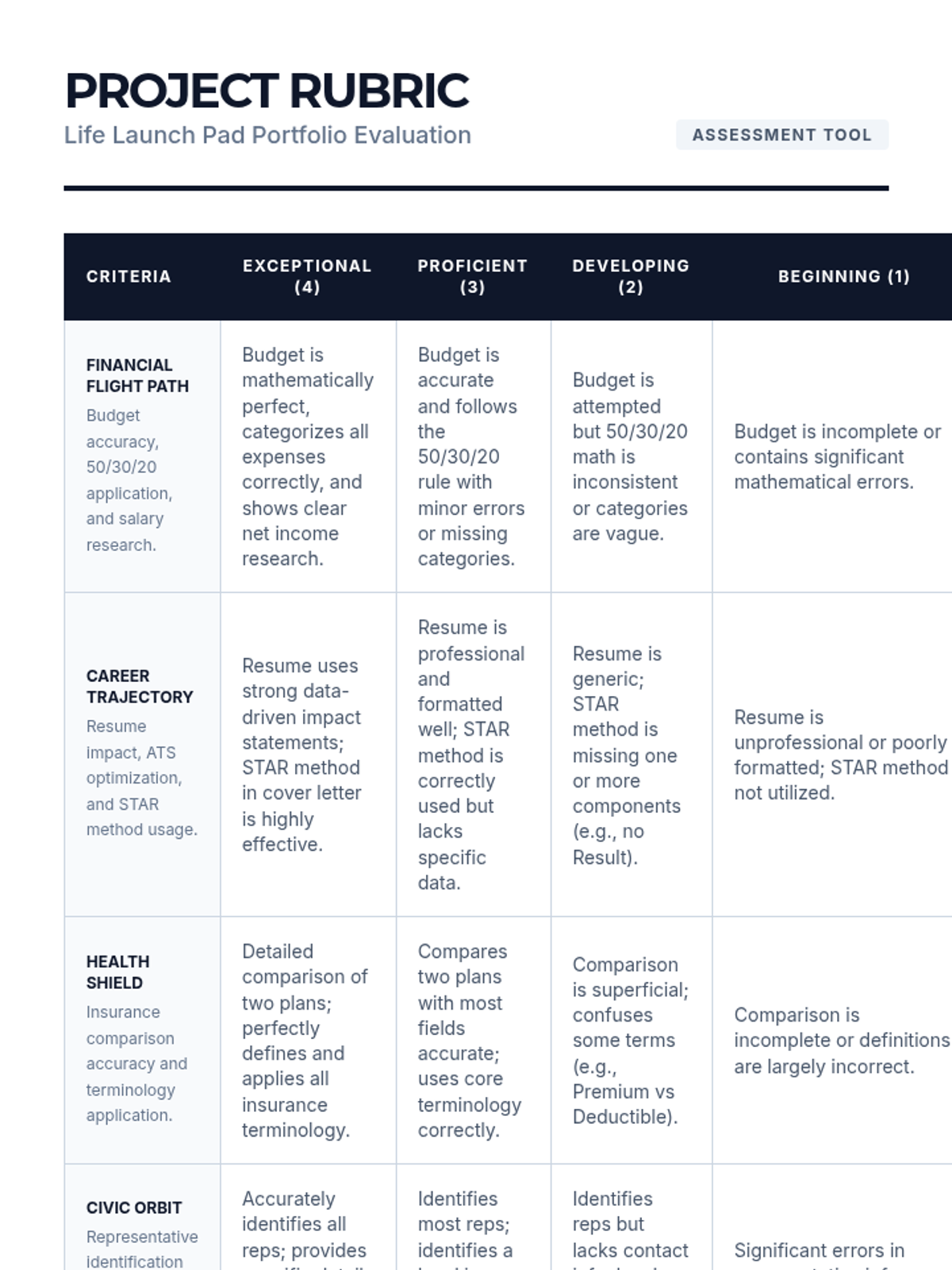
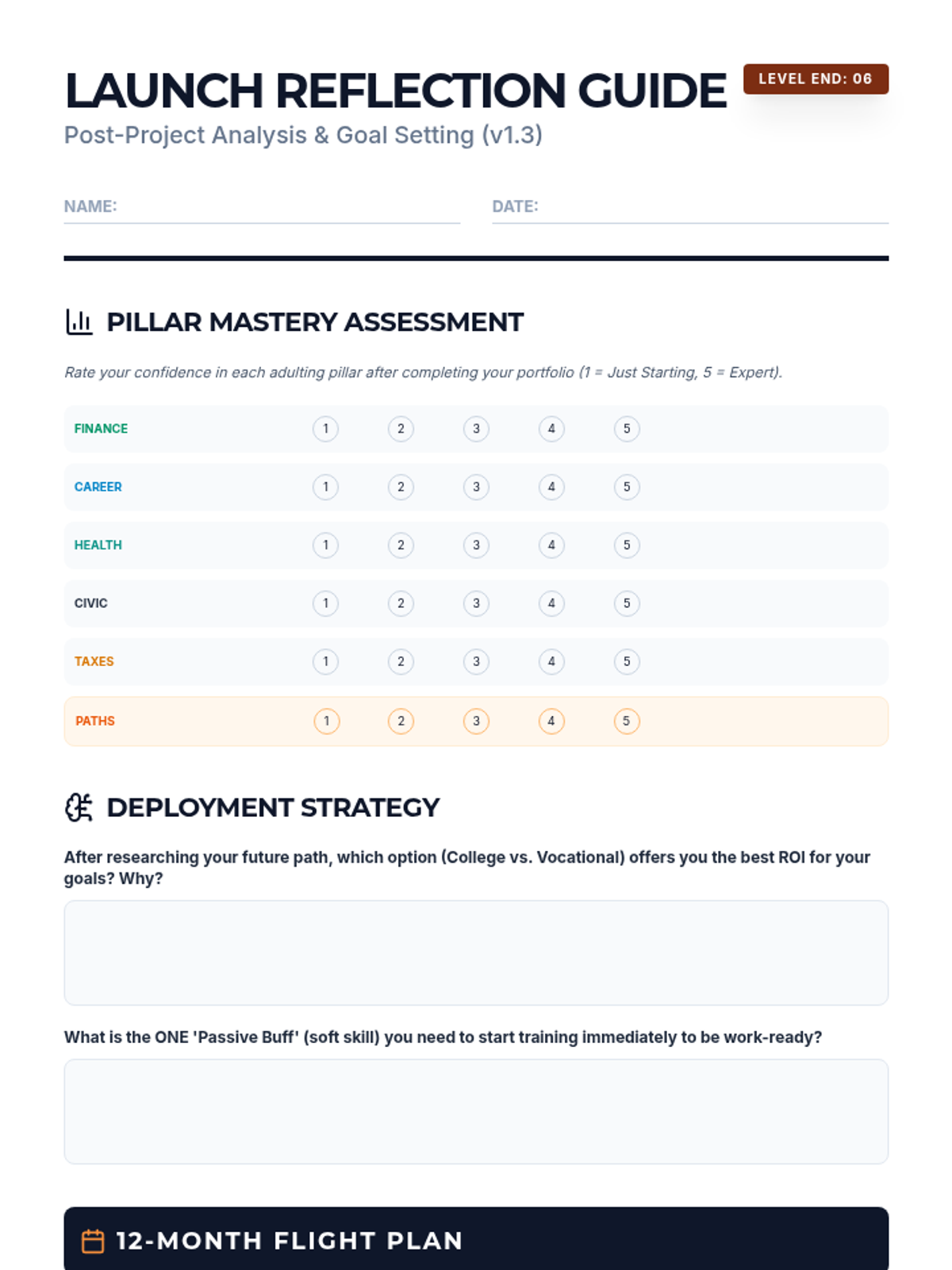
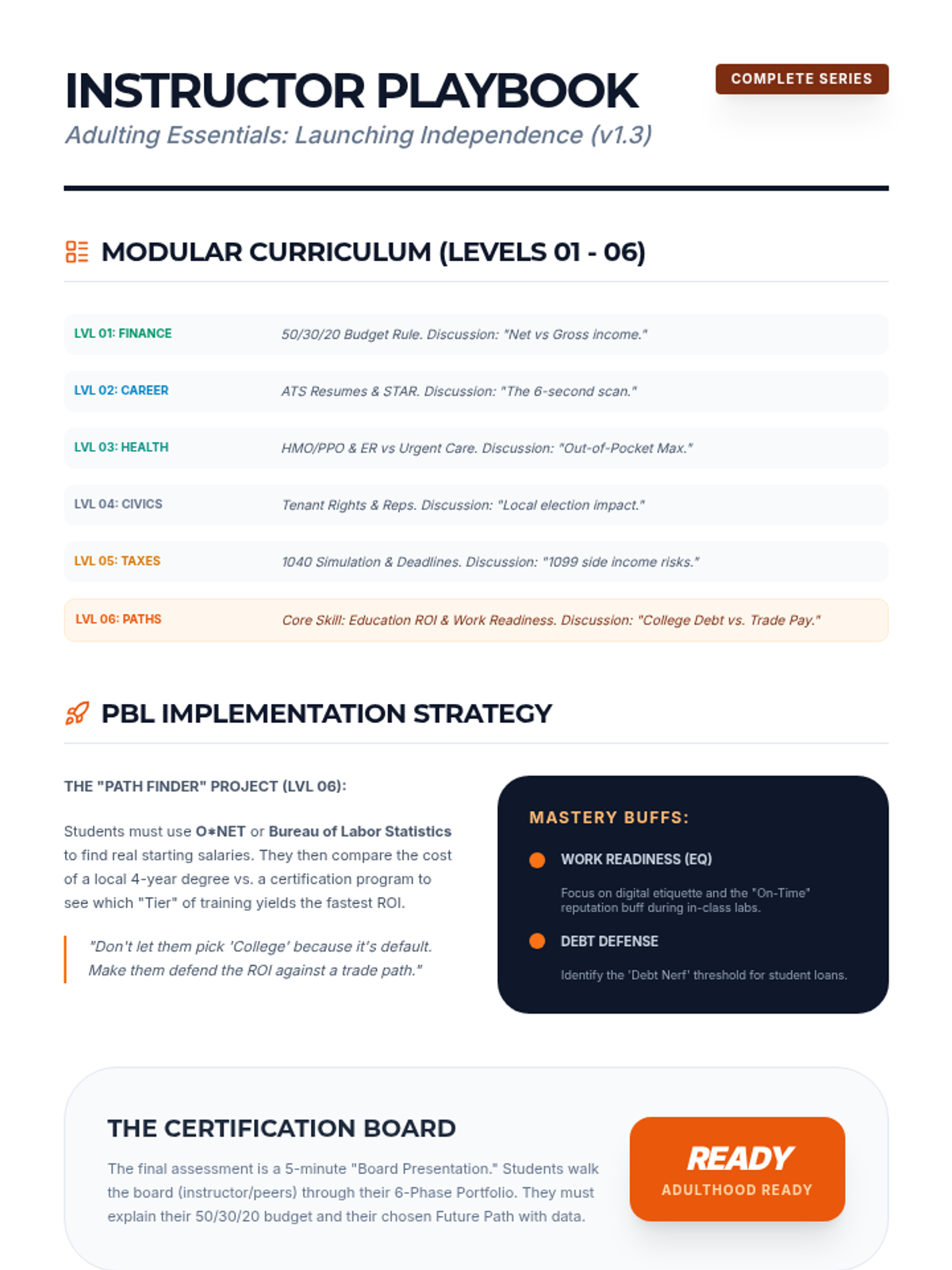
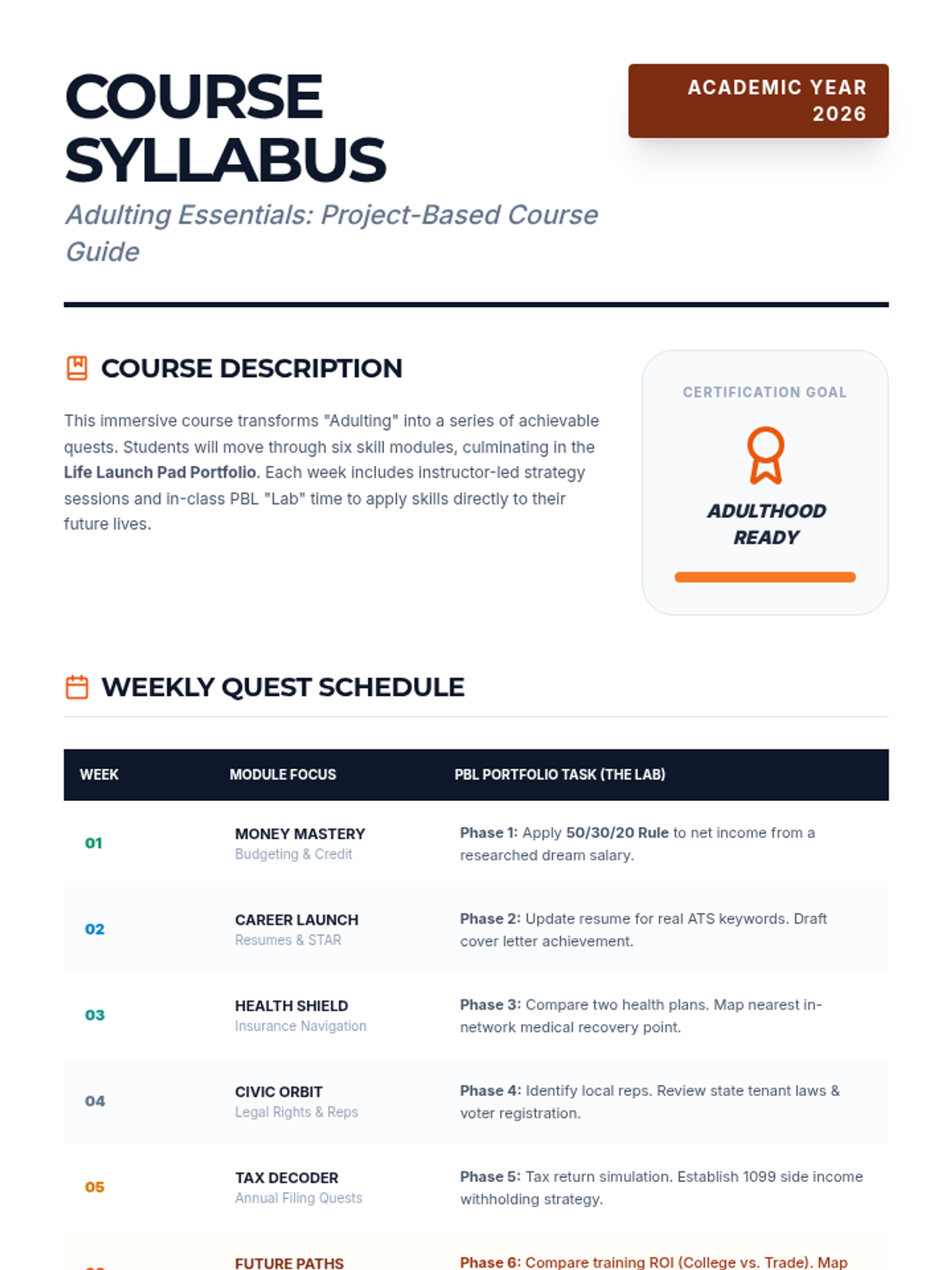
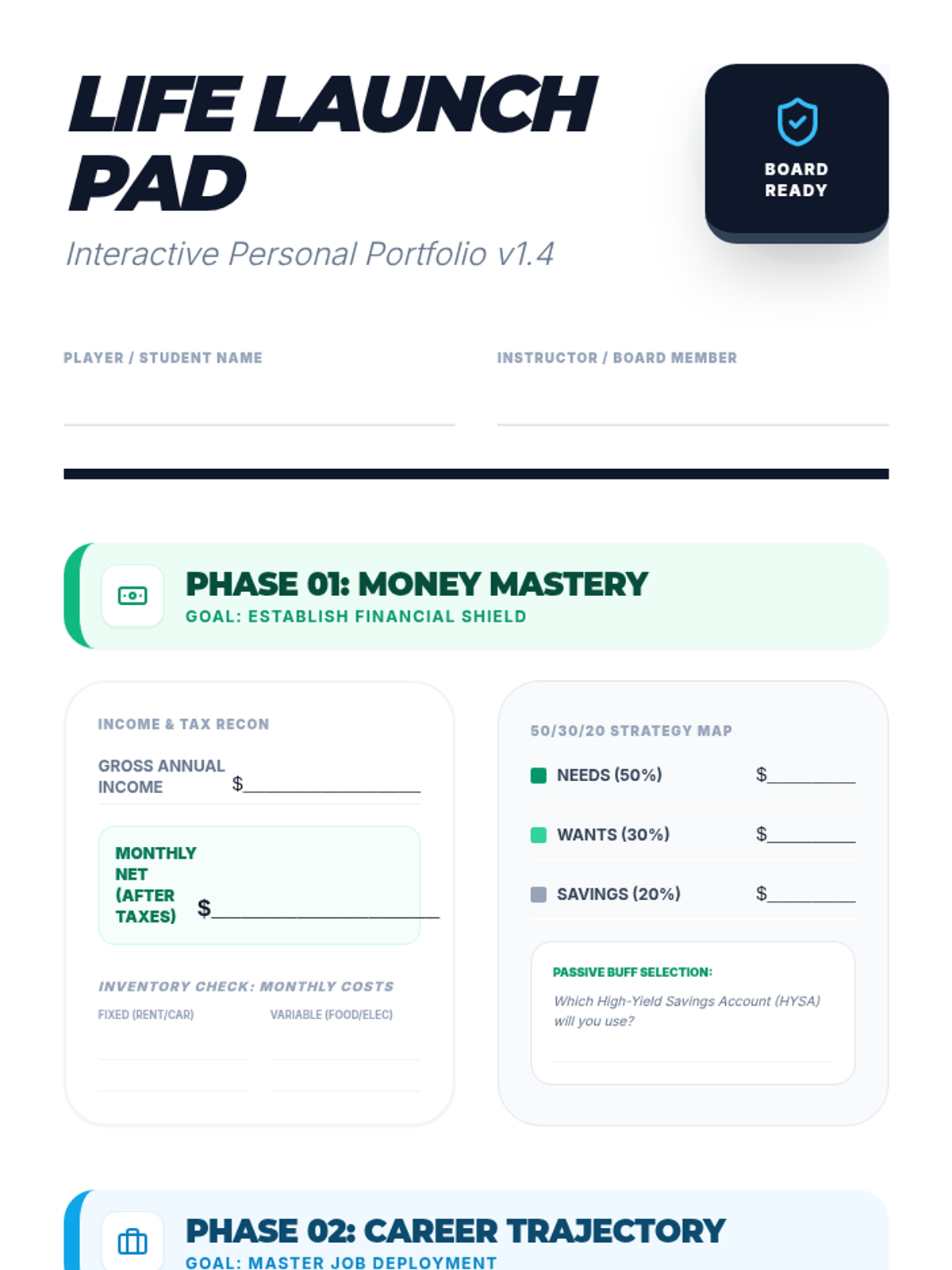
A comprehensive transition-to-adulthood curriculum covering financial literacy, career planning, health navigation, and civic engagement. Students build a personal 'mission log' portfolio to prepare for independent life.
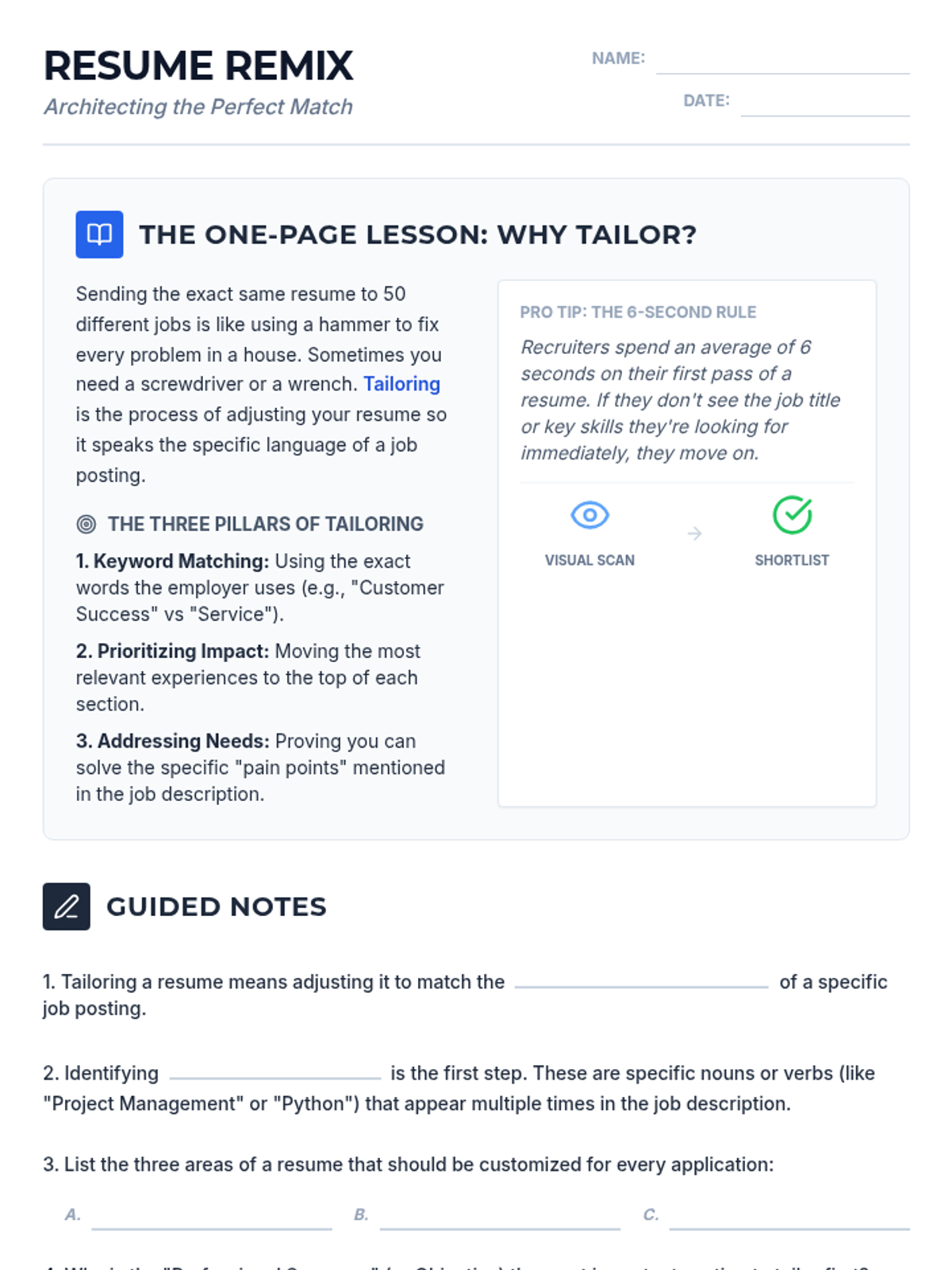
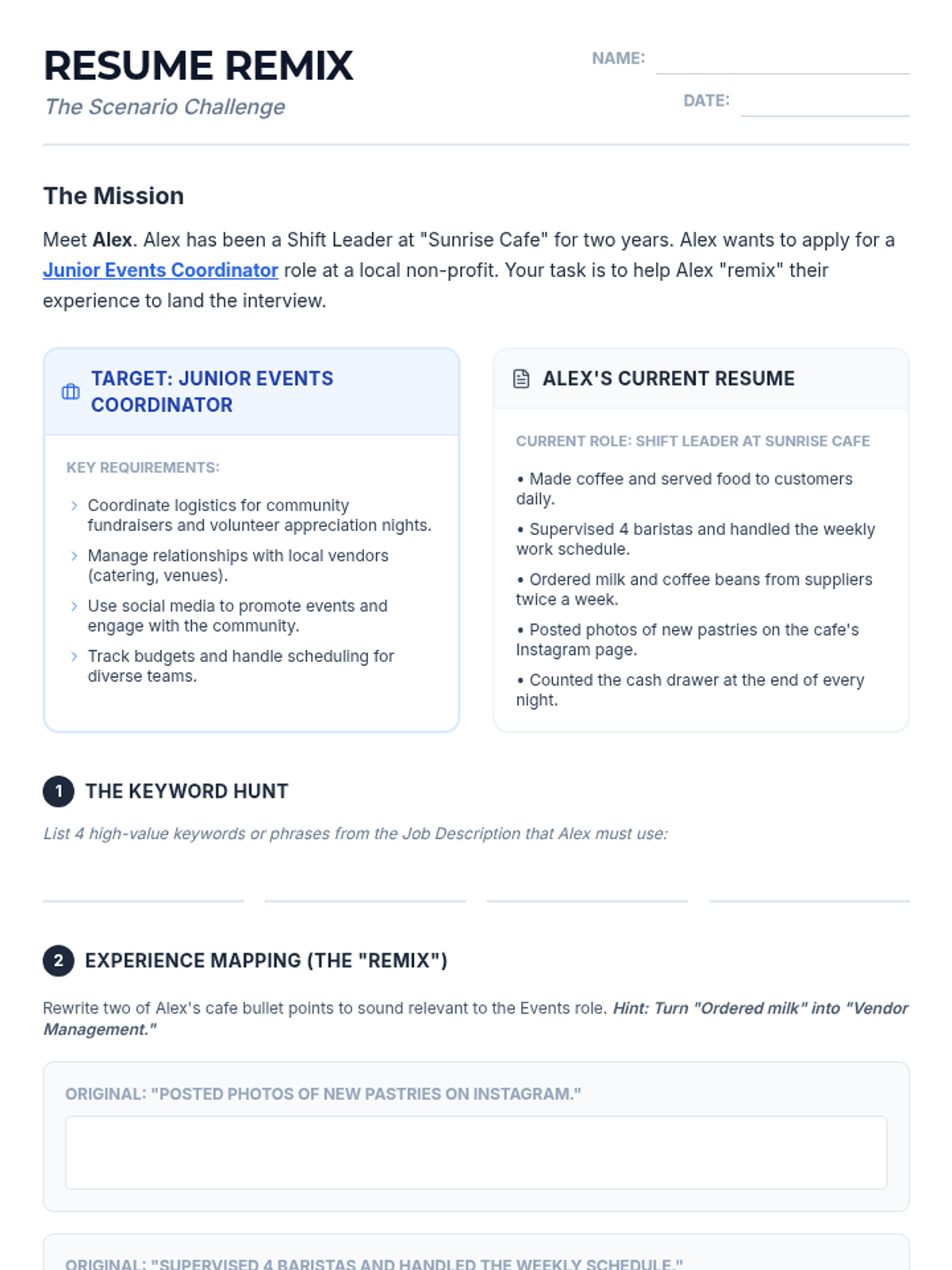
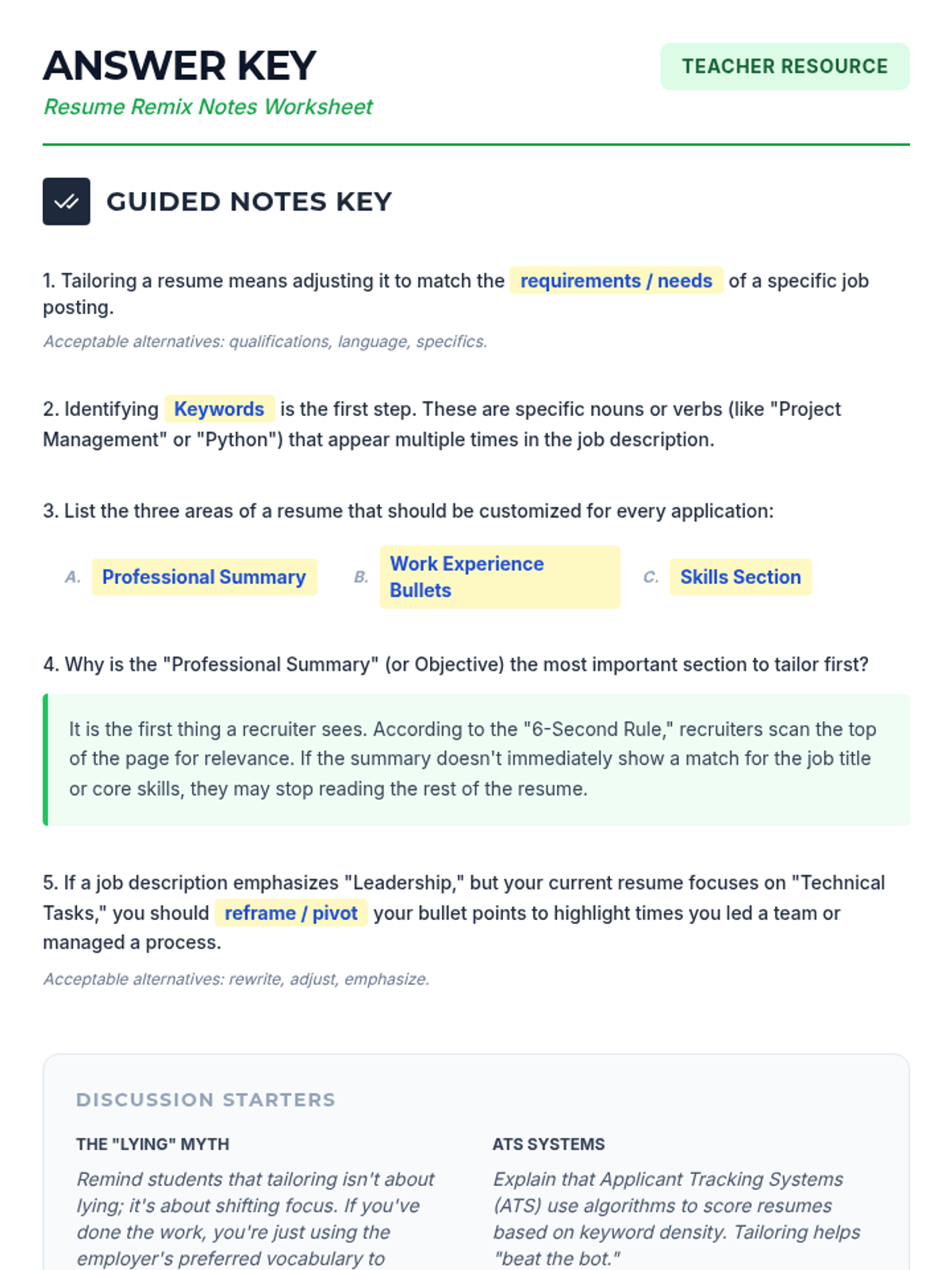
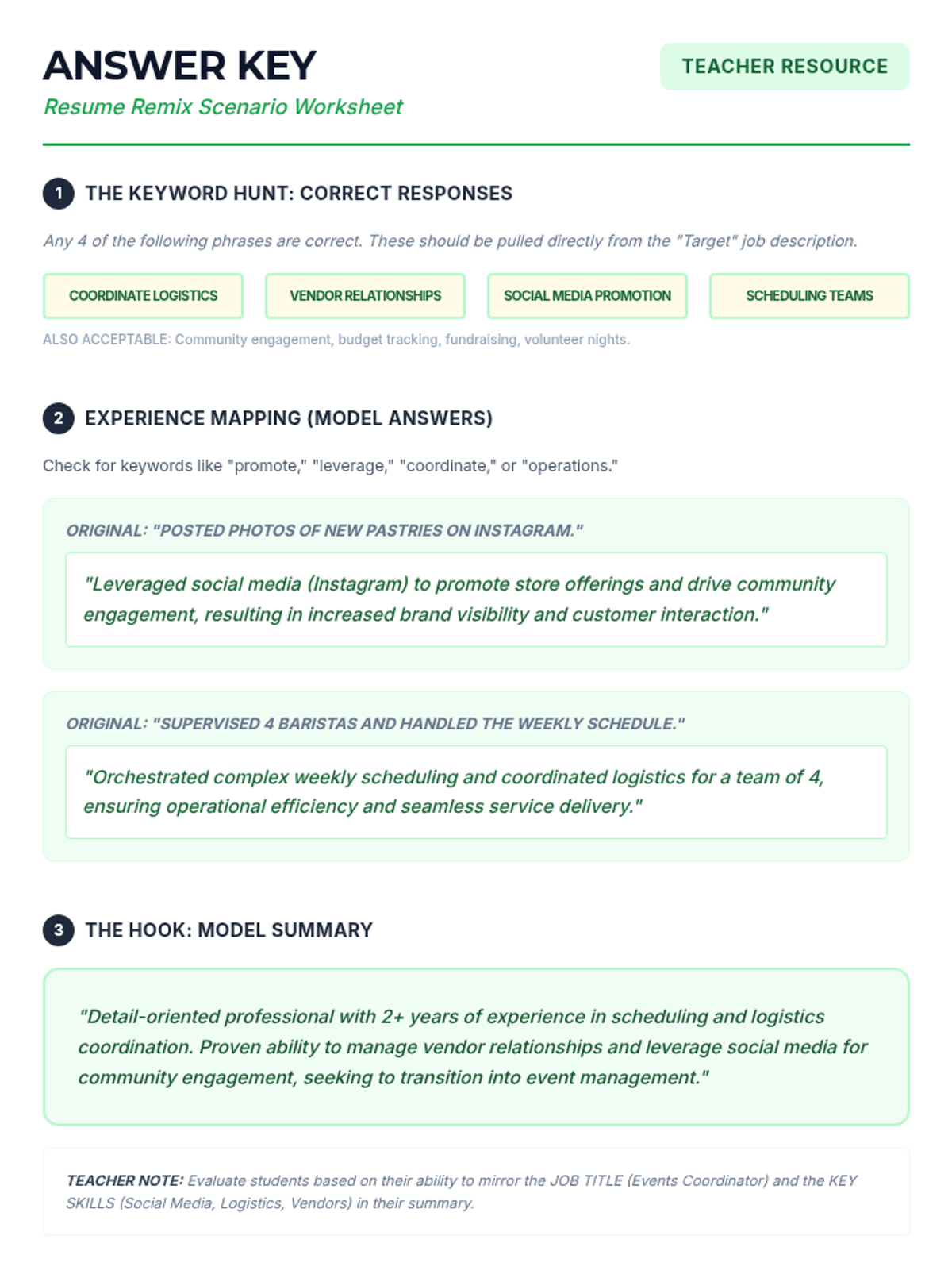
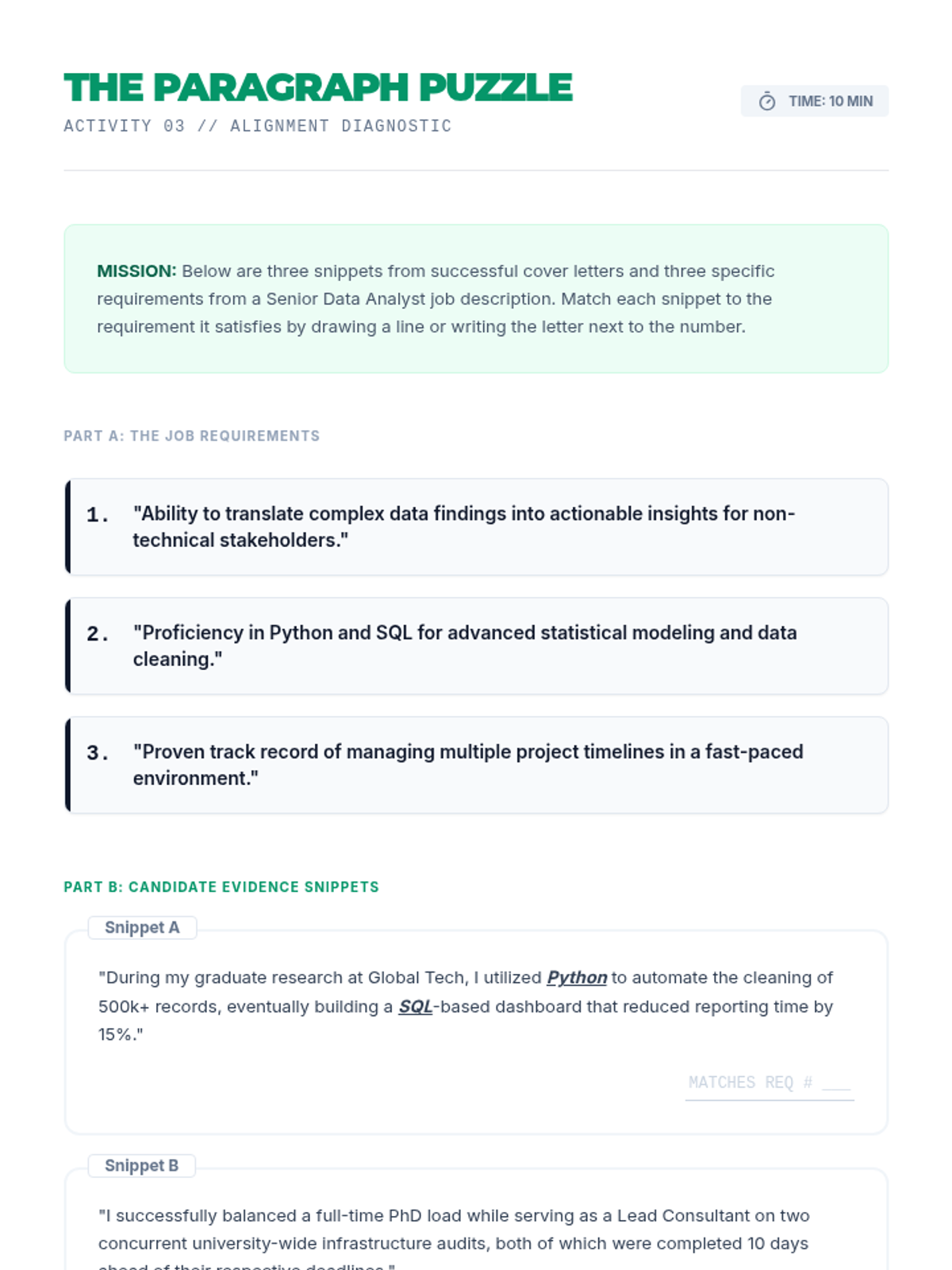
A practical lesson on how to analyze job descriptions and customize resume content to match specific employer needs. Students will learn keyword identification, experience mapping, and summary tailoring through guided notes and a real-world scenario.
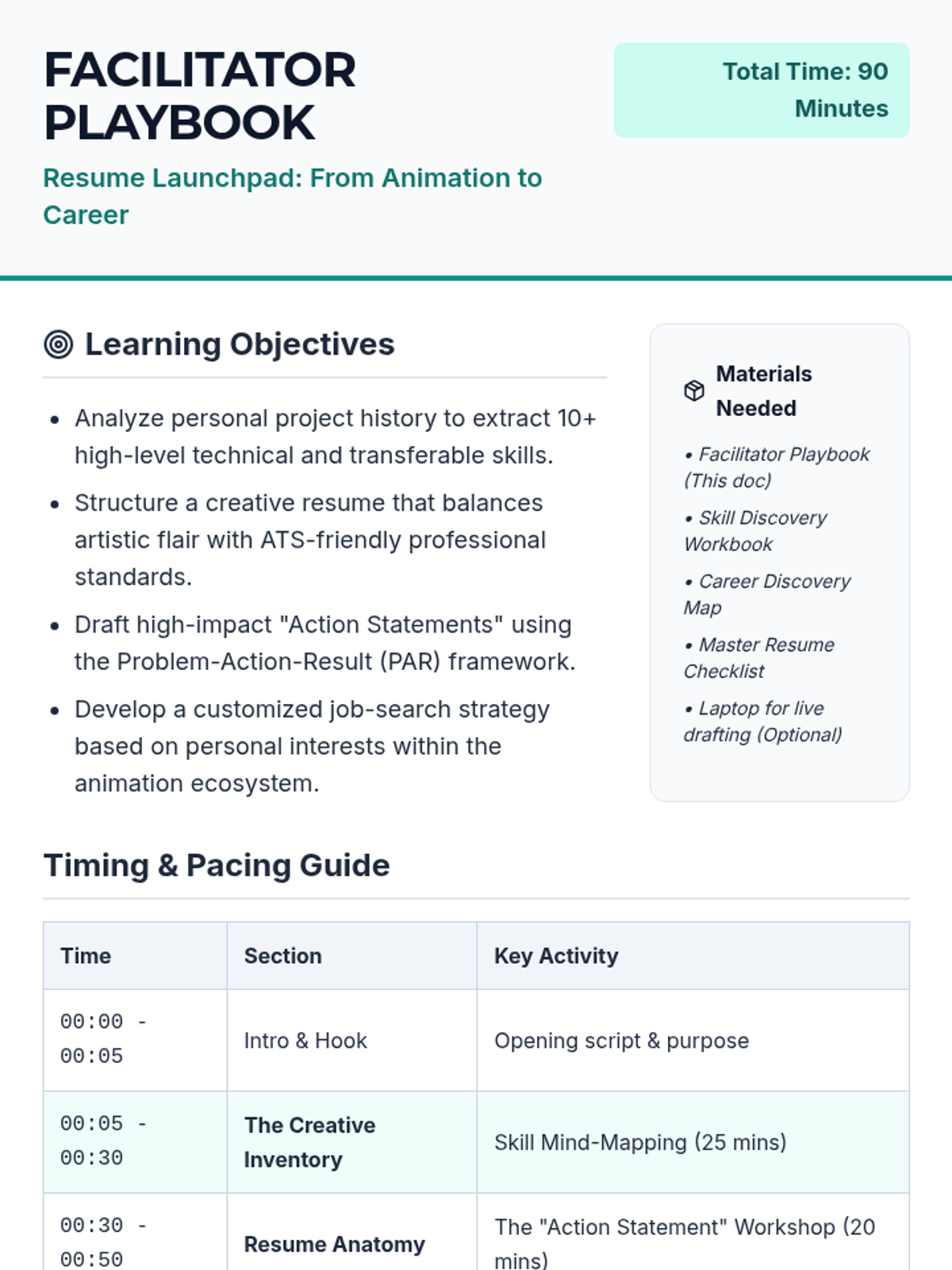
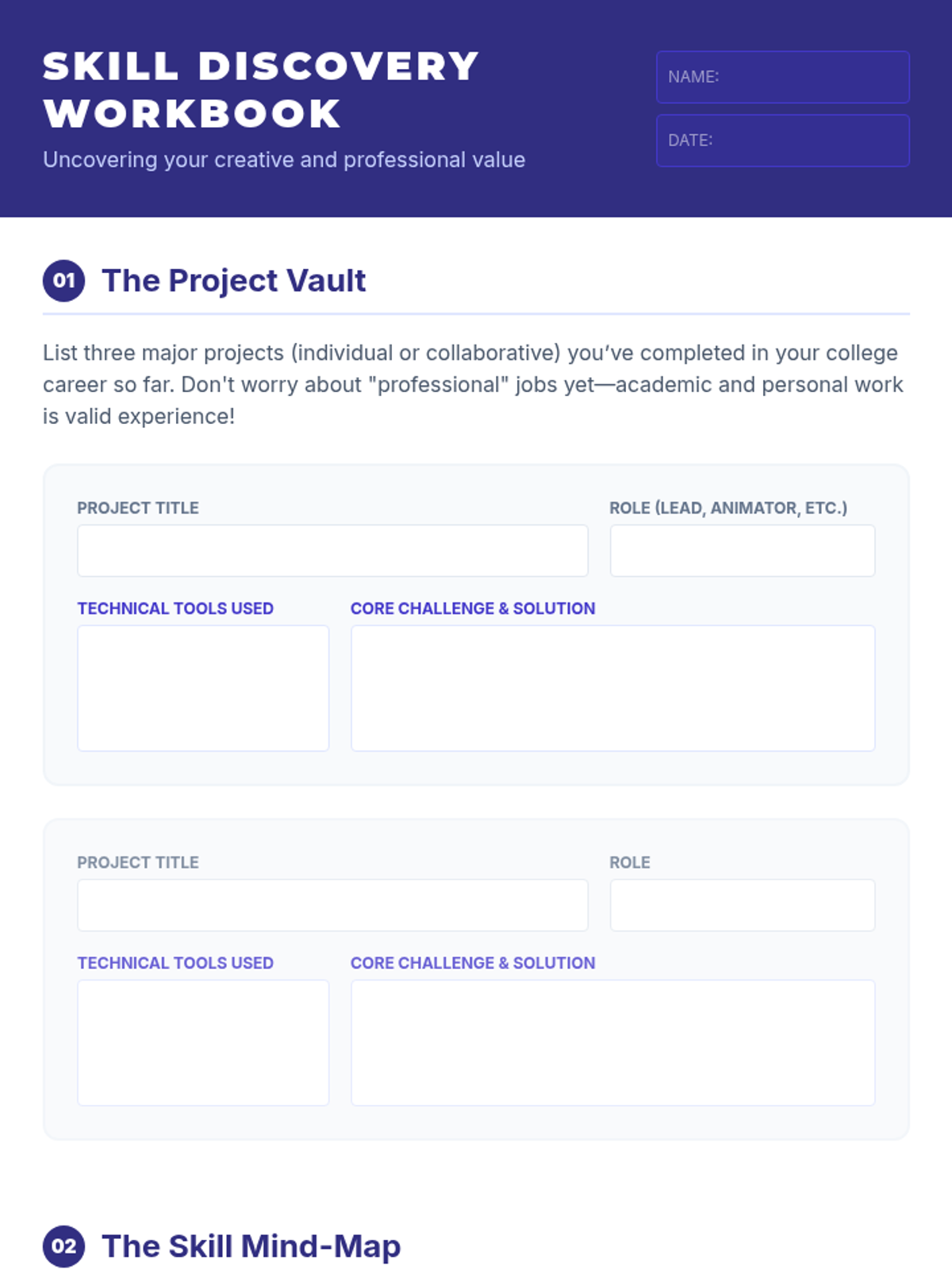
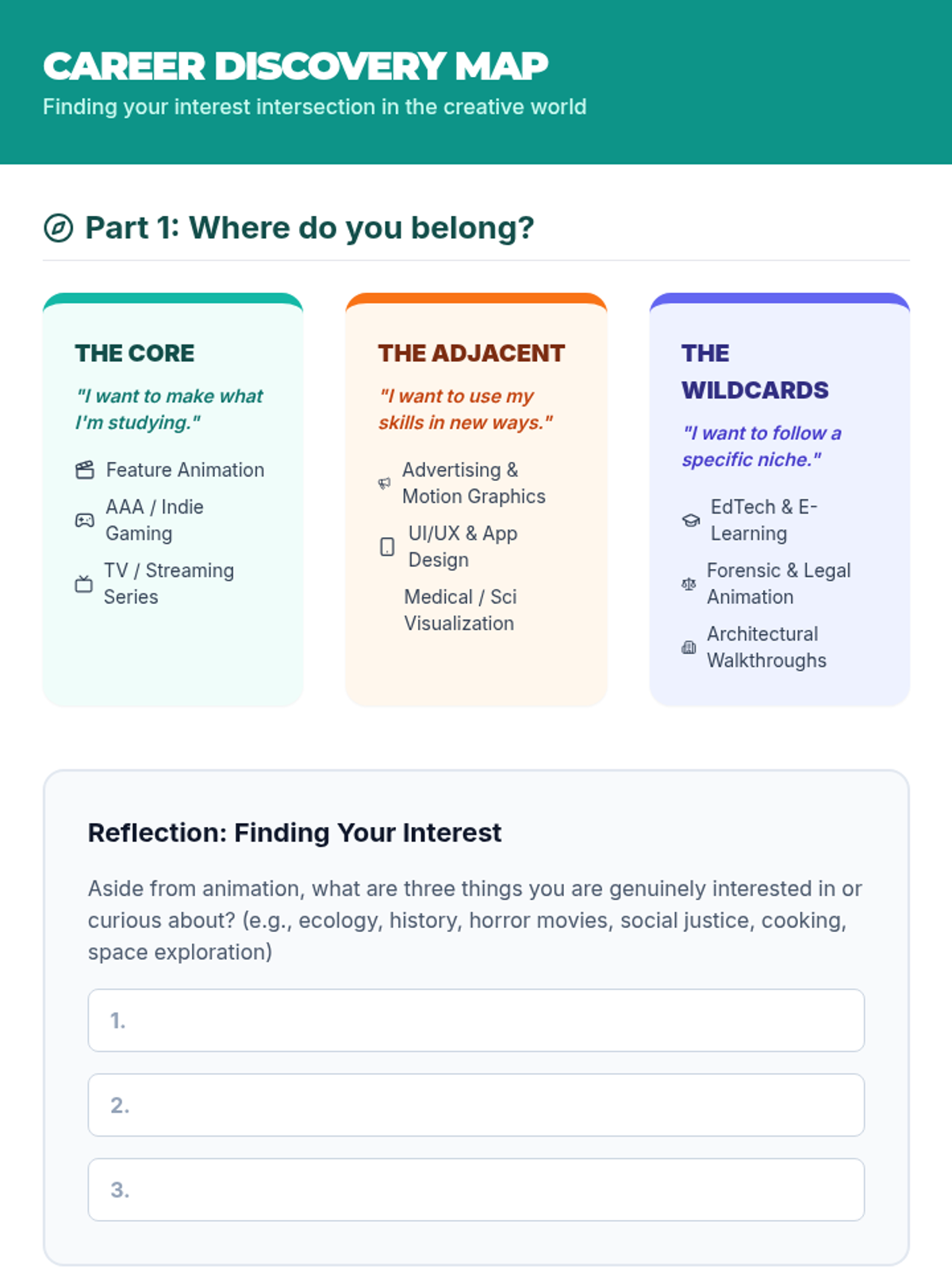
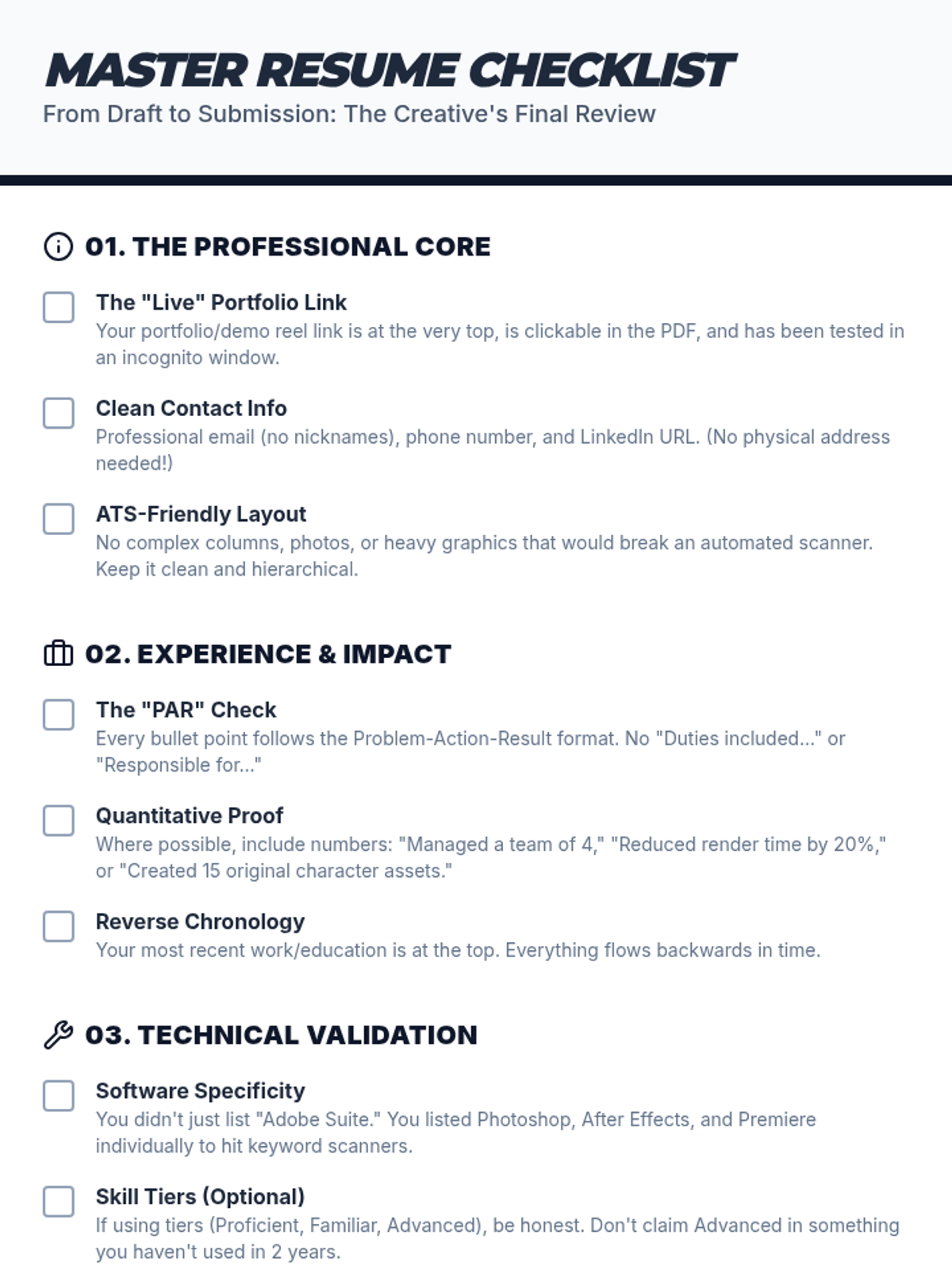
A comprehensive 90-minute training session designed for college students in creative fields (specifically animation) to identify their skills, explore career paths, and build a professional resume.
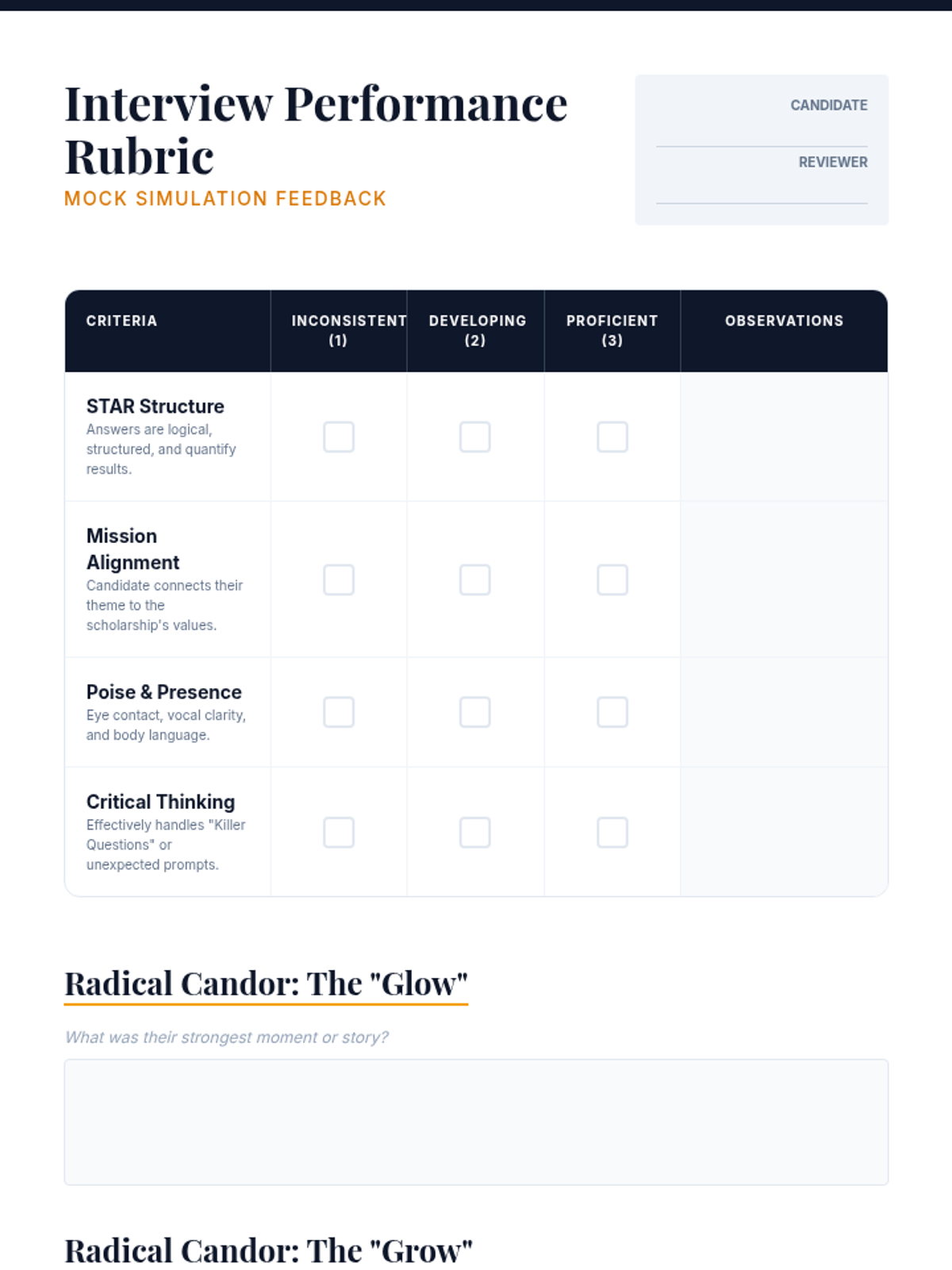
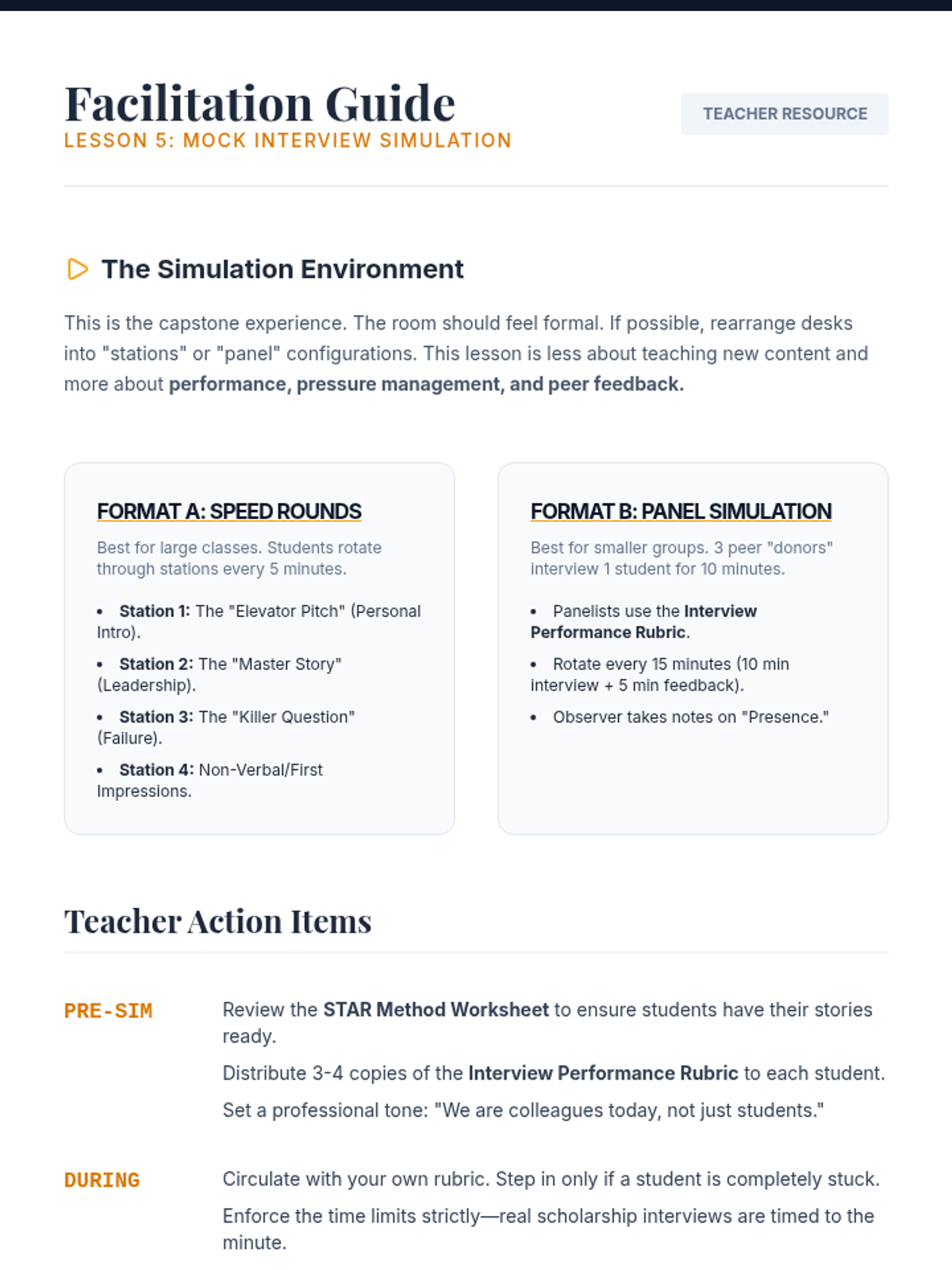
Students engage in mock interview simulations and learn post-interview etiquette and scholarship management.
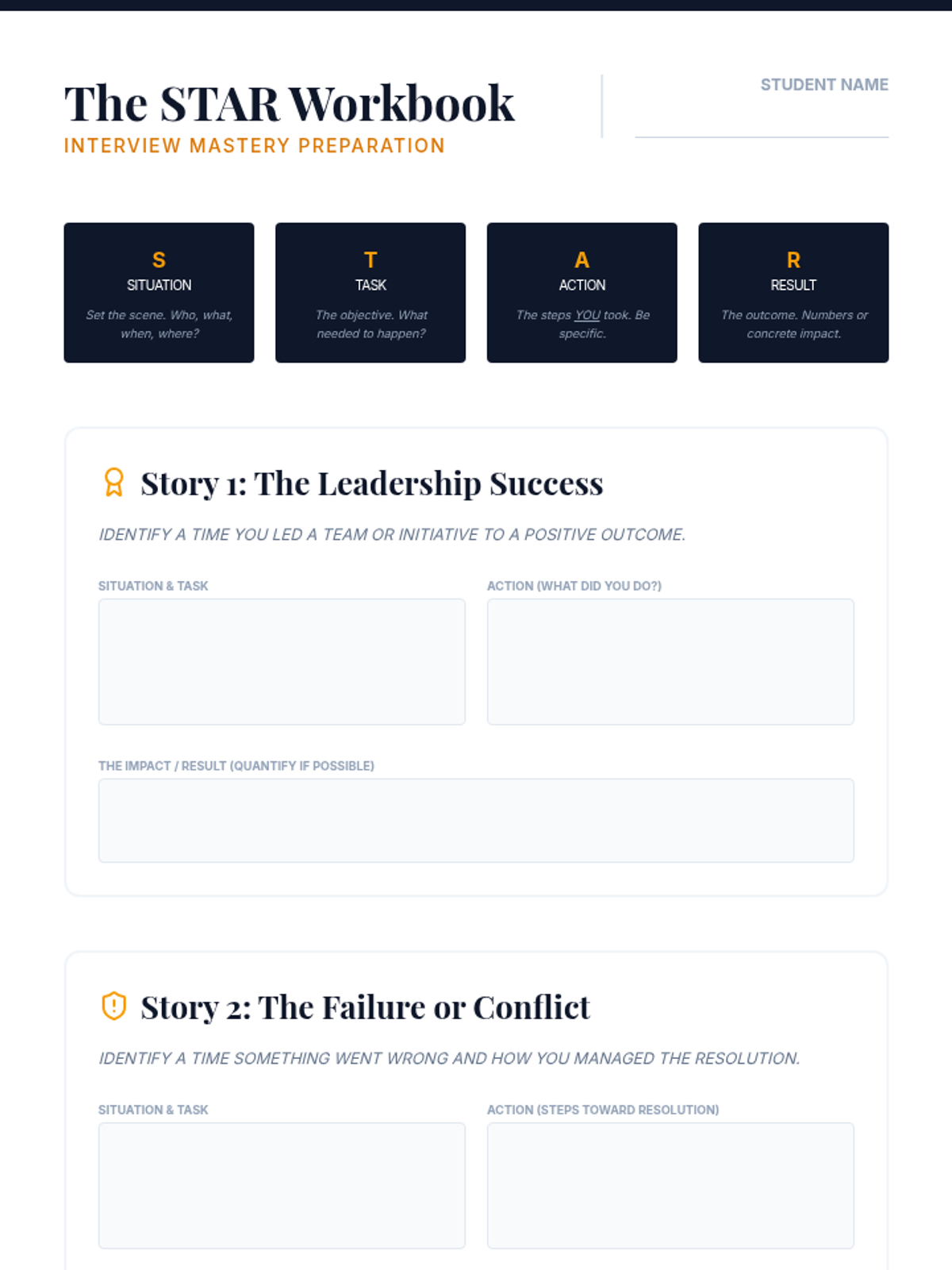
Students prepare for scholarship interviews using the STAR method to answer behavioral questions effectively.
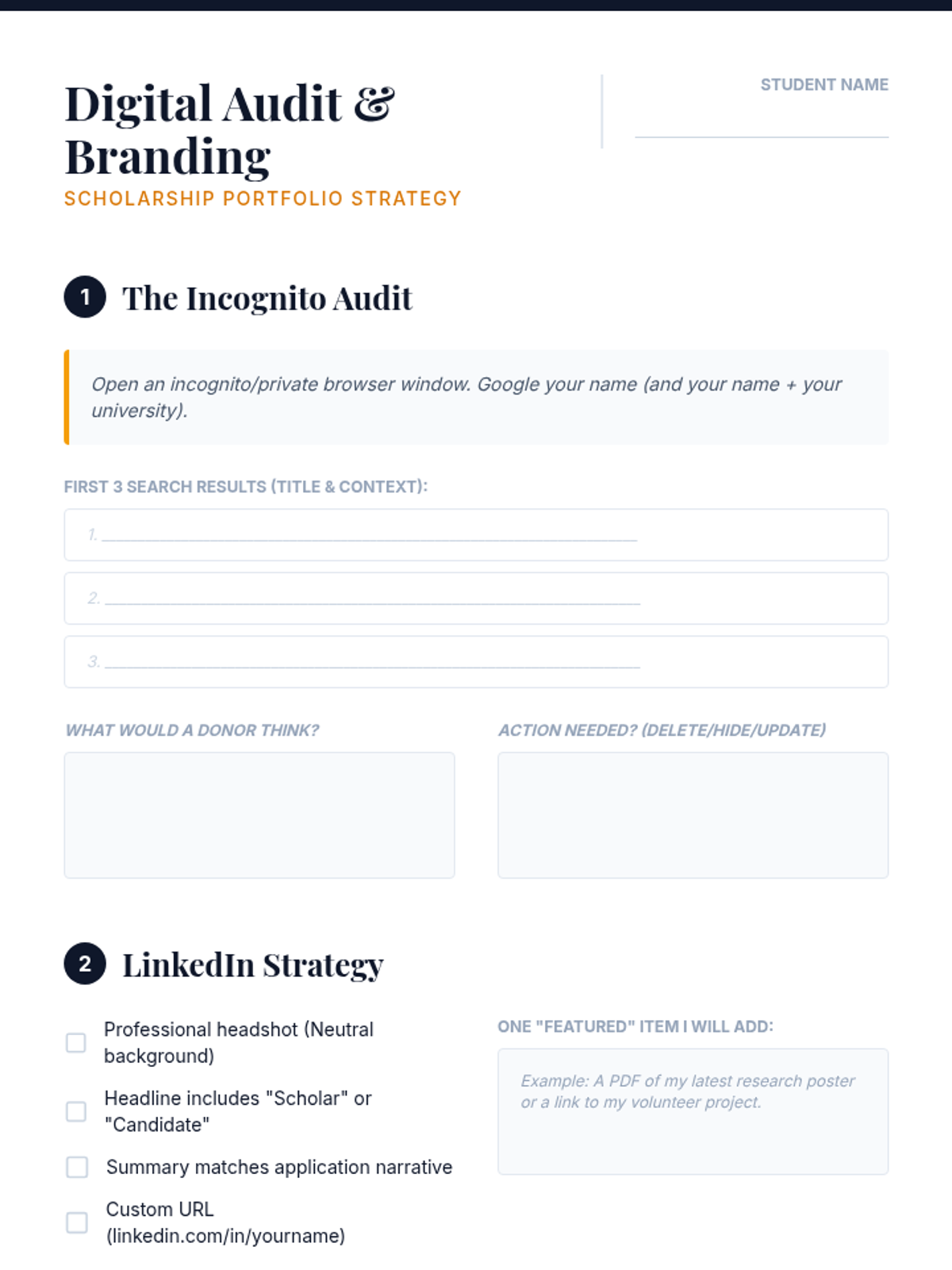
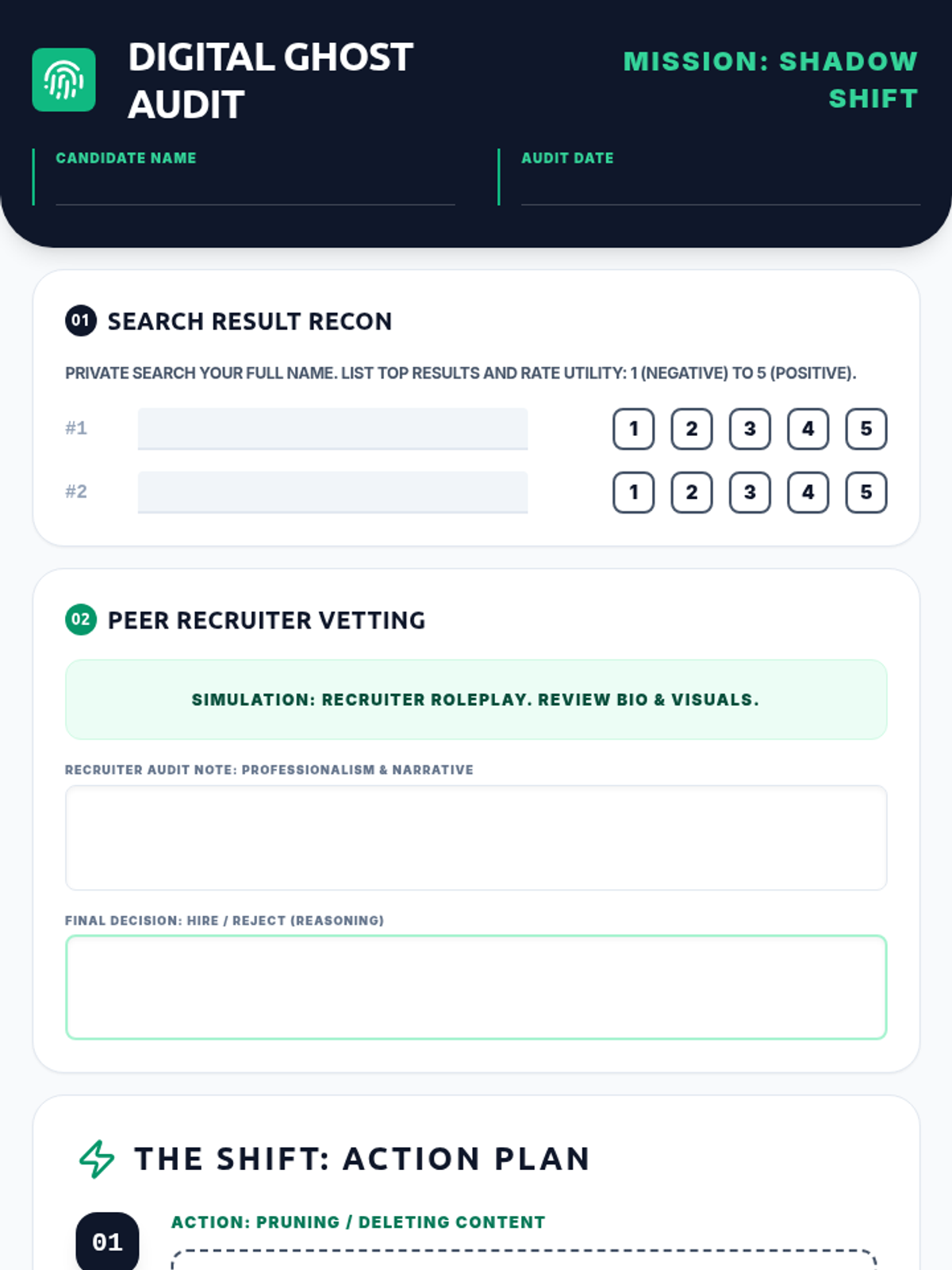
Students audit their digital footprint and curate supplemental materials to reinforce their application's narrative.
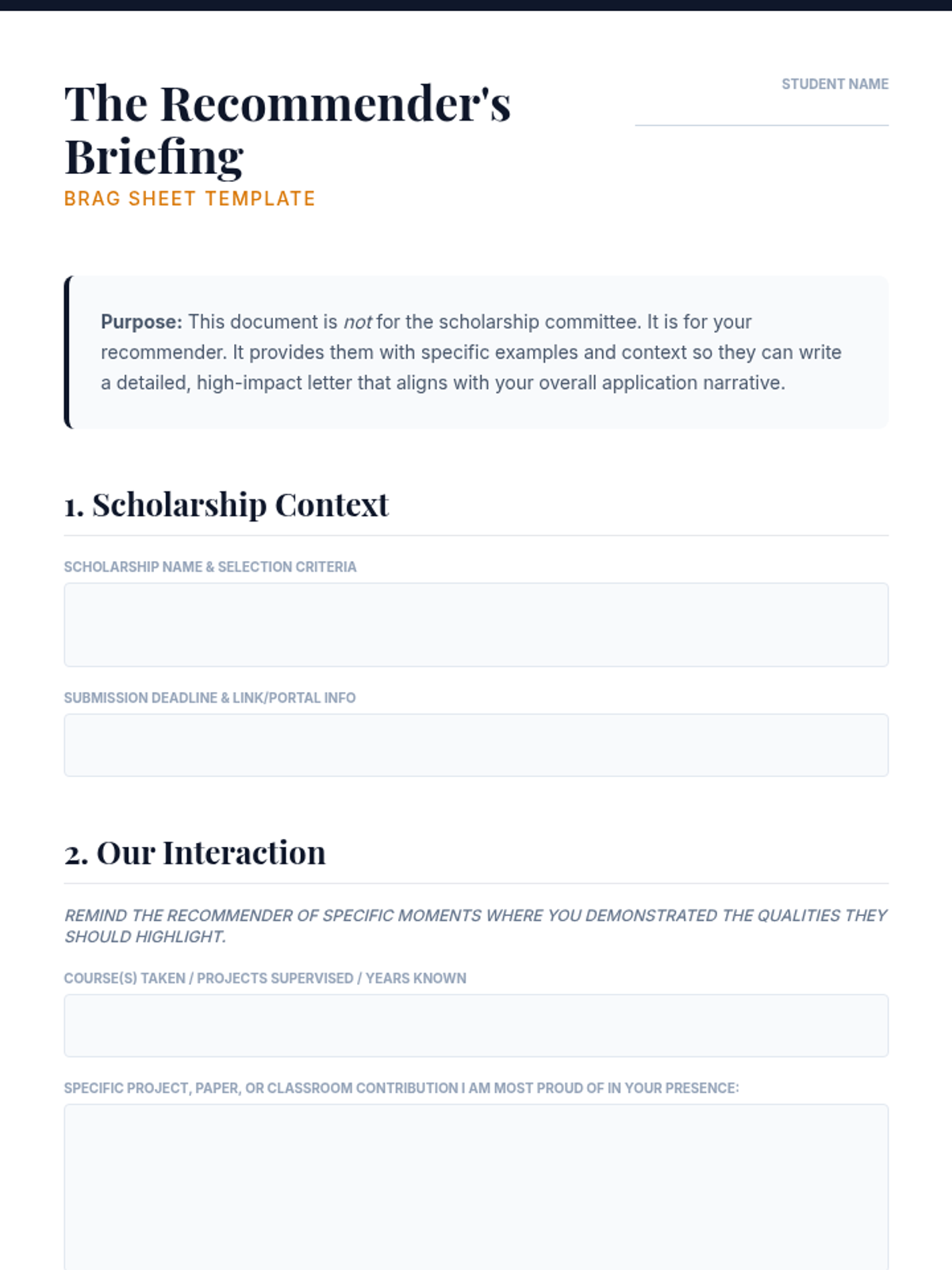
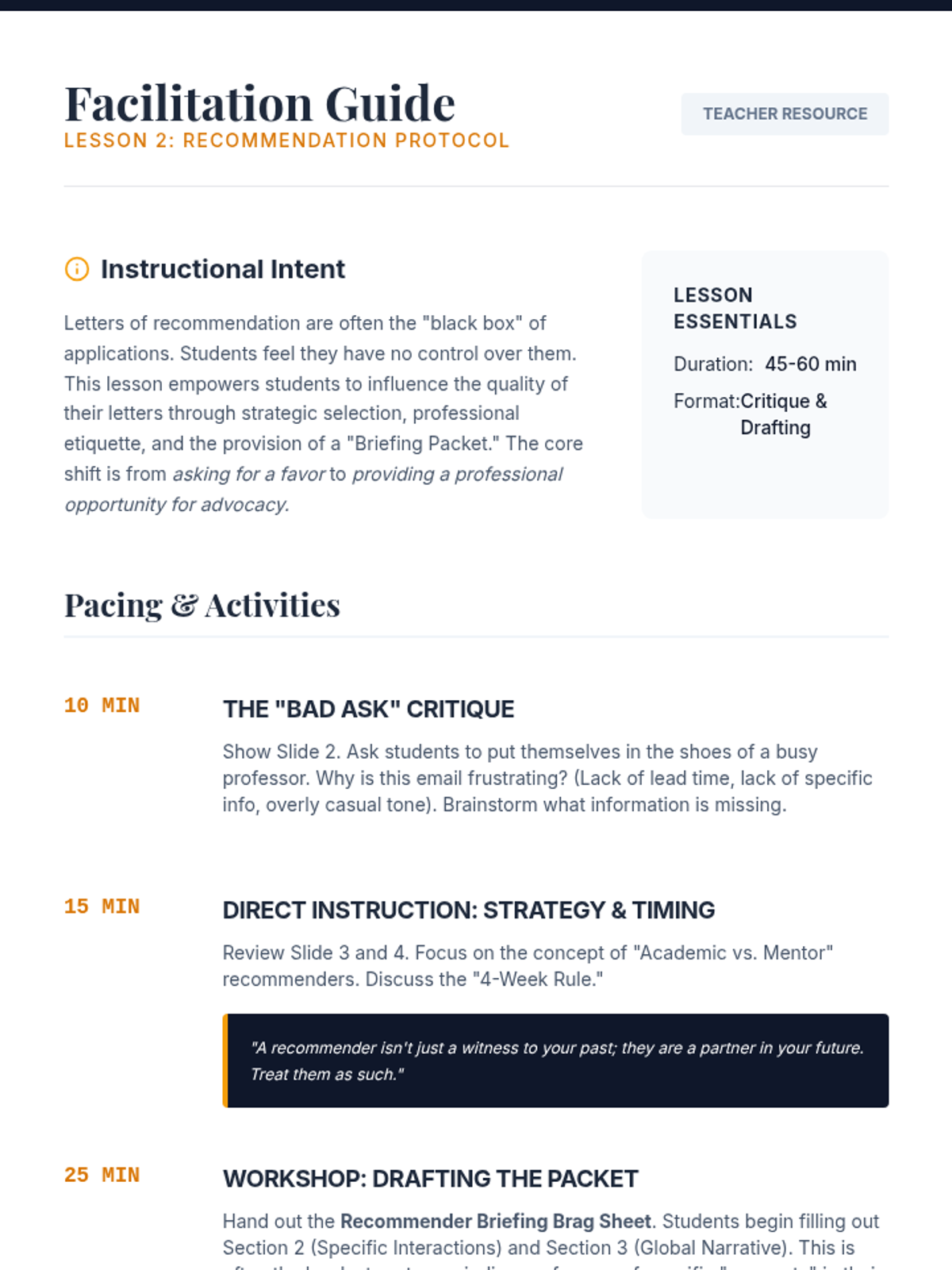
Students learn the etiquette and strategy for requesting letters of recommendation, creating 'brag sheets' to guide their recommenders.
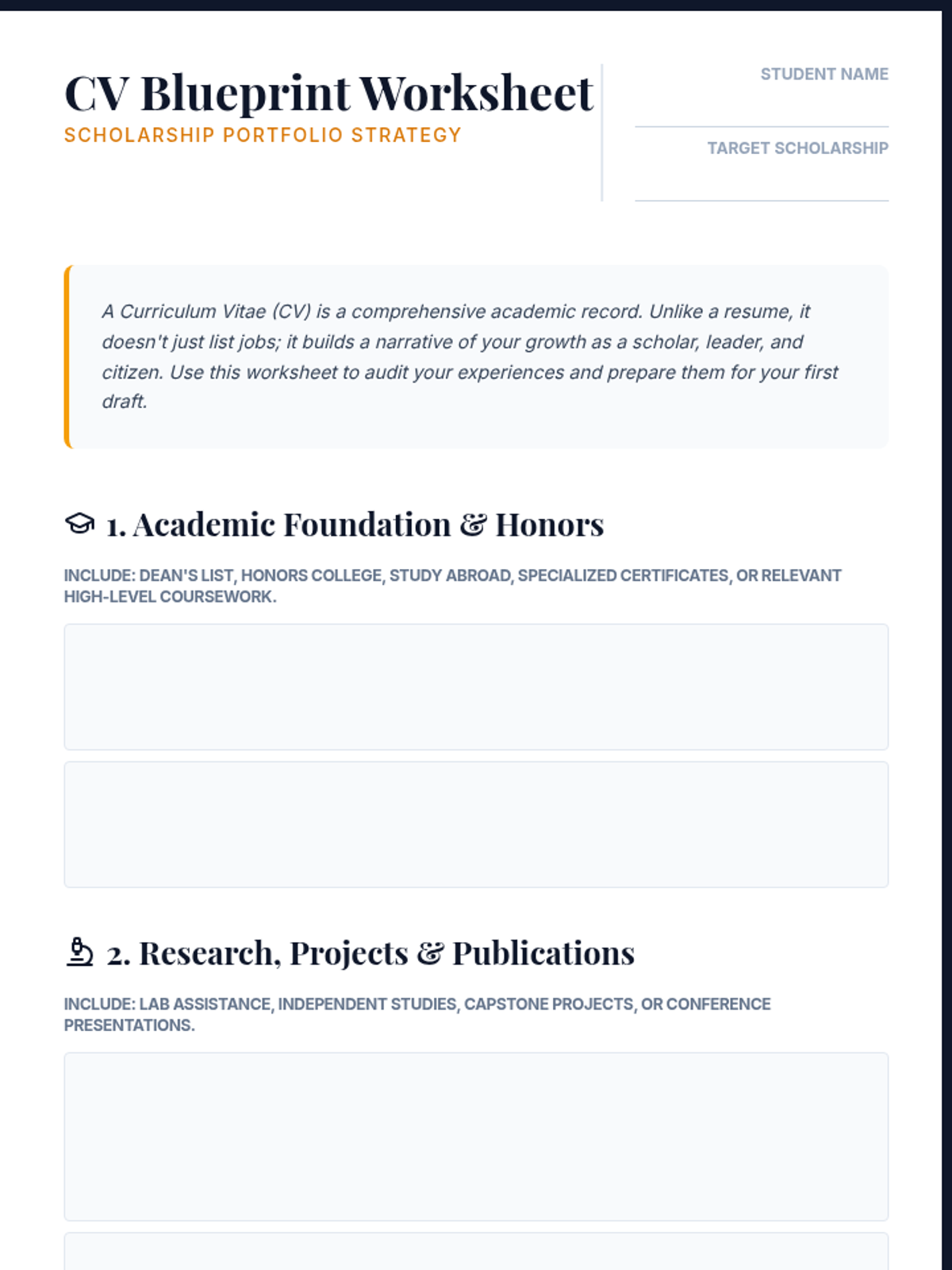
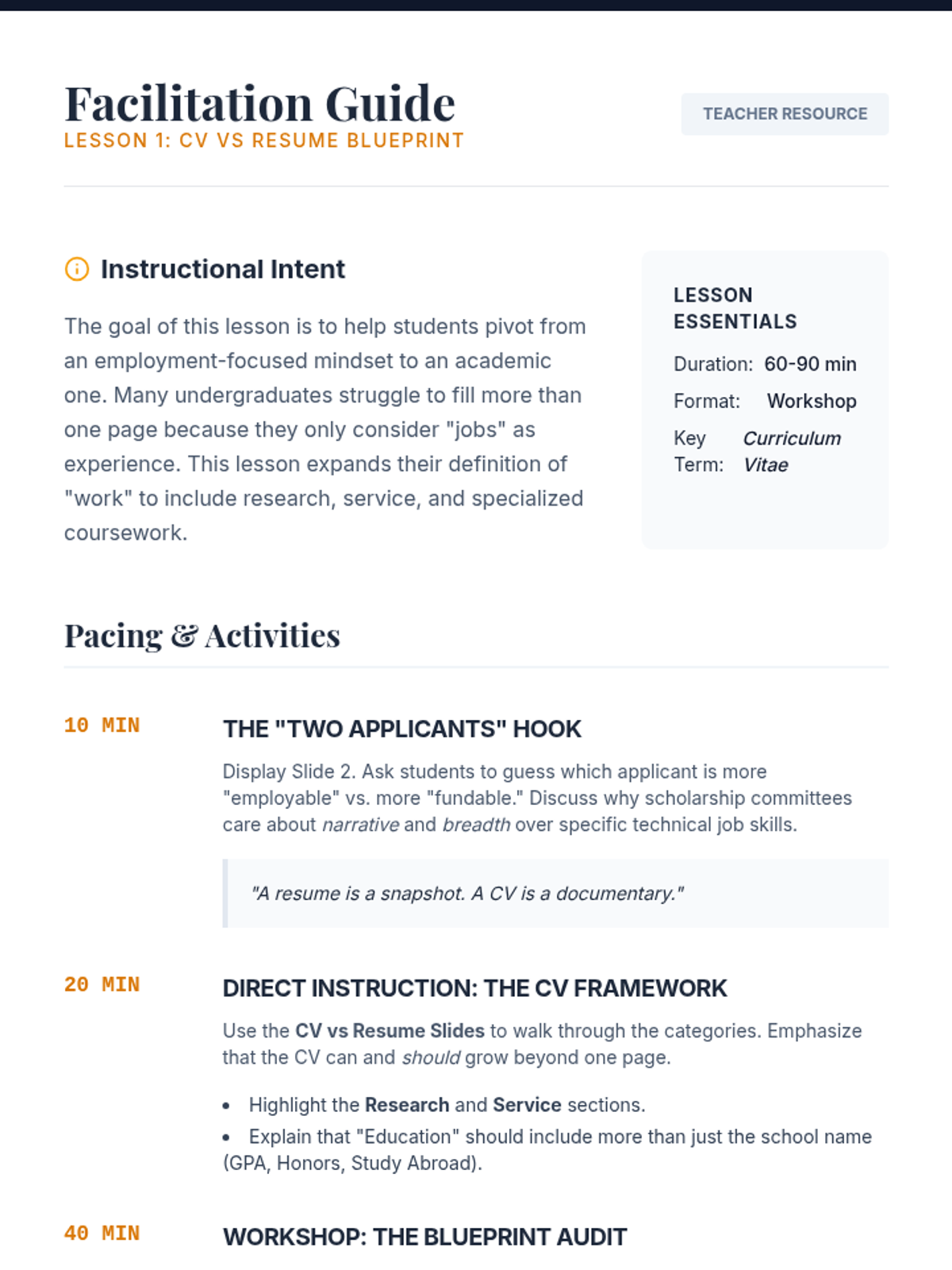
Students differentiate between a standard employment resume and an academic CV, building a document that highlights academic achievements, research, and leadership.
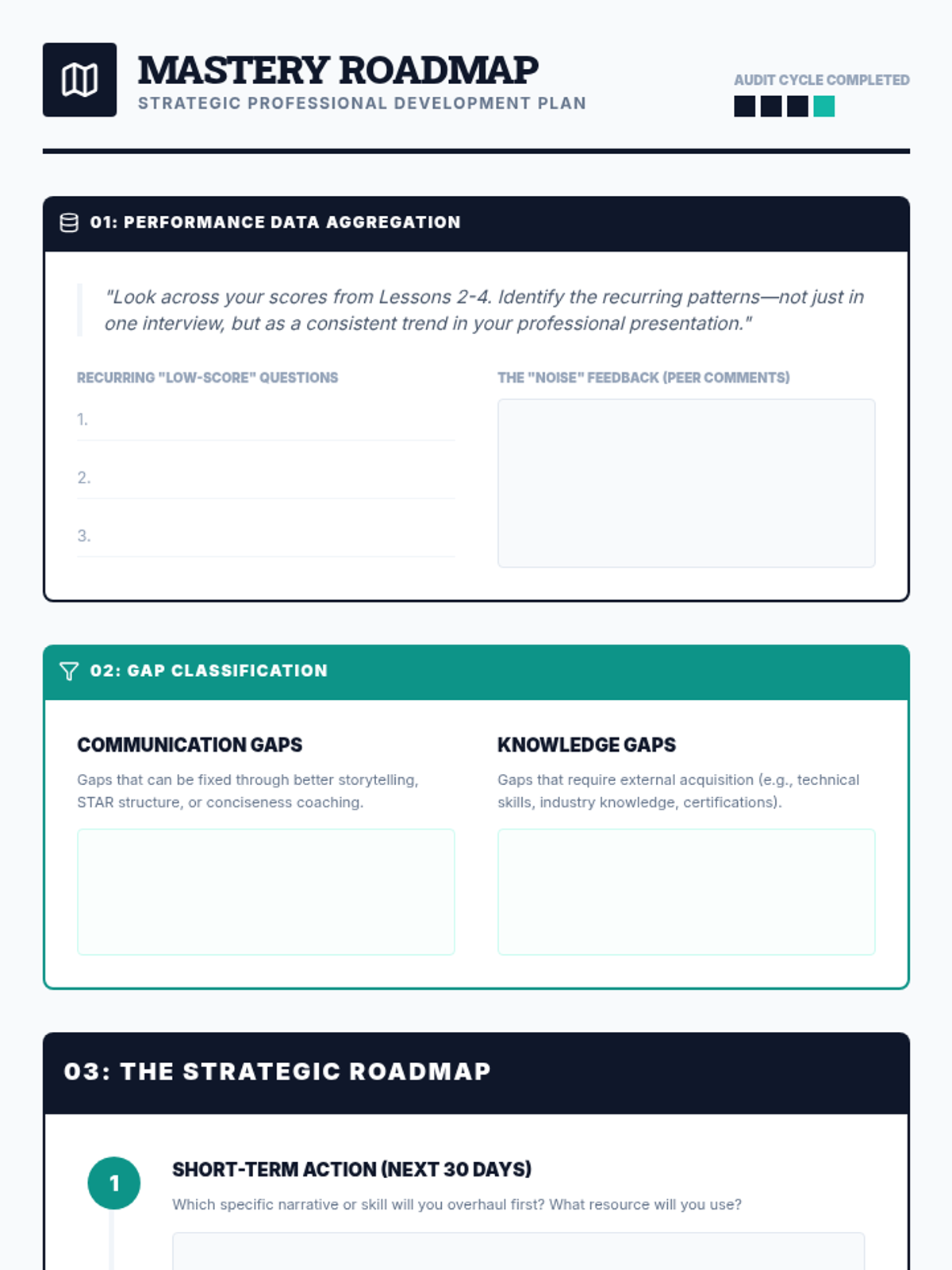
The sequence culminates in a long-term strategic plan that uses interview performance patterns to guide skill acquisition and career growth.
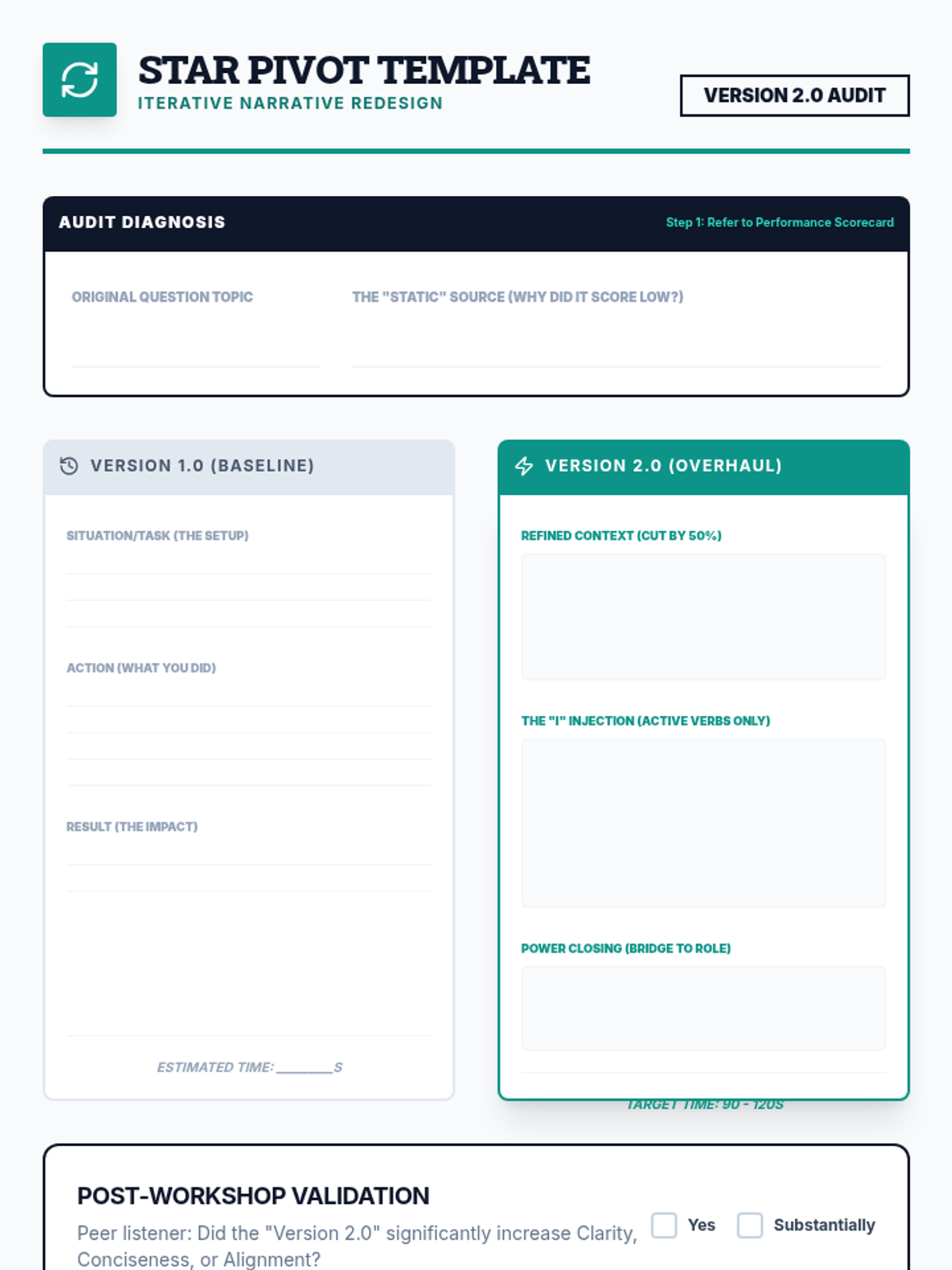
A workshop-style lesson where students use audit data to re-engineer their STAR stories, turning their weakest answers into their strongest narratives.
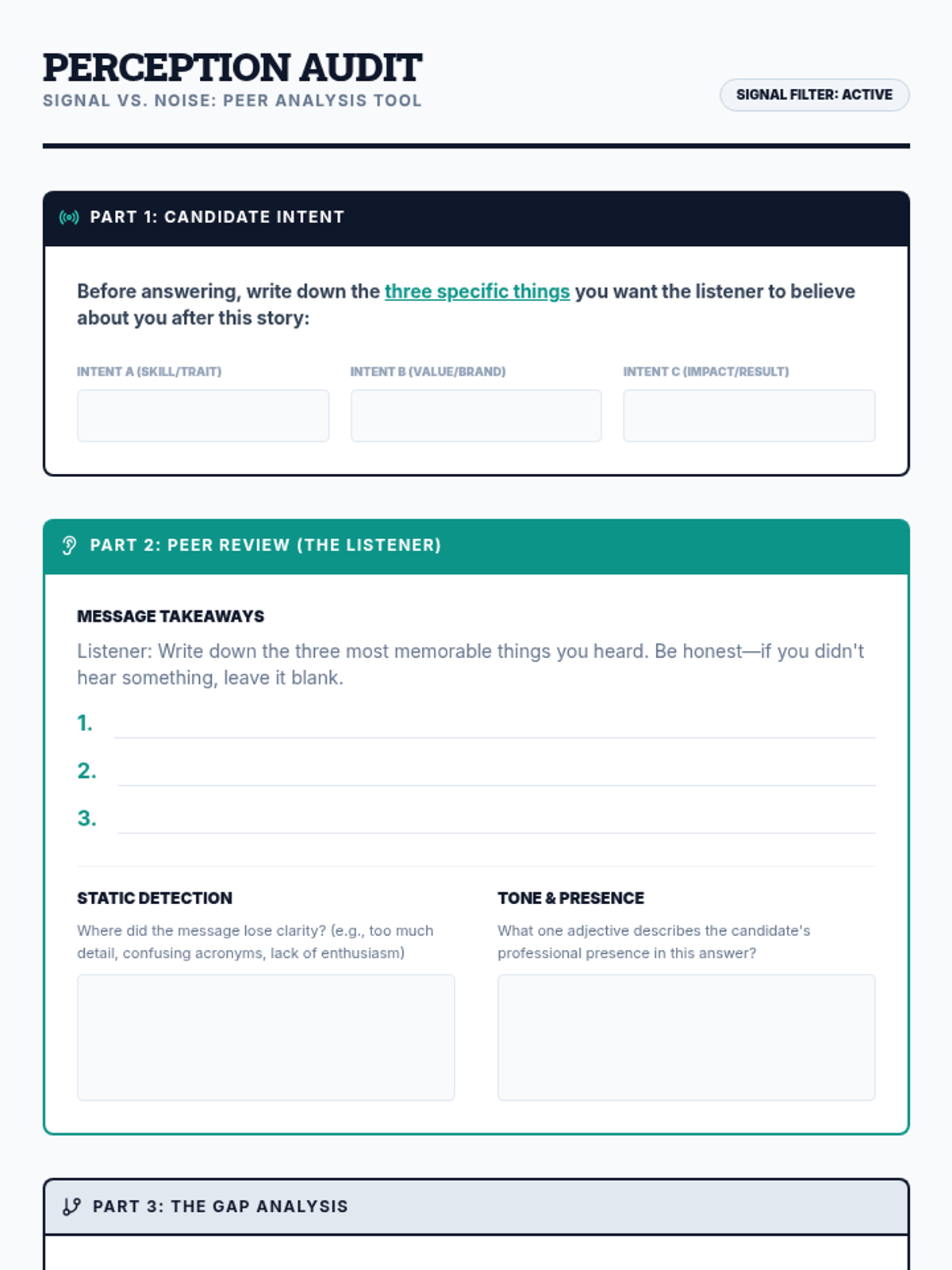
Students conduct a gap analysis between their intended message and how it was perceived by others, identifying 'signal distortion' in their professional communication.
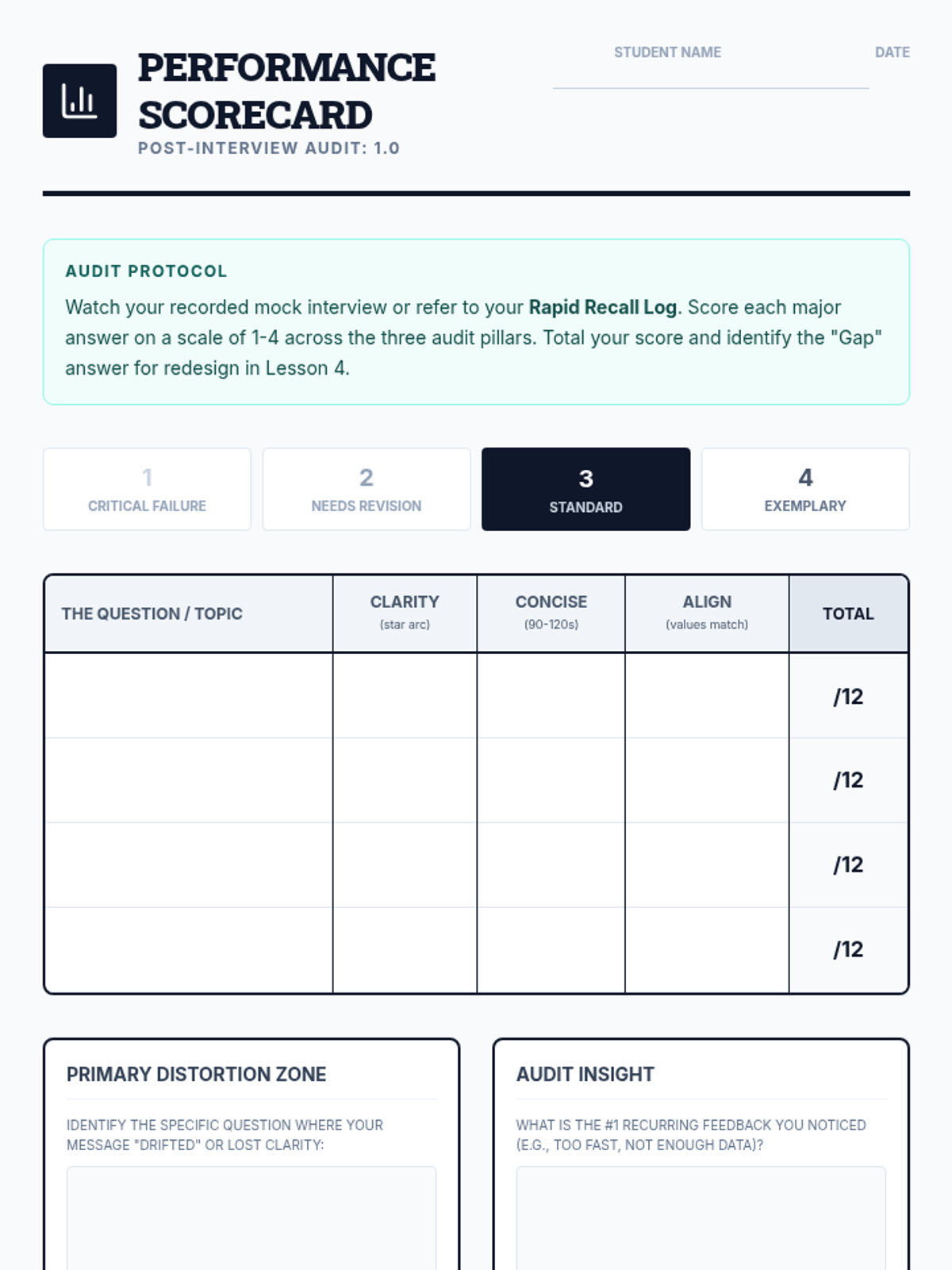
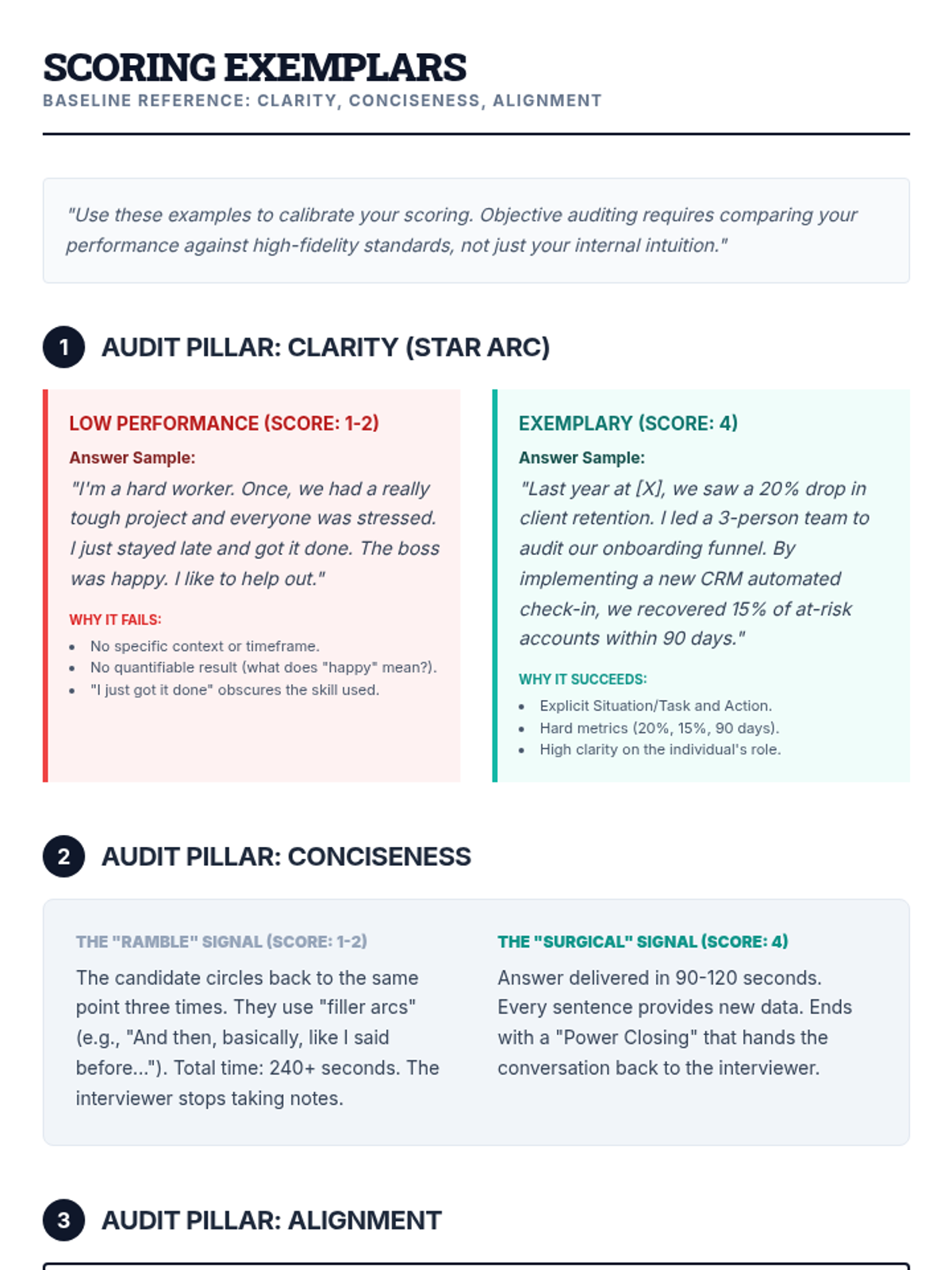
Introduces a standardized rubric for objective self-evaluation. Students analyze clarity, conciseness, and alignment with organizational values.
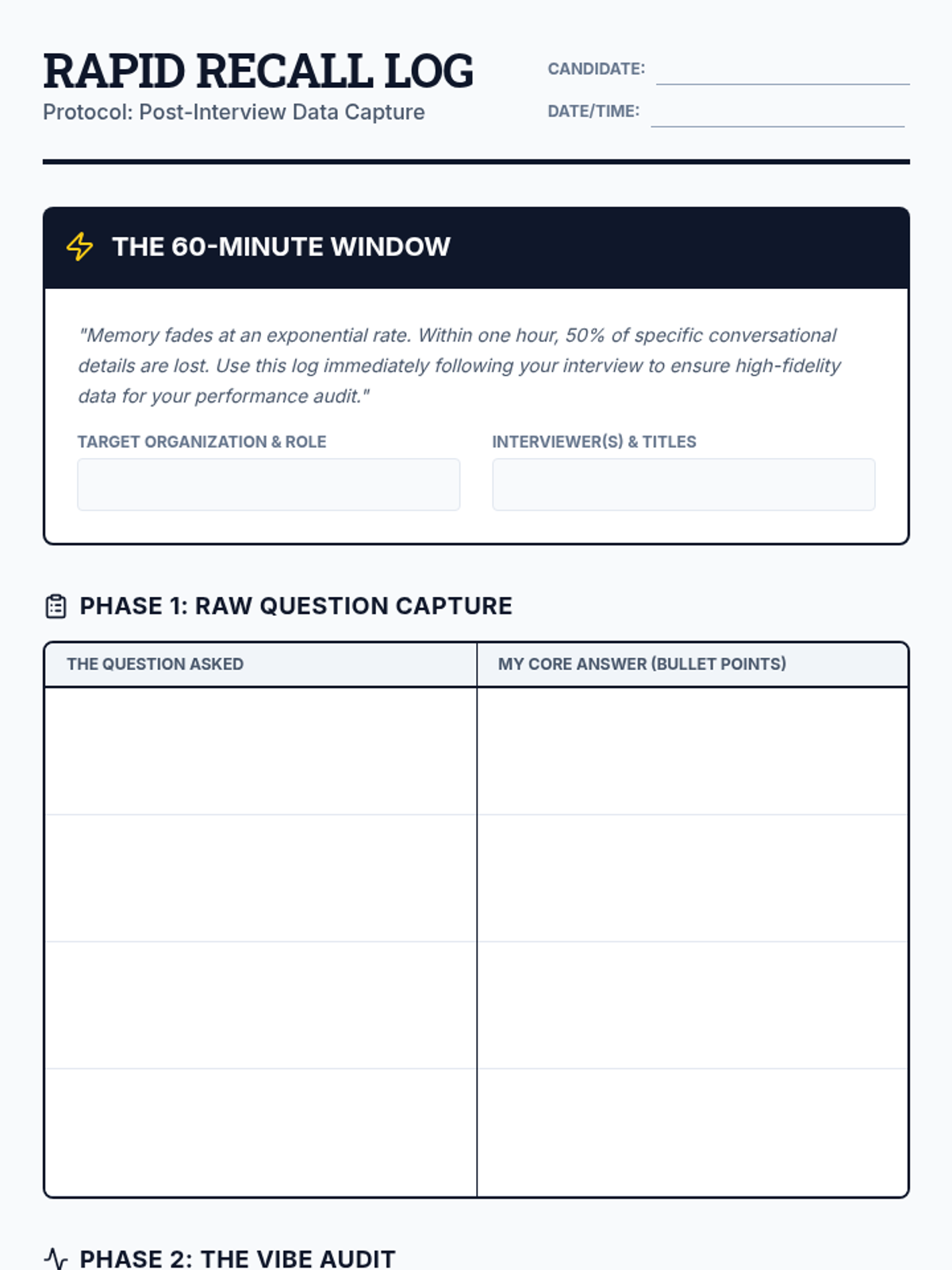
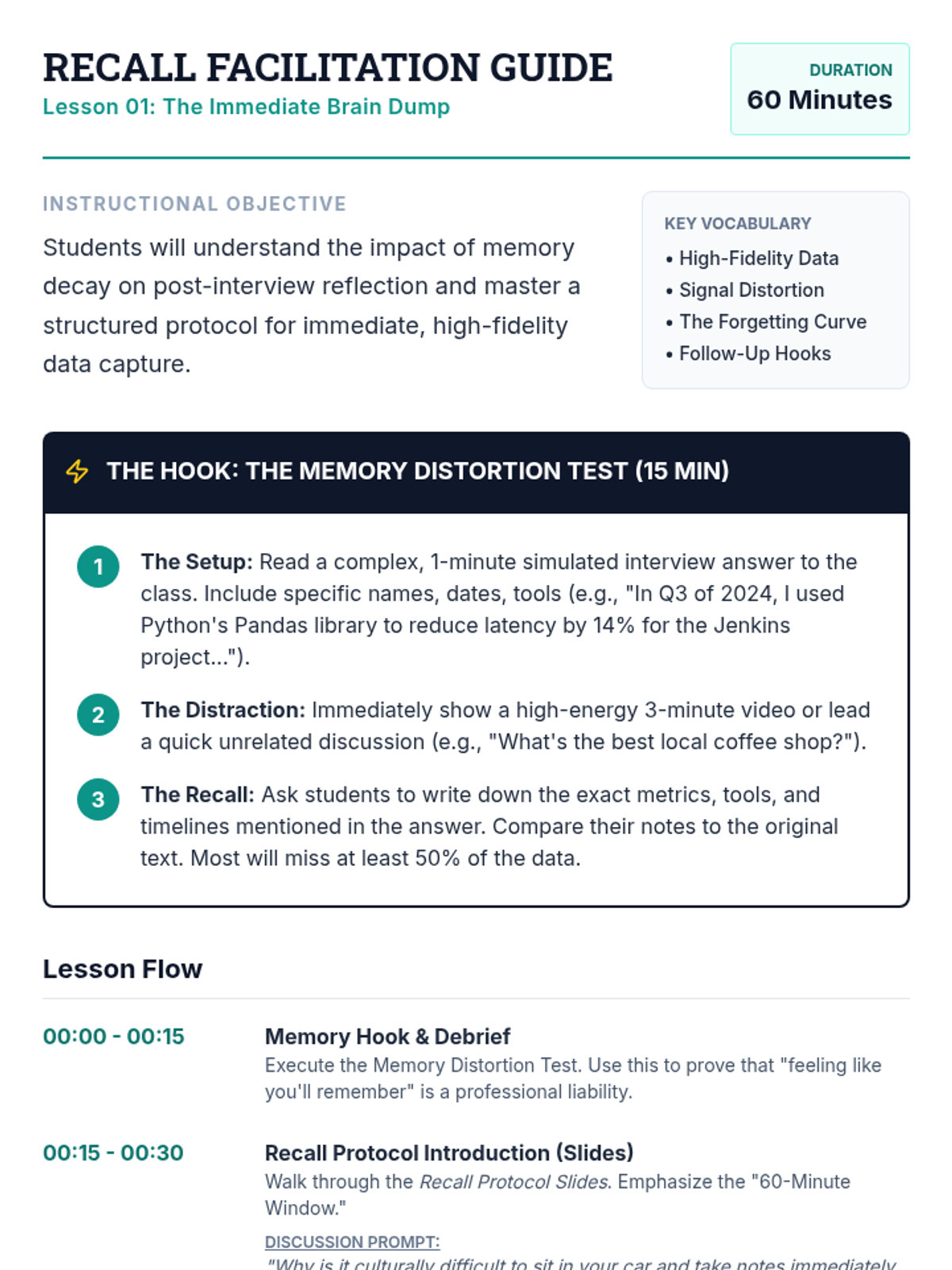
Focuses on the critical 60 minutes post-interview. Students learn a 'Rapid Recall Protocol' to capture data-driven insights before memory decay sets in.
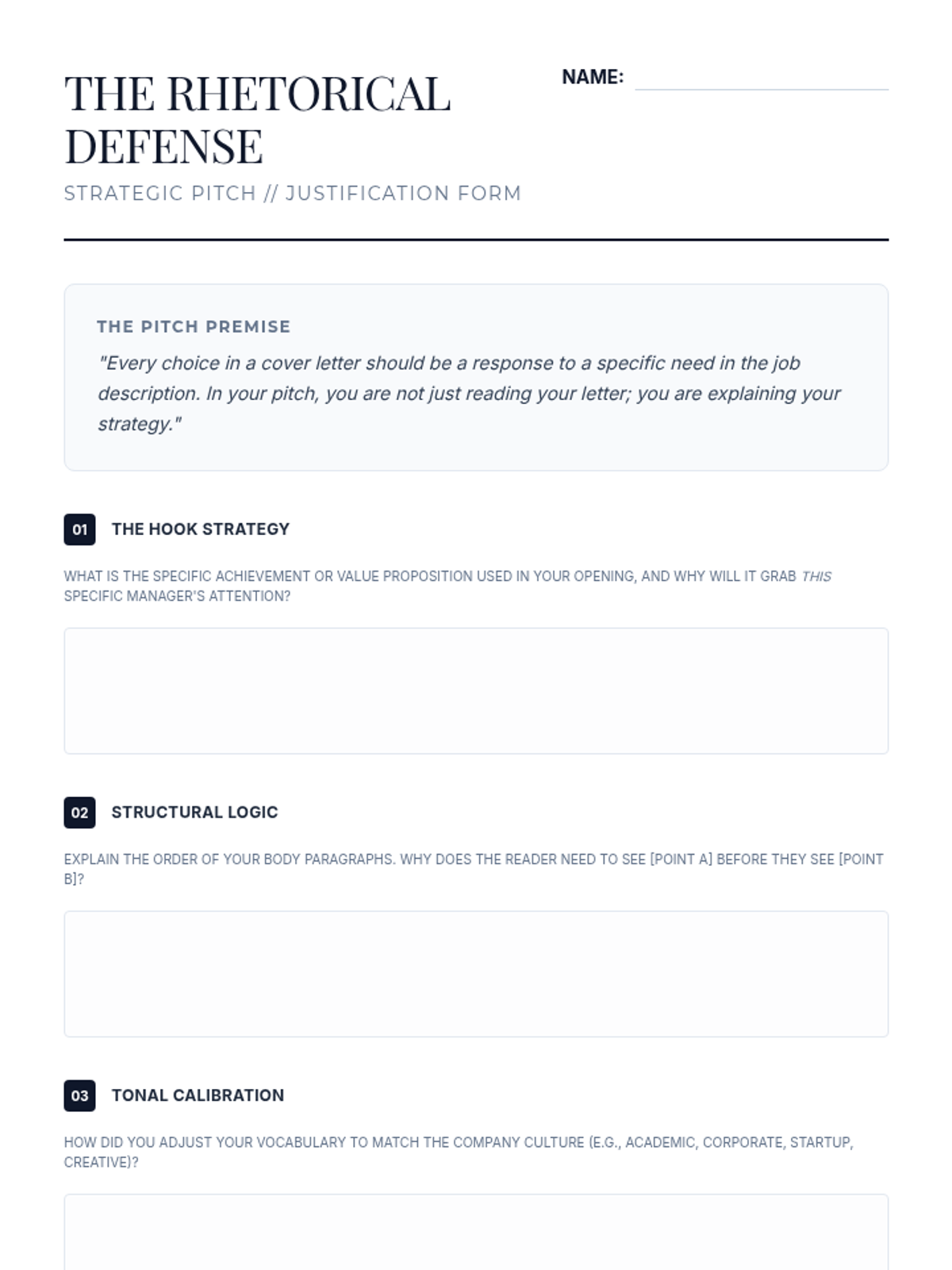
Students present their final cover letter along with the strategy behind their rhetorical choices. They defend their tailoring approach and receive final feedback in a pitch format.
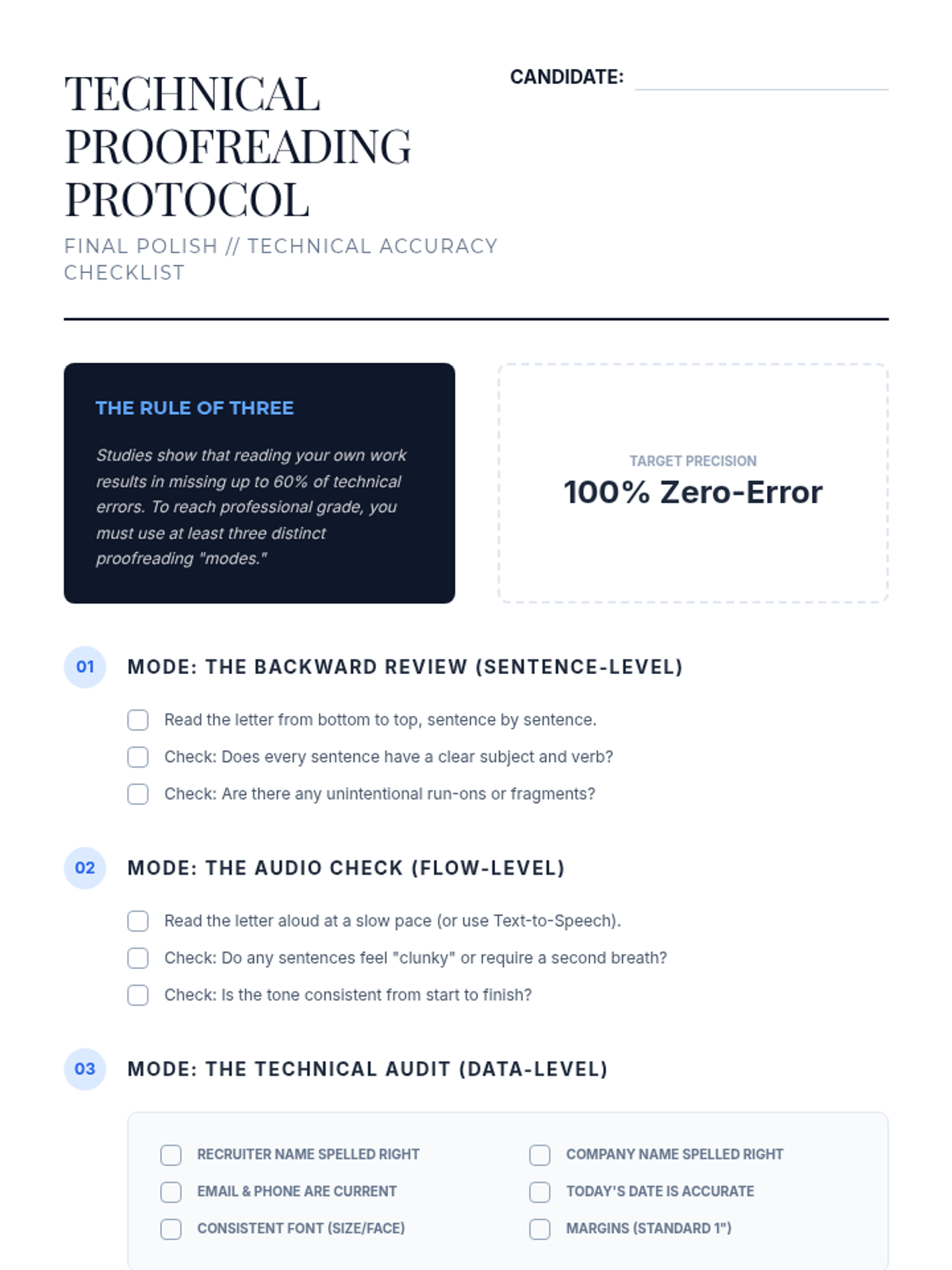
The final technical stage where students learn professional proofreading strategies. This includes non-linear reading techniques to catch errors that automated tools often miss.
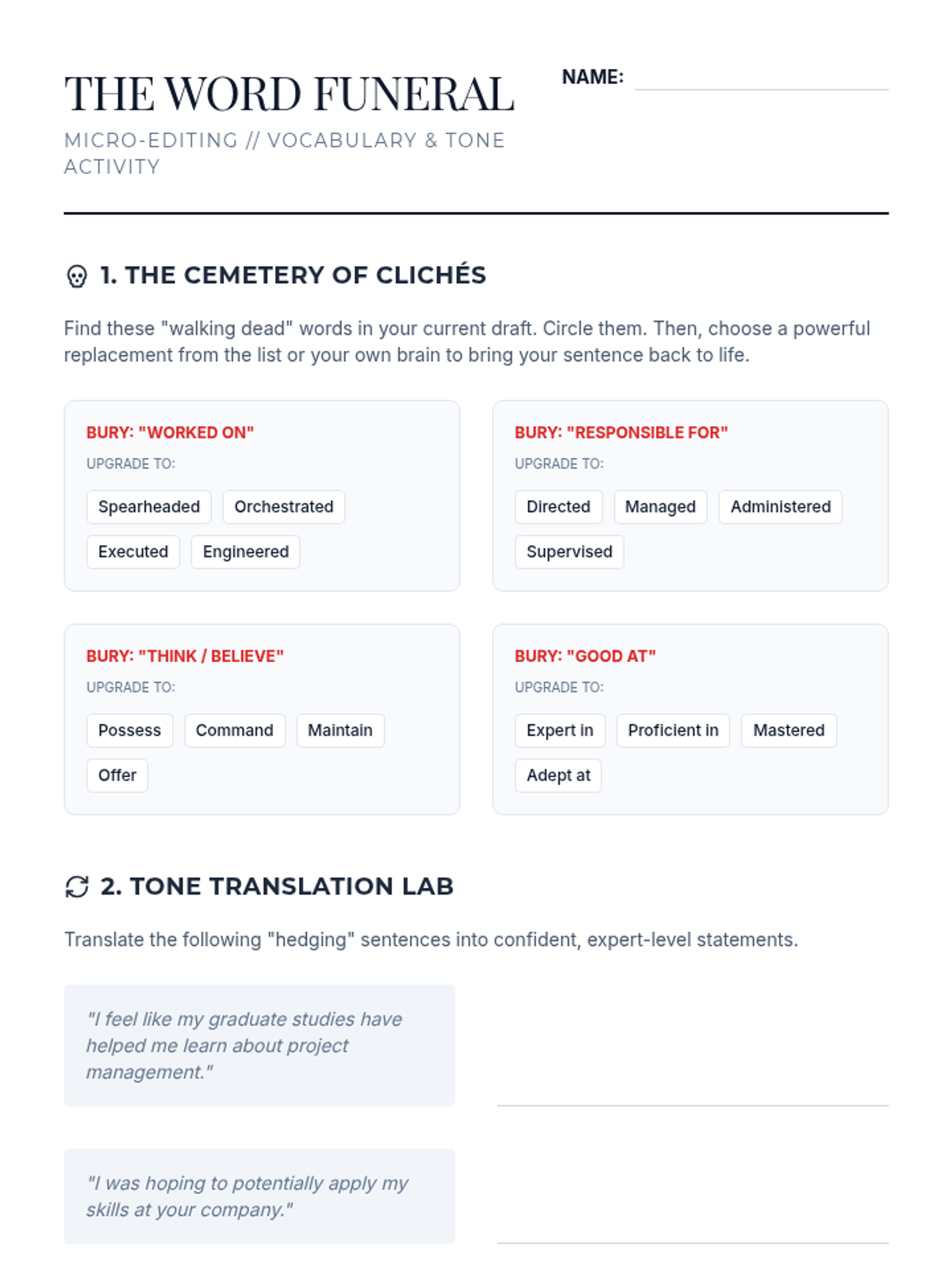
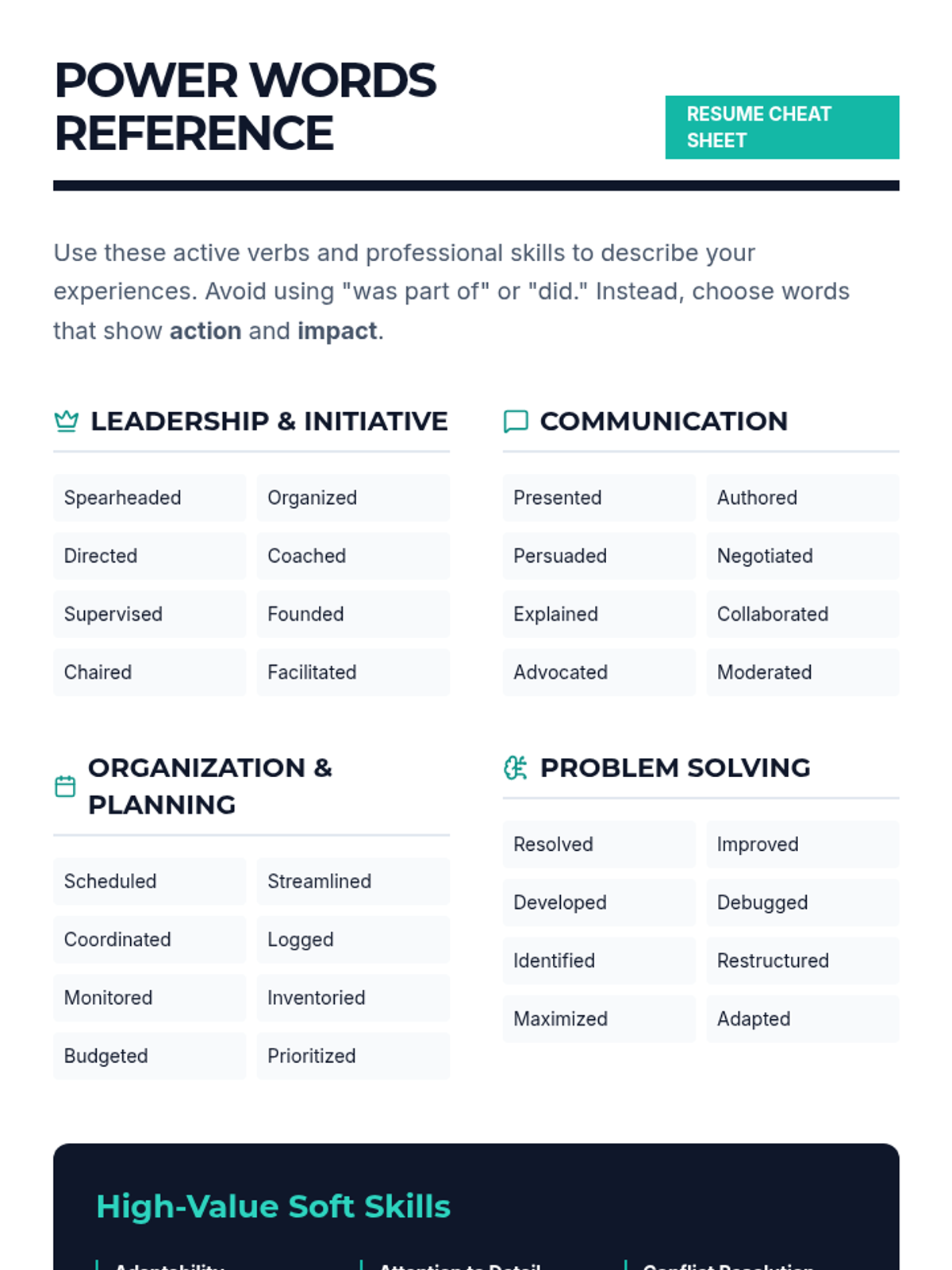
A deep dive into sentence-level refinement, focusing on dynamic action verbs and professional tone. Students identify and replace weak vocabulary with high-impact language.
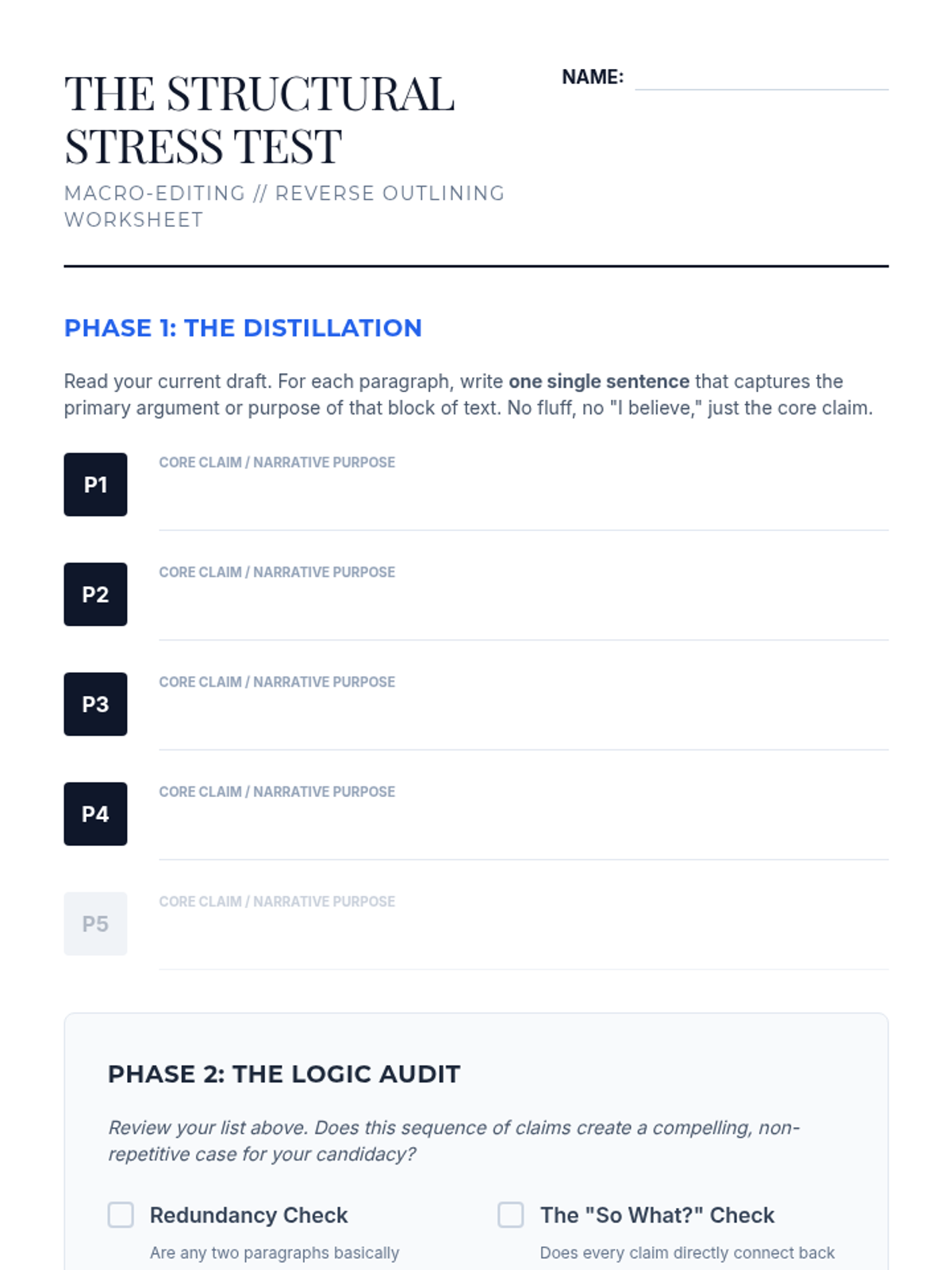
Focuses on the structural integrity and logical progression of the cover letter. Students use reverse outlining and paragraph reassembly to ensure their narrative flows effectively.
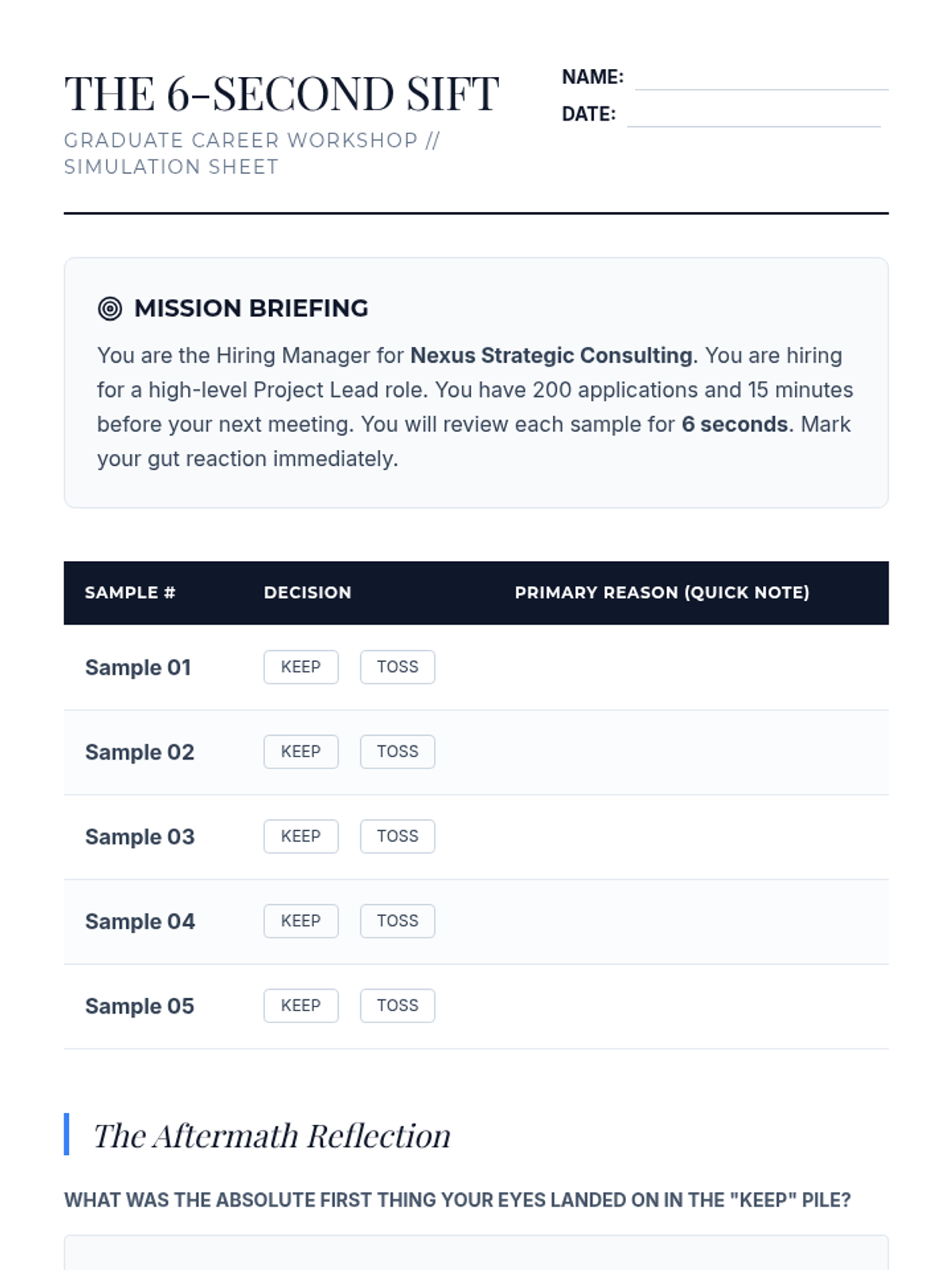
Students adopt the persona of a hiring manager to understand the speed and criteria of professional application reviews. They develop a critical eye and a rubric for evaluating their own and others' cover letters.
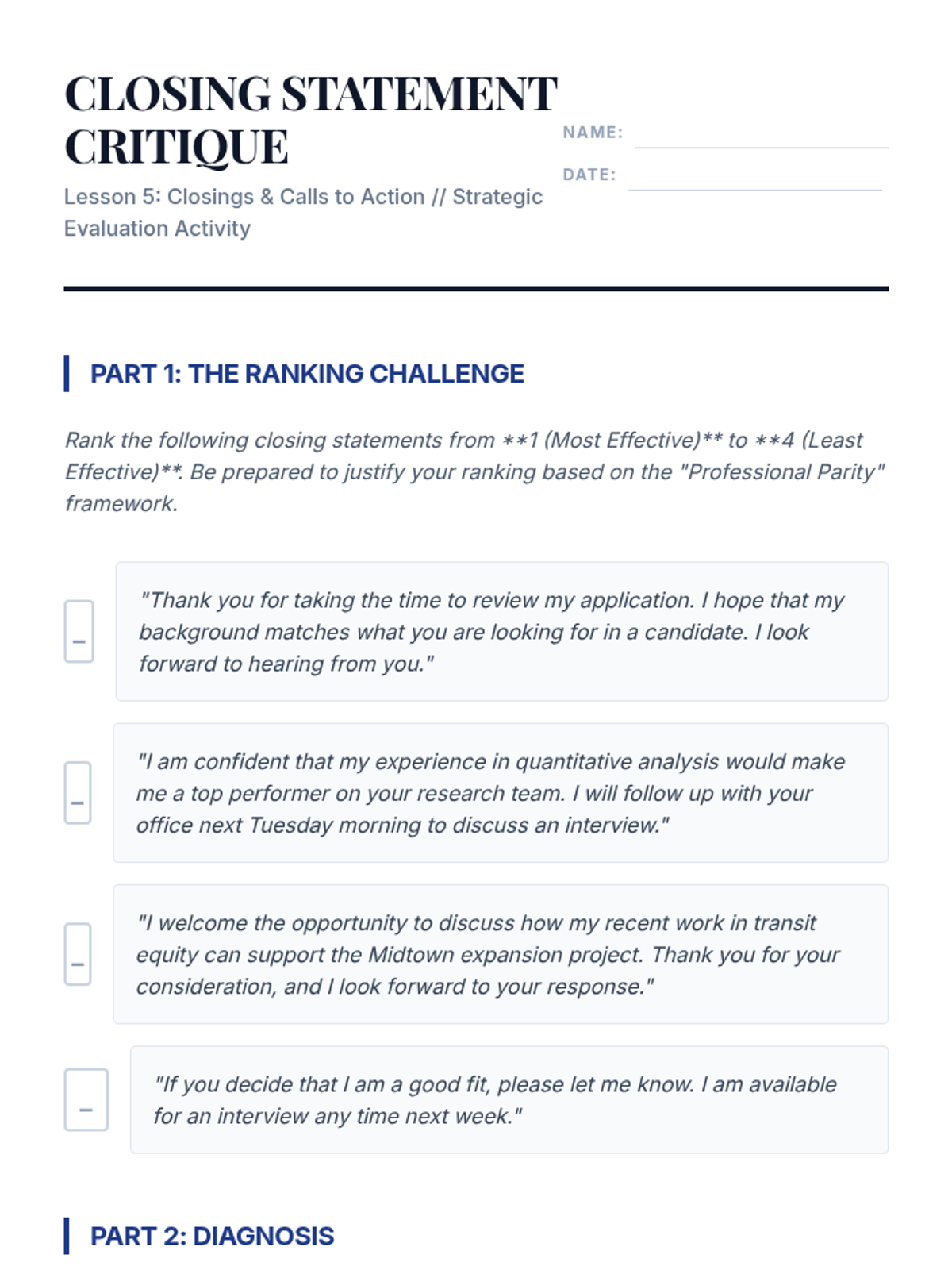
Focuses on the concluding paragraph, covering how to reiterate interest, request an interview professionally, and sign off with appropriate business etiquette.
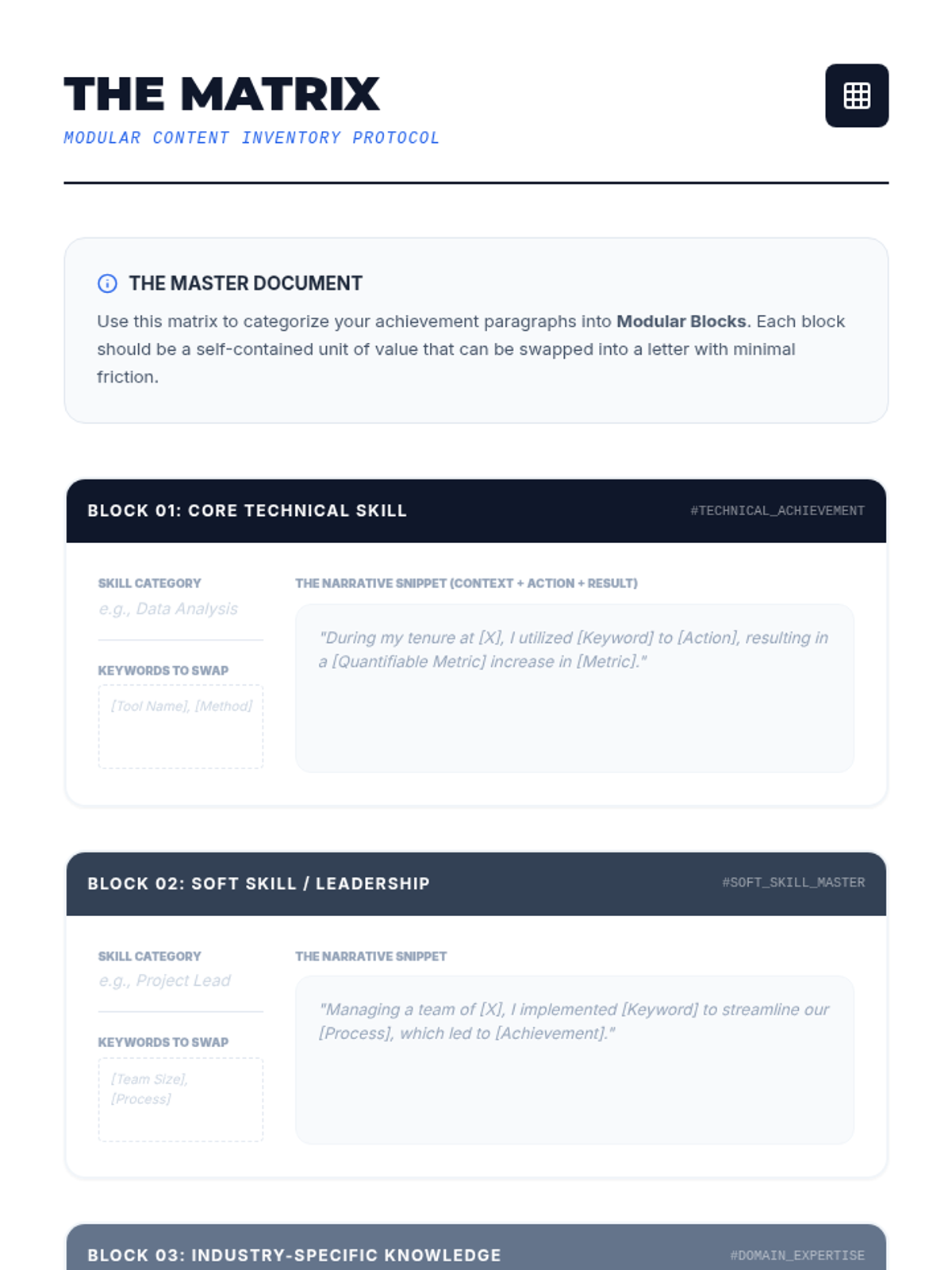
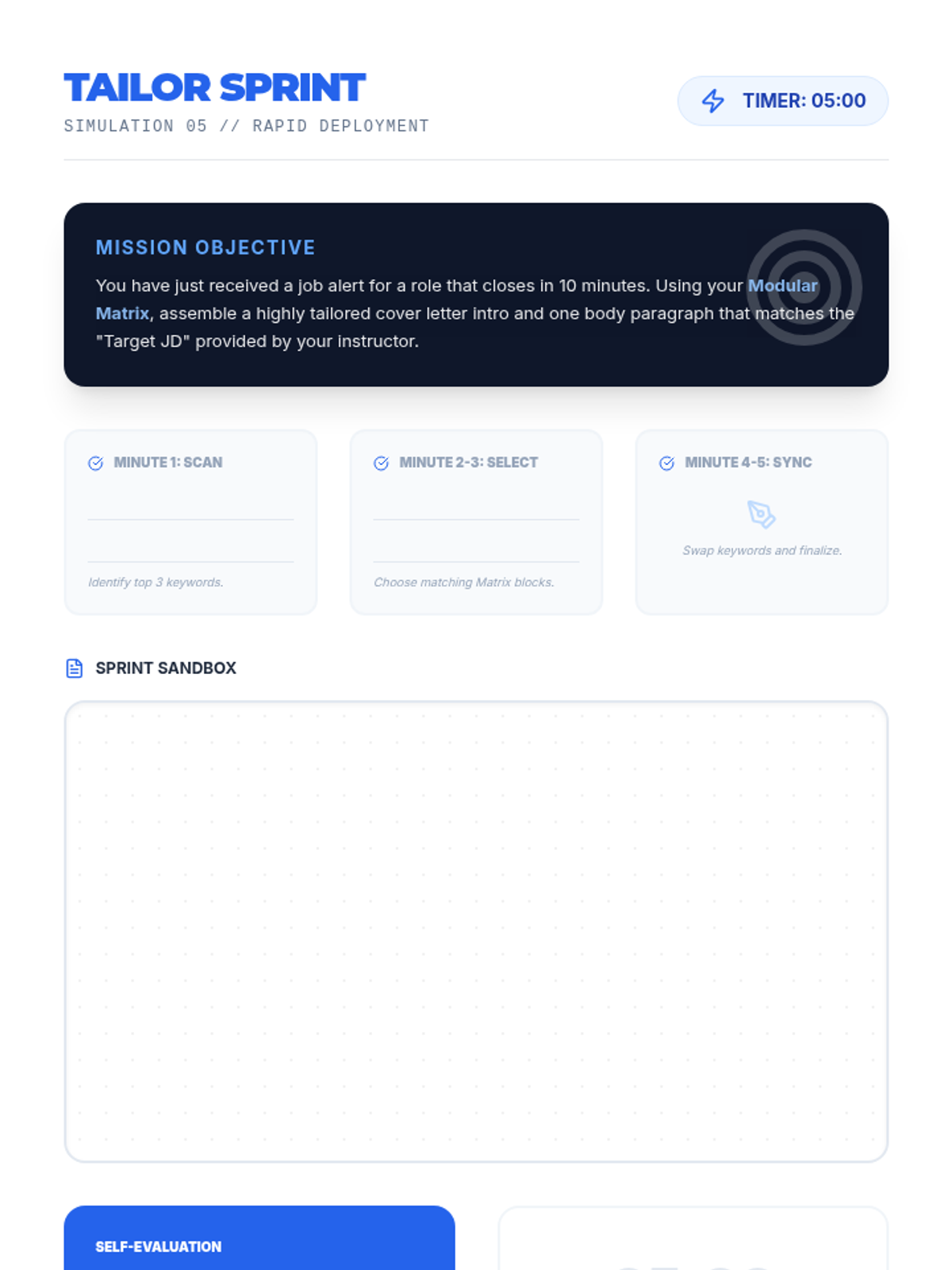
Developing a system for managing modular content blocks for rapid application customization.
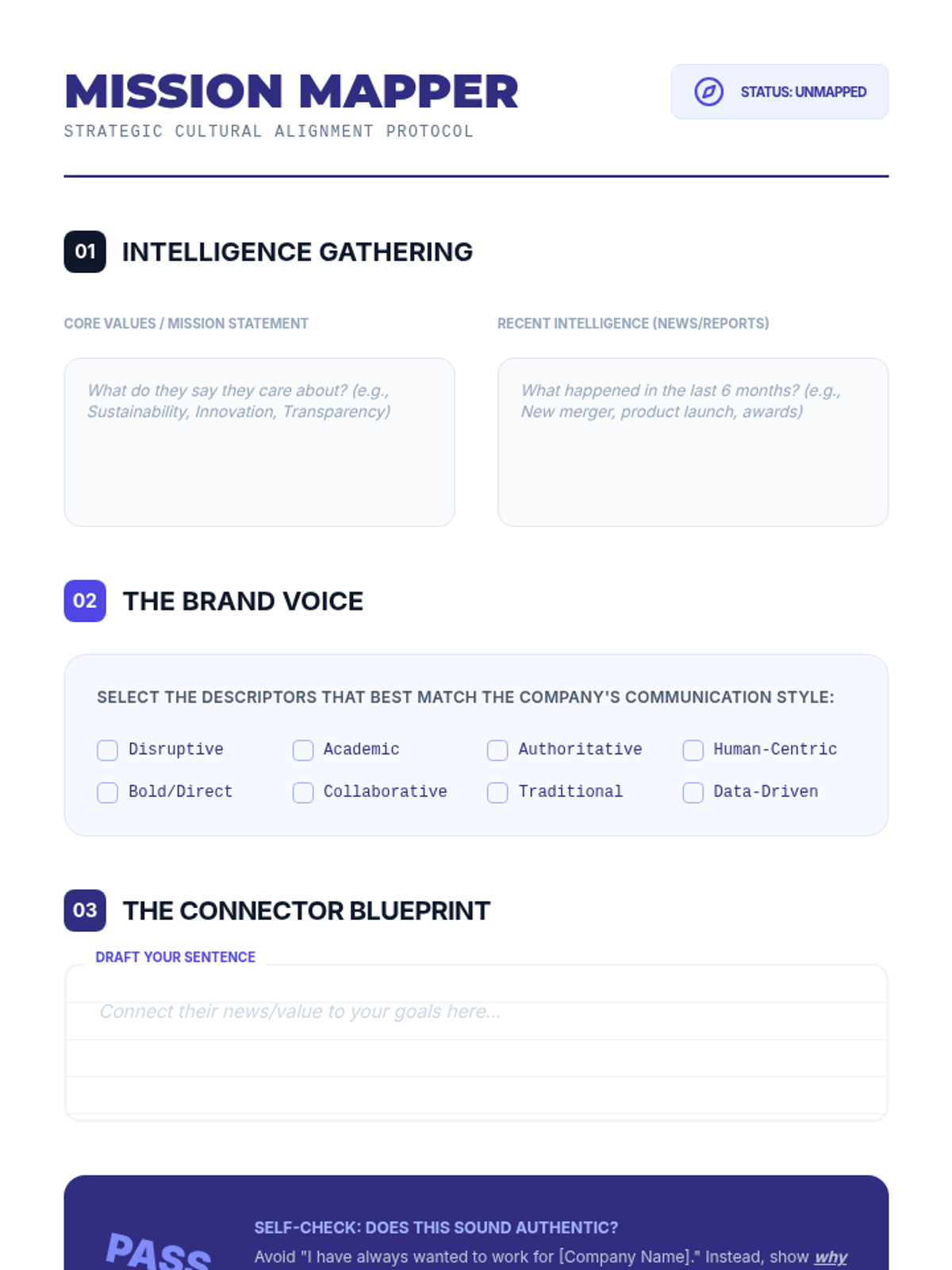
Researching a target company's mission and values to customize tone and express genuine alignment.
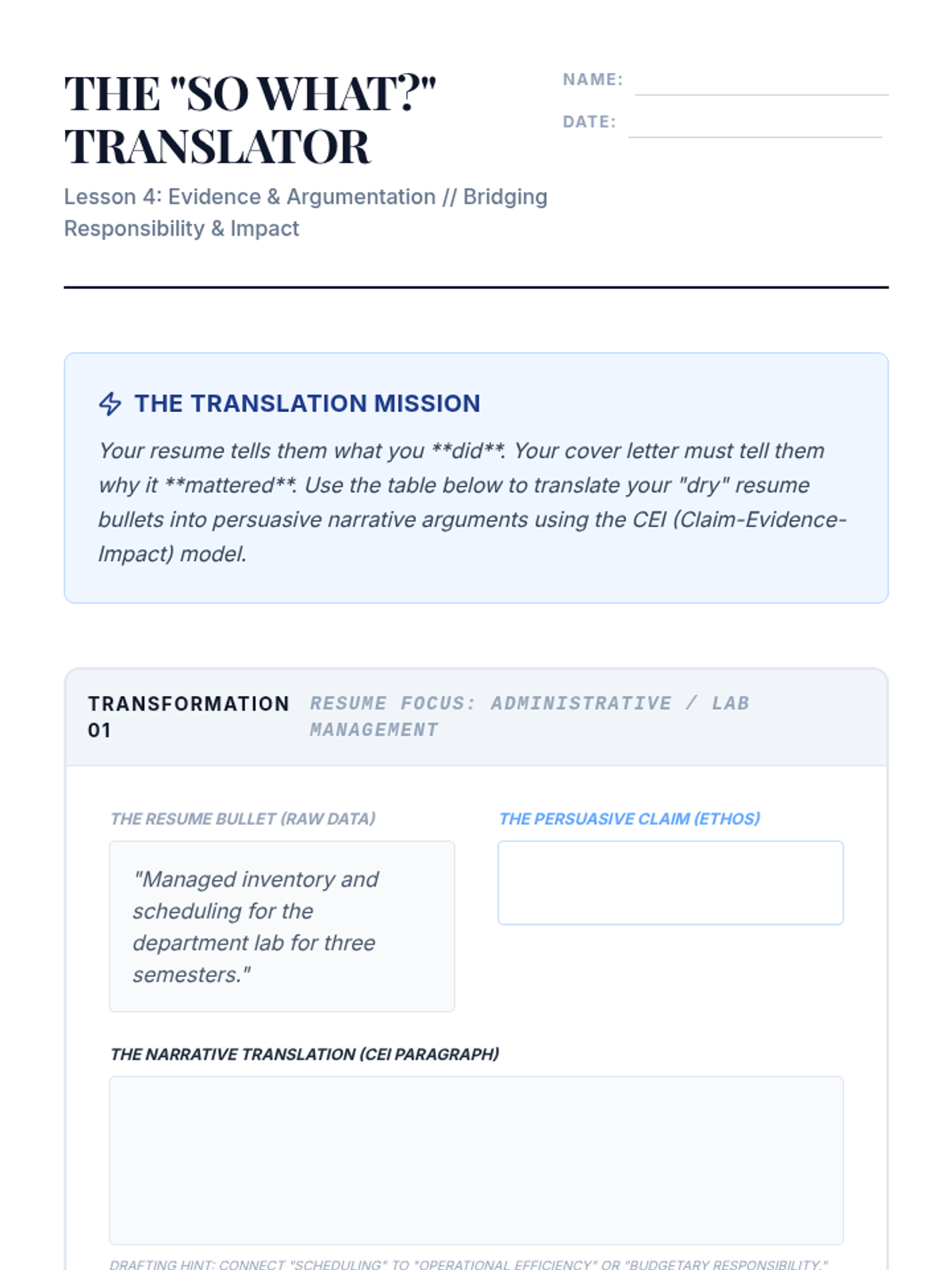
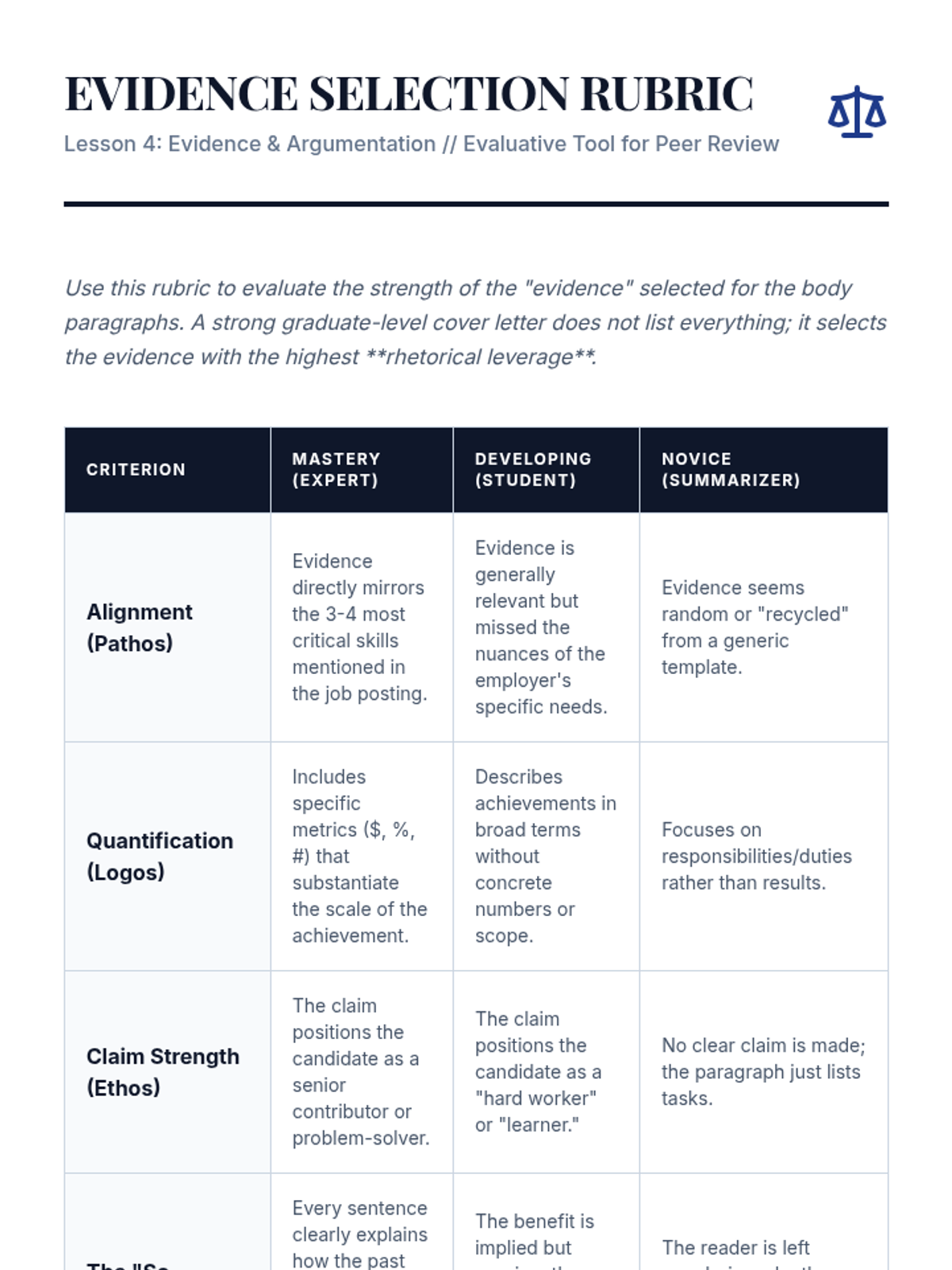
Teaches the claim-evidence-impact model for body paragraphs, focusing on substantiating claims with specific achievements rather than summarizing the resume.
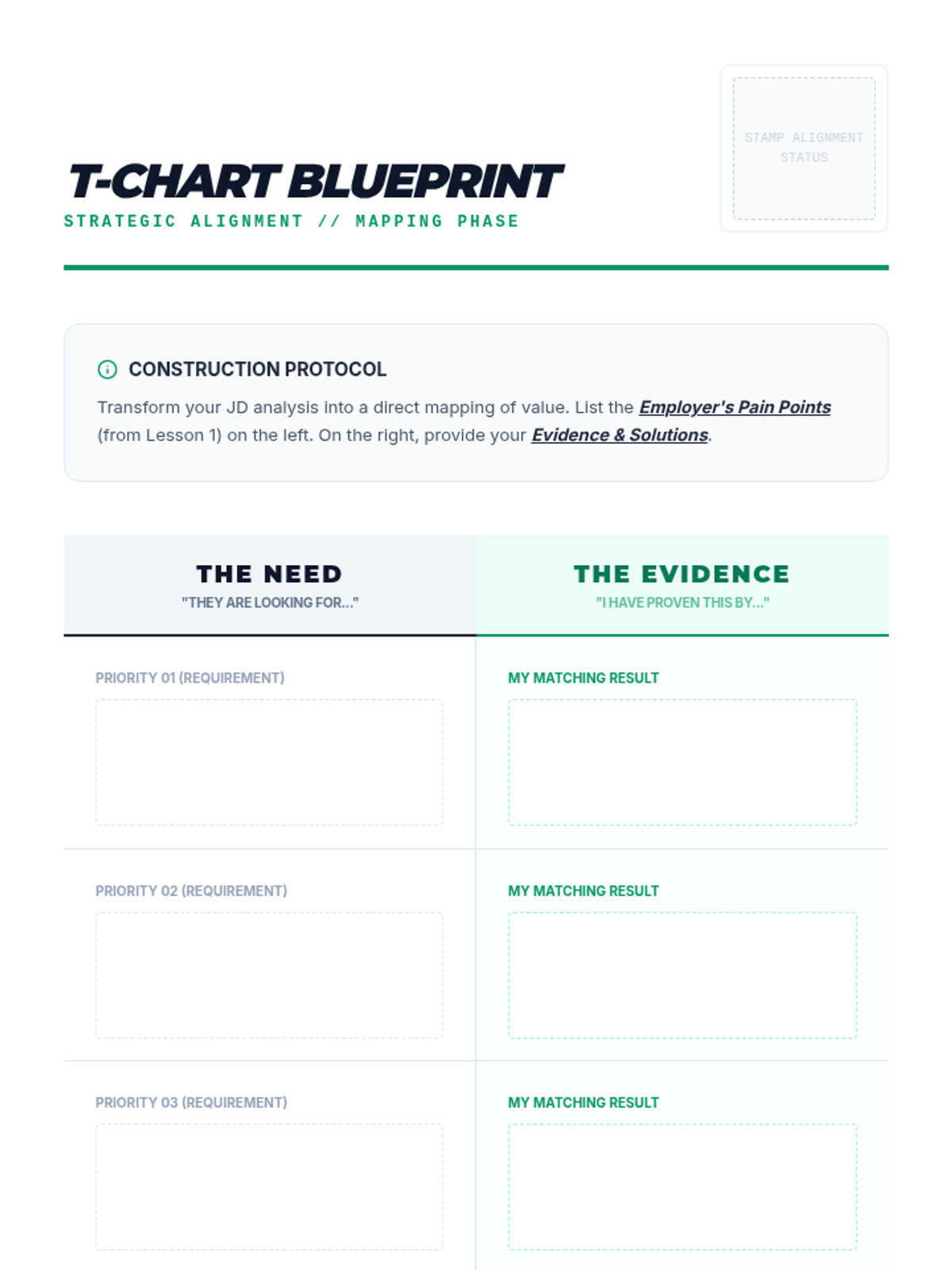
Students create a mapping matrix to align their experiences directly with the employer's stated needs.
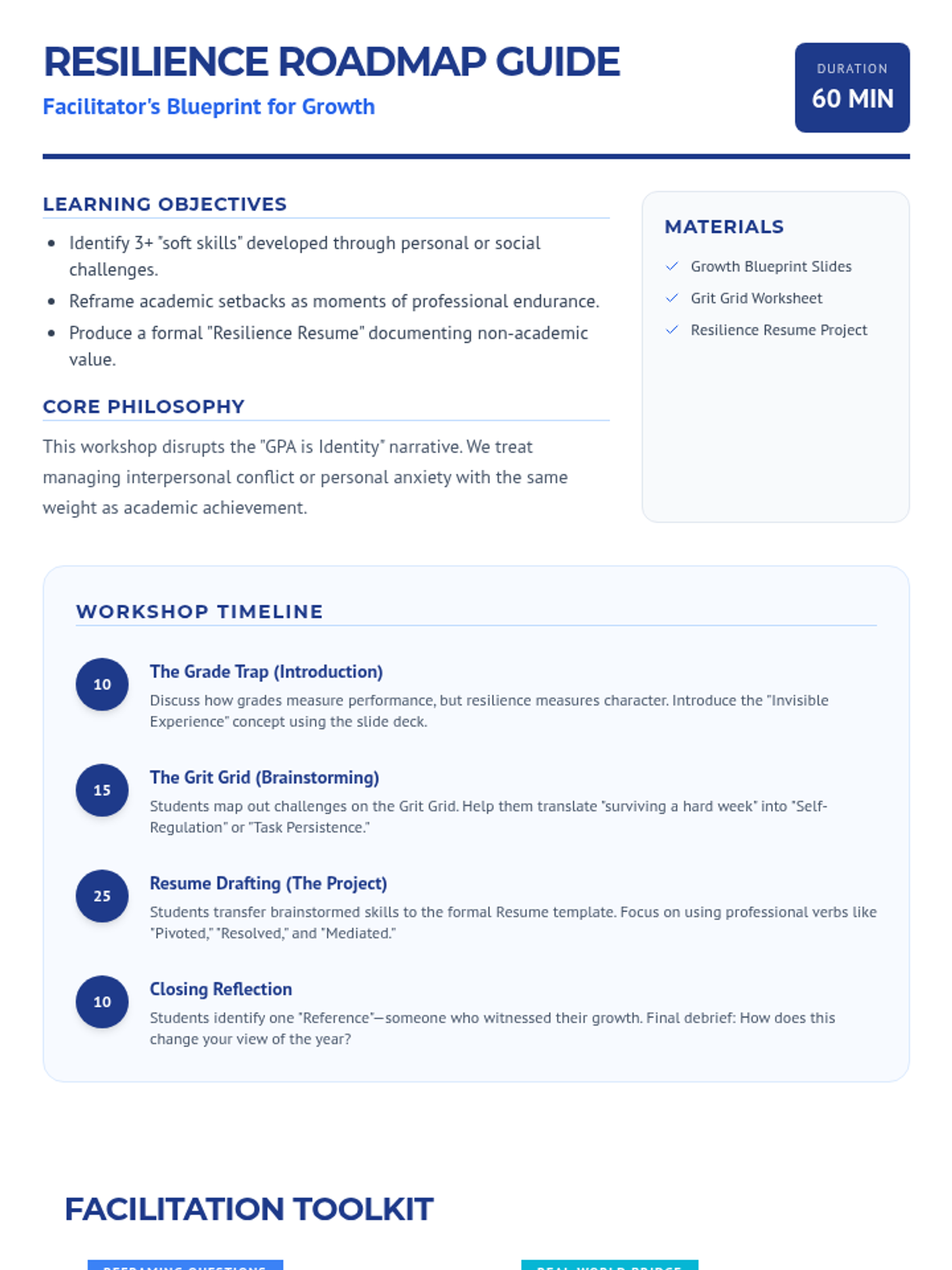
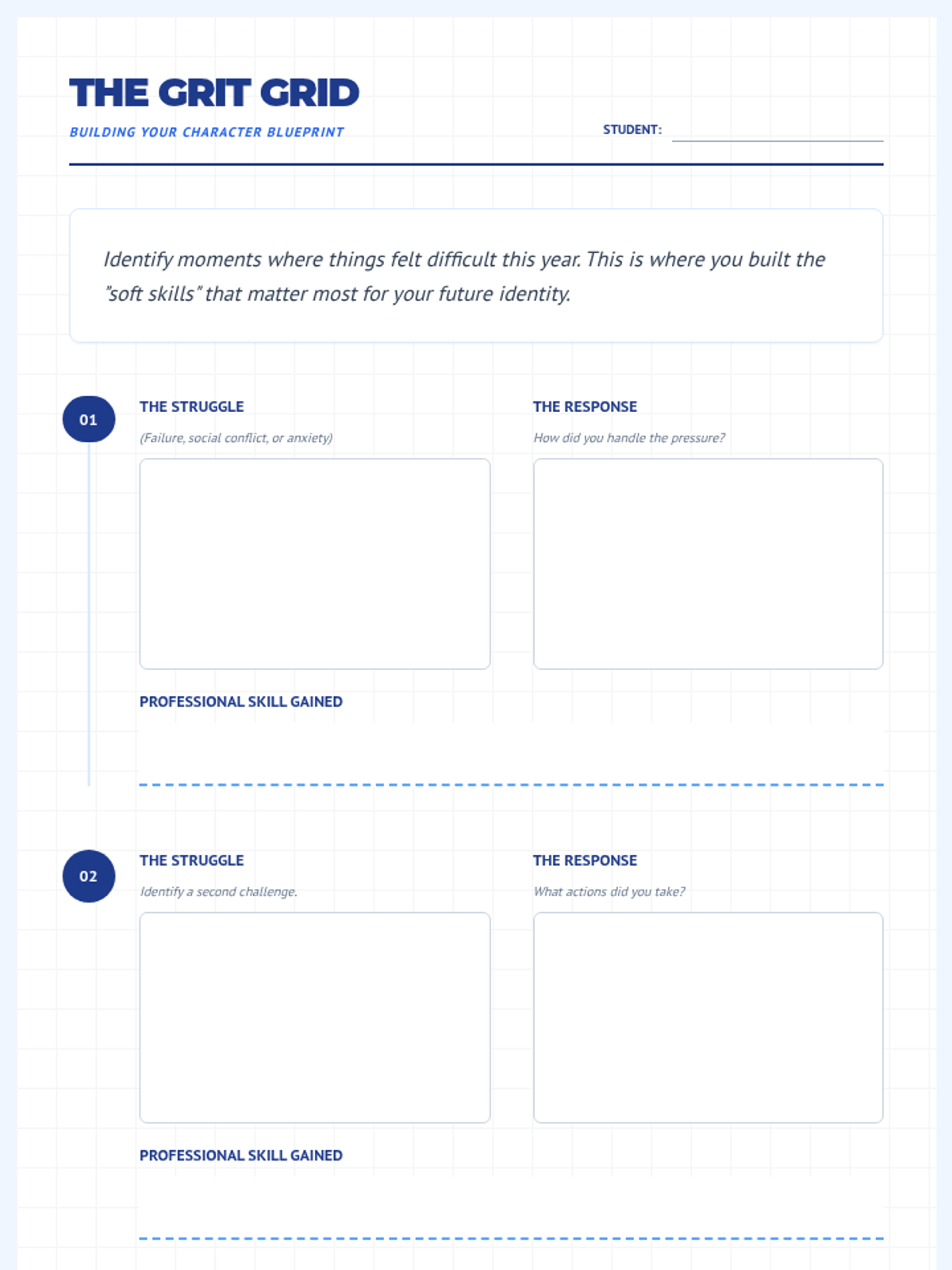
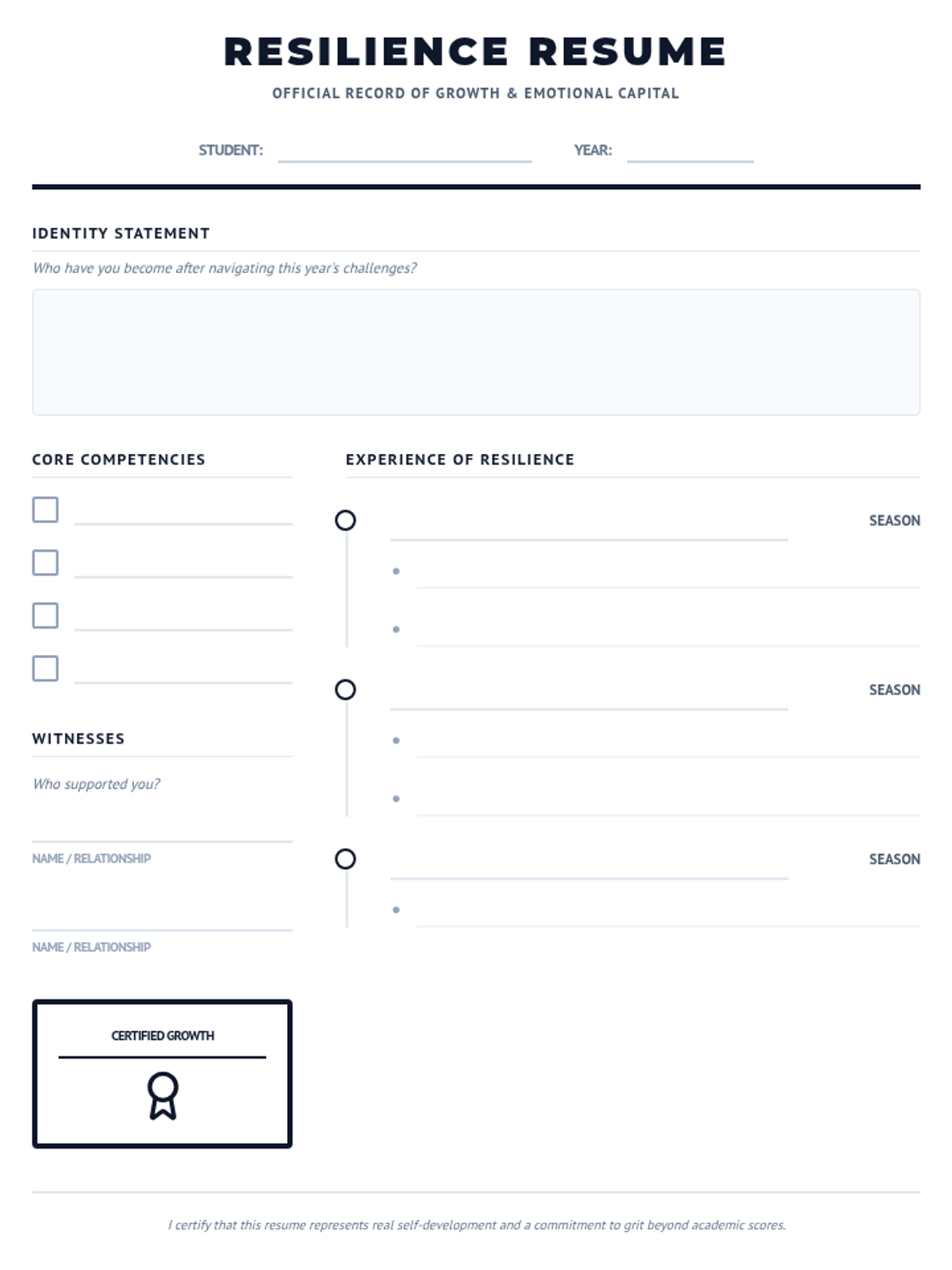
A workshop that reframes student achievements from academic grades to emotional endurance and social growth, culminating in a personal 'Resilience Resume' for the school year.
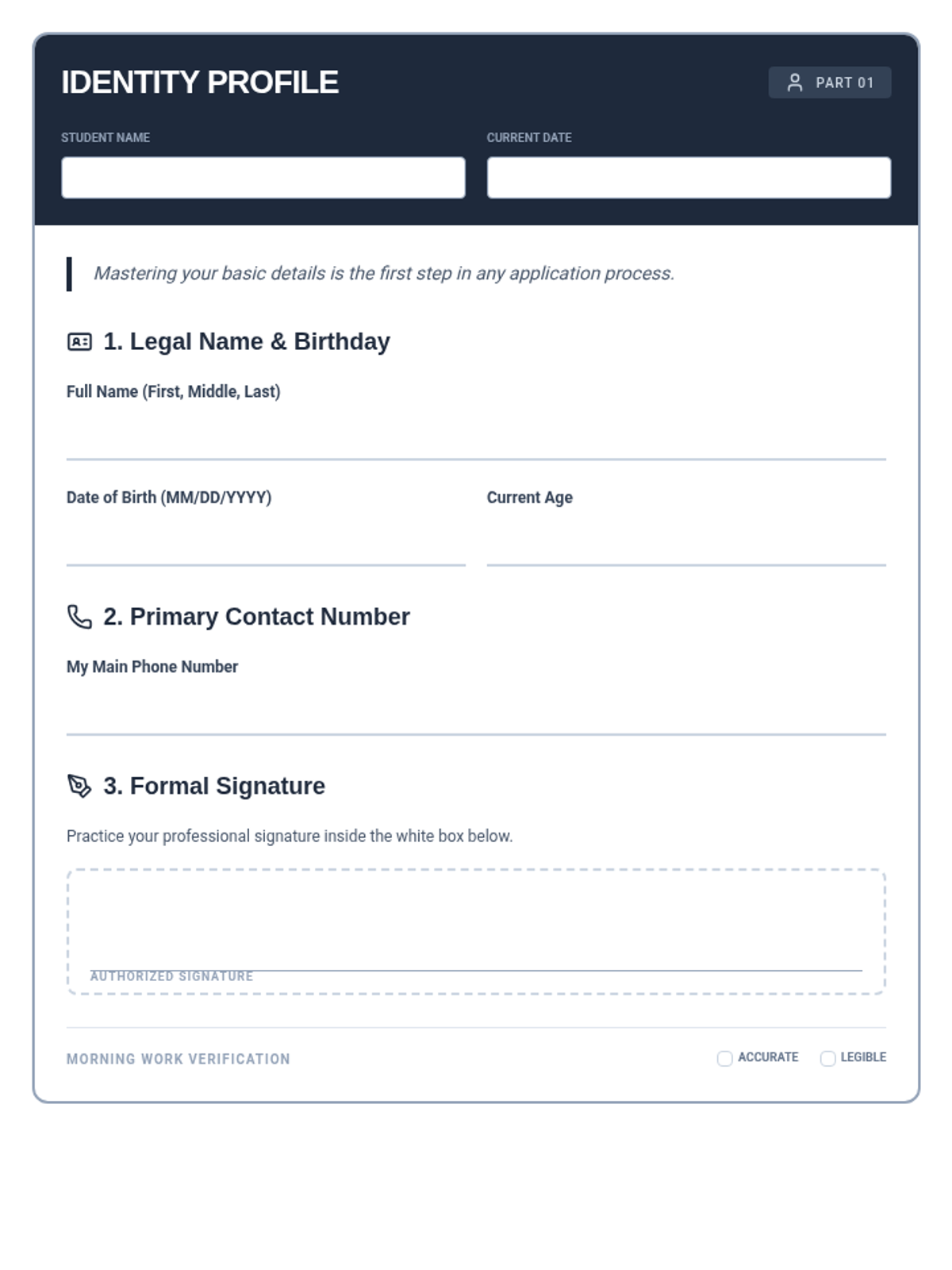
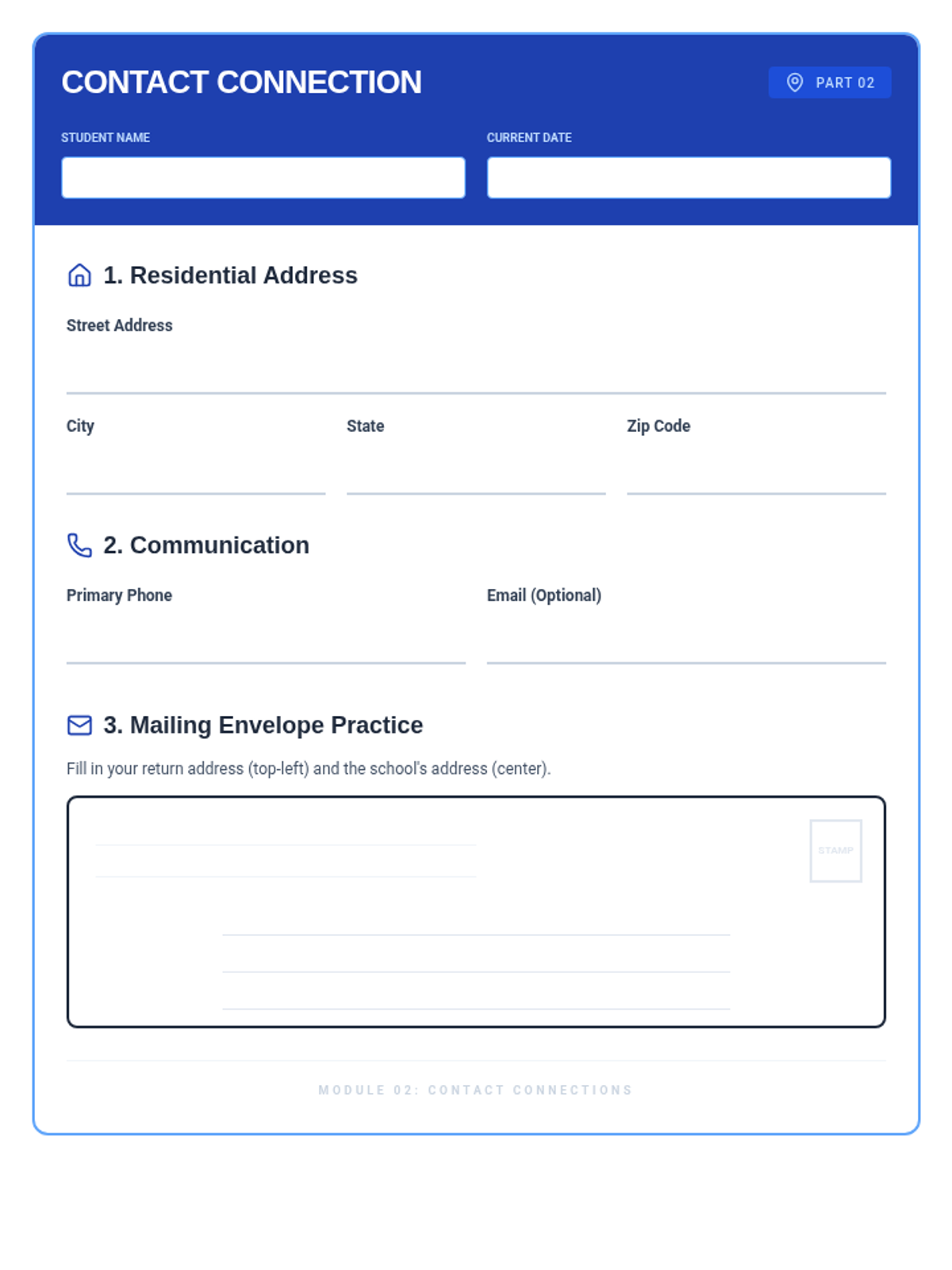
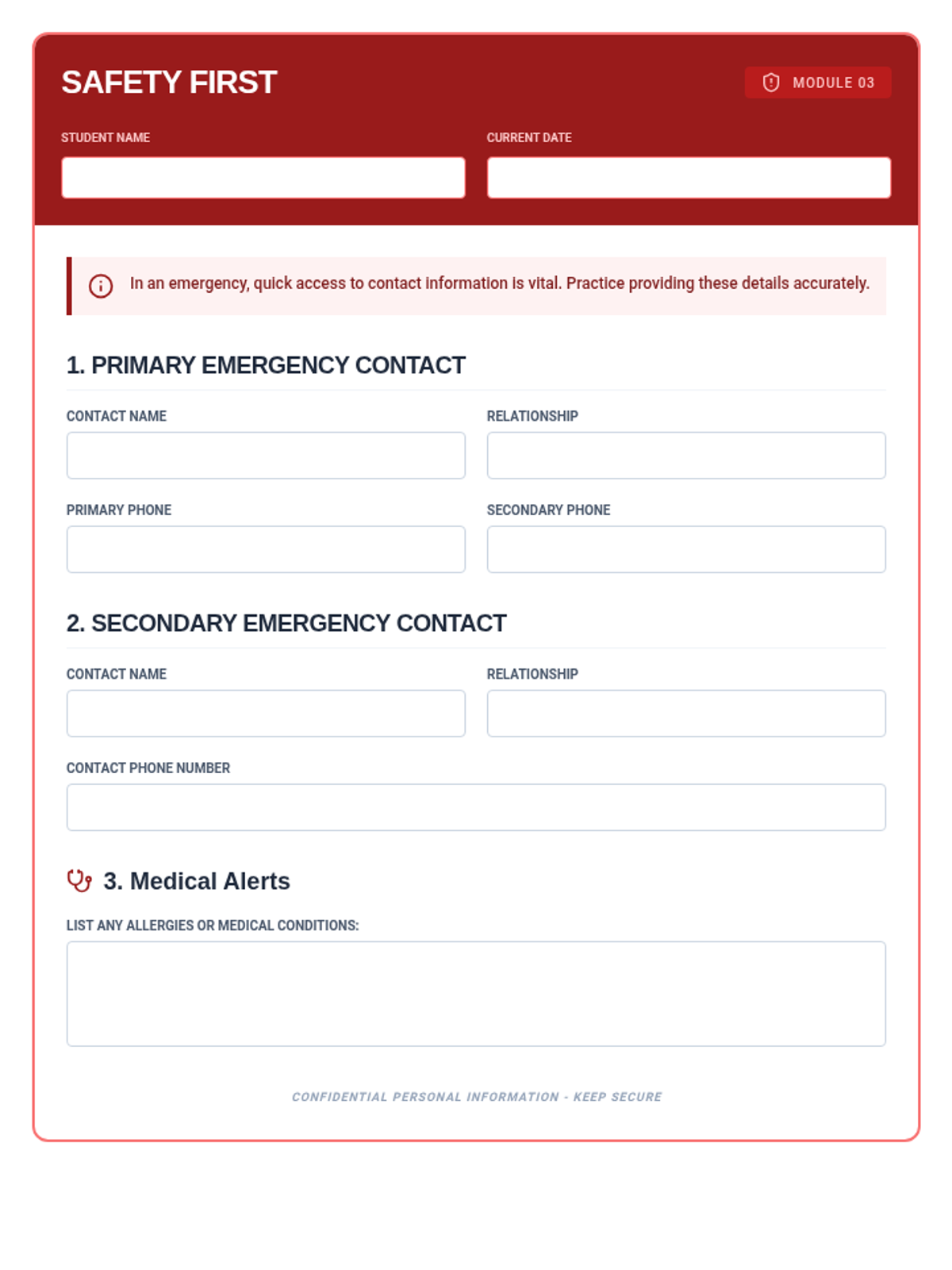
A series of morning work activities focused on mastering personal information and completing professional applications.
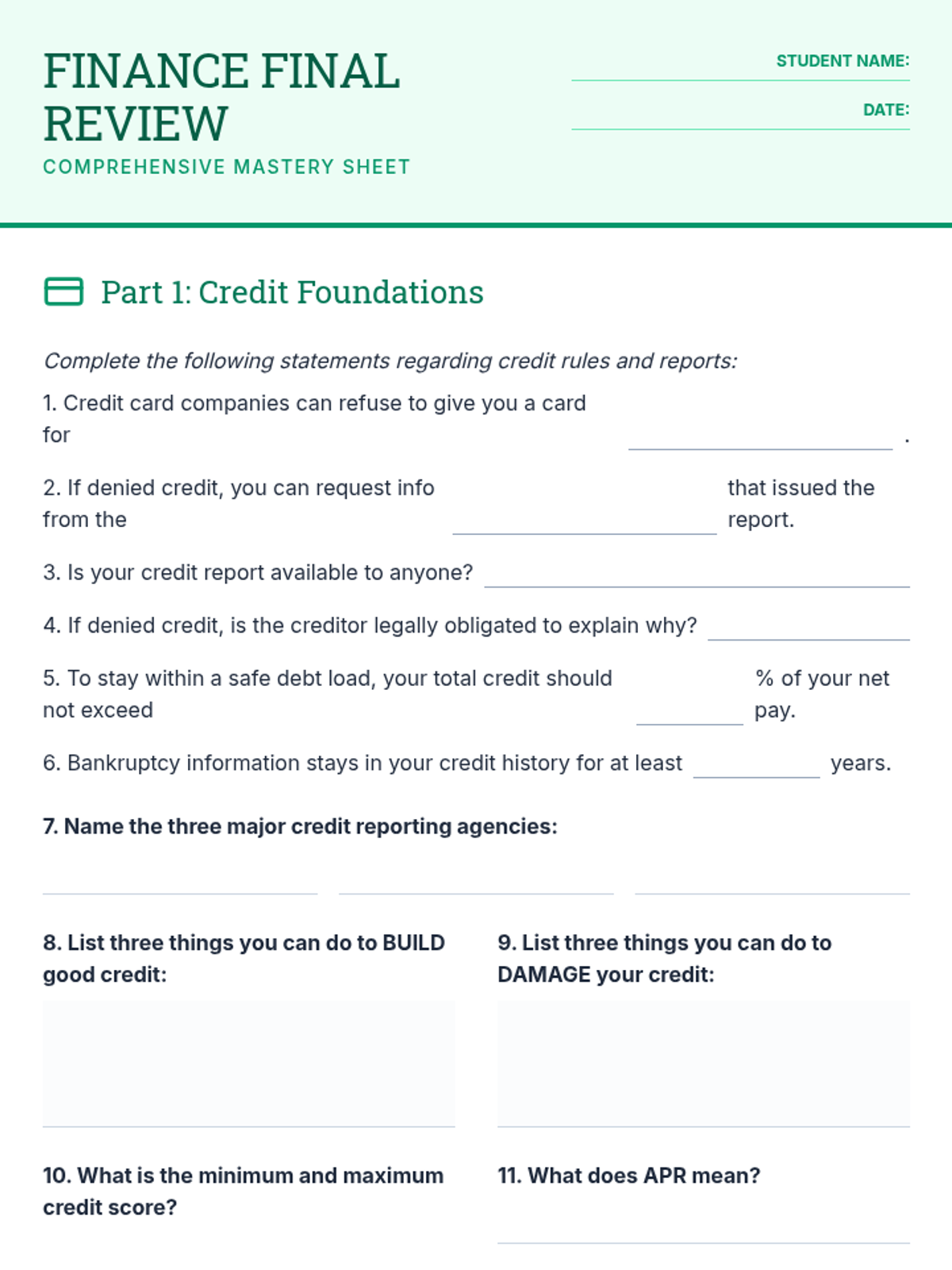
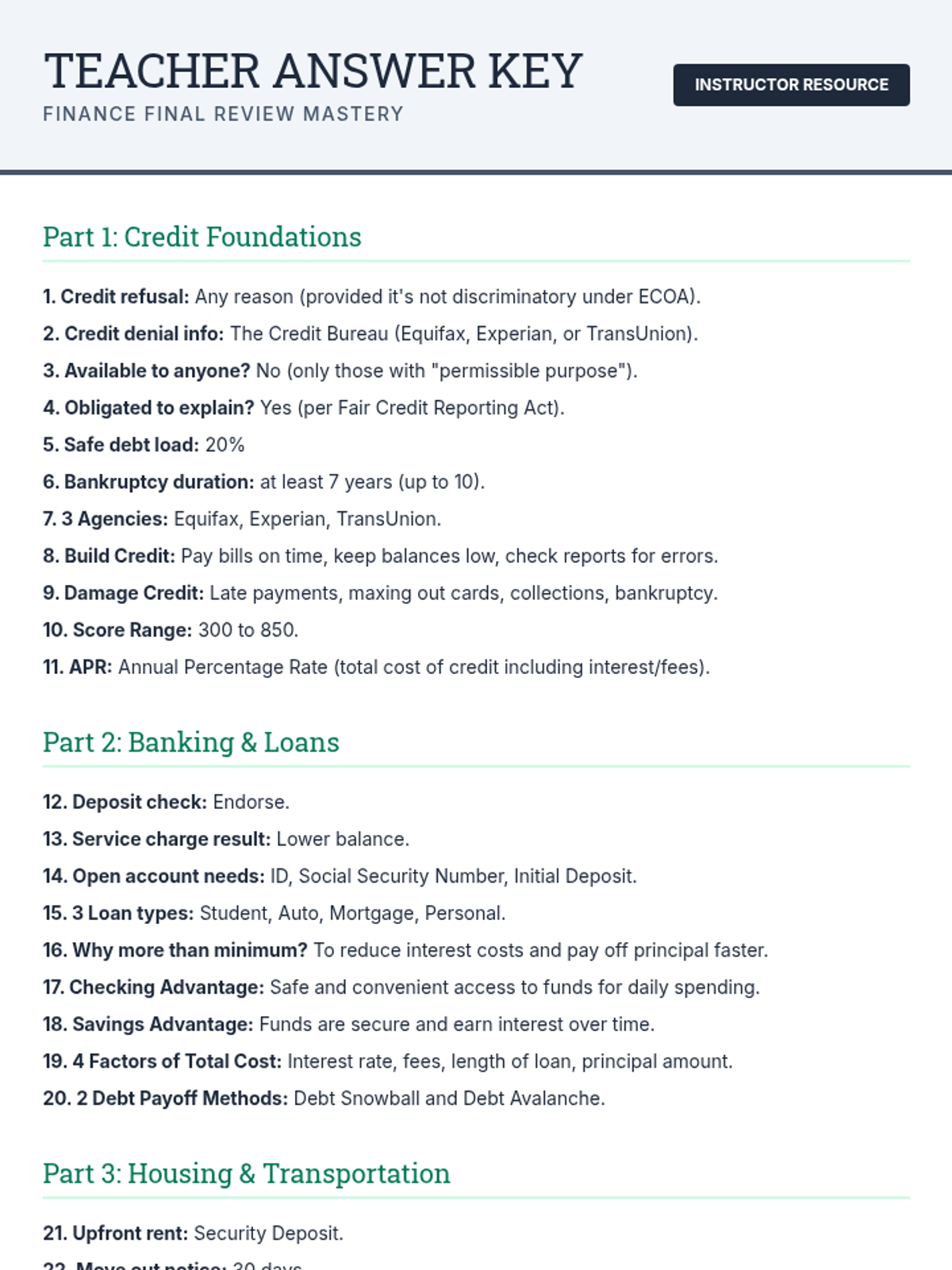
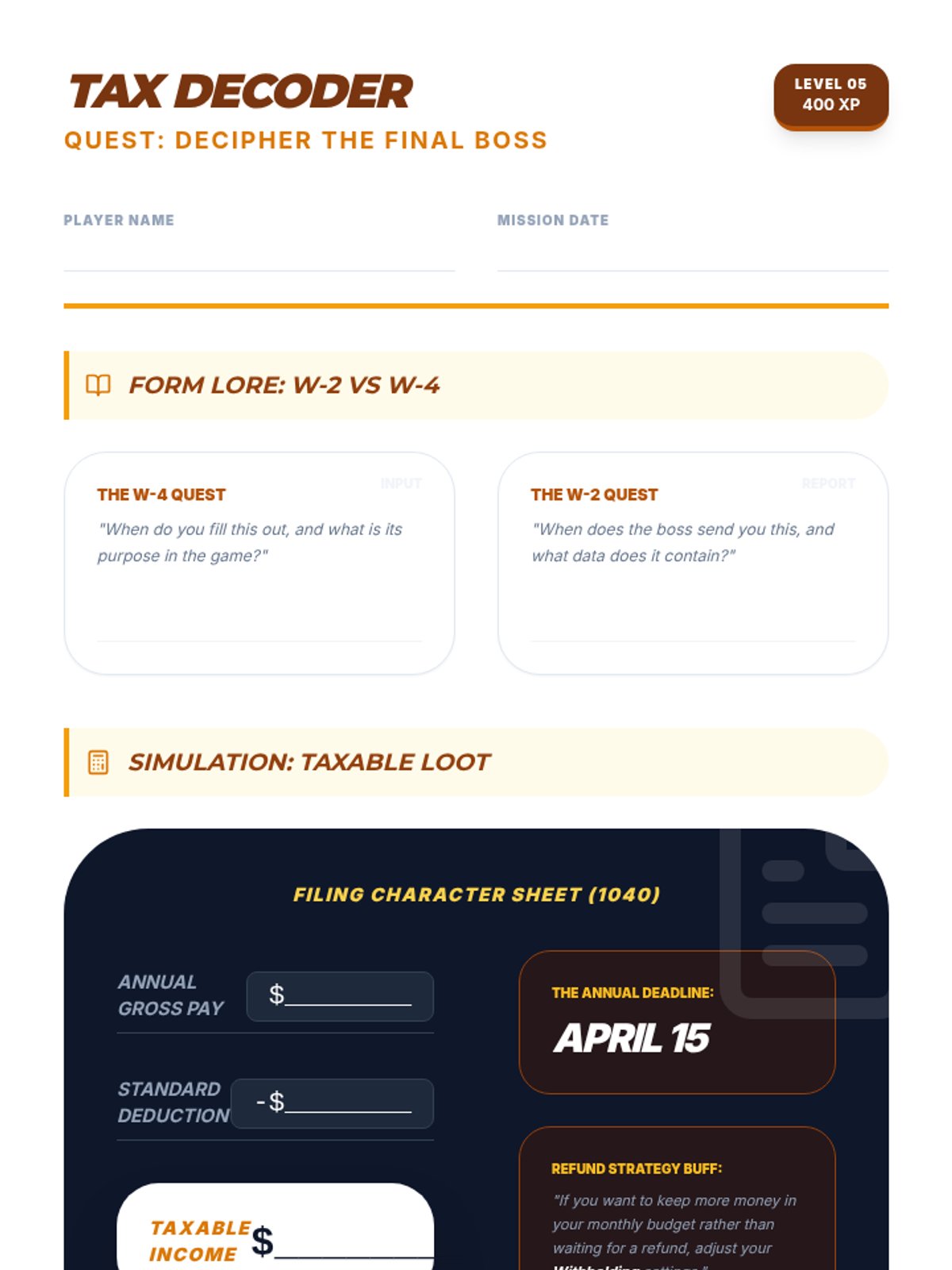
A comprehensive review module for the Personal Finance Final, covering credit, banking, loans, housing, and career skills.
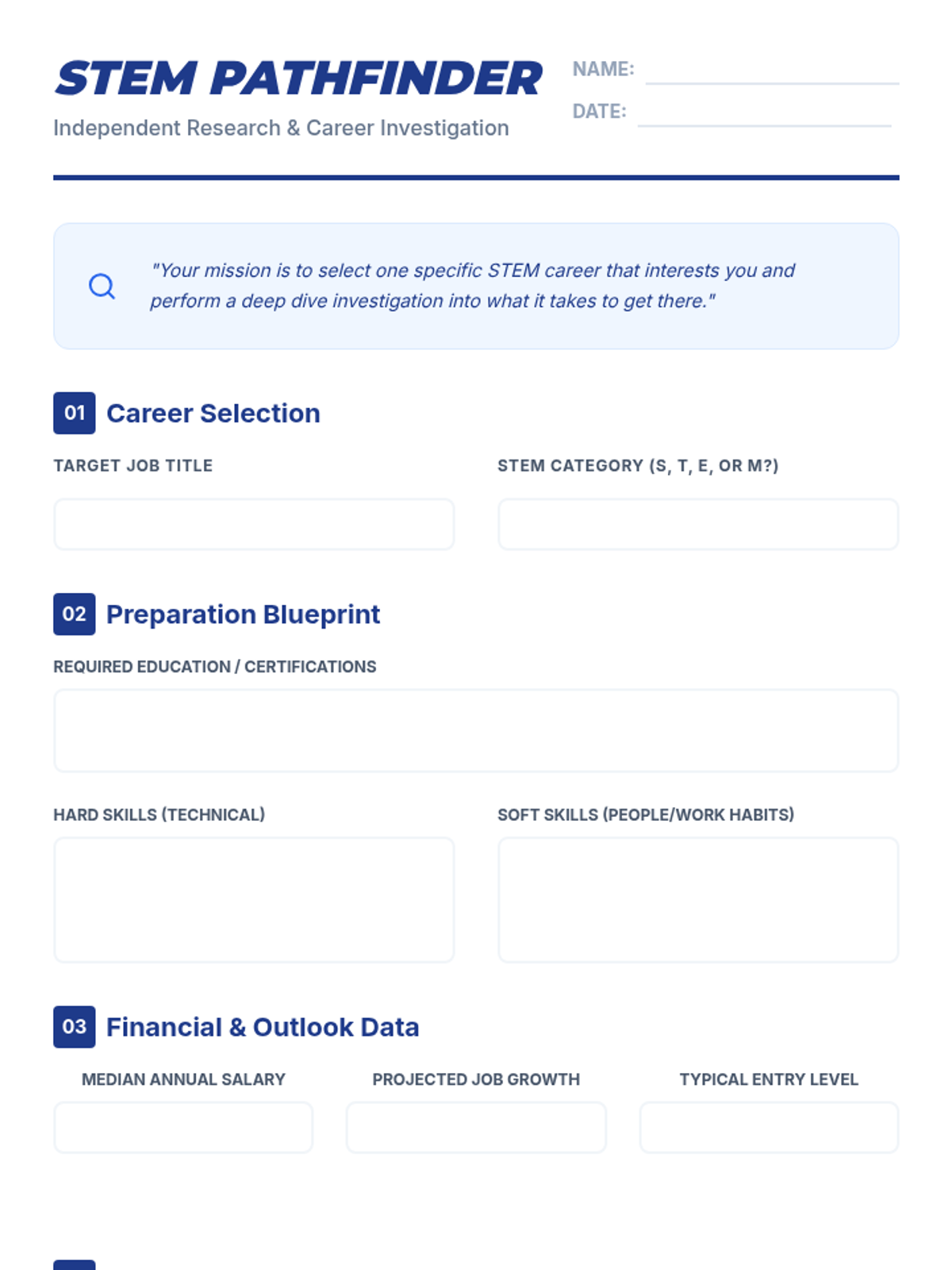
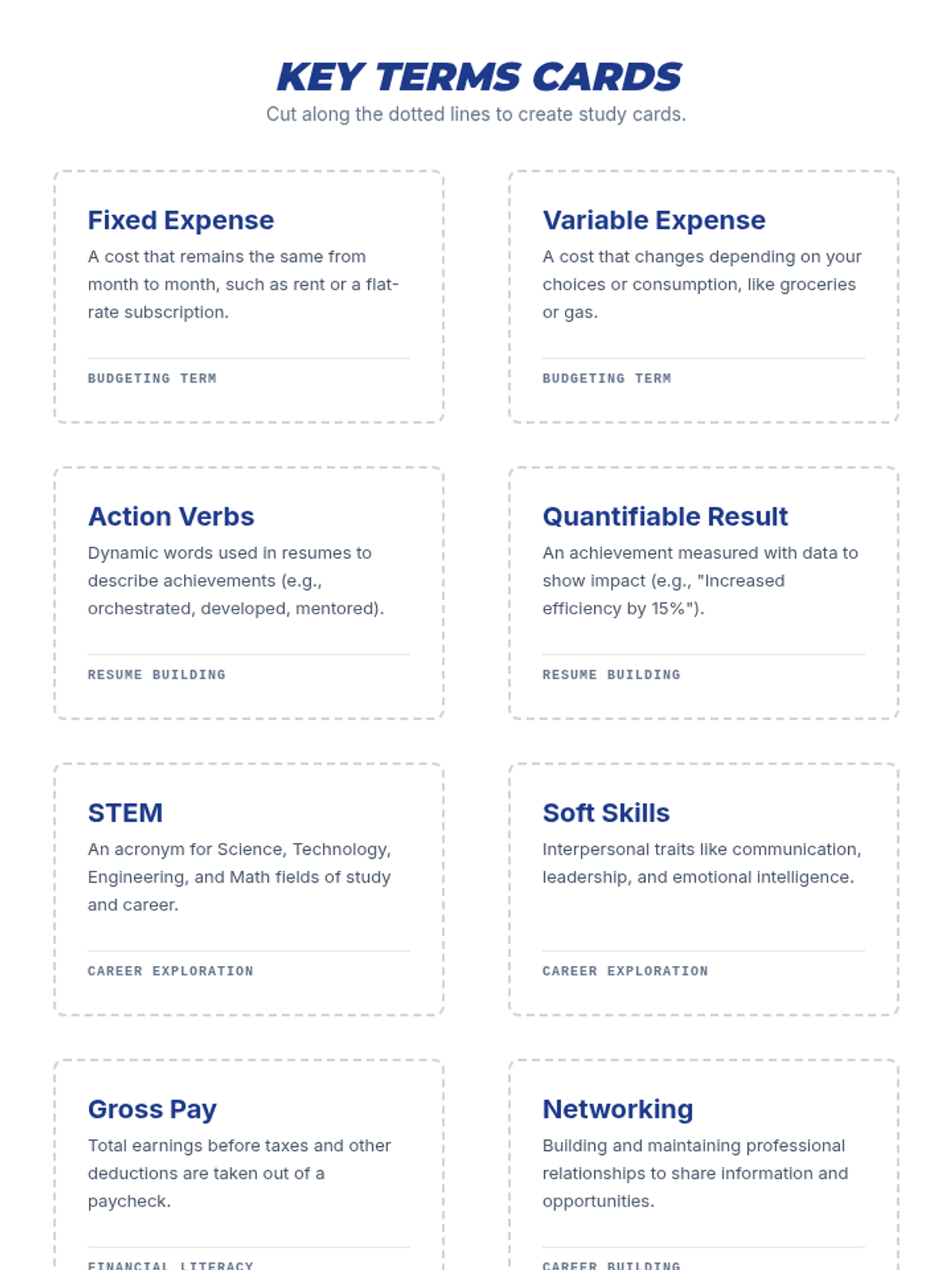
An introductory lesson covering the essentials of college budgeting, resume construction for entry-level positions, and a deep dive into various STEM career pathways.
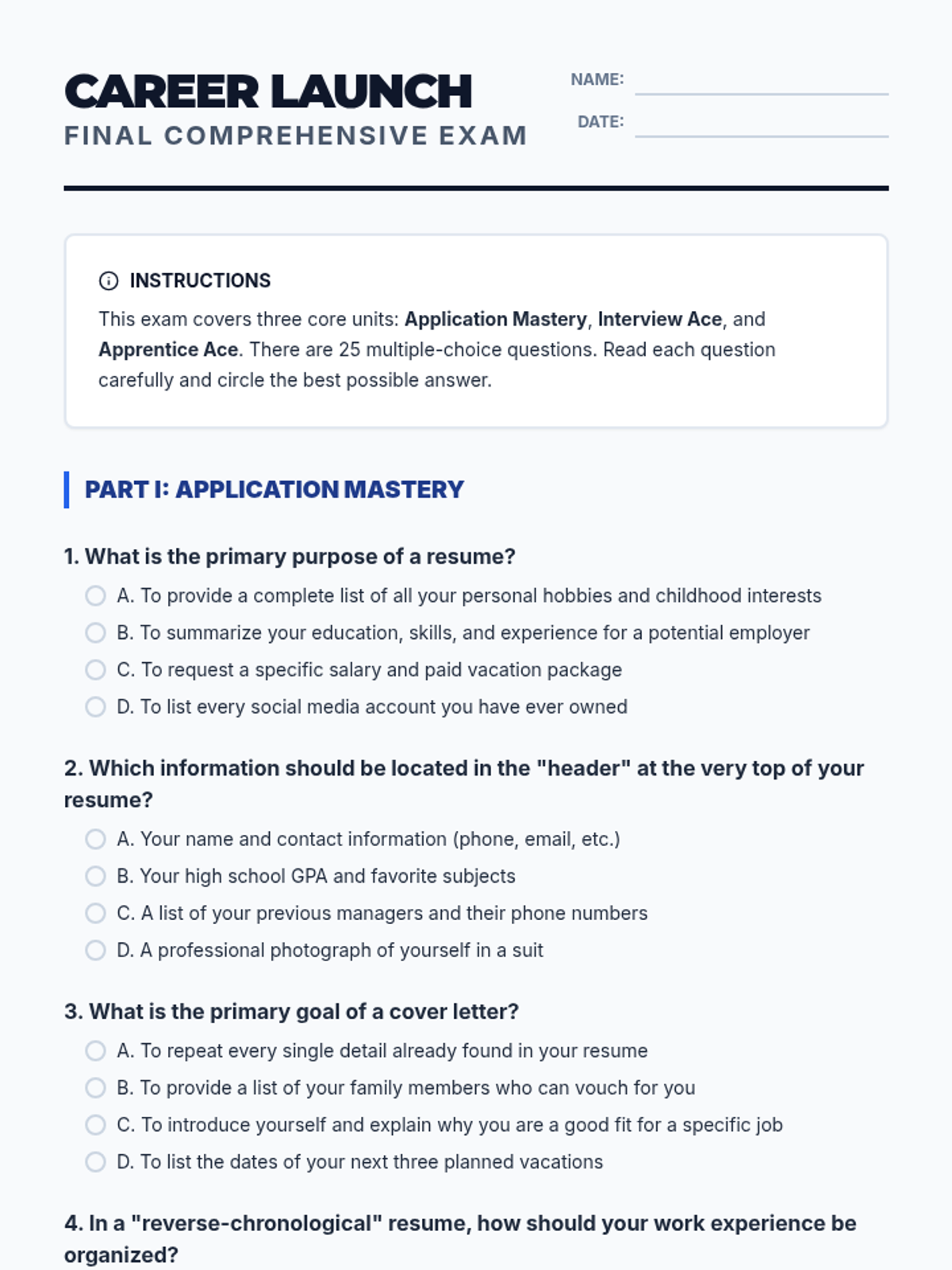
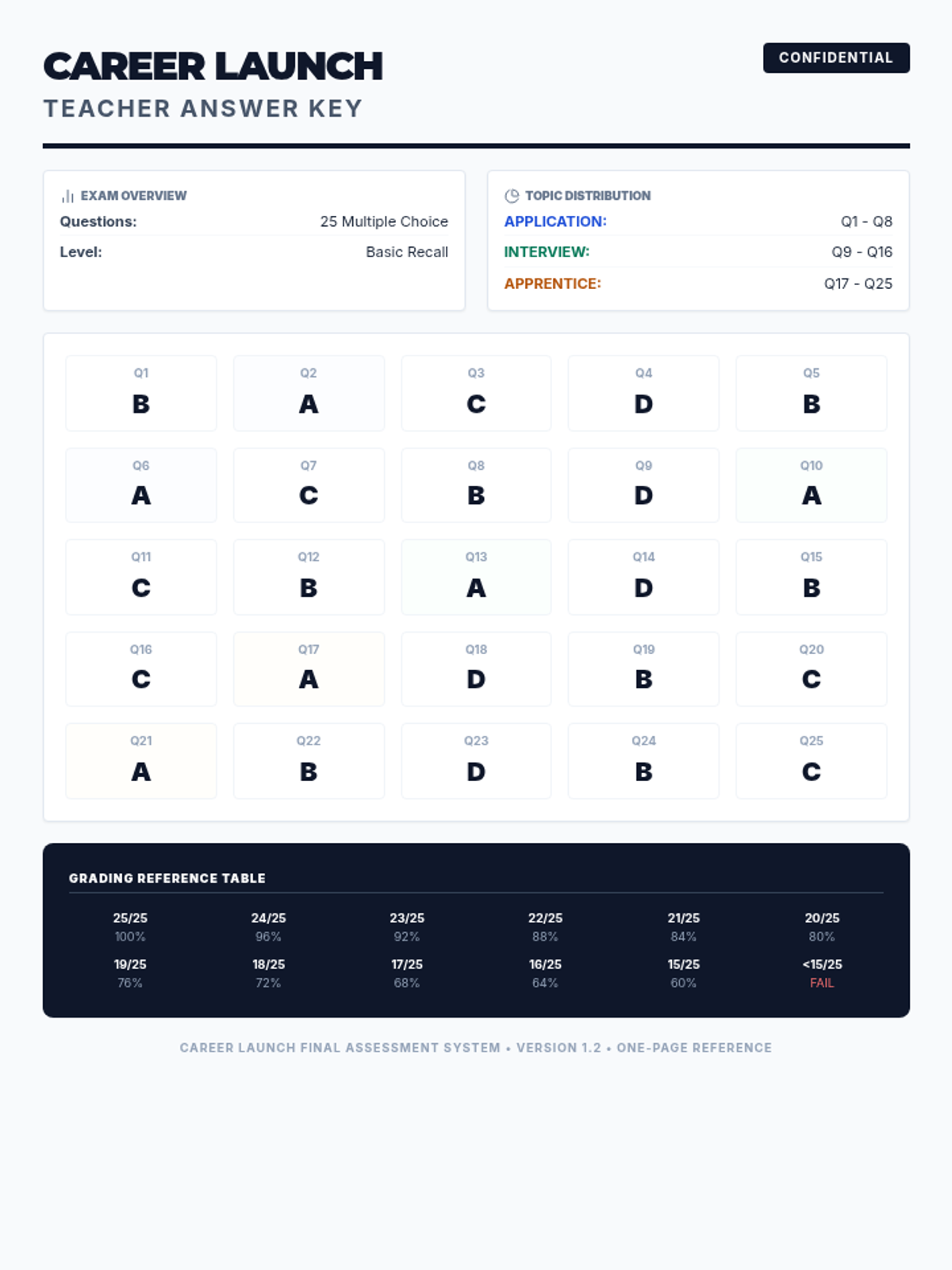
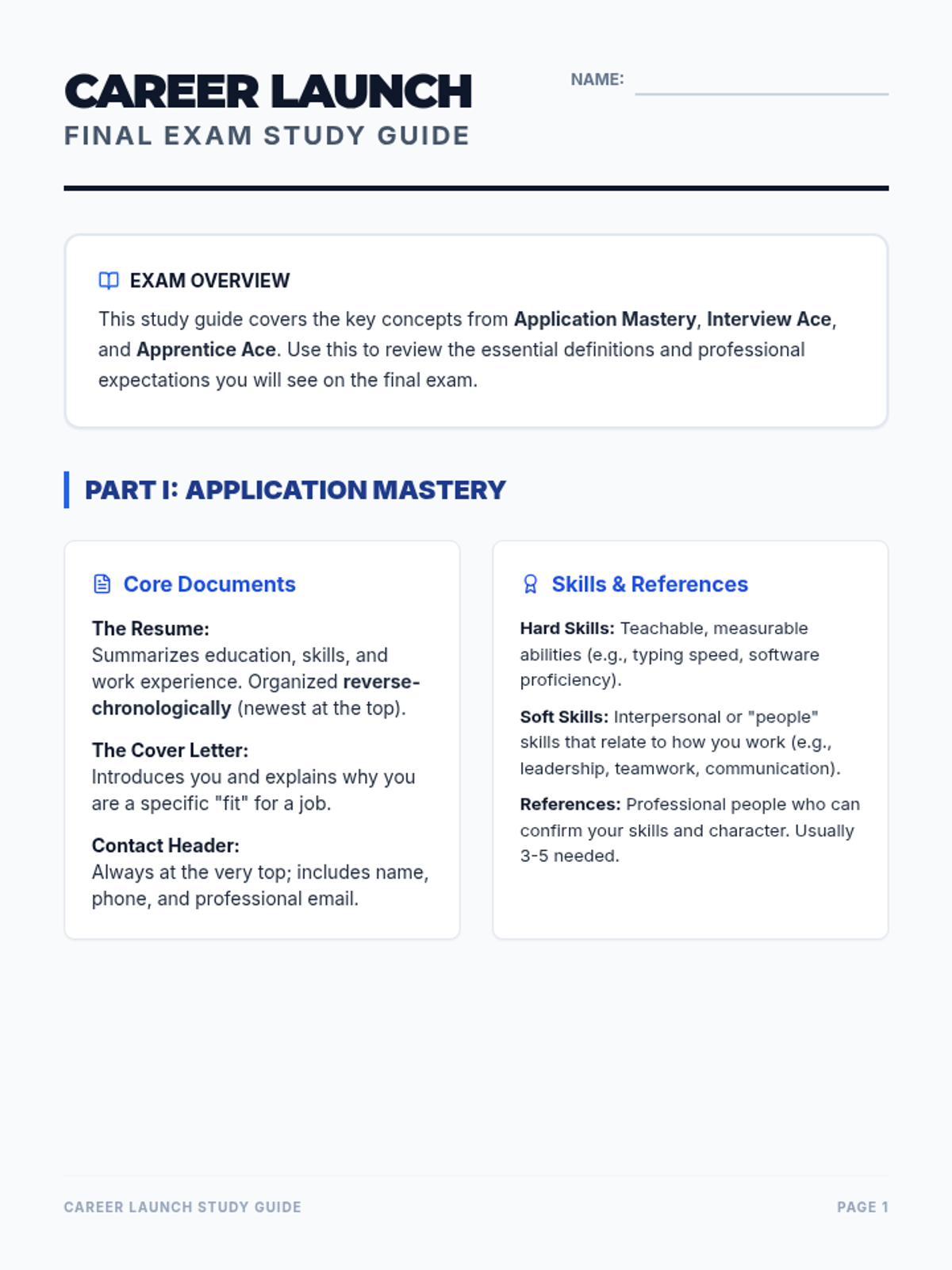
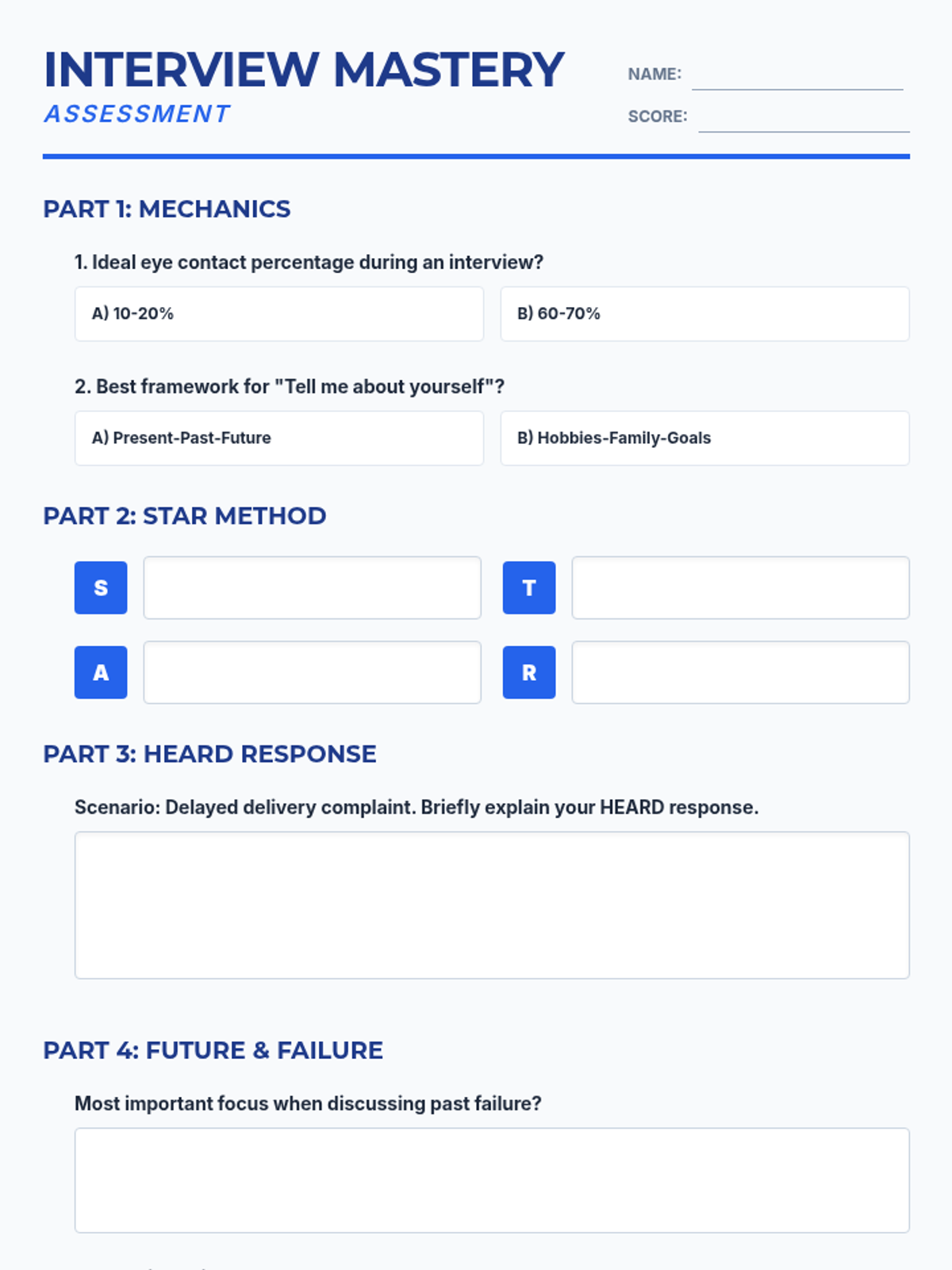
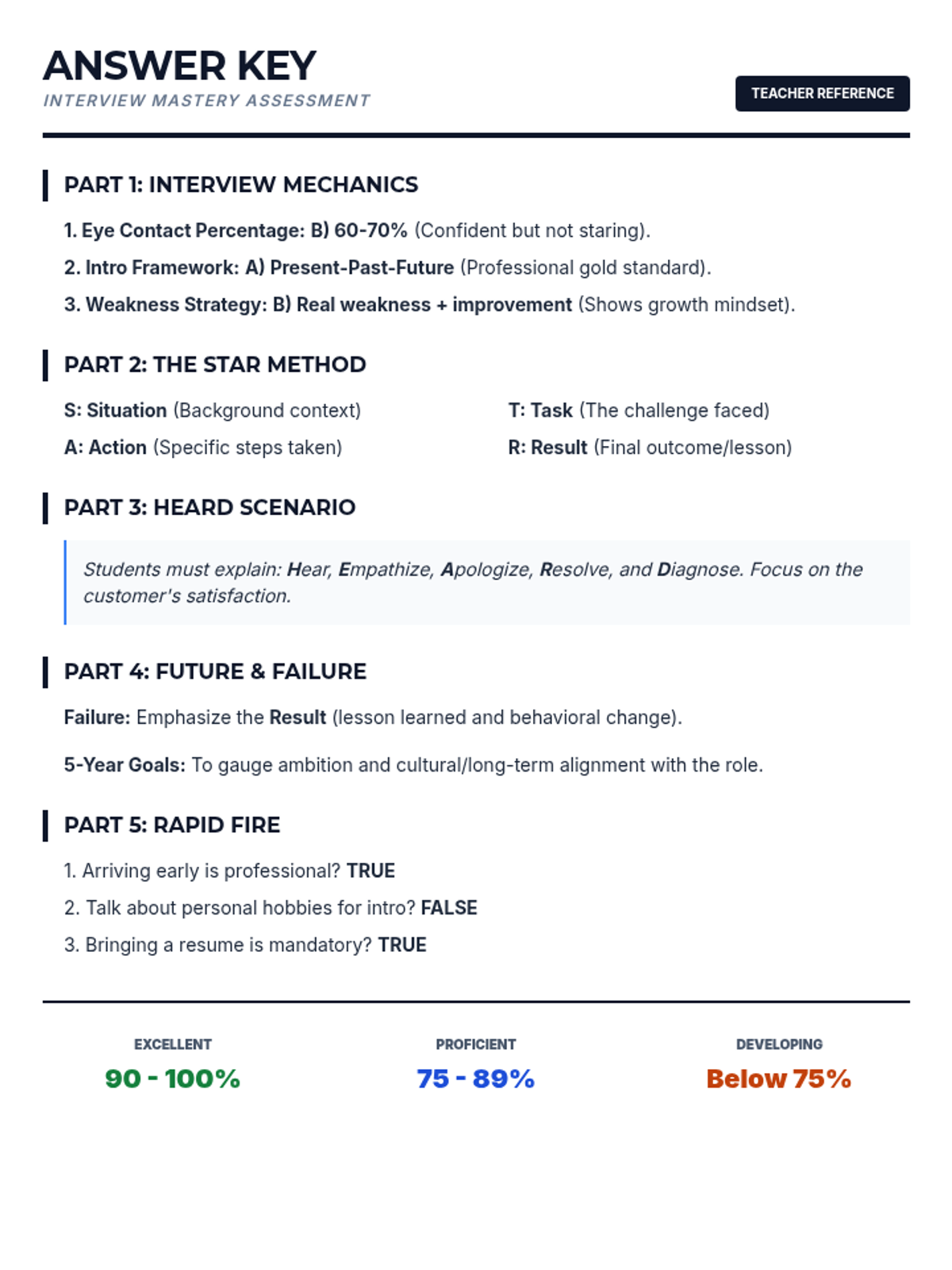
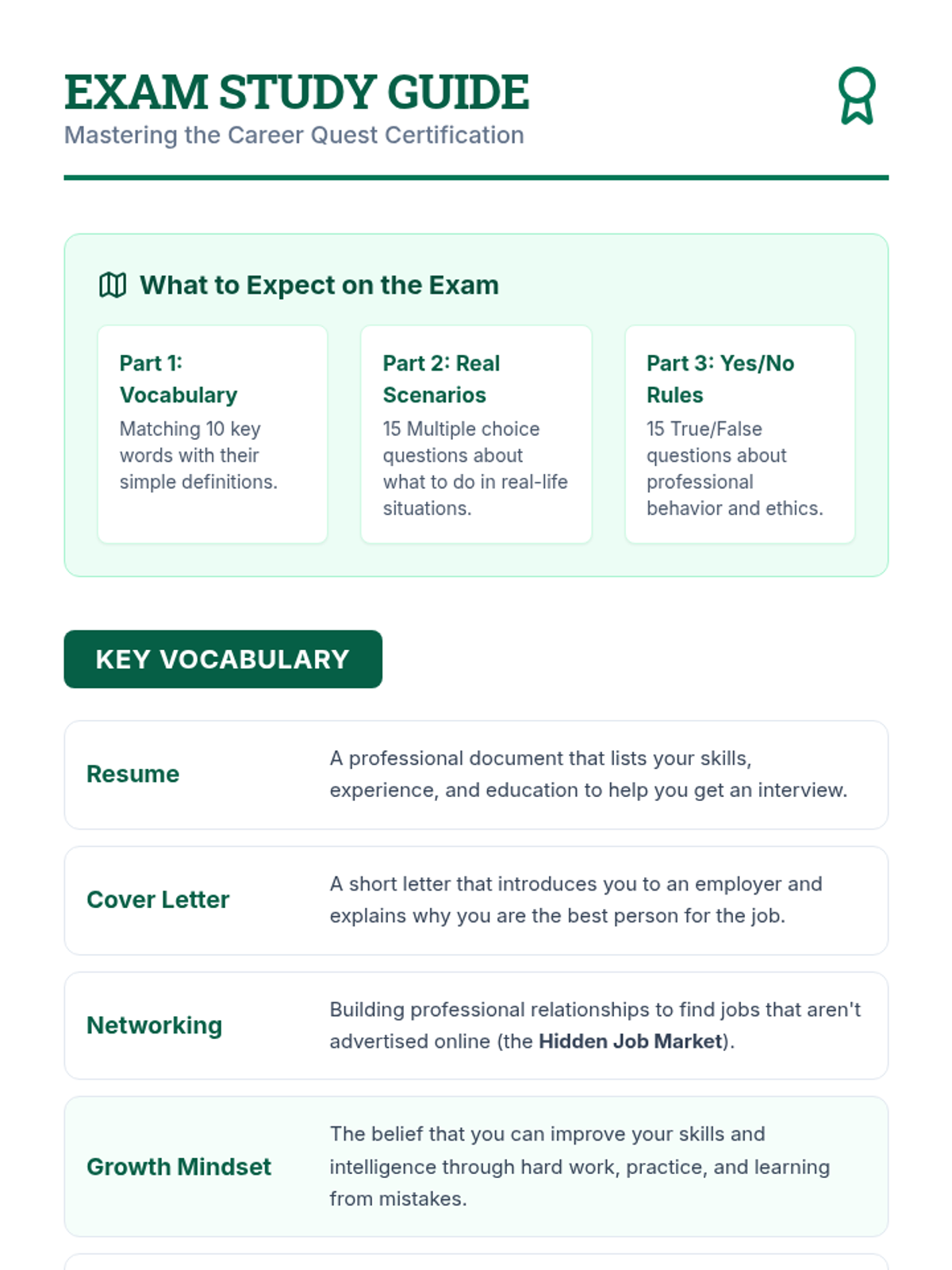
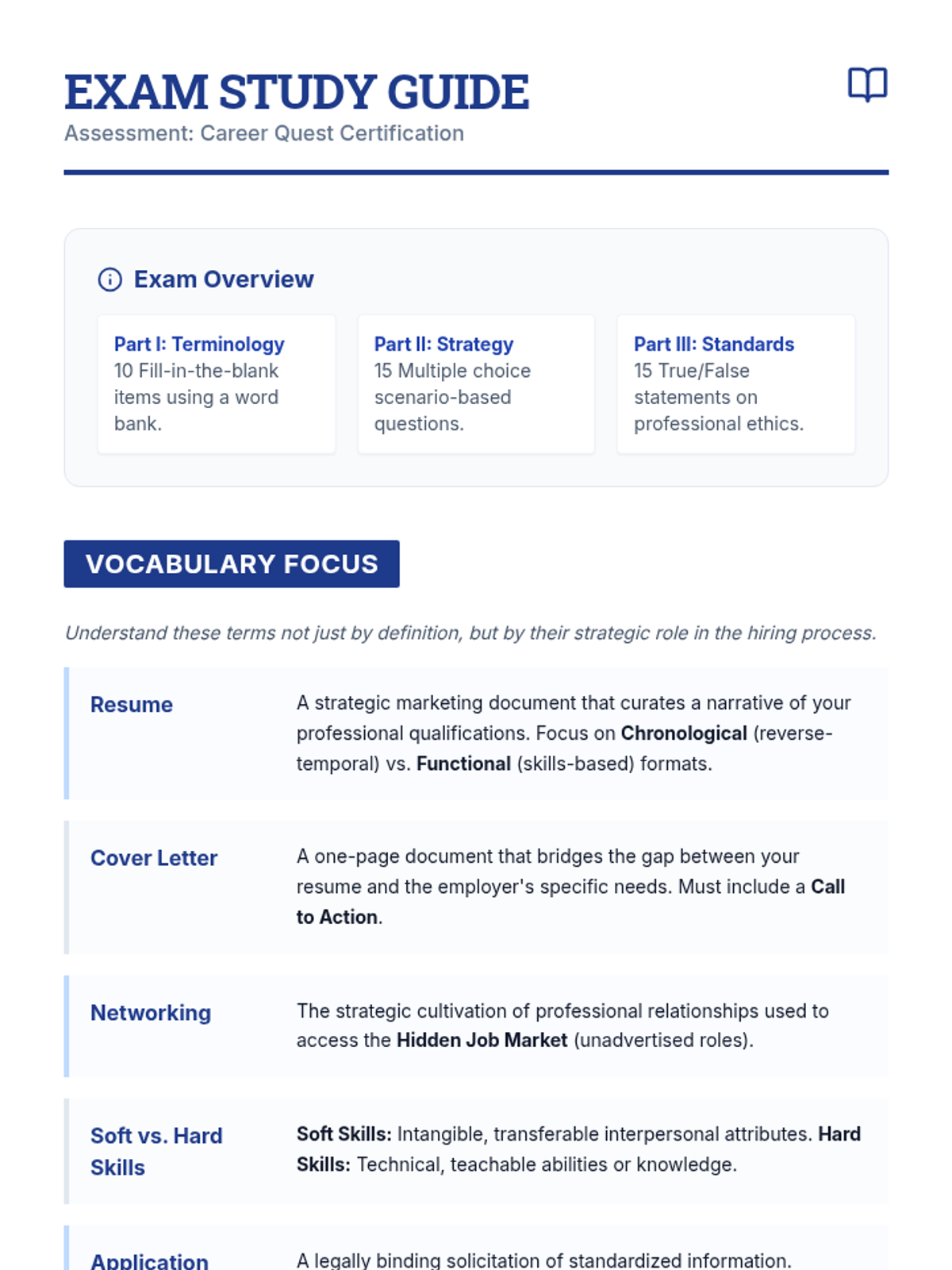
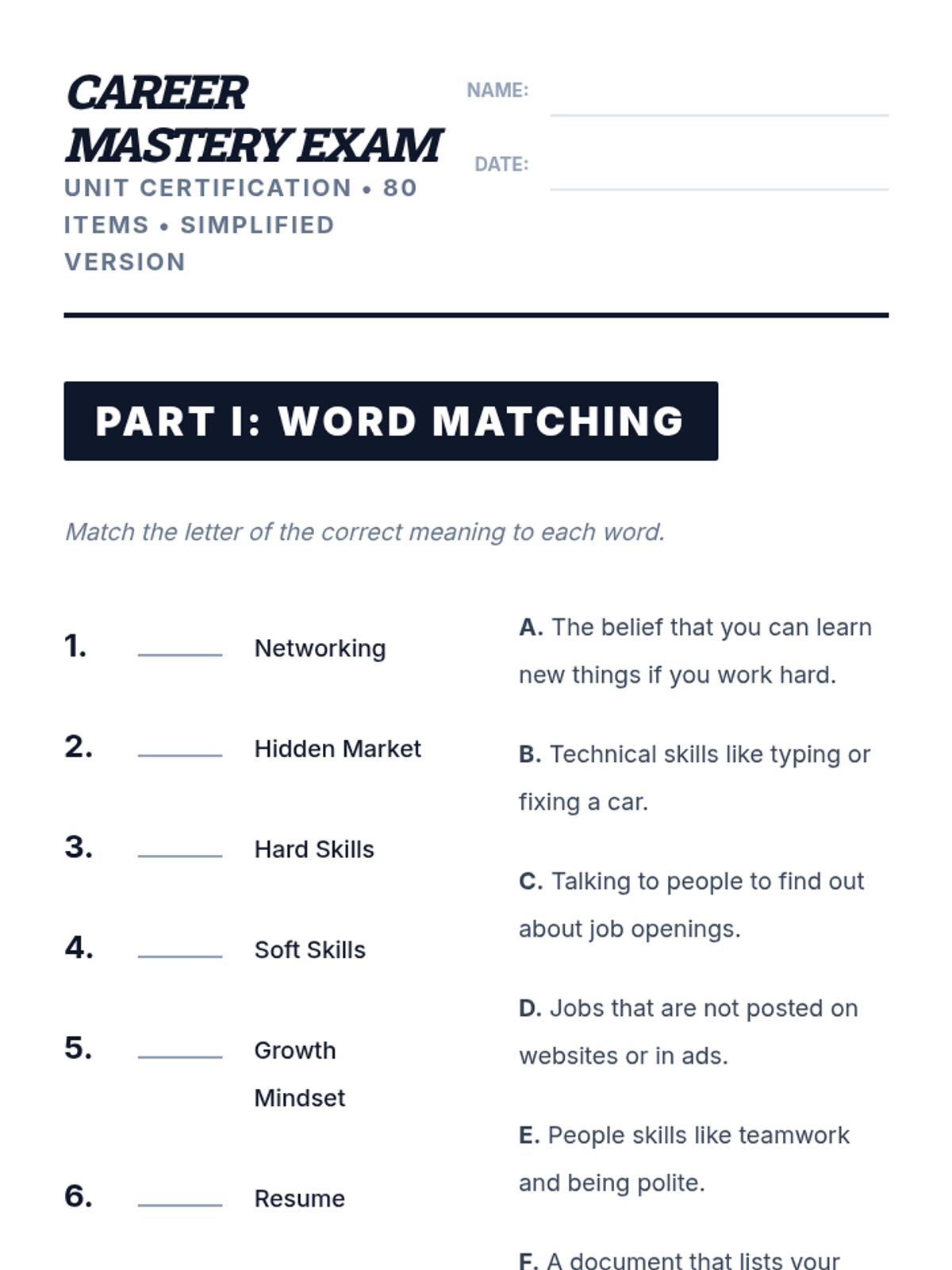
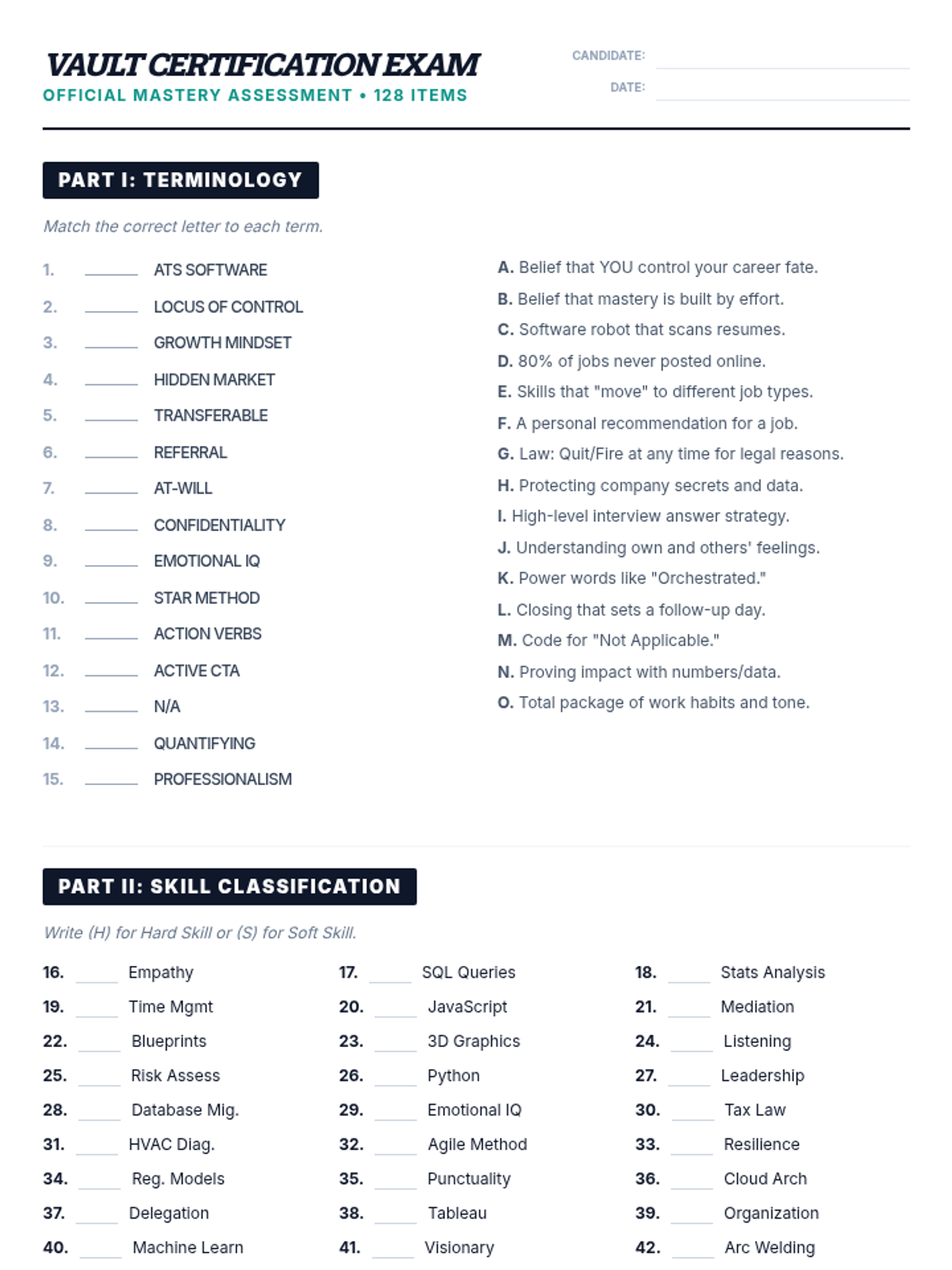
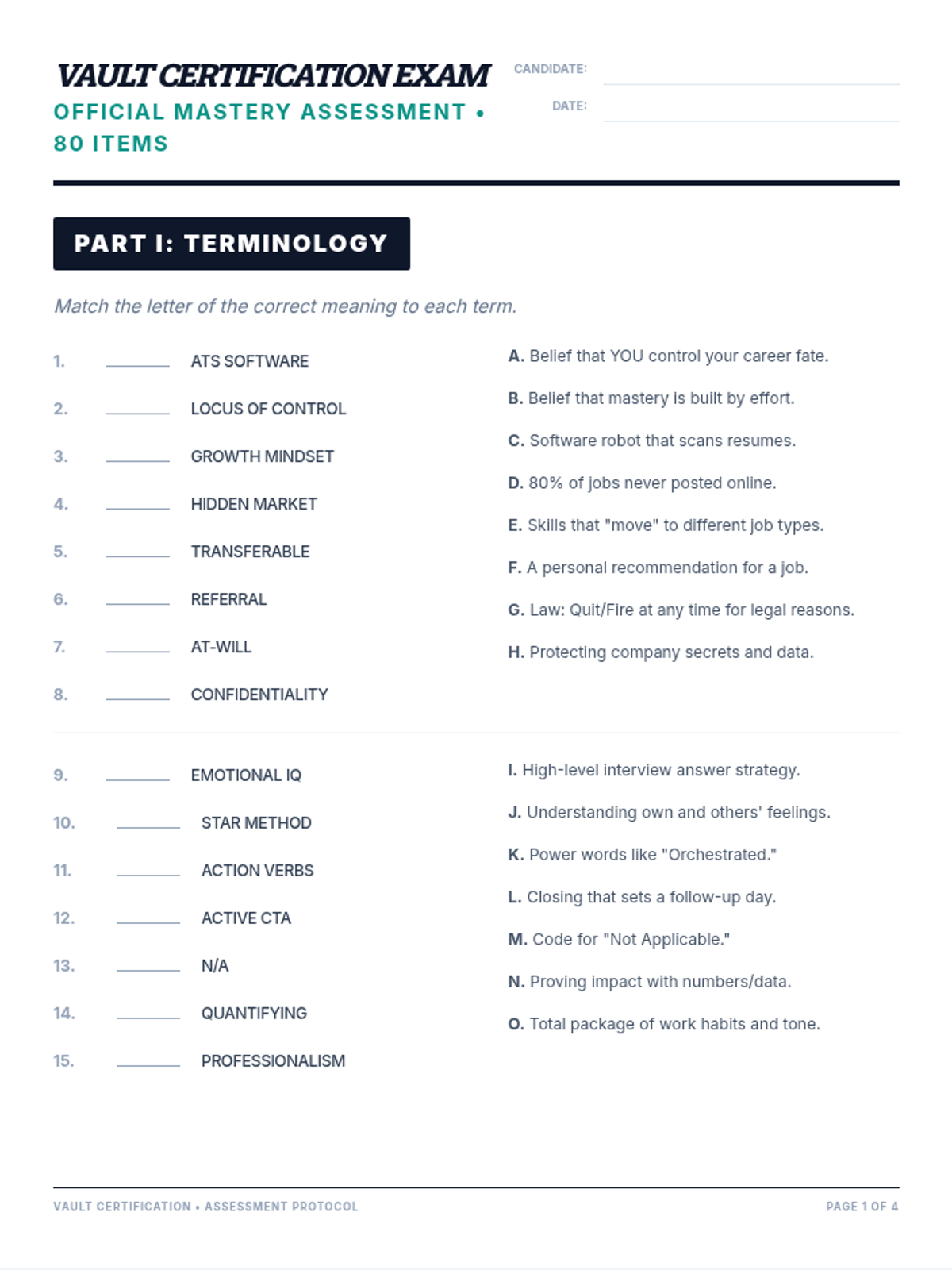
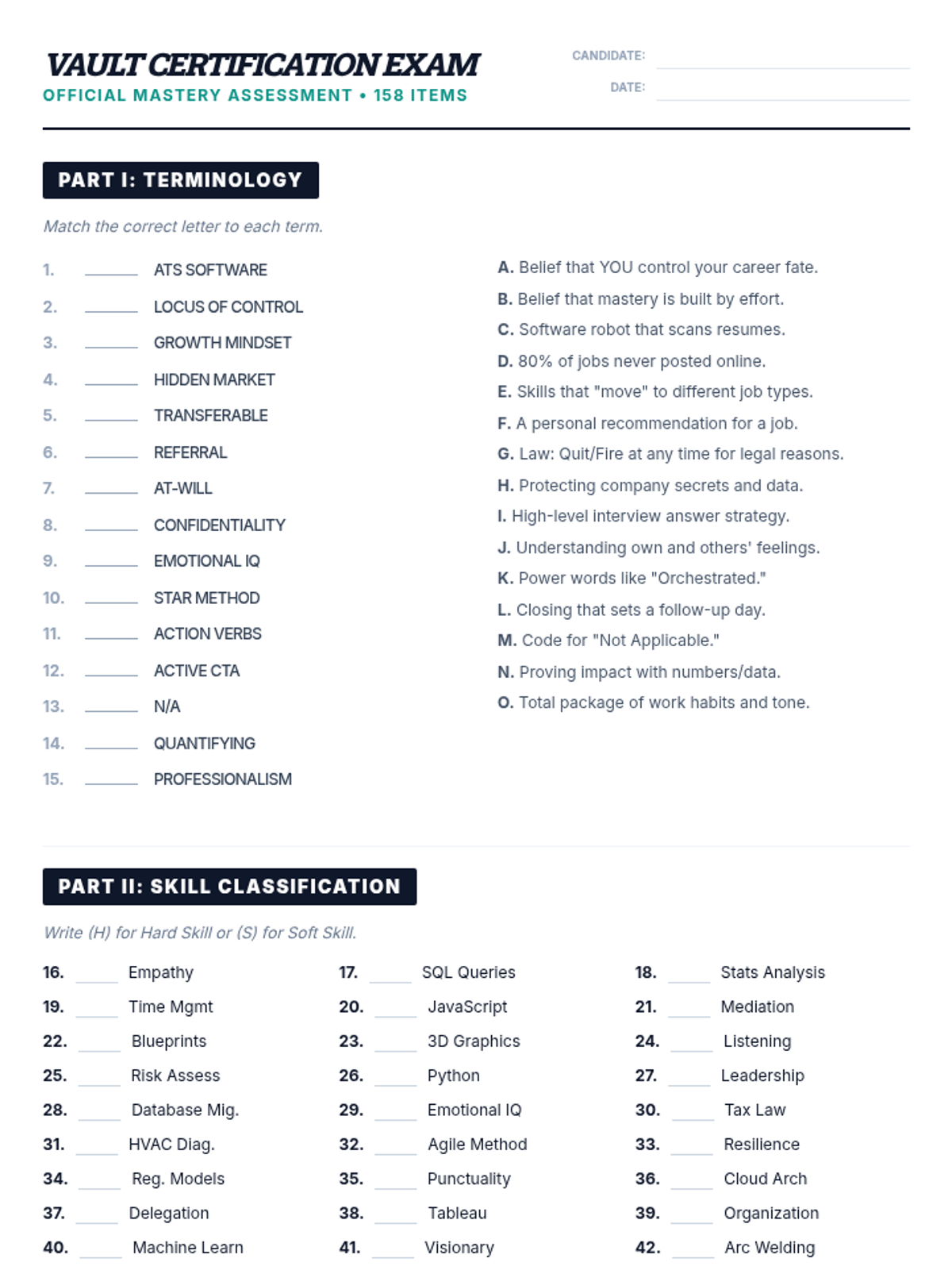
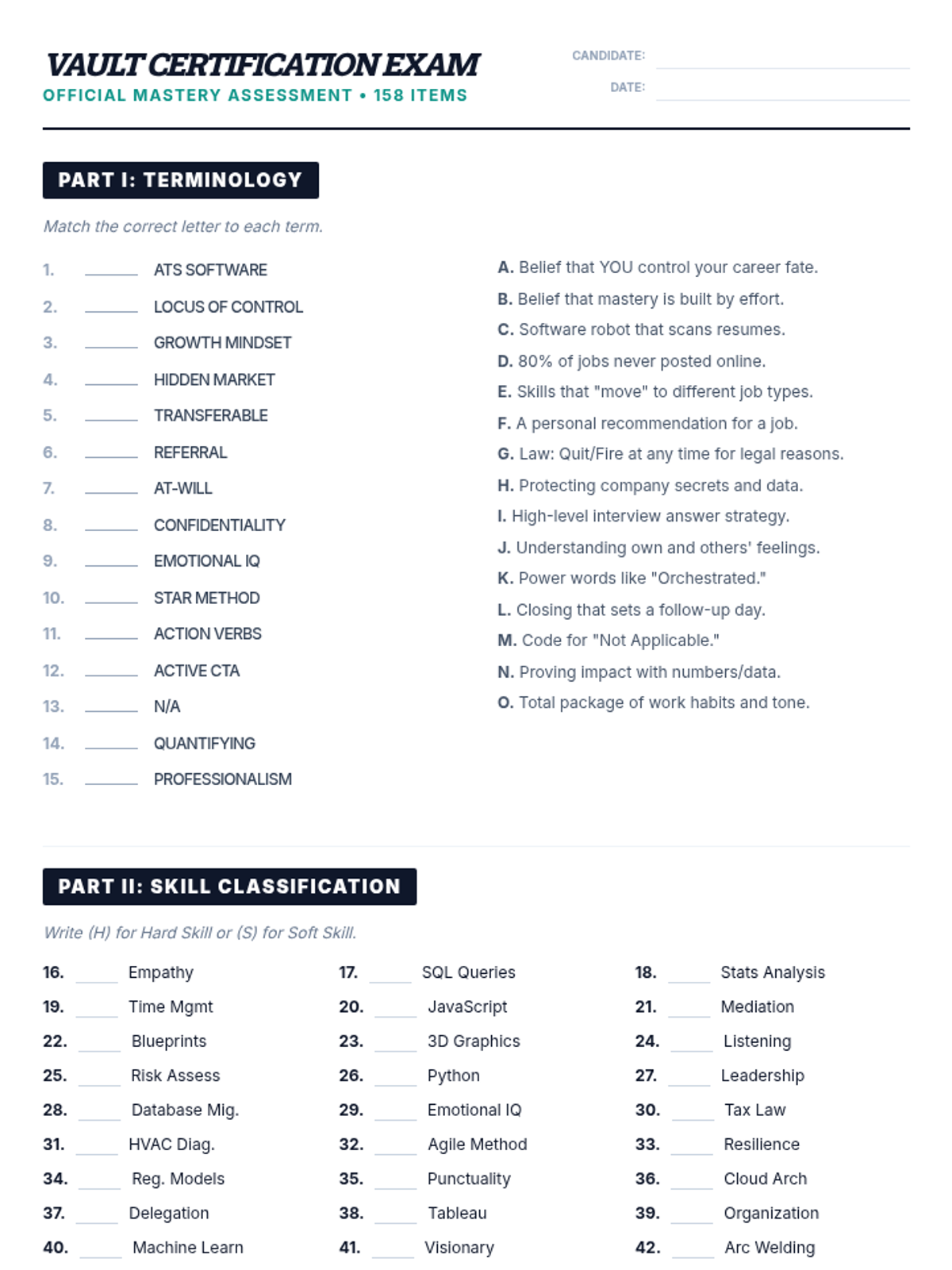
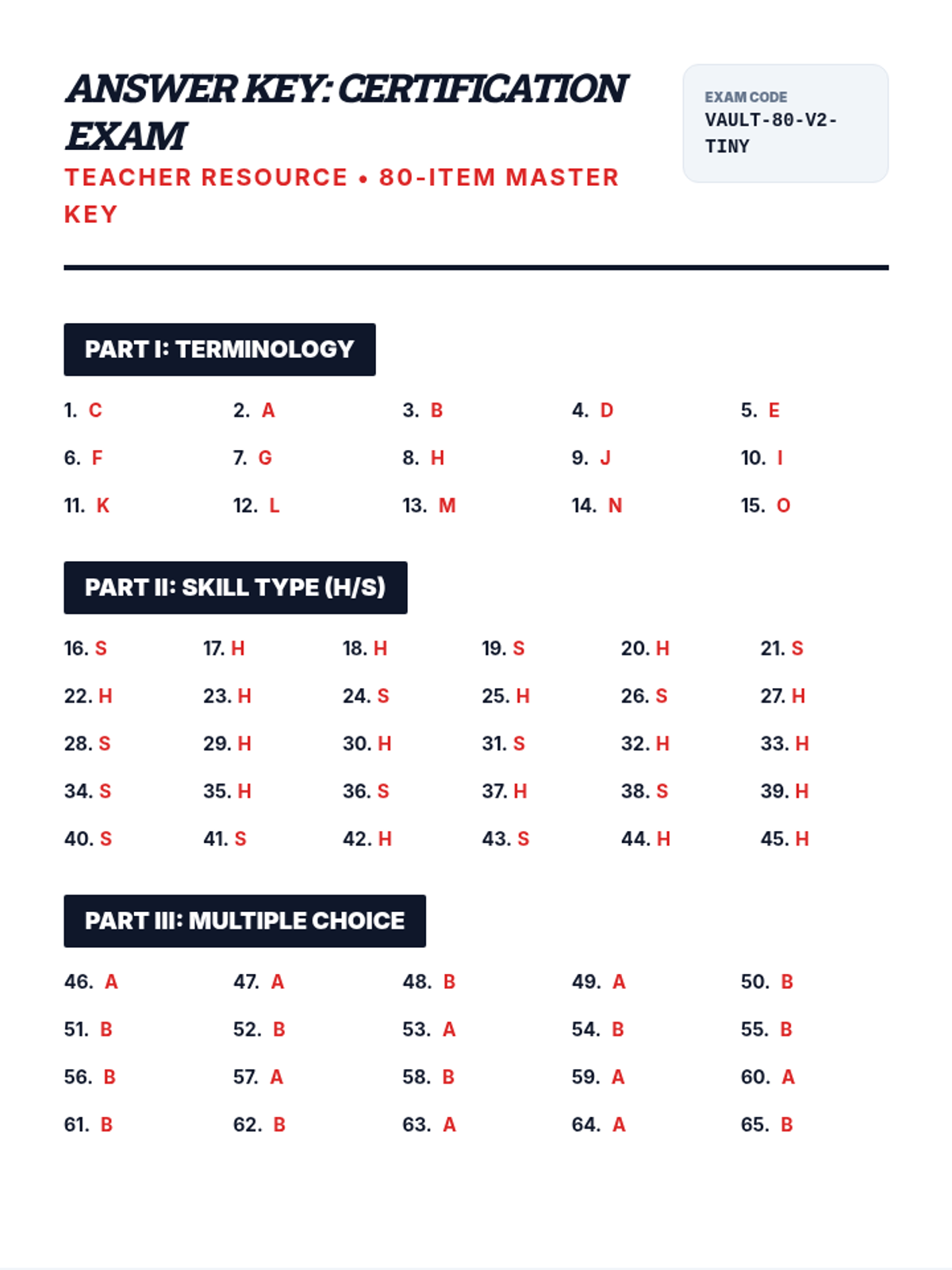
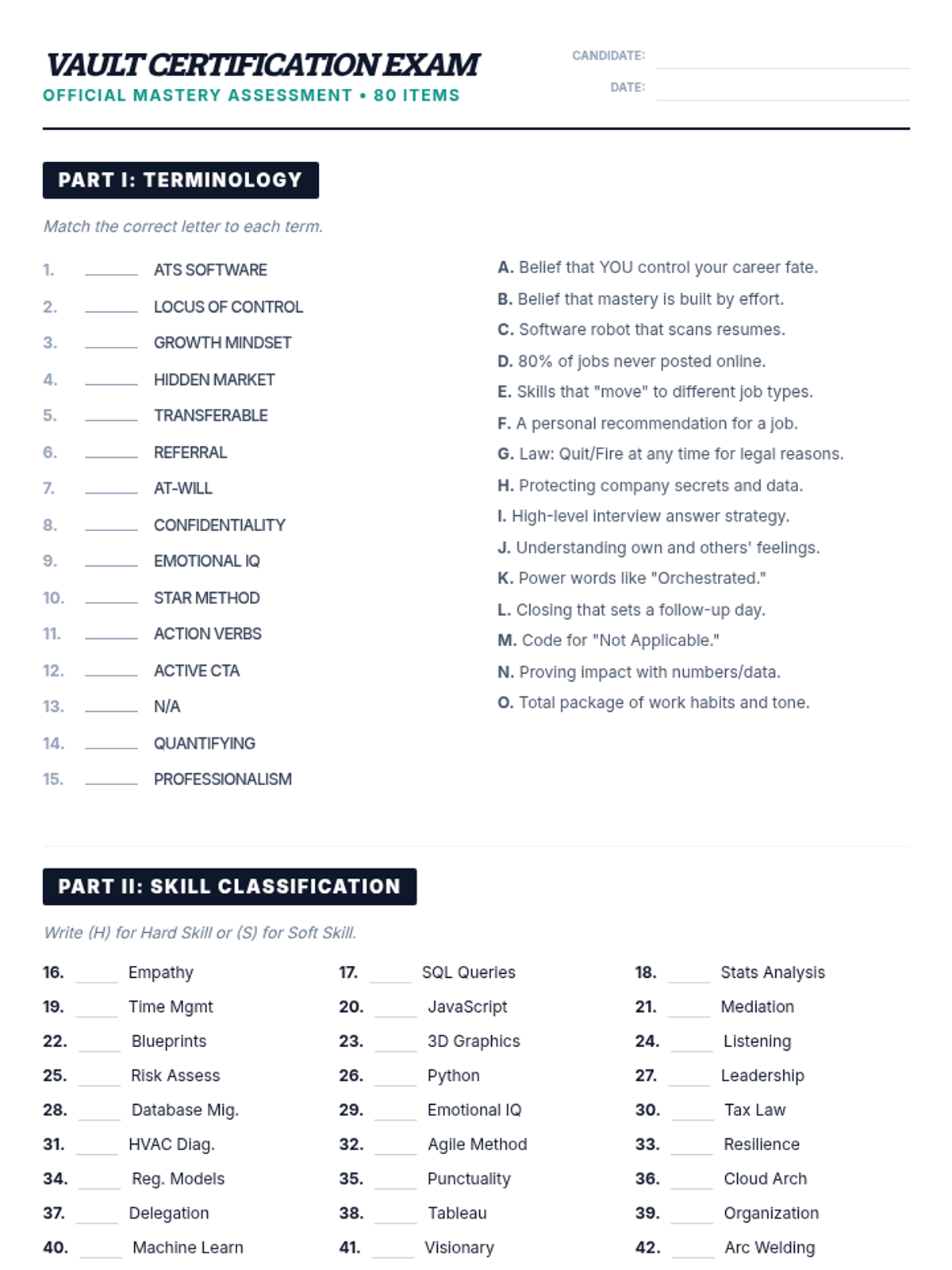
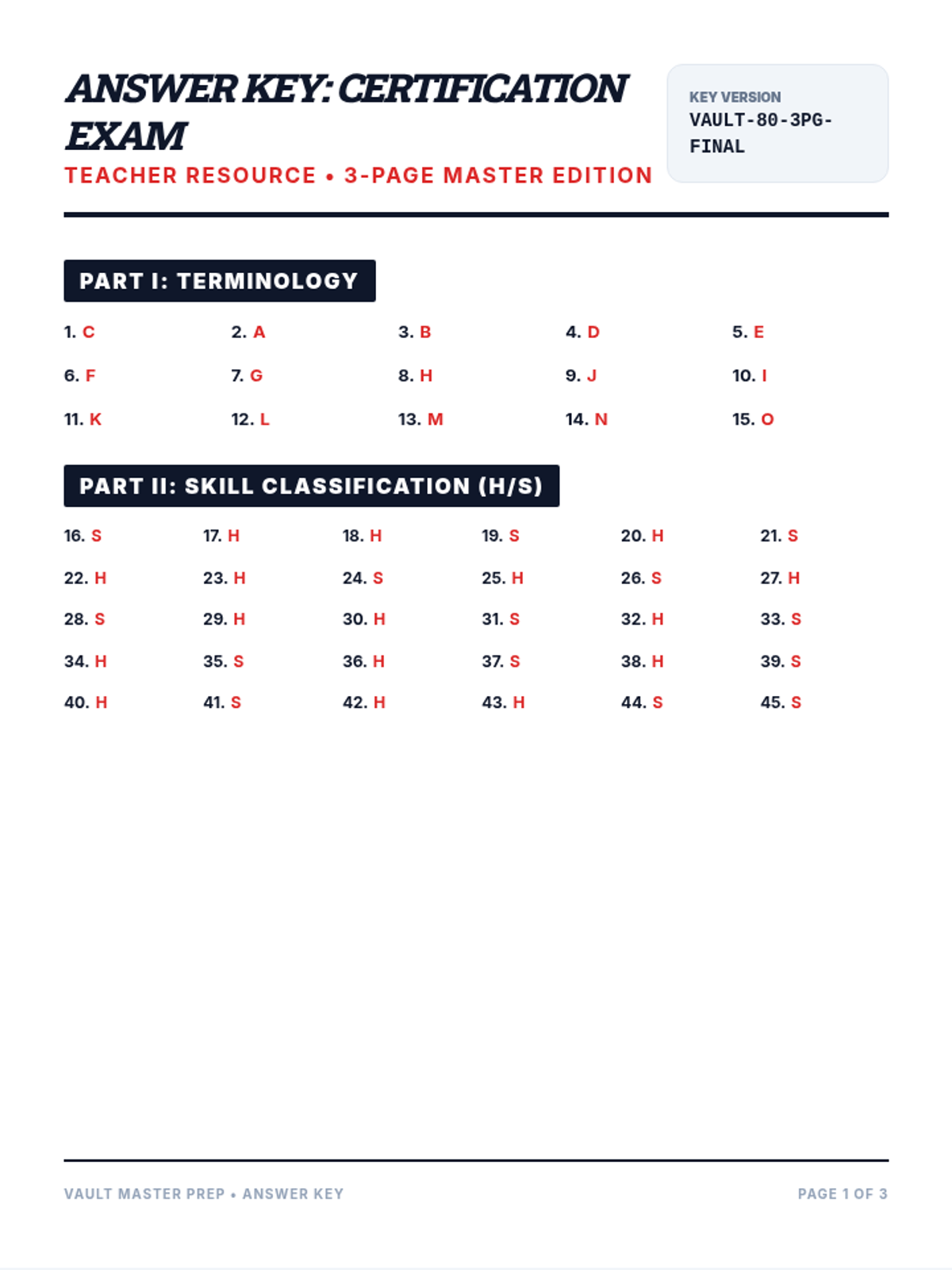
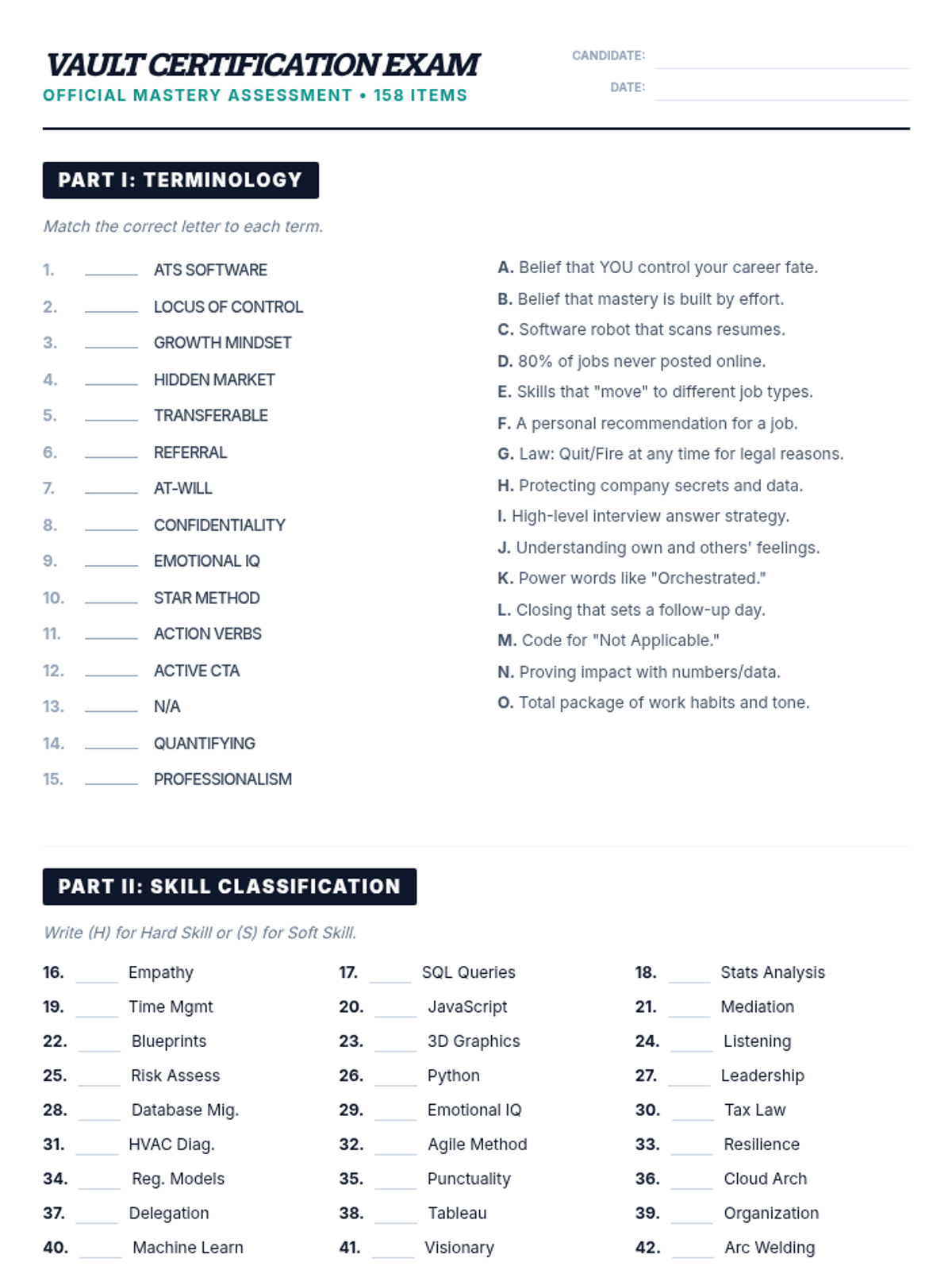
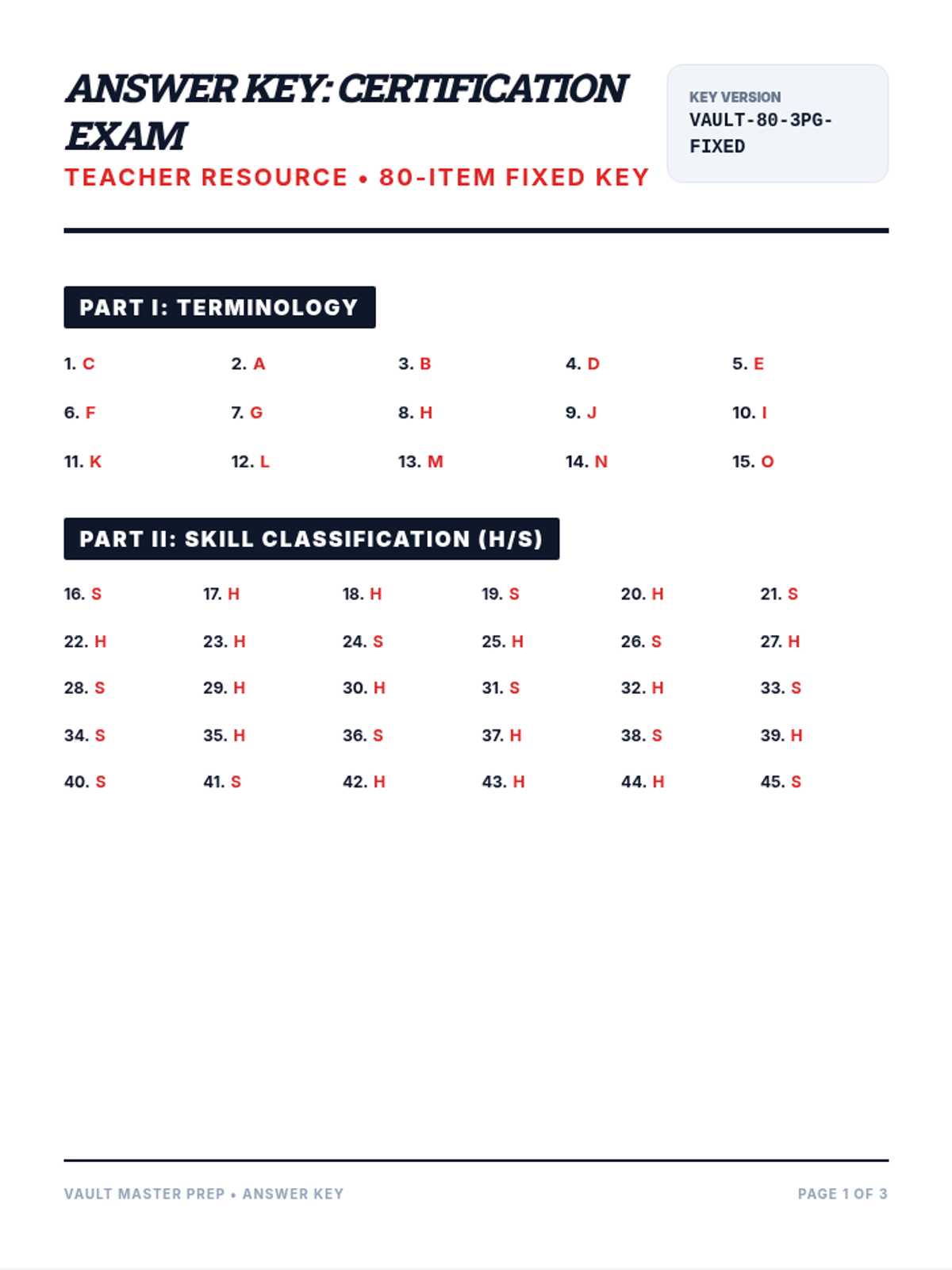
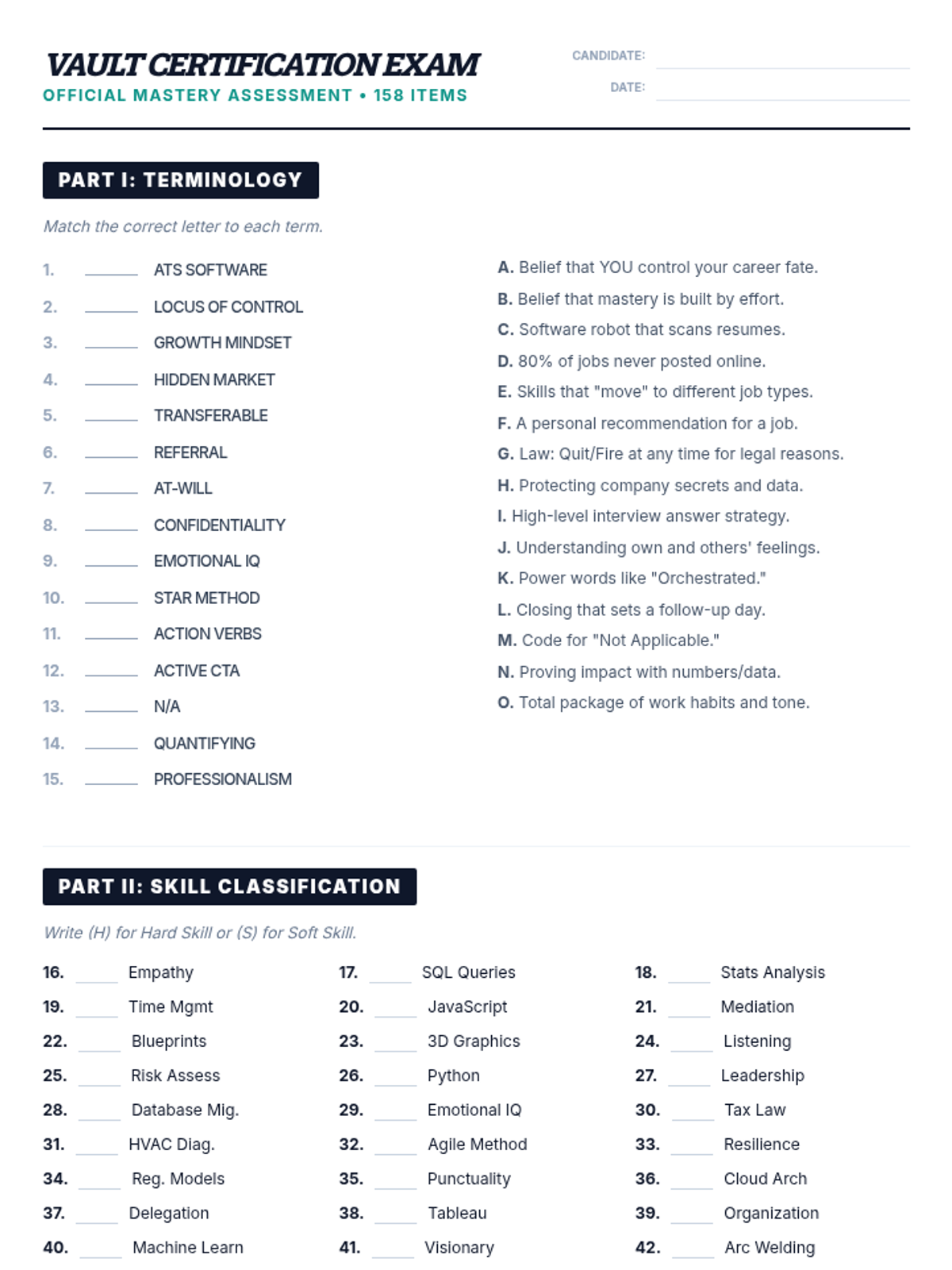
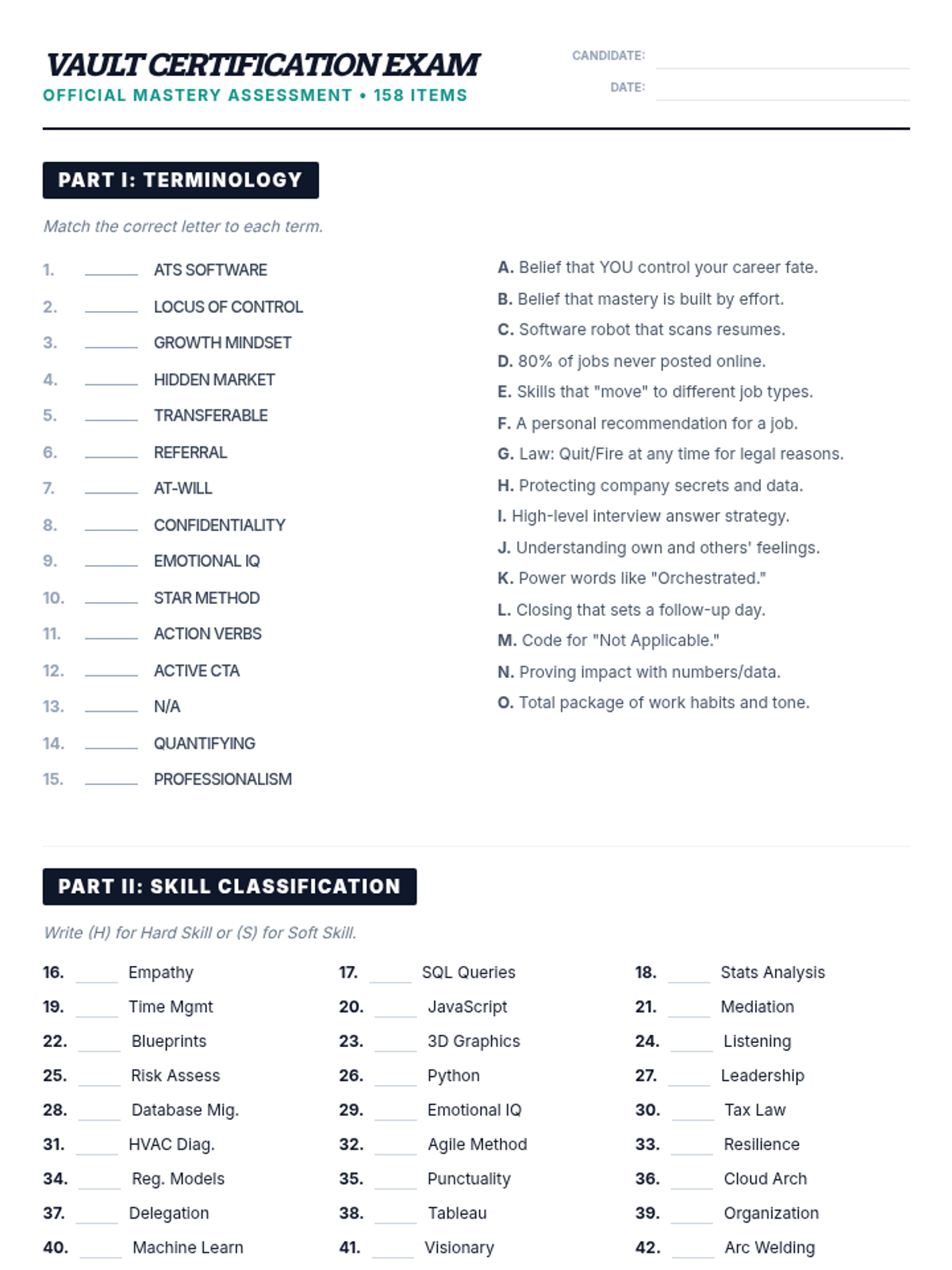
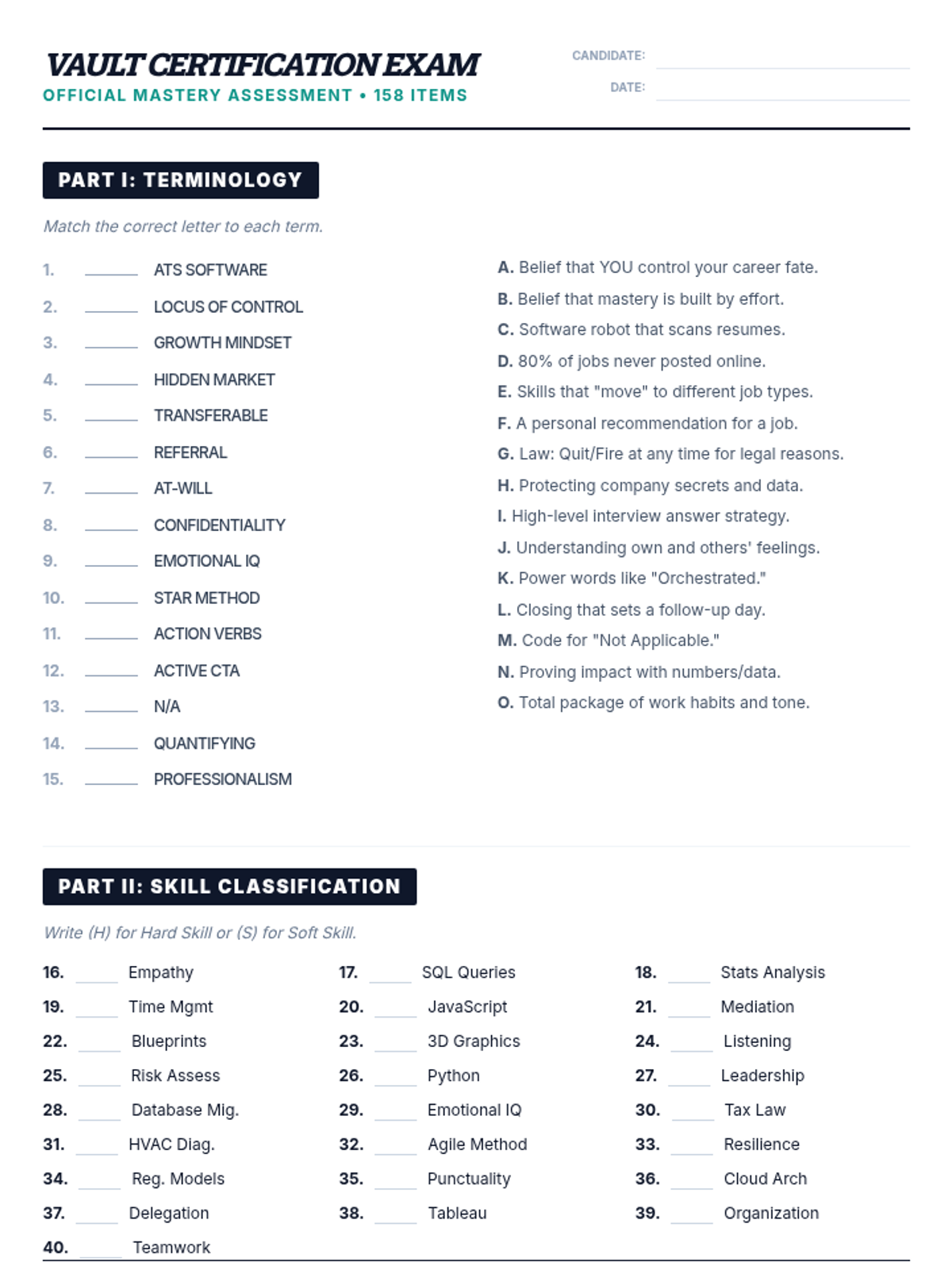
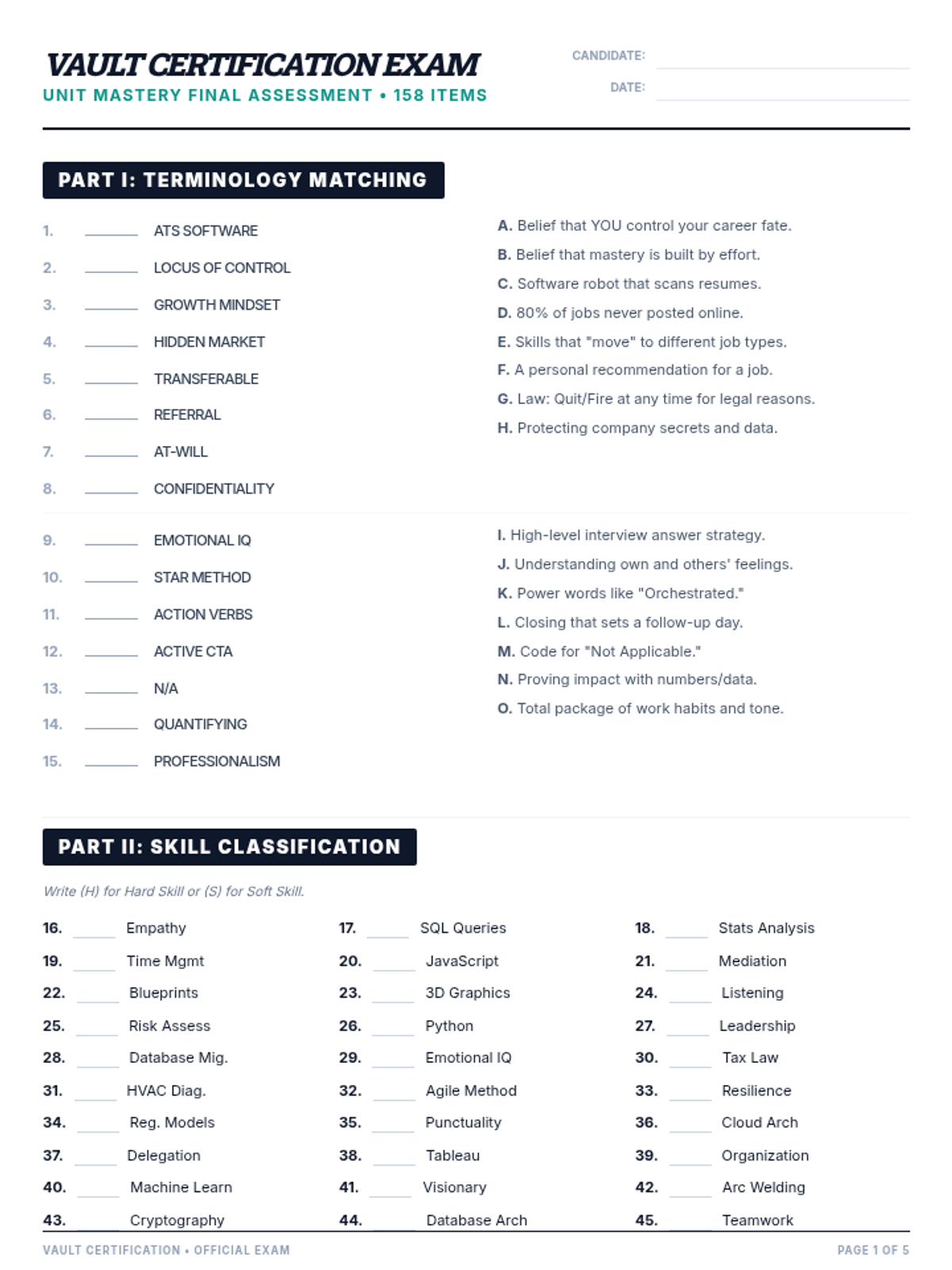
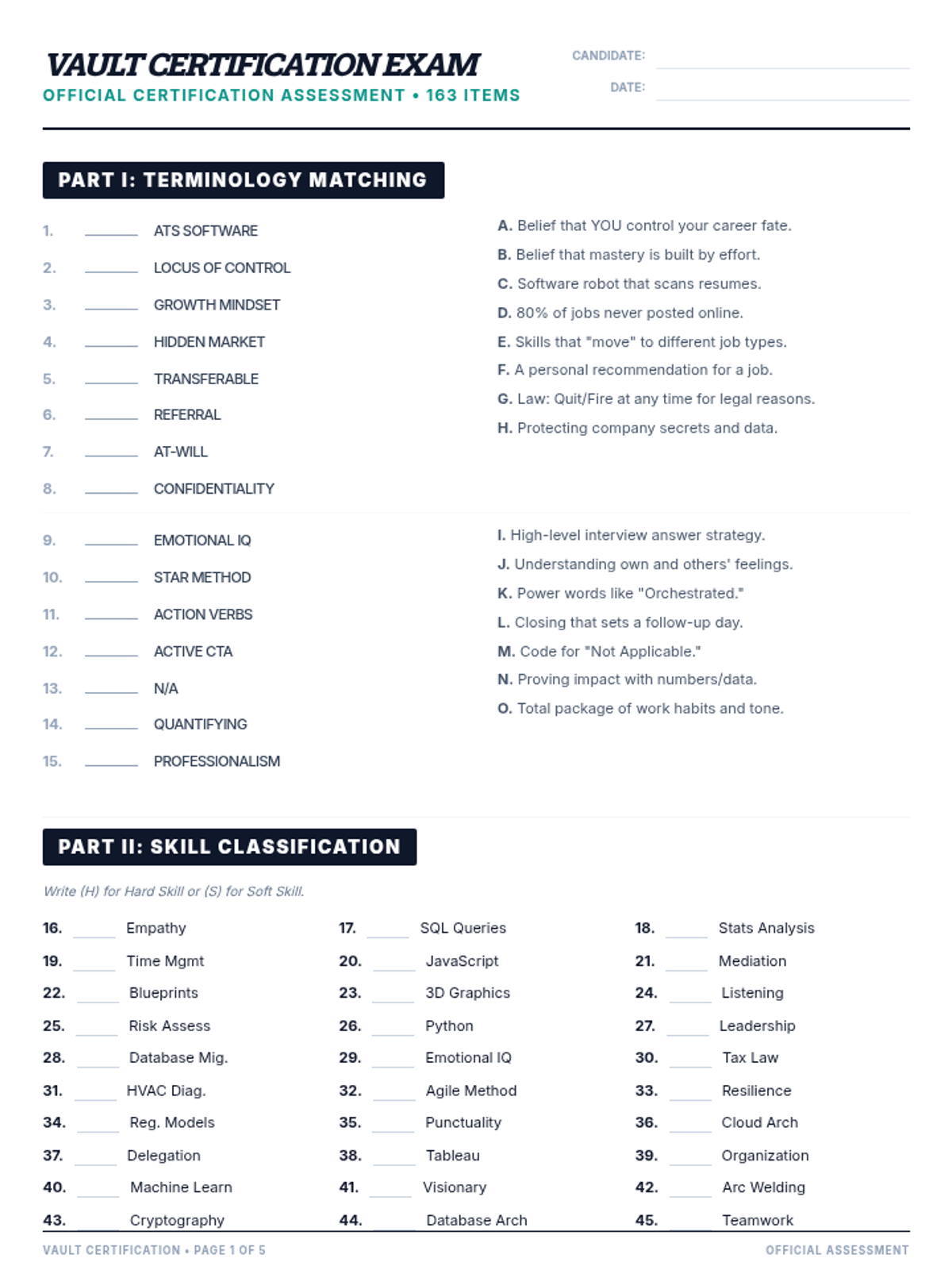
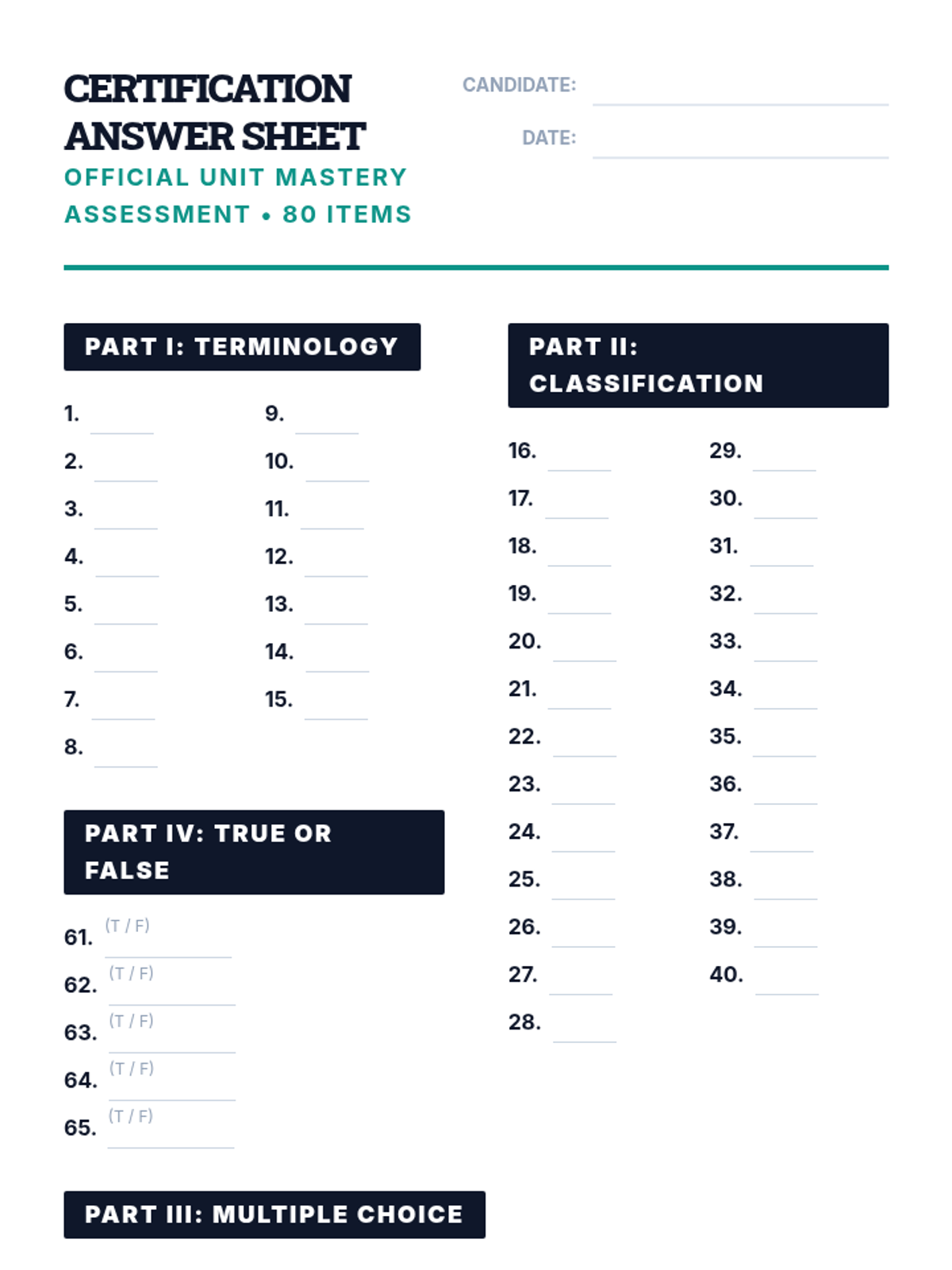
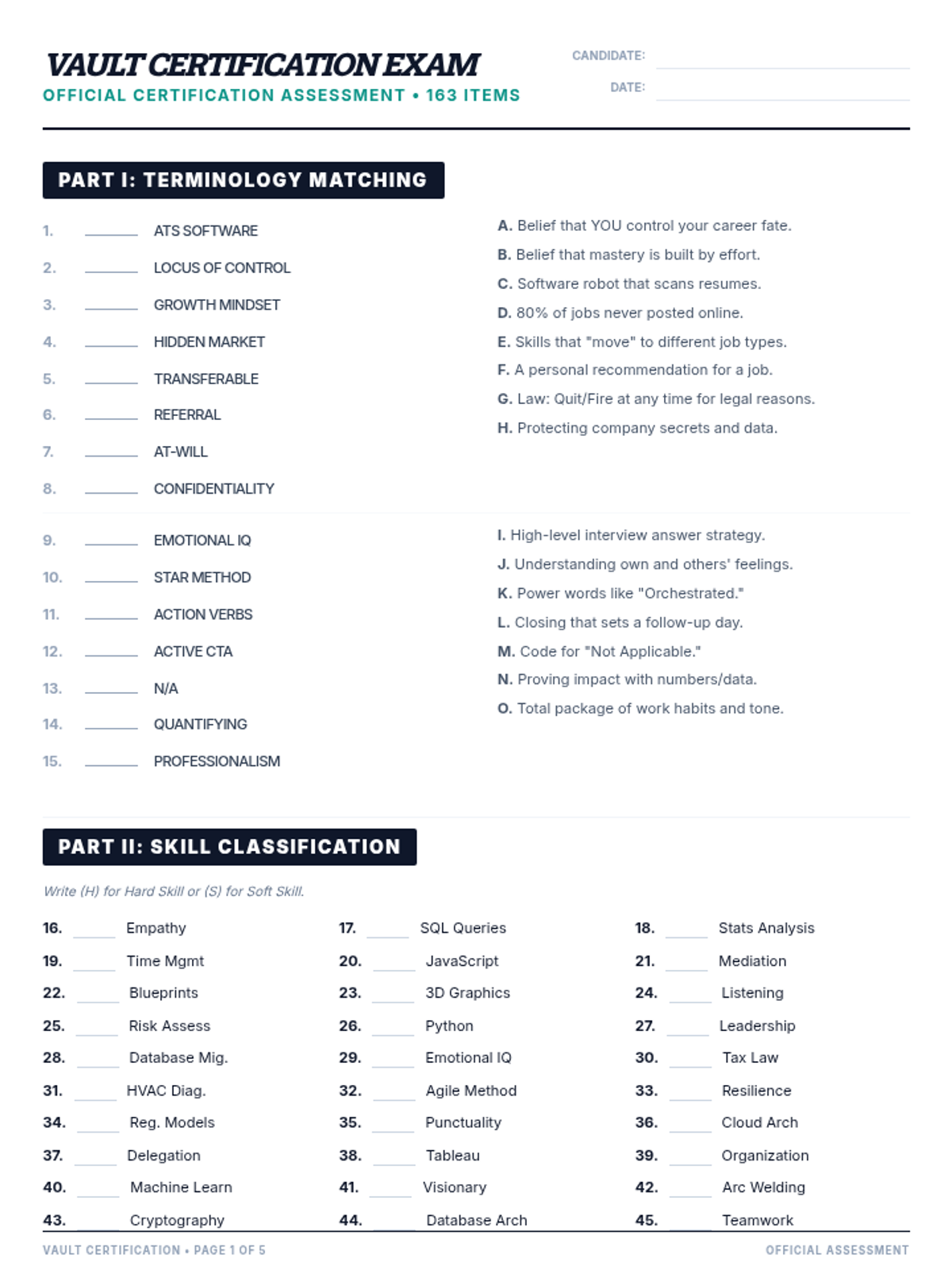
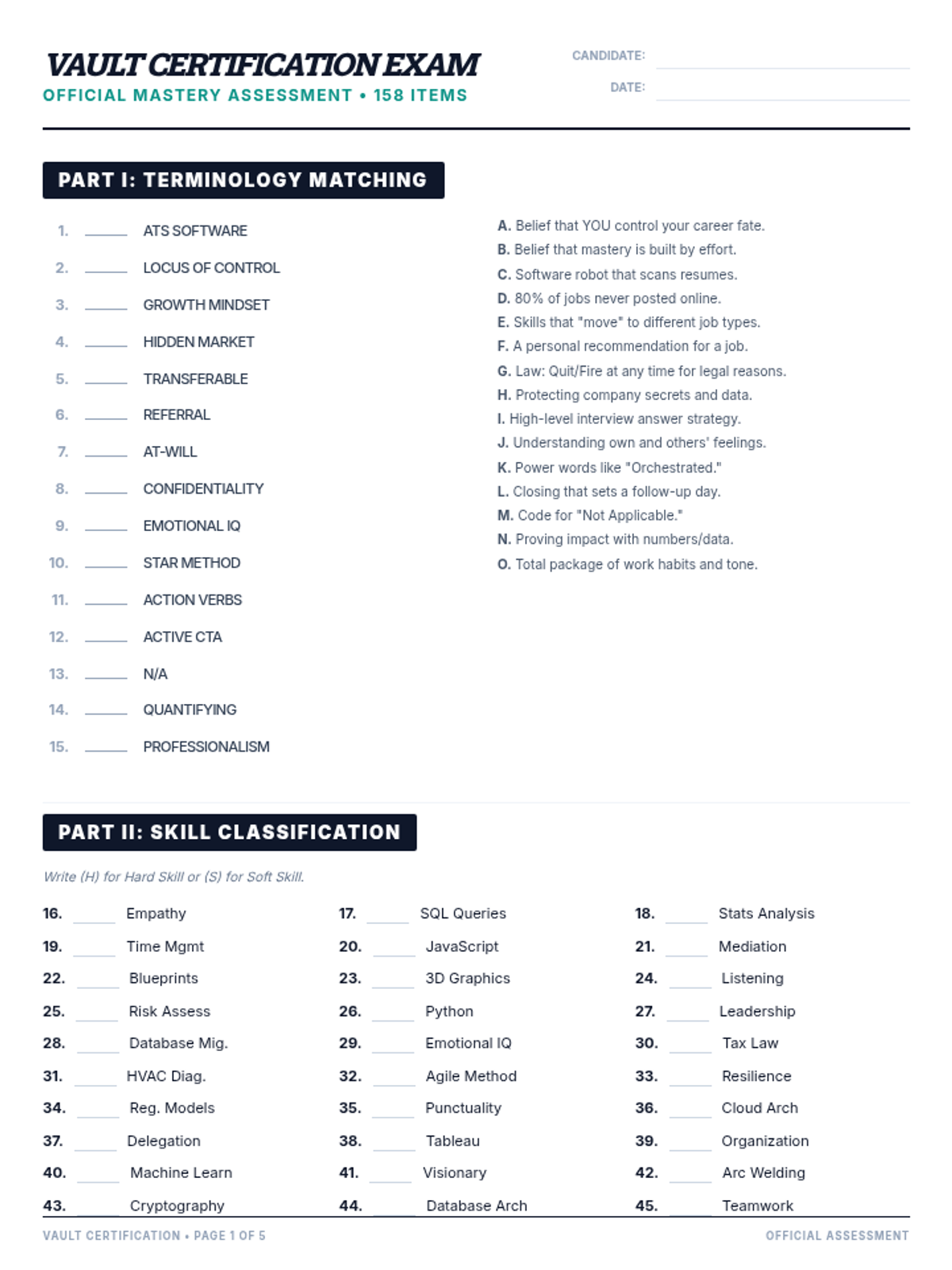
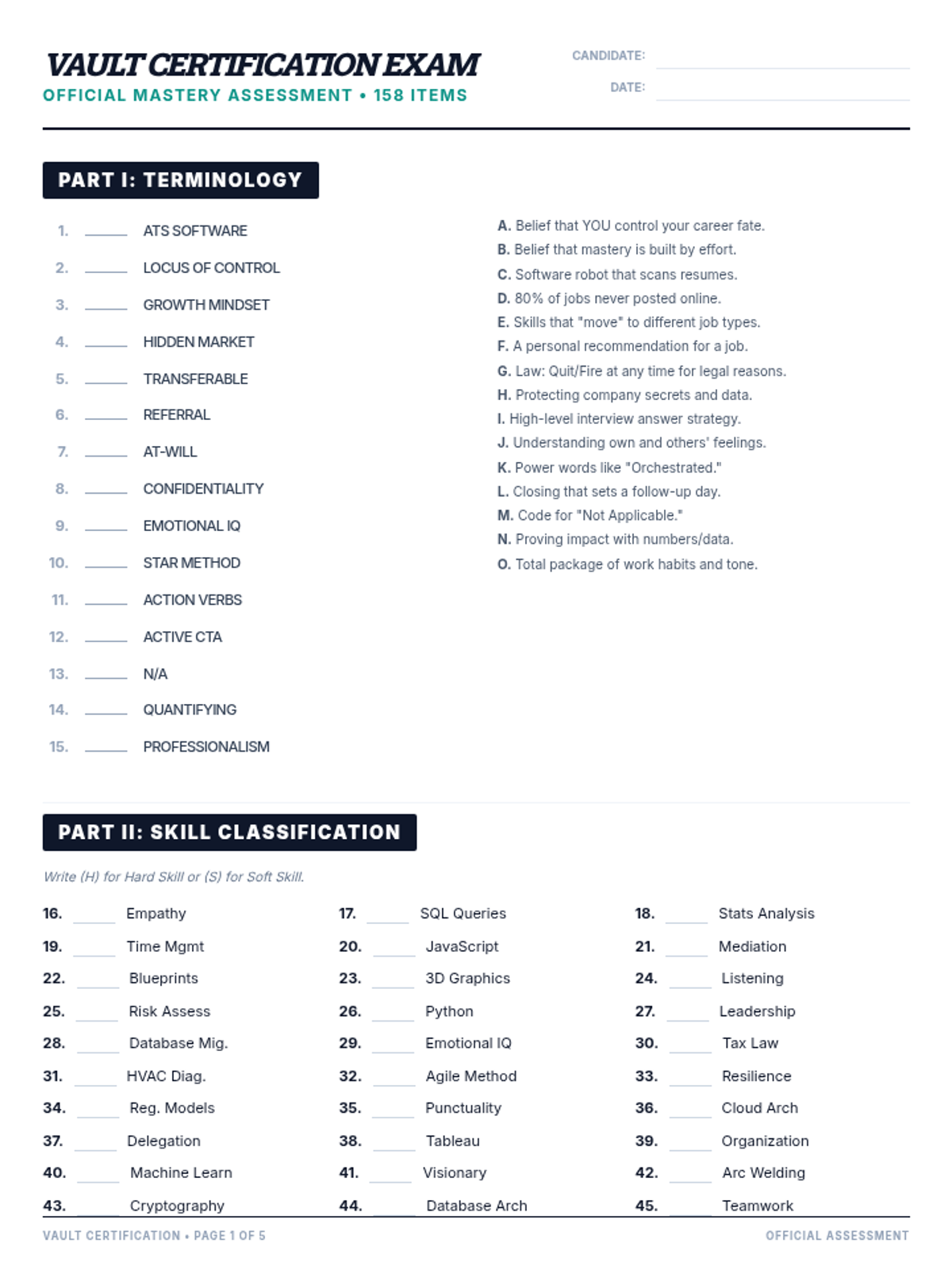
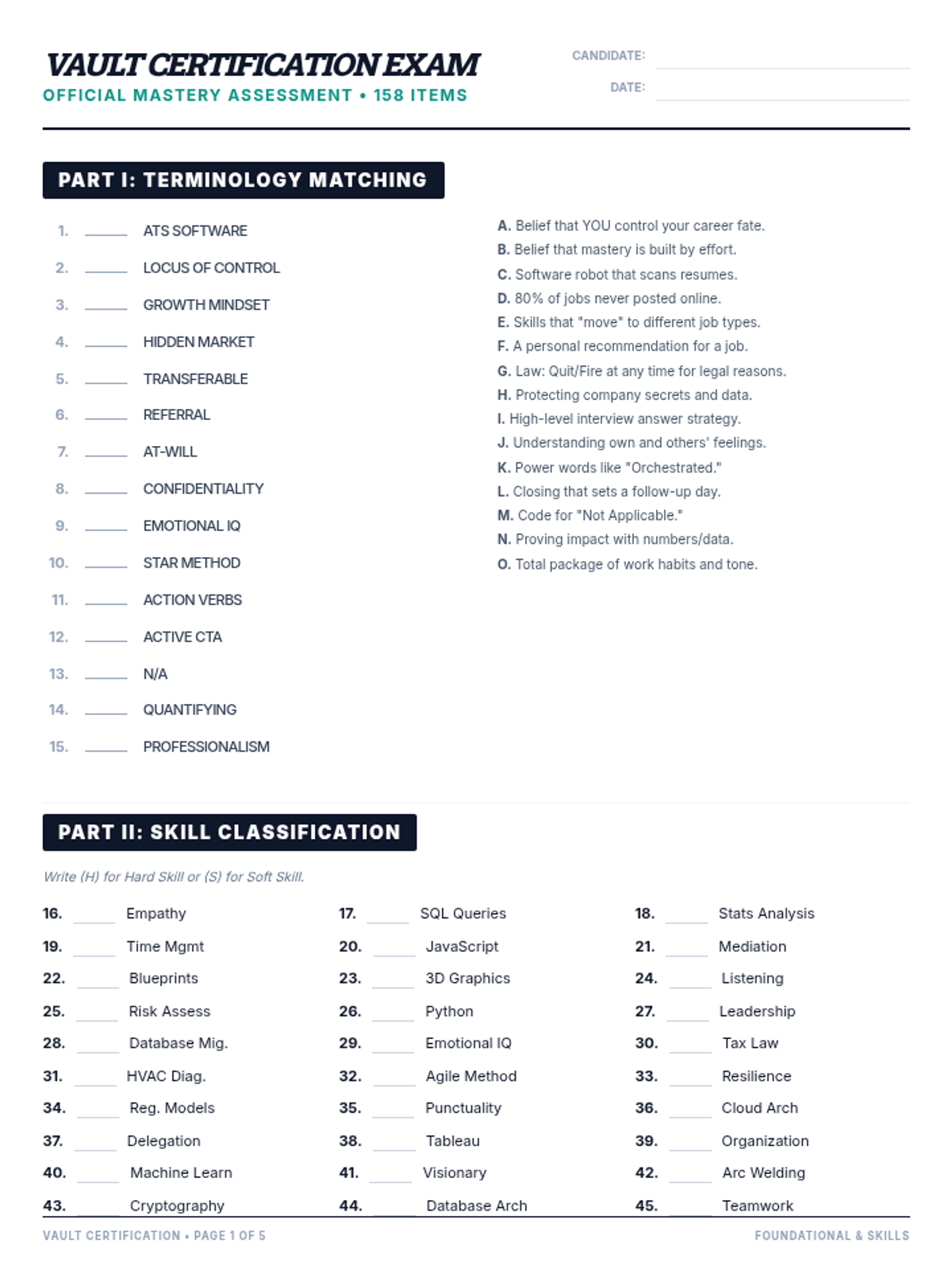
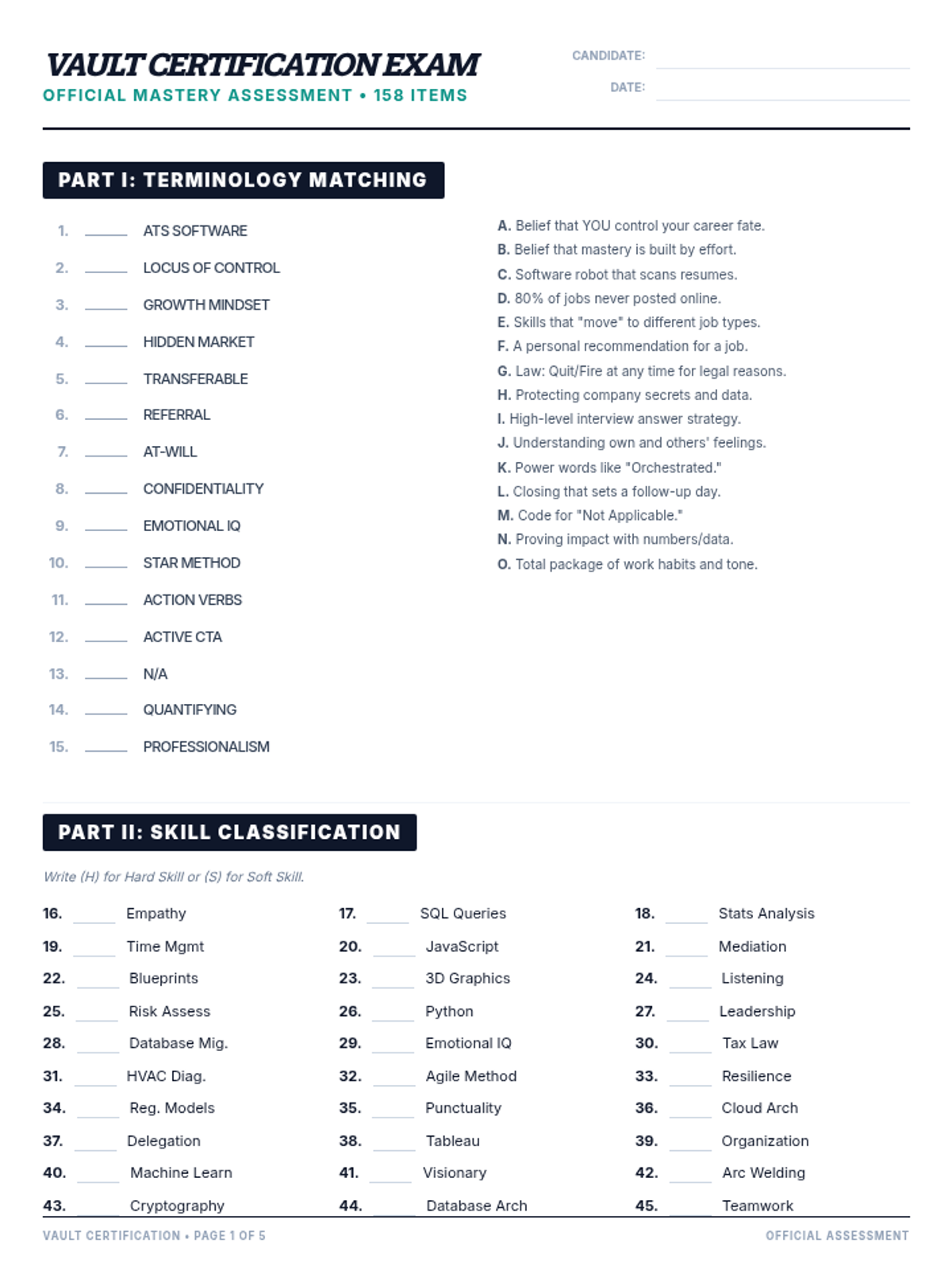
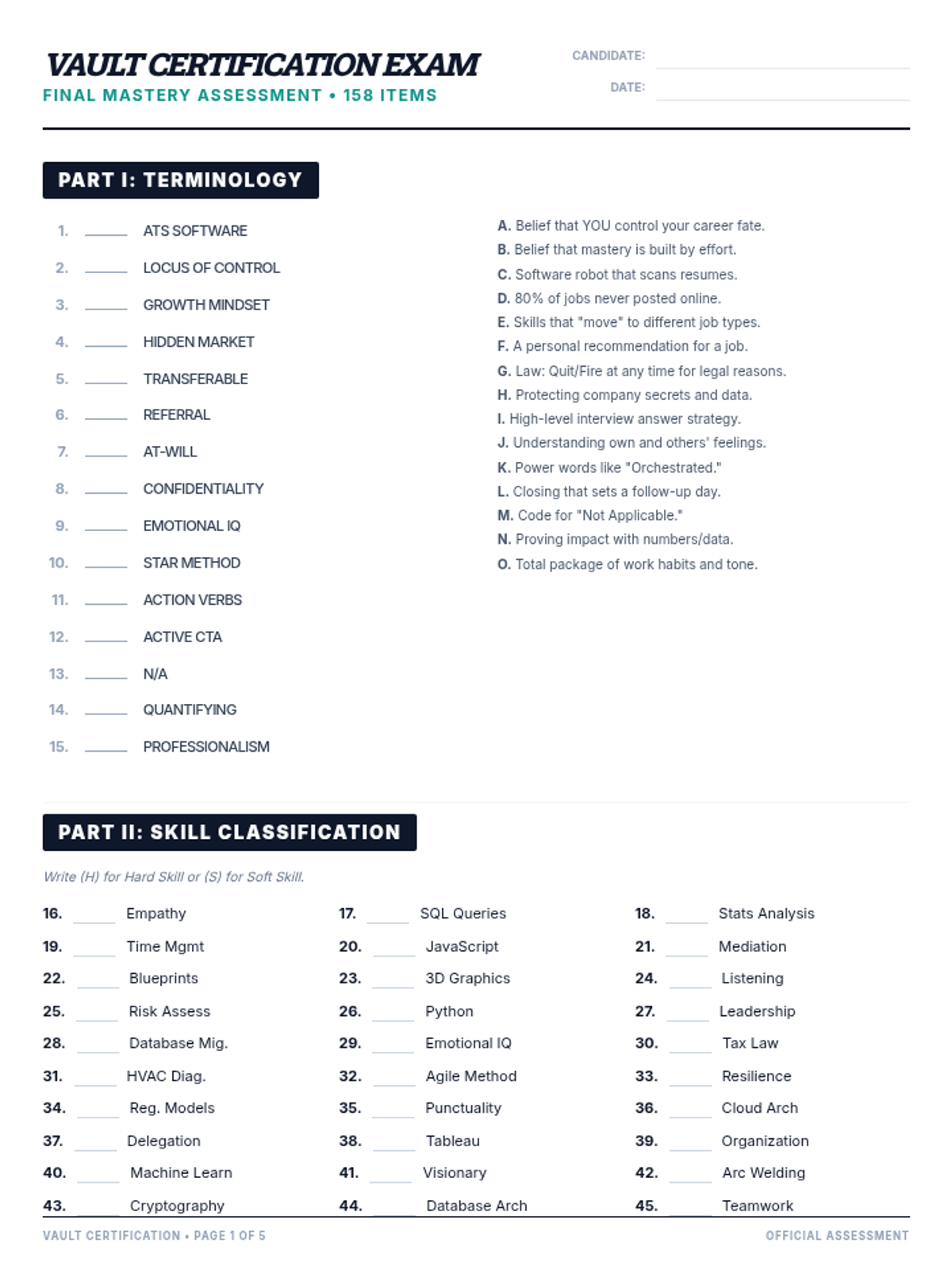
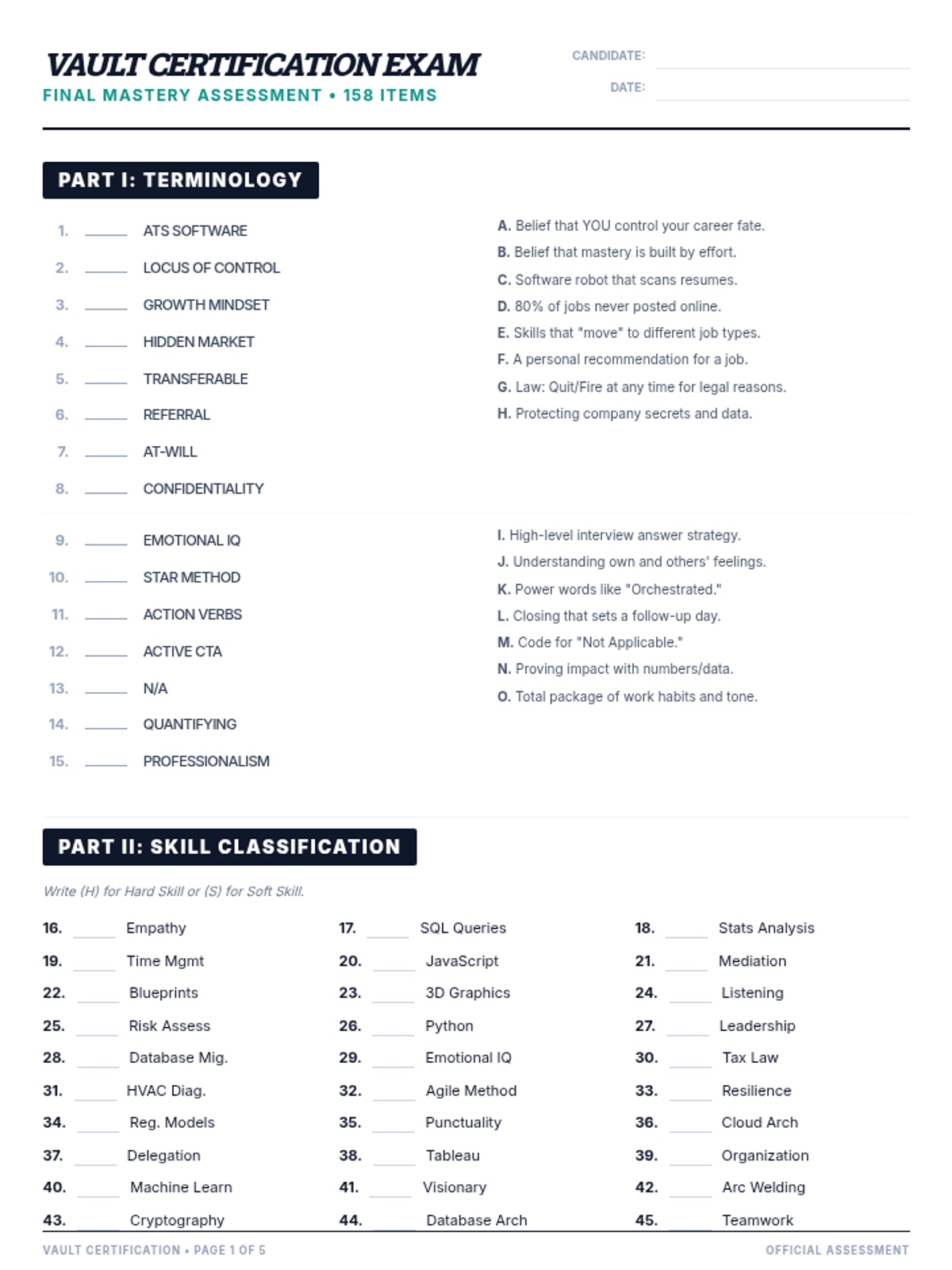
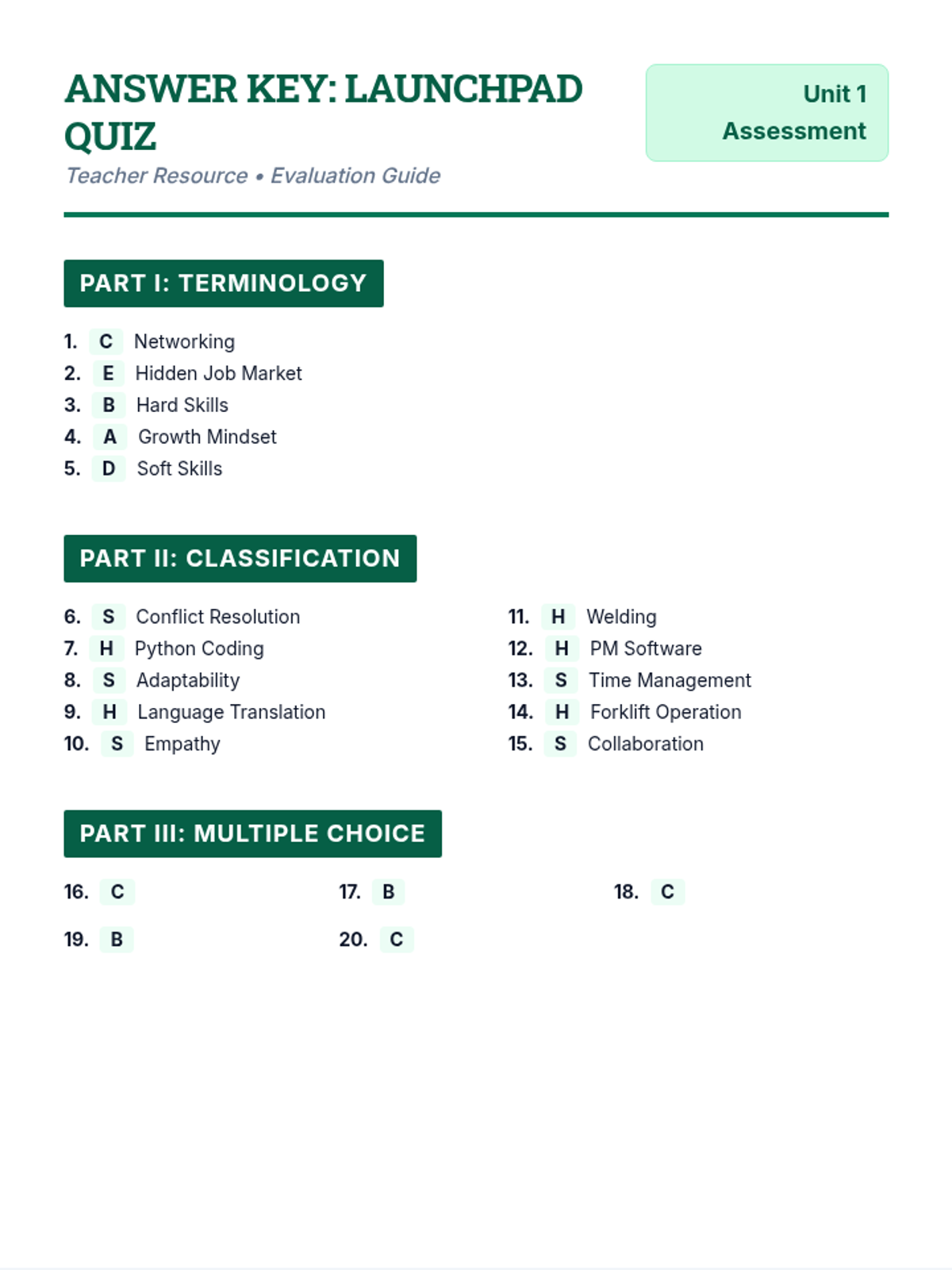
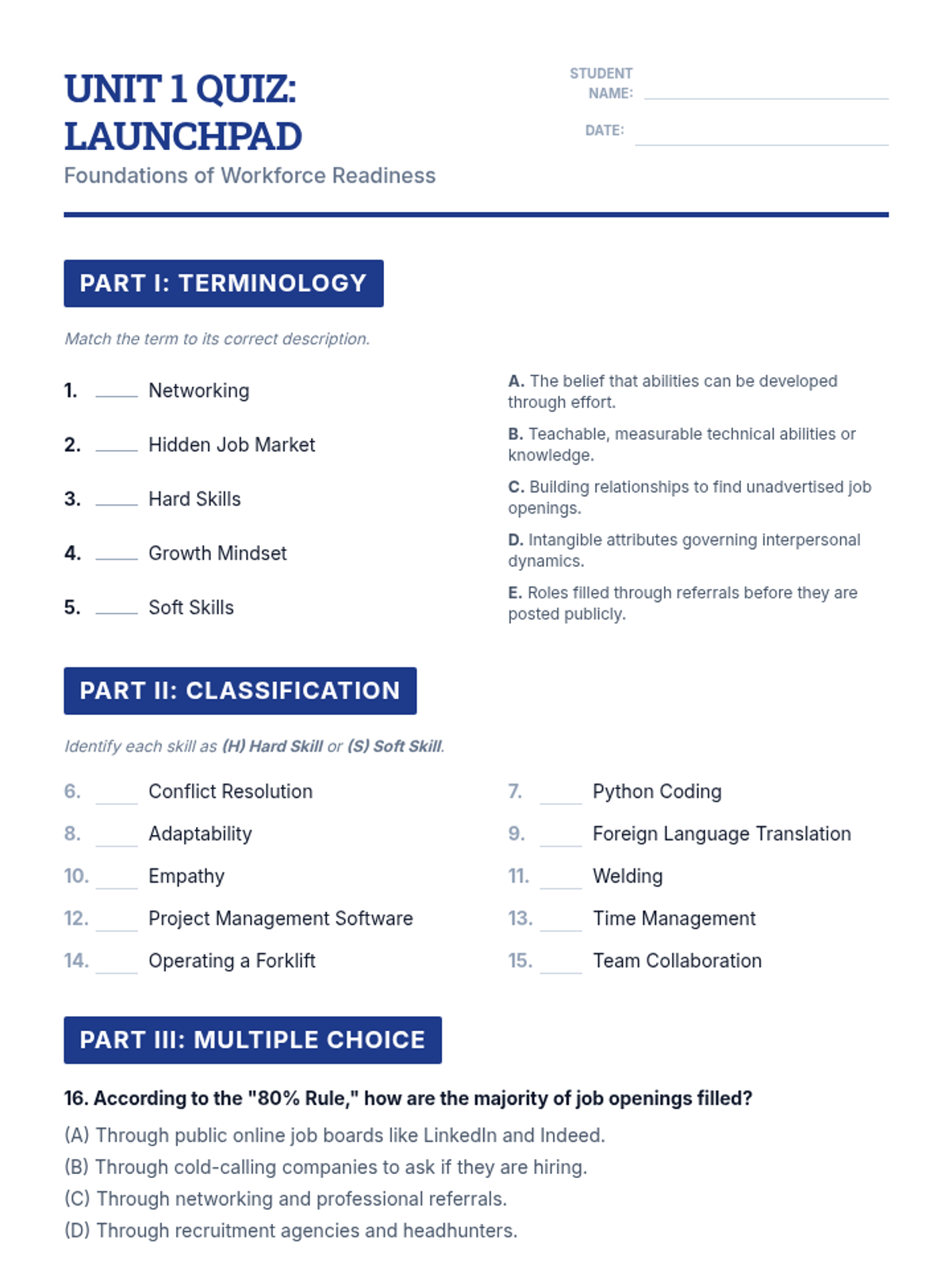
A final assessment covering application preparation, interview techniques, and professional workplace etiquette.
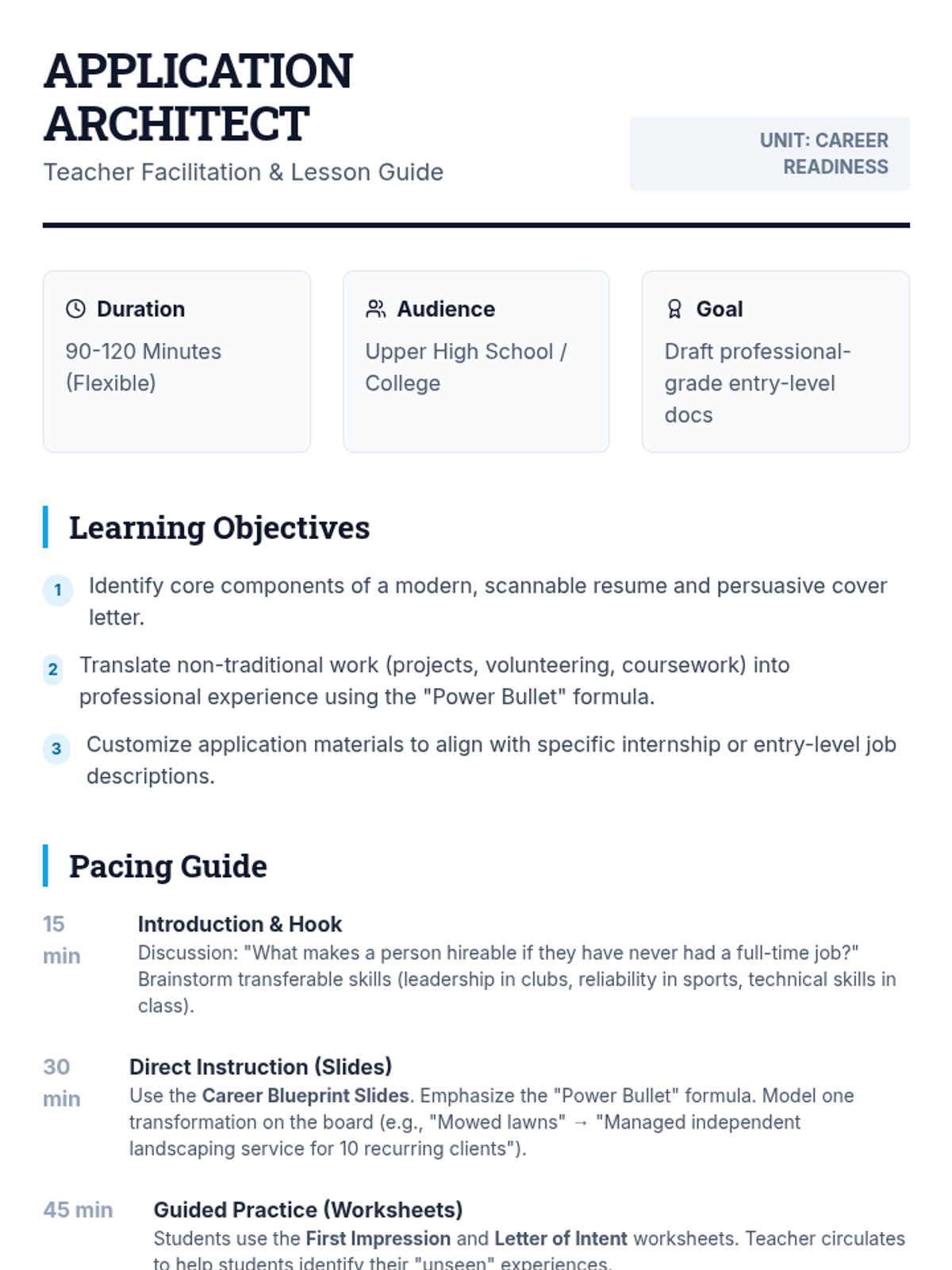
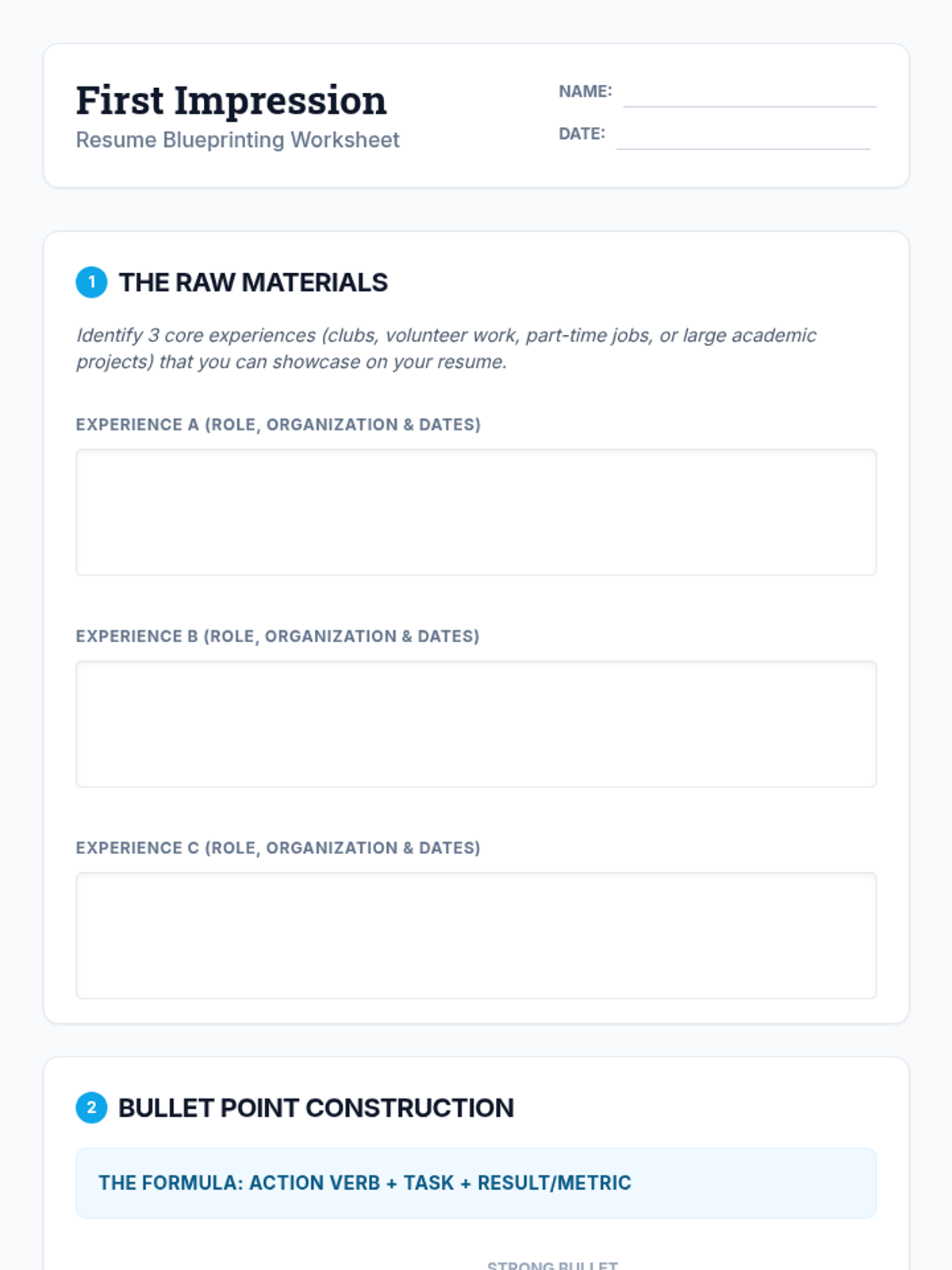
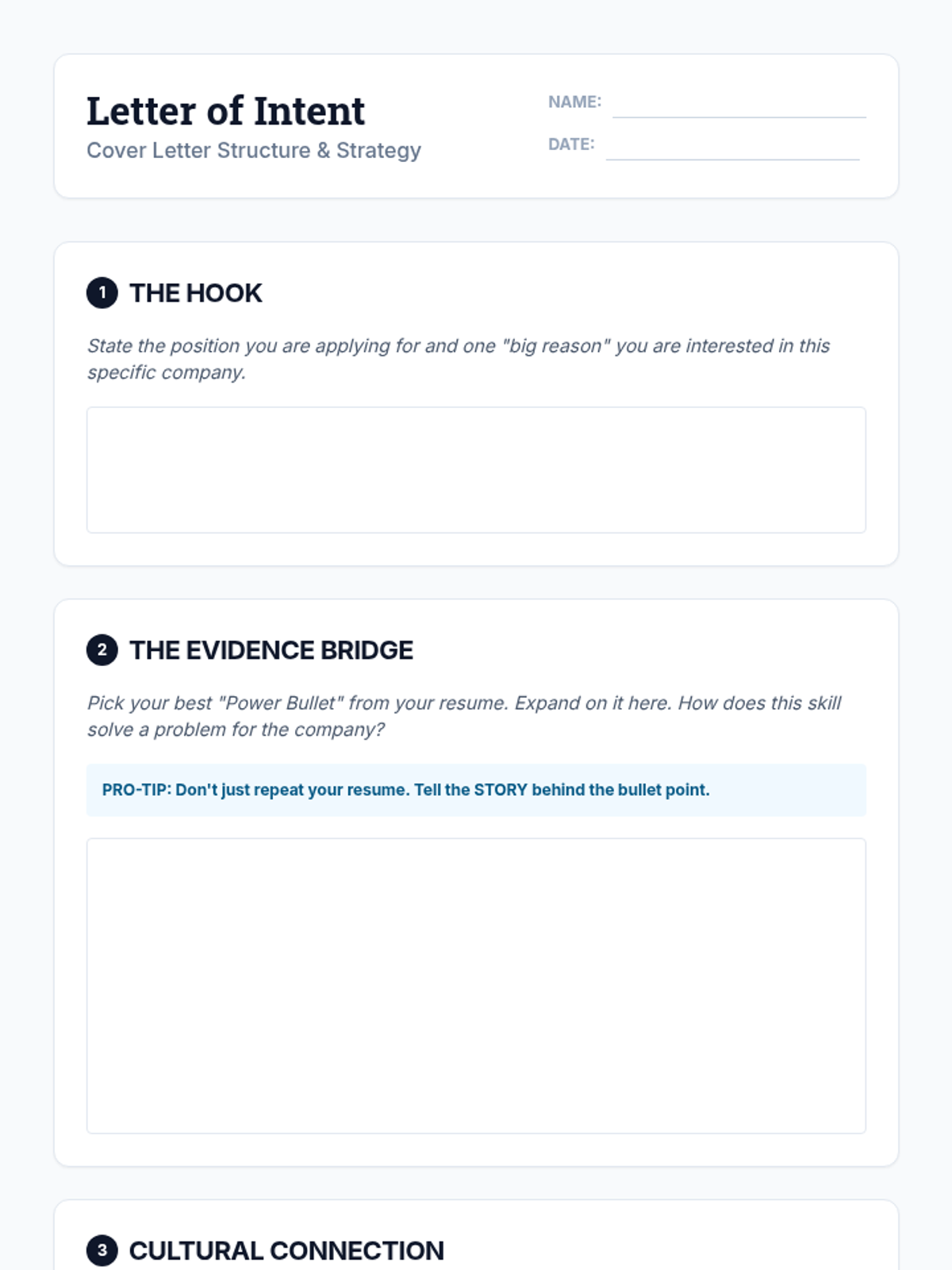
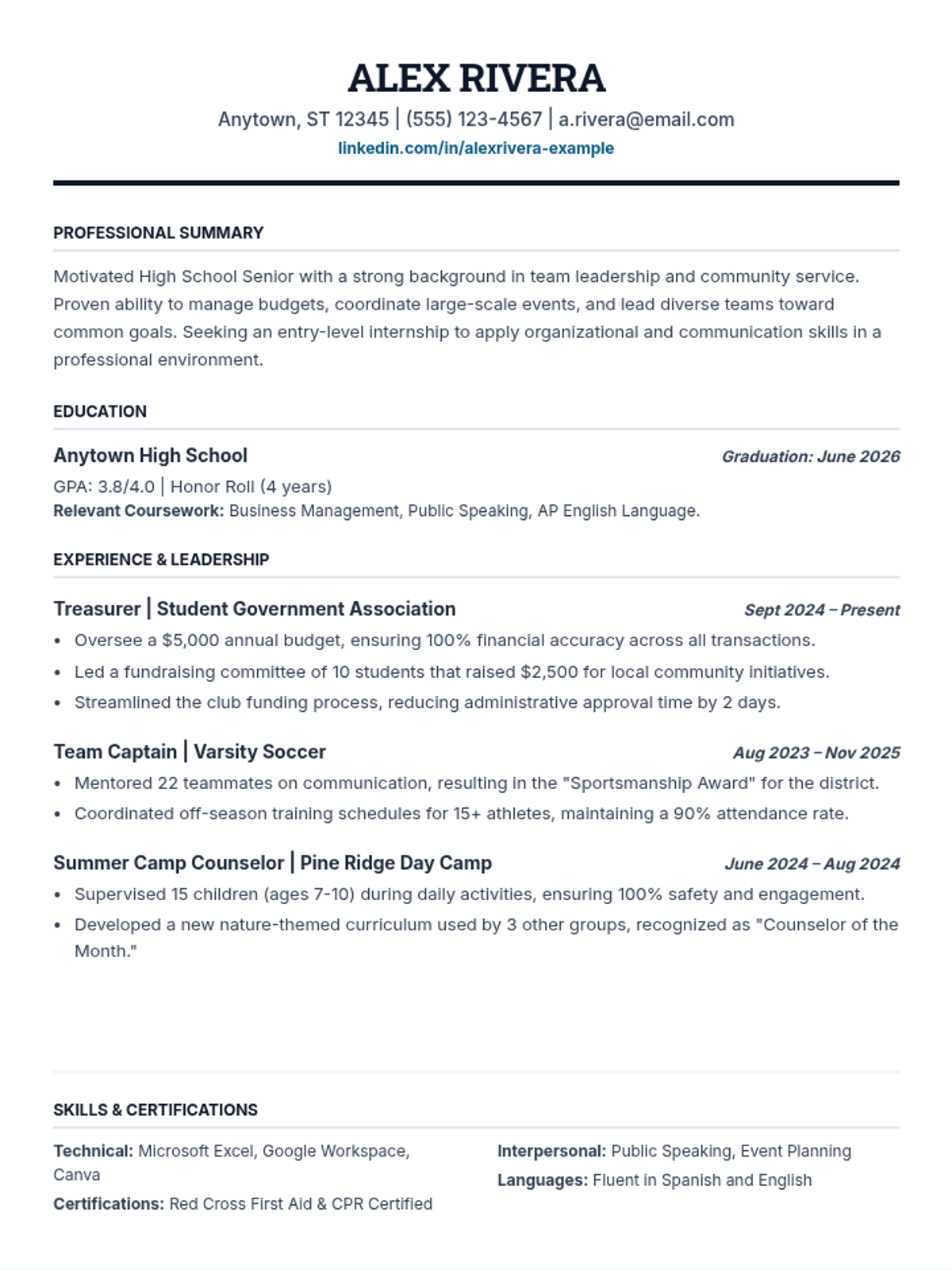
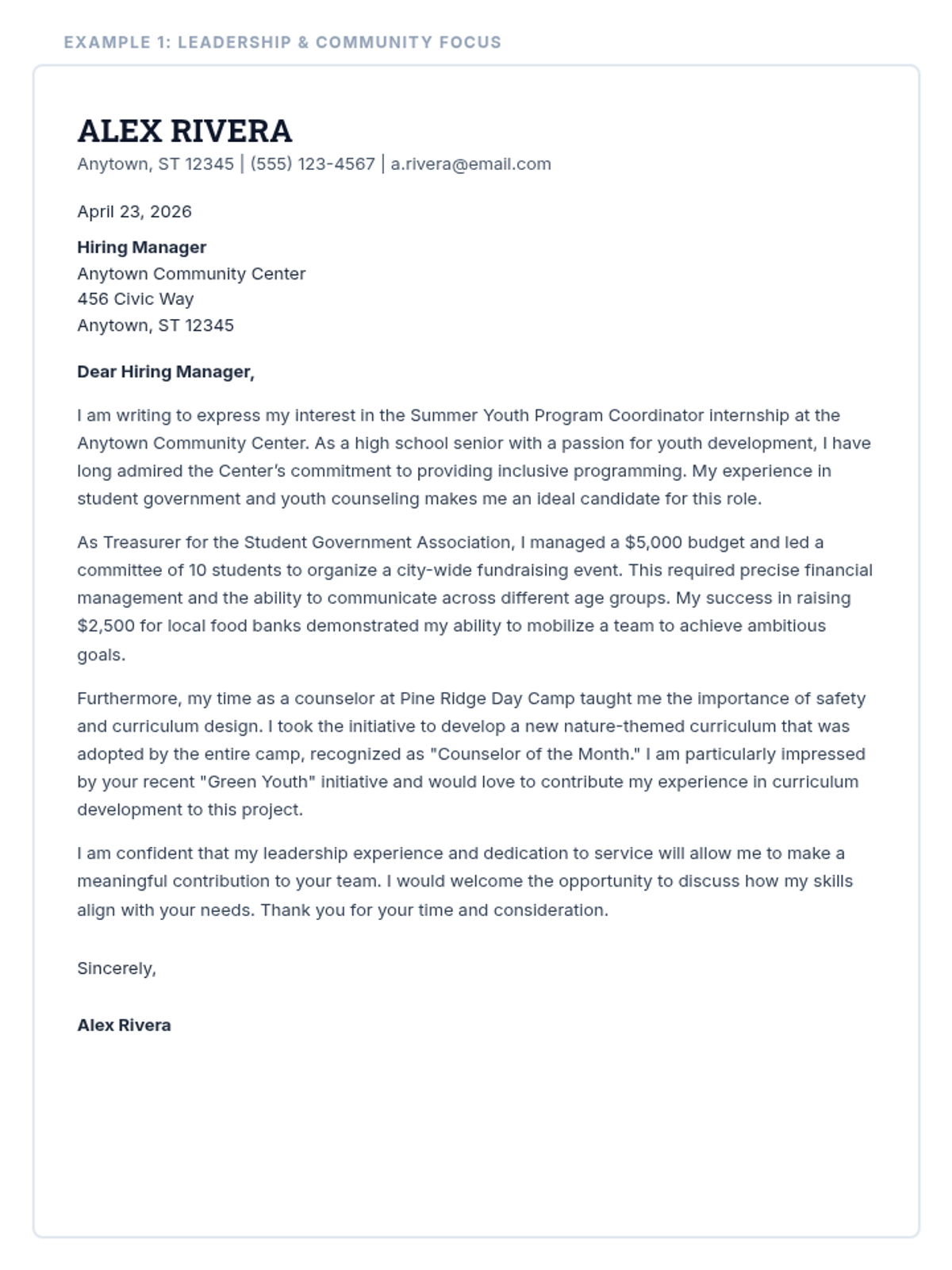
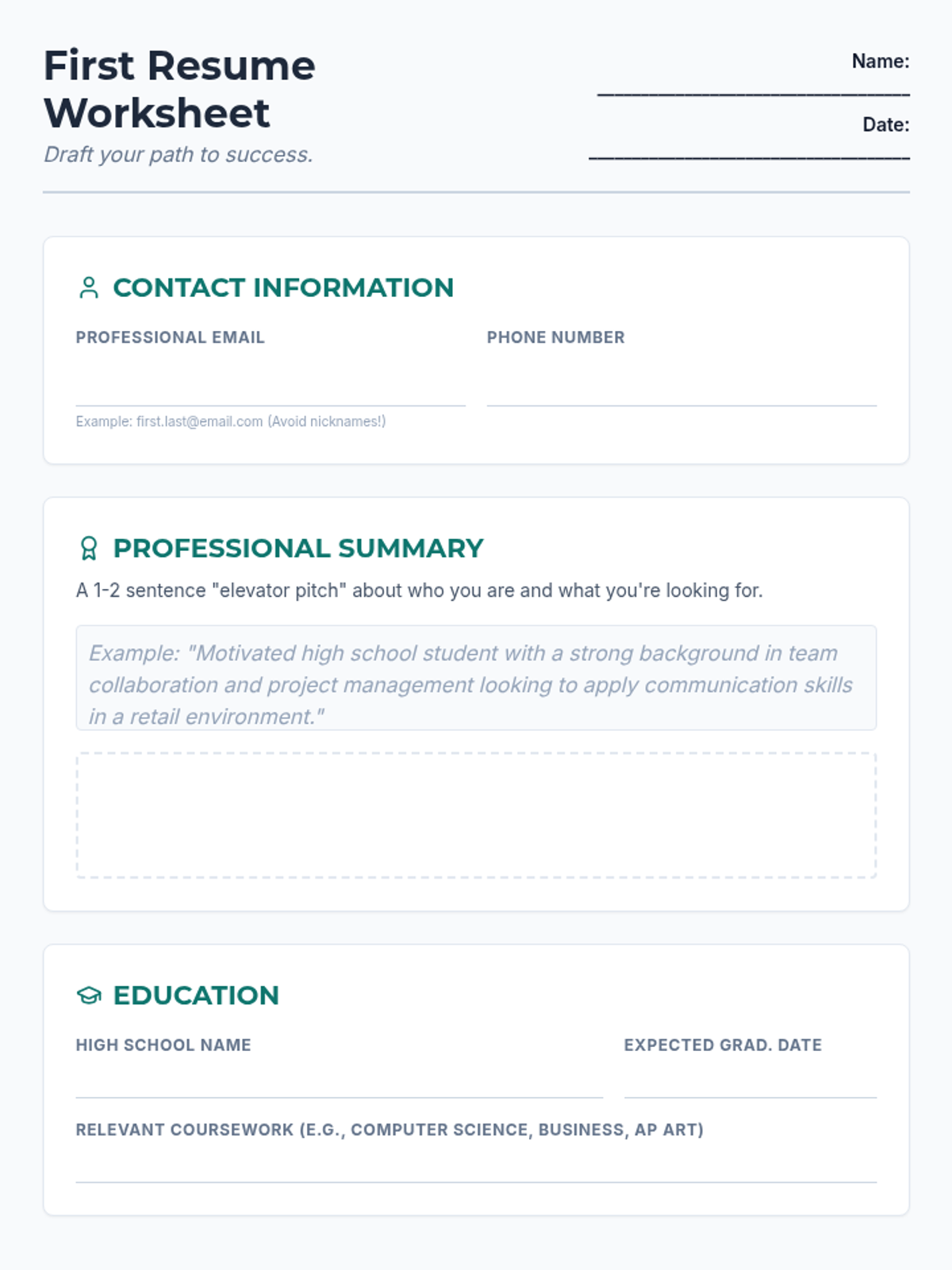
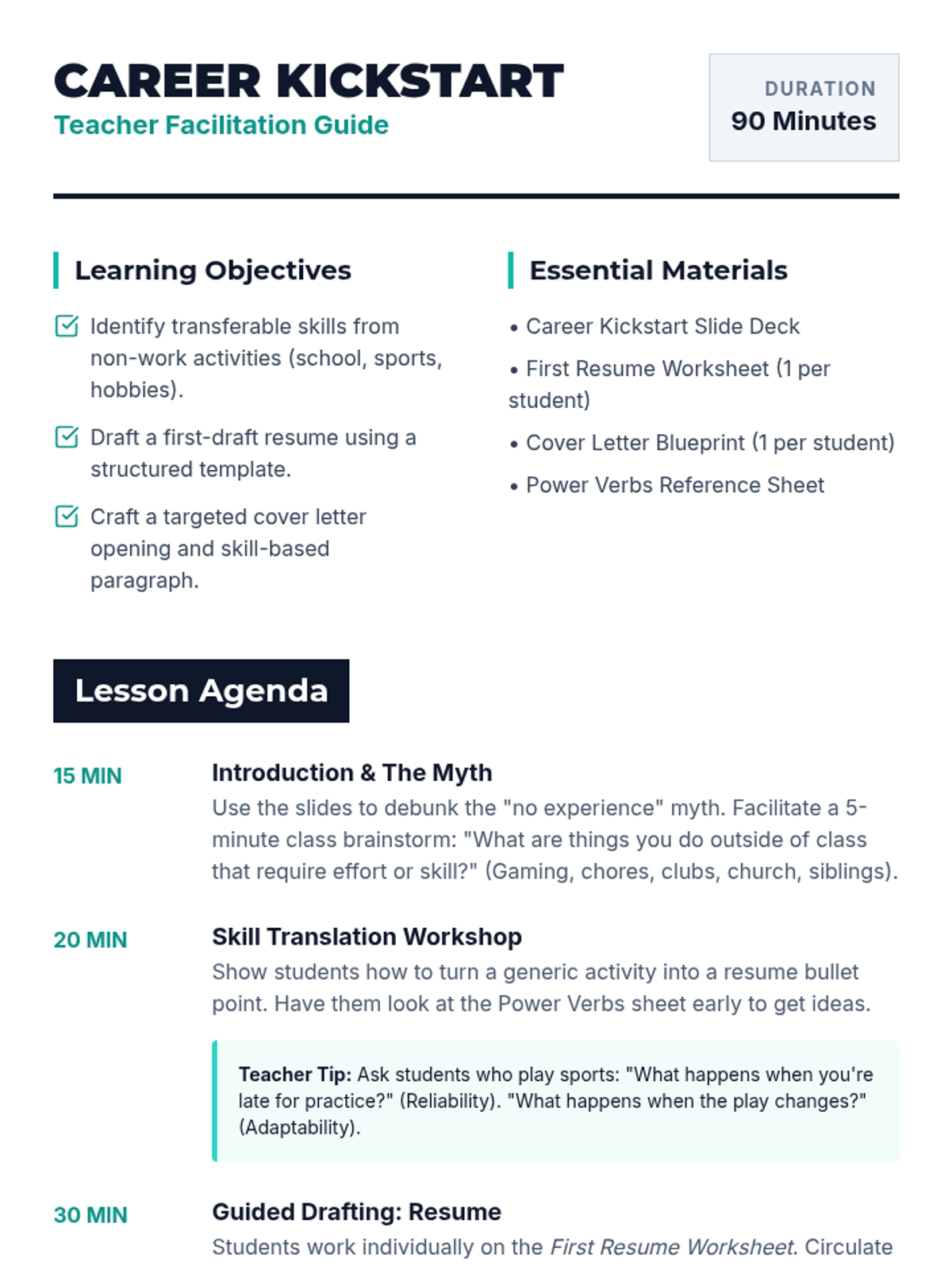
A comprehensive guide for students to master the art of entry-level resumes and cover letters, focusing on translating limited experience into professional potential.
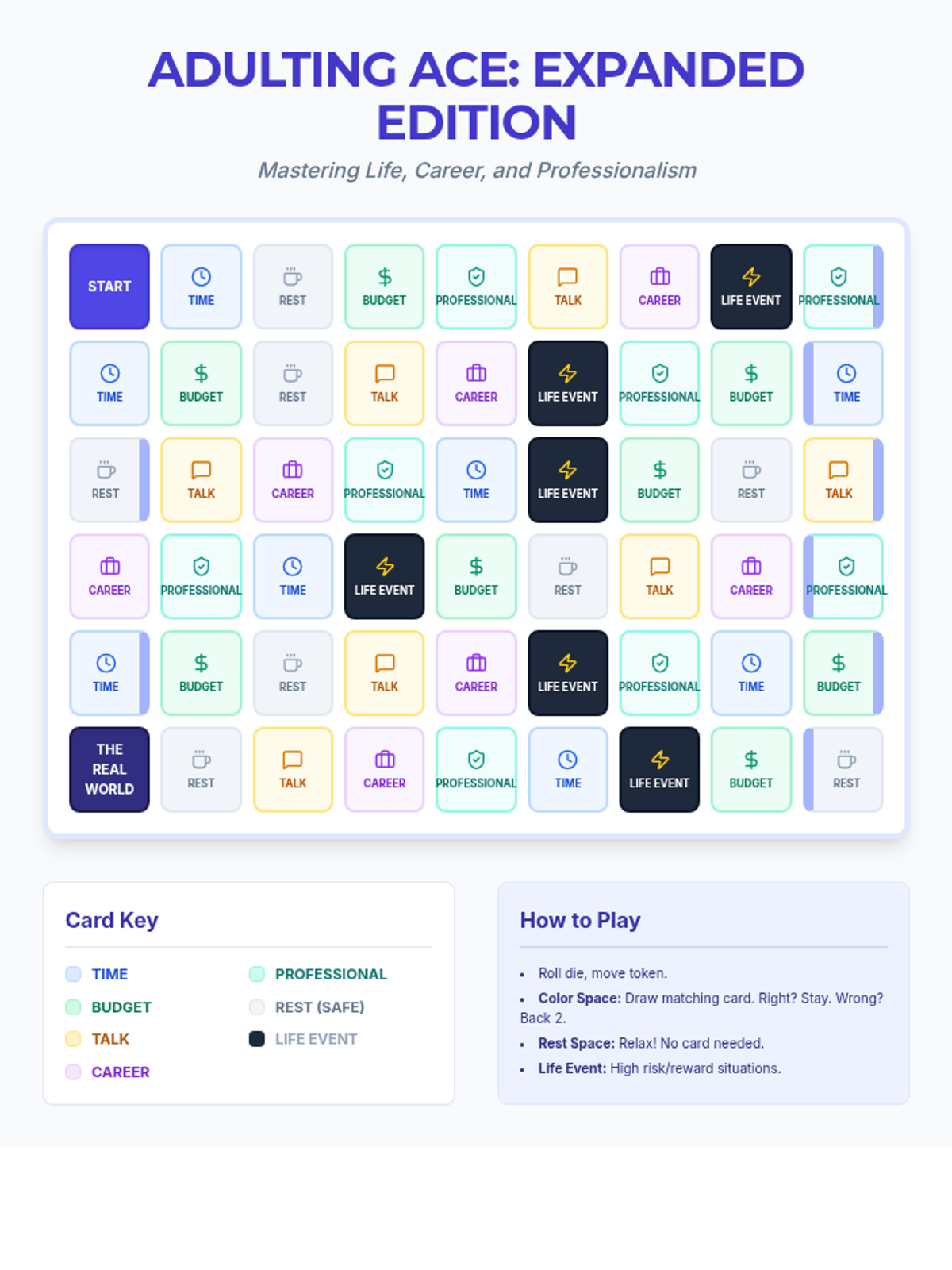
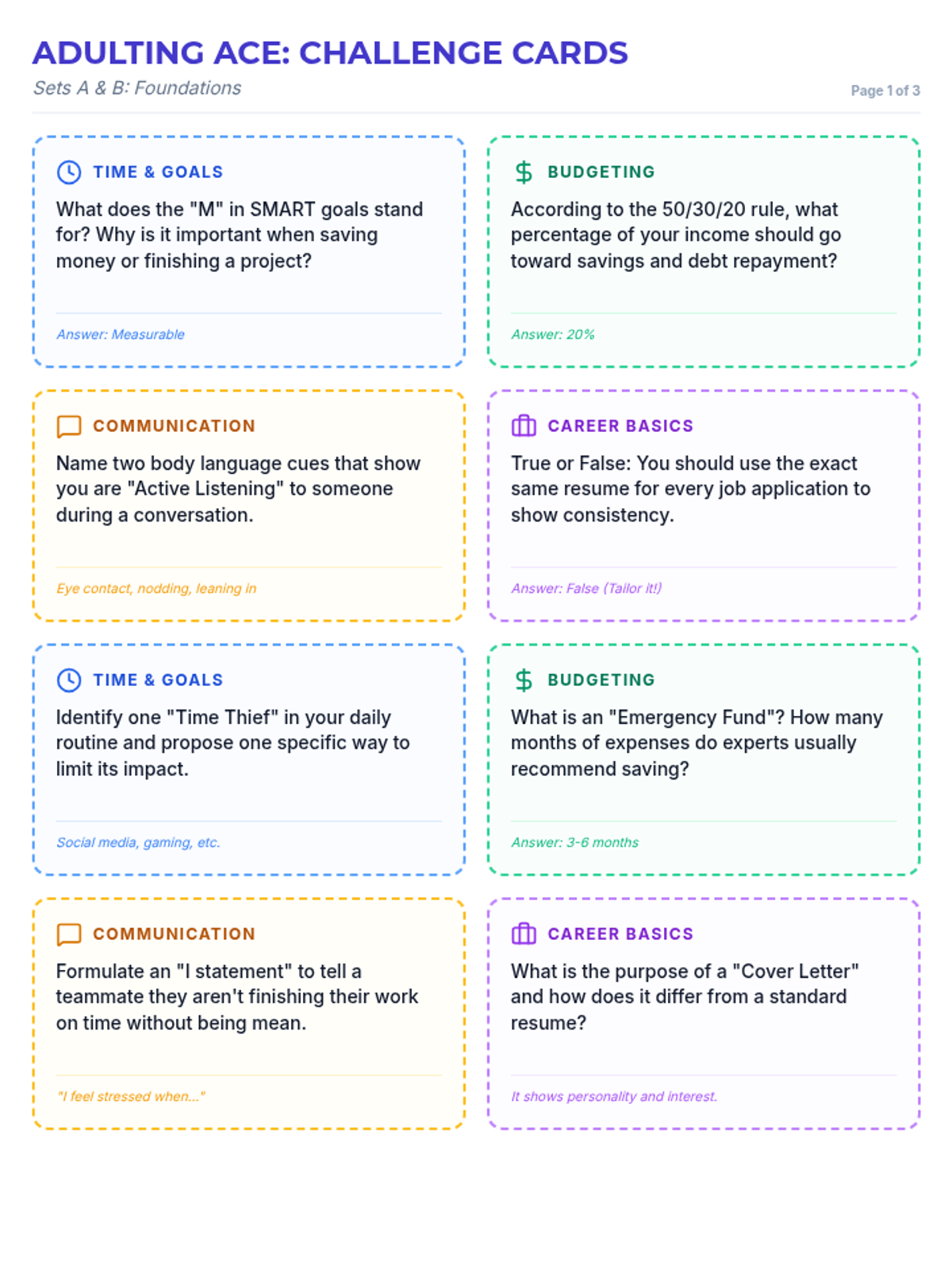
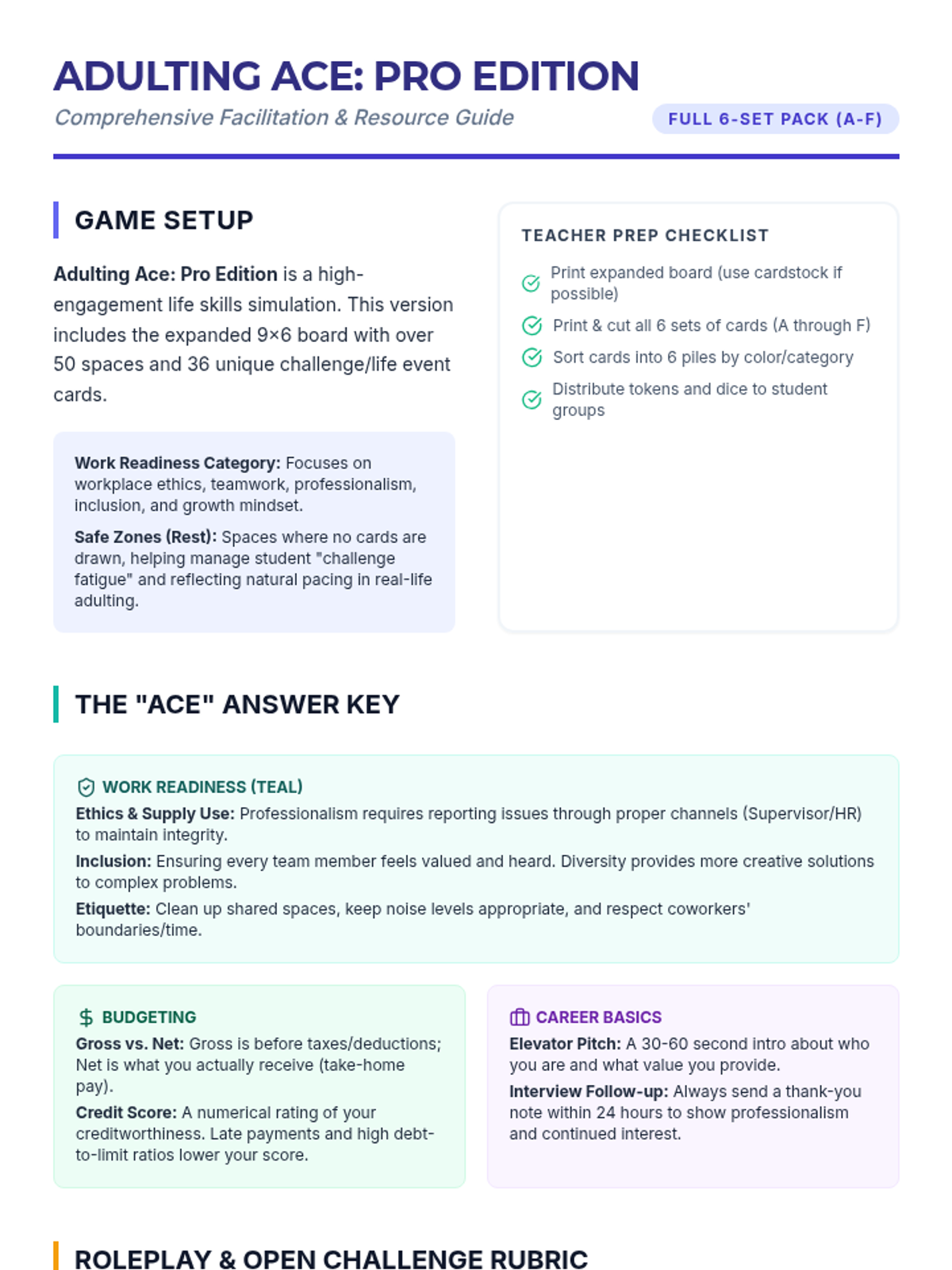
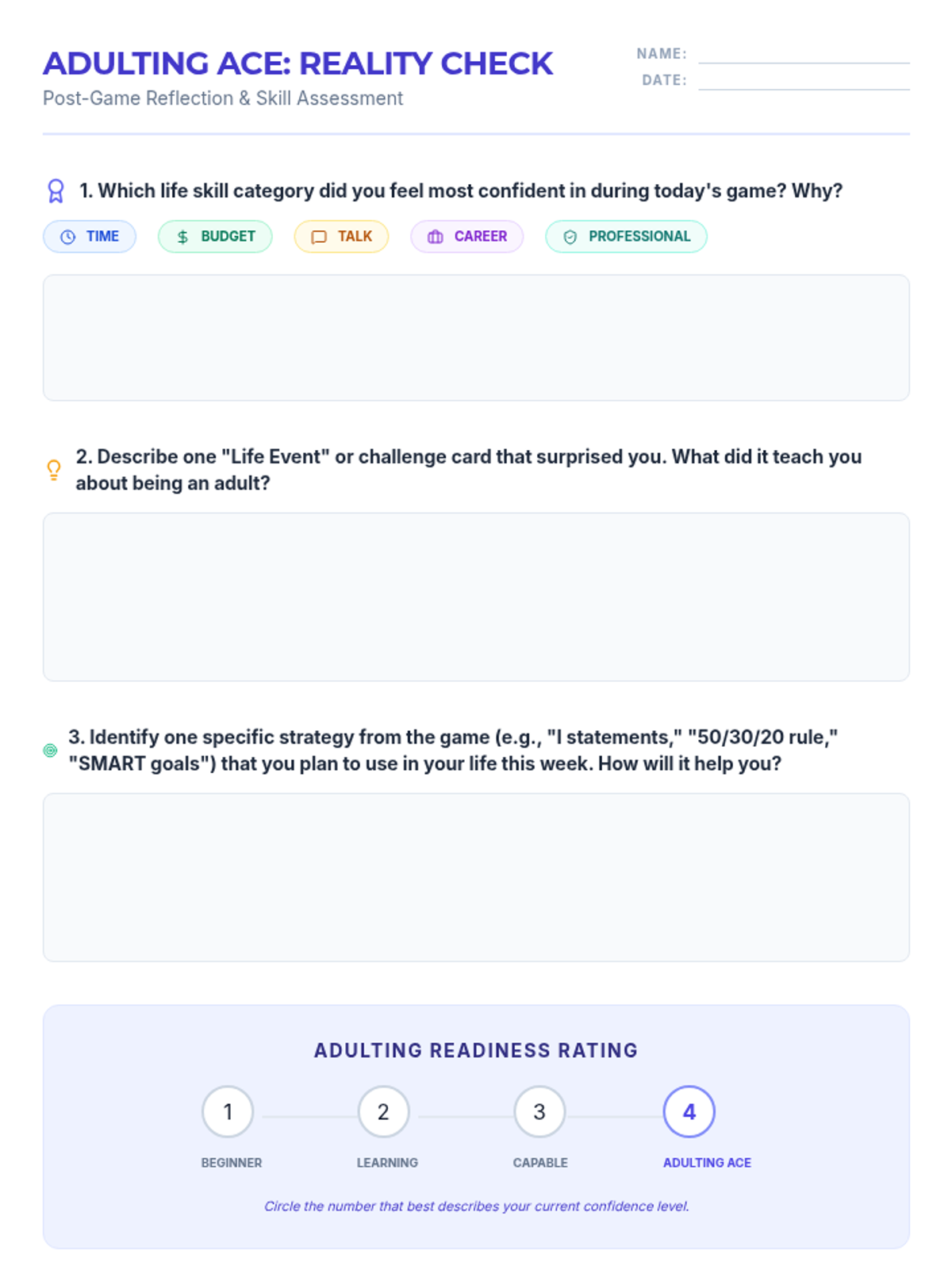
An interactive board game experience covering essential life skills including financial literacy, time management, communication, and career readiness.
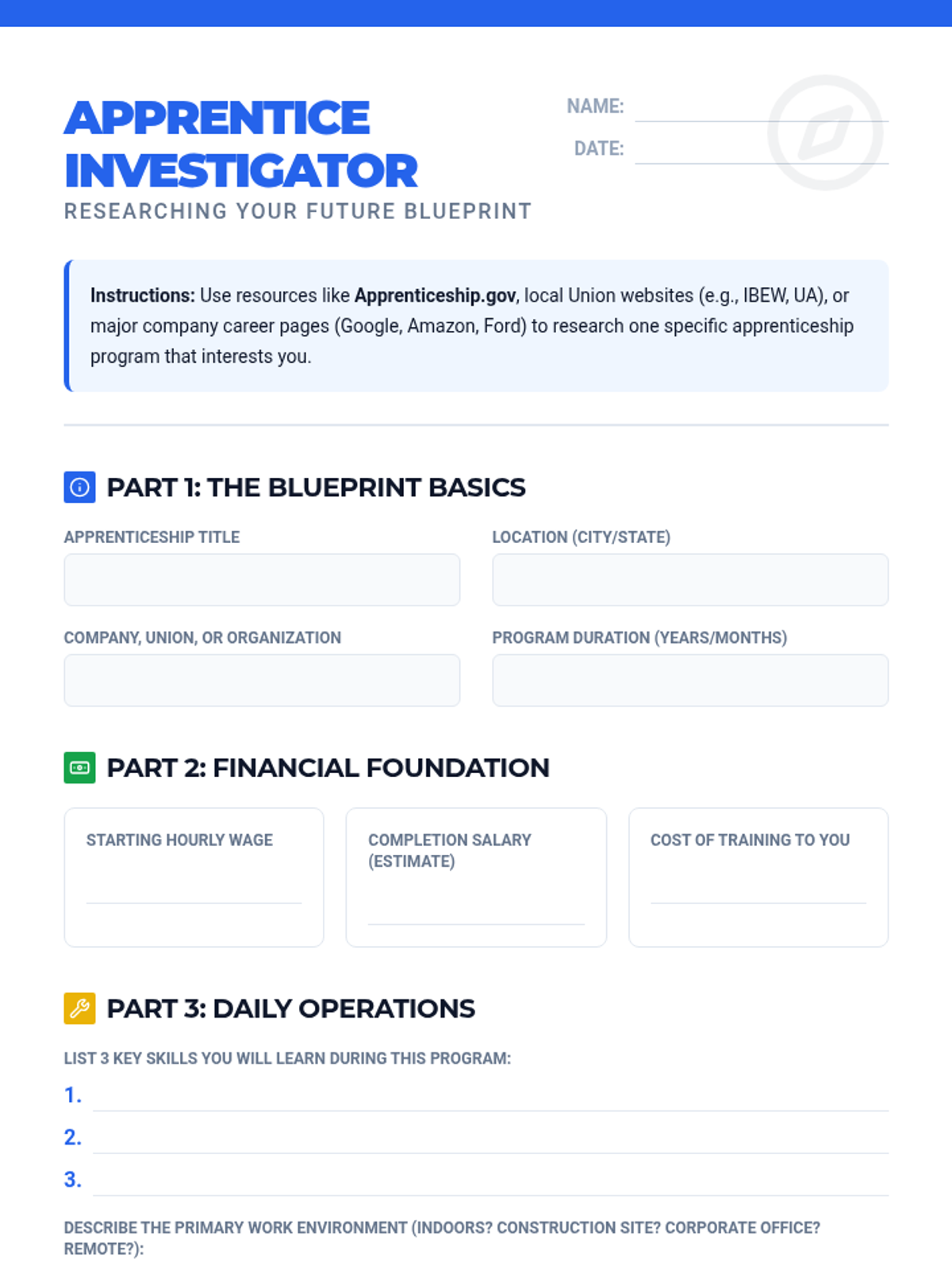
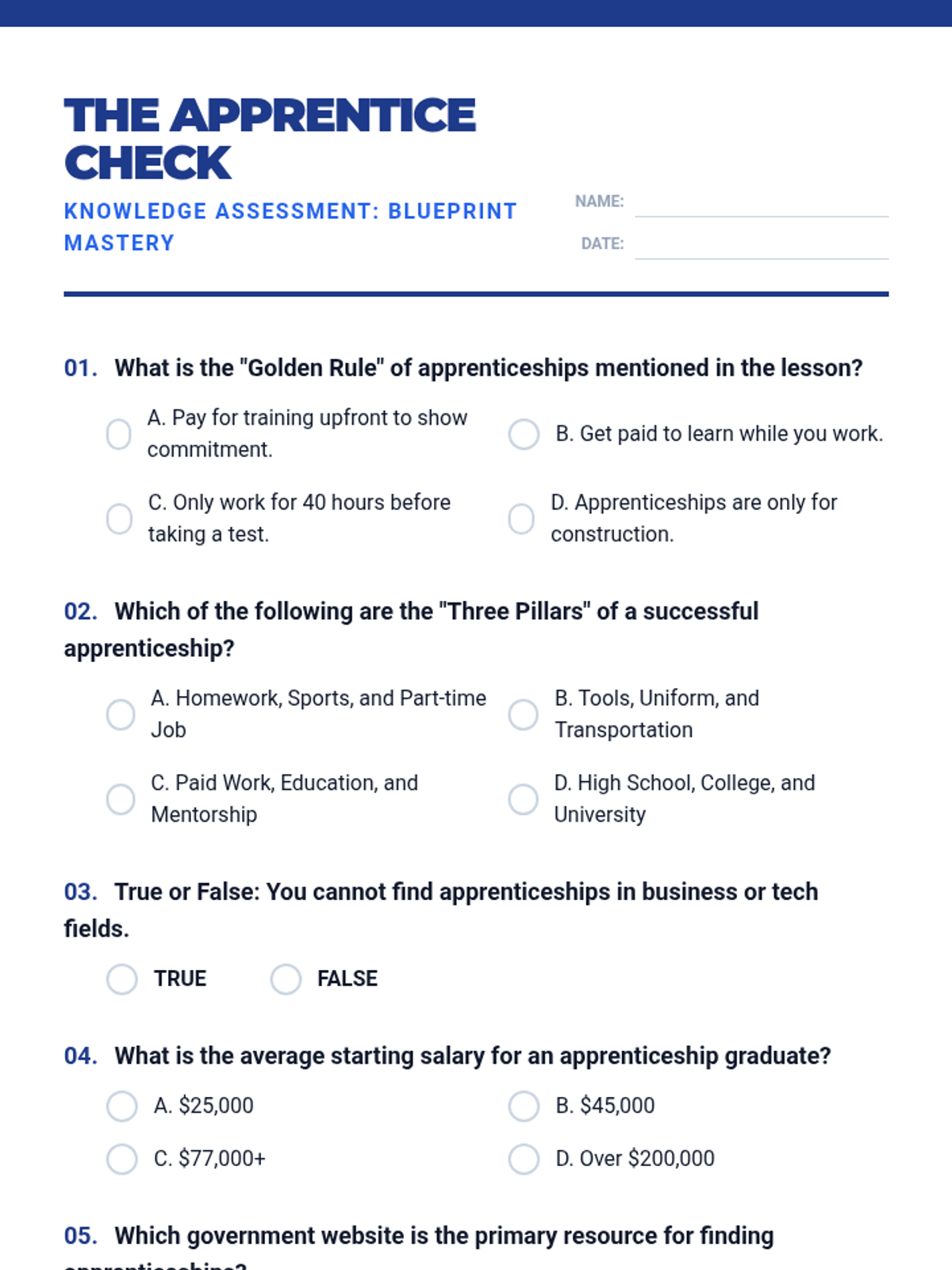
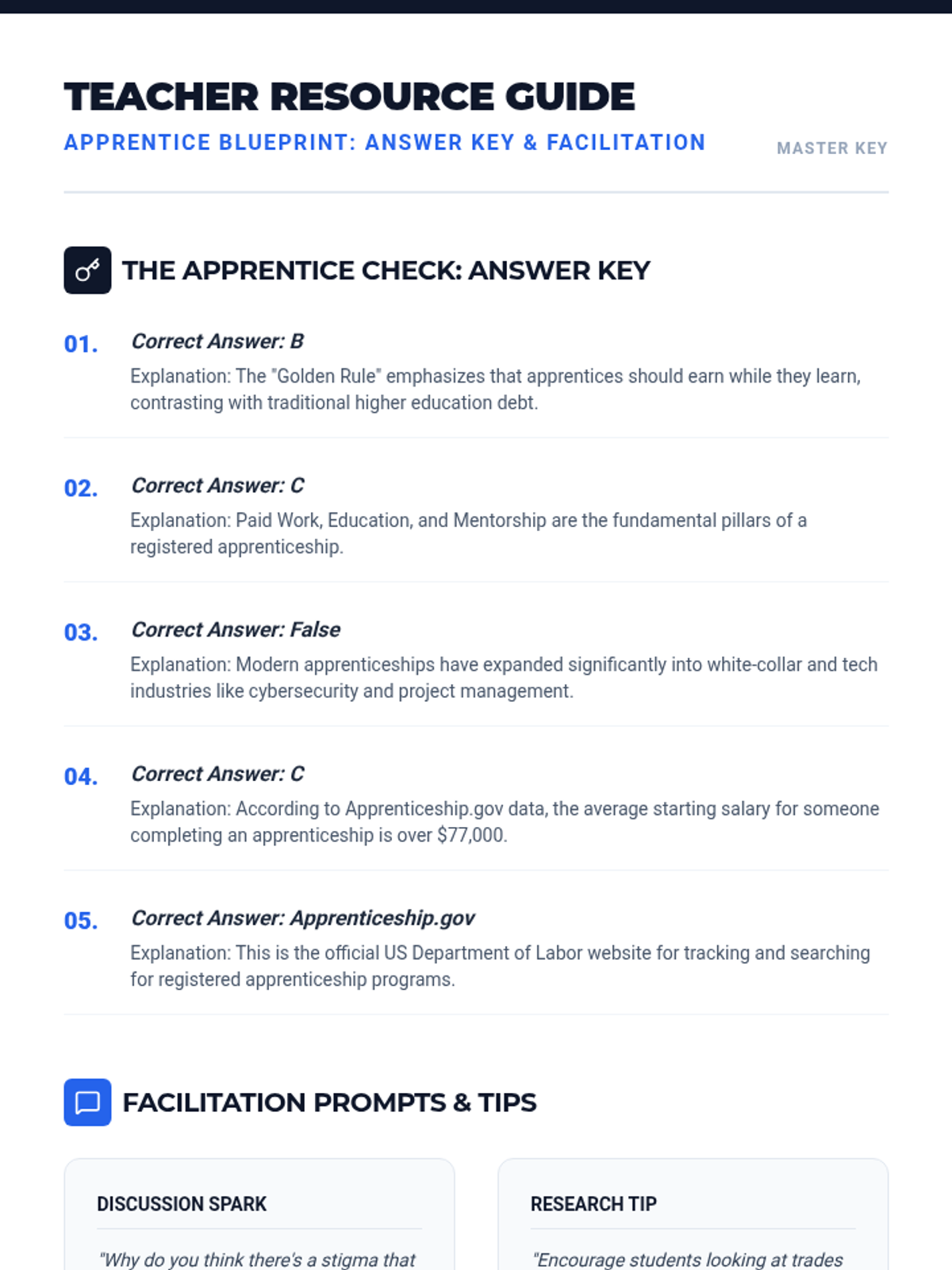
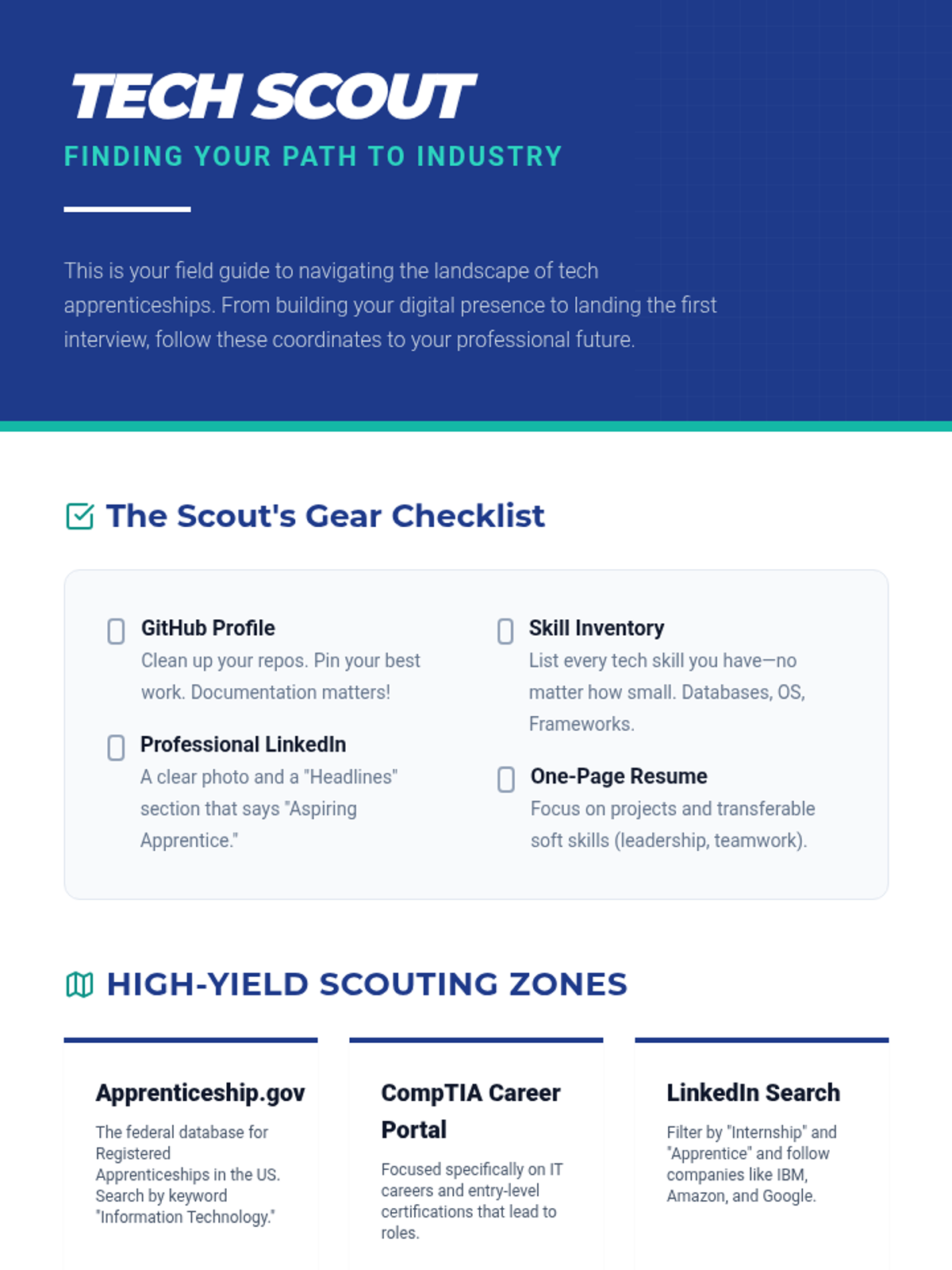
A comprehensive guide to understanding, finding, and securing apprenticeships in trades, business, and high-growth industries. This lesson covers the definition, benefits, and practical steps to starting a career through an apprenticeship.
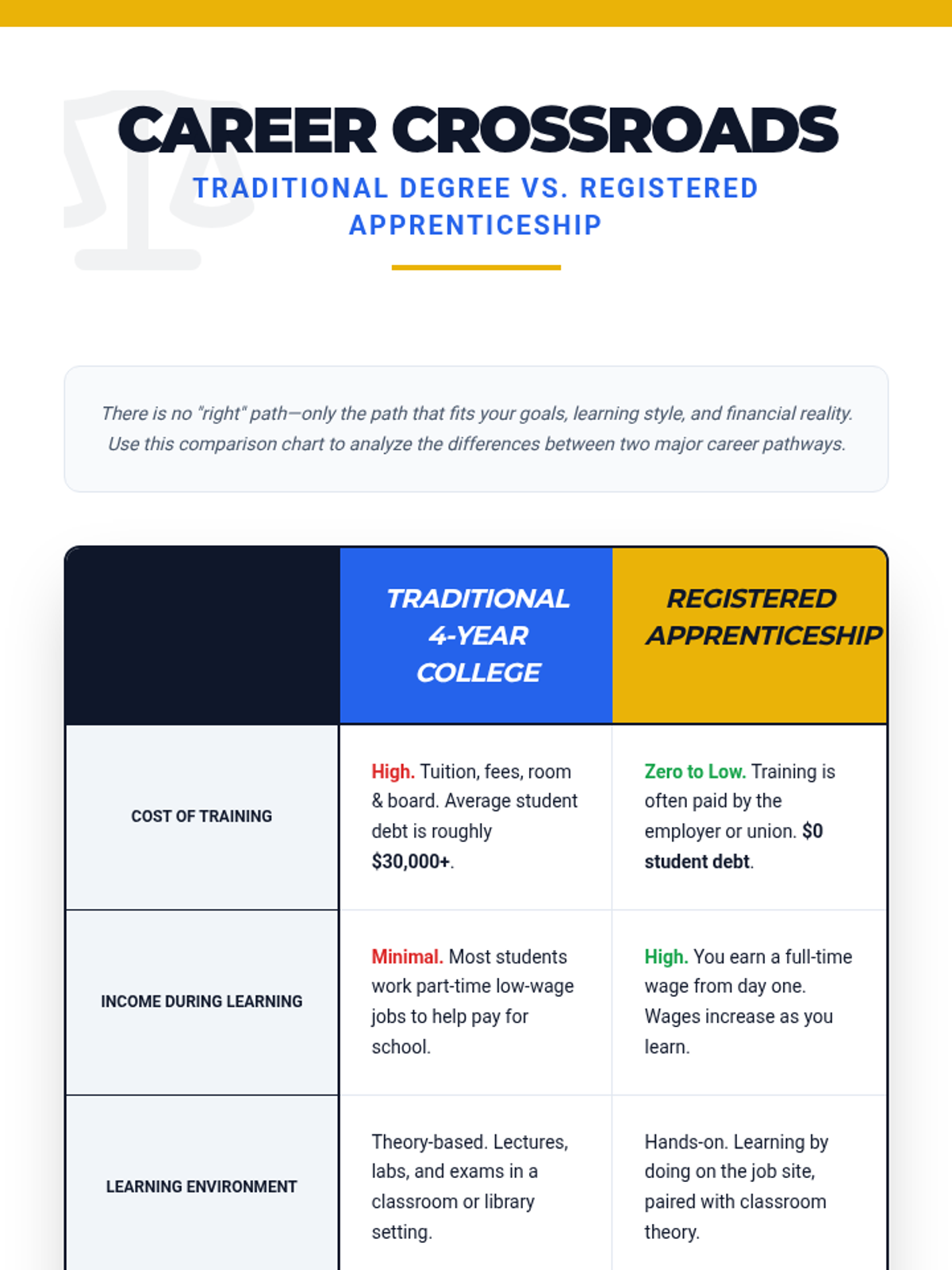
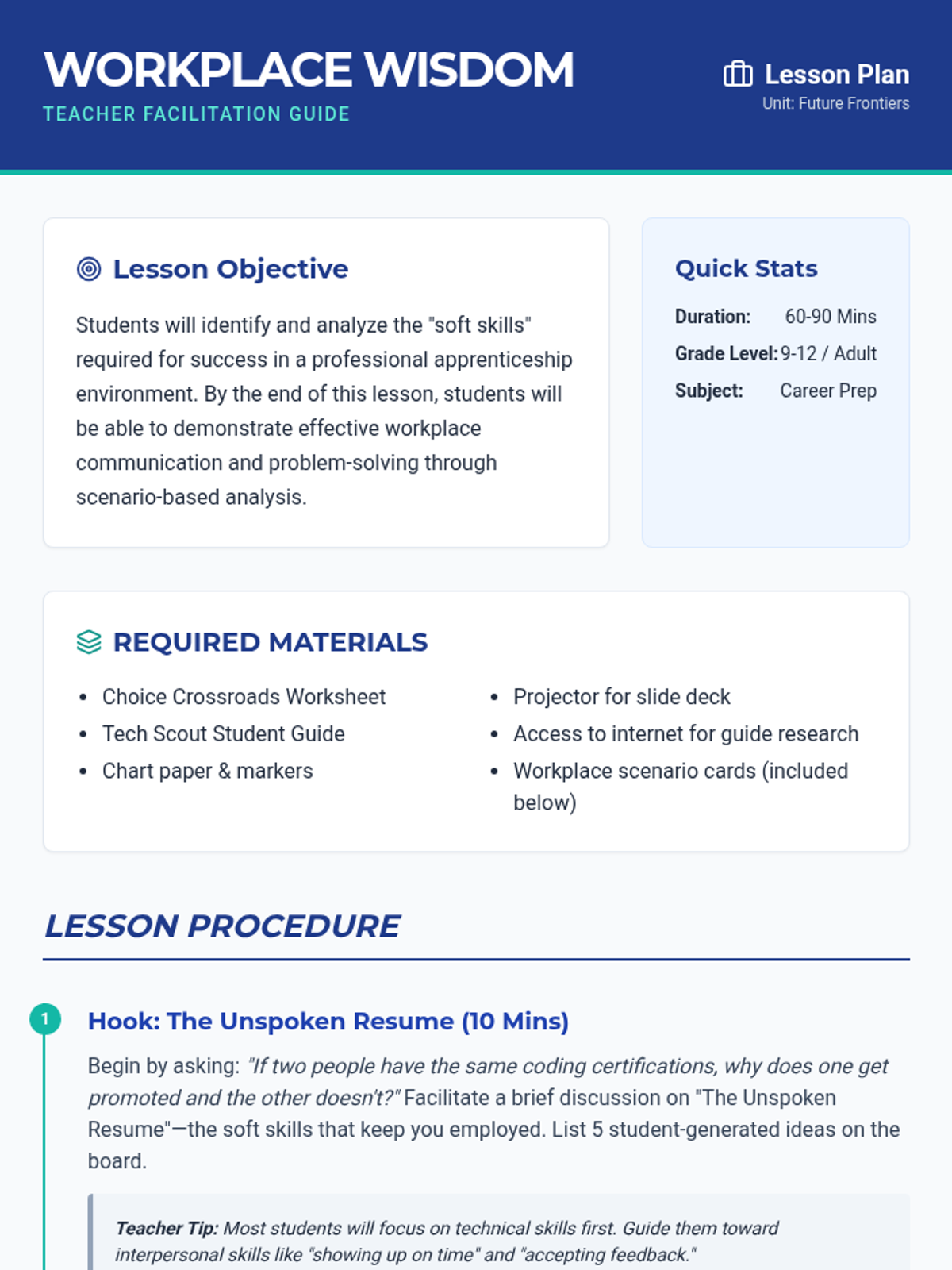
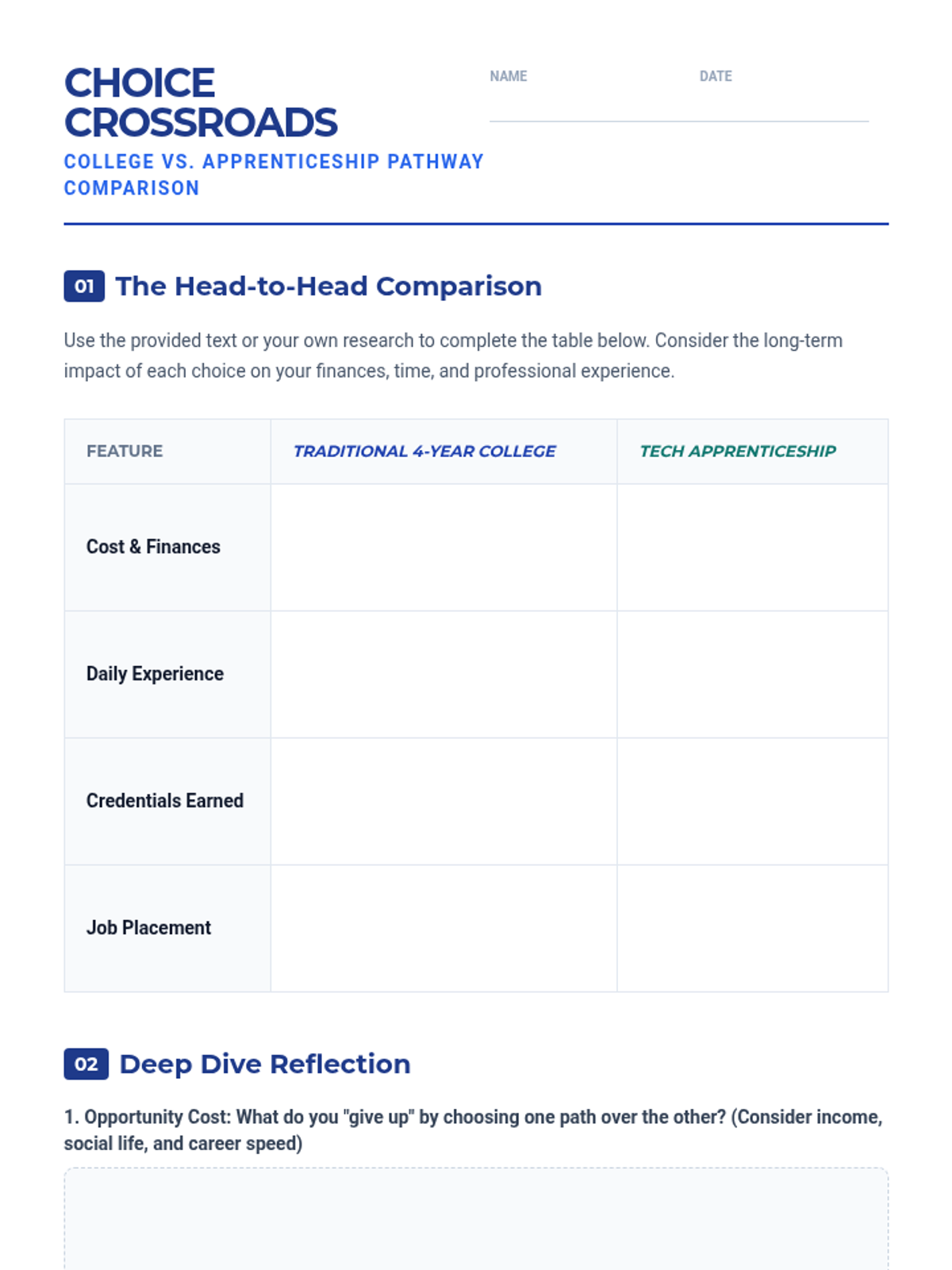
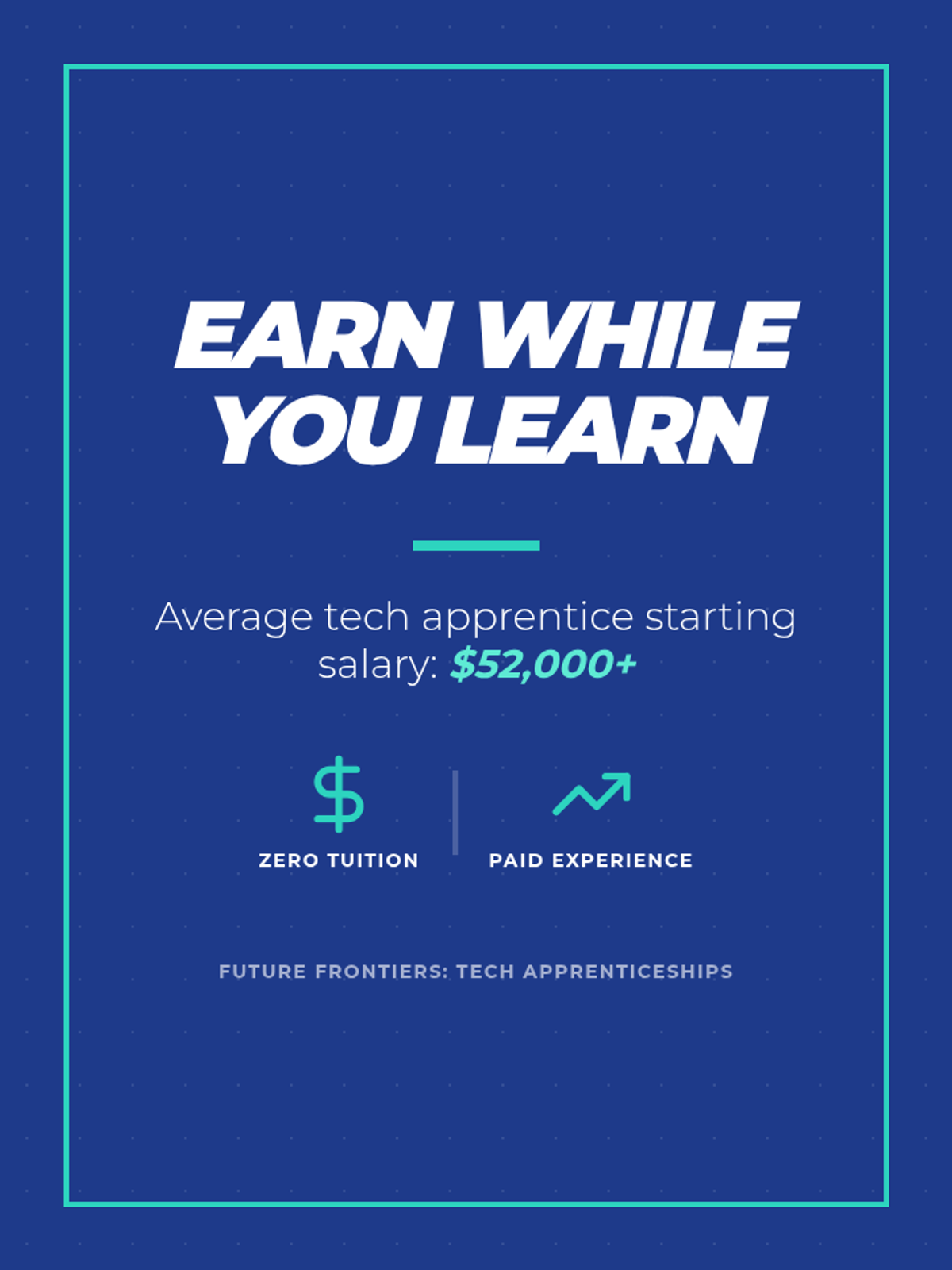
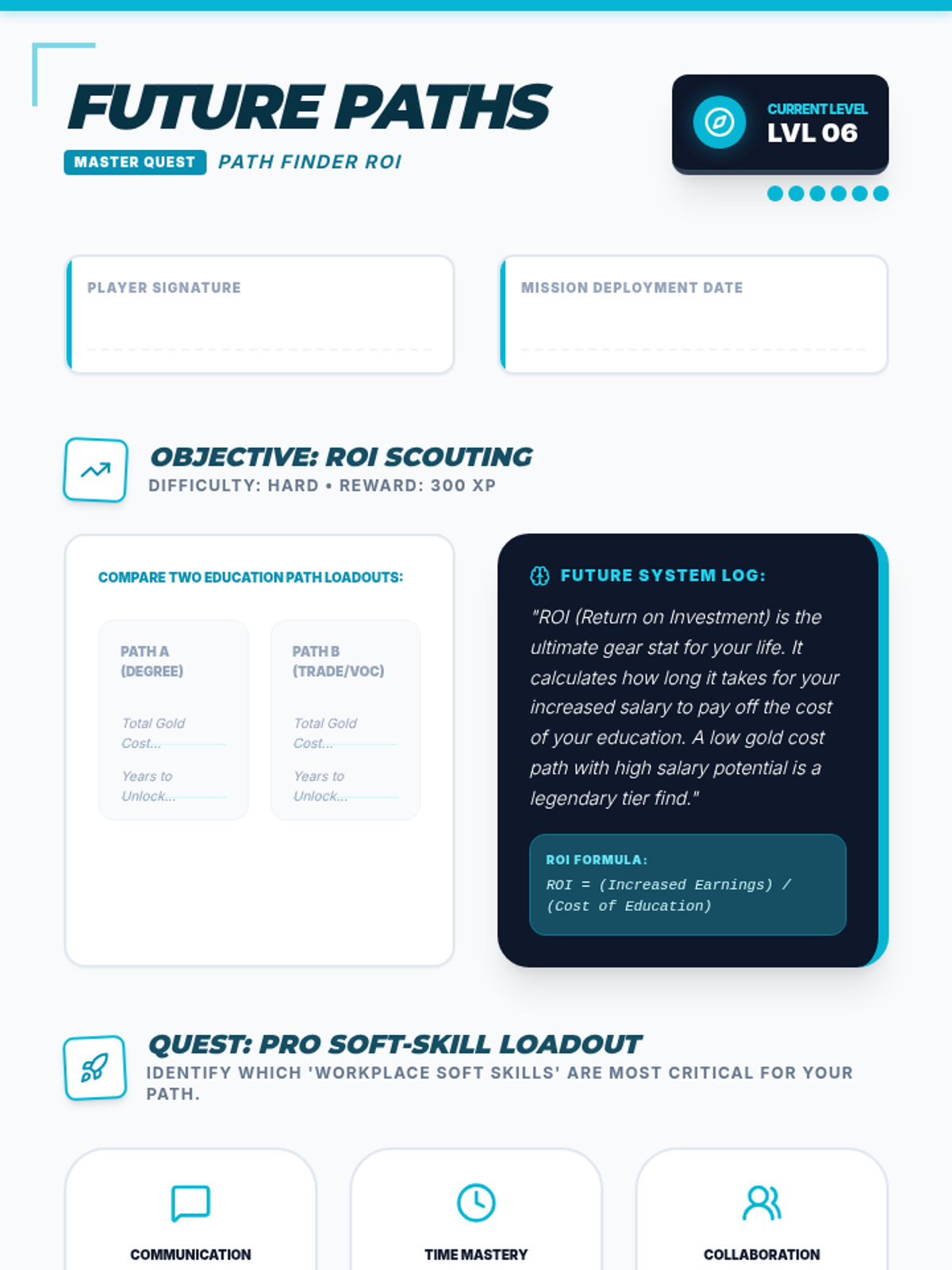
A comprehensive exploration of modern apprenticeship paths in technology, focusing on comparing traditional education to work-based learning and developing essential workplace soft skills.
A comprehensive guide to essential adulting skills covering financial literacy, career development, health navigation, and civic responsibilities.
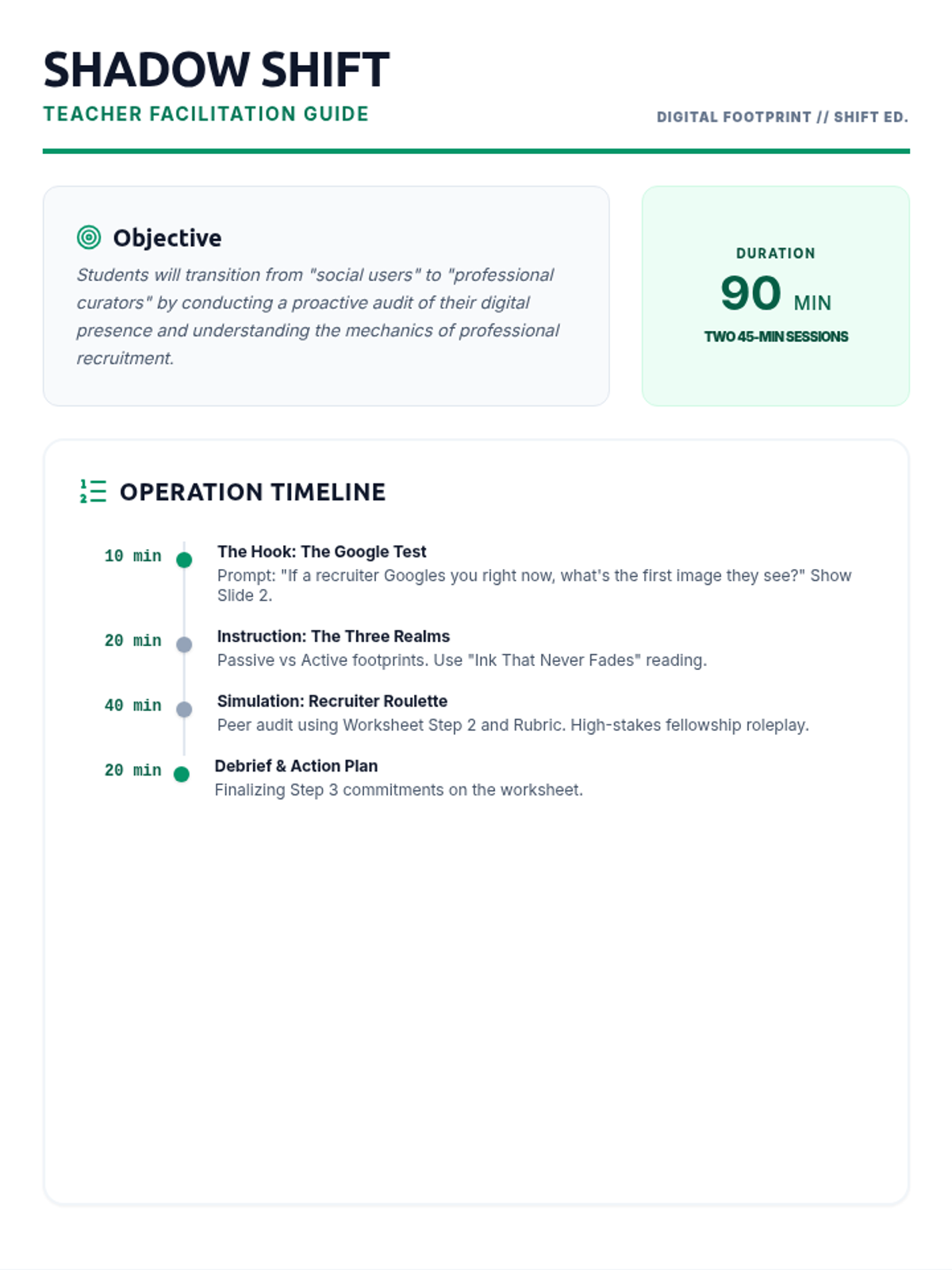
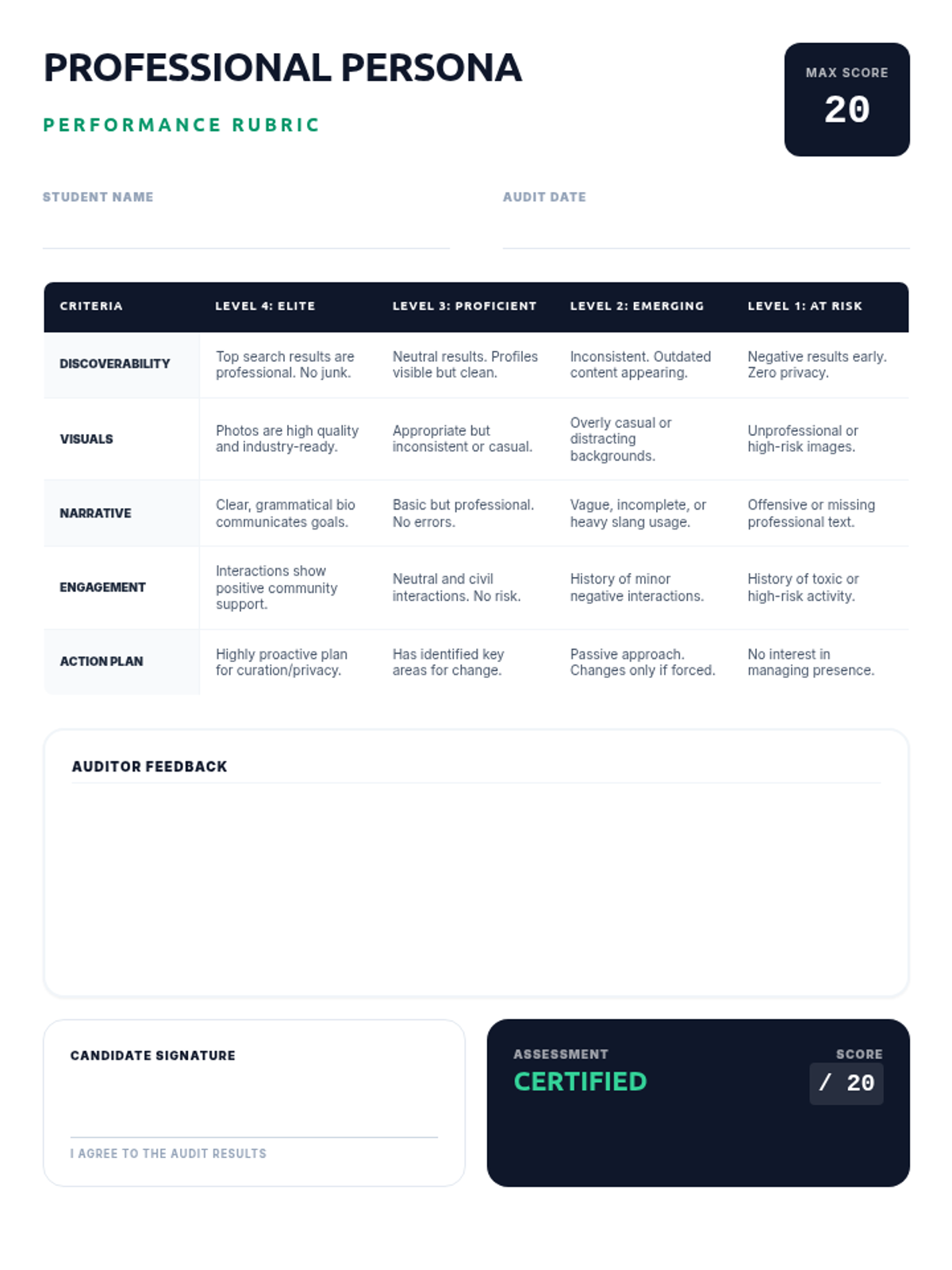
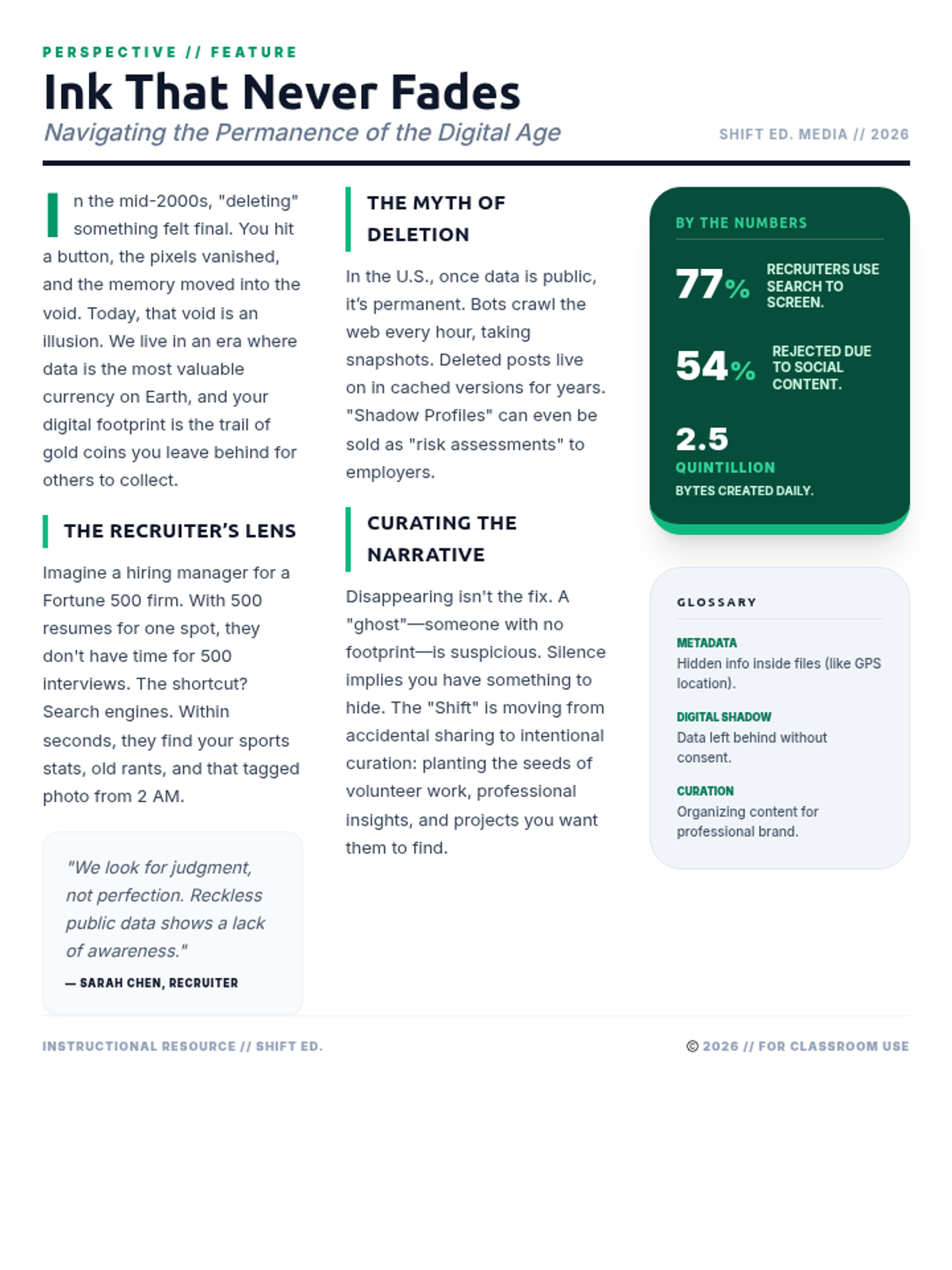
A deep dive into digital footprints, featuring a recruitment simulation where students audit their own and others' online personas to prepare for professional and collegiate success.
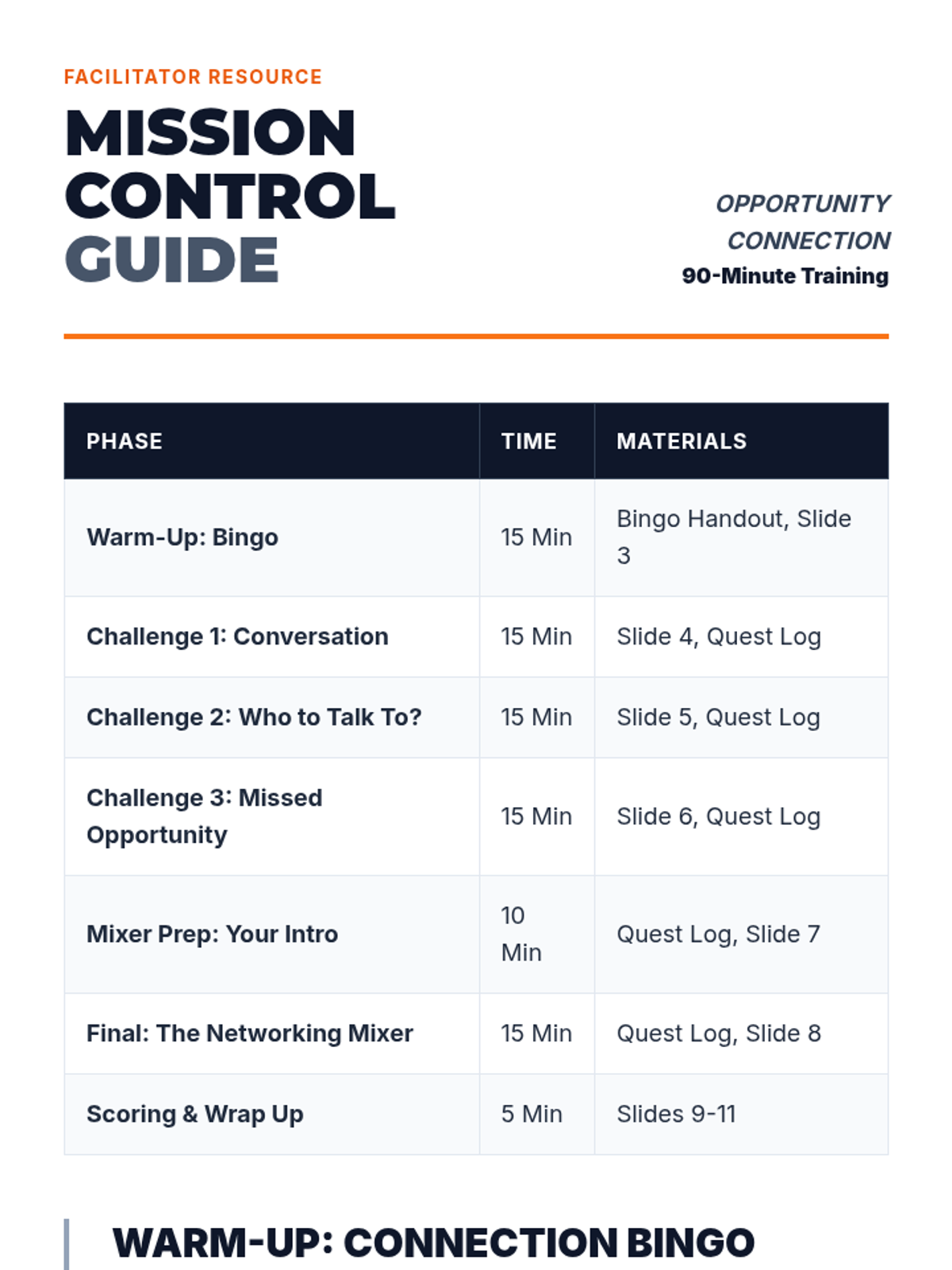
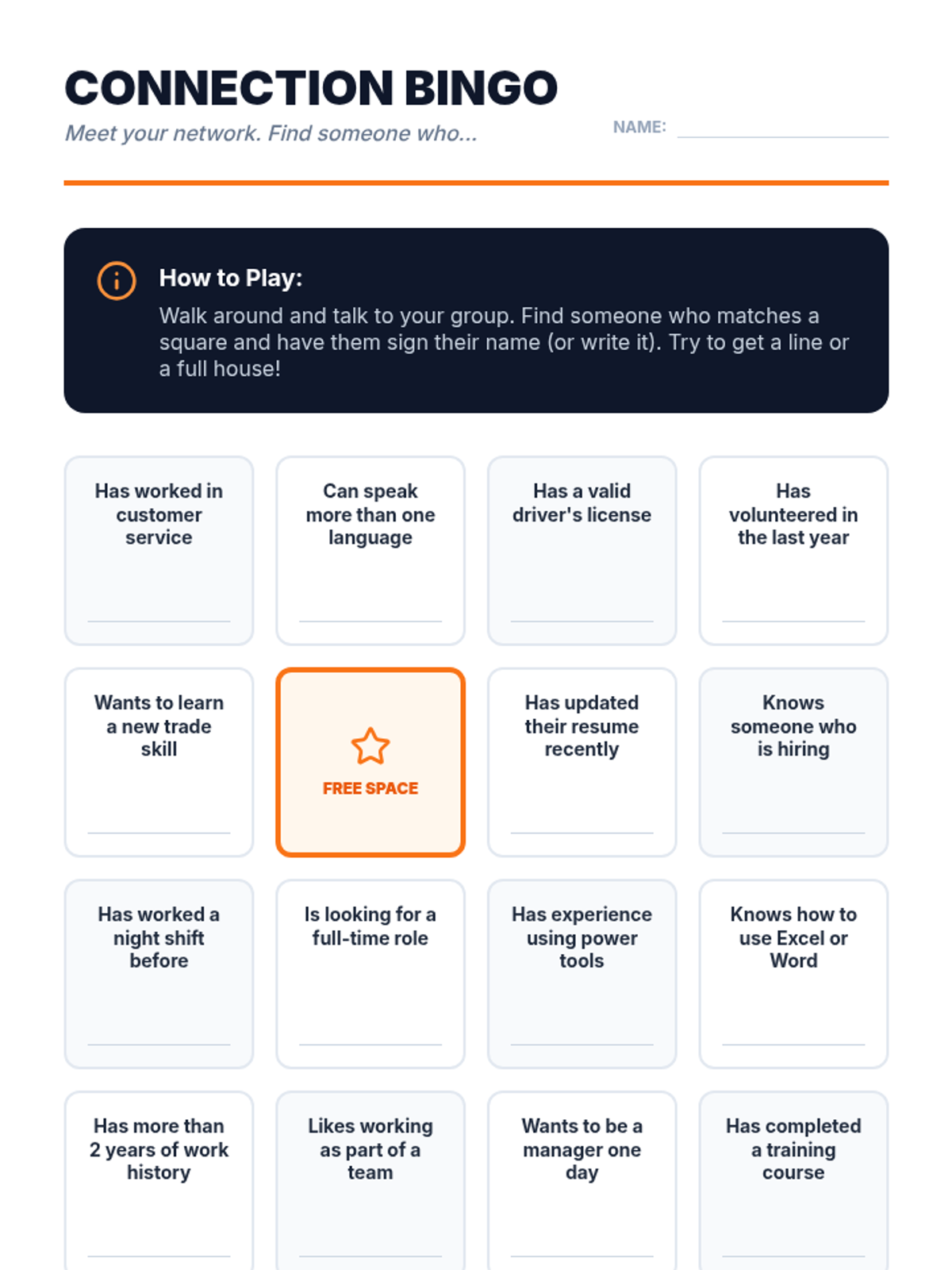
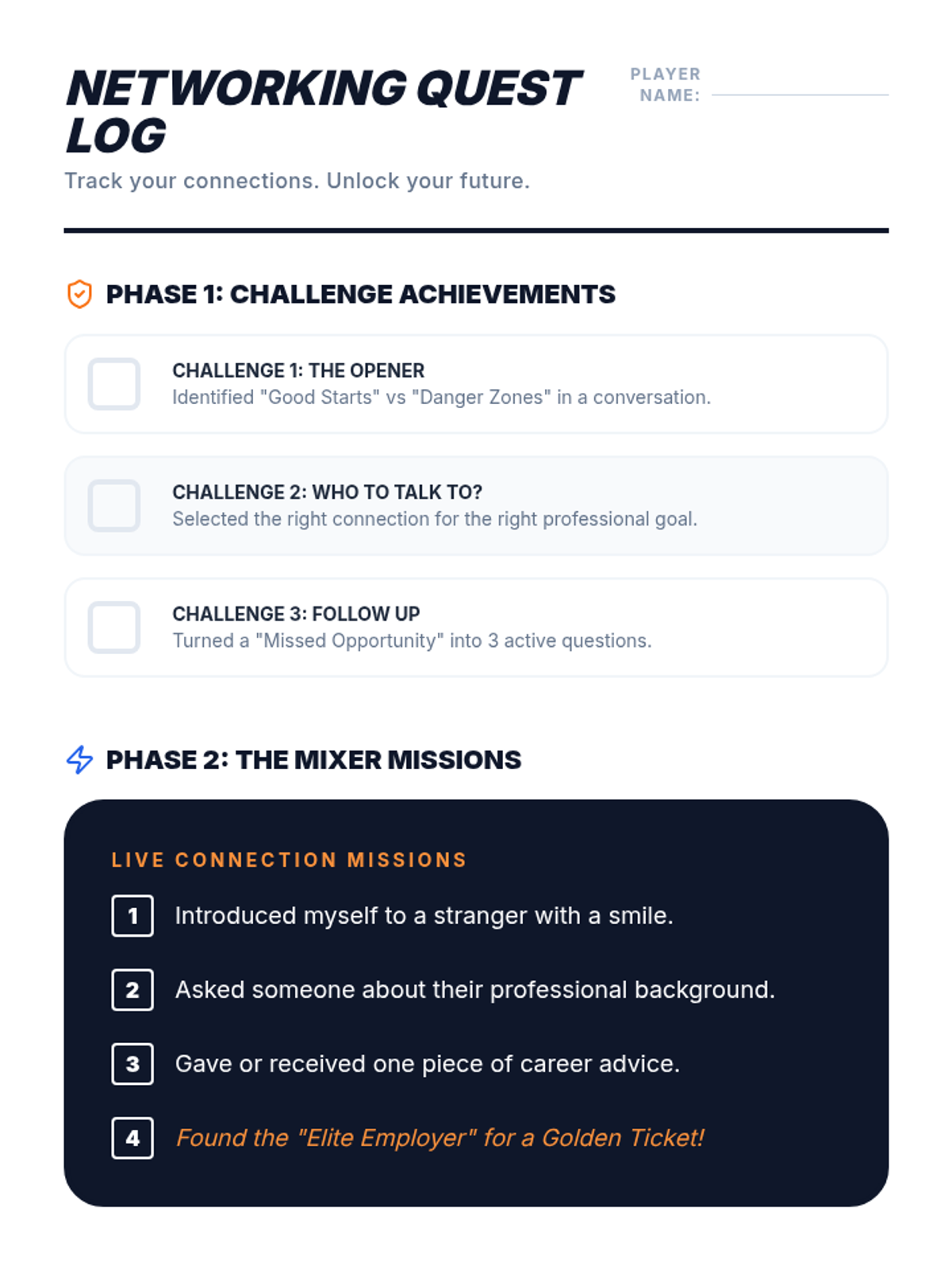
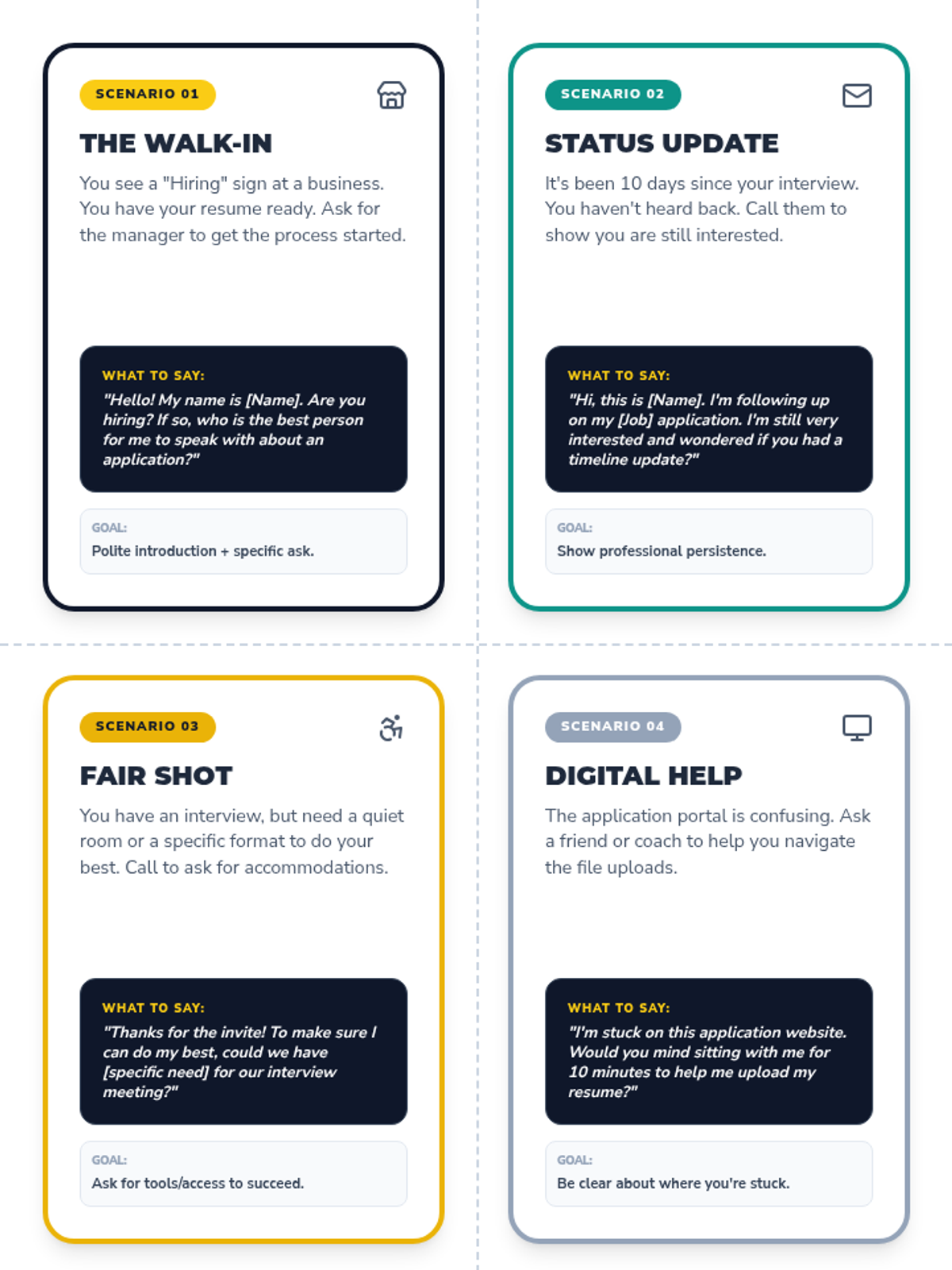
A 90-minute interactive session where participants learn to initiate conversations, identify helpful connections, and practice networking in a simulated environment to unlock career opportunities.
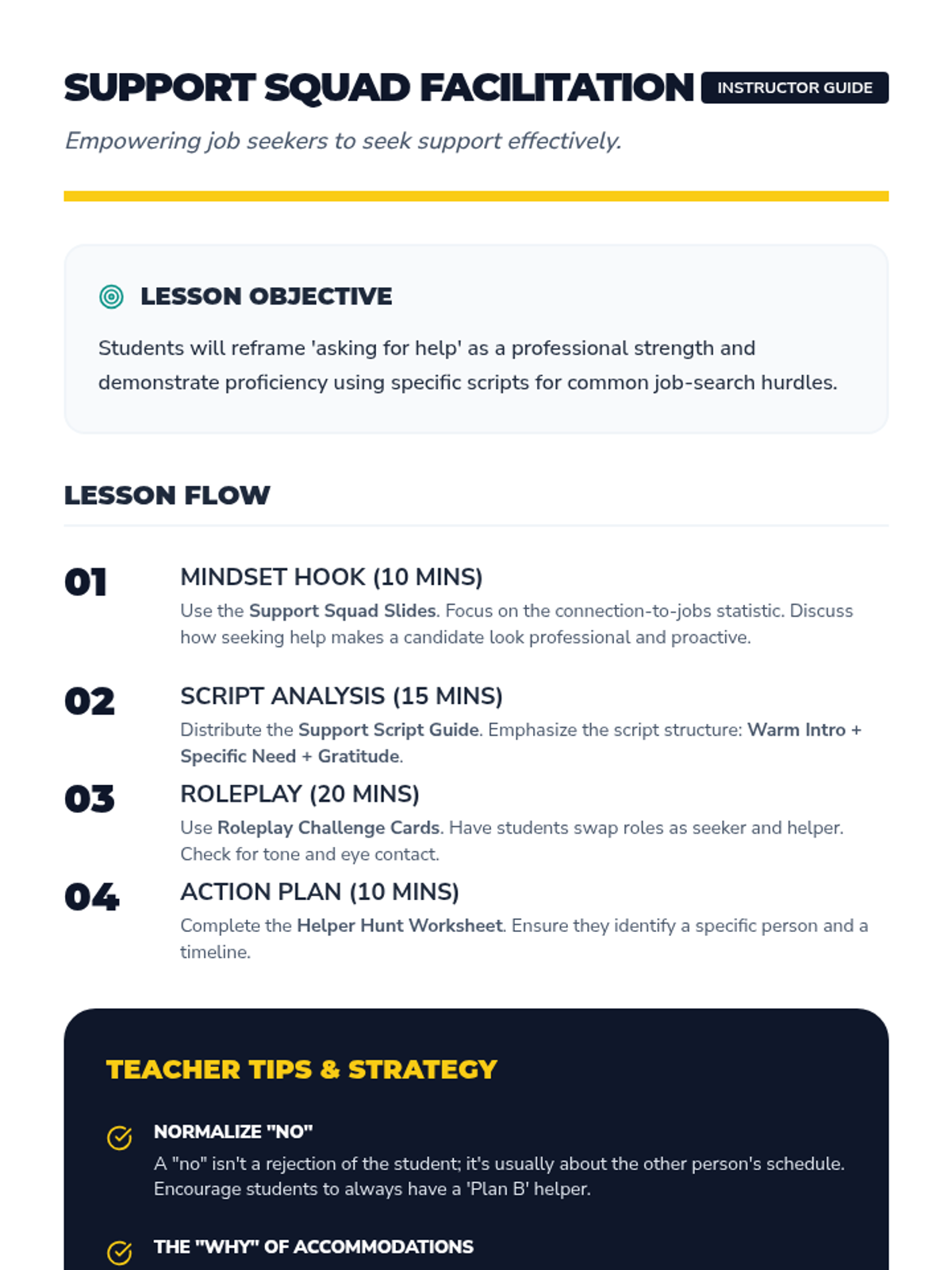
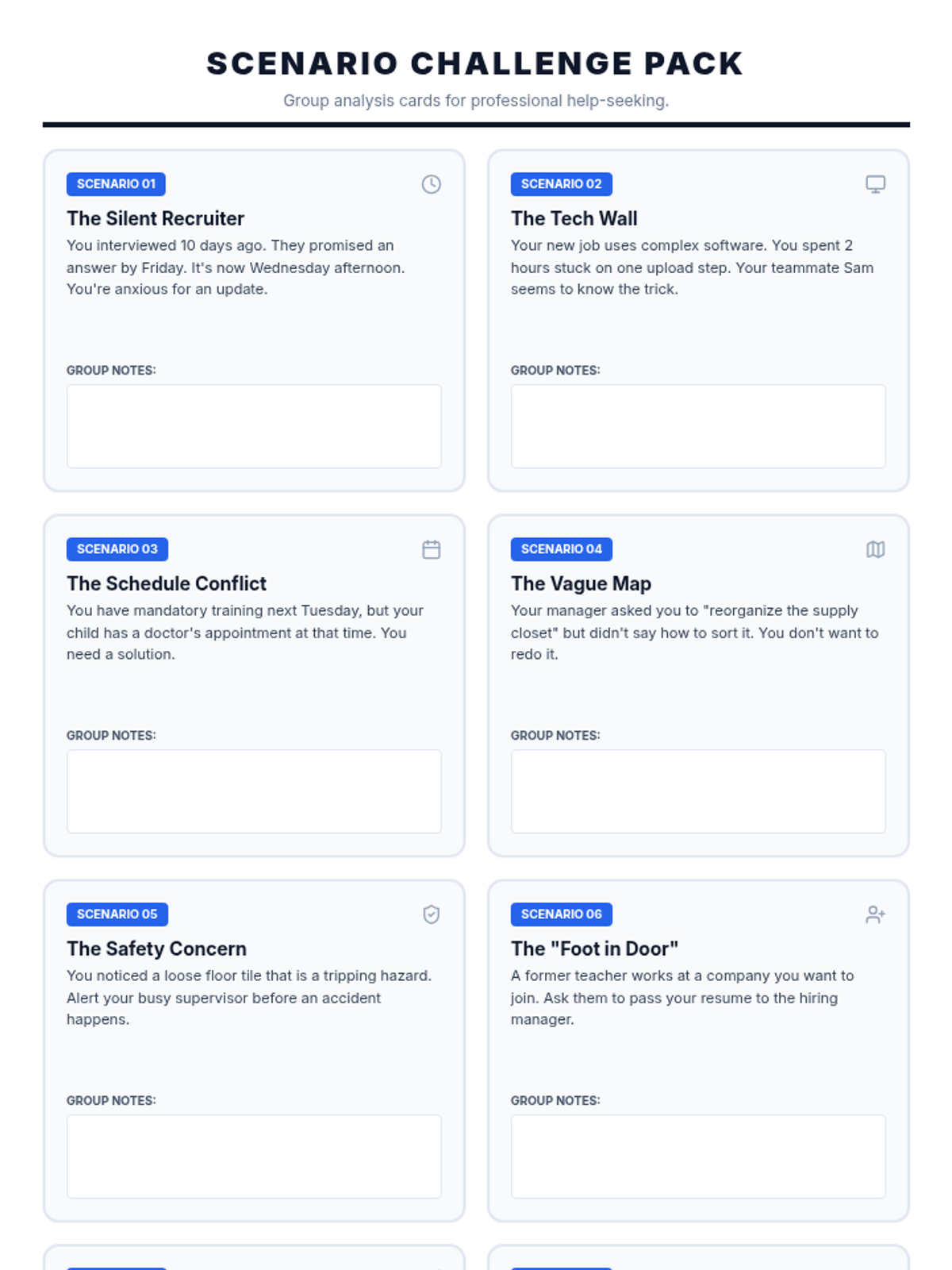
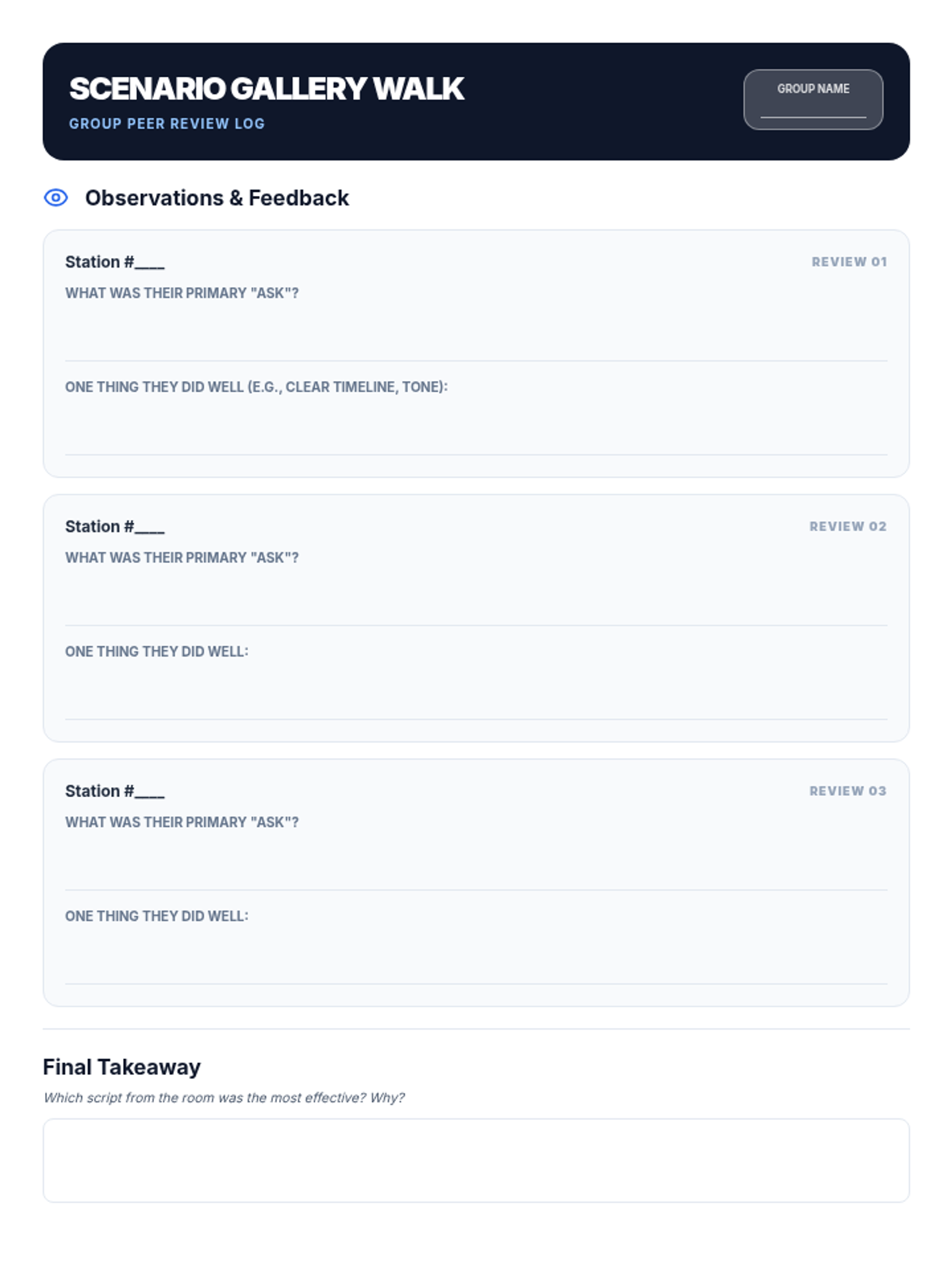
A professional development lesson that reframes asking for help as a vital workplace skill. Students learn to identify their support network, use clear and direct communication scripts, and practice advocating for themselves in common job search and employment scenarios.
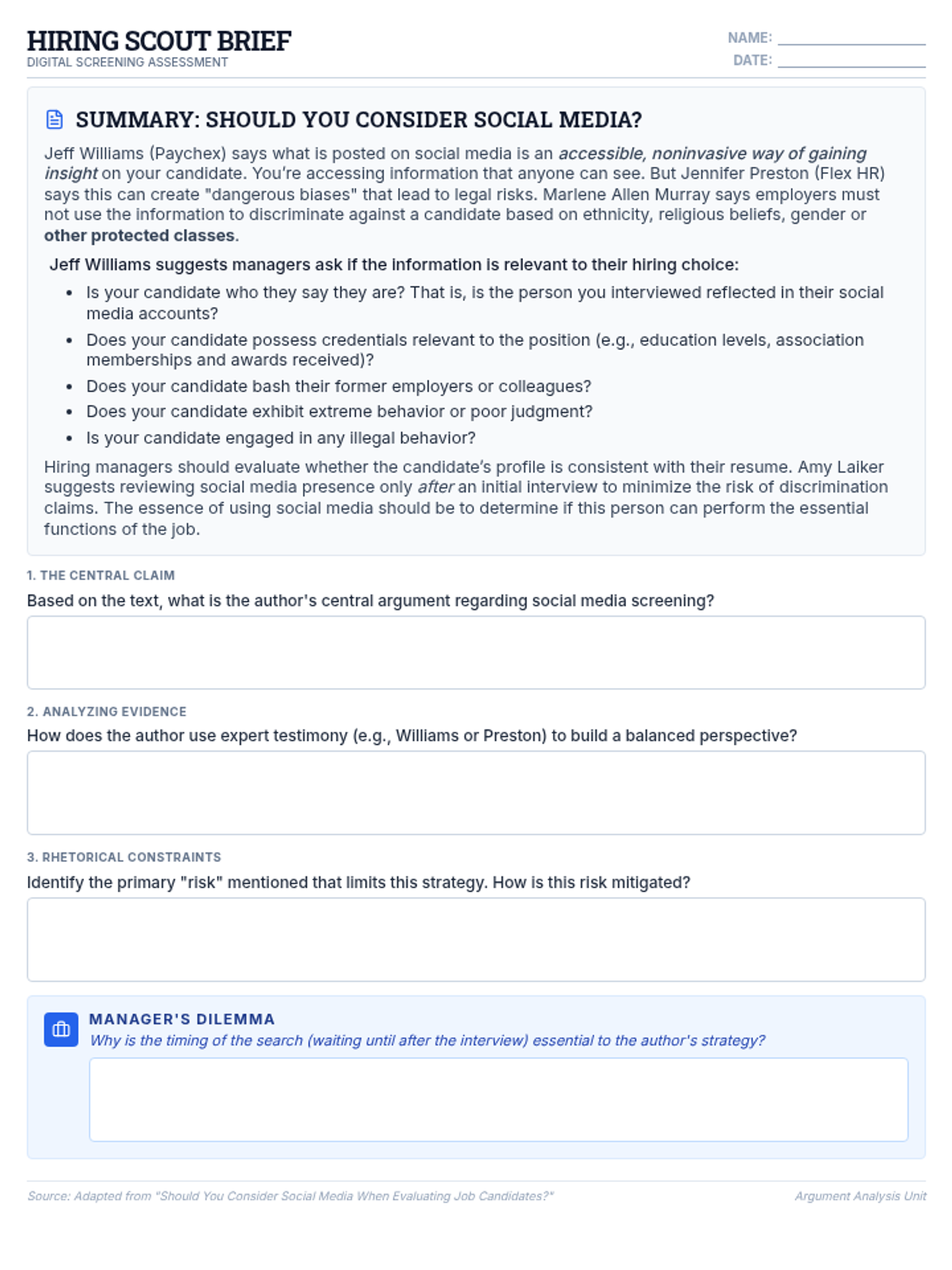
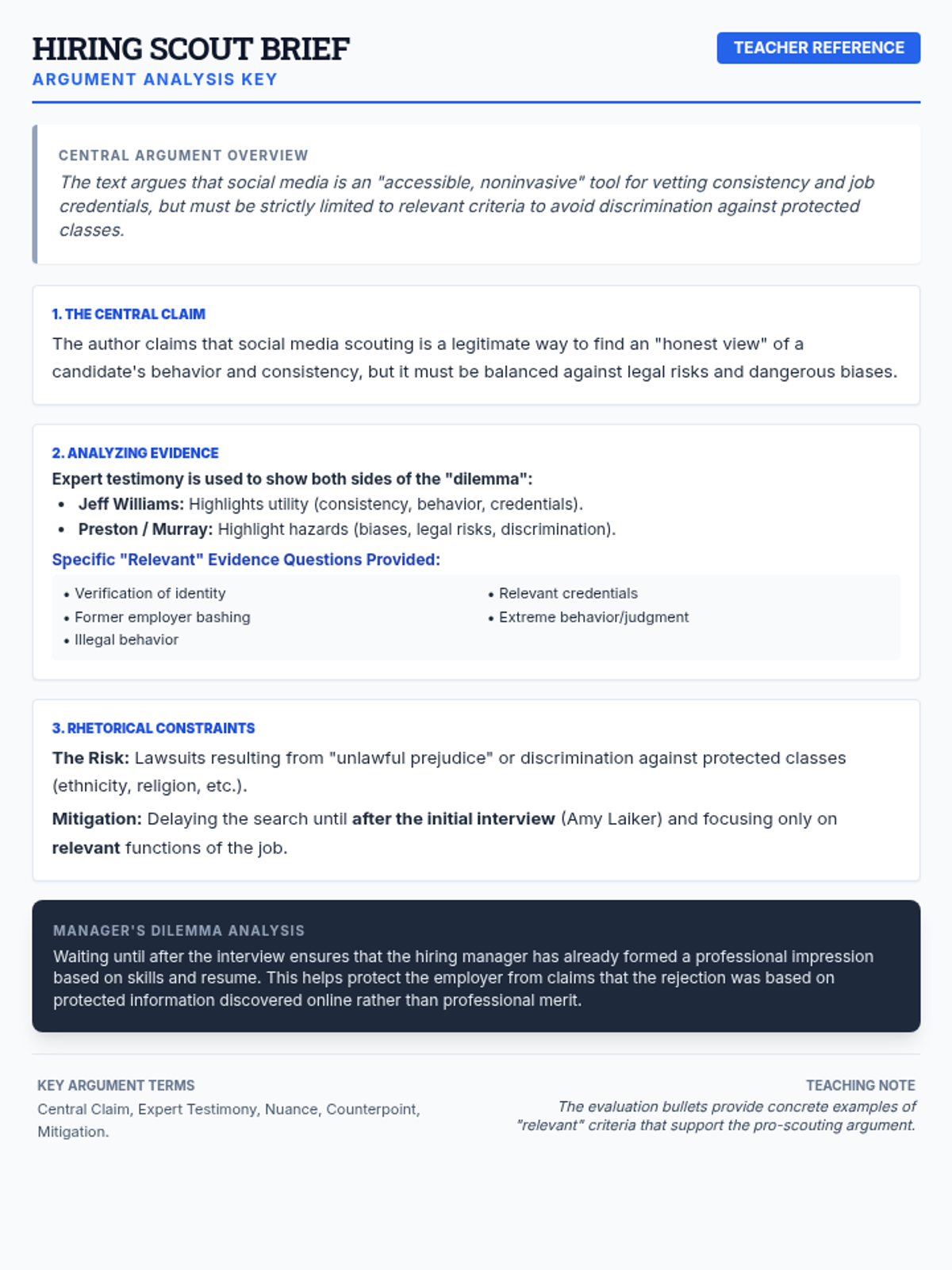
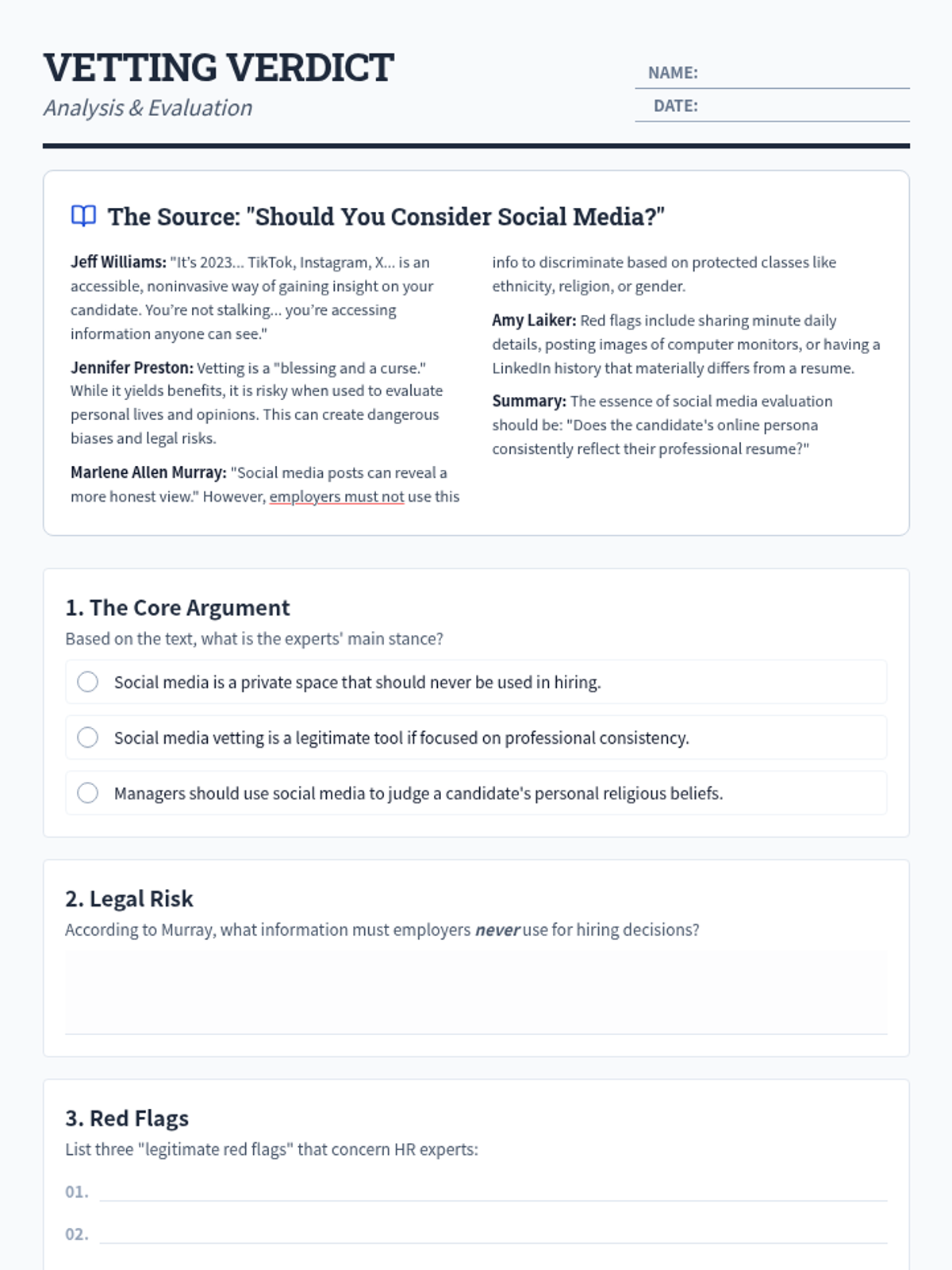
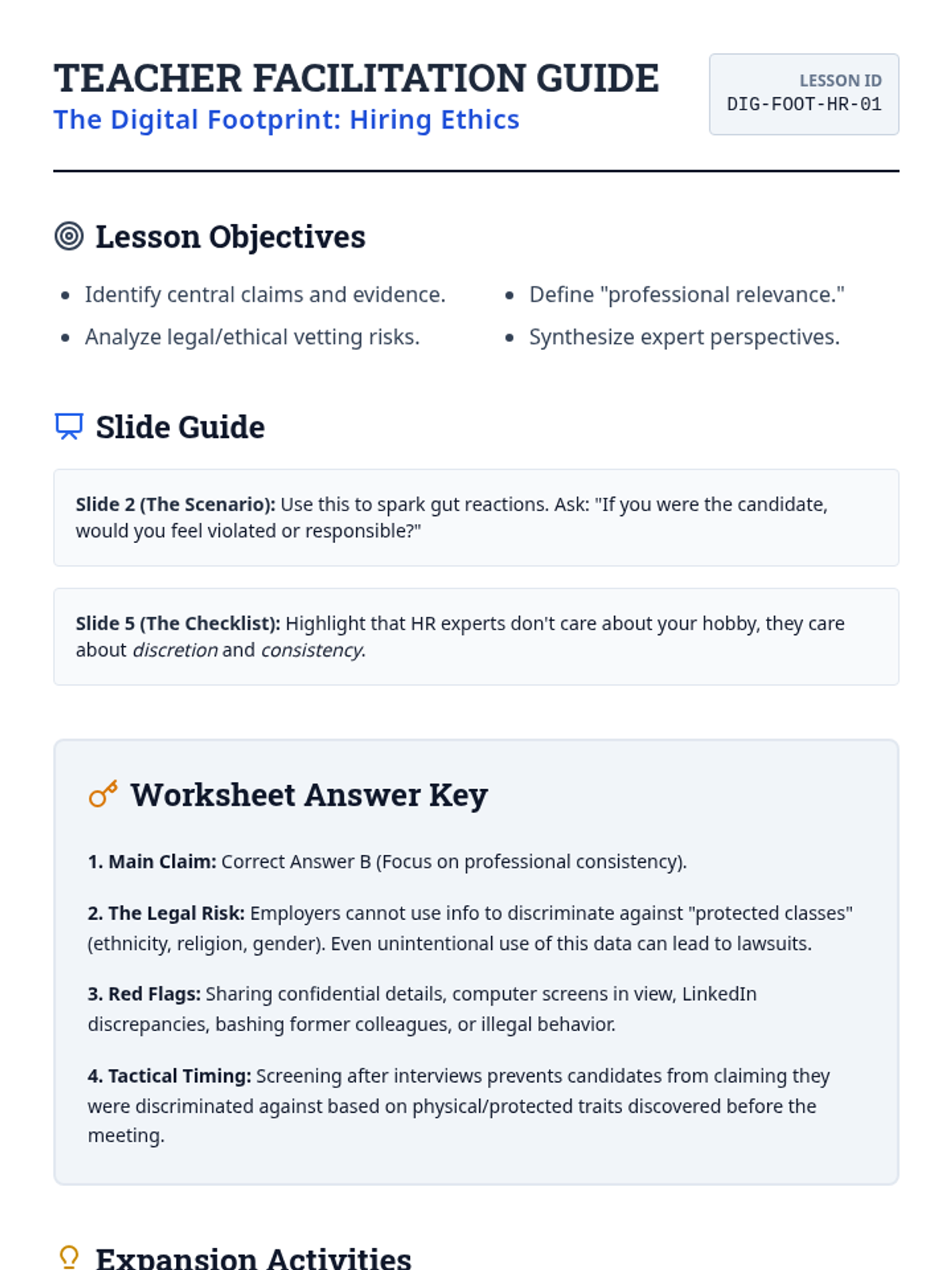
A lesson exploring the ethical and legal implications of using social media as a screening tool during the hiring process, based on professional HR perspectives.
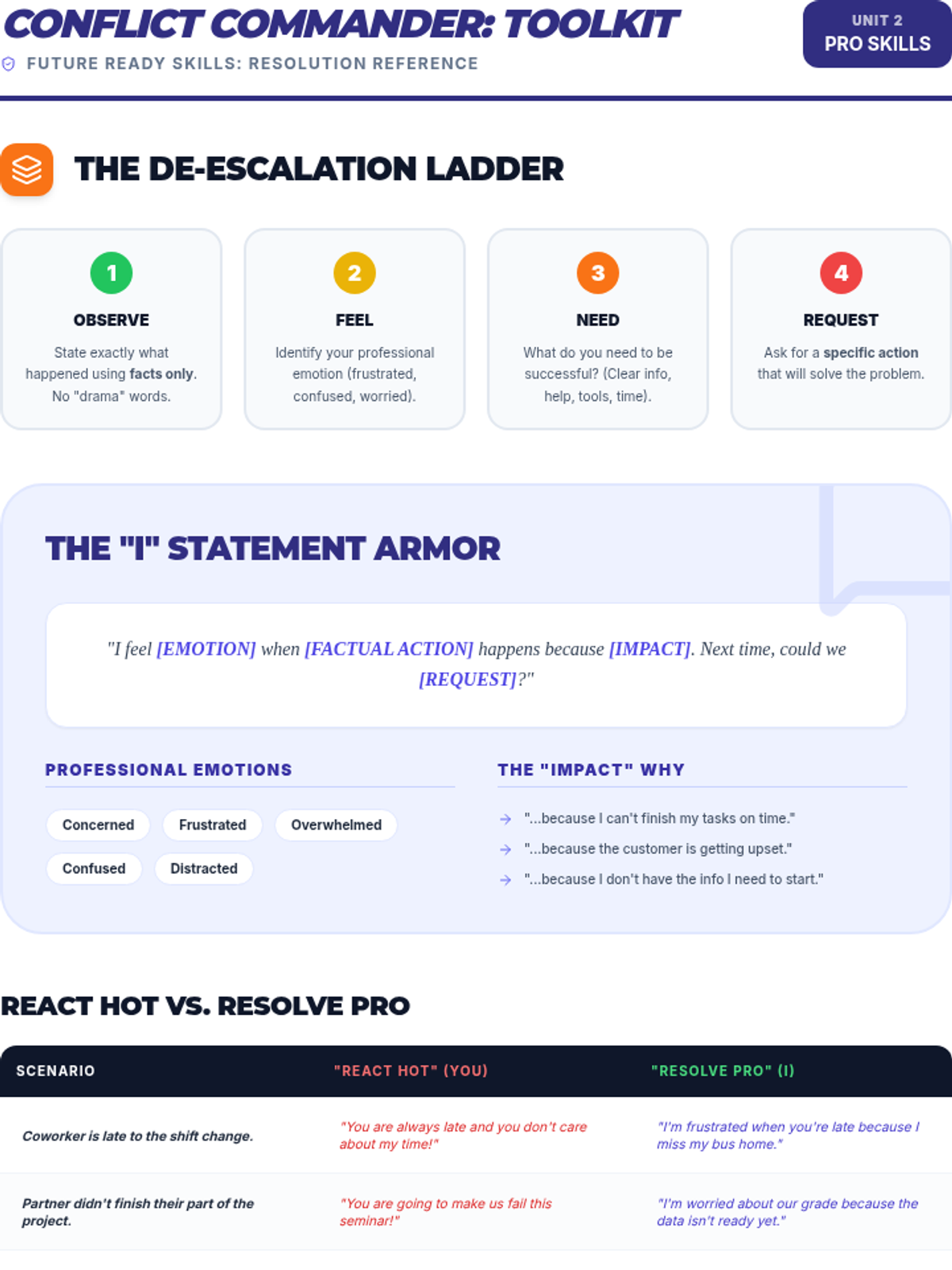
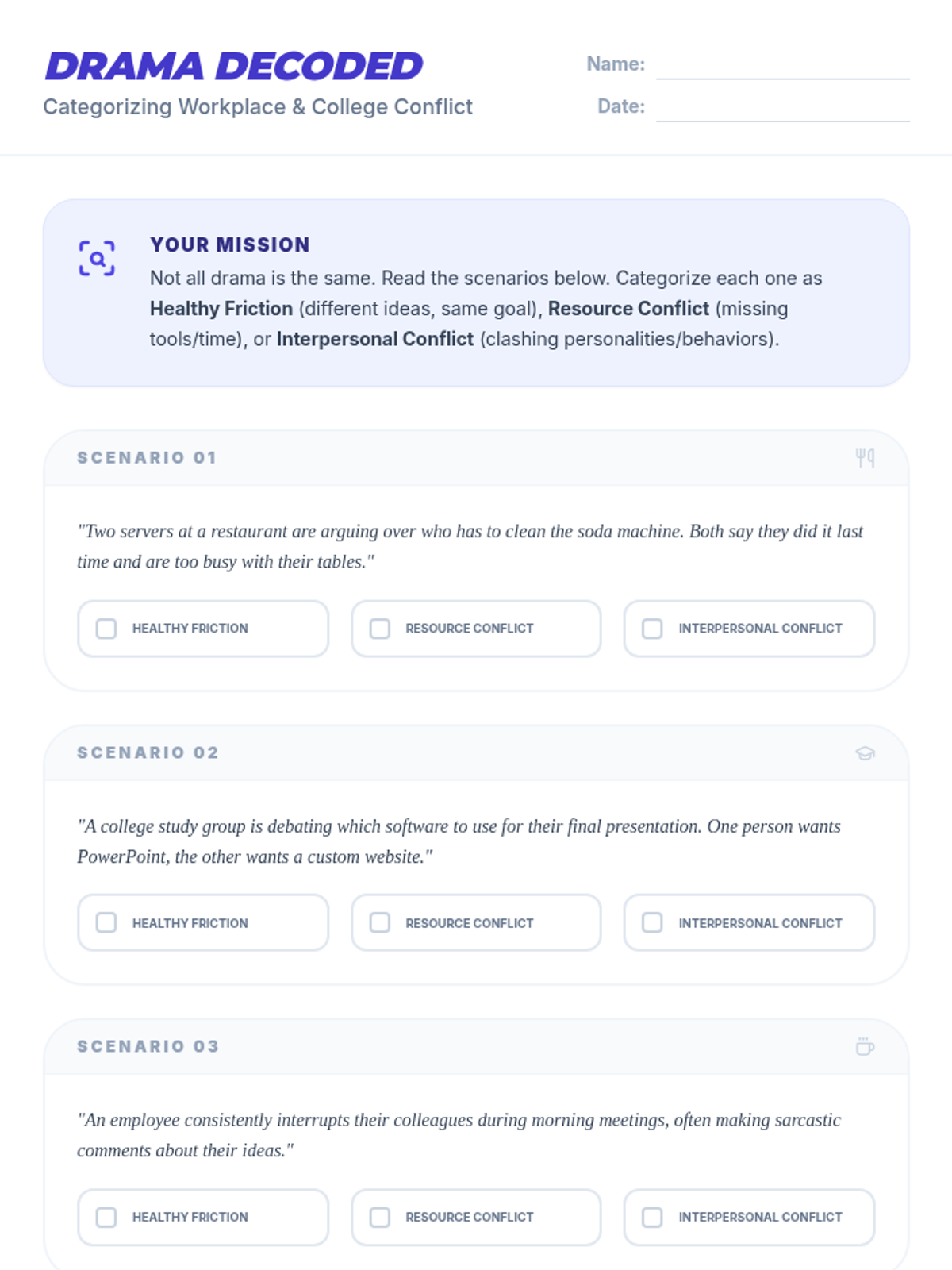
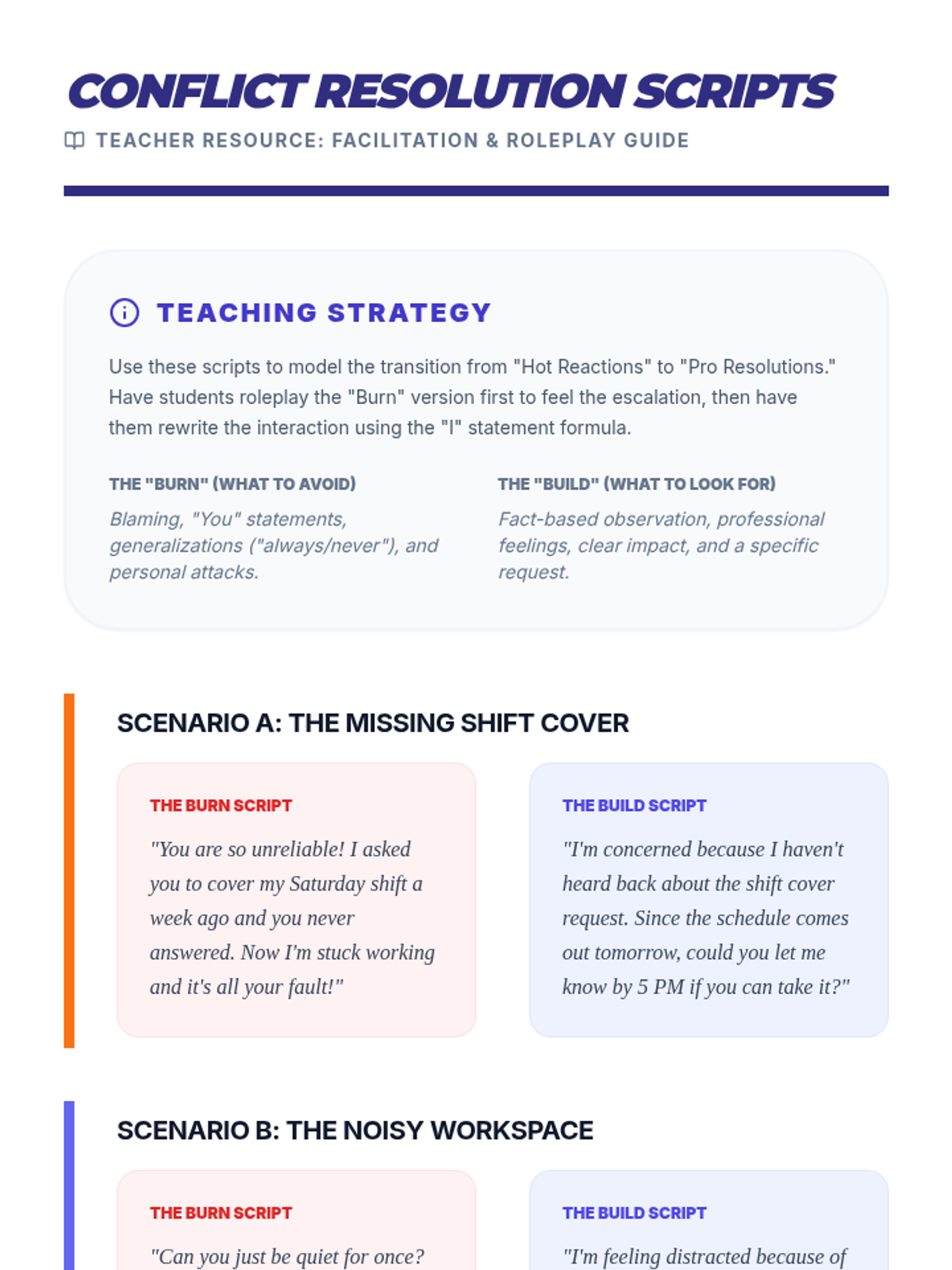
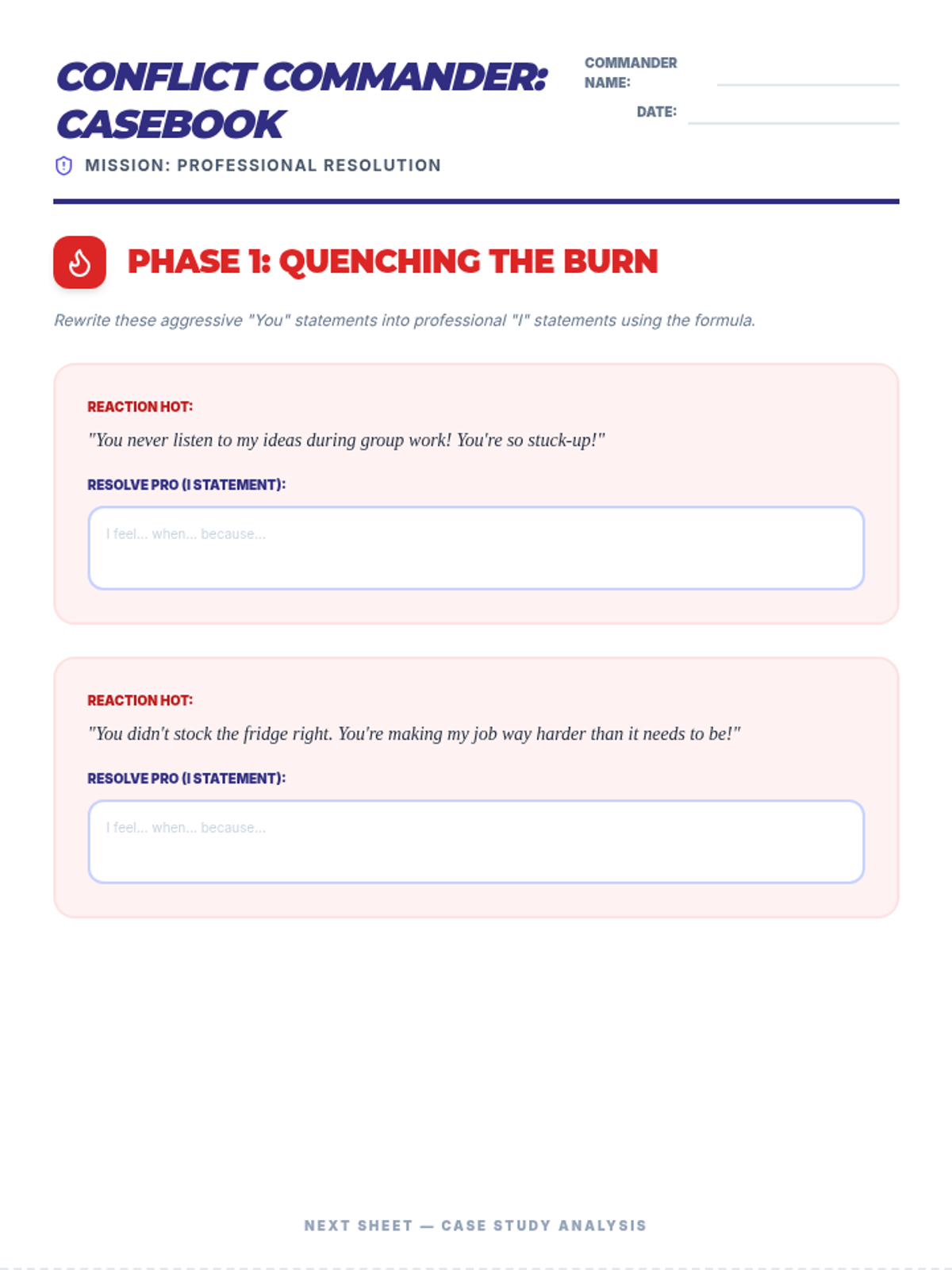
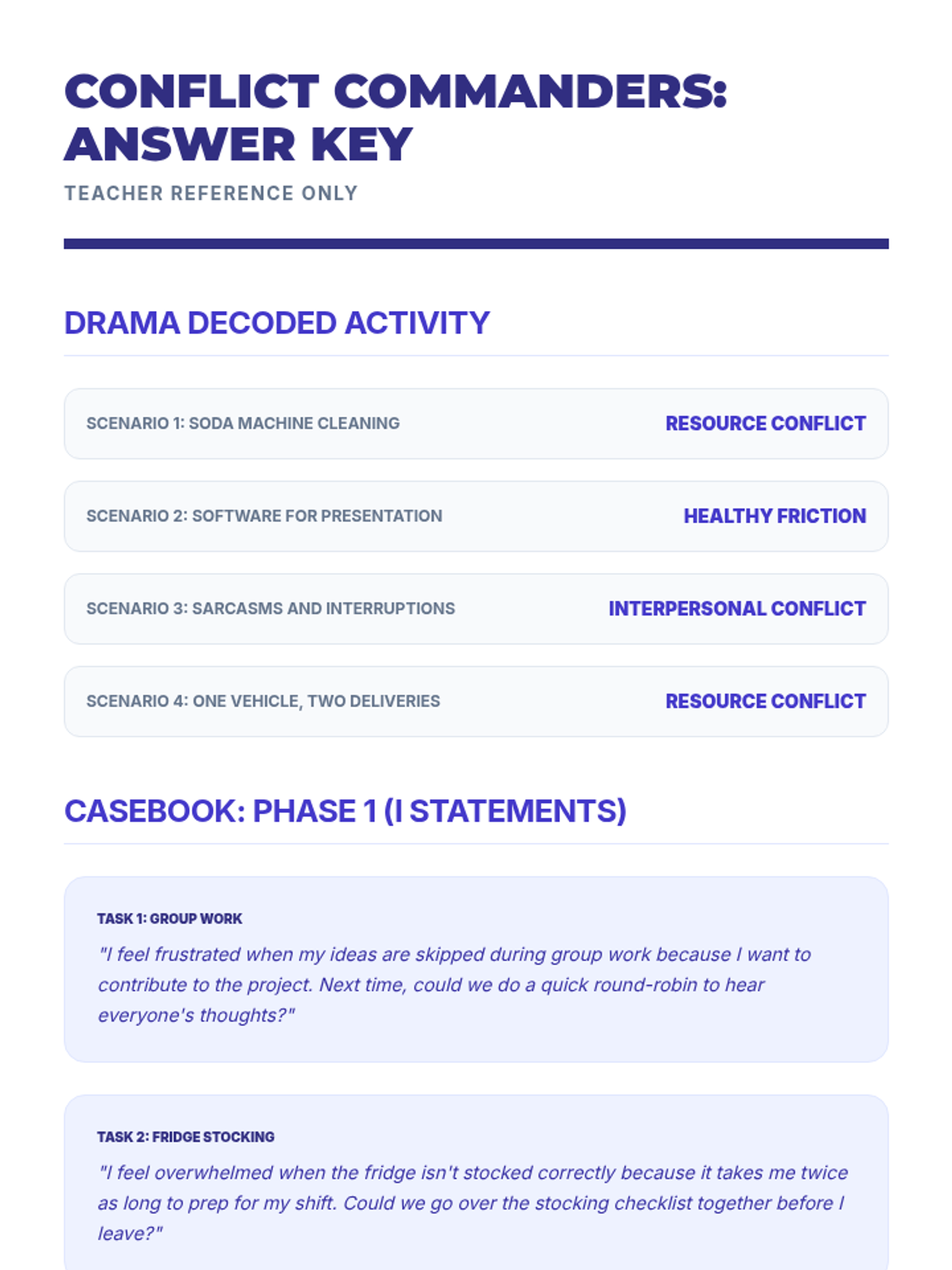
A lesson focused on de-escalation techniques and the use of 'I' statements in workplace conflict. Students learn to identify the stages of conflict and practice professional scripts to resolve peer and manager-level disagreements without escalating tension.
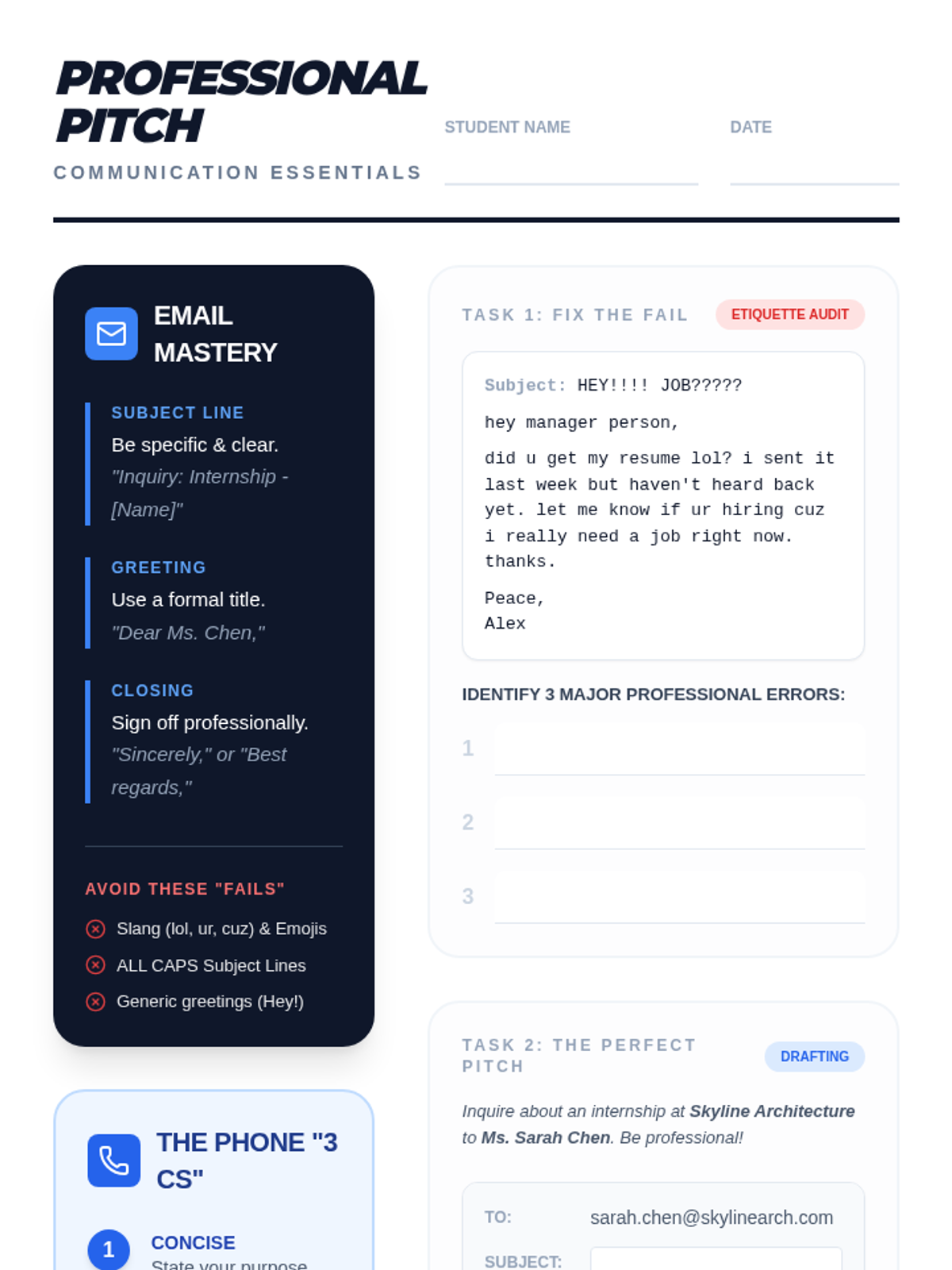
A comprehensive lesson on professional communication for students entering the workforce, covering email etiquette, professional texting, phone calls, and in-person interactions.
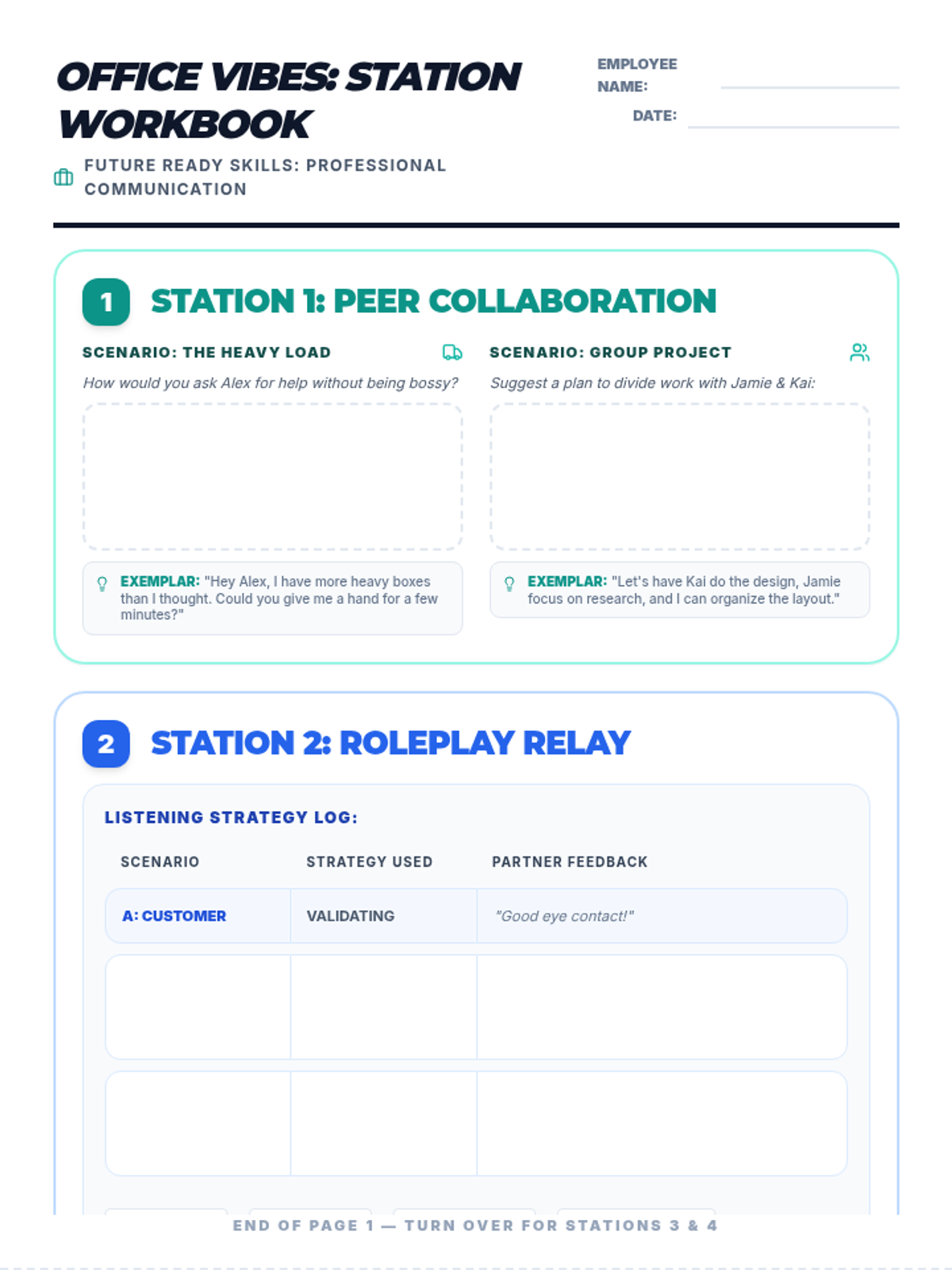
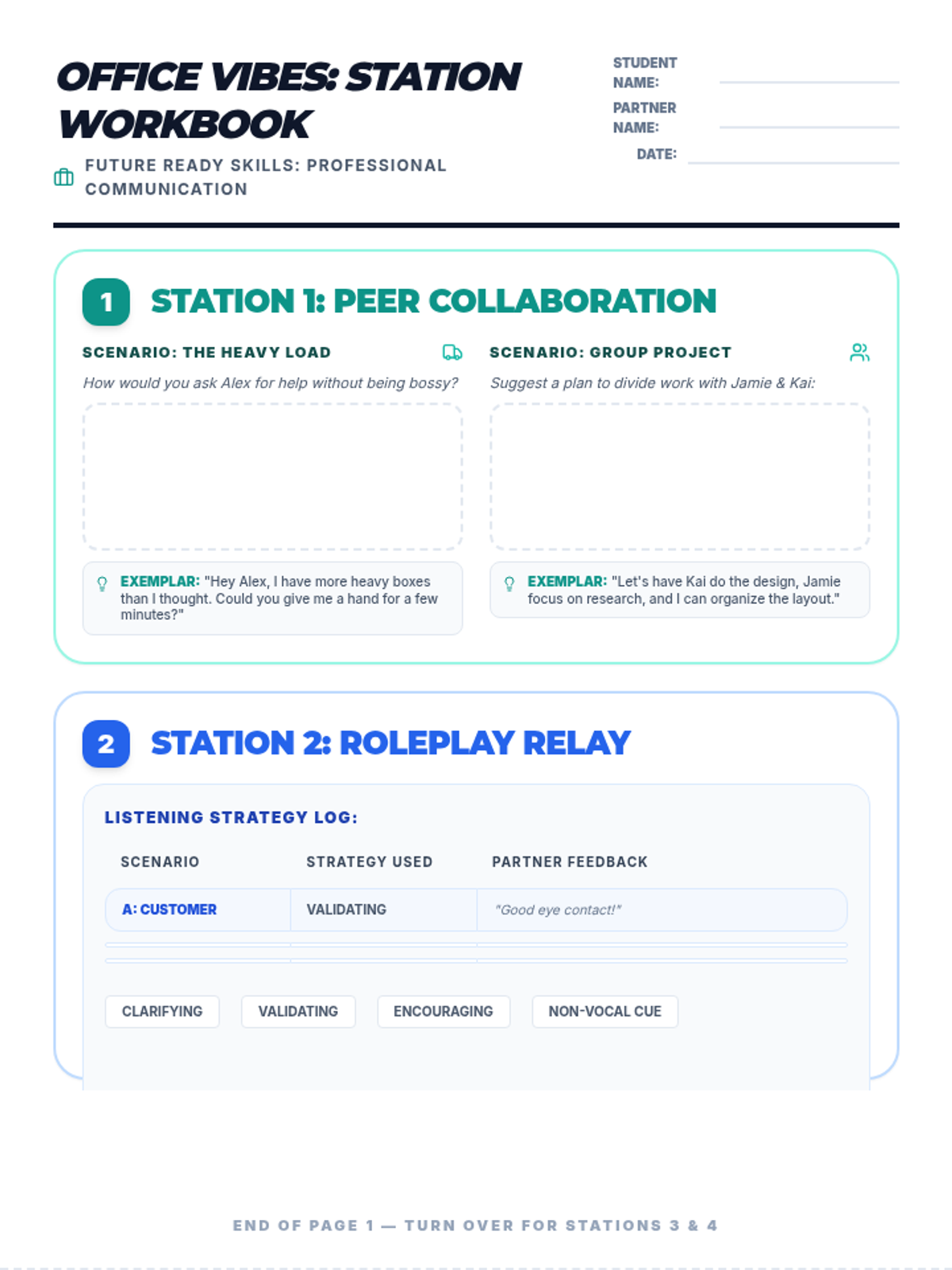
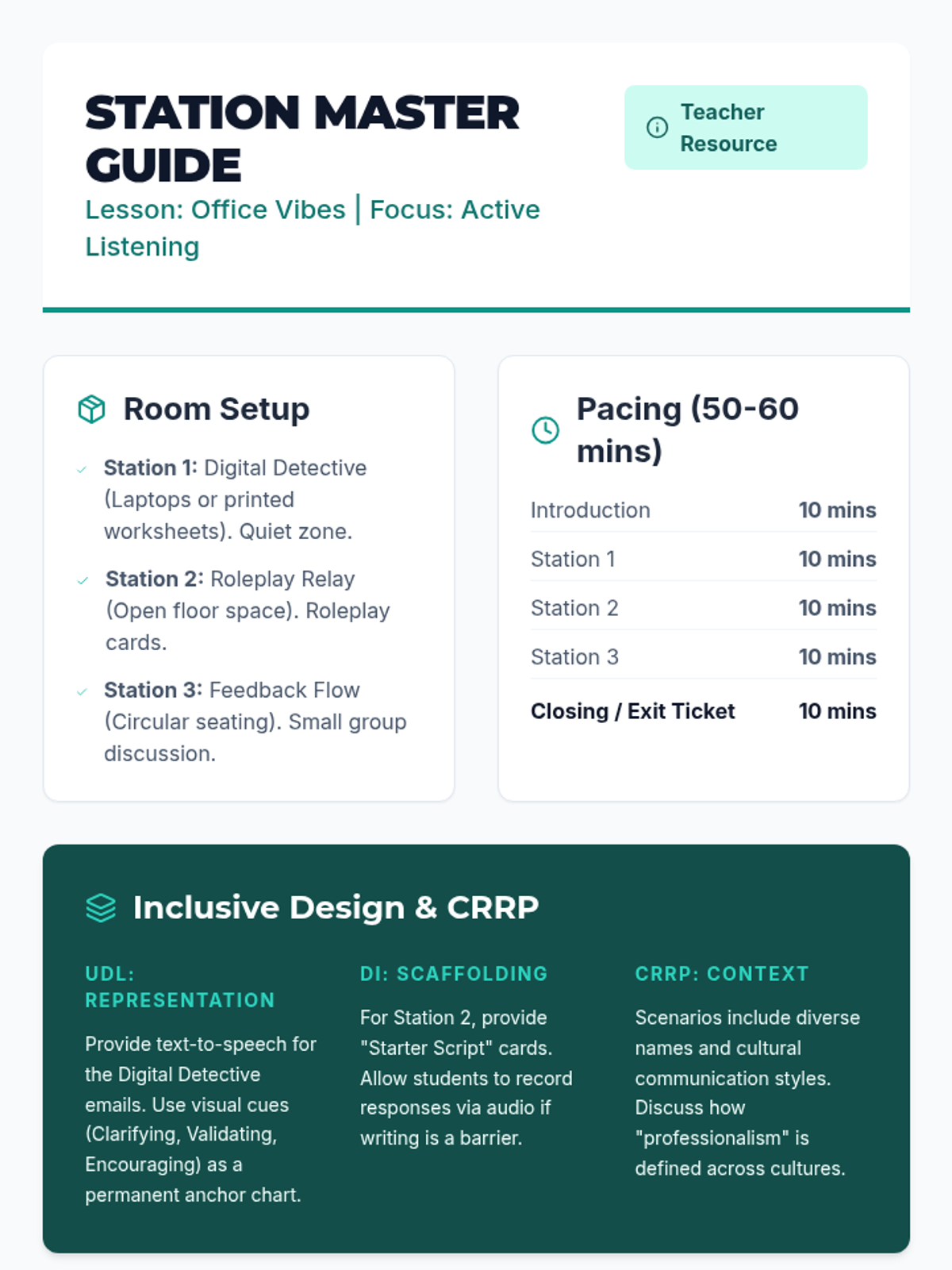
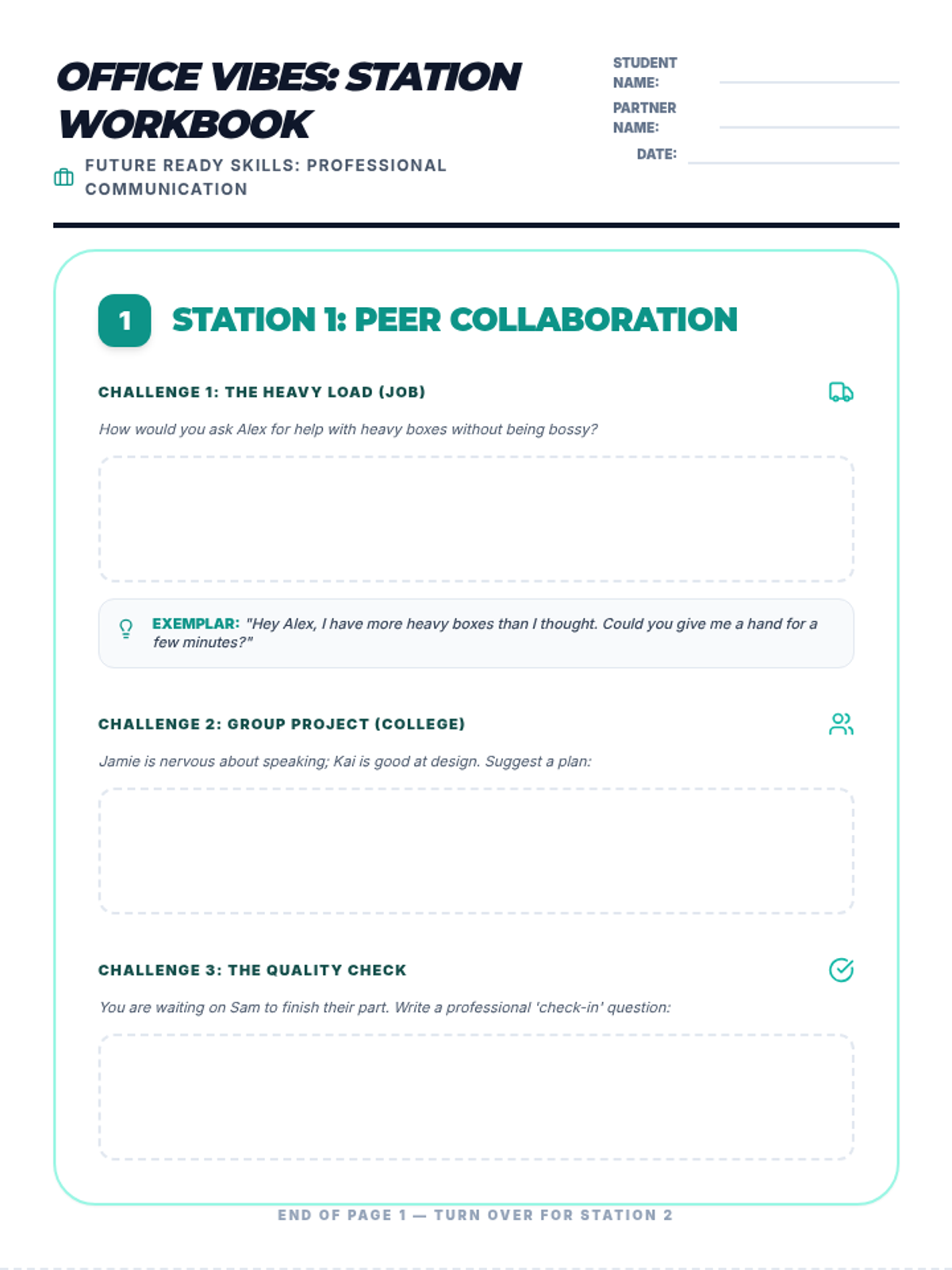
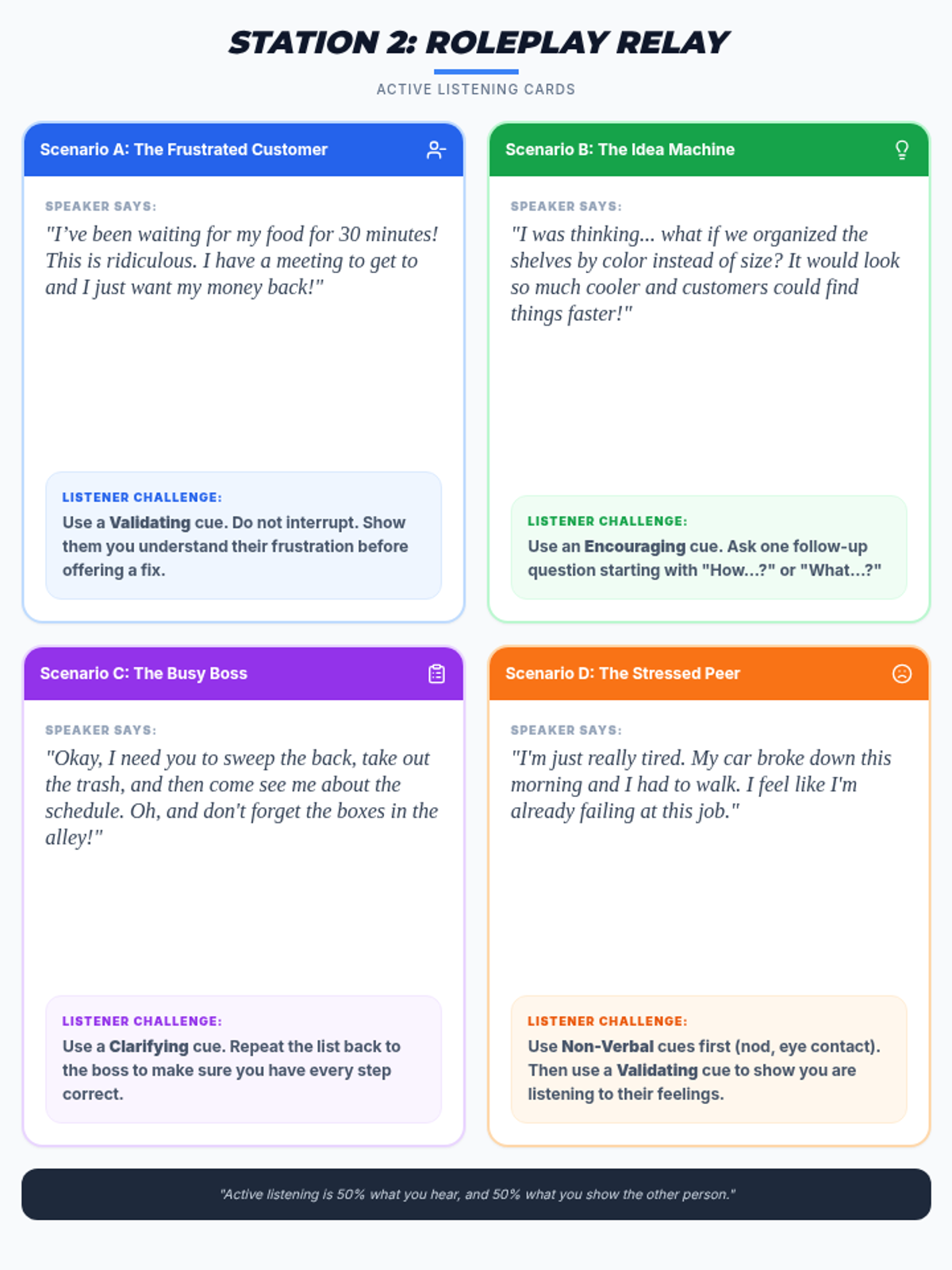
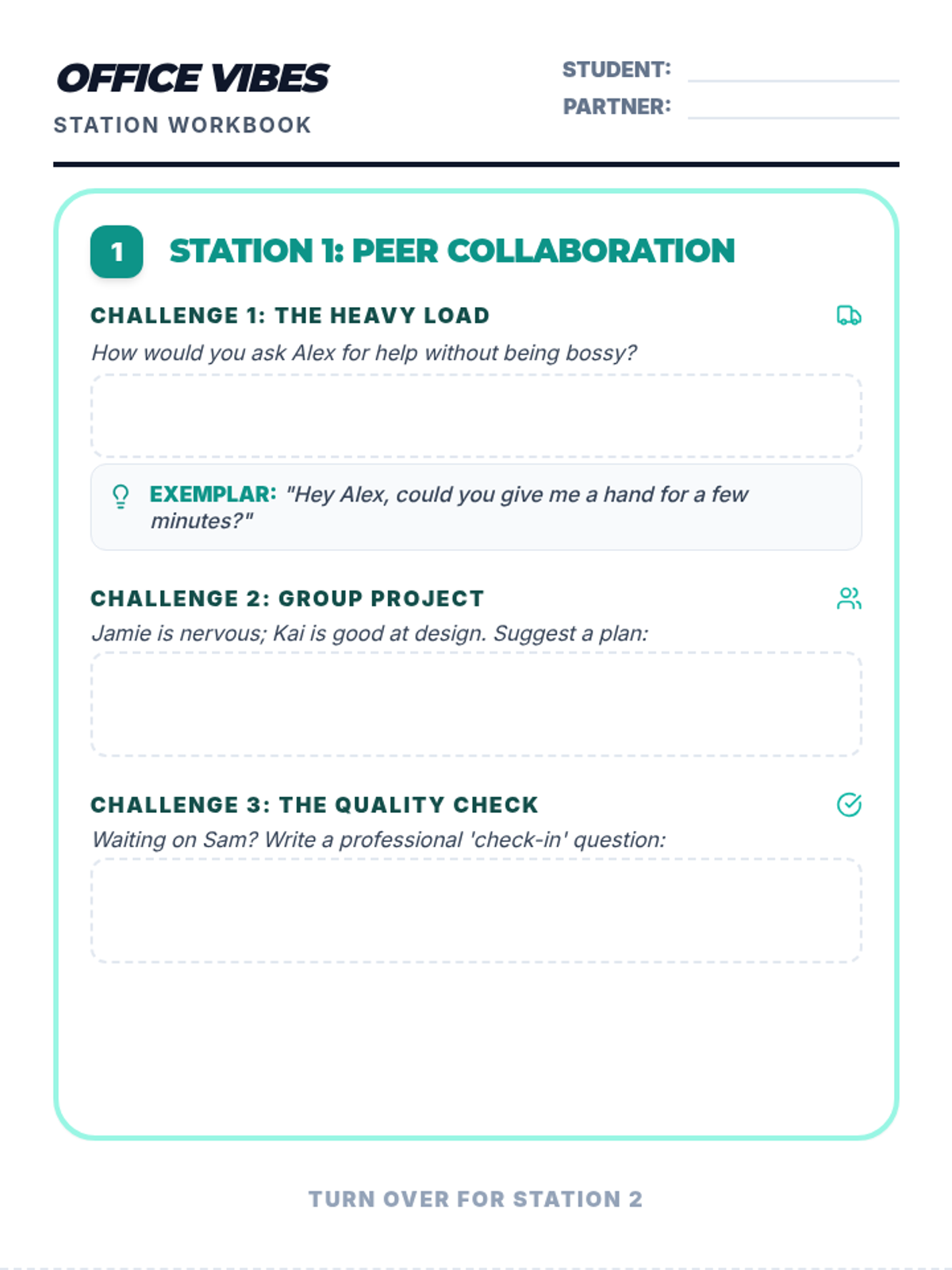
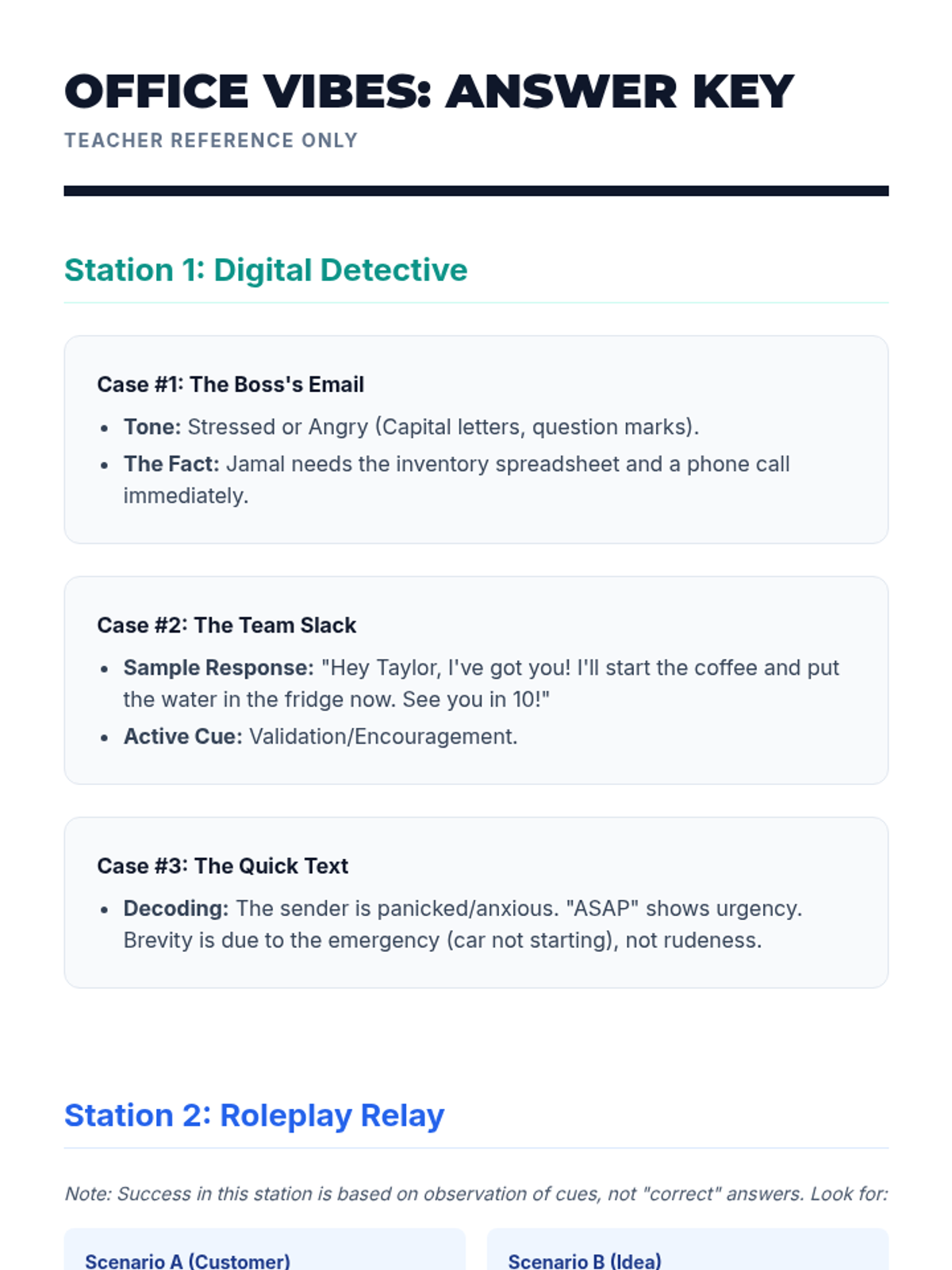
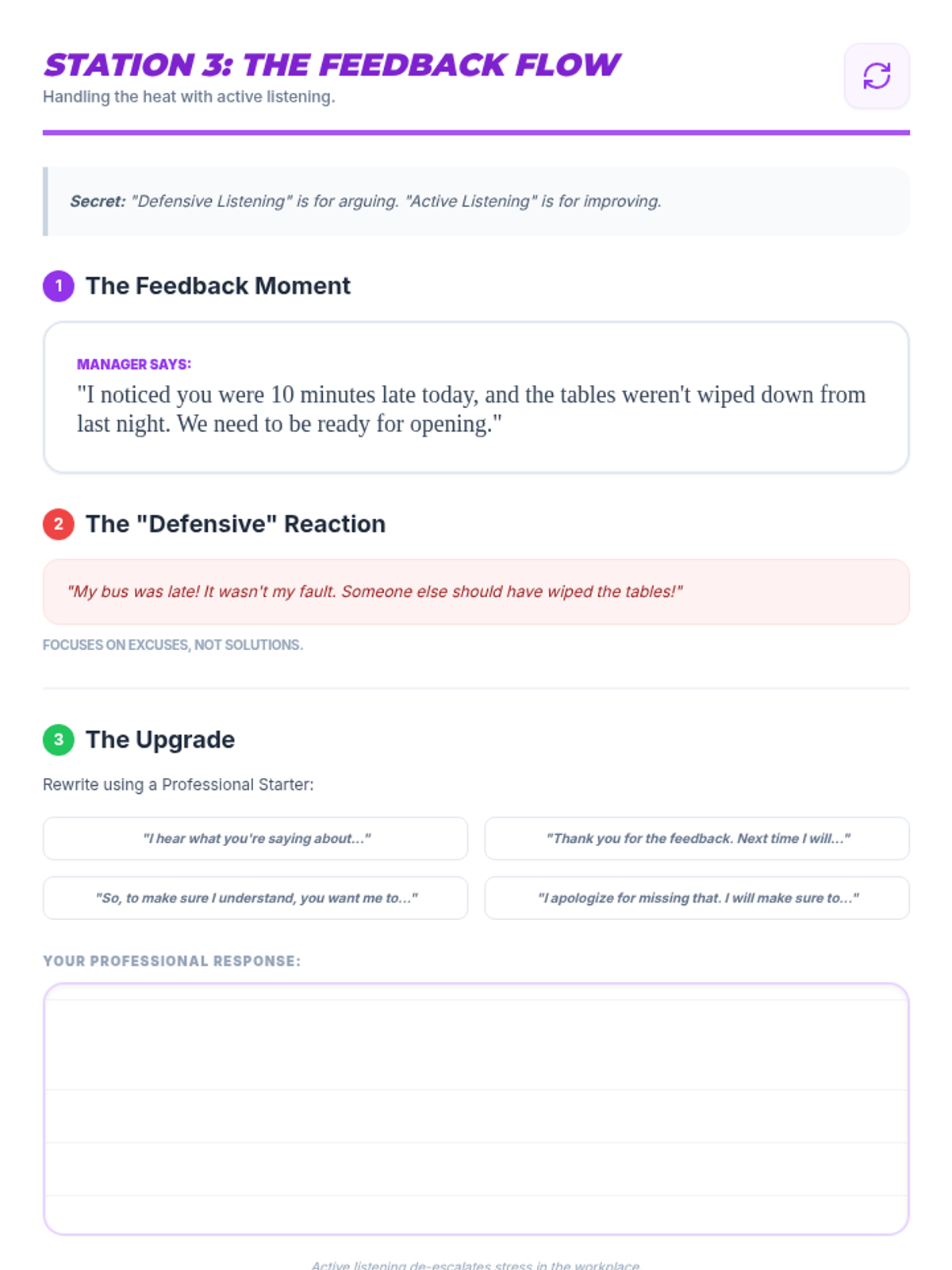
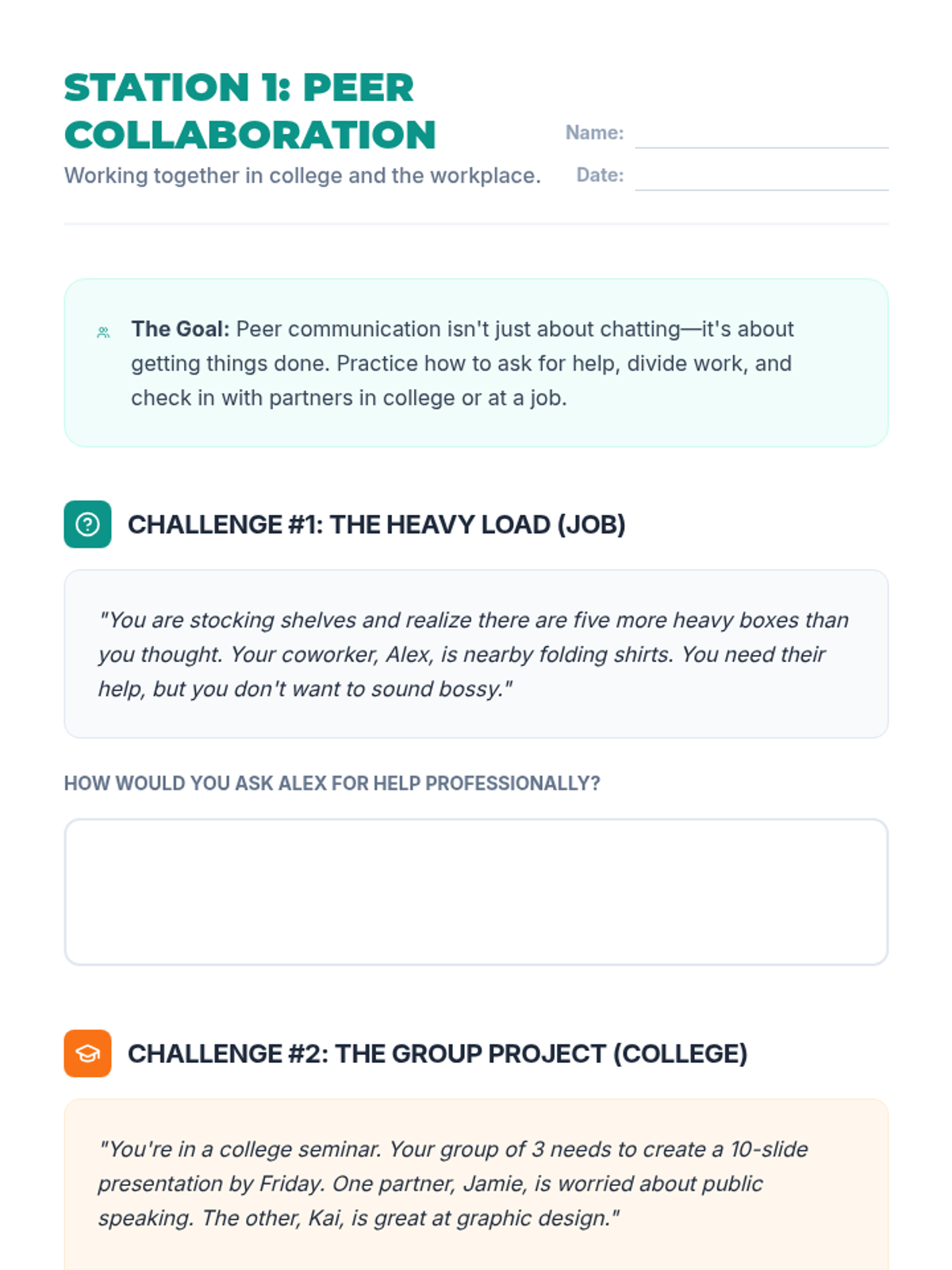
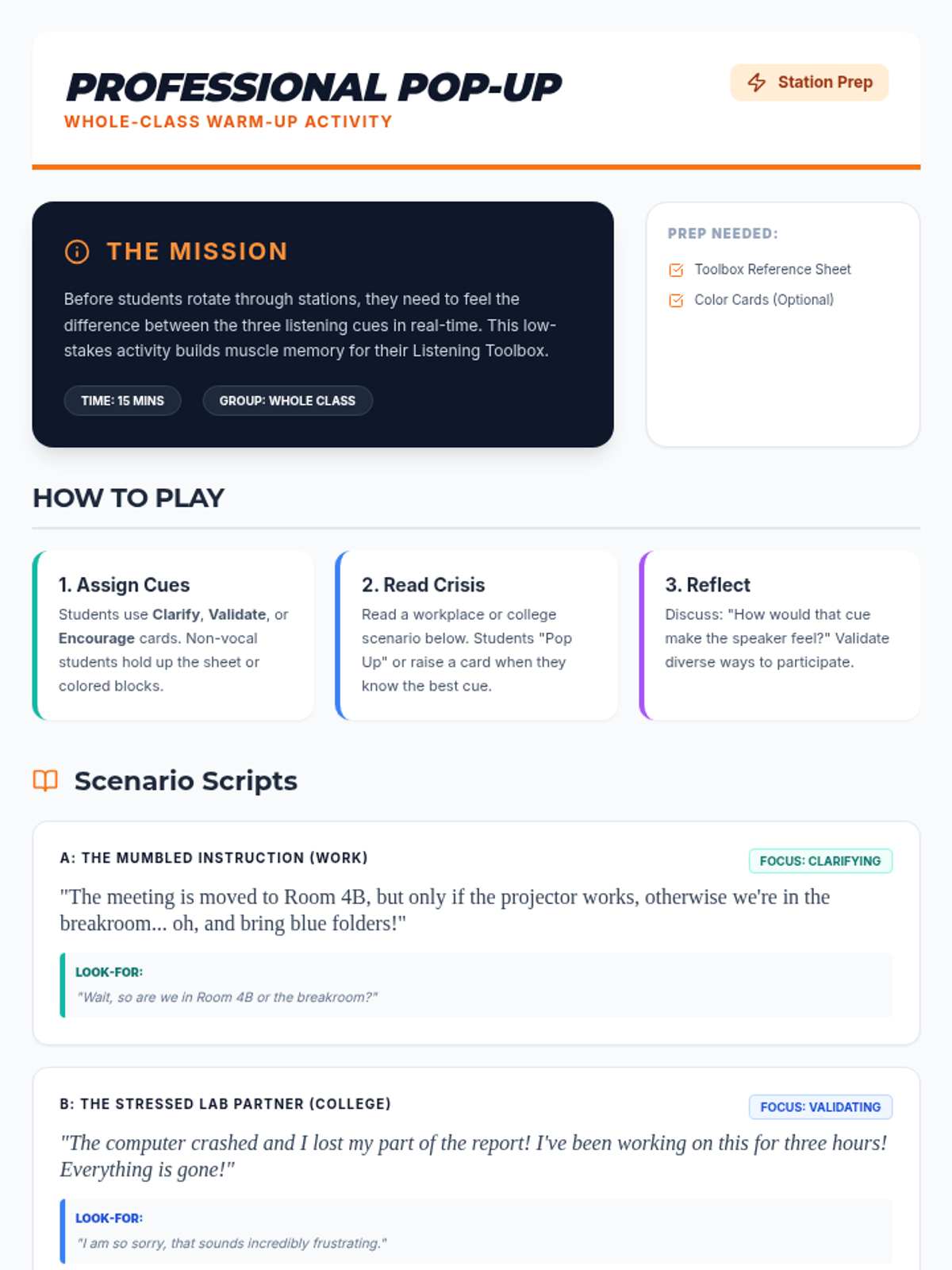
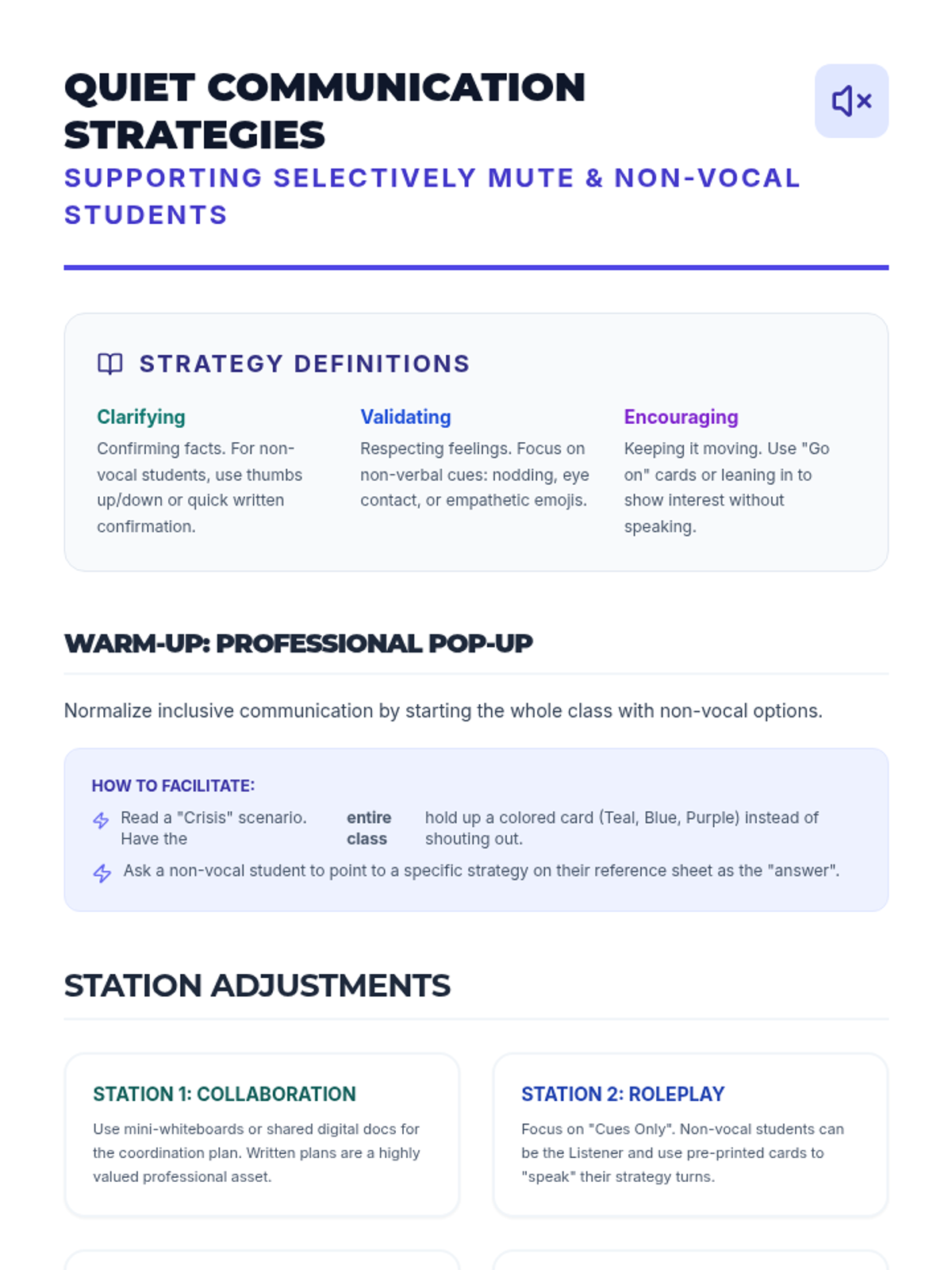
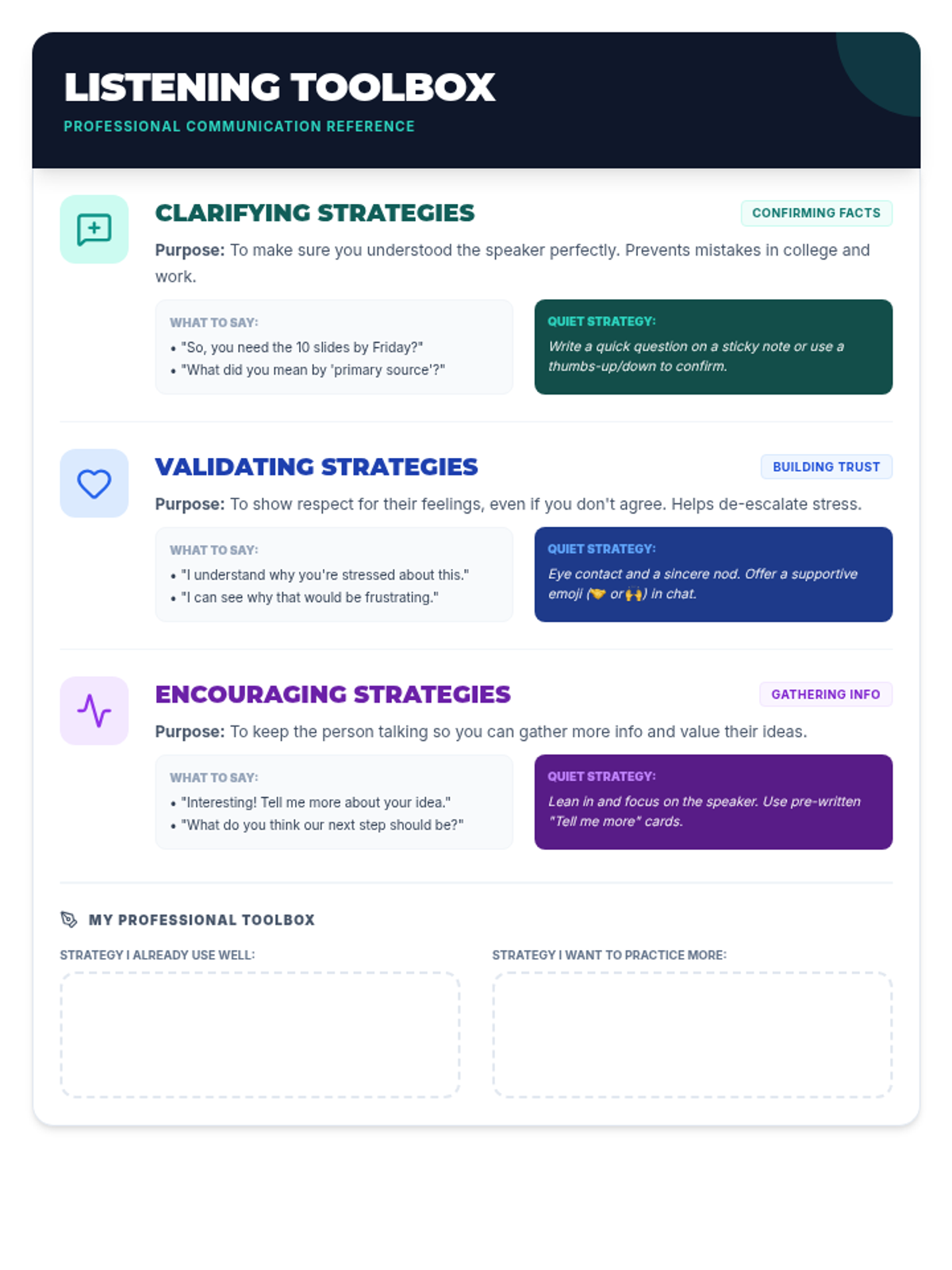
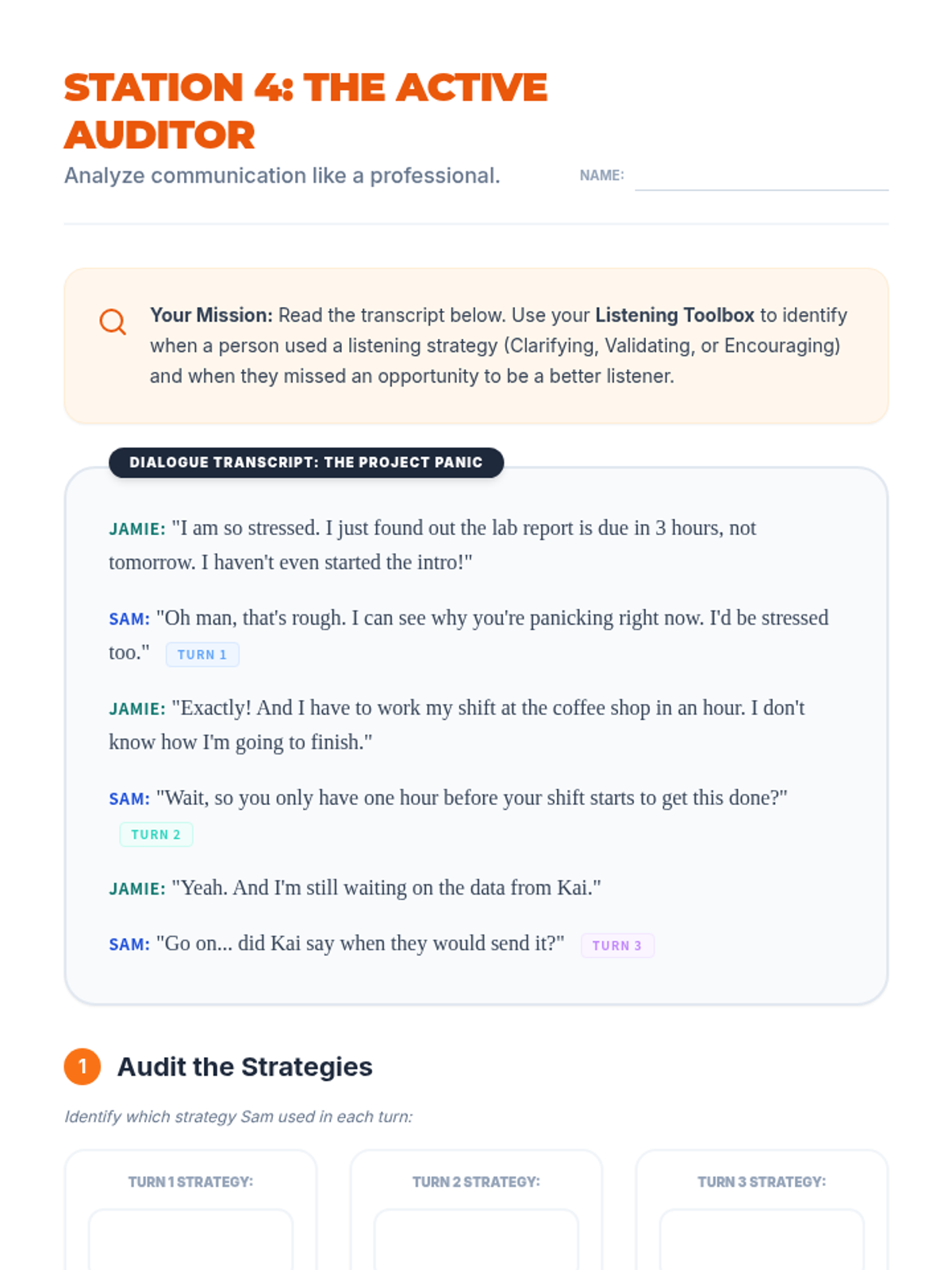
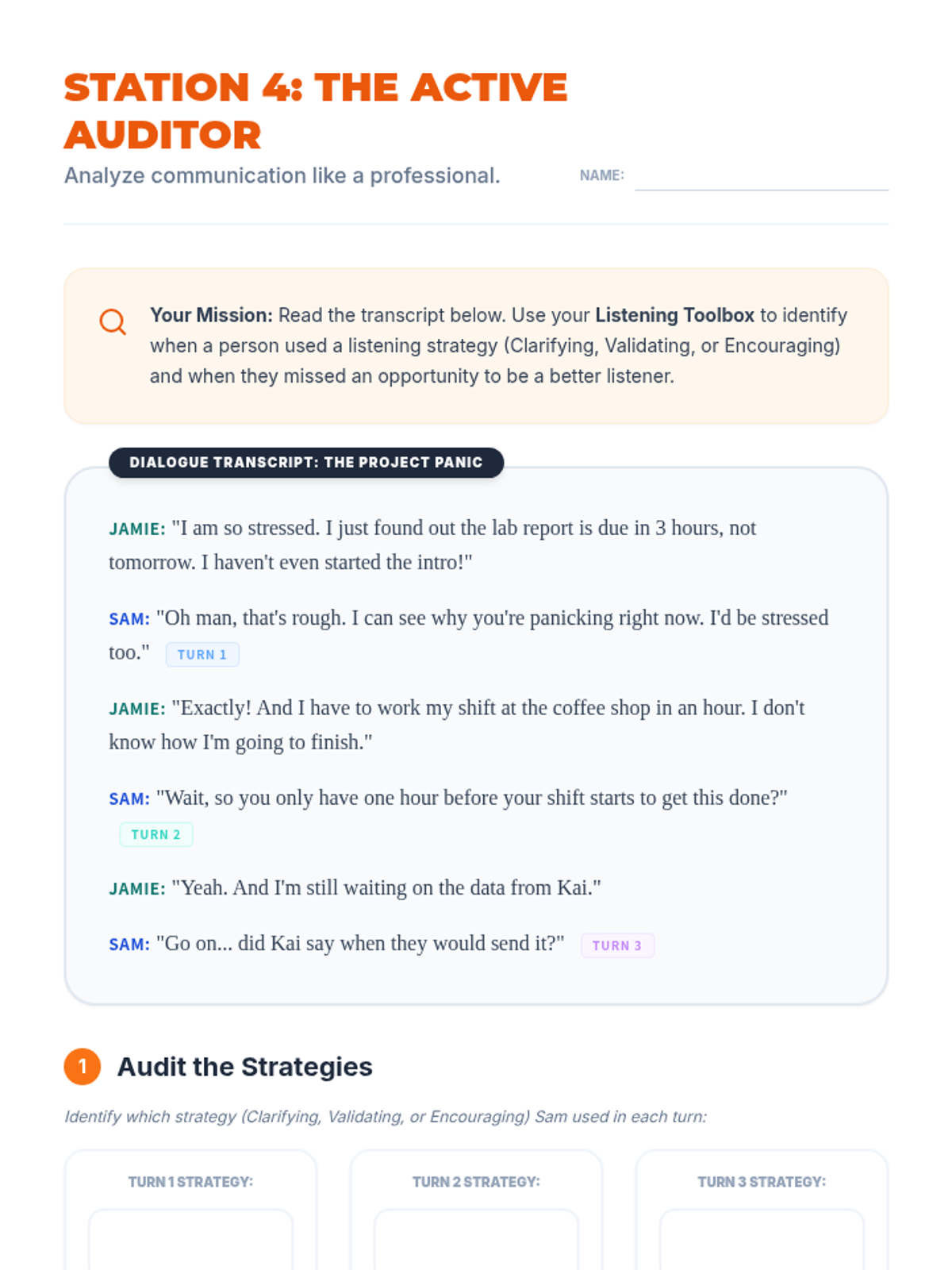
A high-energy, station-based lesson focusing on active listening and professional communication with peers in the workplace. Students move through interactive tasks that build social-emotional skills, collaborative habits, and the ability to give and receive professional feedback.
A comprehensive exploration of the ethics and legalities of using social media in the hiring process, based on real-world HR expert insights. Students will analyze conflicting perspectives, identify key arguments, and form their own evidence-based stance on digital vetting.
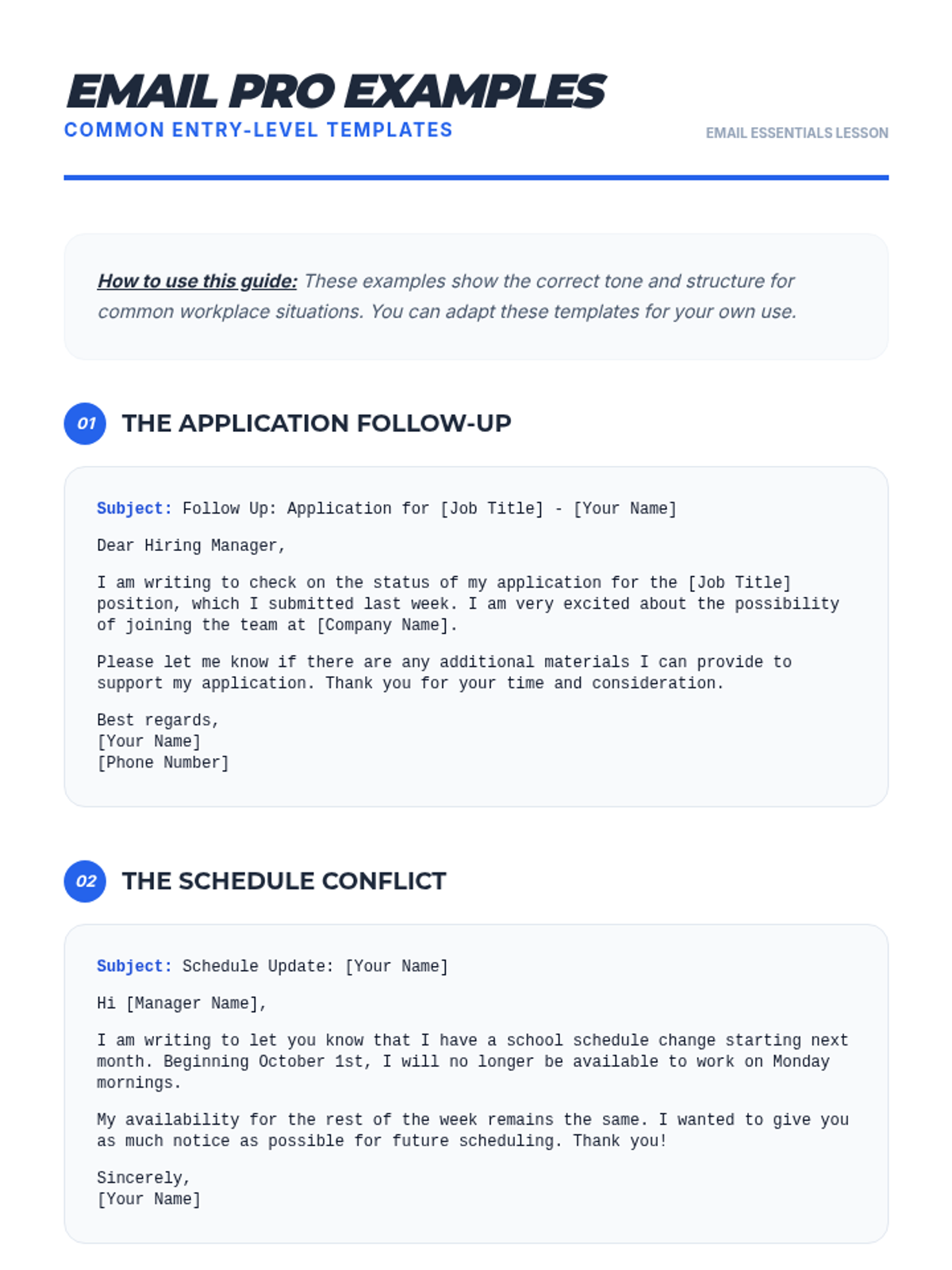
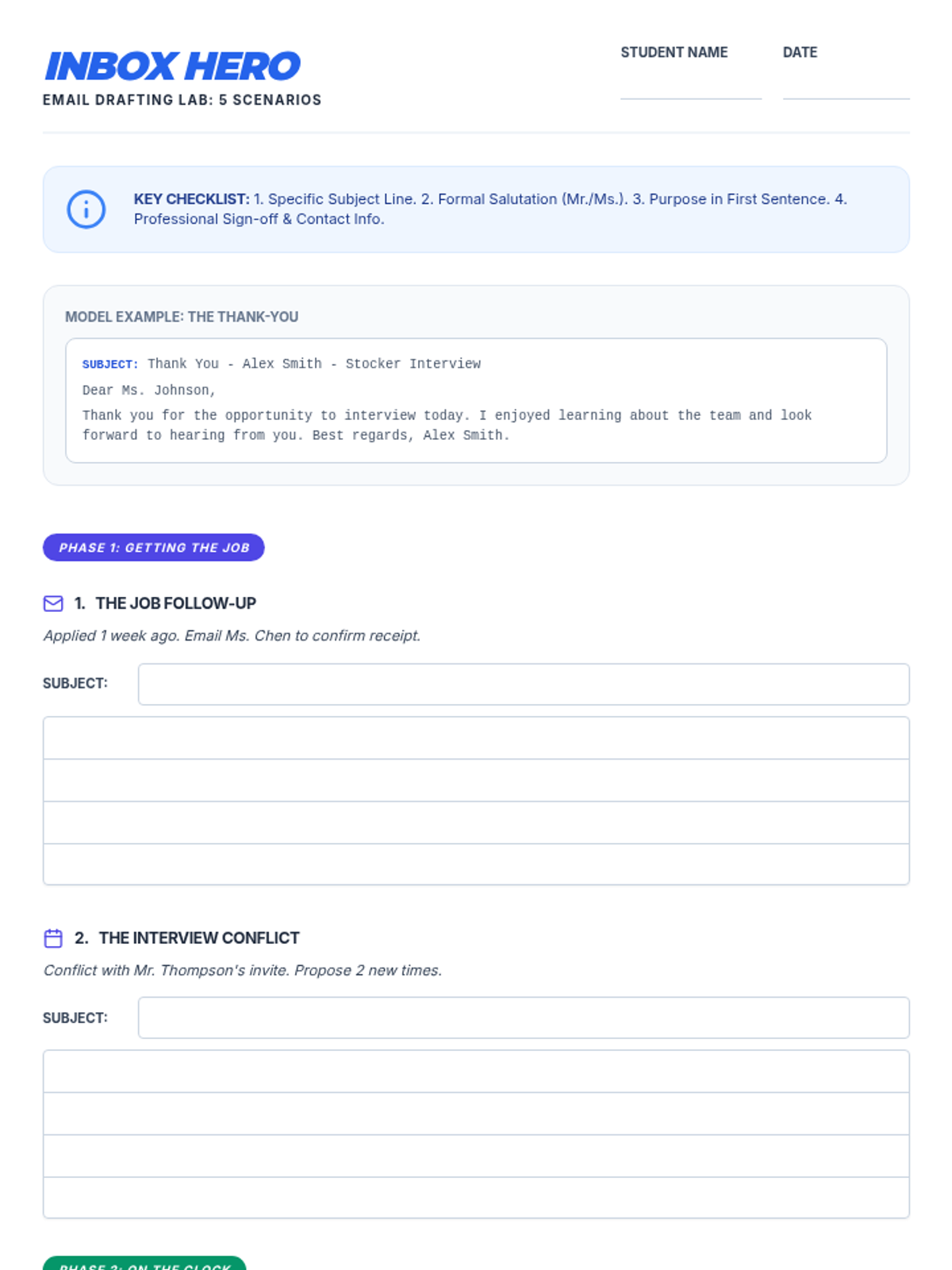
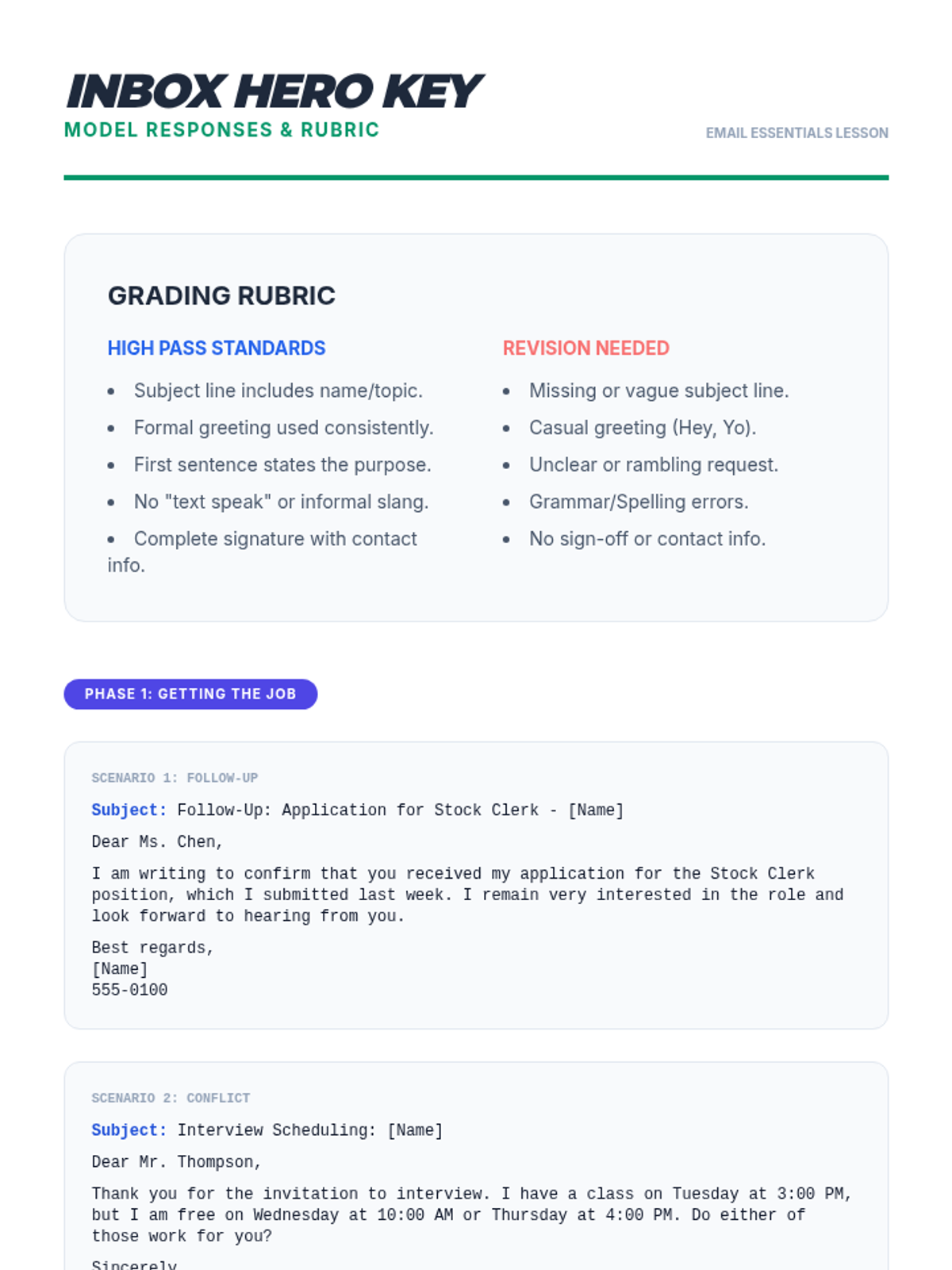
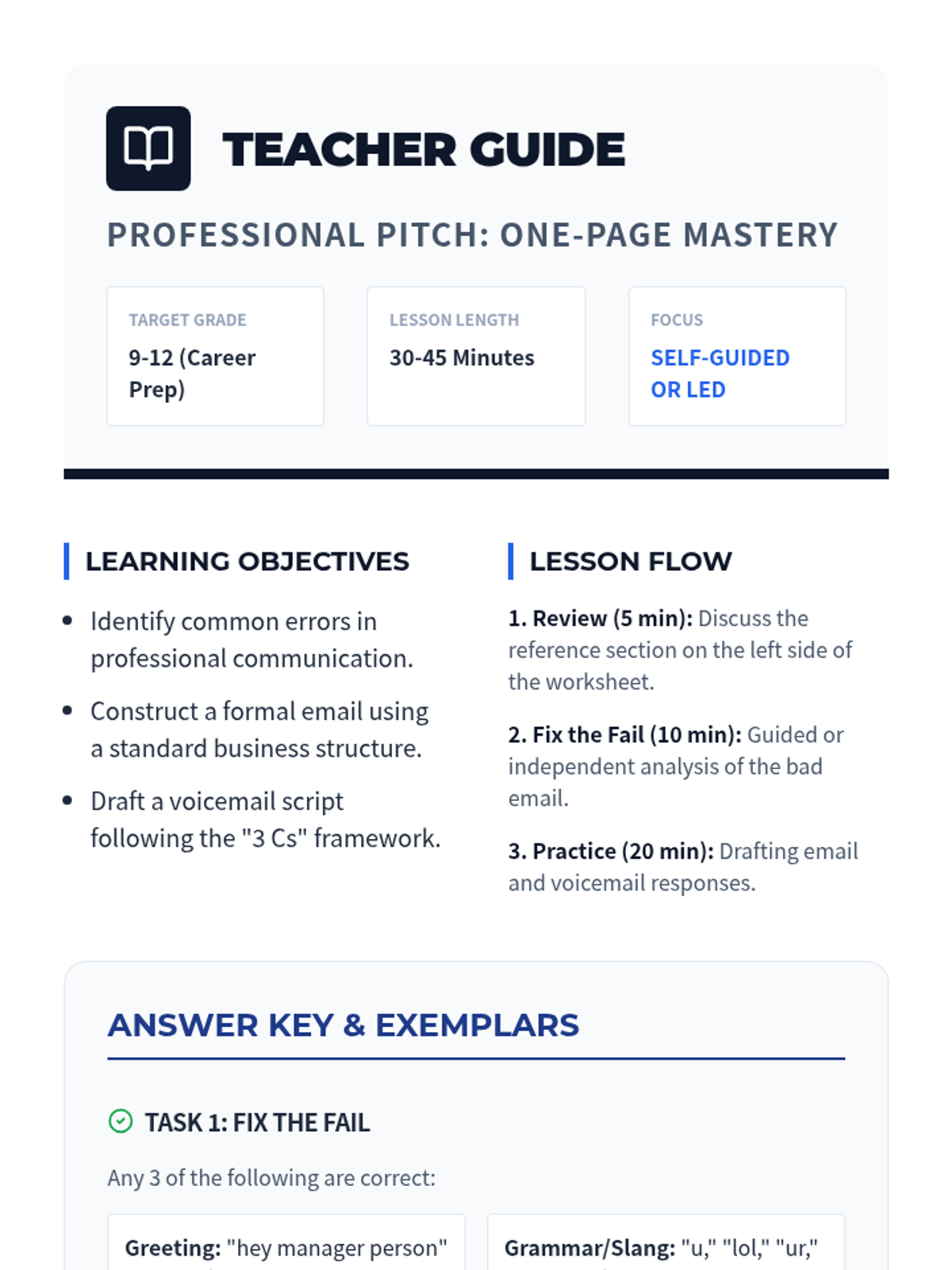
A comprehensive lesson on professional communication skills, focusing on email and phone etiquette for the workplace. Students learn the 'do's and don'ts' and practice crafting their own professional responses.
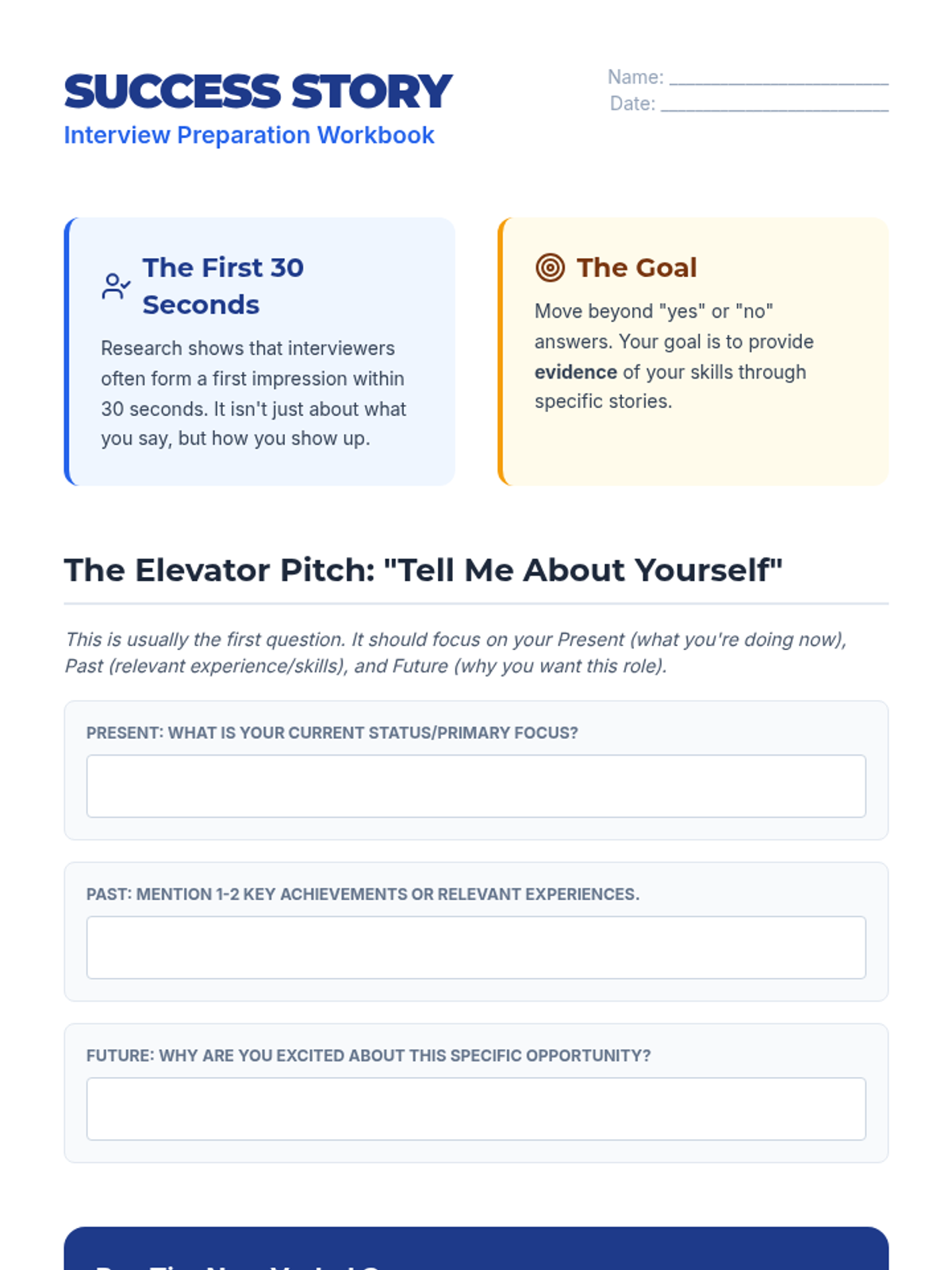
A comprehensive guide to mastering entry-level and academic interviews through the STAR method, practical scenarios, and self-reflection. Students will build a portfolio of stories to demonstrate their skills to future employers and admissions officers.
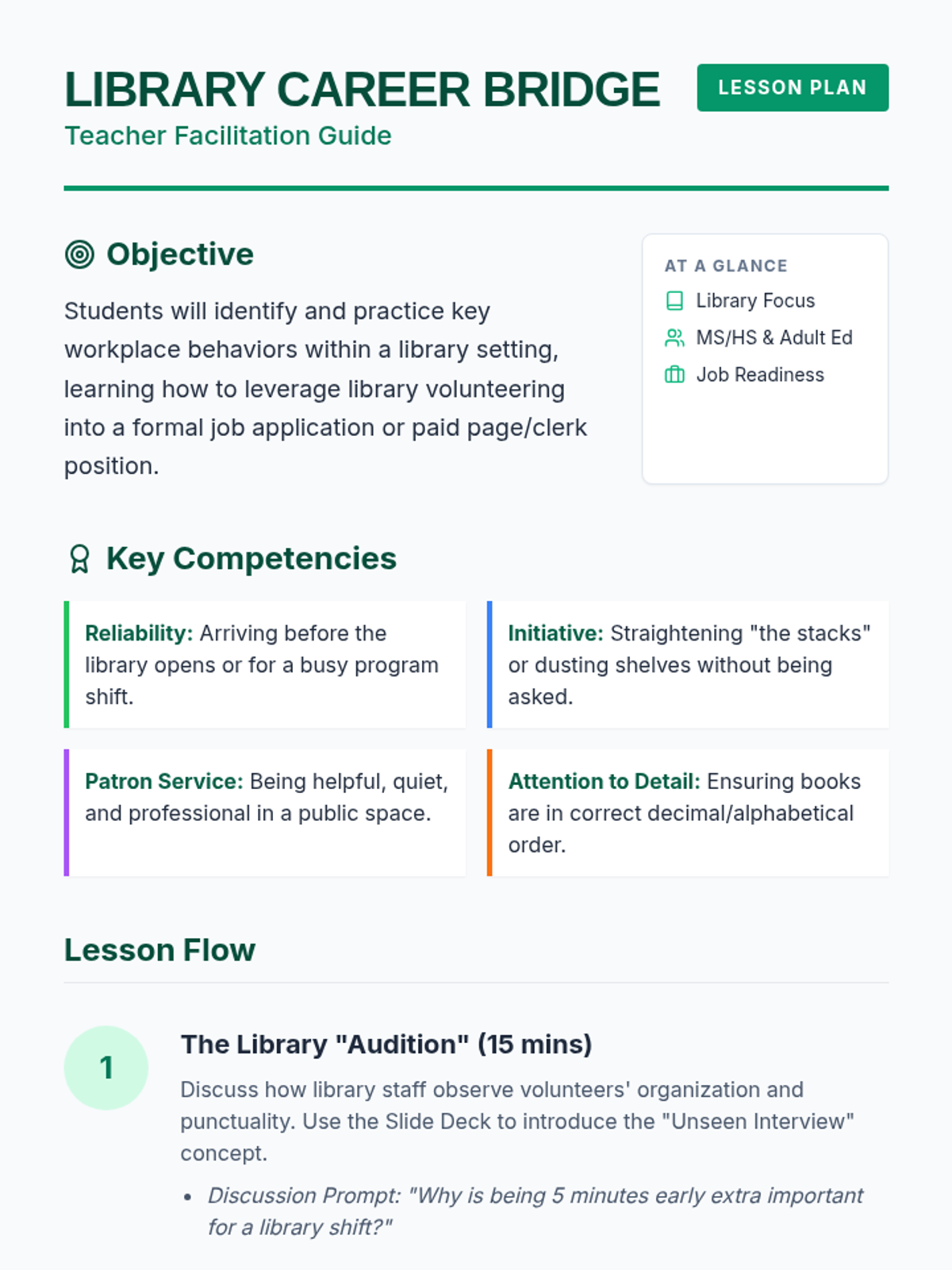
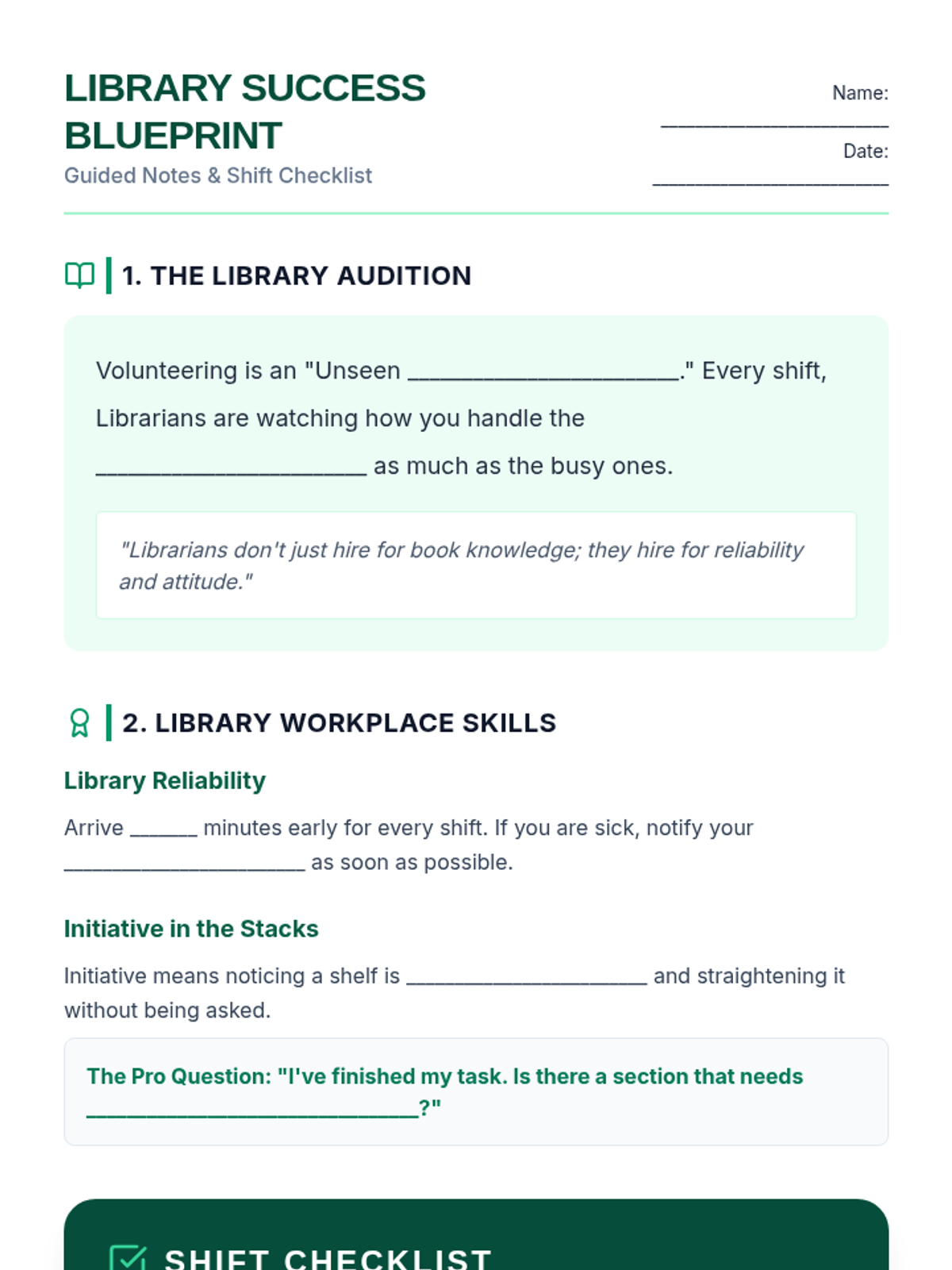
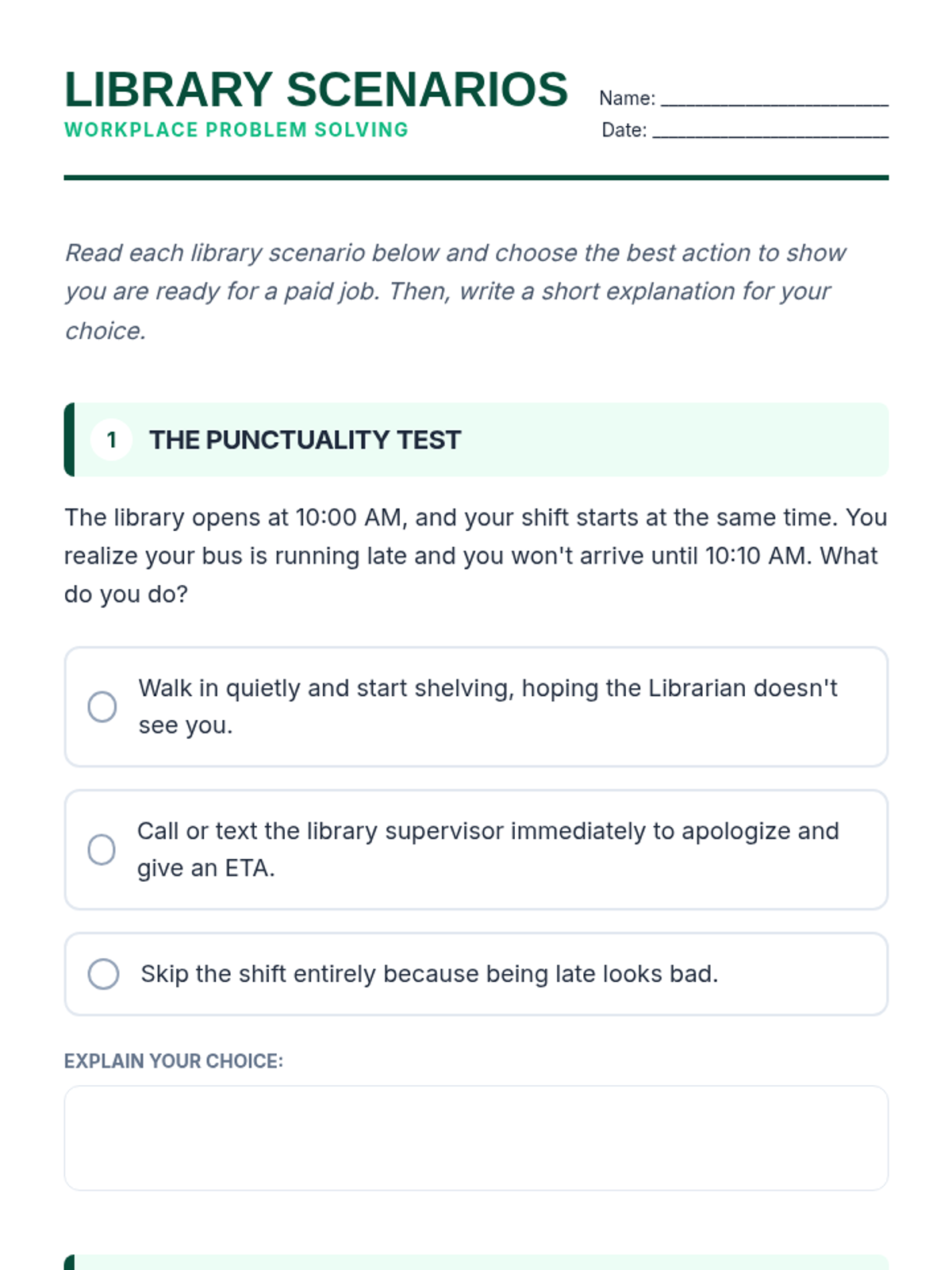
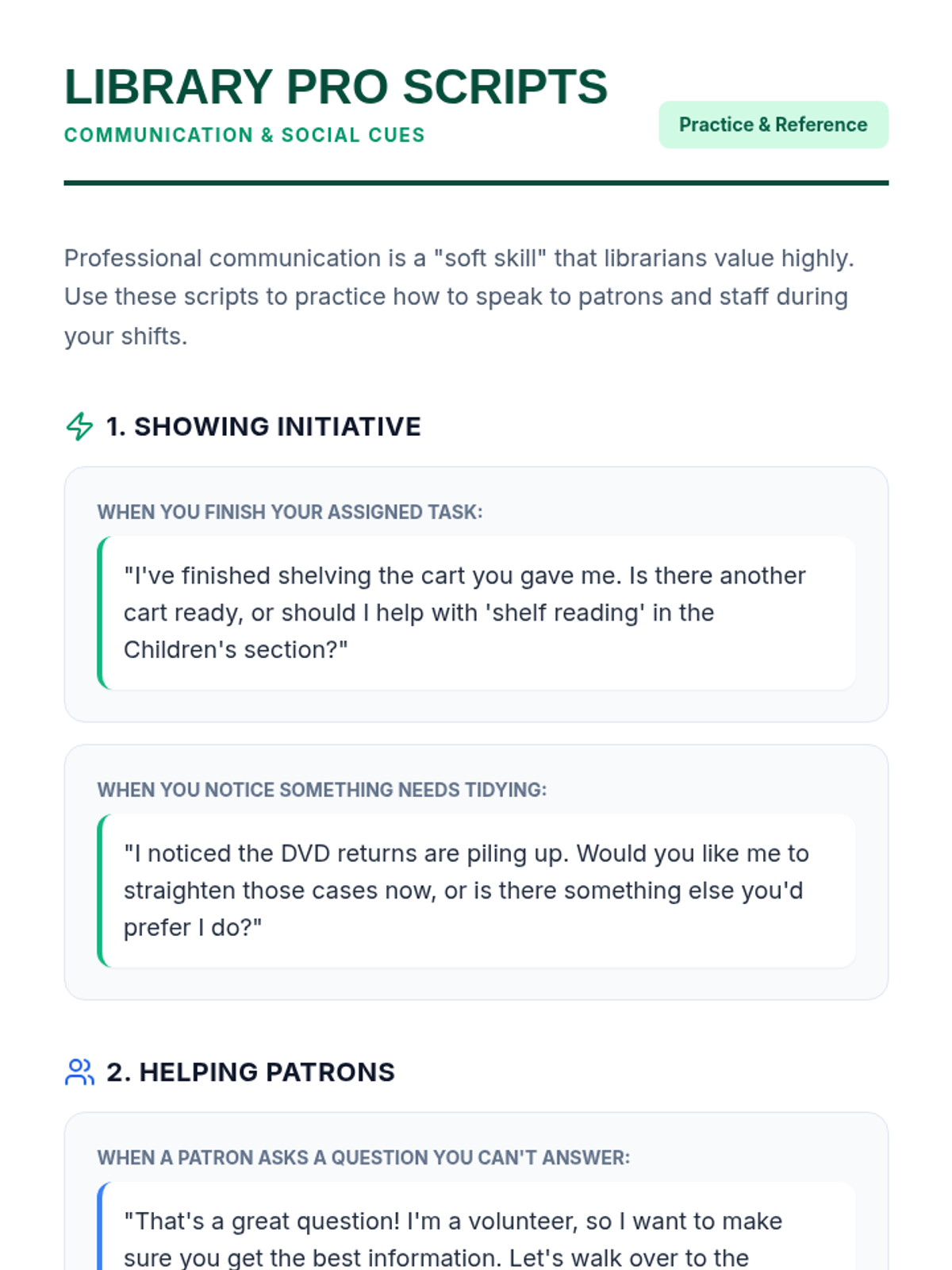
This lesson teaches students how to transition from a volunteer position to a paid role by demonstrating high-value workplace behaviors like initiative, reliability, and teamwork. It is designed for diverse learners, including those in job-readiness programs and students with social/communication goals.
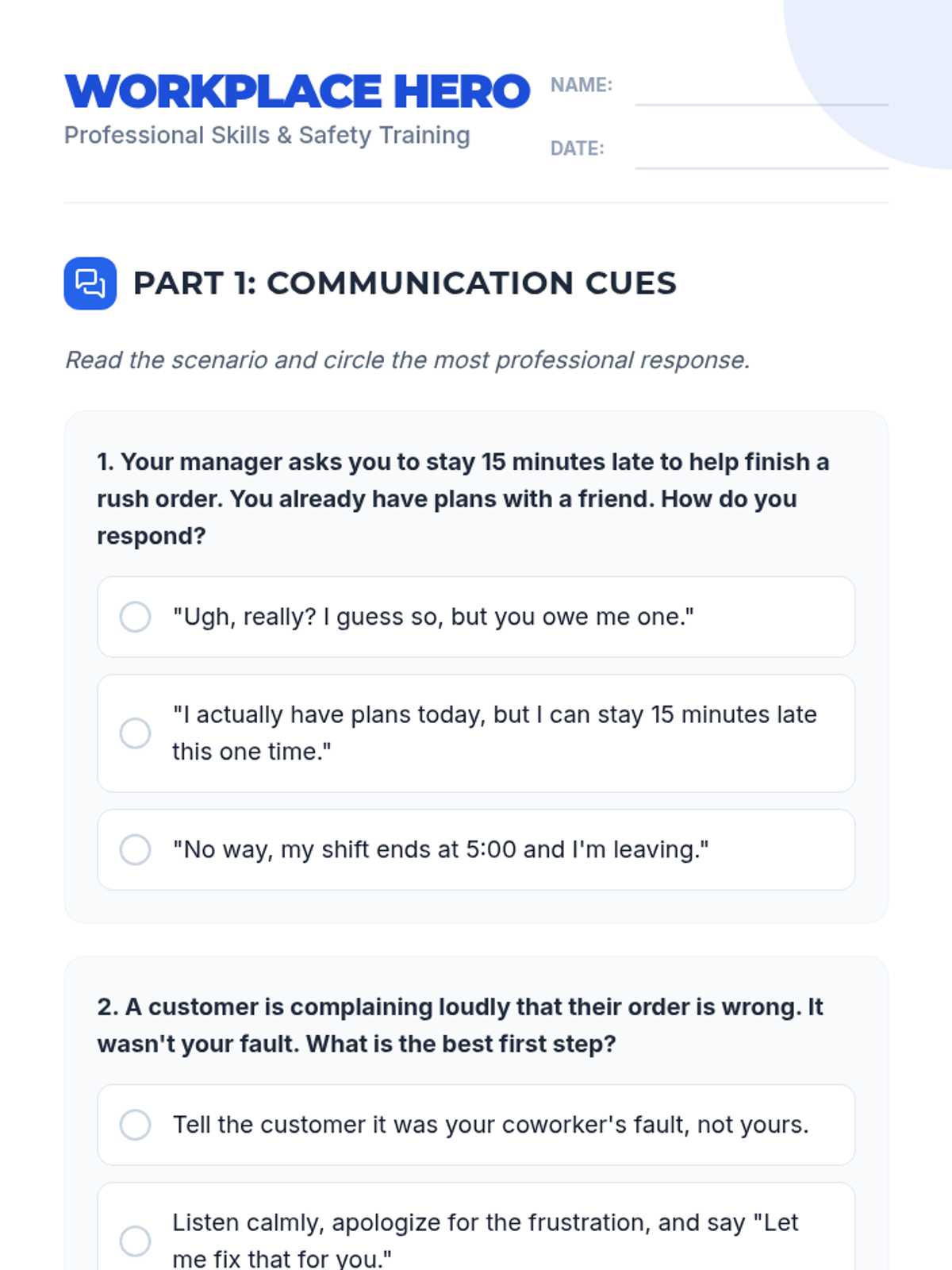
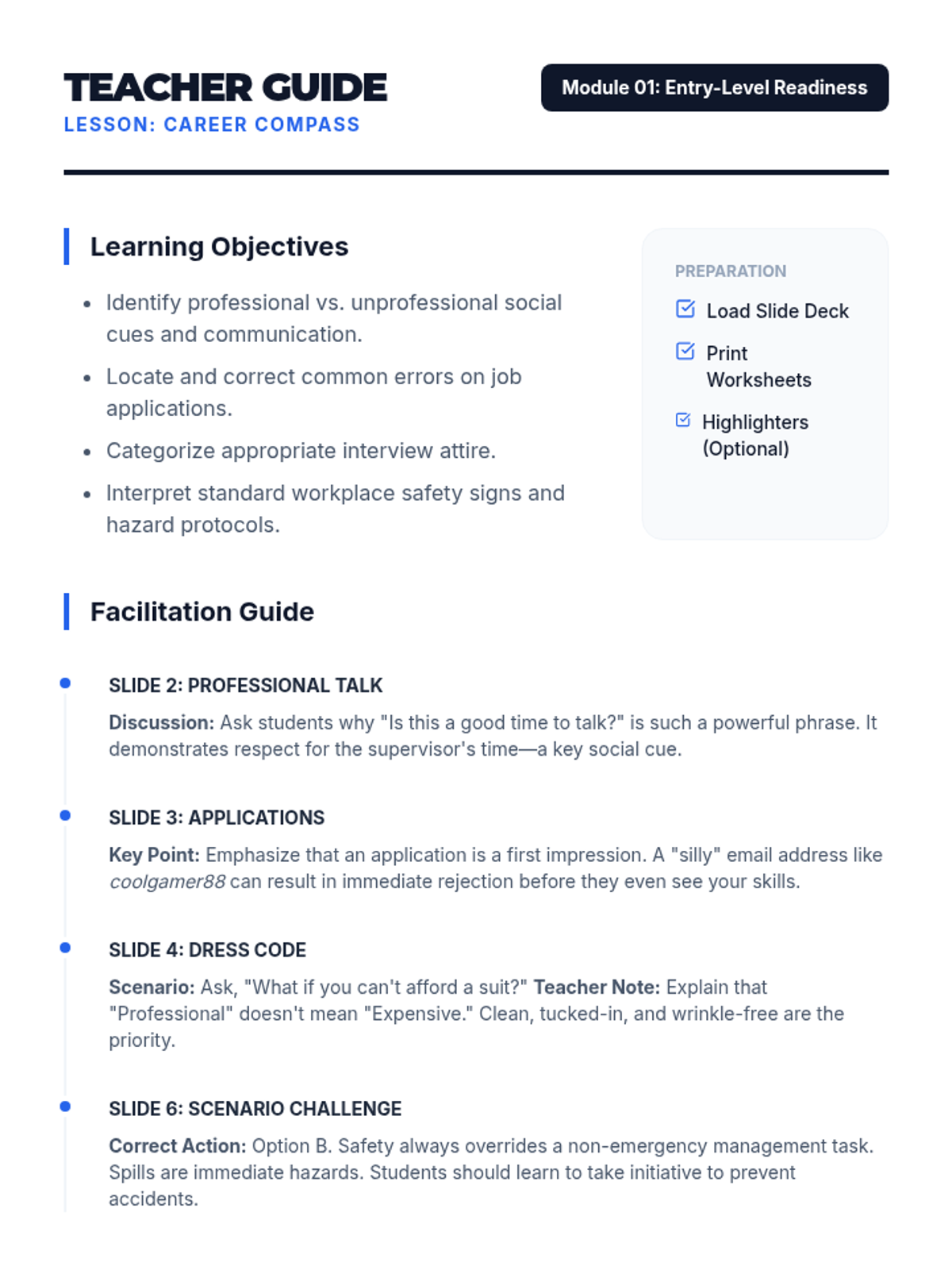
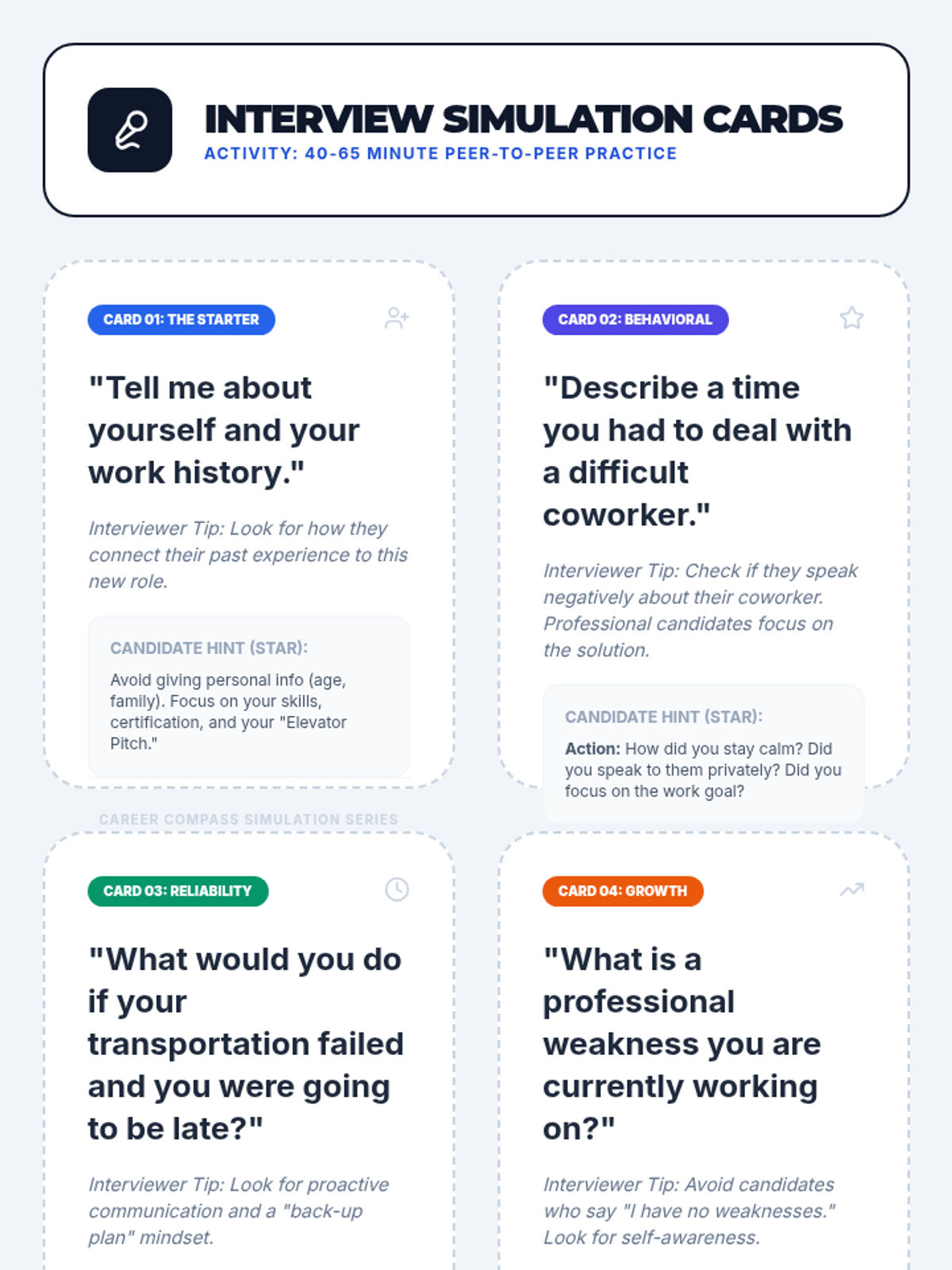
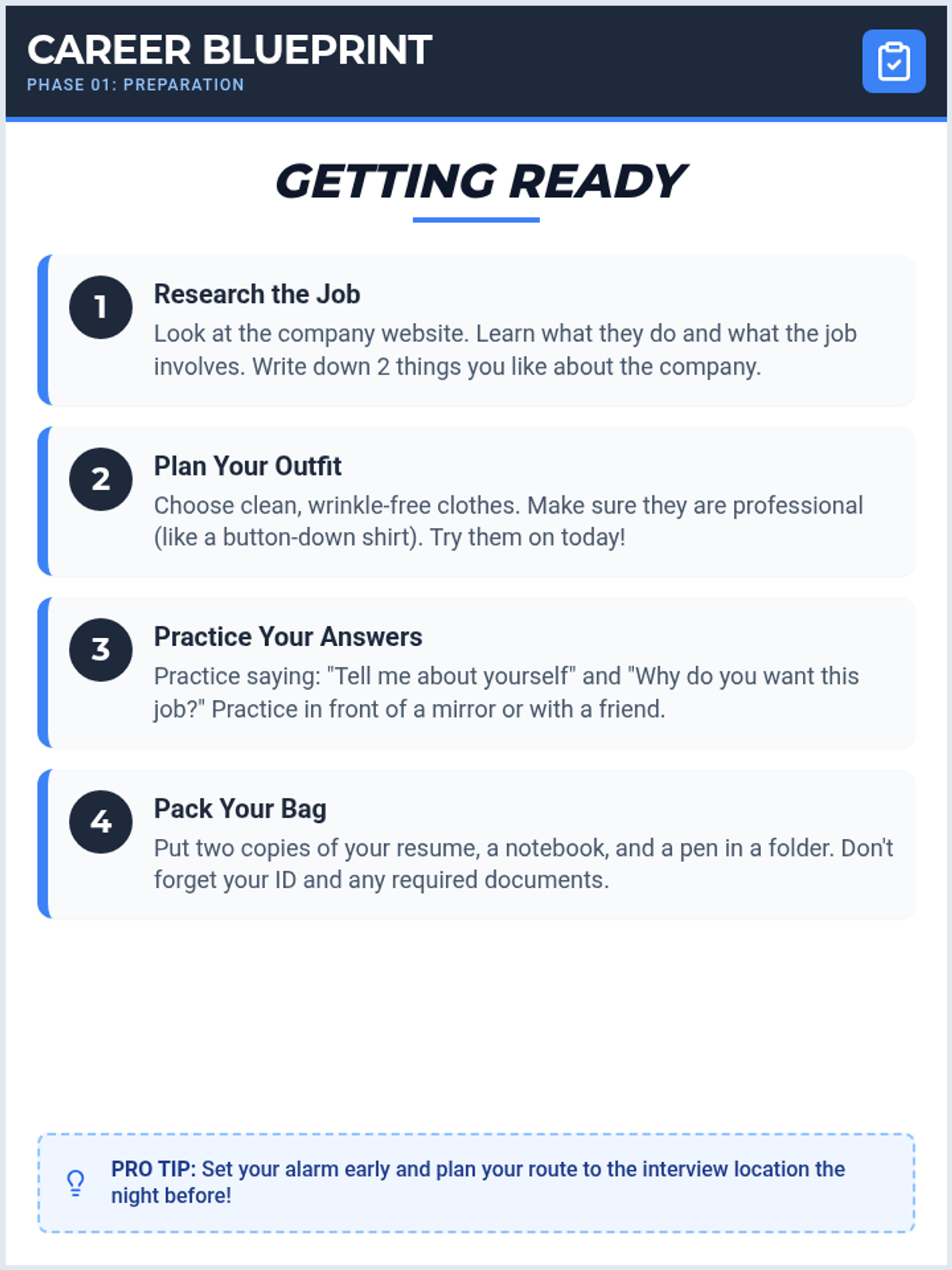
A comprehensive training session covering professional communication, job applications, interview etiquette, and workplace safety. This lesson prepares students for the transition into professional environments with practical scenarios and visual guides.
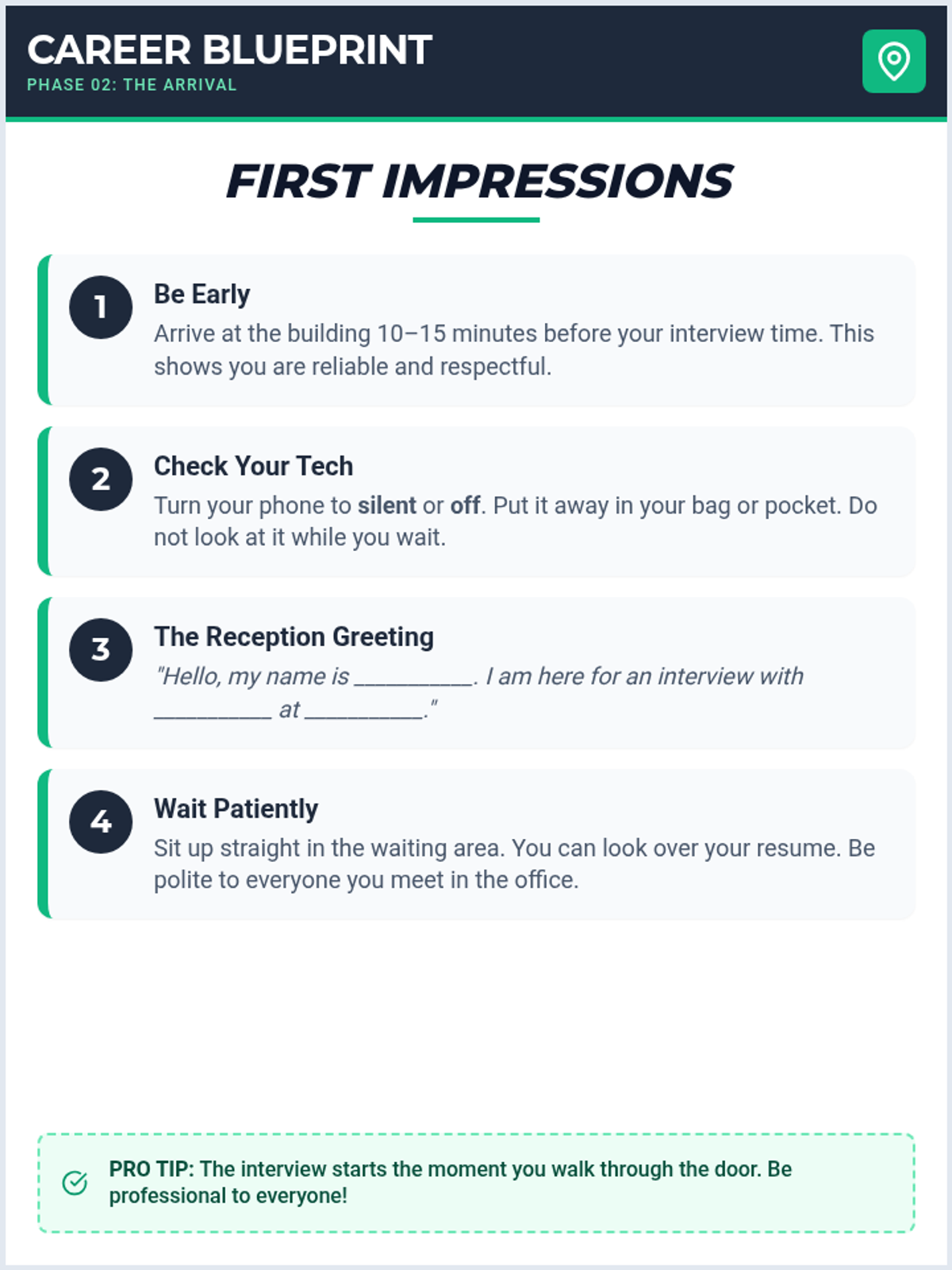
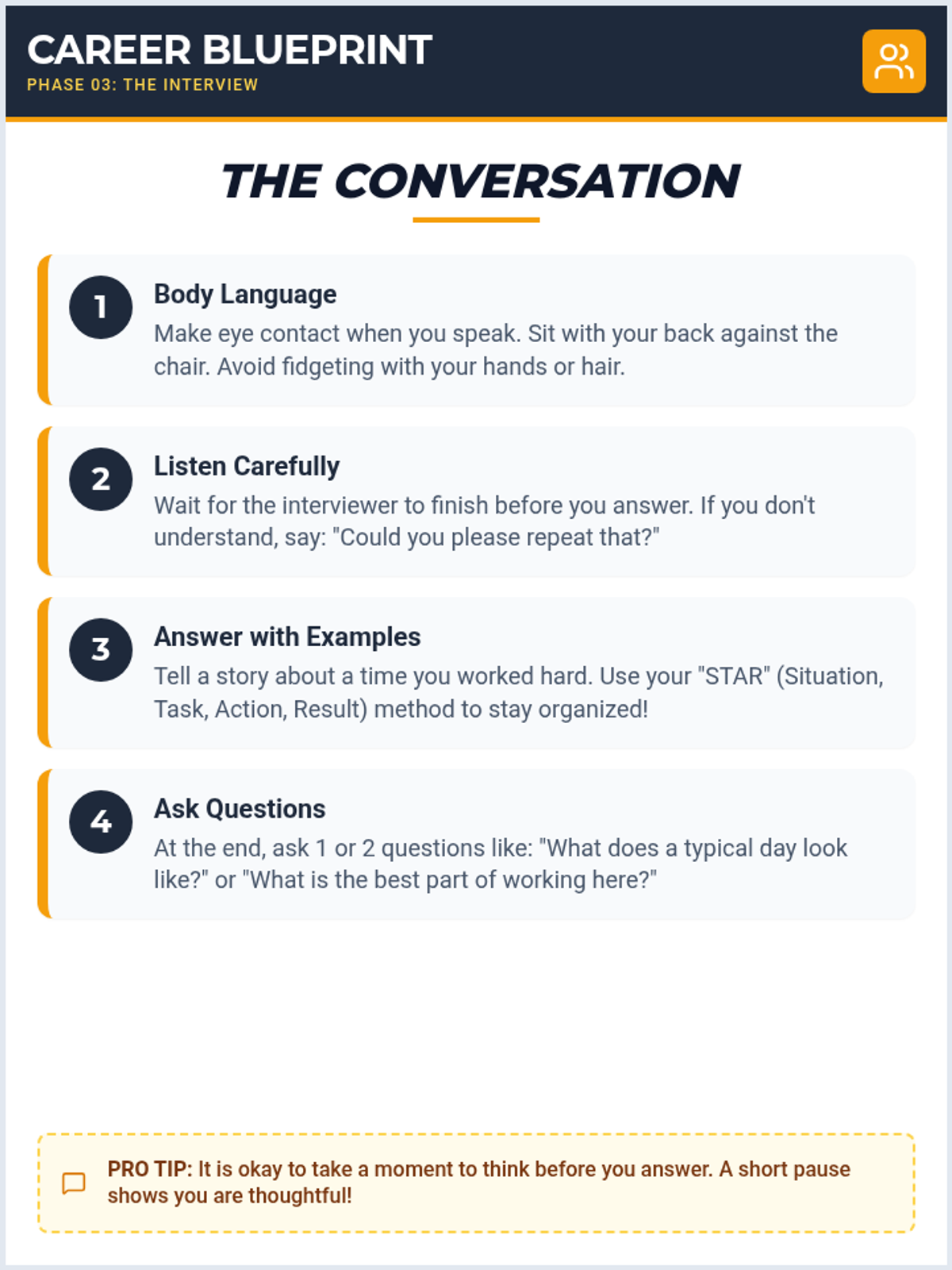
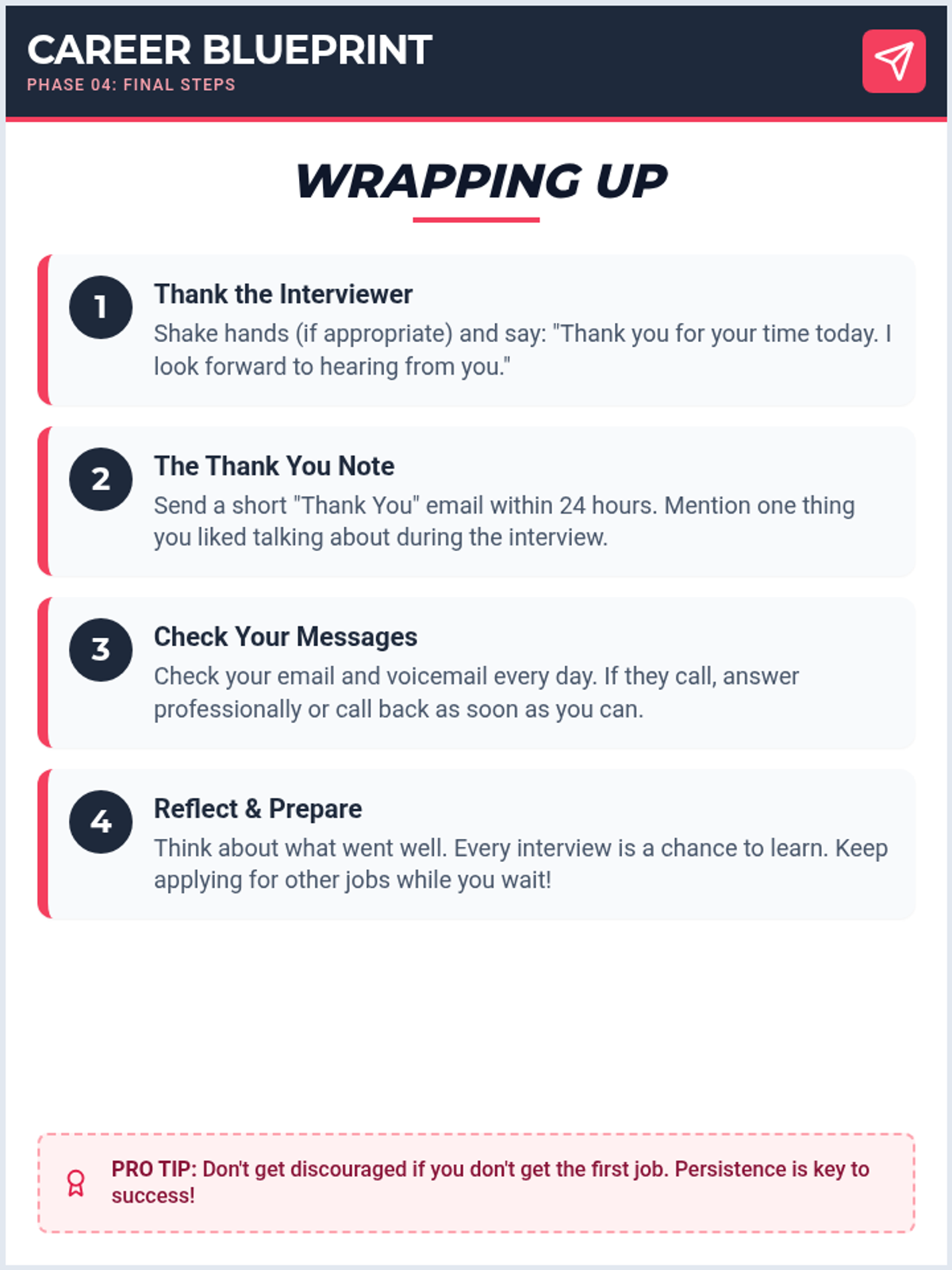
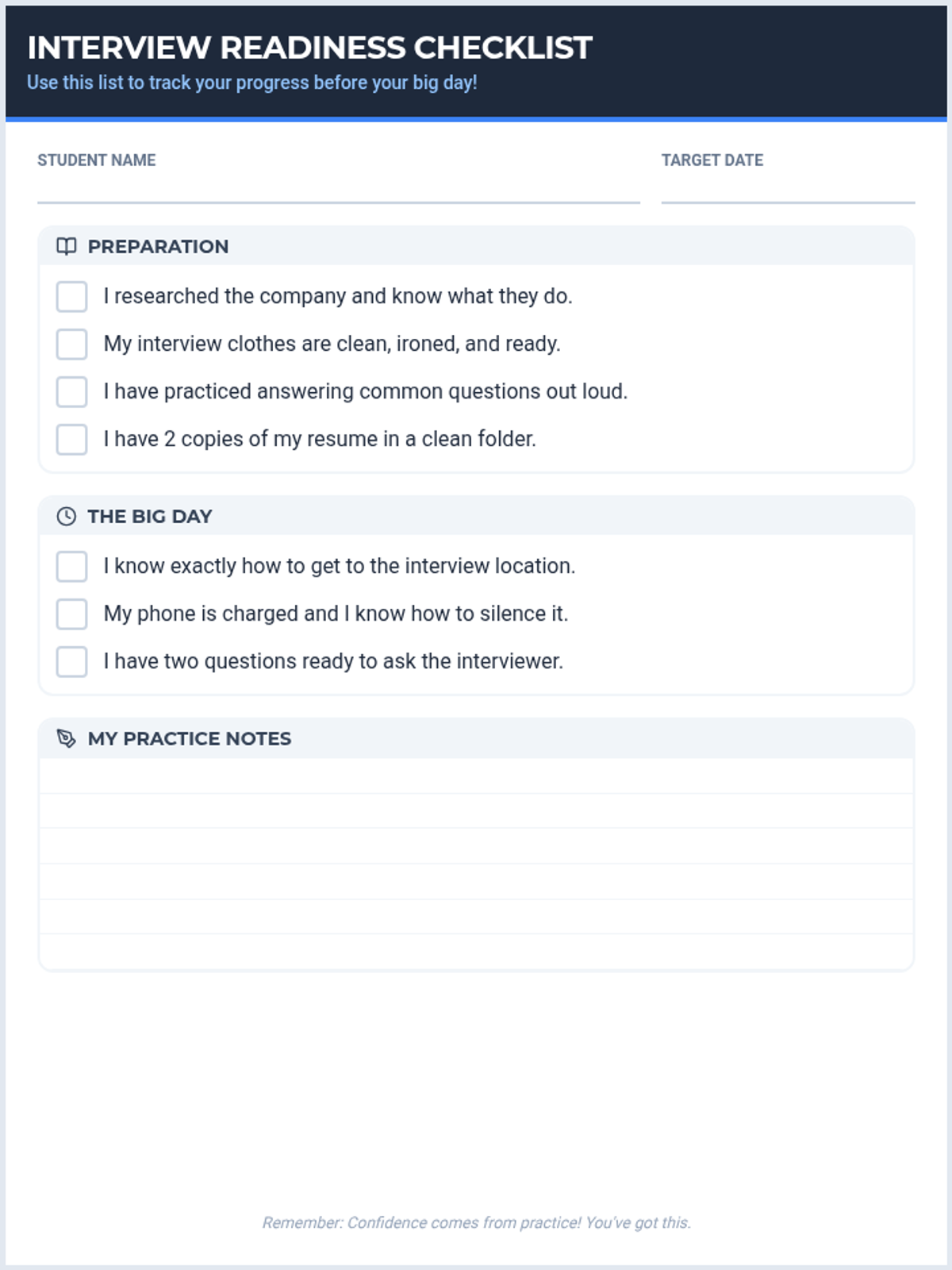
A series of visual task analysis posters and checklists designed to help adult transition students master the steps of a successful job interview.
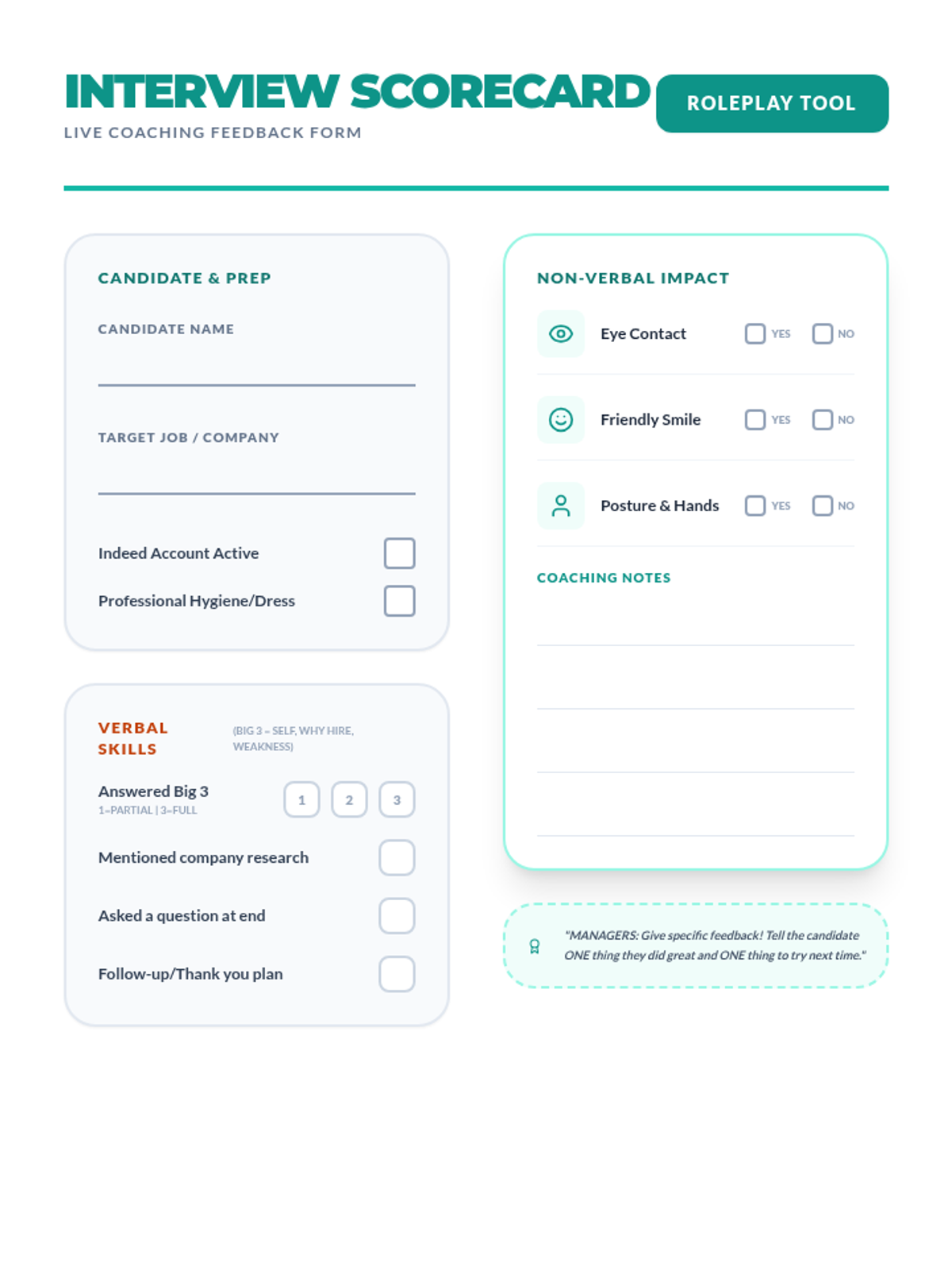
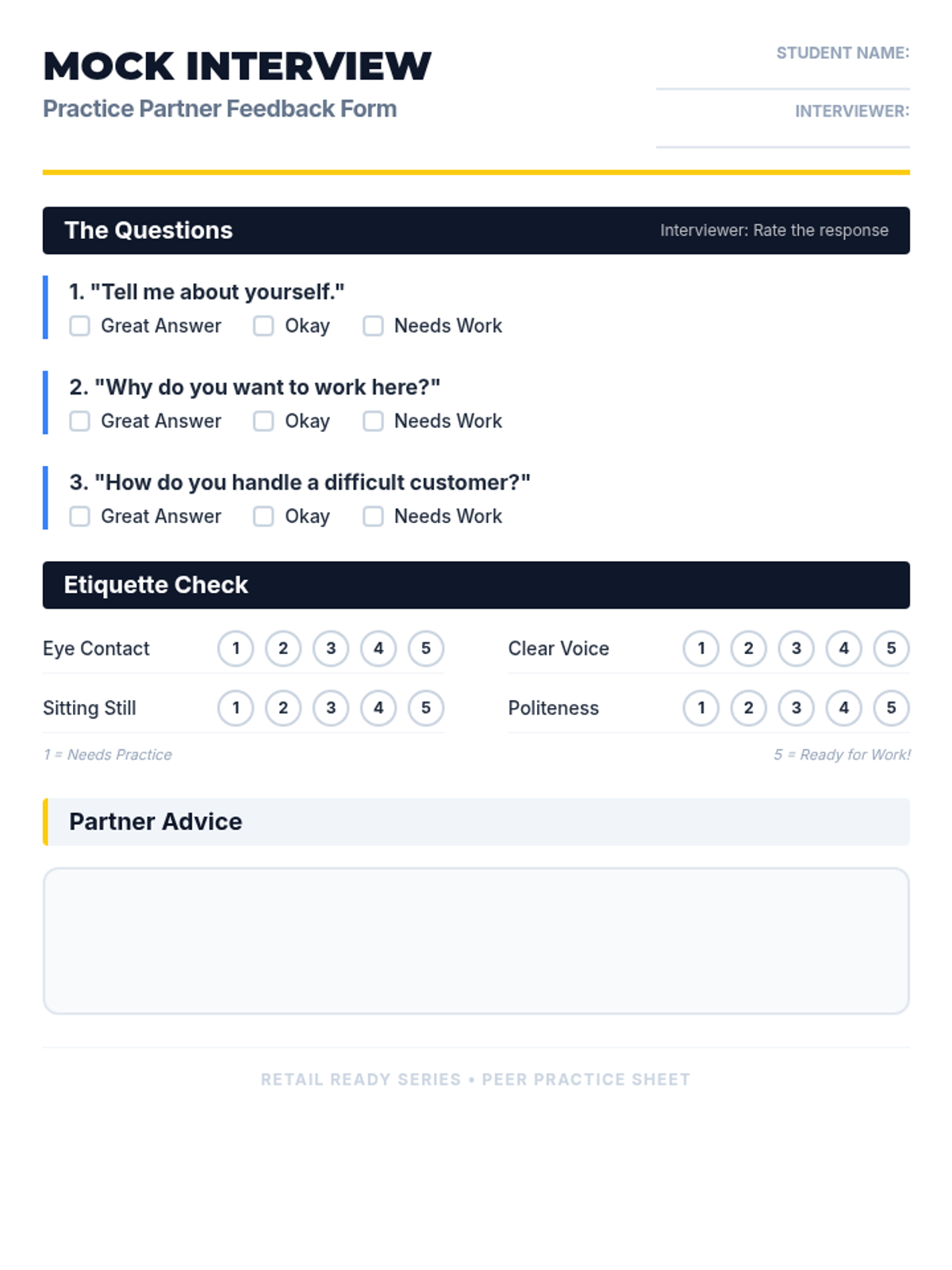
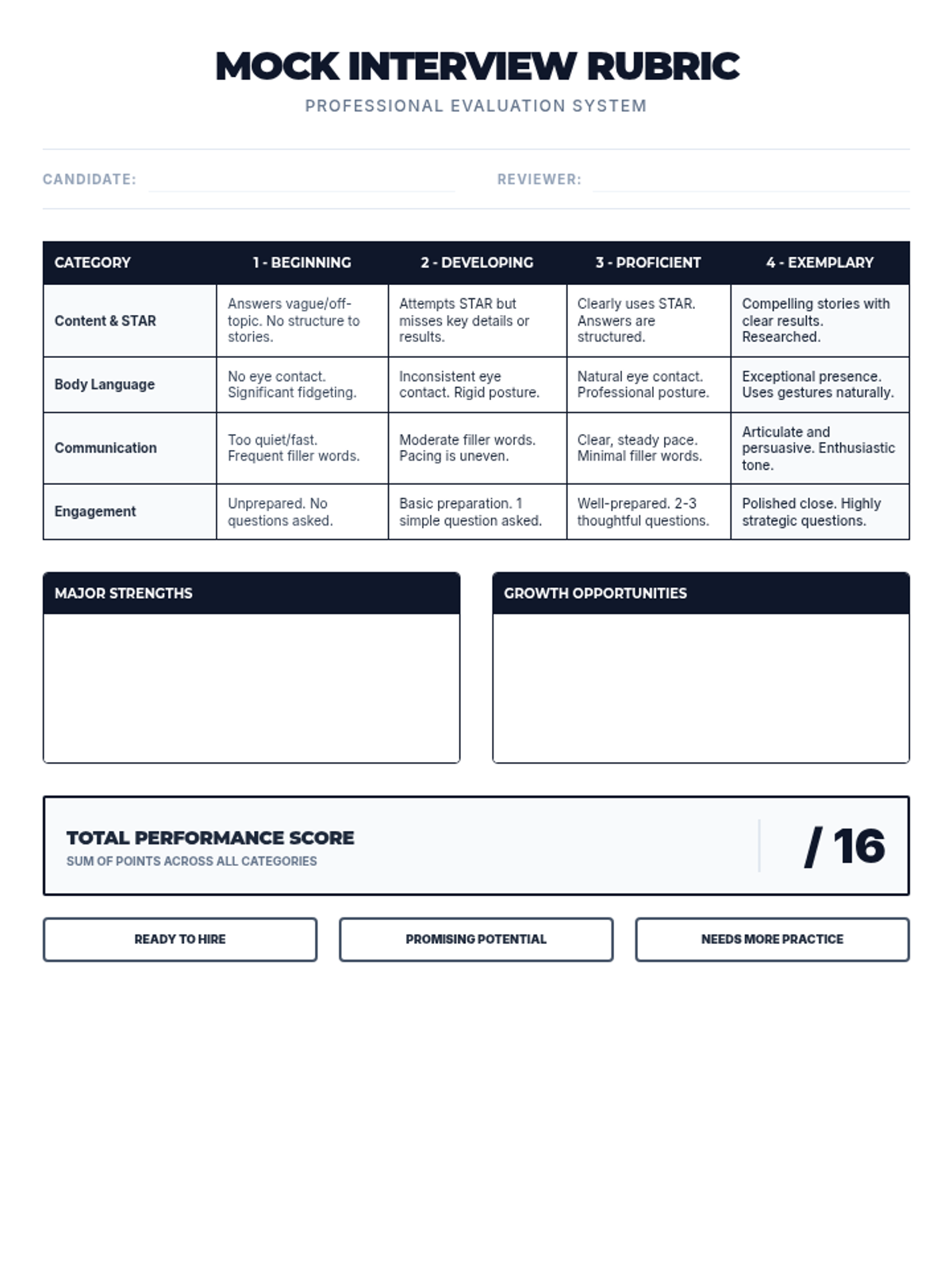
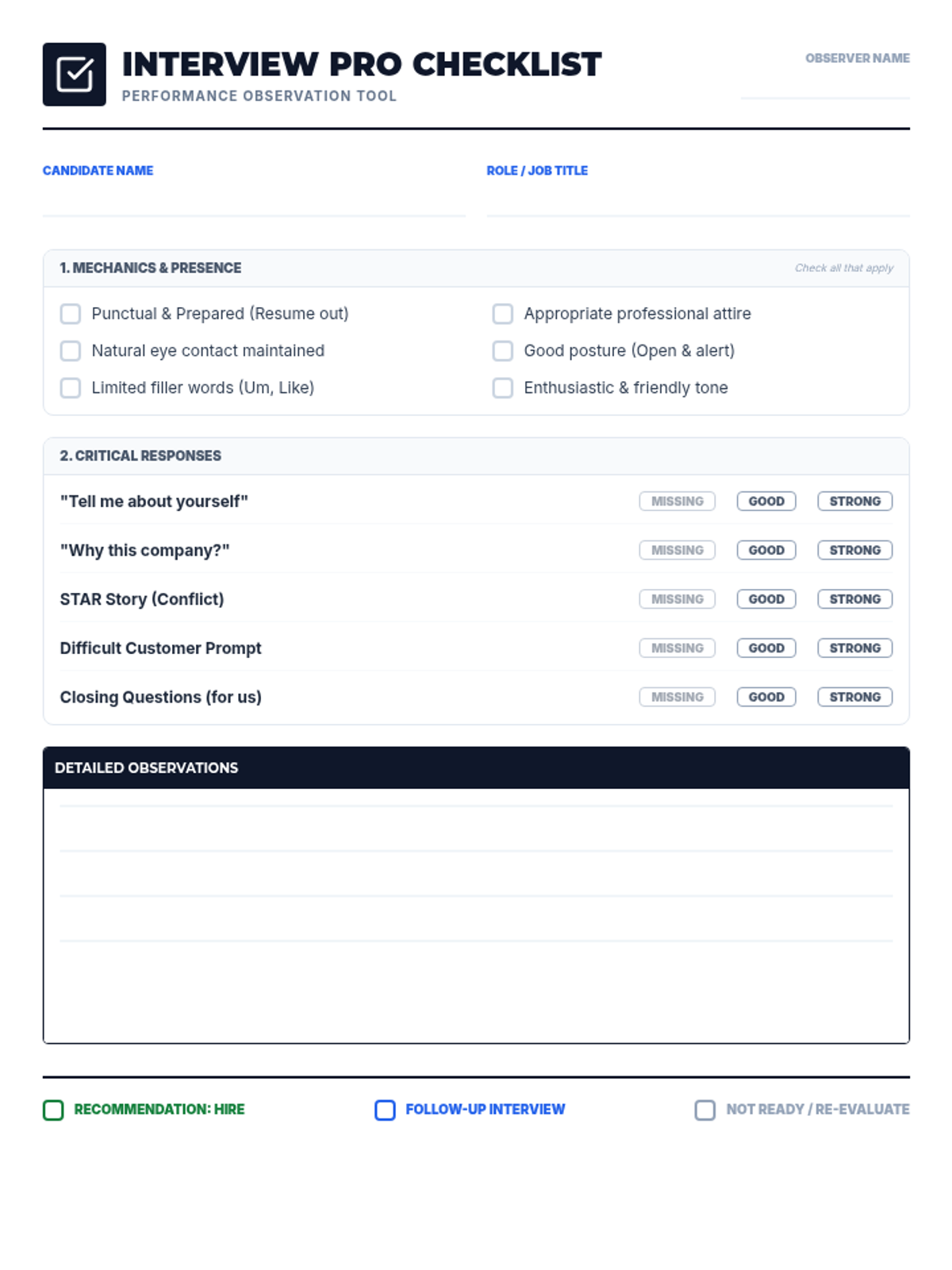
A comprehensive guide to mastering the job interview process, covering essential questions, non-verbal communication, and self-evaluation. Students will prepare responses, practice with peers, and receive professional feedback.
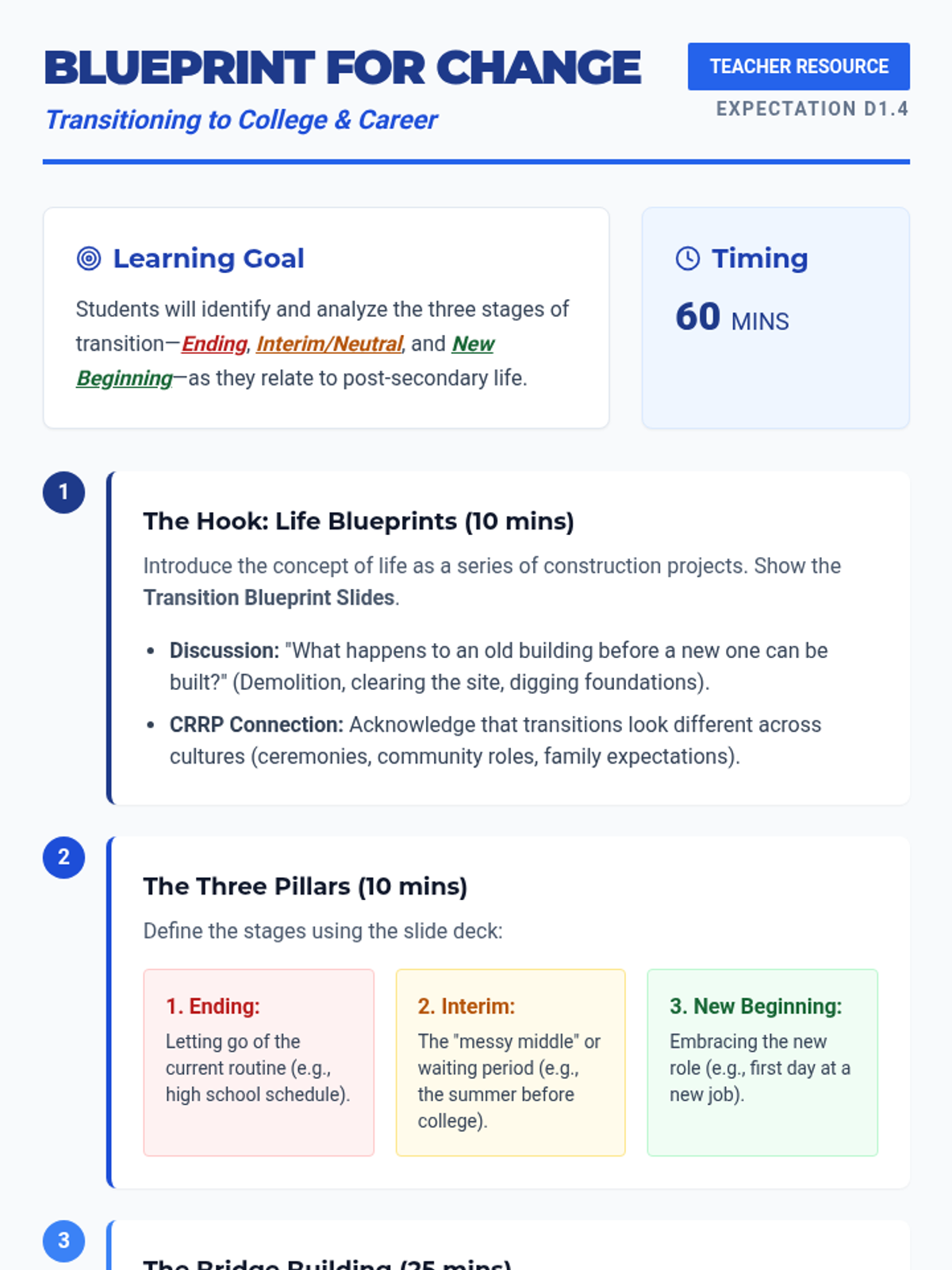
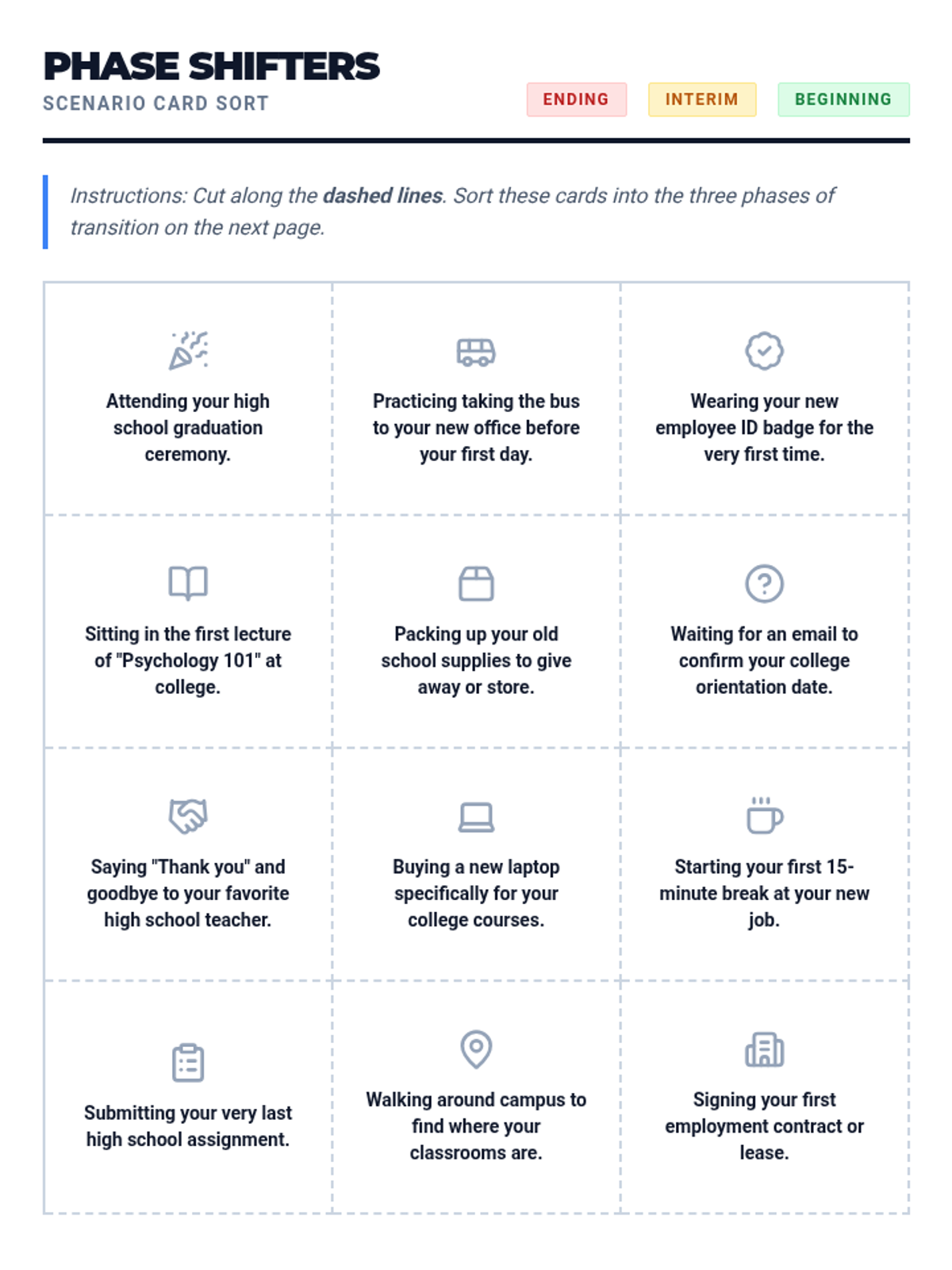
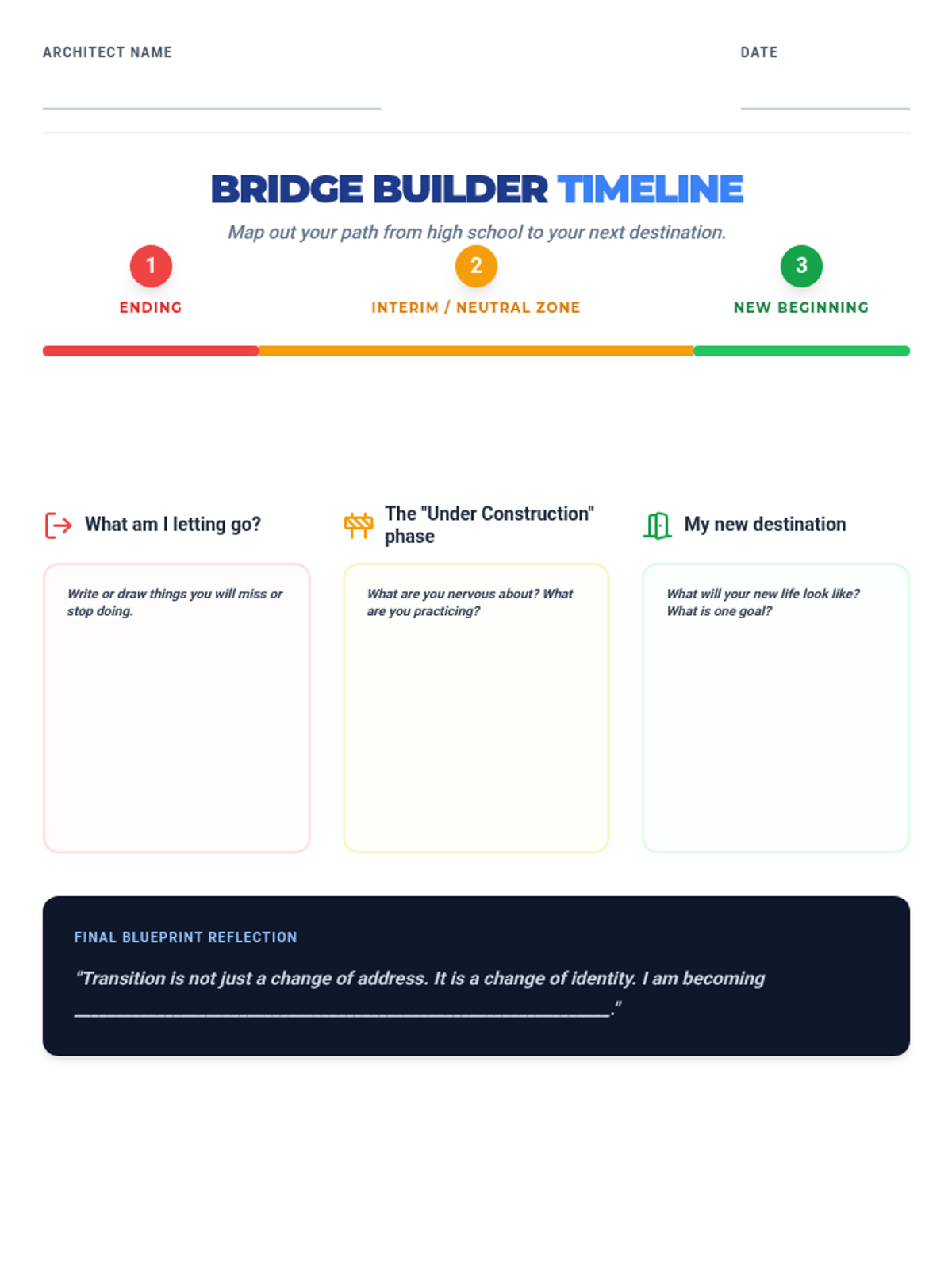
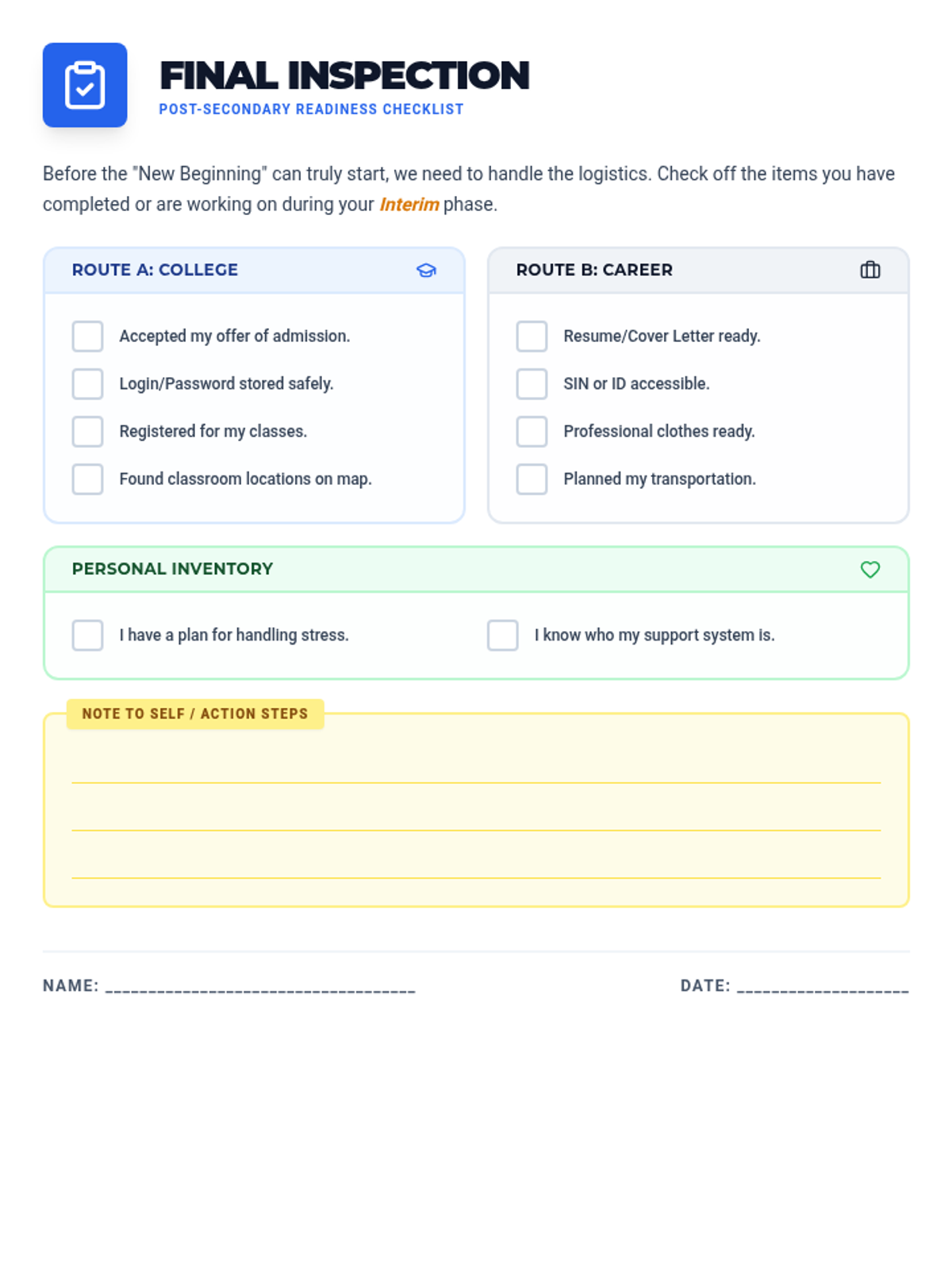
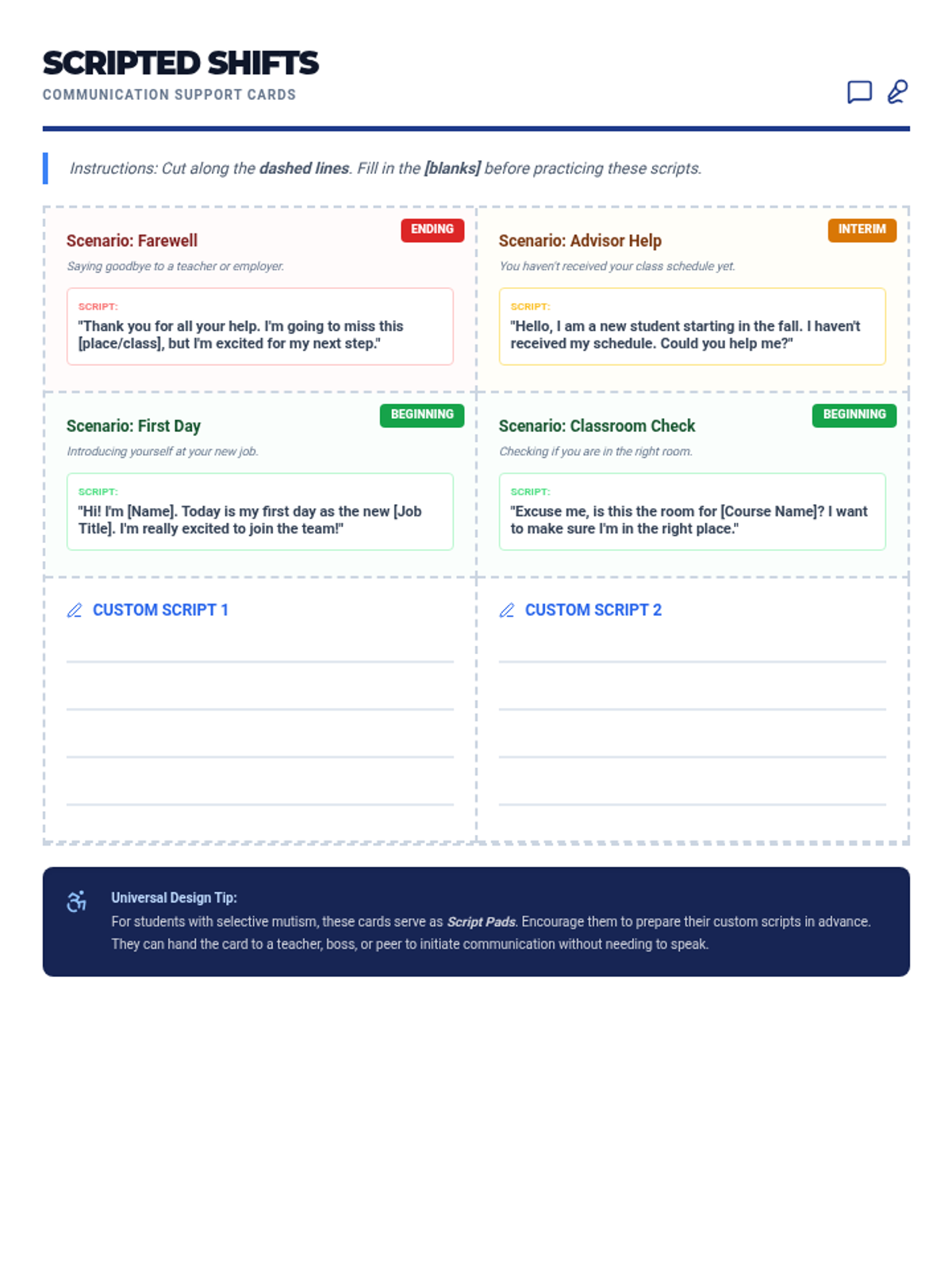
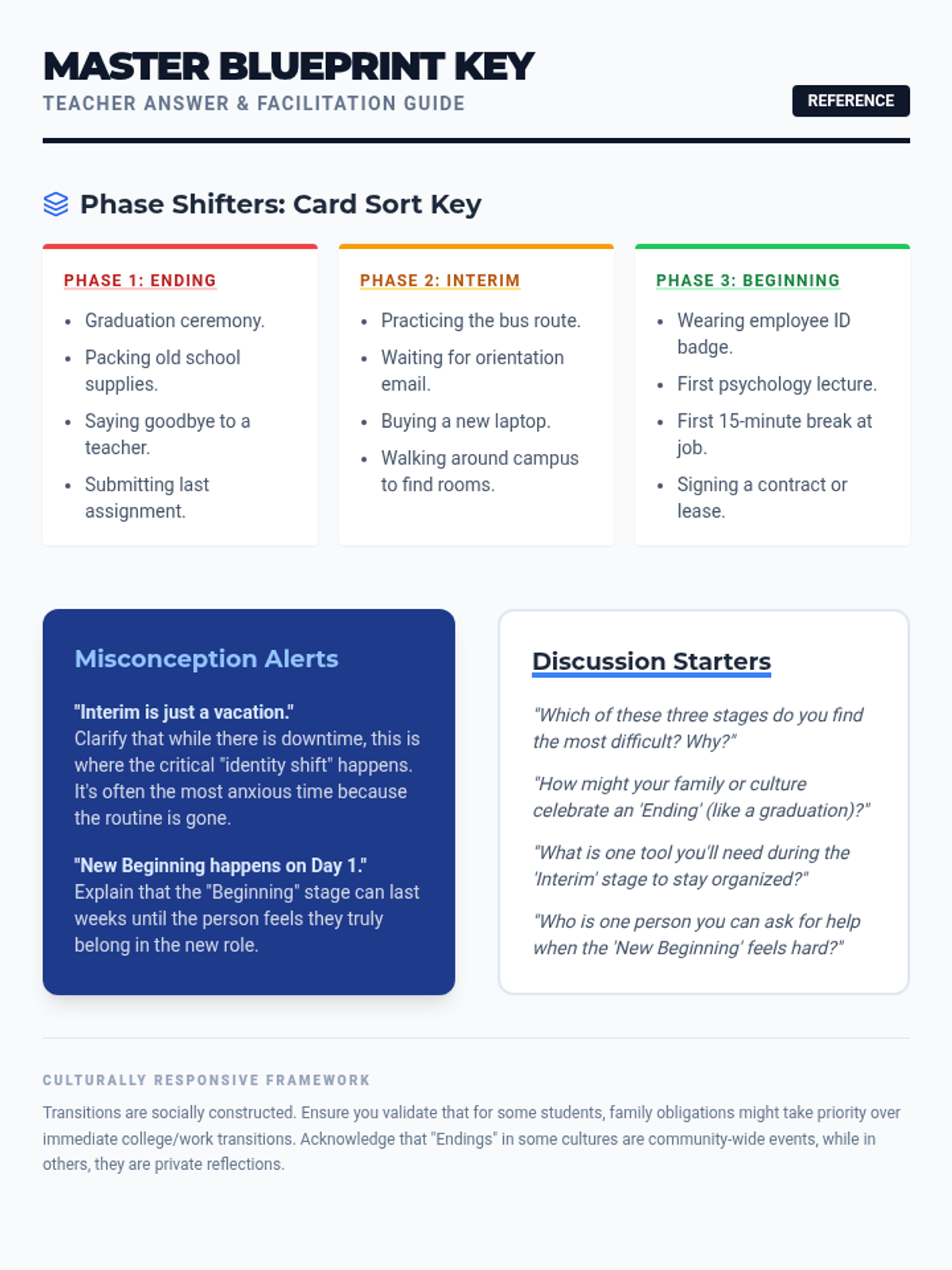
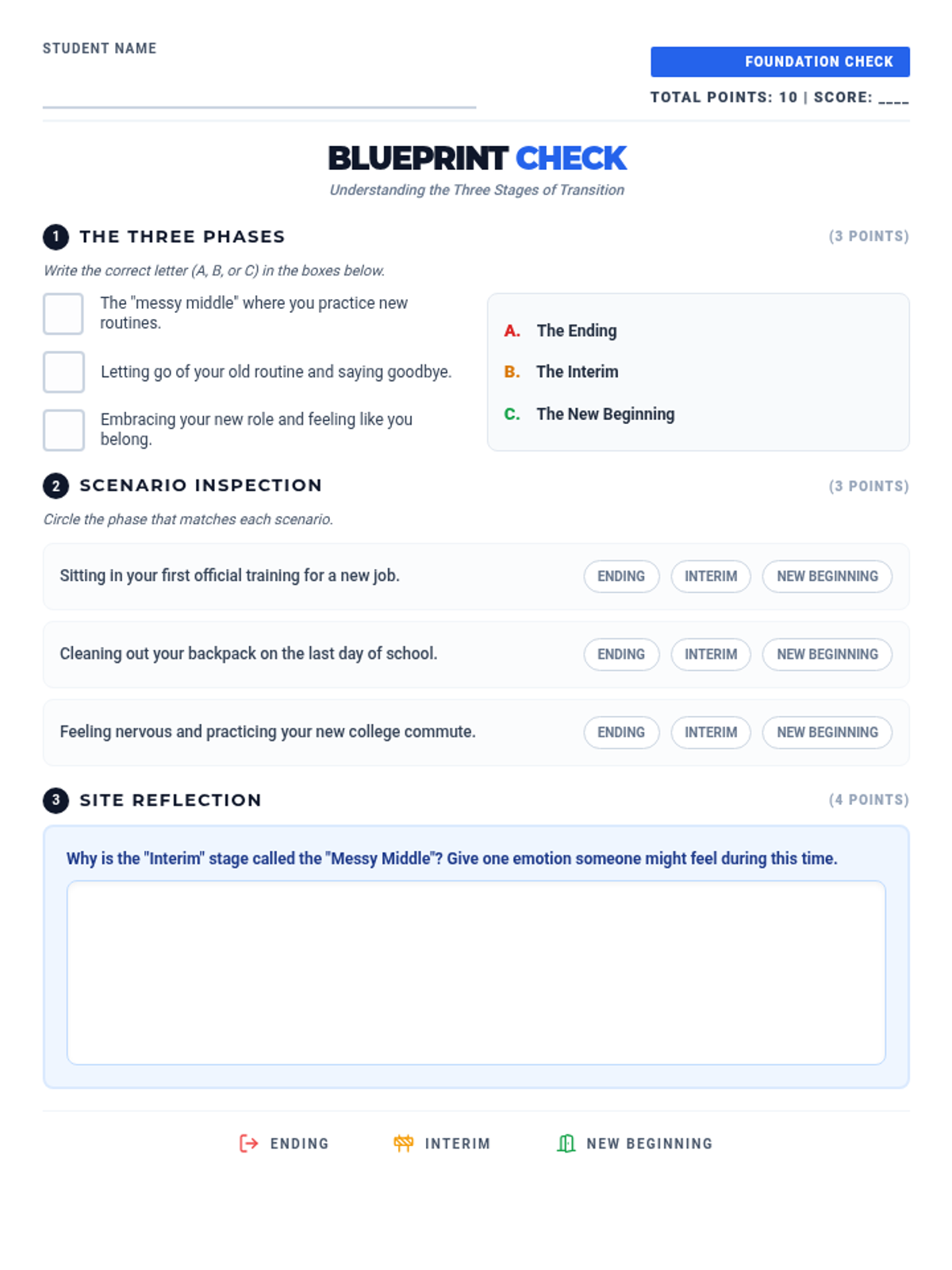
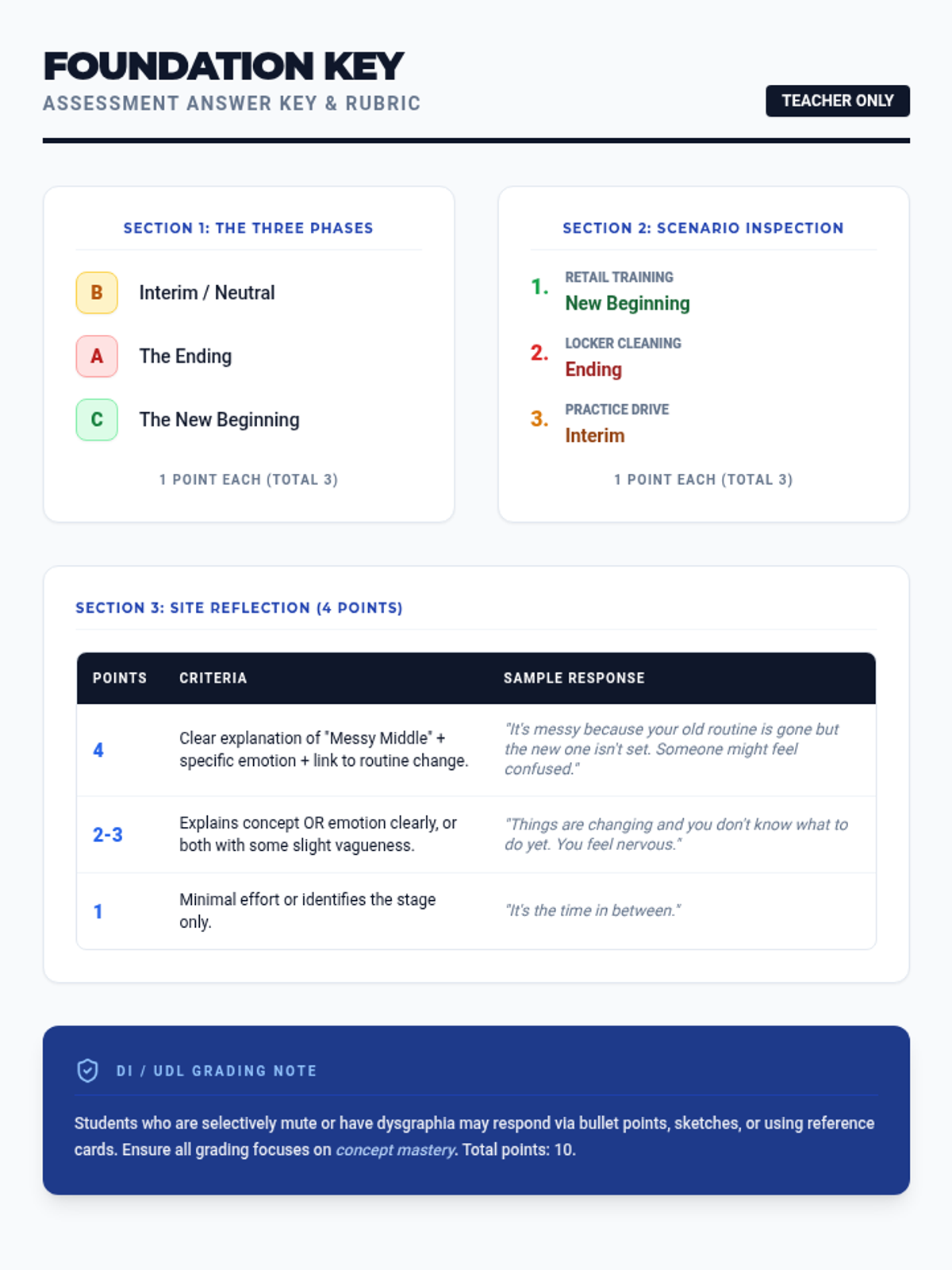
A comprehensive 60-minute lesson focused on the three stages of transition (Ending, Interim, and New Beginning) specifically tailored for students moving toward college or the workplace. This lesson employs UDL and DI strategies to support students with LD, autism, and those who are selectively mute through visual mapping and structured role-play.
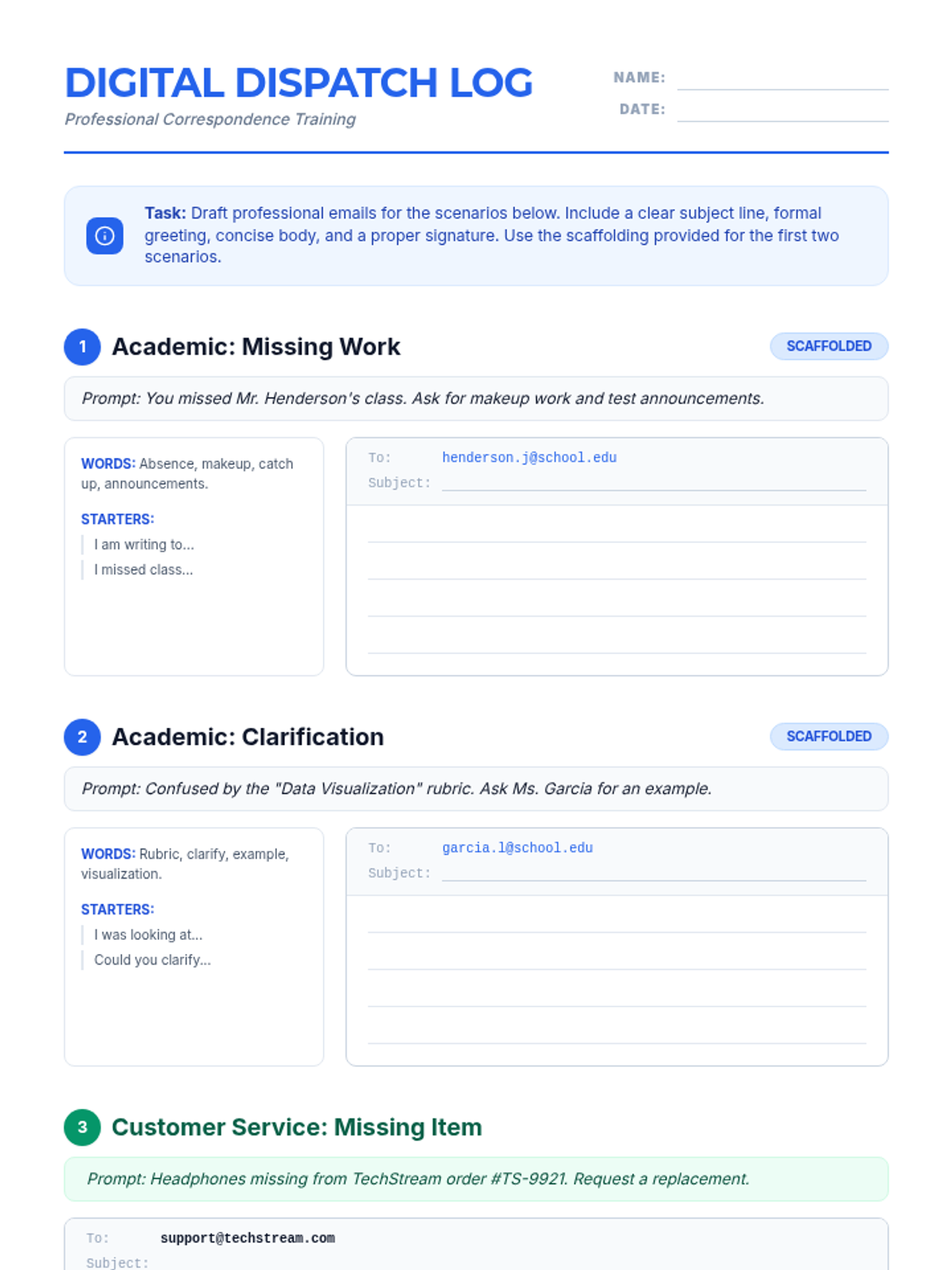
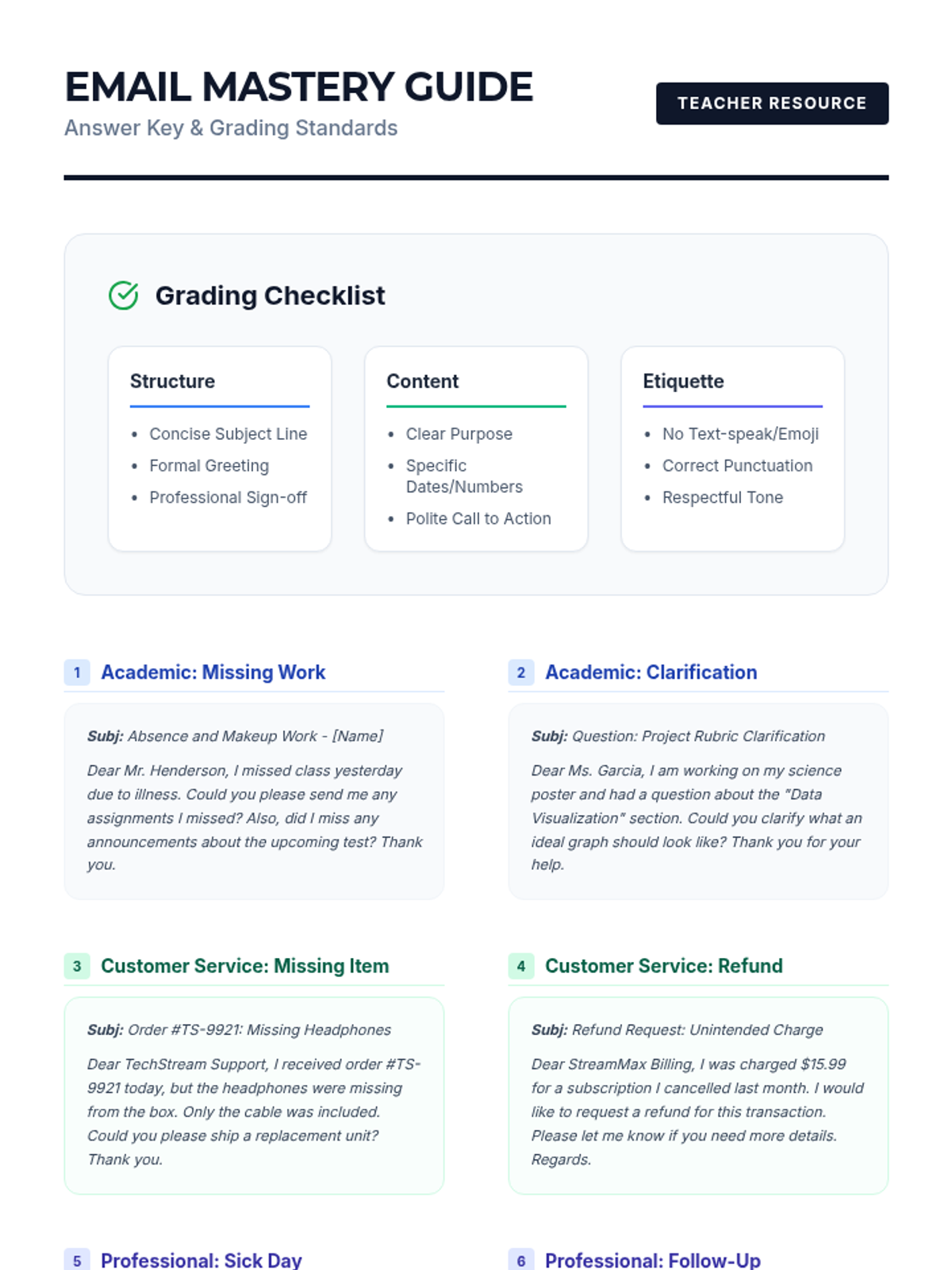
A comprehensive lesson on professional and academic email etiquette, featuring scenarios ranging from school help to job applications. Students learn the structure of a formal email and practice writing their own digital correspondence.
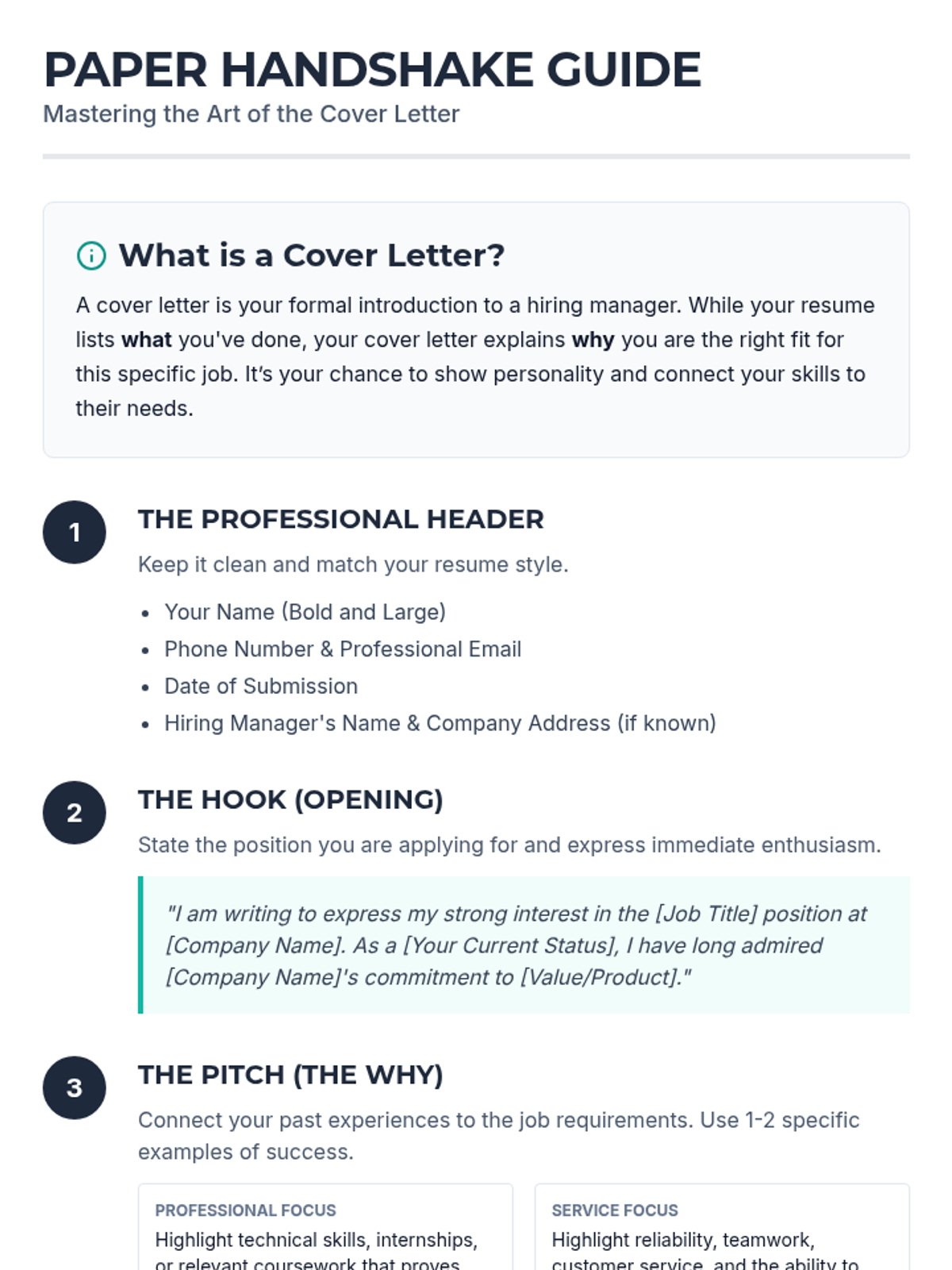
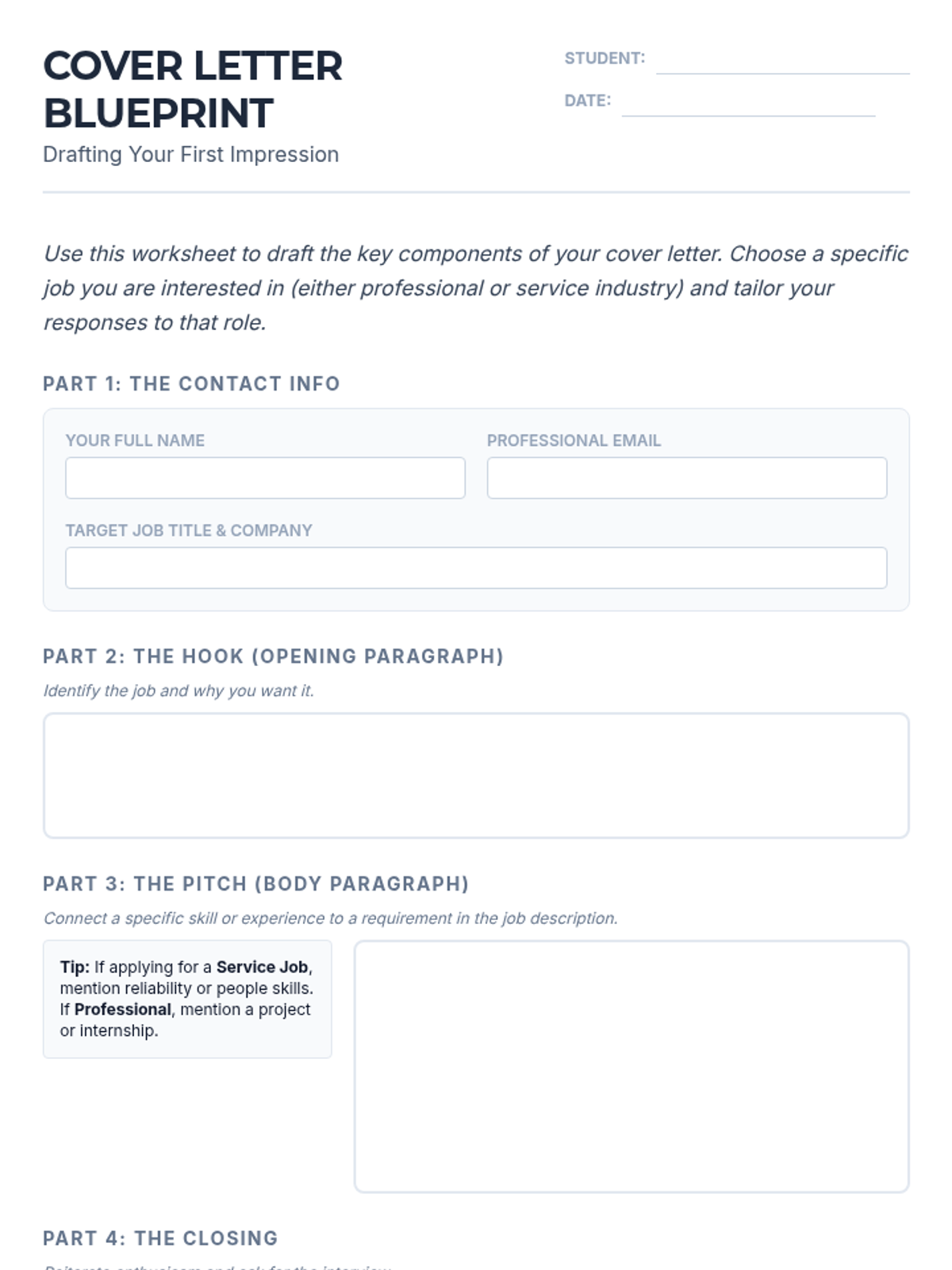
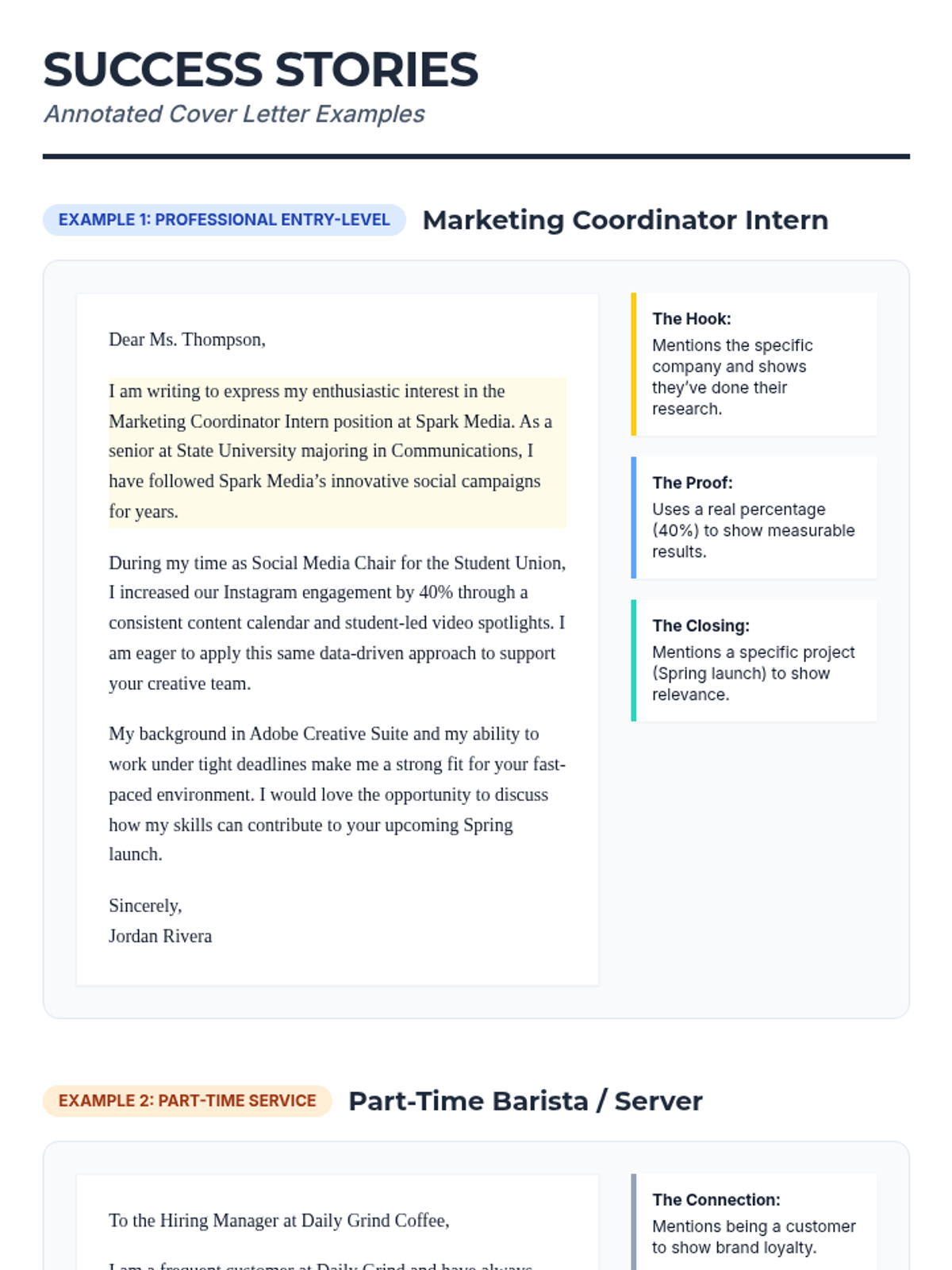
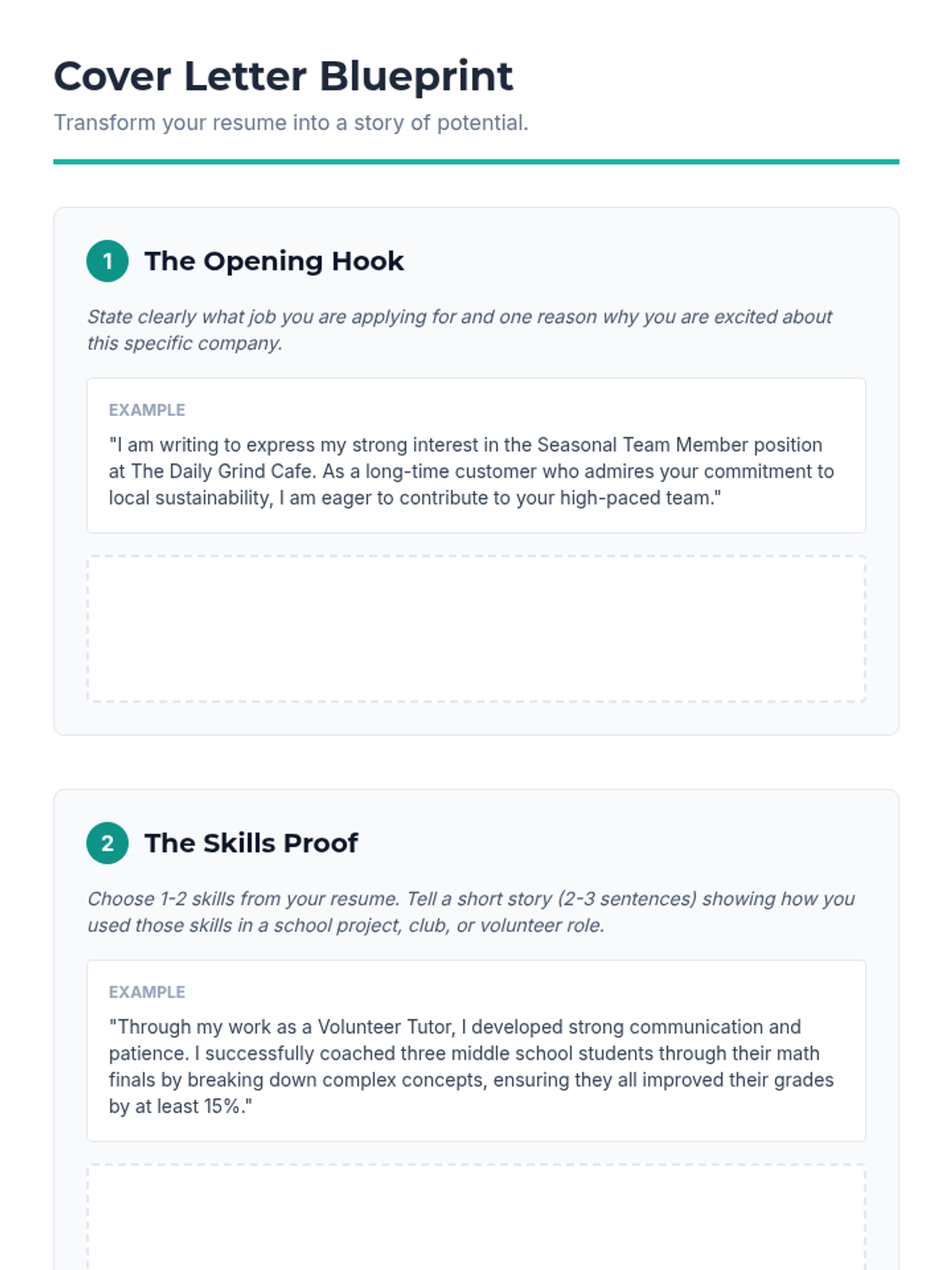
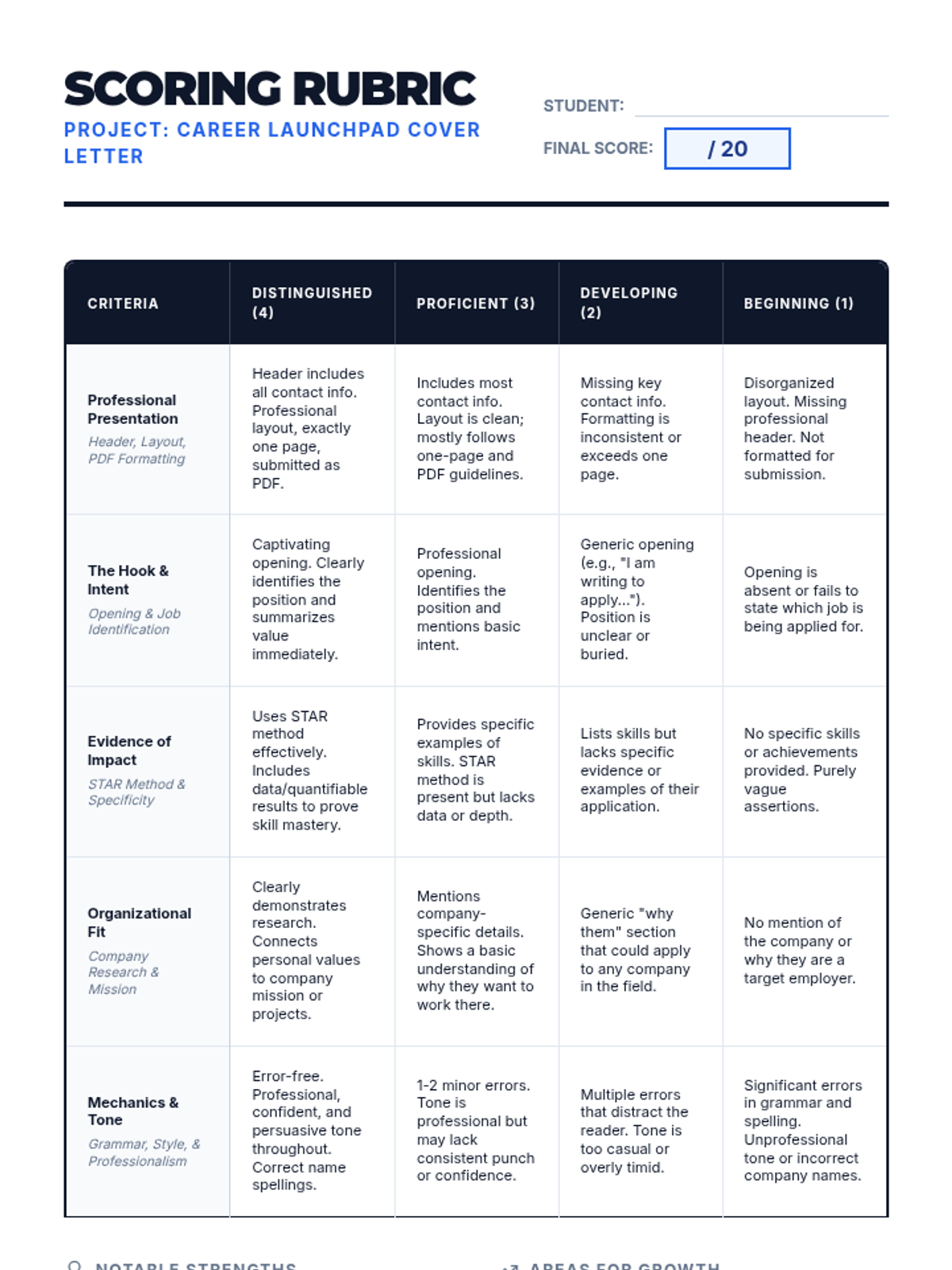
A comprehensive guide and set of tools for students to master the art of writing effective cover letters for both professional entry-level roles and service industry positions.
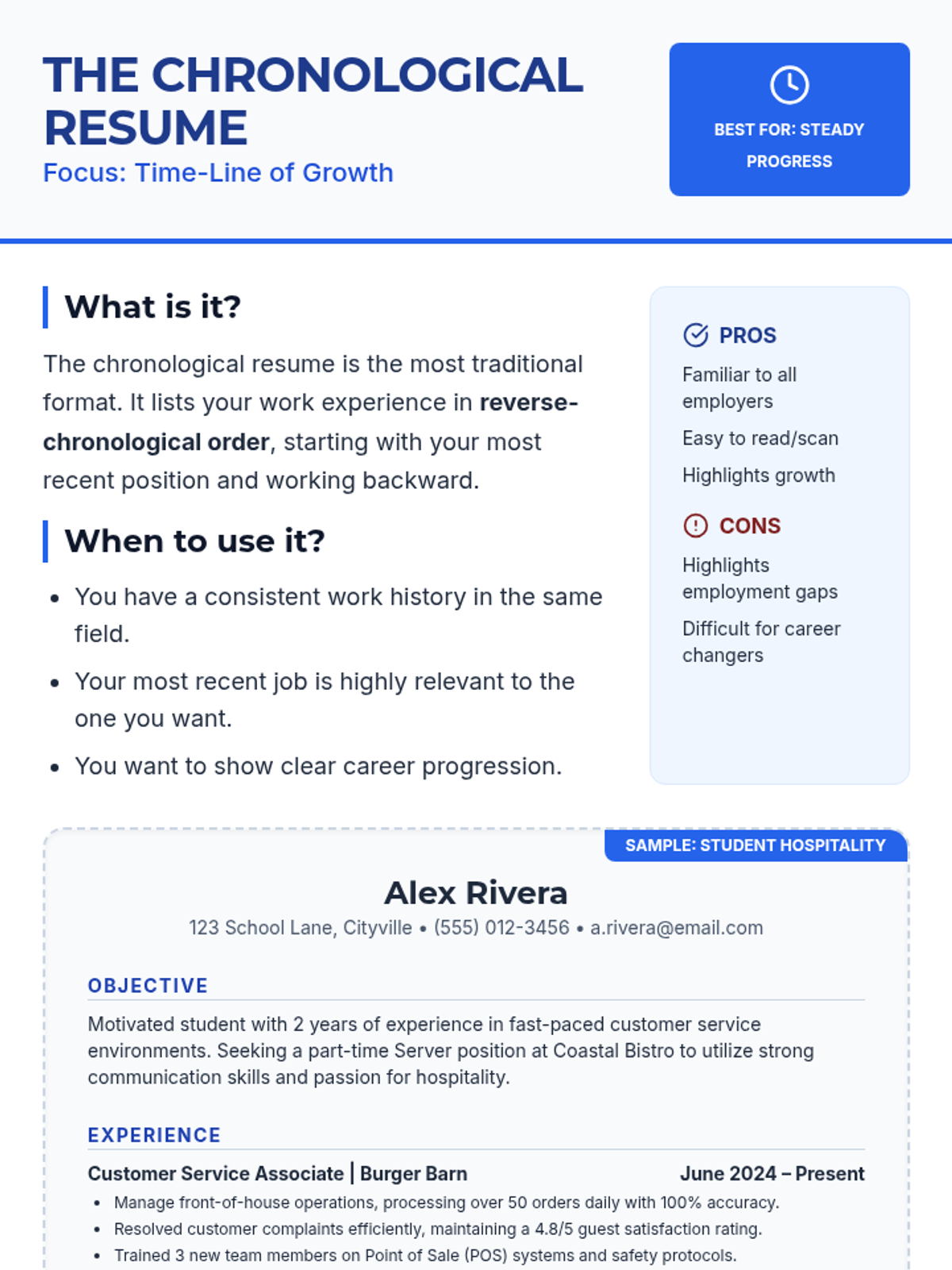
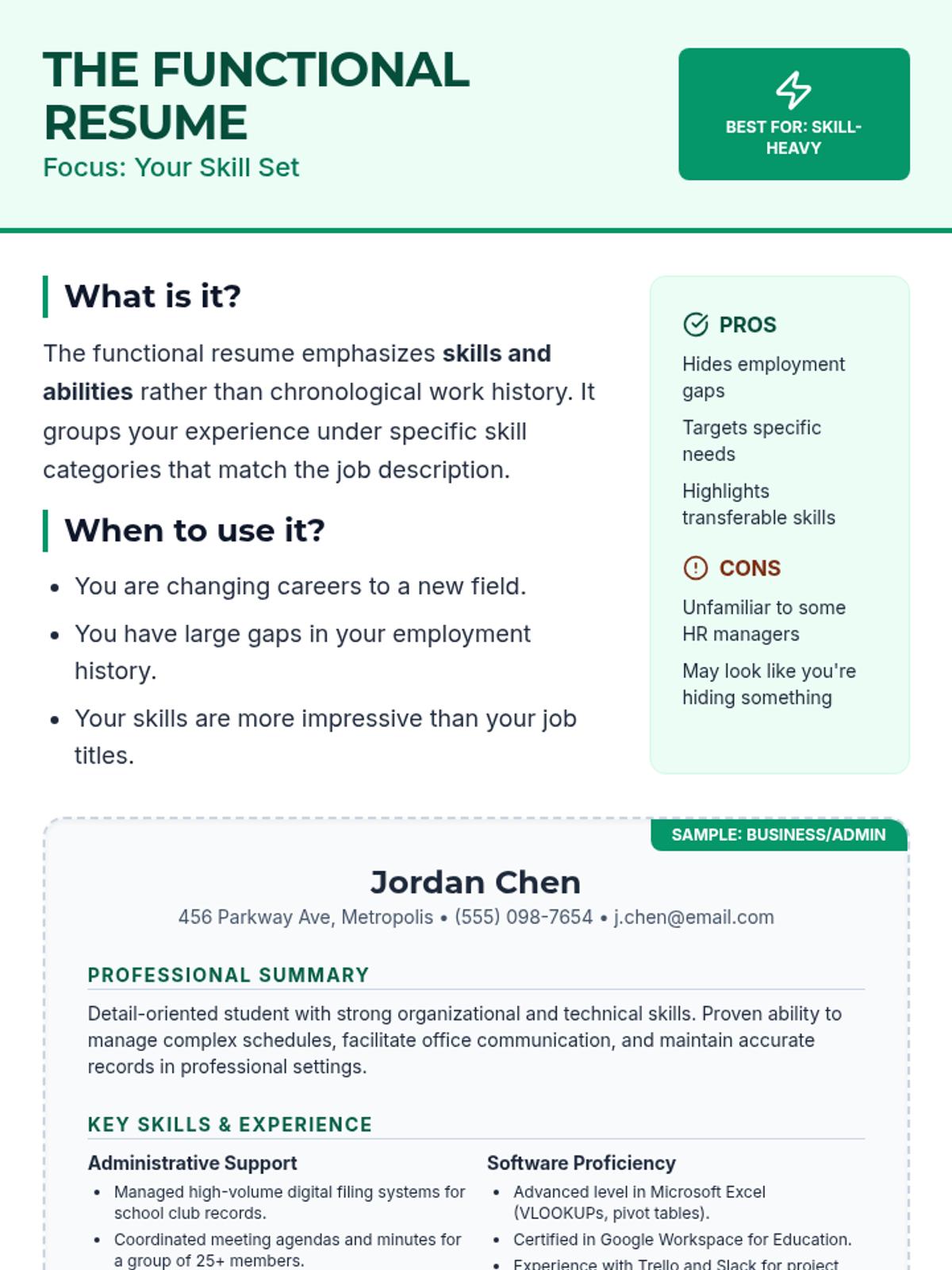
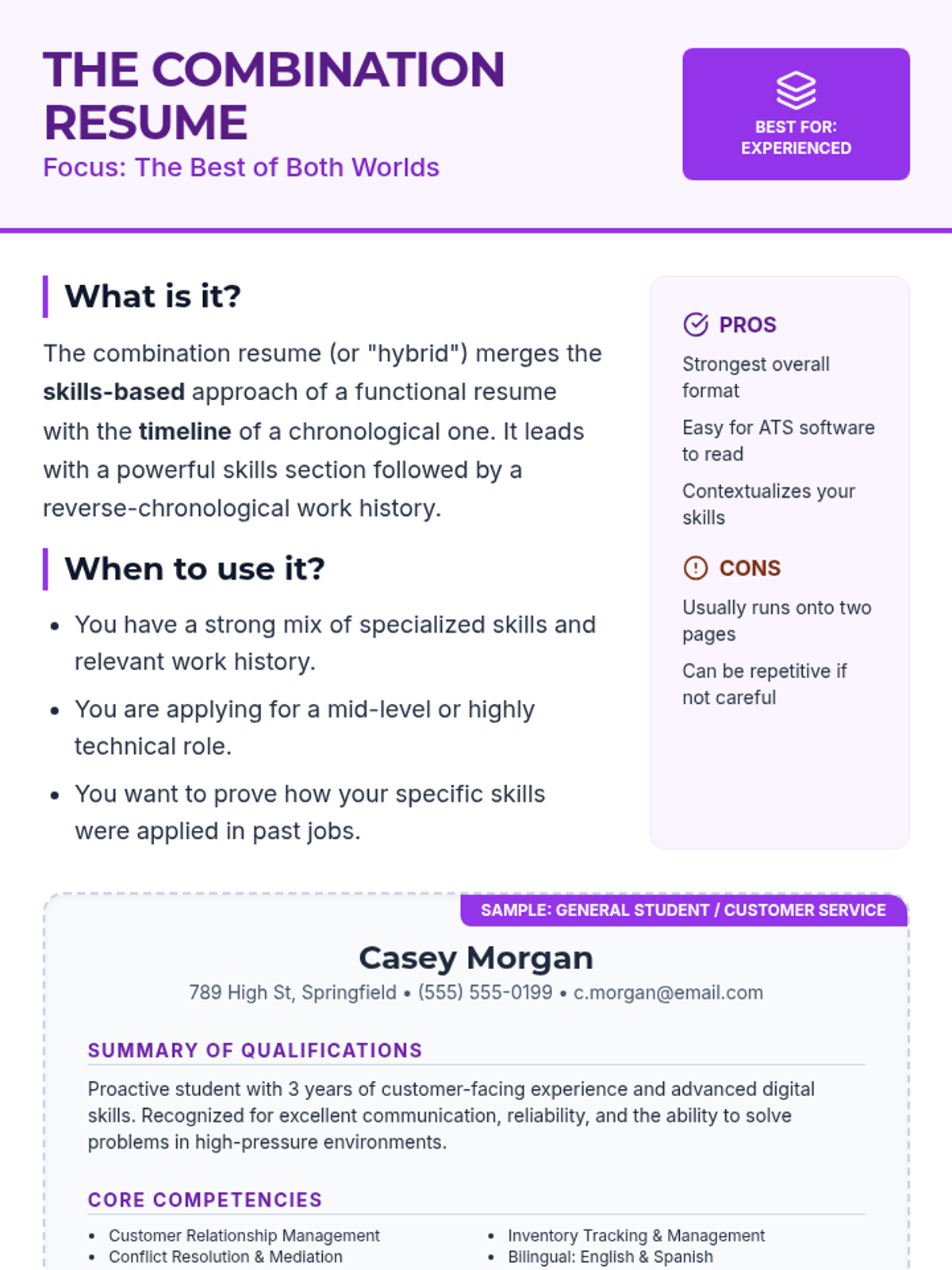
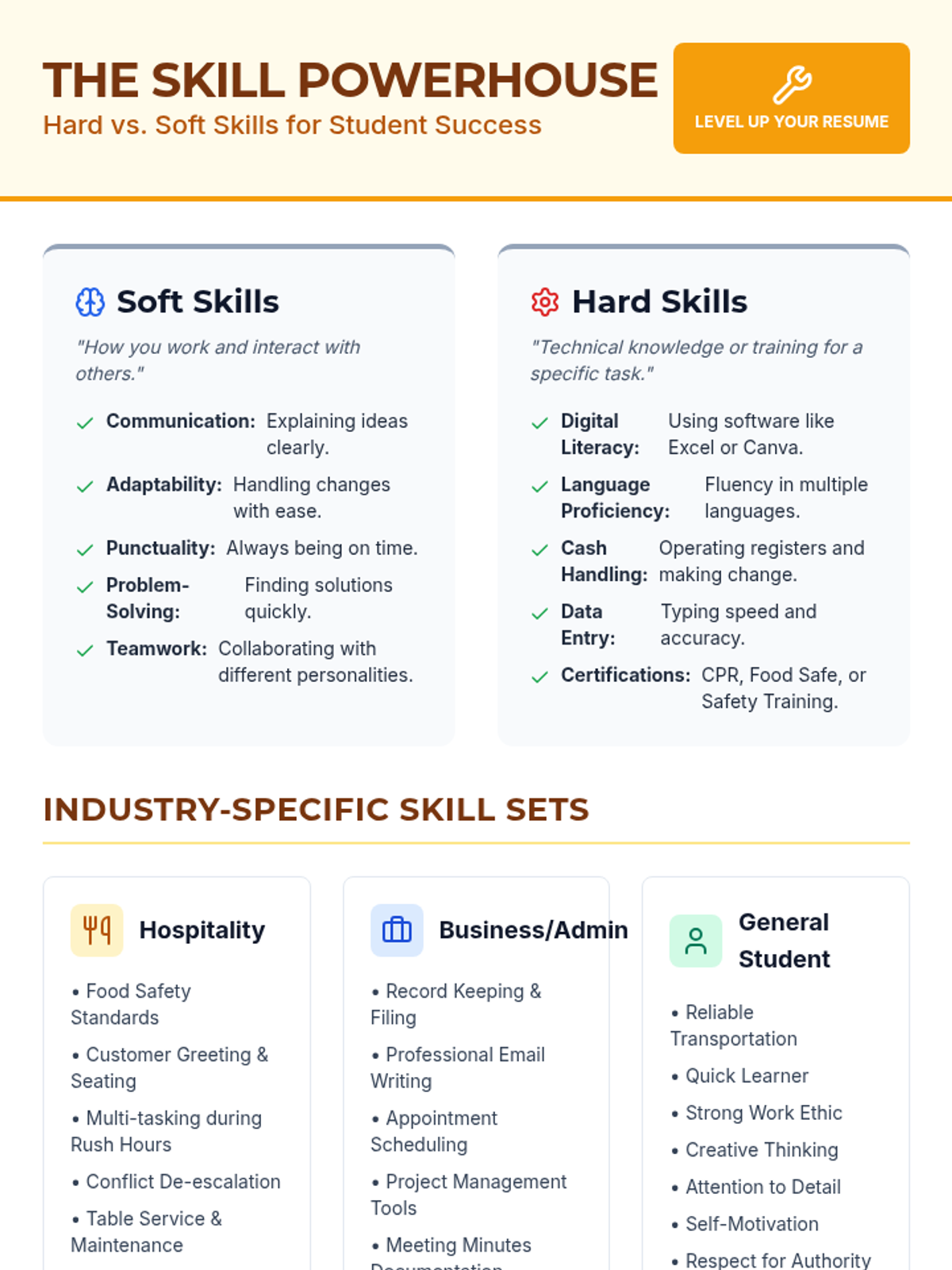
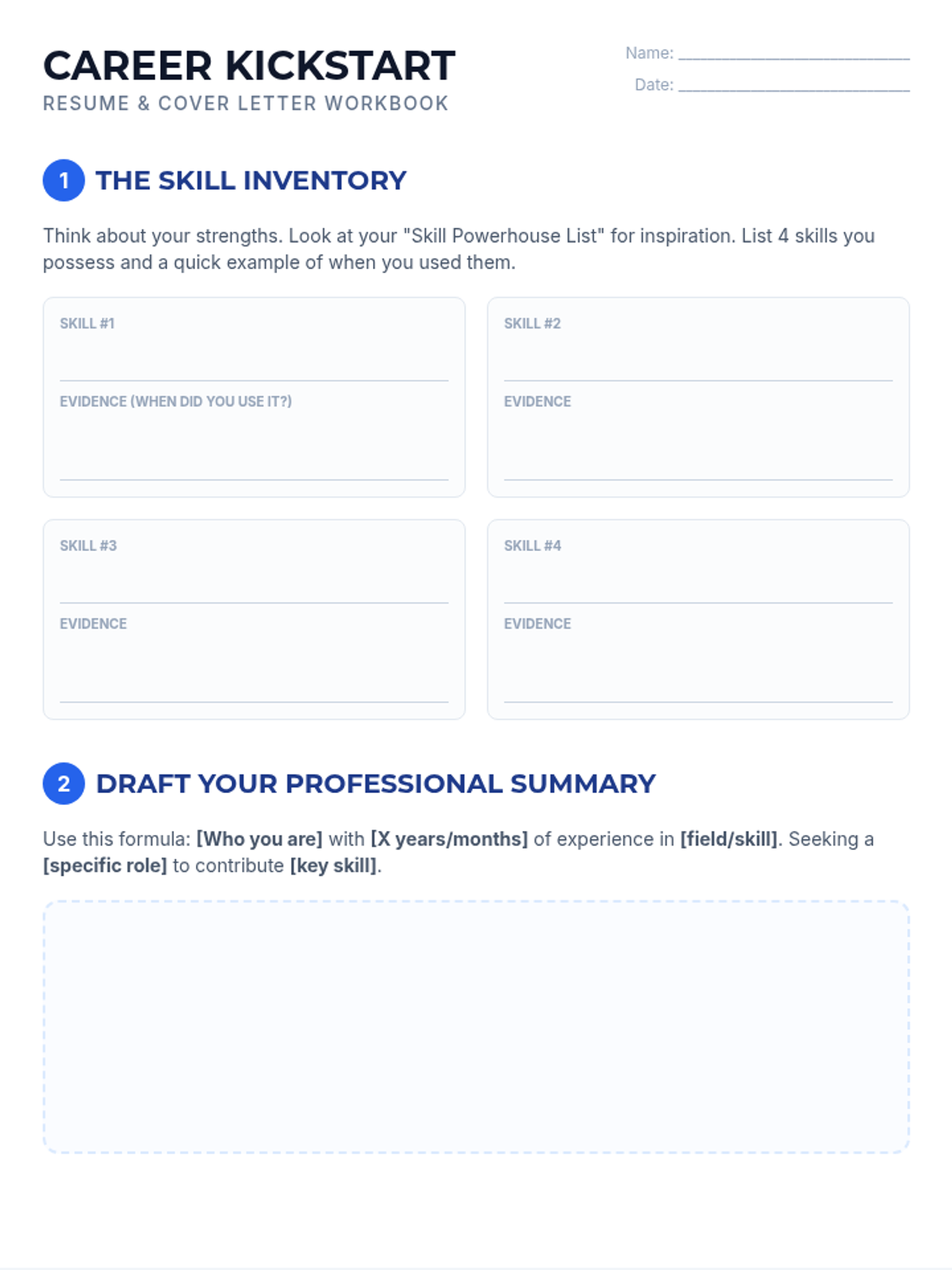
A comprehensive guide to resume writing for students and entry-level professionals, covering different resume formats, skill identification, and document templates.
A comprehensive lesson designed for students with little to no formal work experience, focusing on translating school projects, volunteer work, and hobbies into professional resumes and cover letters.
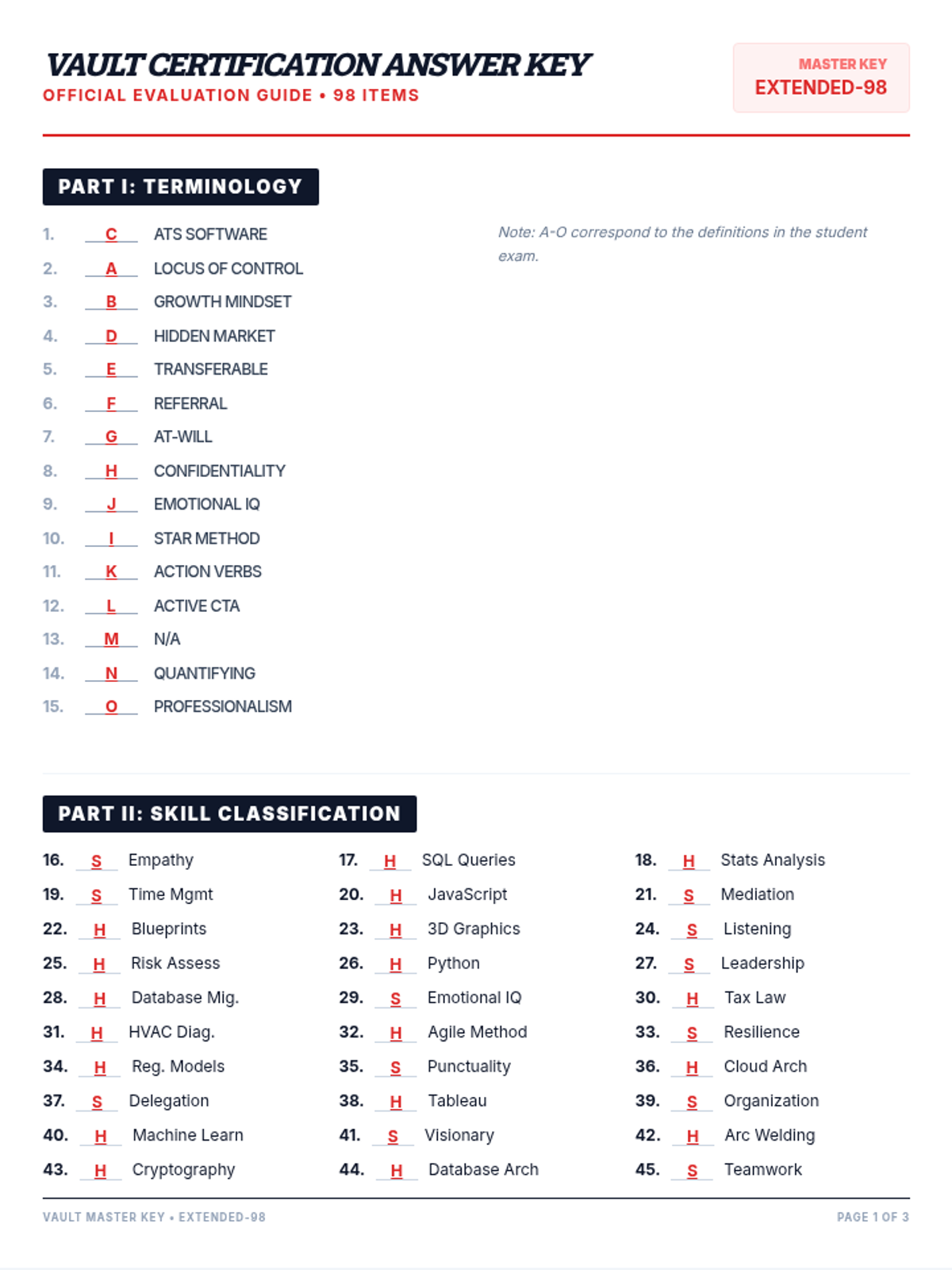
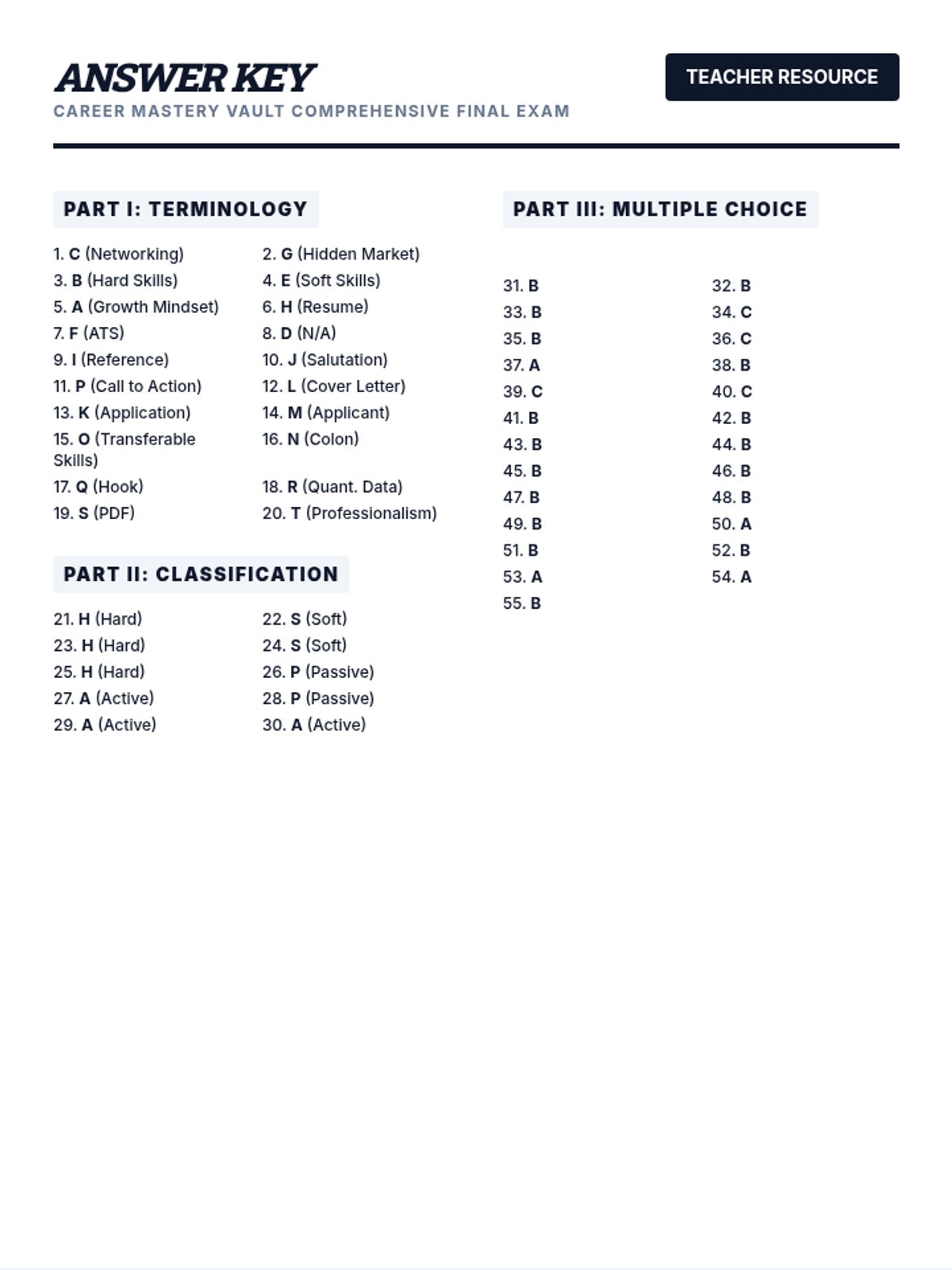
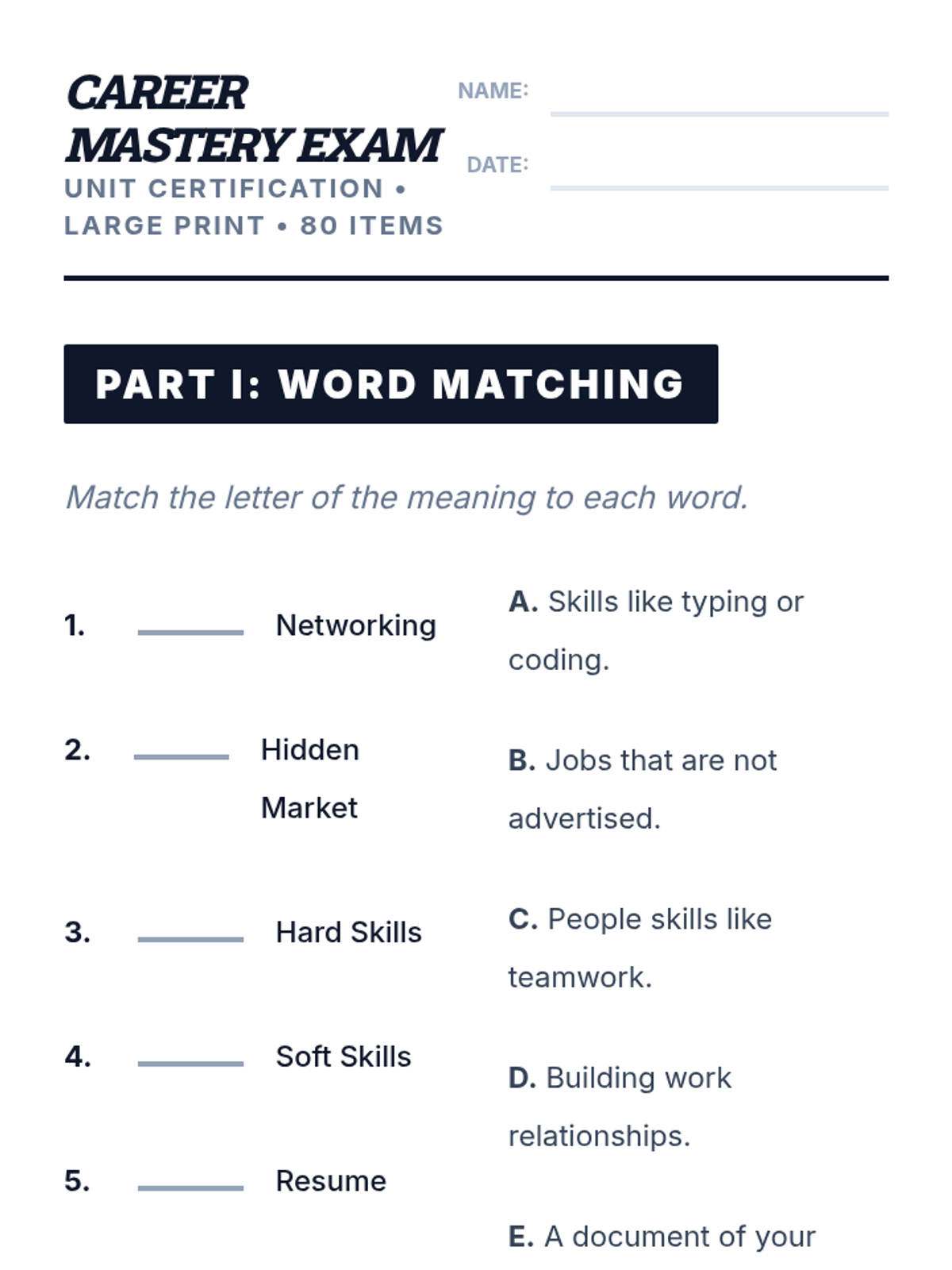
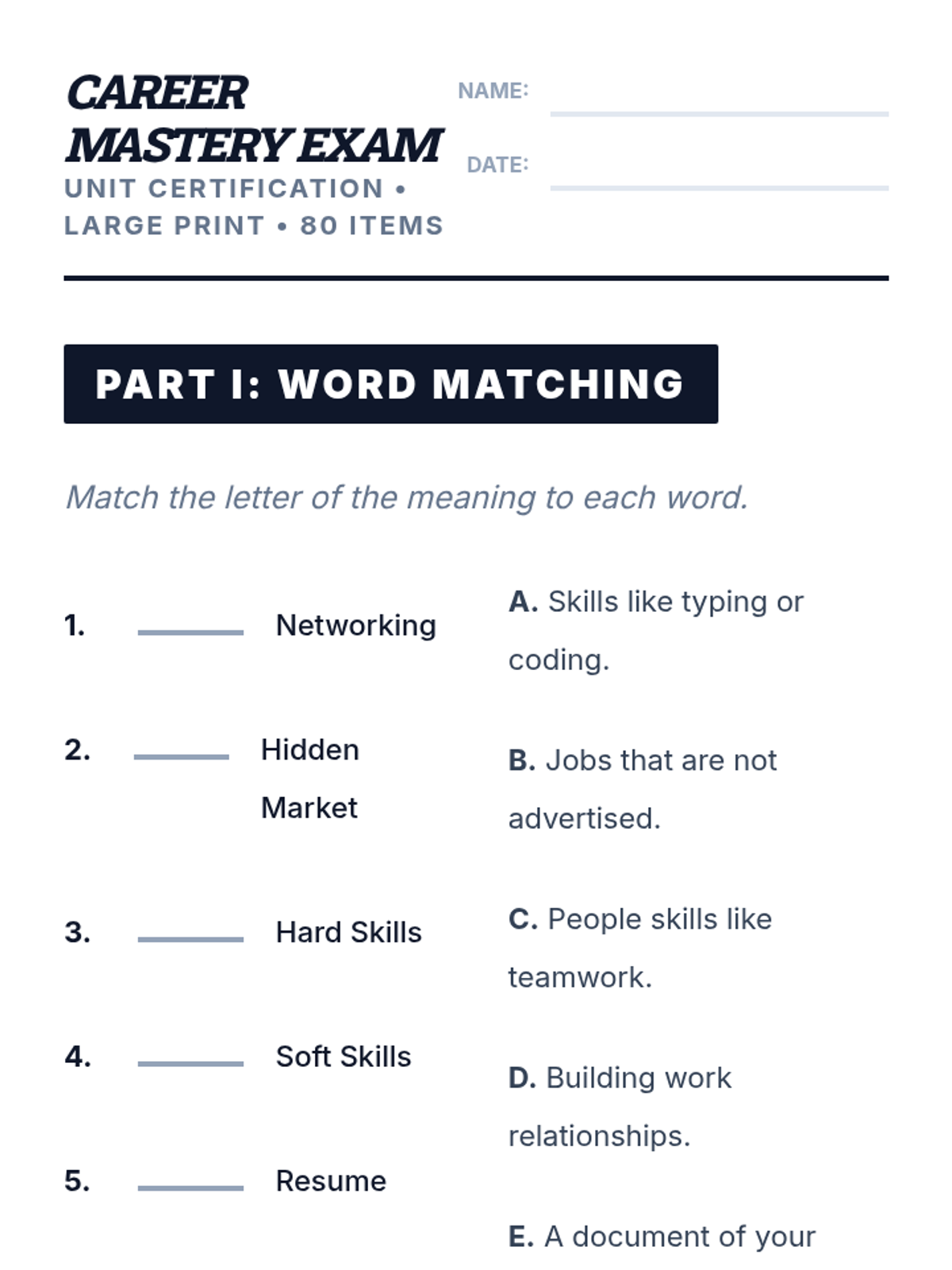
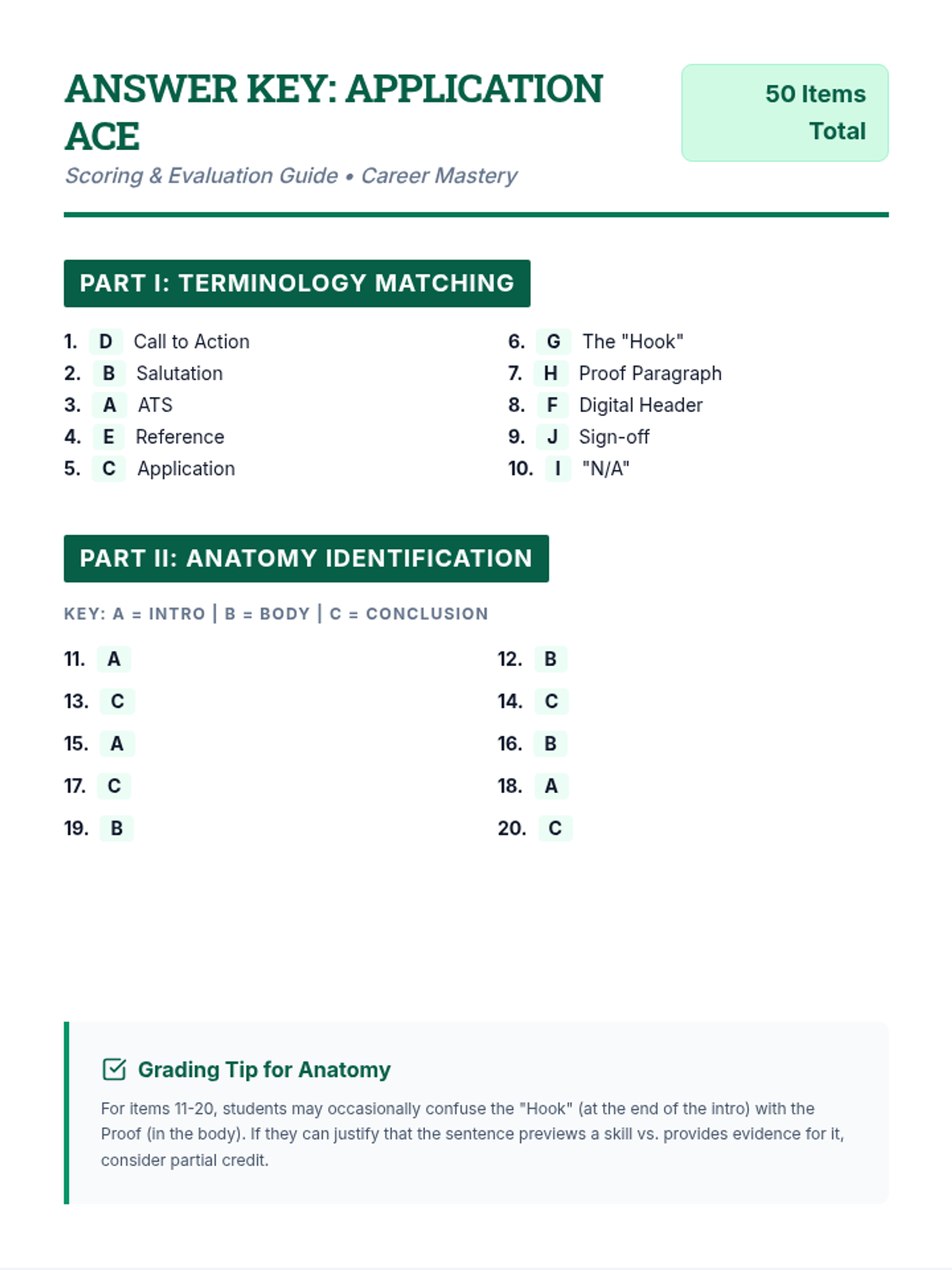
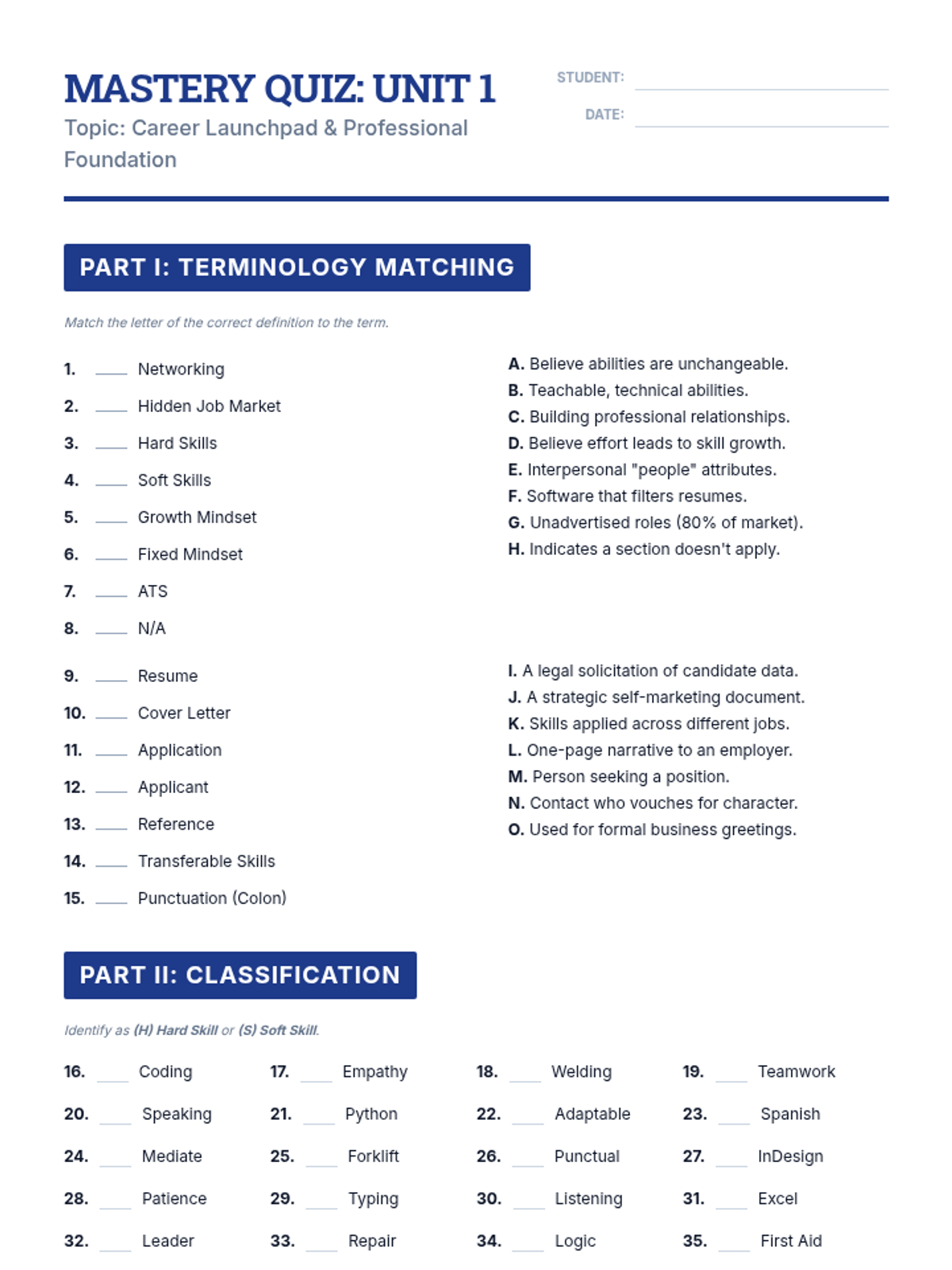
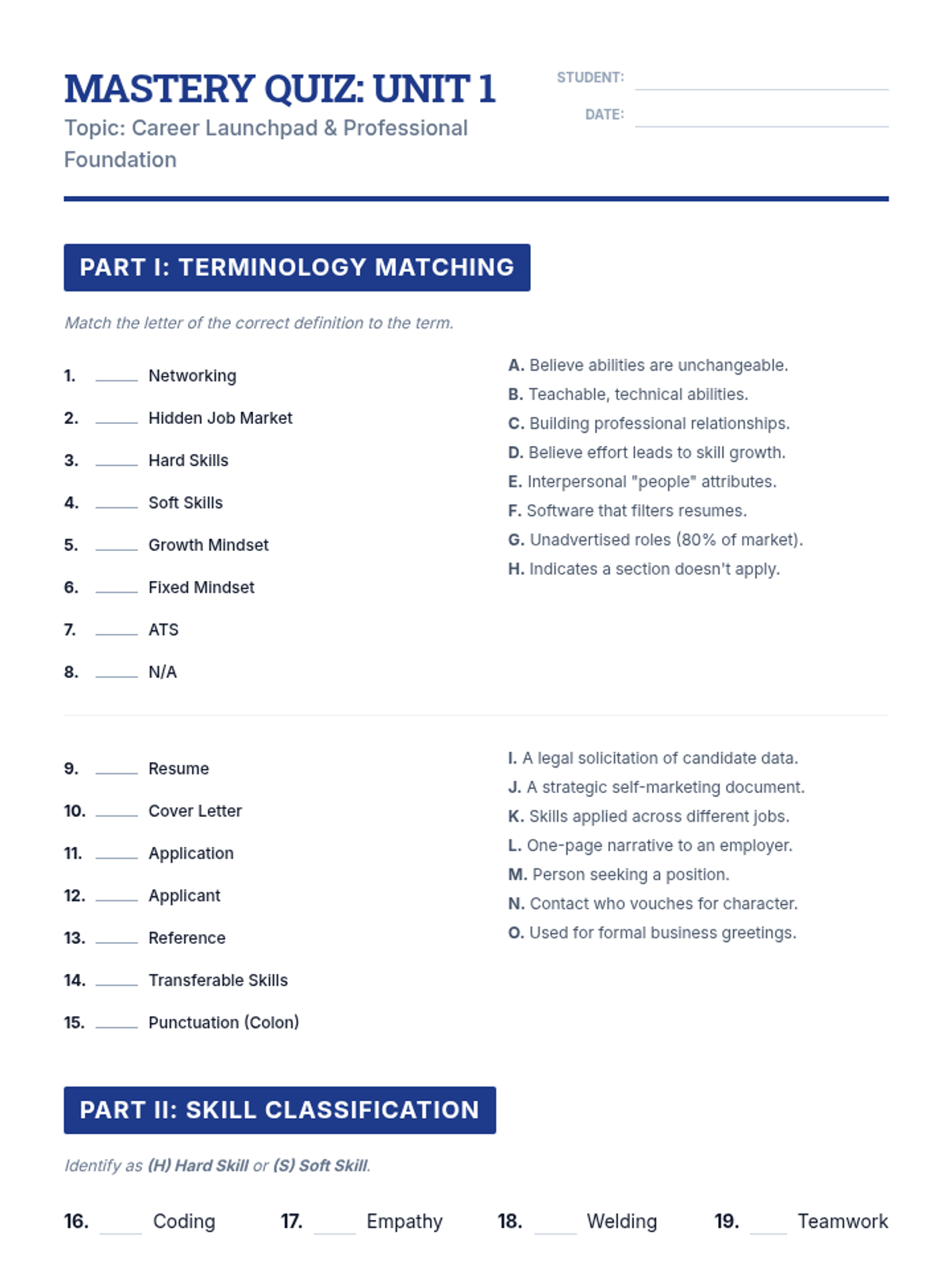
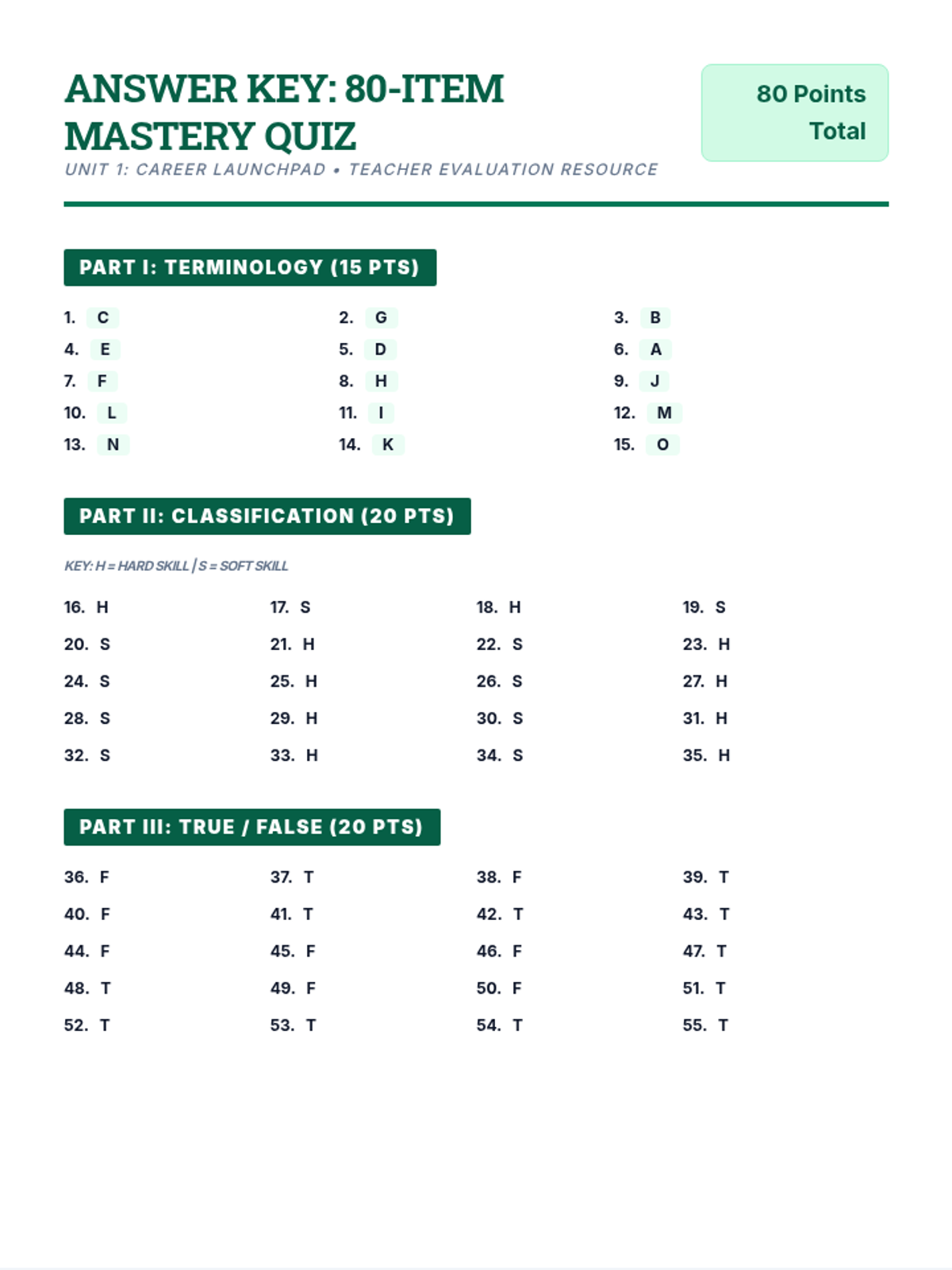
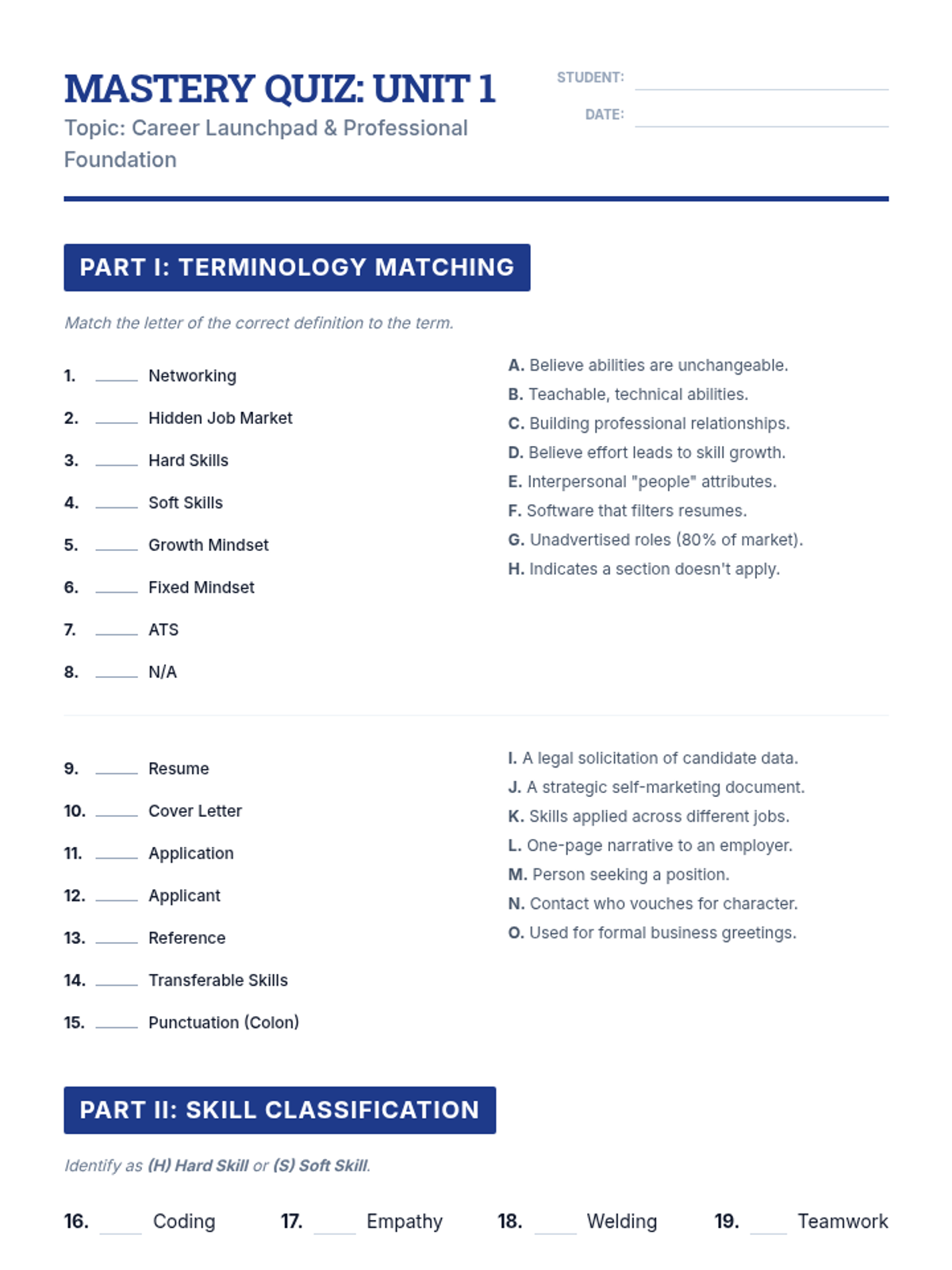
A final assessment module to evaluate student understanding of career readiness concepts and application proficiency.
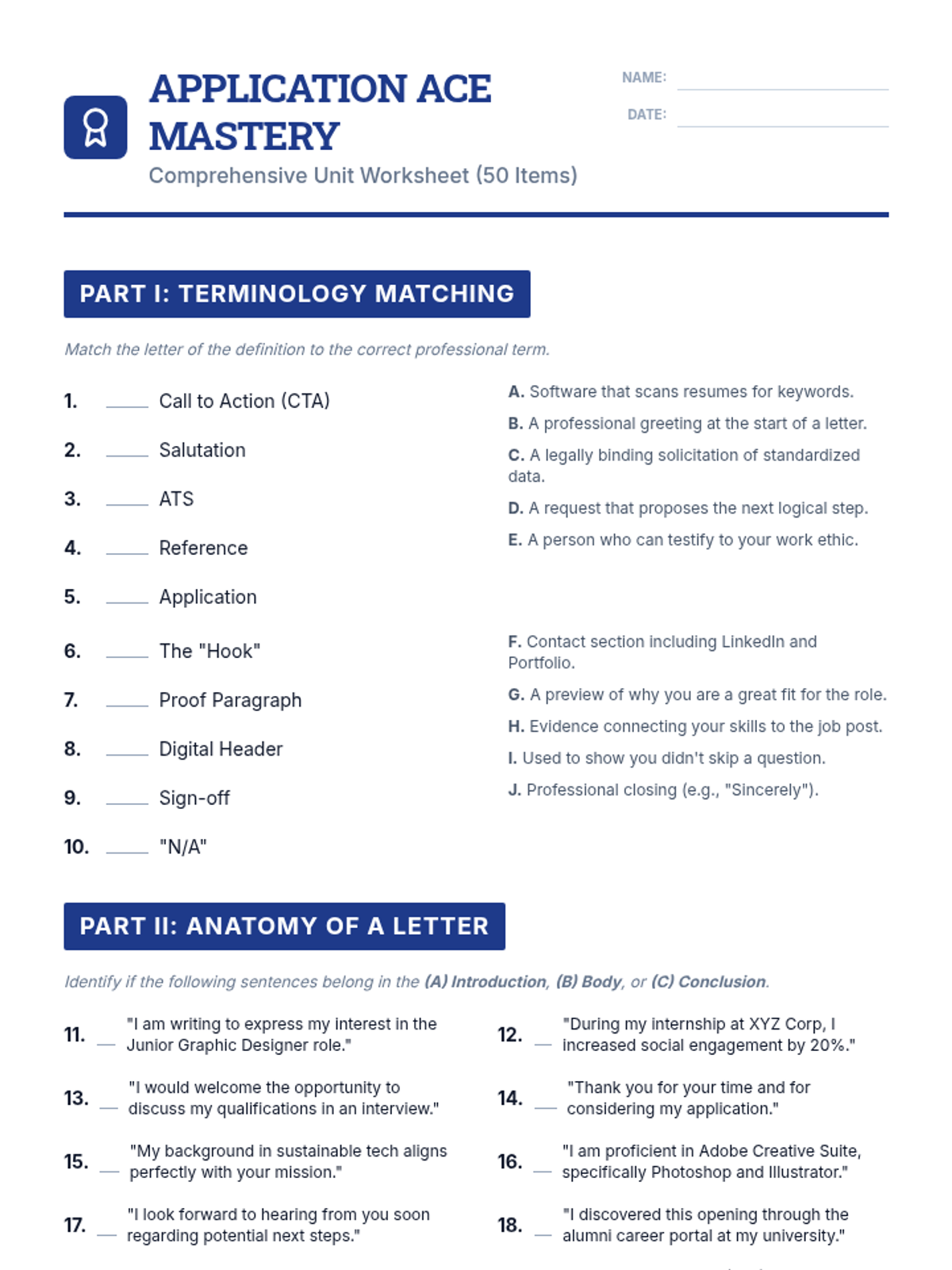
A deep dive into the mechanics of job applications, cover letter construction, and managing professional references.
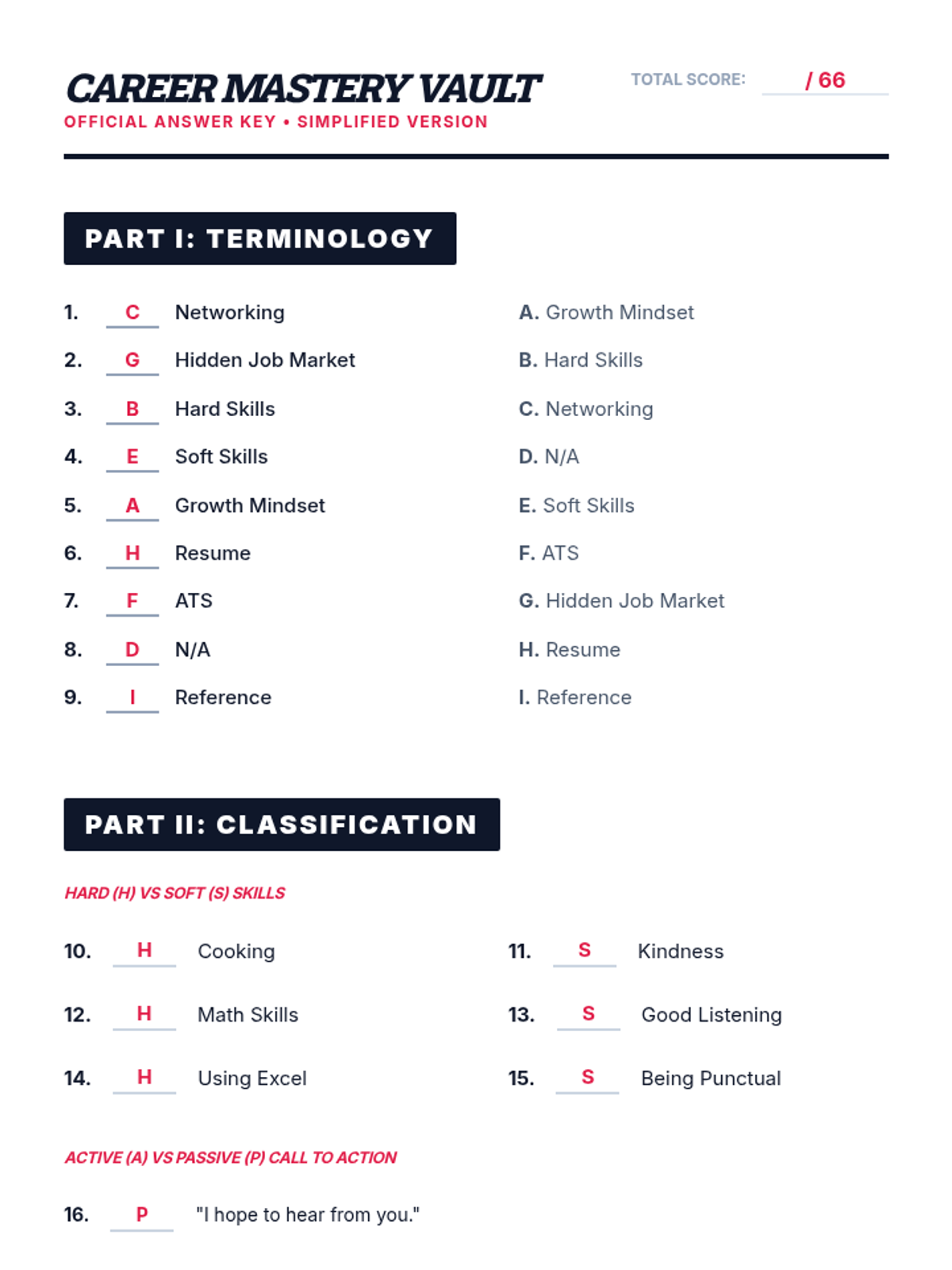
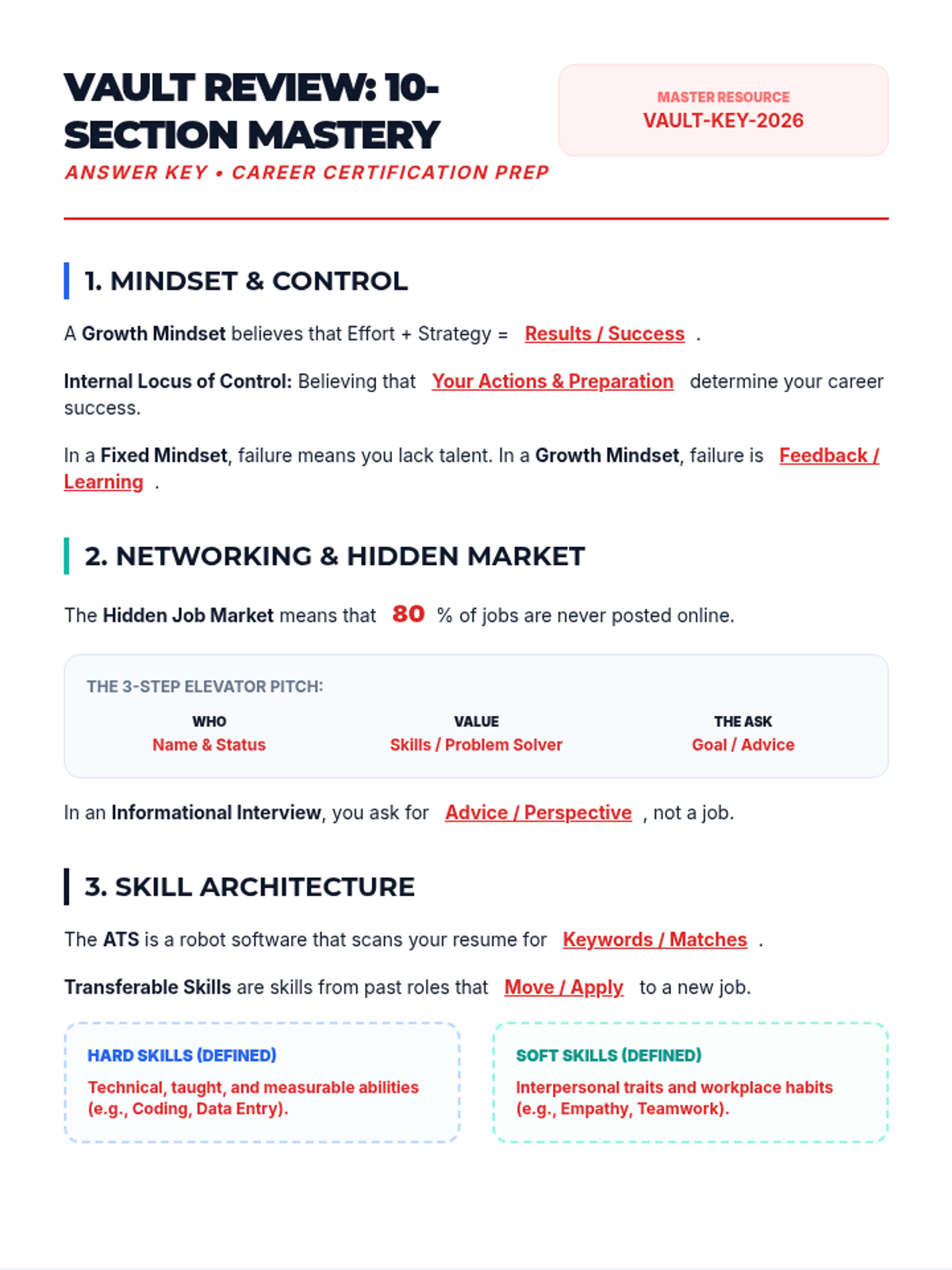
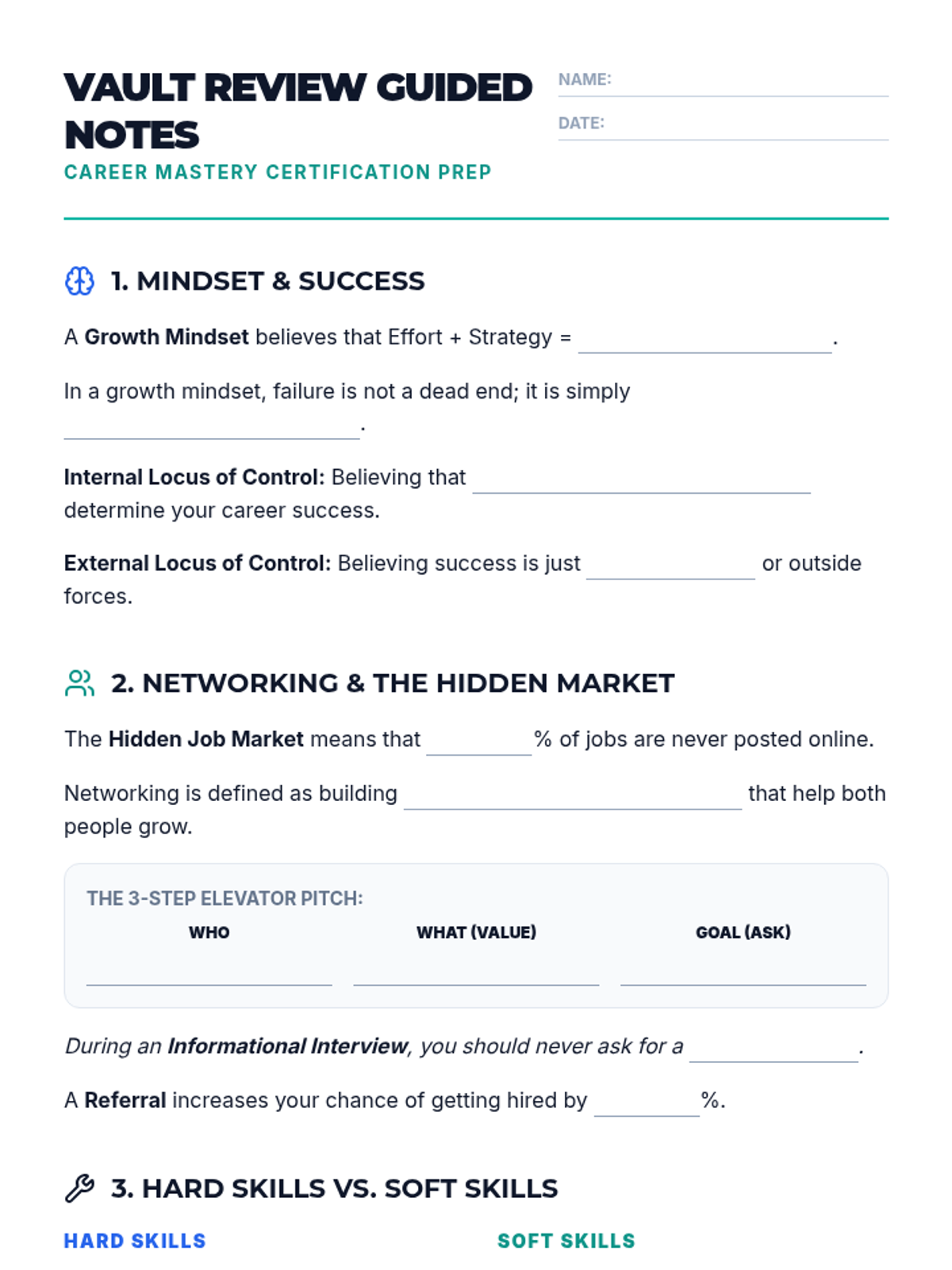
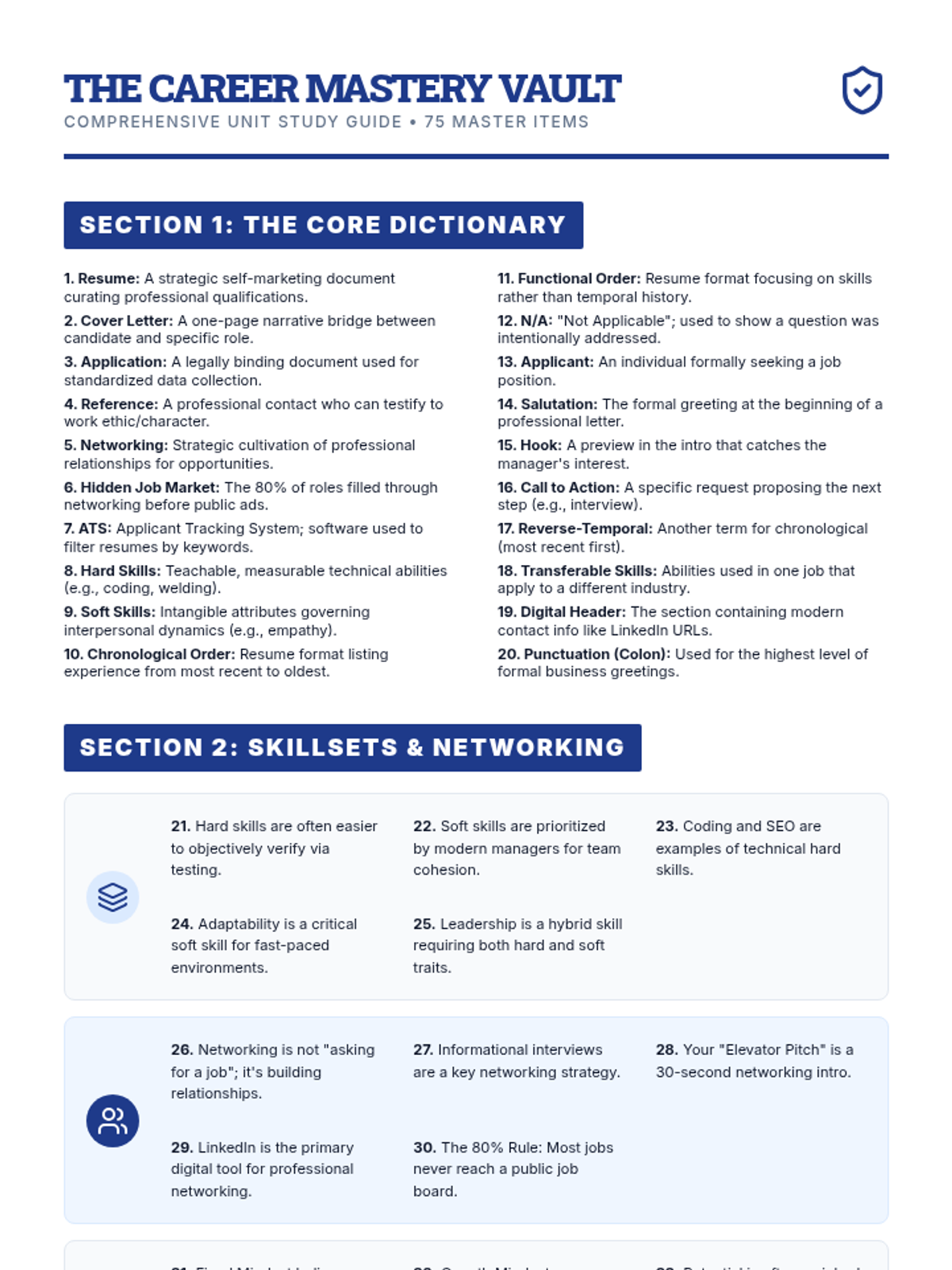
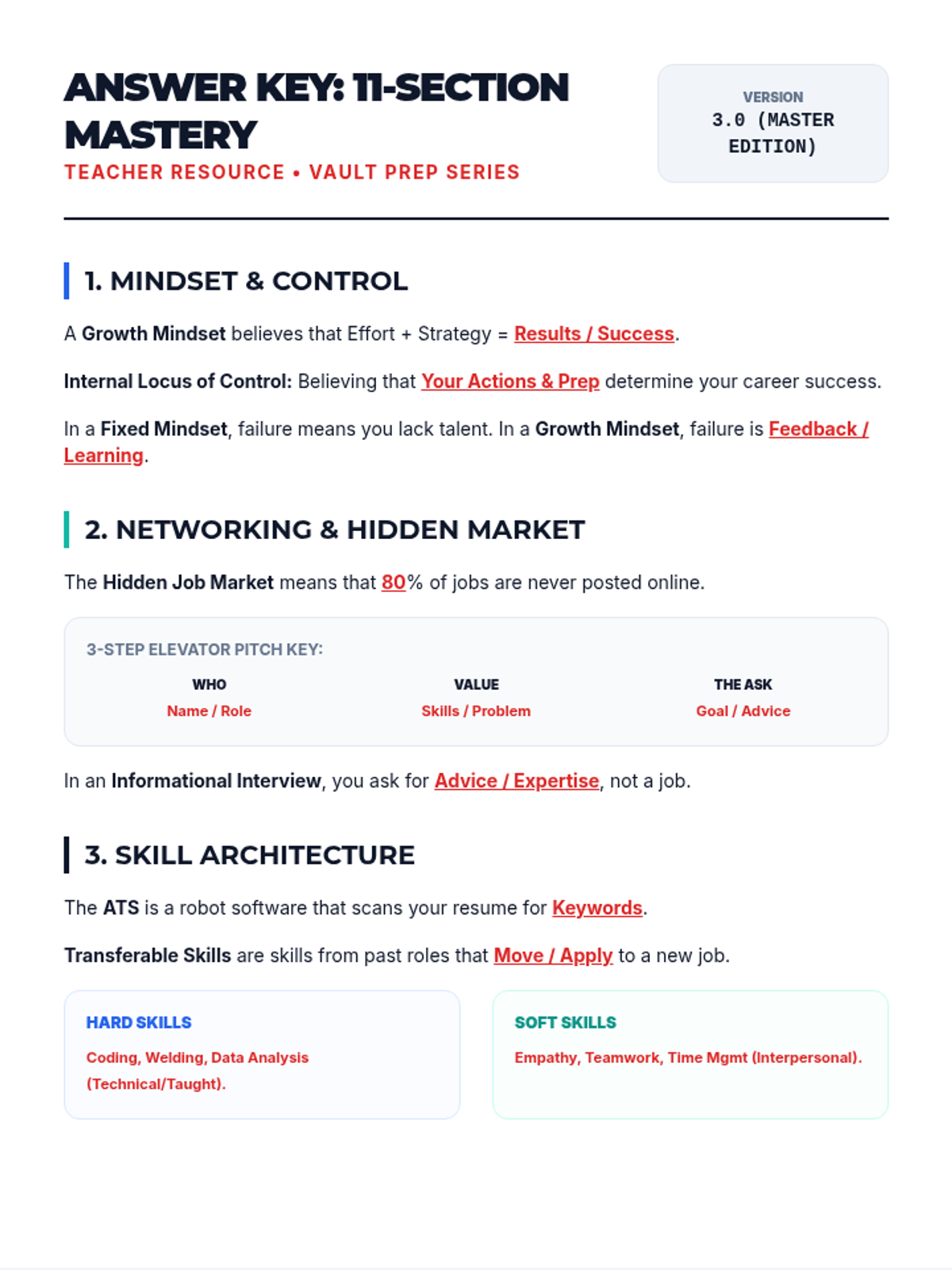
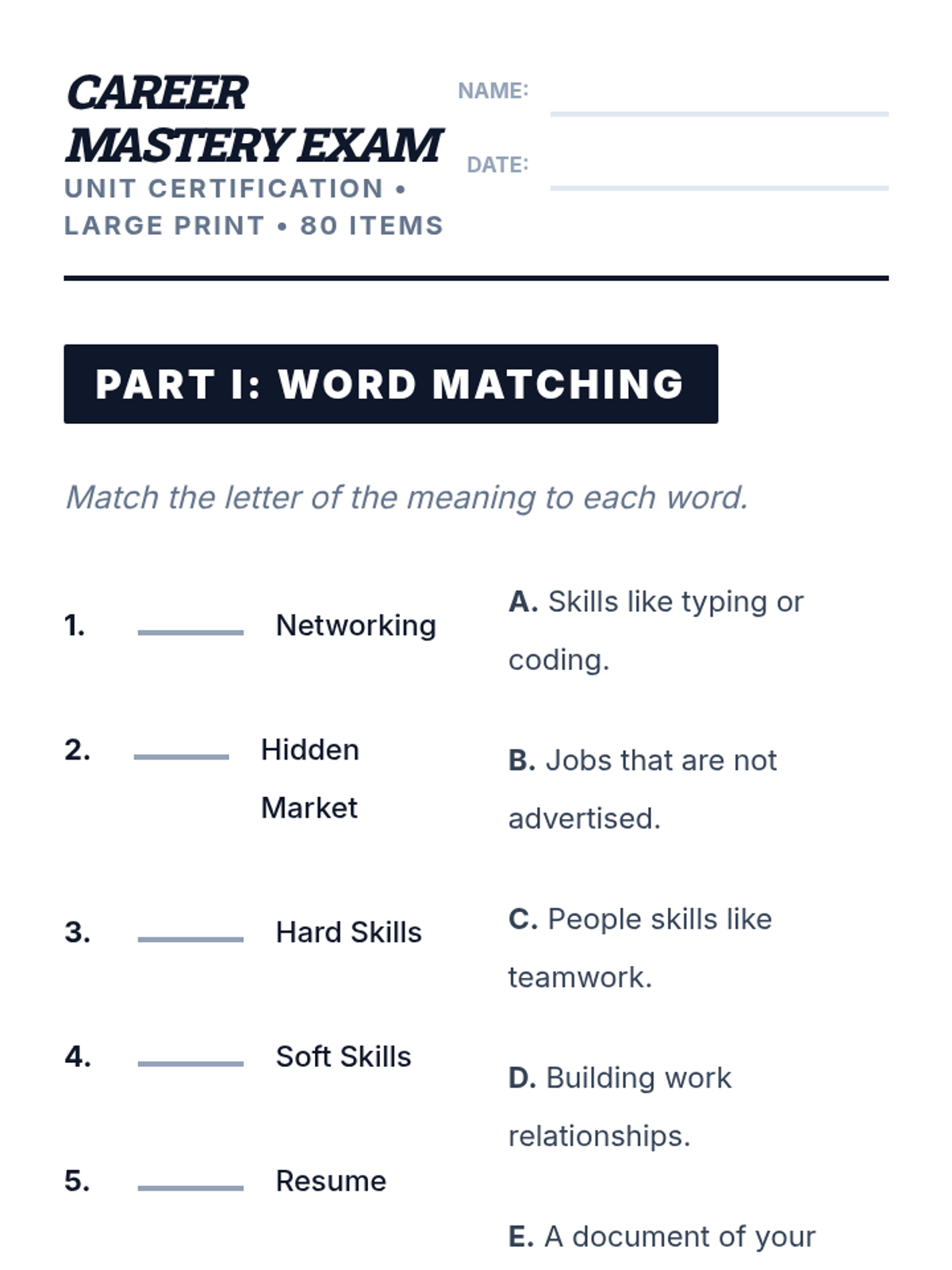
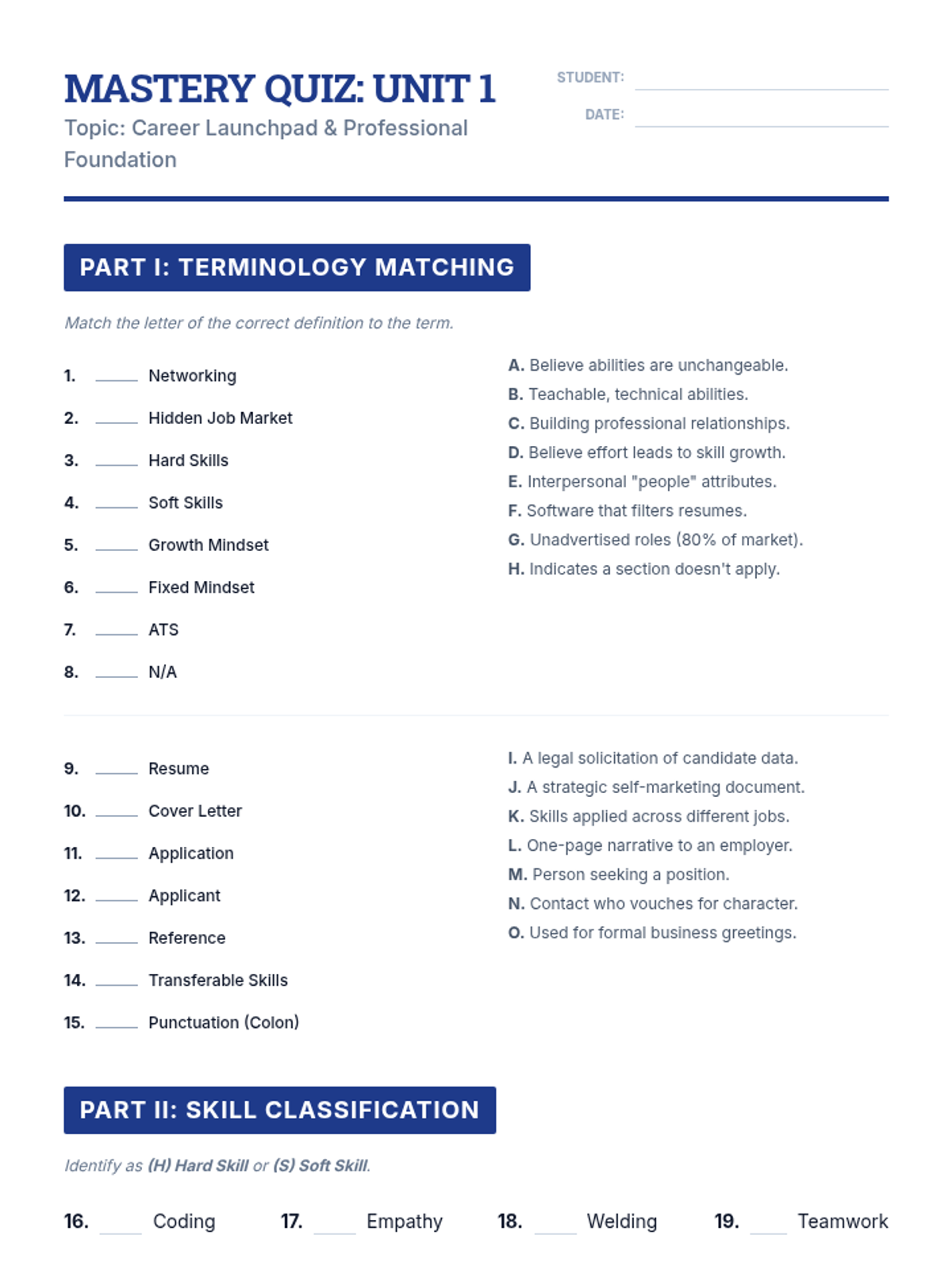
An introductory unit focusing on career terminology, professional mindset, and identifying personal strengths for the workforce.
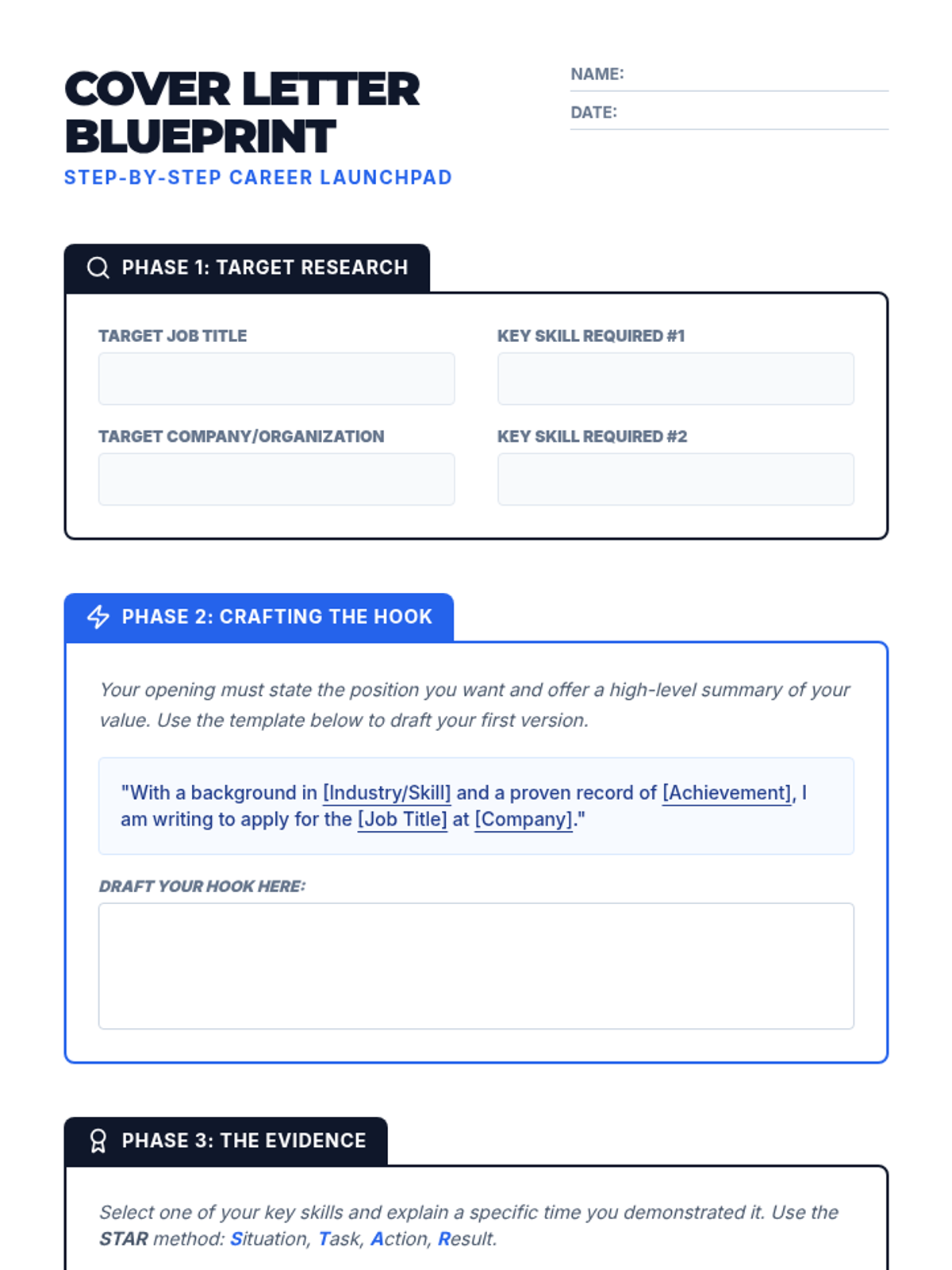
Students will research a dream career and draft a professional cover letter using a guided, step-by-step approach. The lesson covers the structural components of a cover letter and professional tone.
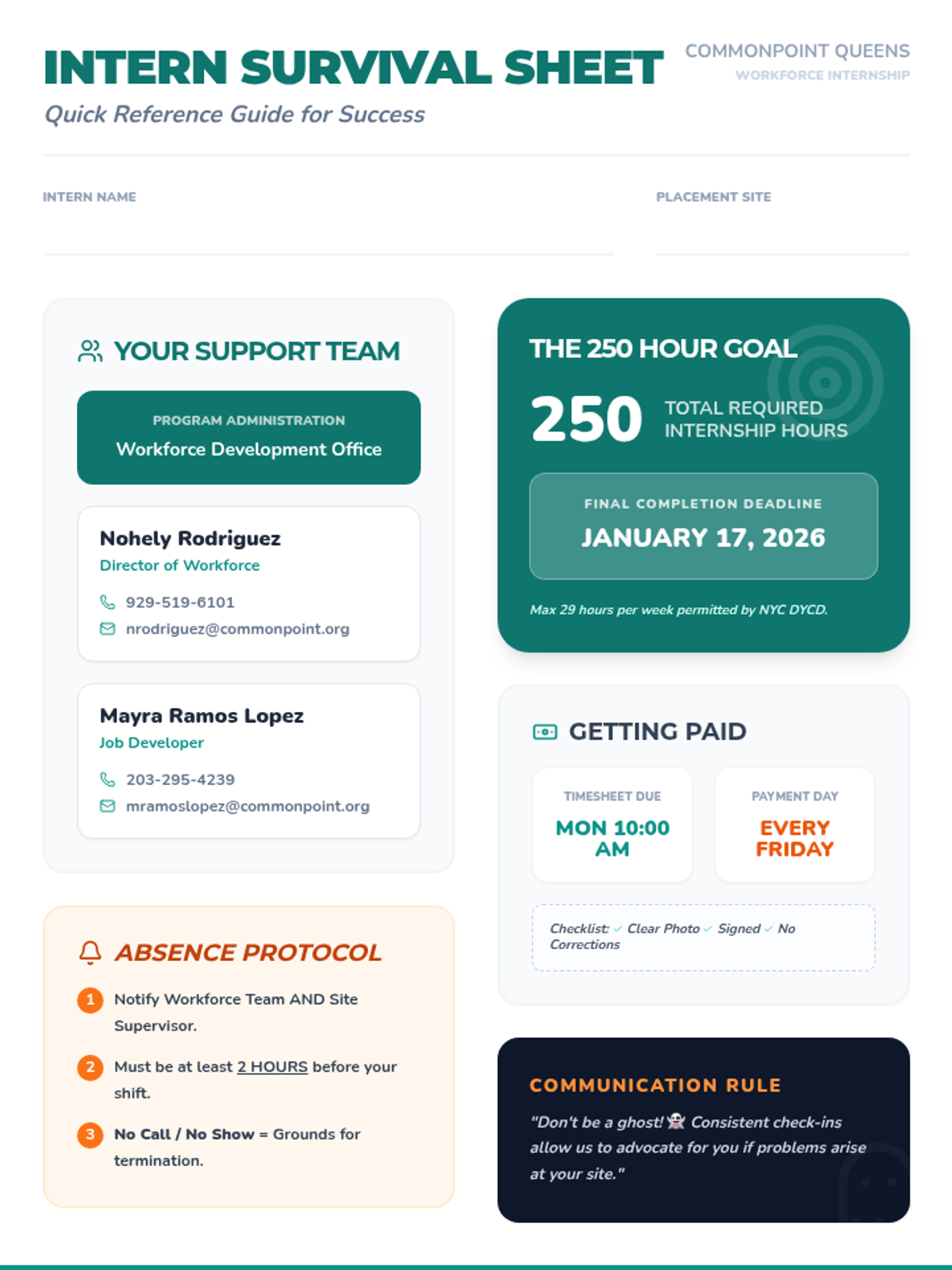
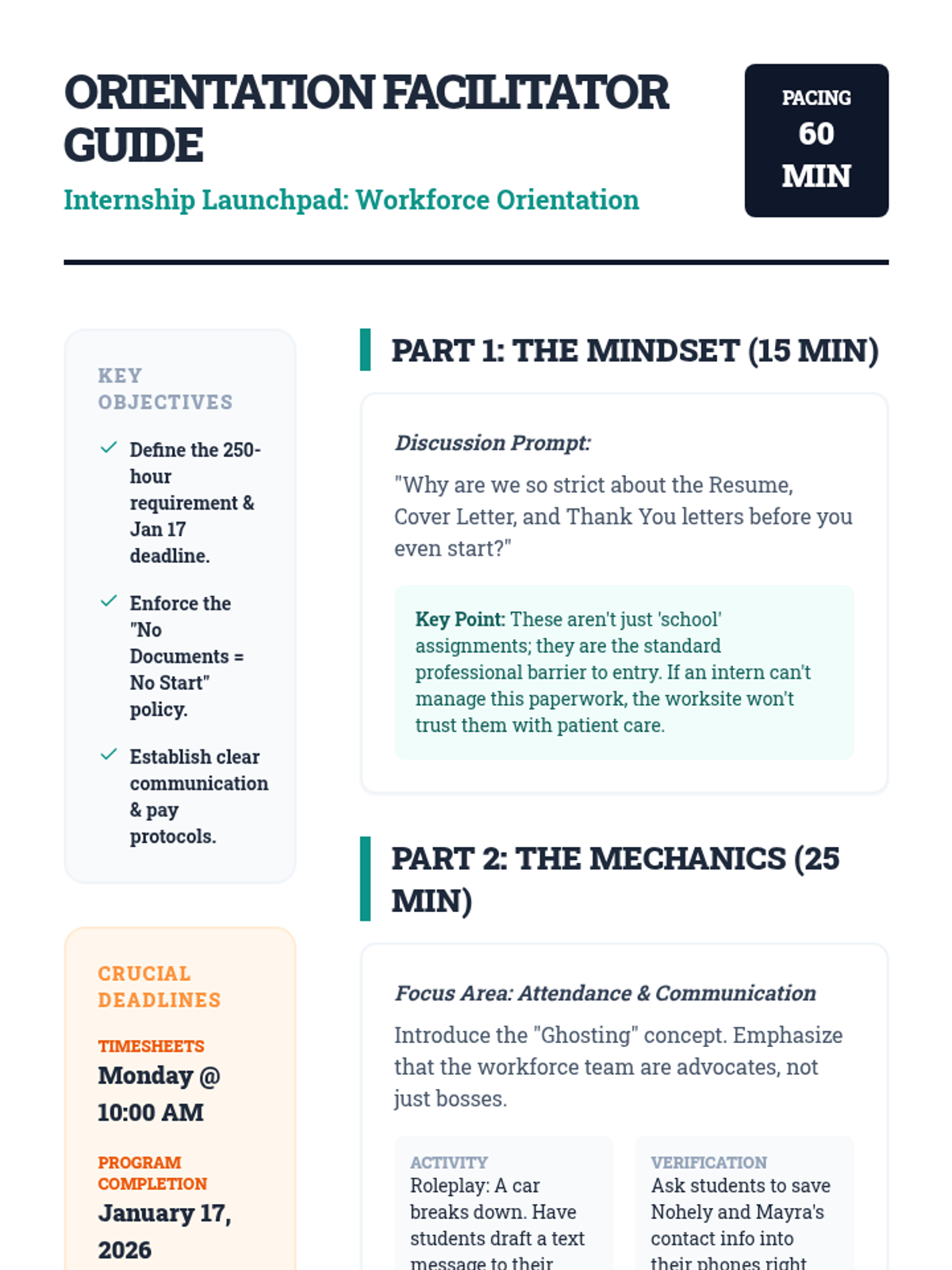
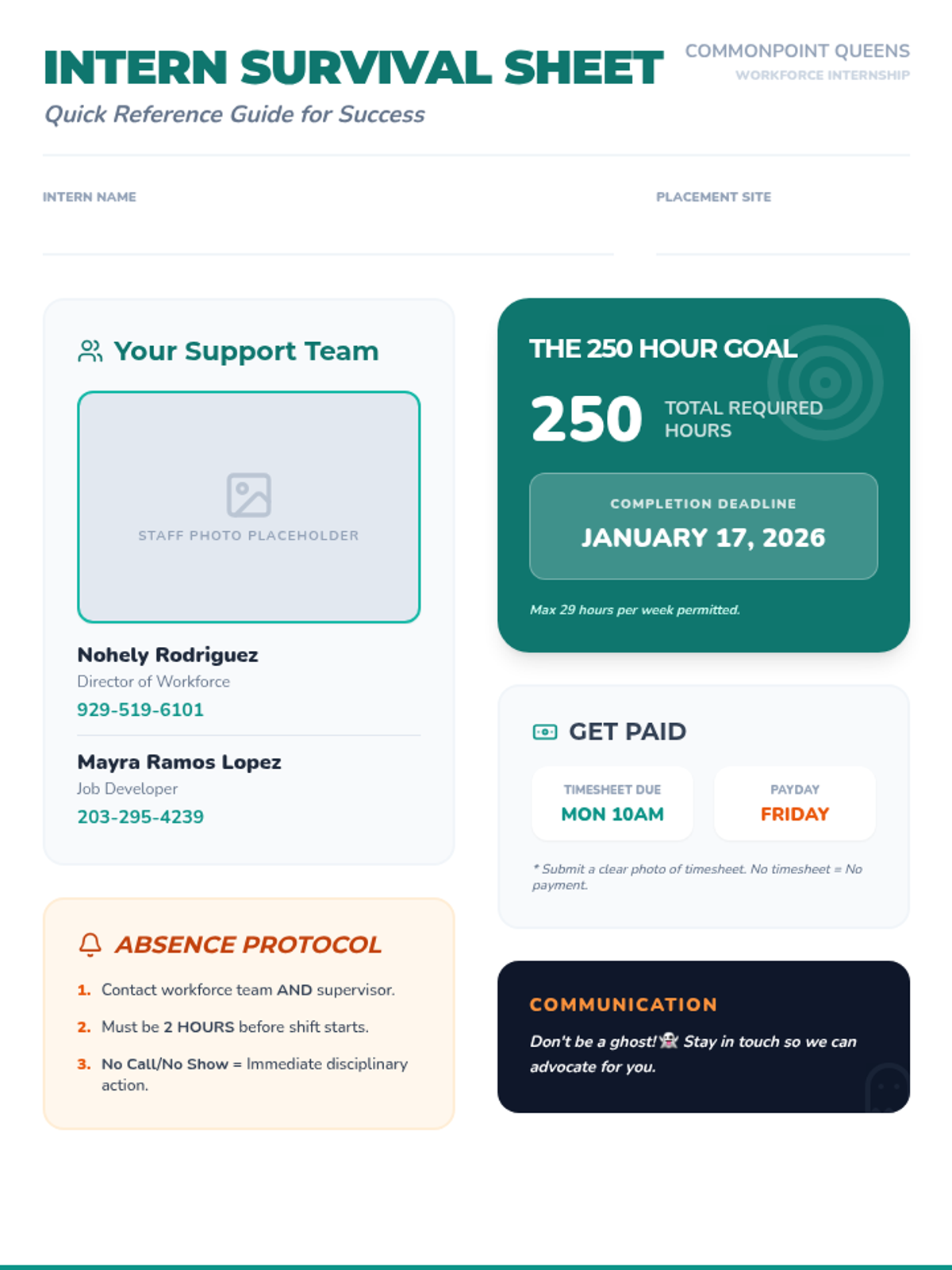
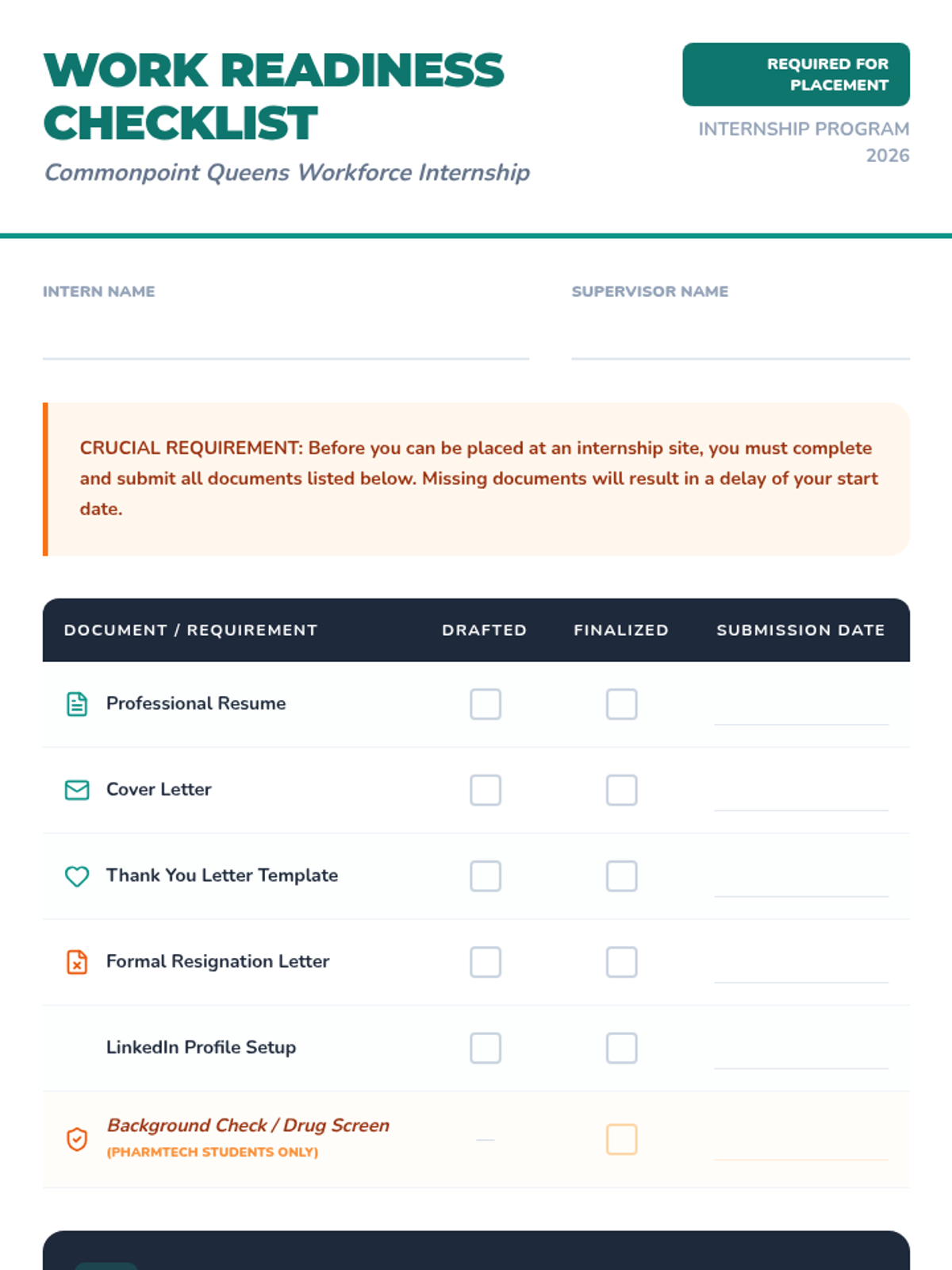
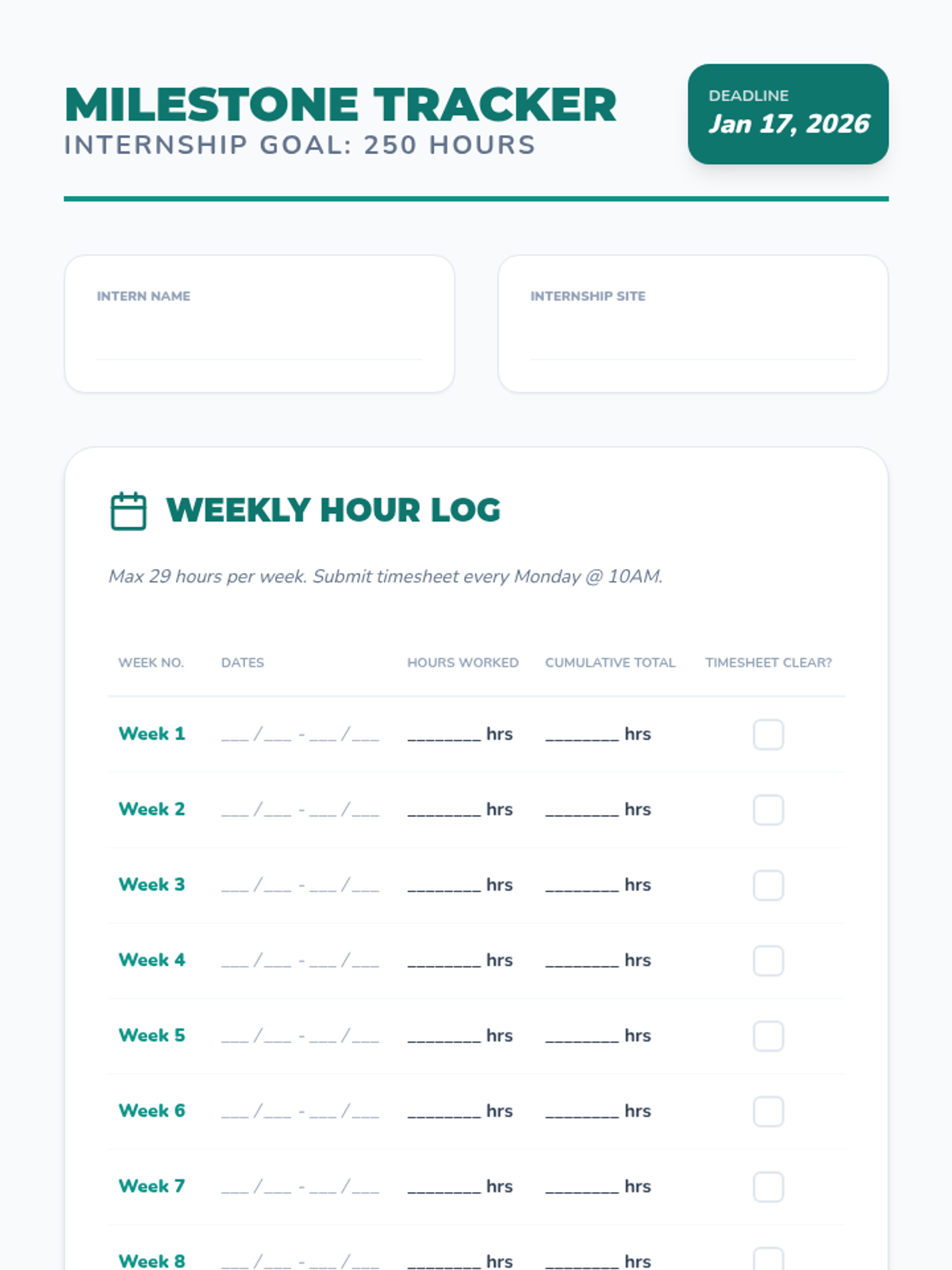
A comprehensive orientation for the Workforce Internship program, covering policies, expectations, and success strategies for new interns at Commonpoint Queens.
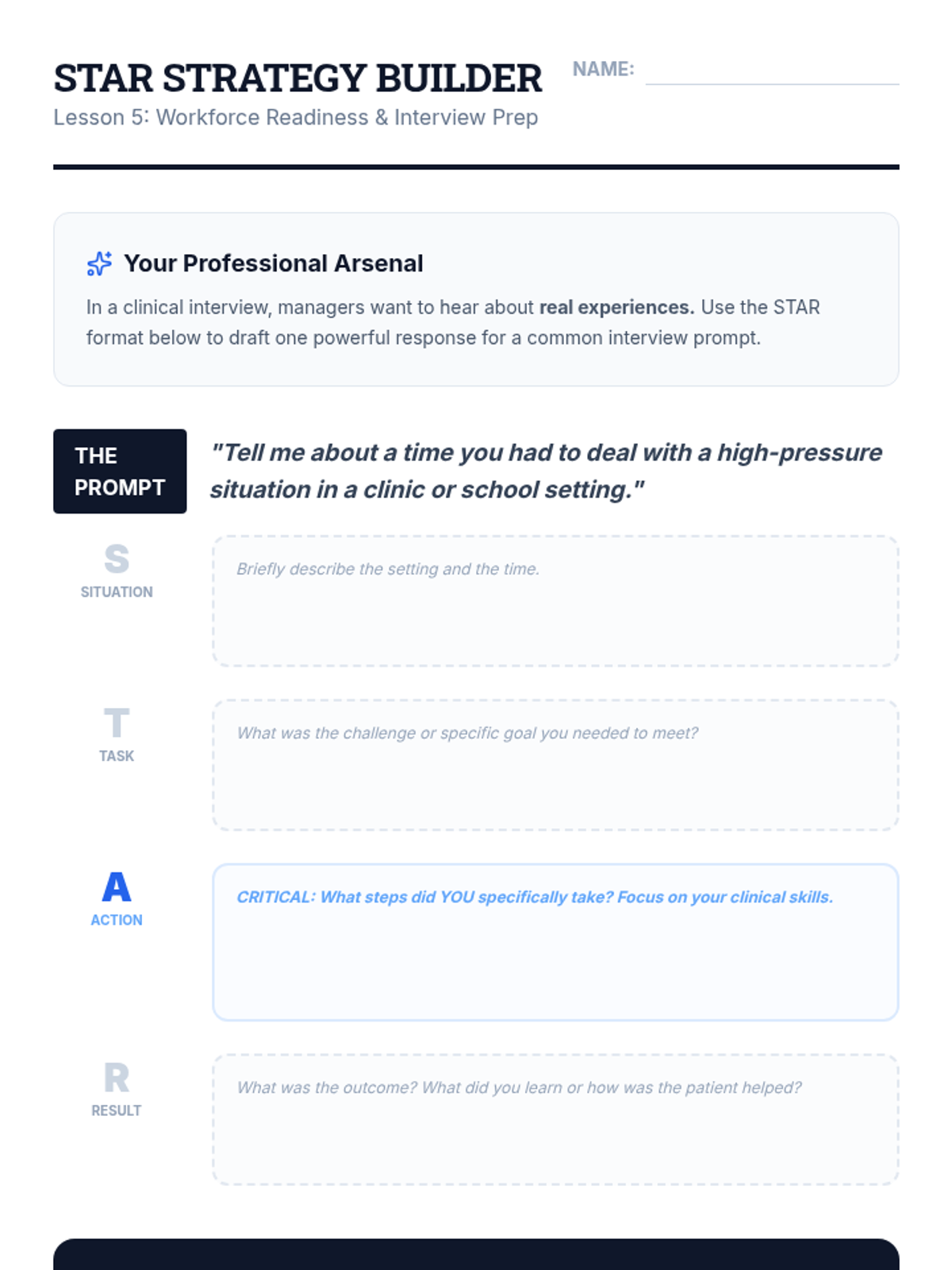
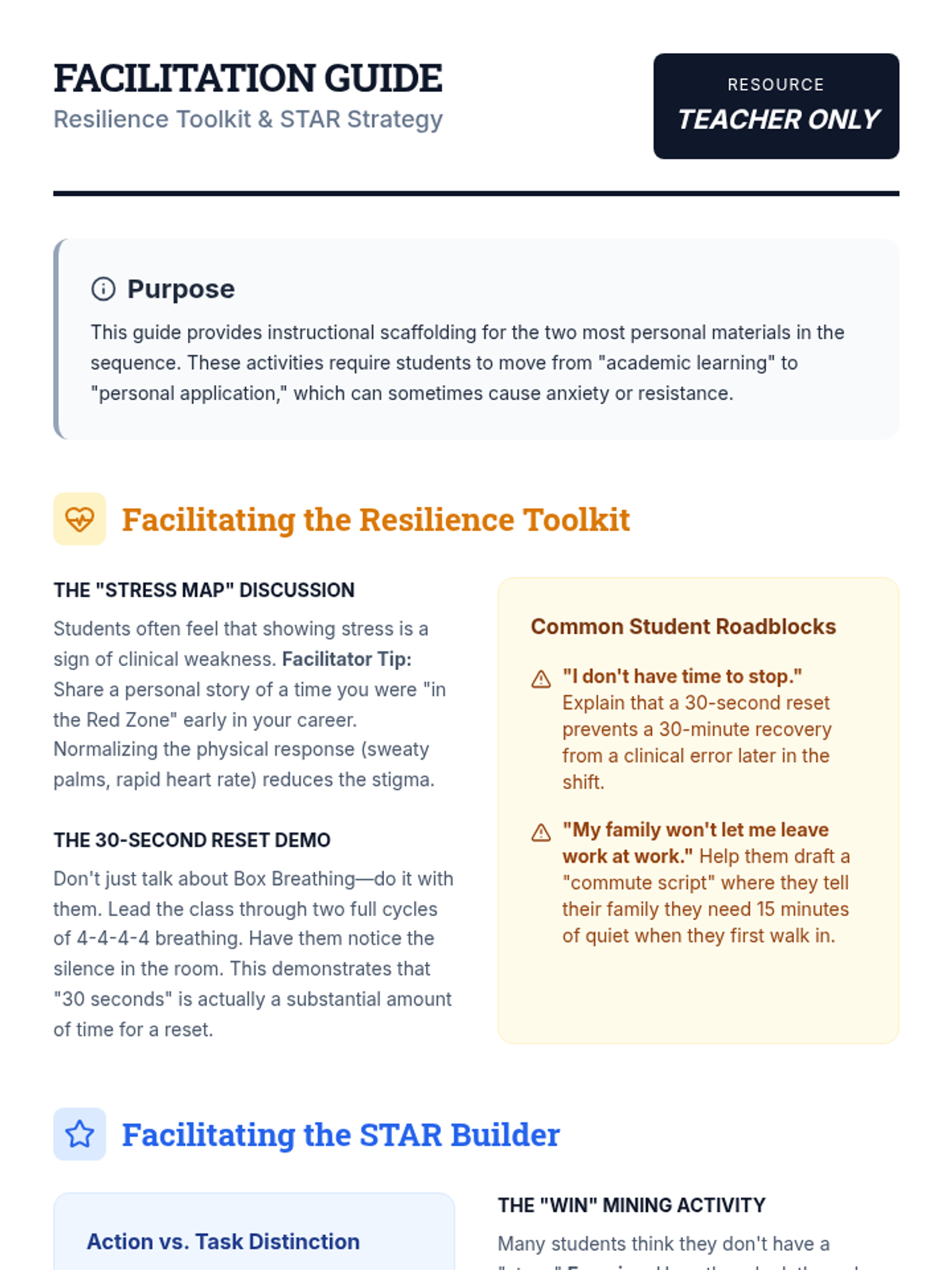
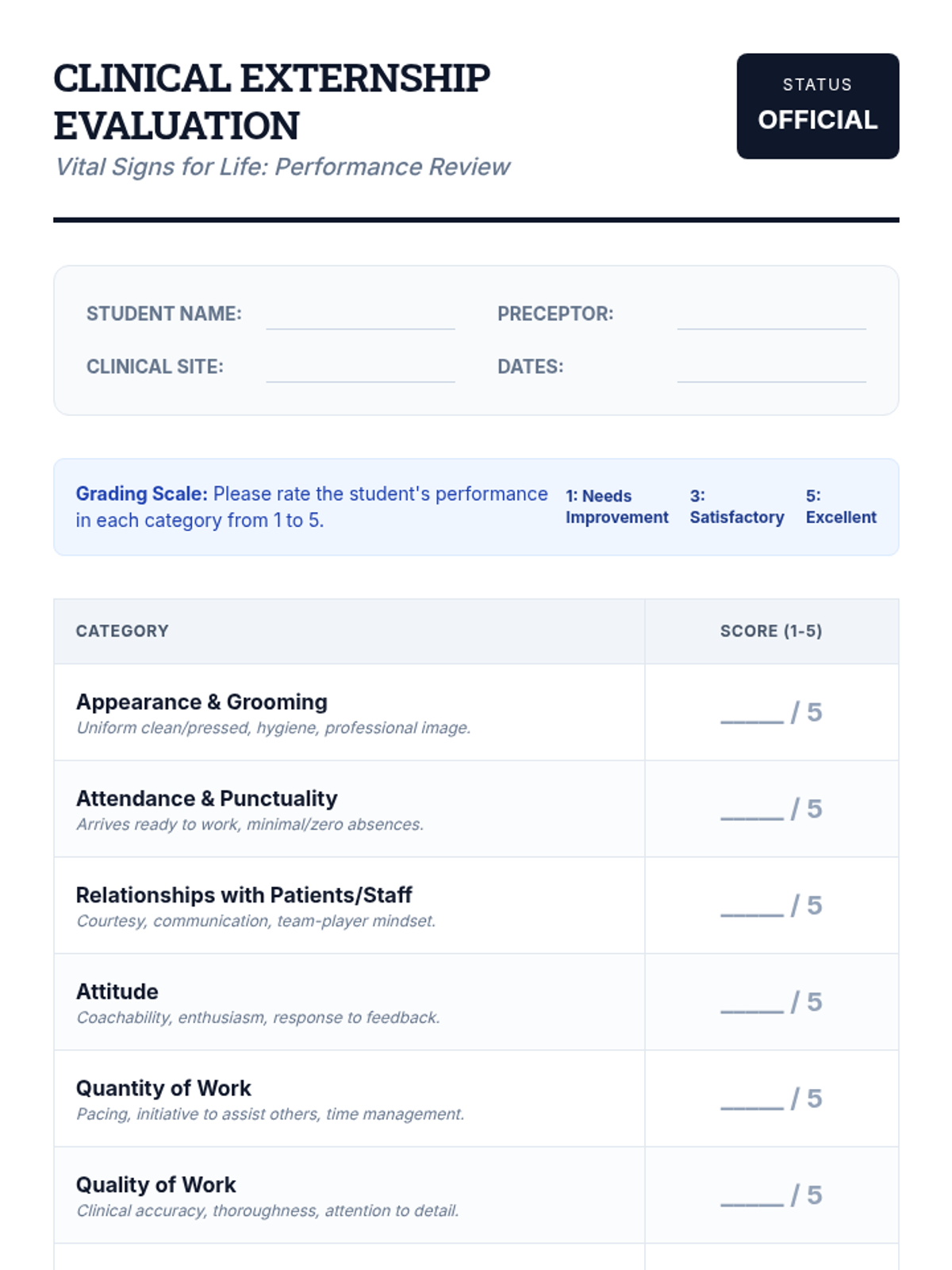
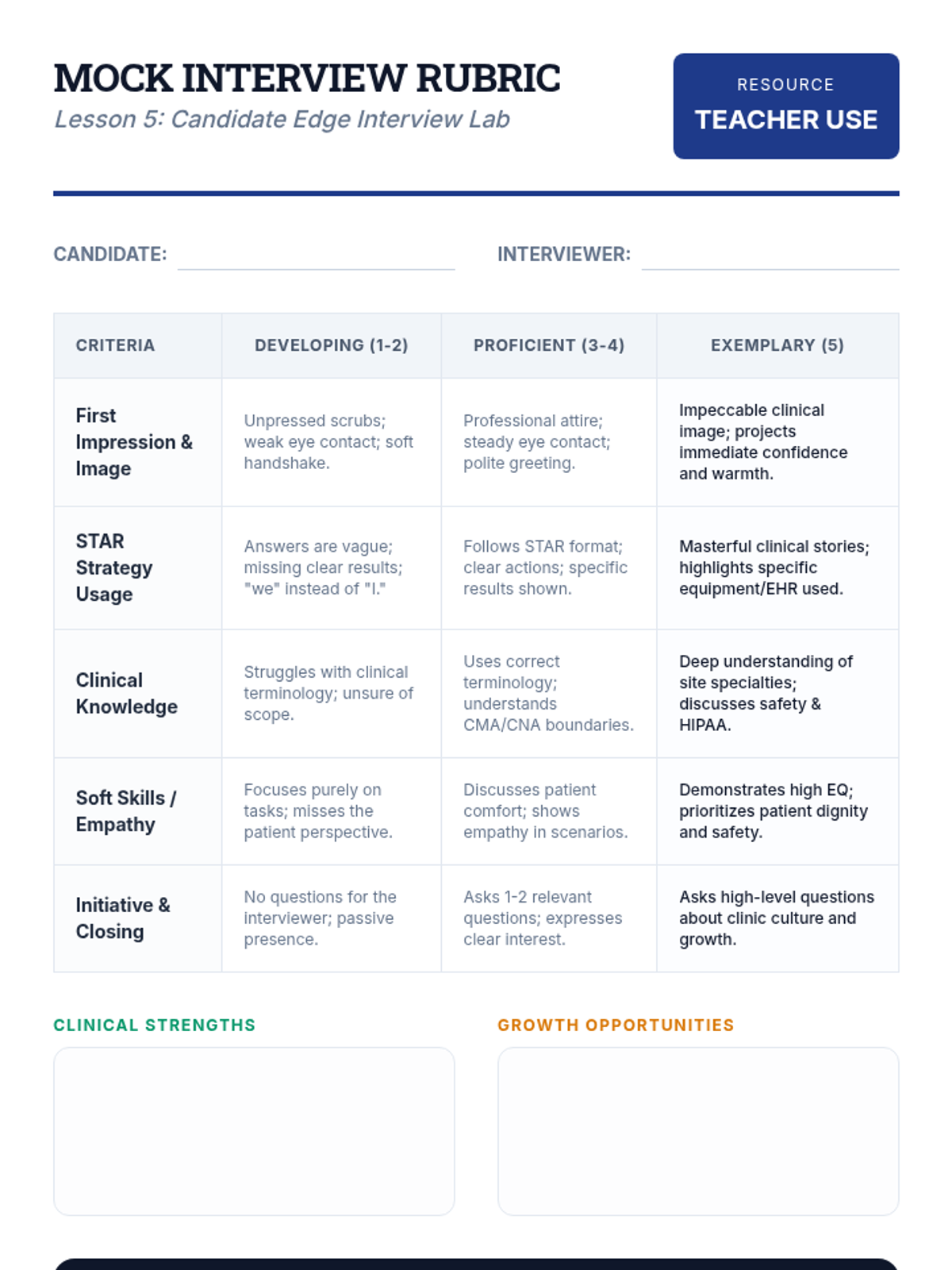
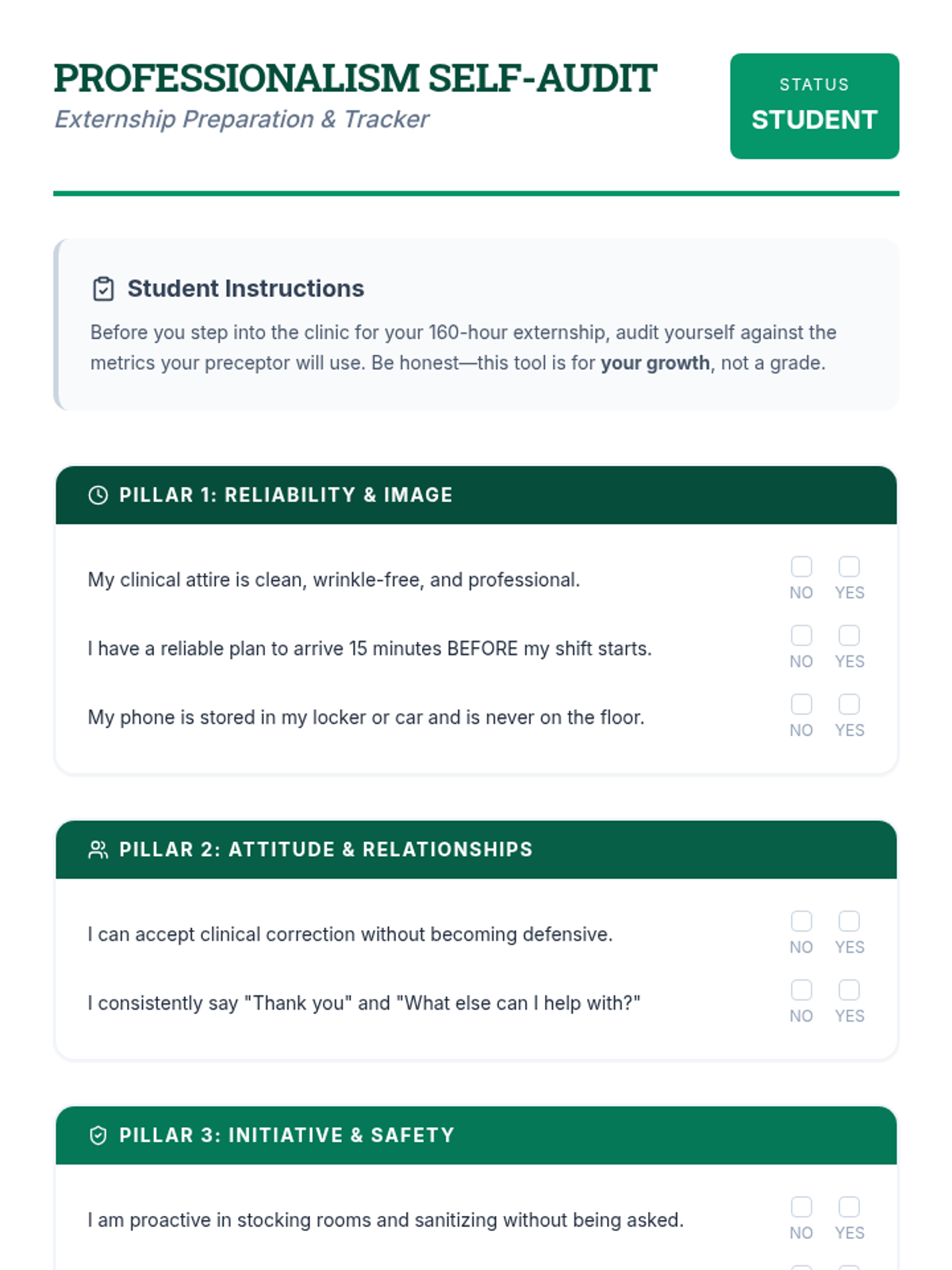
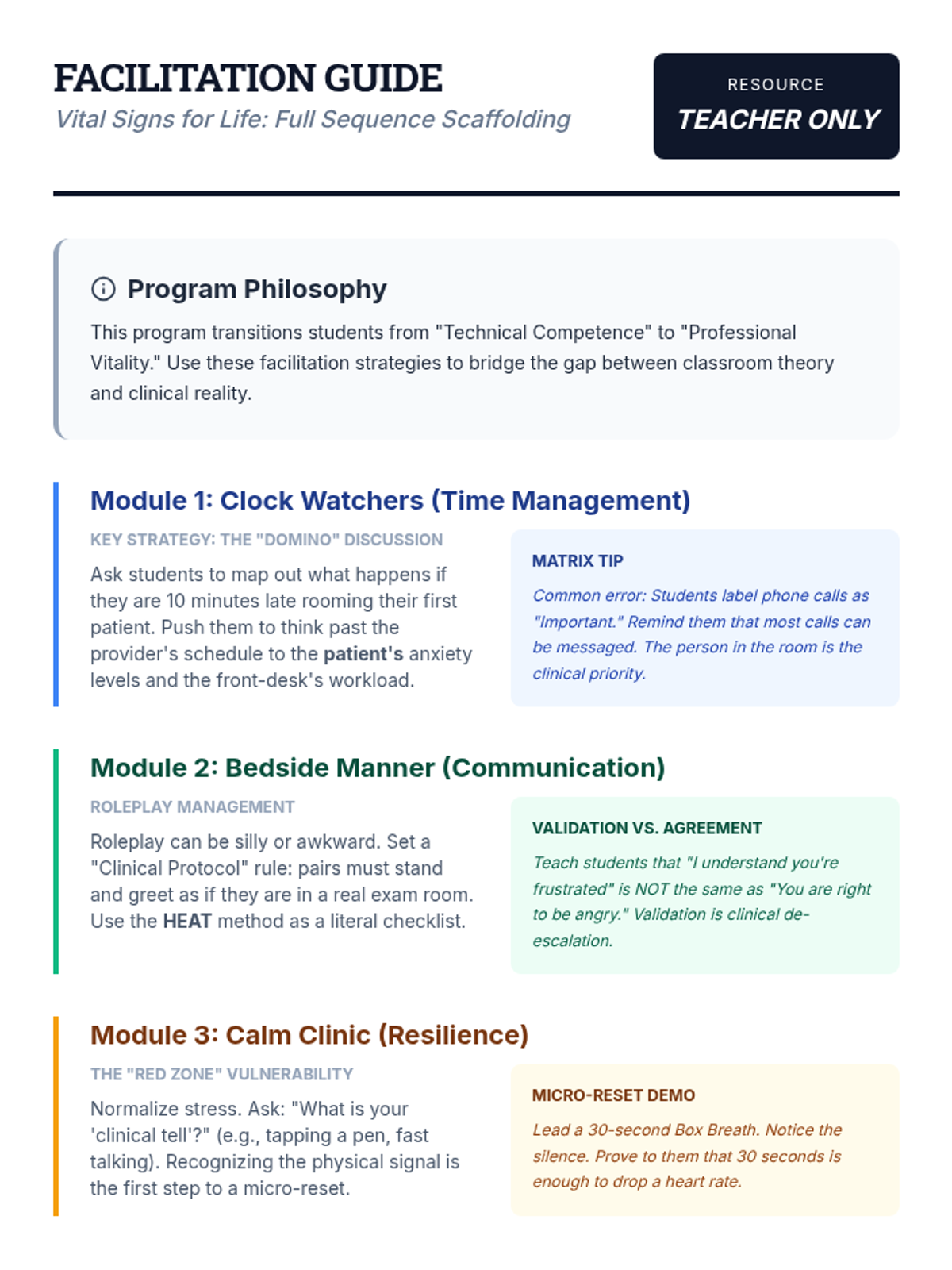
Focuses on preparing students for the transition from classroom to clinic, covering professional branding, resume highlights, and high-impact interview strategies using the STAR method.
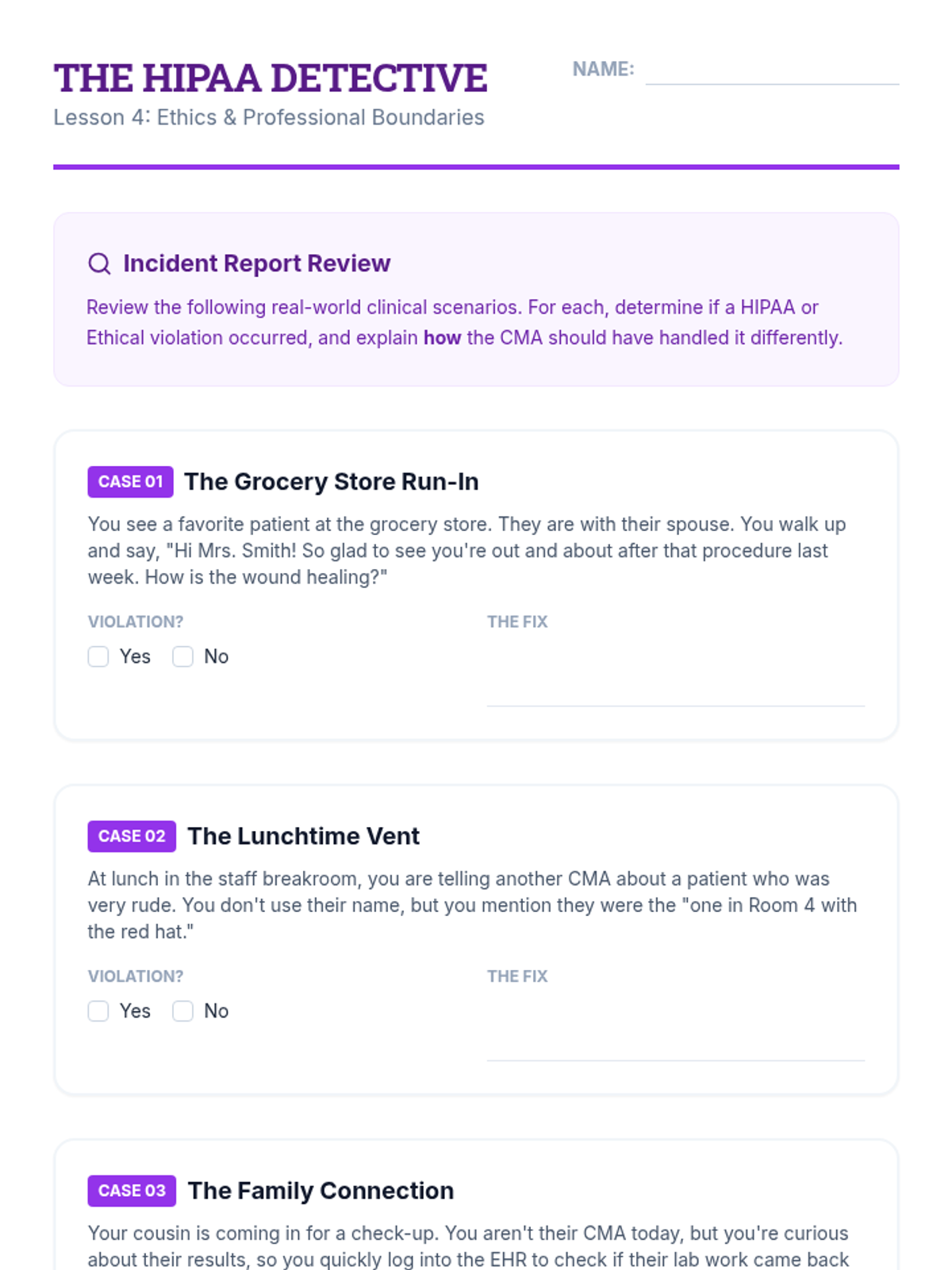
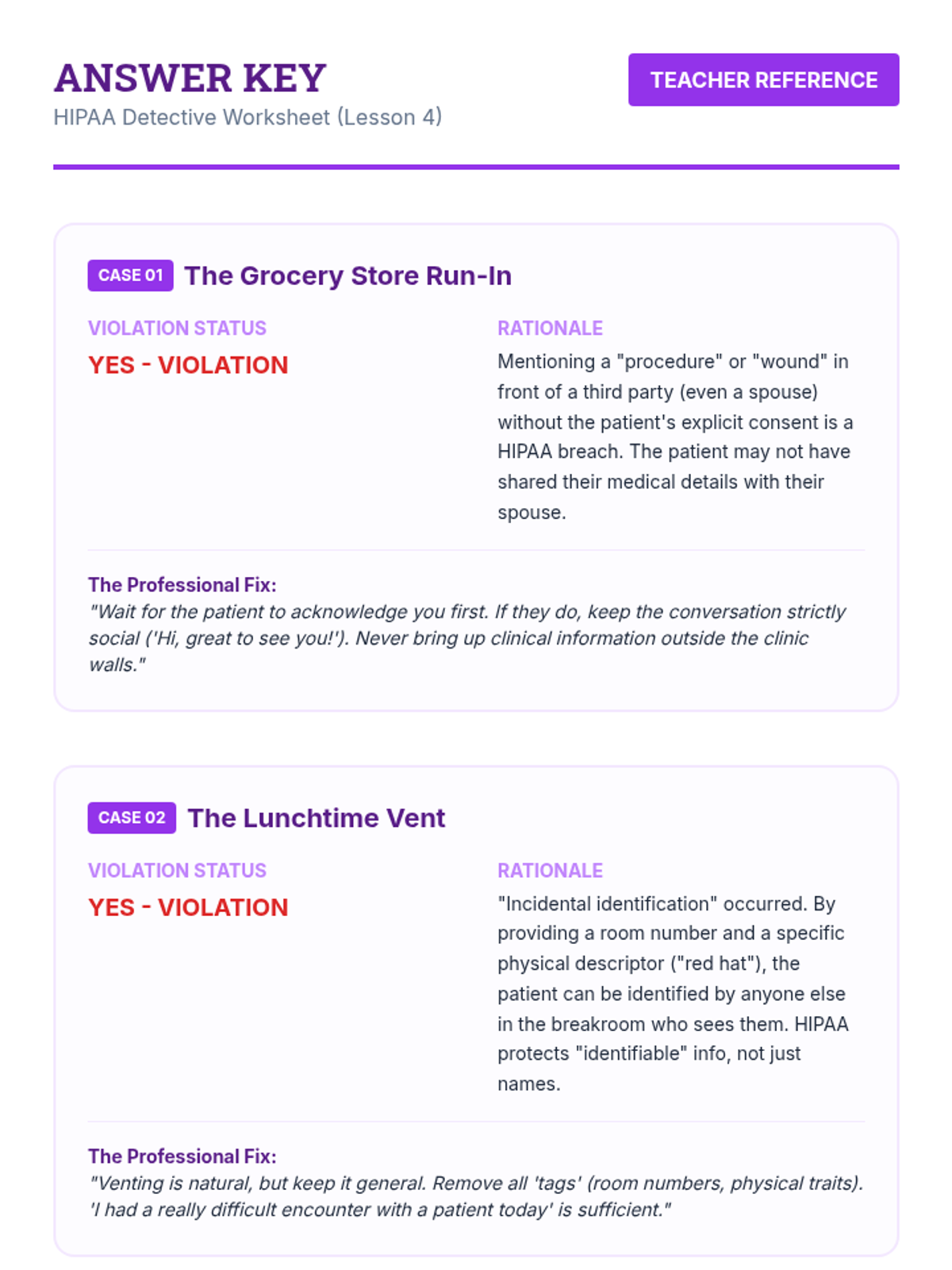
Covers HIPAA boundaries, professional reliability, and long-term career growth strategies for CMAs.
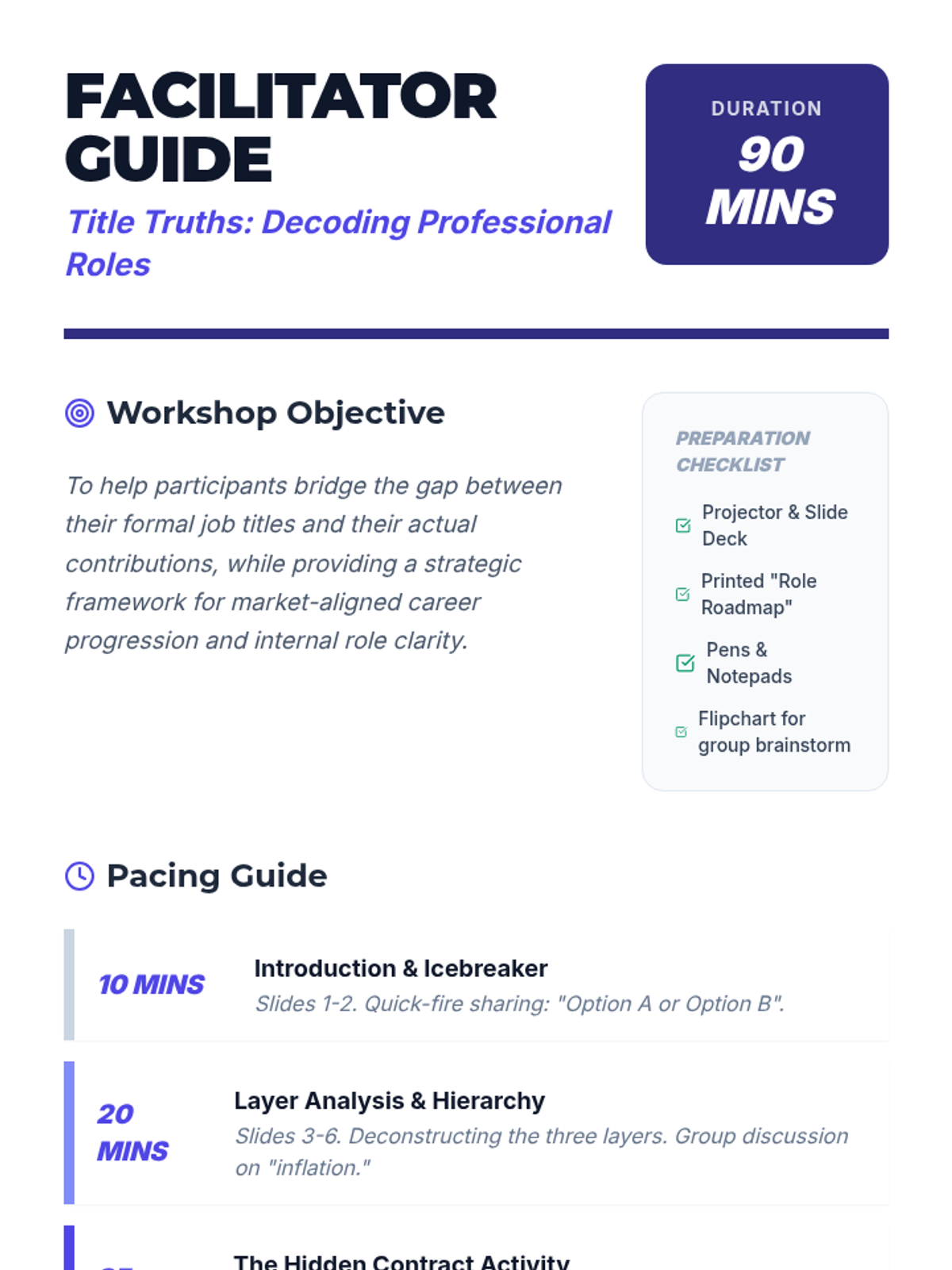
A 90-minute workshop exploring the nuances of professional job titles, their functional reality versus organizational hierarchy, and how to navigate career growth through role clarity.
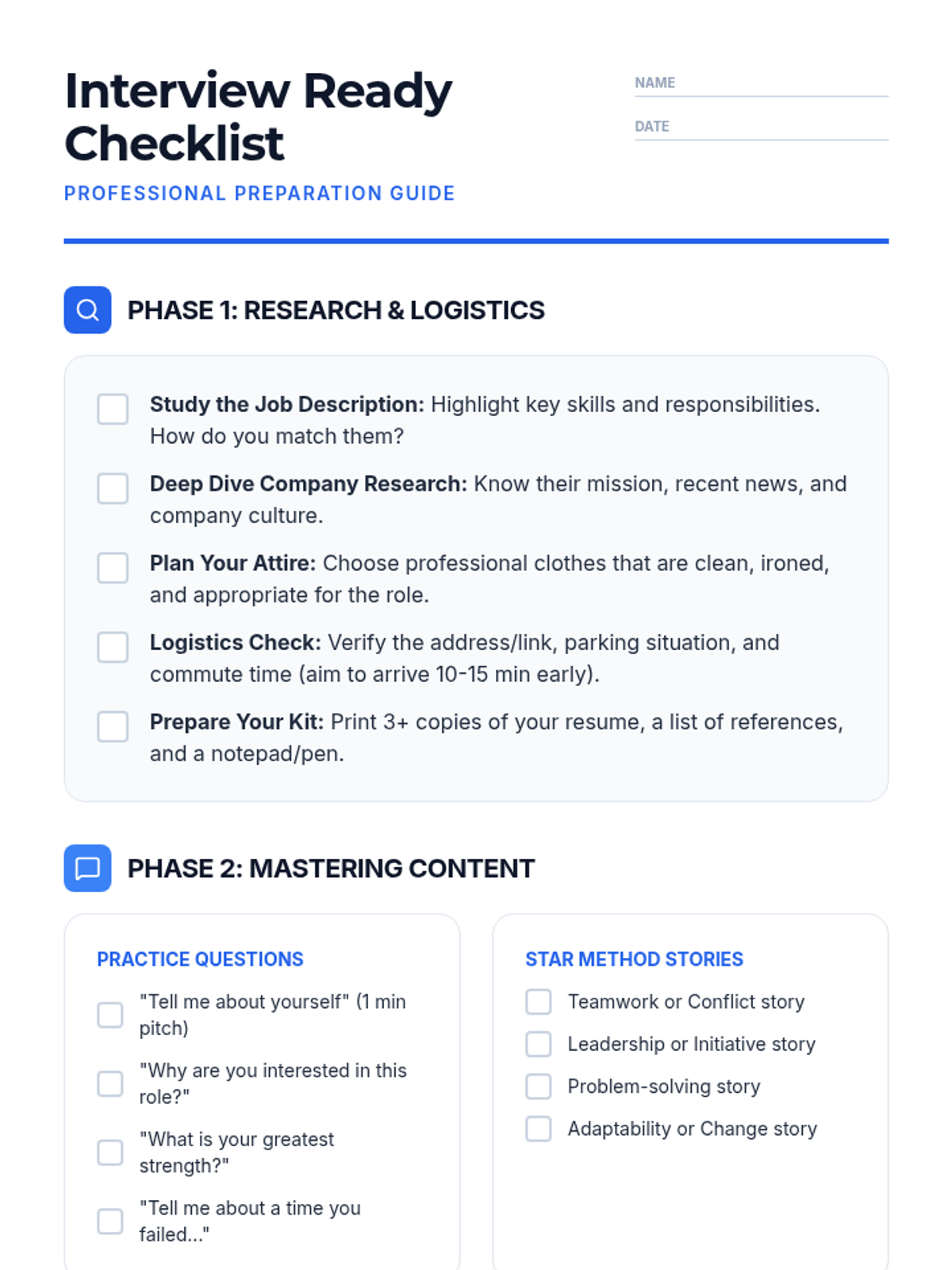
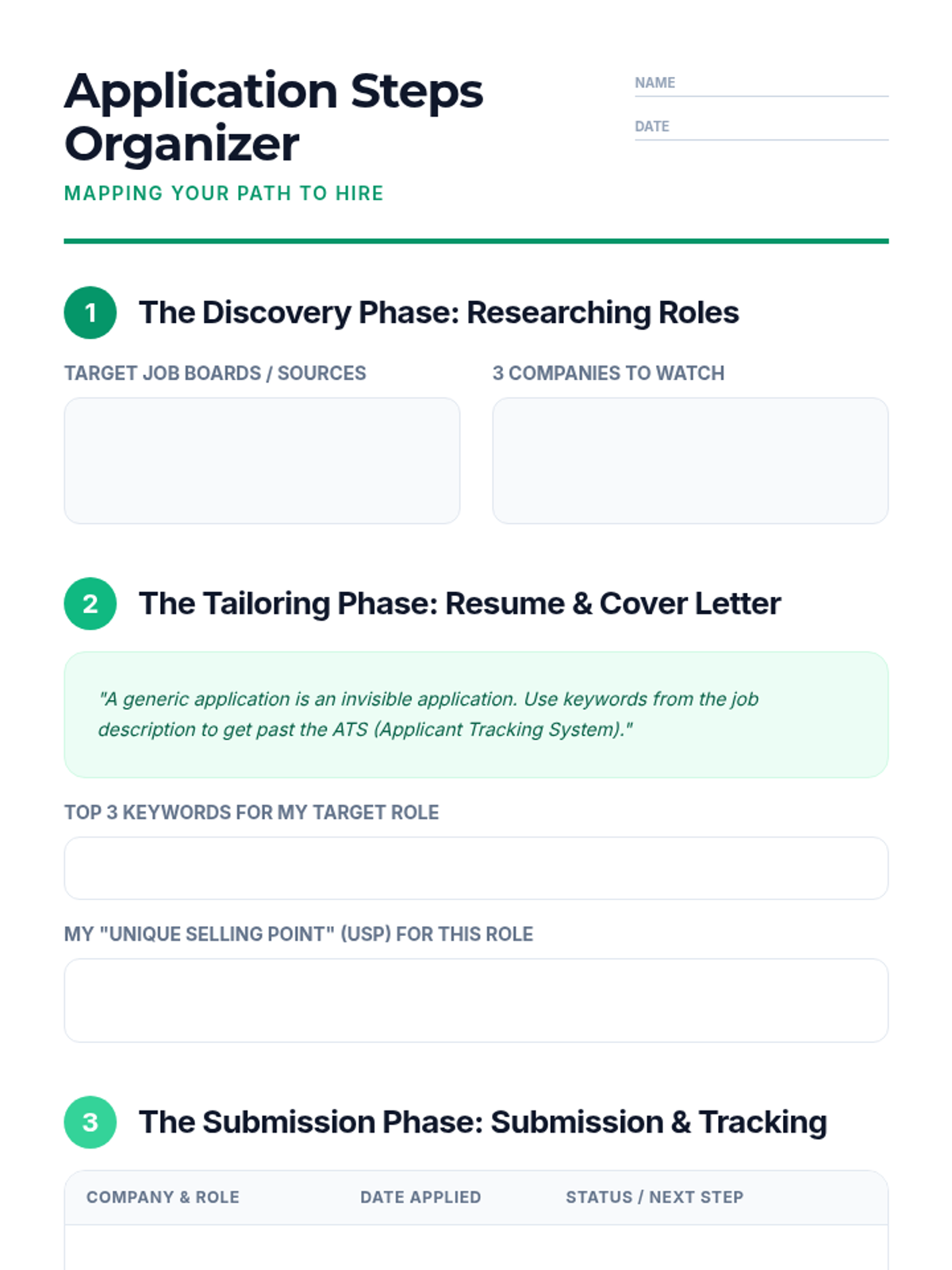
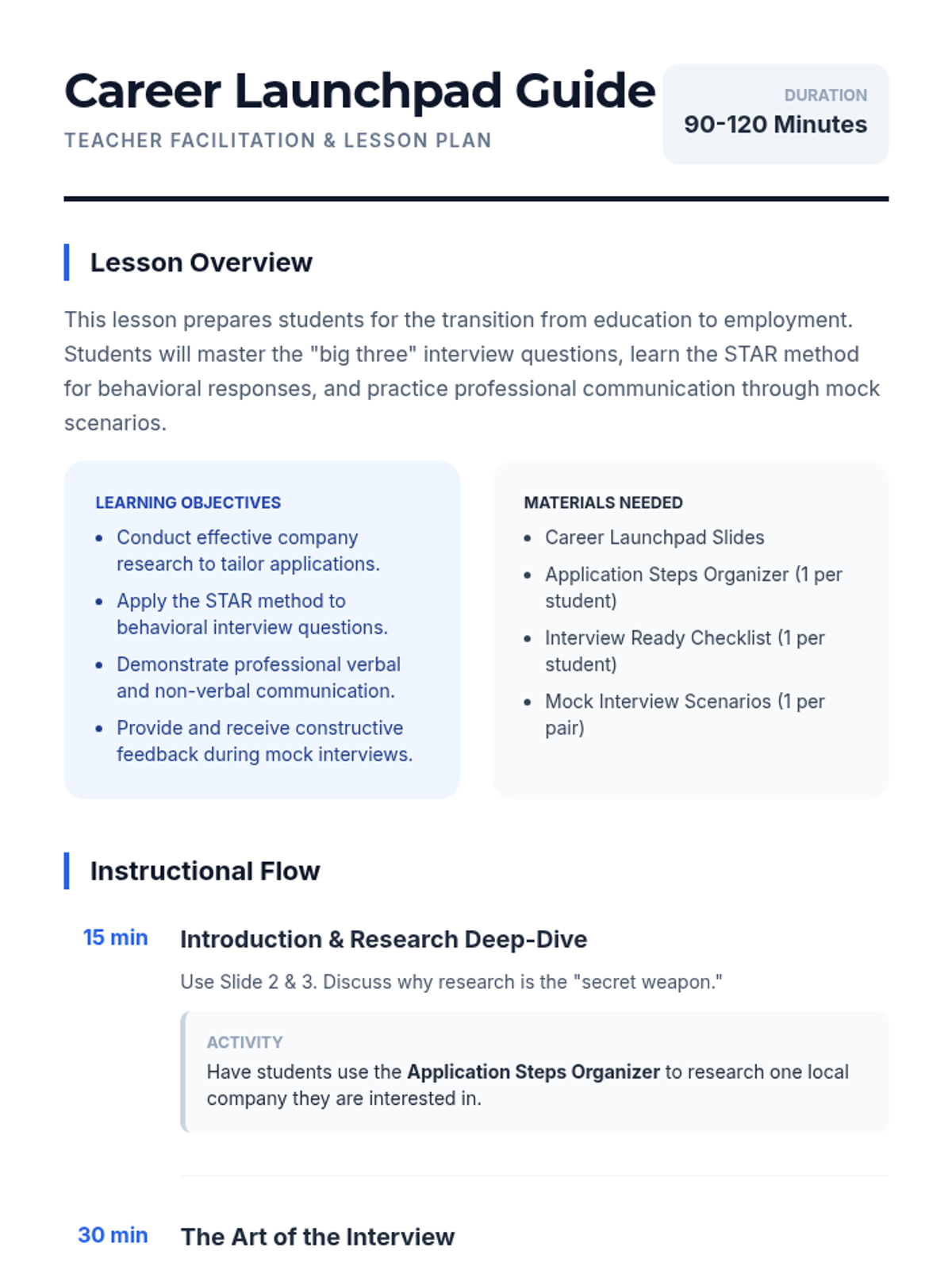
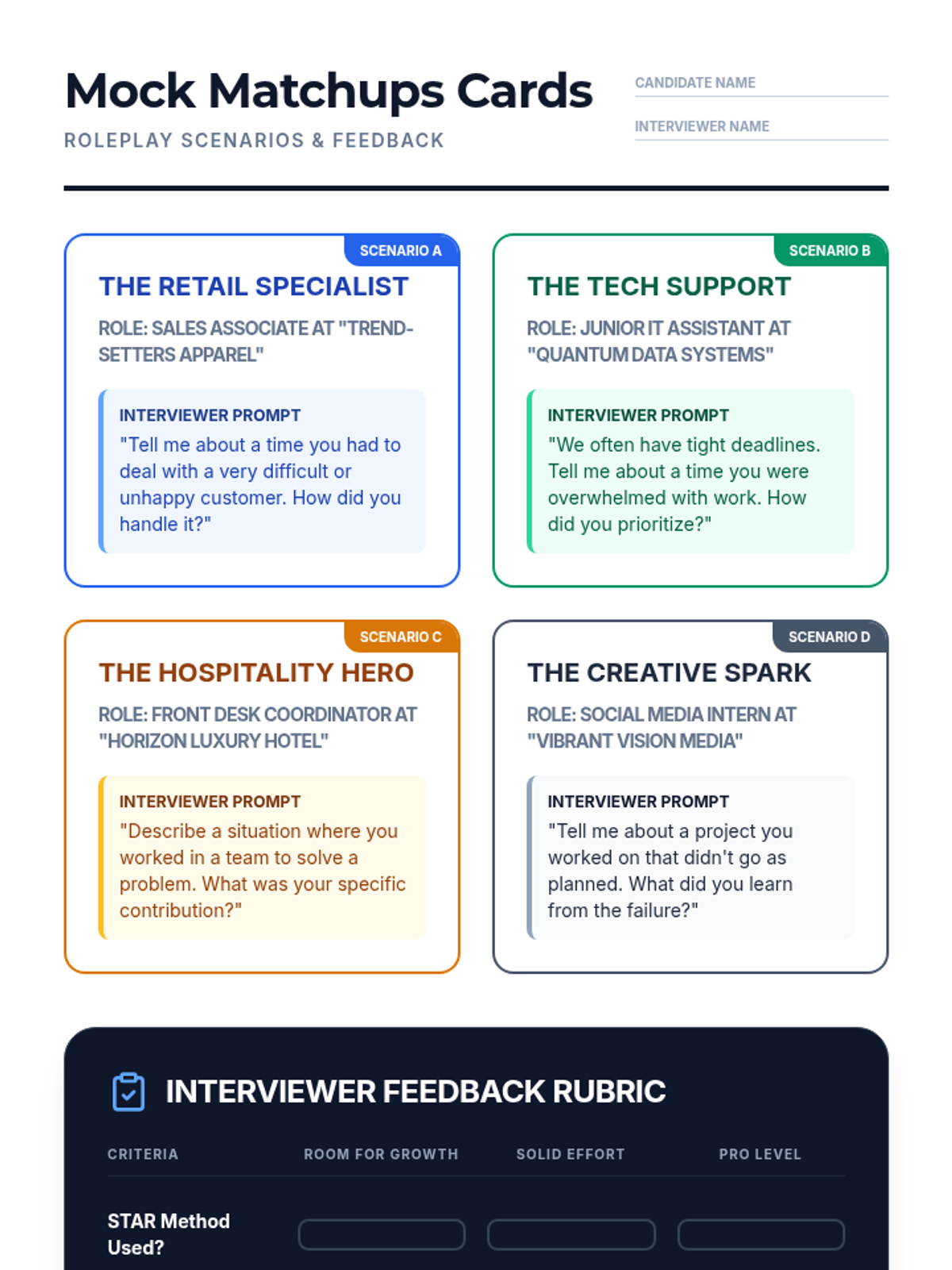
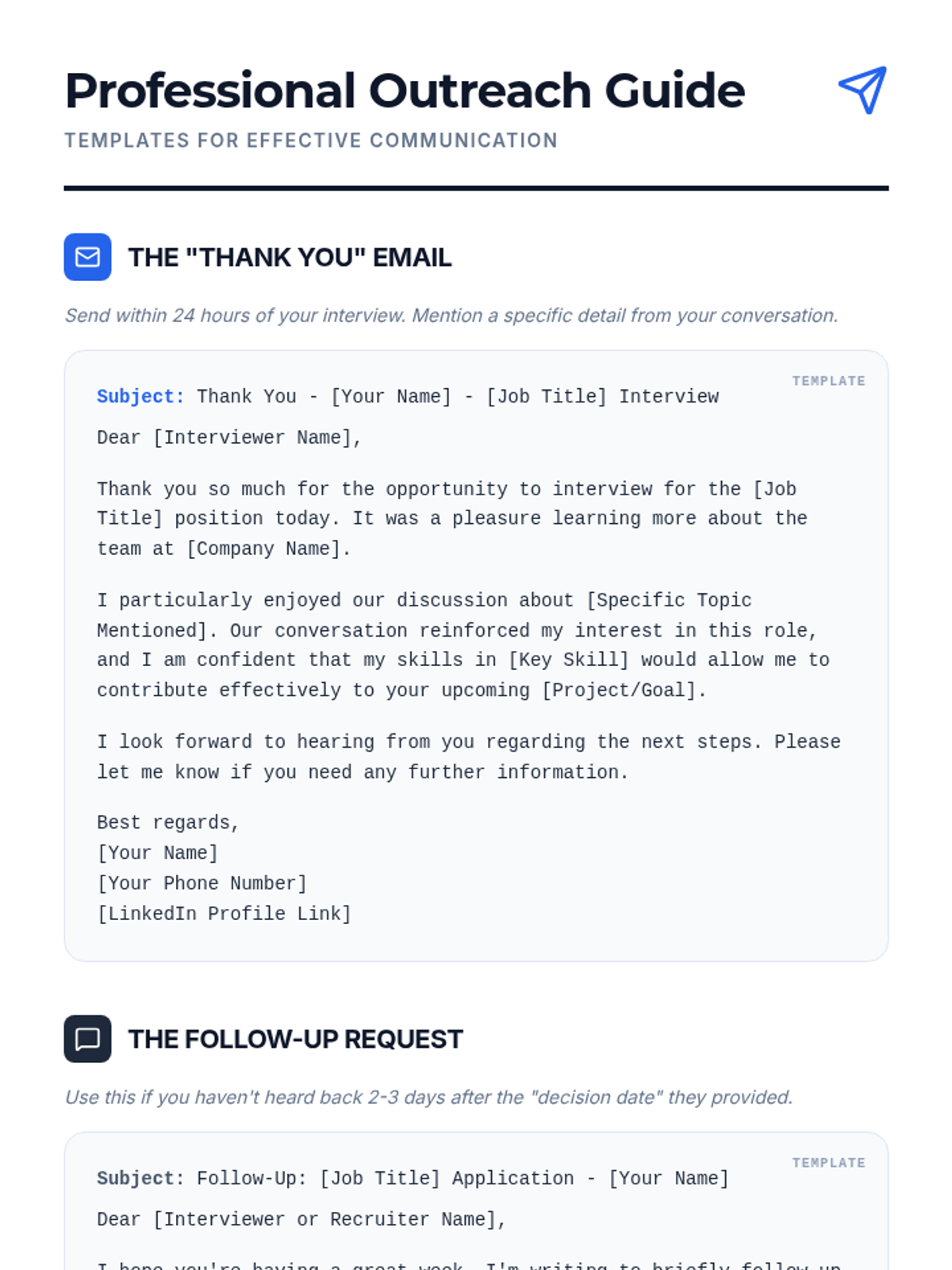
A comprehensive guide to mastering the job application and interview process, focusing on research, professional communication, and mock interview practice.
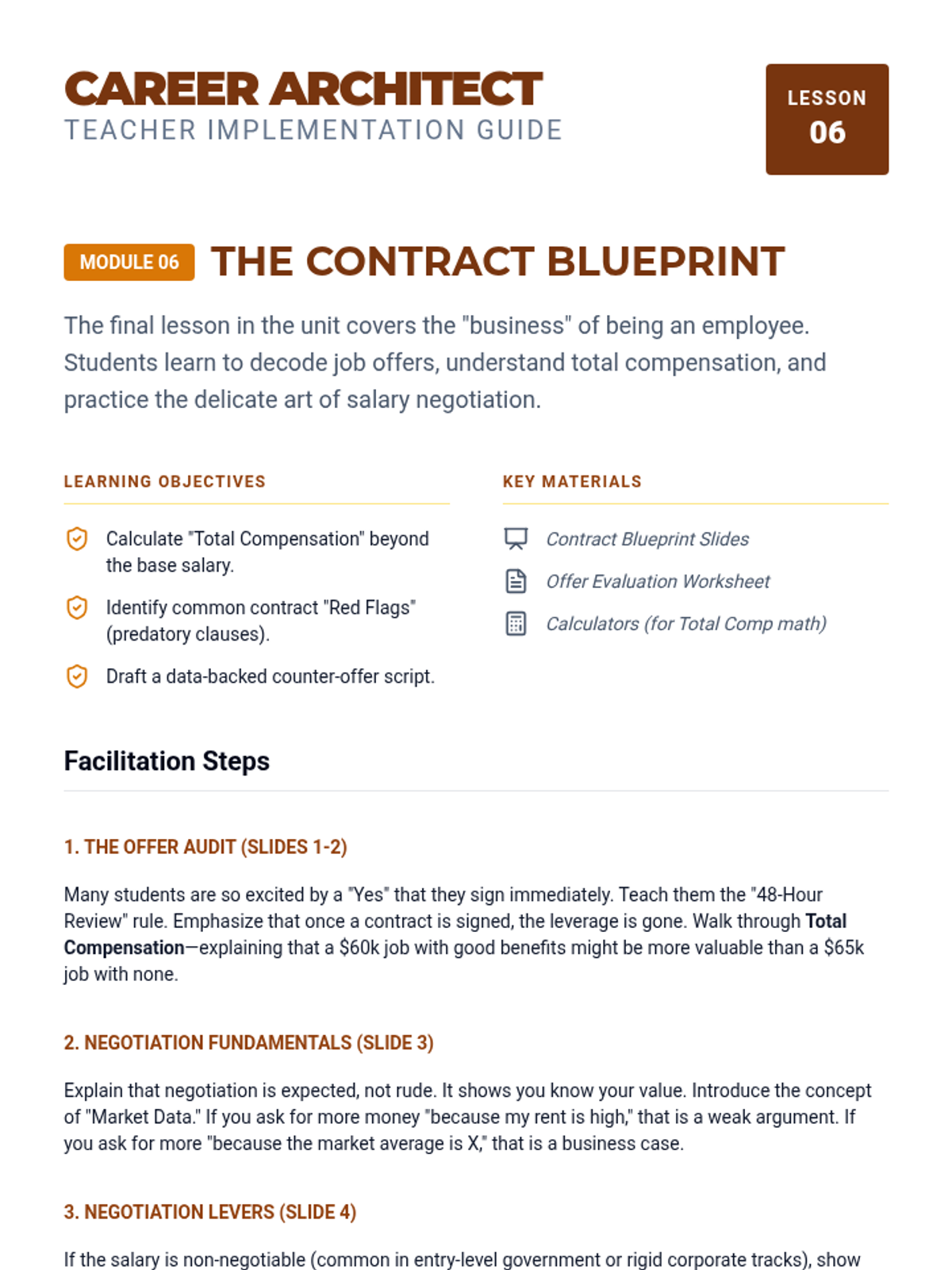
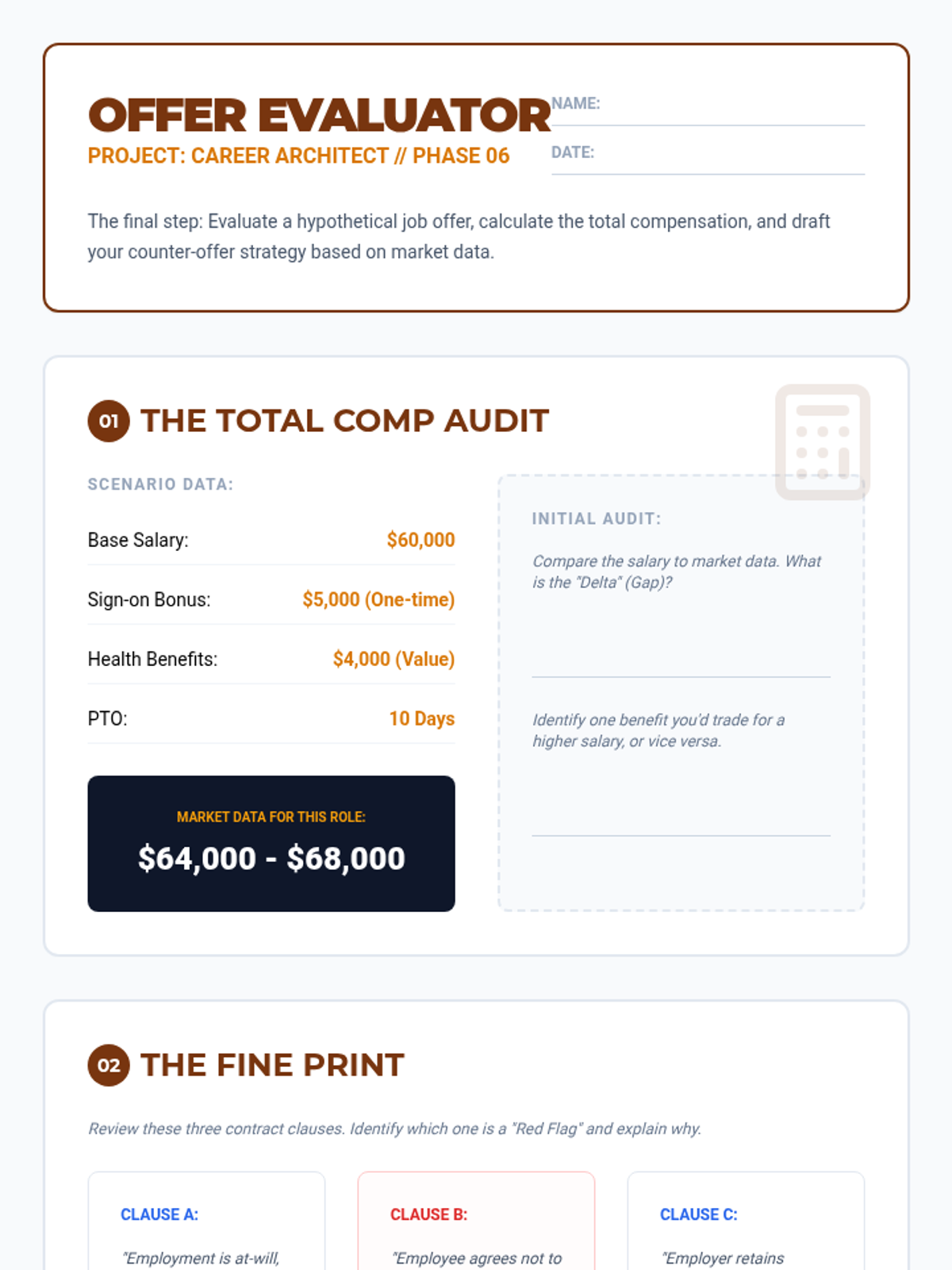
Teaches students how to evaluate job offers, negotiate salary and benefits, and prepare for the professional transition into a new role. Focuses on the "business" side of starting a career.
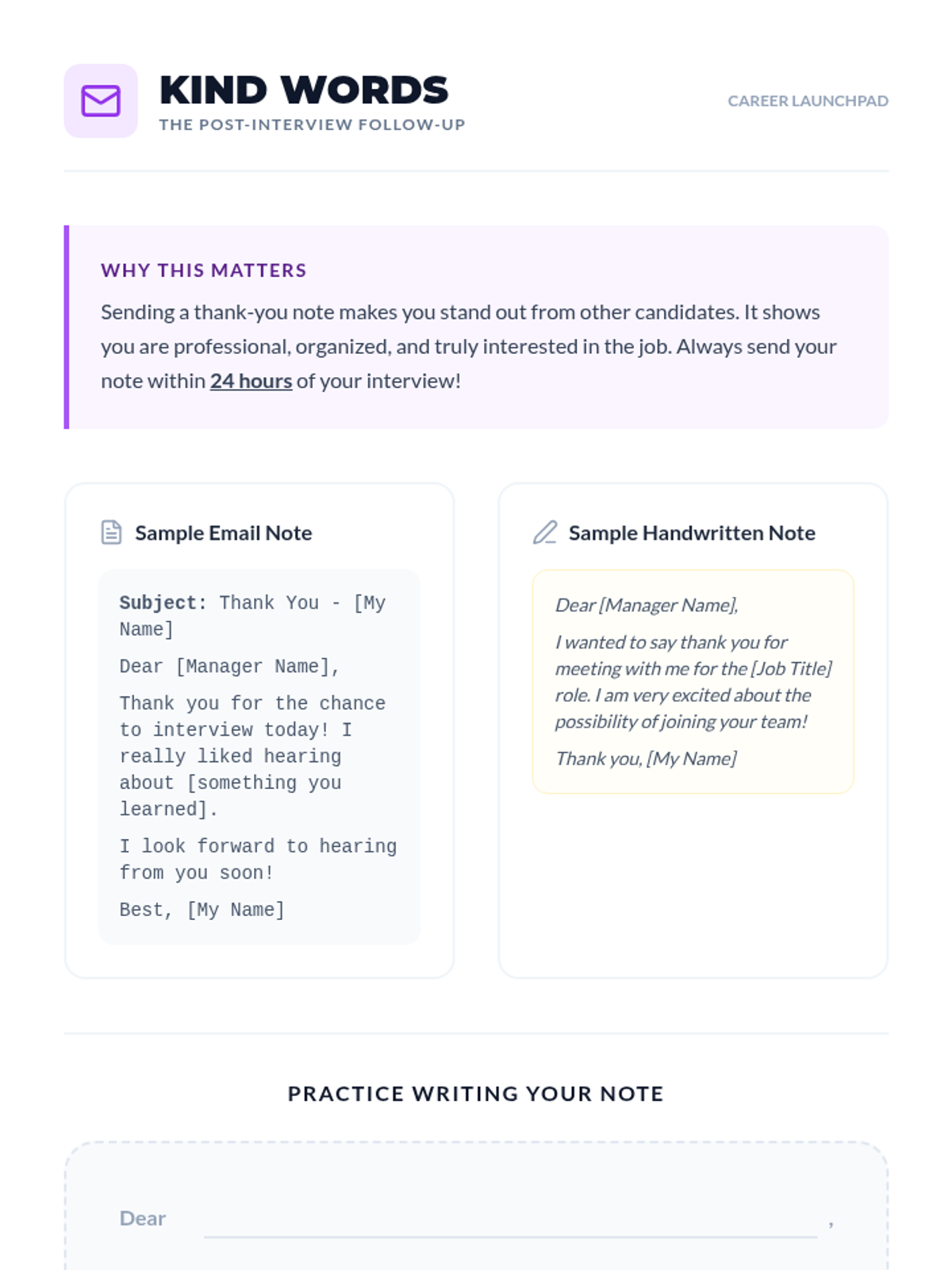
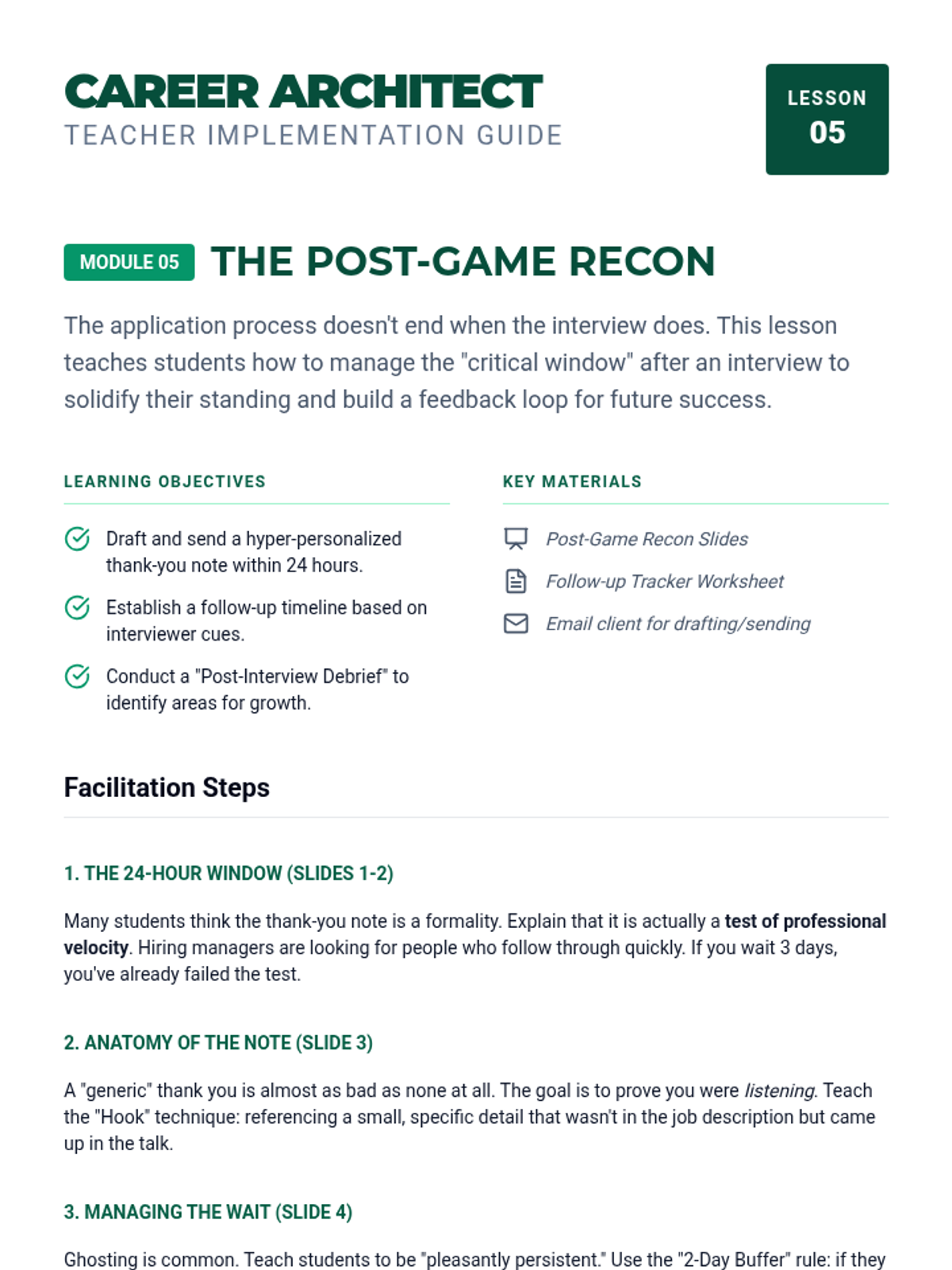
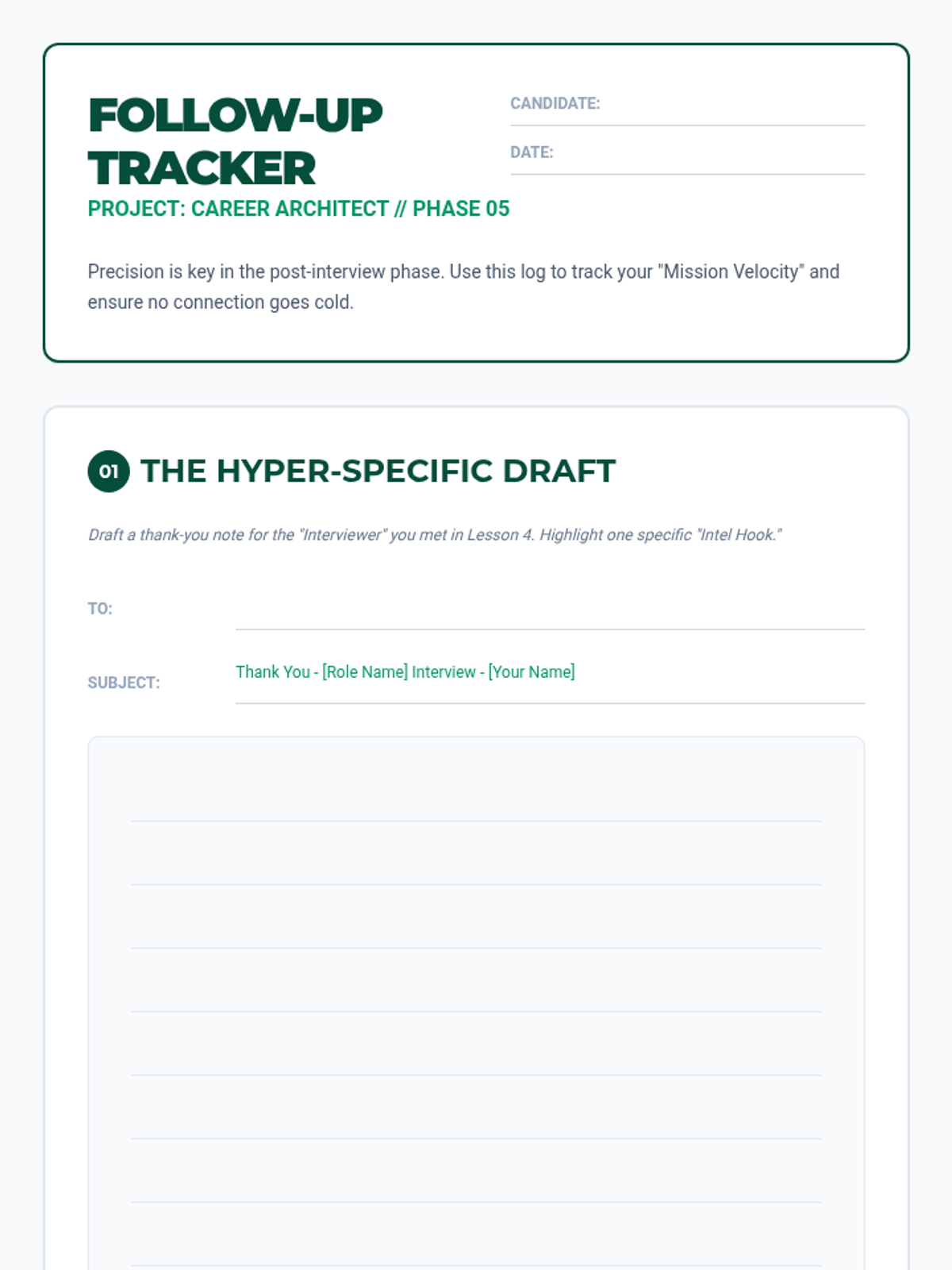
Focuses on the critical period after the interview. Students learn to craft high-impact thank-you notes, manage follow-up timelines, and leverage post-interview feedback to refine their approach.
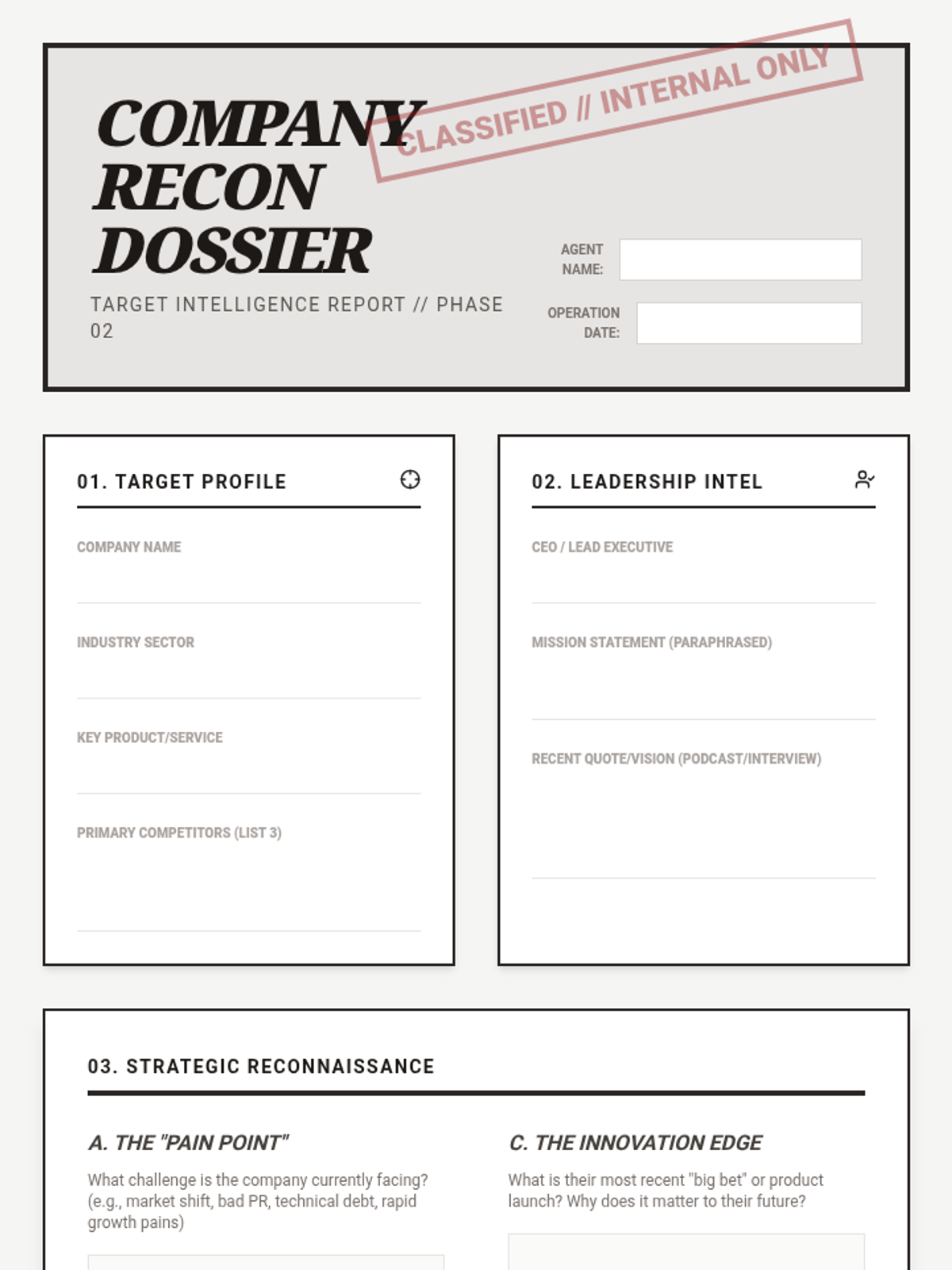
Focuses on translating research into action. Students learn to tailor their resumes and cover letters using the data gathered during their 'Company Recon' to stand out from generic applicants.
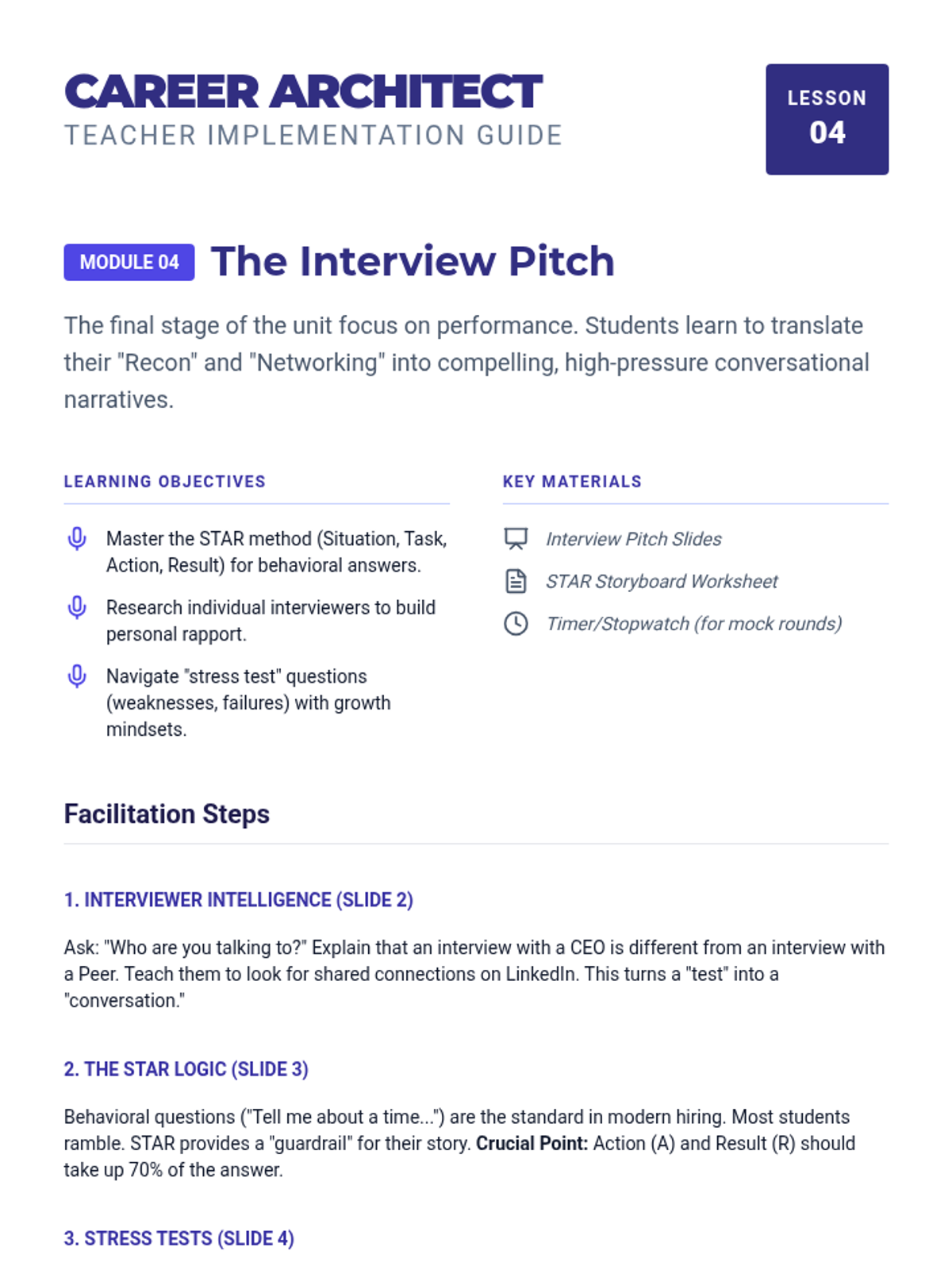
Prepares students for various interview formats and difficult scenarios. Focuses on the STAR method for behavioral questions, researching the interviewers themselves, and practicing high-pressure situational responses.
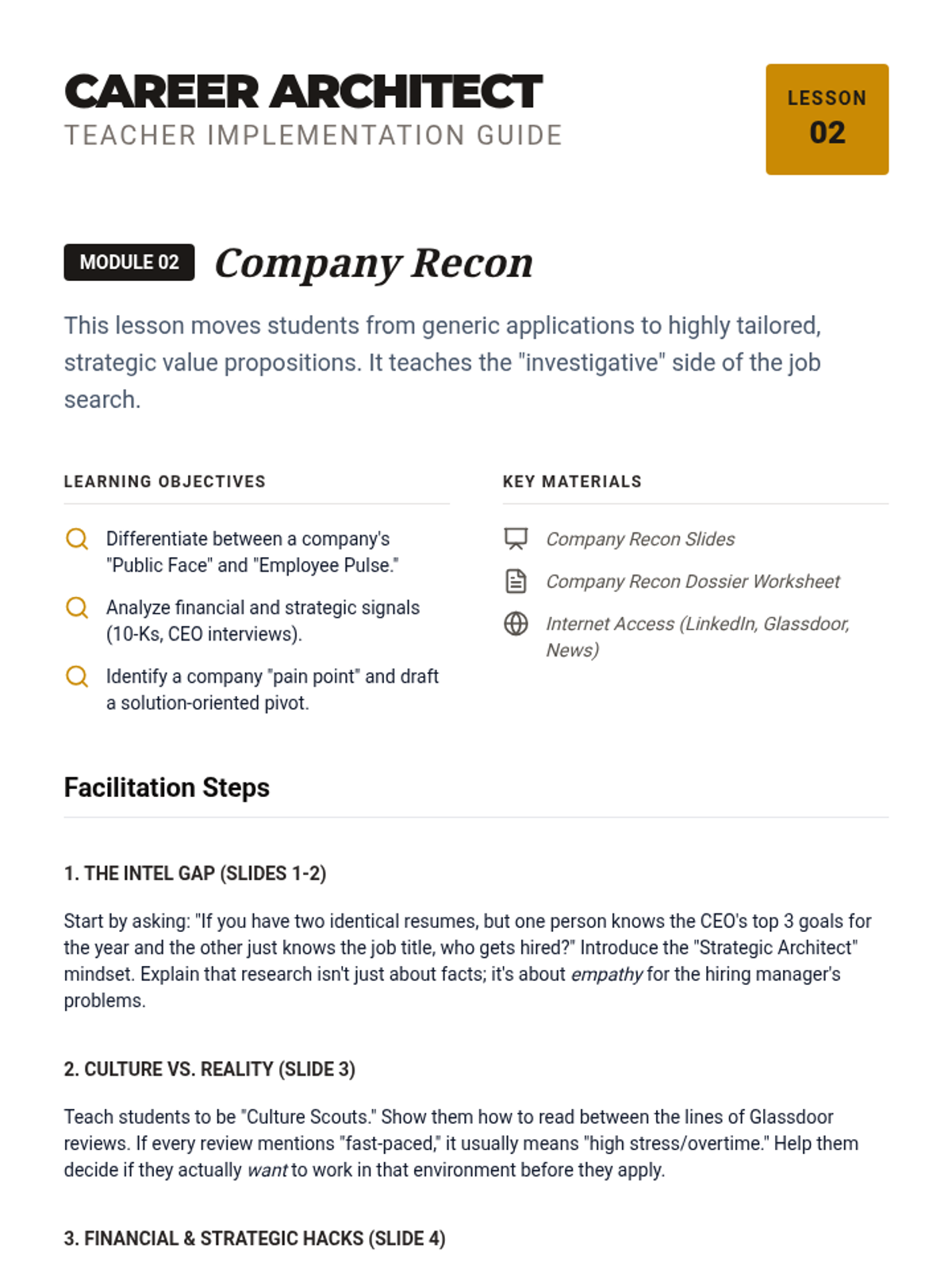
Teaches students how to move beyond surface-level job descriptions. Focuses on researching company culture, financial health, and industry positioning to tailor applications and demonstrate genuine interest and fit.
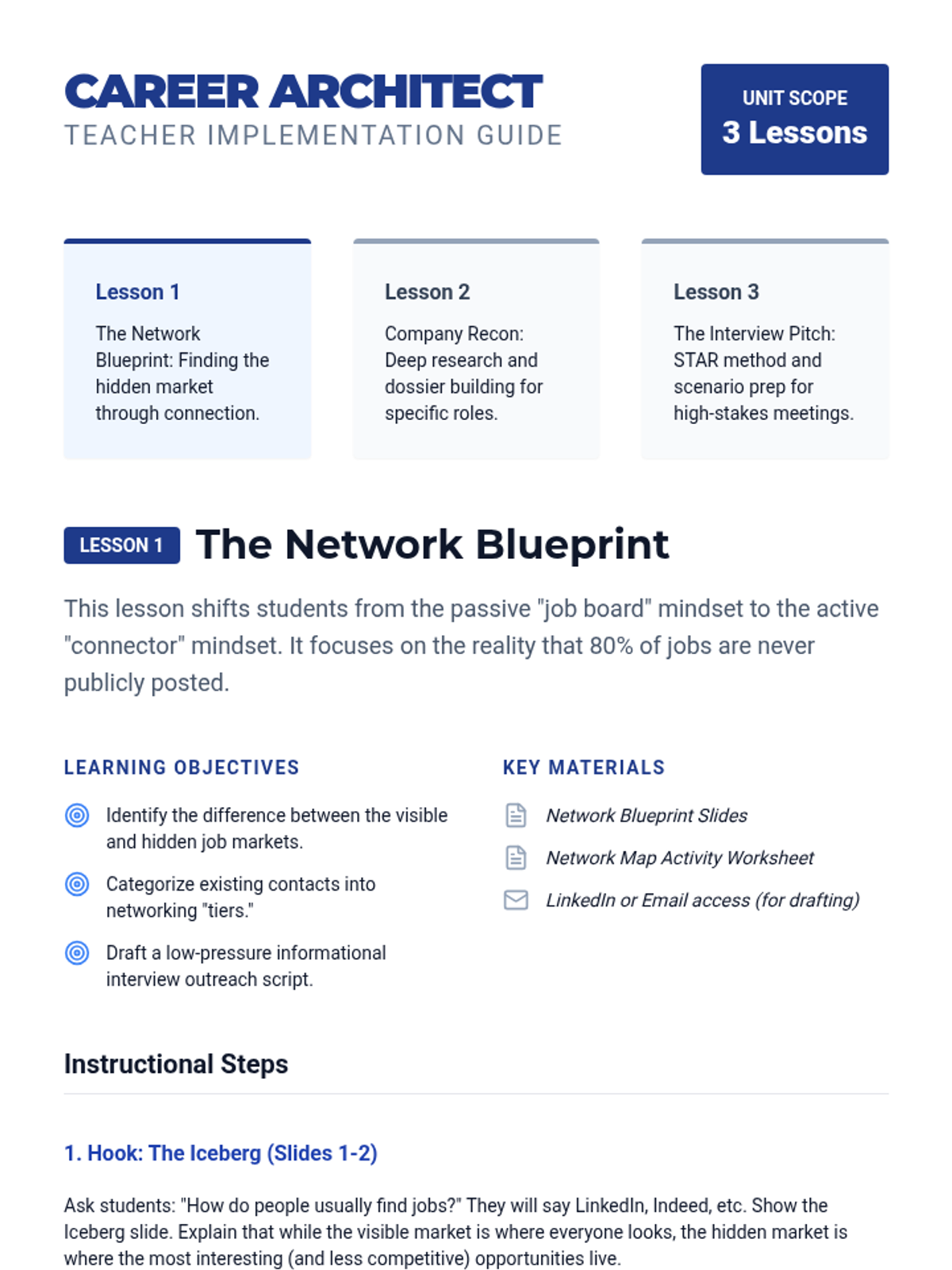
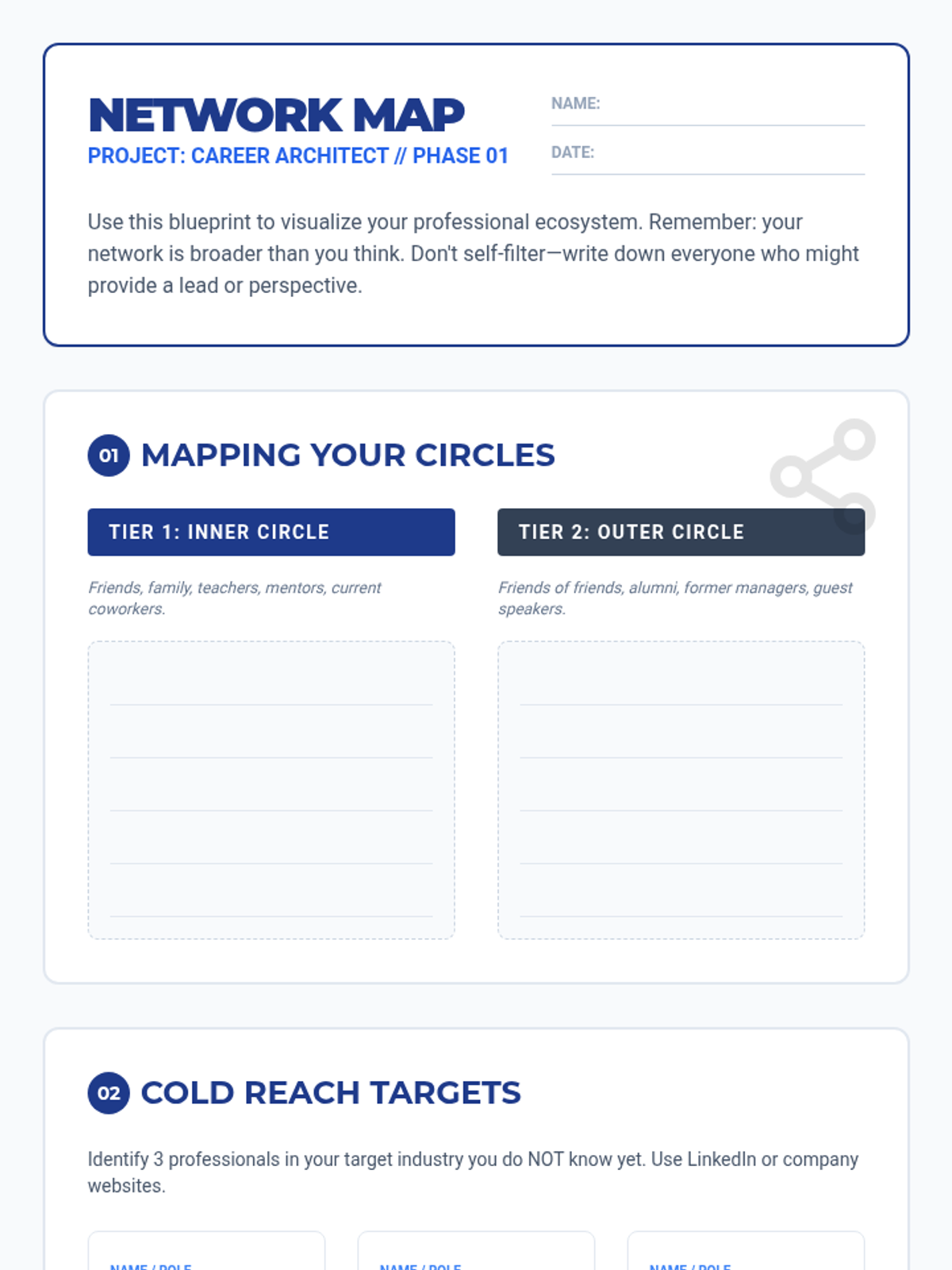
Focuses on the 'hidden job market' and the power of professional networking. Students learn how to identify potential connections, conduct informational interviews, and leverage their existing circle to find opportunities before they are posted publicly.
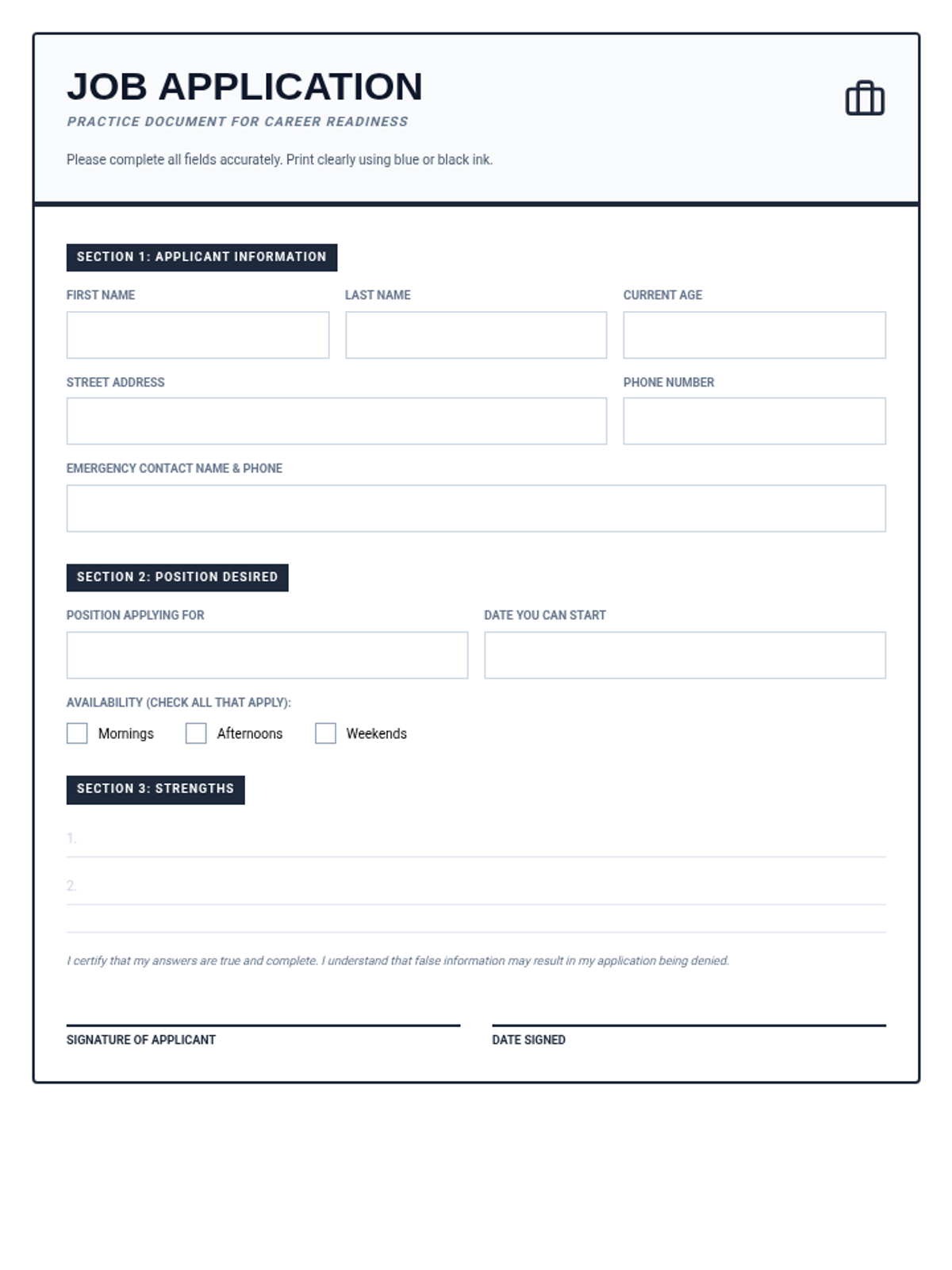
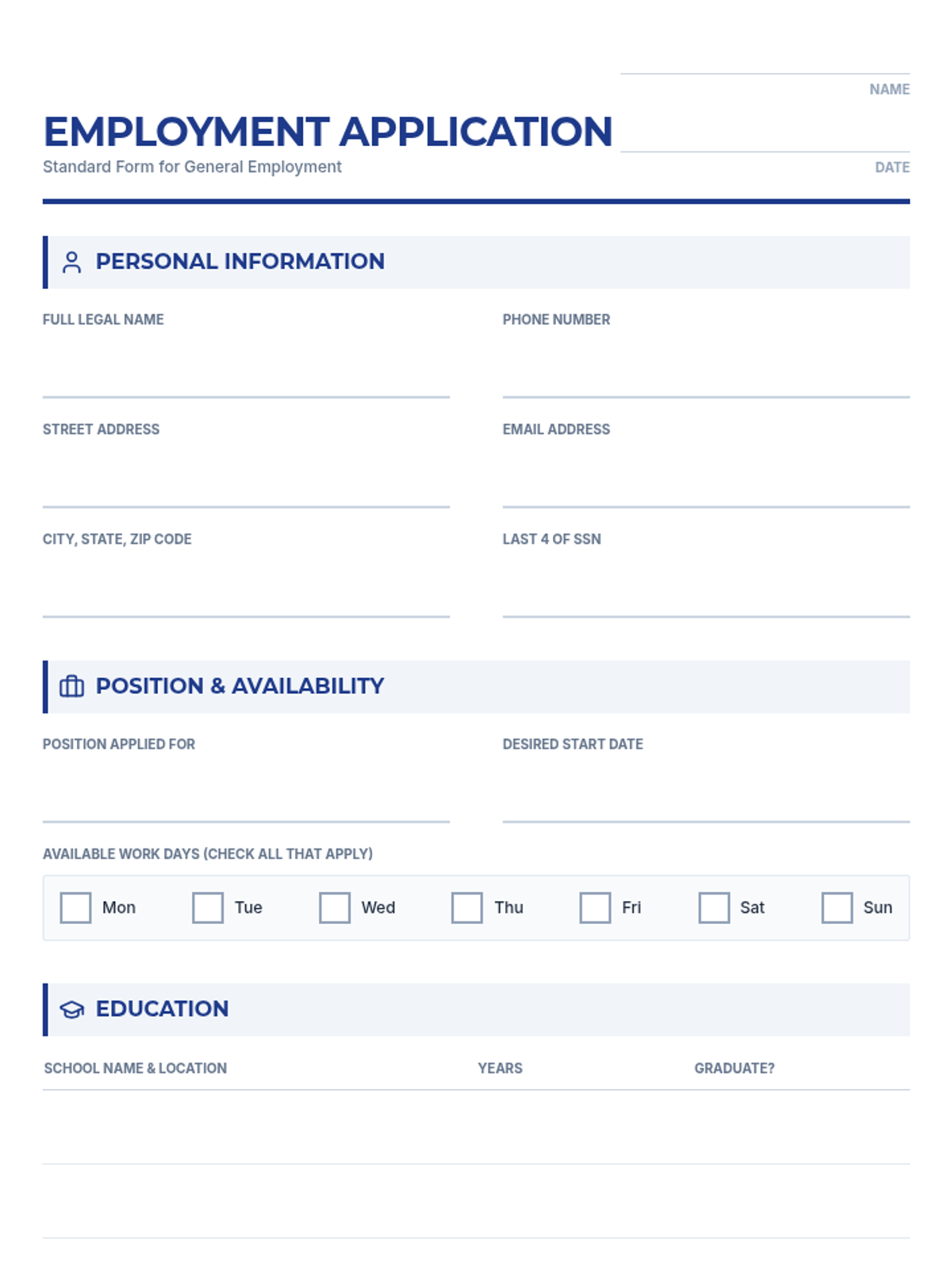
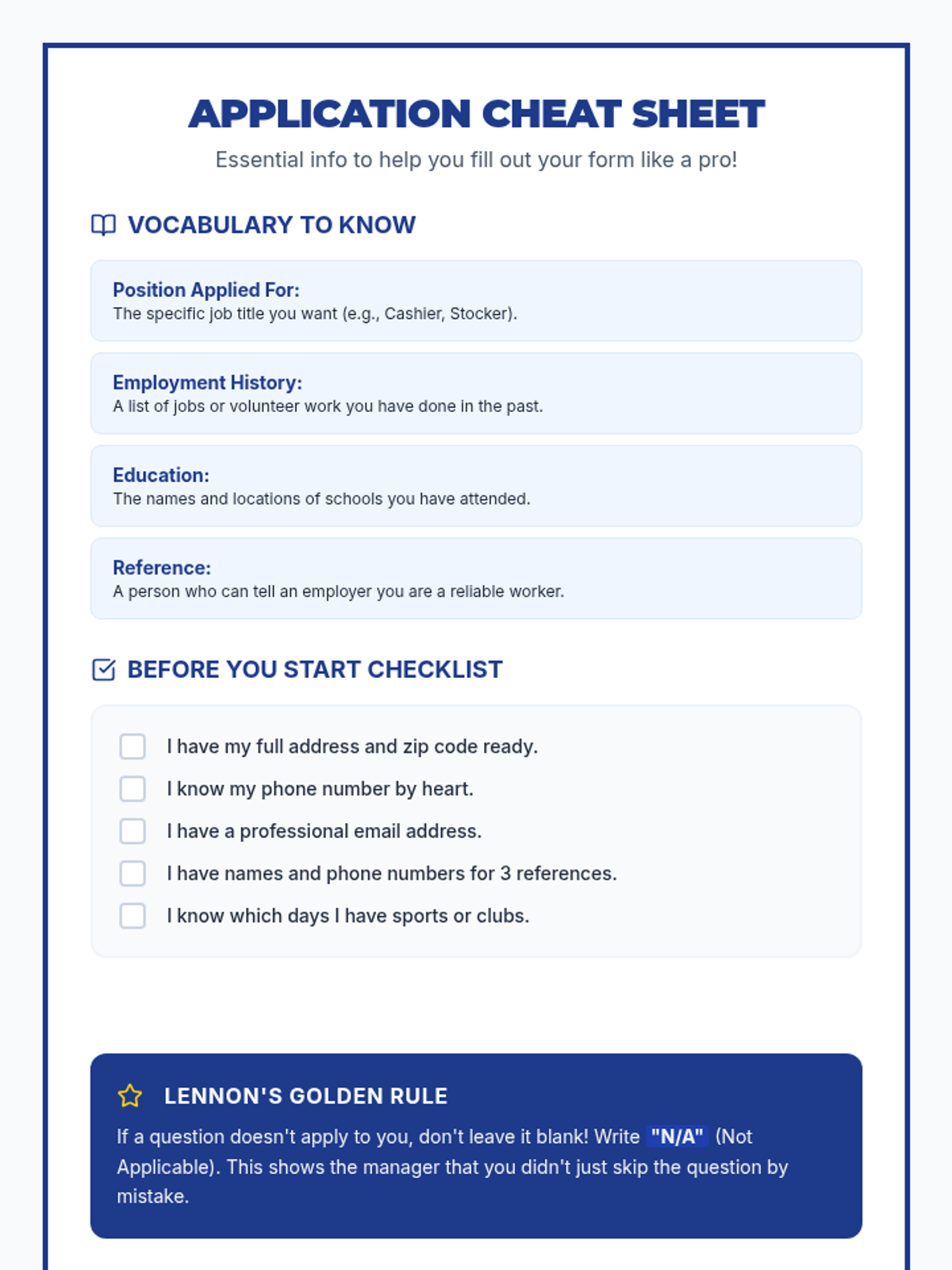
A practical lesson focused on the essential life skill of completing a job application accurately and professionally. Students will learn the terminology, gather their personal information, and practice filling out a realistic application form.
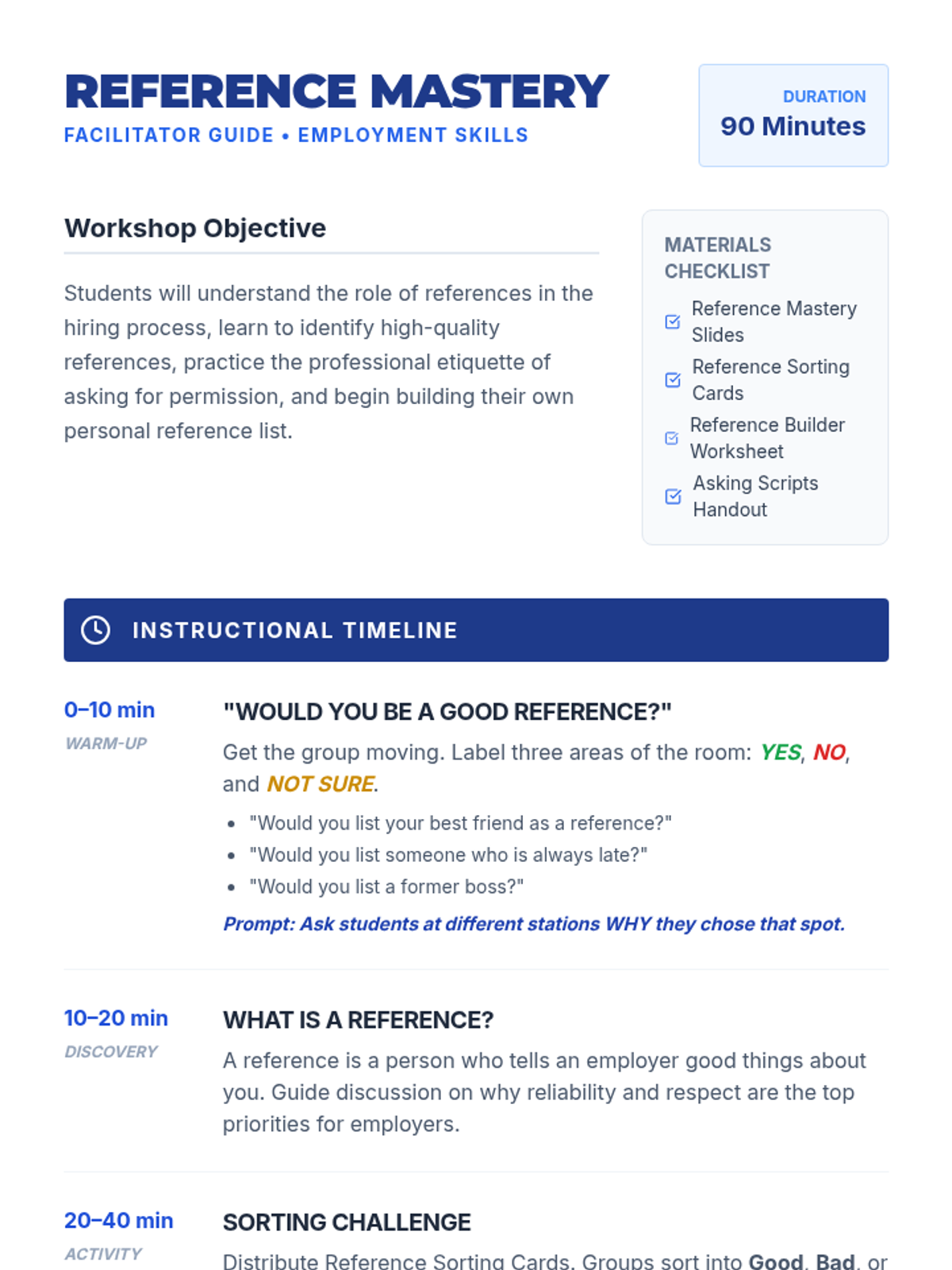
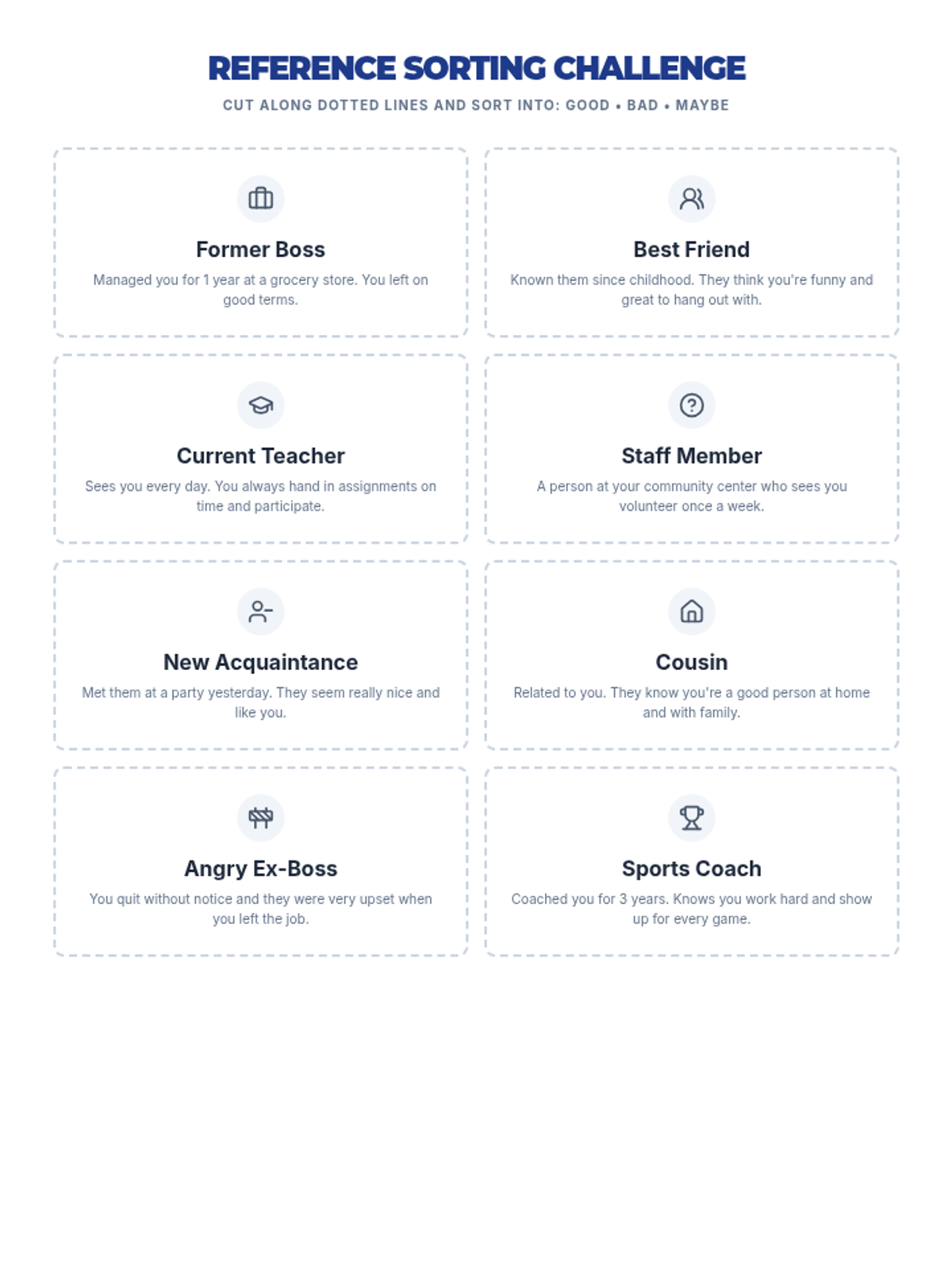
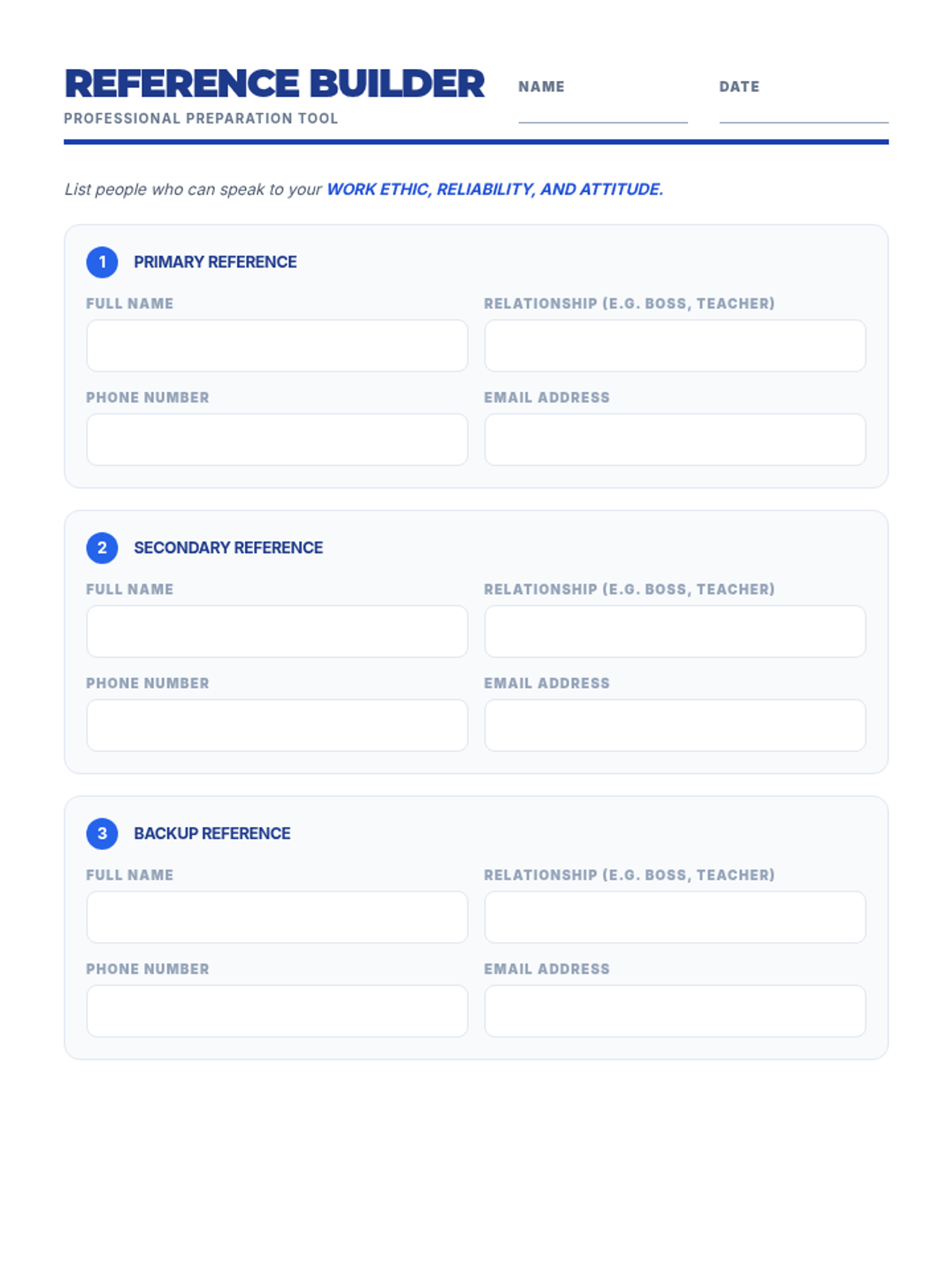
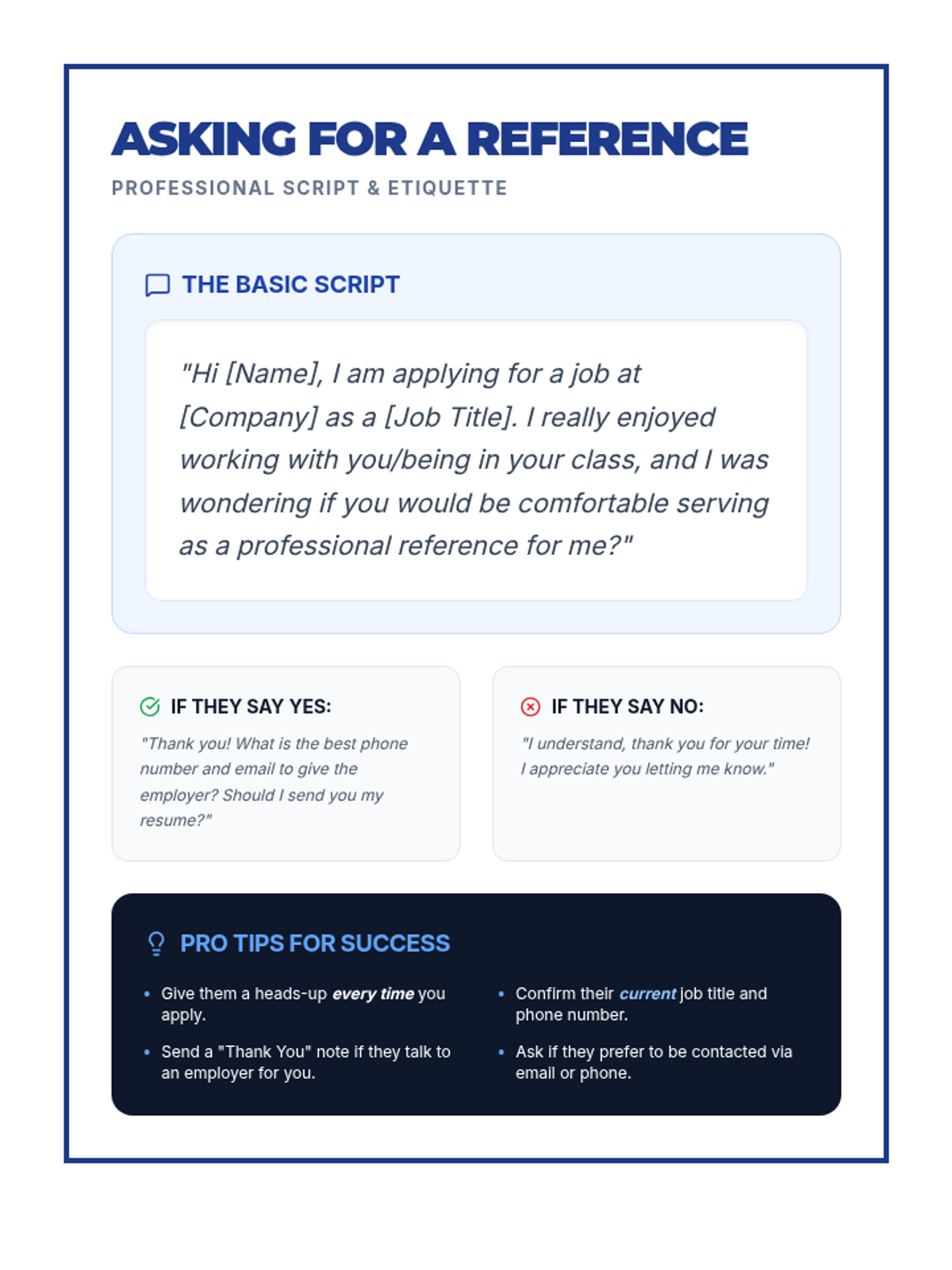
A comprehensive 90-minute workshop on understanding, selecting, and asking for professional references to secure employment.
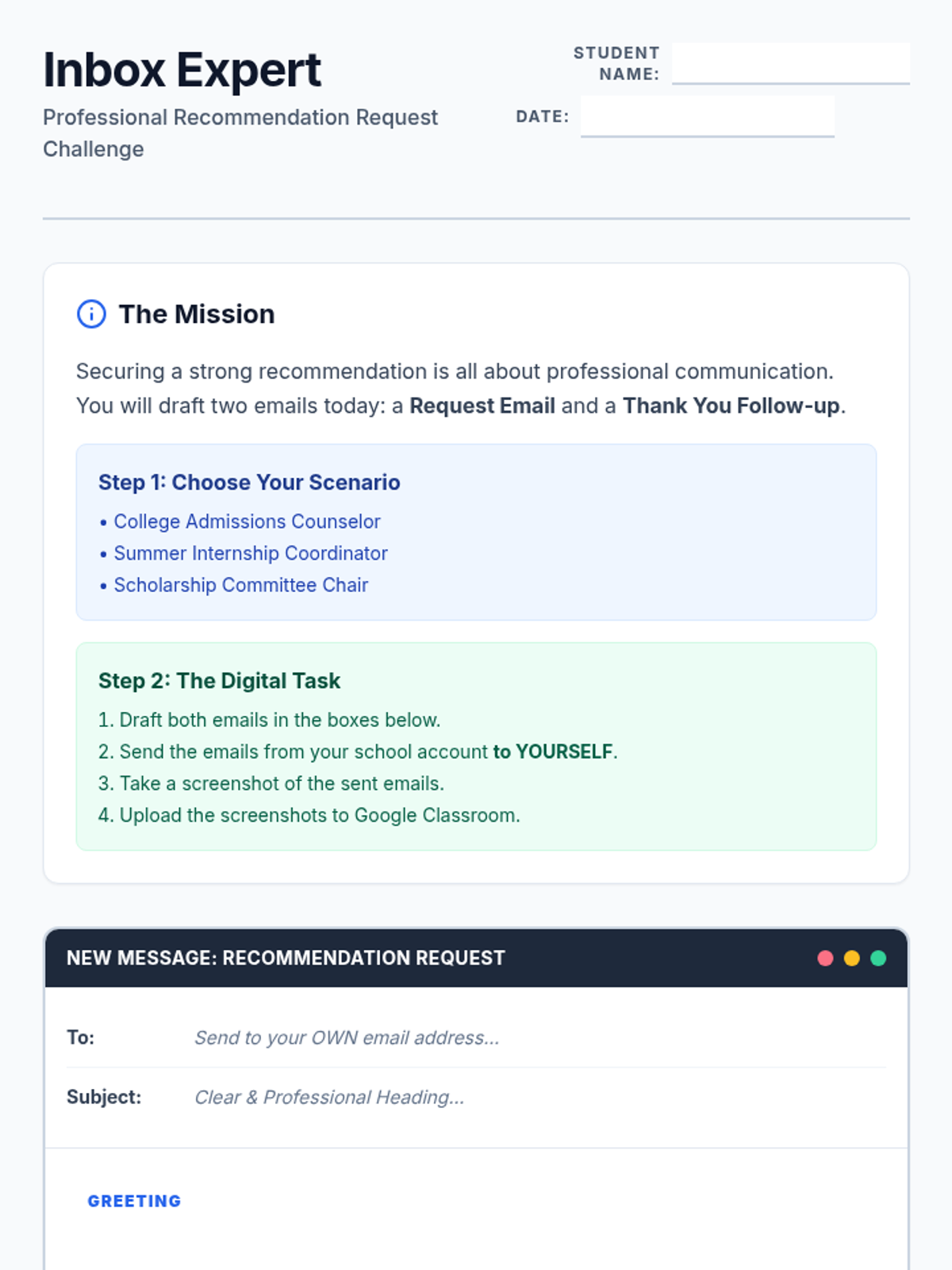
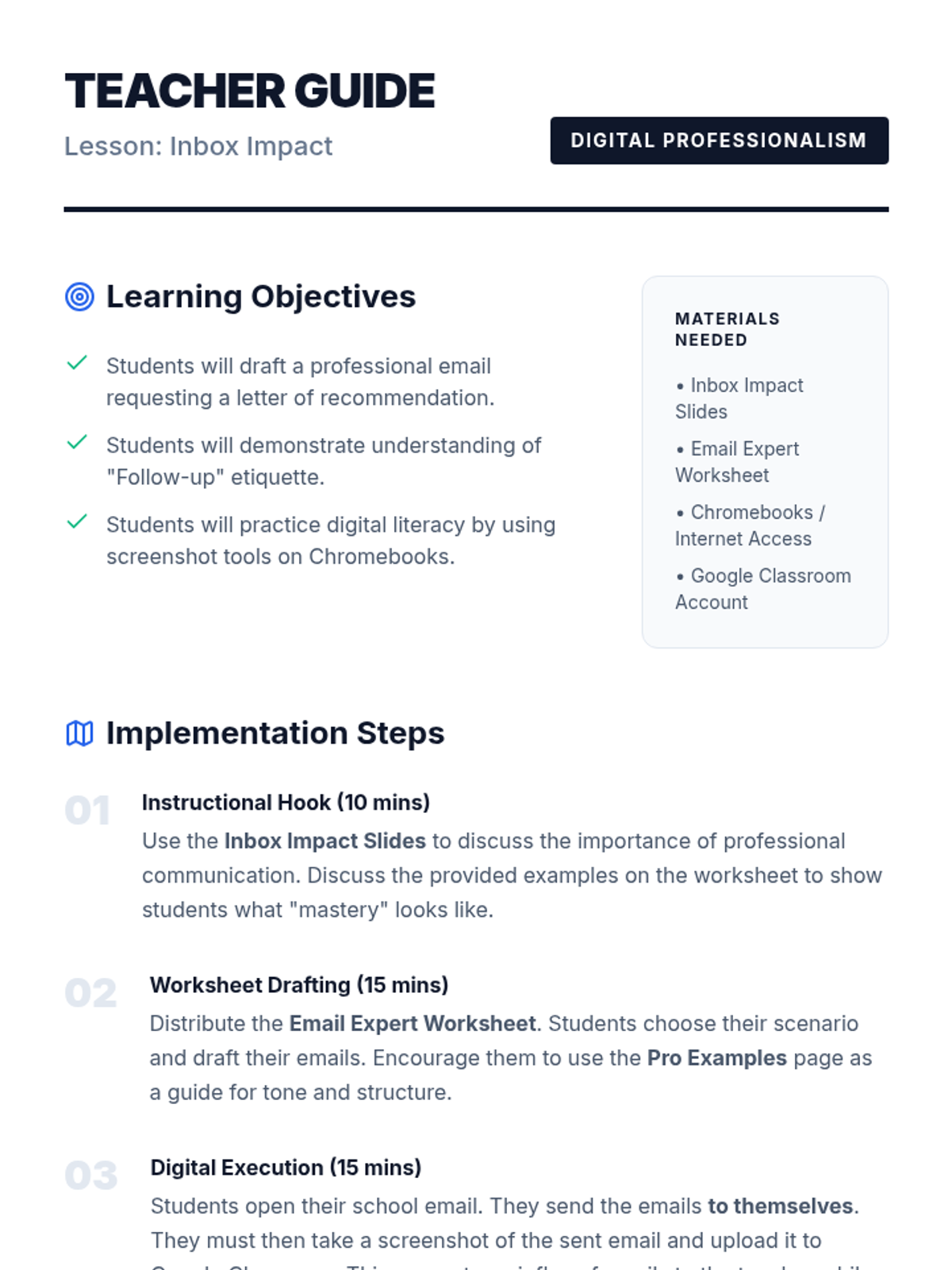
A lesson on drafting and sending professional emails to request letters of recommendation for college, internships, or scholarships. Students learn proper email etiquette, structure, and follow-up procedures.
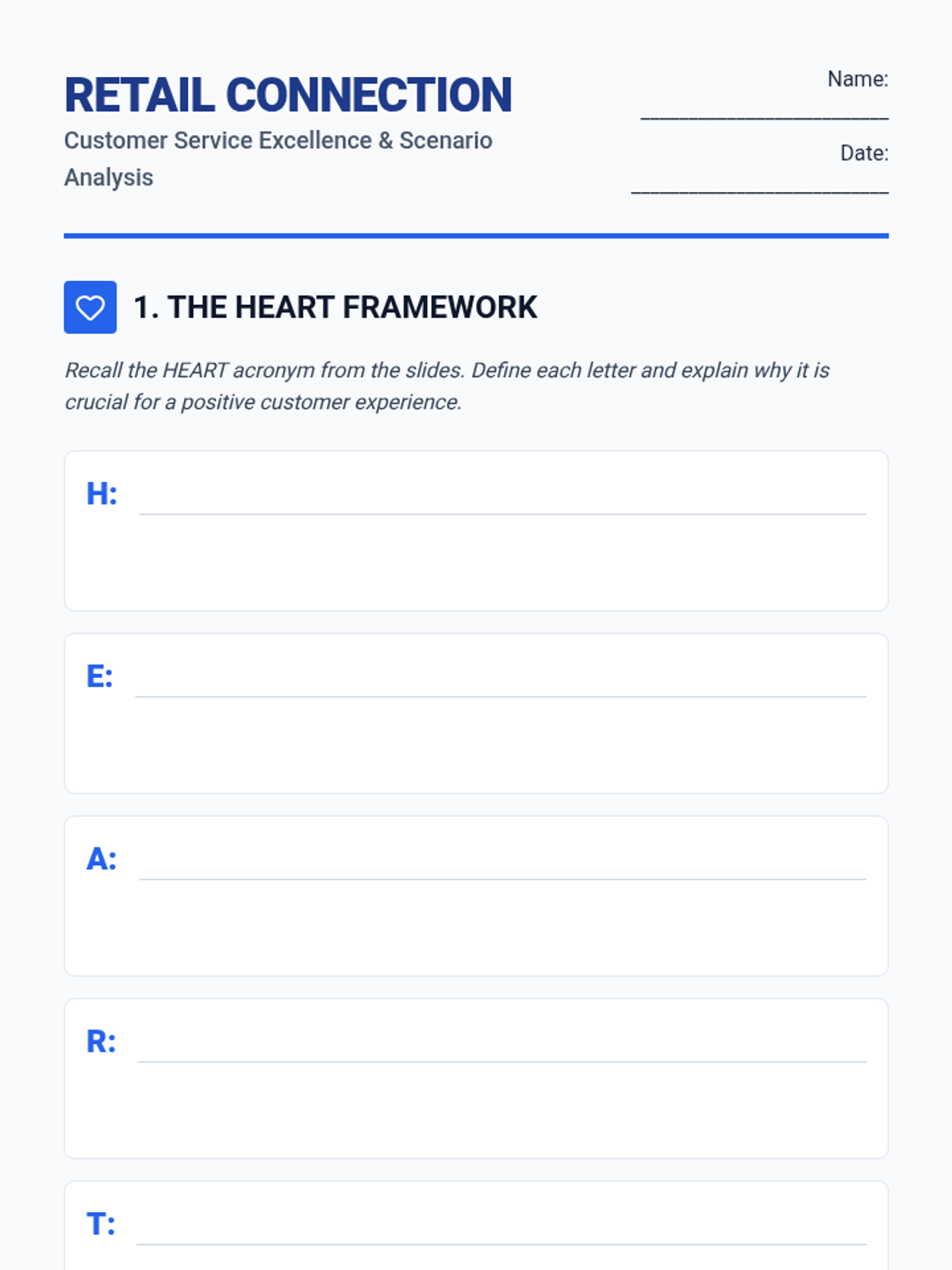
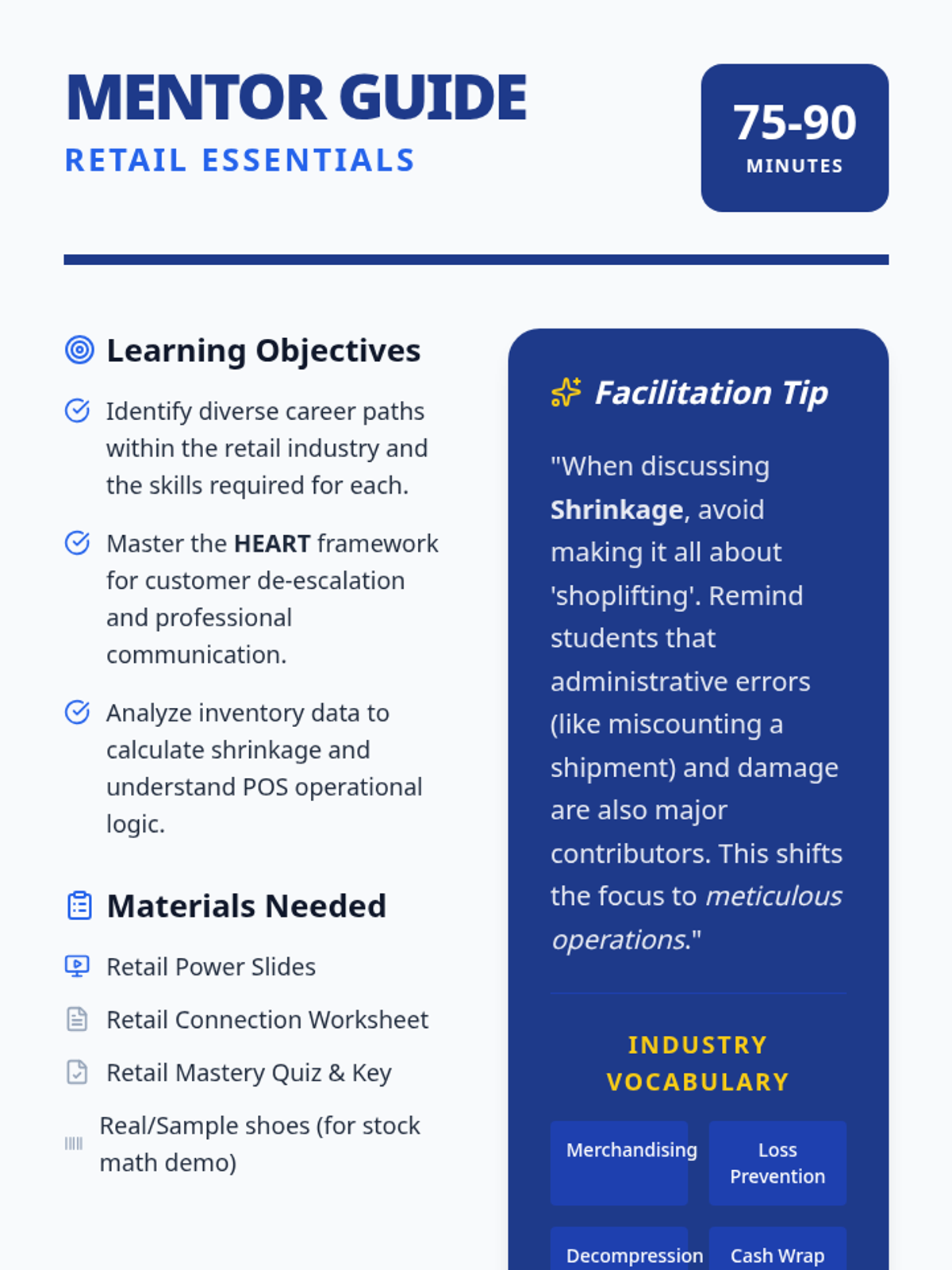
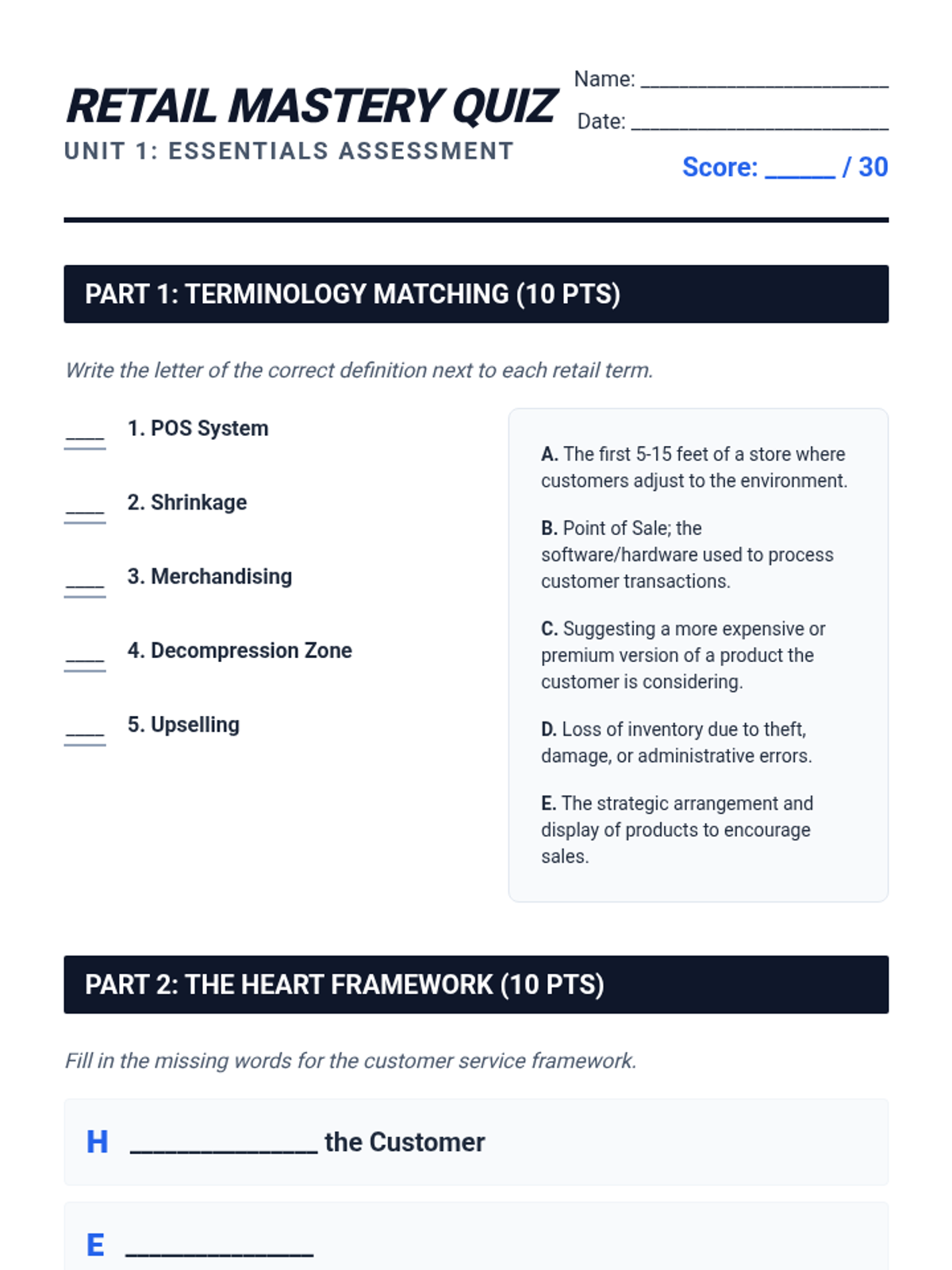
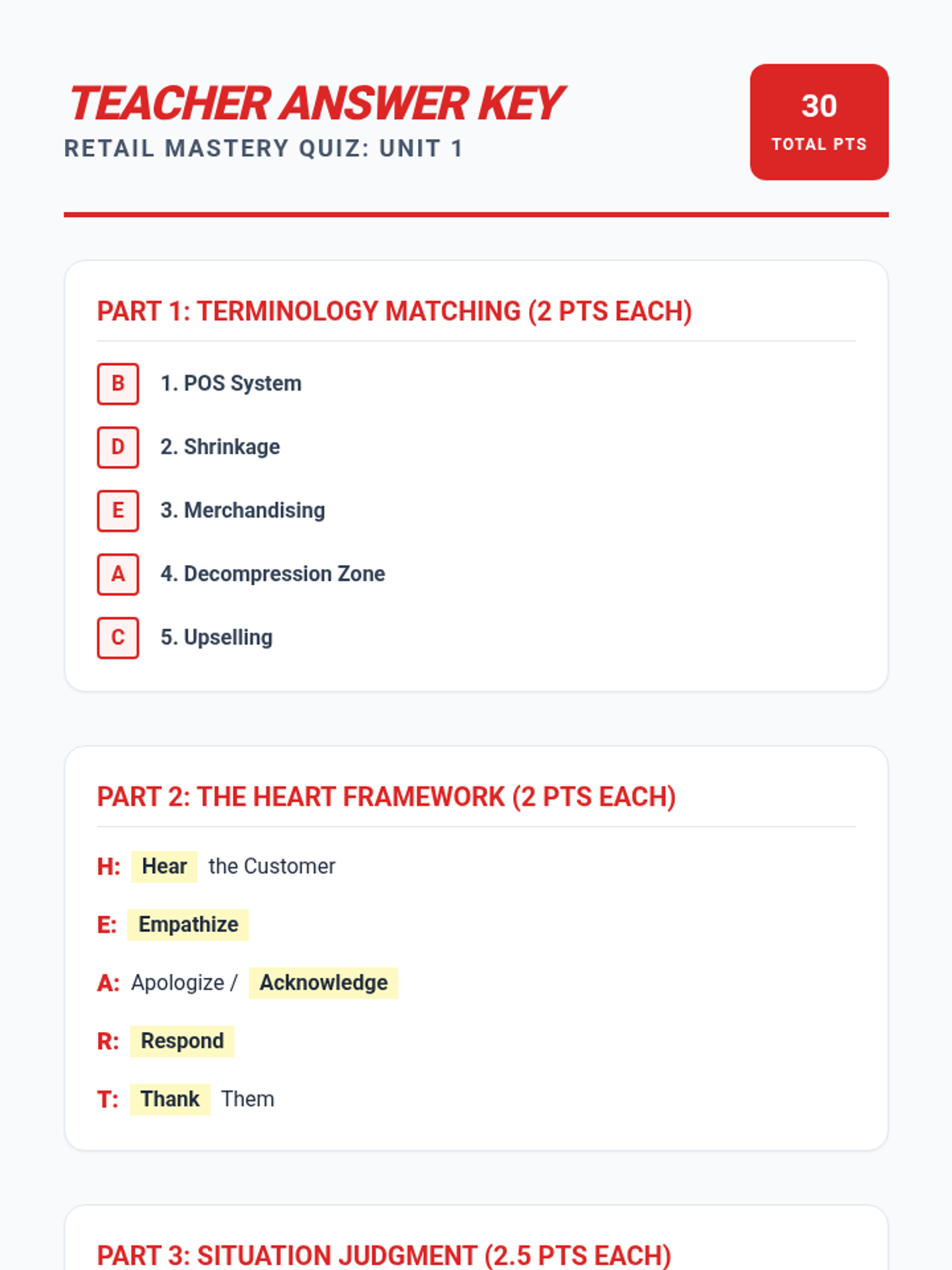
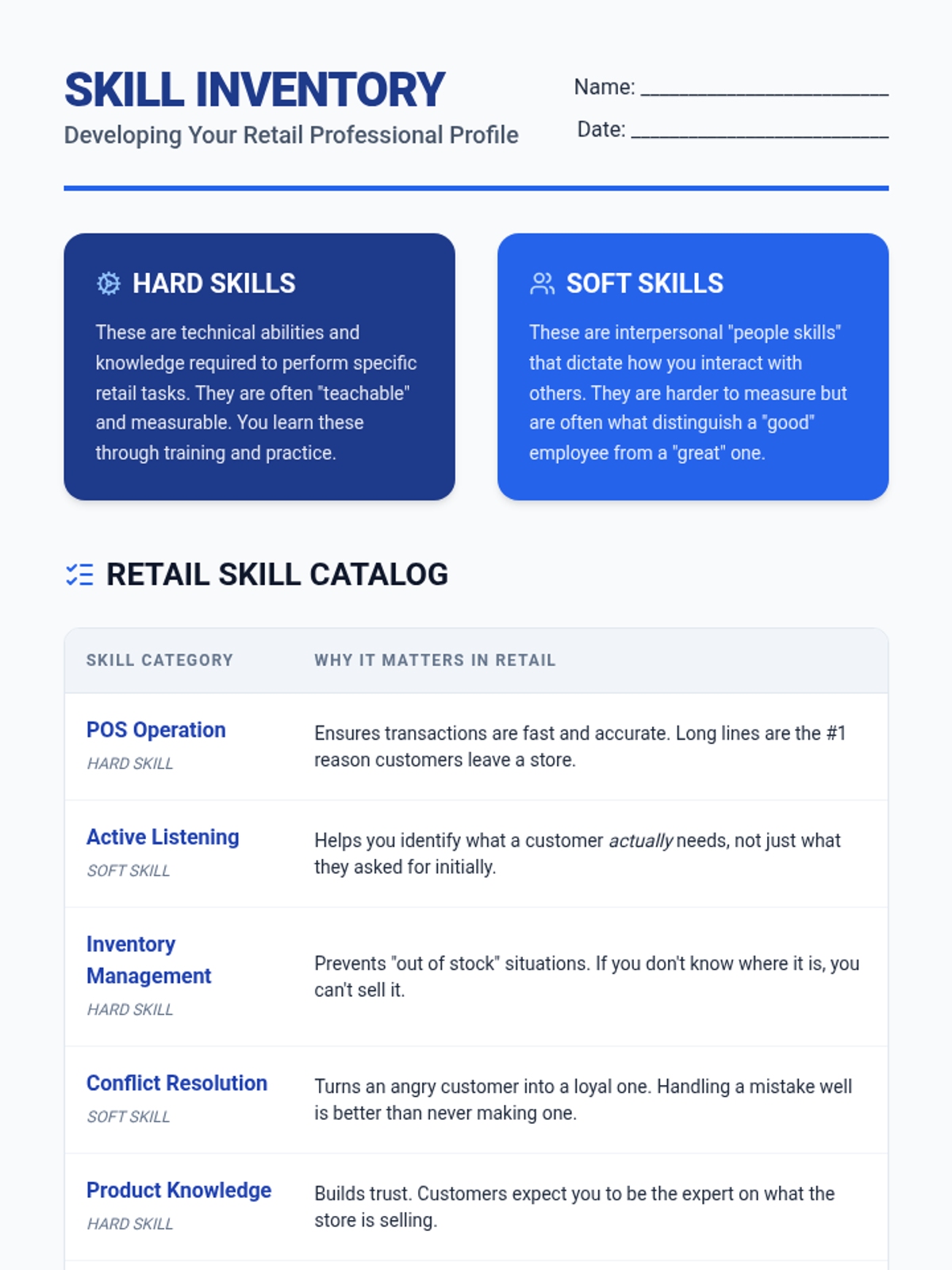
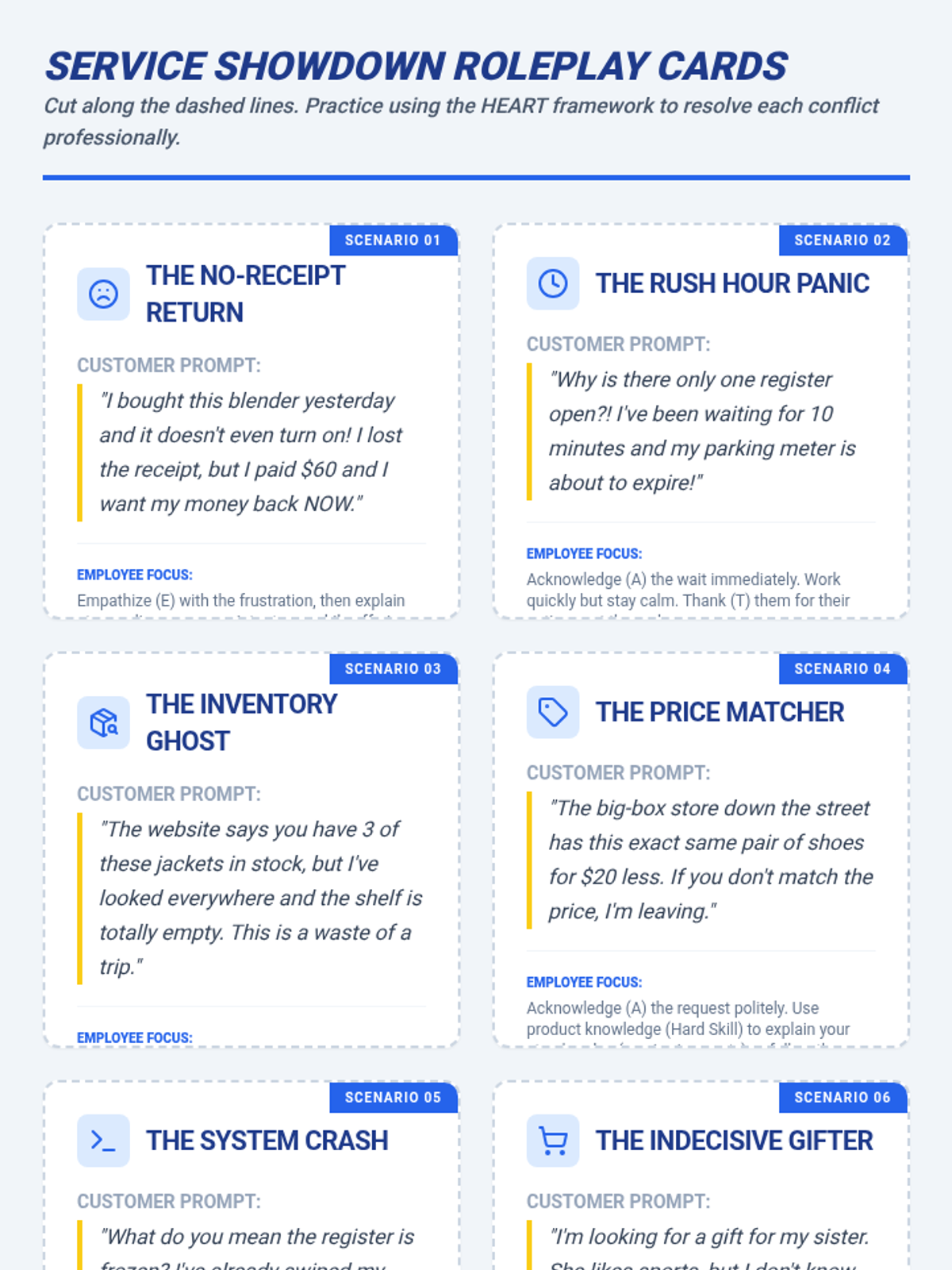
An introduction to the foundational skills of the retail industry, covering customer service techniques, cash handling, inventory management, and the professional communication required for successful sales.
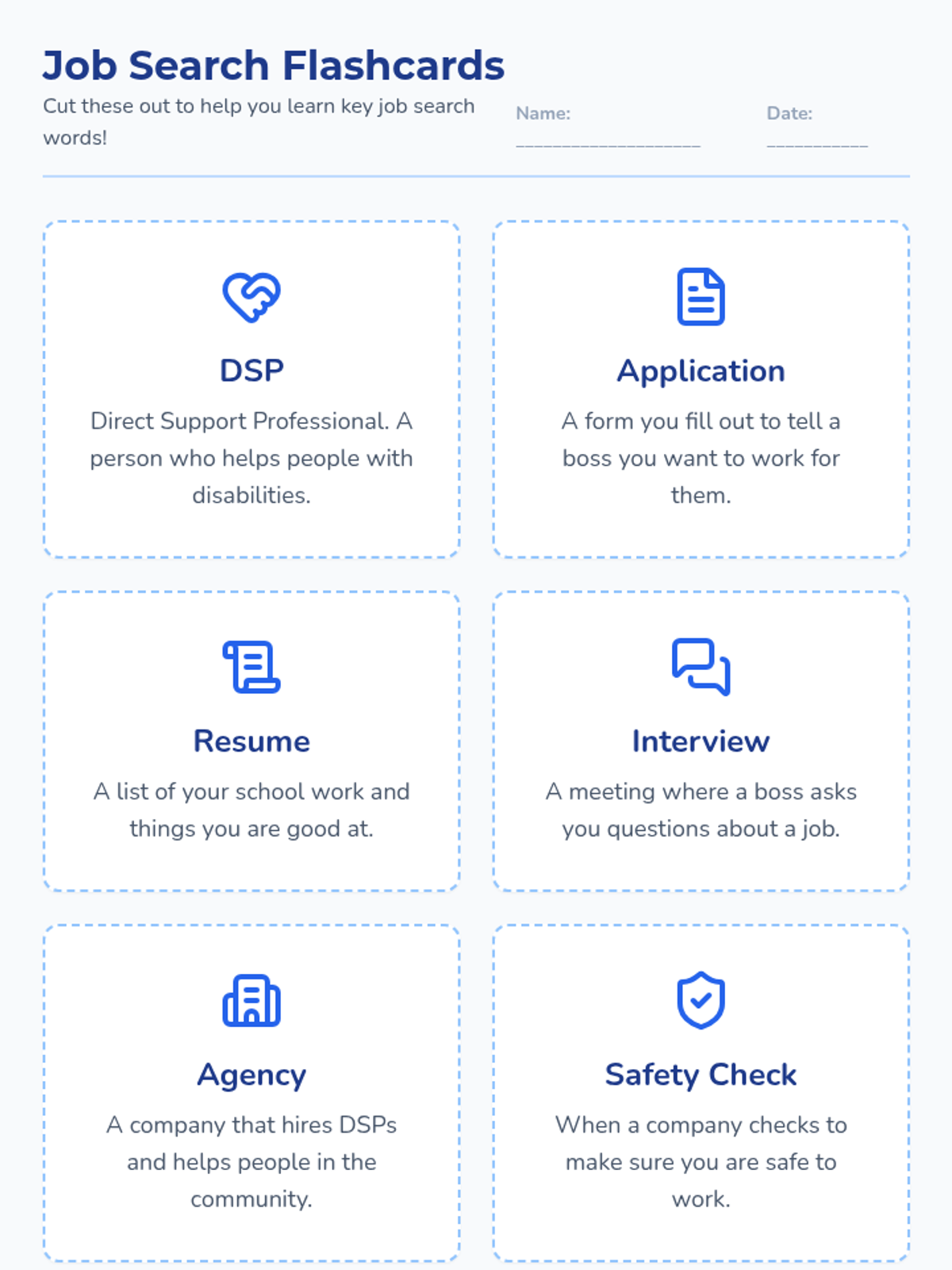
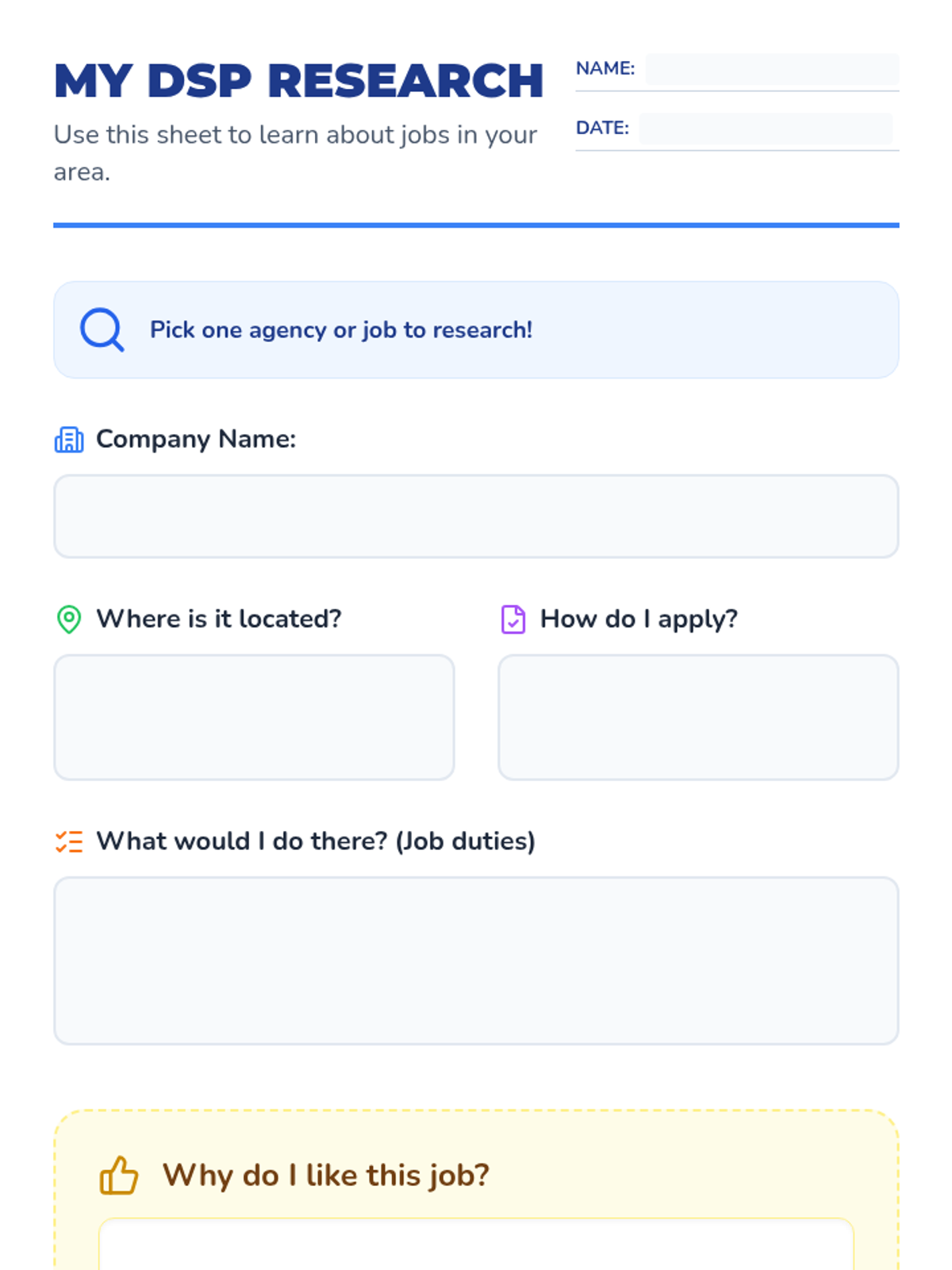
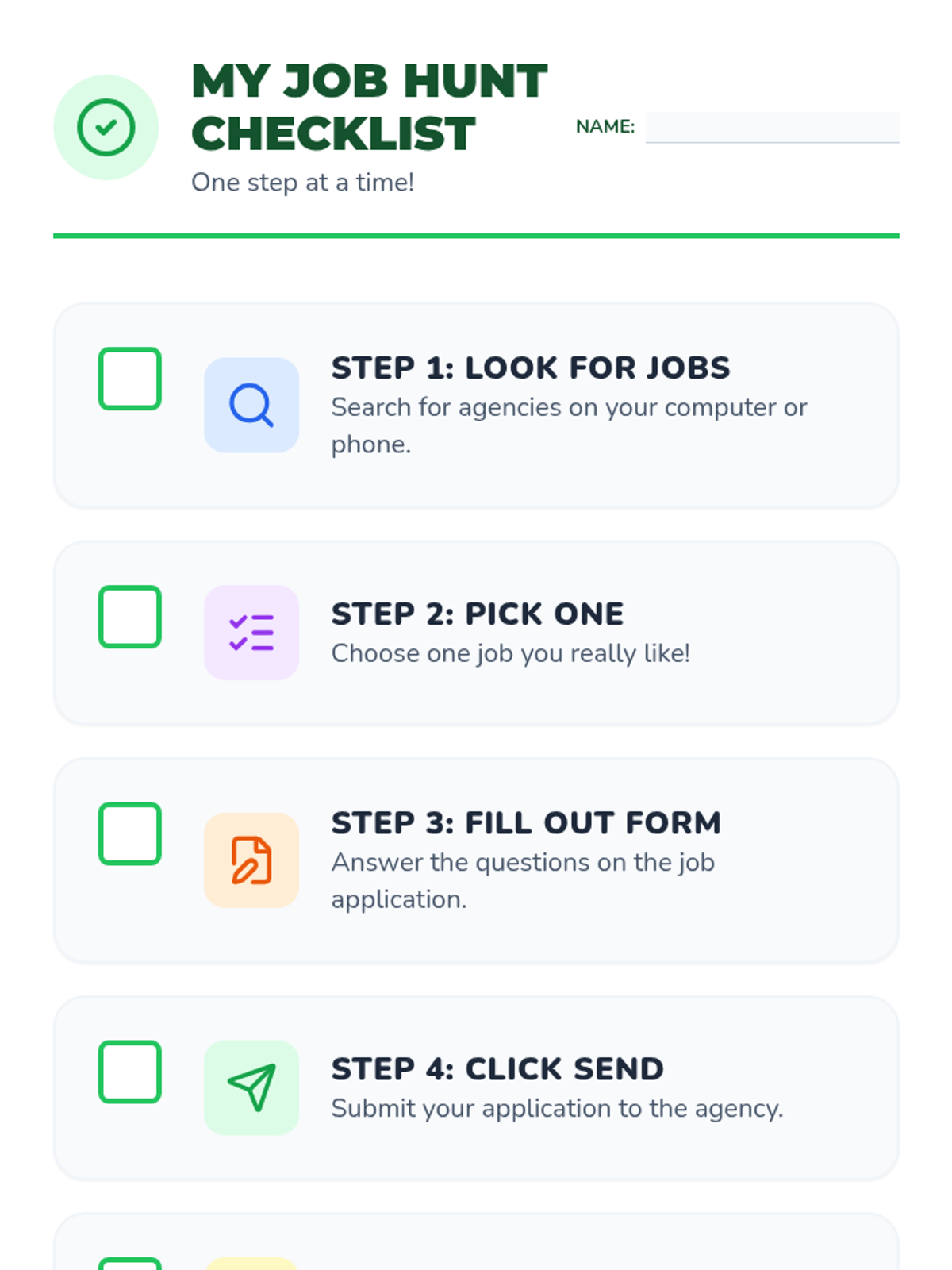
An introductory lesson to help Jade understand the role of a Direct Support Professional and begin her local job search using visual aids and organizers.
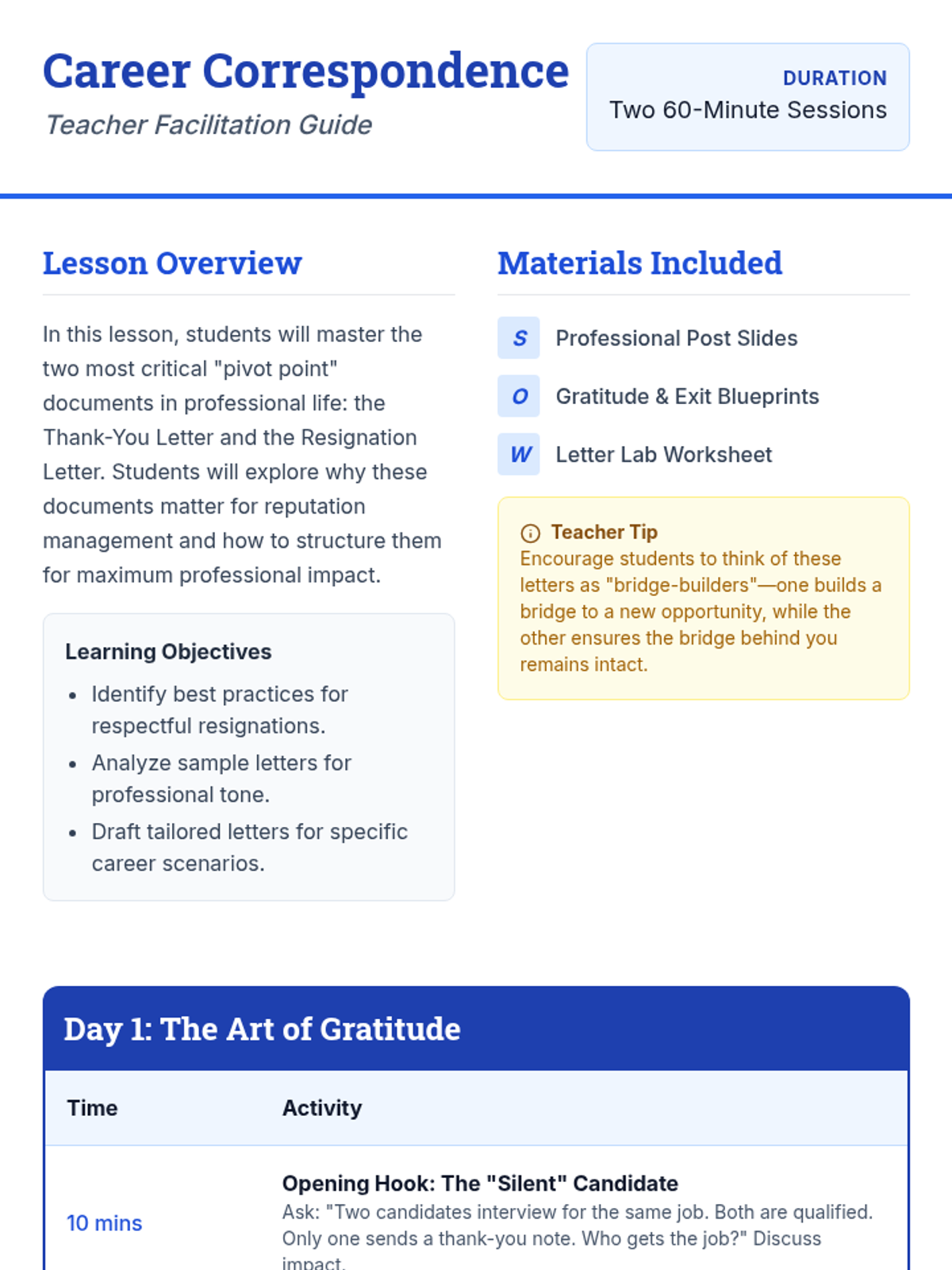
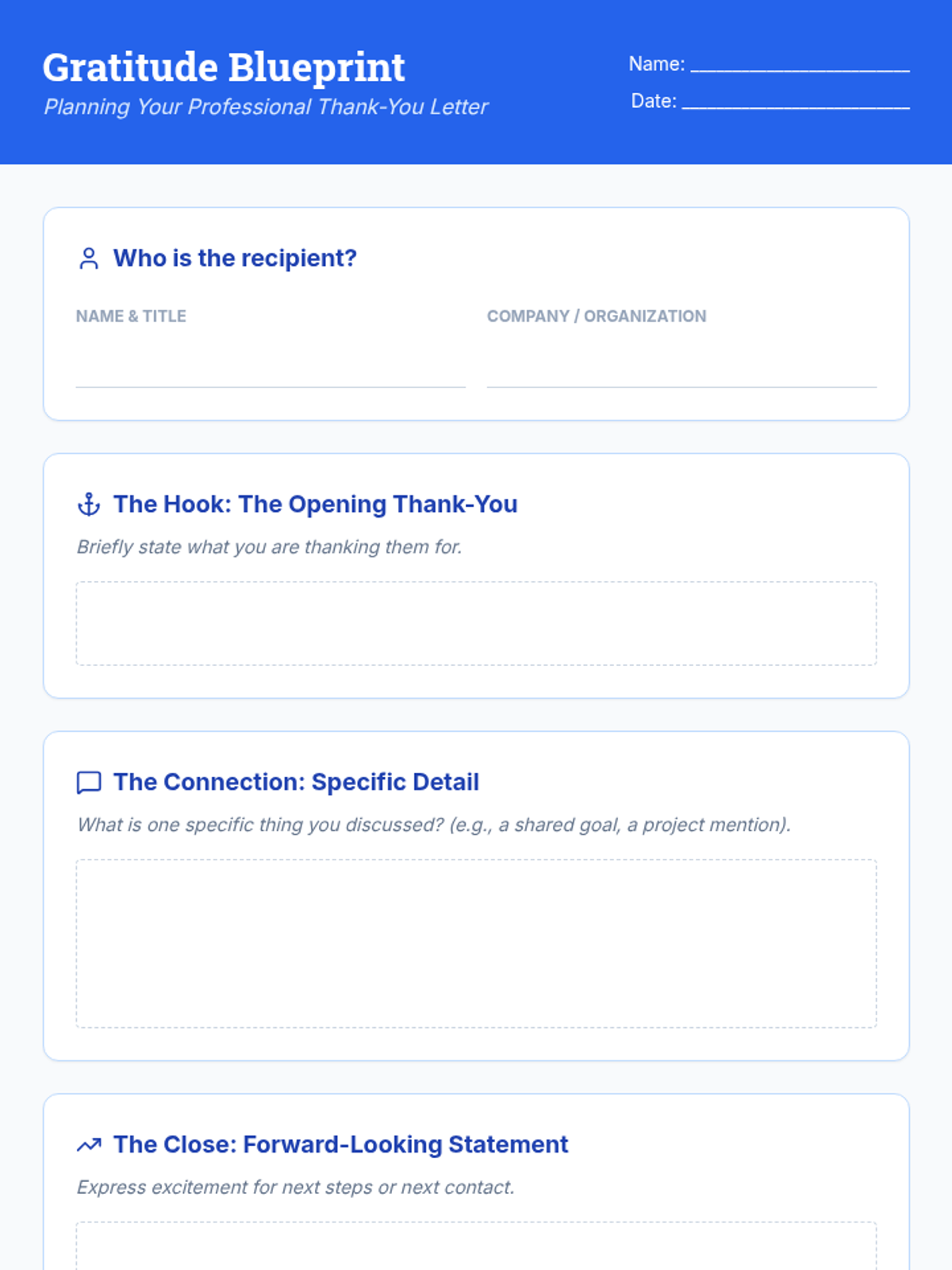
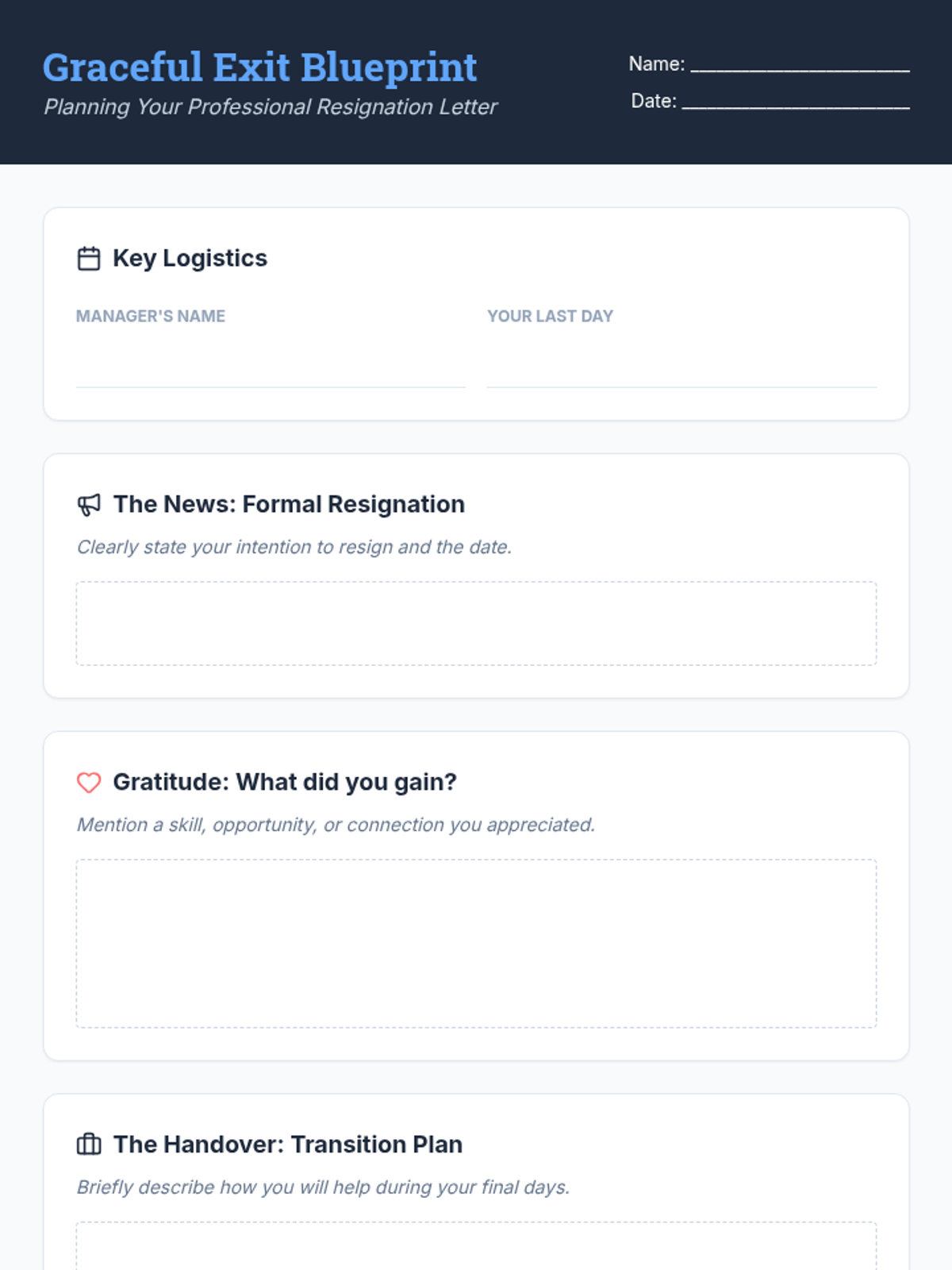
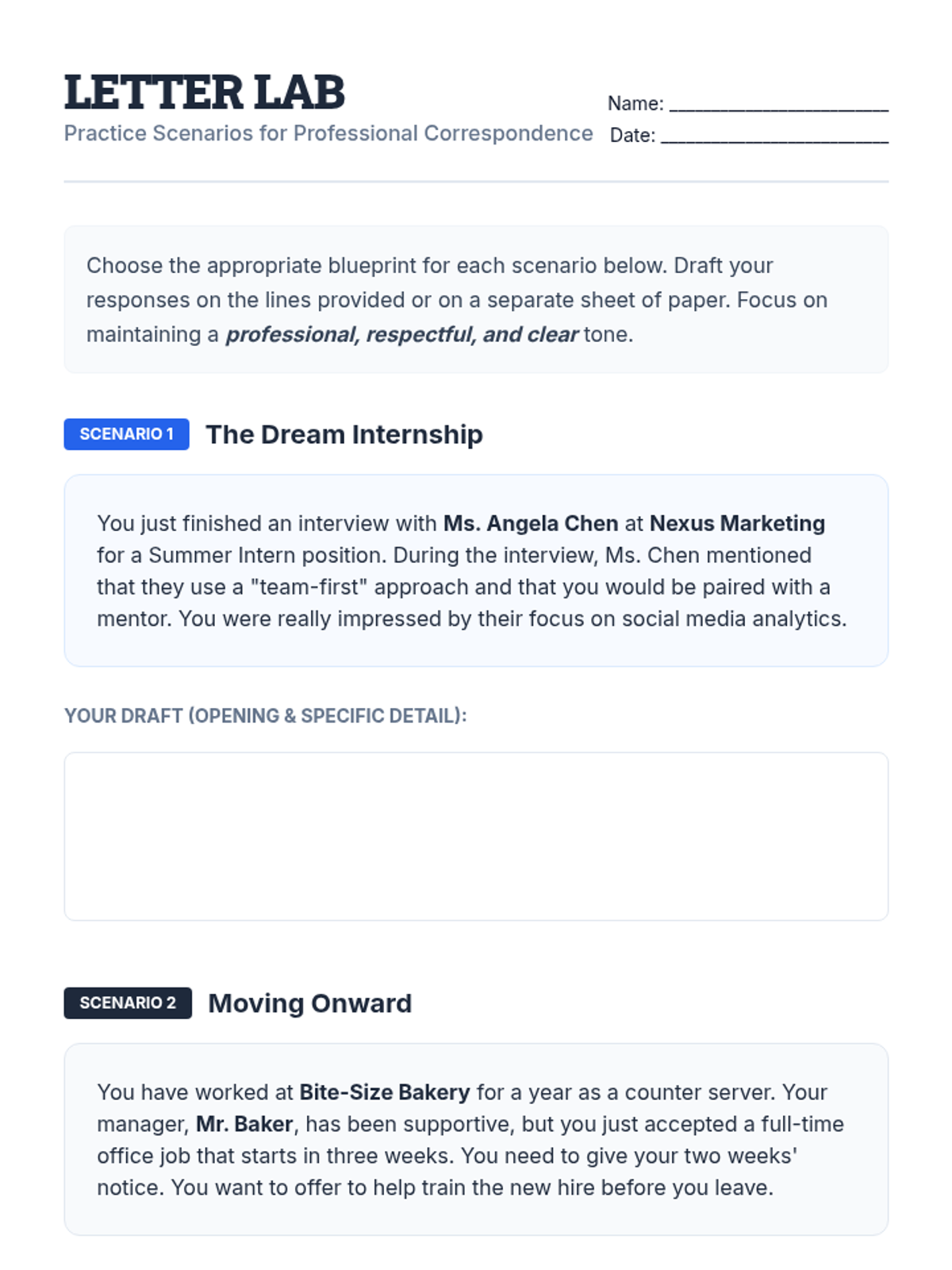
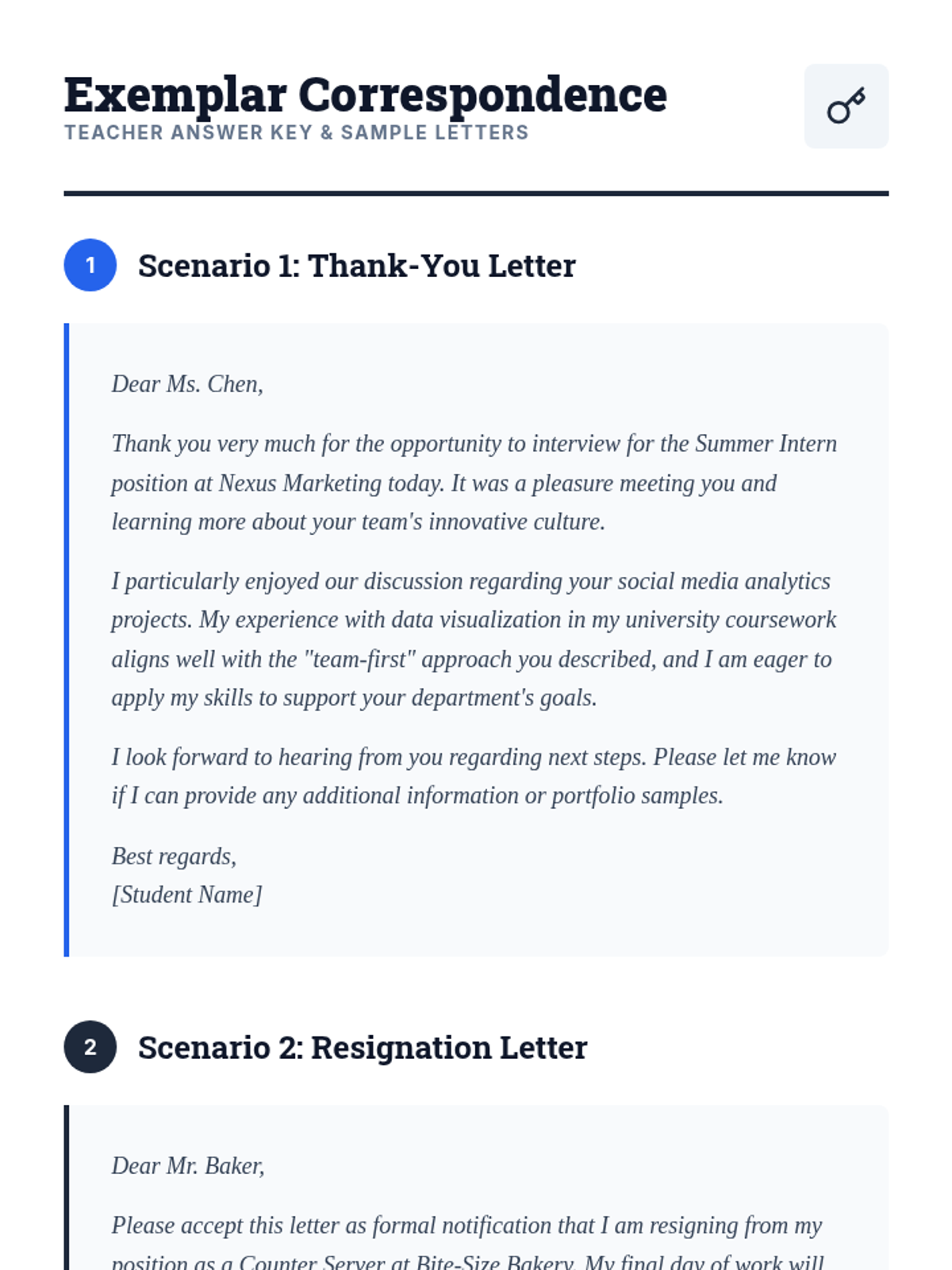
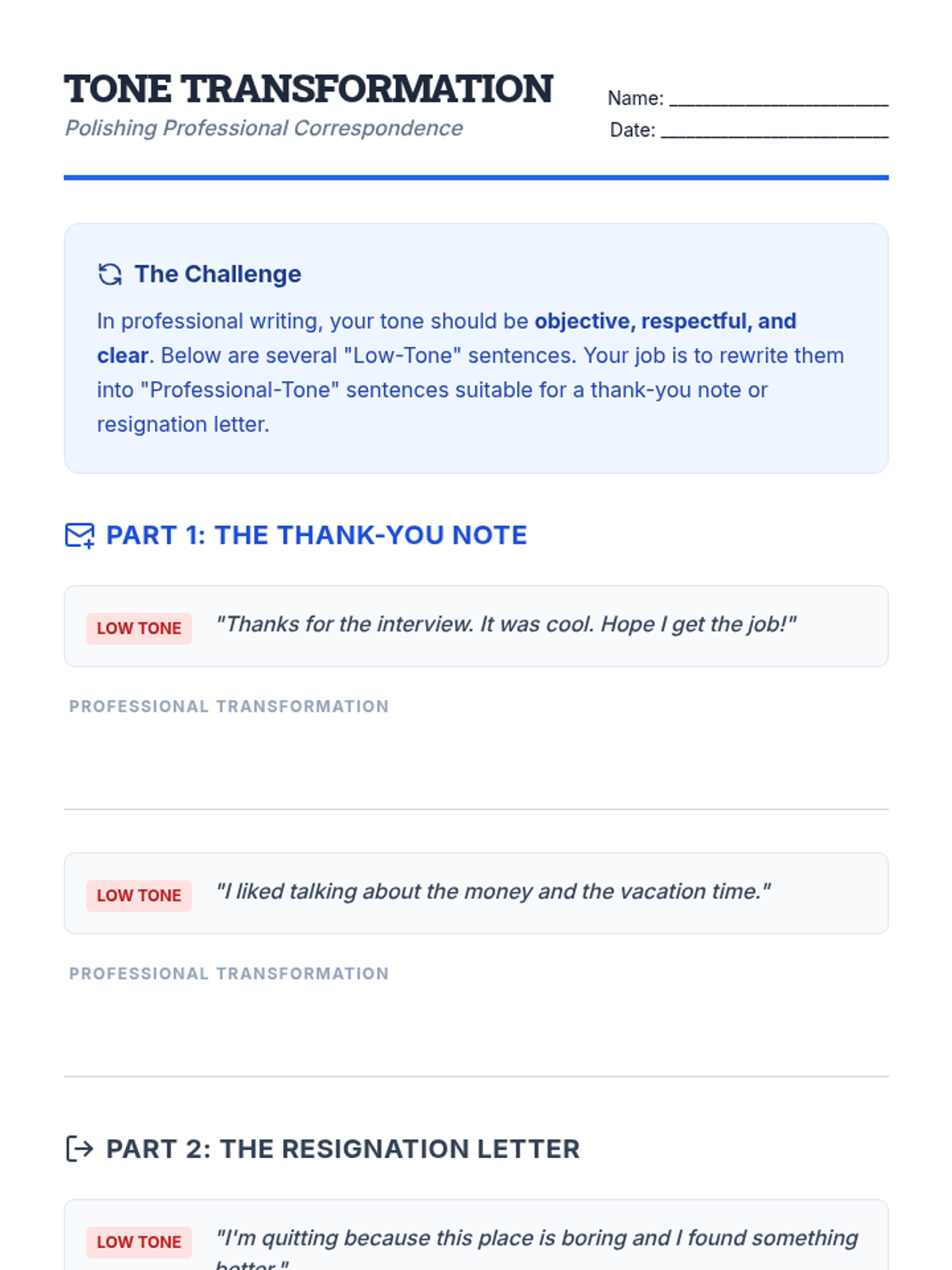
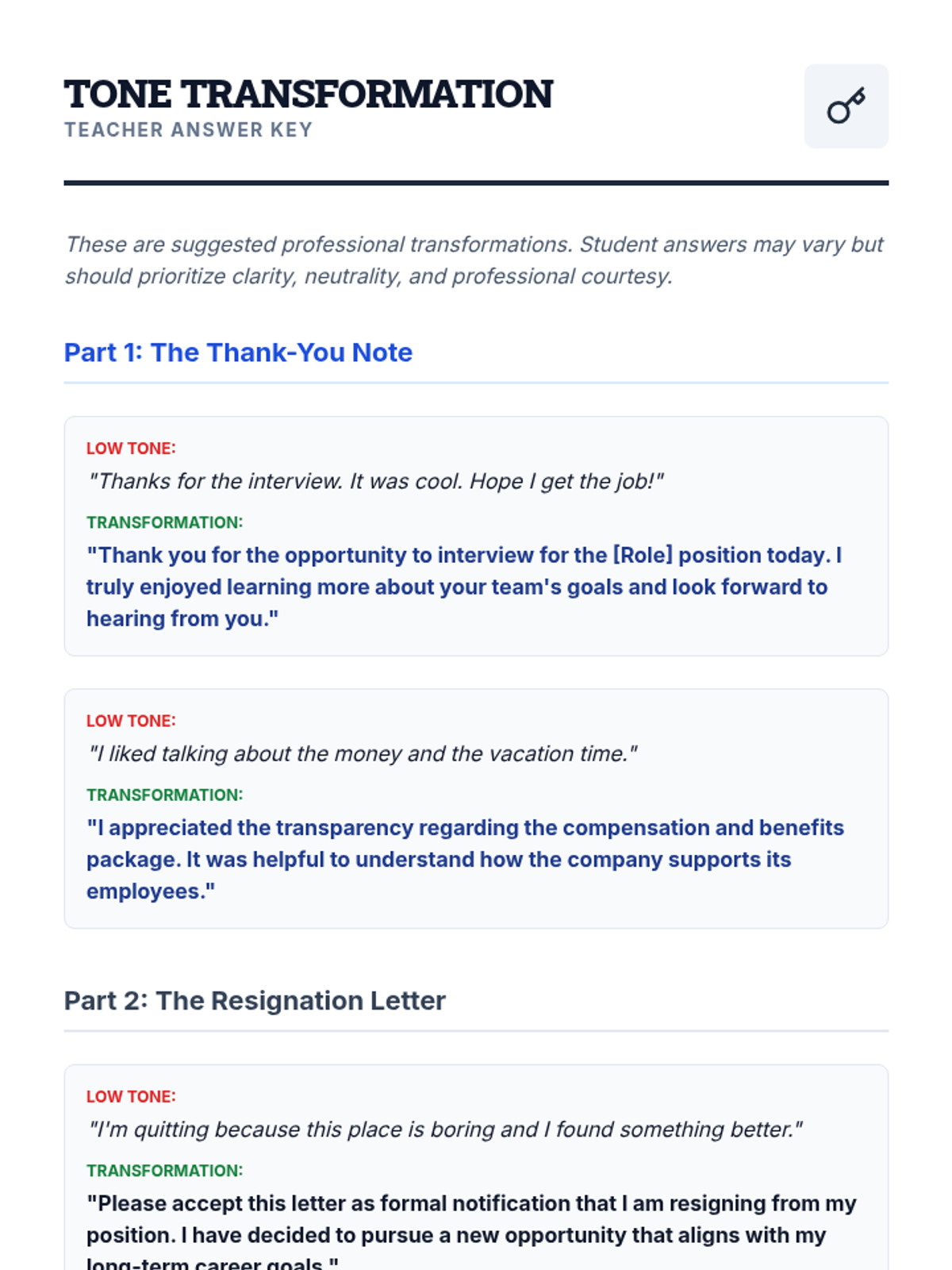
A two-day lesson covering the professional art of writing thank-you and resignation letters, focusing on etiquette, structure, and professional tone.