Budgeting, saving, and investment strategies alongside practical skills for managing credit, taxes, and banking. Addresses insurance needs, employment income, and major purchase decisions to support comprehensive long-term financial planning.
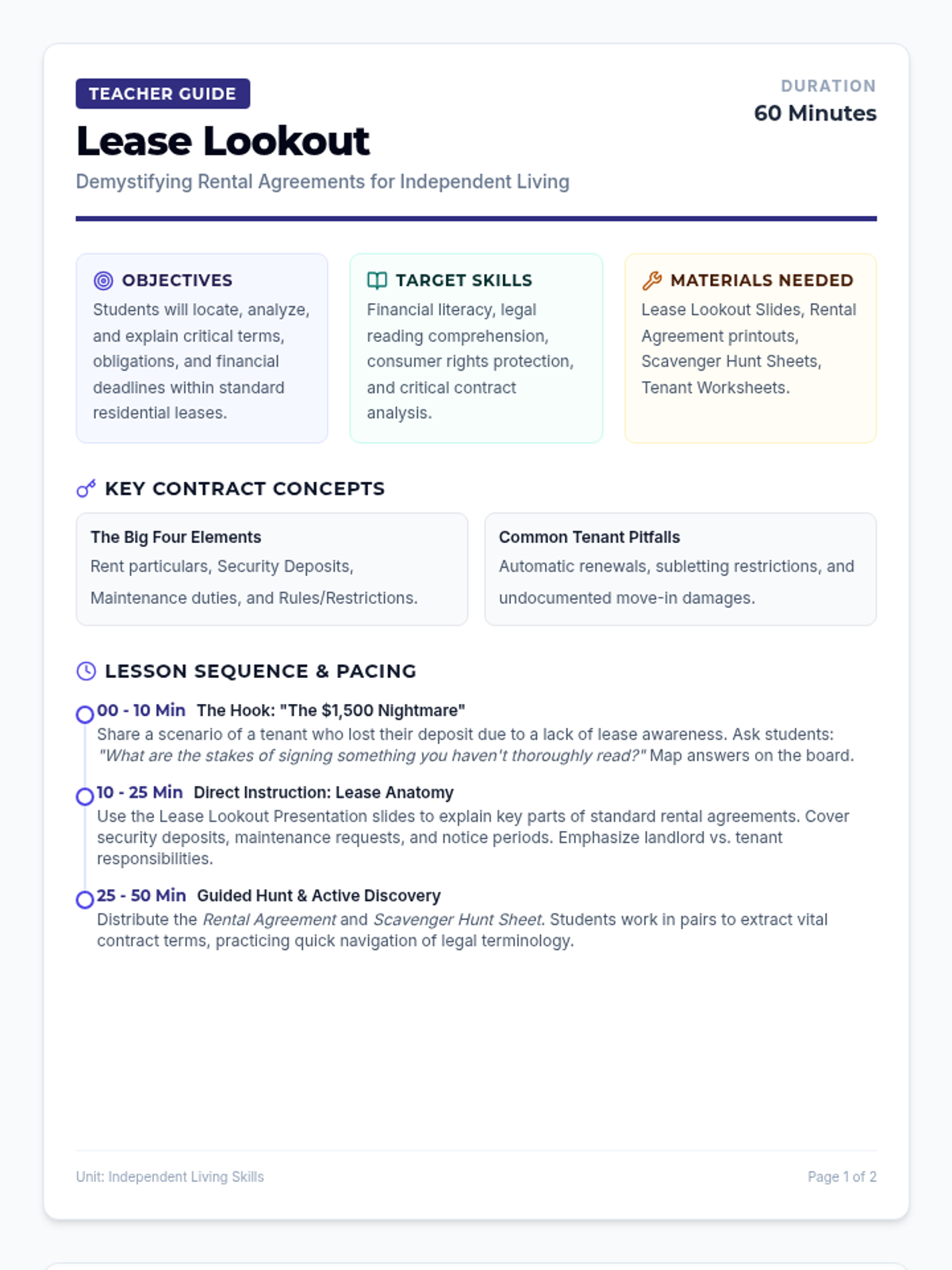
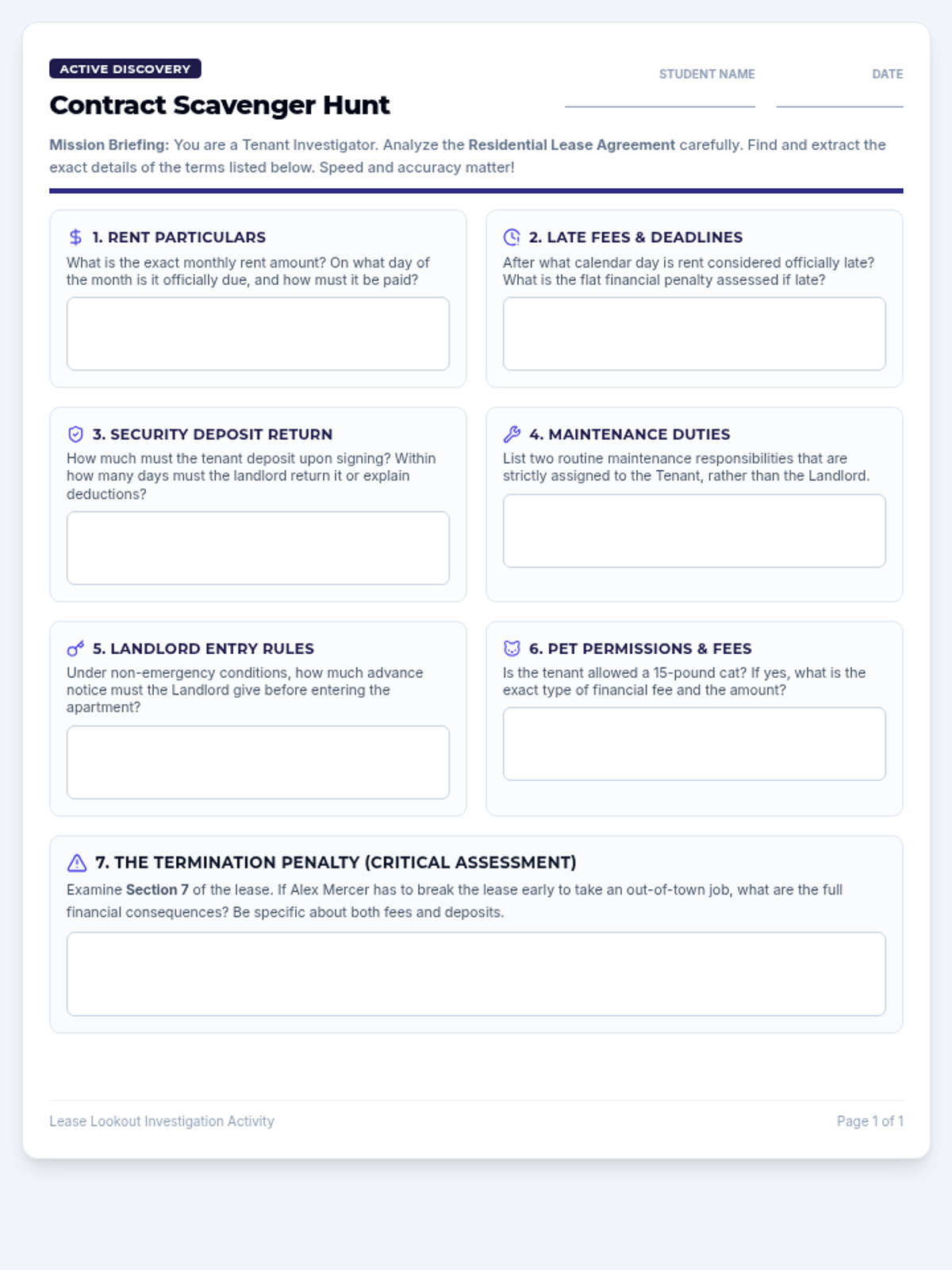
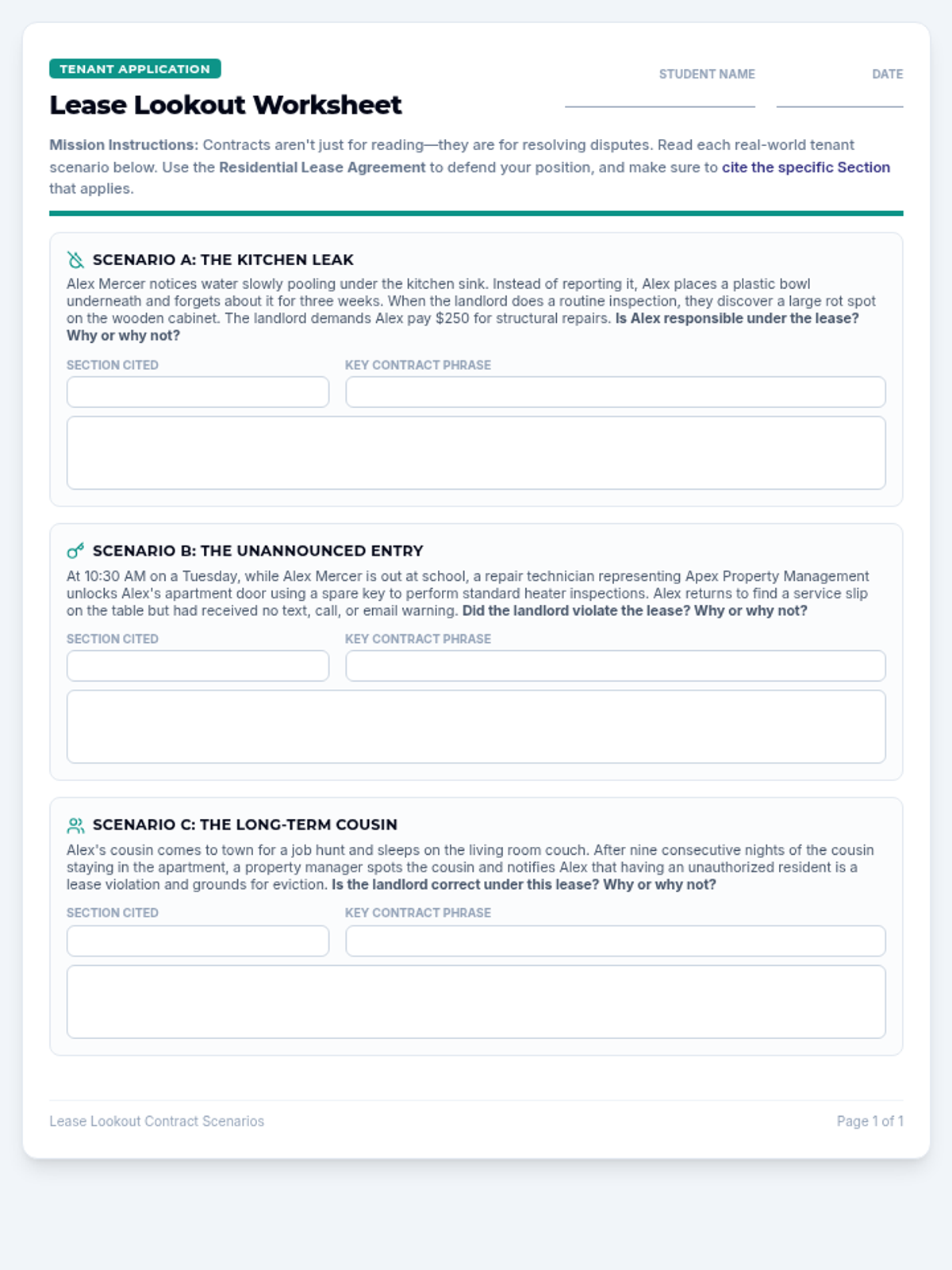
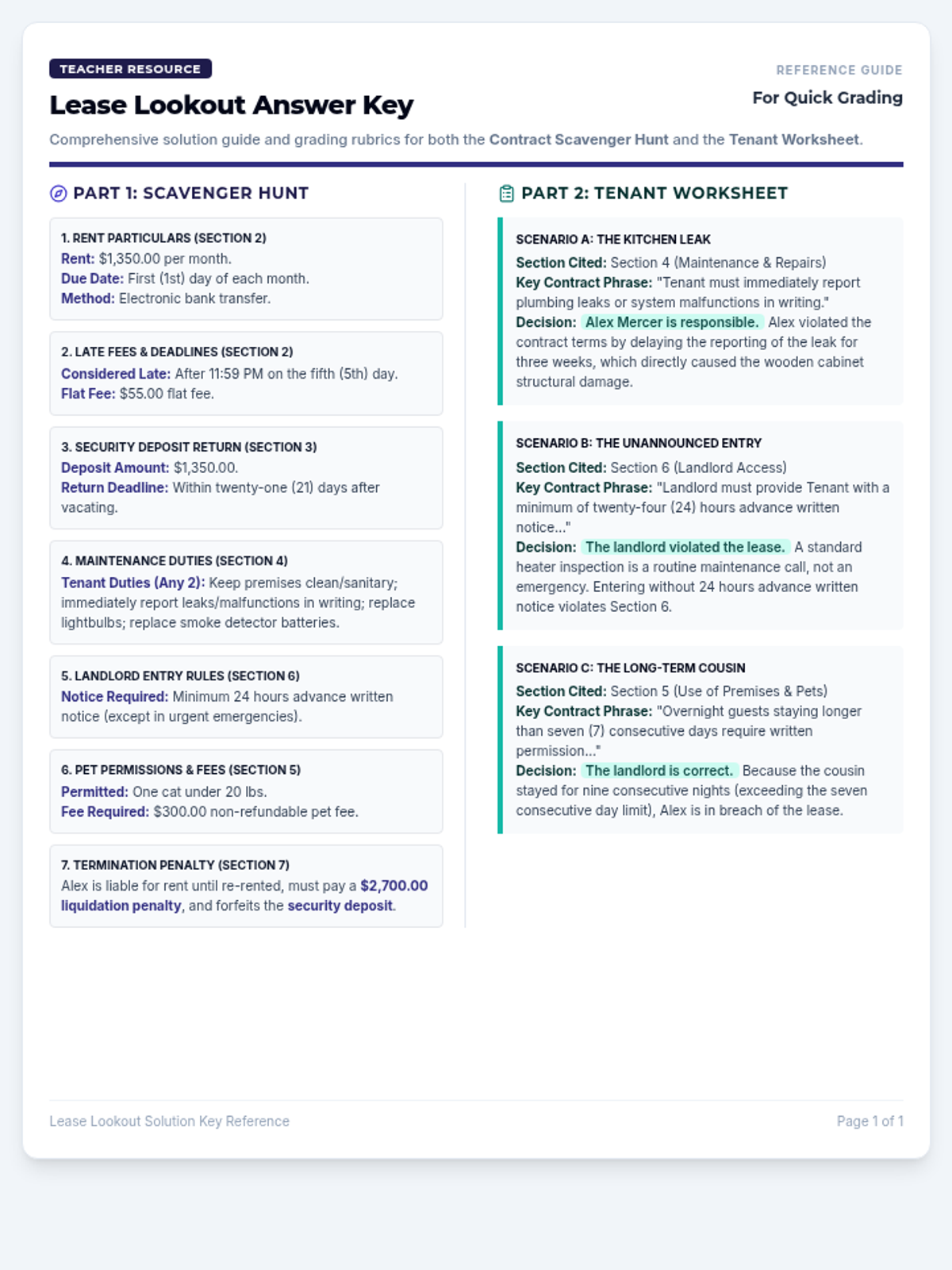
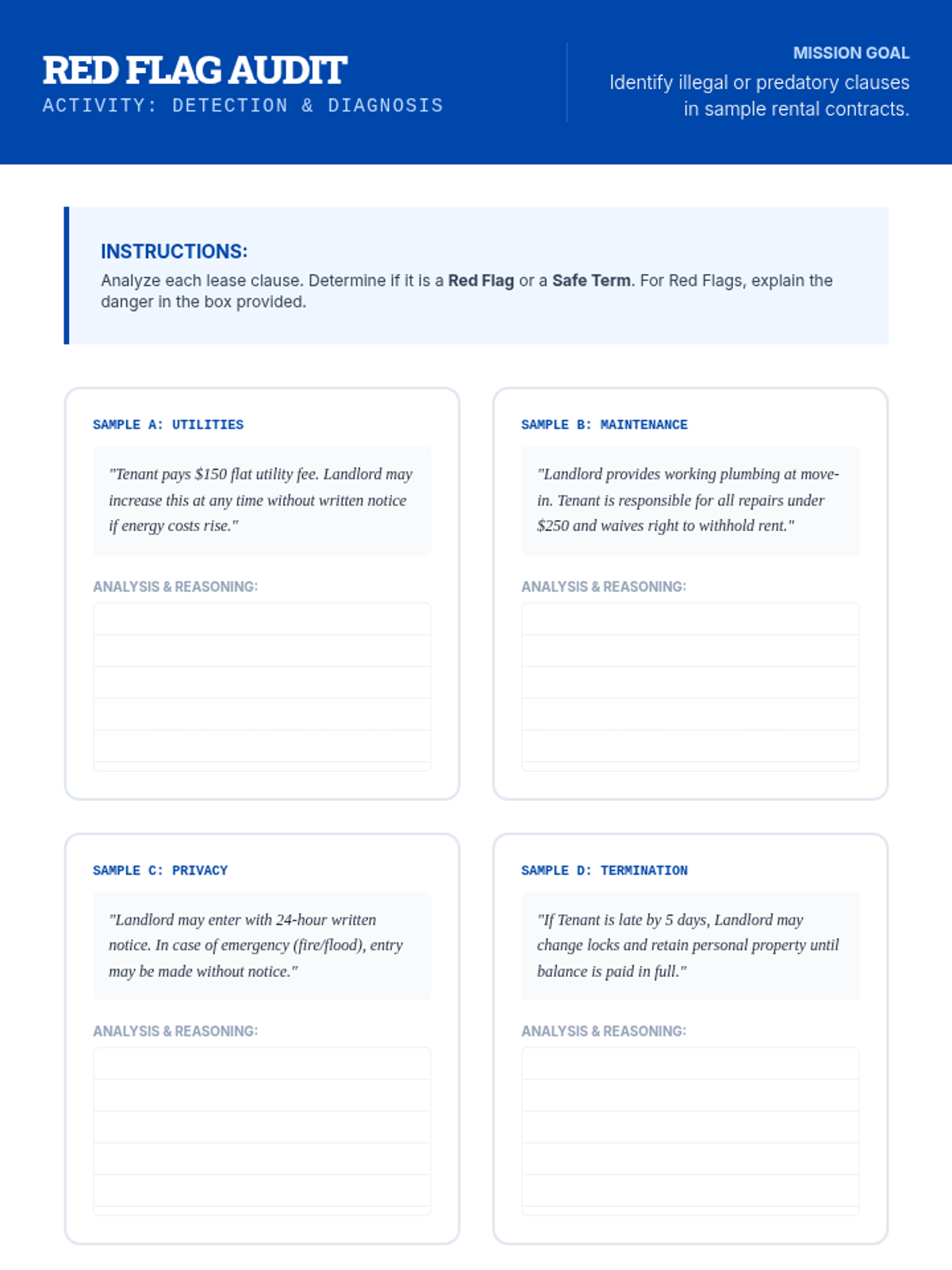
This lesson prepares students for the complexities of independent living by demystifying rental agreements. Through an interactive 'contract scavenger hunt' and real-world scenario analysis, students learn to identify key lease terms, understand security deposits, and navigate landlord-tenant responsibilities.
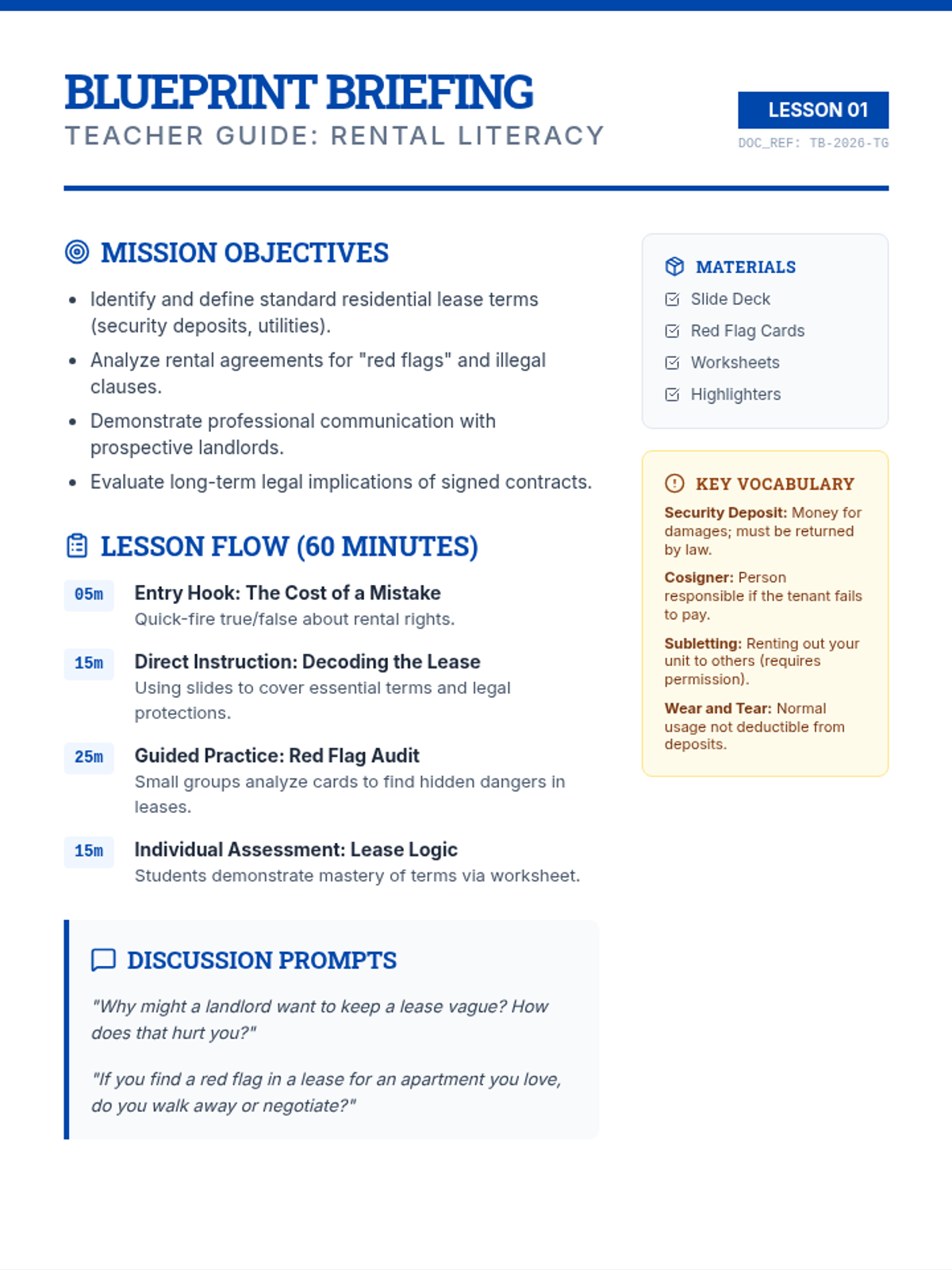
A comprehensive lesson designed for graduating seniors to navigate the complexities of renting their first apartment, focusing on lease literacy and identifying rental red flags.
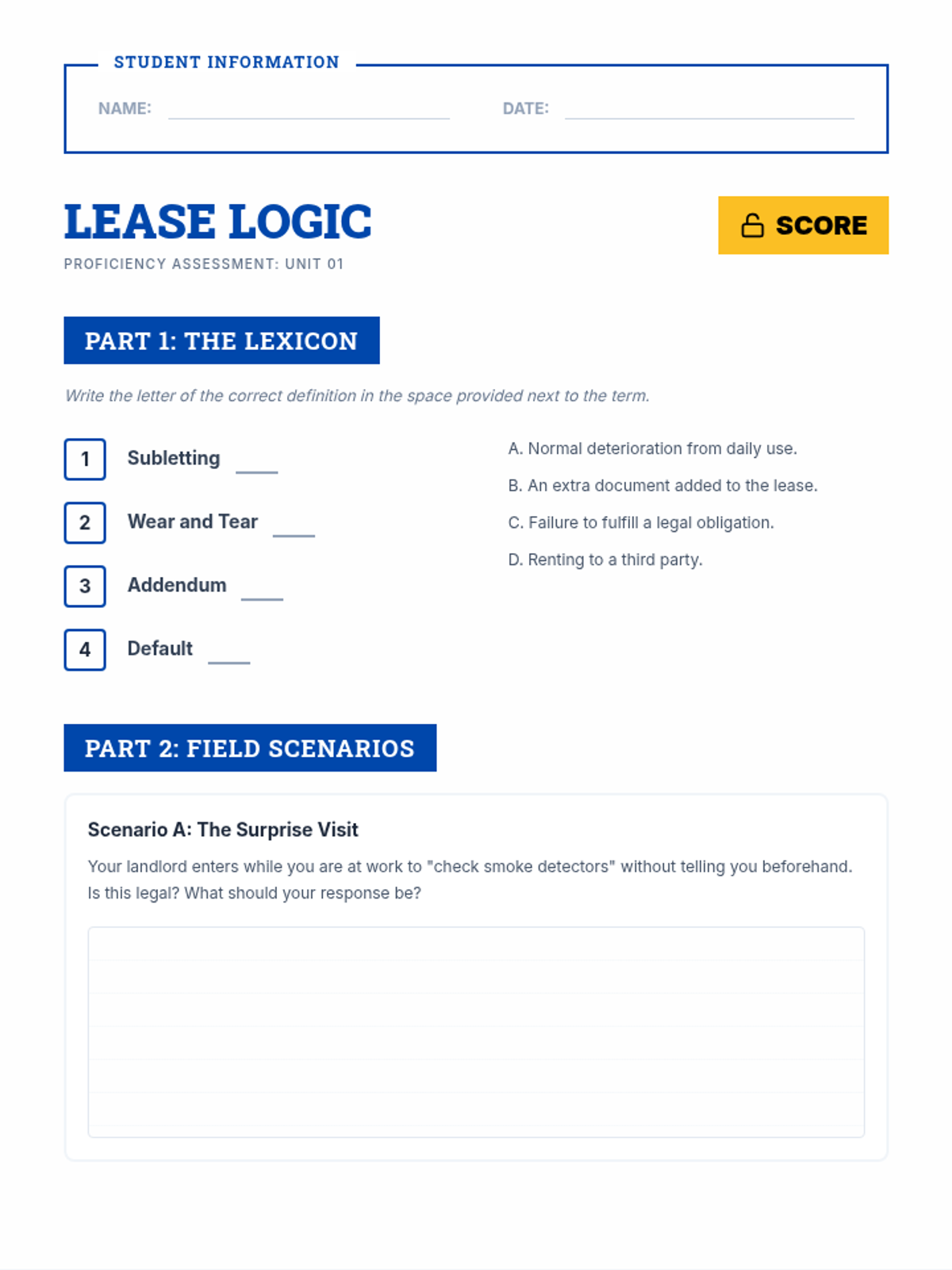
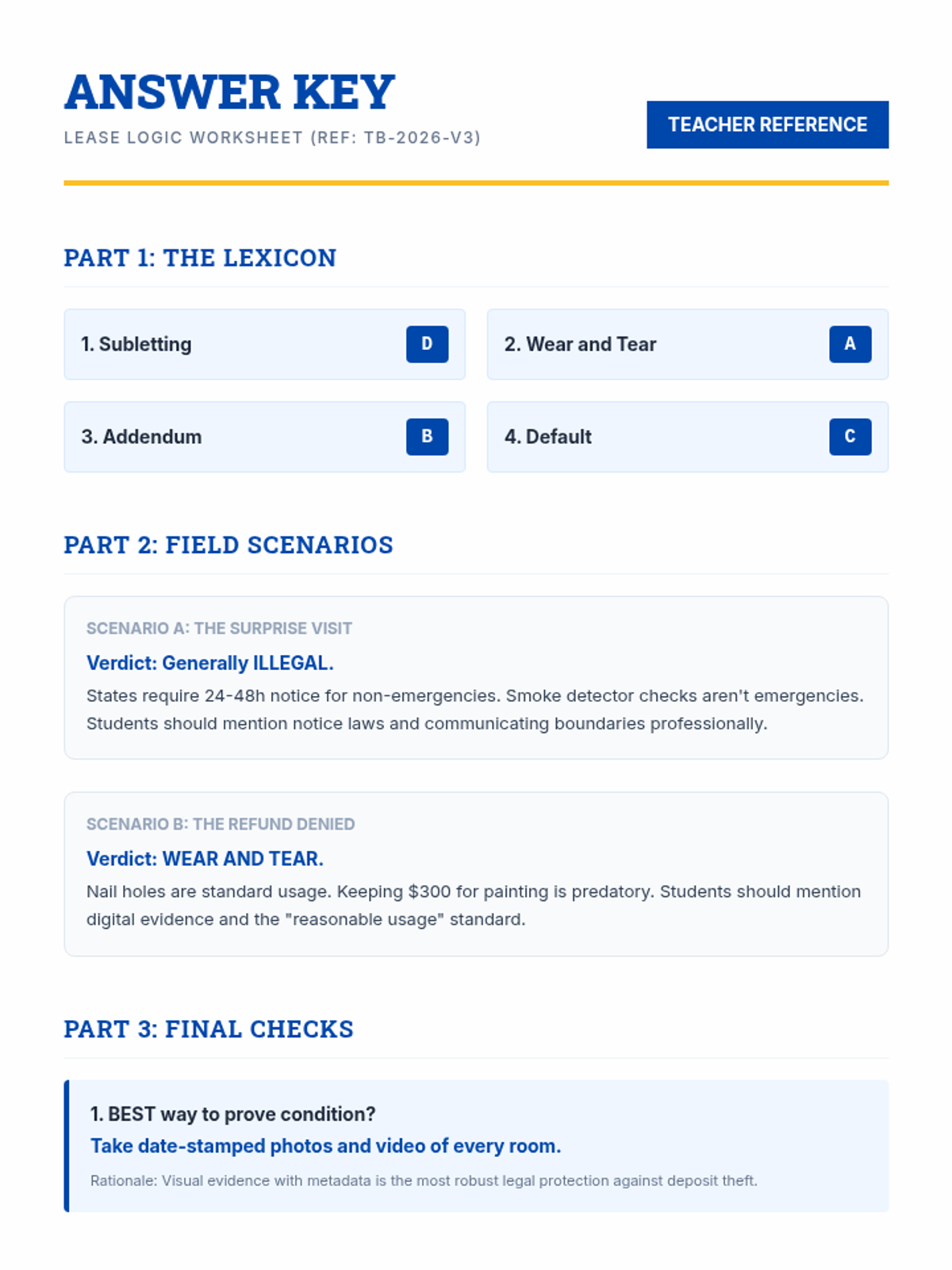
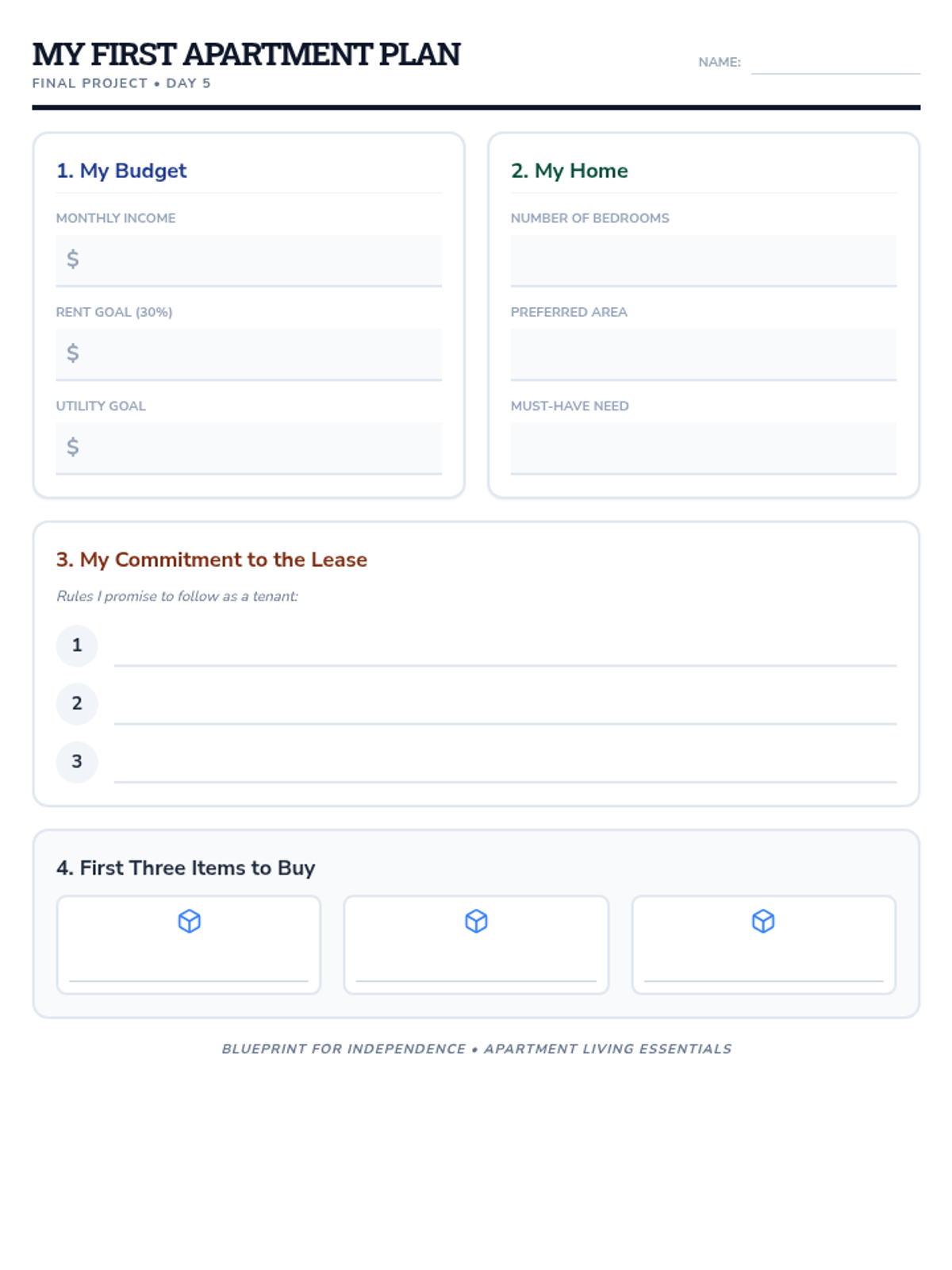
A culminating review where students create a personal apartment plan and demonstrate their knowledge through a final assessment.
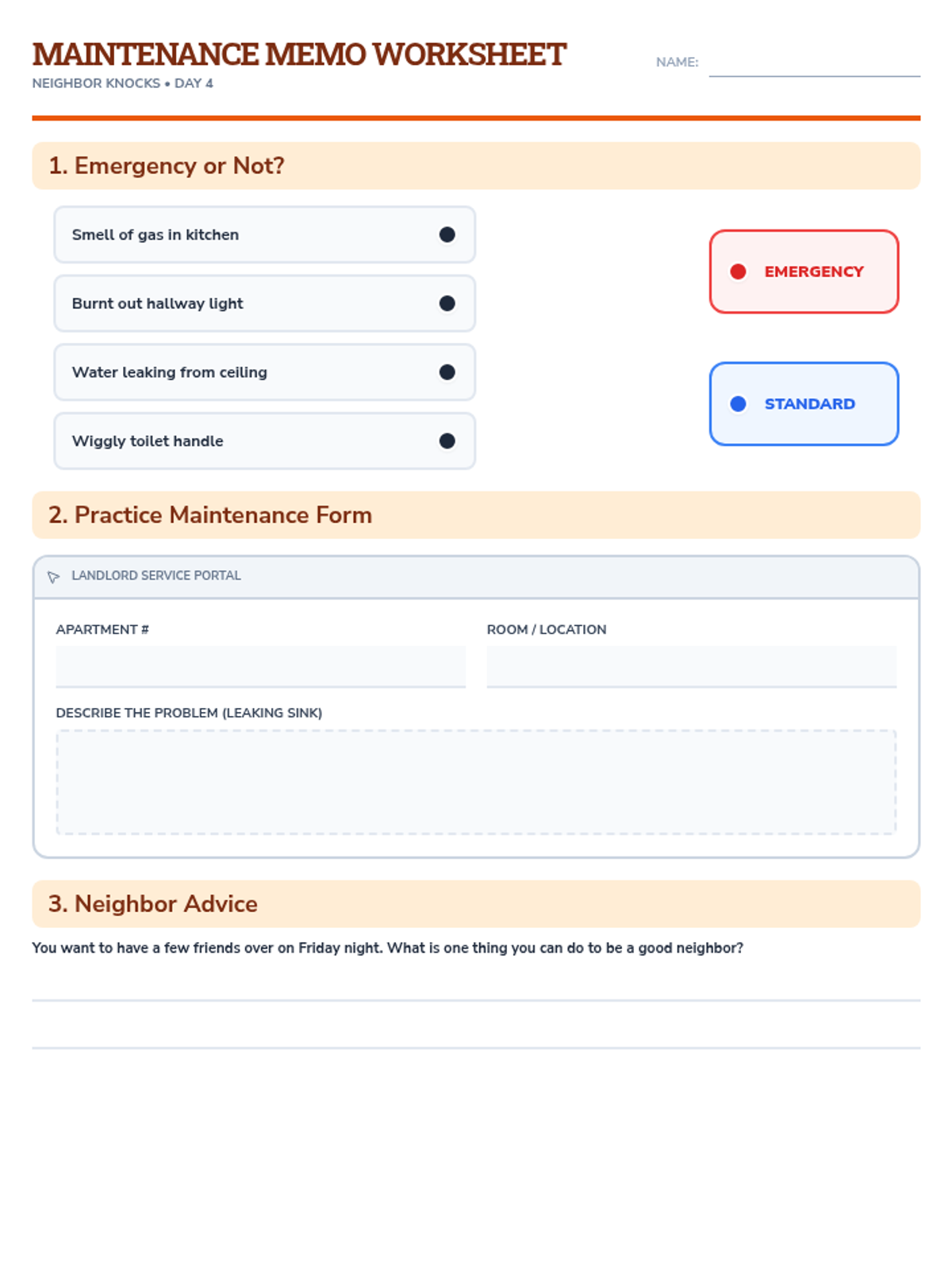
Covers the social and practical side of apartment living, including neighbor etiquette, safety protocols, and how to file maintenance requests.
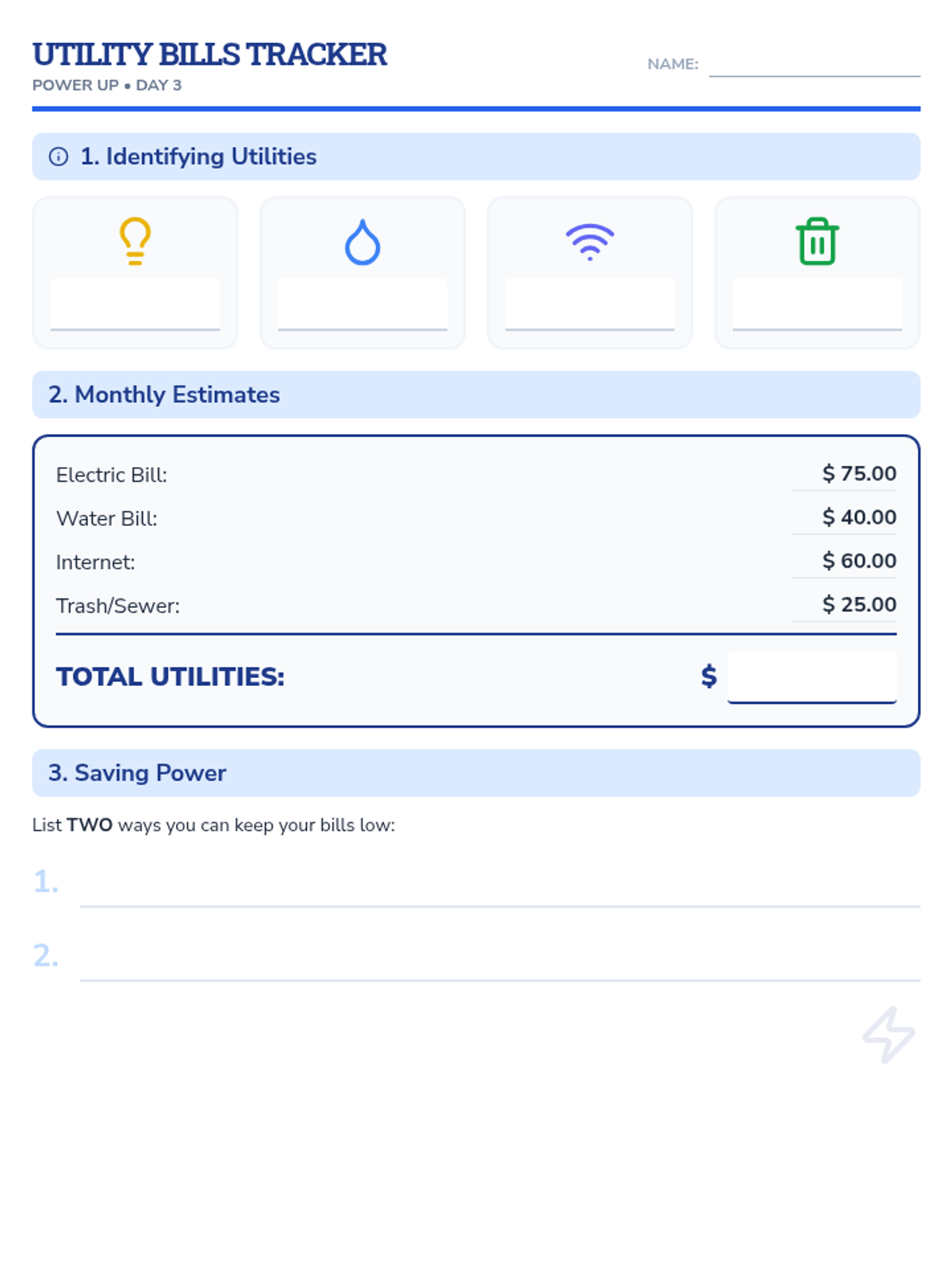
Teaches students how to set up essential utilities (electricity, water, internet) and plan for the physical items needed to move in.
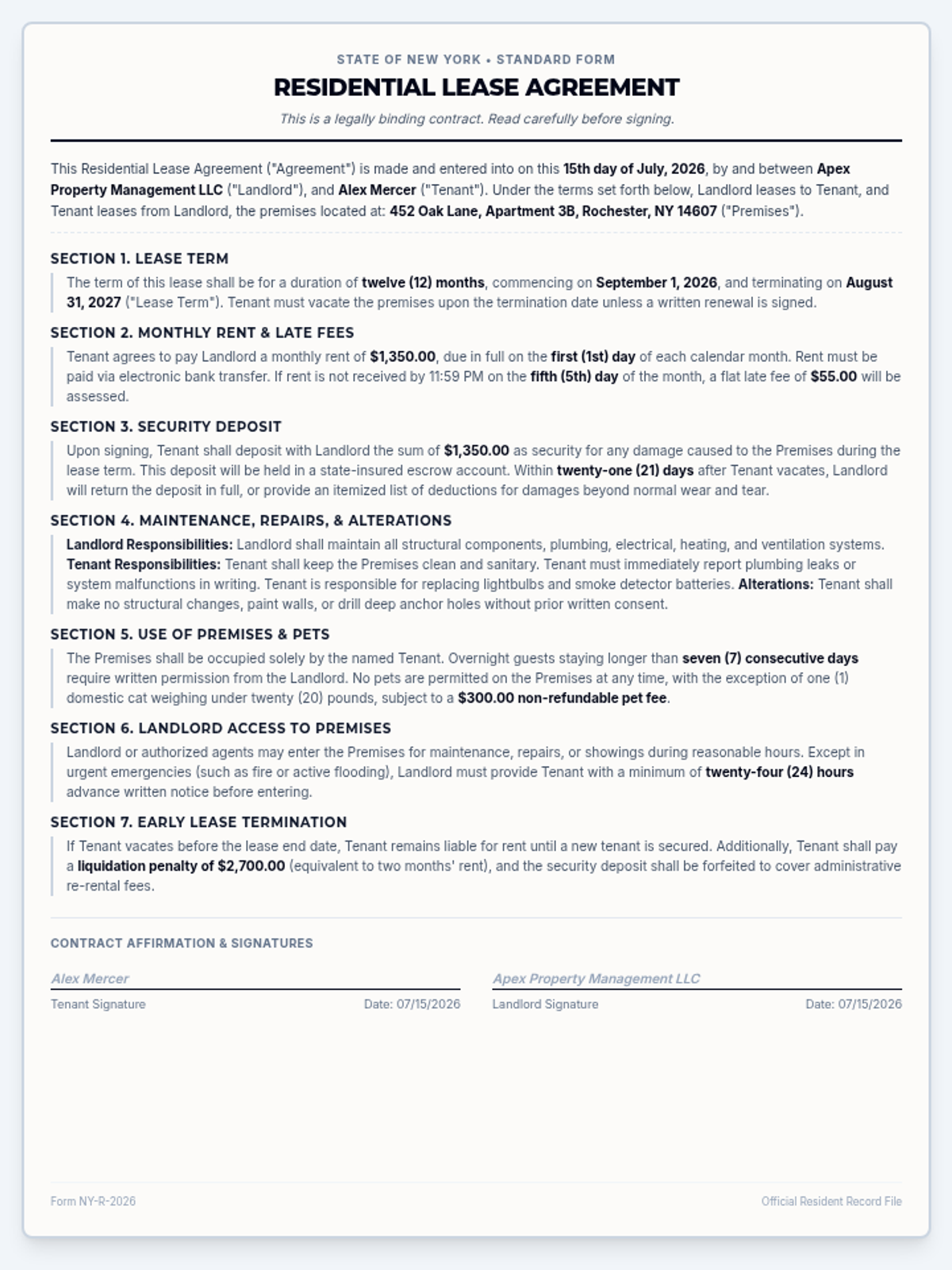
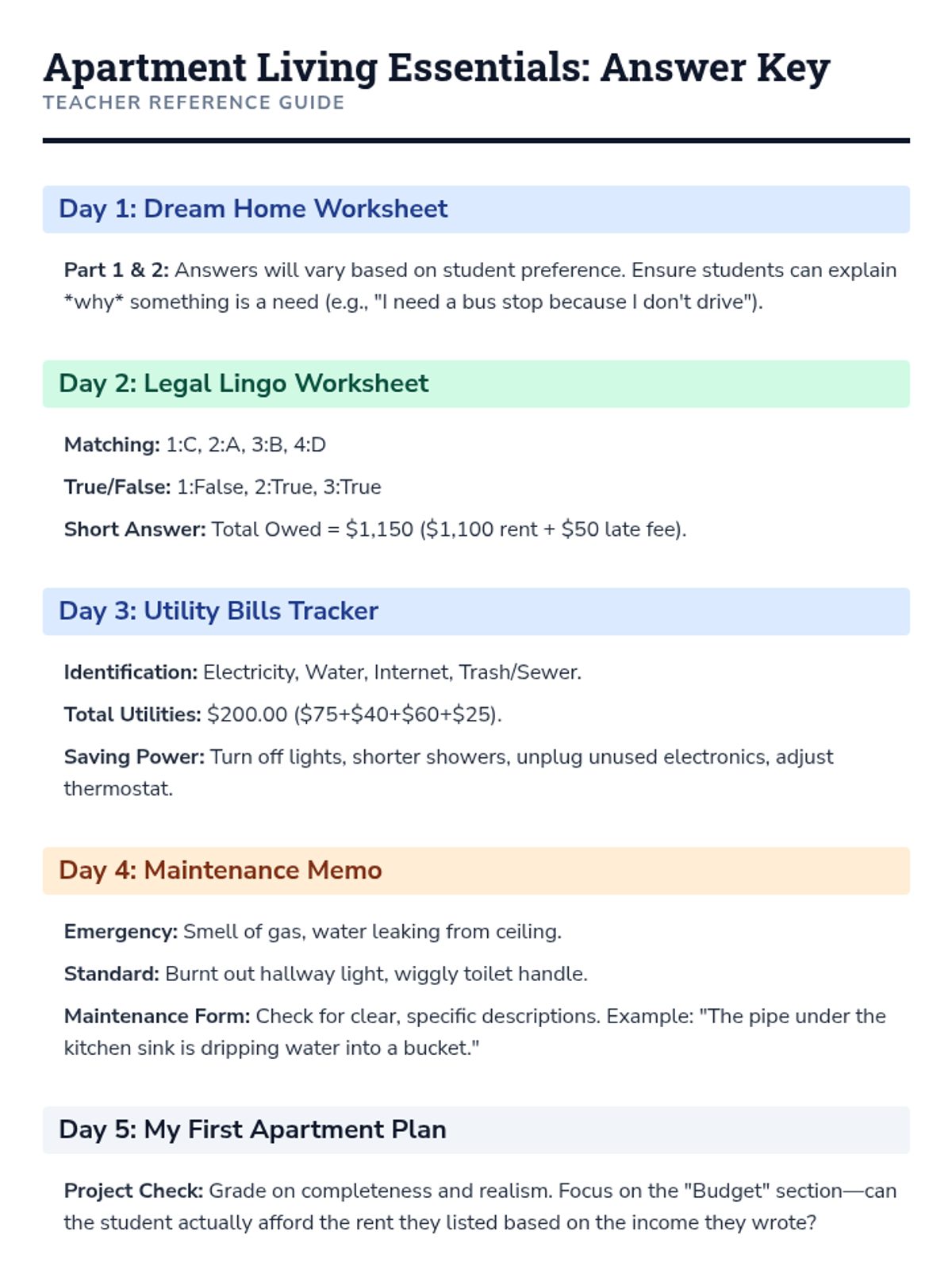
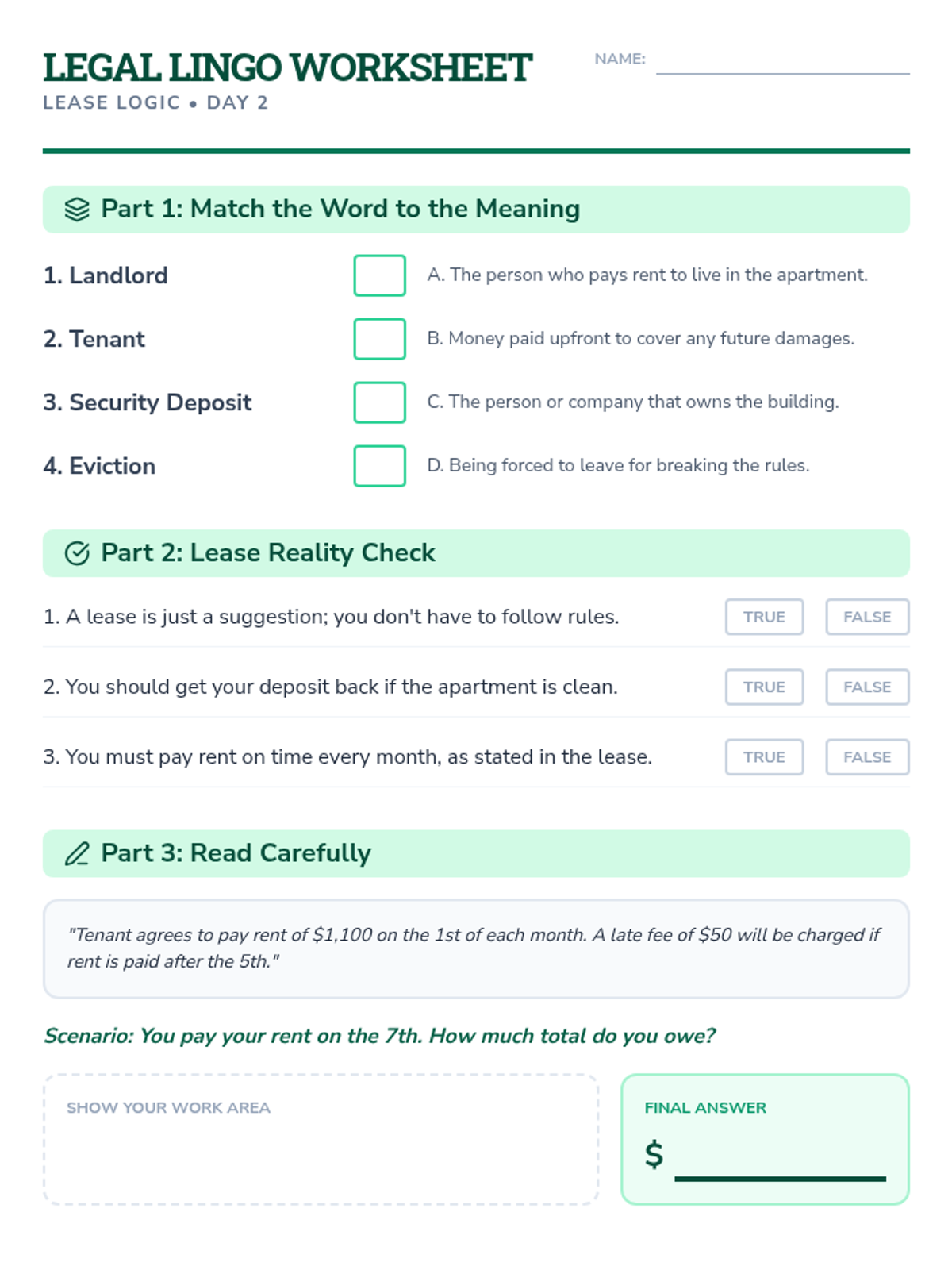
Demystifies the legal aspects of renting, including security deposits, lease terms, and the responsibilities of both tenants and landlords.
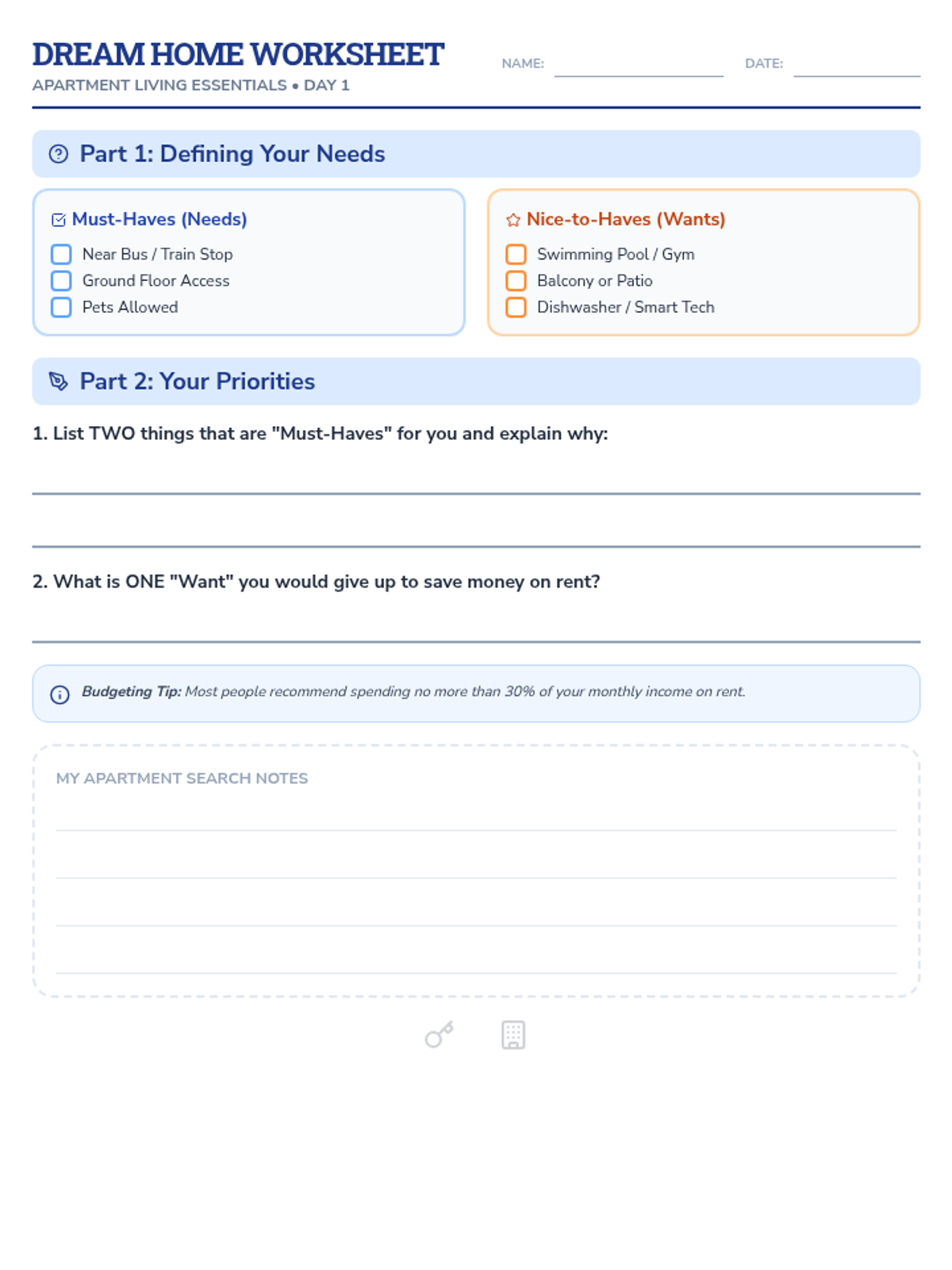
Focuses on identifying personal needs versus wants in housing and learning how to read and compare apartment listings.
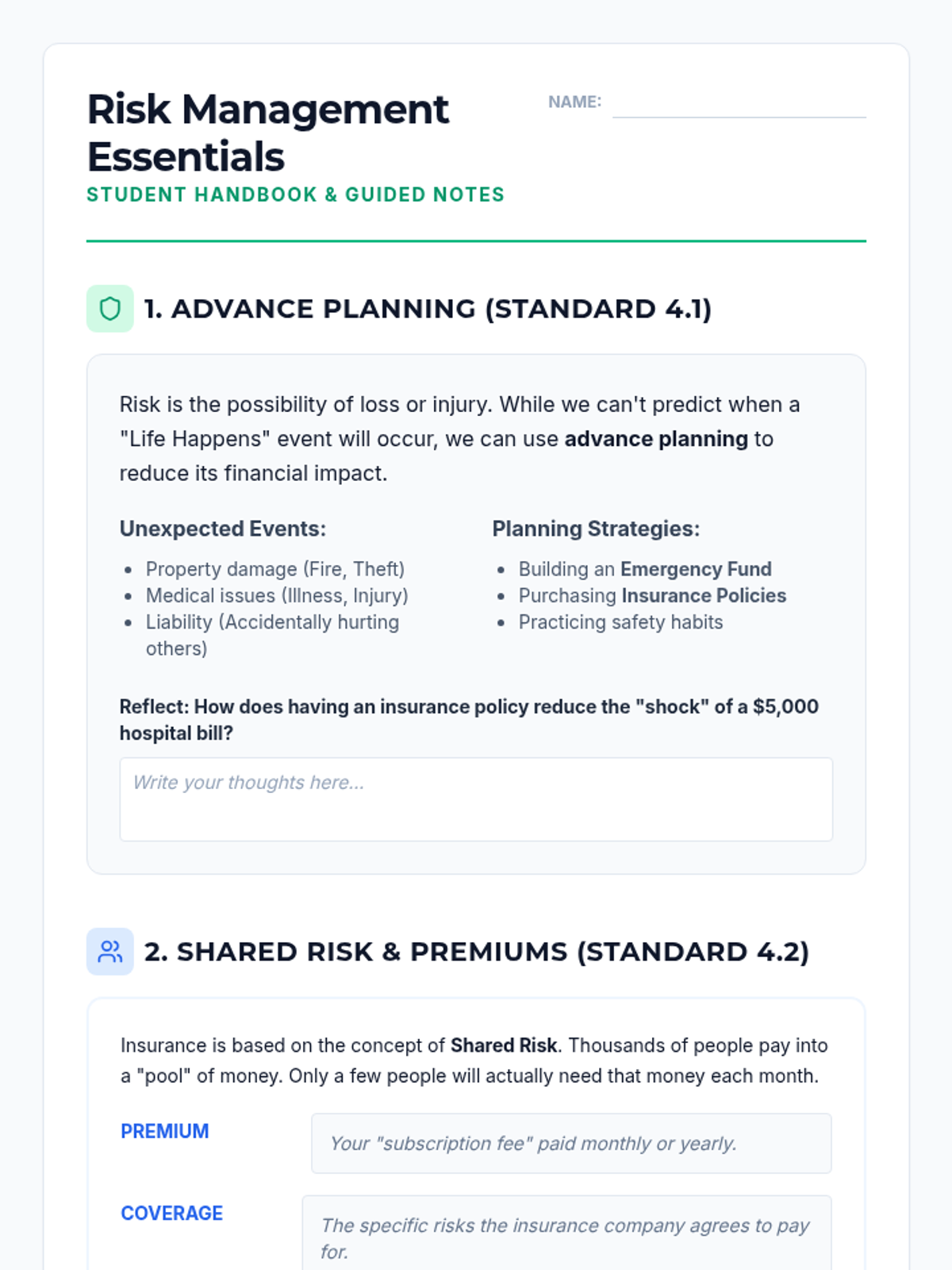
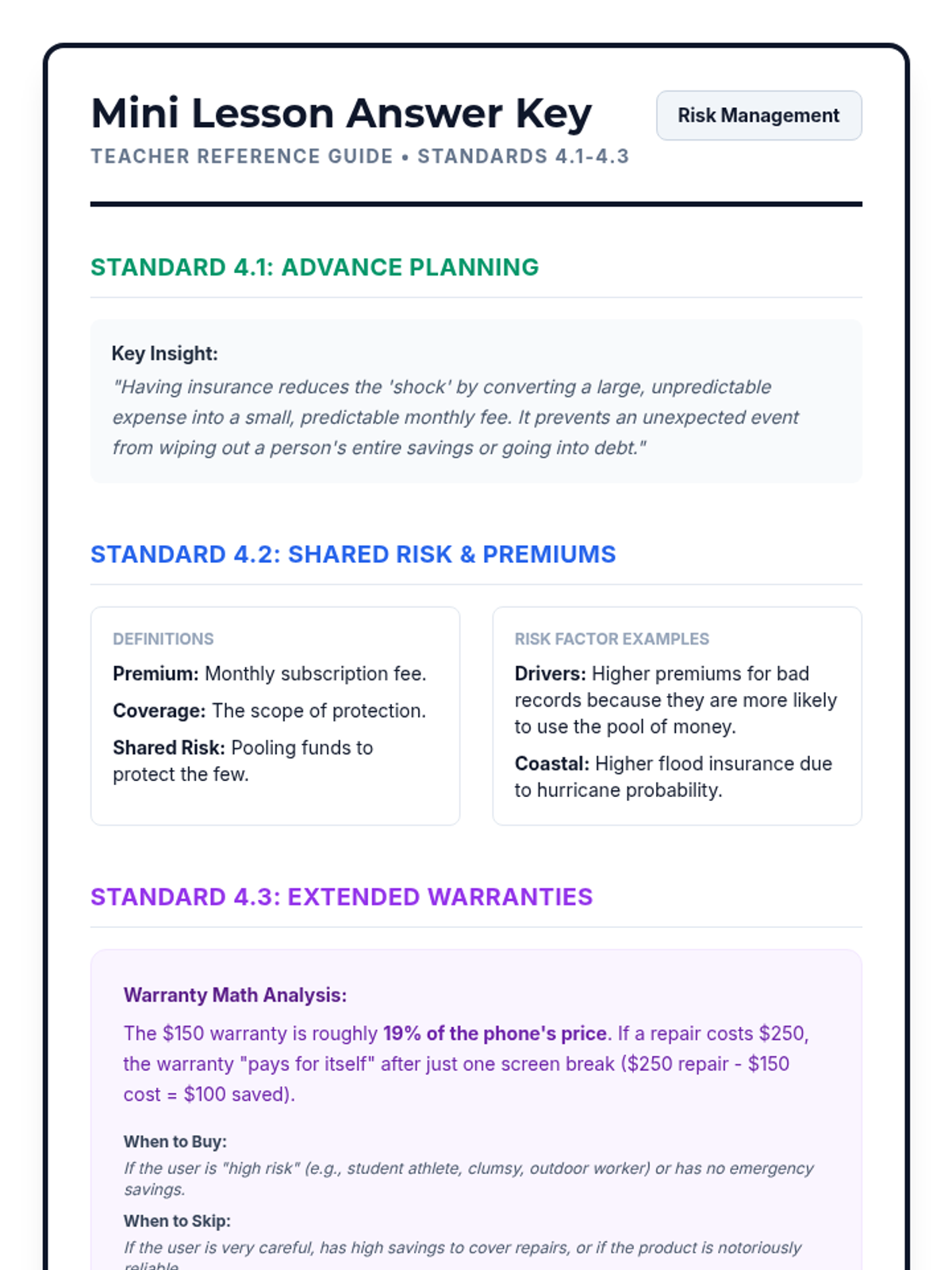
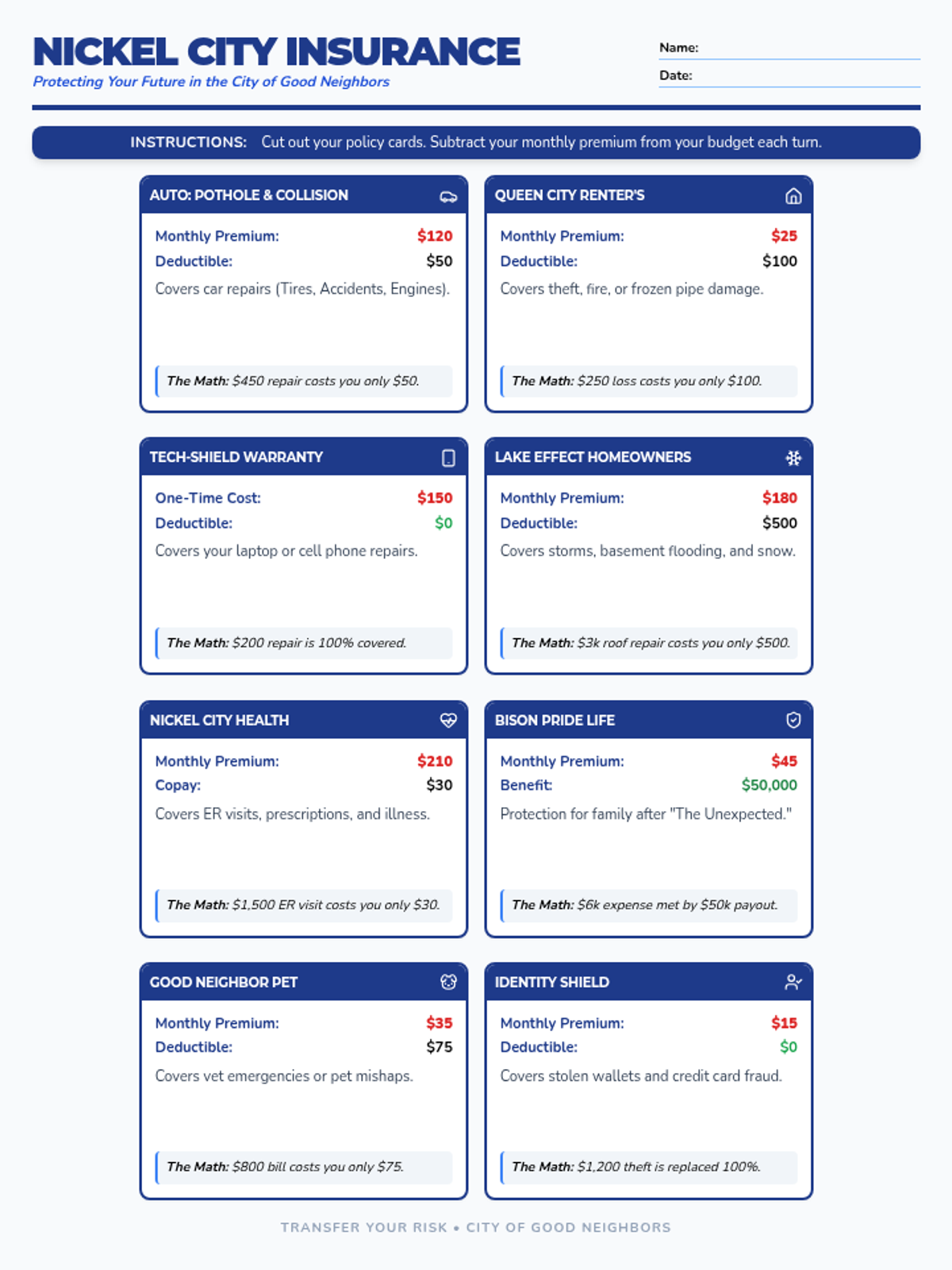
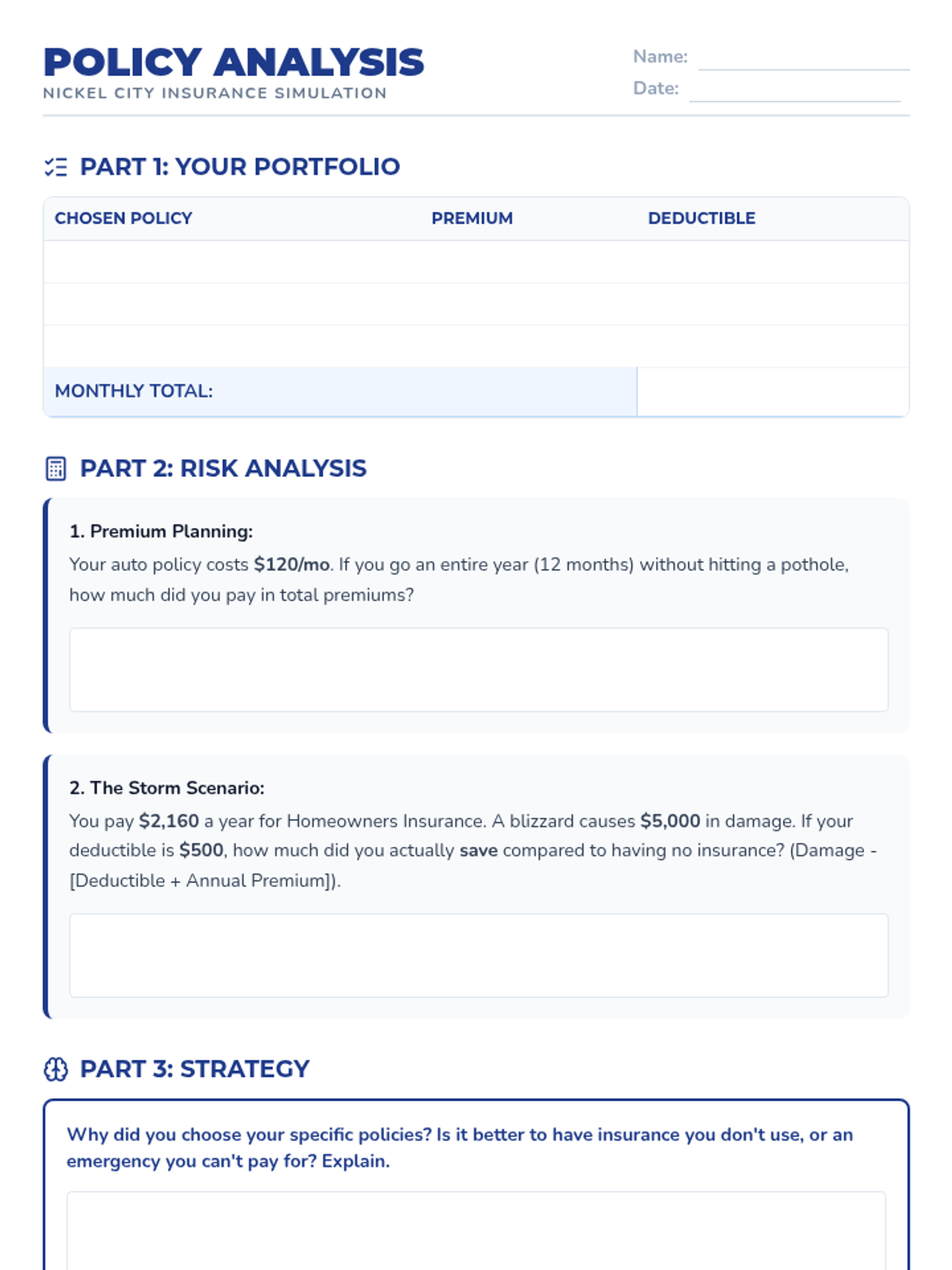
A lesson on insurance basics, deductibles, and risk management using a 'Life Happens' simulation. Students evaluate three different coverage options to protect their budget.
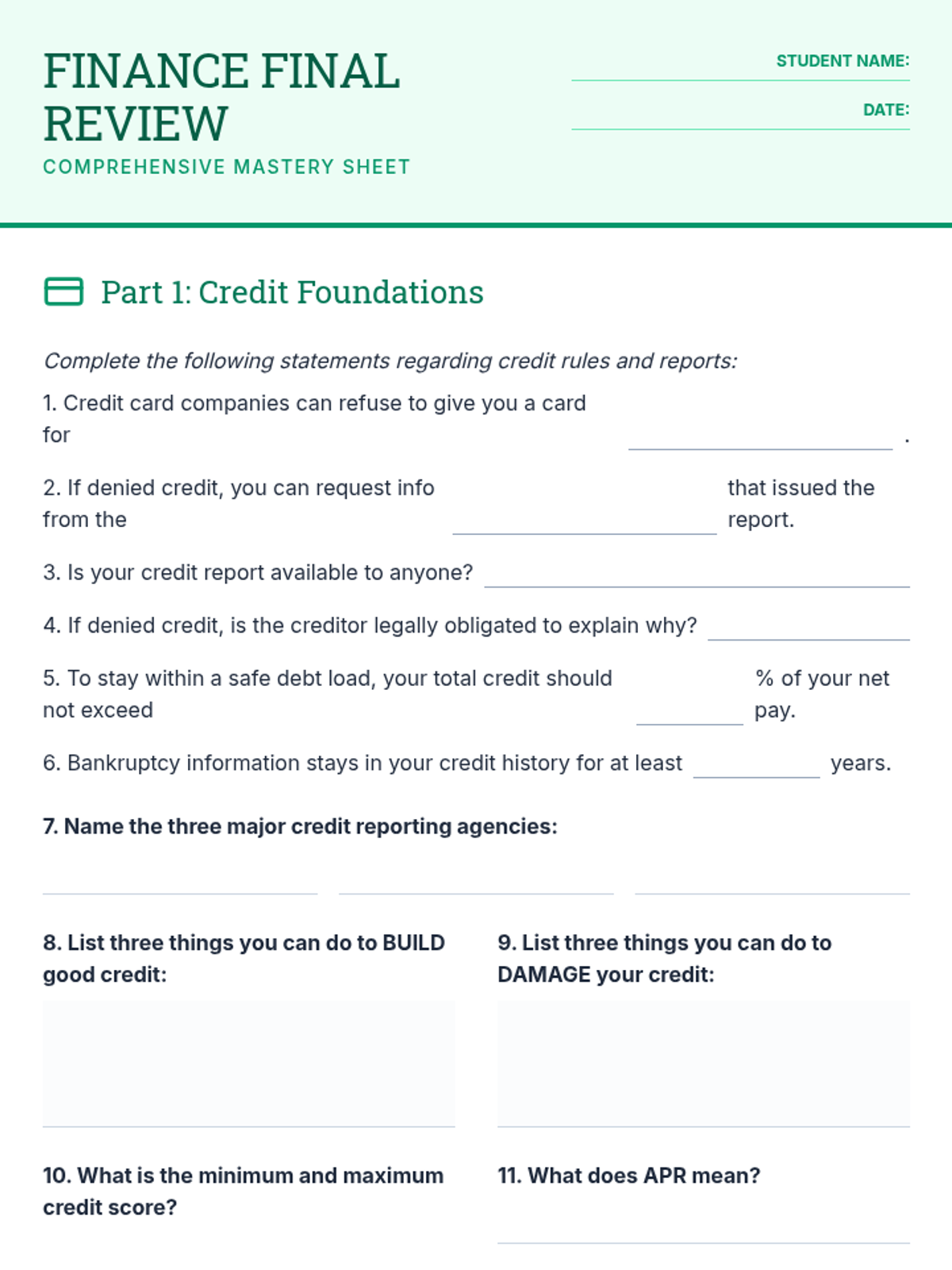
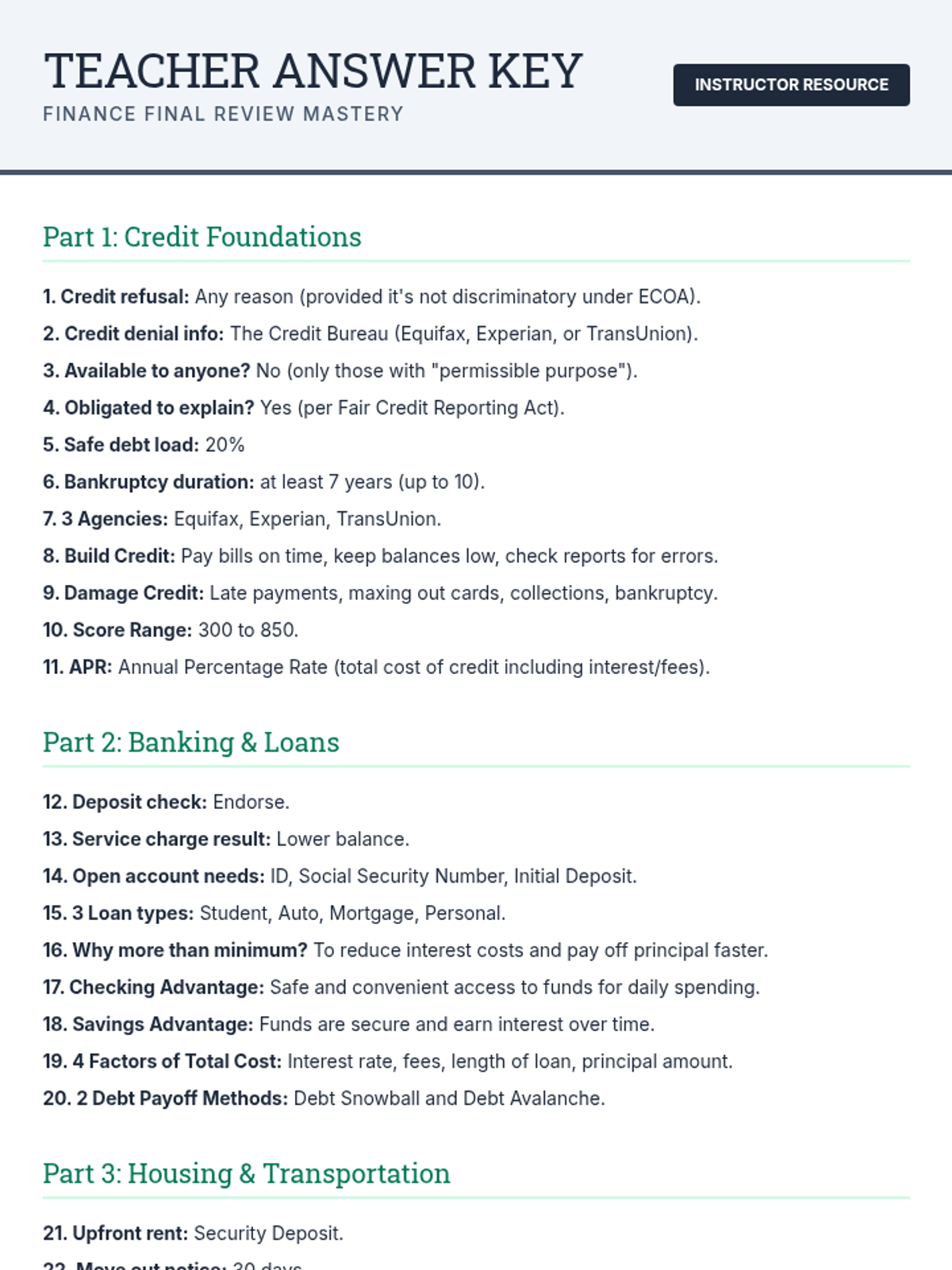
A comprehensive review module for the Personal Finance Final, covering credit, banking, loans, housing, and career skills.
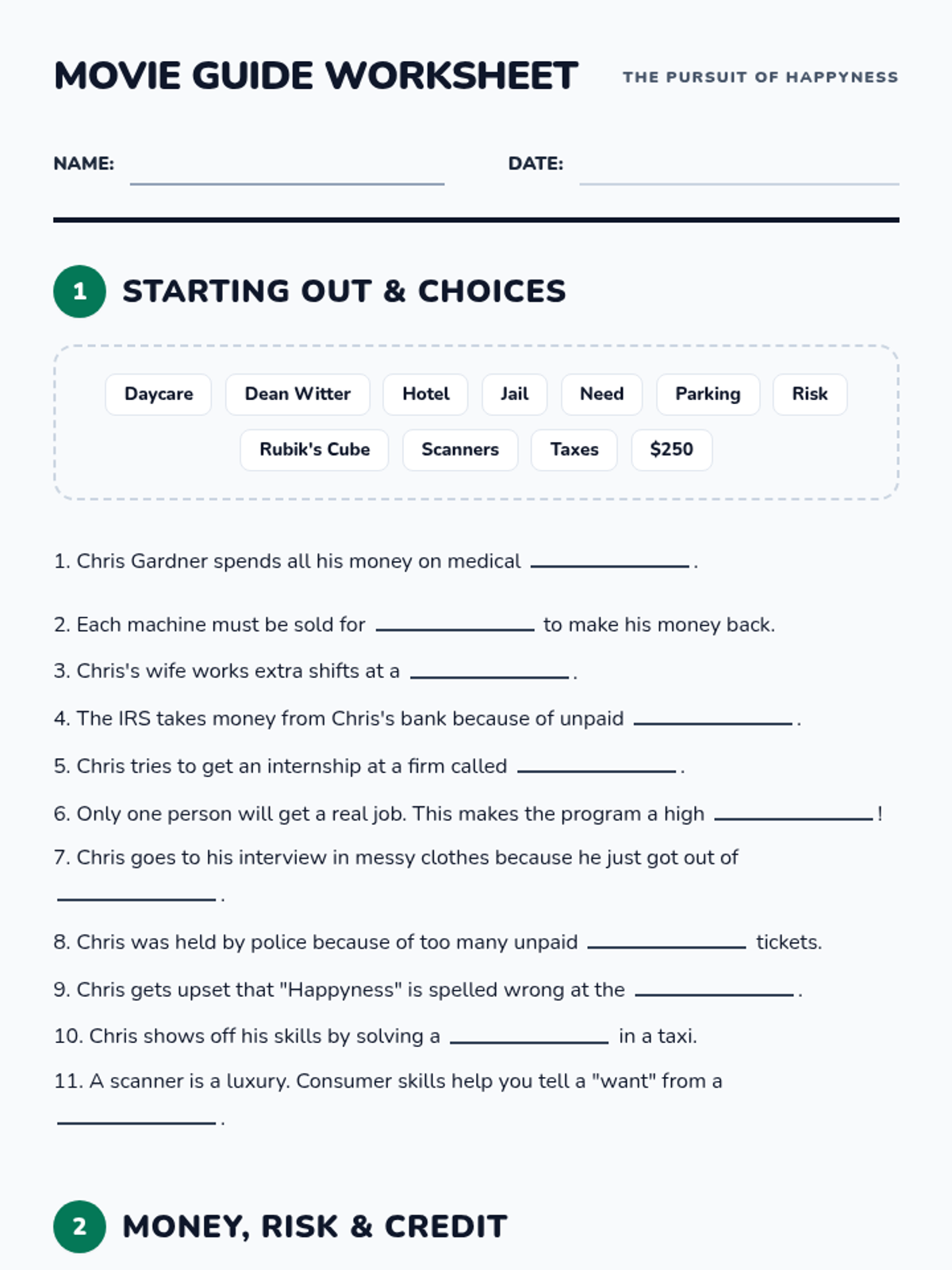
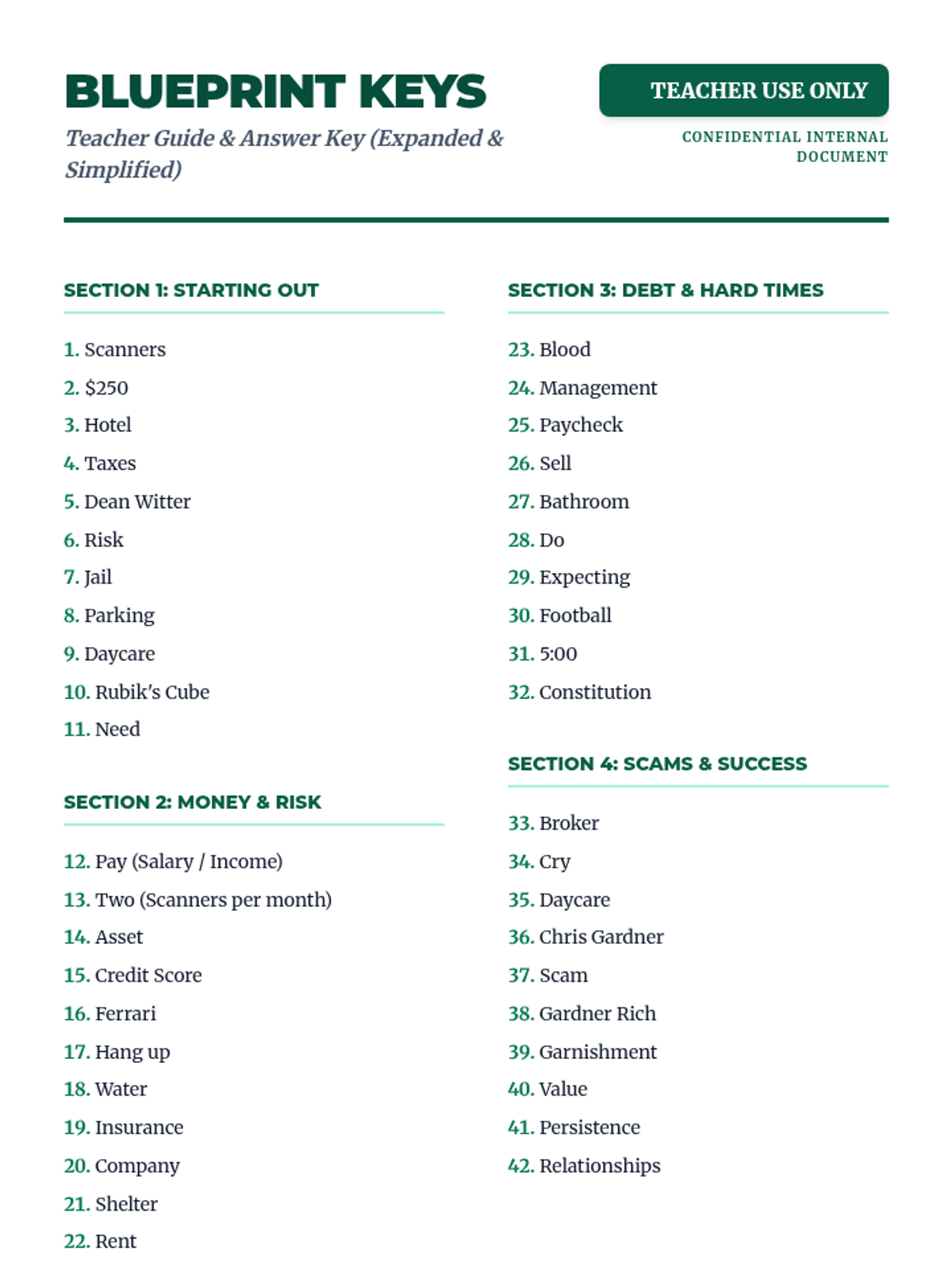
A deep dive into the personal finance themes of 'The Pursuit of Happyness,' focusing on income, assets, risk, and perseverance. Students analyze Chris Gardner's financial journey while tracking key plot points.
A collection of professionally designed real estate listing posters featuring unique properties with detailed descriptions, pricing, and specifications.
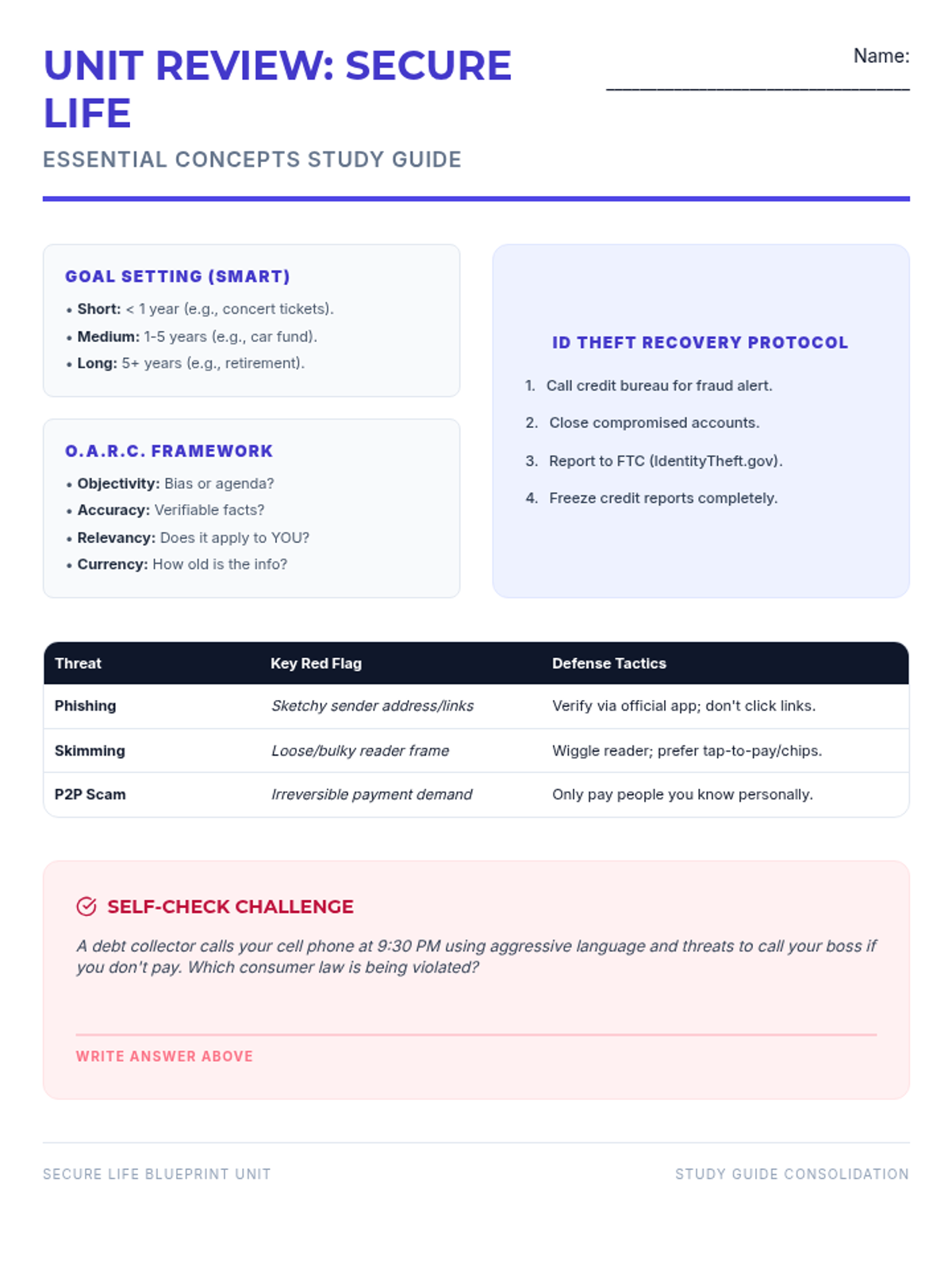
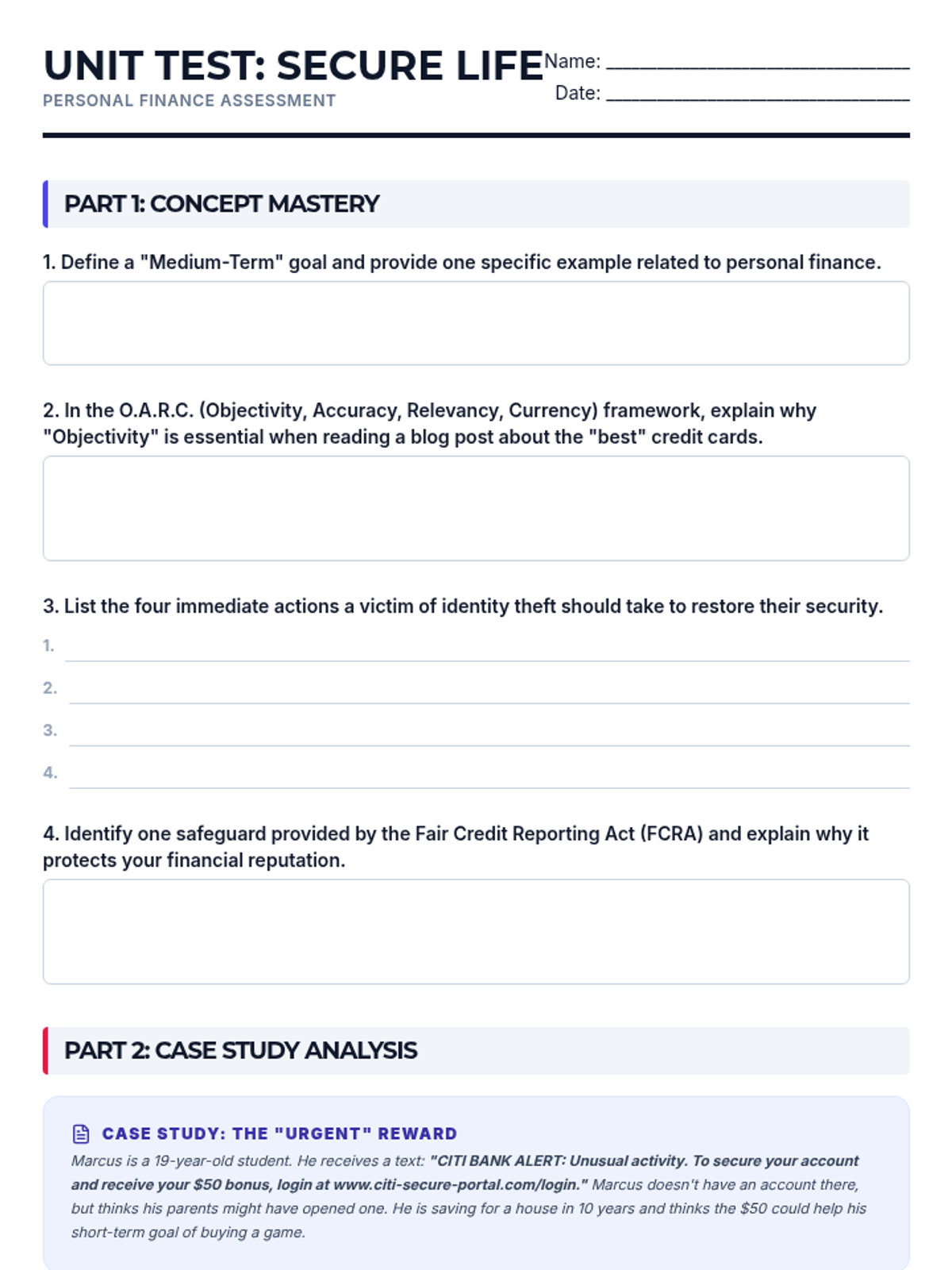
A final review session followed by a mixed-format unit test featuring short answer questions and case study analysis.
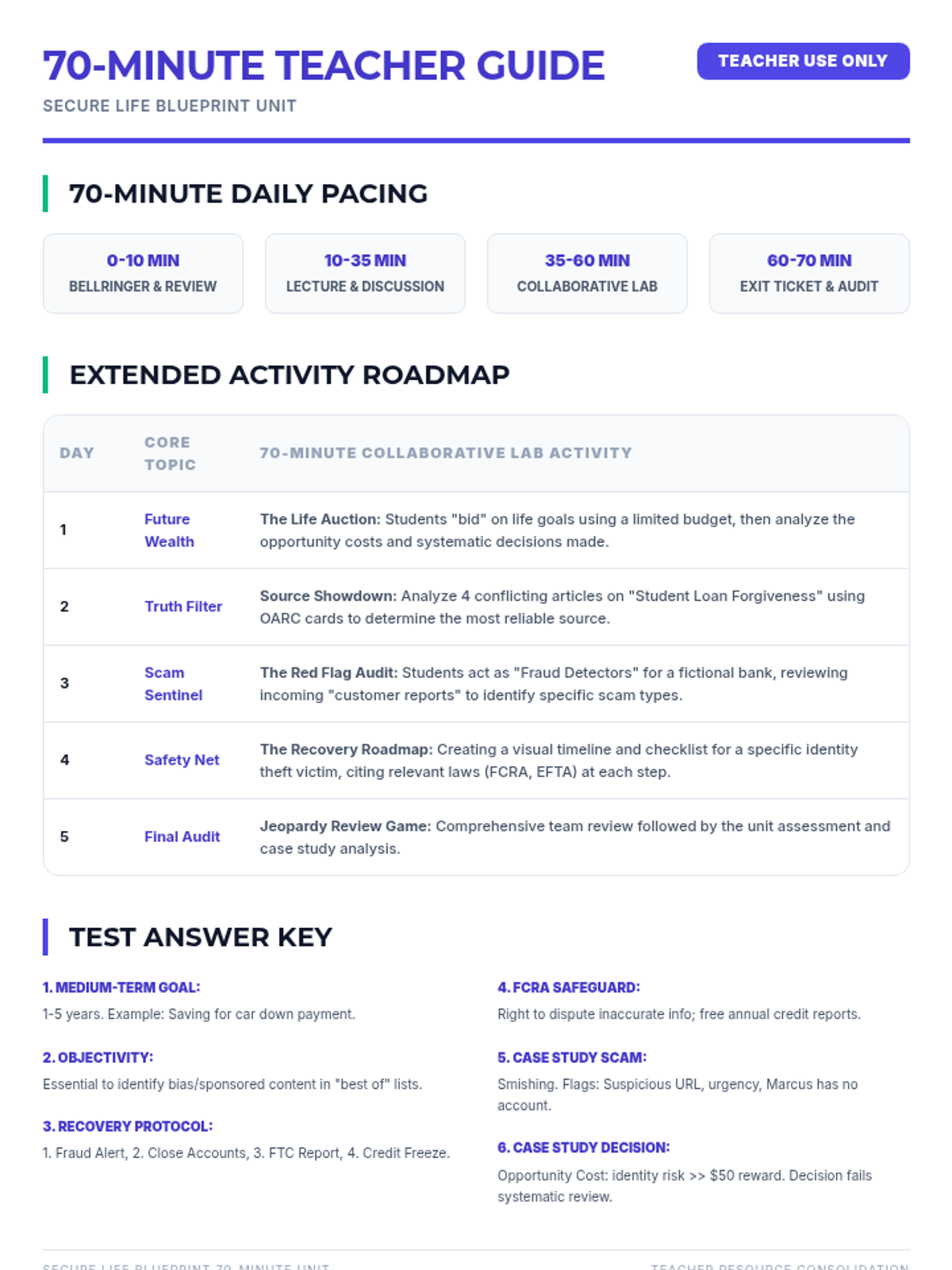
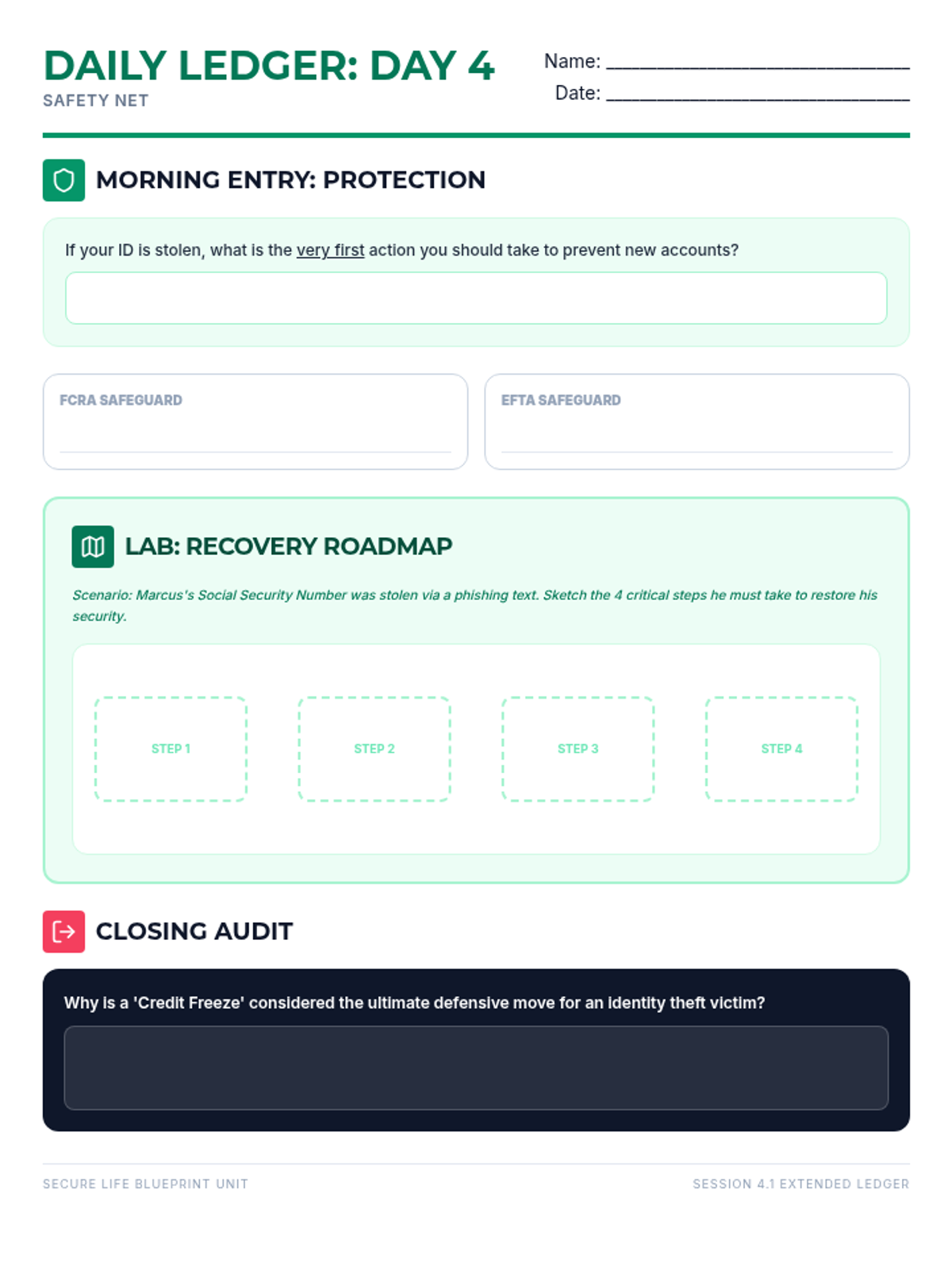
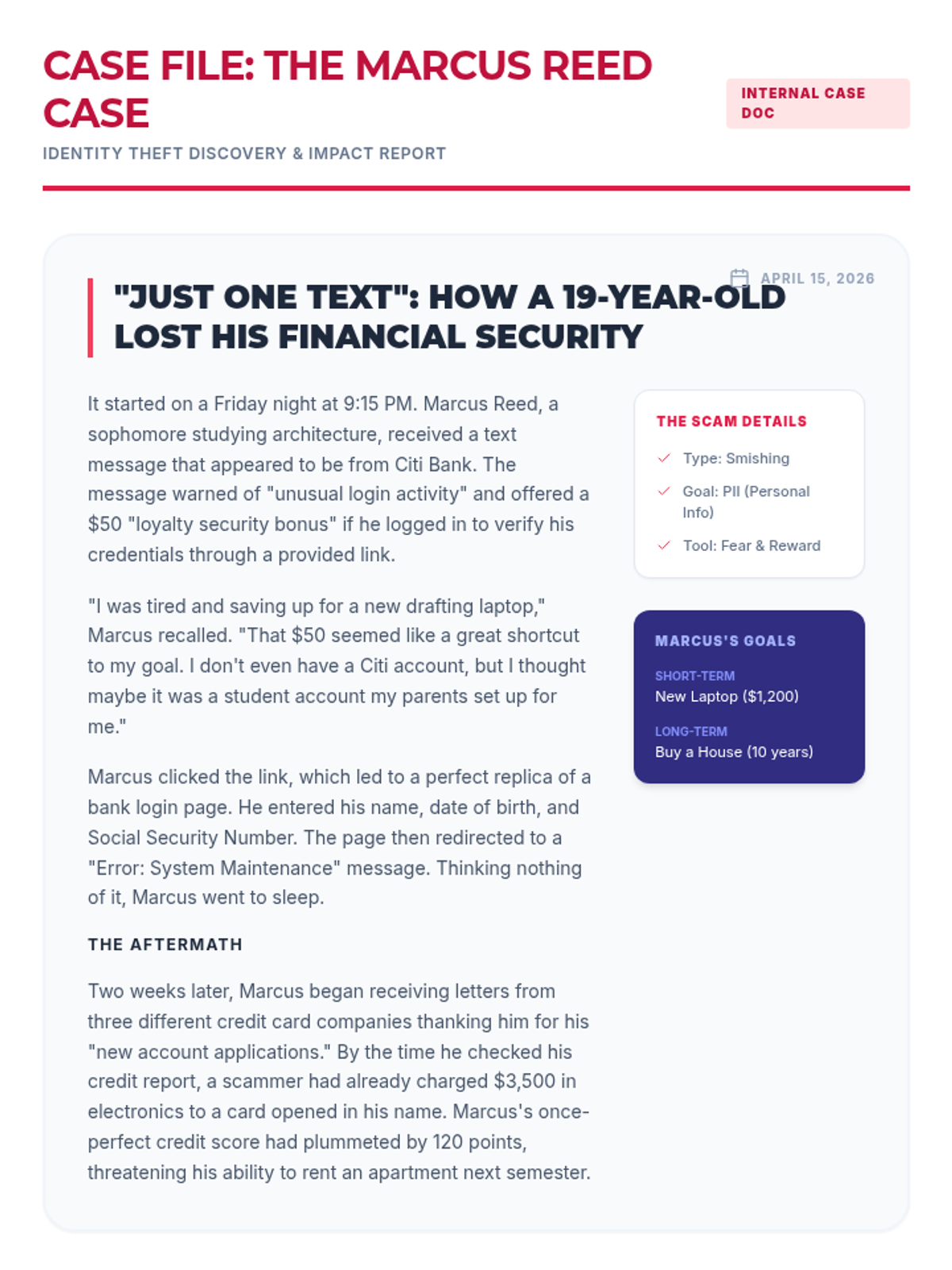
Covers consumer protection laws and the specific steps victims of identity theft should take to recover their security.
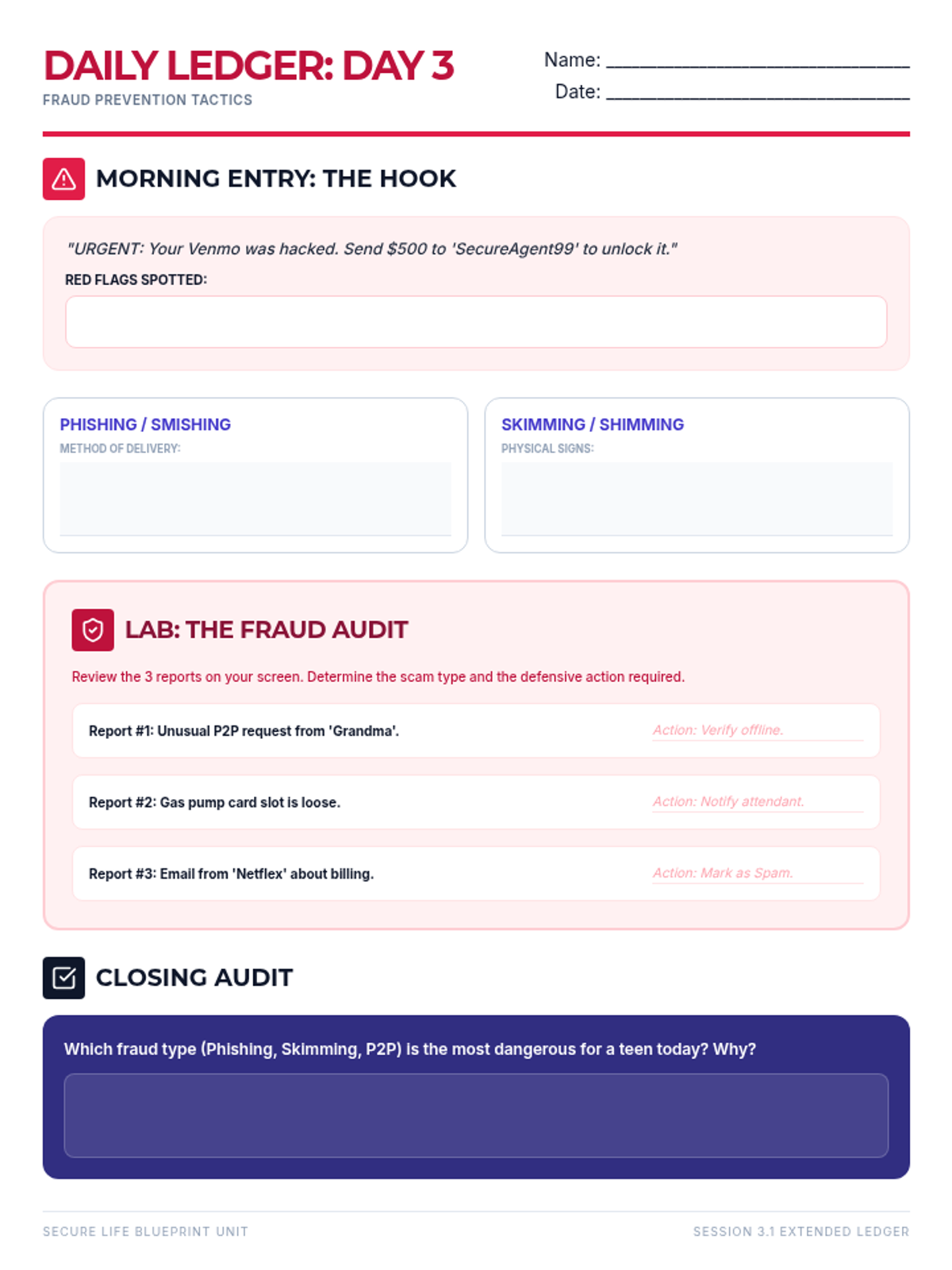
Explores modern consumer fraud including phishing, smishing, credit card skimming, and social media scams.
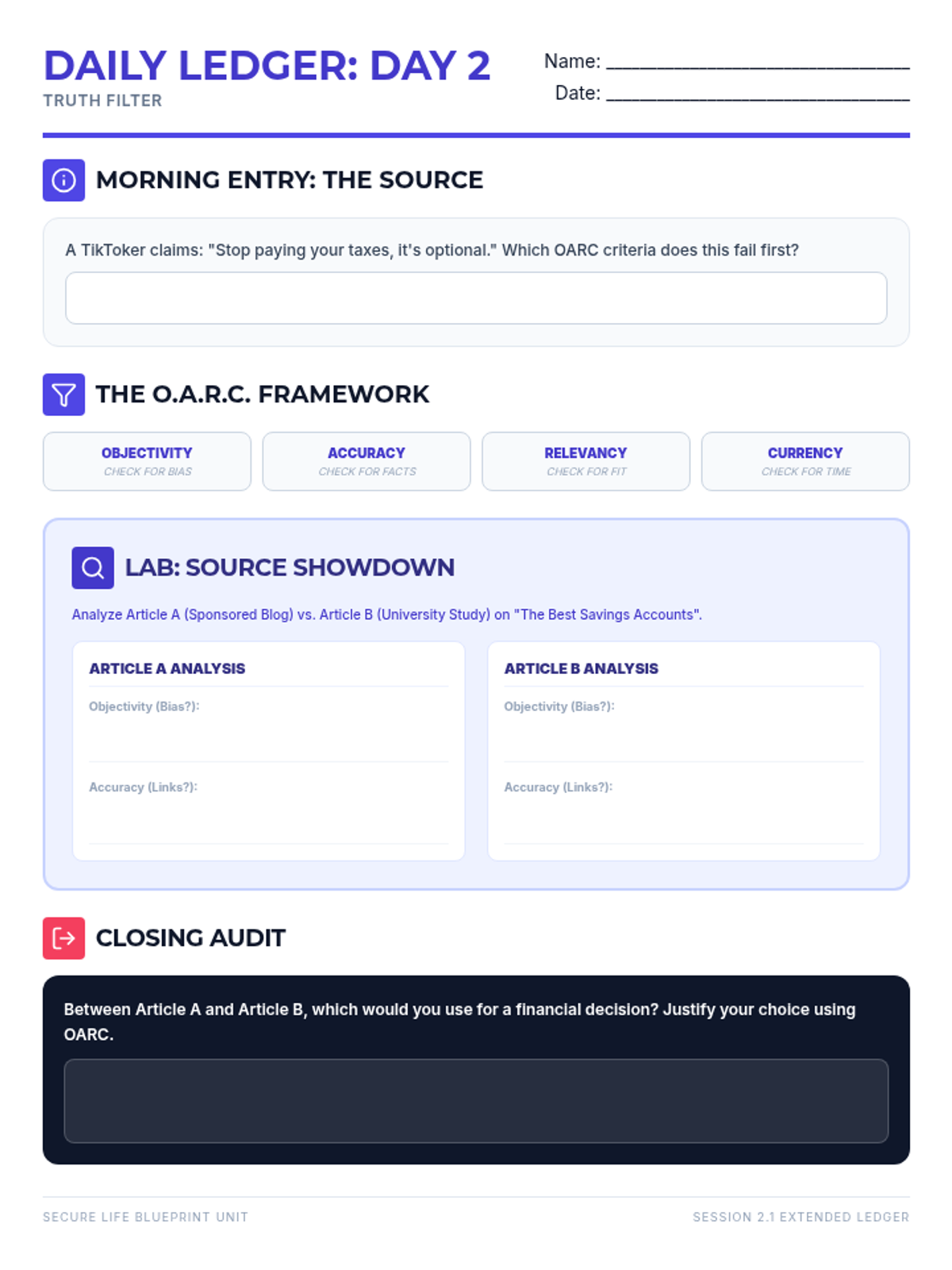
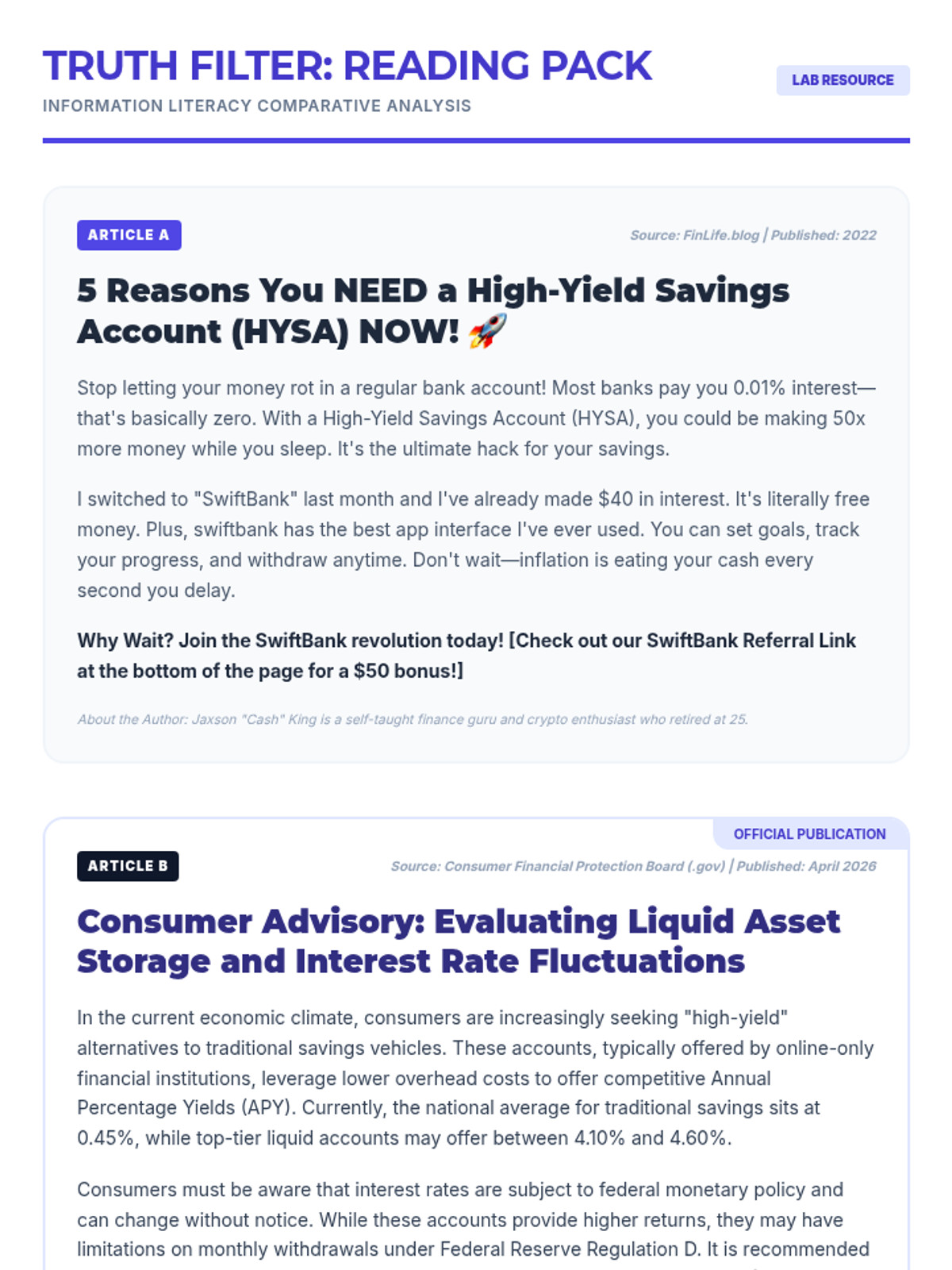
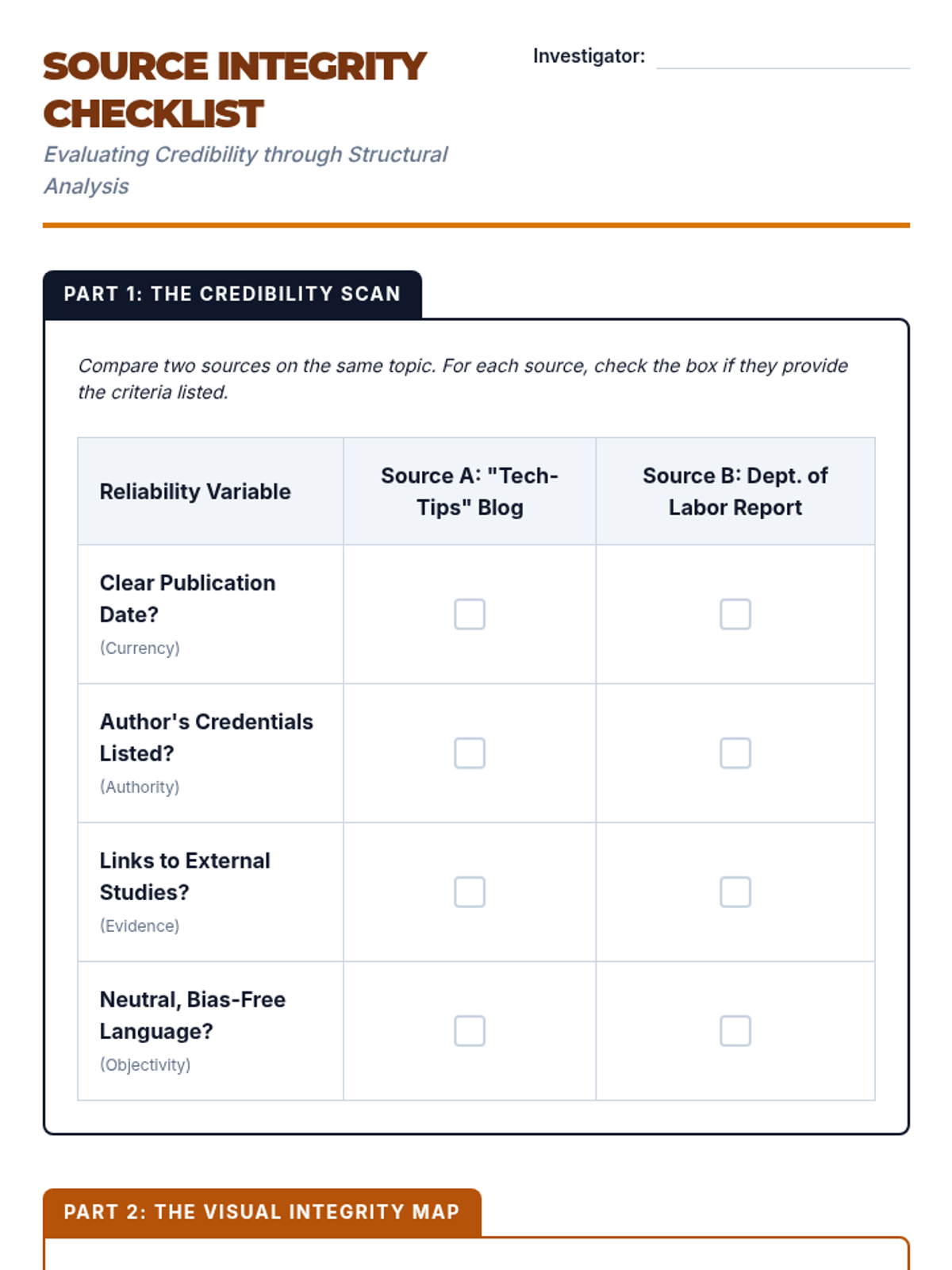
Teaches students how to evaluate financial information for objectivity, accuracy, relevancy, and currency to make informed choices.
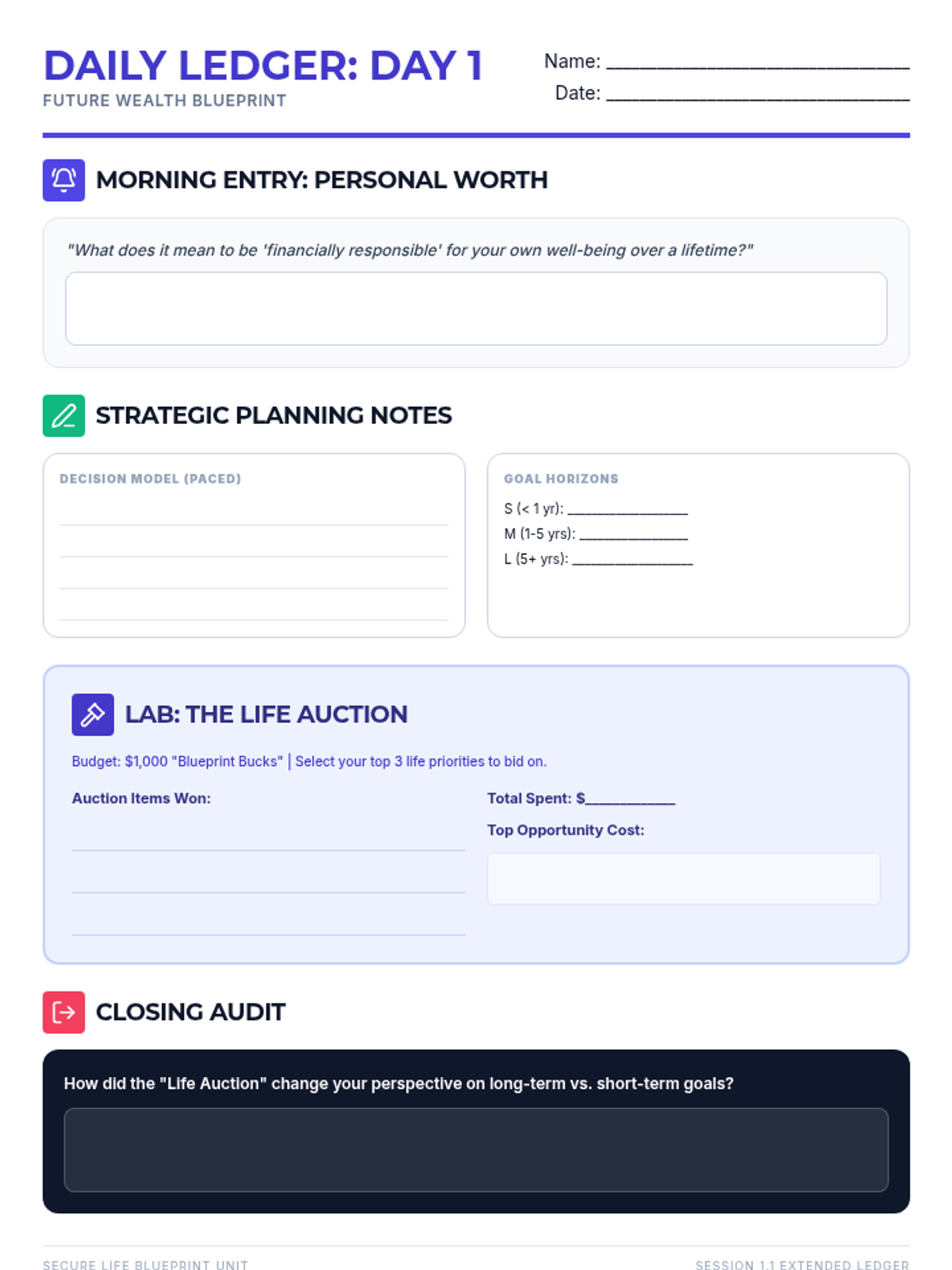
Focuses on lifetime financial well-being, systematic decision-making, and setting SMART short-, medium-, and long-term financial goals.
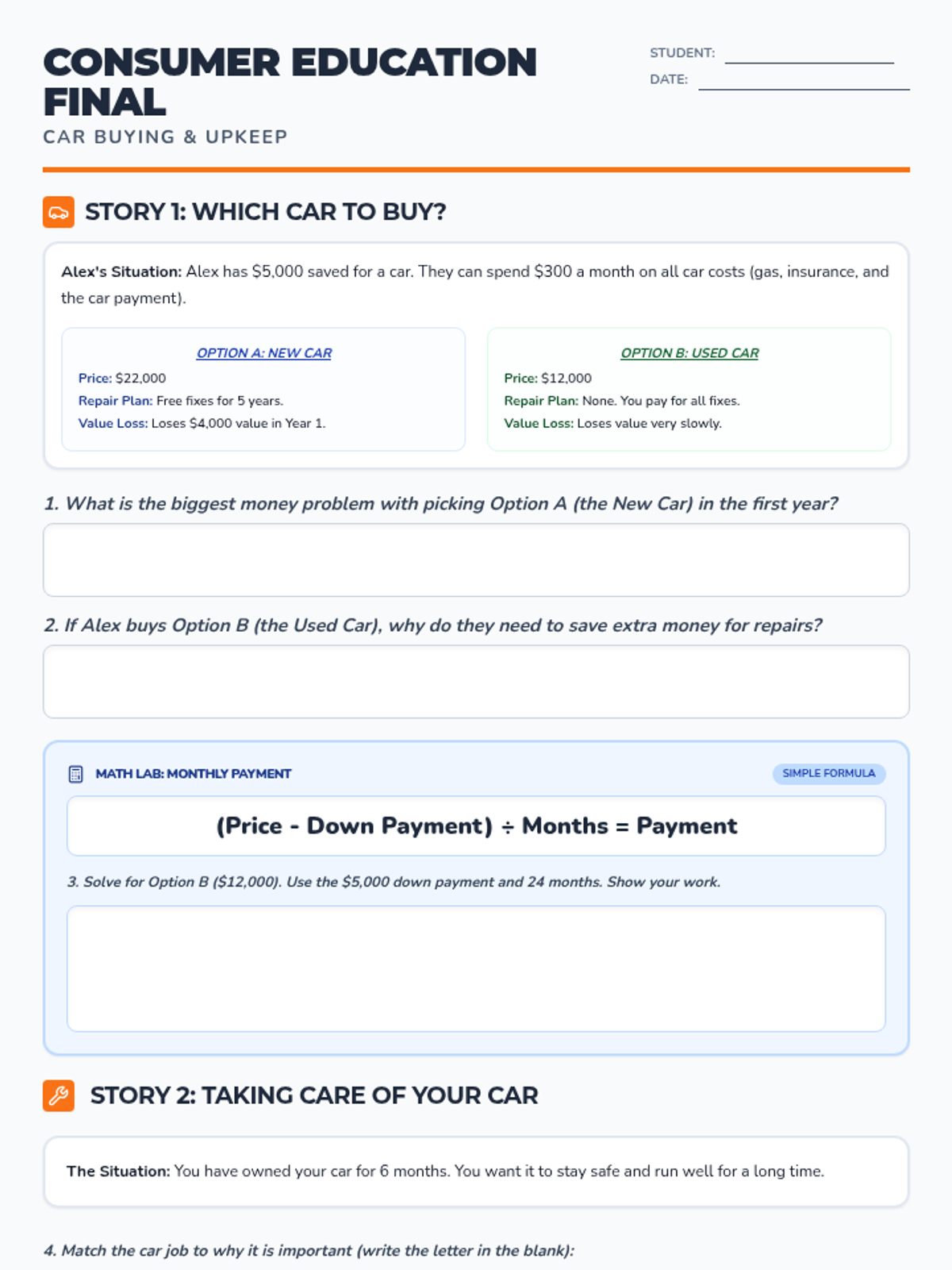
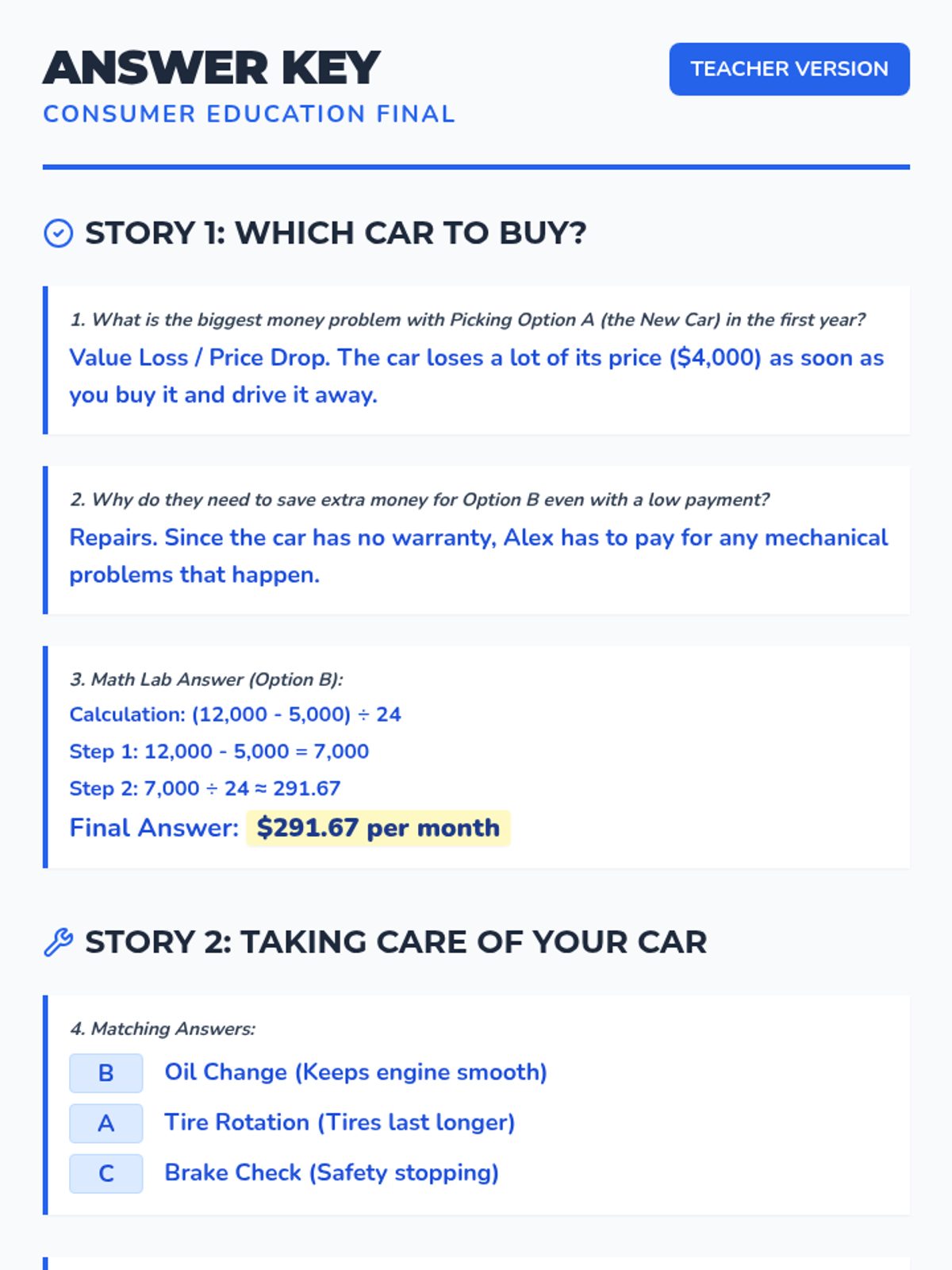
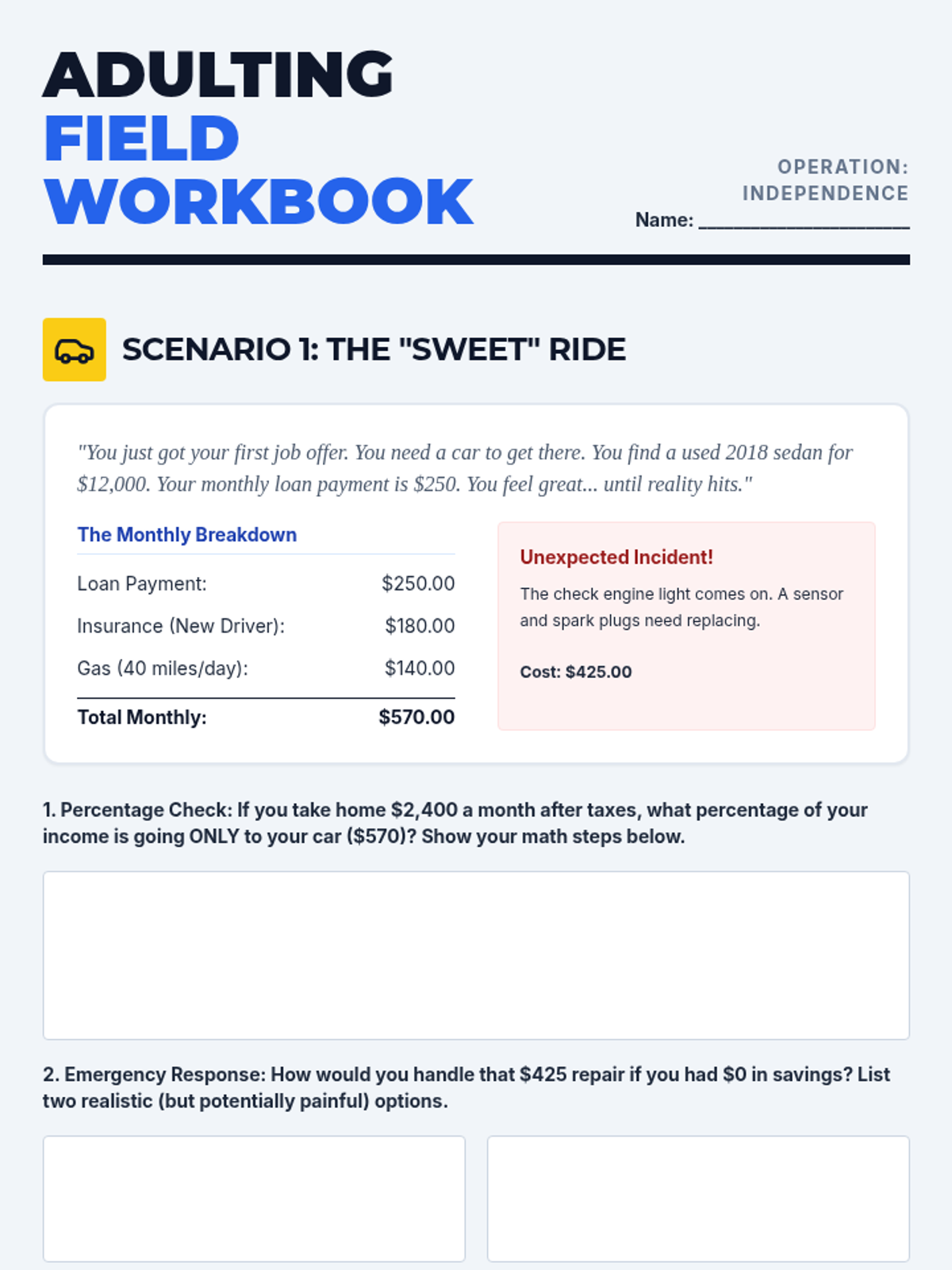
A scenario-based final assessment focusing on the practical decisions involved in purchasing and maintaining a vehicle, designed for a life skills consumer education course.
A focused lesson on car buying vocabulary and consumer basics, featuring a themed word search activity and answer key.
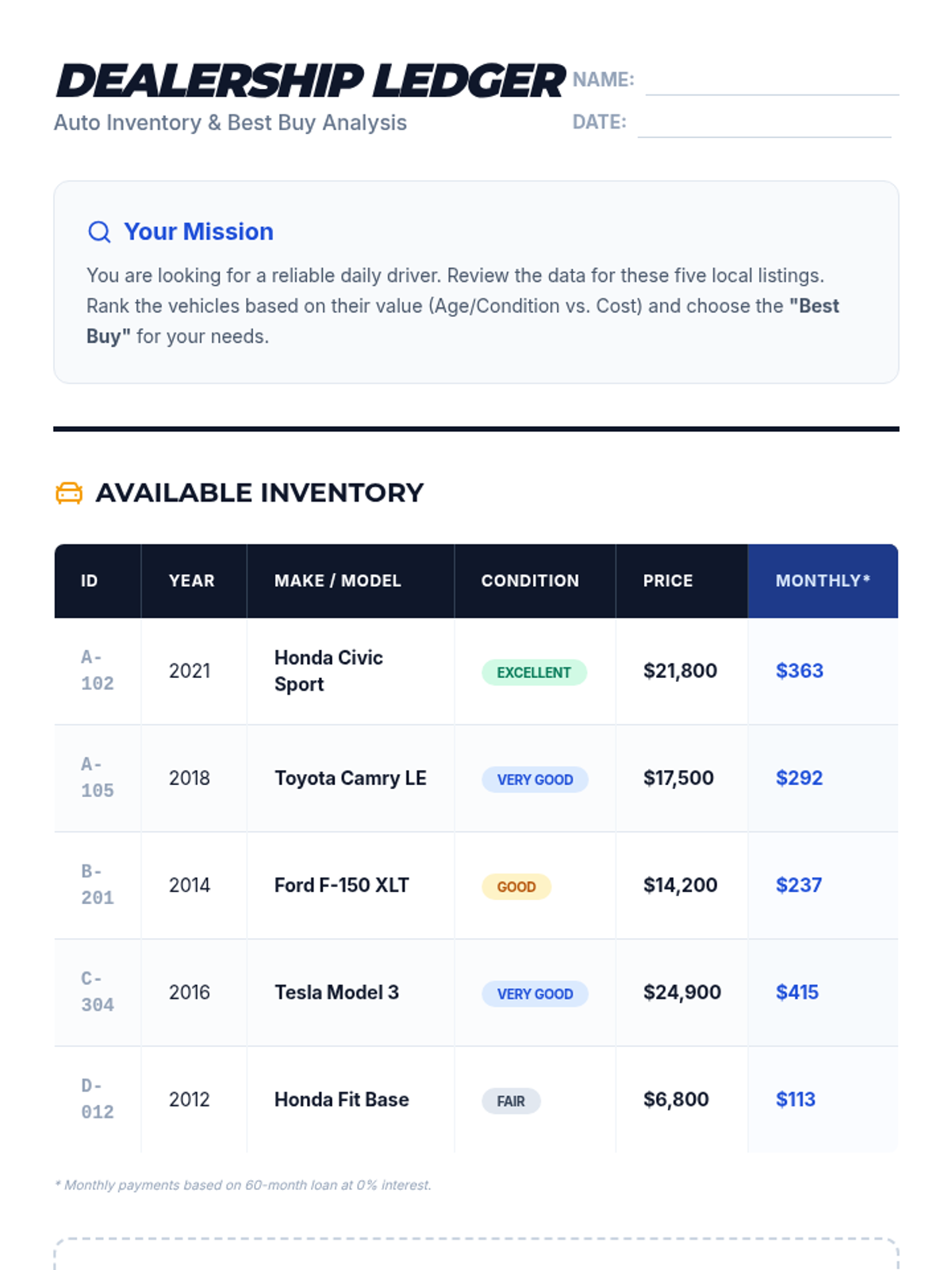
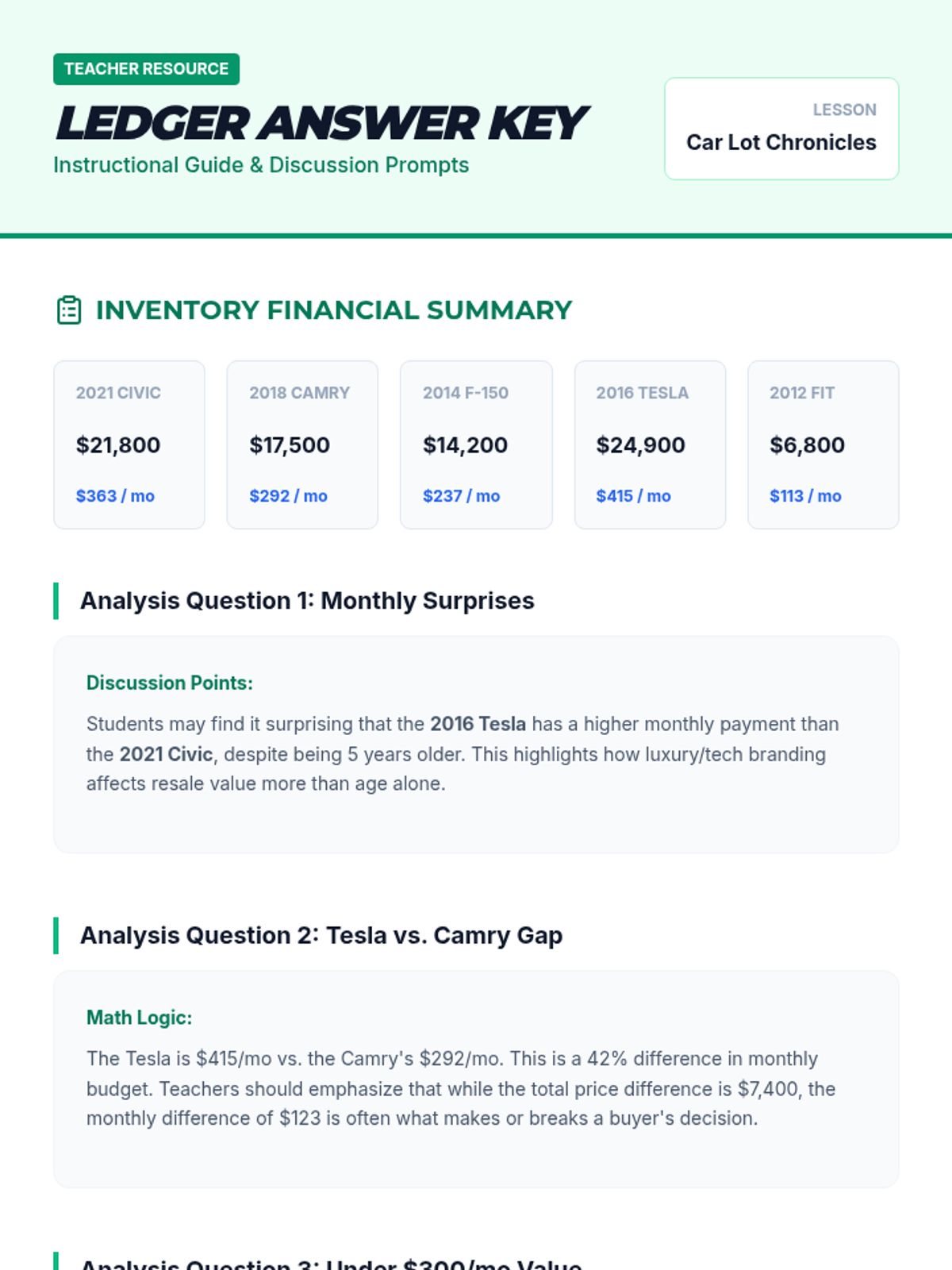
A practical financial literacy lesson where students analyze car listings to determine the best value based on mileage, condition, and price.
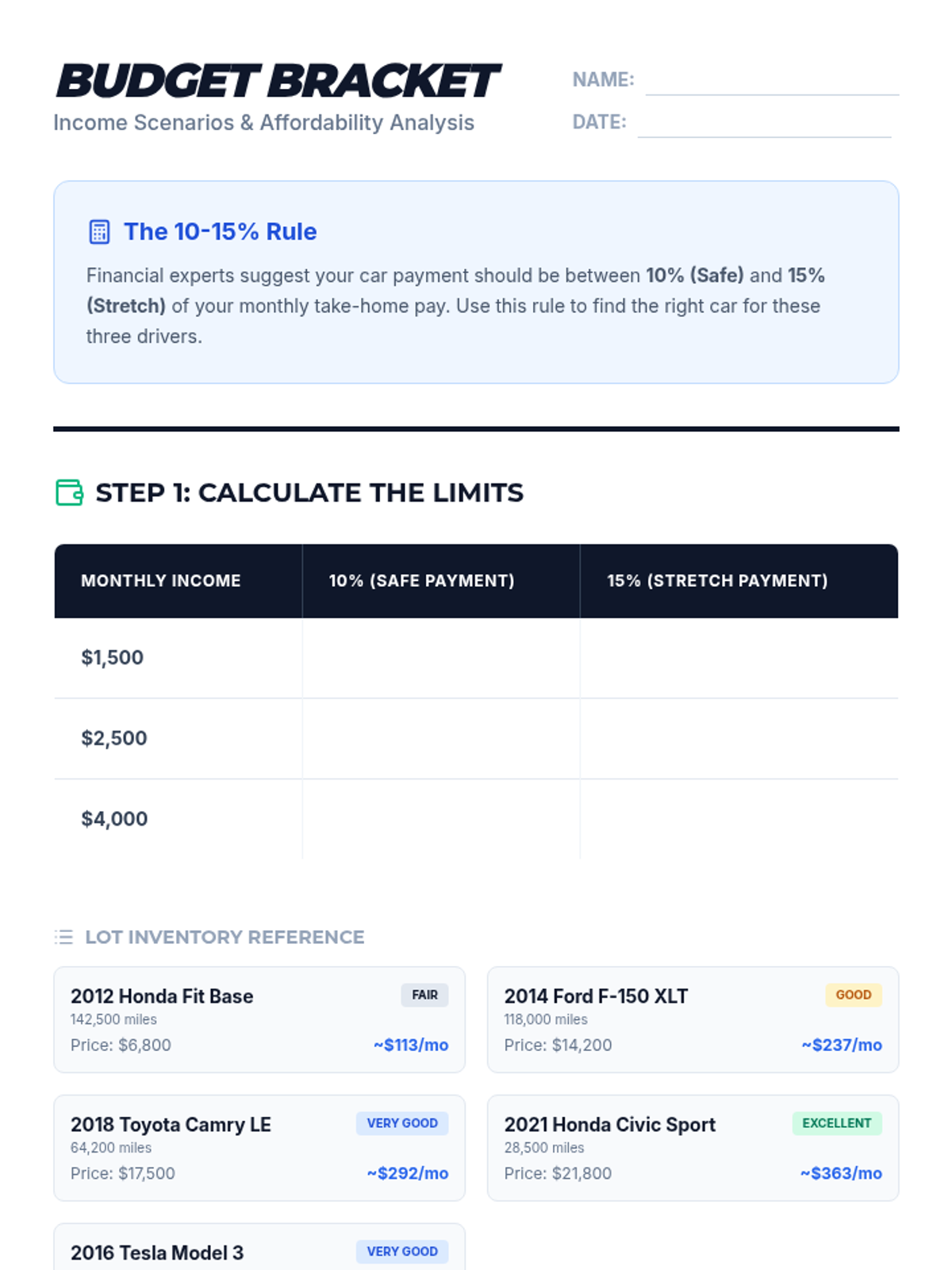
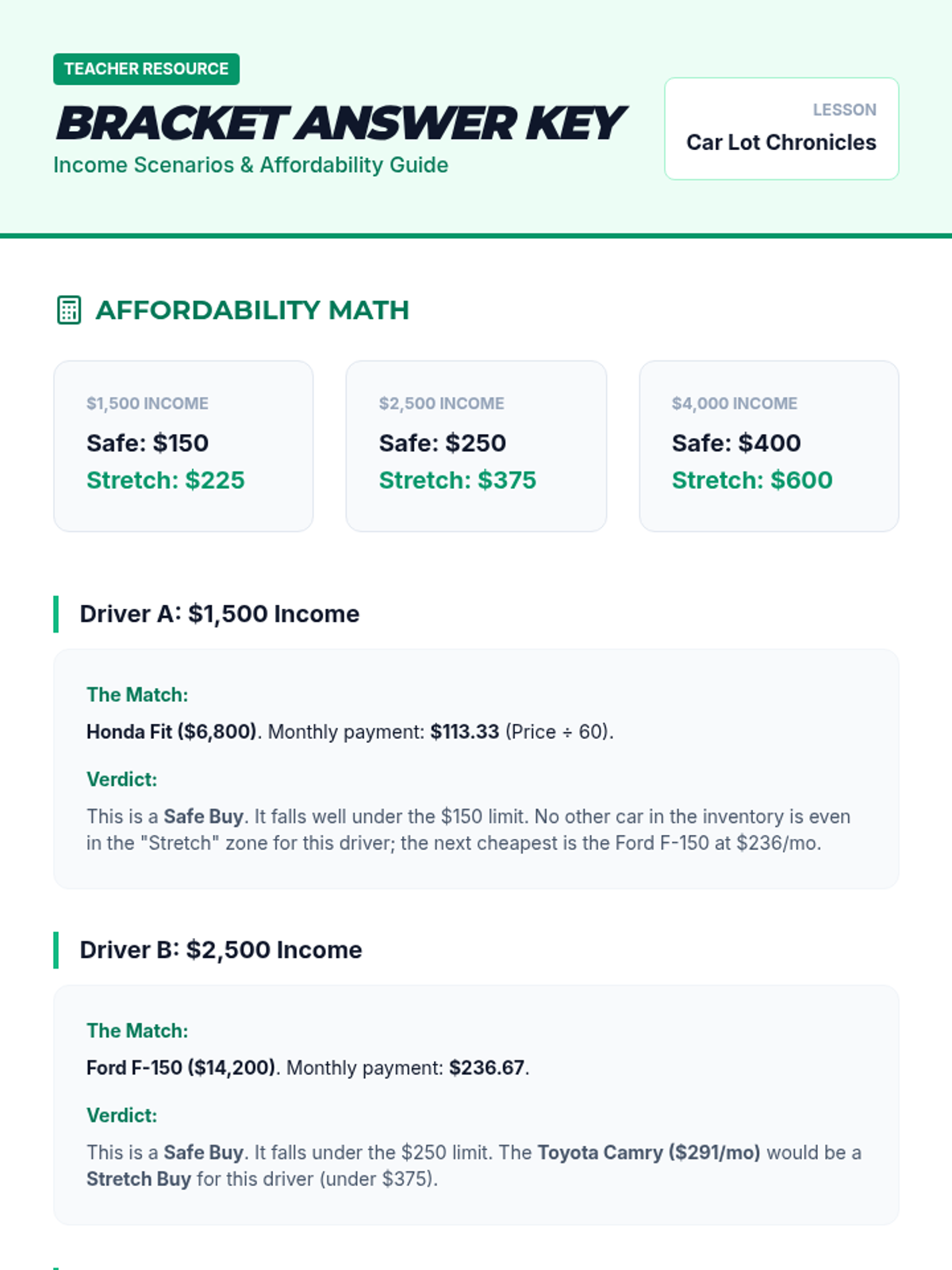
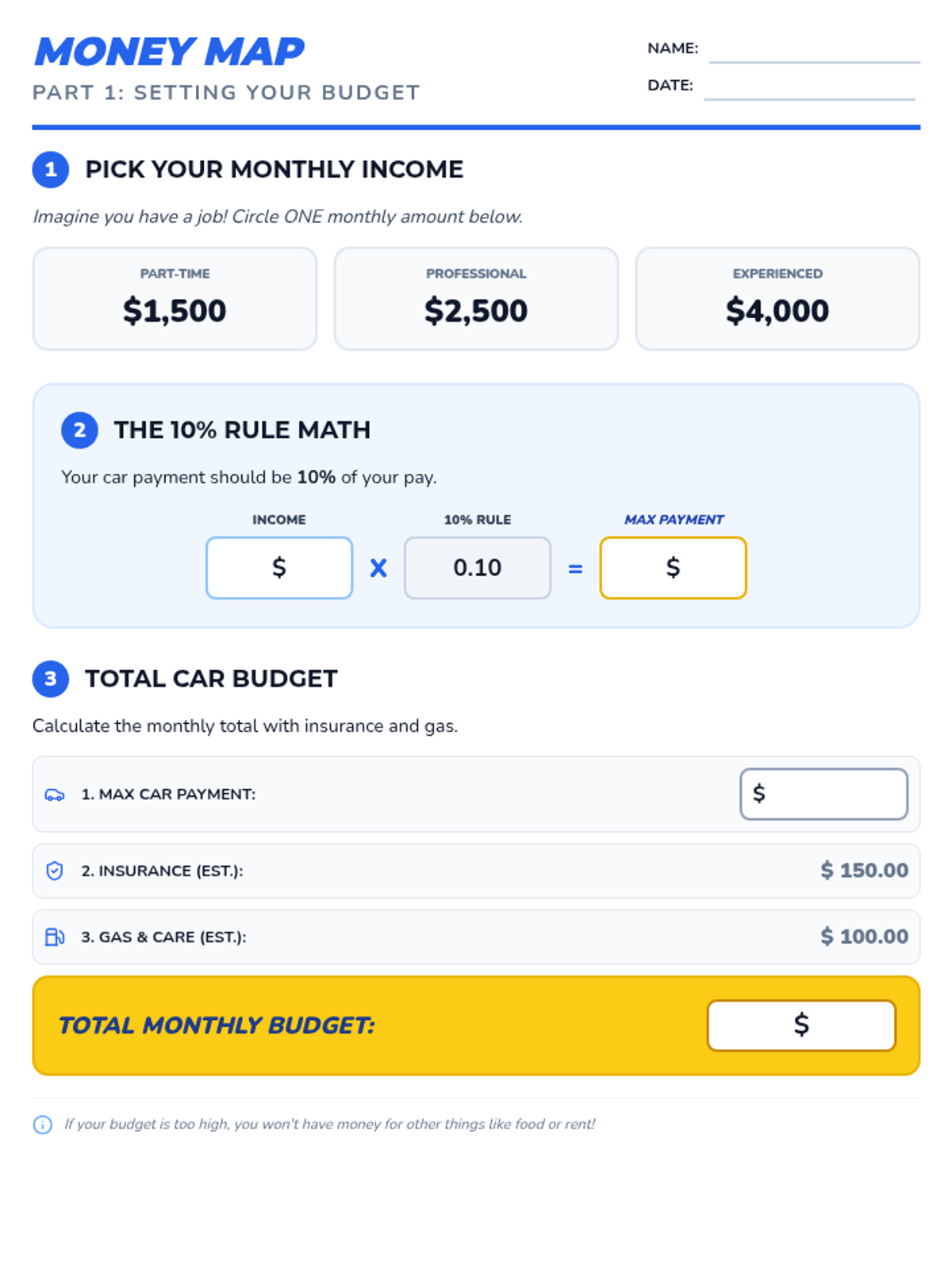
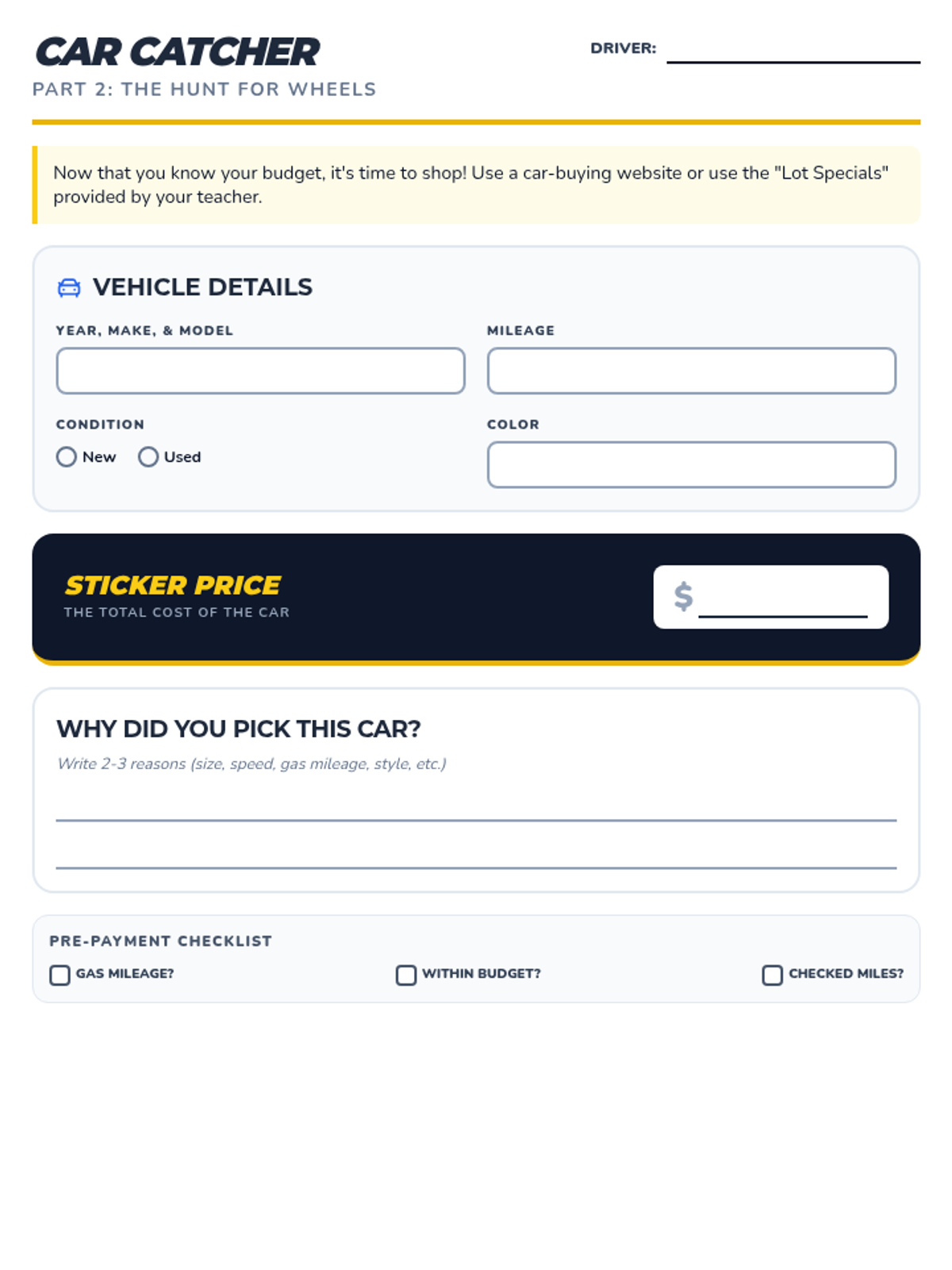
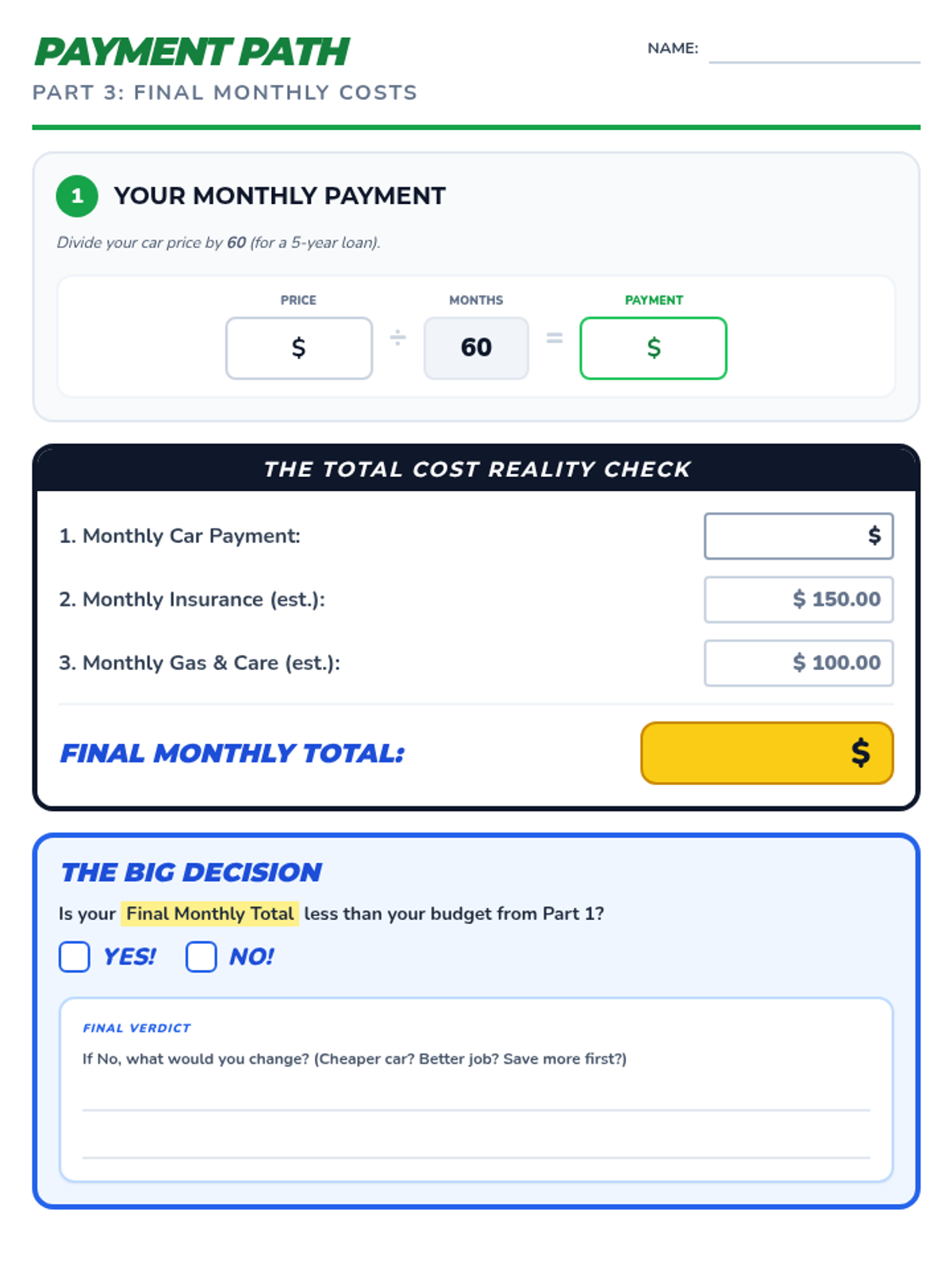
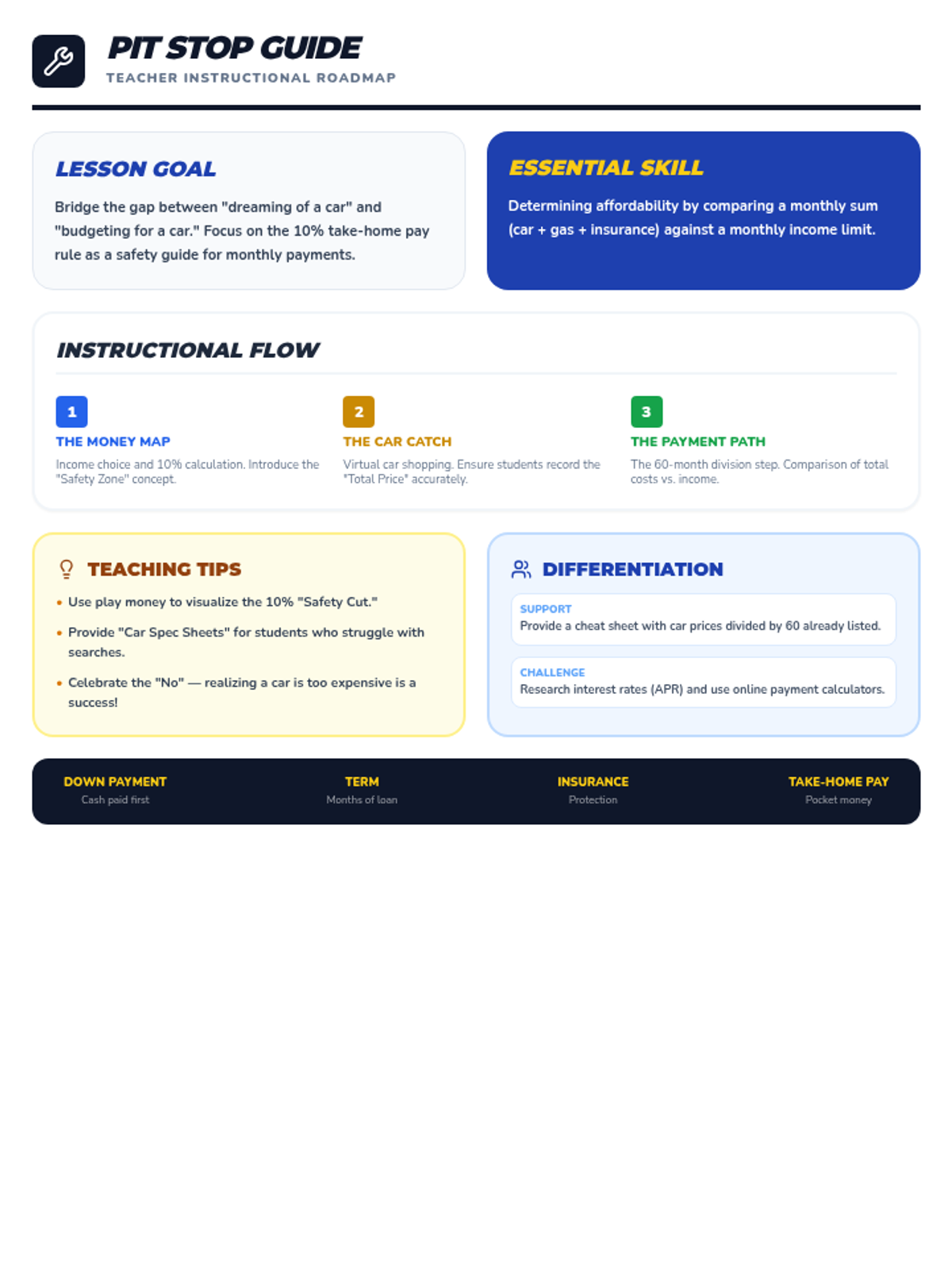
A practical, step-by-step project for students to learn how to budget for and select a vehicle within their monthly means.
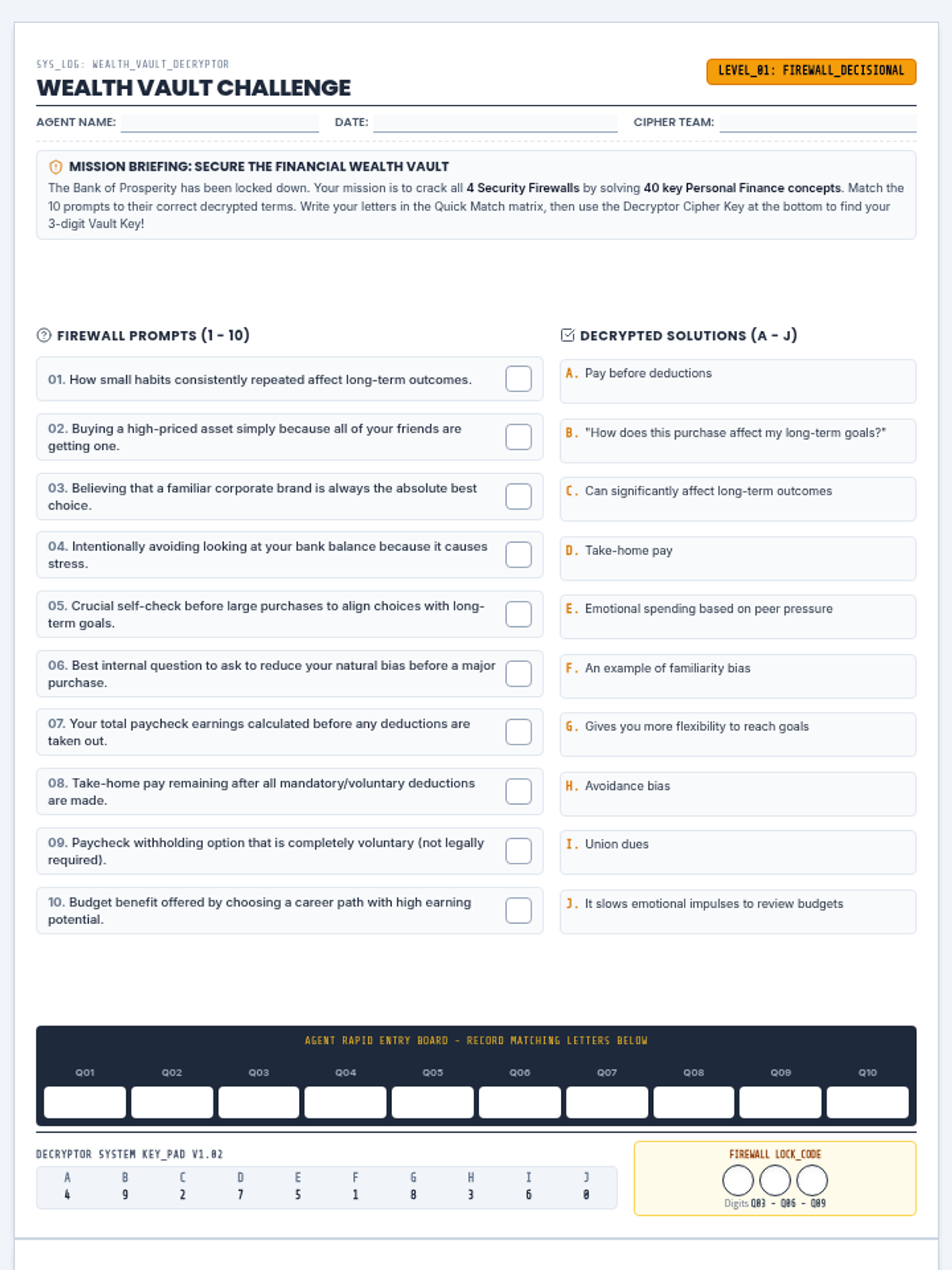
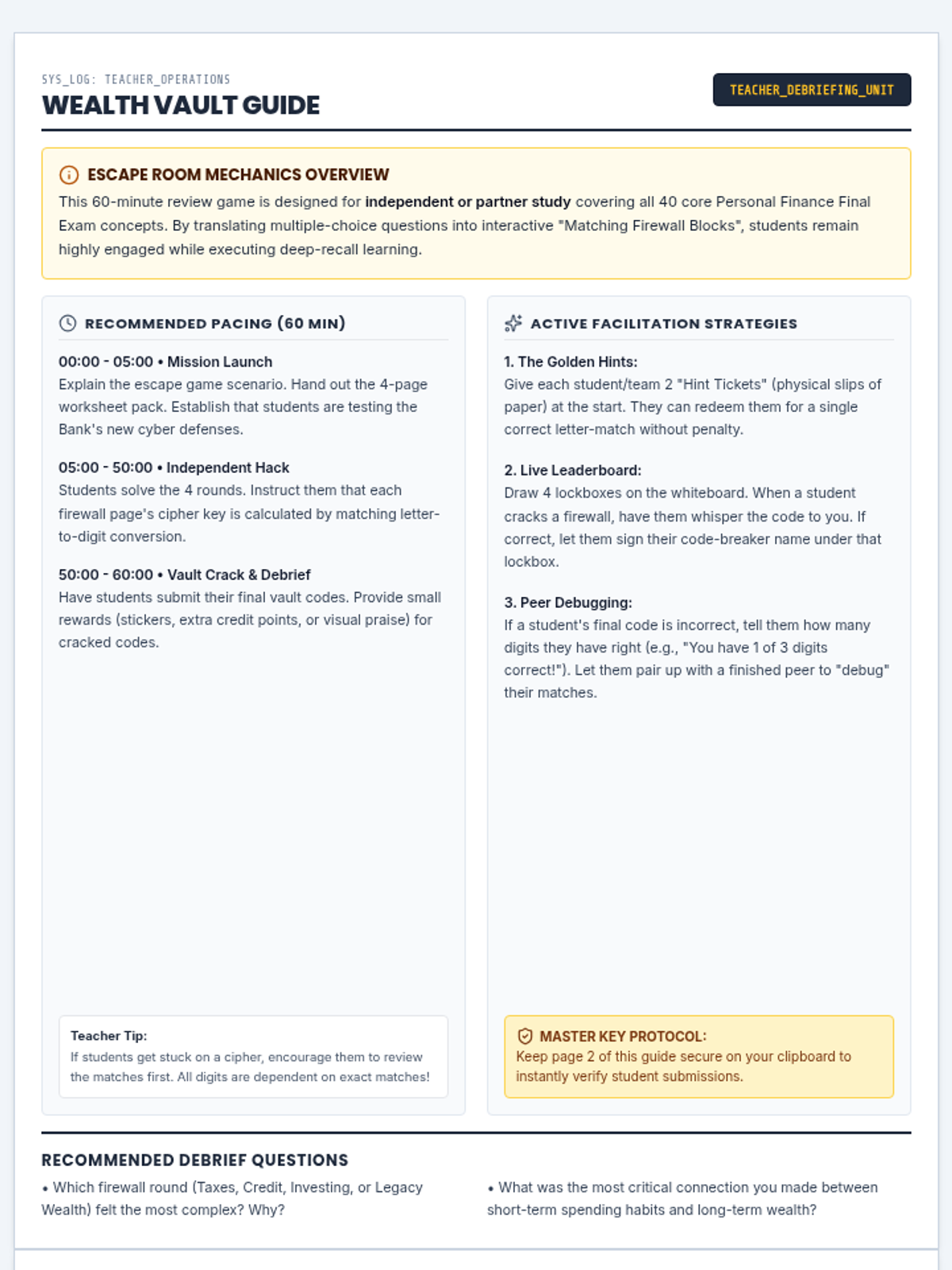
An immersive escape room style review game covering all 40 key concepts from the Personal Finance Final Exam. Students solve 4 thematic codebreaking rounds independently to test their financial knowledge.
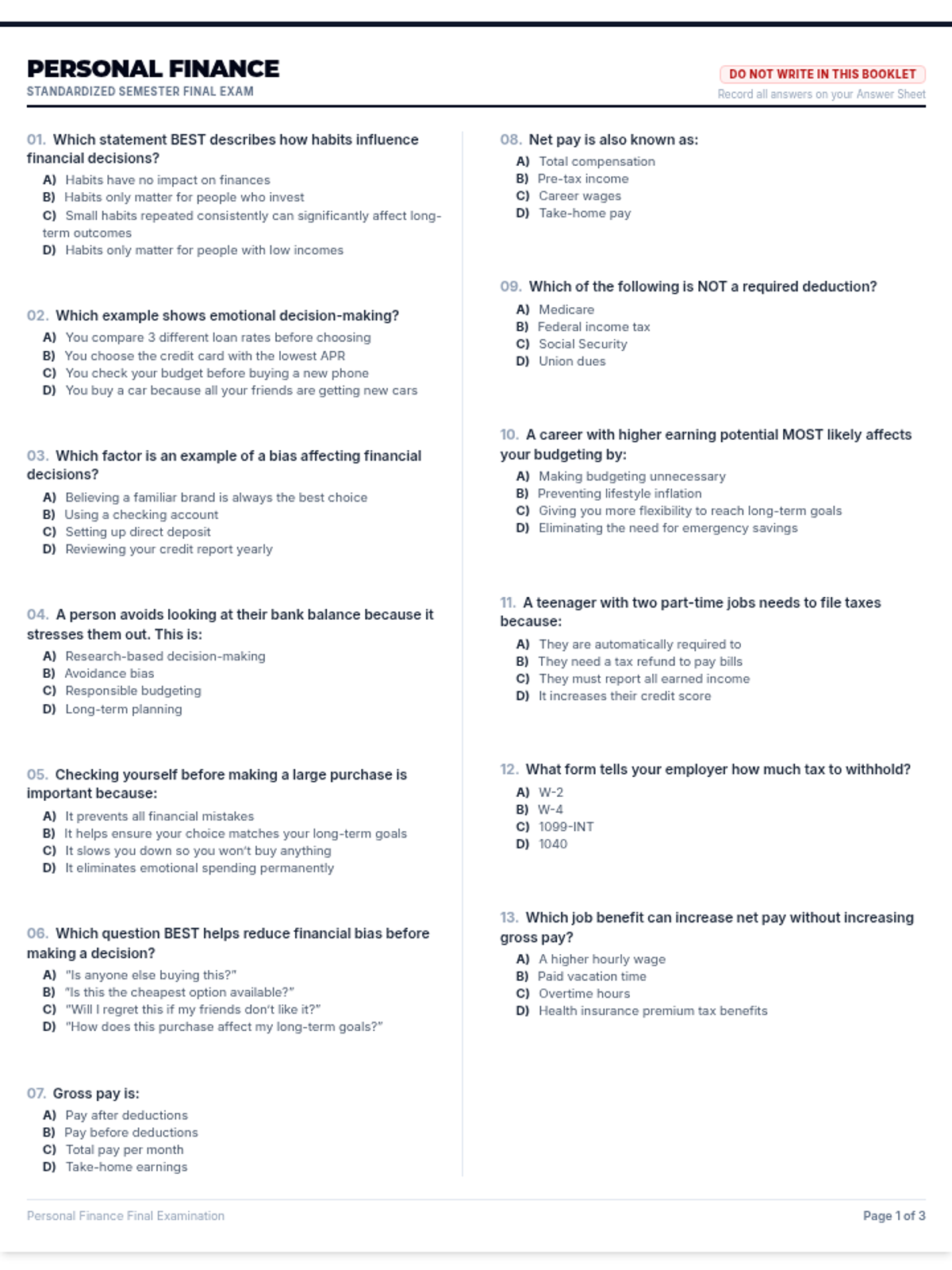
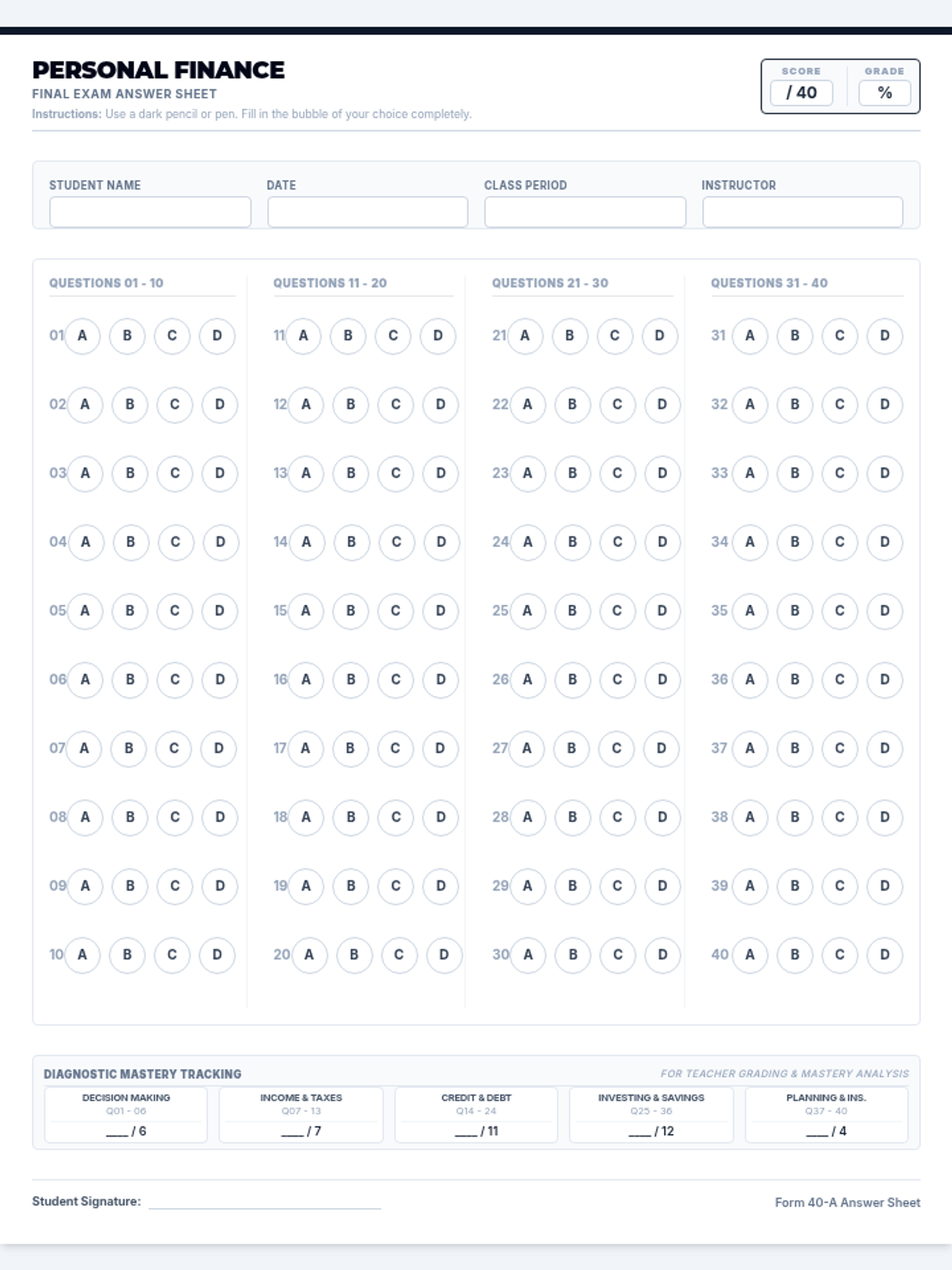
A complete Personal Finance final exam set, featuring a highly optimized, compact 3-page exam booklet and a separate 1-page scantron-style answer sheet. This setup dramatically reduces paper consumption, allows the booklets to be reused, and simplifies grading for testing centers or makeup exams.
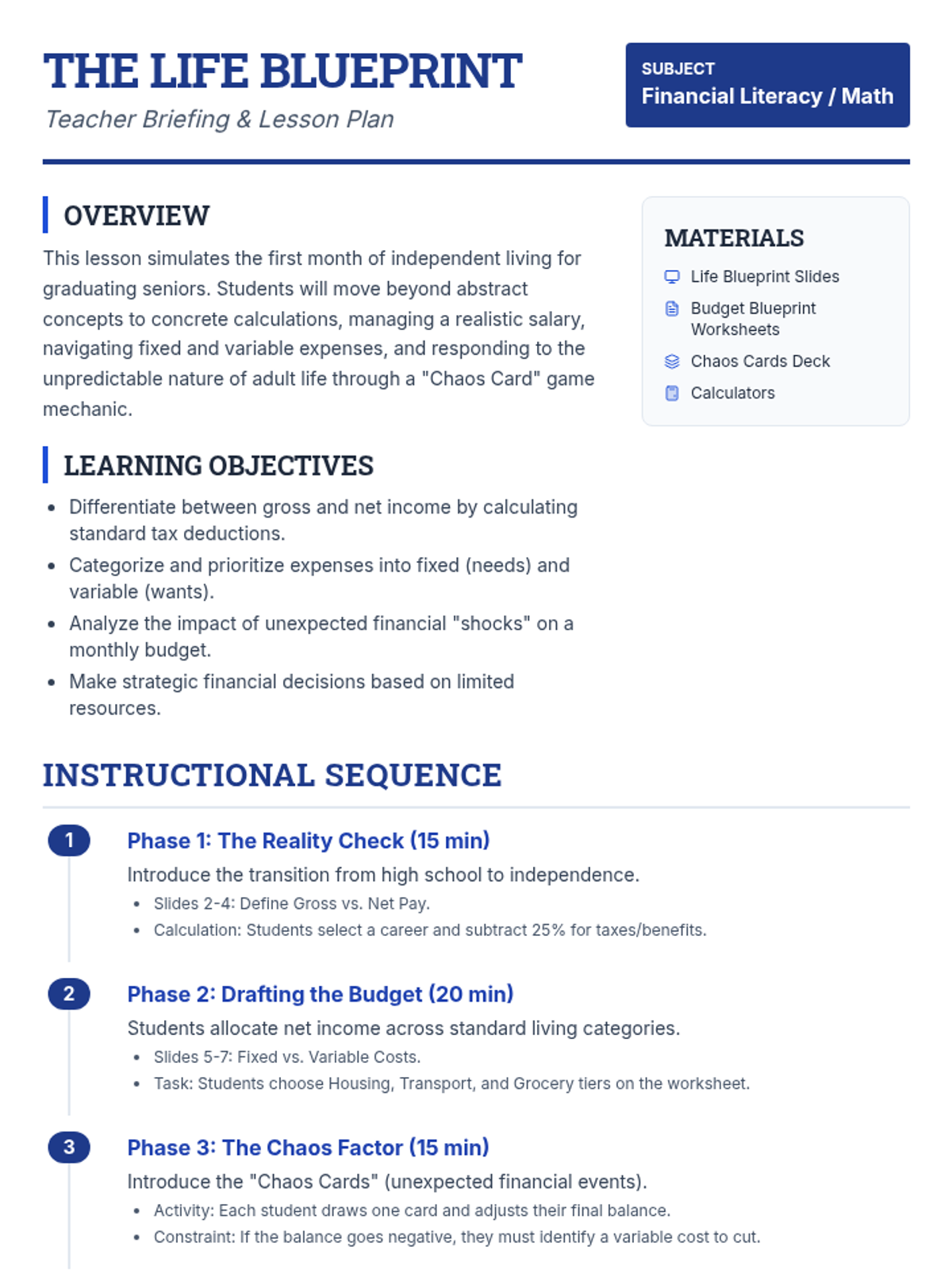
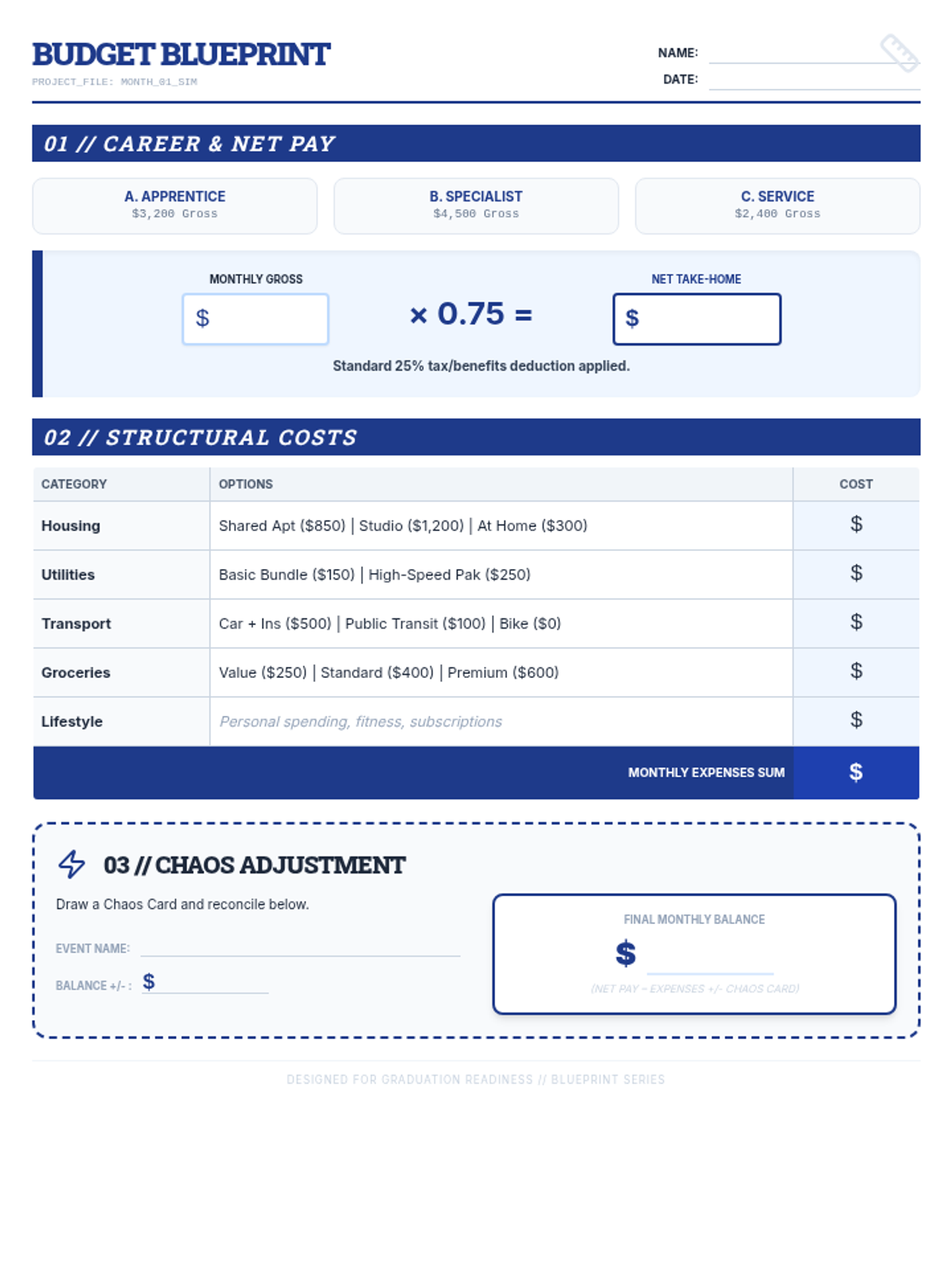
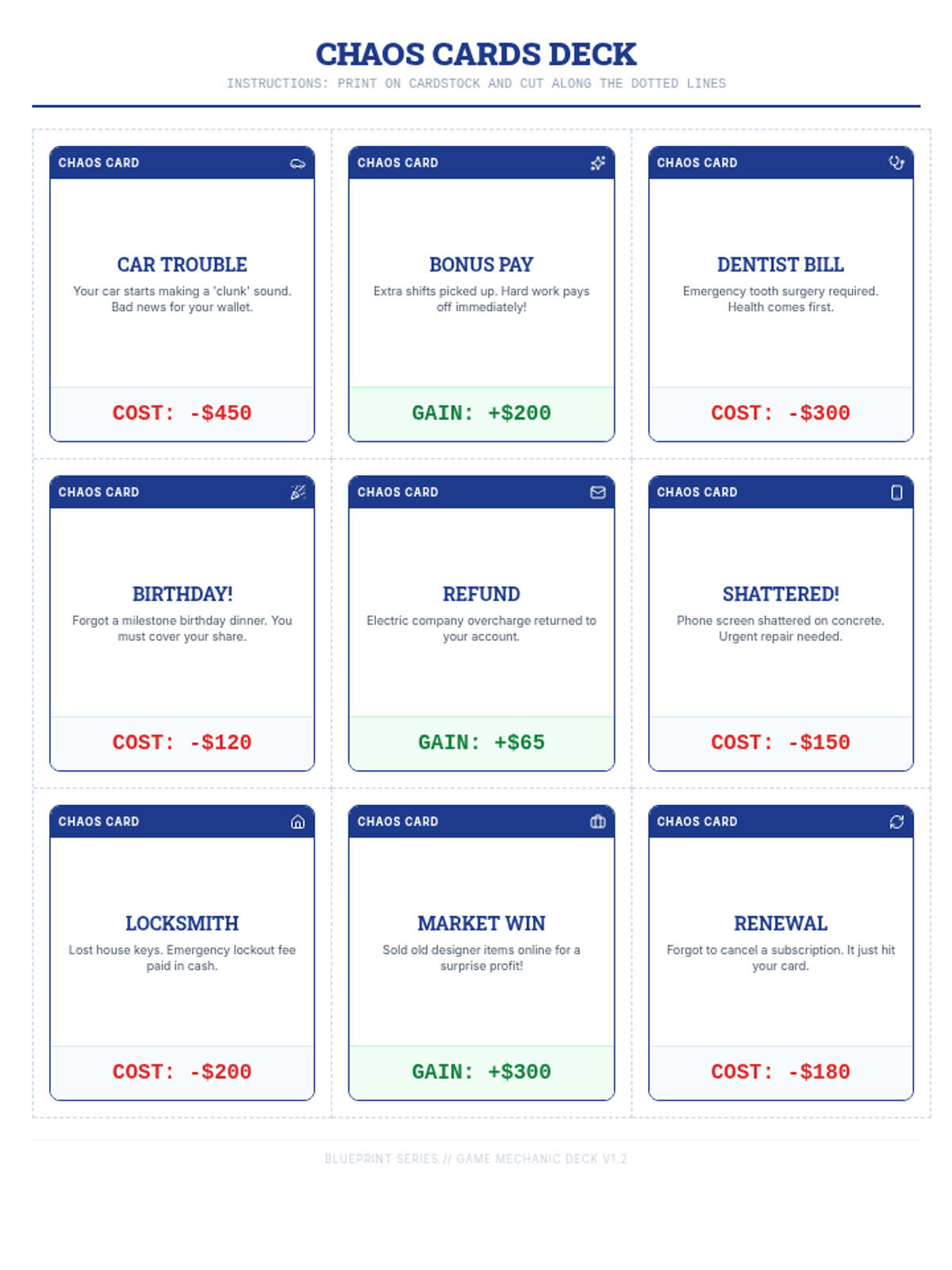
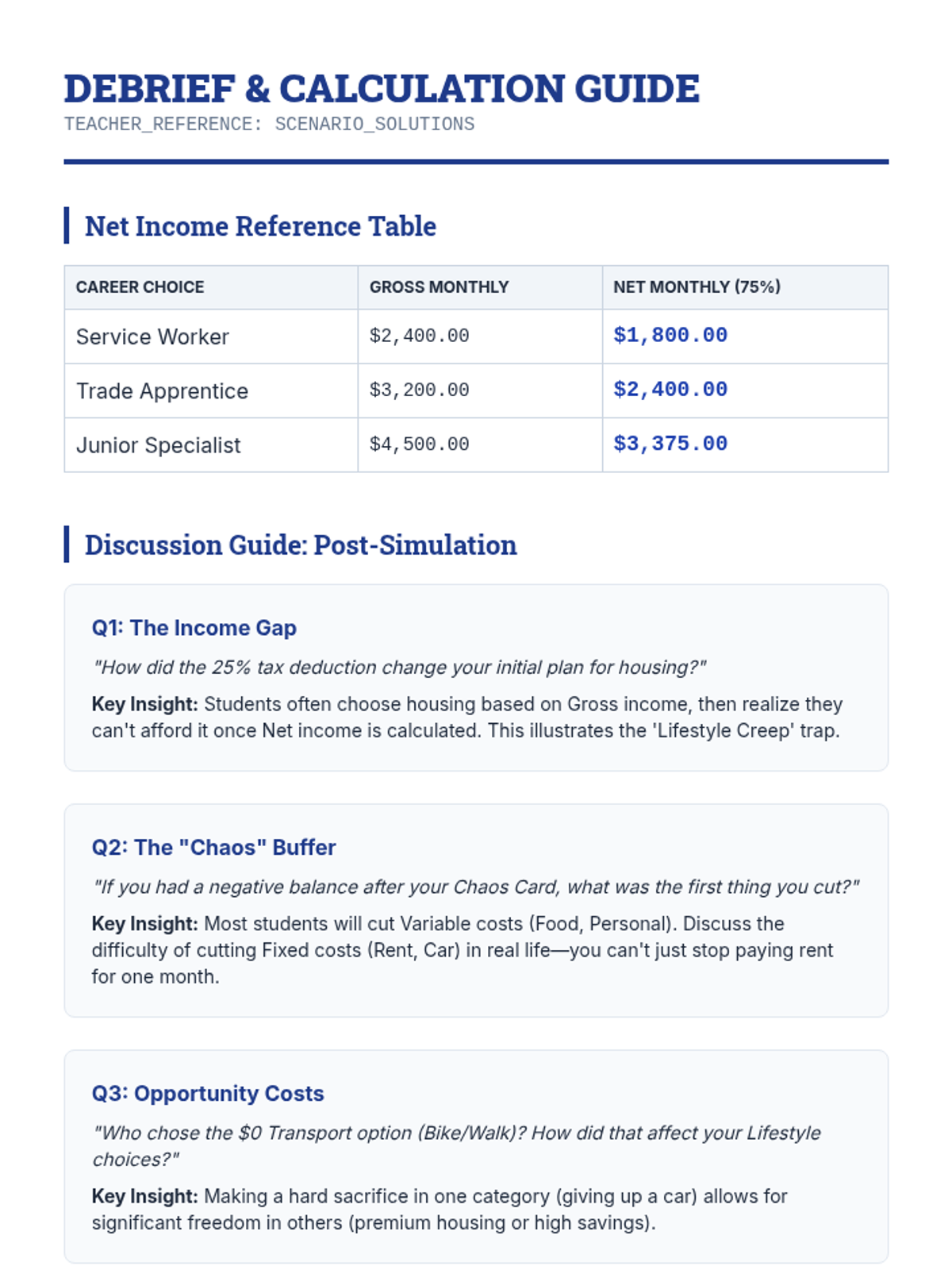
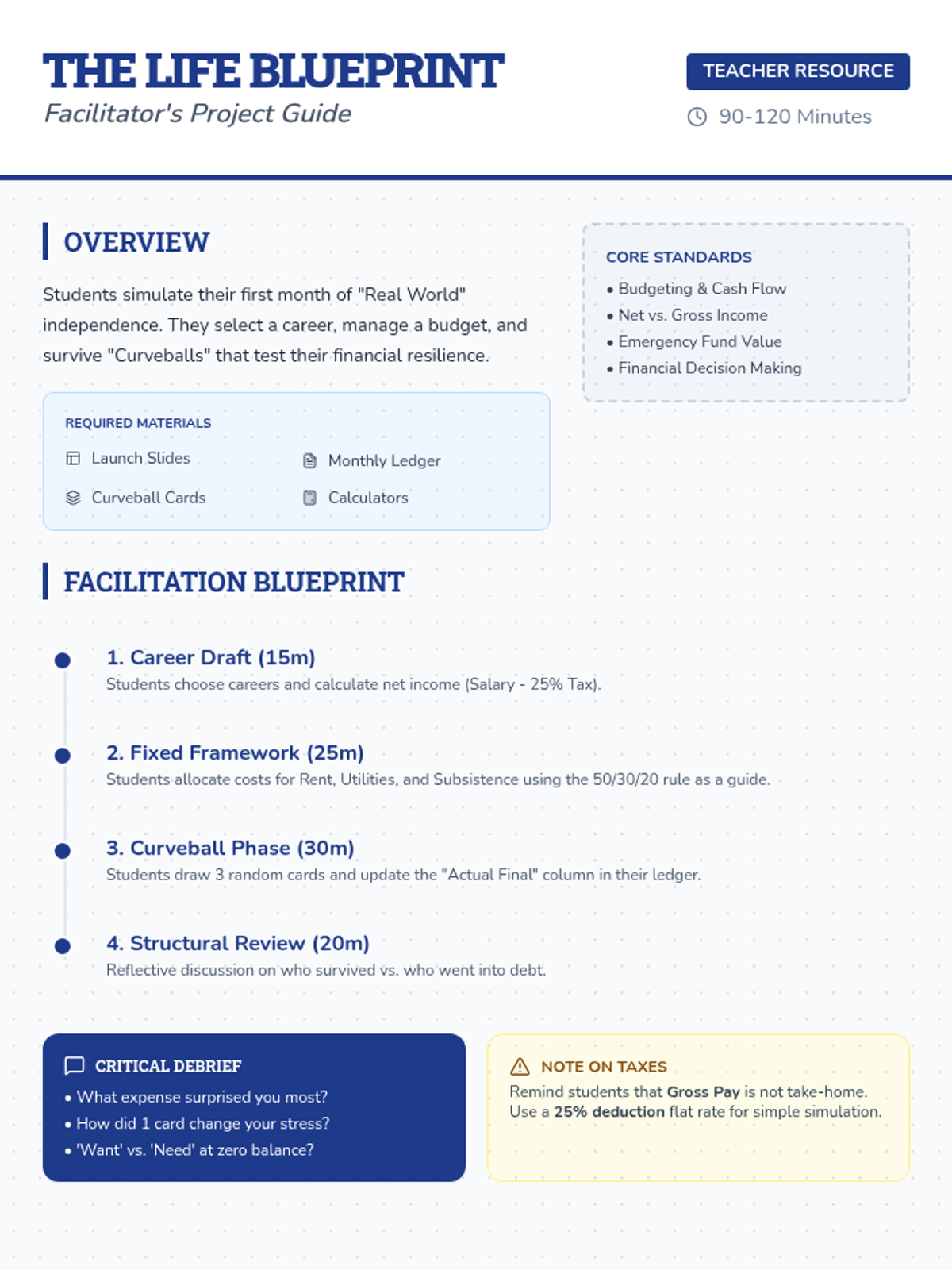
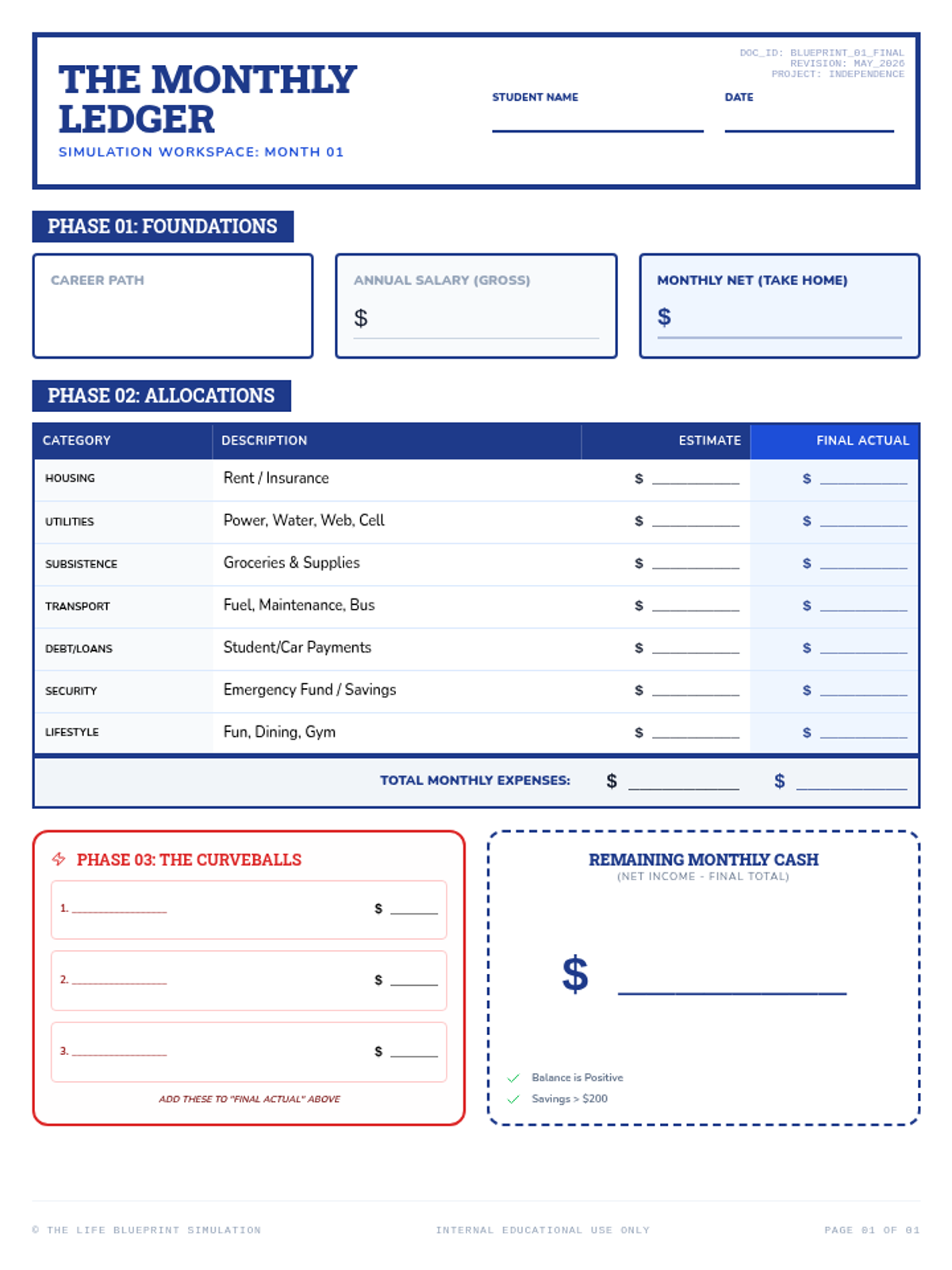
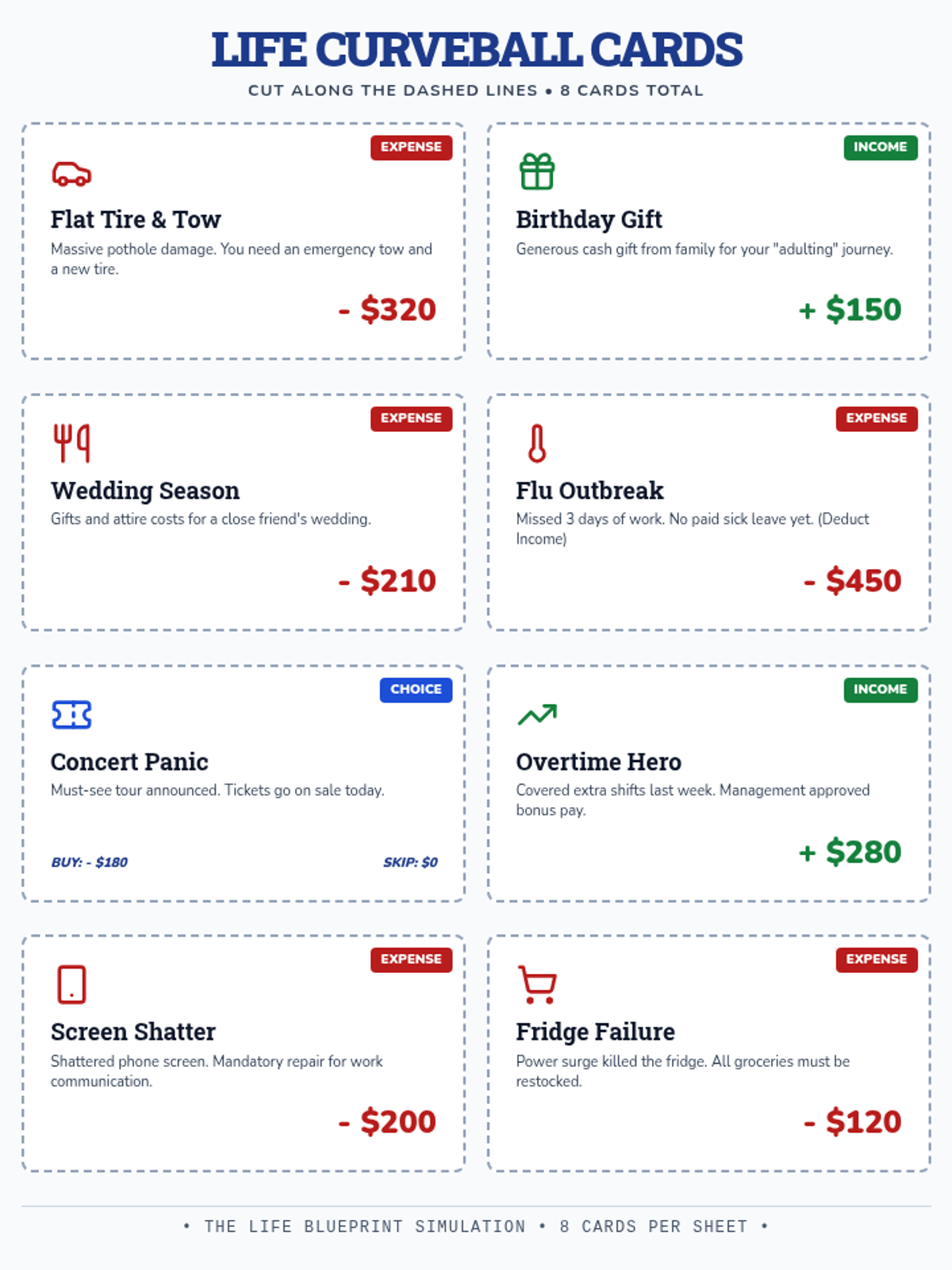
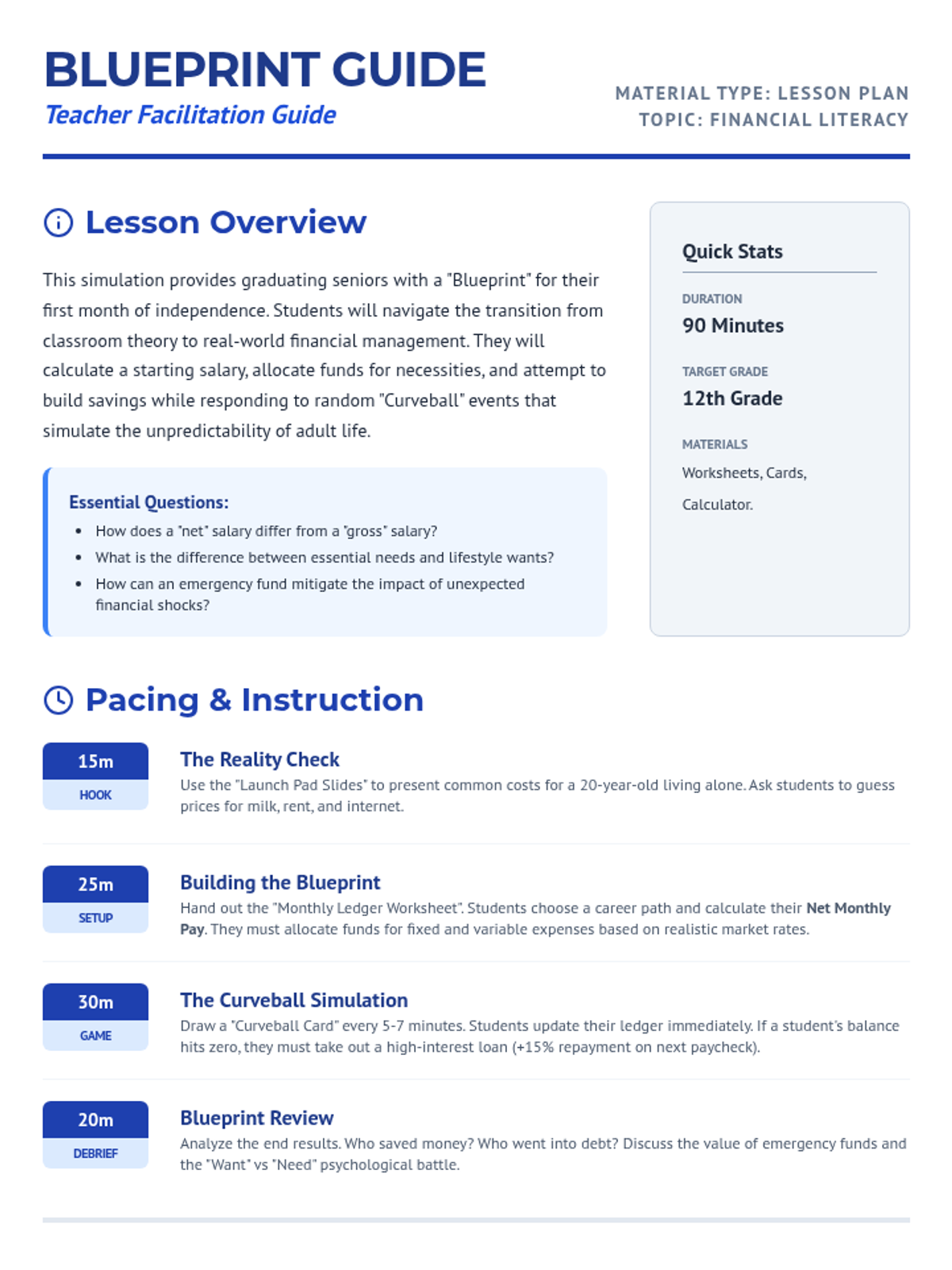
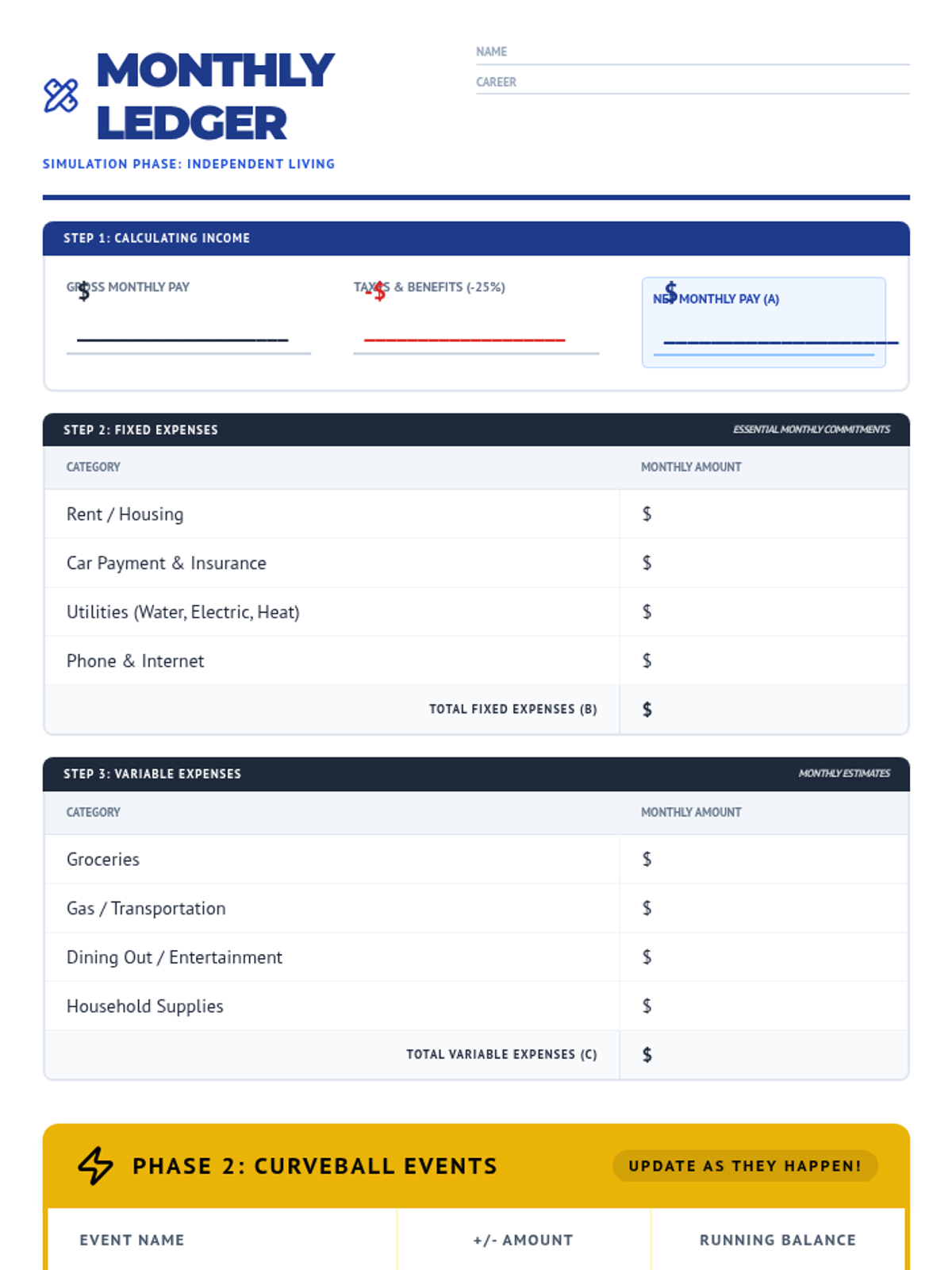
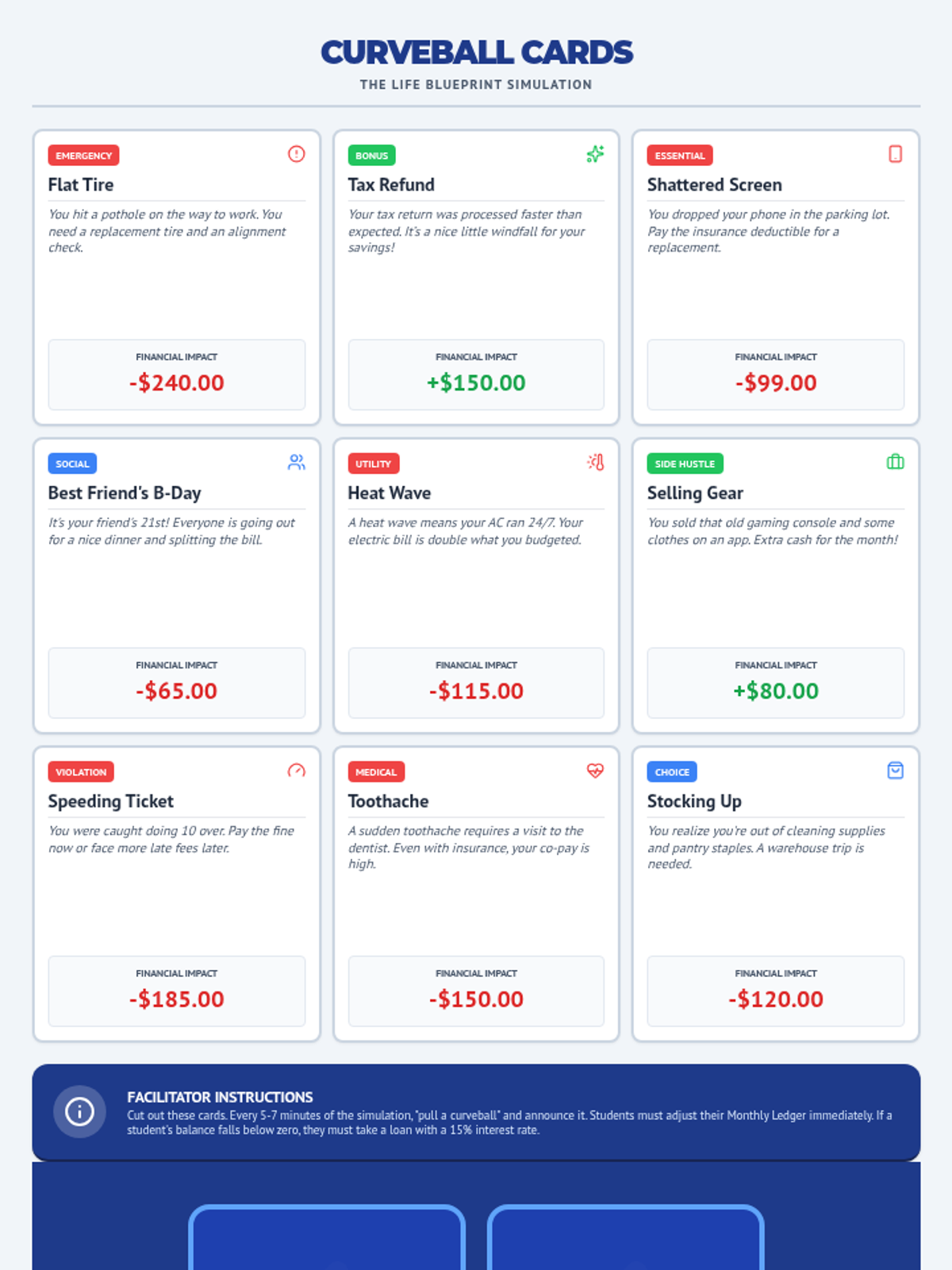
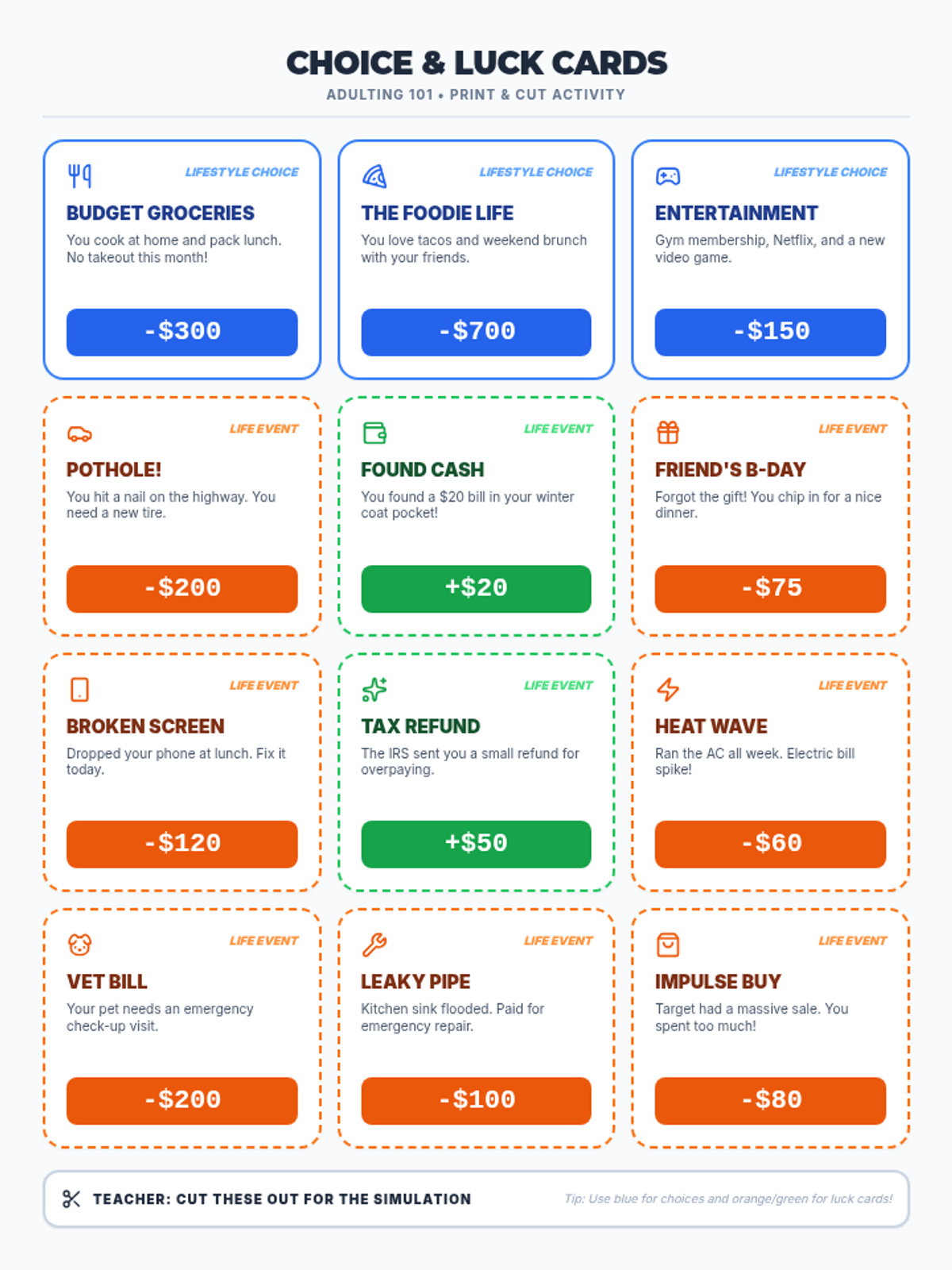
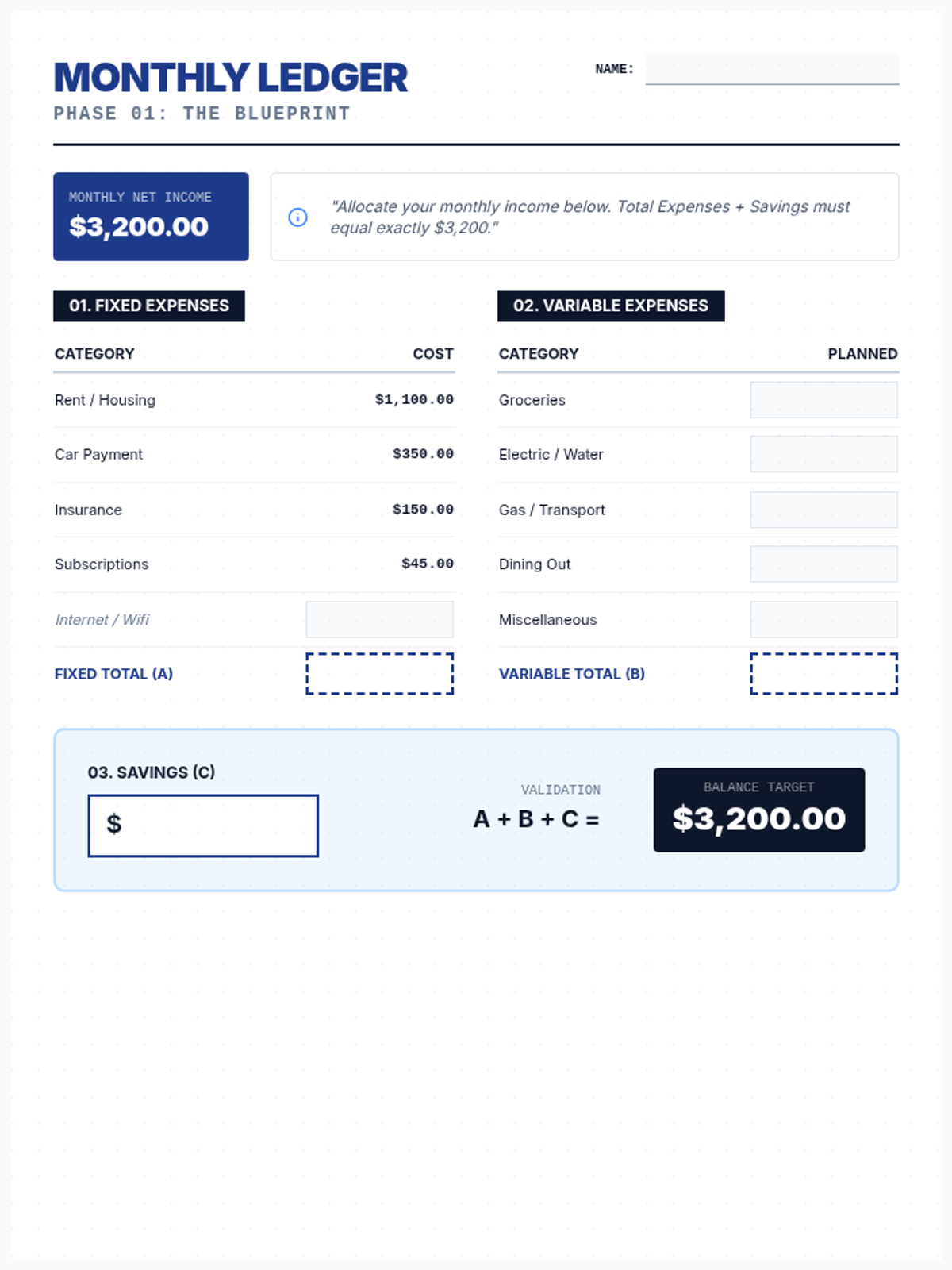
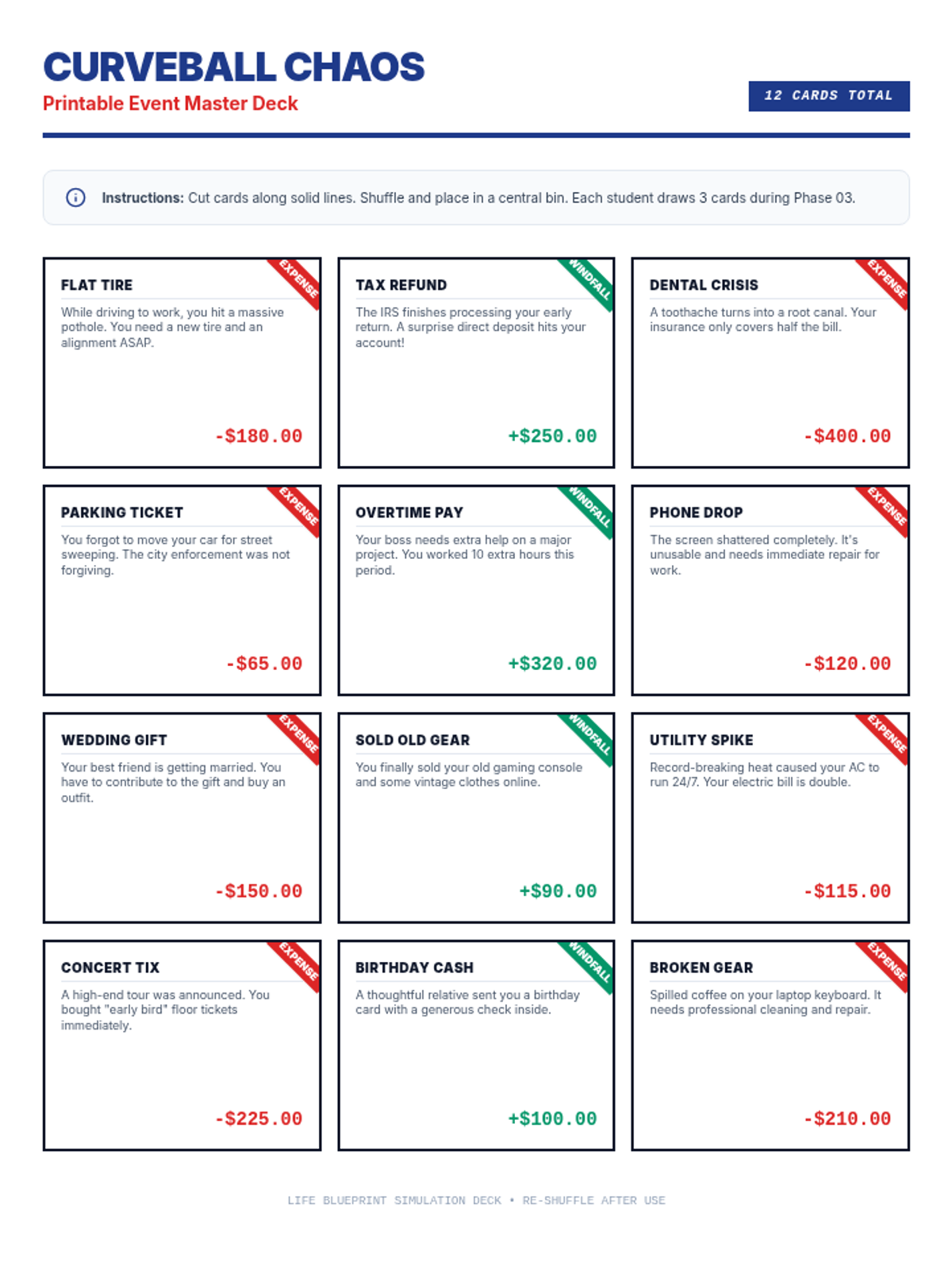
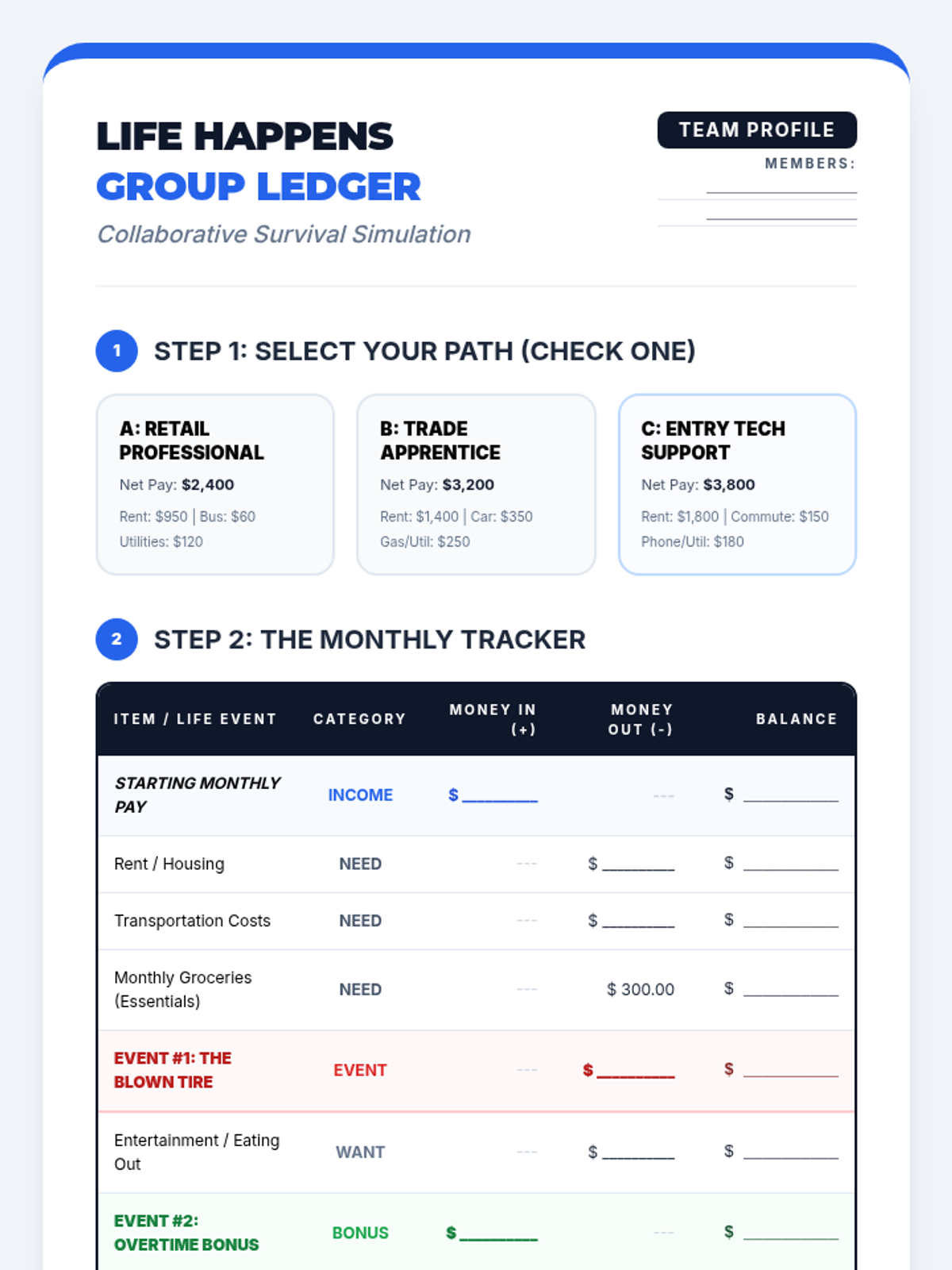
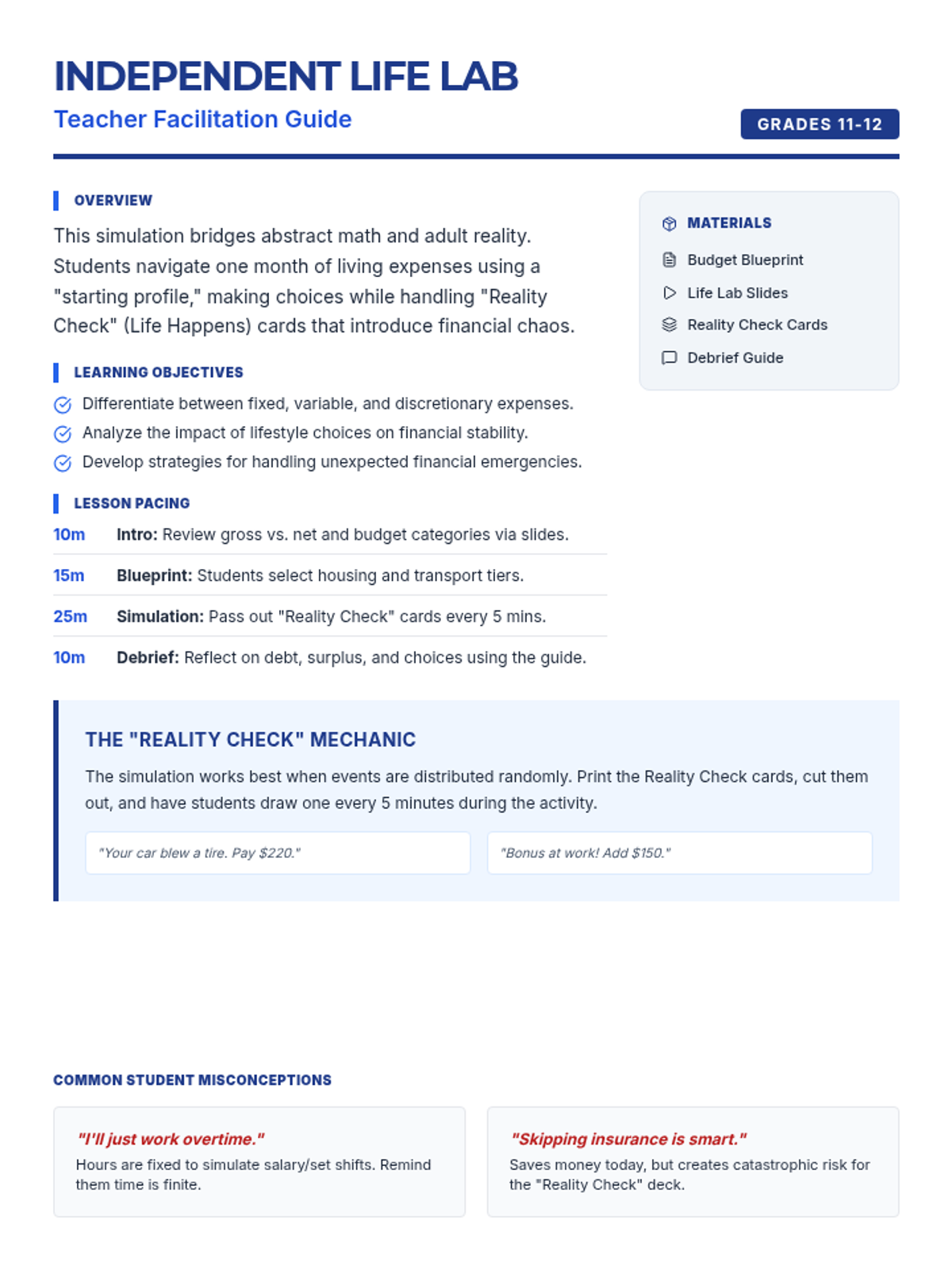
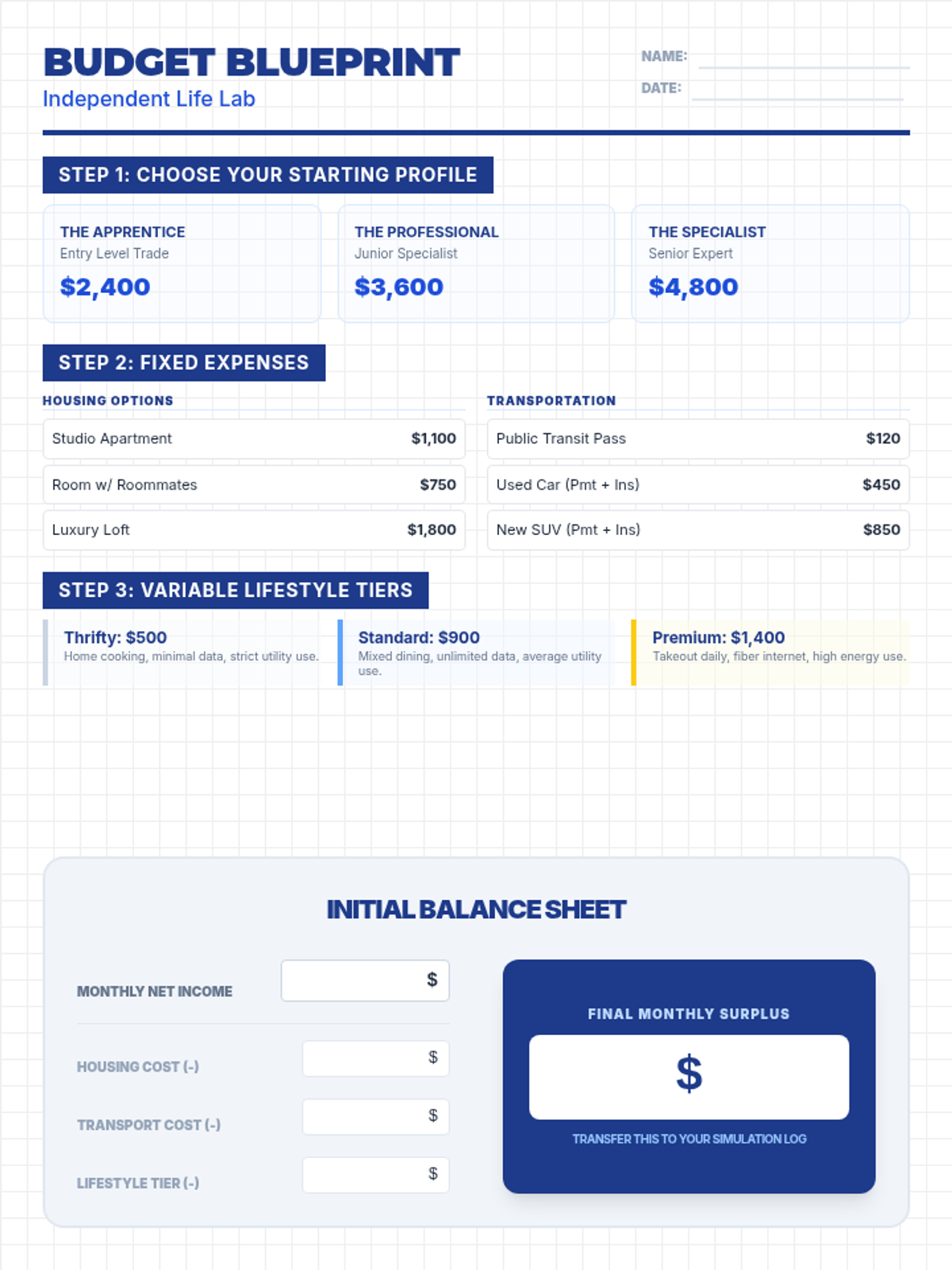
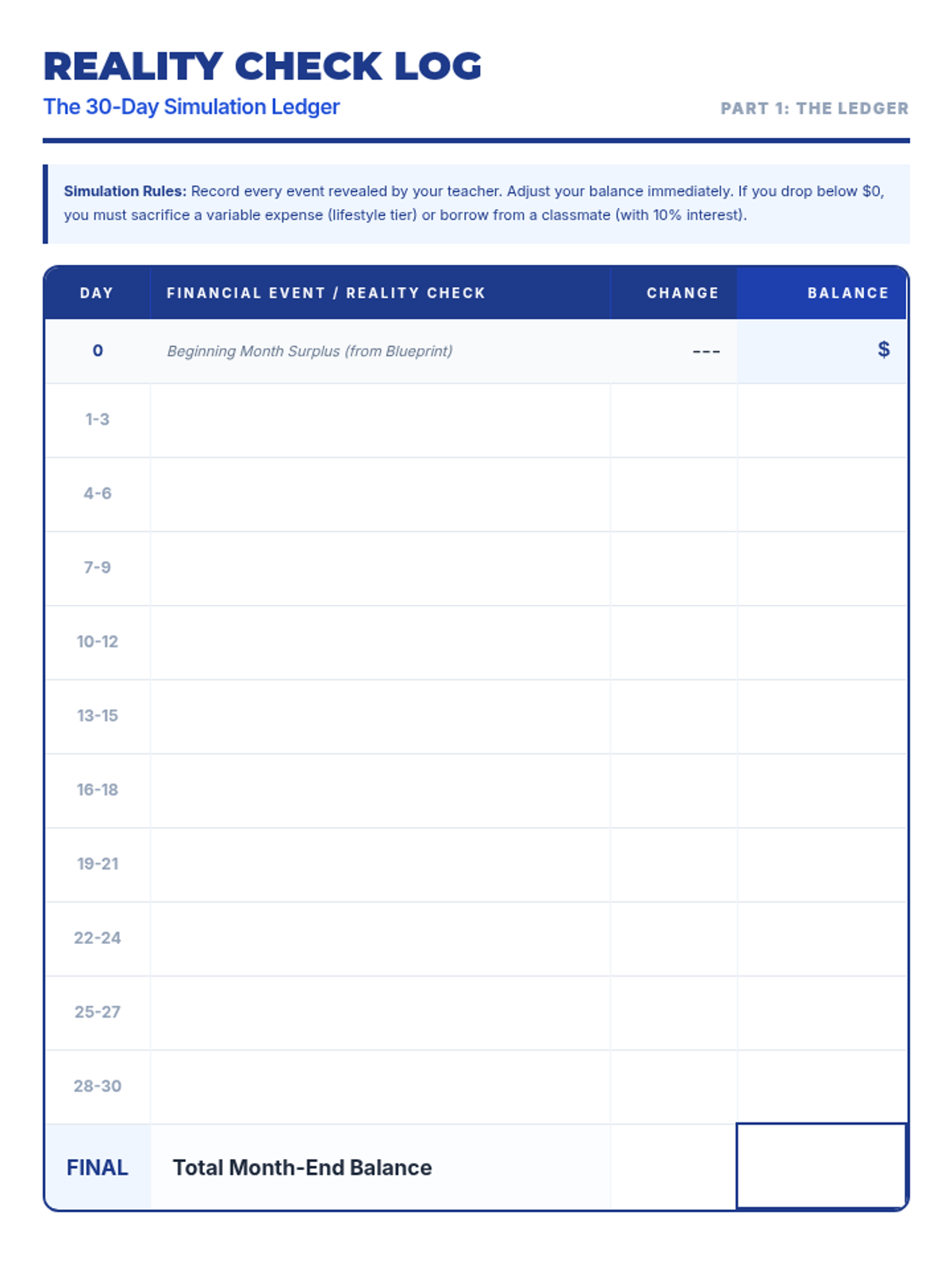
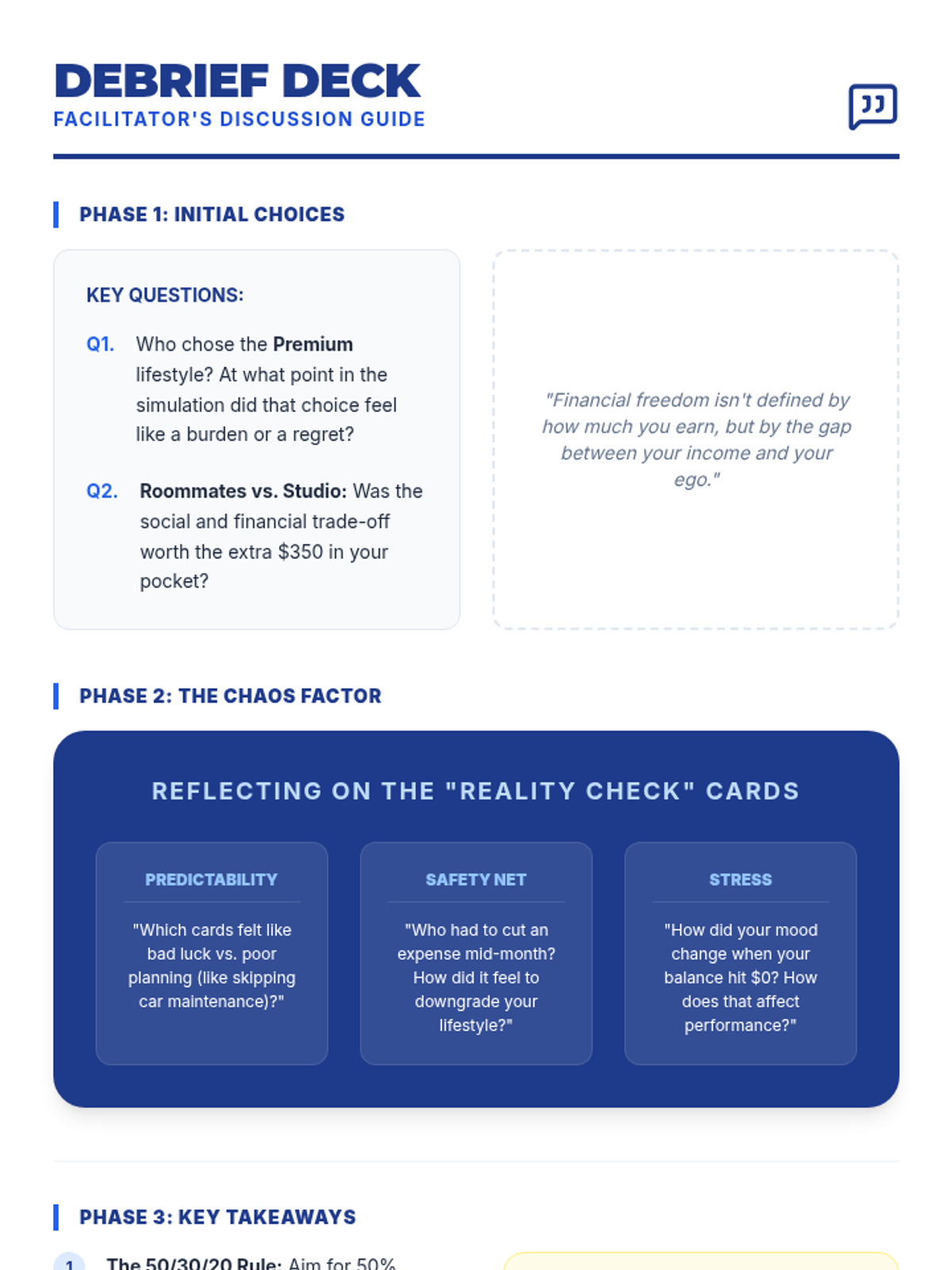
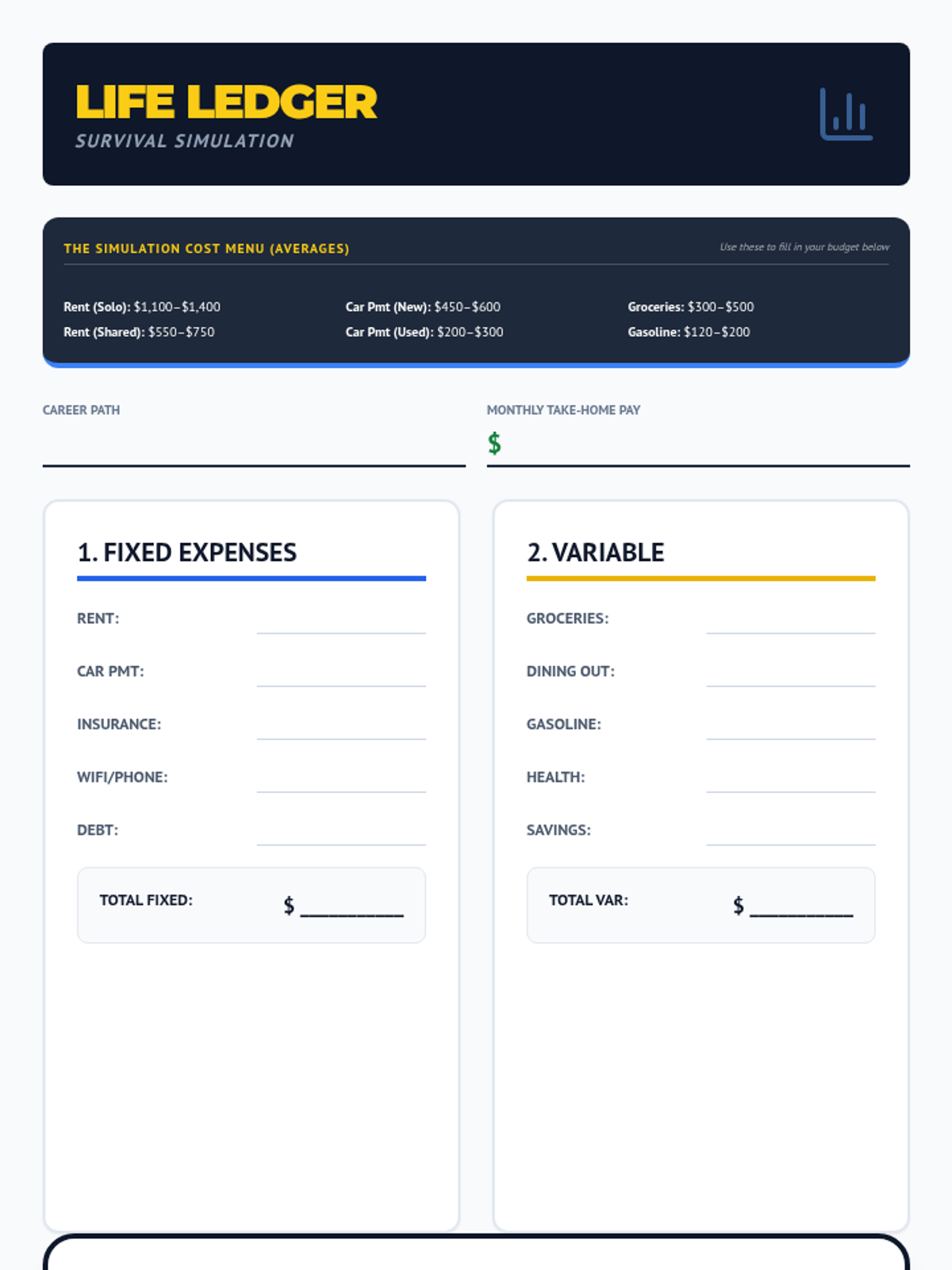
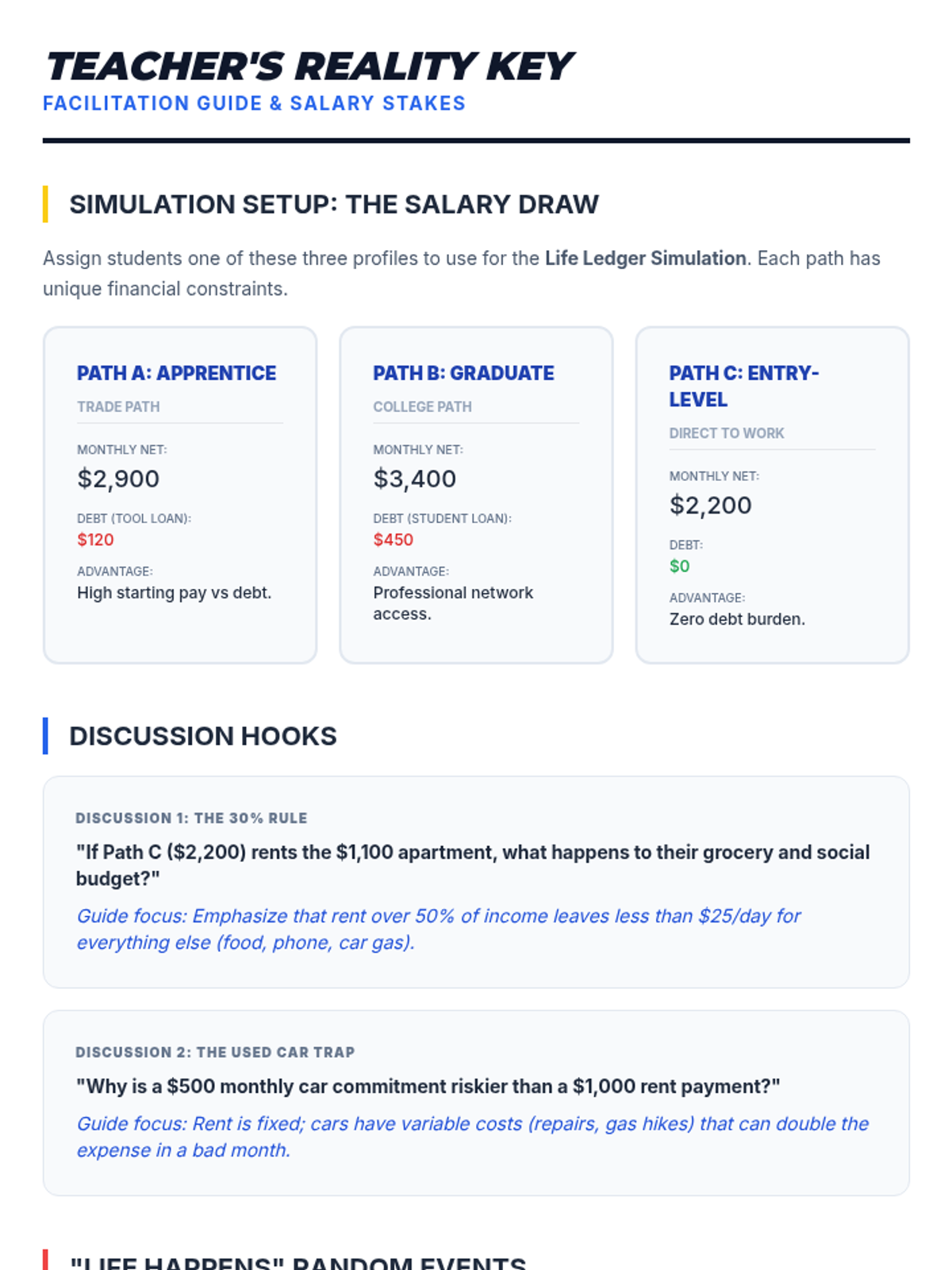
A comprehensive financial literacy simulation where students manage their first month of independent living. Students calculate net income, allocate funds for essentials, and adapt to unexpected financial 'shocks' using a realistic budgeting framework.
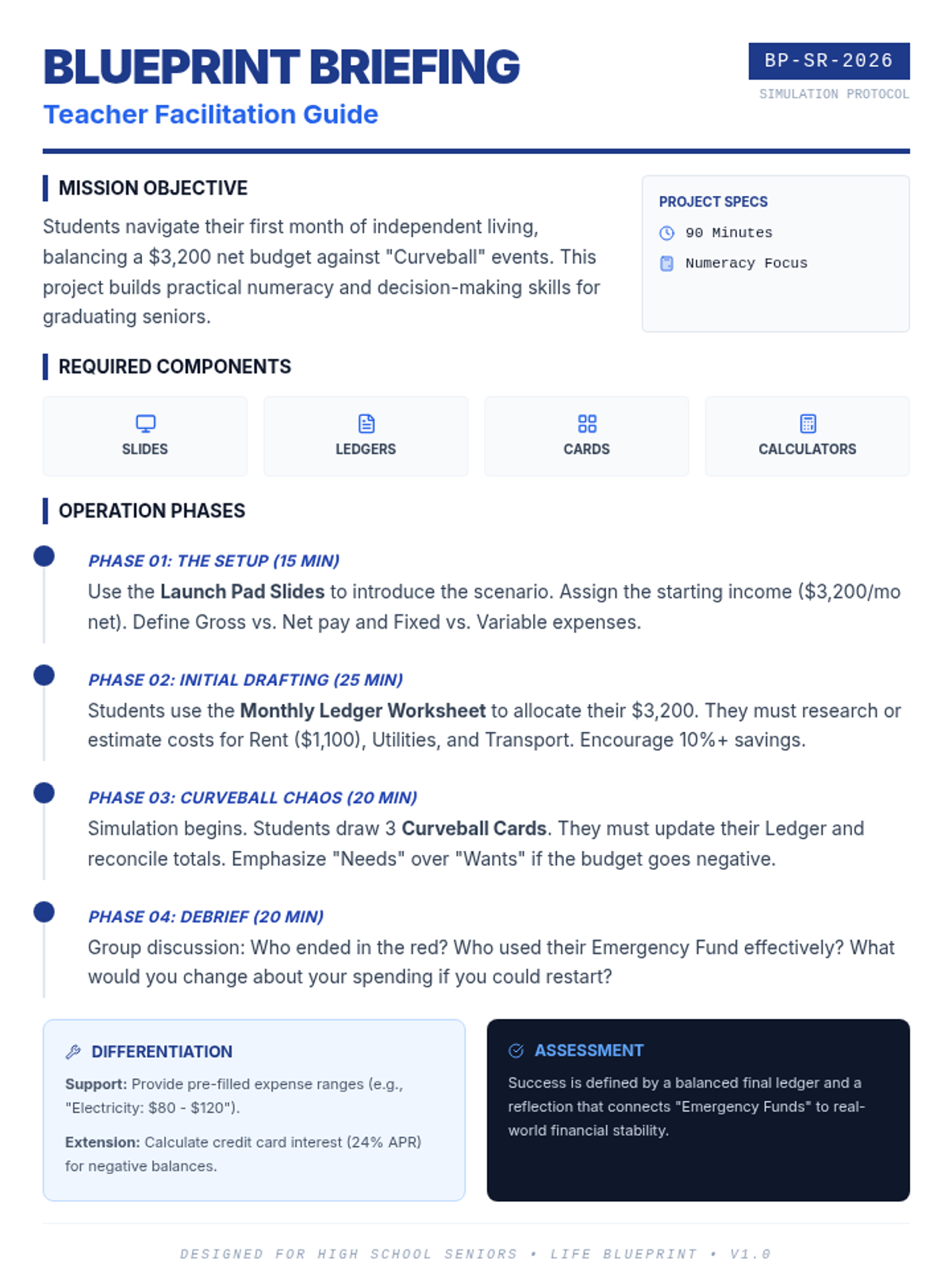
Students simulate their first month of independent living by managing a realistic budget and navigating unexpected life events. This project builds practical numeracy and decision-making skills specifically tailored for graduating seniors.
A comprehensive simulation where students manage their first month of independent living, covering budgeting basics and handling unexpected financial curveballs.
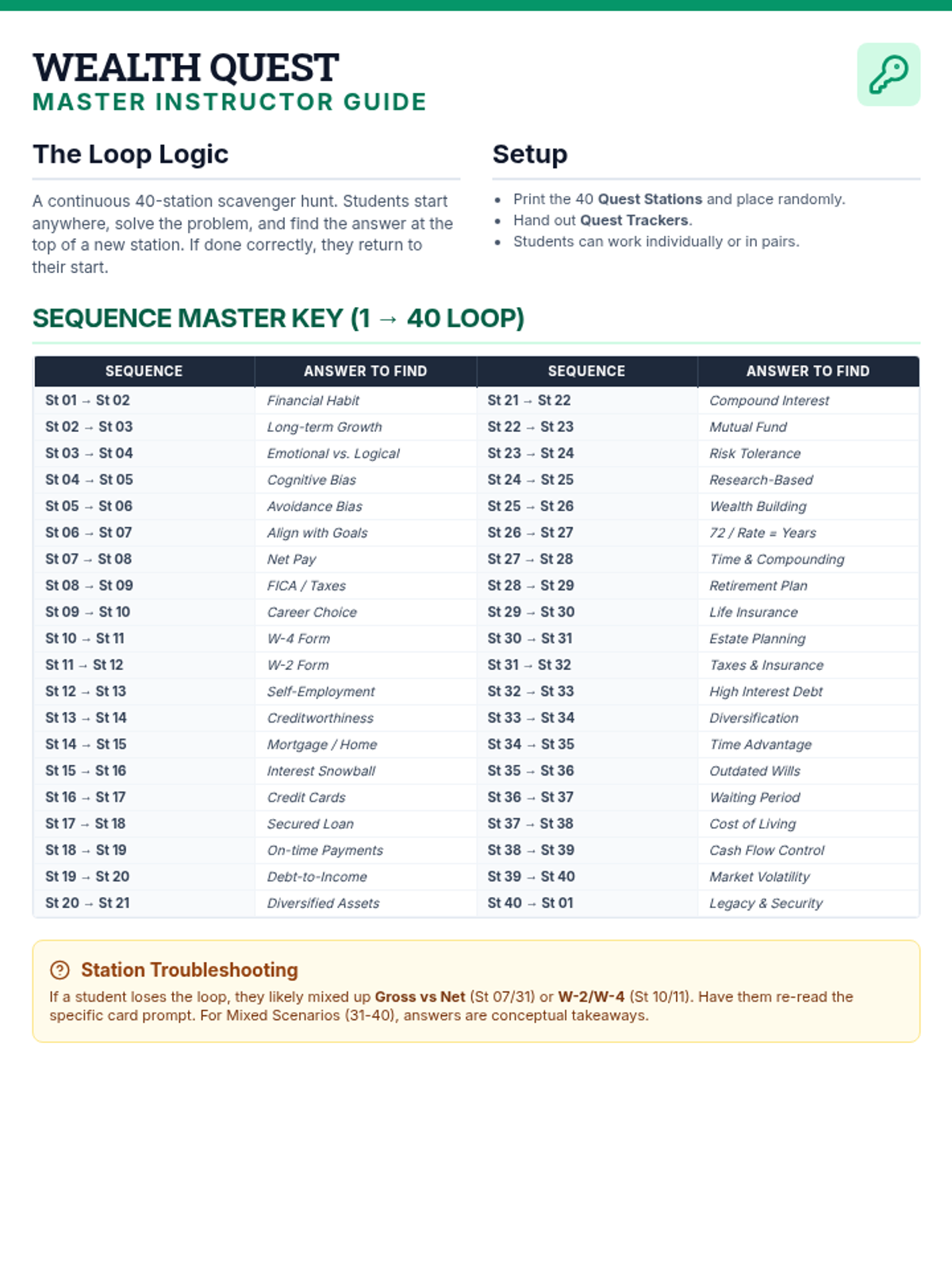
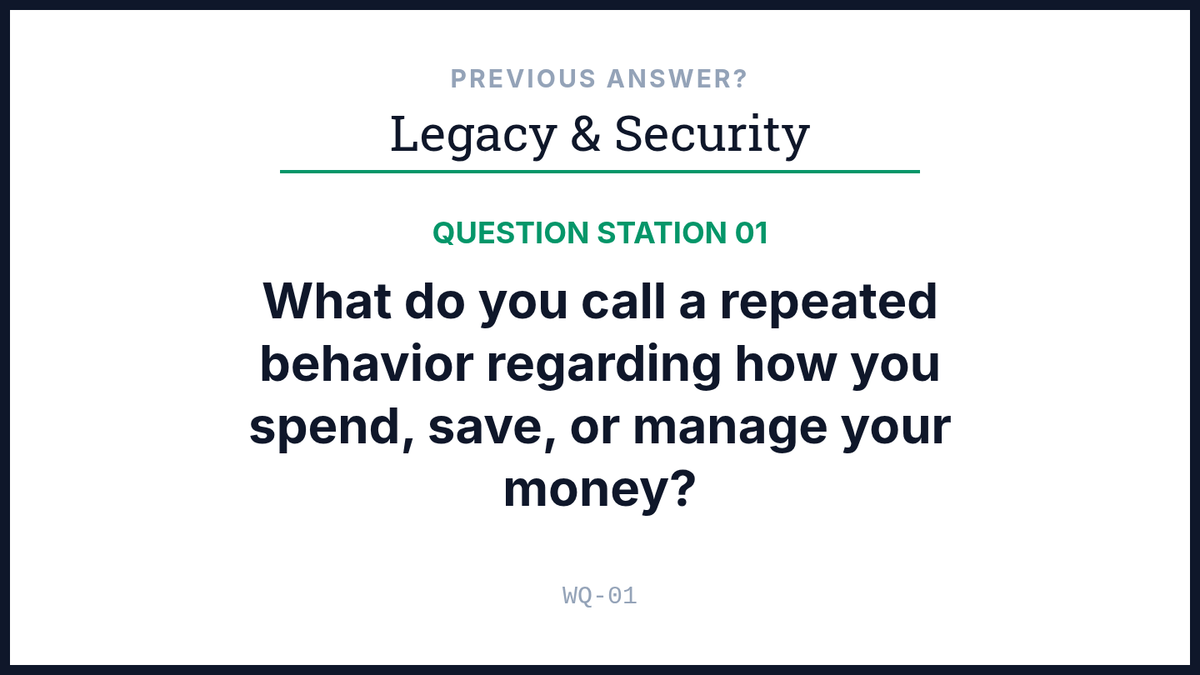
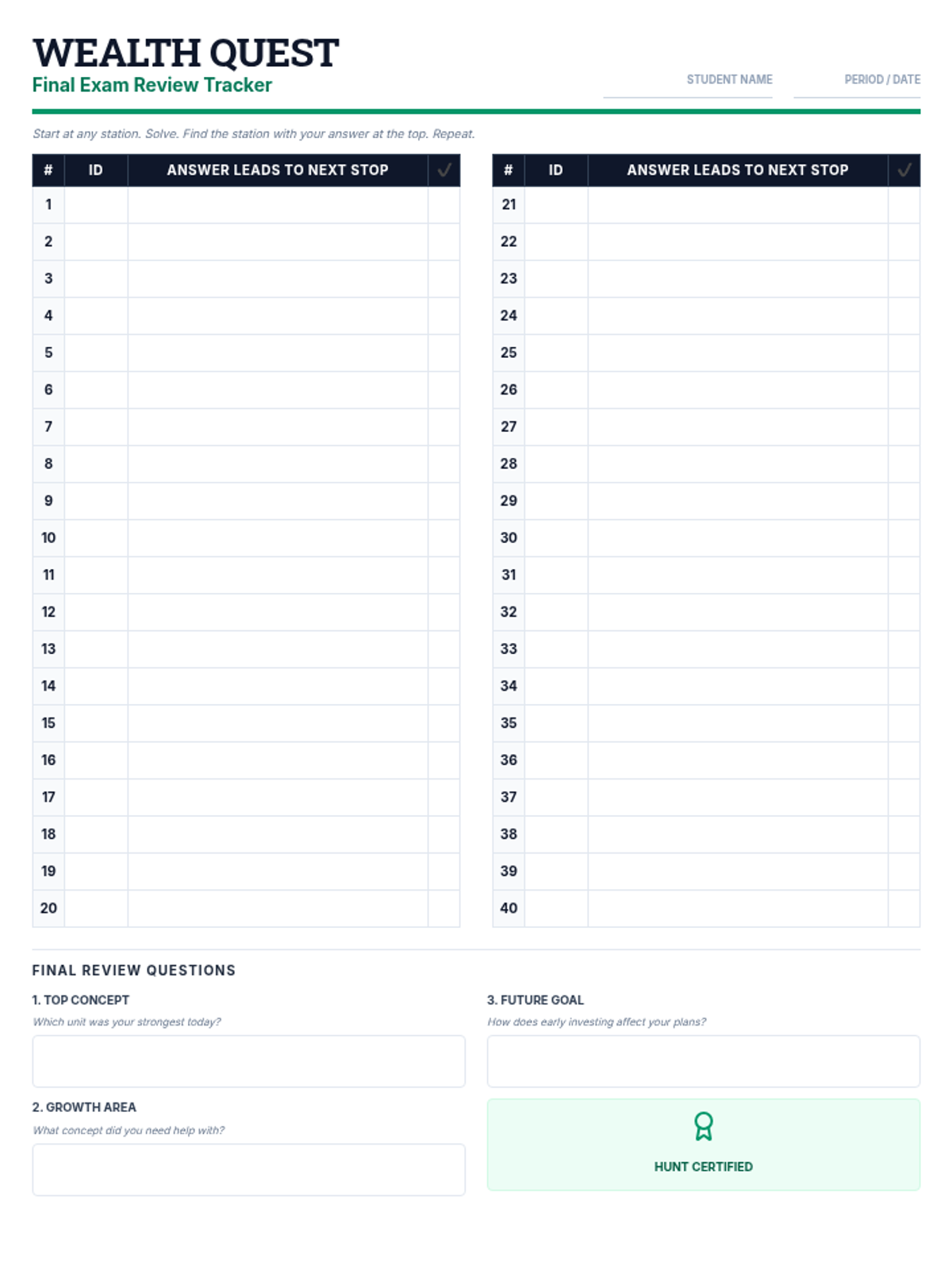
A comprehensive, multi-period scavenger hunt review for Personal Finance students. This lesson covers financial habits, income, credit, investing, and long-term planning through an active, self-correcting loop of 40 challenge stations.
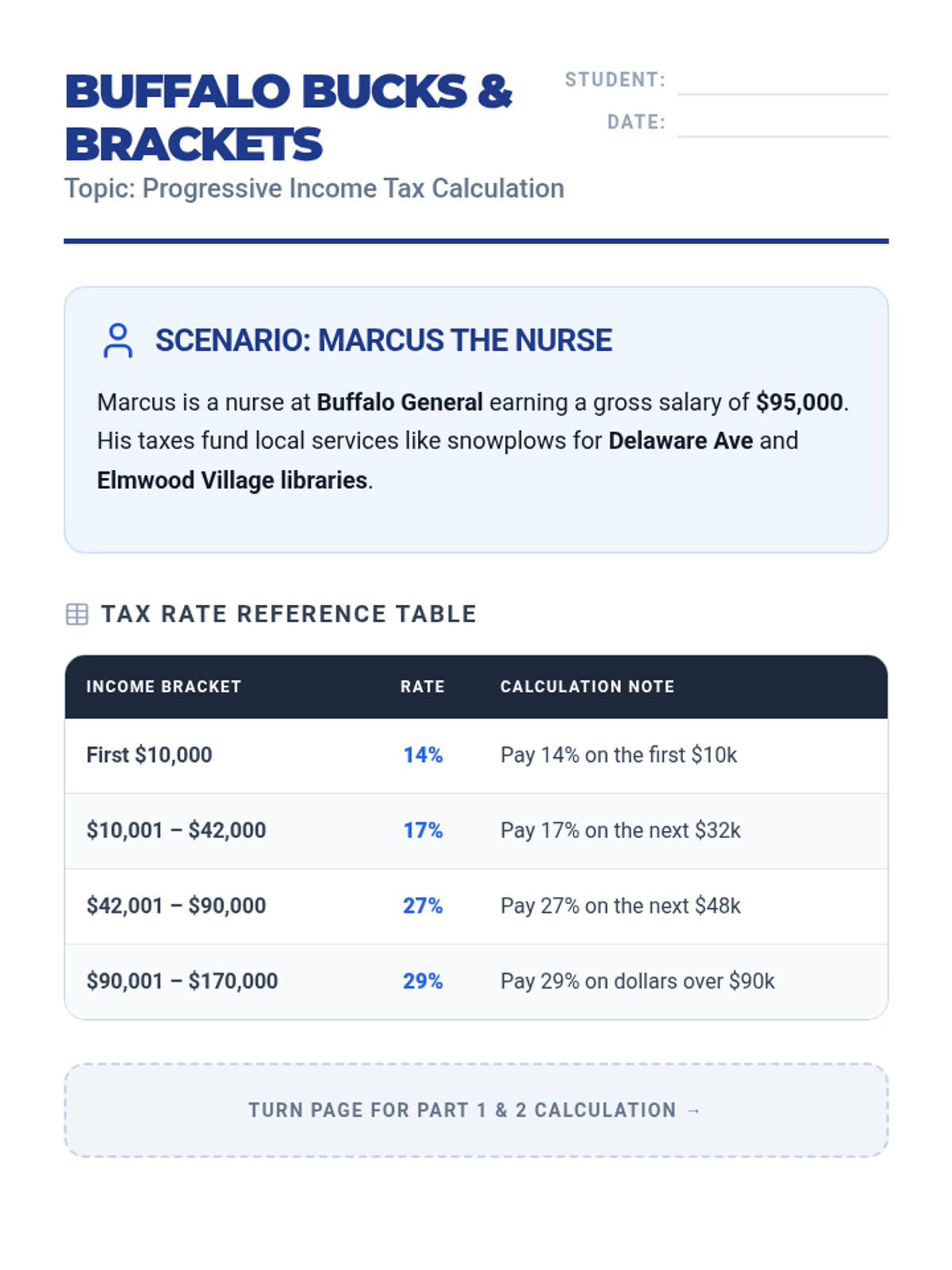
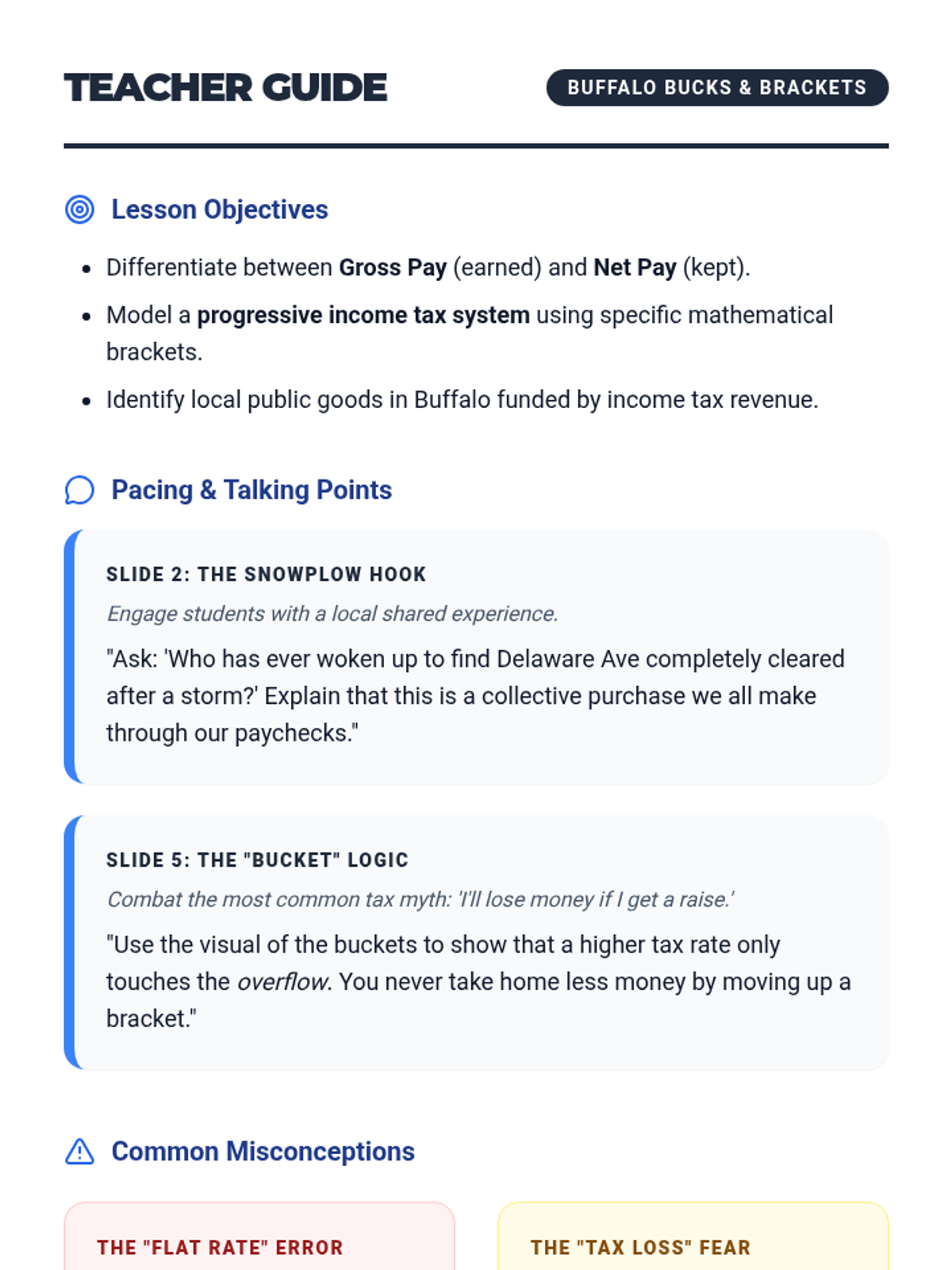
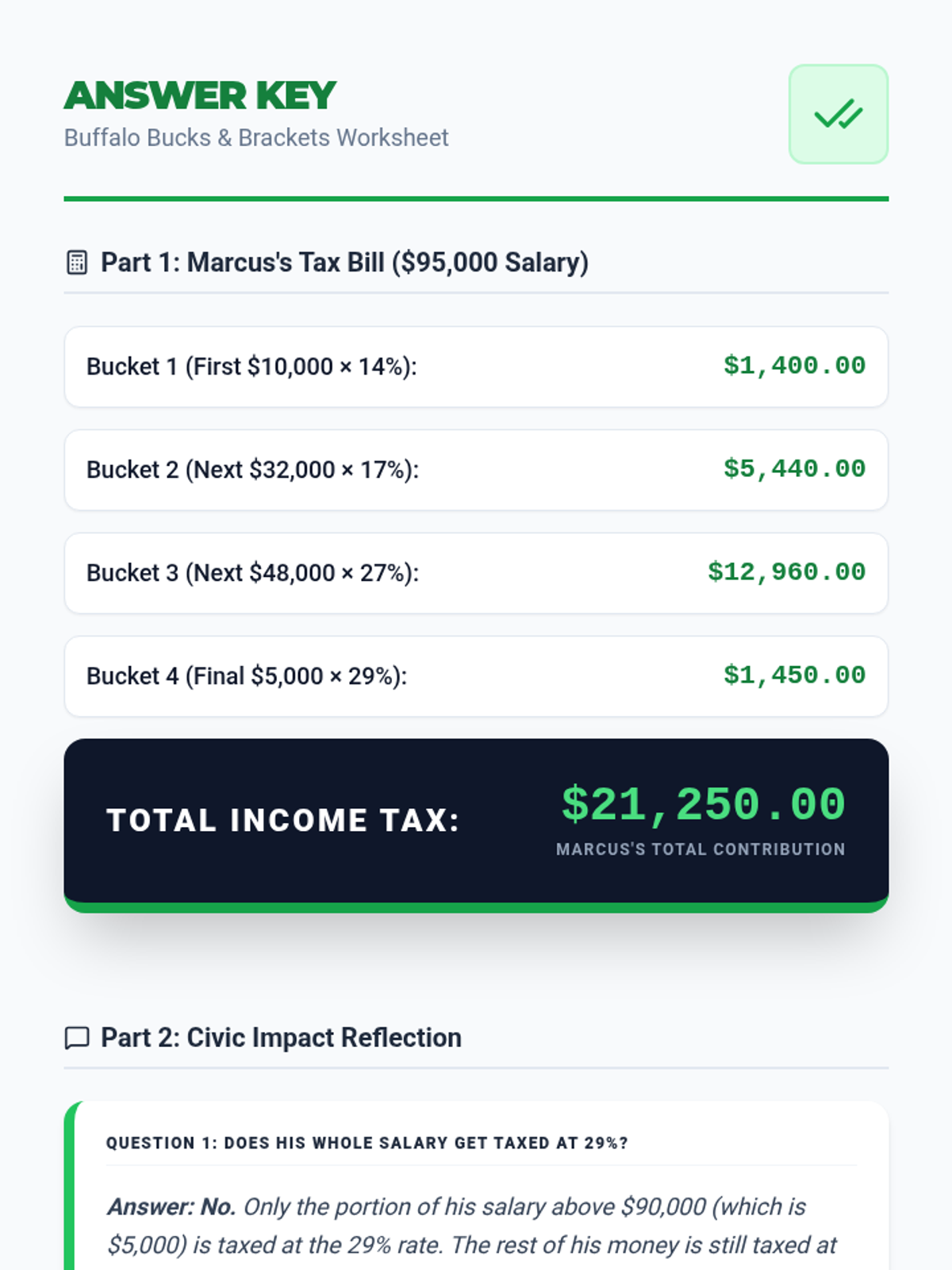
A mini-lesson exploring how progressive income taxes work using a Buffalo, NY context, focusing on local public services like snowplows and libraries.
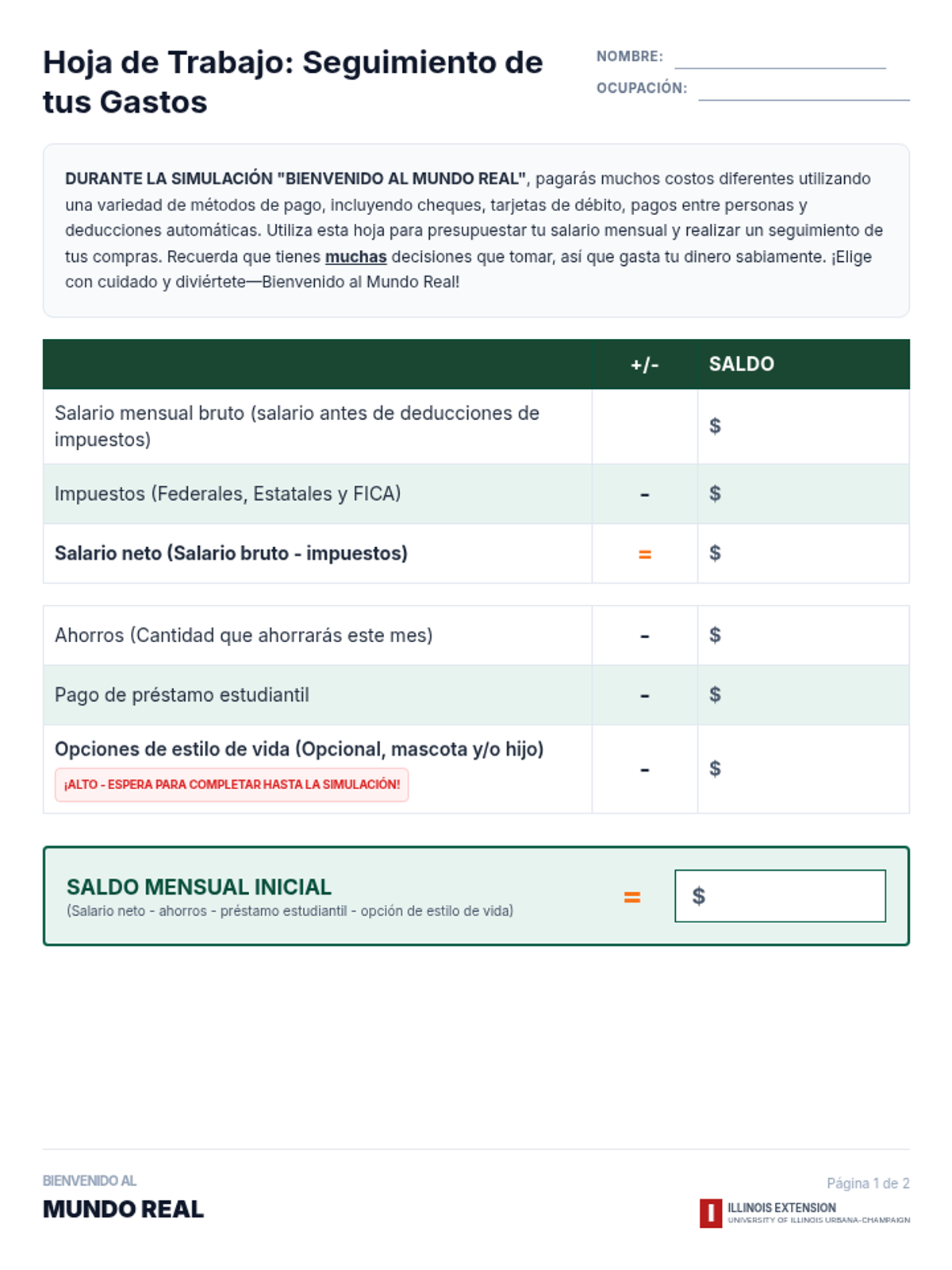
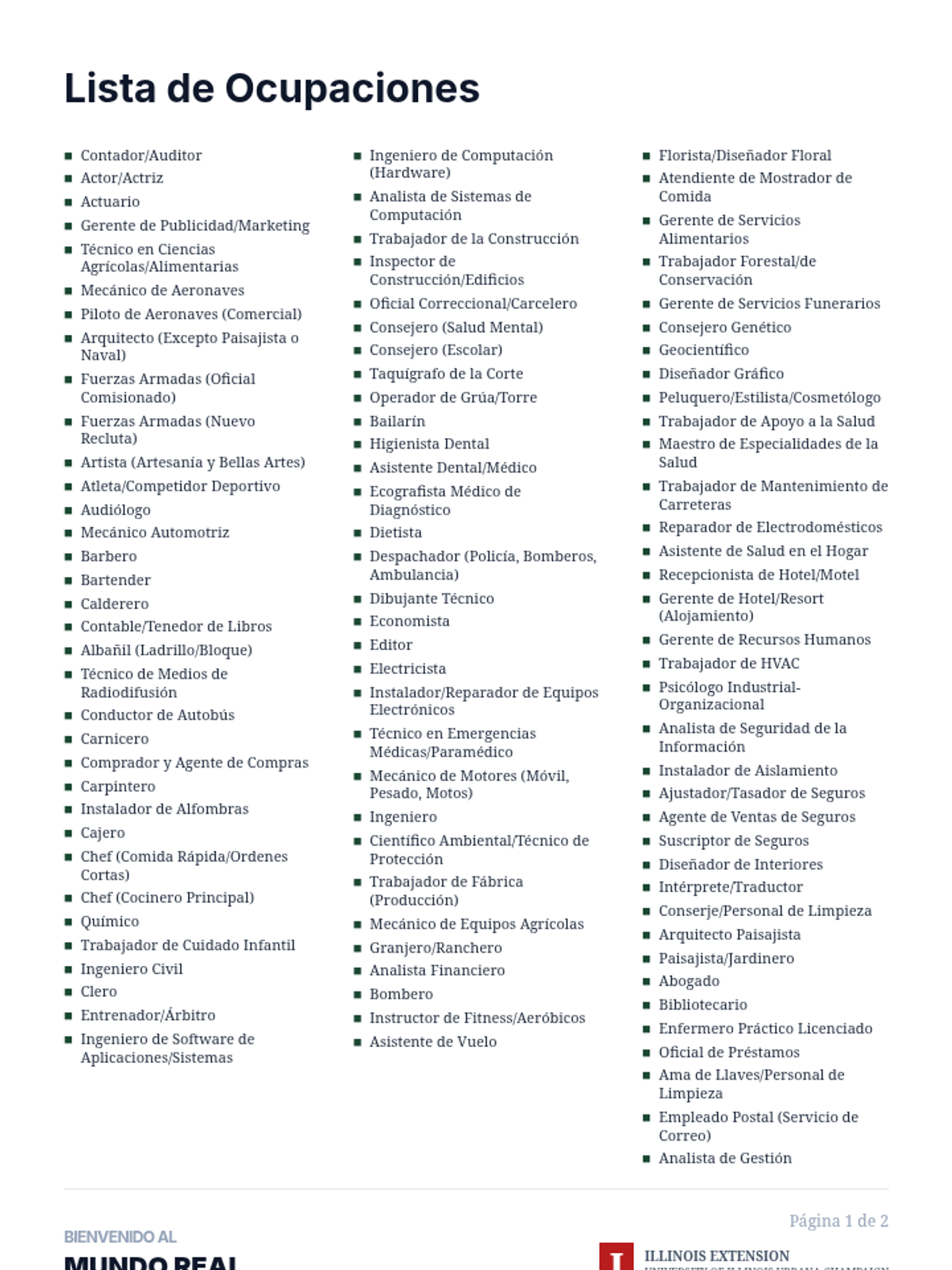
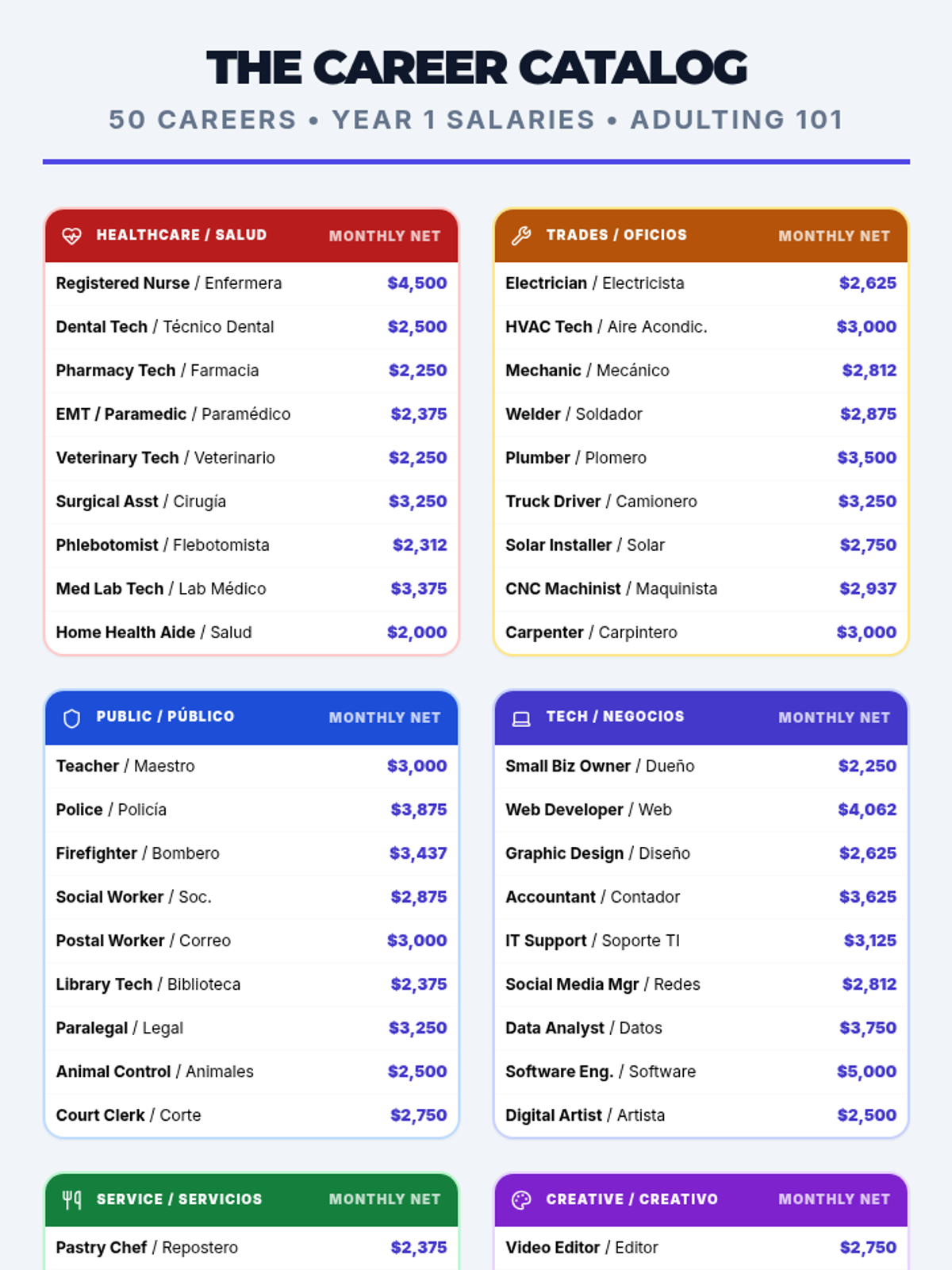
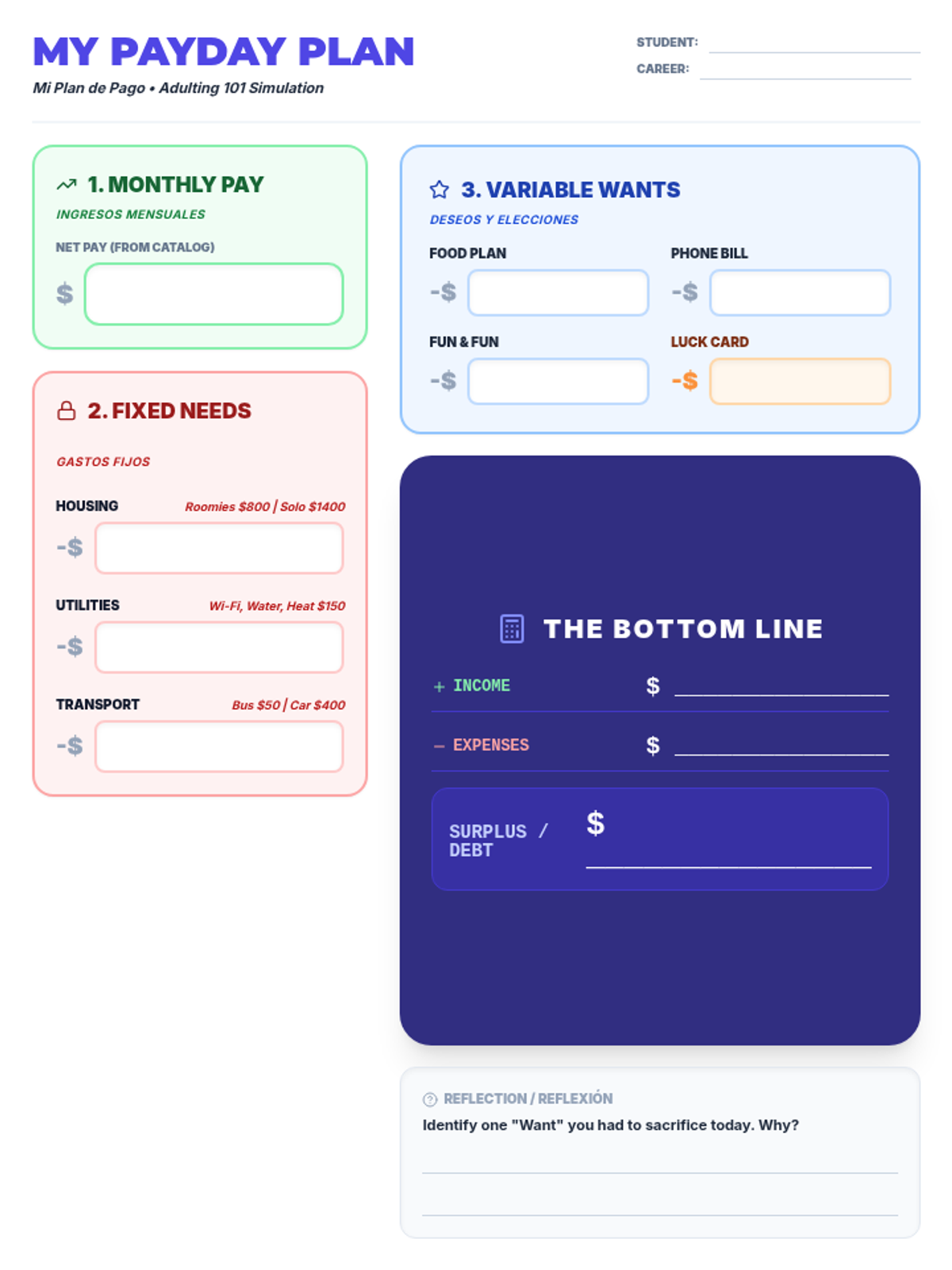
A collection of translated materials for a real-world financial simulation, including expense tracking worksheets and occupation reference lists in Spanish.
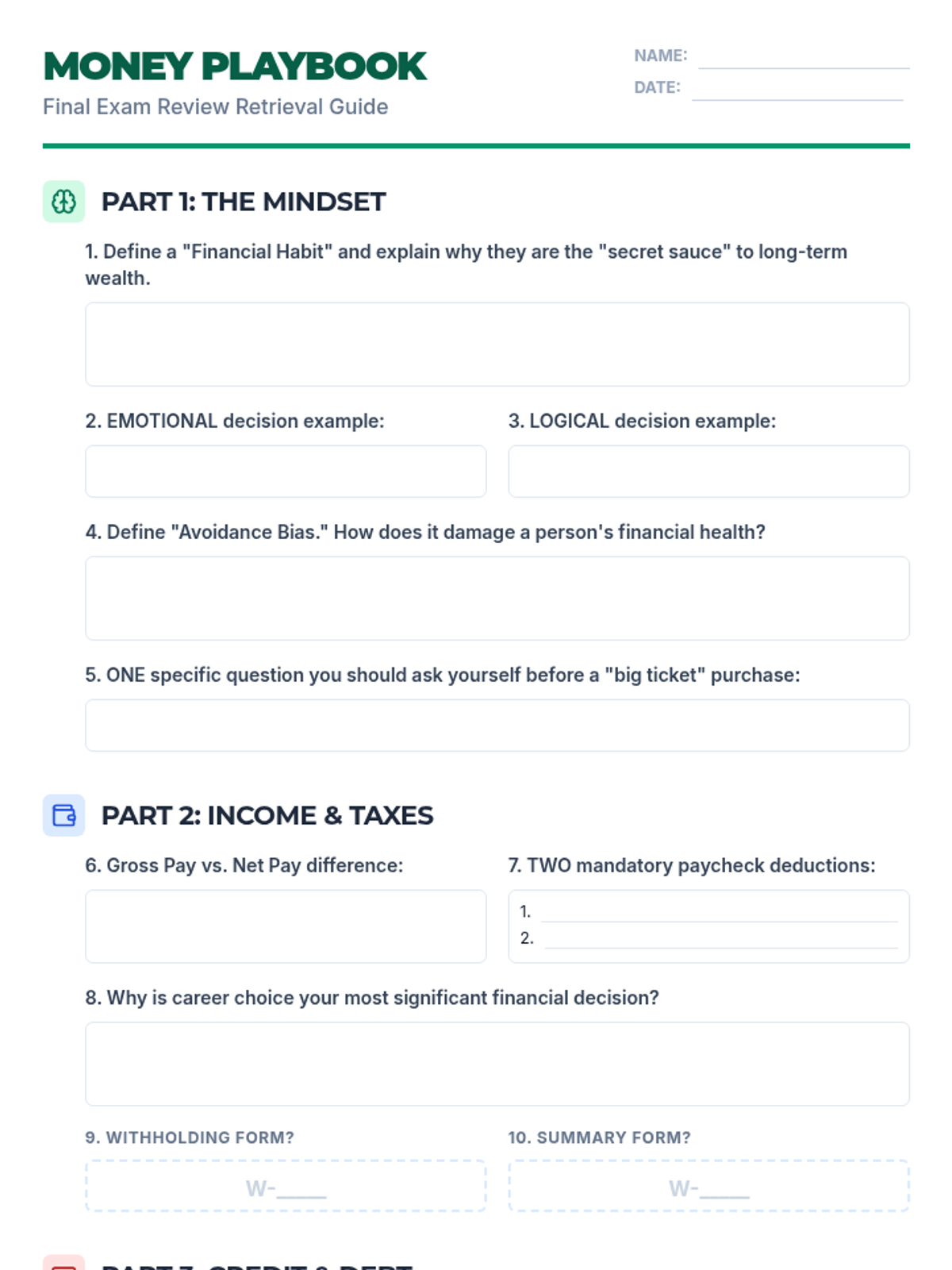
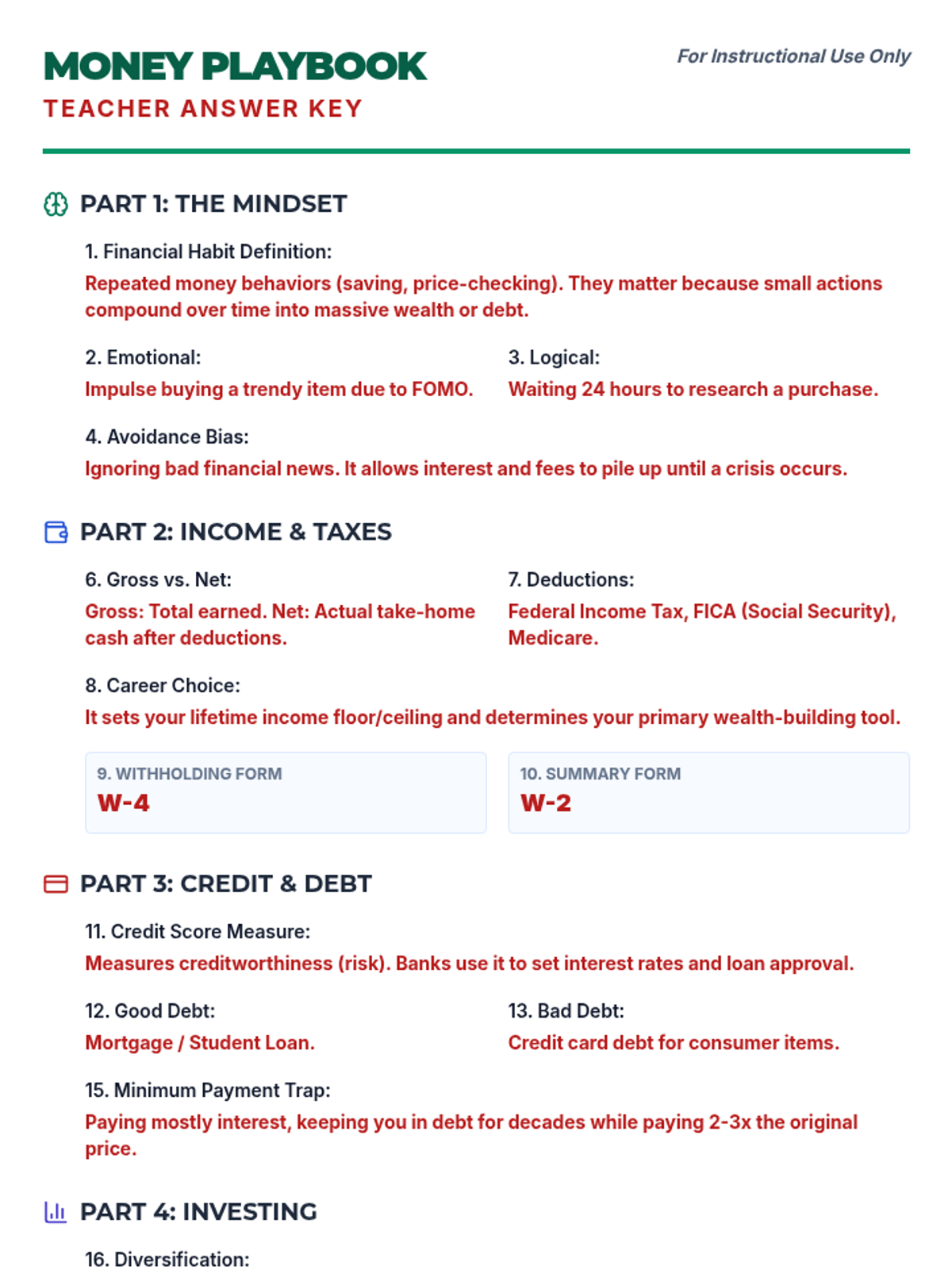
A comprehensive final exam review lesson for Personal Finance, covering decision-making, income, credit, investing, and long-term planning through retrieval practice and scenario analysis.
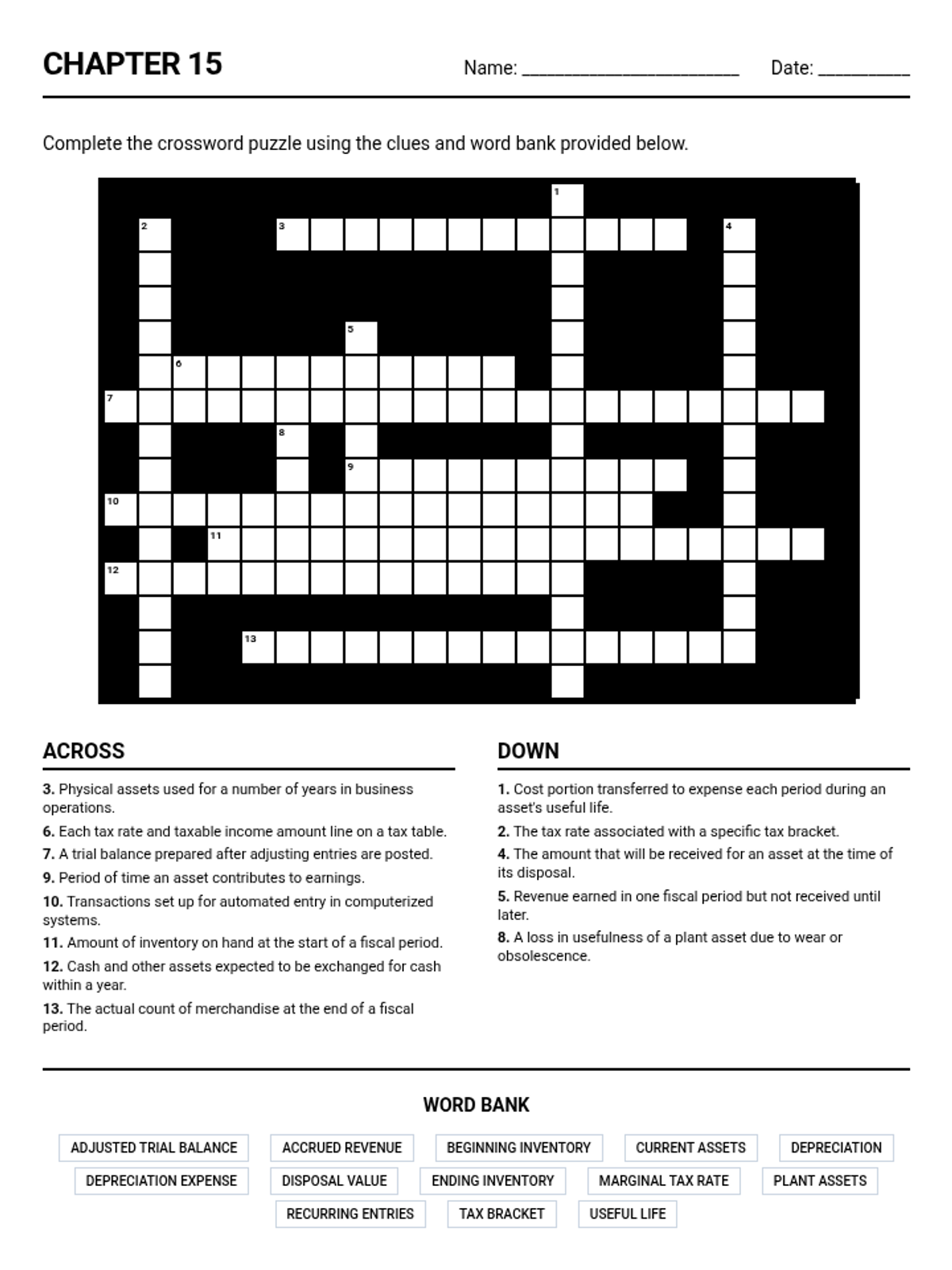
This lesson covers fundamental accounting concepts including asset valuation, tax structures, and inventory management through a hands-on crossword challenge.
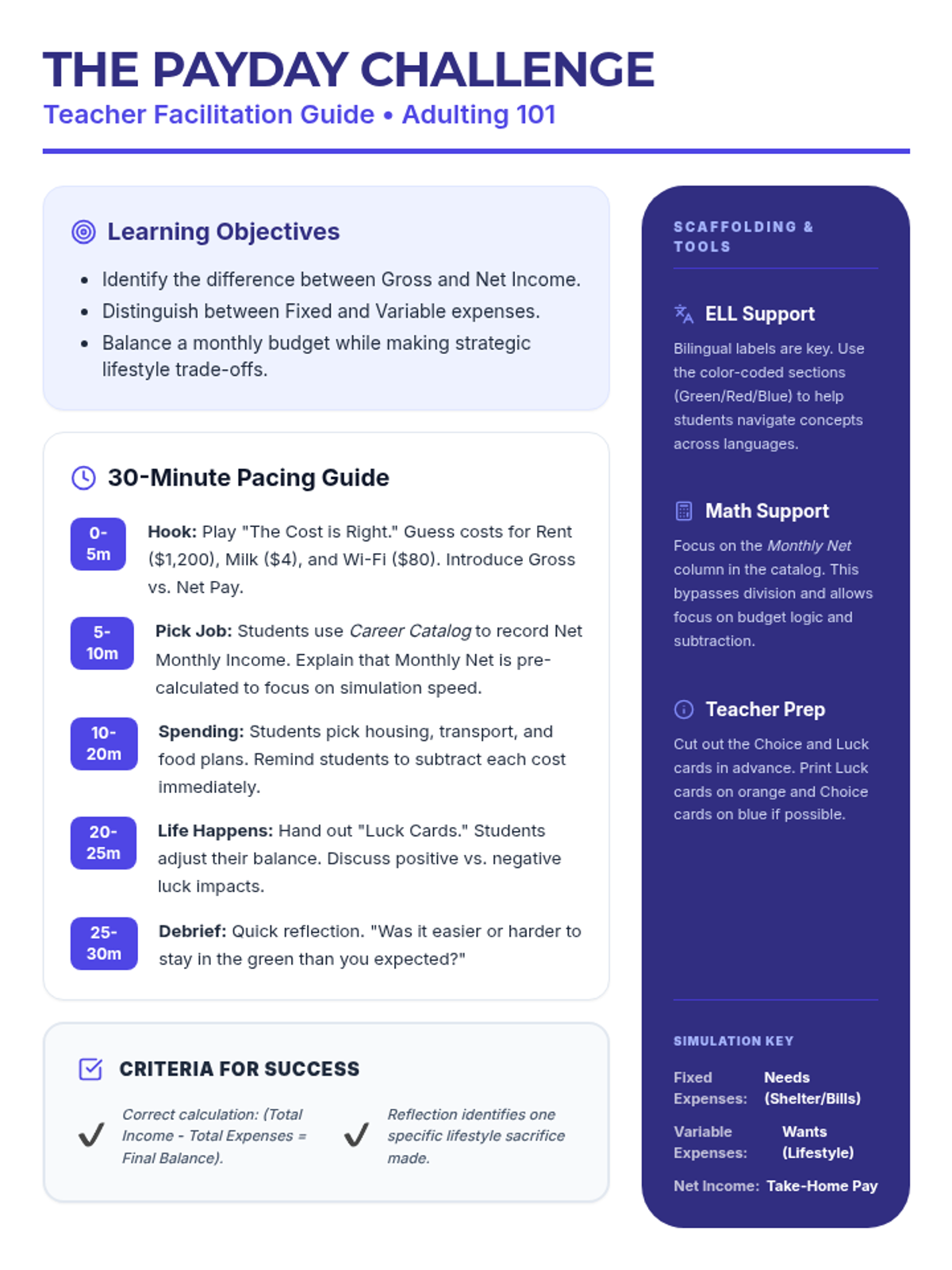
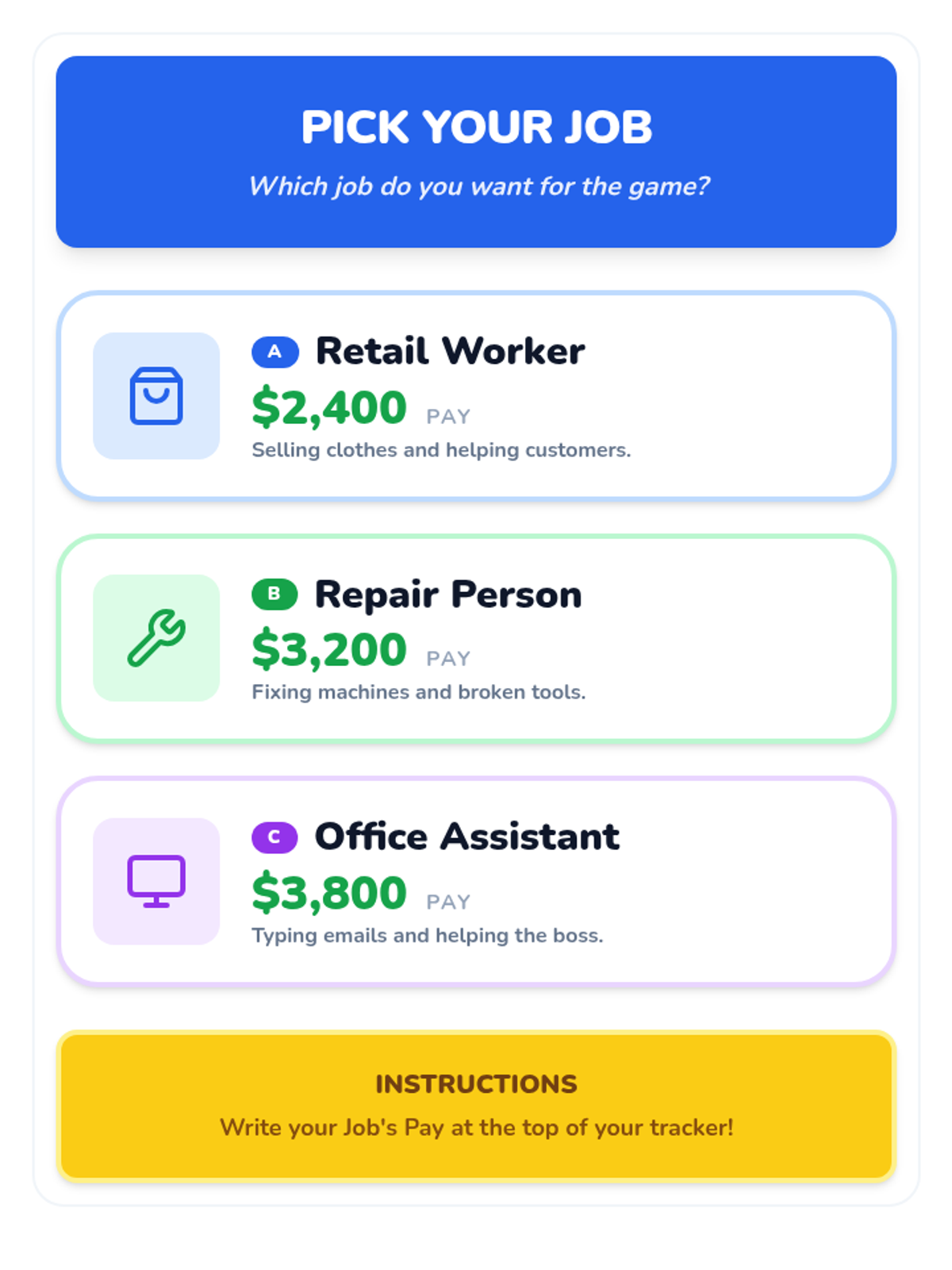
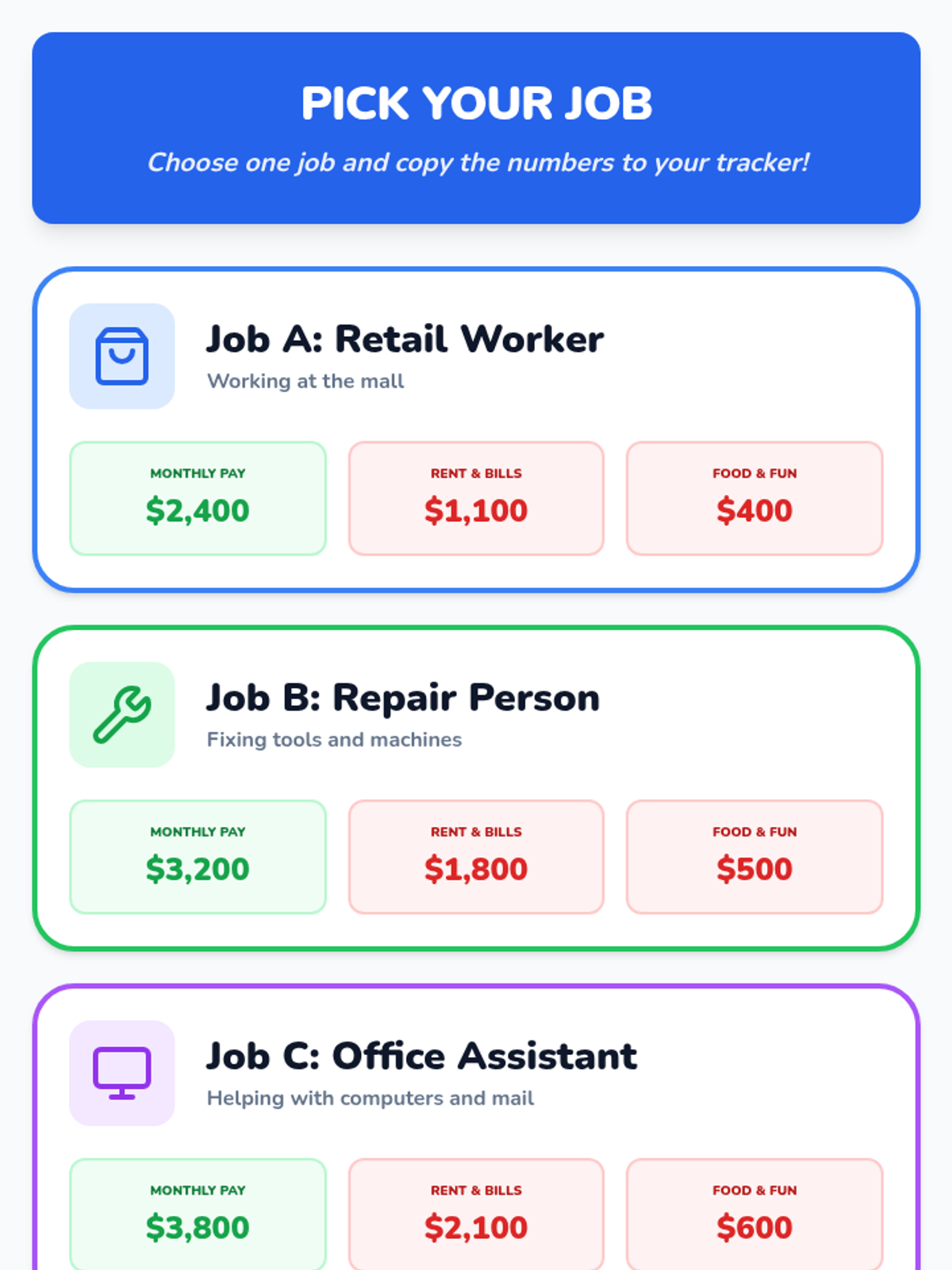
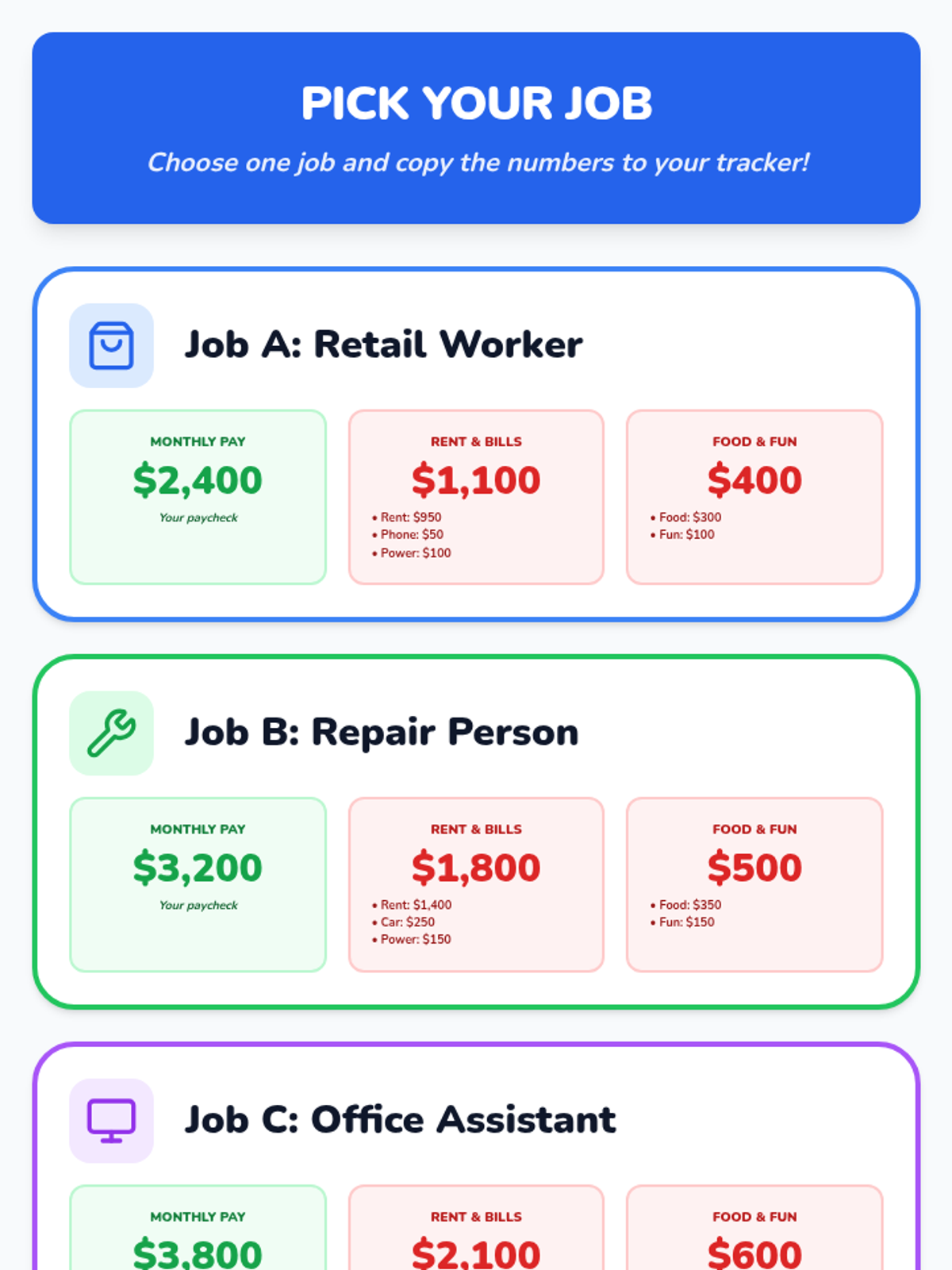
A high-energy, 30-minute simulation where students pick a career, calculate monthly take-home pay, and navigate adult expenses using a color-coded budget template designed for diverse learners.
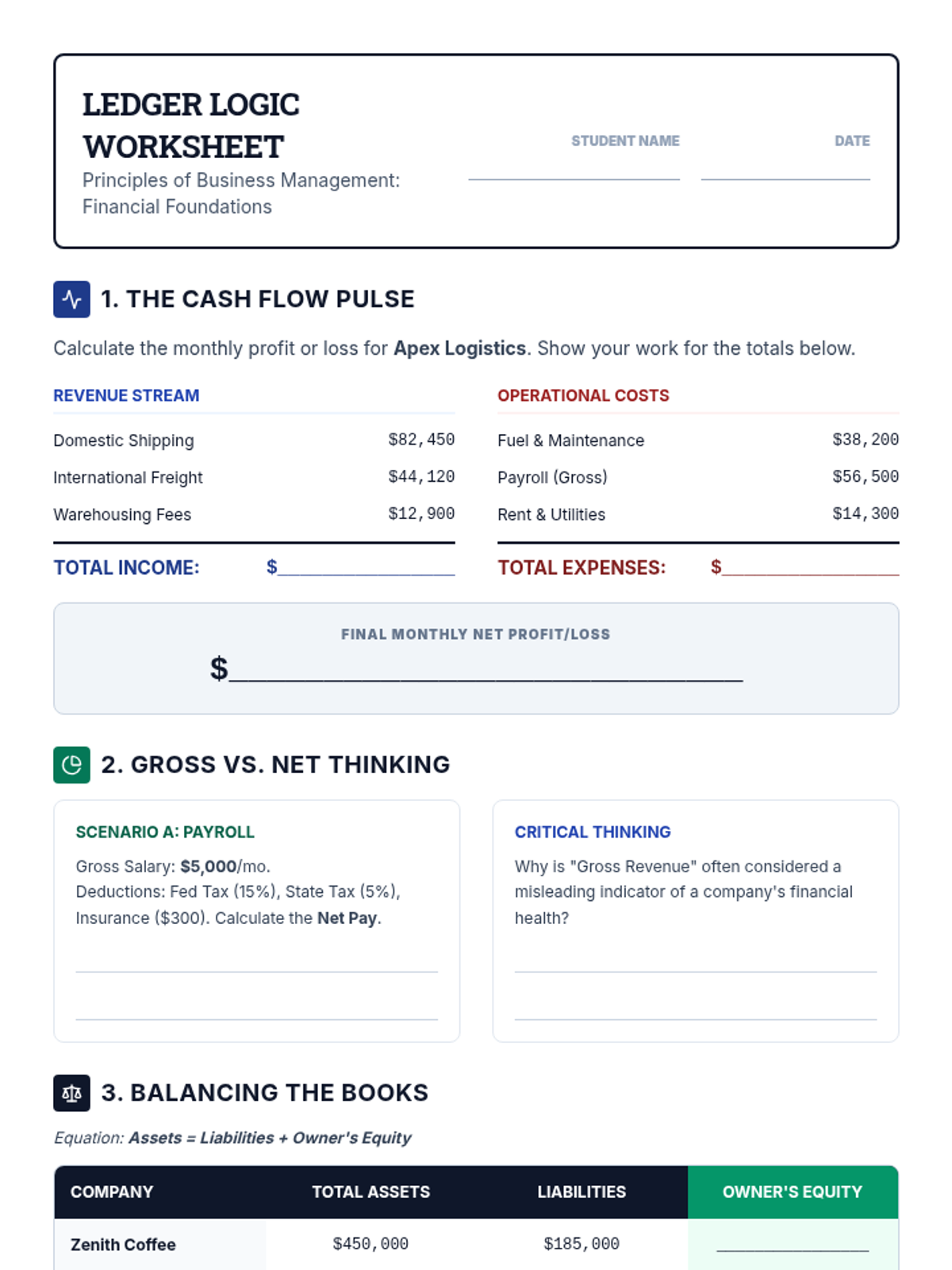
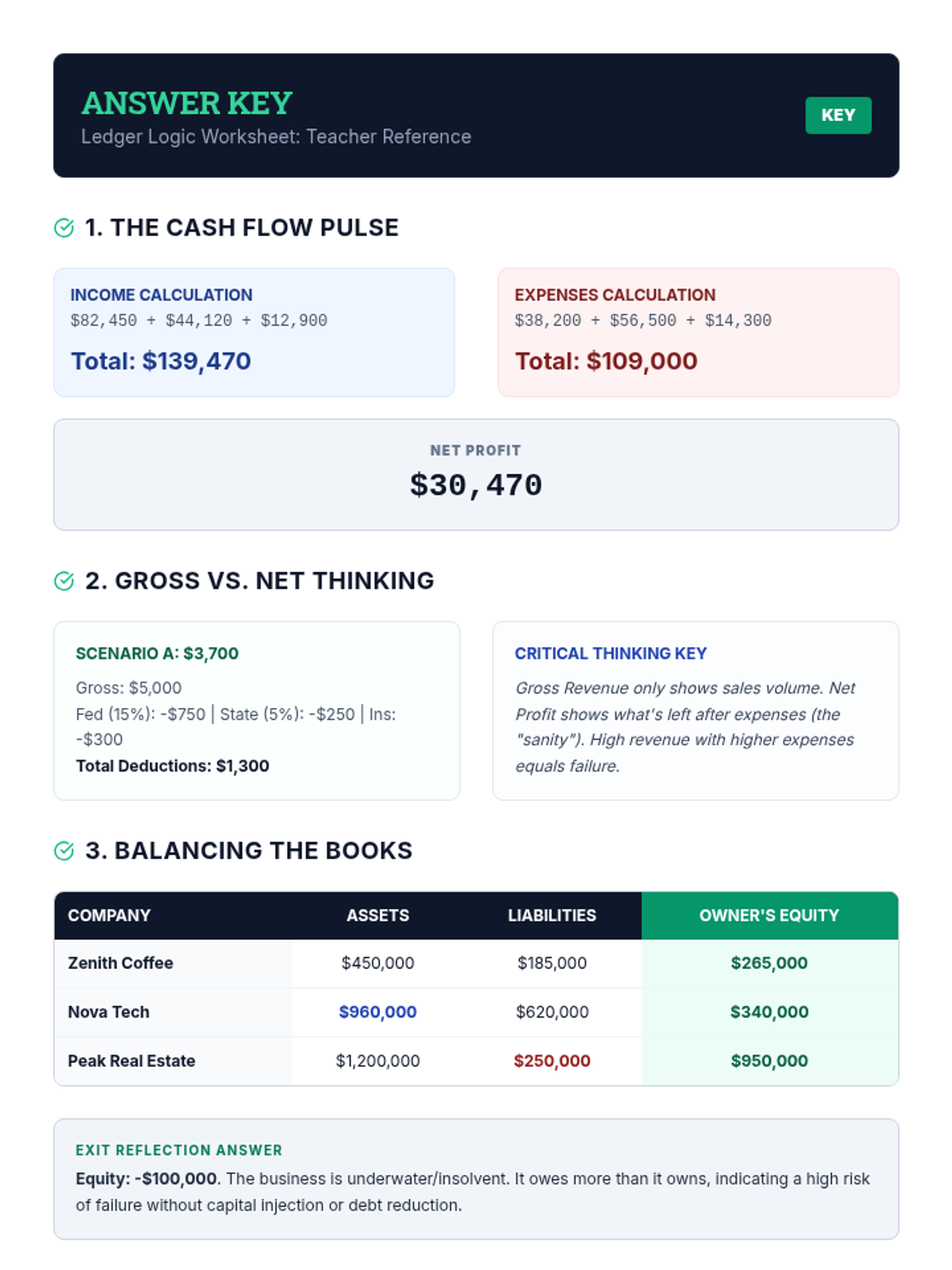
This lesson clarifies the relationship between income, expenses, and savings, distinguishes between gross and net pay/profit, and introduces the balance sheet equation with a focus on owner's equity.
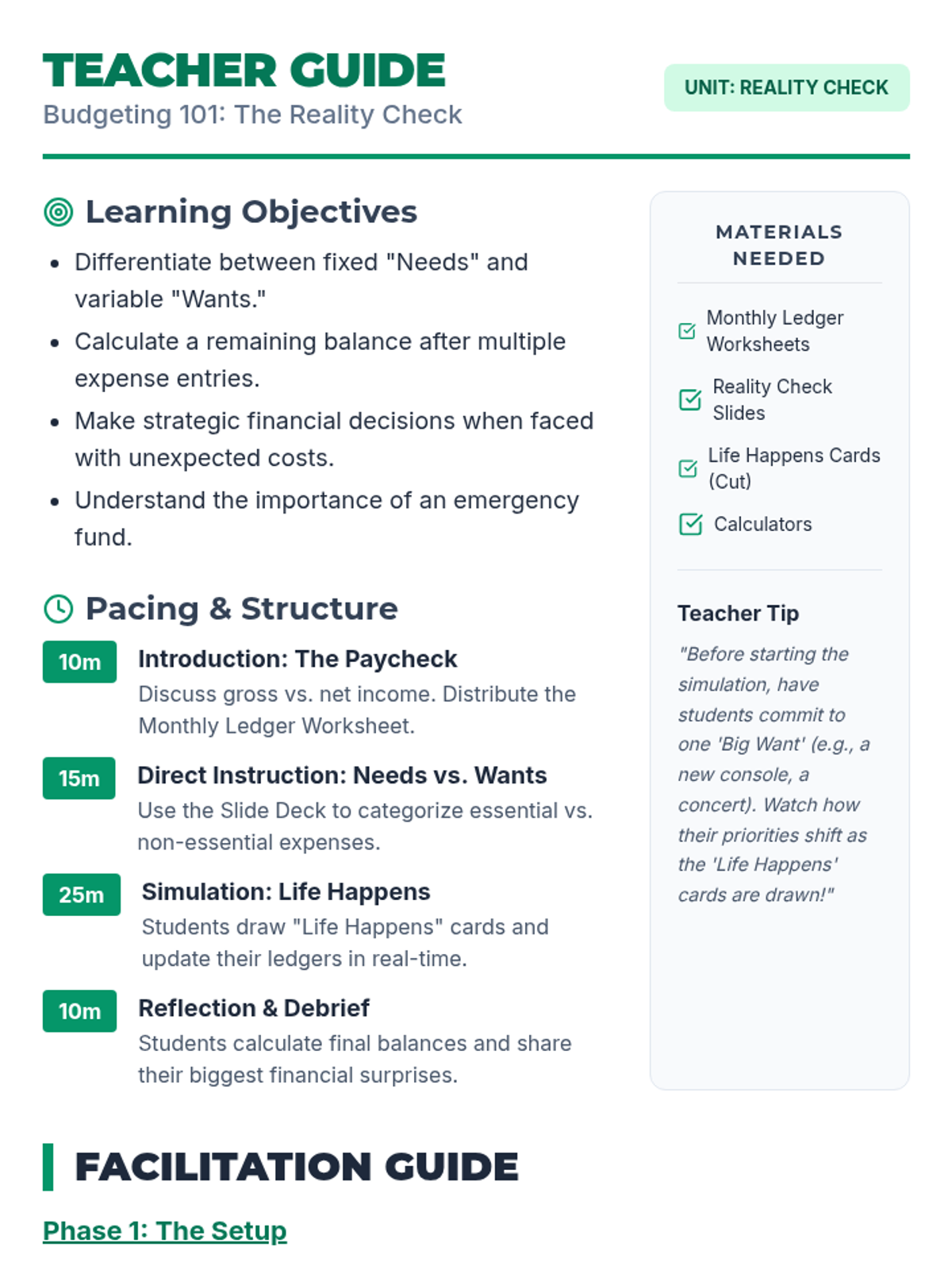
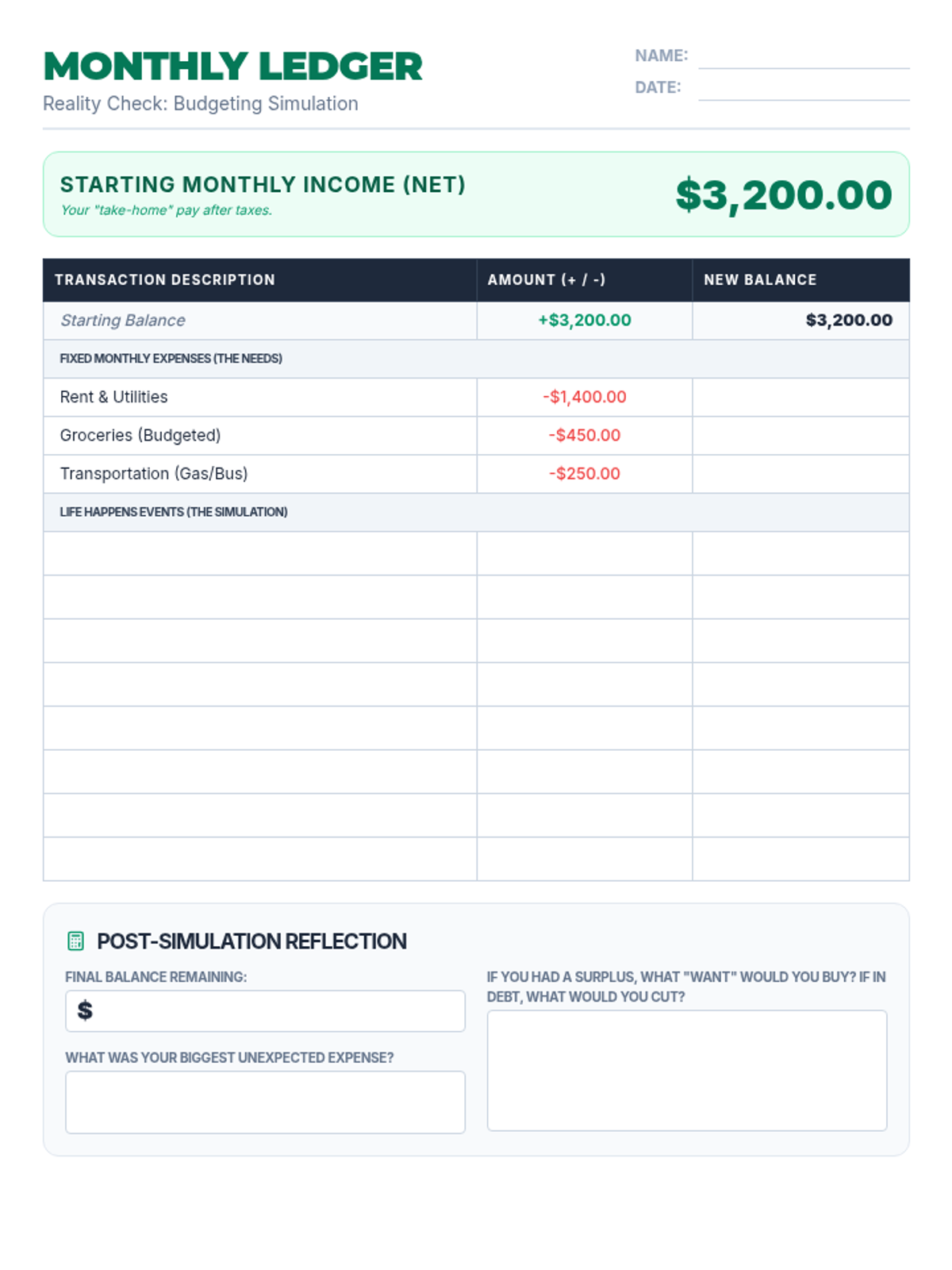
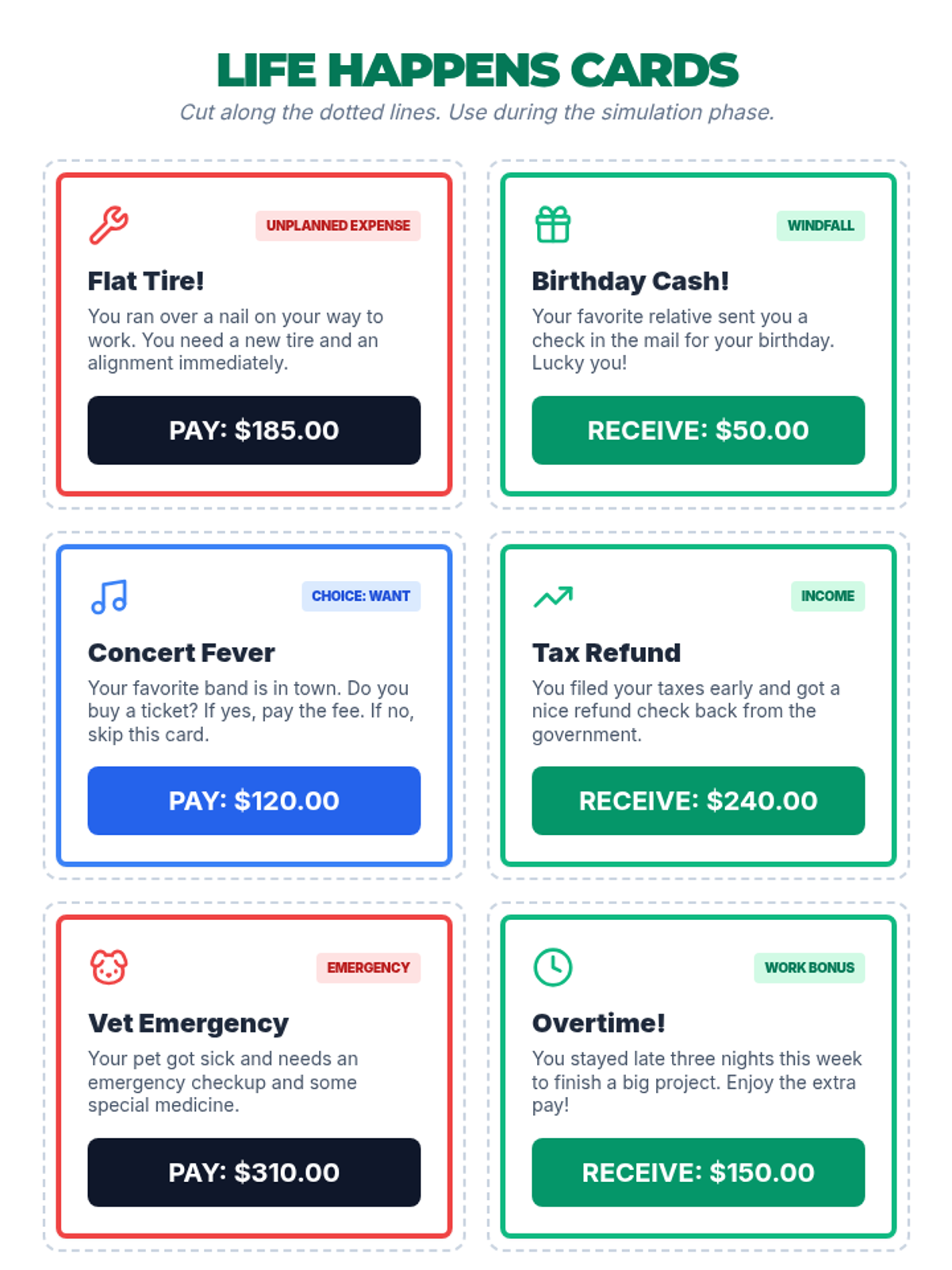
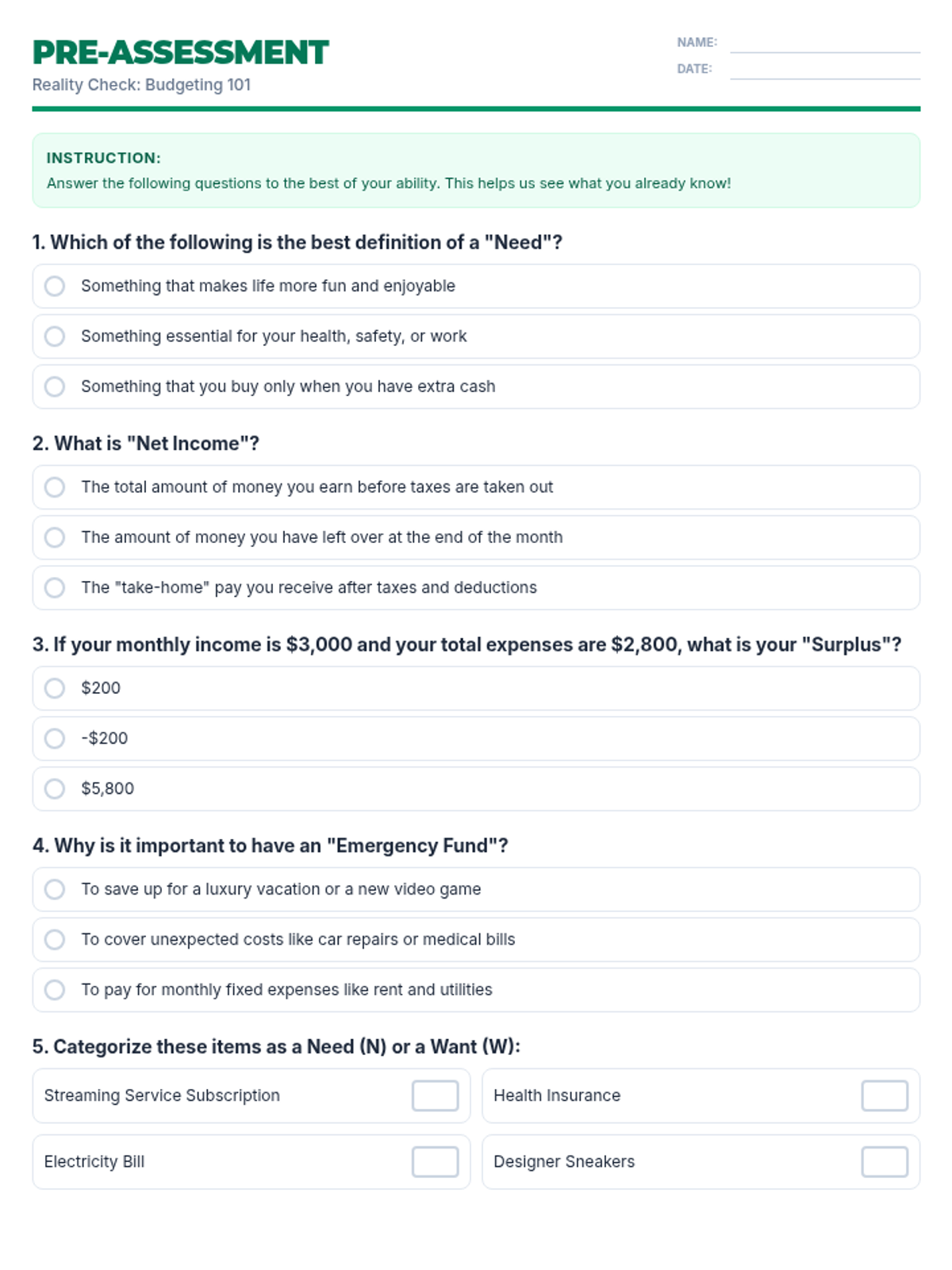
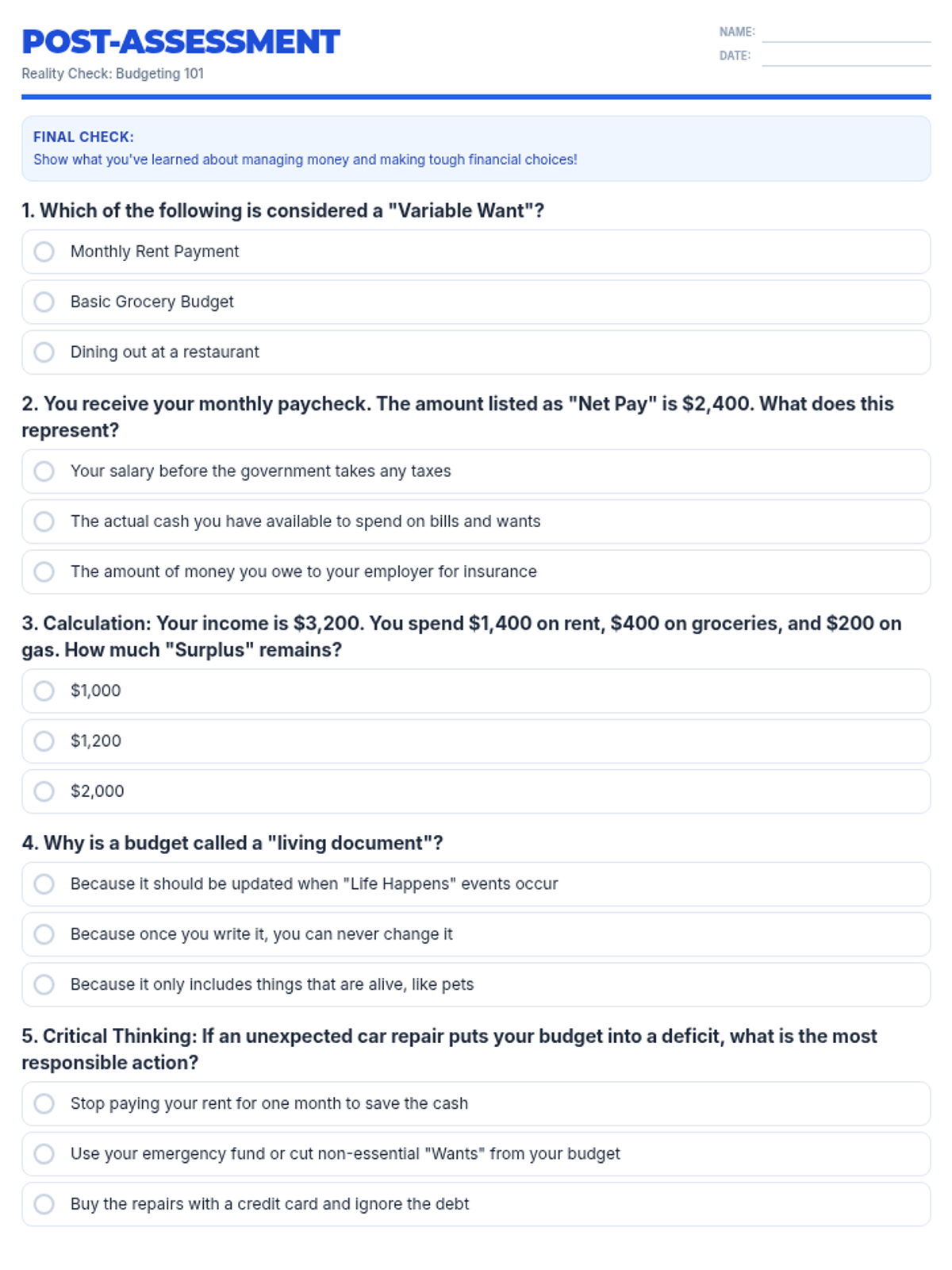
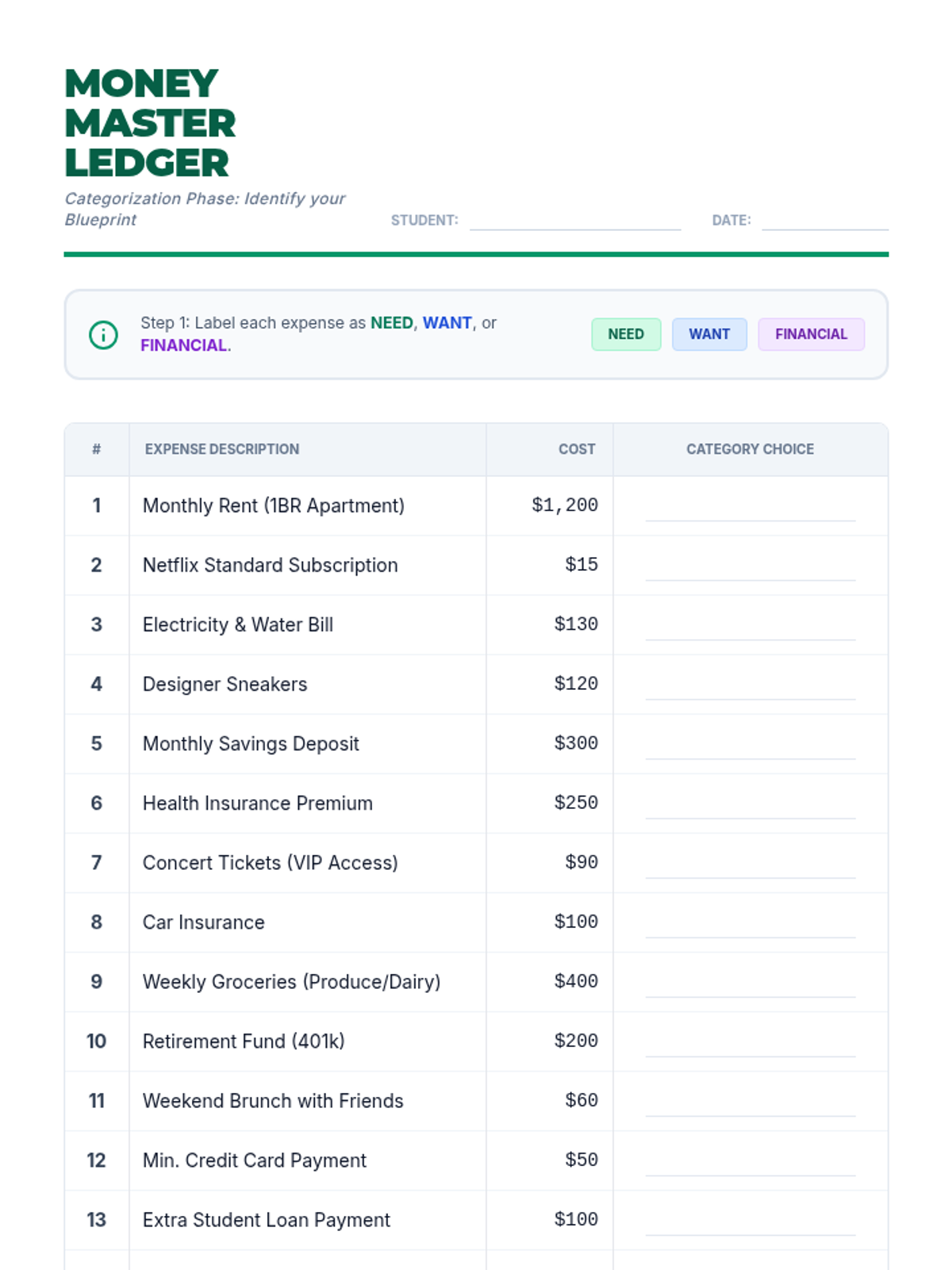
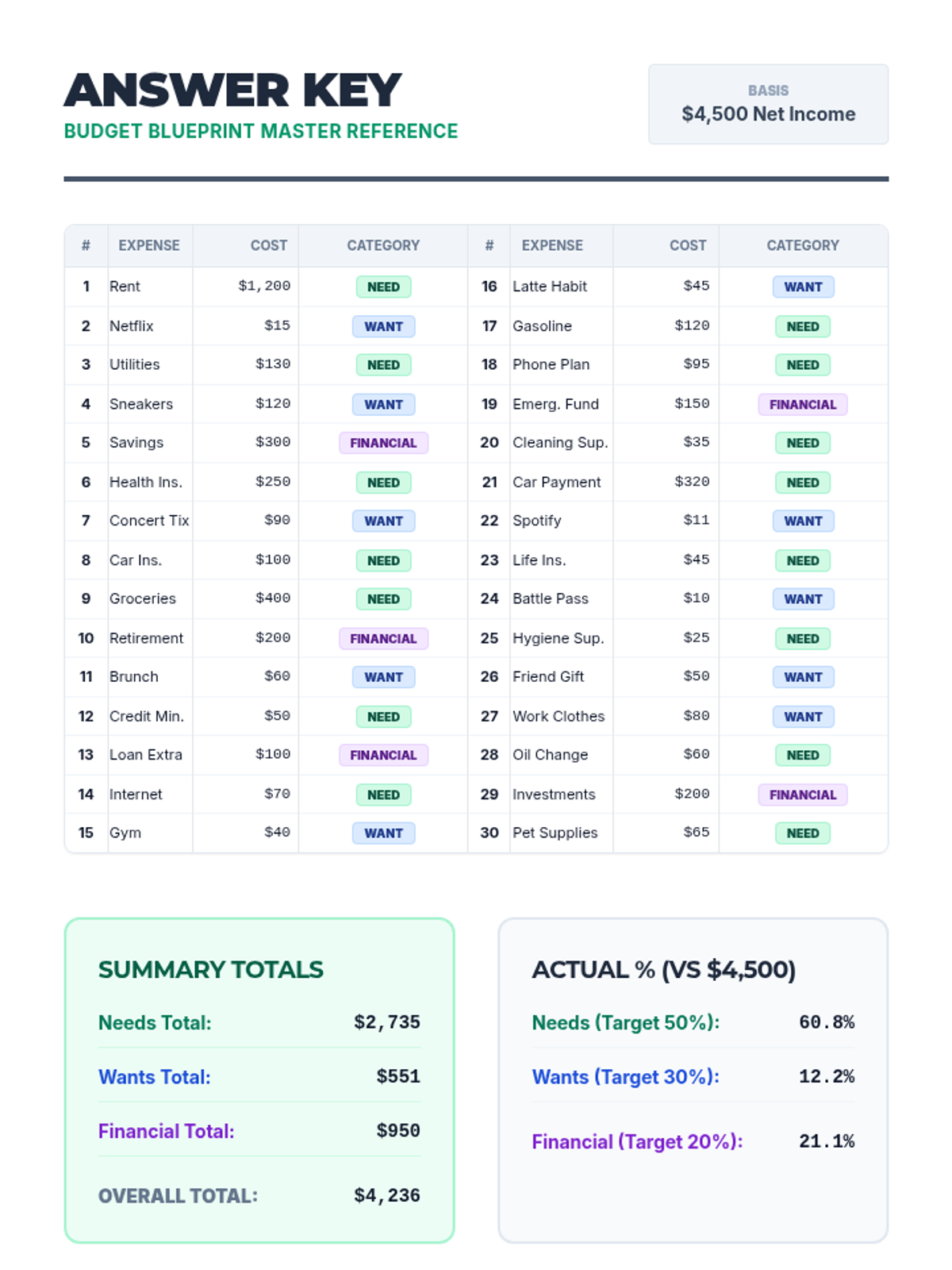
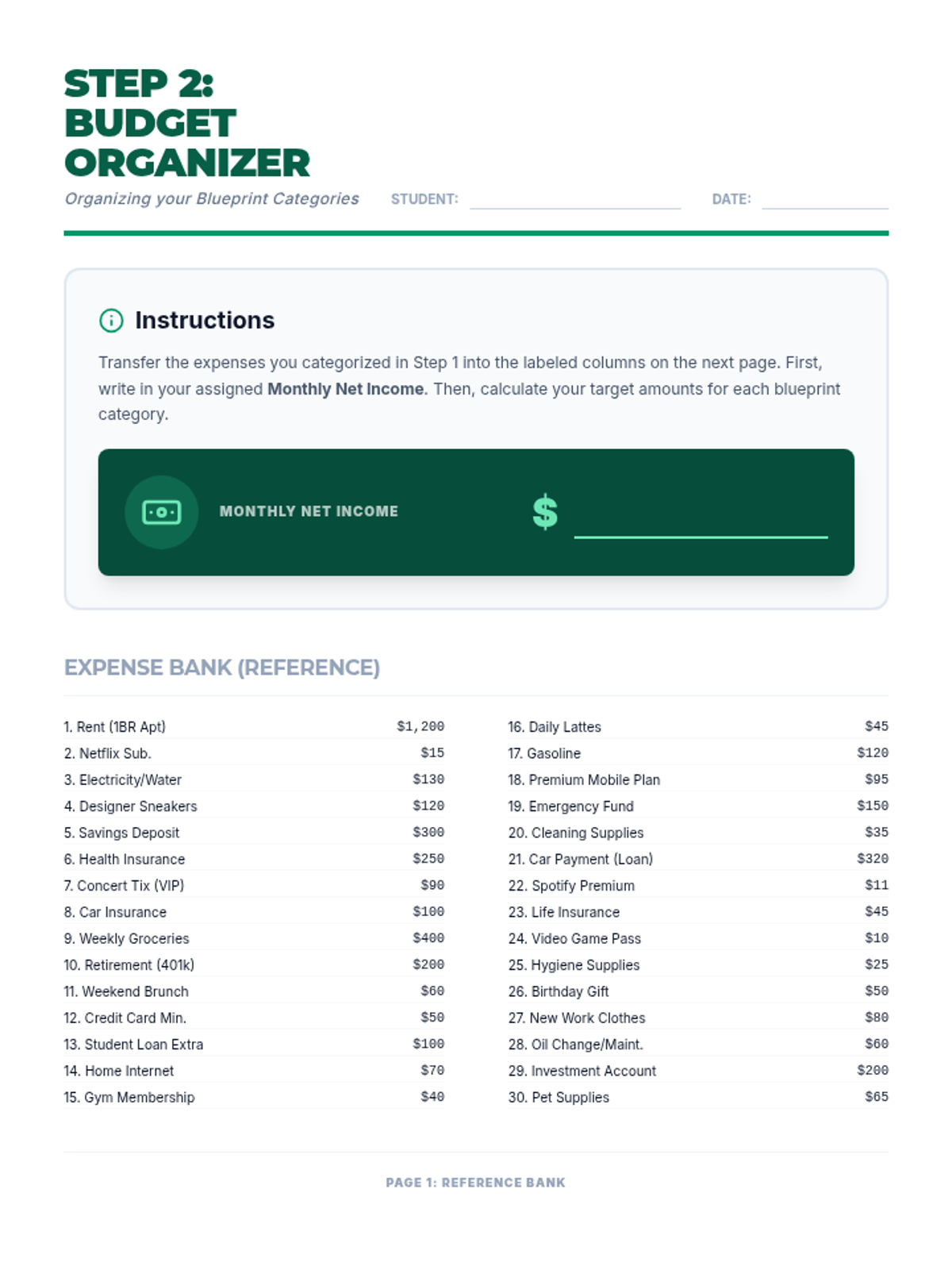
Introduction to the fundamentals of personal budgeting, differentiating between needs and wants, and managing a simulated monthly ledger.
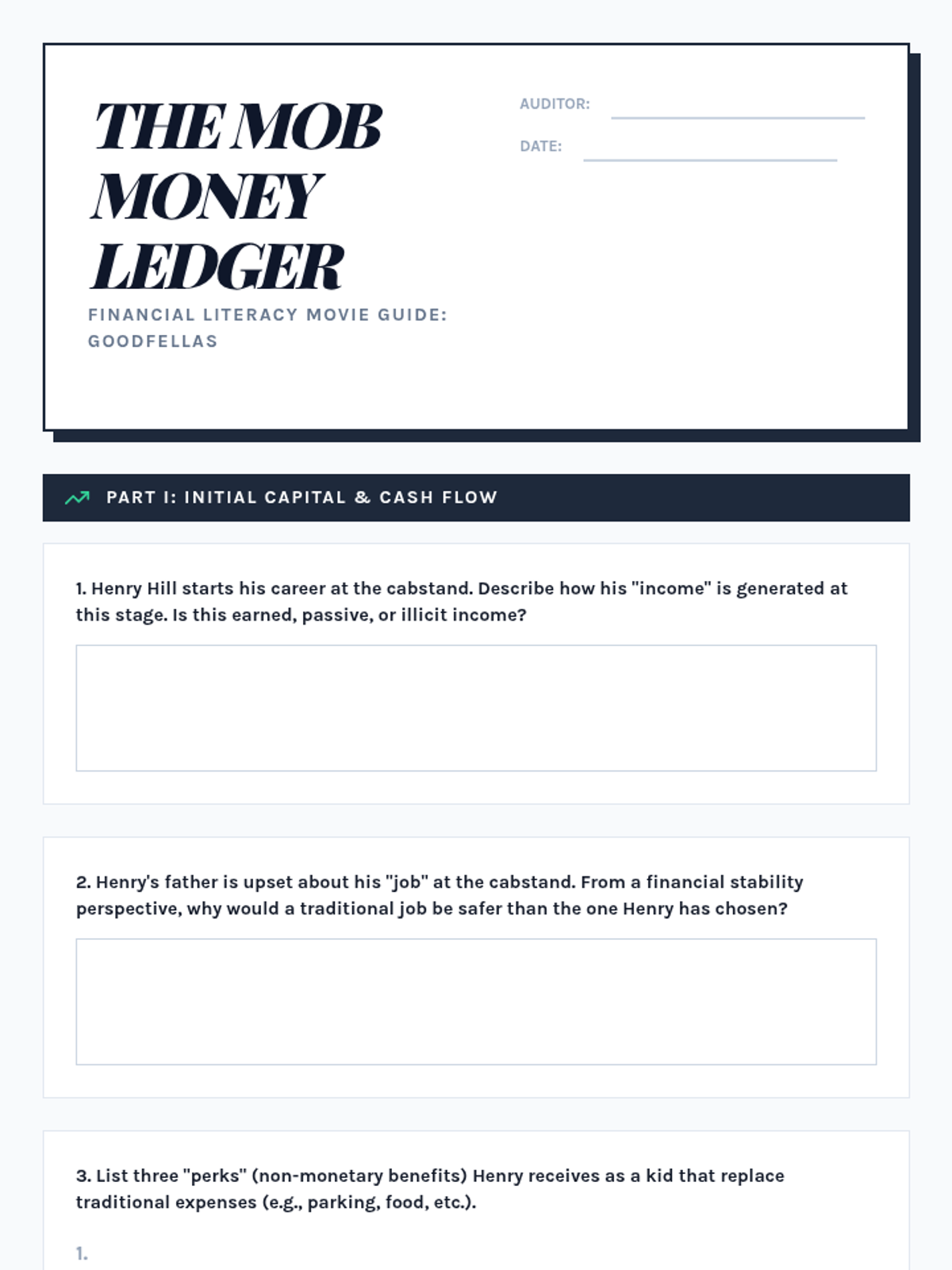
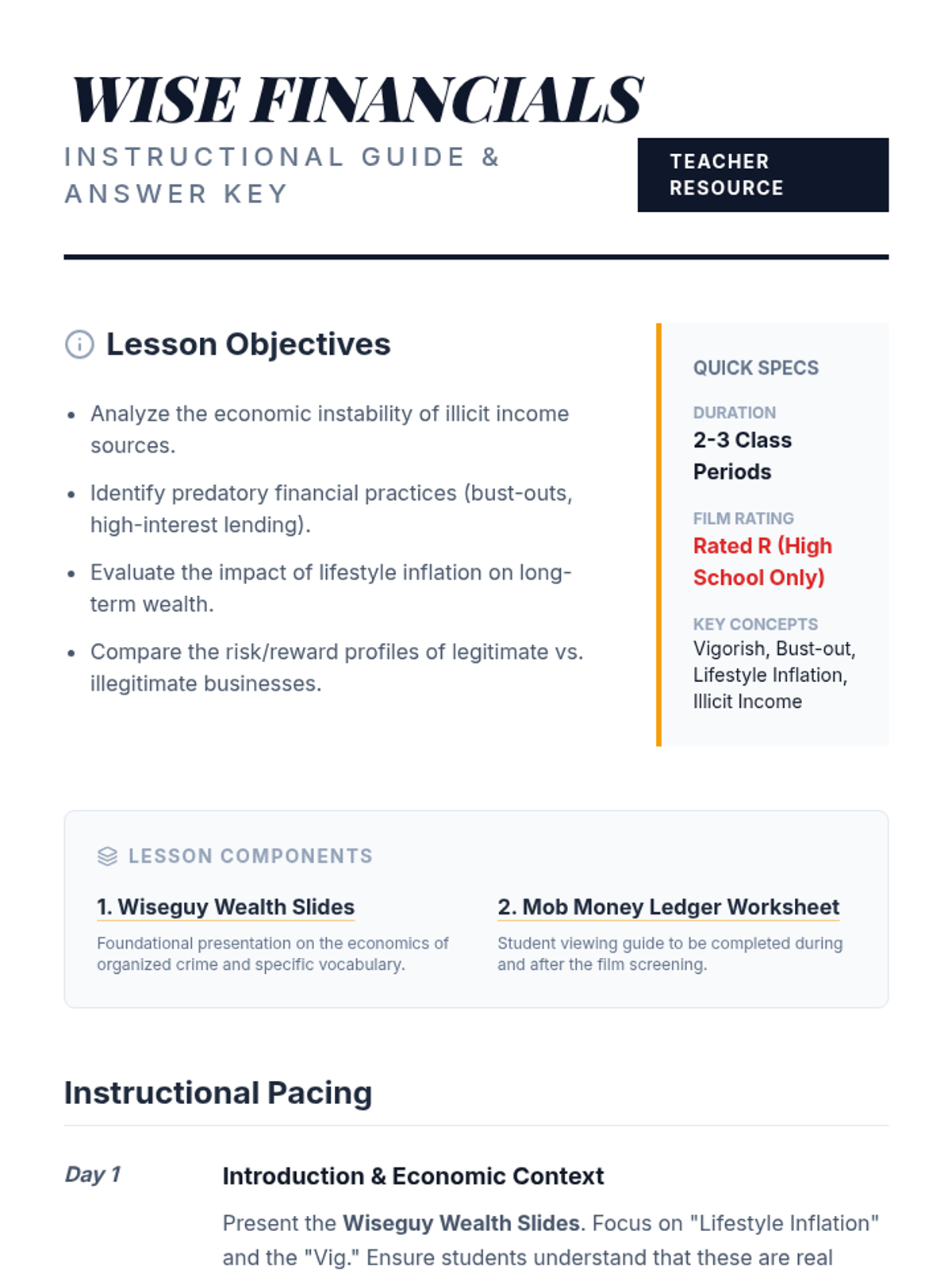
An analysis of the financial decisions made in the film Goodfellas, focusing on high-risk income, the "bust-out" business model, and the long-term costs of illicit wealth.
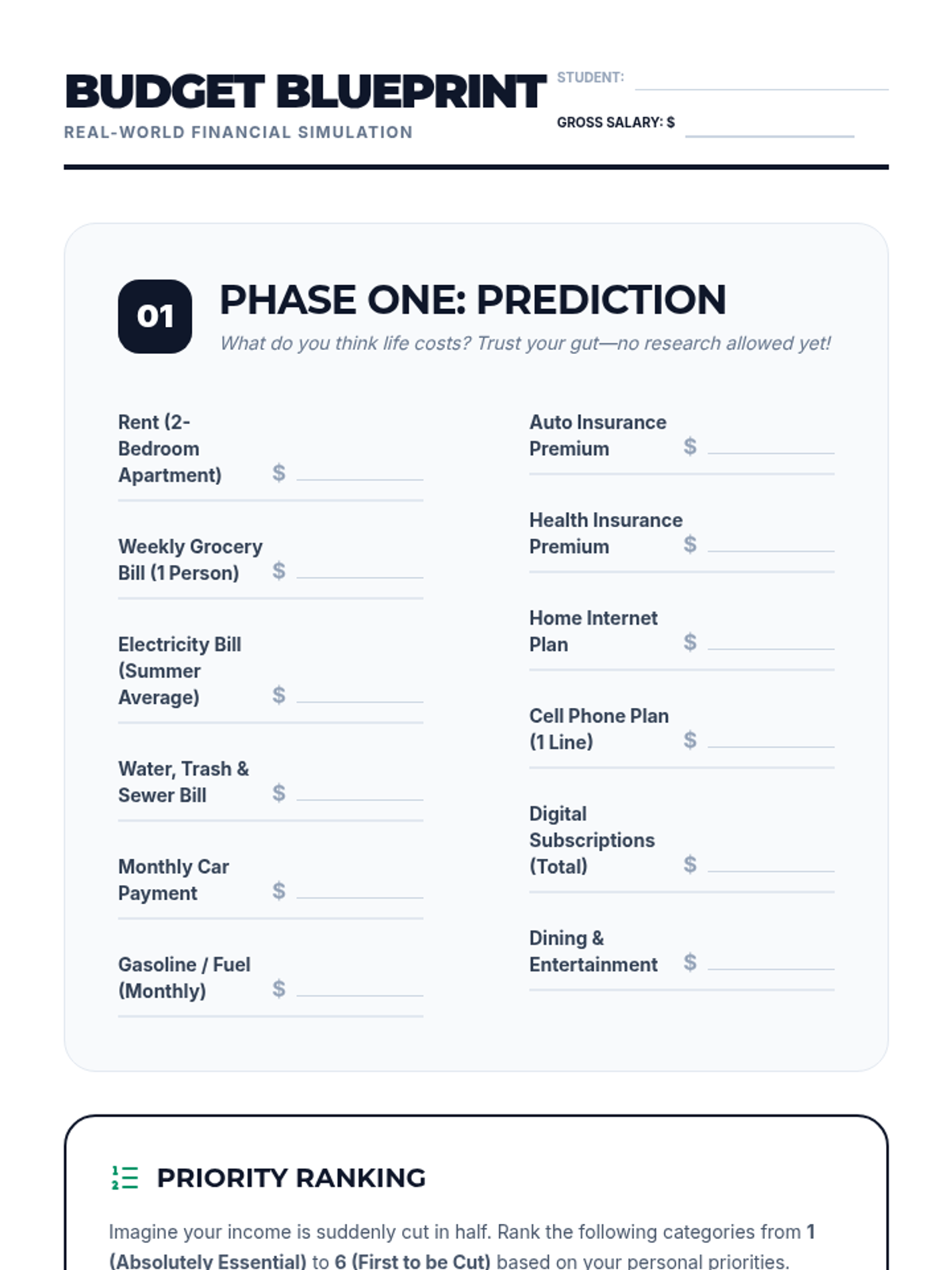
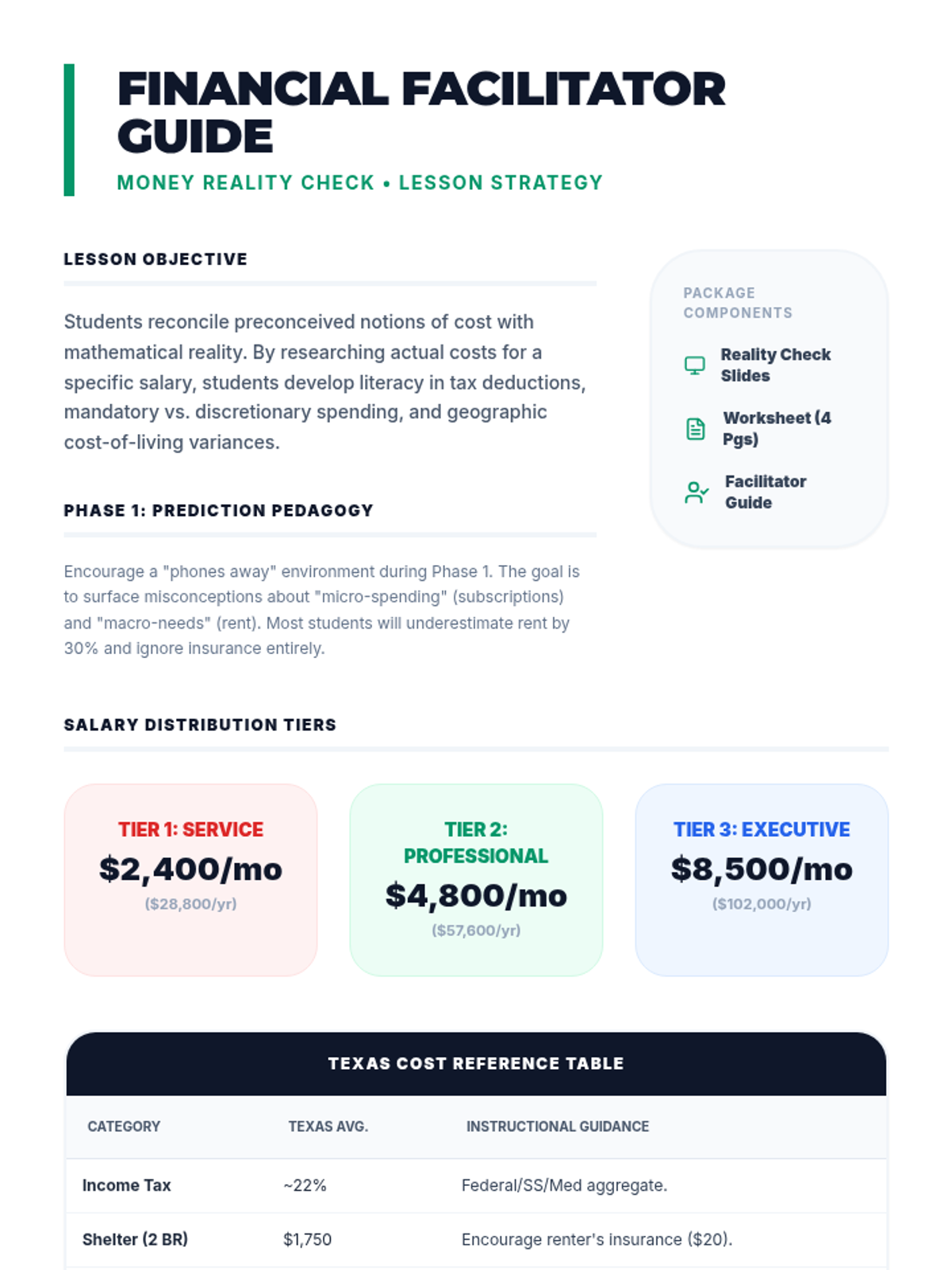
A practical budgeting lesson where students predict real-world costs, research actual expenses for a specific salary, and reconcile their expectations with financial reality.
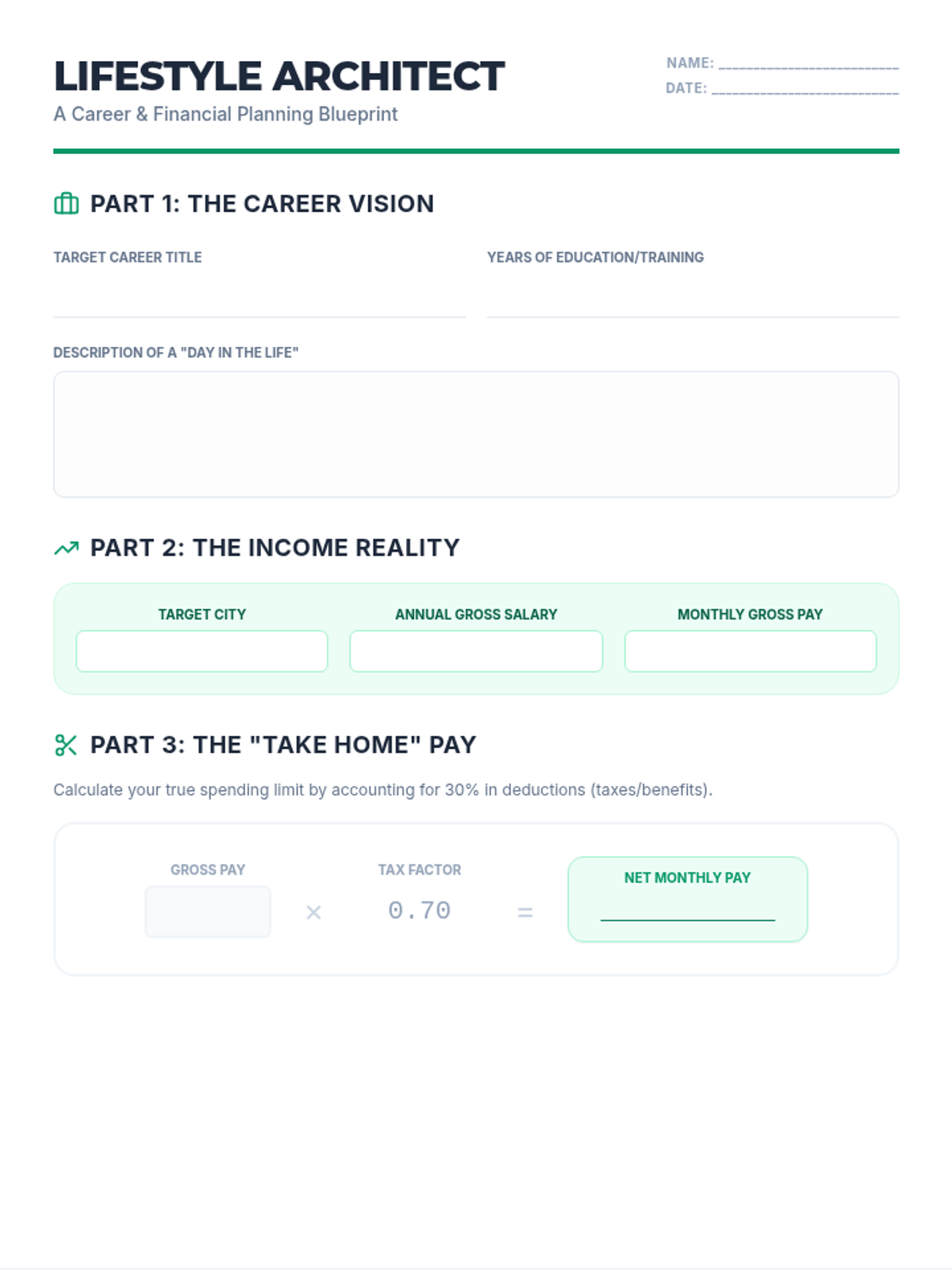
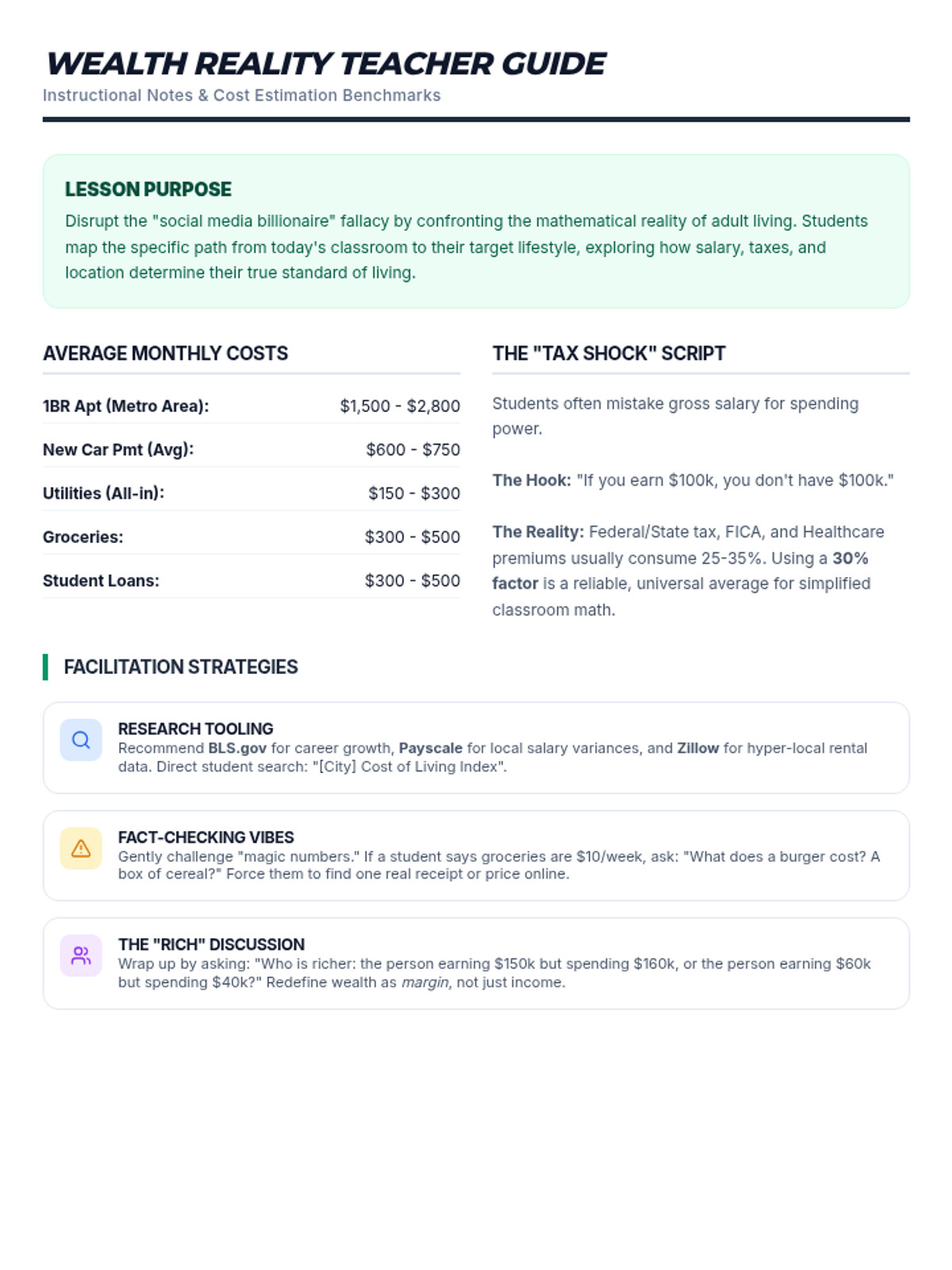
A lesson designed to ground student aspirations in financial reality by researching career salaries and mapping them against the actual costs of a desired lifestyle. Students will explore gross vs. net income, essential living expenses, and the long-term planning required to achieve financial goals.
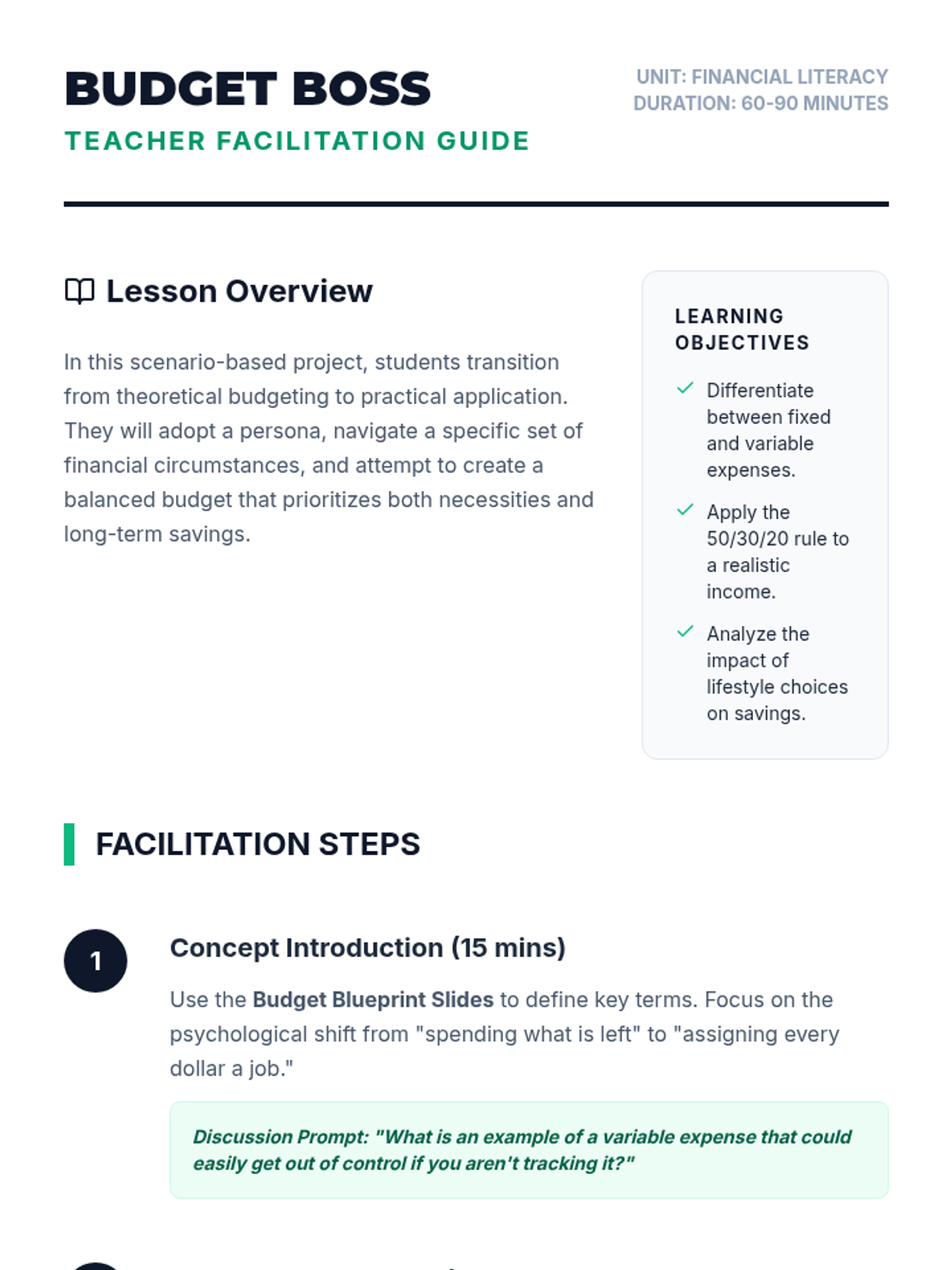
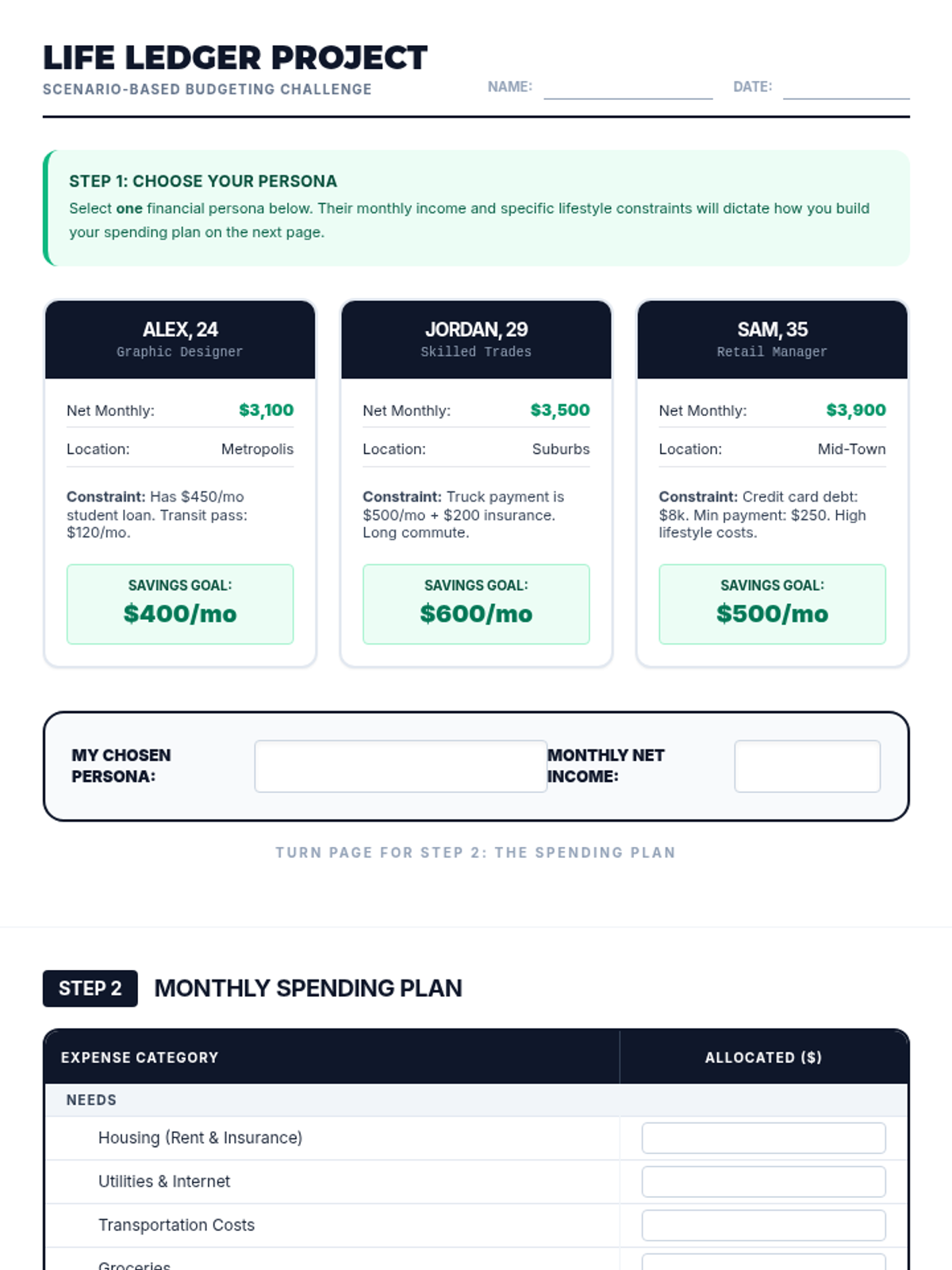
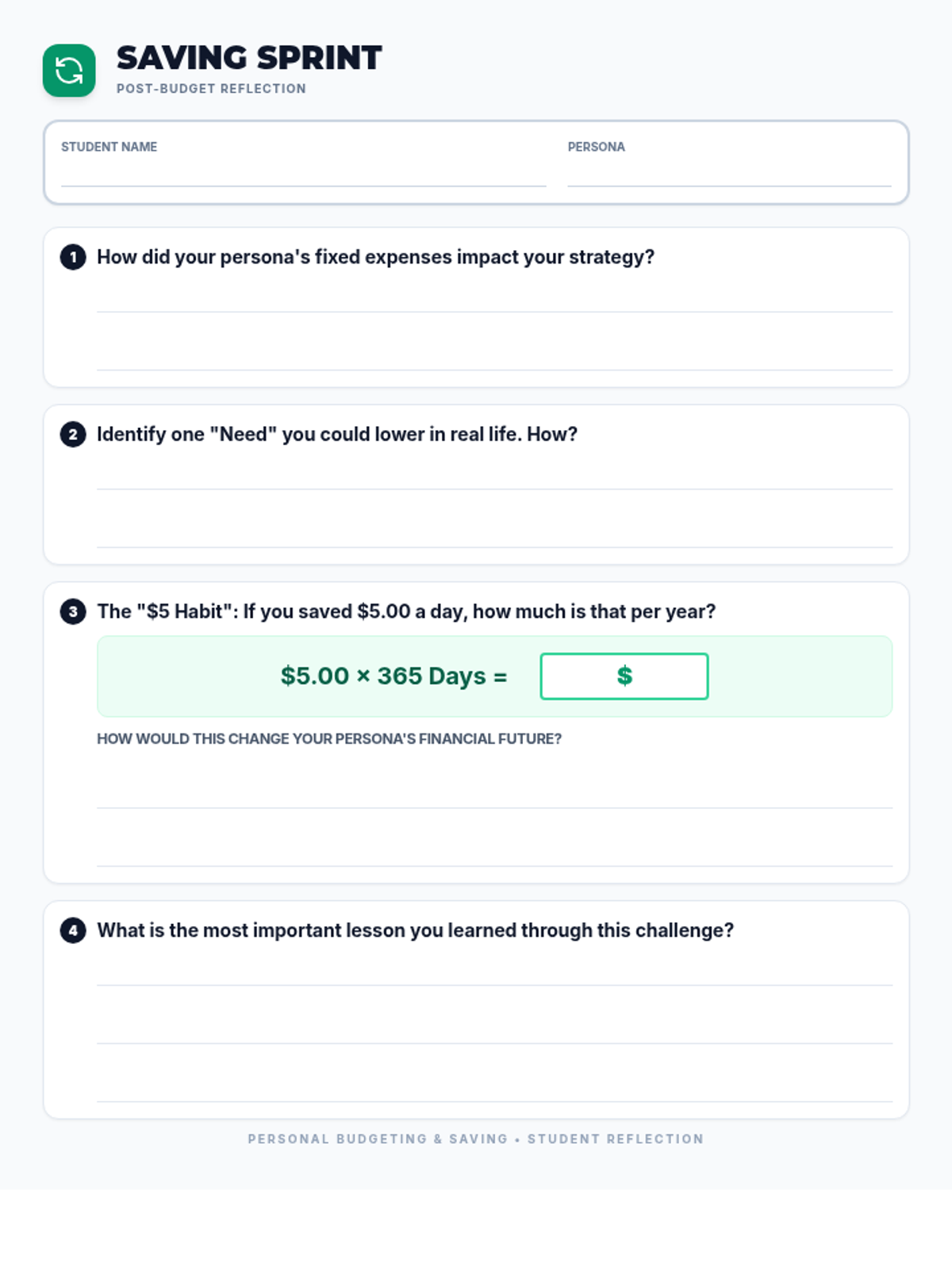
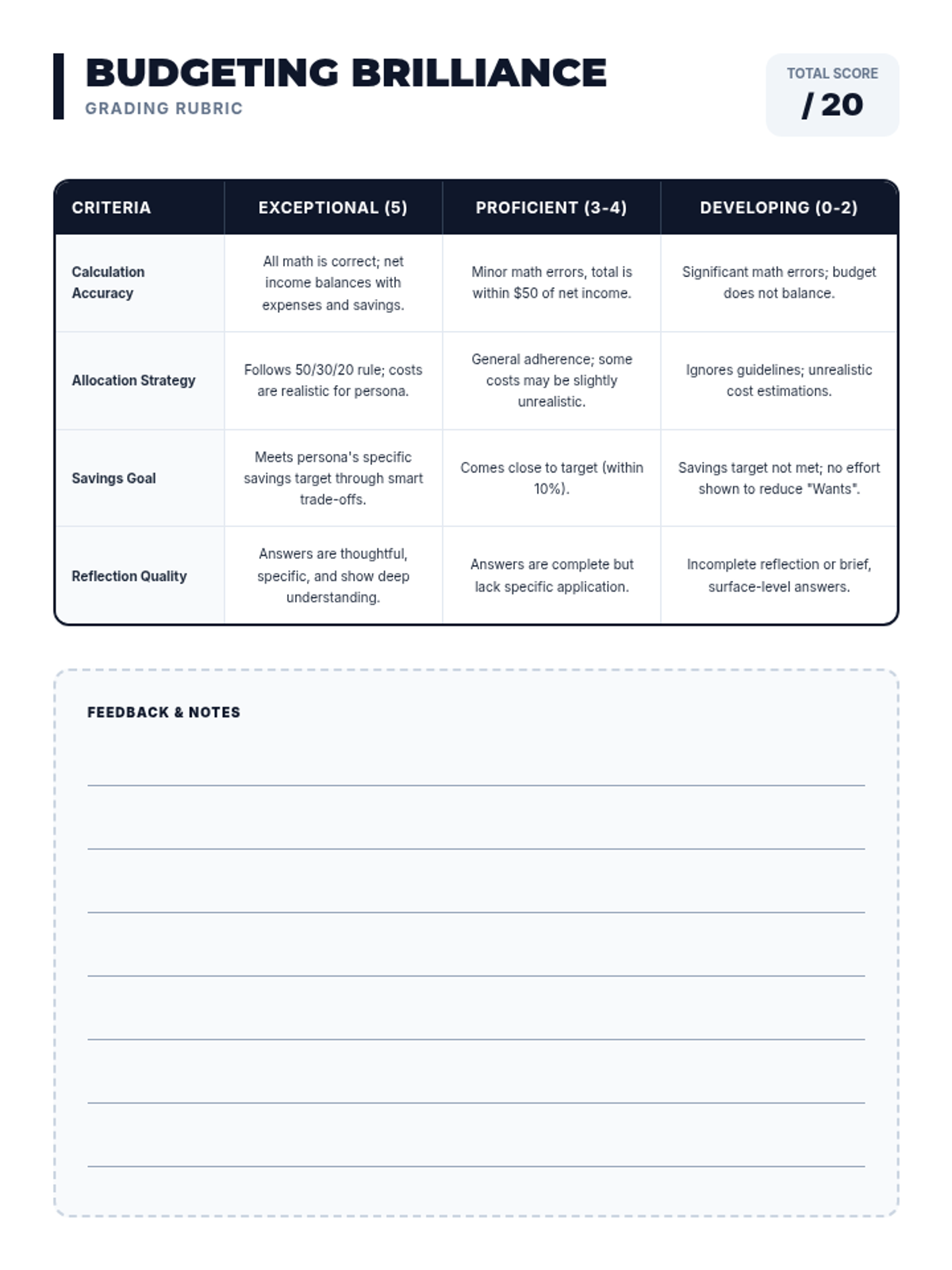
A hands-on financial literacy lesson where students apply budgeting principles to real-world scenarios, managing income, expenses, and savings goals for a fictional persona.
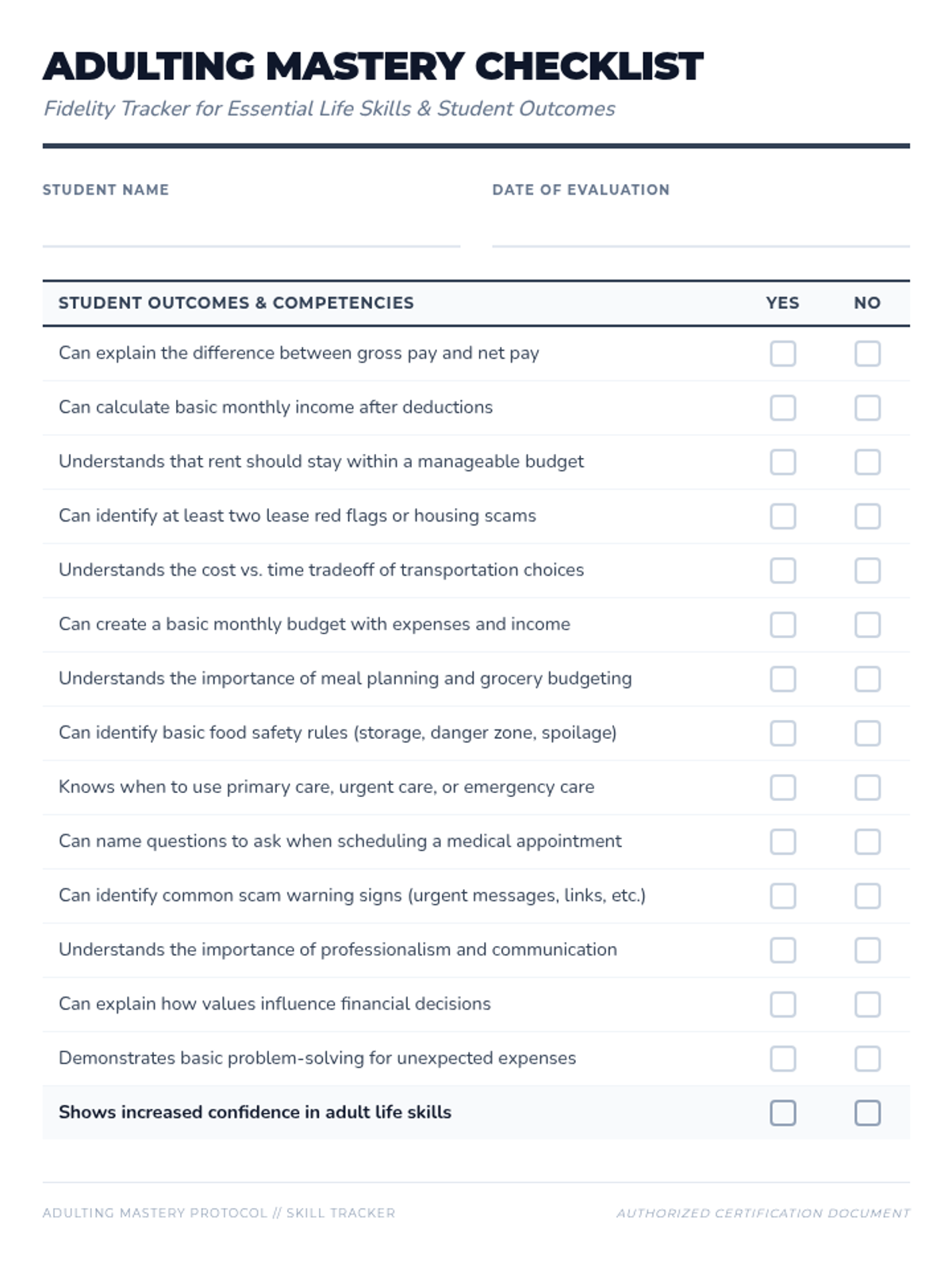
A tool for teachers to track student progress across key adult life skills, from financial literacy to health and workplace professionalism.
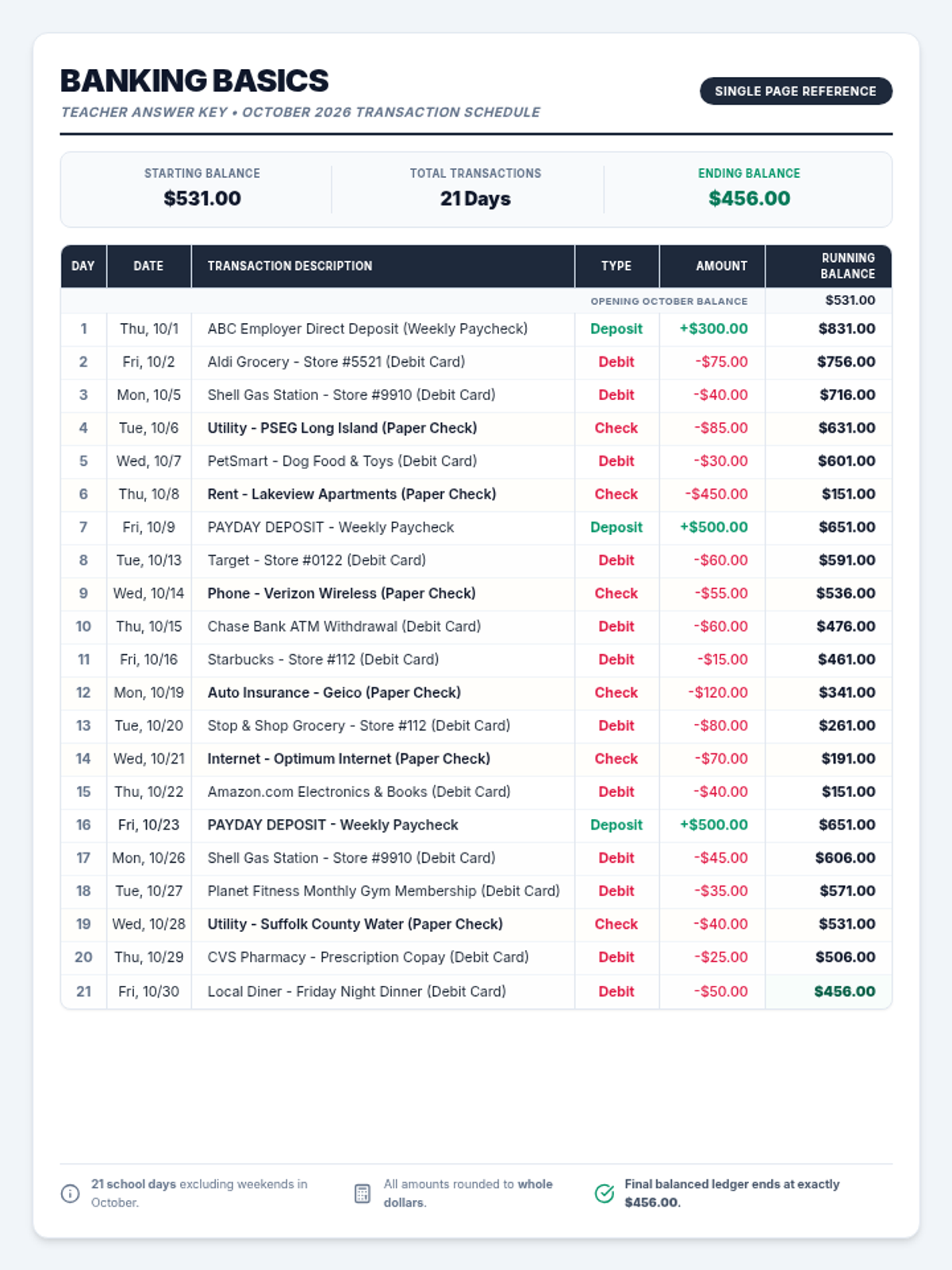
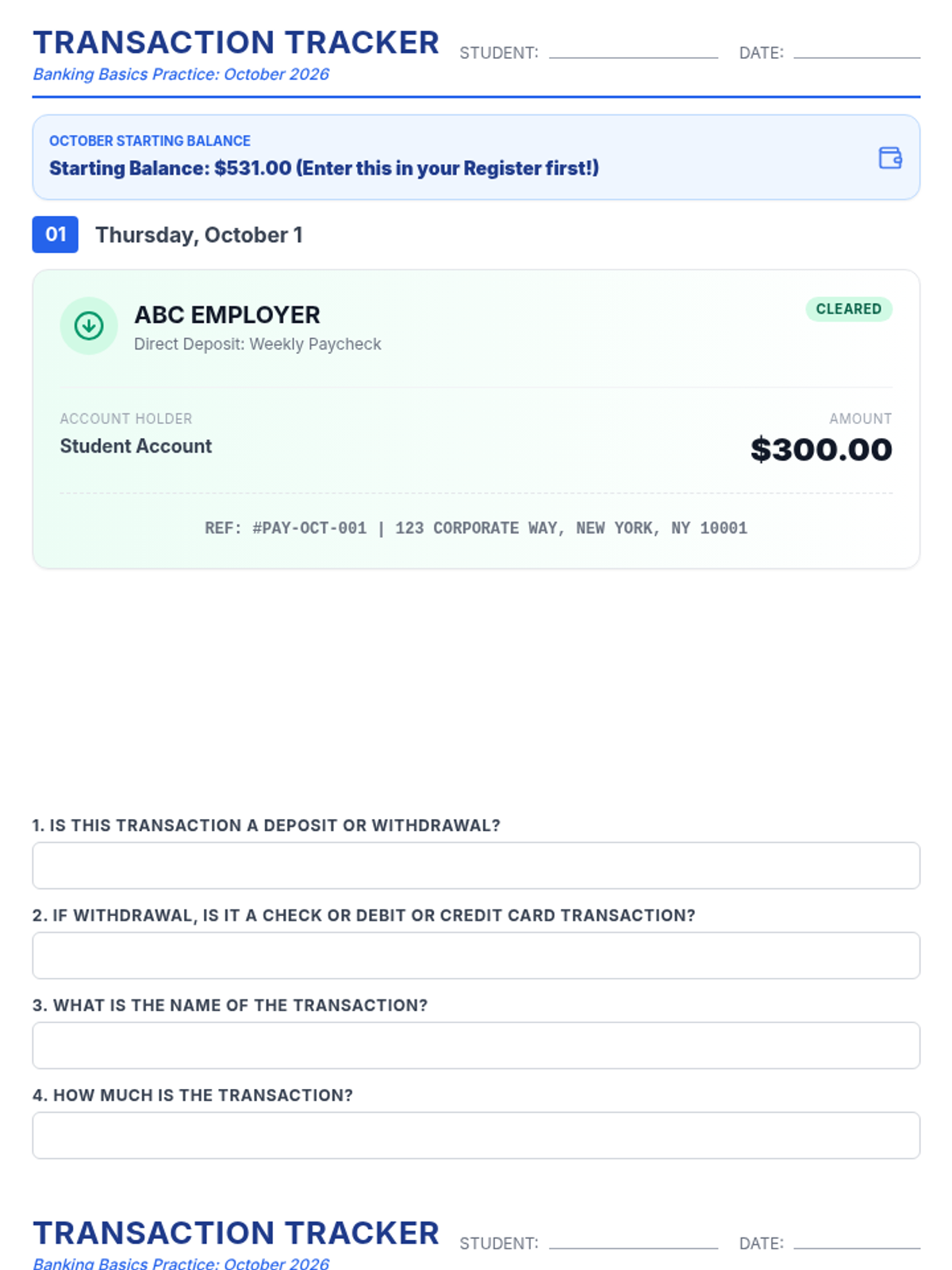
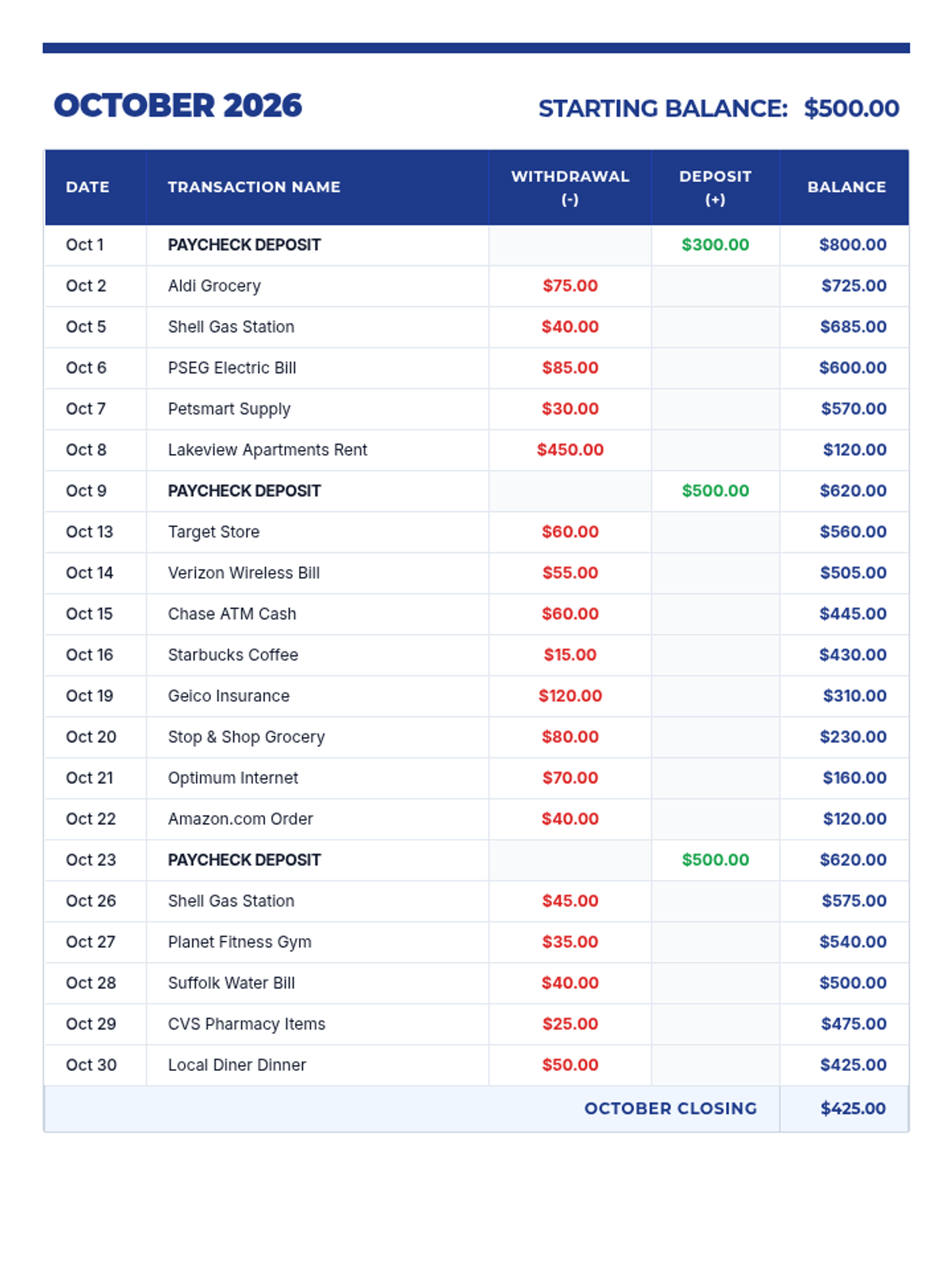
A practical financial literacy lesson where students track daily banking transactions, calculate running balances, and reconcile account registers for October 2026. Includes a 21-day transaction tracker worksheet with larger check addresses and a teacher answer key schedule.
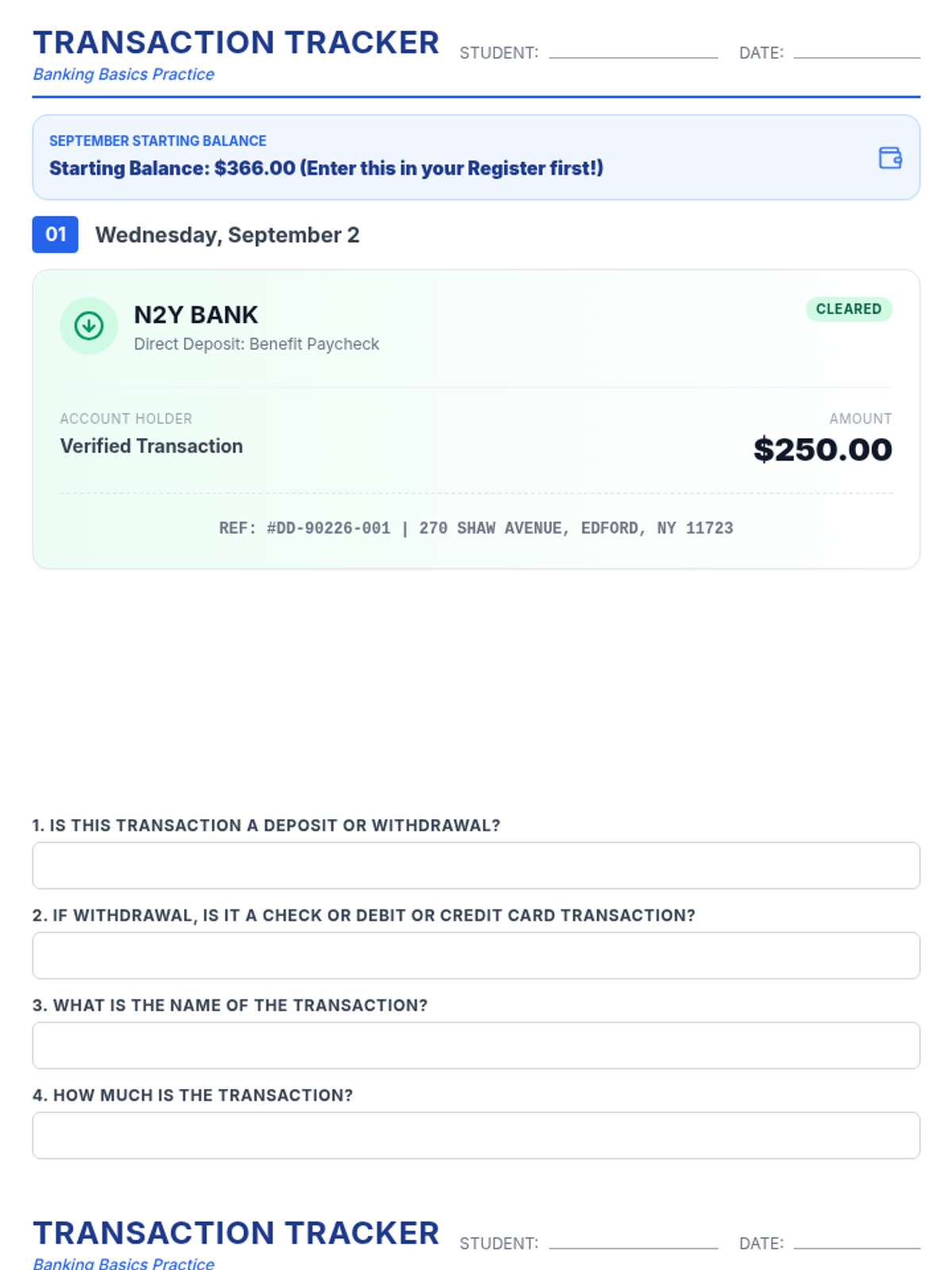
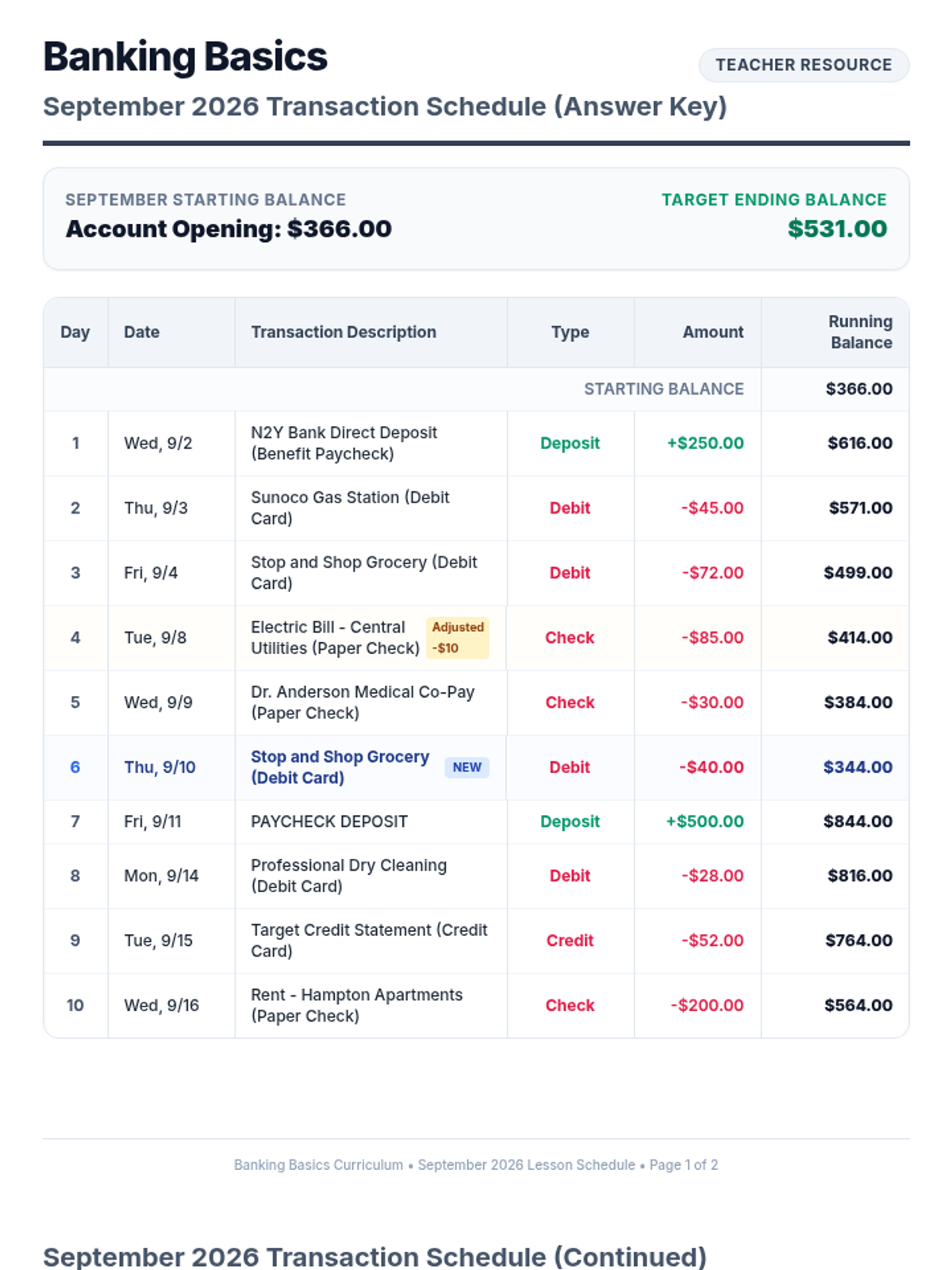
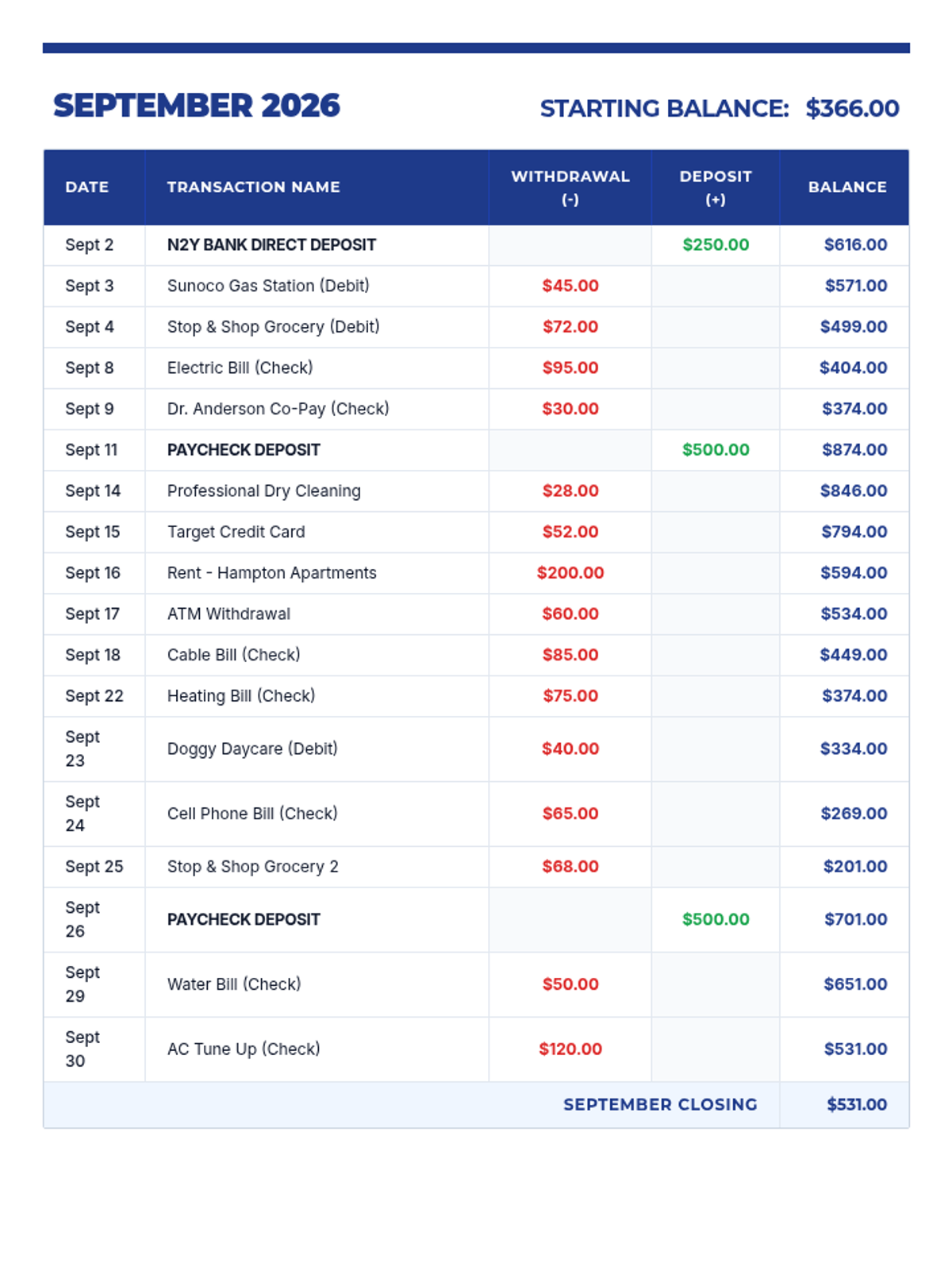
A practical financial literacy lesson where students track daily banking transactions, calculate running balances, and reconcile account registers for September 2026. Includes a 19-day transaction tracker worksheet and a complete teacher answer key schedule.
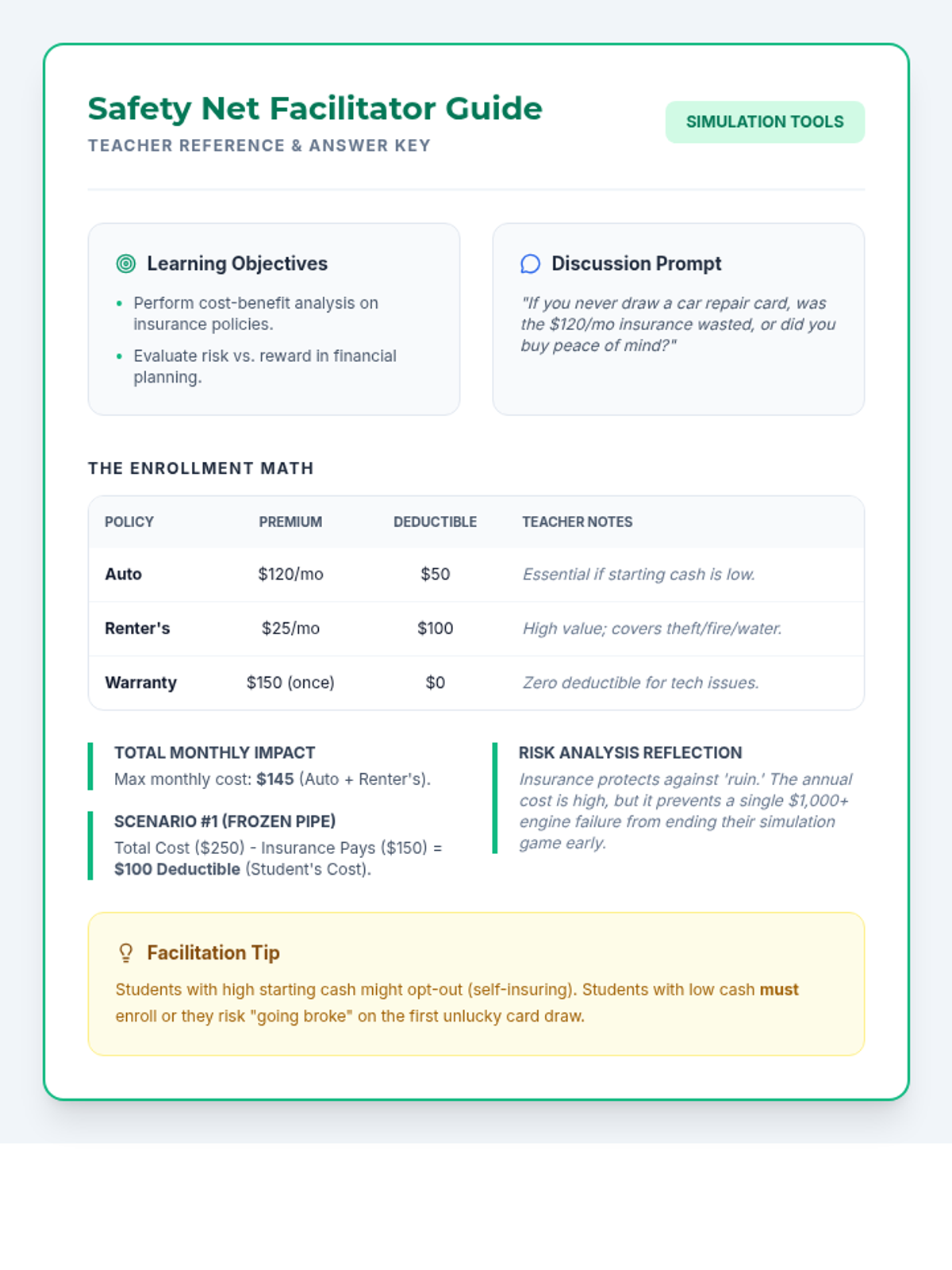
A financial literacy lesson where students choose insurance policies based on risk analysis and cost-benefit ratios, themed around the unique challenges of living in Buffalo, NY.
A comprehensive simulation project where students navigate their first month of independent living, managing expenses and responding to unexpected life events to build financial literacy.
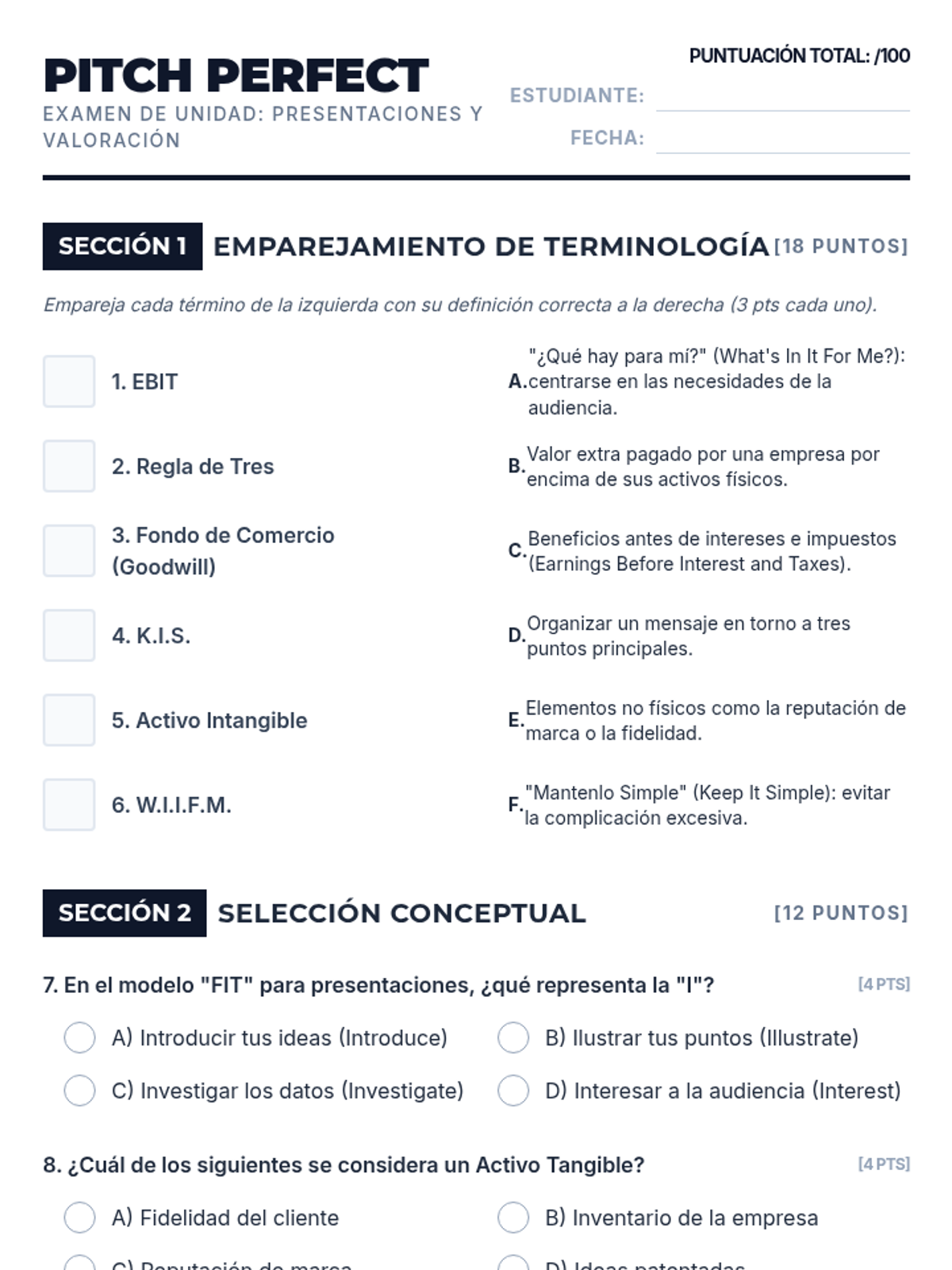
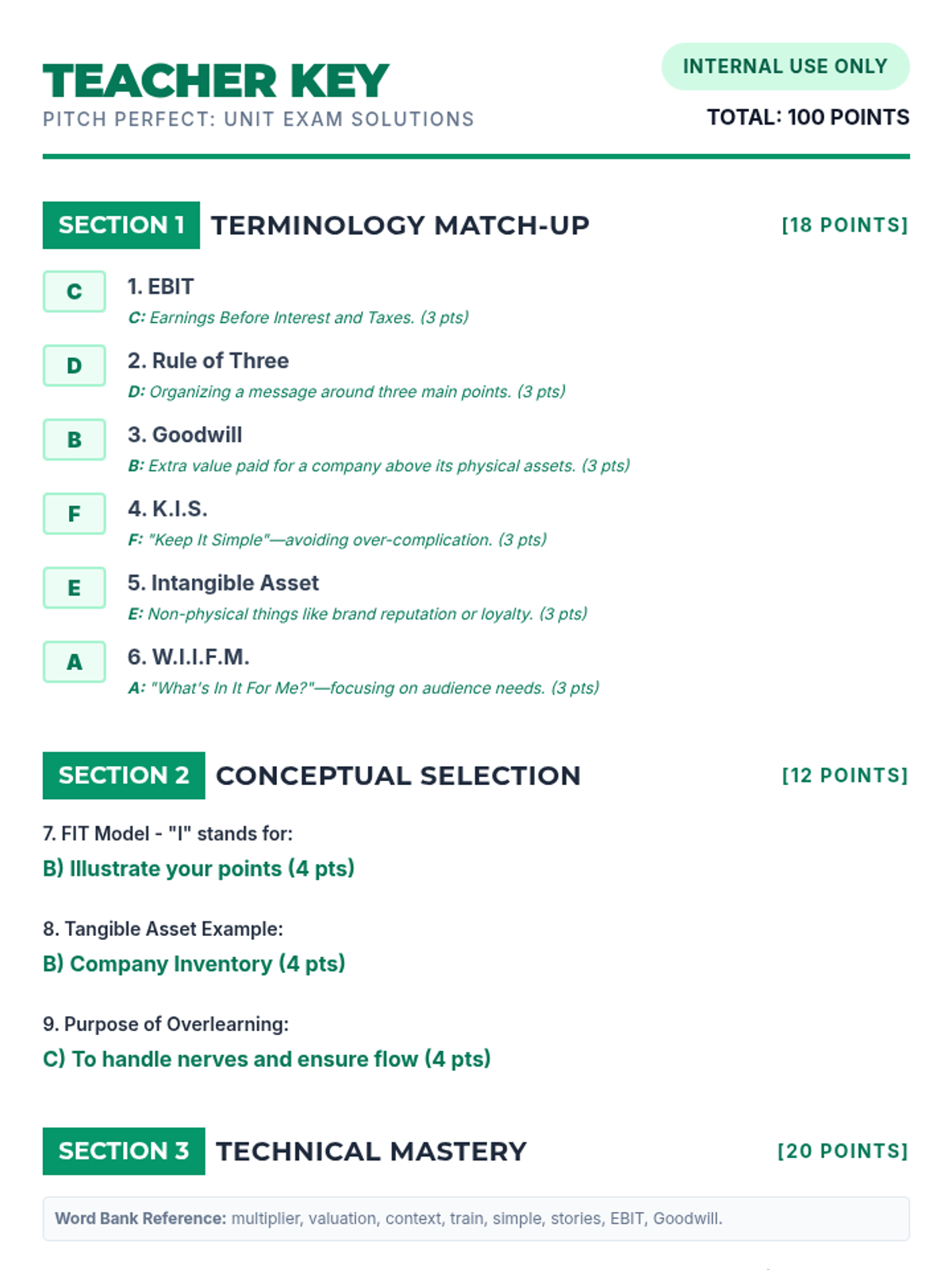
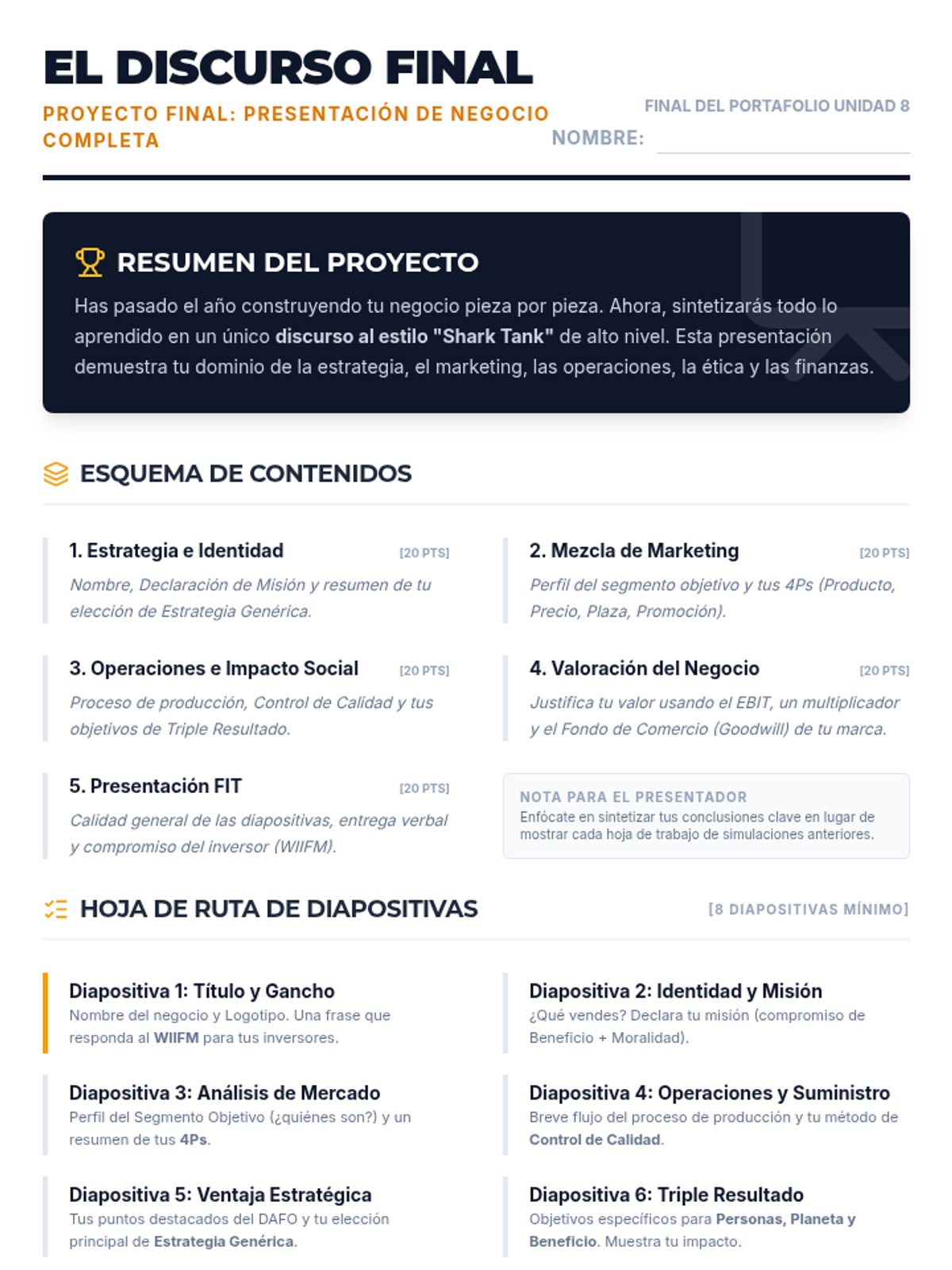
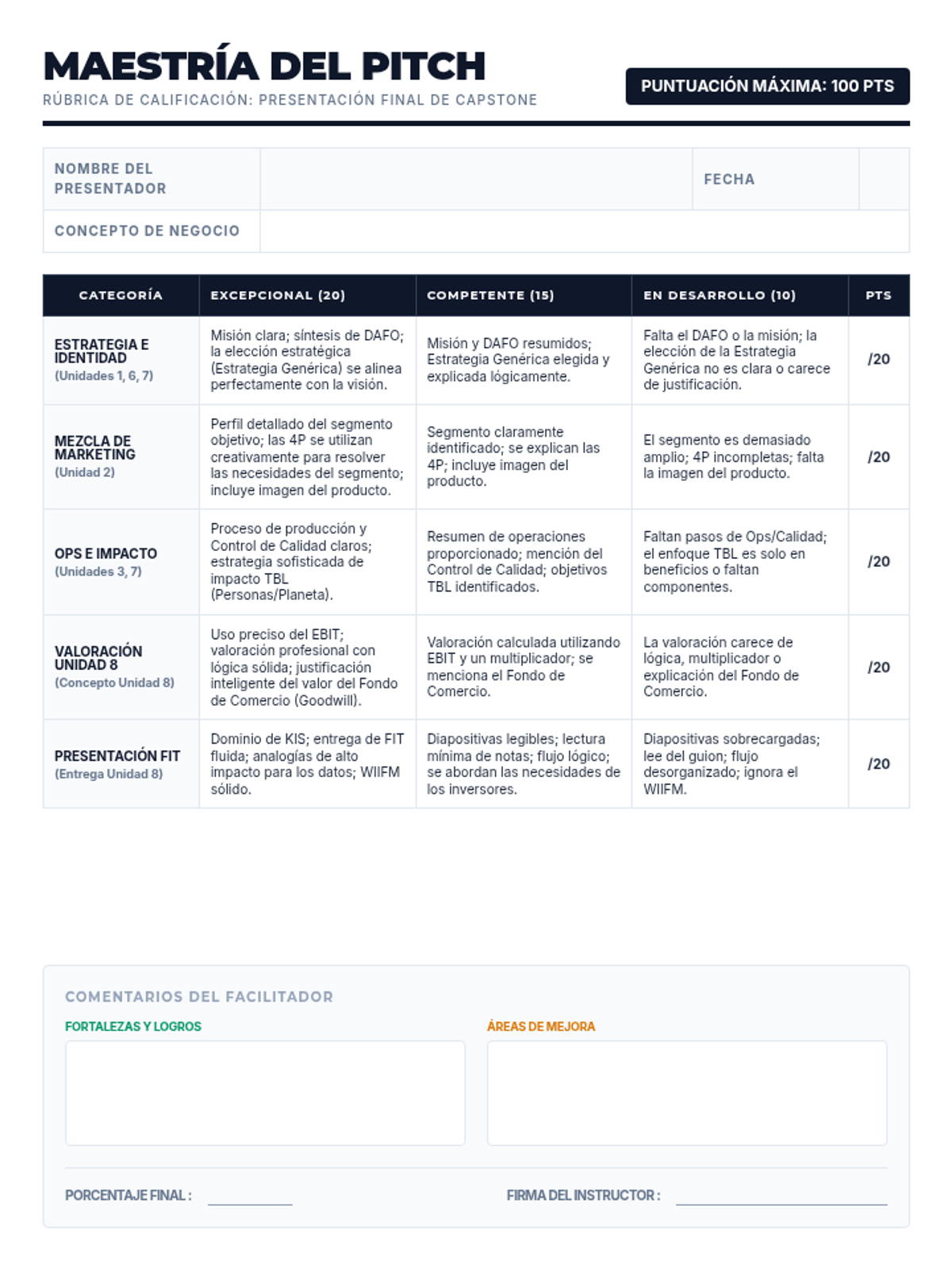
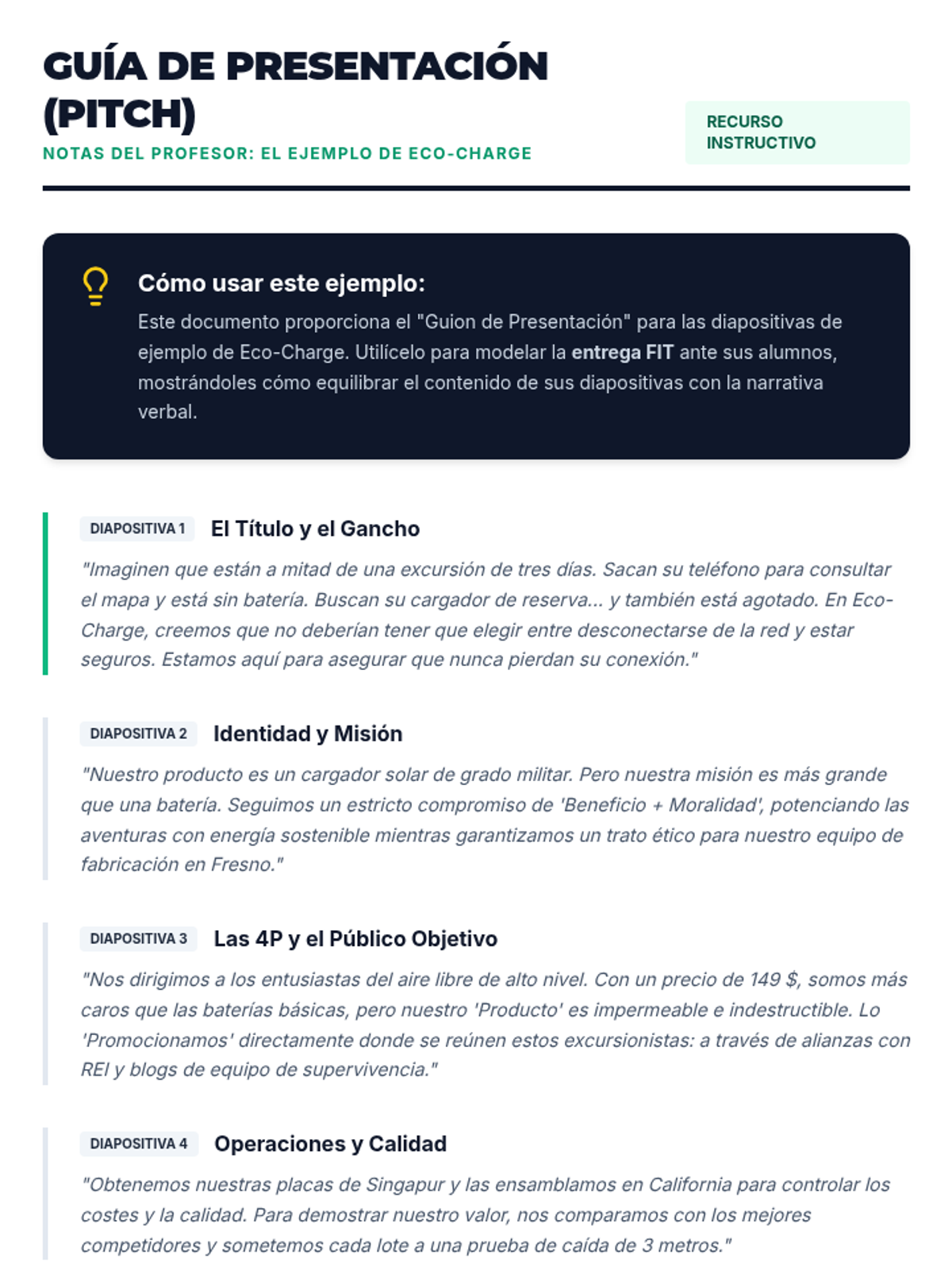
This lesson concludes the unit on business presentation skills and company valuation, testing students on the FIT model, the Rule of Three, and core financial assessment concepts.
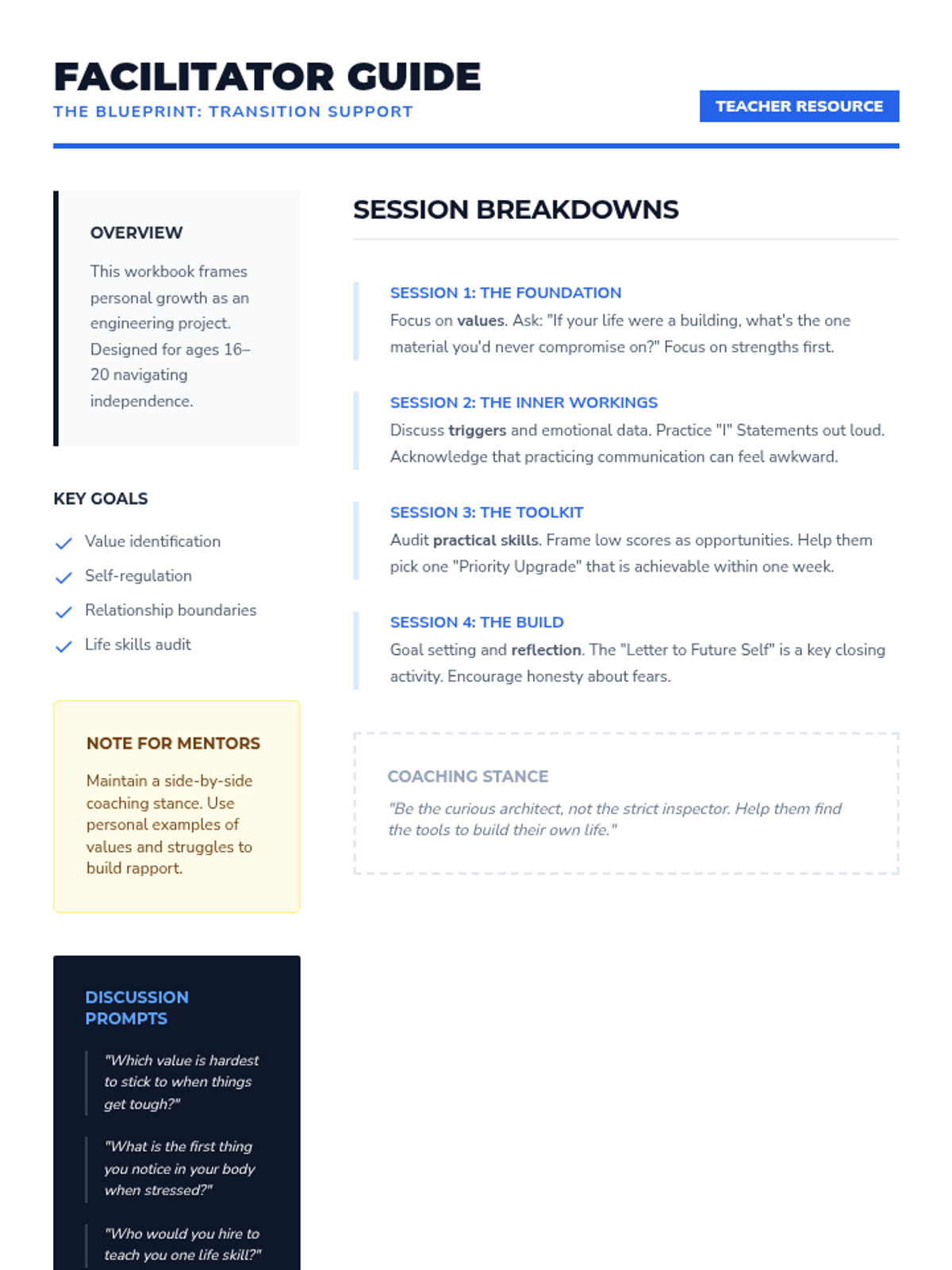
A comprehensive personal development lesson designed for young adults transitioning into independence. It features a 10-page workbook centered on values, emotional intelligence, and life skills, paired with a facilitator guide for mentors or therapists.
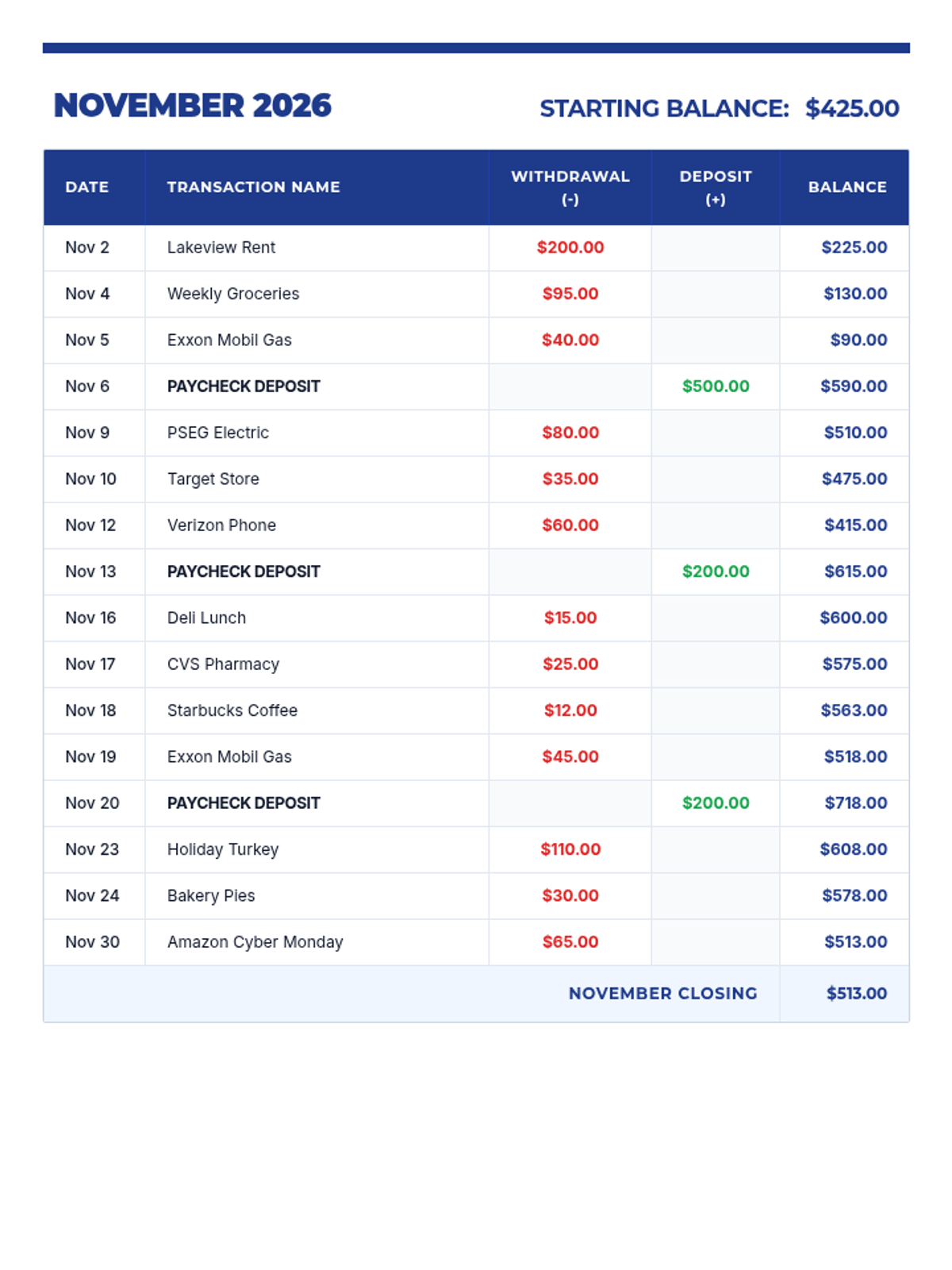
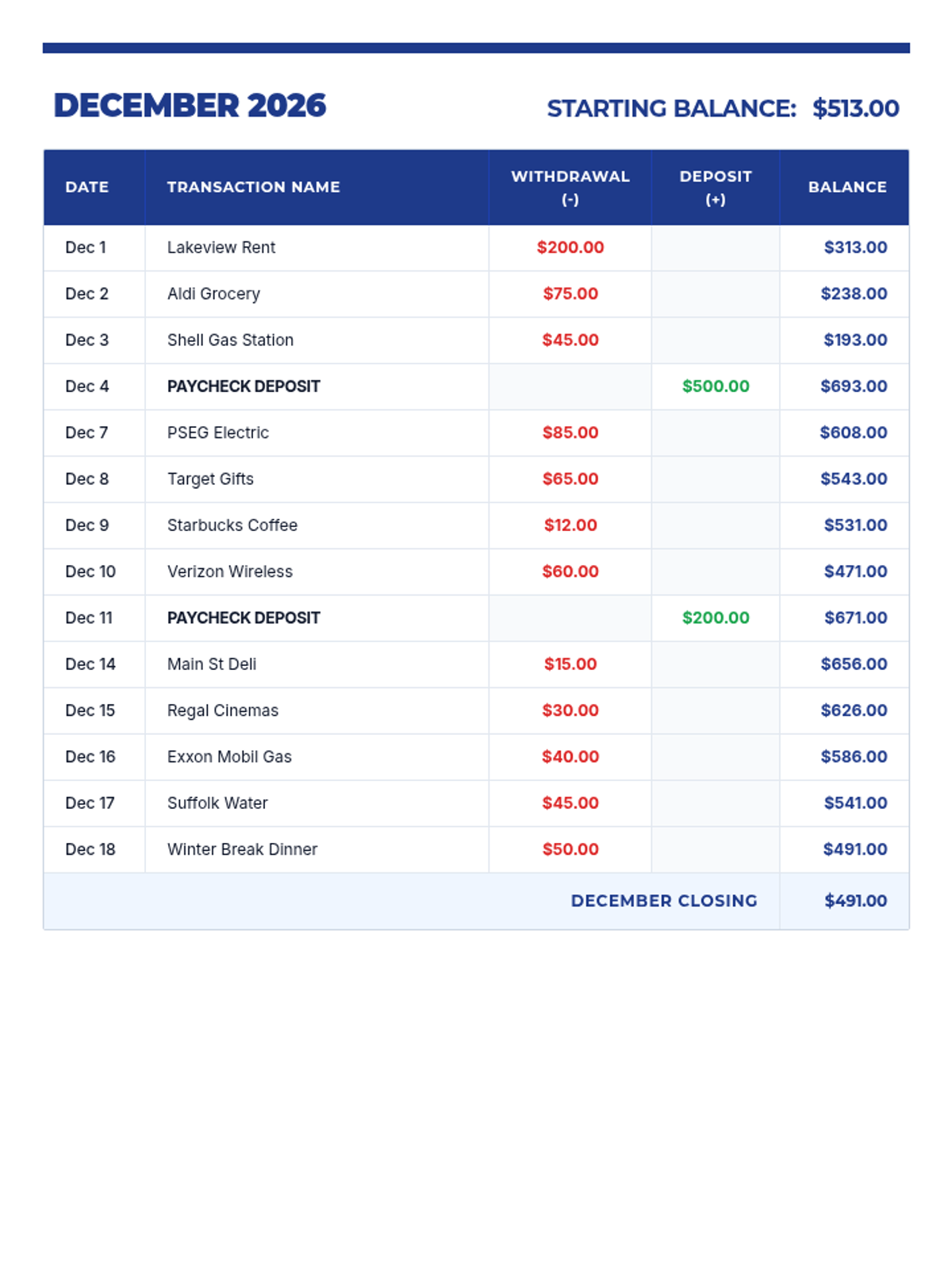
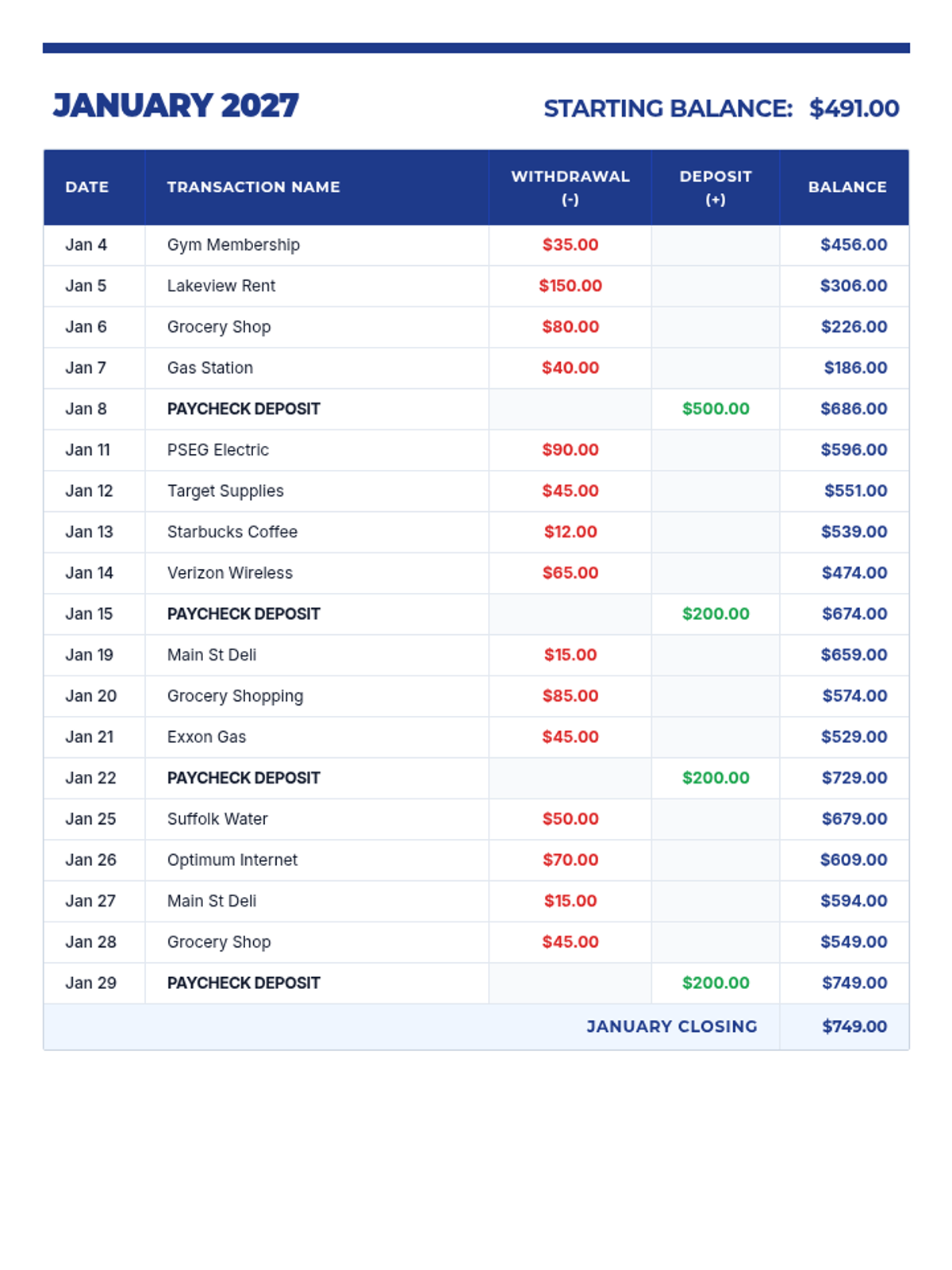
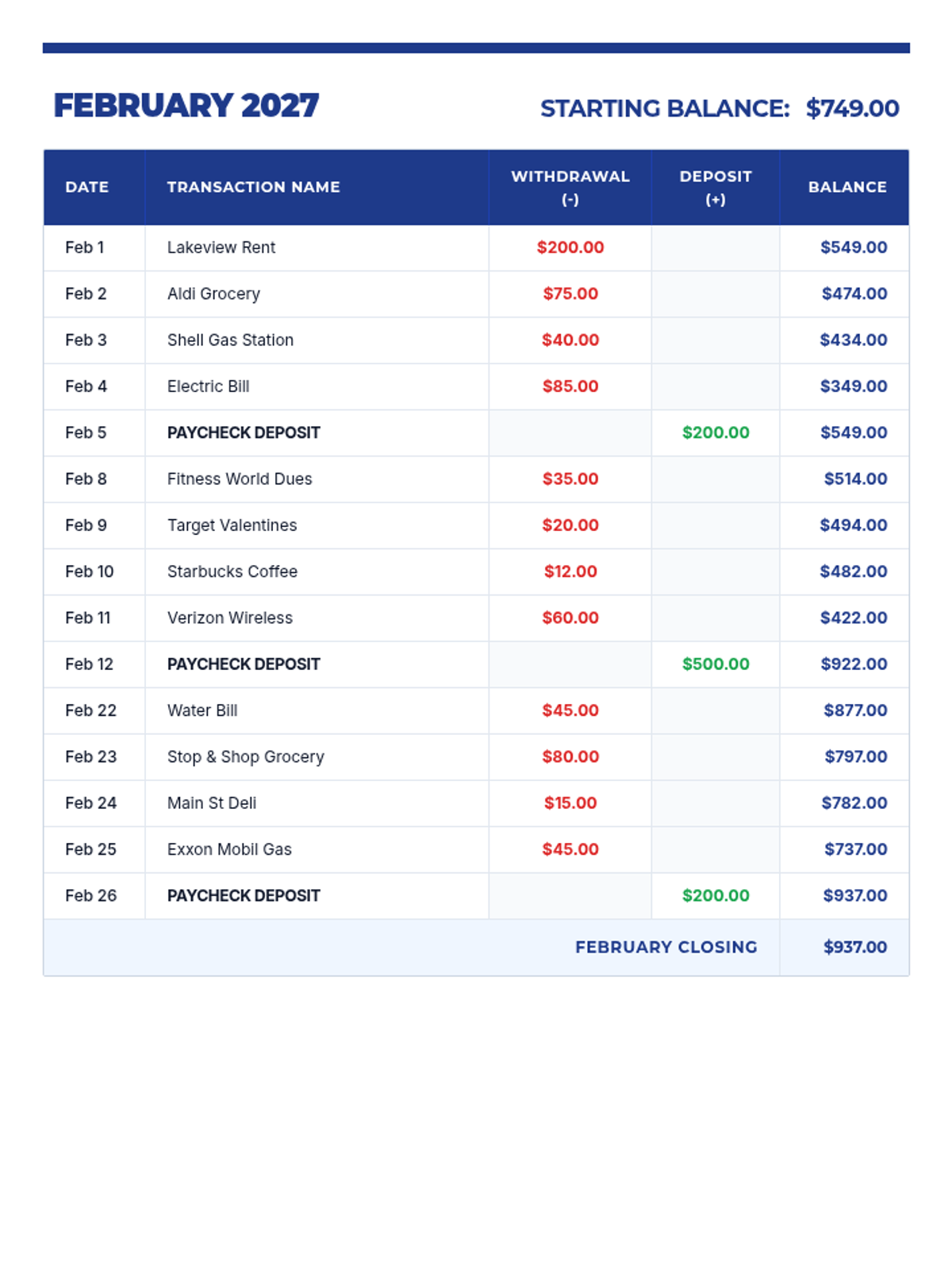
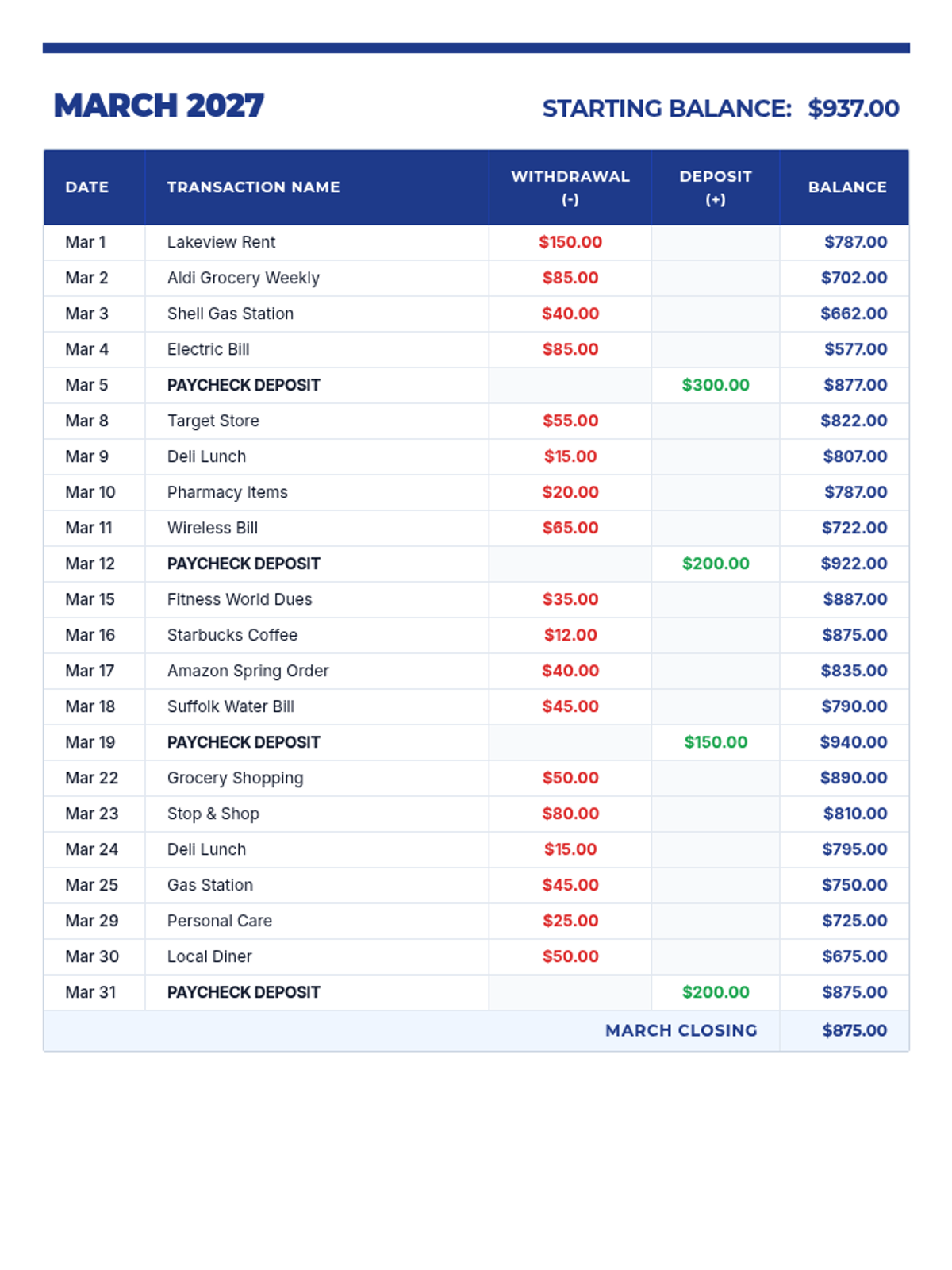
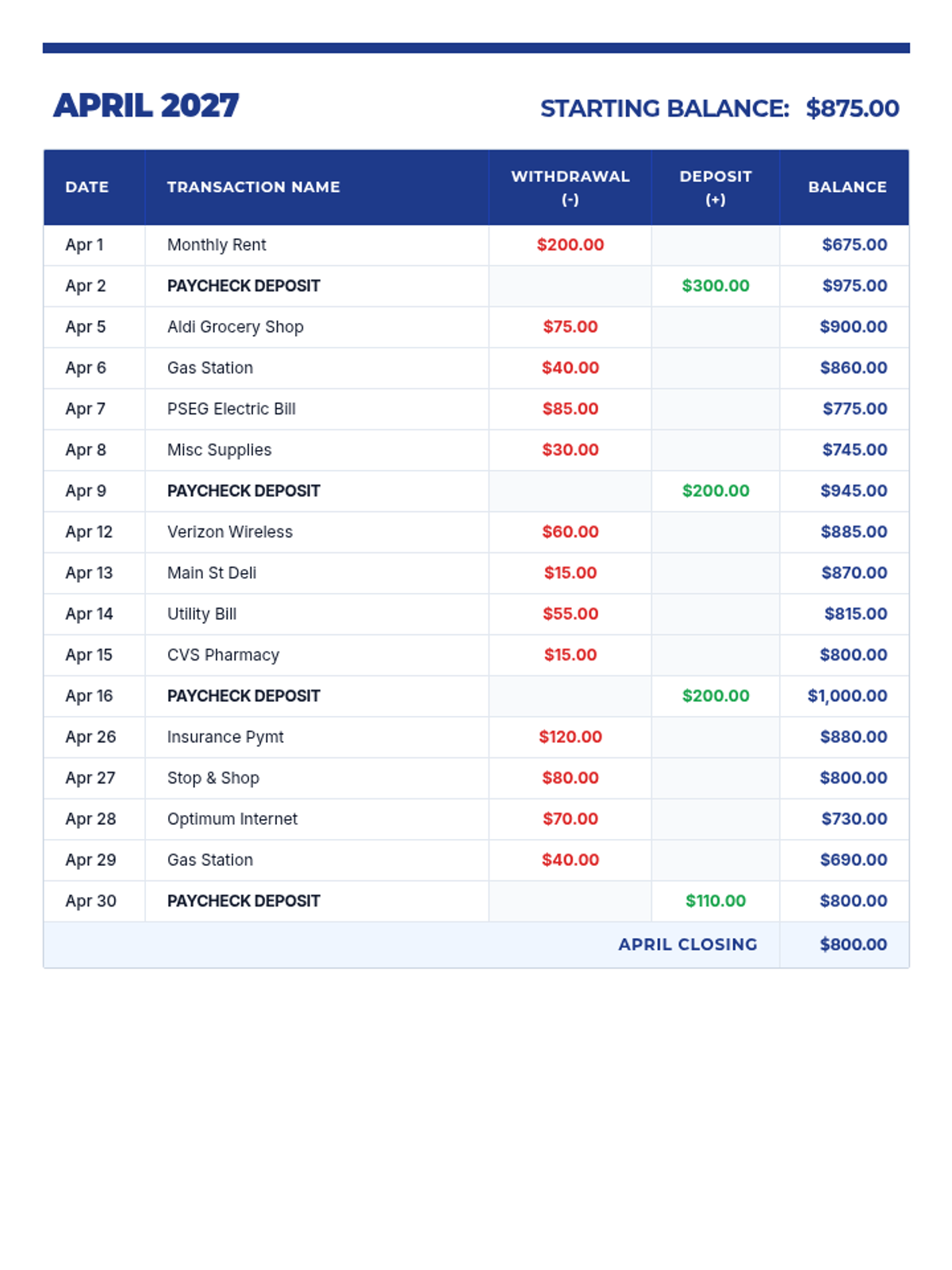
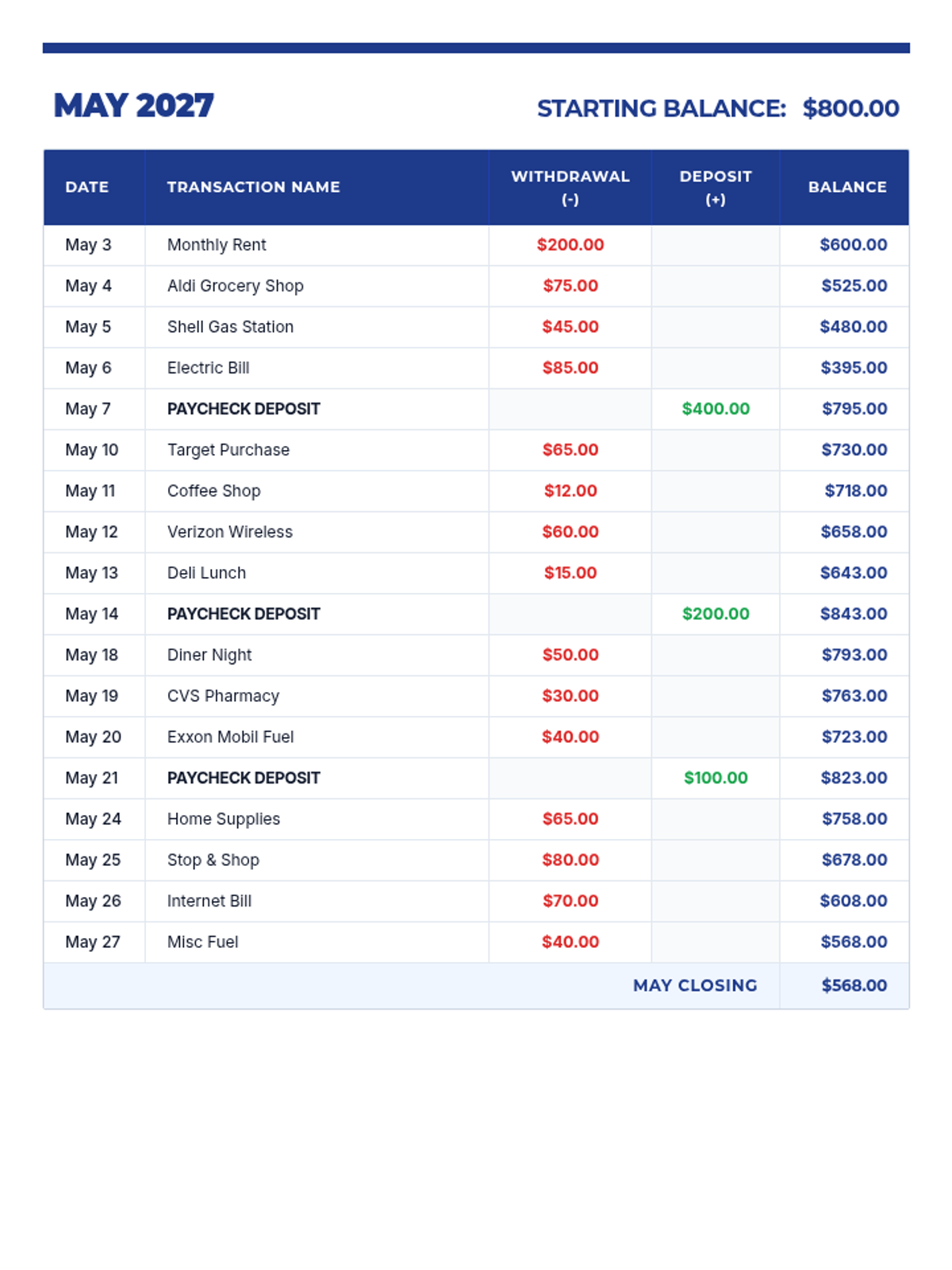
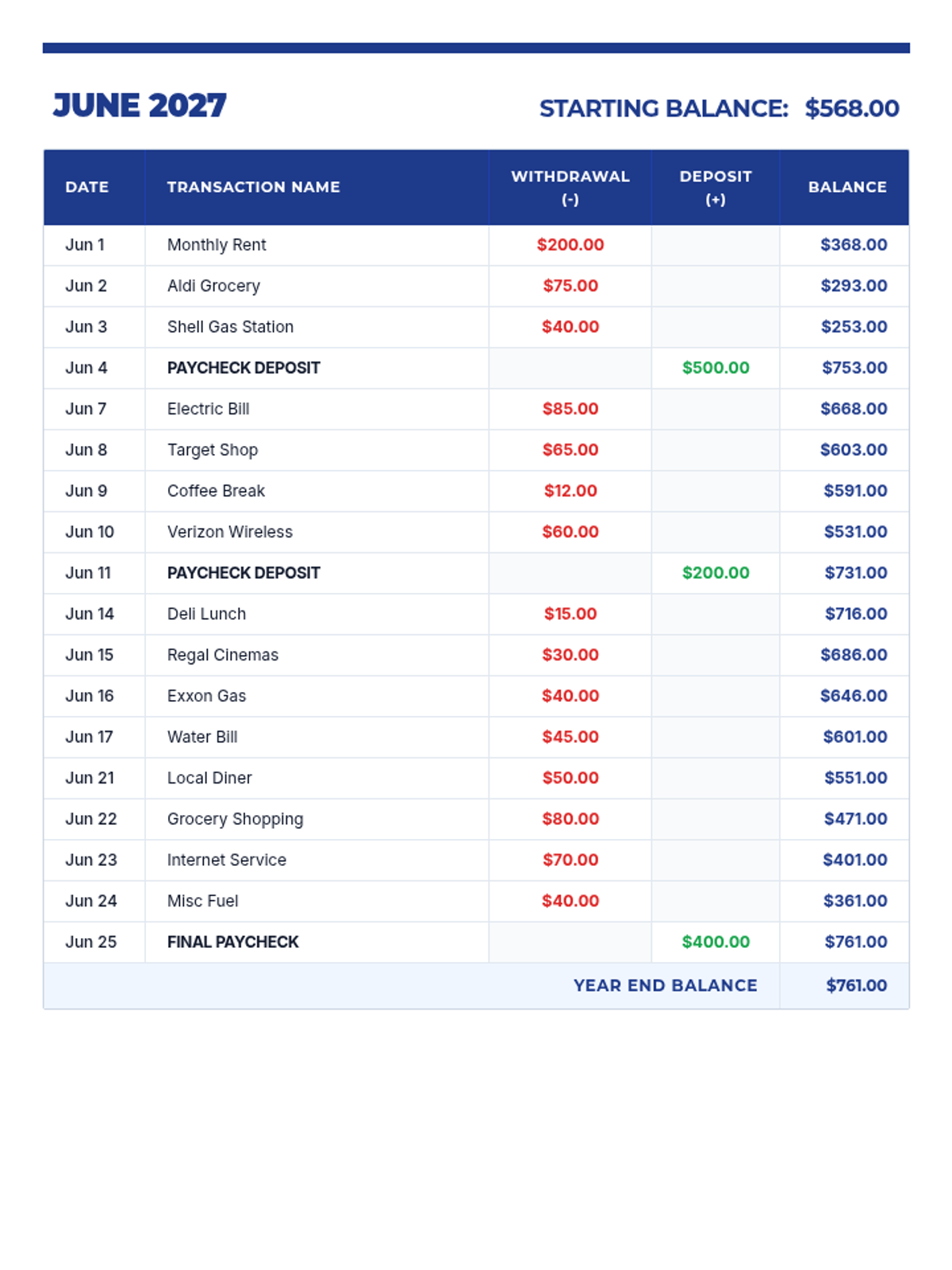
A collection of monthly paycheck registers for the 2026-2027 school year, designed to teach students real-world banking and transaction tracking.
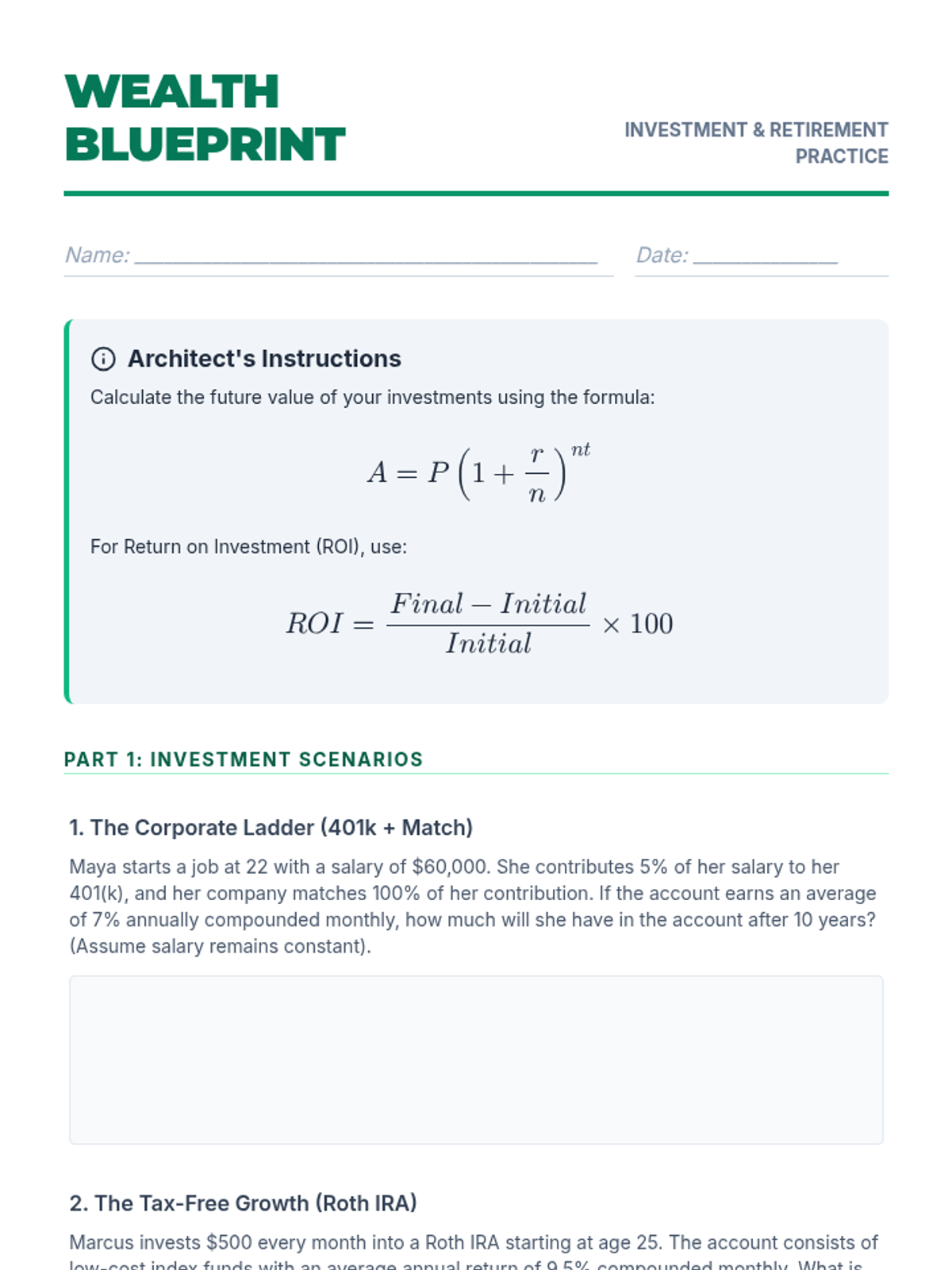
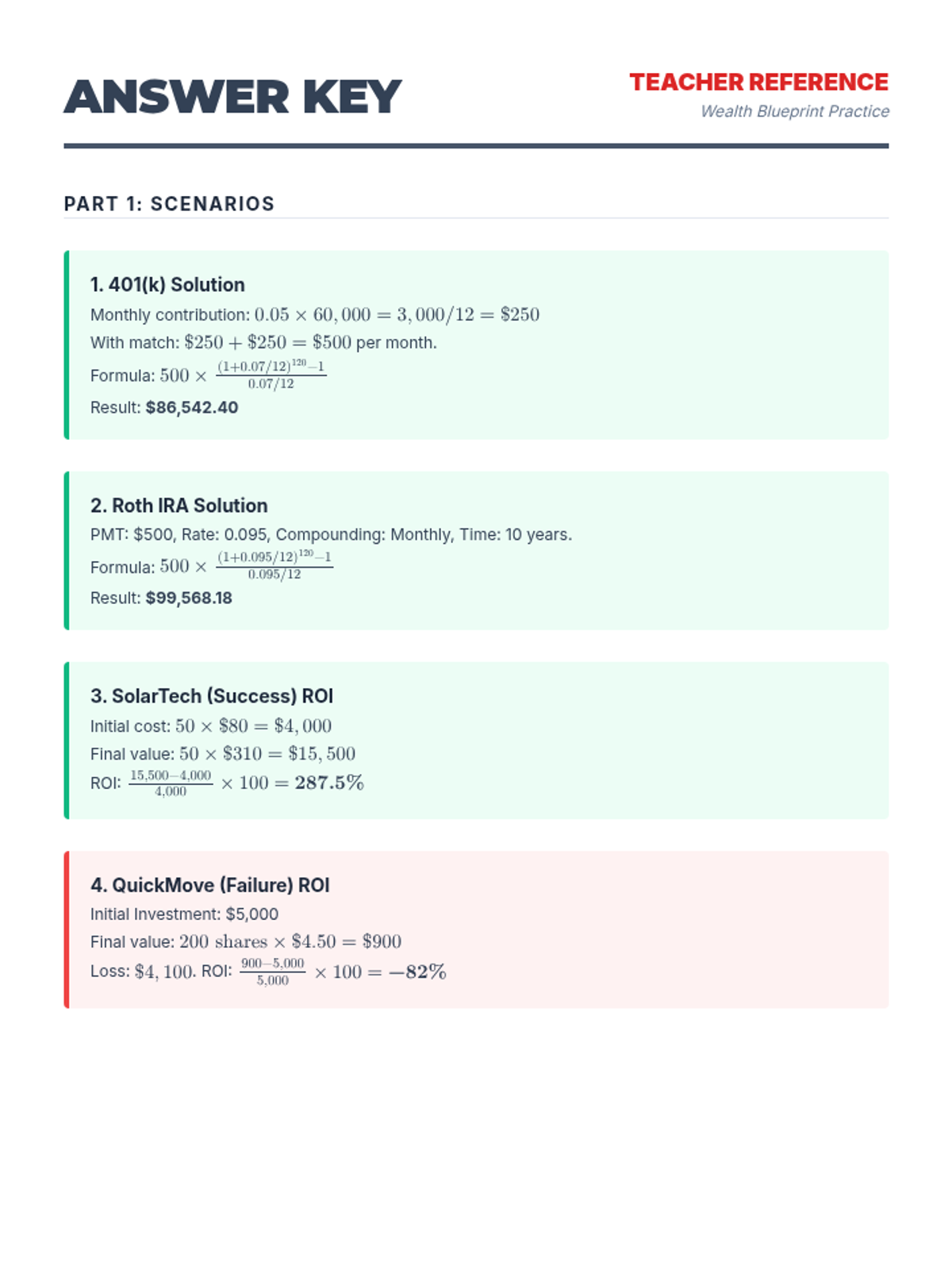
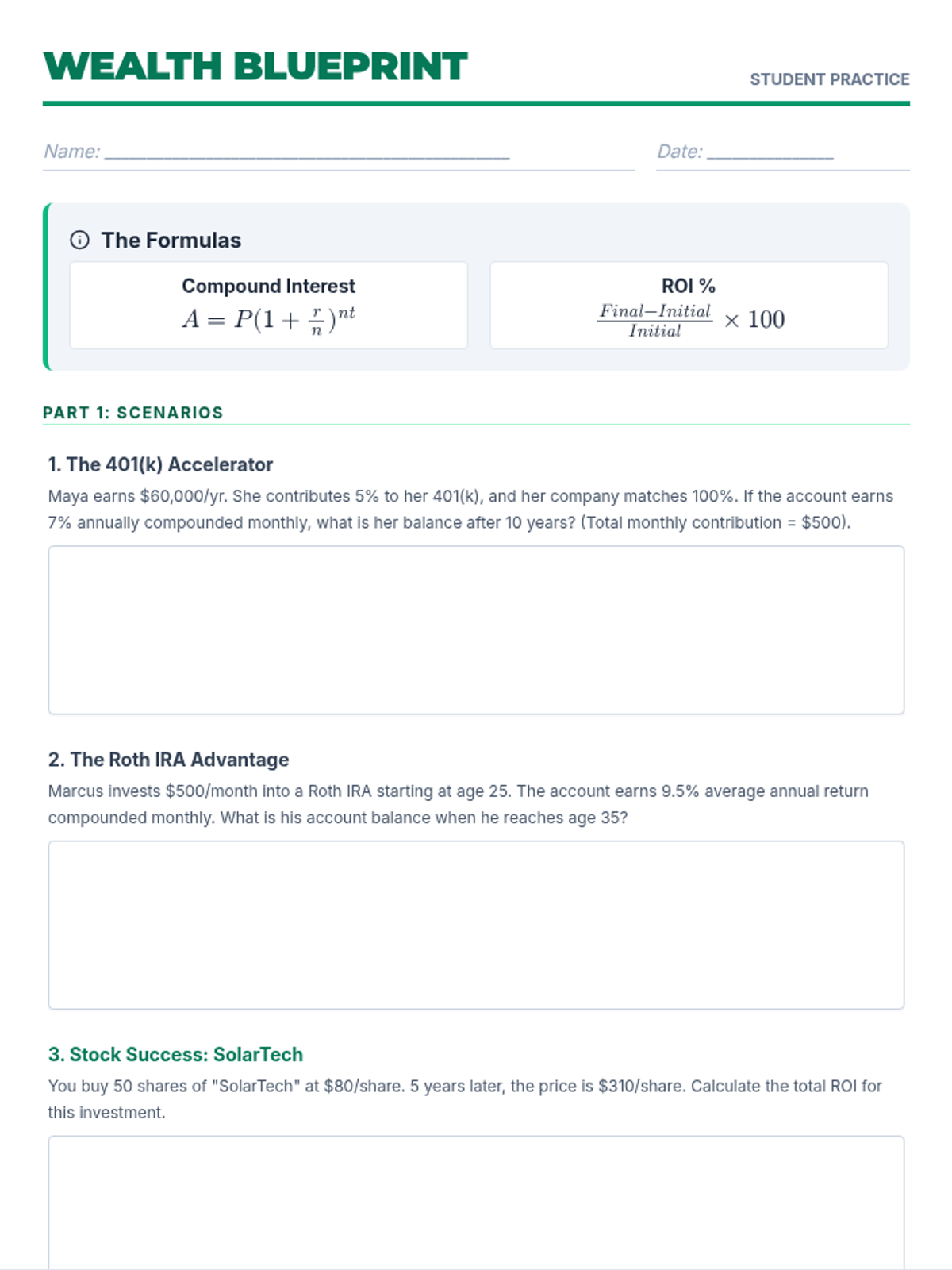
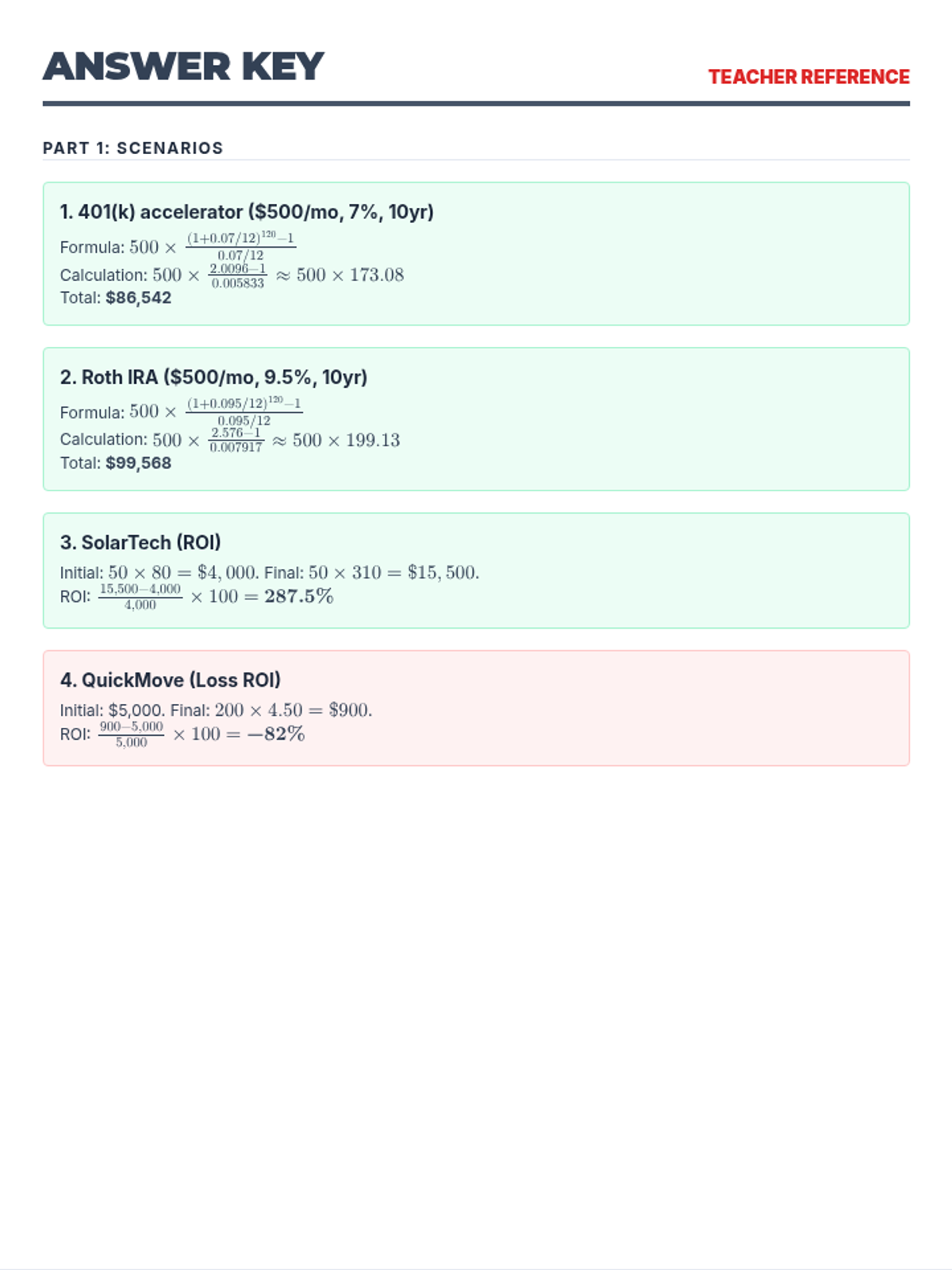
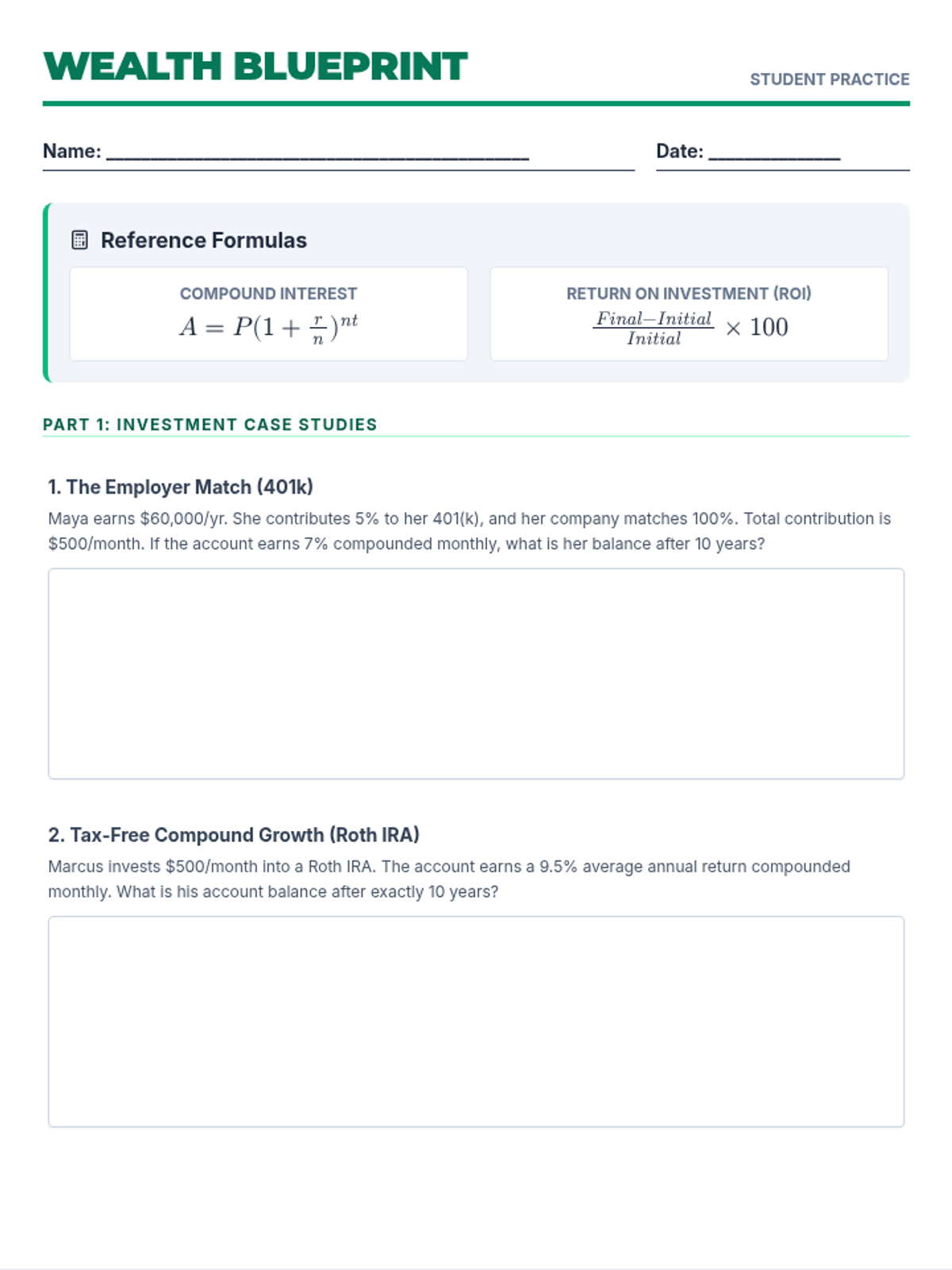
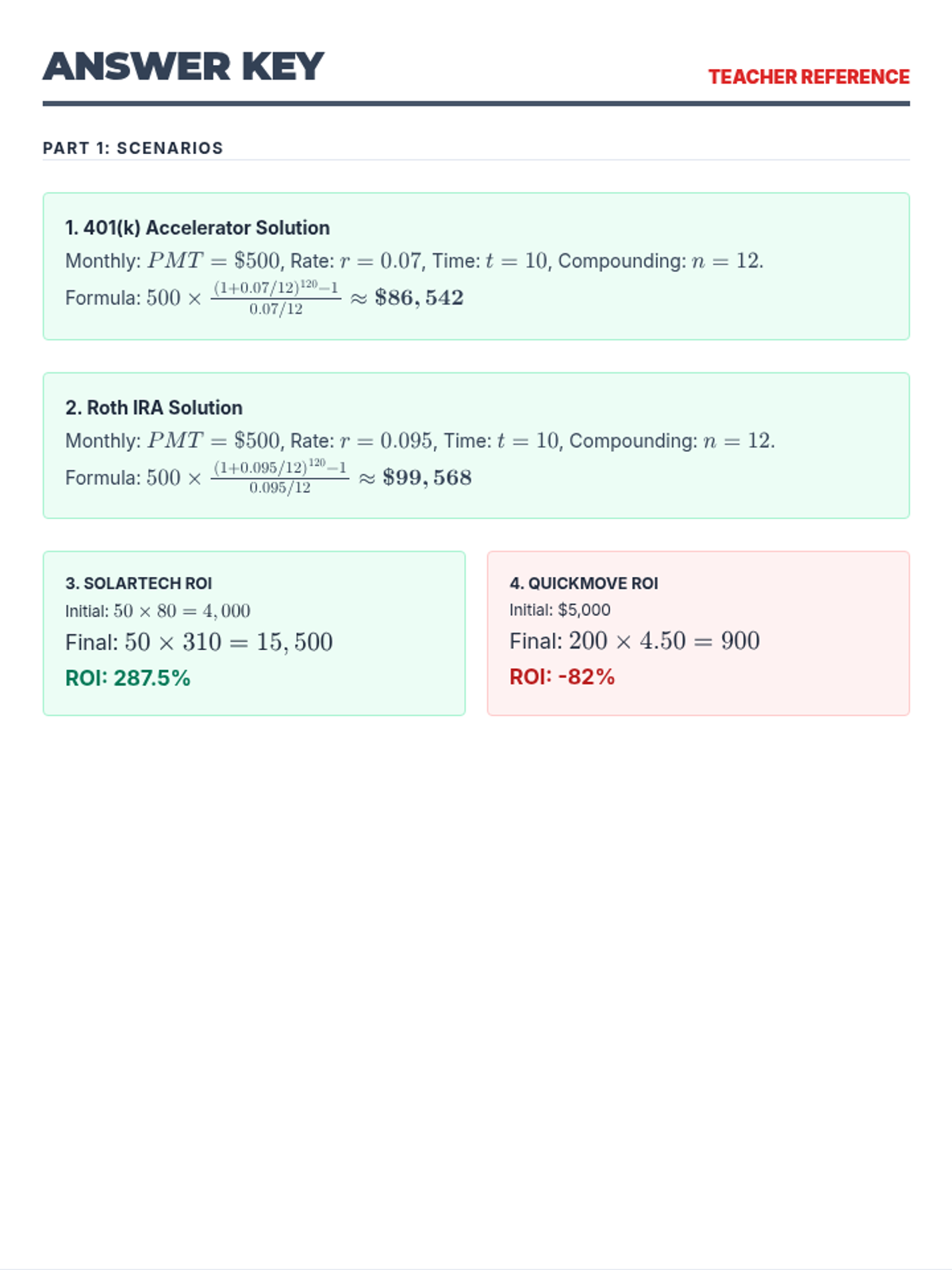
A comprehensive lesson on financial literacy focusing on compound interest, retirement accounts, and stock market ROI through scenario-based practice and data analysis.
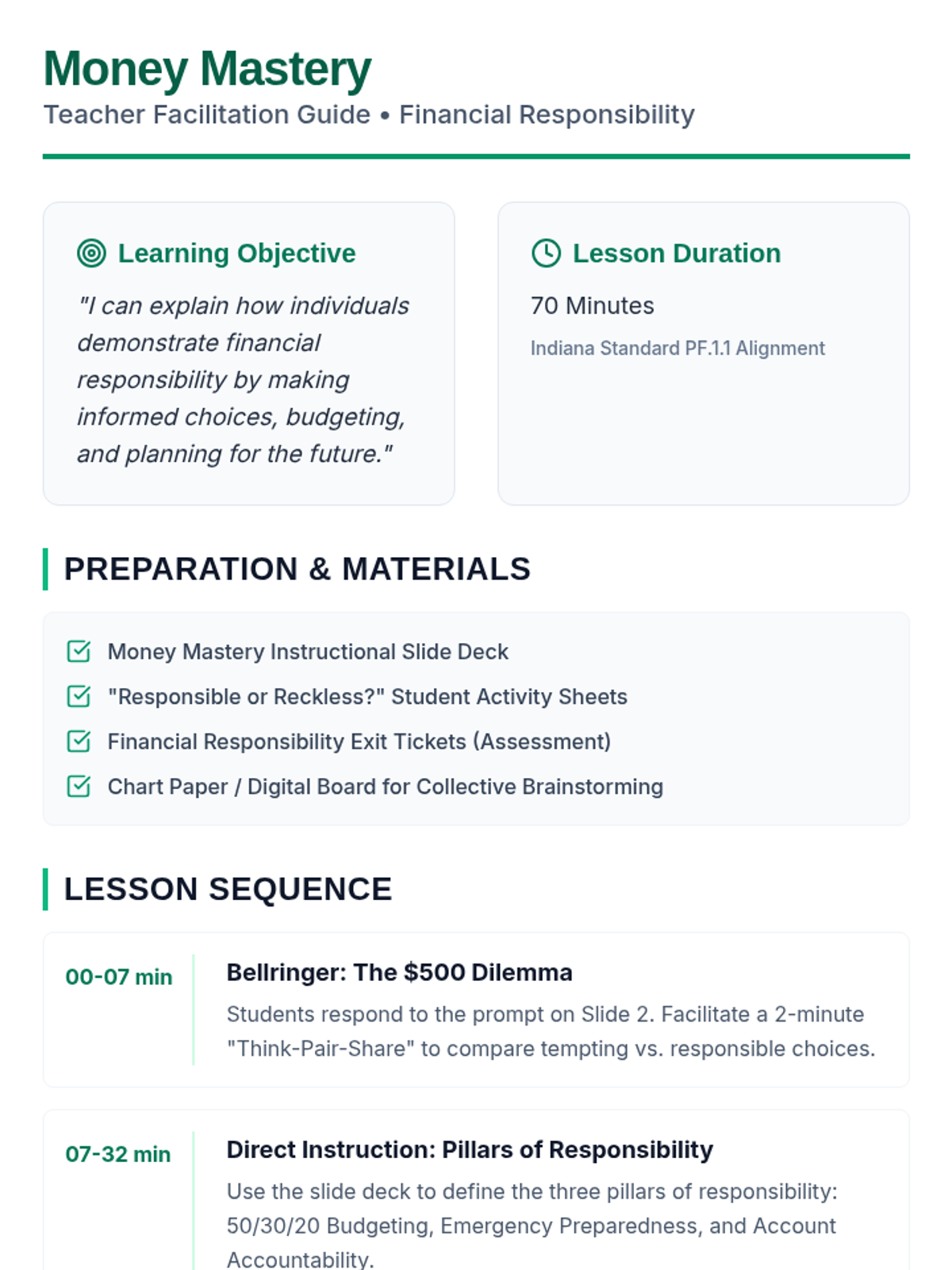
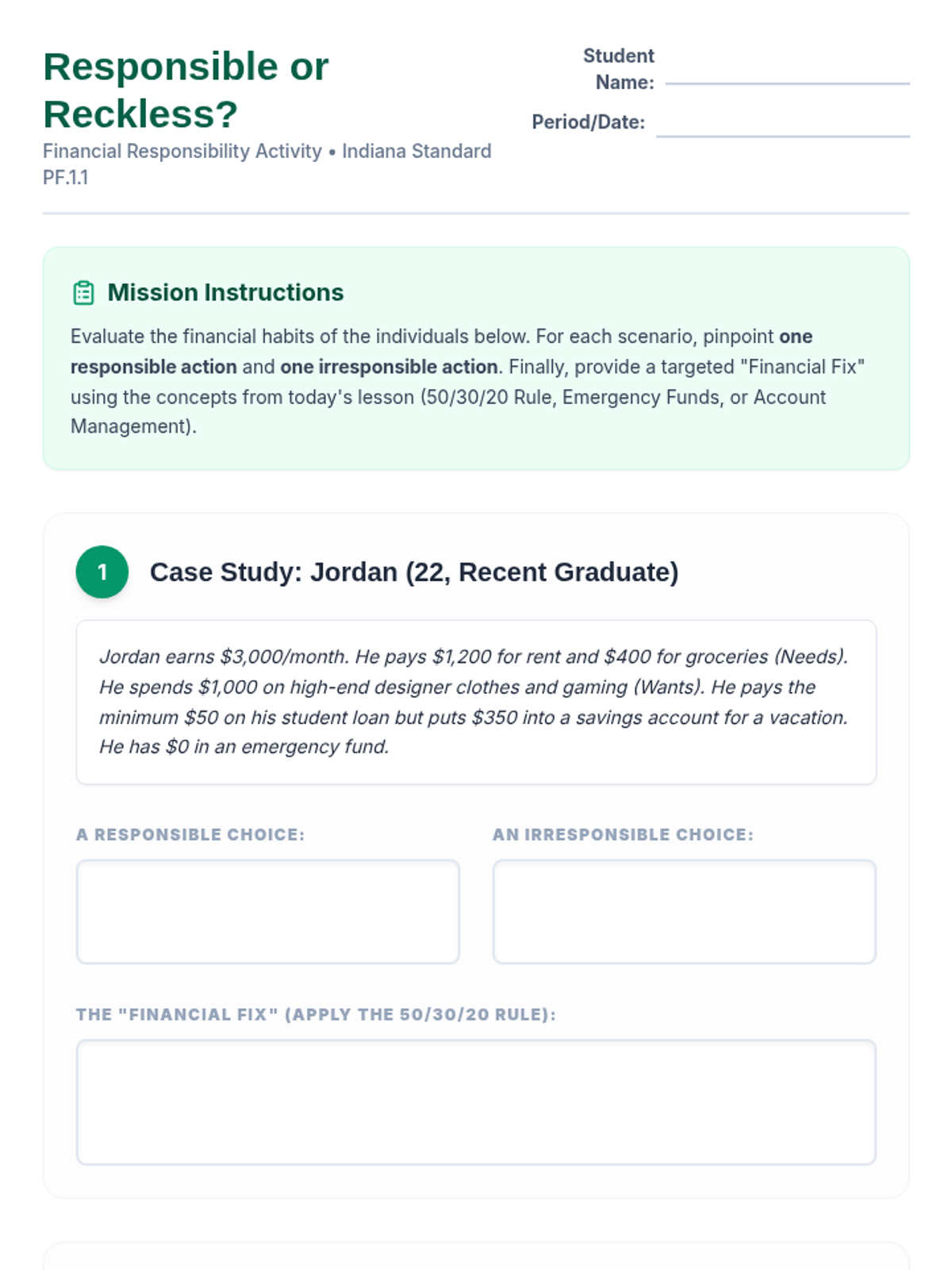
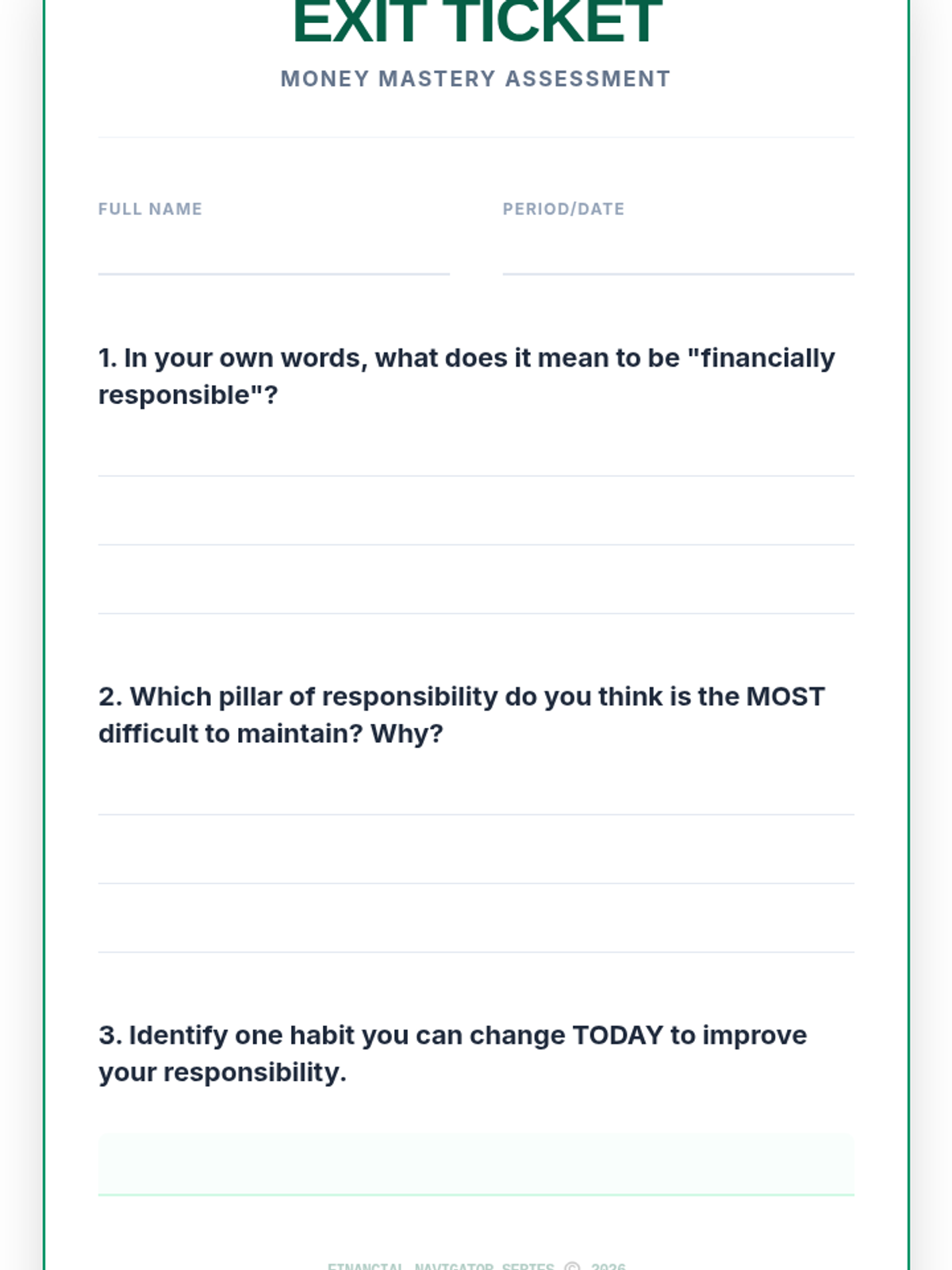
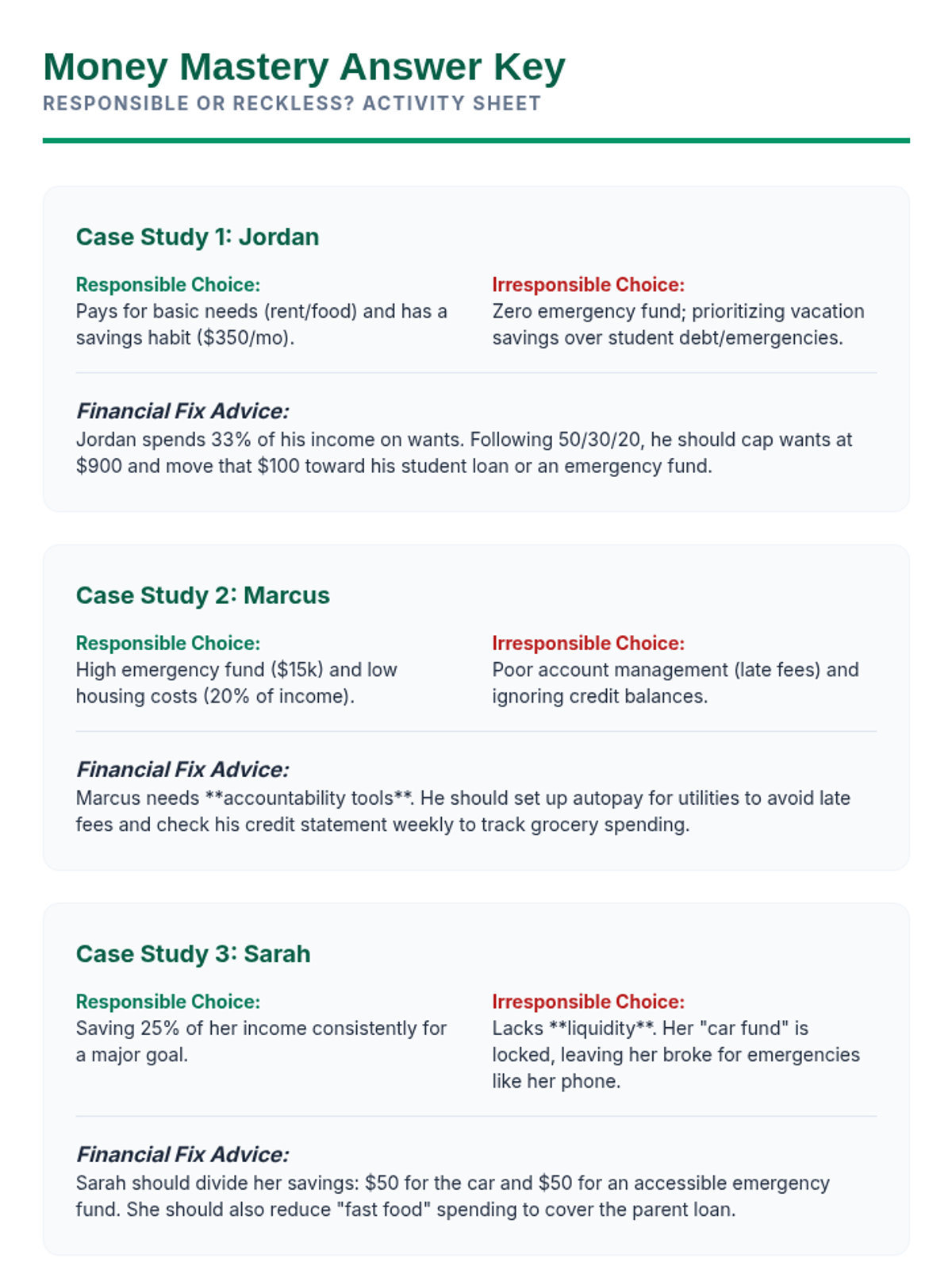
A comprehensive 70-minute lesson focused on the pillars of financial responsibility, including budgeting, saving, and informed decision-making aligned with Indiana personal finance standards.
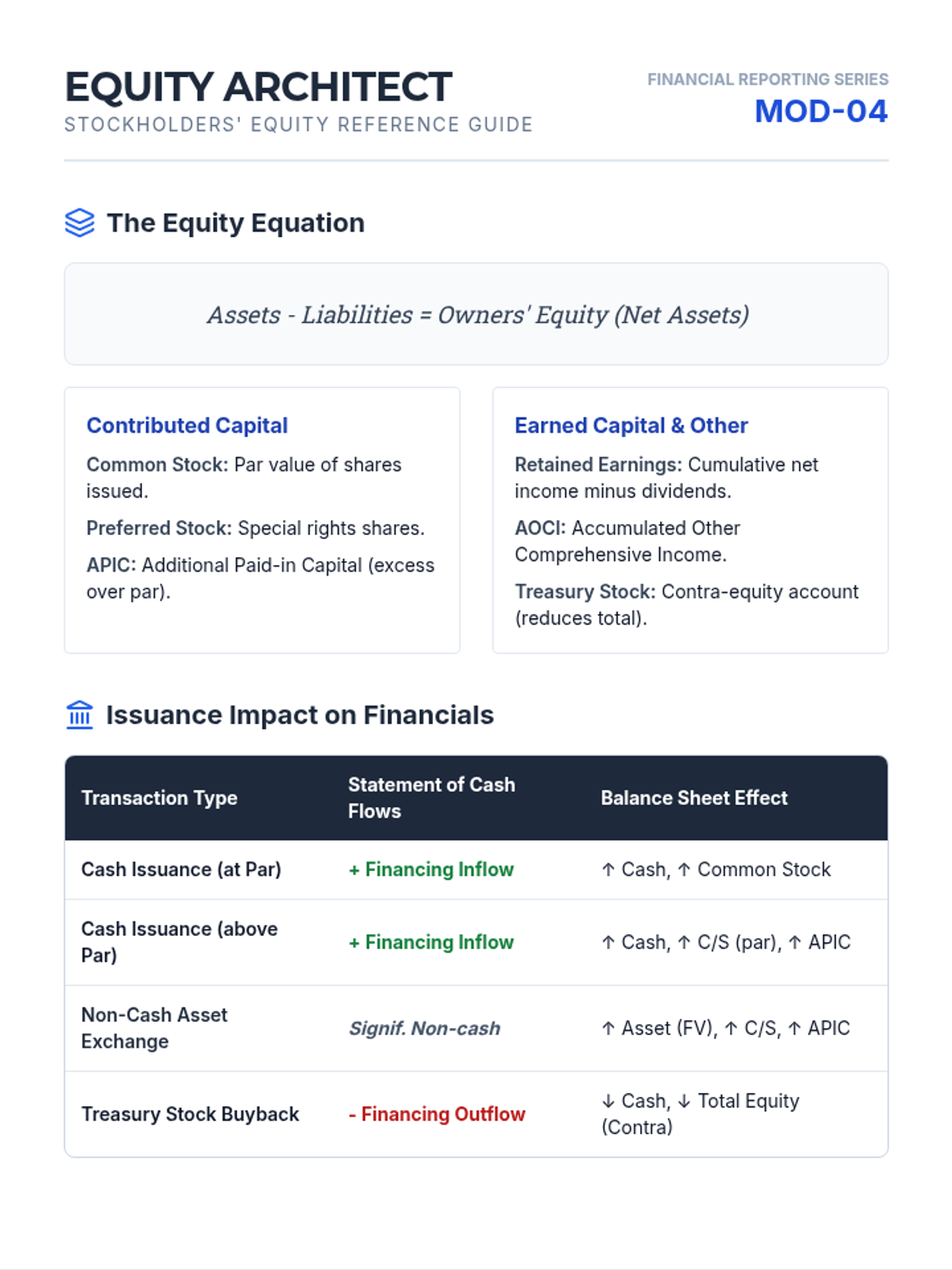
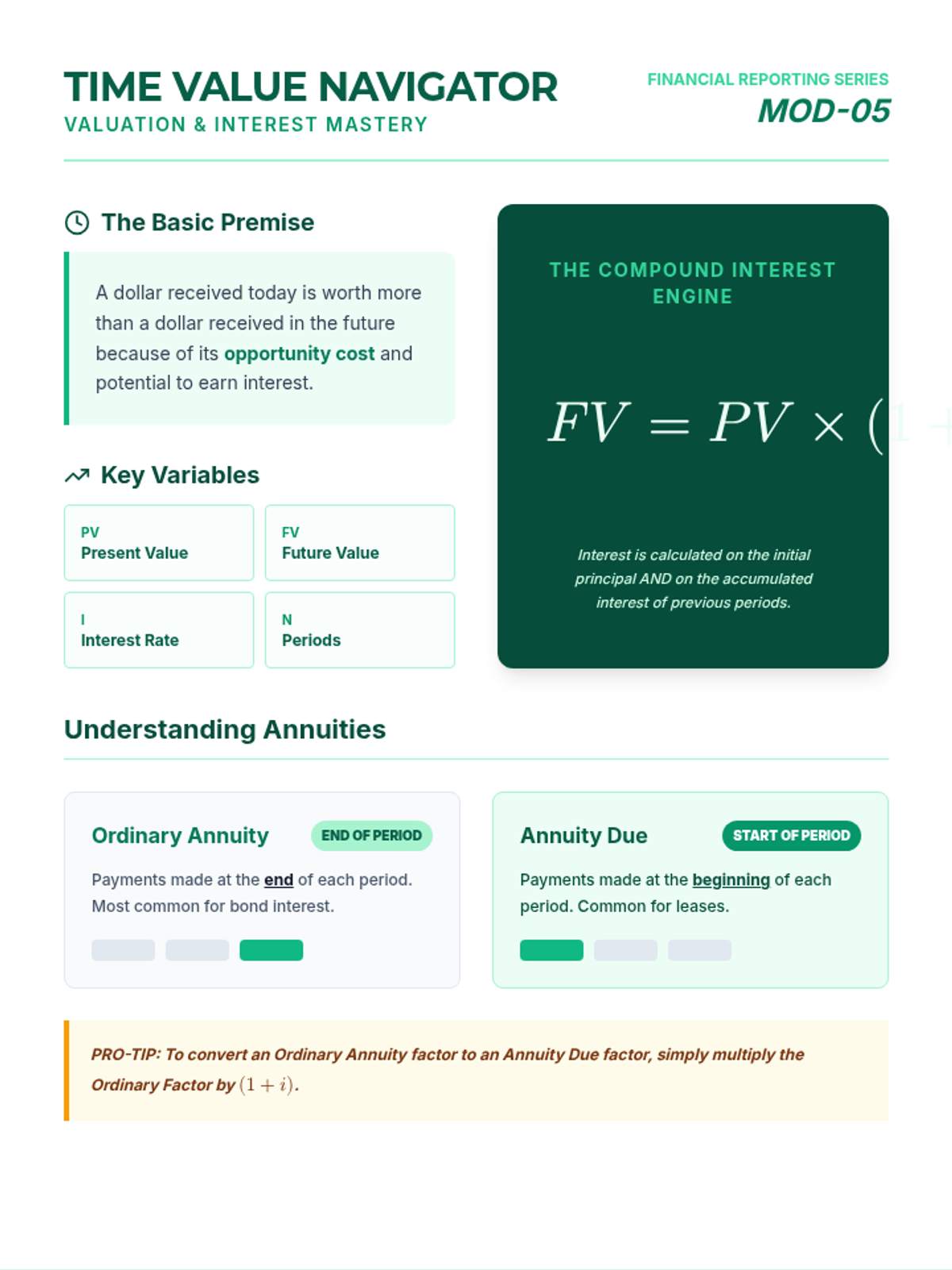
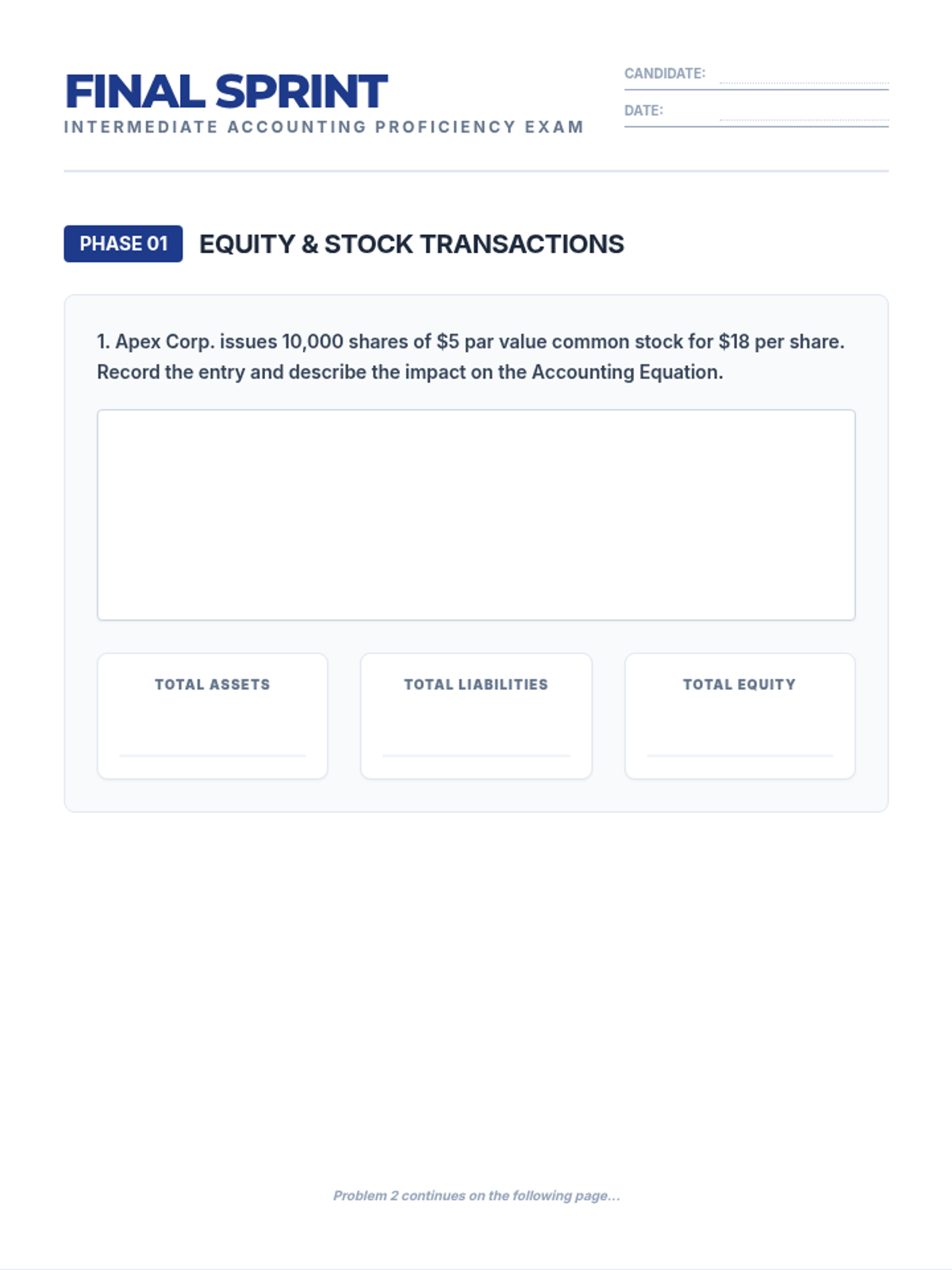
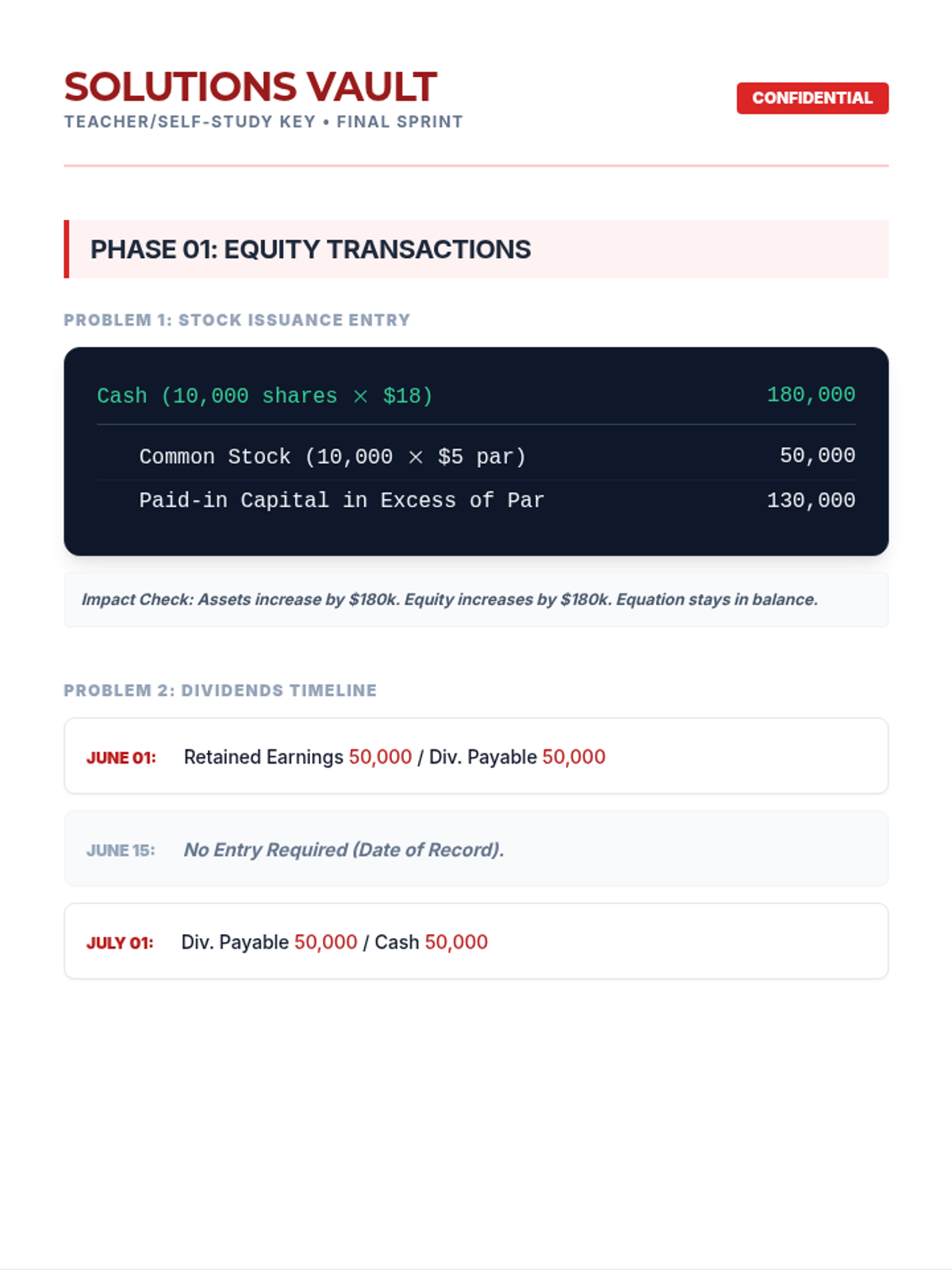
A deep dive into Stockholders' Equity transactions and Time Value of Money applications for accounting professionals.
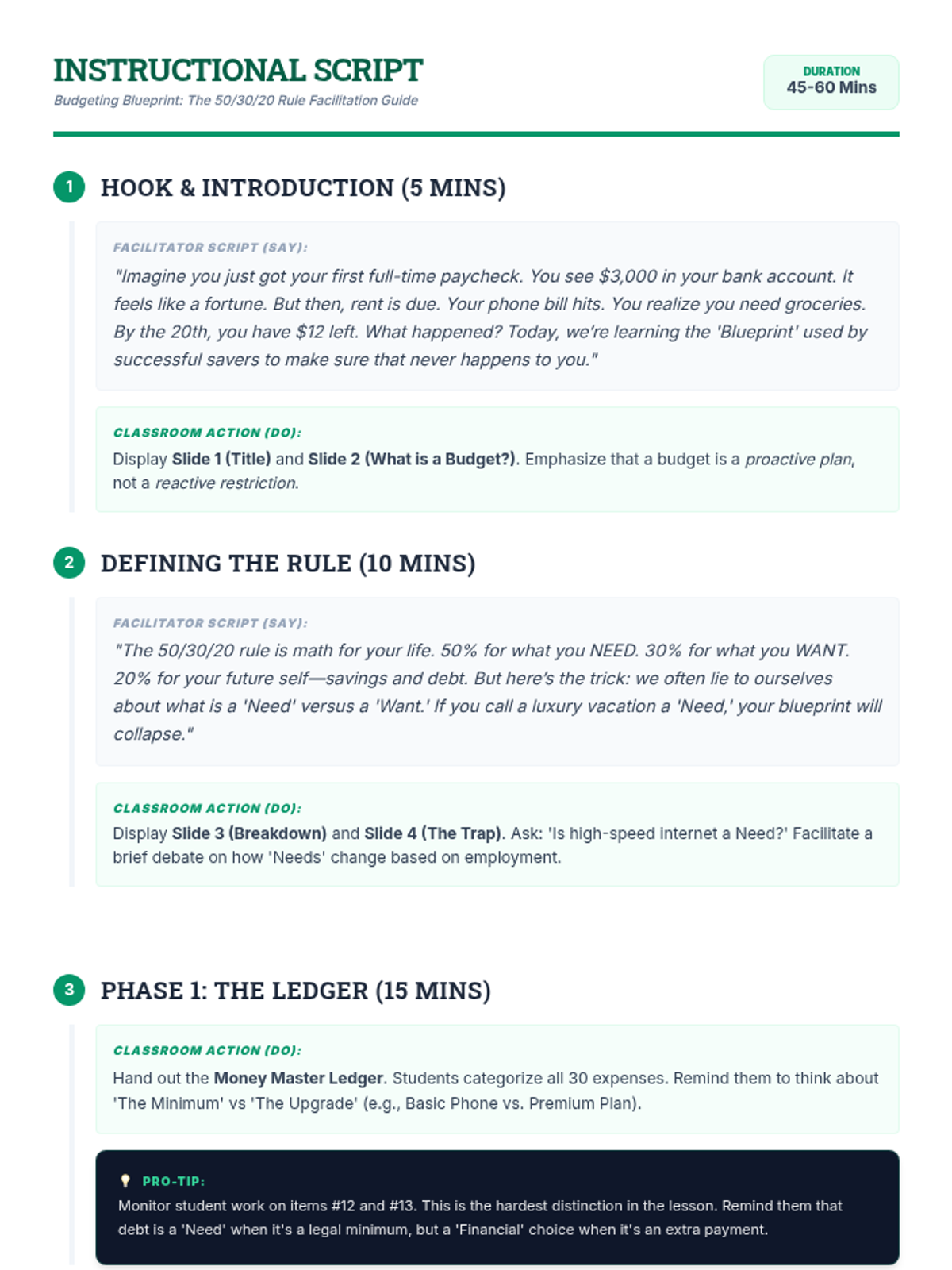
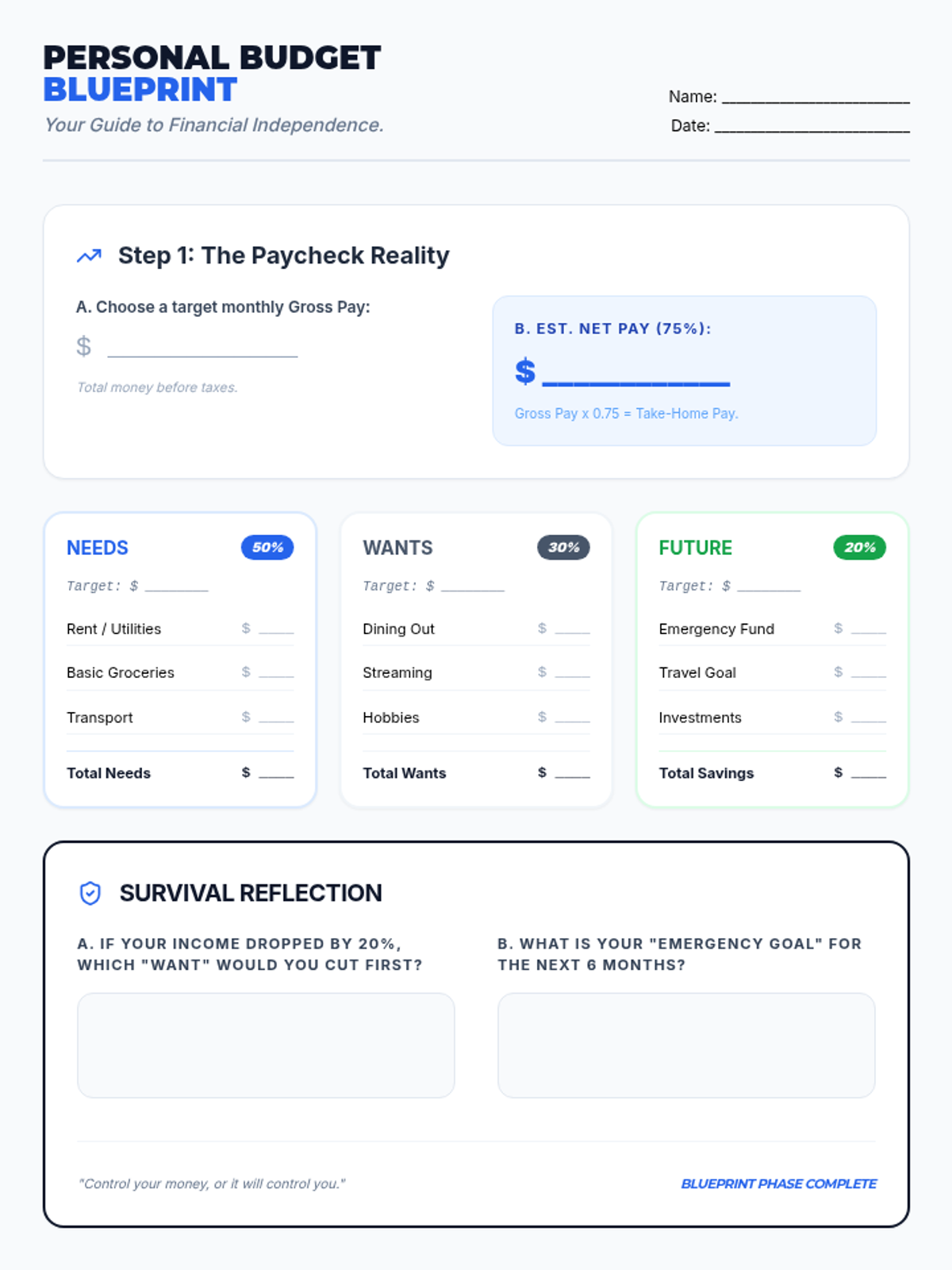
A high school financial literacy lesson introducing the 50/30/20 budgeting rule through a hands-on expense categorization activity and reflection.
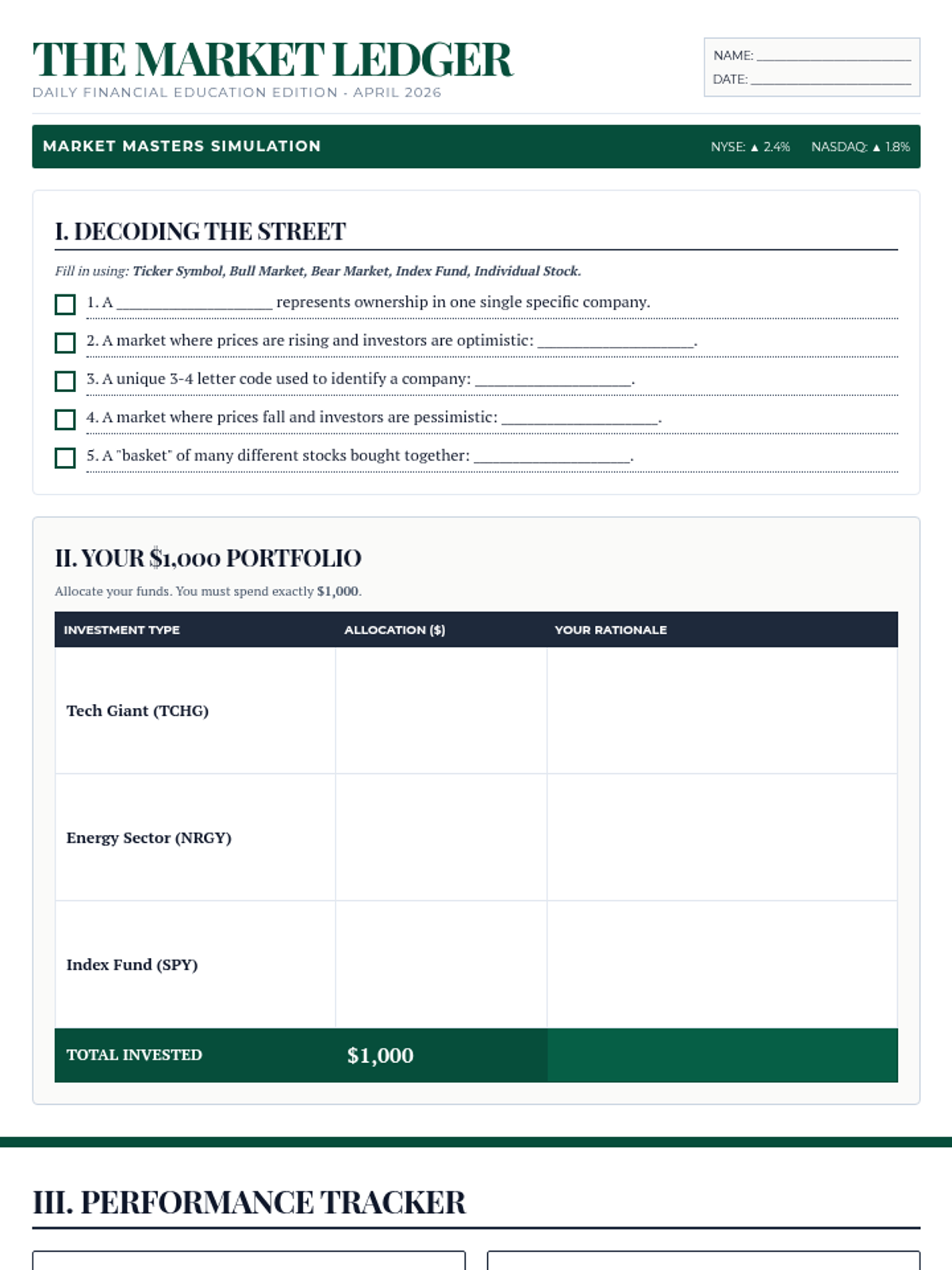
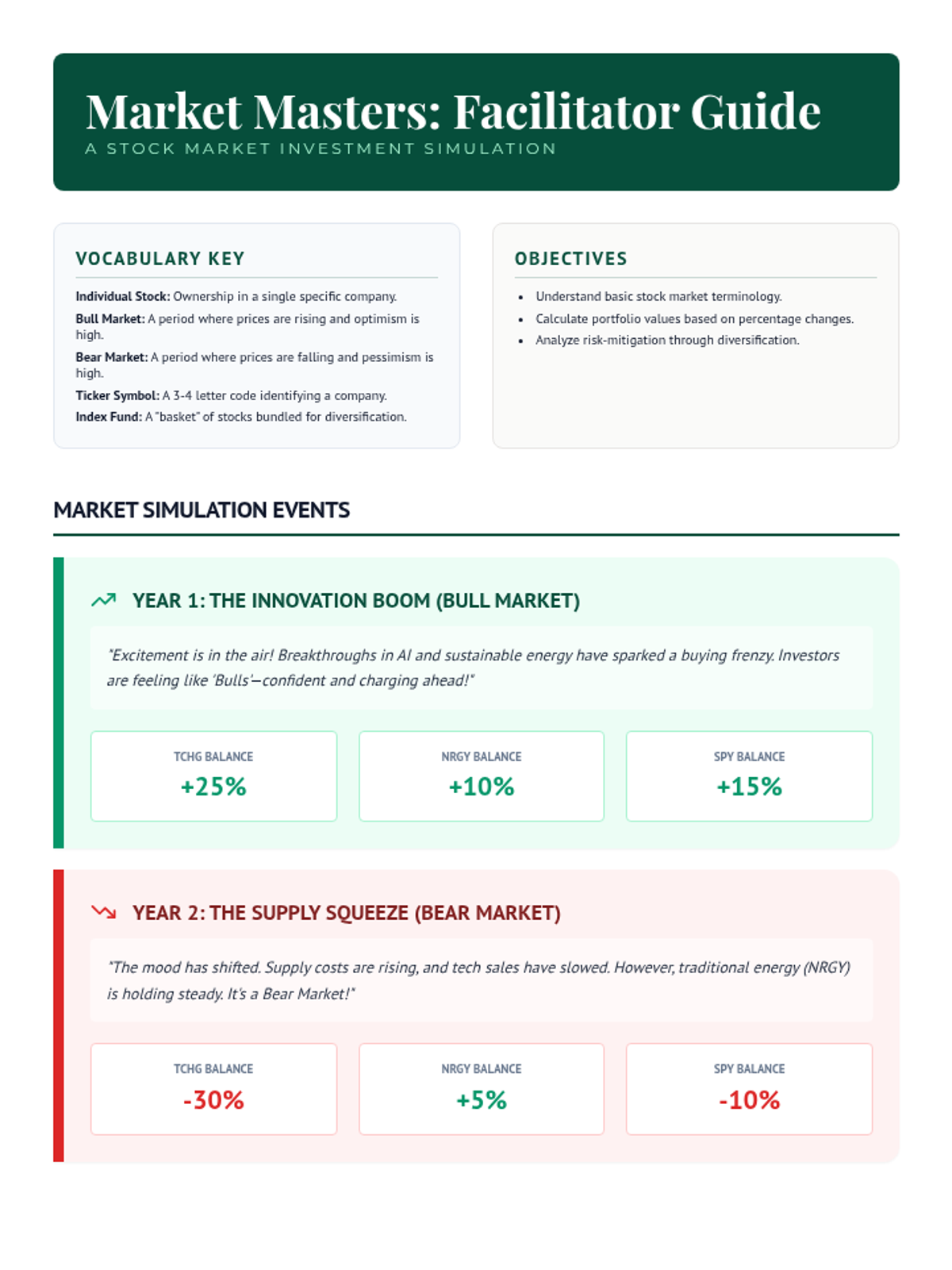
An introductory lesson on stock market fundamentals, covering key terminology, the difference between individual stocks and index funds, and a hands-on investment simulation.
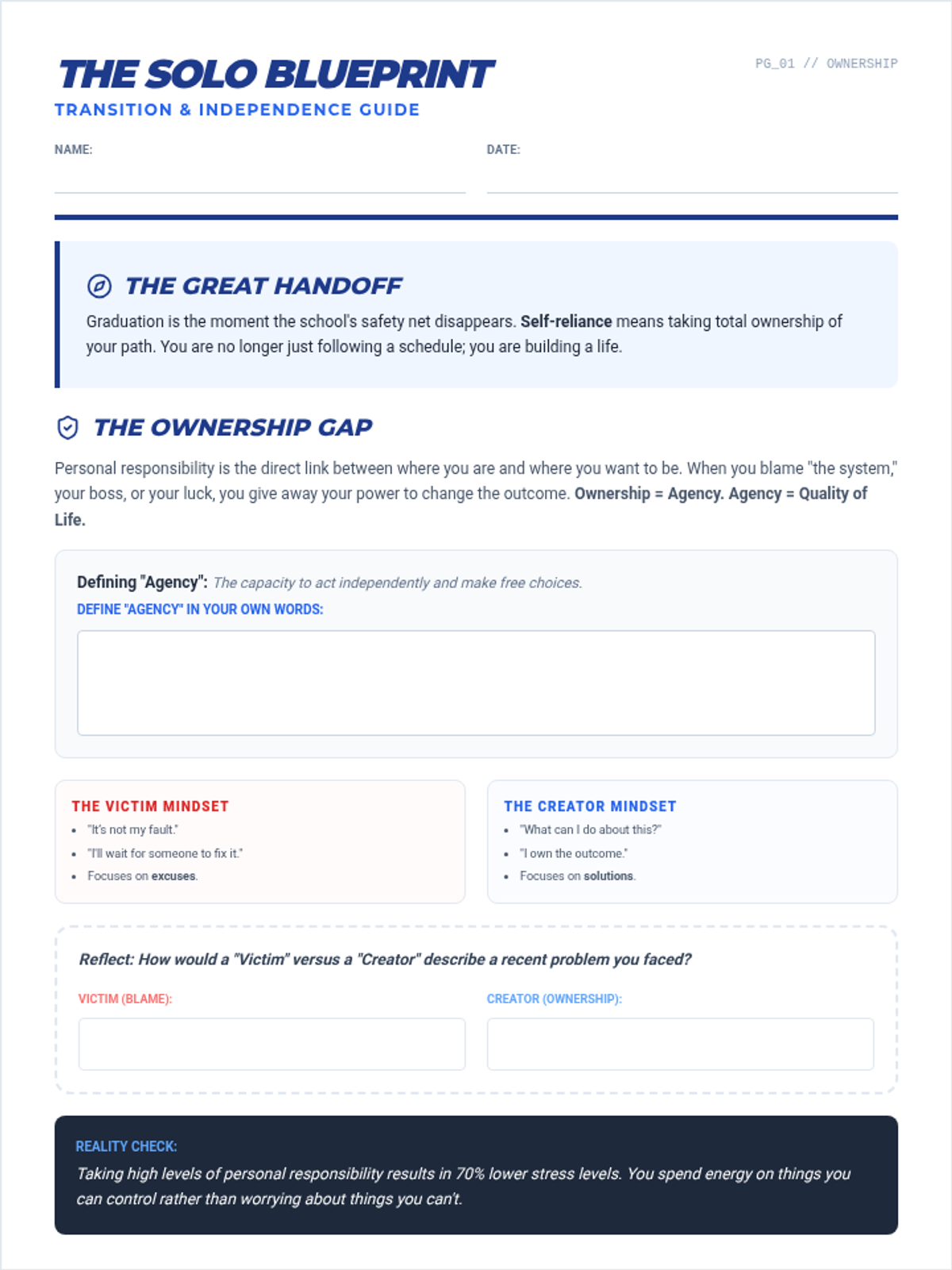
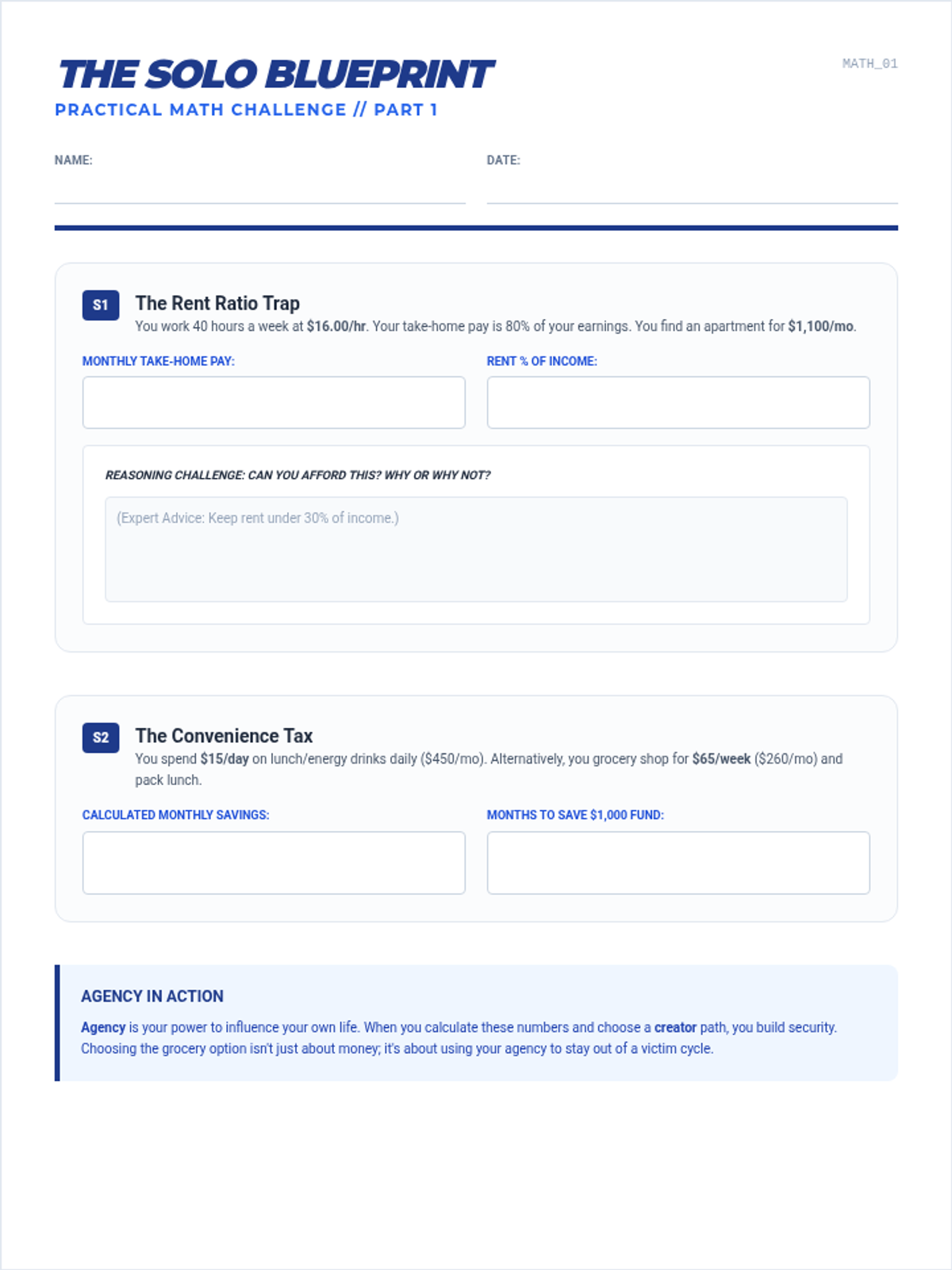
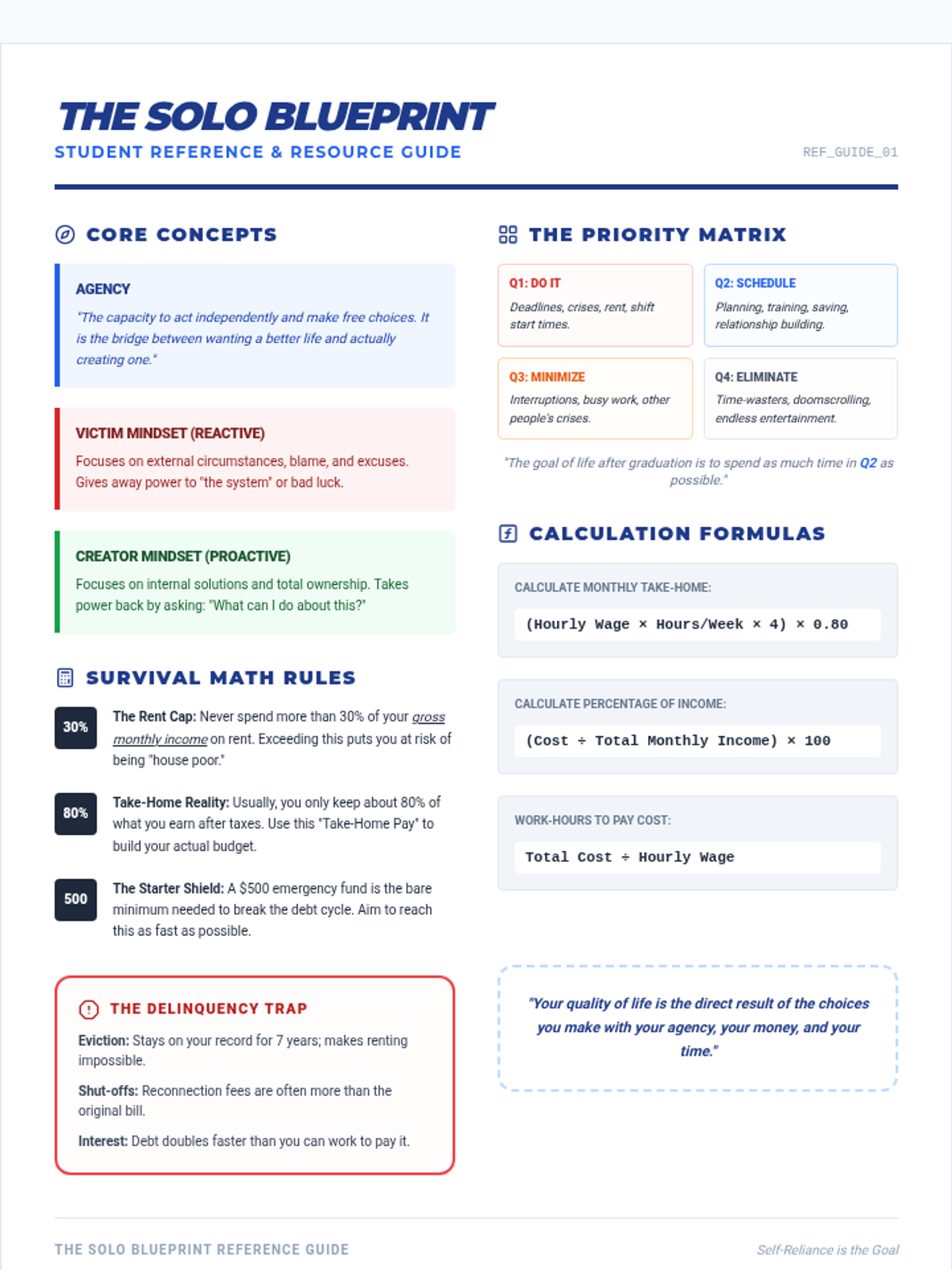
A comprehensive lesson for graduating seniors on transitioning to independence, covering ownership mindsets, financial survival, and time management.
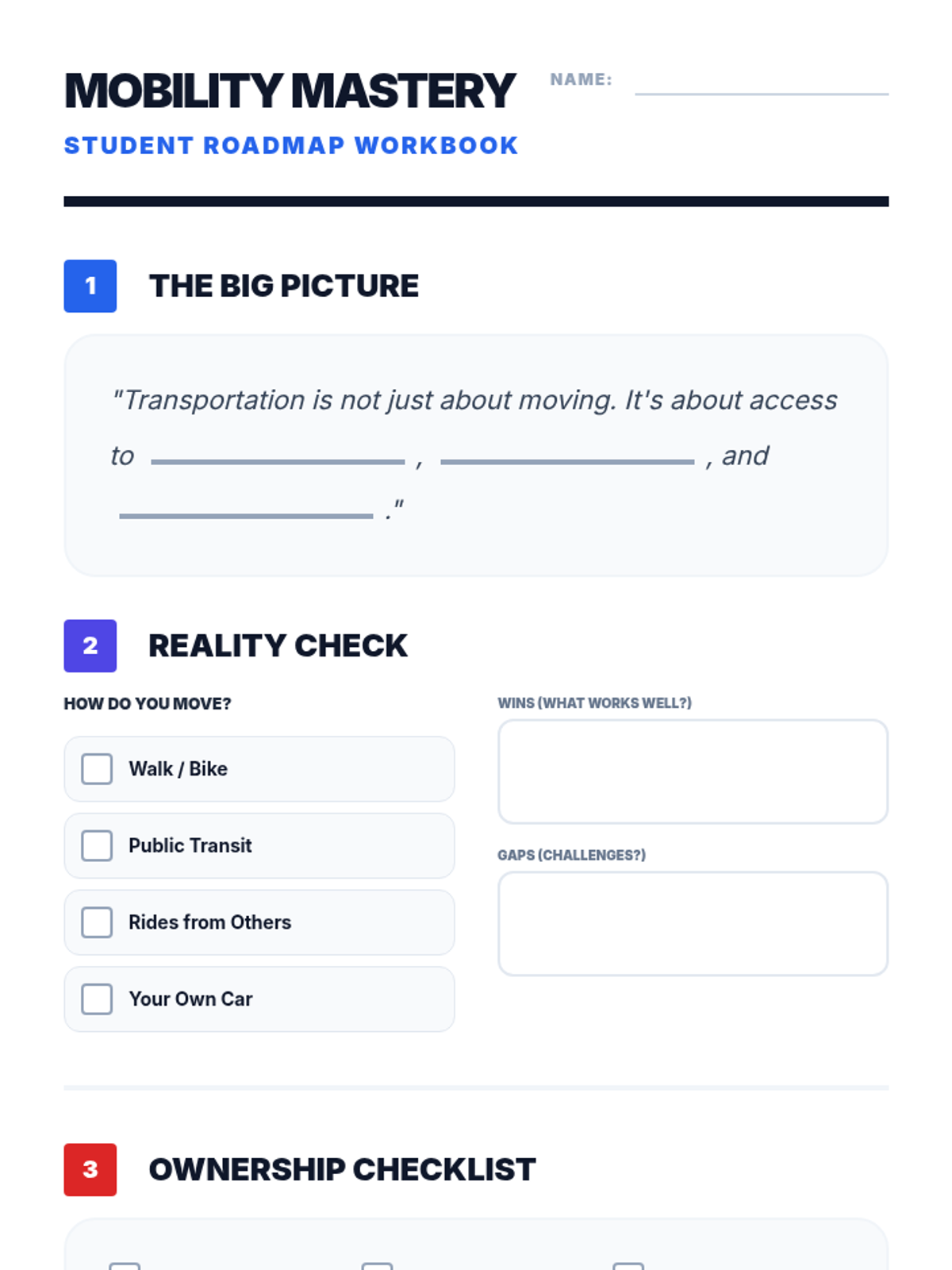
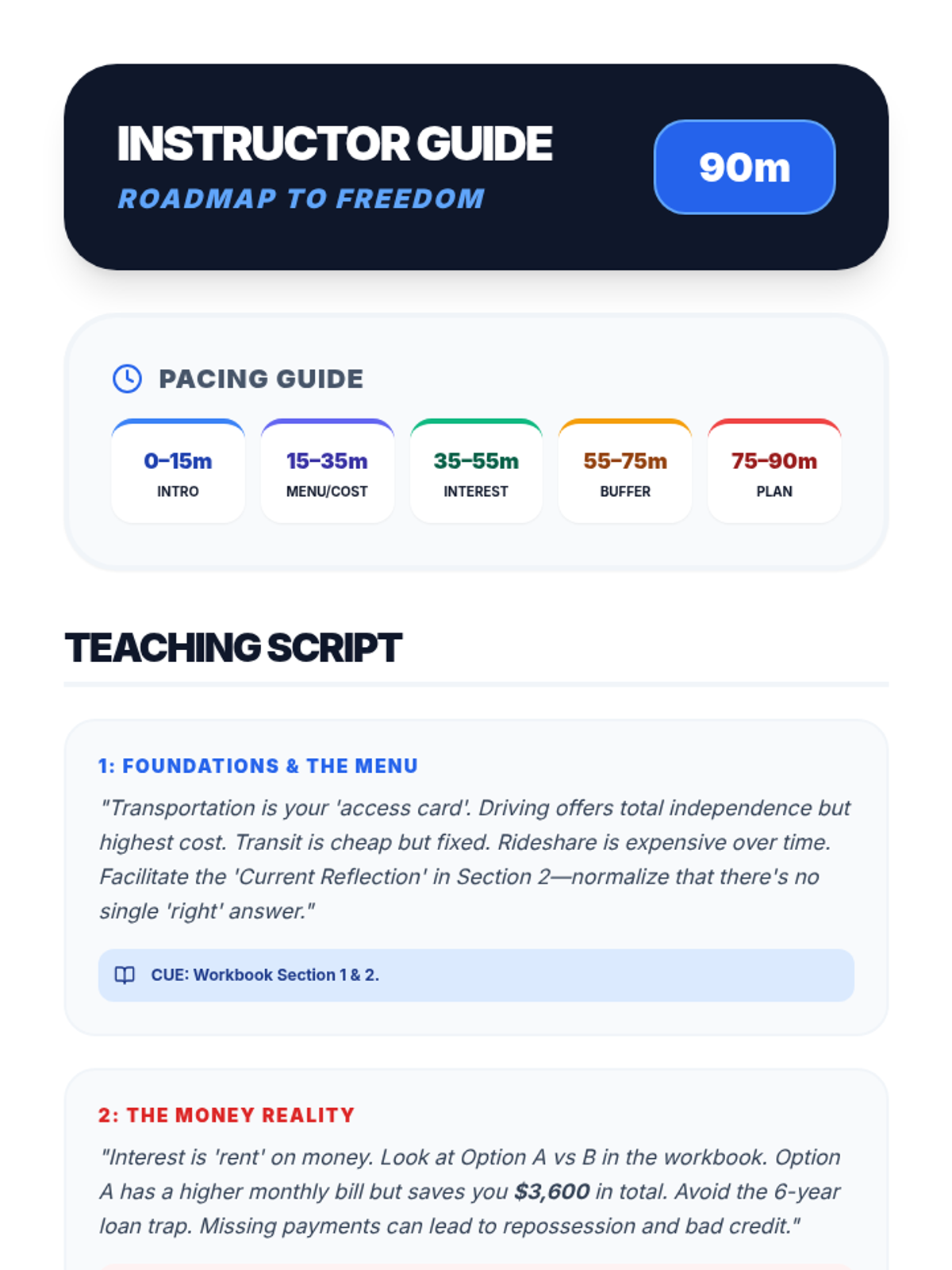
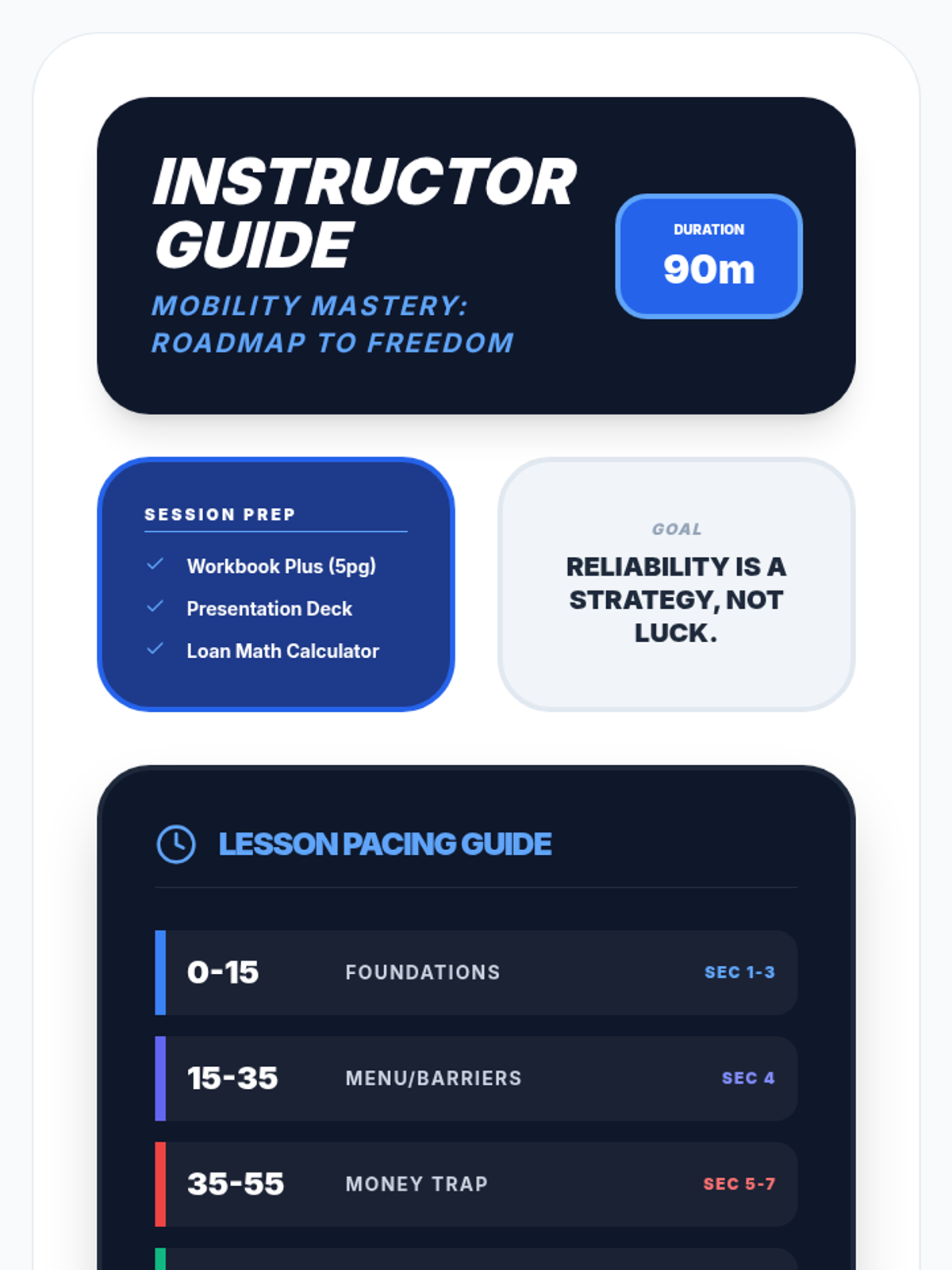
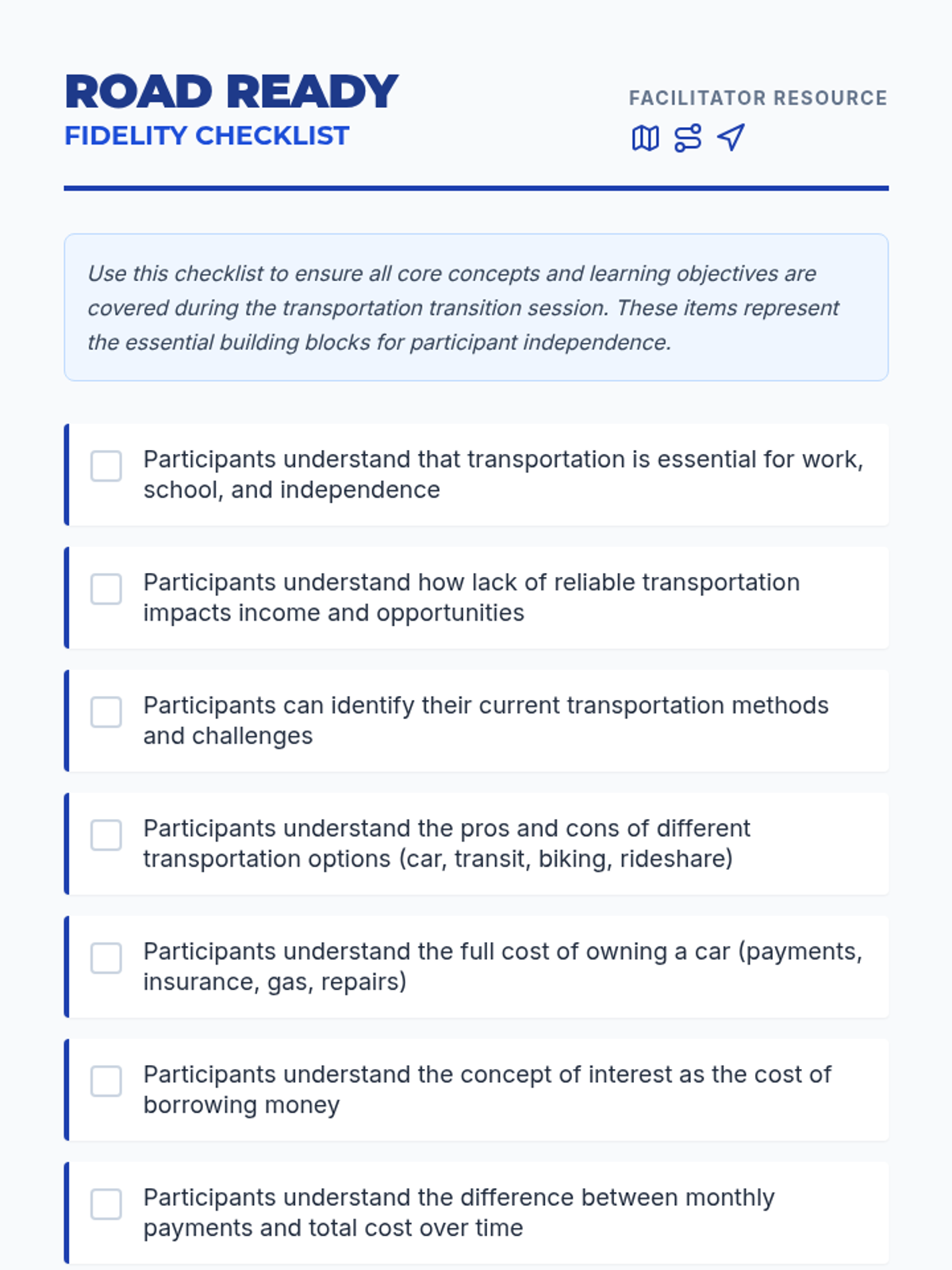
A 90-minute session covering transportation types, the true cost of driving, car financing, interest rates, and personal mobility planning.
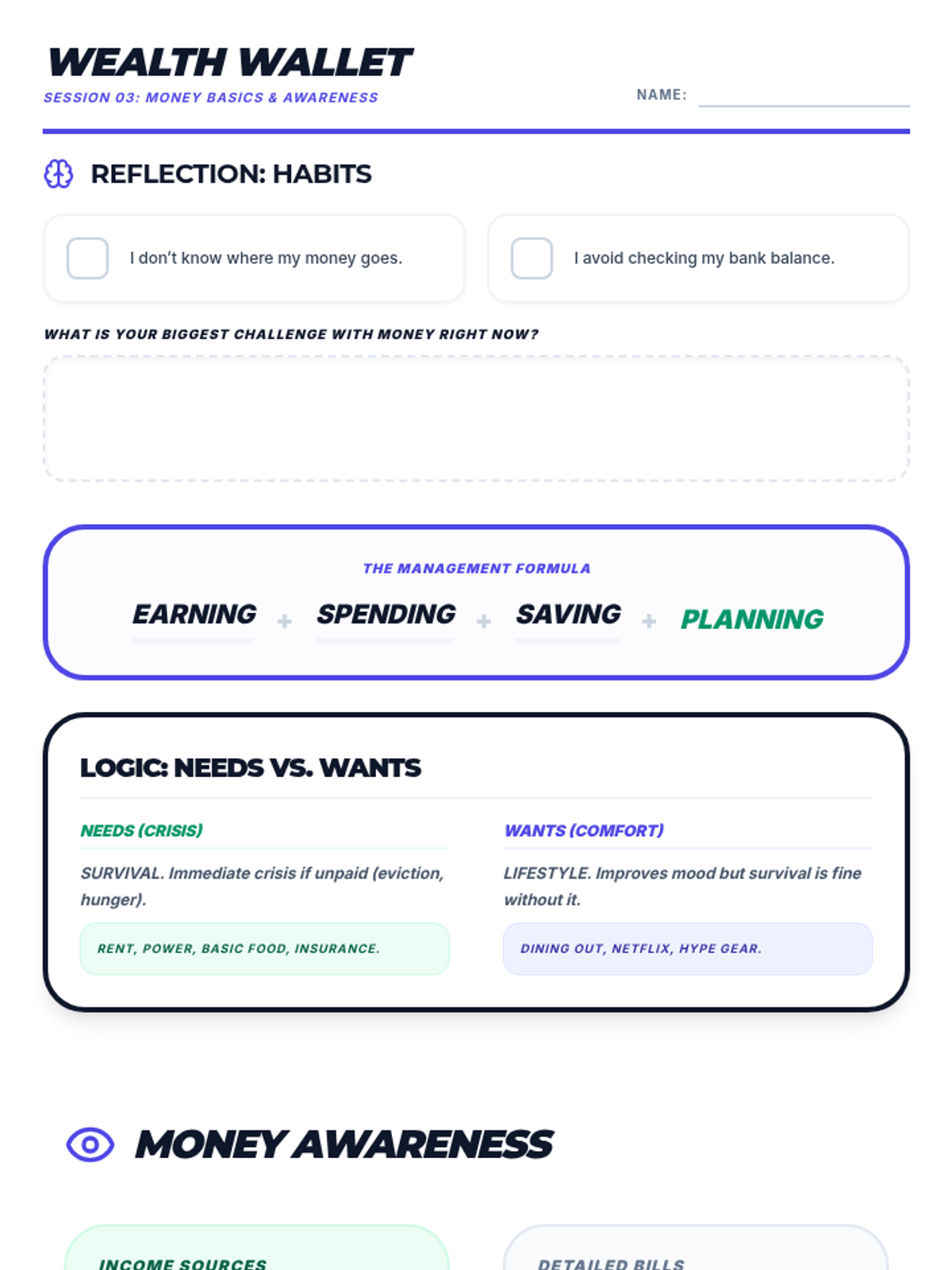
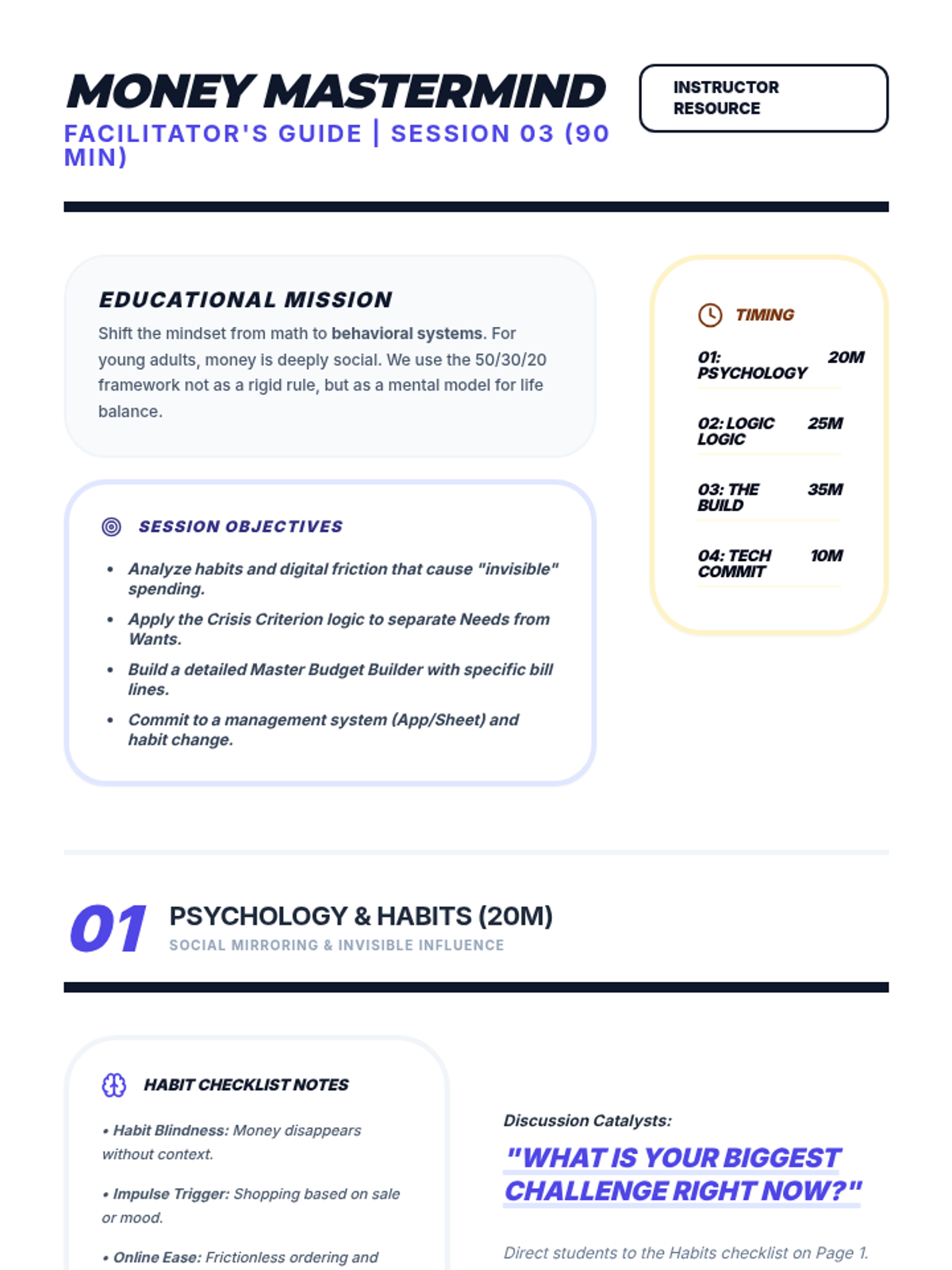
A deep dive into the basics of money management, tracking income and expenses, and building a starter budget. This session focuses on transitioning from reactive spending to proactive planning.
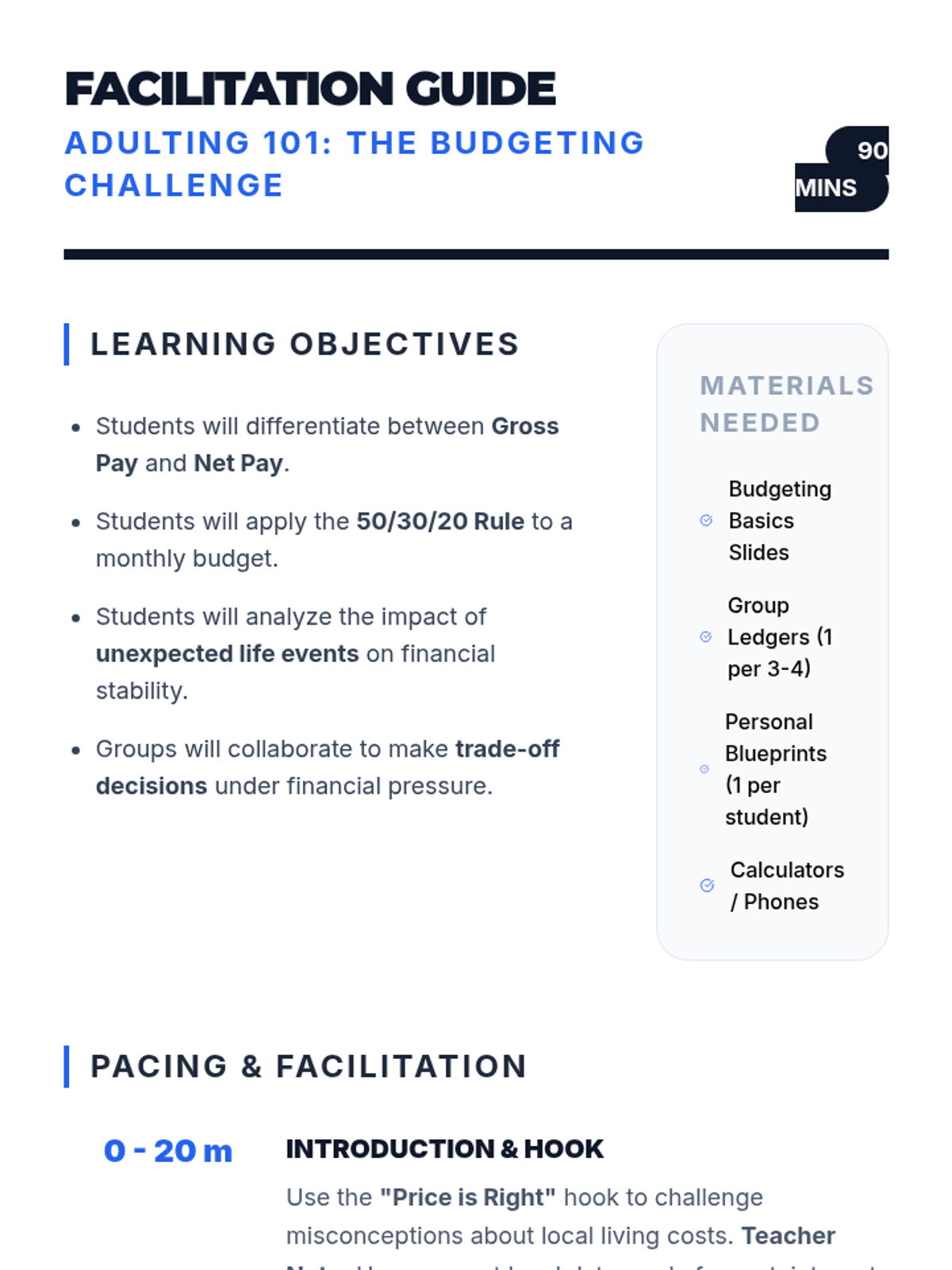
A 90-minute workshop on financial survival where students navigate a 'Life Happens' group simulation to understand income, taxes, and unexpected costs.
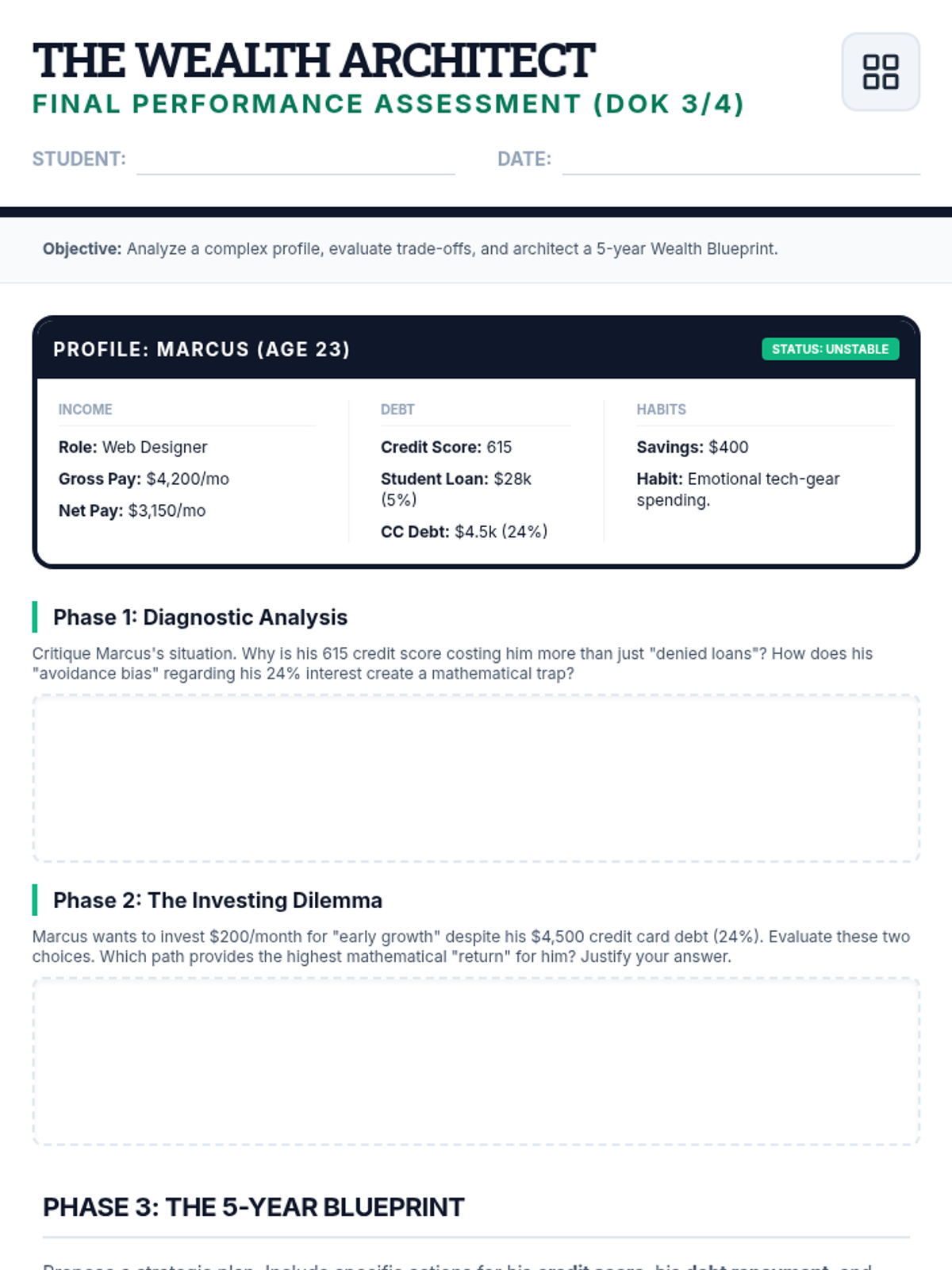
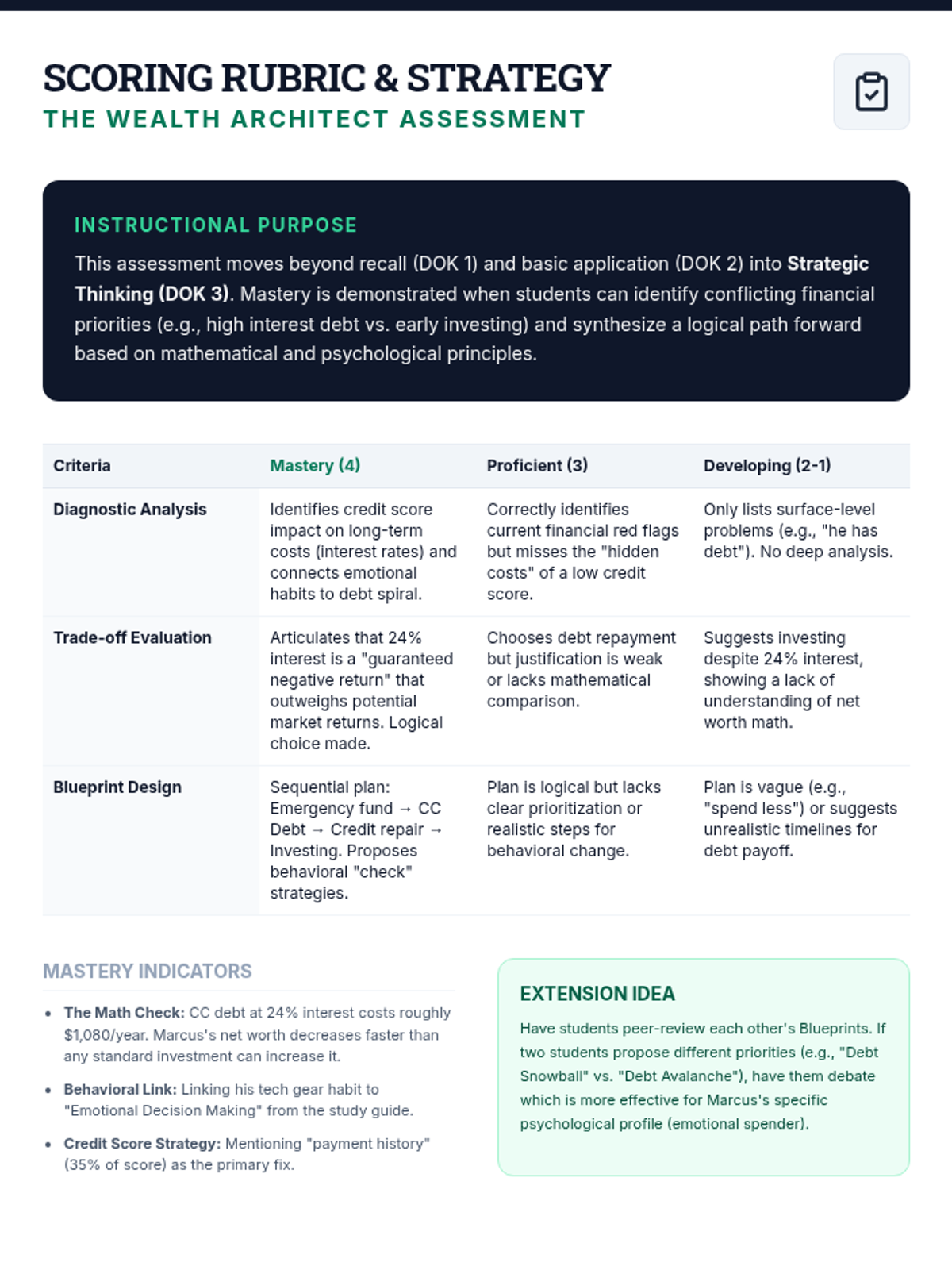
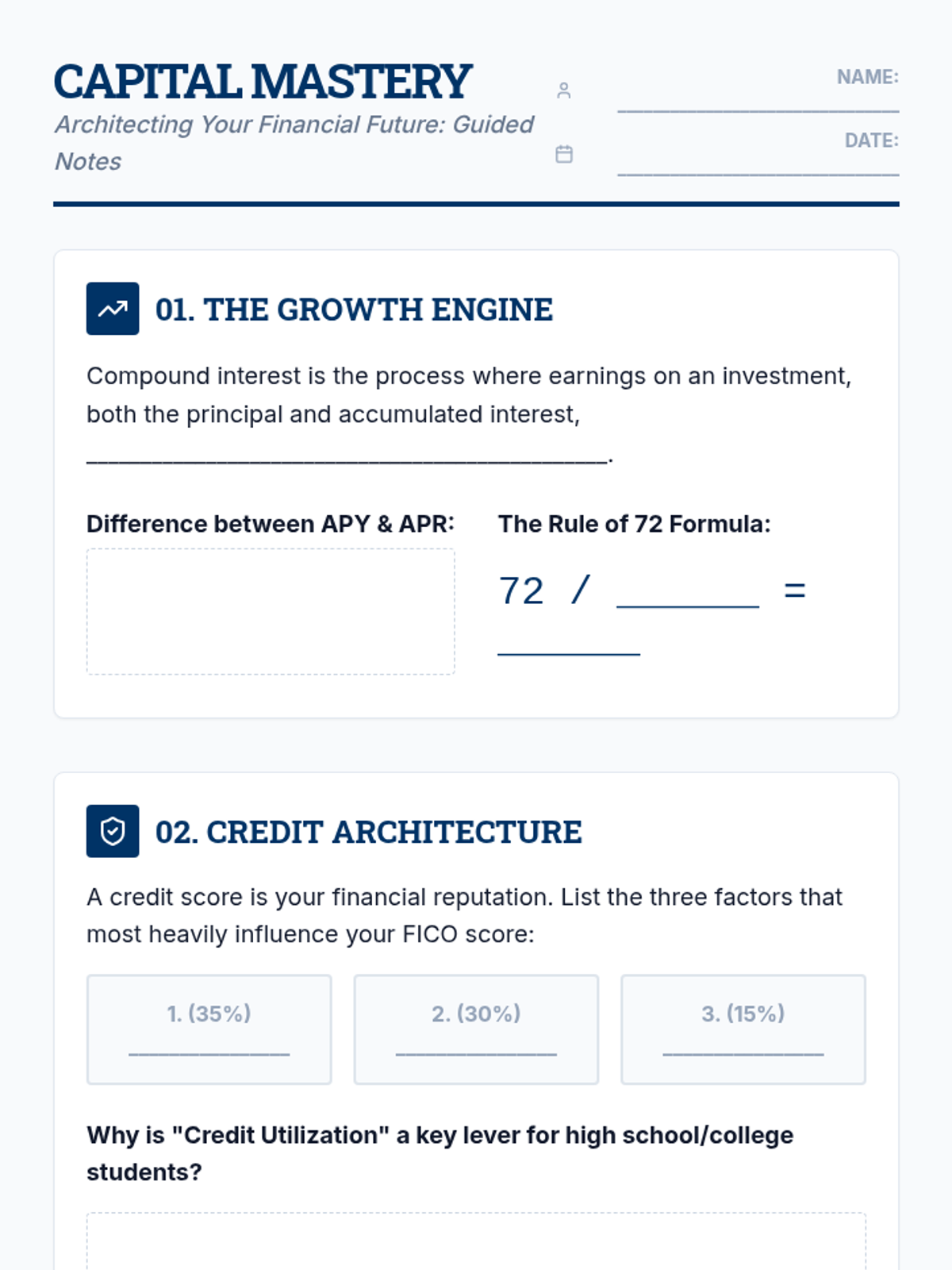
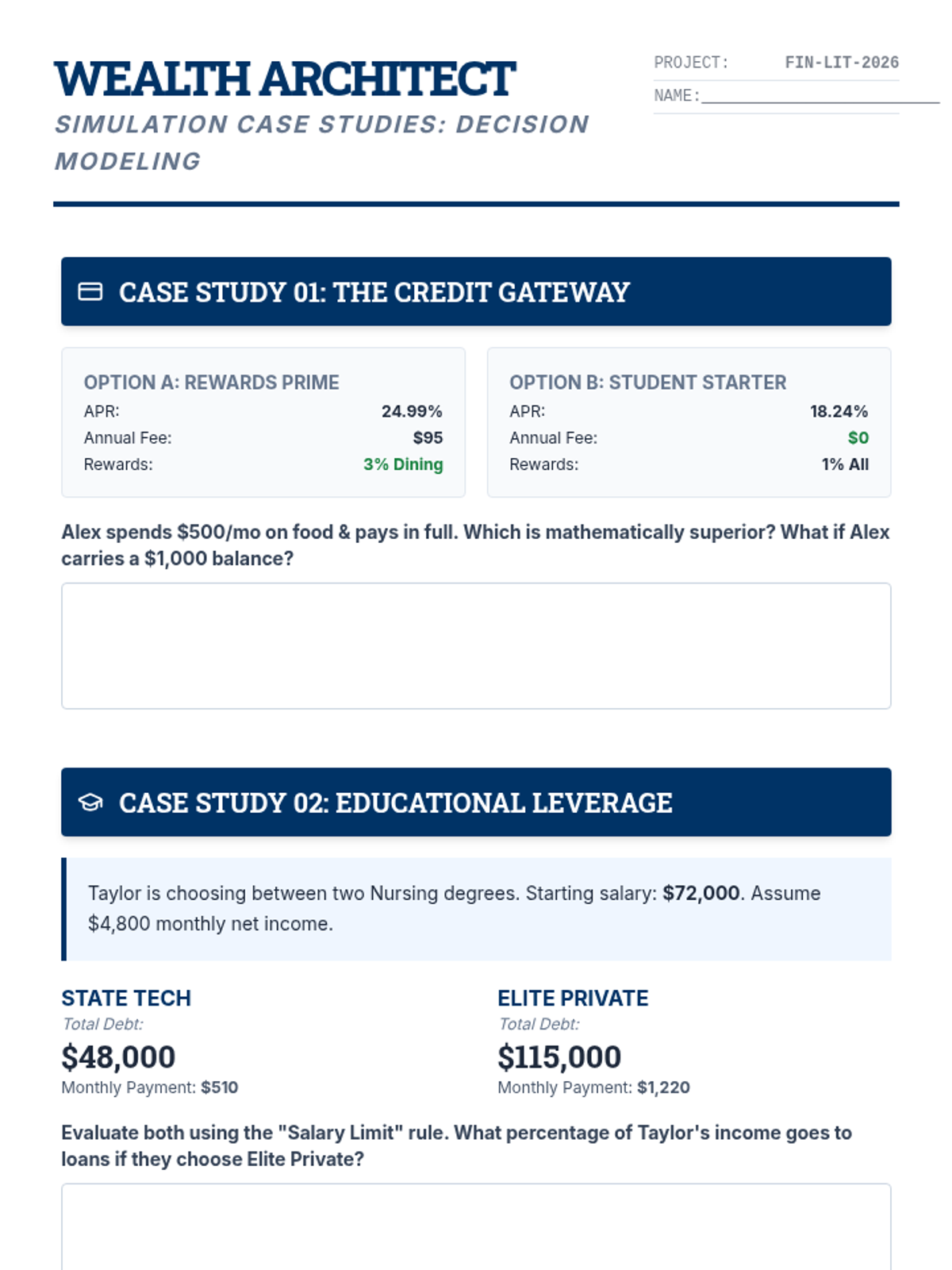
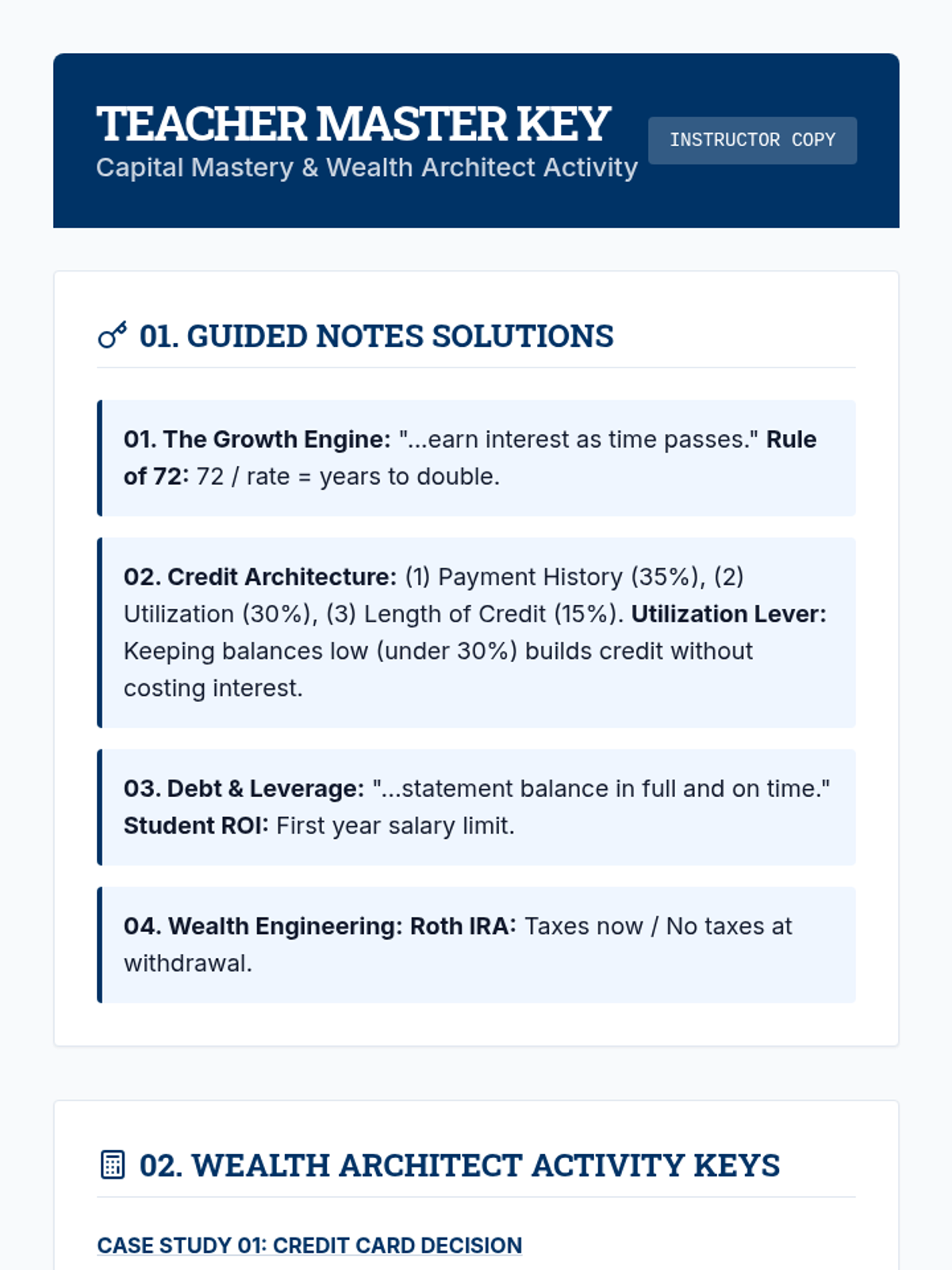
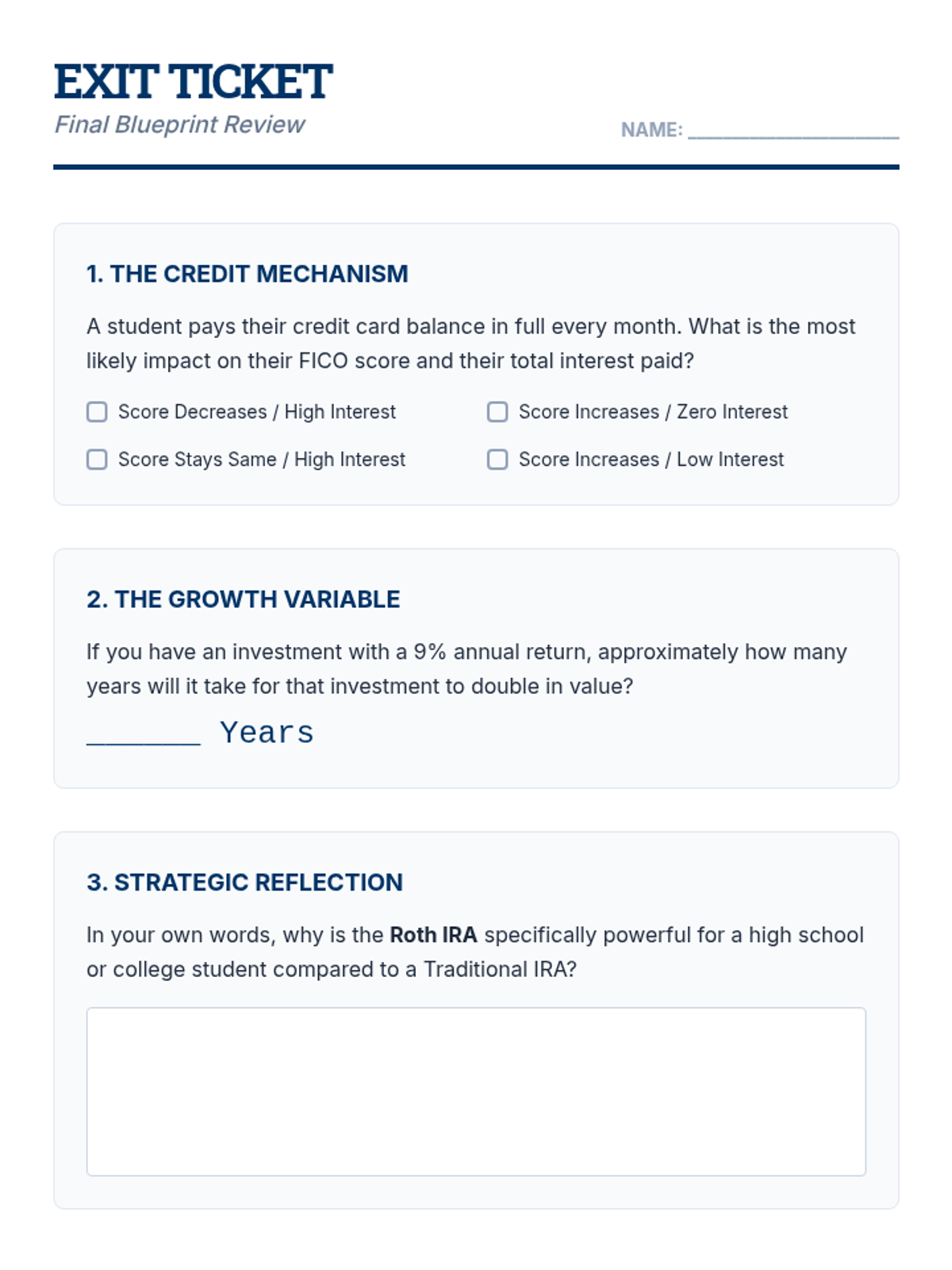
A high-level financial literacy lesson for advanced high school students, focusing on the mechanics of wealth building, credit architecture, and strategic debt management through the lens of long-term financial engineering.
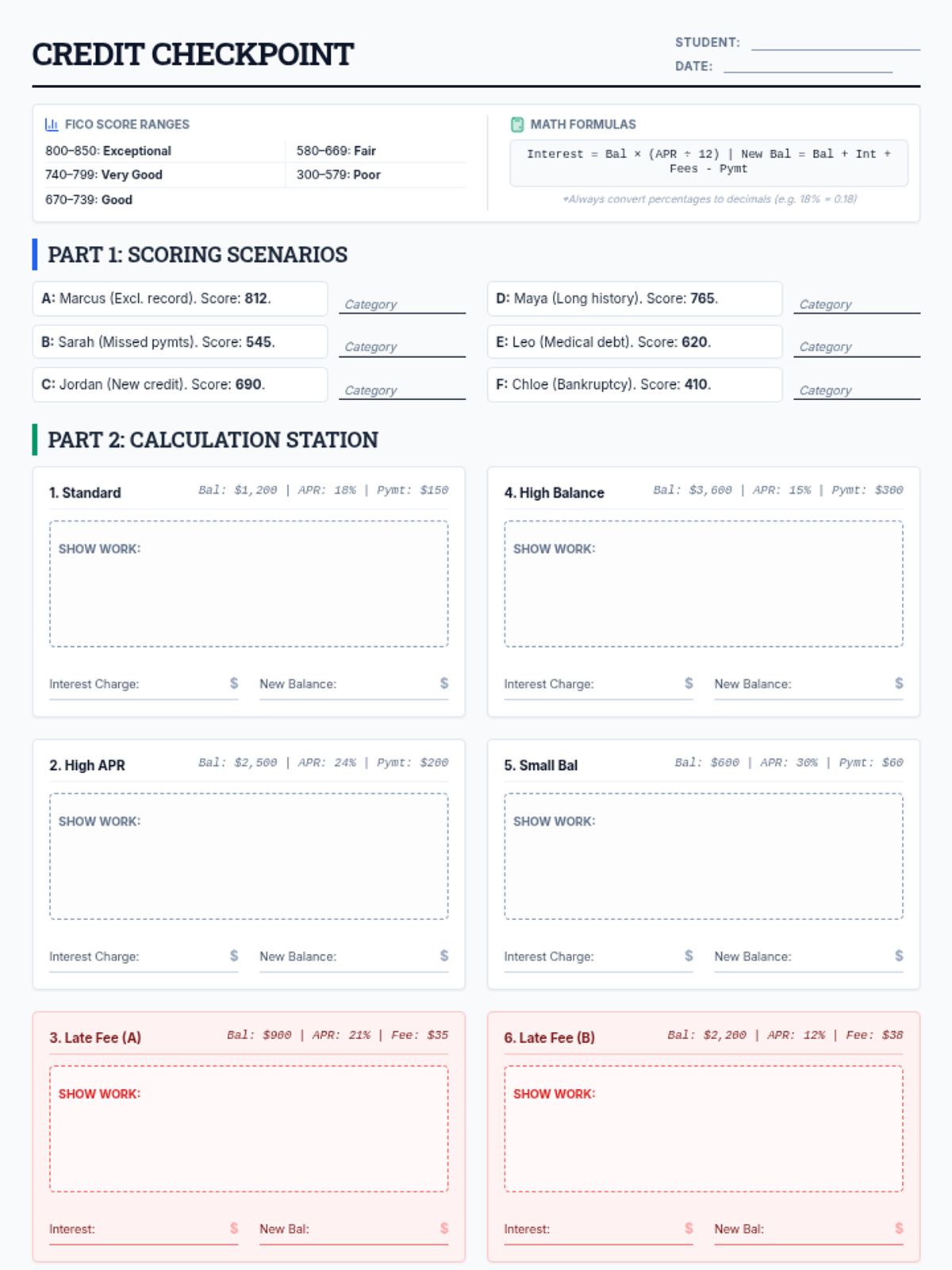
A practical lesson on understanding credit score rankings and the mathematical reality of credit card interest and late fees. Students identify score categories and perform monthly interest calculations.
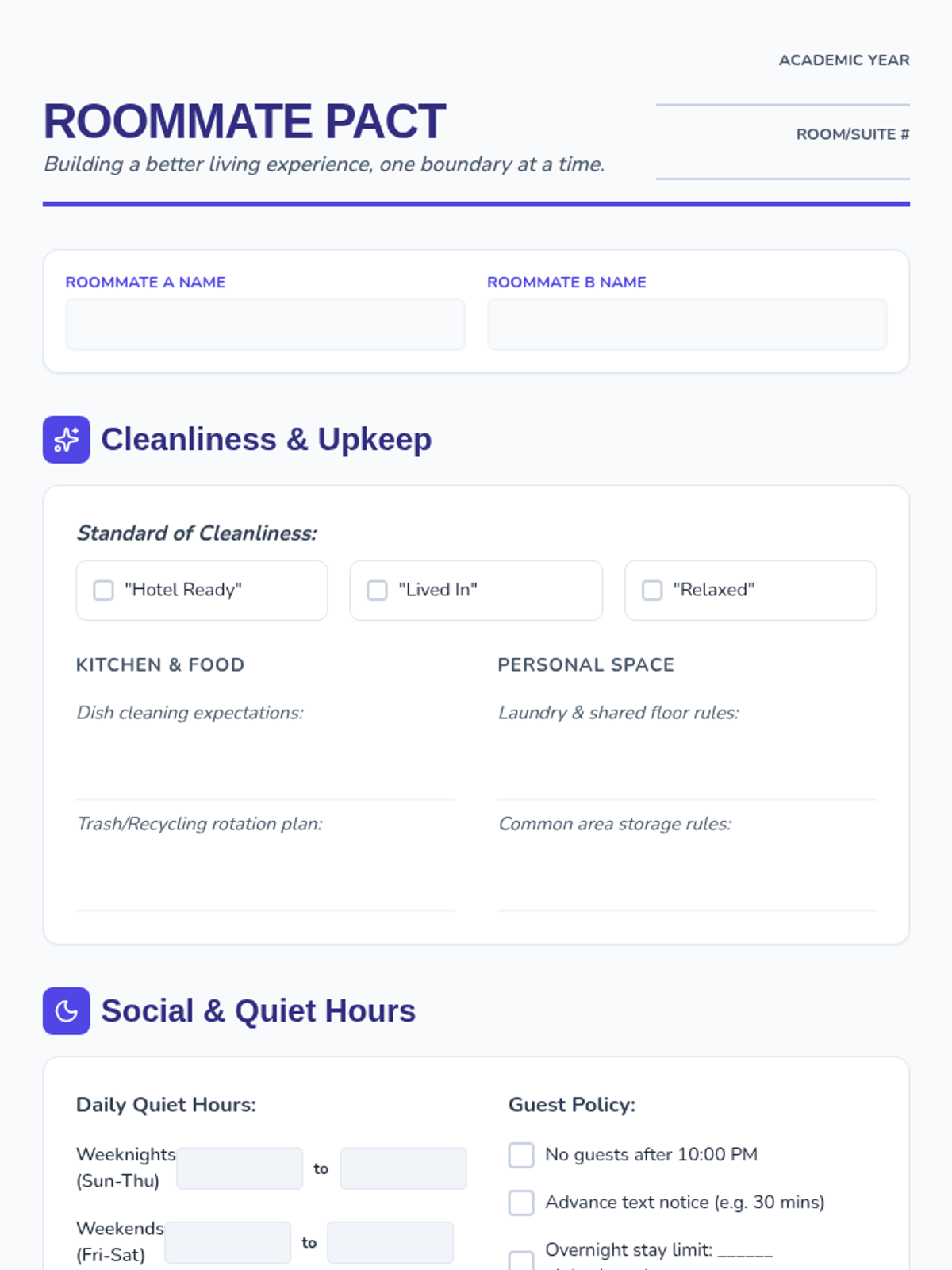
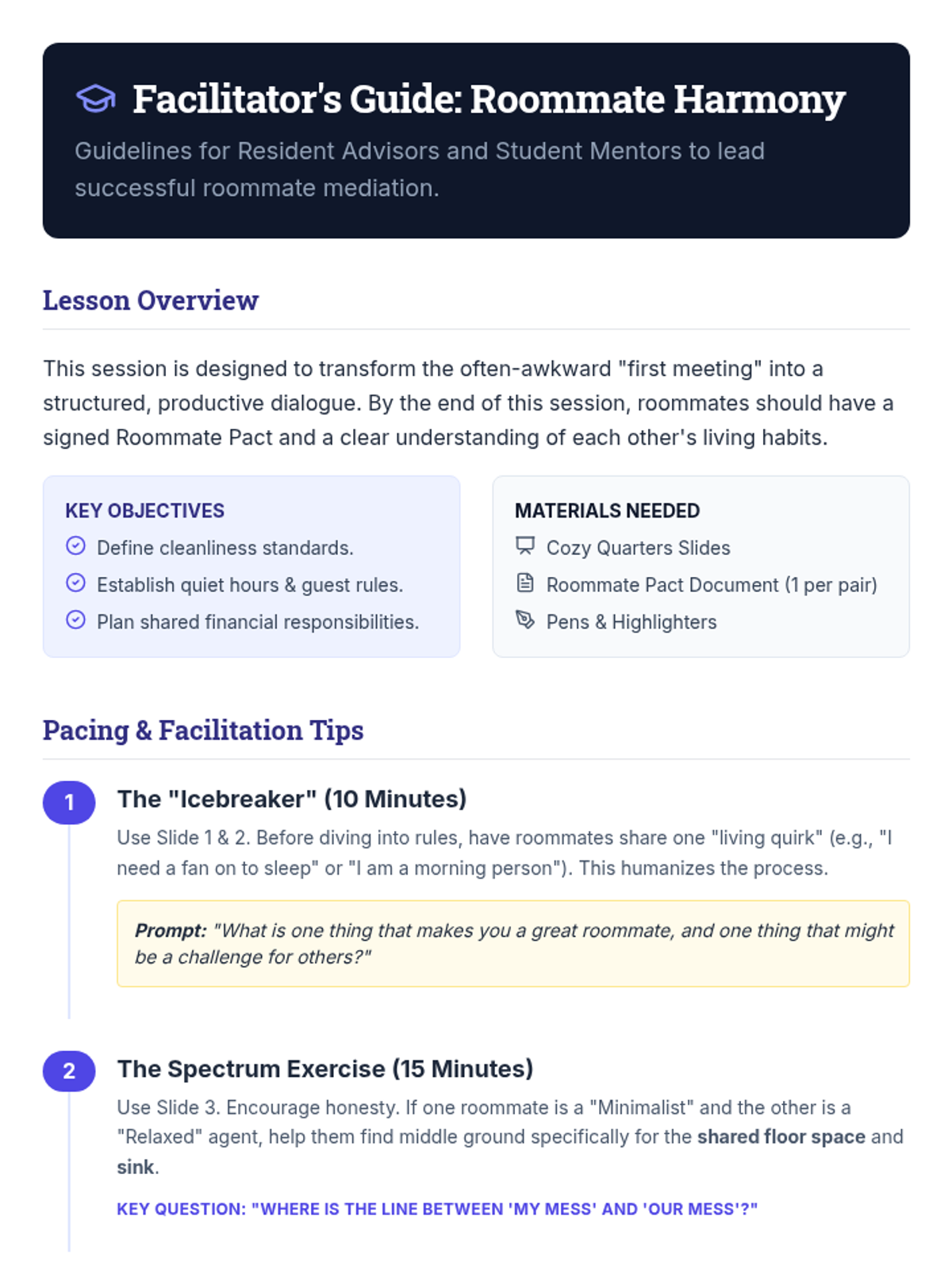
A comprehensive guide for college students to establish healthy living boundaries, manage shared expenses, and maintain a clean environment through a formal roommate agreement.
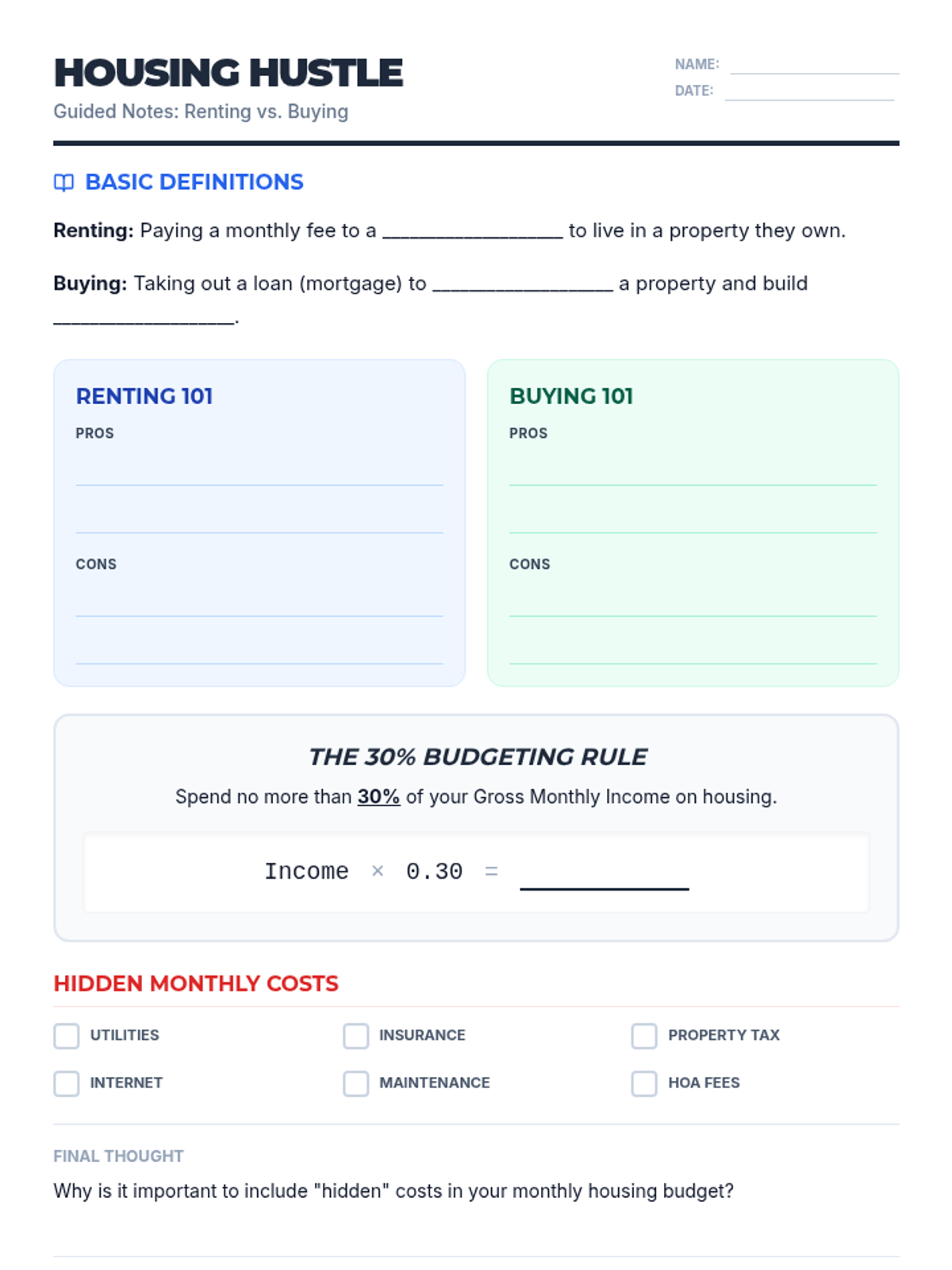
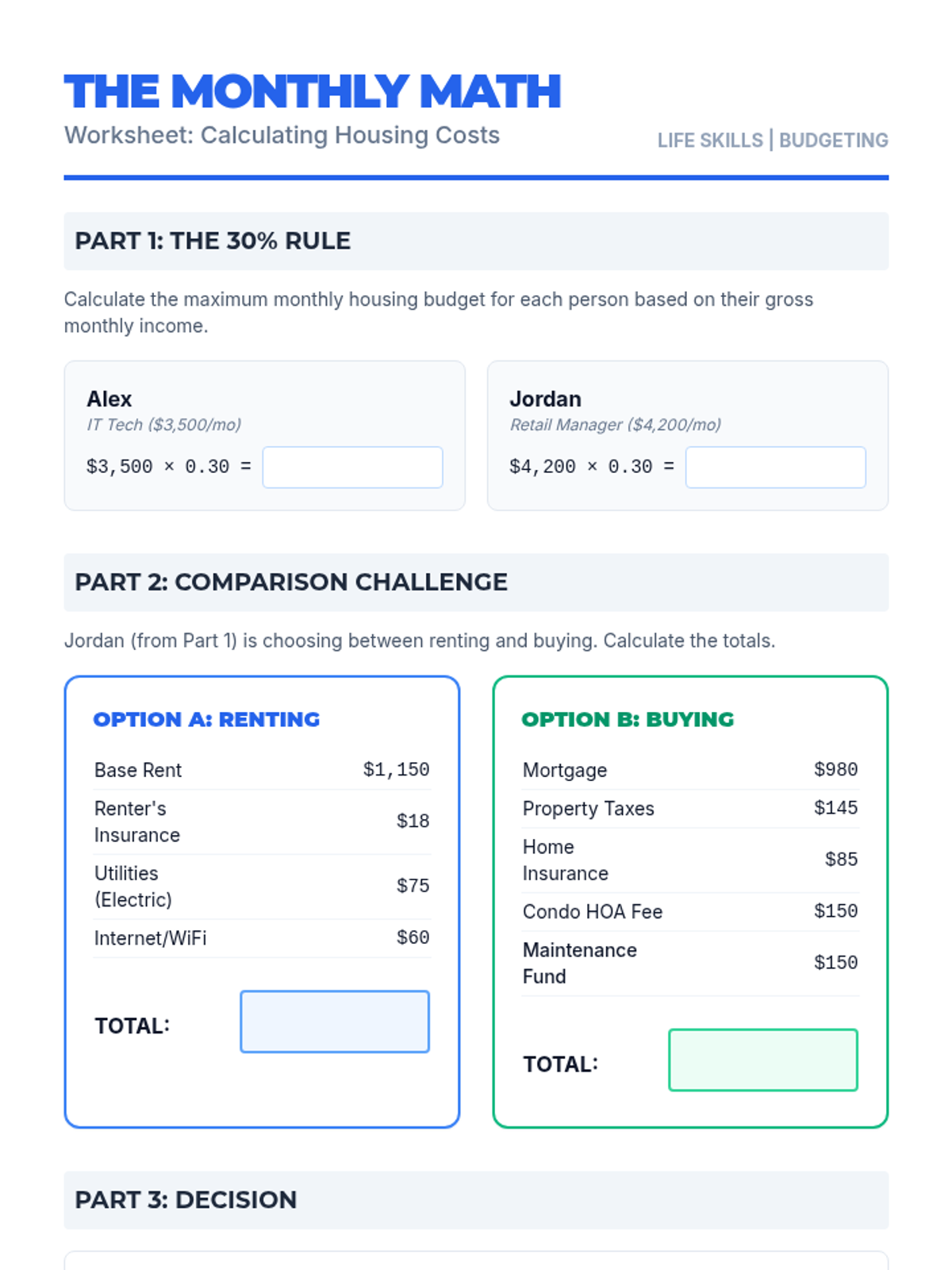
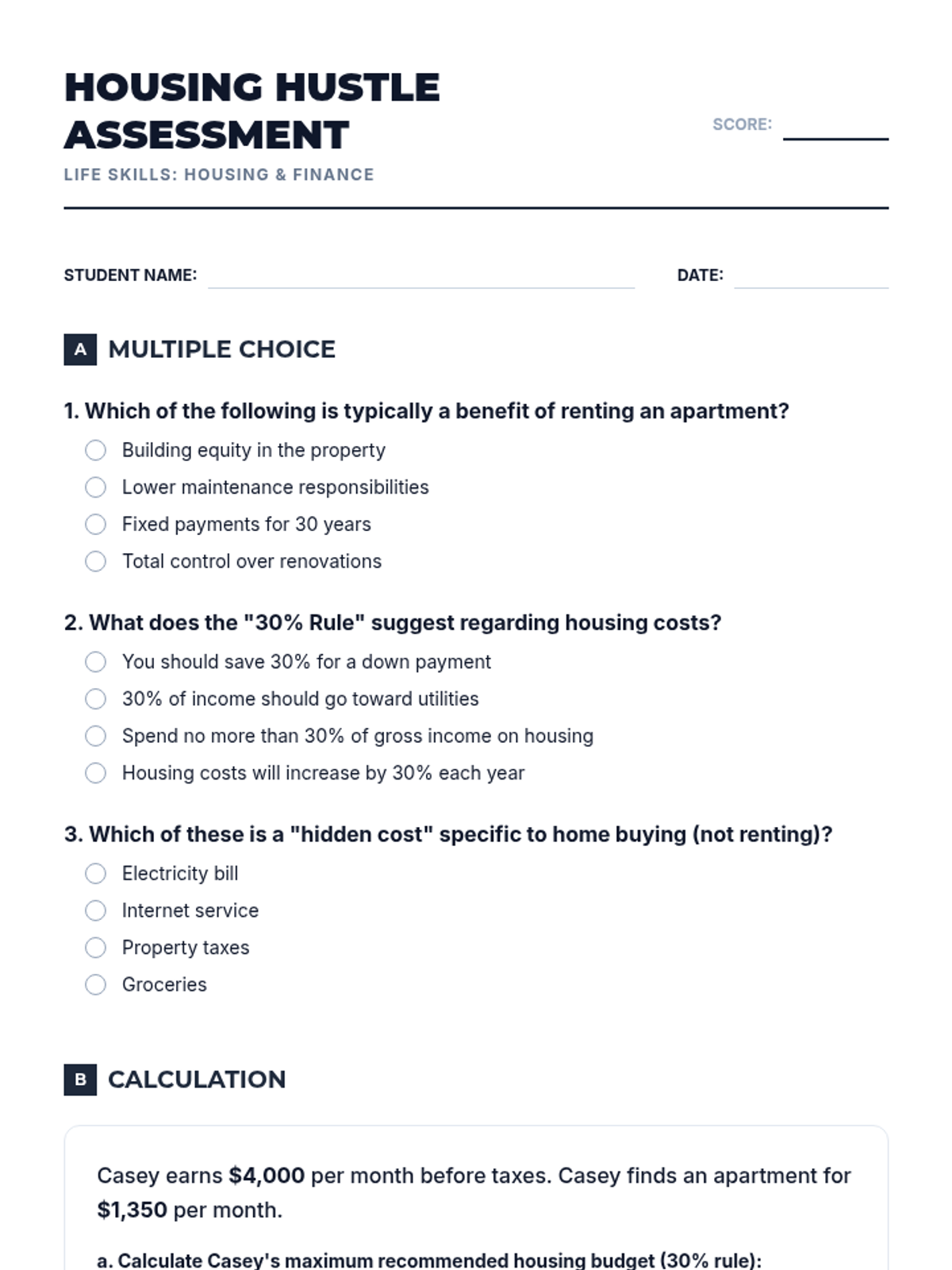
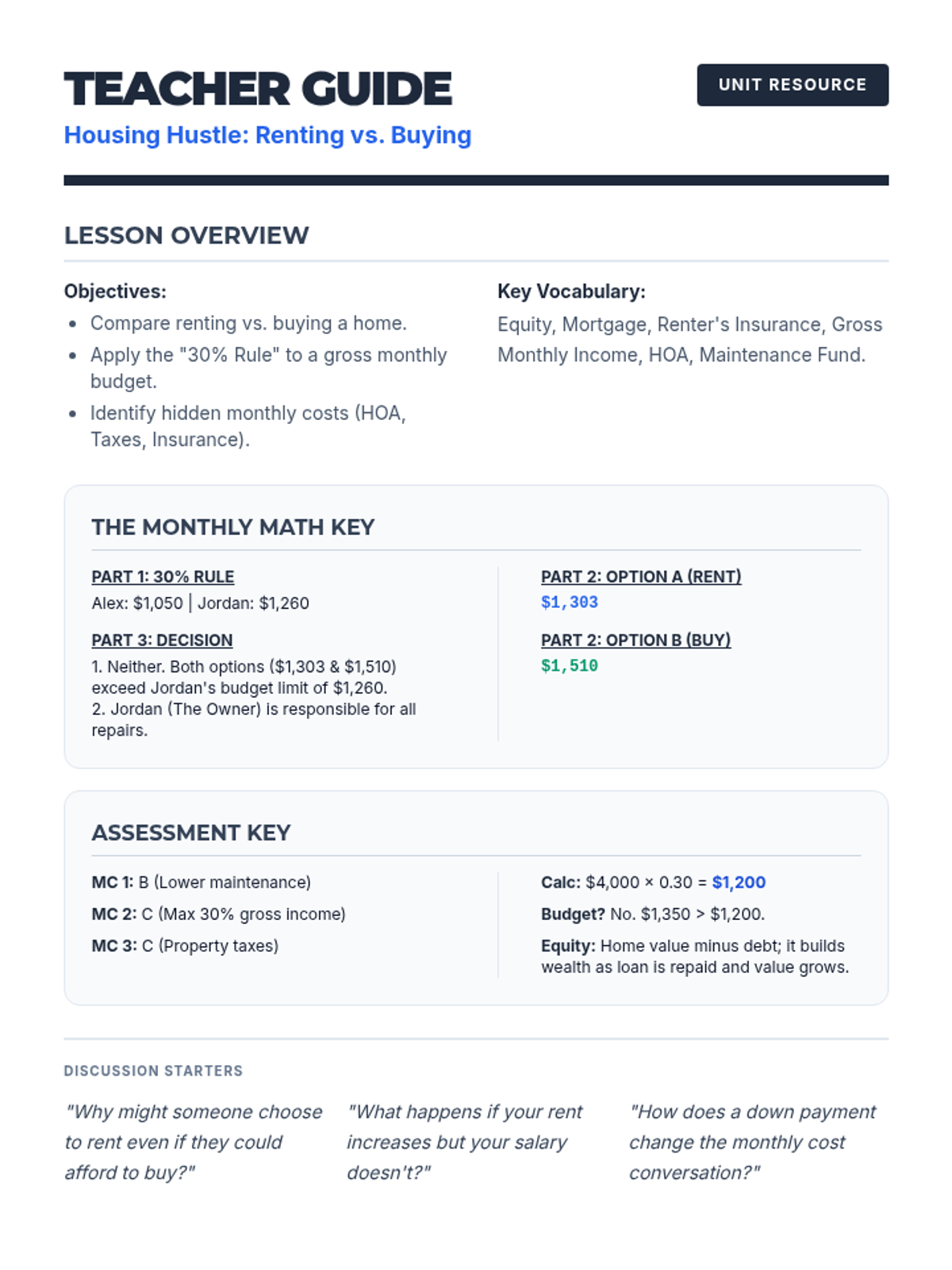
A practical exploration of the financial and lifestyle differences between renting and buying a home, focusing on fixed monthly costs and budgeting.
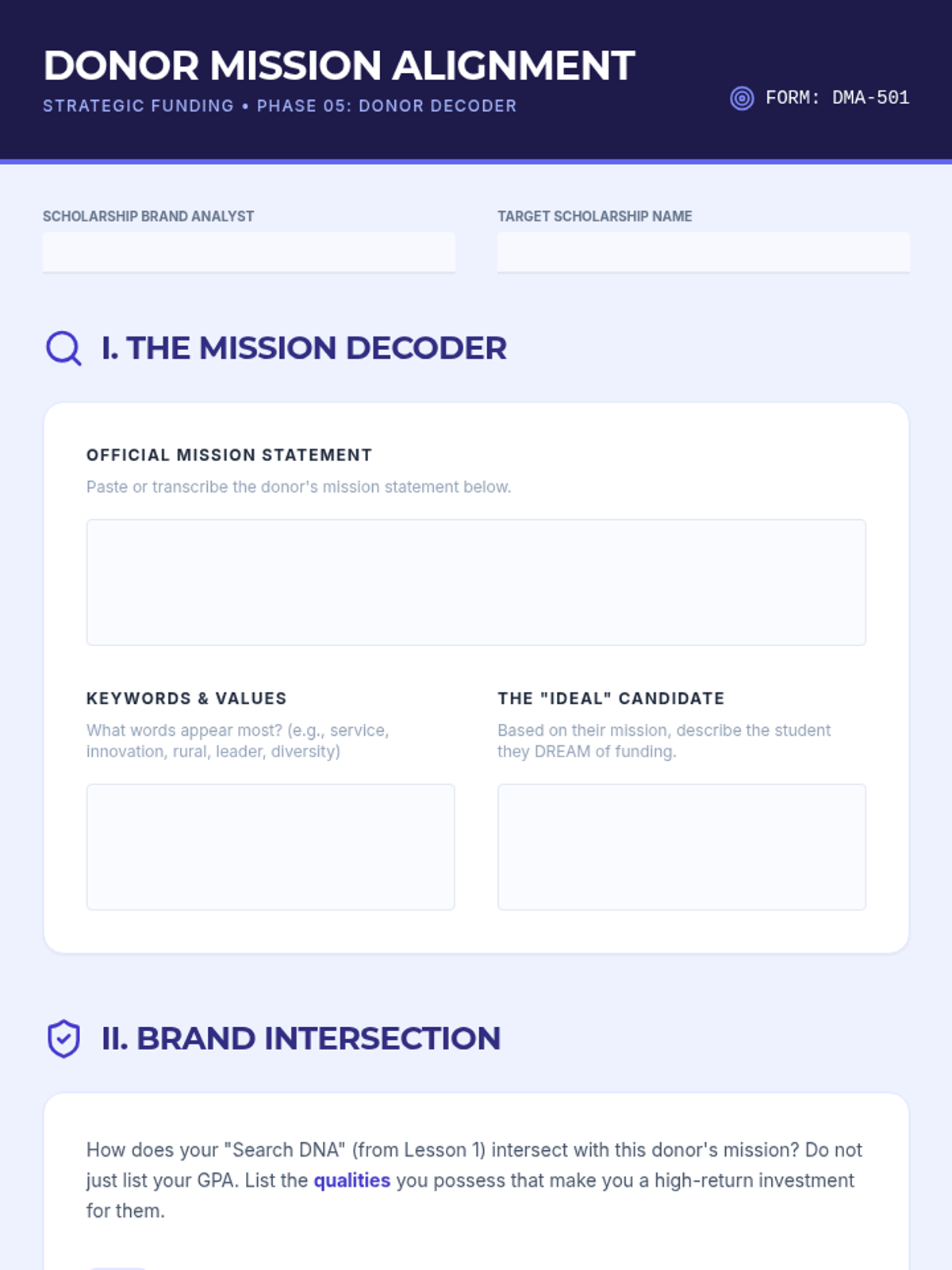
Students research donor organizations to align their personal brand with the funding source's mission and values.
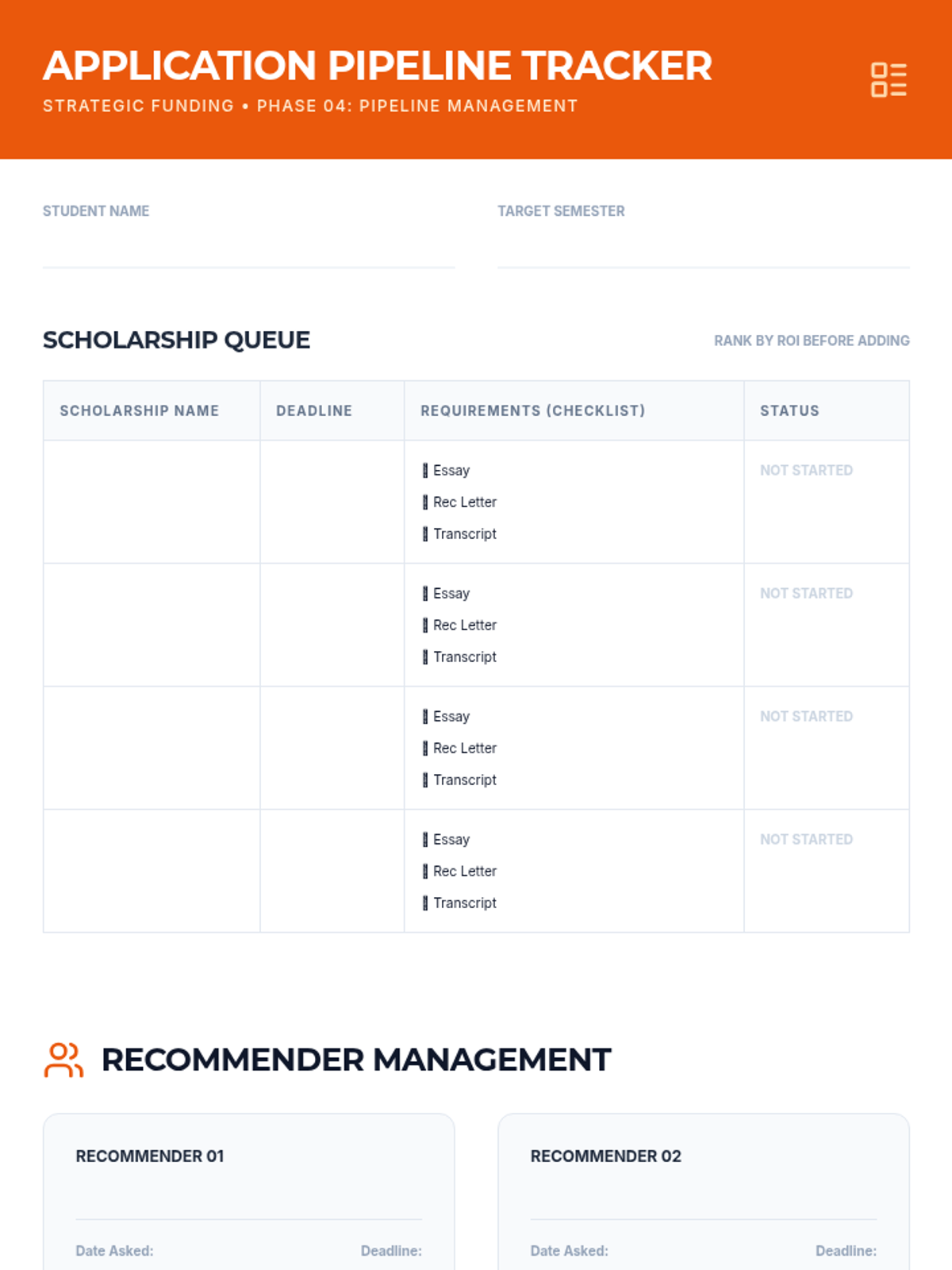
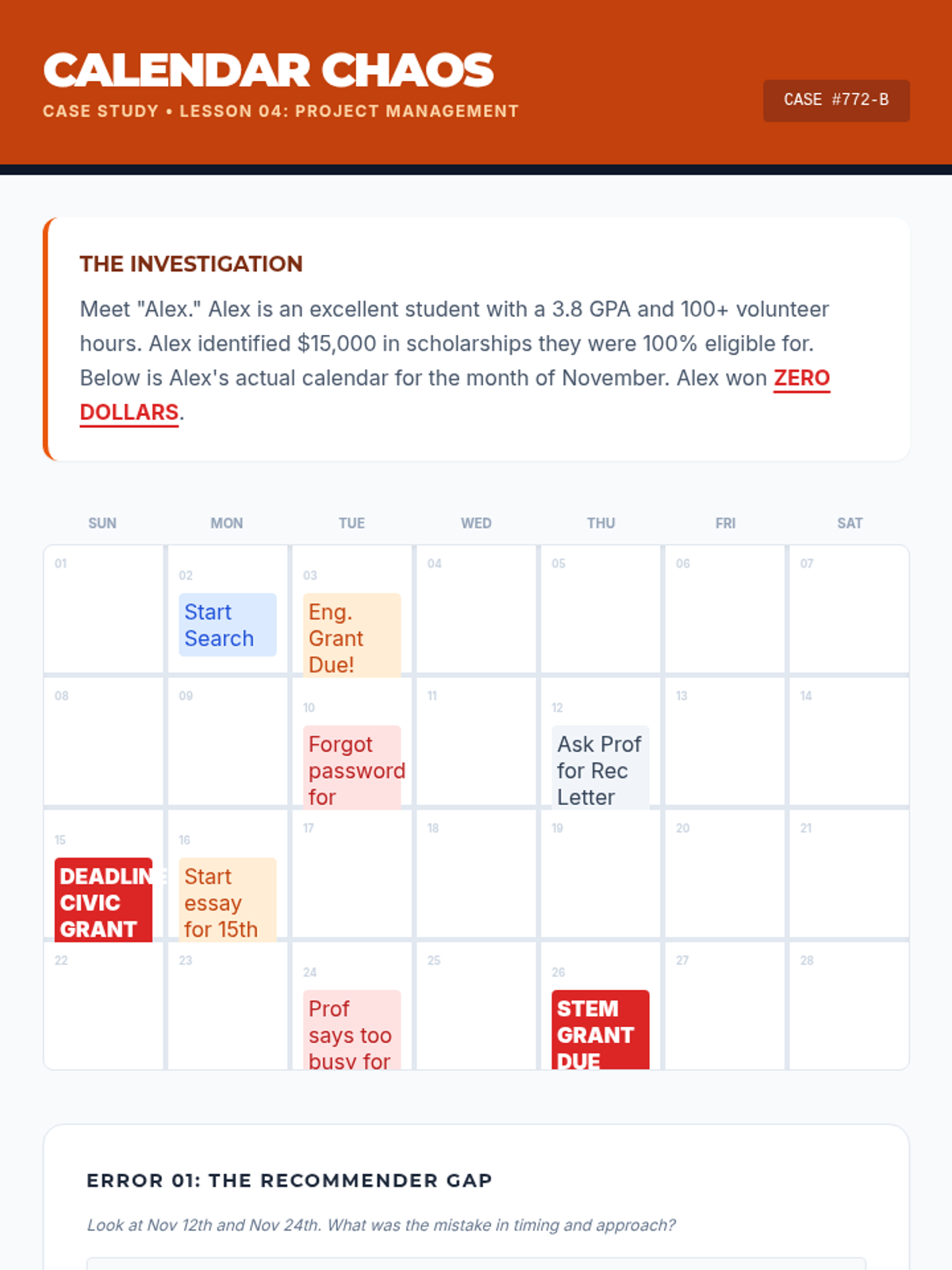
Students build a robust project management system to track deadlines, requirements, and application status.
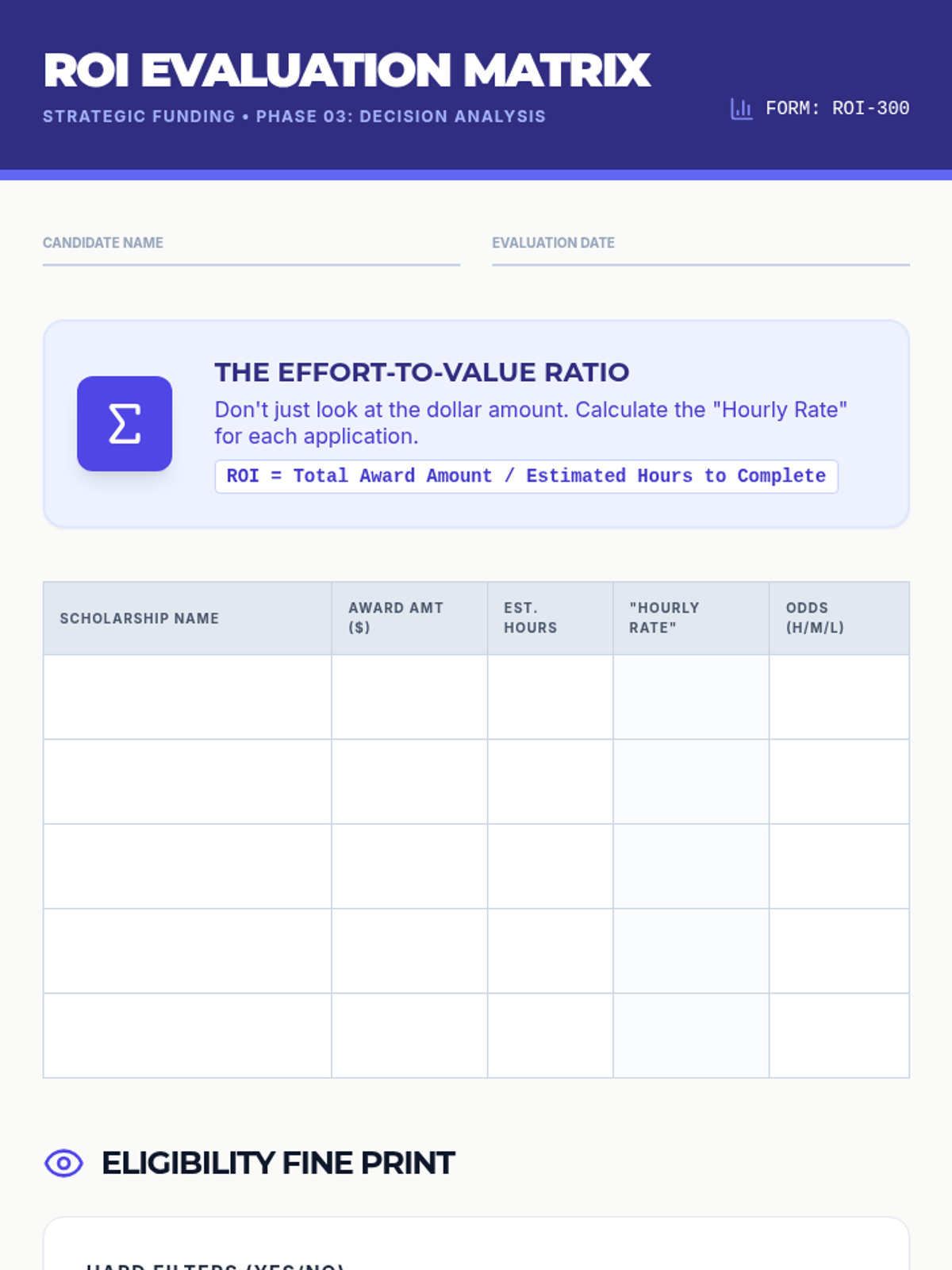
Students evaluate scholarship opportunities based on effort-to-value ratios and eligibility requirements.
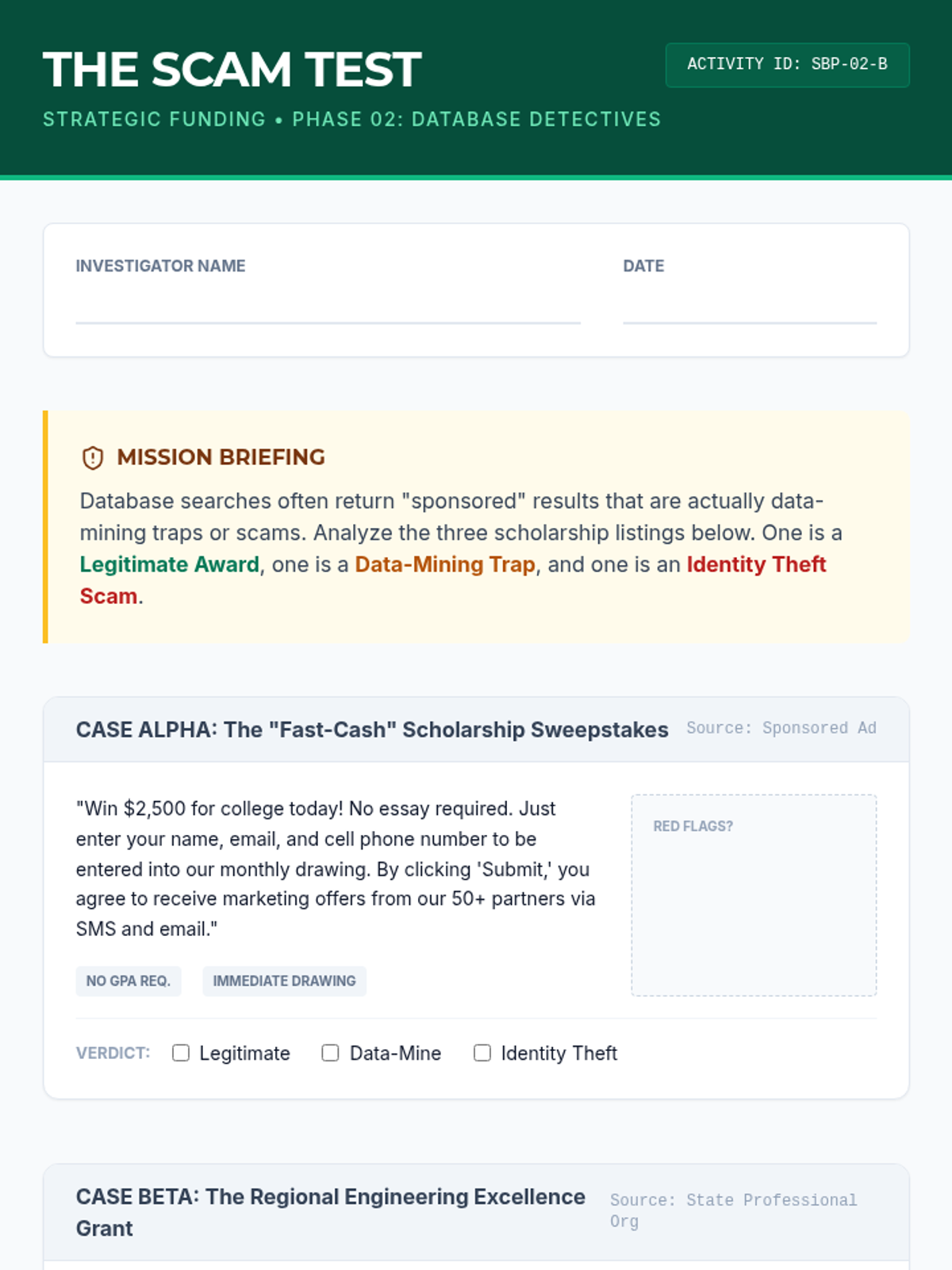
Students learn to use advanced search techniques and verify the legitimacy of scholarship databases and institutional resources.
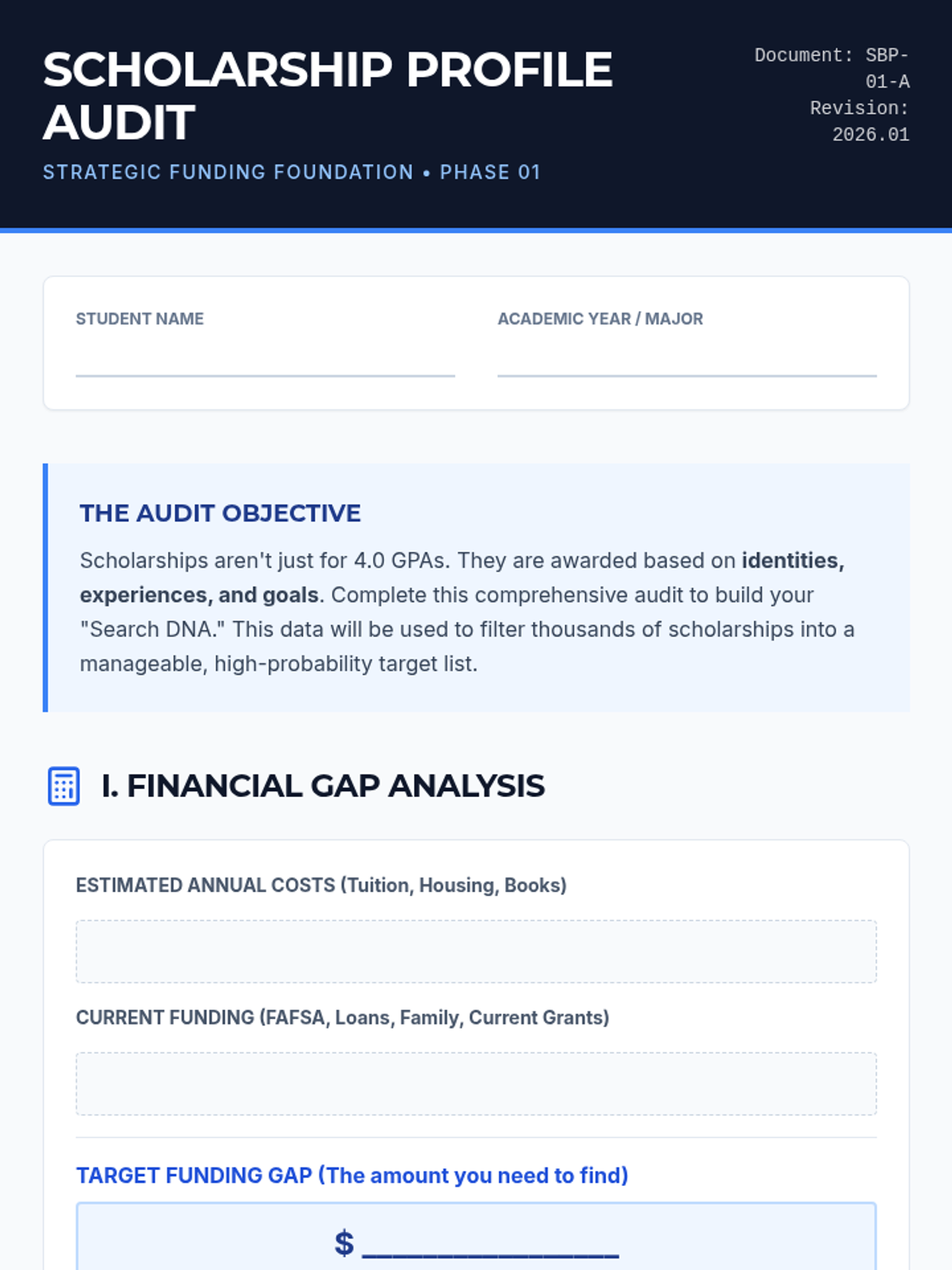
Students conduct a deep-dive audit of their financial needs and personal characteristics to identify niche scholarship opportunities.
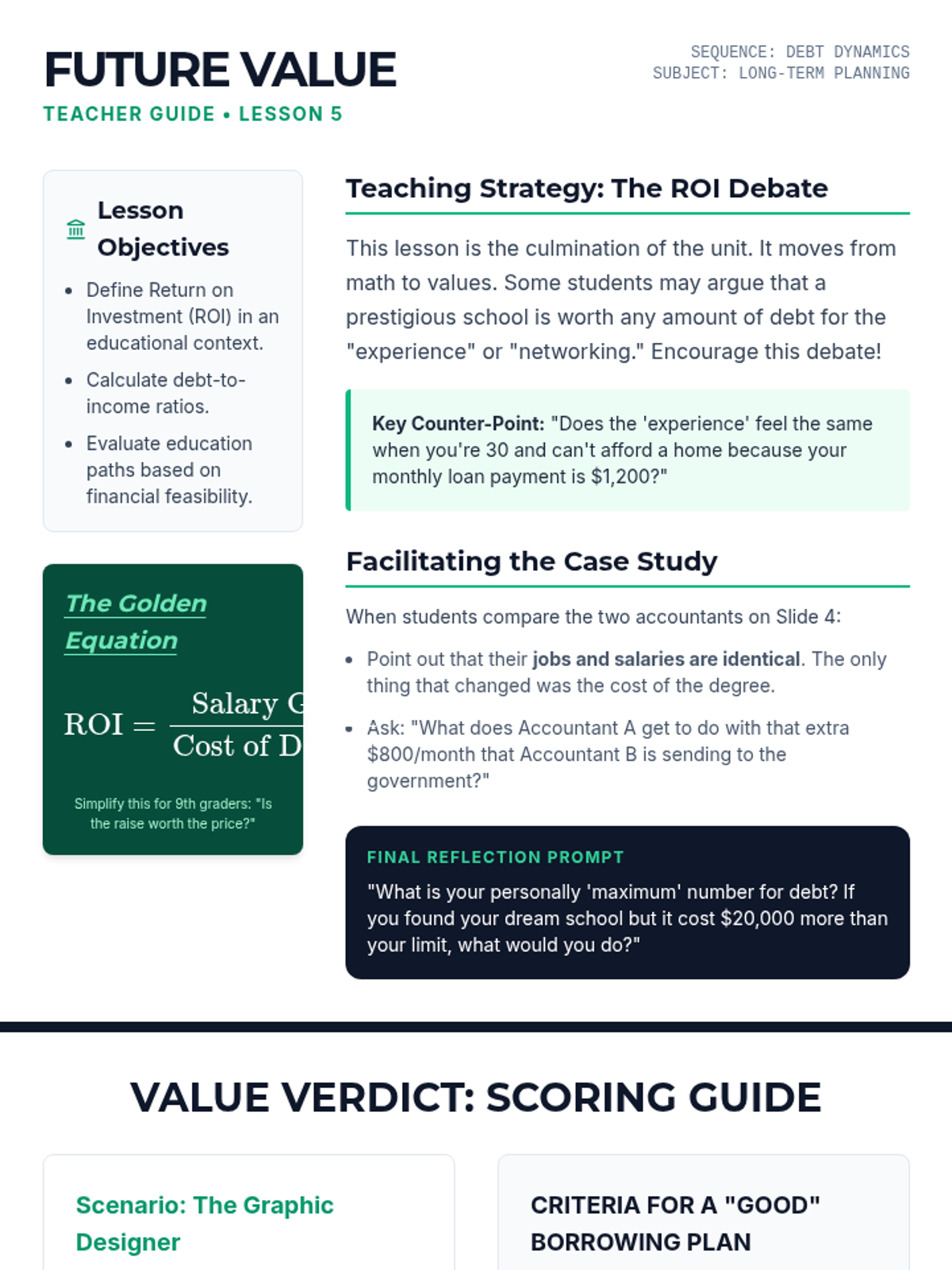
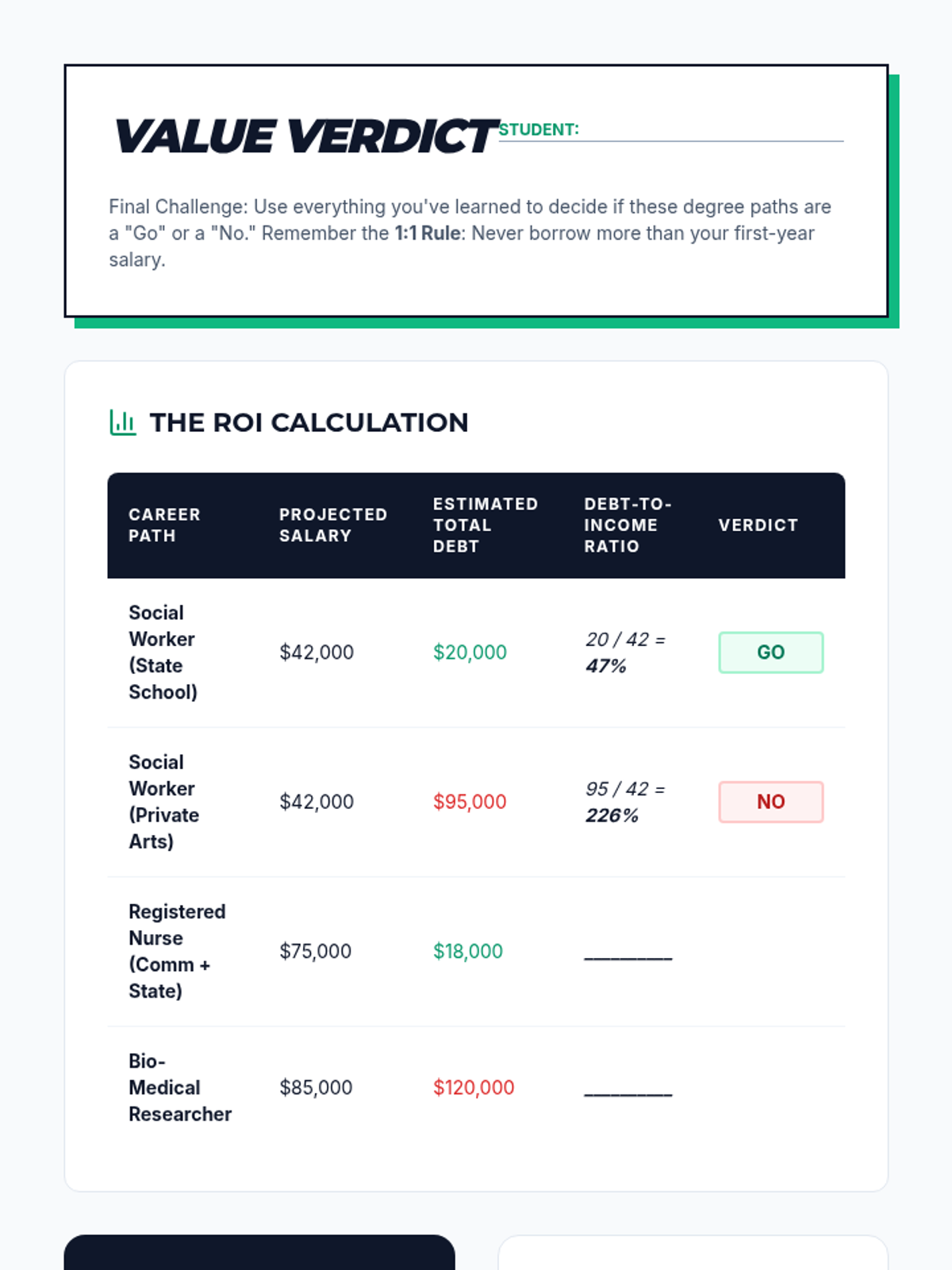
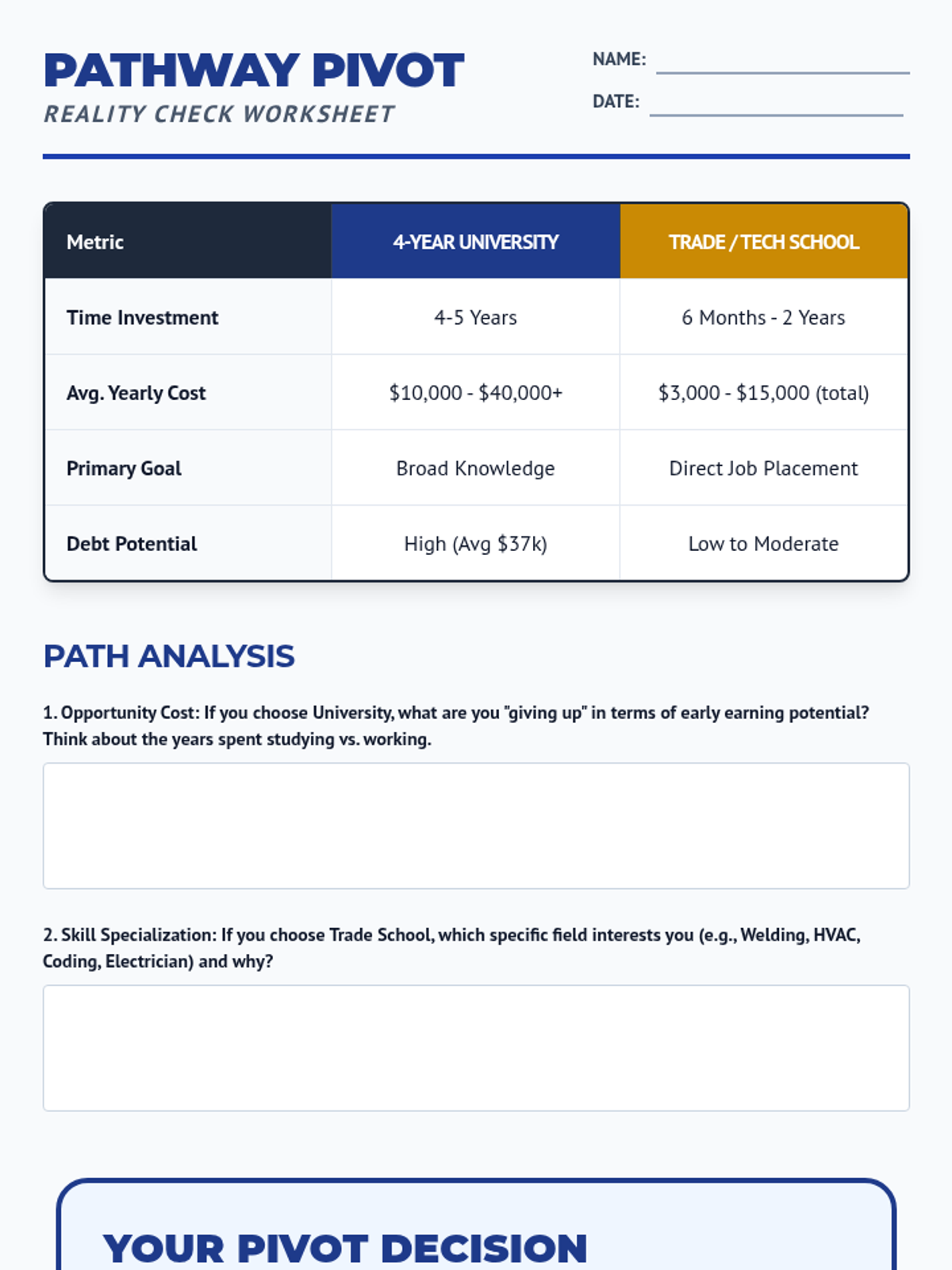
Students evaluate whether specific degrees and colleges are worth the estimated debt load based on projected earnings. They calculate the debt-to-income ratio for various career paths and set personal borrowing guidelines.
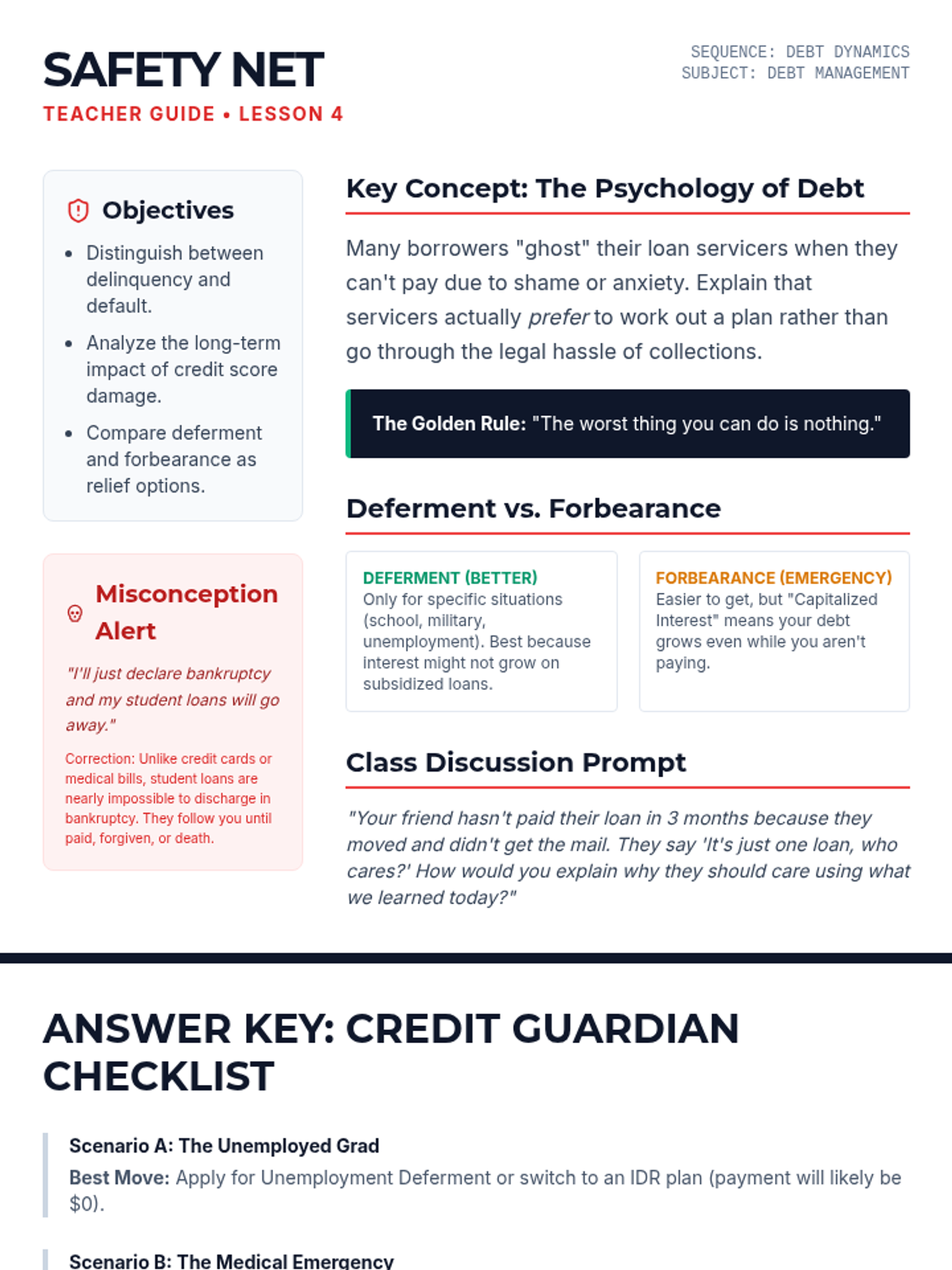
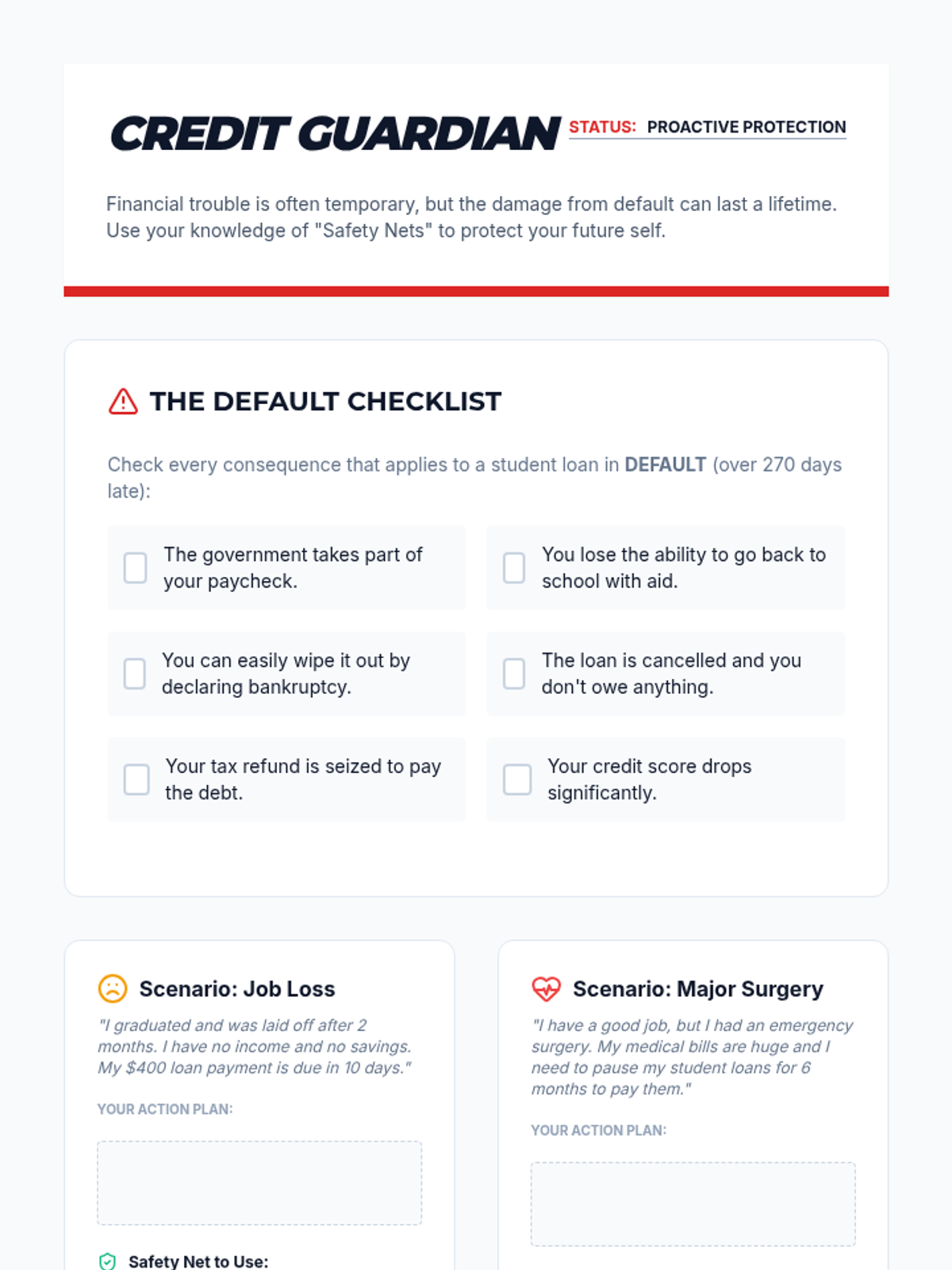
Students examine the consequences of failing to repay student loans, including wage garnishment and credit score damage. They learn about deferment and forbearance as temporary safety nets.
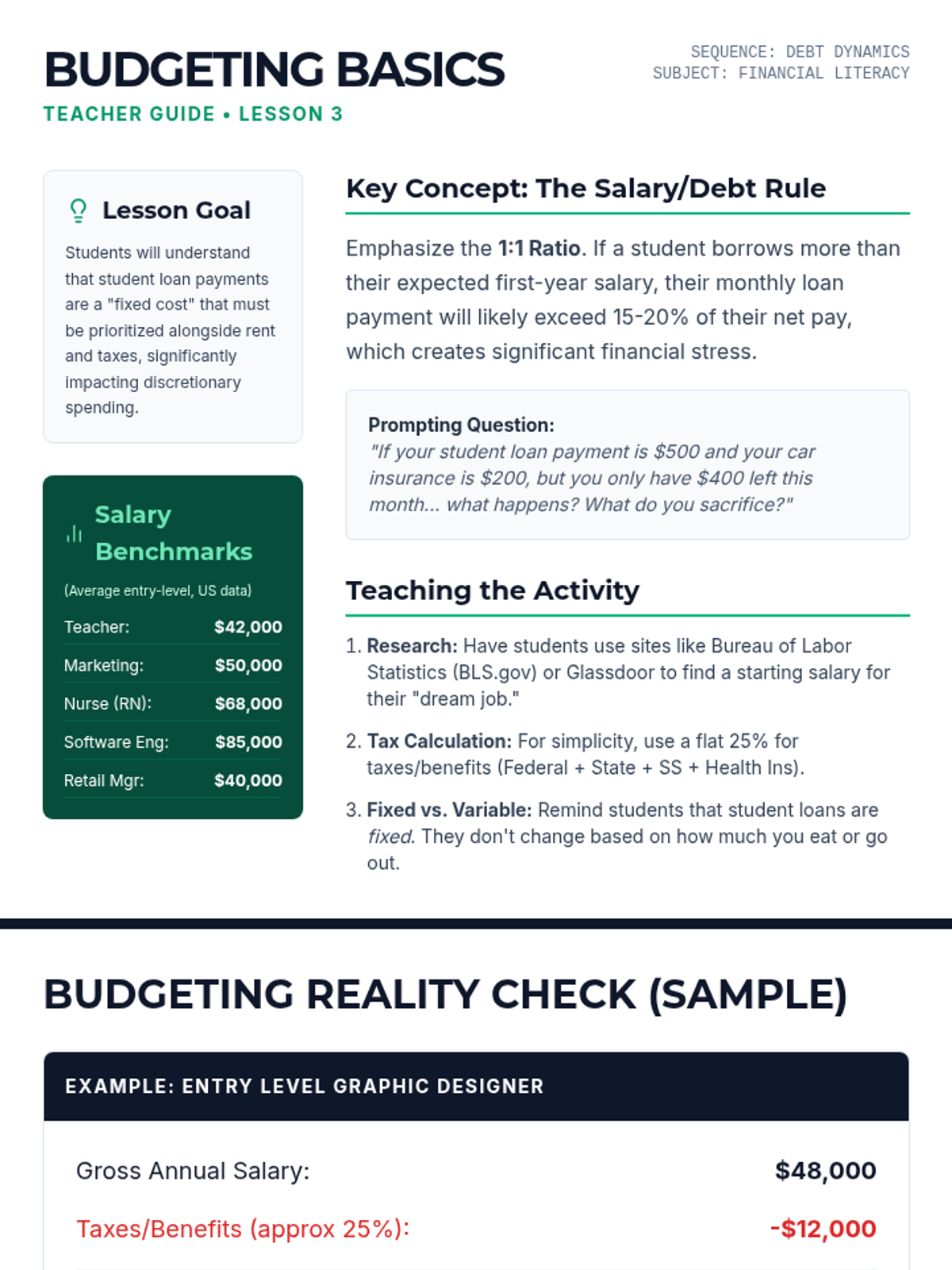
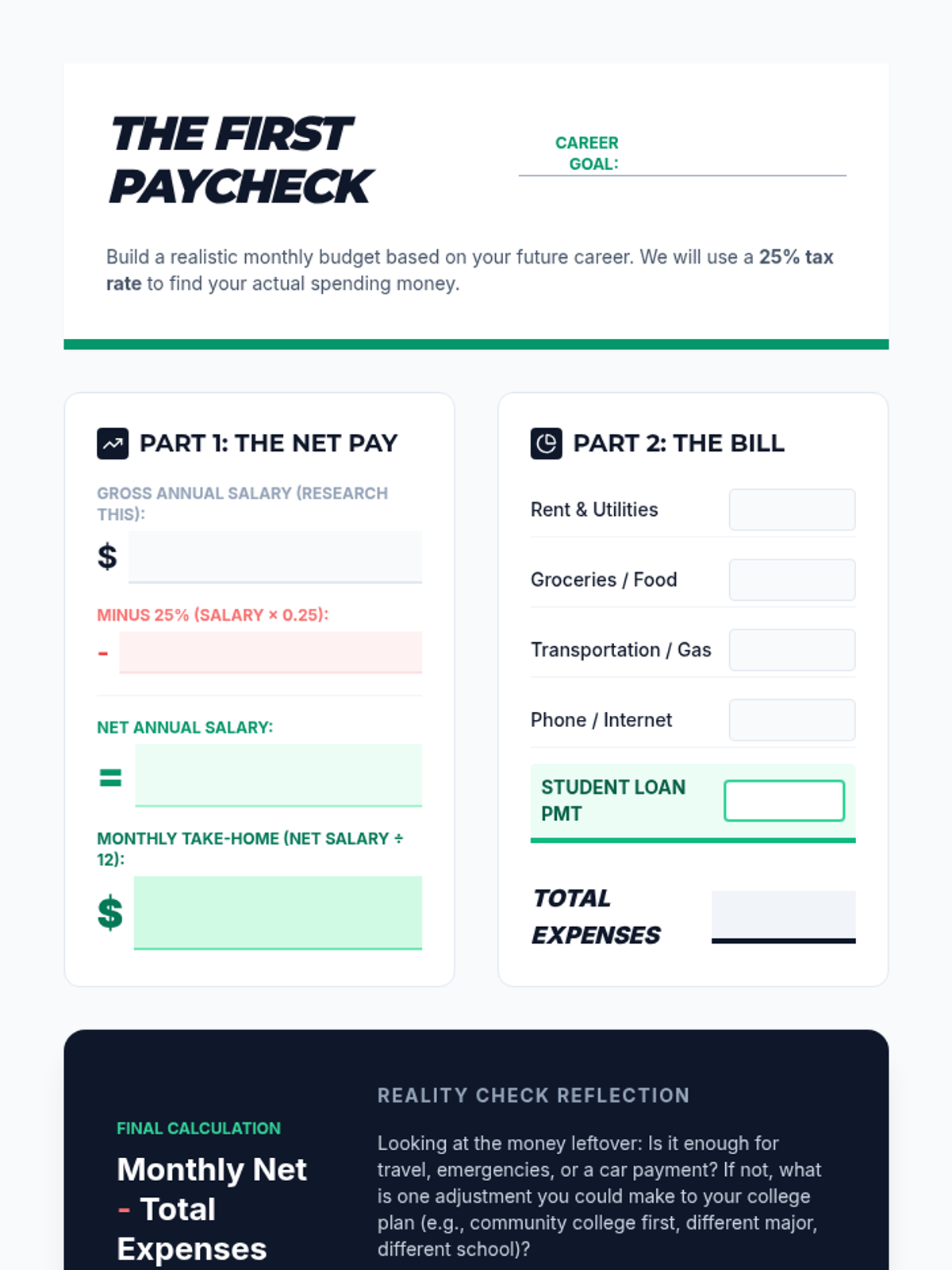
Students integrate student loan payments into a realistic entry-level monthly budget. They research starting salaries for careers of interest and subtract taxes and living expenses to see if the loan payments are affordable.
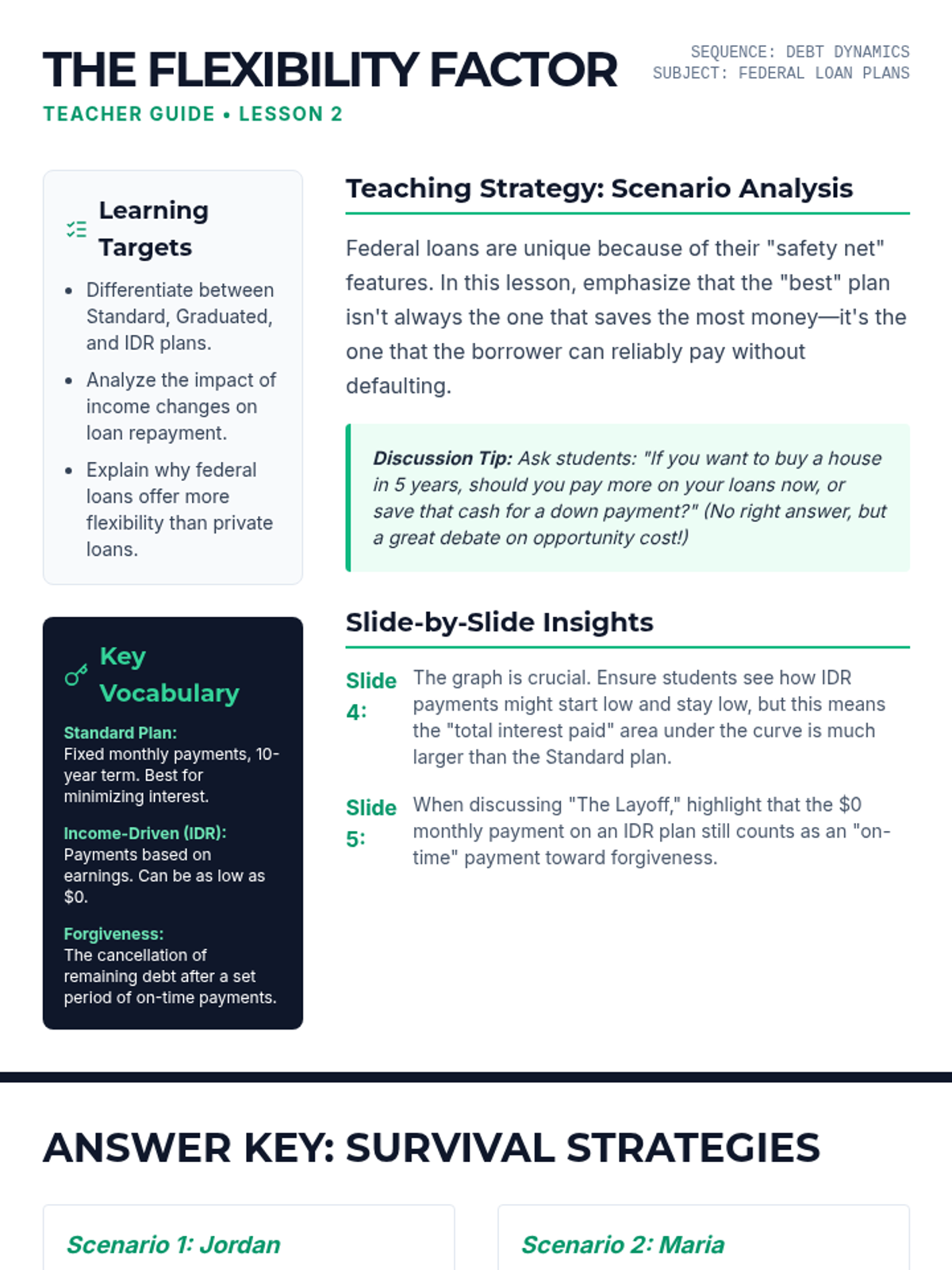
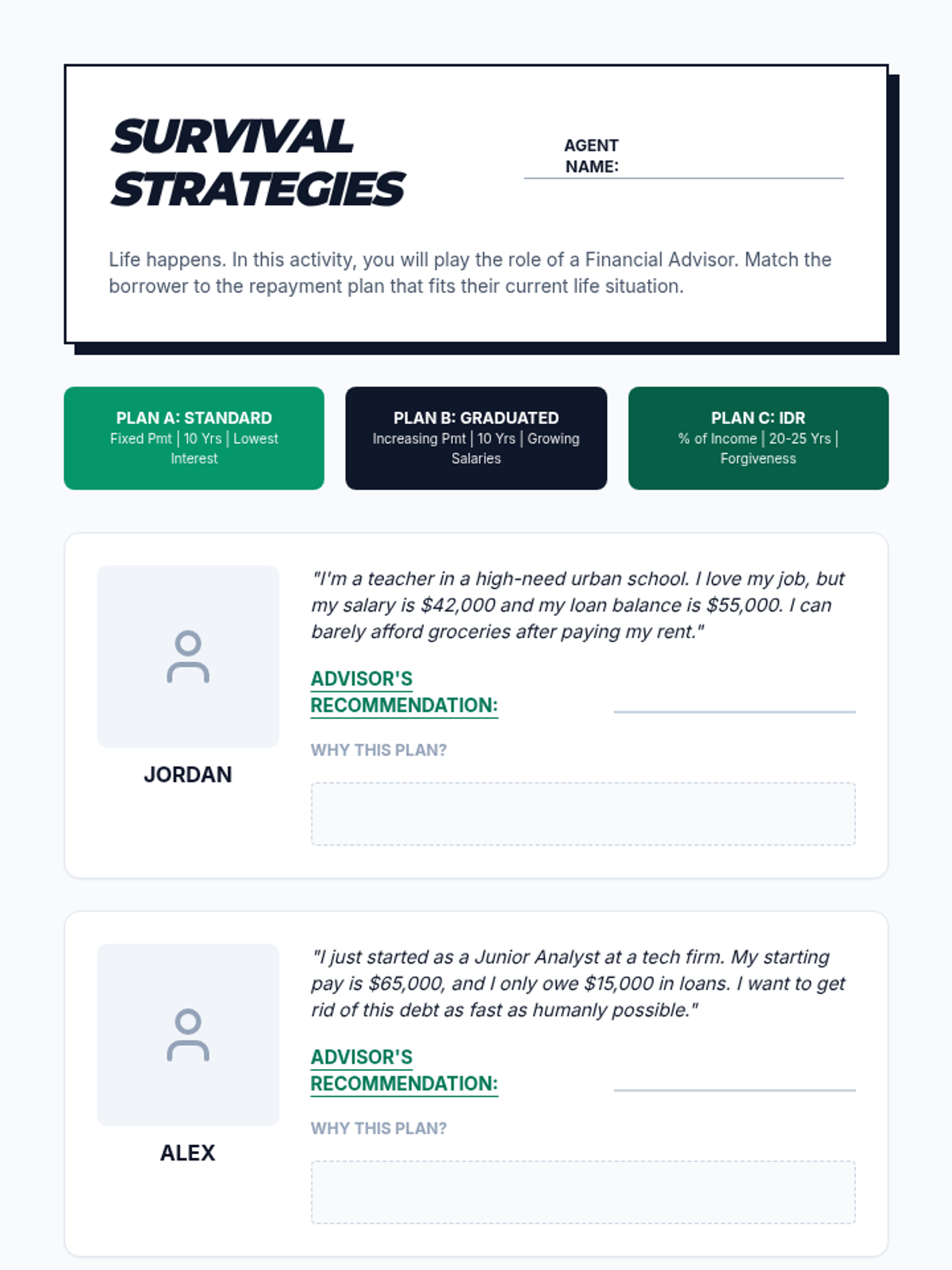
This lesson details various federal loan repayment options (Standard, Graduated, Income-Driven) and helps students determine when to prioritize lower monthly payments over long-term savings.
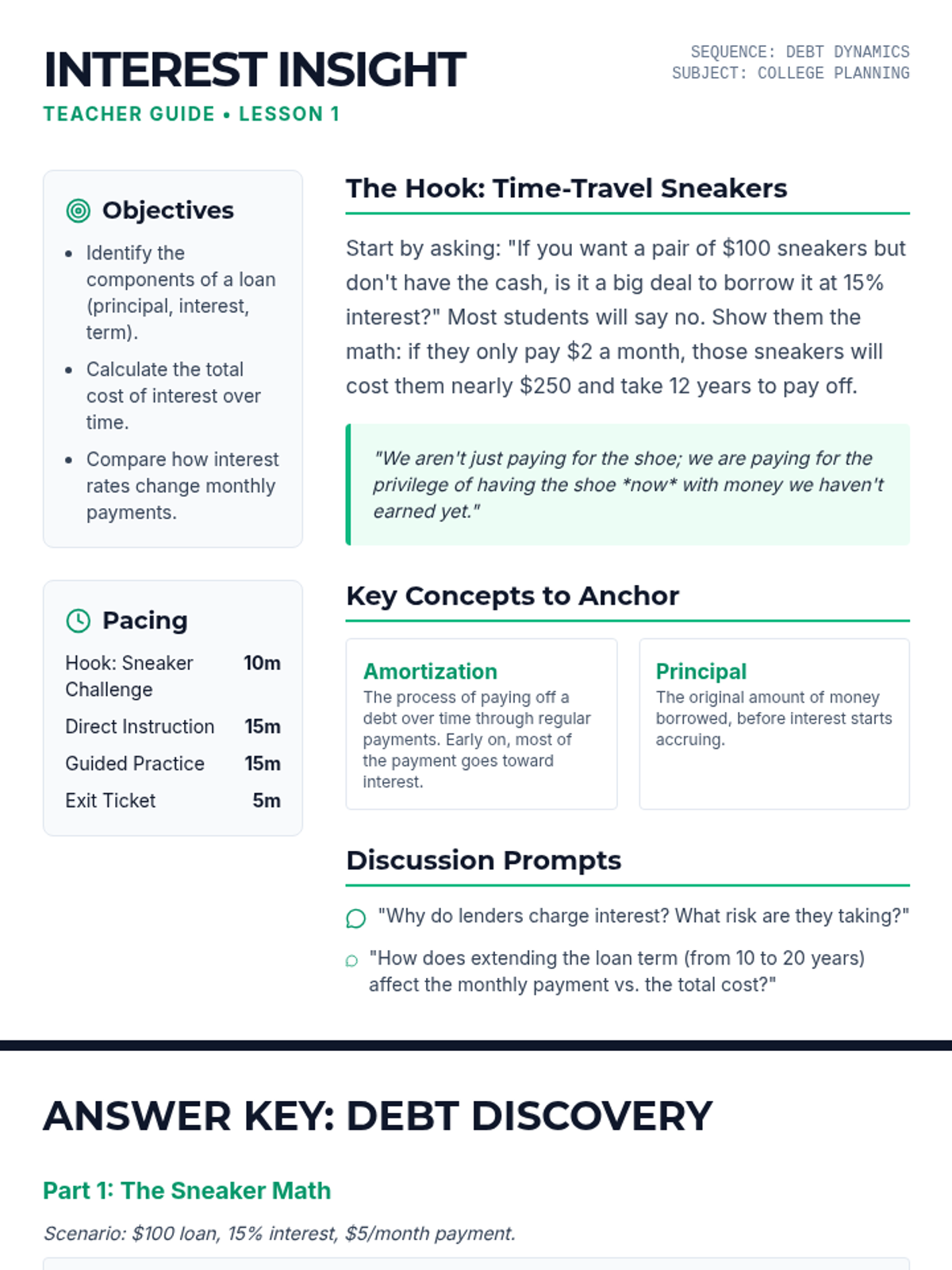
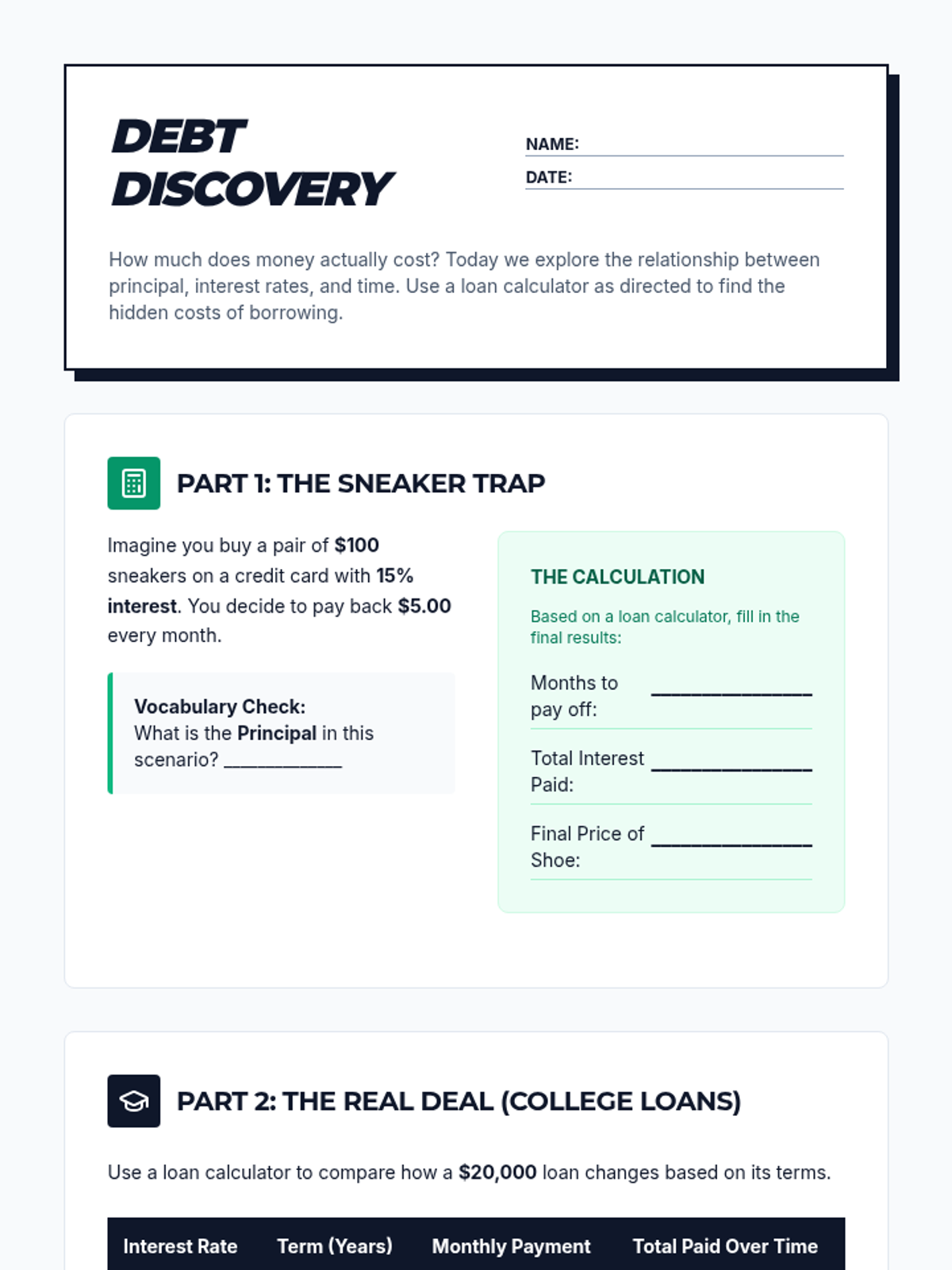
Students use loan calculators to understand how interest rates and loan terms affect the total cost of borrowing, introducing the concept of amortization.
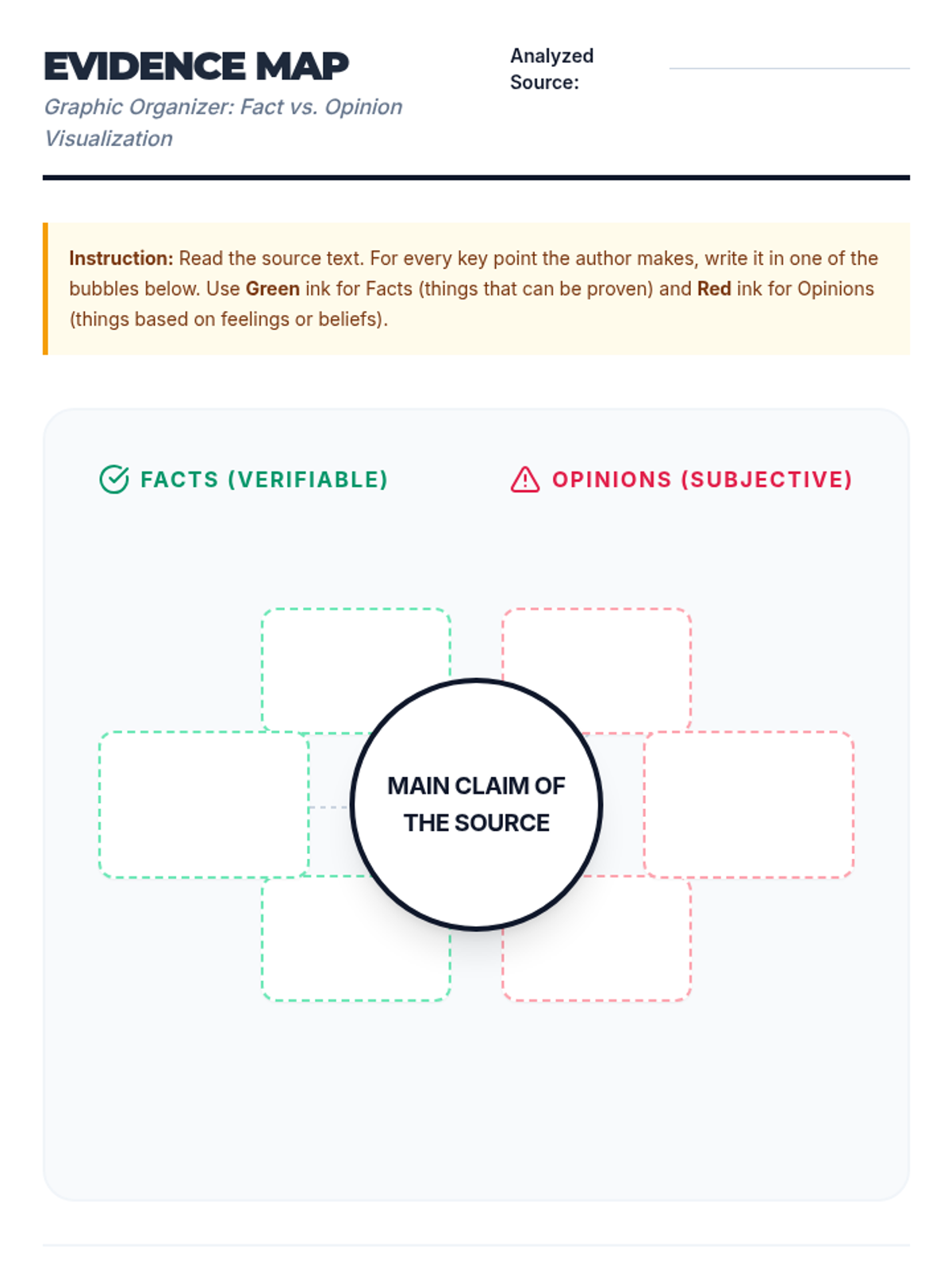
Integrates source evaluation into the matrix structure, helping students visually distinguish between fact-heavy and opinion-heavy sources.
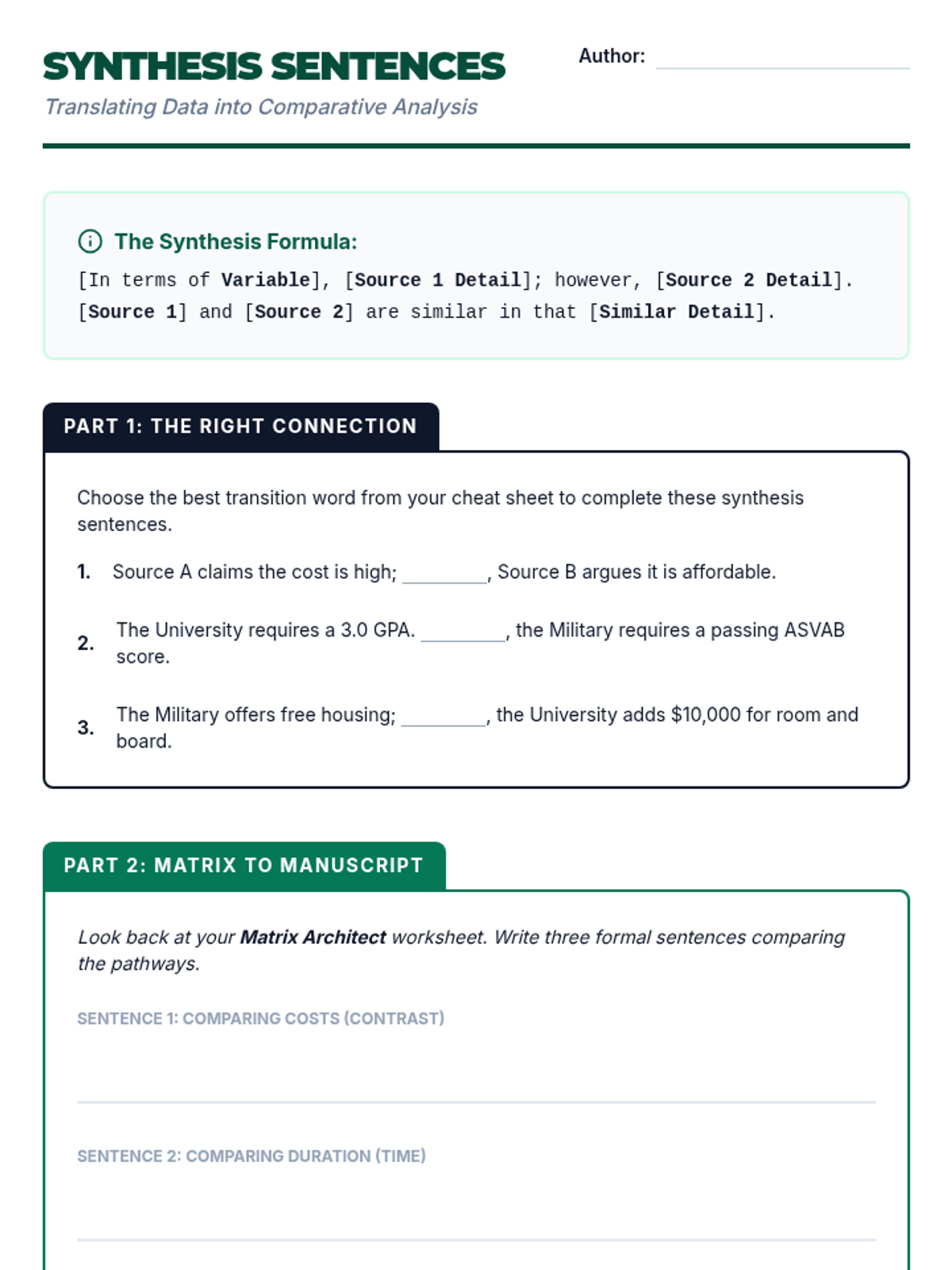
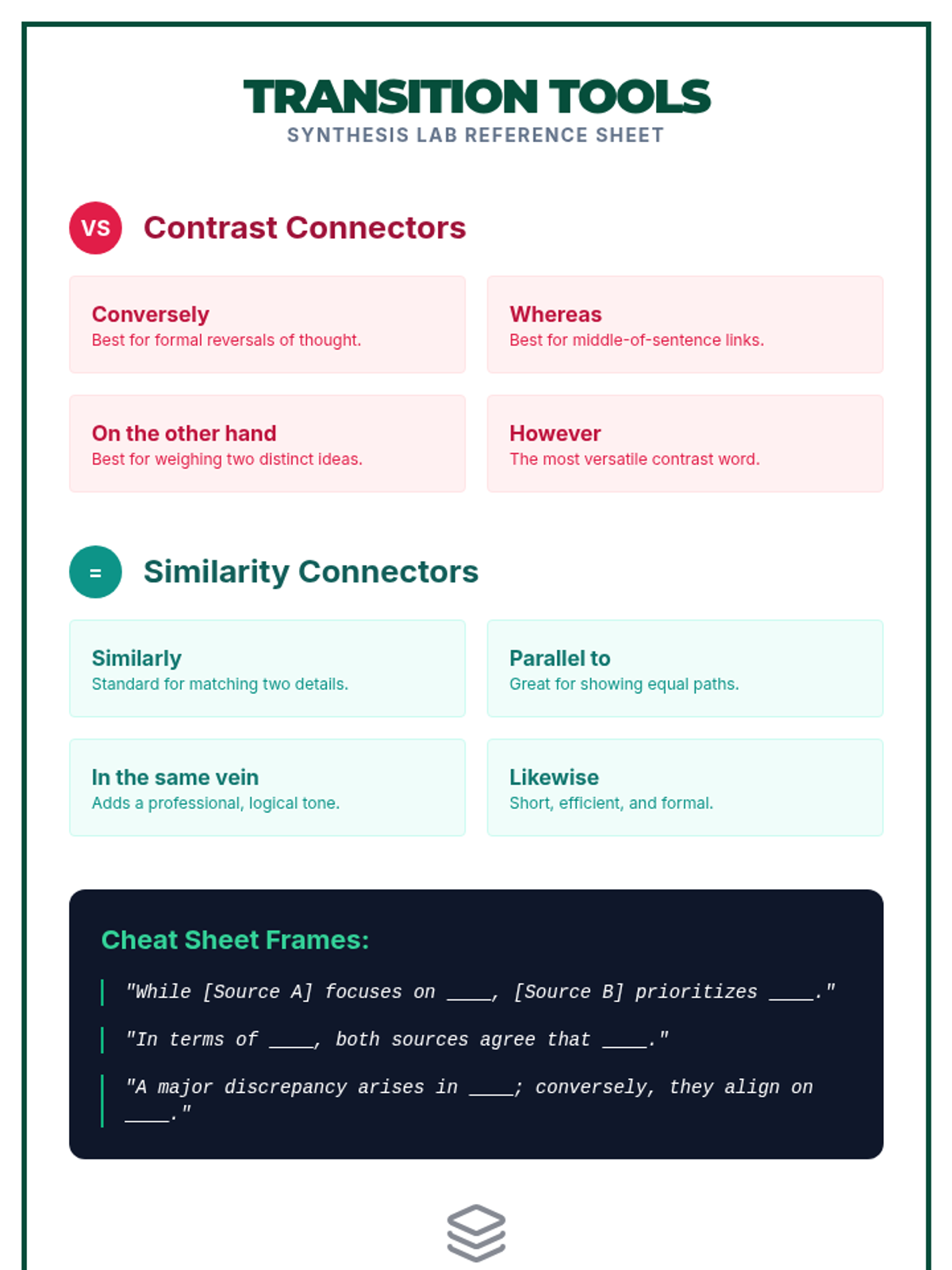
Teaches the linguistic tools necessary to translate organized matrix data into formal comparative writing using transition words and sentence frames.
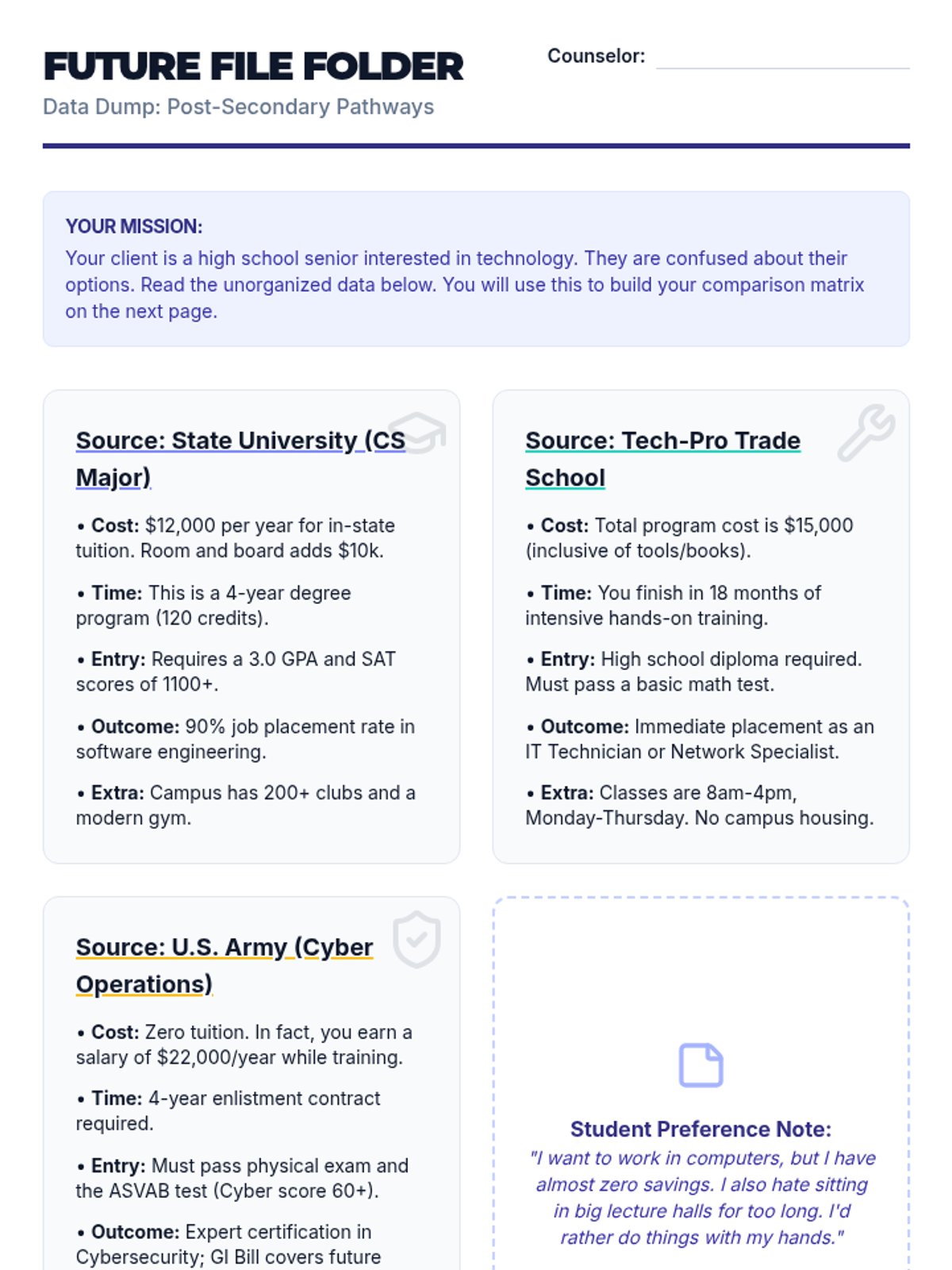
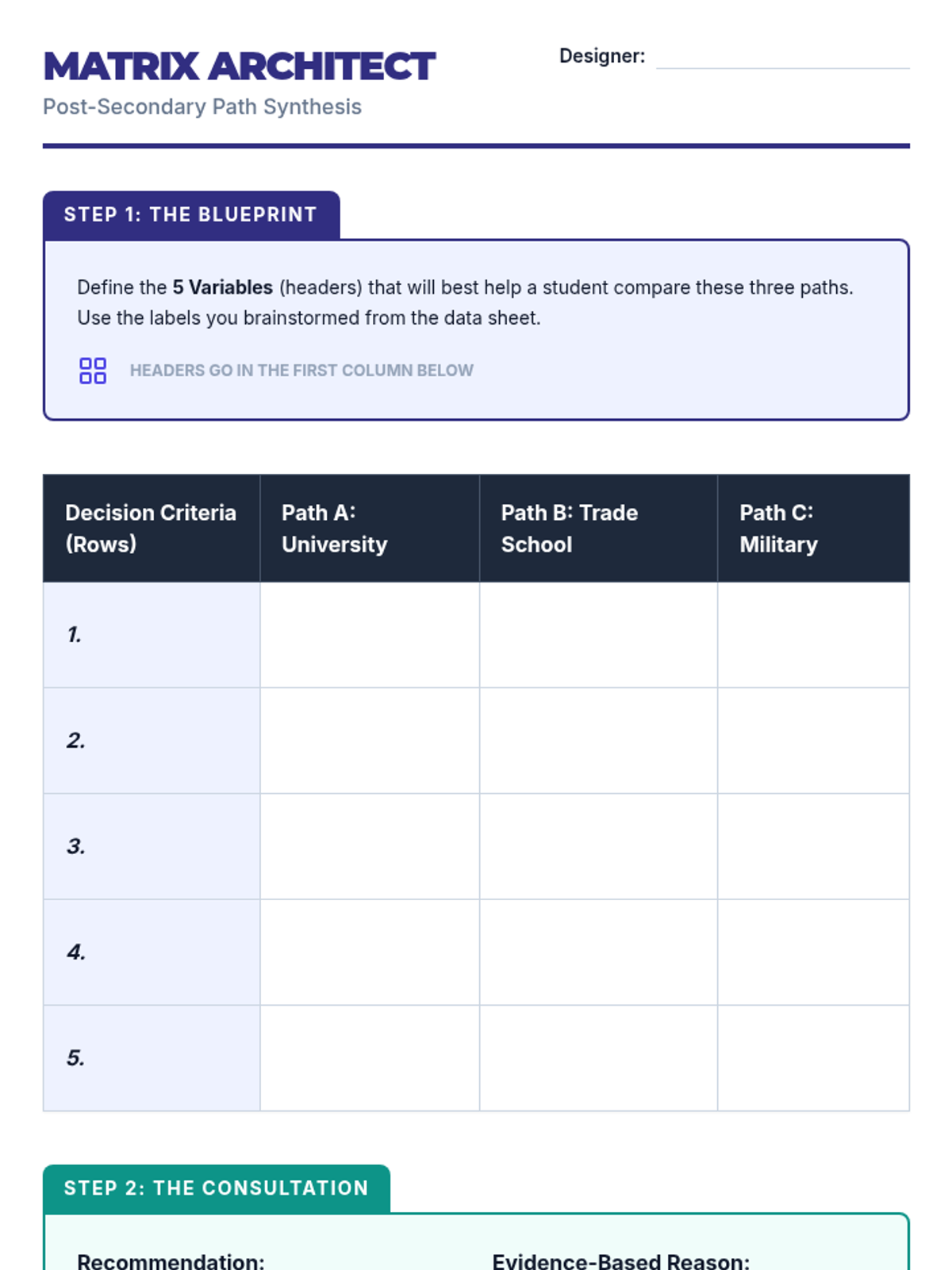
Empowers students to design their own matrix structures to organize unformatted data about post-secondary pathways.
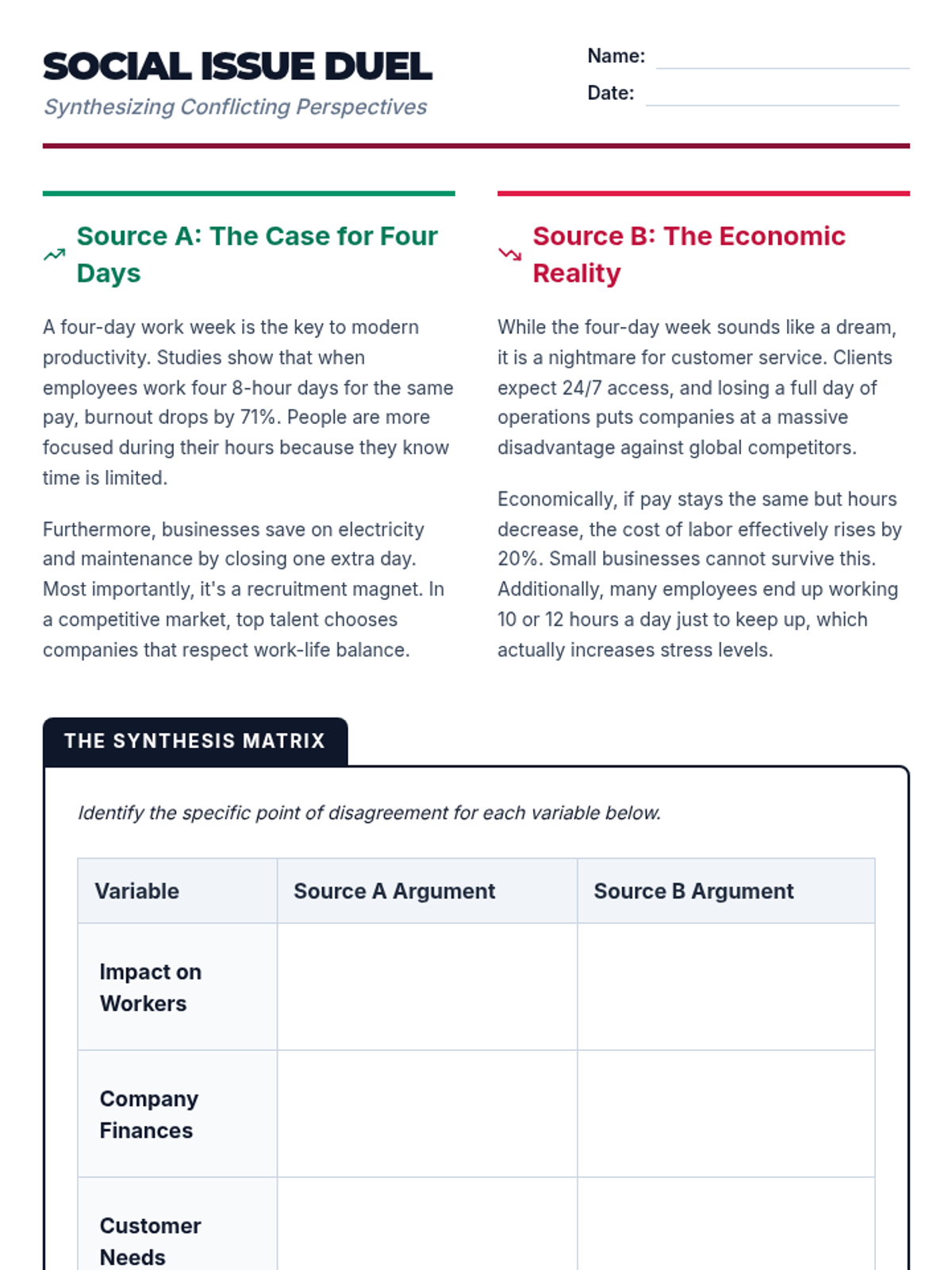
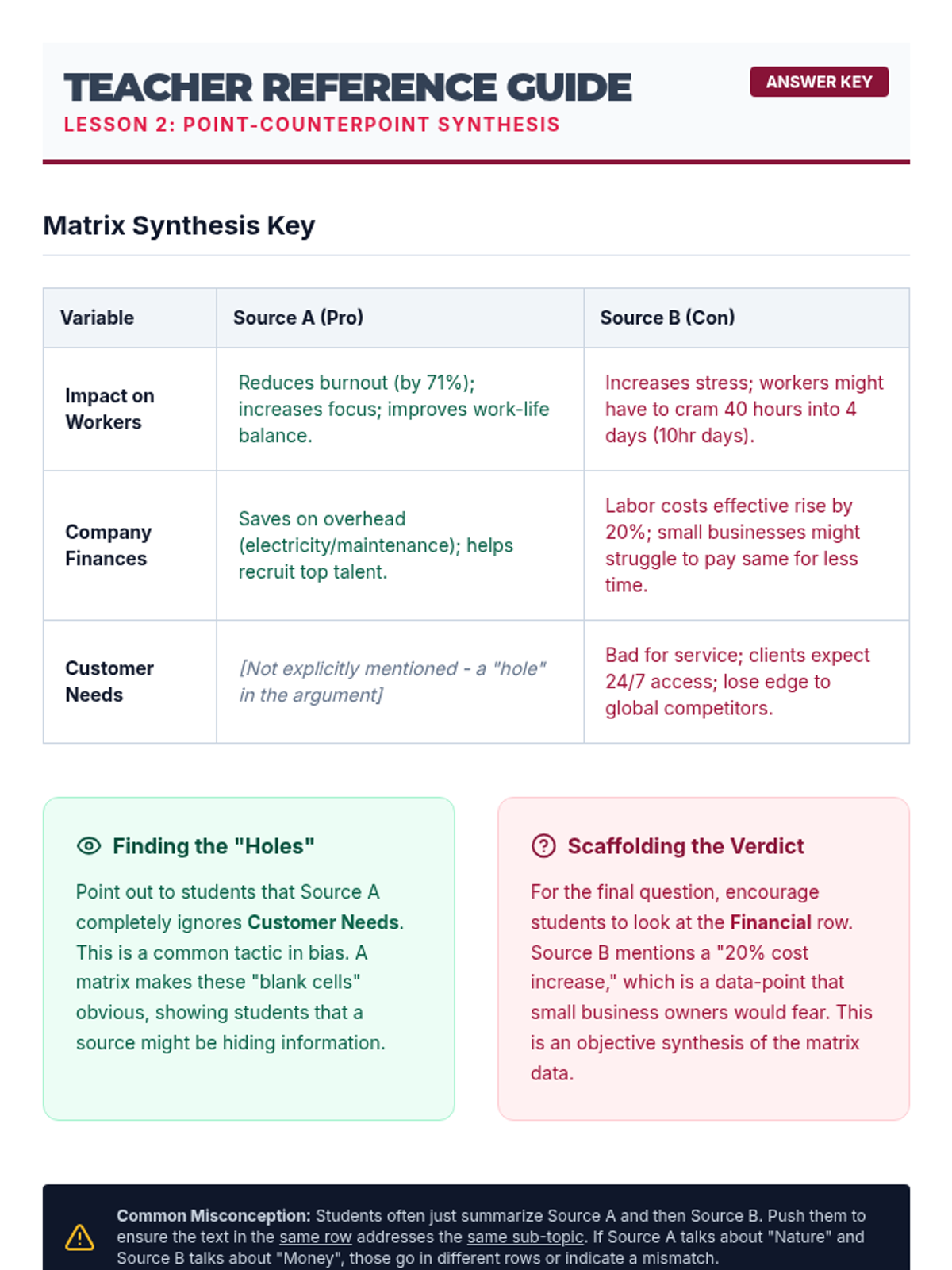
Focuses on identifying and organizing direct rebuttals and opposing viewpoints from multiple texts using a point-counterpoint matrix.
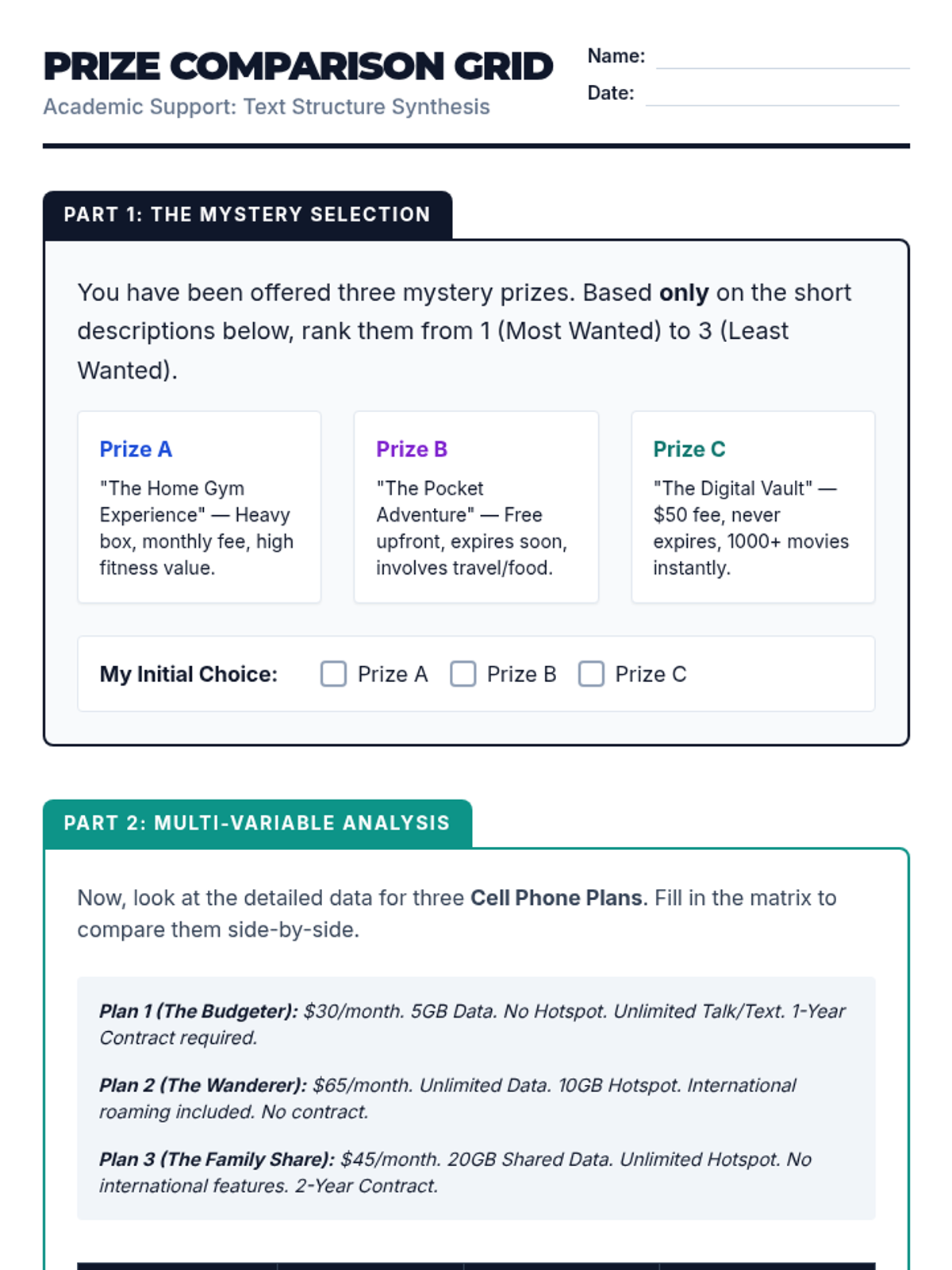
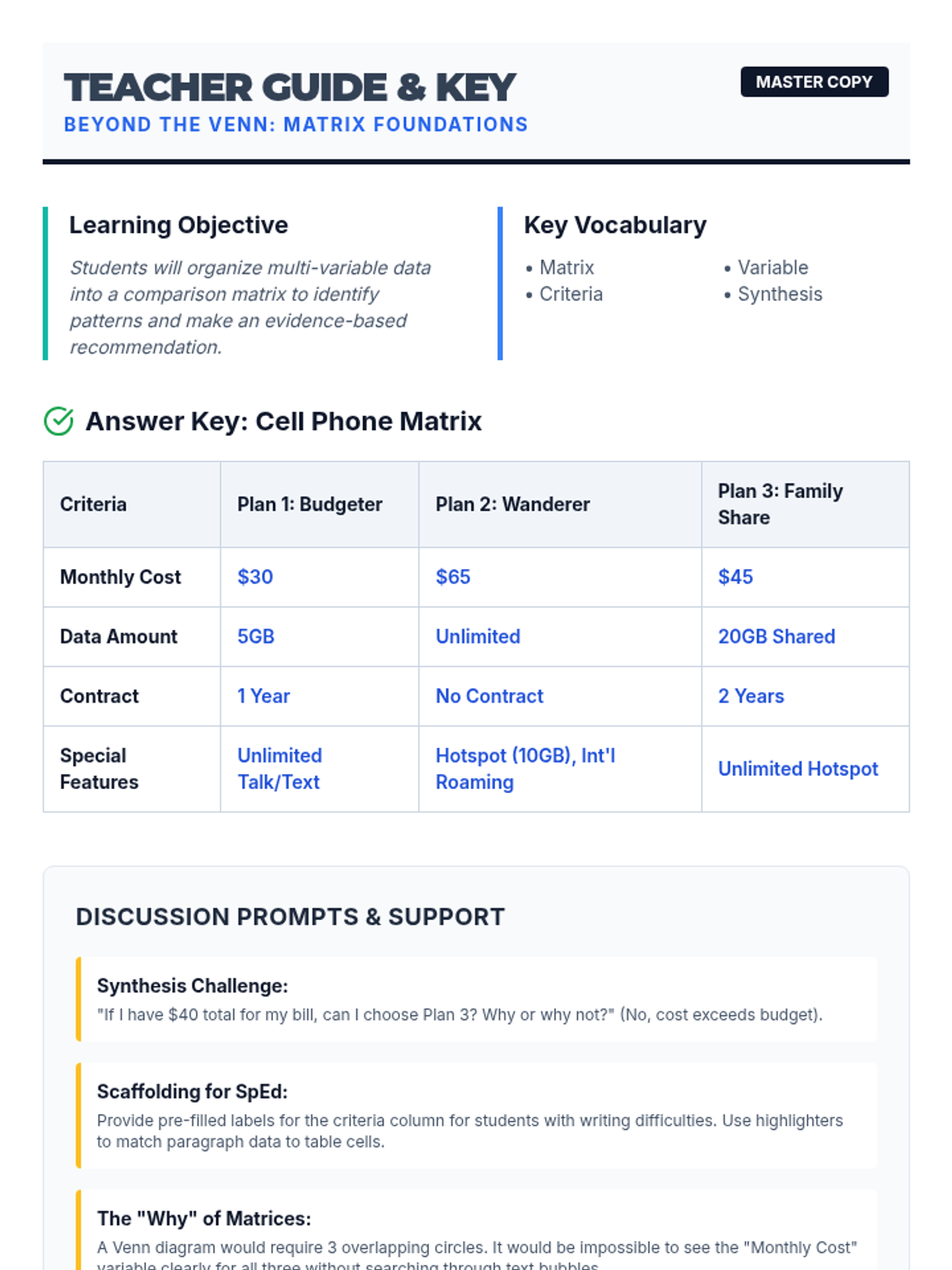
Introduces the Comparison Matrix as a sophisticated tool for multi-variable analysis, moving beyond the limitations of Venn Diagrams for complex decision-making.
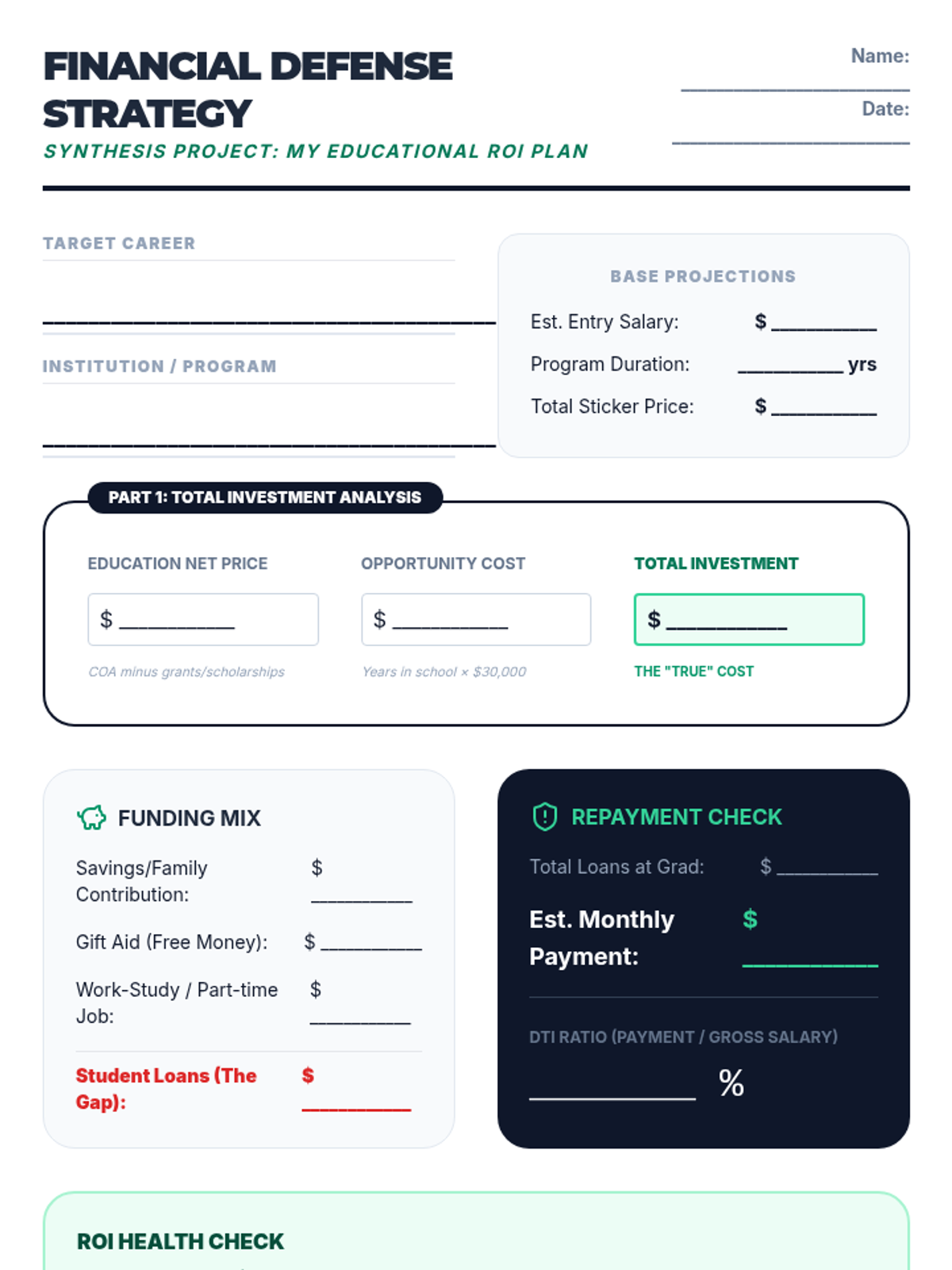
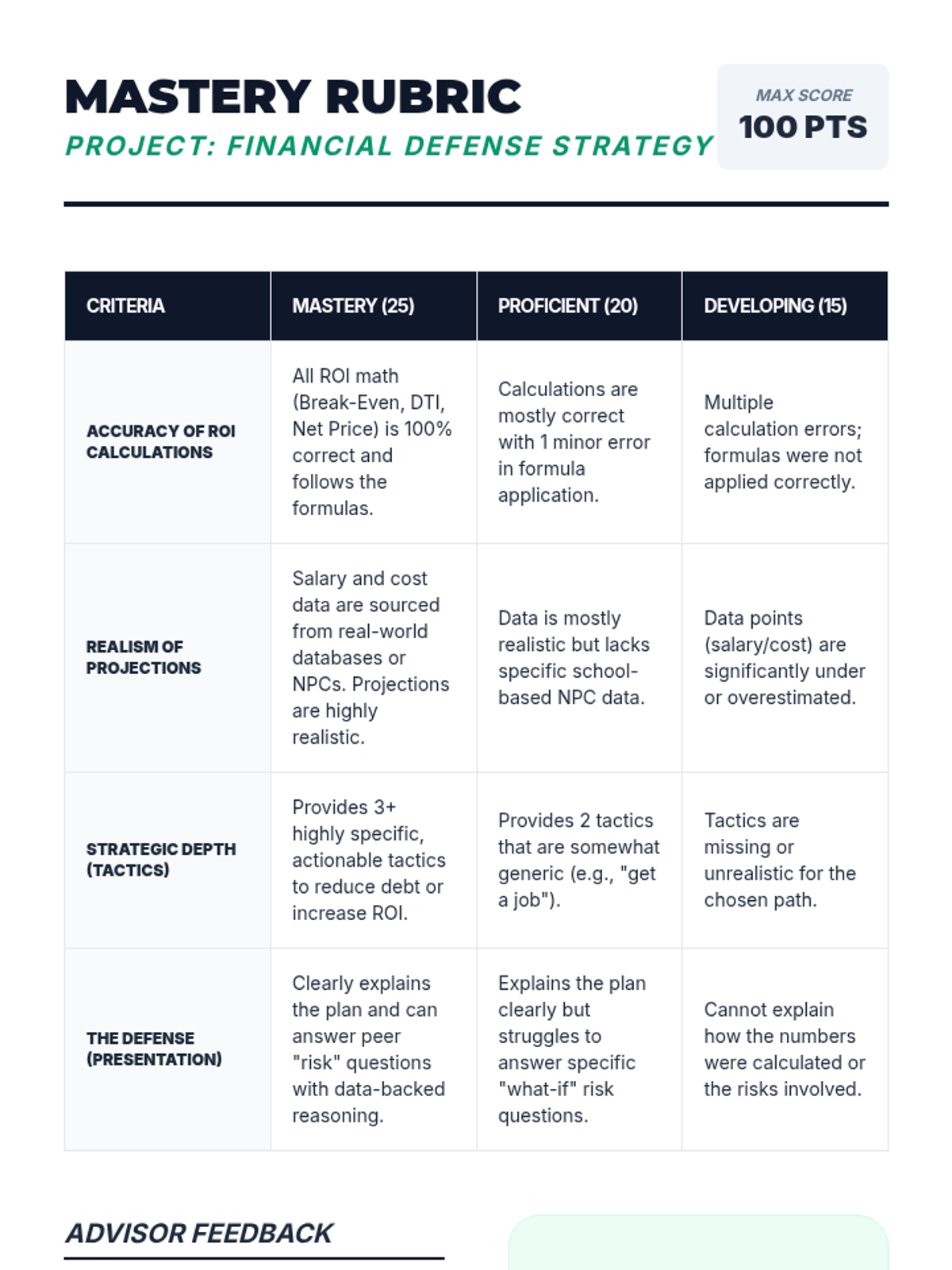
Students synthesize their learning into a final "Financial Defense" plan that outlines costs, aid, debt projections, and repayment strategies for a specific career path.
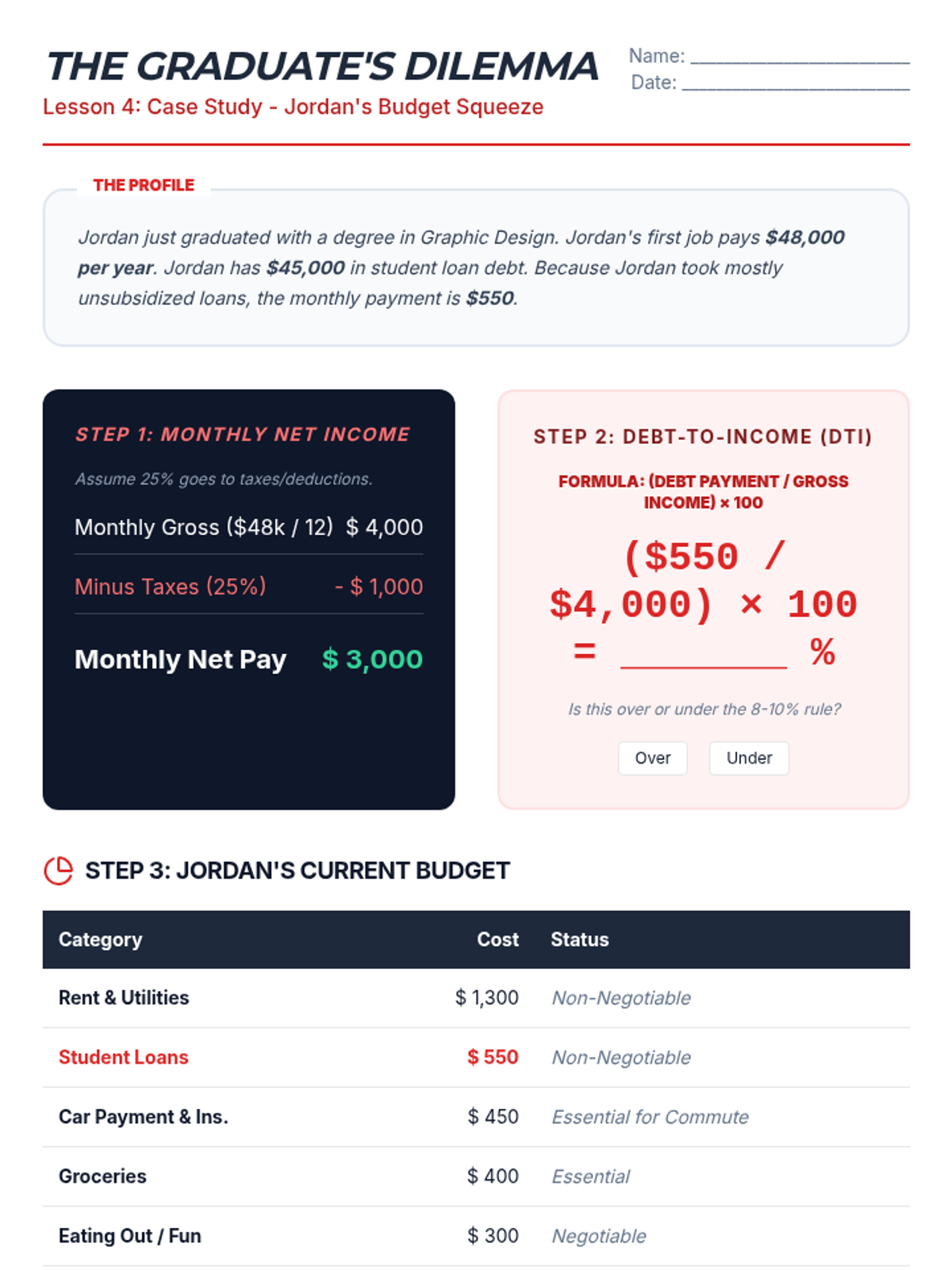
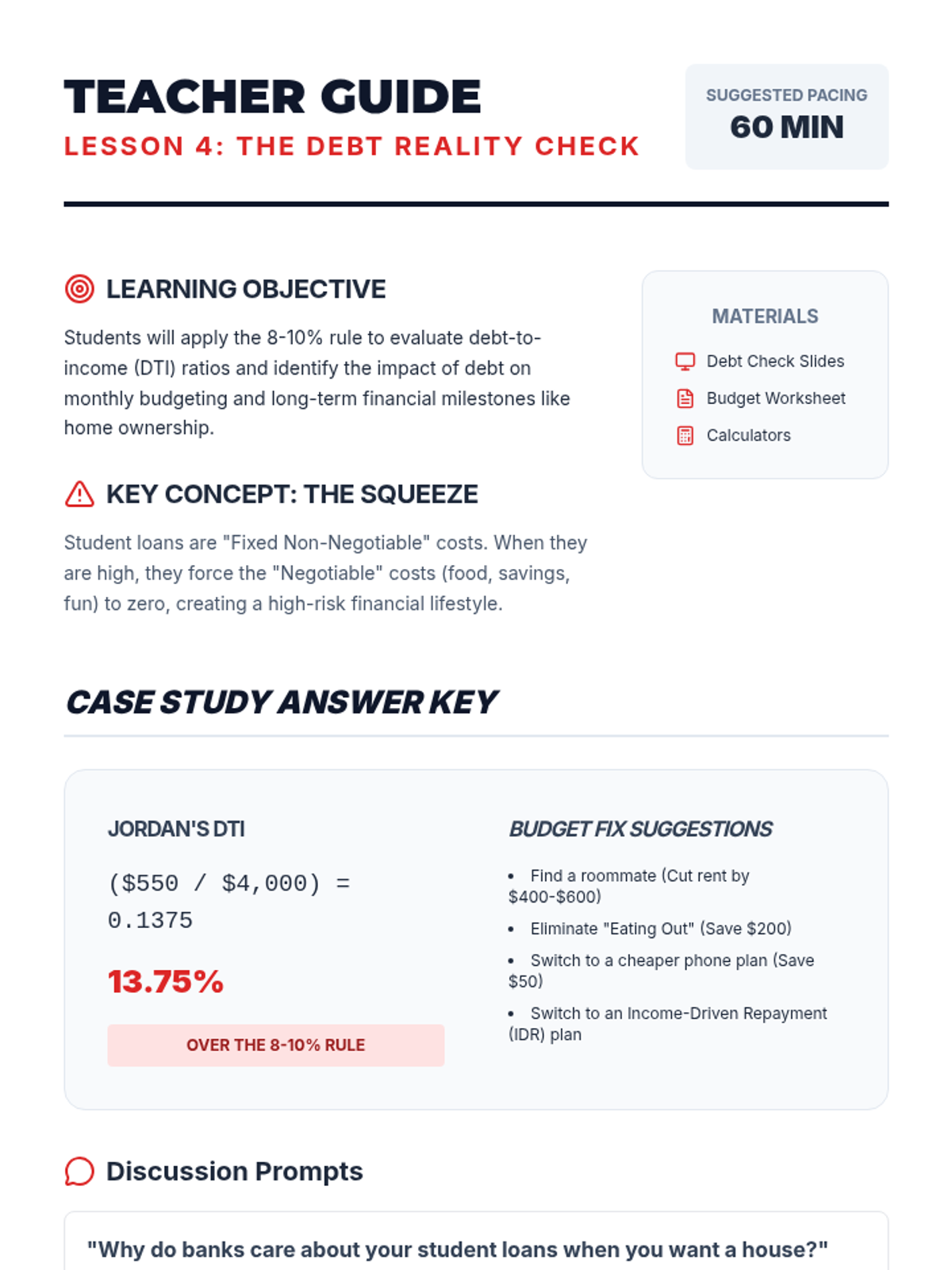
Students apply the 8-10% rule to analyze debt-to-income ratios and explore how student loan debt impacts future financial decisions like housing and lifestyle.
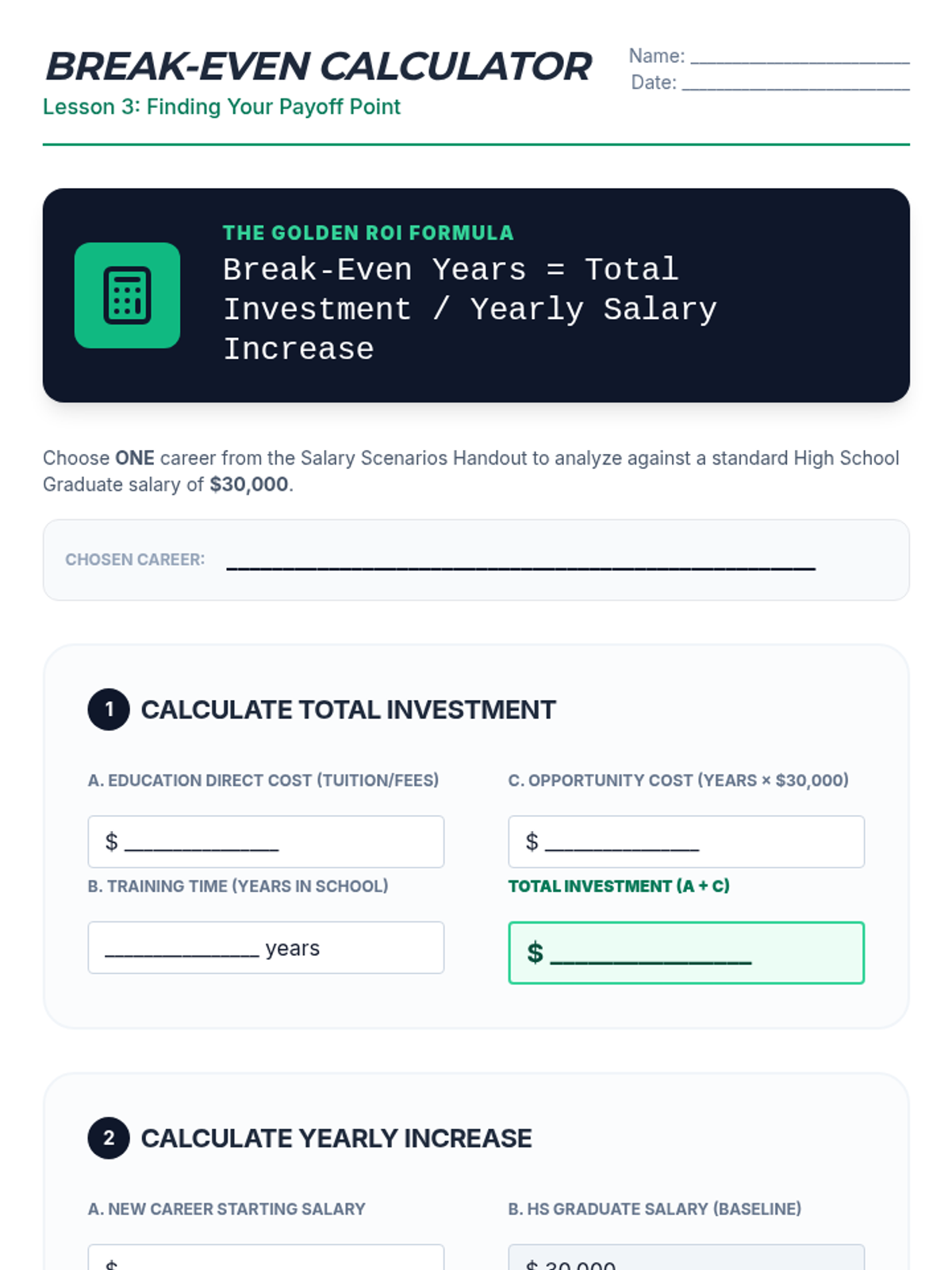
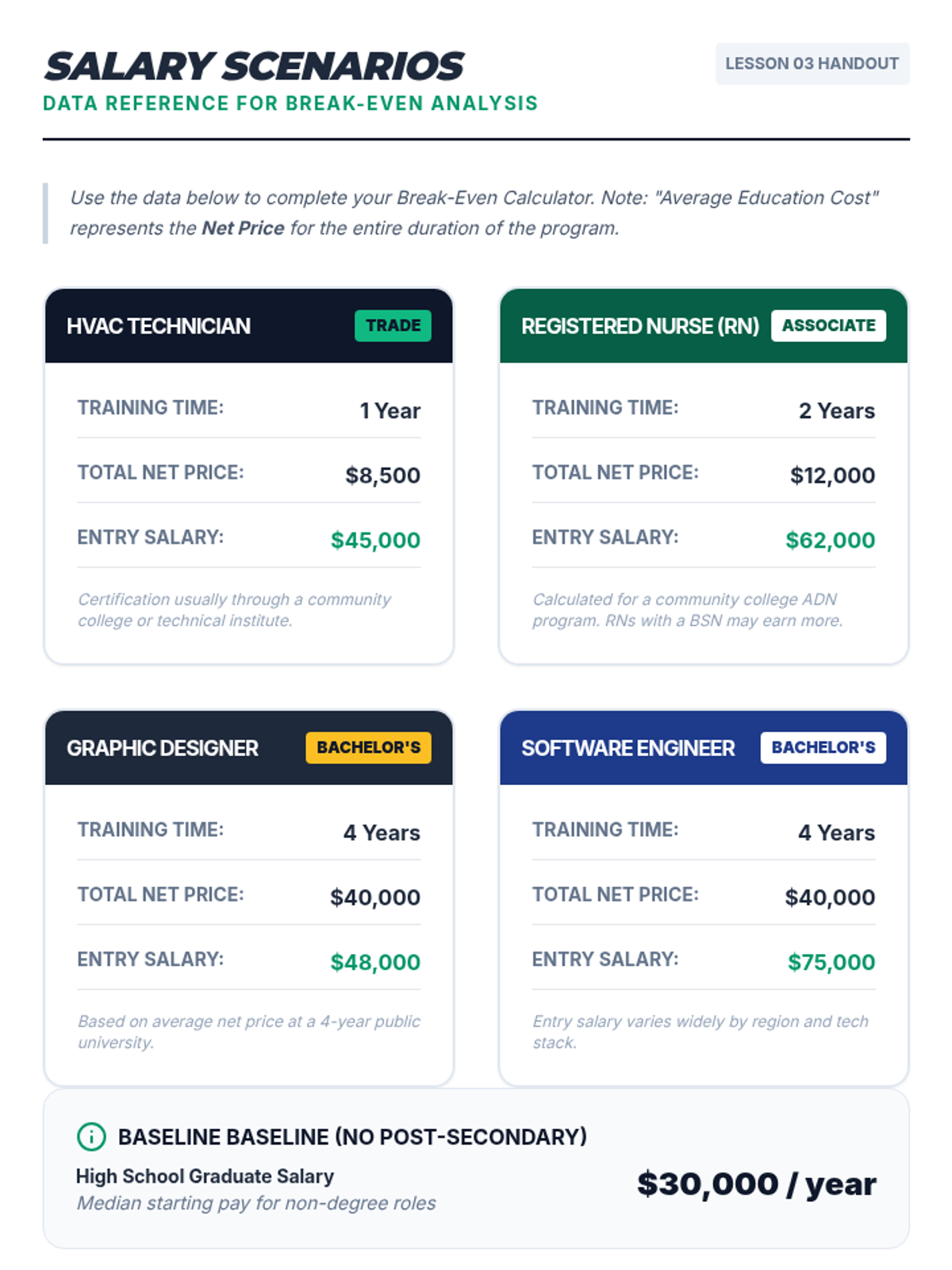
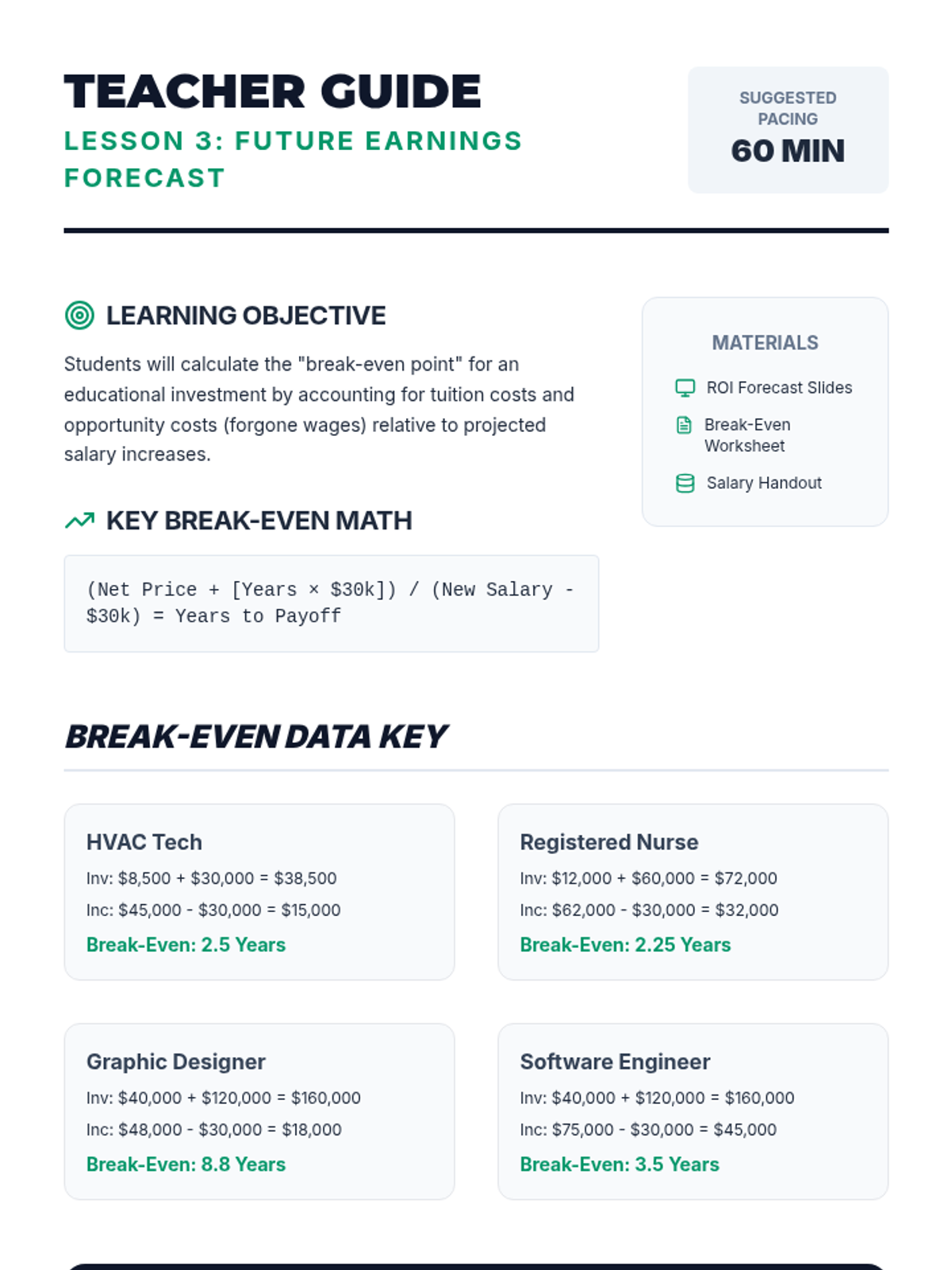
Learners research entry-level salaries and calculate opportunity costs to determine the break-even point for their educational investment.
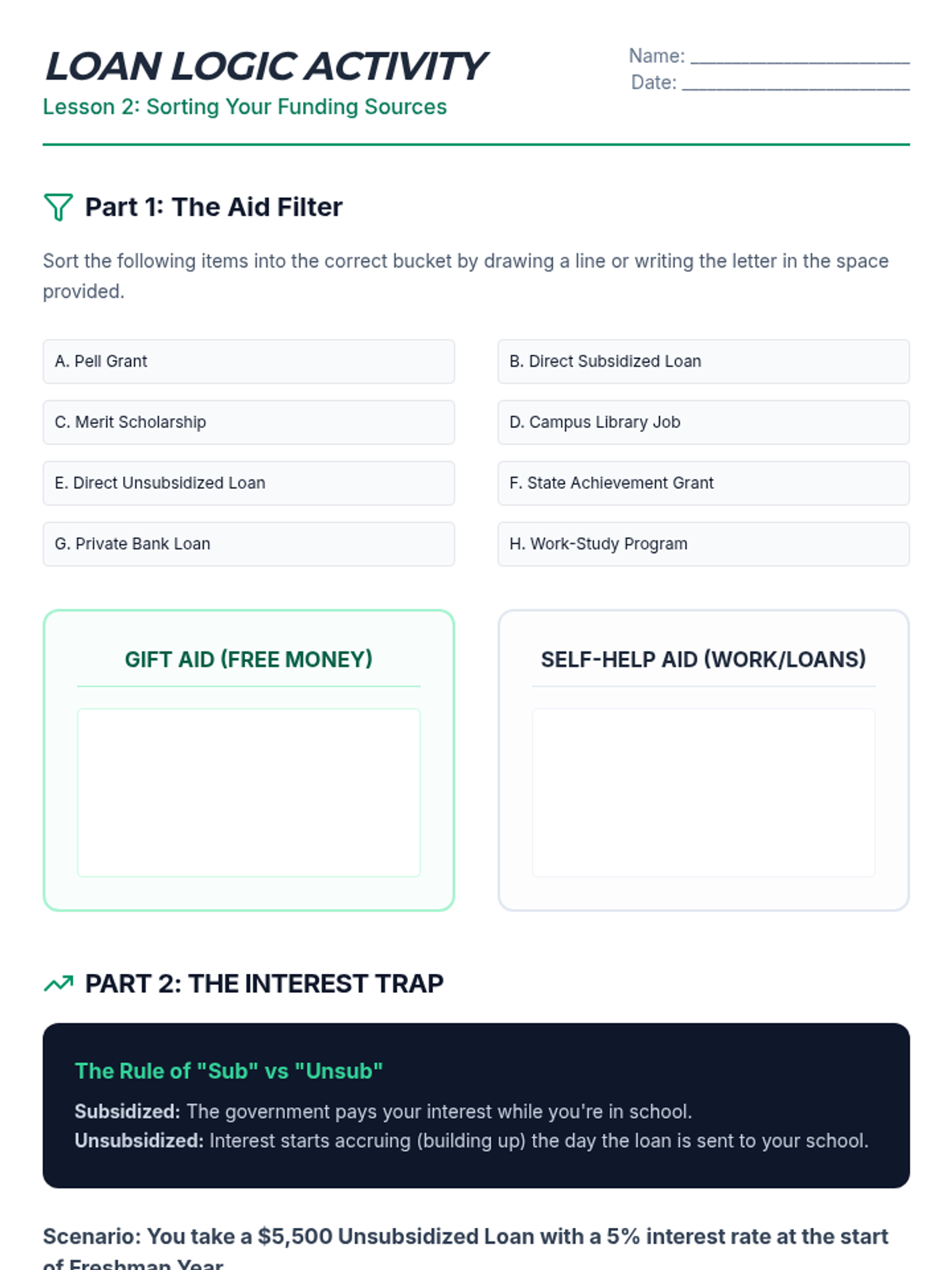
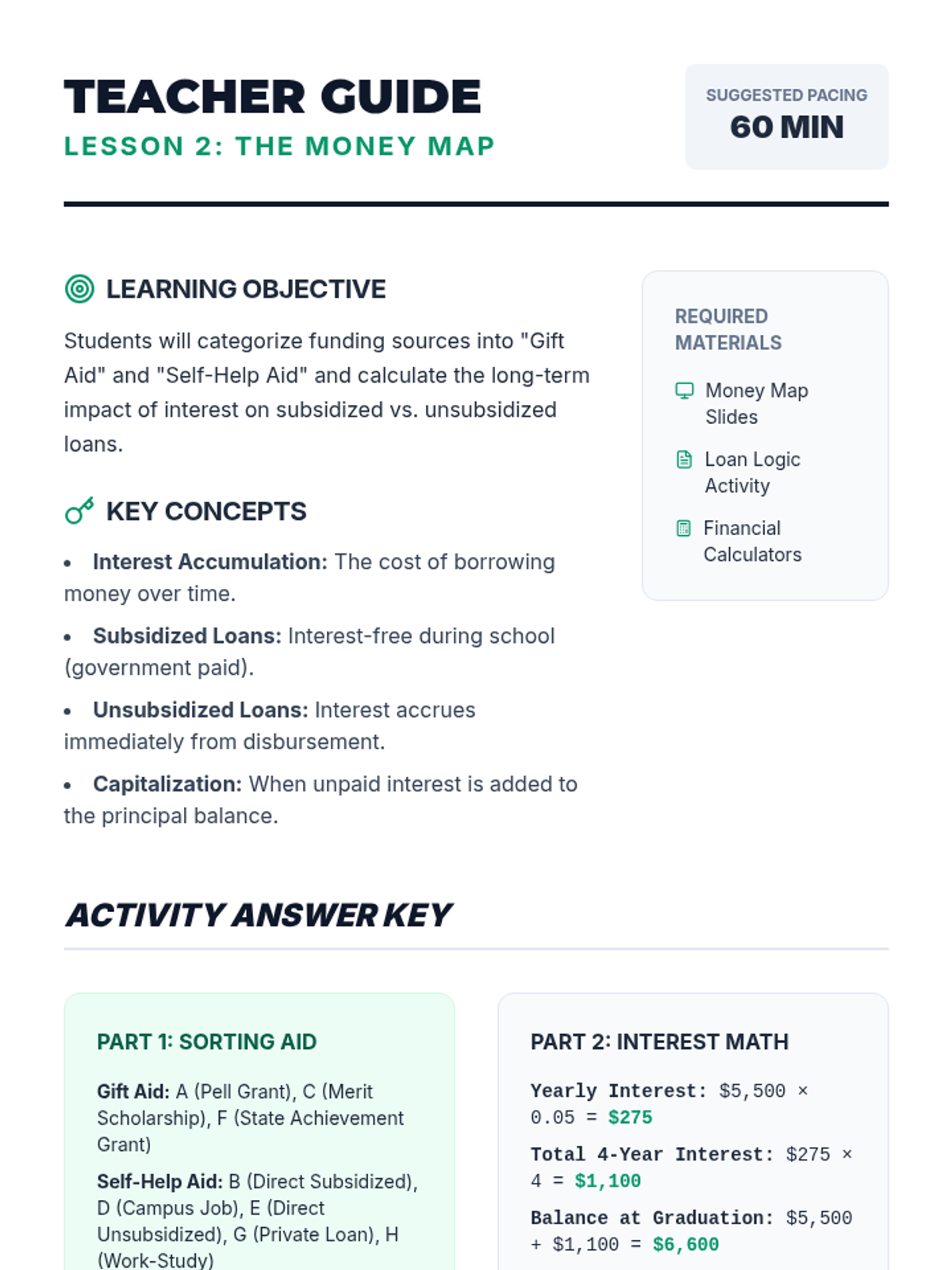
Students differentiate between various funding sources like grants, scholarships, and loans, while simulating financial aid applications and calculating interest accumulation.
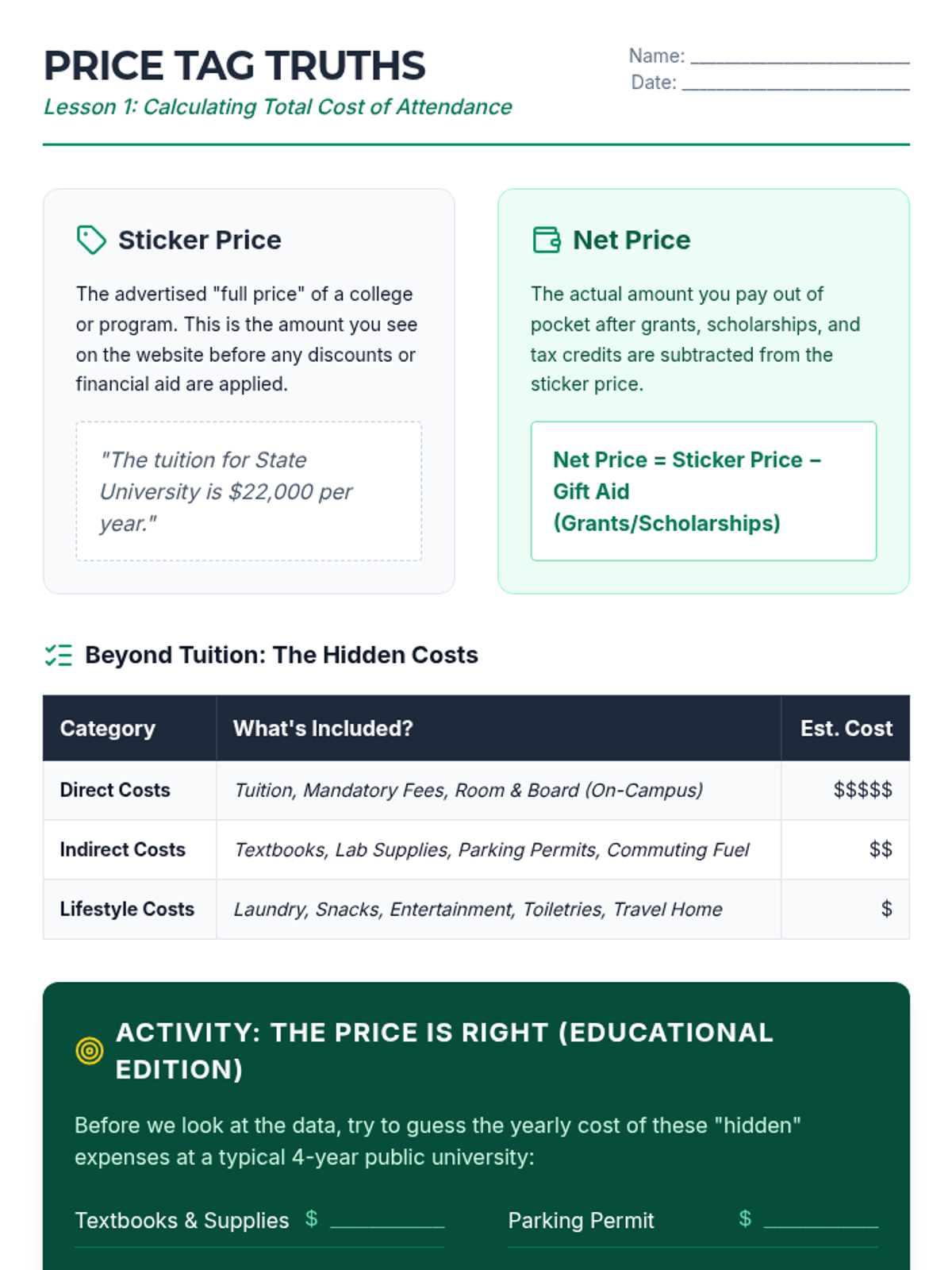
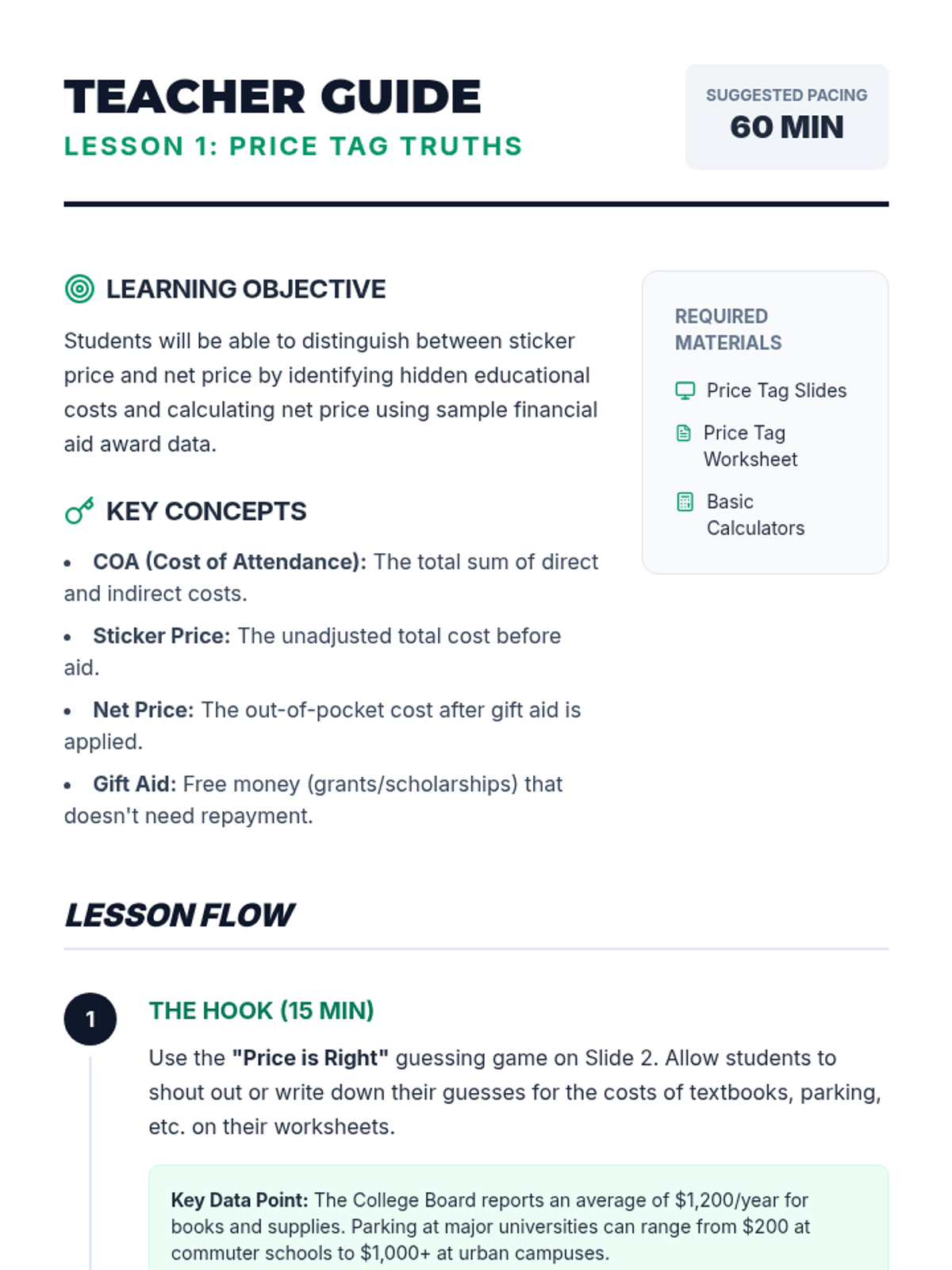
Students identify hidden costs of education beyond tuition to understand the difference between sticker price and net price. they use sample award letters and fee schedules to construct a realistic total cost of attendance.
A hands-on financial literacy simulation where students manage a month of income and expenses, navigating real-world trade-offs and unexpected financial hurdles.
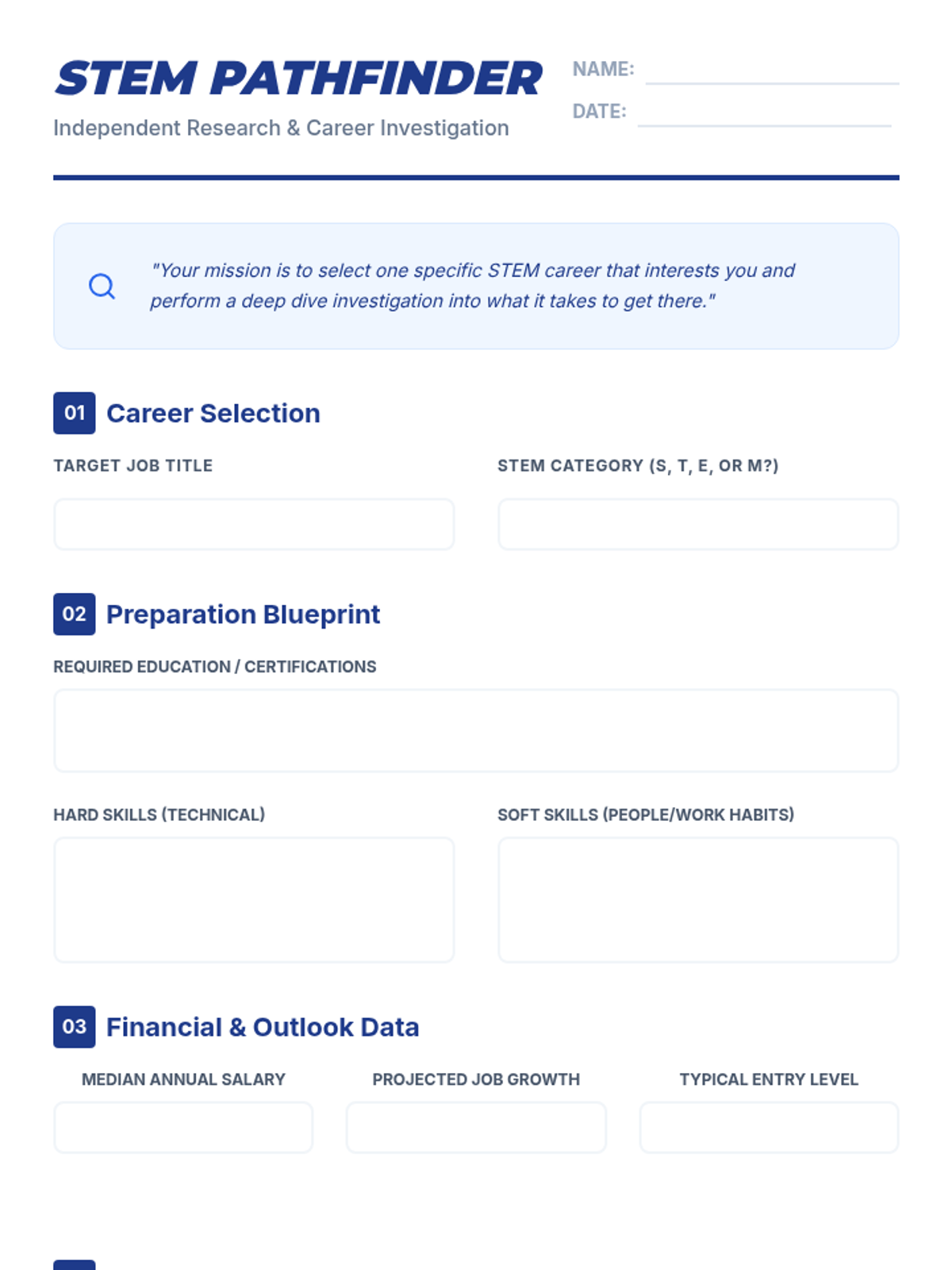
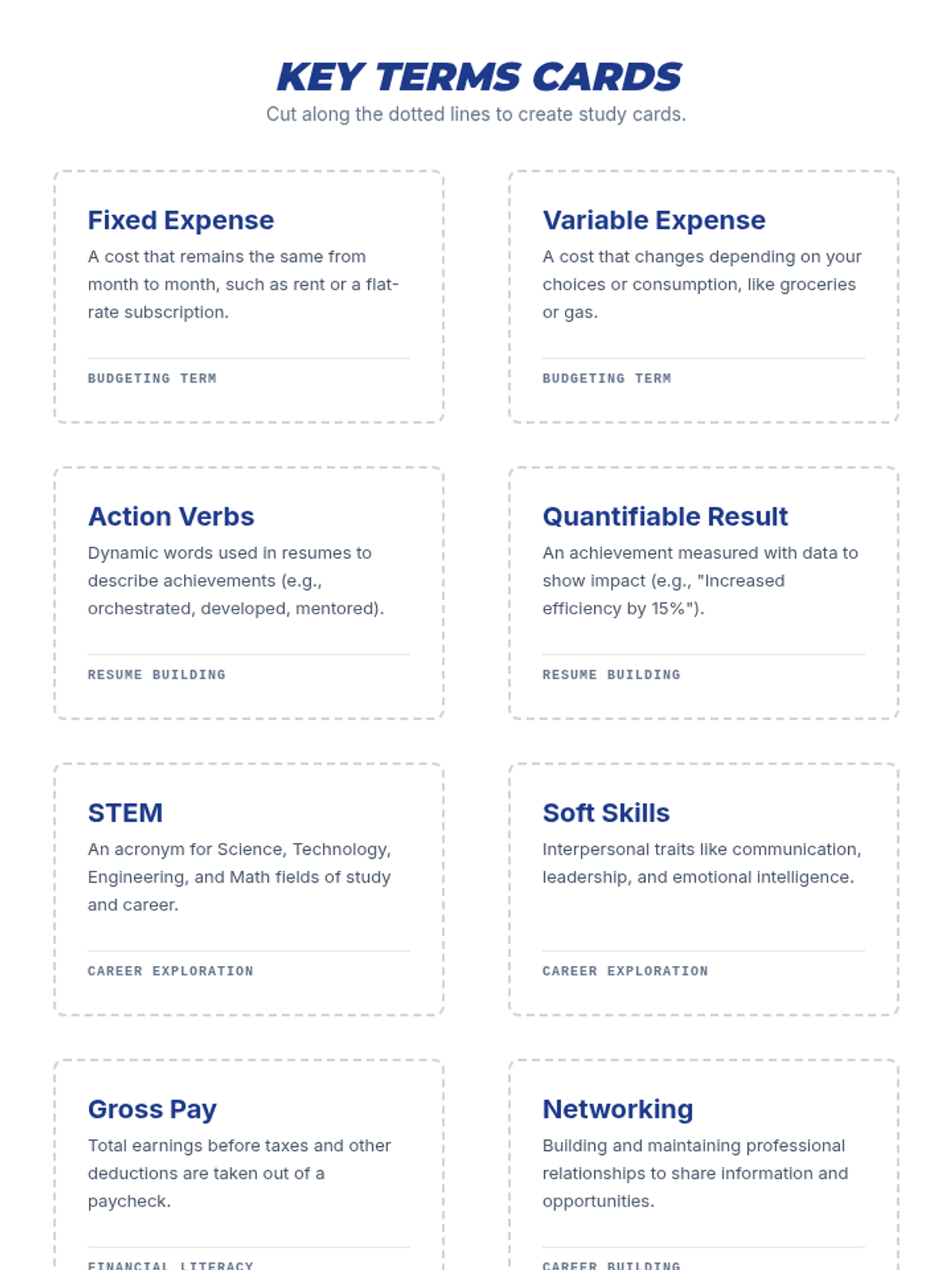
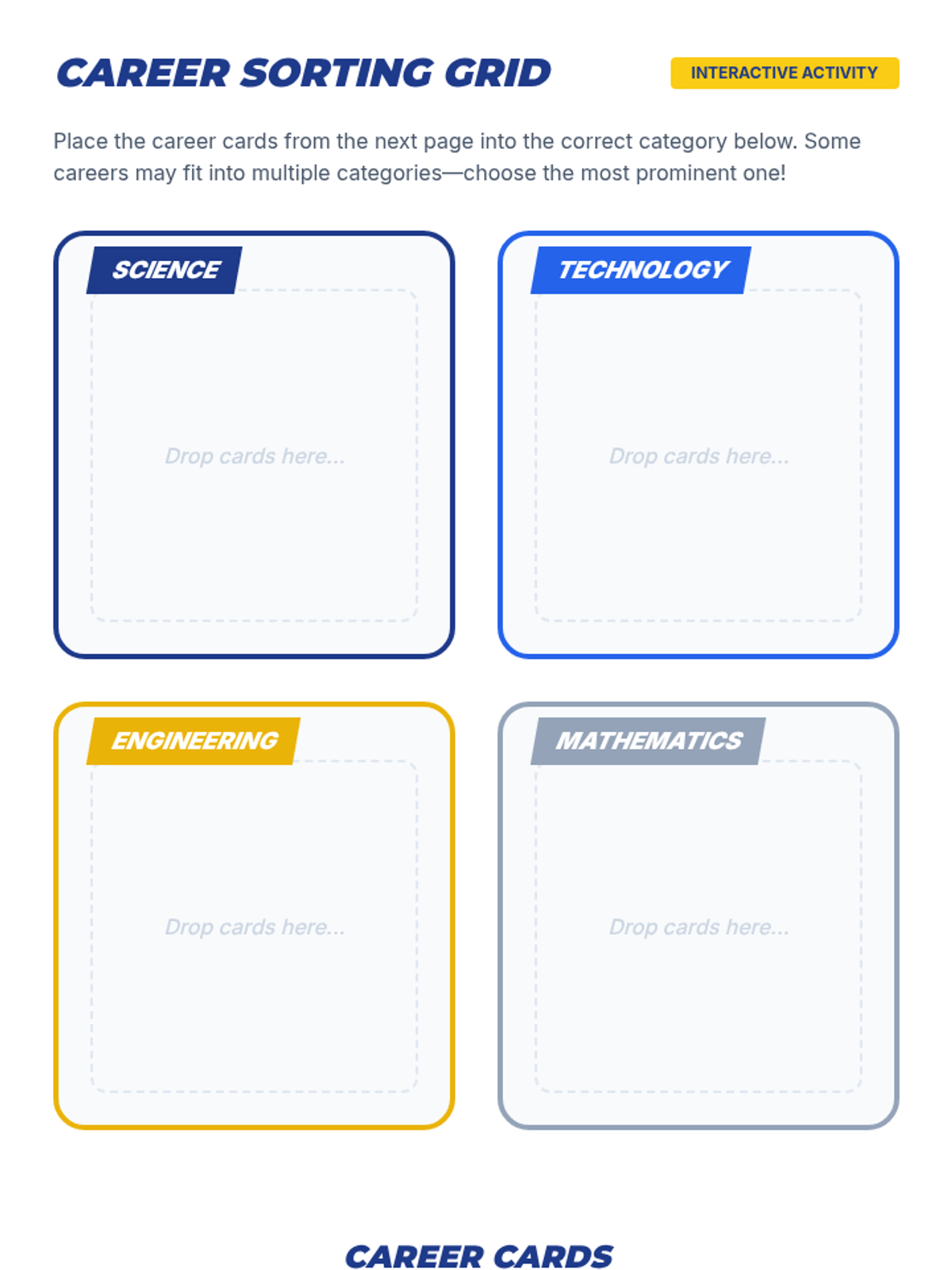
An introductory lesson covering the essentials of college budgeting, resume construction for entry-level positions, and a deep dive into various STEM career pathways.
A comprehensive unit preparing students for the financial and logistical realities of post-secondary life, covering education pathways, housing, vehicle maintenance, and budgeting.
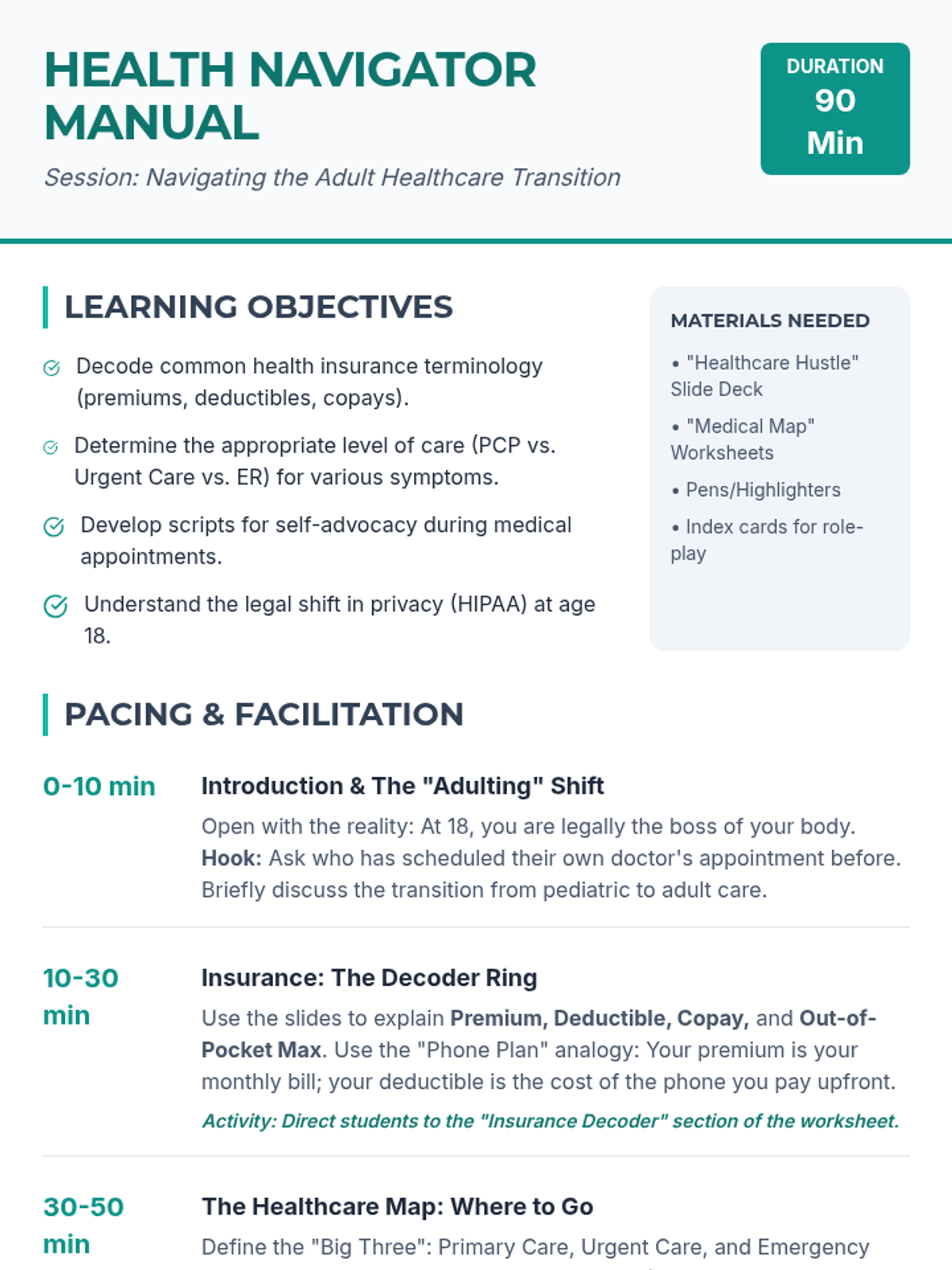
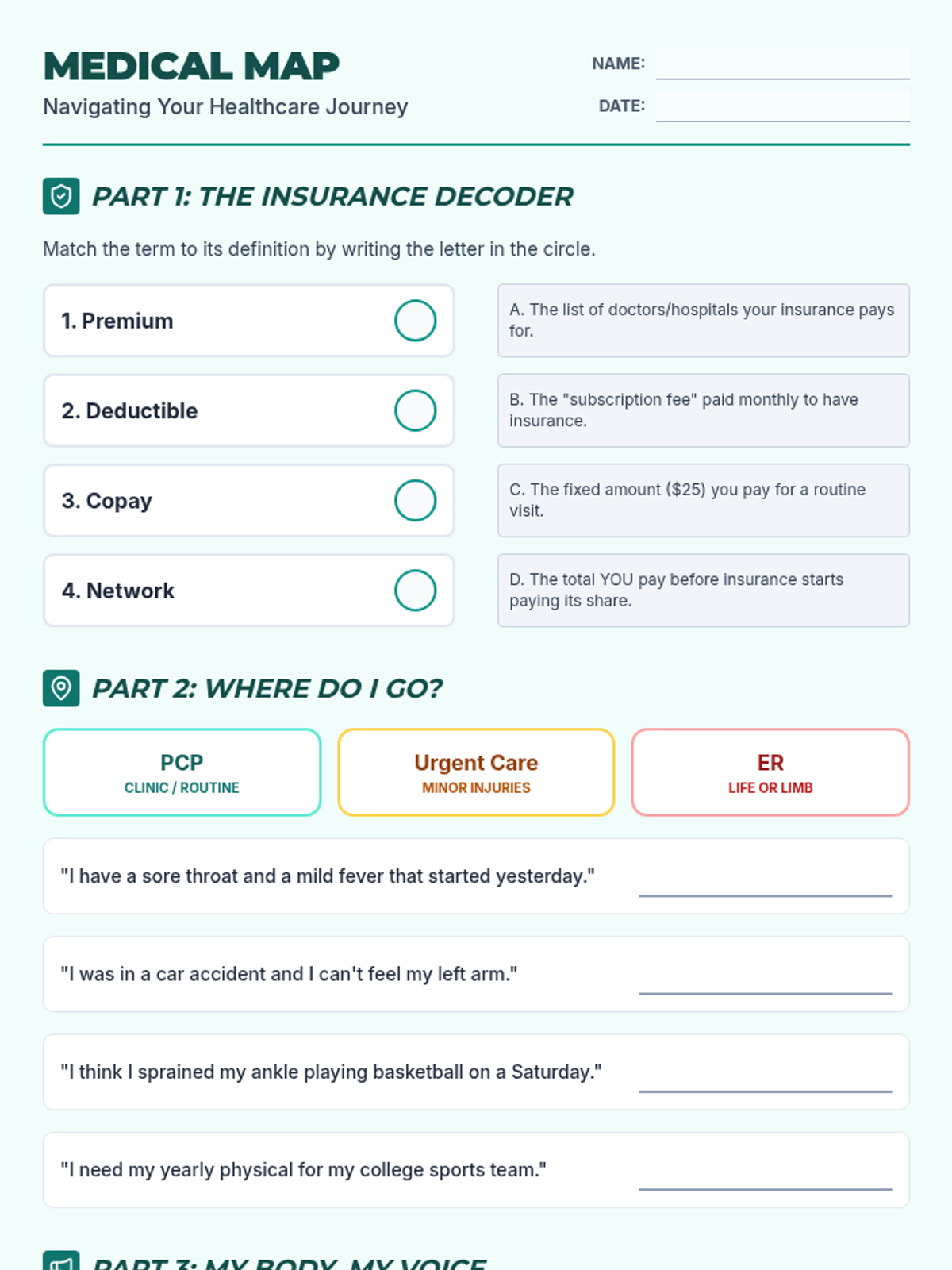
A 90-minute workshop designed for young adults (ages 16-21) to master the transition into independent healthcare management, covering insurance, provider types, and self-advocacy.
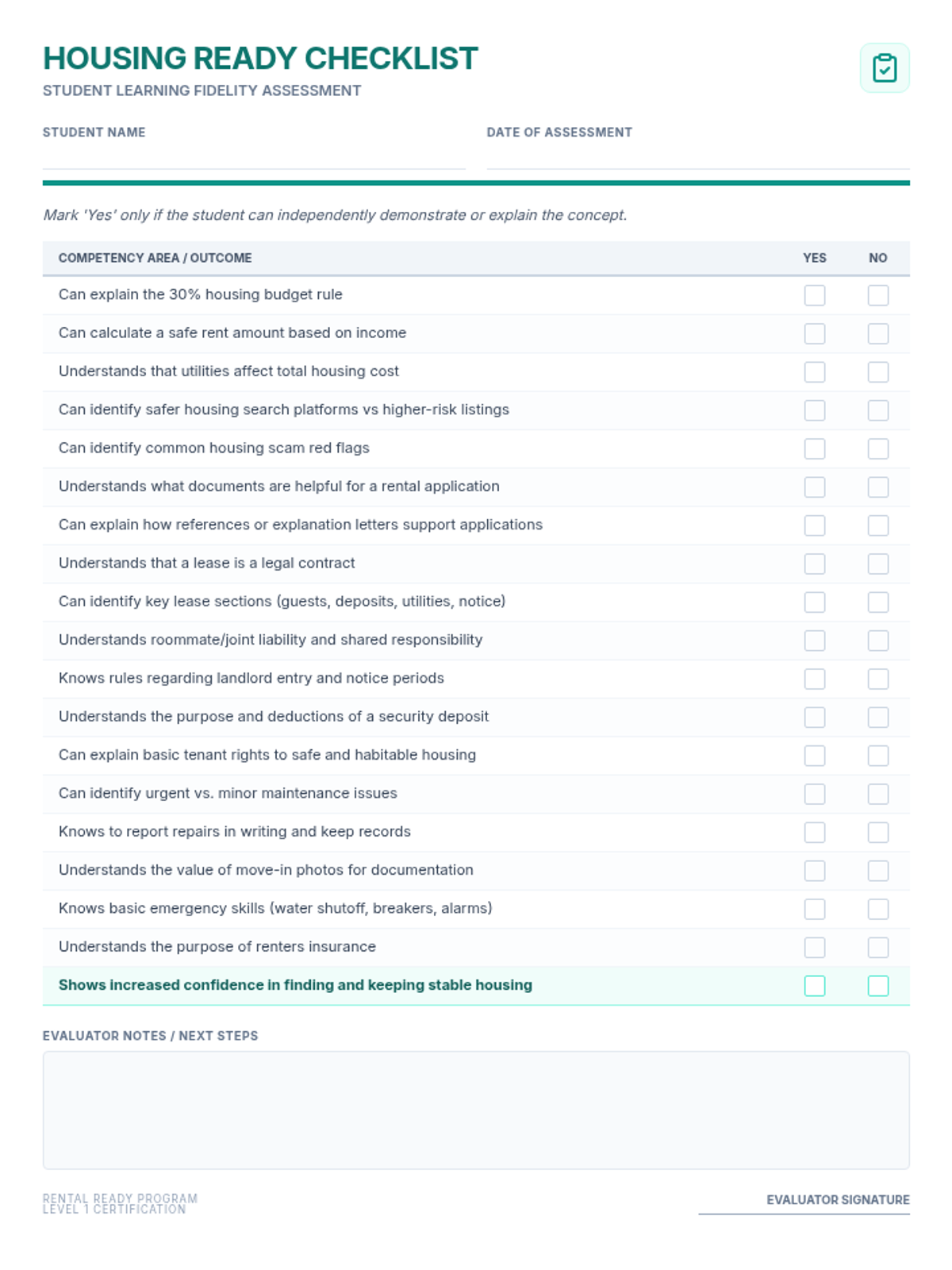
A practical lesson focused on equipping students with the essential knowledge and skills needed to find, secure, and maintain stable housing.
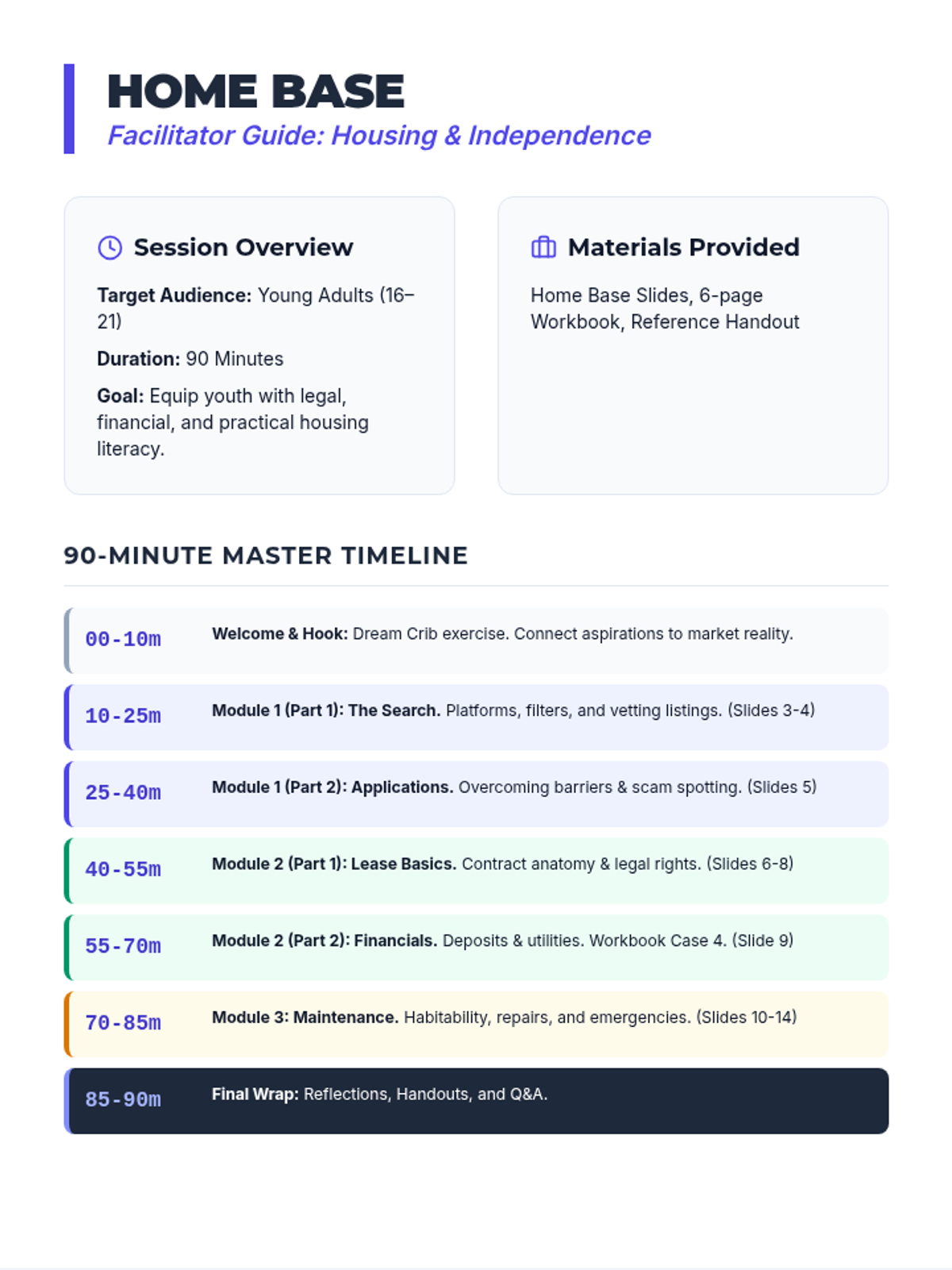
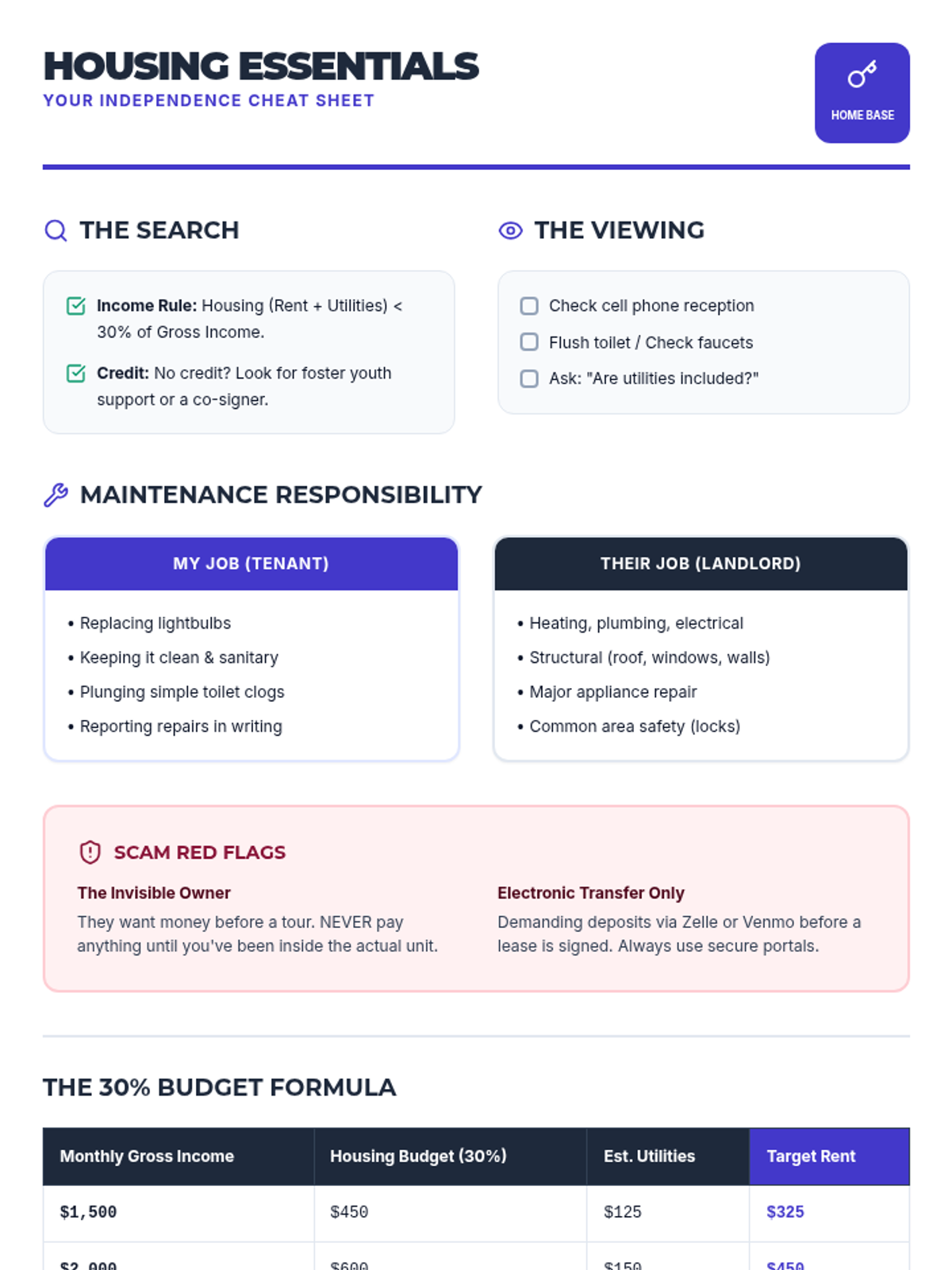
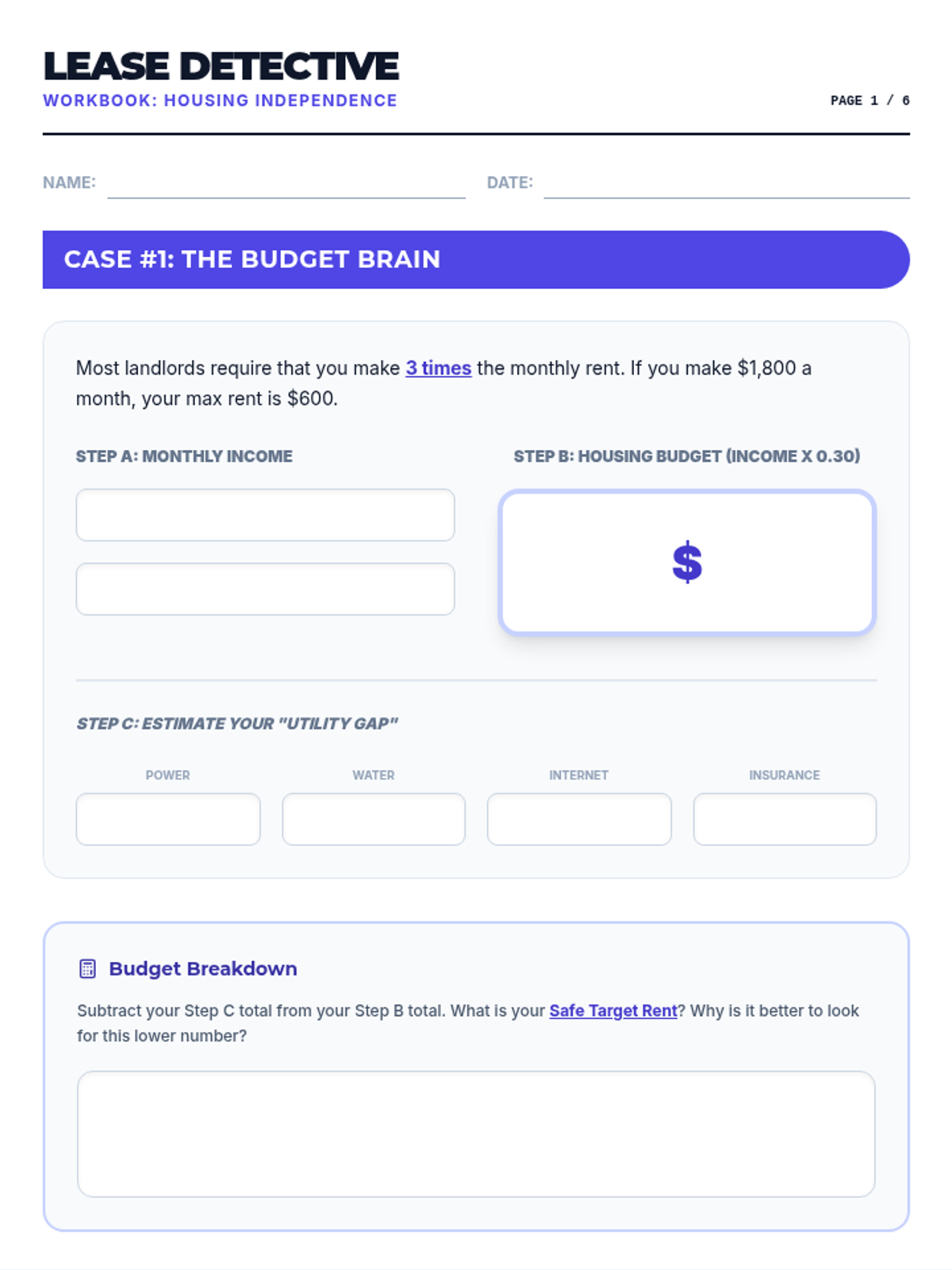
A comprehensive 90-minute session for young adults (16-21) covering the transition to independent living, focused on finding a home, understanding legal contracts, and maintaining a residence.
A lesson focused on equipping young adults (16-21) with the essential knowledge and planning skills for independent transportation as they transition to adulthood.
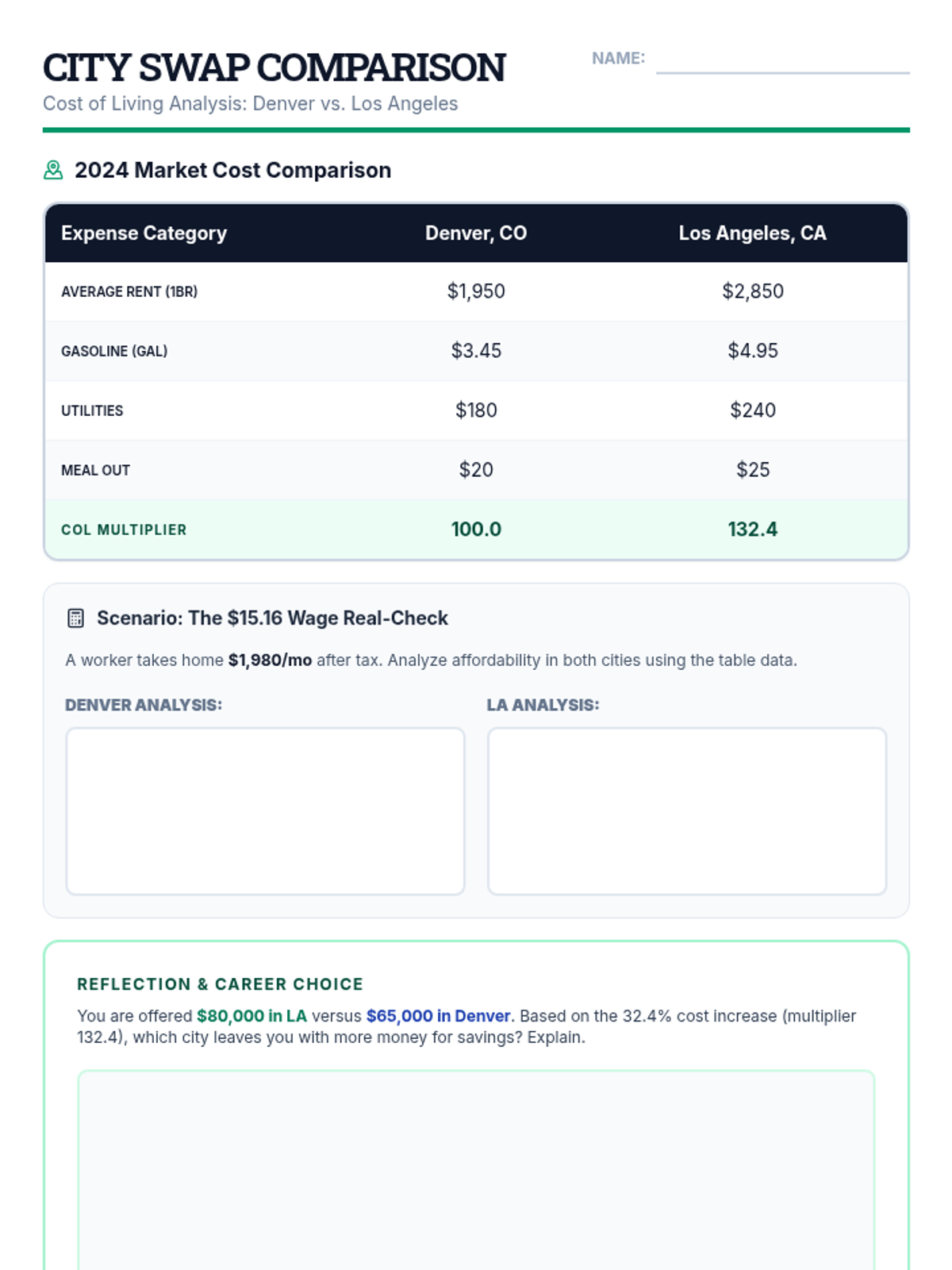
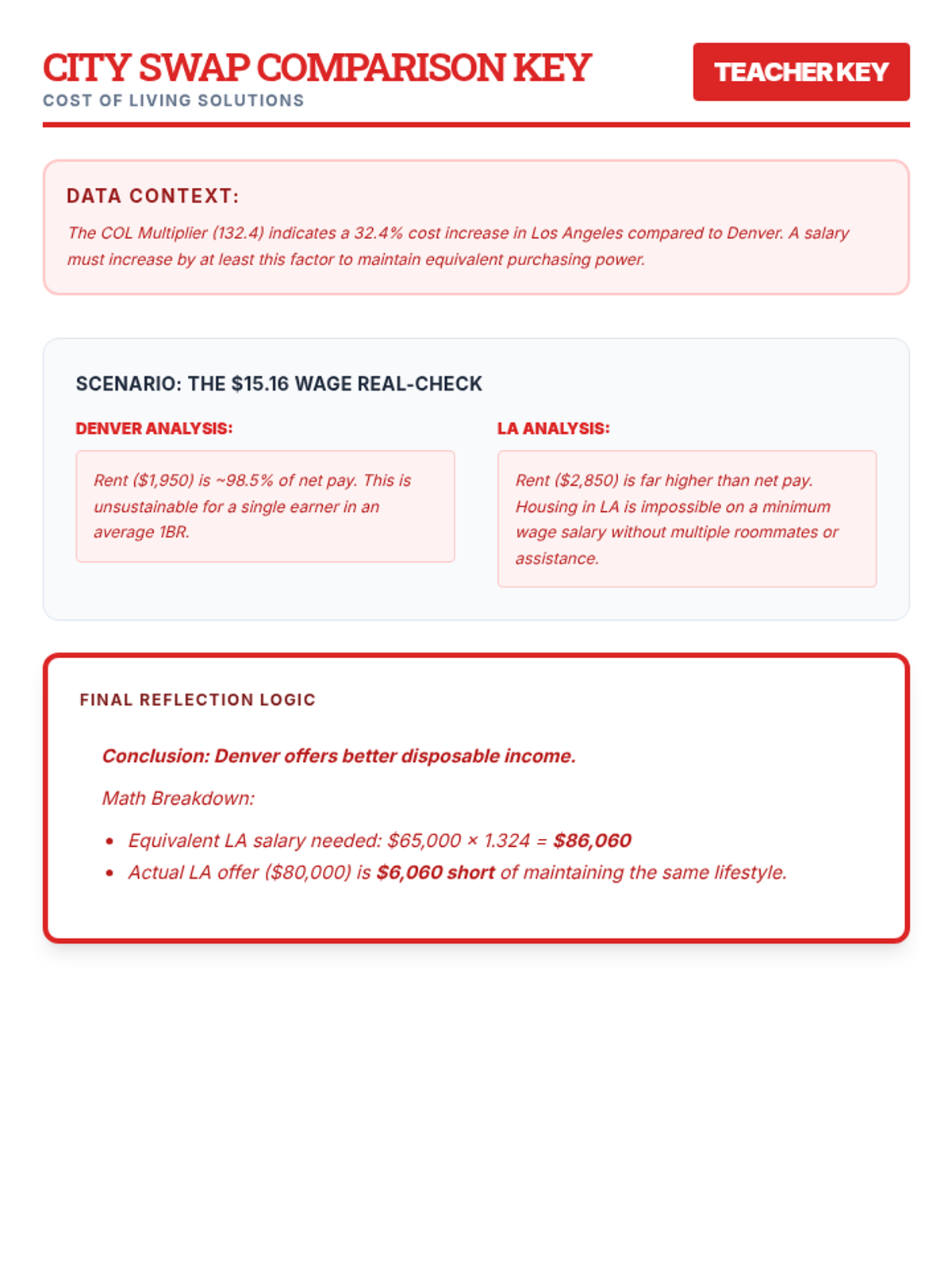
Analyzing how location affects the value of money by comparing cost-of-living data between Denver, Colorado, and Los Angeles, California.
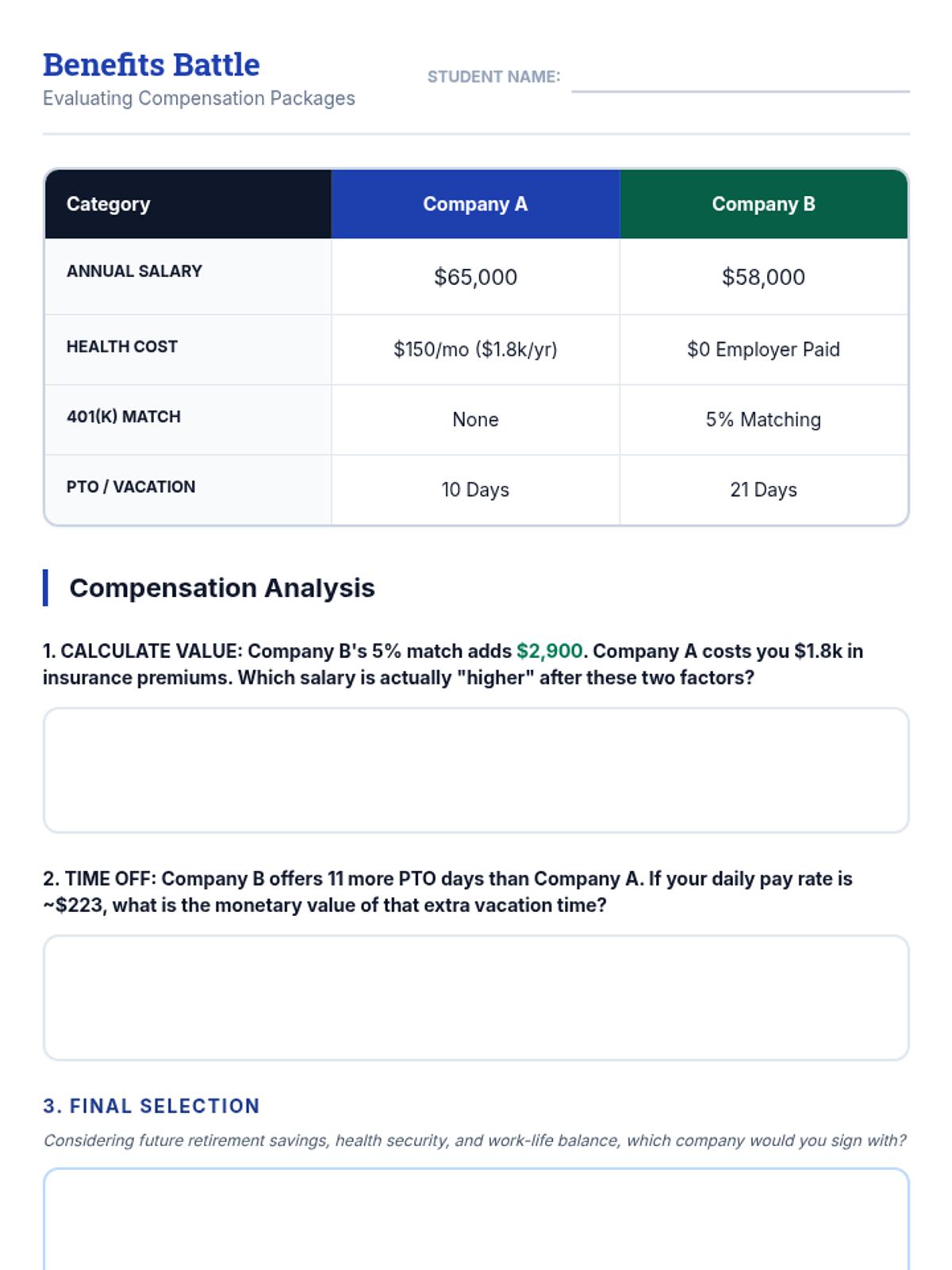
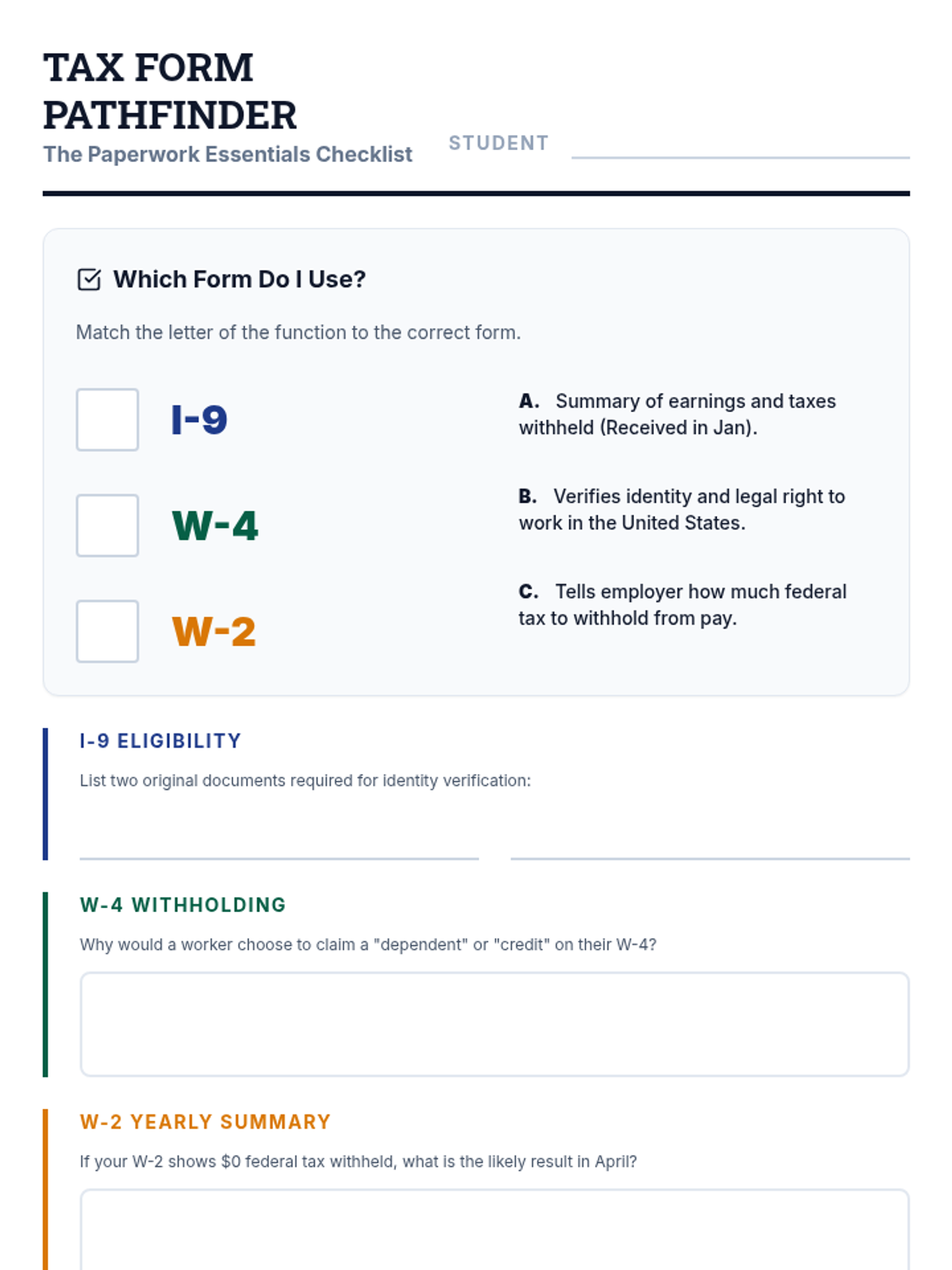
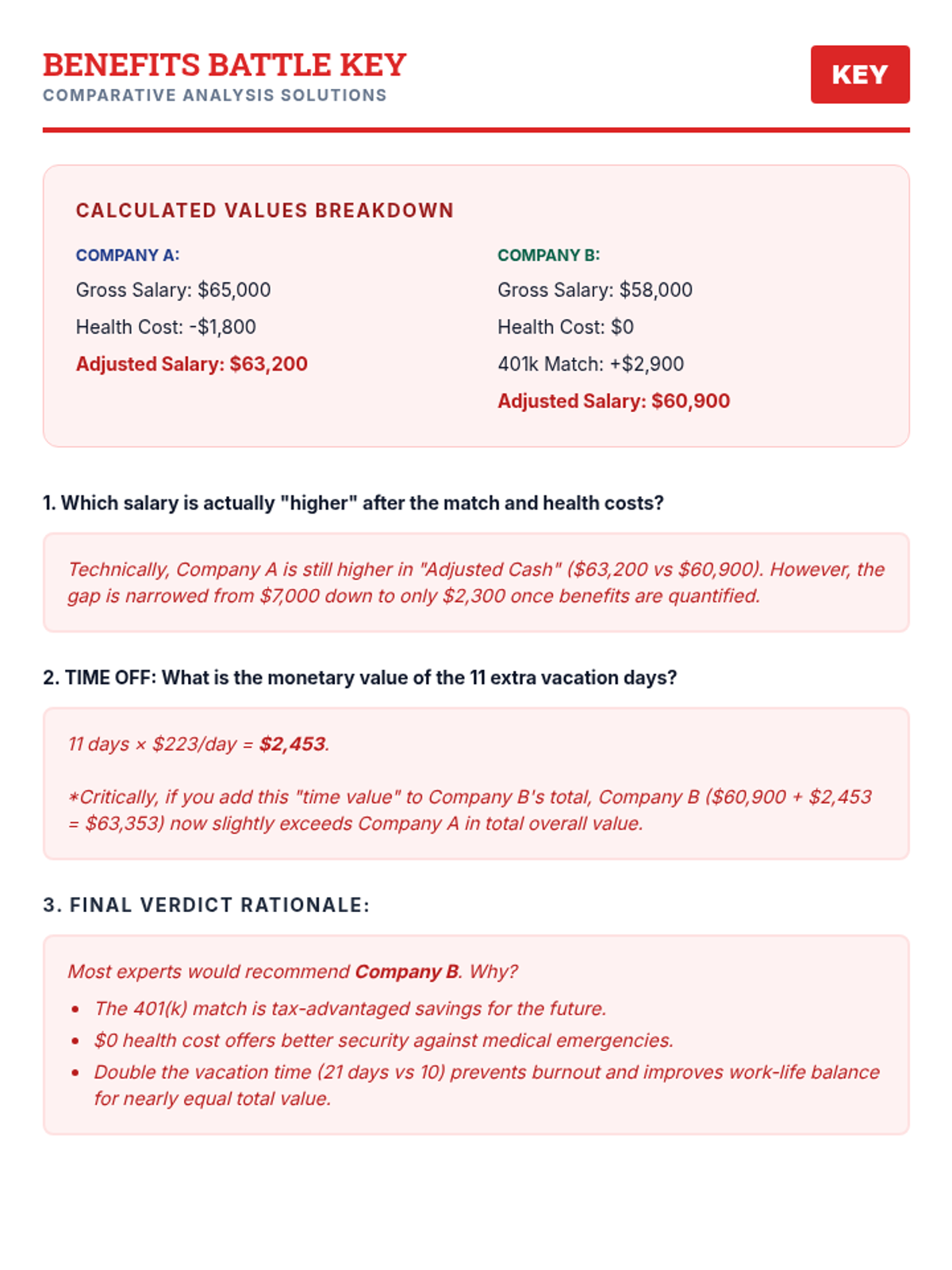
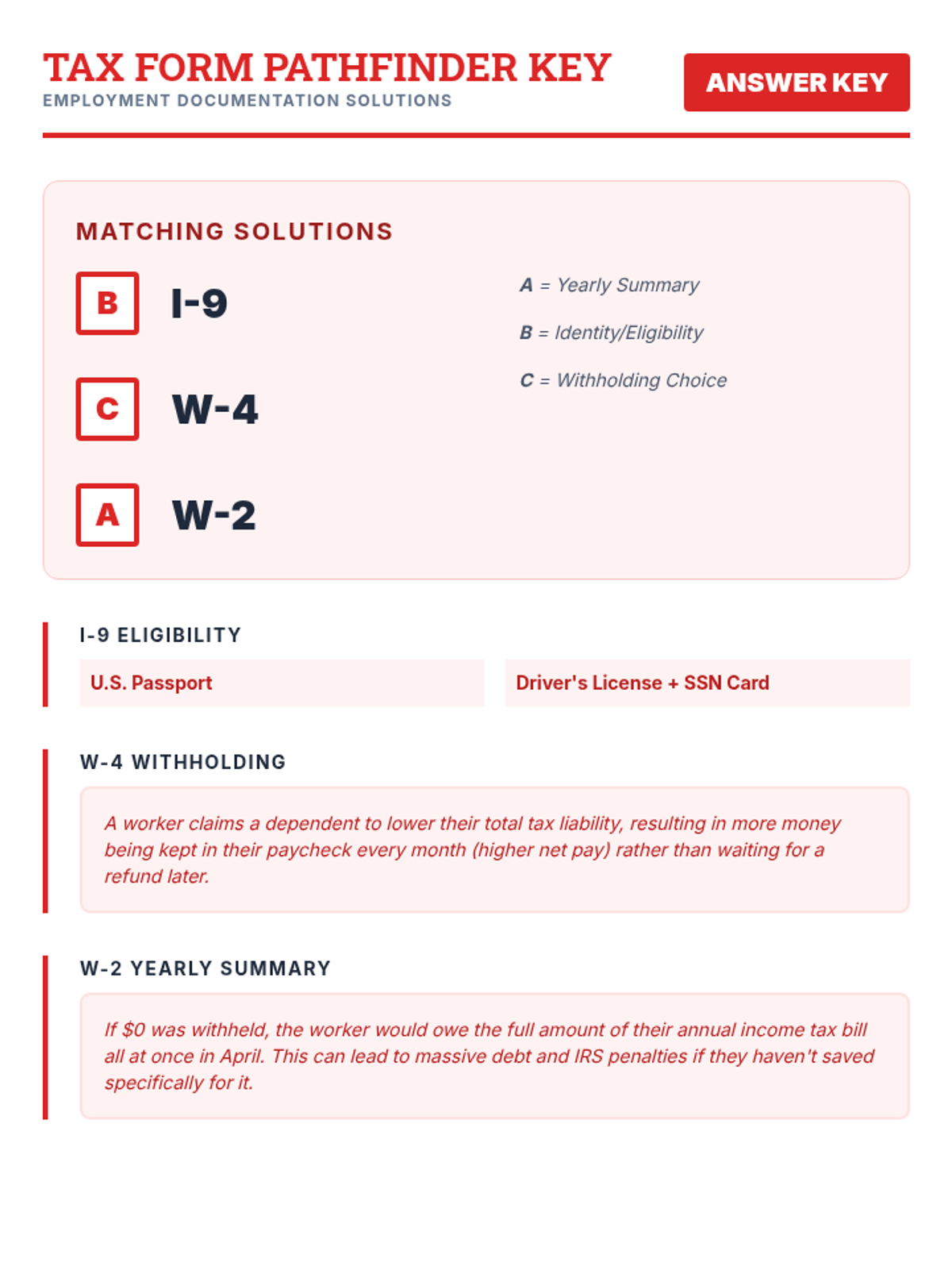
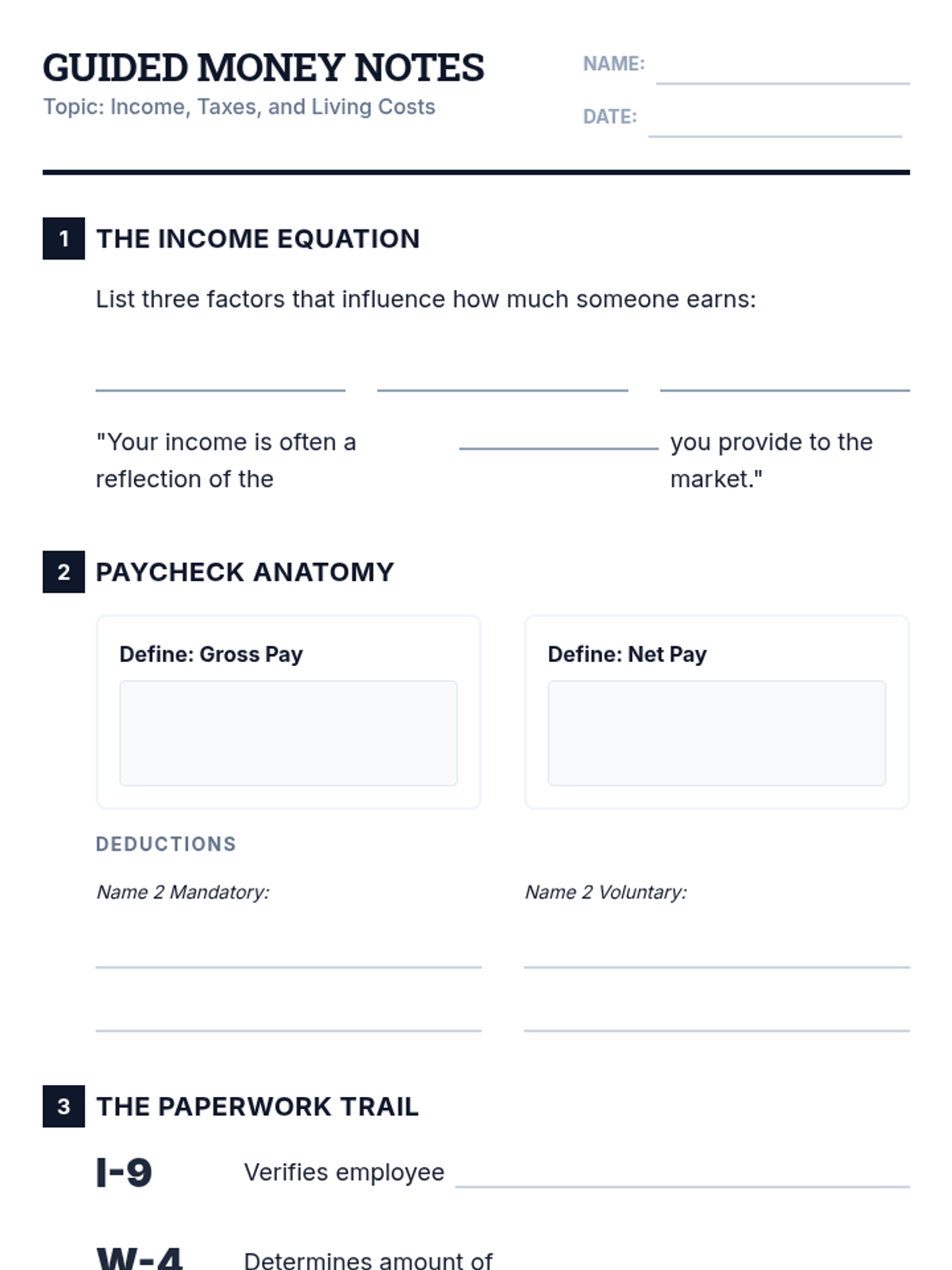
Navigating the administrative side of employment, including benefit comparisons and the essential tax forms required for new hires.
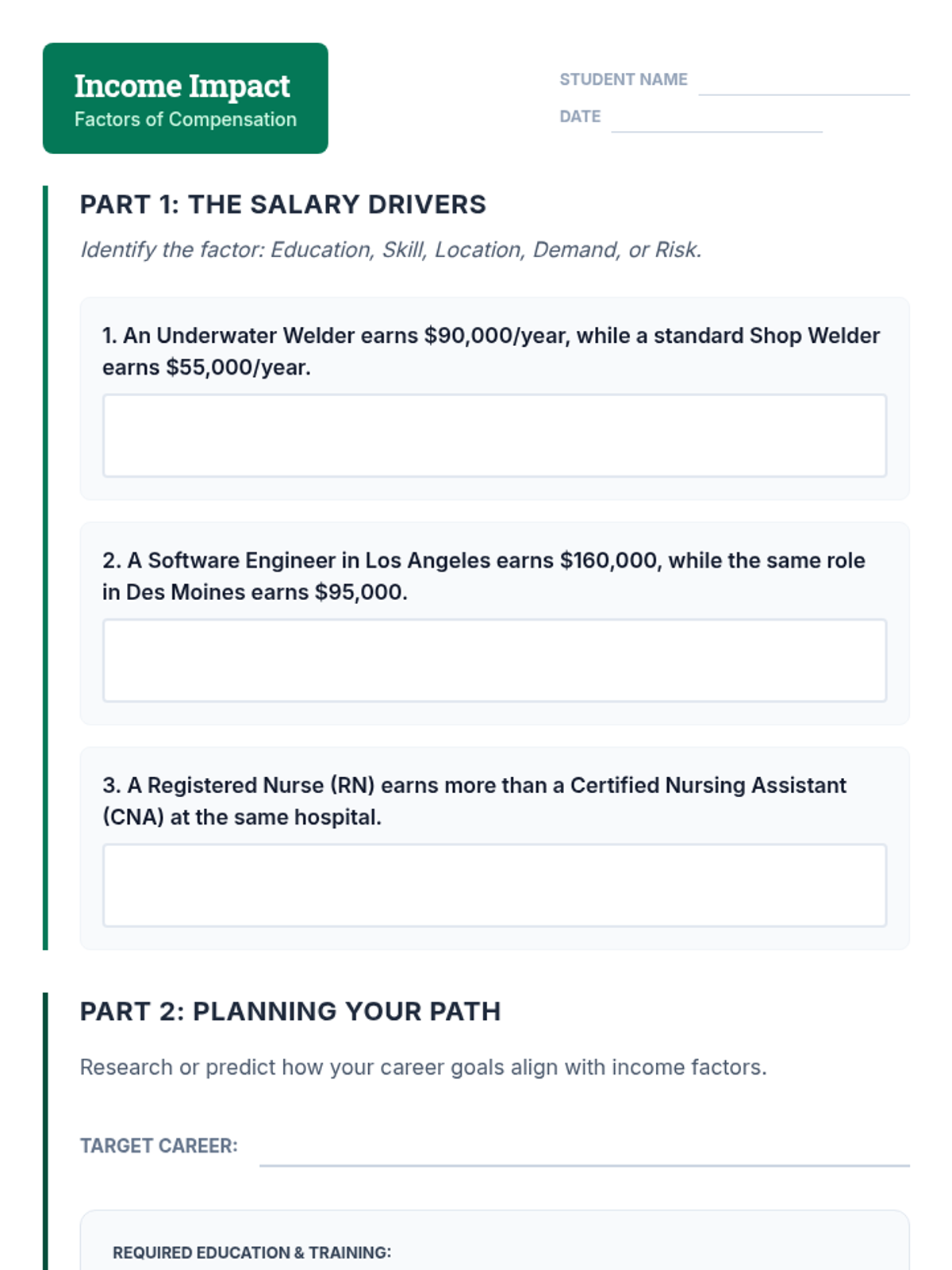
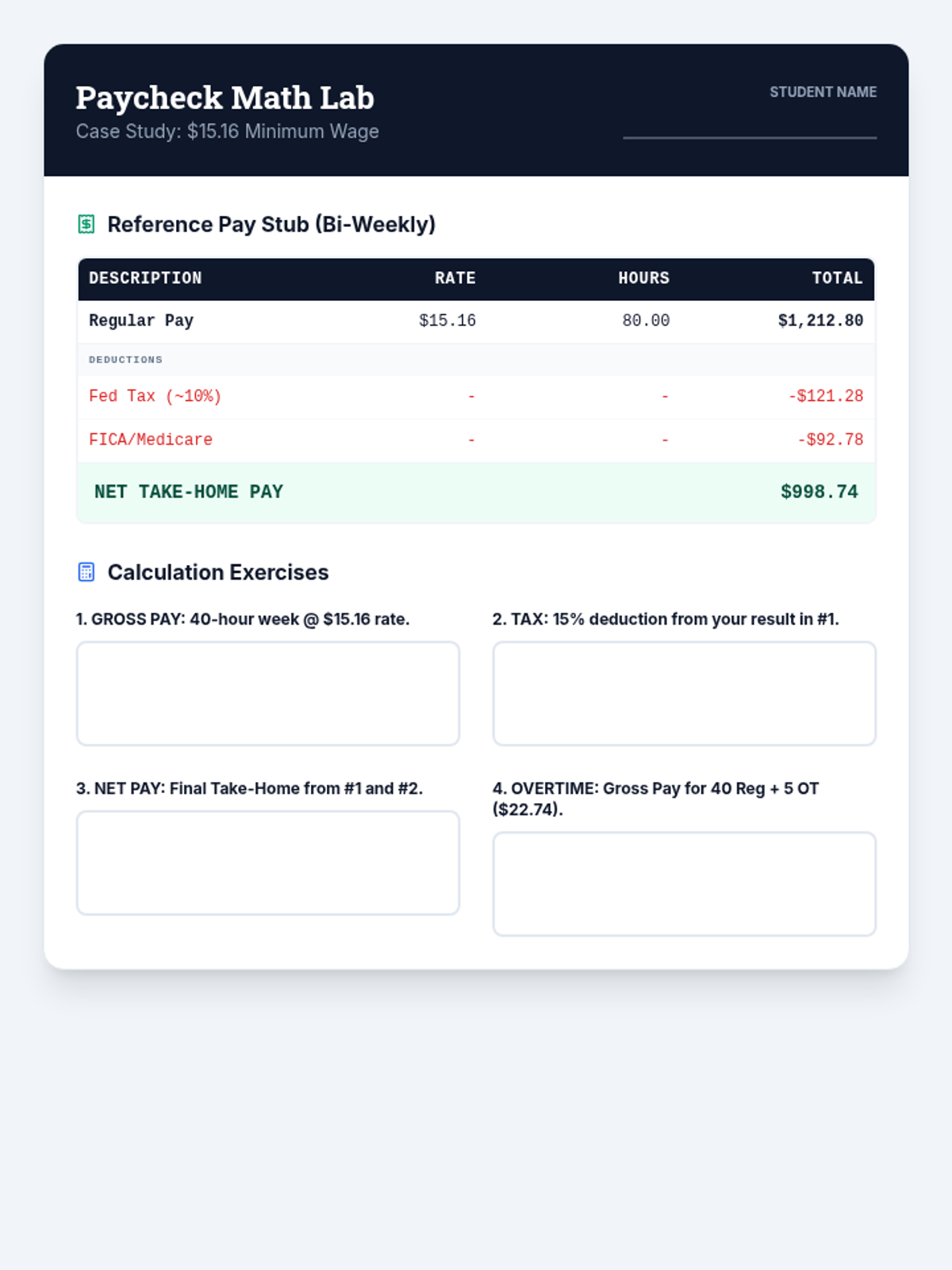
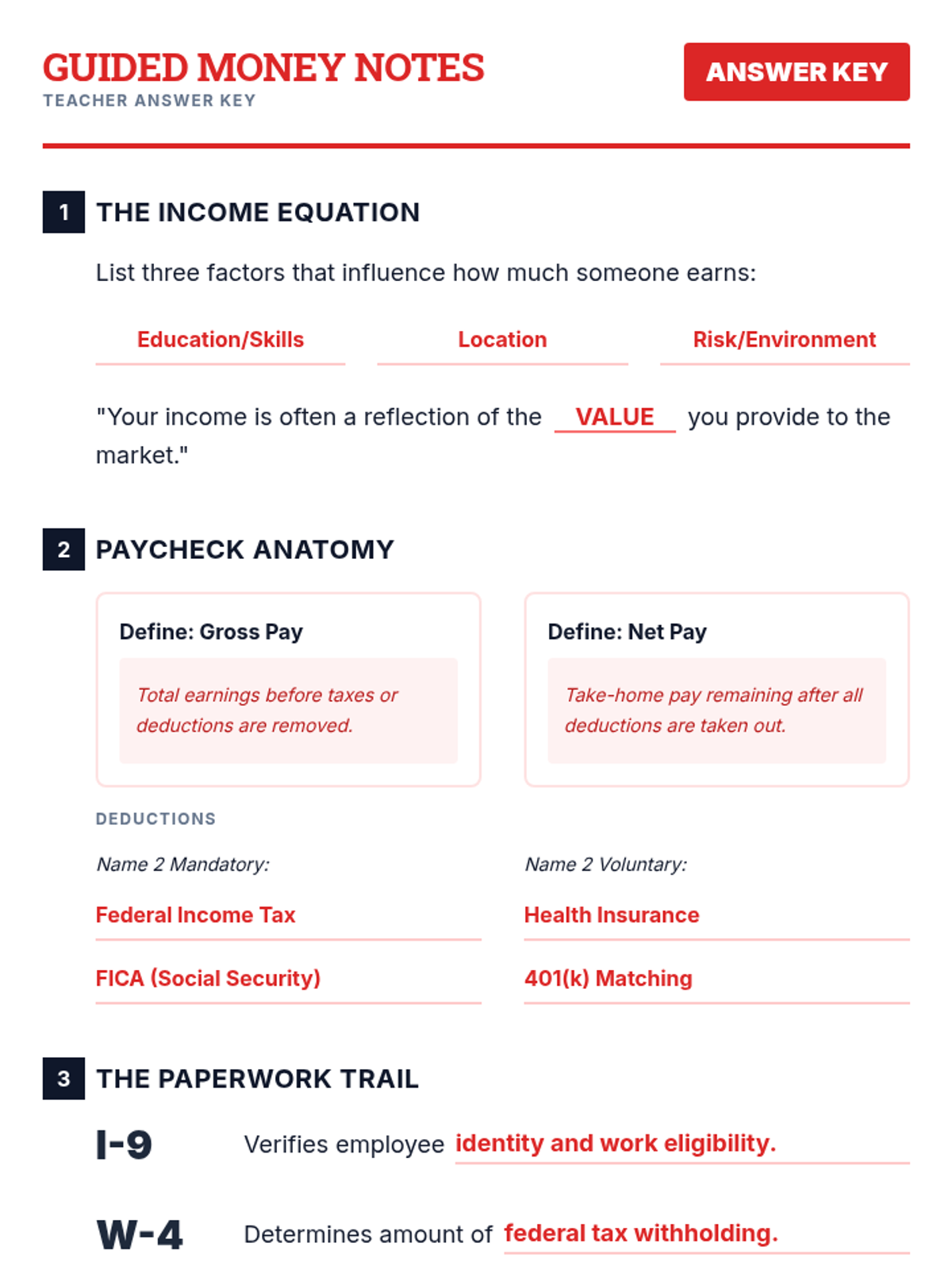
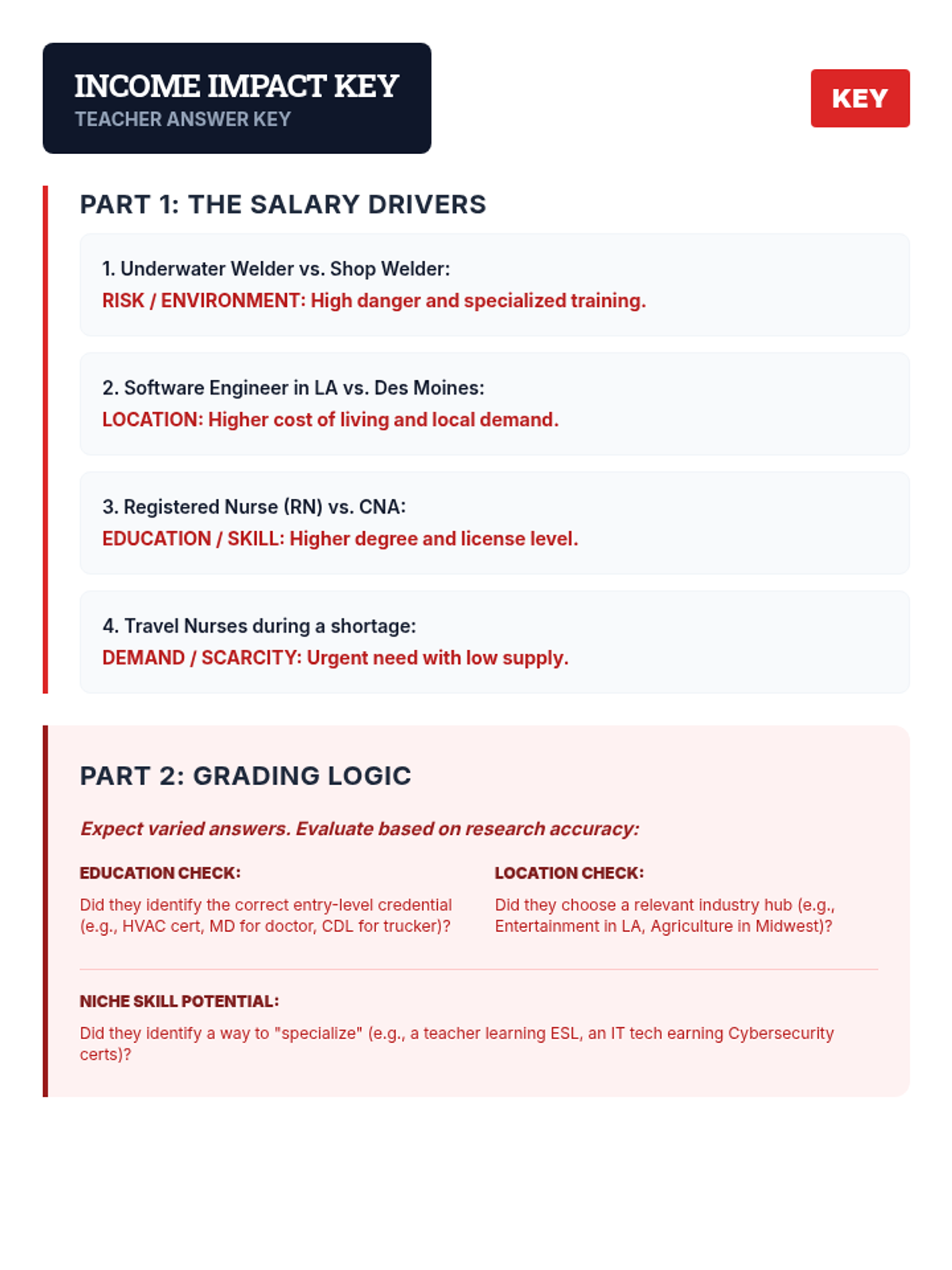
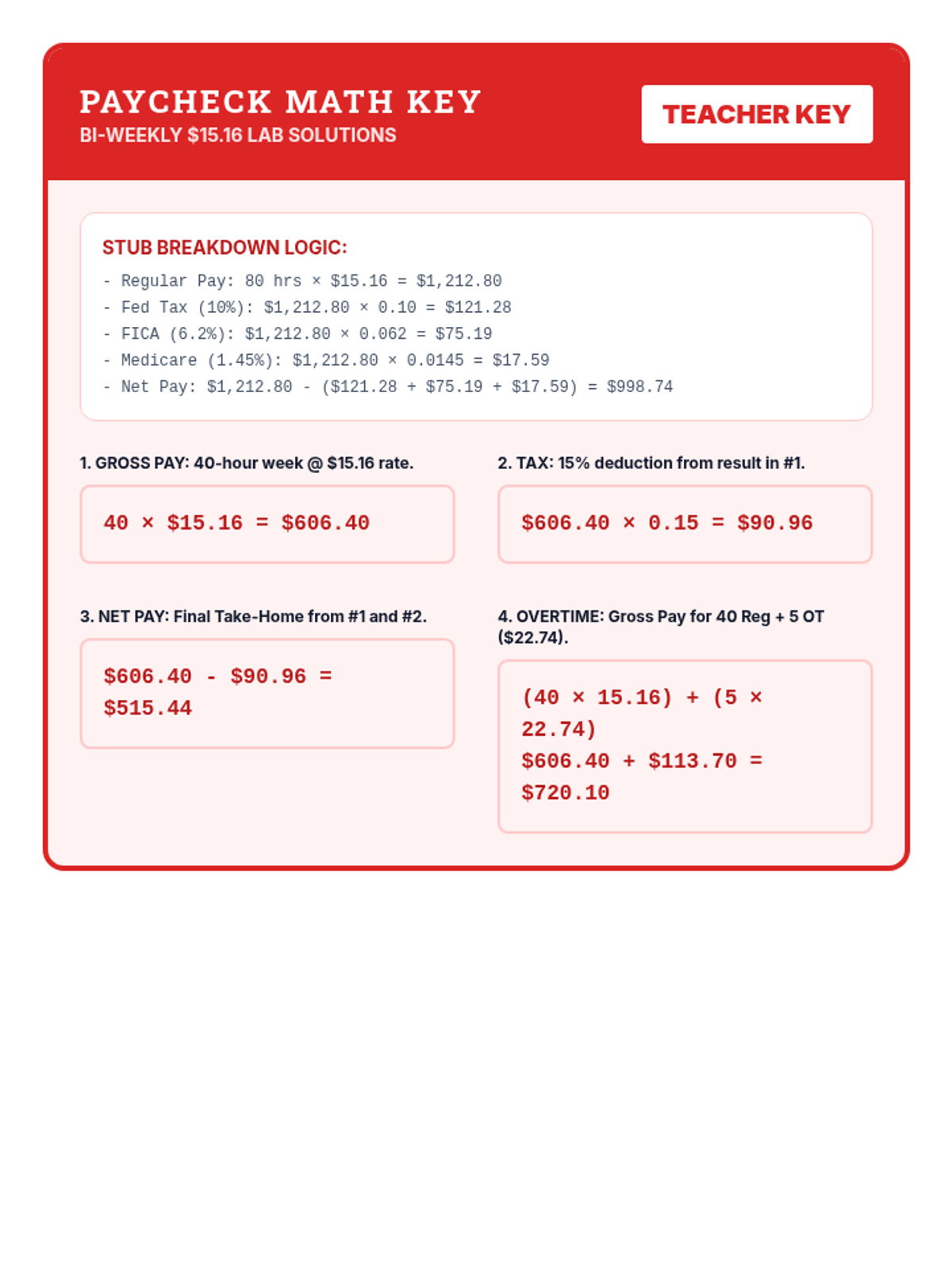
Understanding the fundamentals of how income is earned, how paychecks are calculated, and the specific math behind a $15.16 hourly wage.
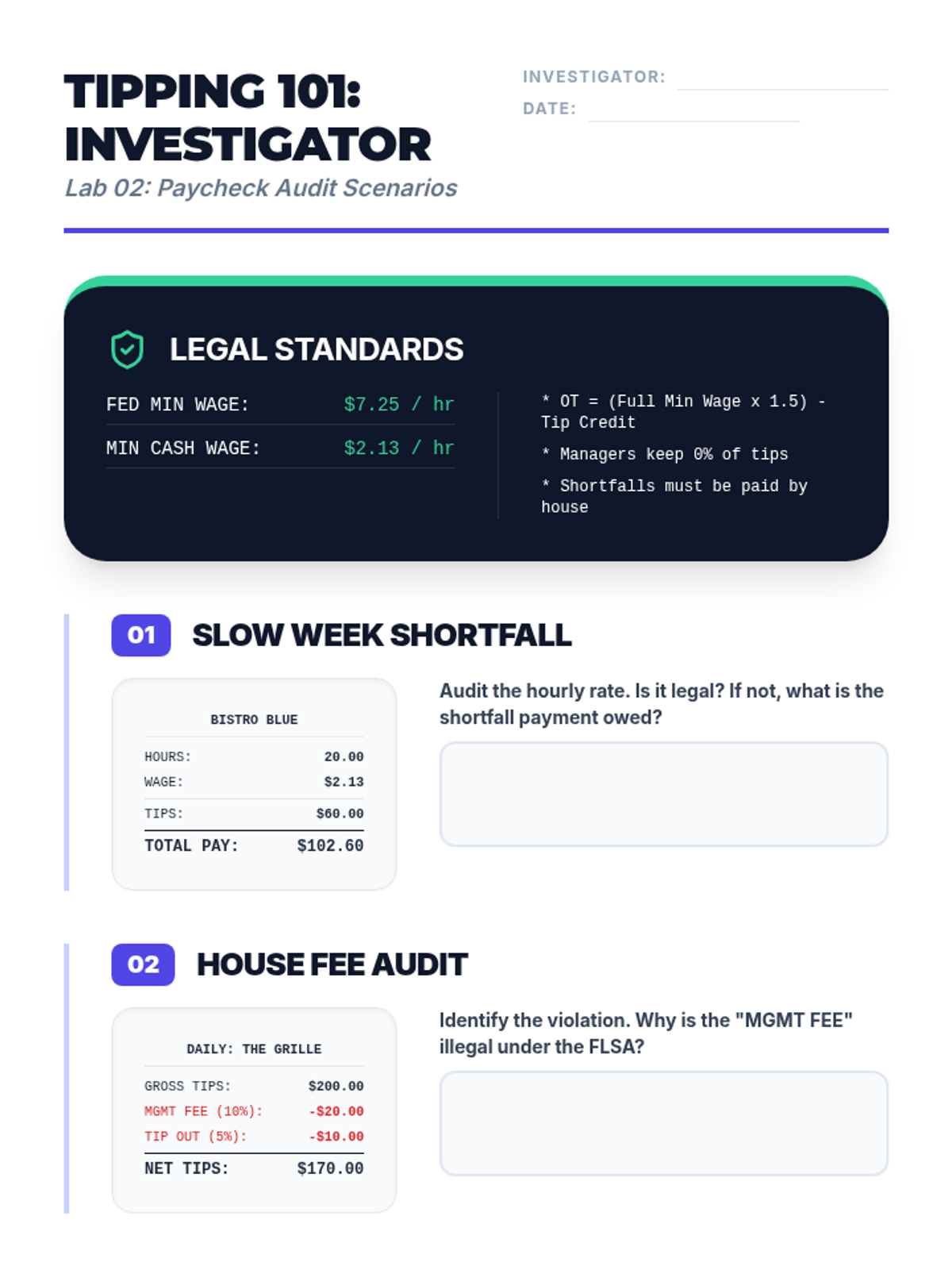
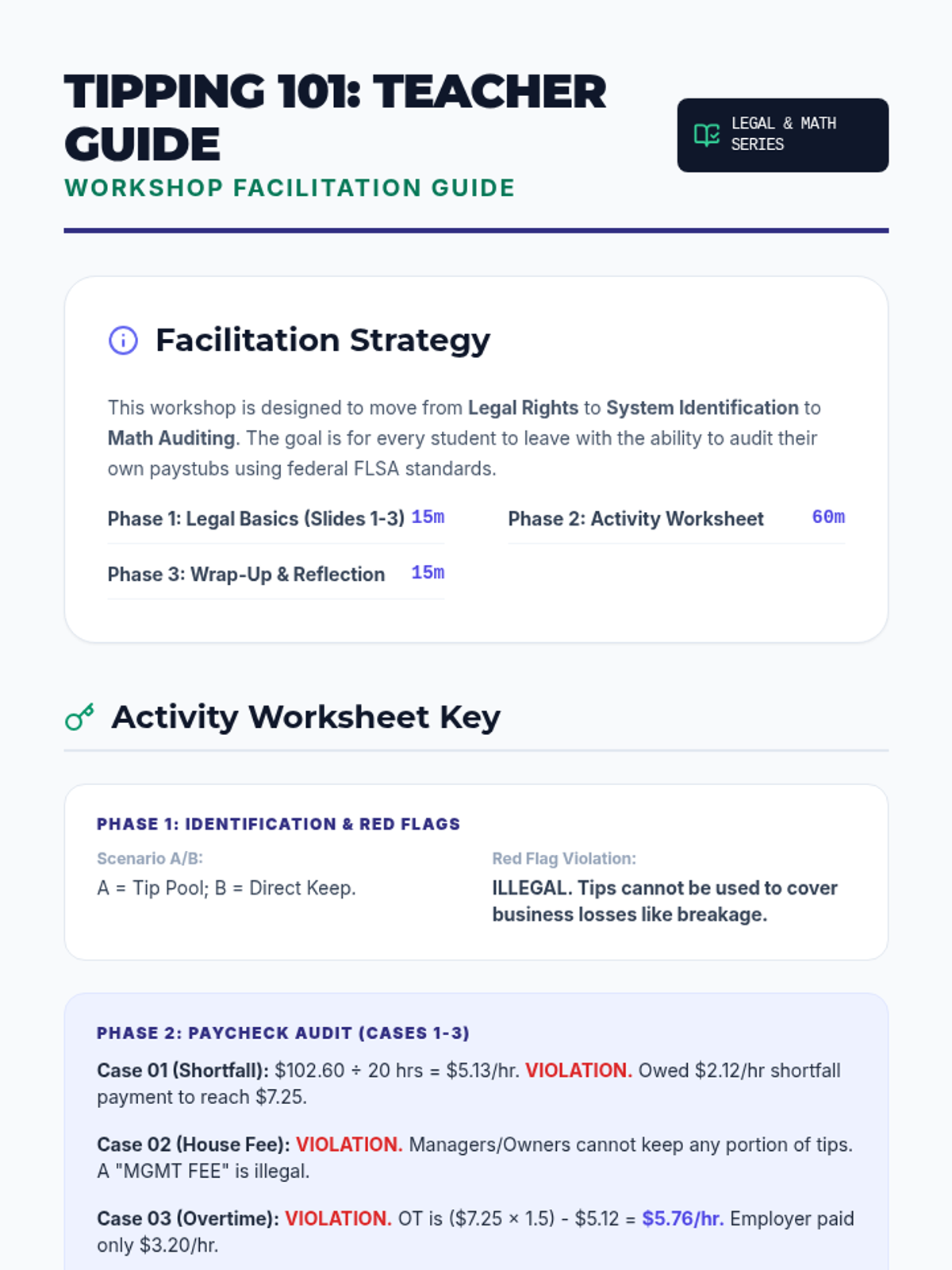
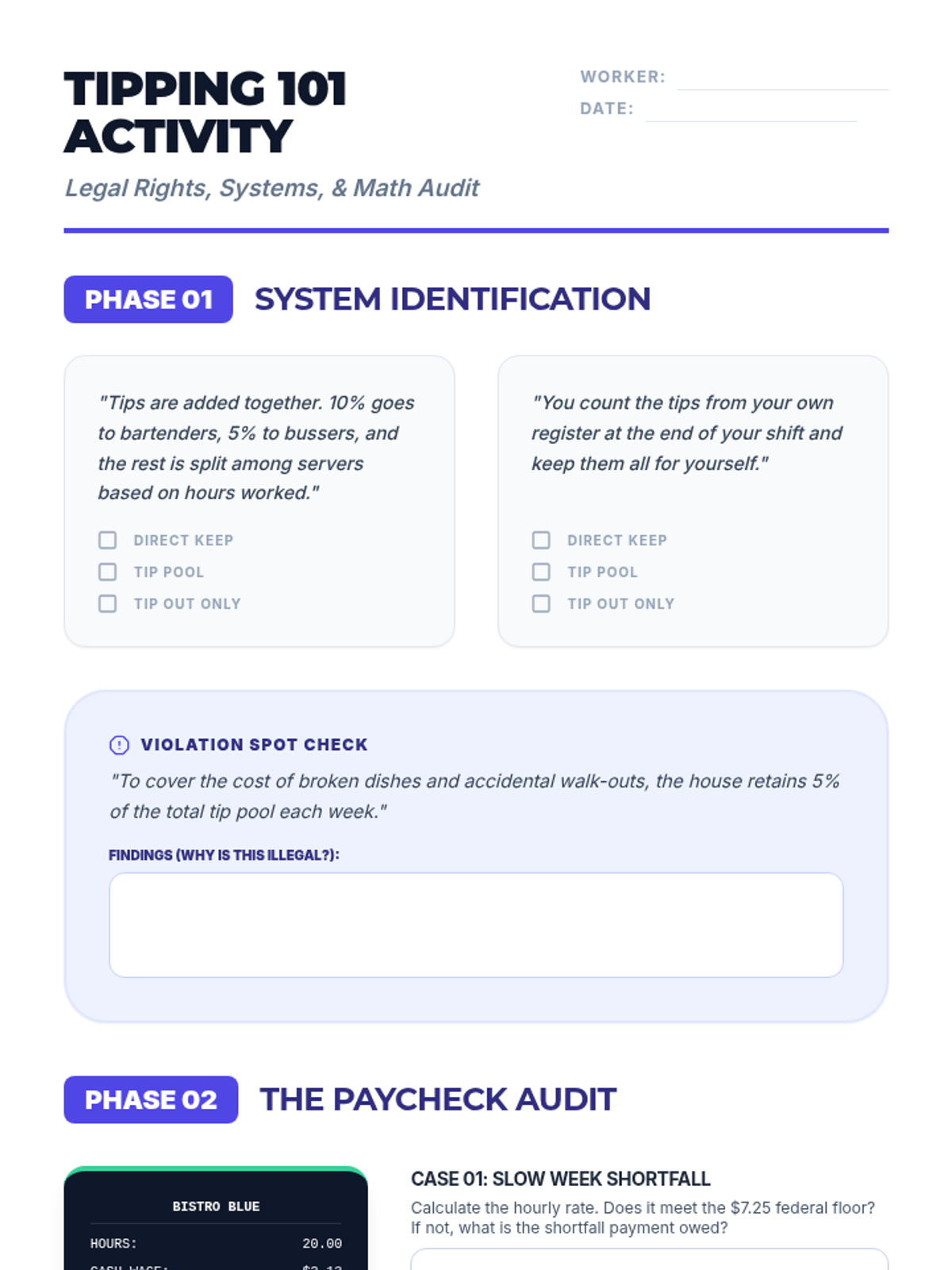
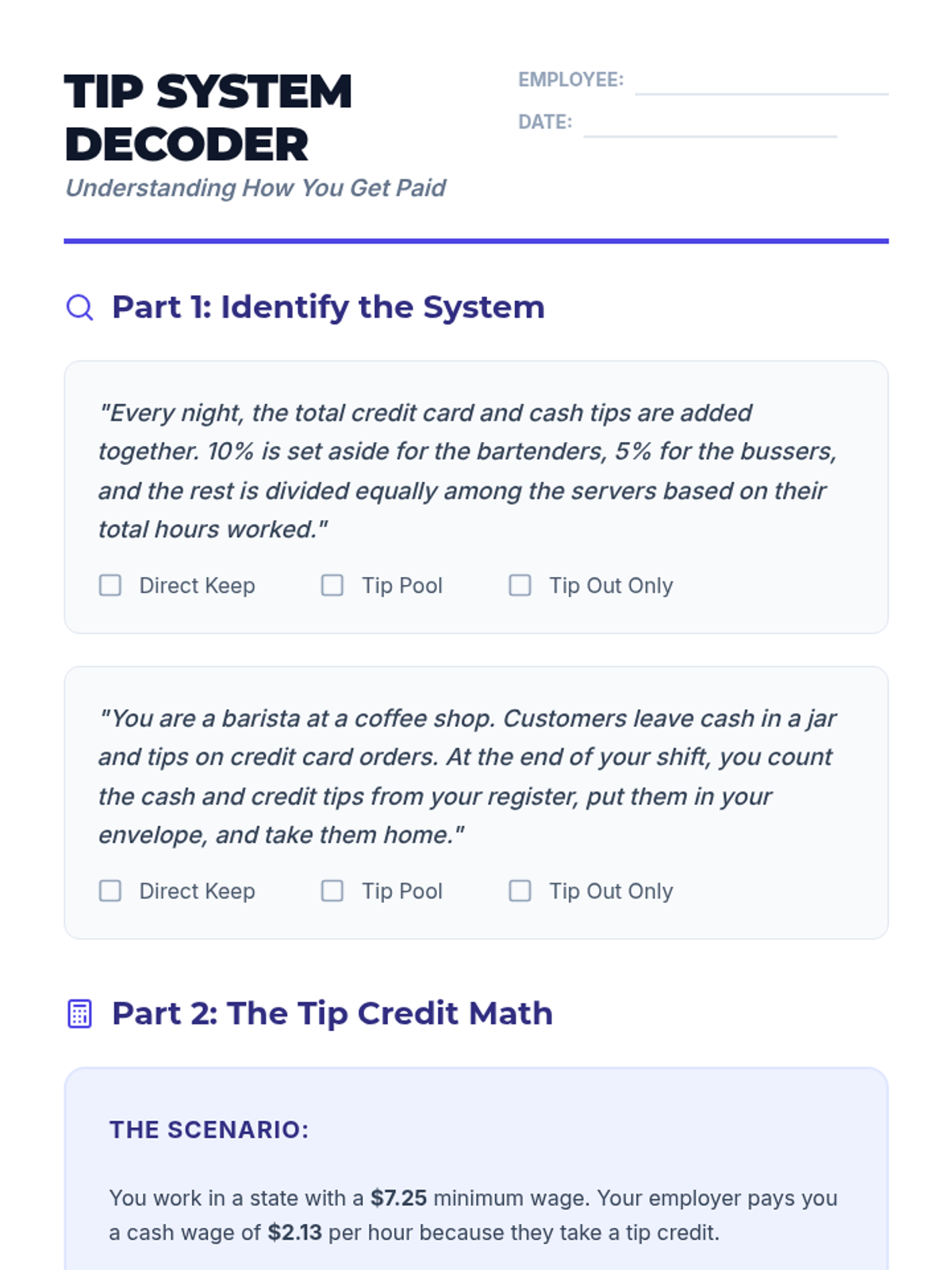
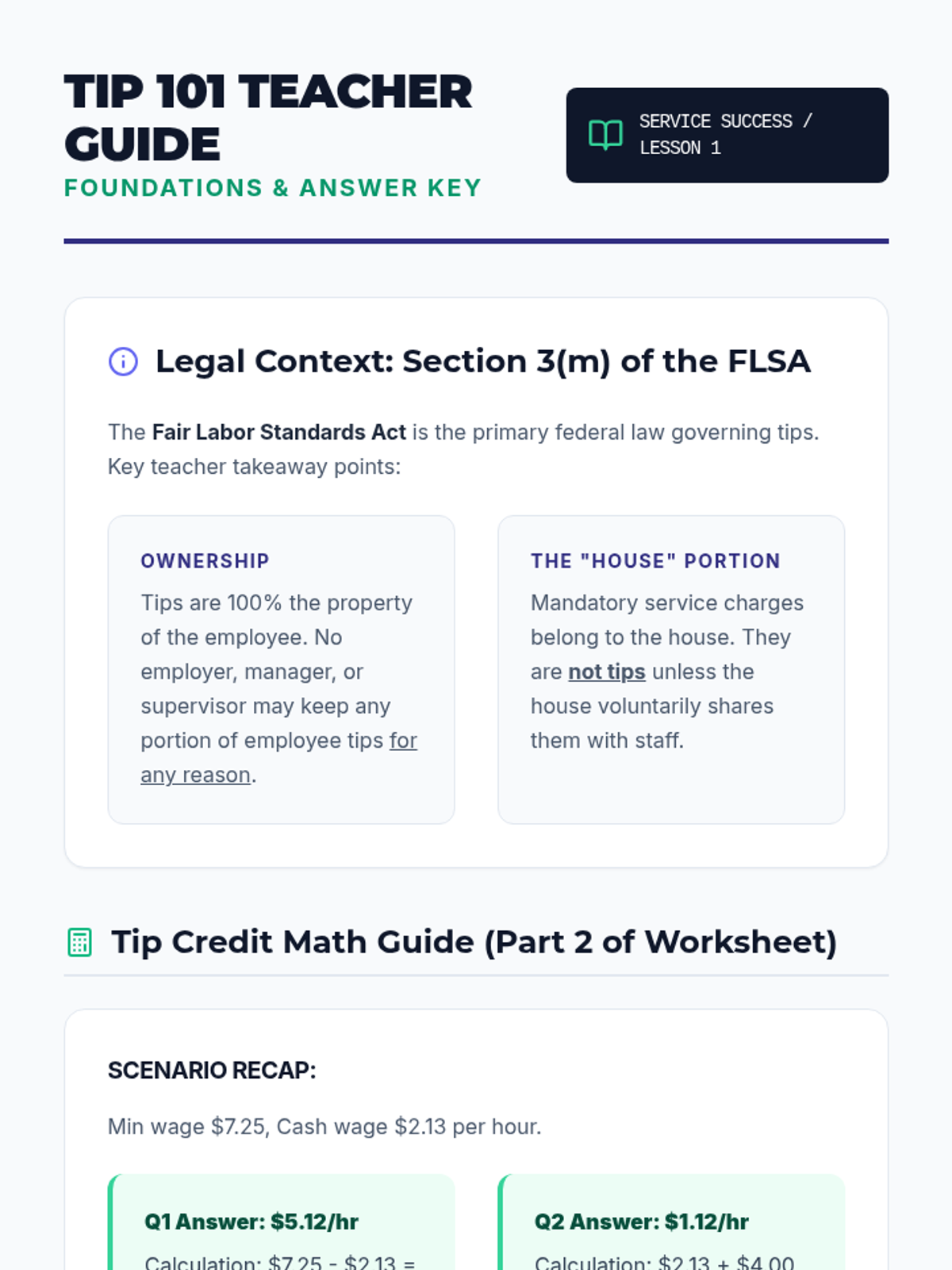
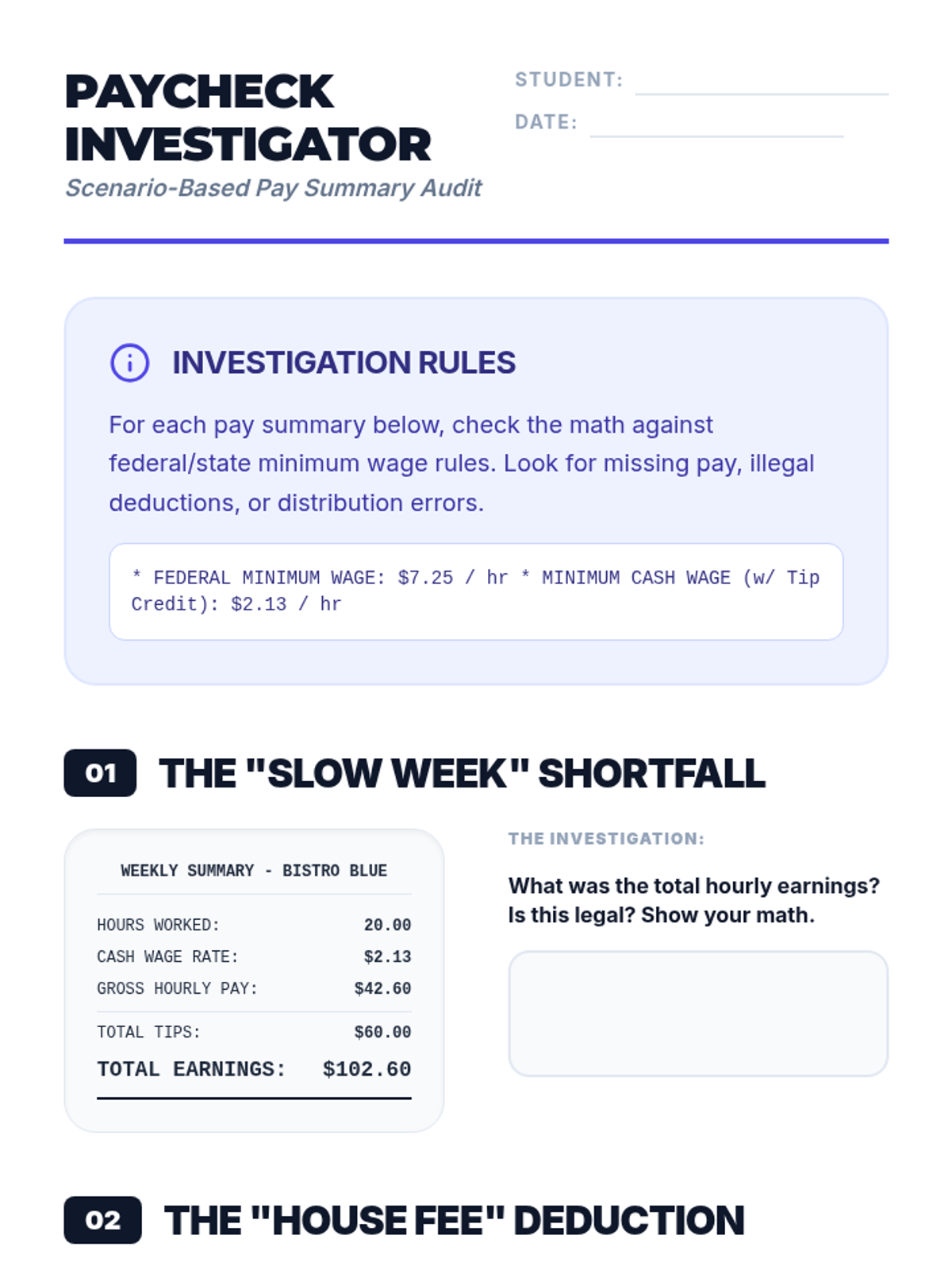
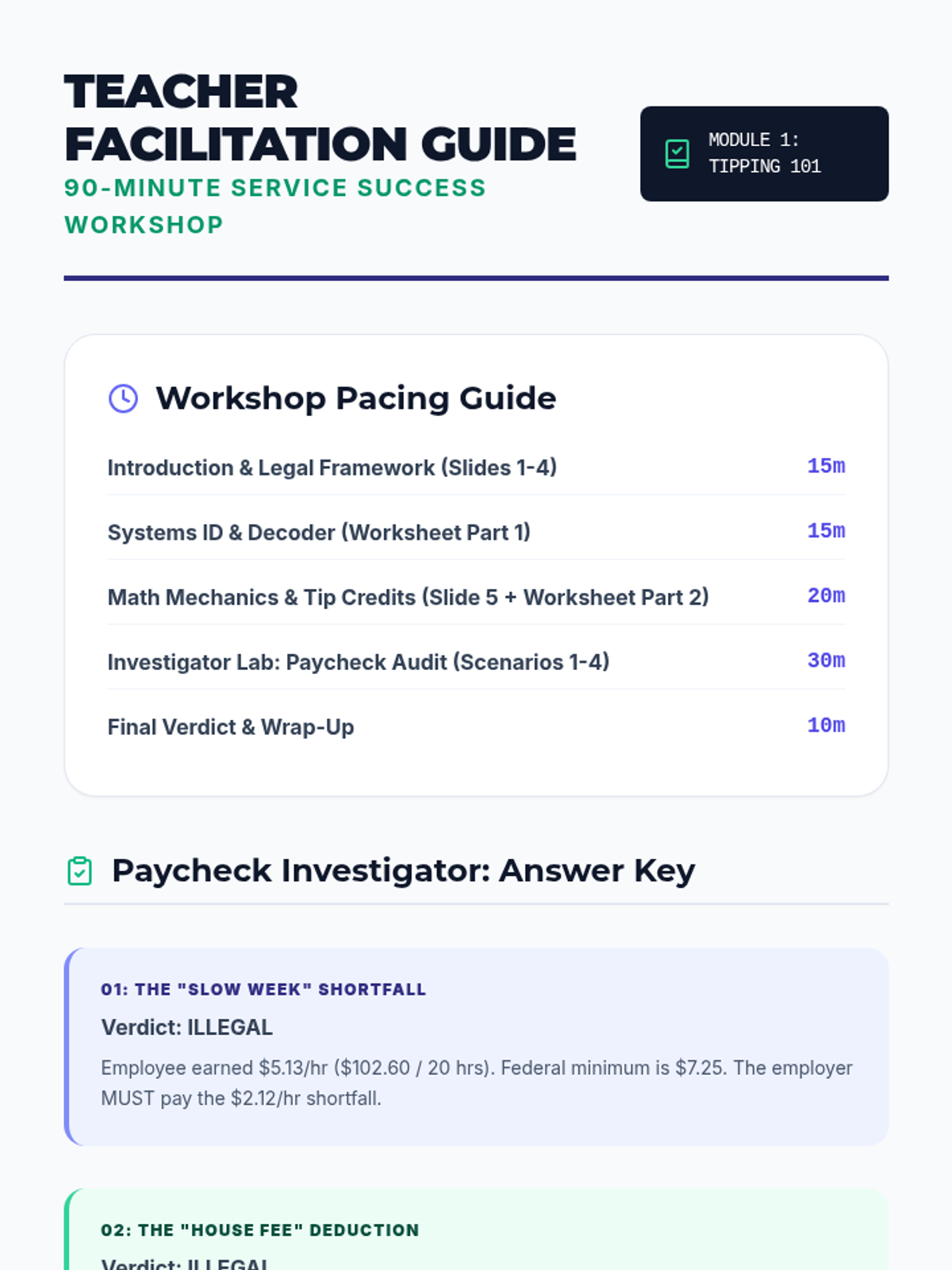
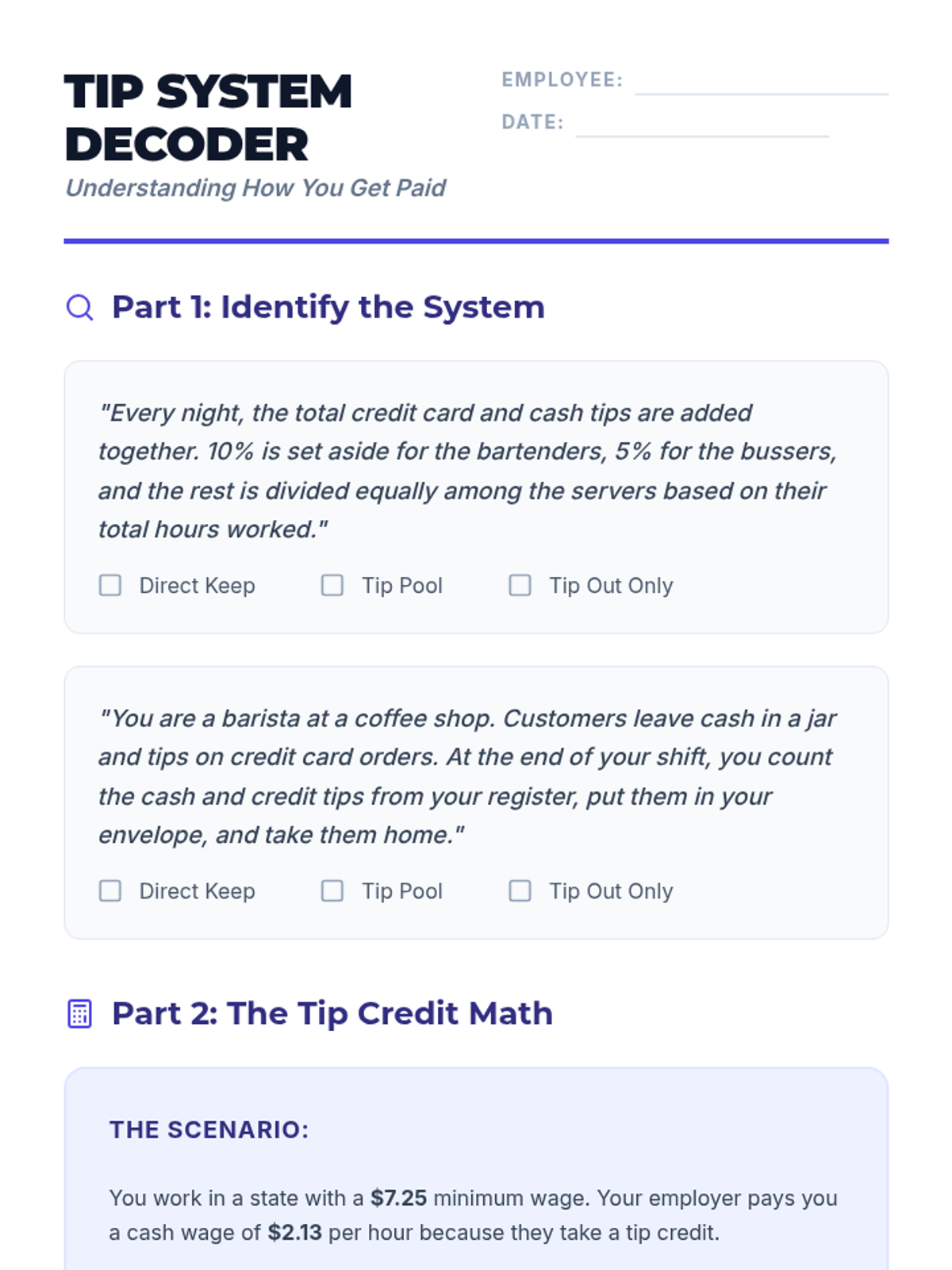
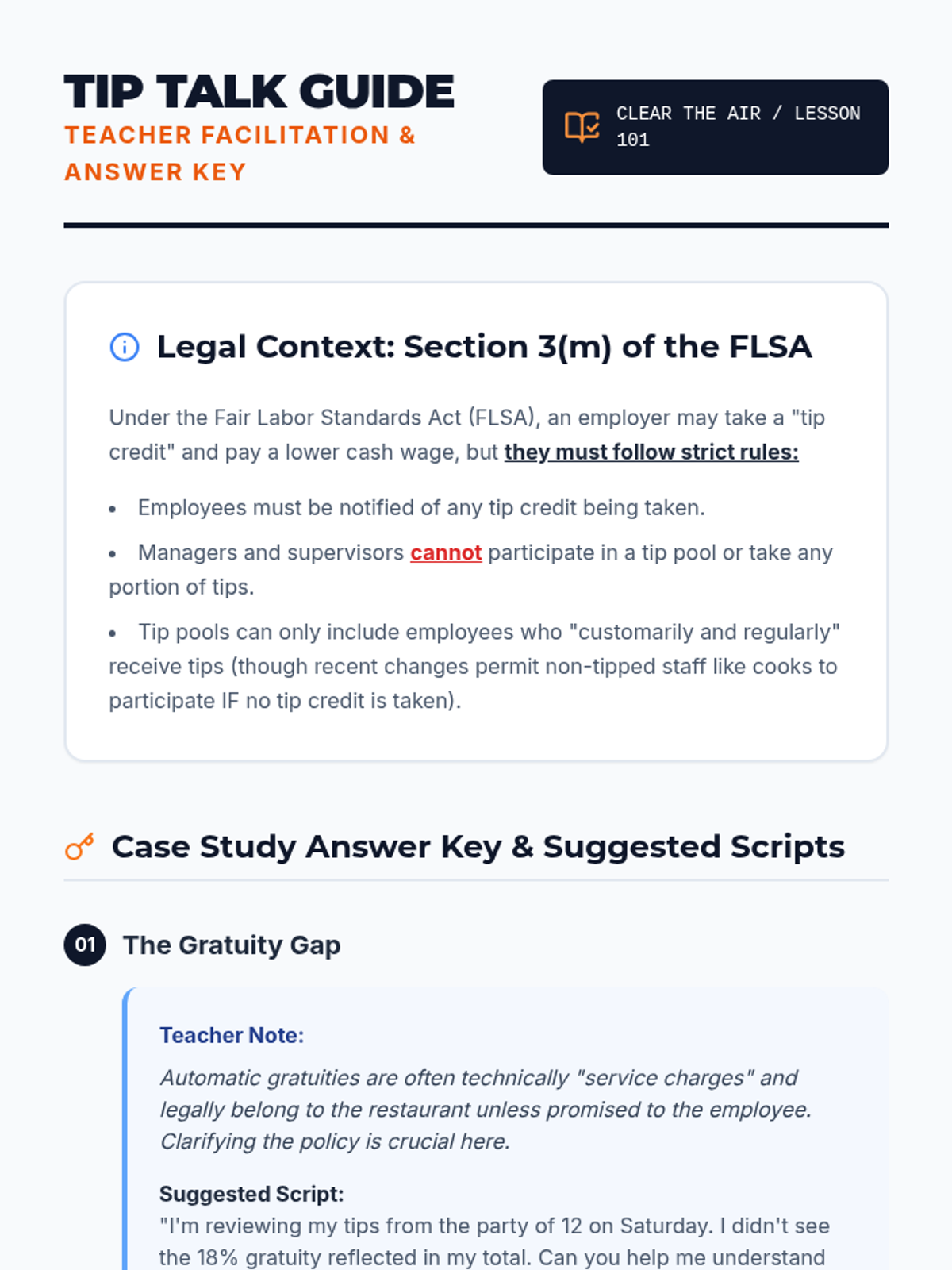
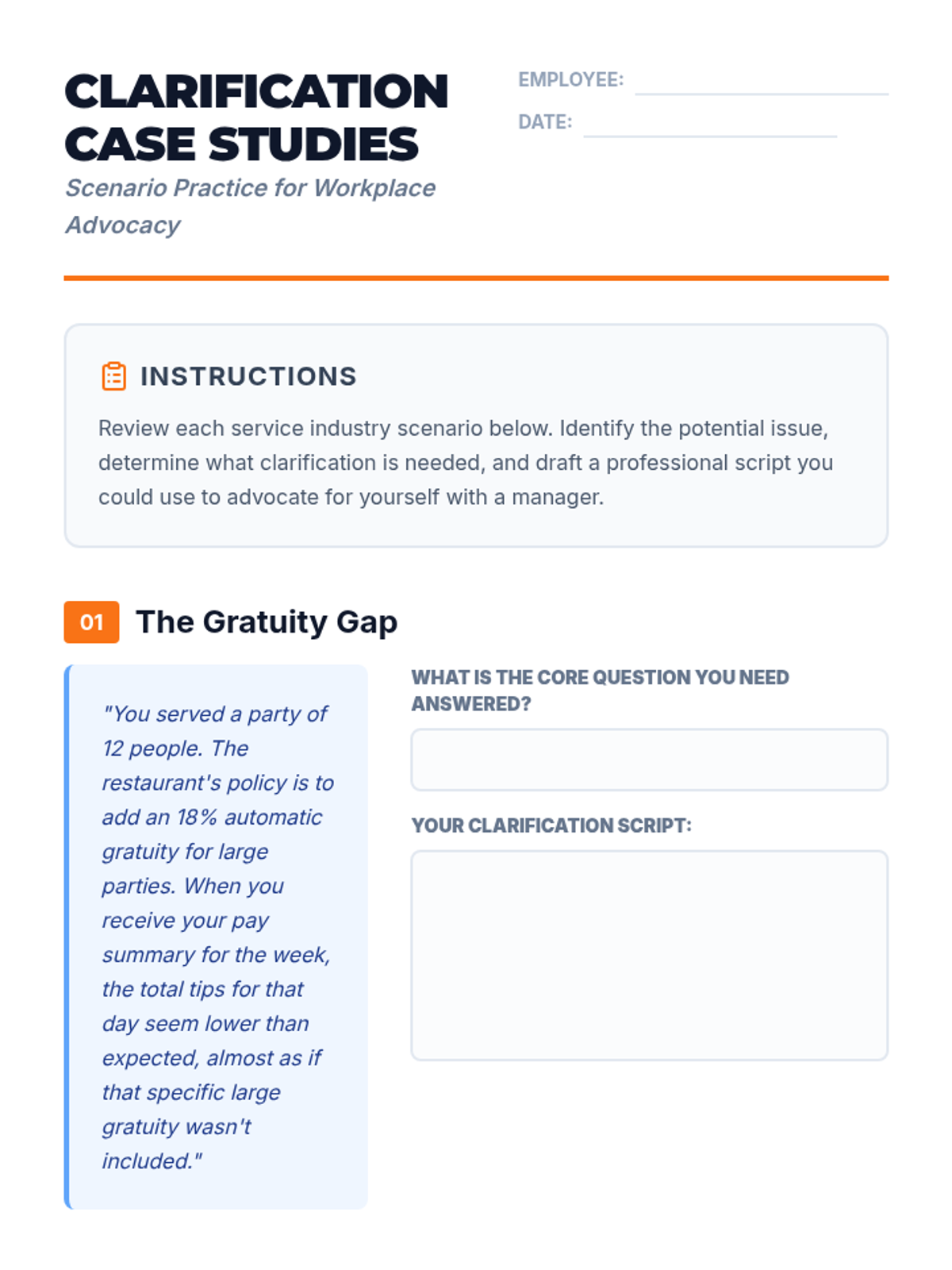
A comprehensive 90-minute workshop on the fundamentals of tipping. This session covers legal rights under the FLSA, the mechanics of tip credits, and paycheck auditing.
This area contains lessons and materials that have been removed from the active sequence. They are kept here due to technical storage requirements but should not be used for instruction.
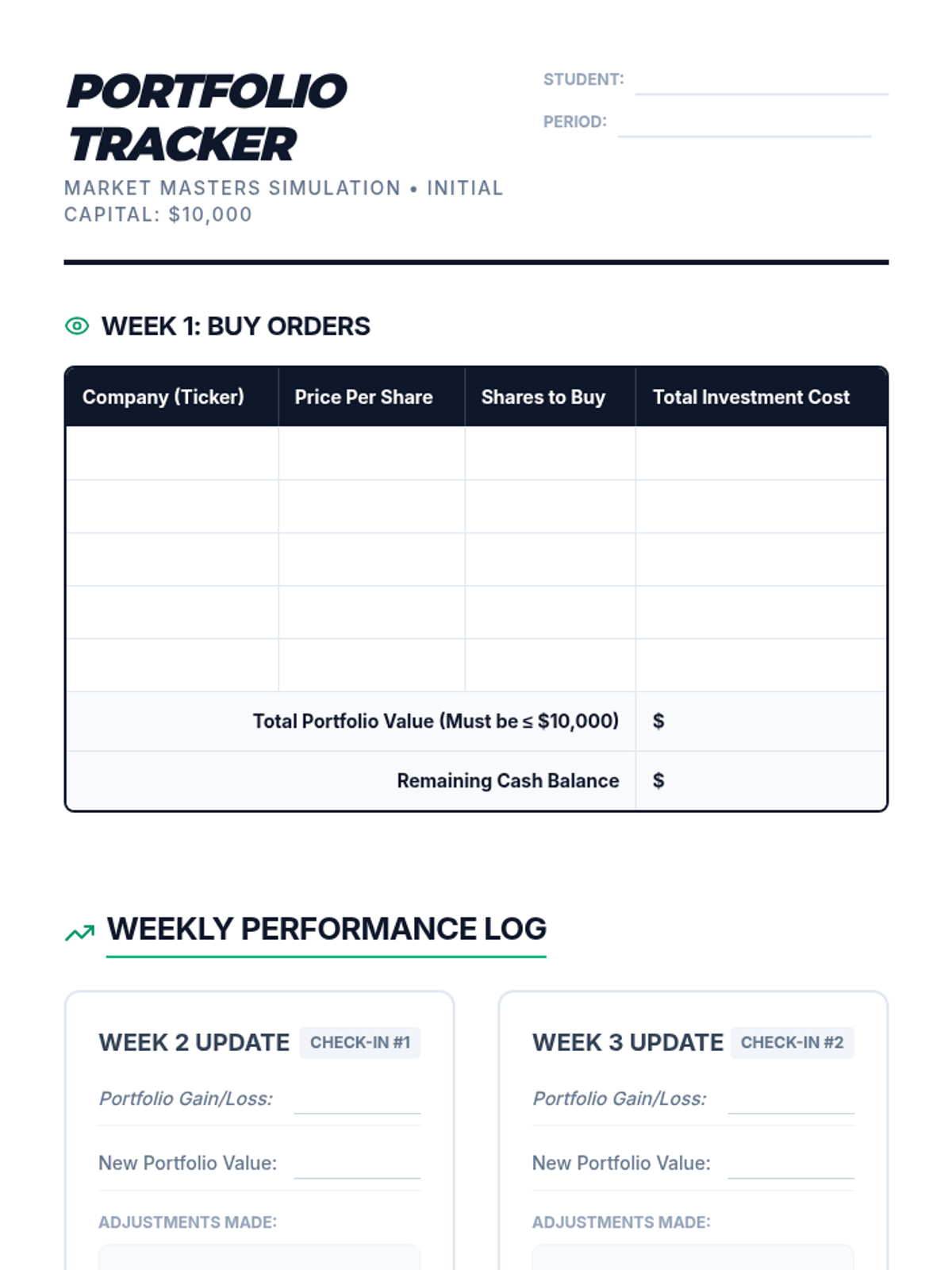
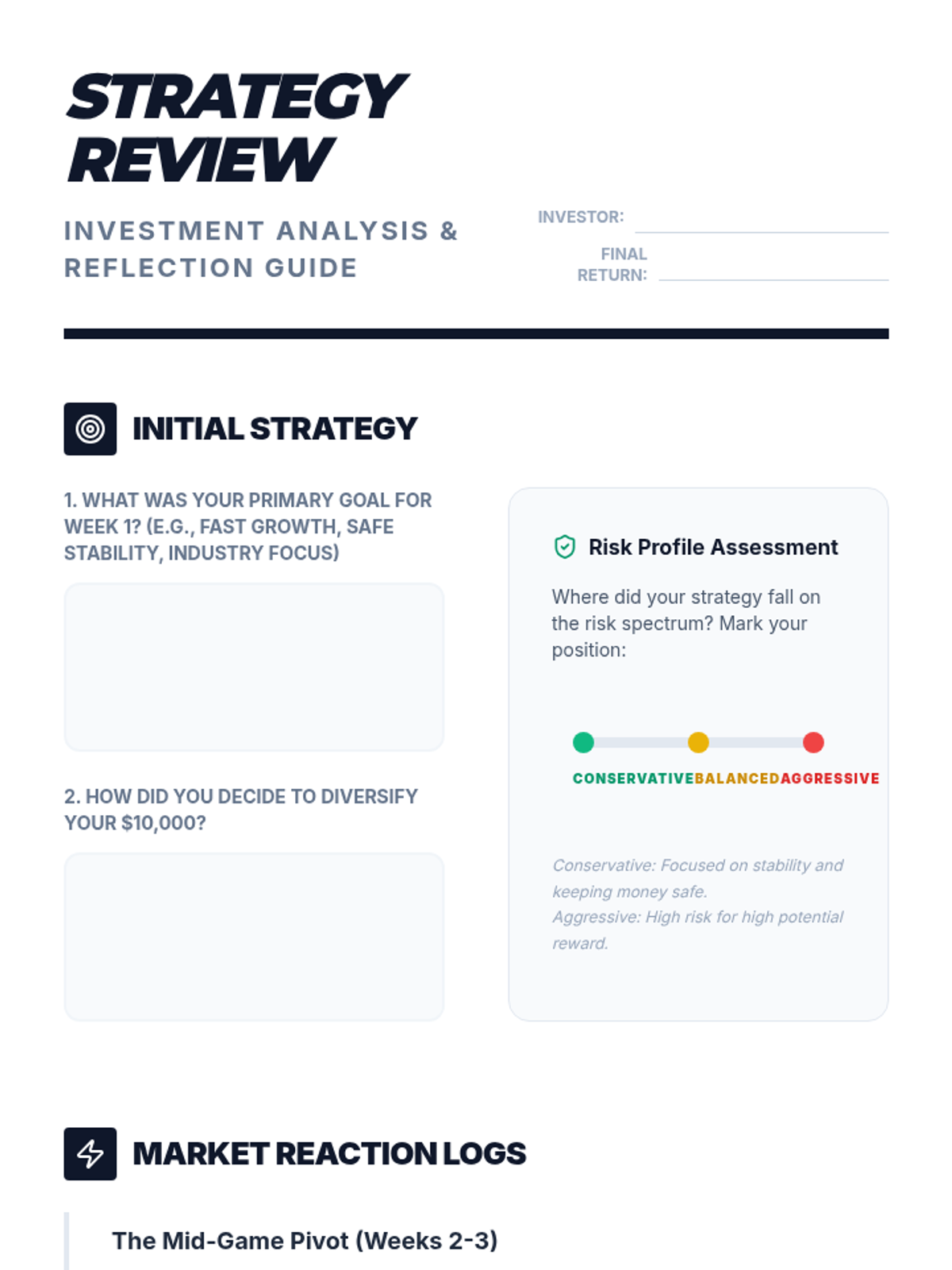
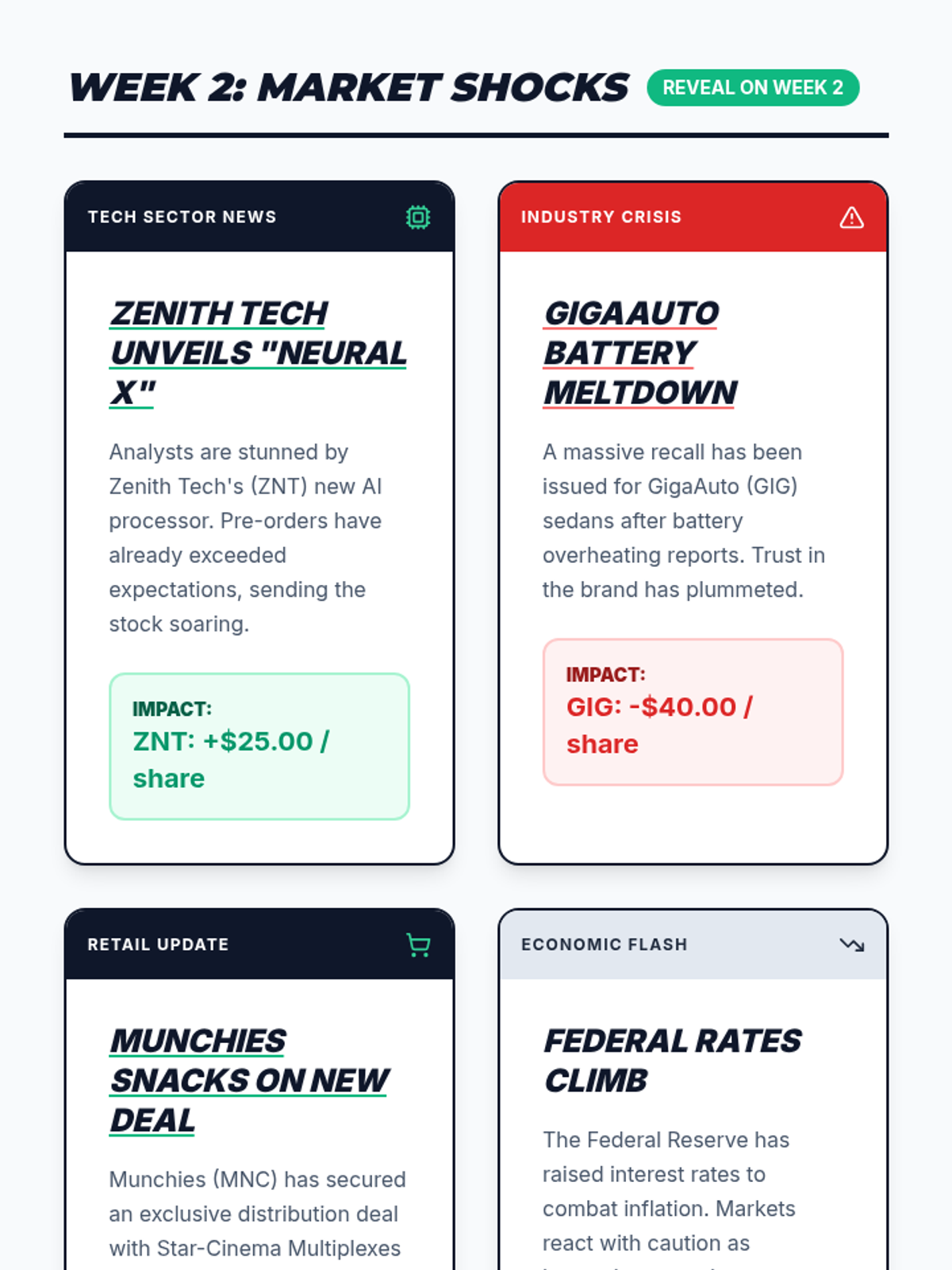
A core simulation lesson where students manage a $10,000 portfolio over four weeks, reacting to market news and tracking their gains or losses.