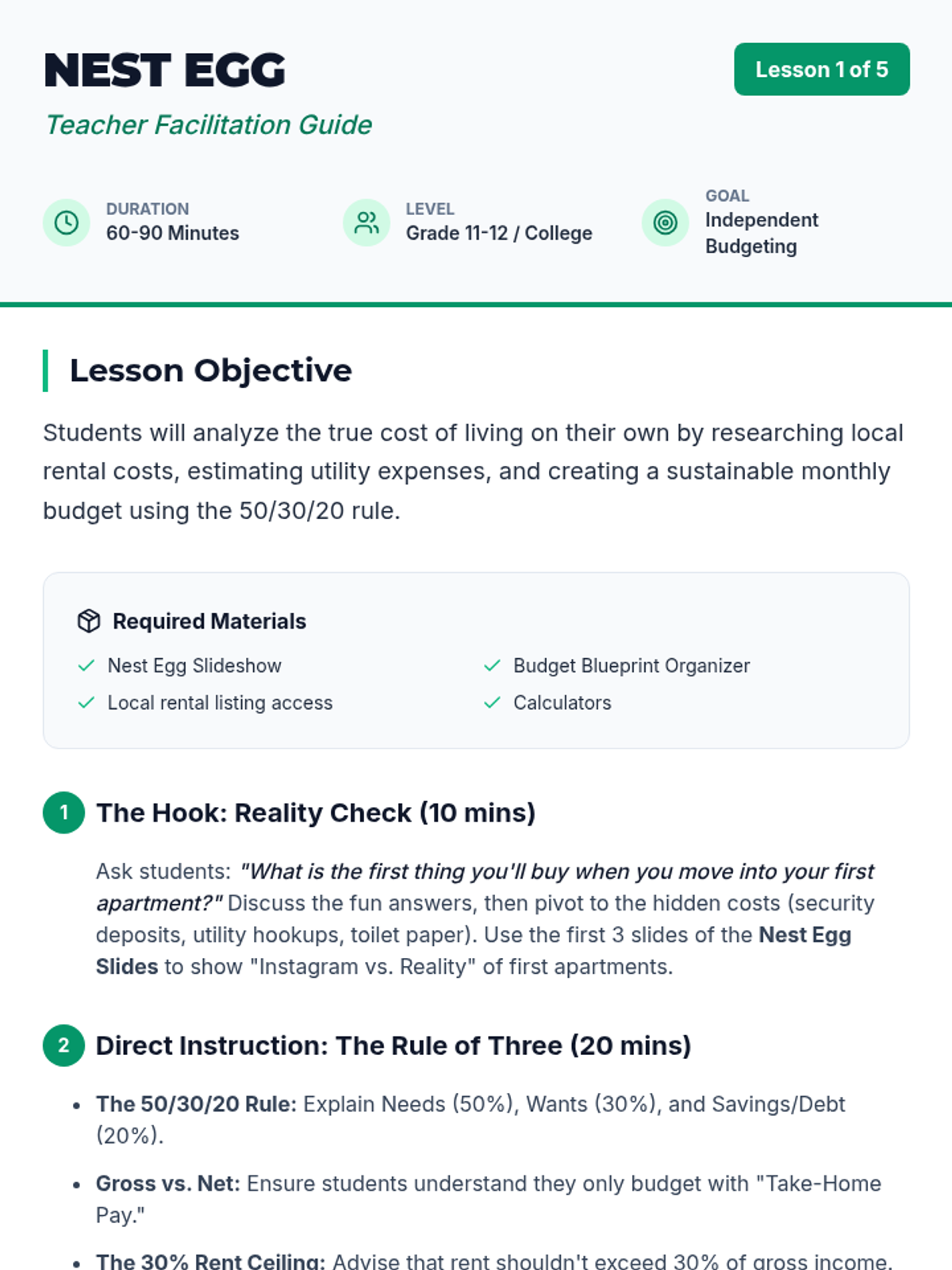
Budgeting, saving, and investment strategies alongside practical skills for managing credit, taxes, and banking. Addresses insurance needs, employment income, and major purchase decisions to support comprehensive long-term financial planning.
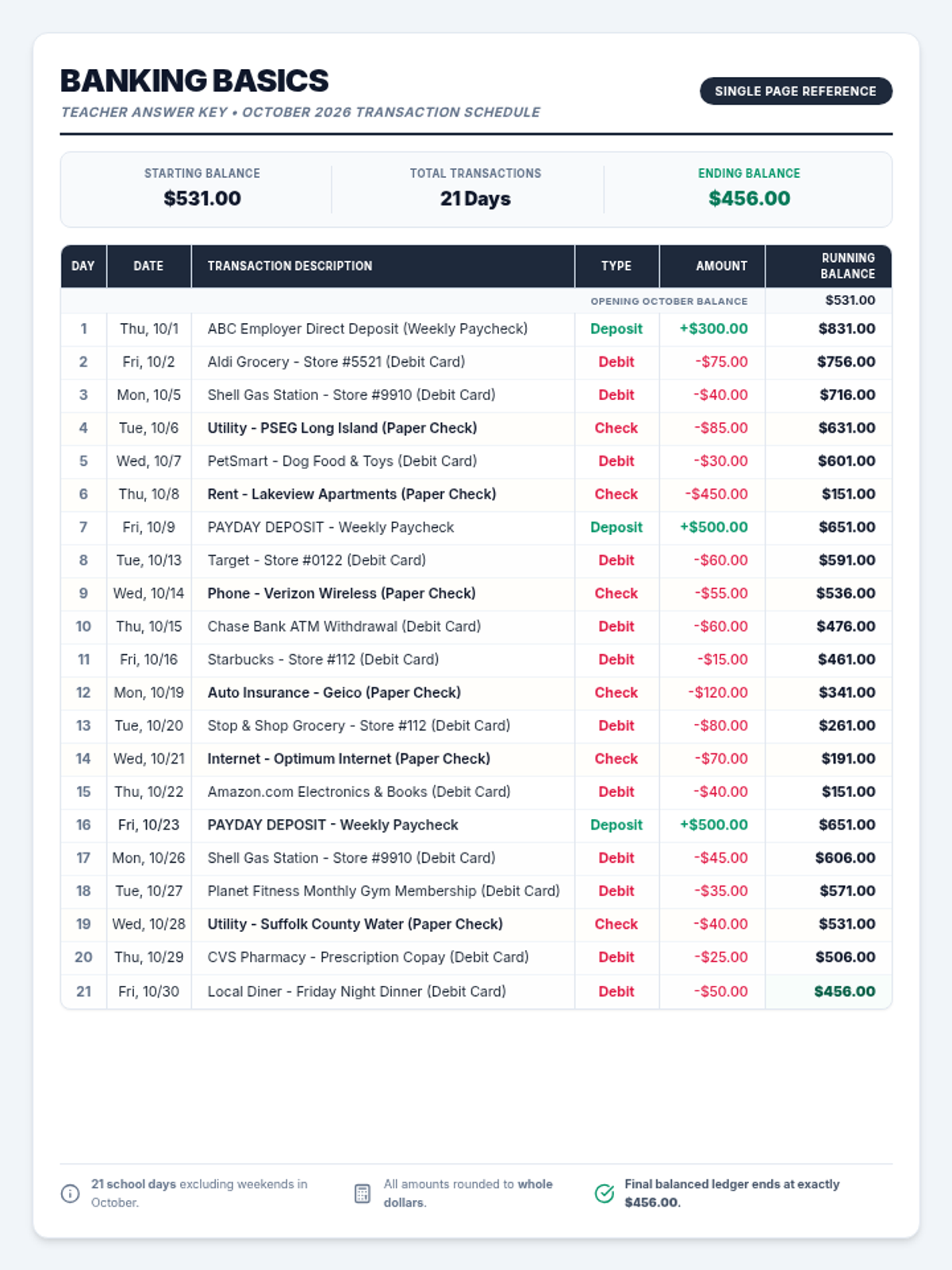
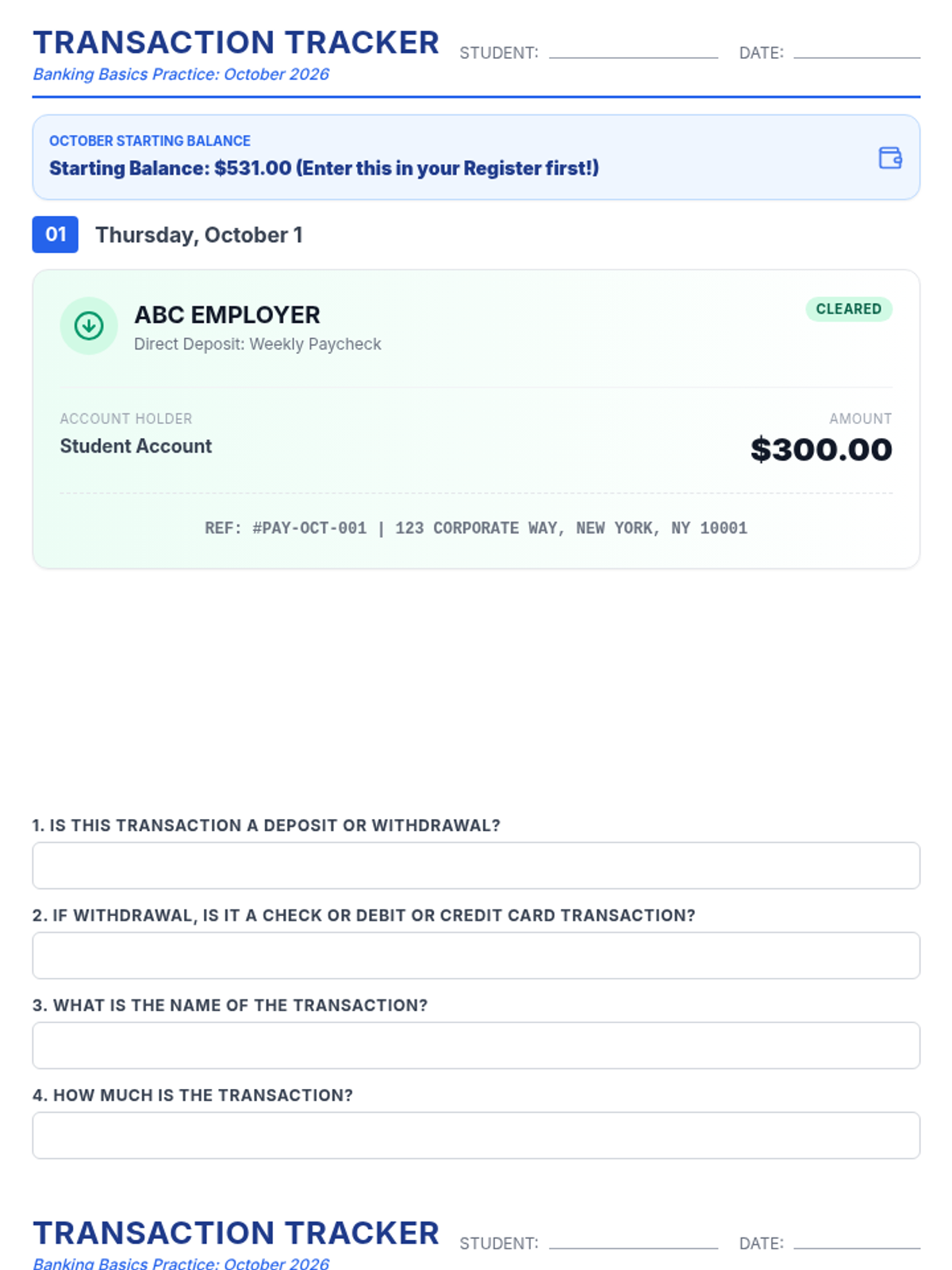
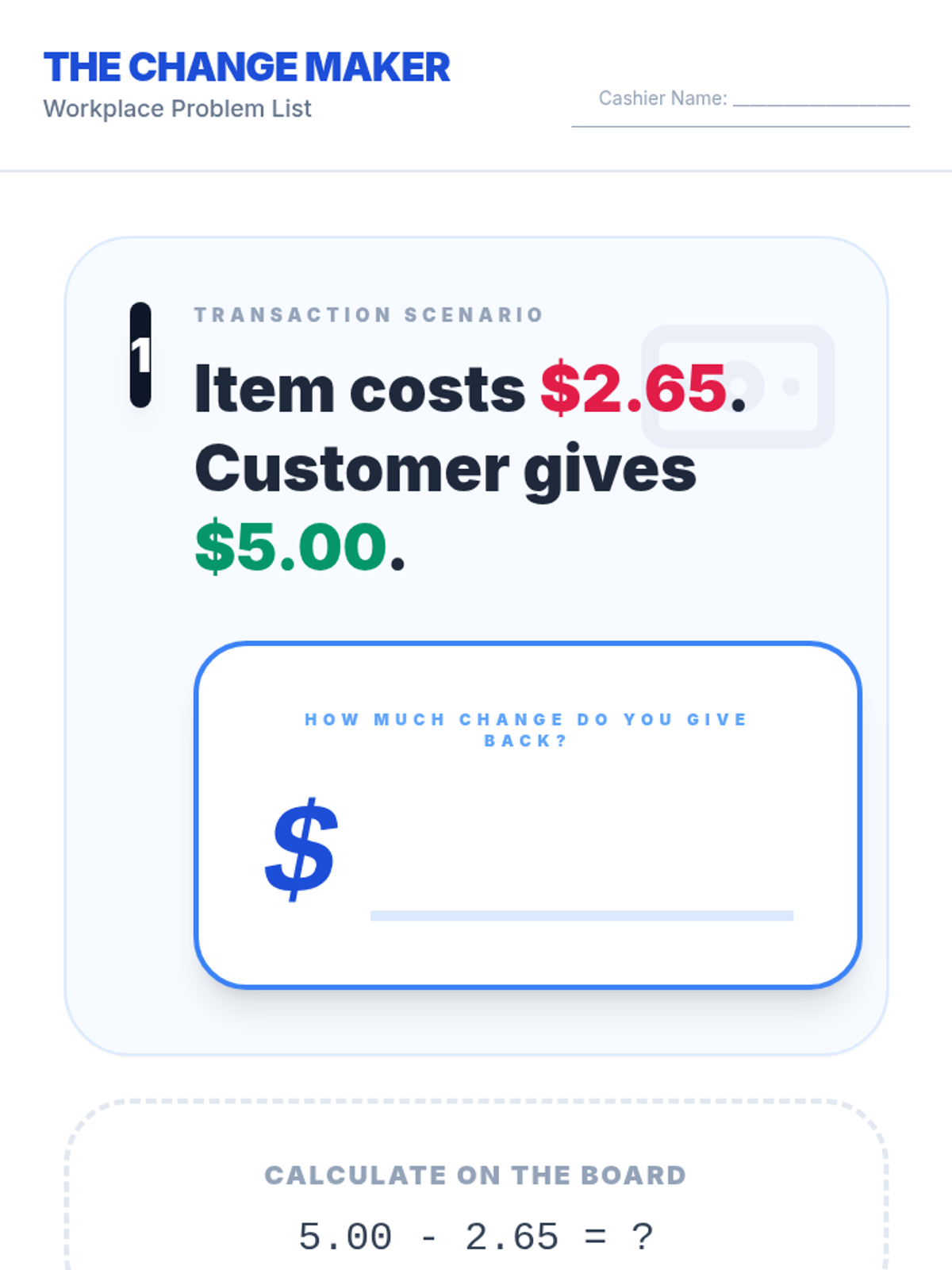
A comprehensive financial literacy curriculum where students learn how to track daily banking transactions, write checks, calculate running balances, and reconcile account registers month-by-month.
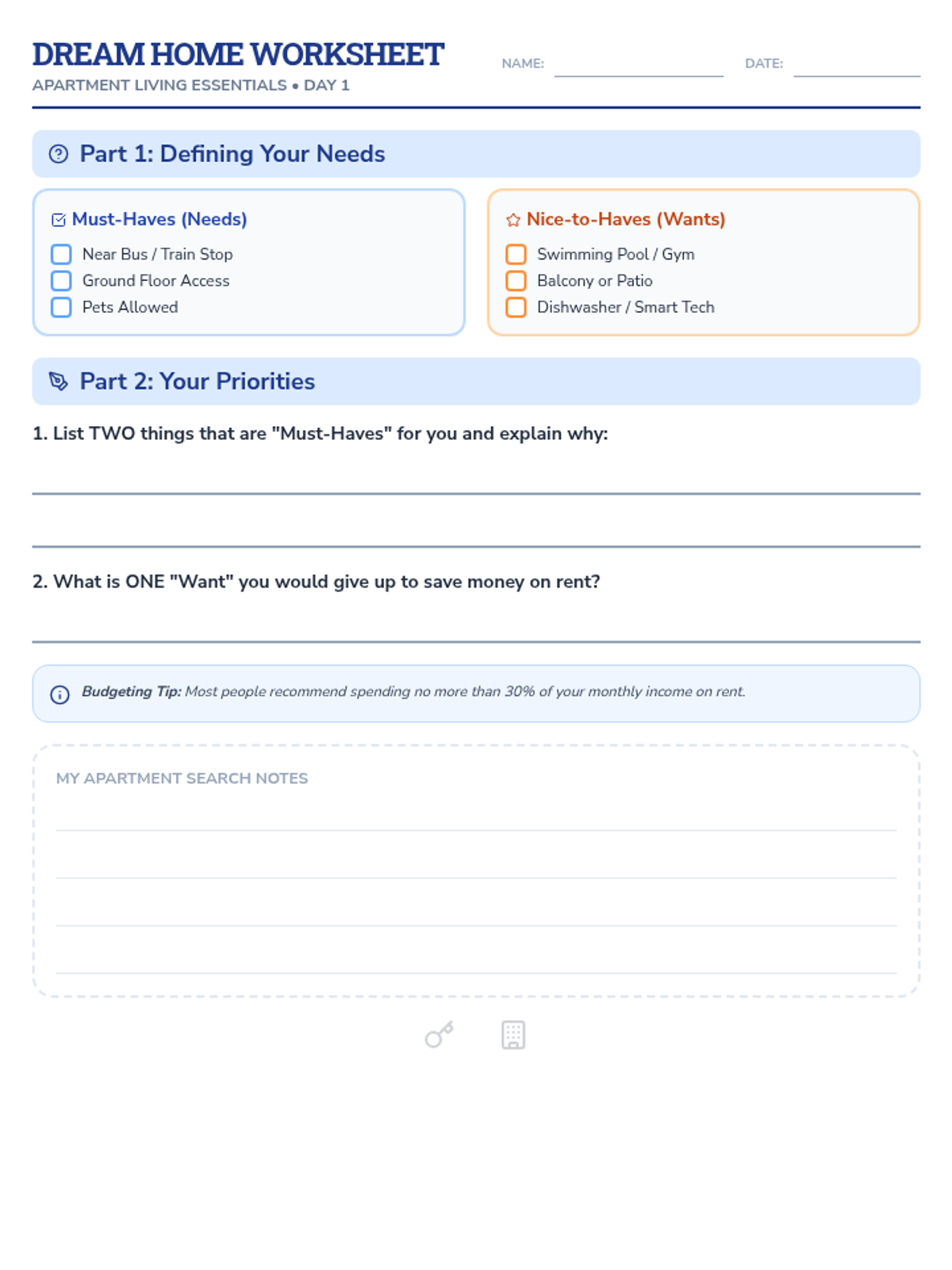
A comprehensive 5-day unit designed for adult transition students to master the essentials of finding, securing, and maintaining an apartment. Topics include budgeting, understanding leases, setting up utilities, and being a responsible neighbor.
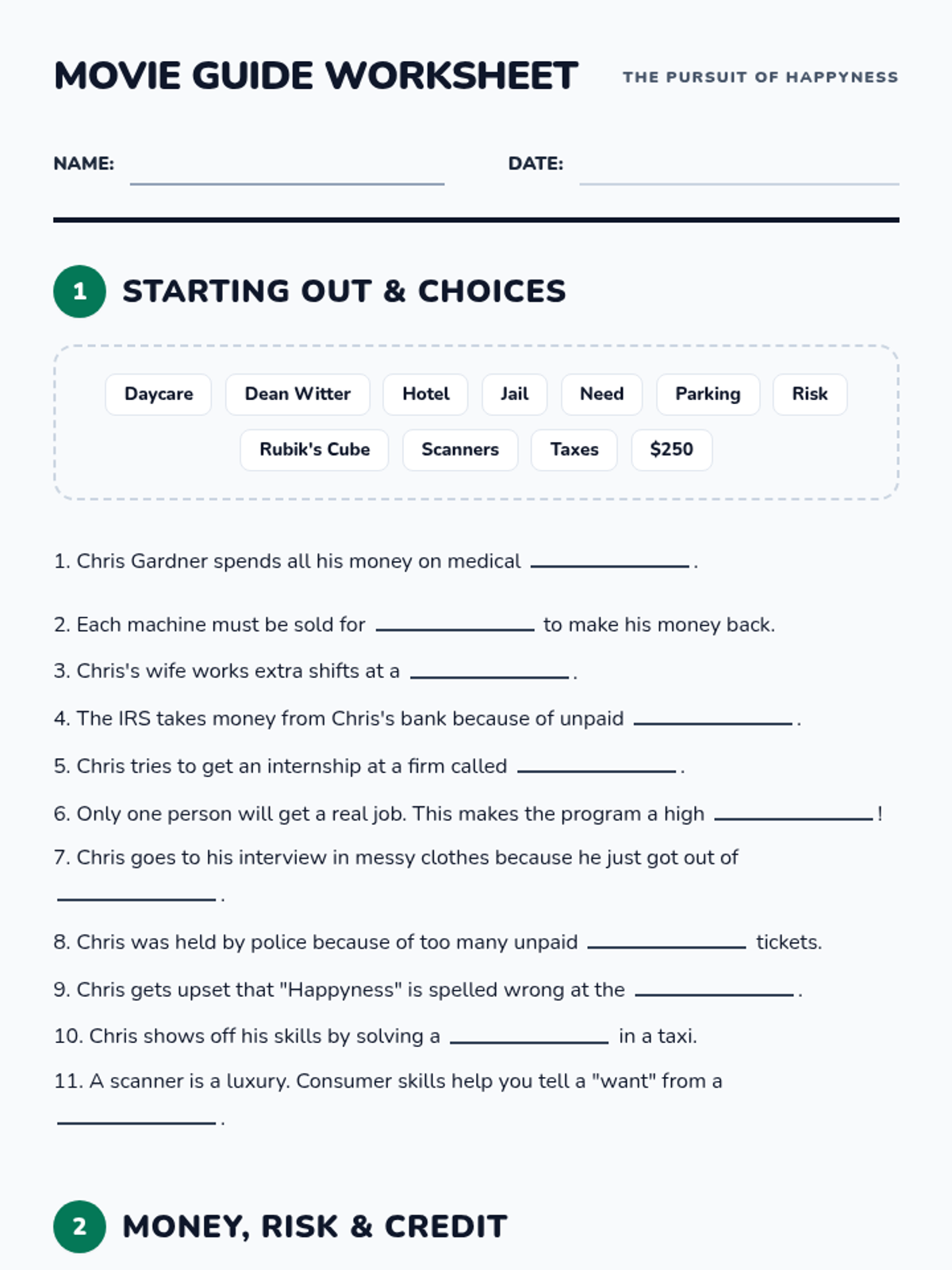
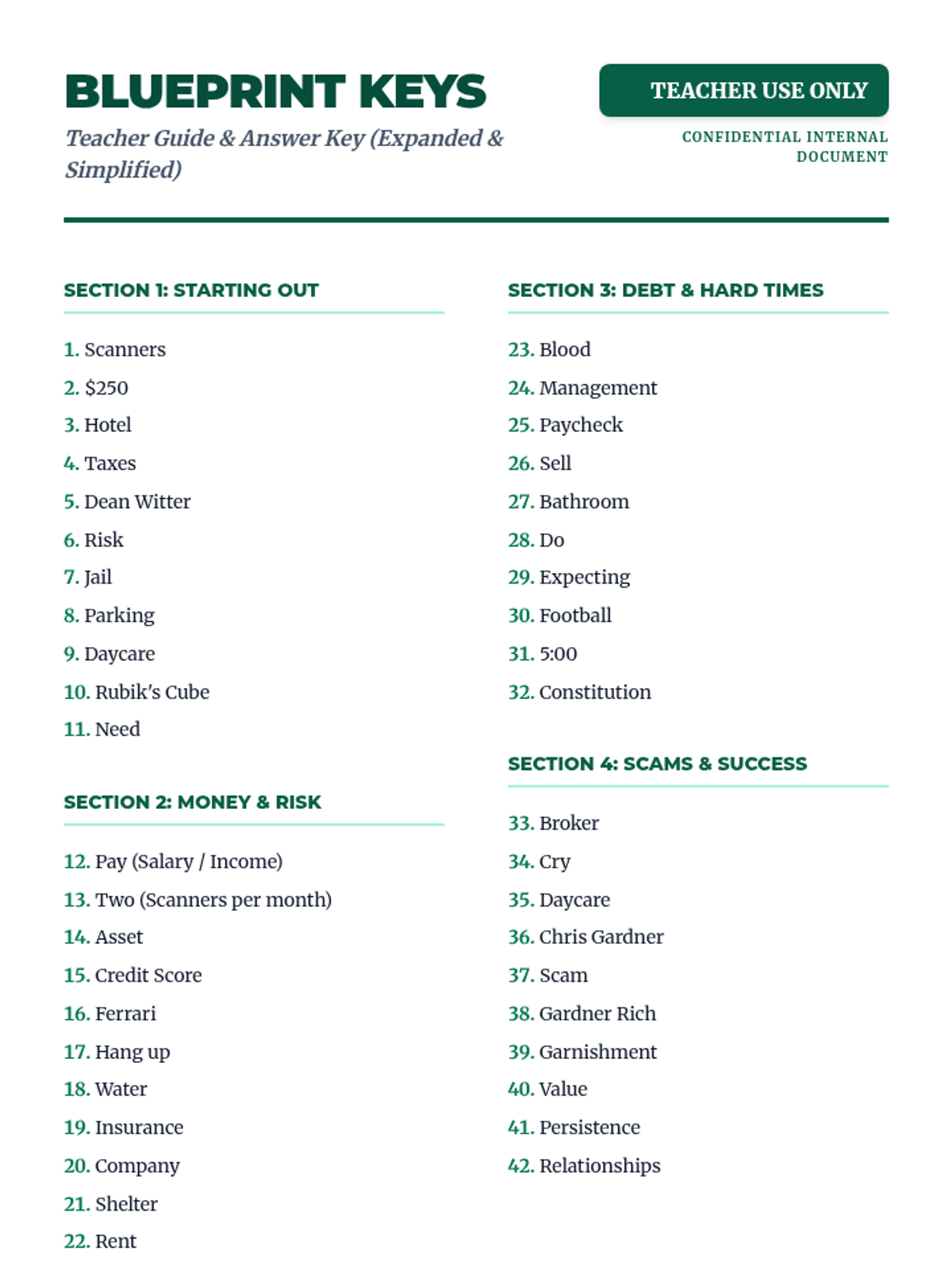
A series of lessons exploring real-world financial concepts through the lens of popular cinema, helping students connect abstract economic theories to relatable human stories.
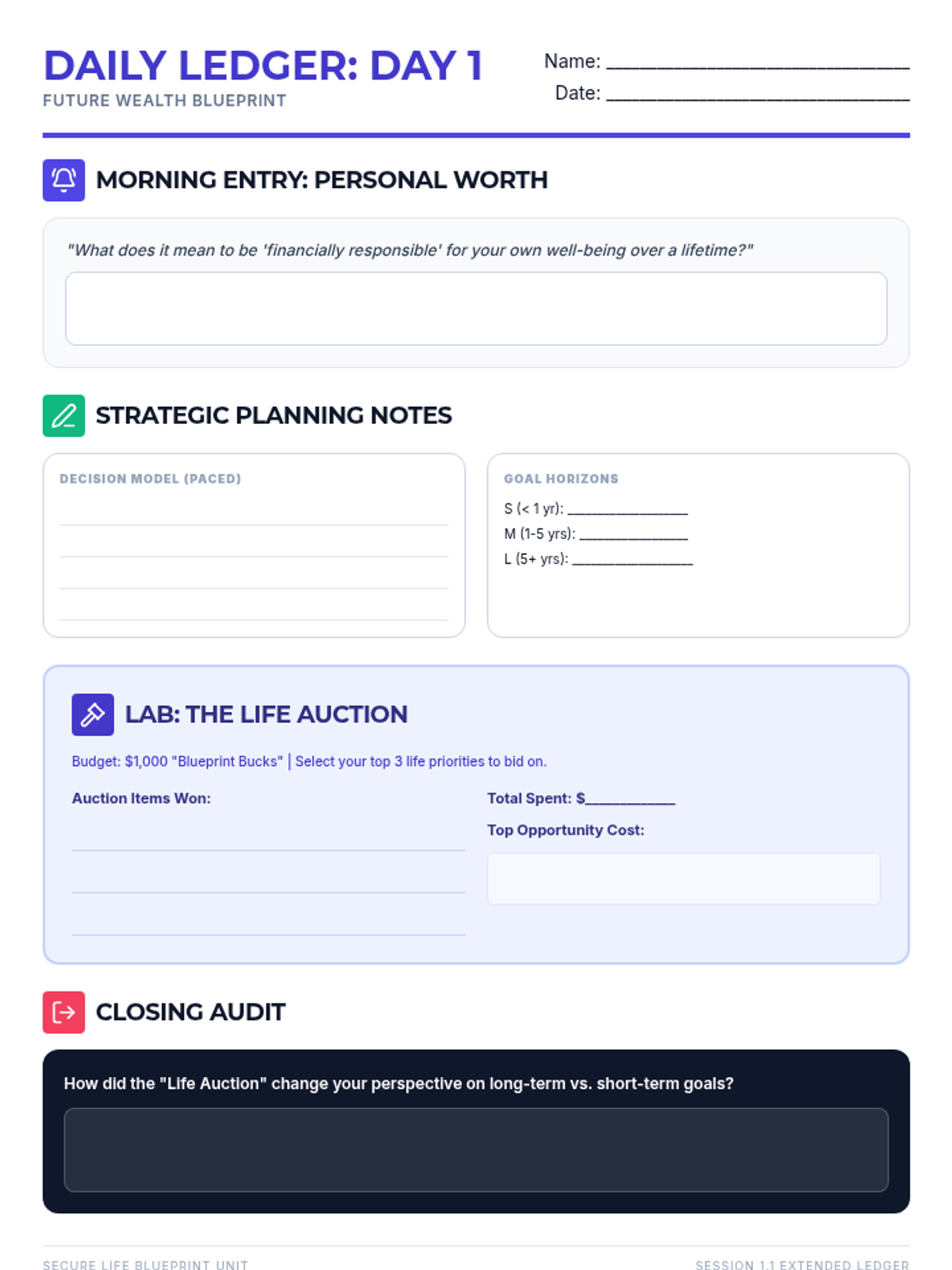
A comprehensive one-week unit on personal financial responsibility, goal setting, information literacy, fraud prevention, and consumer protection. Students learn to navigate the financial landscape safely and strategically.
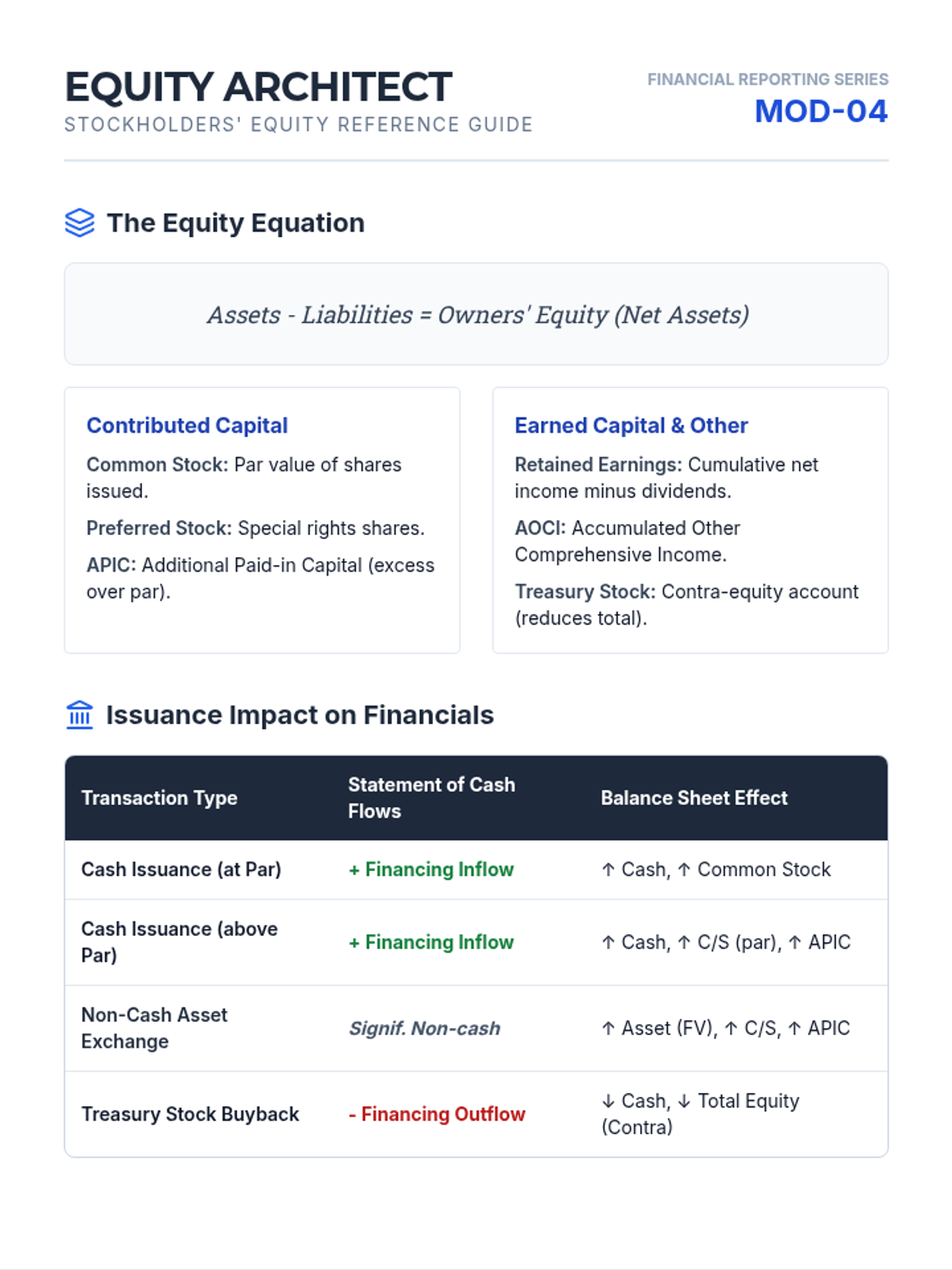
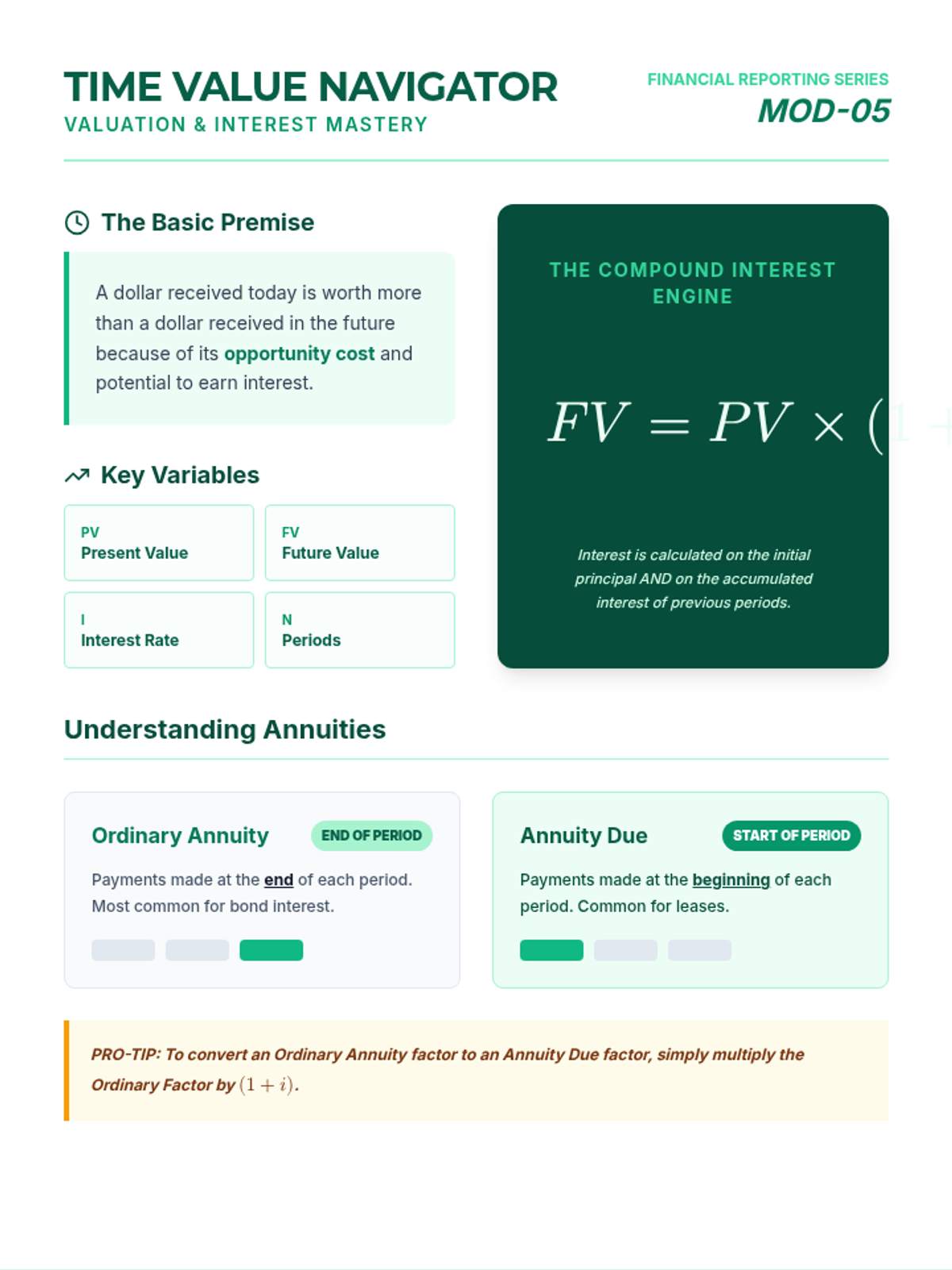
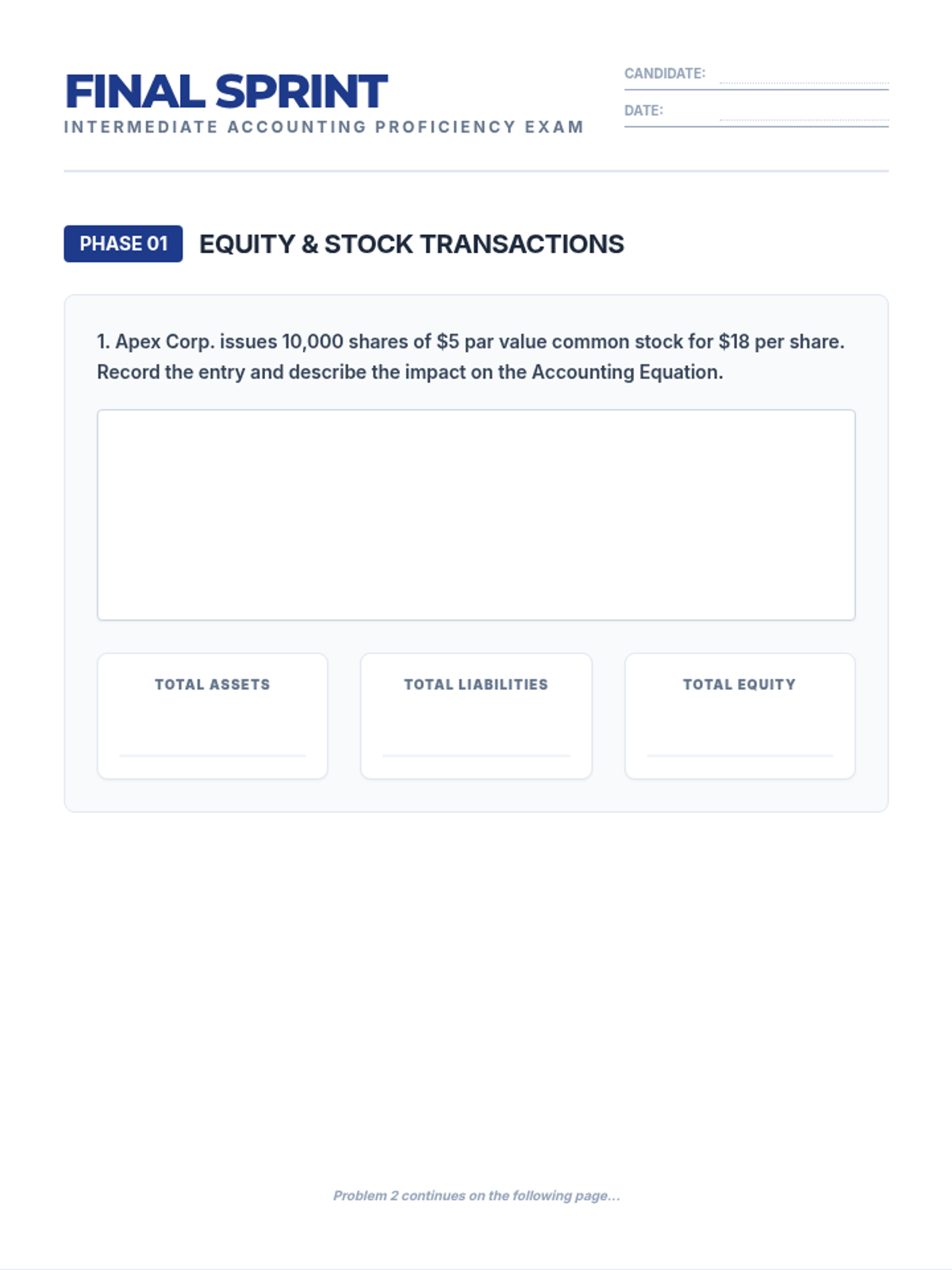
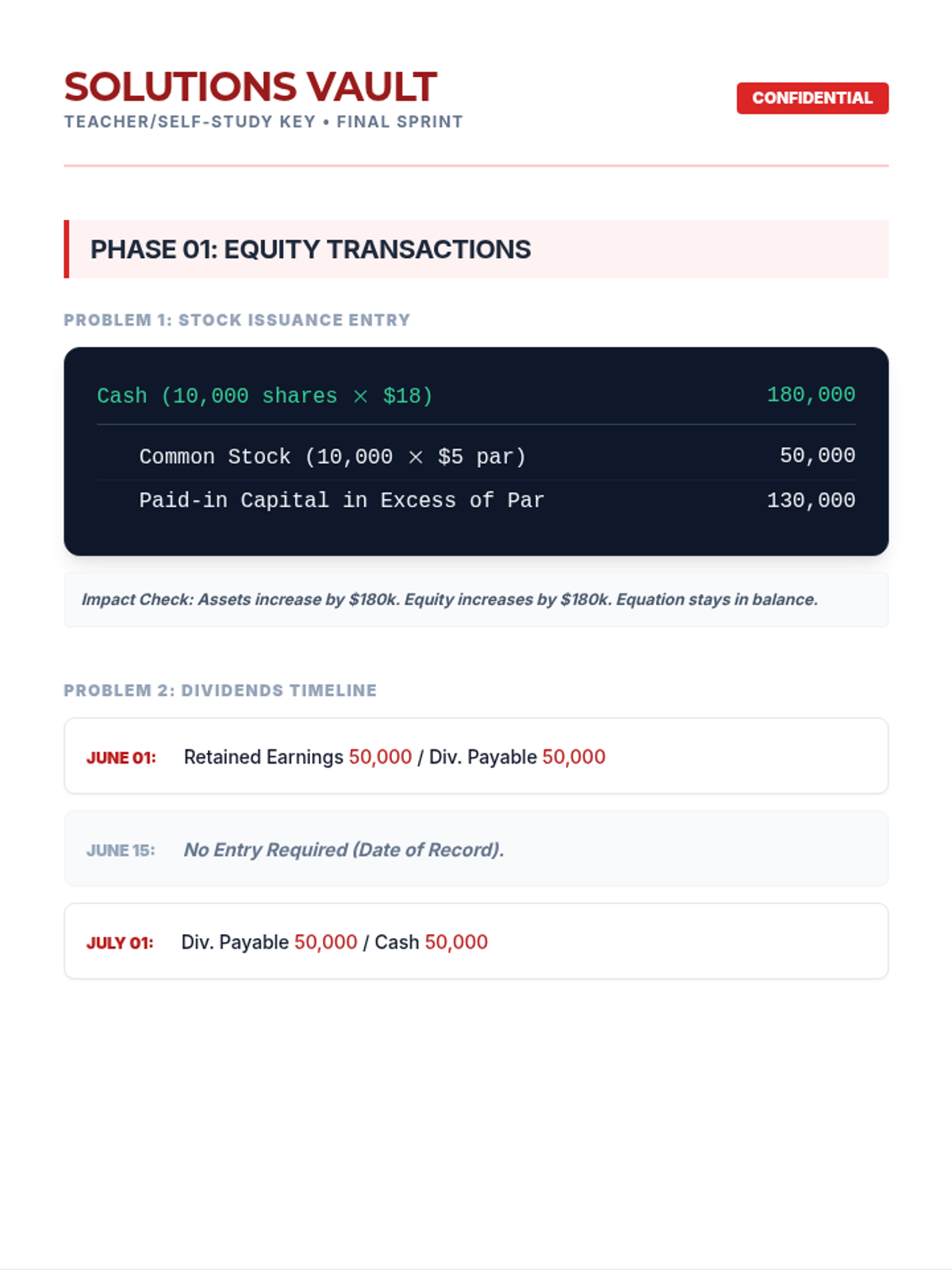
A comprehensive review series for intermediate accounting students, focusing on complex financial reporting and valuation concepts.
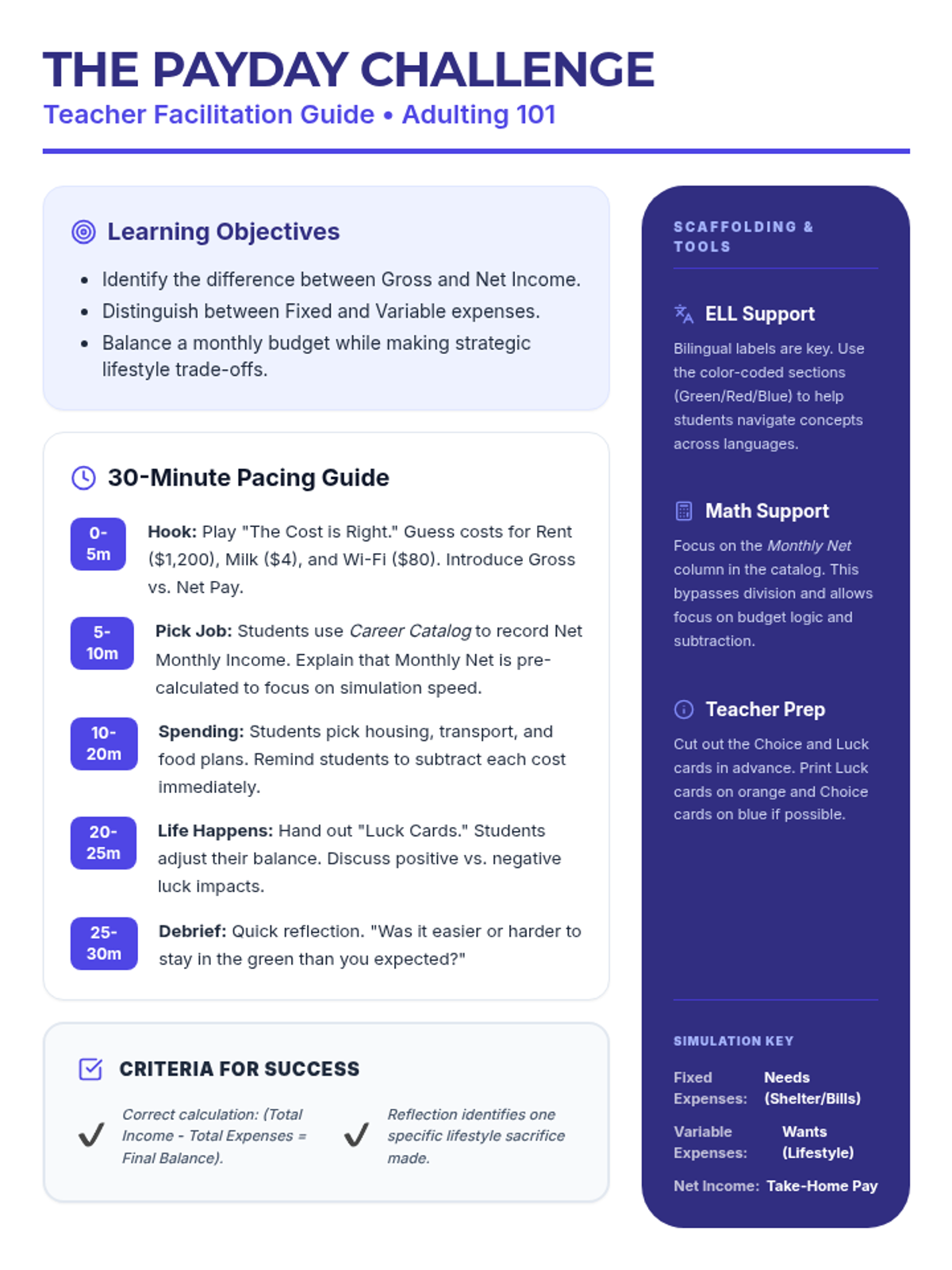
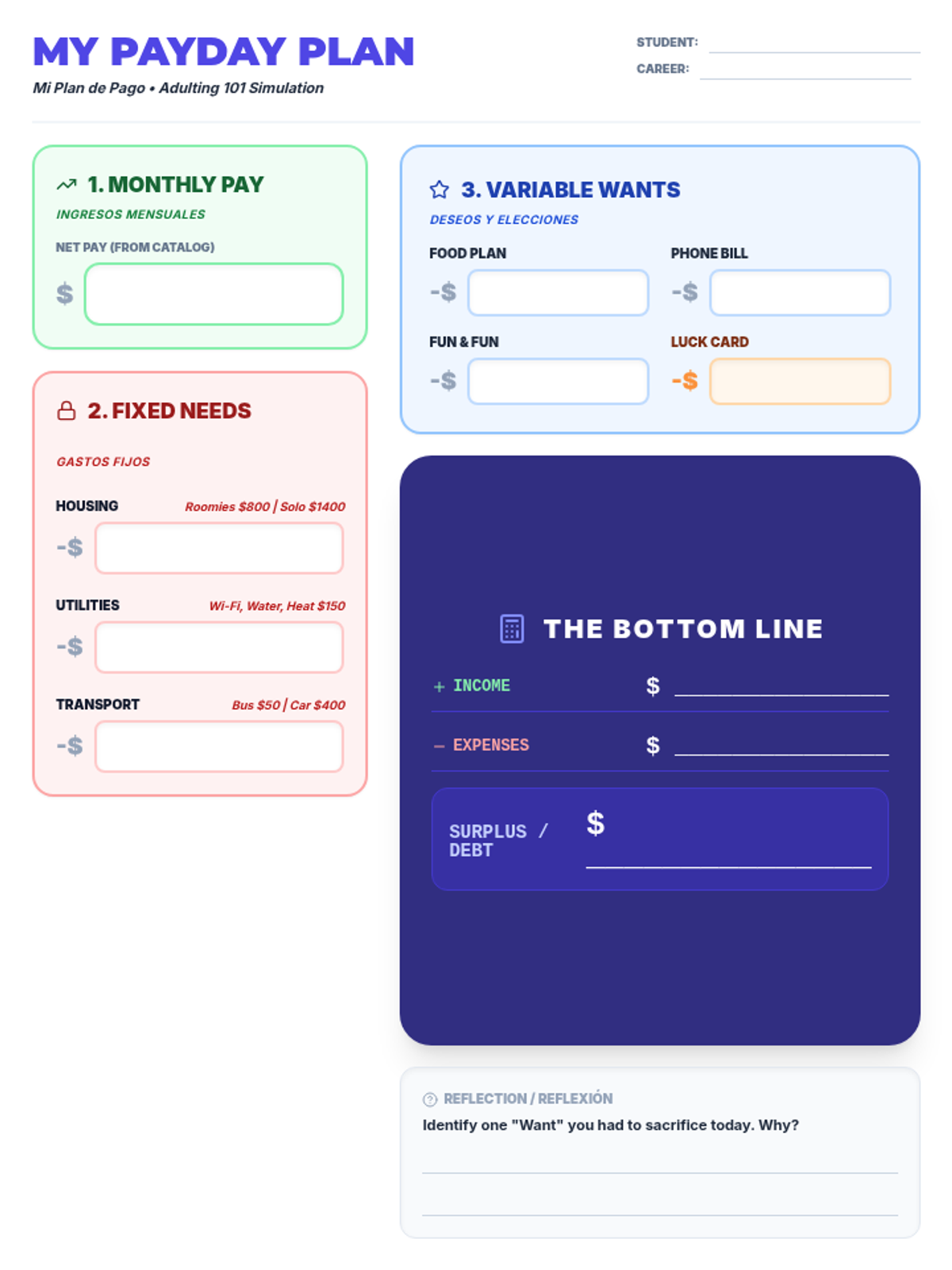
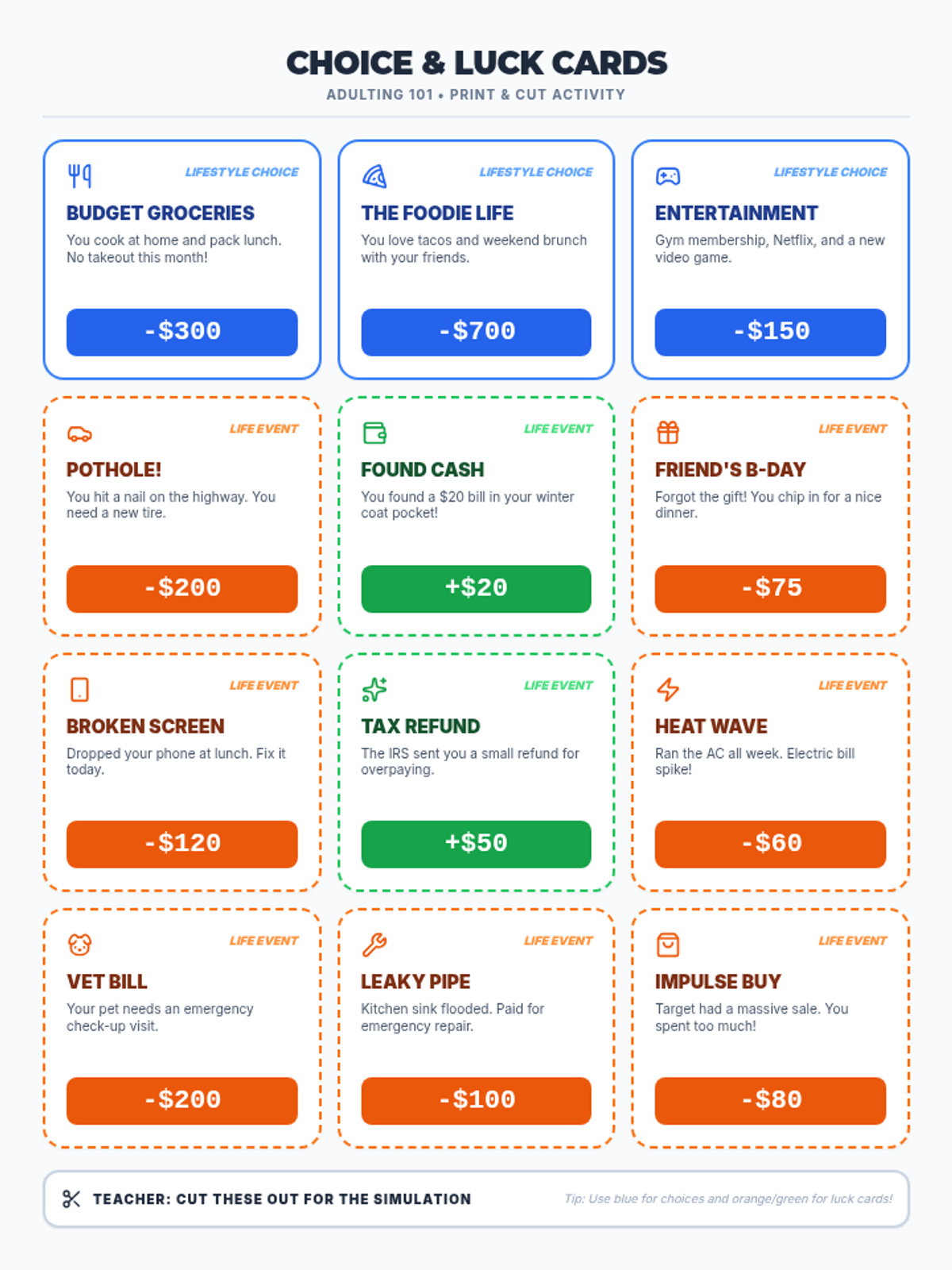
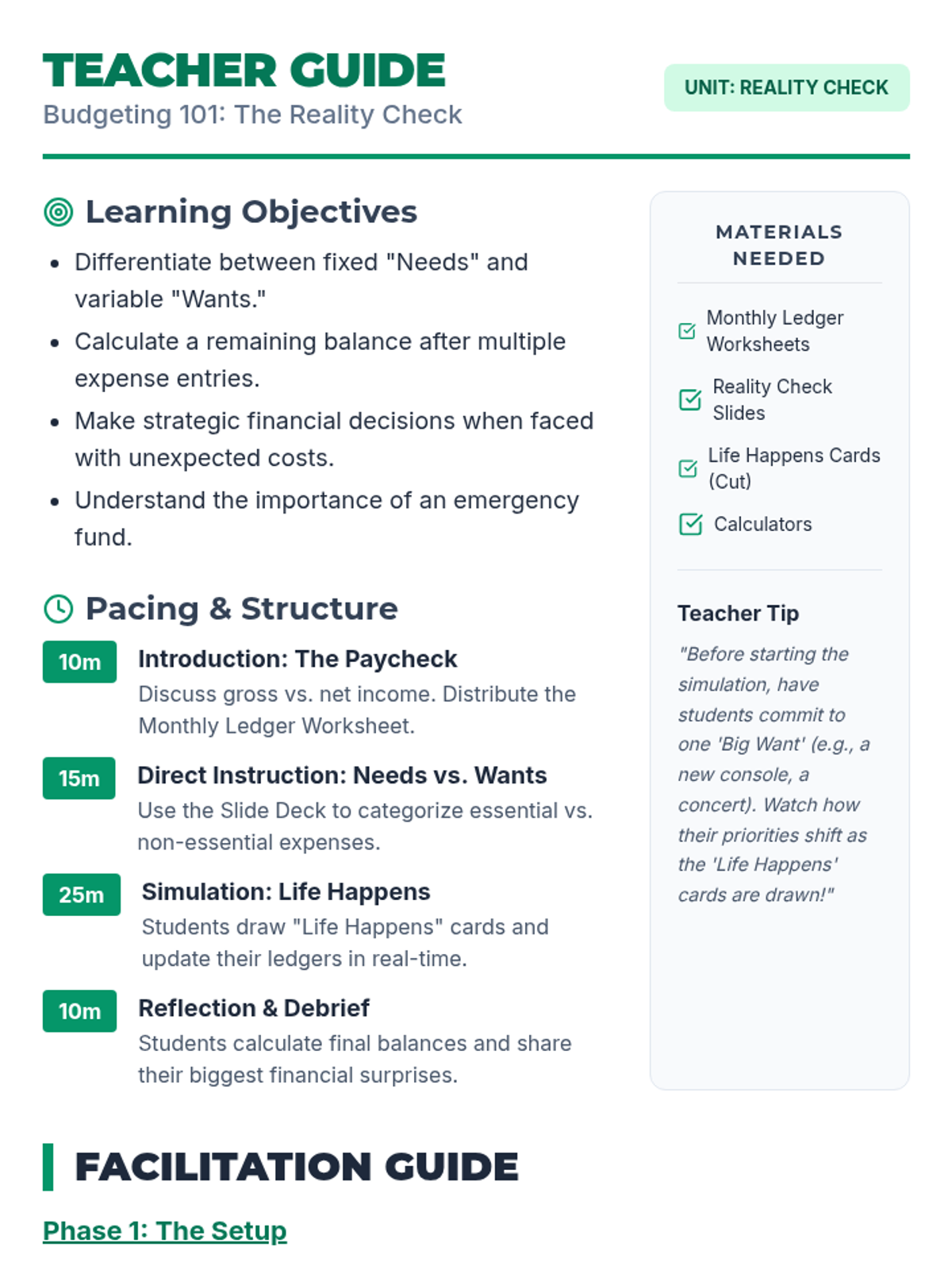
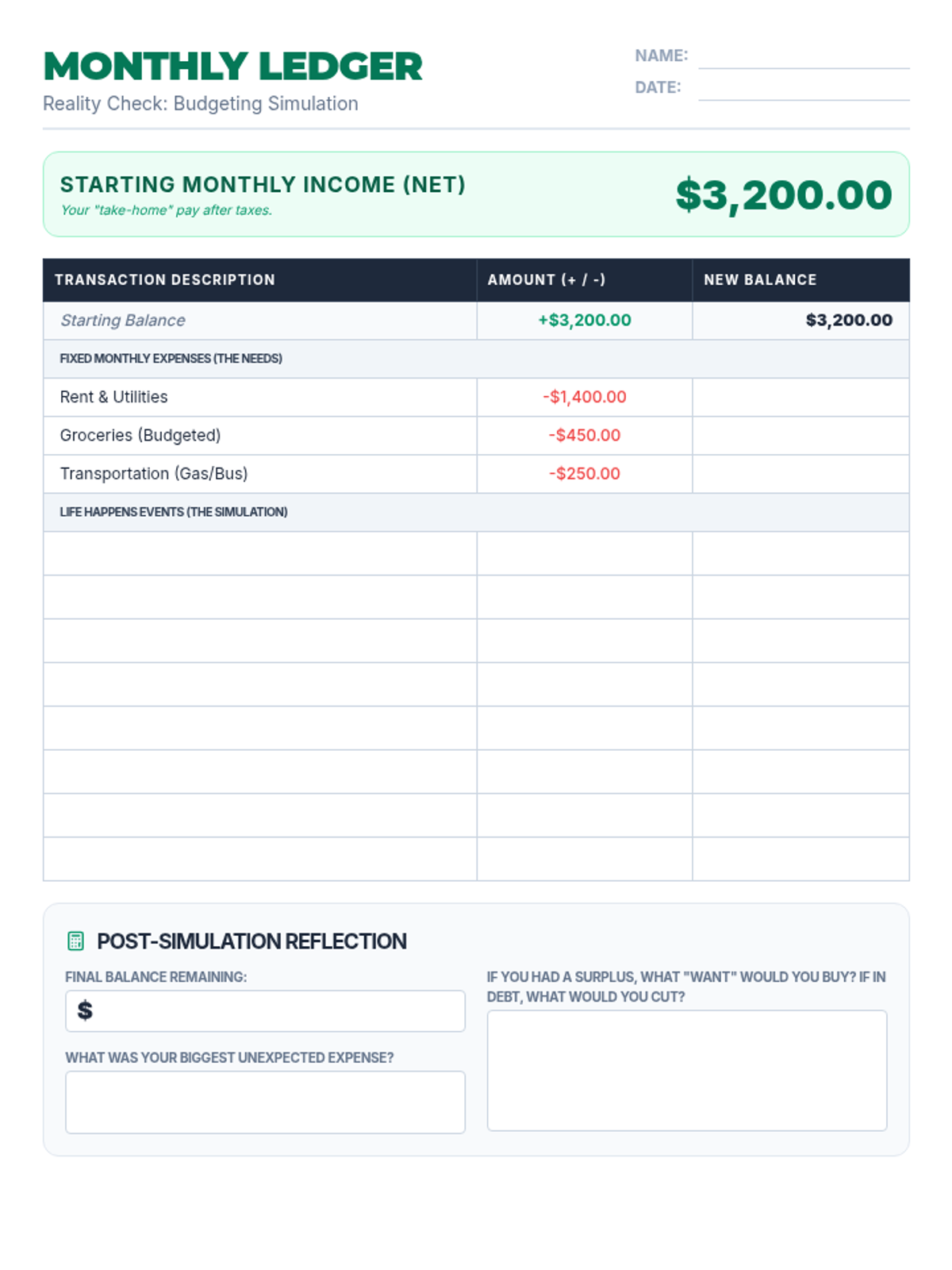
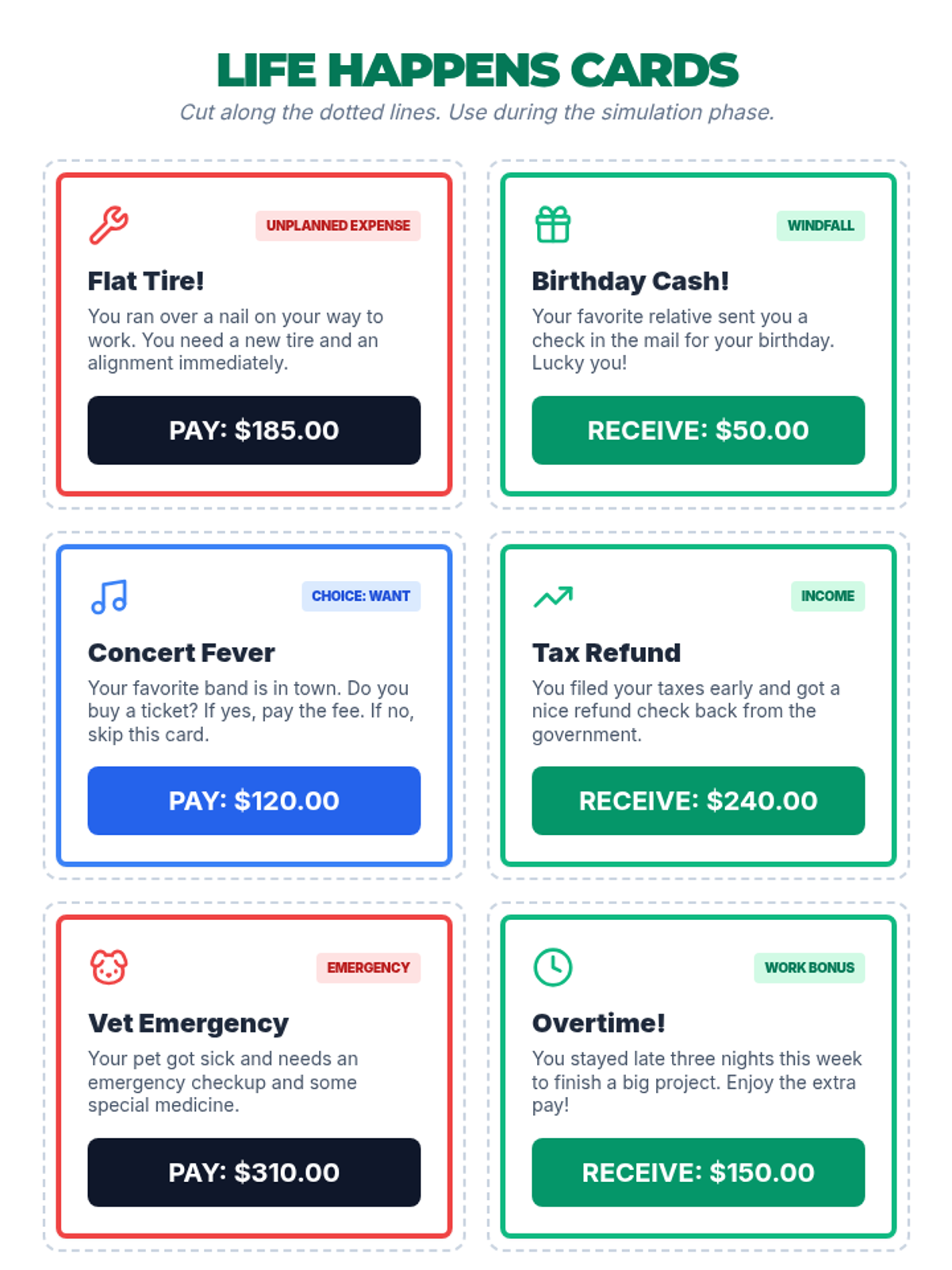
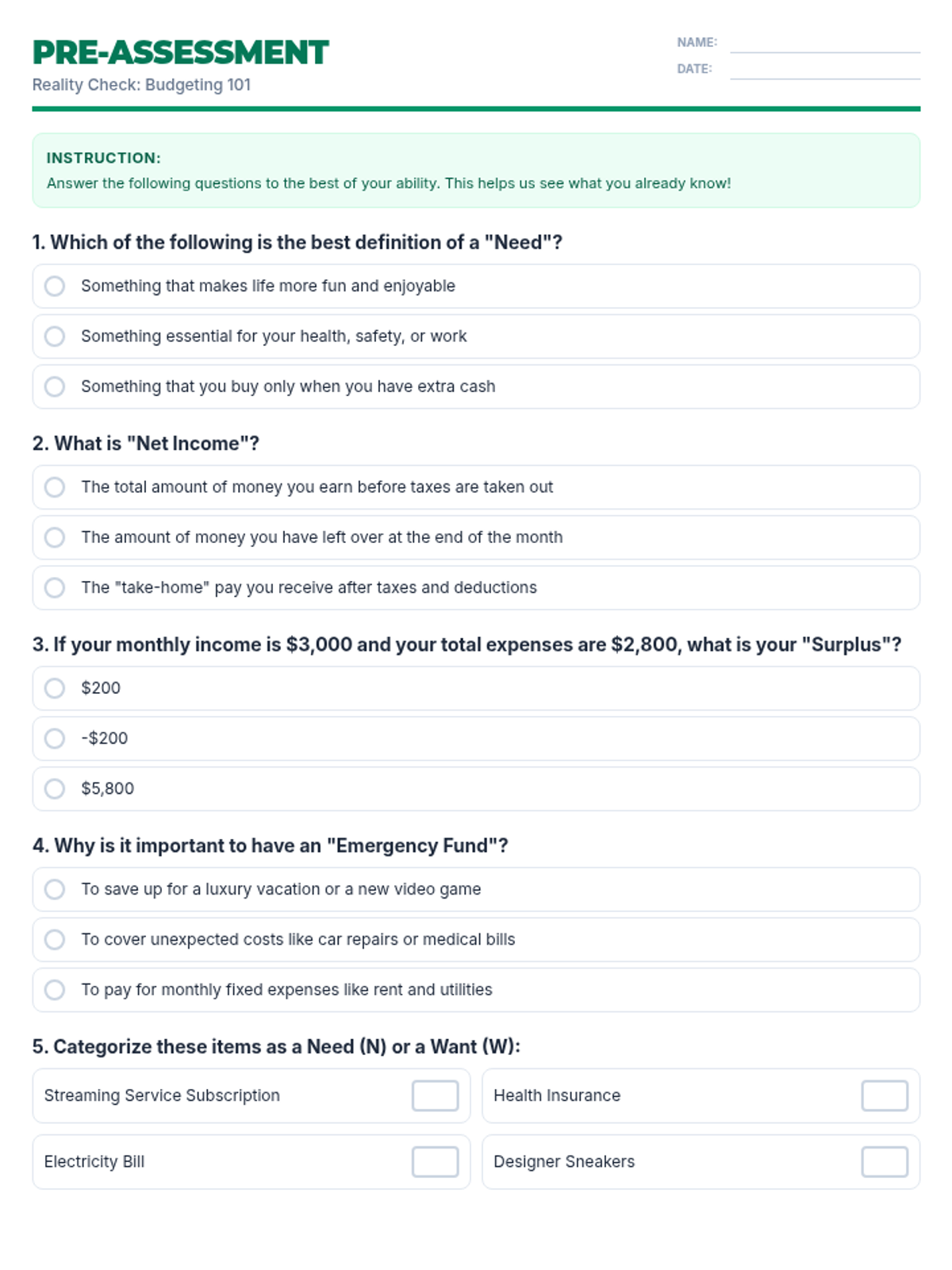
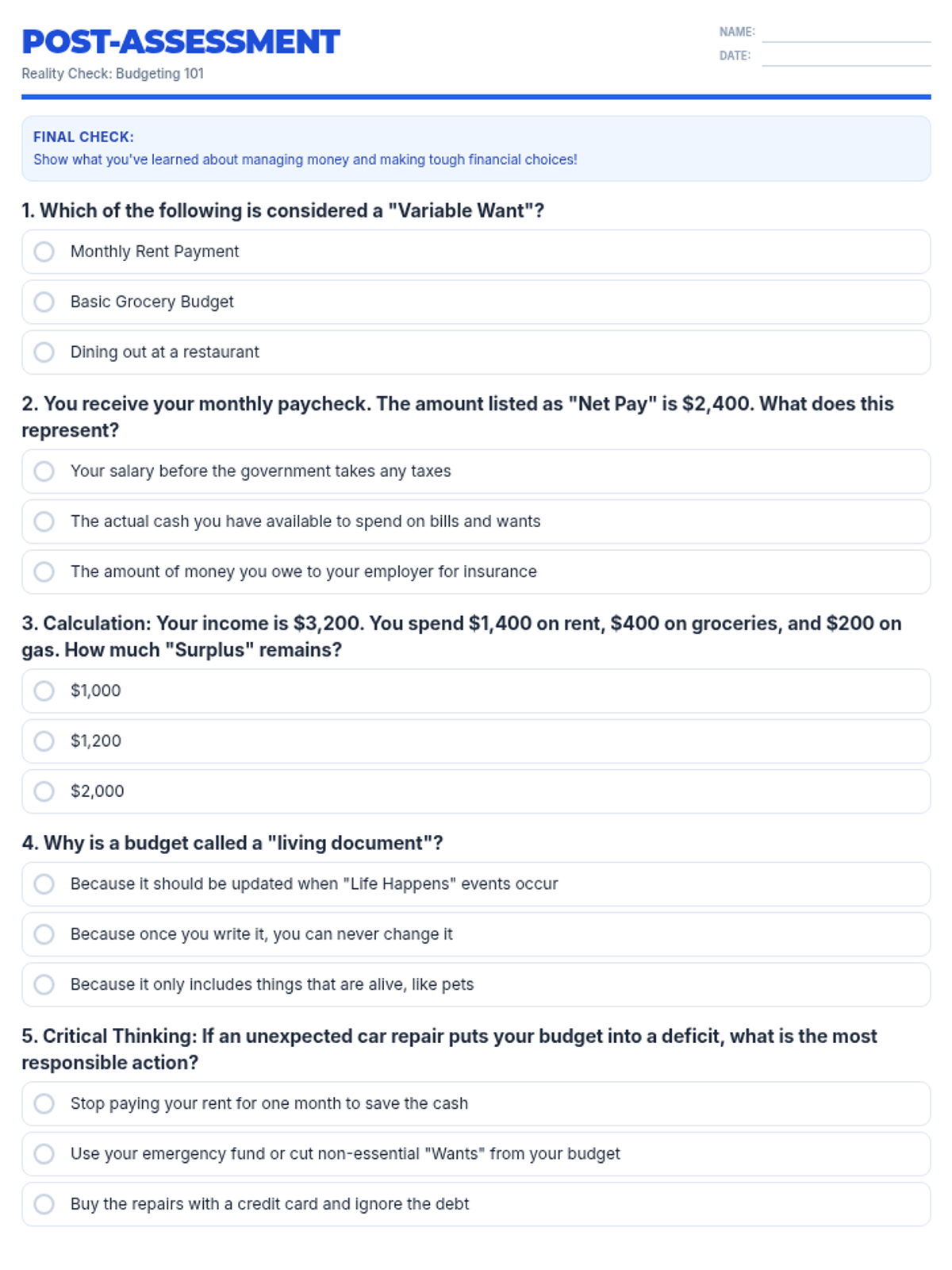
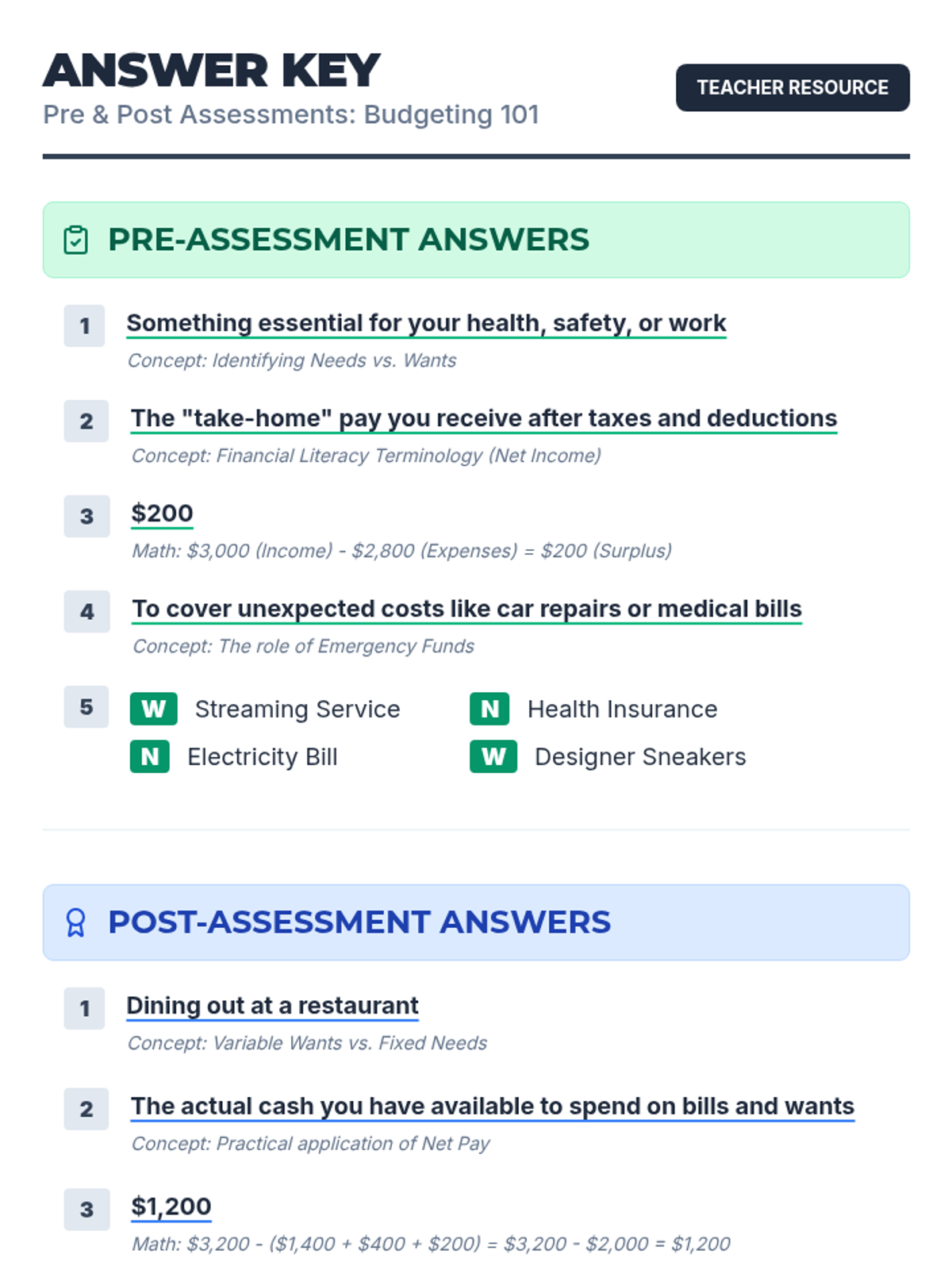
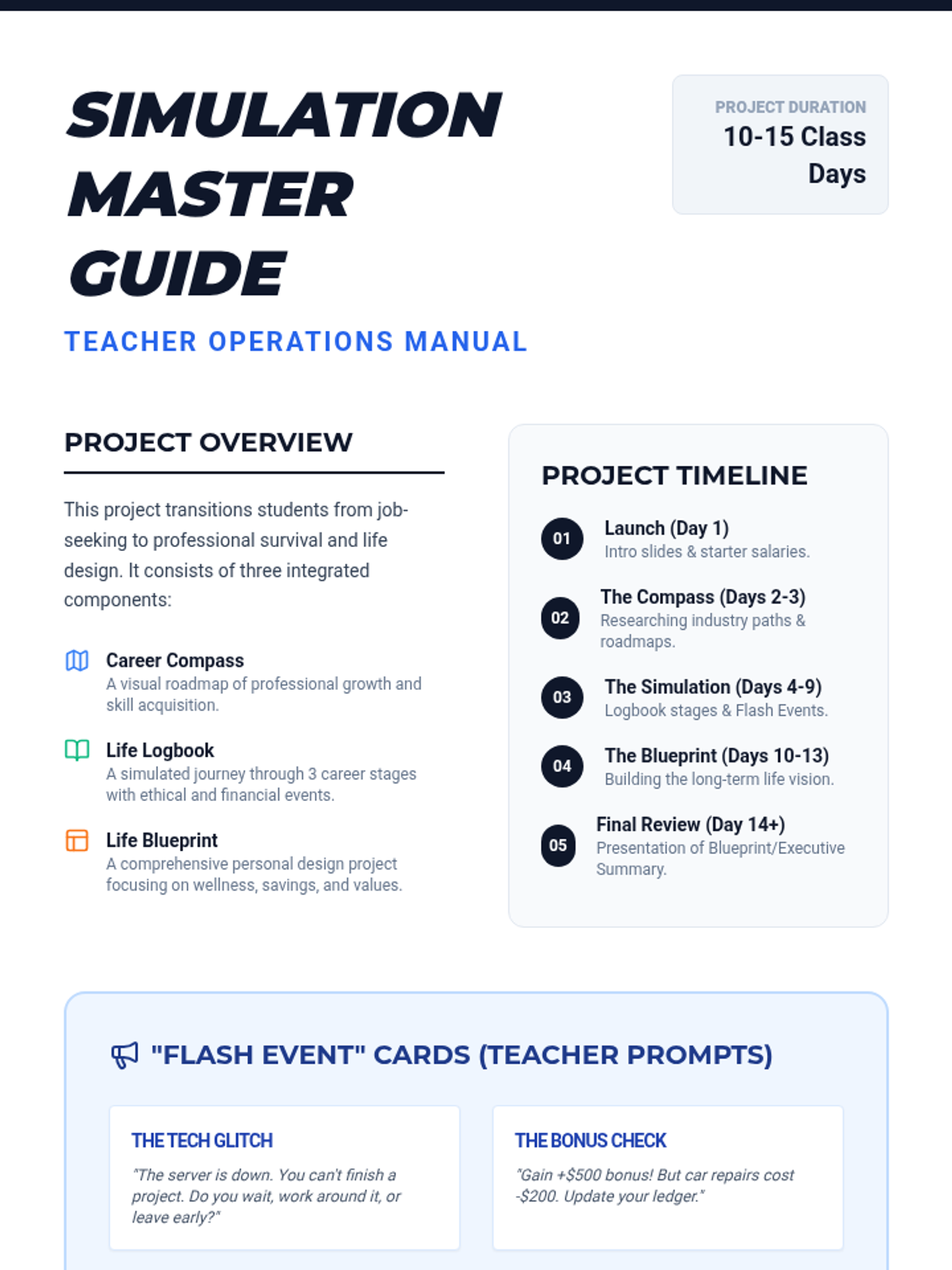
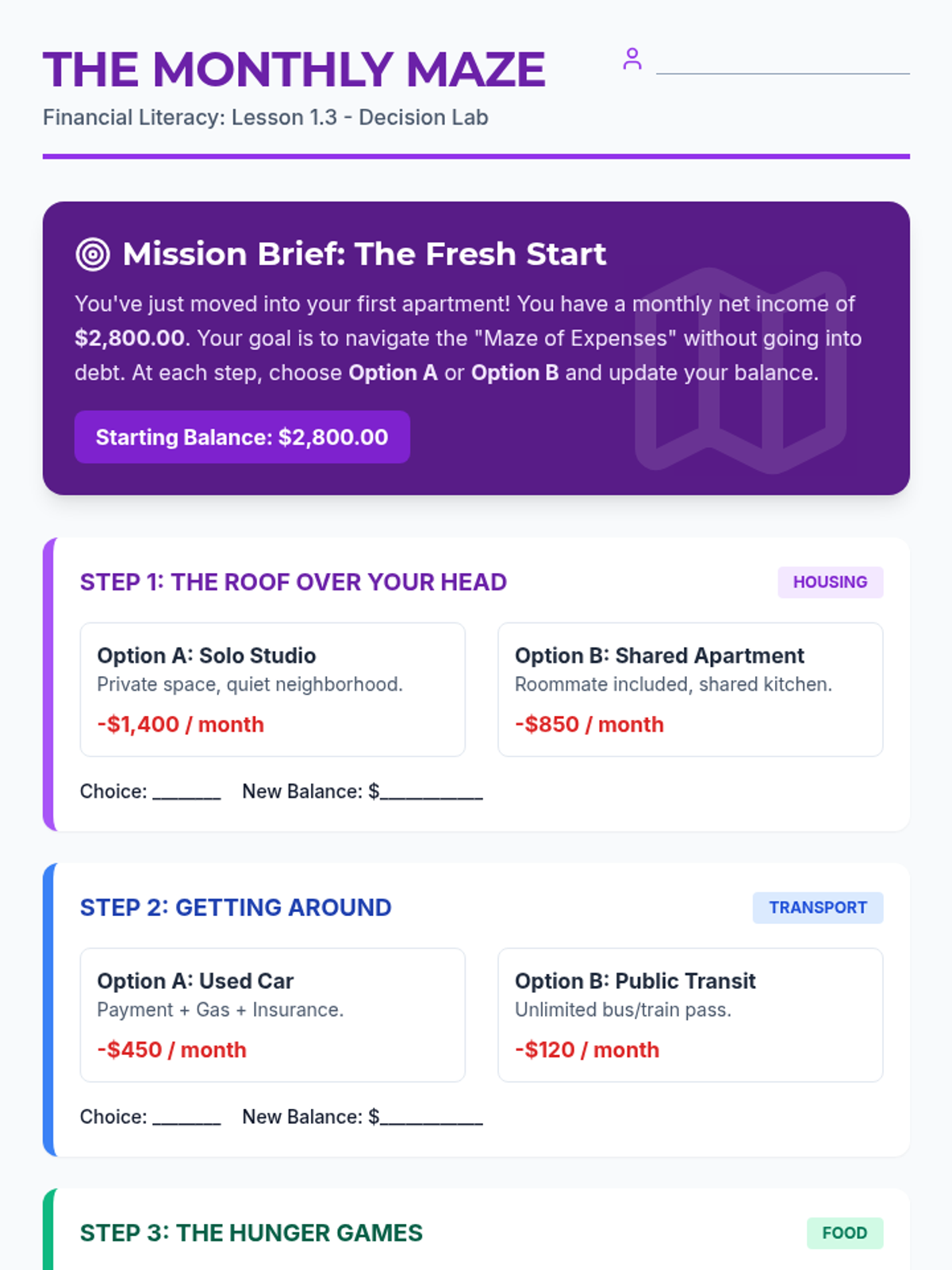
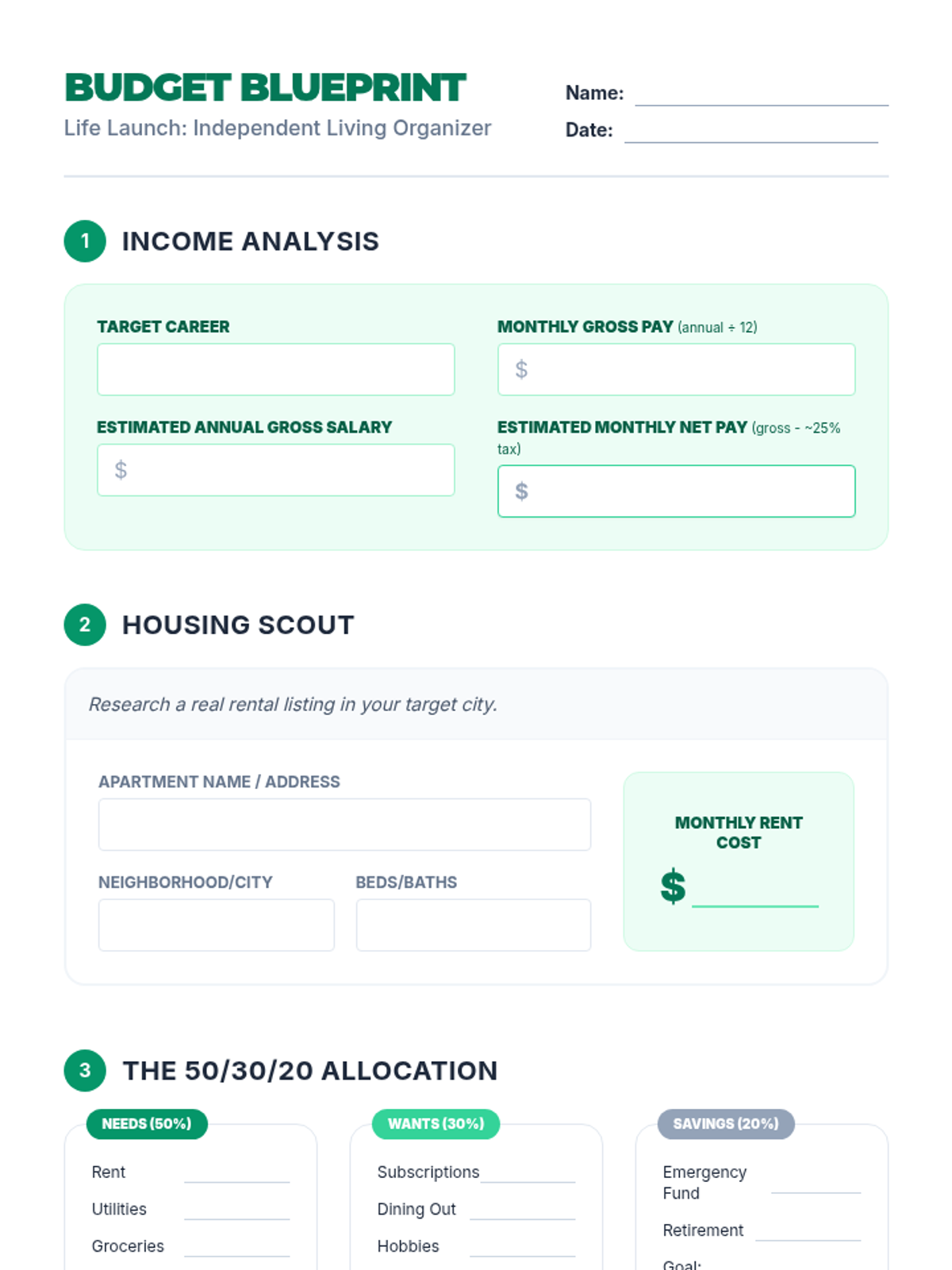
A comprehensive life-skills unit focused on practical financial literacy, featuring a fast-paced budgeting simulation where students navigate career choices, monthly expenses, and unexpected life events using color-coded visual supports.
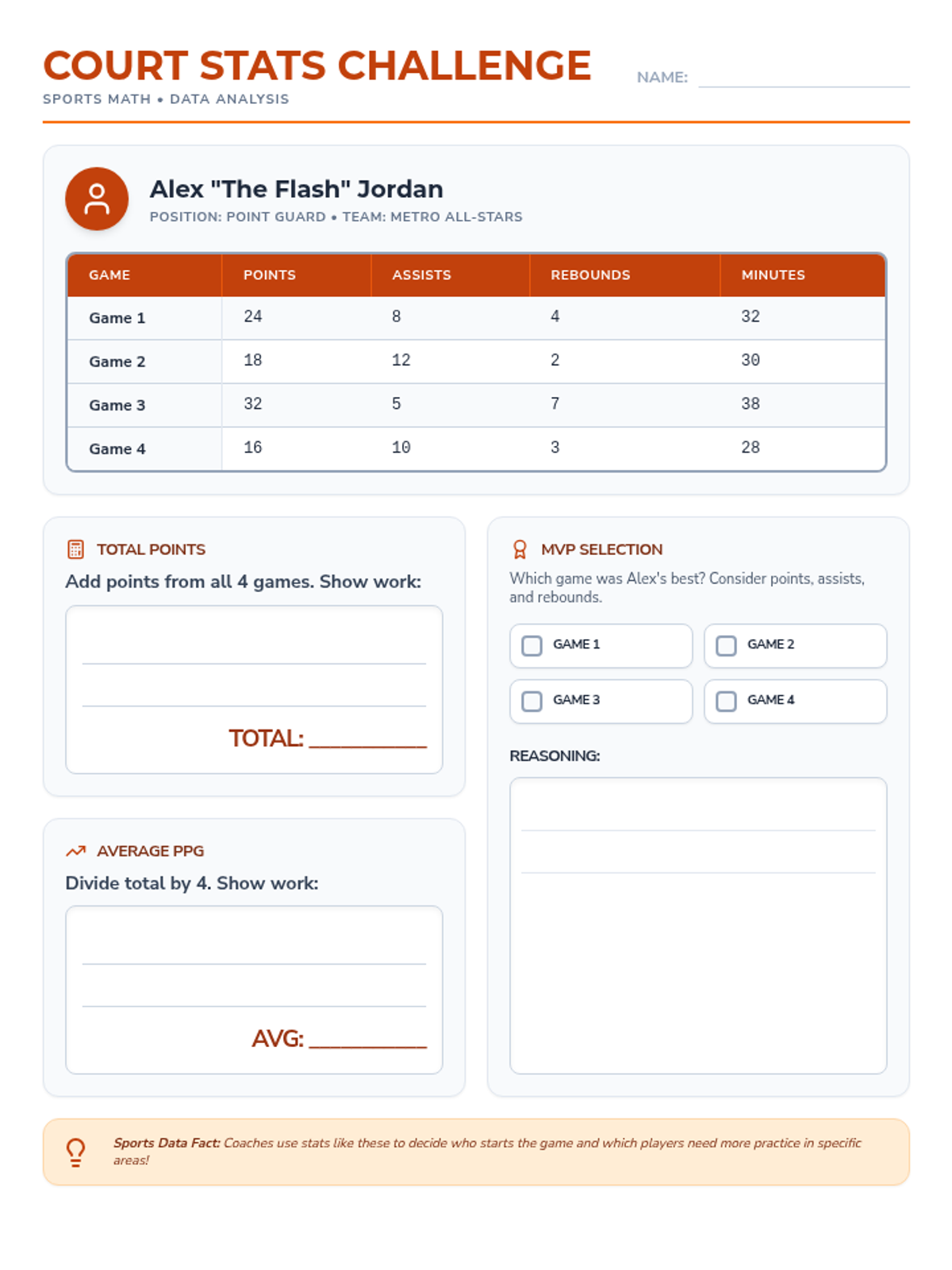
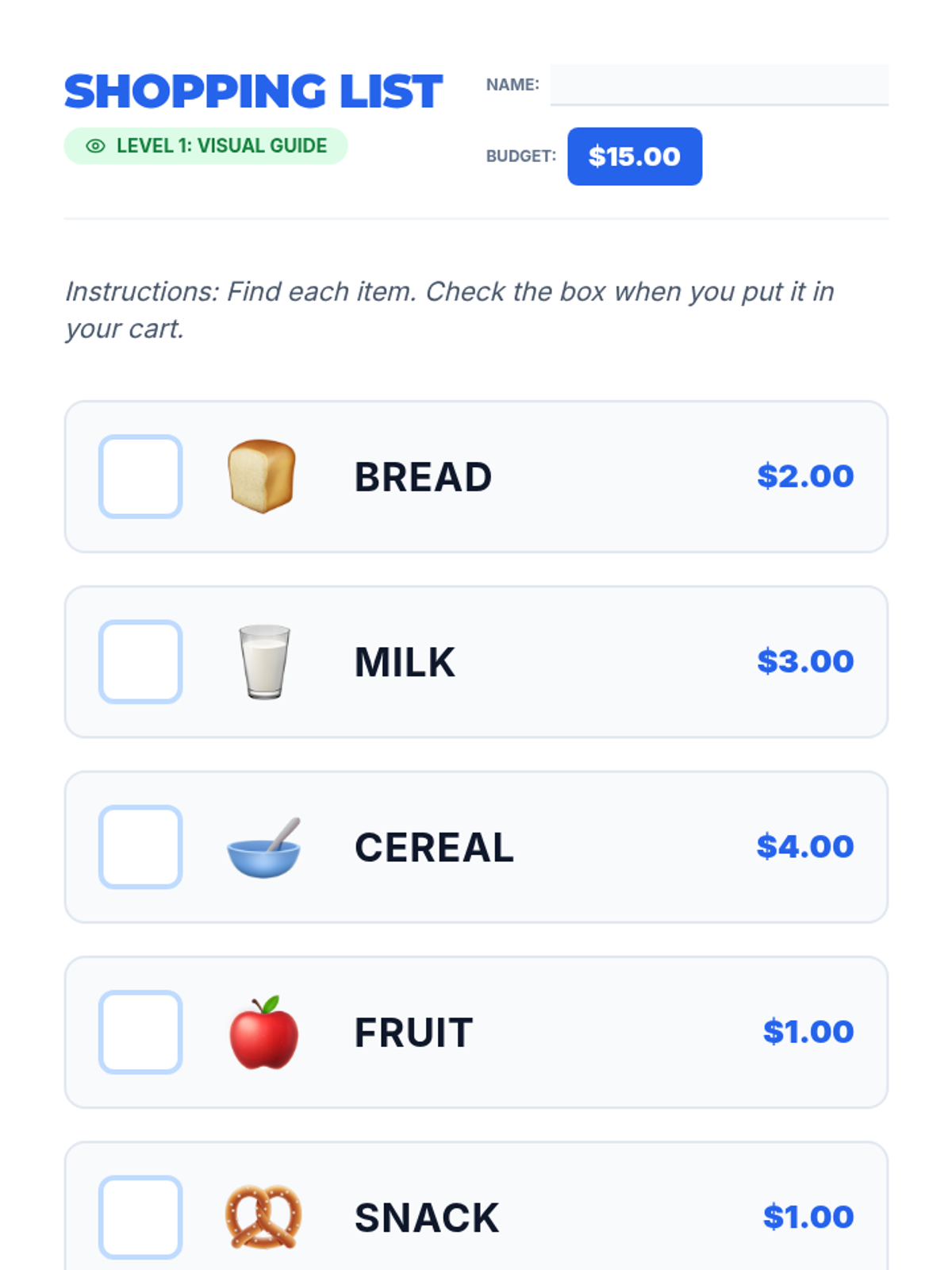
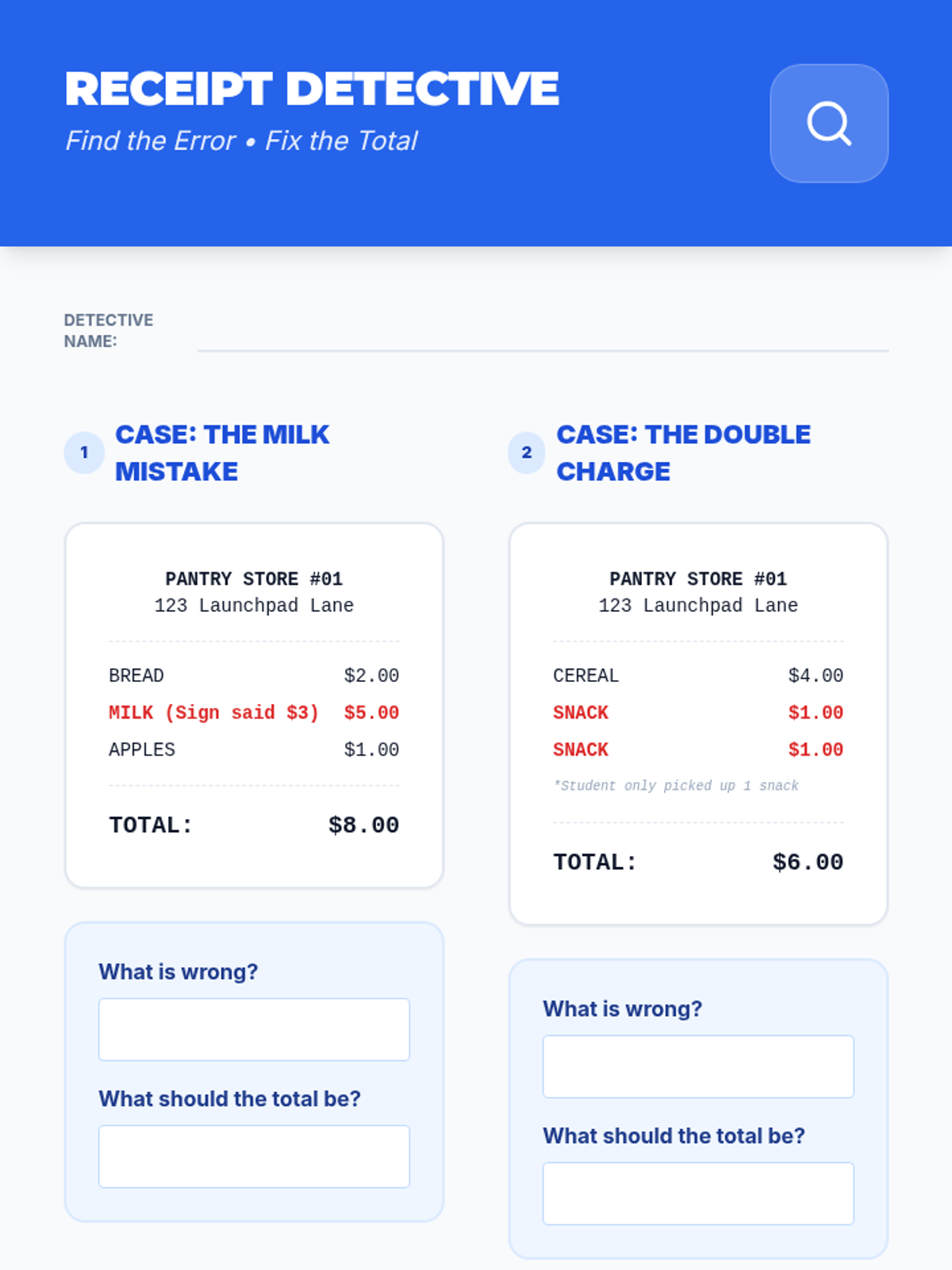
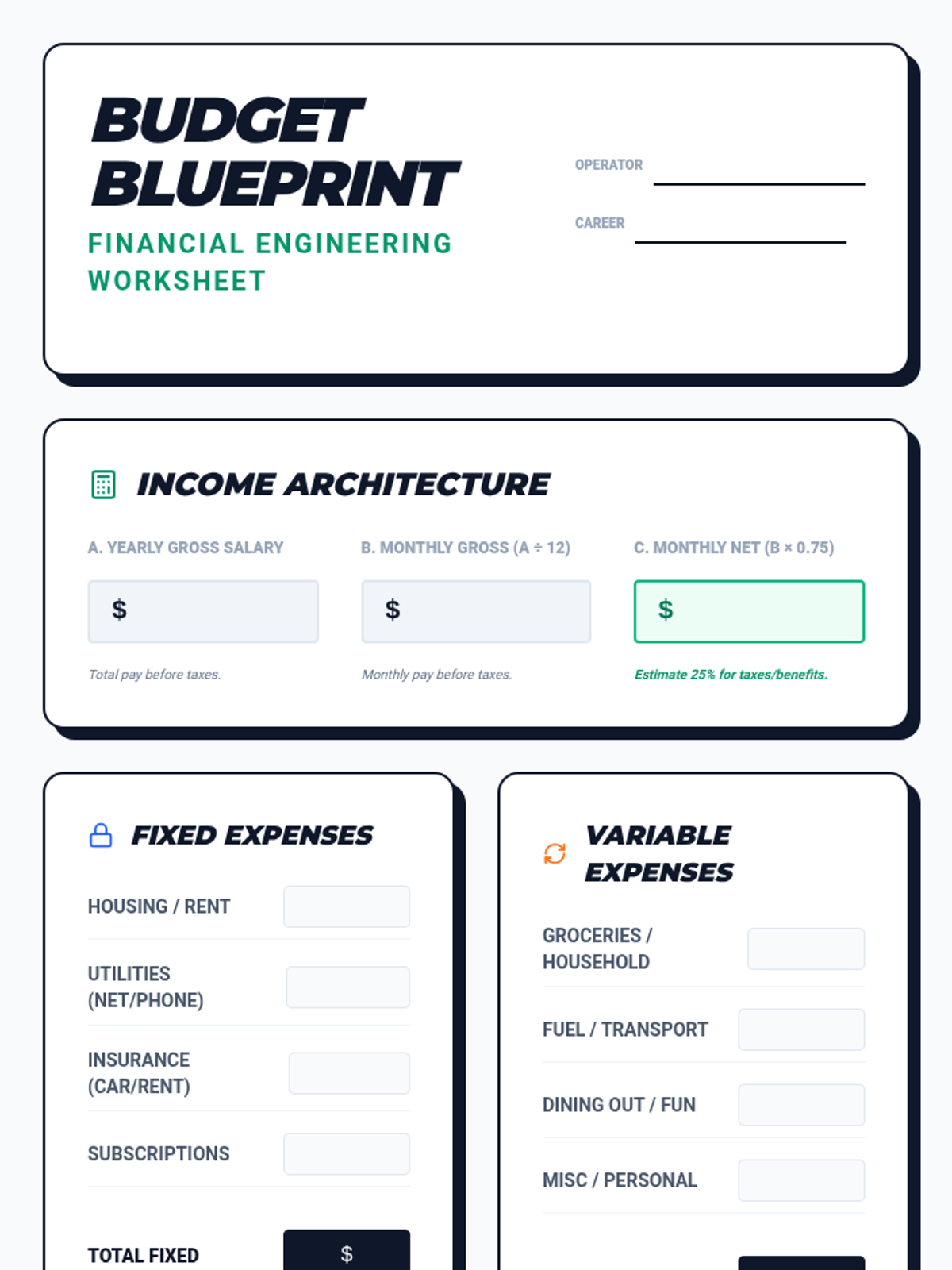
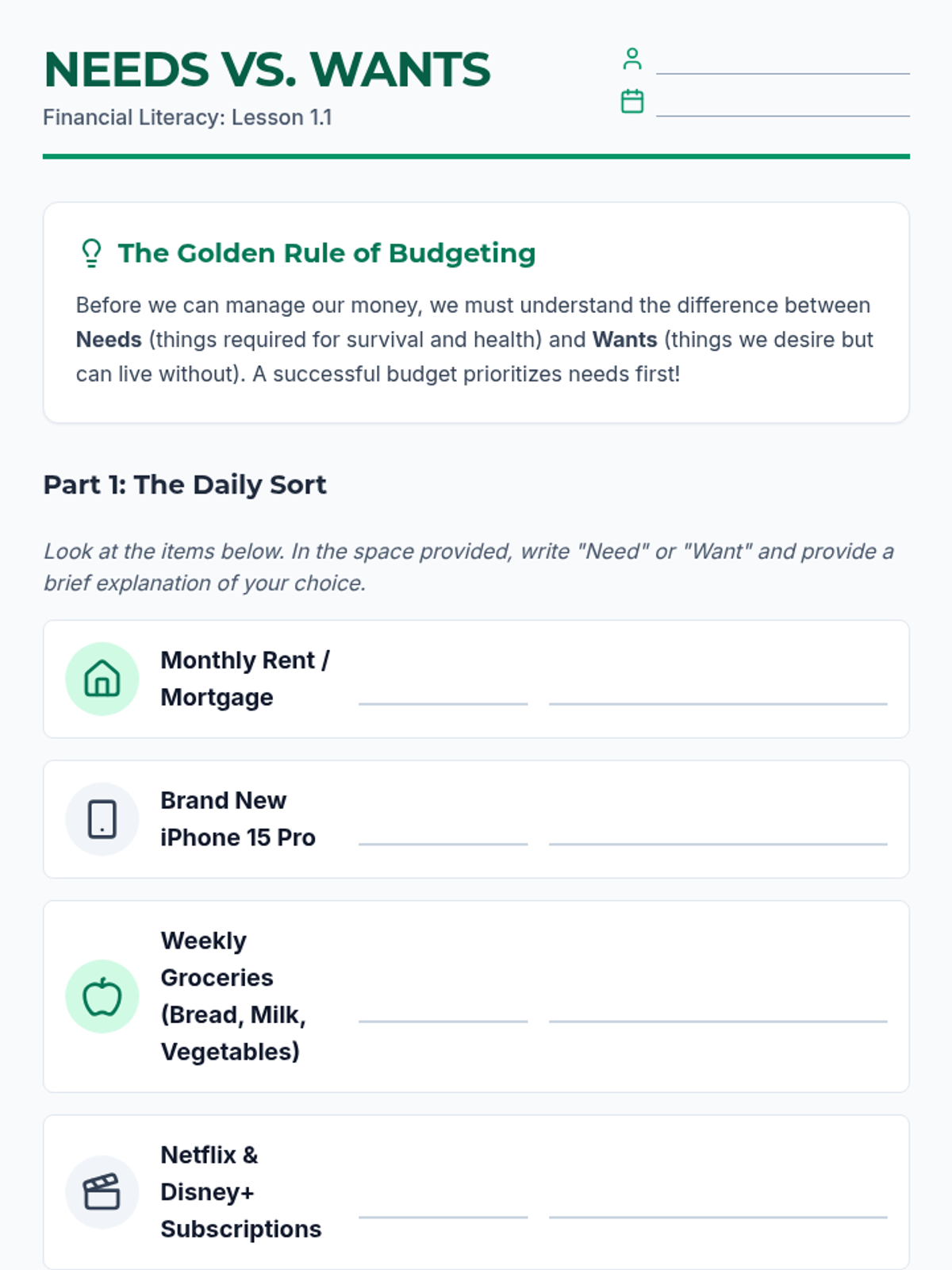
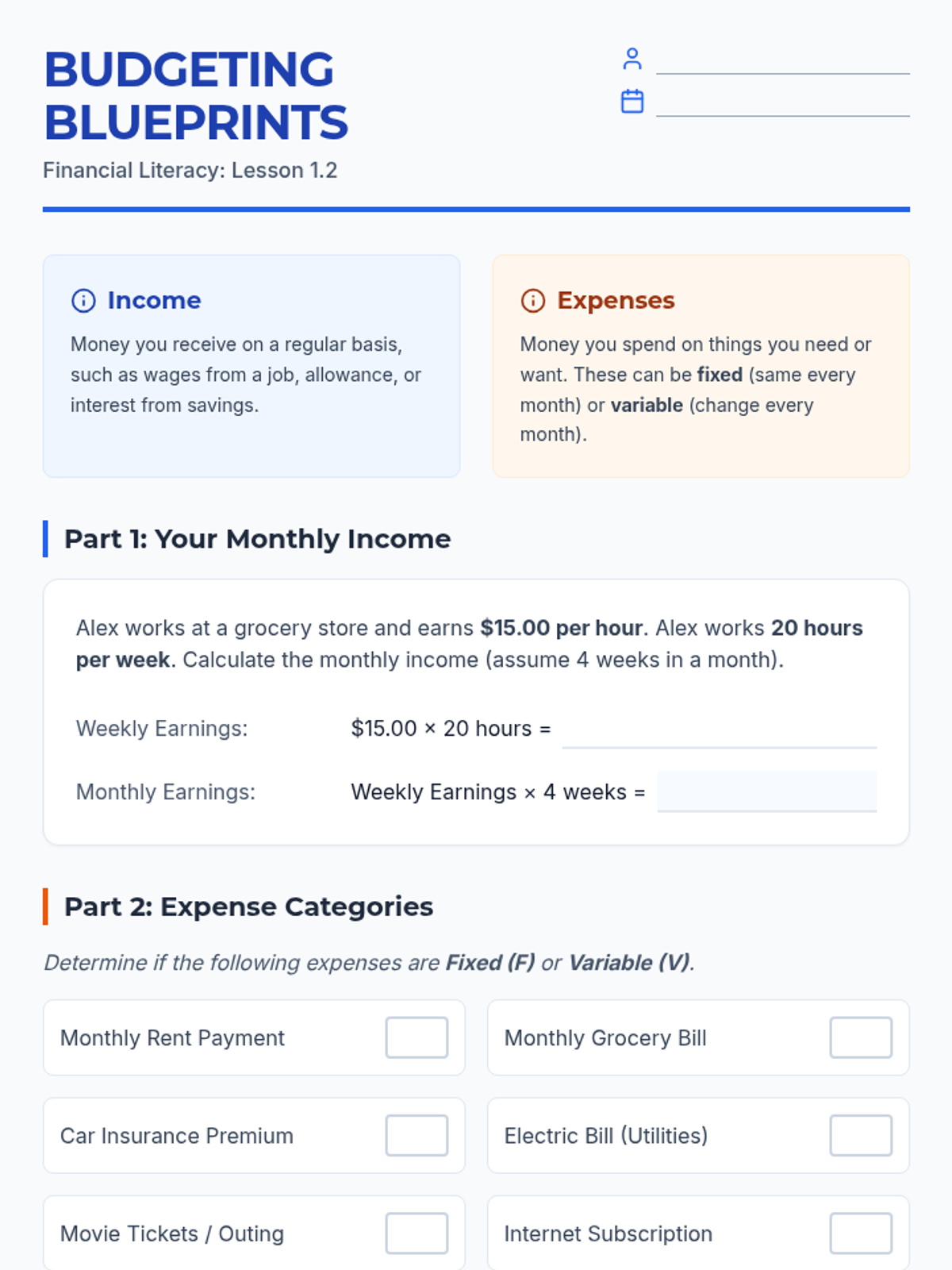
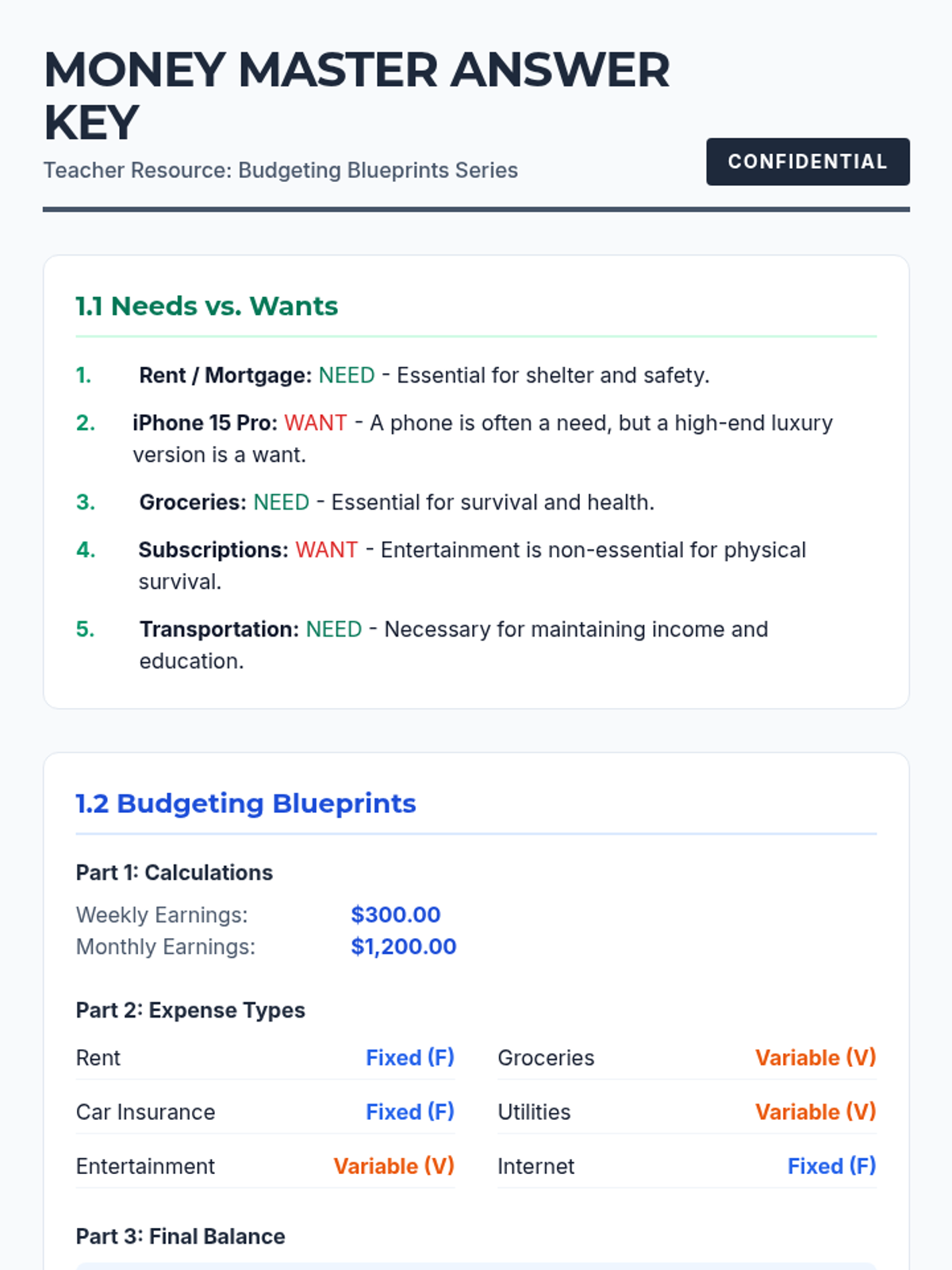
A functional math and life skills unit where students manage a simulated monthly income, navigate unexpected expenses, and prioritize needs versus wants.
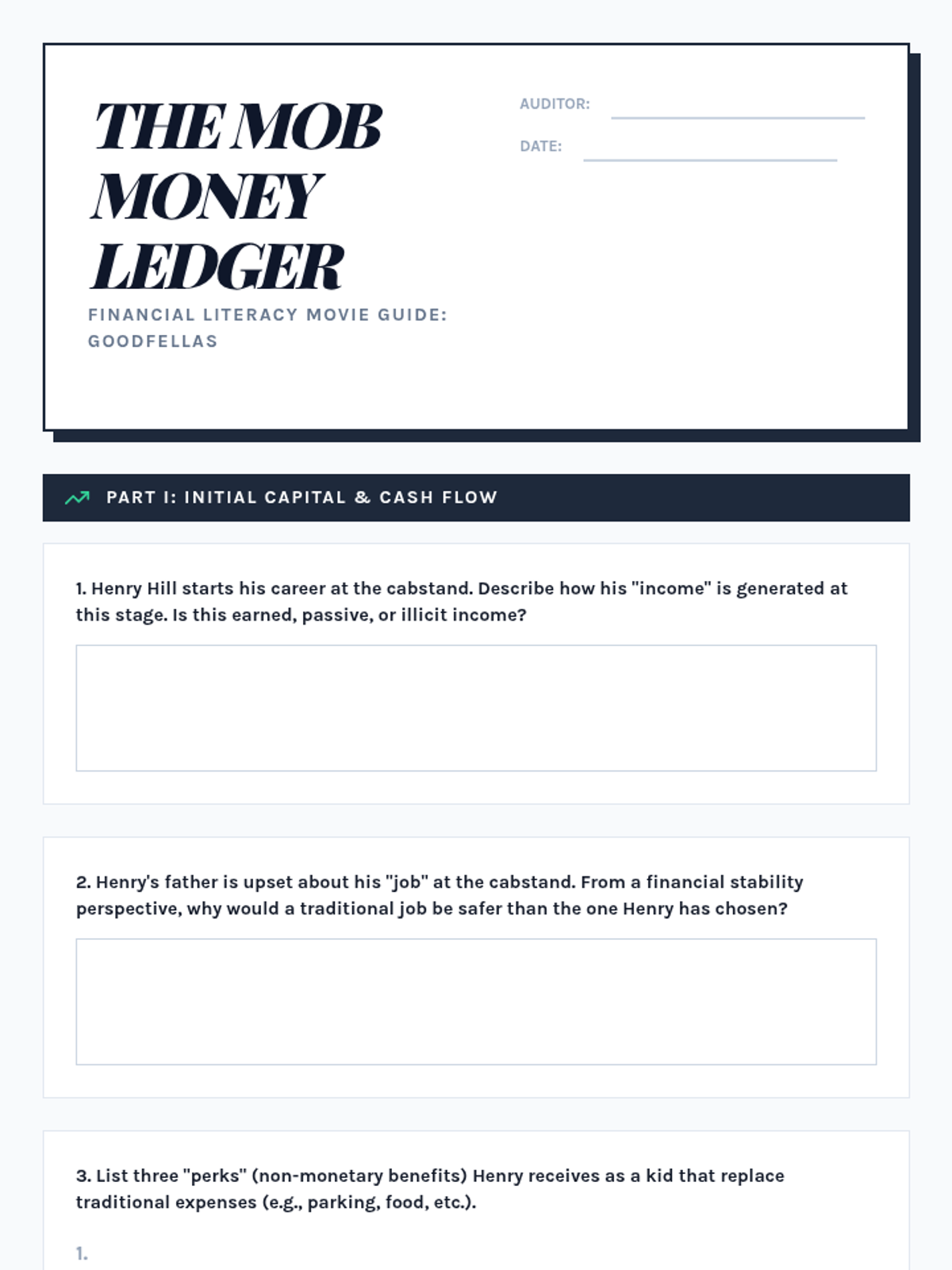
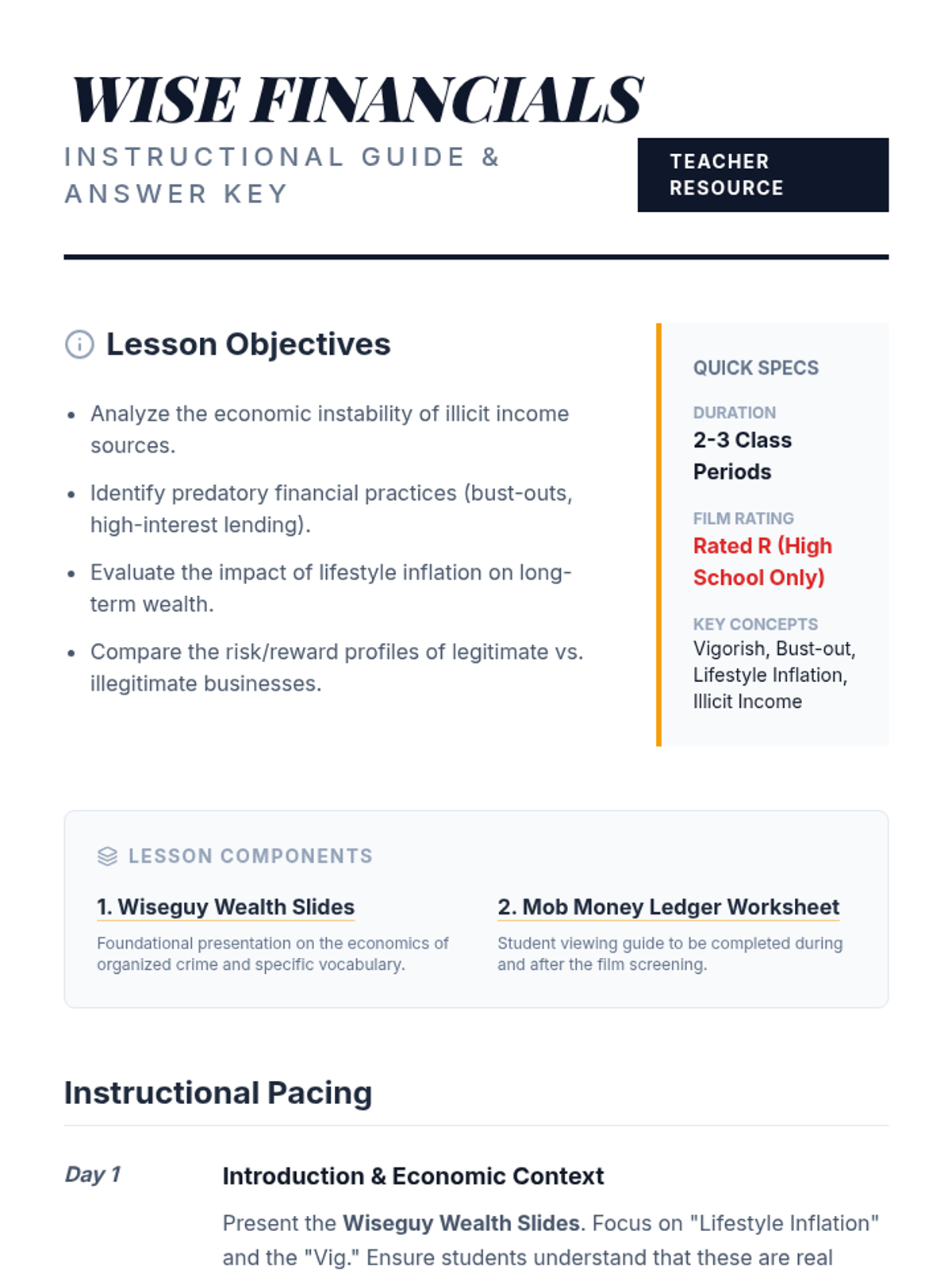
A financial literacy sequence centered on the film Goodfellas, examining the unstable economics of organized crime, lifestyle inflation, and the importance of legitimate financial planning.
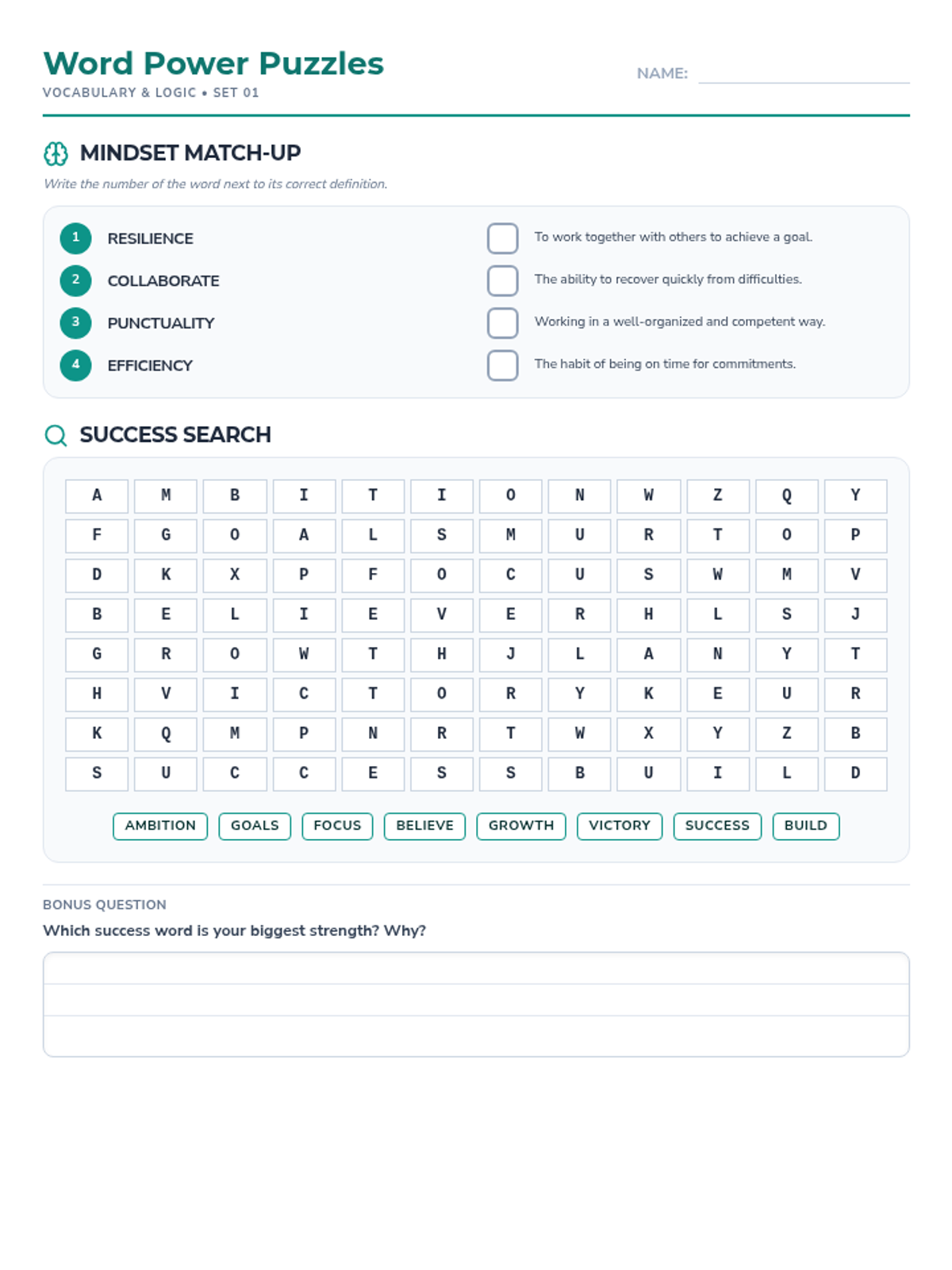
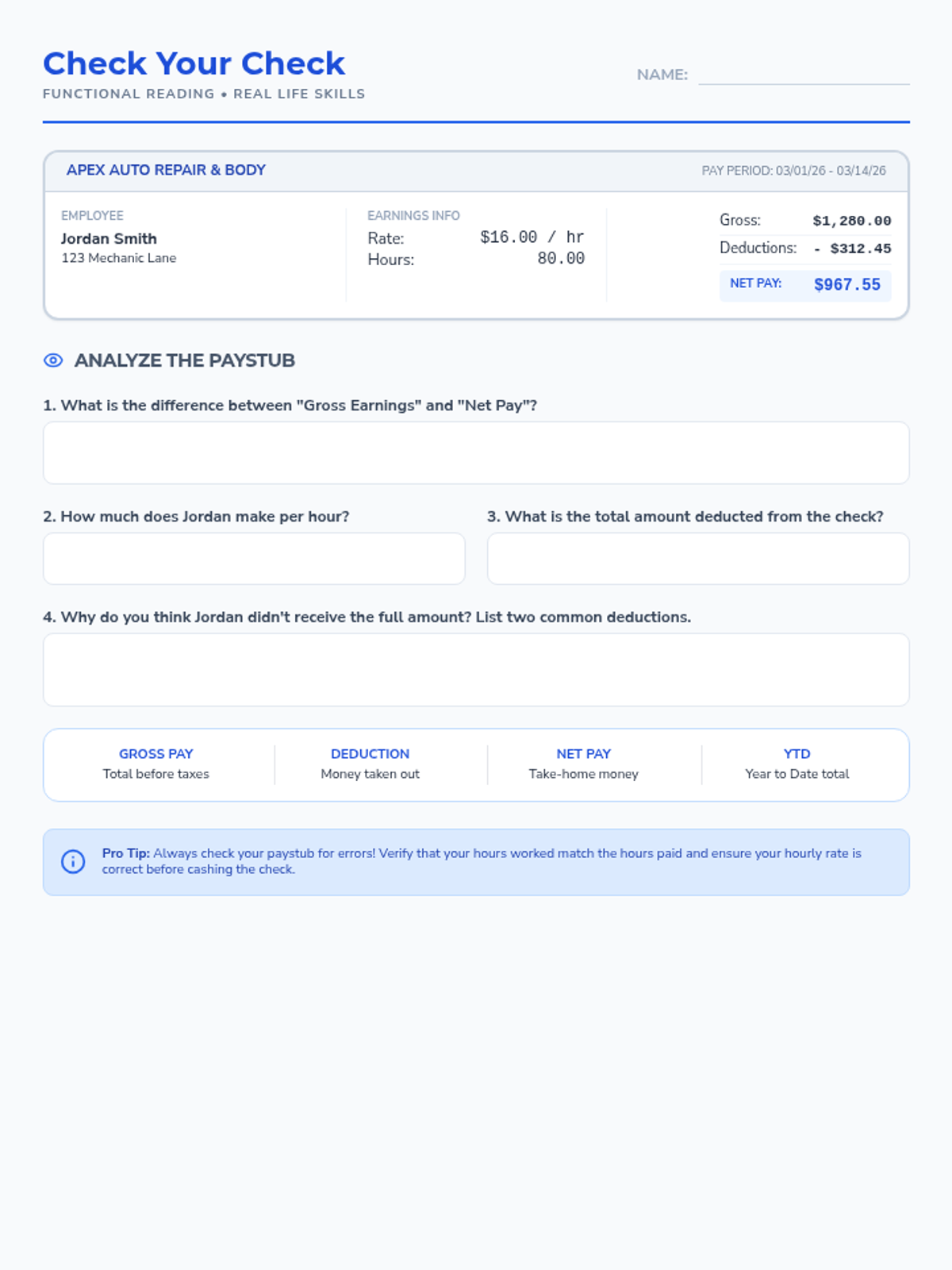
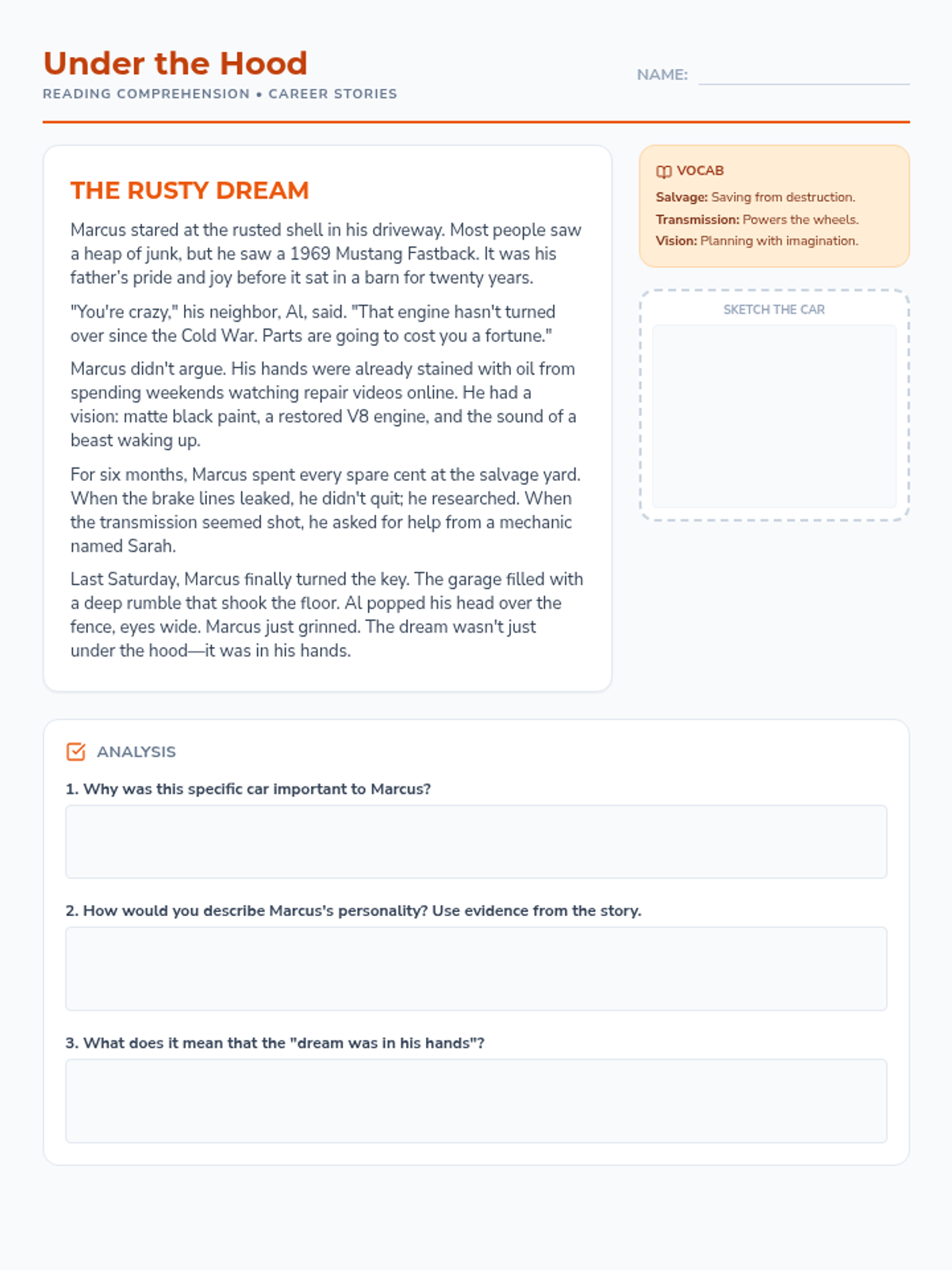
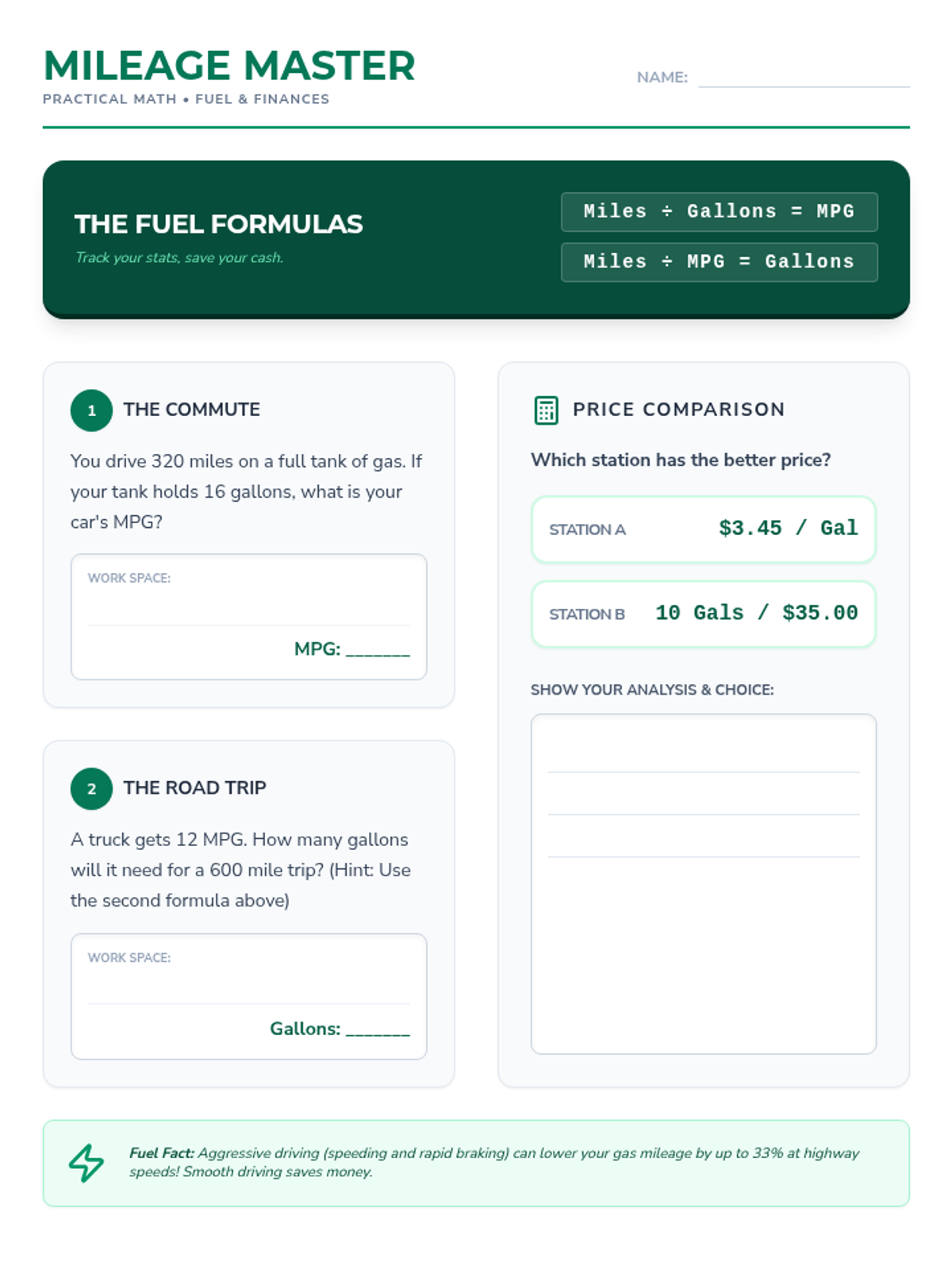
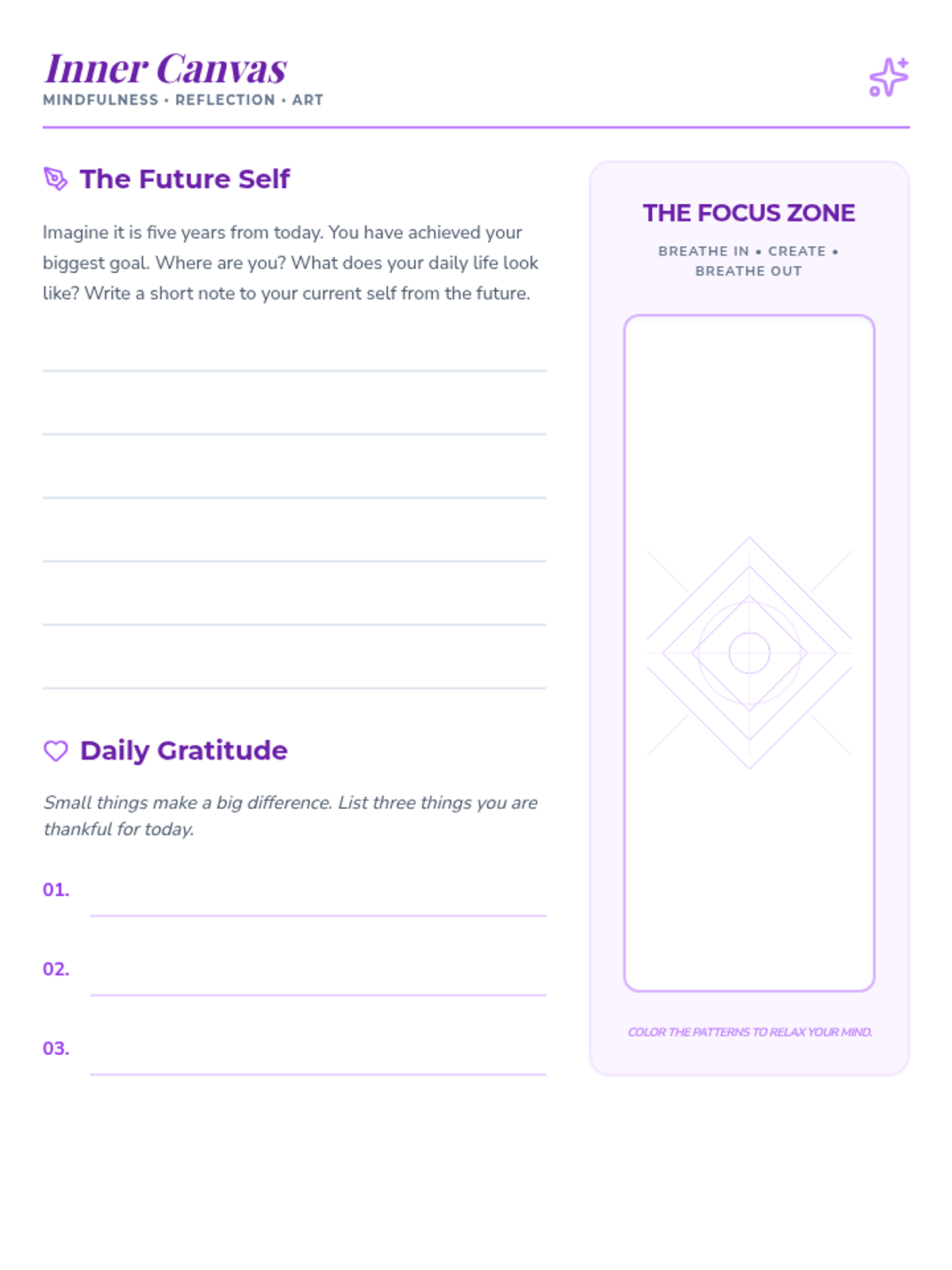
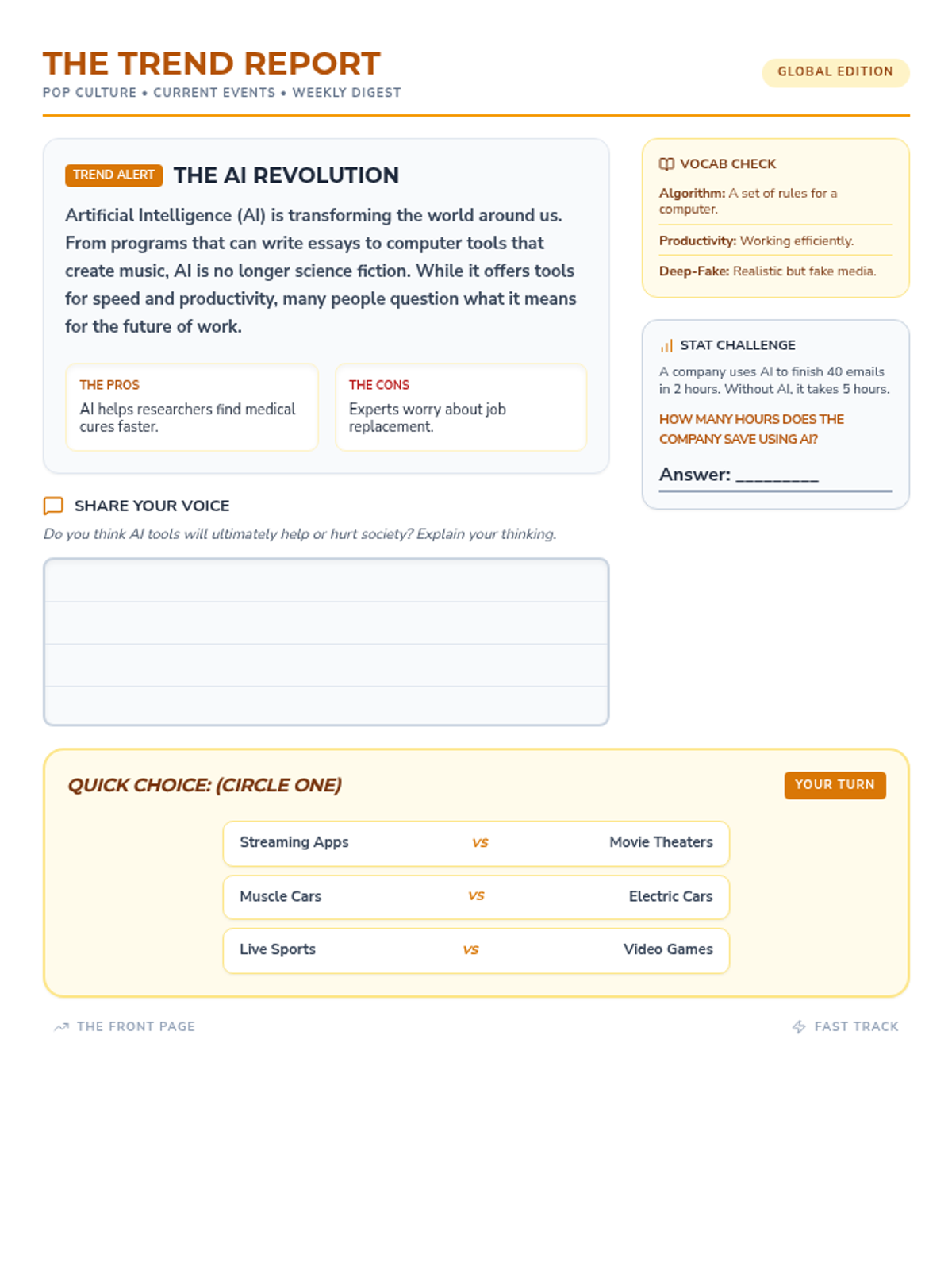
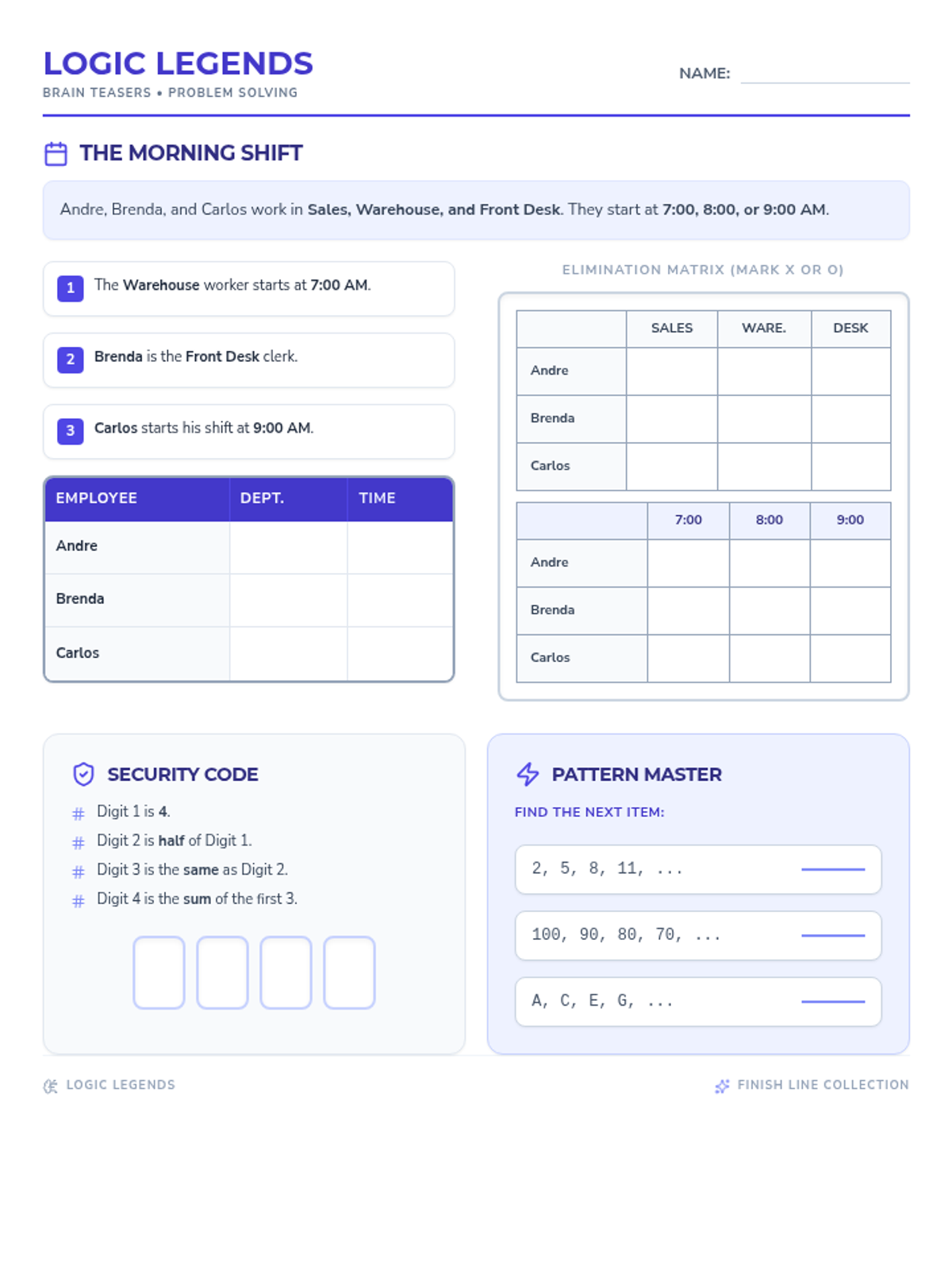
A collection of engaging, high-interest materials for HSED students to complete after finishing their primary coursework. The sequence blends functional literacy, practical math, and creative mindfulness with a modern, adult-appropriate aesthetic.
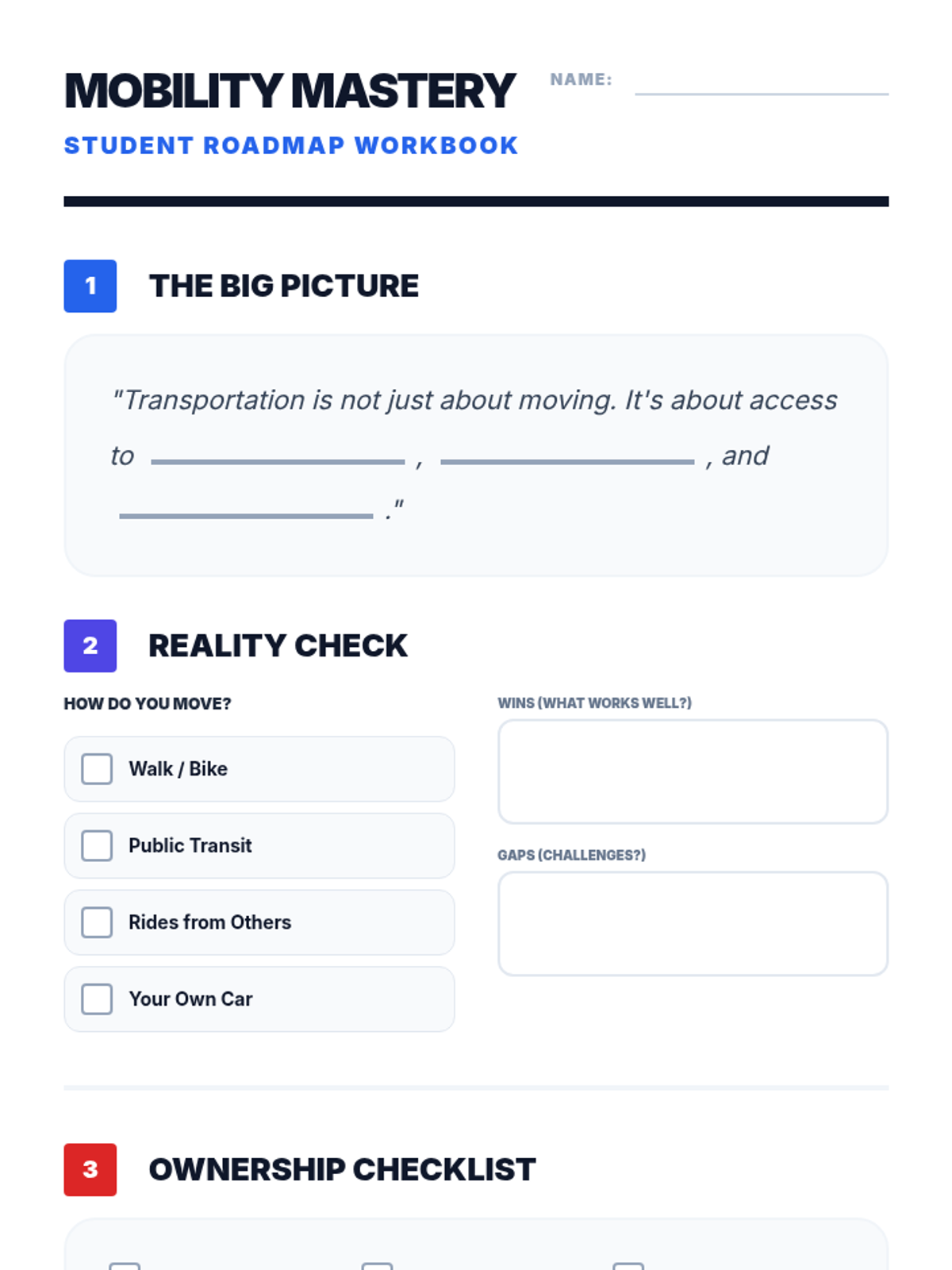
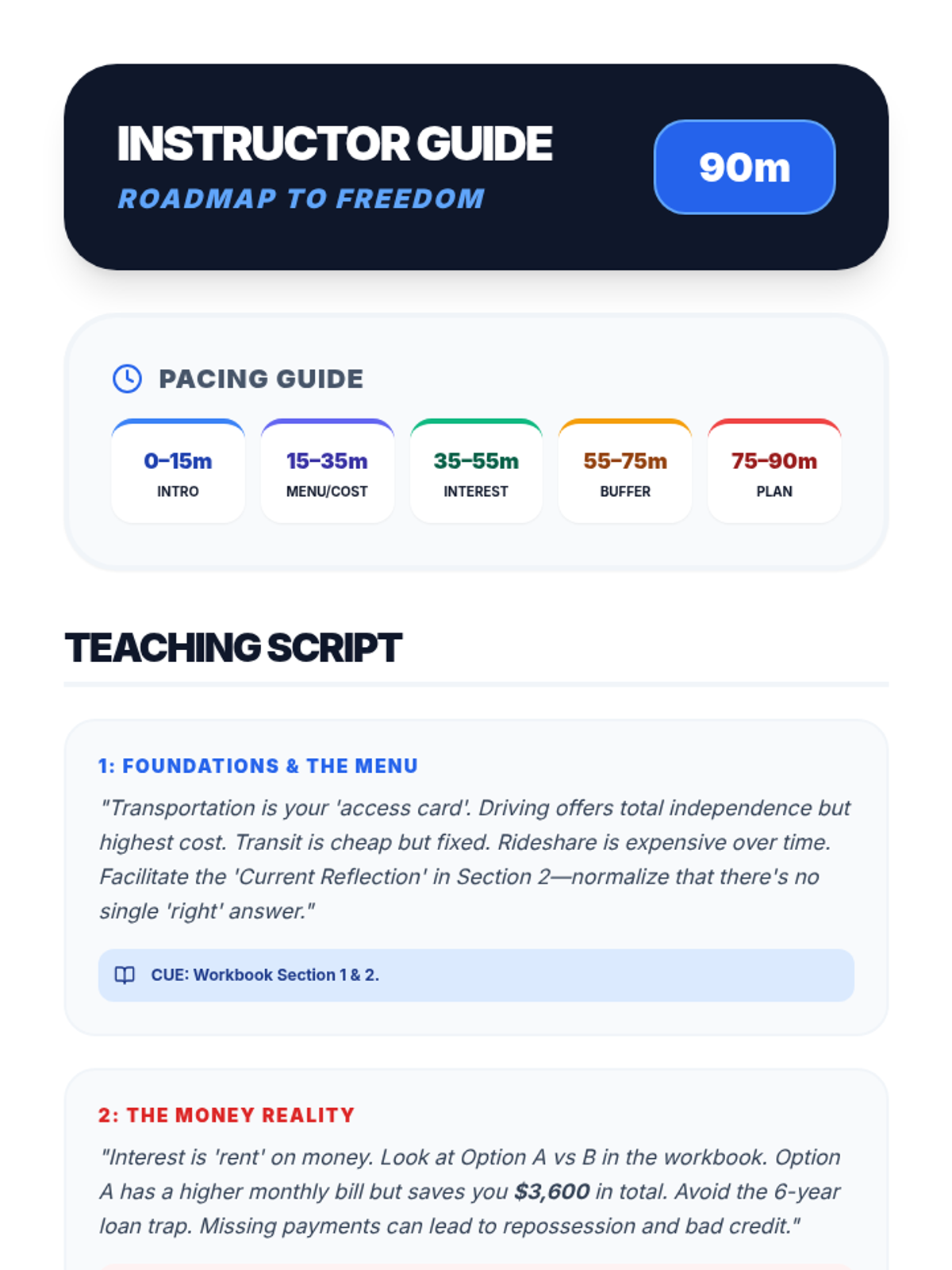
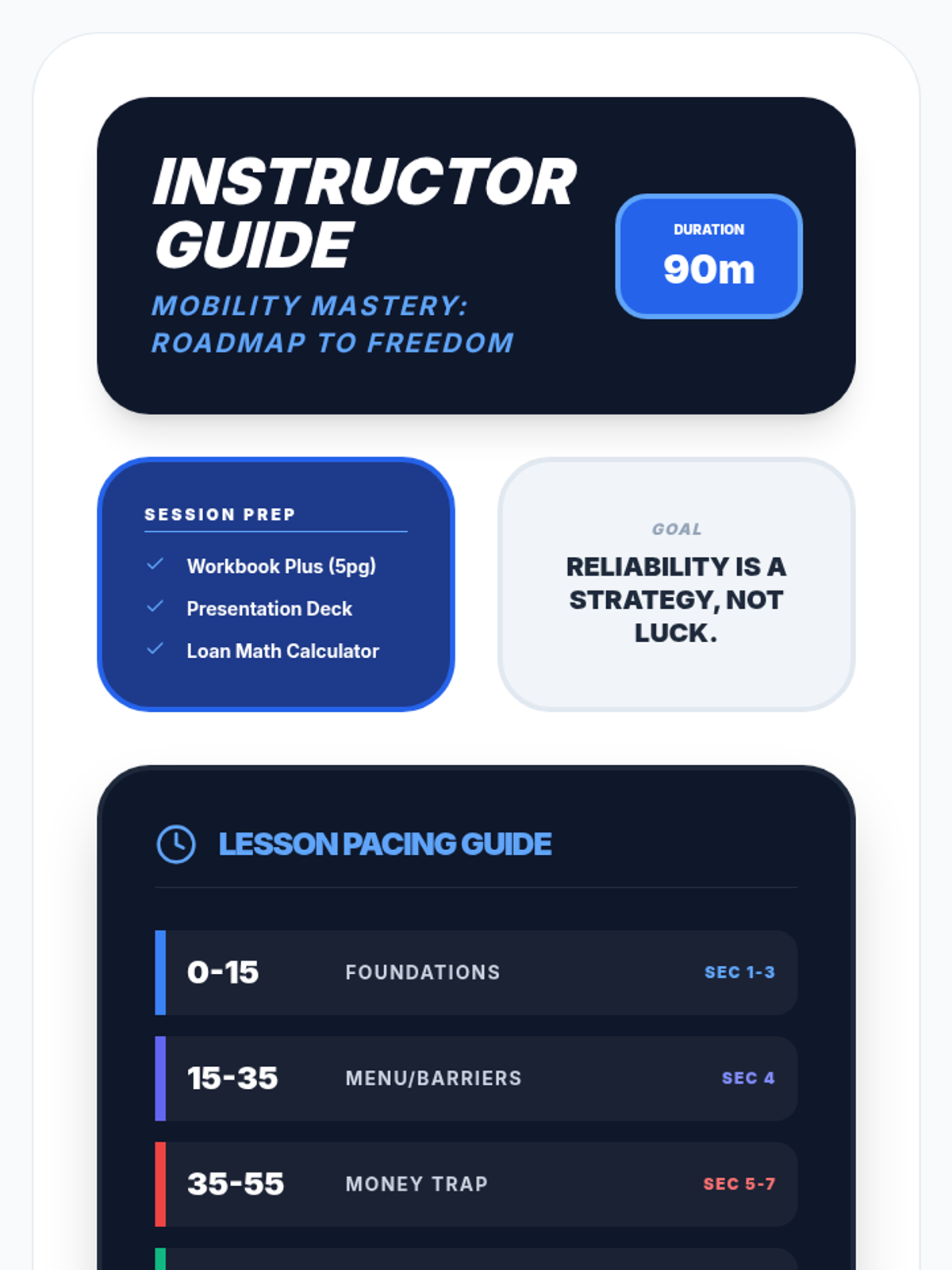
A comprehensive 90-minute course for young adults on navigating transportation options, understanding the financial realities of car ownership, and building a reliable mobility plan for independence.
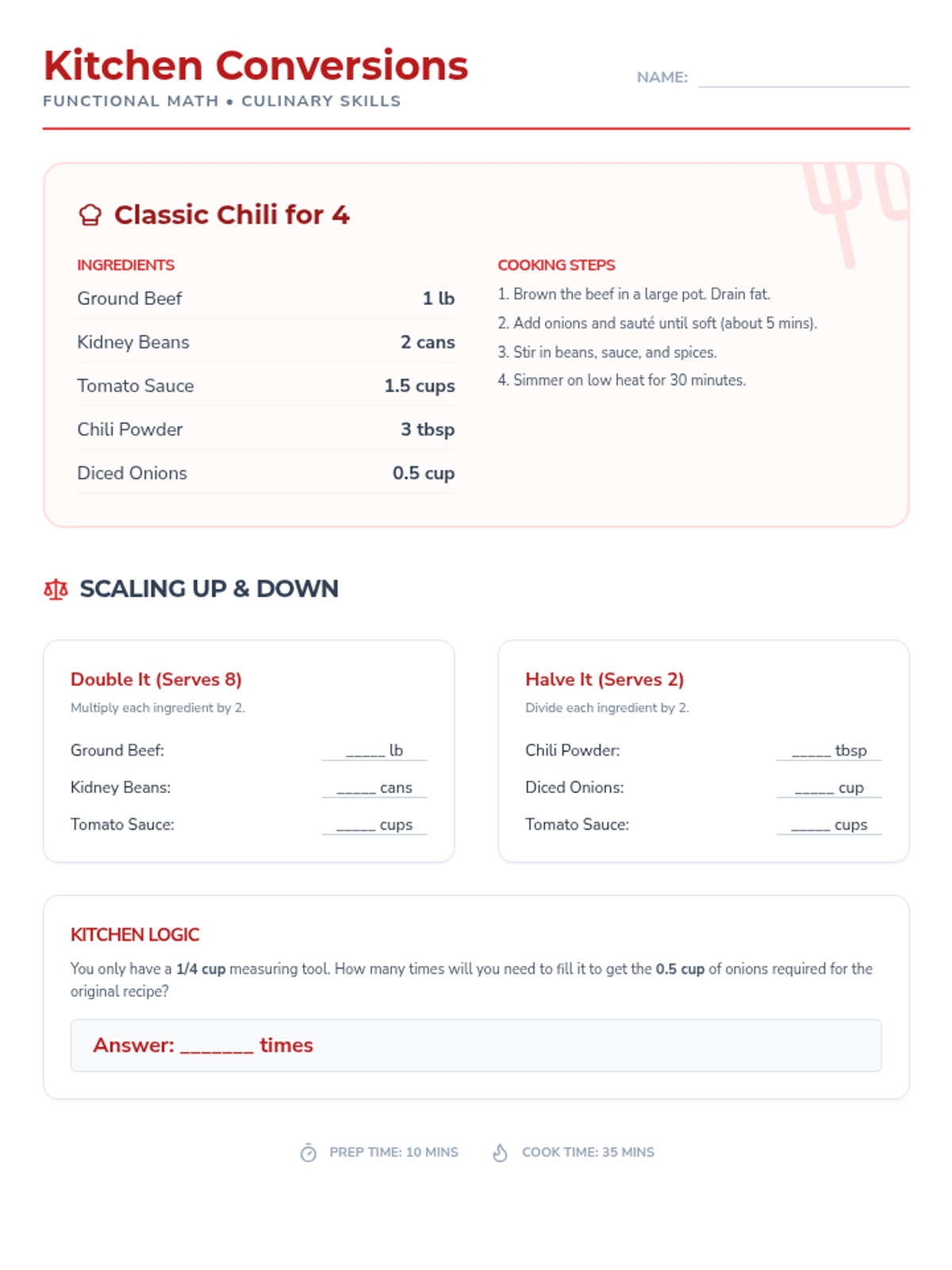
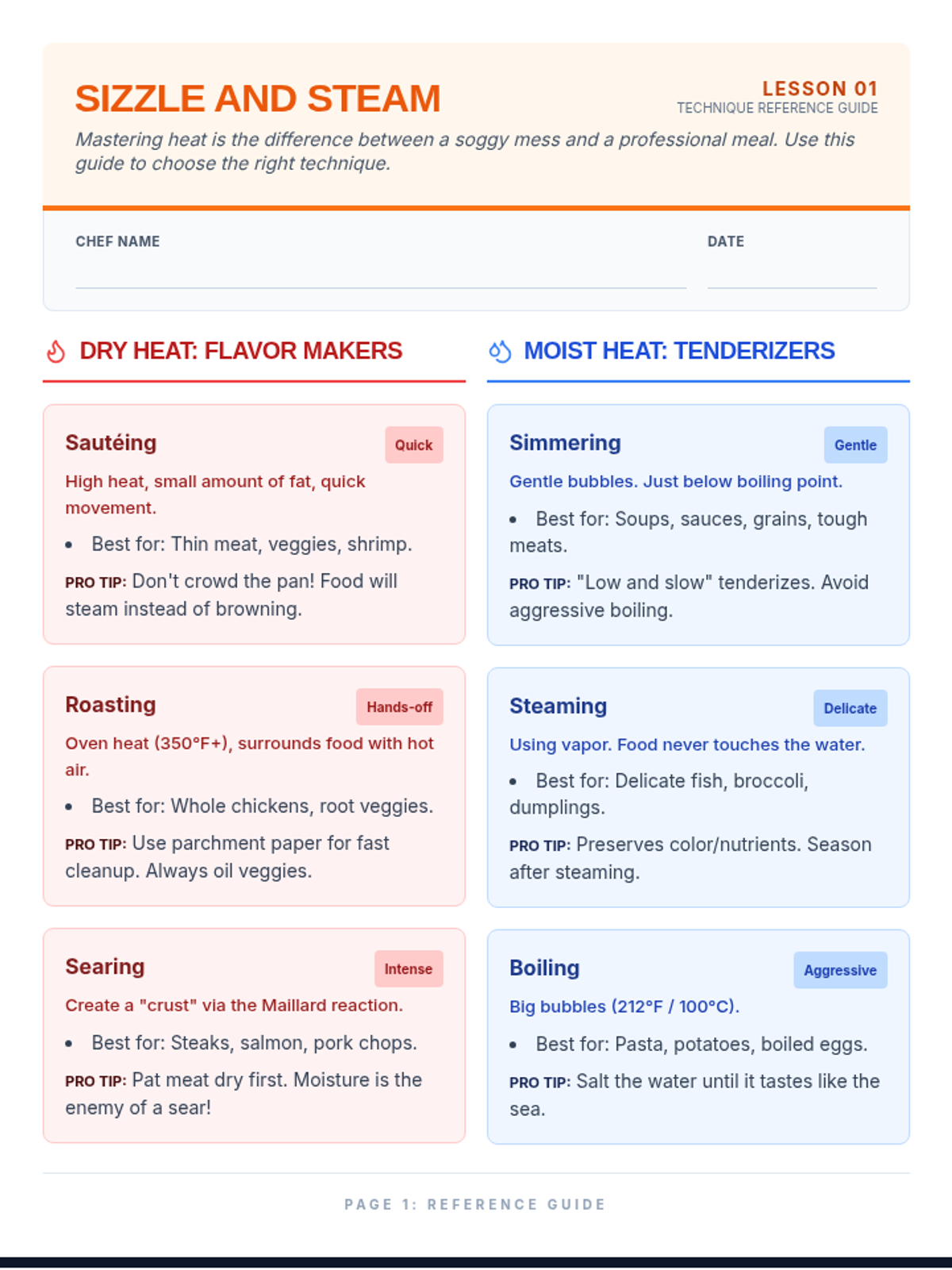
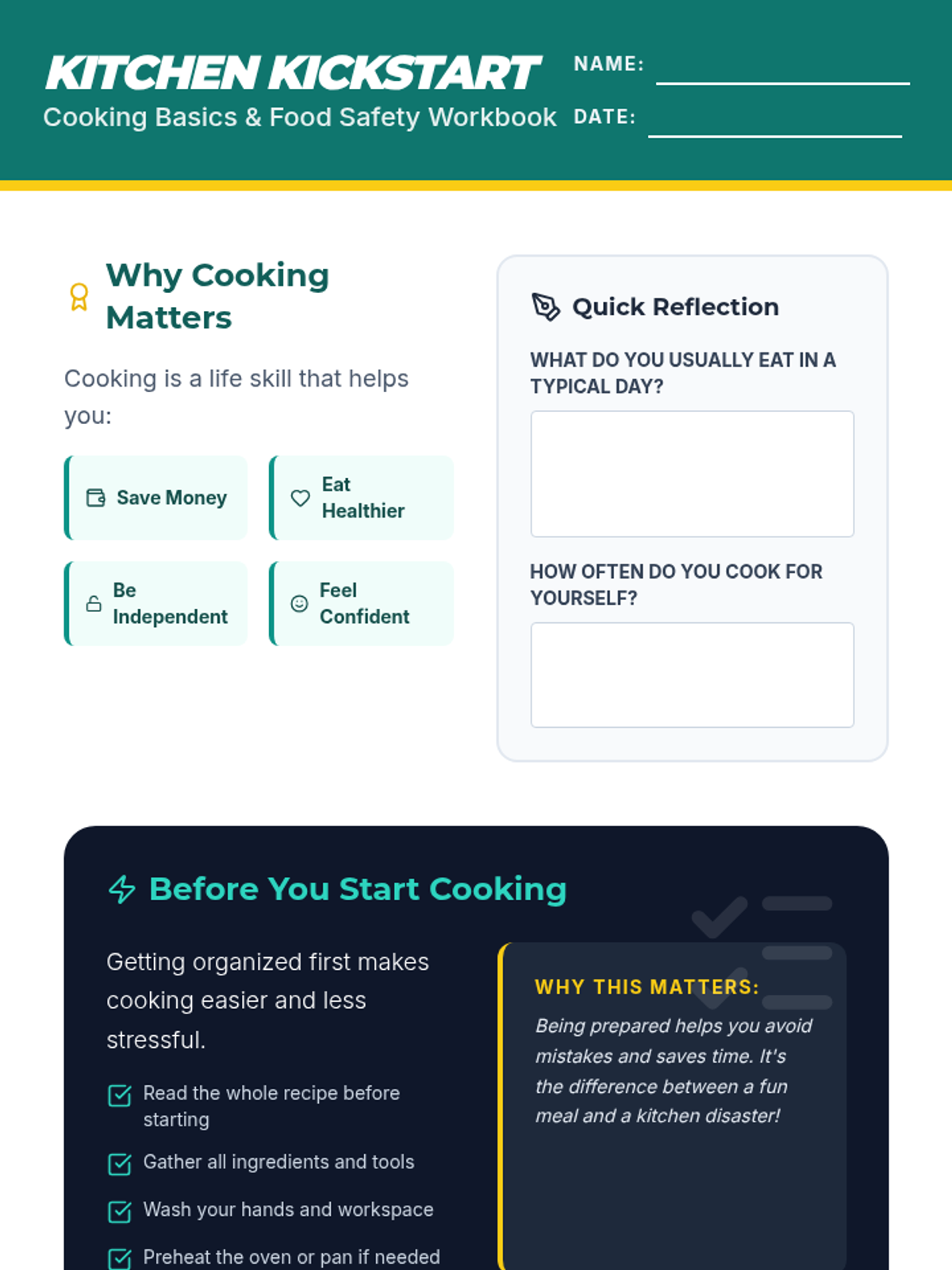
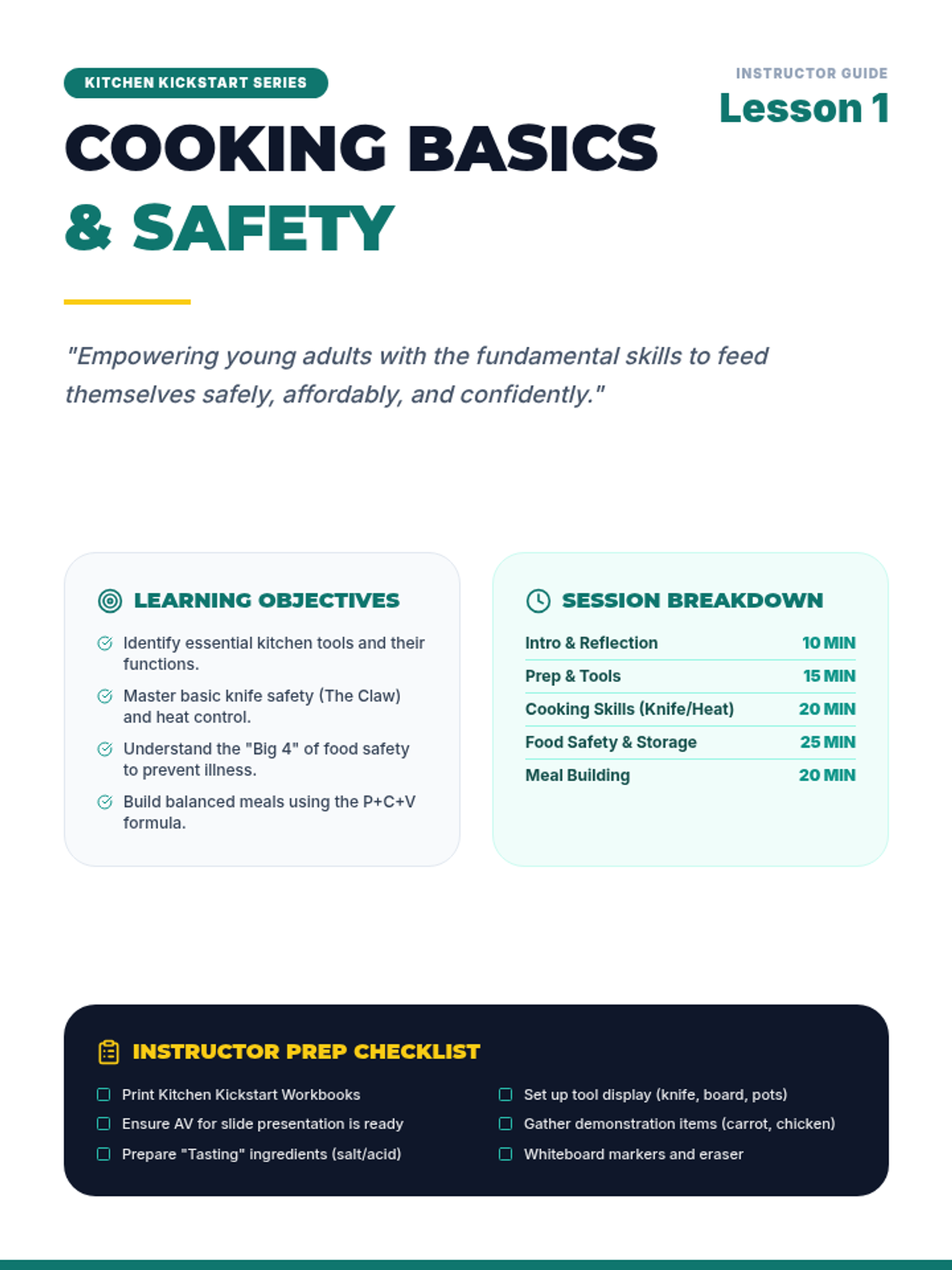
An introductory sequence for young adults transitioning to independence, covering the essentials of safe cooking, kitchen management, and basic meal planning. This program builds confidence in beginners by demystifying food preparation and safety protocols.
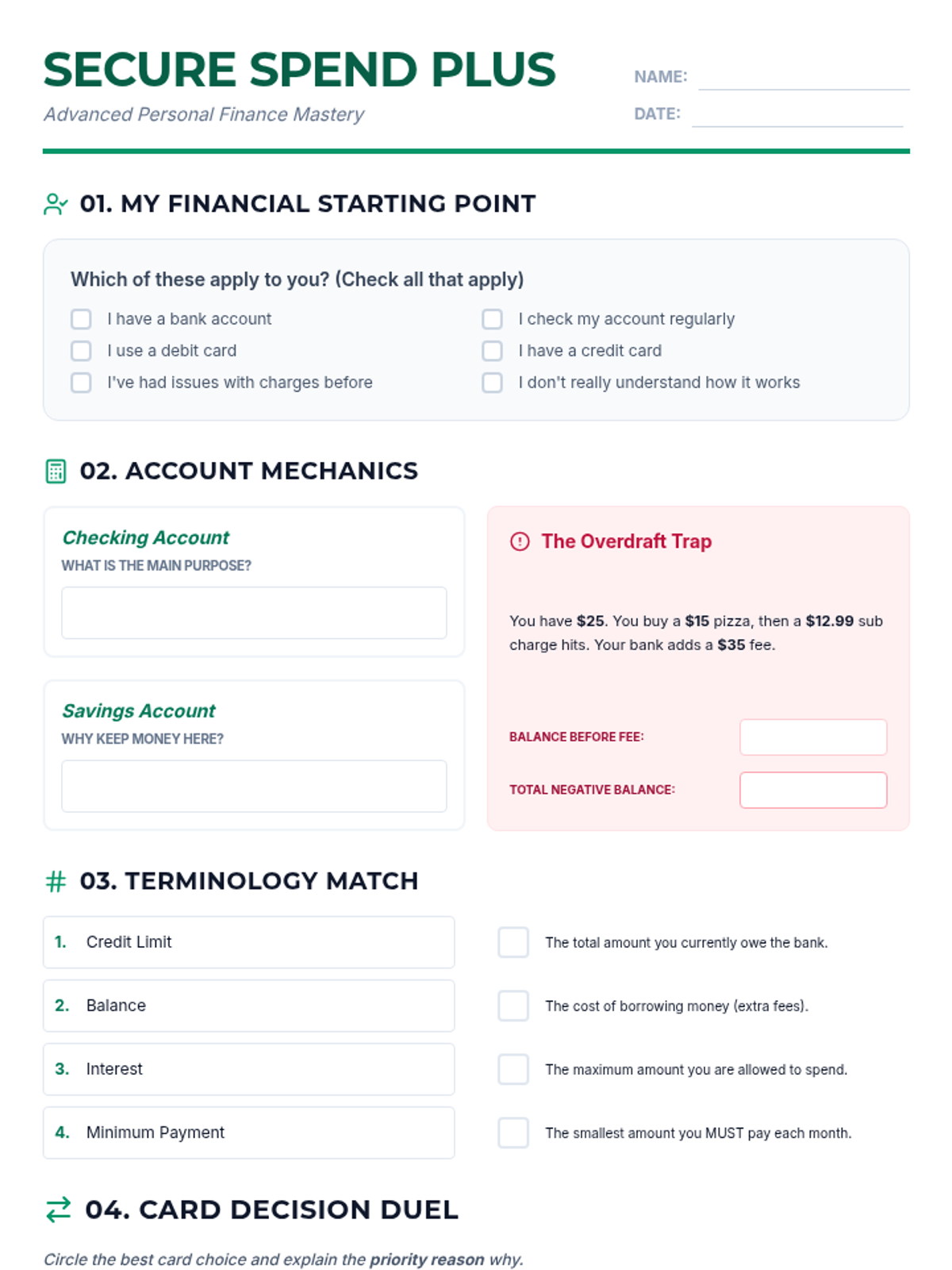
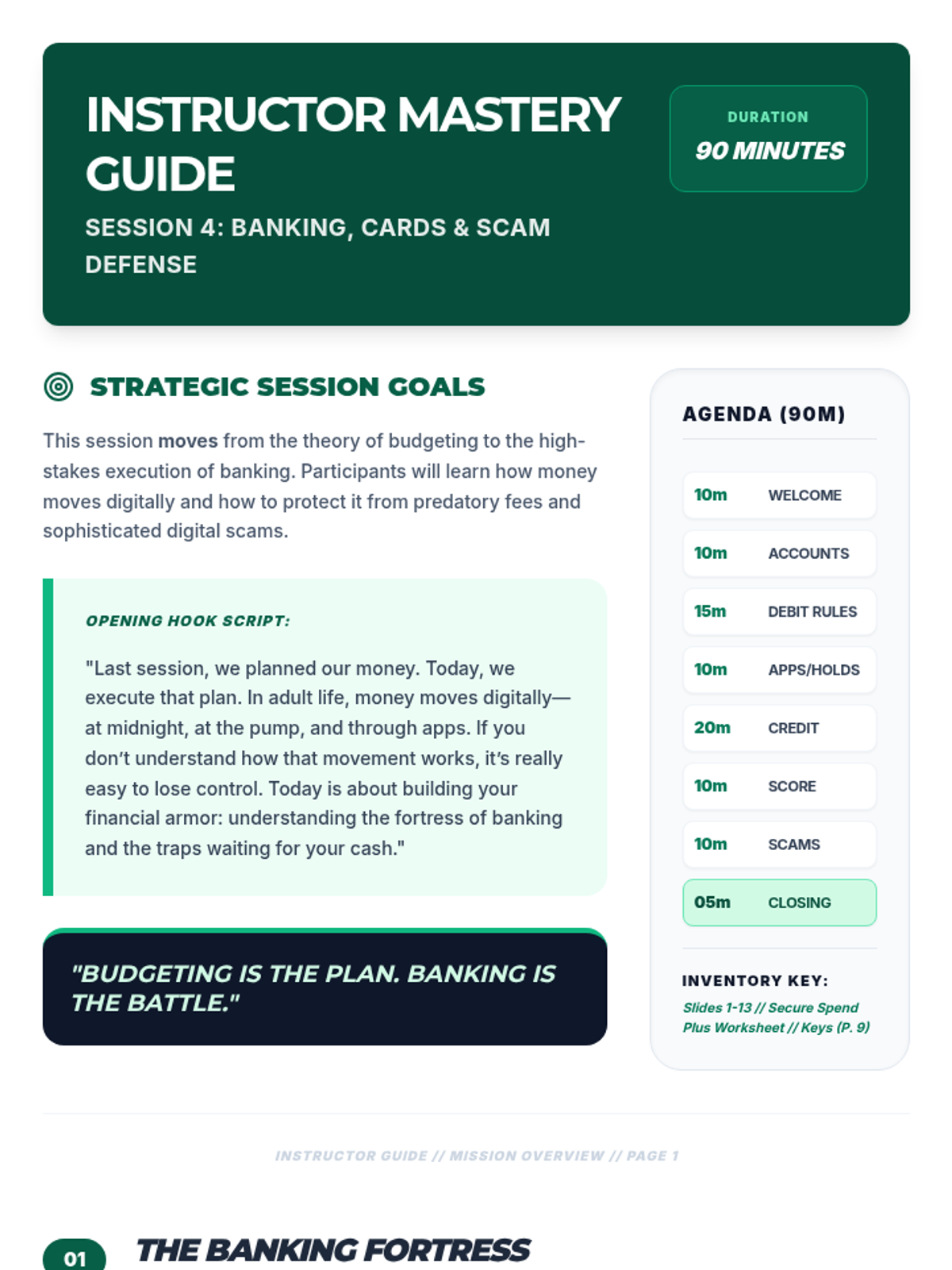
An in-depth personal finance unit for young adults (ages 16-21) covering the mechanics of bank accounts, the differences between debit and credit, the impact of interest and credit scores, and practical strategies for identifying and avoiding financial scams.
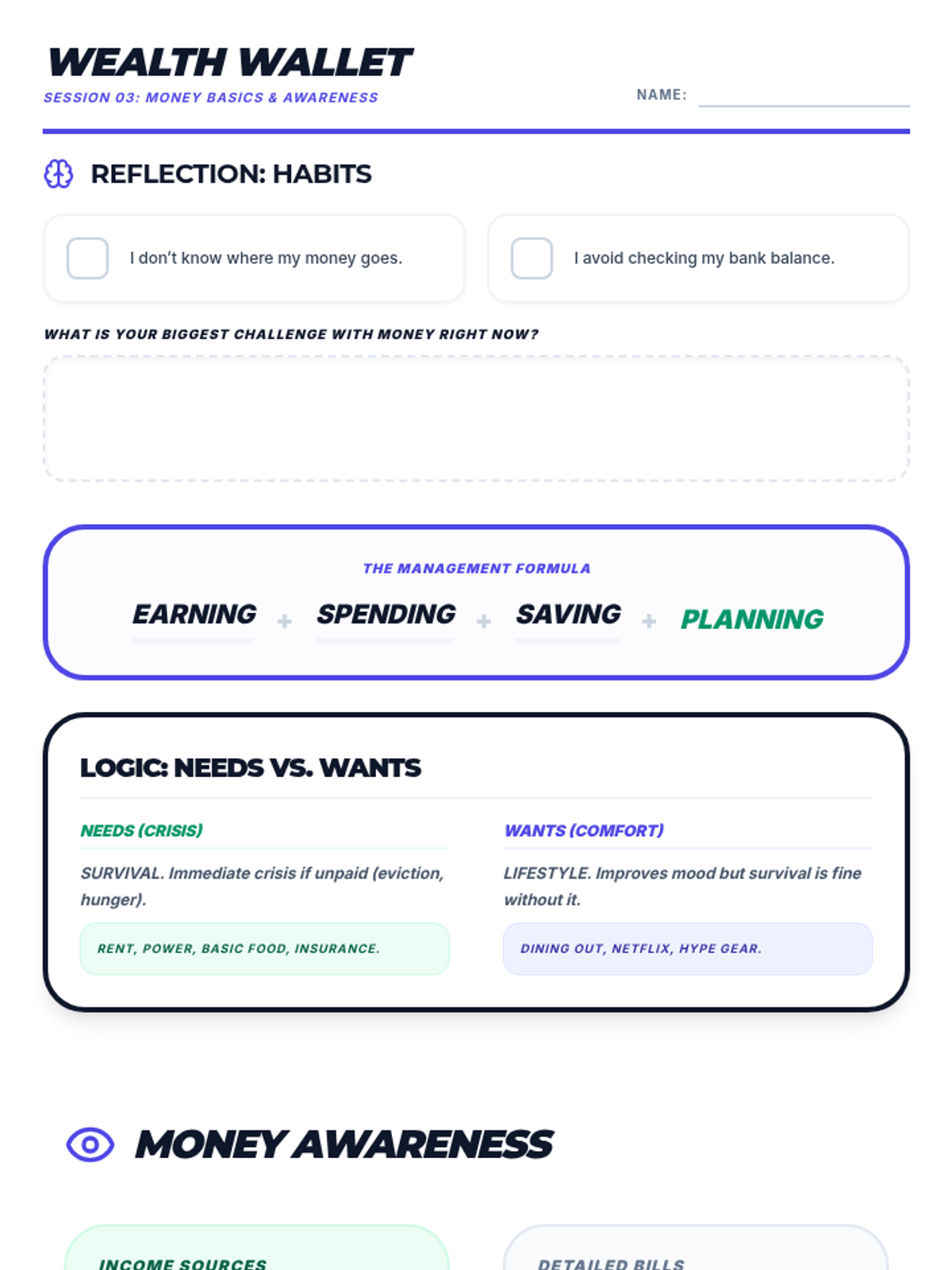
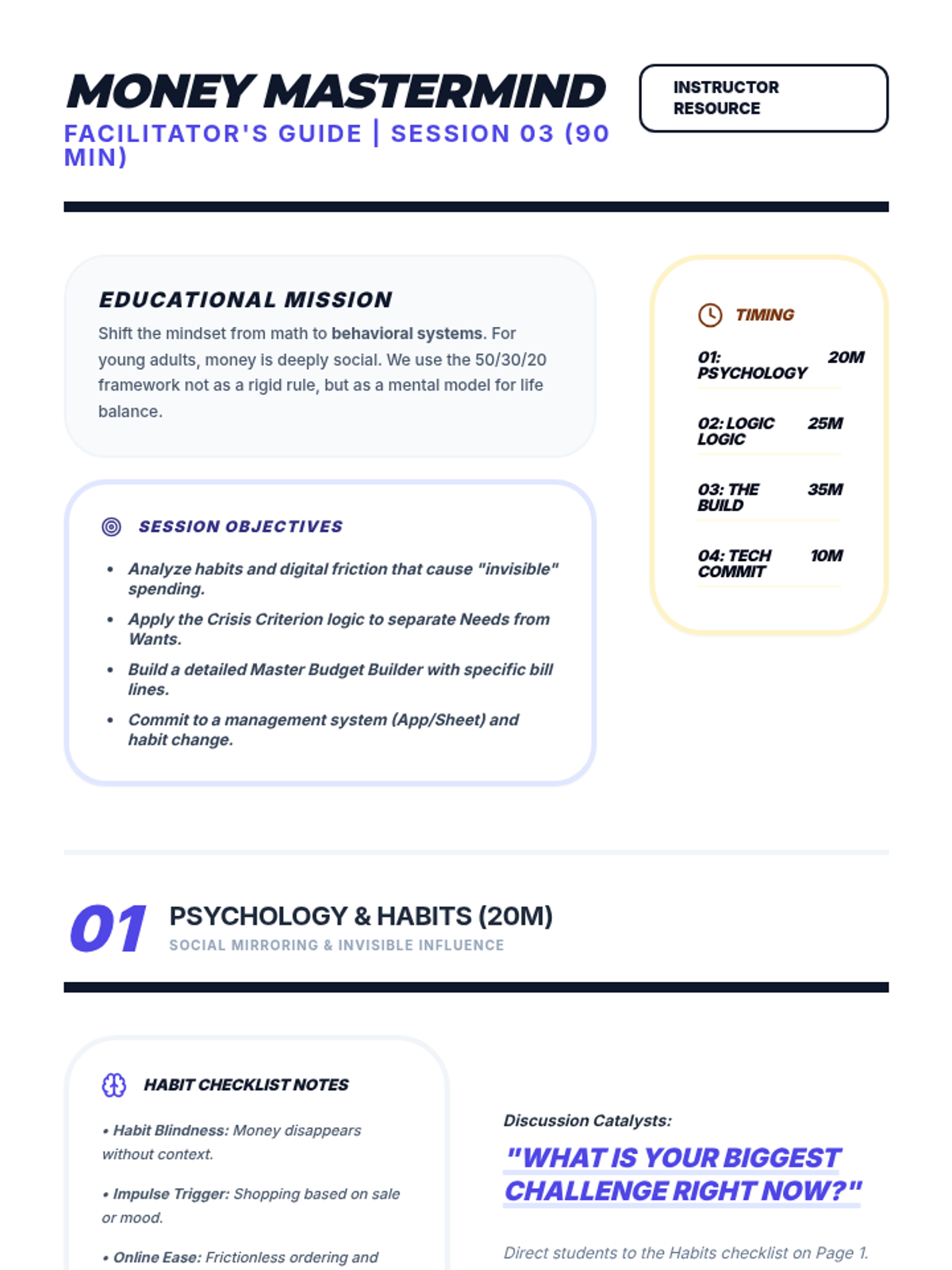
A comprehensive financial literacy series designed for young adults (16-21) to navigate the transition to financial independence with confidence and practical skills.
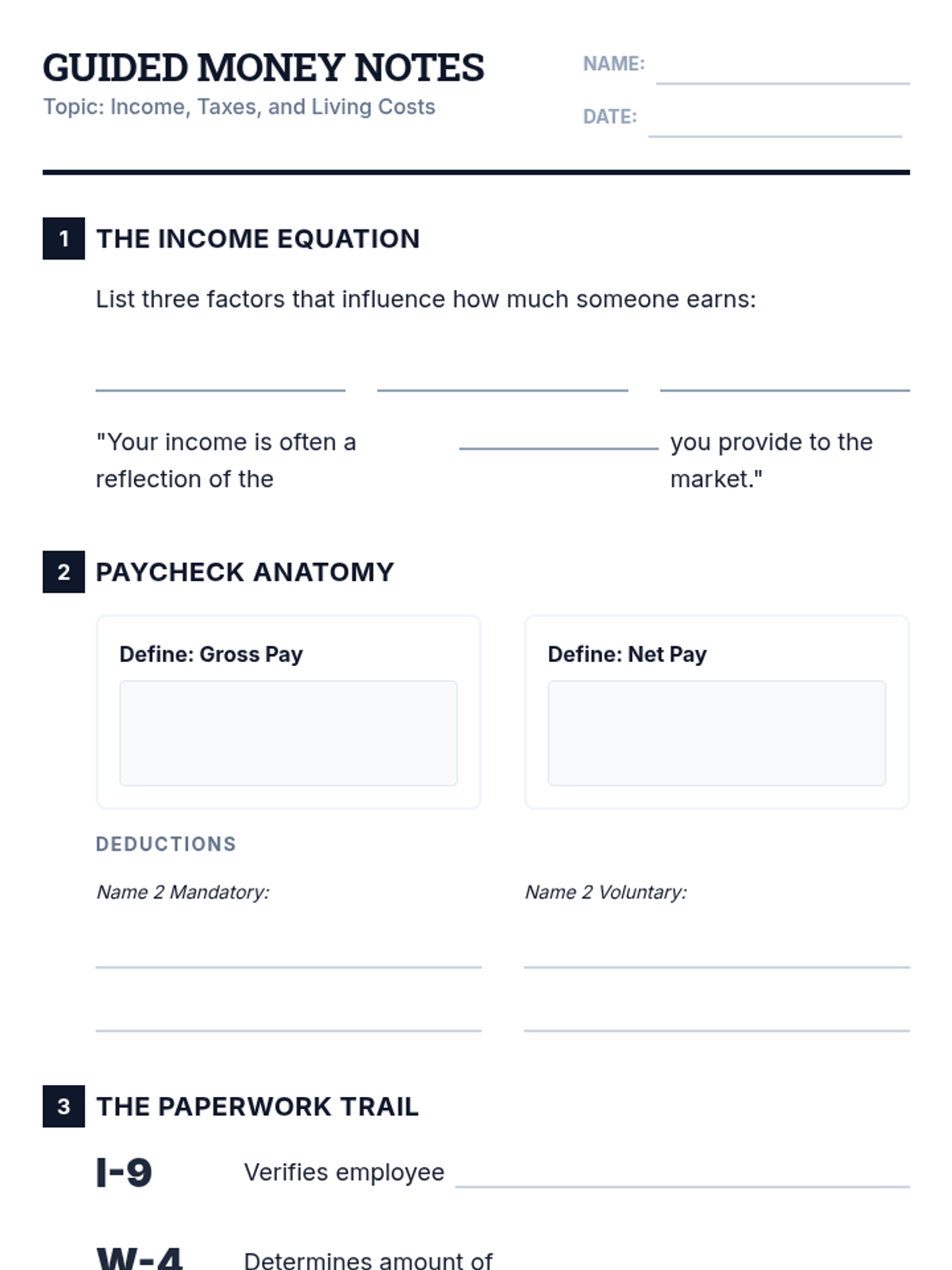
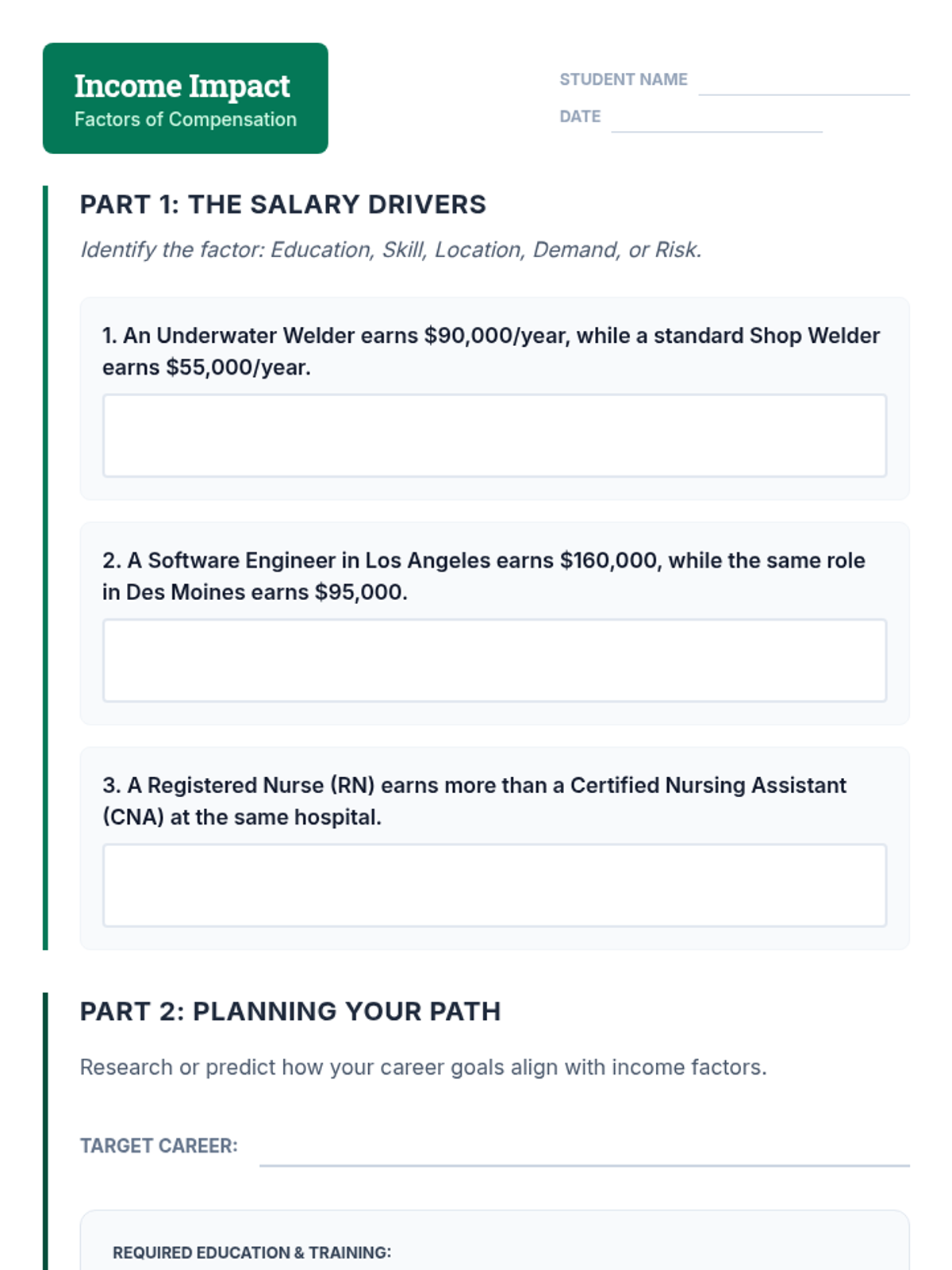
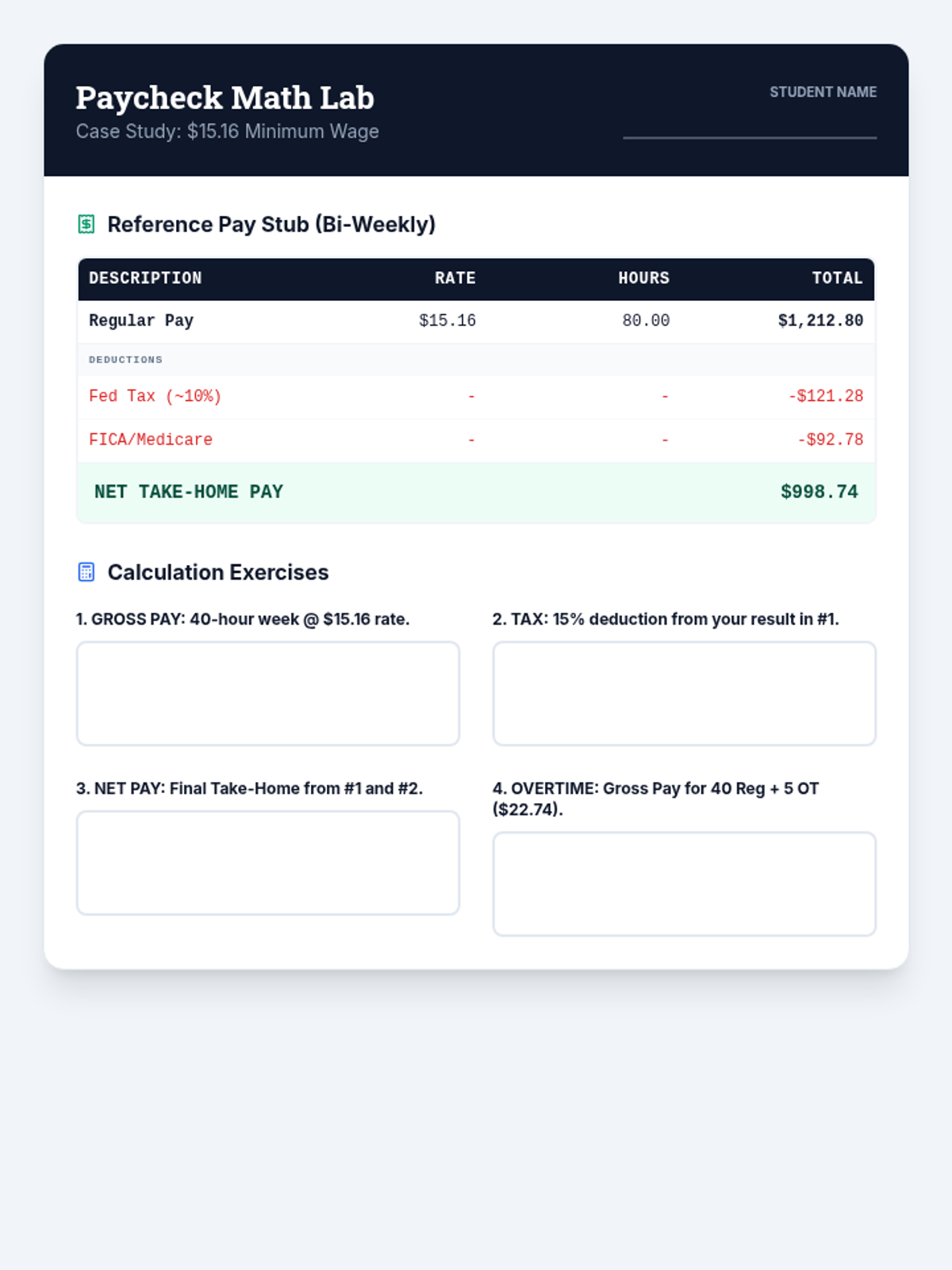
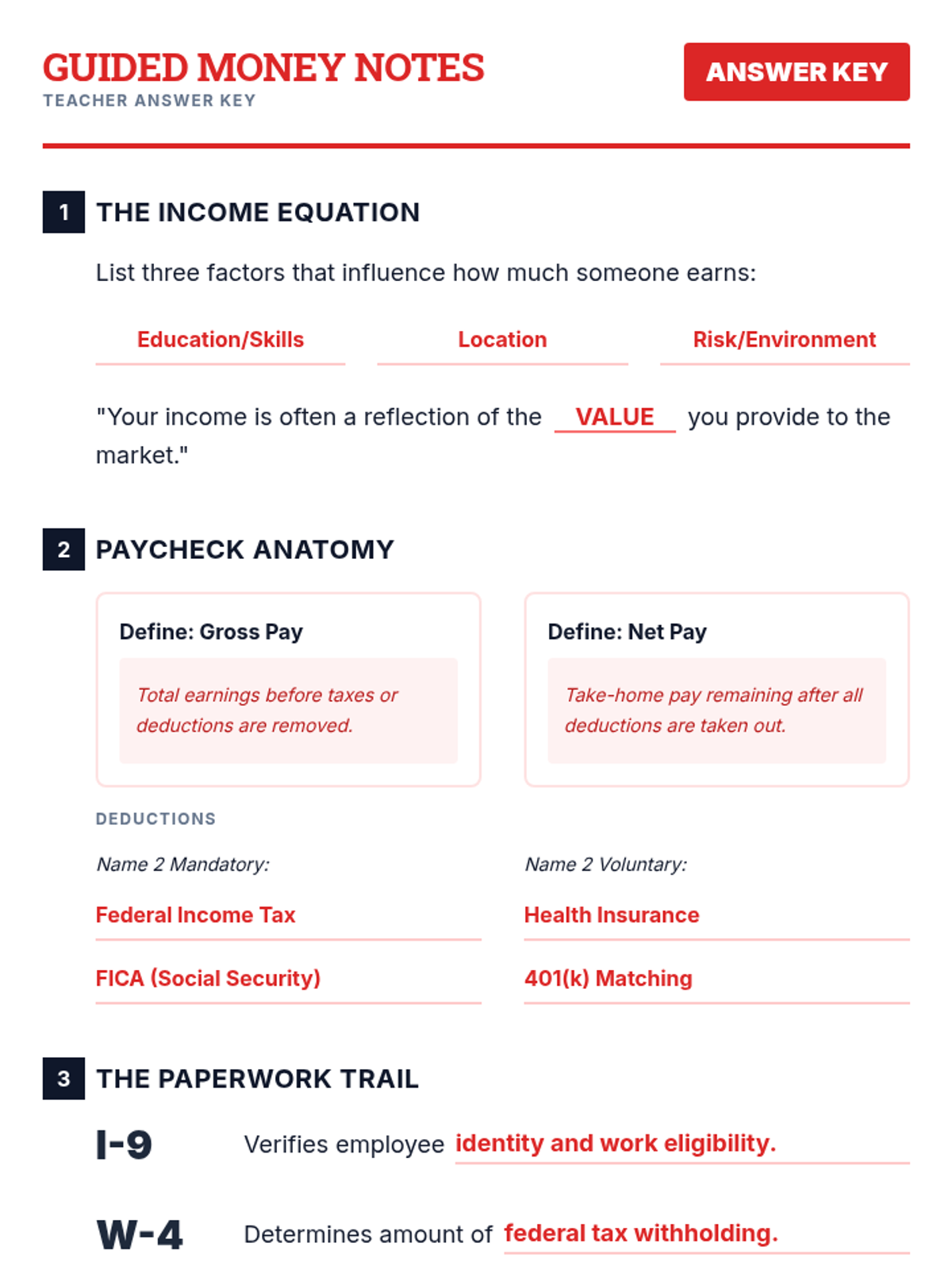
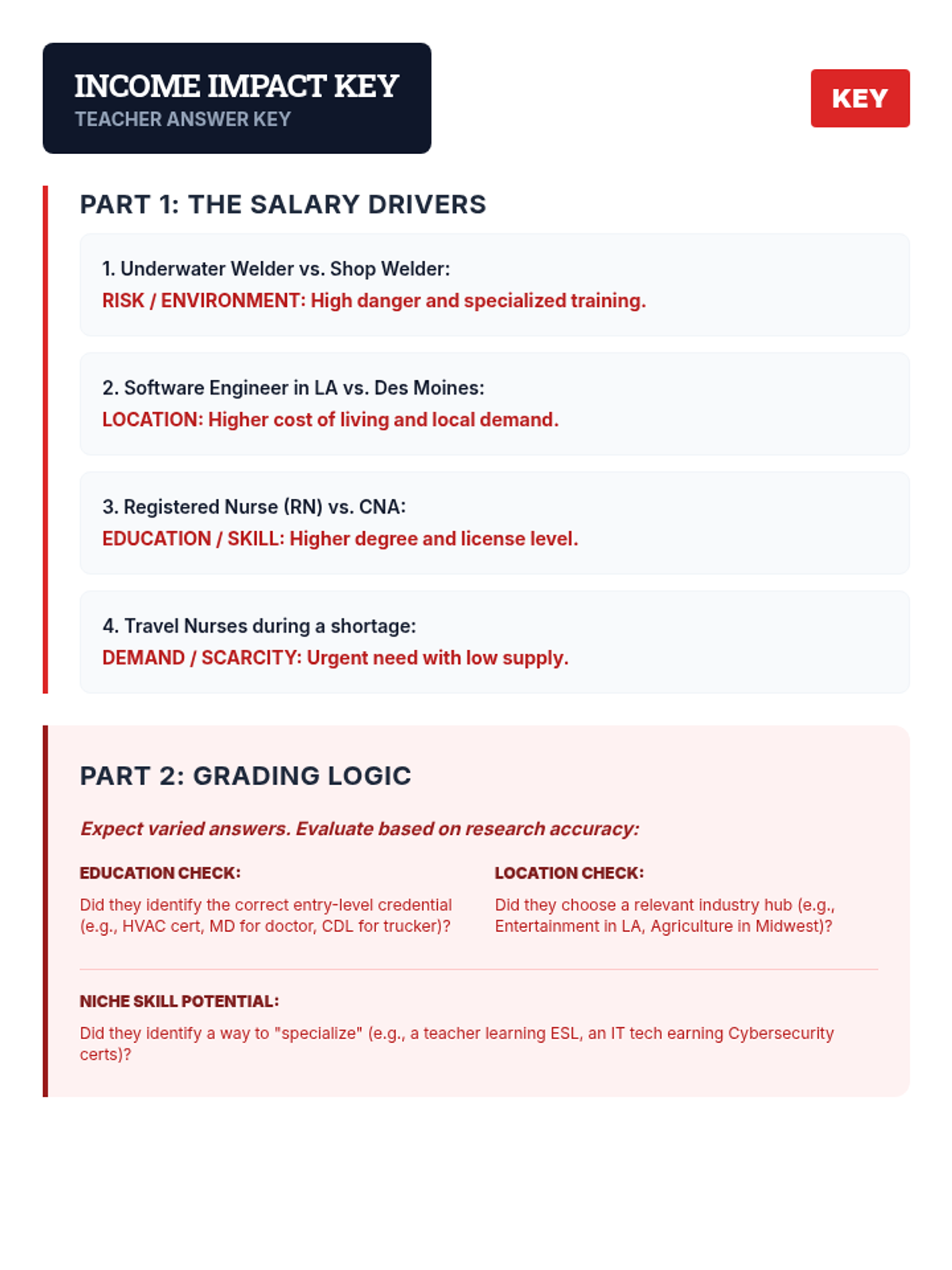
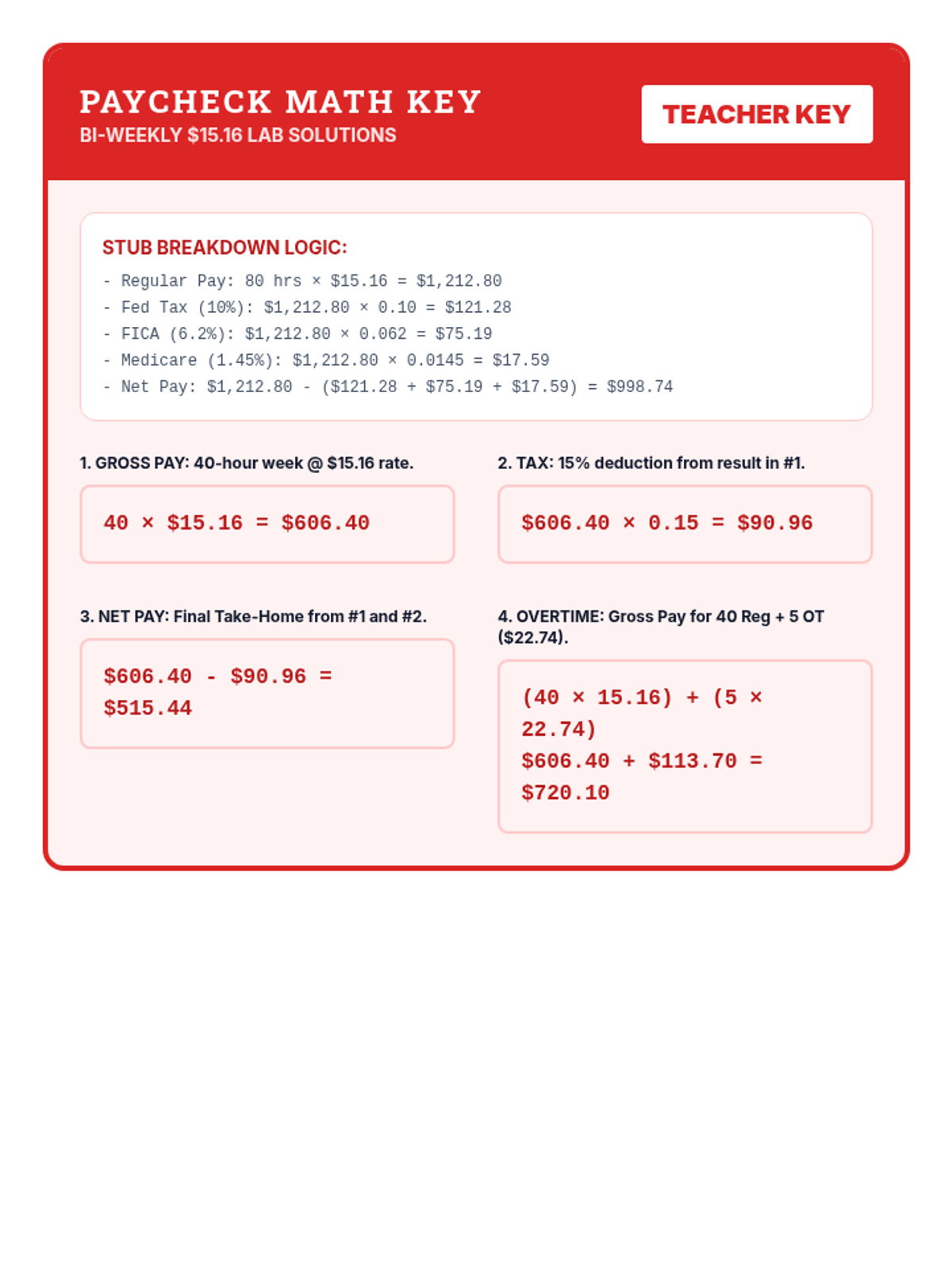
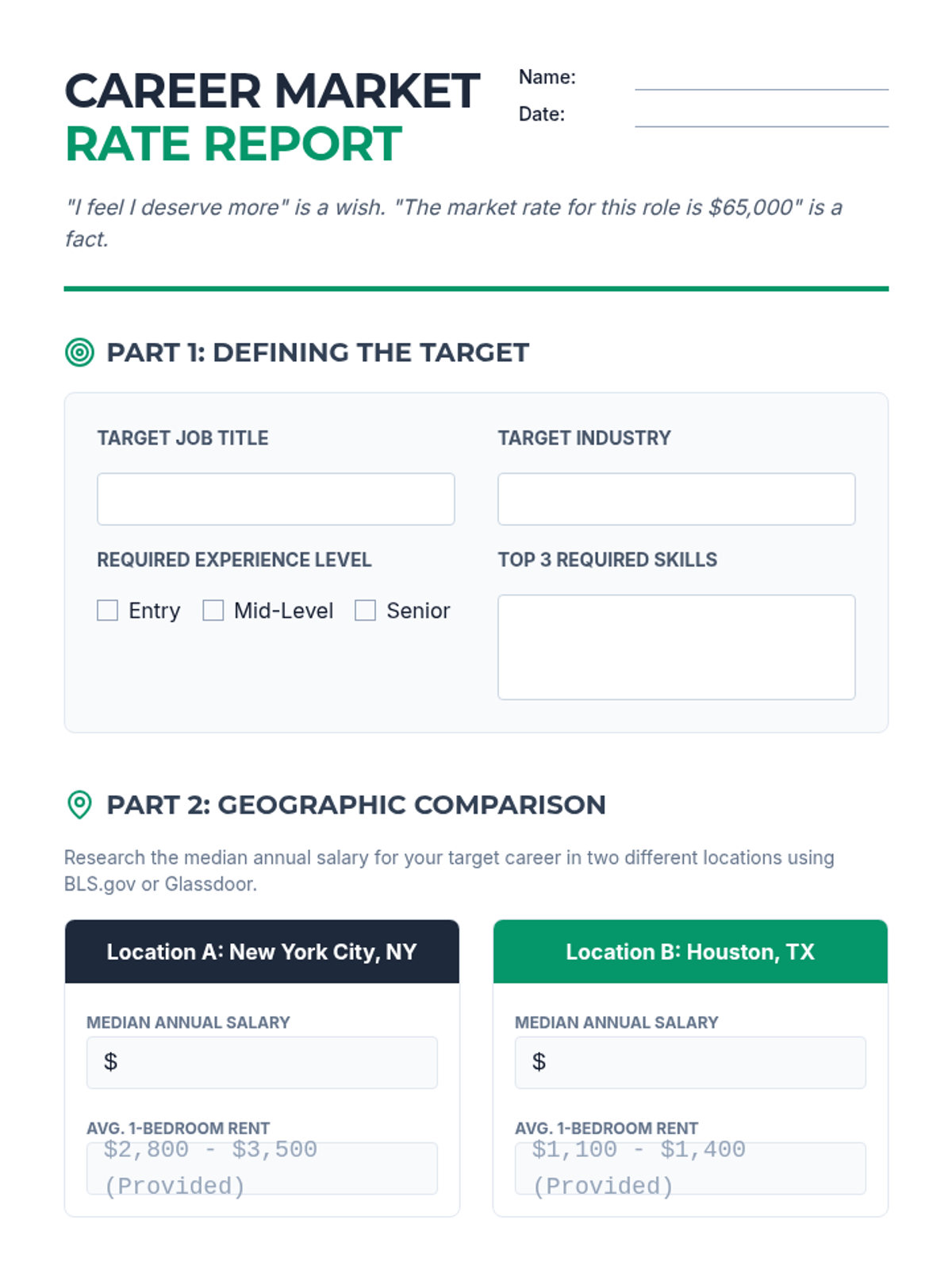
A comprehensive unit on personal finance covering income factors, paycheck calculations, employment benefits, tax documentation, and cost-of-living comparisons between Denver and Los Angeles.
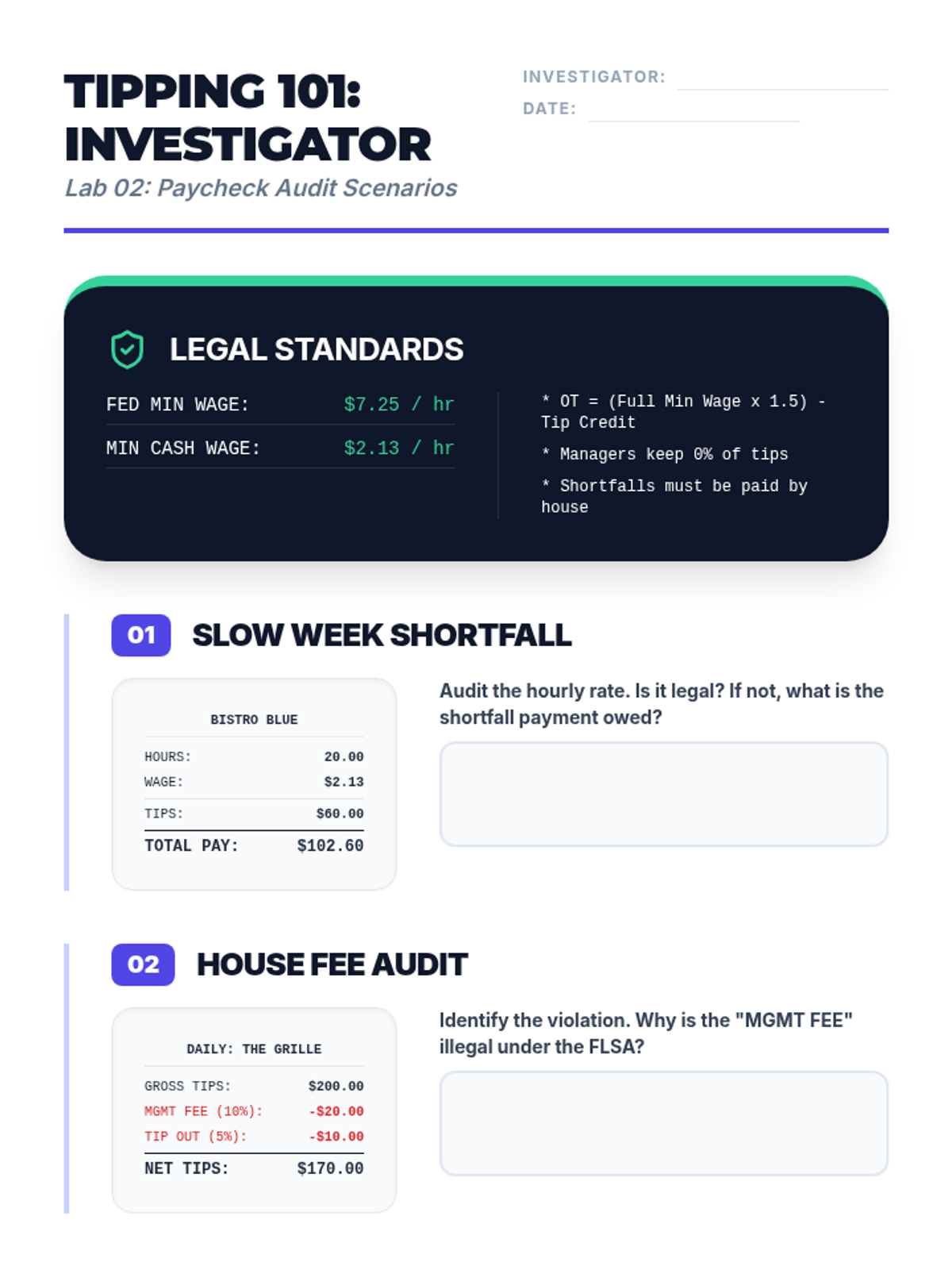
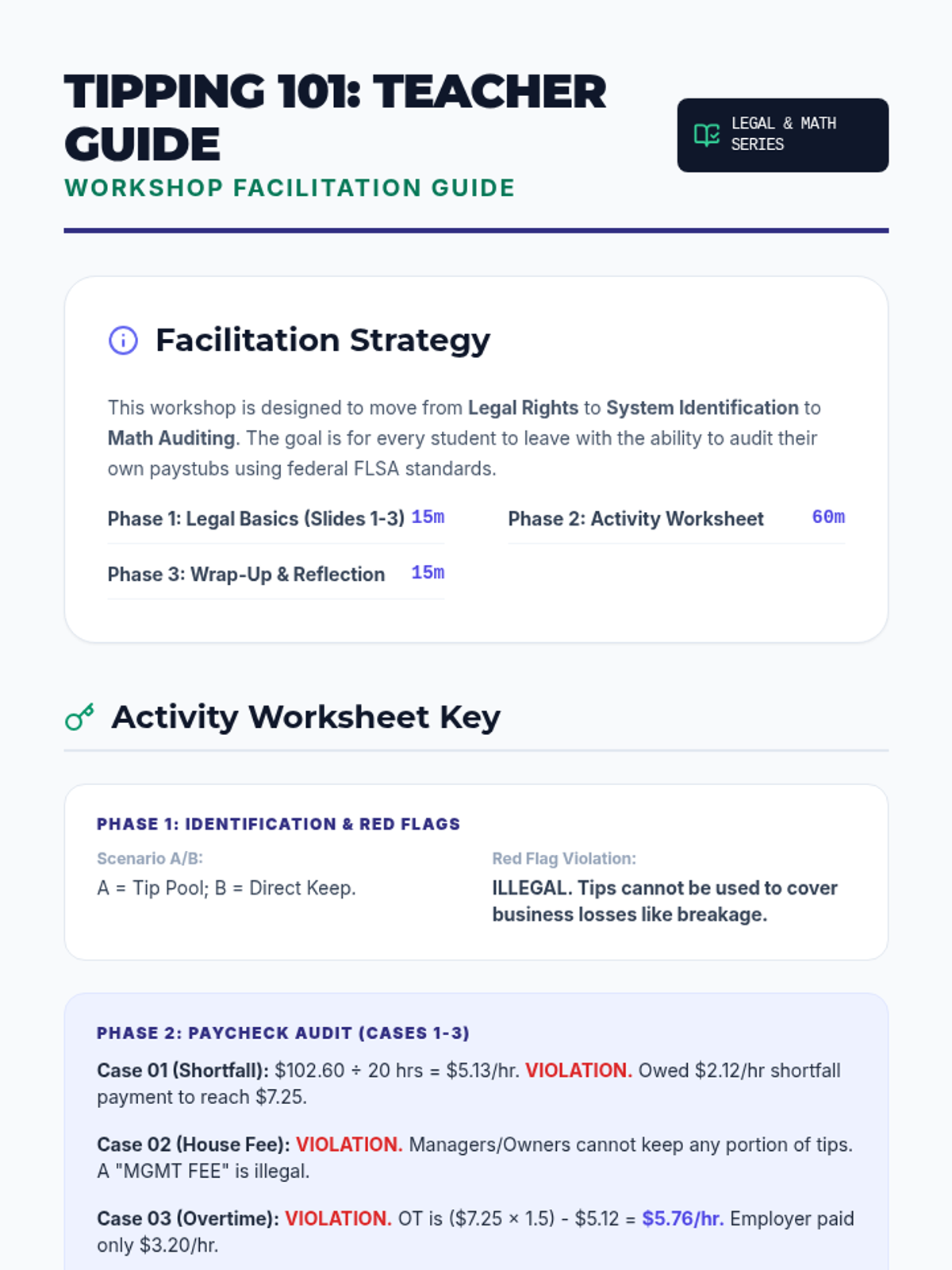
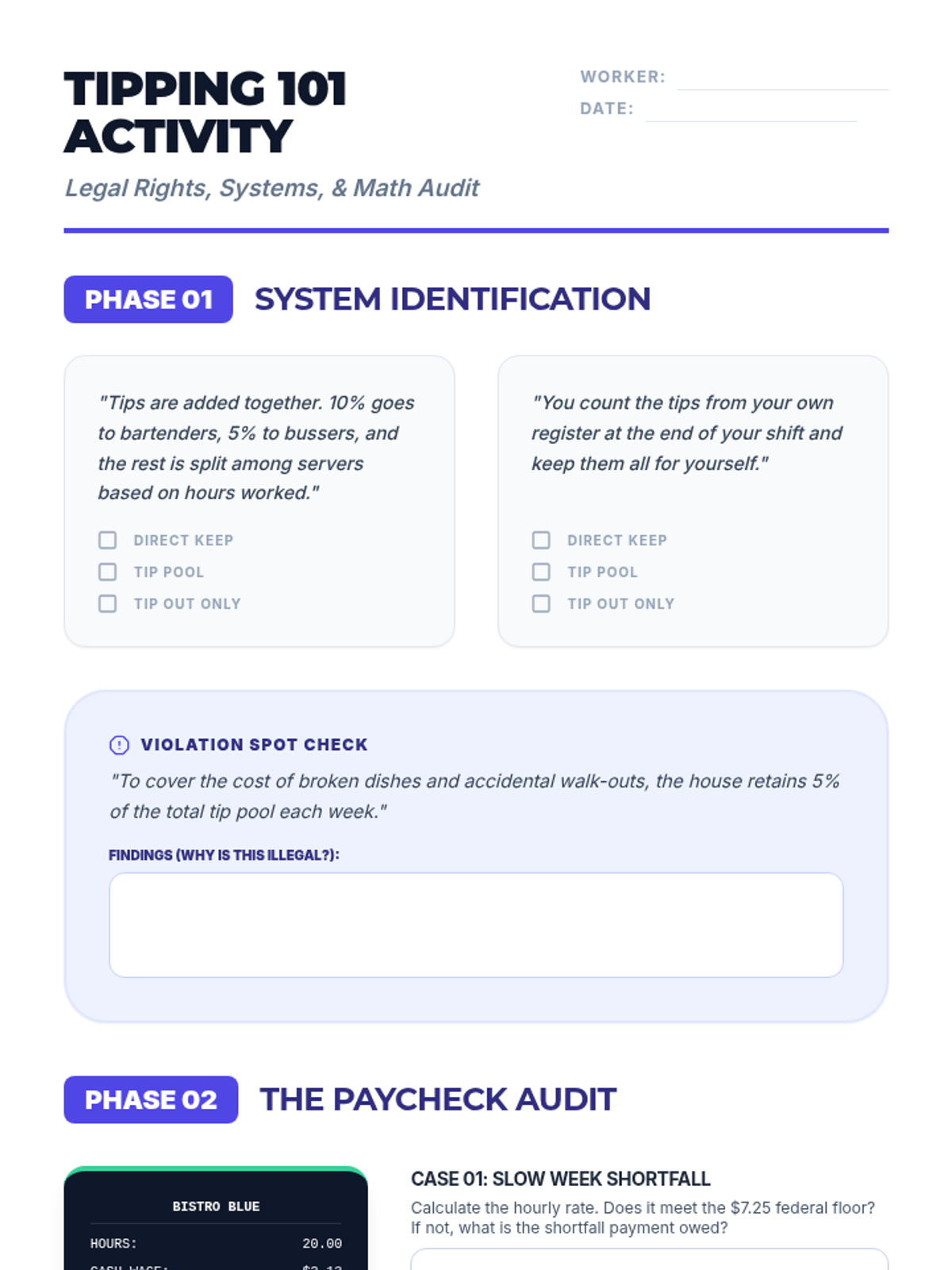
A focused 90-minute workshop on the fundamentals of tipping. Workers learn their legal rights under the FLSA, master the math of tip credits and shortfall payments, and practice auditing pay summaries for errors and illegal deductions.
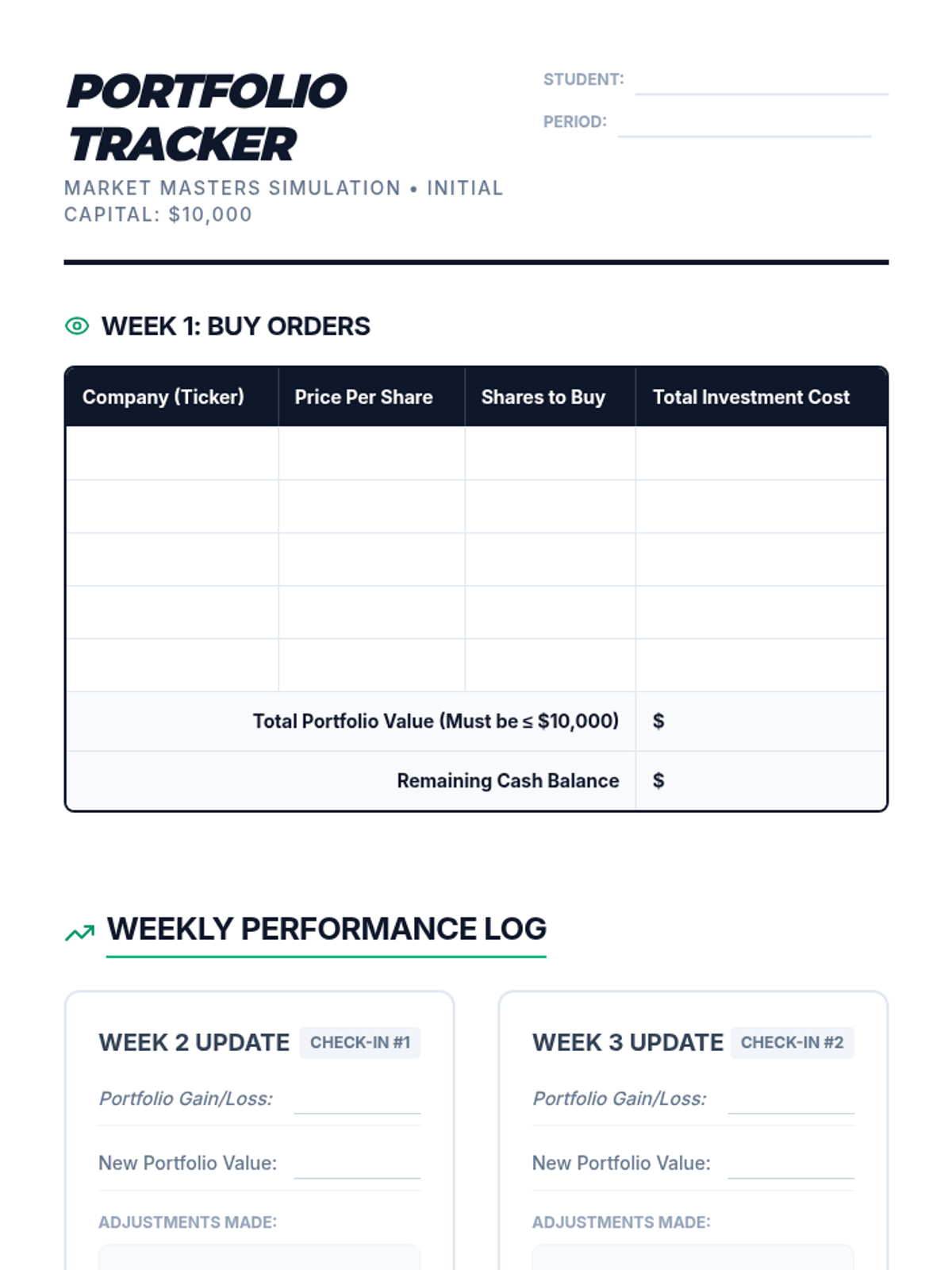
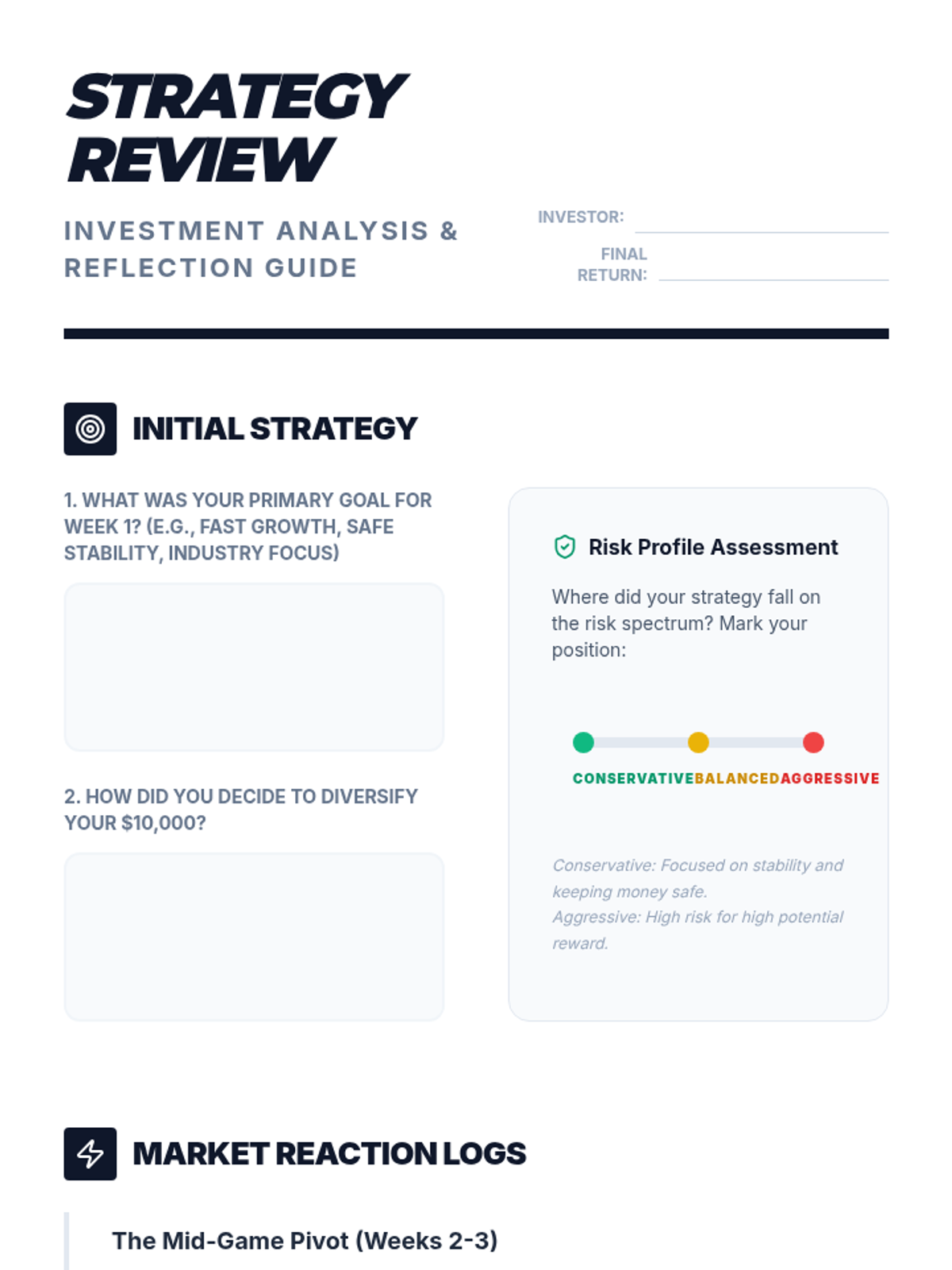
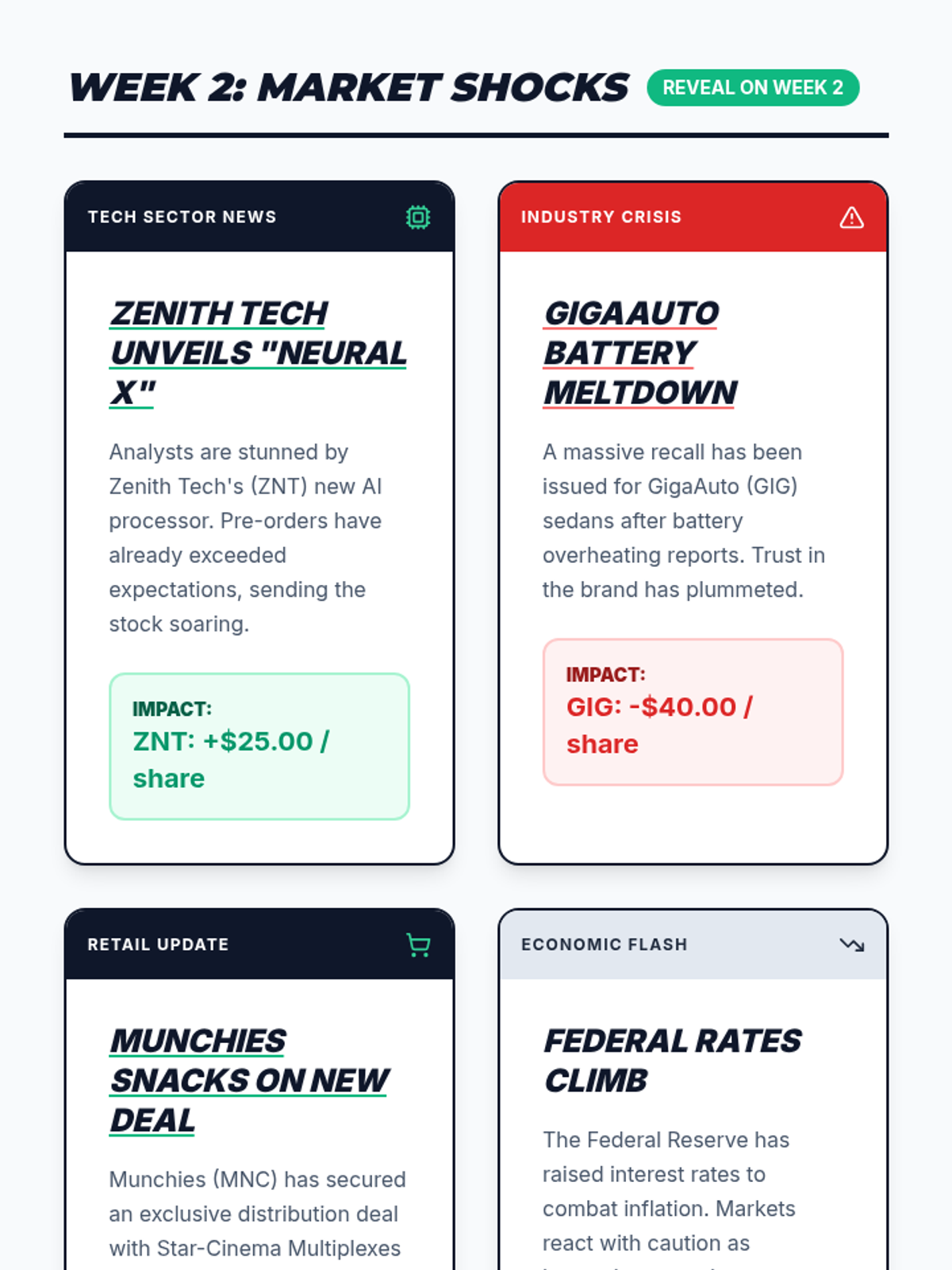
A hands-on introduction to financial markets and investment strategies through a four-week simulated portfolio management project.
A full-month curriculum focused on developing independence through real-world simulations, role-playing, and practical application of functional life skills.
A comprehensive curriculum covering financial literacy, economic principles, and civic systems through historical case studies, ethical dilemmas, and real-world simulations.
A 6-week curriculum designed to bridge the gap between high school math and real-world financial and practical independence, covering paychecks, budgeting, credit, shopping, housing, and measurement.
A series of lessons and projects designed to transition students from job-seeking skills to workplace success and independent living, focusing on professional ethics, communication, and long-term planning.
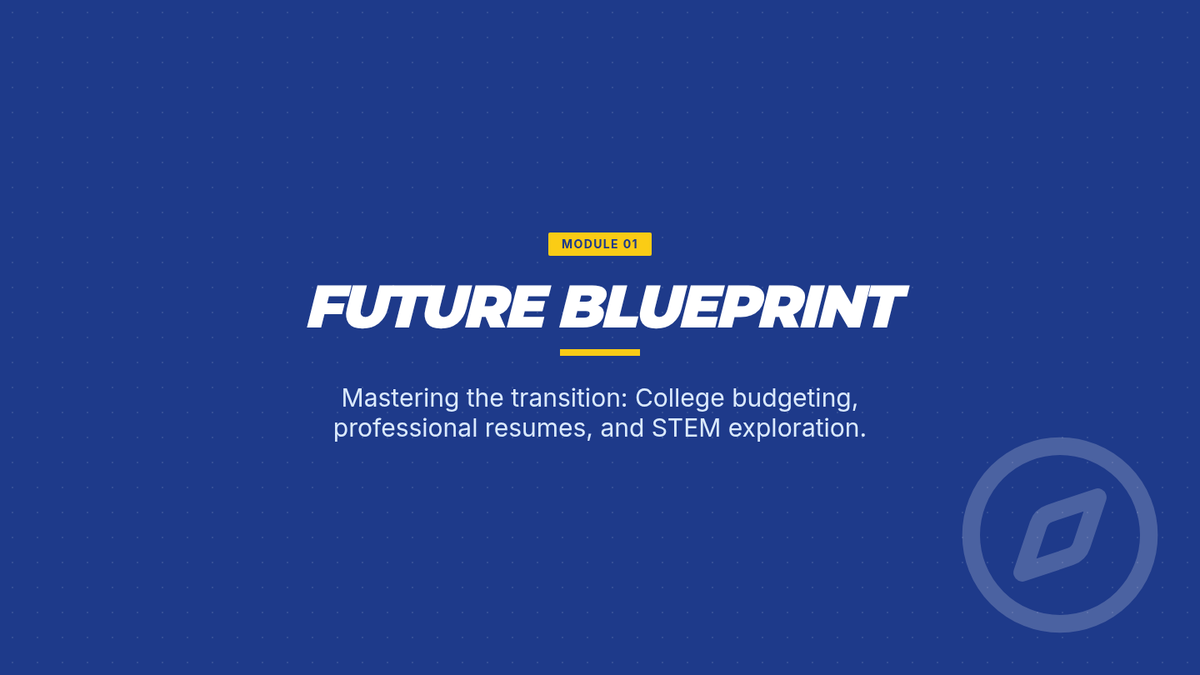
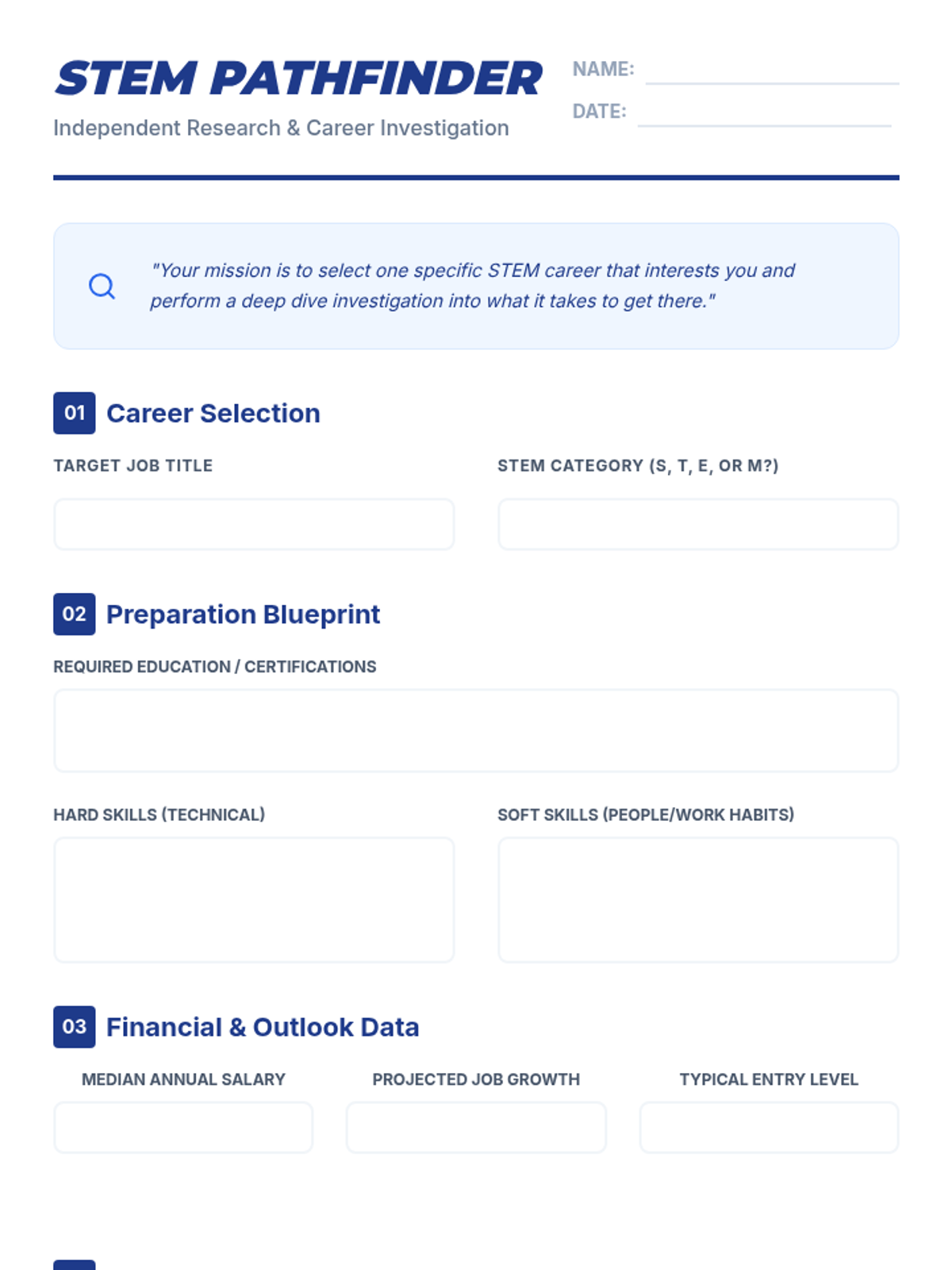
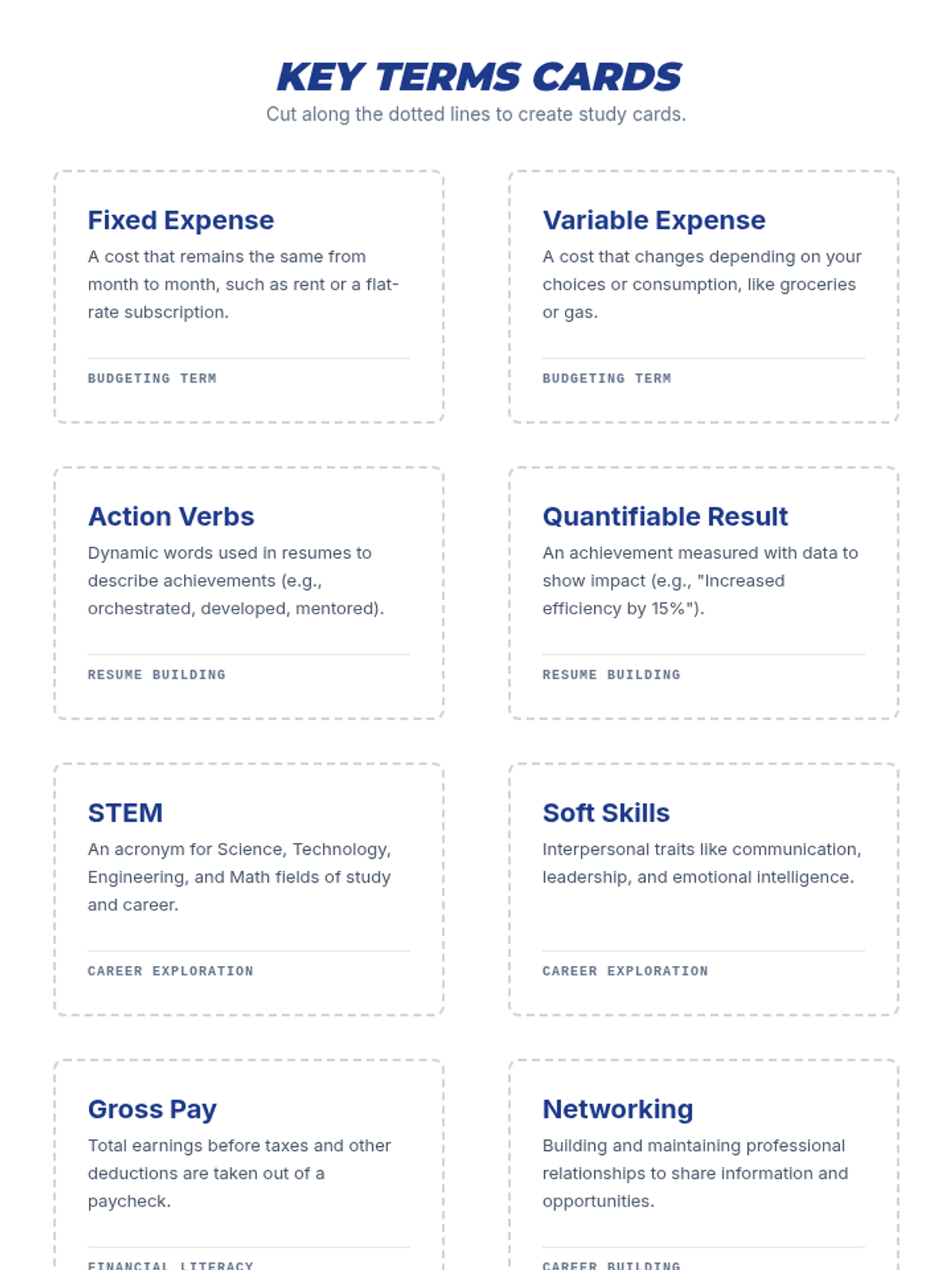
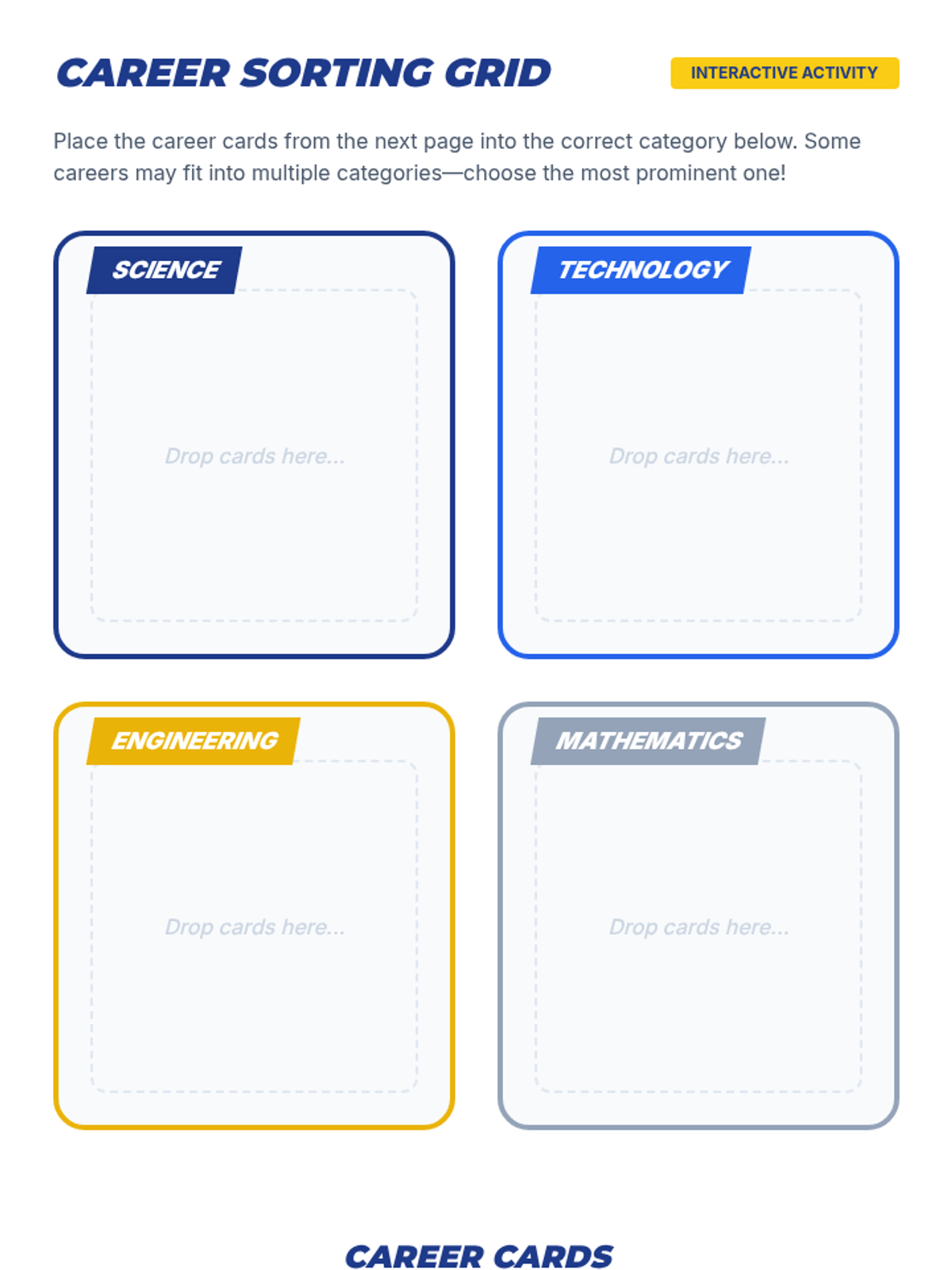
A comprehensive unit designed to prepare students for the transition to adulthood, focusing on financial literacy for college, professional resume writing, and exploration of STEM career opportunities.
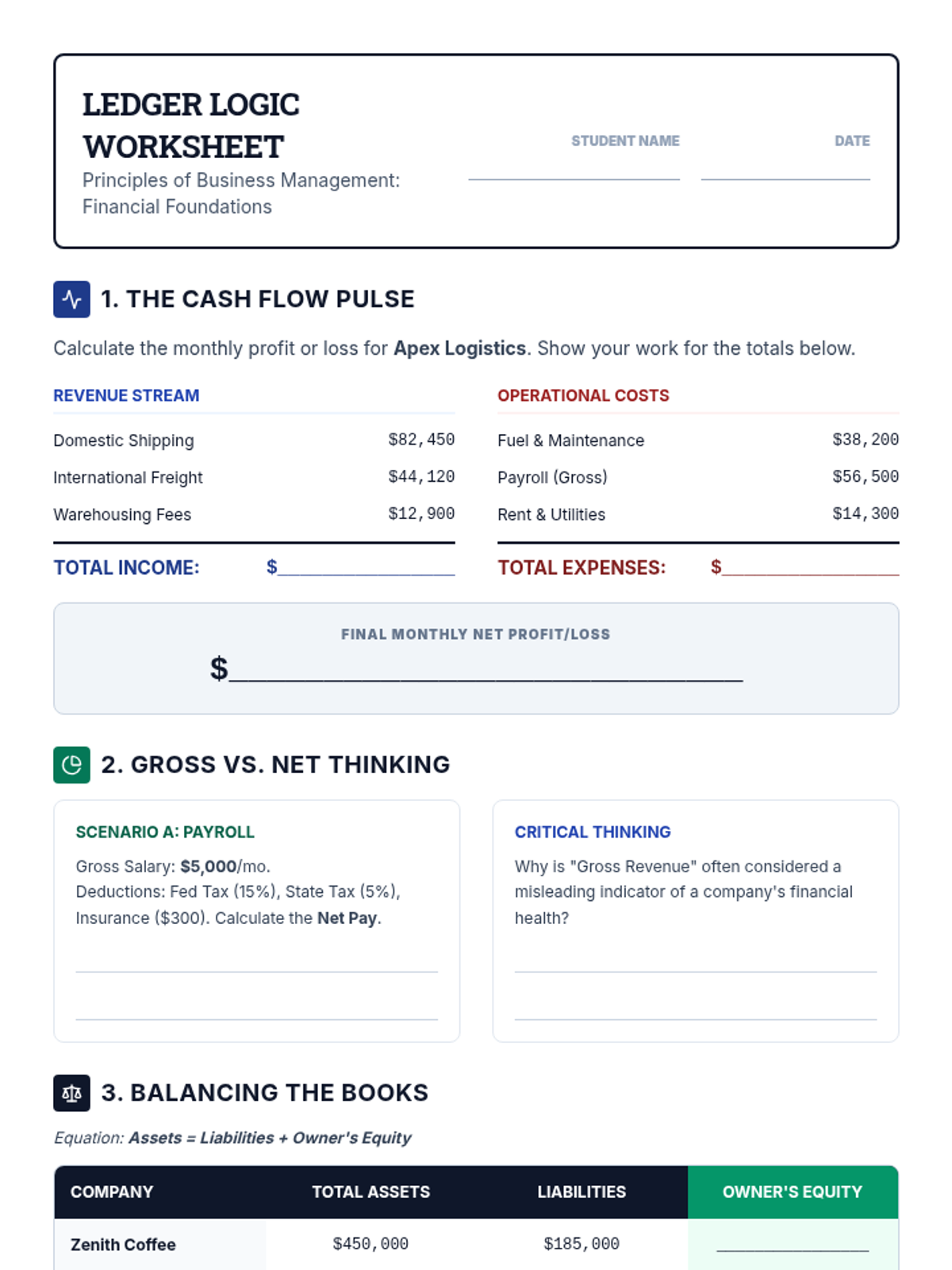
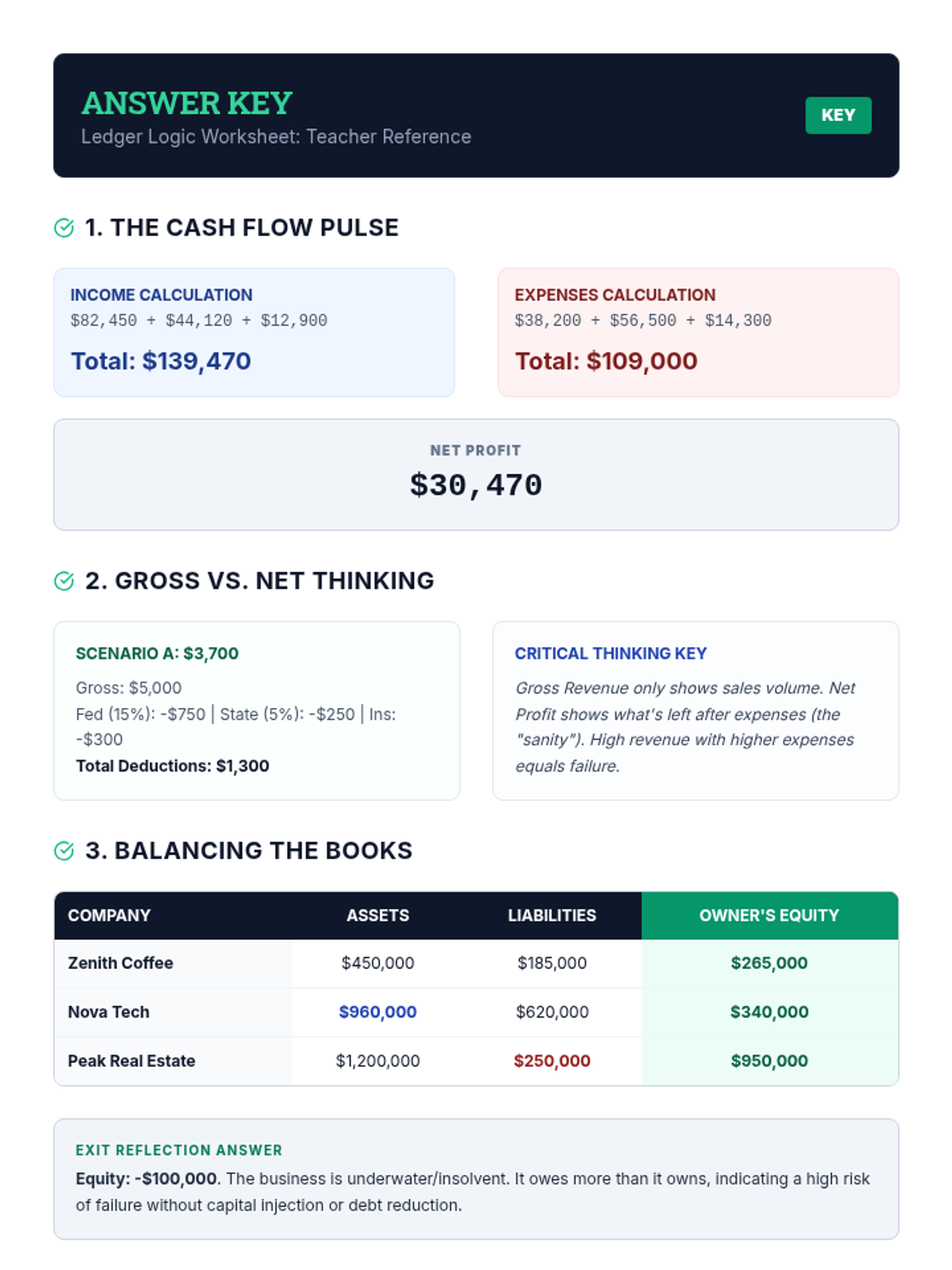
A comprehensive unit on business finance basics, focusing on the mechanics of income, expenses, and the fundamental accounting equation. Students explore the practical differences between gross and net figures and how they impact business health.
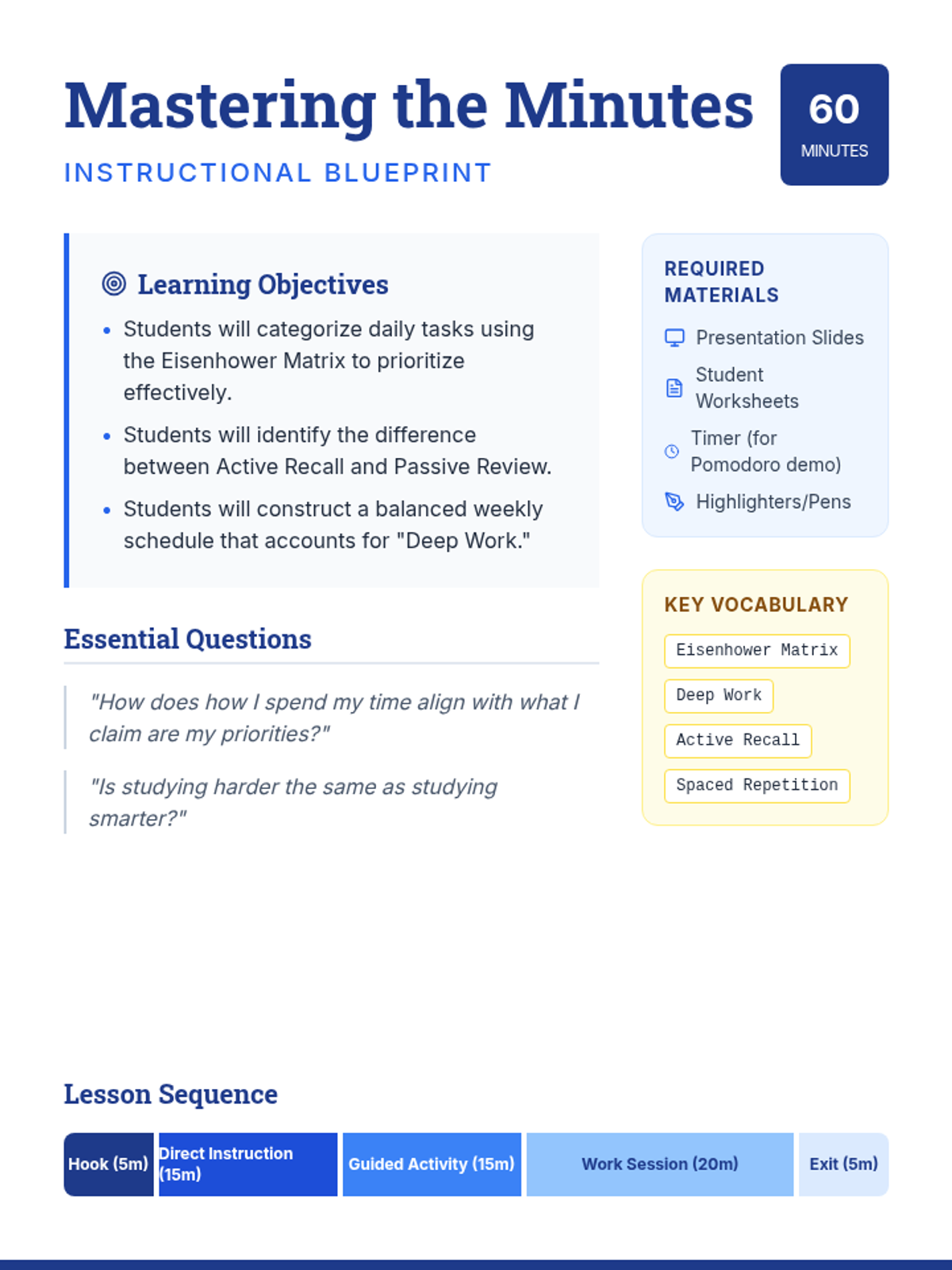
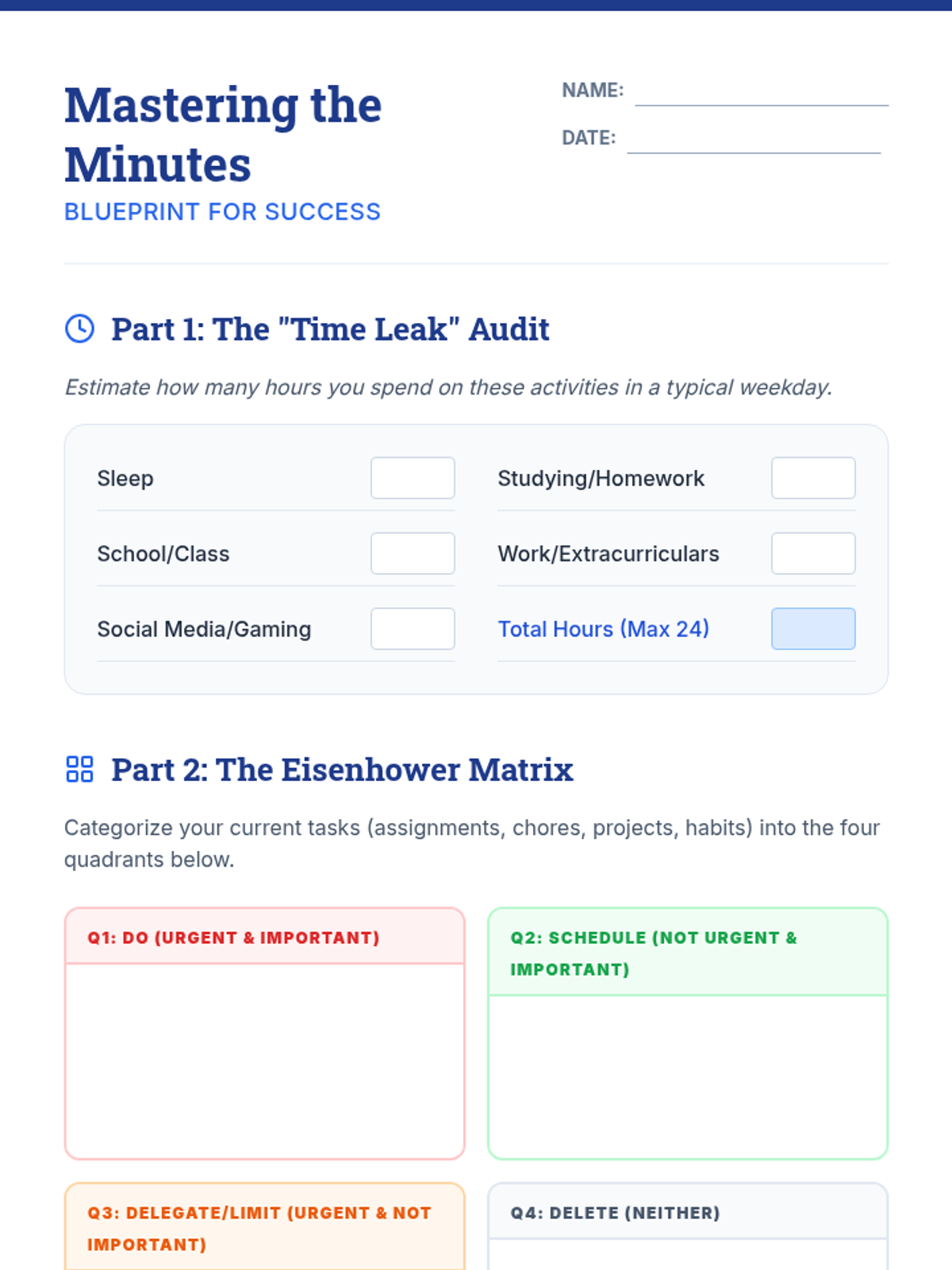
A comprehensive series designed to prepare students for post-secondary success through essential life skills, including time management, study habits, and digital literacy.
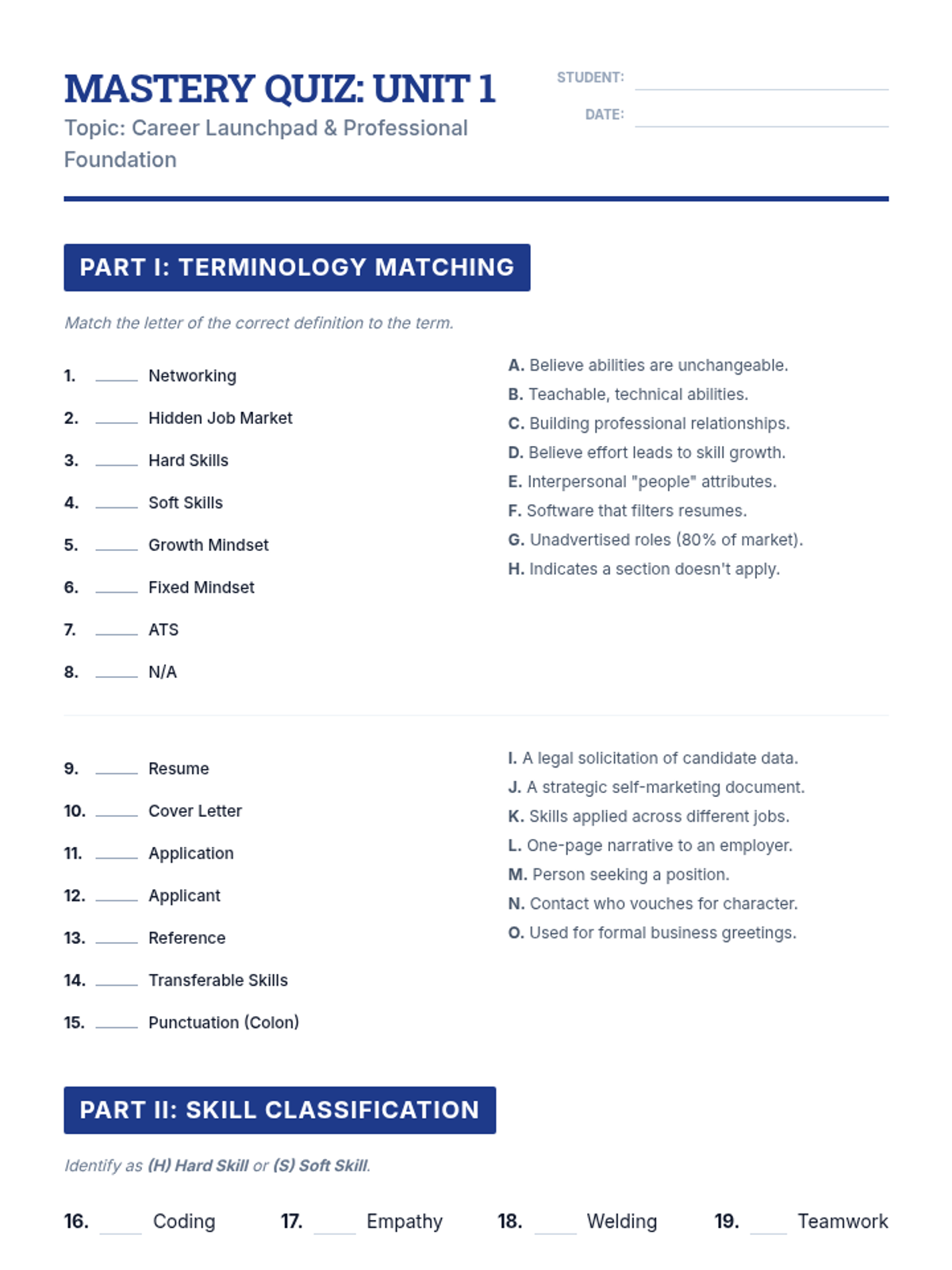
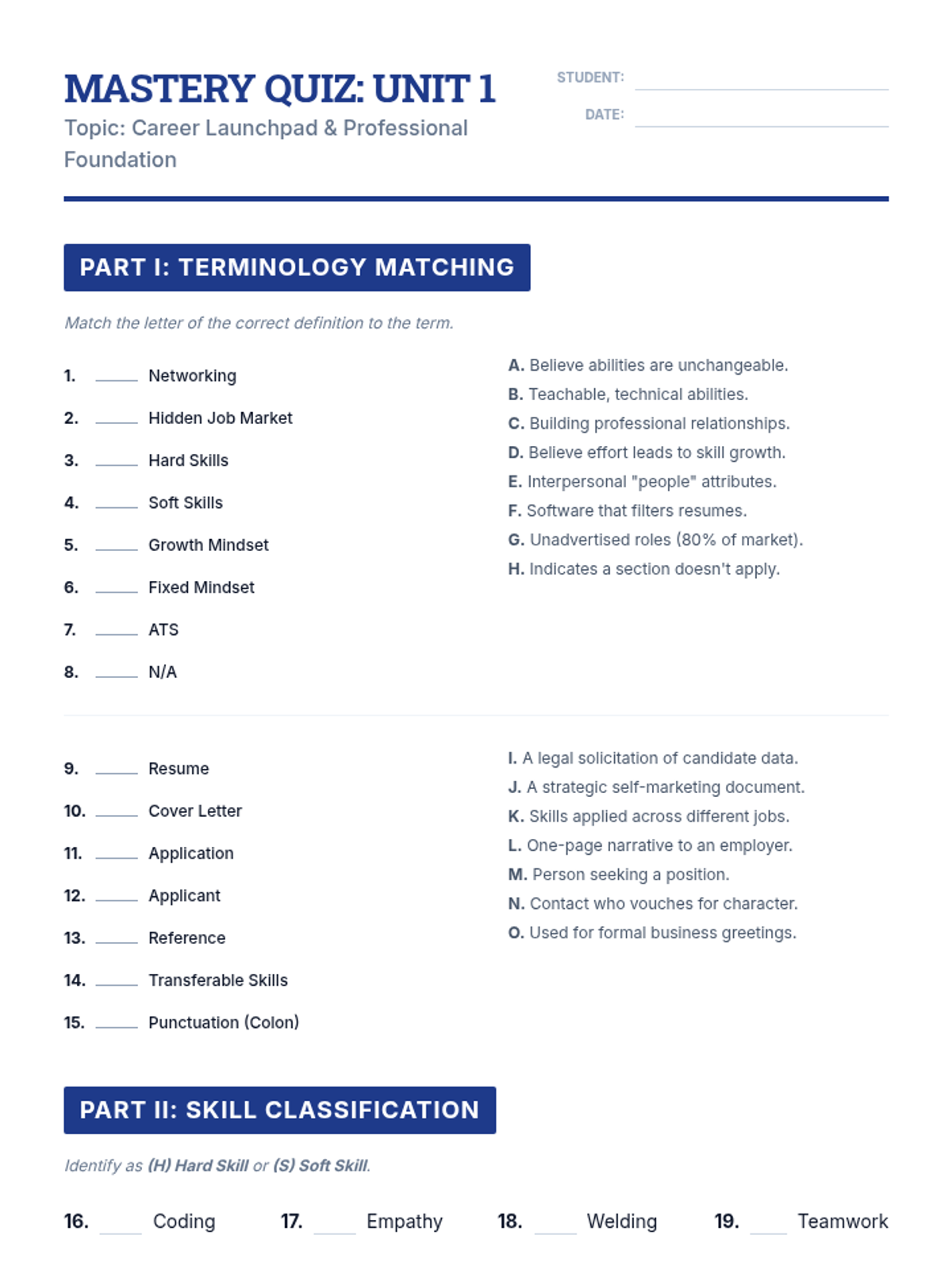
A comprehensive program designed to guide students through the essentials of career exploration, professional document preparation, and the job application process.
A comprehensive series of lessons designed to equip students with essential life skills for independent living, focusing on financial literacy, personal organization, and daily responsibilities.
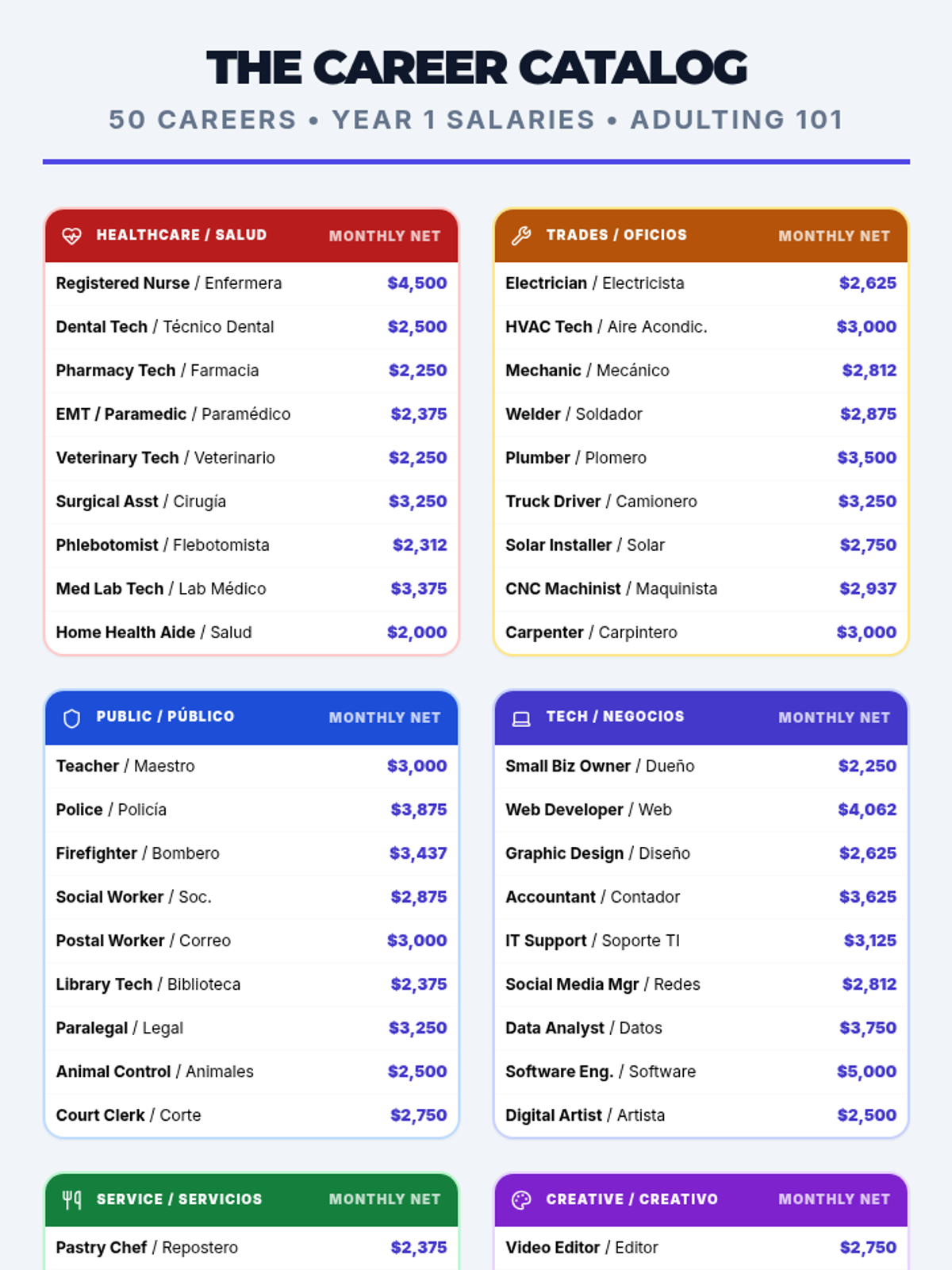
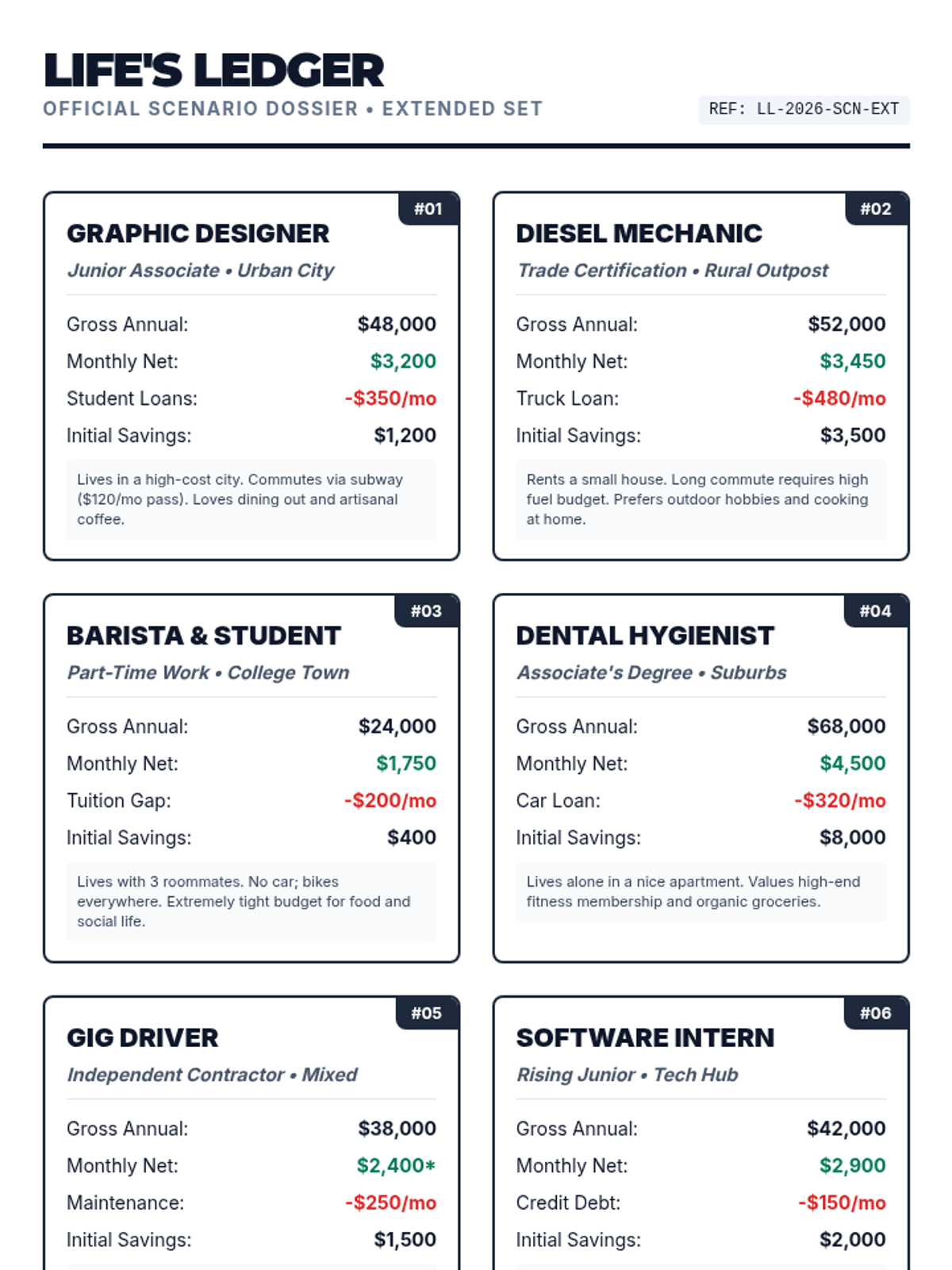
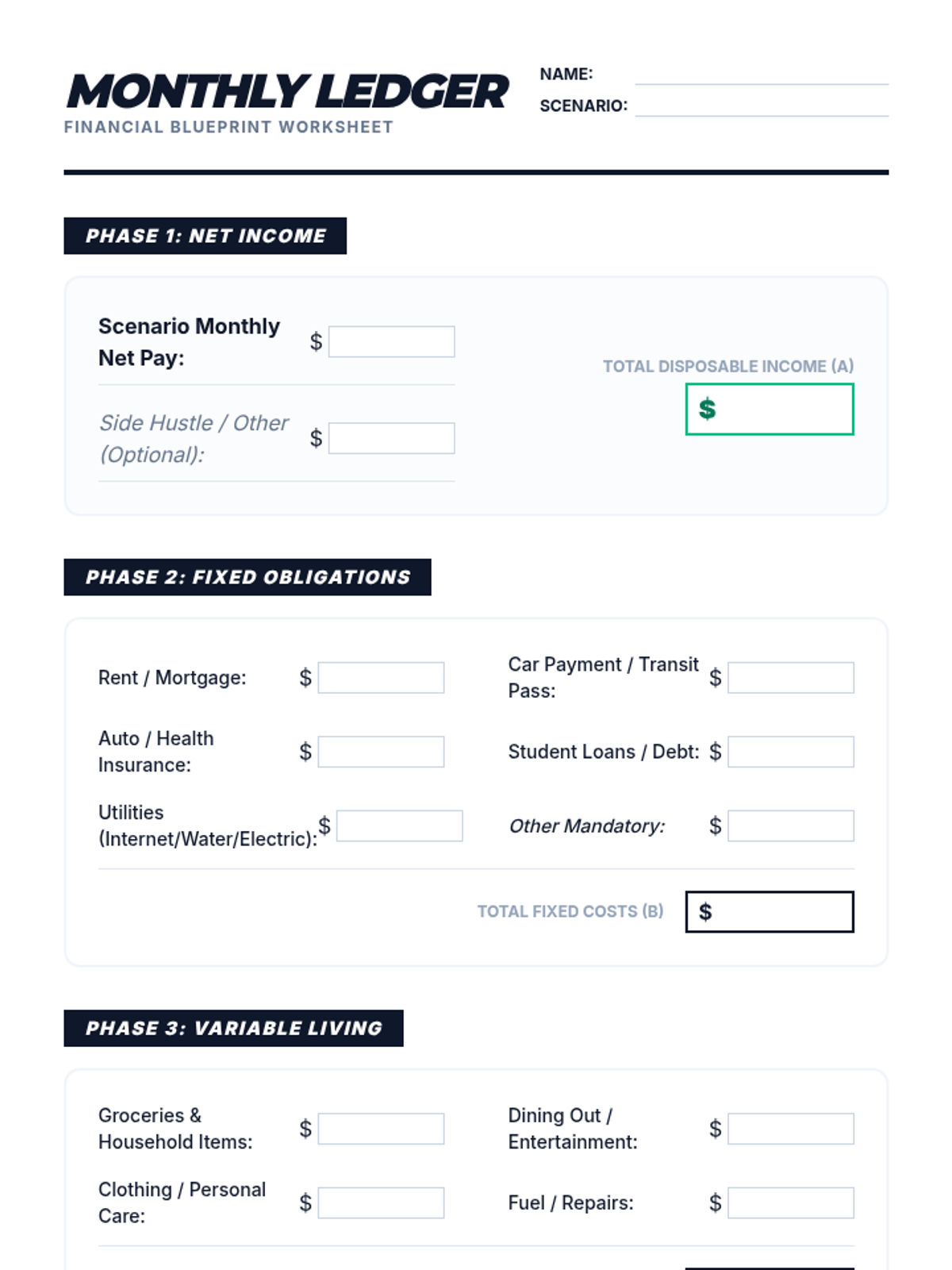
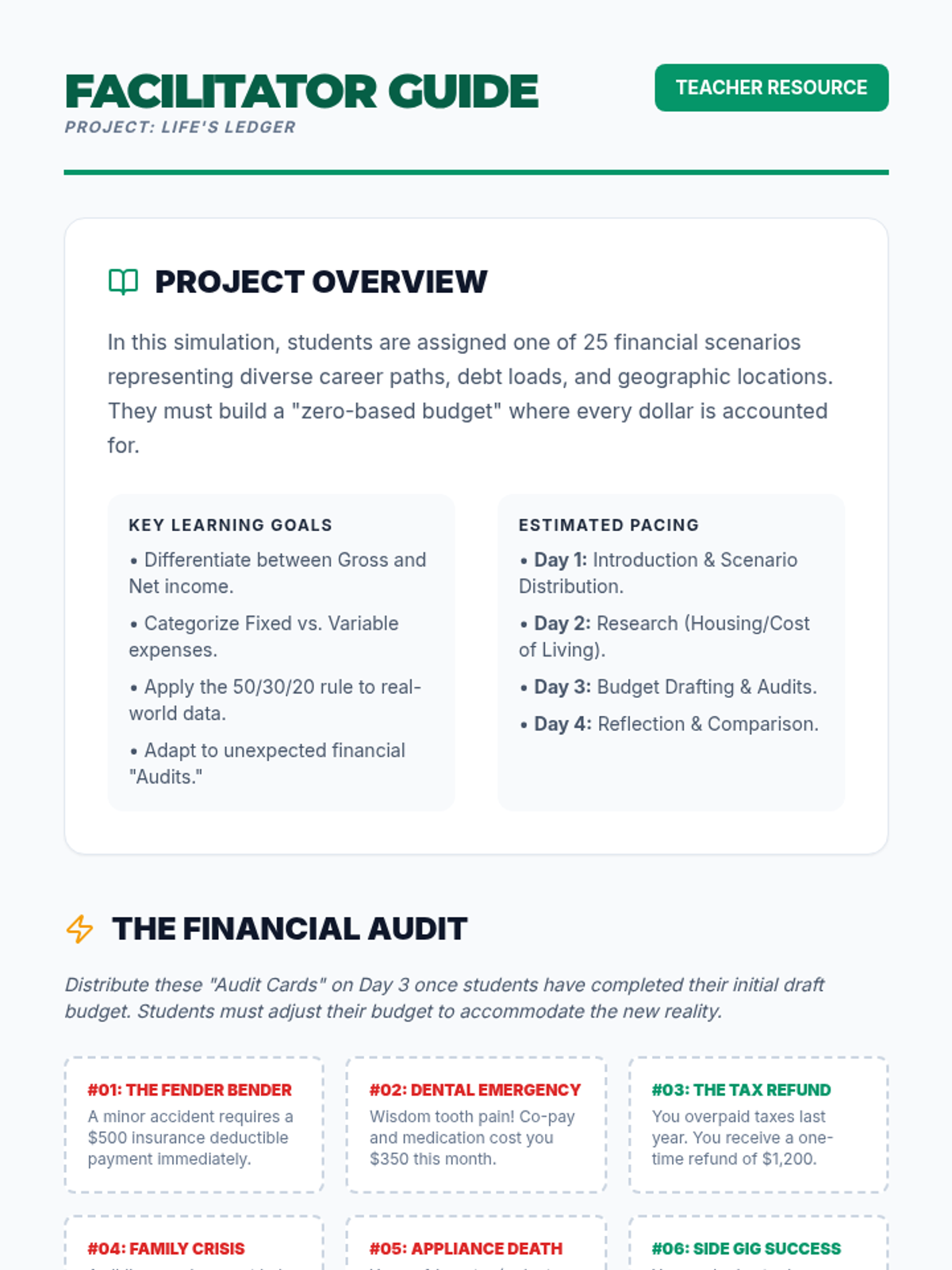
A comprehensive budgeting project where students navigate 25 unique financial scenarios, ranging from entry-level trades to professional careers, to learn the realities of financial planning and adulting.
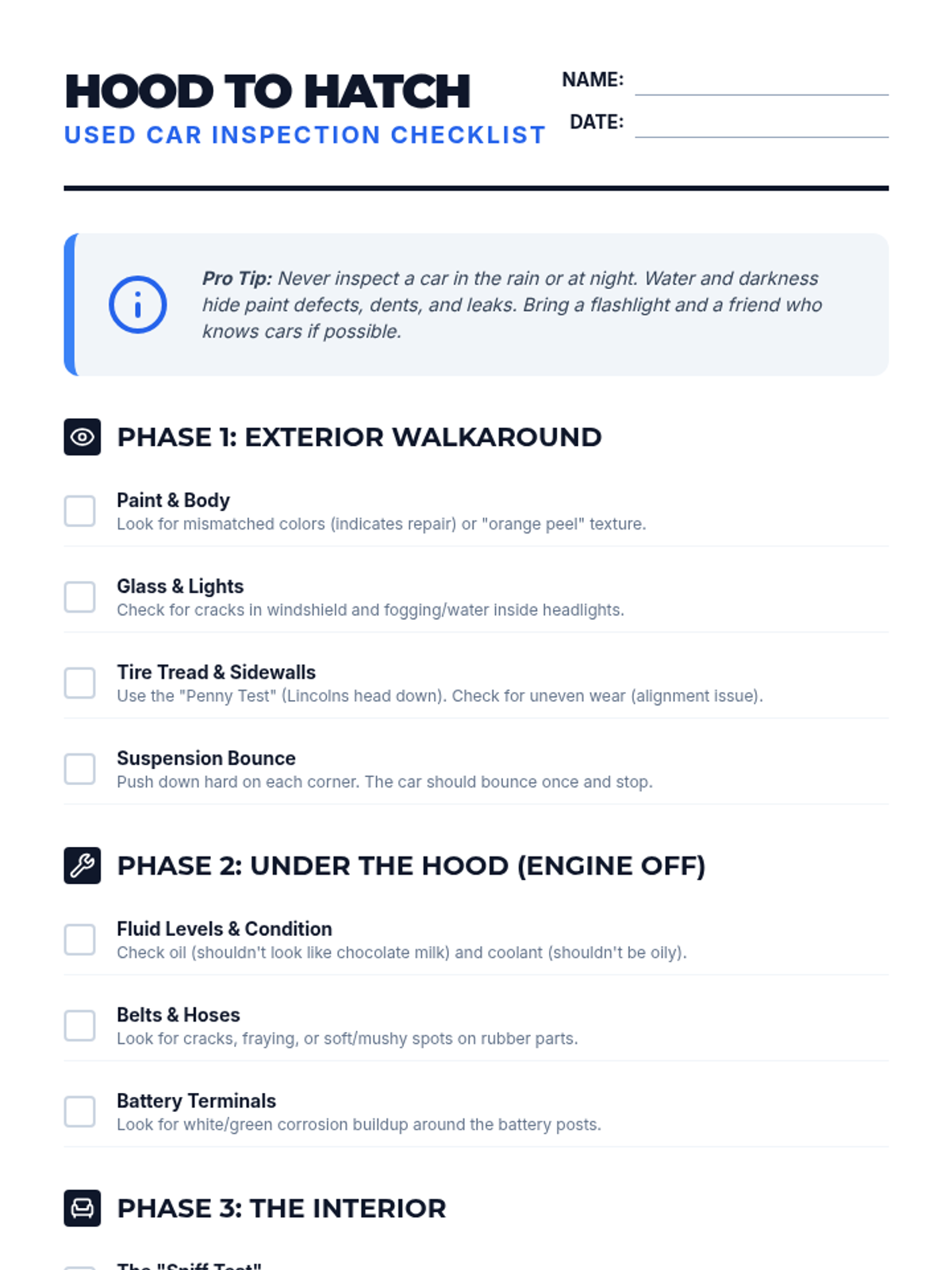
A comprehensive guide for first-time car buyers covering budgeting, inspection, financing, and insurance. Students will learn how to navigate the complex process of purchasing their first vehicle while avoiding common pitfalls.
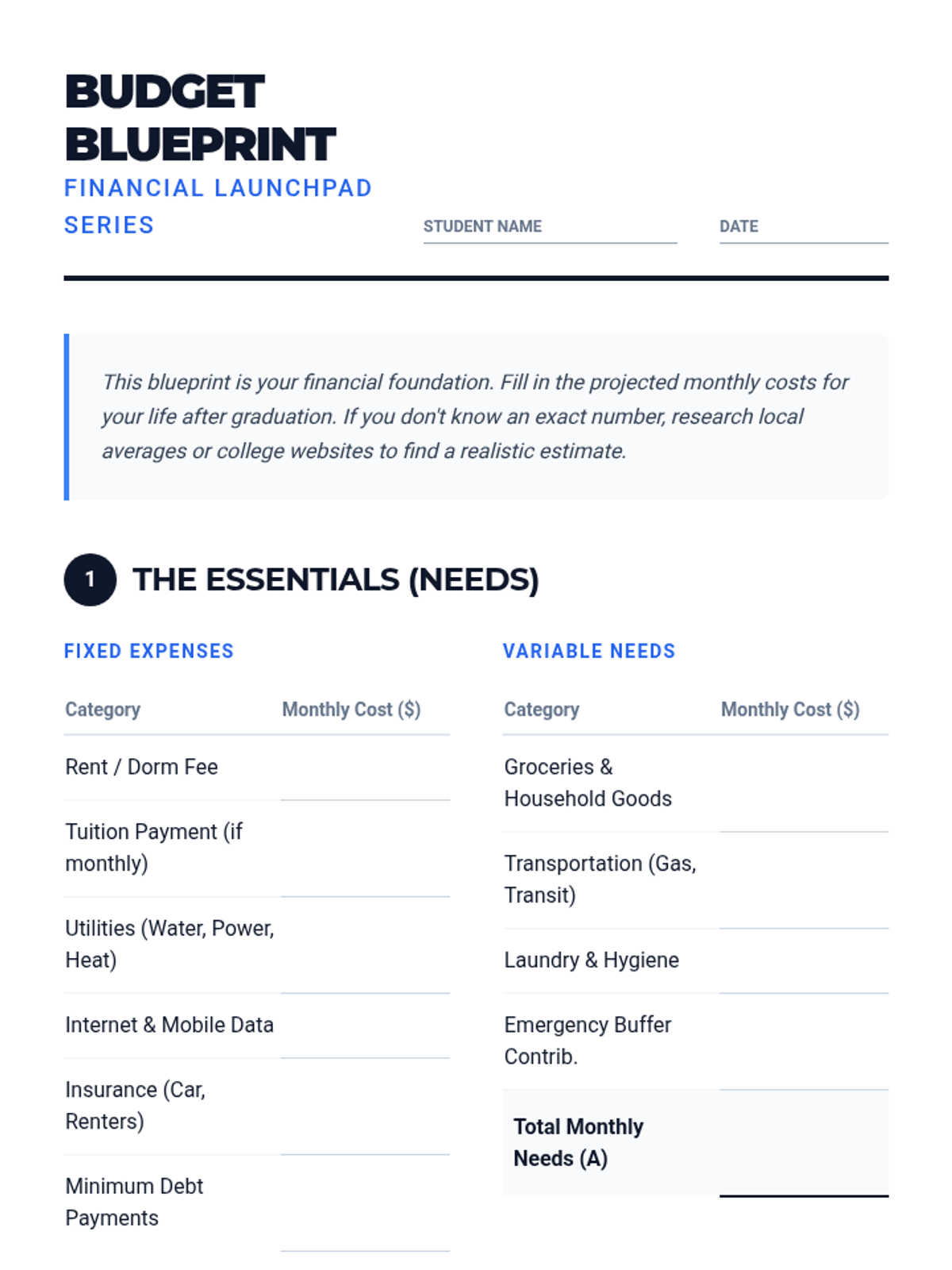
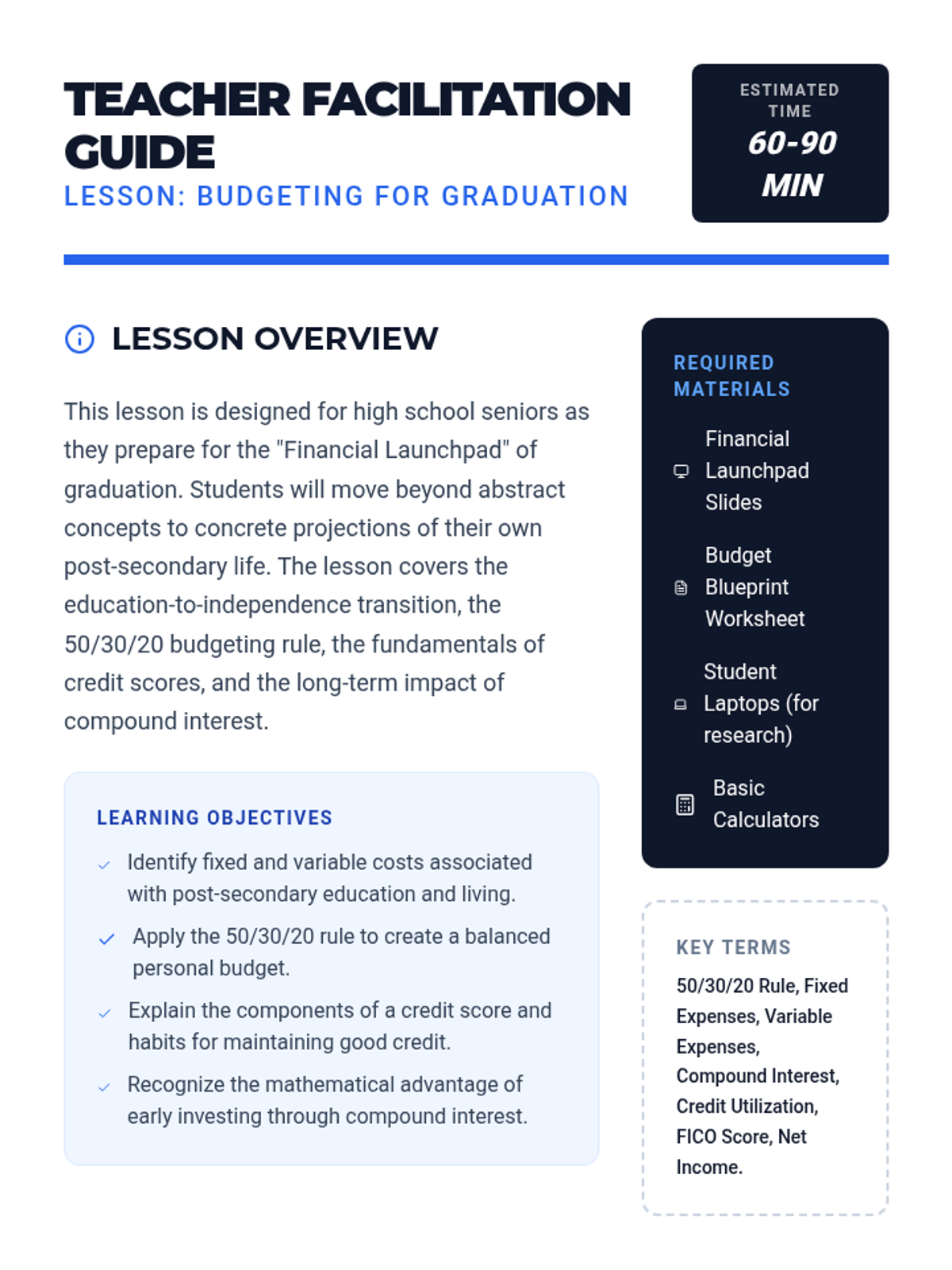
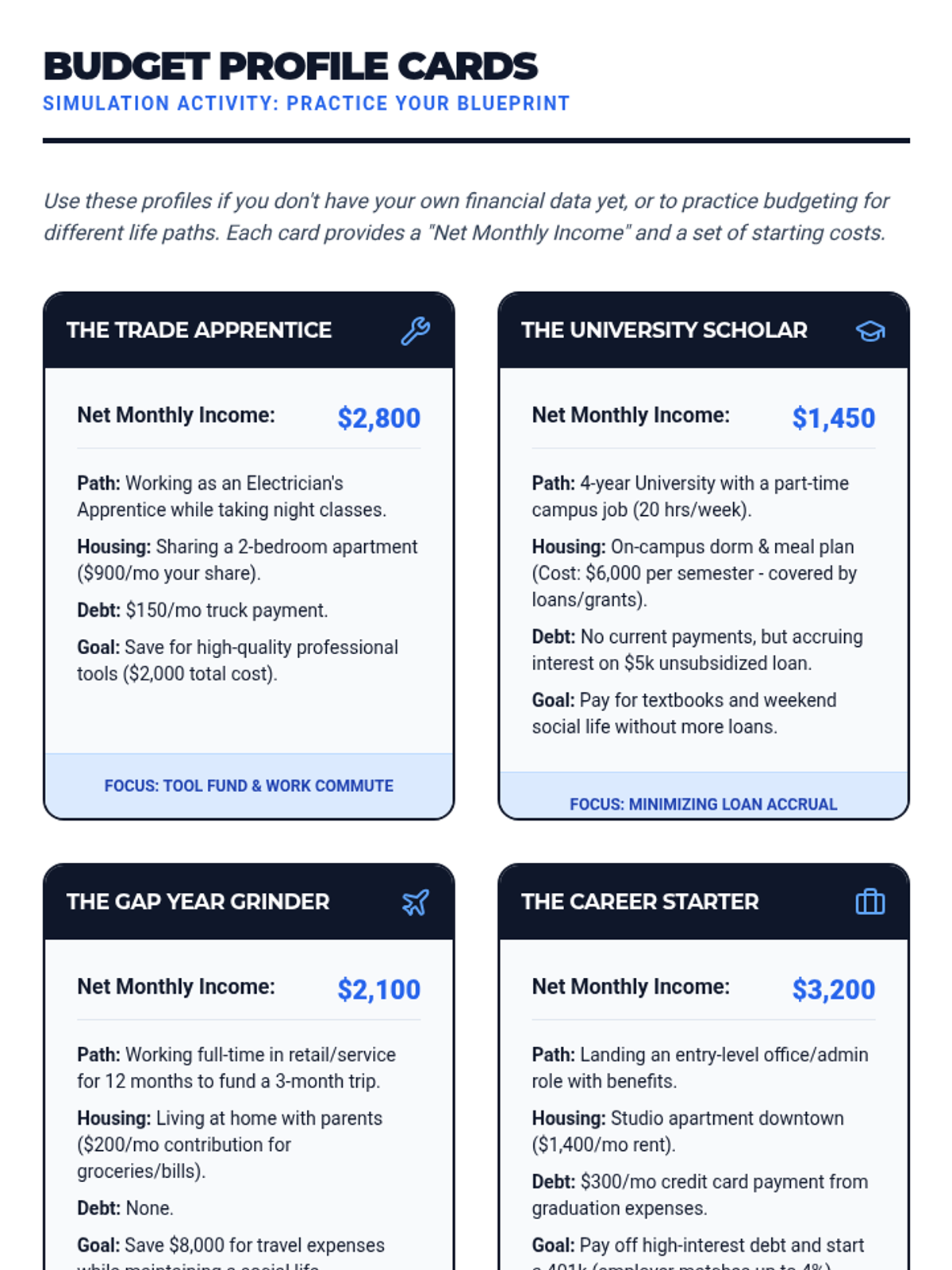
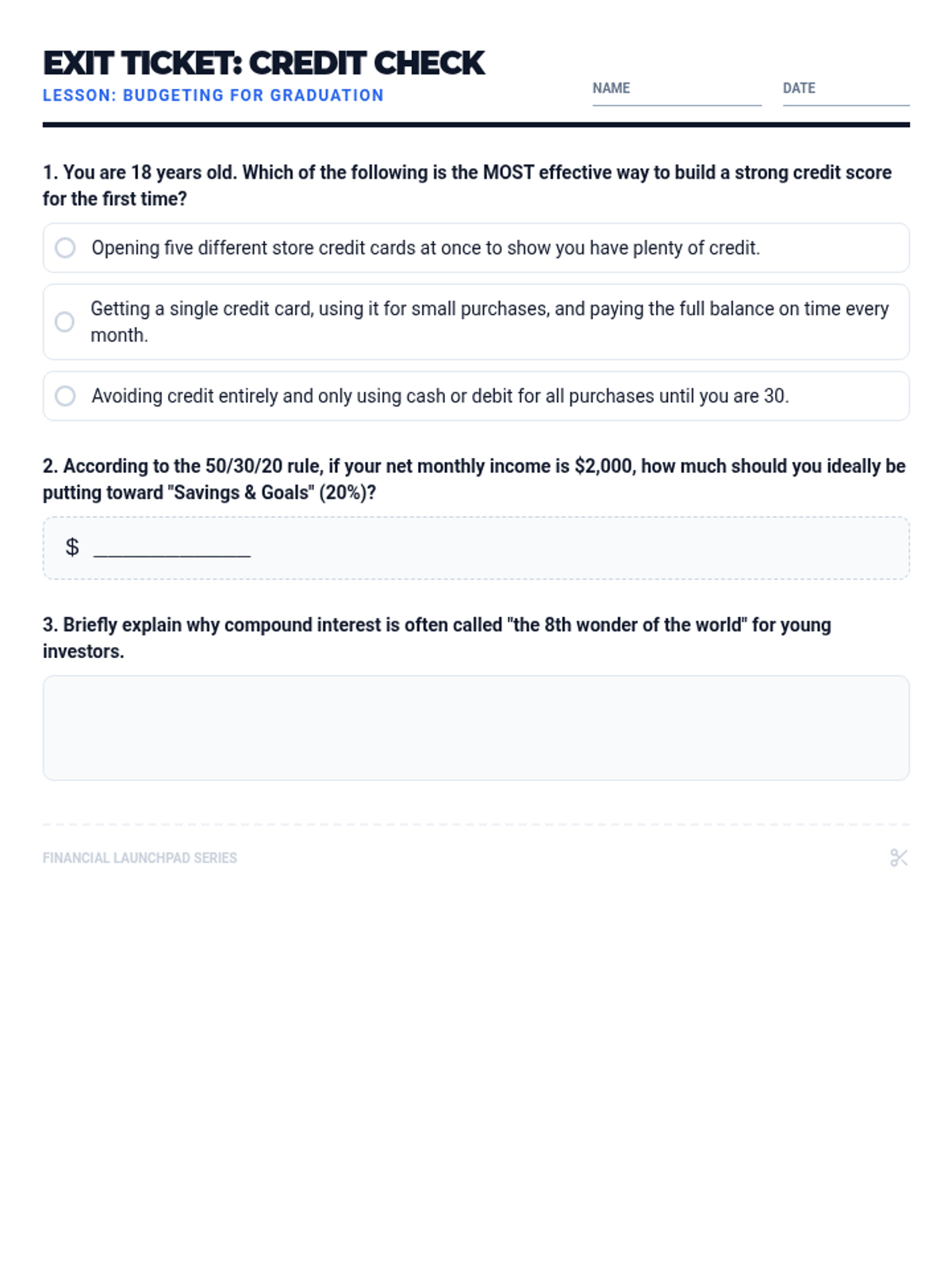
A comprehensive personal finance unit designed for high school seniors preparing for life after graduation, focusing on budgeting, post-secondary costs, credit management, and long-term saving.
A comprehensive year-long curriculum for high school seniors focusing on college readiness, career planning, financial literacy, and social-emotional well-being. This sequence guides students through the complexities of post-secondary transitions with a special focus on arts-based pathways.
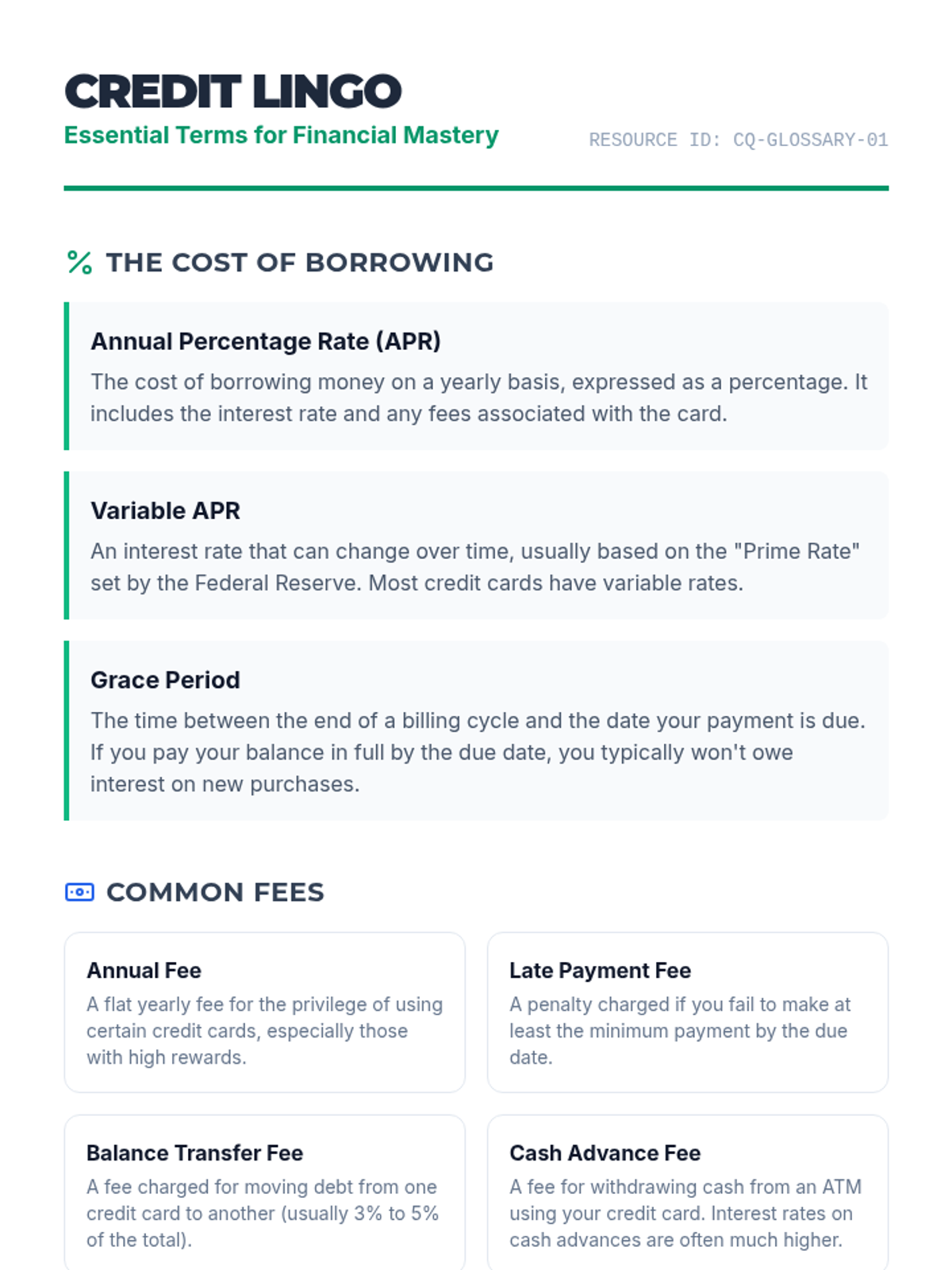
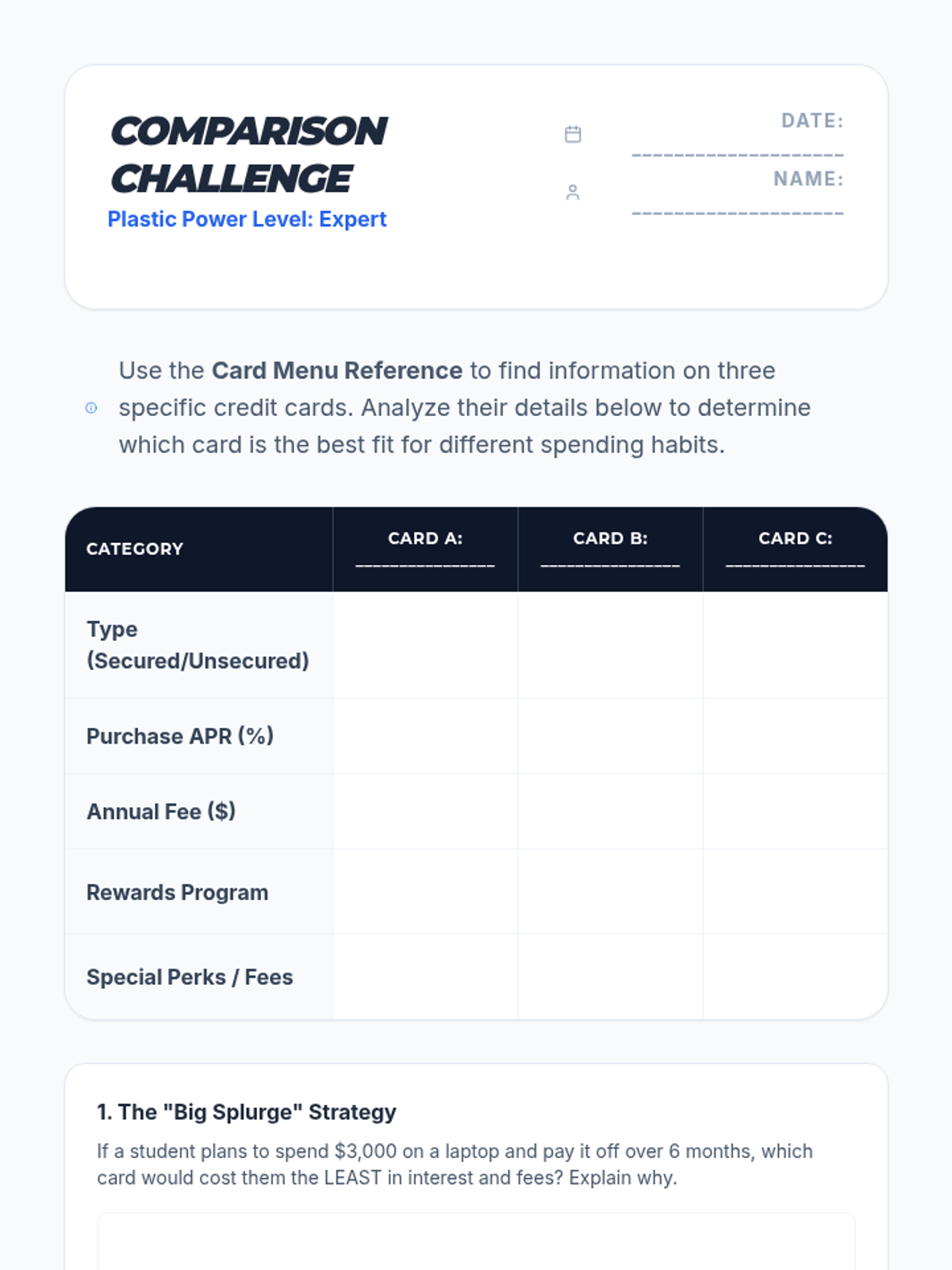
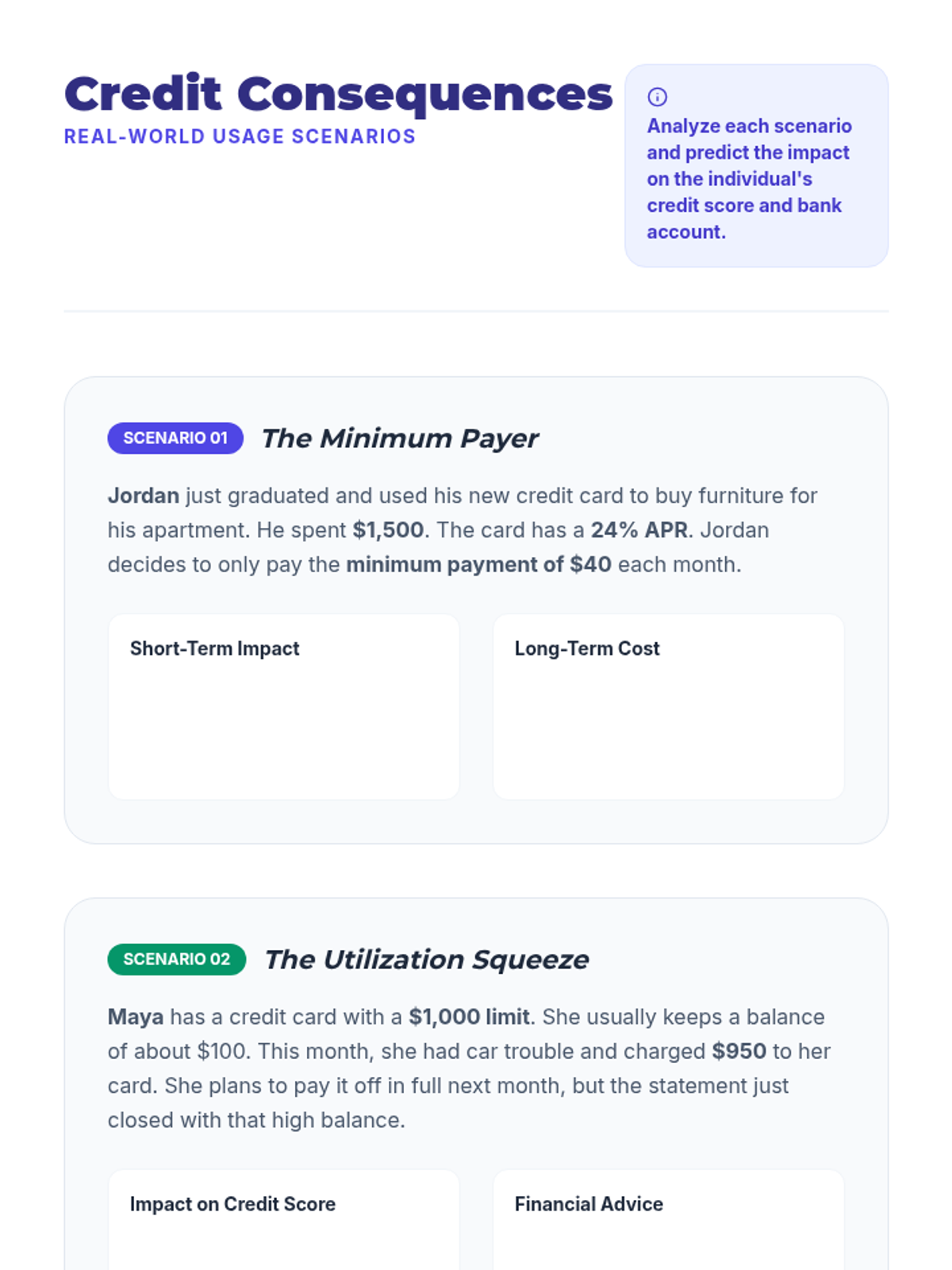
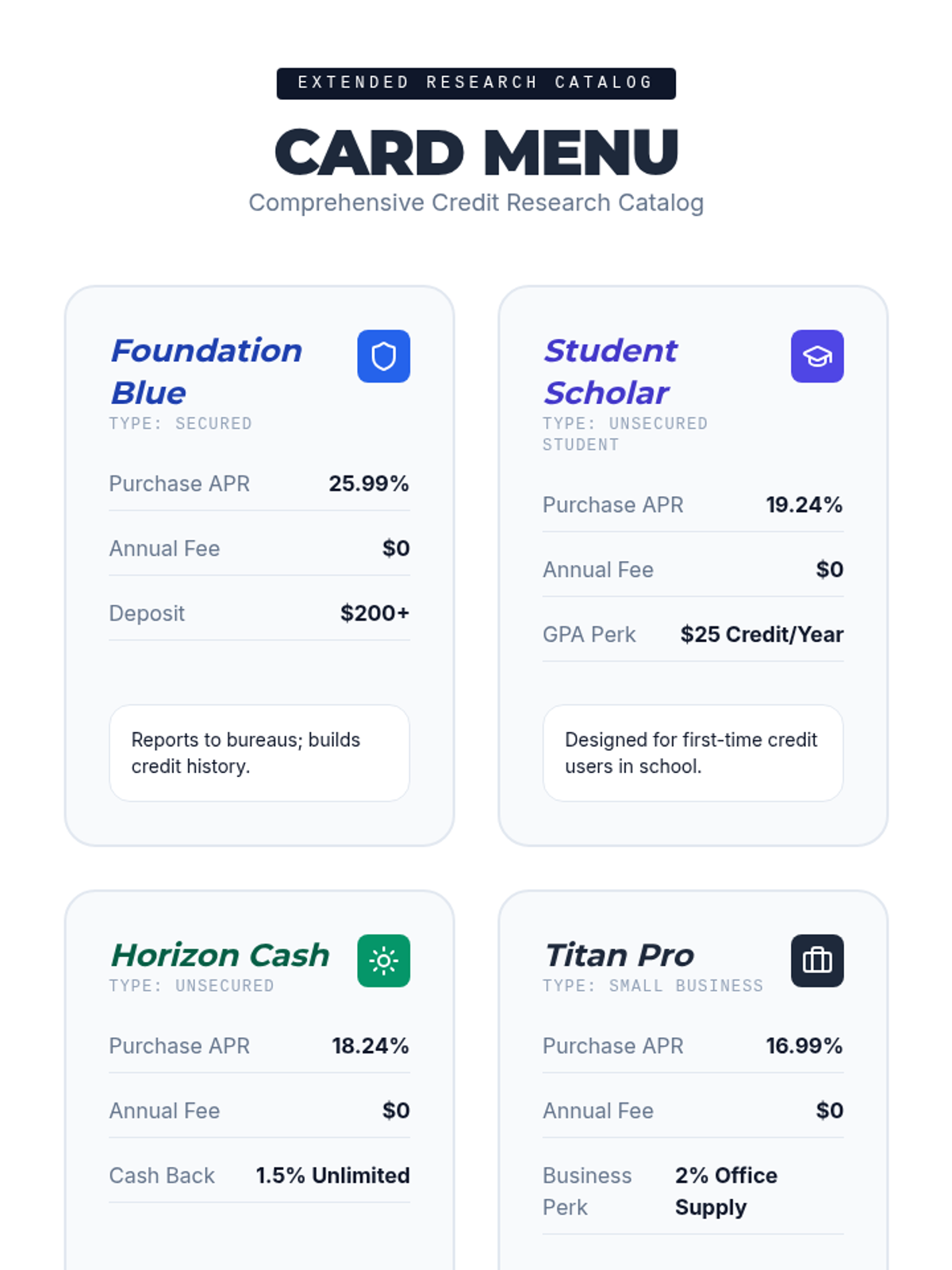
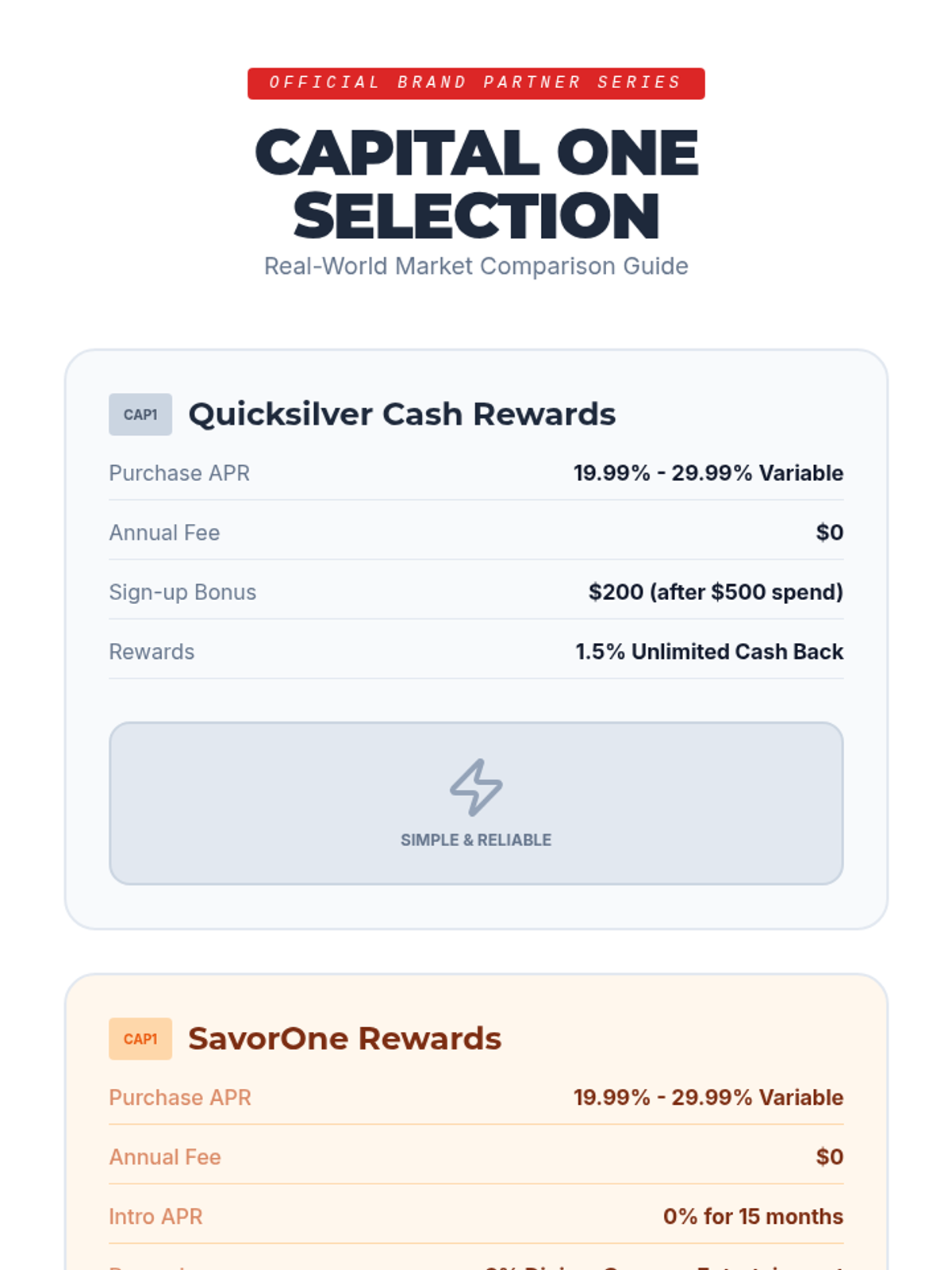
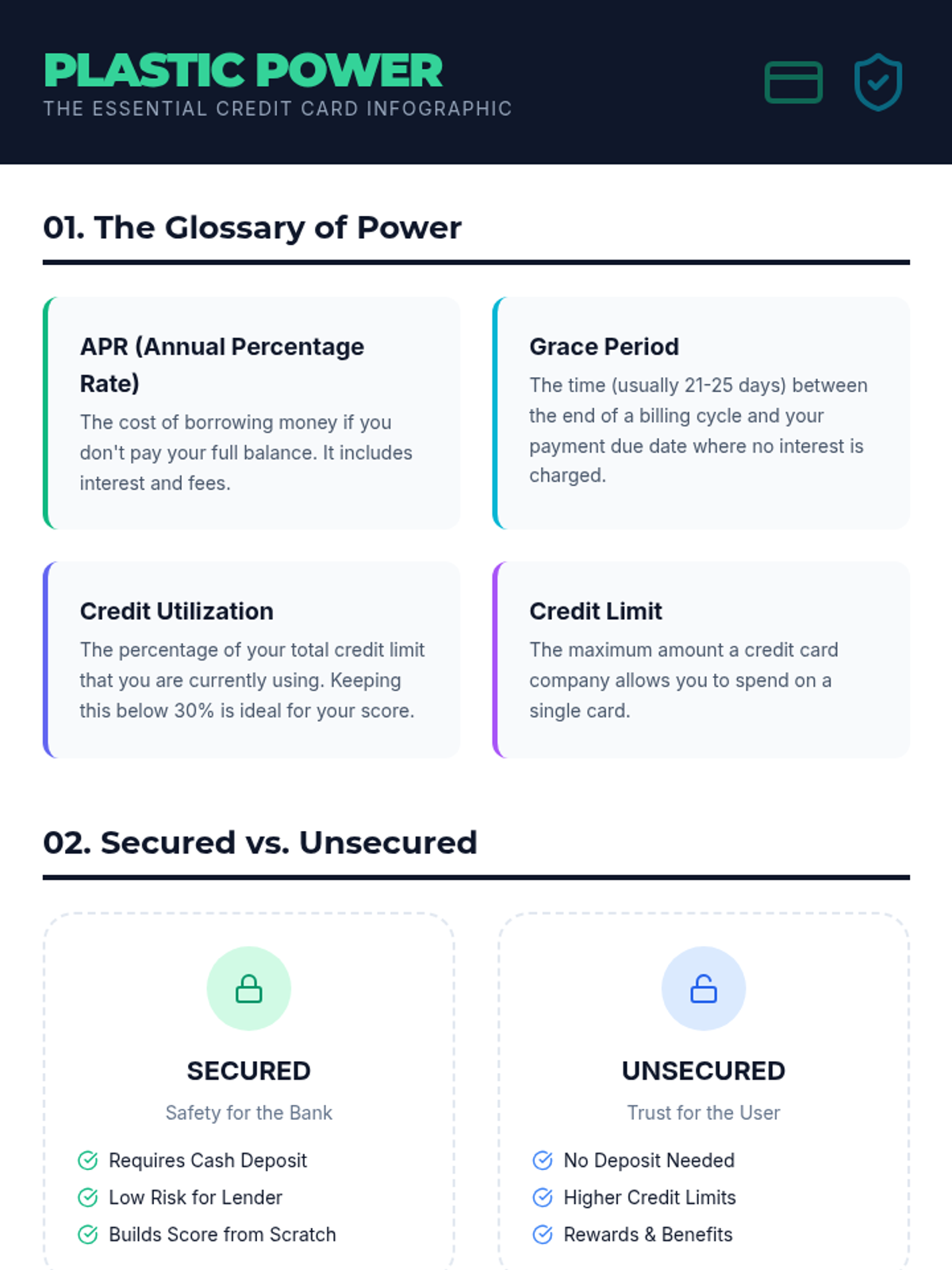
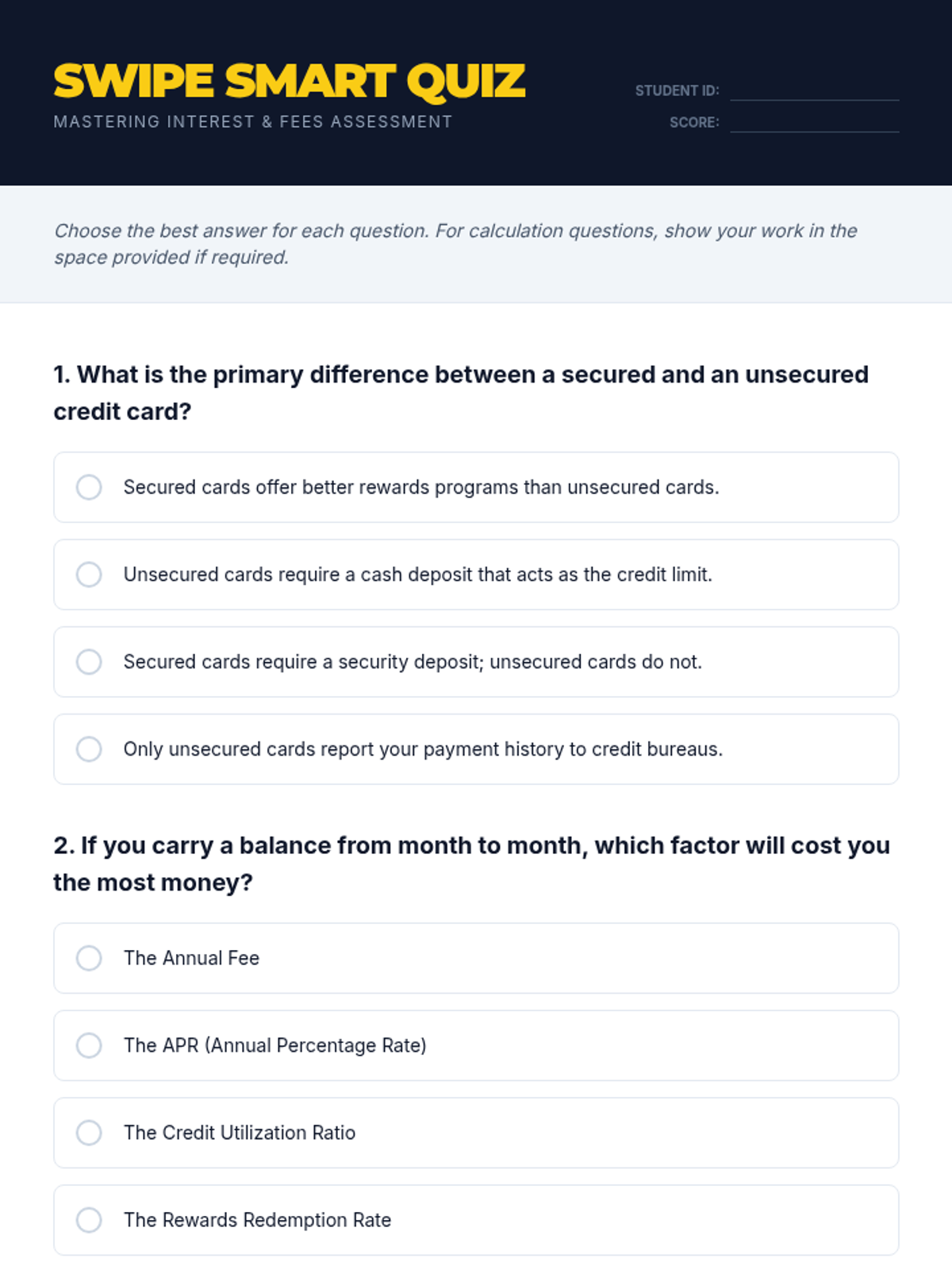
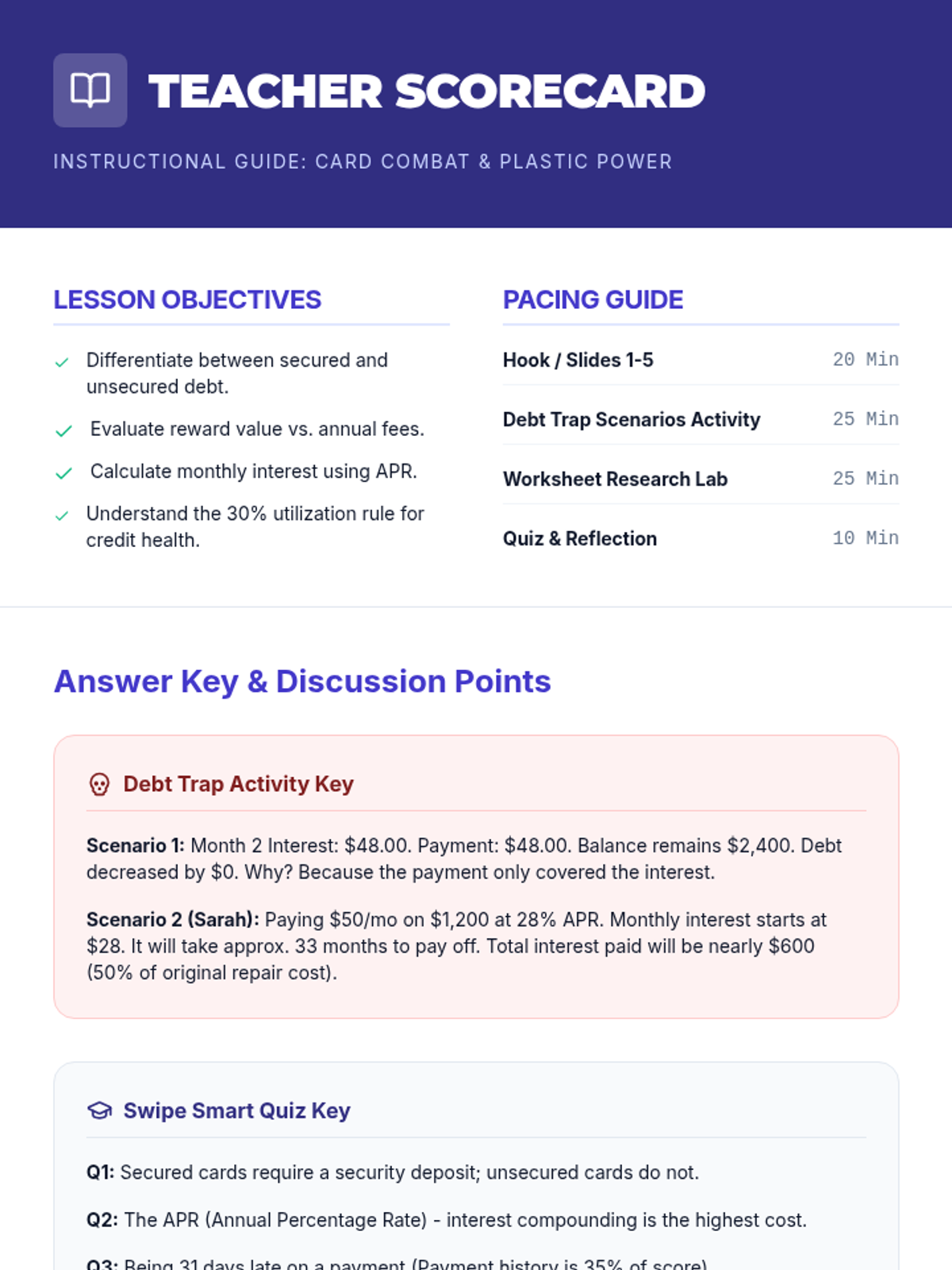
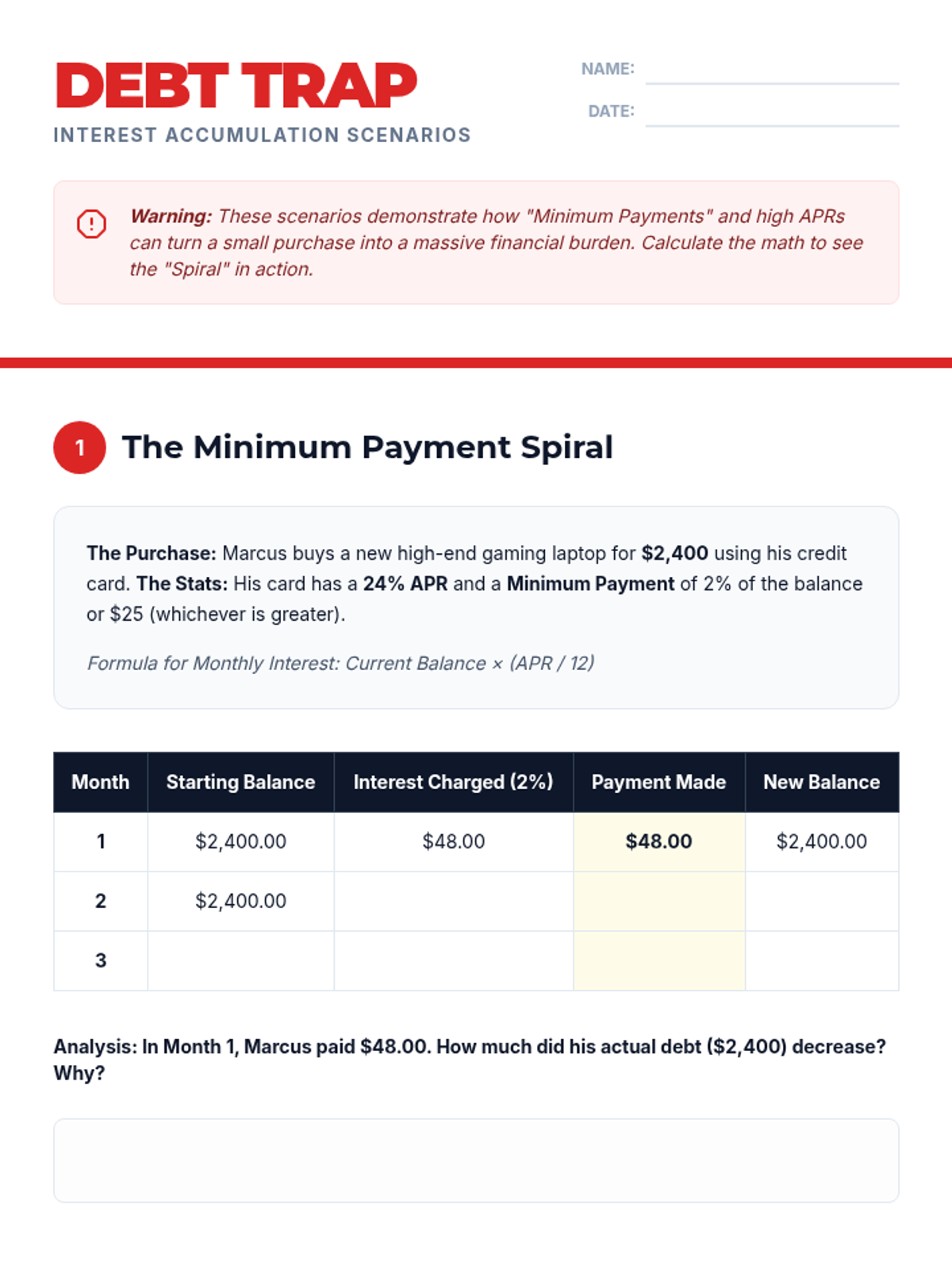
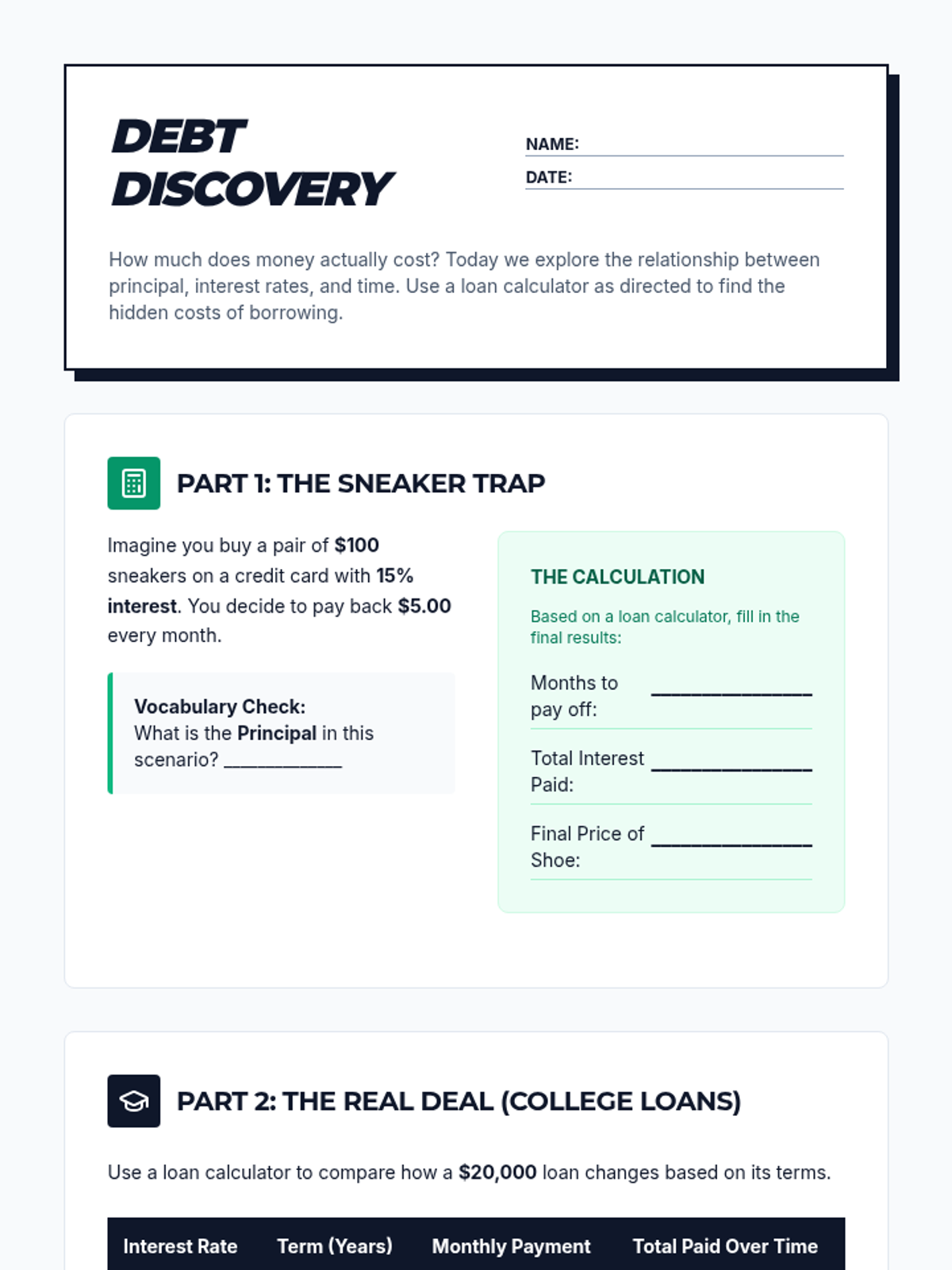
A comprehensive unit on credit card literacy, covering the types of cards, fees, rewards, and the impact of credit usage on financial health.
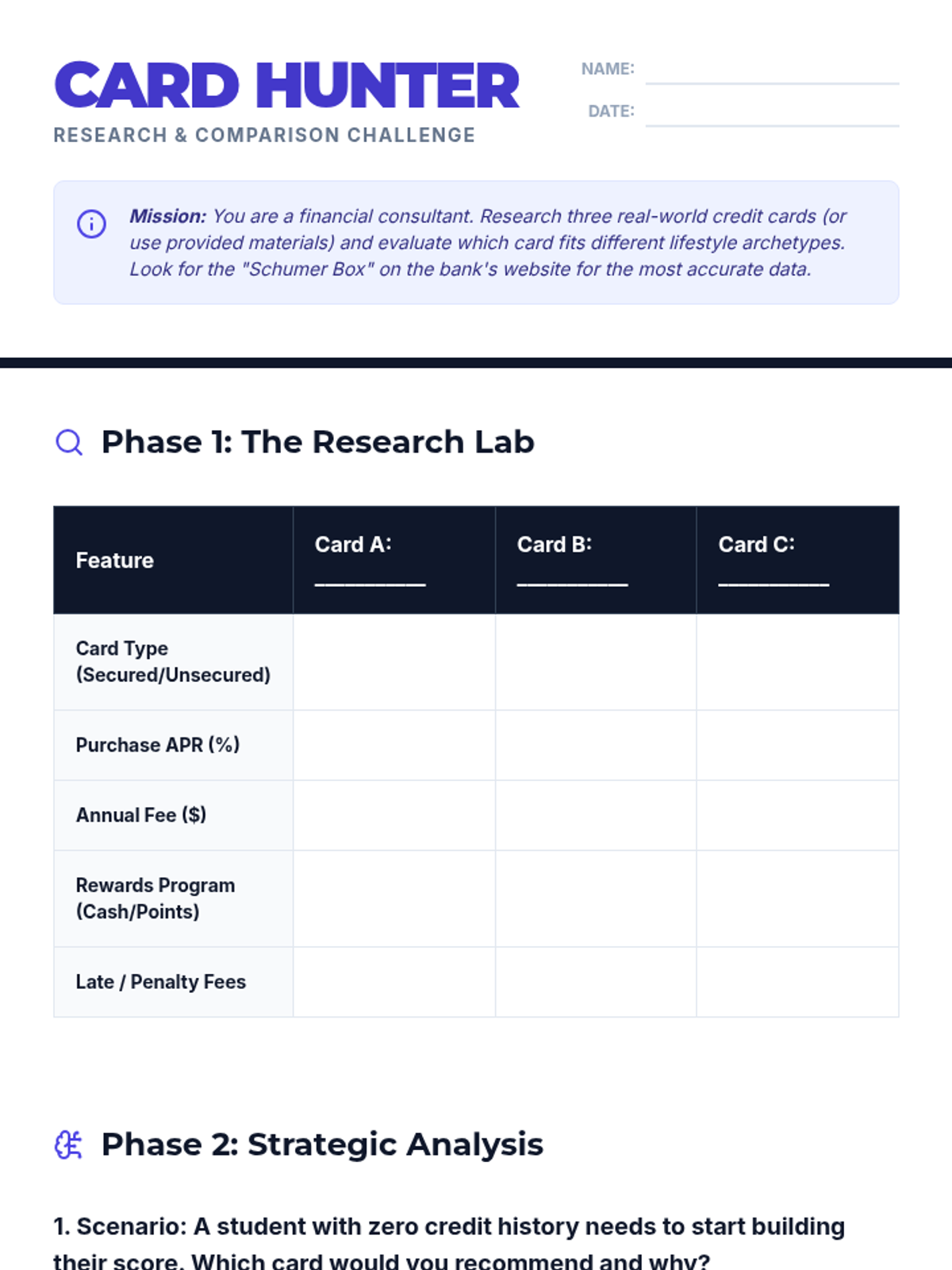
A comprehensive unit on credit cards, focusing on strategic selection, fee avoidance, and the long-term impact on credit health. Students learn to navigate the complex world of credit products through analysis and comparison.
A comprehensive financial literacy unit designed to prepare students for the realities of living independently. This sequence covers everything from initial employment paperwork and credit management to the major life milestones of buying a car and a home.
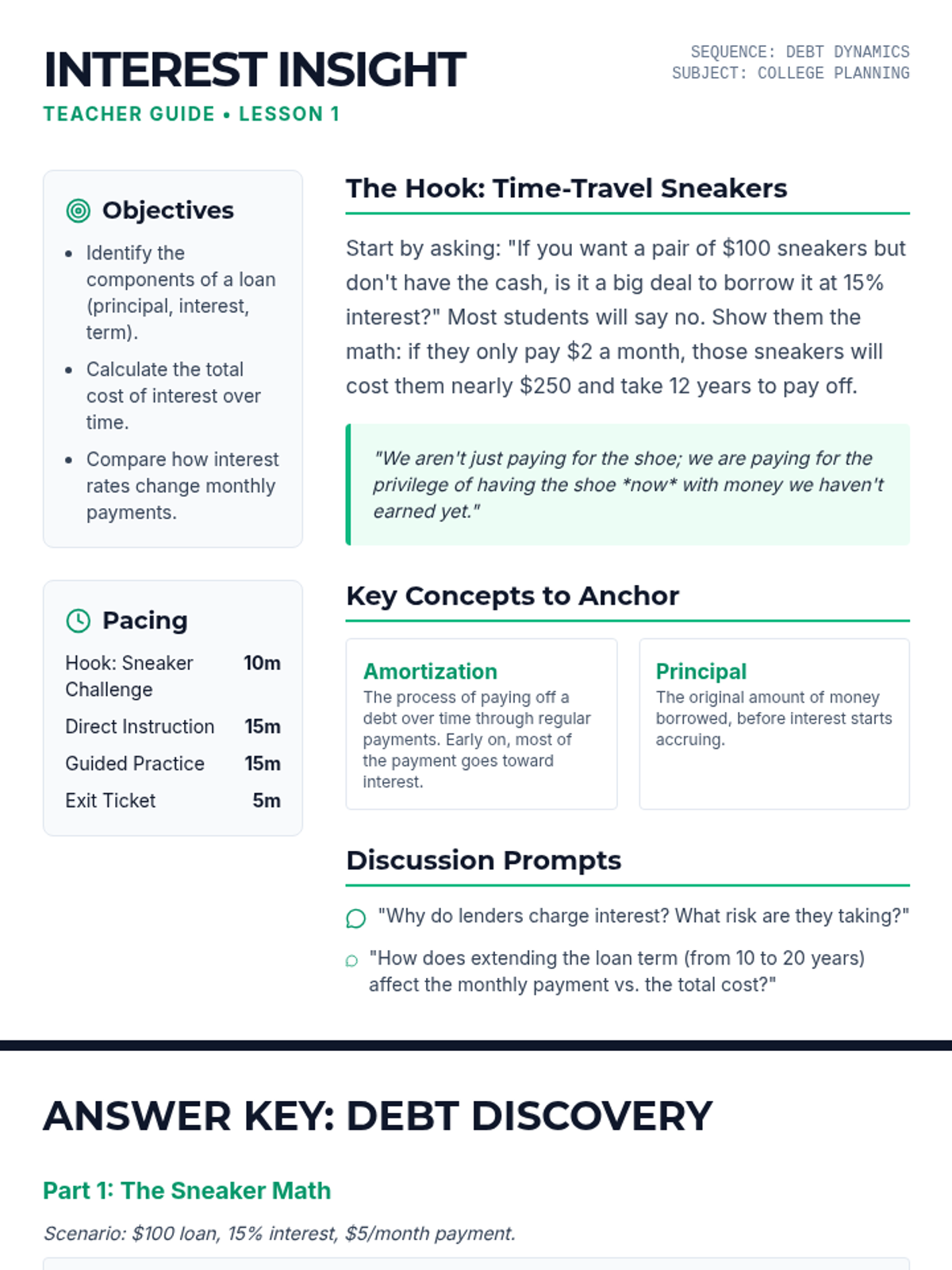
This sequence explores the long-term financial implications of student loans, focusing on repayment plans, budgeting, and return on investment (ROI). Students transition from understanding borrowing mechanics to simulating the real-world impact of debt on lifestyle and career choices.
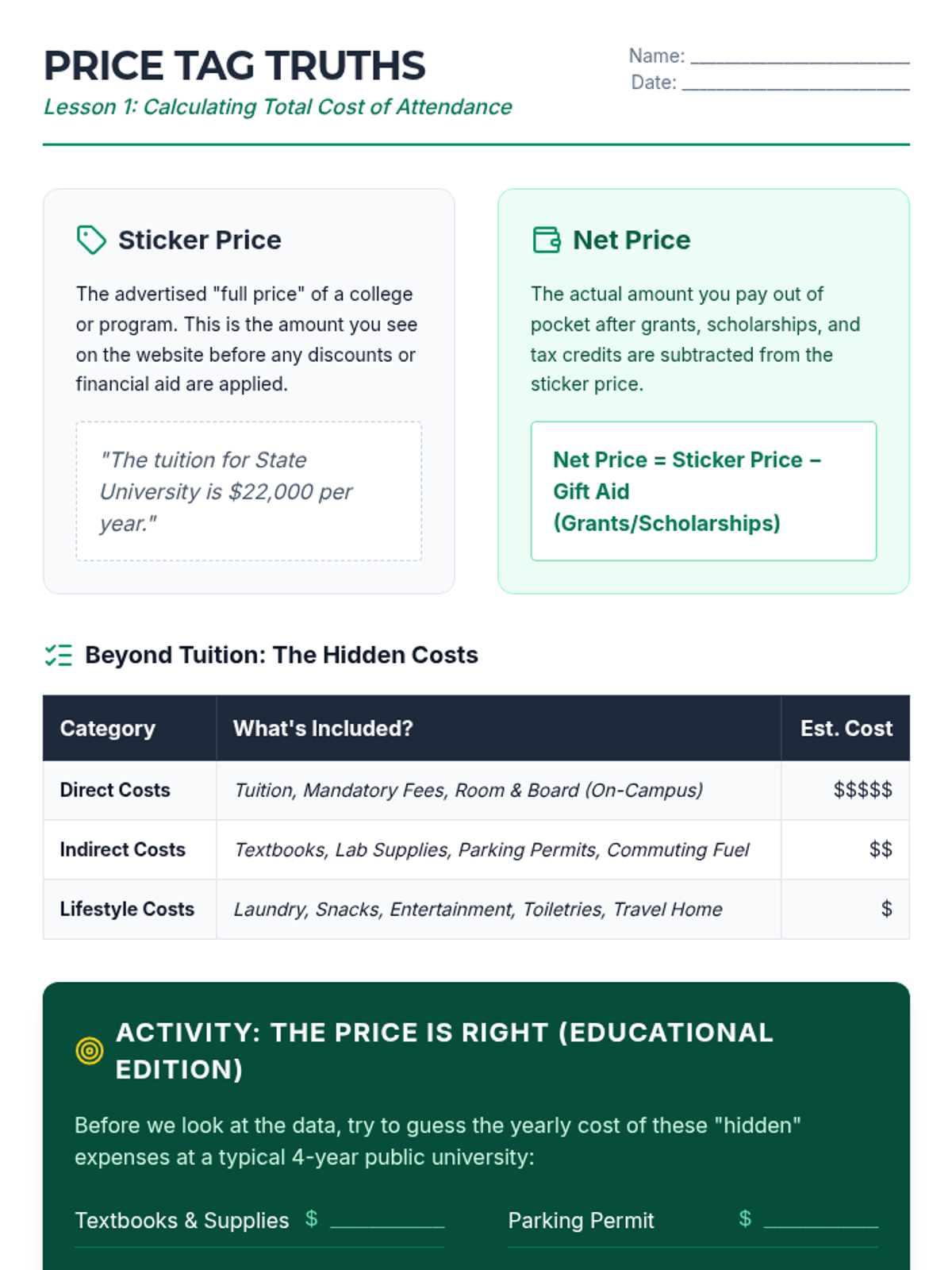
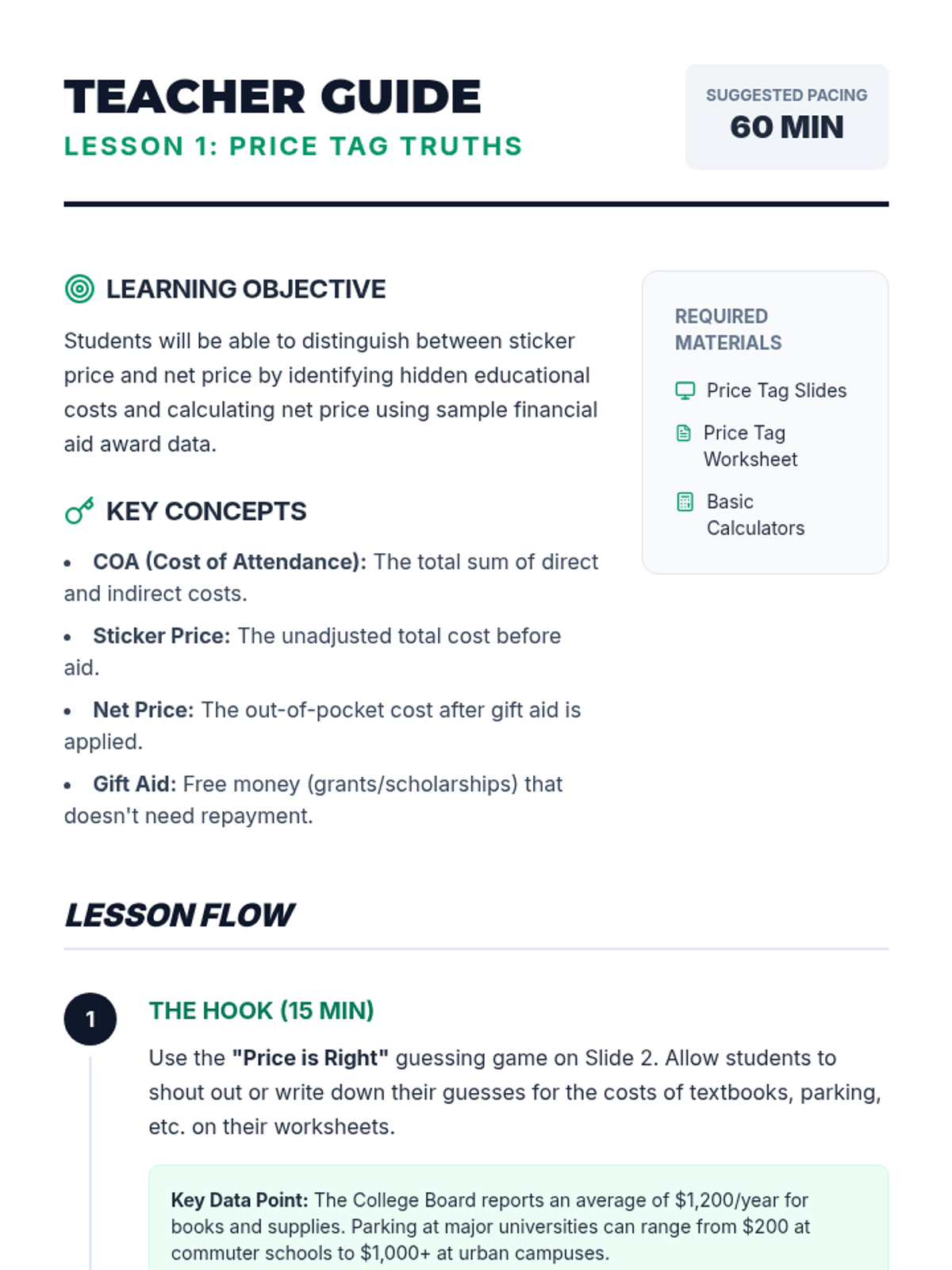
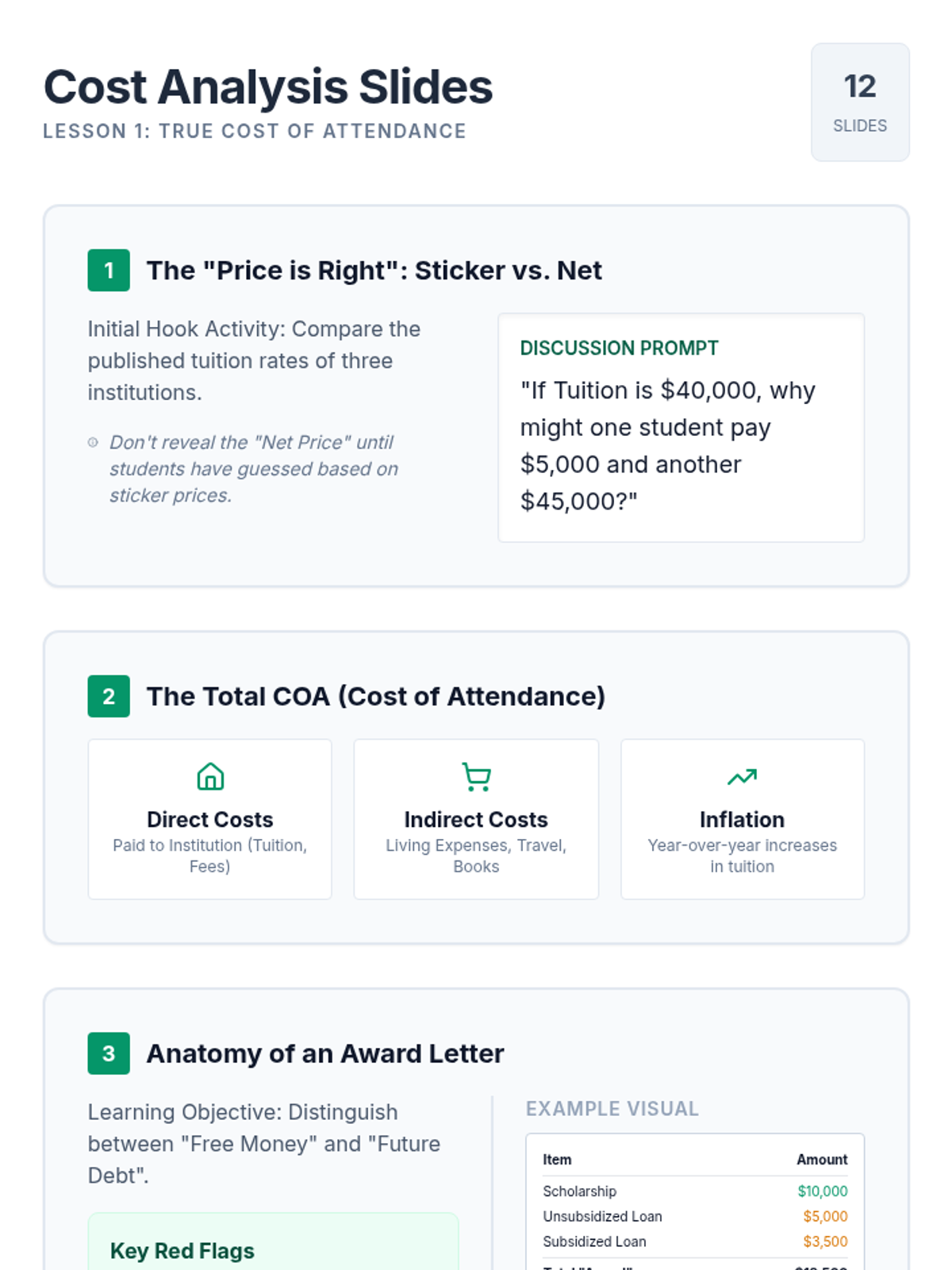
Students analyze the financial viability of post-secondary education by calculating total costs, exploring financial aid, and projecting return on investment based on career earnings. The sequence culminates in a strategic financial plan for a chosen educational path.
A comprehensive series on evaluating post-secondary education through a financial lens, focusing on ROI, funding mechanisms, opportunity costs, and long-term financial planning for undergraduate students.
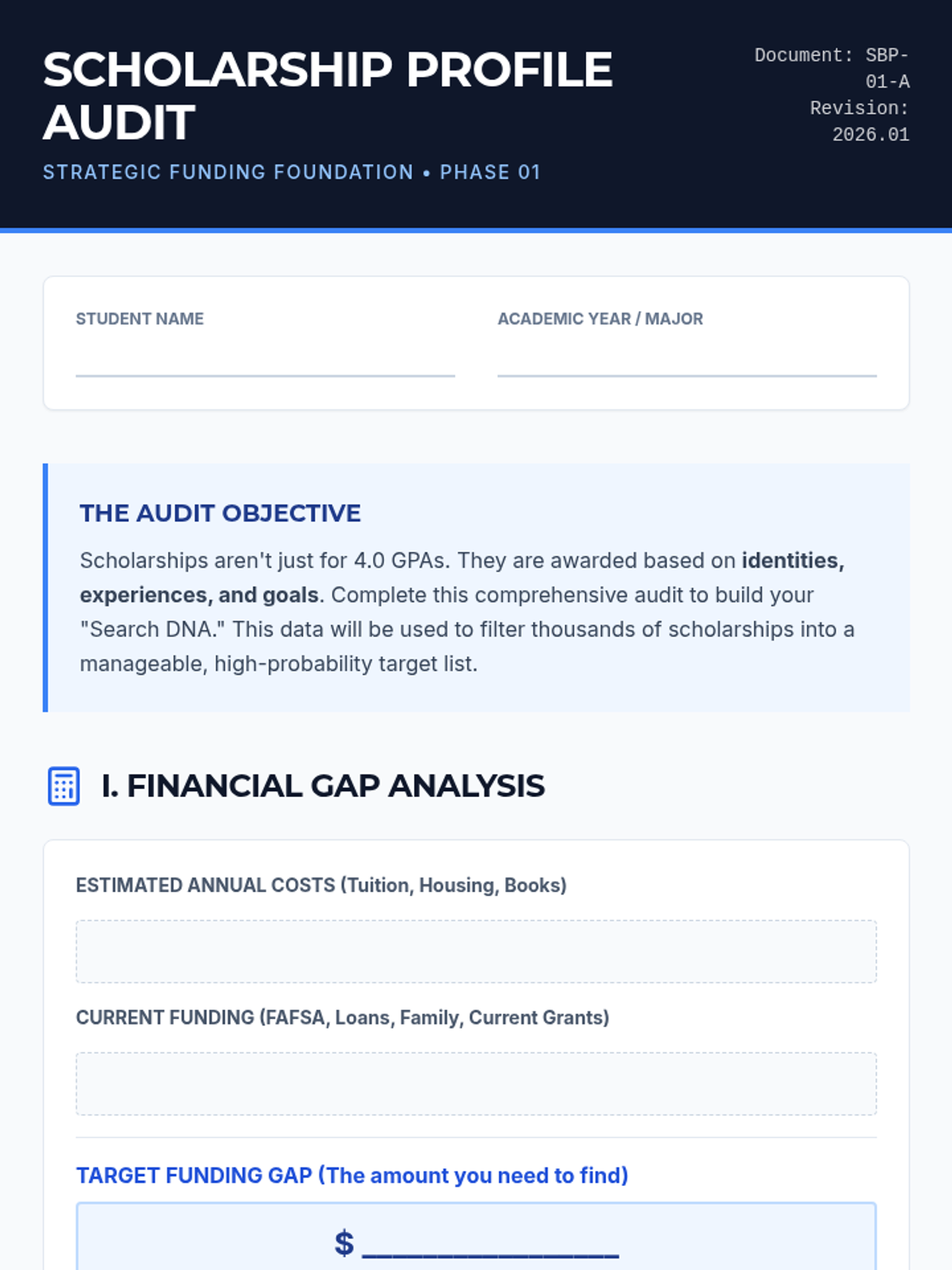
A comprehensive guide for undergraduate students to systematically search for, evaluate, and manage scholarship applications. The sequence covers self-auditing, database navigation, ROI analysis, project management, and donor mission alignment.
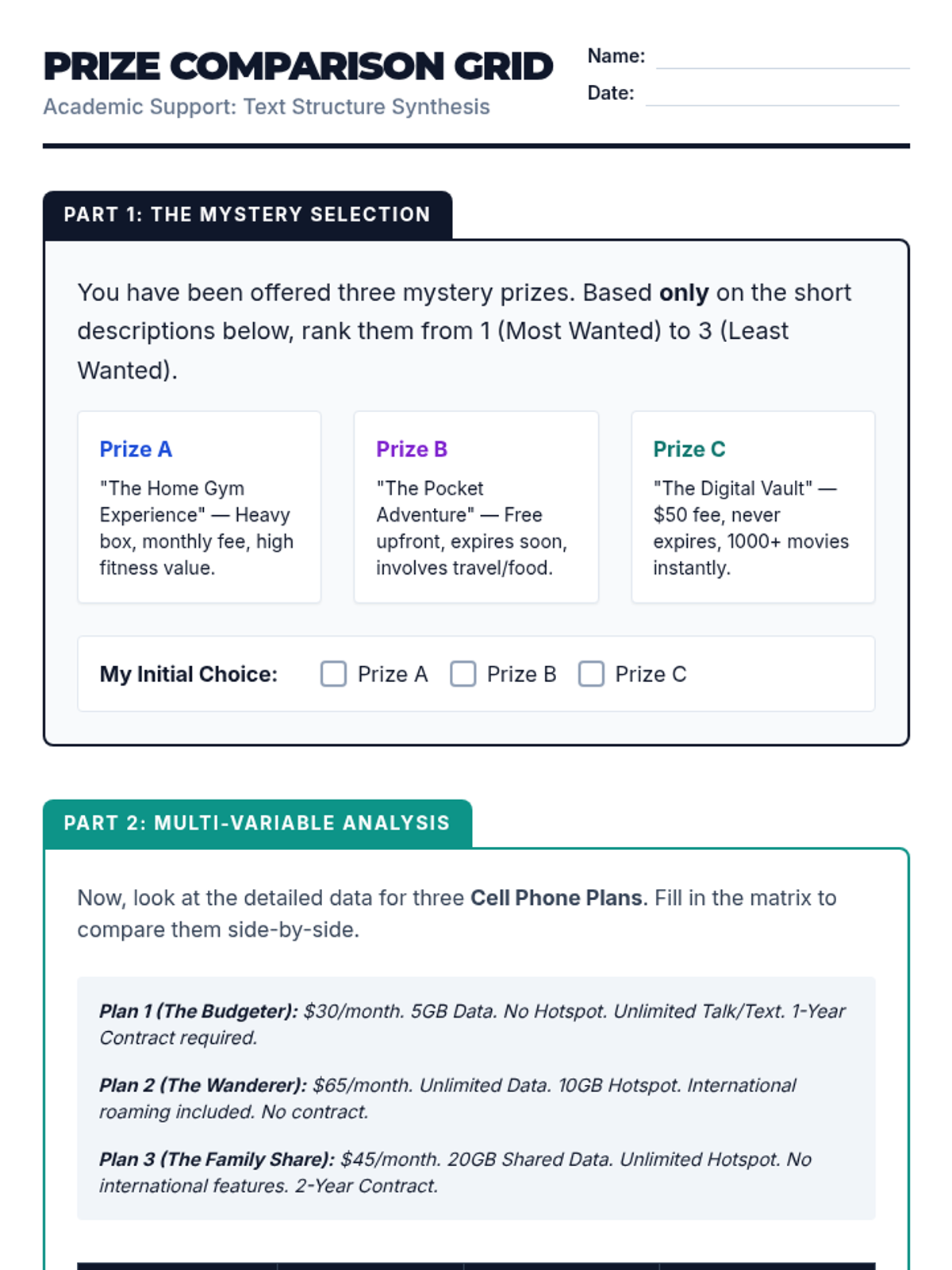
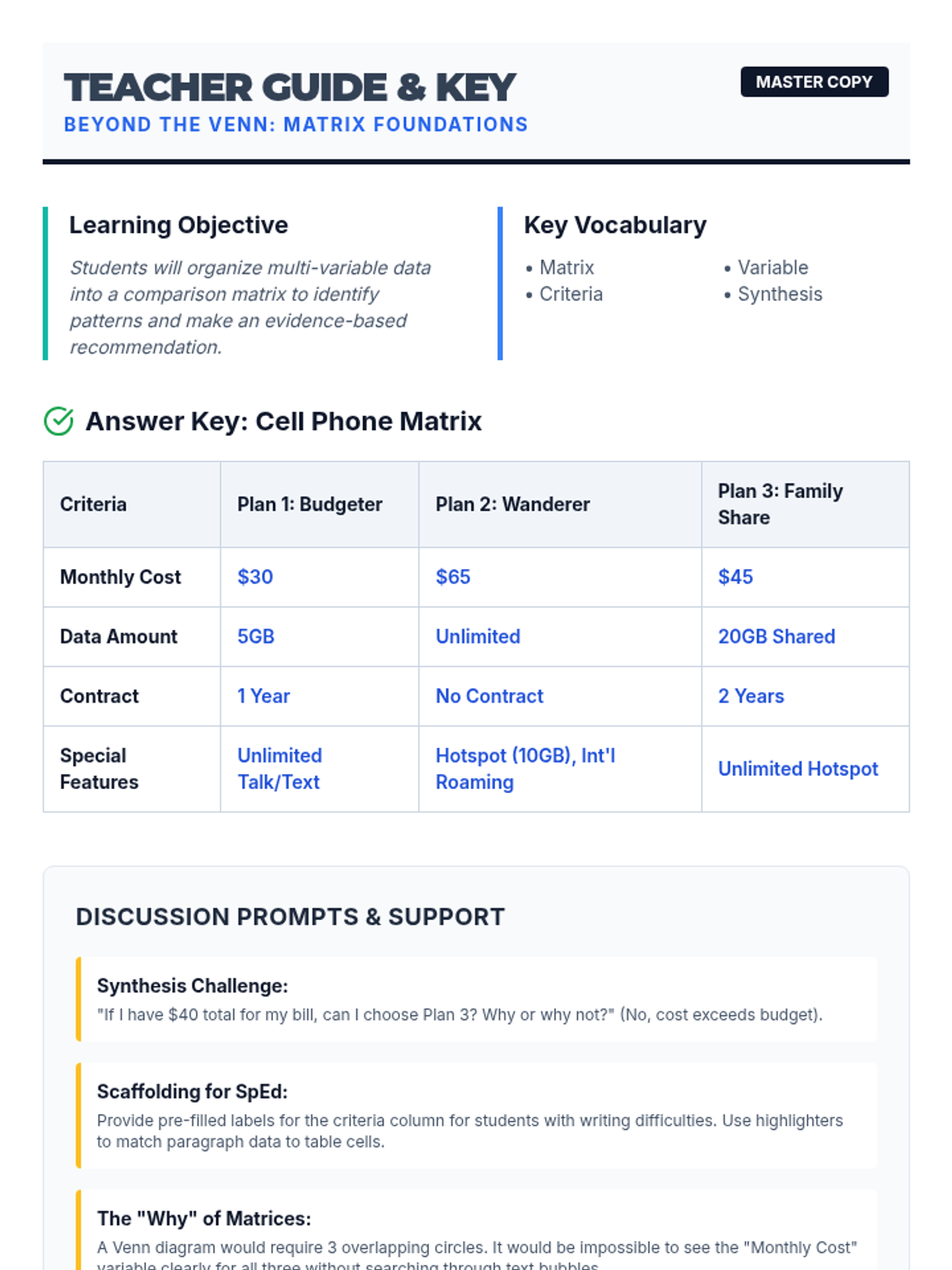
A higher-education and career-readiness sequence for 12th-grade students focused on using matrices to synthesize complex, conflicting, and multi-variable information. Students move from basic data organization to high-level comparative analysis and source evaluation.
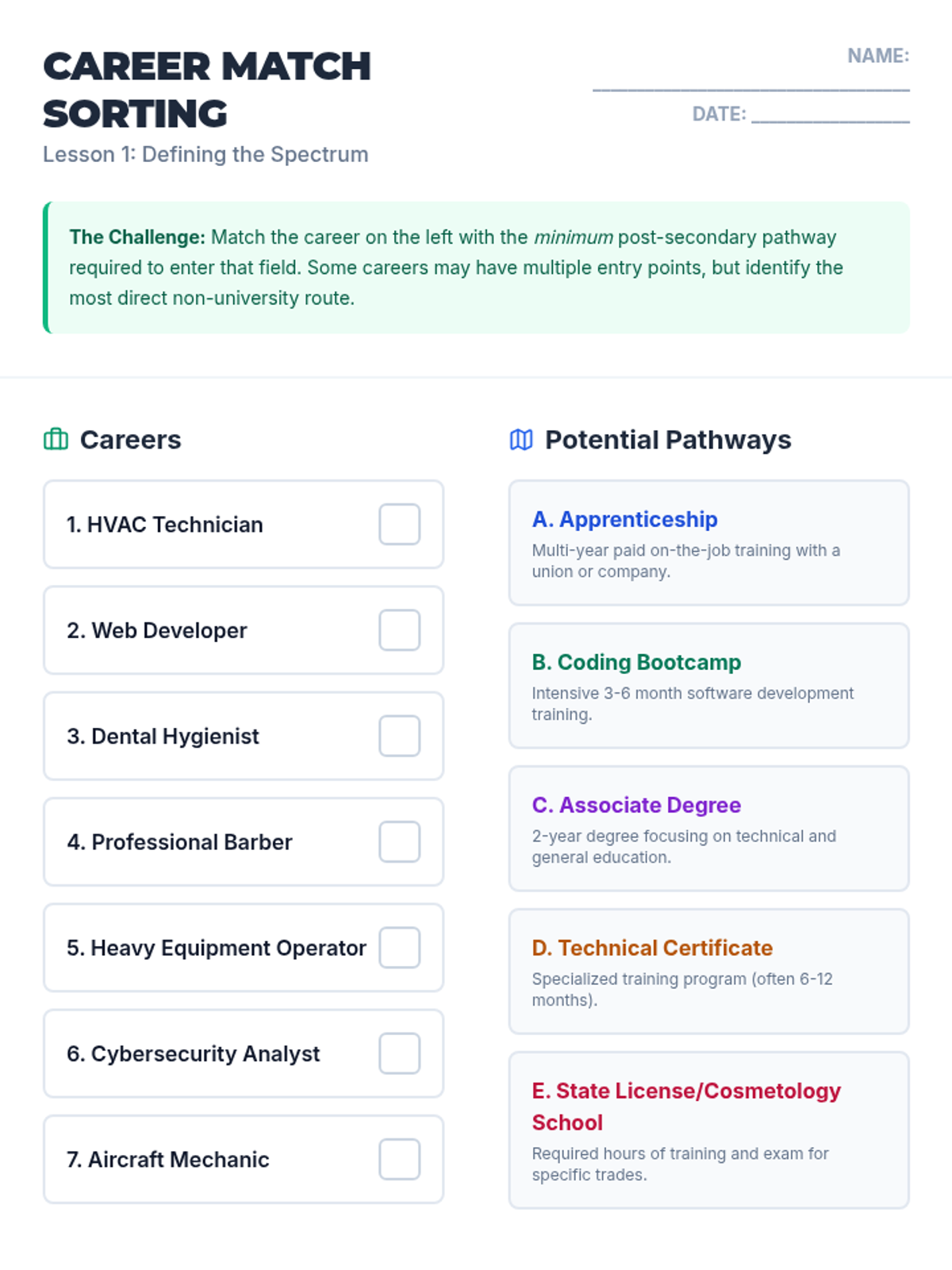
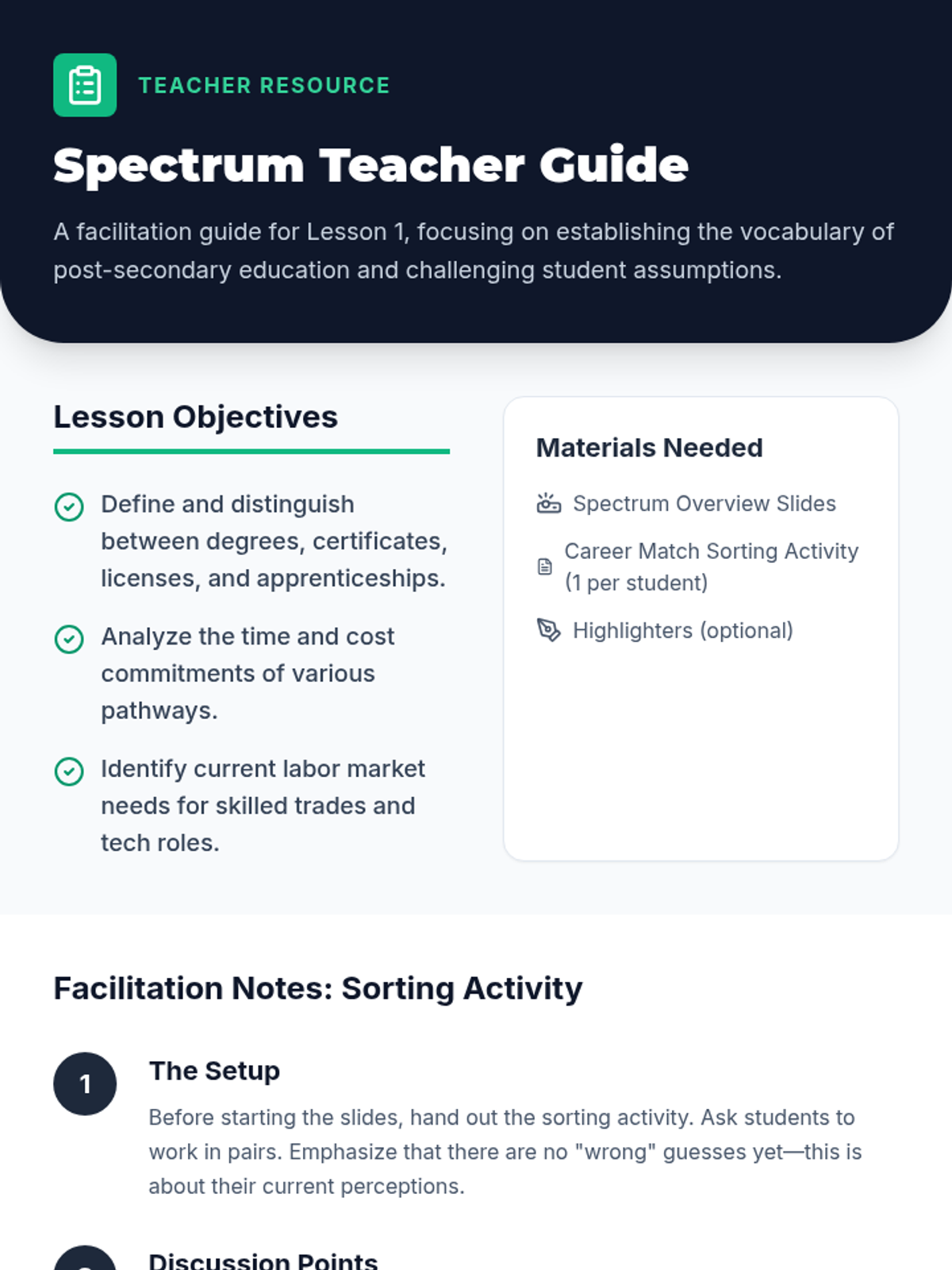
This sequence explores post-secondary education options beyond the traditional four-year degree, including trade schools, apprenticeships, coding bootcamps, and certificate programs. Students learn to evaluate the legitimacy of various programs and compare different career pathways based on cost, duration, and outcomes.
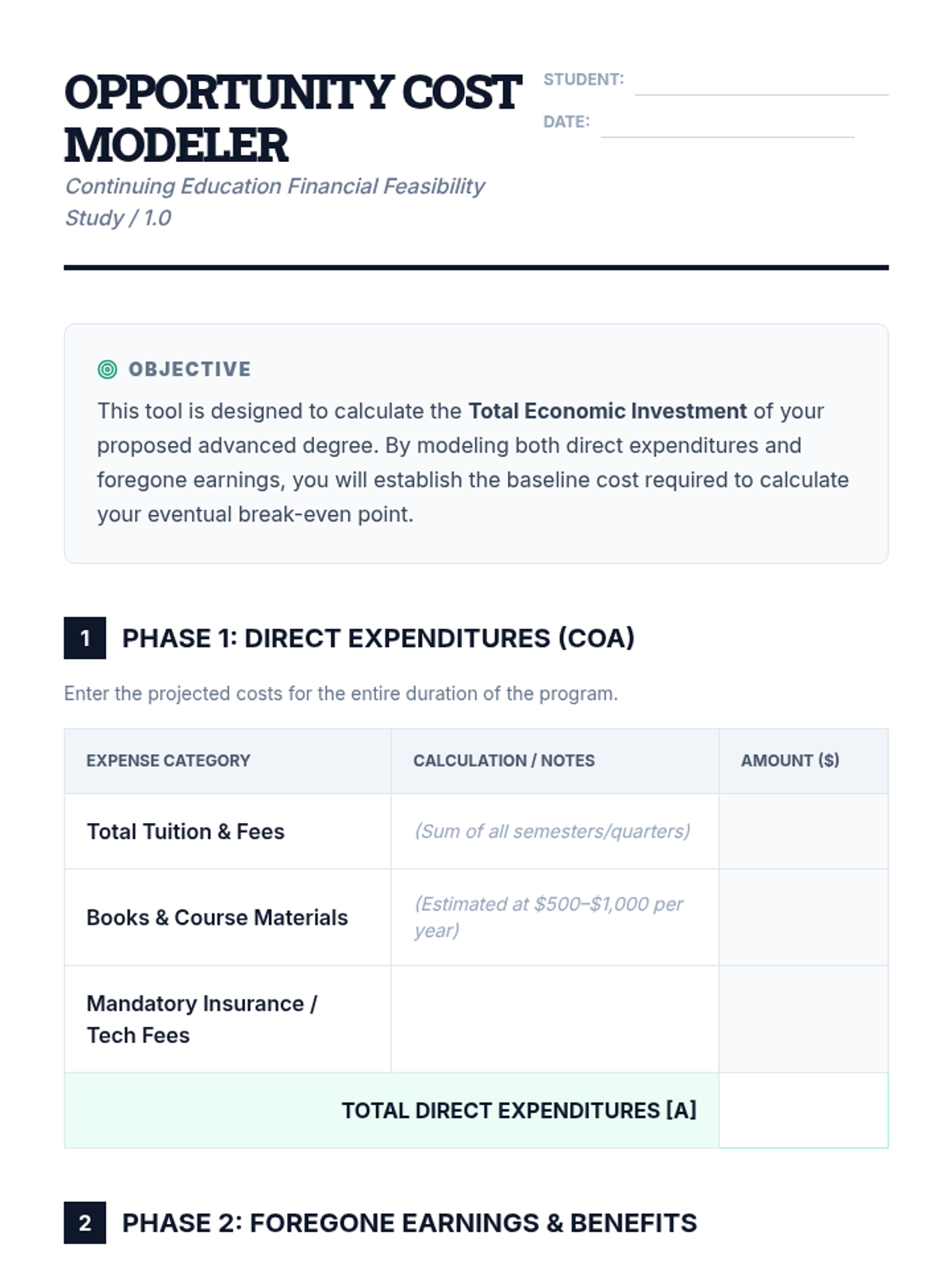
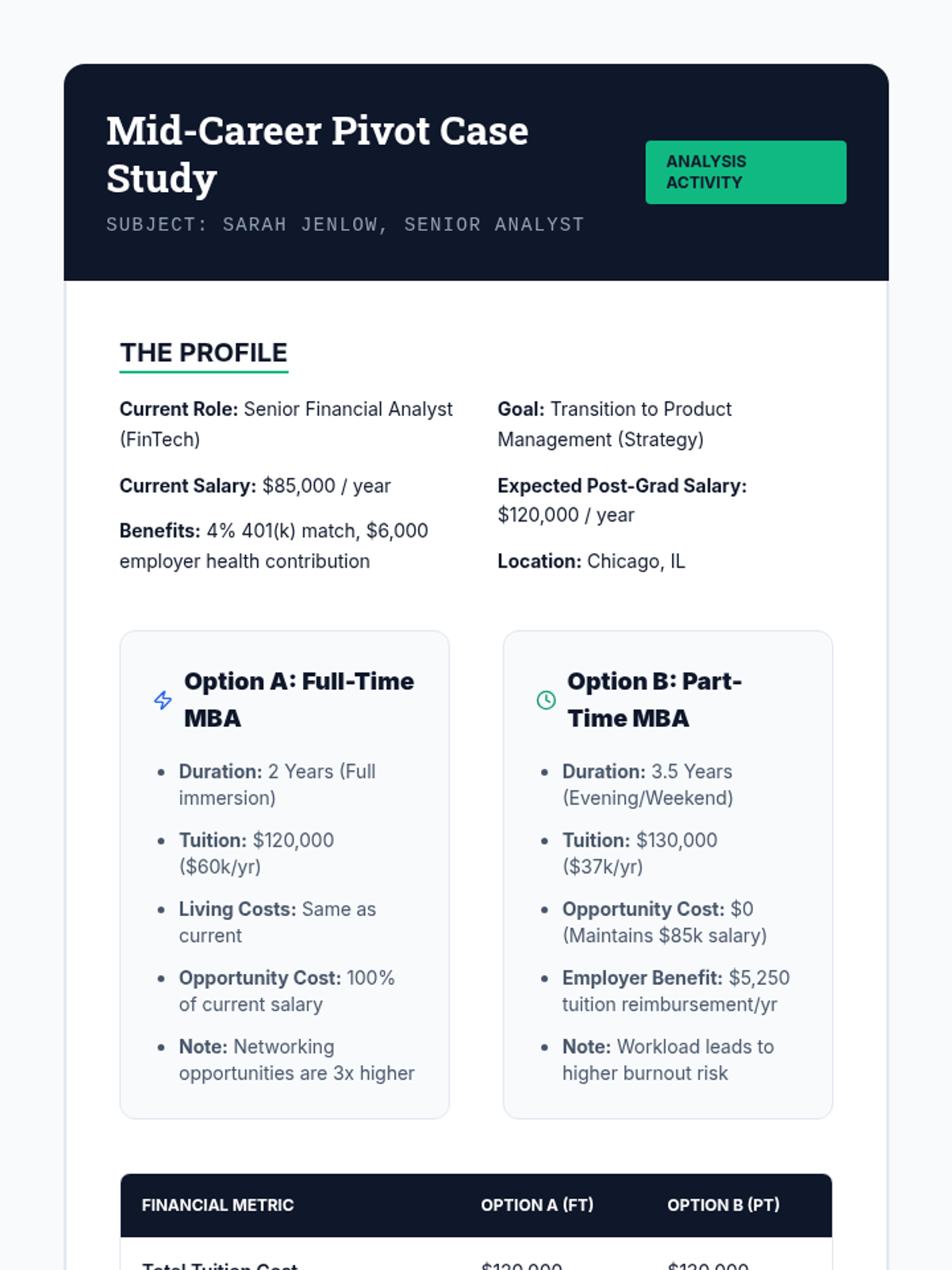
This sequence equips graduate students with the quantitative tools and financial literacy needed to assess the true ROI of pursuing further advanced education. Students will model opportunity costs, analyze funding strategies, and forecast break-even points to create a comprehensive financial feasibility study.
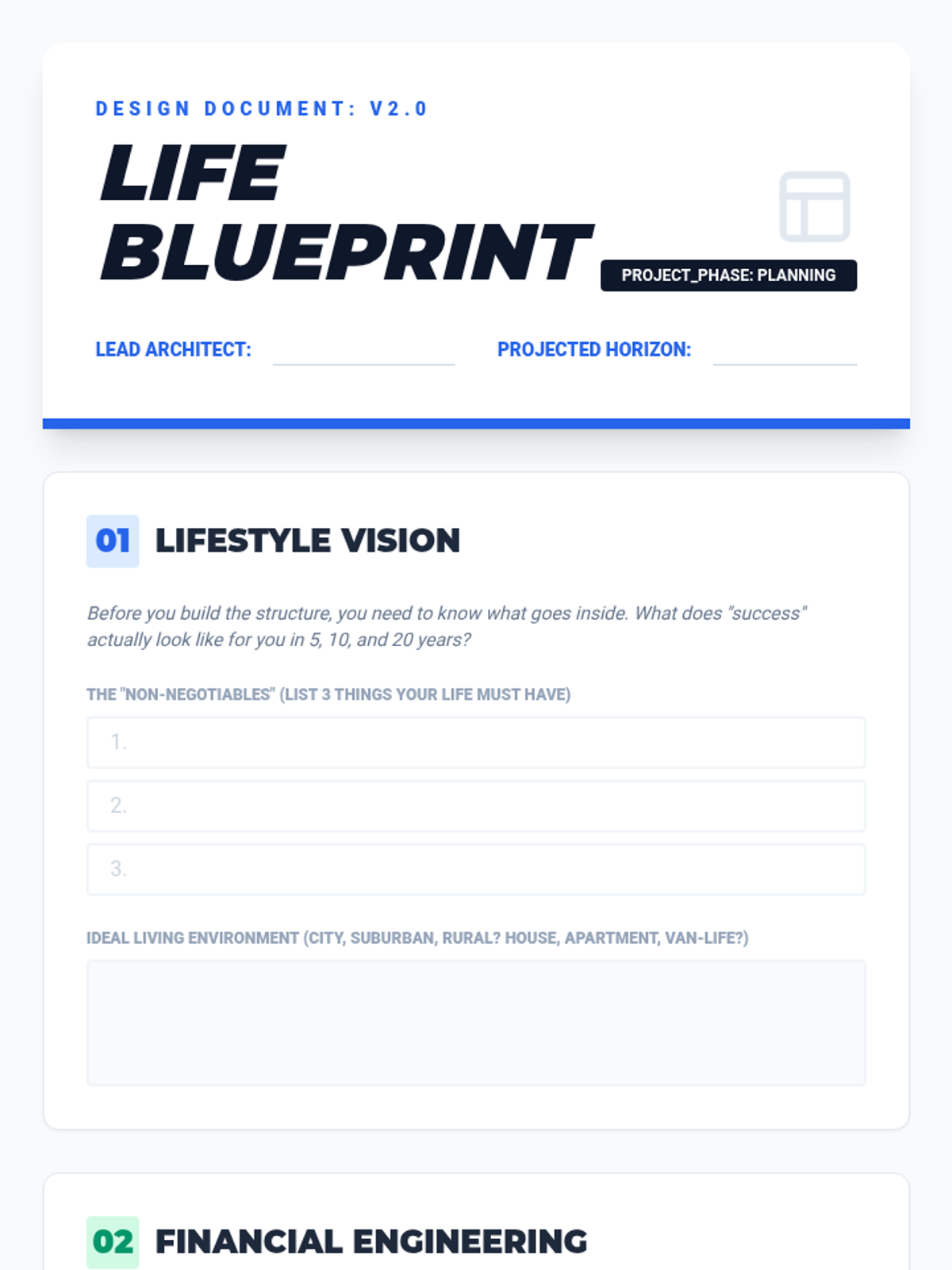
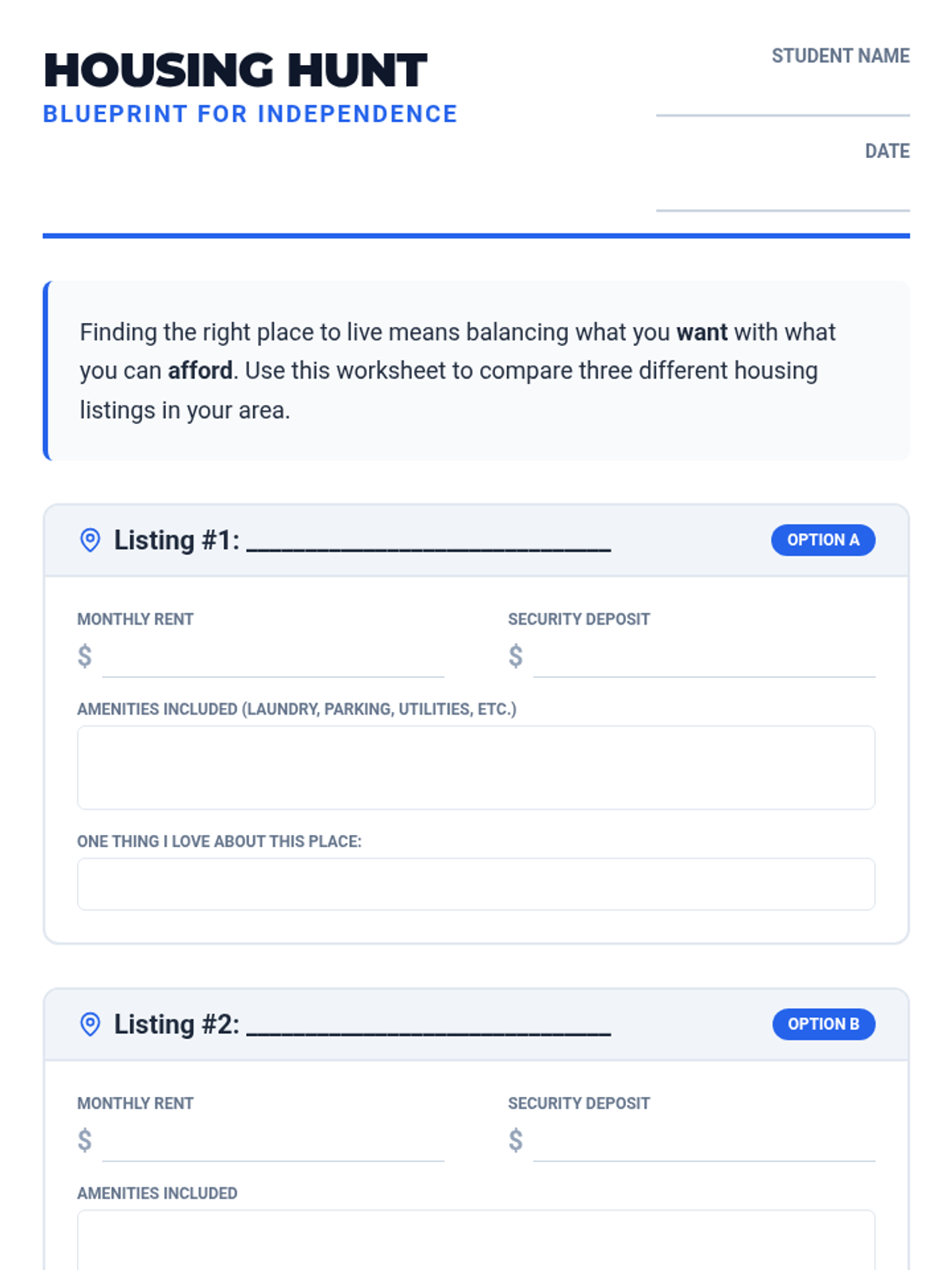
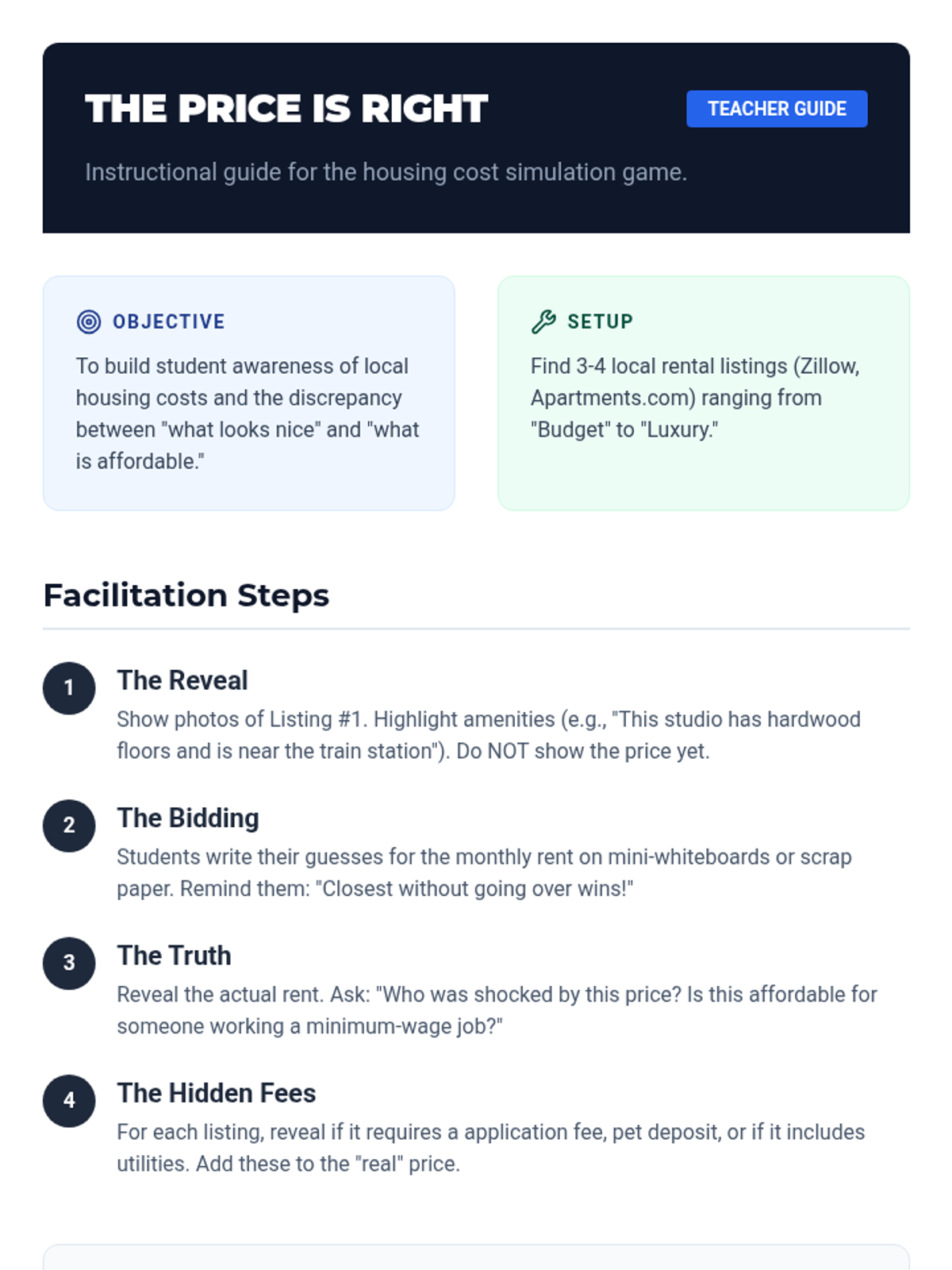
This simulation-based sequence helps students develop the financial and logistical skills necessary for independent living. Students move through a 'Real World' simulation where they must secure housing, manage a monthly budget, and plan for daily needs.
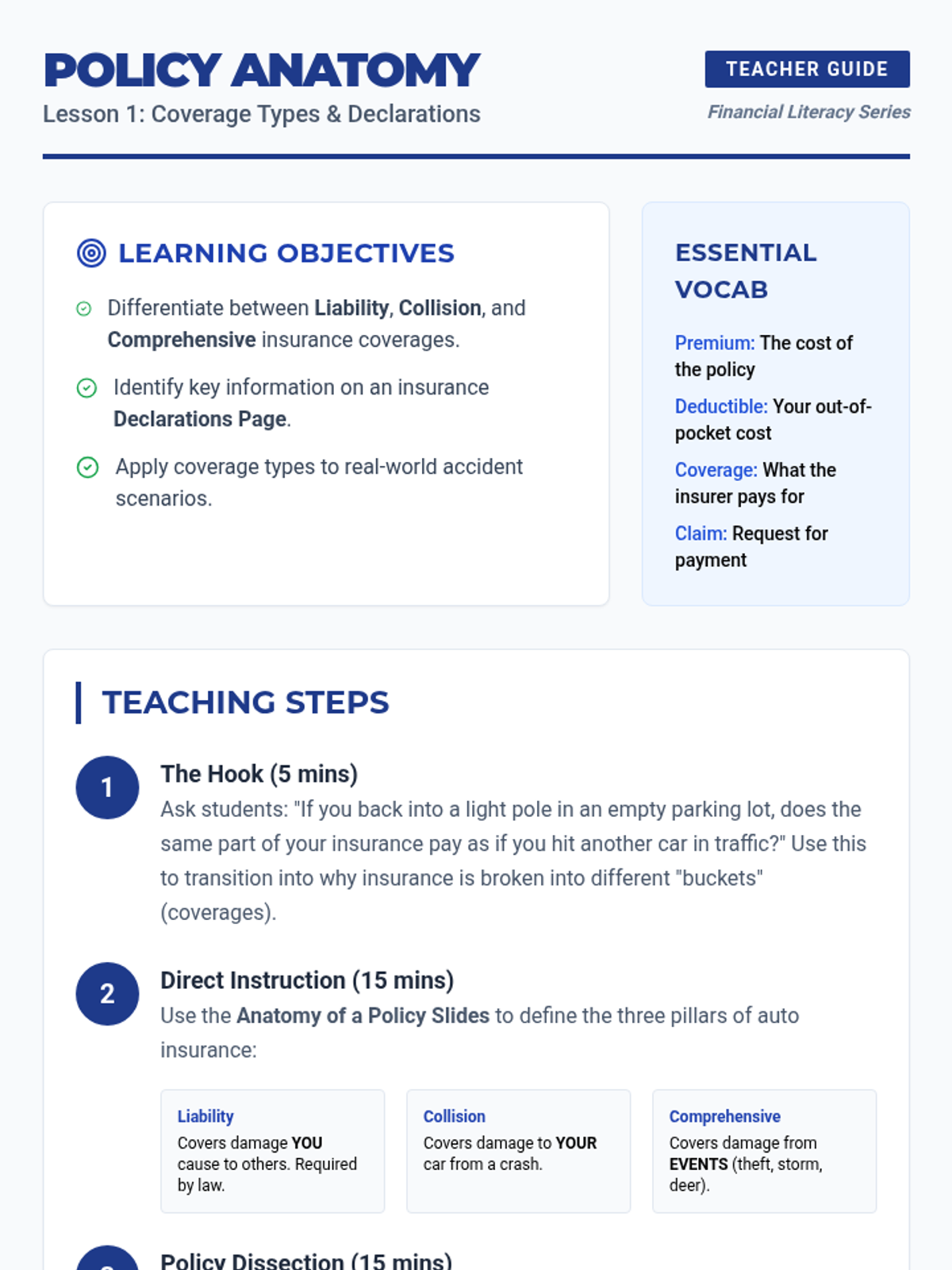
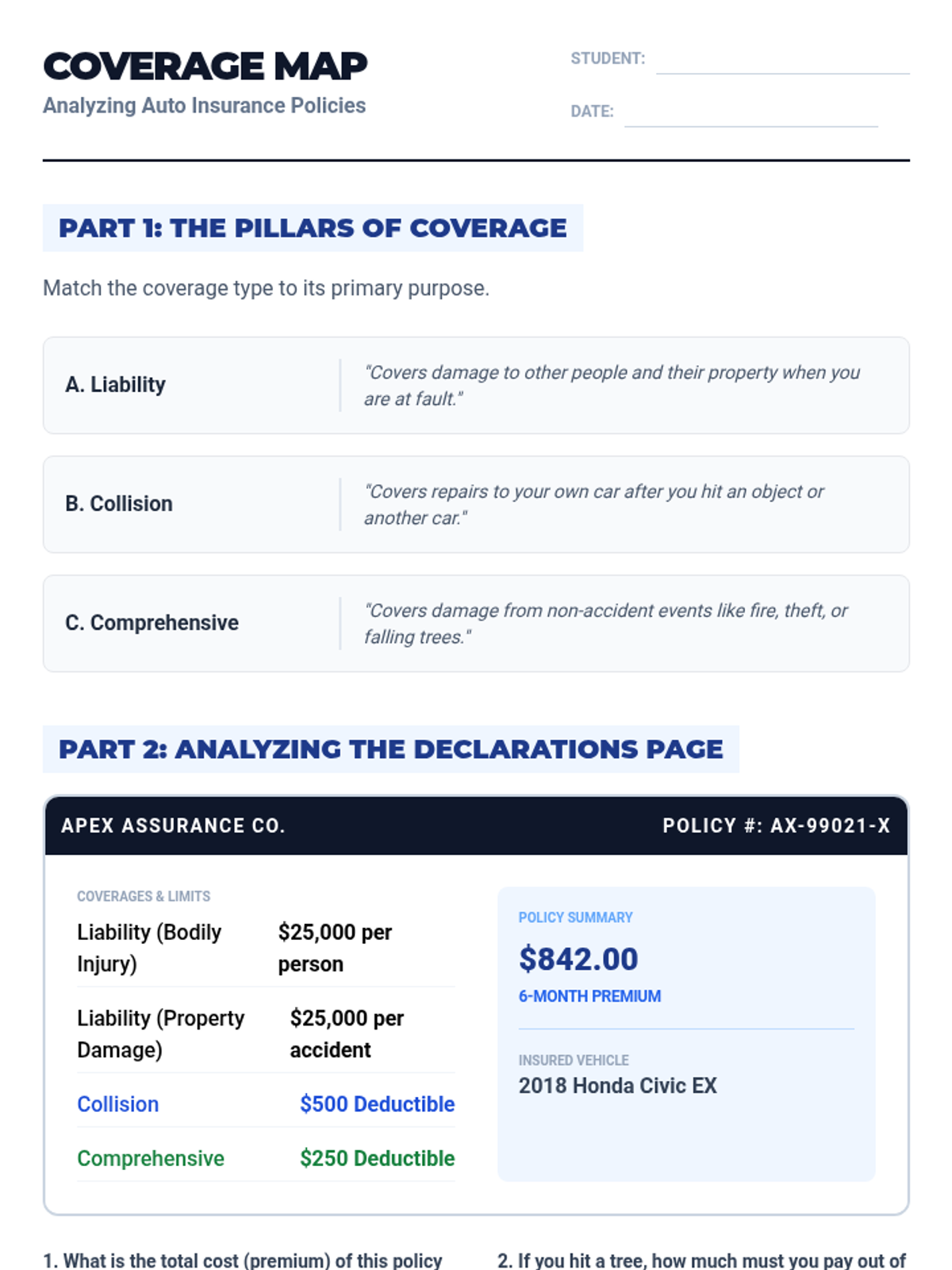
Students analyze the components of an auto policy, investigate factors influencing rates for teen drivers, and practice filing mock claims using real-world case studies. The sequence concludes with a comparative project to select optimal coverage for a first car.
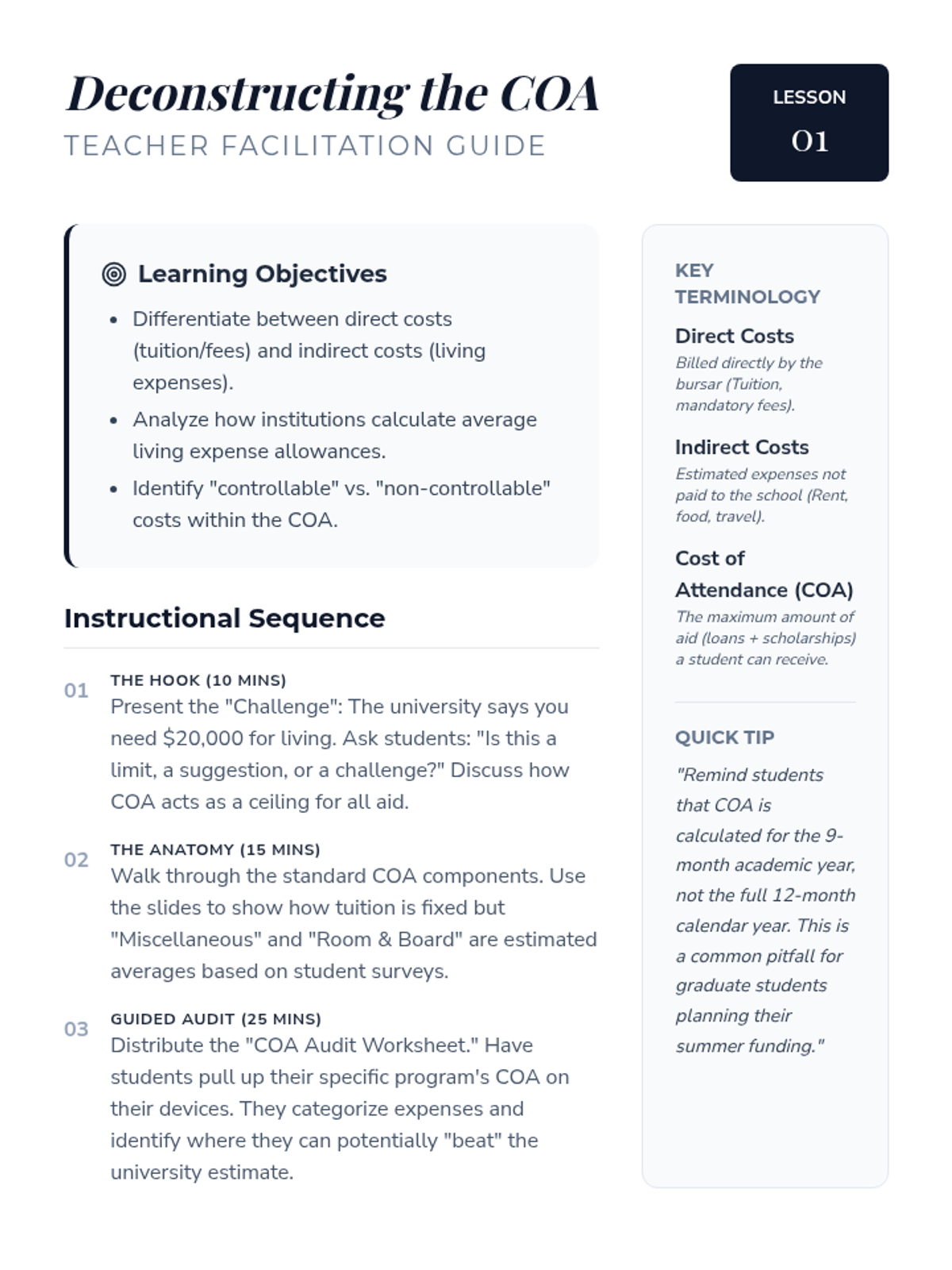
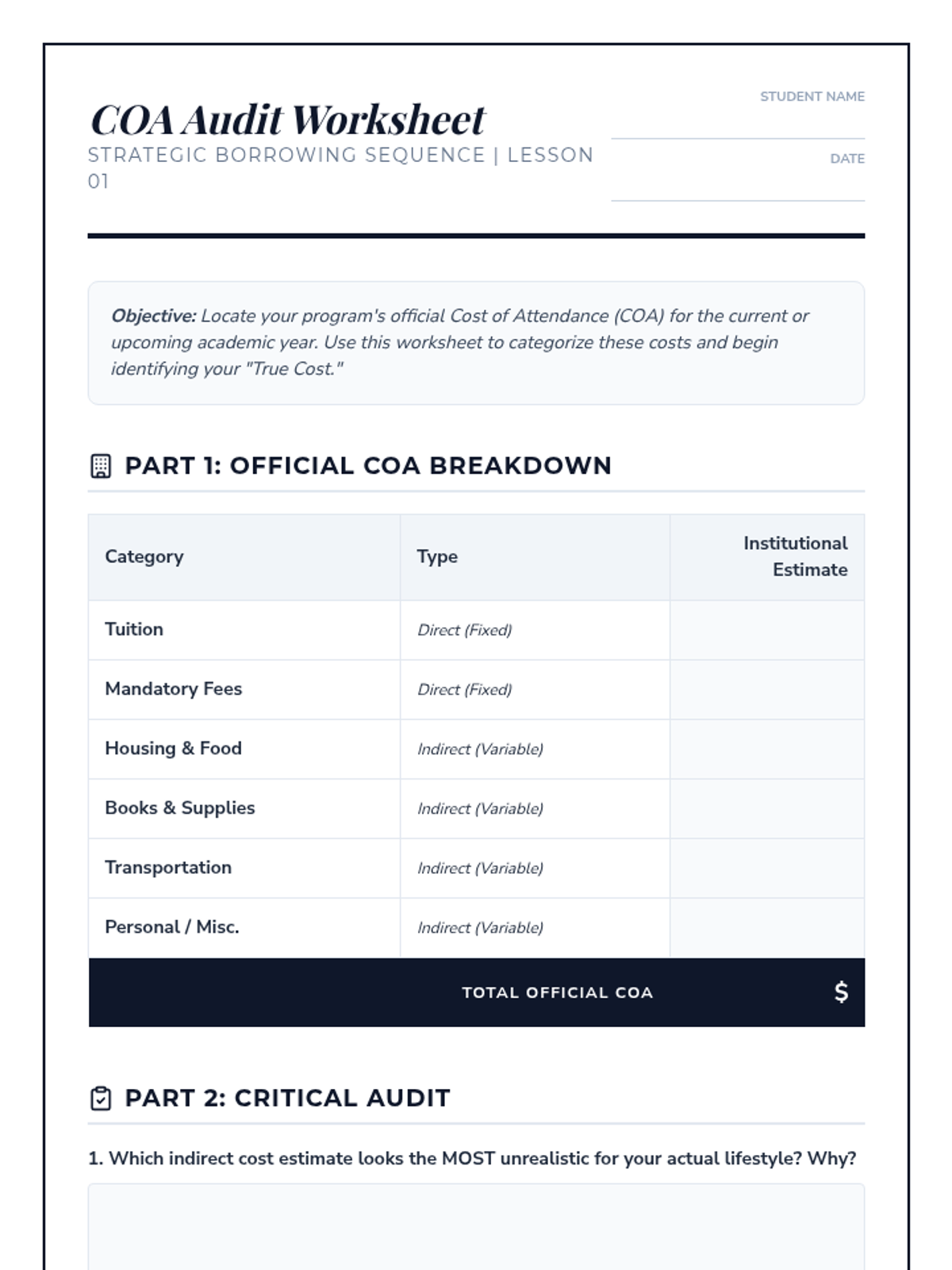
This project-based sequence guides graduate students through FAFSA completion by framing it as a strategic business decision. Students will audit institutional costs, build realistic budgets, calculate precise borrowing needs, and learn to navigate professional judgment appeals to minimize long-term debt.
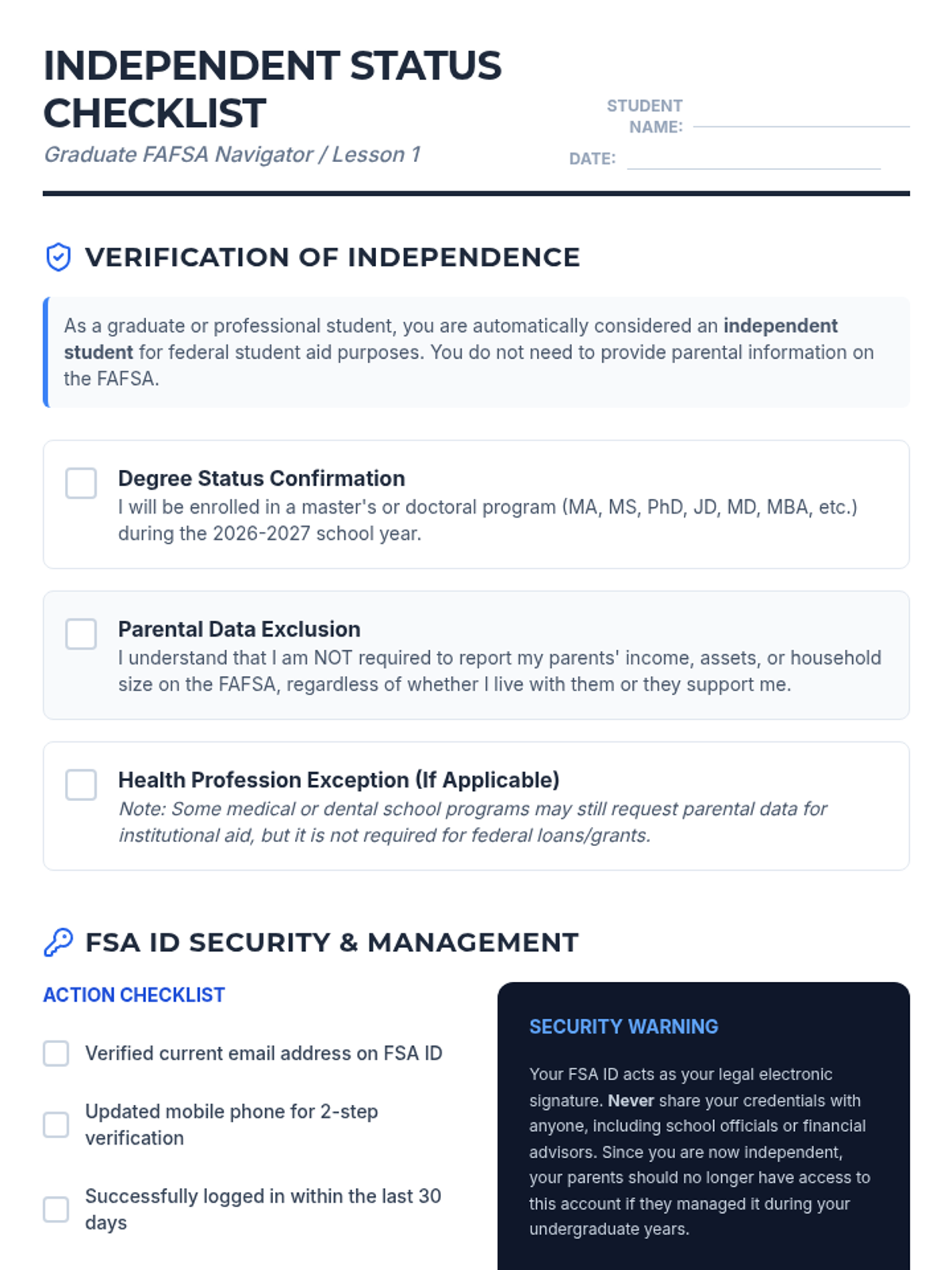
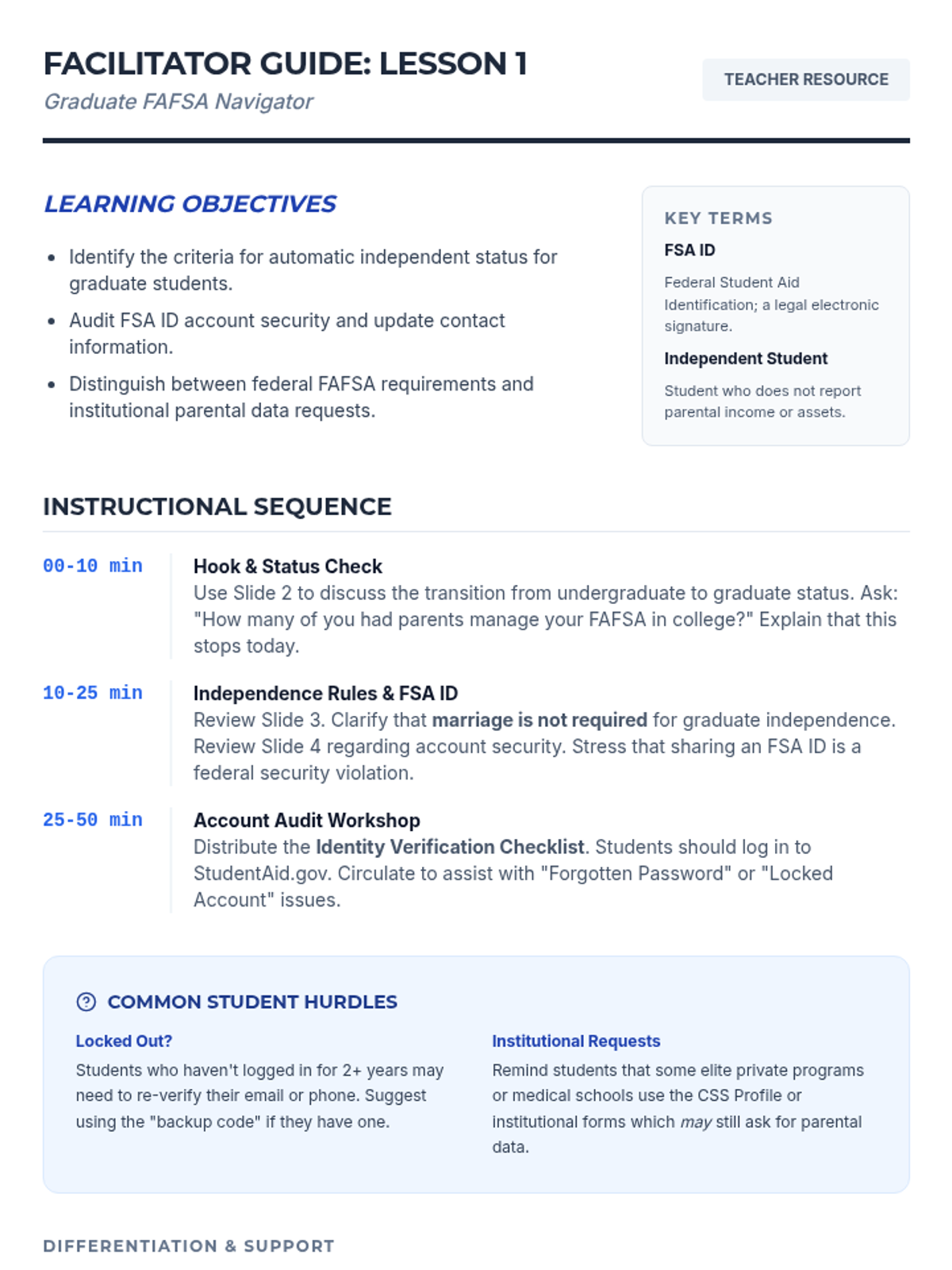
A comprehensive workshop-style sequence for graduate students navigating the FAFSA as independent applicants, focusing on technical requirements, asset reporting, and strategic planning.
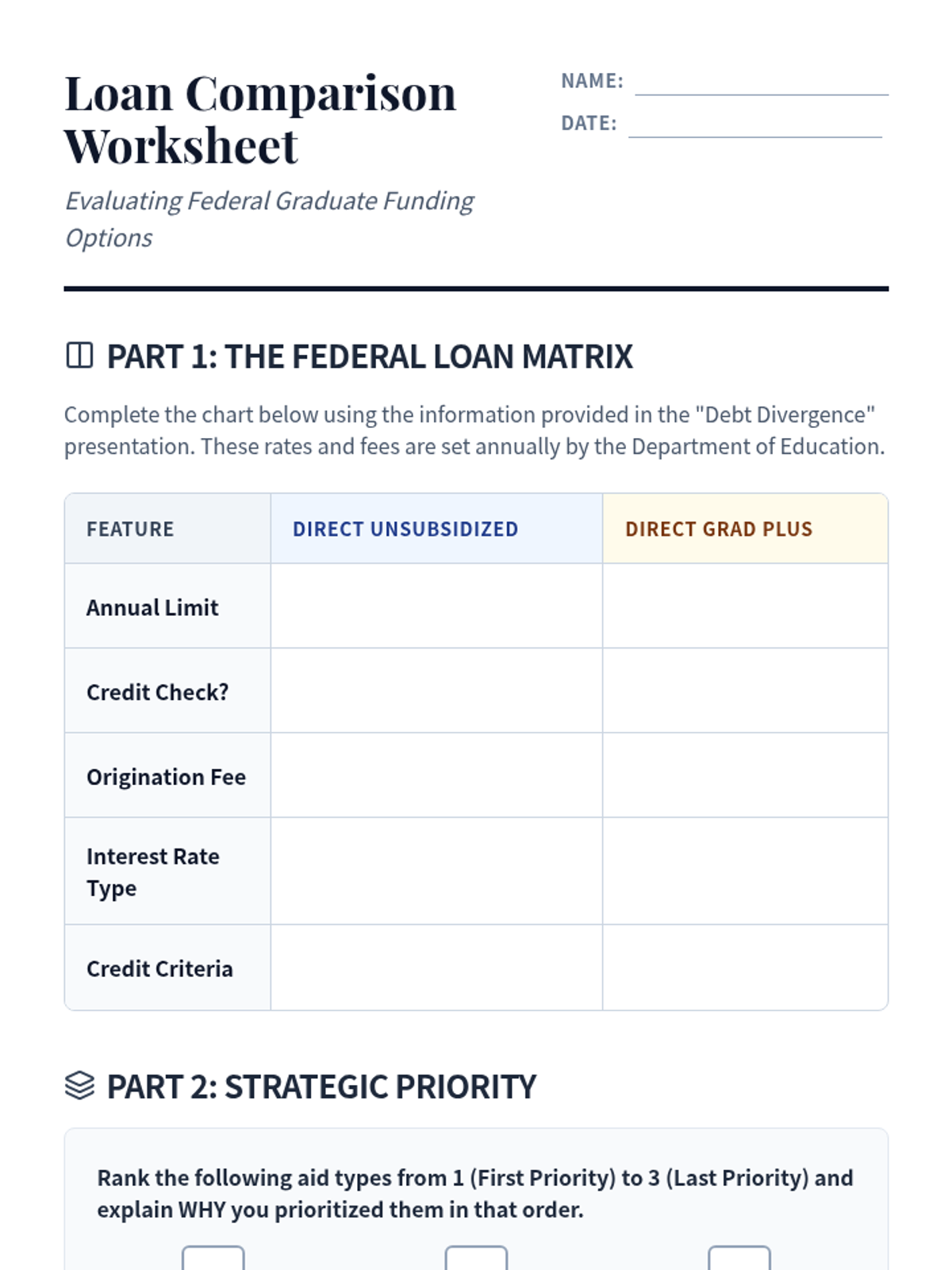
A comprehensive sequence for graduate students to master the nuances of federal financial aid, focusing on the strategic selection of Direct Unsubsidized and Grad PLUS loans to minimize long-term debt.
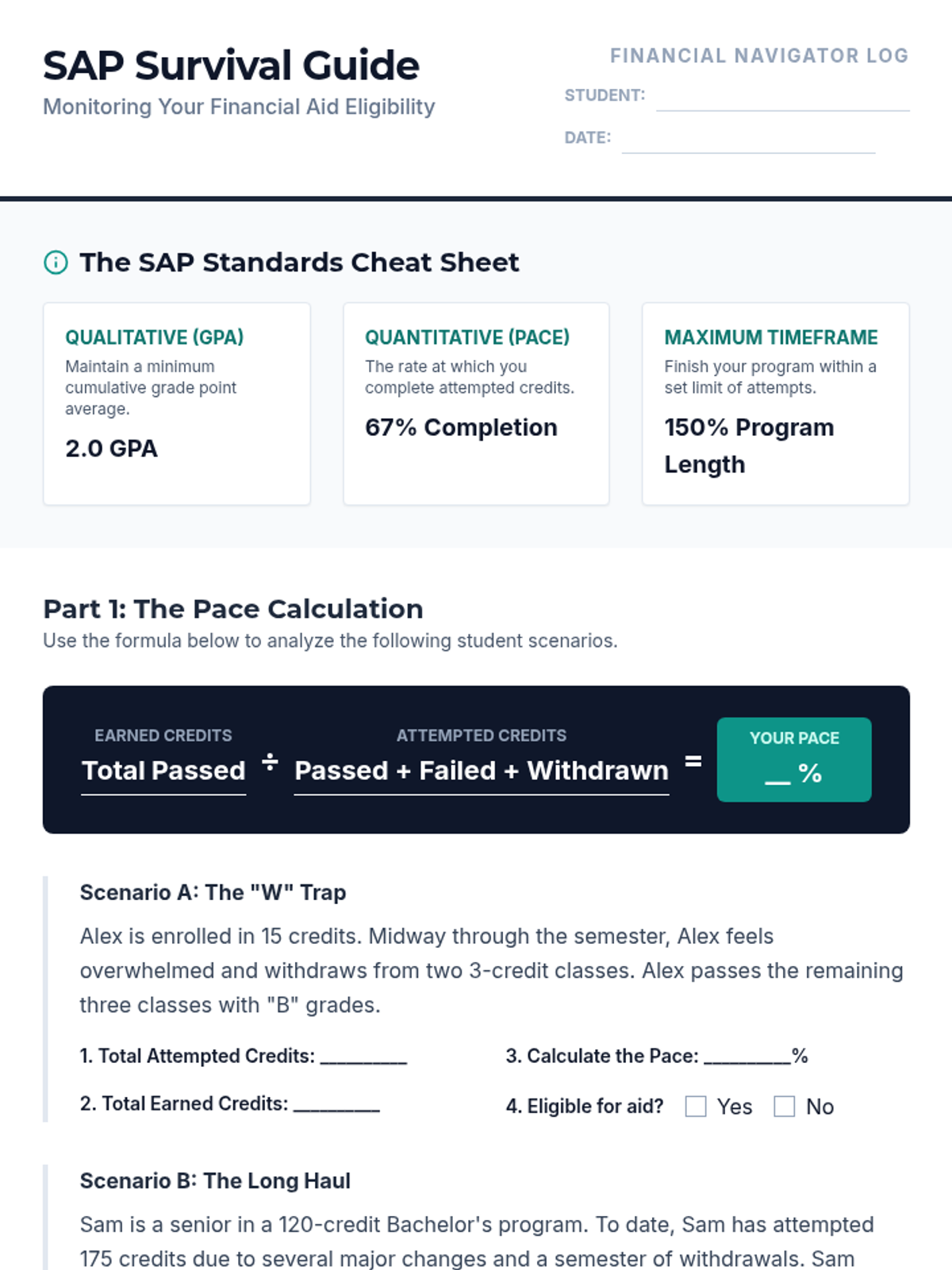
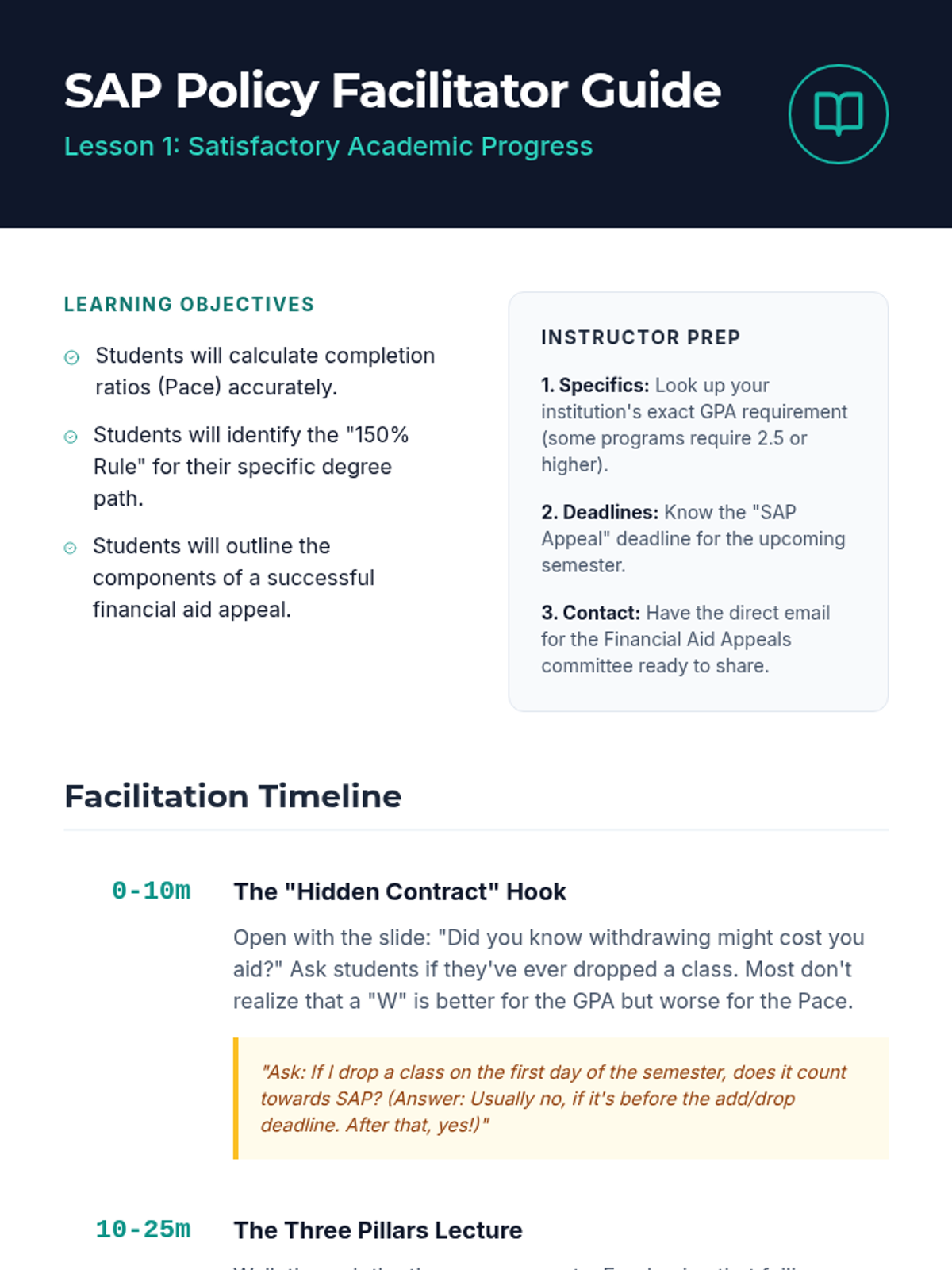
A comprehensive sequence for undergraduate students focusing on the long-term maintenance of federal financial aid eligibility. Students master Satisfactory Academic Progress (SAP), lifetime limits, loan aggregates, withdrawal consequences, and the annual renewal cycle.
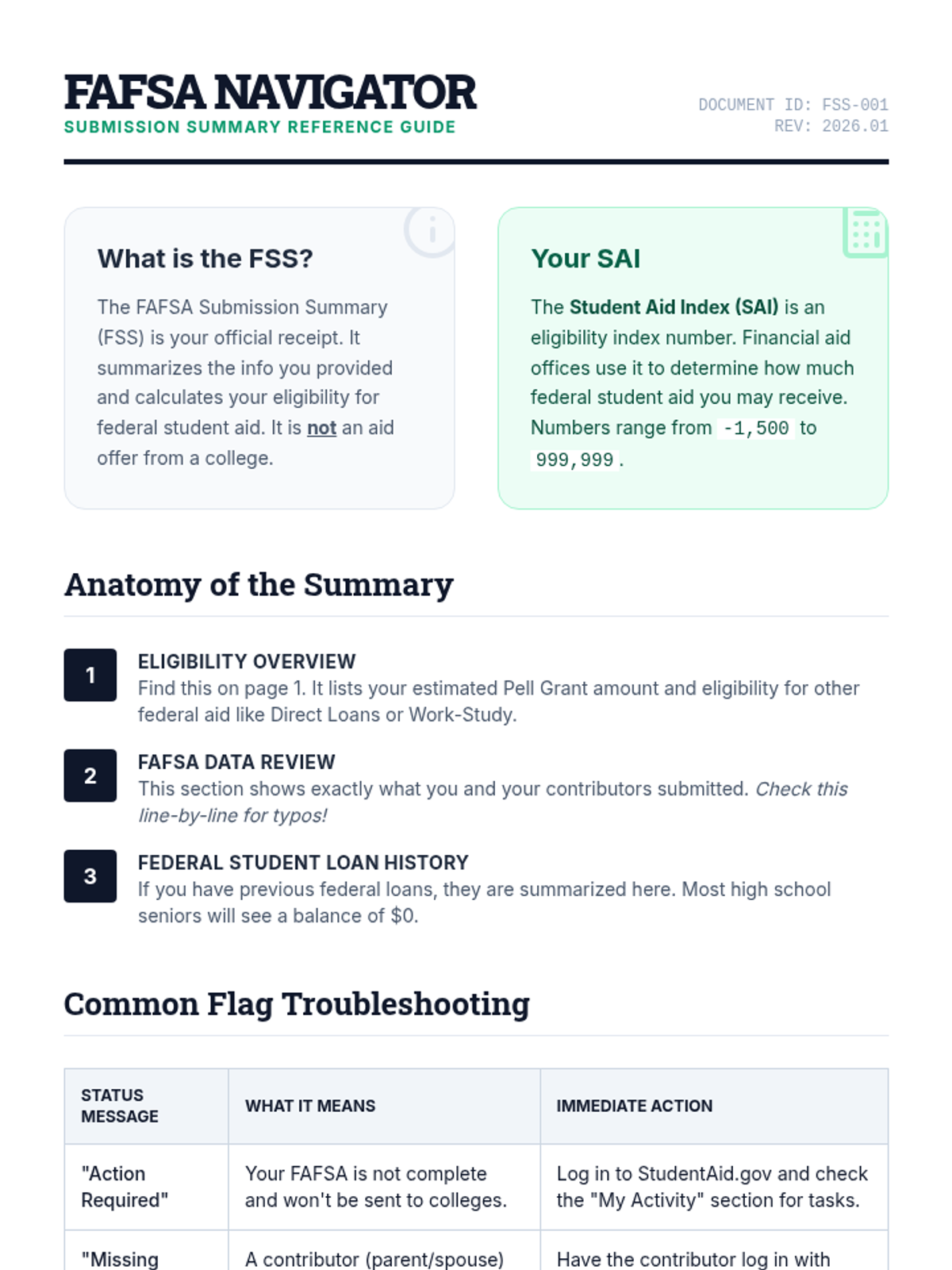
A comprehensive sequence designed for undergraduate students to interpret FAFSA output, compare financial aid offers, and develop a strategic plan for college affordability with minimal debt.
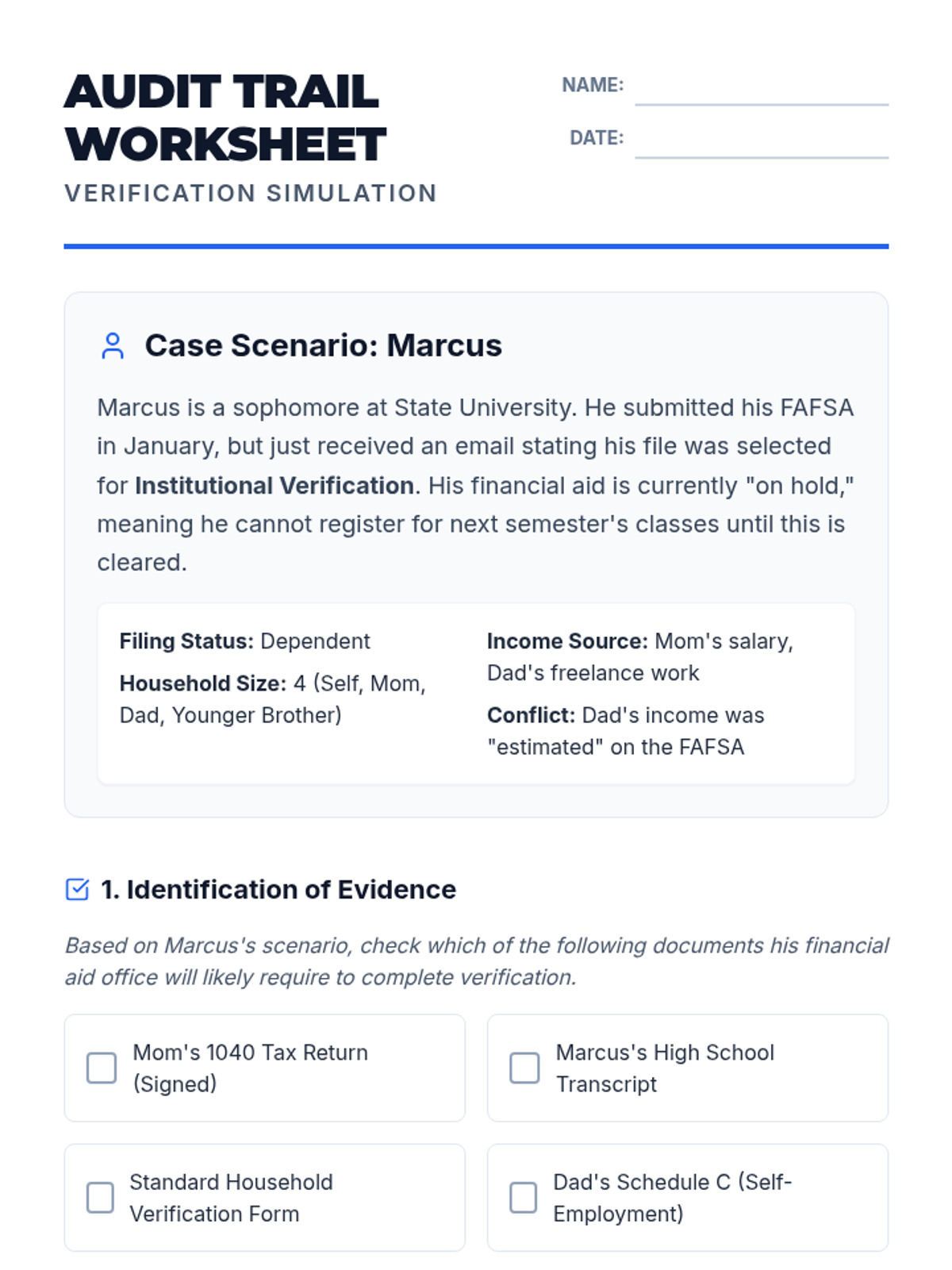
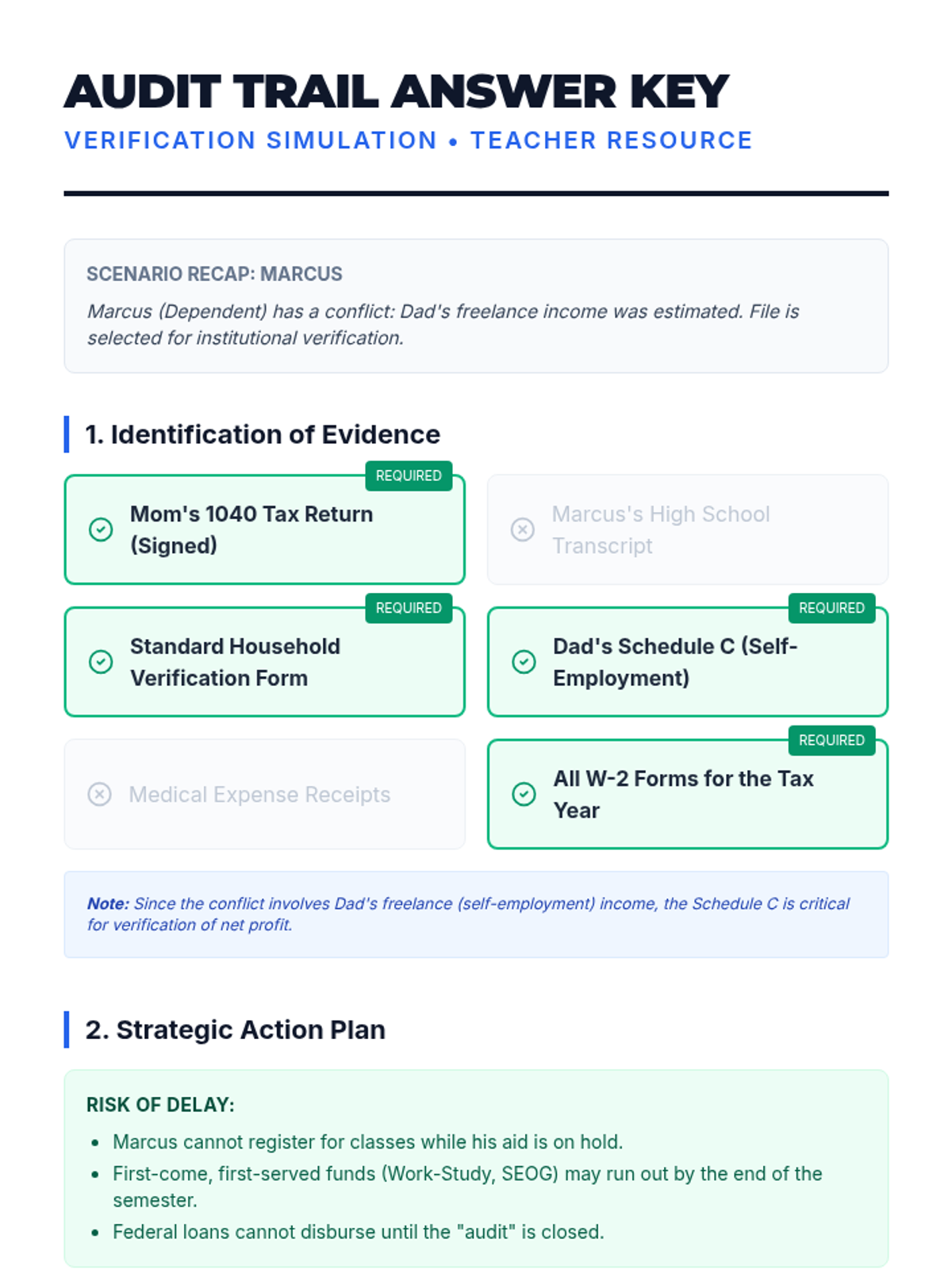
This sequence guides undergraduate students through the complexities of FAFSA verification, professional judgment appeals, and unique filing statuses. It focuses on self-advocacy and navigating bureaucratic exceptions to ensure equitable financial aid.
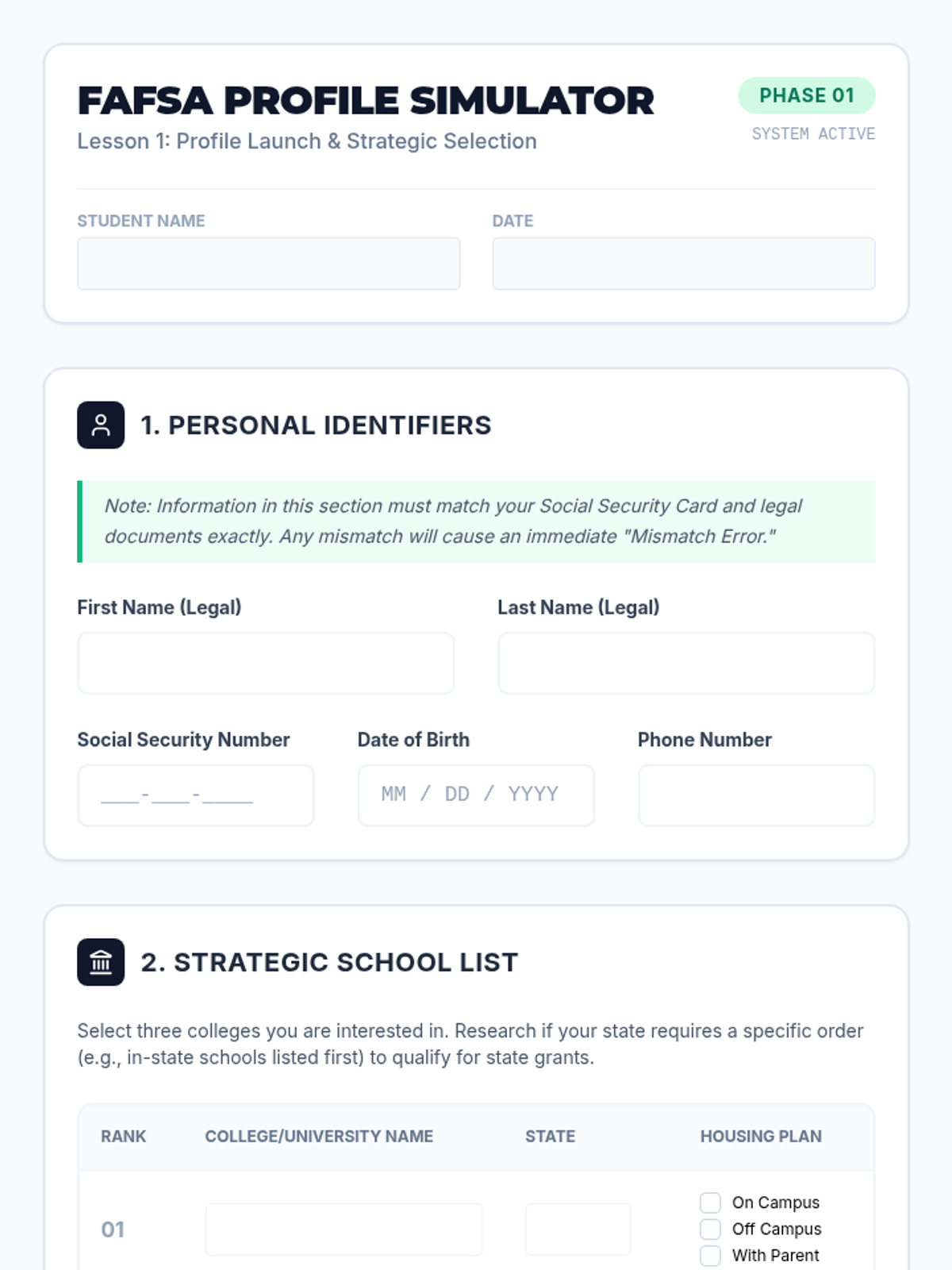
A comprehensive simulation-based sequence walking undergraduate students through the FAFSA application. Students learn to navigate demographic entry, school selection, IRS data exchange, and complex family contributor scenarios.
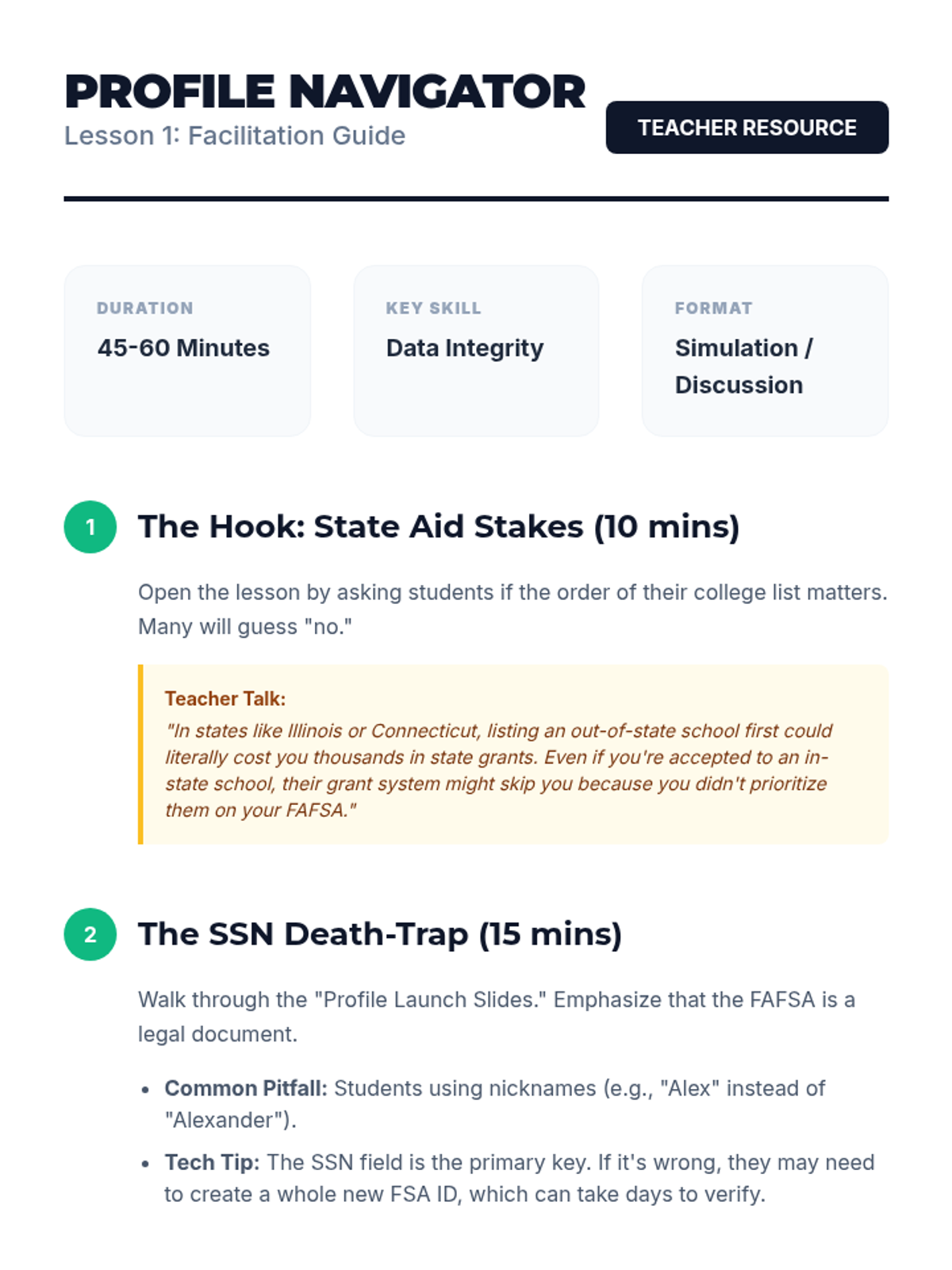
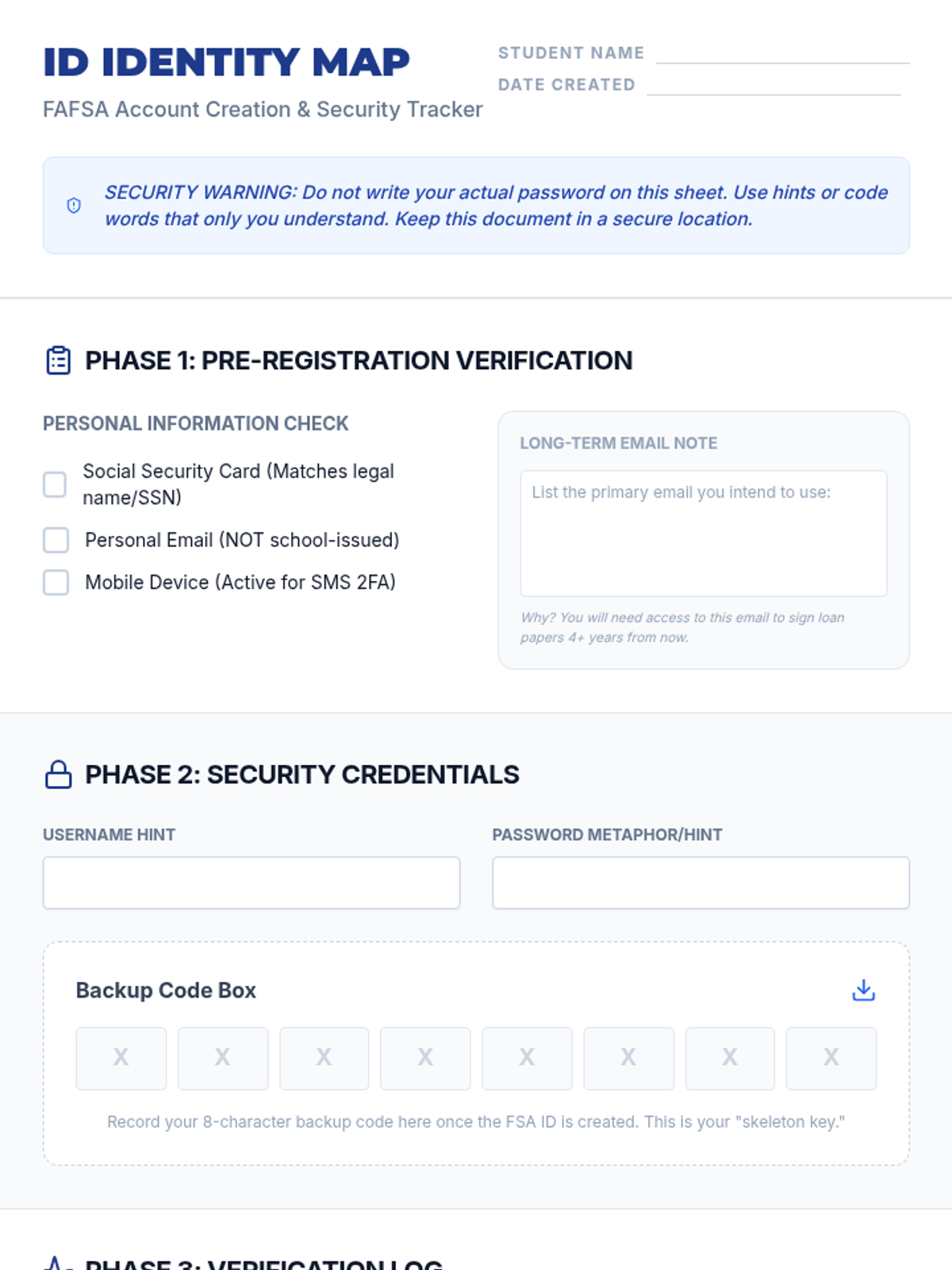
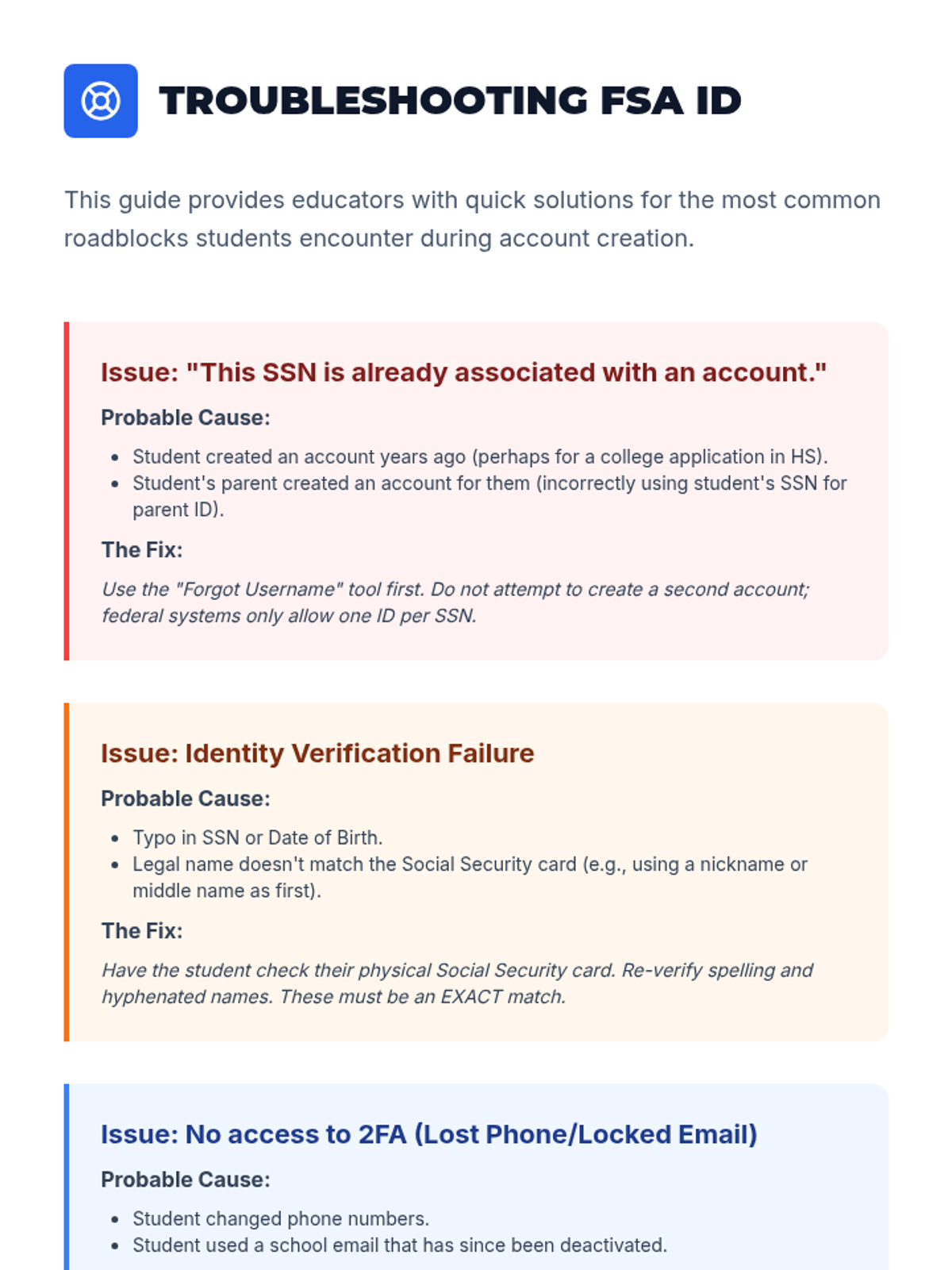
A comprehensive workshop series designed to prepare undergraduate students for the administrative and documentation requirements of the FAFSA, focusing on account security, status determination, and document organization.
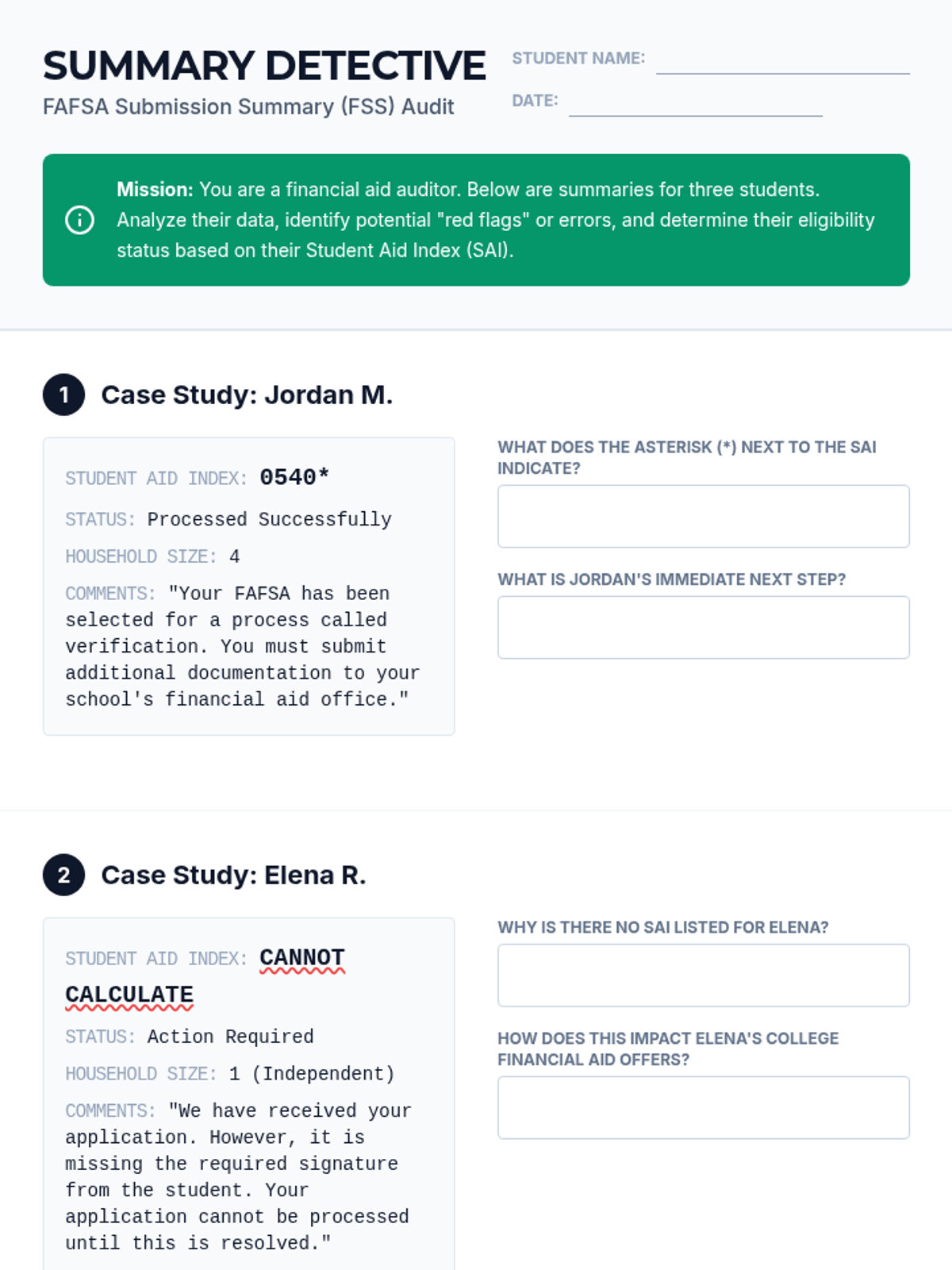
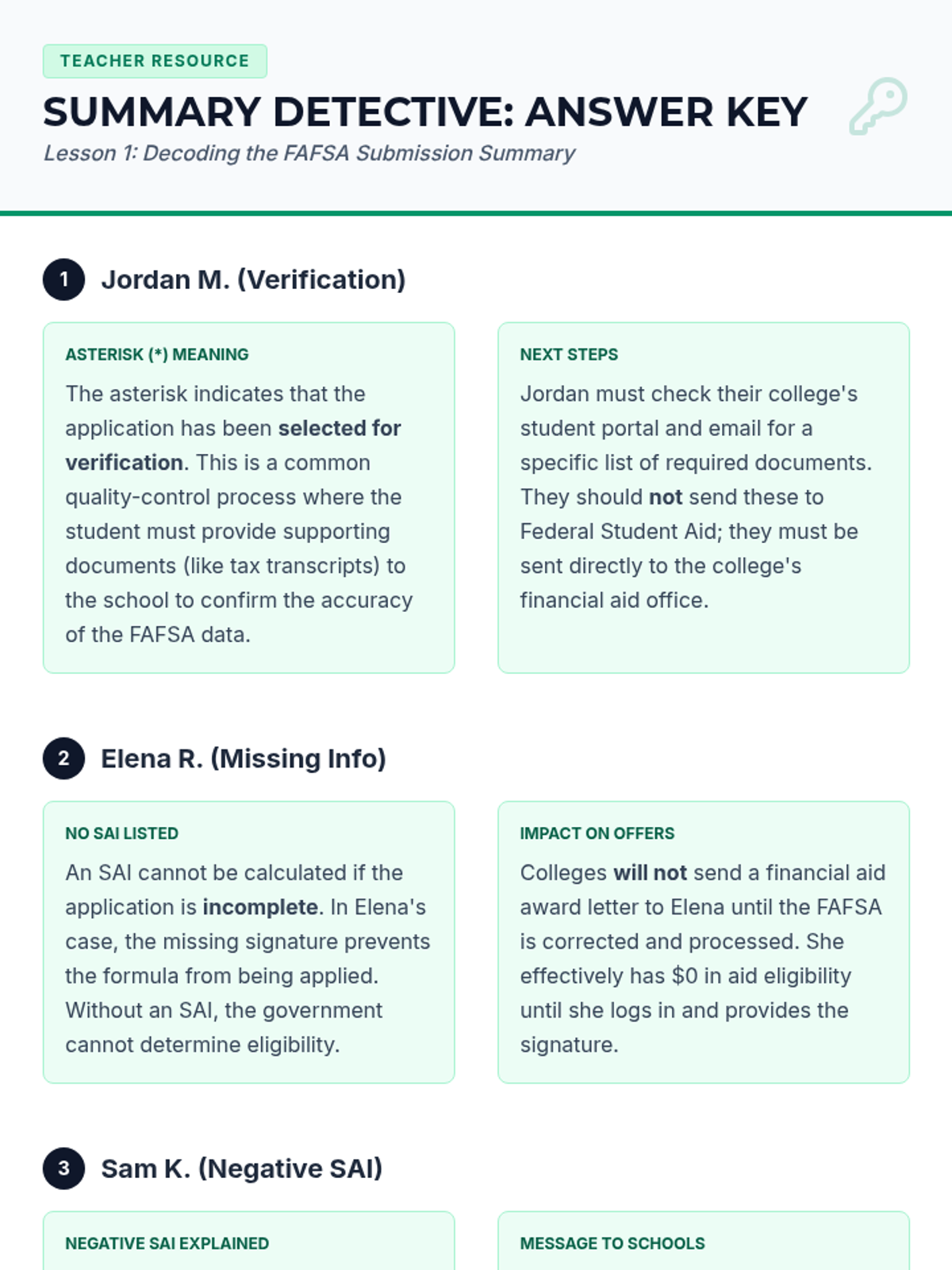
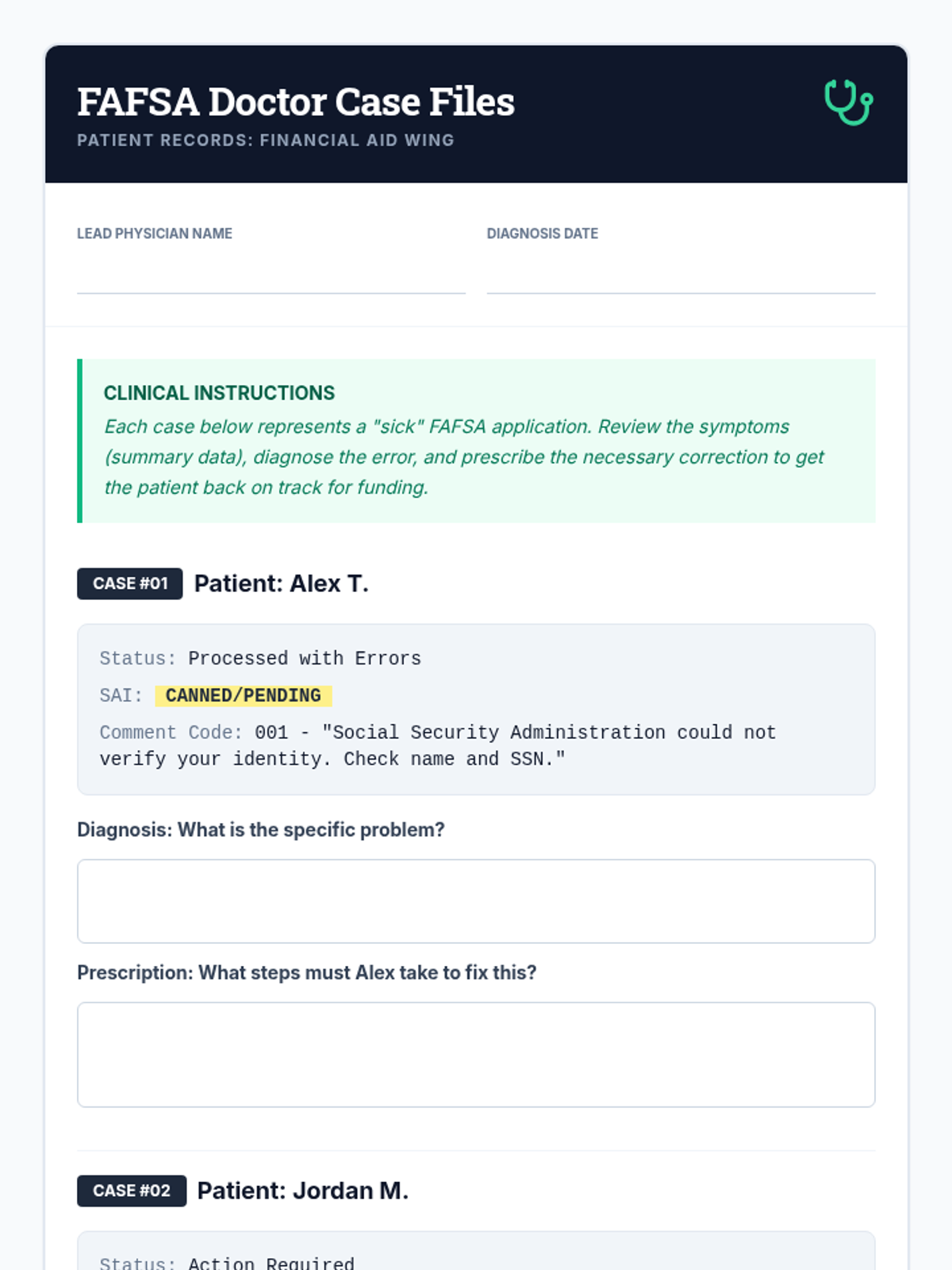
This sequence guides students through the post-submission phase of the FAFSA, including interpreting reports, navigating verification, making corrections, appealing for more aid, and comparing financial aid offers.
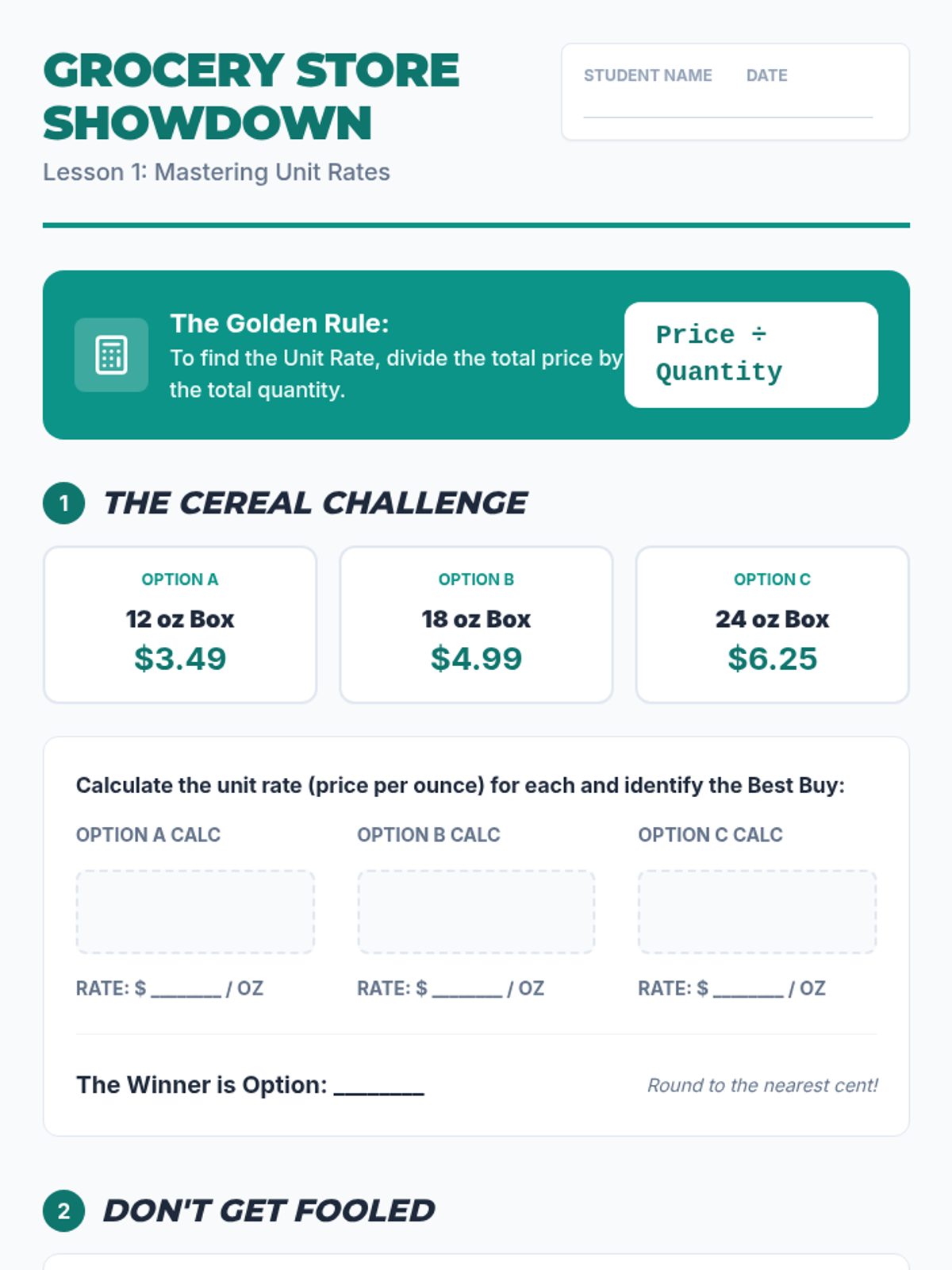
This project-based sequence simulates the independent living experience, requiring students to apply mathematical reasoning and research skills to maximize a hypothetical budget. Students move from calculating simple unit prices to evaluating total cost of ownership, including shipping, subscriptions, and maintenance. The sequence culminates in a comprehensive comparison shopping project where students must justify a major purchase choice using quantitative data and qualitative reviews.
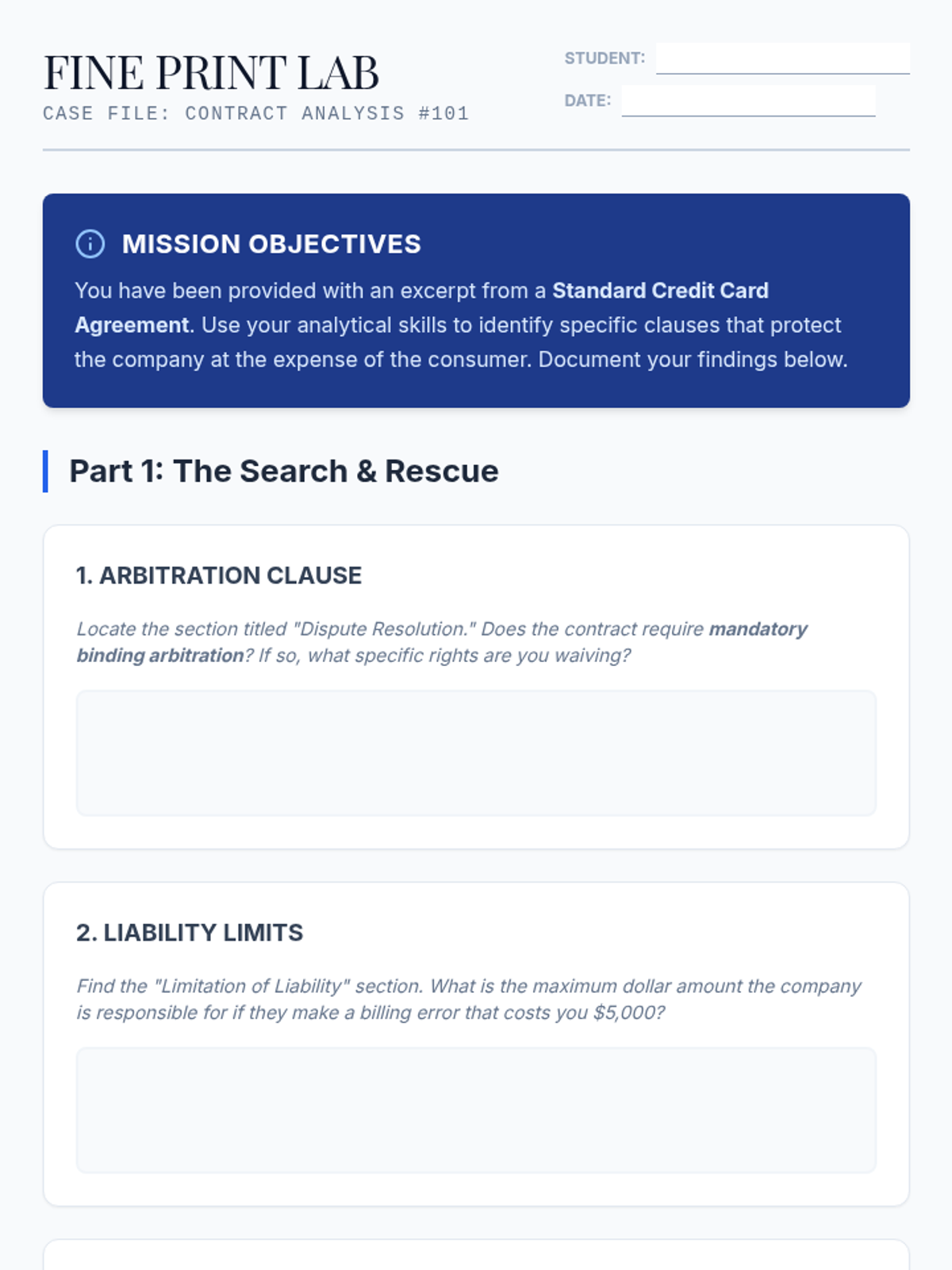
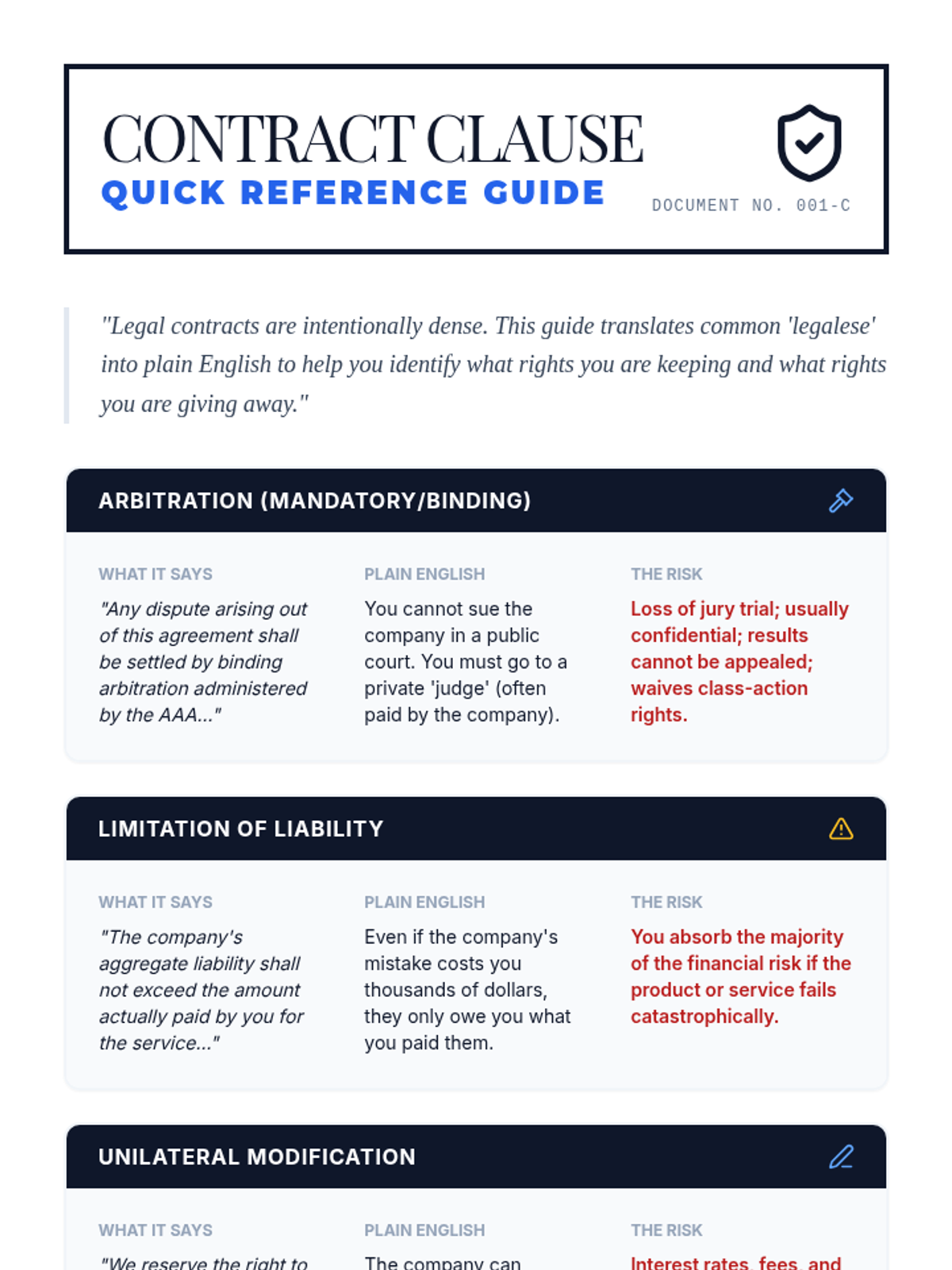
A comprehensive sequence for undergraduate students on consumer rights, contract analysis, and financial protection. Students move from dissecting legal language to simulating disputes and managing major asset acquisitions.
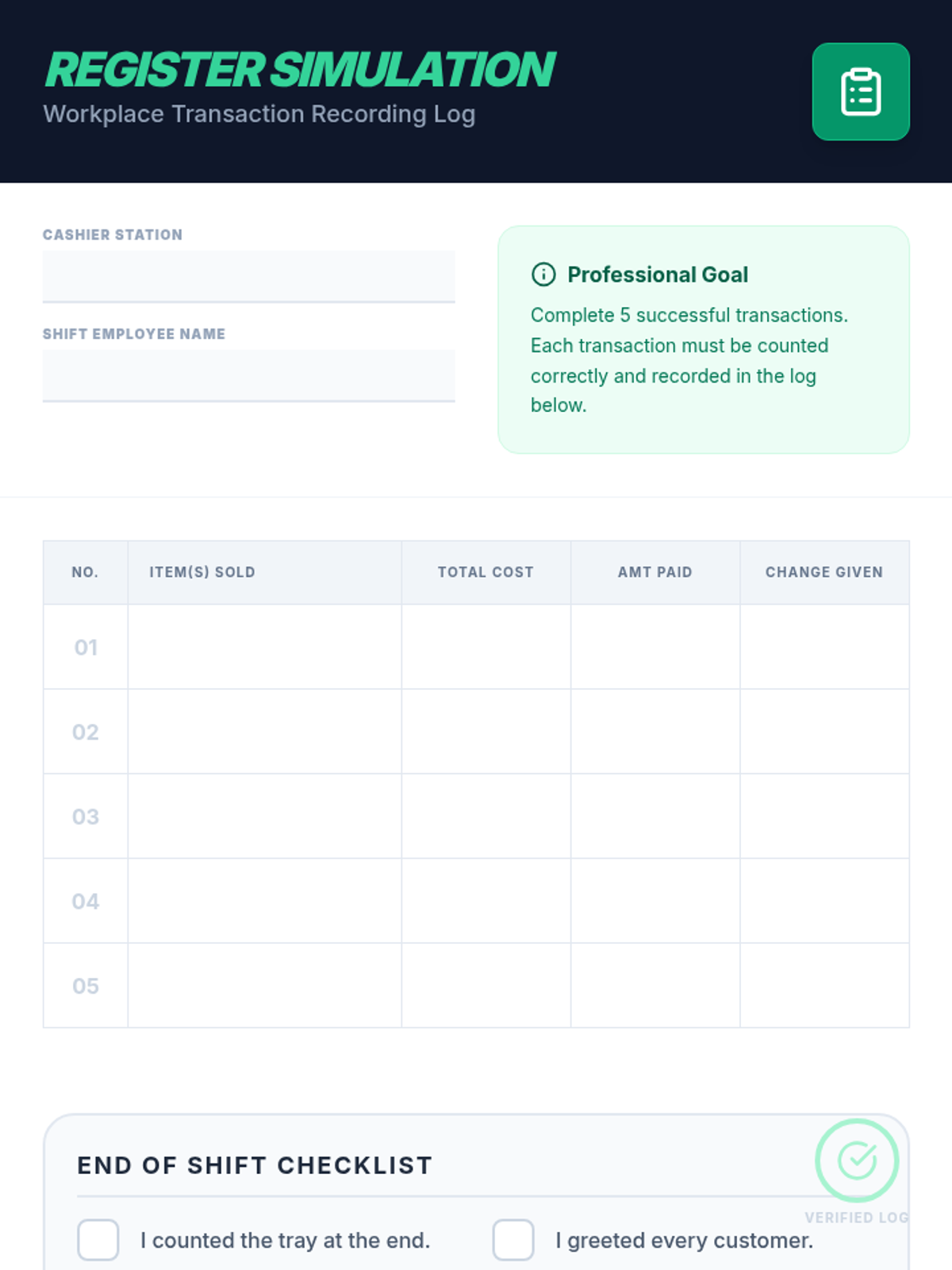
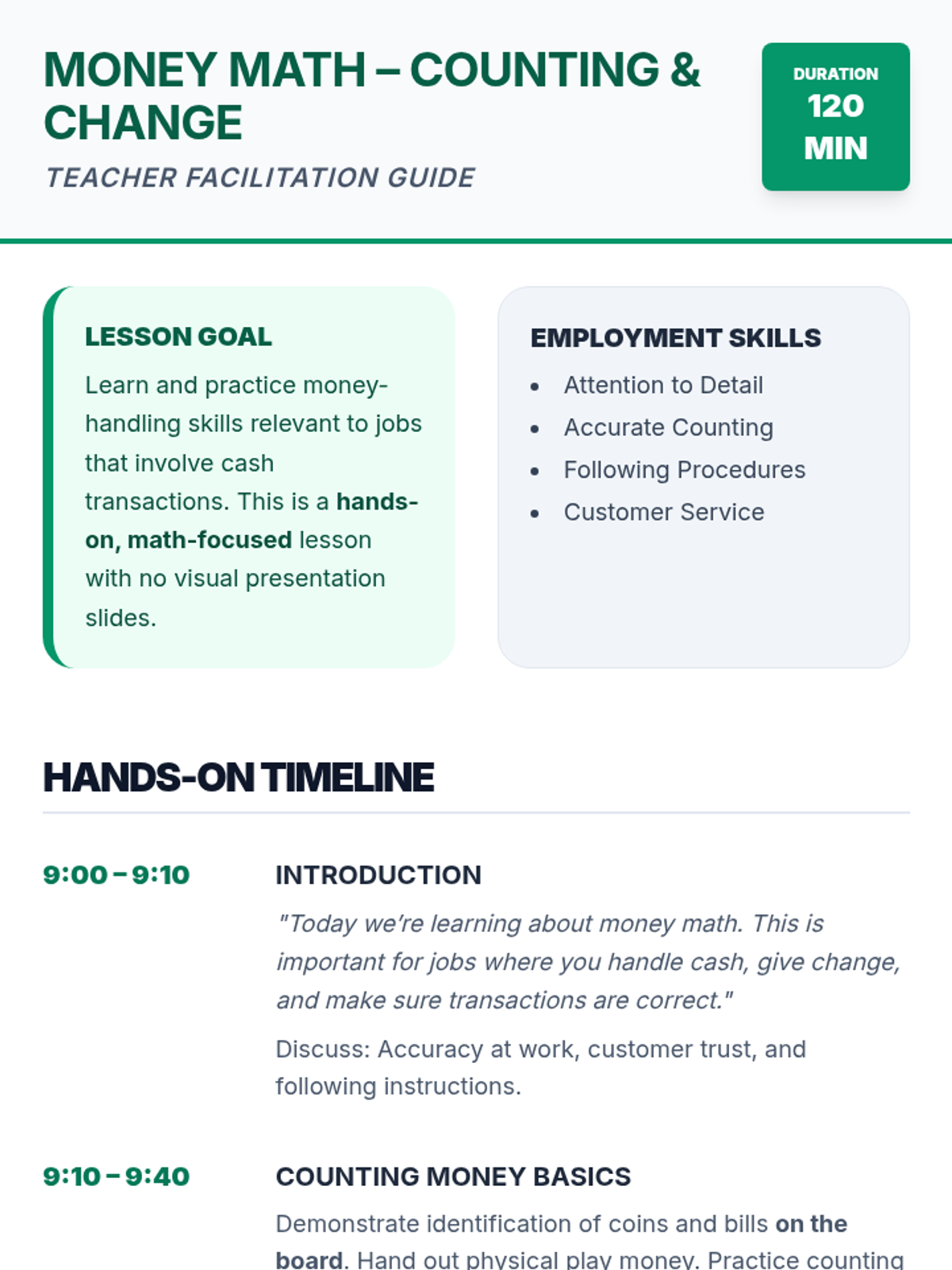
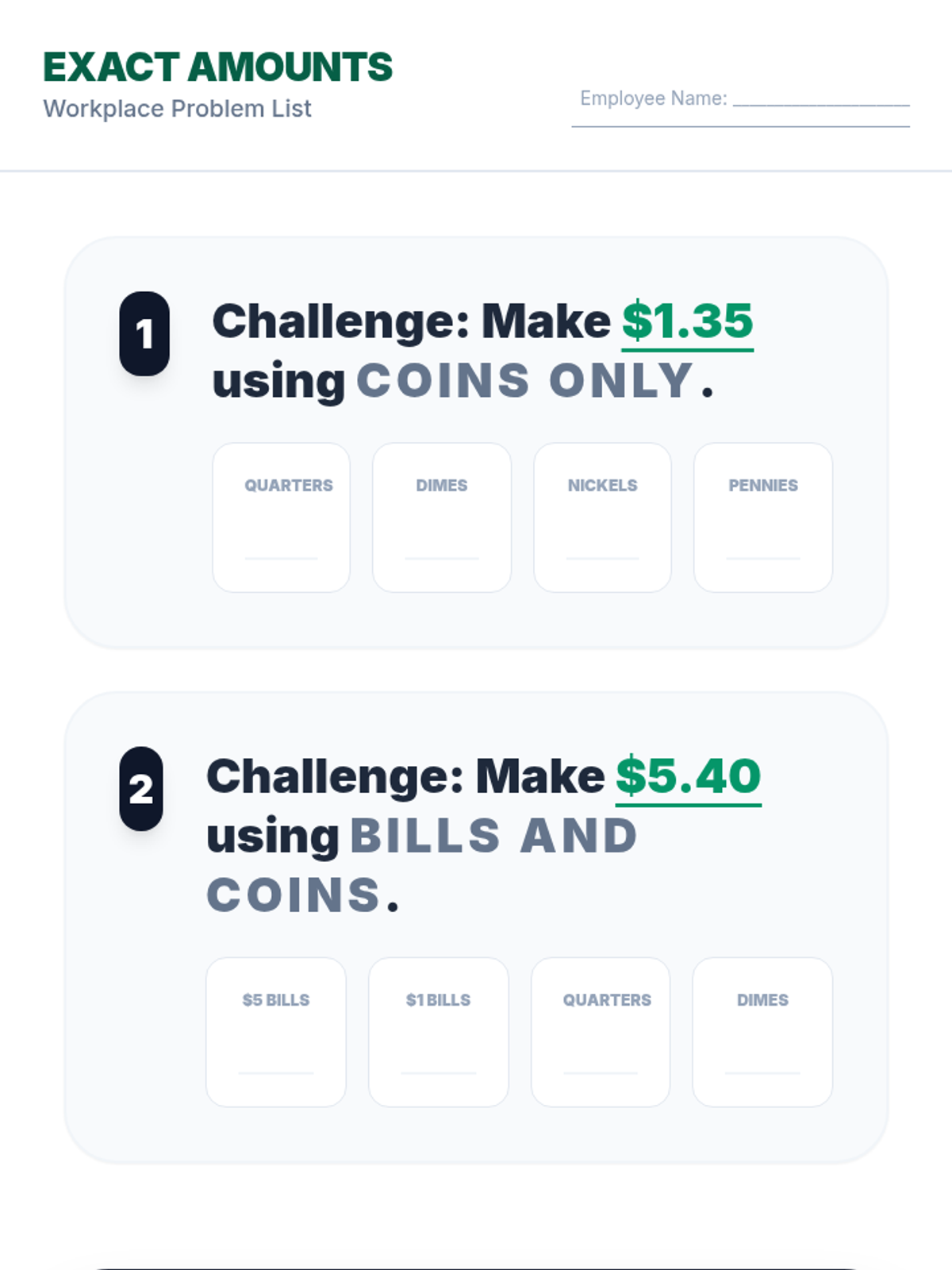
A comprehensive employment training sequence for adults with IDD, focusing on essential workplace financial skills including budgeting, income management, and accurate money handling.
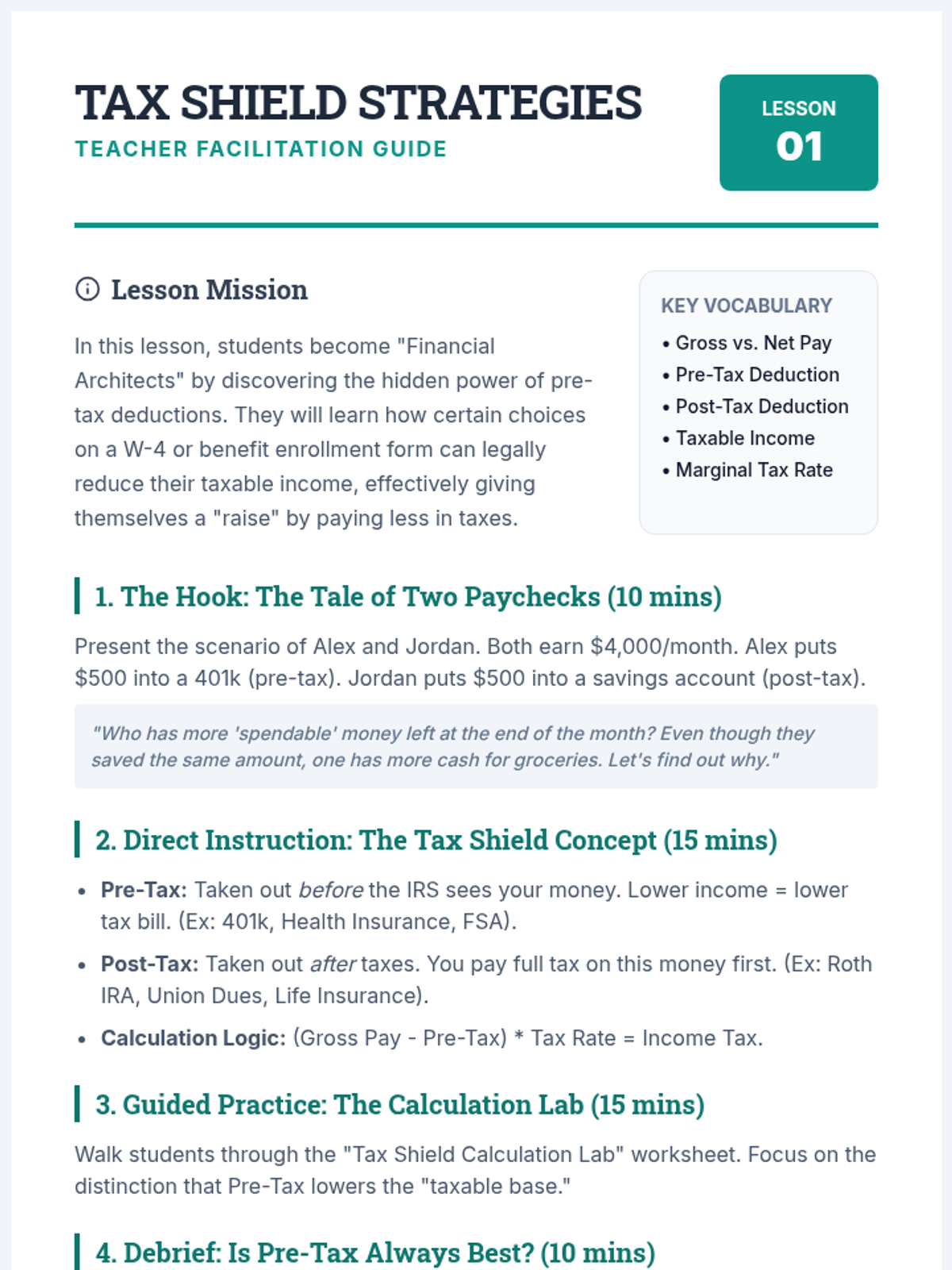
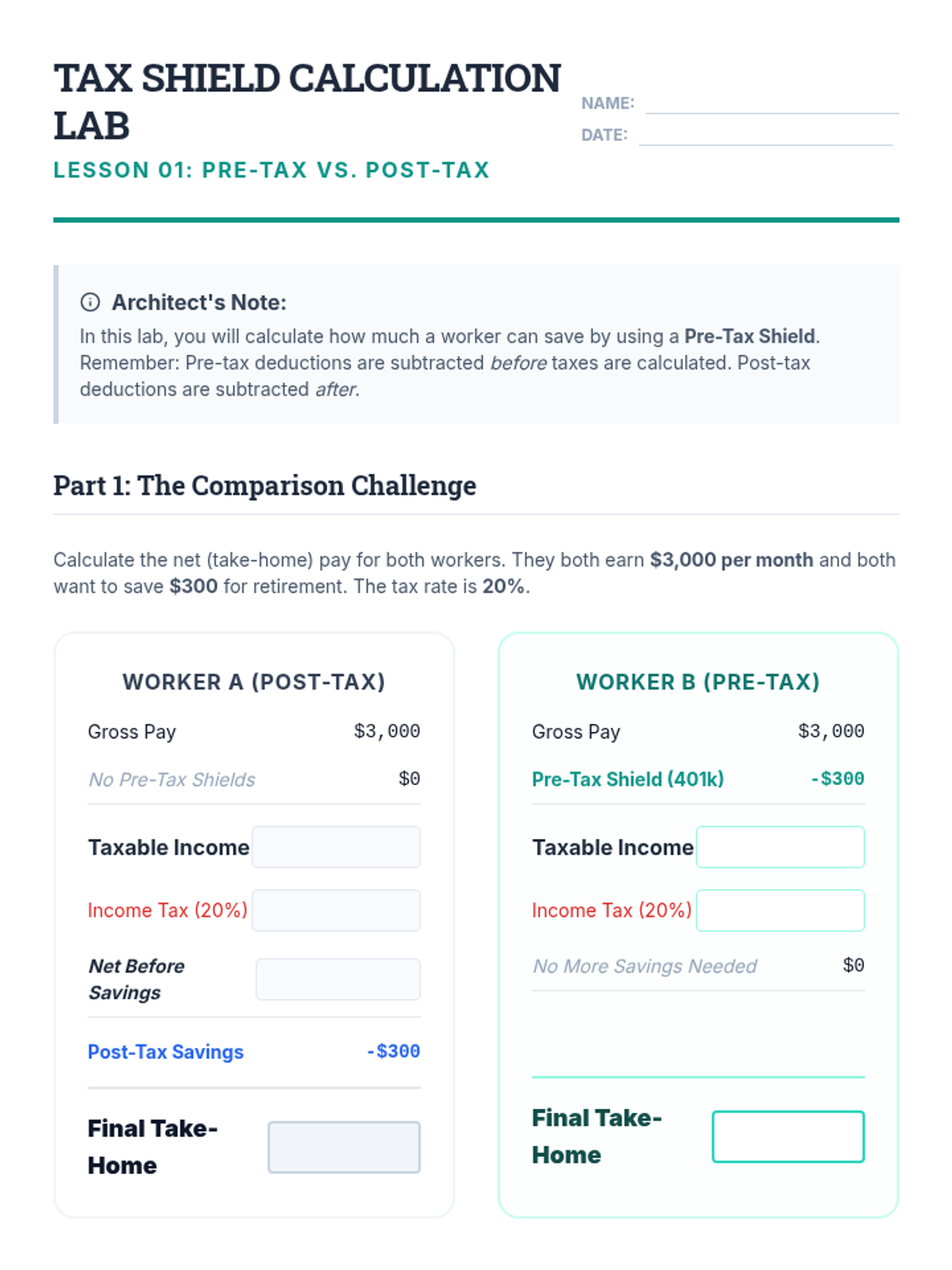
A comprehensive project-based unit exploring how strategic payroll deductions like FSAs, HSAs, and retirement contributions build long-term wealth and manage risk. Students move from basic tax calculations to designing a 'Payroll Strategy Guide' for a career-ready future.
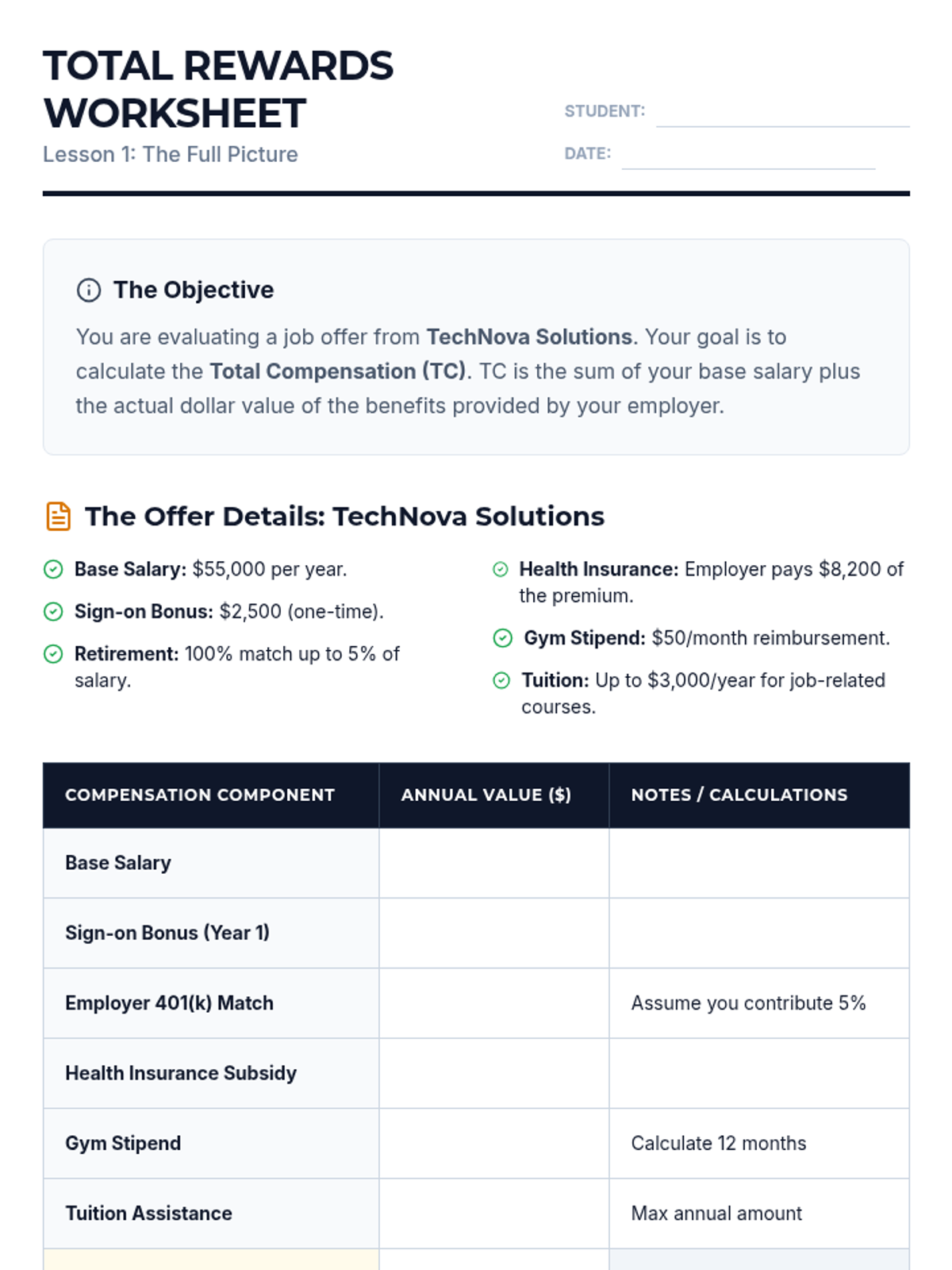
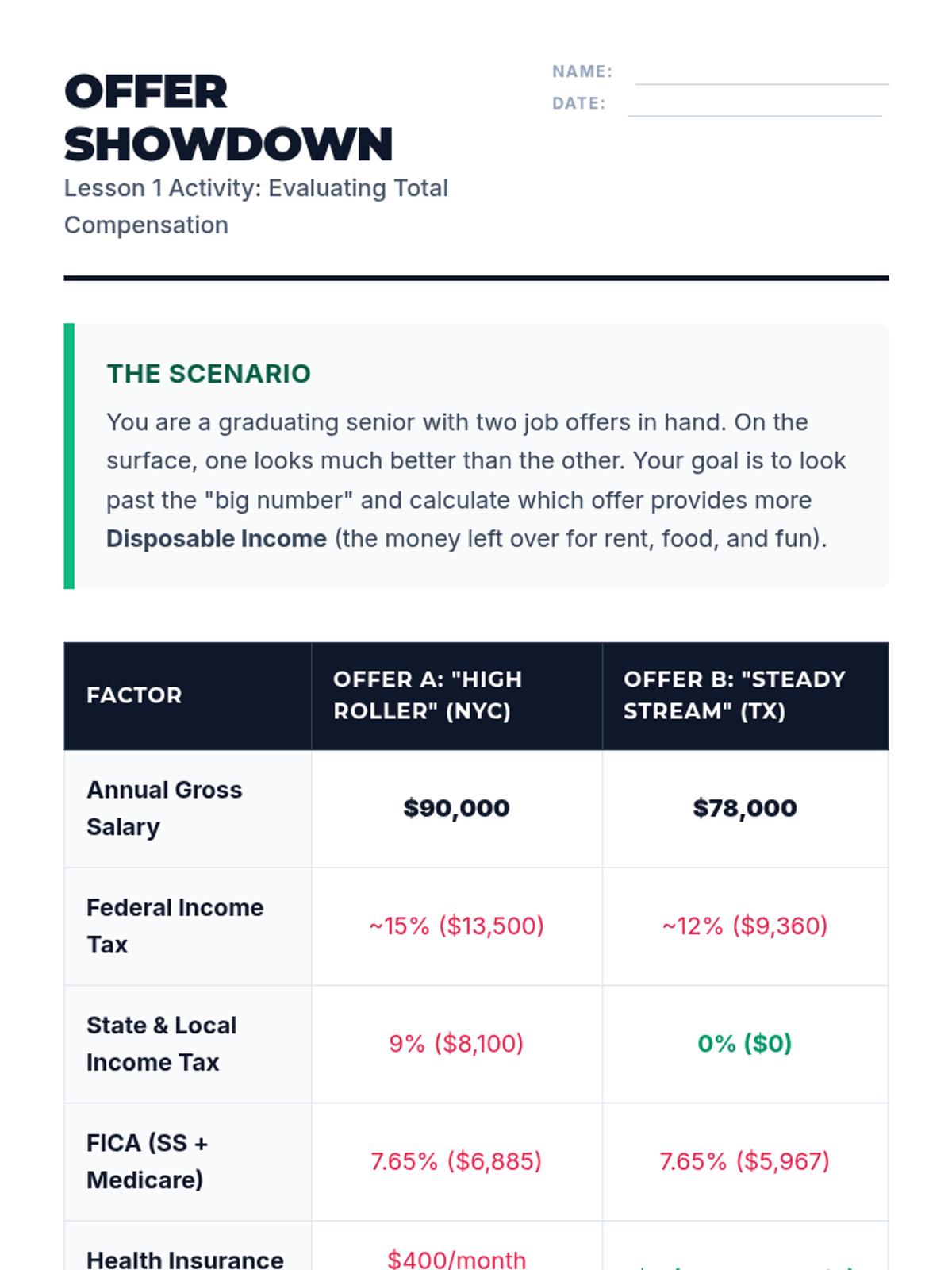
A comprehensive sequence for 12th-grade students on evaluating and negotiating employment offers. Students move from basic financial literacy (calculating total compensation) to critical analysis of benefits, culminating in a professional negotiation simulation.
This sequence guides 12th-grade students through the essentials of long-term financial planning, focusing on retirement accounts, employer matching, tax strategies, and vesting schedules to maximize future wealth.
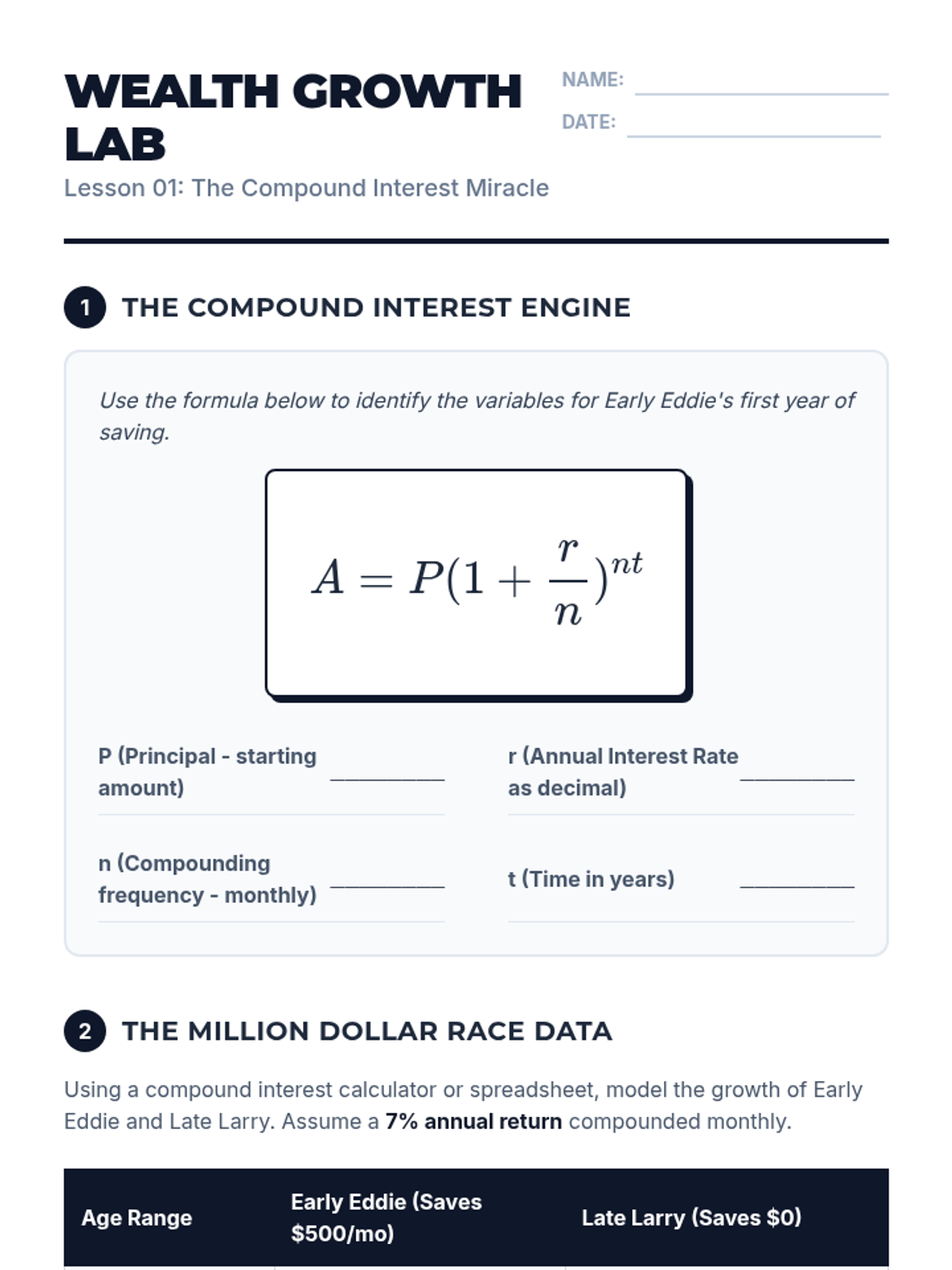
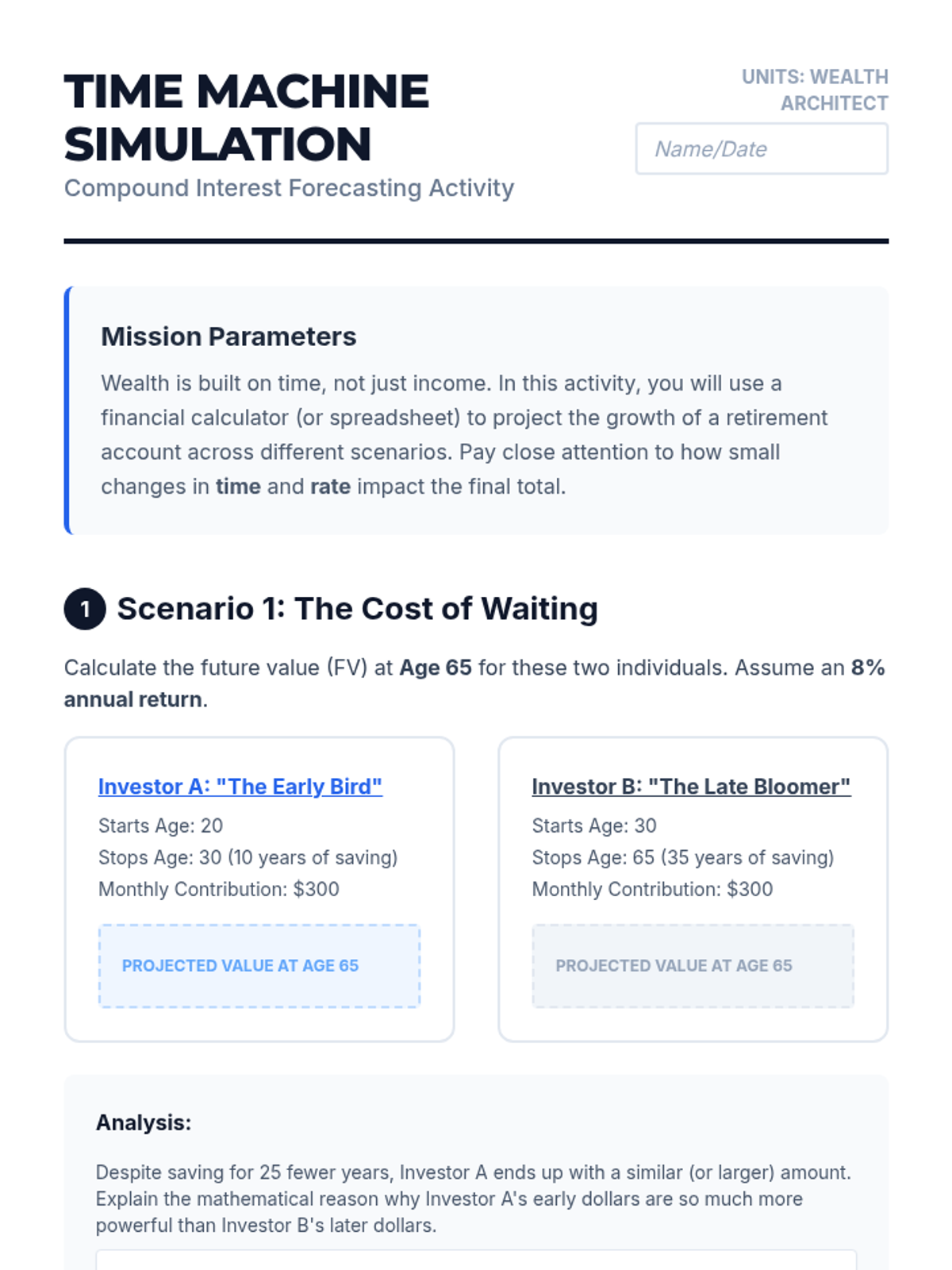
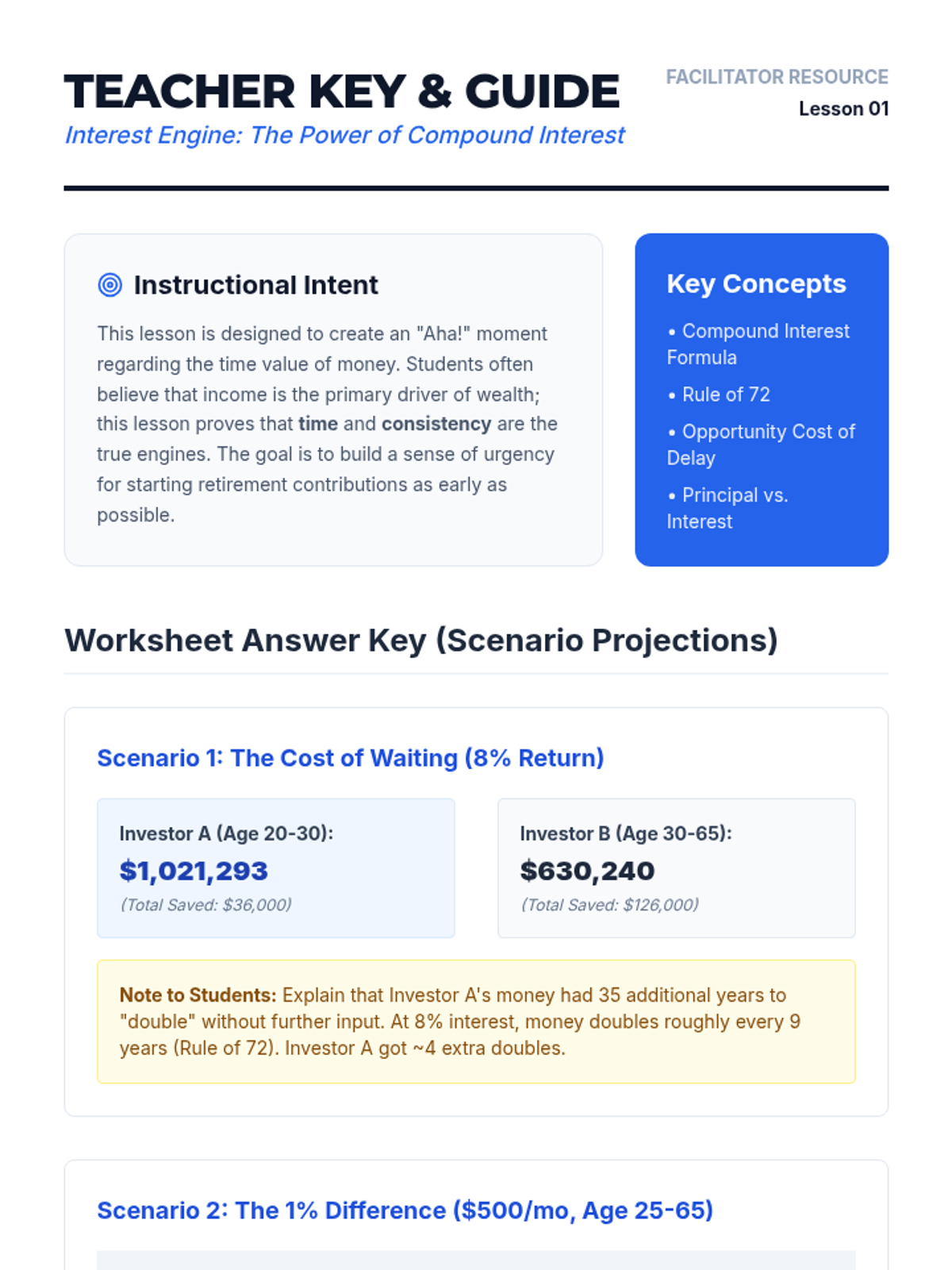
A comprehensive sequence for undergraduate students on retirement vehicles, employer incentives, and wealth accumulation strategies. Students will master the time value of money, evaluate employer-sponsored plans, and design personalized contribution strategies.
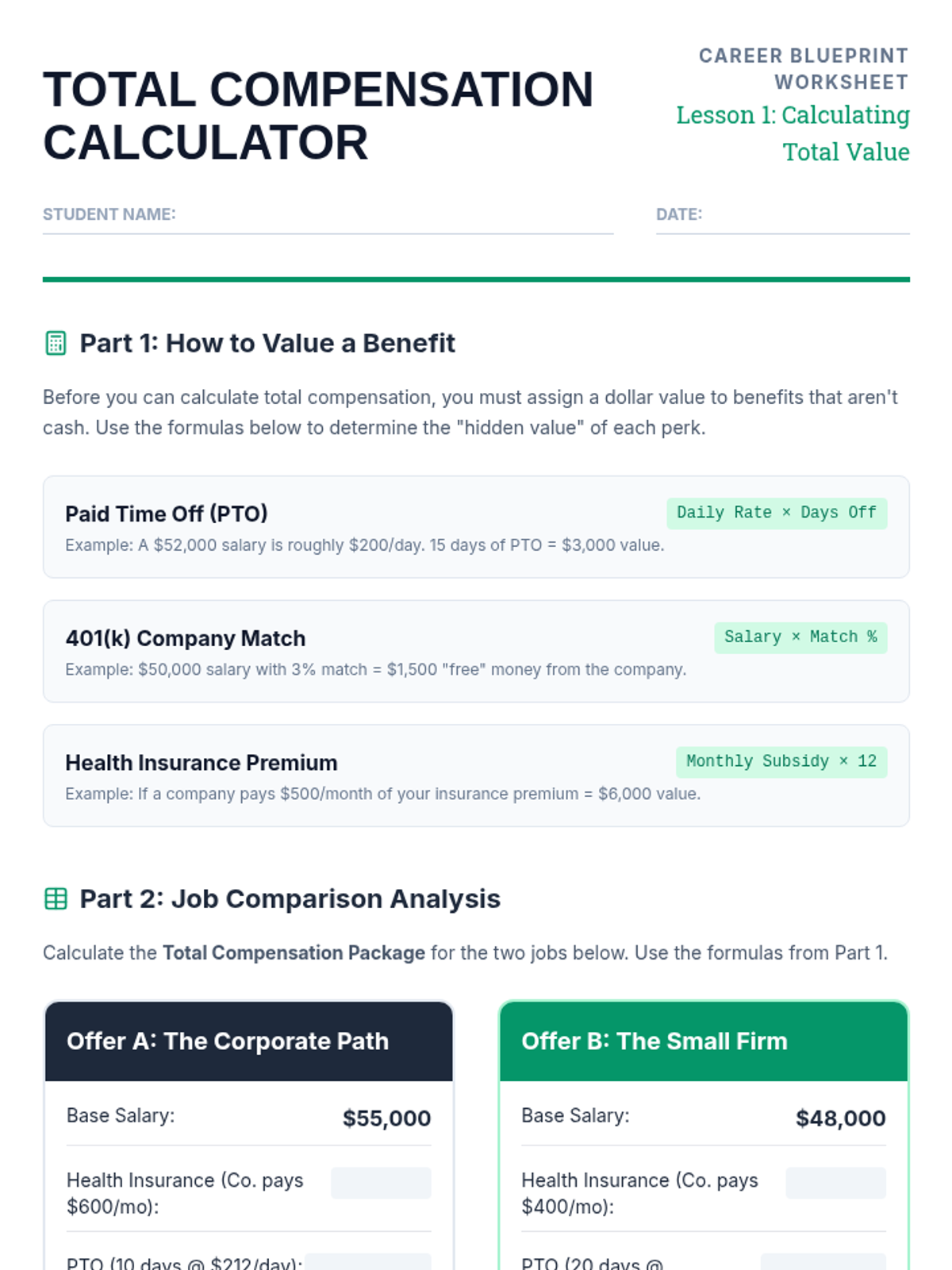
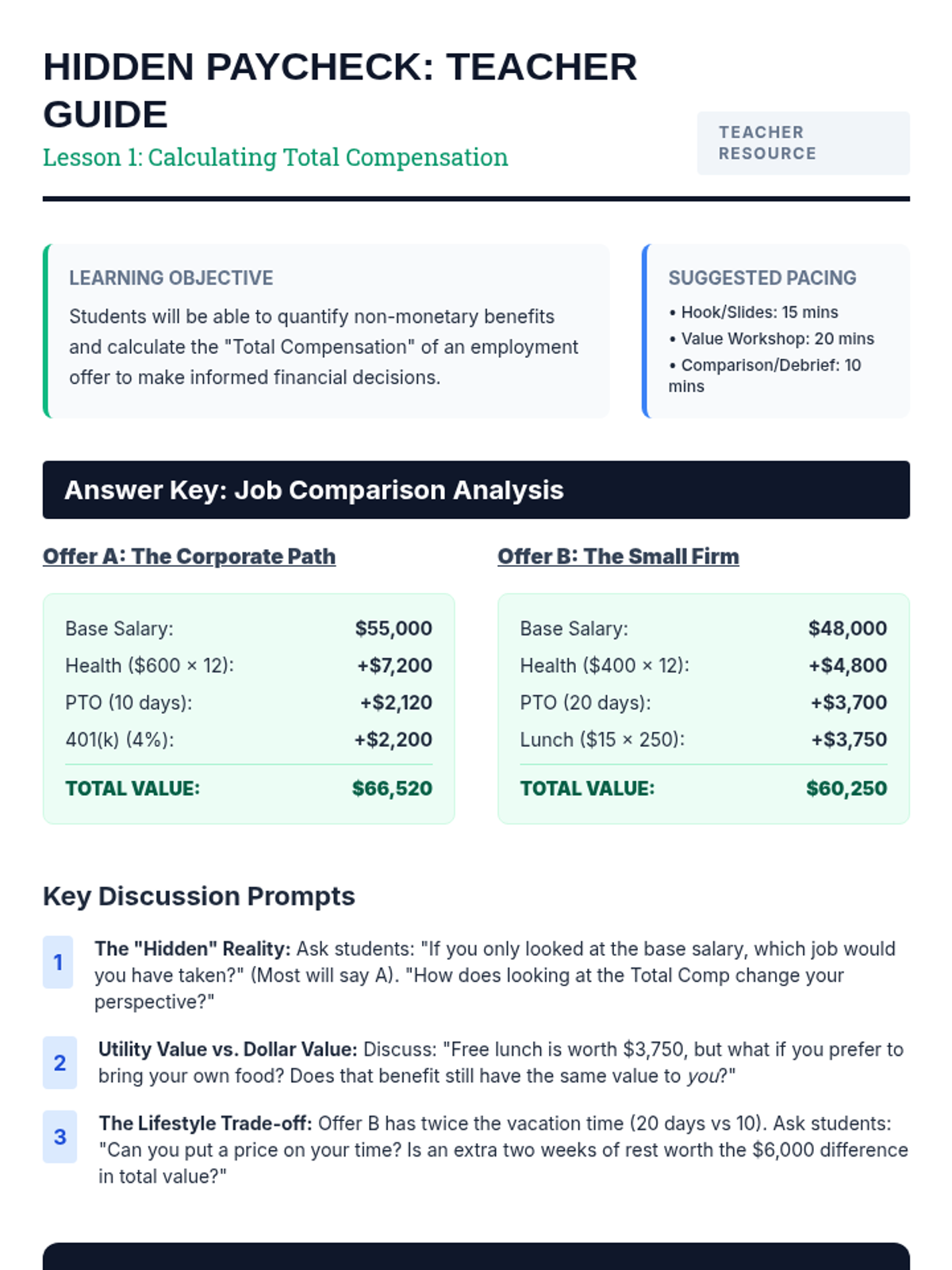
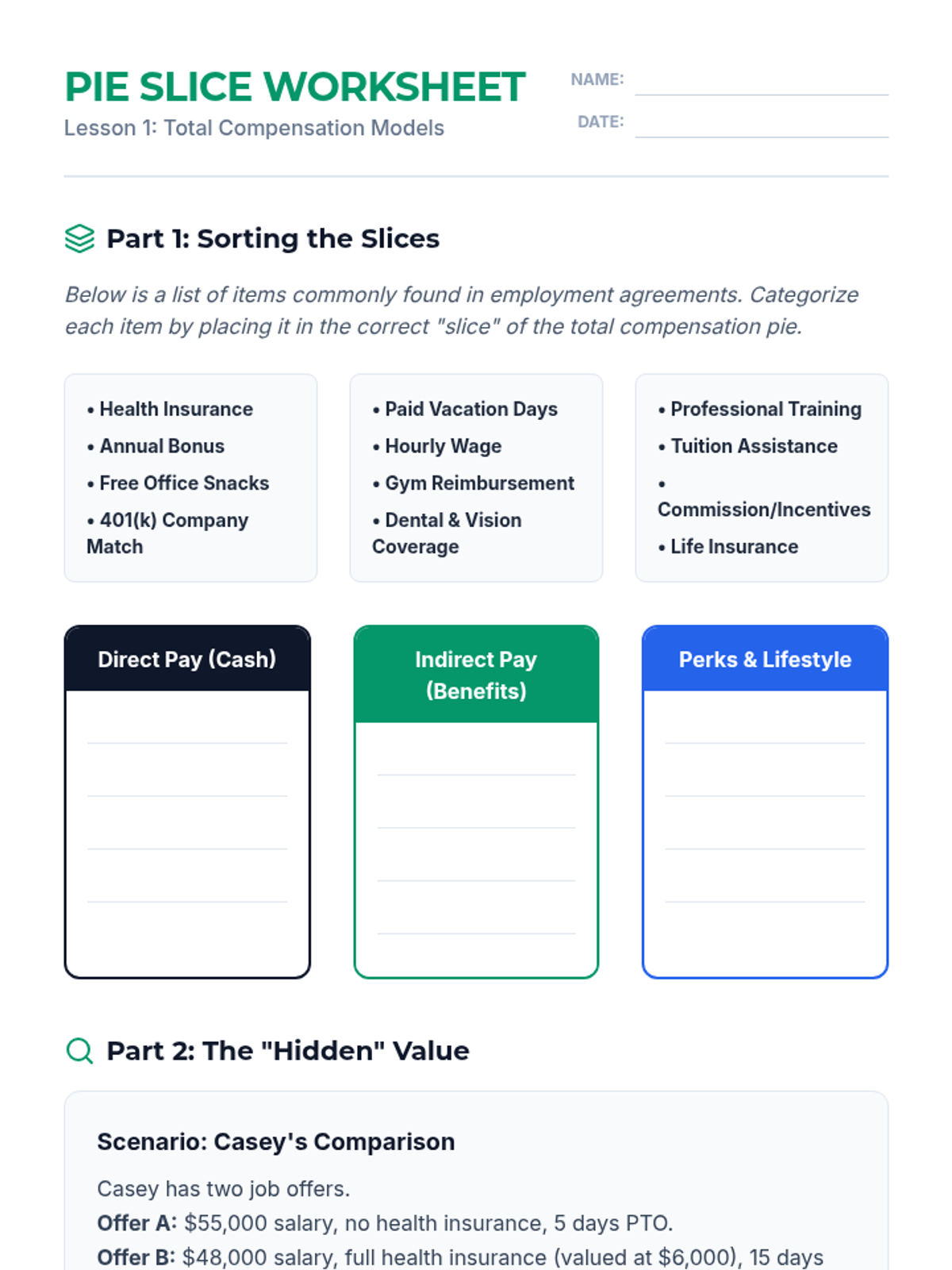
This sequence explores workplace benefits beyond salary, focusing on health insurance, retirement matching, and paid leave to help students calculate the true total compensation of a job offer.
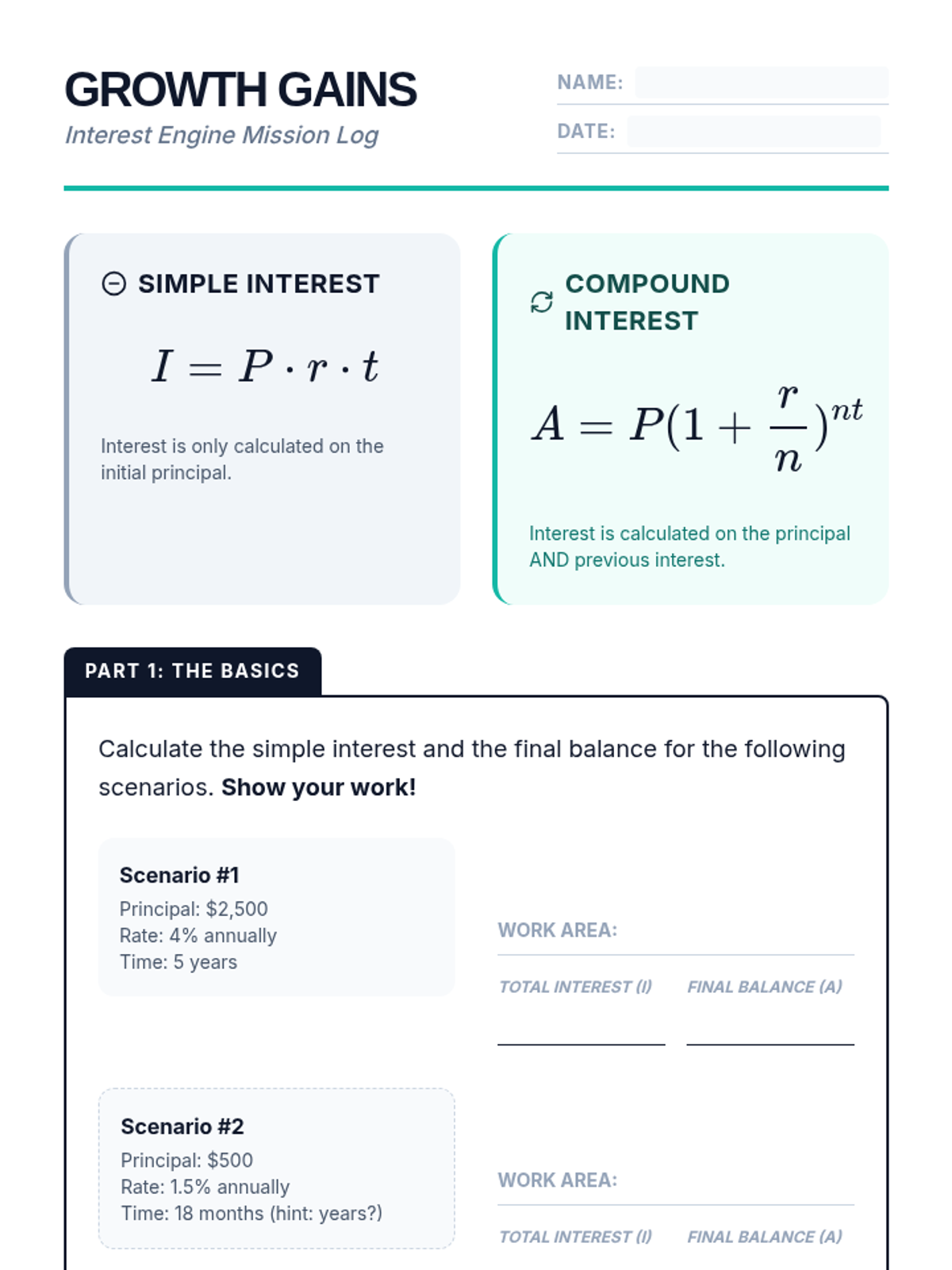
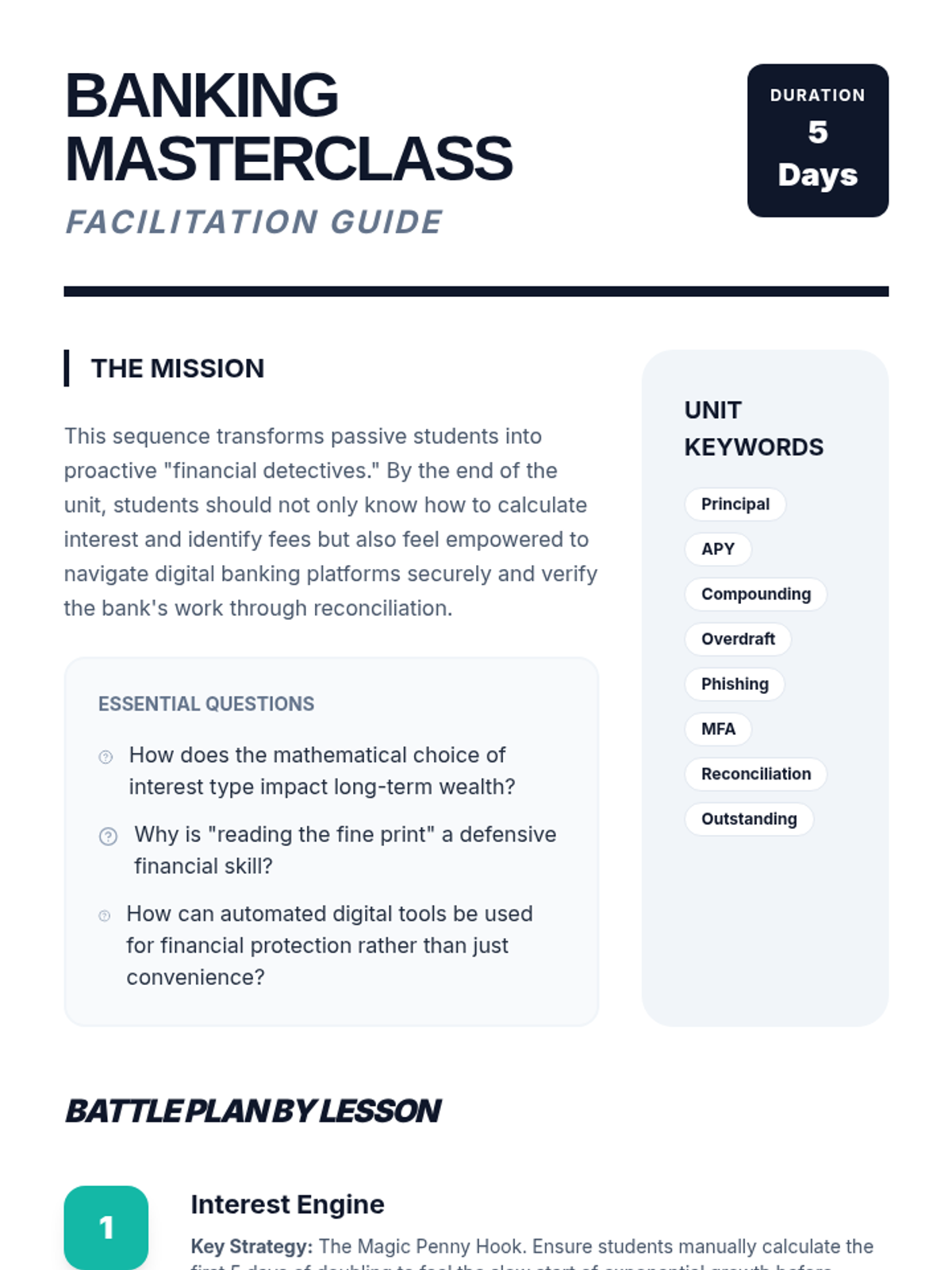
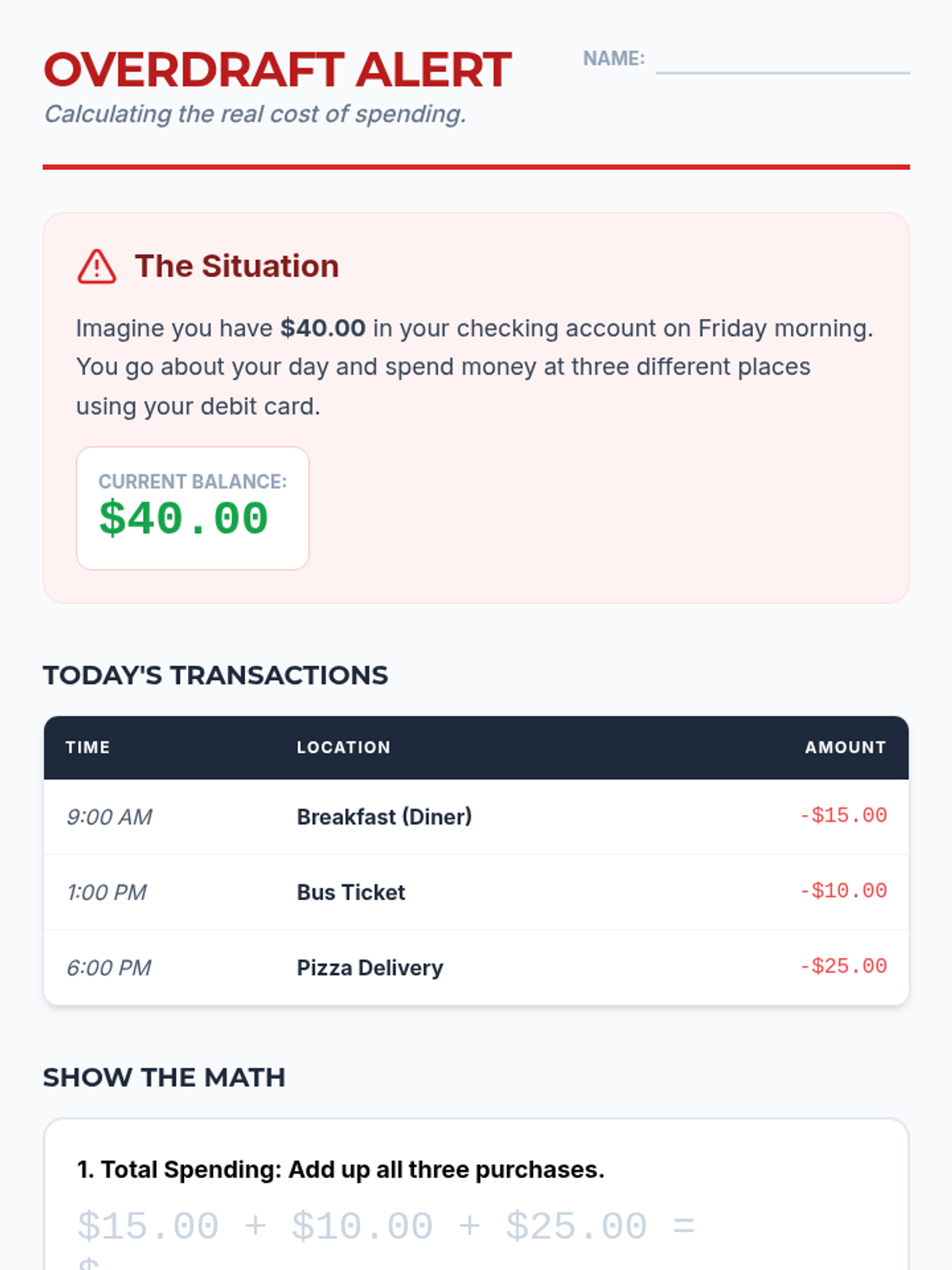
This sequence focuses on the financial implications of banking choices and the modern tools used to manage them. Students investigate the mathematics of interest, analyze fee structures, navigate digital banking platforms, and master the skill of account reconciliation.
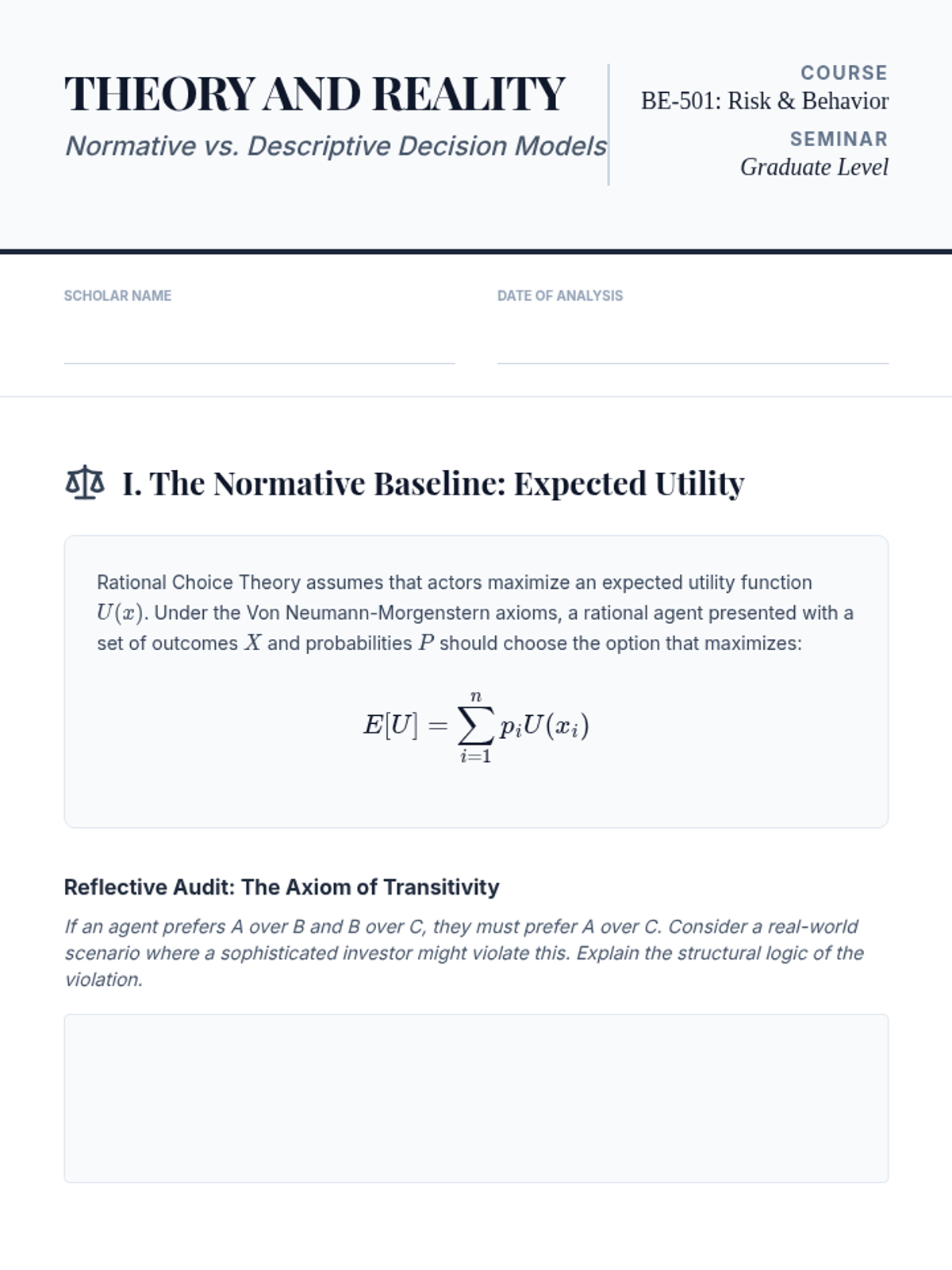
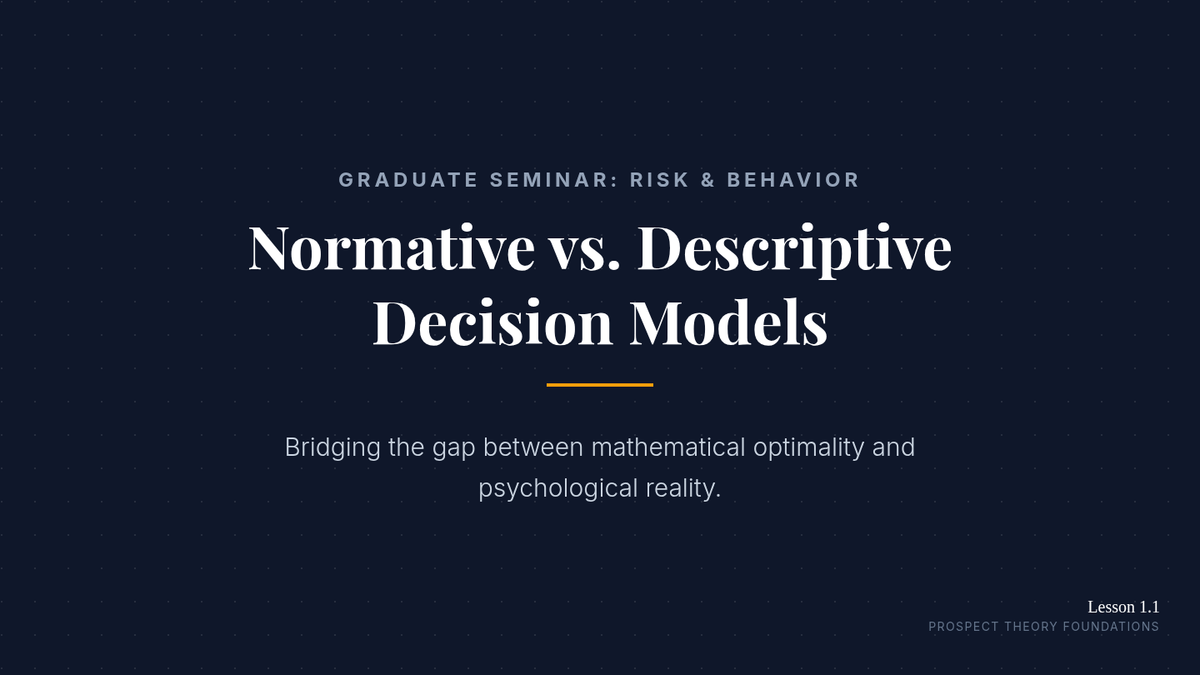
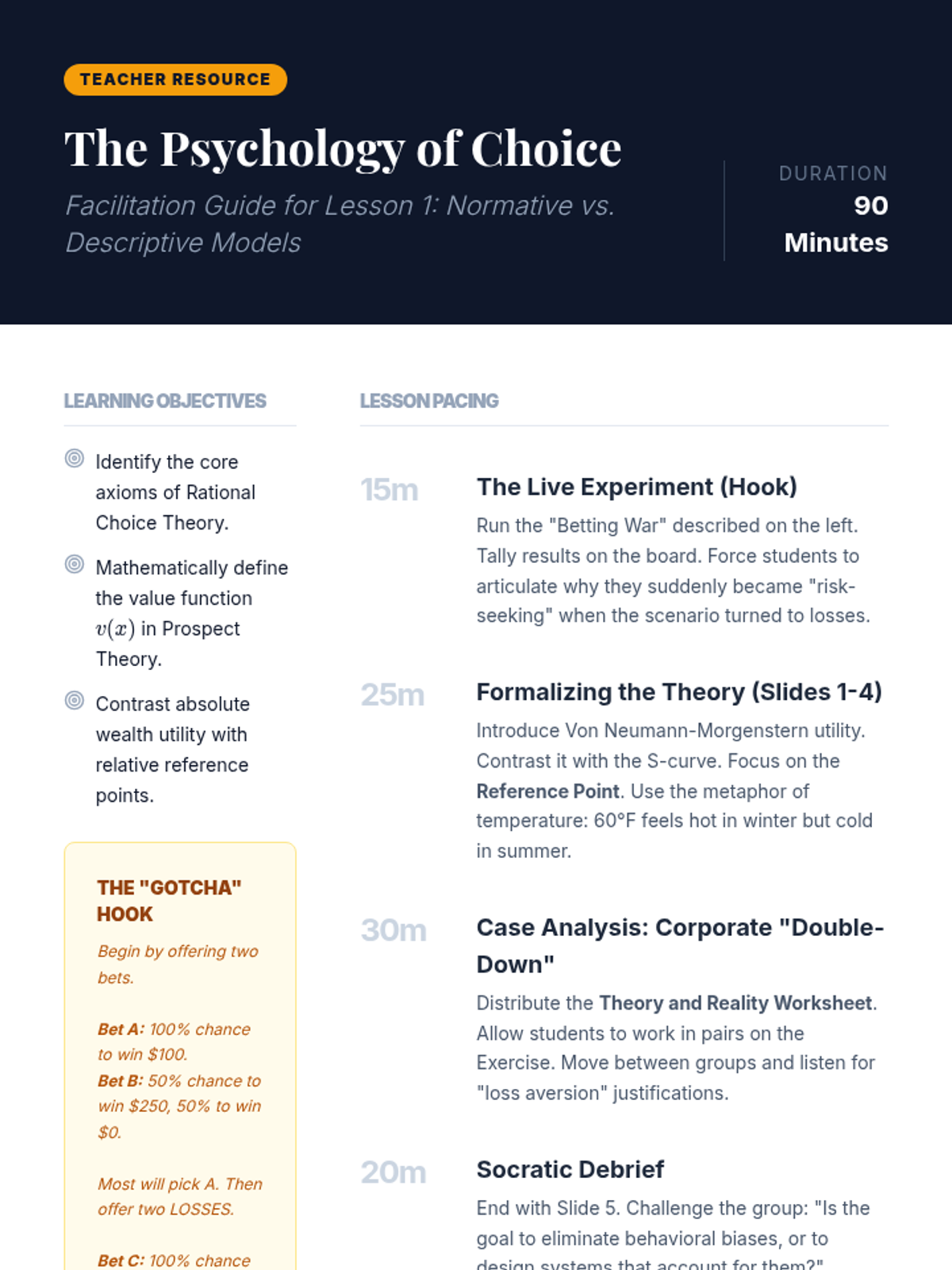
A graduate-level exploration of the intersection between mathematical probability and behavioral psychology. This sequence covers Prospect Theory, cognitive heuristics, fat-tail distributions, and the design of psychologically resilient risk management frameworks.
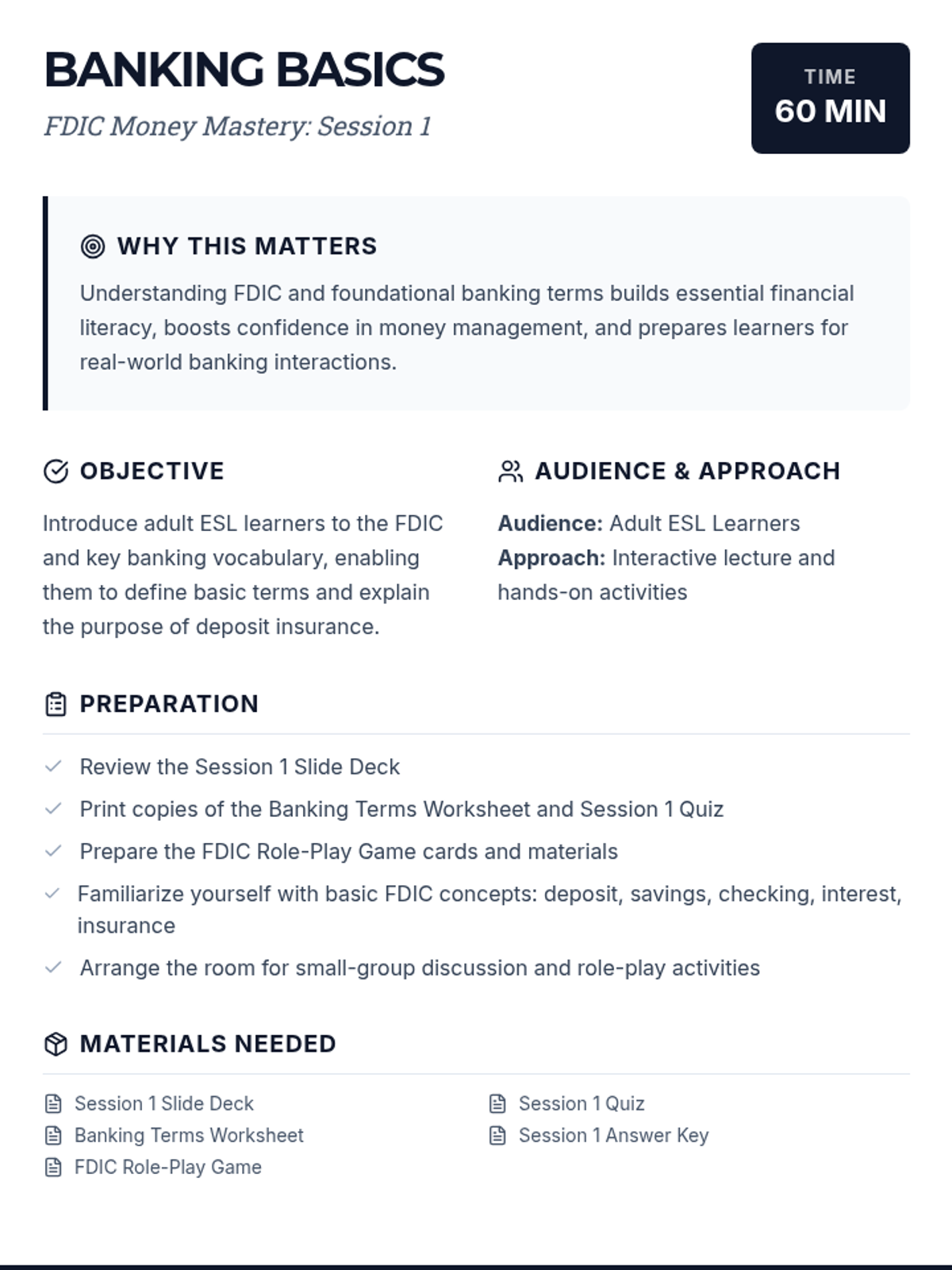
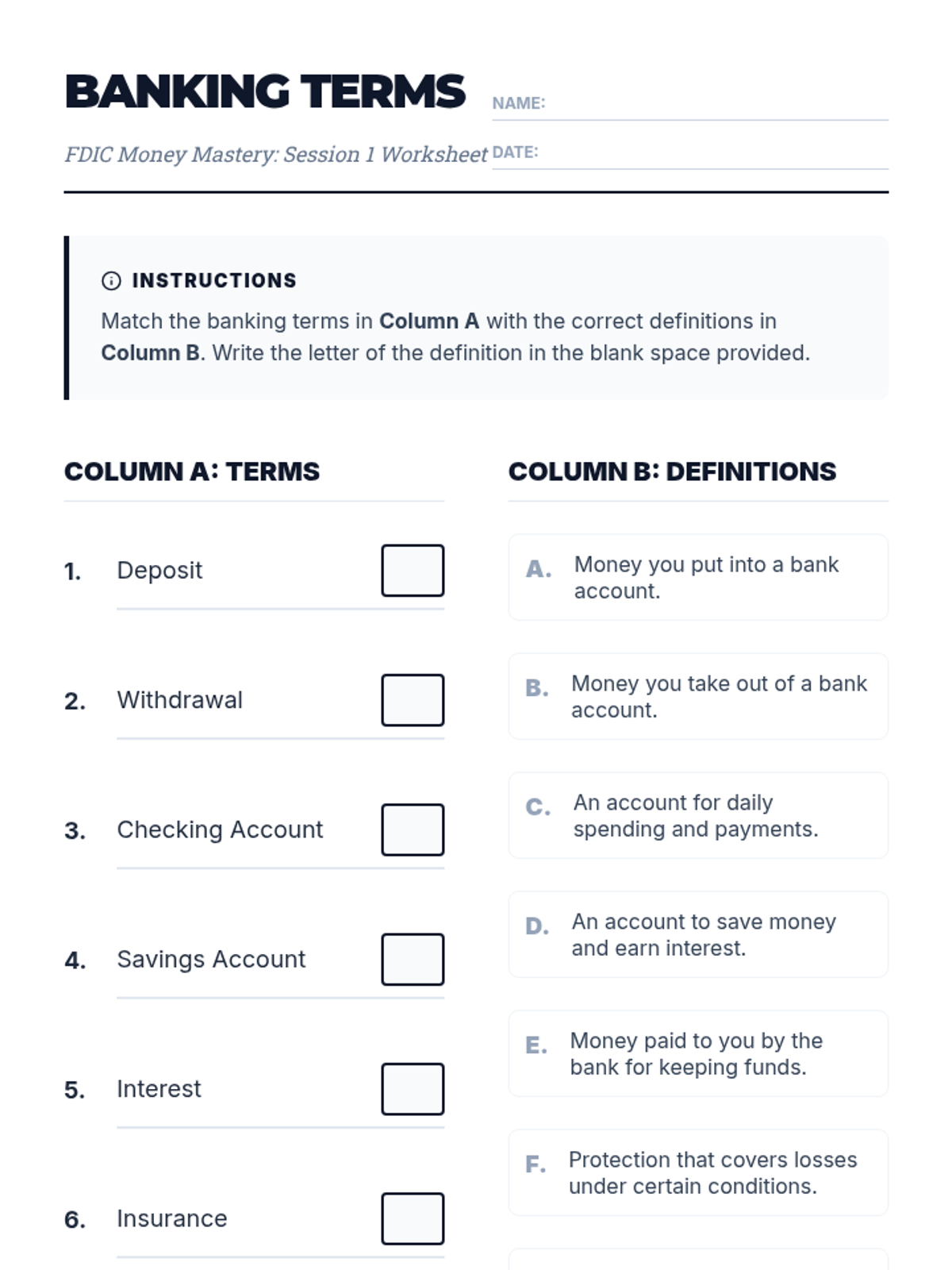
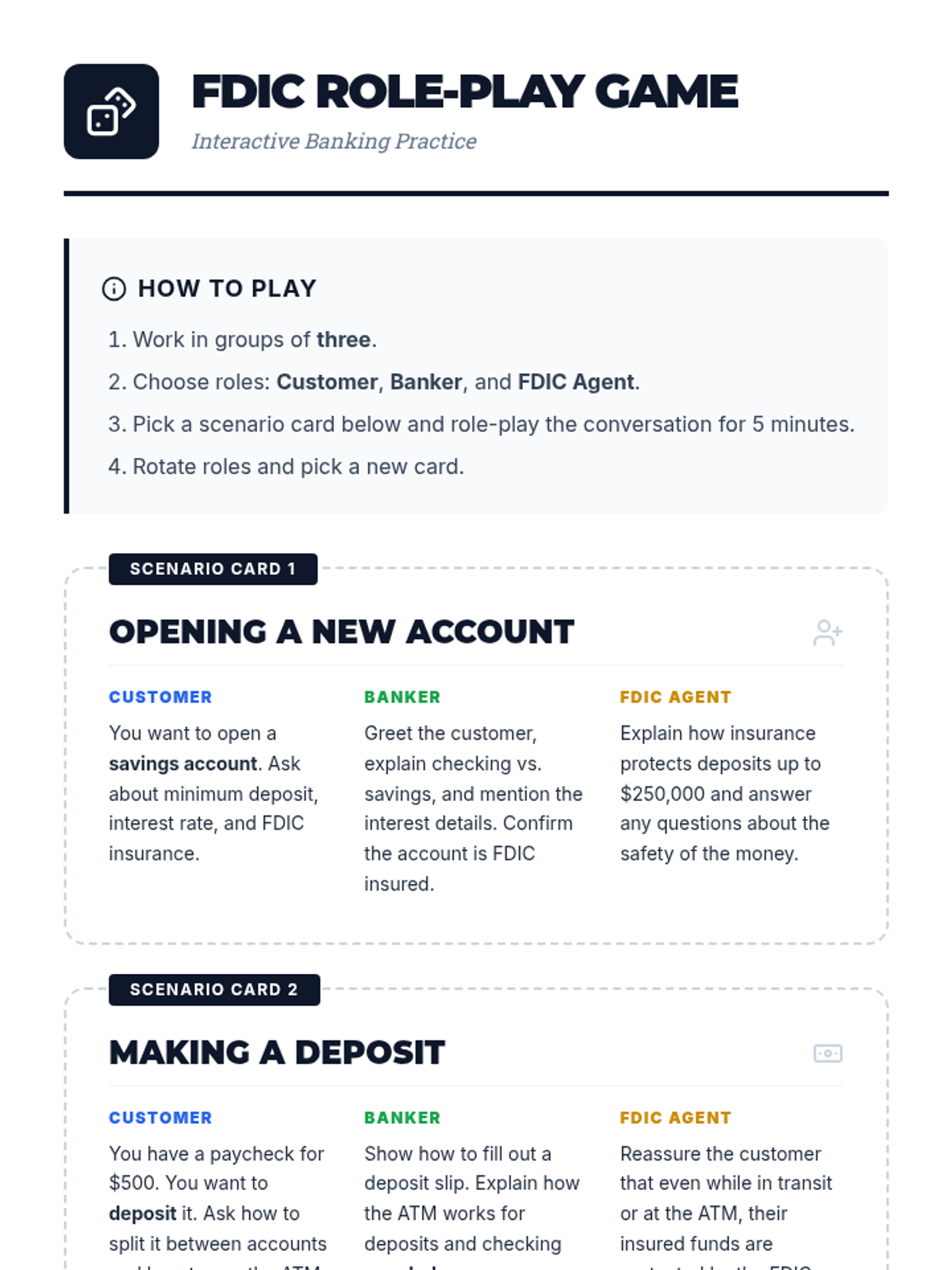
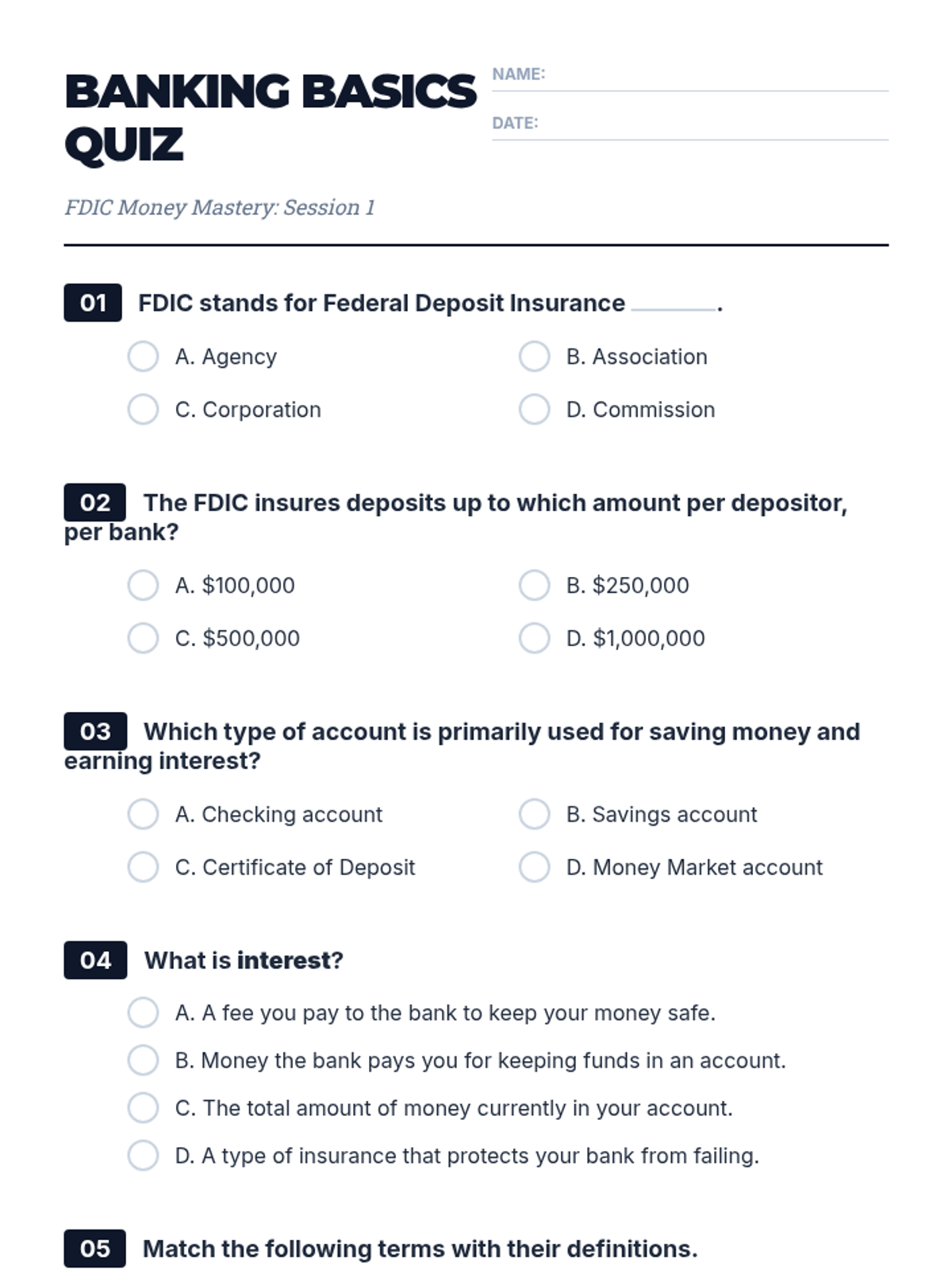
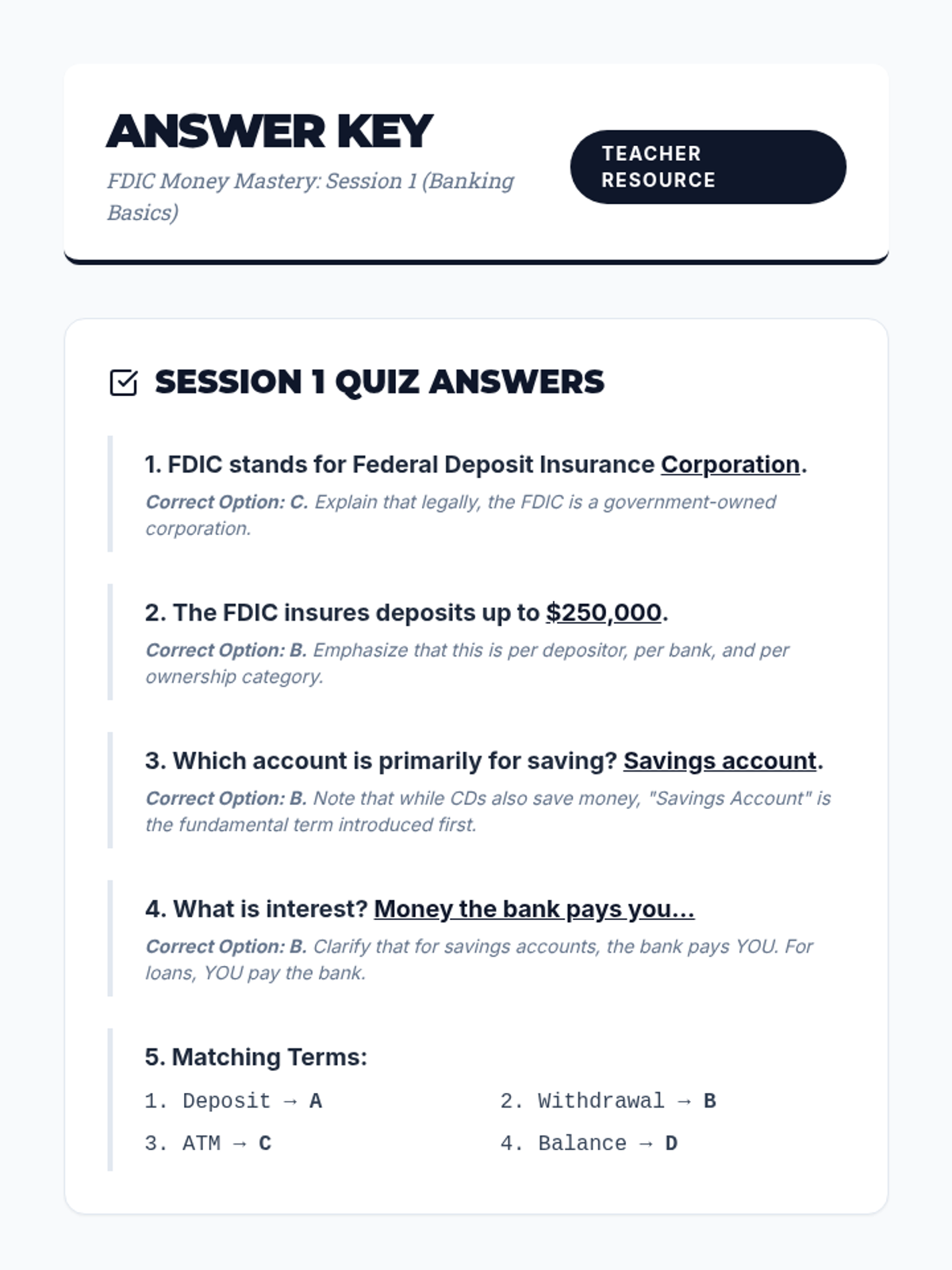
A comprehensive 6-session financial literacy course for adult ESL learners based on FDIC resources. This sequence covers banking basics, budgeting, saving, credit, loans, and fraud prevention to empower learners with real-world money skills.
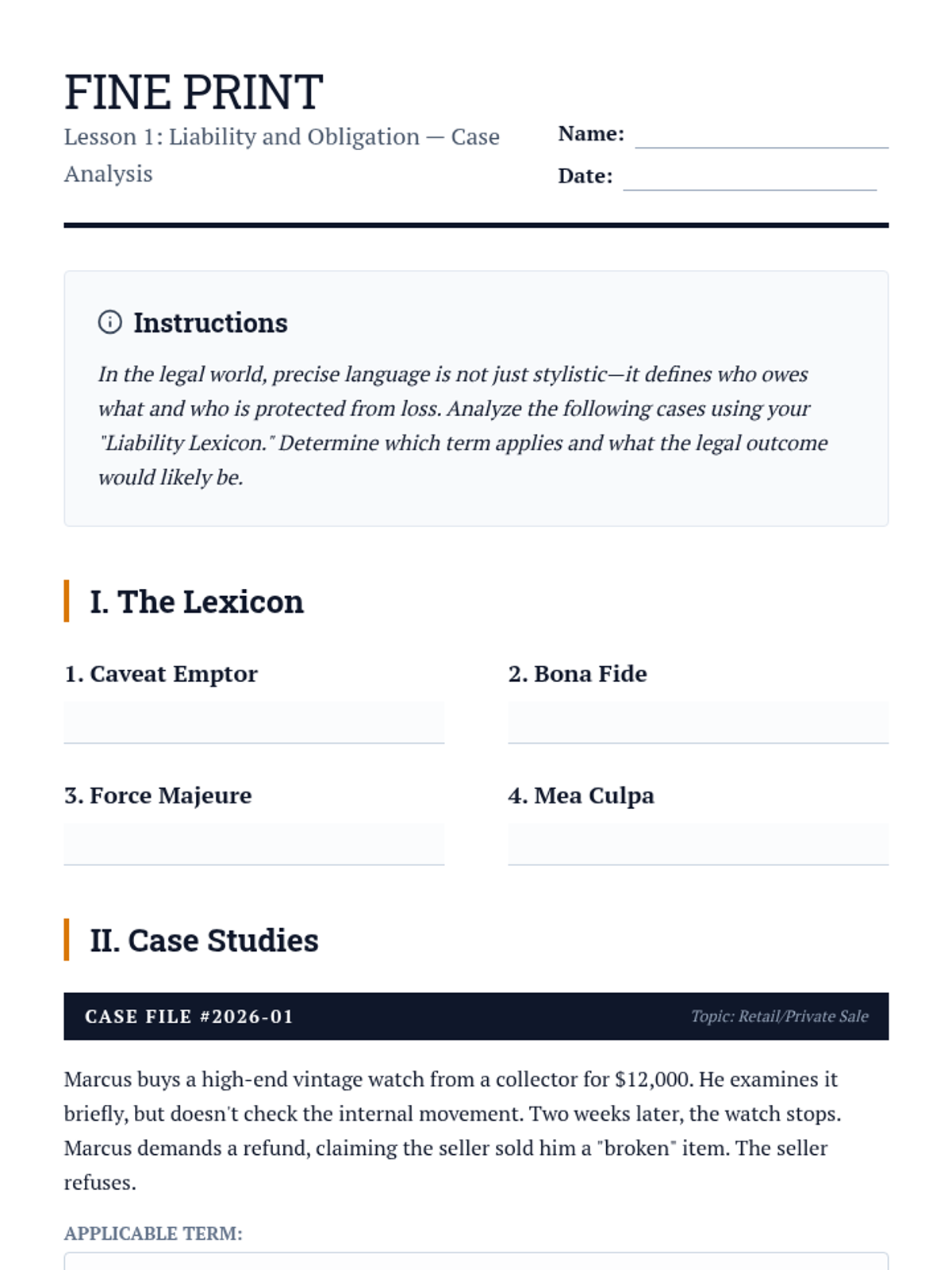
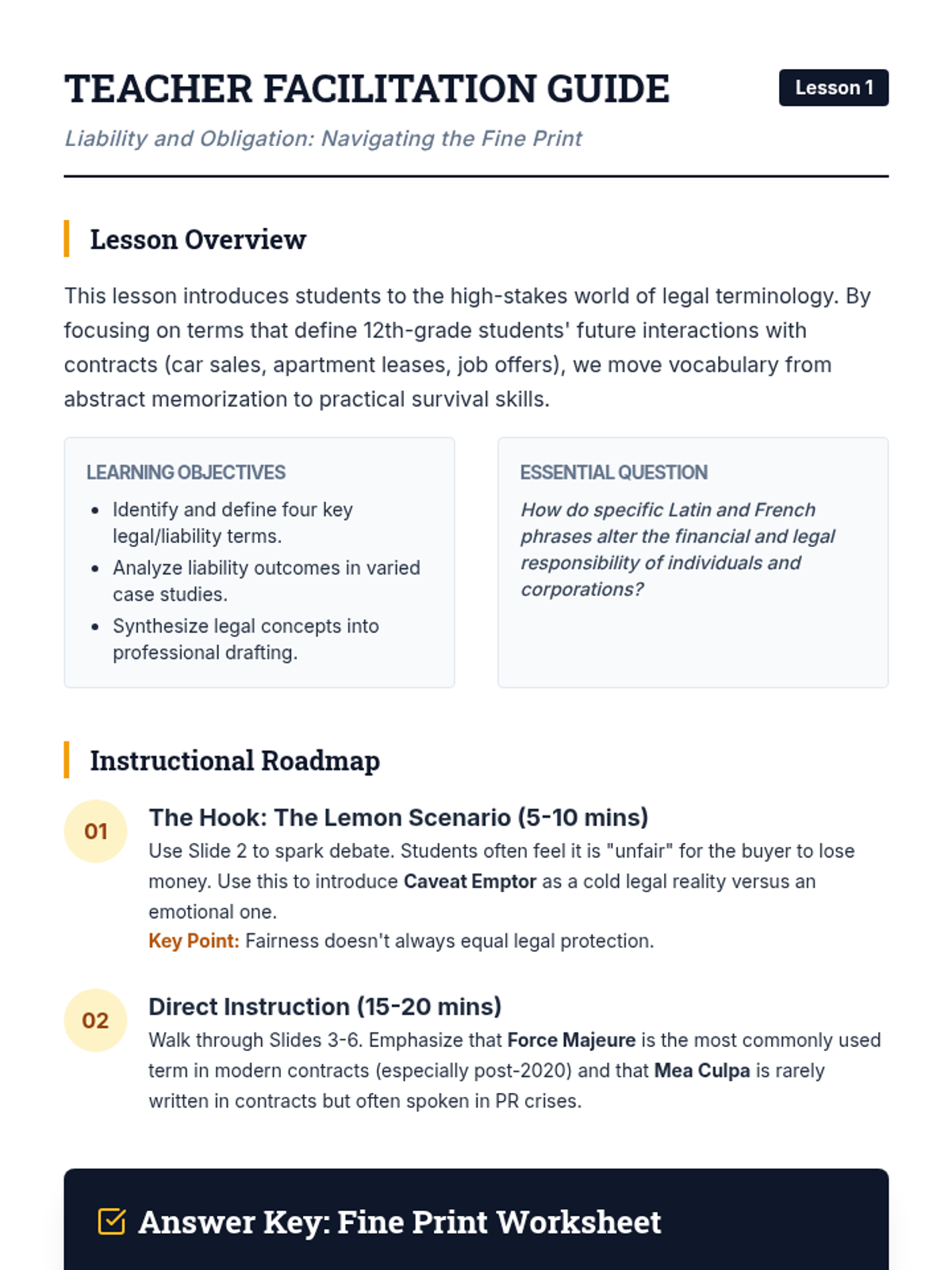
A high school English Language Arts sequence focused on the practical application of Latin and French terminology in professional, legal, and political contexts. Students explore how these terms define power, liability, and obligation through case studies, simulations, and analysis of real-world documents.
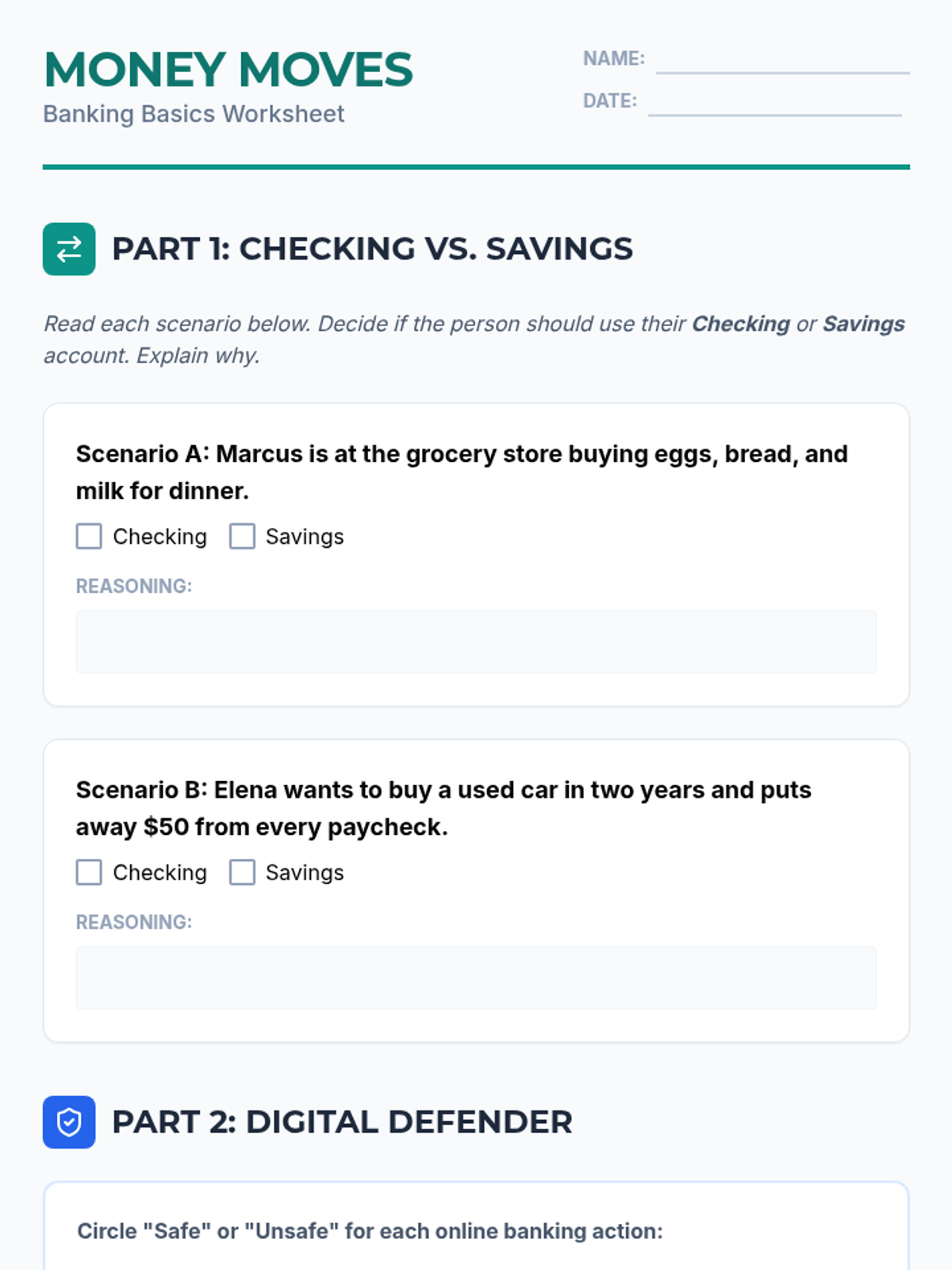
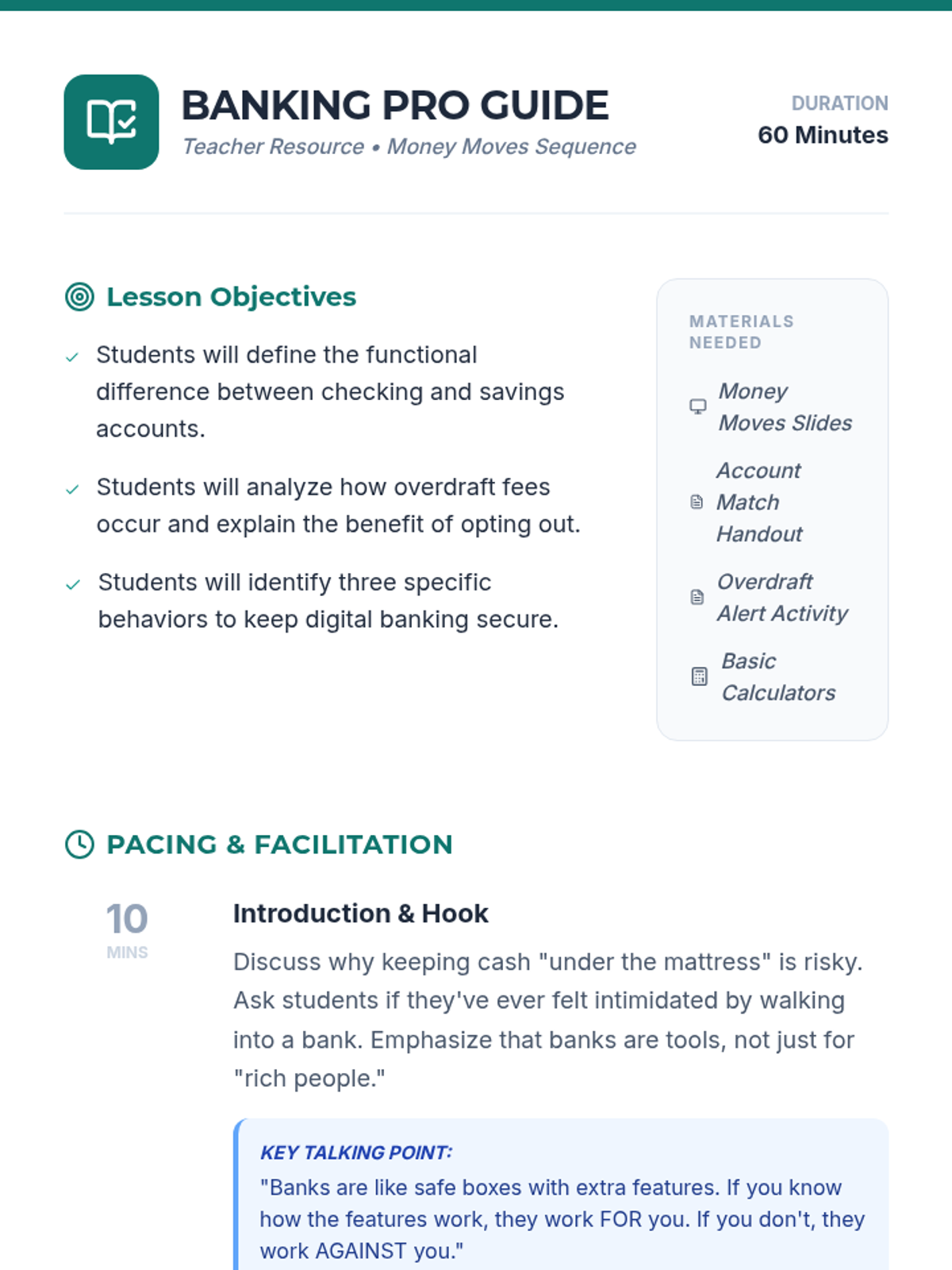
A financial literacy series focused on essential banking skills for low-income students, covering account types, avoiding fees, and digital security.
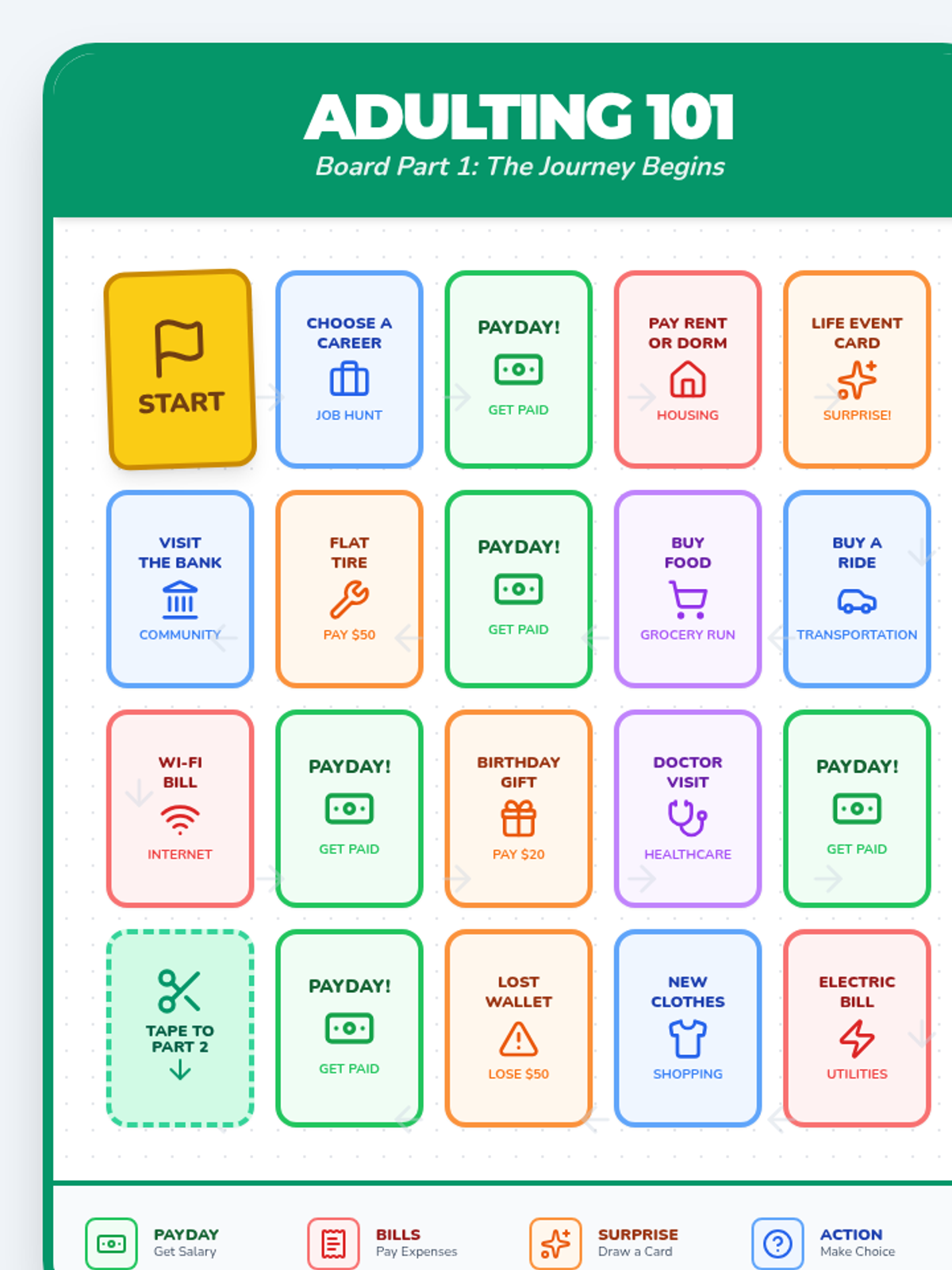
A comprehensive 'Game of Life' style curriculum designed for high school students with 5th-grade reading levels. It focuses on financial literacy, housing, transportation, and navigating daily life through an engaging board game format.
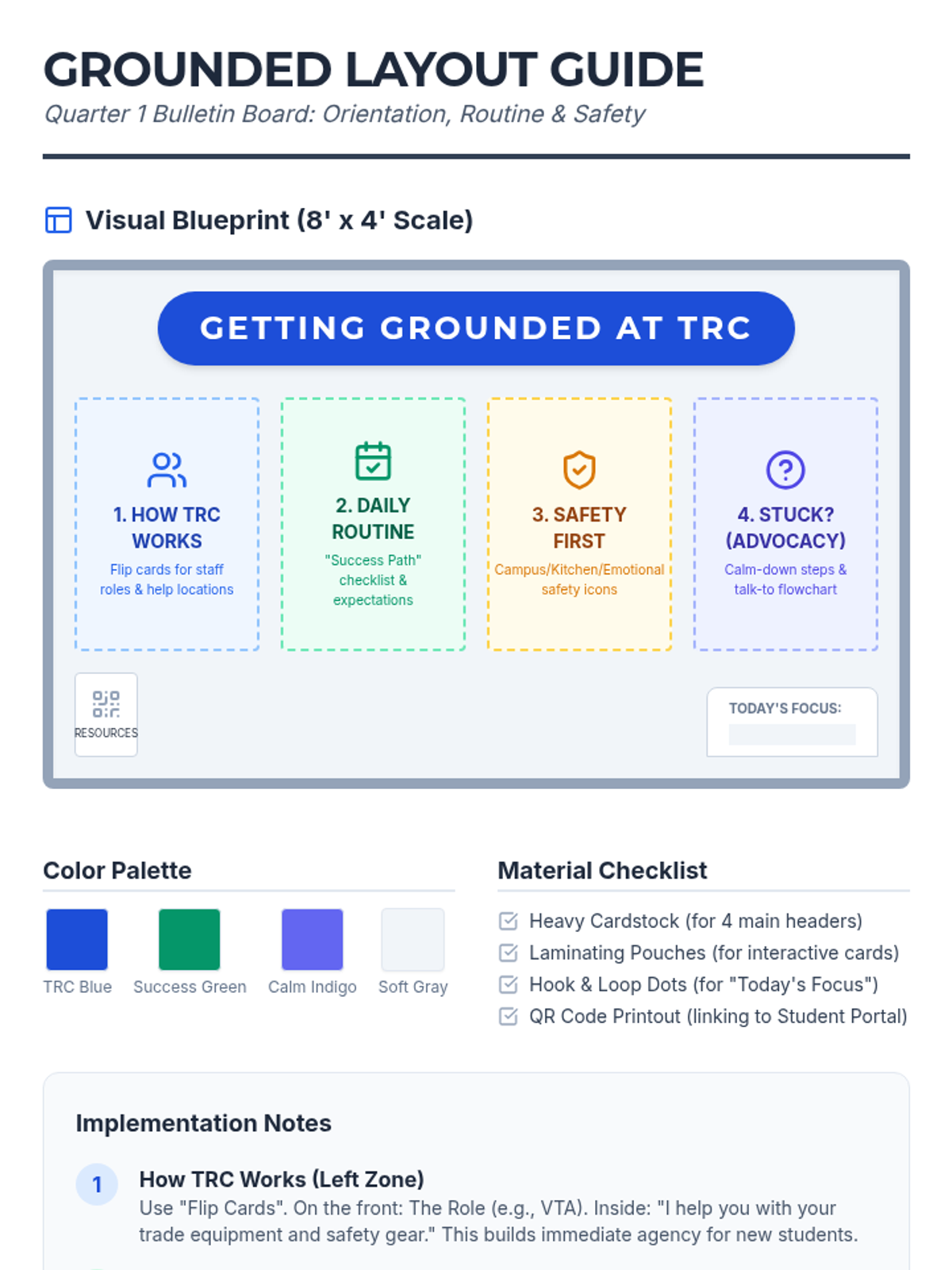
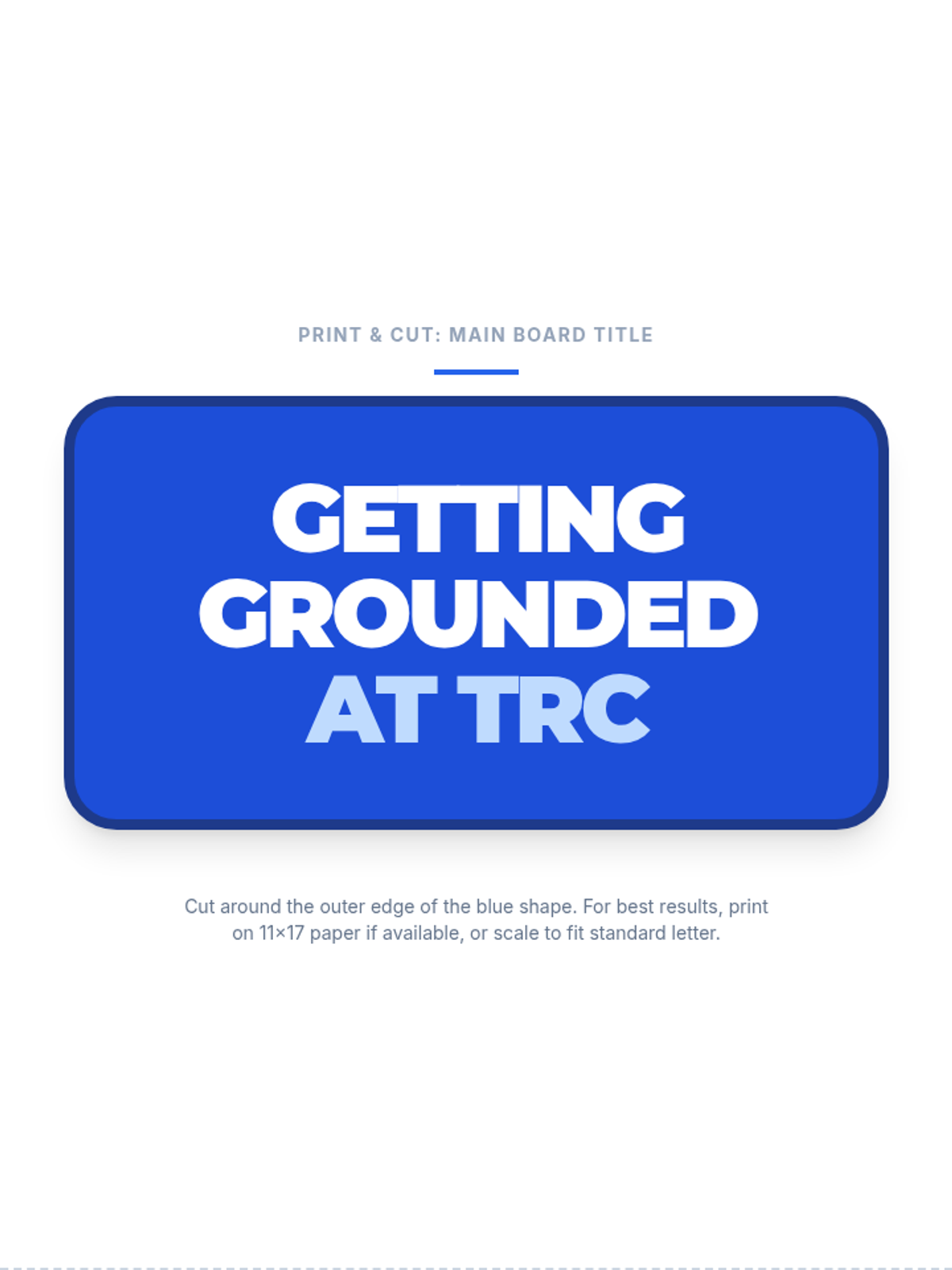
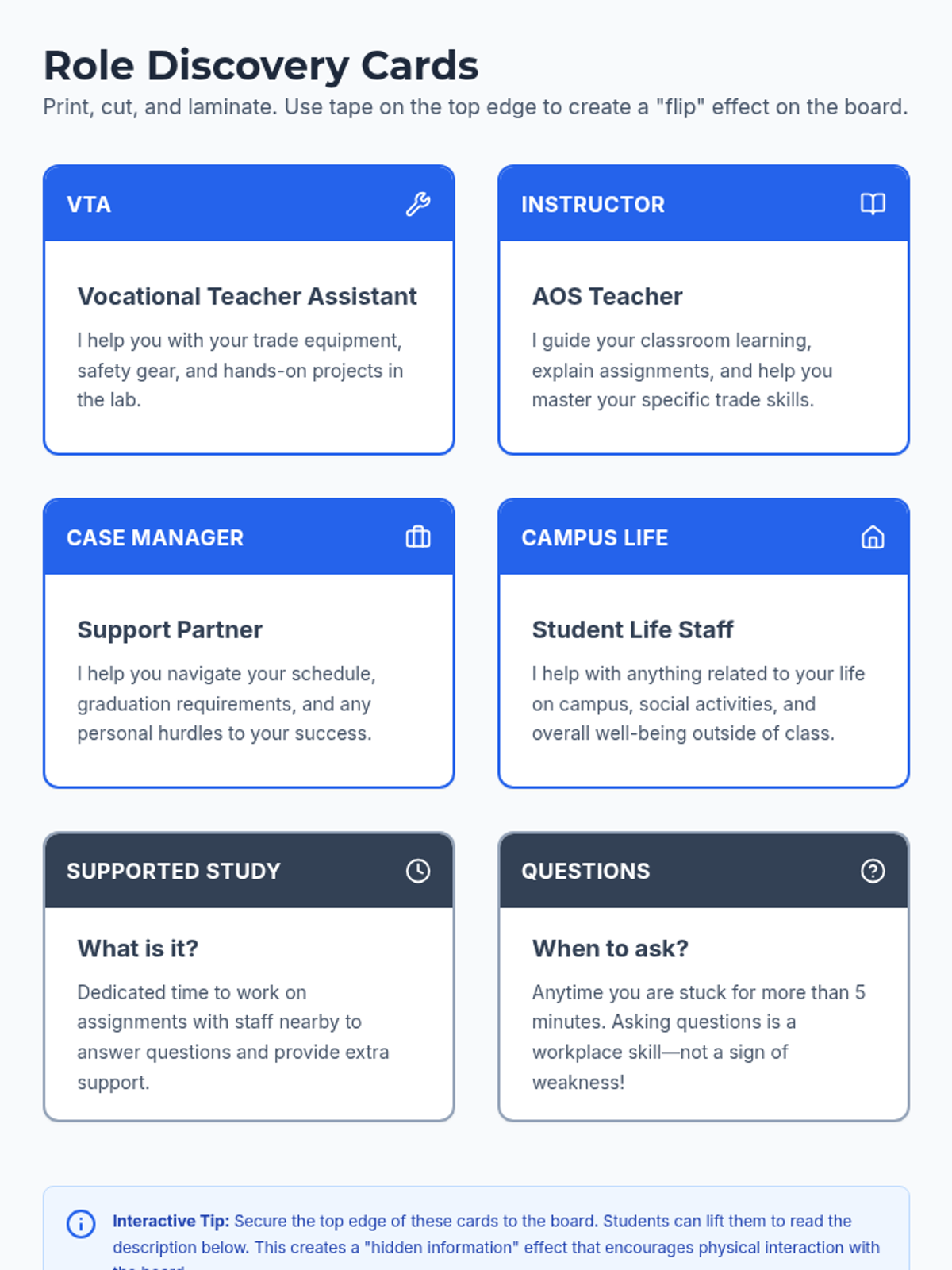
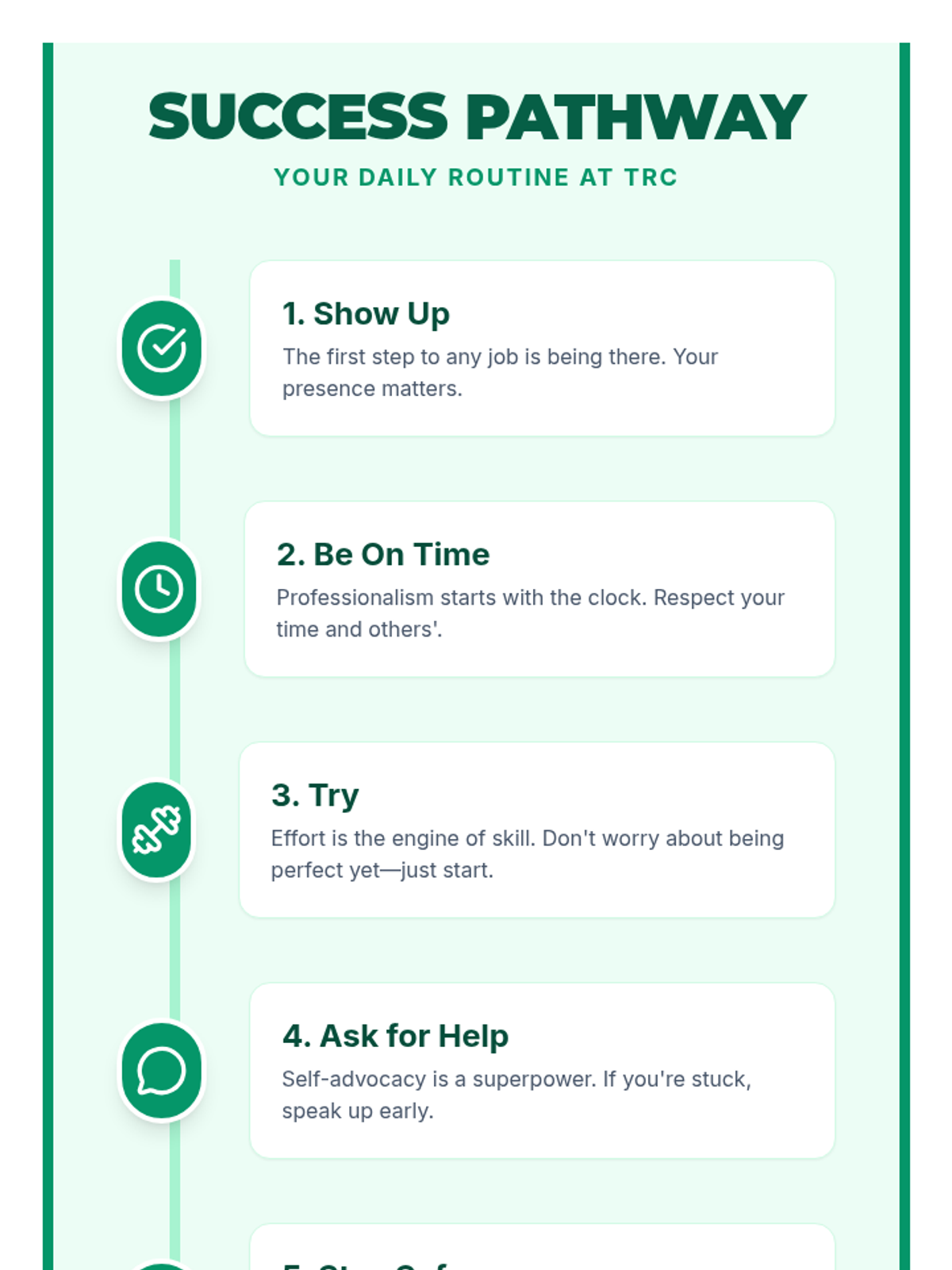
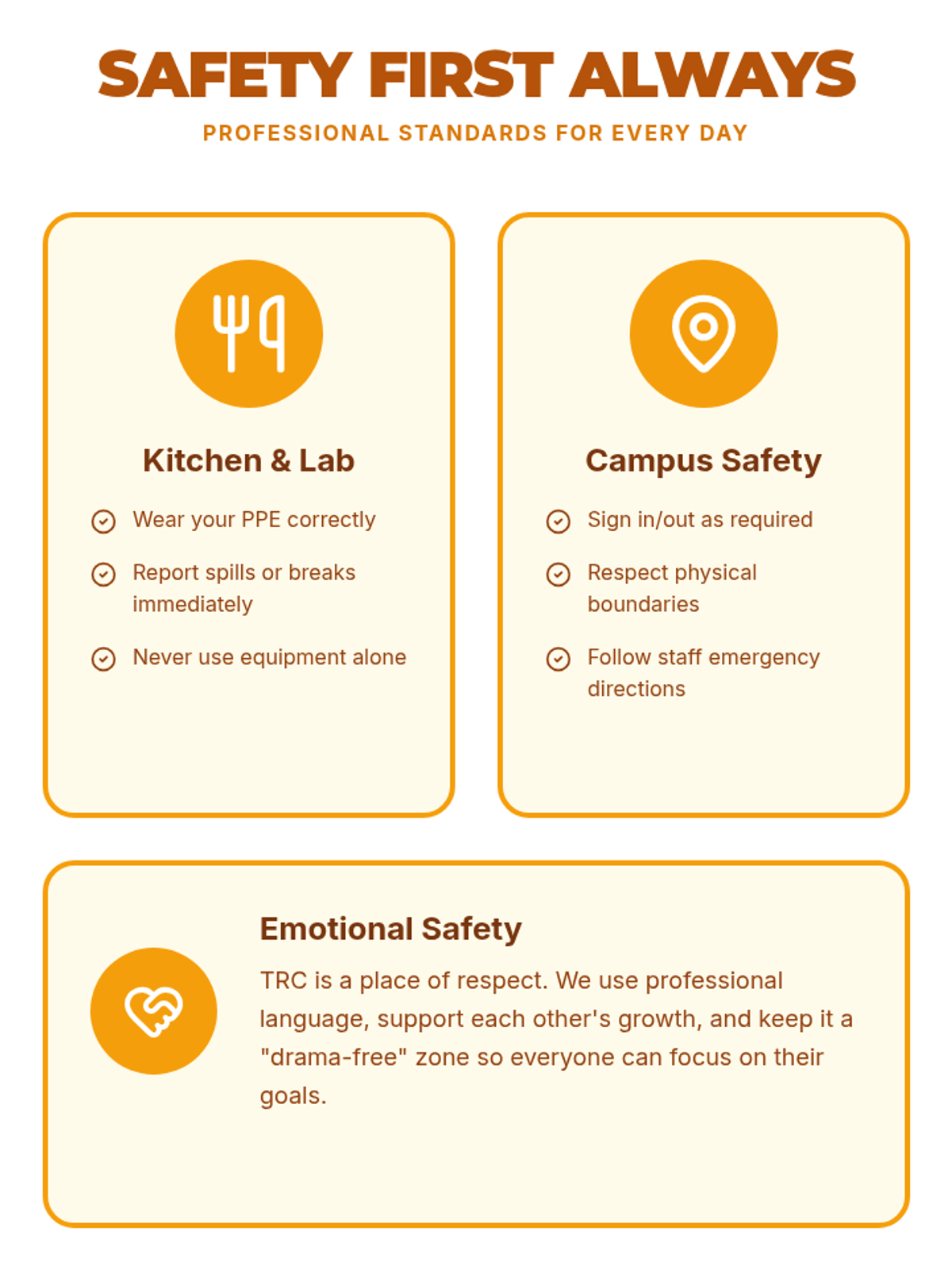
A collection of quarterly bulletin board designs for TRC, providing visual blueprints and printable components to help students navigate orientation, skill-building, and transition planning.
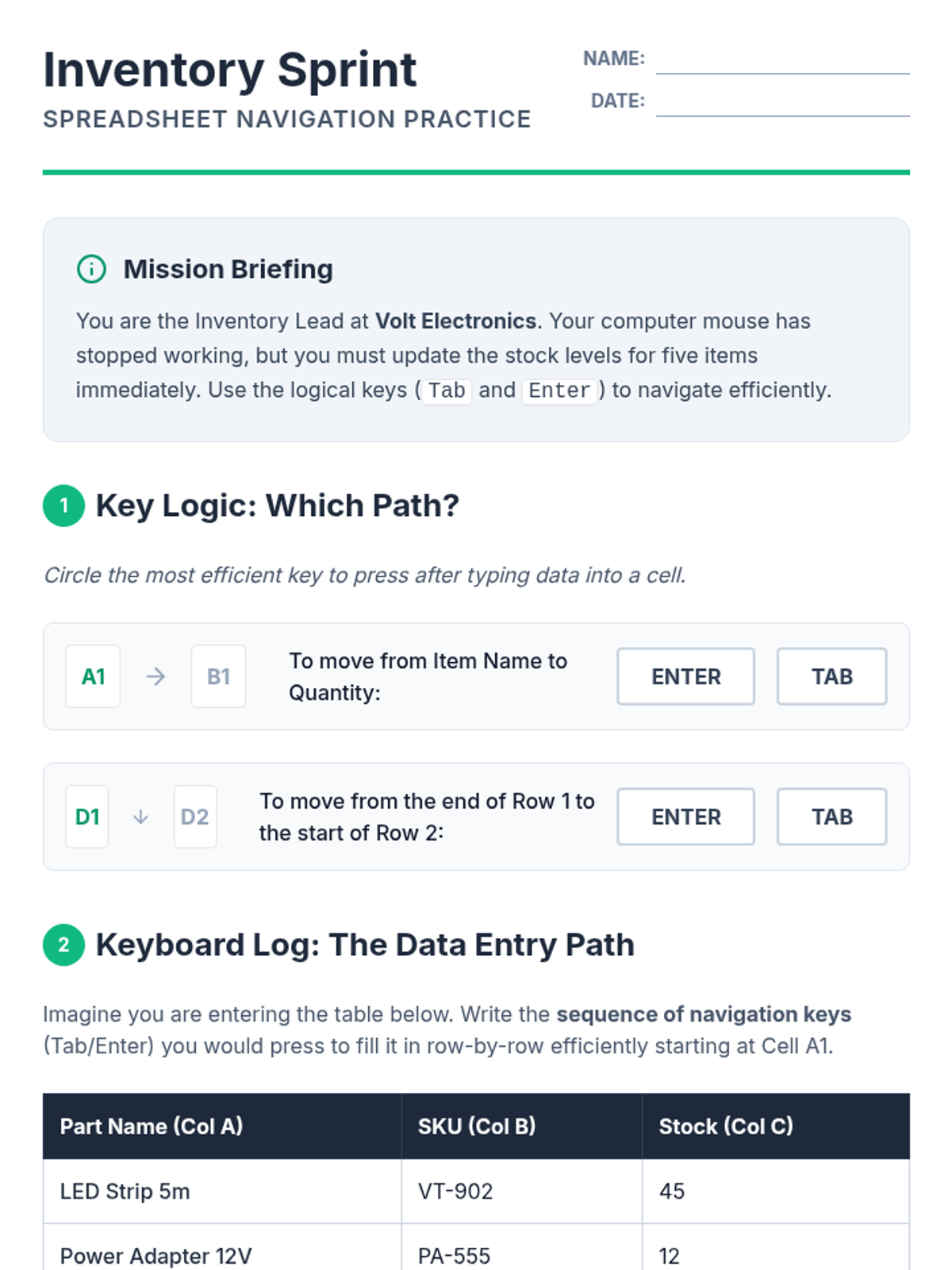
A specialized keyboard-only spreadsheet curriculum for 12th-grade students, focusing on assistive technology skills and workplace readiness. Students progress from basic grid navigation to complex budget management using only keyboard shortcuts.
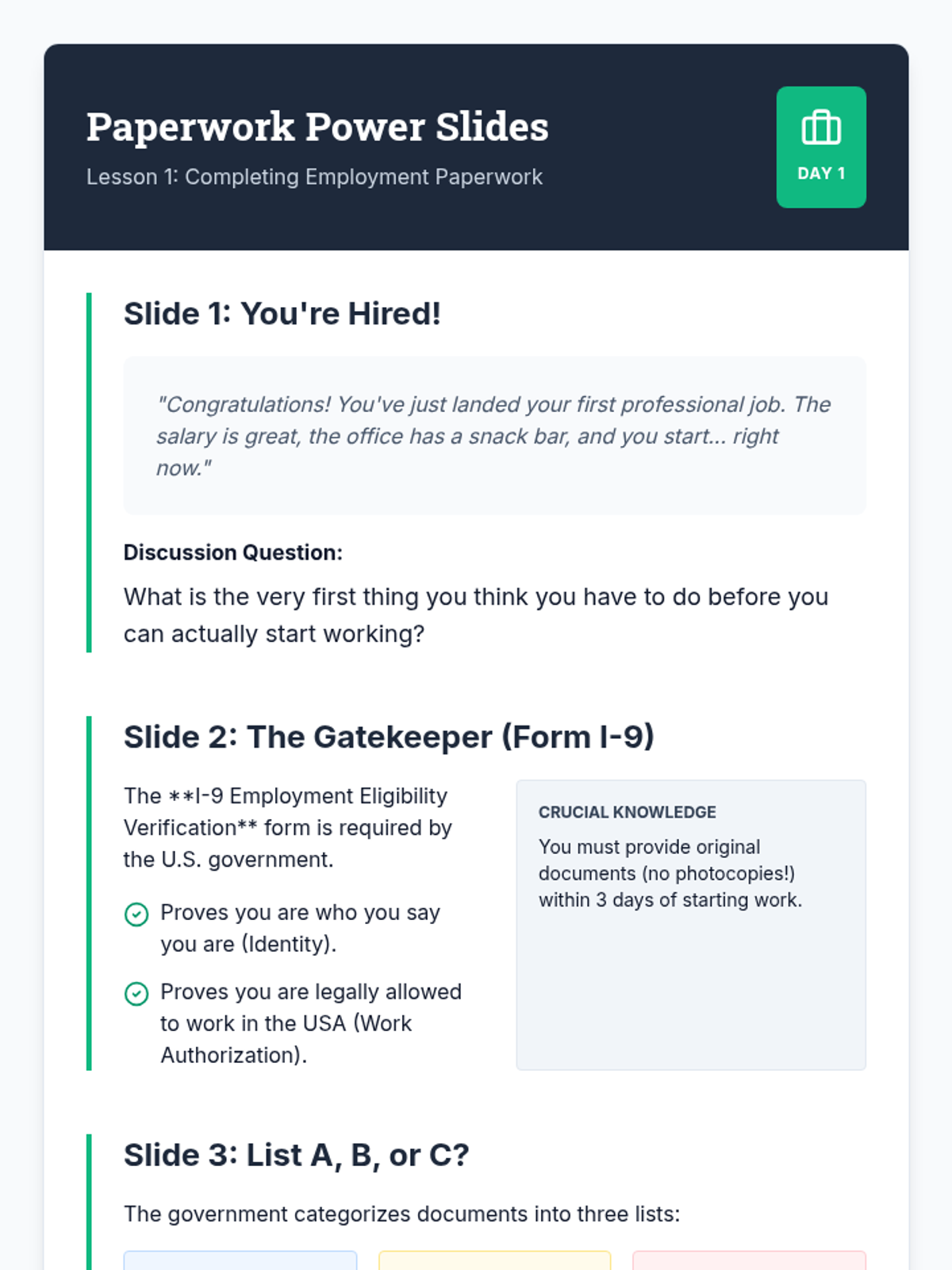
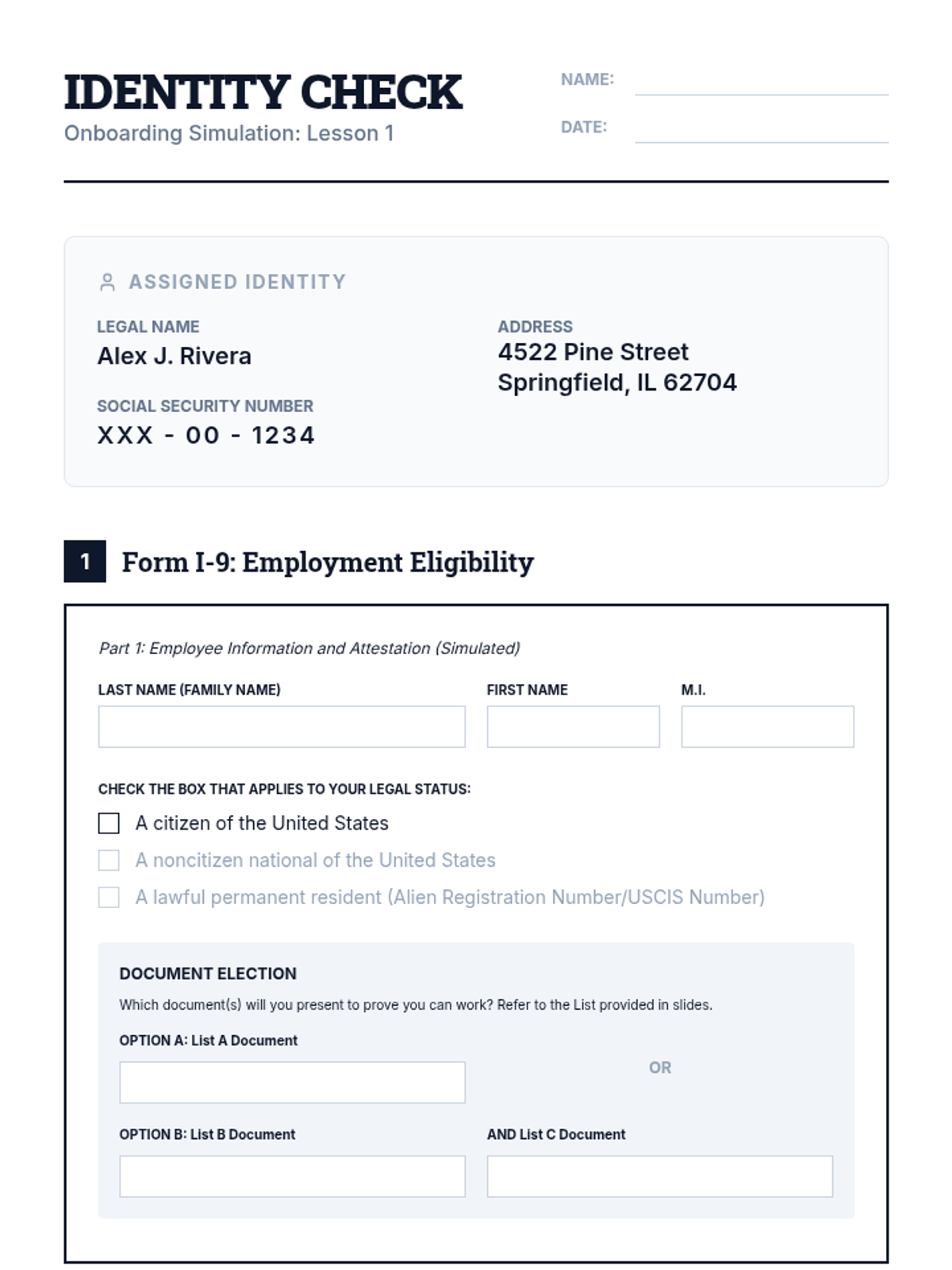
An immersive simulation where students navigate the onboarding process of a new job, making critical decisions about taxes, benefits, and workplace rights to understand their impact on a final paycheck.
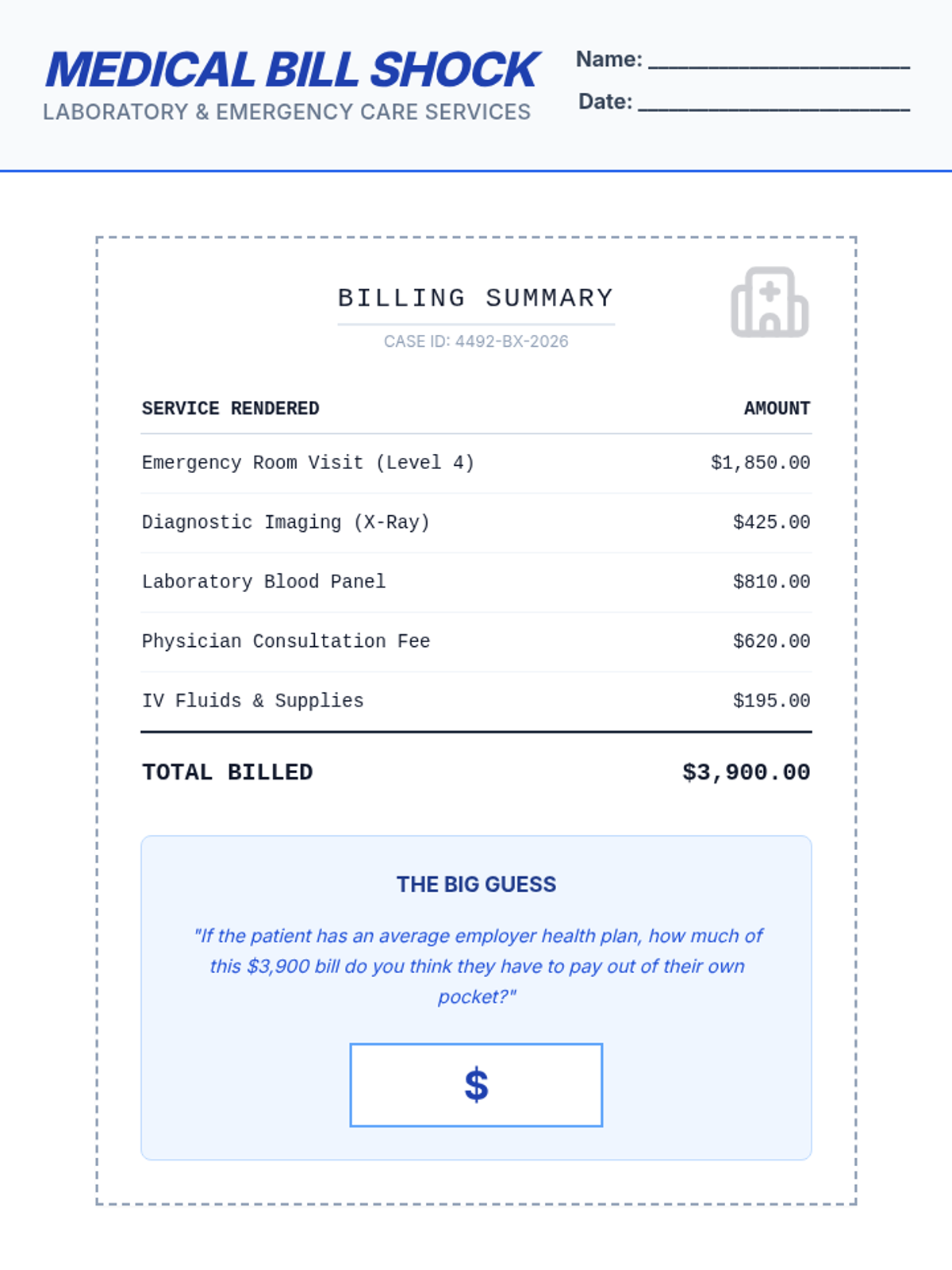
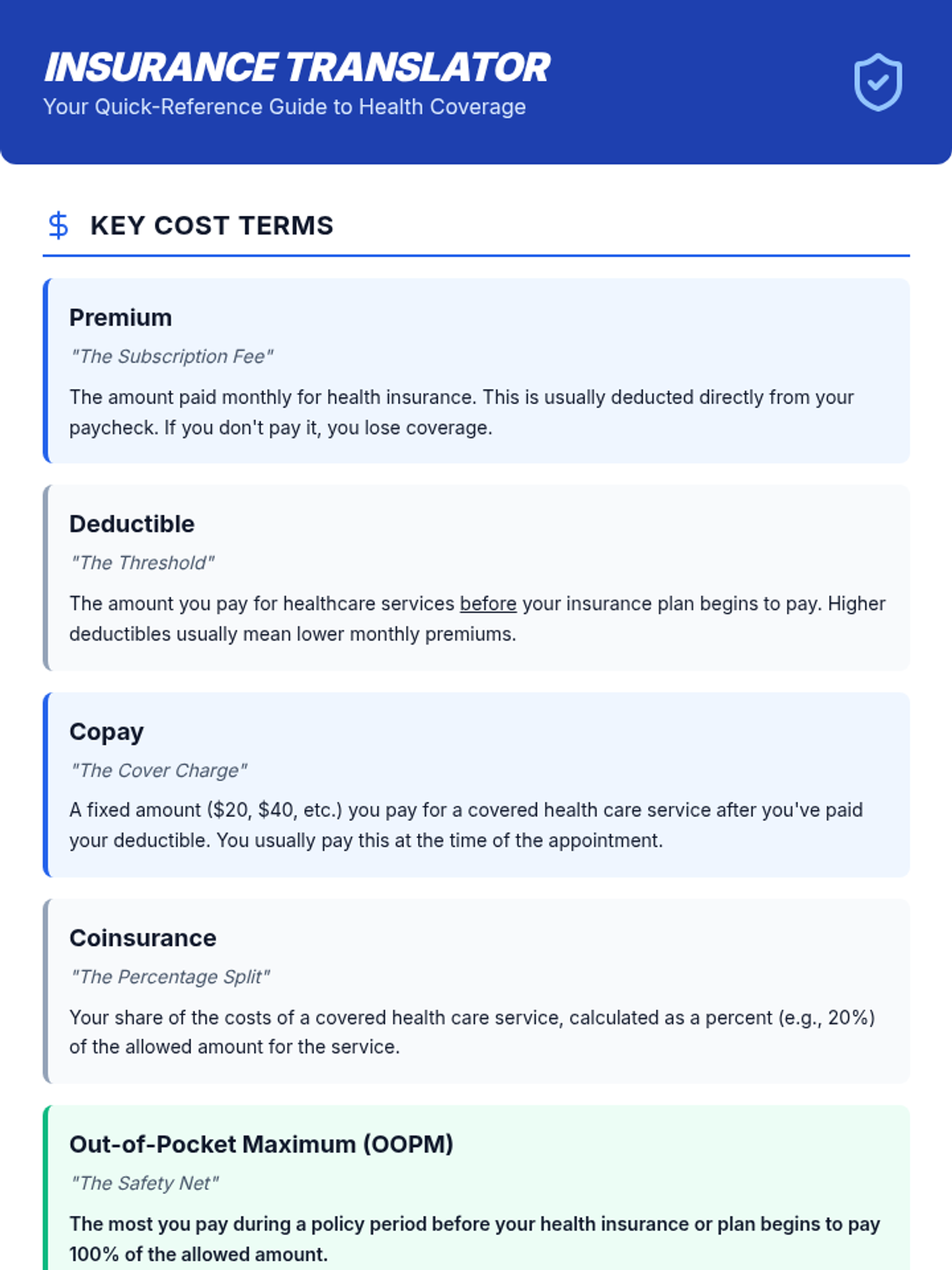
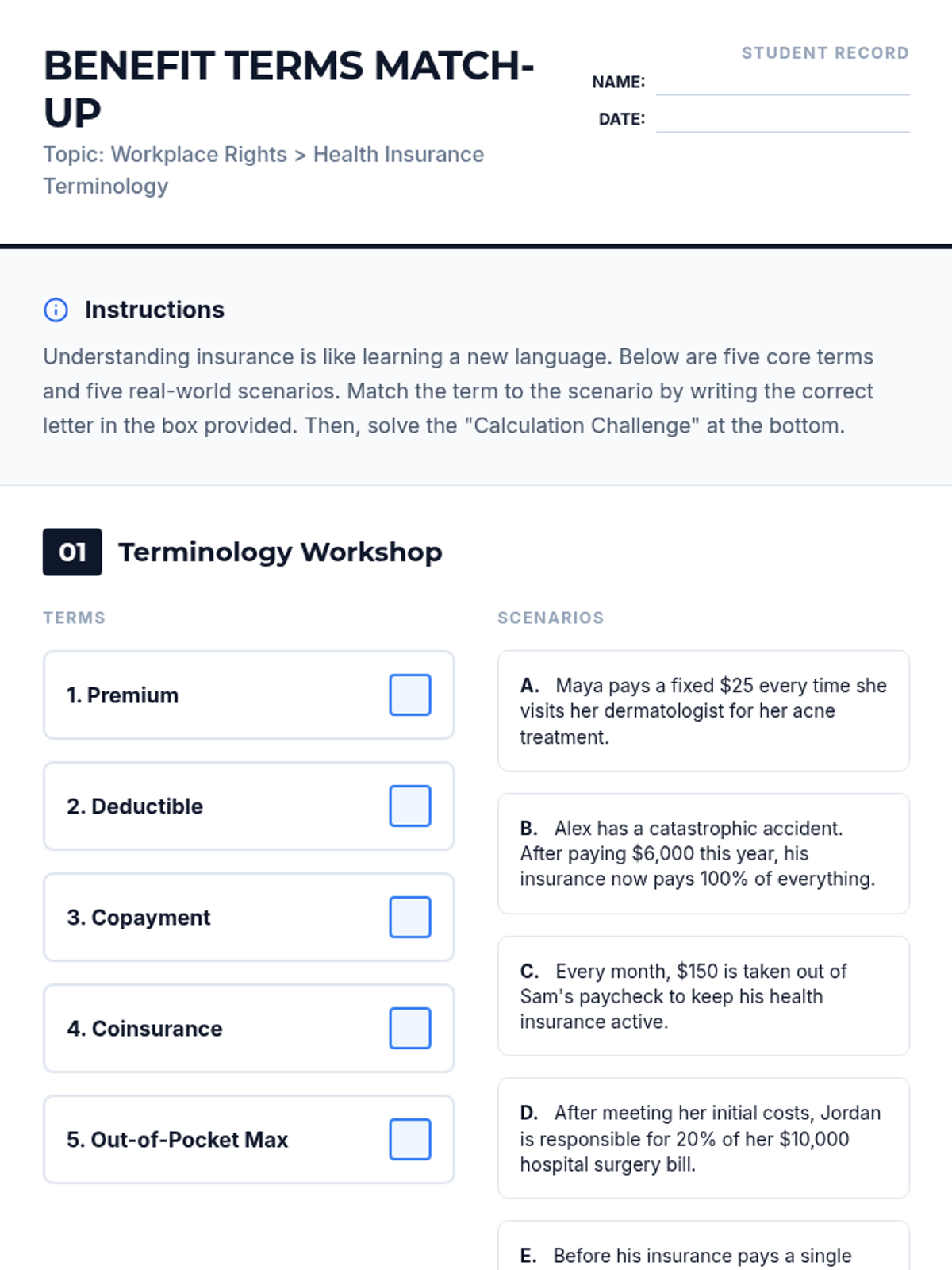
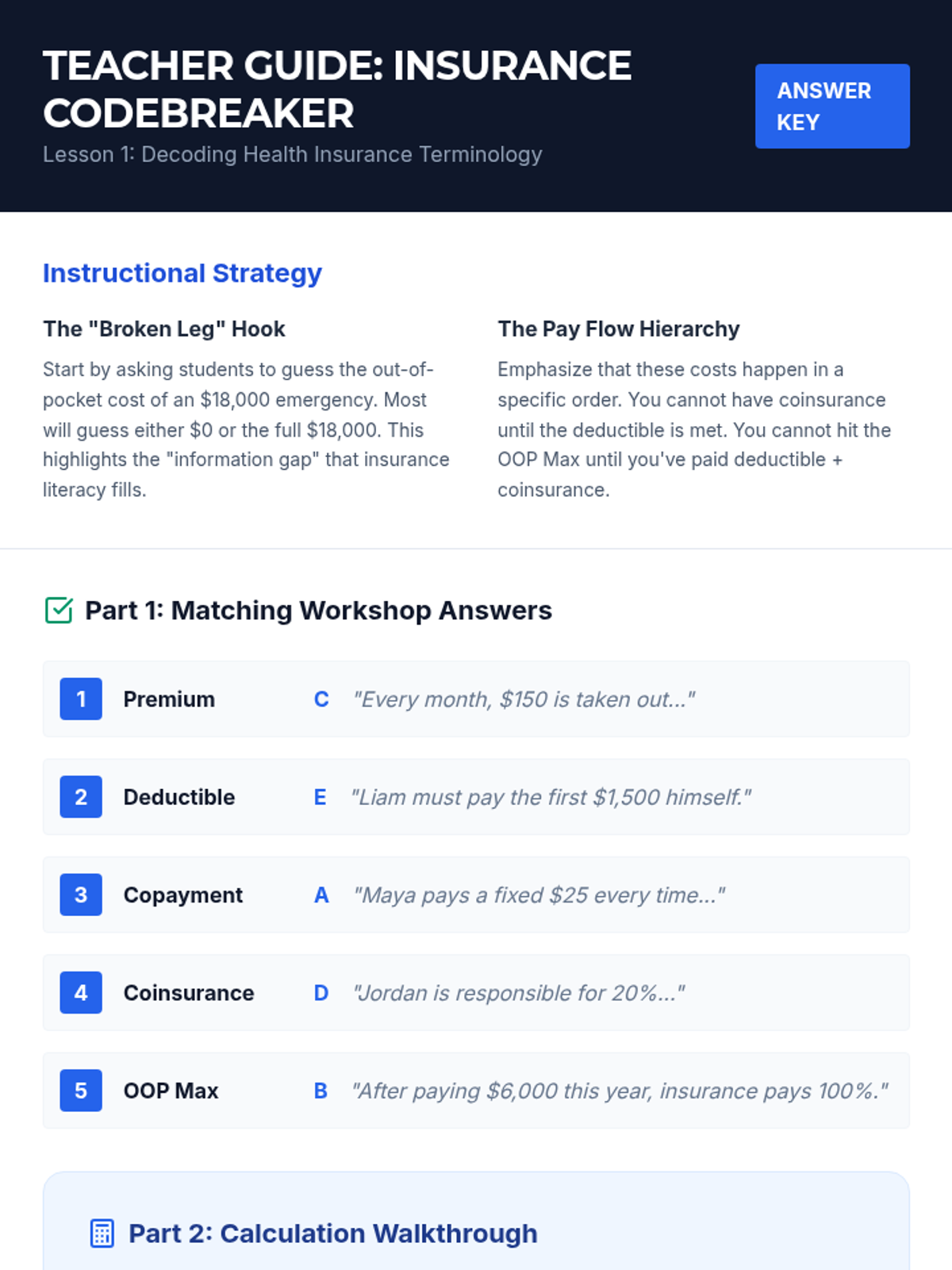
A comprehensive unit for seniors to navigate the complexities of employer-sponsored health and insurance benefits, moving from basic vocabulary to full-scale benefit selection simulations.
A comprehensive unit for undergraduate students to master the financial and legal aspects of job offers, focusing on total compensation analysis, cost-of-living adjustments, and professional negotiation skills.
This sequence equips undergraduate students with the analytical tools to evaluate employer-sponsored health and wellness benefits. Students will move from basic terminology to complex scenario planning, choosing between HMOs, PPOs, and HDHPs, while also exploring tax-advantaged accounts like HSAs/FSAs and legal protections like FMLA.
A comprehensive 11th-grade sequence on workplace rights and compensation, covering market research, labor laws, benefit analysis, and negotiation strategies. Students progress from baseline research to active advocacy and contract finalization.
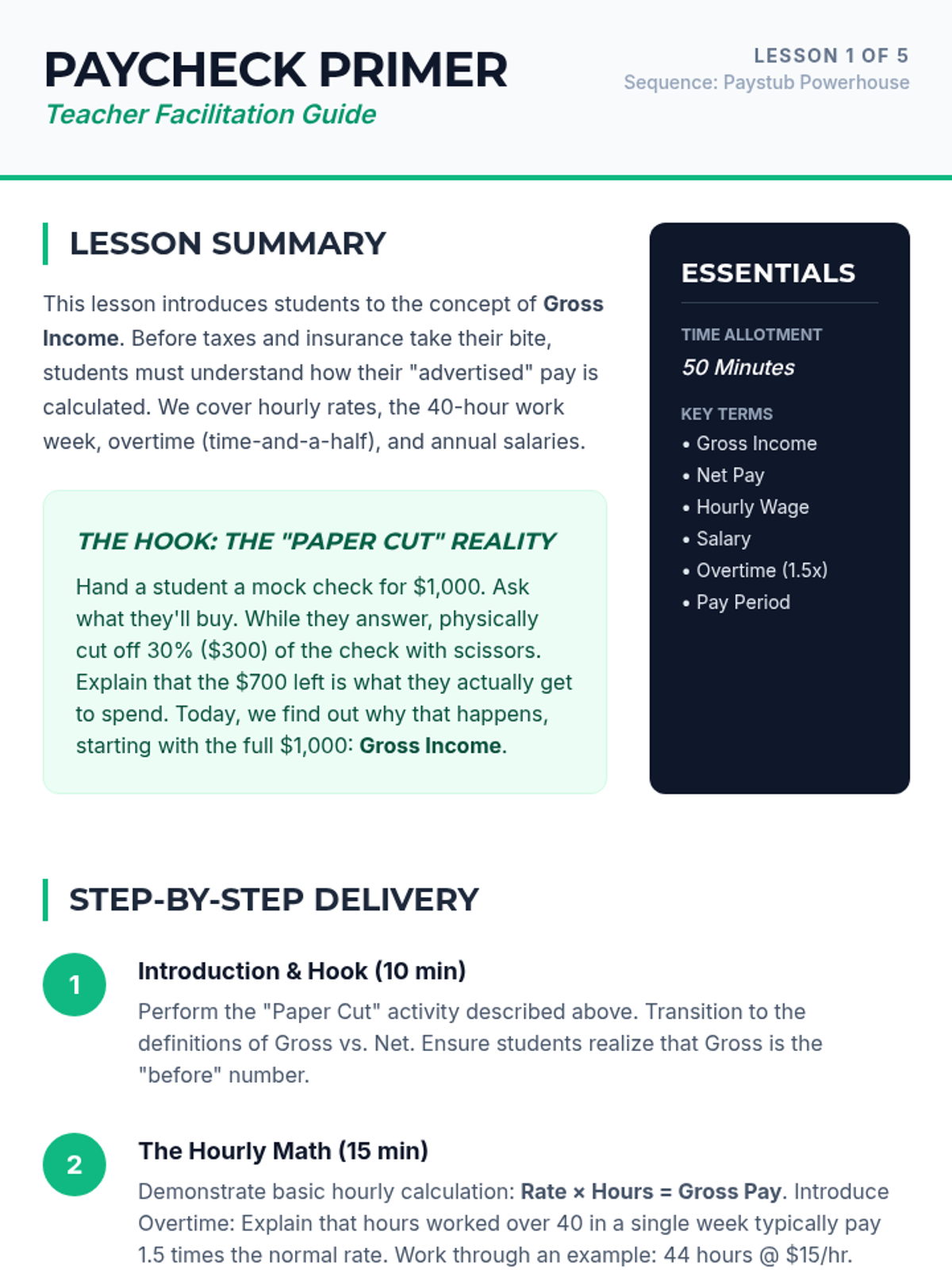
A comprehensive guide to understanding payroll mechanics, tax liabilities, and paycheck optimization for undergraduate students transitioning into the professional world.
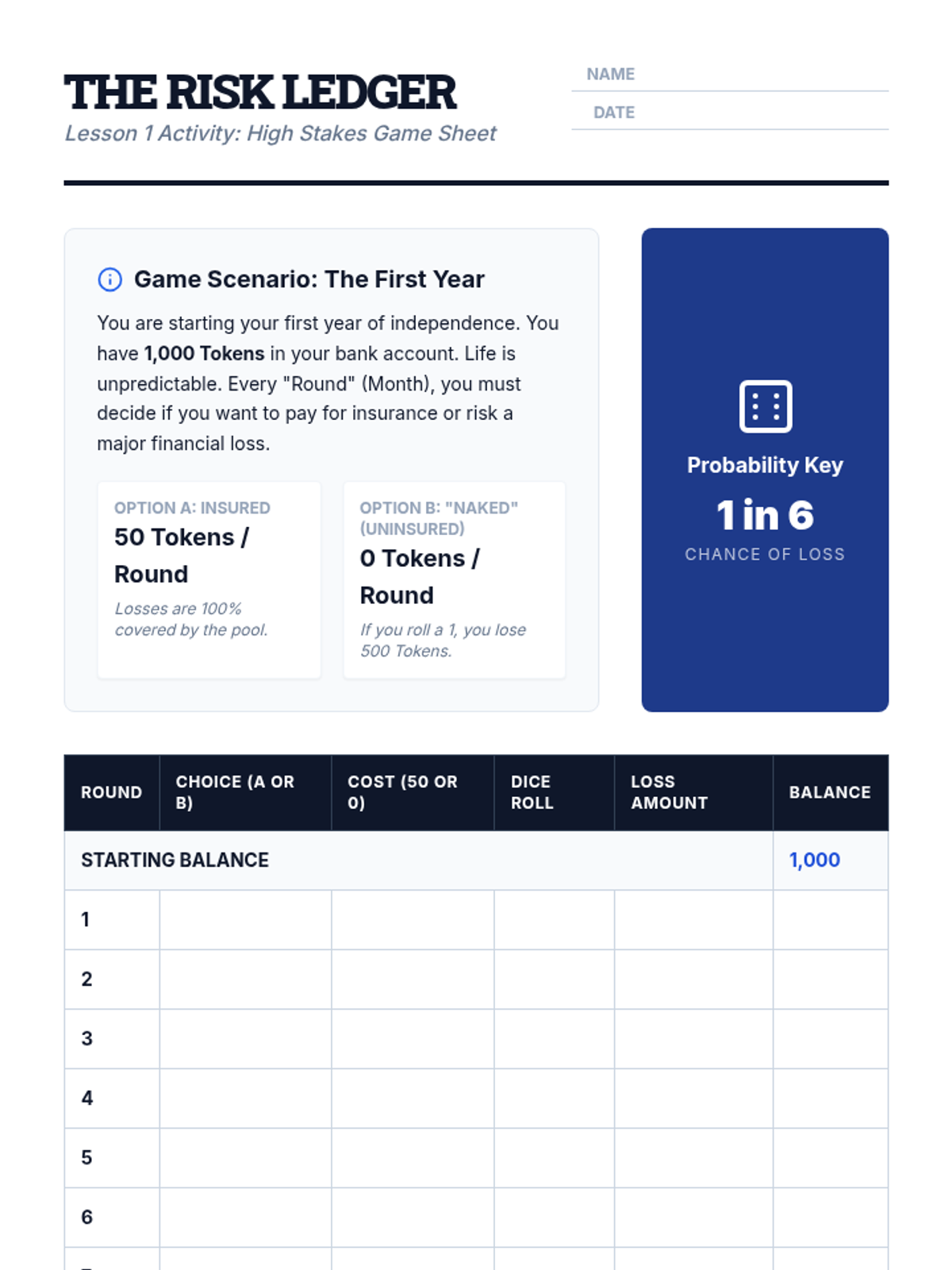
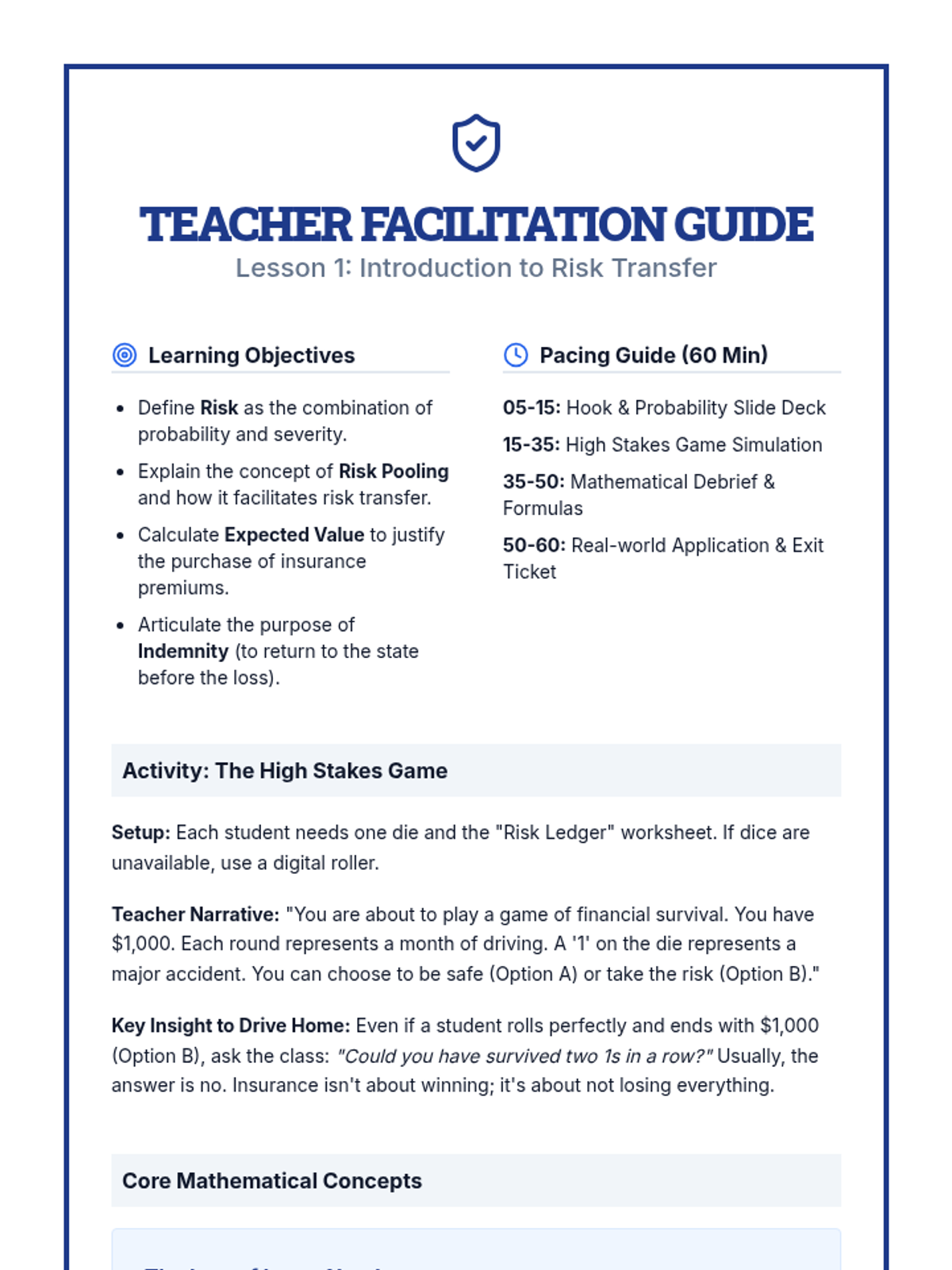
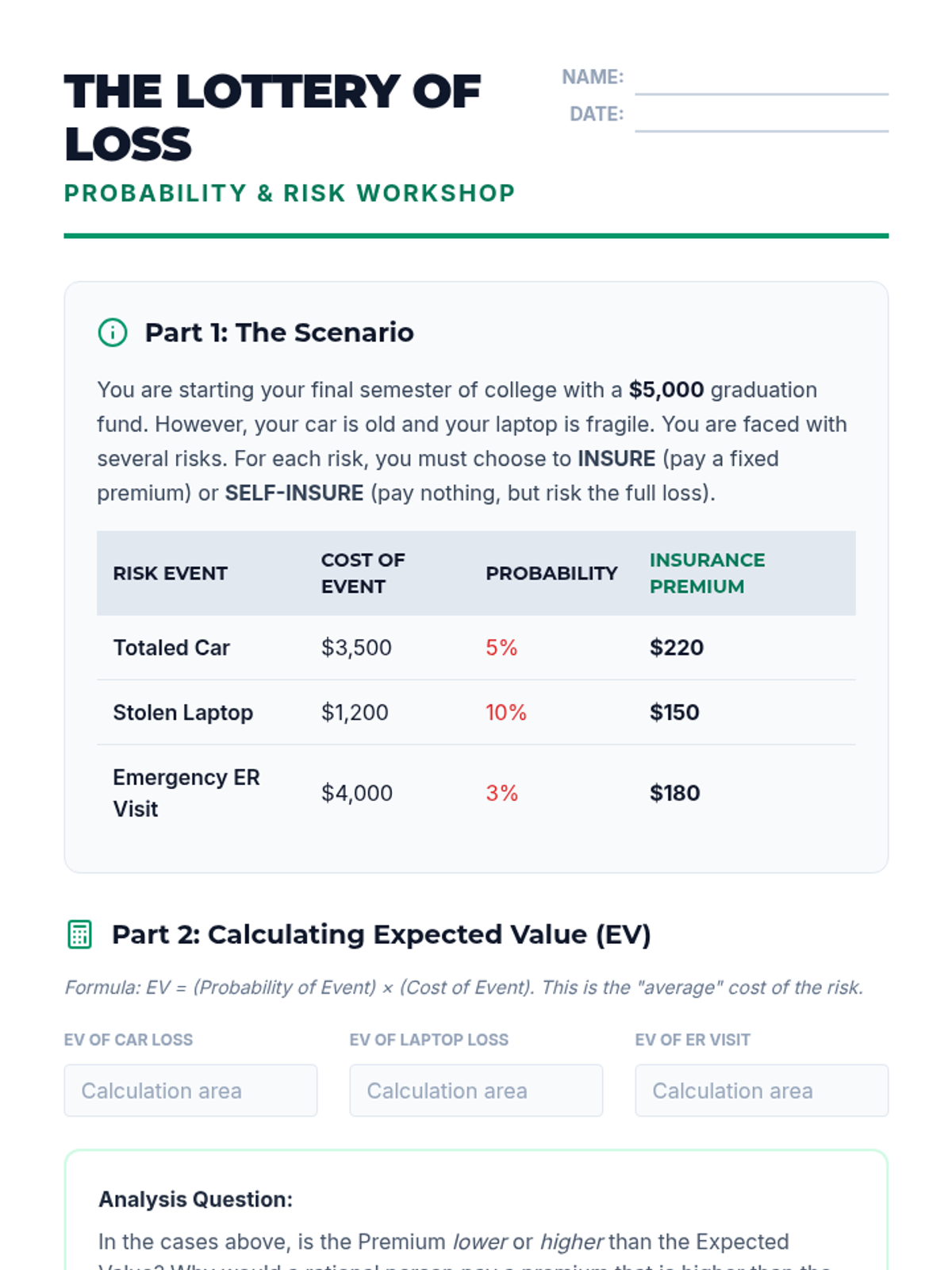
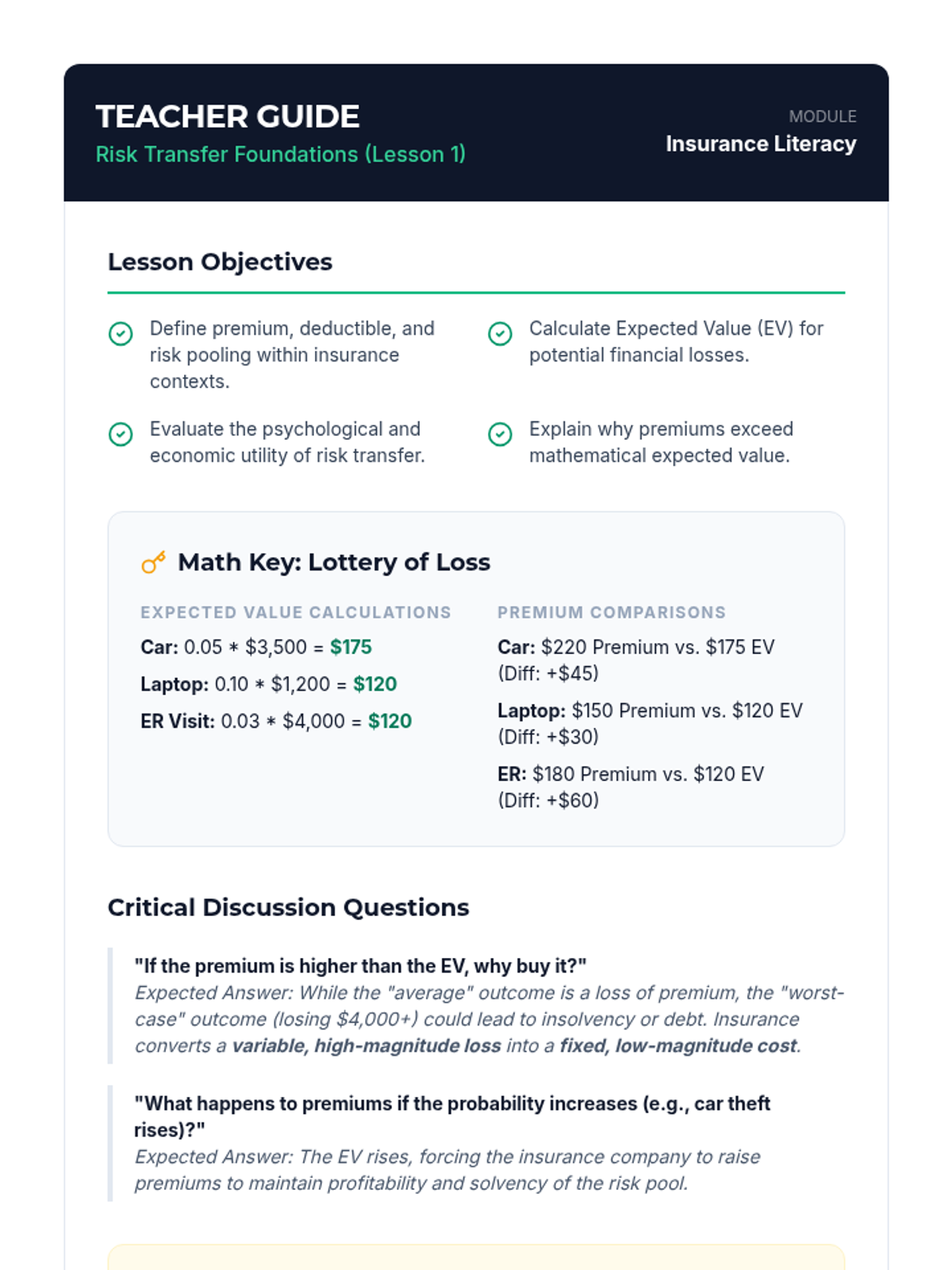
A comprehensive 11th-grade financial literacy sequence covering the mechanics of auto and property insurance. Students explore risk probability, policy components, the math of premiums and deductibles, and apply their learning in a mock claims adjuster simulation.
A comprehensive sequence for undergraduate students on insurance literacy, moving from the mathematical foundations of risk transfer to the practical selection of health, auto, and property coverage, culminating in a strategic portfolio defense.
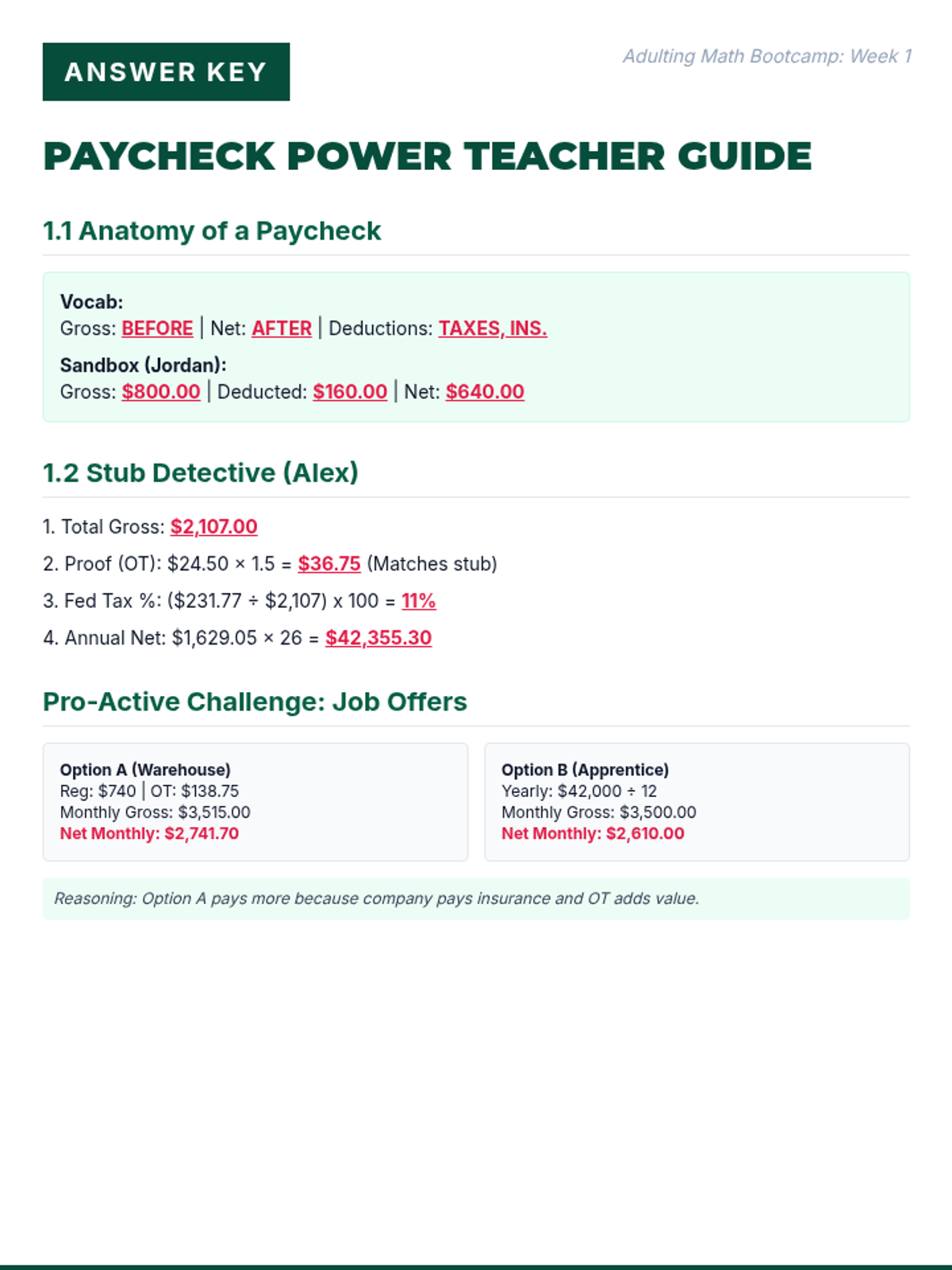
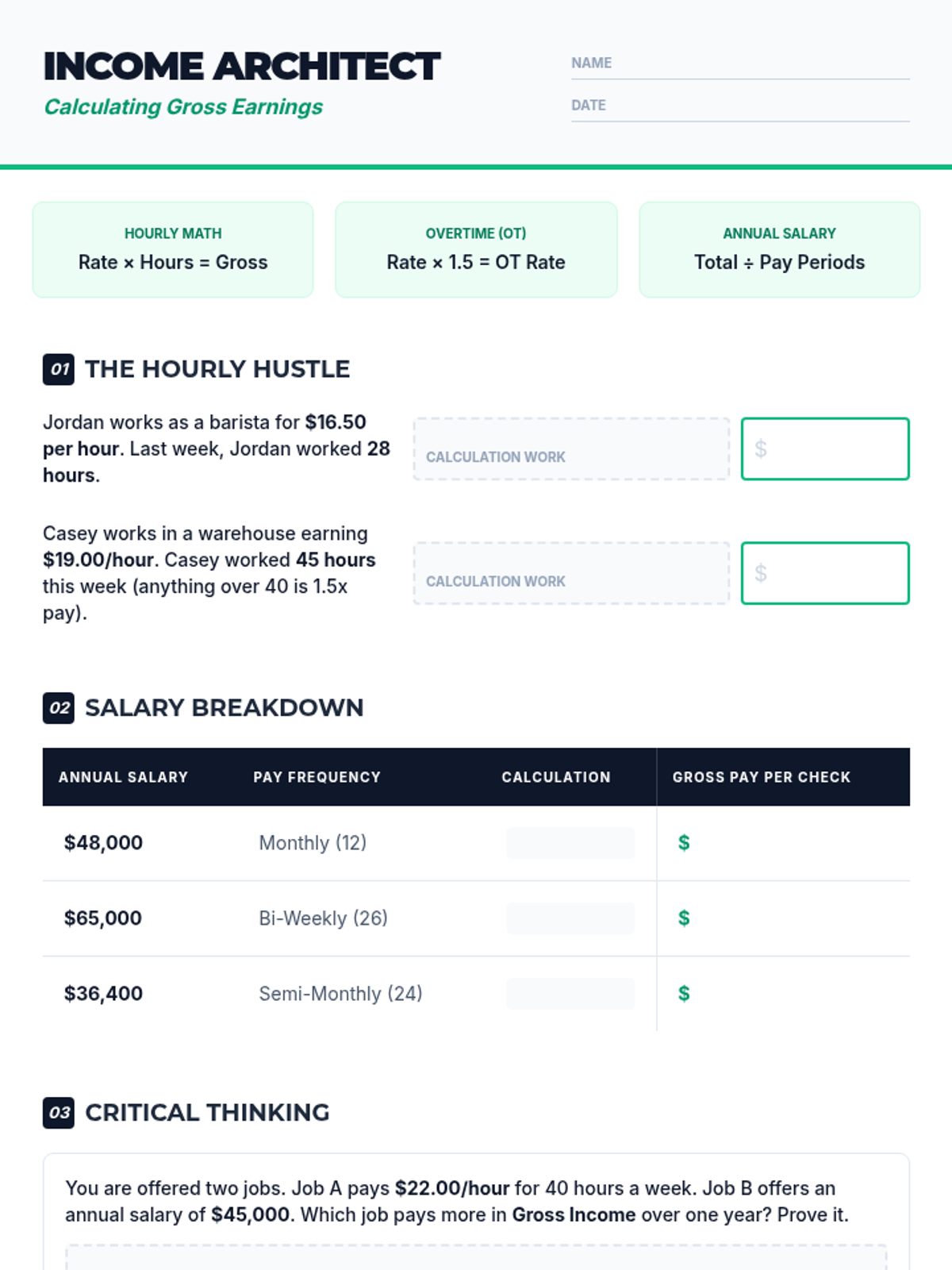
This unit demystifies the transition from gross salary to net take-home pay, helping students understand earnings, mandatory taxes, and deductions. Students will learn to calculate gross pay, interpret tax forms, and audit their own paystubs for accuracy.