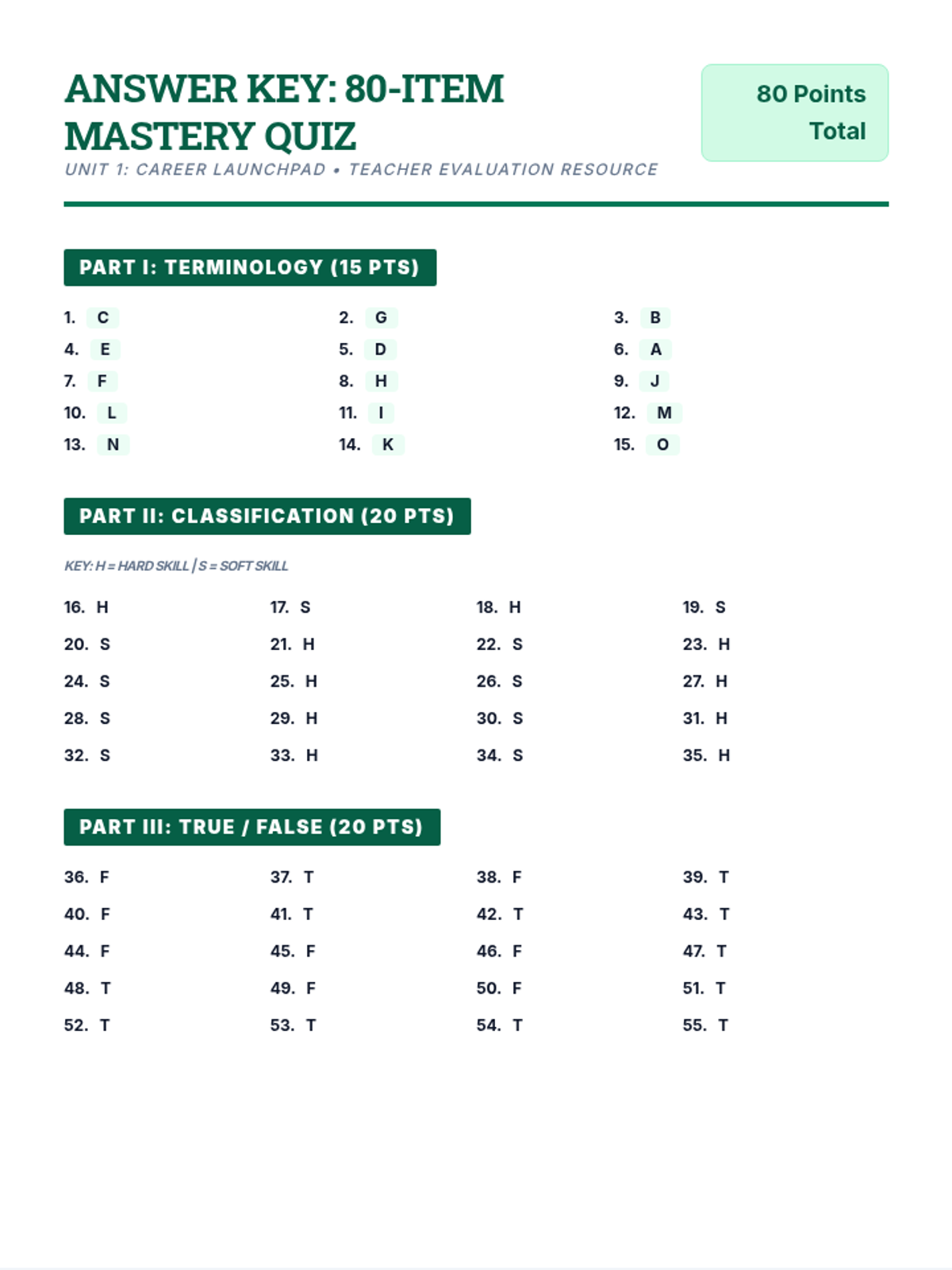
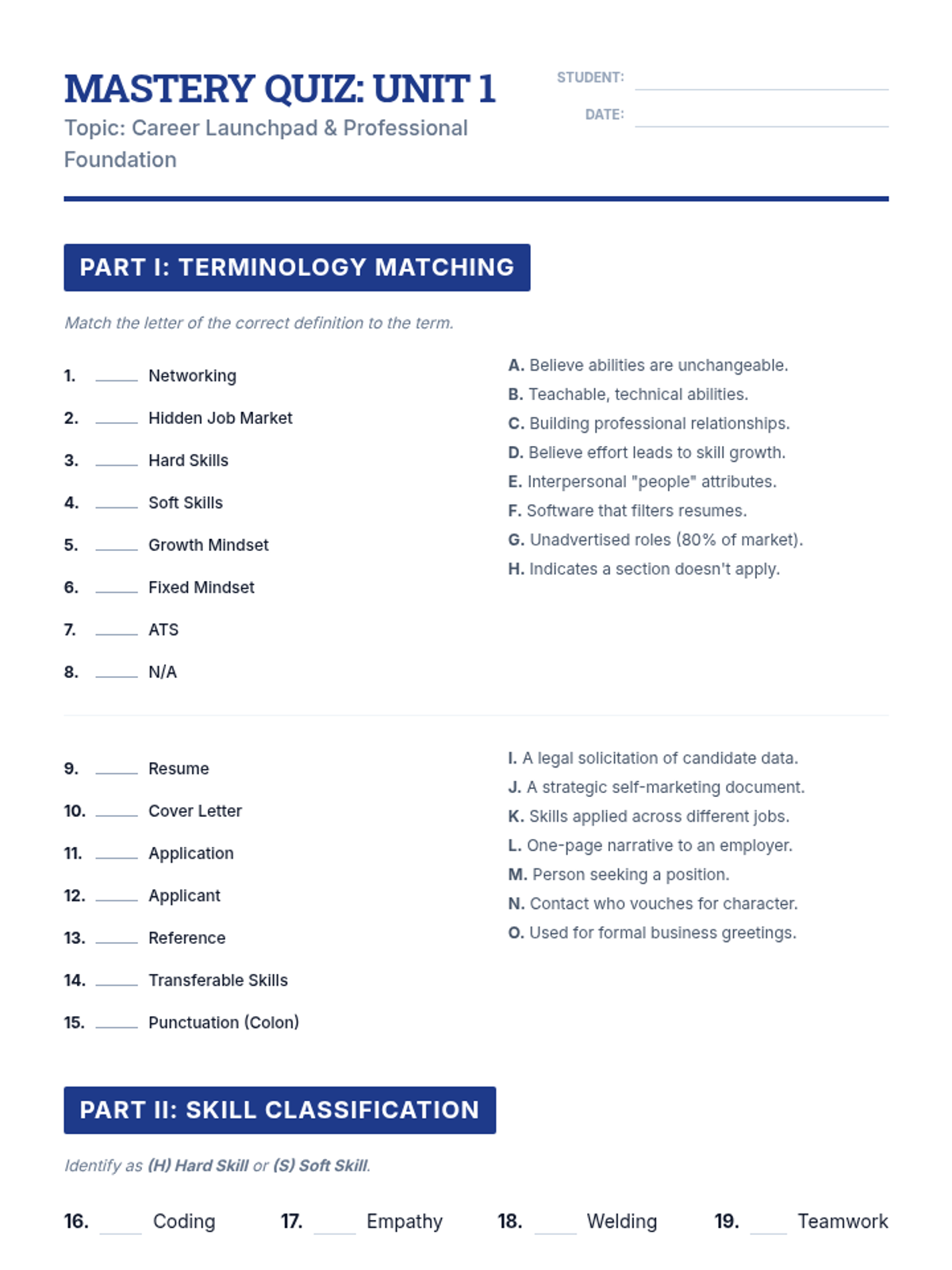
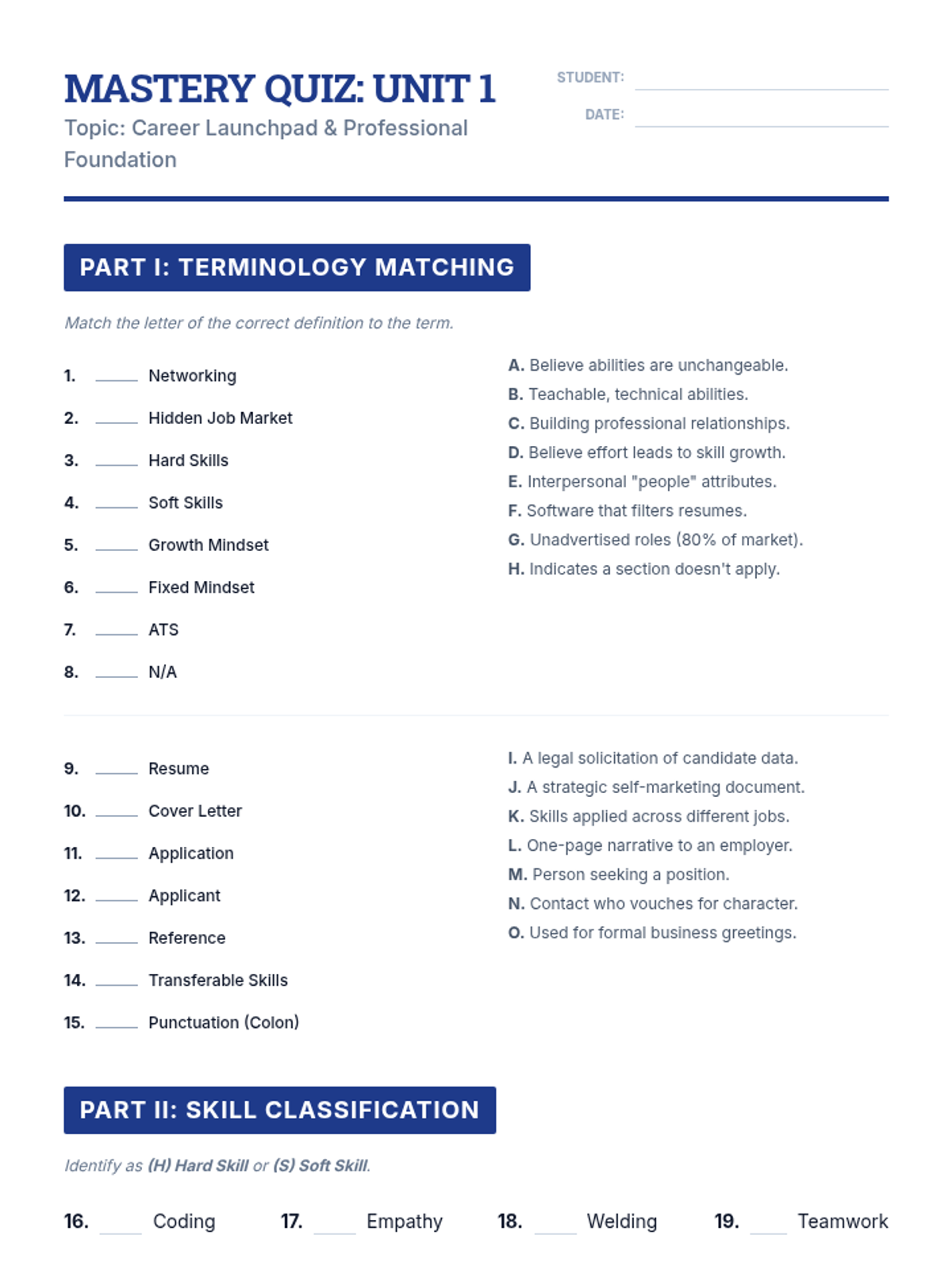
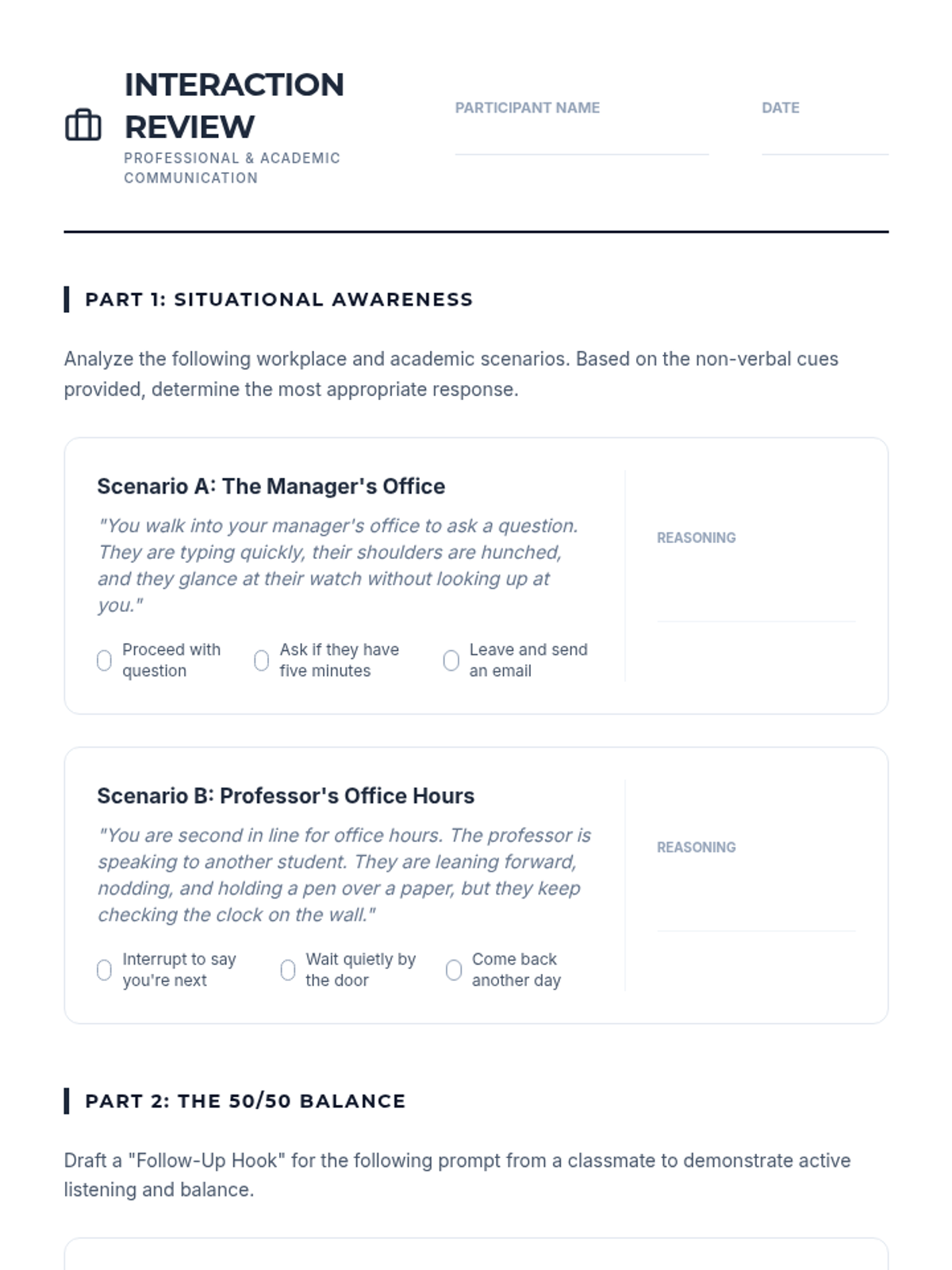
College selection, application workflows, and financial aid navigation including FAFSA and scholarship acquisition. Builds skills in personal statement writing and career exploration to align post-secondary choices with long-term professional goals.
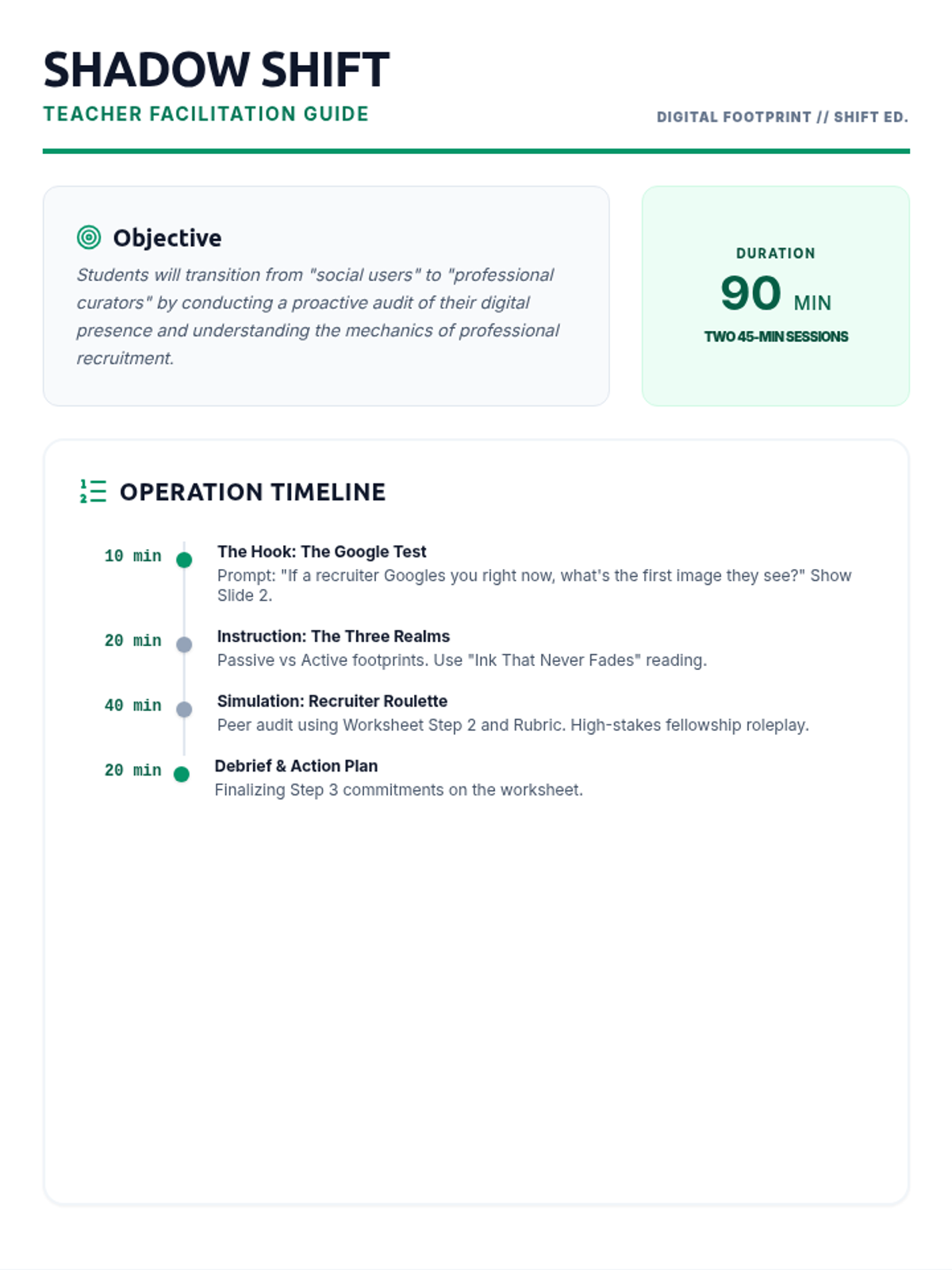
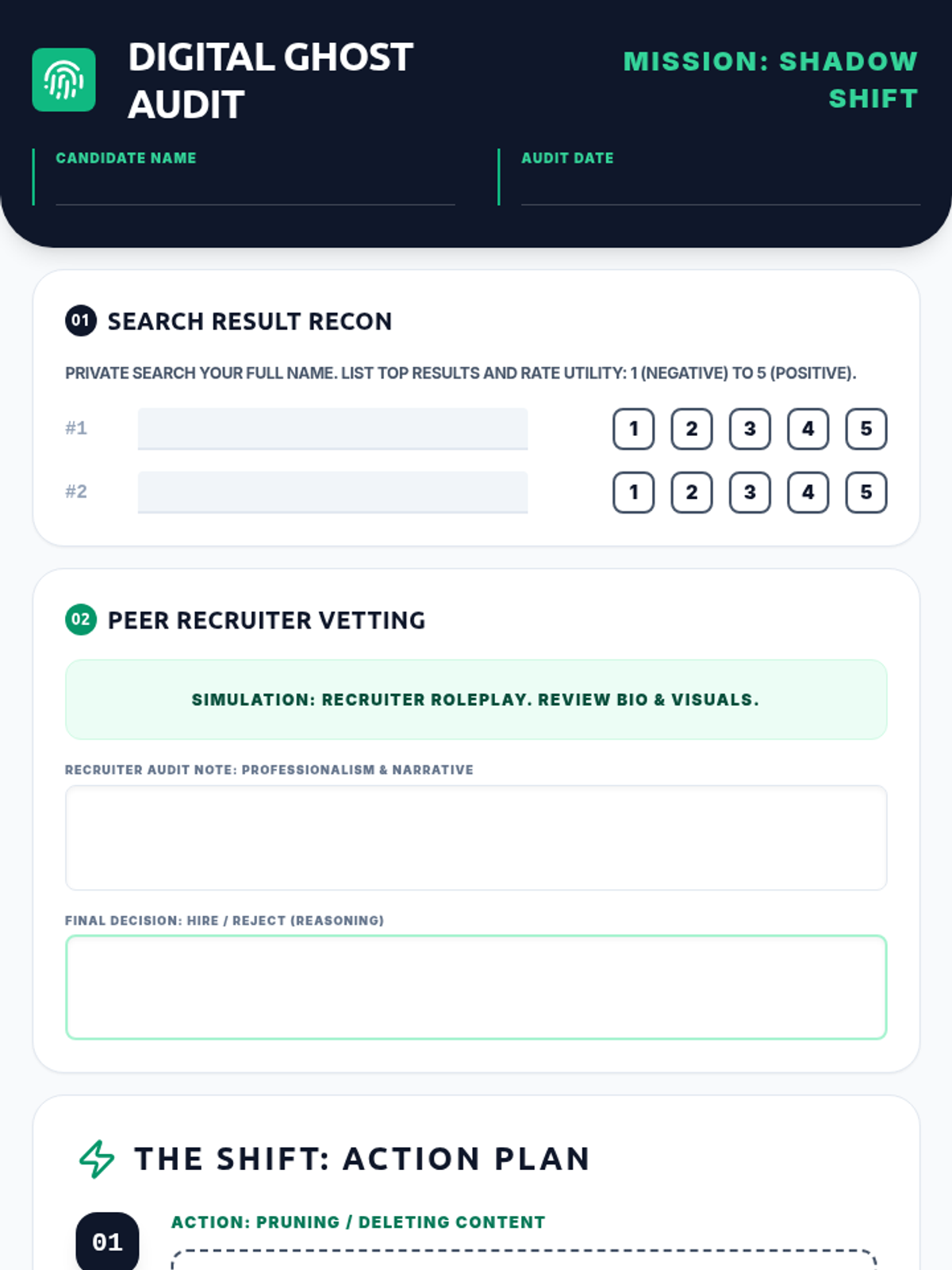
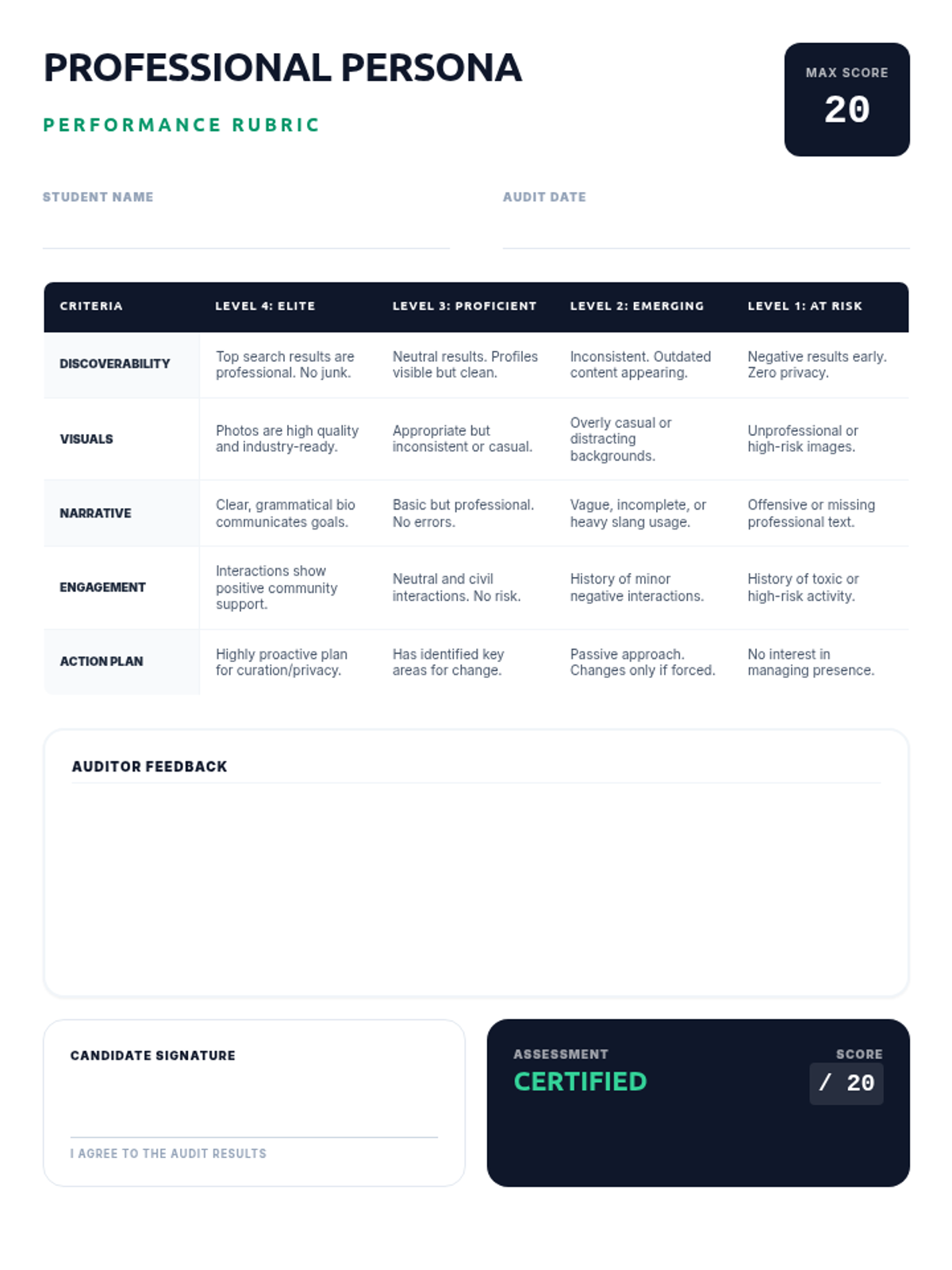
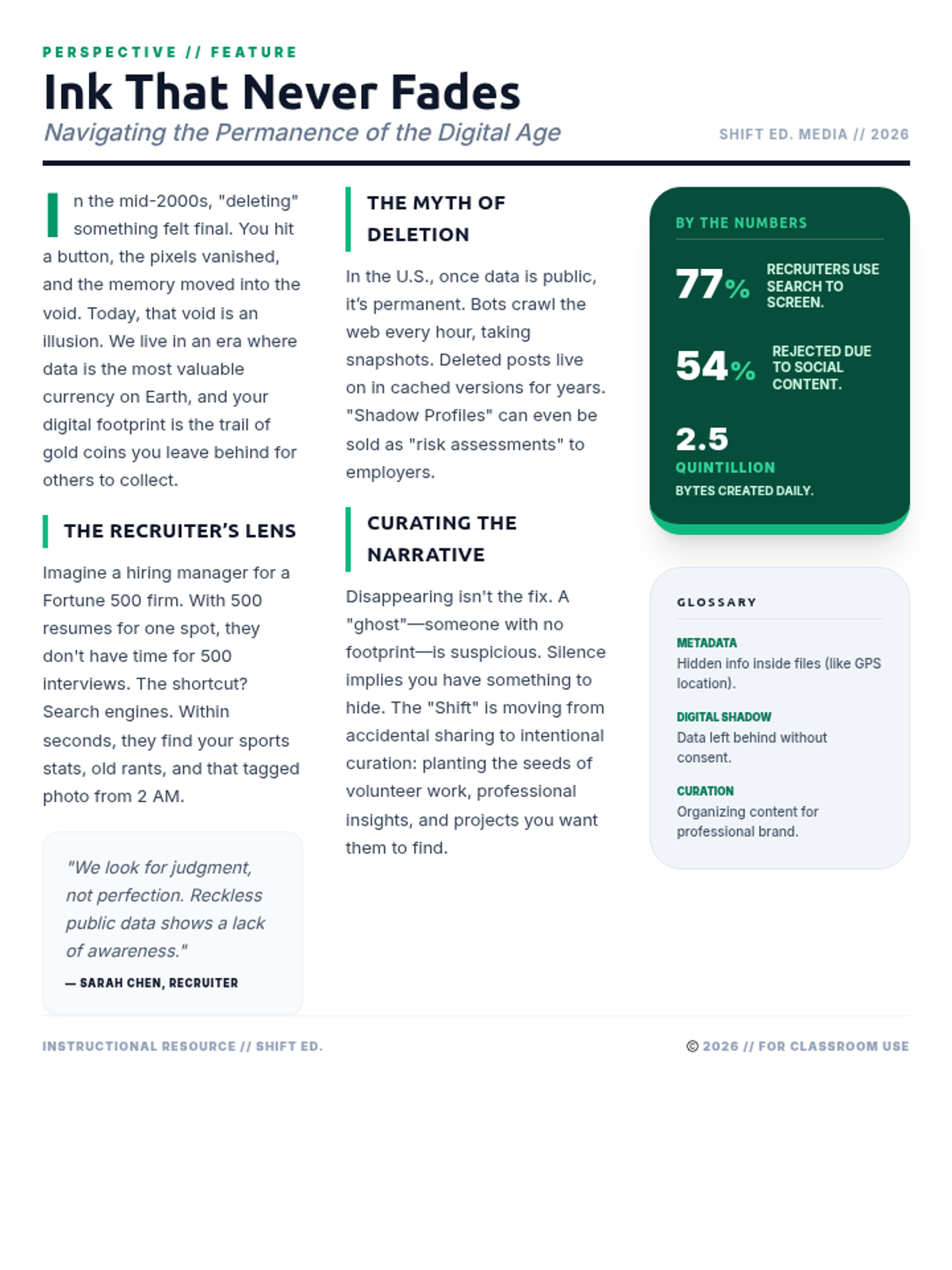
A comprehensive lesson on digital footprint management for students transitioning to professional or collegiate environments. Students engage in 'recruitment simulations' to understand how their online presence impacts future opportunities and learn to curate a professional digital persona.
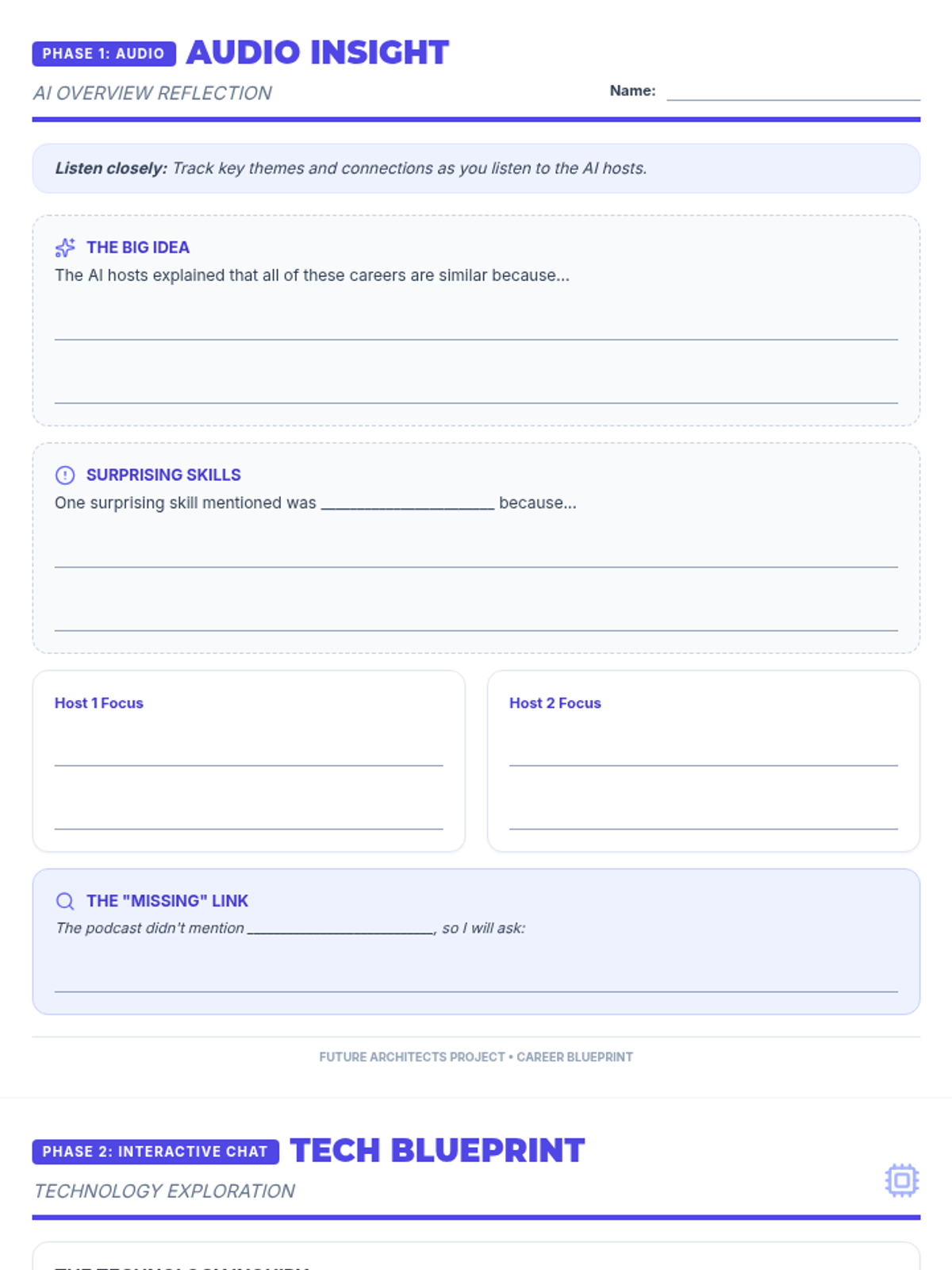
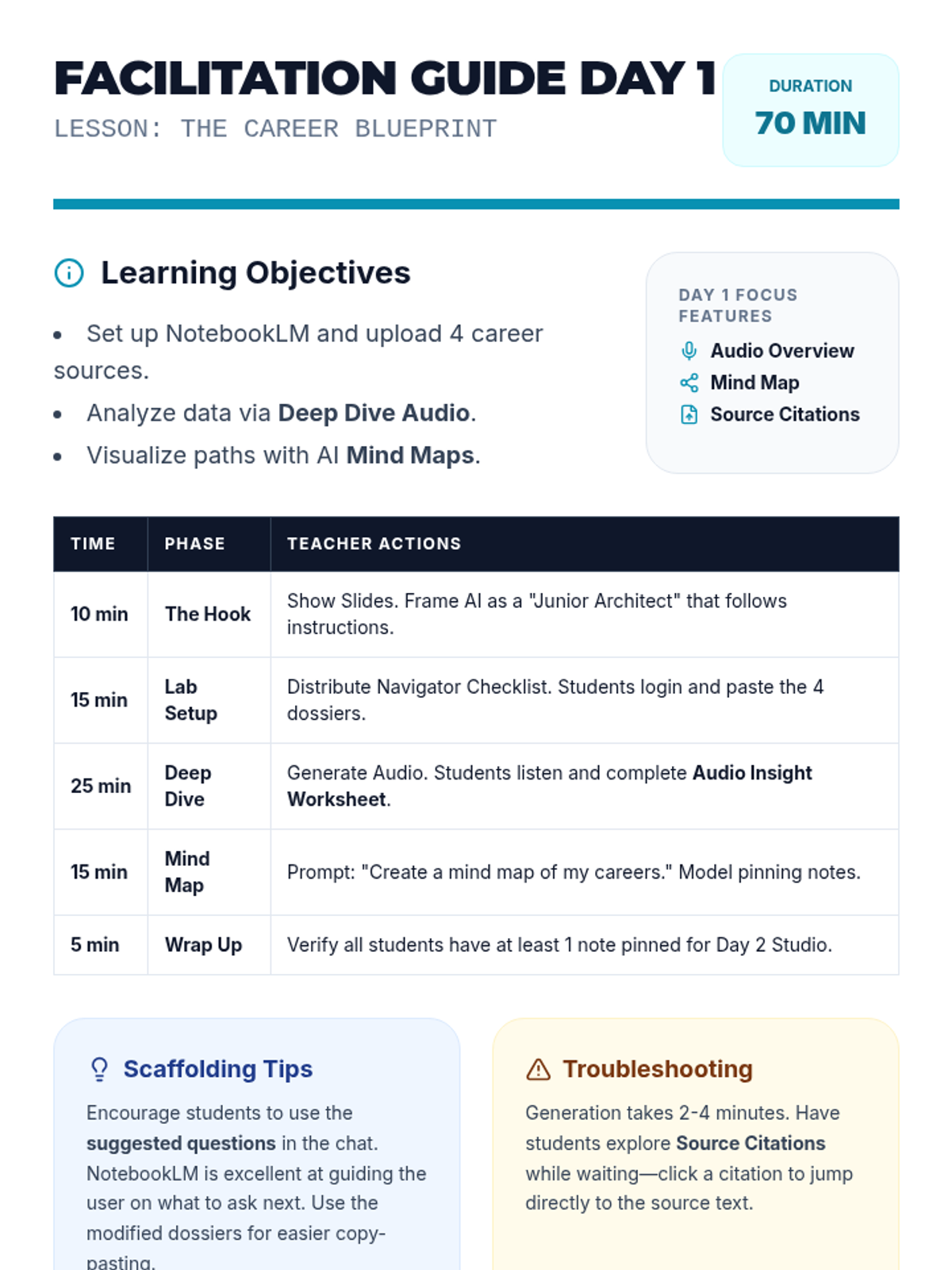
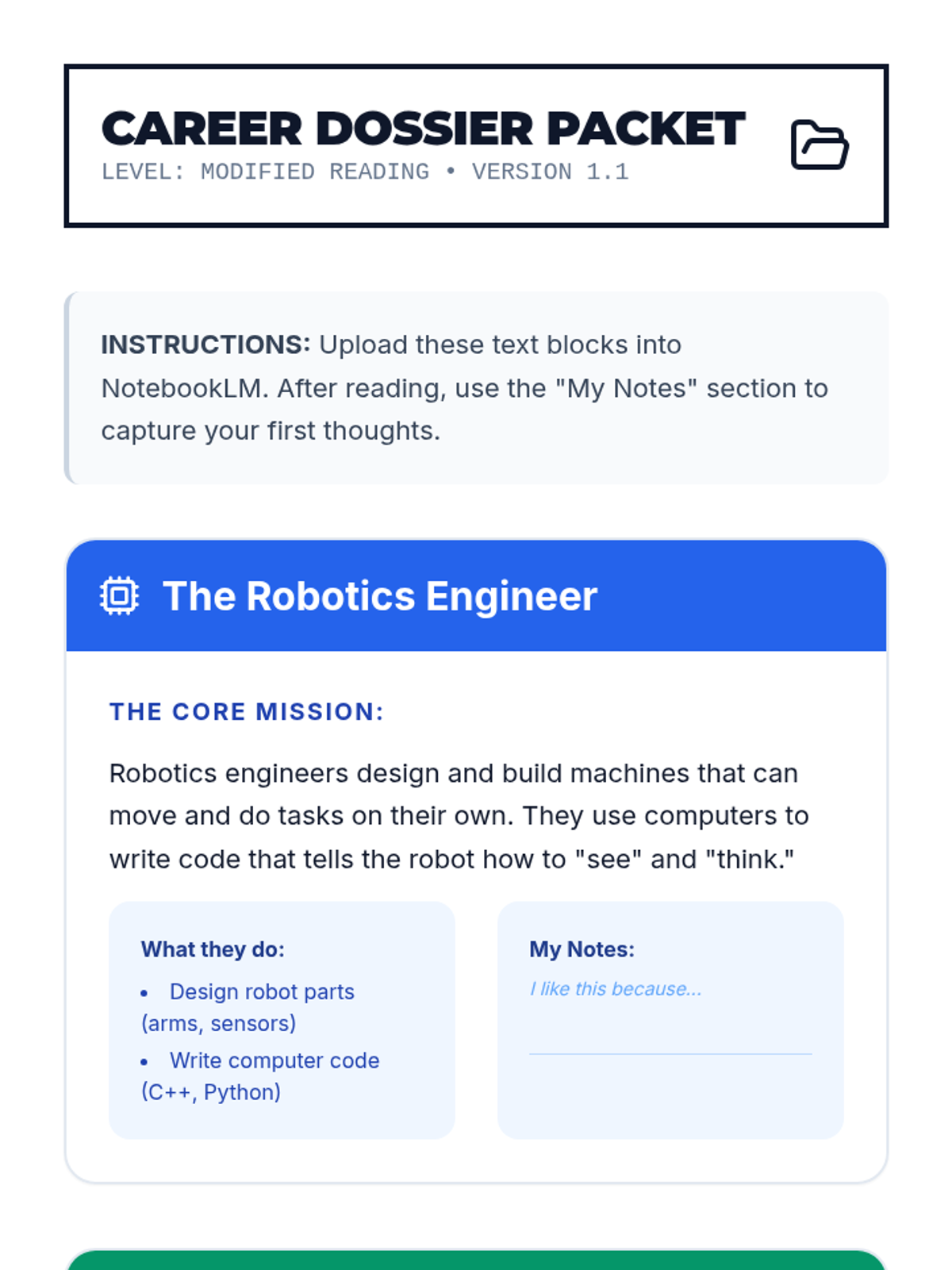
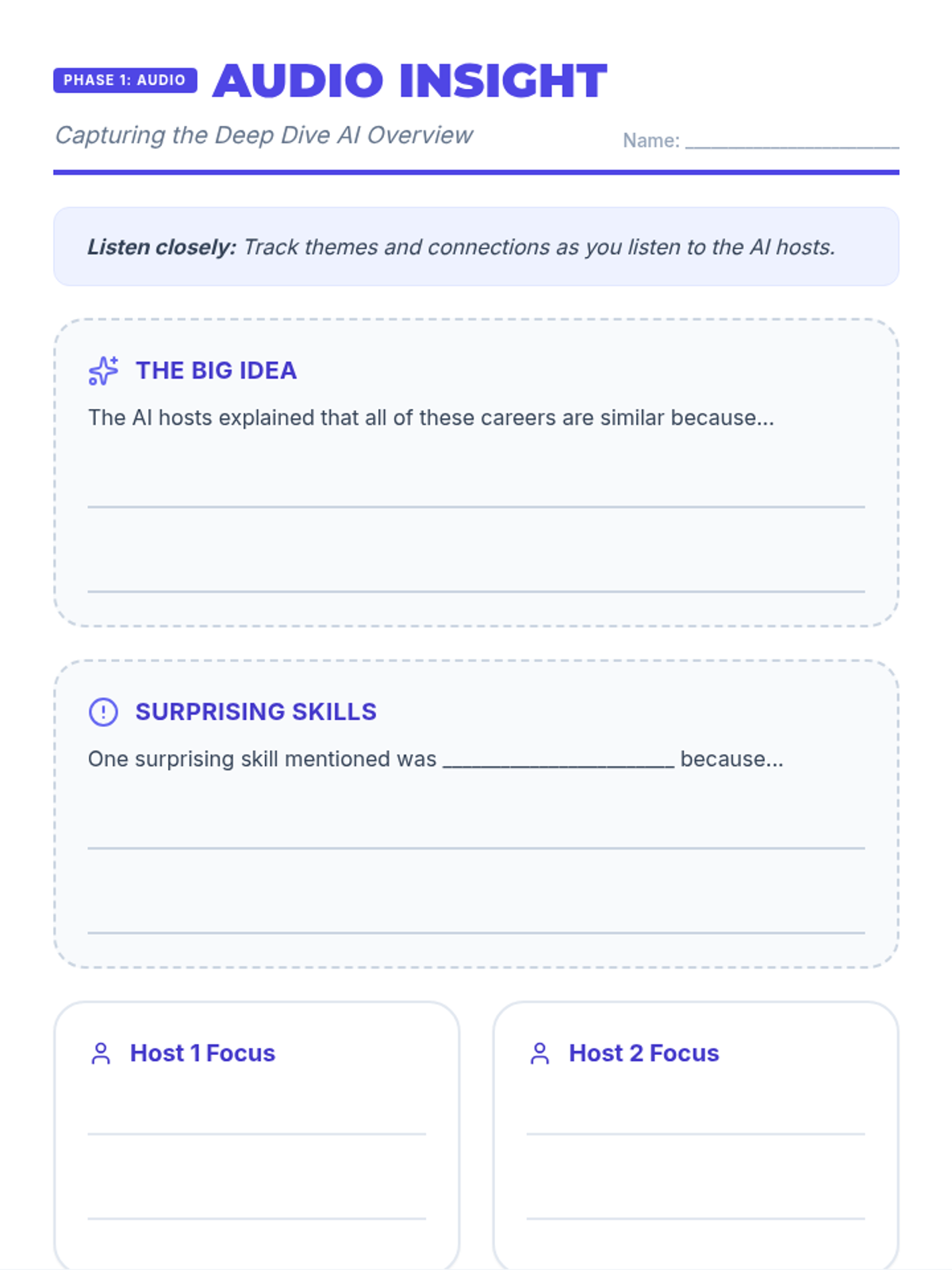
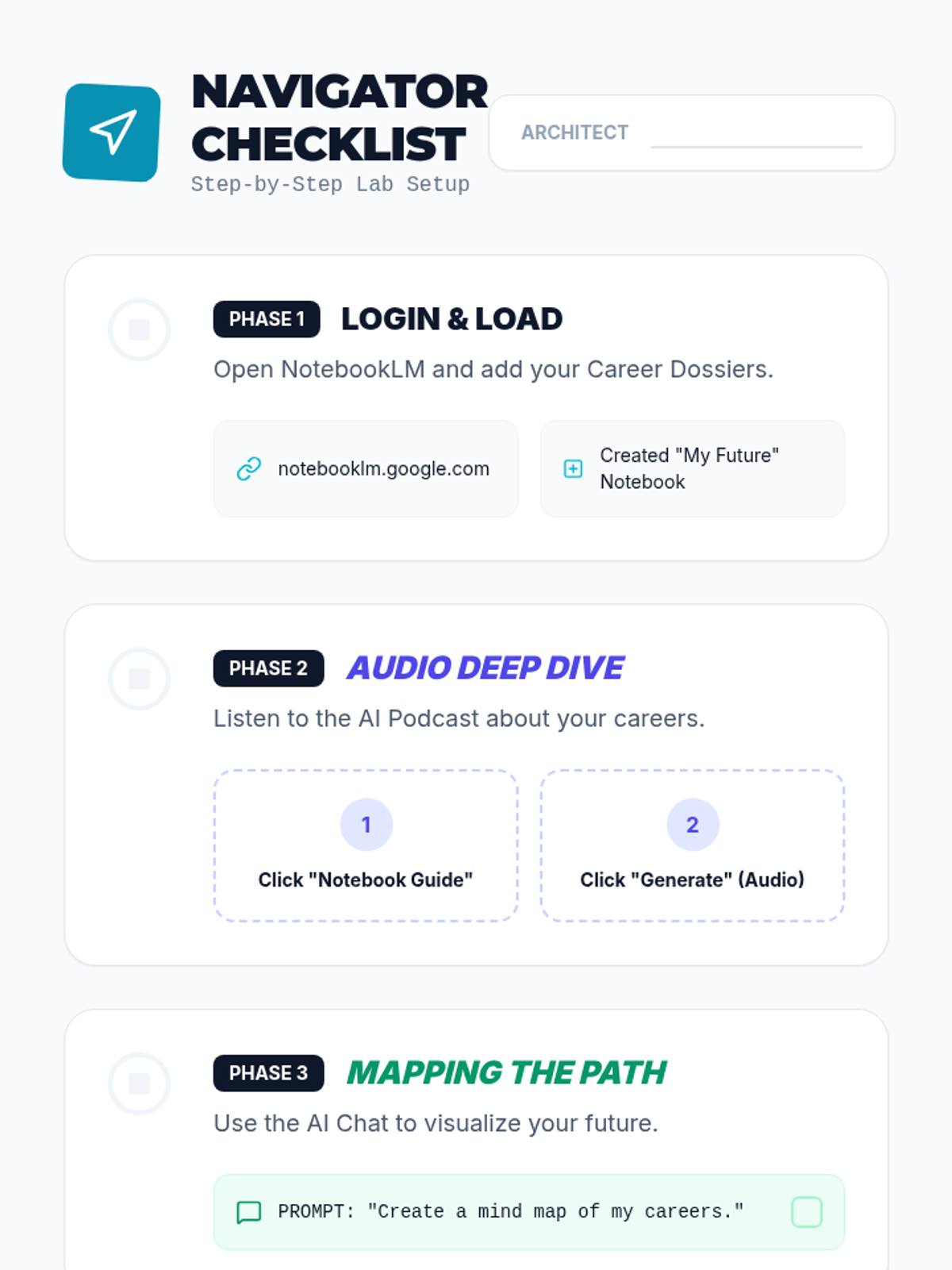
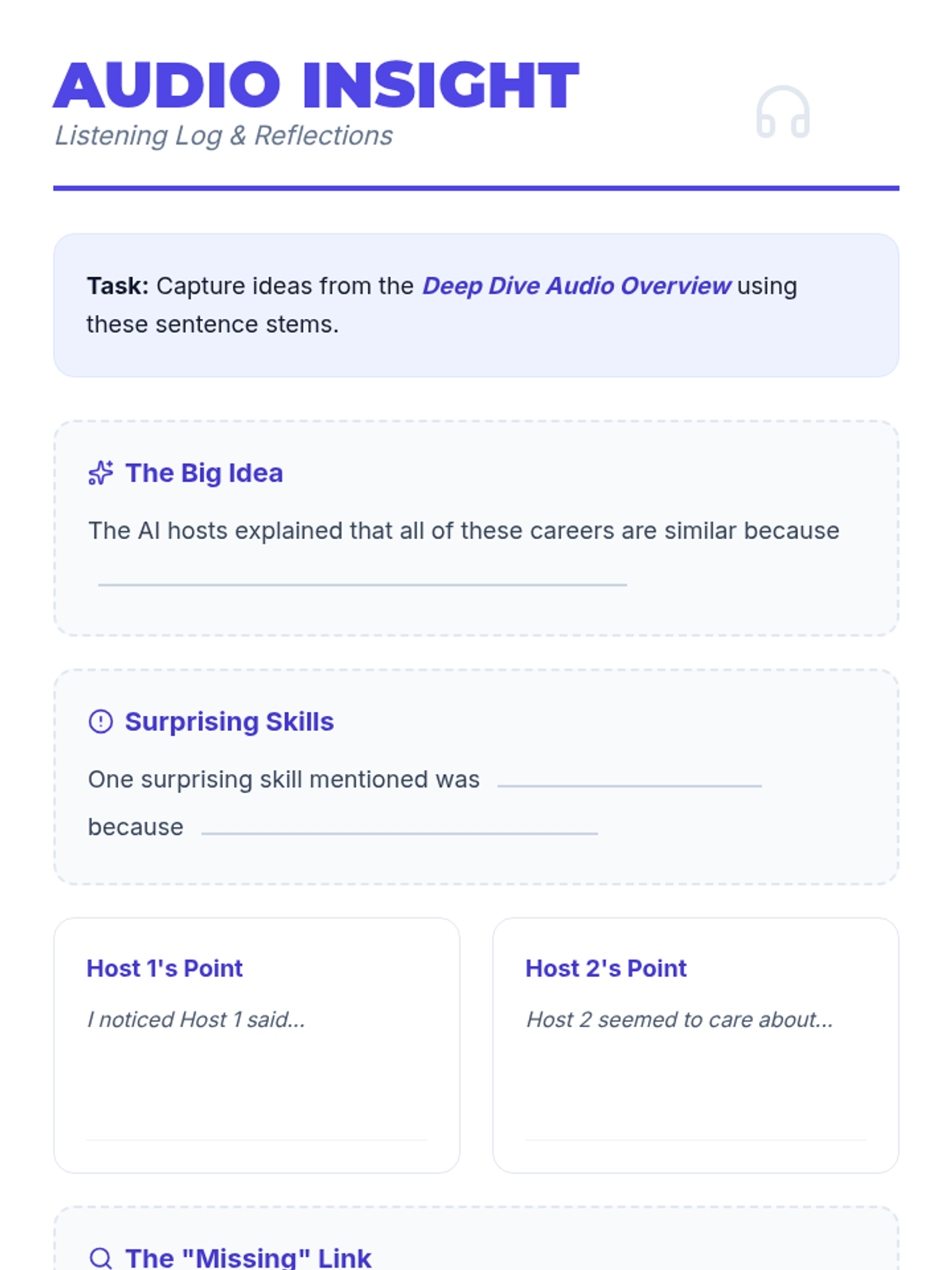
A 2-day intensive workshop where students use NotebookLM to research and design their future careers, exploring advanced features like Audio Overviews, Mind Maps, and Studio outputs with professional career dossiers and visual supports.
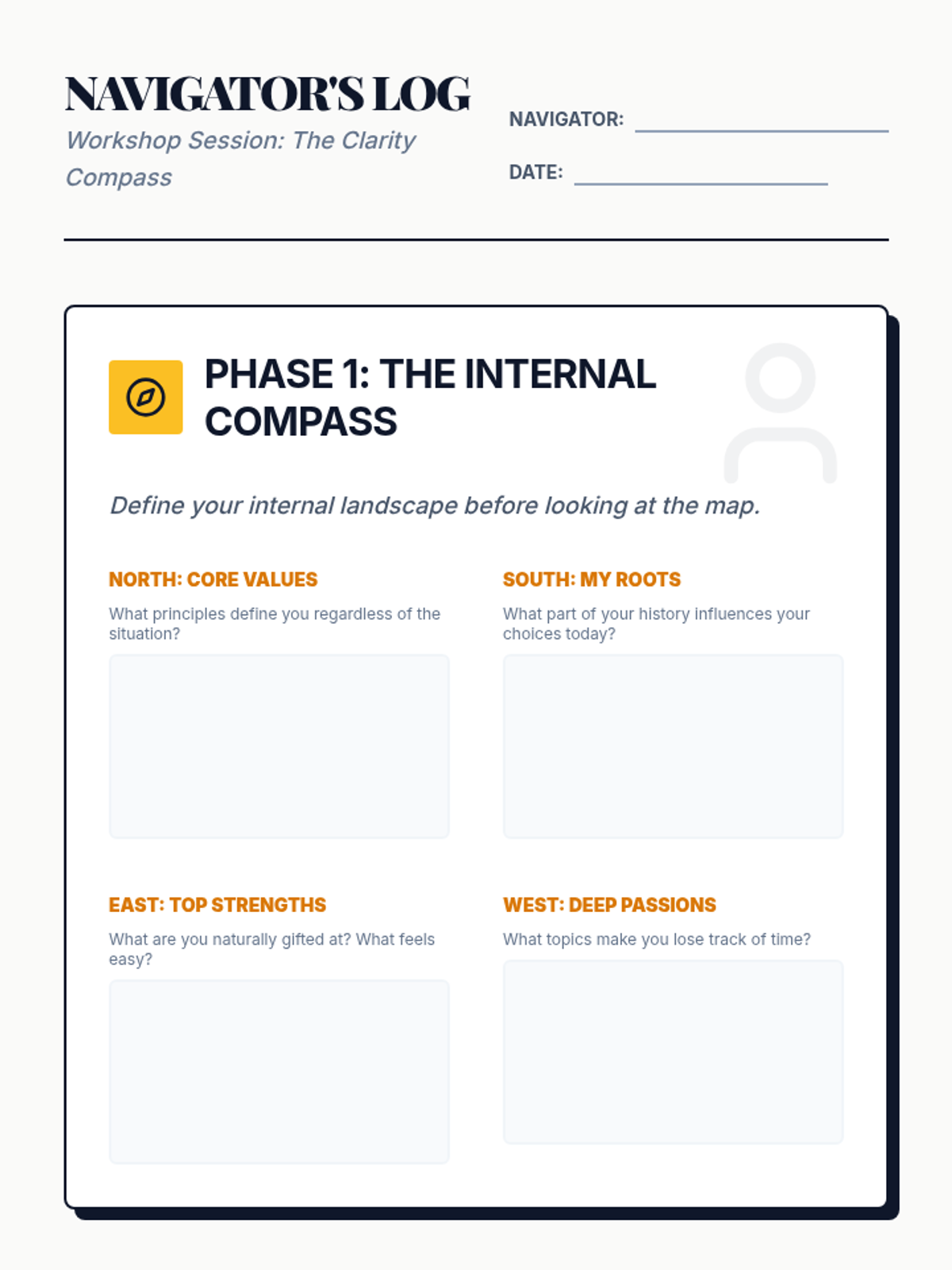
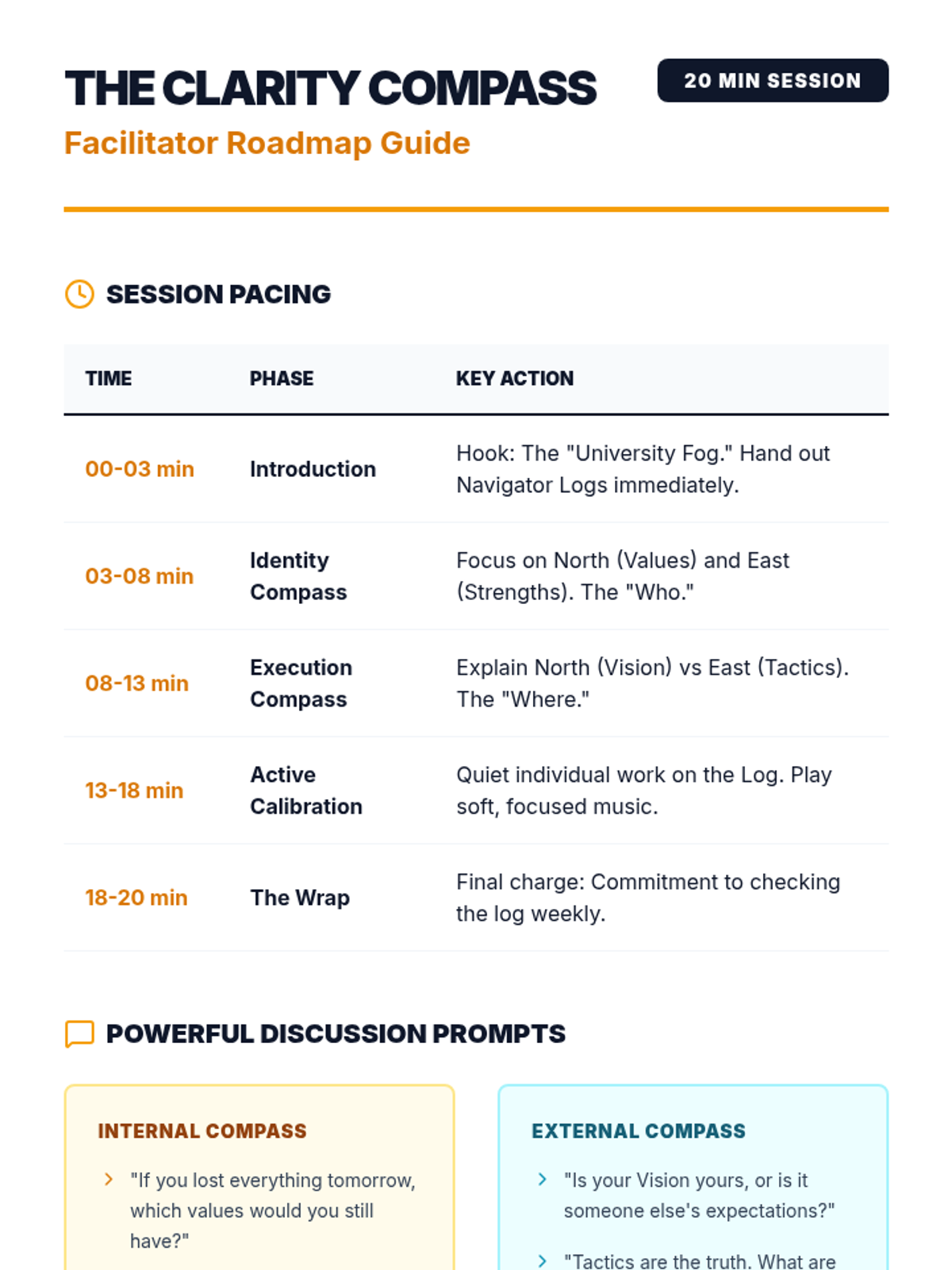
A high-impact workshop sequence designed to help university students navigate personal goal setting using two distinct Clarity Compass models focusing on internal identity and external action.
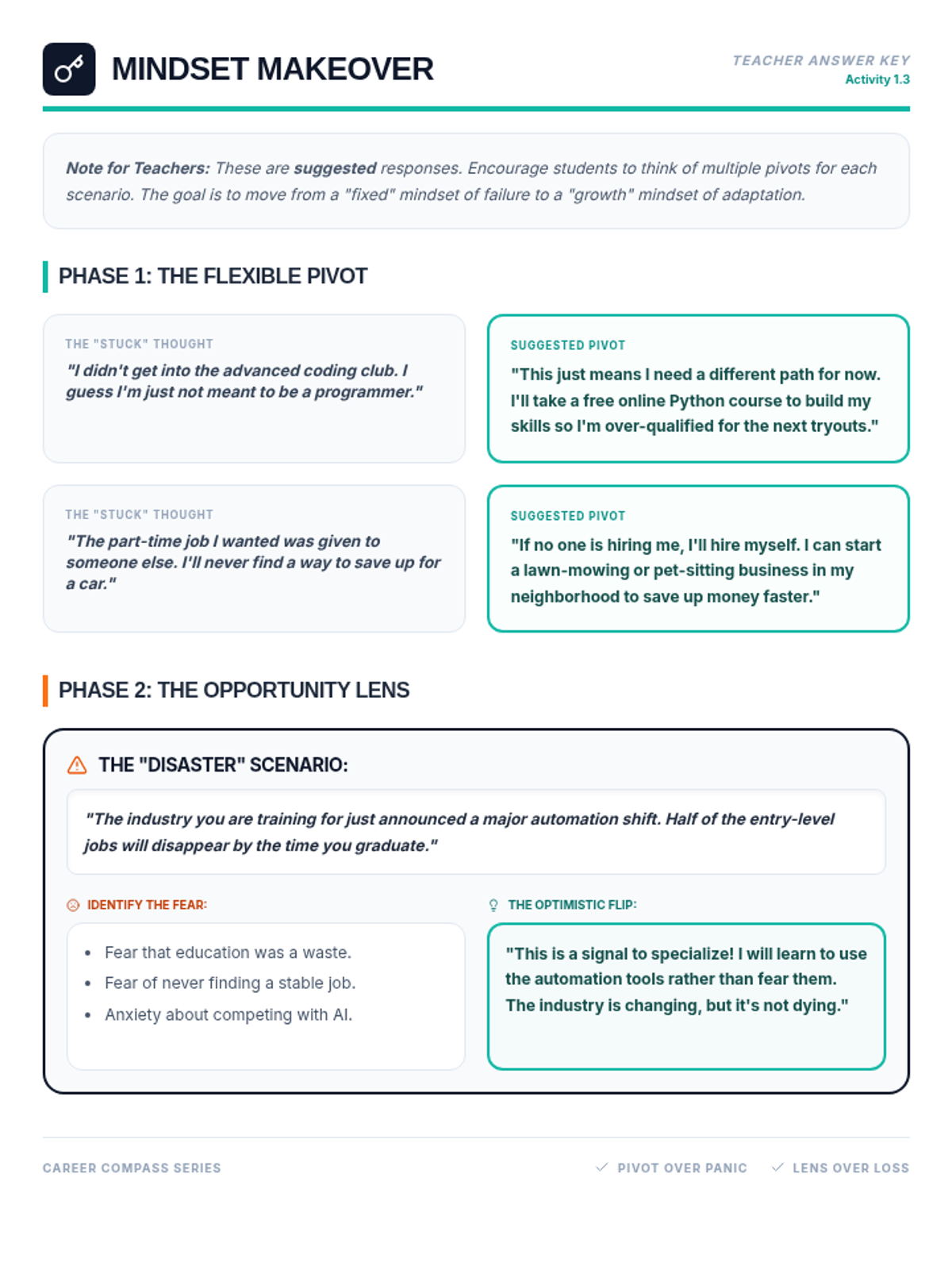
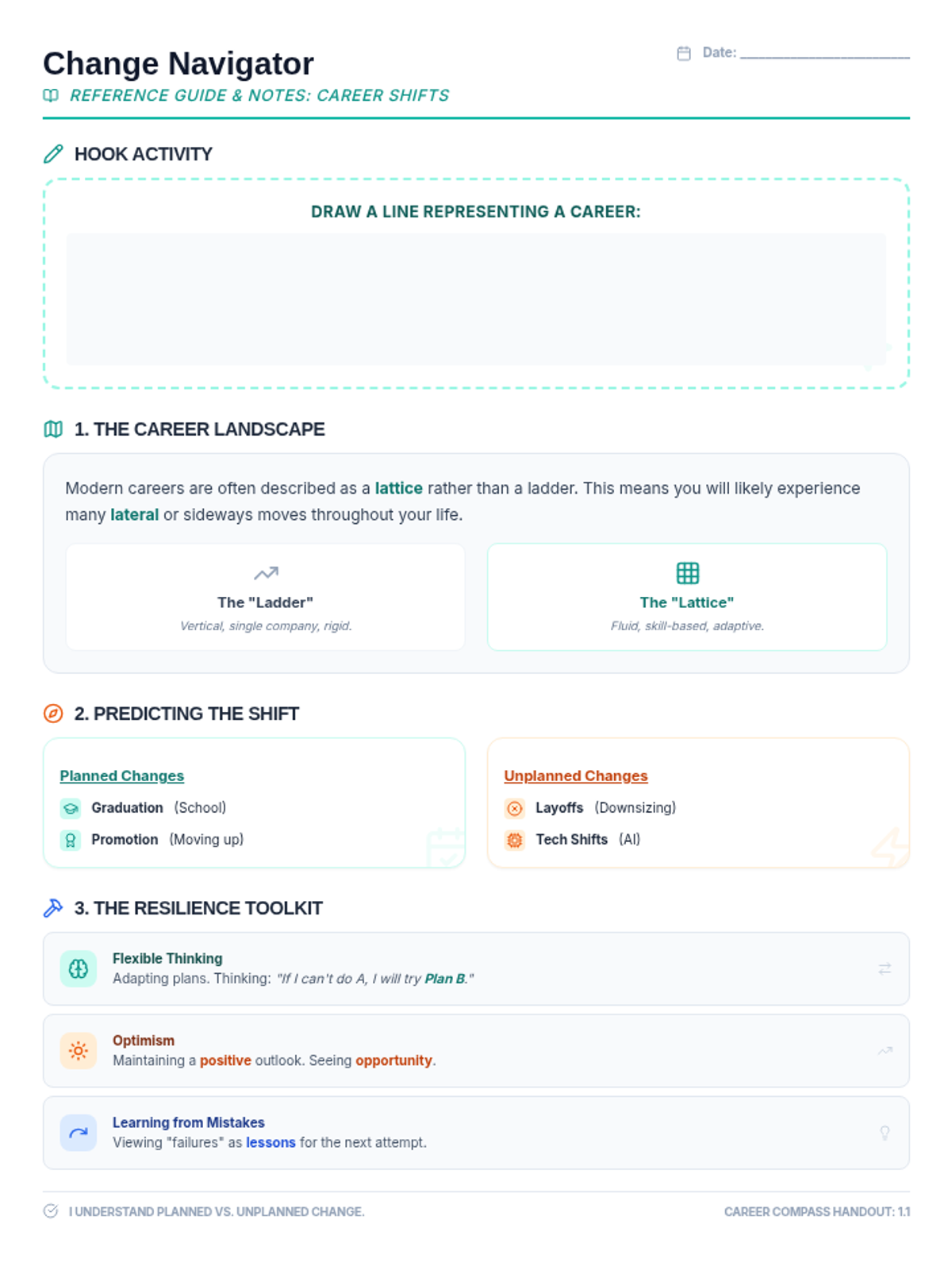
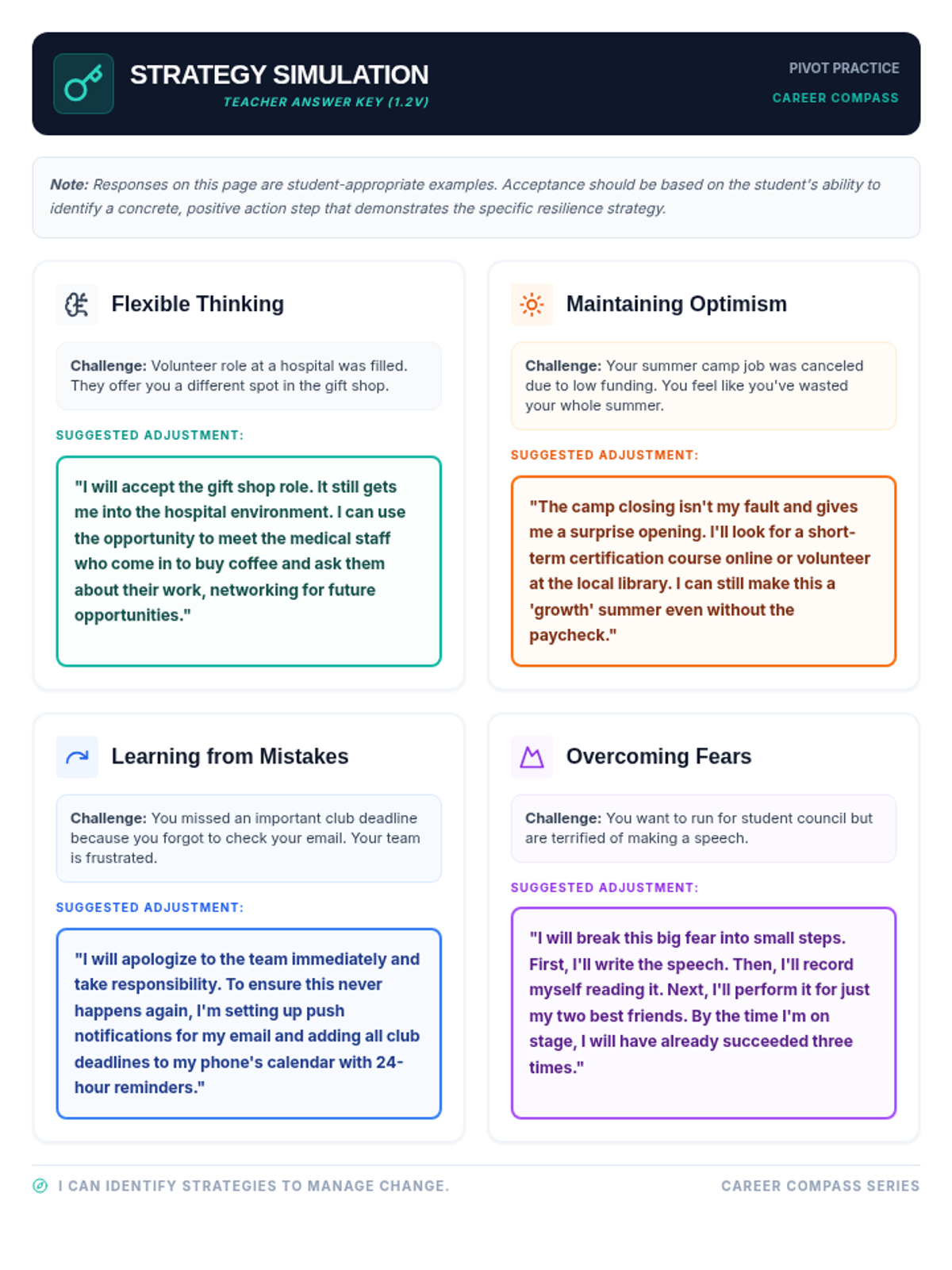
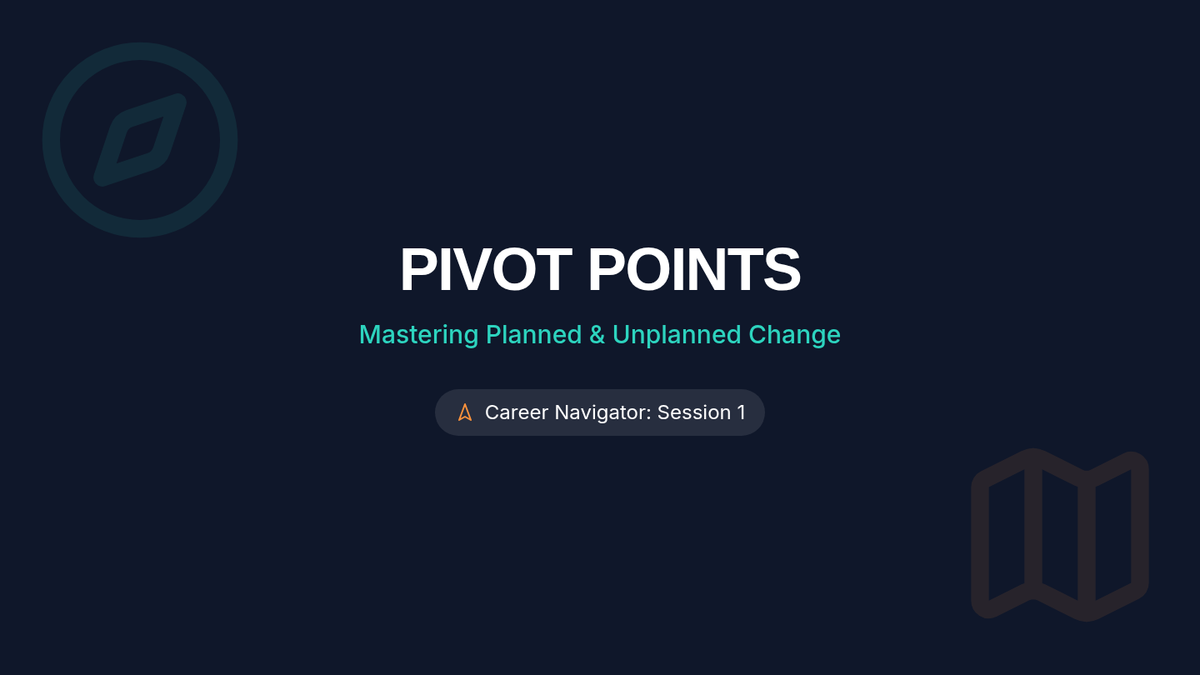
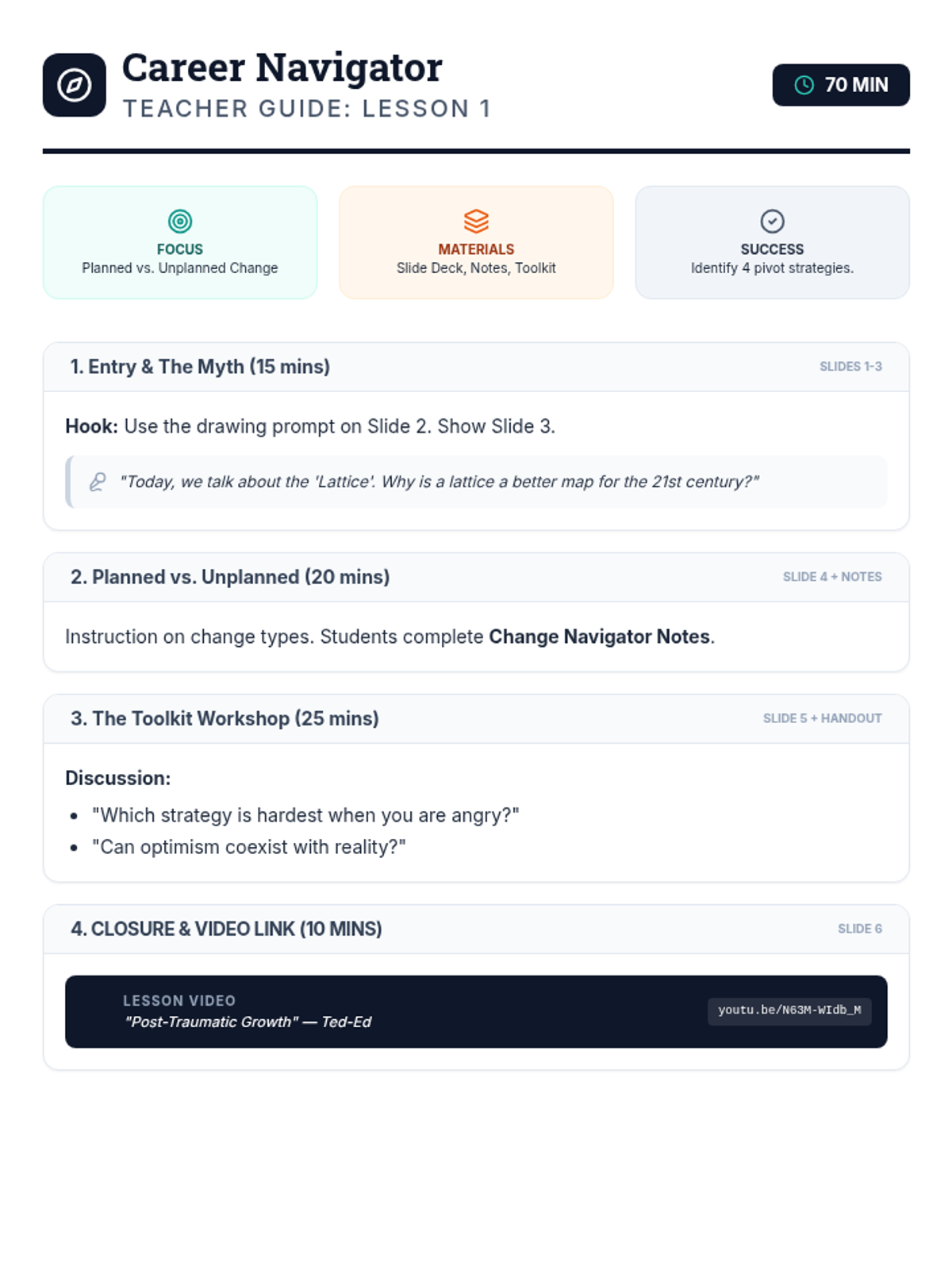
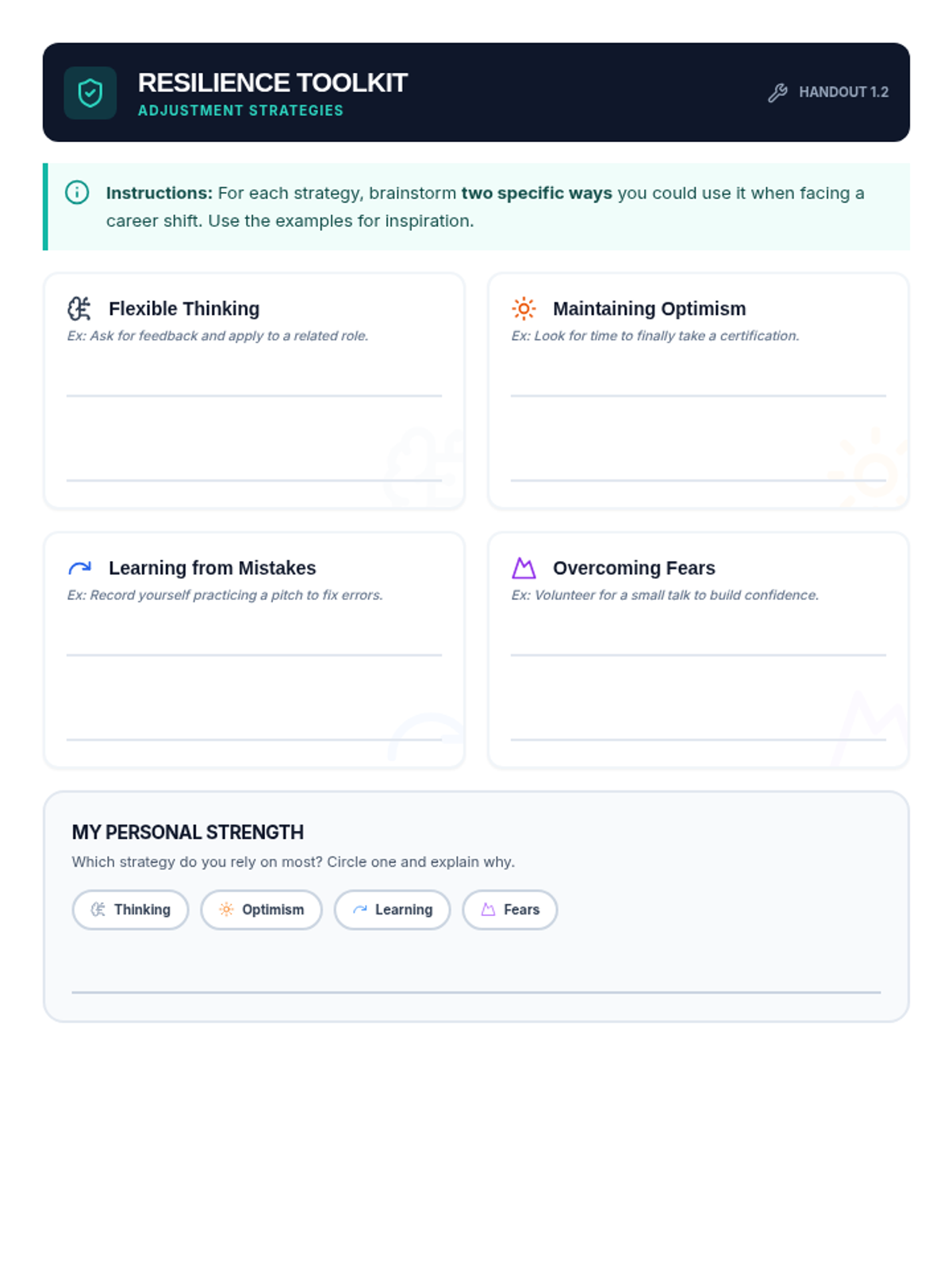
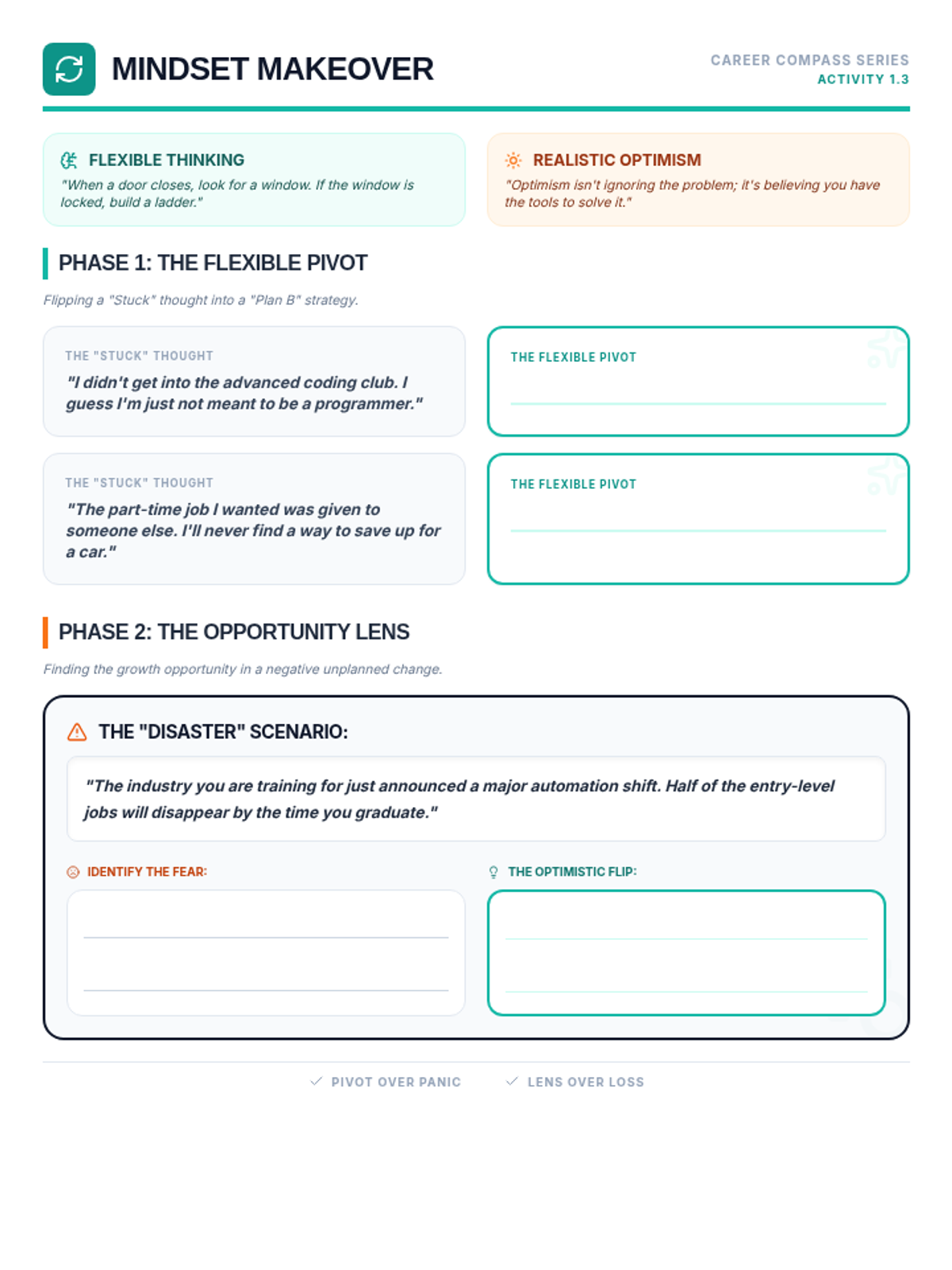
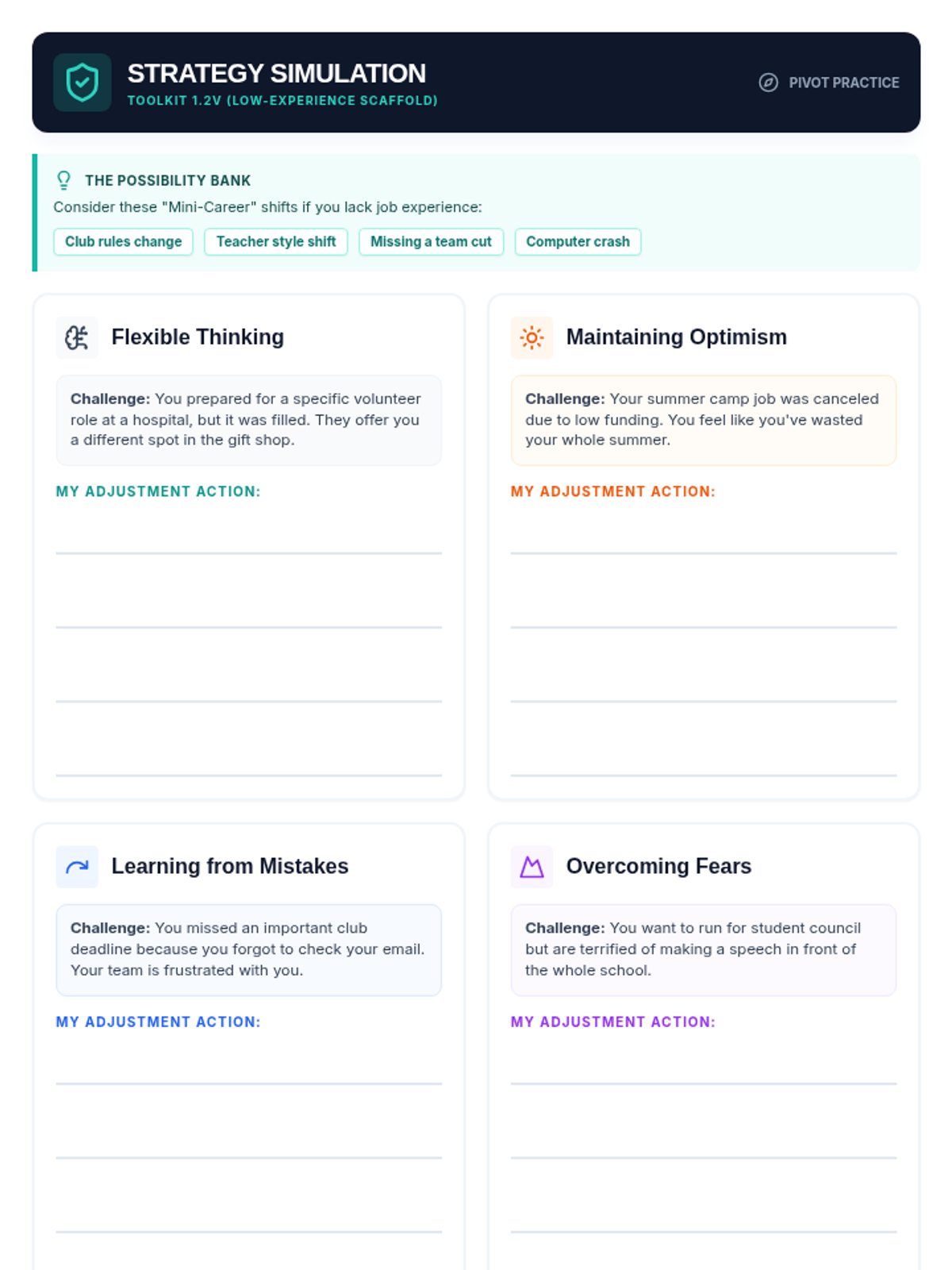
A 2-day unit focused on managing planned and unplanned career changes, featuring visual-heavy instruction, scaffolded reflections, and Universal Design for Learning (UDL) principles. Students will learn to identify strategies like flexible thinking and optimism to navigate their future professional paths.
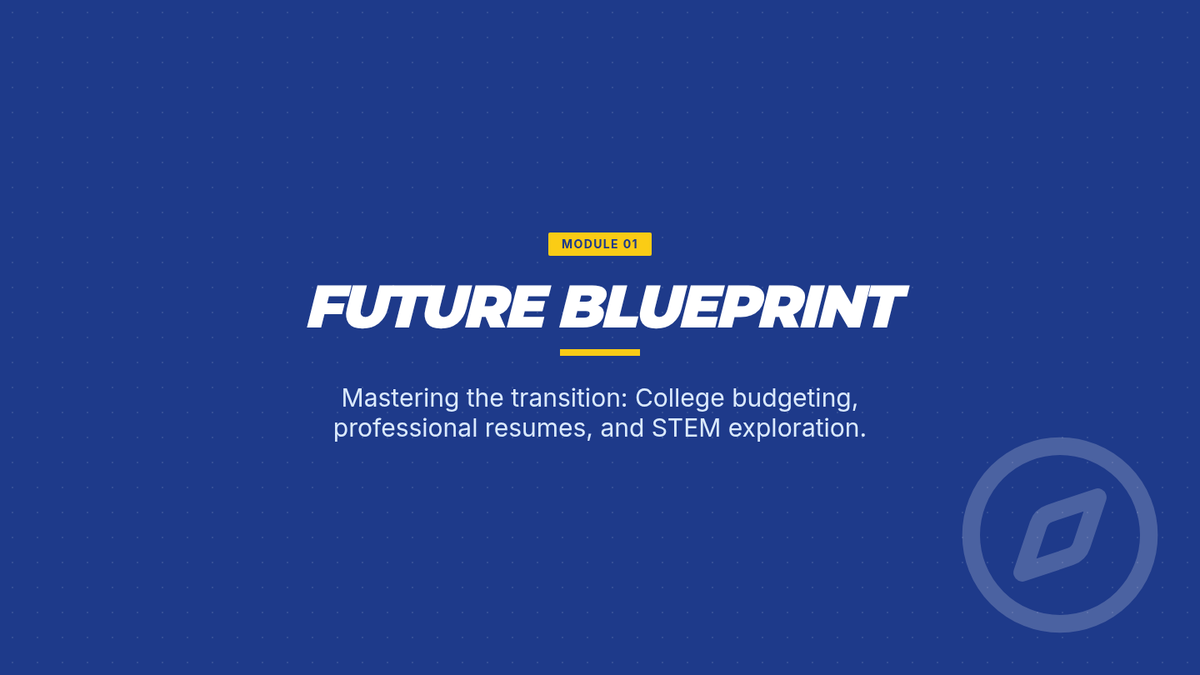
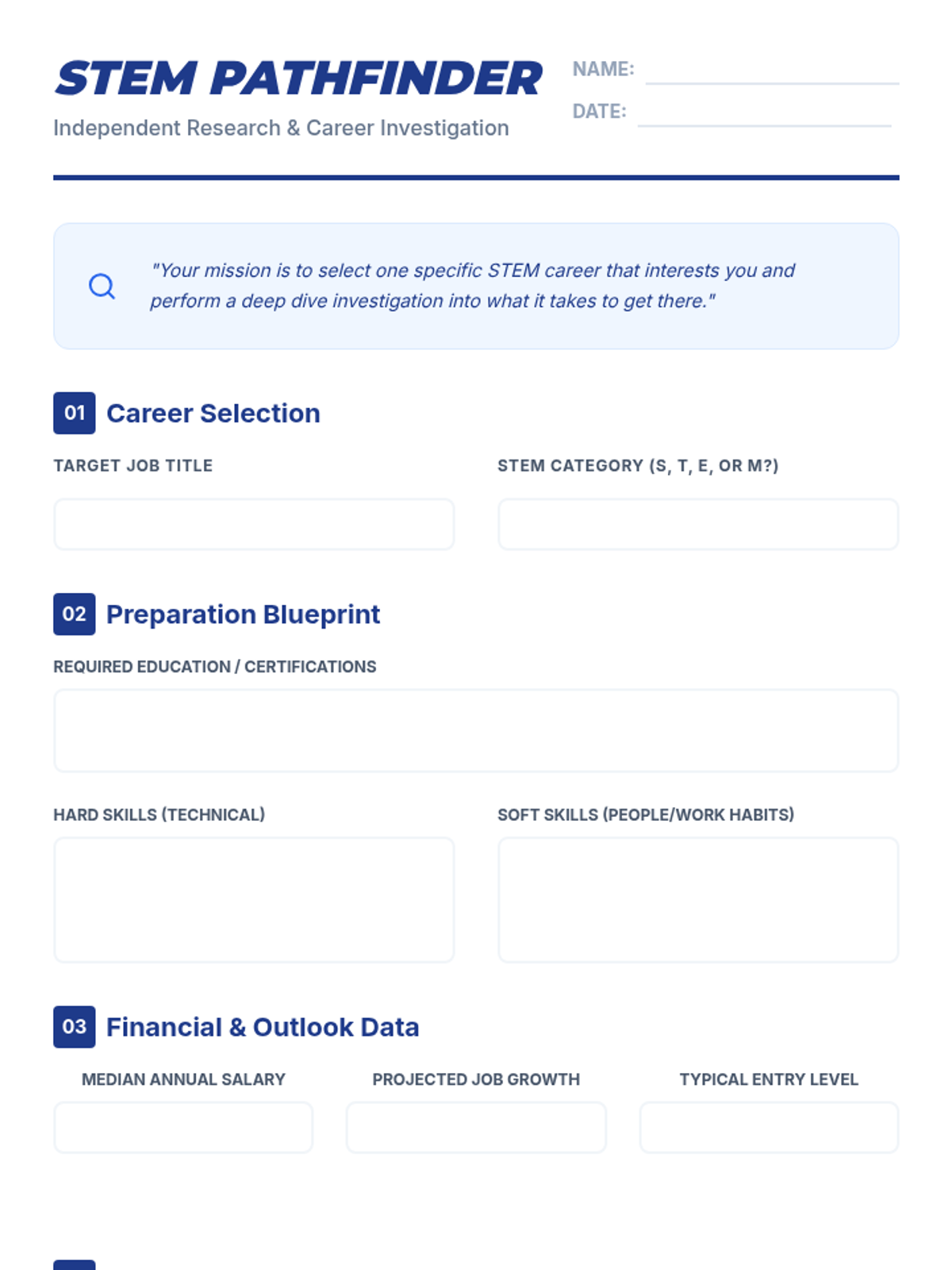
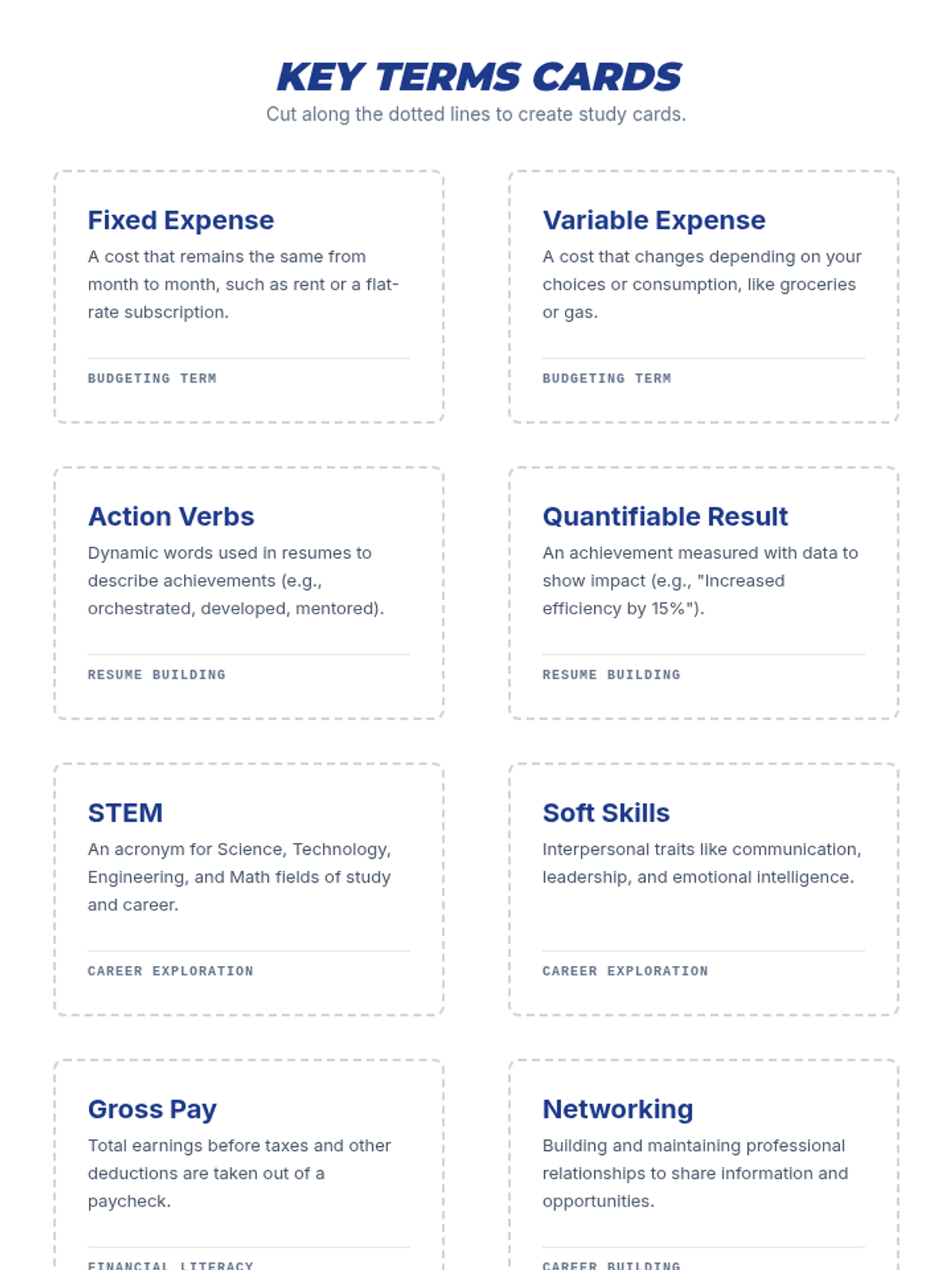
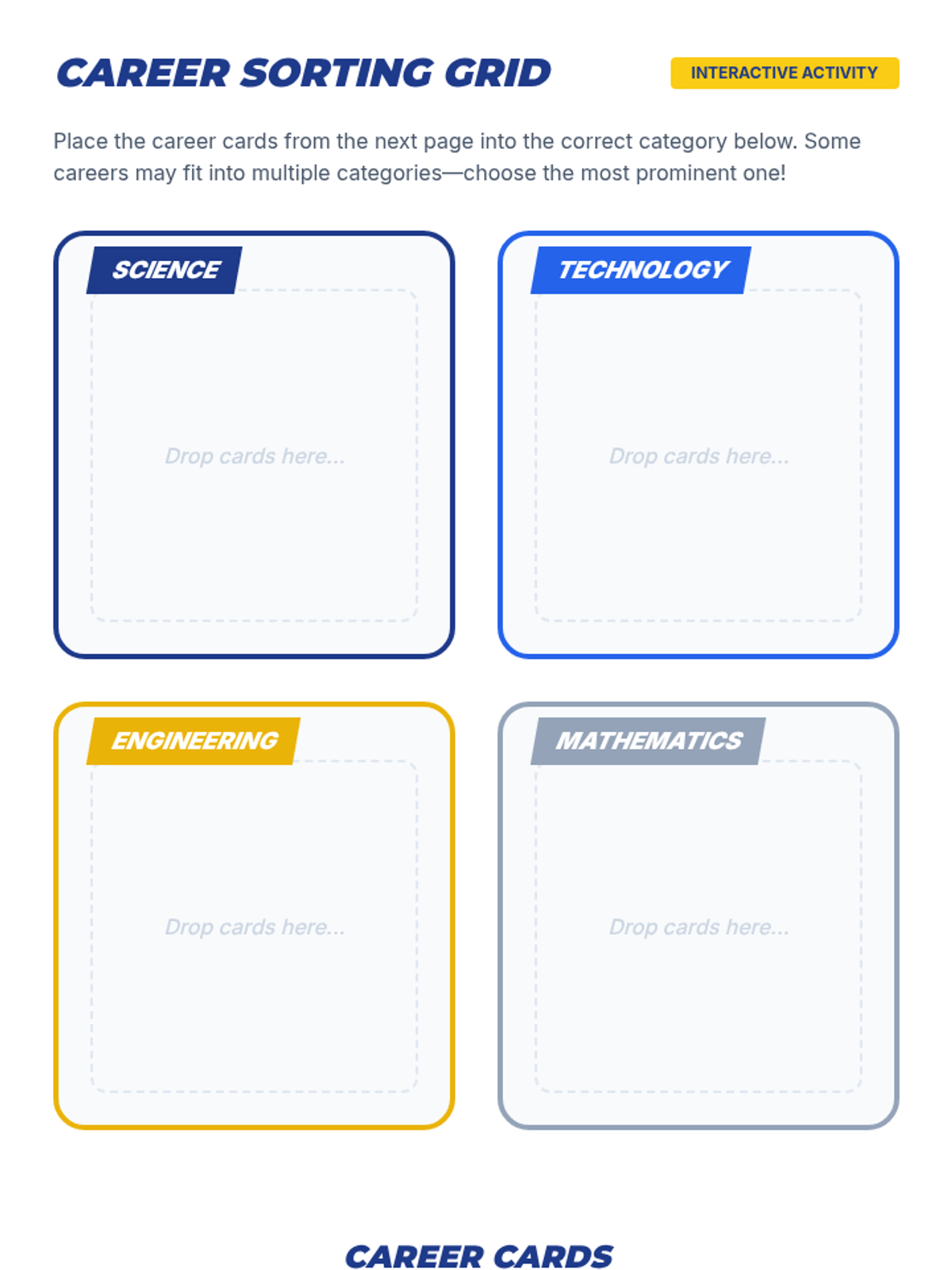
A comprehensive unit designed to prepare students for the transition to adulthood, focusing on financial literacy for college, professional resume writing, and exploration of STEM career opportunities.
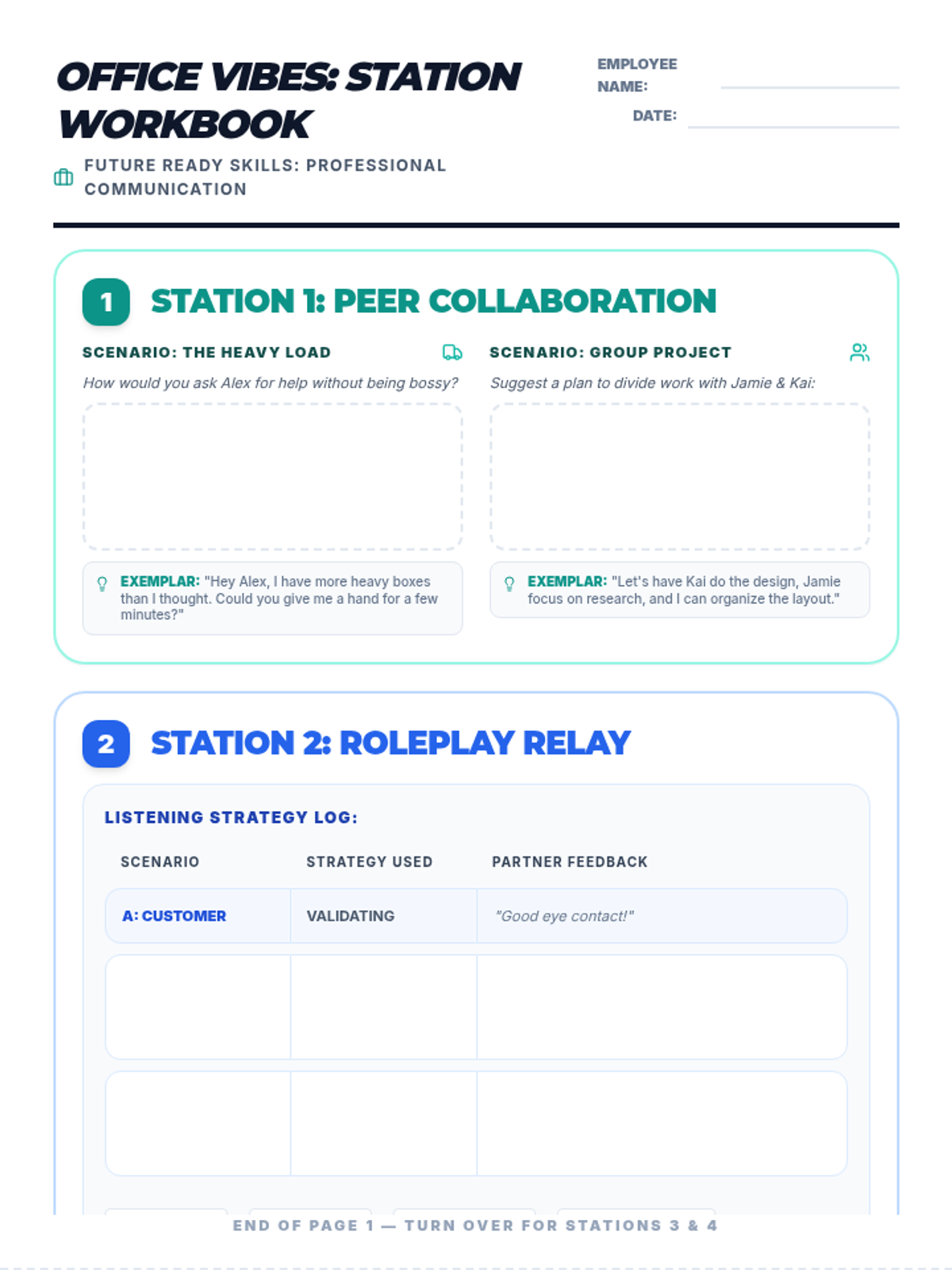
A series of lessons designed to prepare students for the transition to the workforce by developing critical soft skills, digital literacy, and professional communication strategies.
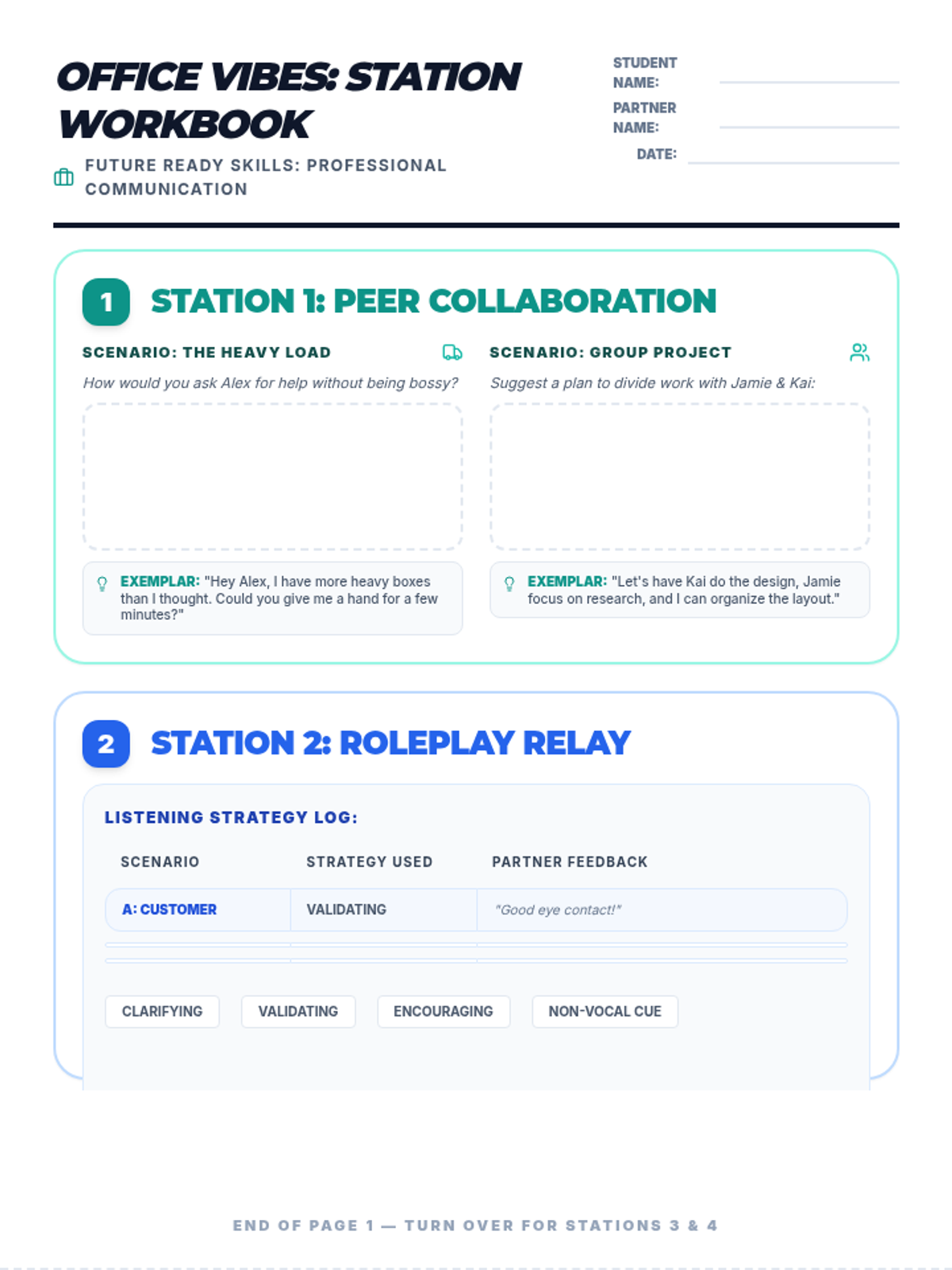
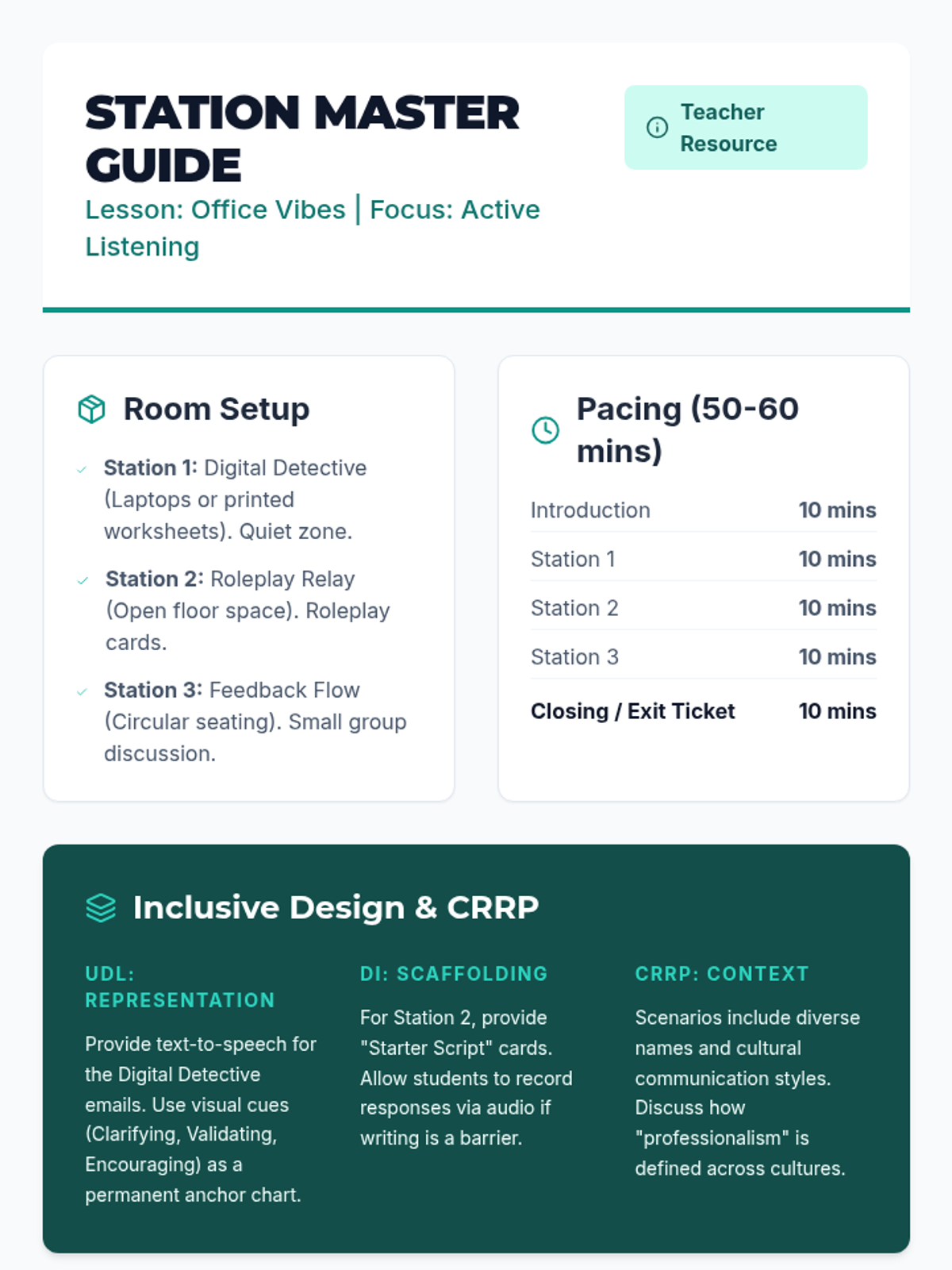
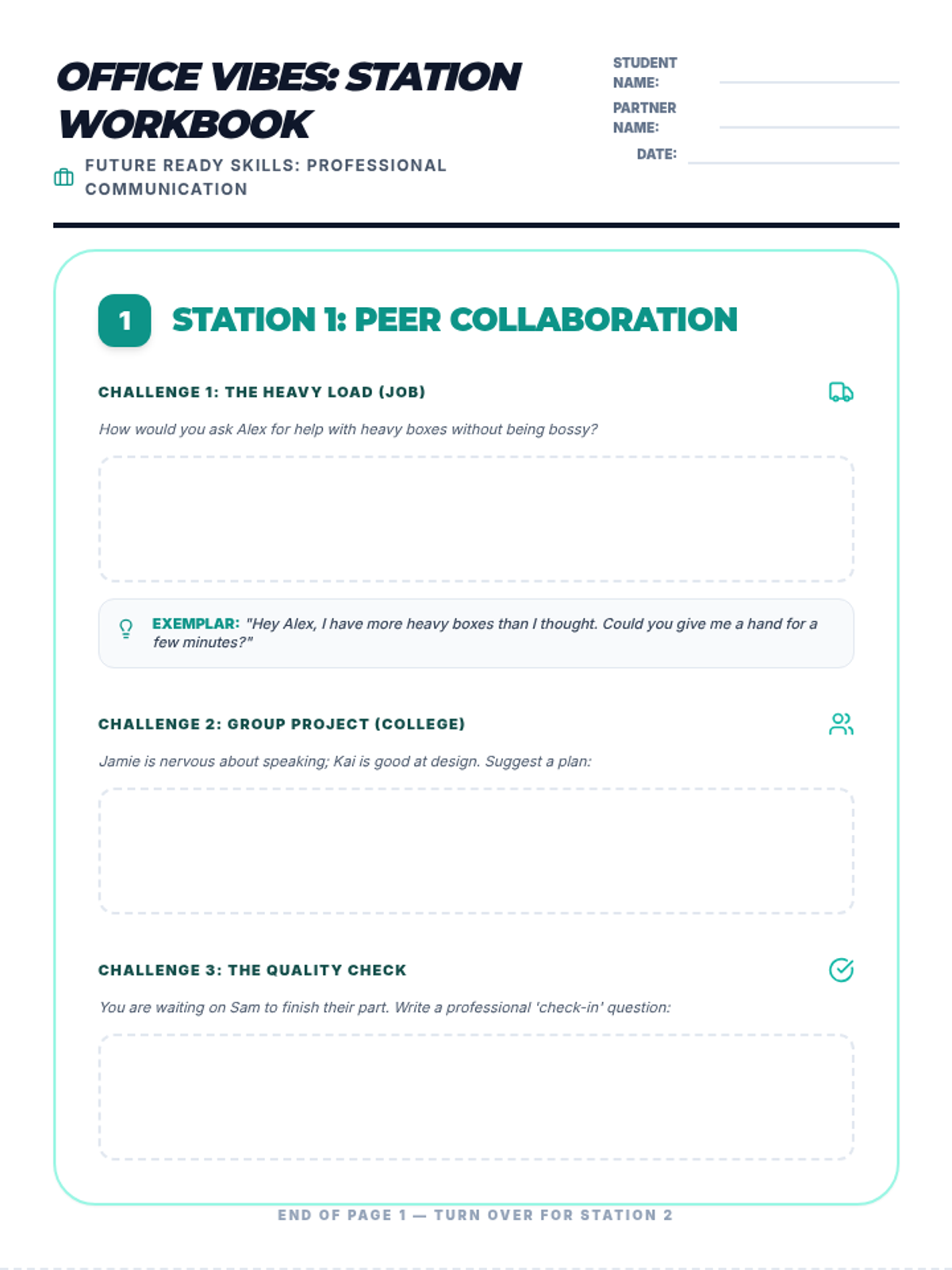
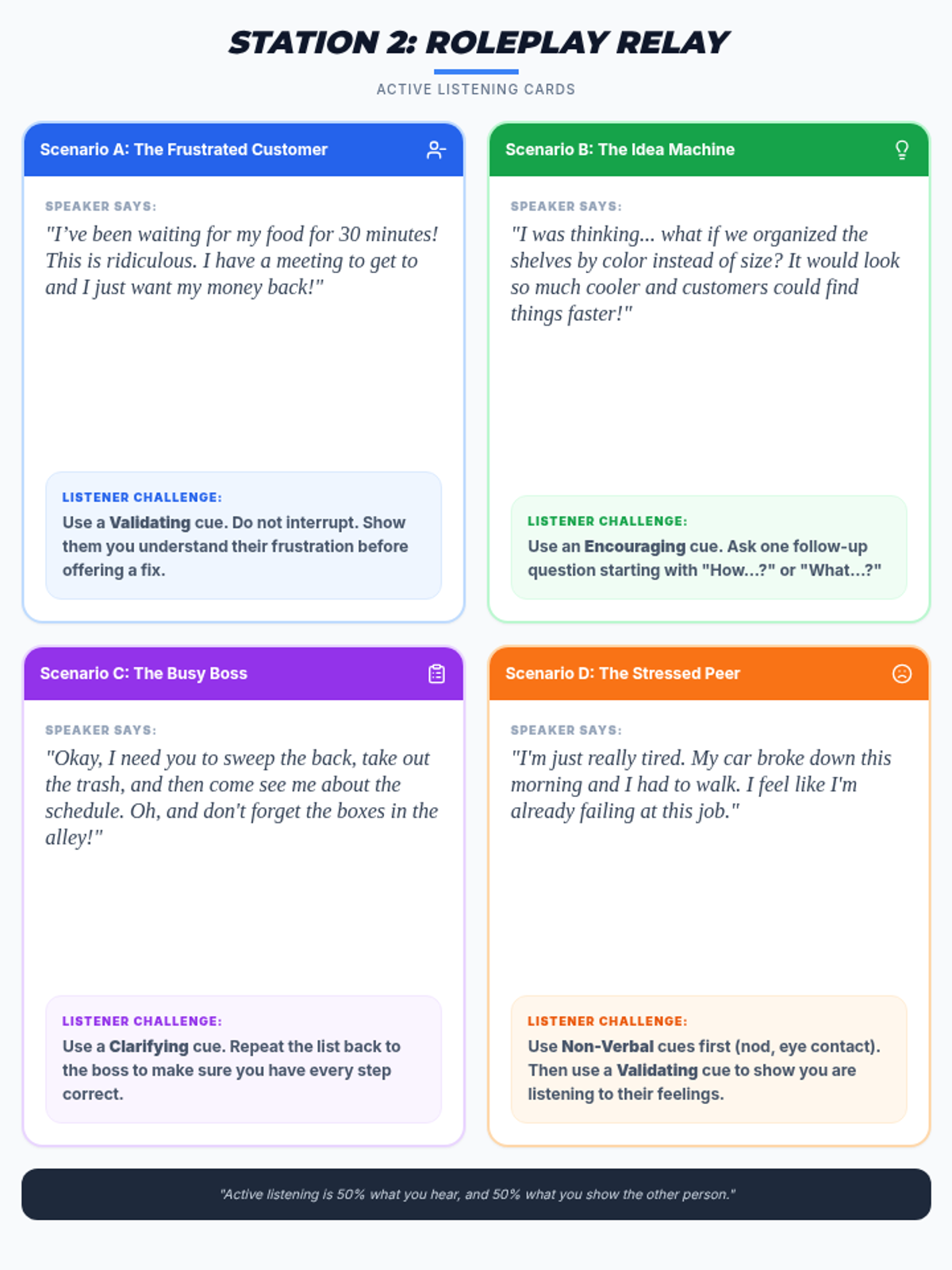
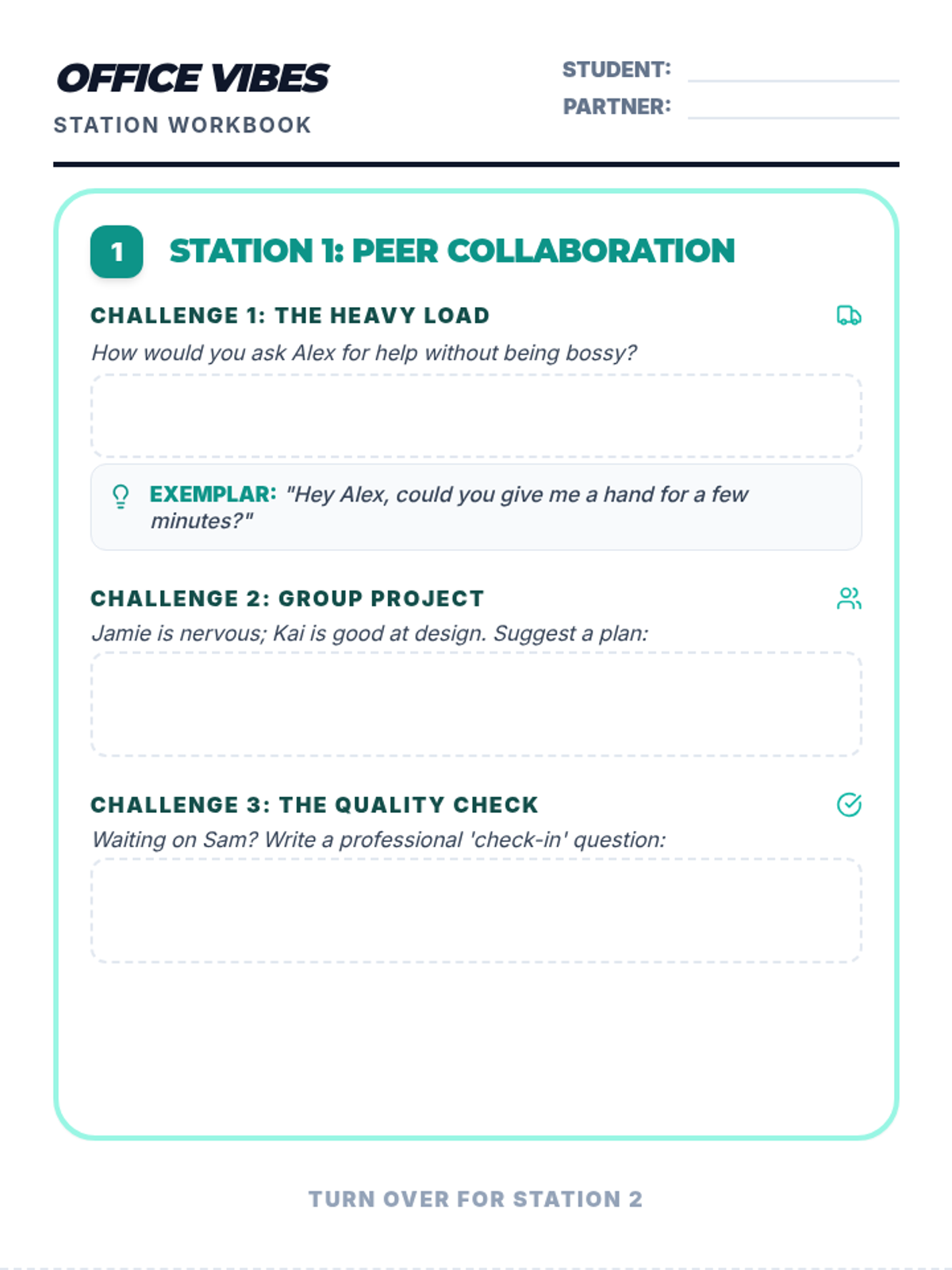
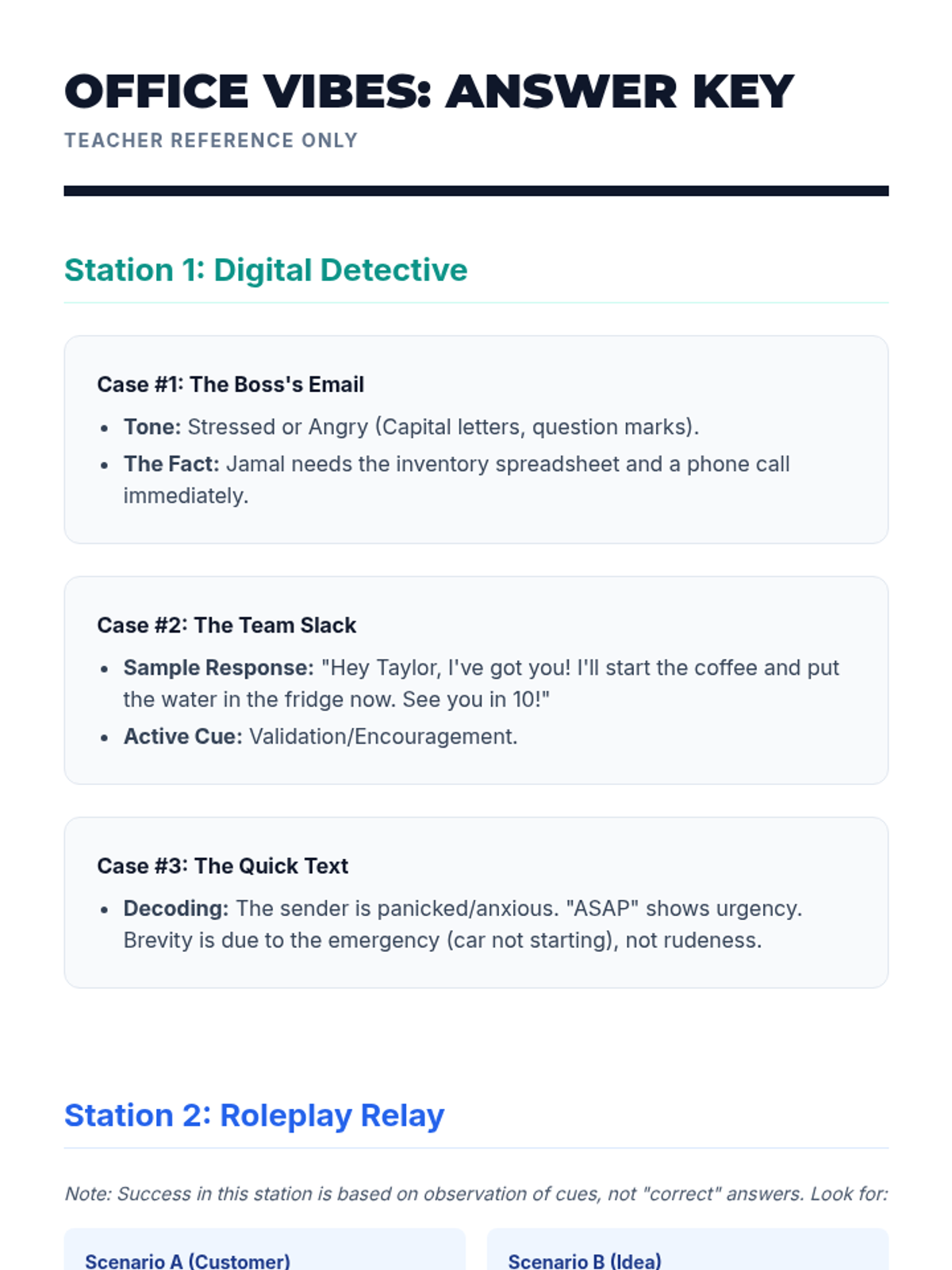
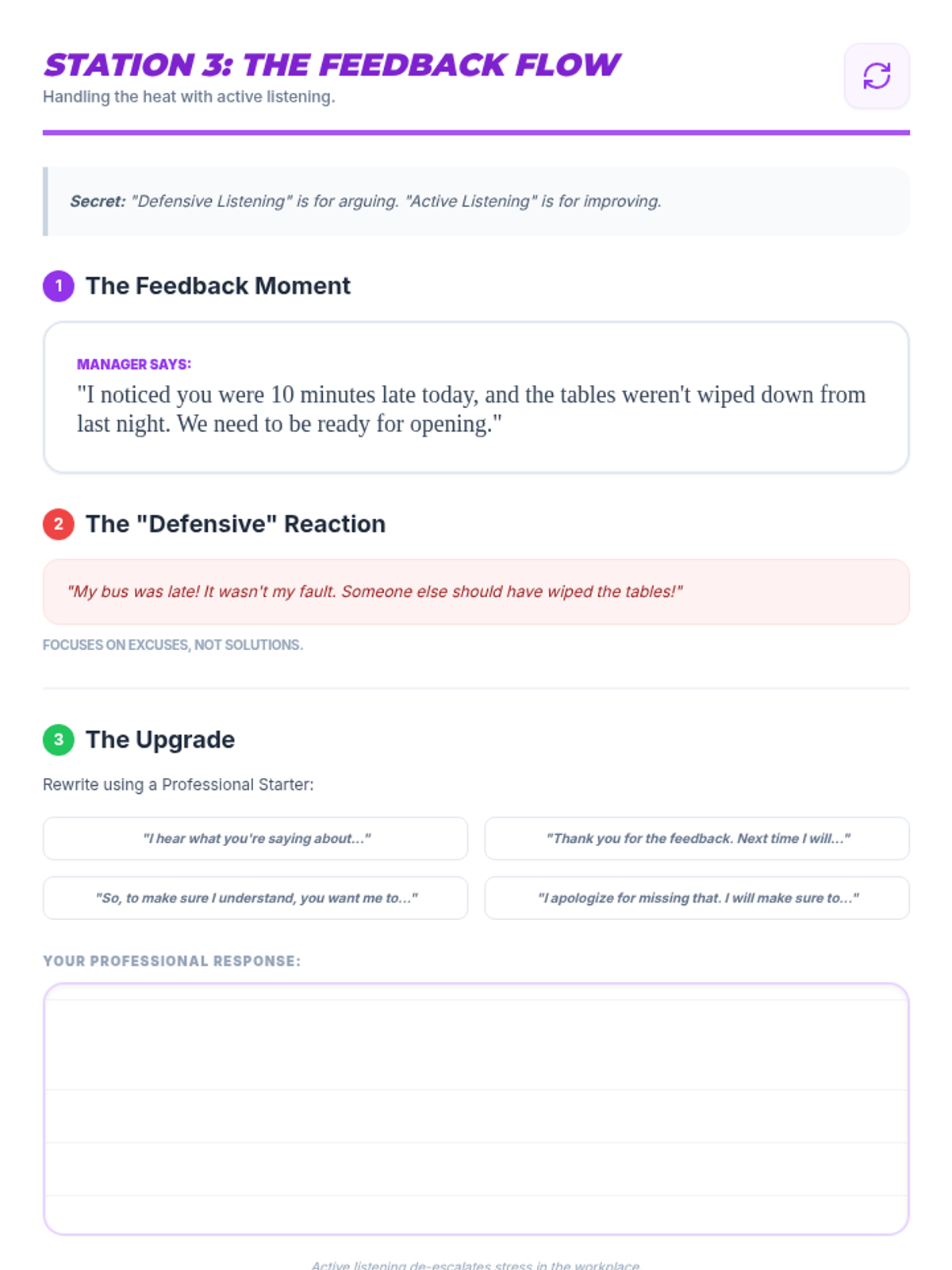
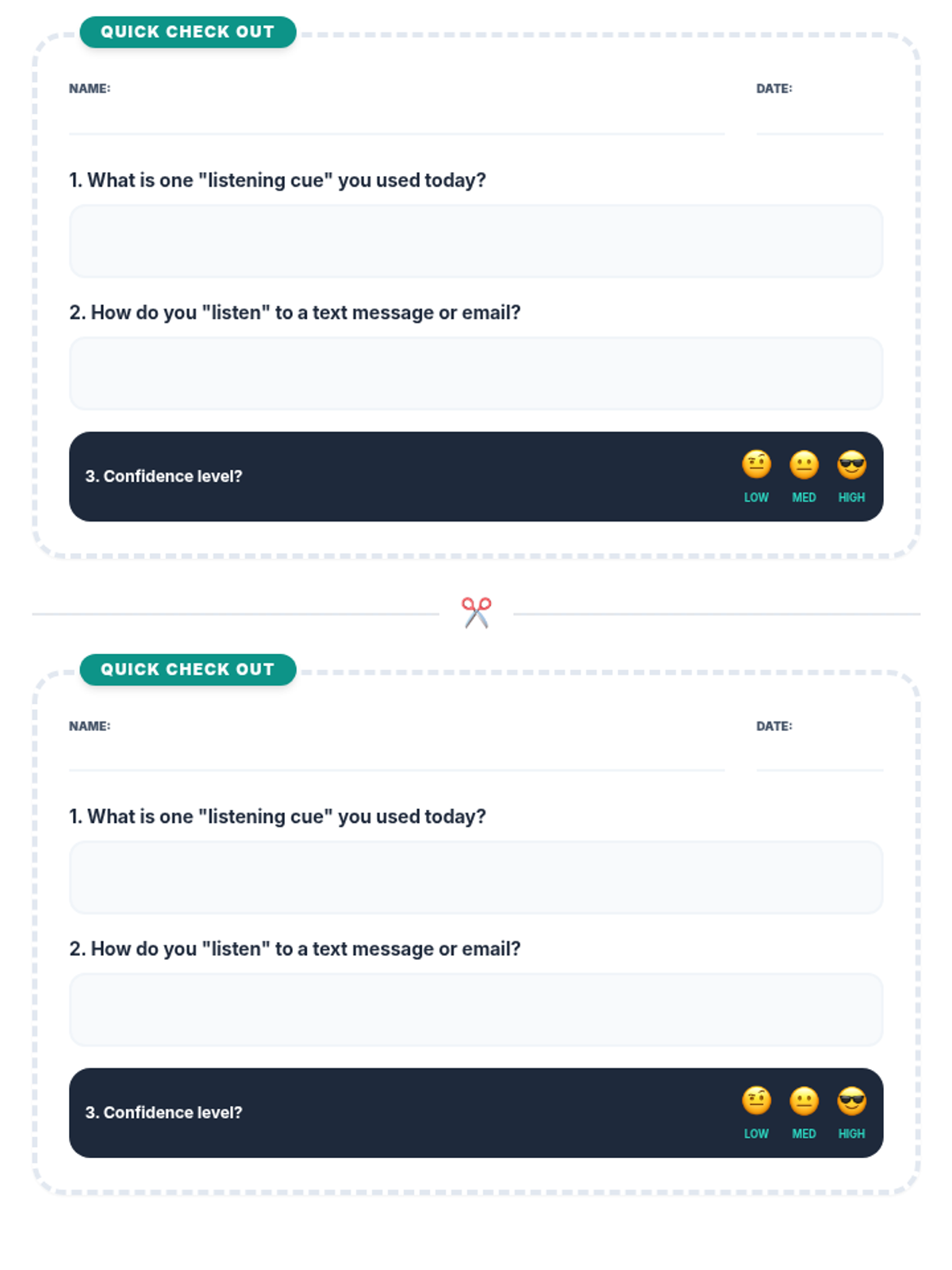
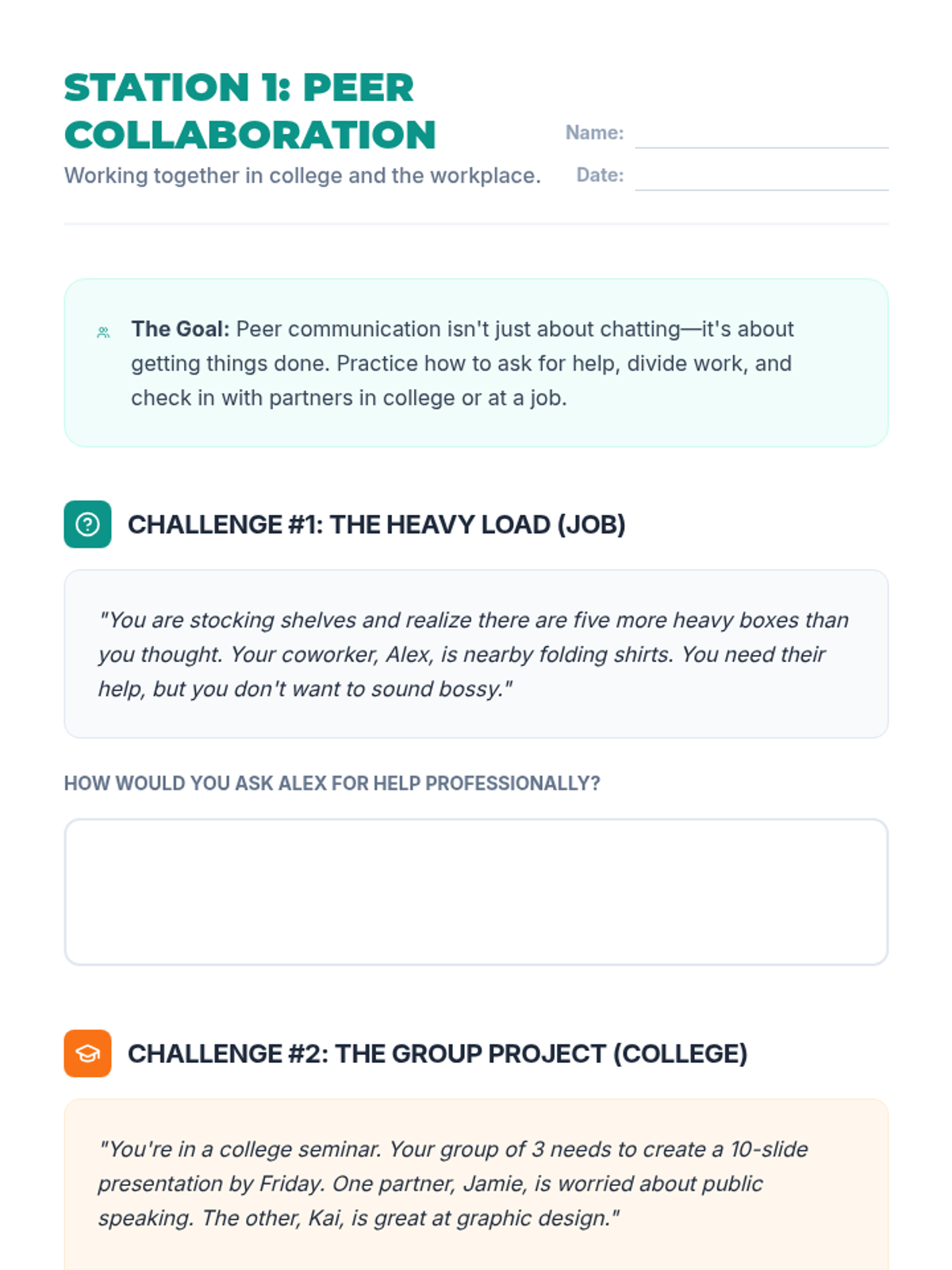
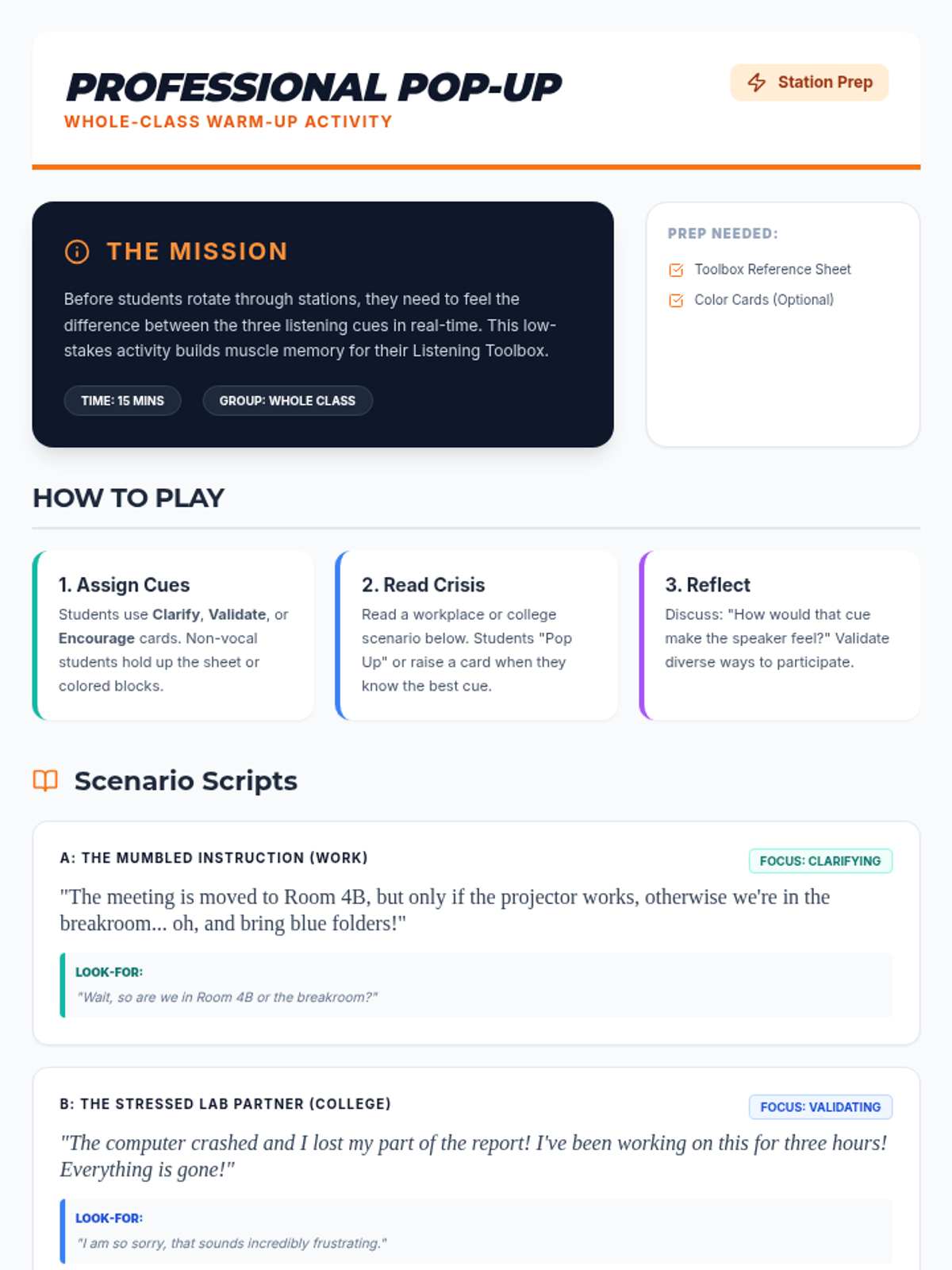
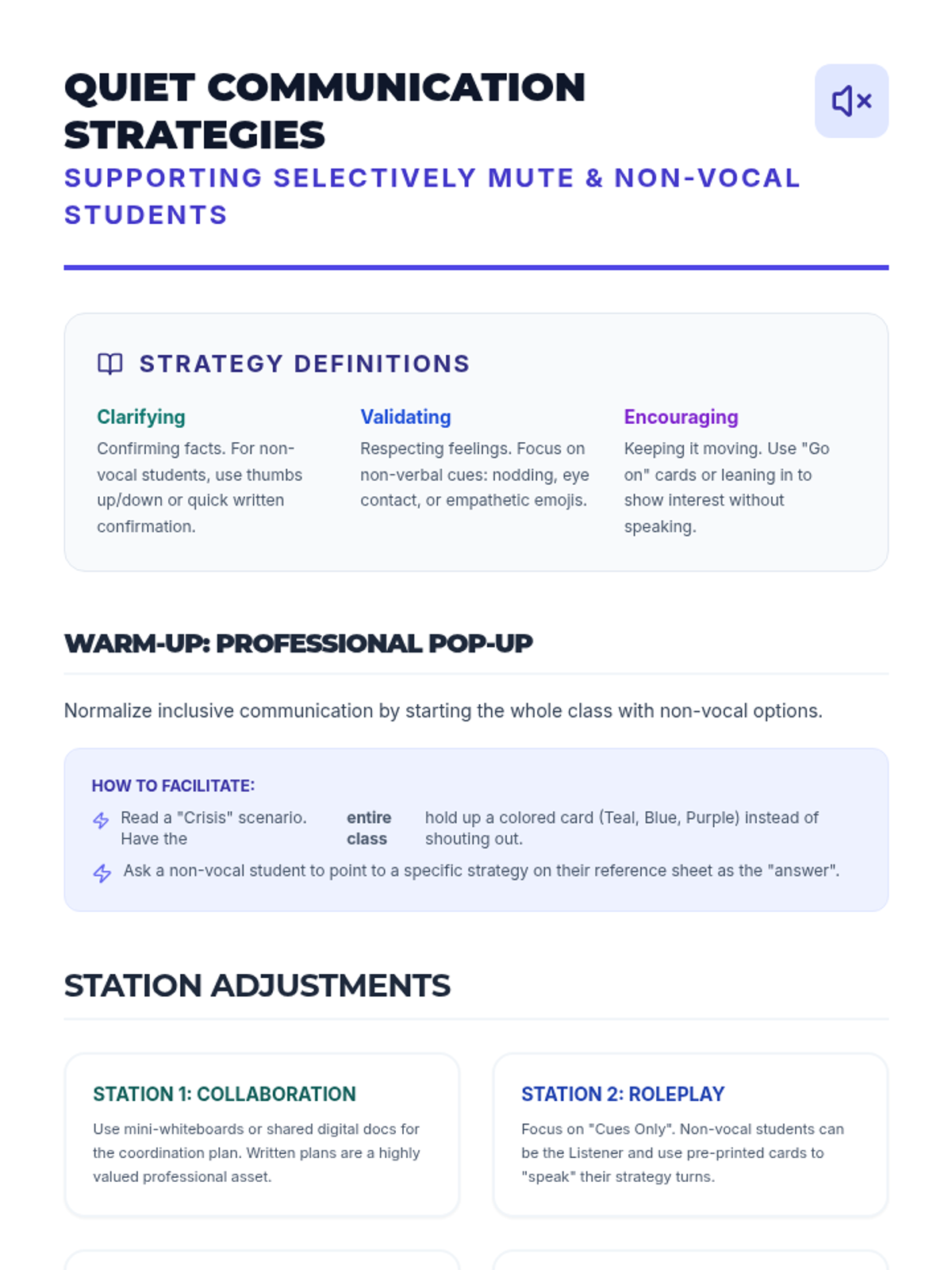
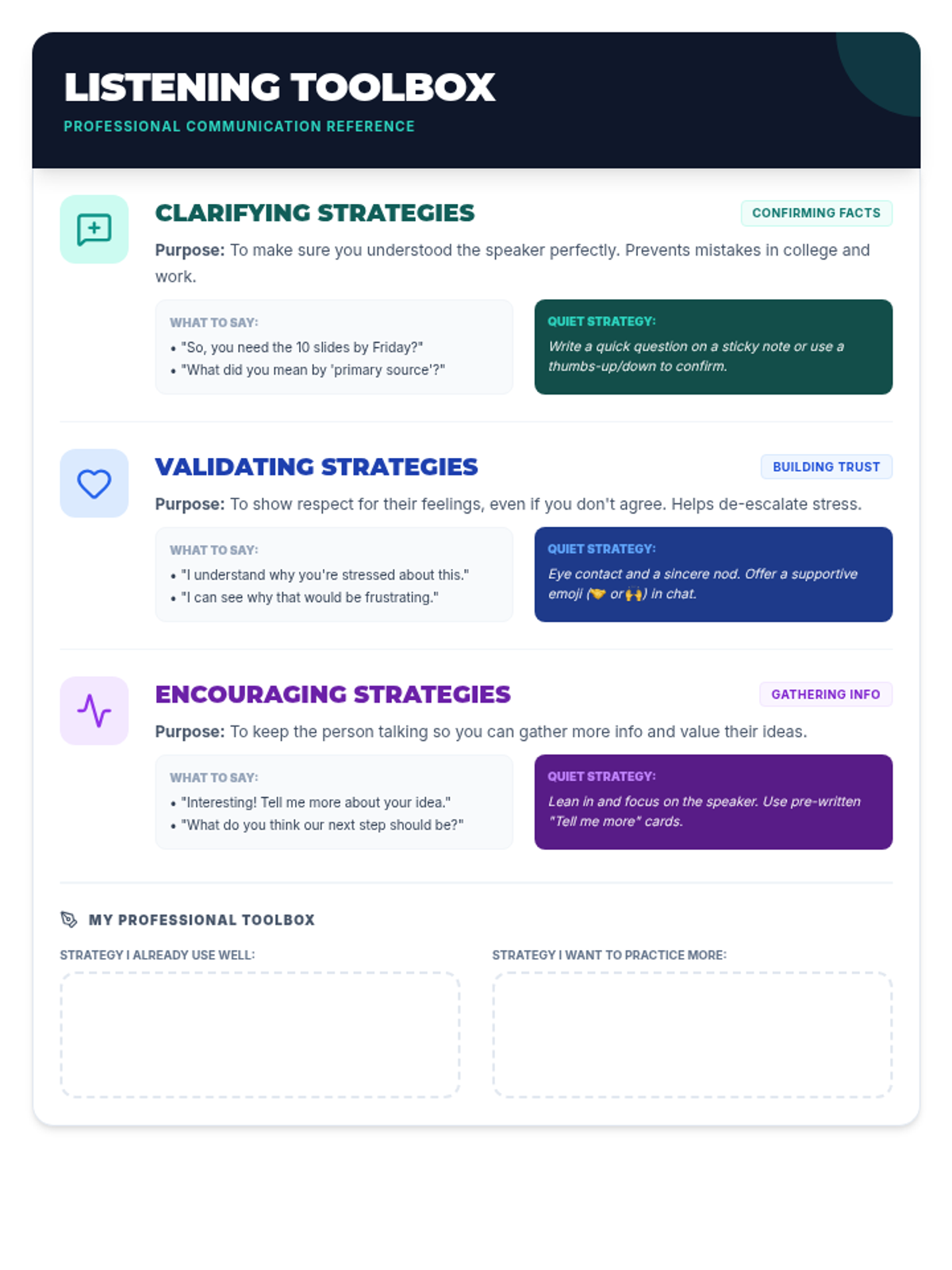
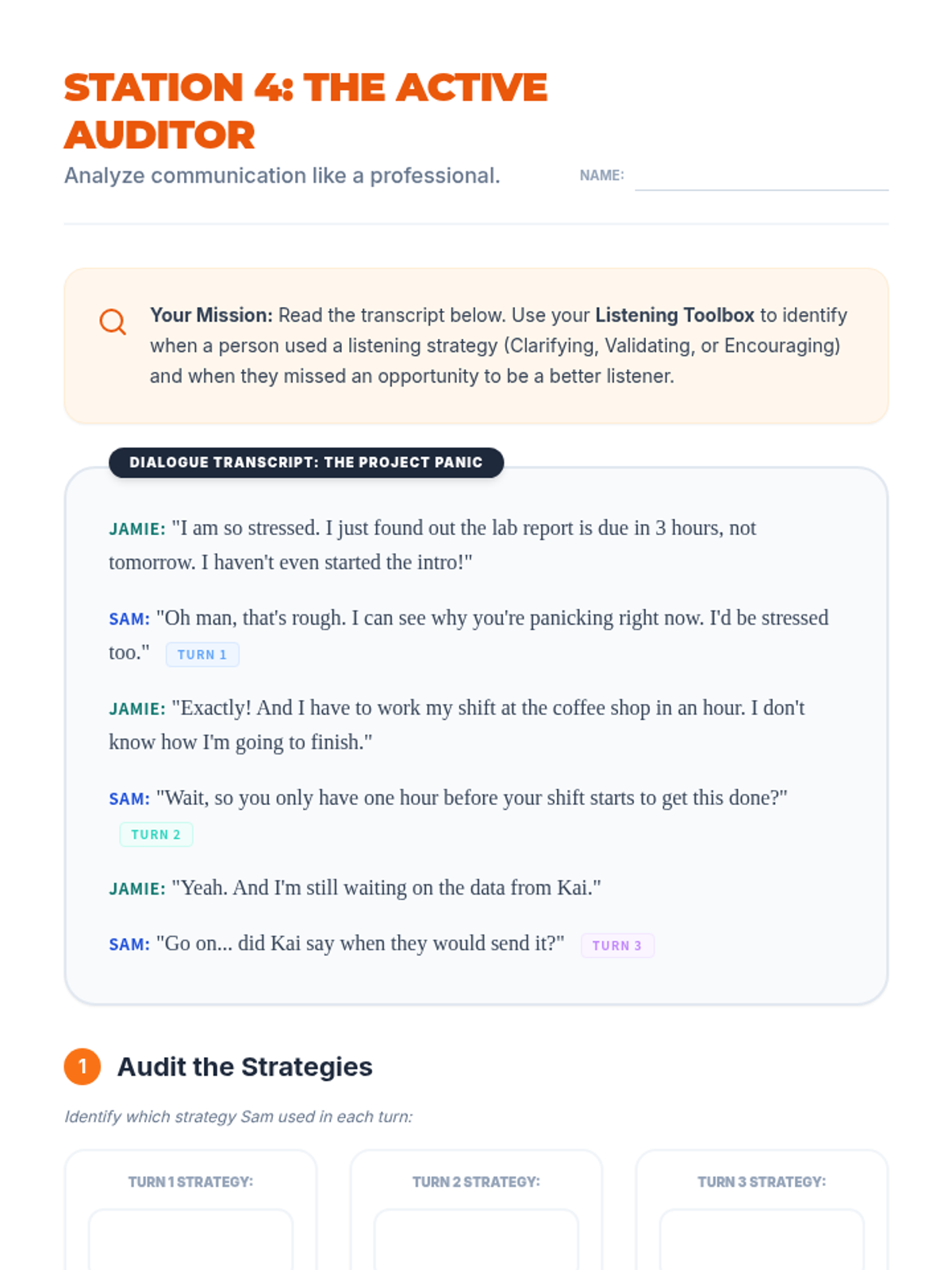
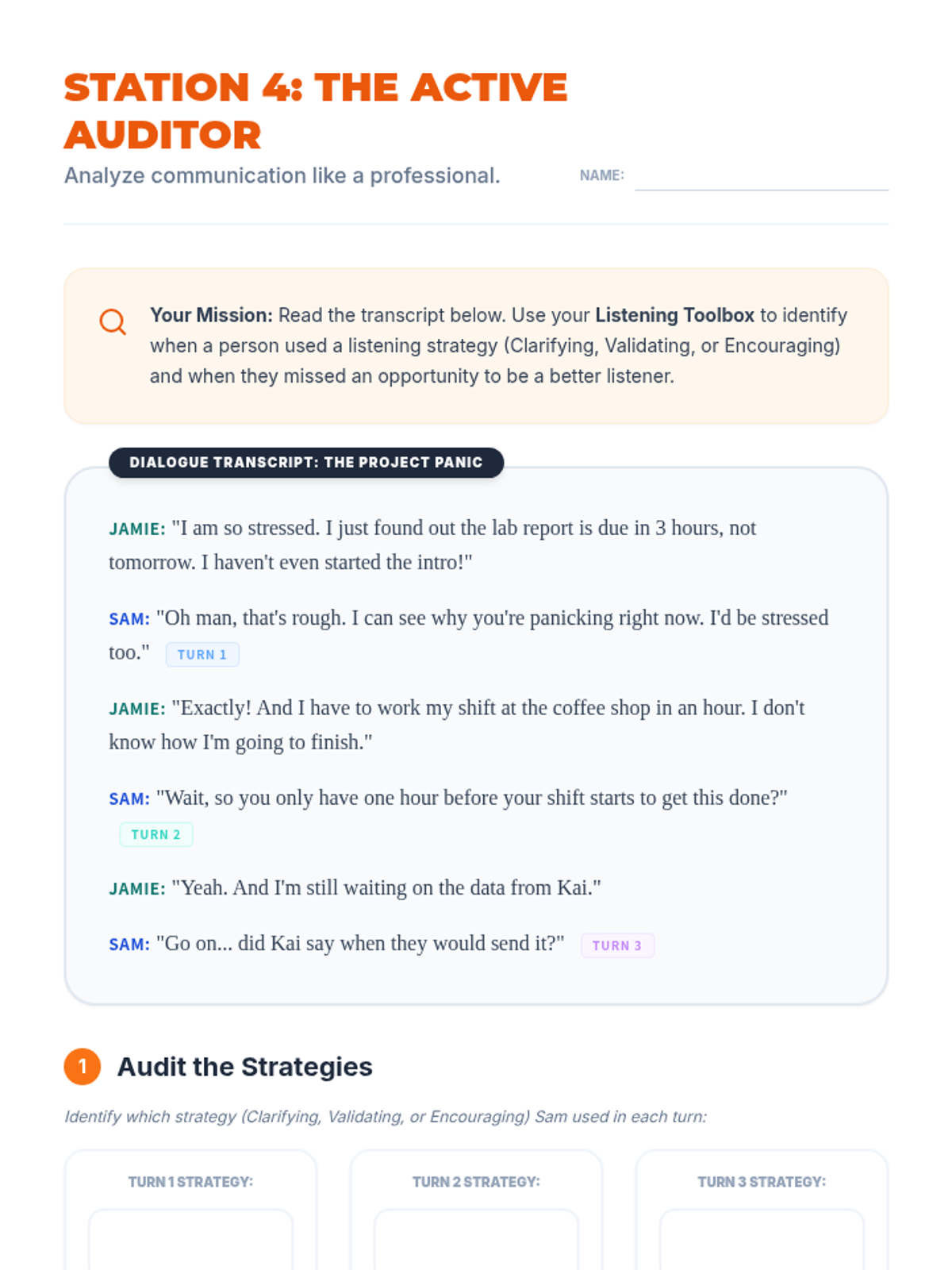
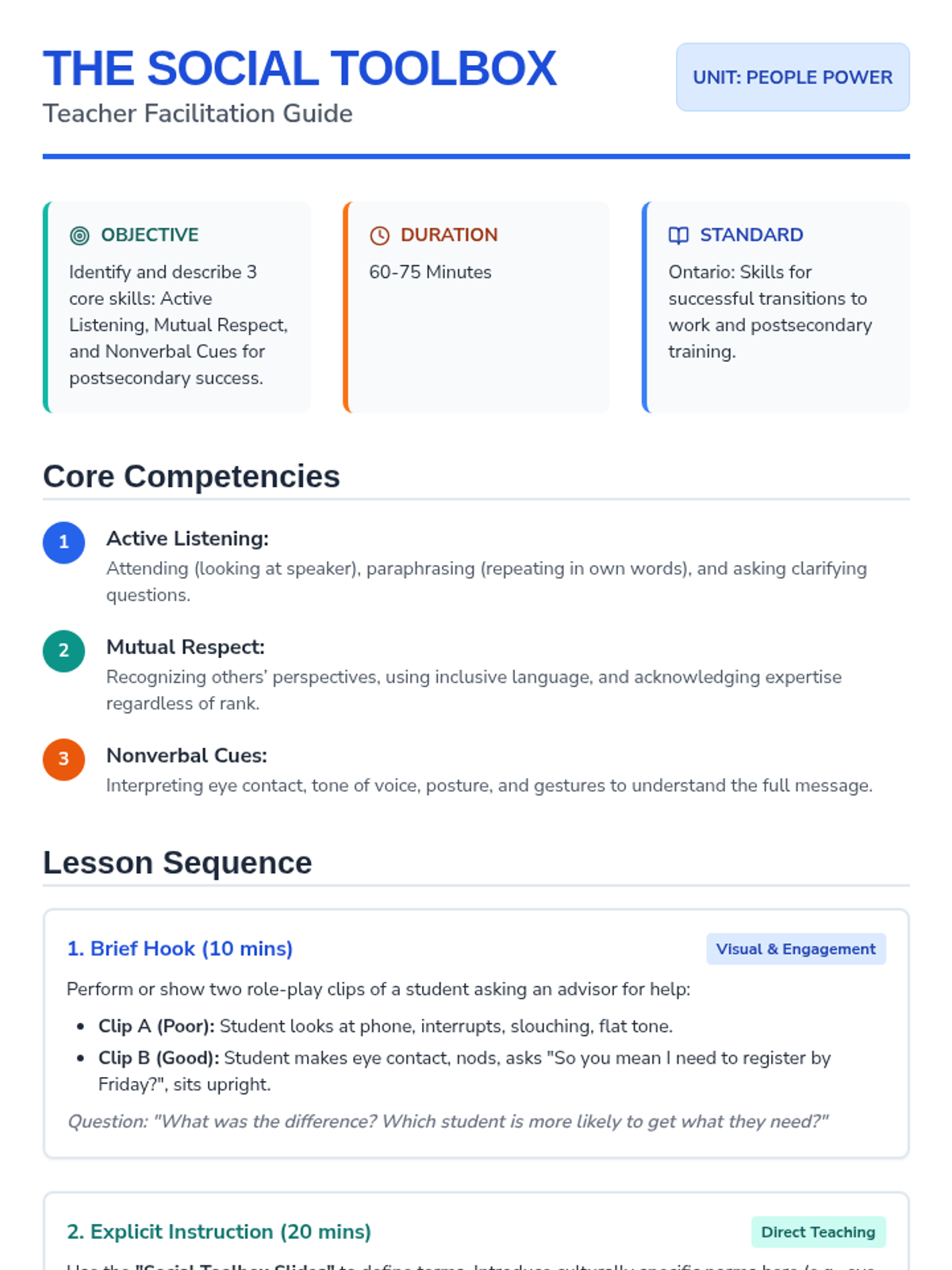
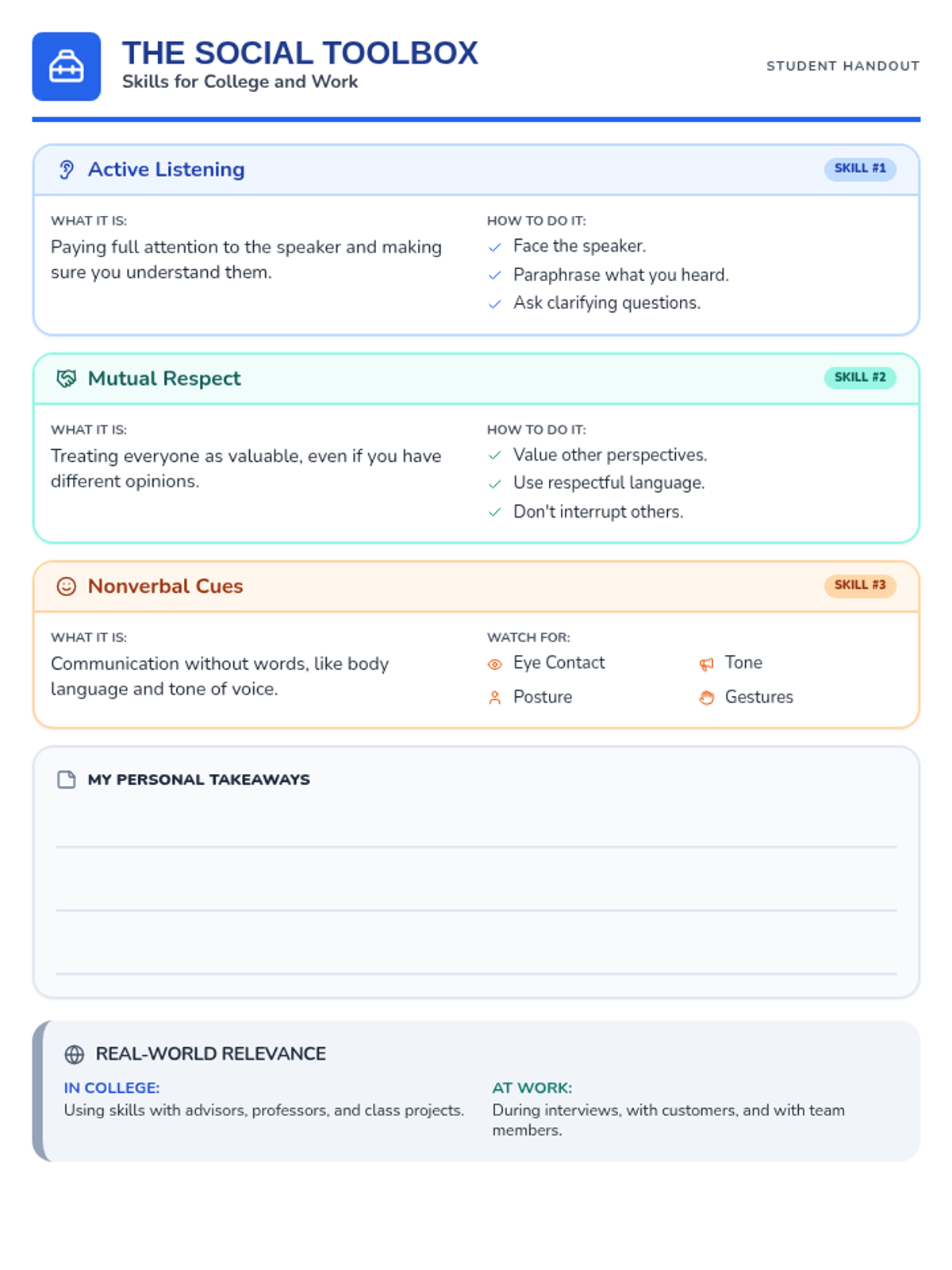
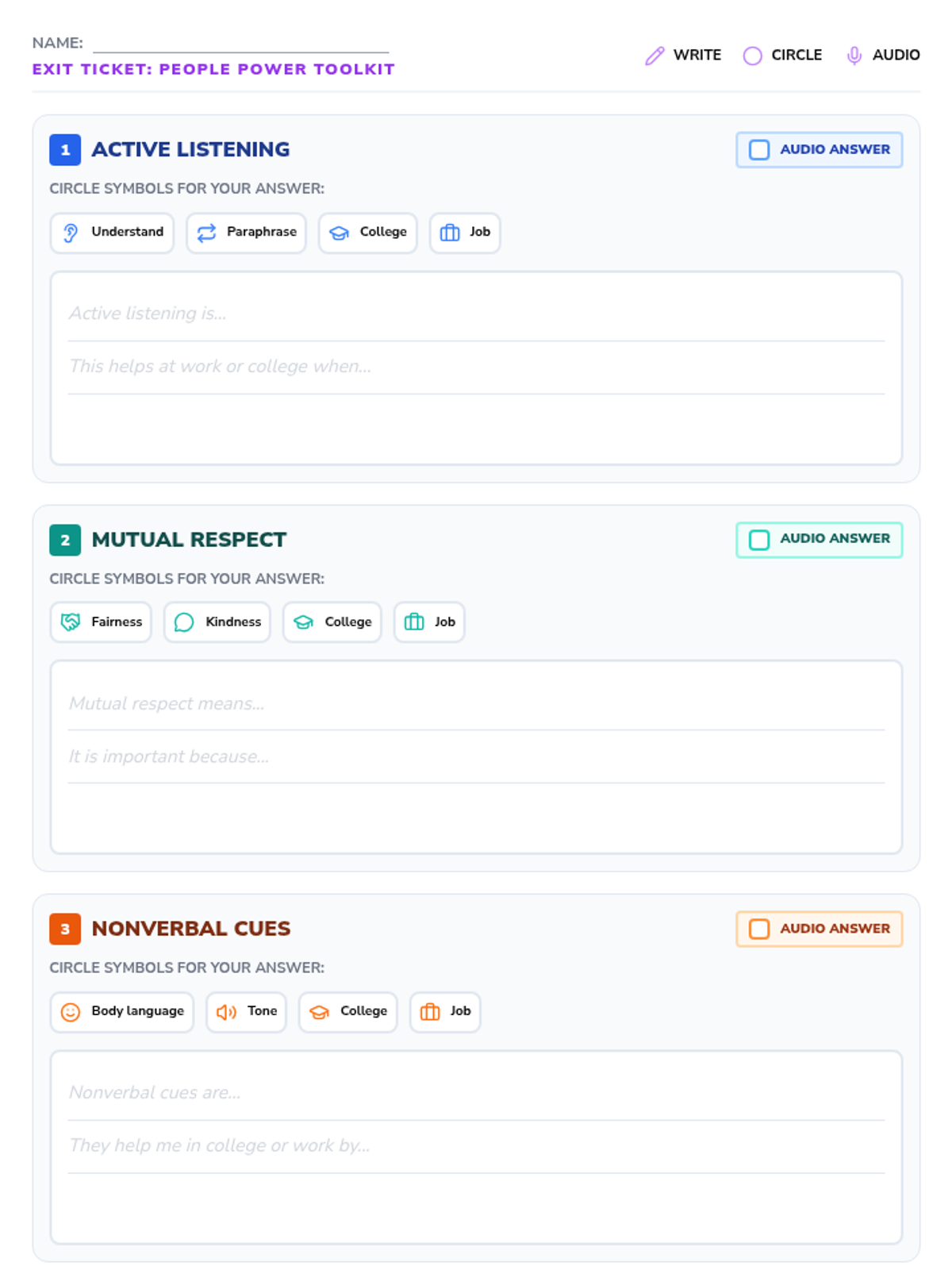
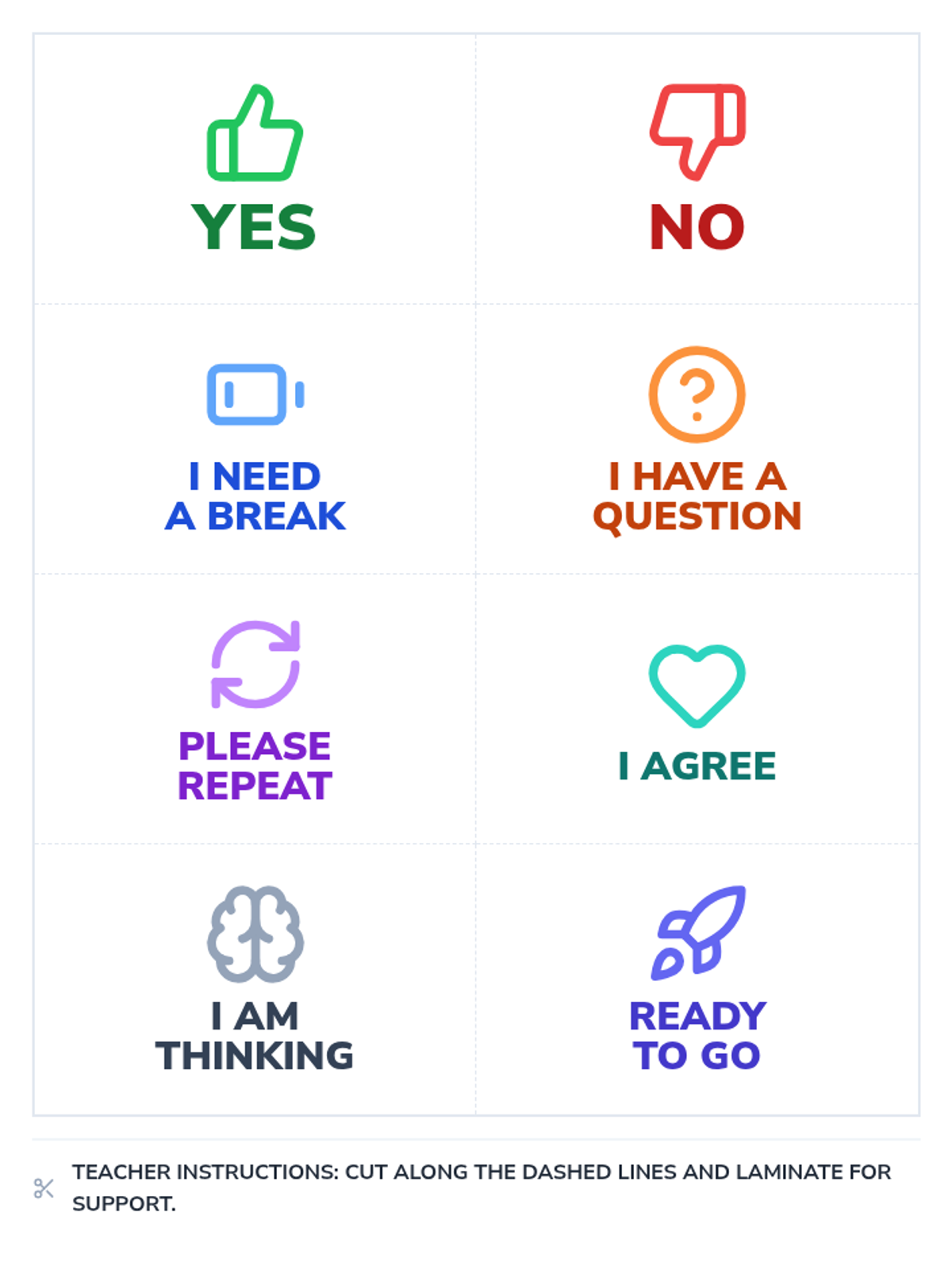
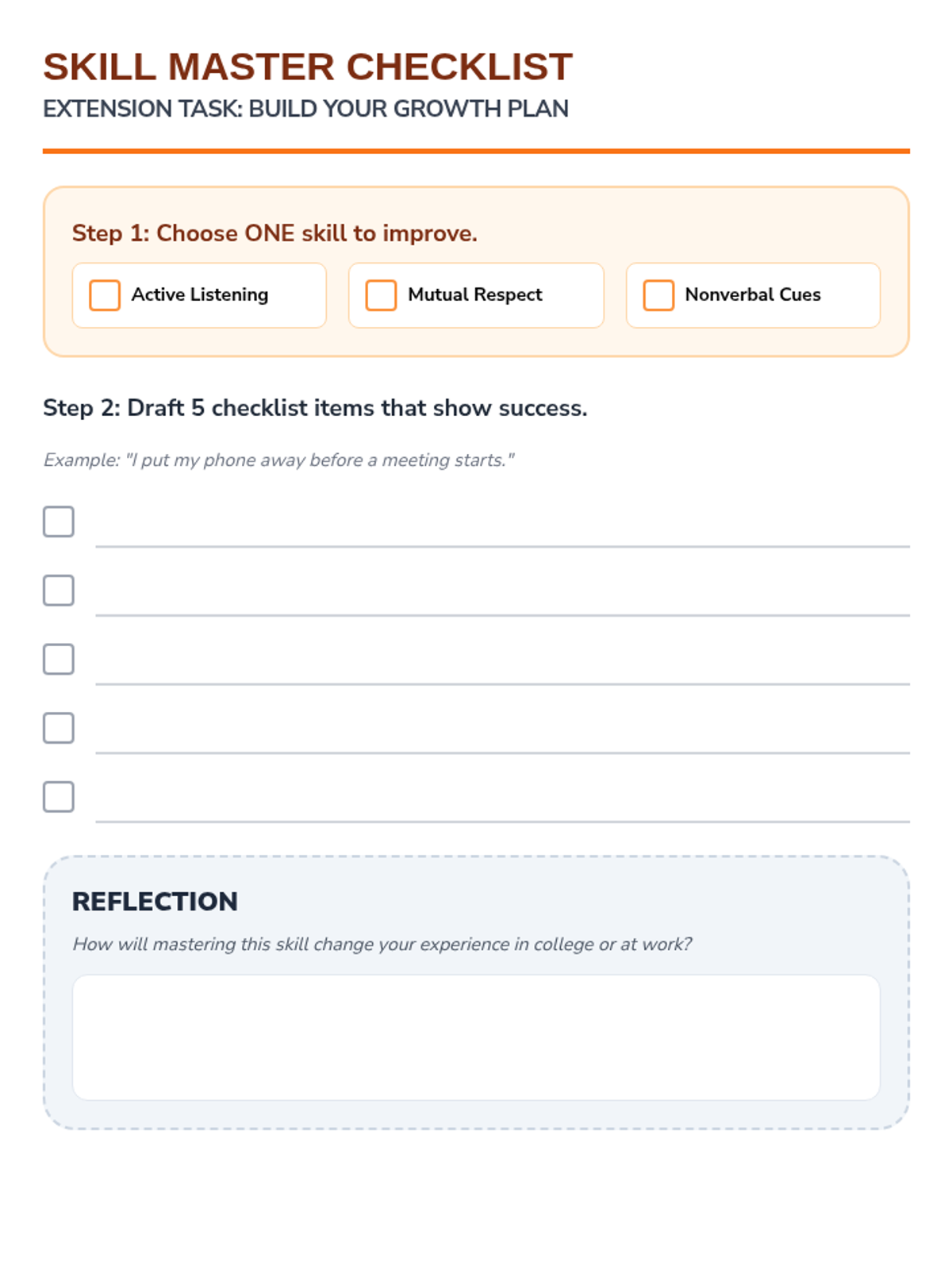
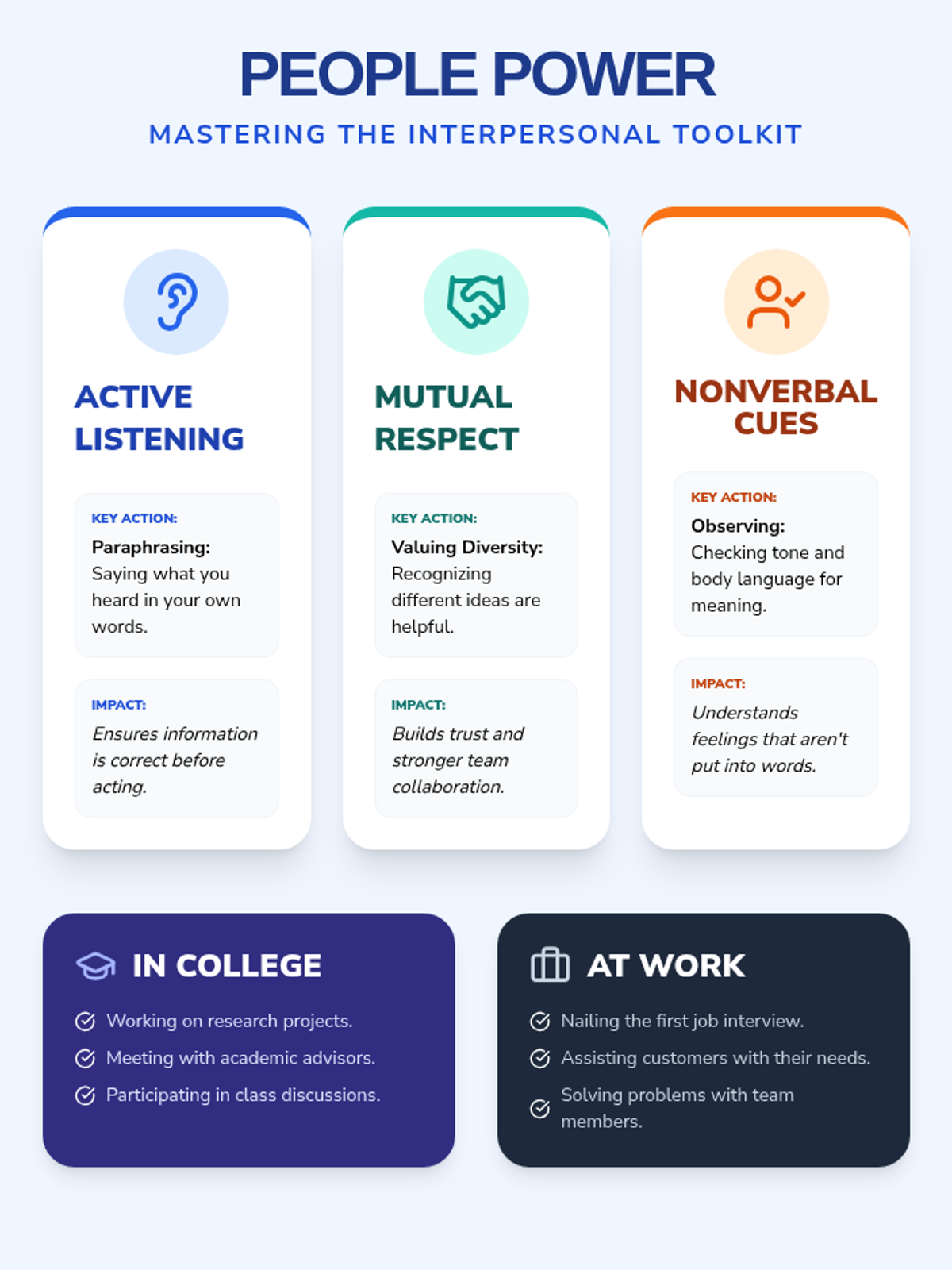
A comprehensive lesson sequence focused on developing core interpersonal skills (active listening, mutual respect, and nonverbal communication) to support student transitions to postsecondary education and the workplace. The materials incorporate Universal Design for Learning (UDL) and culturally responsive practices to ensure accessibility for all learners.
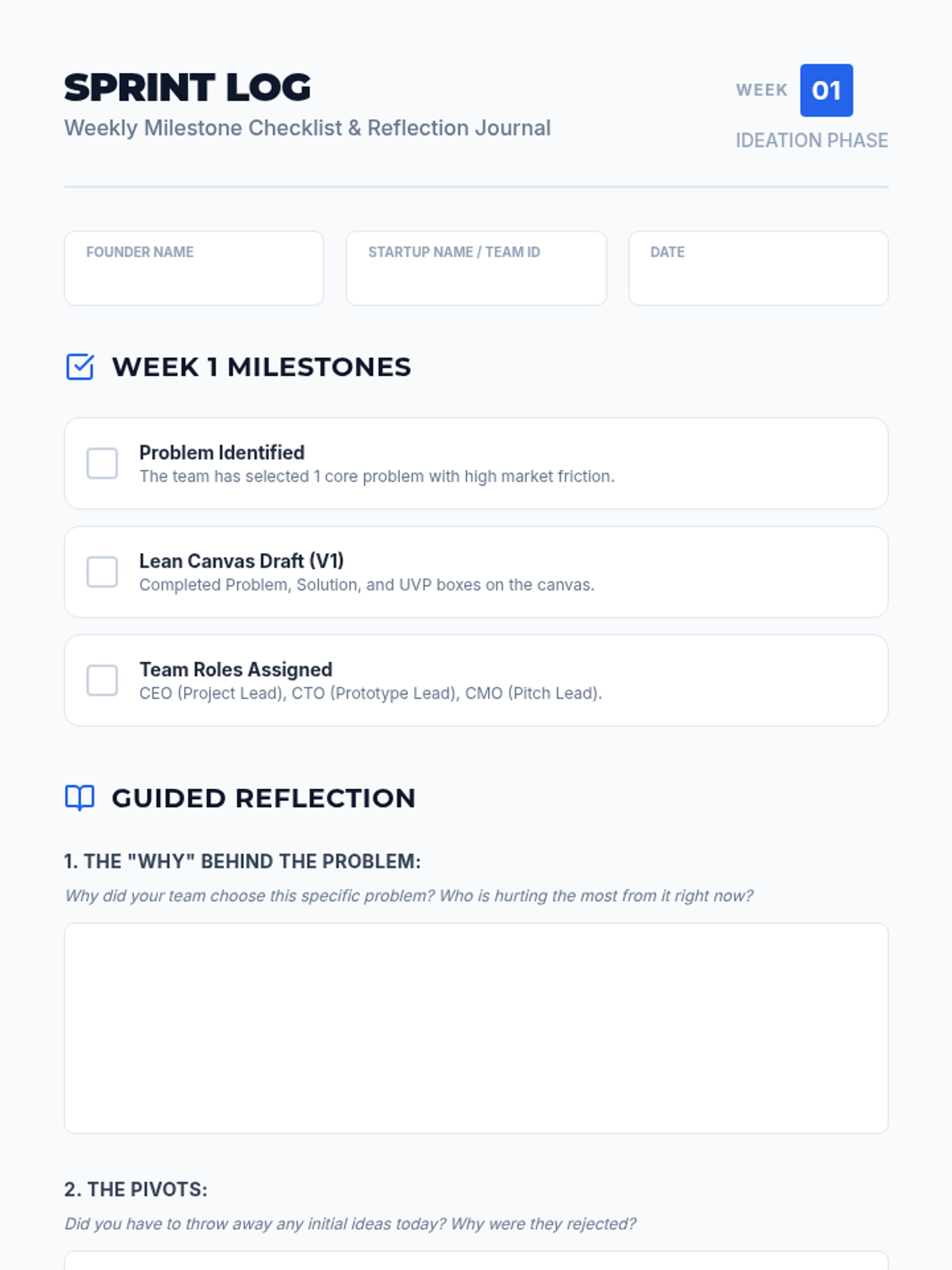
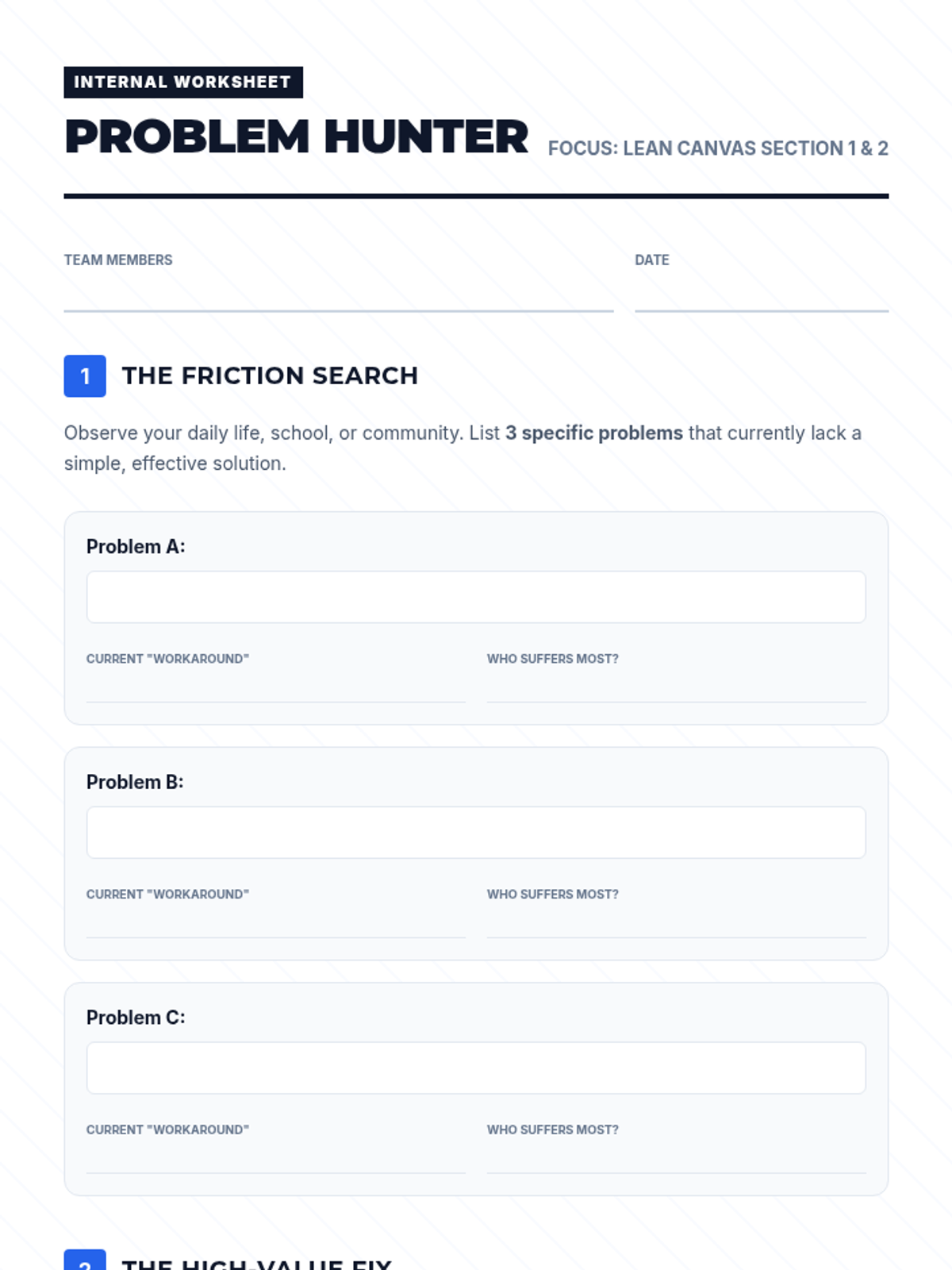
A comprehensive 4-week entrepreneurship project where high school CTE students use the Lean Business Canvas to develop a startup concept, build a tangible prototype, and deliver a professional pitch. Includes weekly reflection journals, milestone checklists, and peer feedback cycles.
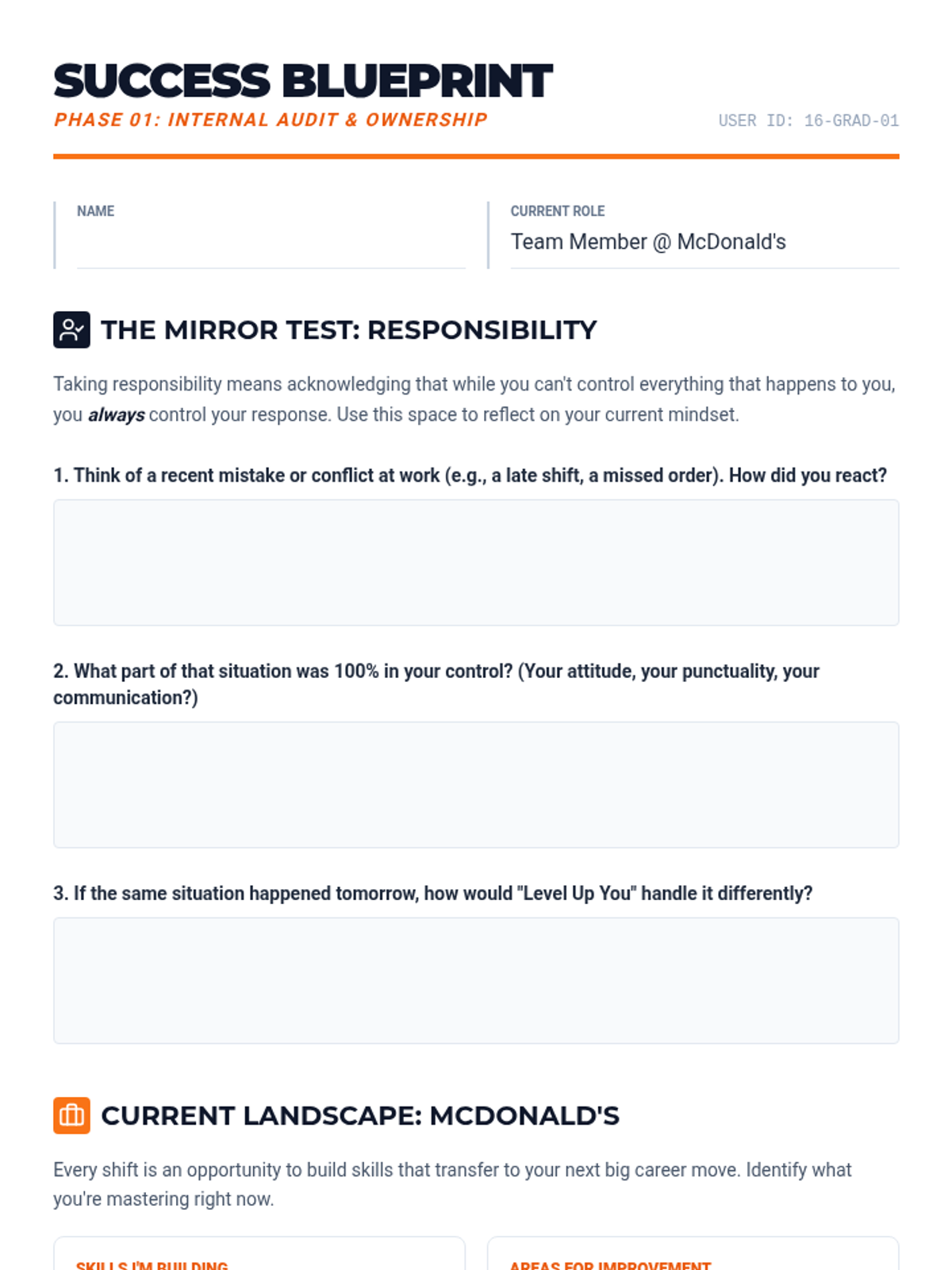
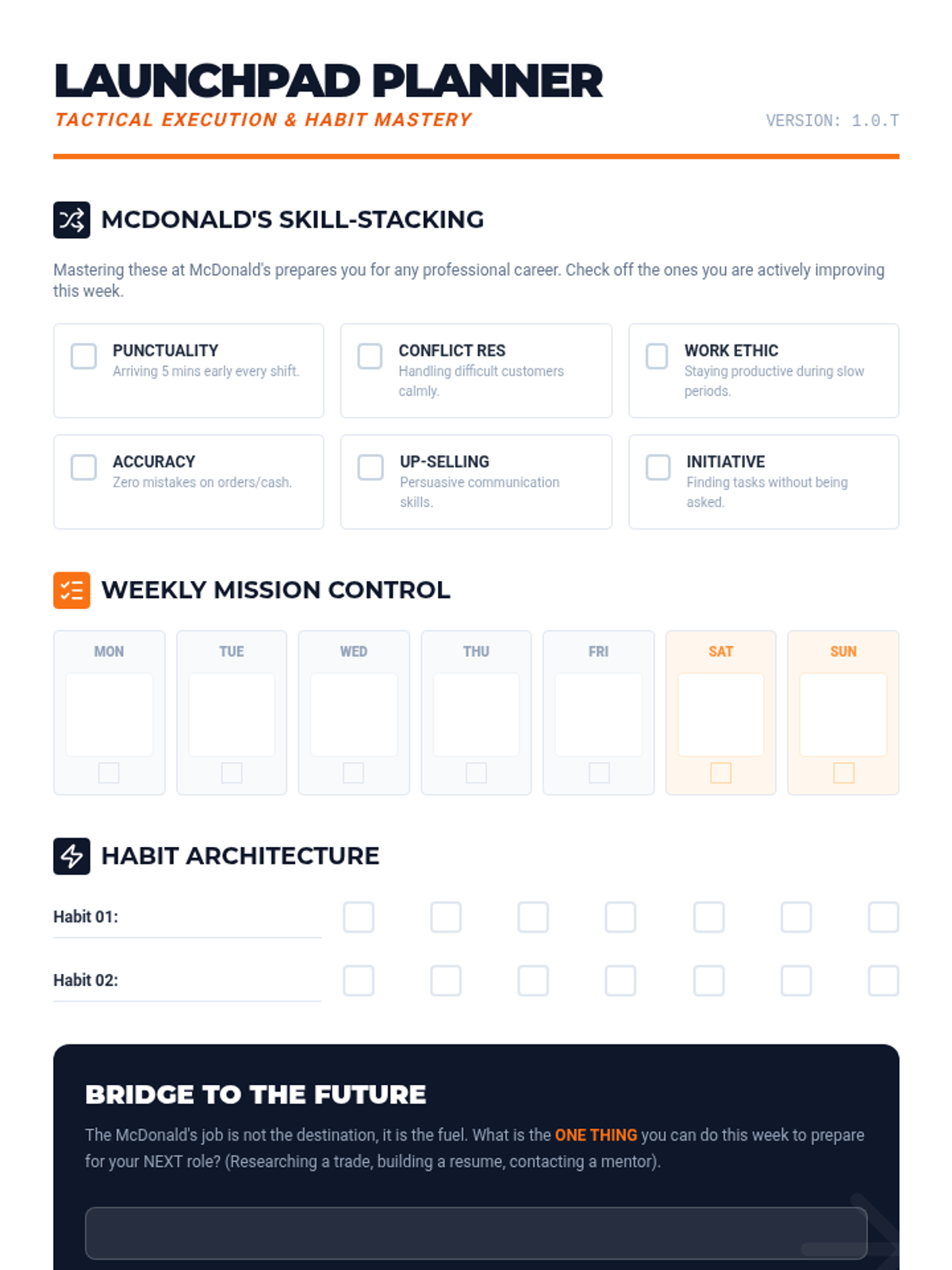
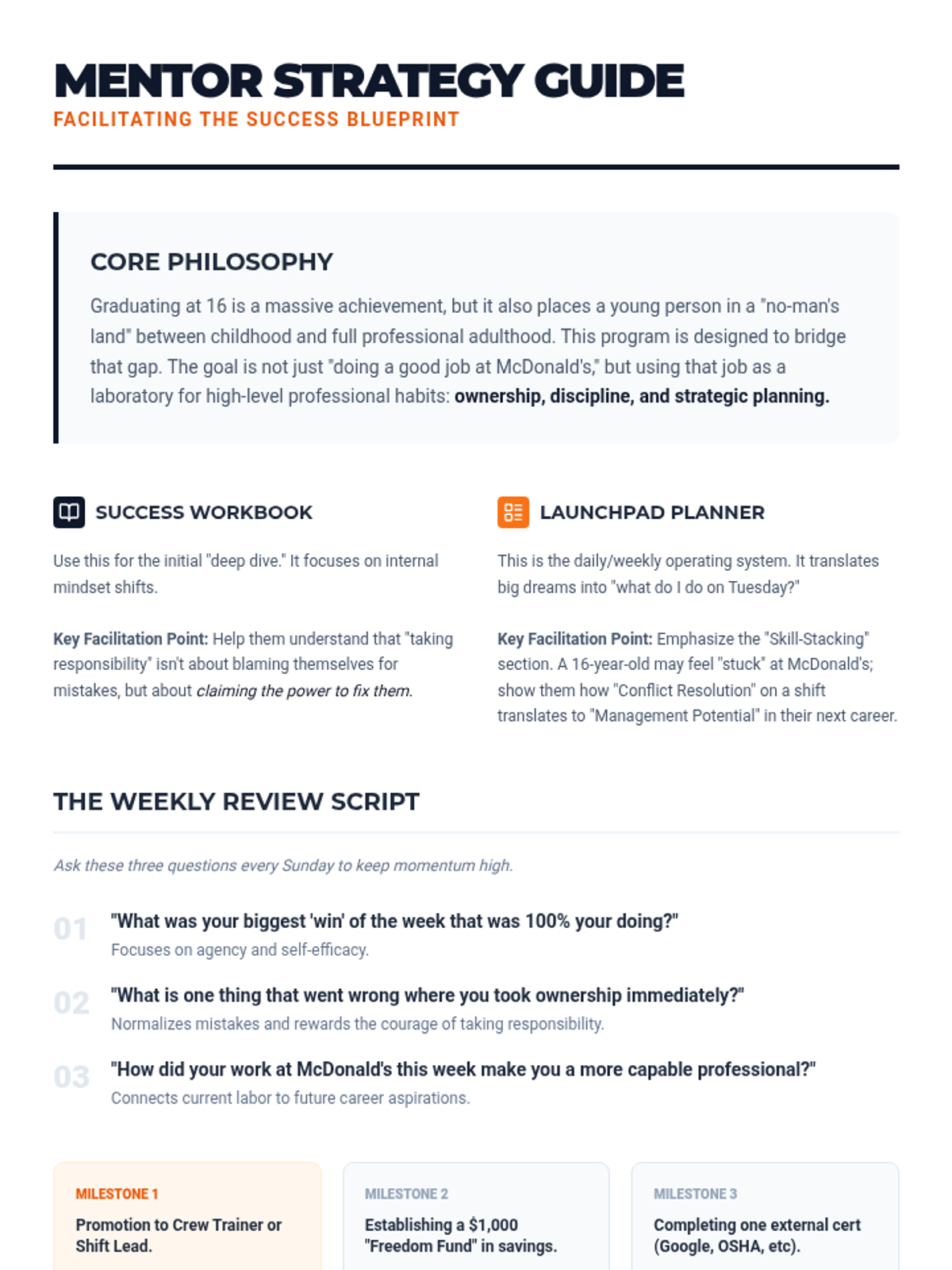
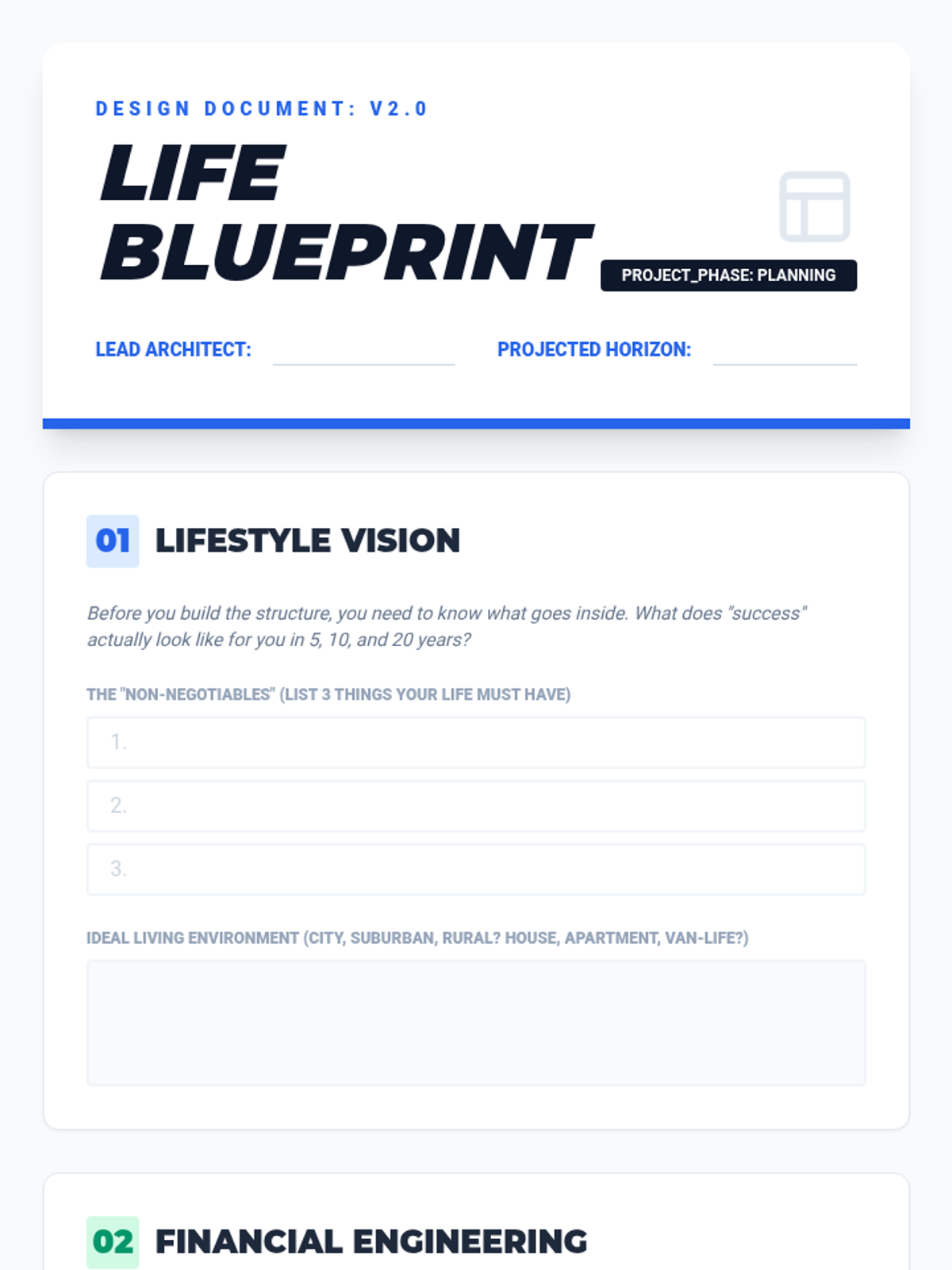
A comprehensive personal development guide for a young graduate to take ownership of their life, master their current role, and bridge the gap to their future career through structured goal-setting and reflection.
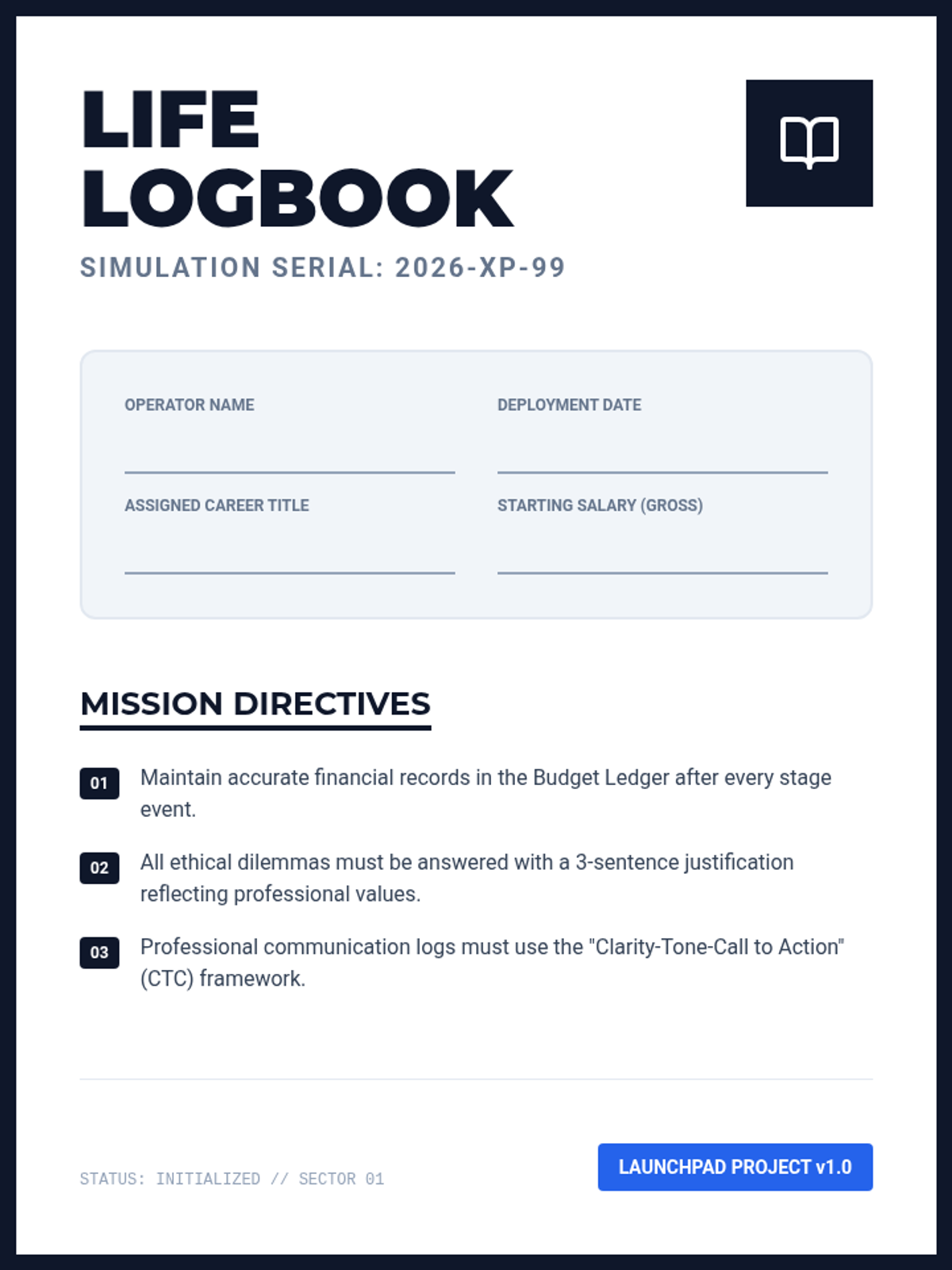
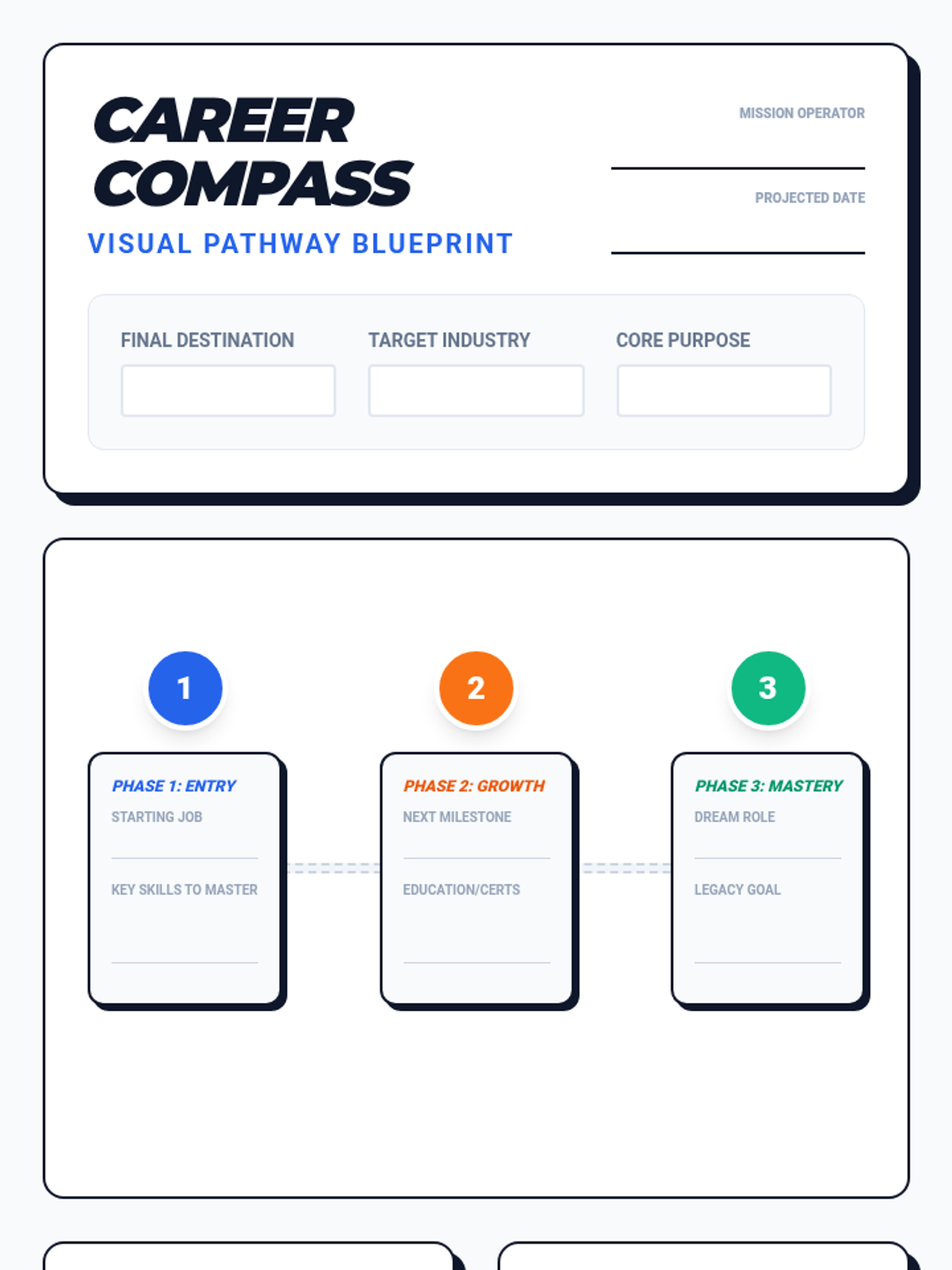
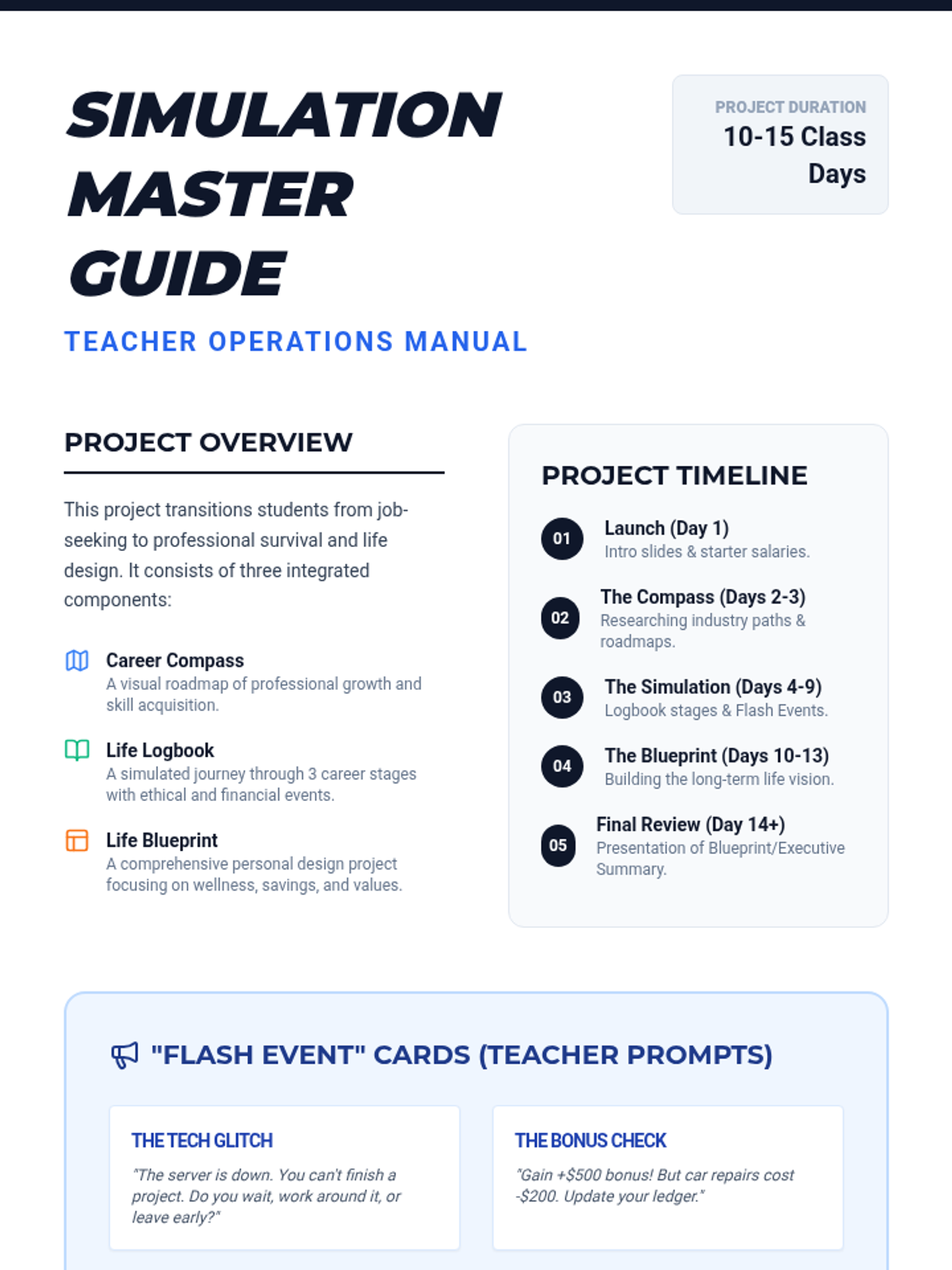
A series of lessons and projects designed to transition students from job-seeking skills to workplace success and independent living, focusing on professional ethics, communication, and long-term planning.
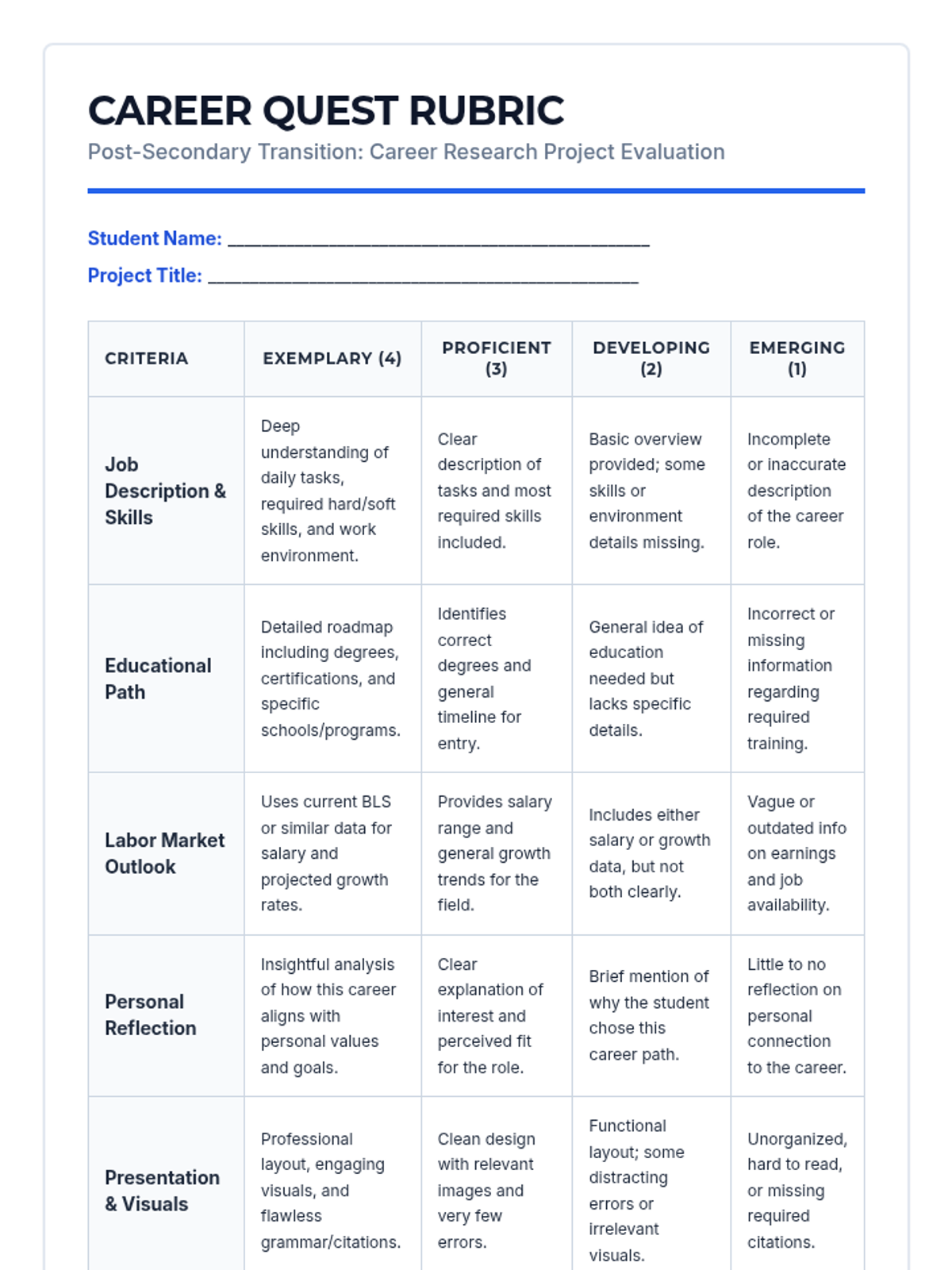
A comprehensive program designed to guide students through the essentials of career exploration, professional document preparation, and the job application process.
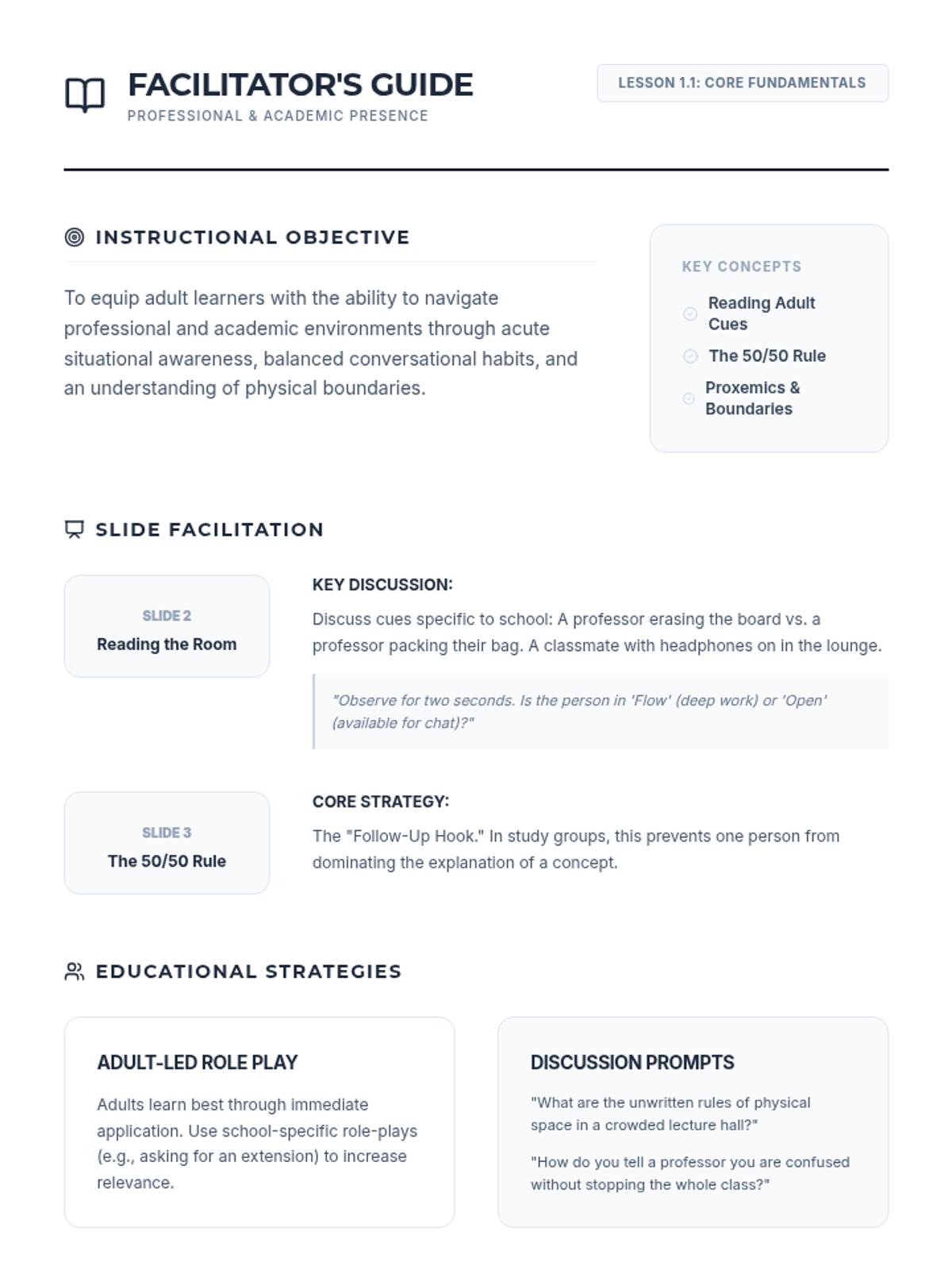
A series of lessons designed to enhance social and professional communication skills for adult learners, focusing on workplace and community interactions.
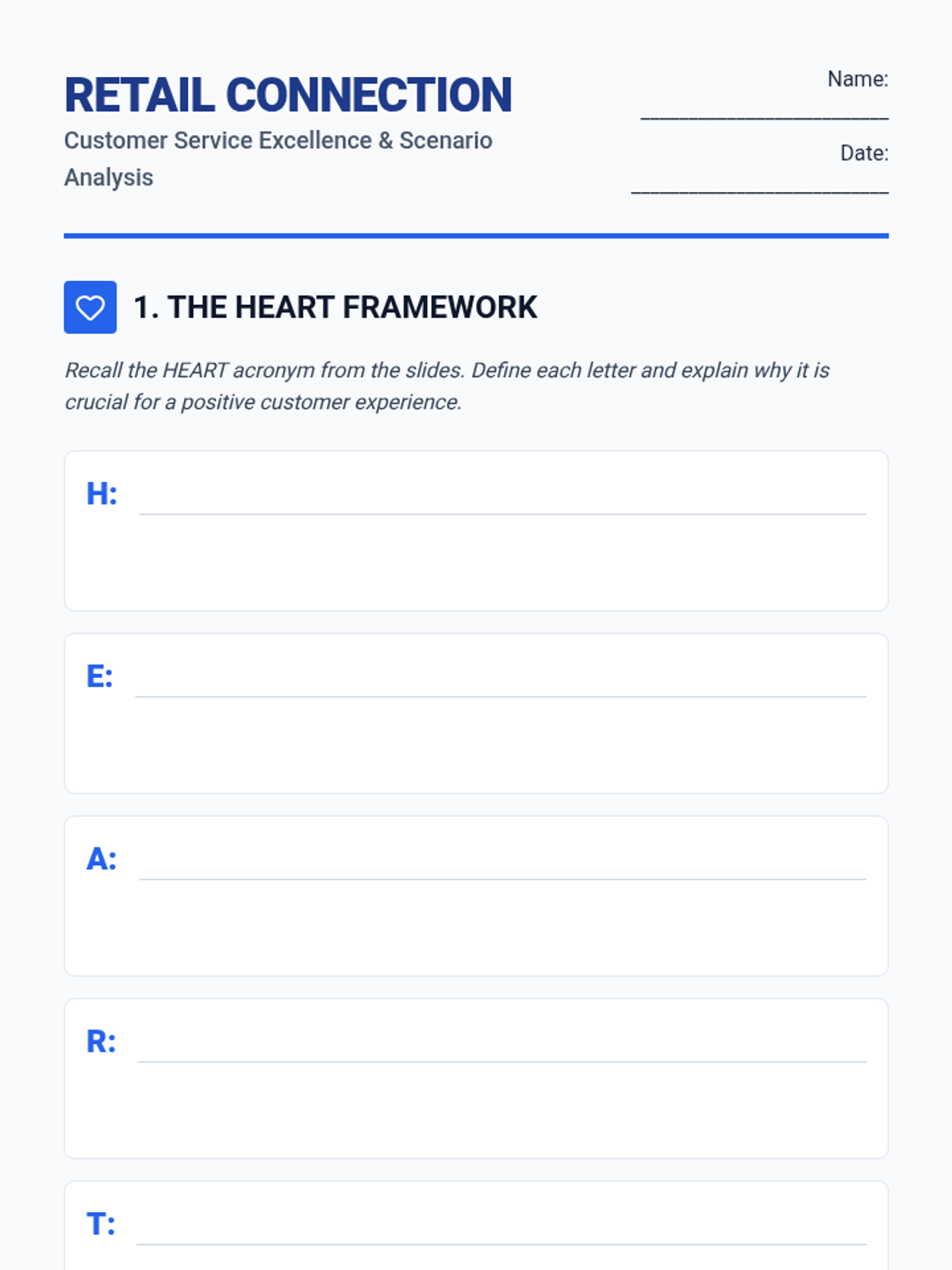
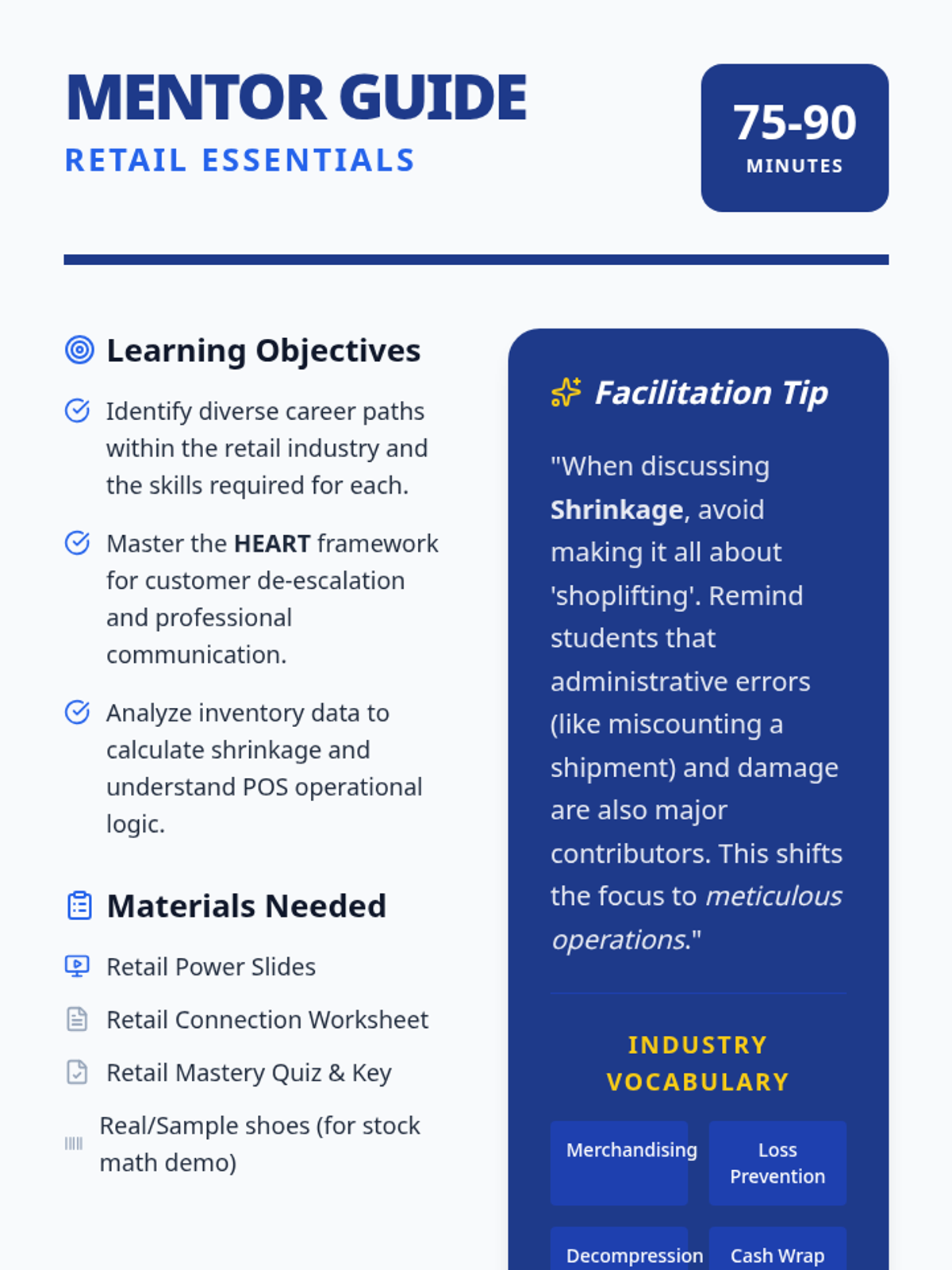
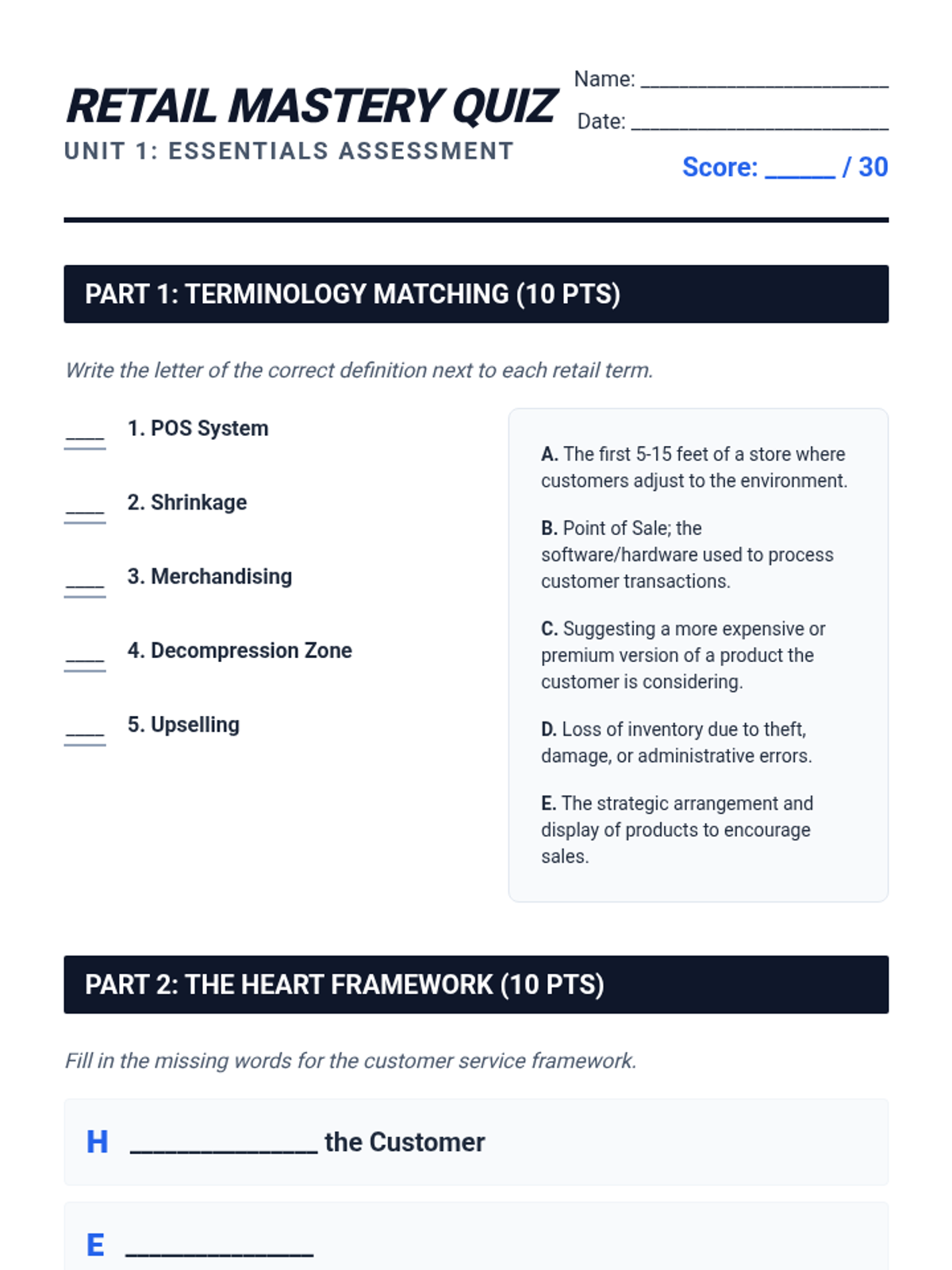
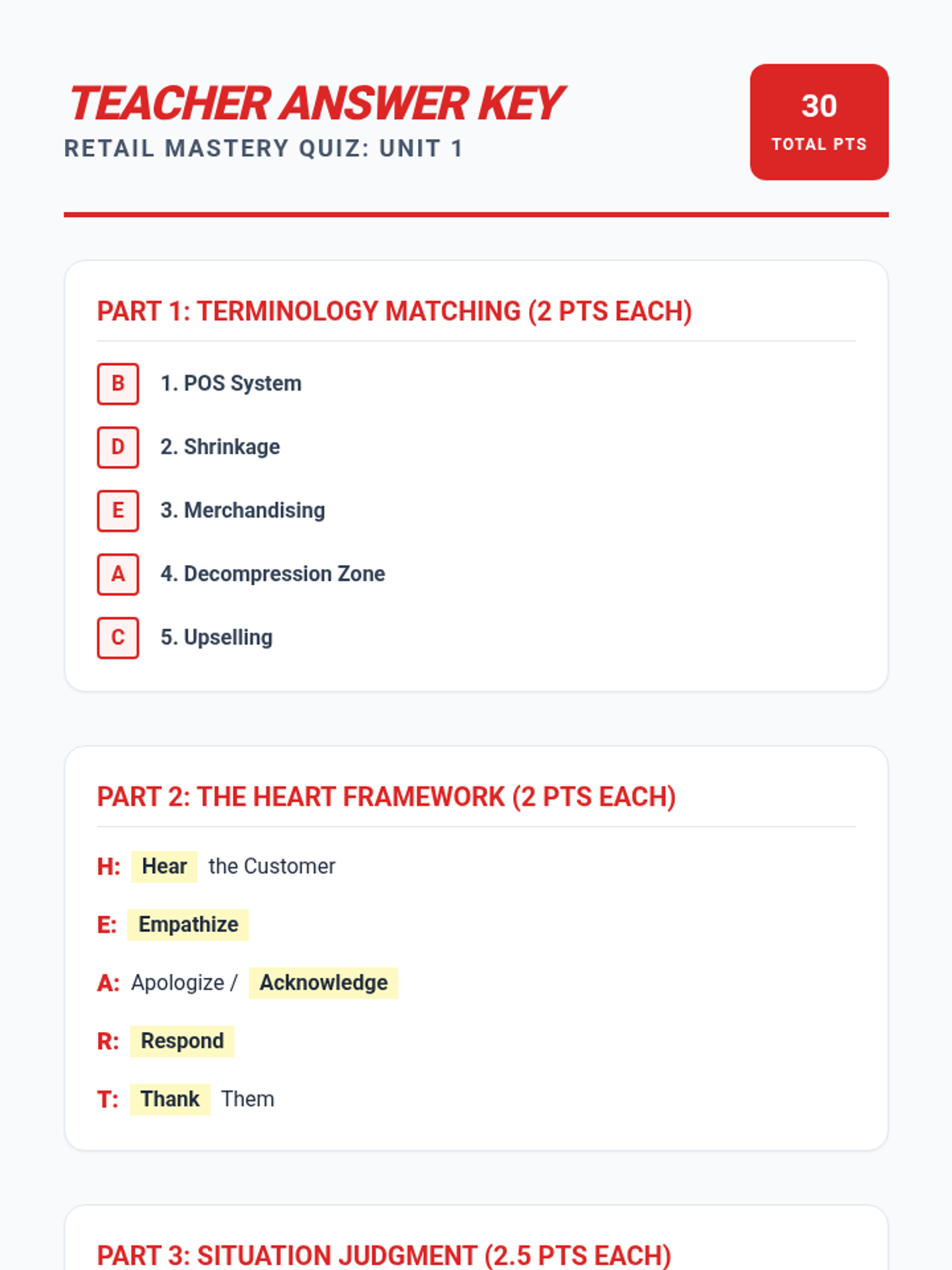
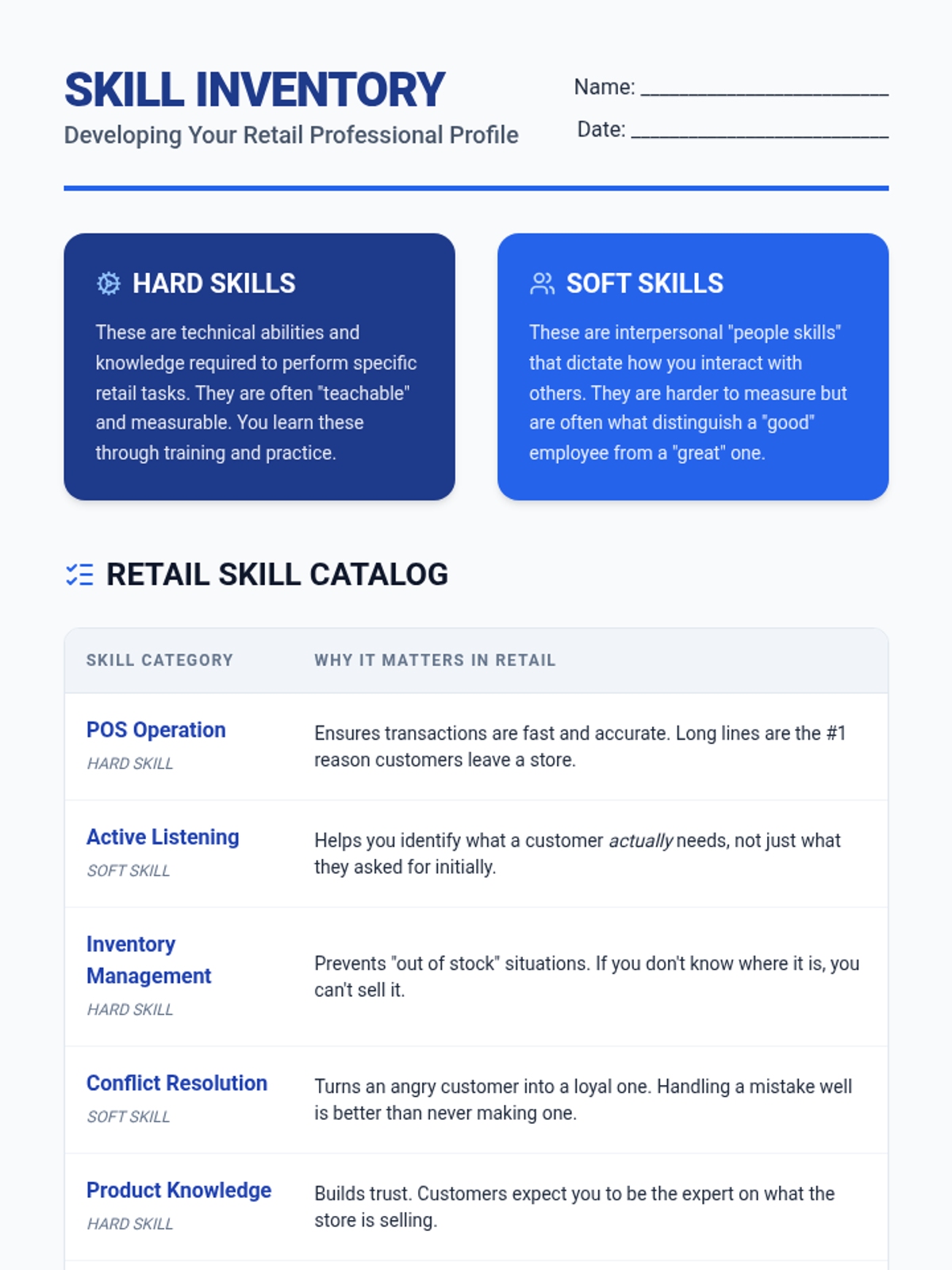
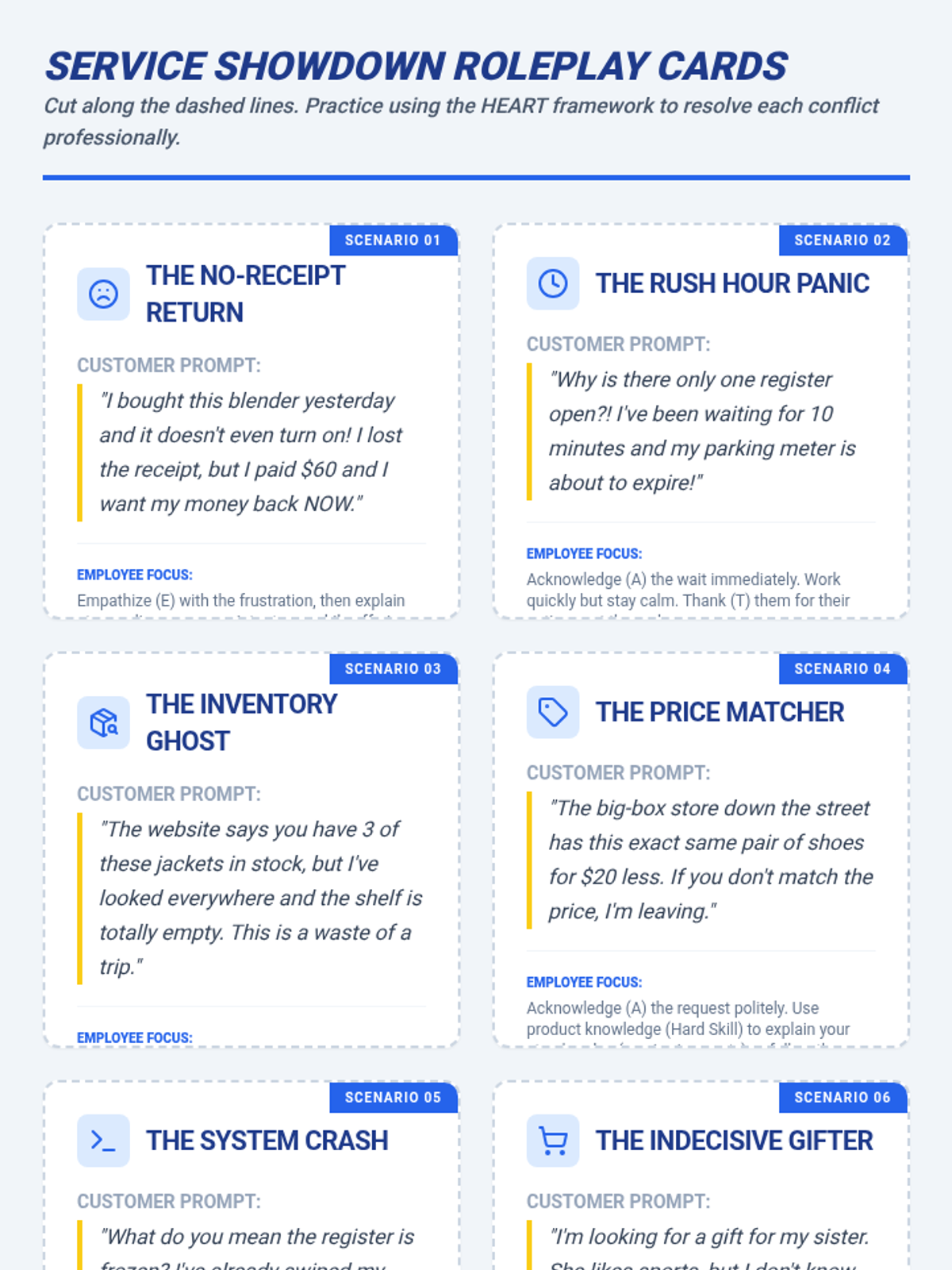
A hands-on career exploration unit focusing on the dynamic world of retail. Students will master customer service excellence, learn retail operations like inventory and POS systems, and design their own retail floor plan and brand strategy.
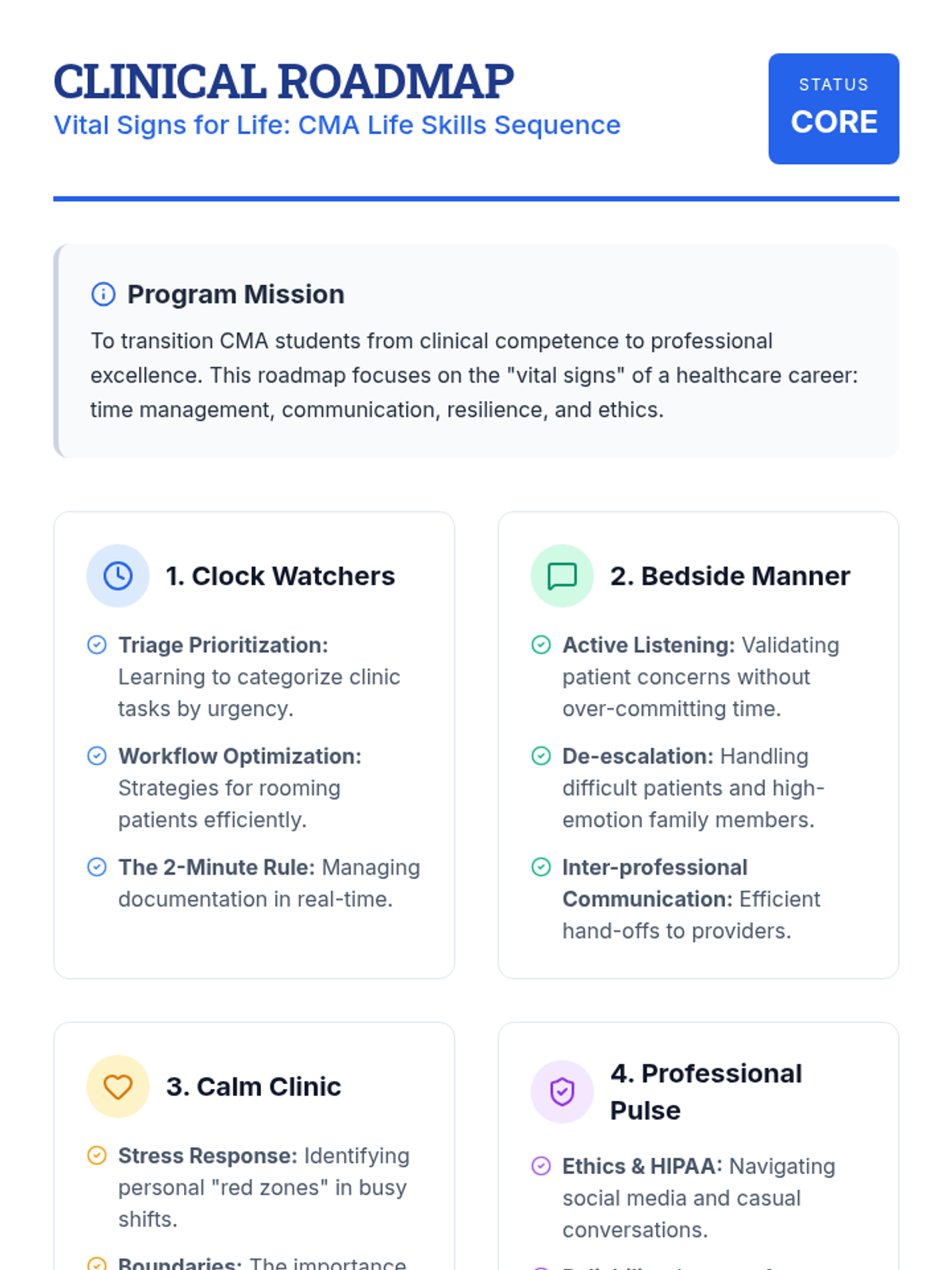
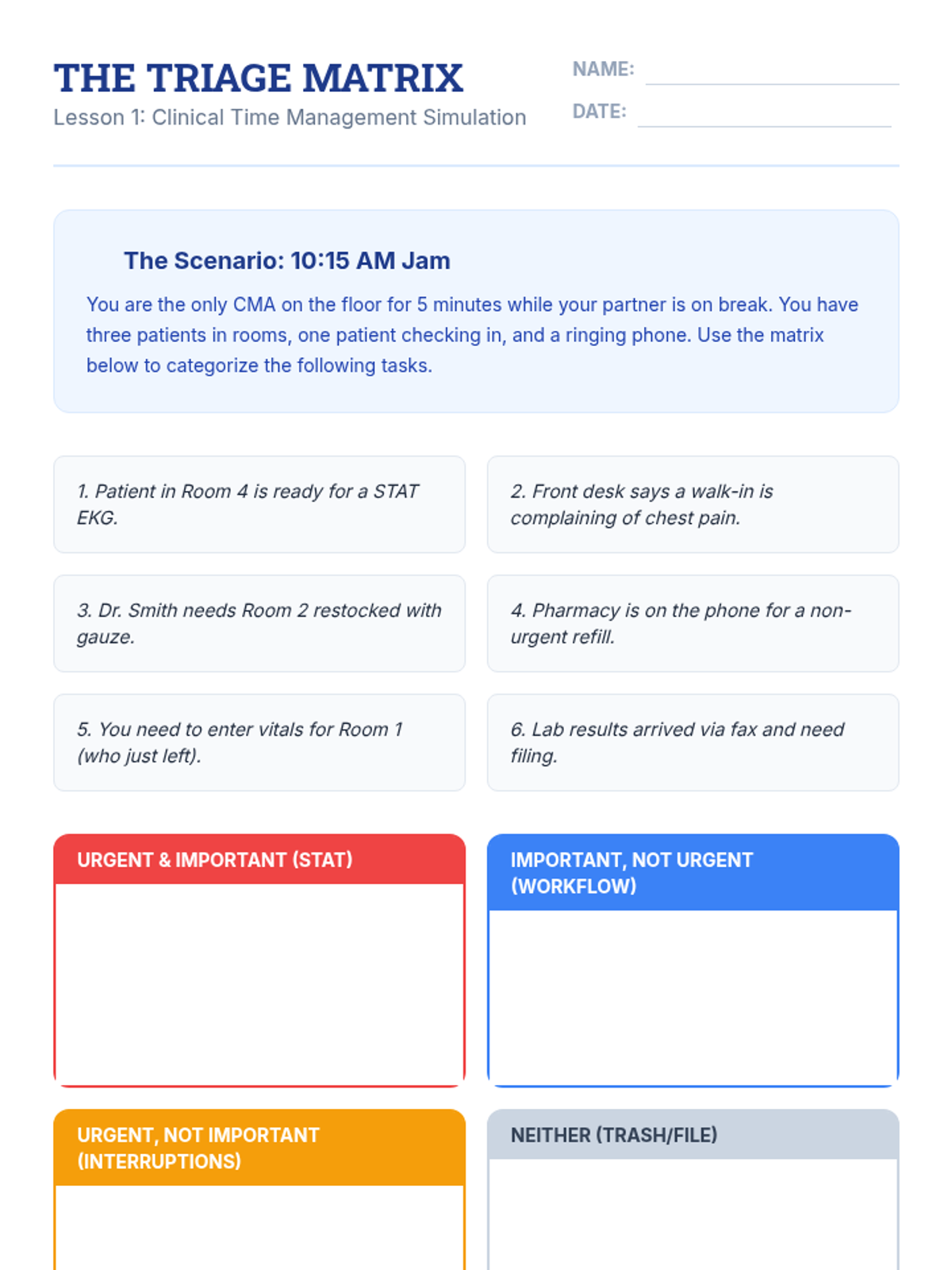
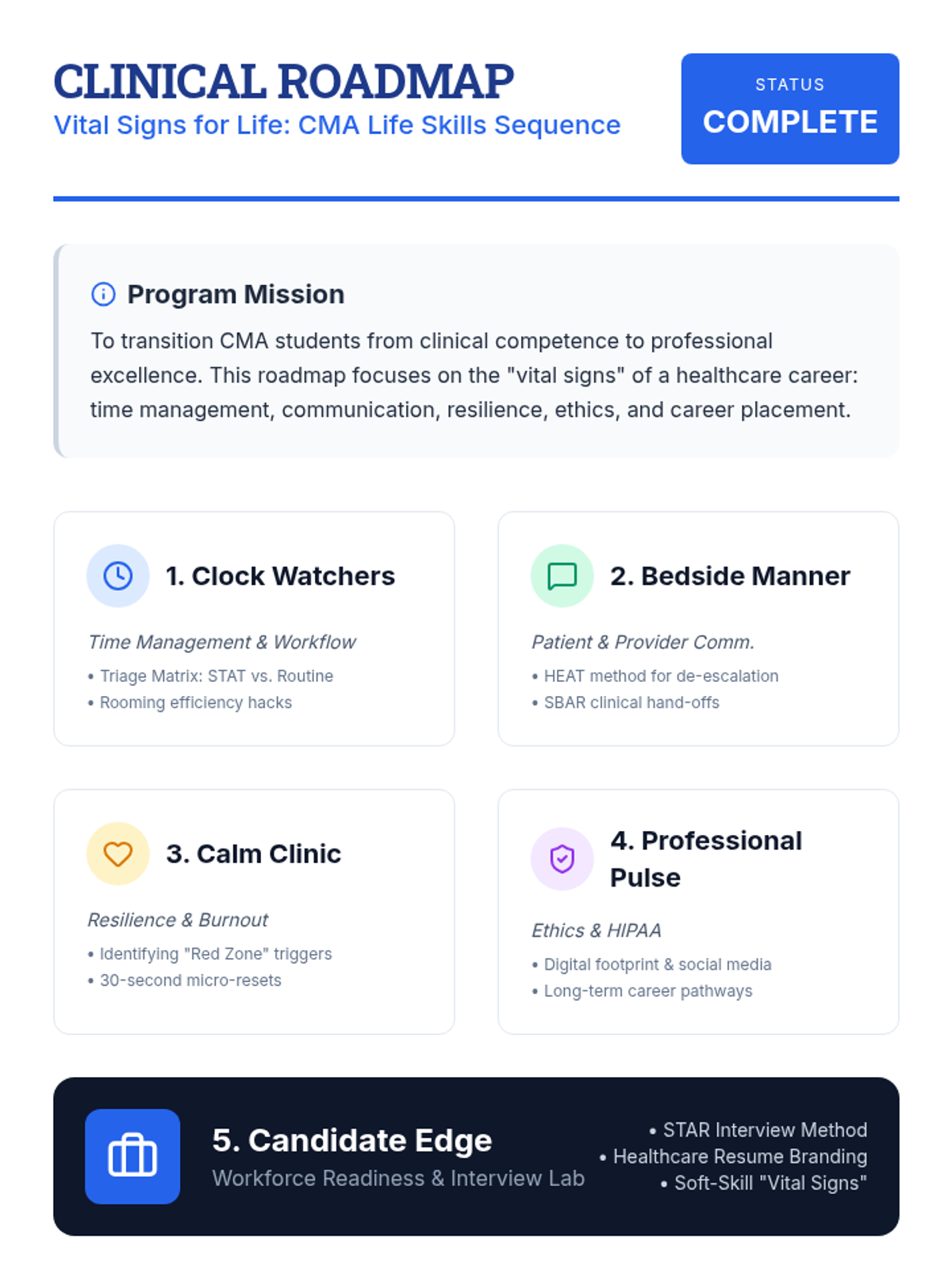
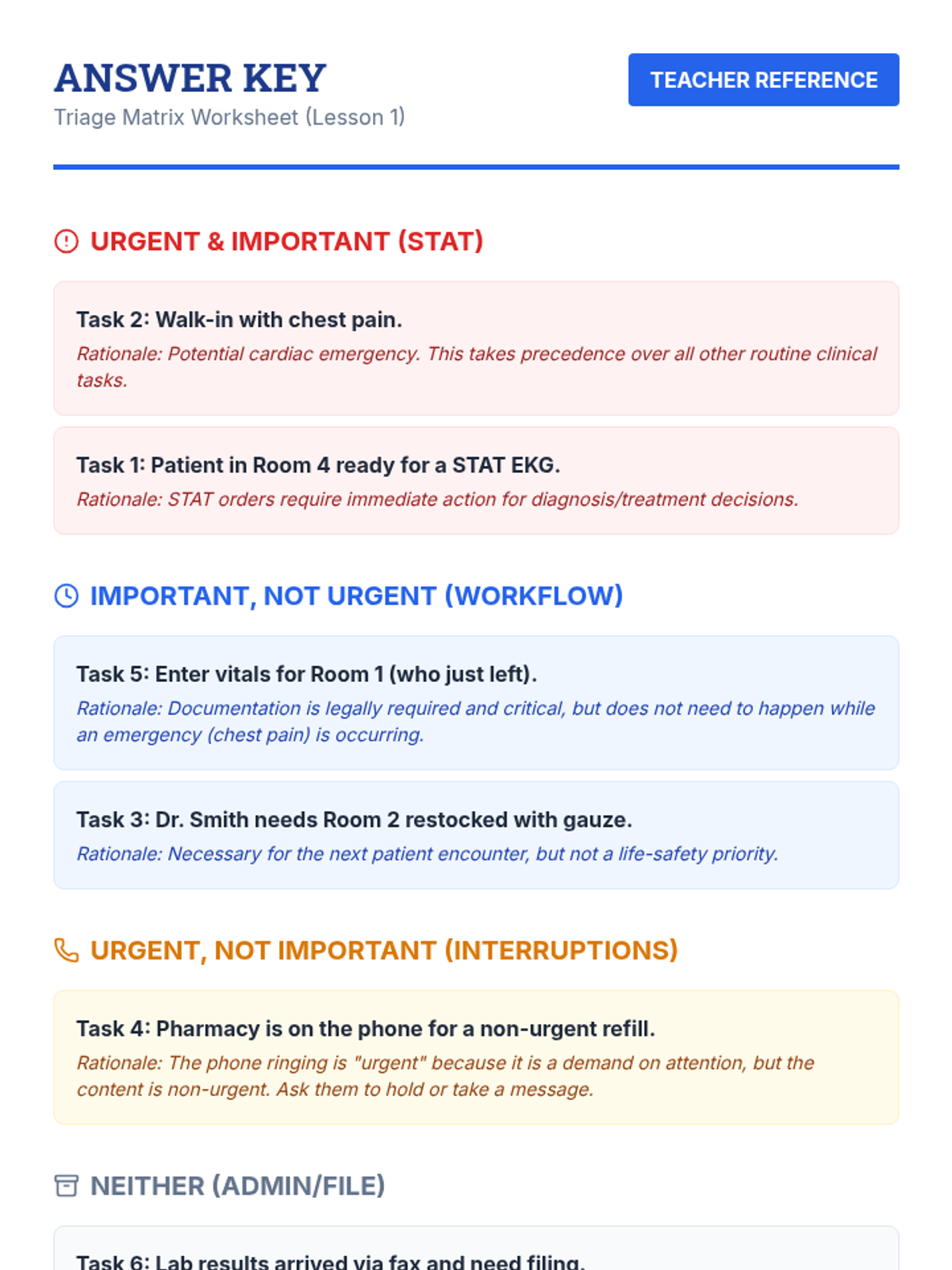
A comprehensive life skills training program designed specifically for Medical Assistant students, focusing on the essential soft skills needed to thrive in a high-pressure clinical environment.
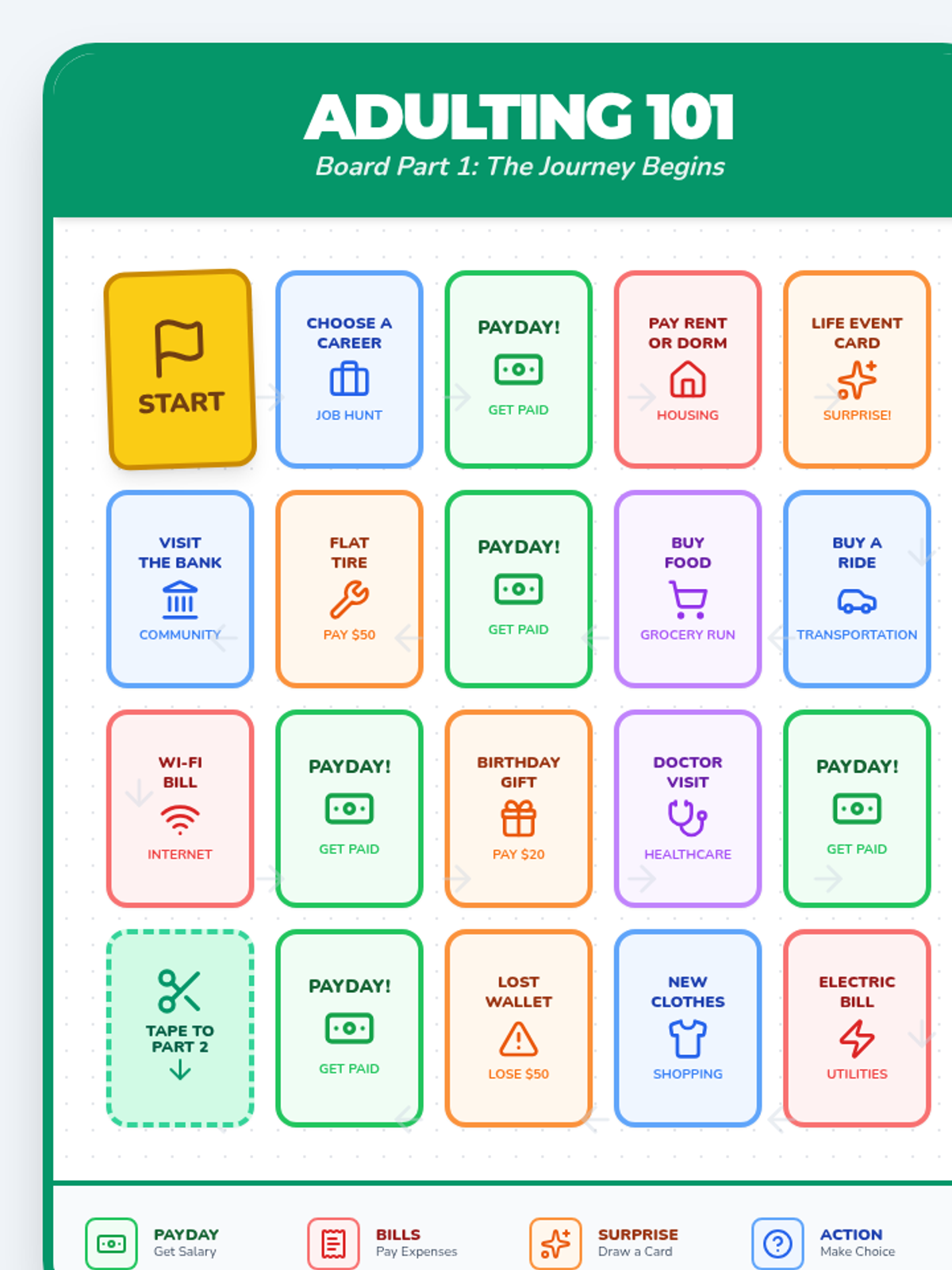
A comprehensive 'Game of Life' style curriculum designed for high school students with 5th-grade reading levels. It focuses on financial literacy, housing, transportation, and navigating daily life through an engaging board game format.
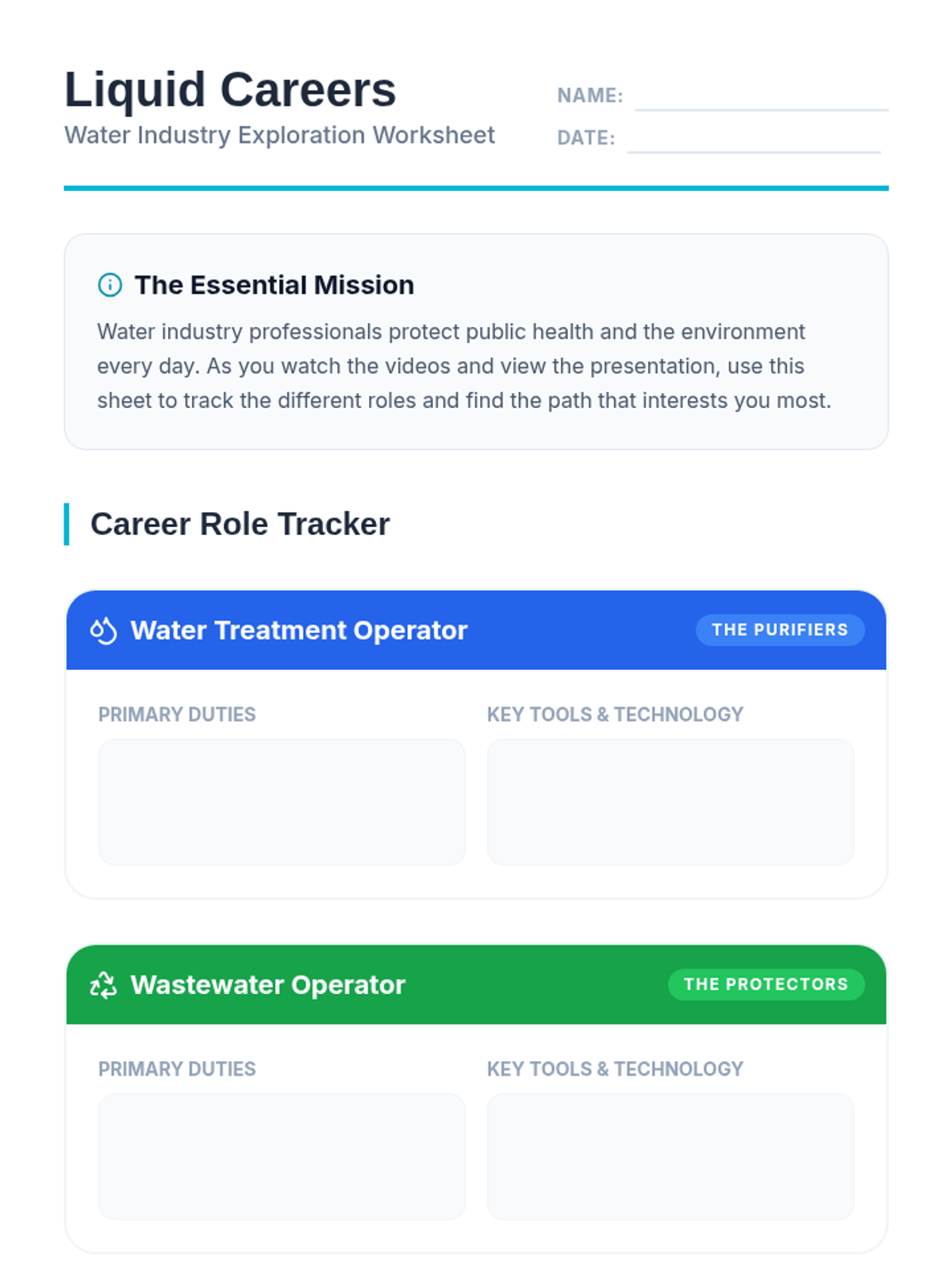
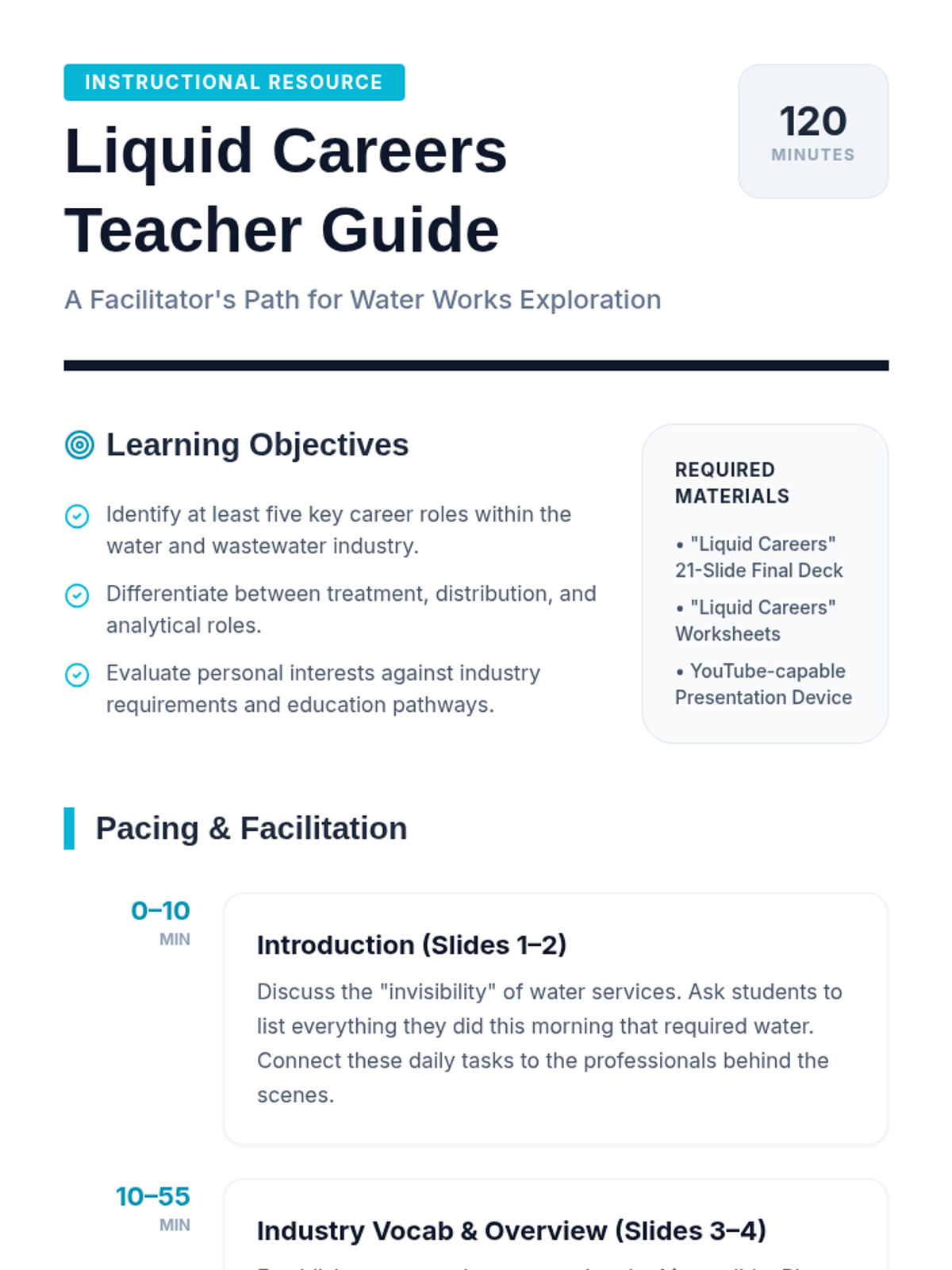
A comprehensive look into the water industry, covering the vital roles, infrastructure, and technology that ensure clean water delivery and safe wastewater management. Students learn about the science, engineering, and fieldwork involved in modern water systems.
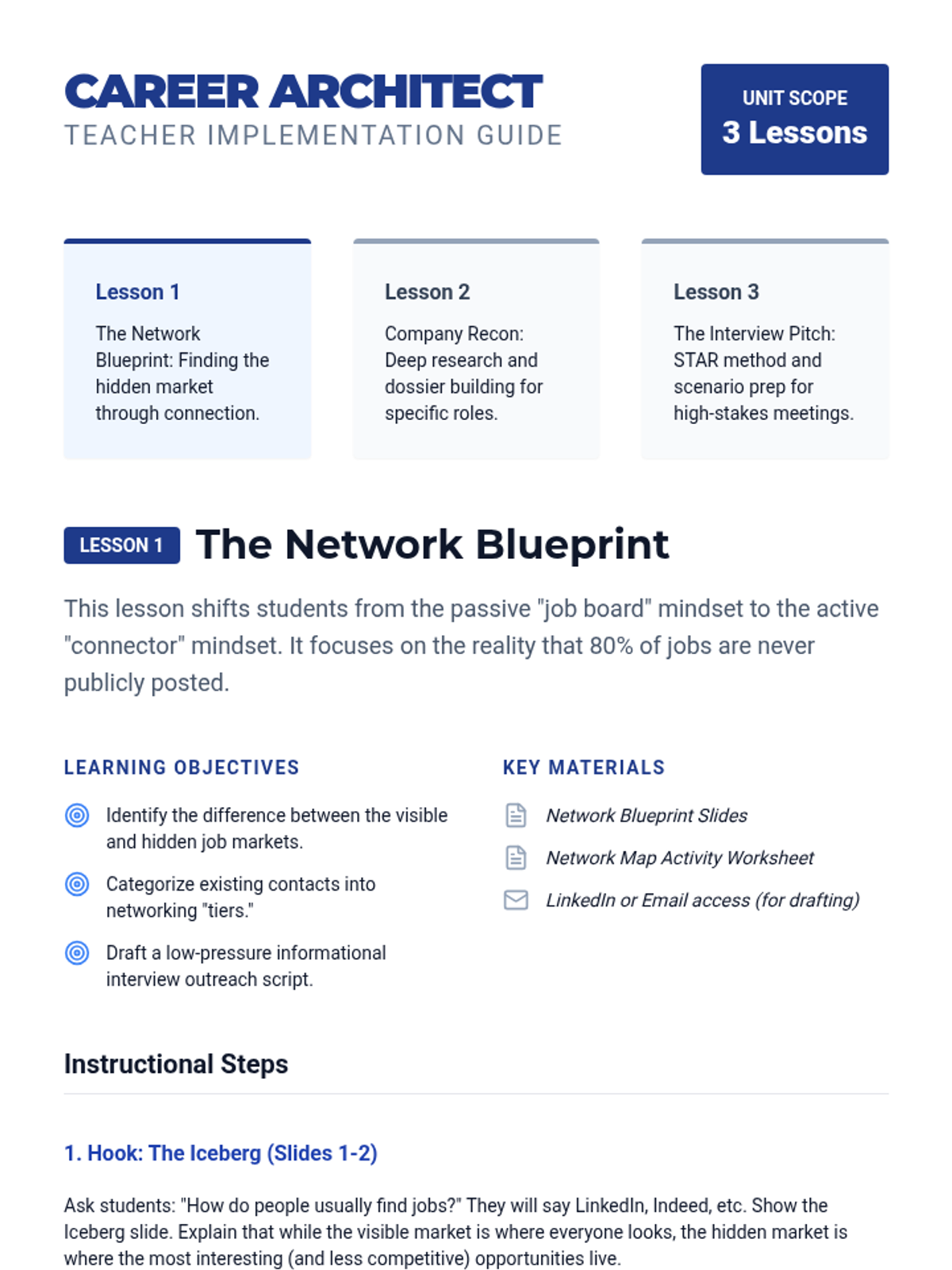
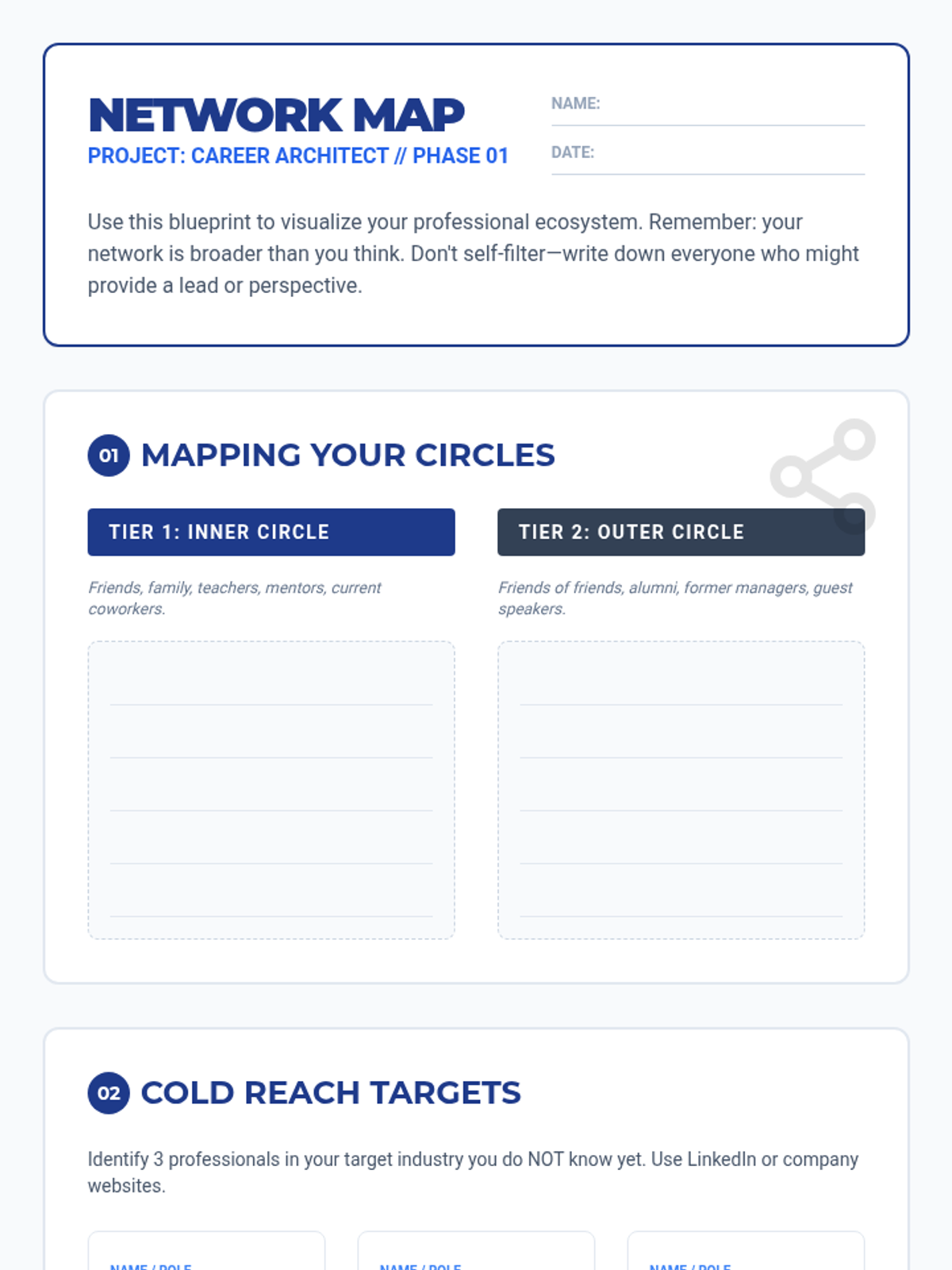
A comprehensive unit designed to guide students through the modern job application process, focusing on strategic networking, deep company research, and high-stakes interview preparation. Students will learn to build professional connections and tailor their approach to specific company cultures and scenarios.
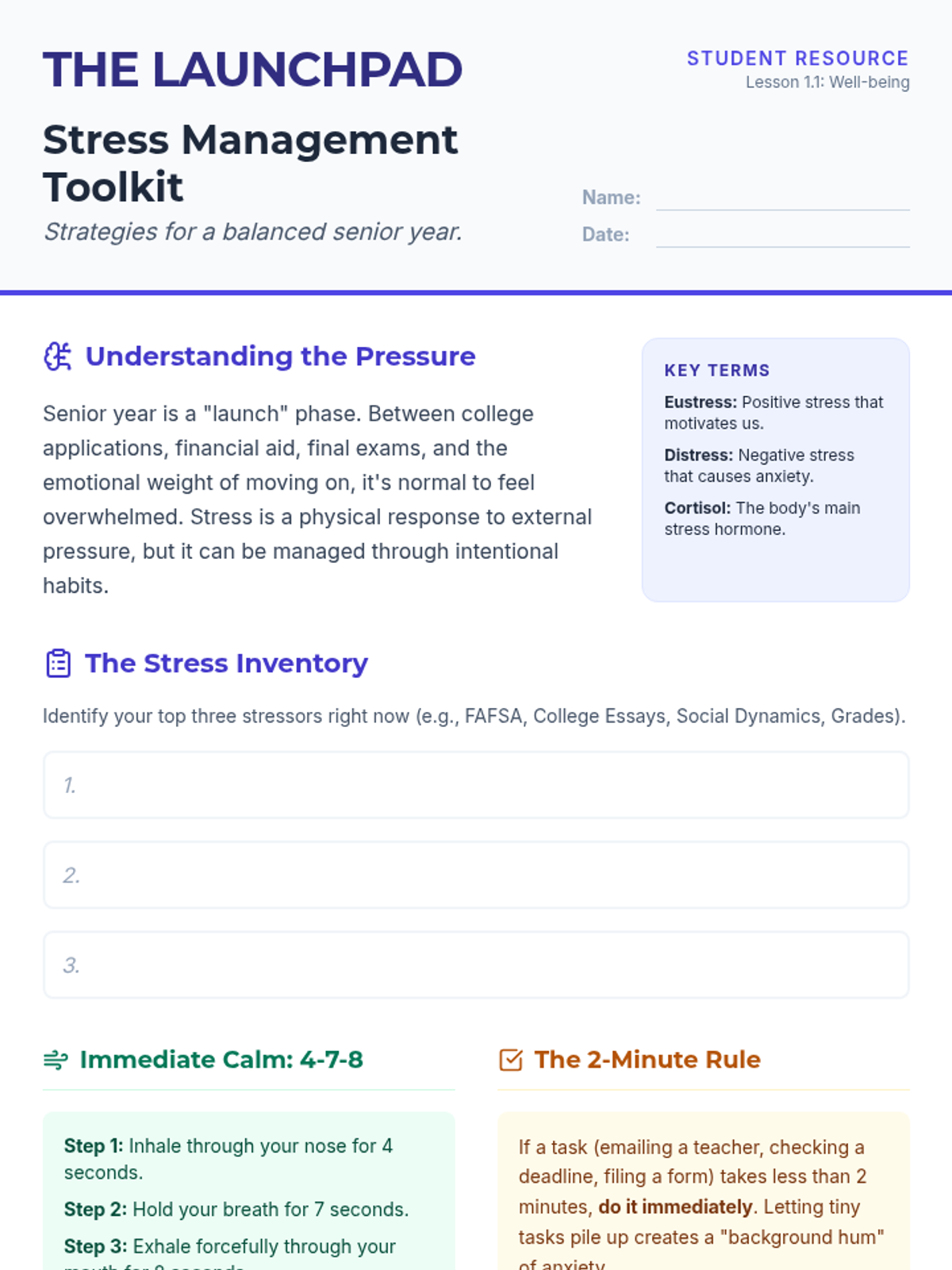
A comprehensive year-long curriculum for high school seniors focusing on college readiness, career planning, financial literacy, and social-emotional well-being. This sequence guides students through the complexities of post-secondary transitions with a special focus on arts-based pathways.
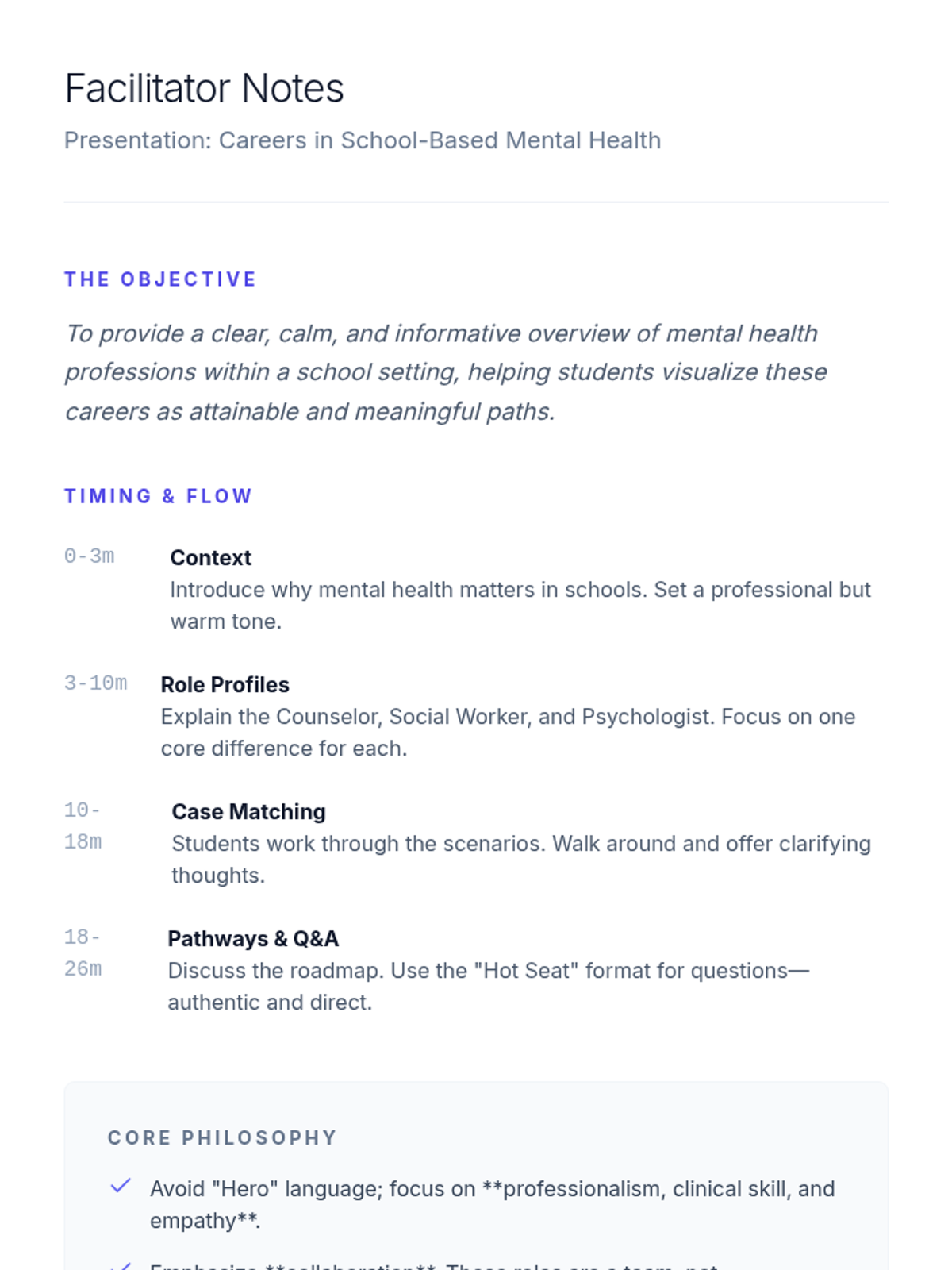
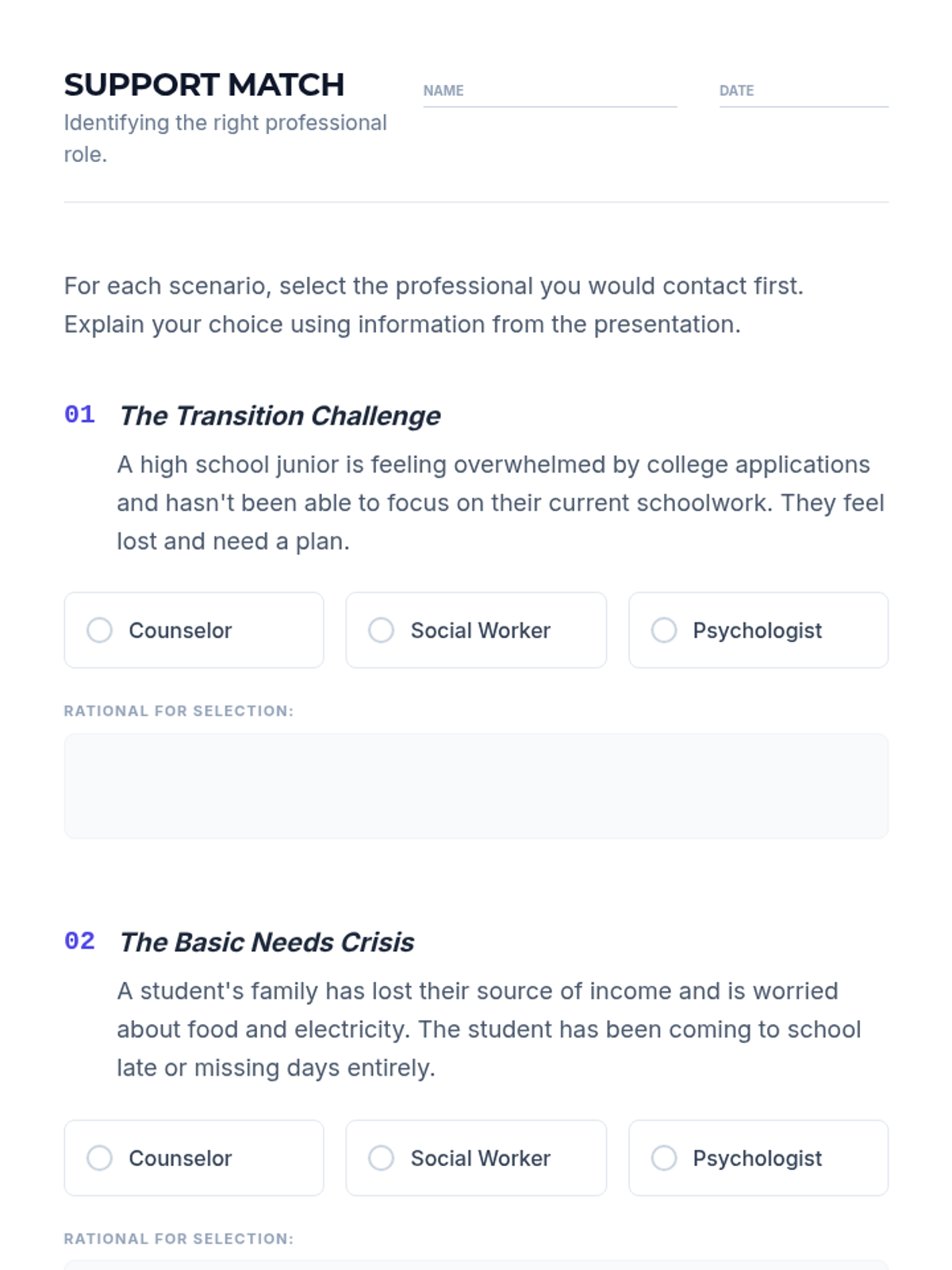
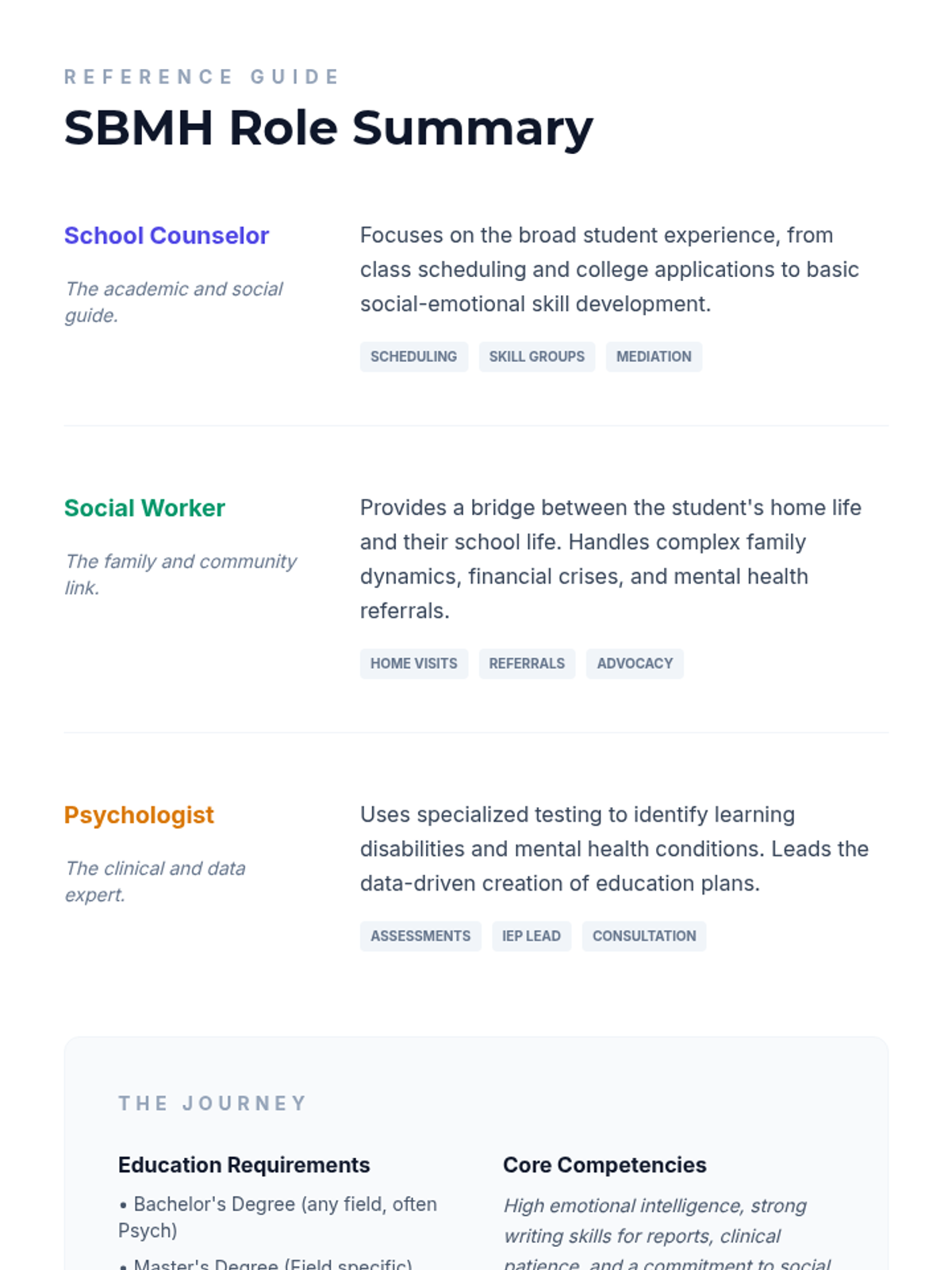
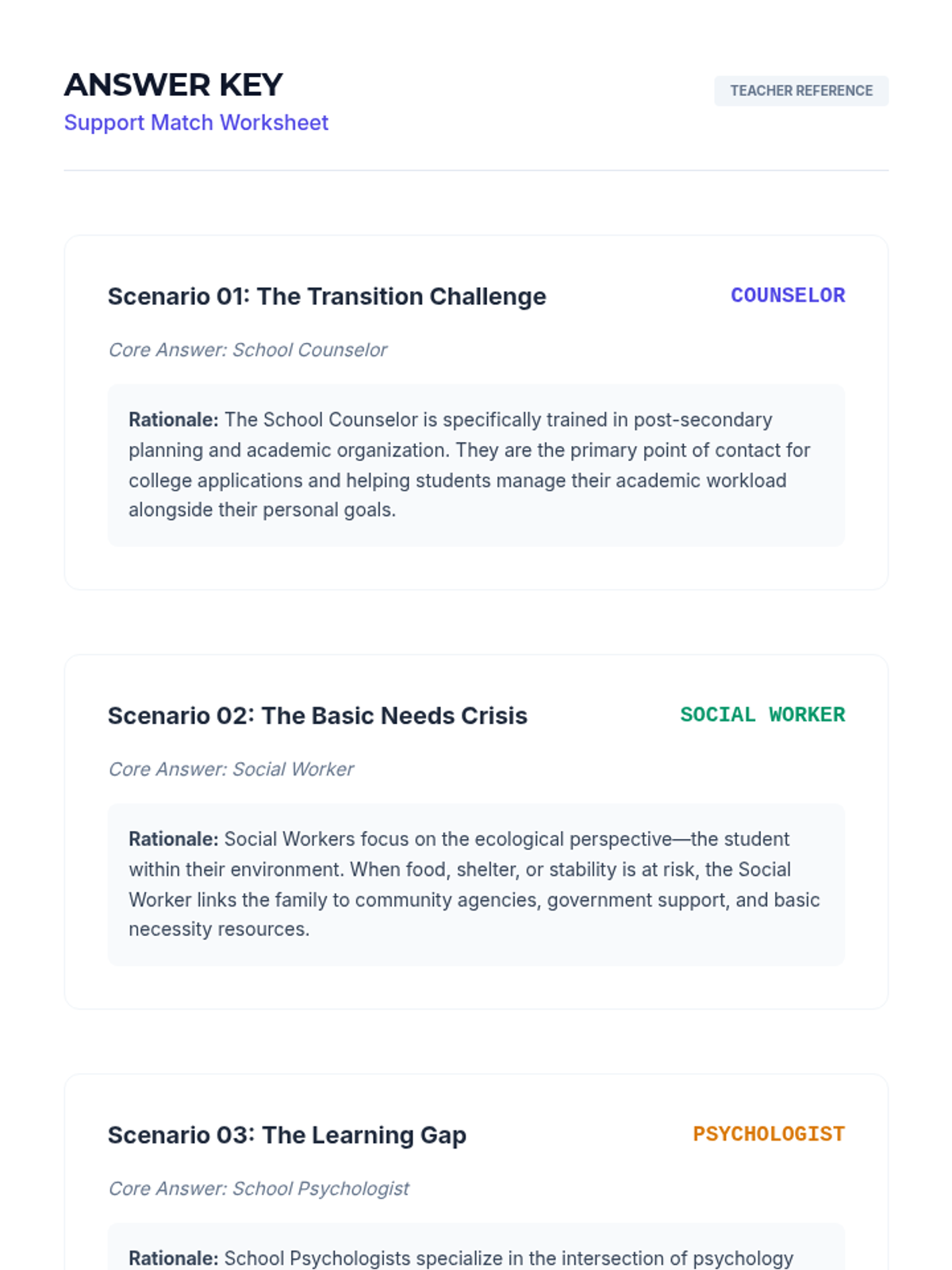
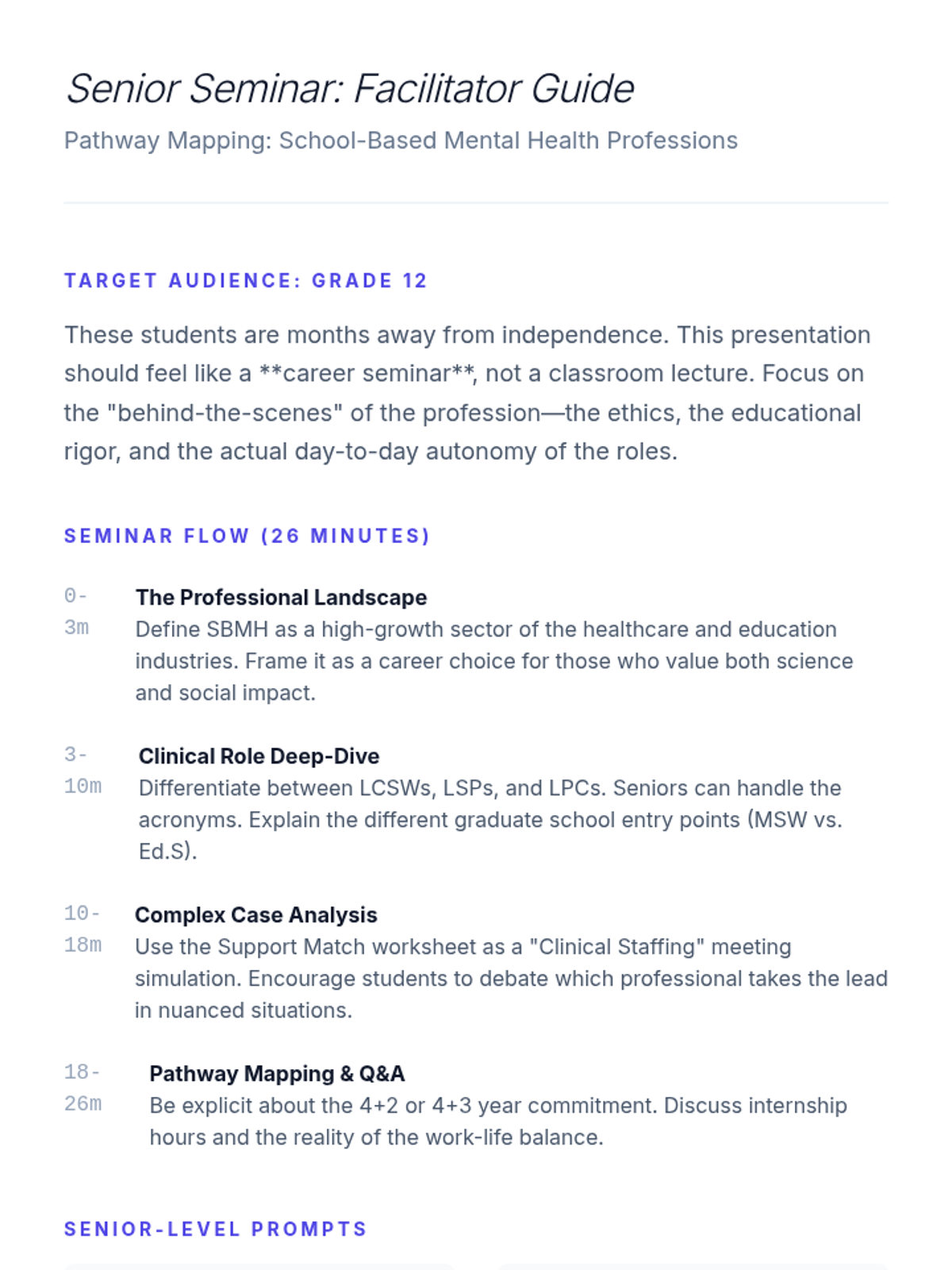
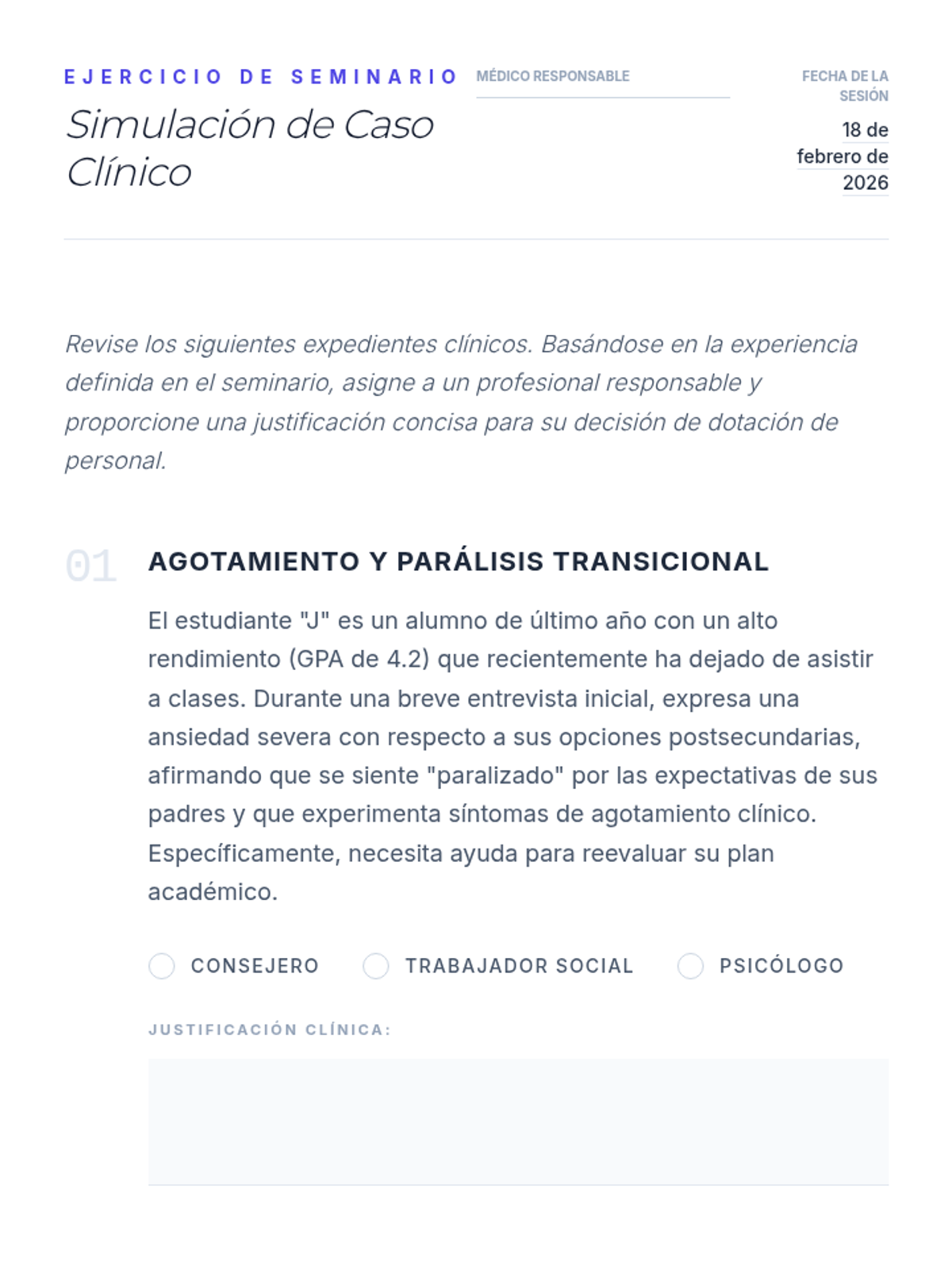
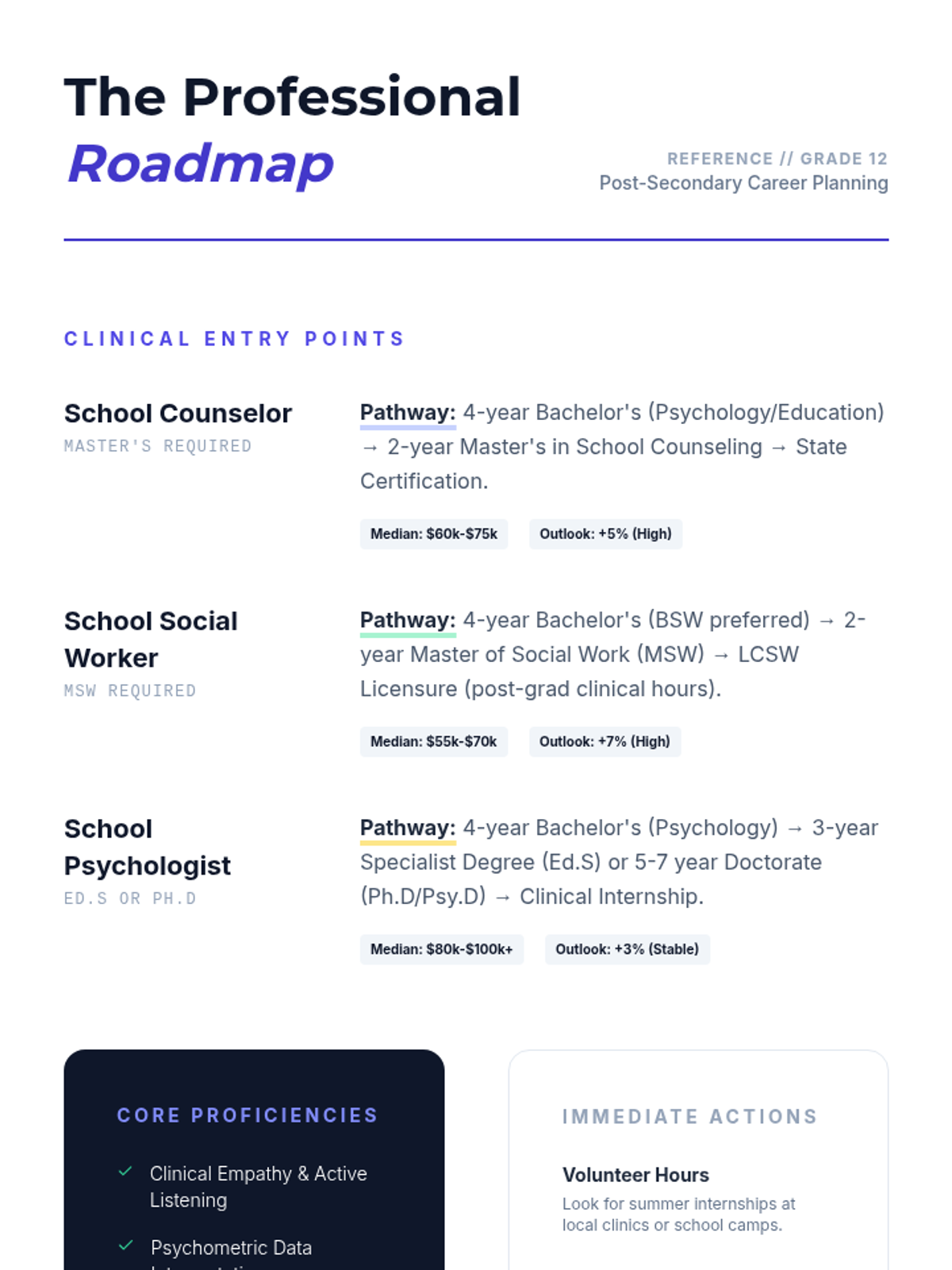
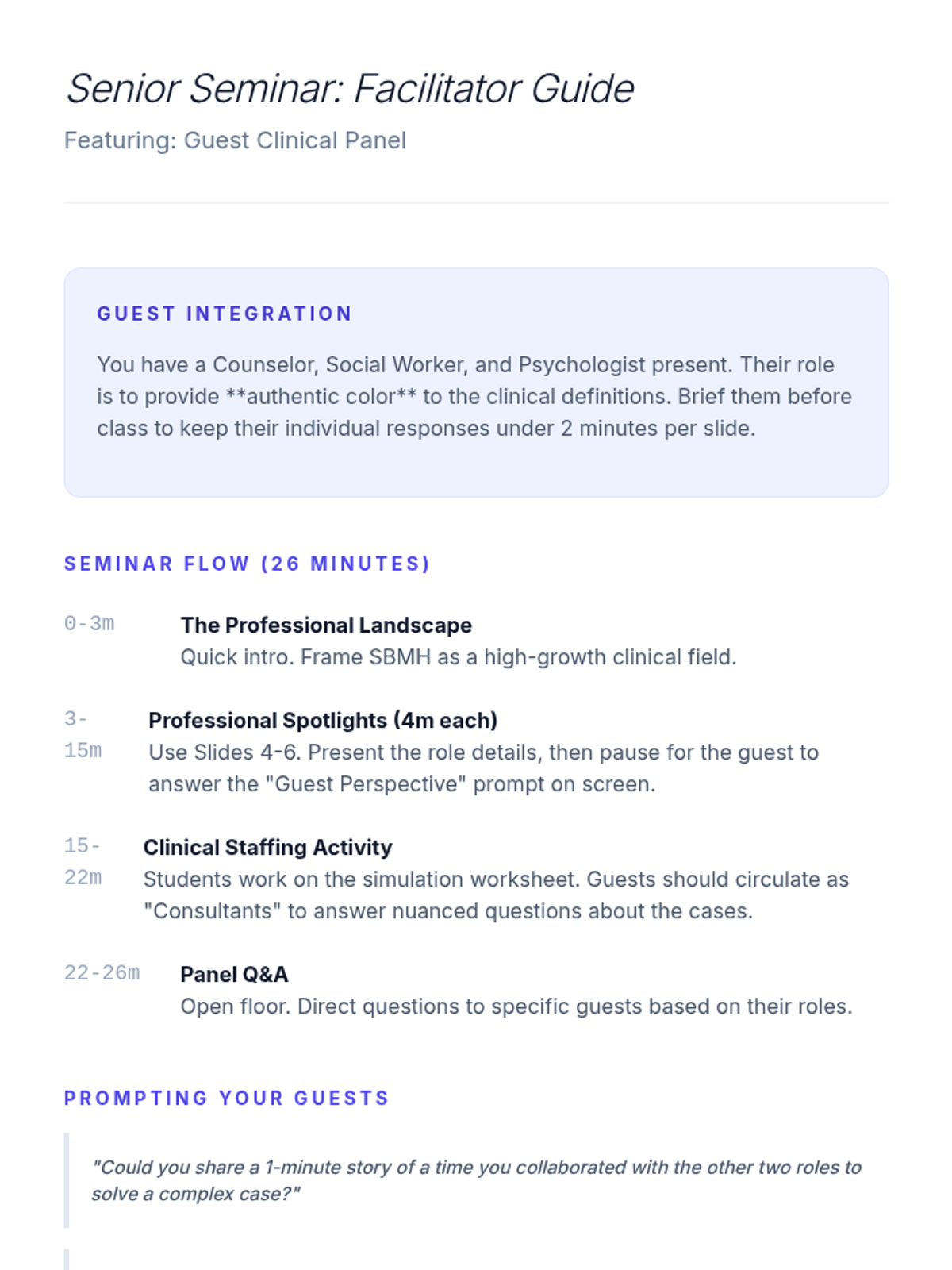
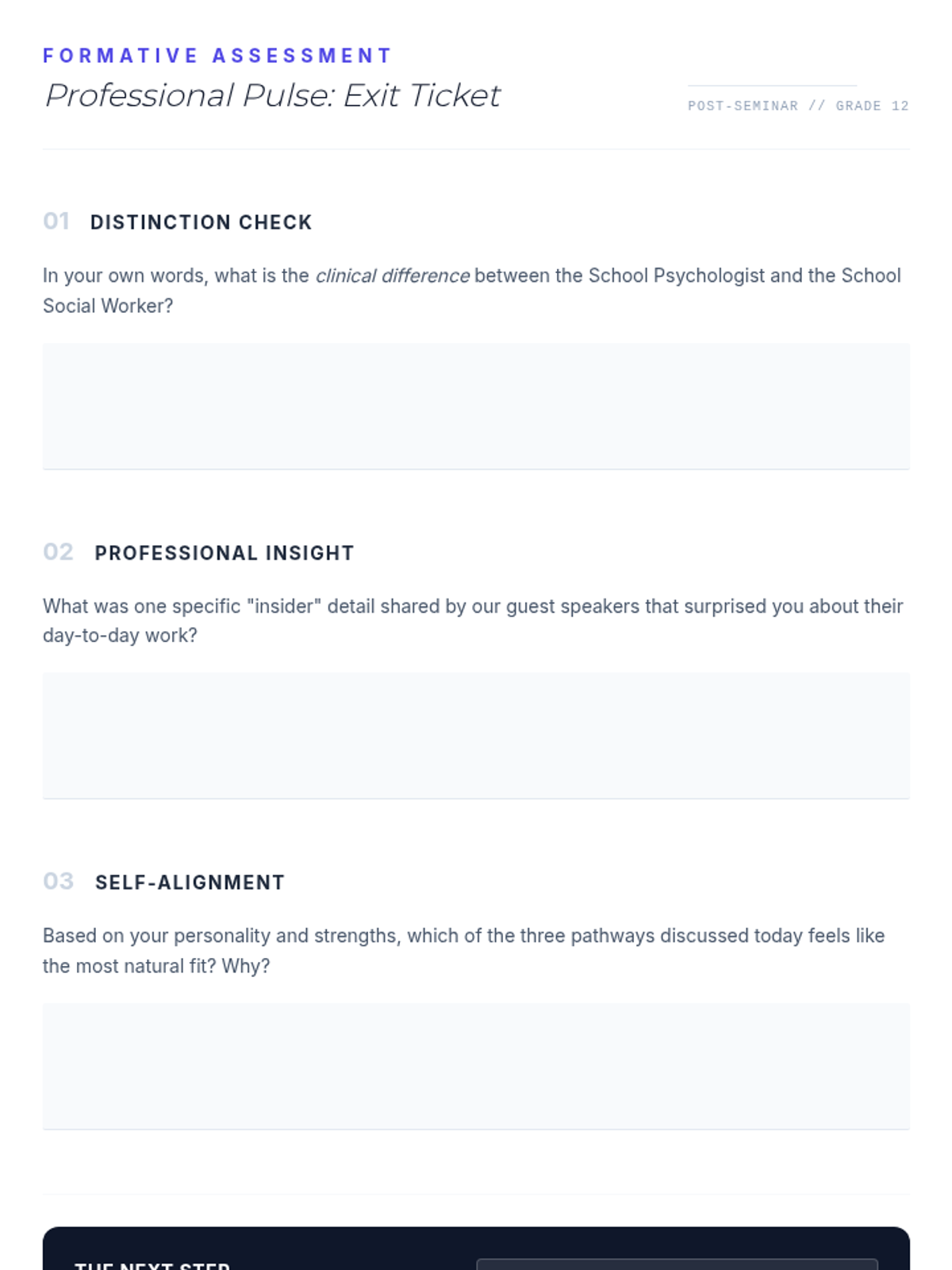
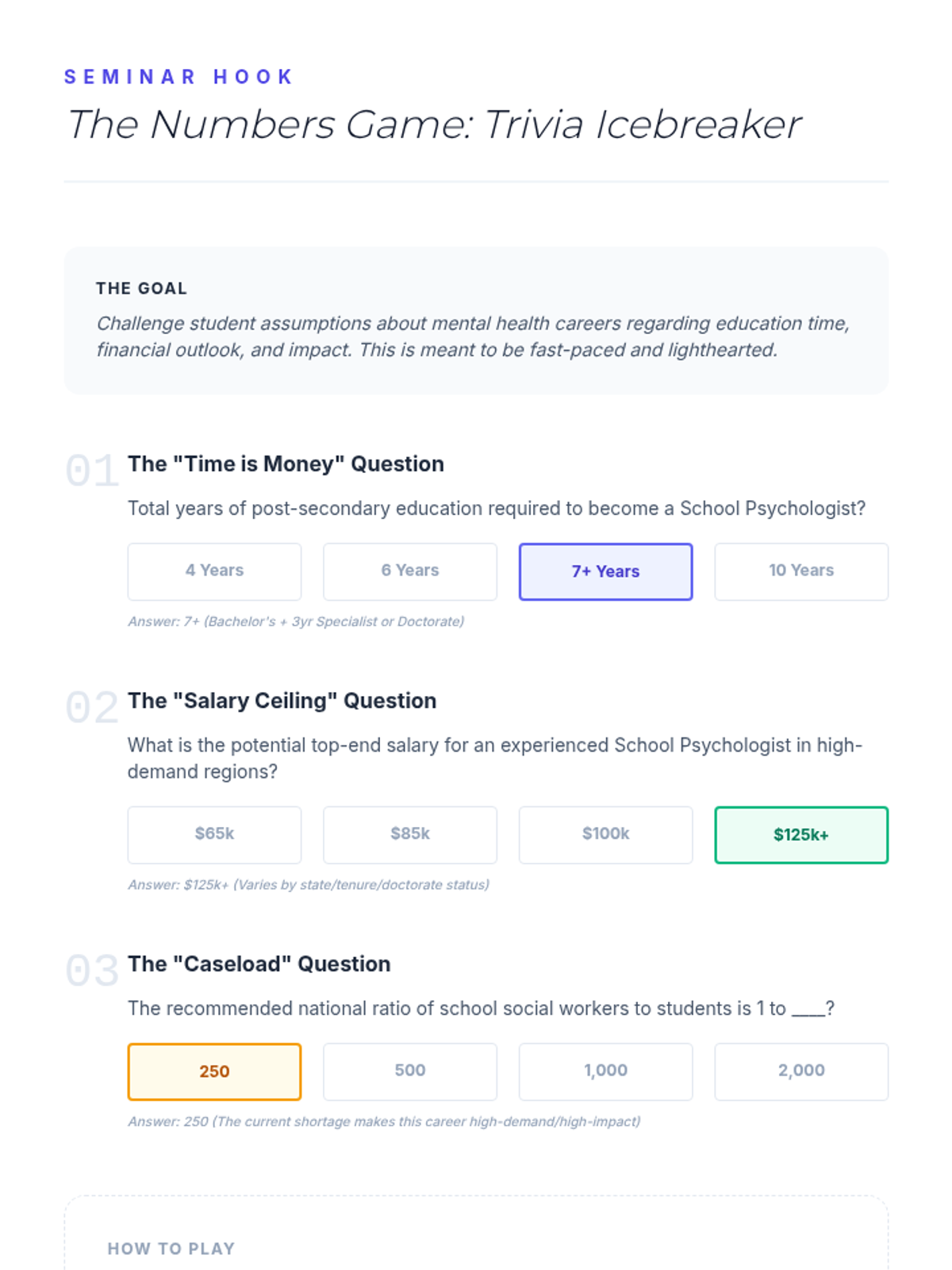
A professional and understated exploration of careers in school-based mental health, focusing on clear definitions, educational journeys, and practical support roles.
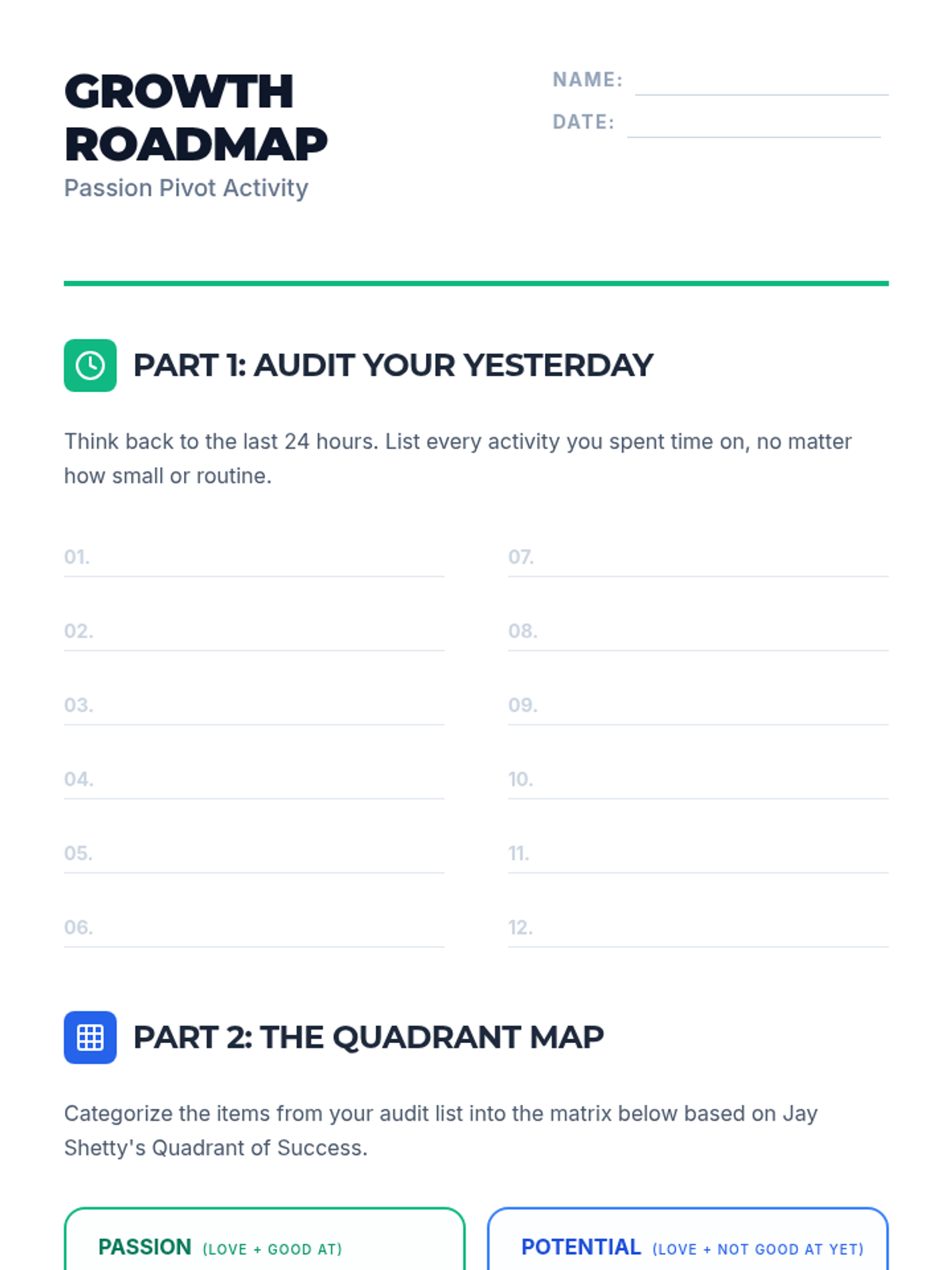
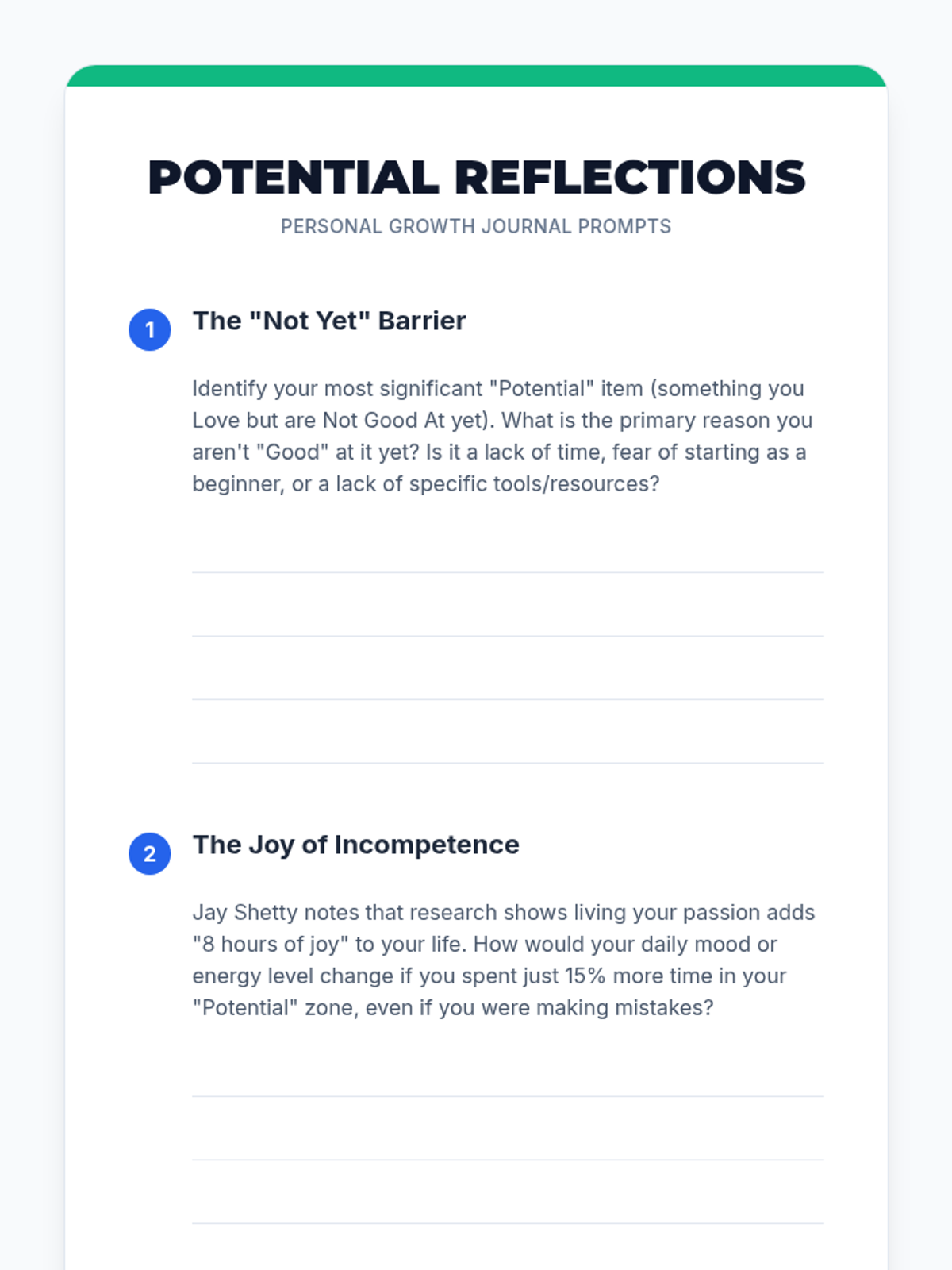
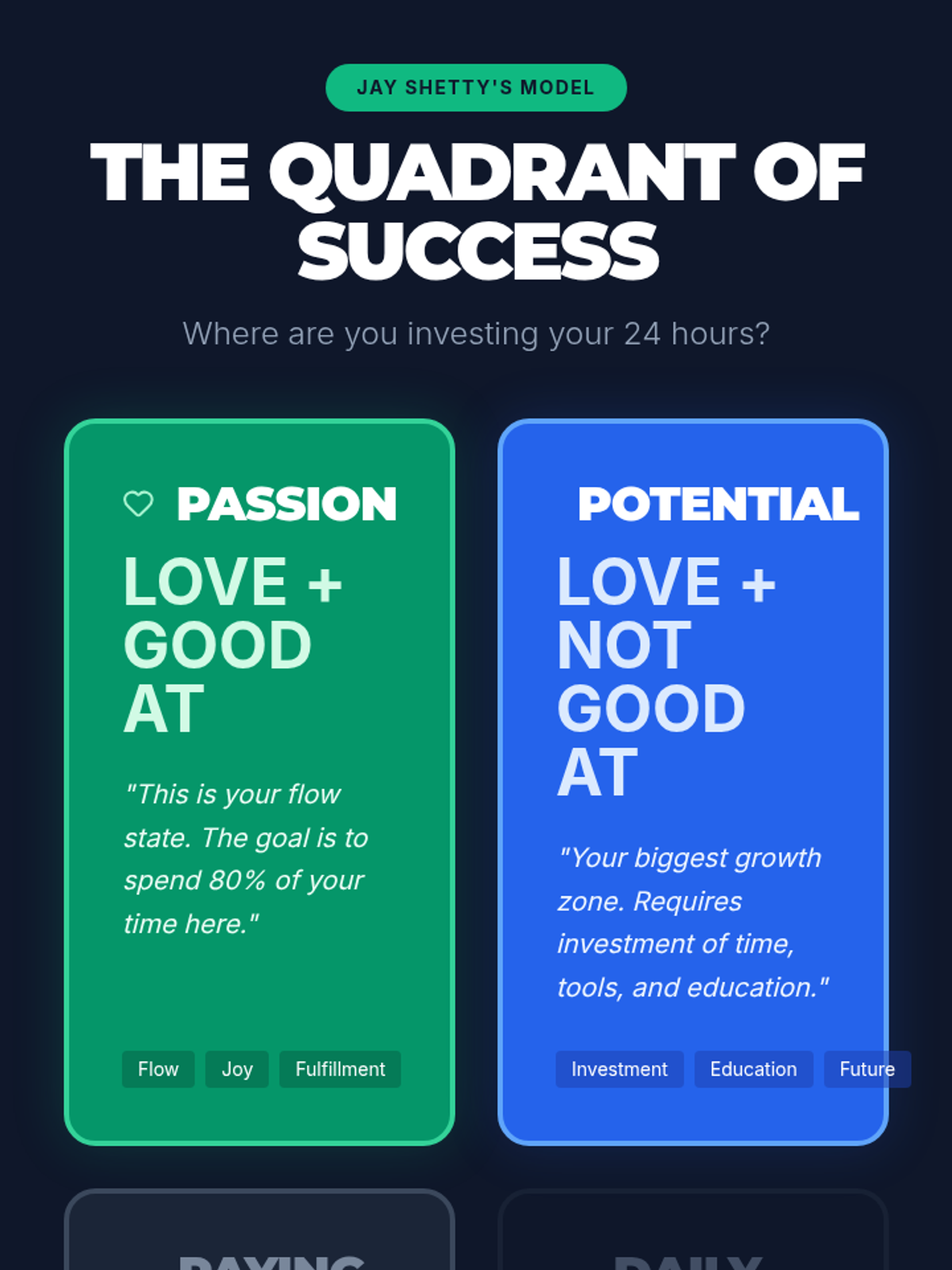
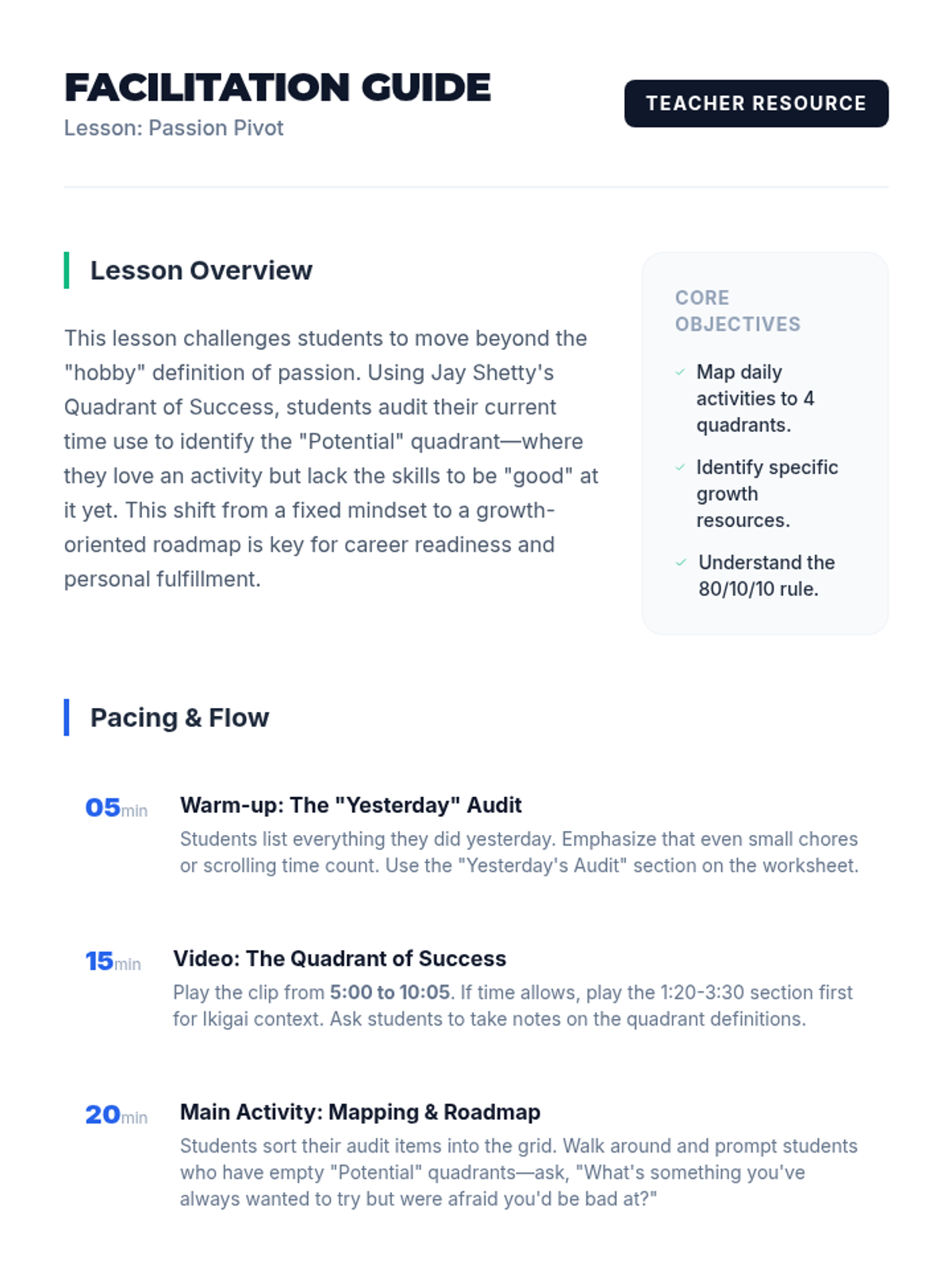
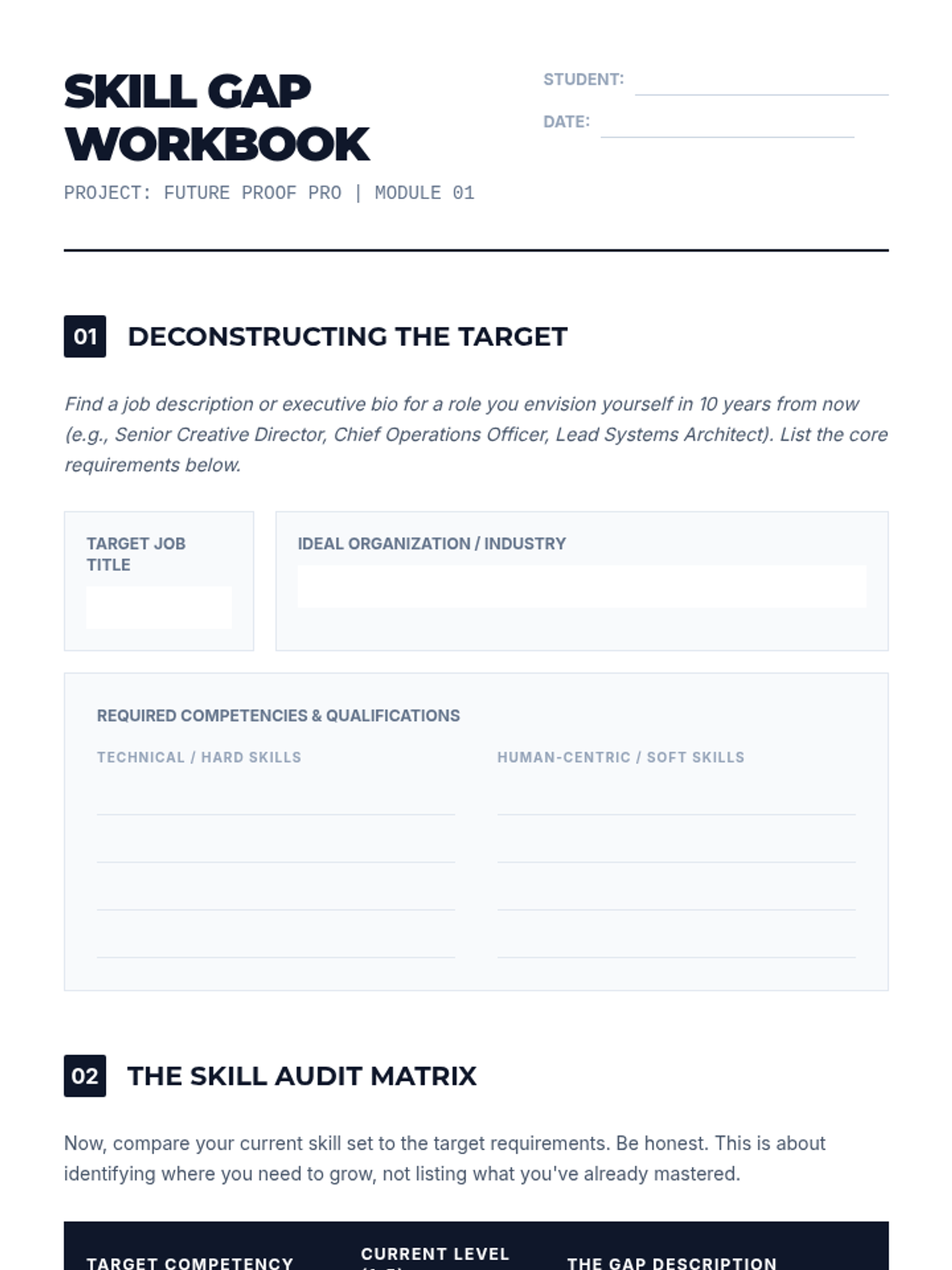
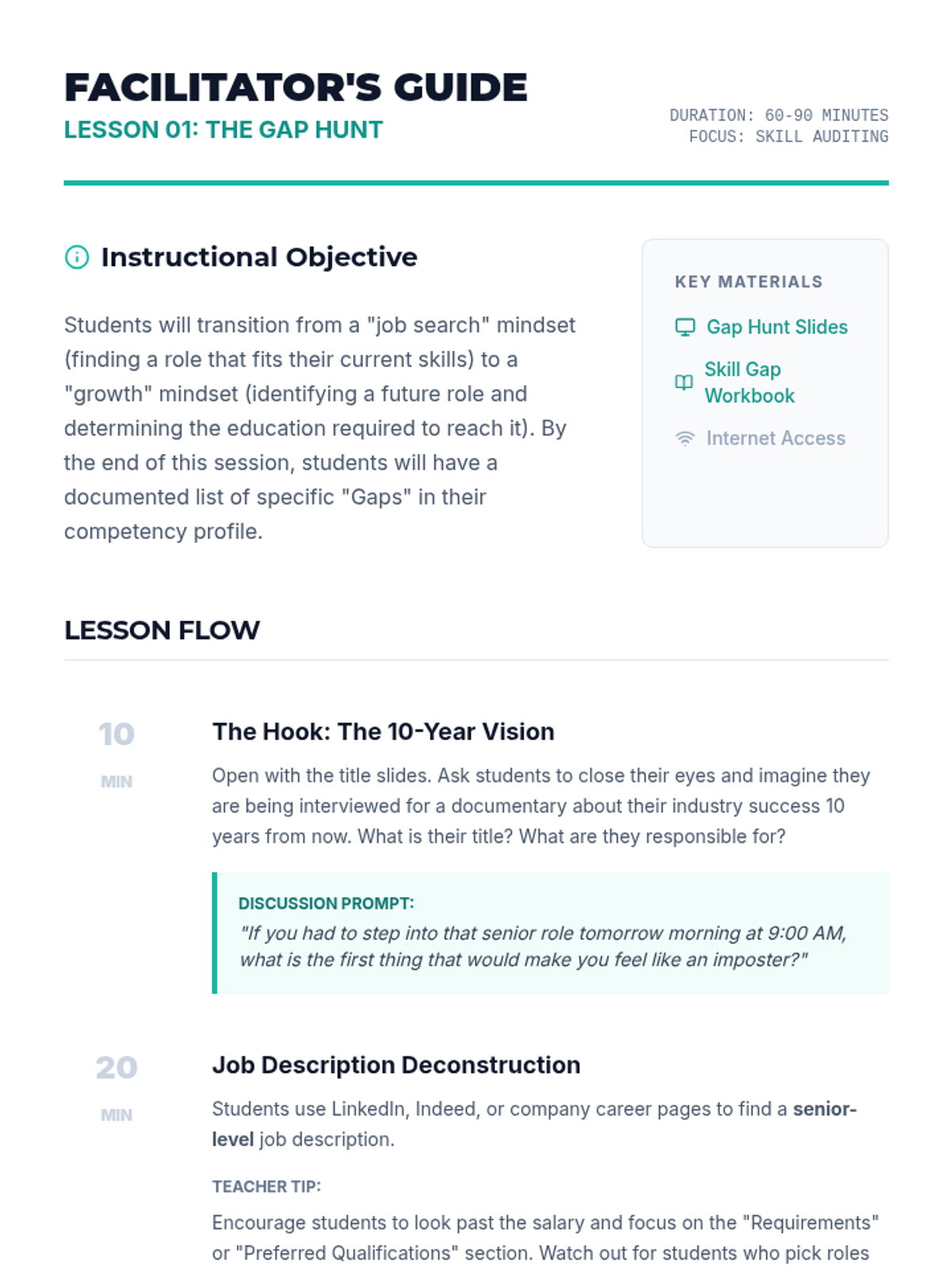
A career-readiness sequence designed for older students and undergraduates to identify their current skills, potential growth areas, and personality types using the Ikigai and Quadrant of Success models. Students move from auditing their time to creating a strategic roadmap for professional development.
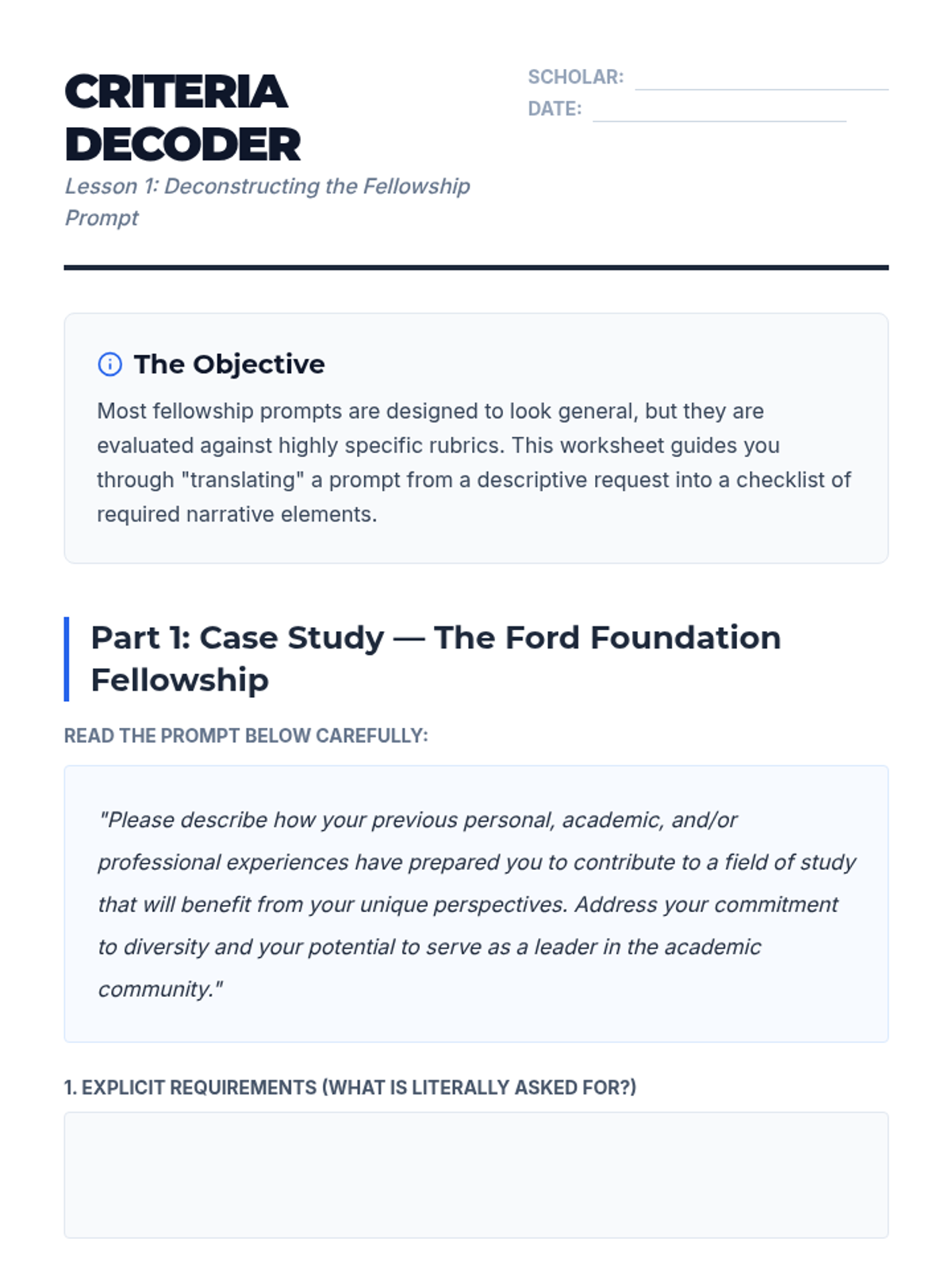
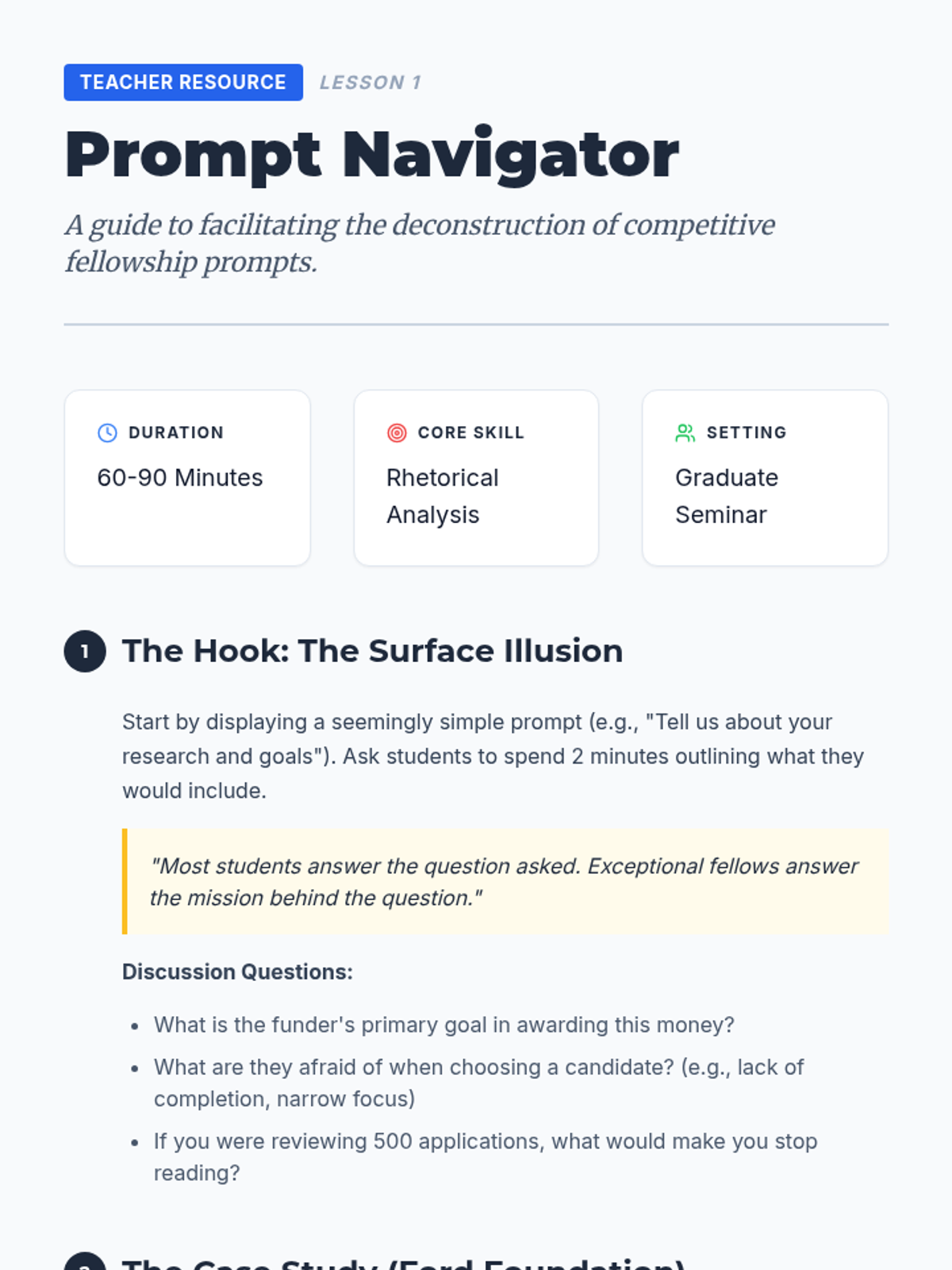
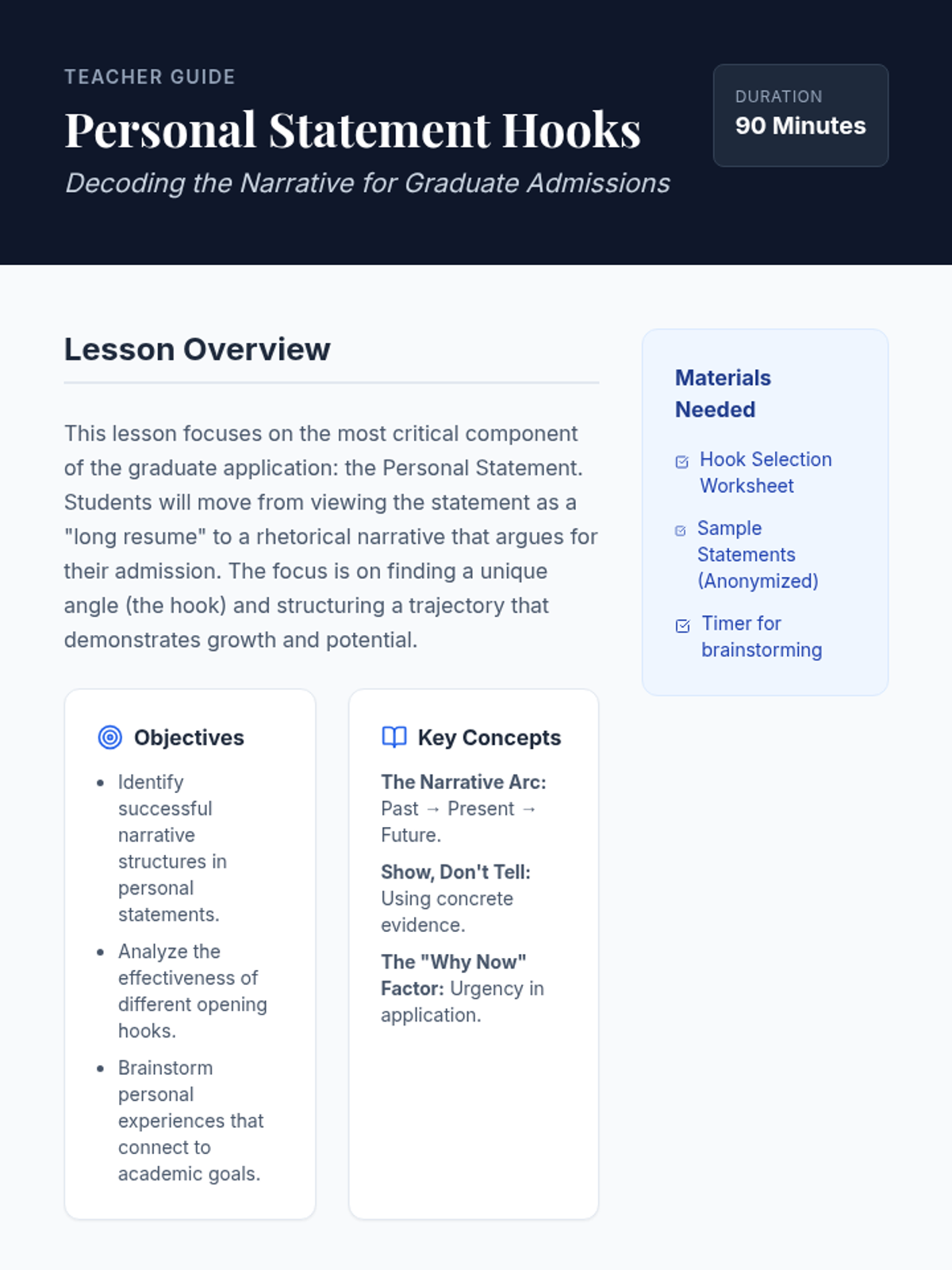
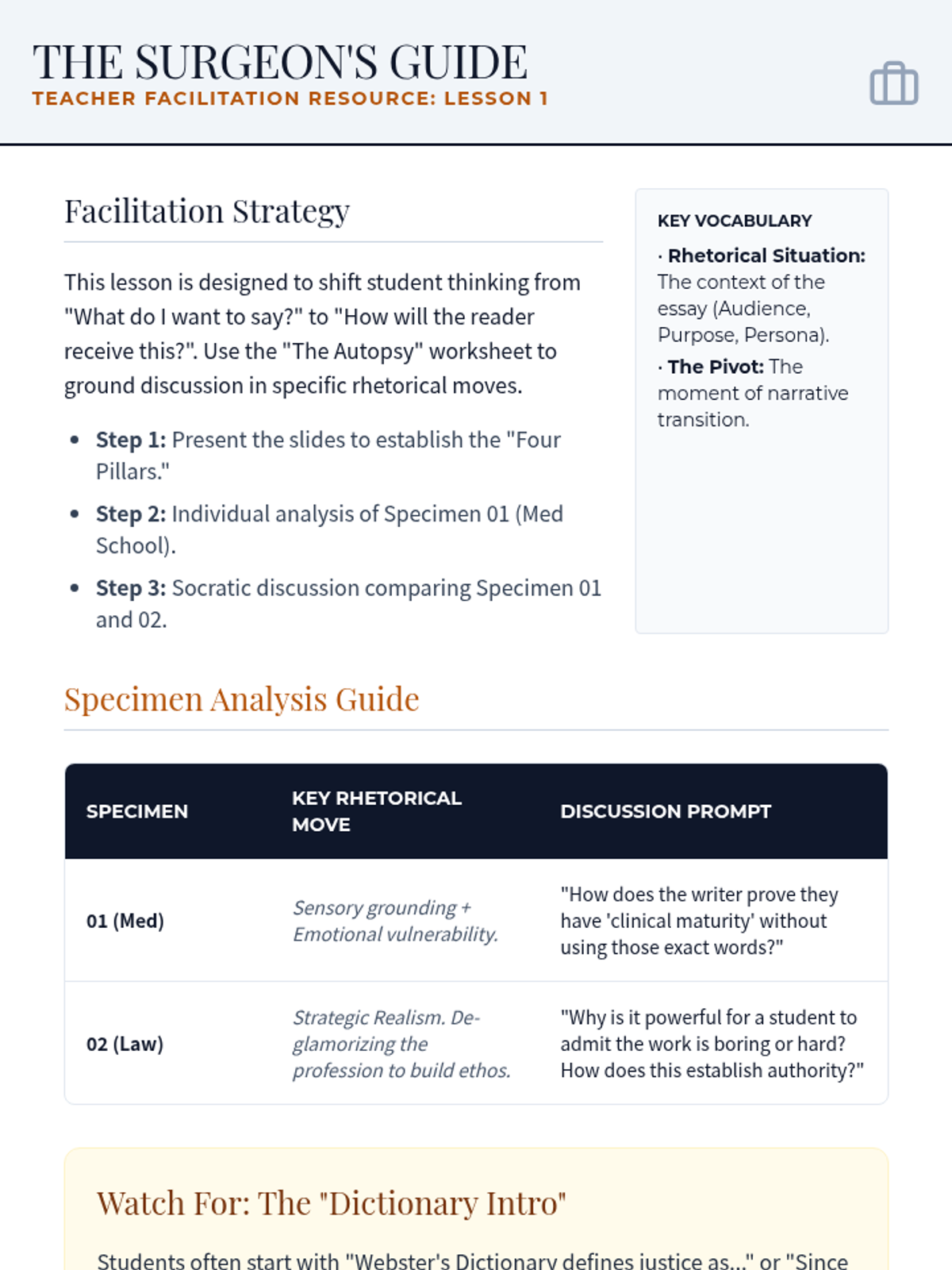
A comprehensive sequence for graduate students focusing on the craft of personal statements for competitive fellowships. Students will learn to deconstruct complex prompts, mine their life experiences for compelling hooks, bridge their past achievements with future goals, and tailor their narratives for diverse funding audiences through rigorous revision.
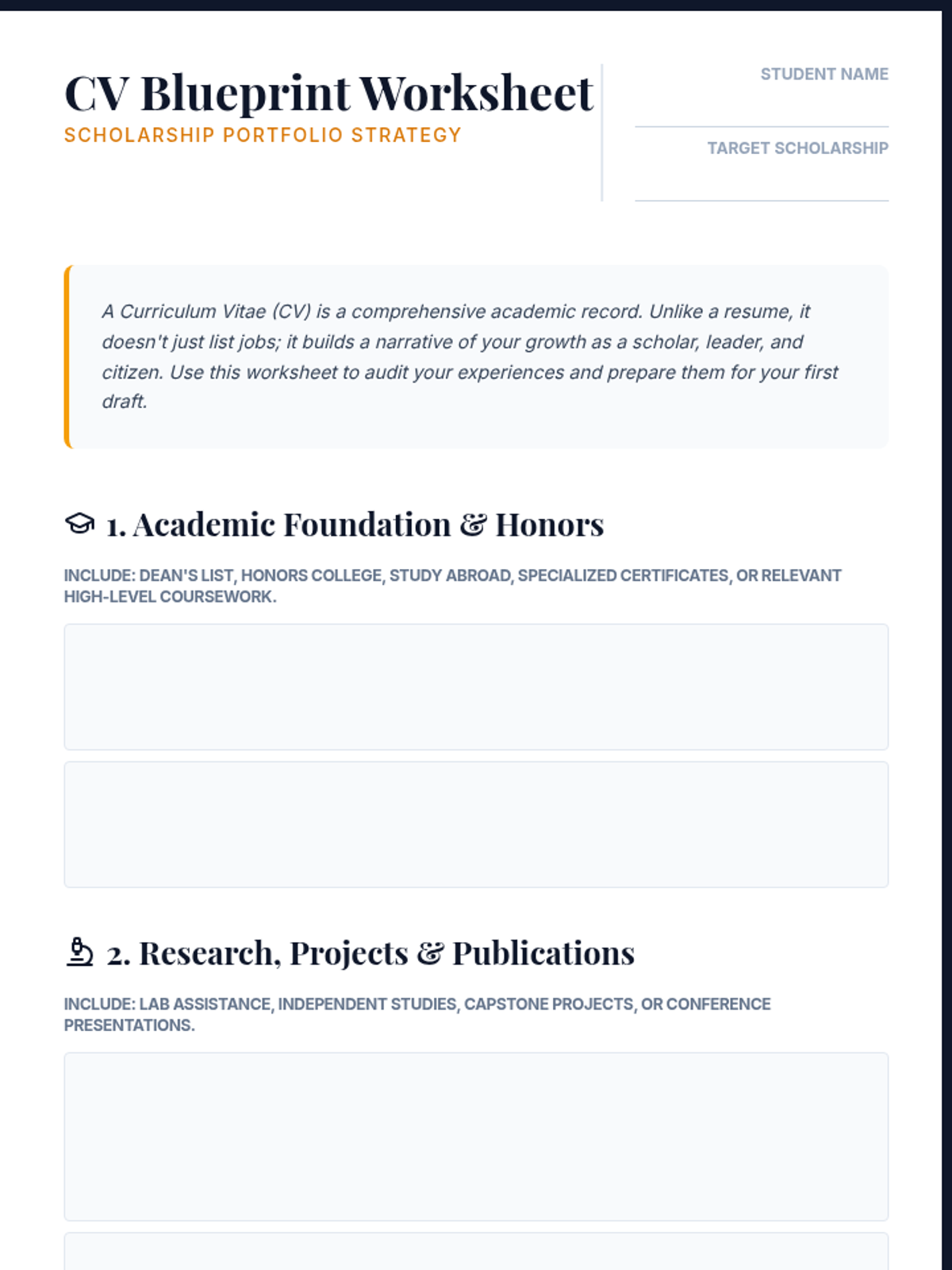
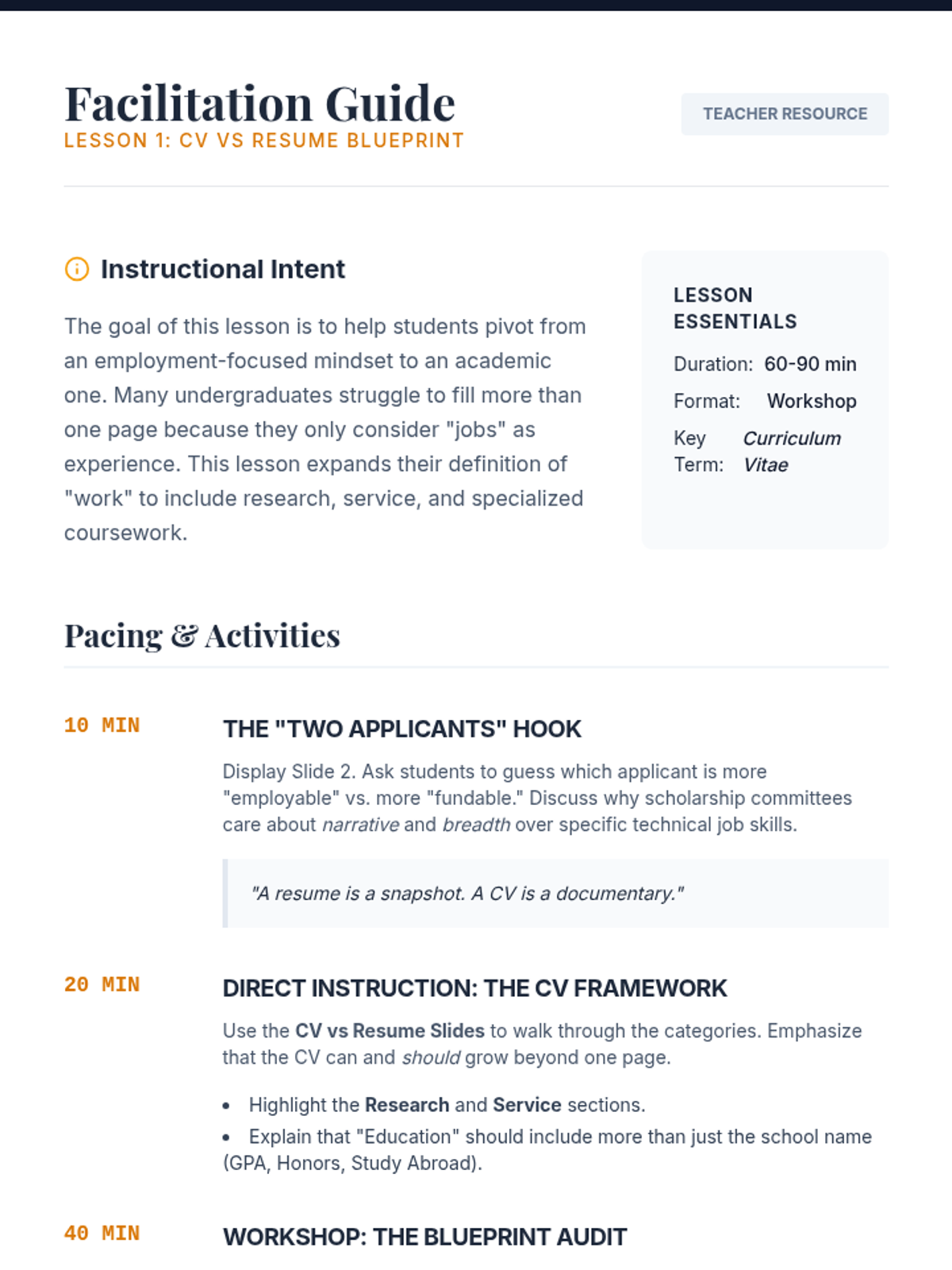
This sequence guides undergraduate students through building a professional scholarship portfolio and mastering the interview process. Students will transition from document creation (CVs, brag sheets) to interpersonal communication (STAR method, mock interviews), ensuring they present a cohesive and professional narrative to scholarship committees.
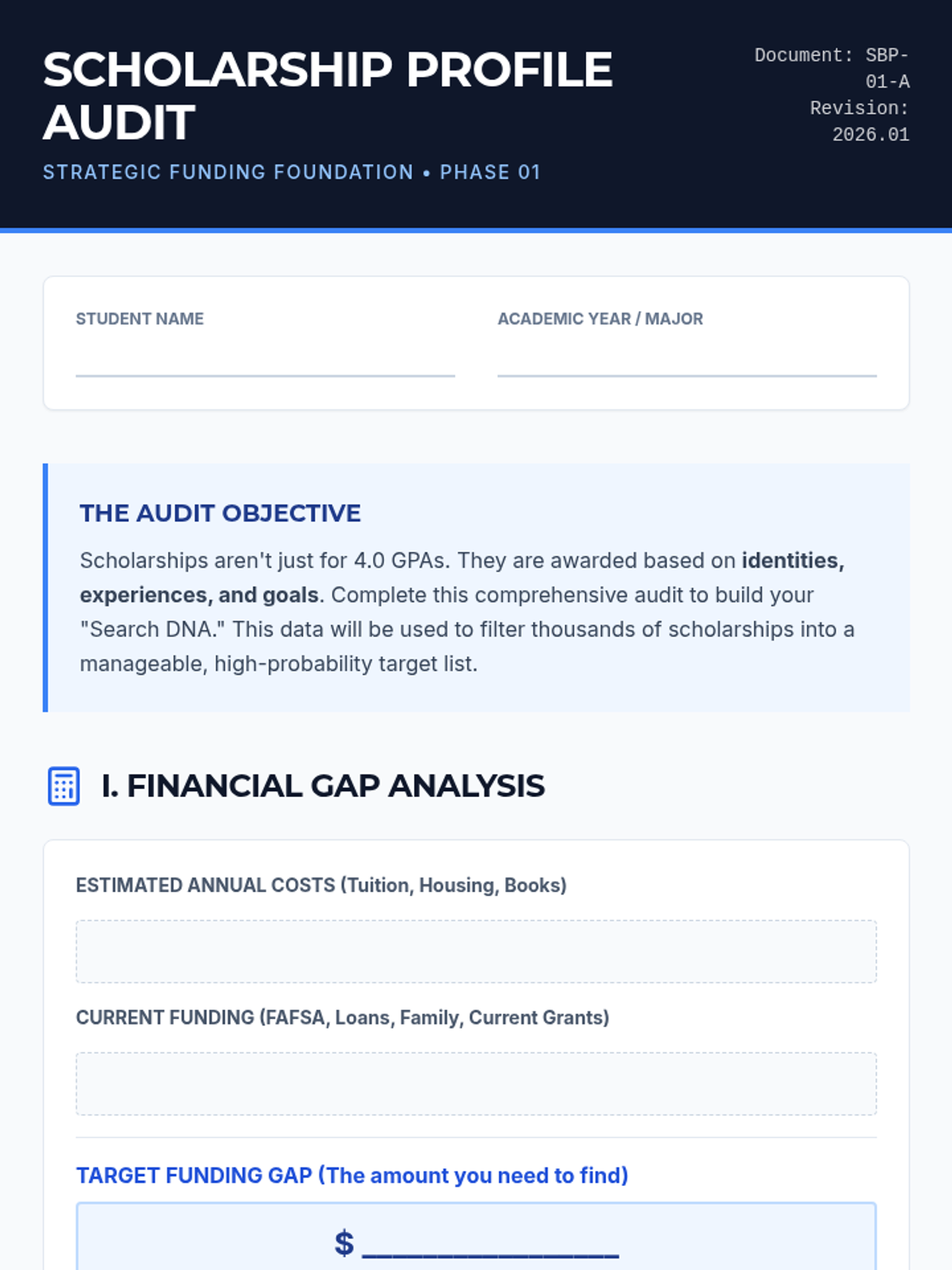
A comprehensive guide for undergraduate students to systematically search for, evaluate, and manage scholarship applications. The sequence covers self-auditing, database navigation, ROI analysis, project management, and donor mission alignment.
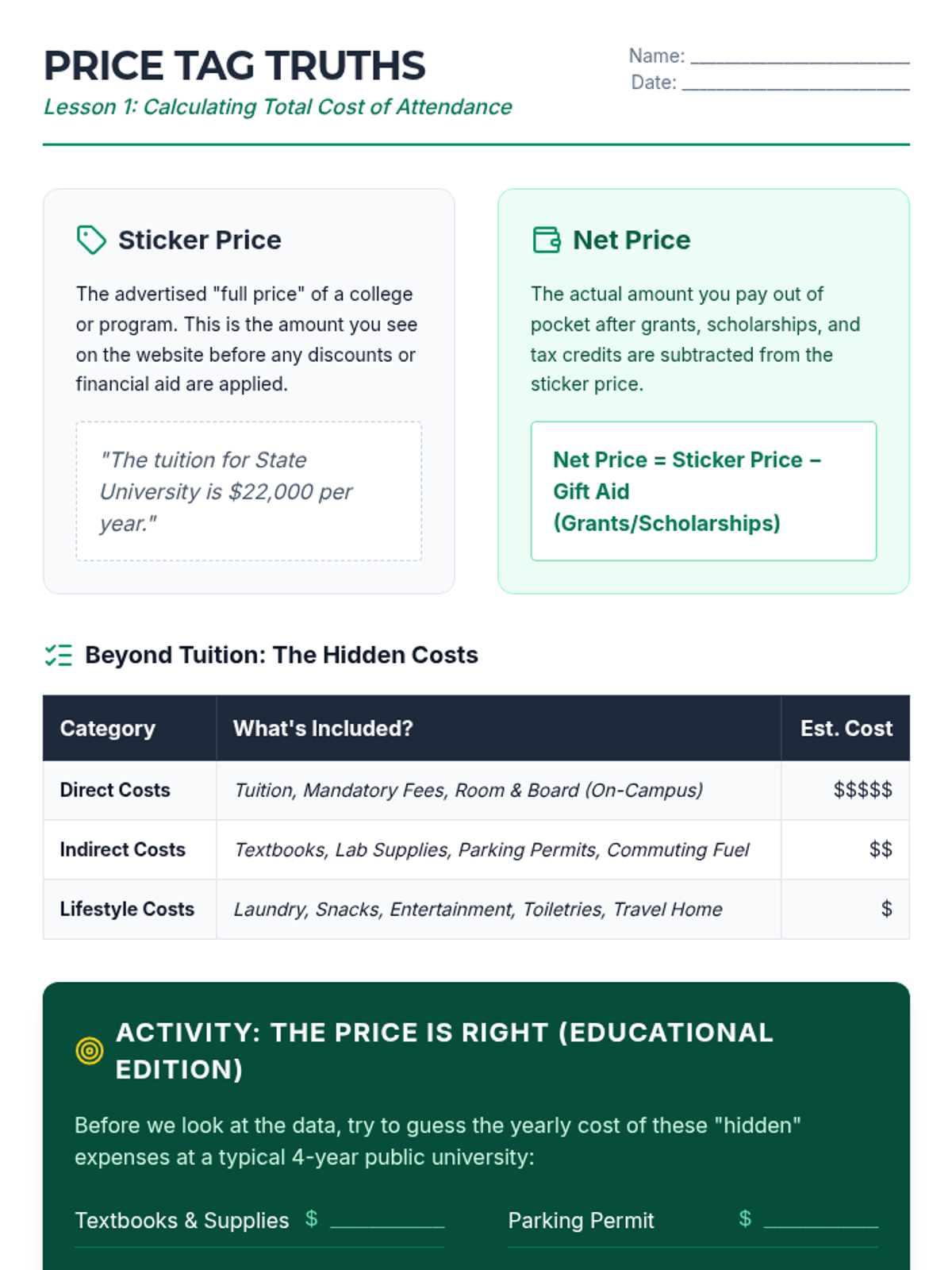
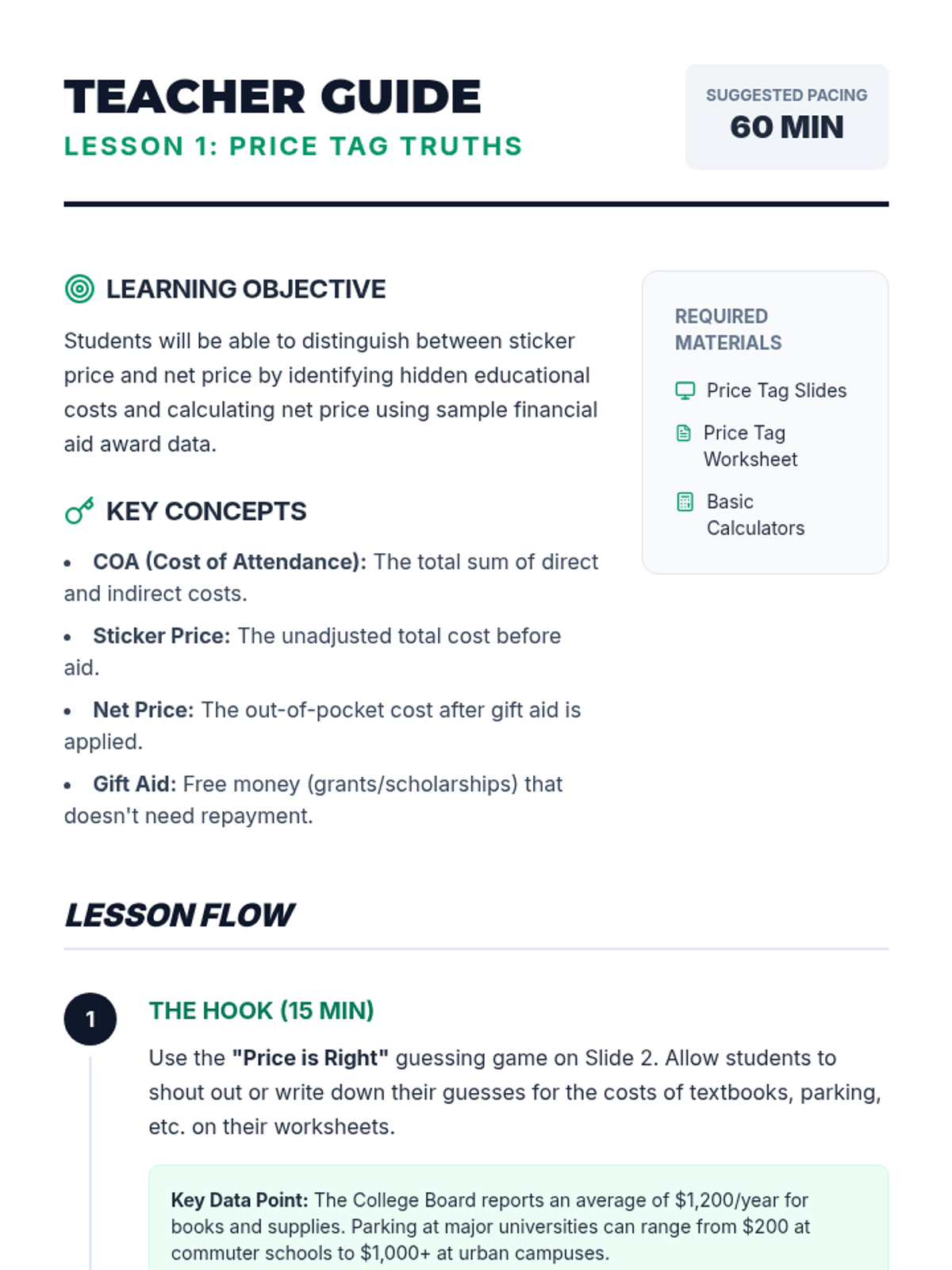
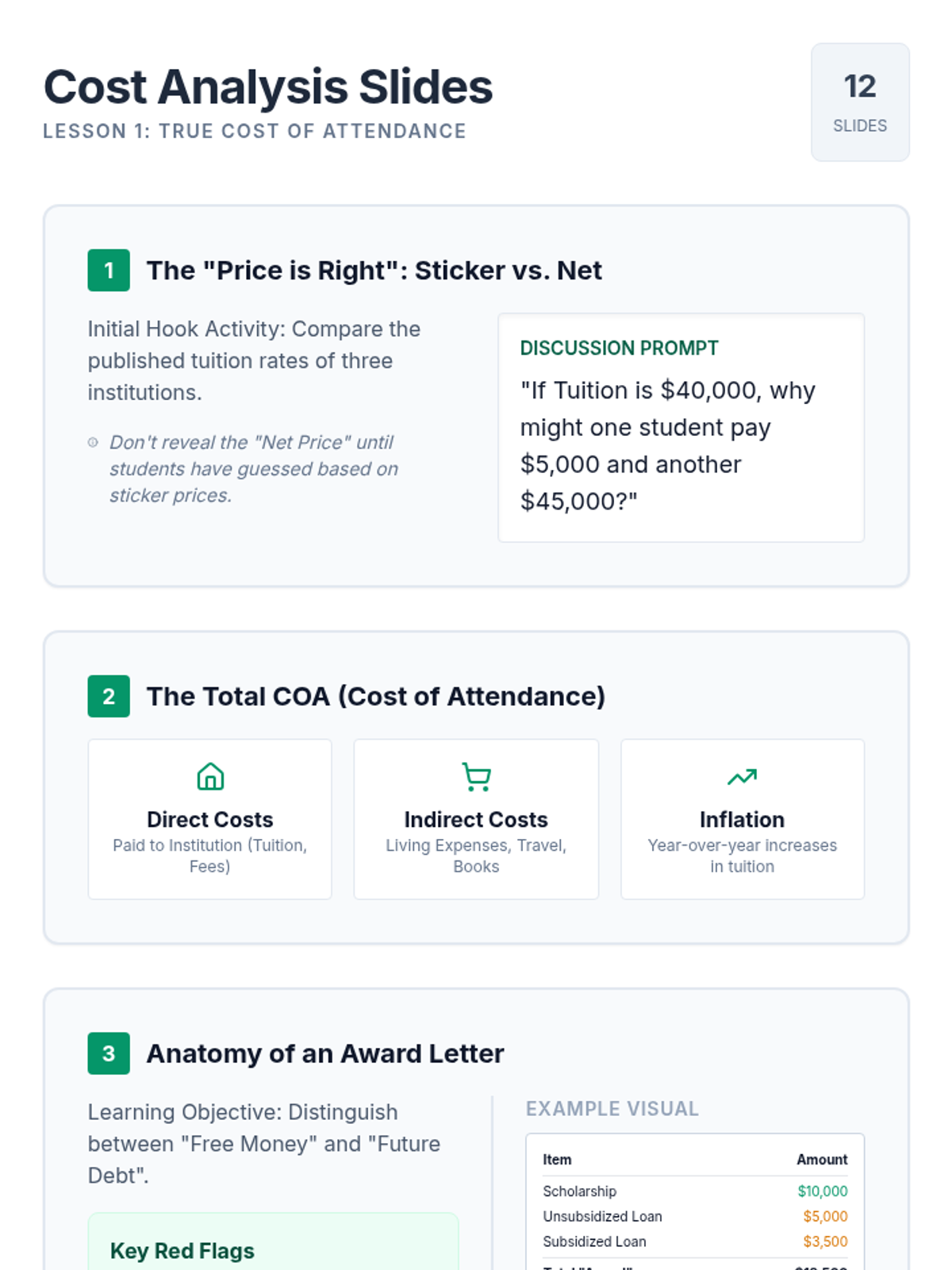
Students analyze the financial viability of post-secondary education by calculating total costs, exploring financial aid, and projecting return on investment based on career earnings. The sequence culminates in a strategic financial plan for a chosen educational path.
A comprehensive series on evaluating post-secondary education through a financial lens, focusing on ROI, funding mechanisms, opportunity costs, and long-term financial planning for undergraduate students.
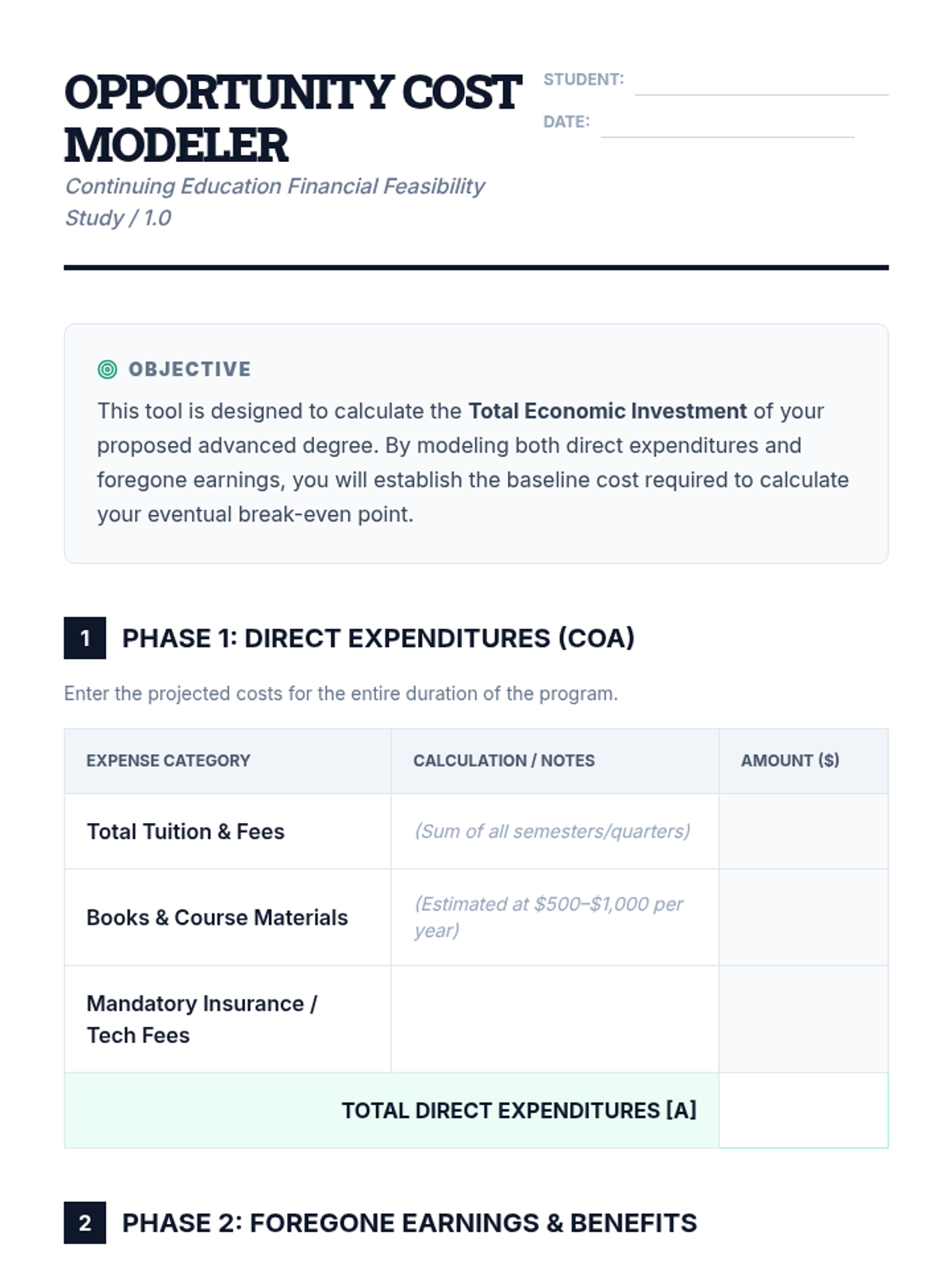
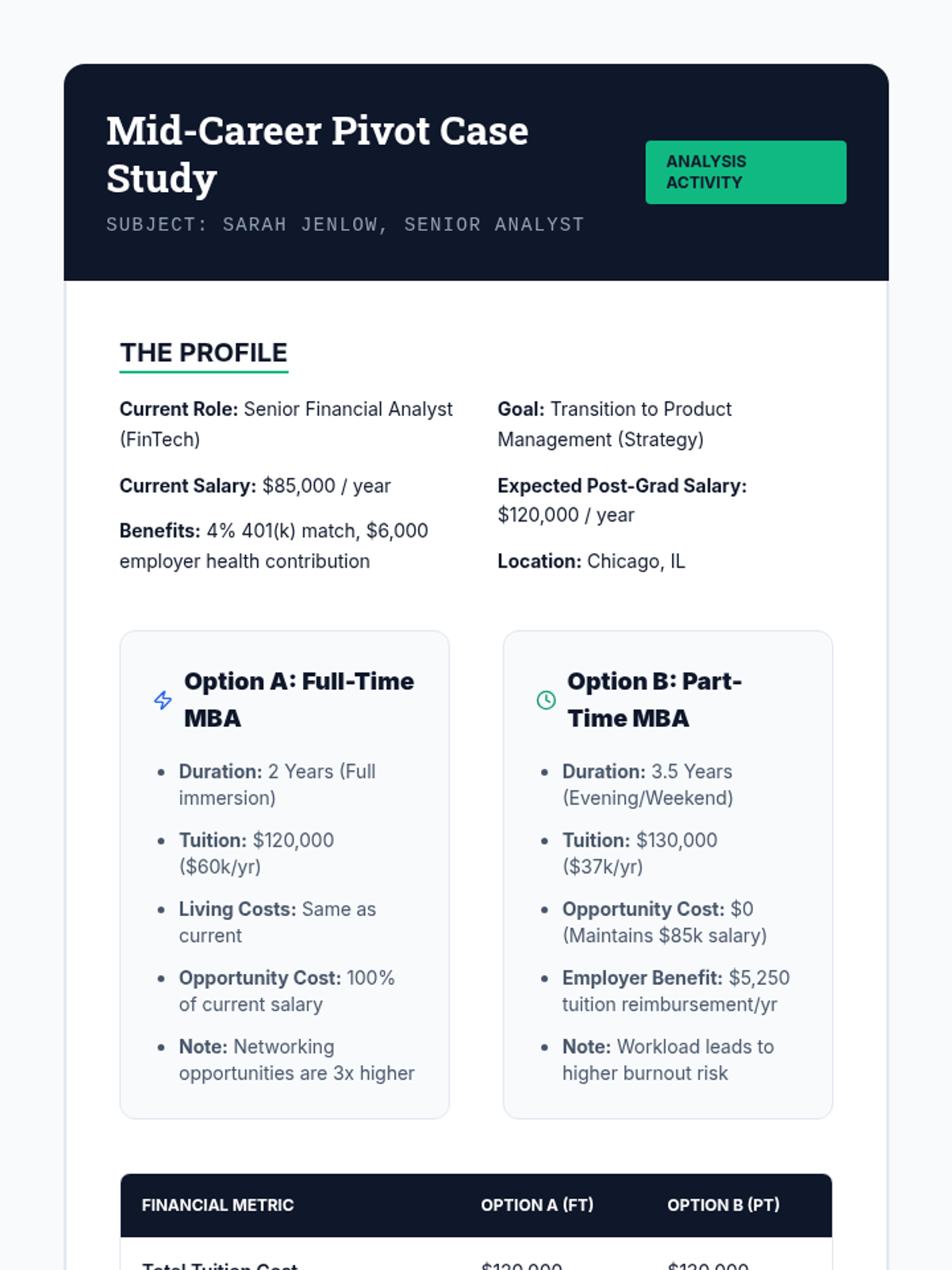
This sequence equips graduate students with the quantitative tools and financial literacy needed to assess the true ROI of pursuing further advanced education. Students will model opportunity costs, analyze funding strategies, and forecast break-even points to create a comprehensive financial feasibility study.
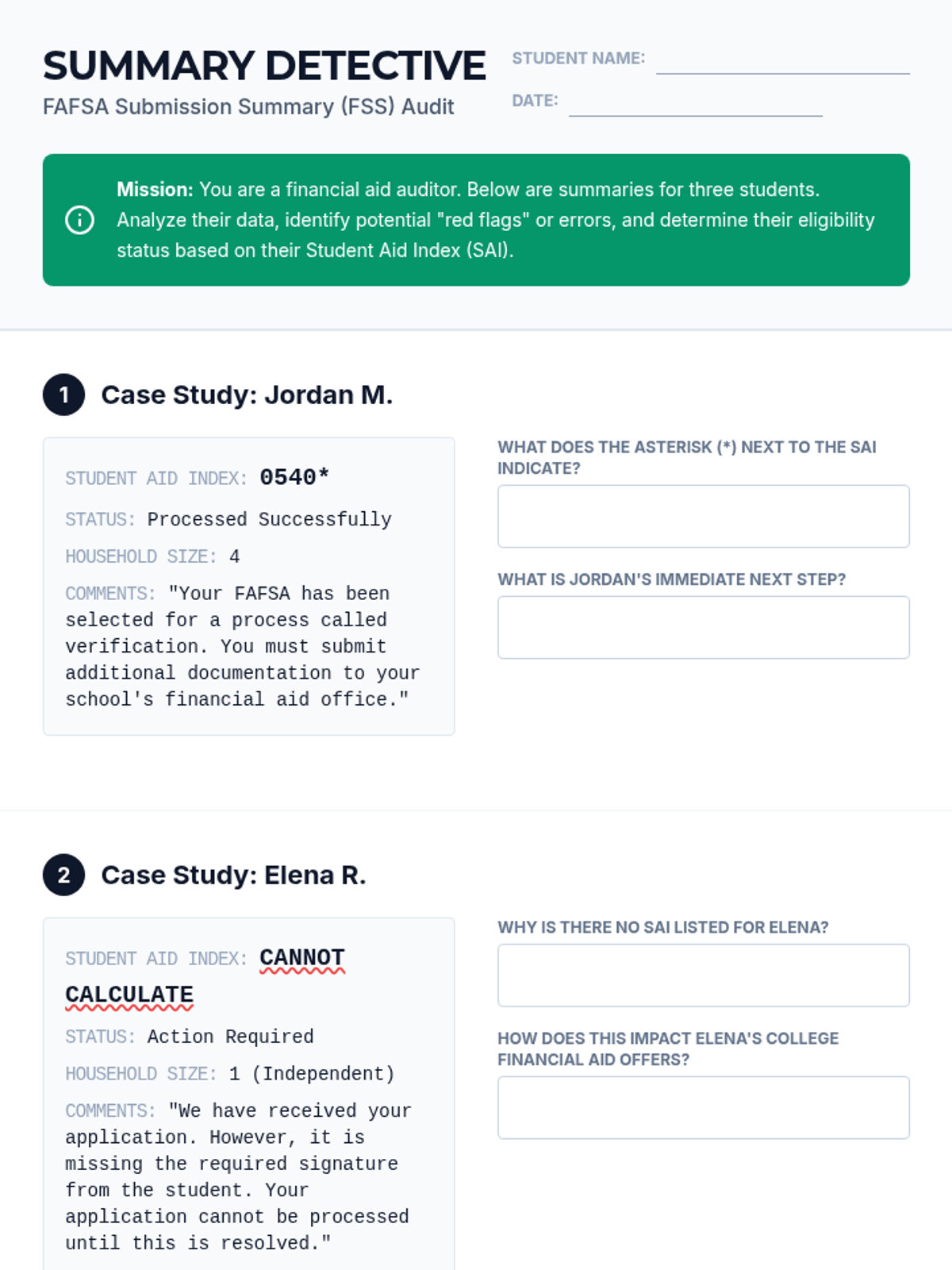
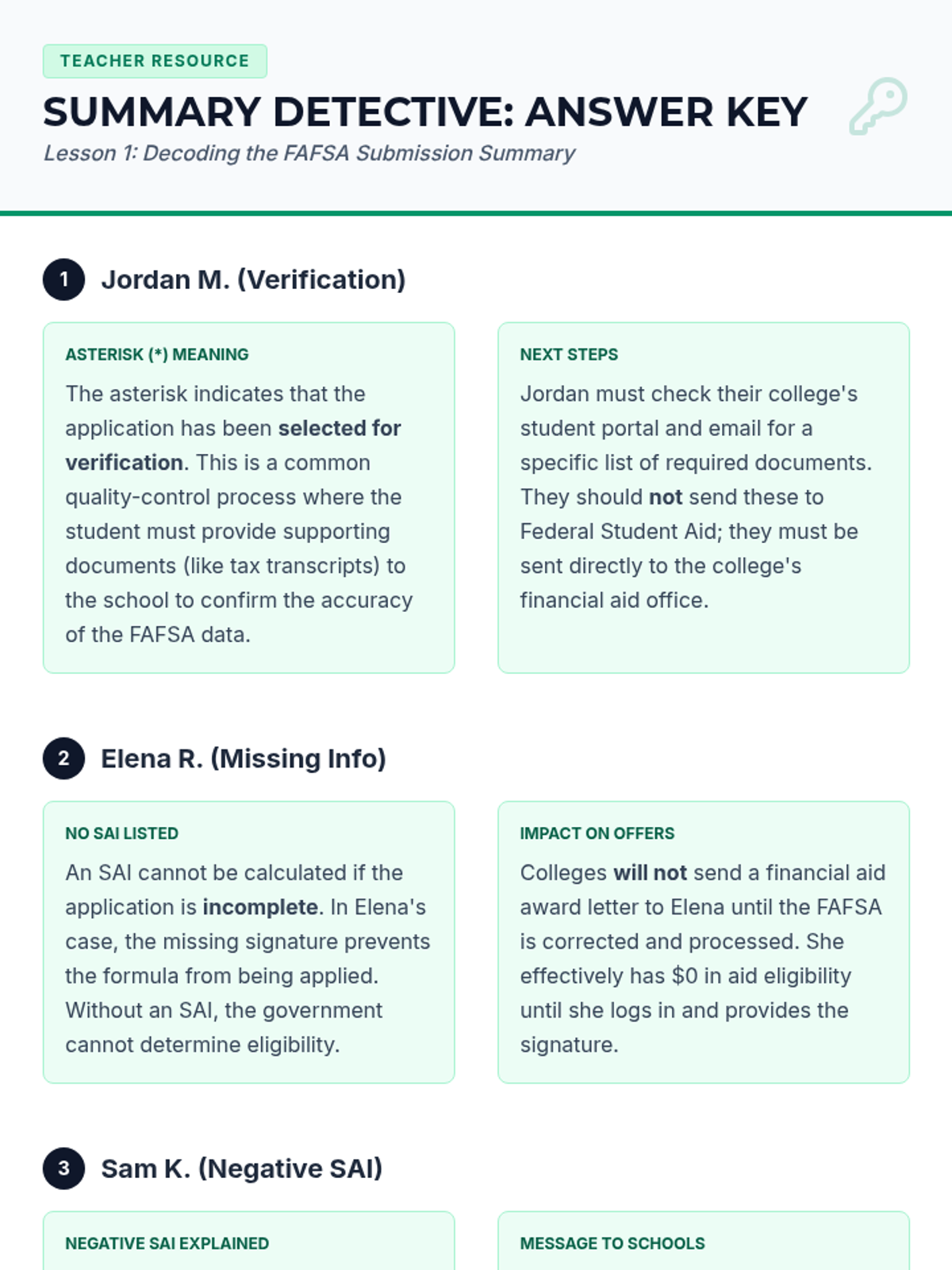
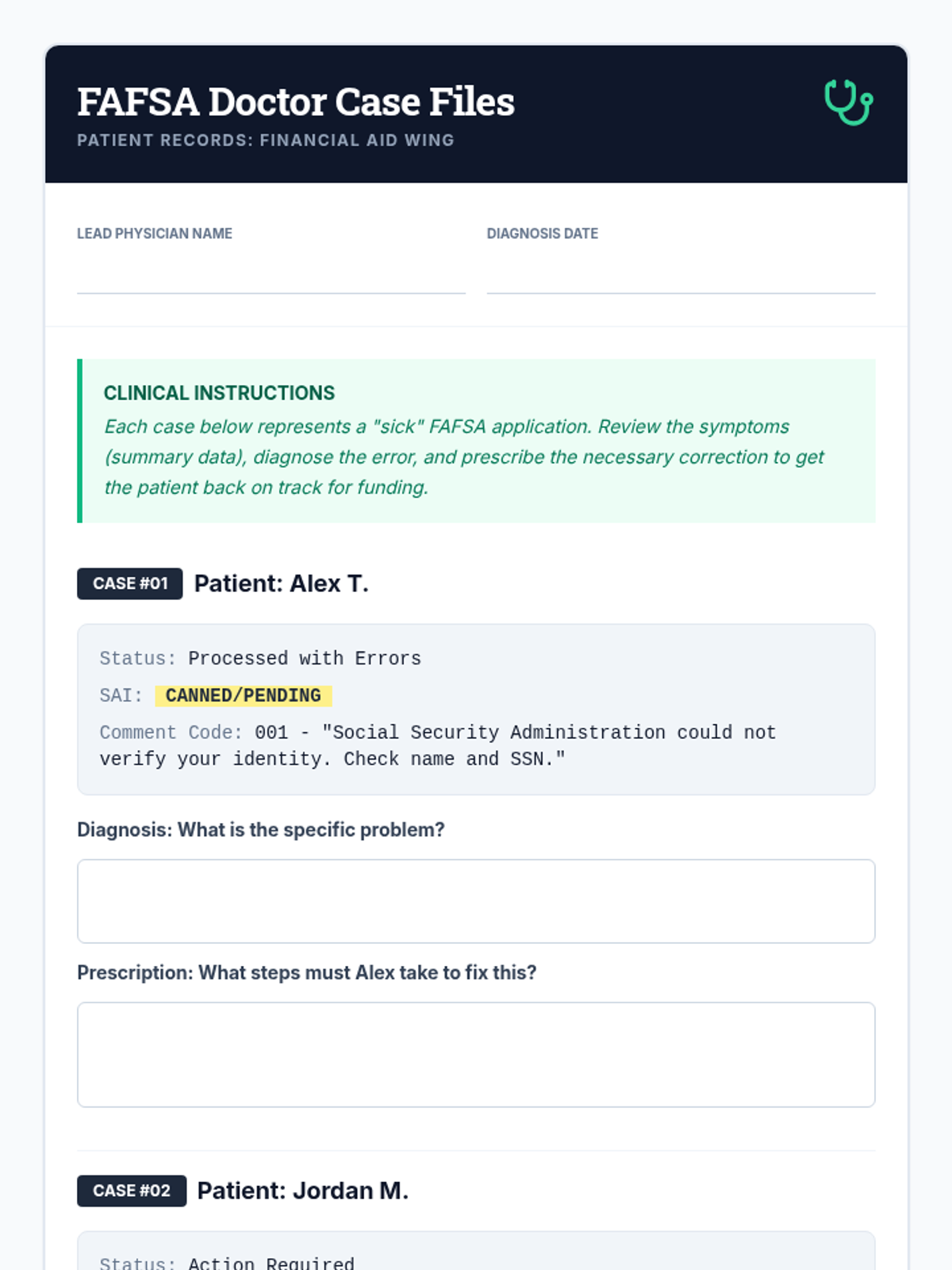
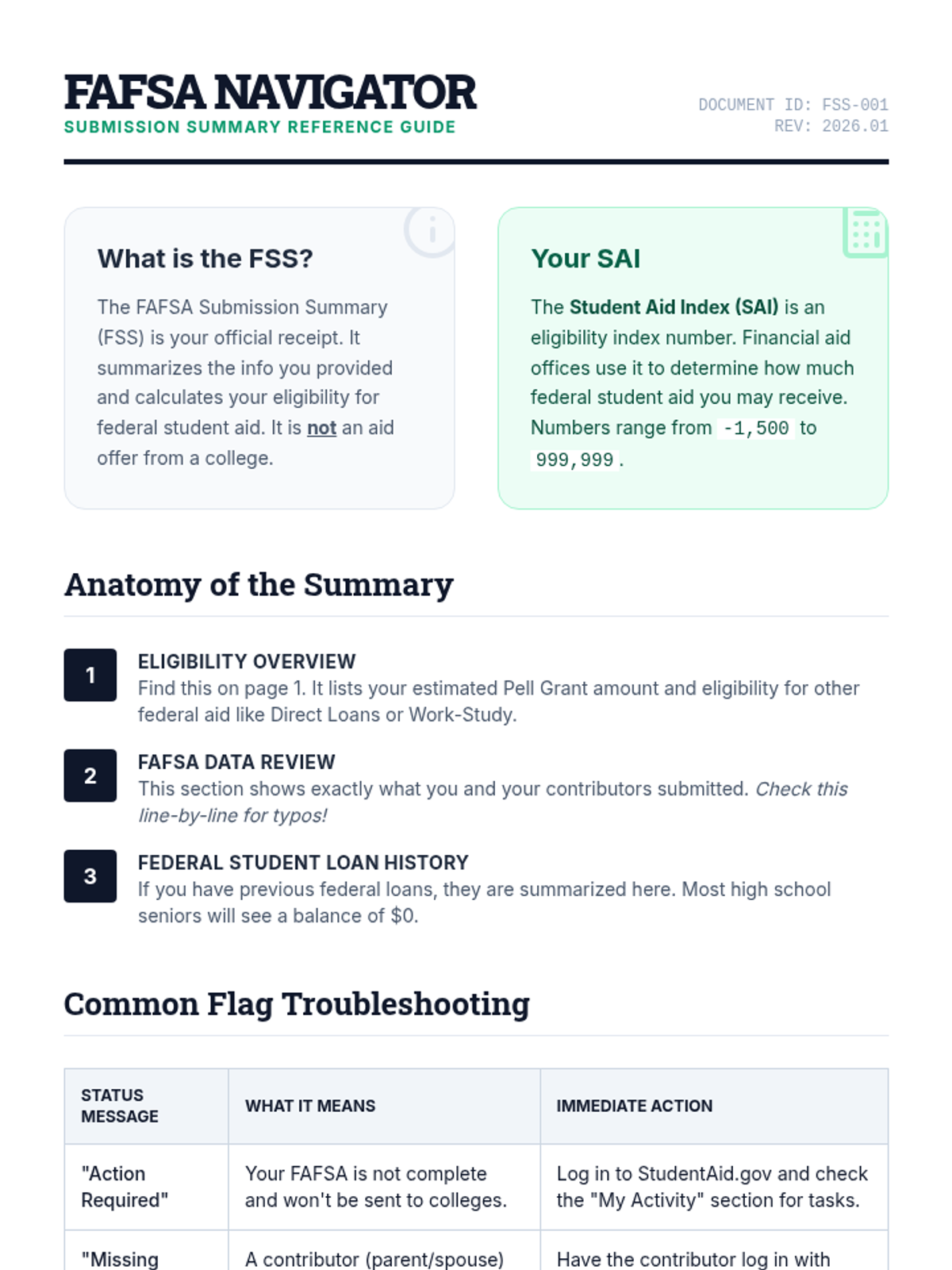
A comprehensive sequence designed for undergraduate students to interpret FAFSA output, compare financial aid offers, and develop a strategic plan for college affordability with minimal debt.
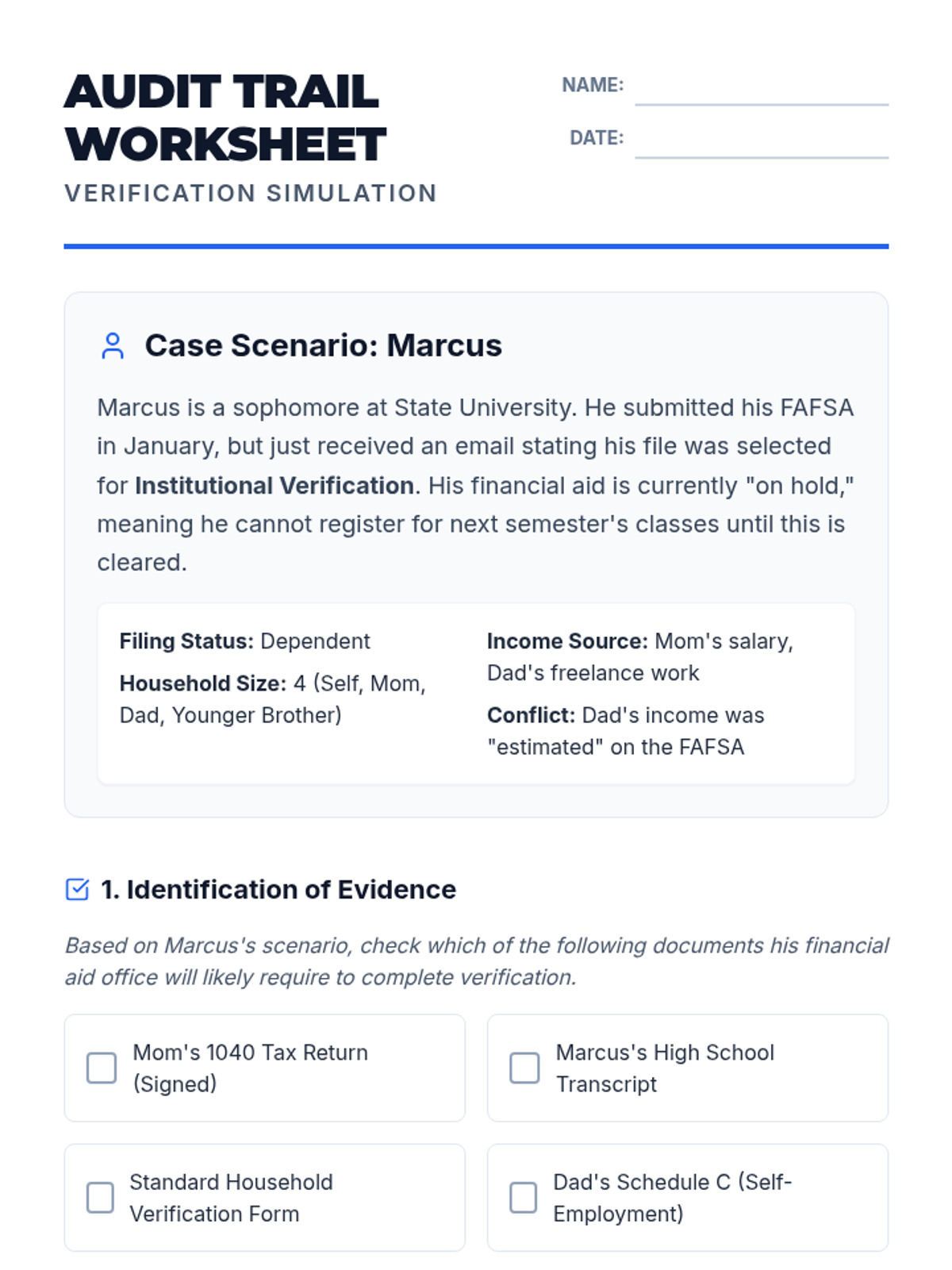
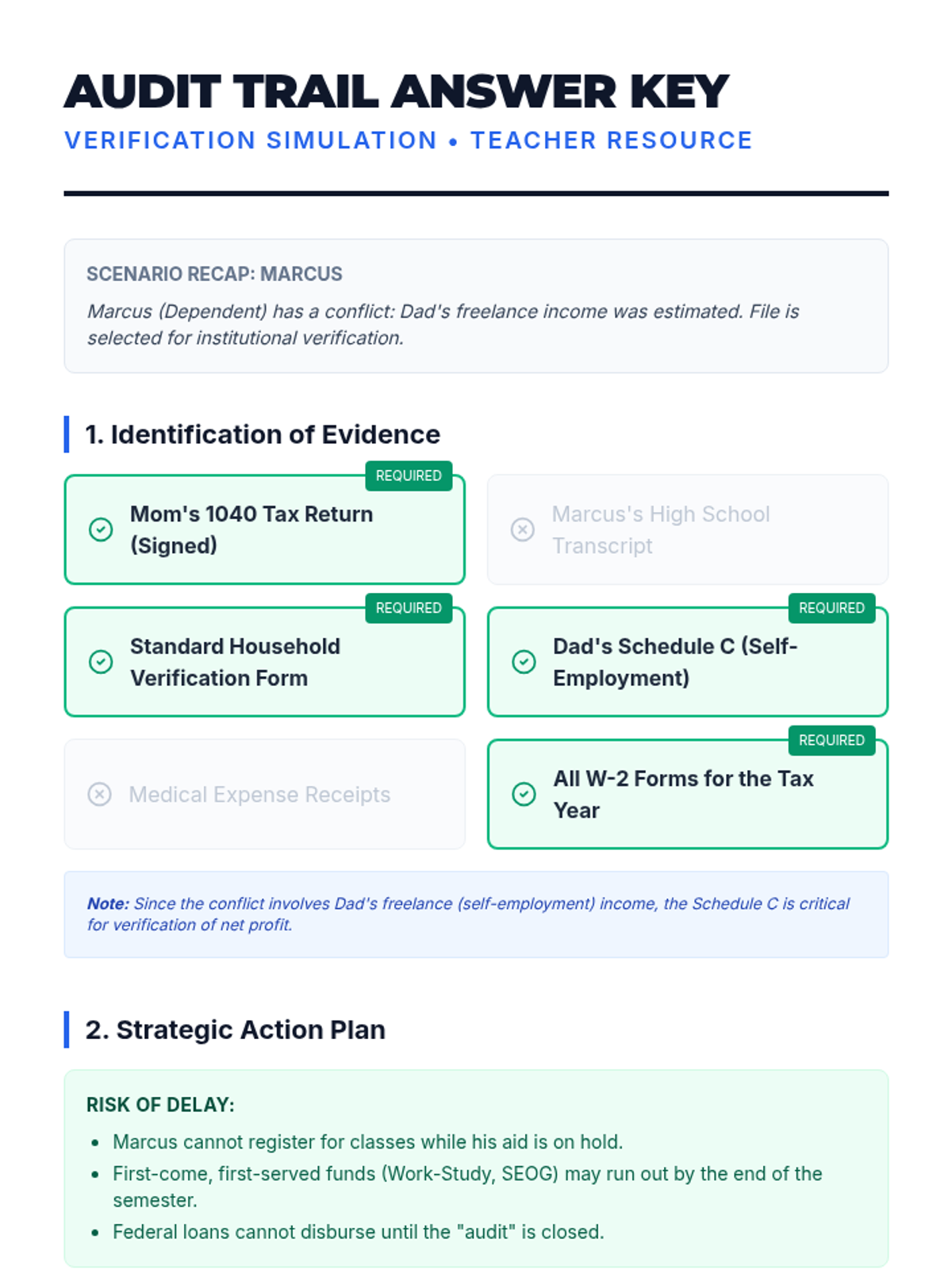
This sequence guides students through the post-submission phase of the FAFSA, including interpreting reports, navigating verification, making corrections, appealing for more aid, and comparing financial aid offers.
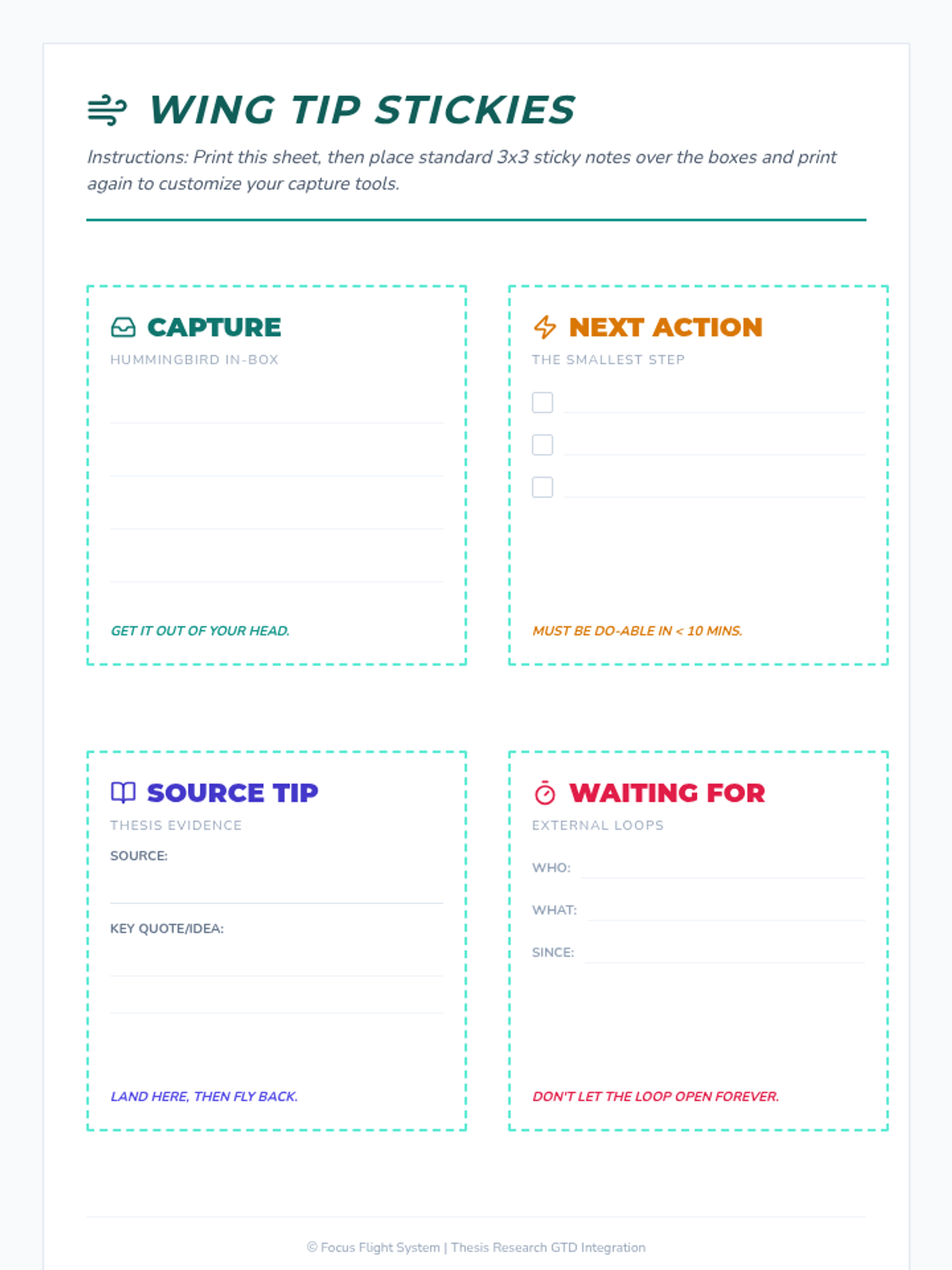
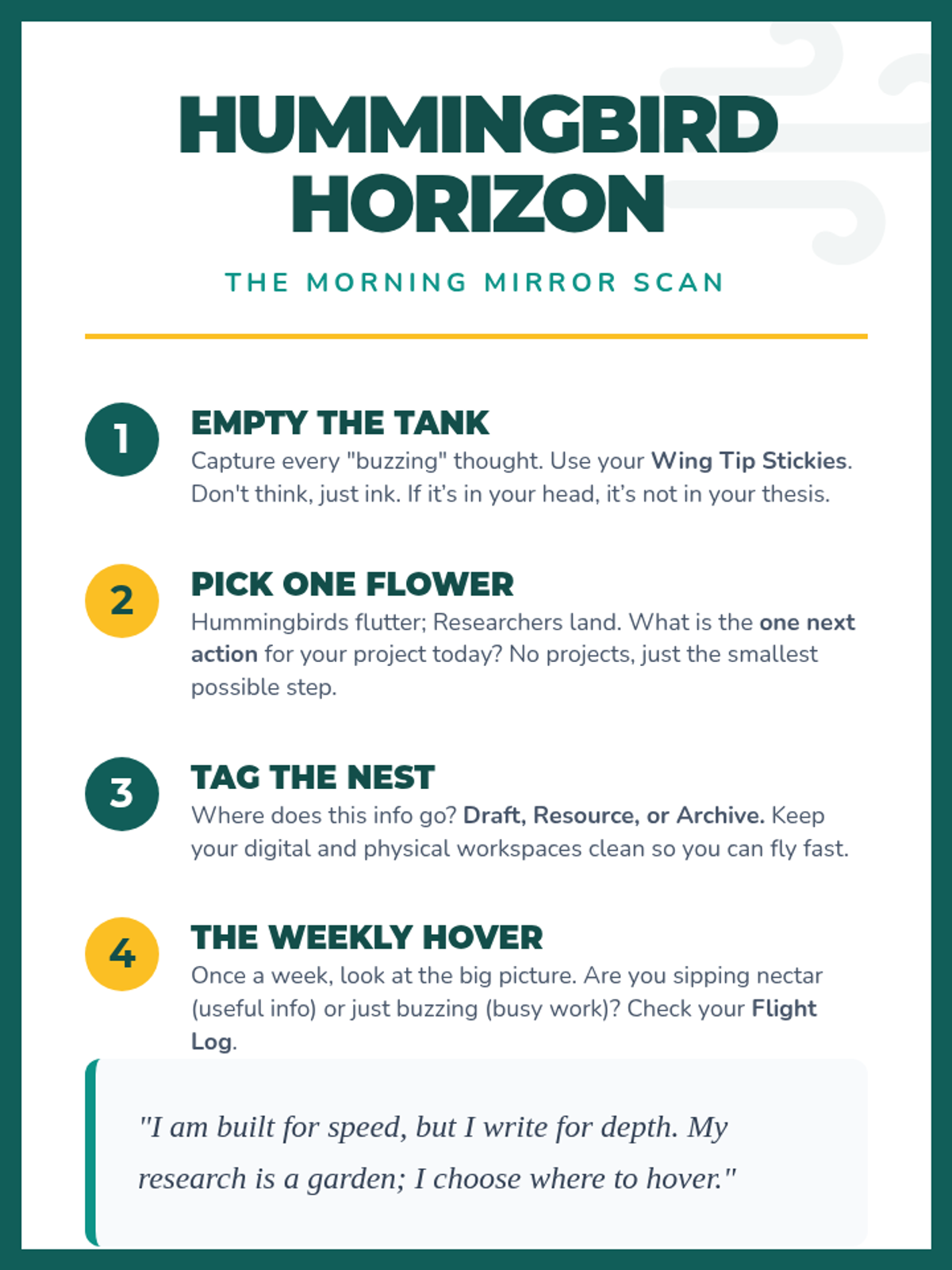
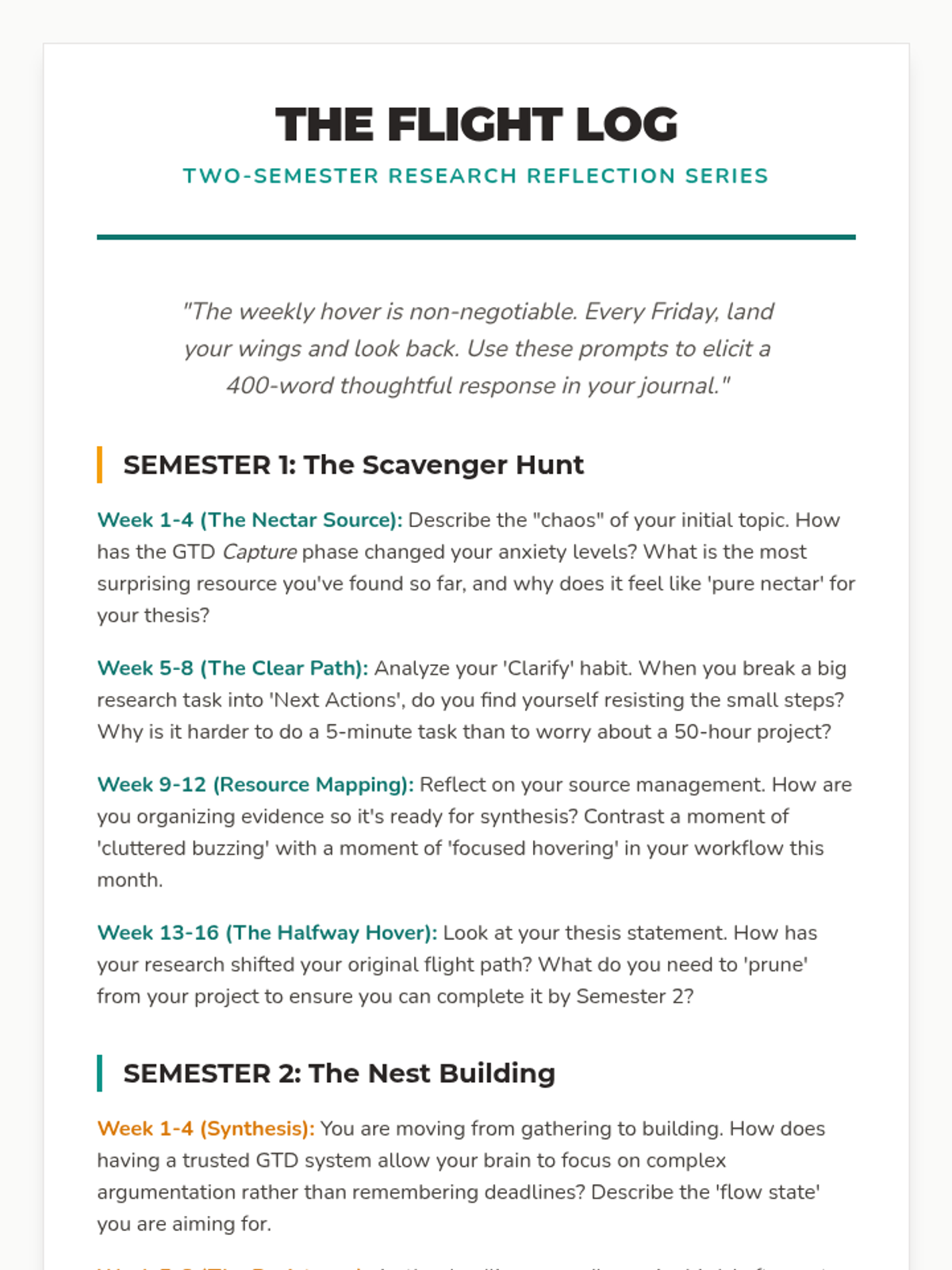
A comprehensive system for young adult researchers to manage long-term projects using GTD principles adapted for high-energy 'hummingbird' chronotypes. Focuses on capturing ideas quickly, maintaining visual momentum, and deep weekly reflection.
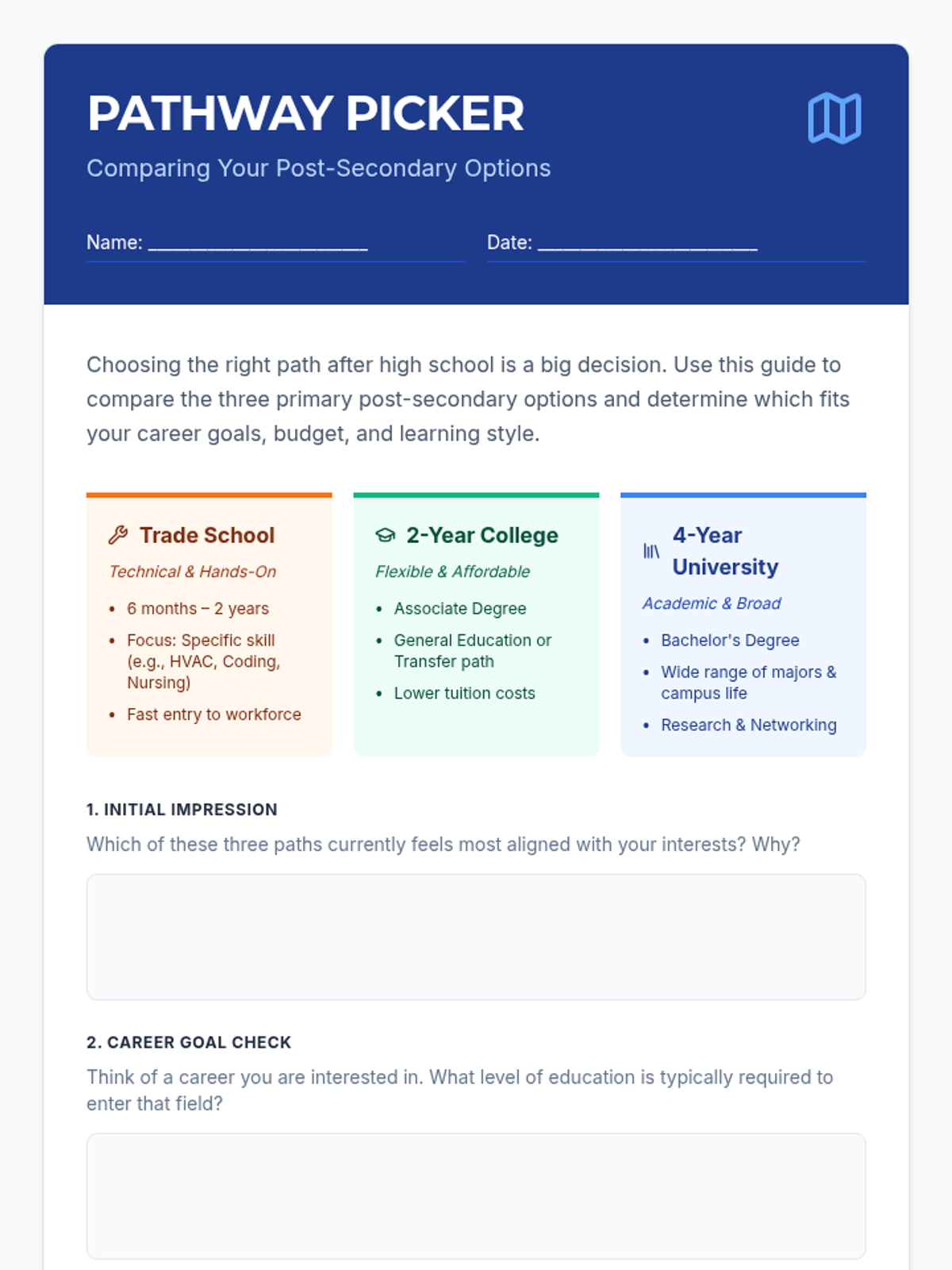
A comprehensive guide to help students navigate the transition from high school to post-secondary life, covering career exploration, college applications, financial aid, and essential life skills.
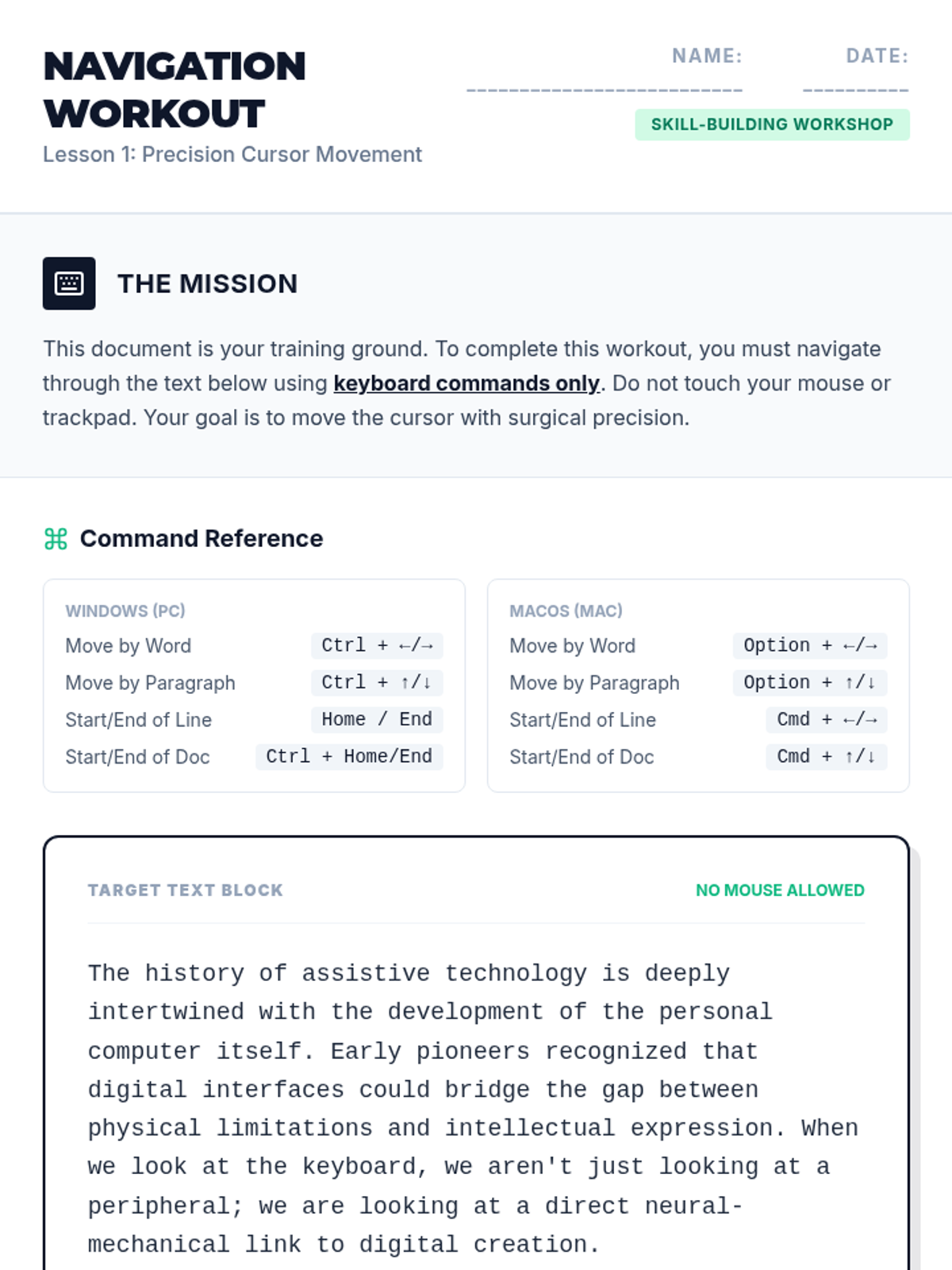
A workshop-style sequence designed to transform document creation and editing into a high-velocity, precision process for undergraduate students. It covers text selection, cursor manipulation, and formatting commands that are essential for academic writing and assistive technology efficiency.
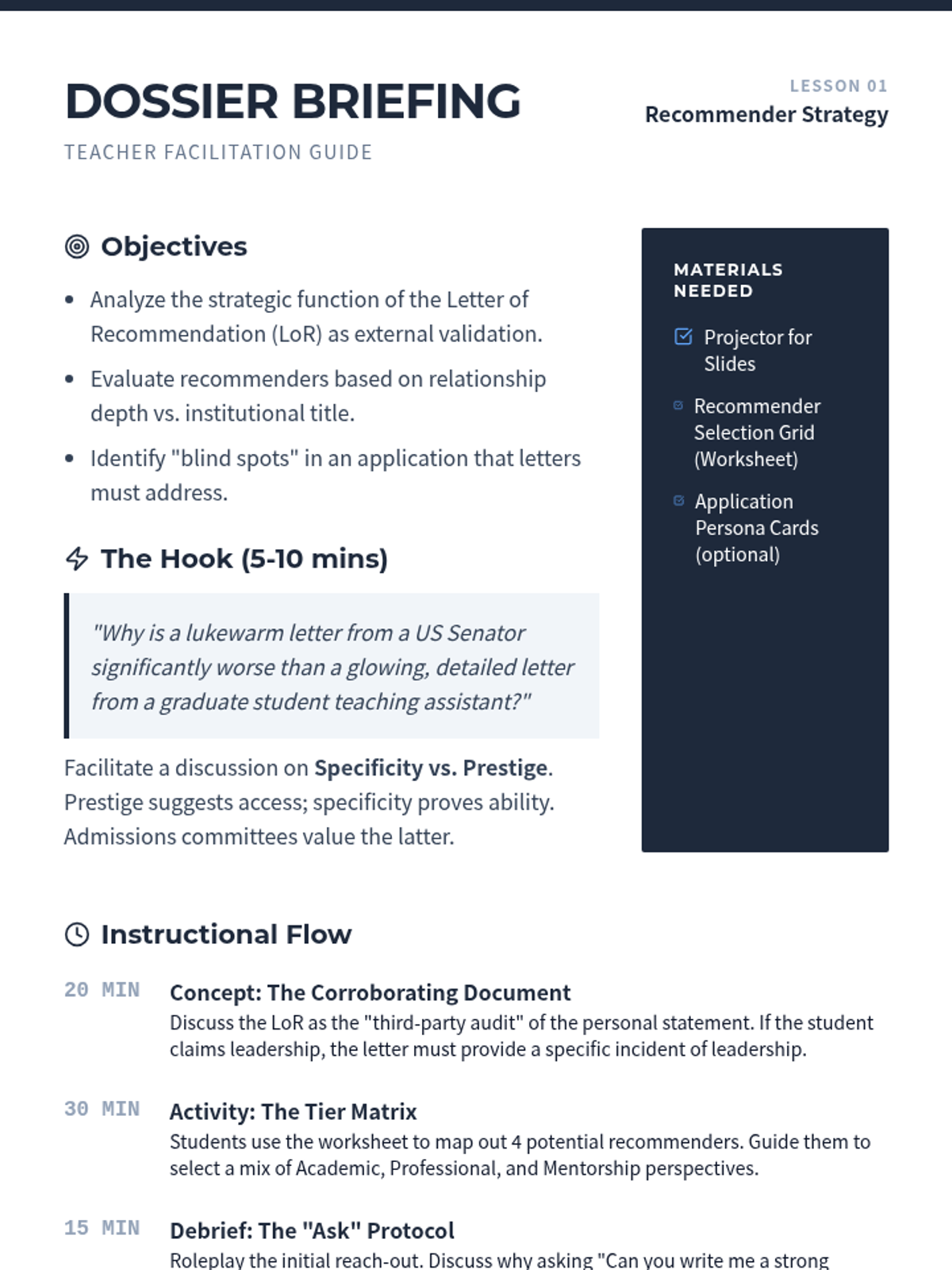
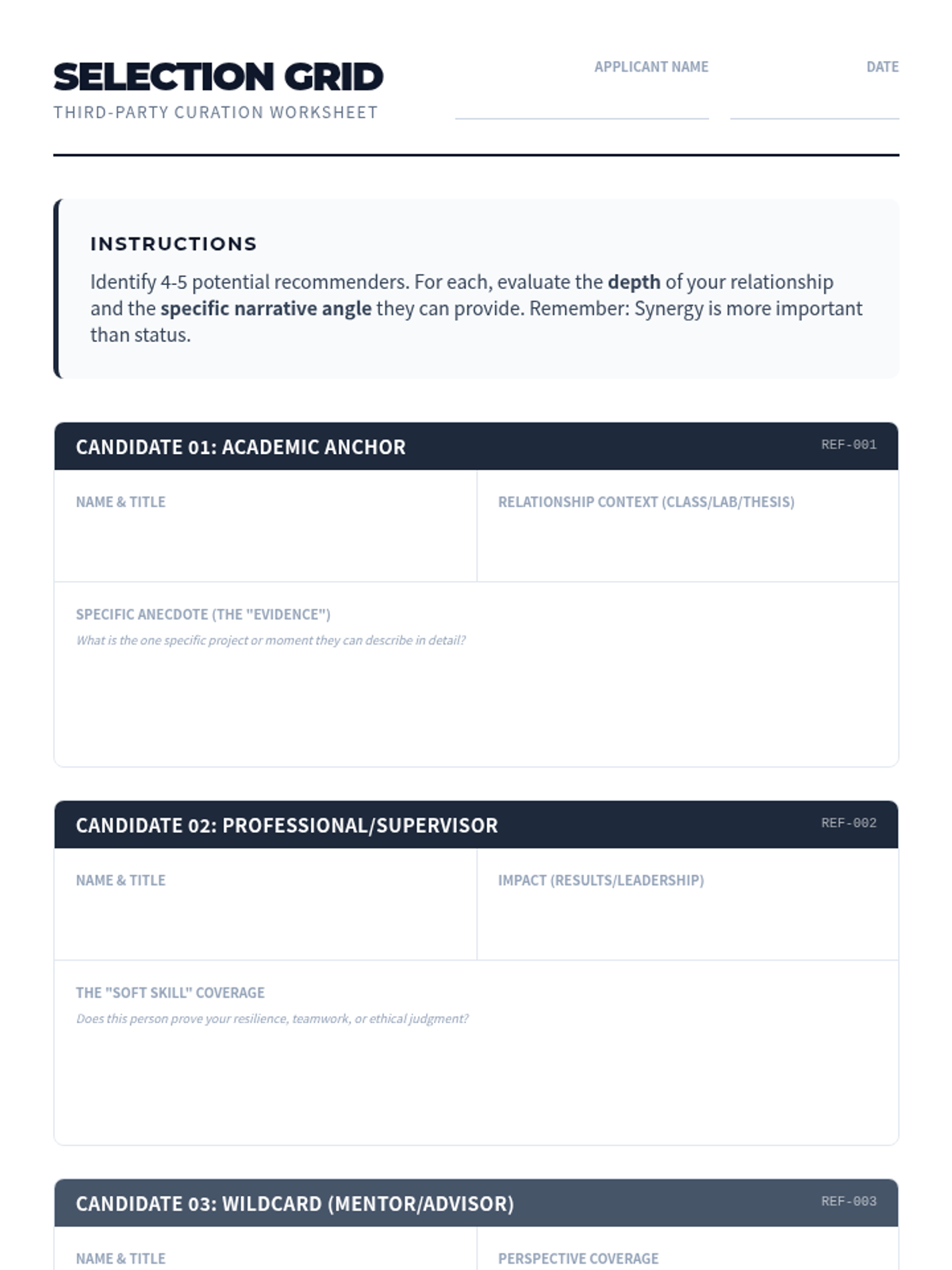
A comprehensive project-based sequence for graduate students focusing on the strategic curation and management of third-party application materials. Students learn to select recommenders, draft 'brag sheets', navigate ethical considerations like FERPA, and audit application packets for narrative consistency.
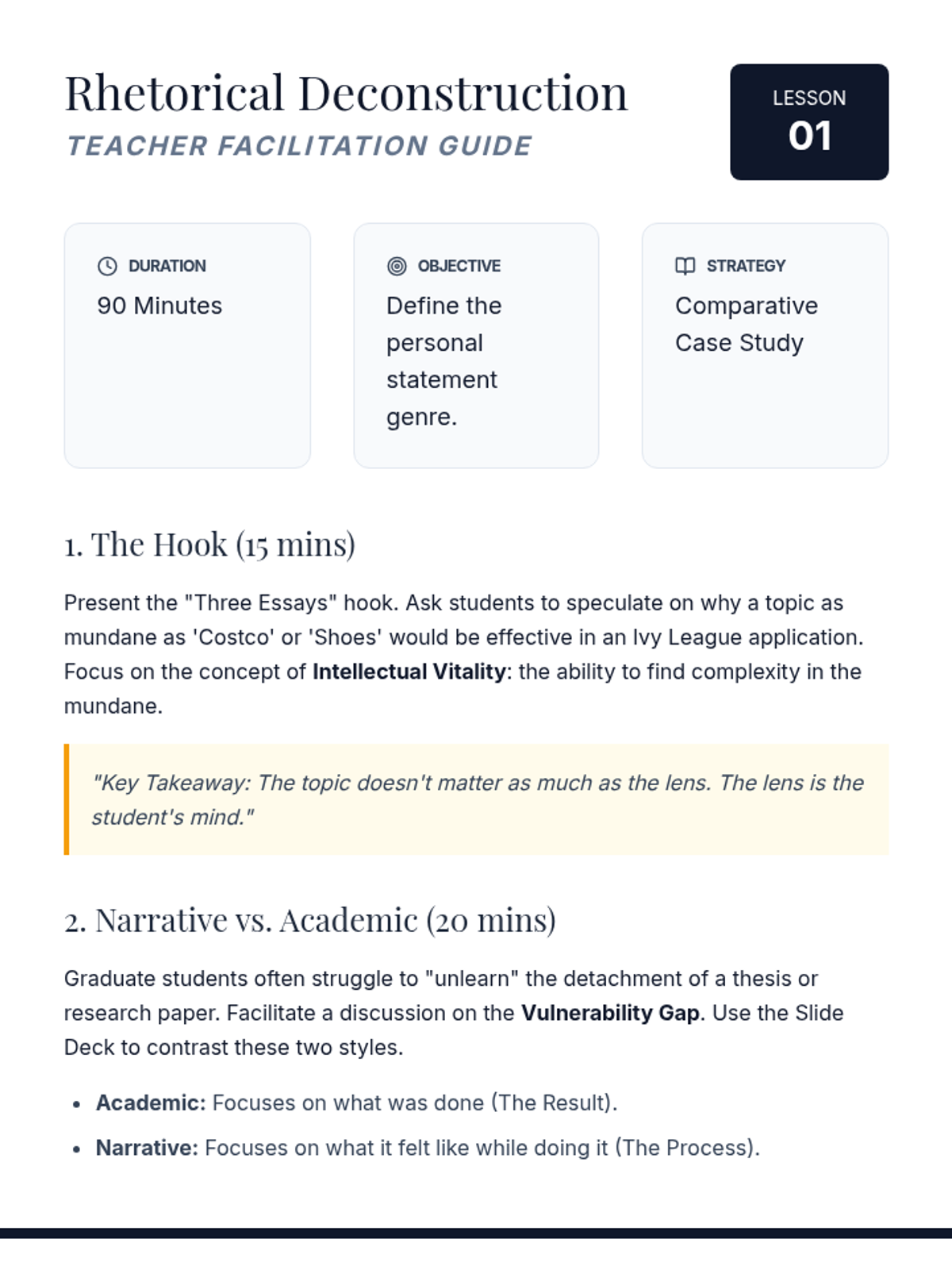
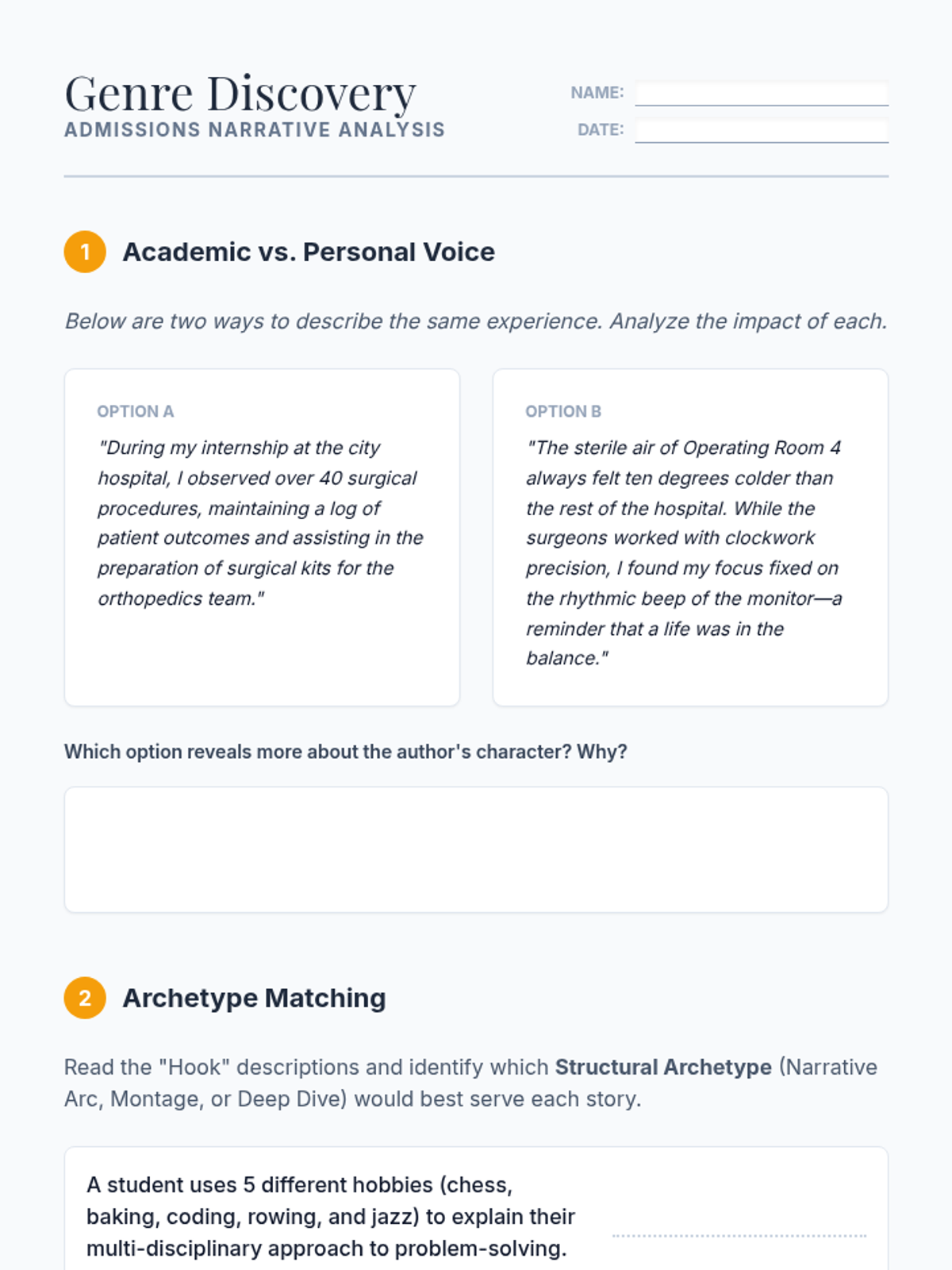
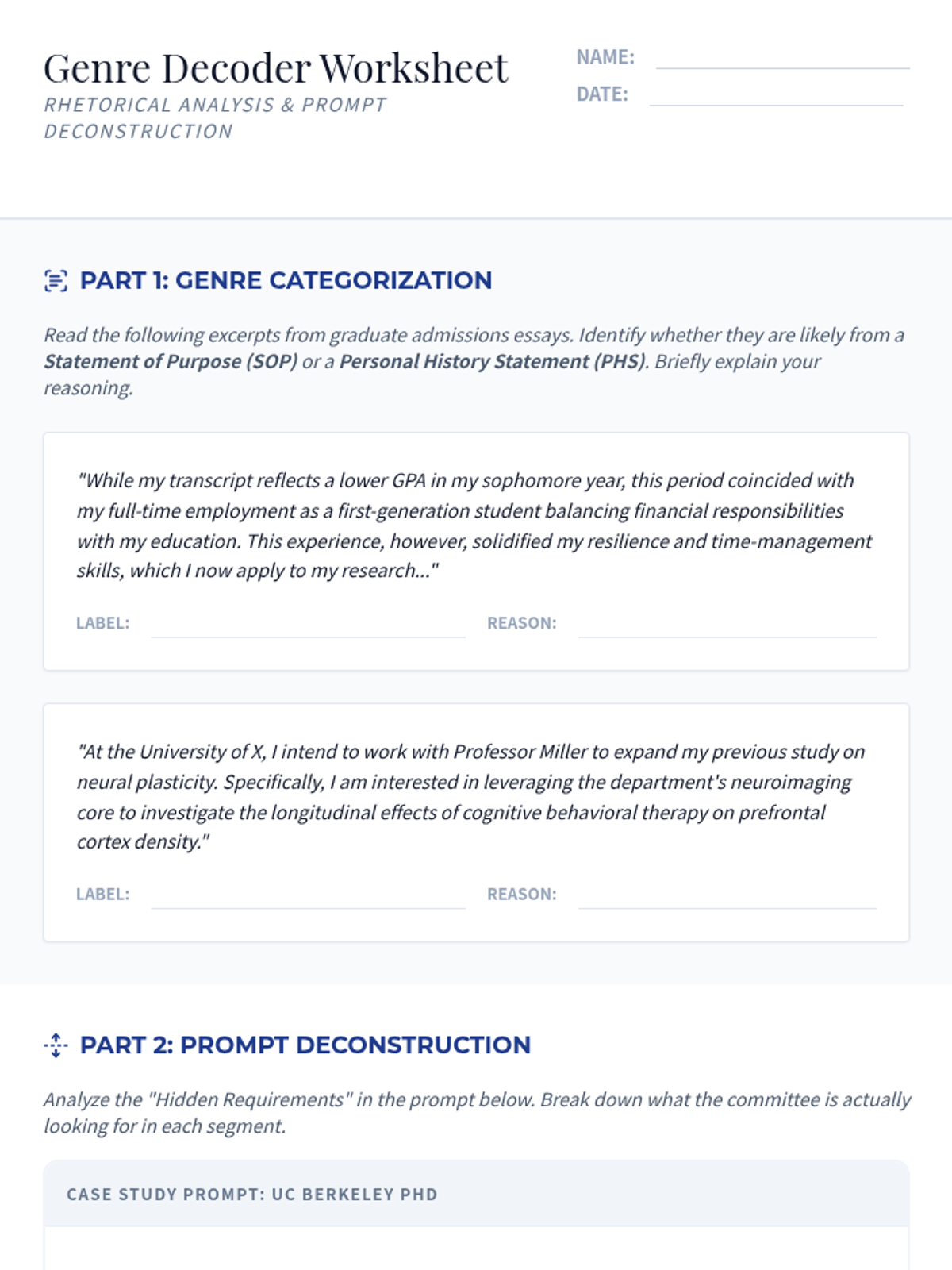
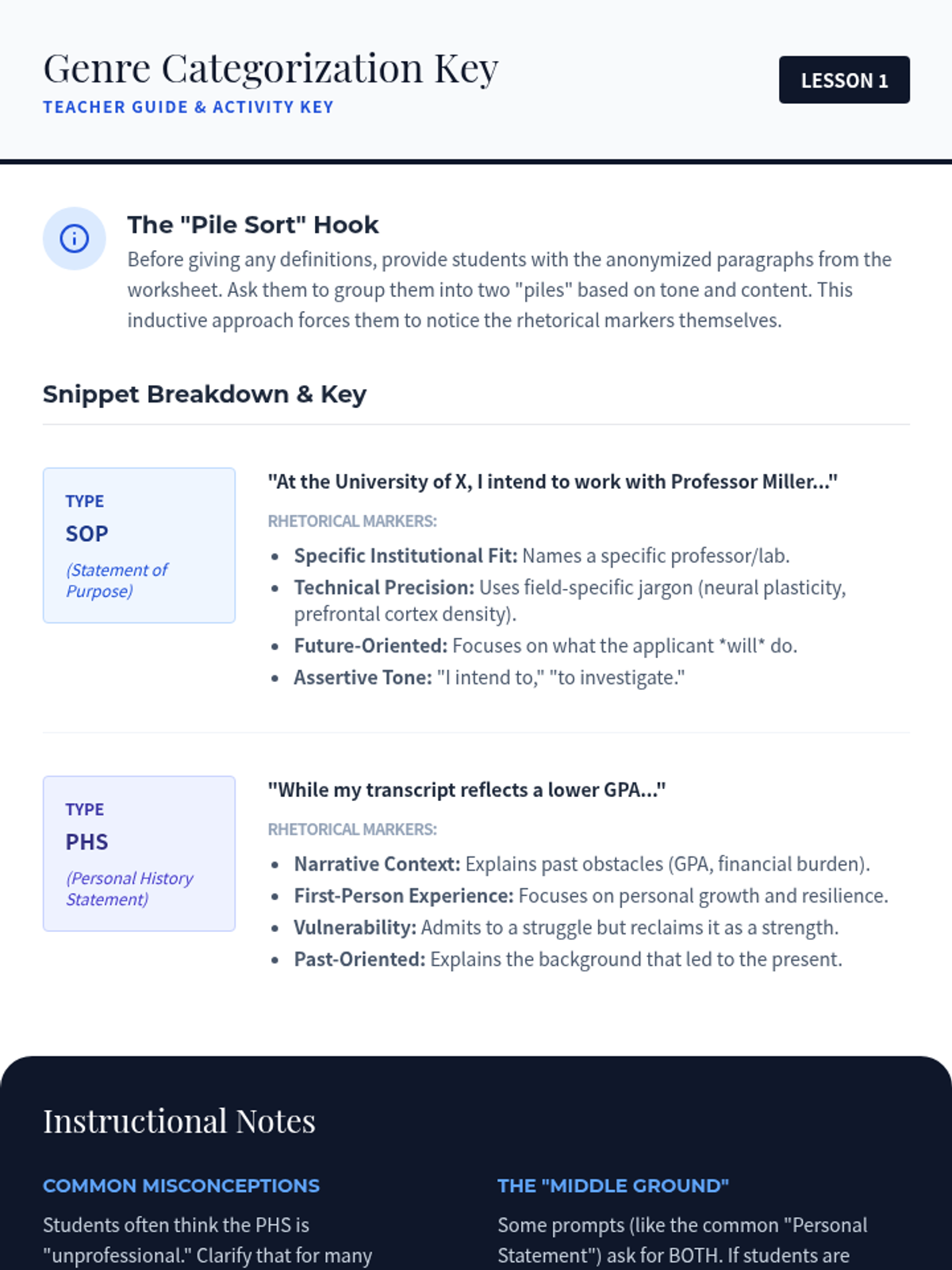
A masterclass-level sequence for graduate students on the rhetorical strategies of admissions essays. It covers genre deconstruction, thematic development, narrative techniques, and audience alignment to help applicants and coaches navigate high-stakes admissions.
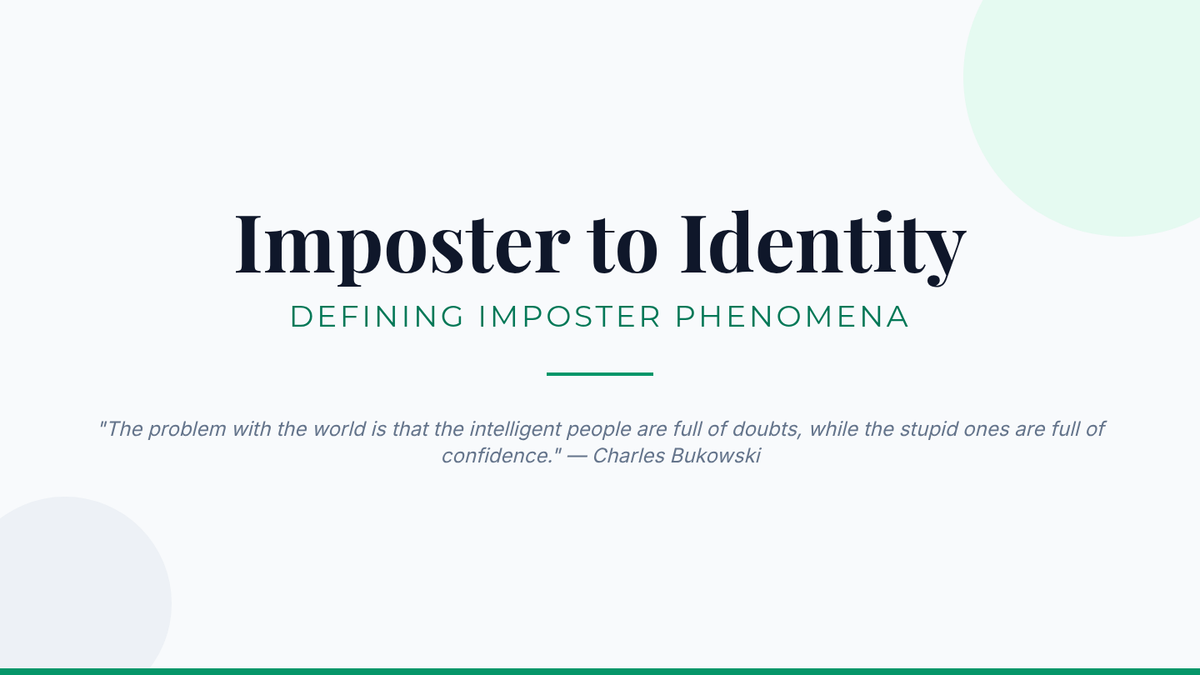
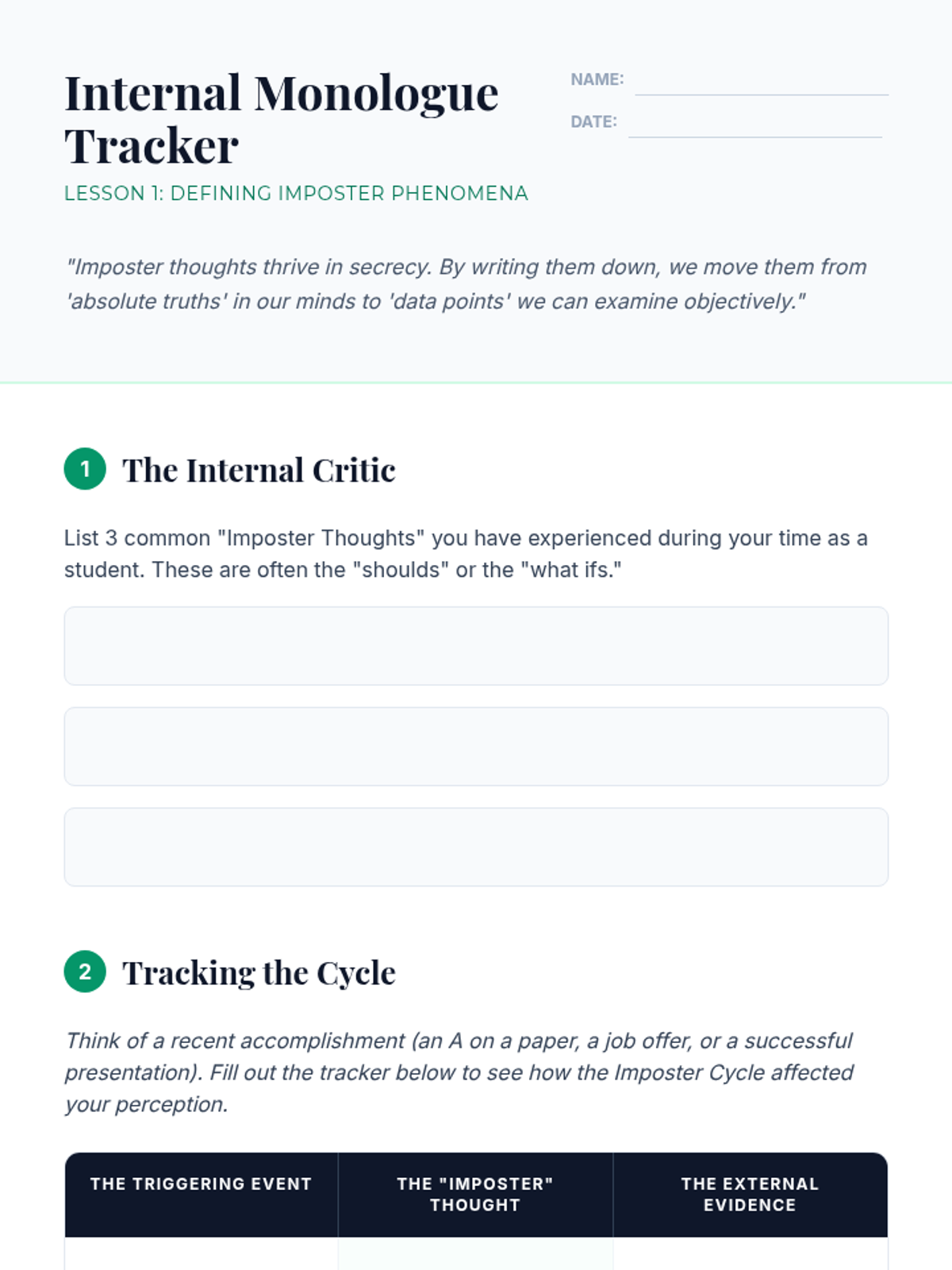
A 5-lesson workshop sequence for undergraduate students to understand, challenge, and overcome imposter syndrome through peer validation and evidence-based identity building.
A comprehensive workshop-style sequence for undergraduate students to master the mechanics of graduate school applications. Students will develop high-quality personal statements, academic CVs, and strategic plans for recommendation letters and program alignment.
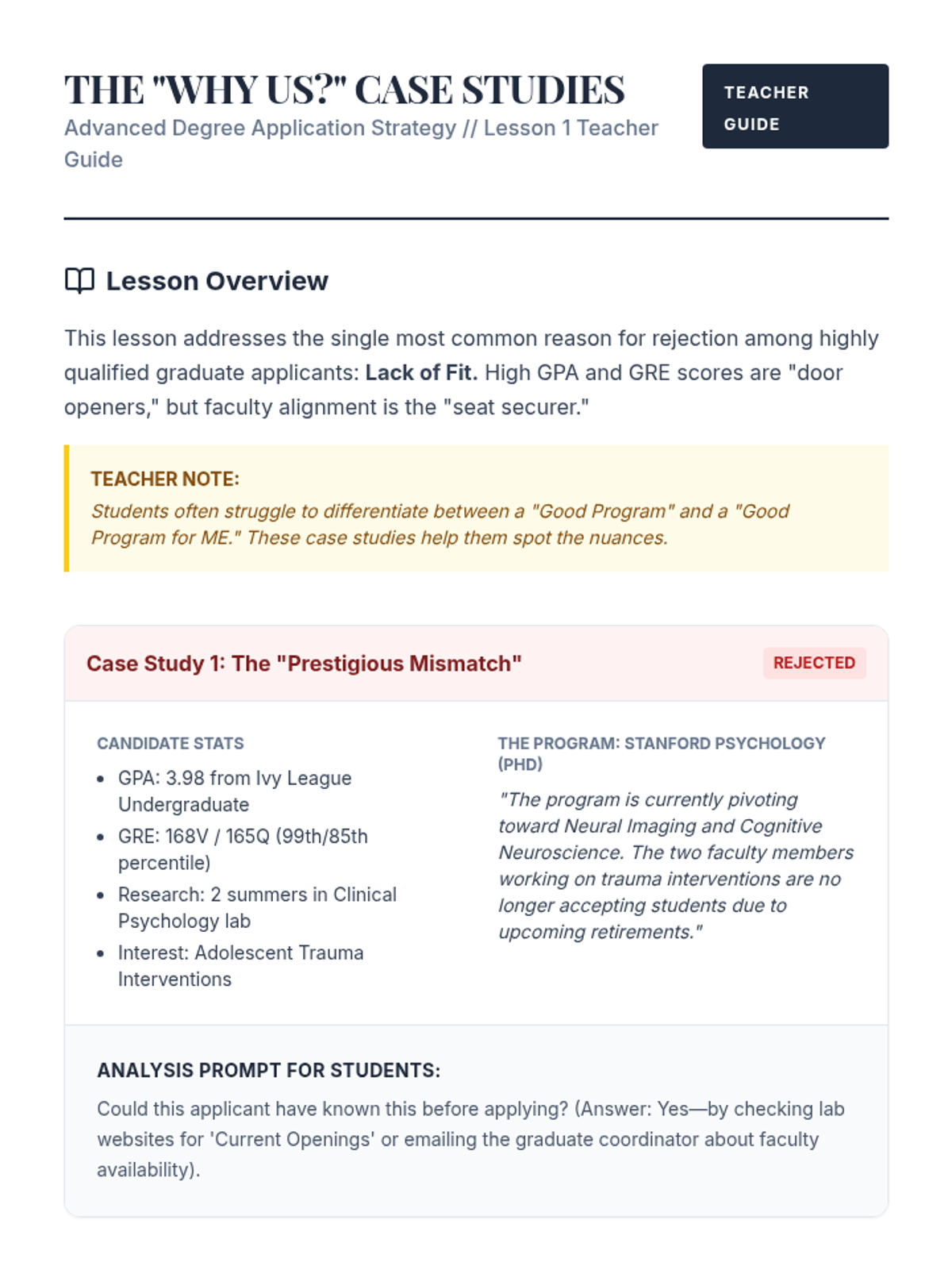
A comprehensive workshop sequence for graduate students applying to terminal degree programs (Ph.D., Ed.D., JD, MD) or competitive fellowships. This series shifts focus from basic qualifications to strategic narrative alignment and research fit.
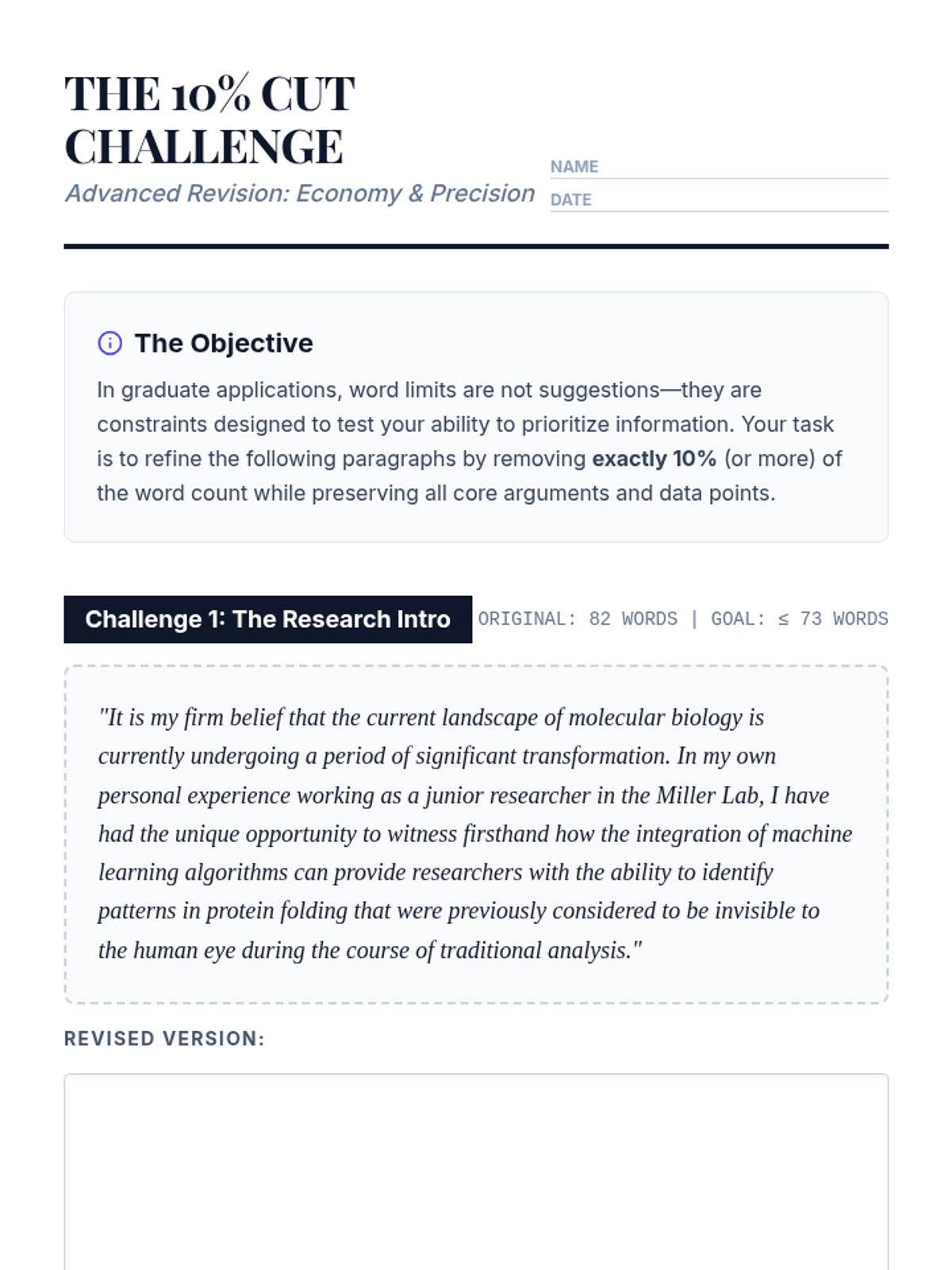
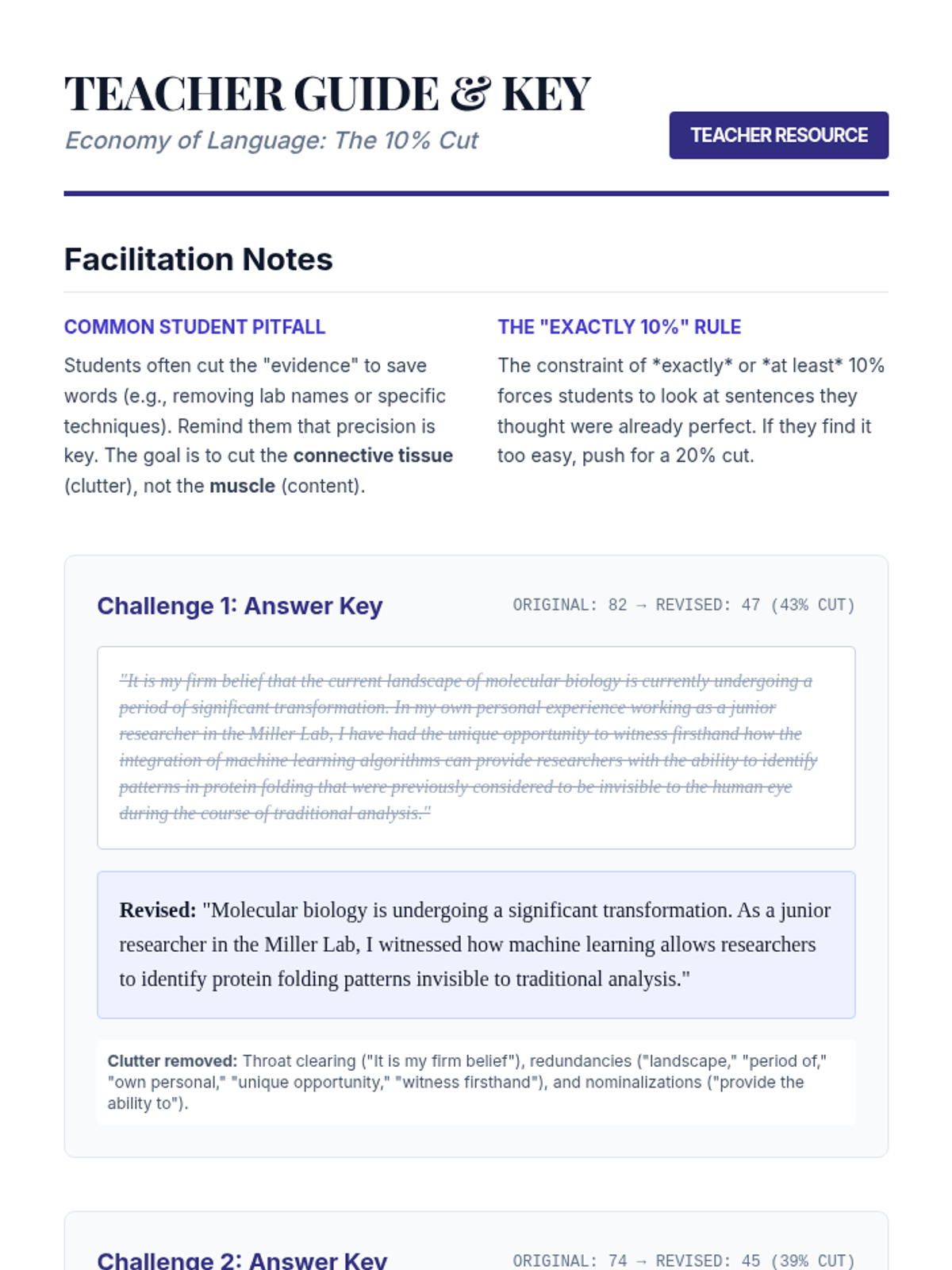
A high-level writing sequence for graduate students focusing on the final stages of personal statement revision. Students learn advanced techniques for conciseness, logical flow, authoritative tone, feedback management, and final submission quality assurance.
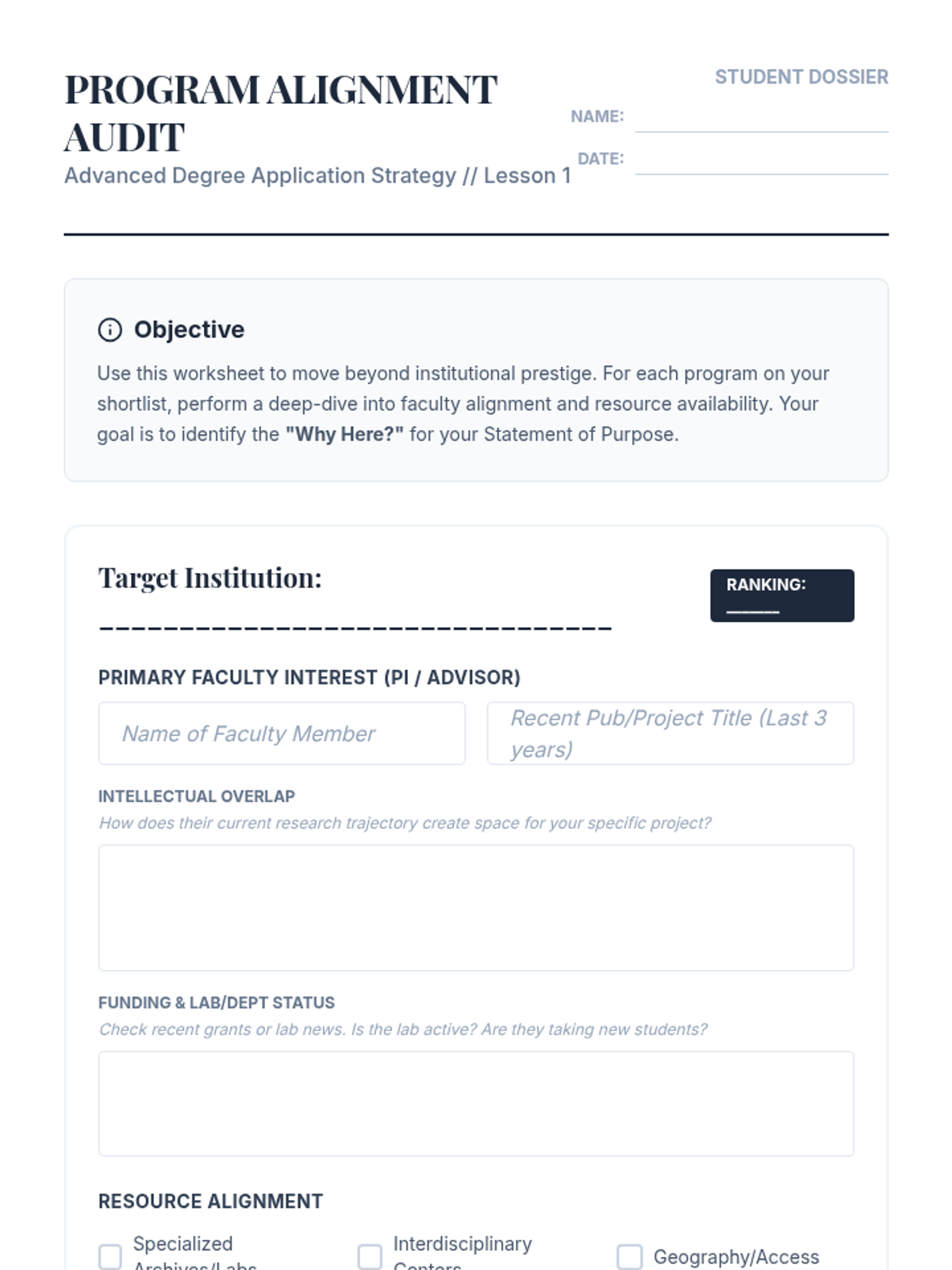
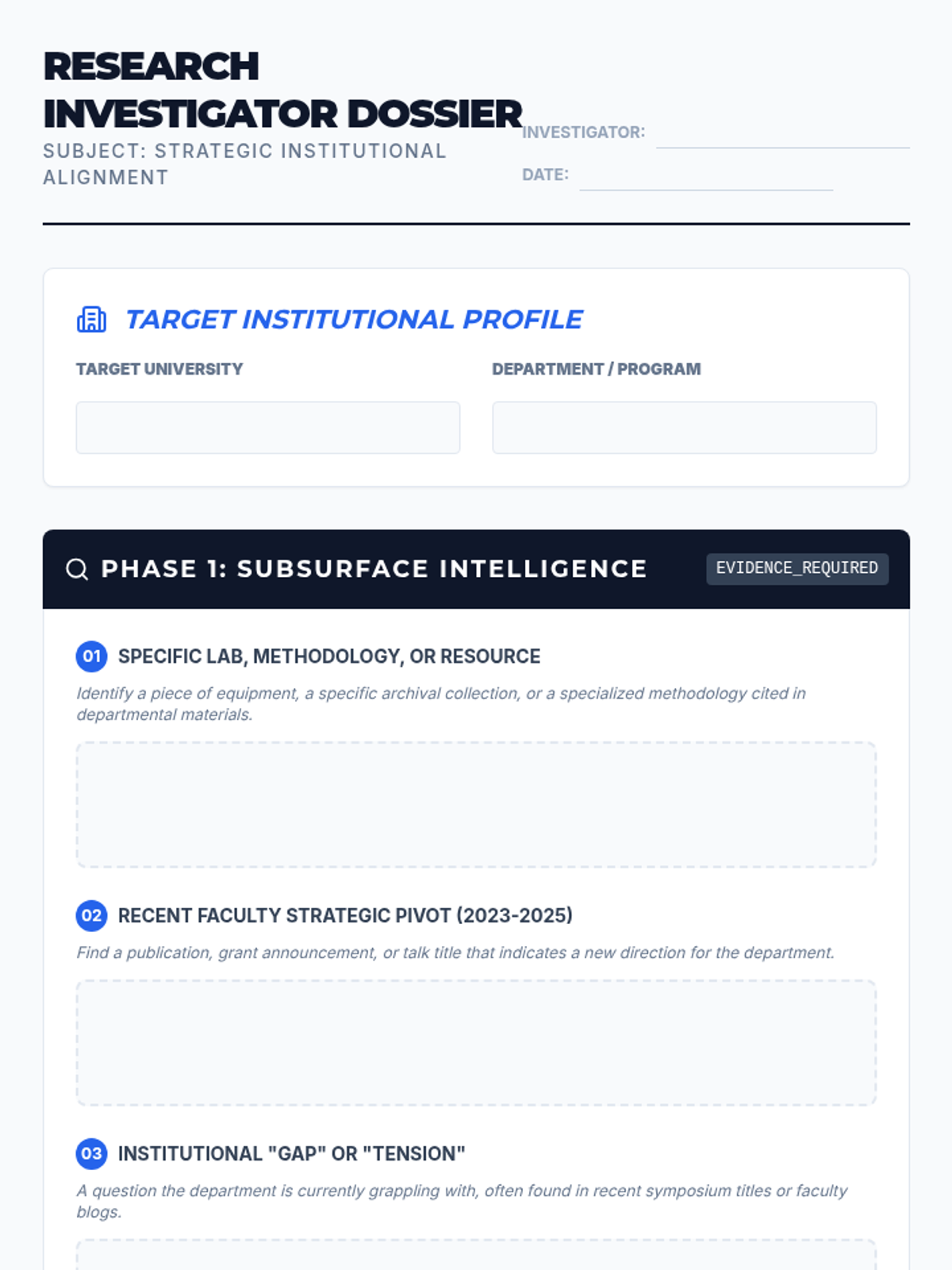
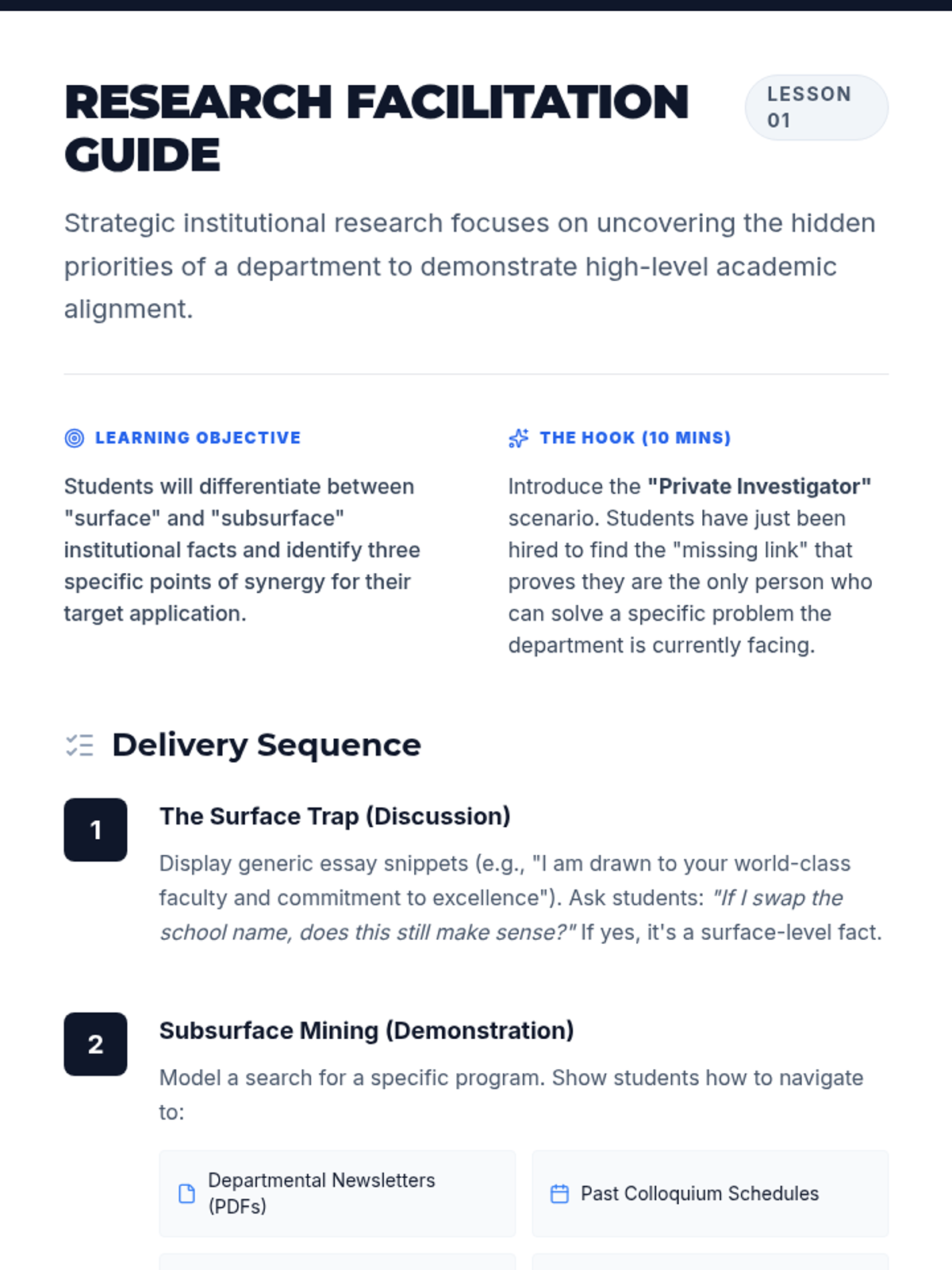
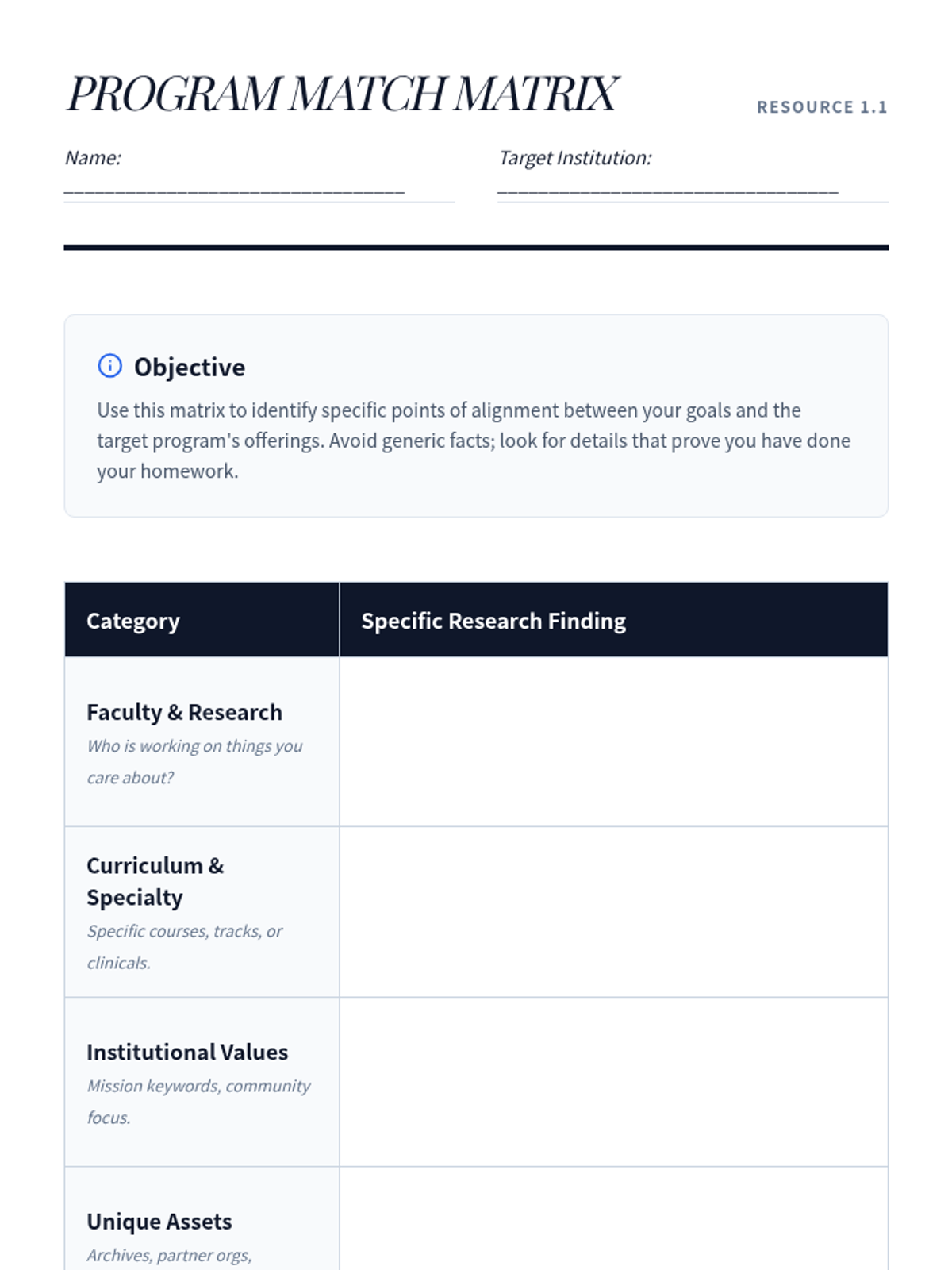
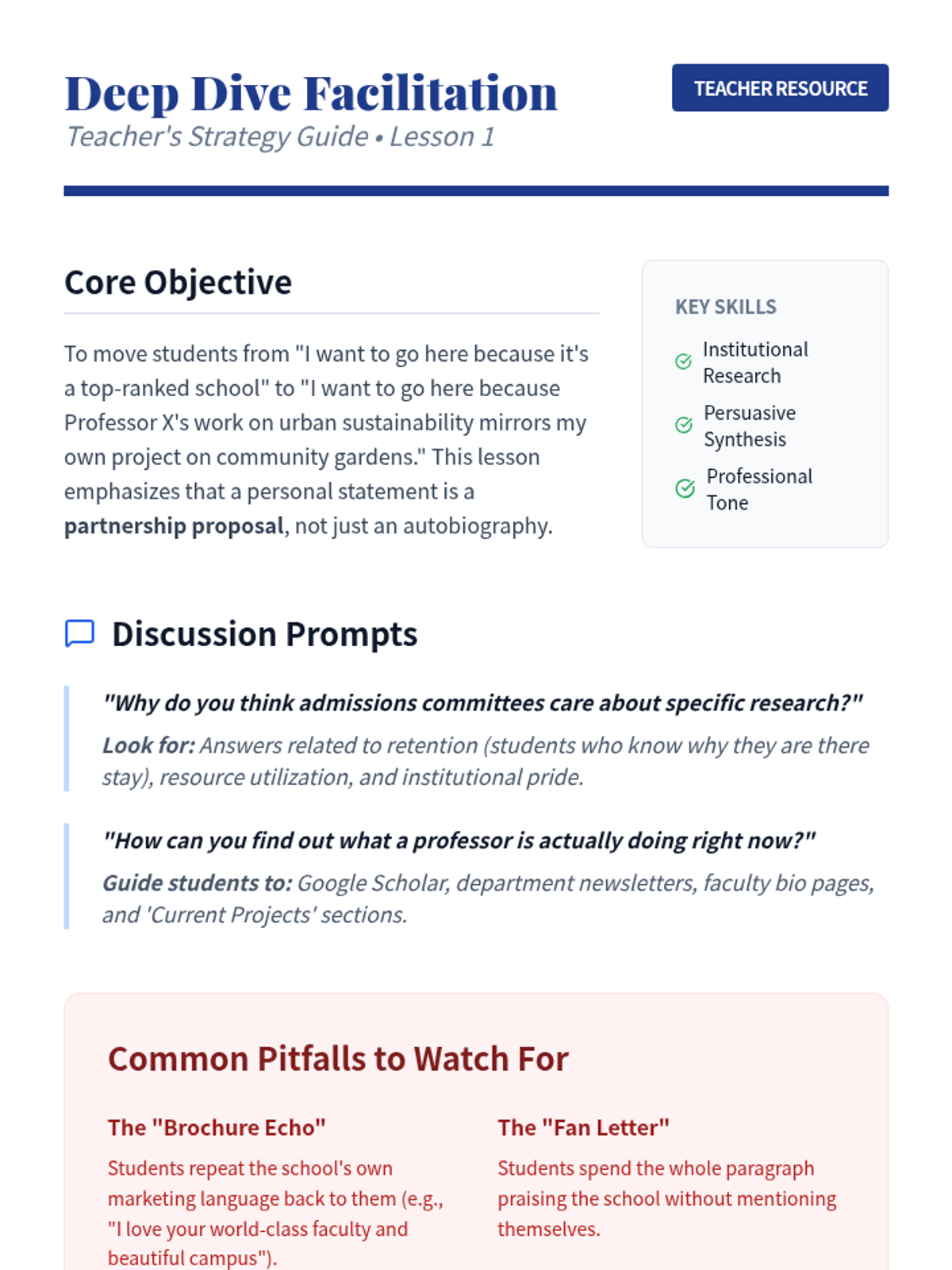
A comprehensive sequence for graduate applicants focusing on the strategic alignment of their personal statements with specific academic programs and institutions. Students move from deep research to drafting modular, high-impact 'fit' paragraphs that demonstrate institutional knowledge and faculty synergy.
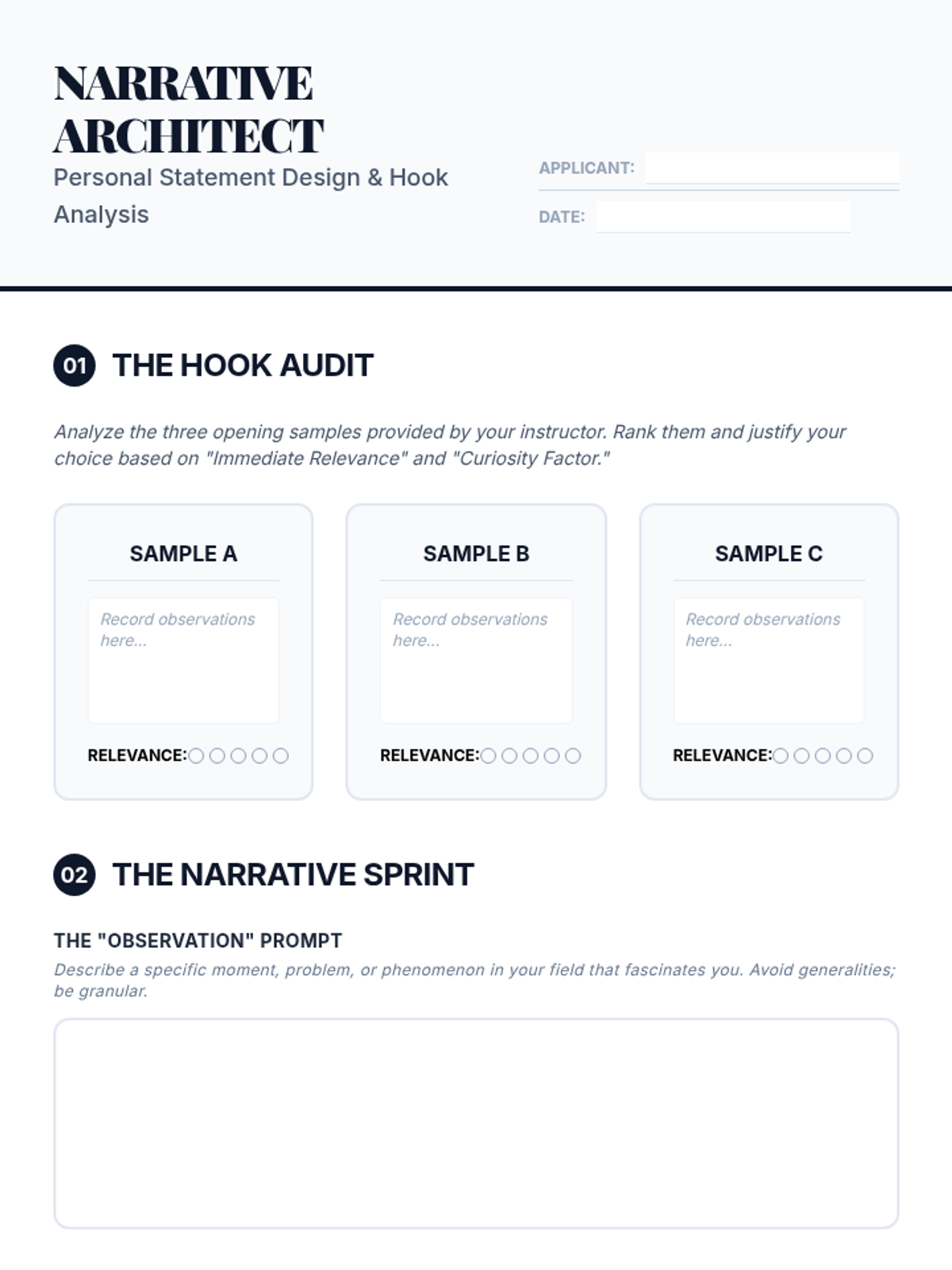
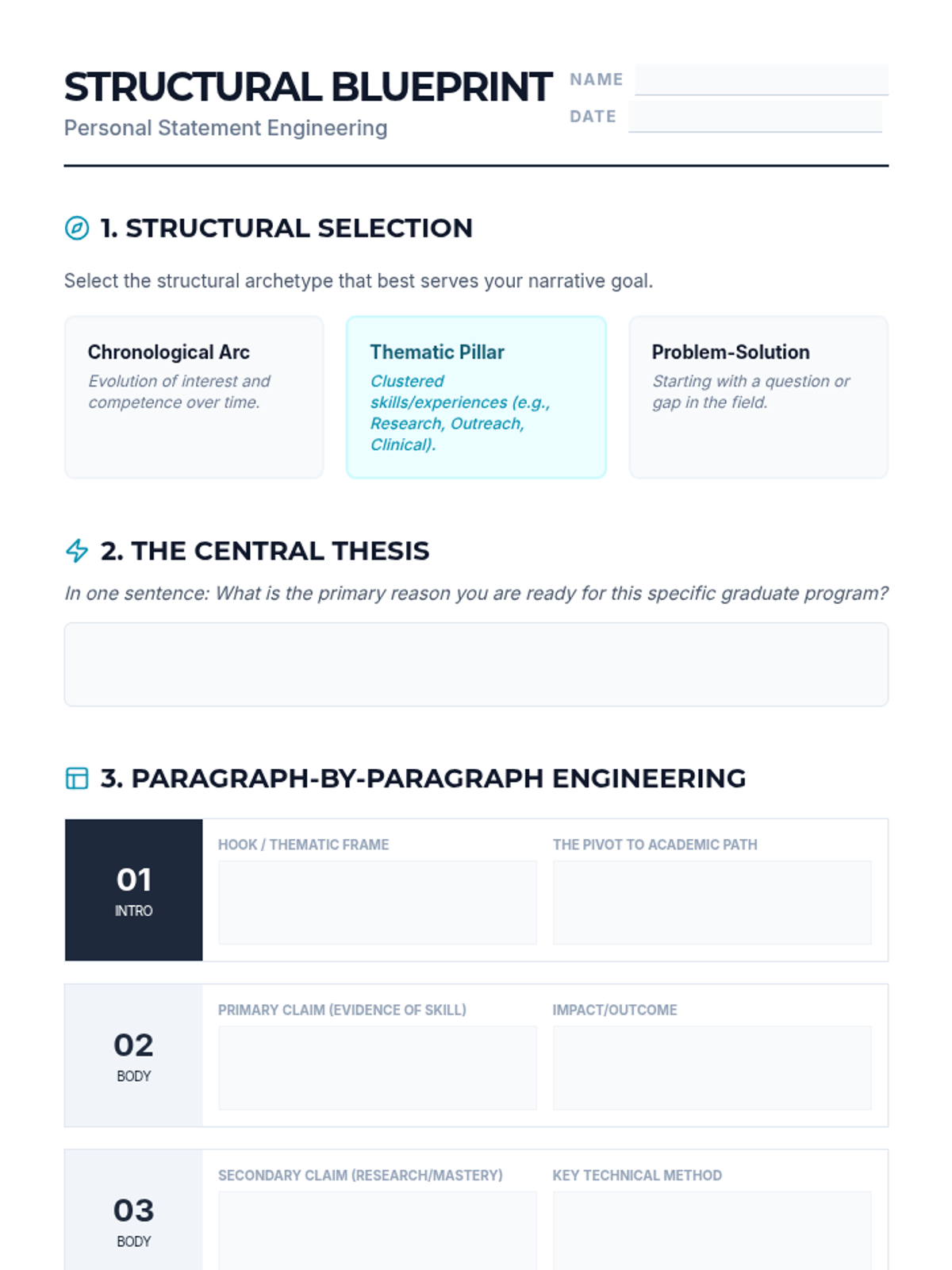
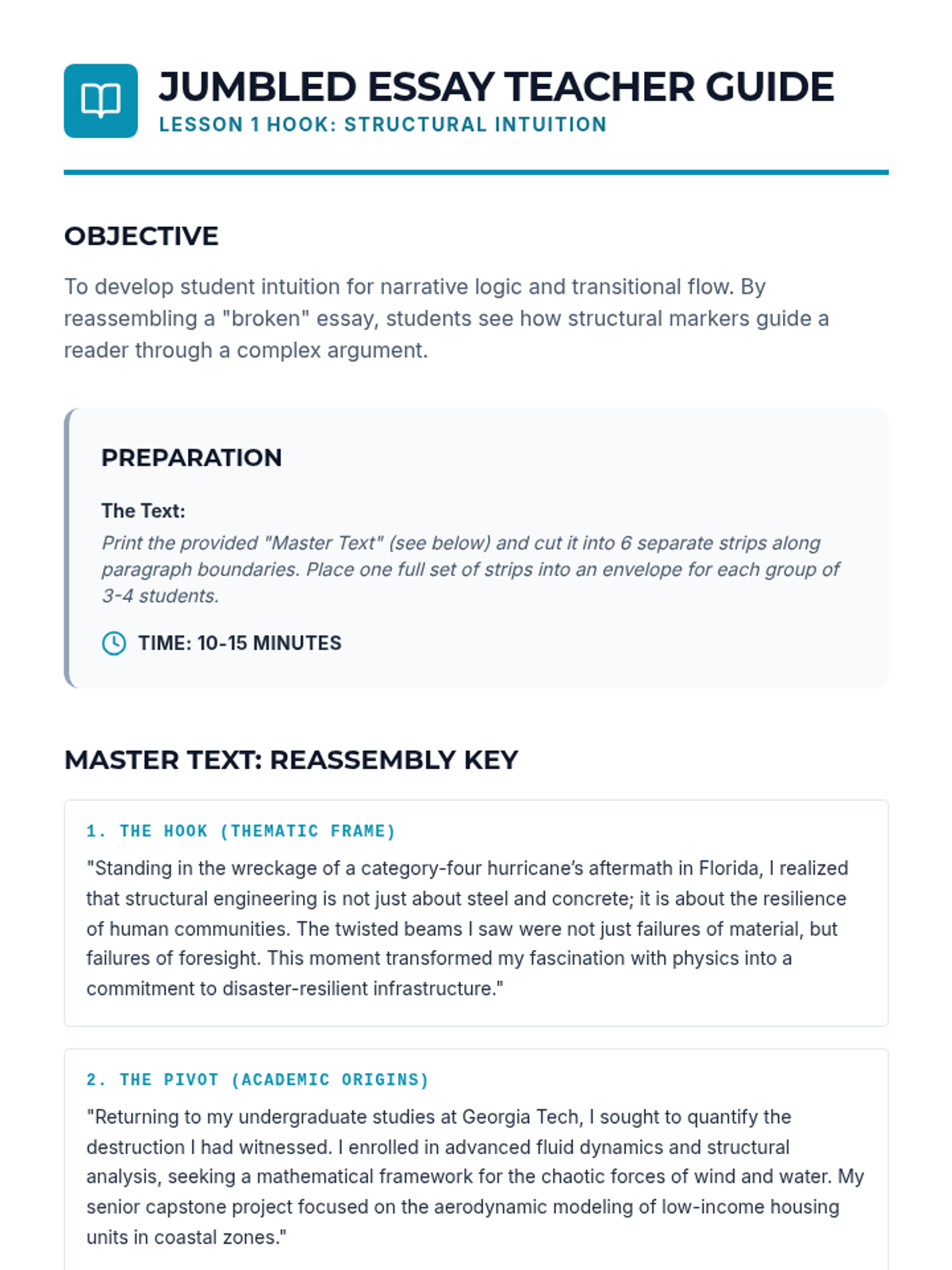
This sequence guides graduate-level applicants through the structural engineering of a personal statement. Students transition from abstract ideas to a concrete narrative architecture, focusing on research competence, future impact, and rapid prototyping of a complete draft.
A graduate-level sequence focused on the rhetorical strategies of admissions writing, helping students distinguish between Personal Statements and Statements of Purpose while mastering the 'hidden curriculum' of graduate applications.
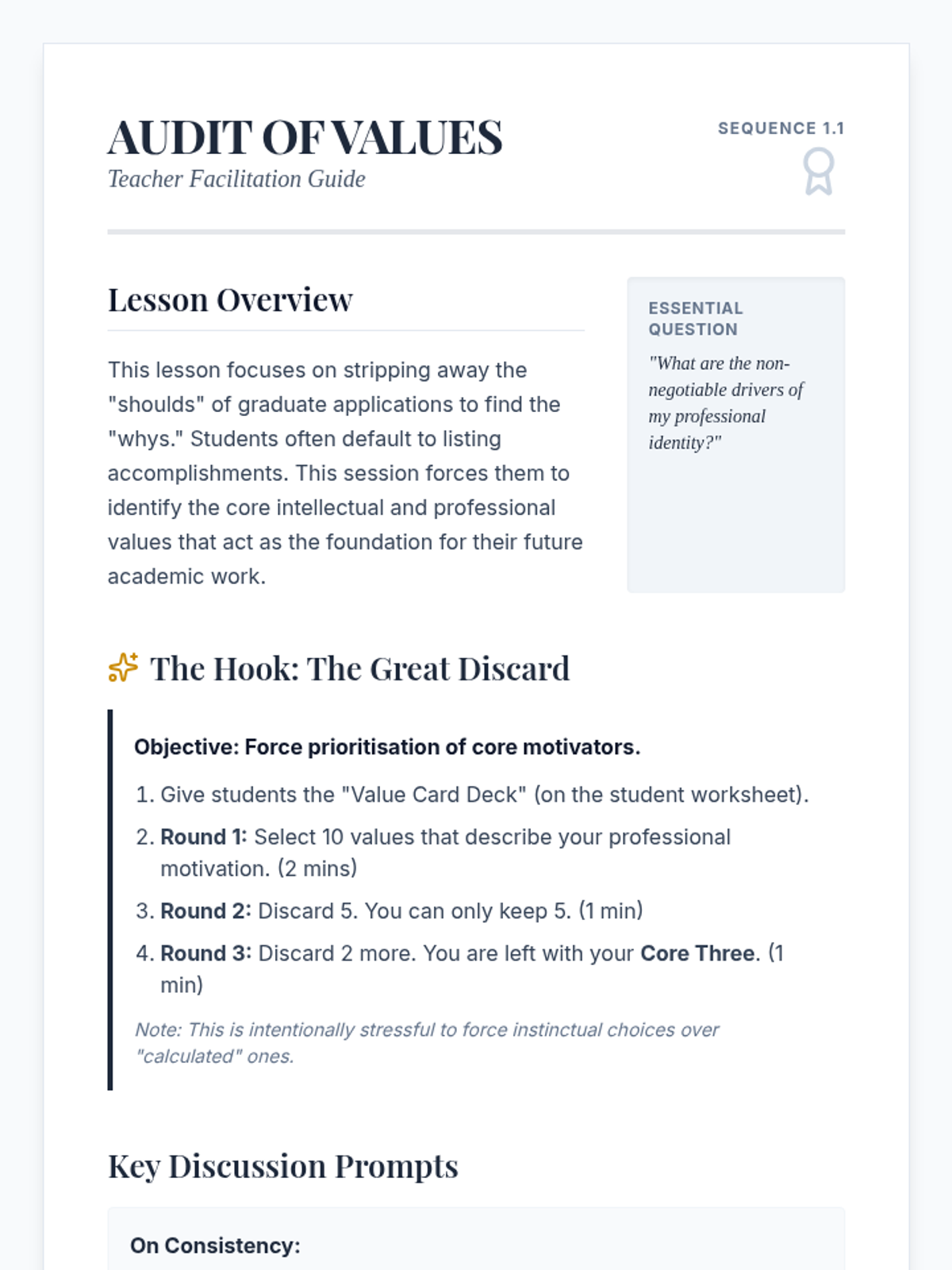
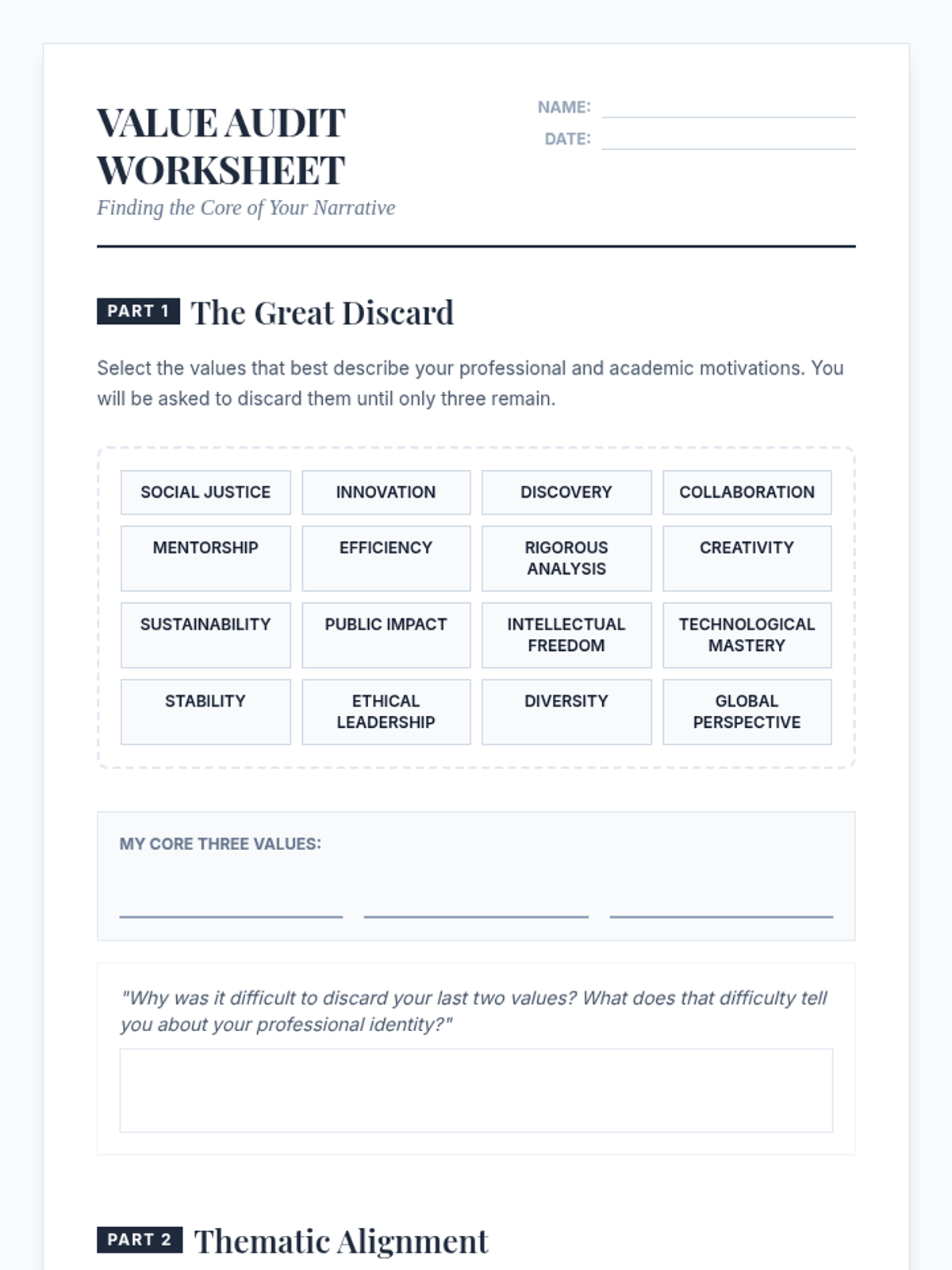
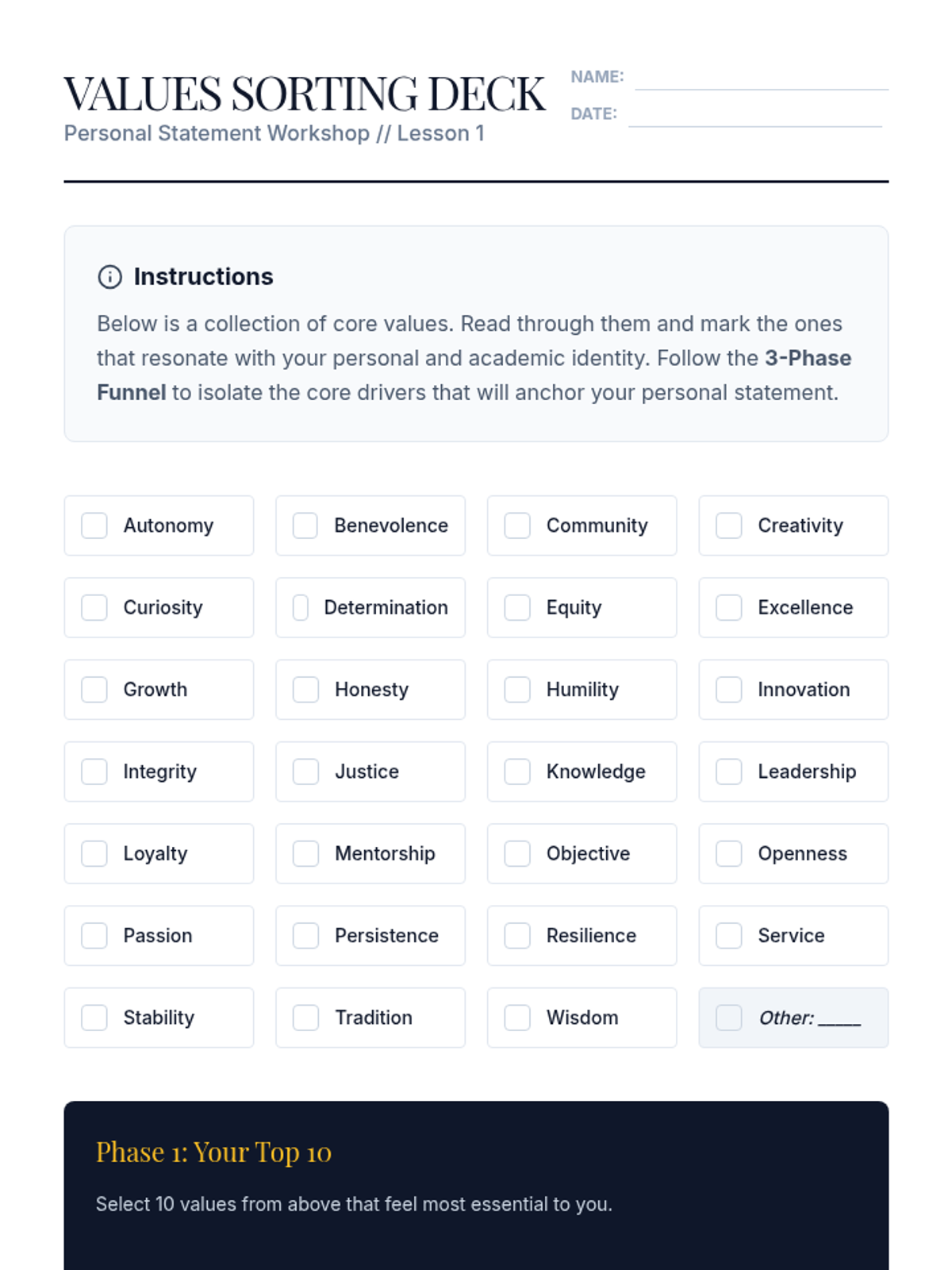
A 5-lesson sequence for graduate students to identify and articulate their professional and academic identity for personal statement writing. The sequence covers value identification, intellectual mapping, narrative construction, reframing challenges, and synthesizing a personal thesis.
A comprehensive unit for undergraduate students to master the art of tailoring personal statements, writing supplemental essays, and organizing modular content for multiple applications. Students learn to research institutions deeply and adapt their core narratives to specific program values.
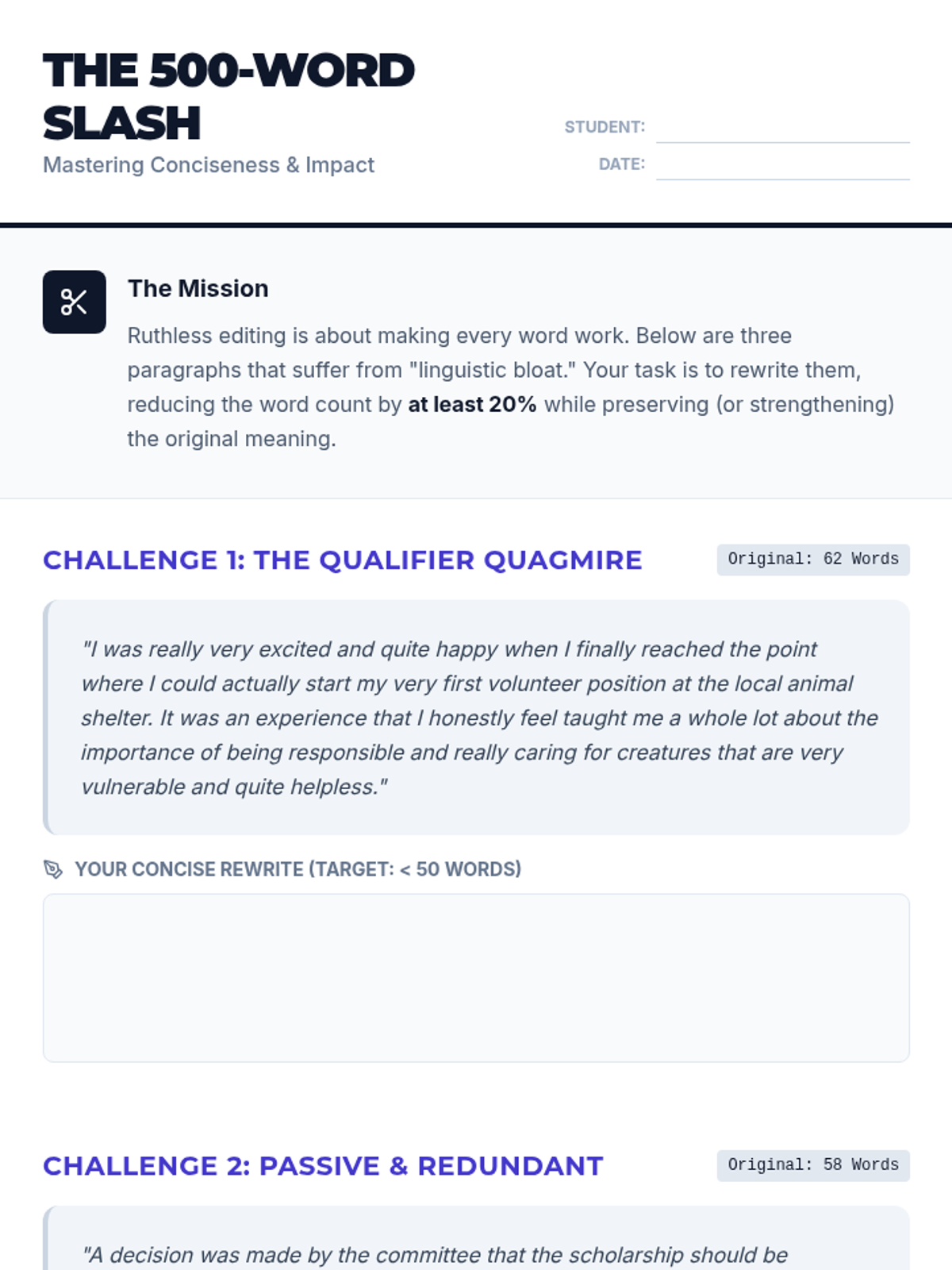
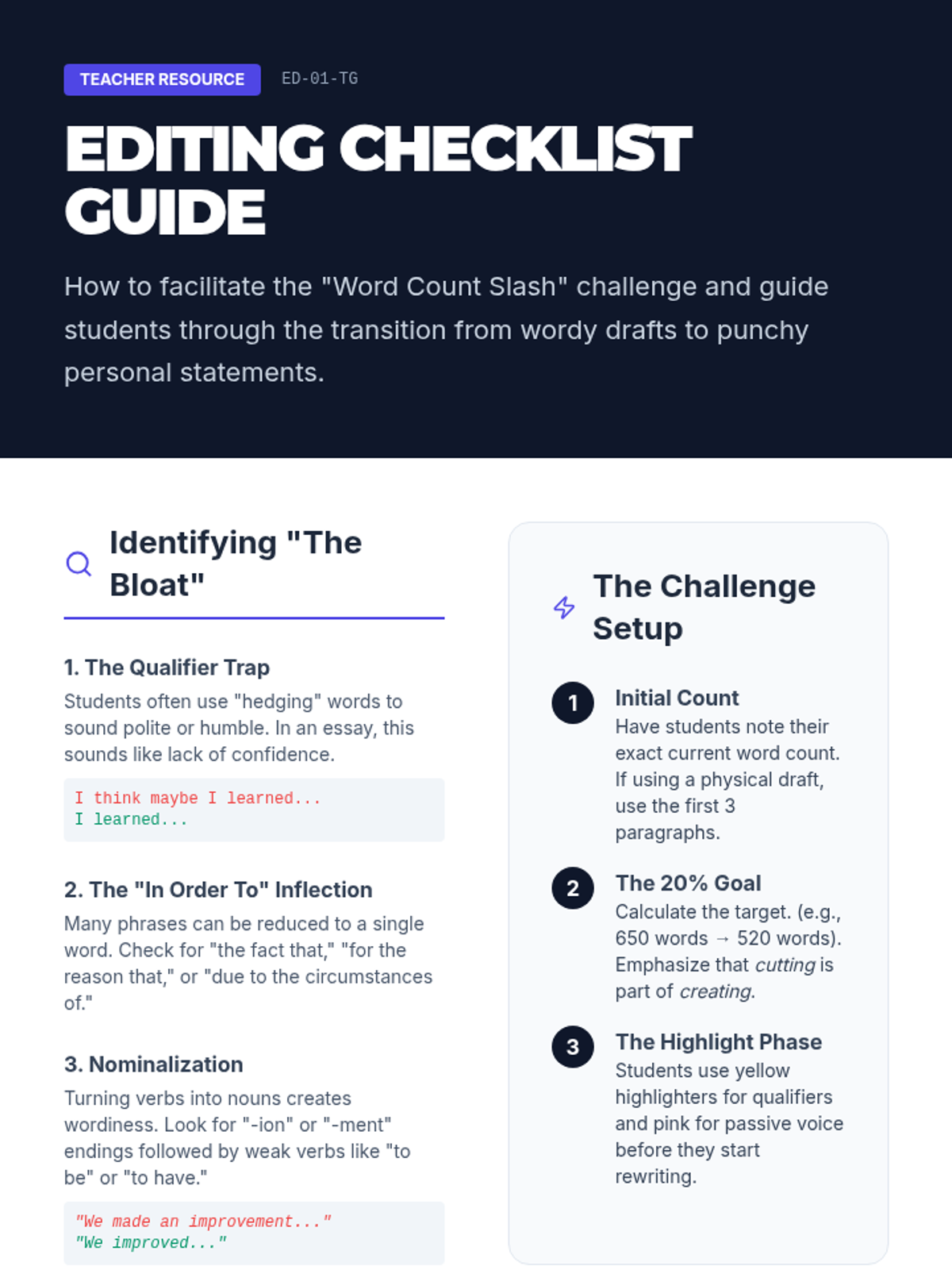
A comprehensive workshop series for undergraduate students to refine their personal statements through rigorous editing, peer review, and stylistic polishing. Students transition from draft-making to professional-grade revision, mastering the art of concise and impactful narrative writing.
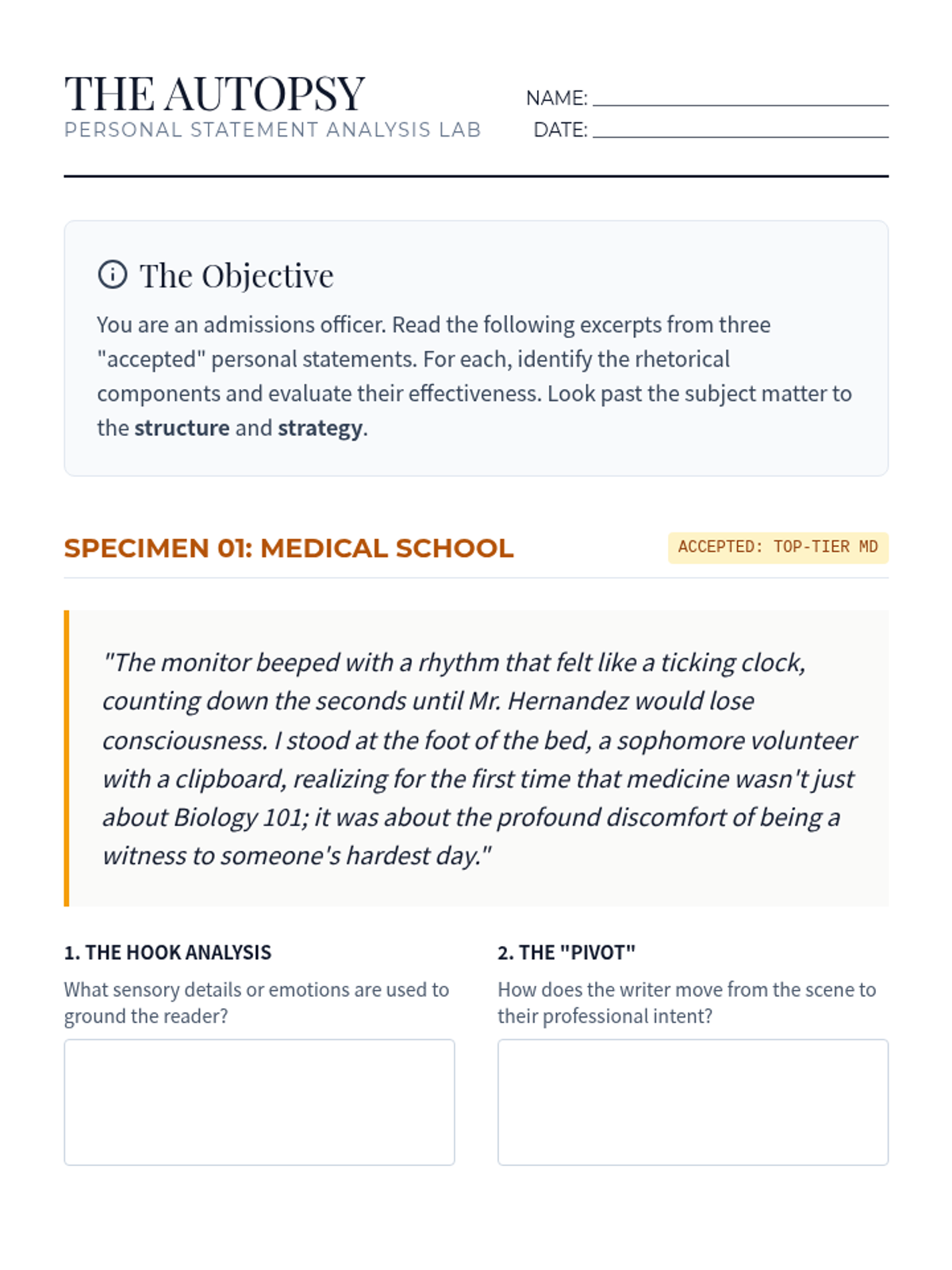
A comprehensive sequence for undergraduate students to master the rhetorical strategies of high-stakes personal statements. Students move from analyzing successful exemplars to mastering the art of descriptive storytelling, tone management, and strategic prompt alignment.
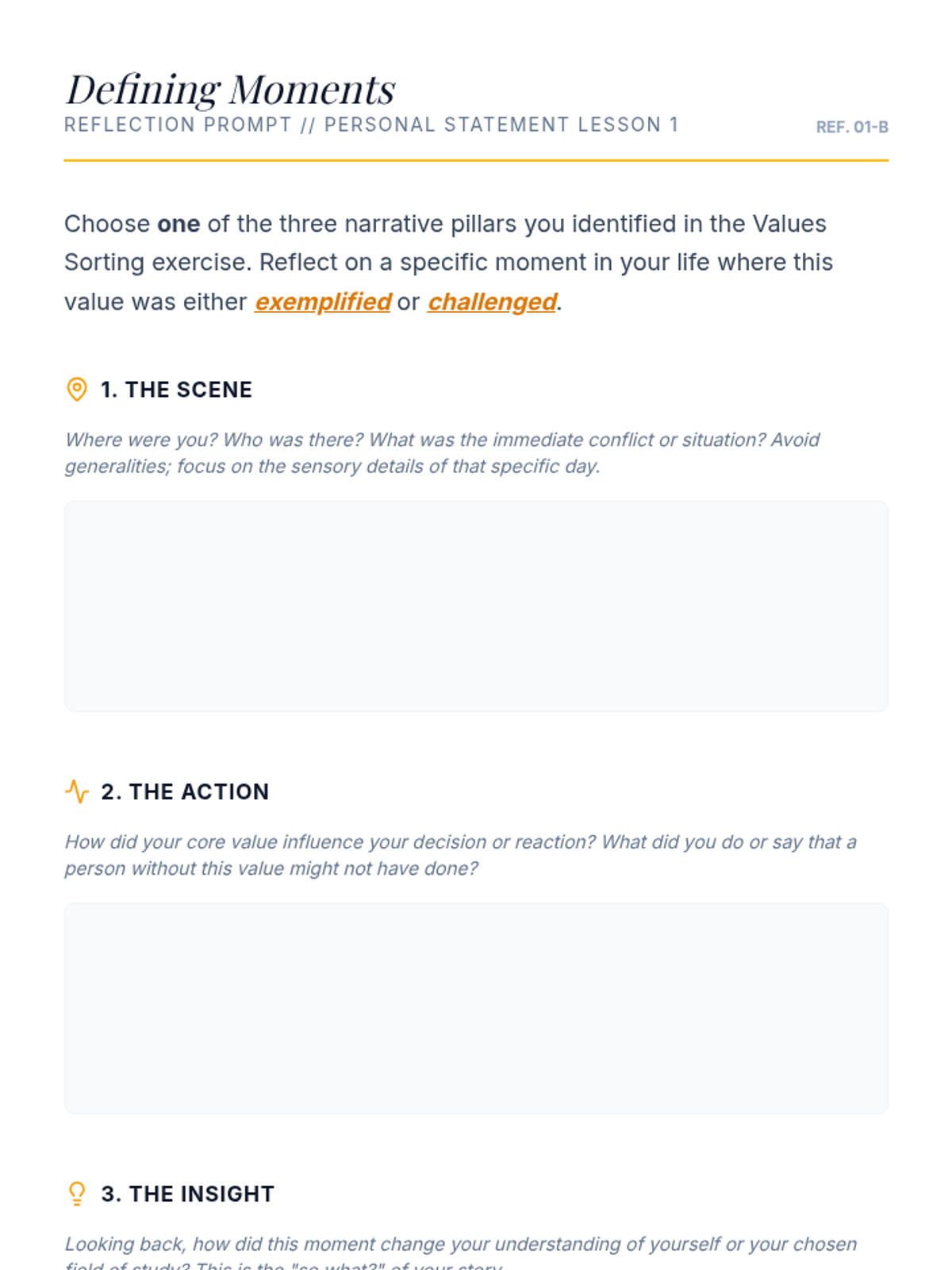
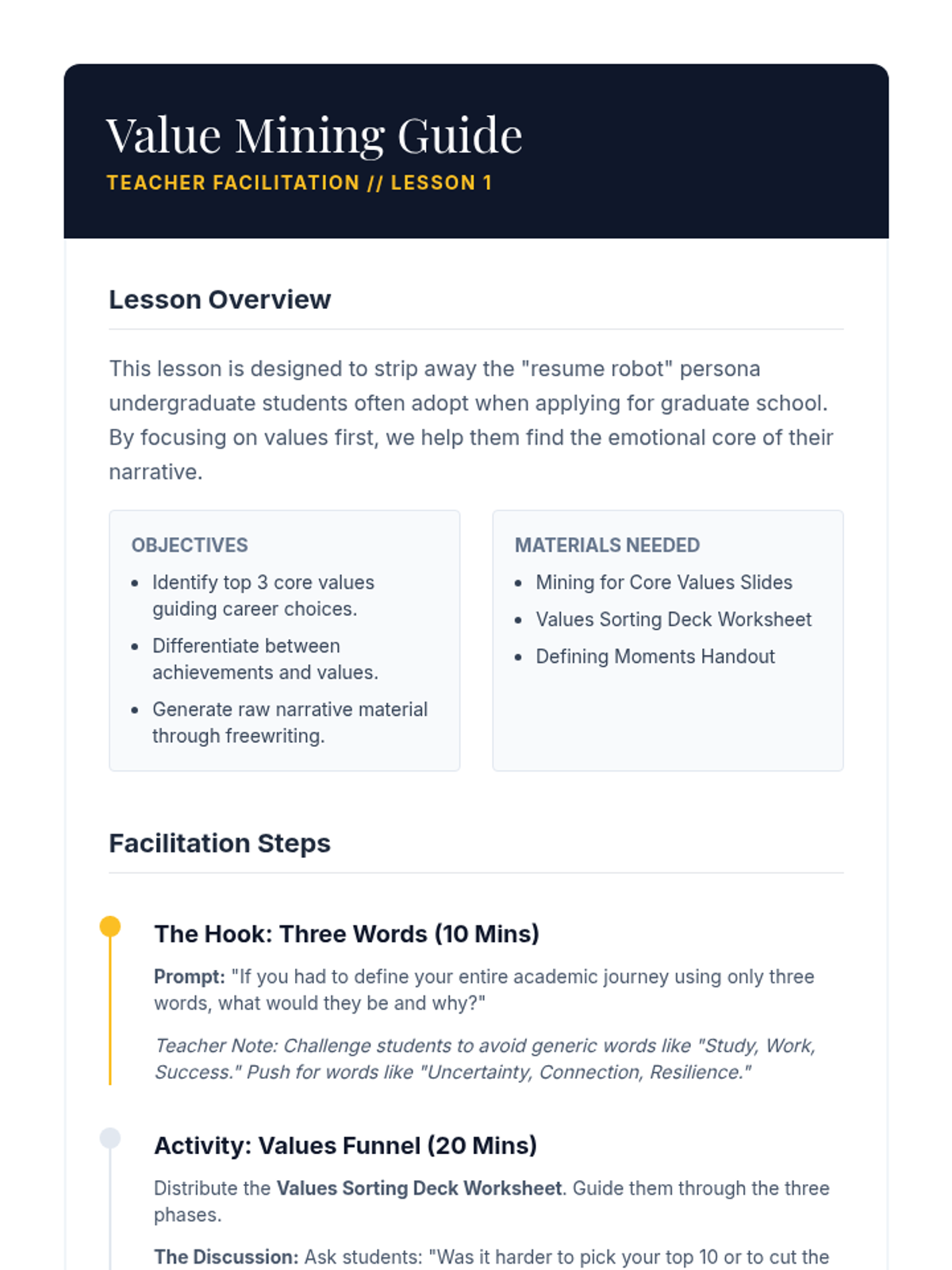
A 5-lesson sequence for undergraduate students focused on the introspective phase of writing a personal statement. Students will identify core values, map life trajectories, connect past experiences to future goals, distinguish narrative from resume, and construct a thematic outline for their application essays.
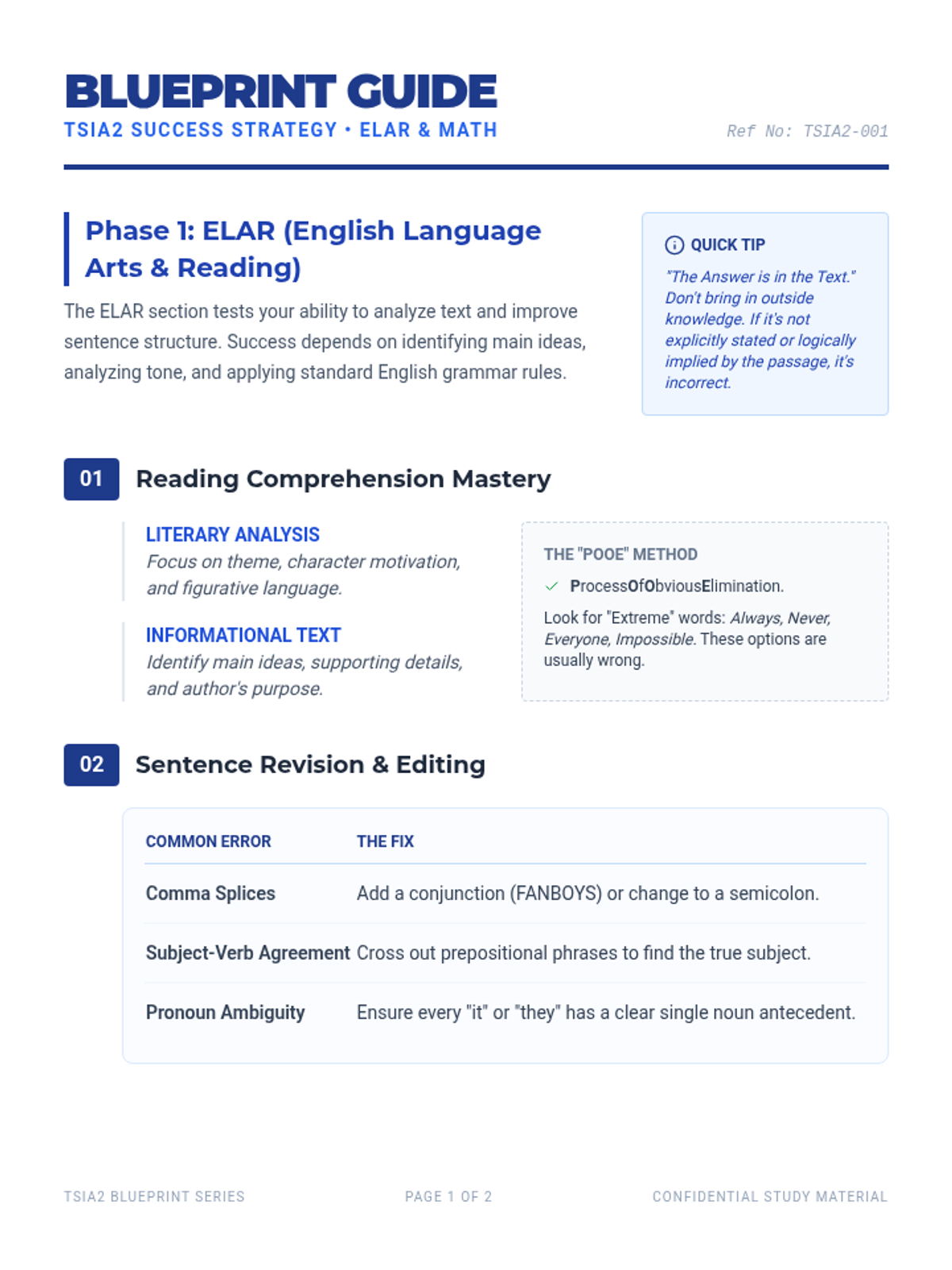
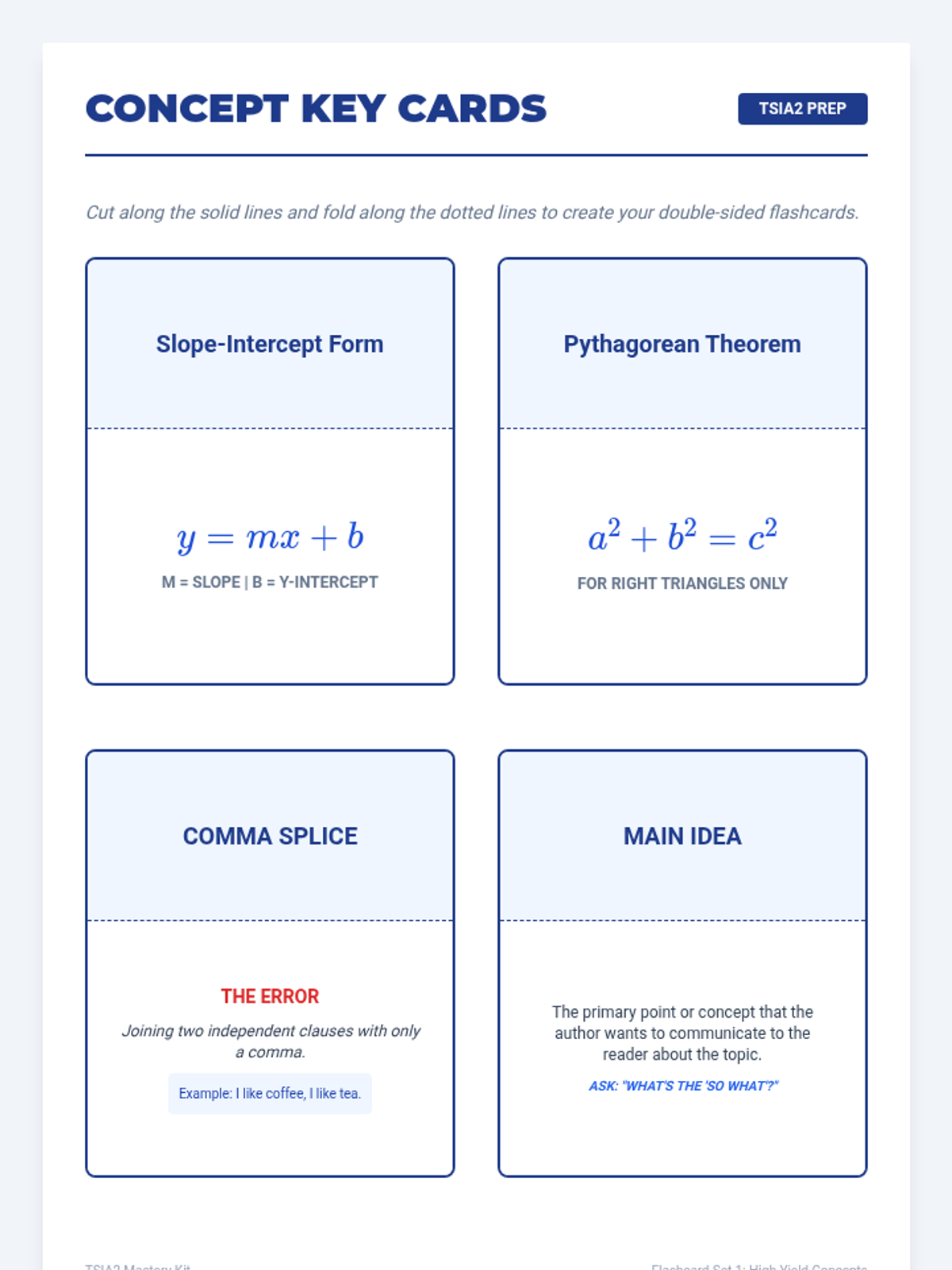
A comprehensive TSIA2 preparation course covering ELAR and Mathematics domains through strategic study guides, full-length practice, and daily warm-ups.
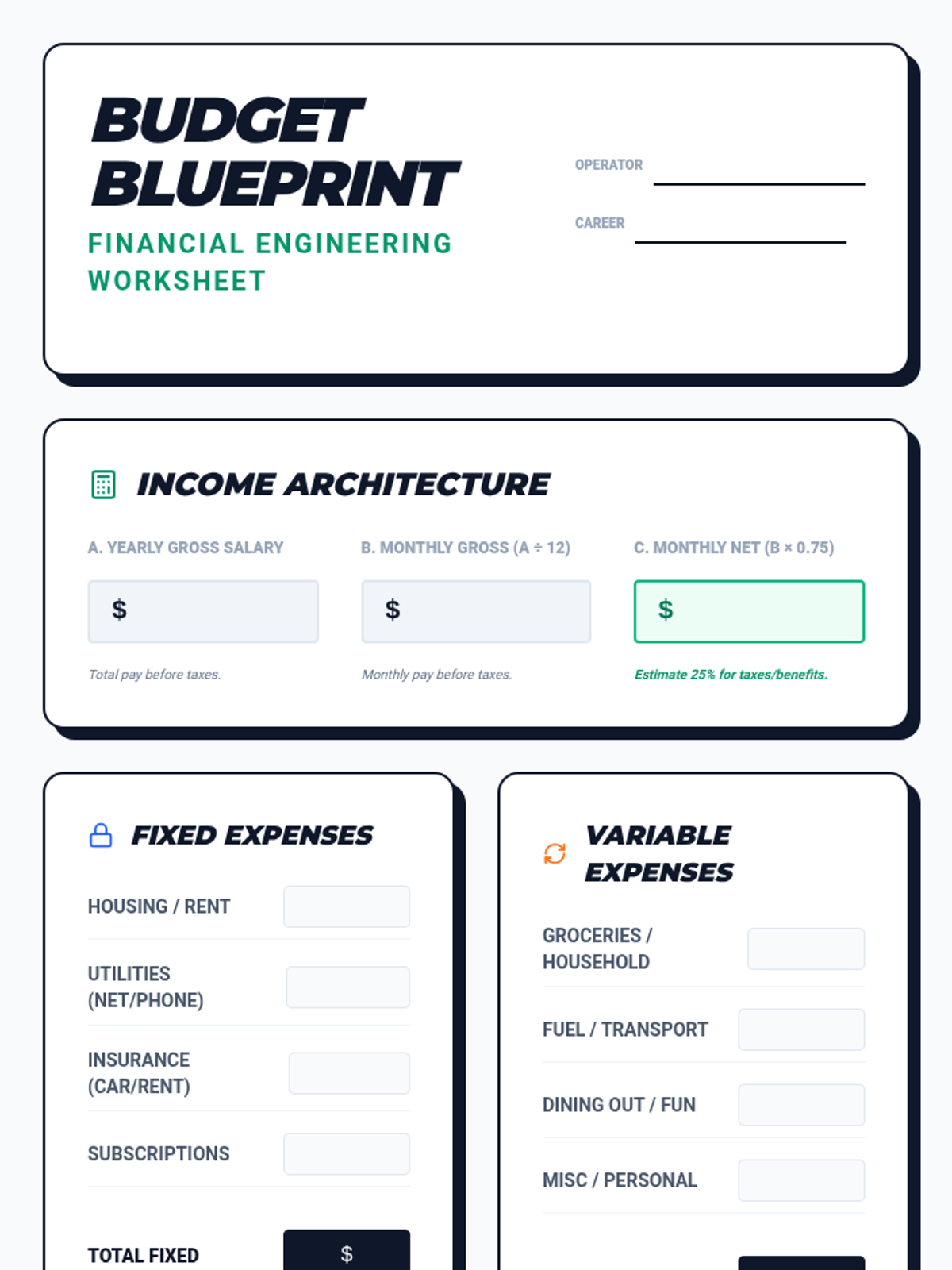
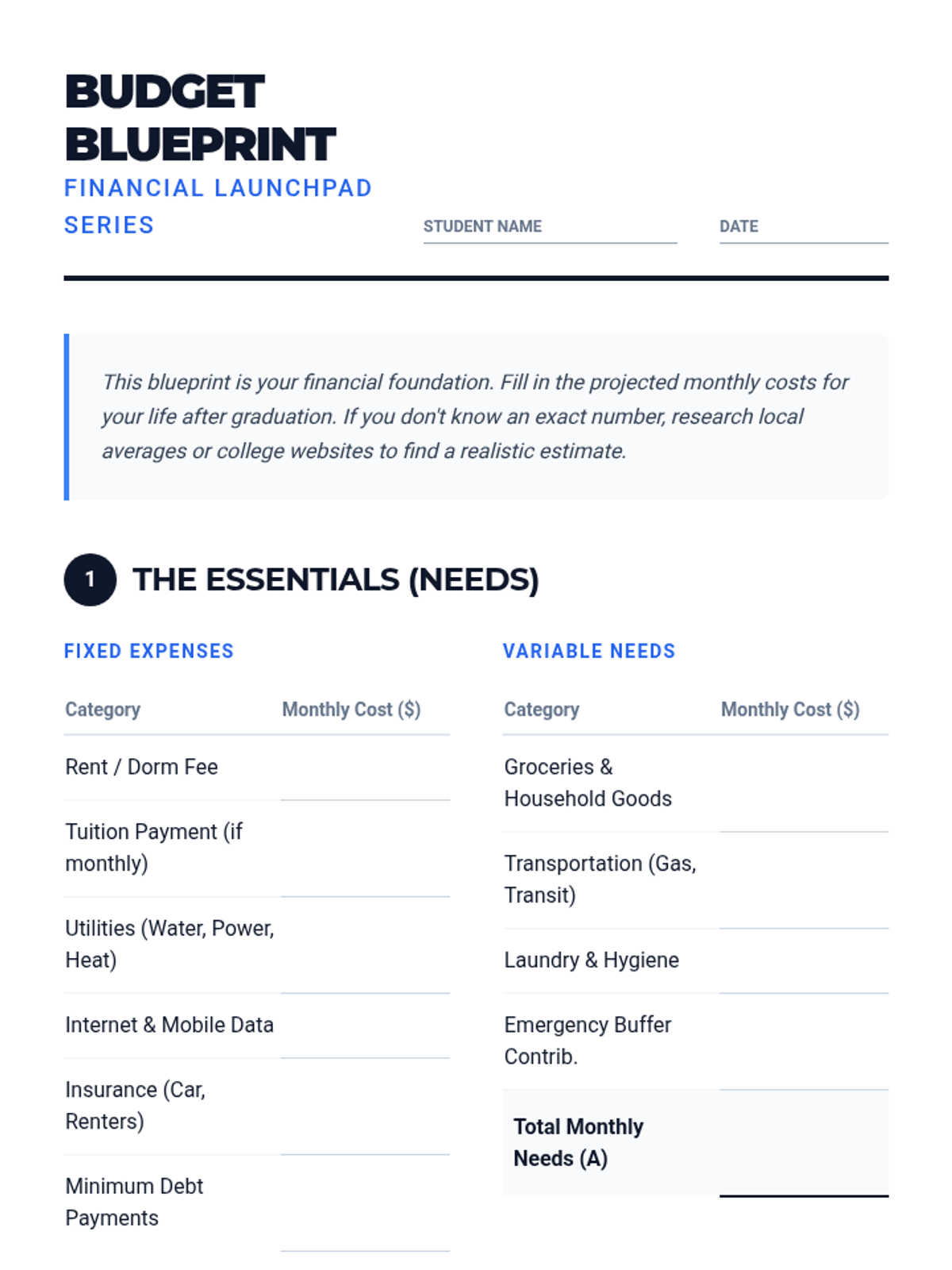
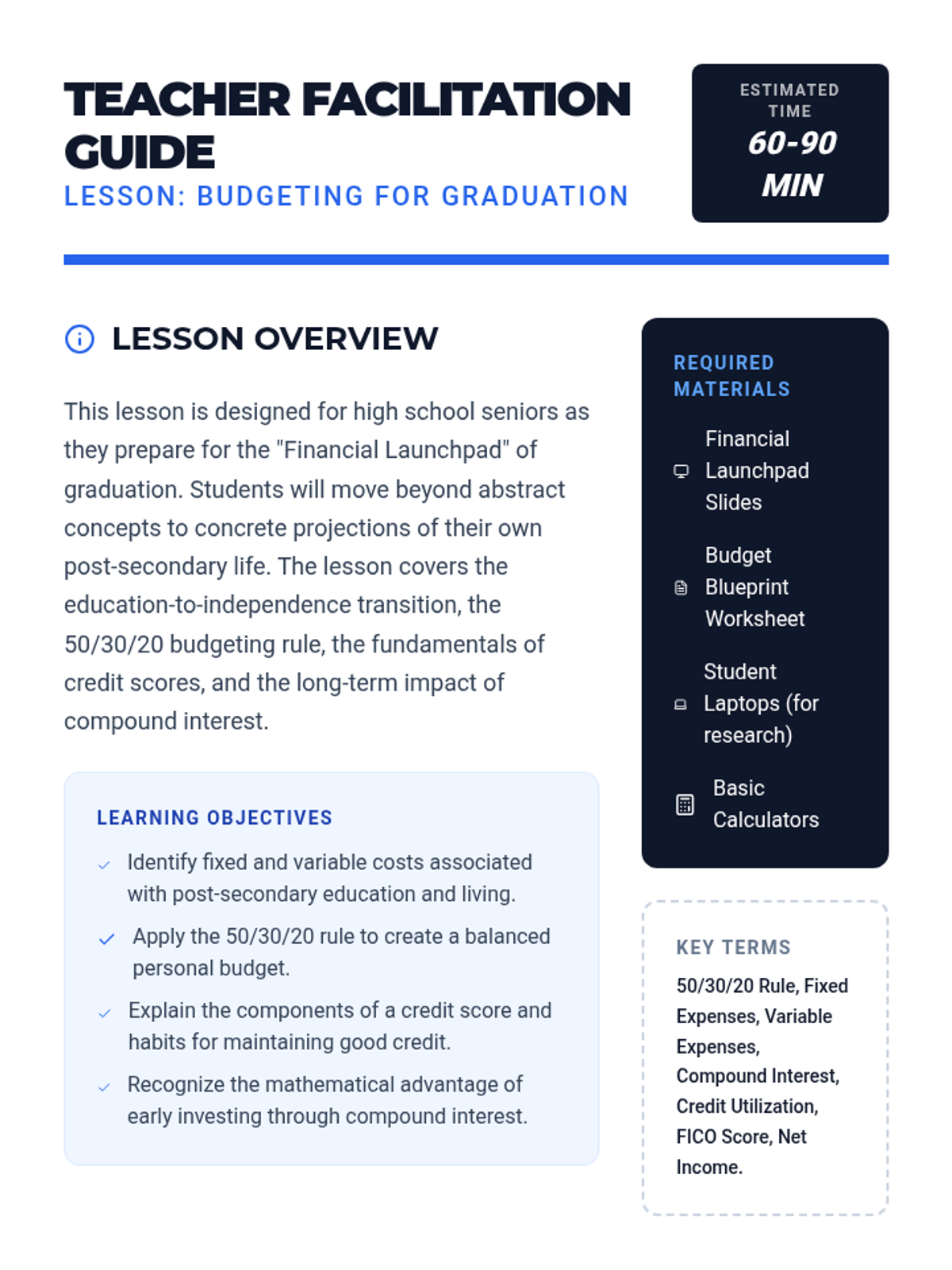
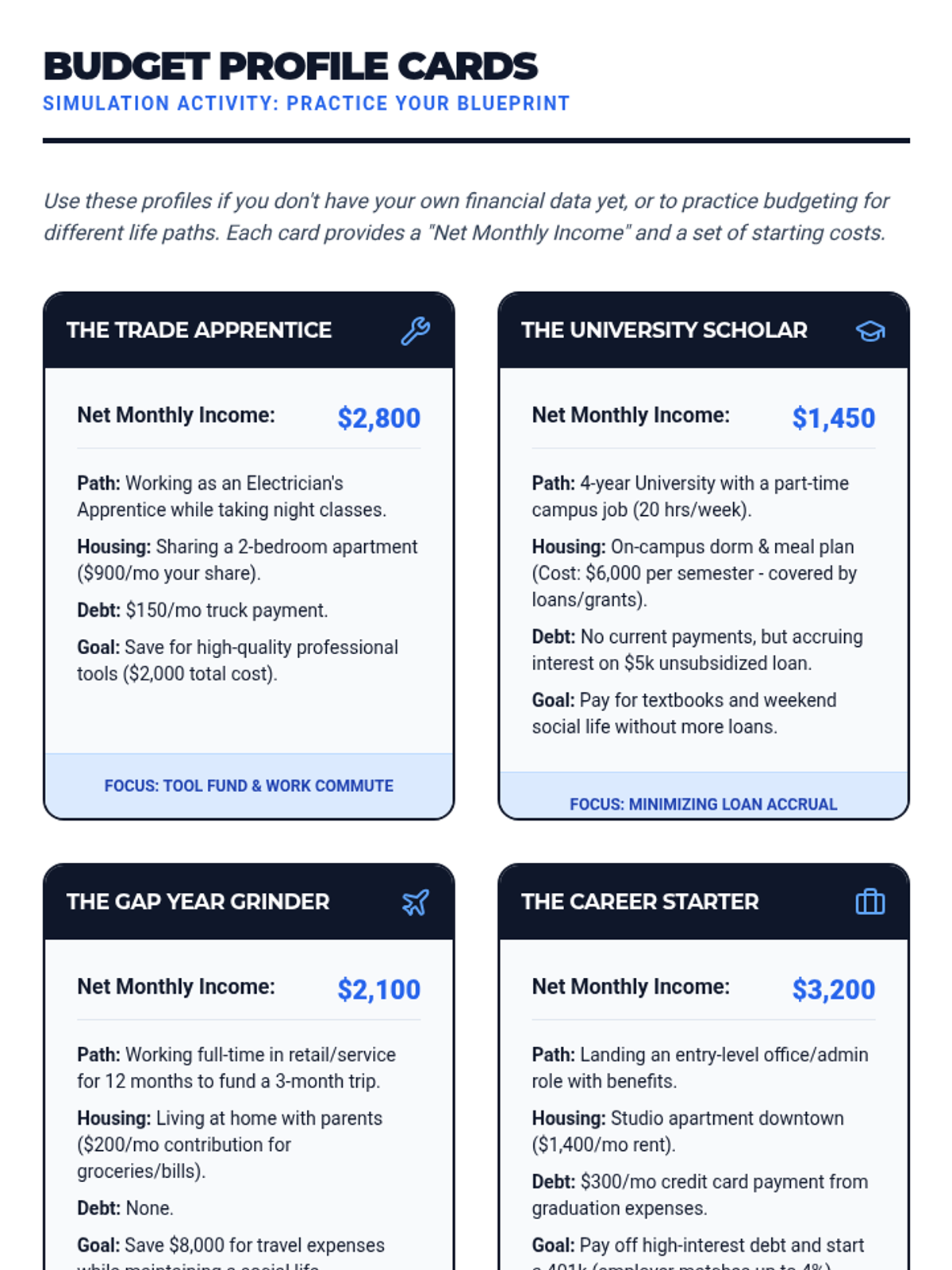
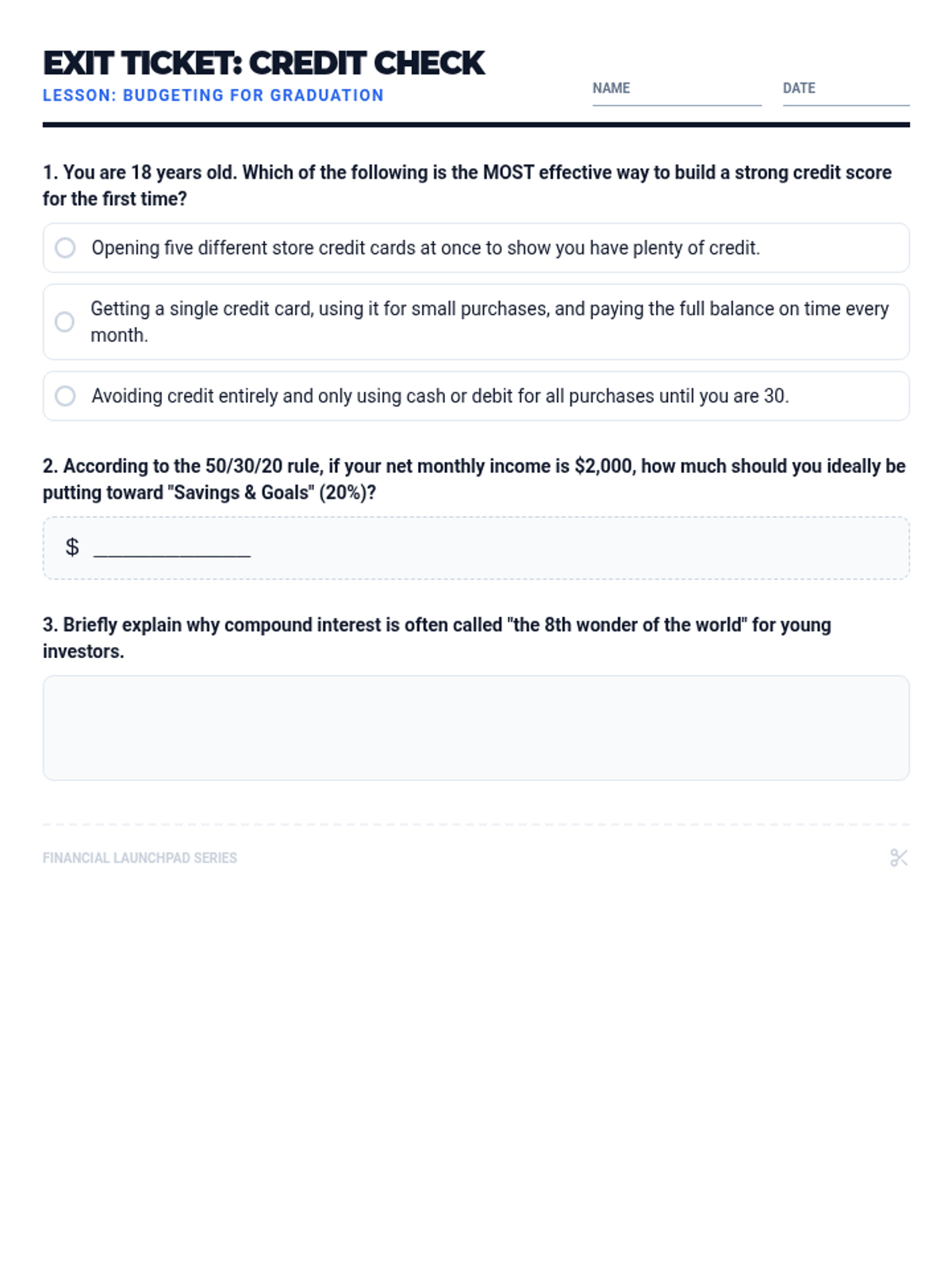
A comprehensive personal finance unit designed for high school seniors preparing for life after graduation, focusing on budgeting, post-secondary costs, credit management, and long-term saving.
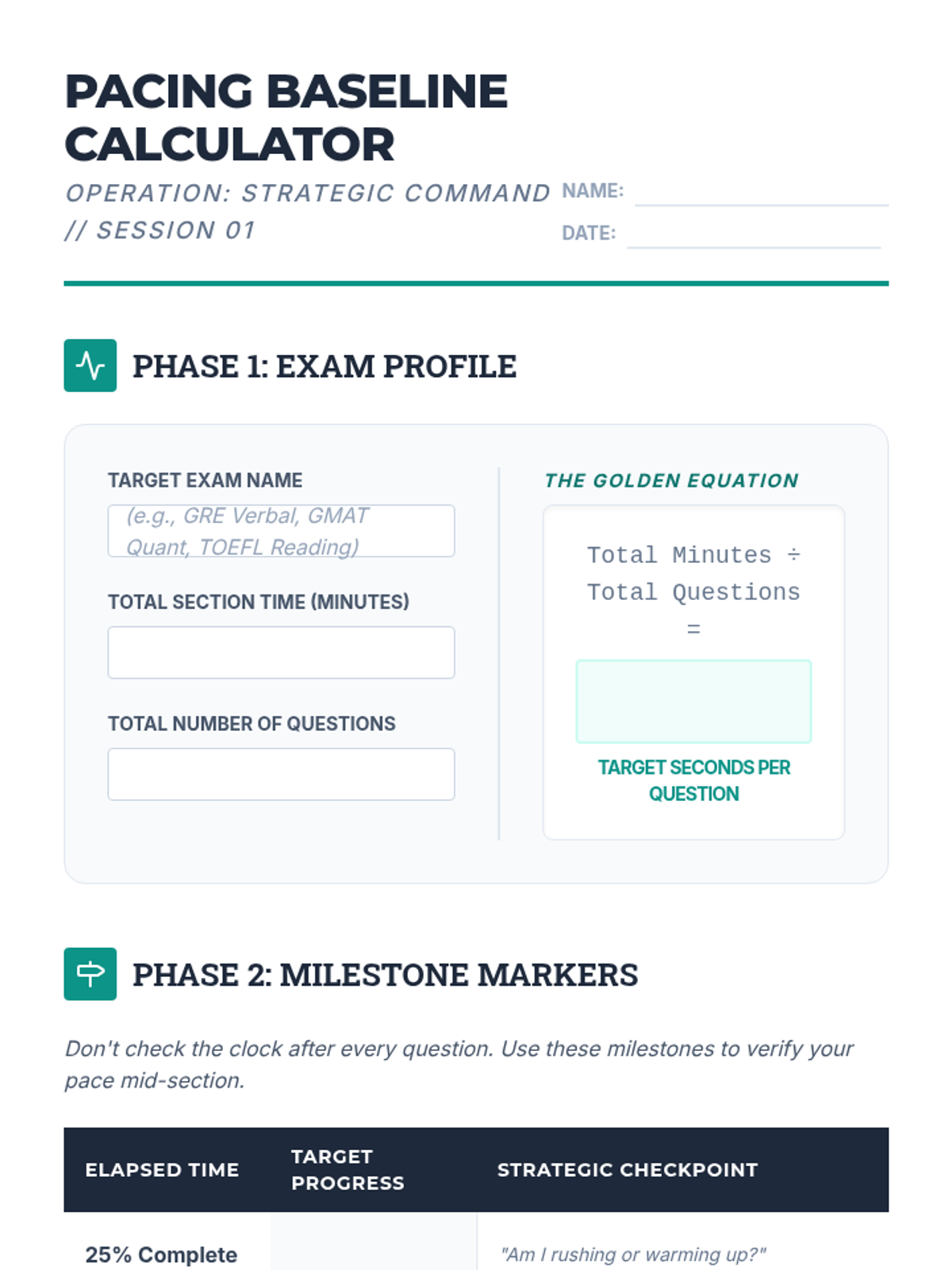
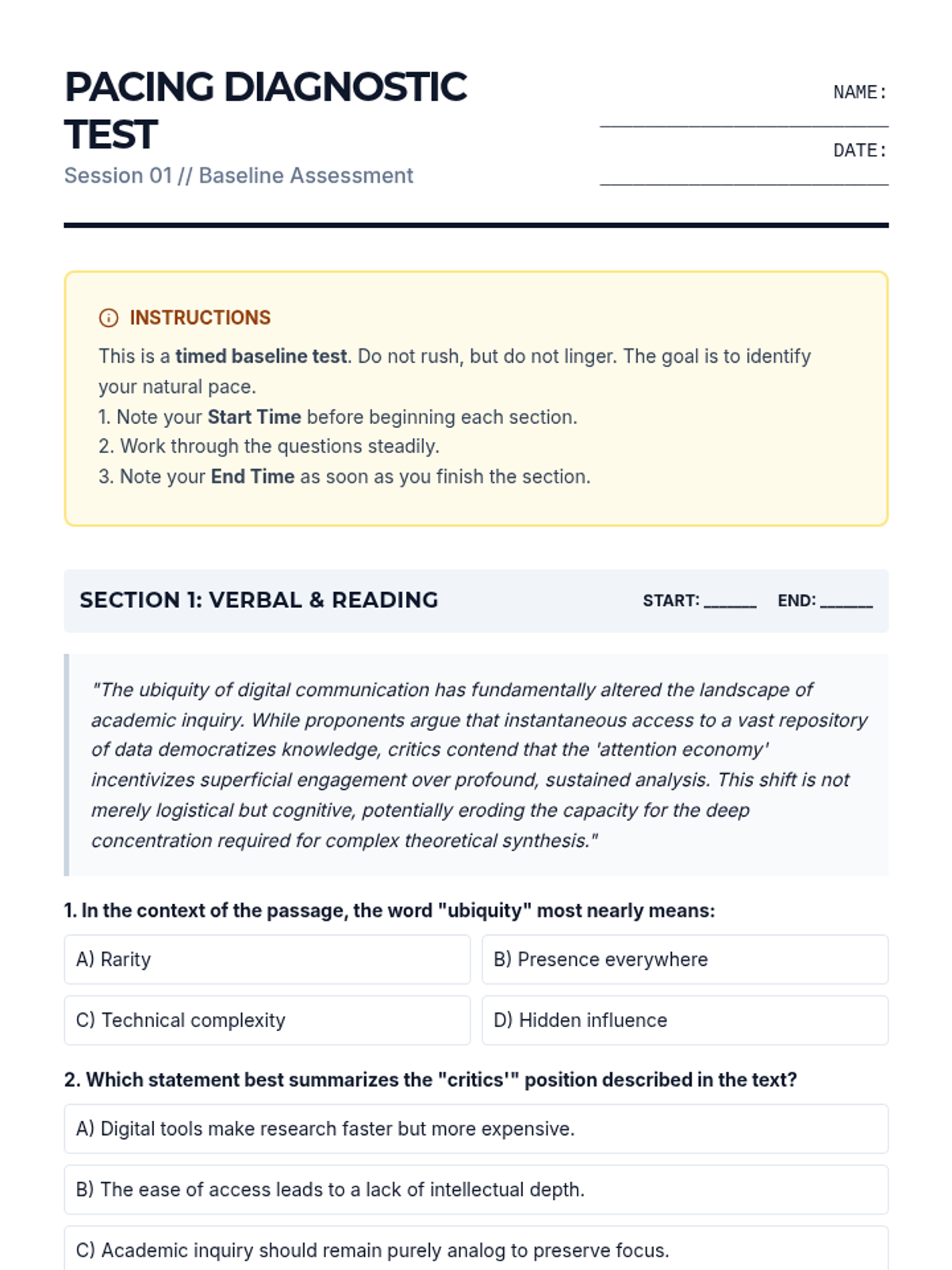
A comprehensive graduate-level sequence focused on the psychological and logistical aspects of high-stakes testing, including time management, anxiety reduction, and strategic decision-making.
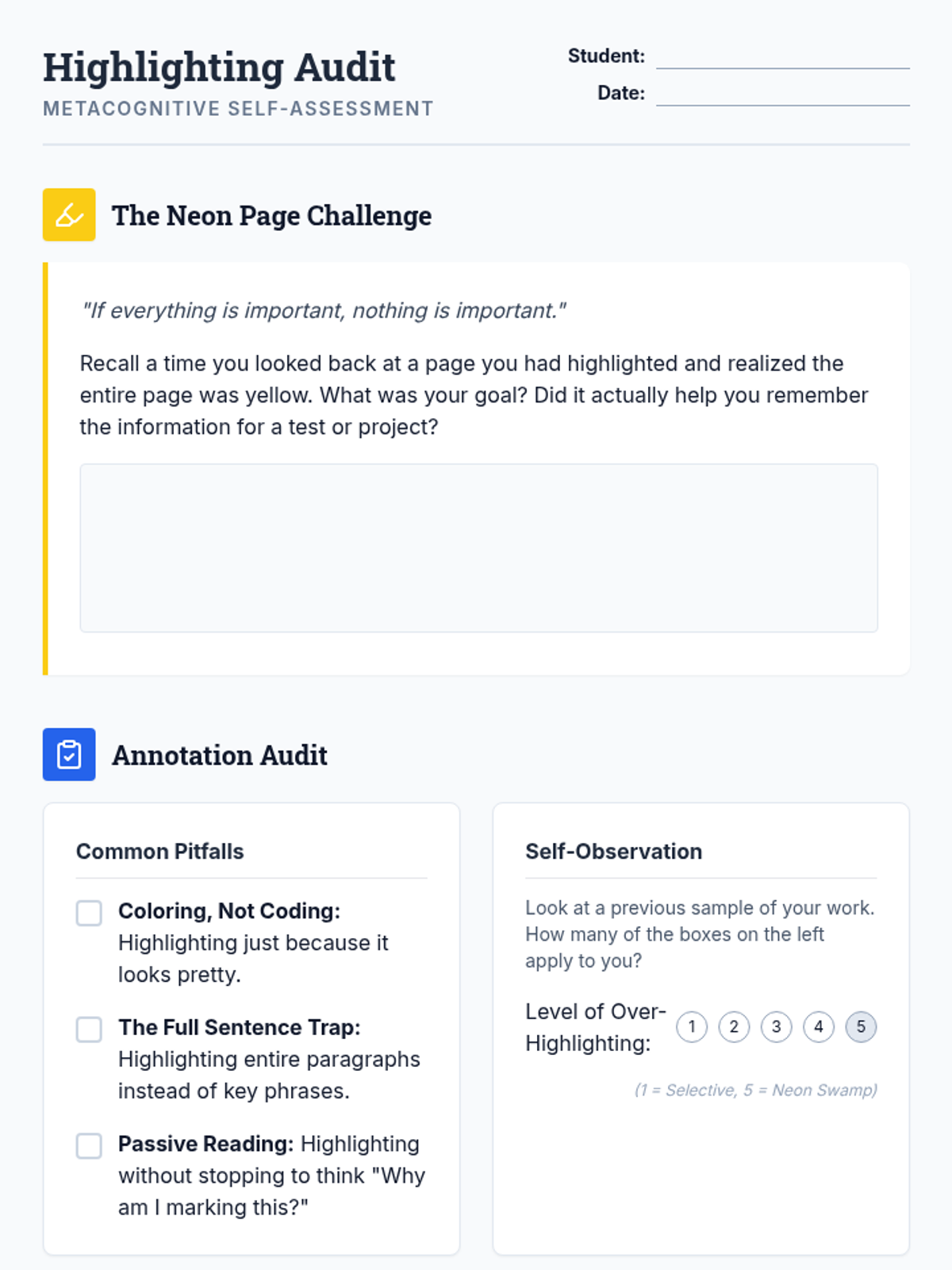
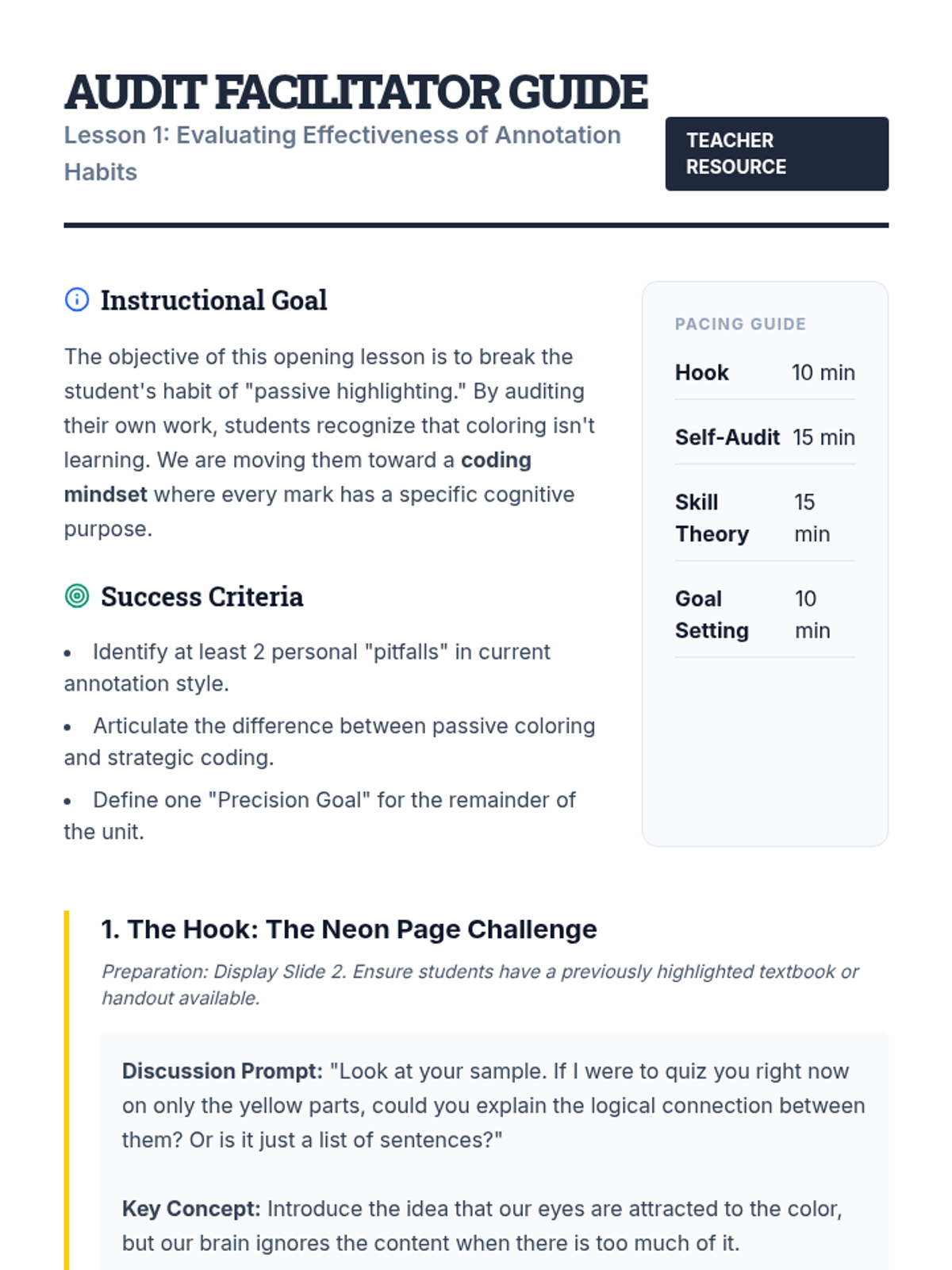
This sequence transforms highlighting from a passive activity into a rigorous, systematic method for information processing. Students evaluate current habits, establish hierarchical color systems, develop marginal shorthand, and apply these strategies to complex texts to create effective study tools.
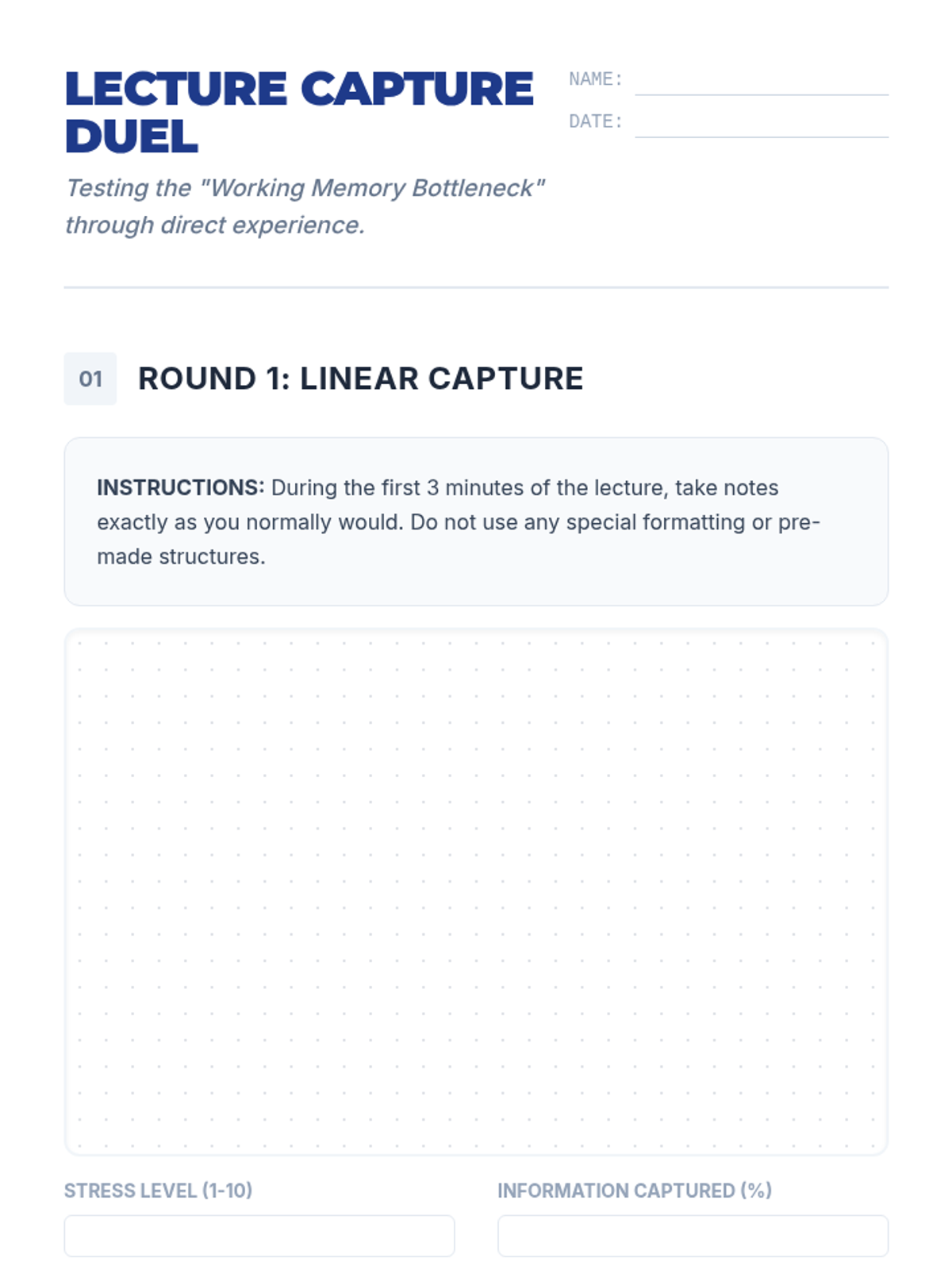
A comprehensive sequence for undergraduate students focusing on using graphic organizers to support working memory during fast-paced lectures. Students learn to prepare skeletal notes, map STEM logic, track humanities arguments, leverage digital tools, and synthesize notes for long-term retention.
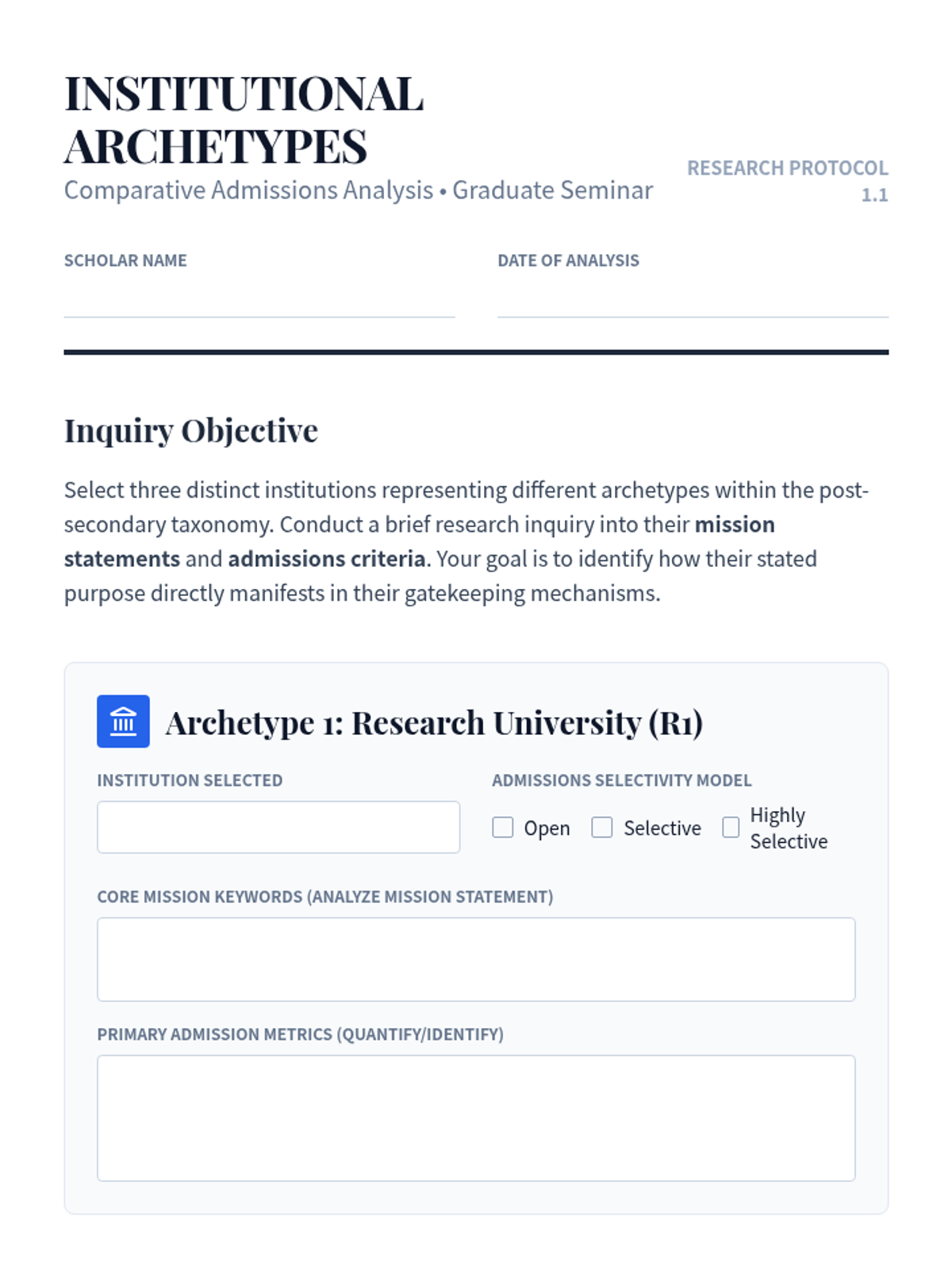
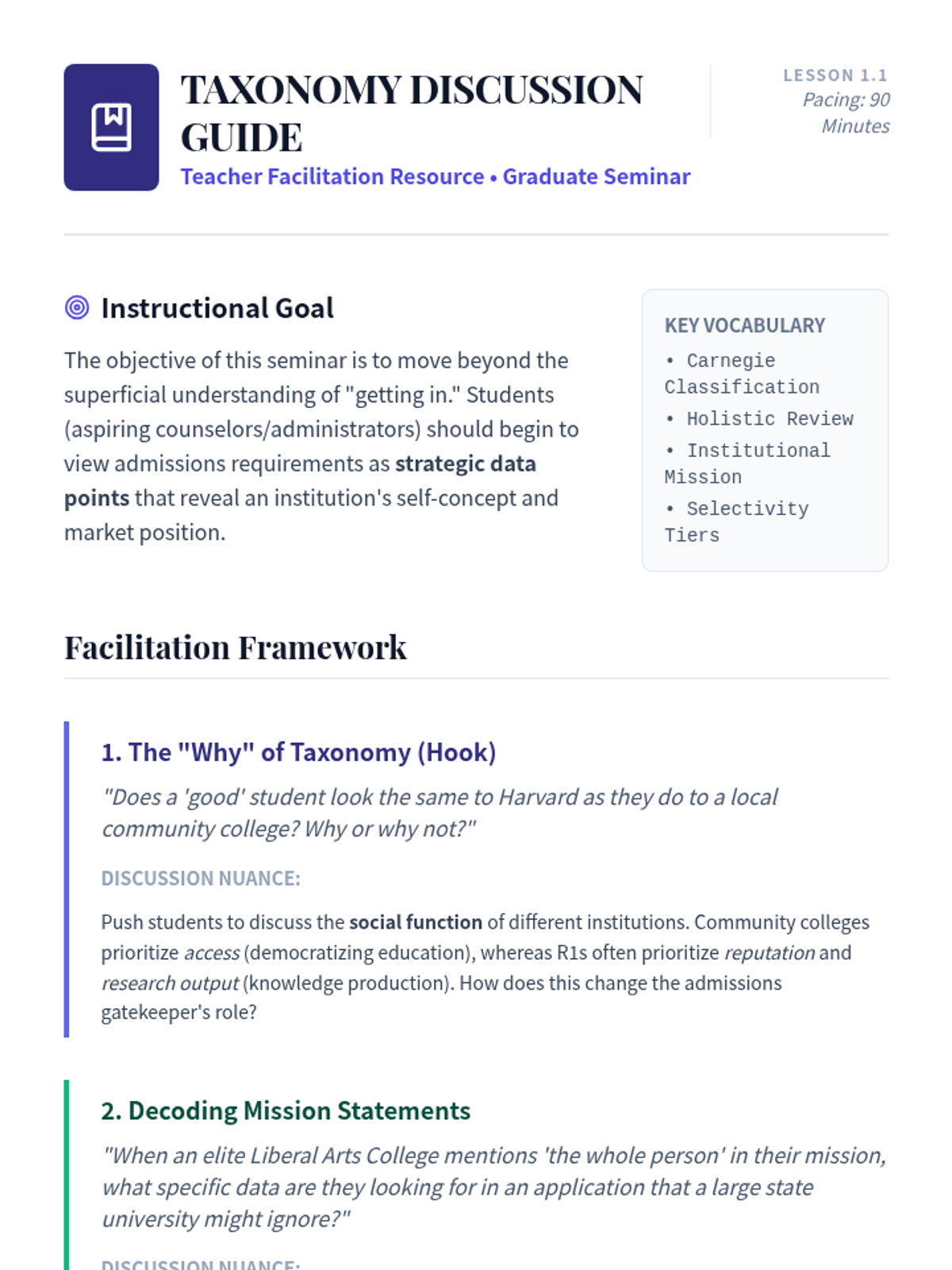
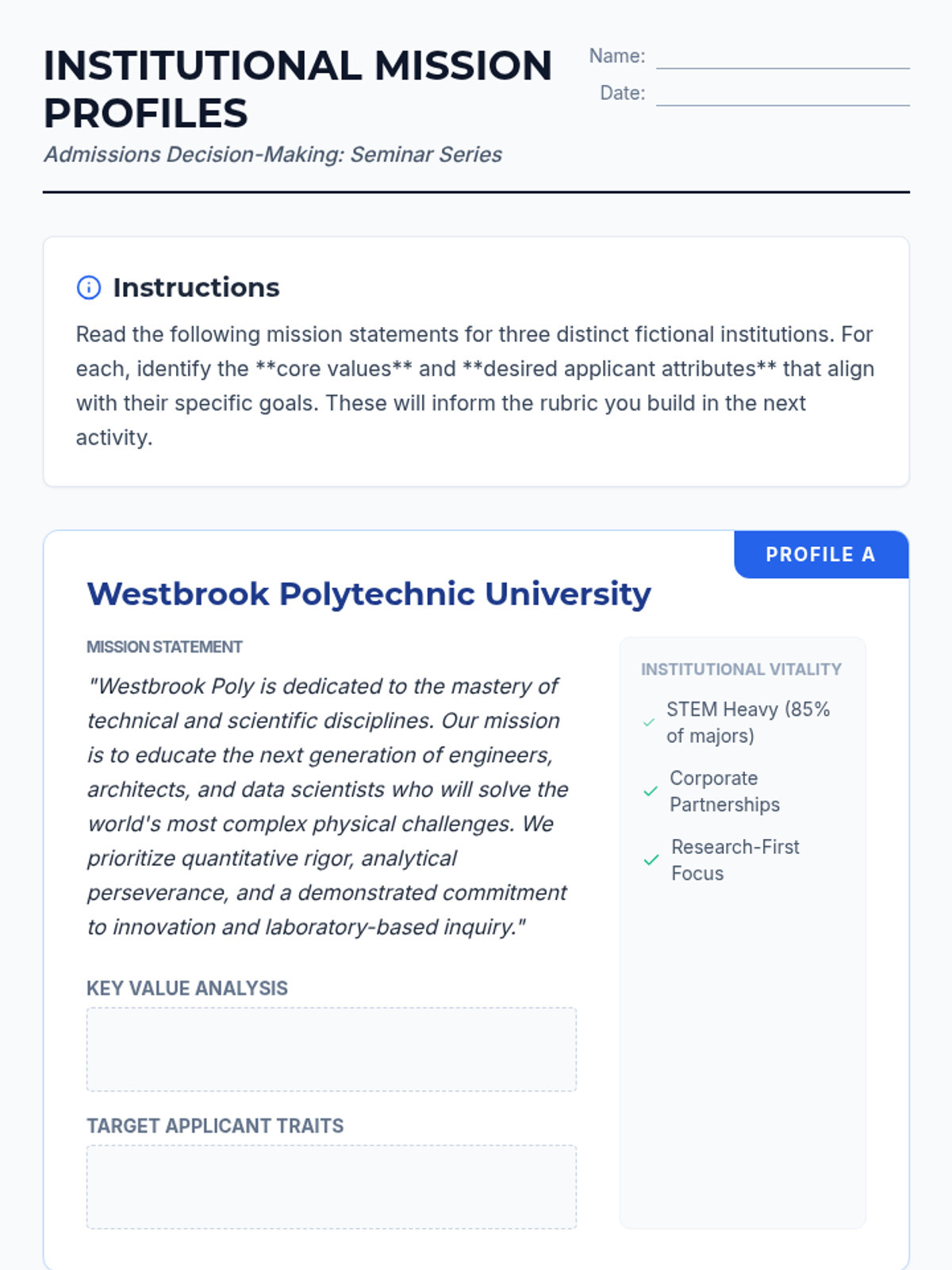
A comprehensive graduate-level sequence exploring the diverse landscape of post-secondary admission requirements across R1 universities, liberal arts colleges, vocational institutes, professional schools, and international systems. Students develop a comparative framework to understand how institutional missions shape admission protocols and cultural values.
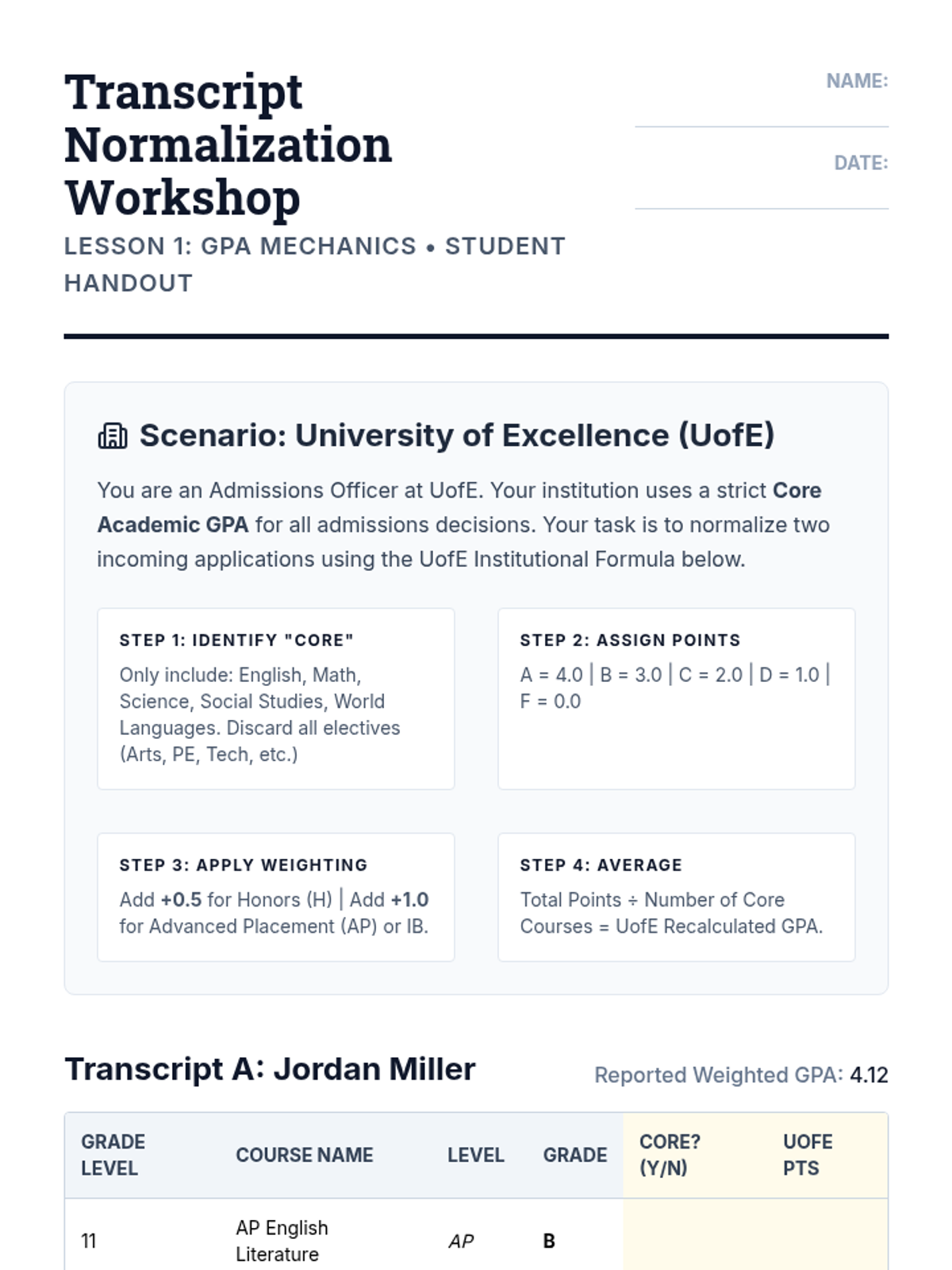
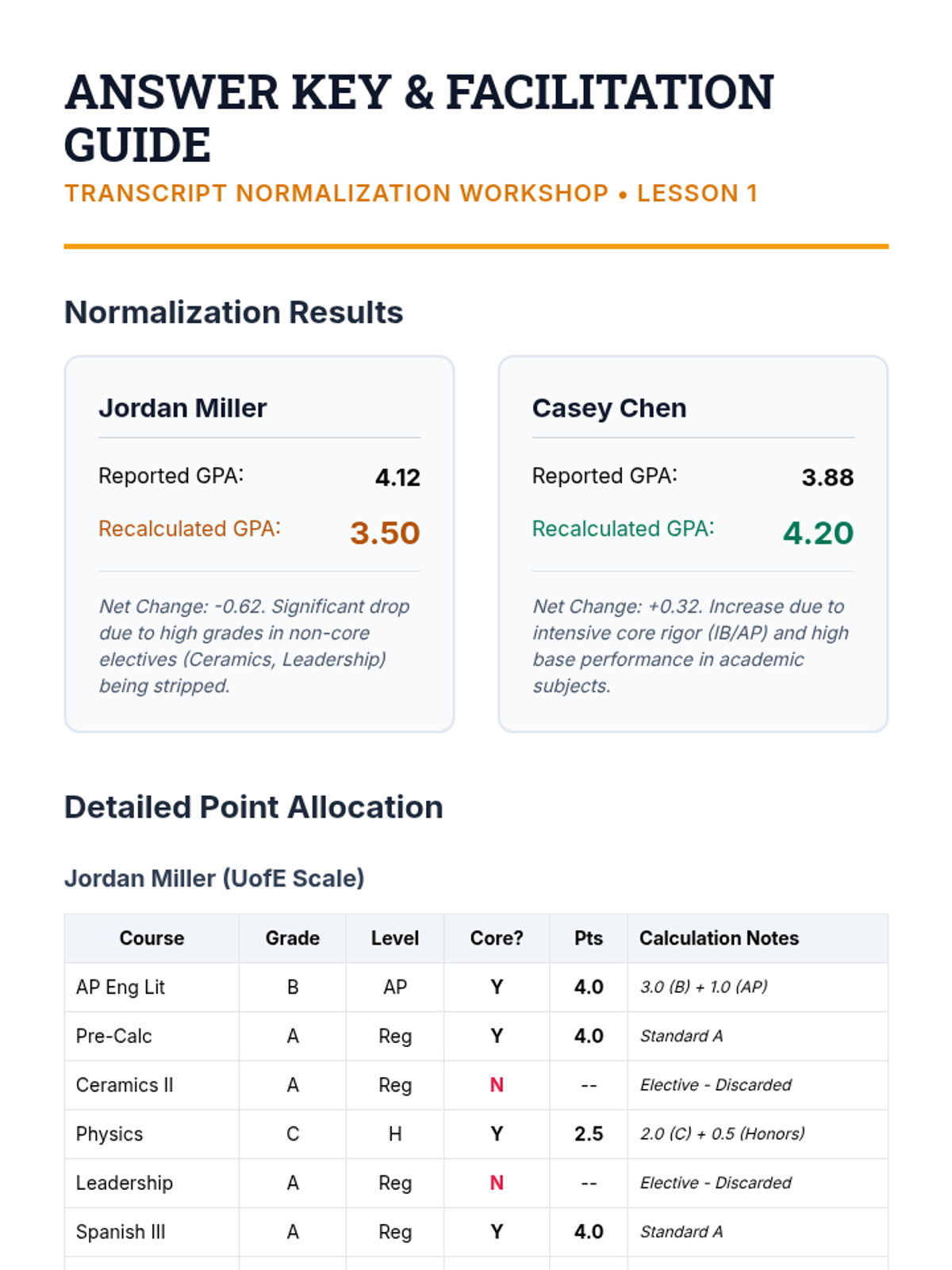
A graduate-level inquiry into the role of quantitative metrics in admissions, exploring the technical mechanics of GPA recalculation and the ethical implications of standardized testing through an equity lens.
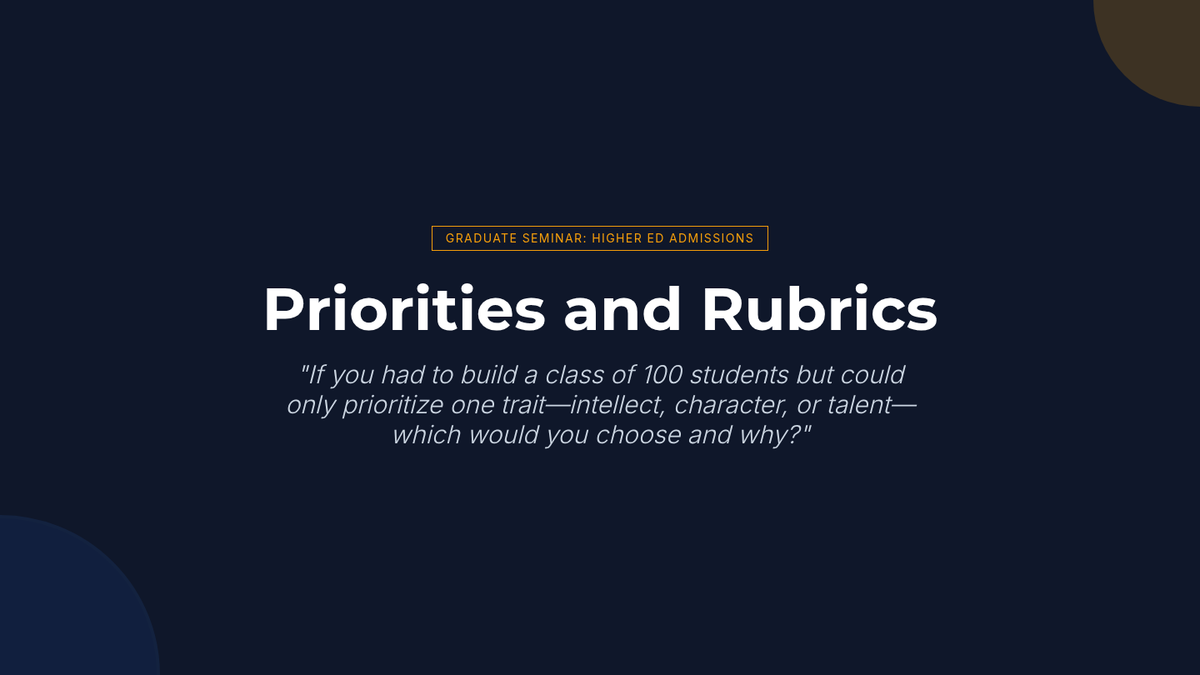
A graduate-level exploration of the admissions 'black box,' where students act as admissions officers to navigate the complexities of holistic review, institutional priorities, and systemic bias in post-secondary gatekeeping.
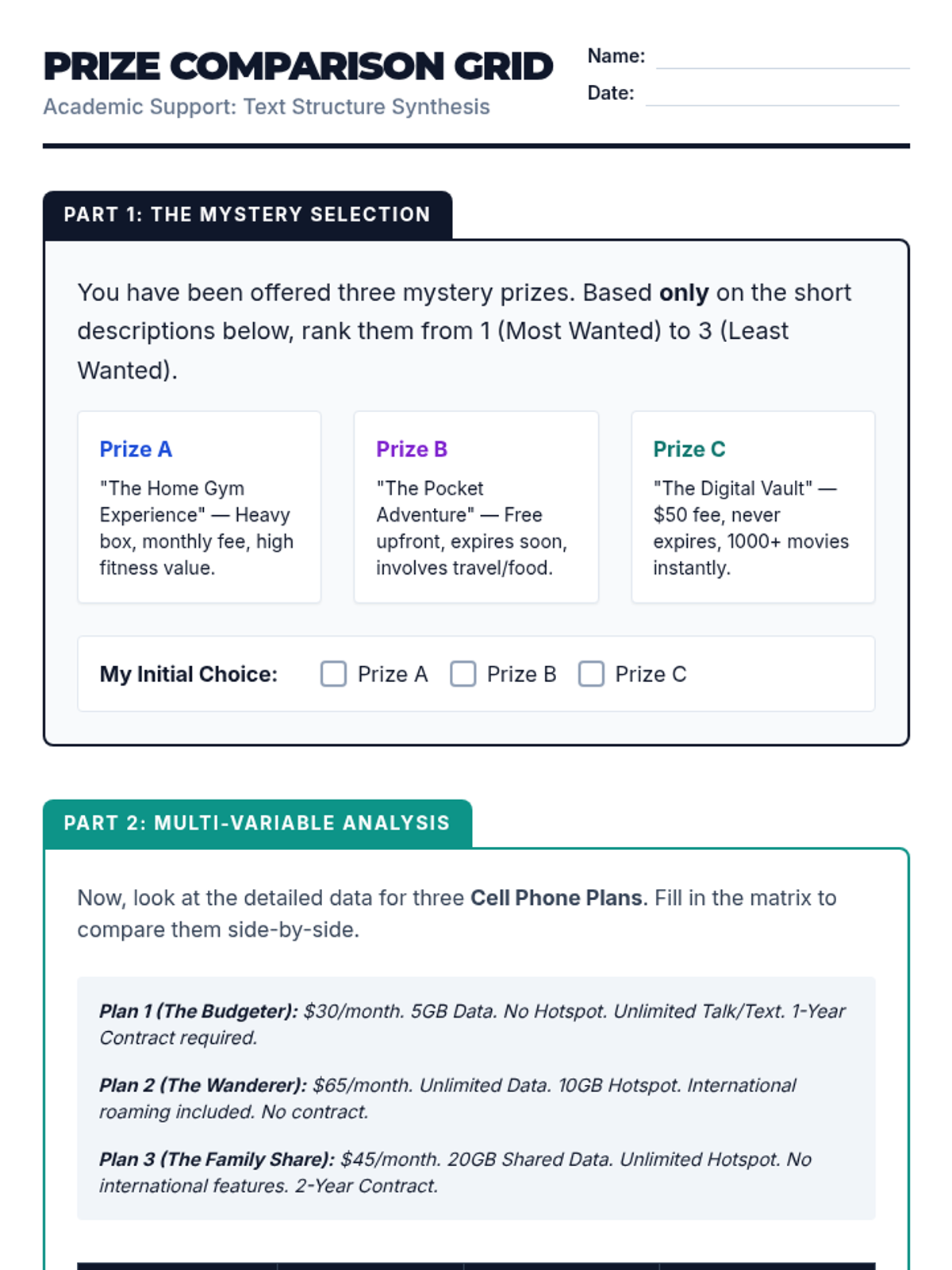
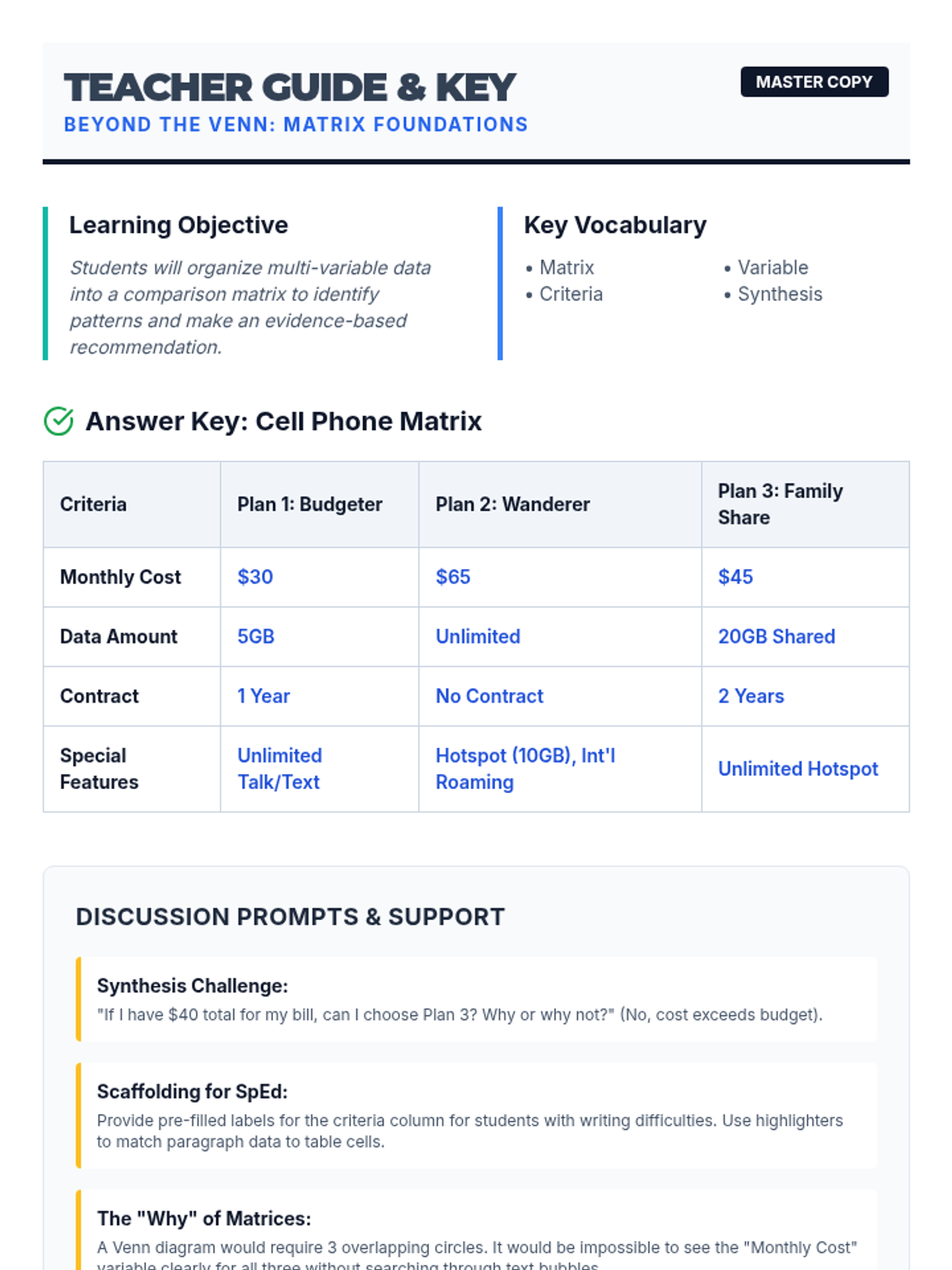
A higher-education and career-readiness sequence for 12th-grade students focused on using matrices to synthesize complex, conflicting, and multi-variable information. Students move from basic data organization to high-level comparative analysis and source evaluation.
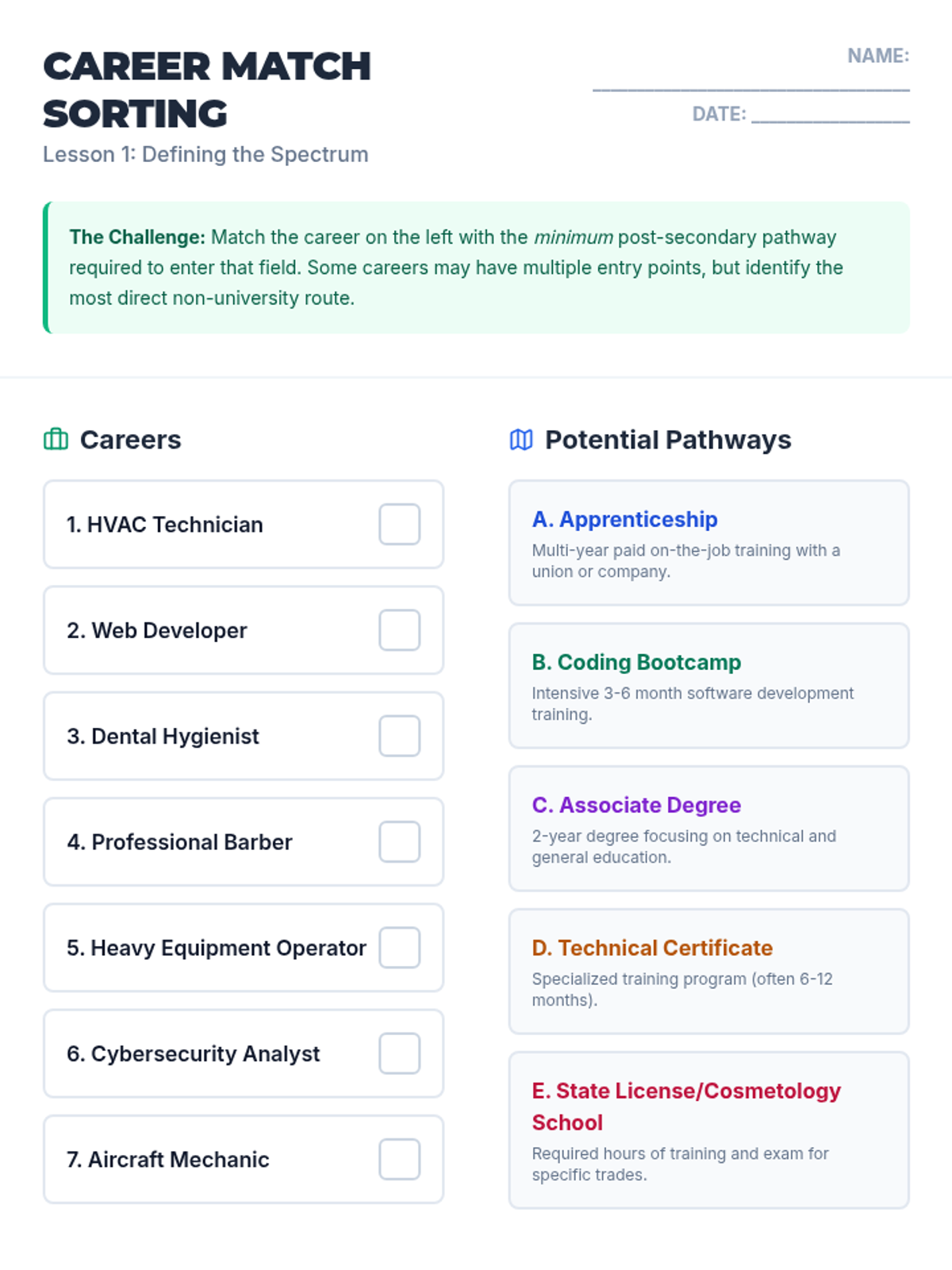
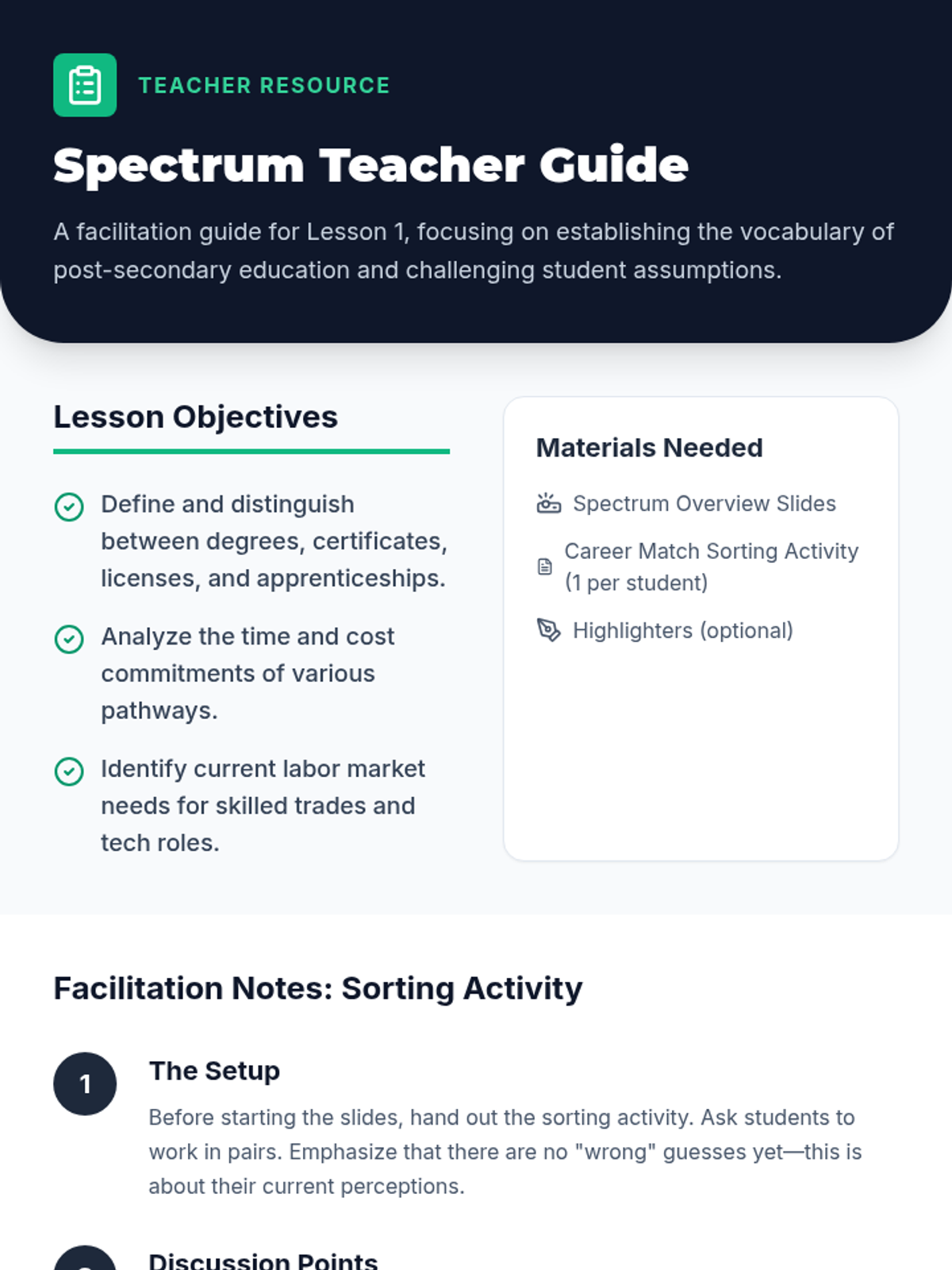
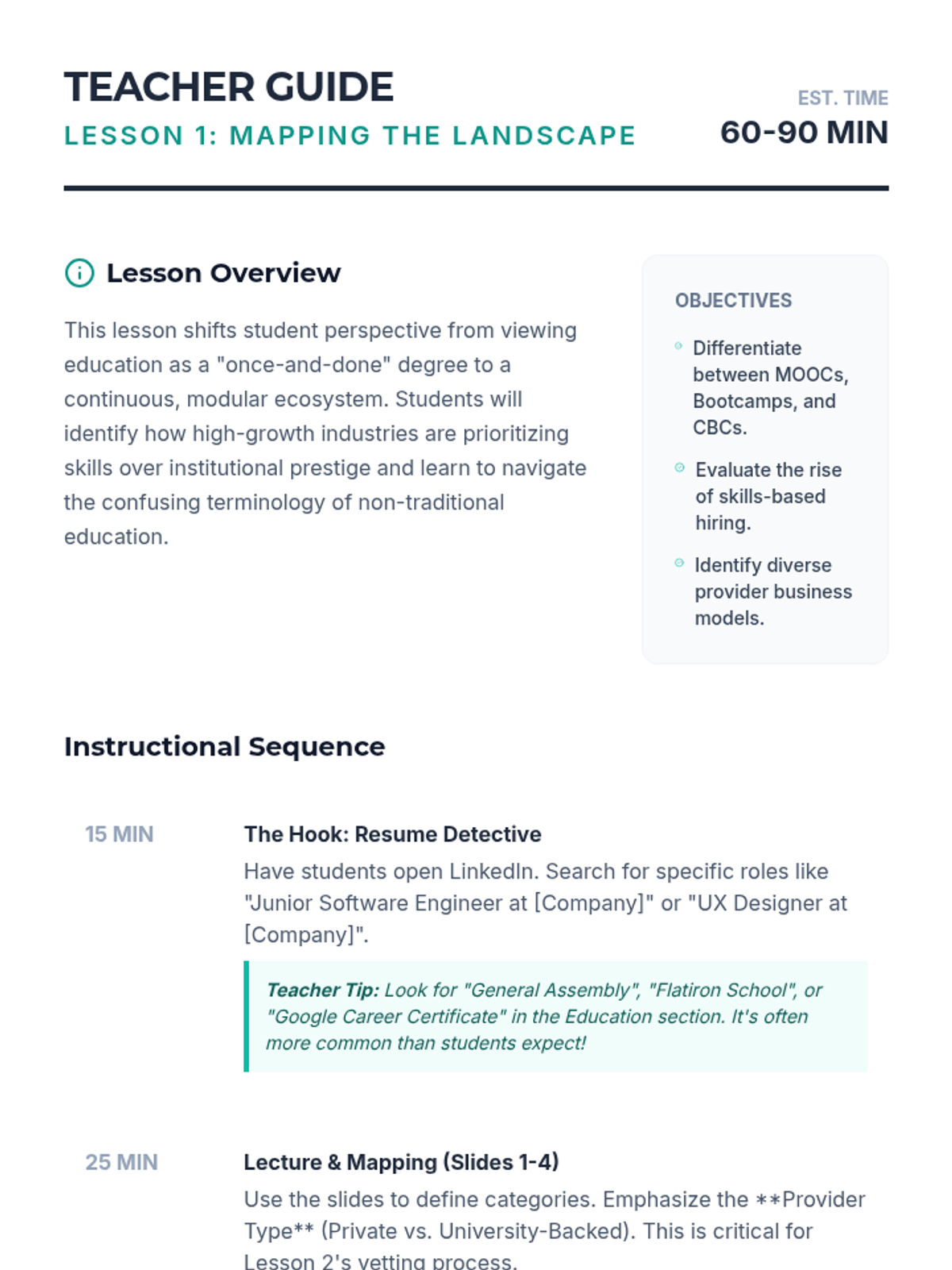
This sequence explores post-secondary education options beyond the traditional four-year degree, including trade schools, apprenticeships, coding bootcamps, and certificate programs. Students learn to evaluate the legitimacy of various programs and compare different career pathways based on cost, duration, and outcomes.
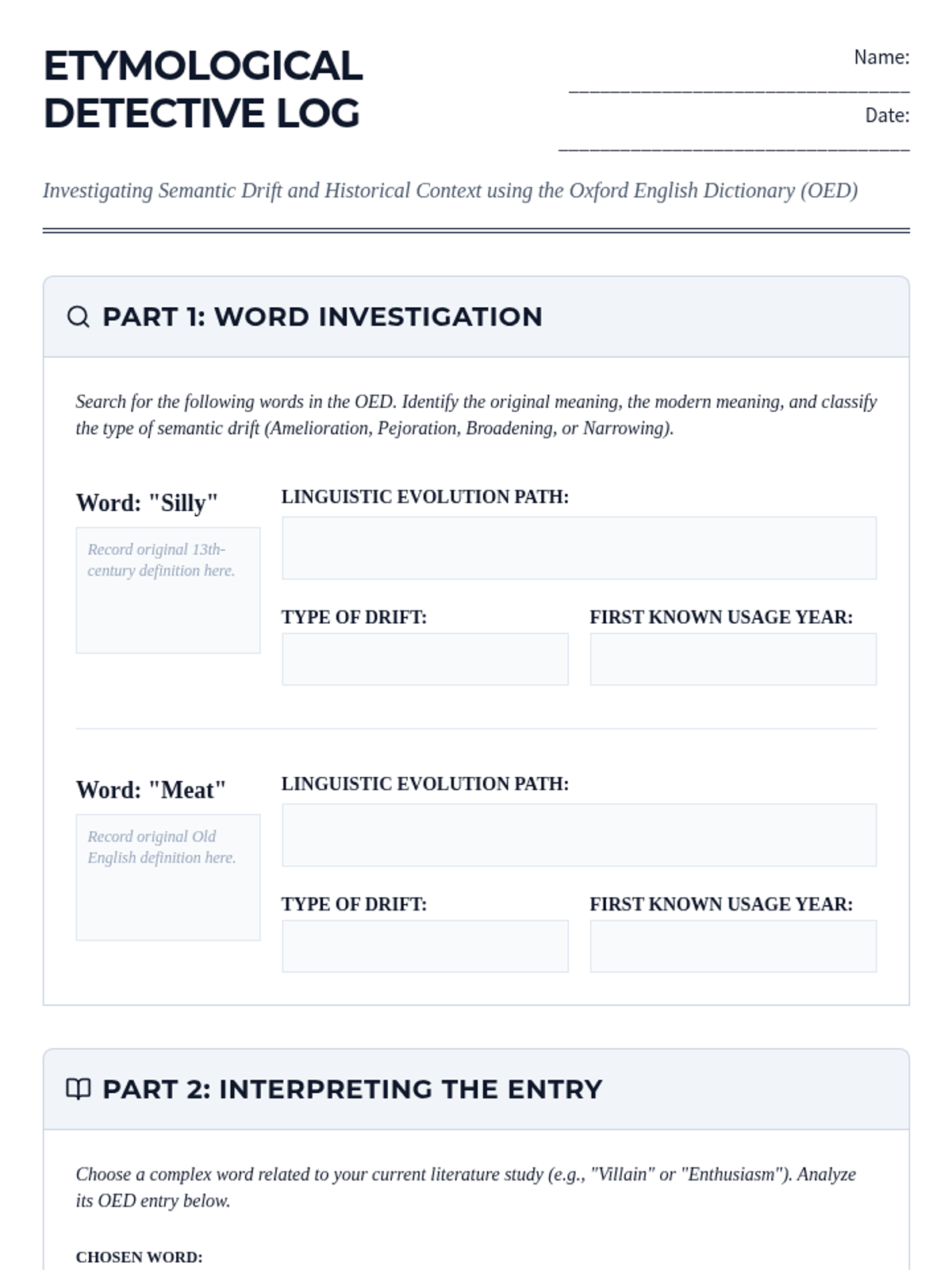
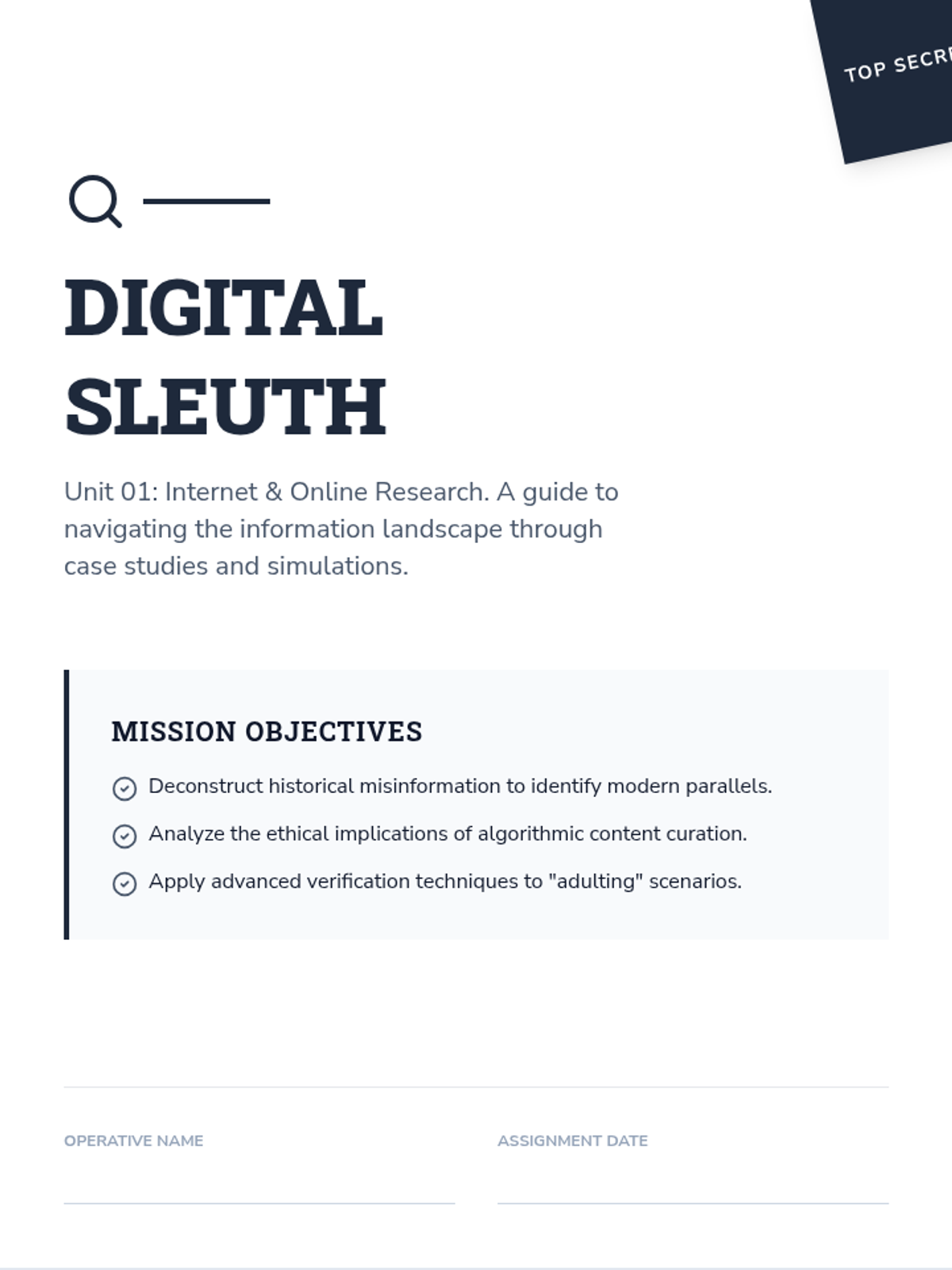
This advanced sequence transitions students from general information retrieval to the rigors of collegiate-level research and specialized reference usage. Students master boolean logic, historical linguistics, source evaluation, and citation management.
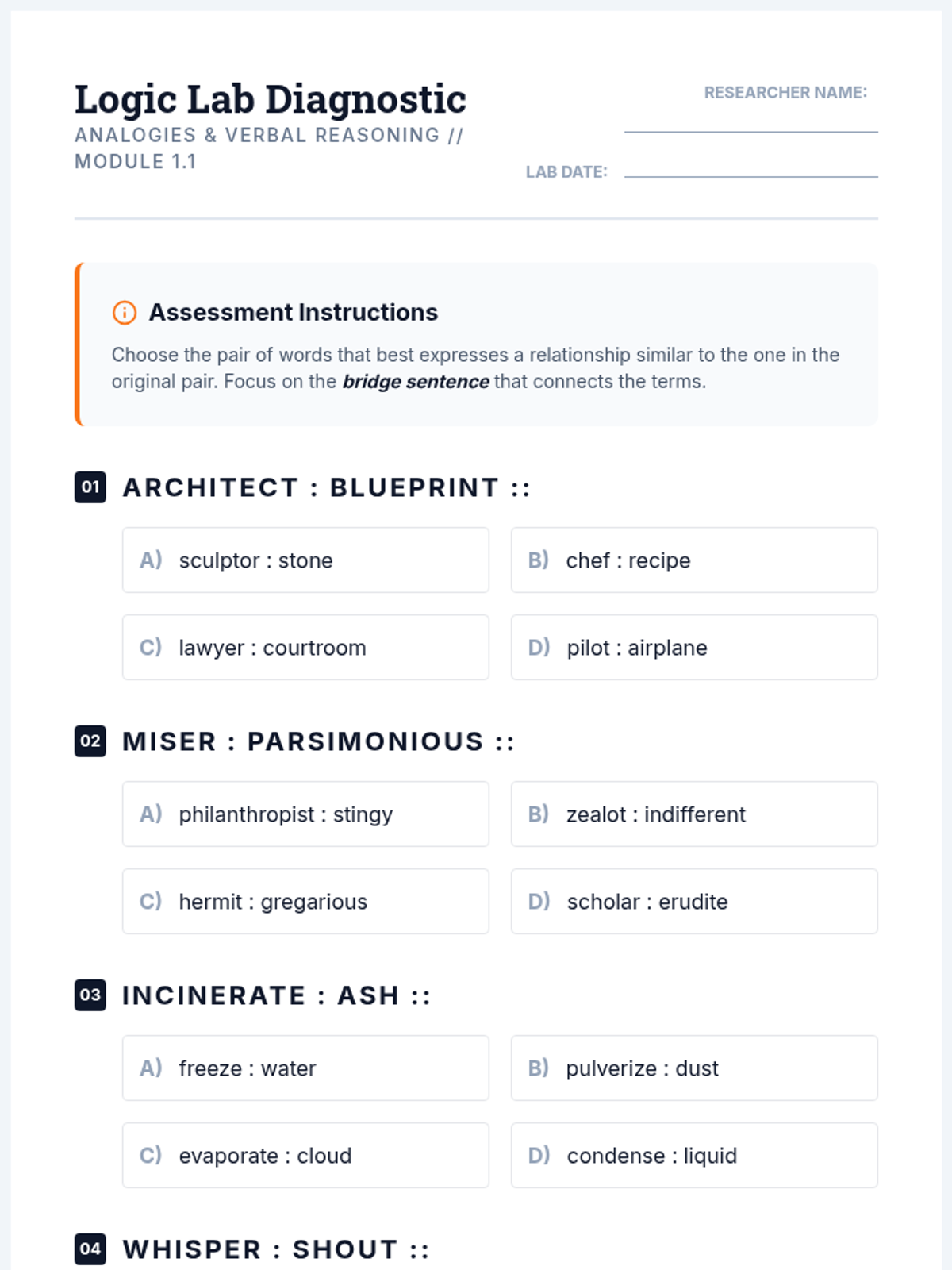
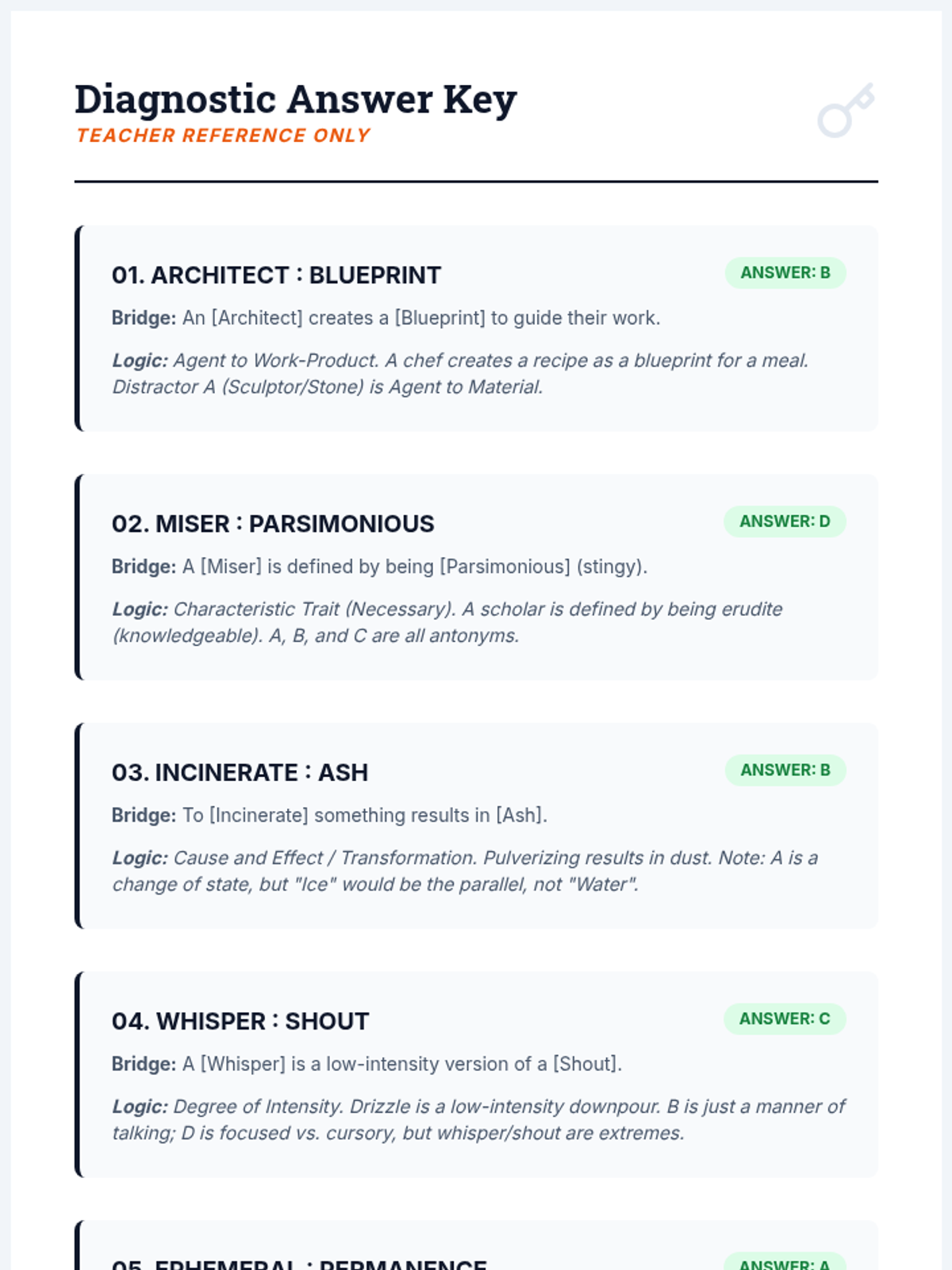
A high-school level sequence focusing on the logic and precision required for advanced analogy problems, preparing students for standardized testing and academic vocabulary mastery through a 'Verbal Laboratory' theme.
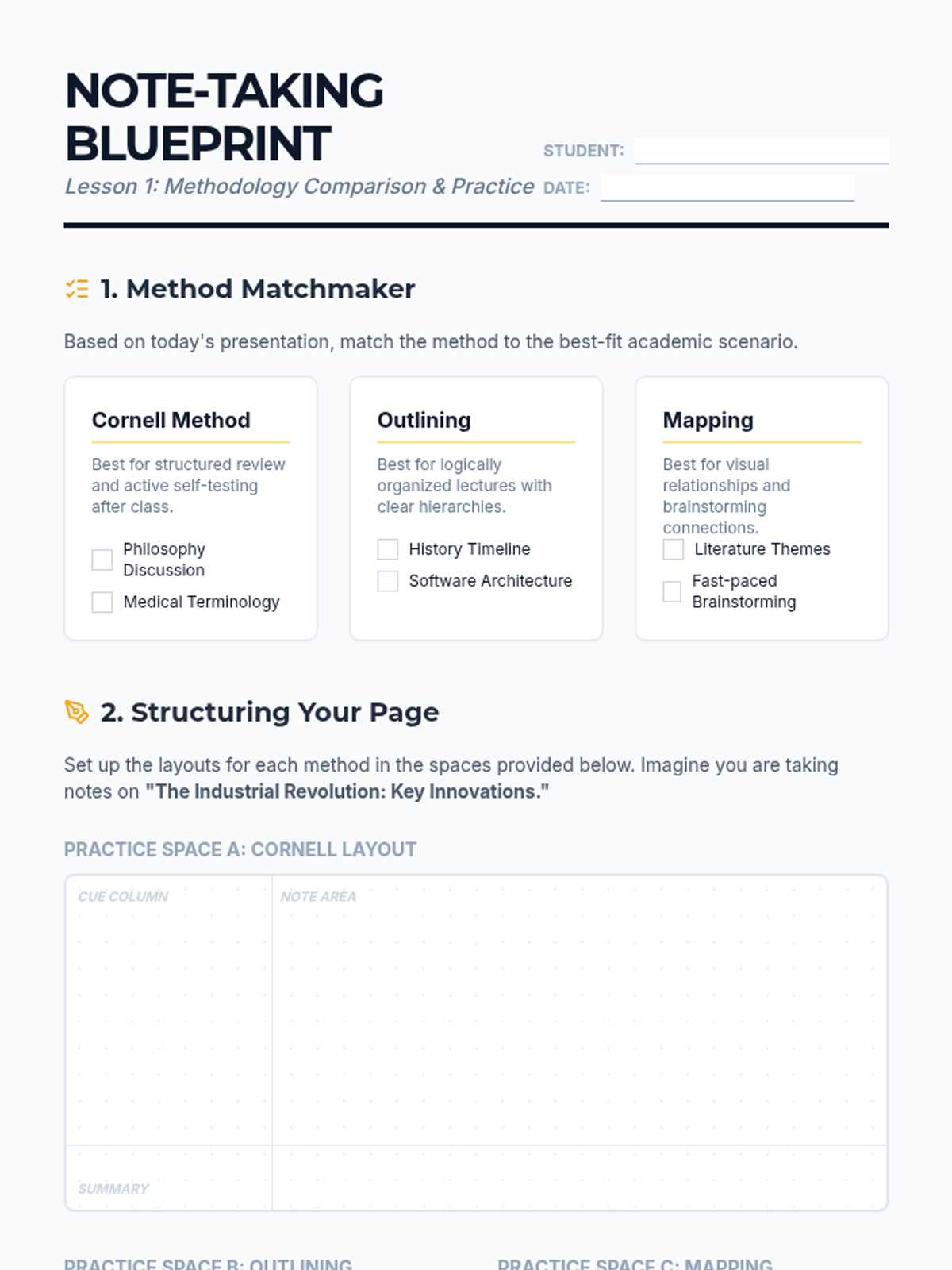
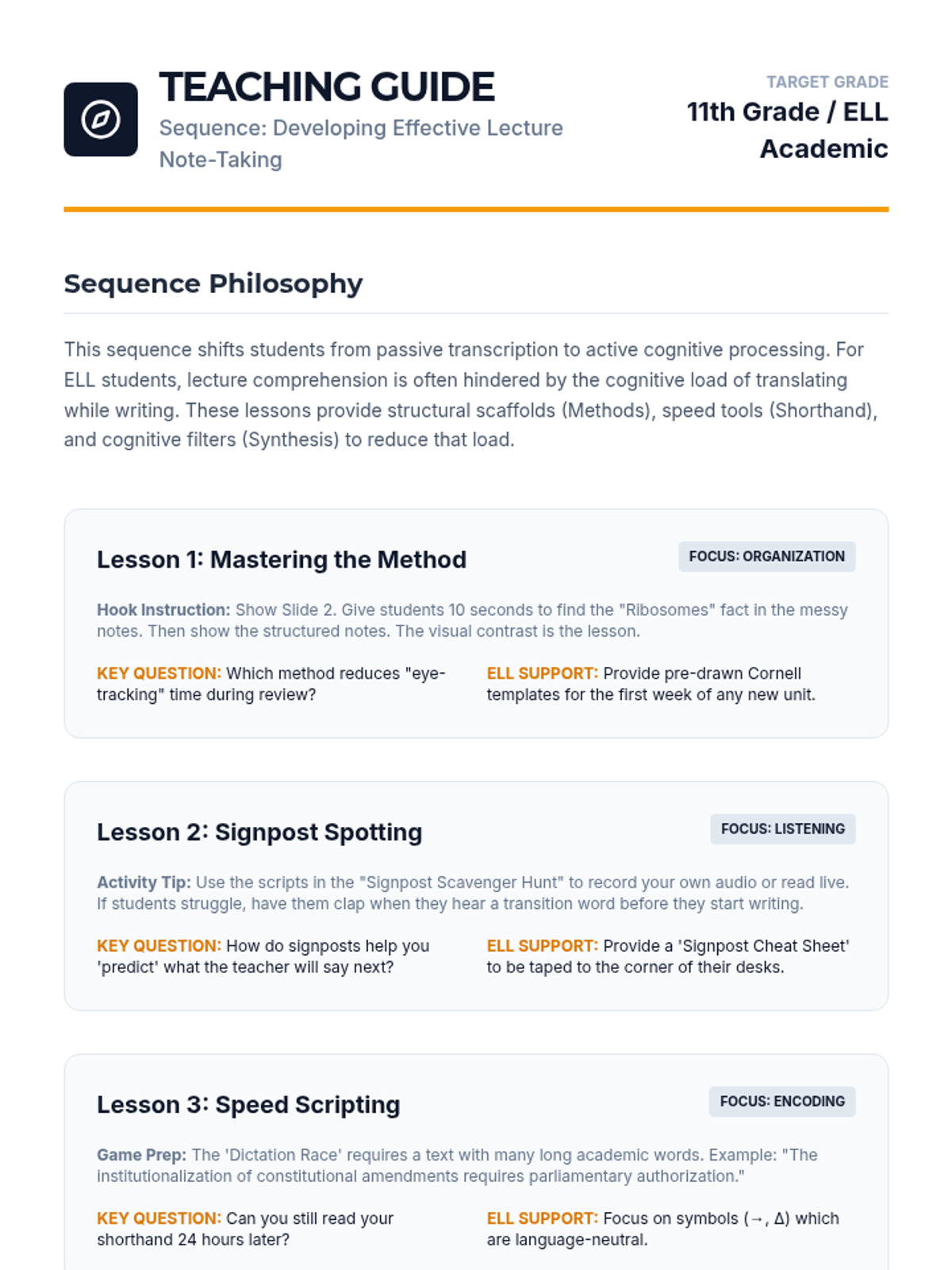
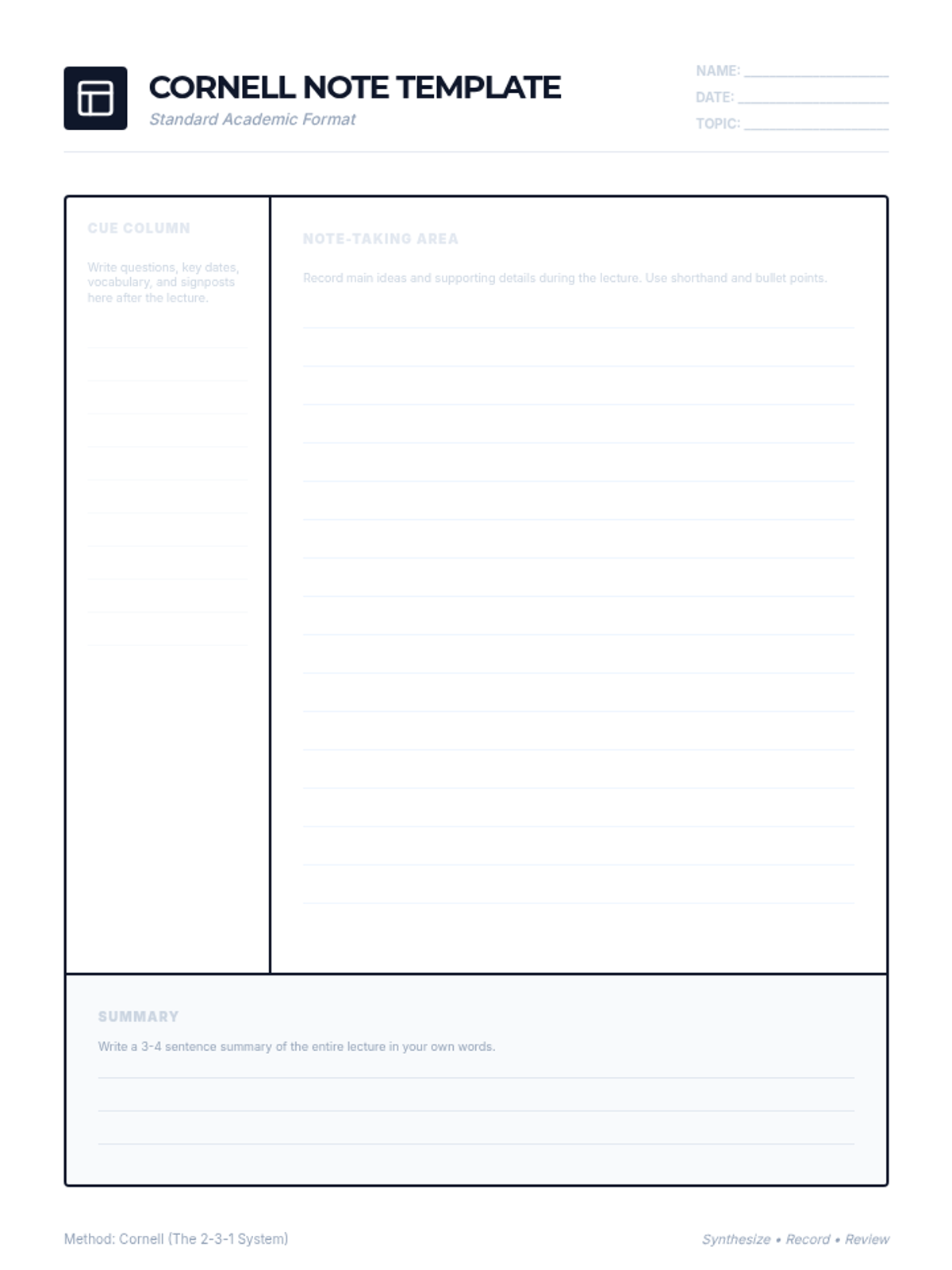
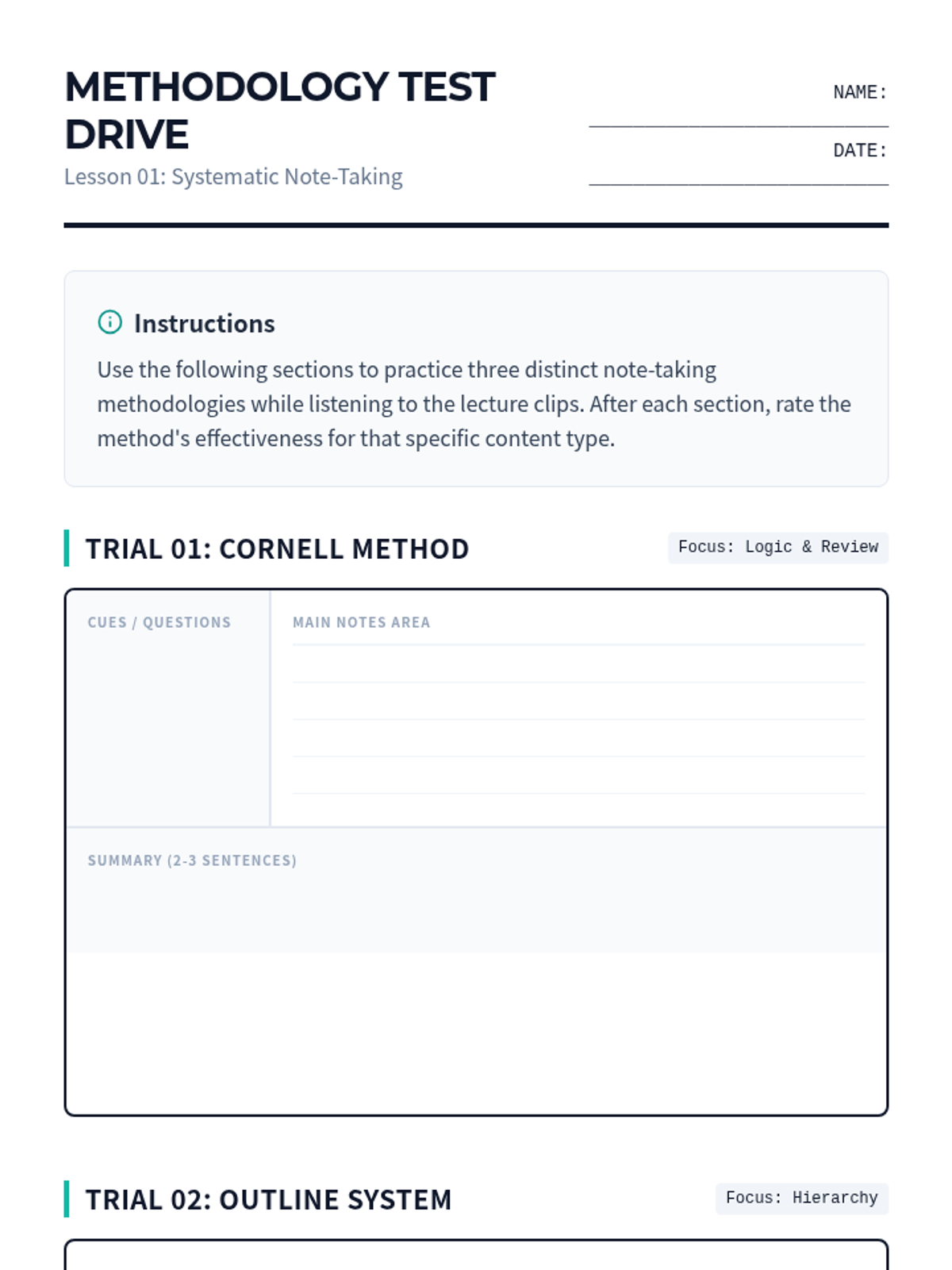
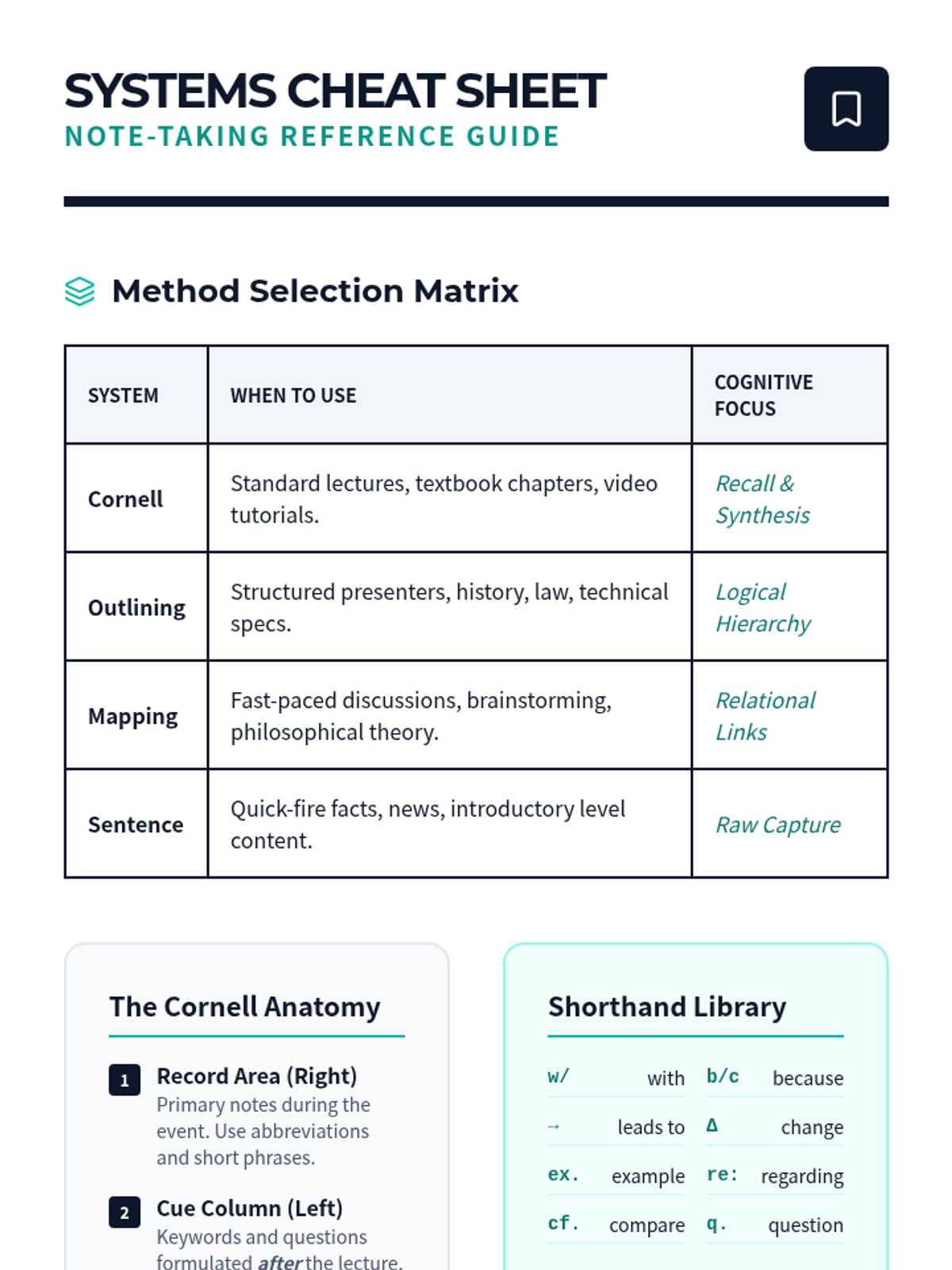
This sequence equips 11th-grade students with advanced academic note-taking systems like Cornell, Outlining, and Mapping. It focuses on active listening for verbal signposts, developing personalized shorthand, and synthesizing complex lecture content to prepare for university-level academic success.
This sequence guides undergraduate students through the critical transition from passive information consumption to active academic synthesis. Students will master note-taking systems, active reading strategies, auditory analysis of lectures, and multi-source synthesis, culminating in a personalized mastery plan based on active recall principles.
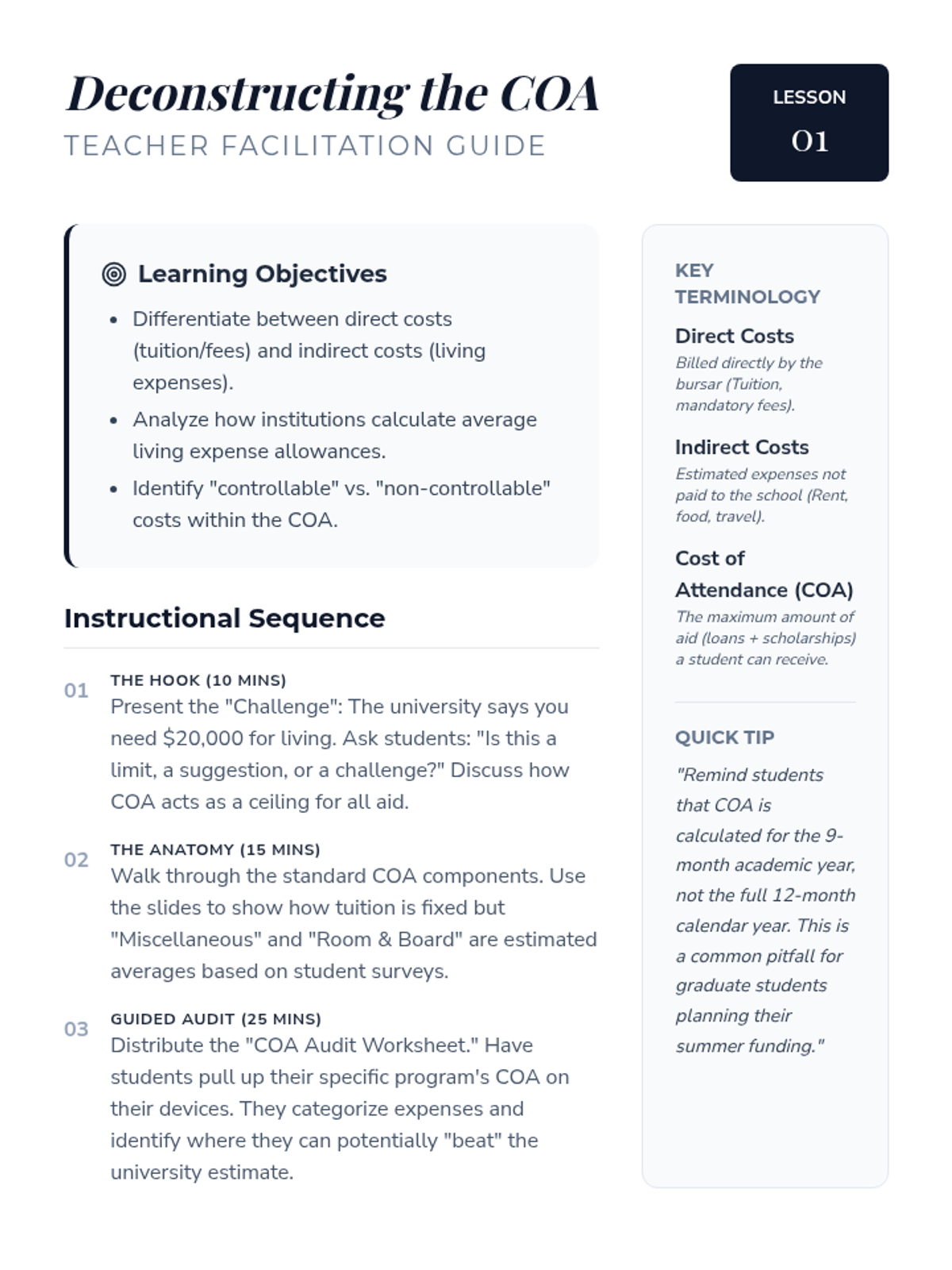
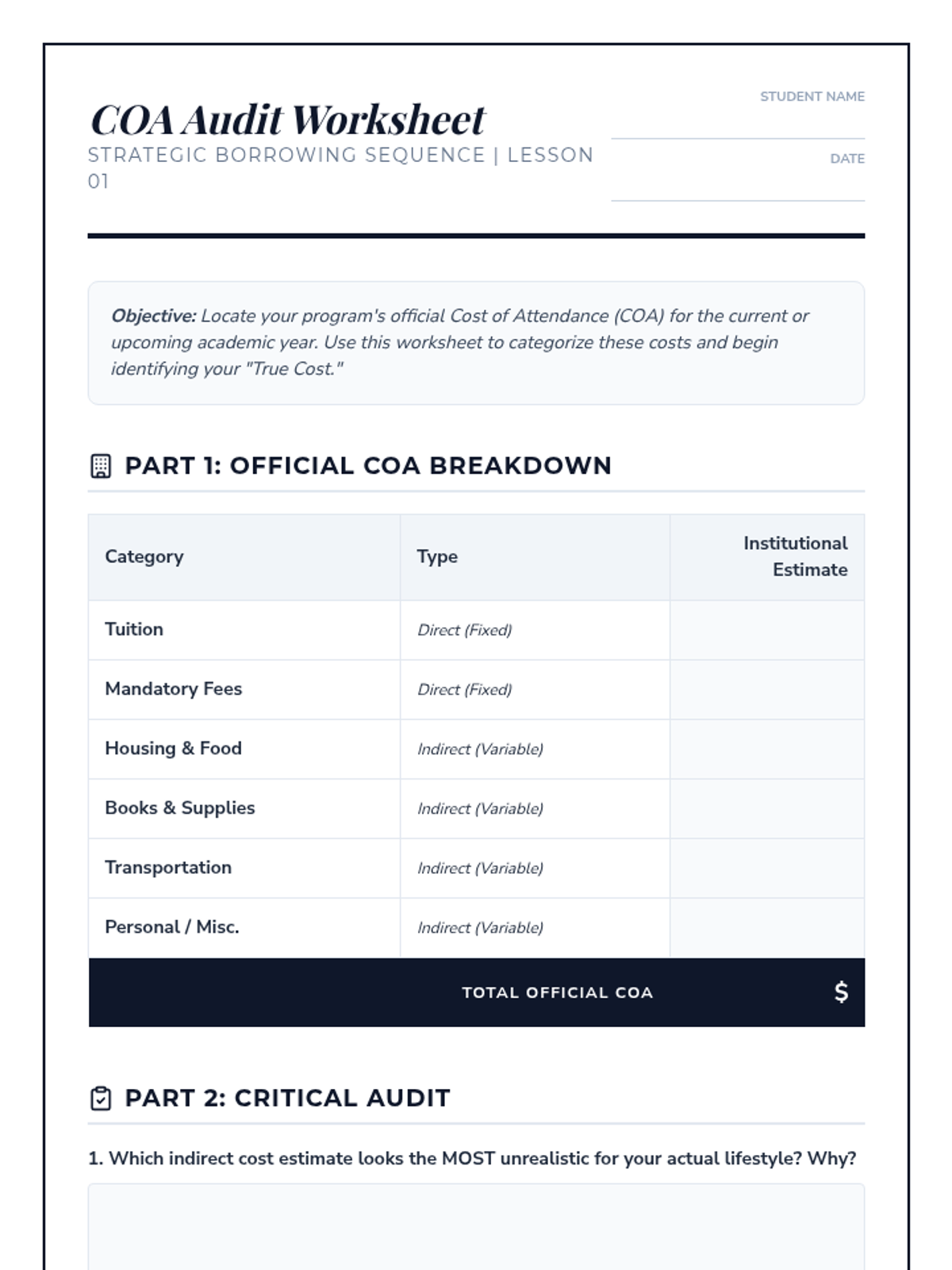
This project-based sequence guides graduate students through FAFSA completion by framing it as a strategic business decision. Students will audit institutional costs, build realistic budgets, calculate precise borrowing needs, and learn to navigate professional judgment appeals to minimize long-term debt.
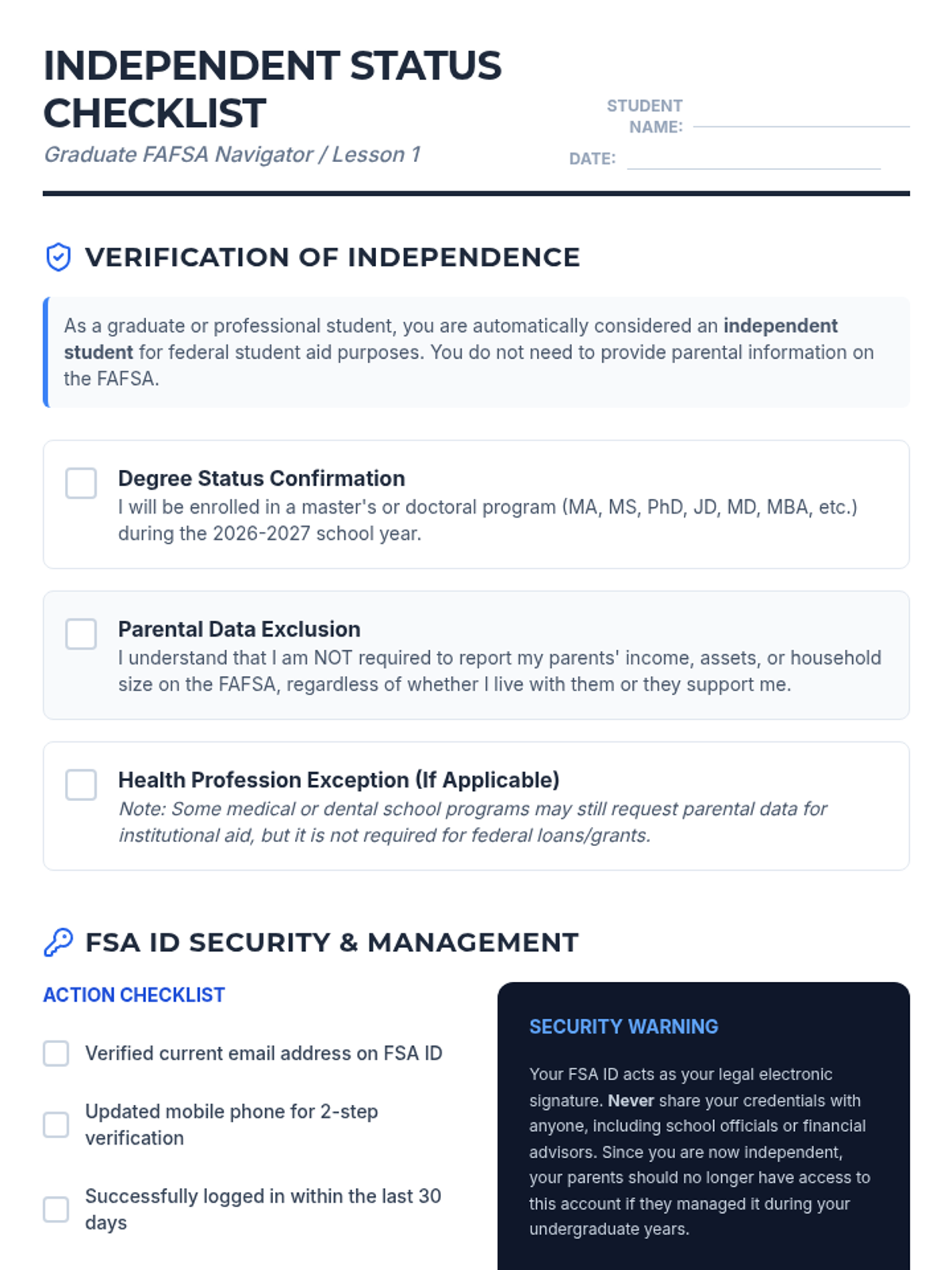
A comprehensive workshop-style sequence for graduate students navigating the FAFSA as independent applicants, focusing on technical requirements, asset reporting, and strategic planning.
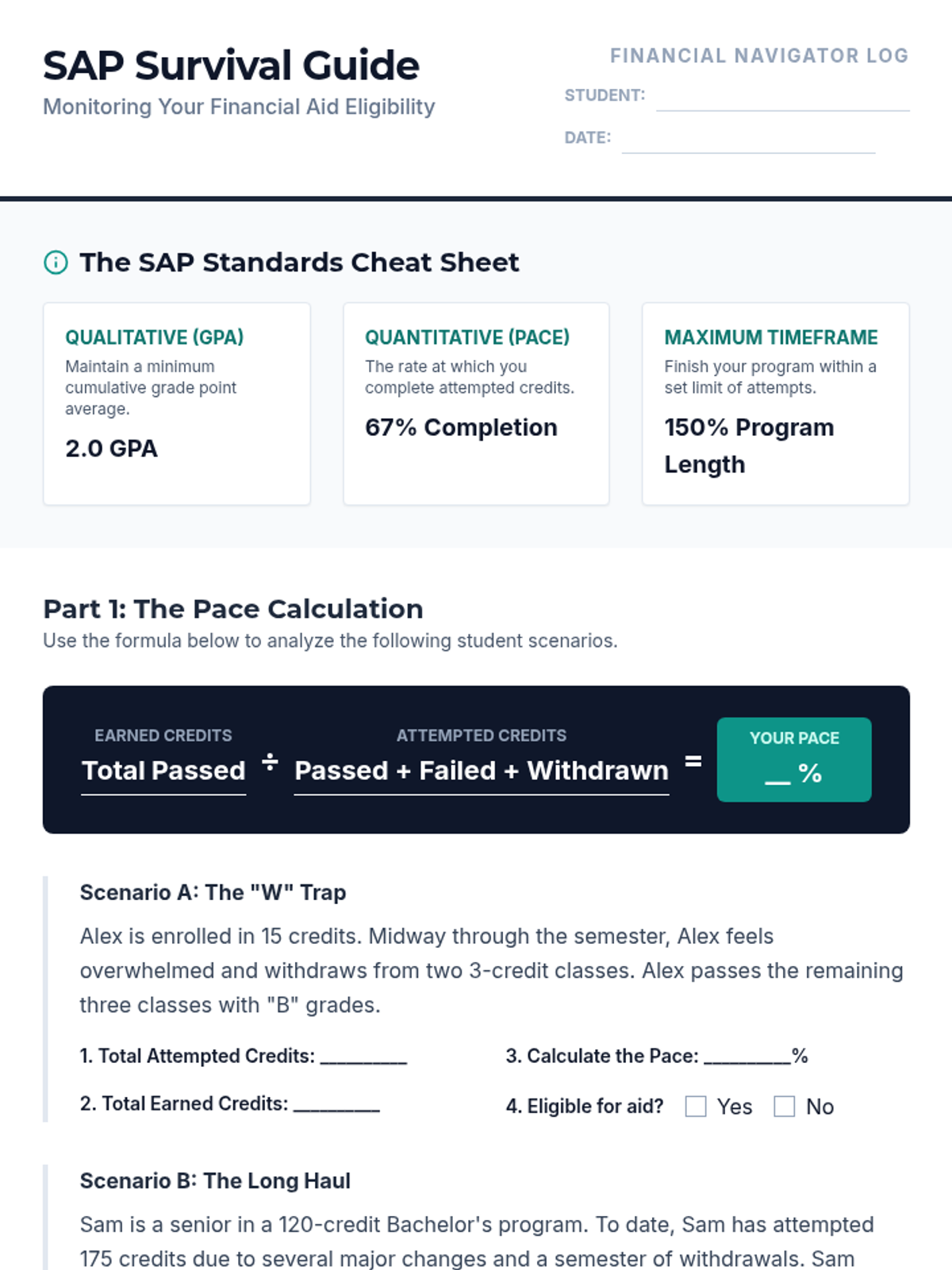
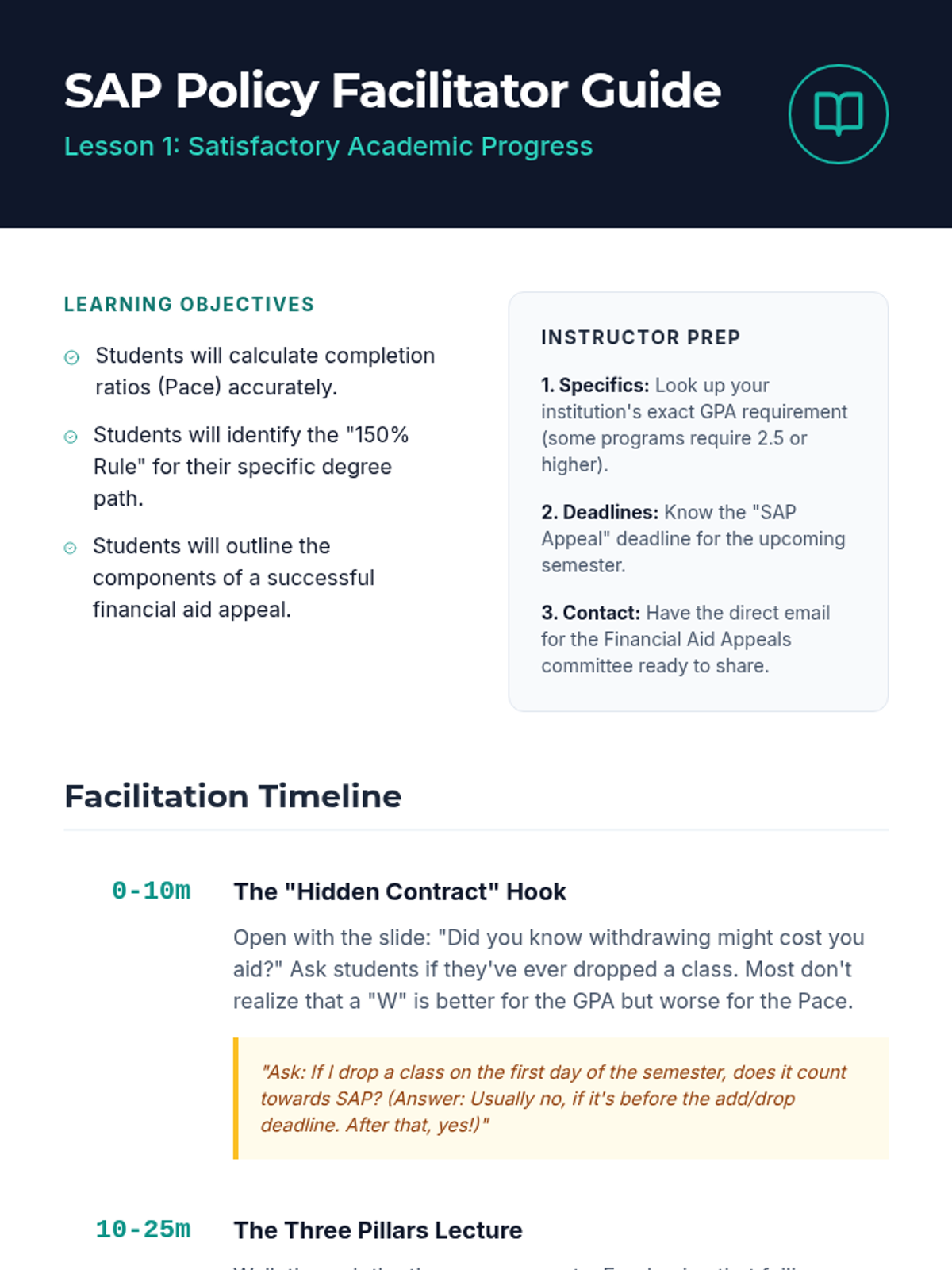
A comprehensive sequence for undergraduate students focusing on the long-term maintenance of federal financial aid eligibility. Students master Satisfactory Academic Progress (SAP), lifetime limits, loan aggregates, withdrawal consequences, and the annual renewal cycle.
This sequence guides undergraduate students through the complexities of FAFSA verification, professional judgment appeals, and unique filing statuses. It focuses on self-advocacy and navigating bureaucratic exceptions to ensure equitable financial aid.
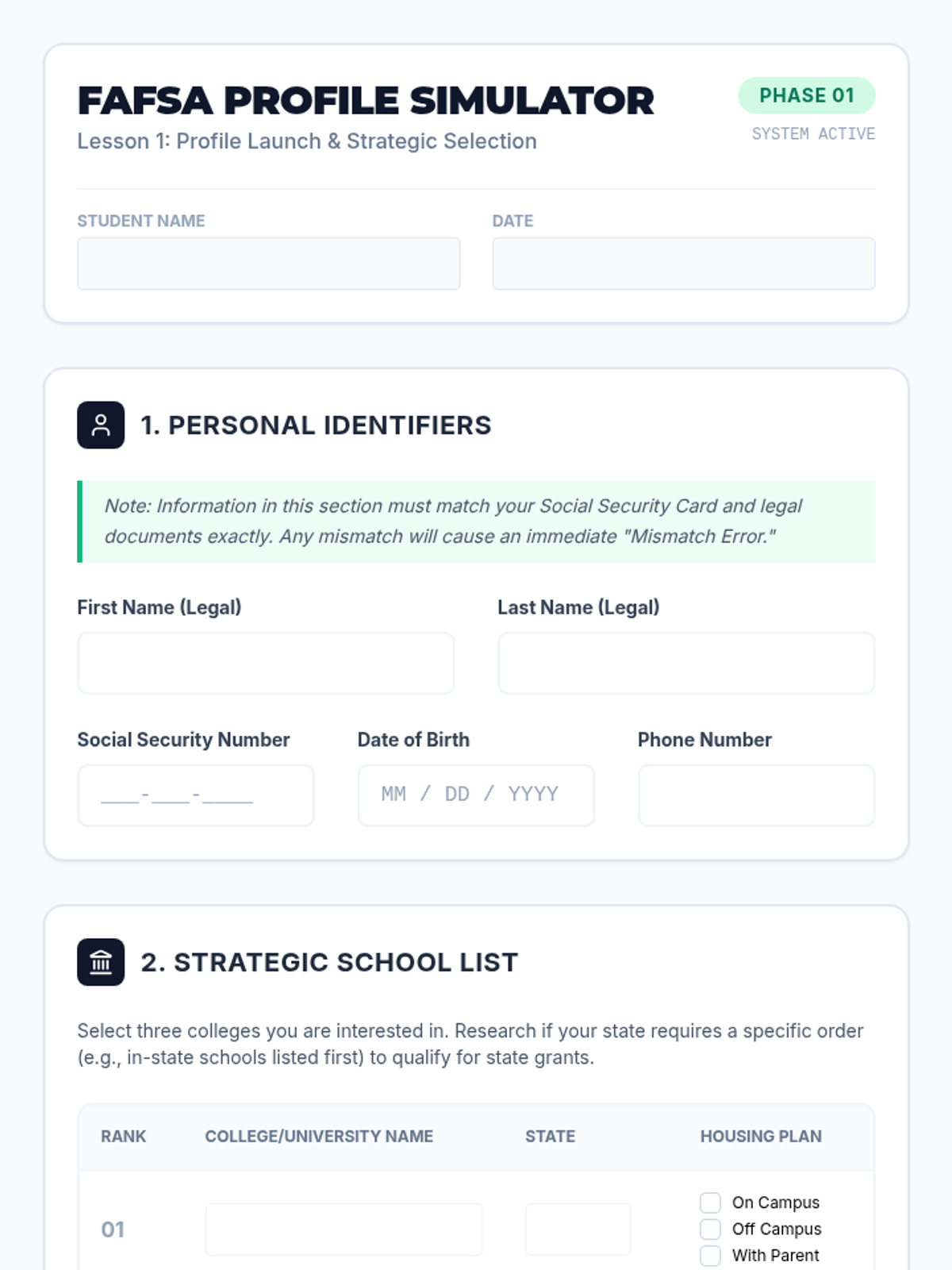
A comprehensive simulation-based sequence walking undergraduate students through the FAFSA application. Students learn to navigate demographic entry, school selection, IRS data exchange, and complex family contributor scenarios.
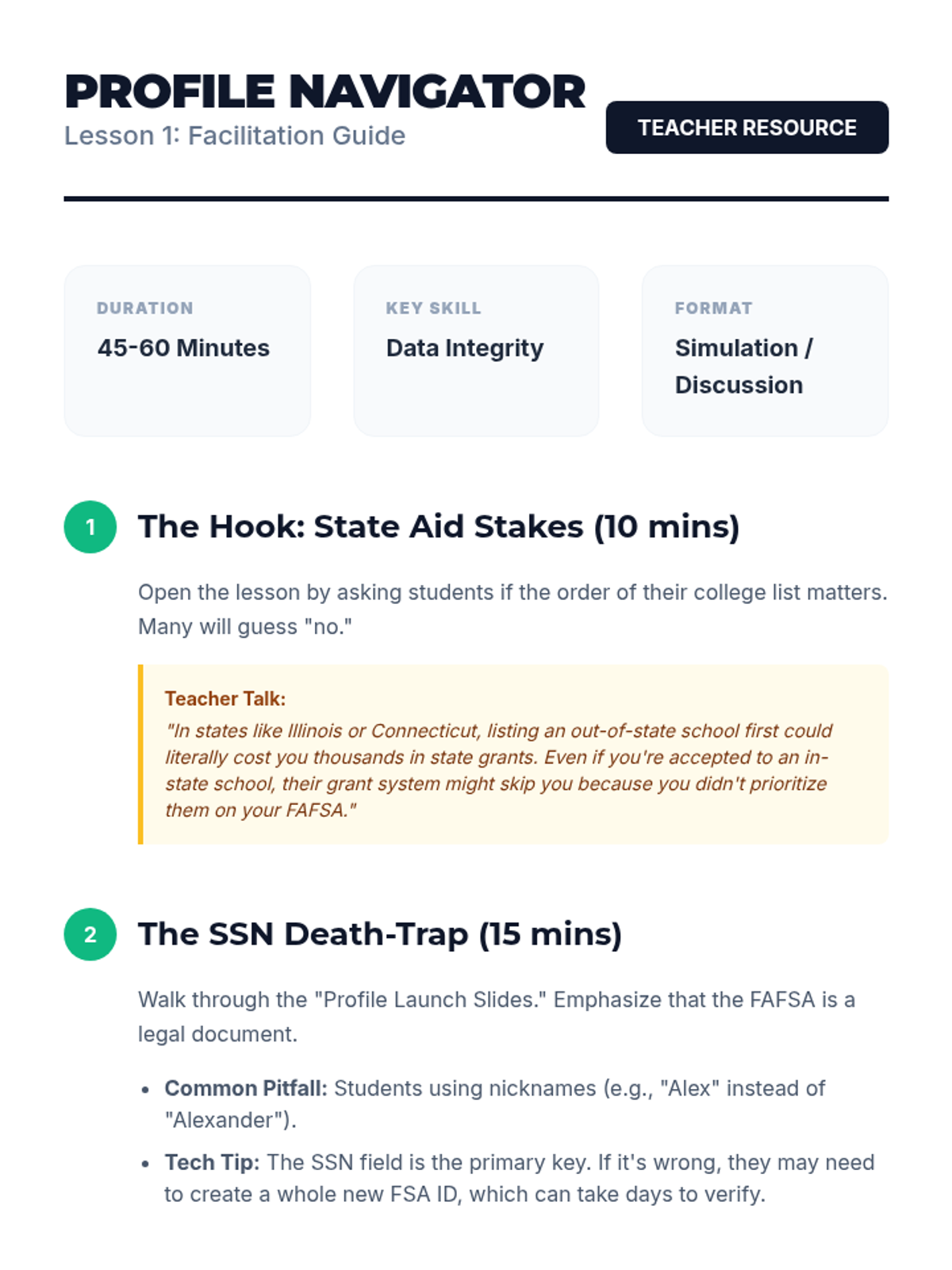
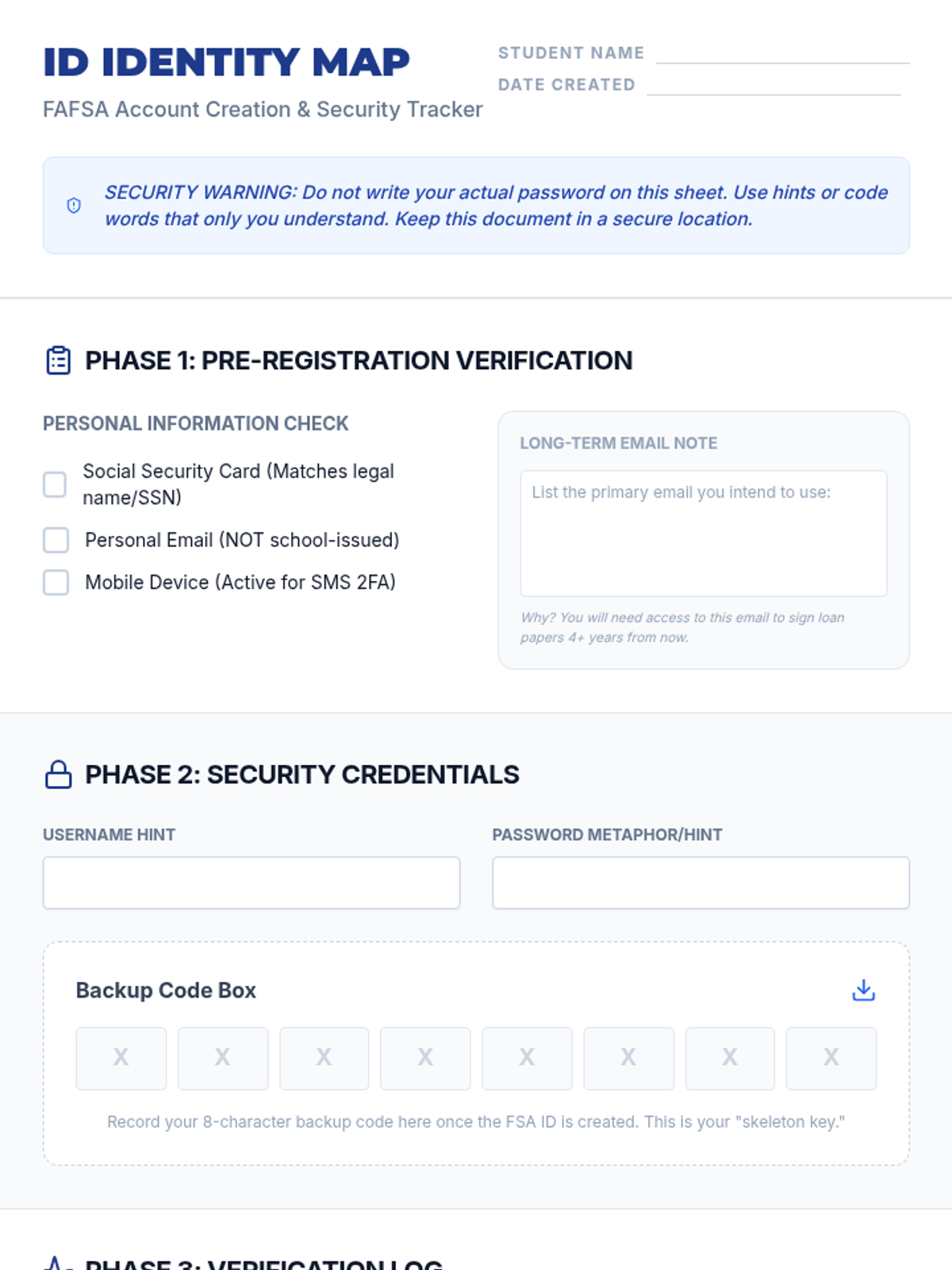
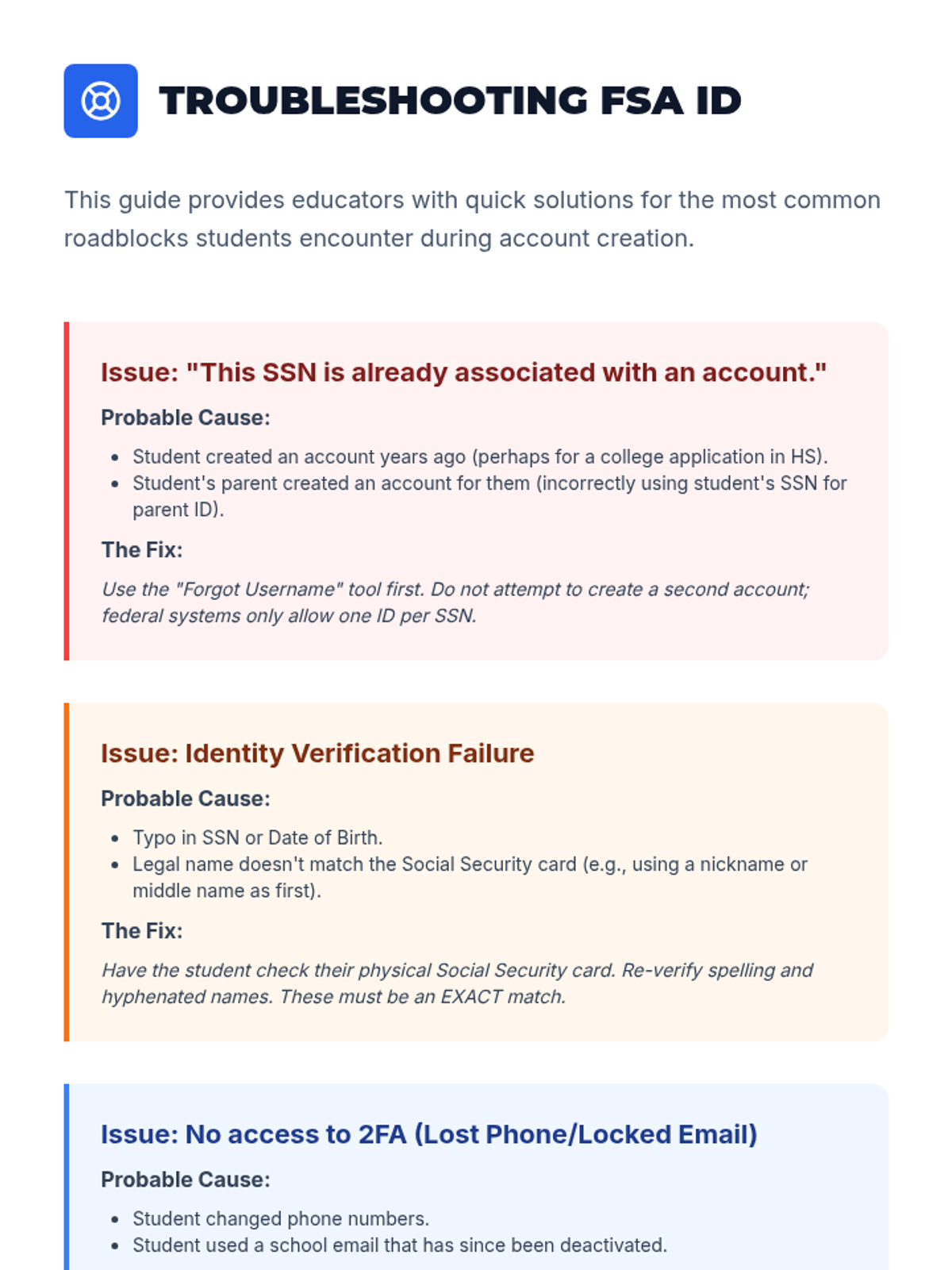
A comprehensive workshop series designed to prepare undergraduate students for the administrative and documentation requirements of the FAFSA, focusing on account security, status determination, and document organization.
A comprehensive curriculum covering financial literacy, economic principles, and civic systems through historical case studies, ethical dilemmas, and real-world simulations.
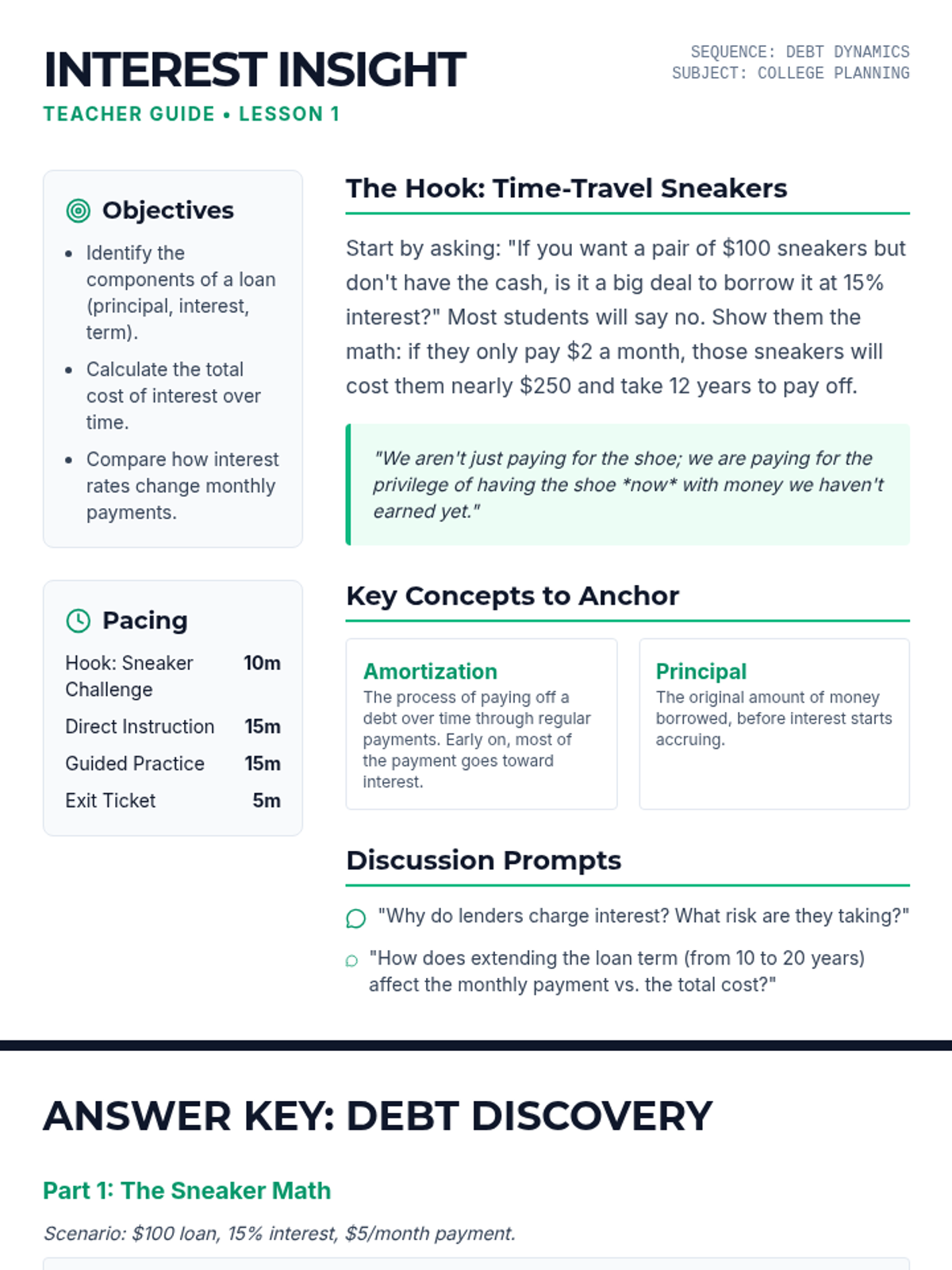
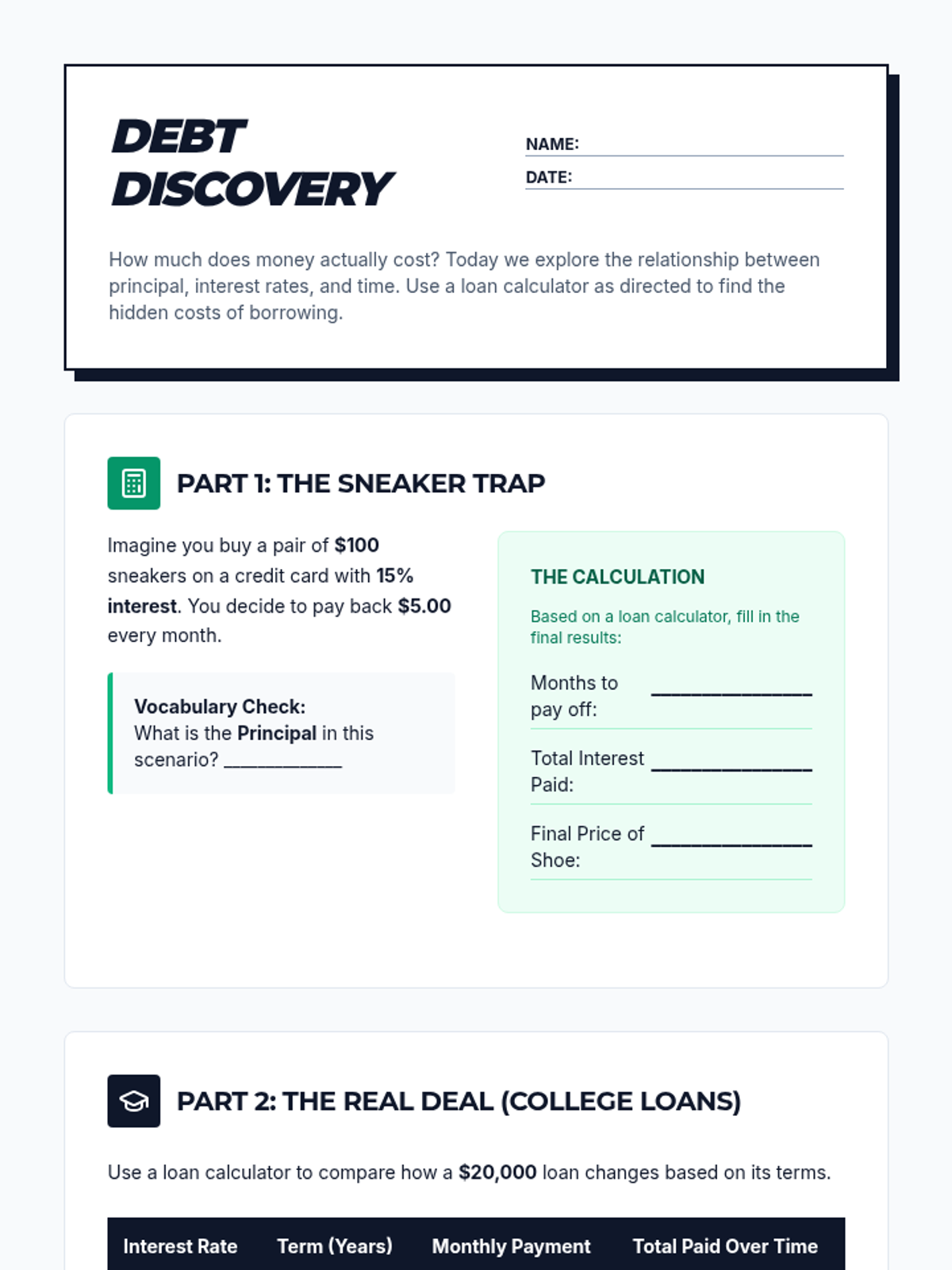
This sequence explores the long-term financial implications of student loans, focusing on repayment plans, budgeting, and return on investment (ROI). Students transition from understanding borrowing mechanics to simulating the real-world impact of debt on lifestyle and career choices.
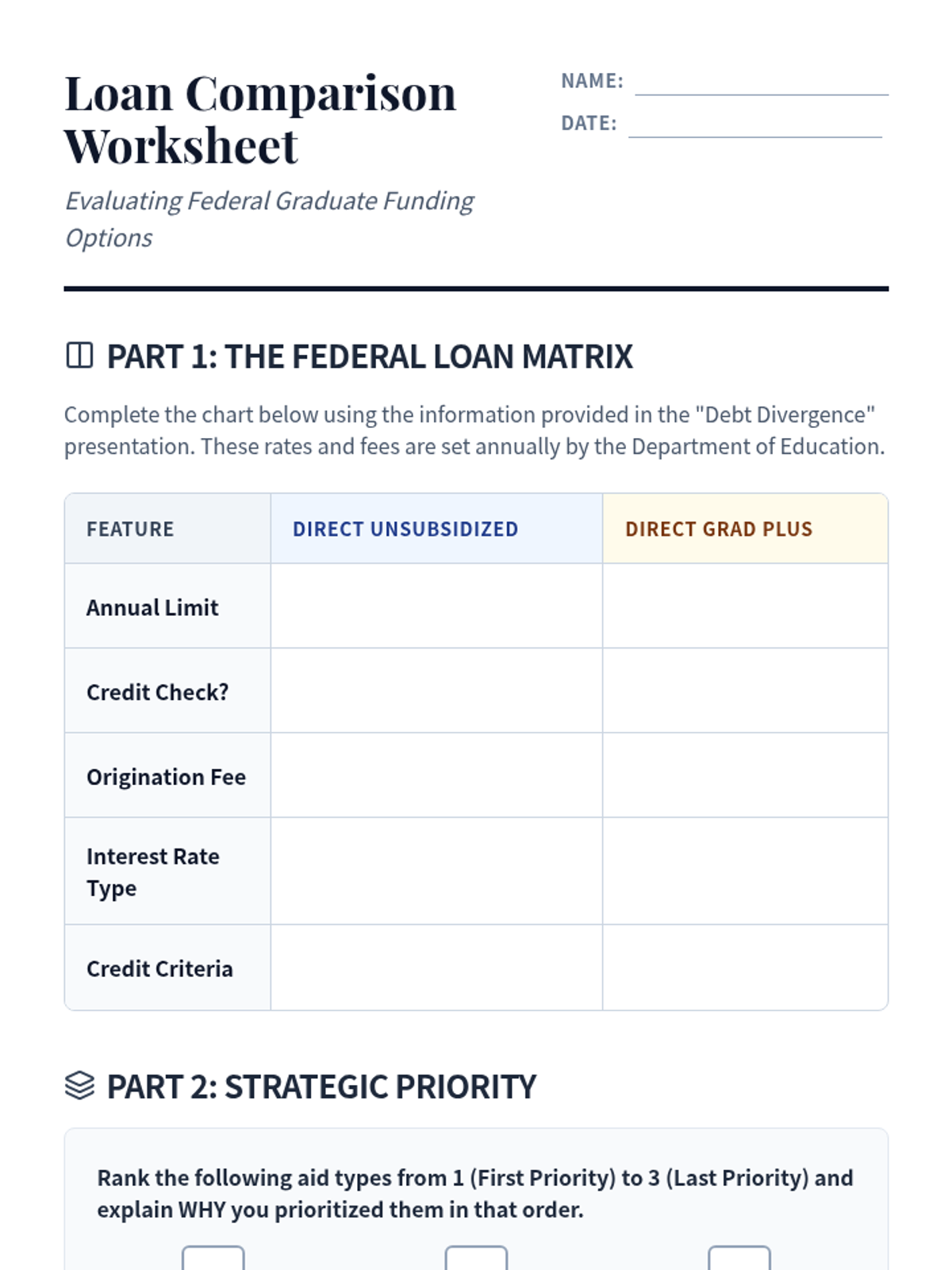
A comprehensive sequence for graduate students to master the nuances of federal financial aid, focusing on the strategic selection of Direct Unsubsidized and Grad PLUS loans to minimize long-term debt.
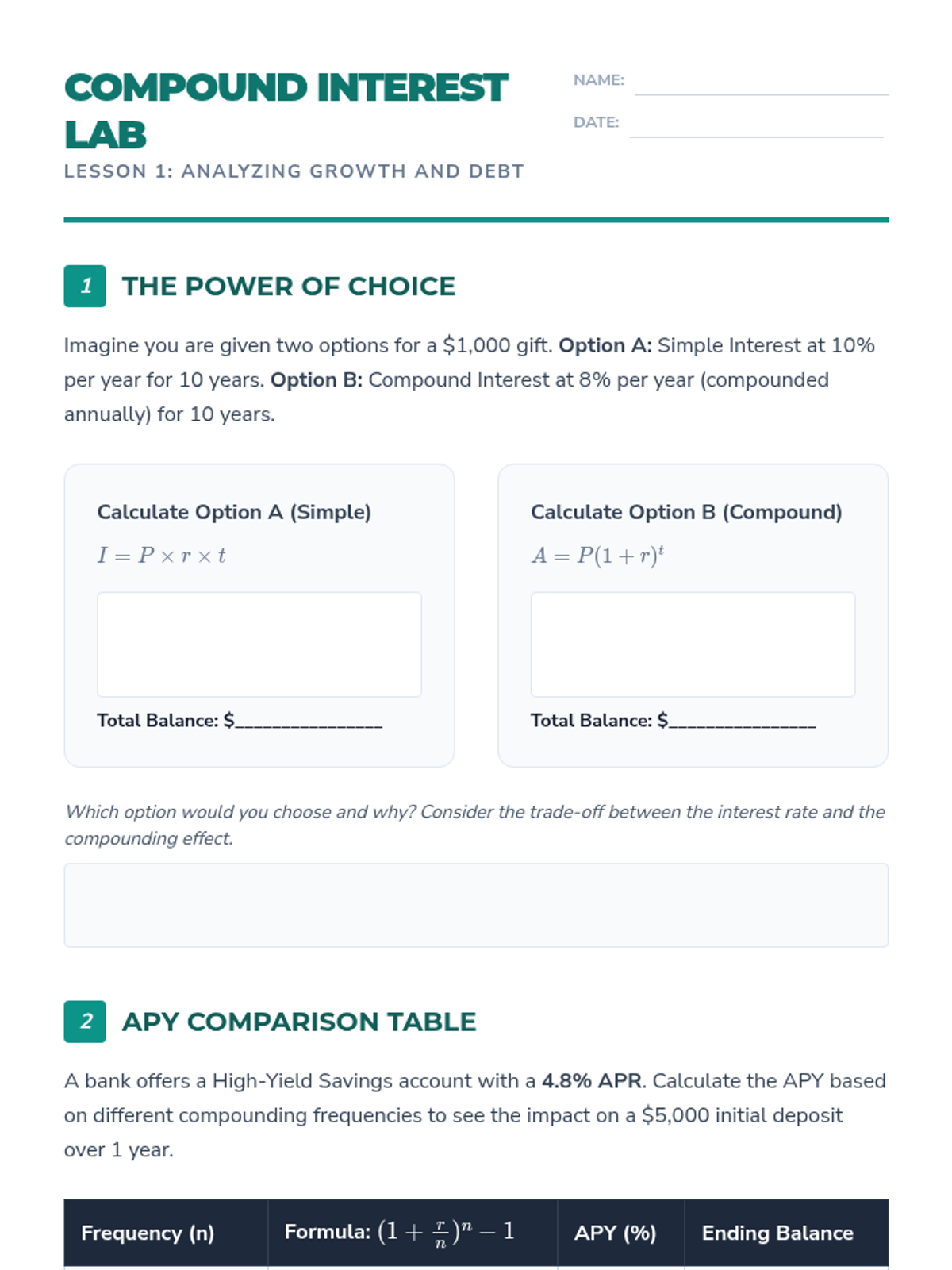
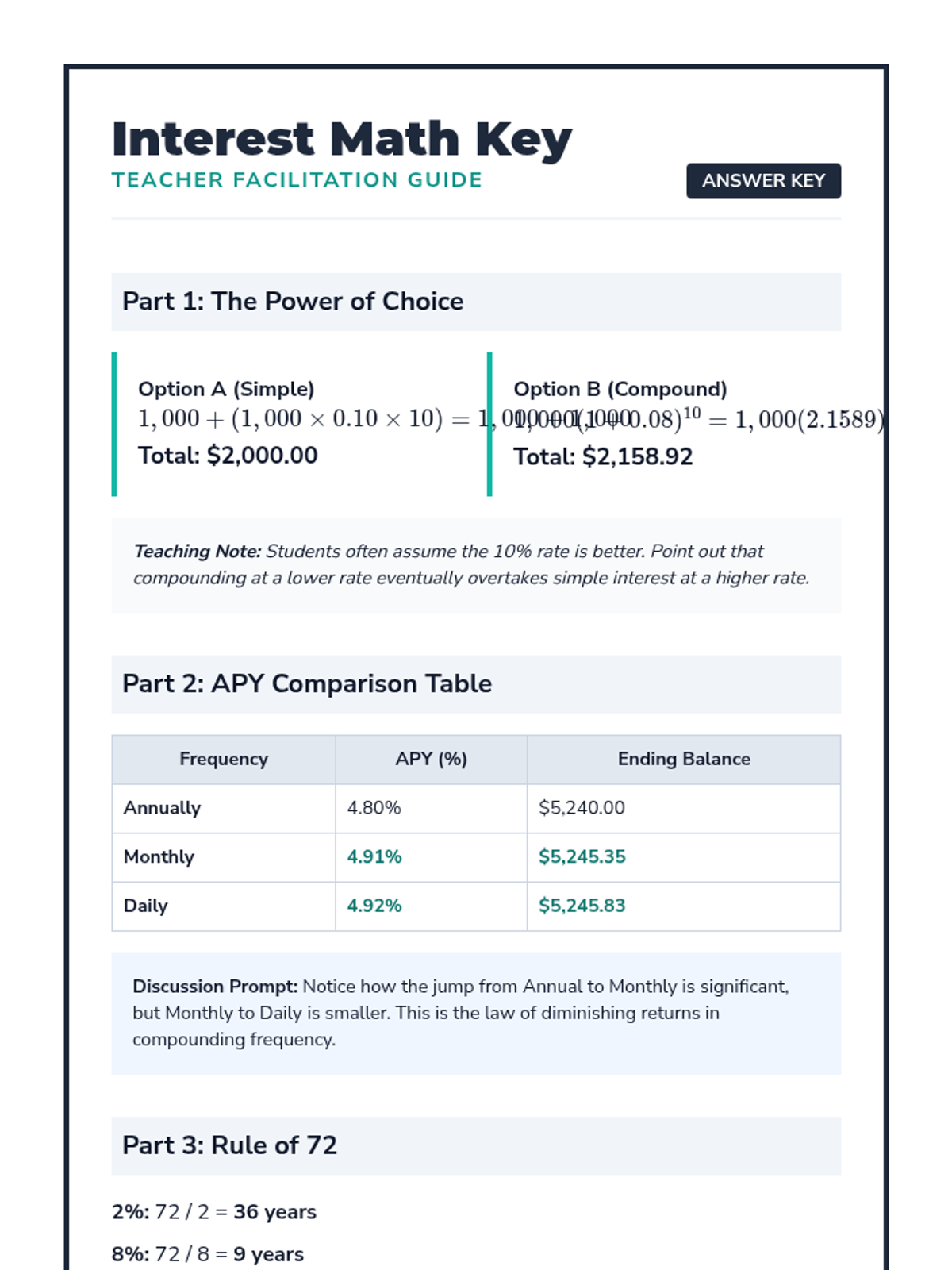
A comprehensive workshop for 12th graders transitioning to financial independence, focusing on interest calculations, credit score mechanics, debt analysis, and strategic financial planning.
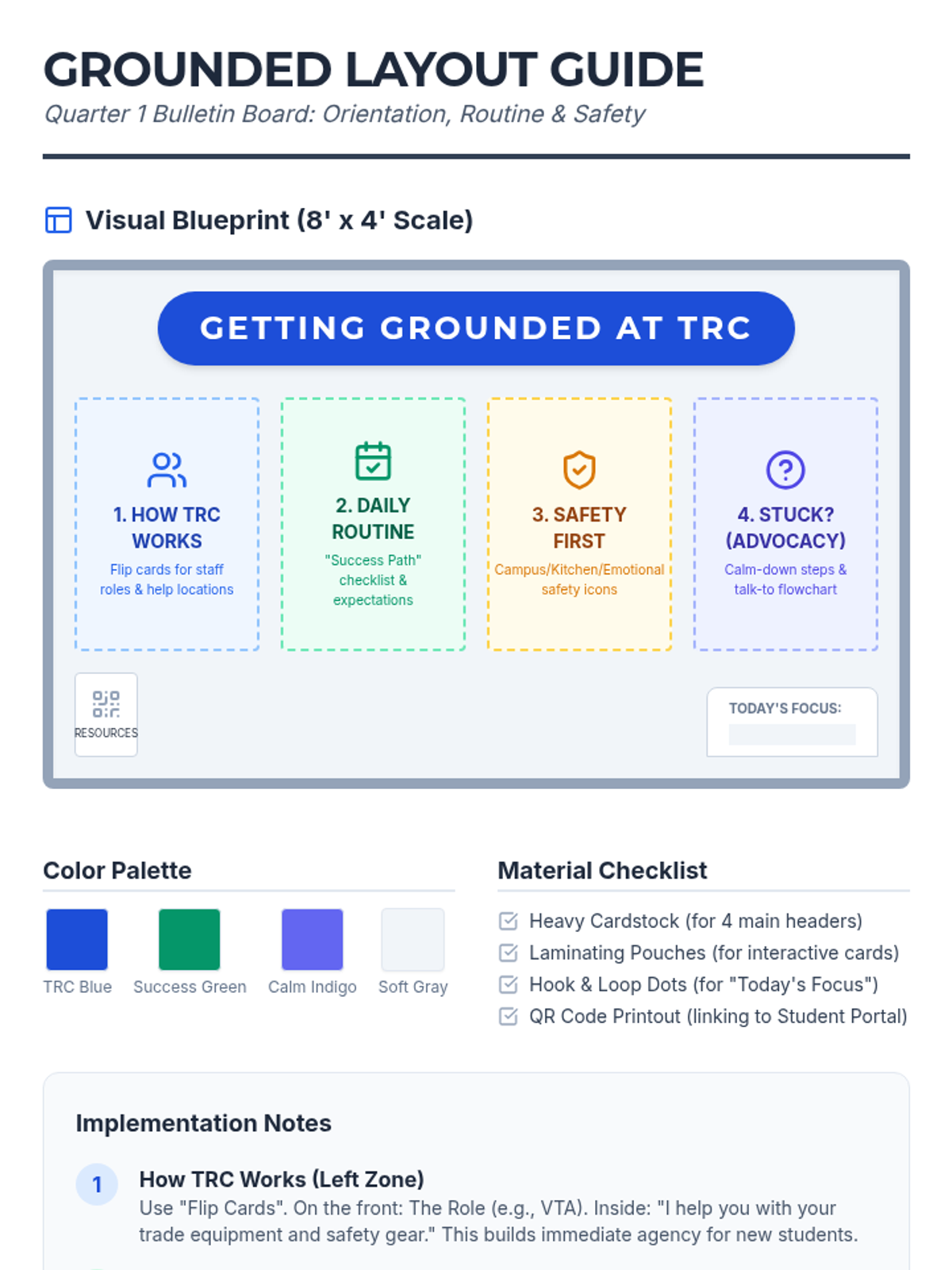
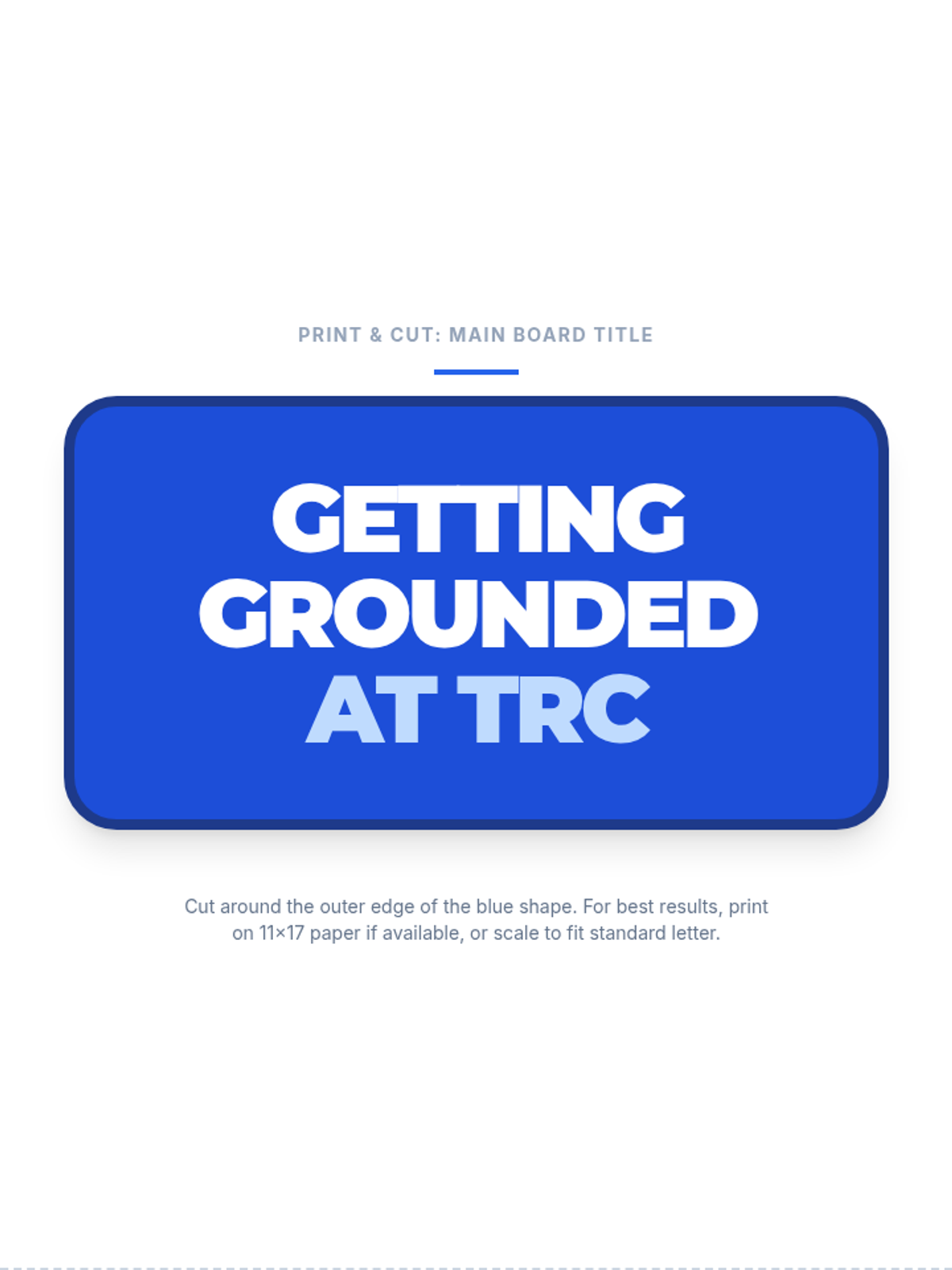
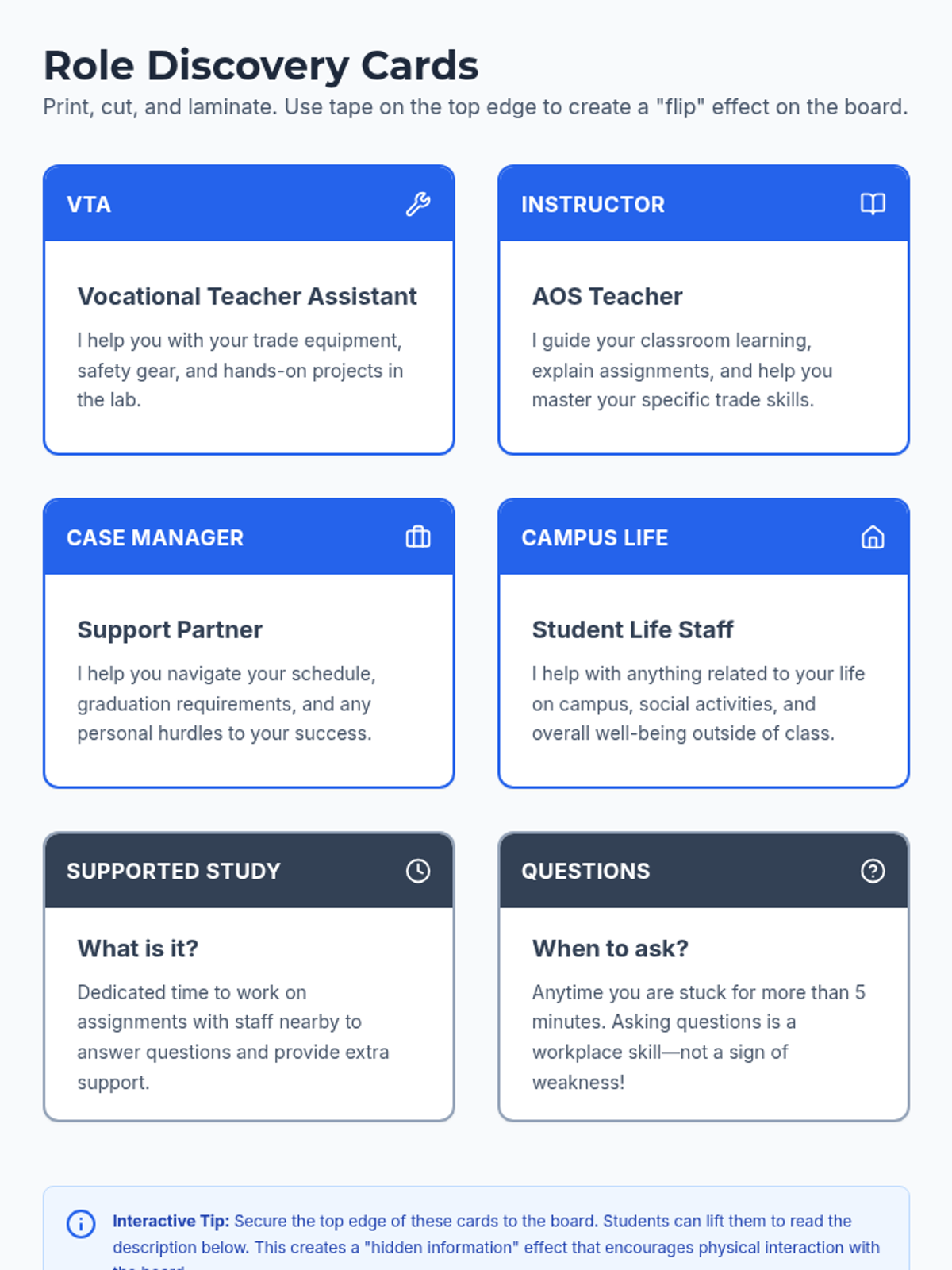
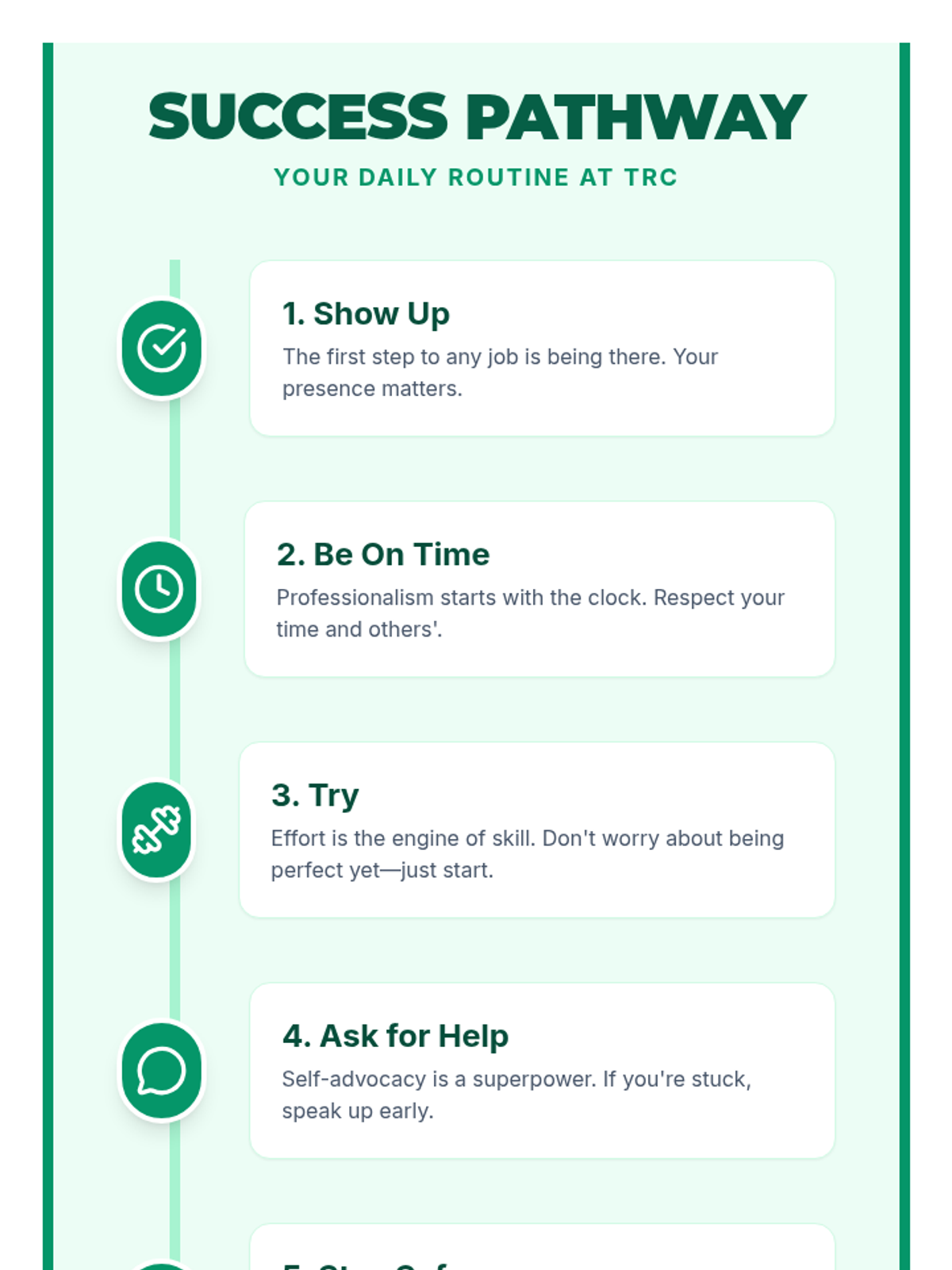
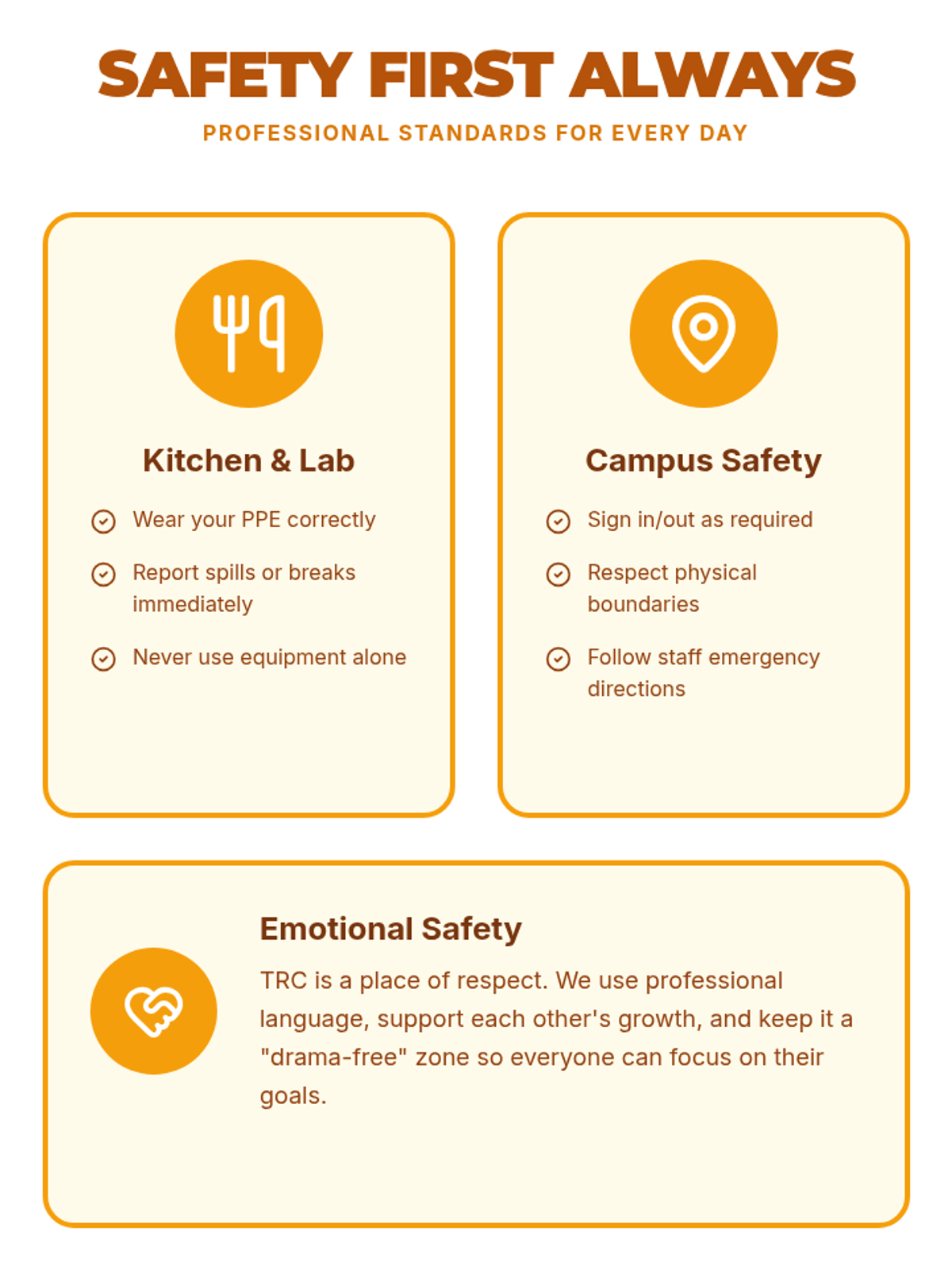
A collection of quarterly bulletin board designs for TRC, providing visual blueprints and printable components to help students navigate orientation, skill-building, and transition planning.
This sequence guides undergraduate students through a strategic, design-thinking approach to professional development. Students will move from self-assessment and trend forecasting to designing a concrete 5-year growth plan and pitching their strategy for lifelong relevance in an evolving economy.
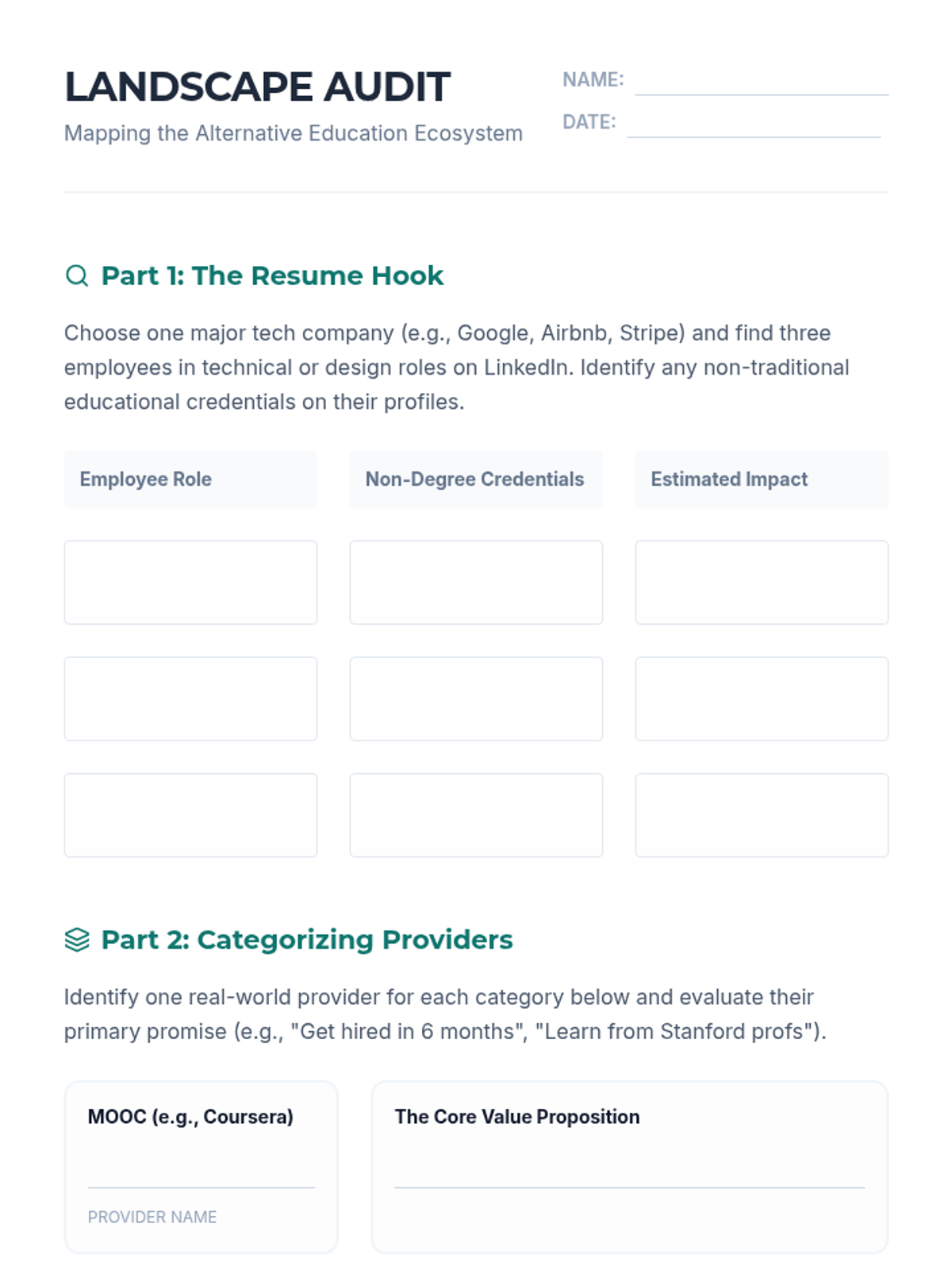
This sequence investigates the rapidly growing sector of non-traditional education, including coding bootcamps, MOOCs, and corporate training. Students learn to vet these pathways for quality, outcomes, and career alignment, moving from landscape survey to strategic decision-making.
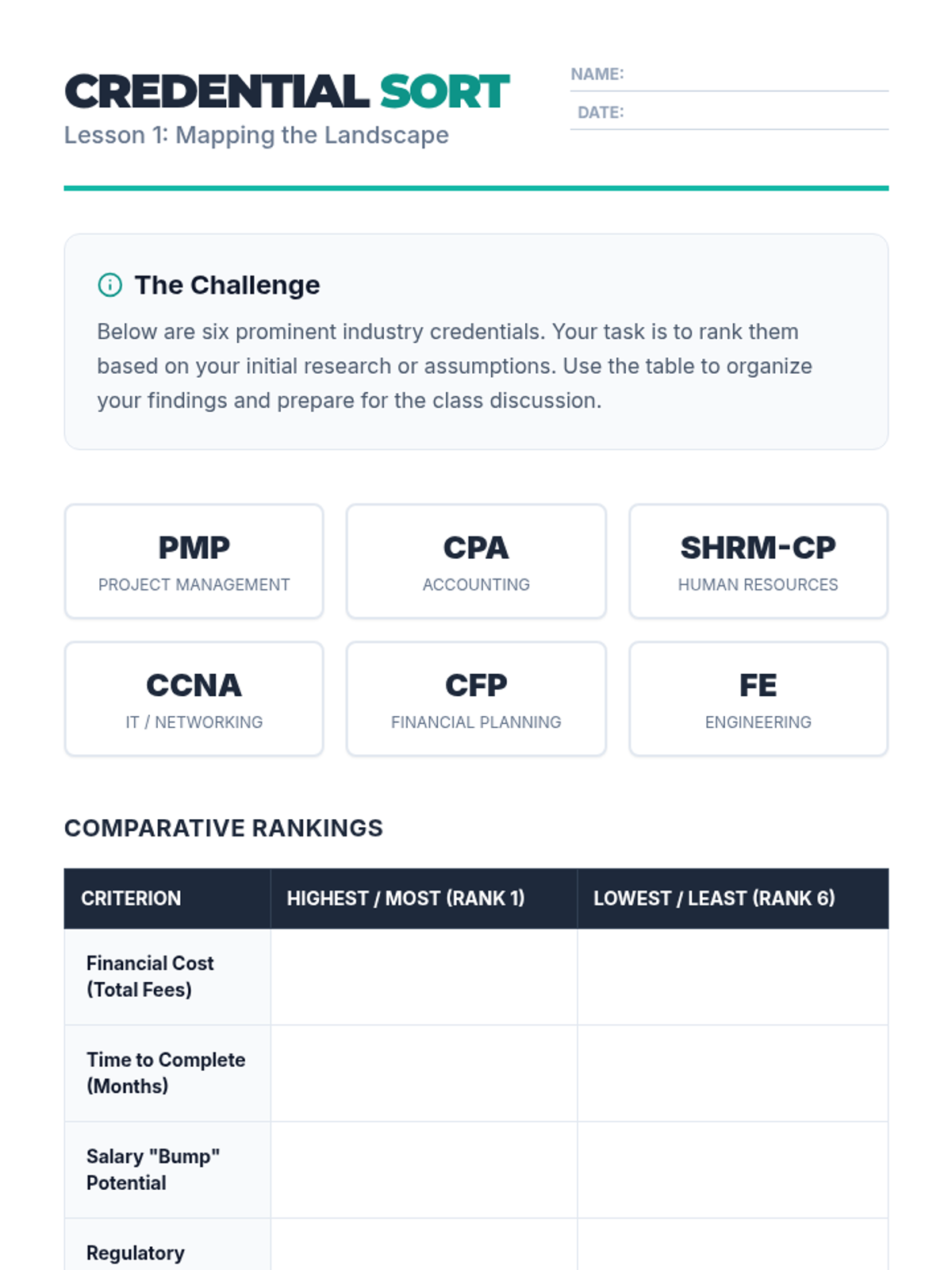
This sequence guides undergraduate students through the complex landscape of professional certifications, micro-credentials, and licensures. Students will learn to evaluate the market value, legitimacy, and strategic fit of various post-secondary credentials to enhance their early career trajectories.
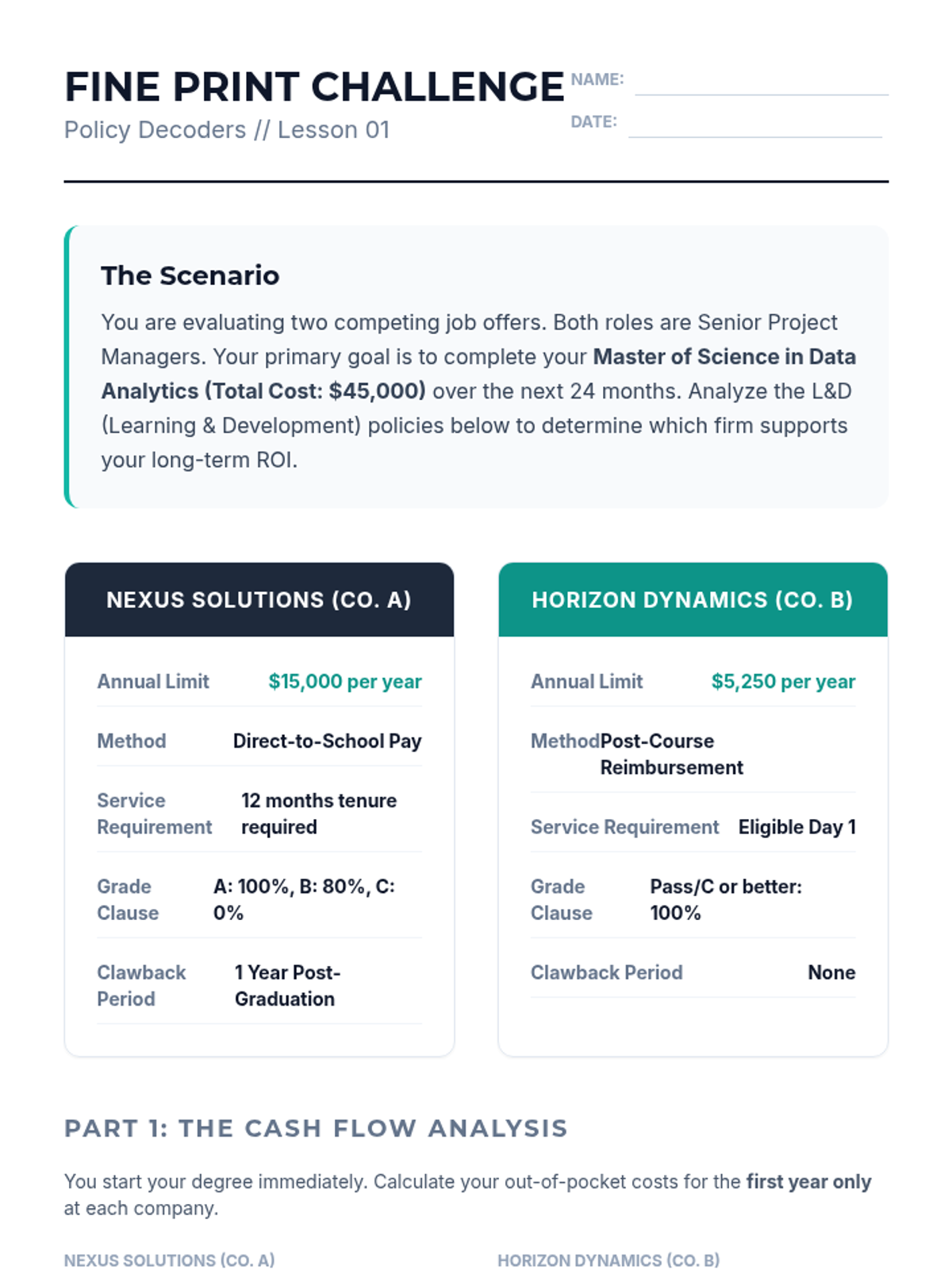
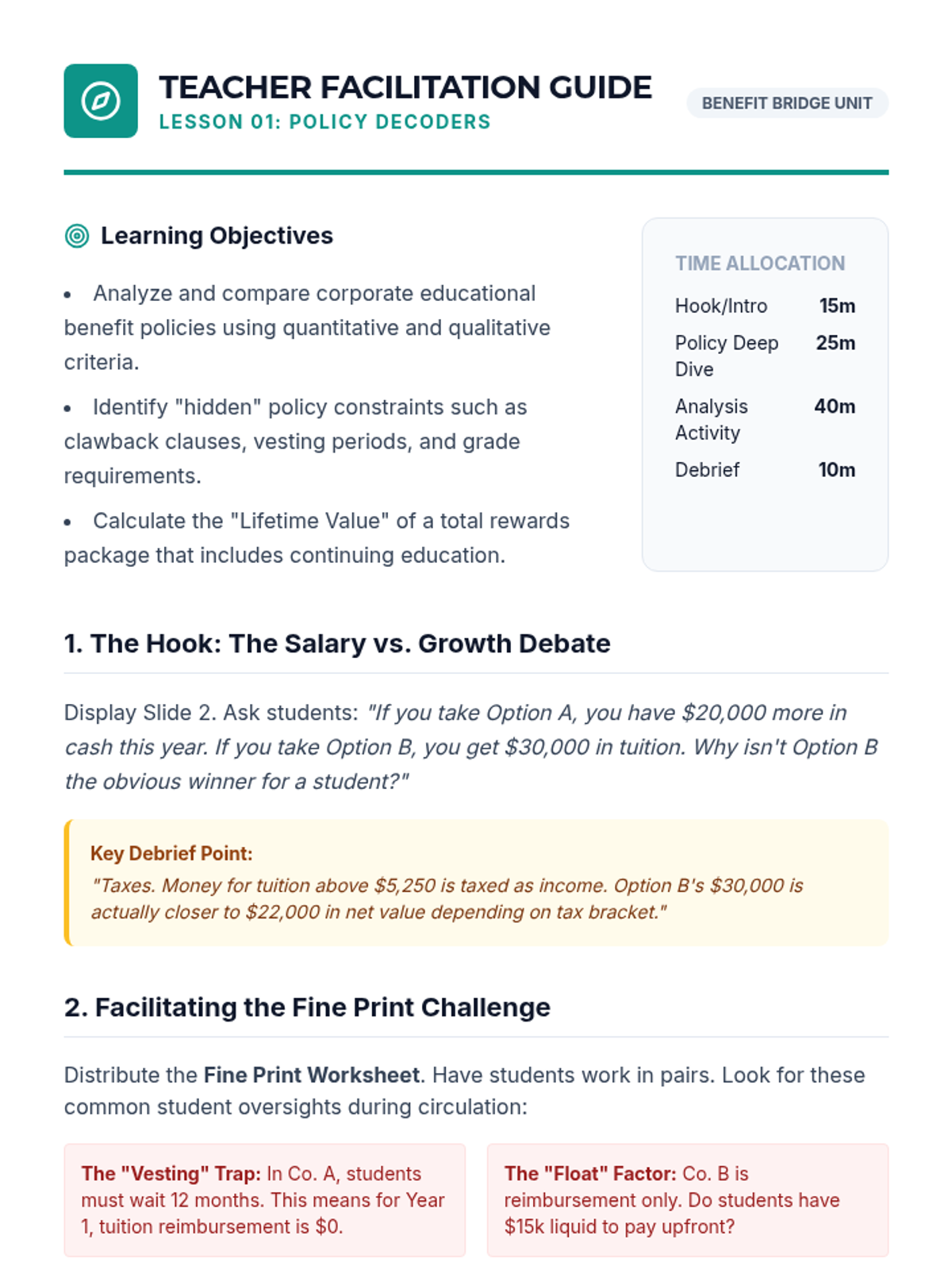
A professional development sequence for graduate students focused on navigating and negotiating employer-sponsored continuing education. Students learn to analyze corporate policies, build strategic business cases, and negotiate for flexibility to support their educational goals.
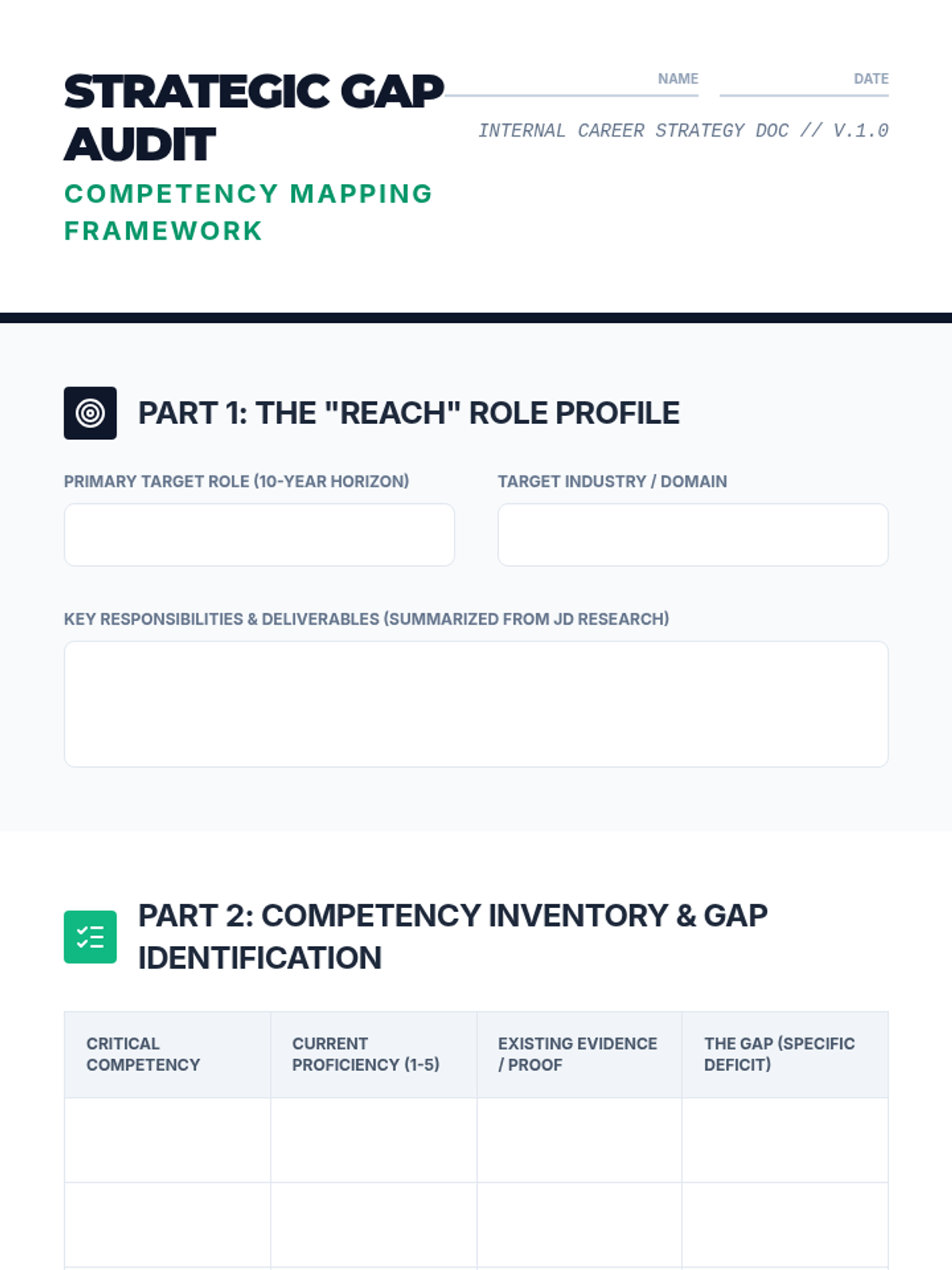
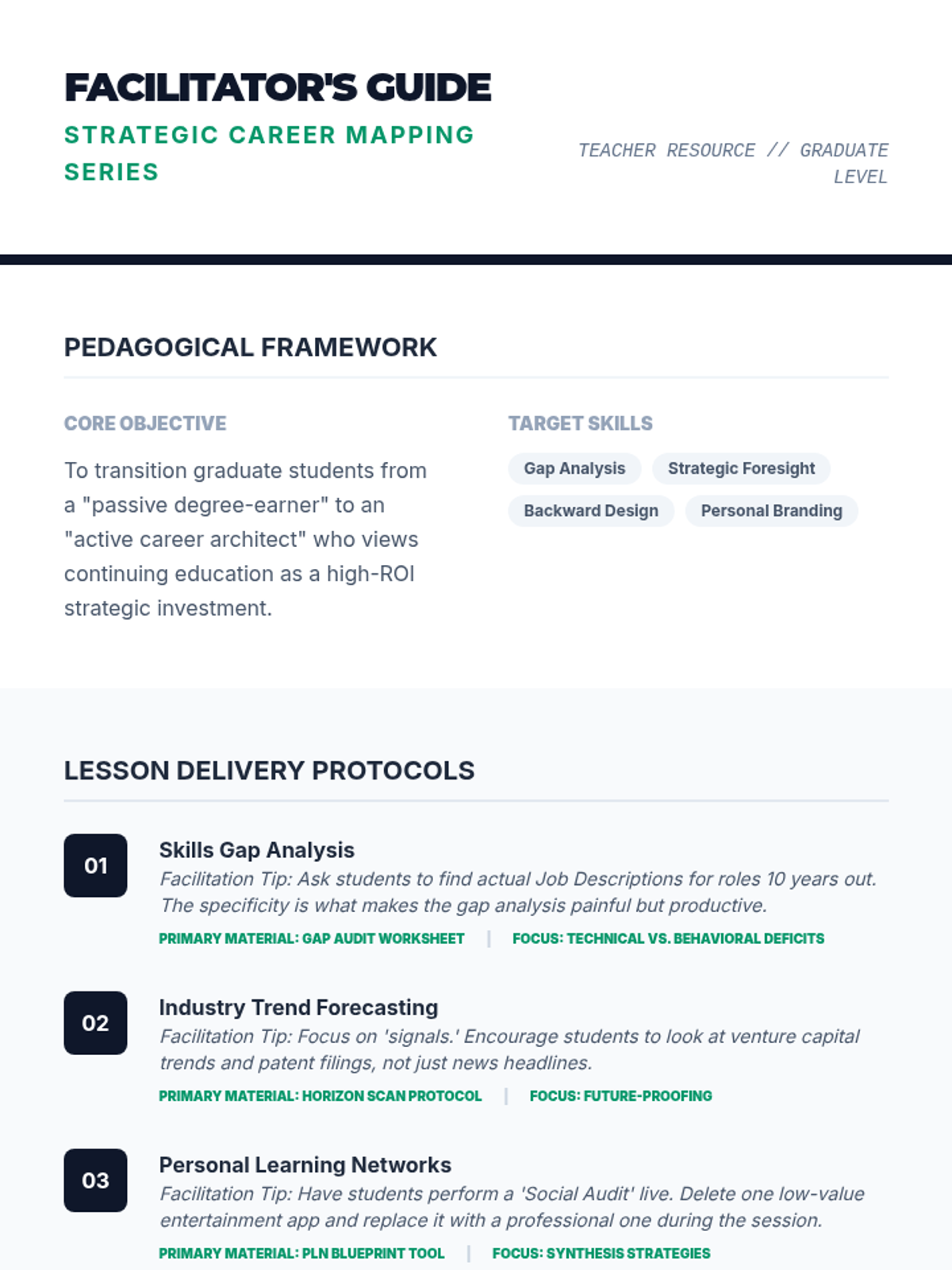
A graduate-level sequence focused on long-term career architecture through strategic continuing education. Students perform gap analyses, forecast industry trends, and use backward design to build a 'Living Syllabus' for their professional advancement.