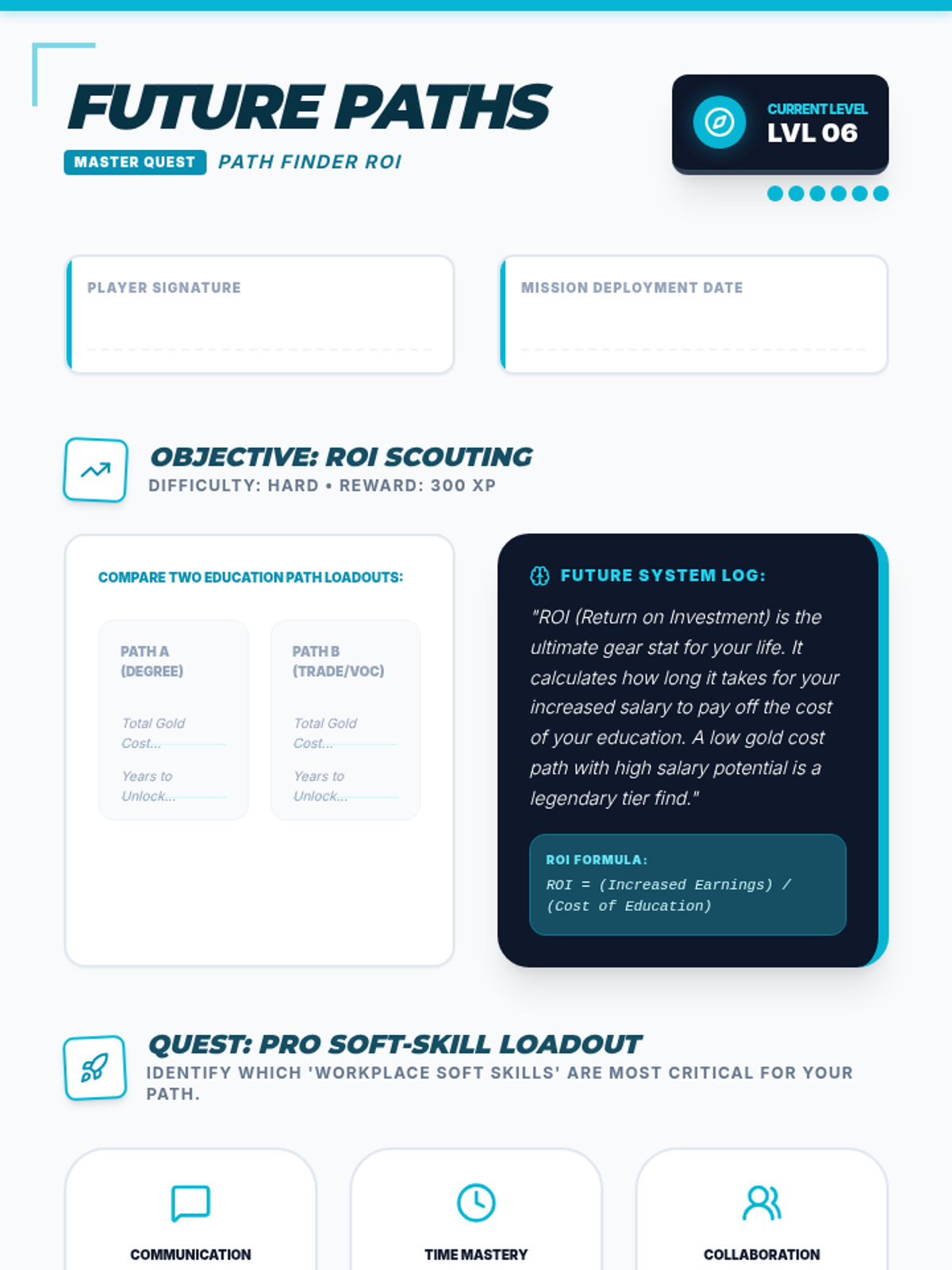
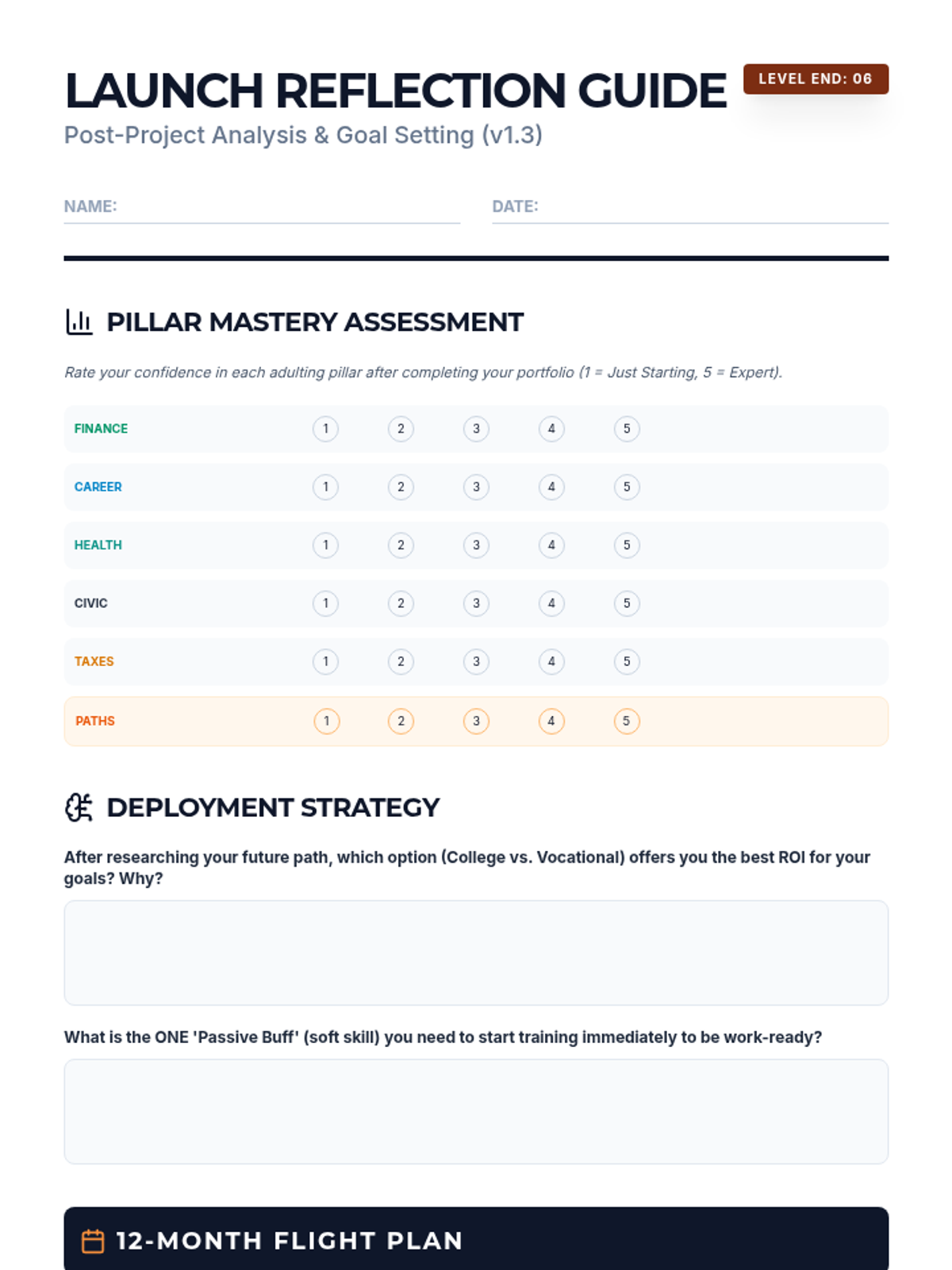
College selection, application workflows, and financial aid navigation including FAFSA and scholarship acquisition. Builds skills in personal statement writing and career exploration to align post-secondary choices with long-term professional goals.
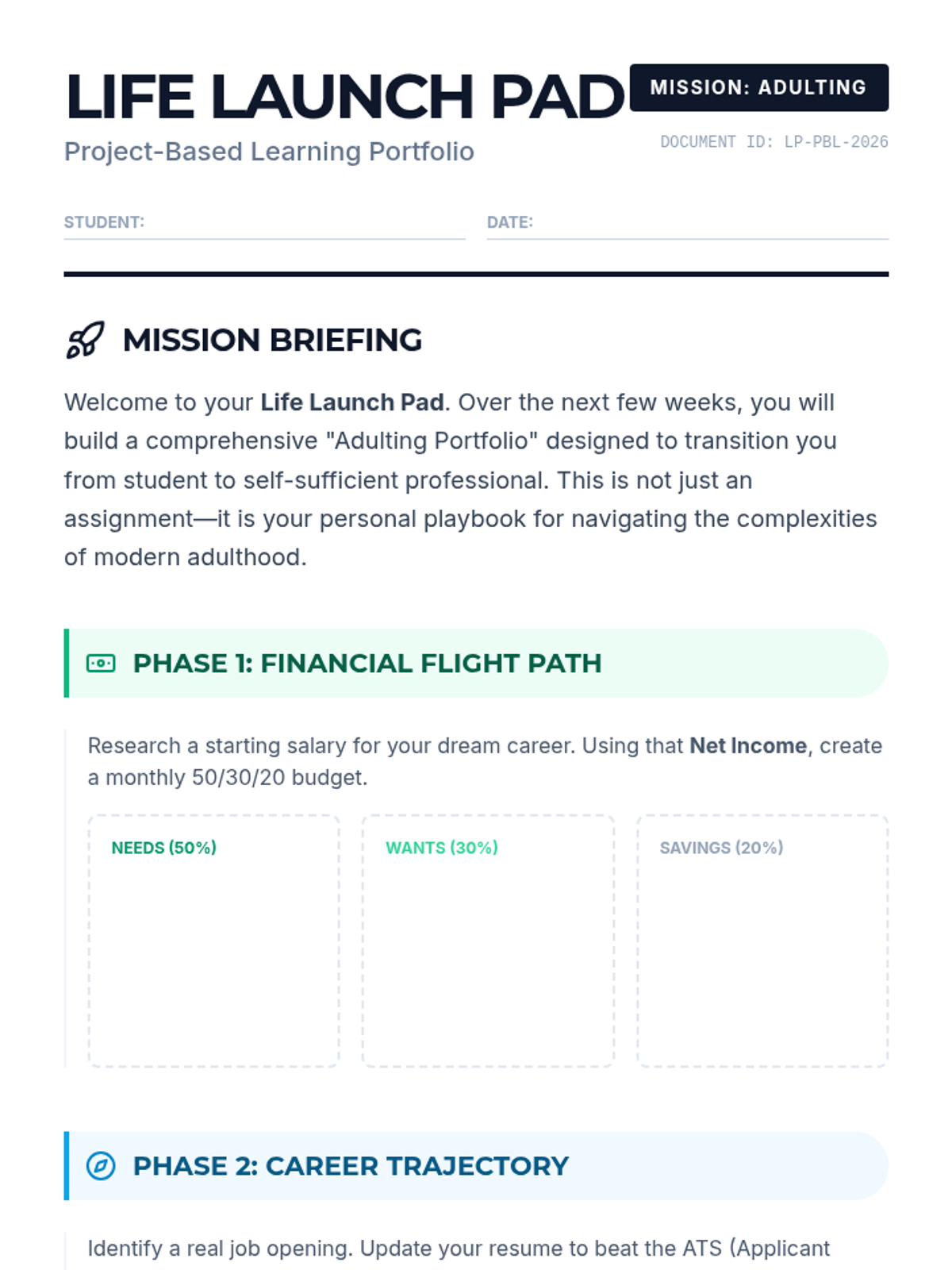
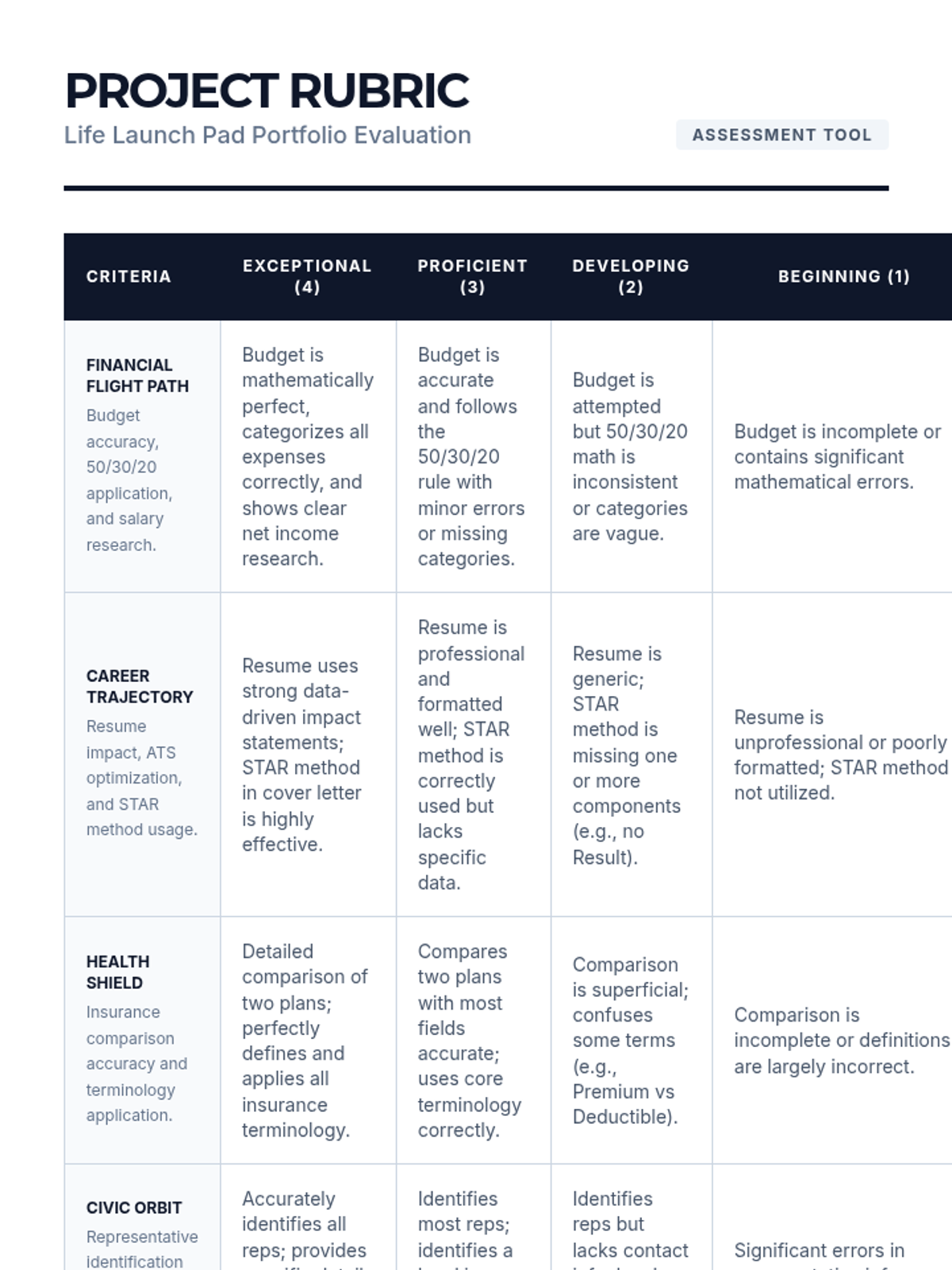
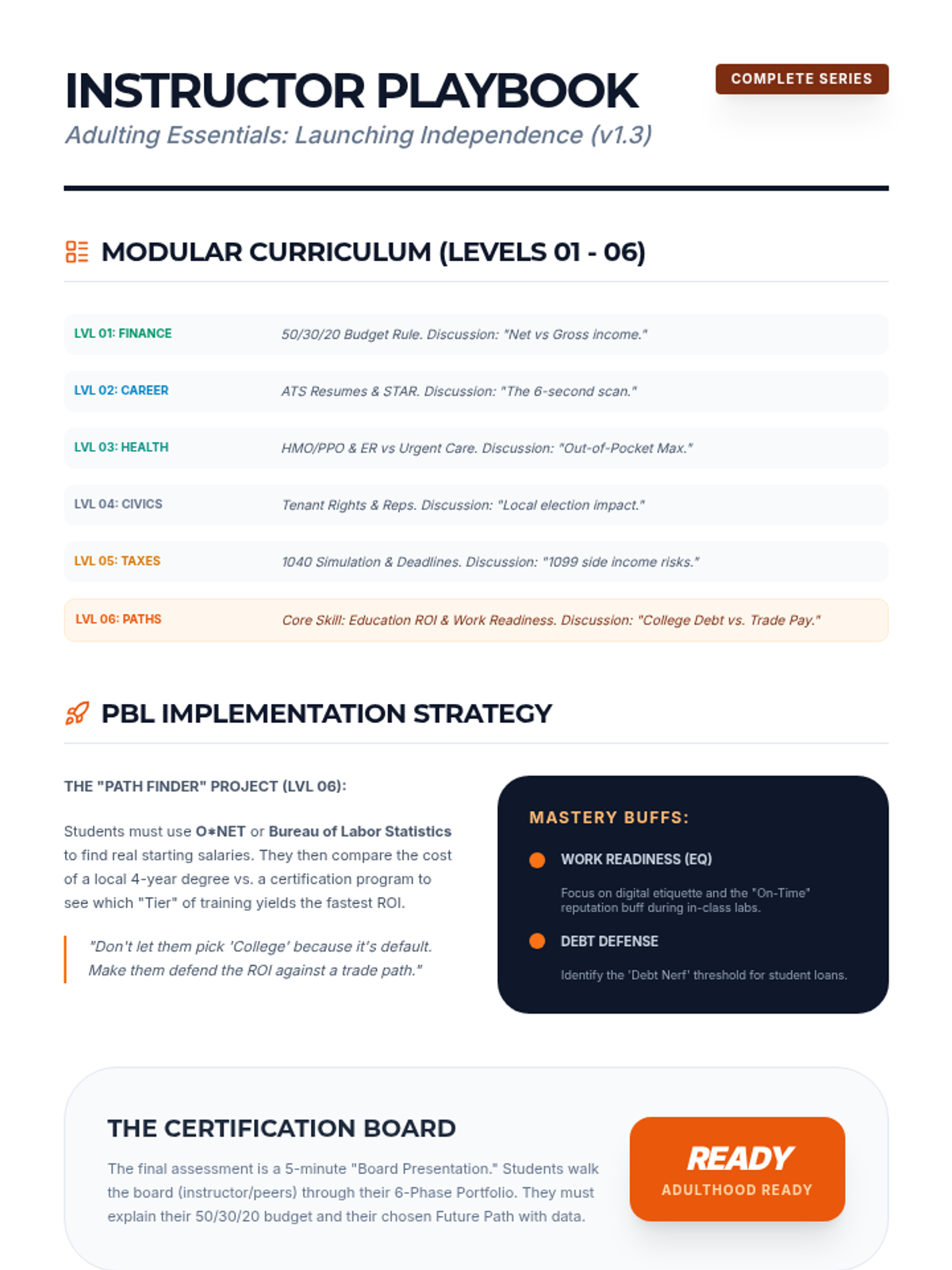
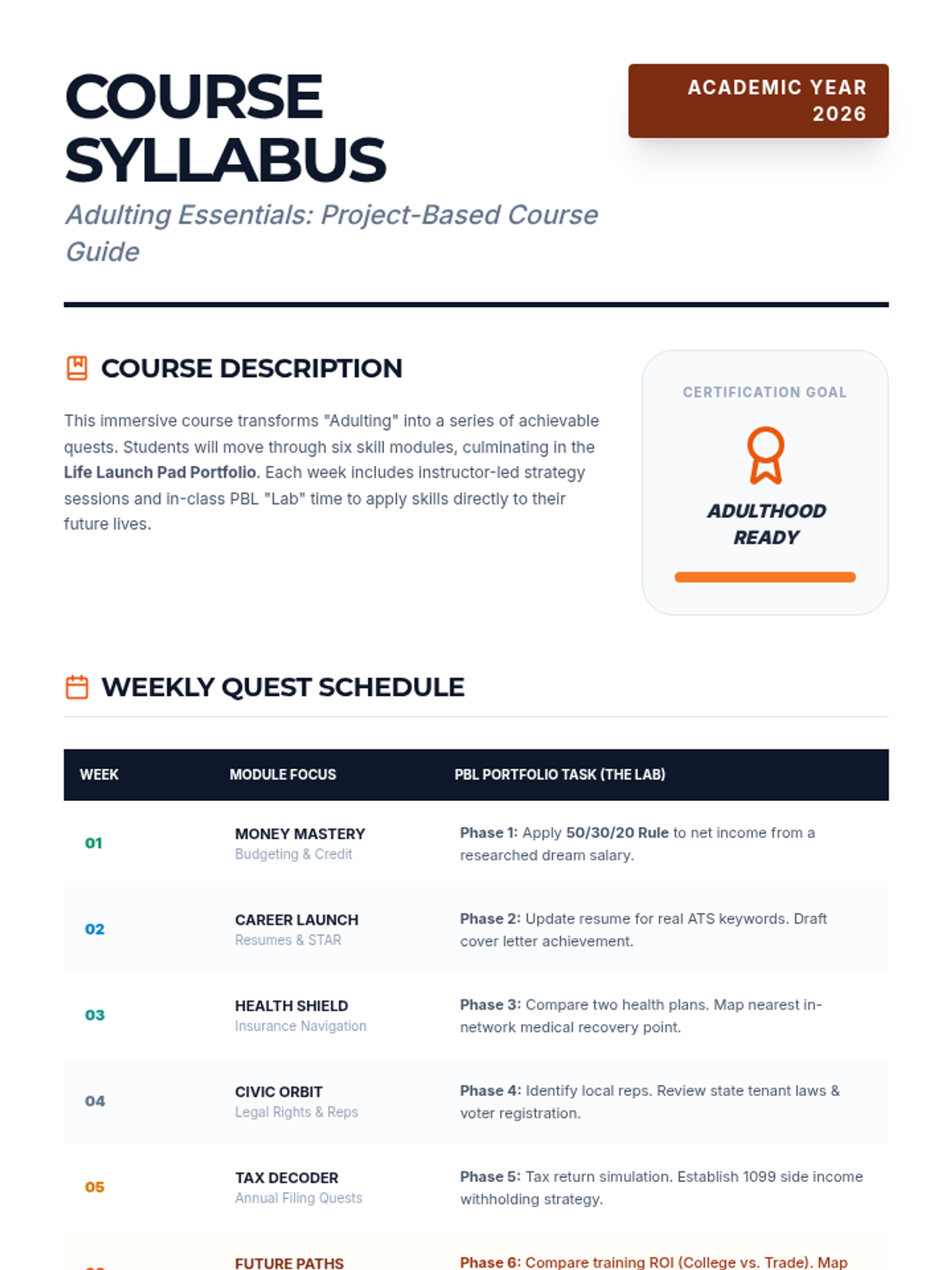
A comprehensive guide to essential adulting skills covering financial literacy, career development, health navigation, and civic responsibilities.
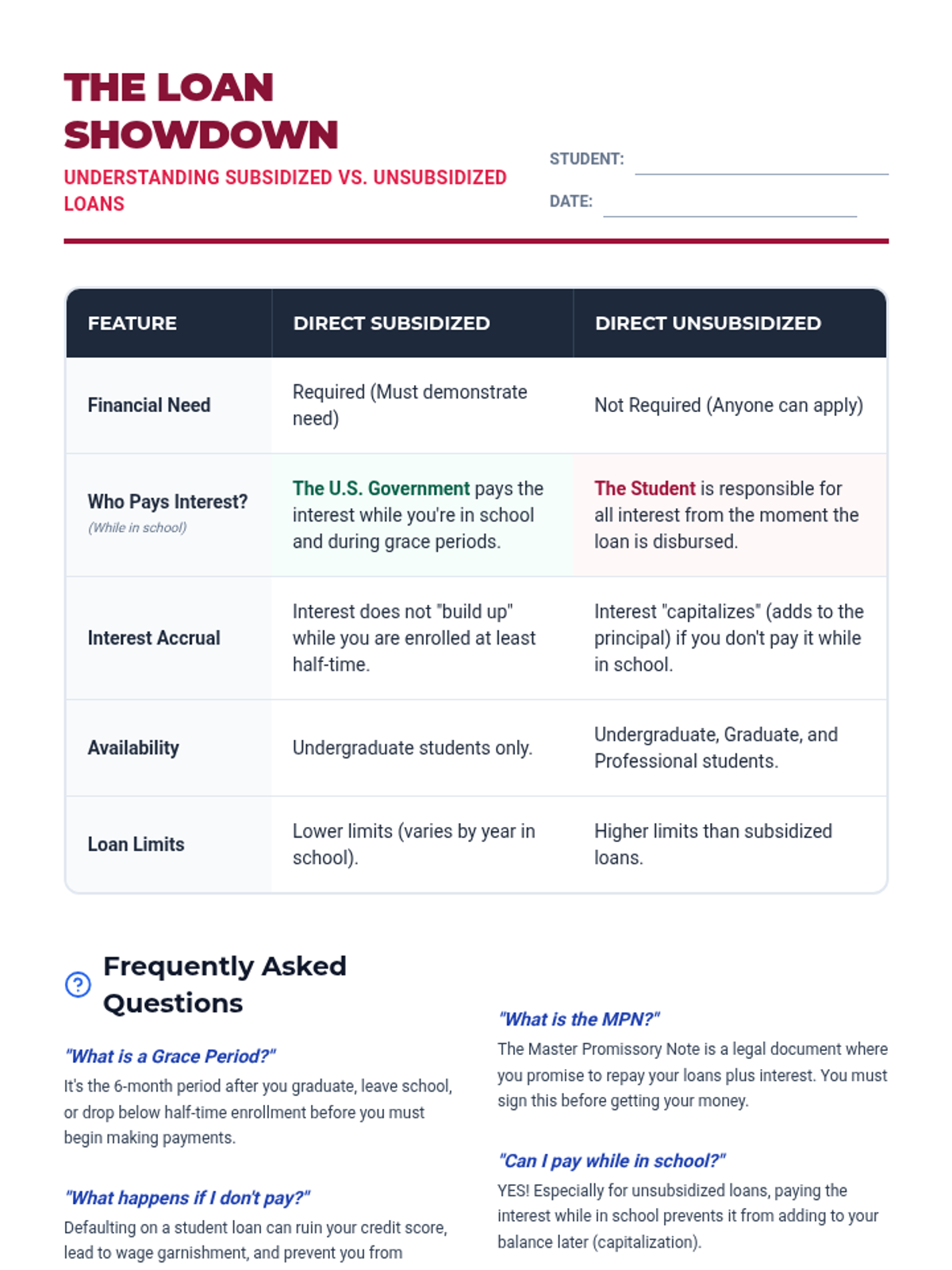
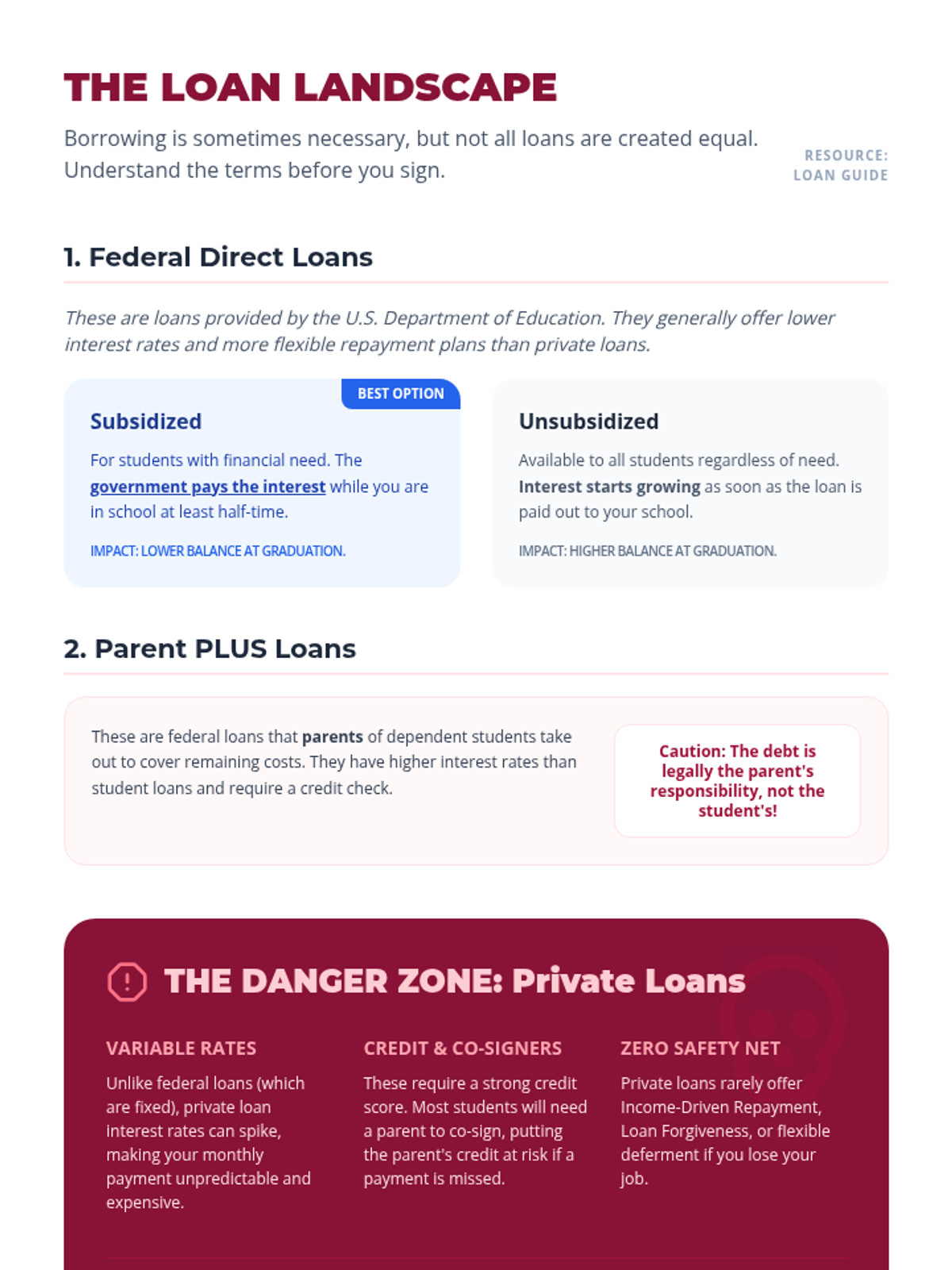
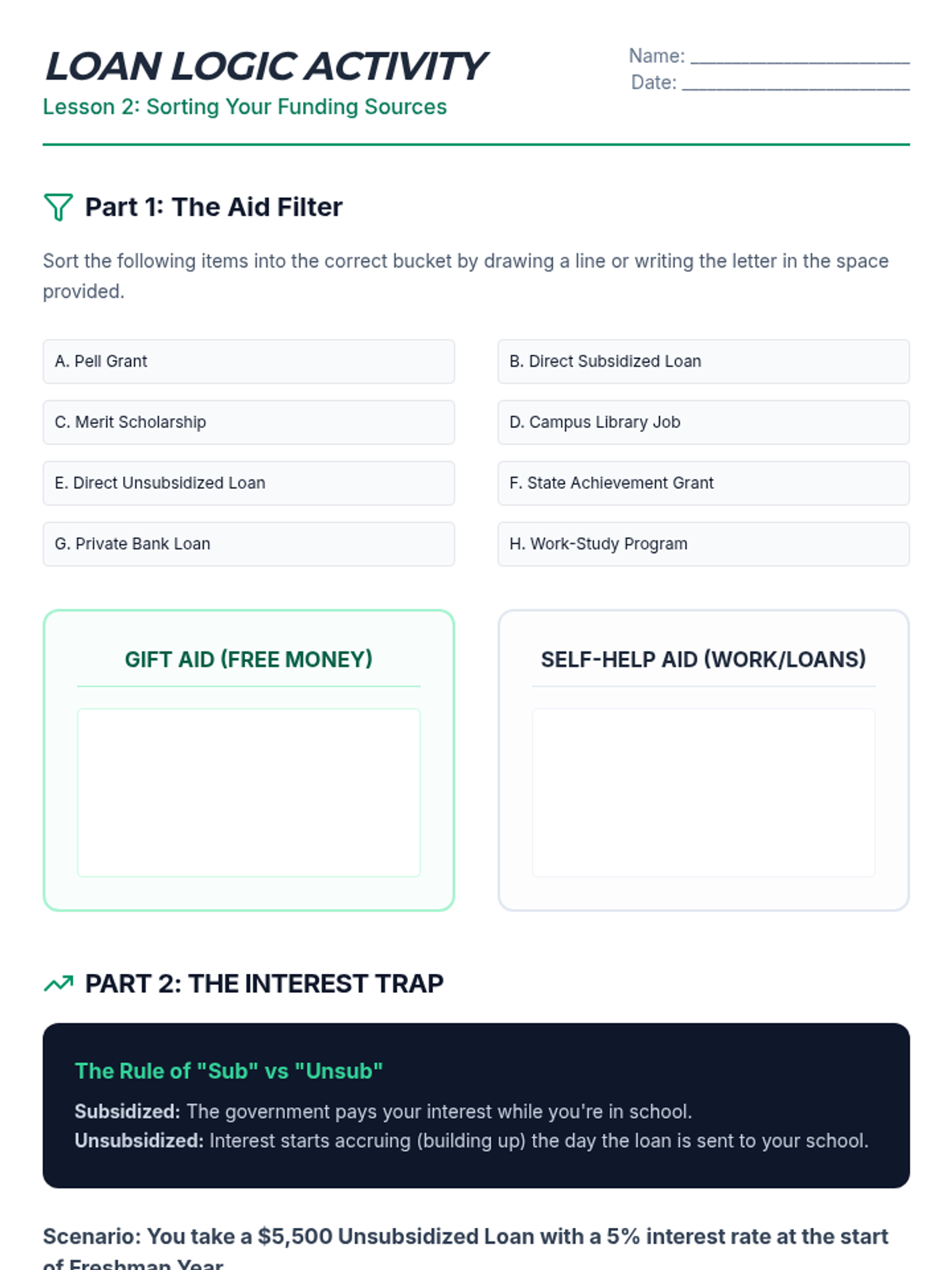
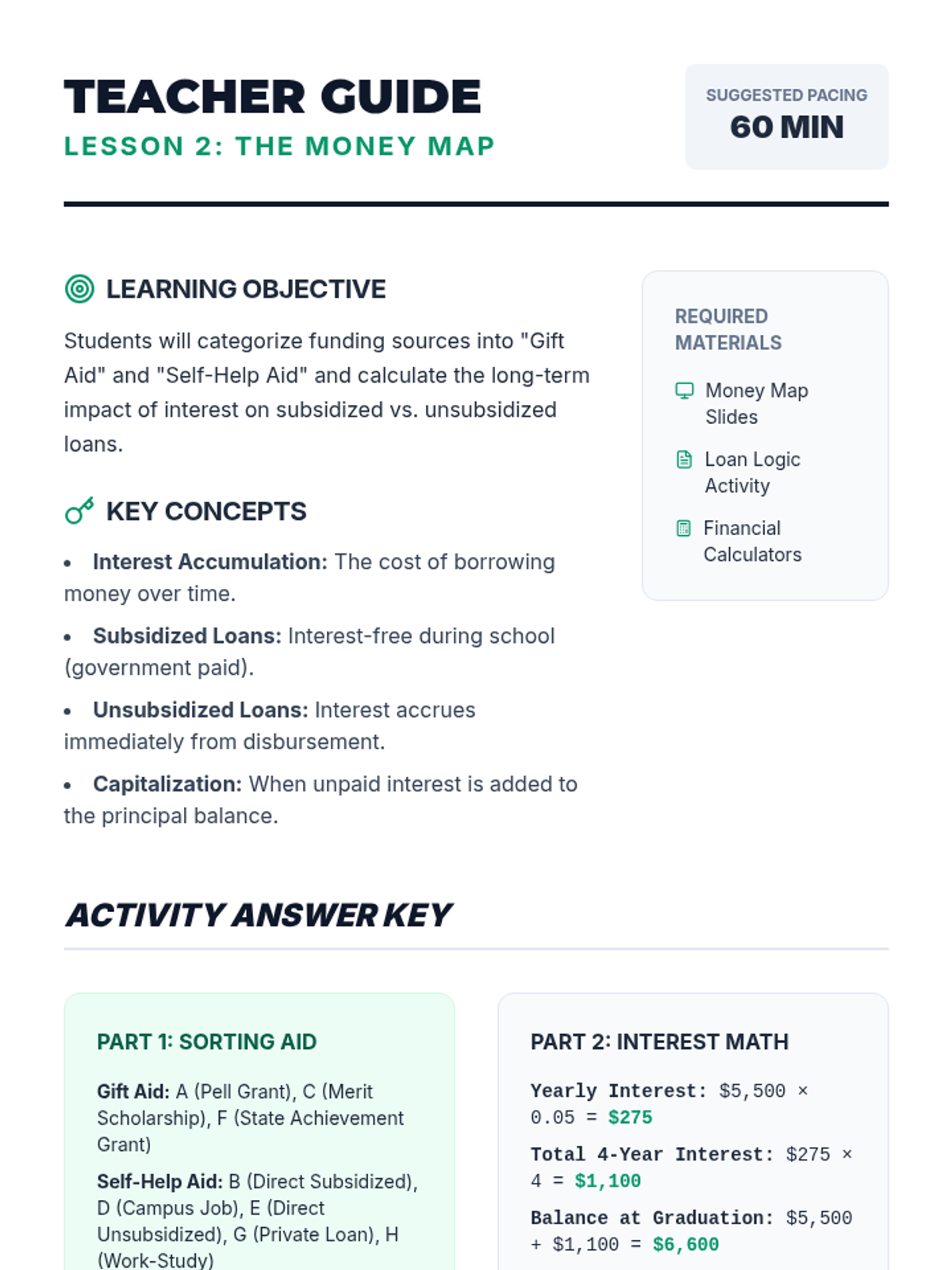
This lesson covers the essential components of college financial aid, focusing on the differences between gift aid, work-study, and loans, with a deep dive into federal loan structures.
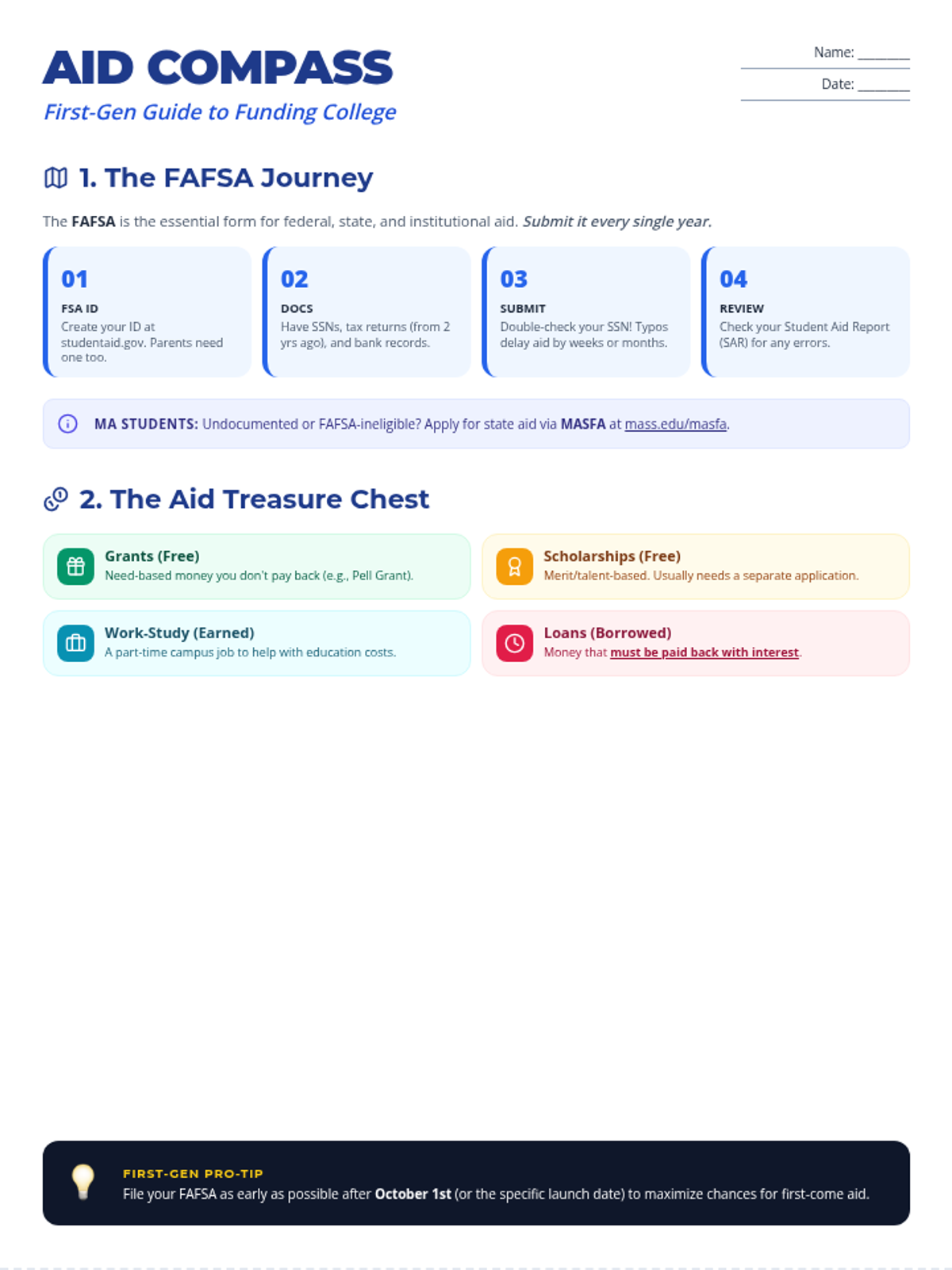
A comprehensive lesson for first-generation students on navigating financial aid, including the FAFSA process, understanding aid types, and decoding award letters.
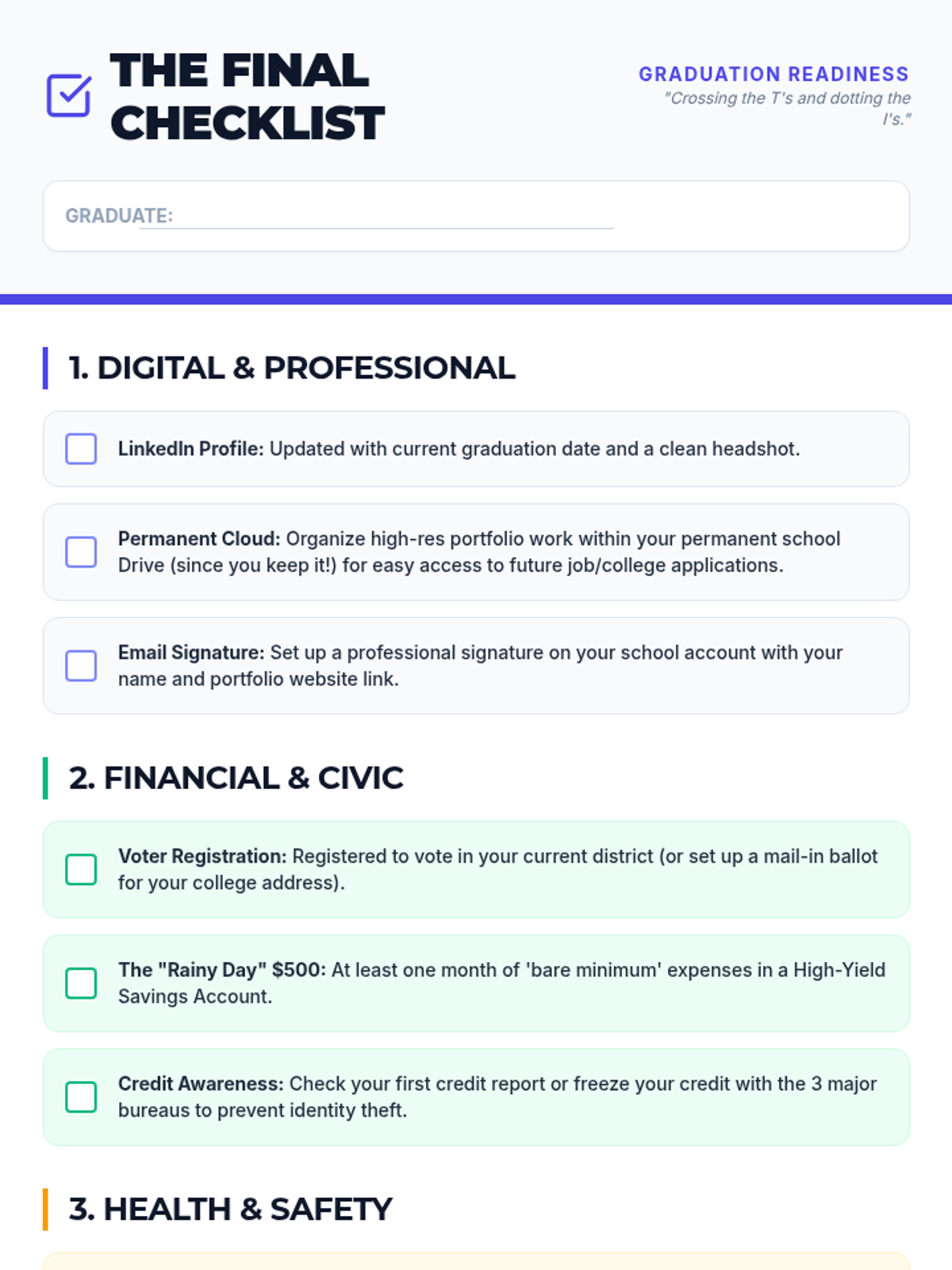
A comprehensive final review and logistics checklist for high school seniors, covering voter registration, insurance cards, professional email signatures, and emergency contact updates.
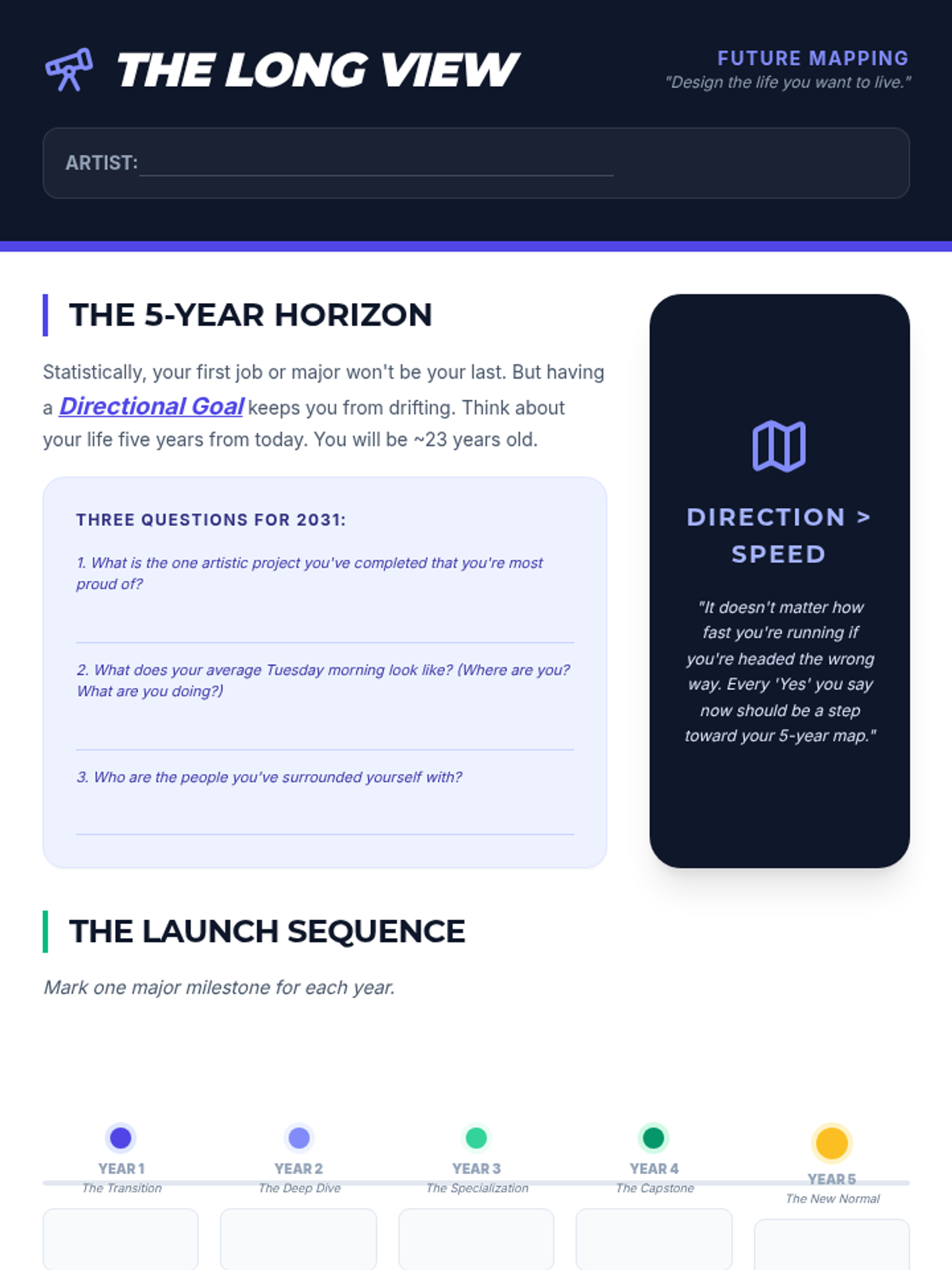
Guides students through a long-term goal-setting exercise, helping them map out professional and personal milestones for their first five years after high school using a visual timeline approach.
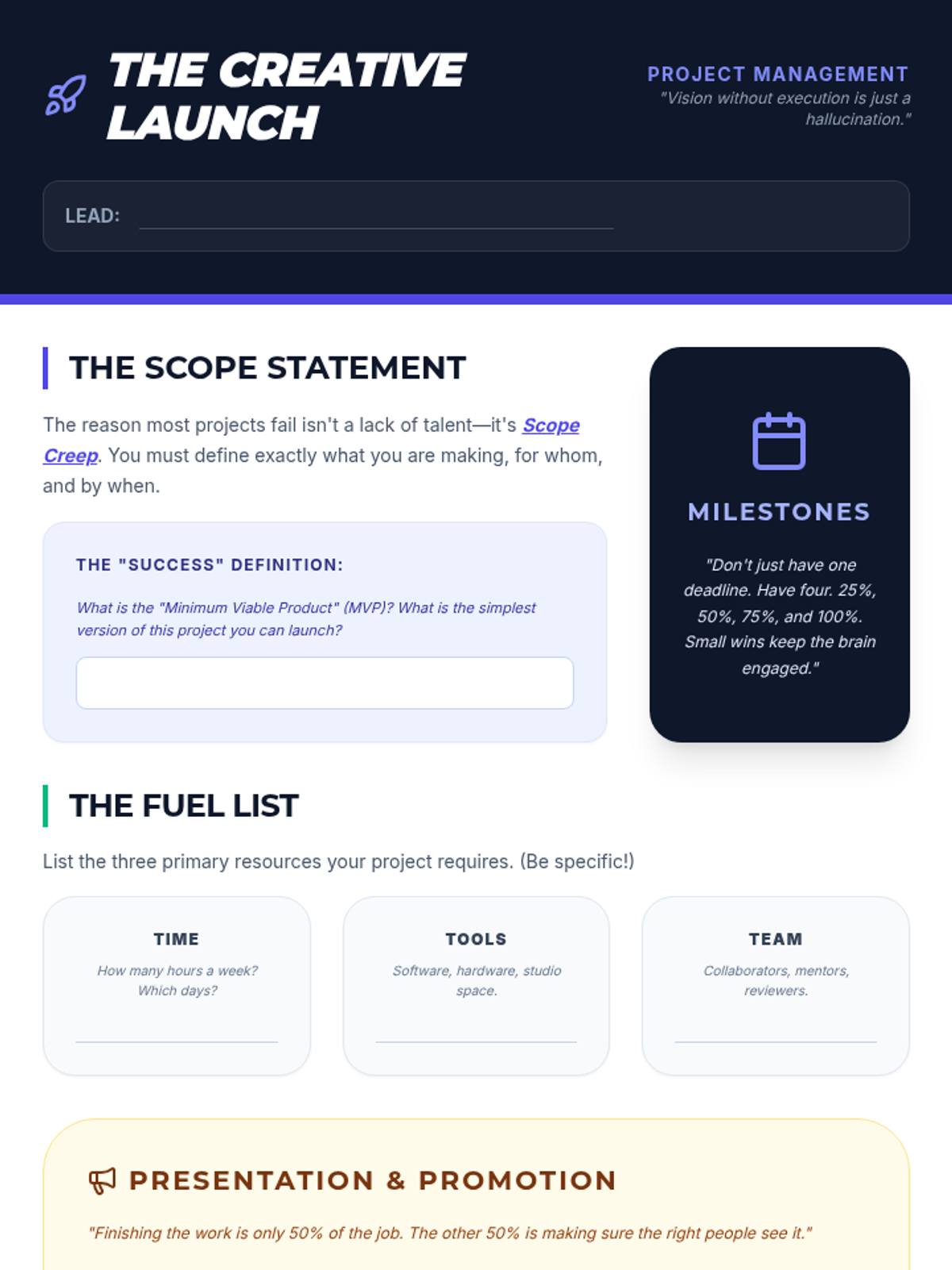
Teaches students how to plan, execute, and document a significant creative project, focusing on milestones, resource management, and the art of the 'Launch.'
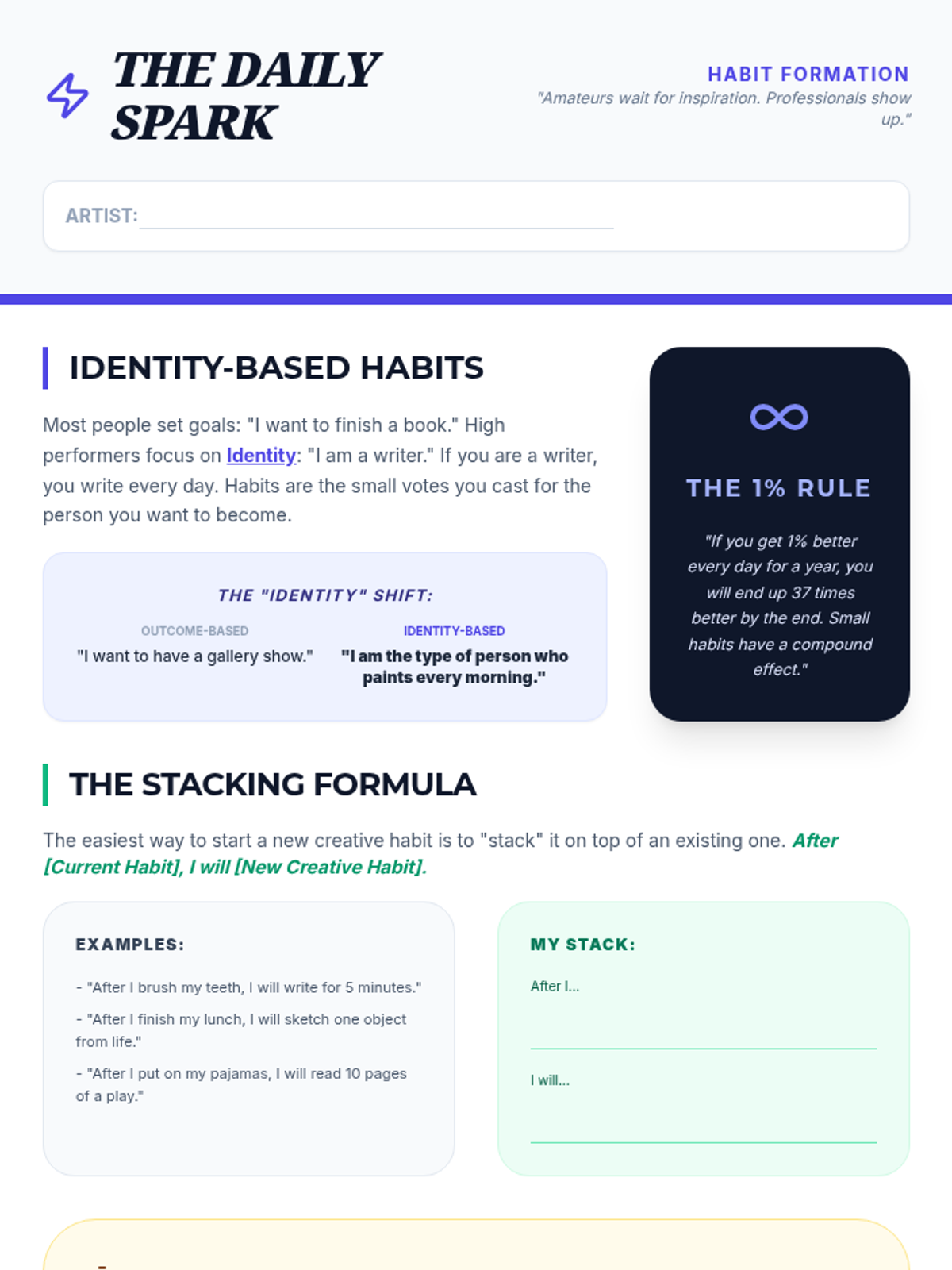
Teaches students how to build and maintain a sustainable artistic practice through small, consistent habits, focusing on the 'Atomic Habits' method for creative output.
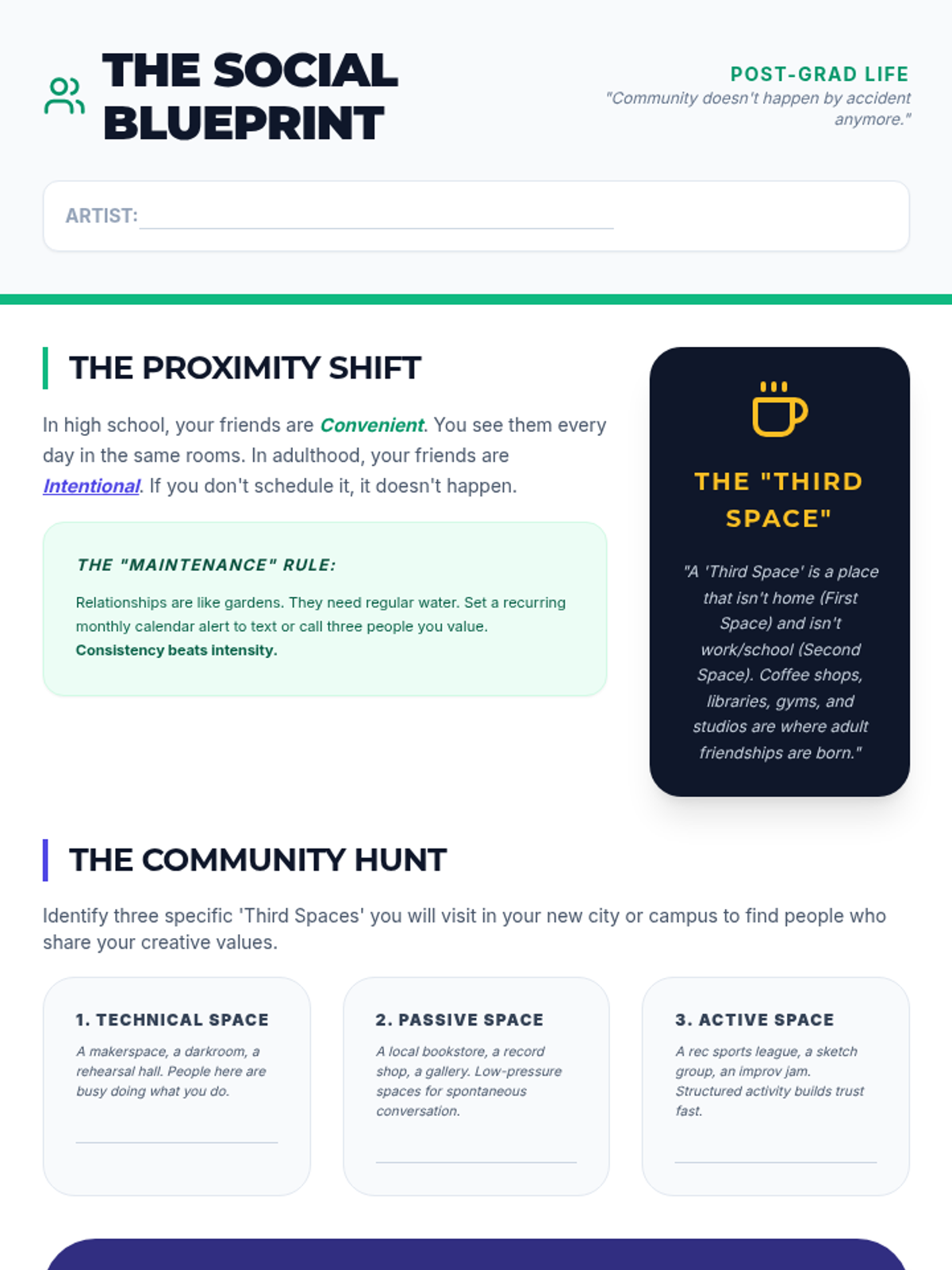
Explores the intentional effort required to build and maintain community as an adult, teaching students how to find 'third spaces' and manage the transition of high school friendships.
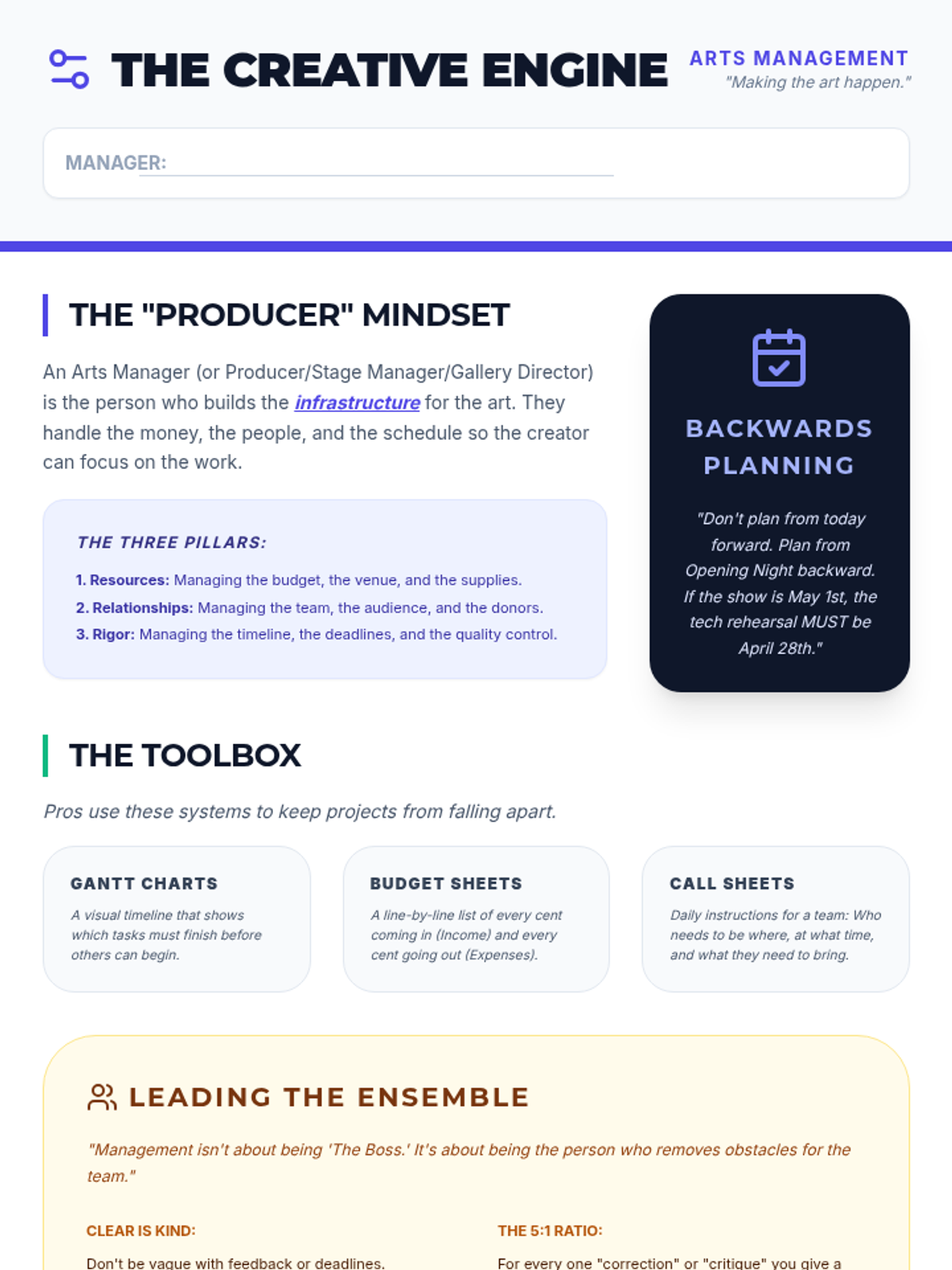
Introduces students to the fundamental skills of arts management, including production scheduling, team leadership, and basic project budgeting for creative endeavors.
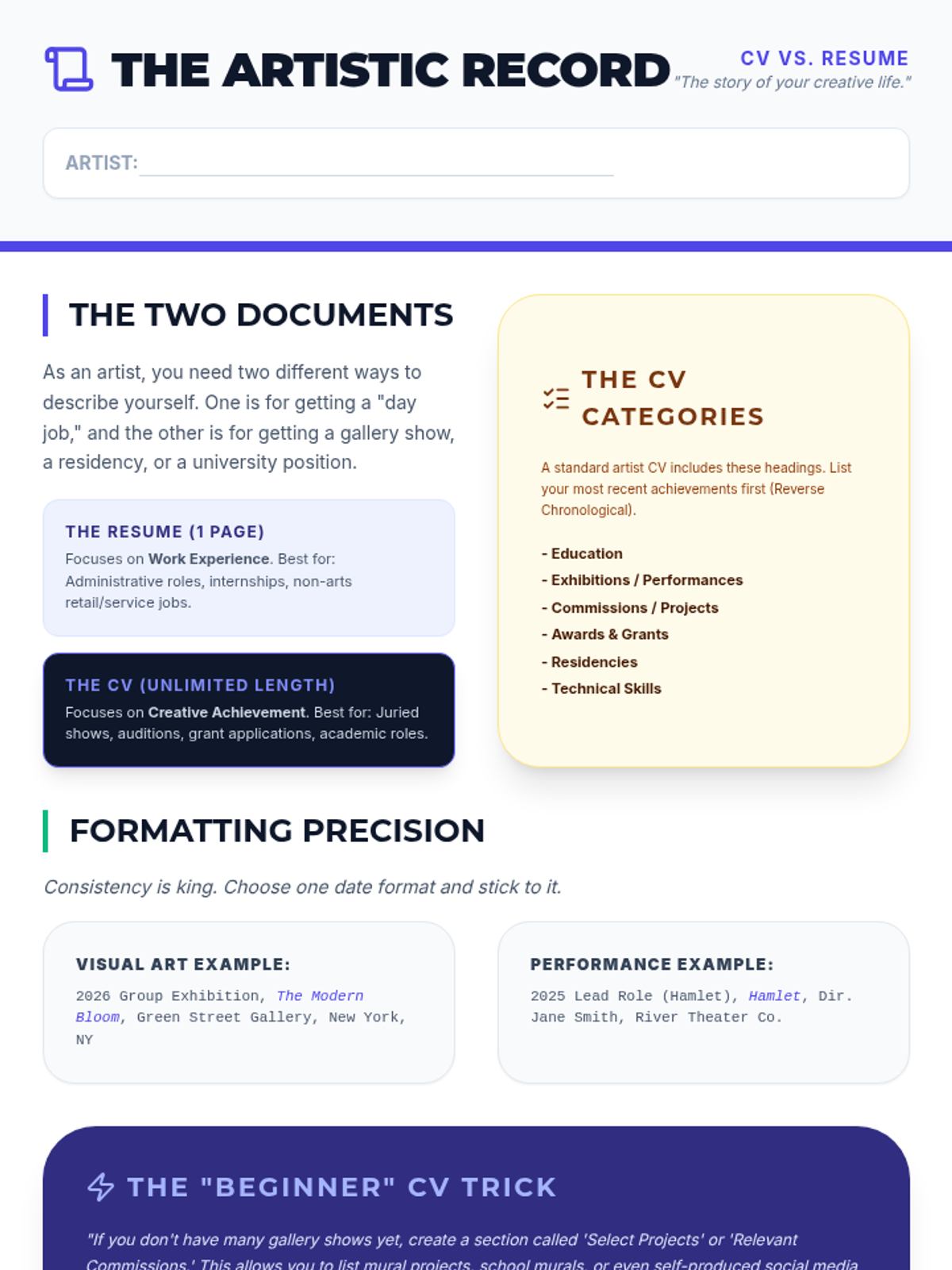
Differentiates between a standard job resume and a creative Curriculum Vitae (CV), teaching students how to list exhibitions, performances, awards, and technical commissions.
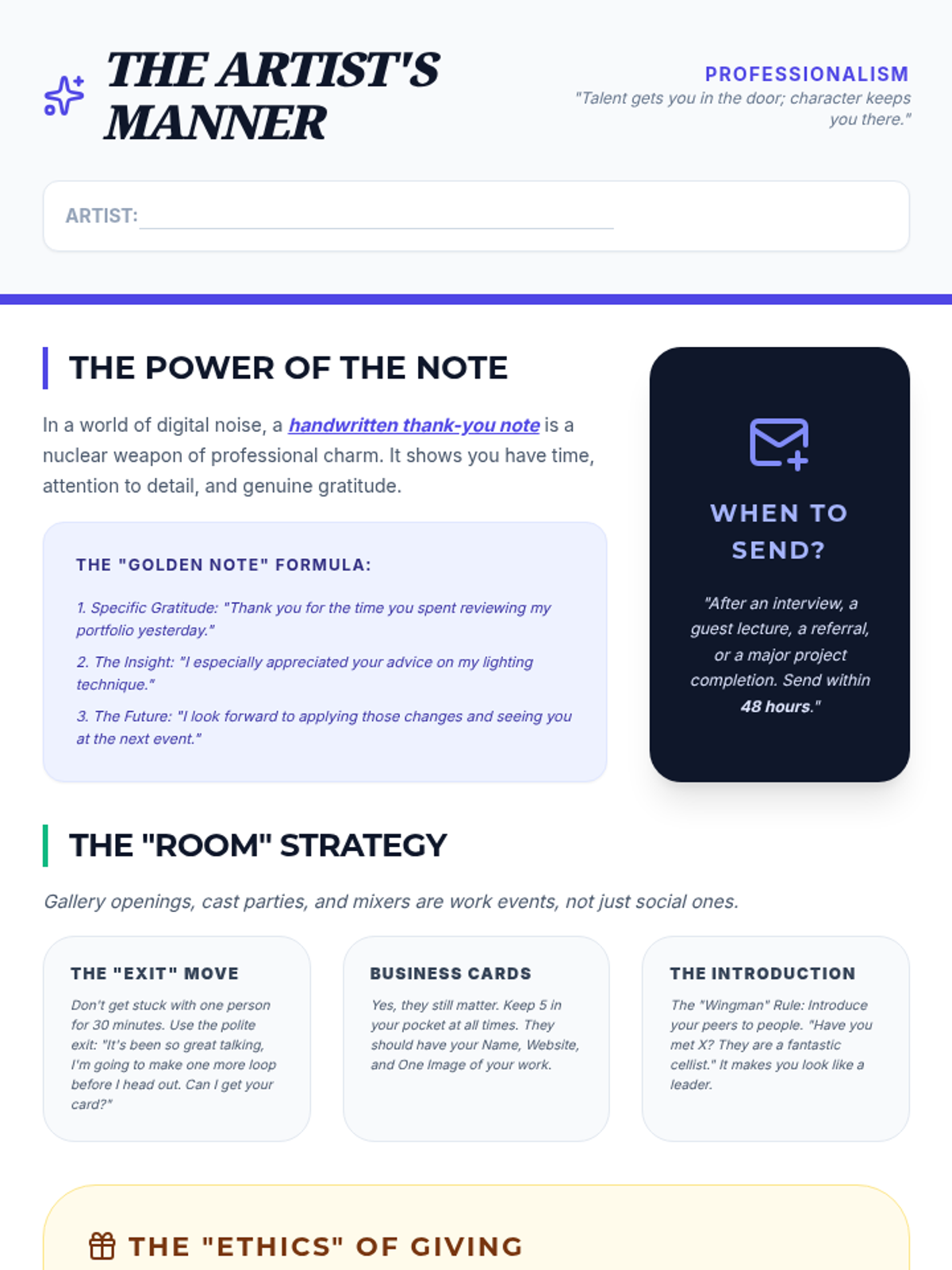
Teaches students the behavioral standards of the creative industries, including the art of the thank-you note, networking event protocols, and professional gift-giving ethics.
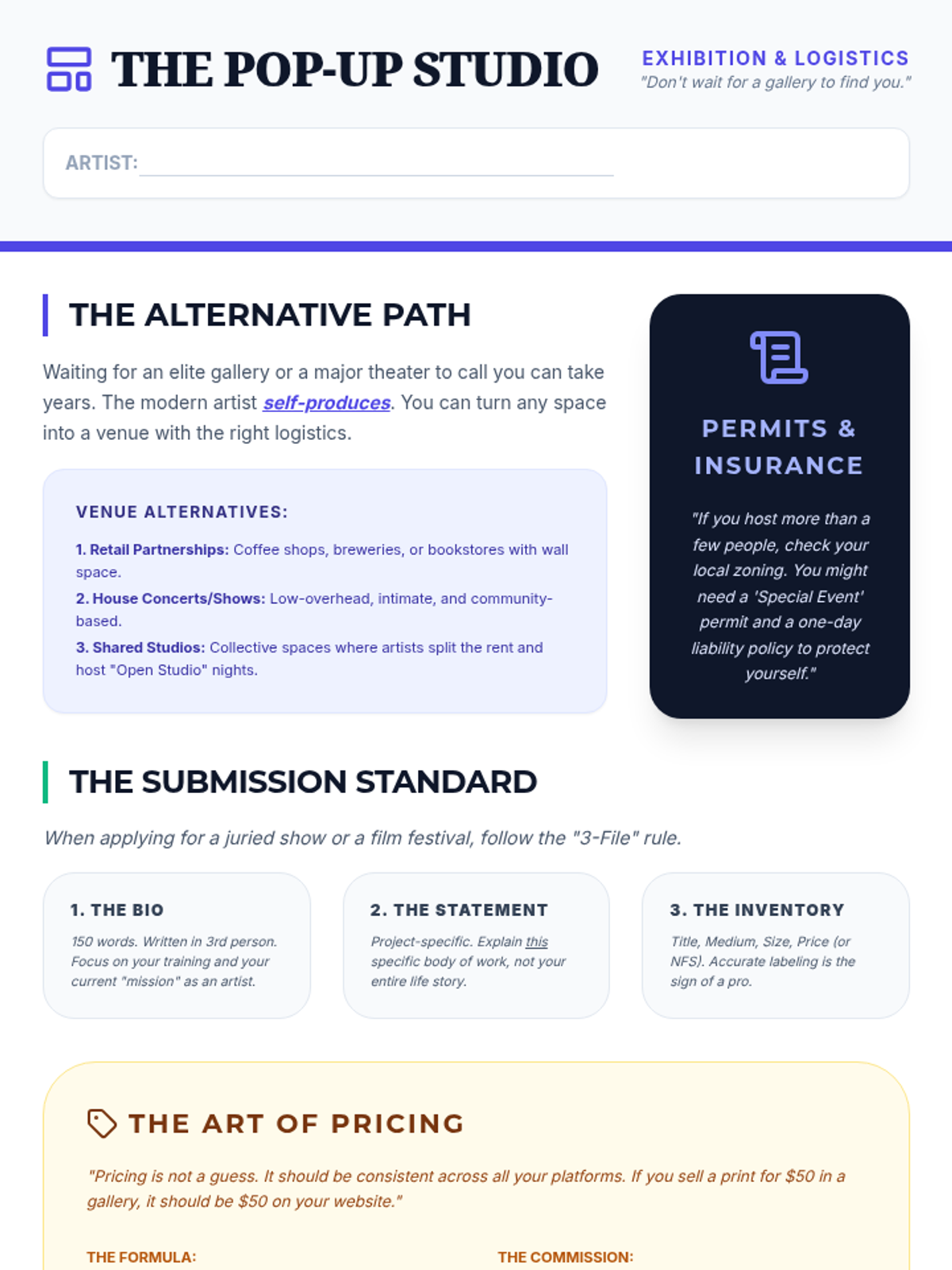
Teaches students the logistics of self-producing exhibitions and performances, covering DIY spaces, permit basics, and how to create a professional 'call for entry' submission.
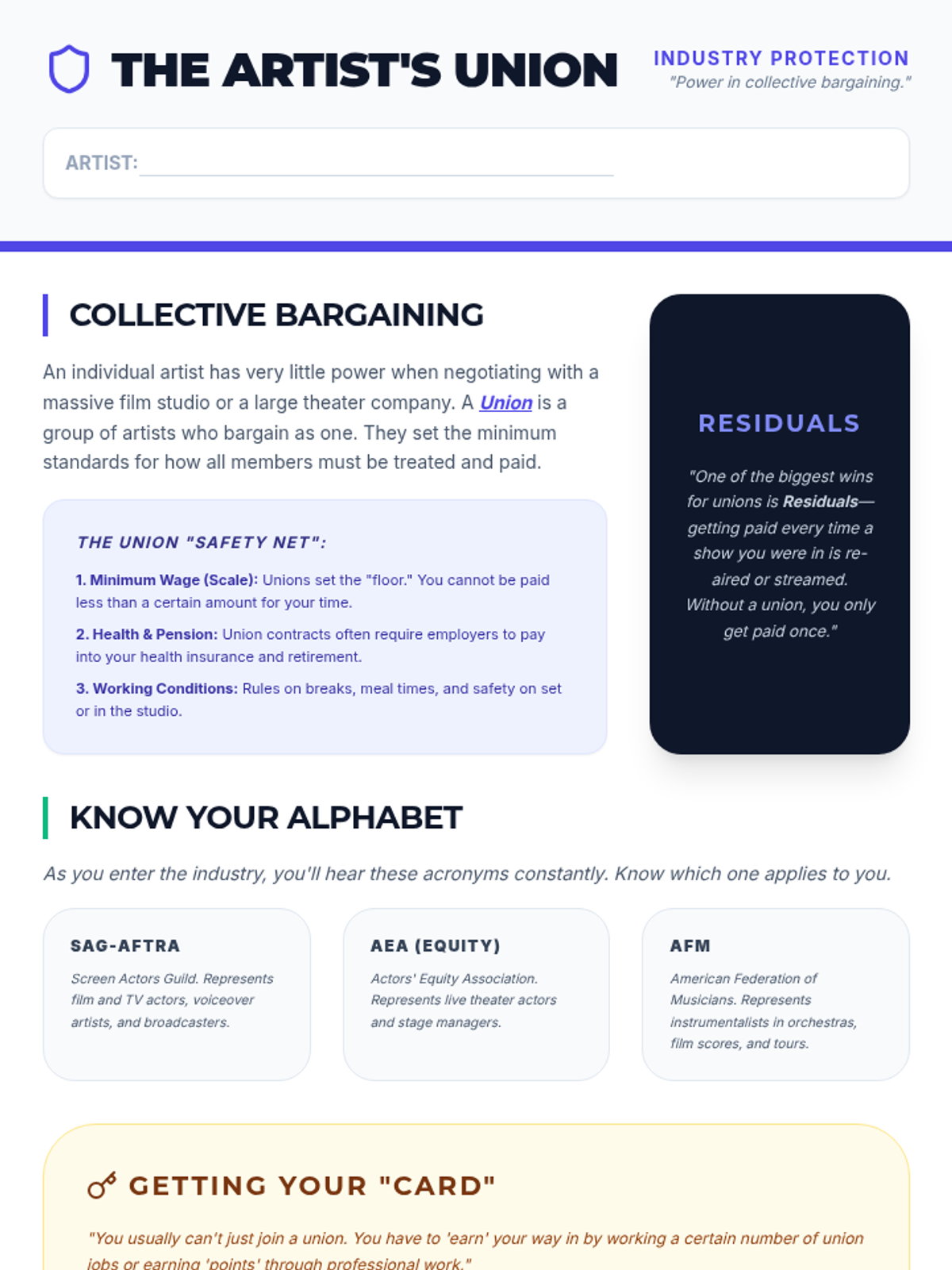
Introduces the history and function of creative unions (like SAG-AFTRA, AEA, and the AFM), explaining how they protect wages, provide benefits, and establish safe working conditions for artists.
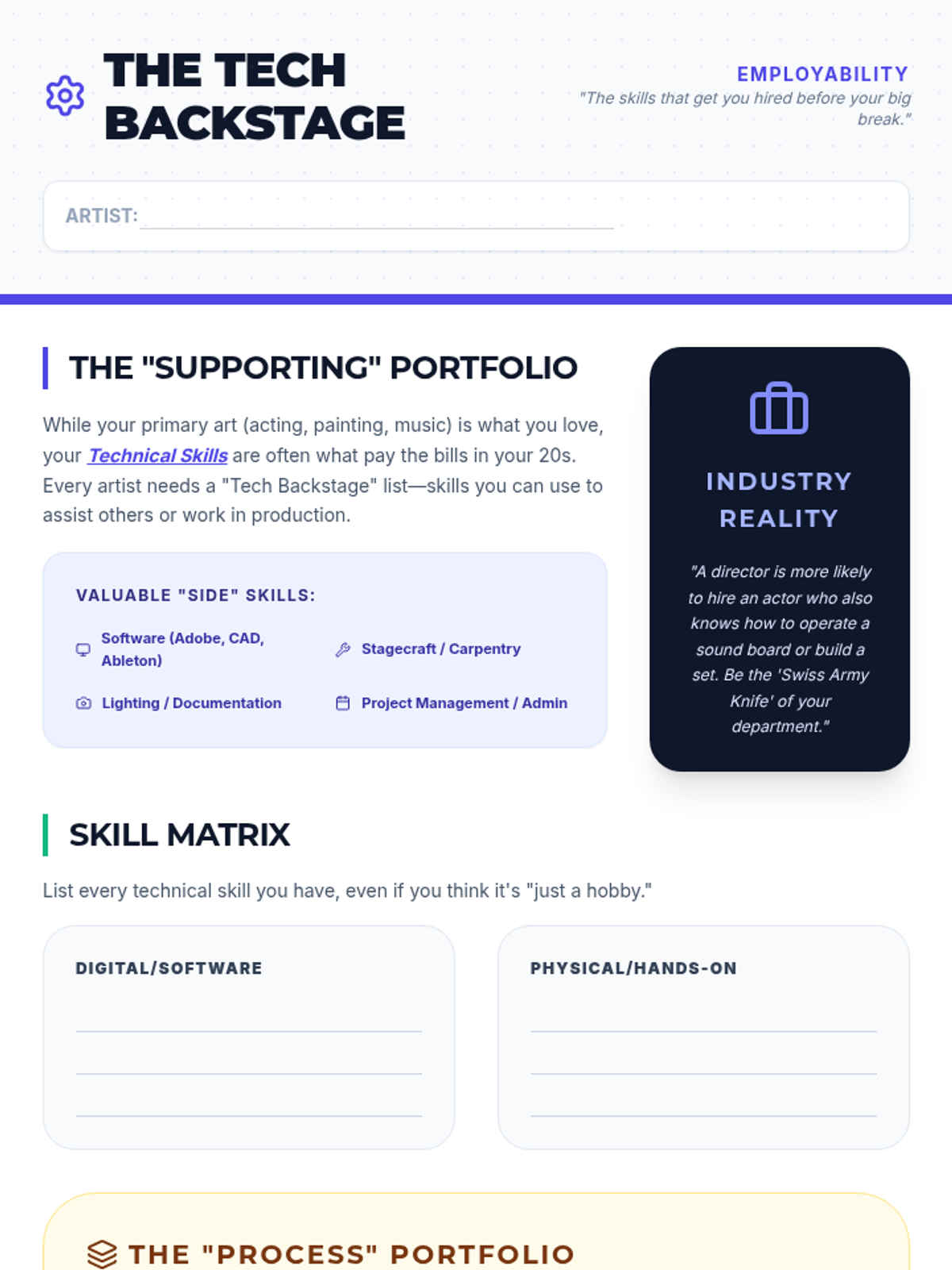
Focuses on identifying and documenting the 'behind-the-scenes' skills that make an artist employable, such as stagecraft, technical software, and project management.
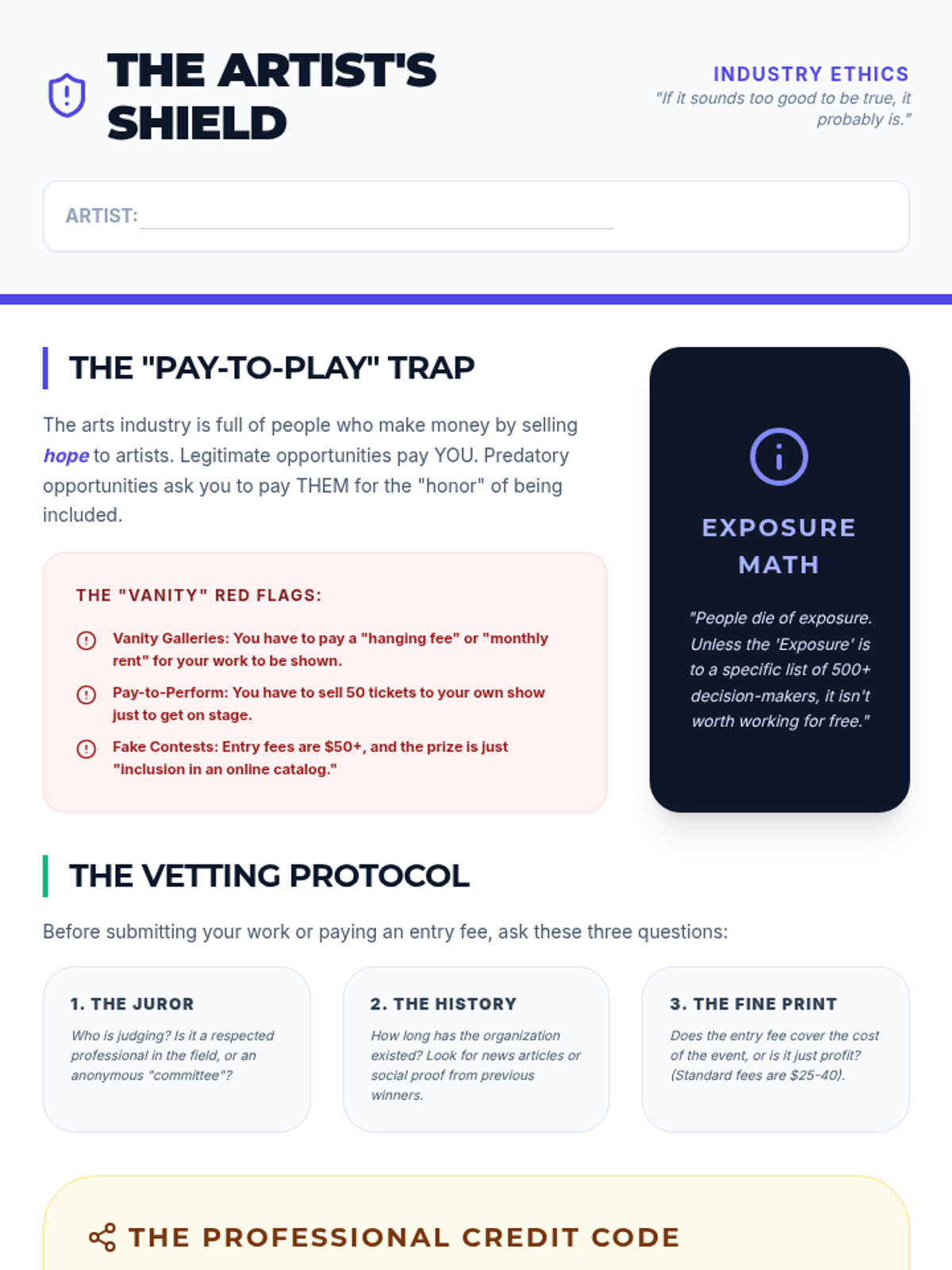
Teaches students how to identify predatory practices in the arts world, including 'pay-to-play' scams, exposure-only work, and how to verify the legitimacy of contests and galleries.
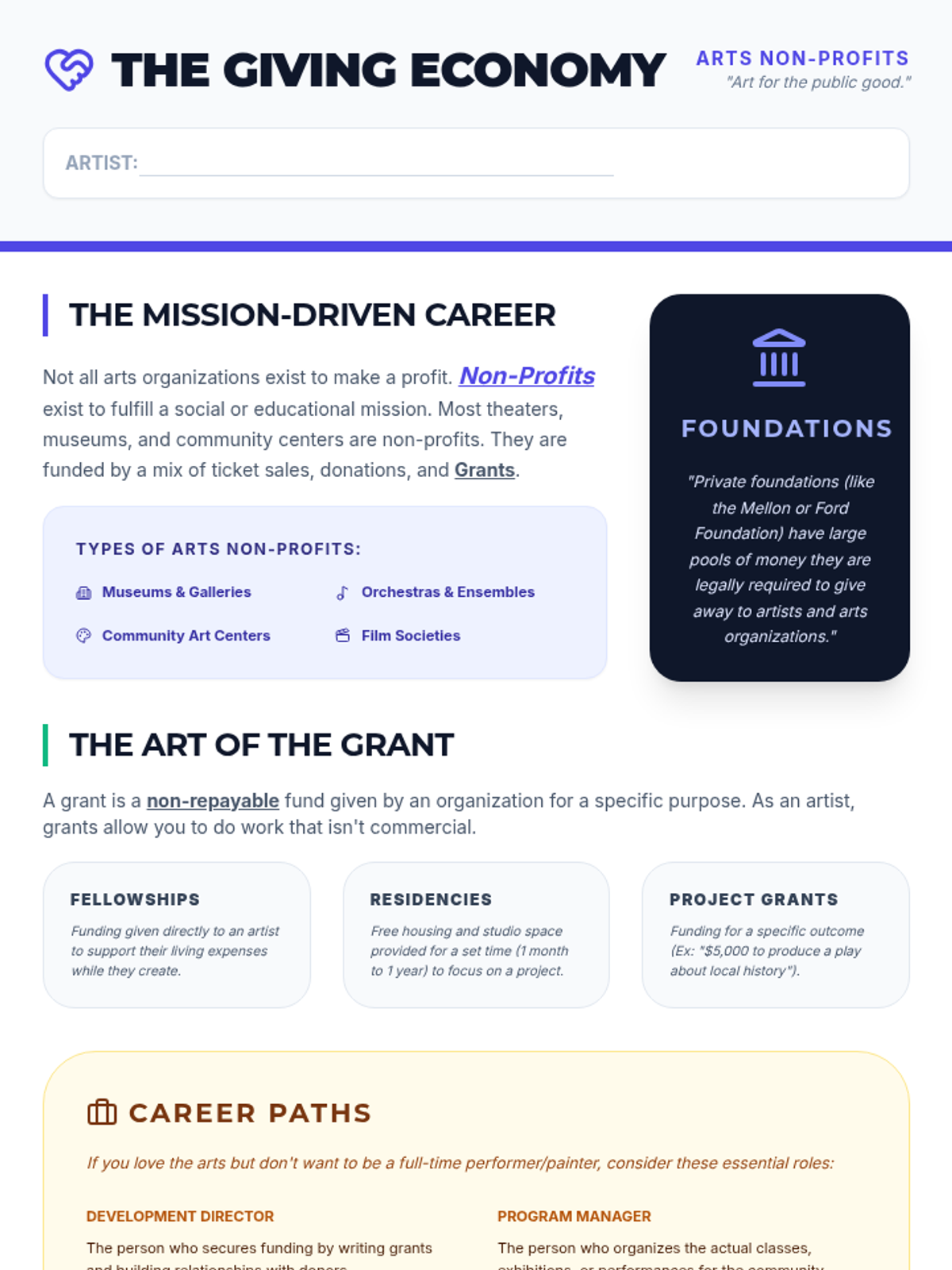
Introduces students to the non-profit arts sector, explaining how foundations, community arts centers, and grant-making organizations function as career paths and funding sources.
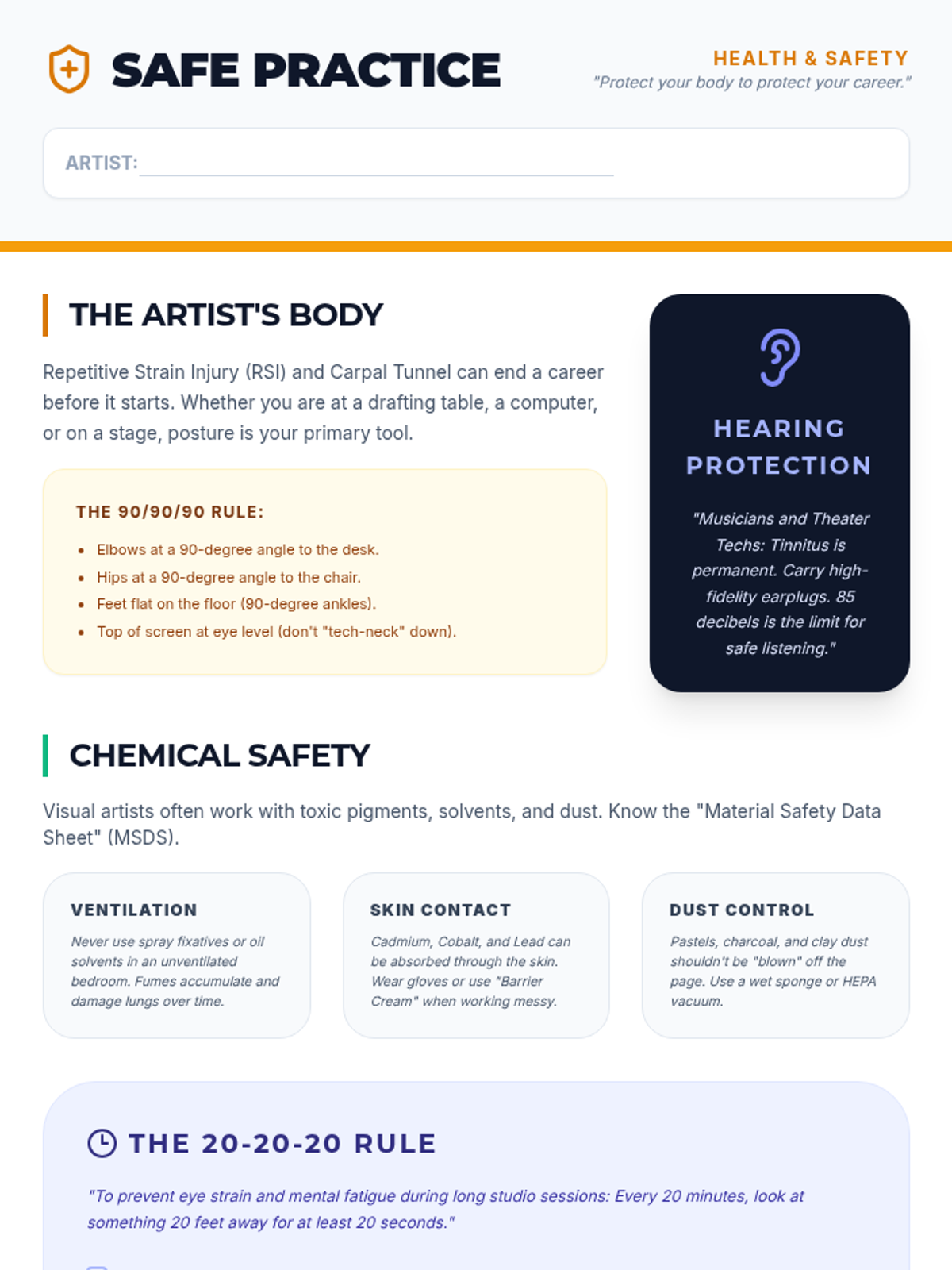
Teaches students the practical safety standards for their artistic practice, including hazardous material handling, ergonomics for desk-based work, and hearing protection for performers.
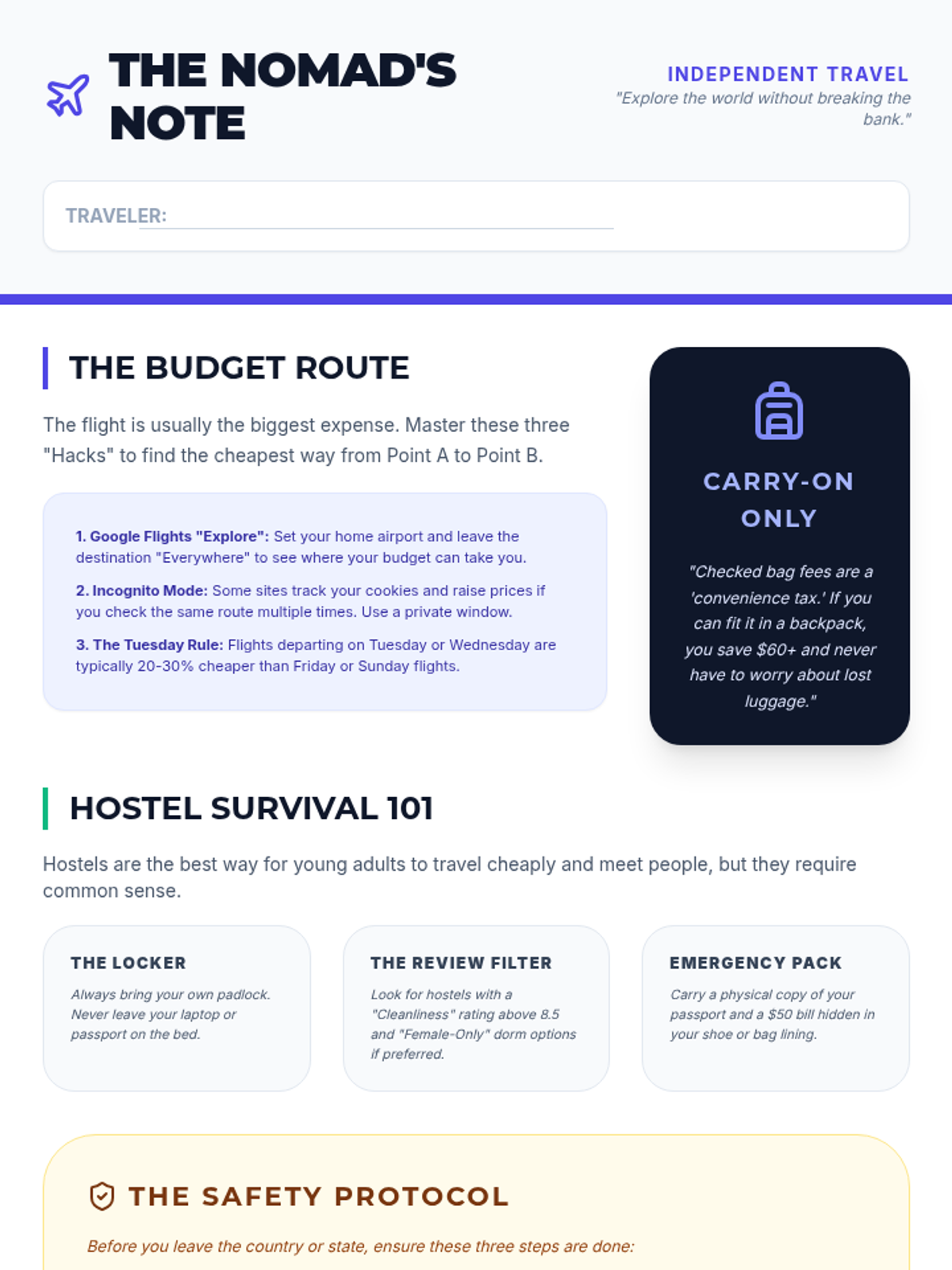
Guides students through the logistics of planning independent travel on a budget, covering flight hacking, hostel safety, and emergency protocols for young travelers.
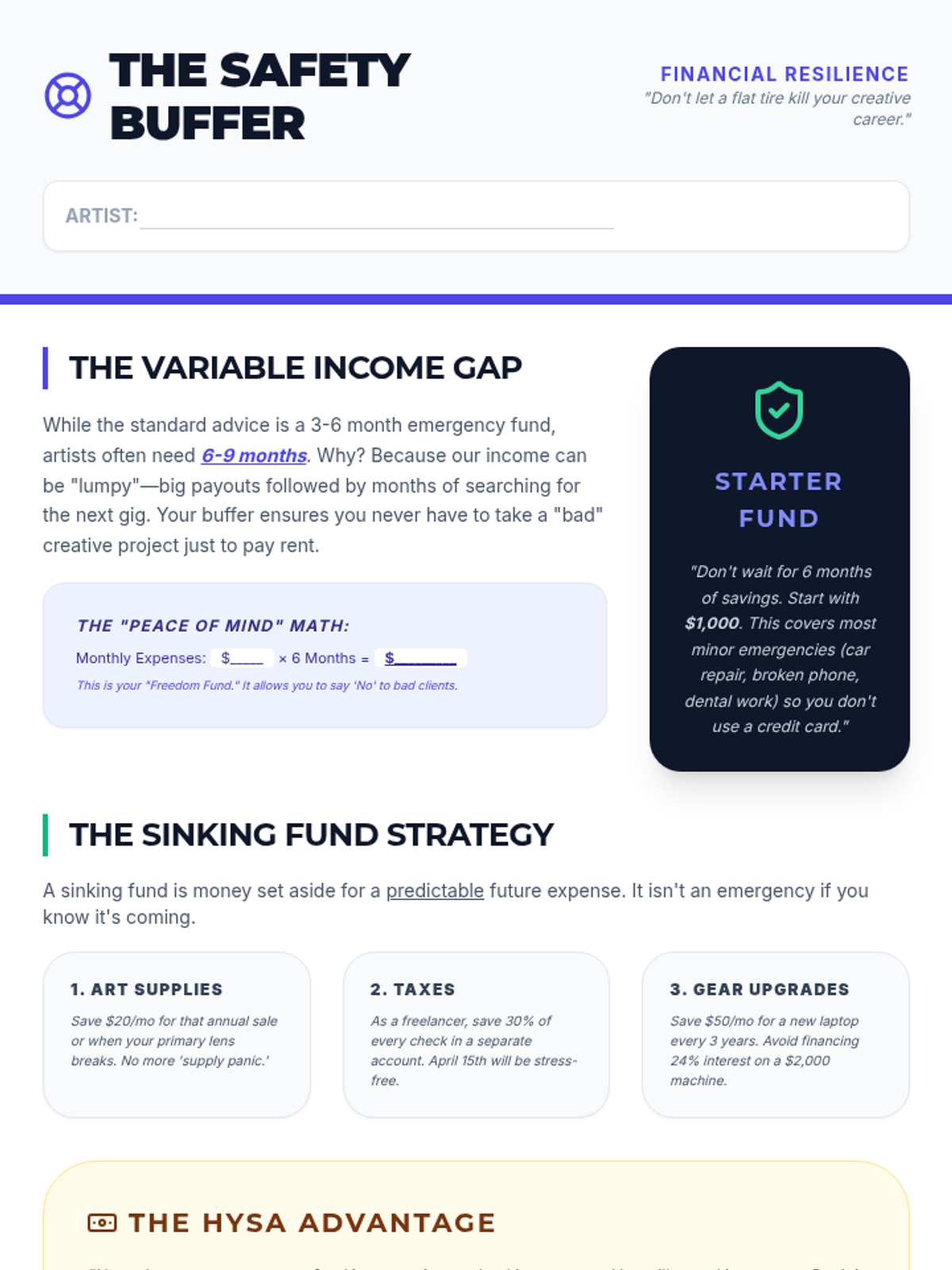
Teaches students how to calculate and build an emergency fund tailored to a variable income, introducing the concept of 'sinking funds' for predictable creative expenses.
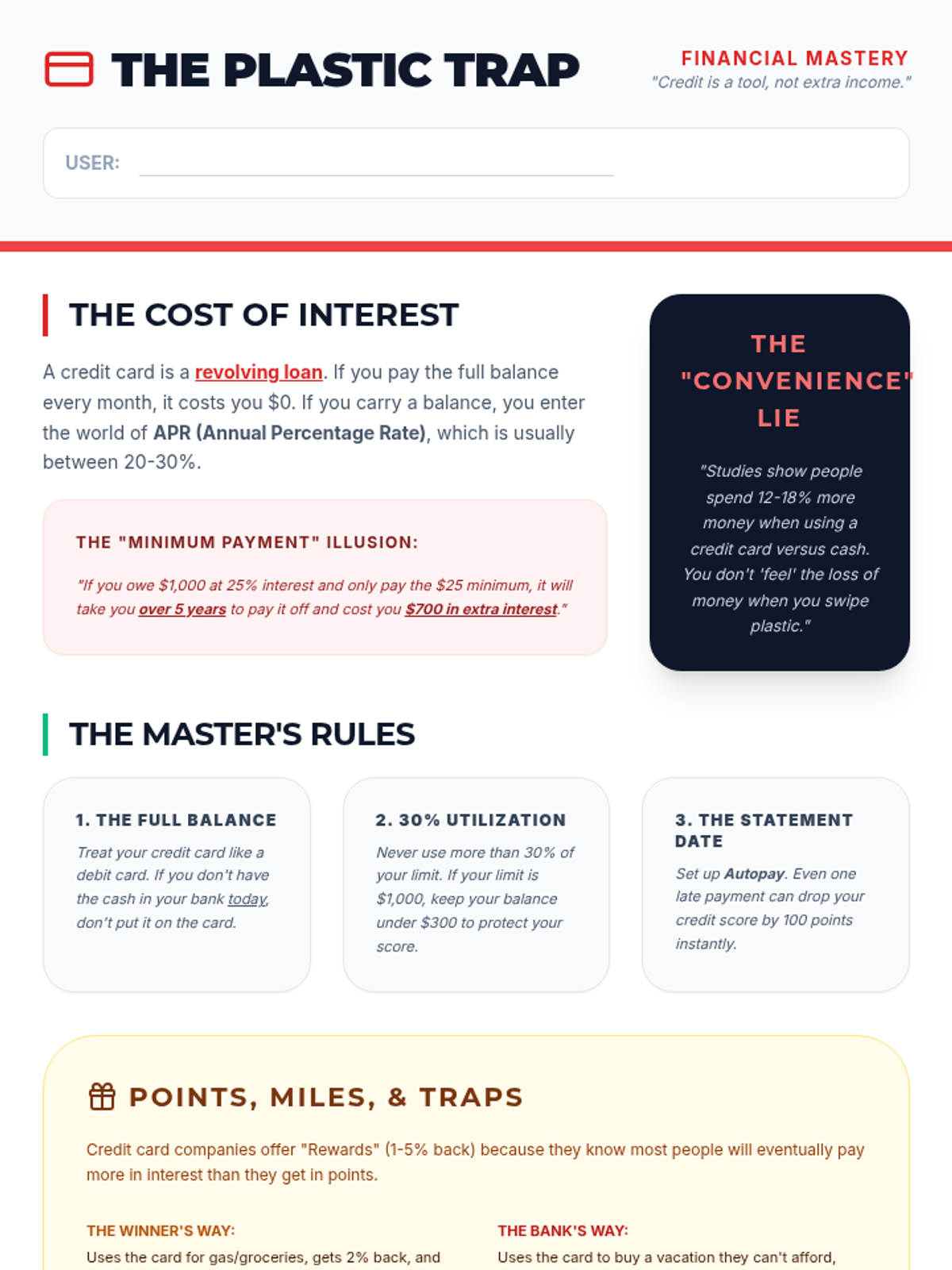
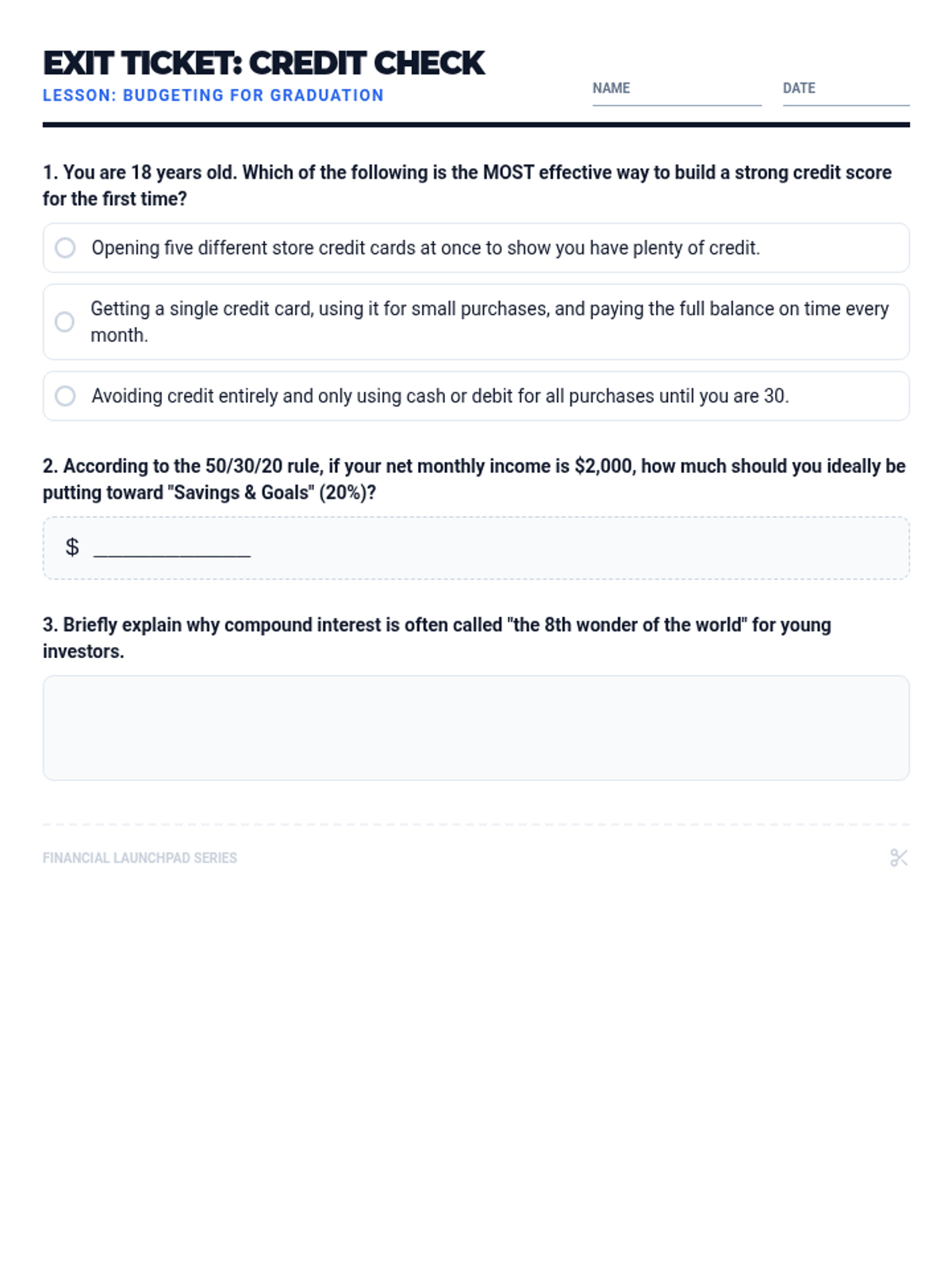
Explores how credit cards work, the danger of compounding interest, and strategies for using credit as a tool for building a financial future rather than a trap for debt.
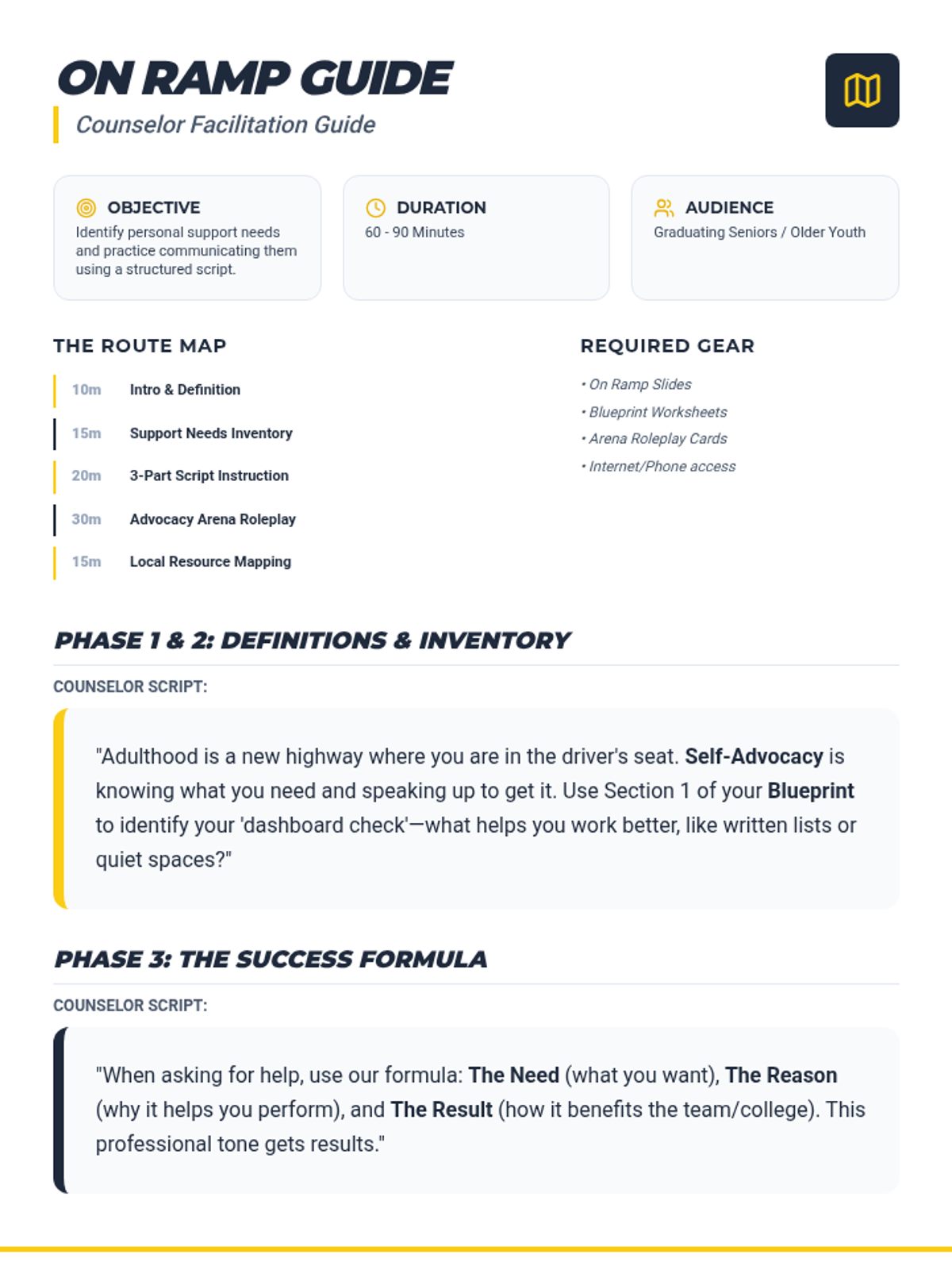
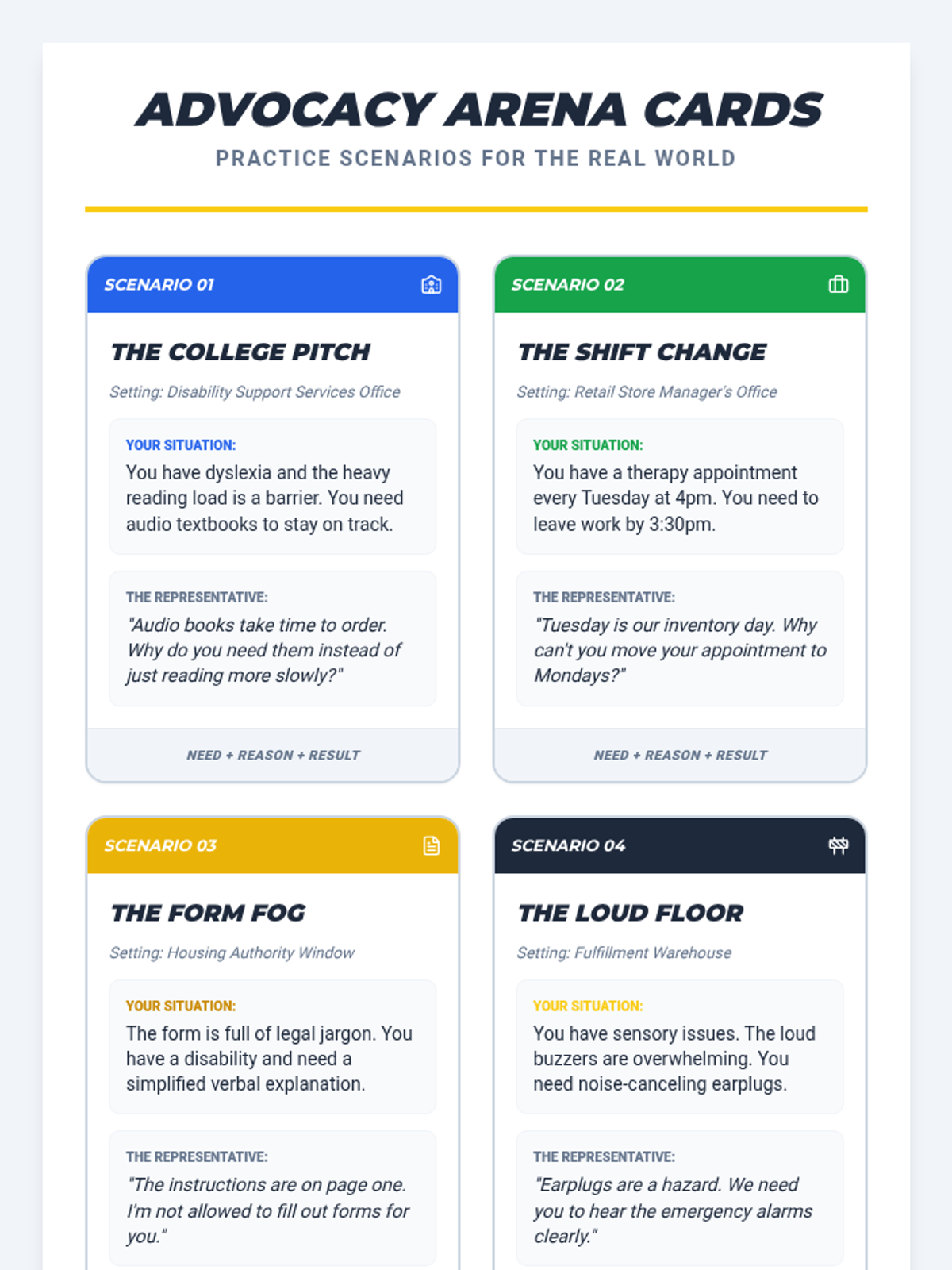
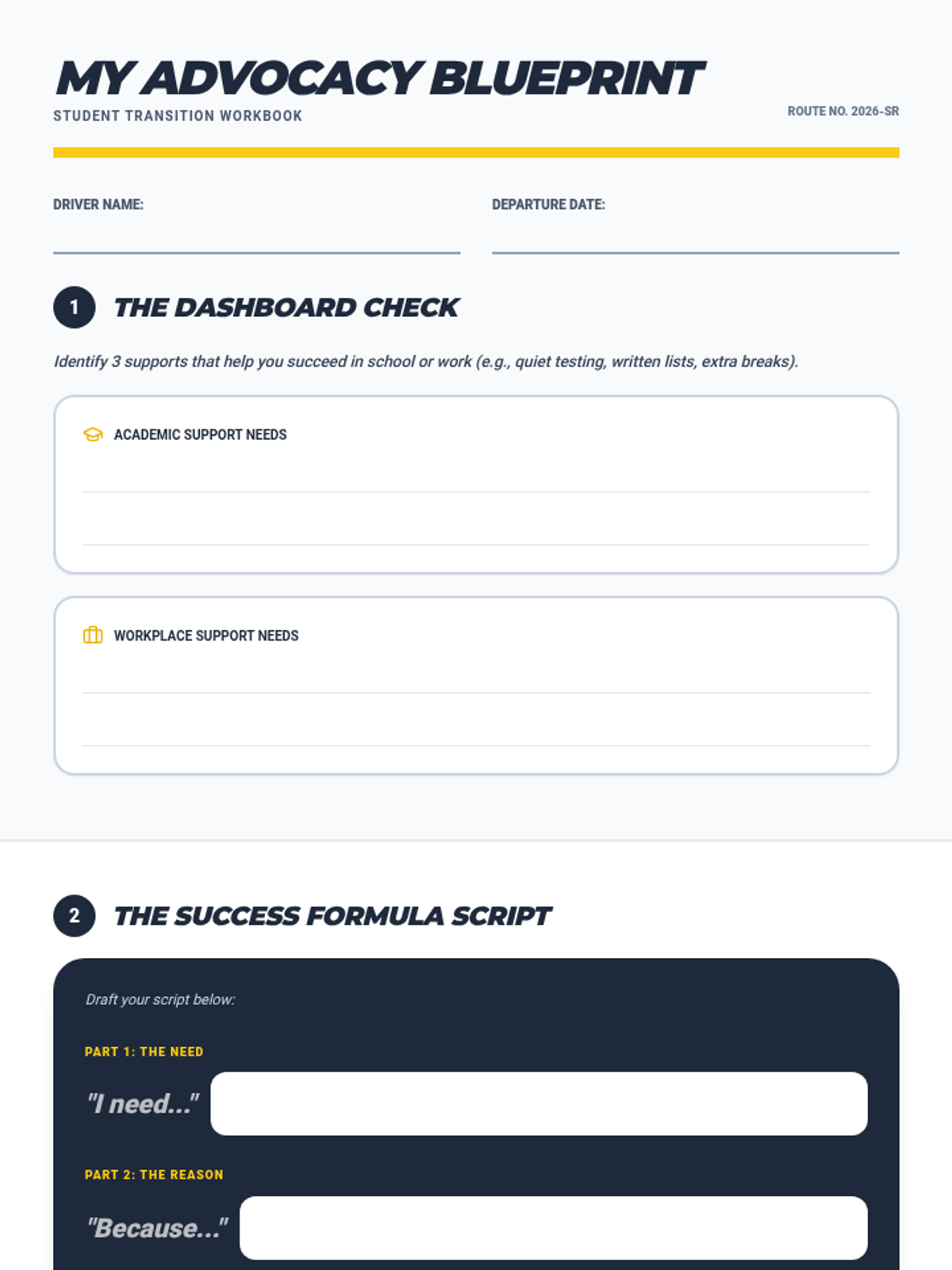
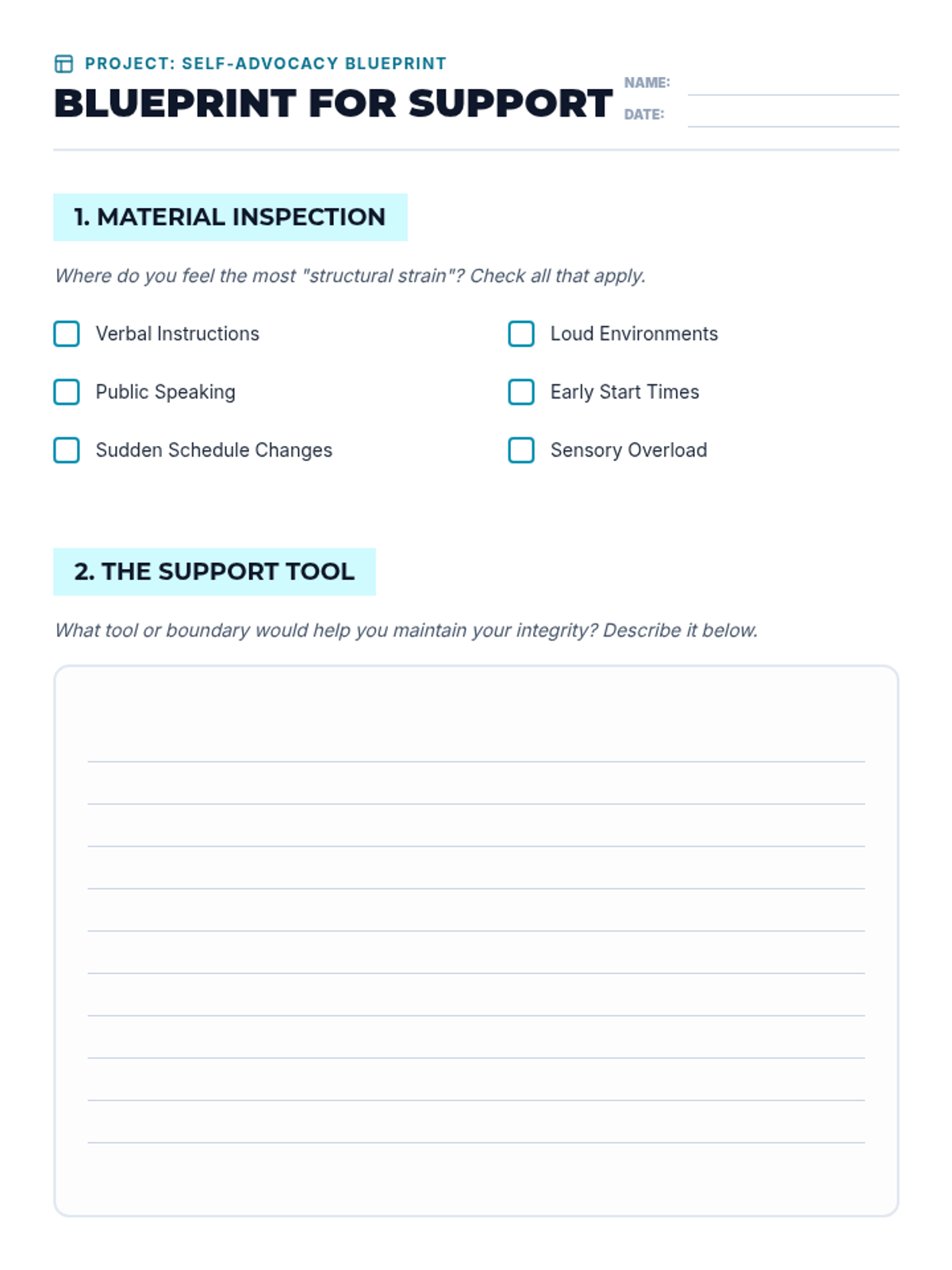
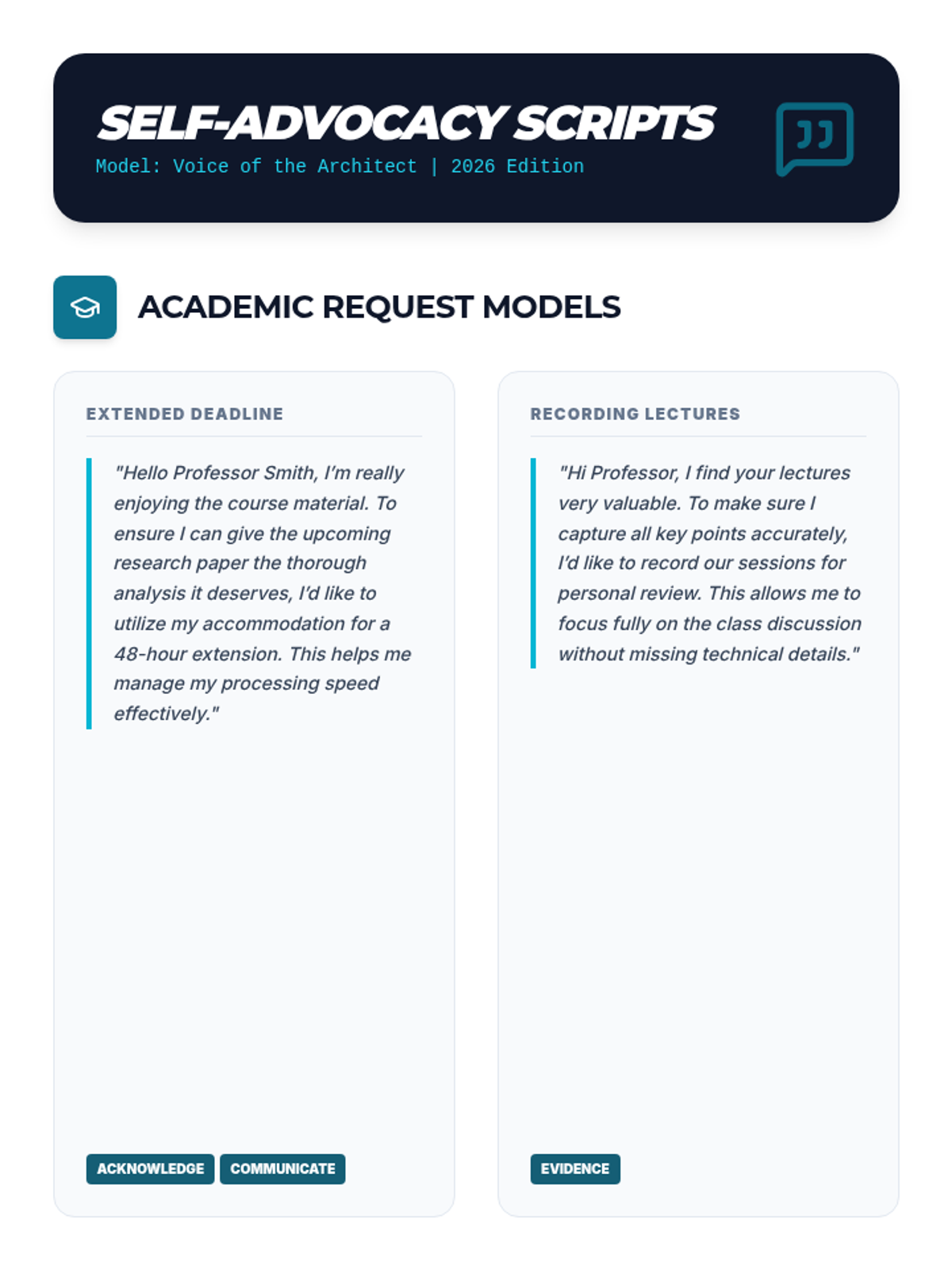
A comprehensive guide for counselors to help graduating students transition to adulthood by mastering self-advocacy skills. Students identify their support needs, practice communication scripts, and map out essential community resources for their next chapter.
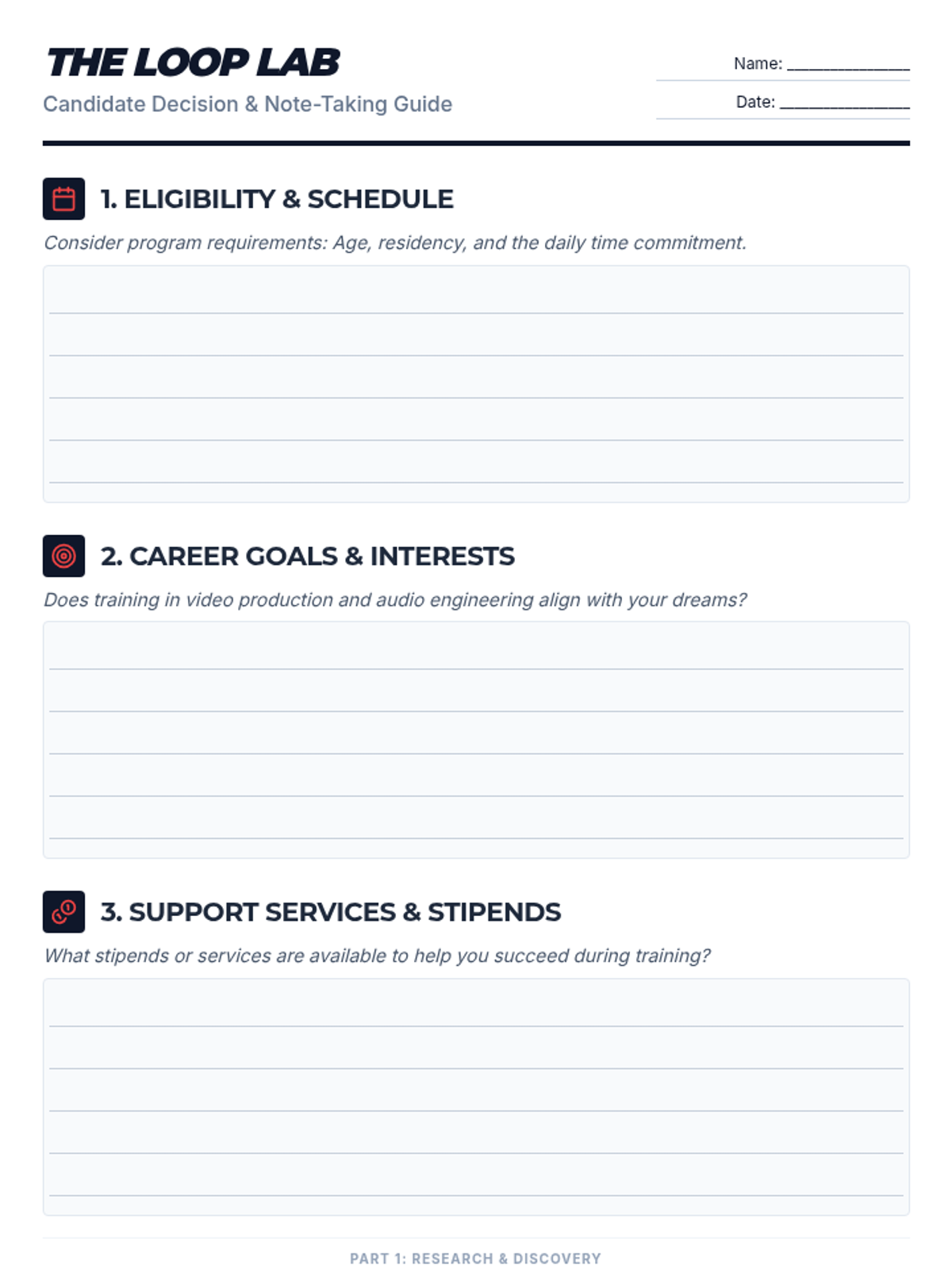
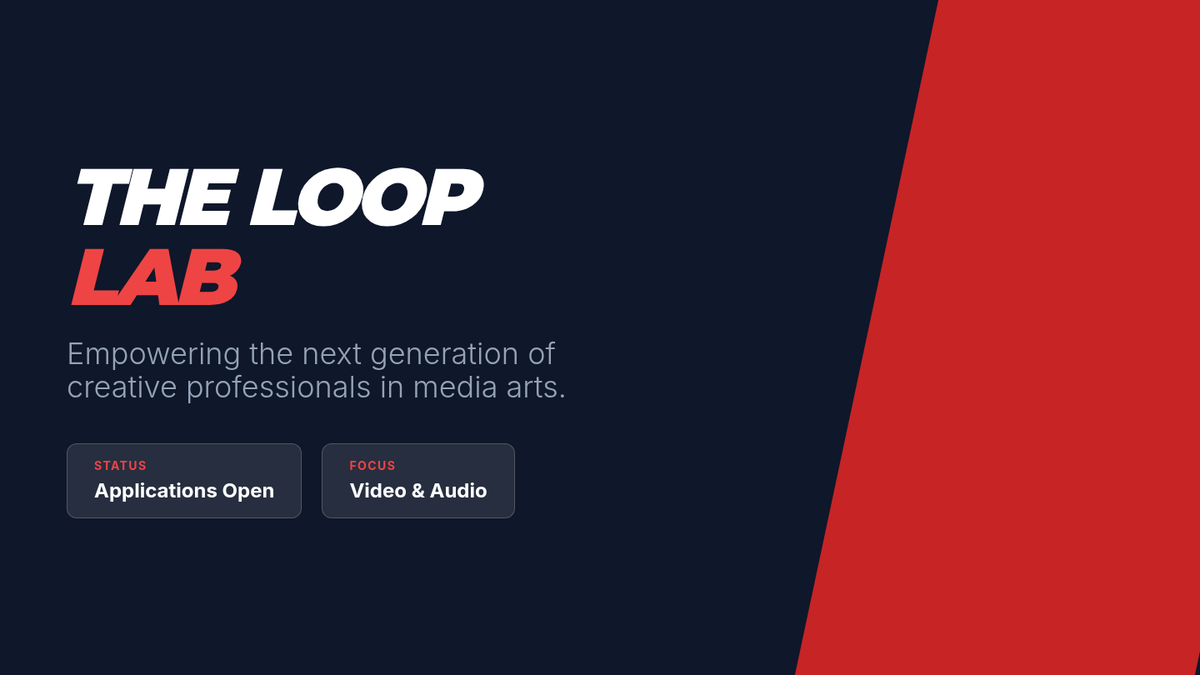
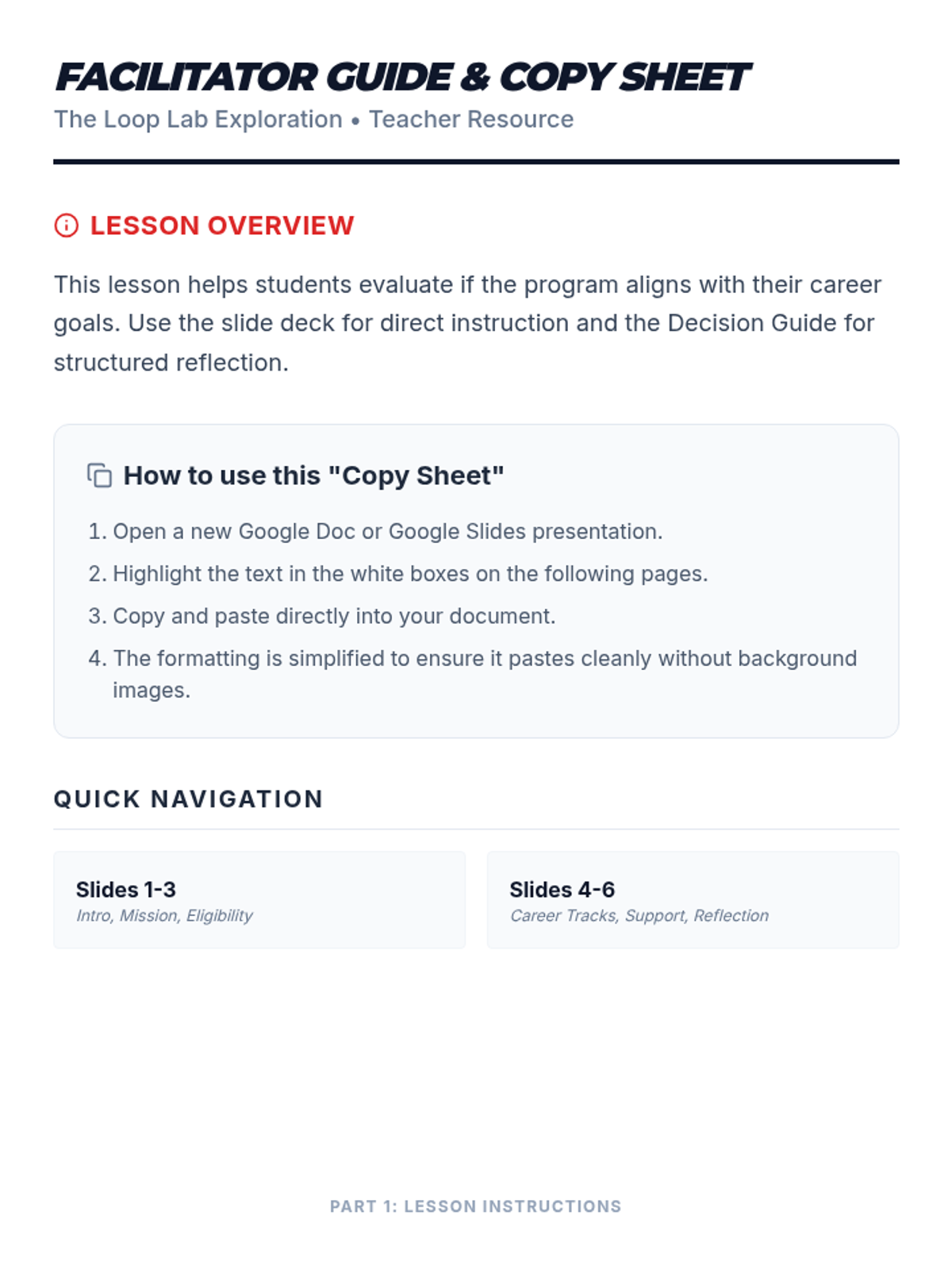
A lesson designed to help students evaluate their interest in and eligibility for The Loop Lab program, focusing on aligning personal career goals with the program's offerings.
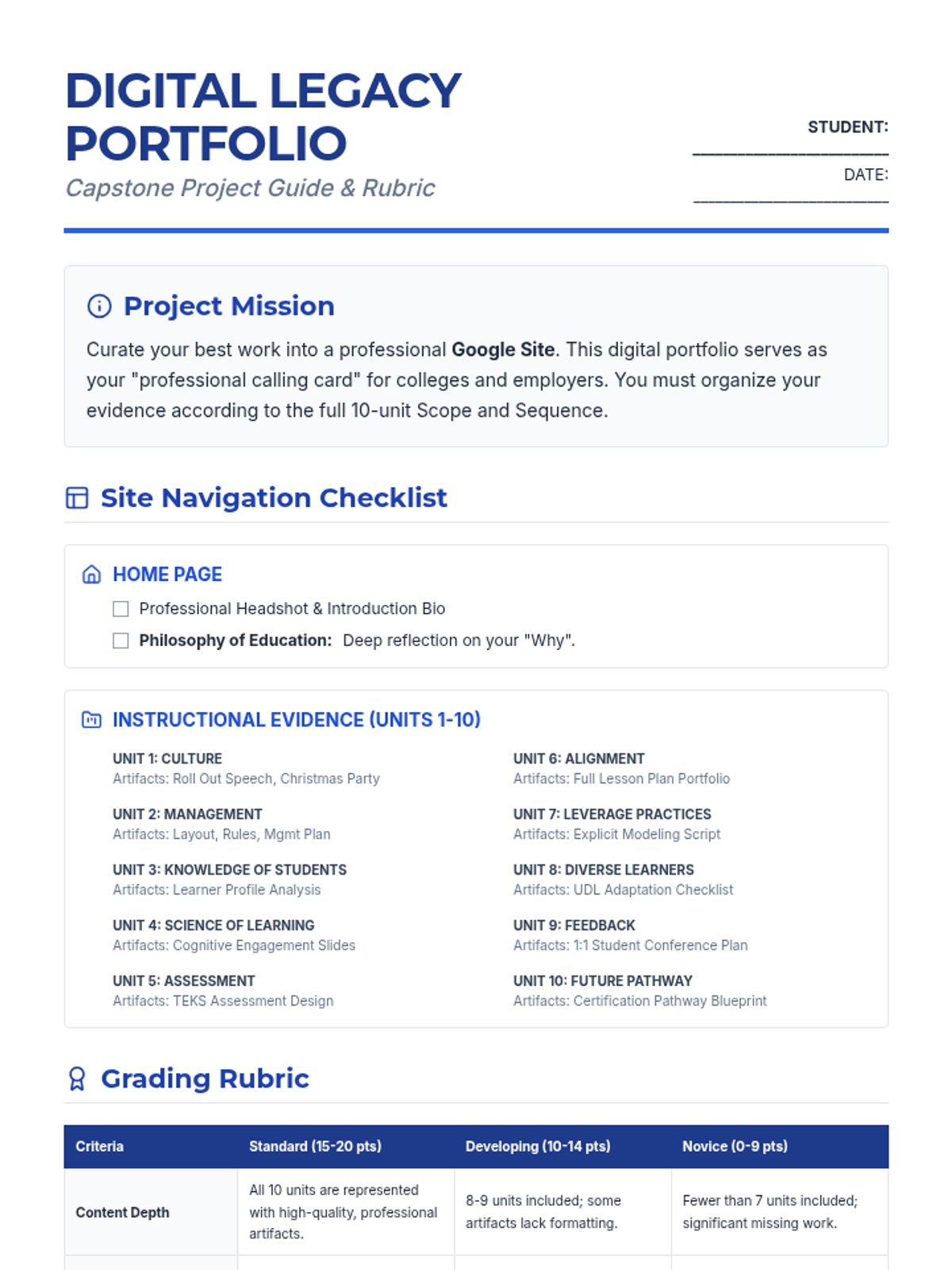
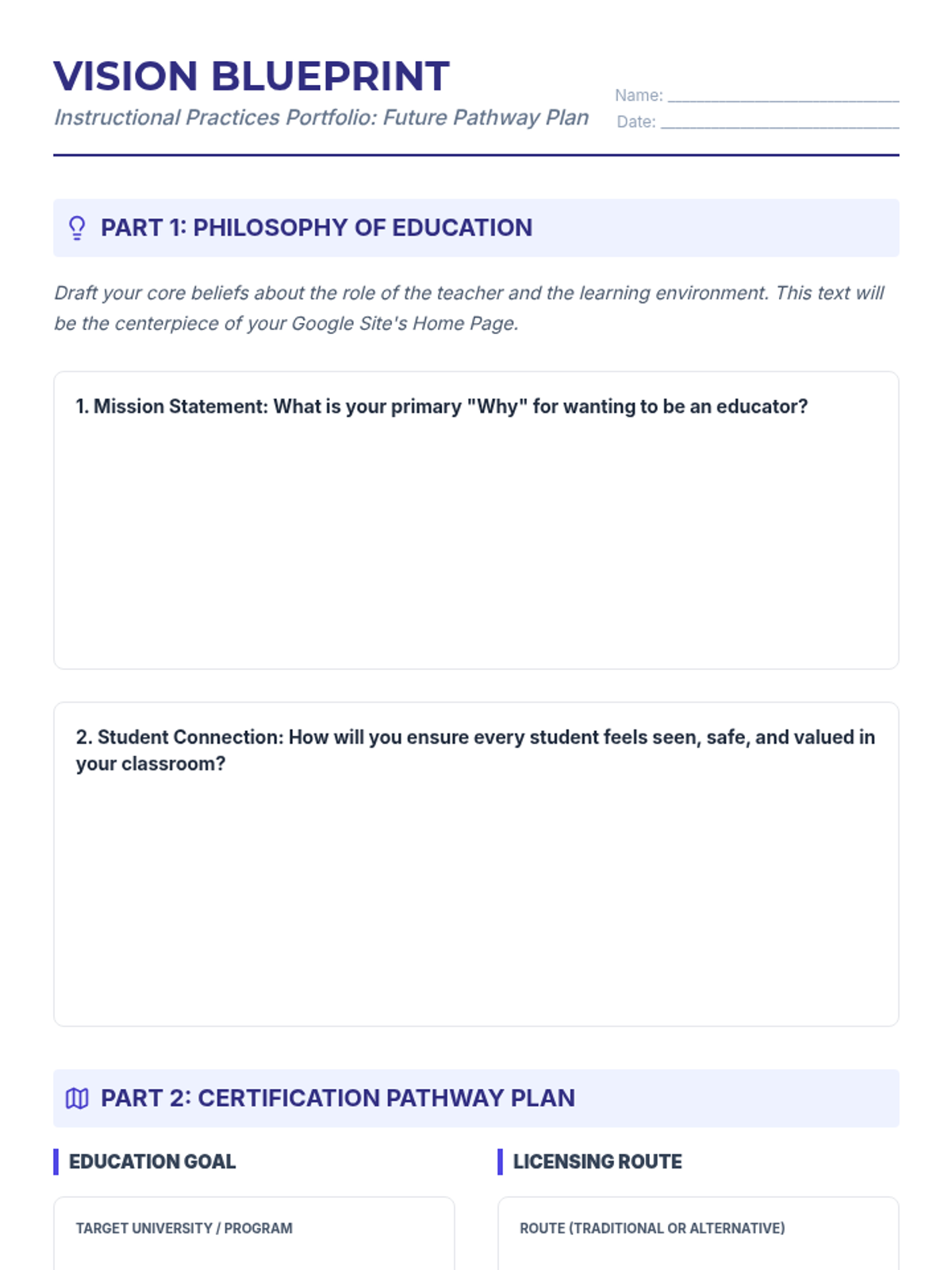
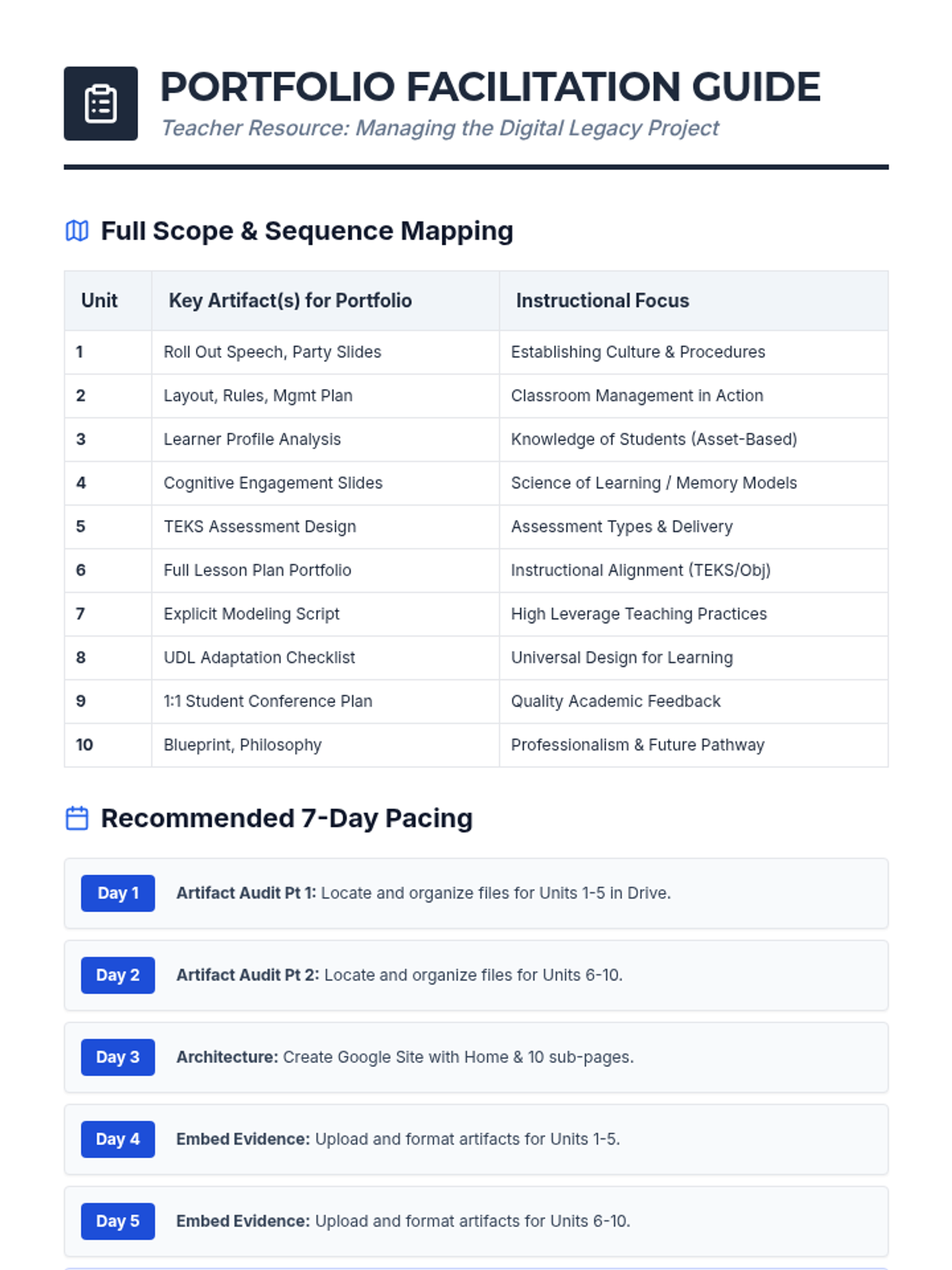
A comprehensive end-of-year portfolio project where students build a professional Google Site to showcase their instructional practices, previous projects, and future career plans in education.
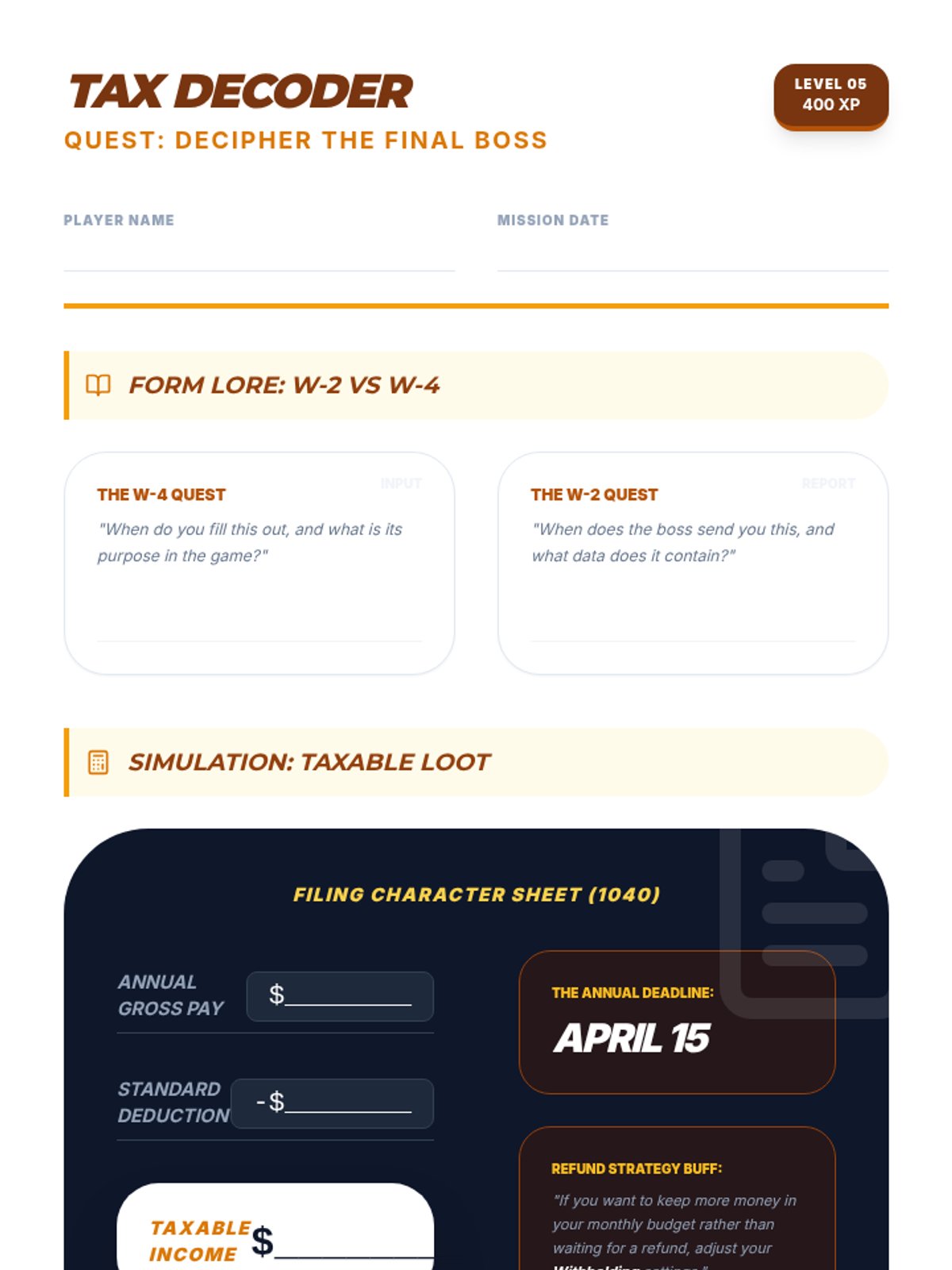
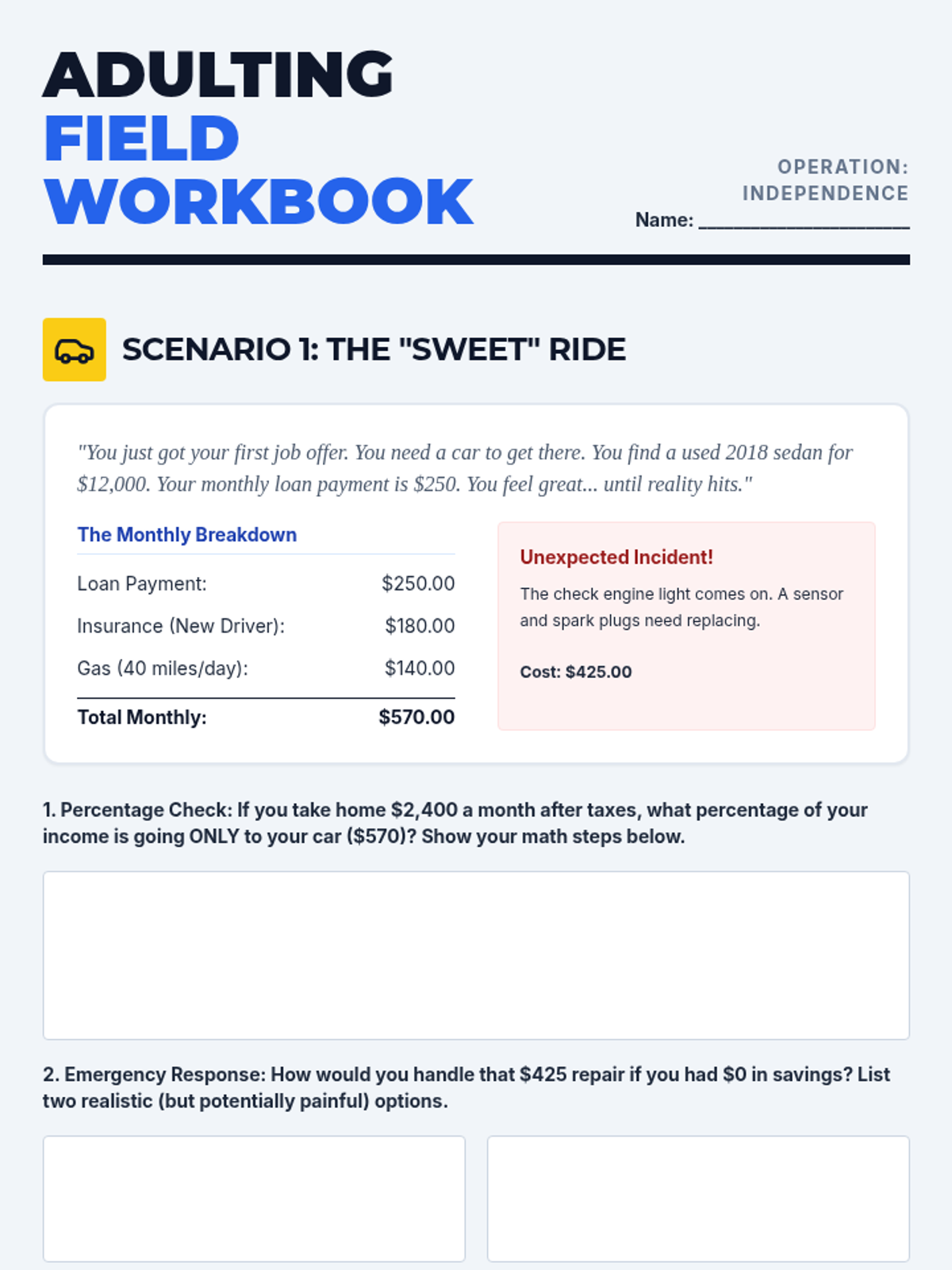
A comprehensive unit preparing students for the financial and logistical realities of post-secondary life, covering education pathways, housing, vehicle maintenance, and budgeting.
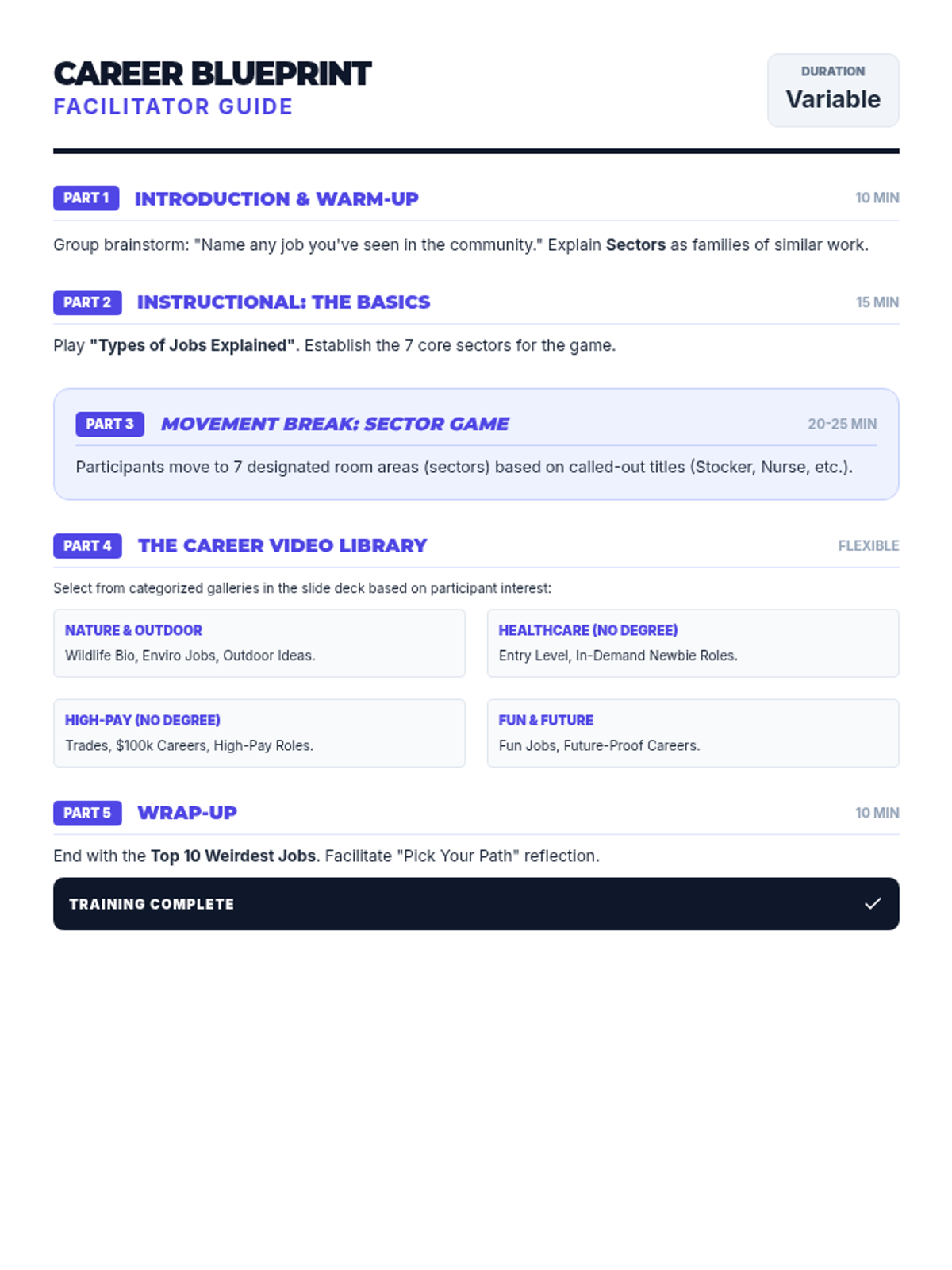
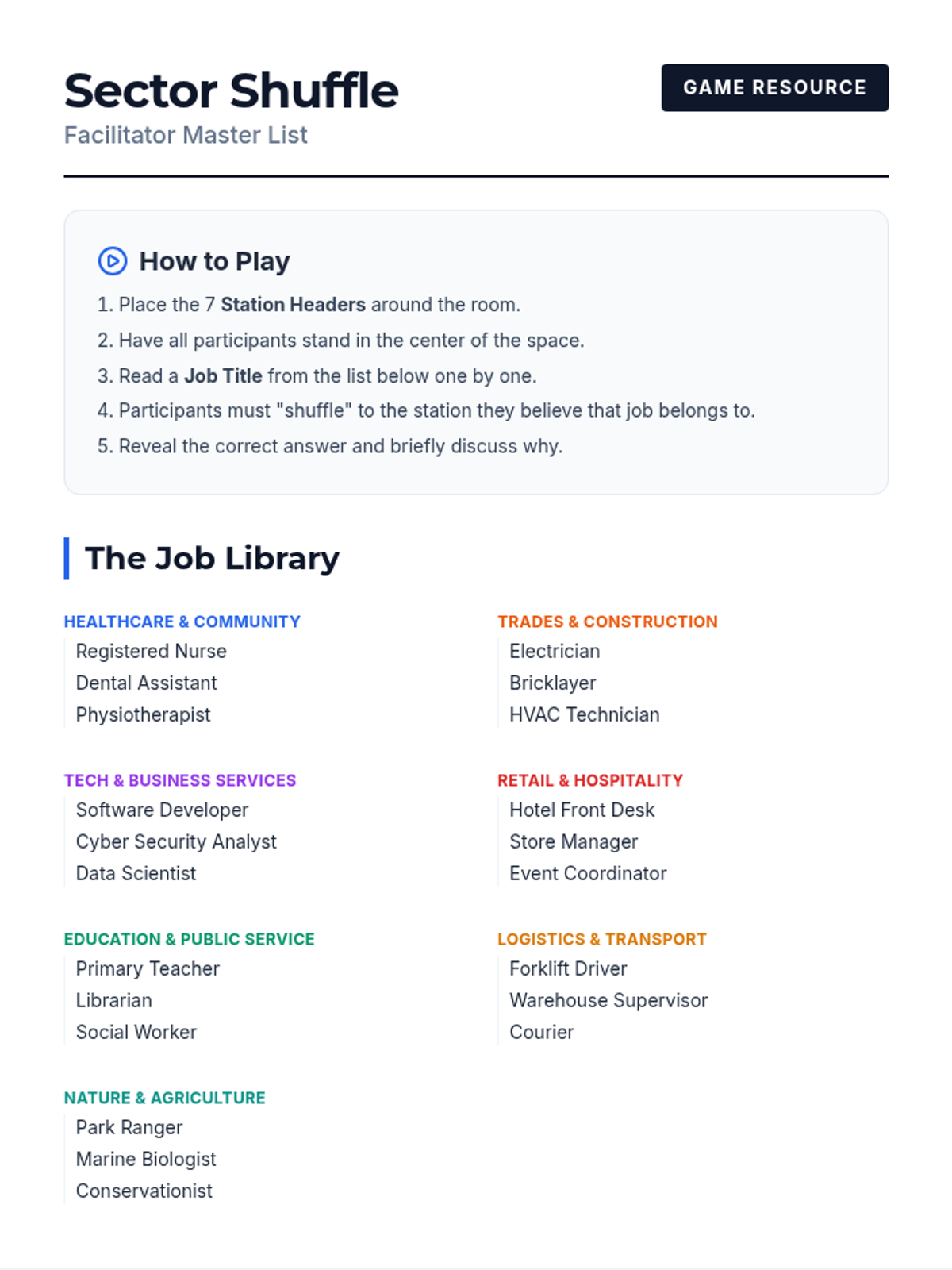
A professional and interactive employment training session for adults, focusing on 7 core industry sectors through real-world scenarios and collaborative decision-making.
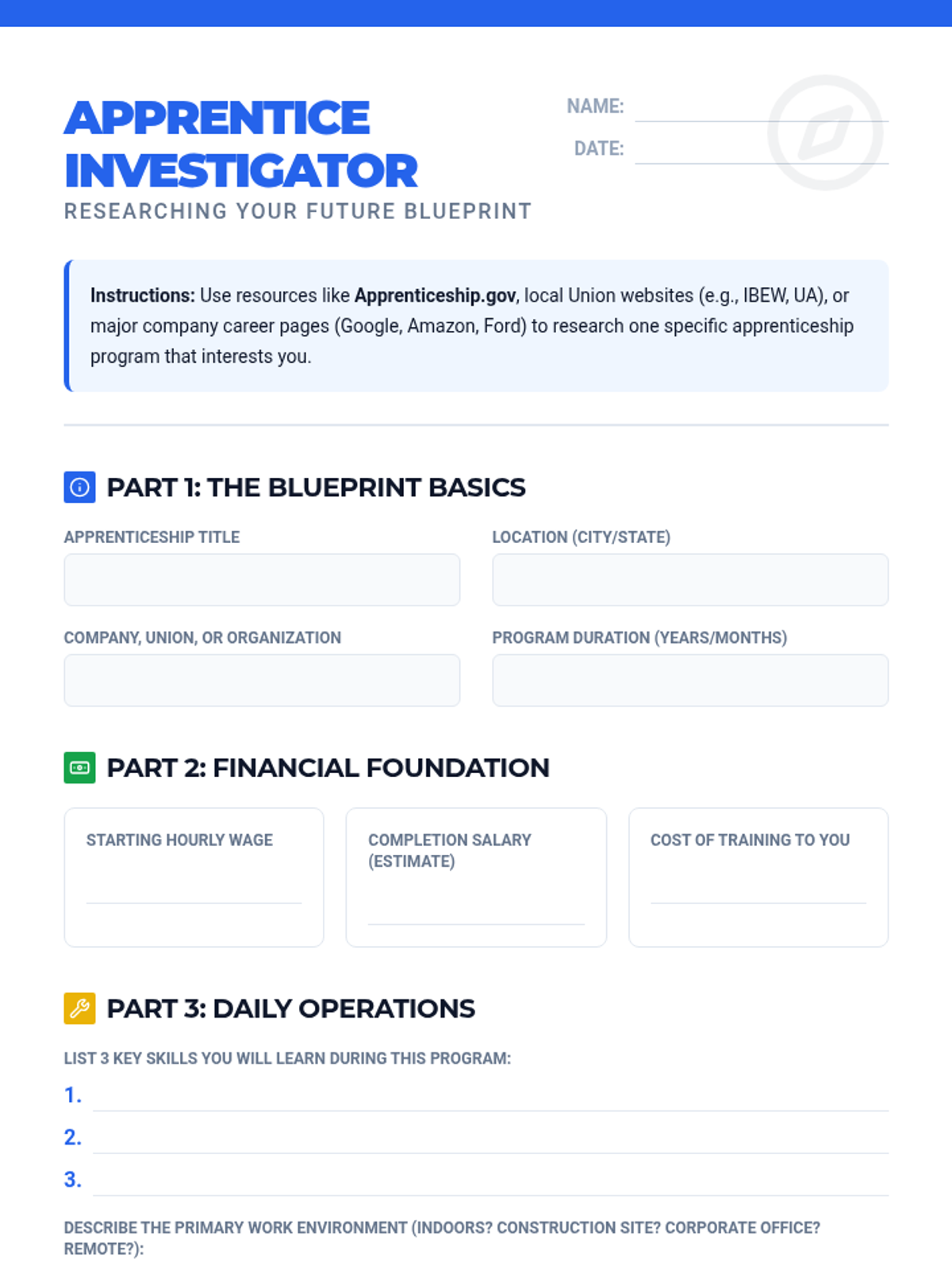
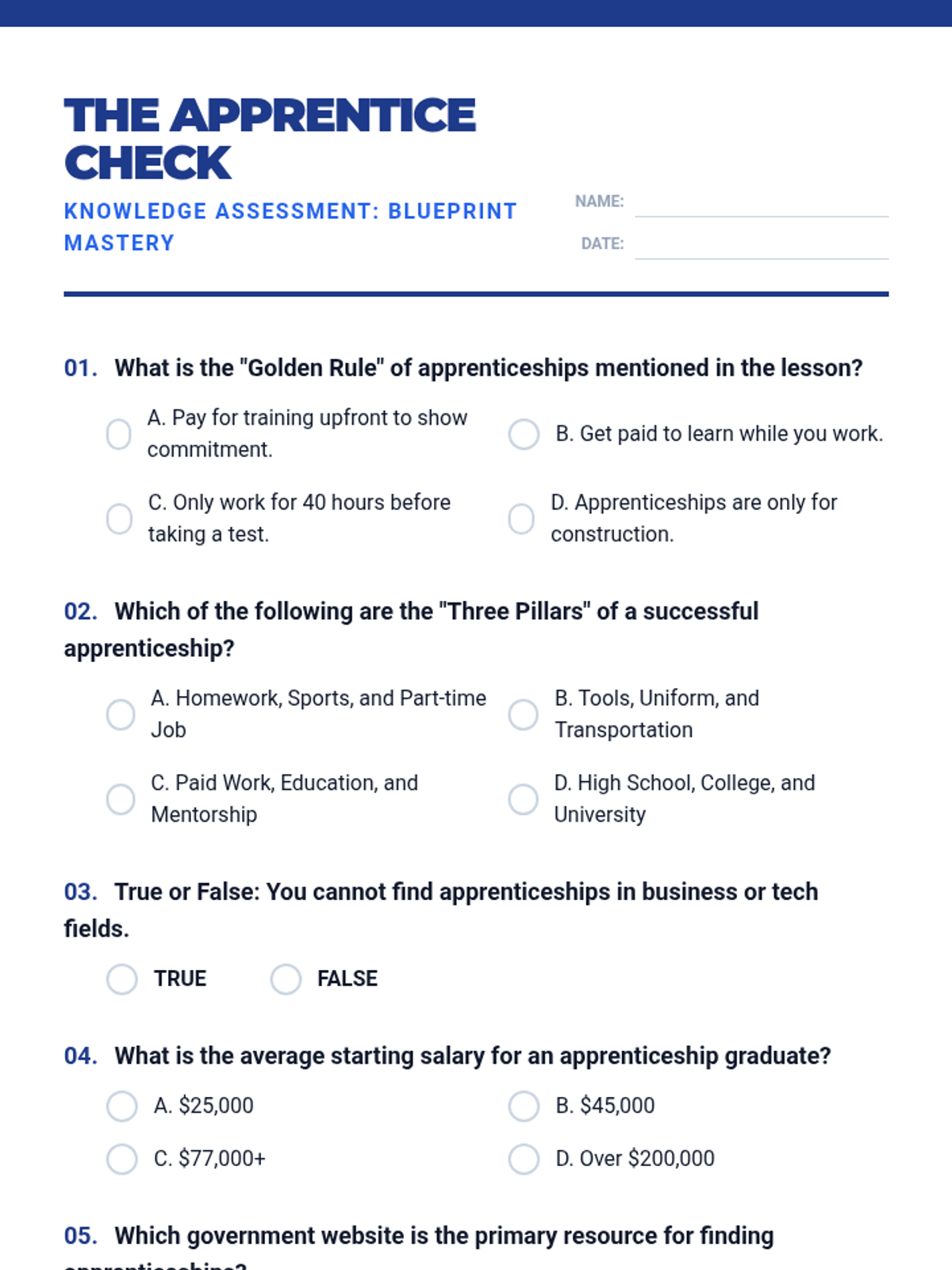
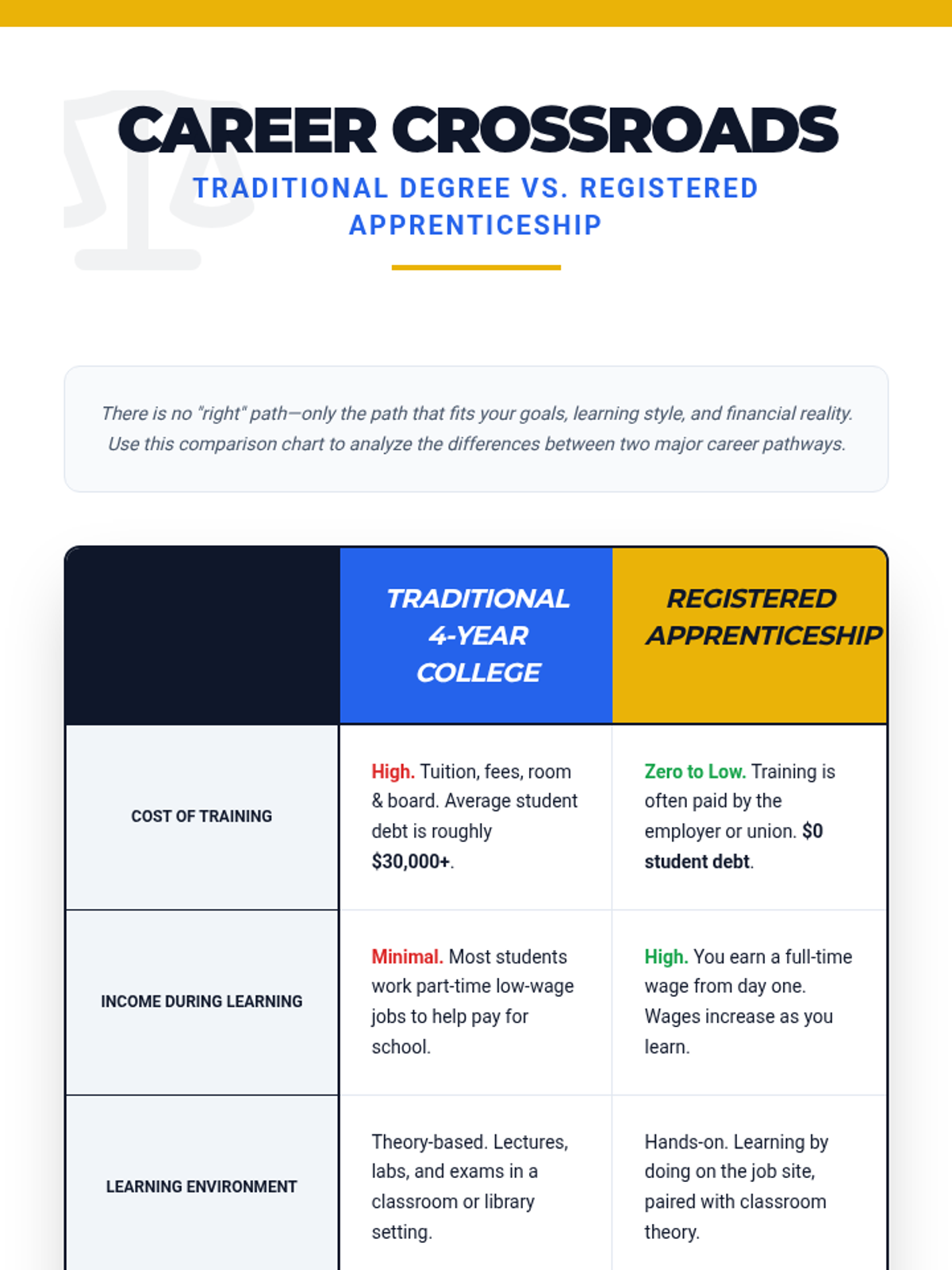
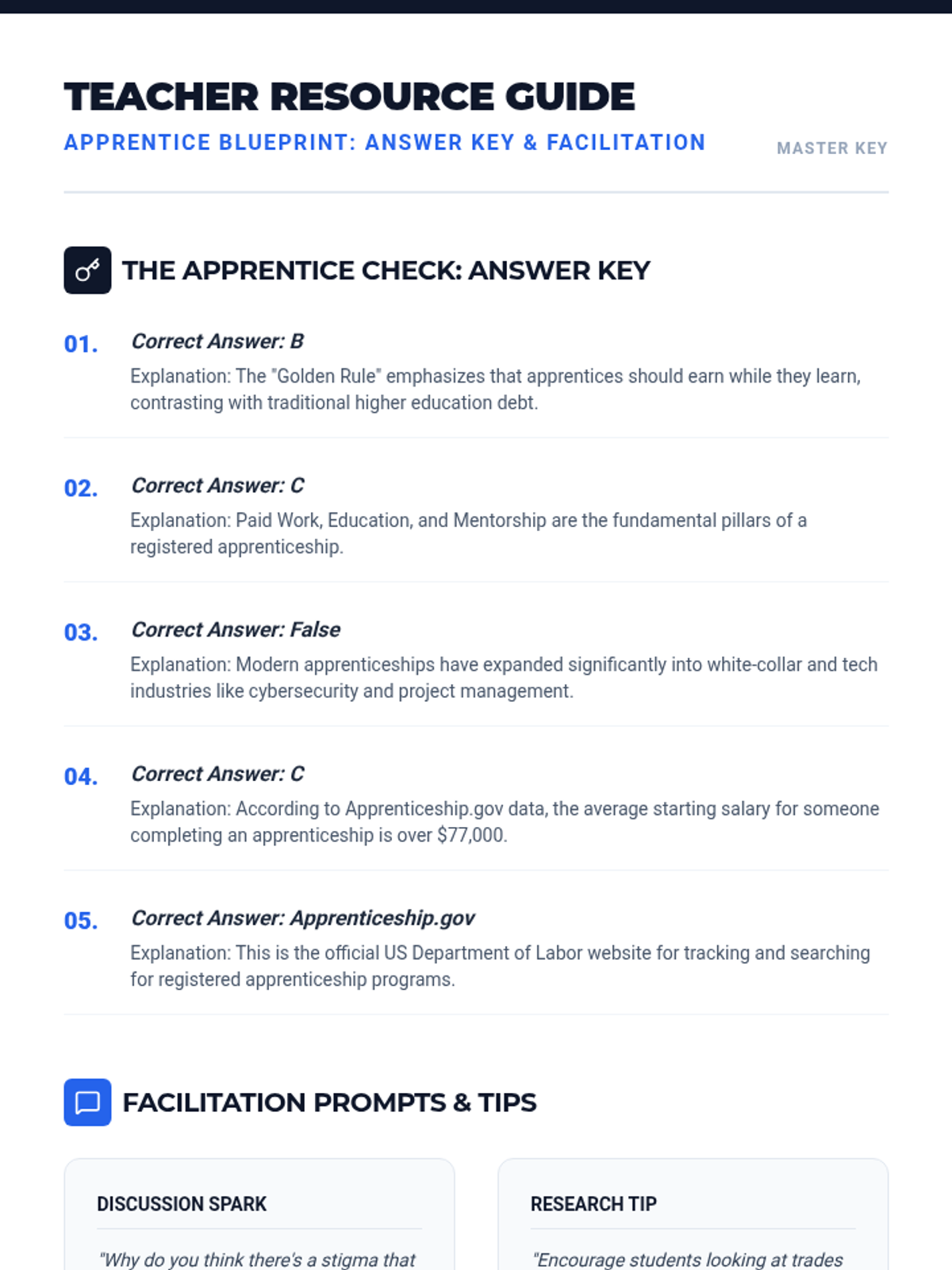
A comprehensive guide to understanding, finding, and securing apprenticeships in trades, business, and high-growth industries. This lesson covers the definition, benefits, and practical steps to starting a career through an apprenticeship.
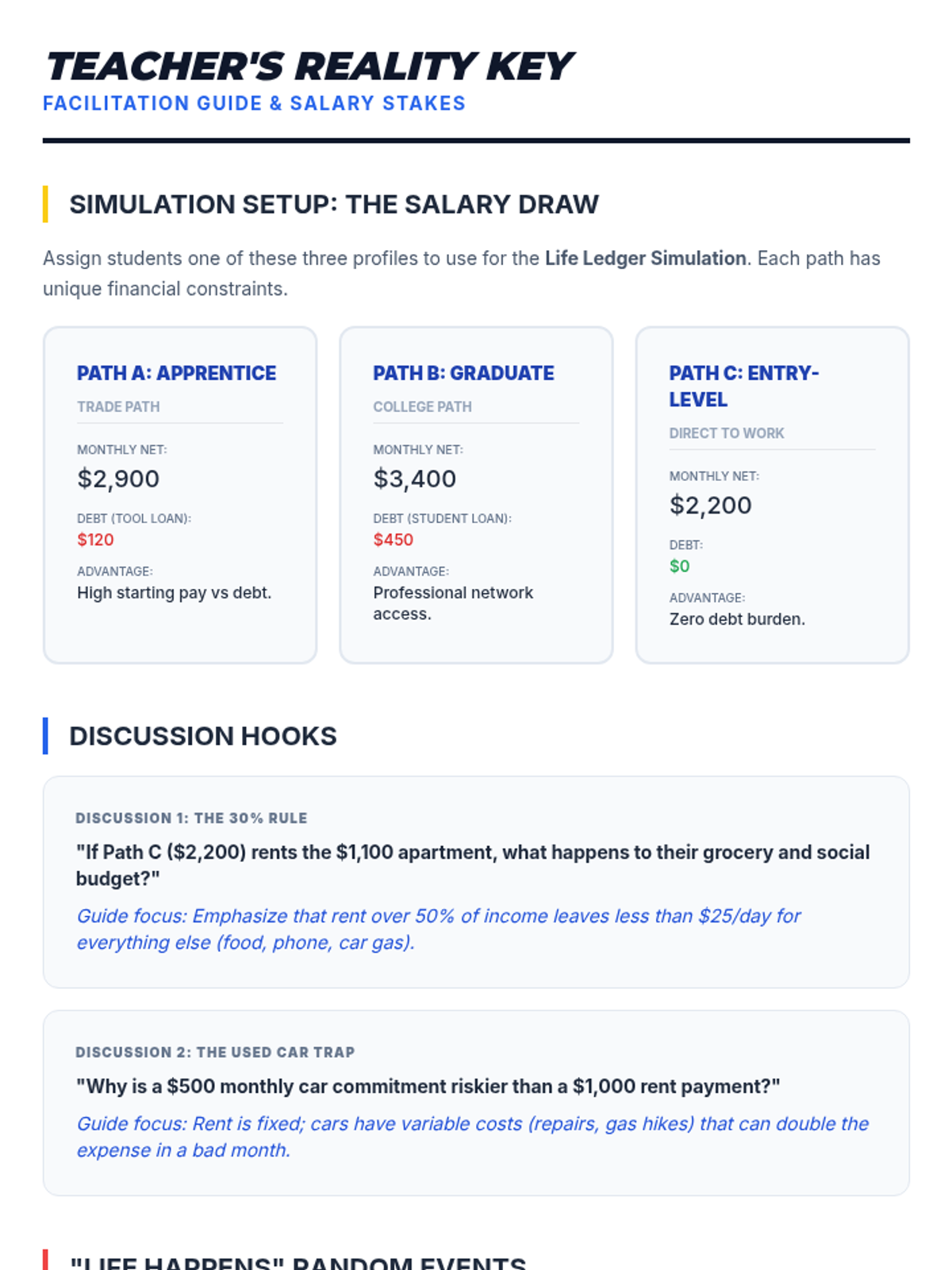
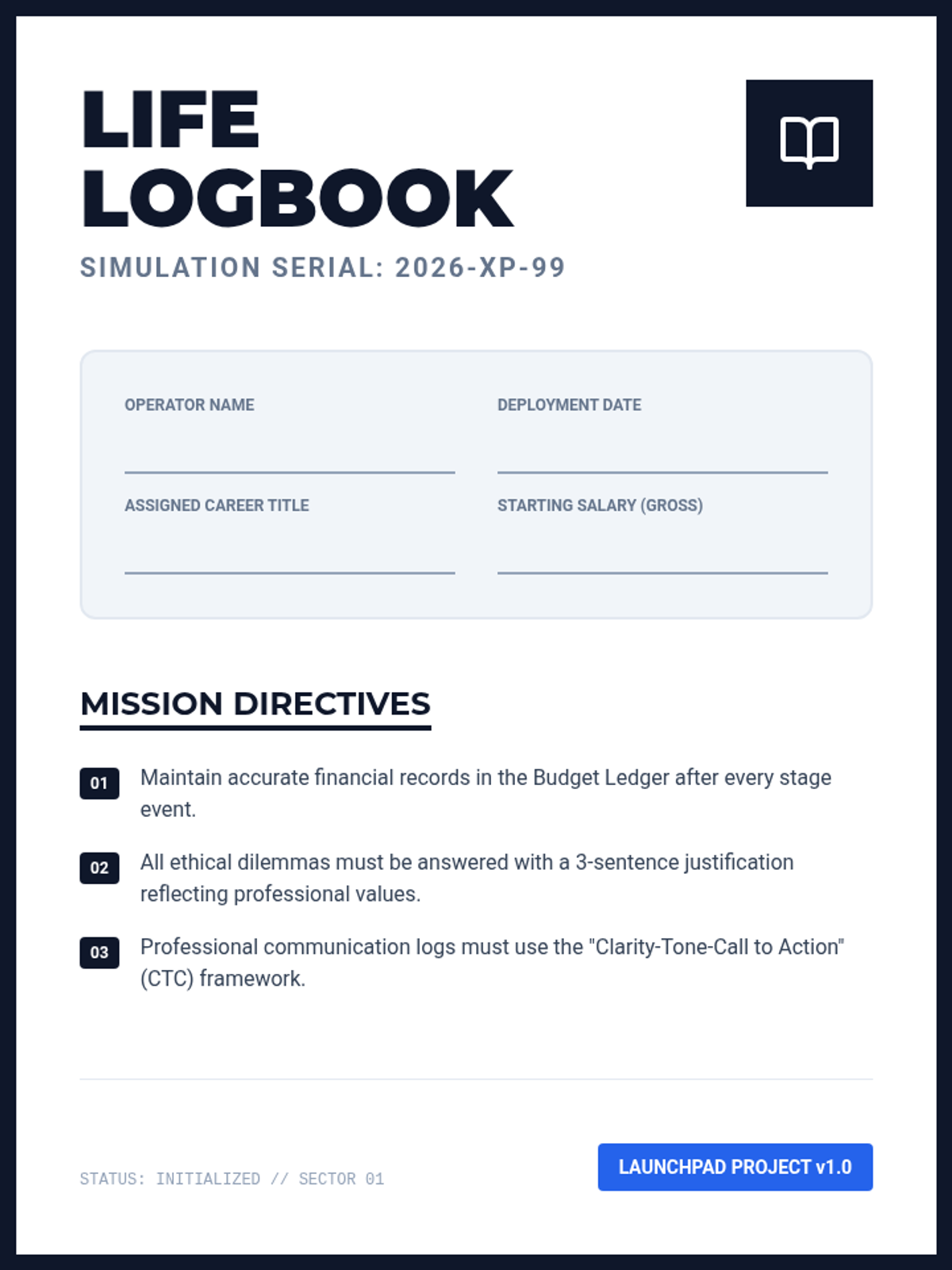
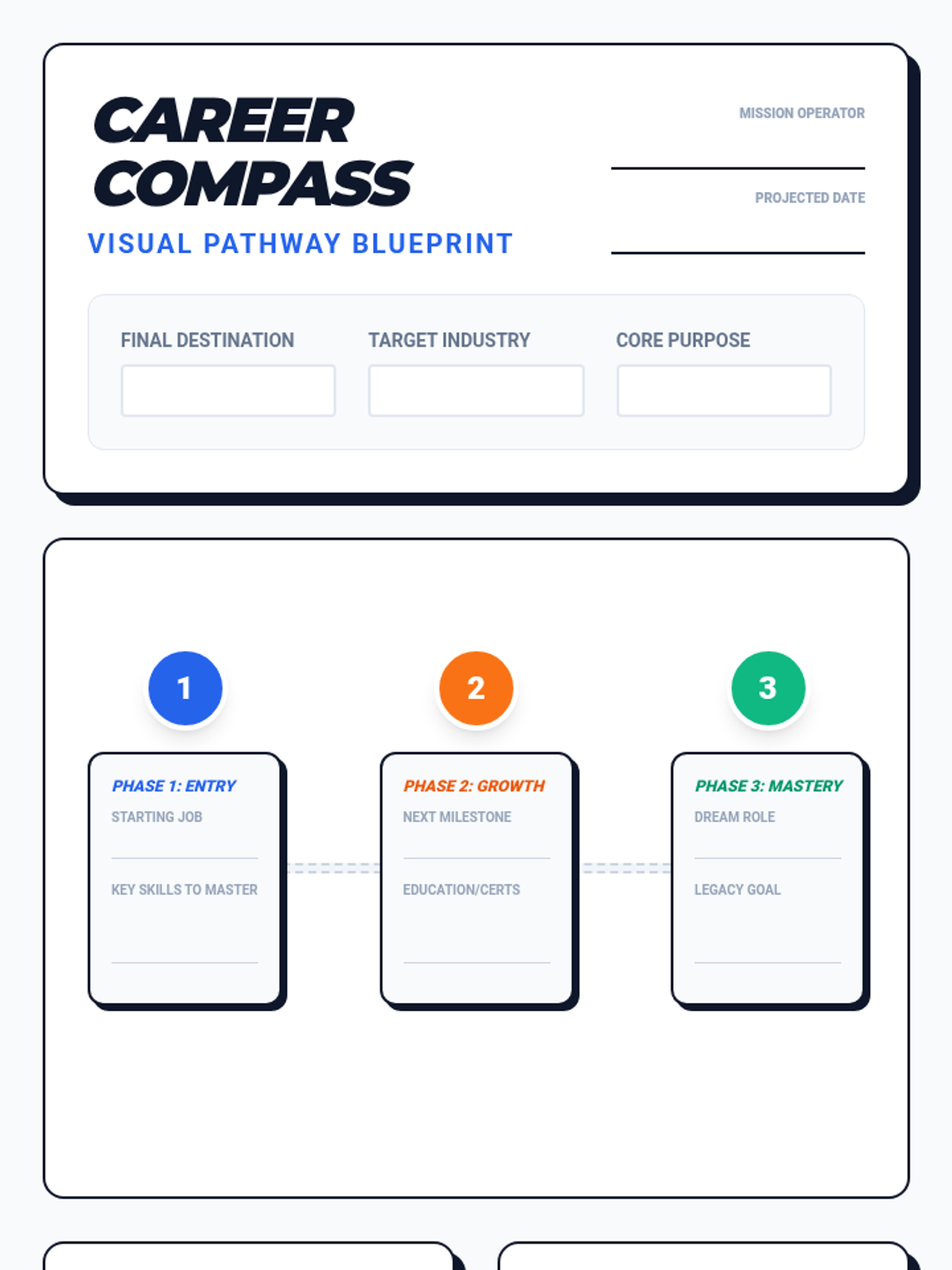
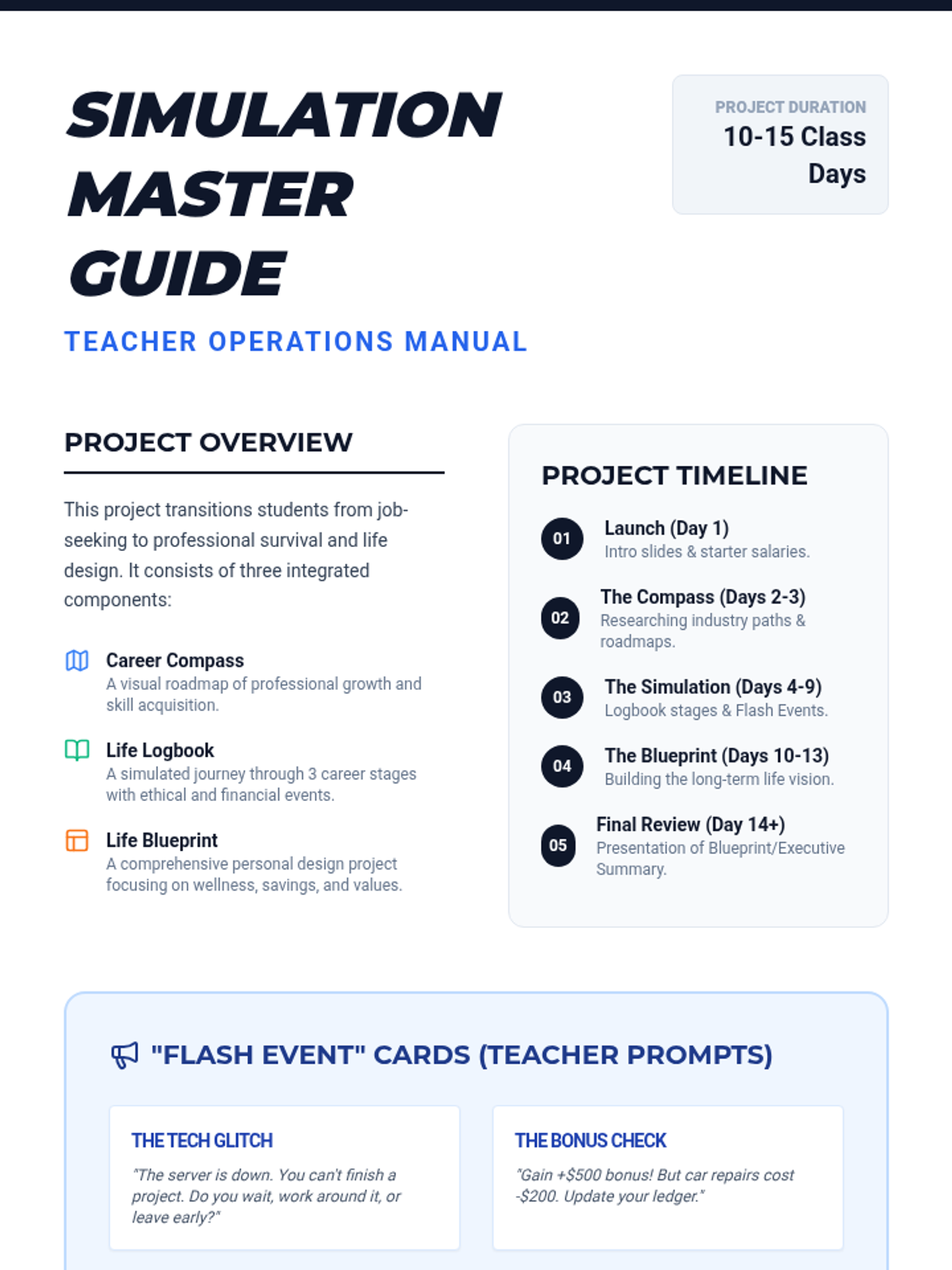
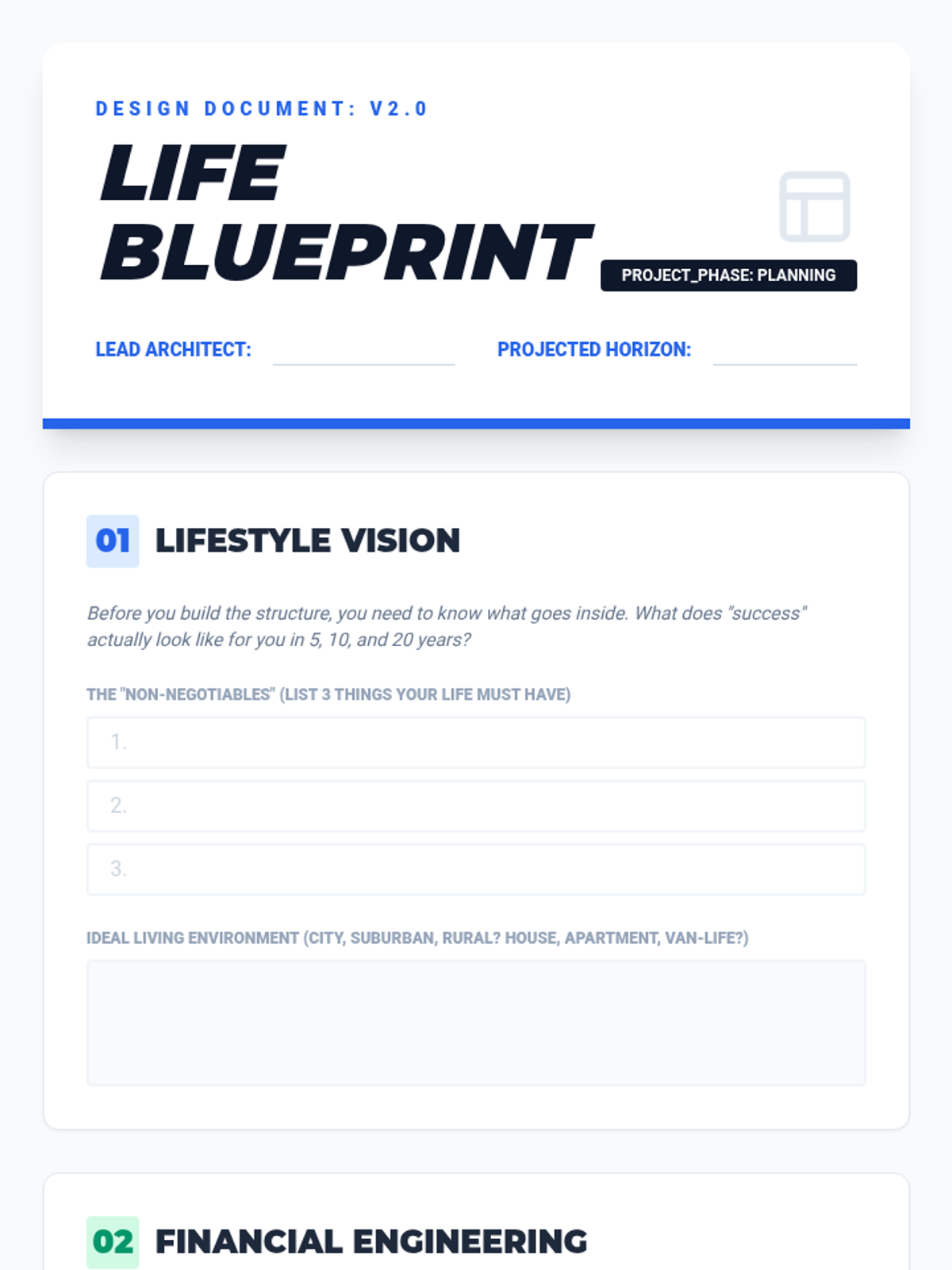
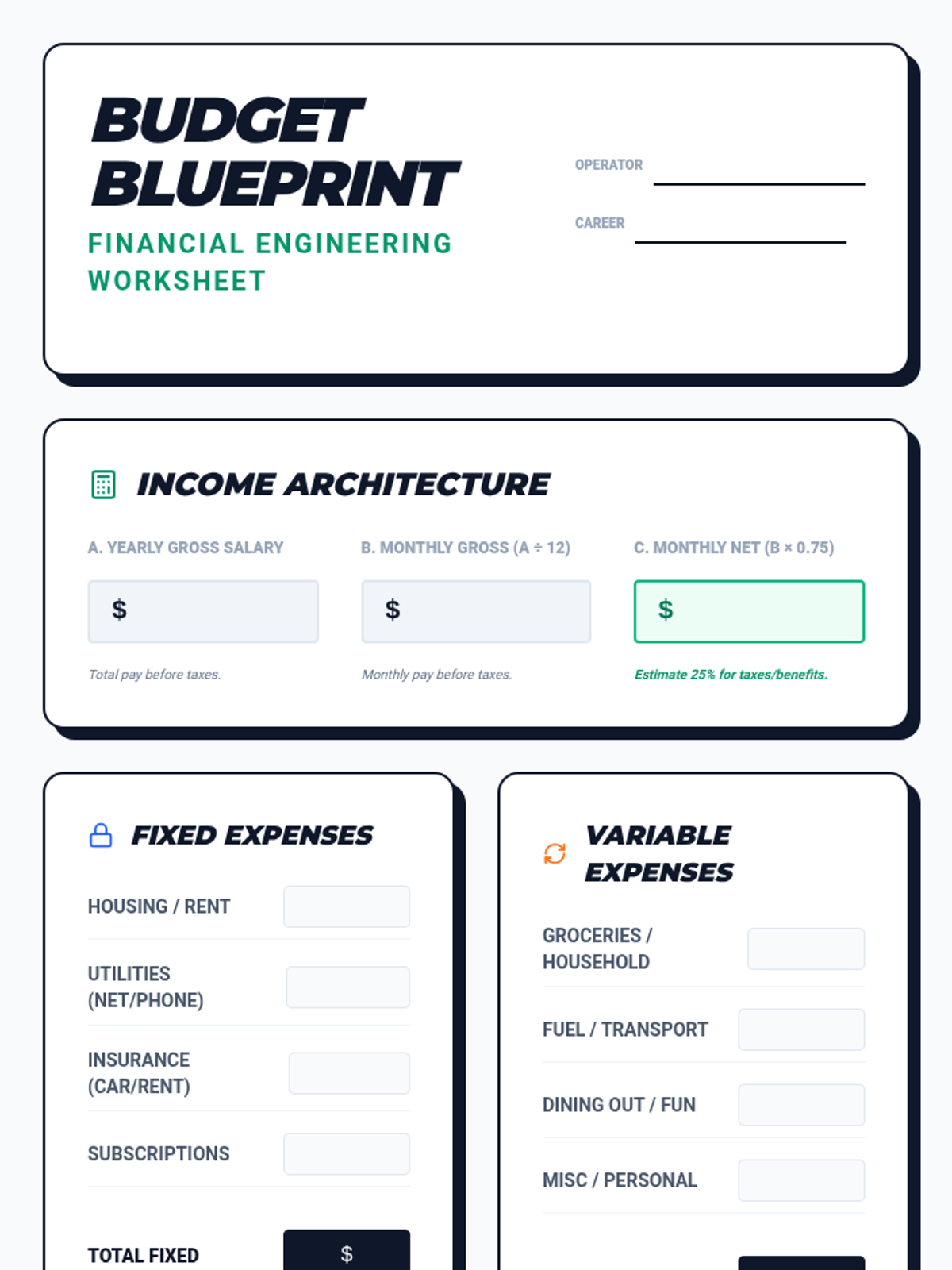
A project-based simulation where students create a long-term career roadmap and manage a multi-stage life logbook, practicing workplace ethics and professional communication in real-world scenarios.
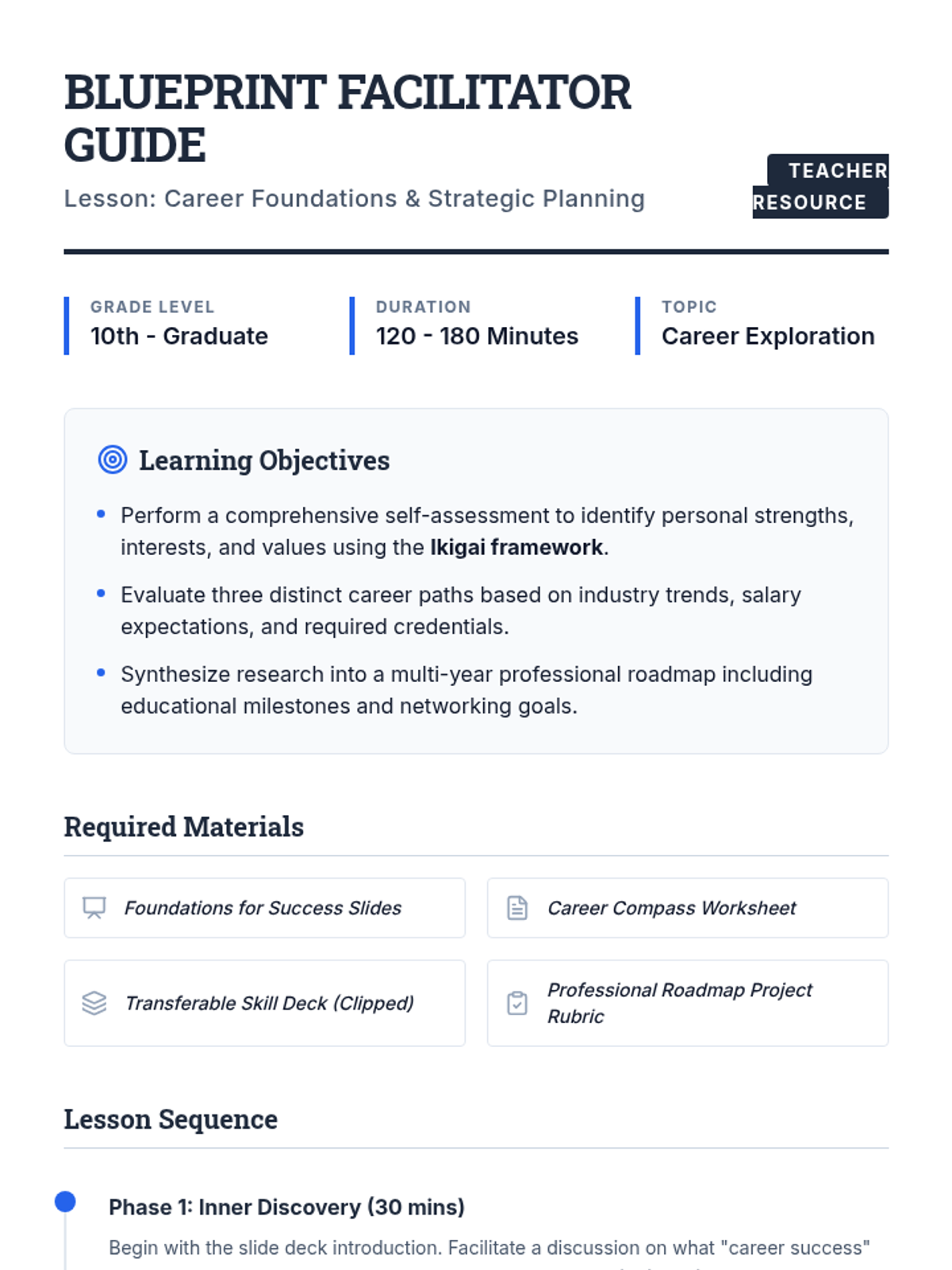
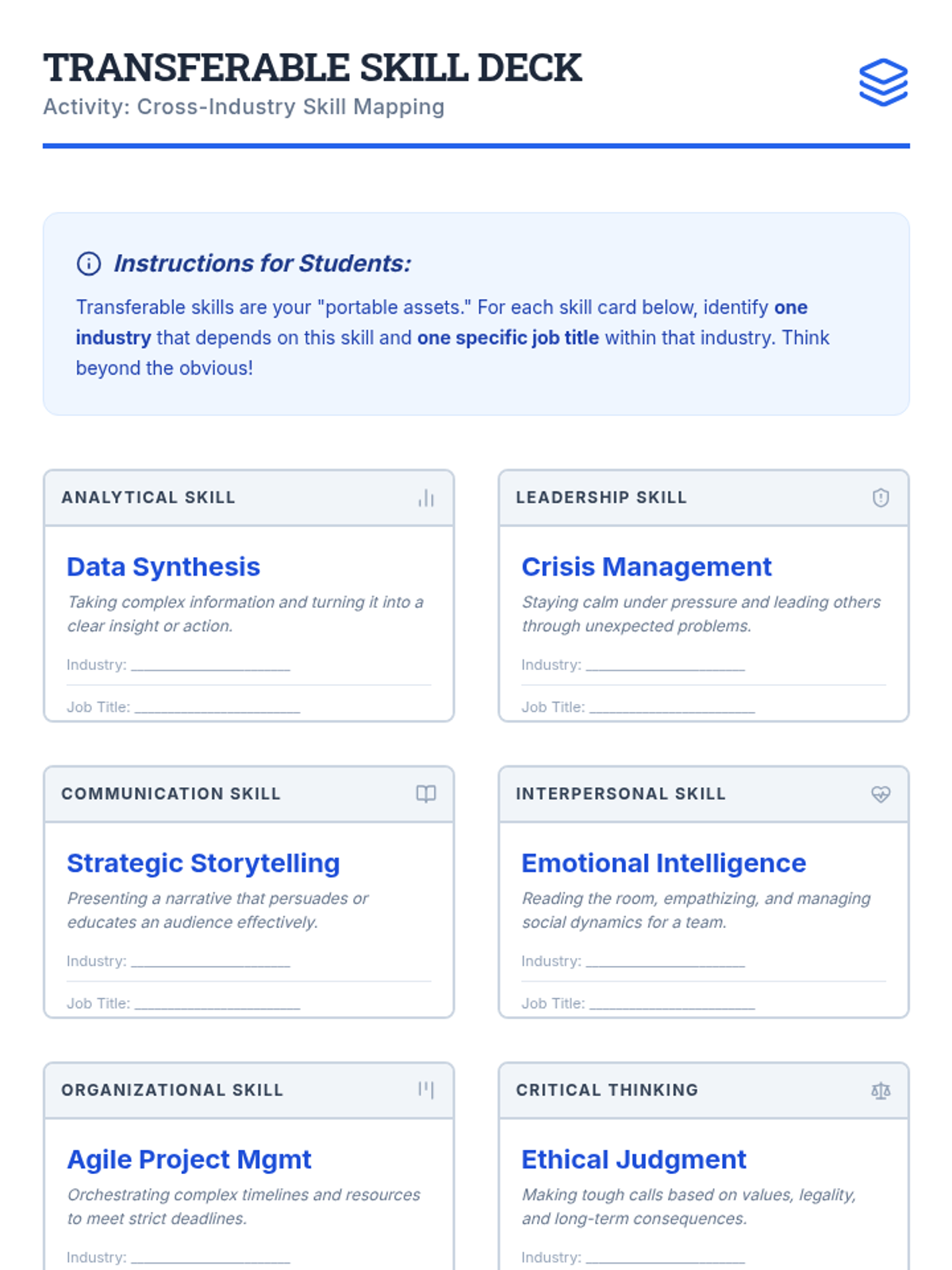
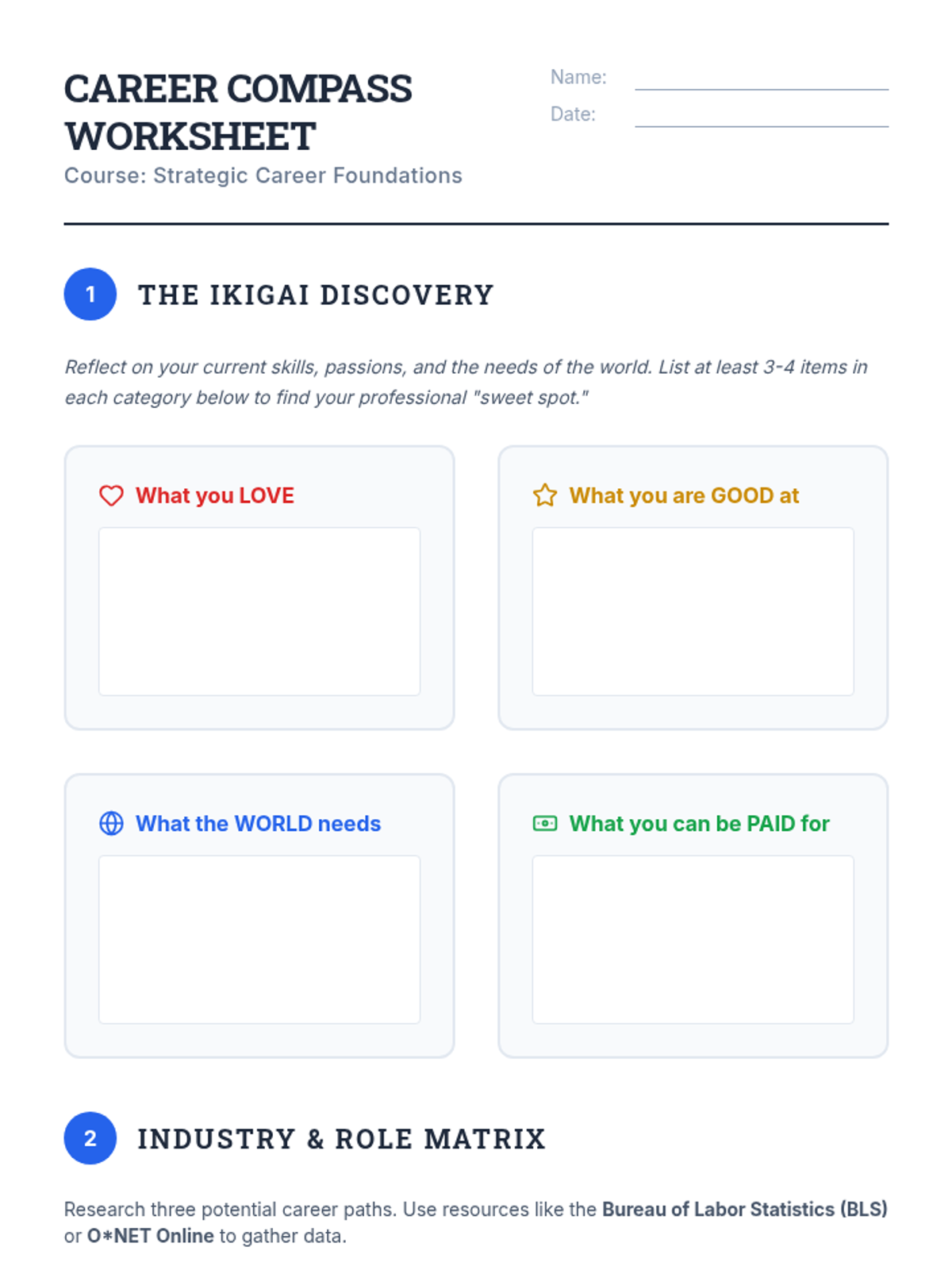
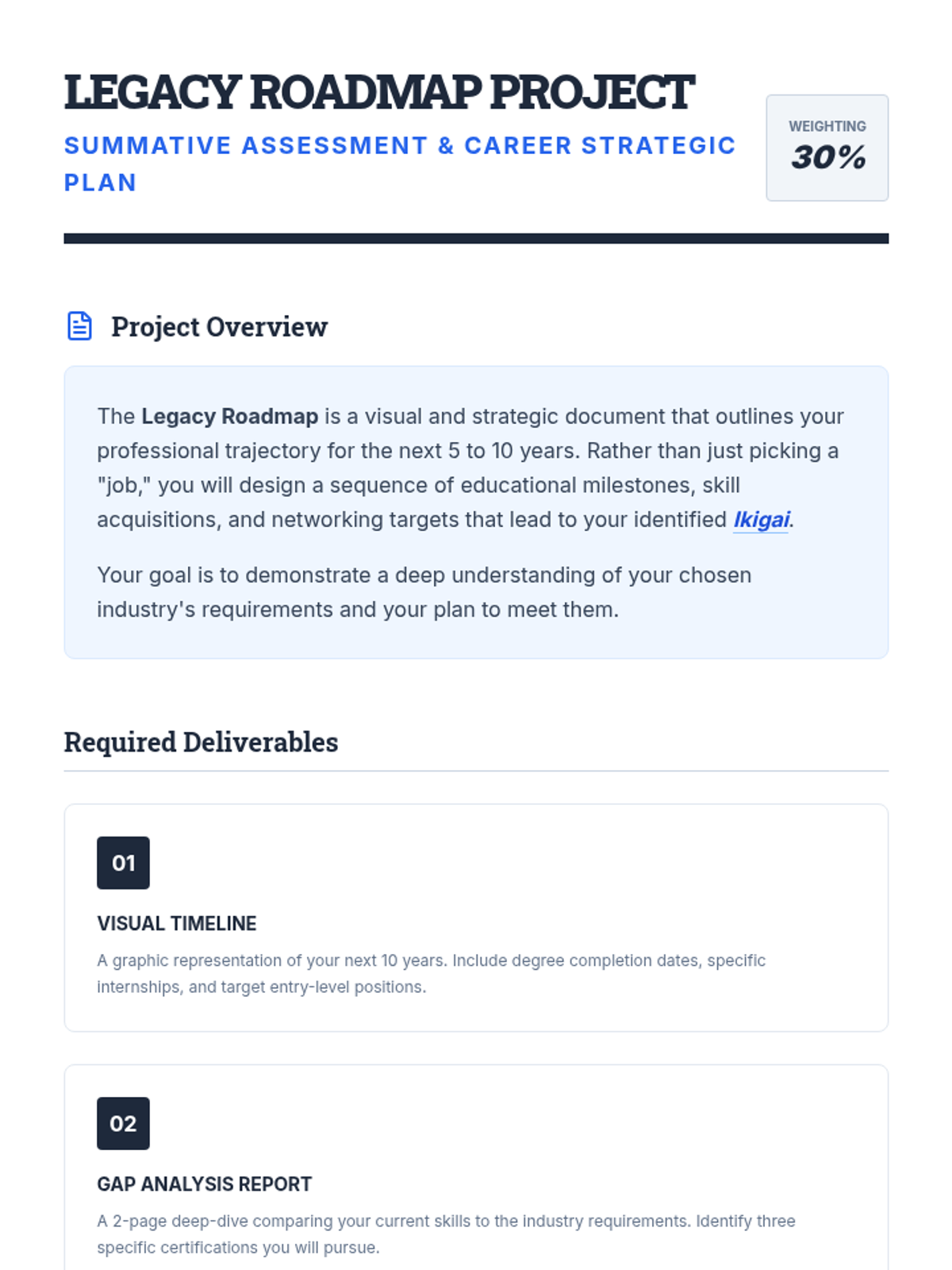
A comprehensive guide for students to bridge the gap between their current skills and future professional goals through self-assessment and strategic research. Students will identify their 'Ikigai', research industries, and map out educational requirements for their chosen path.
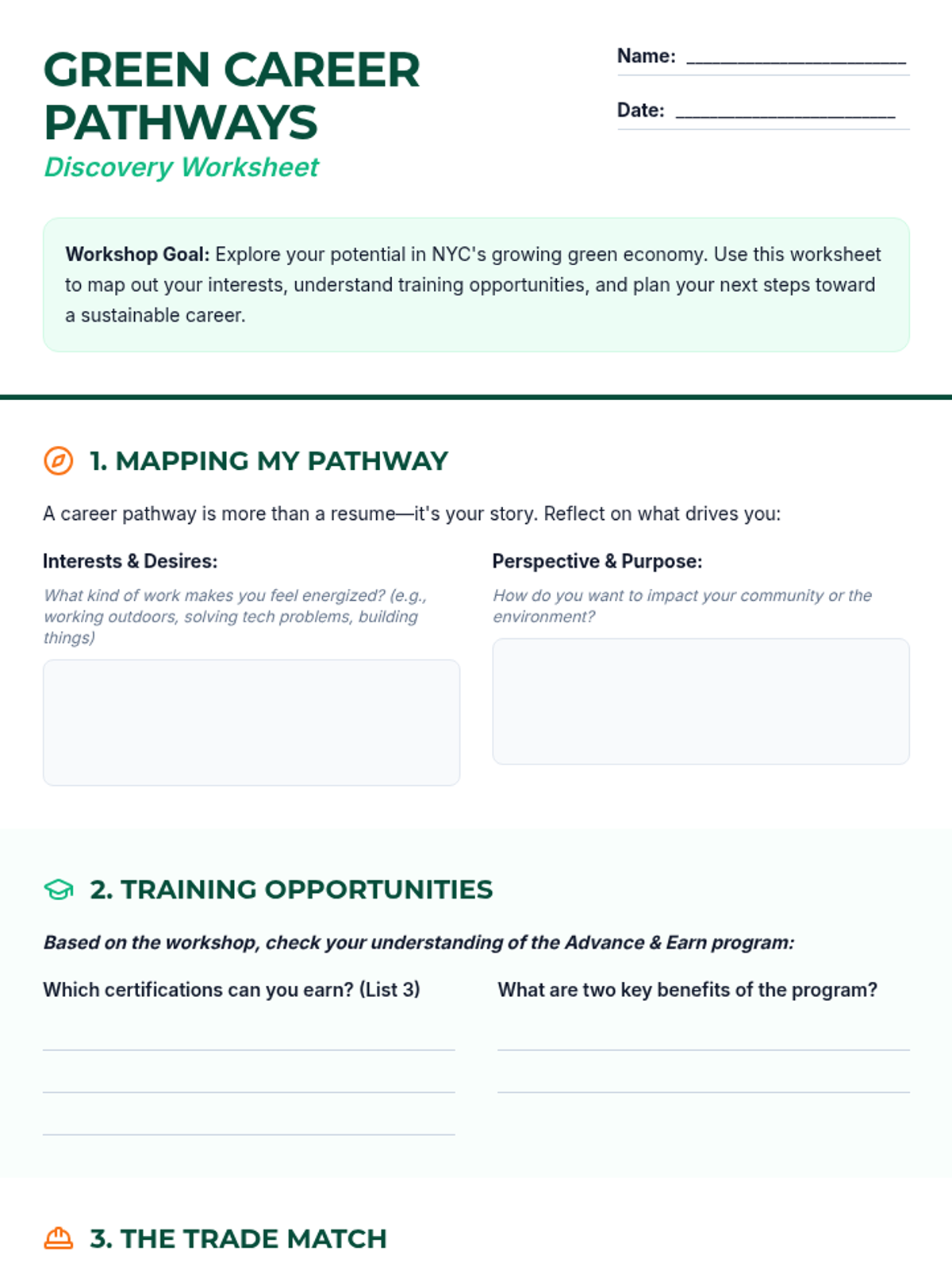
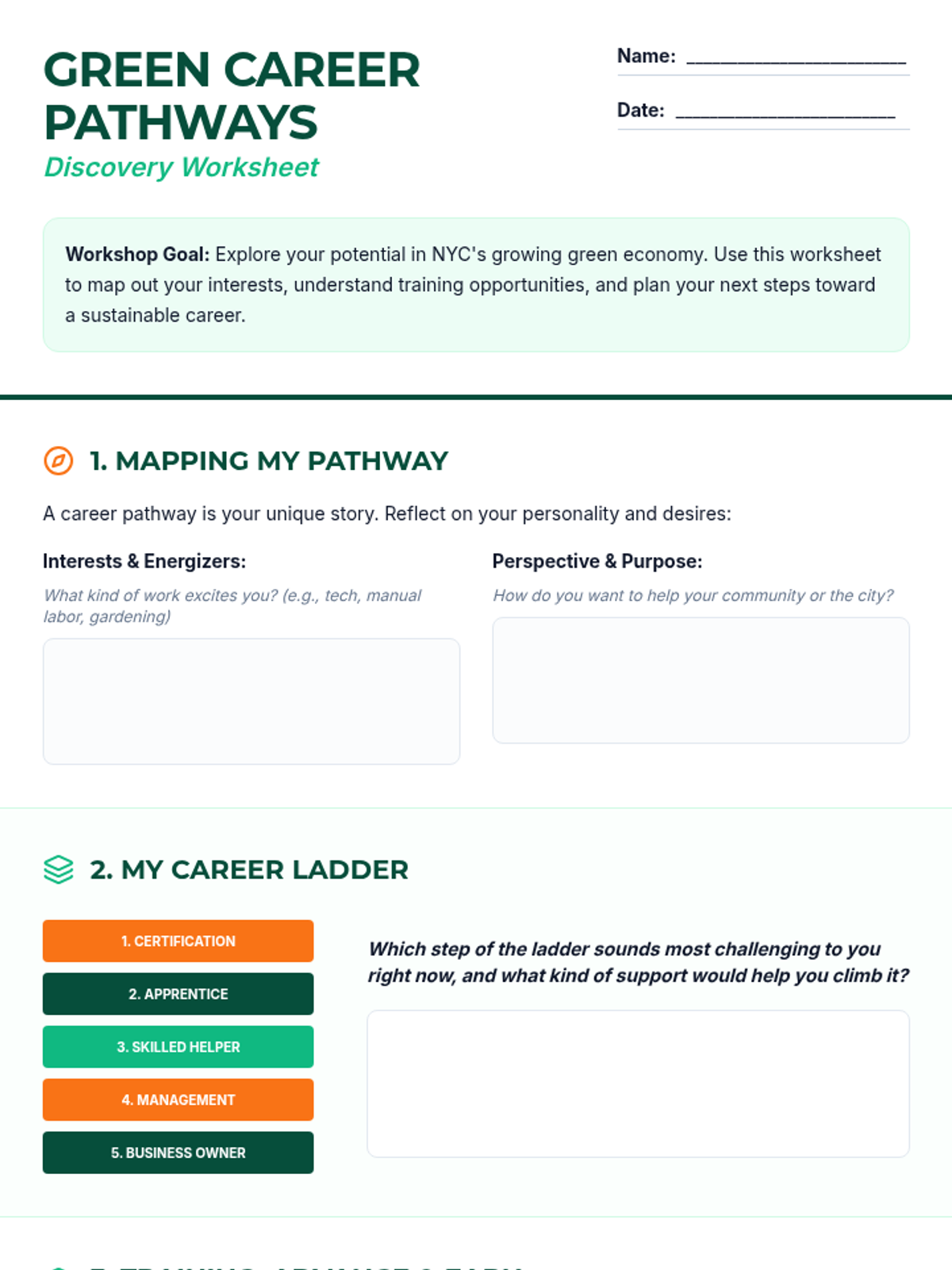
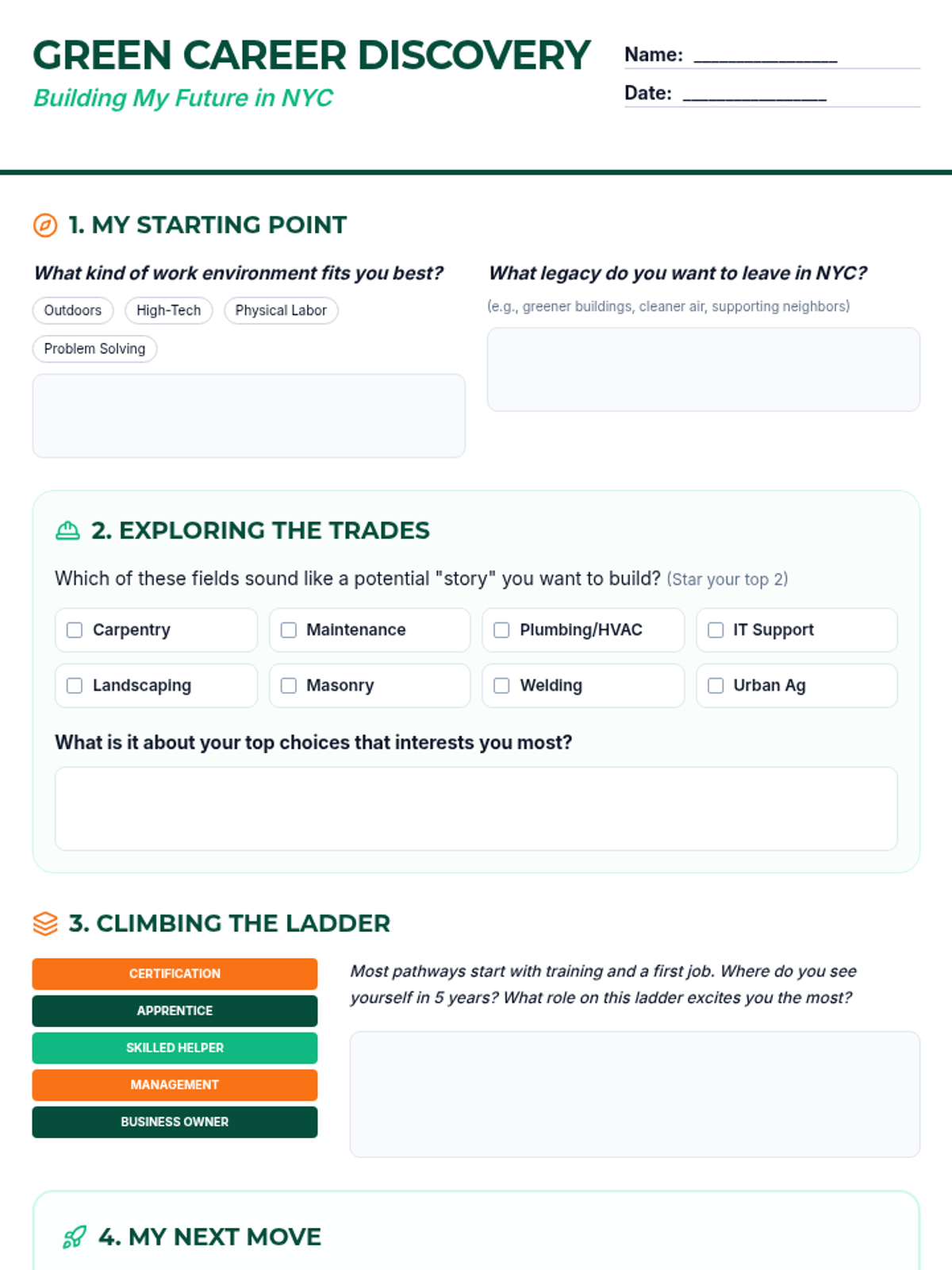
A presentation exploring non-traditional career pathways in green construction and the trades, focusing on NYC's climate initiatives and training opportunities.
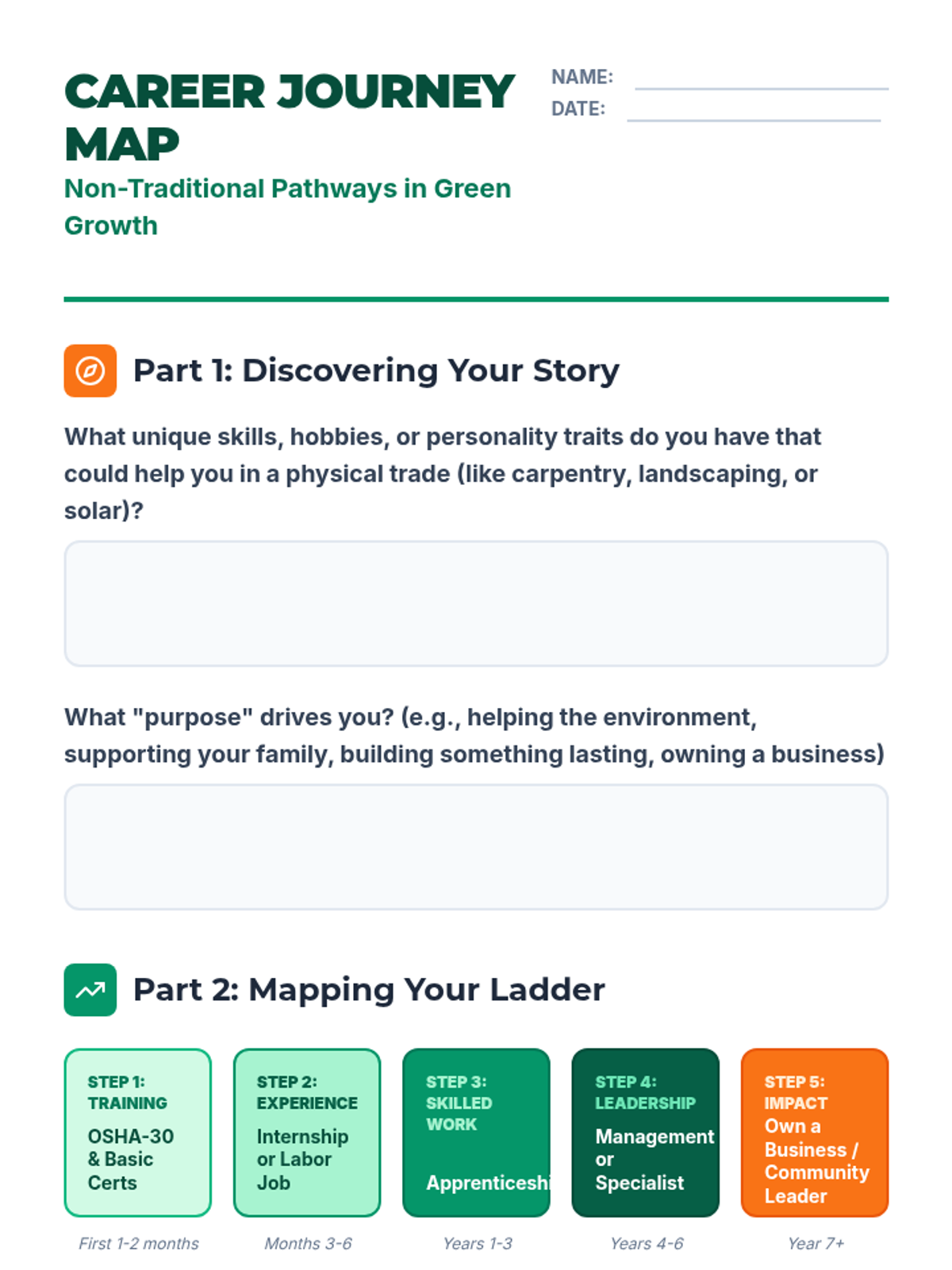
A workshop for young adults and teenagers exploring non-traditional career pathways in green construction and sustainable agriculture, focusing on NYC climate initiatives and local training programs.
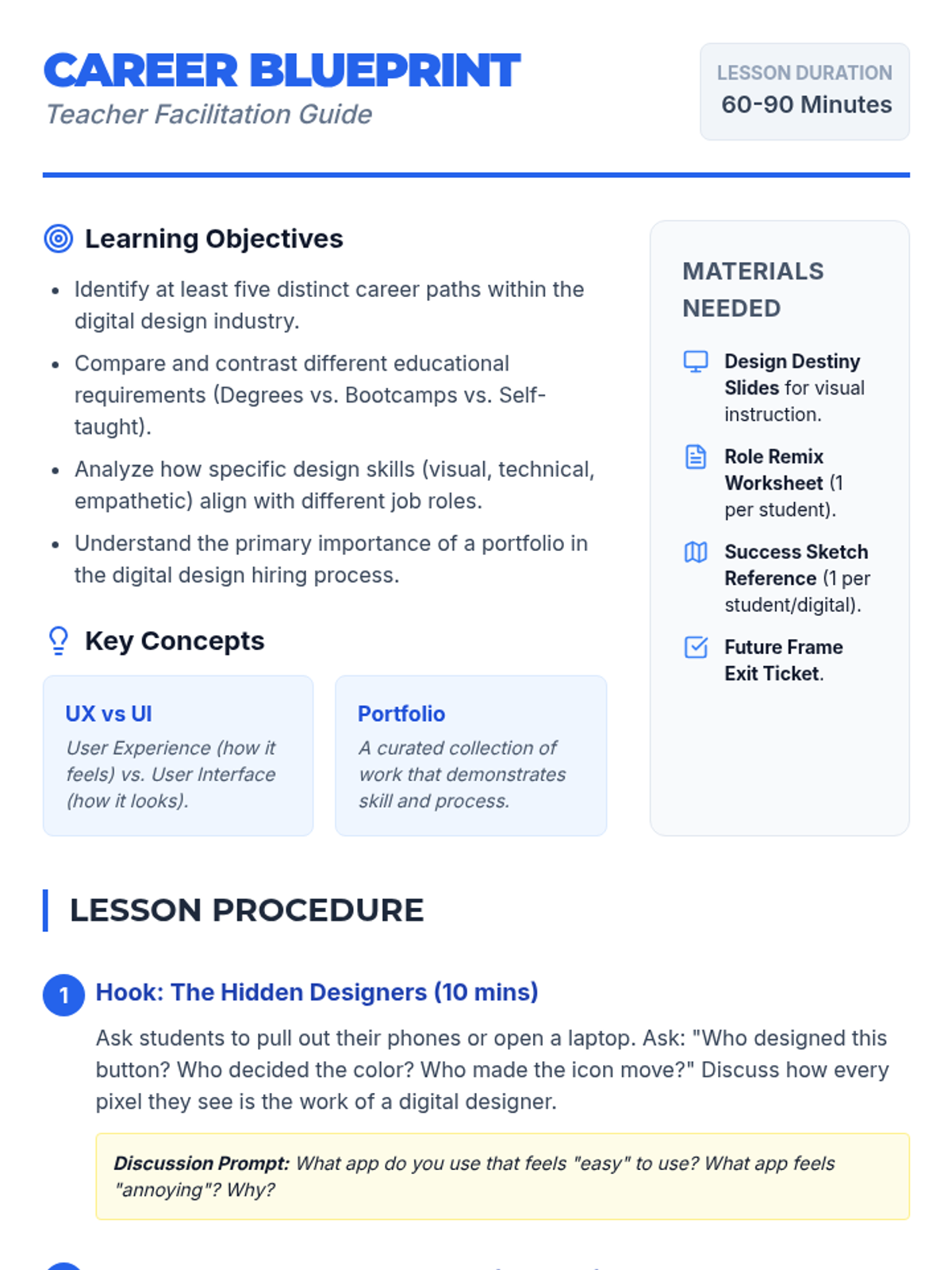
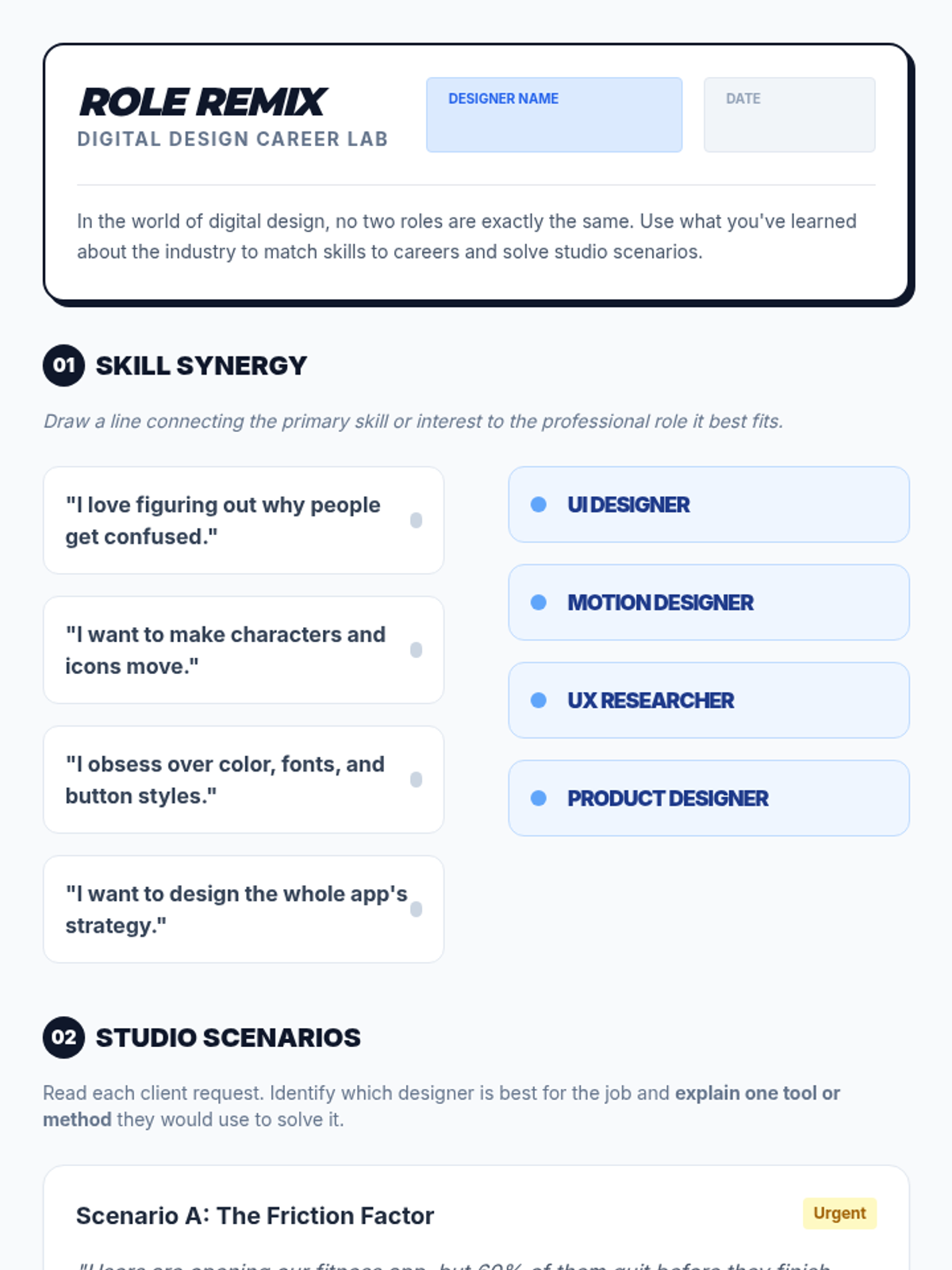
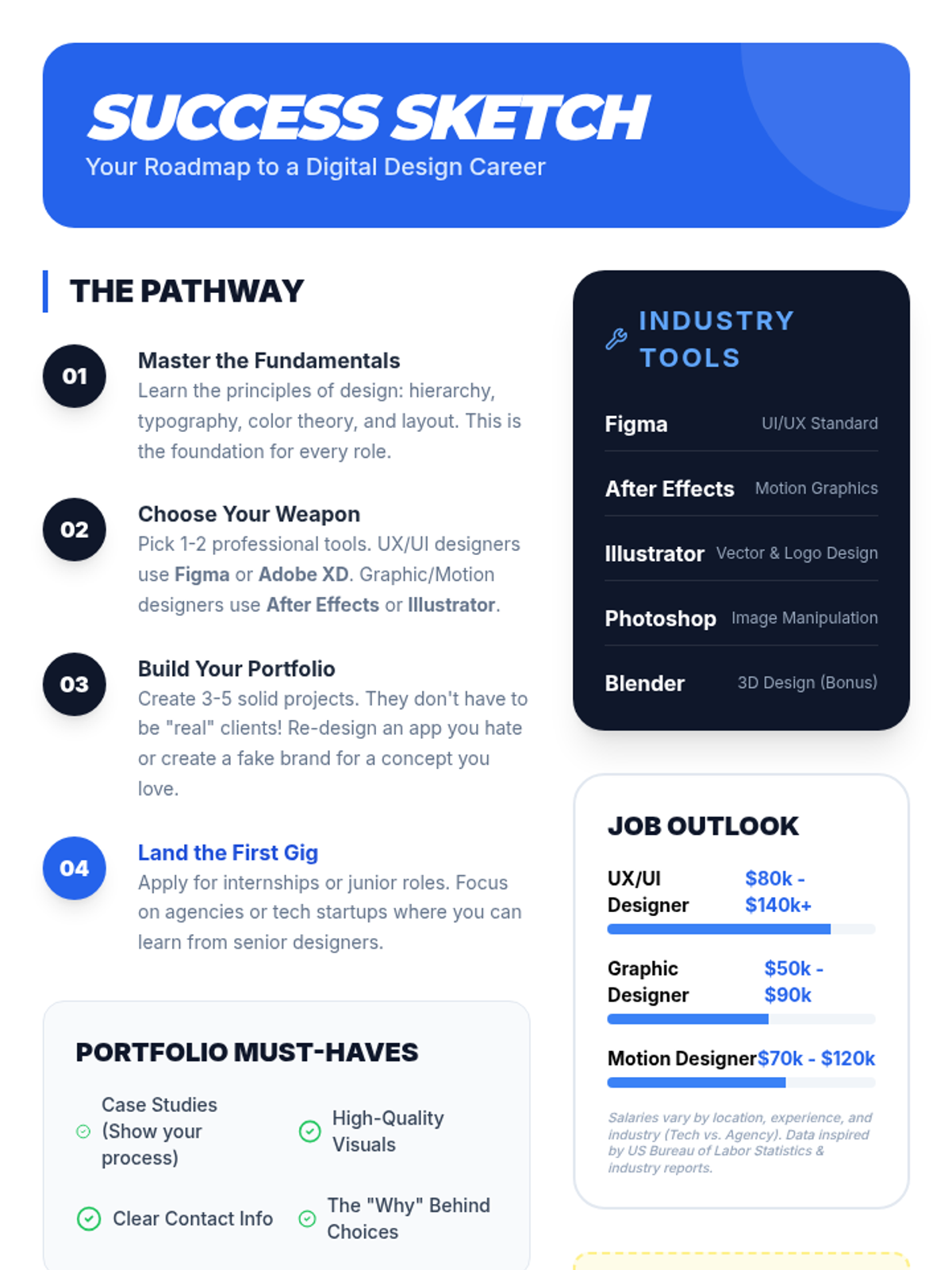
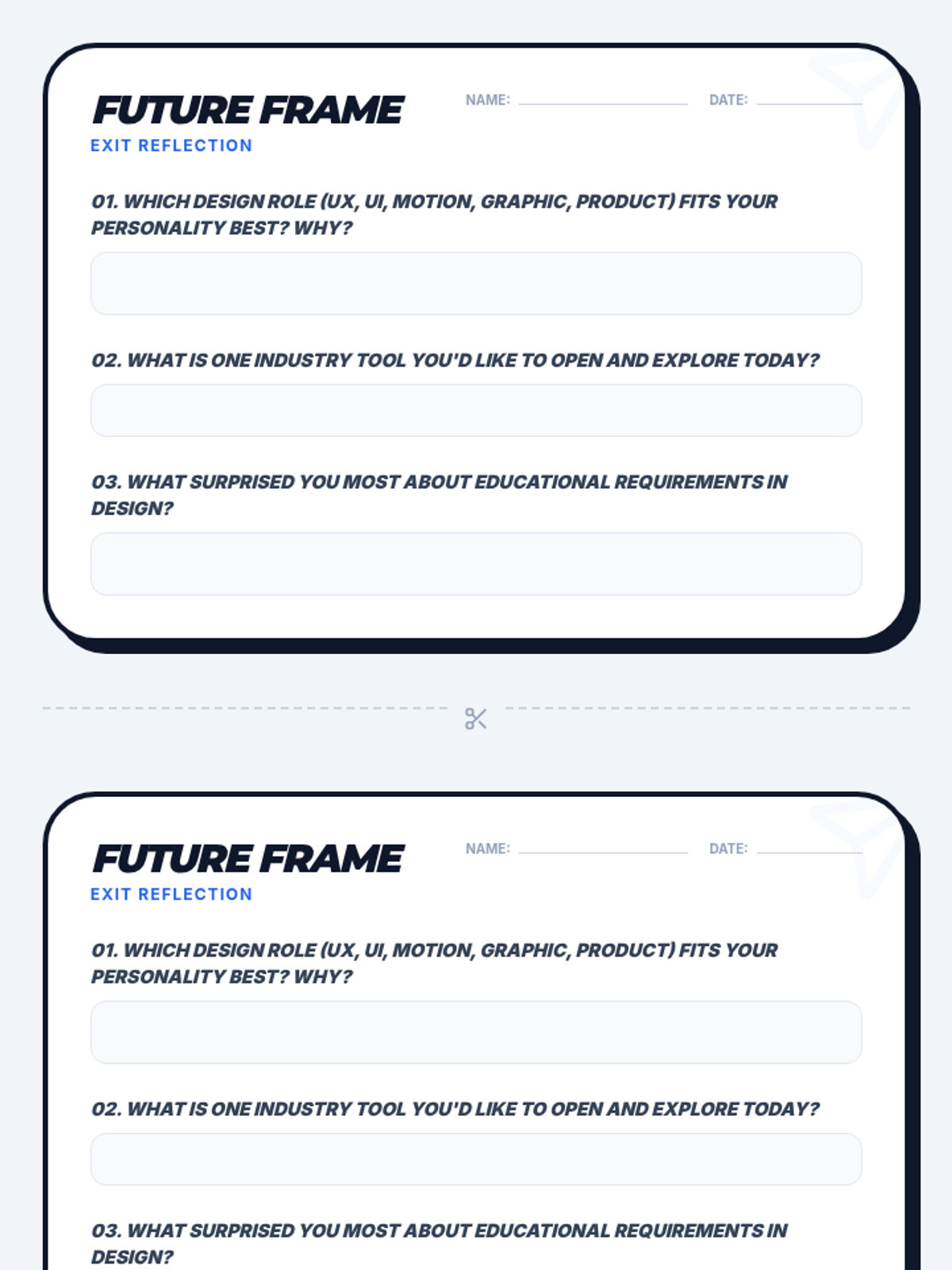
An introductory career exploration lesson where students discover the diverse world of digital design, from UX/UI to motion graphics, and map out the education and skills needed for success.
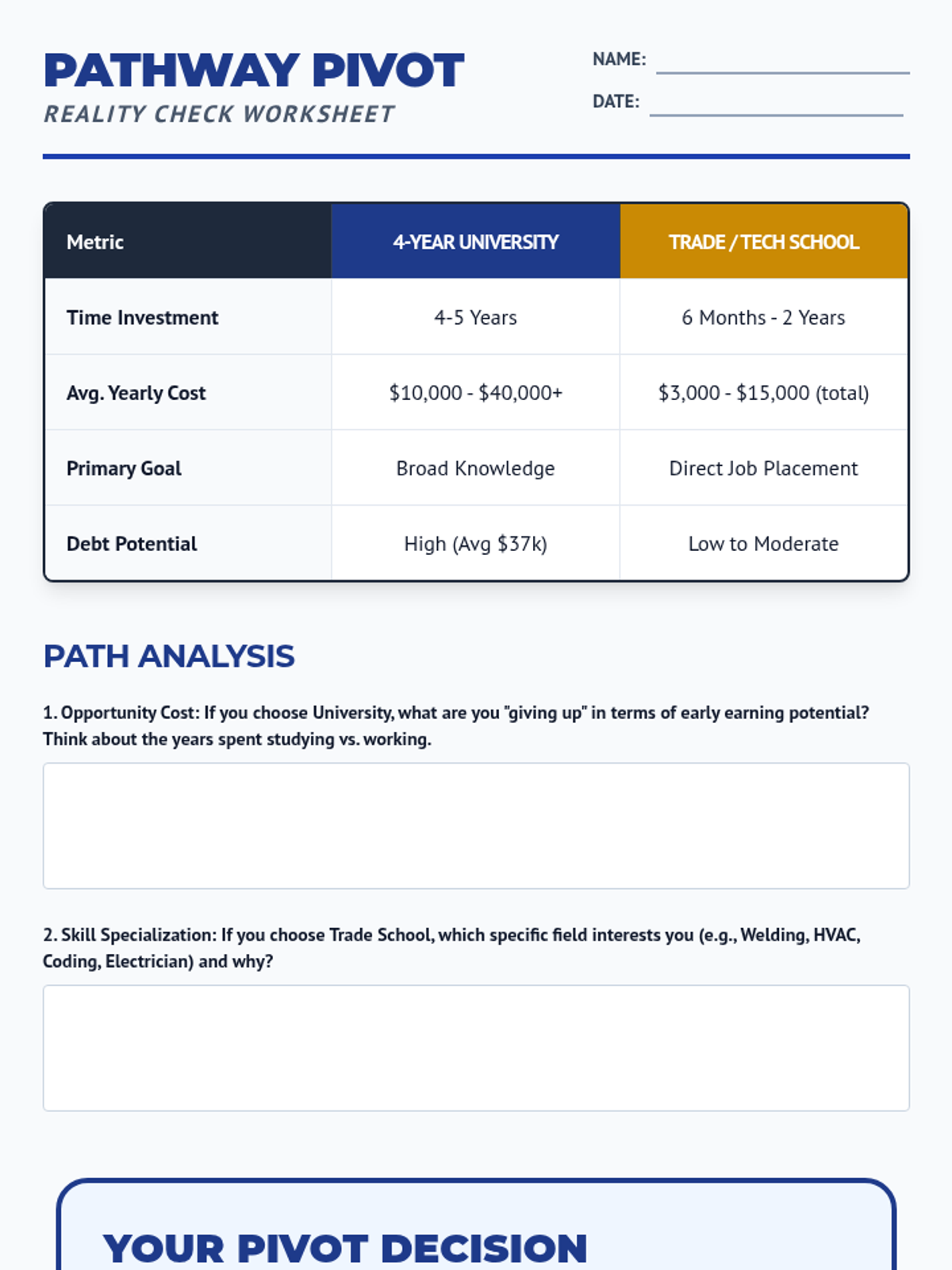
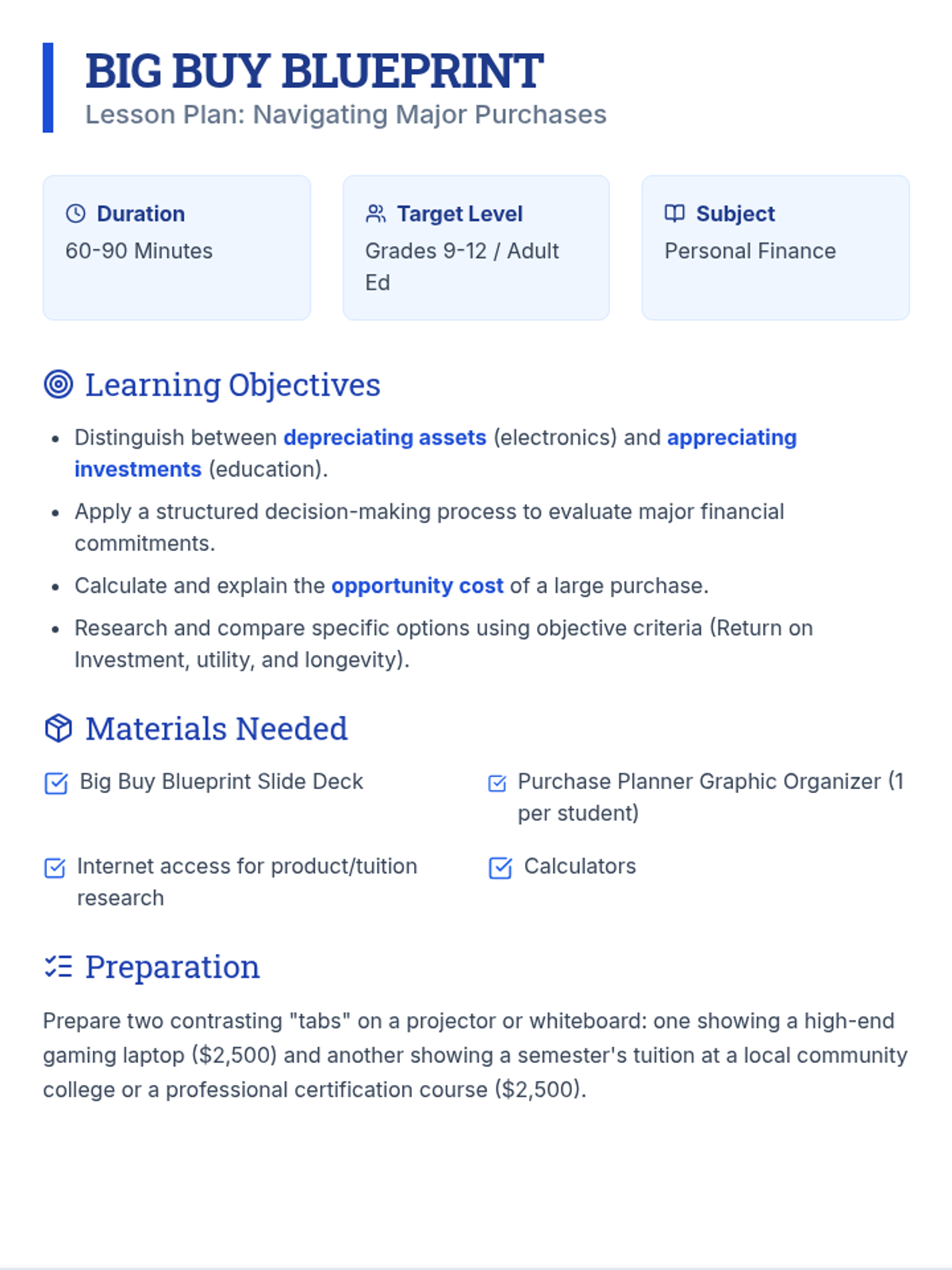
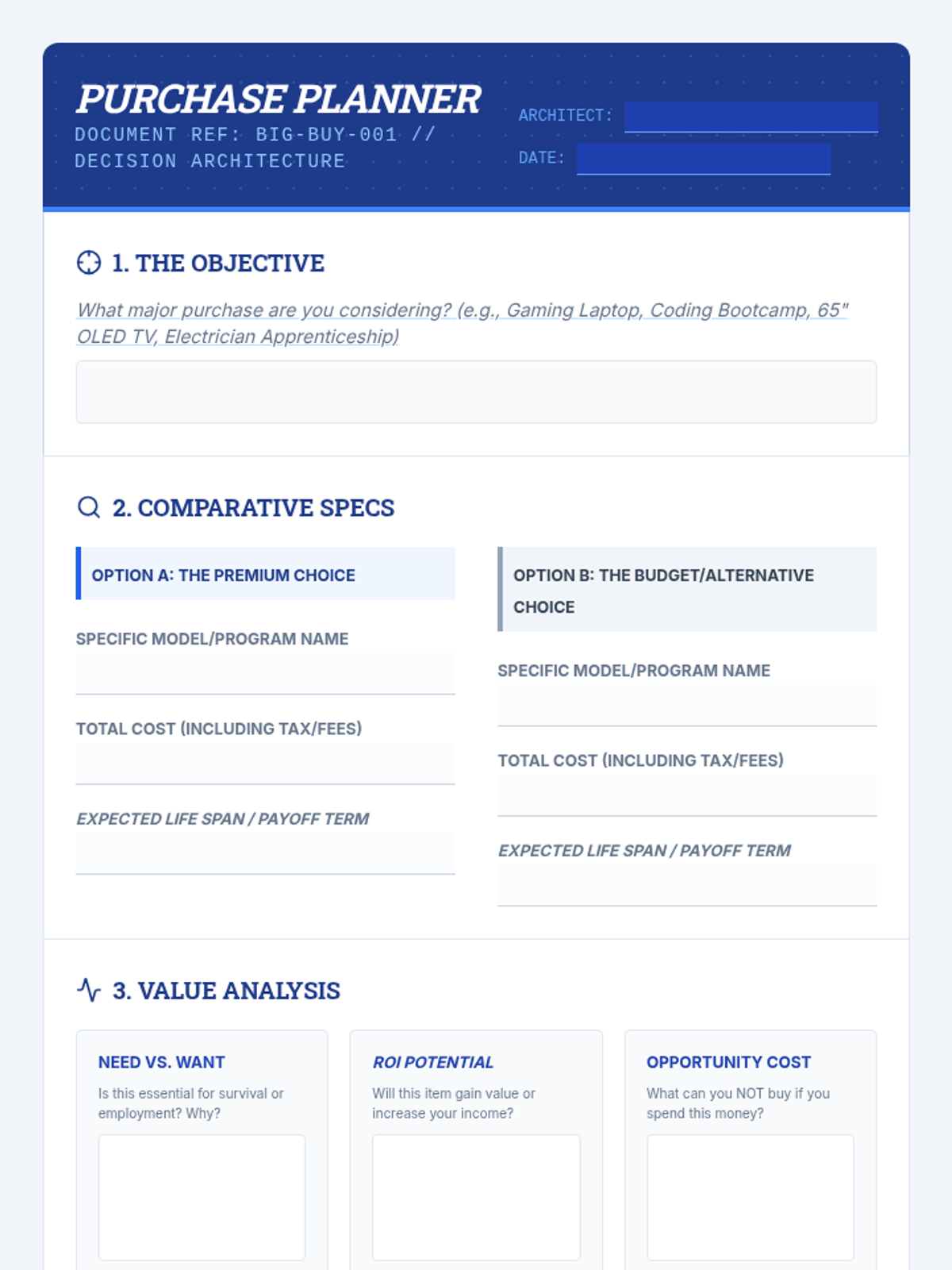
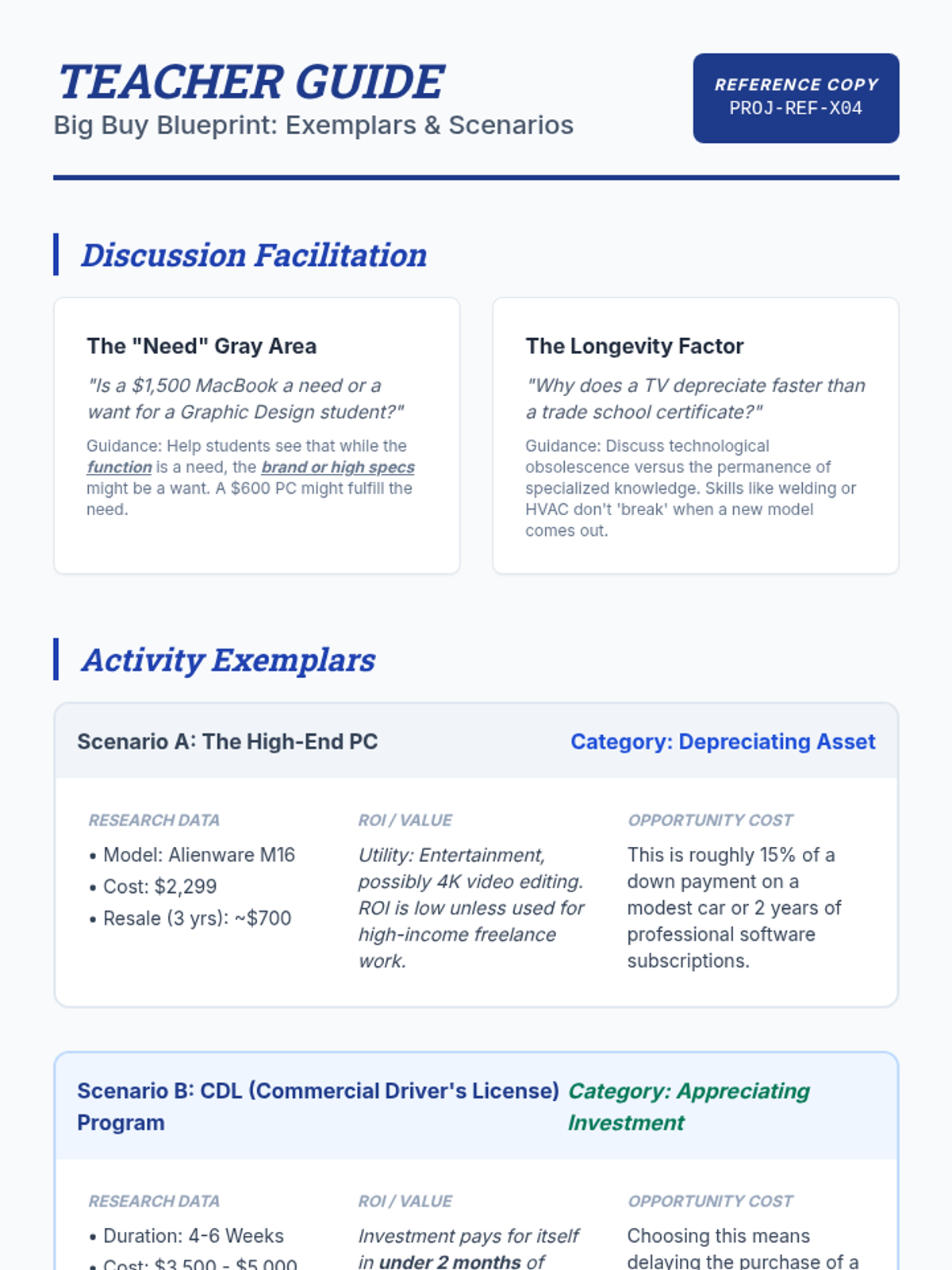
A comprehensive lesson on navigating significant financial decisions, comparing the immediate utility of large electronics with the long-term investment of higher education and vocational training. Students learn to use a structured decision-making process to evaluate needs, wants, and opportunity costs.
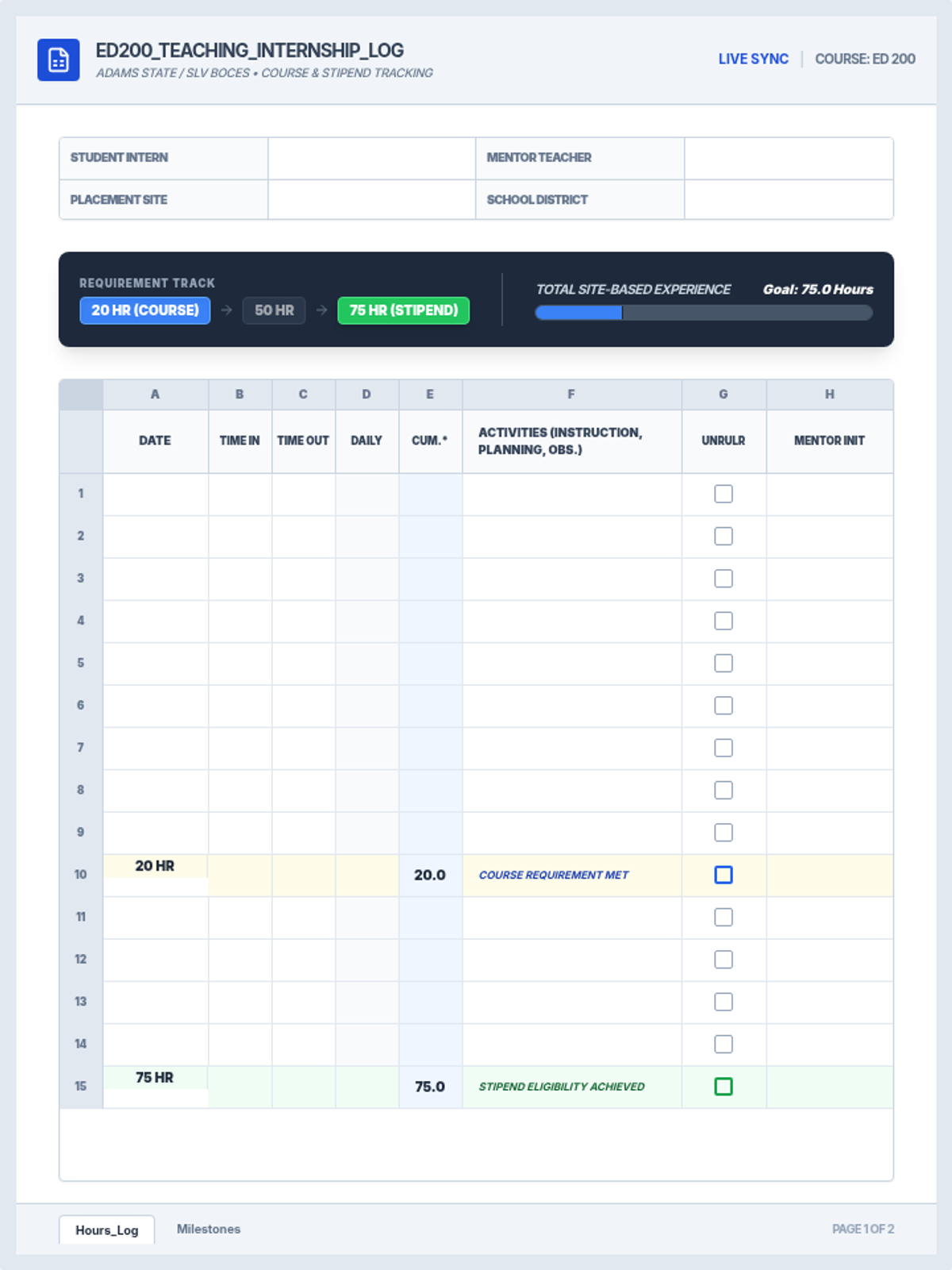
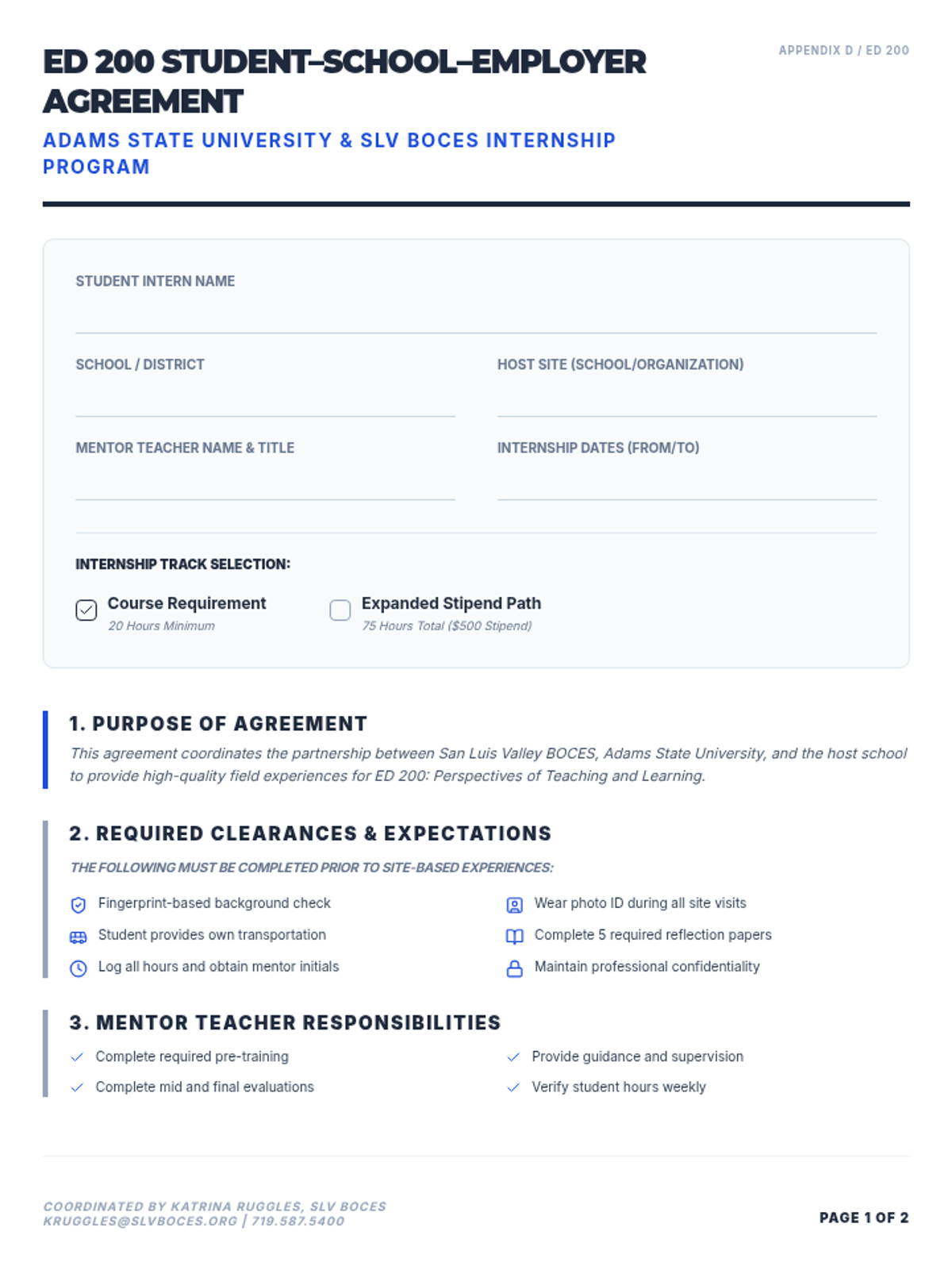
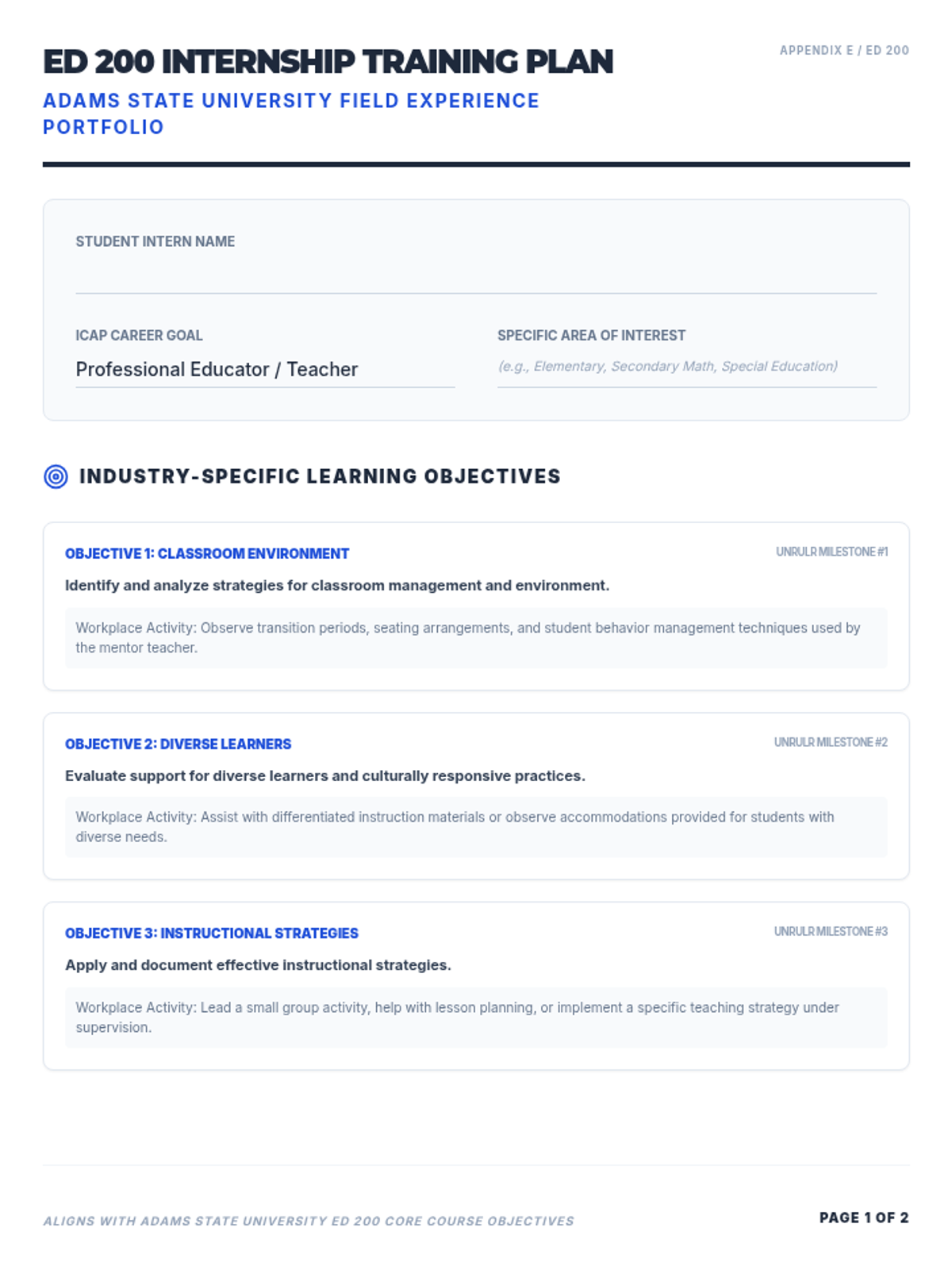
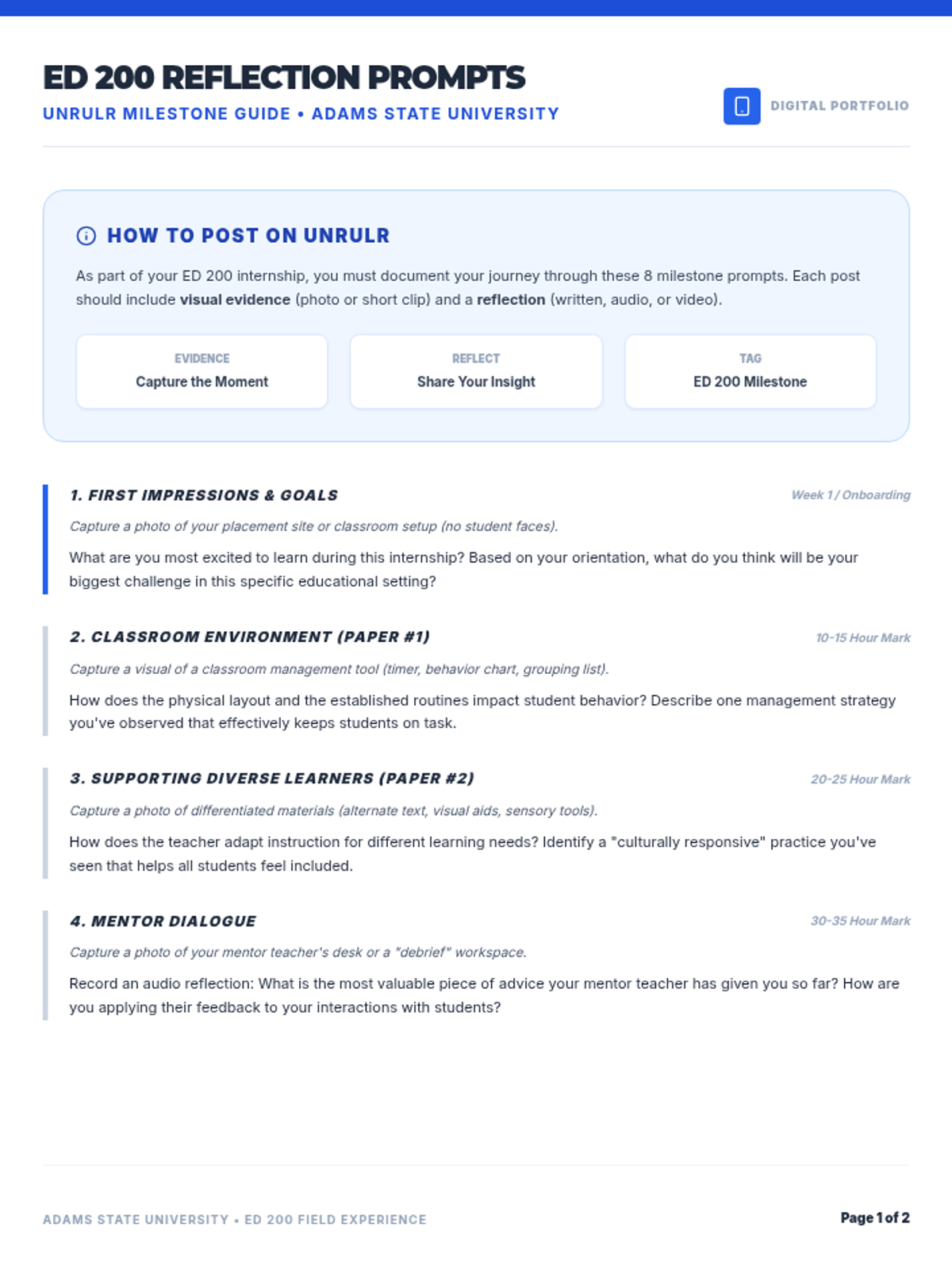
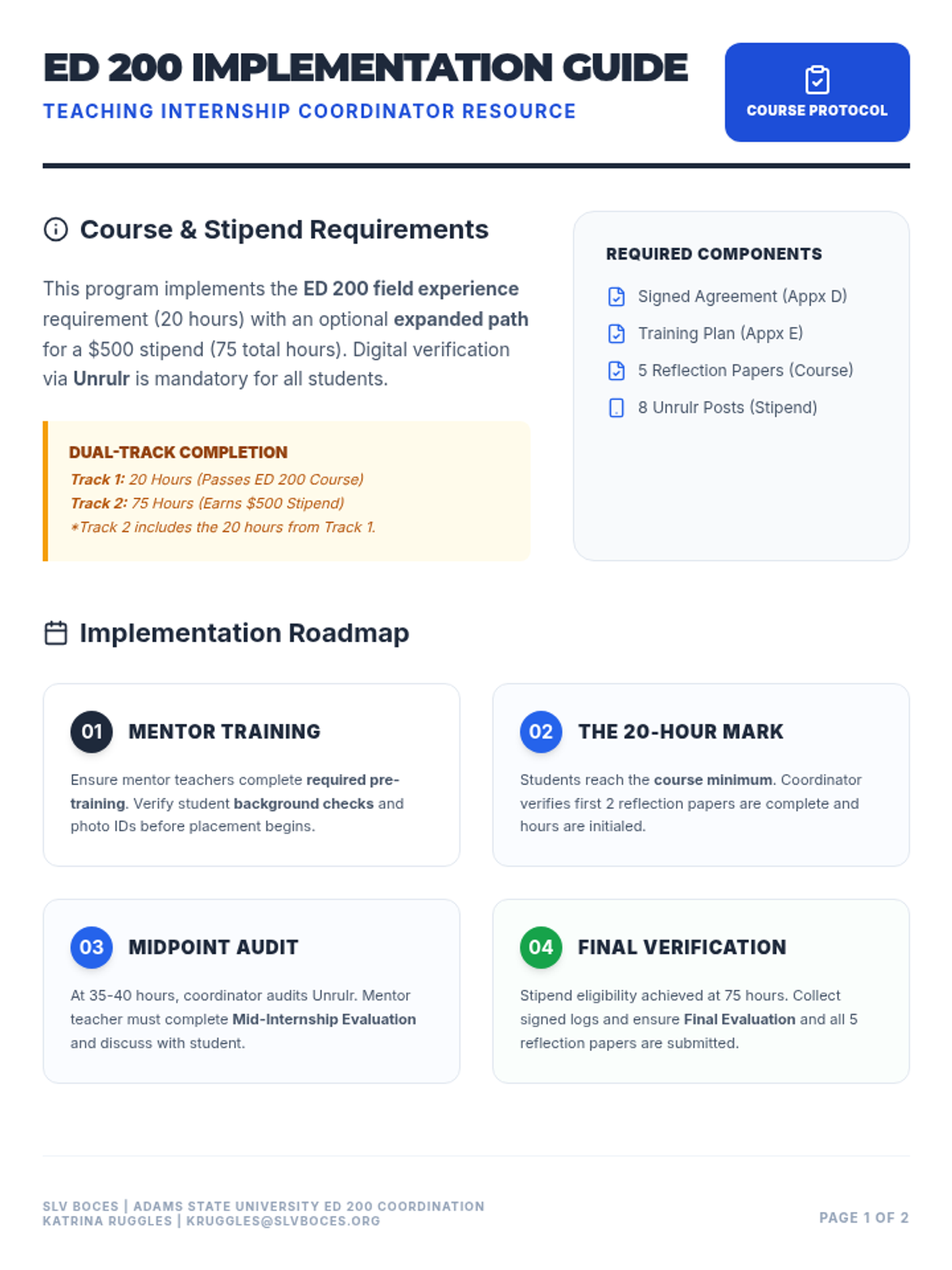
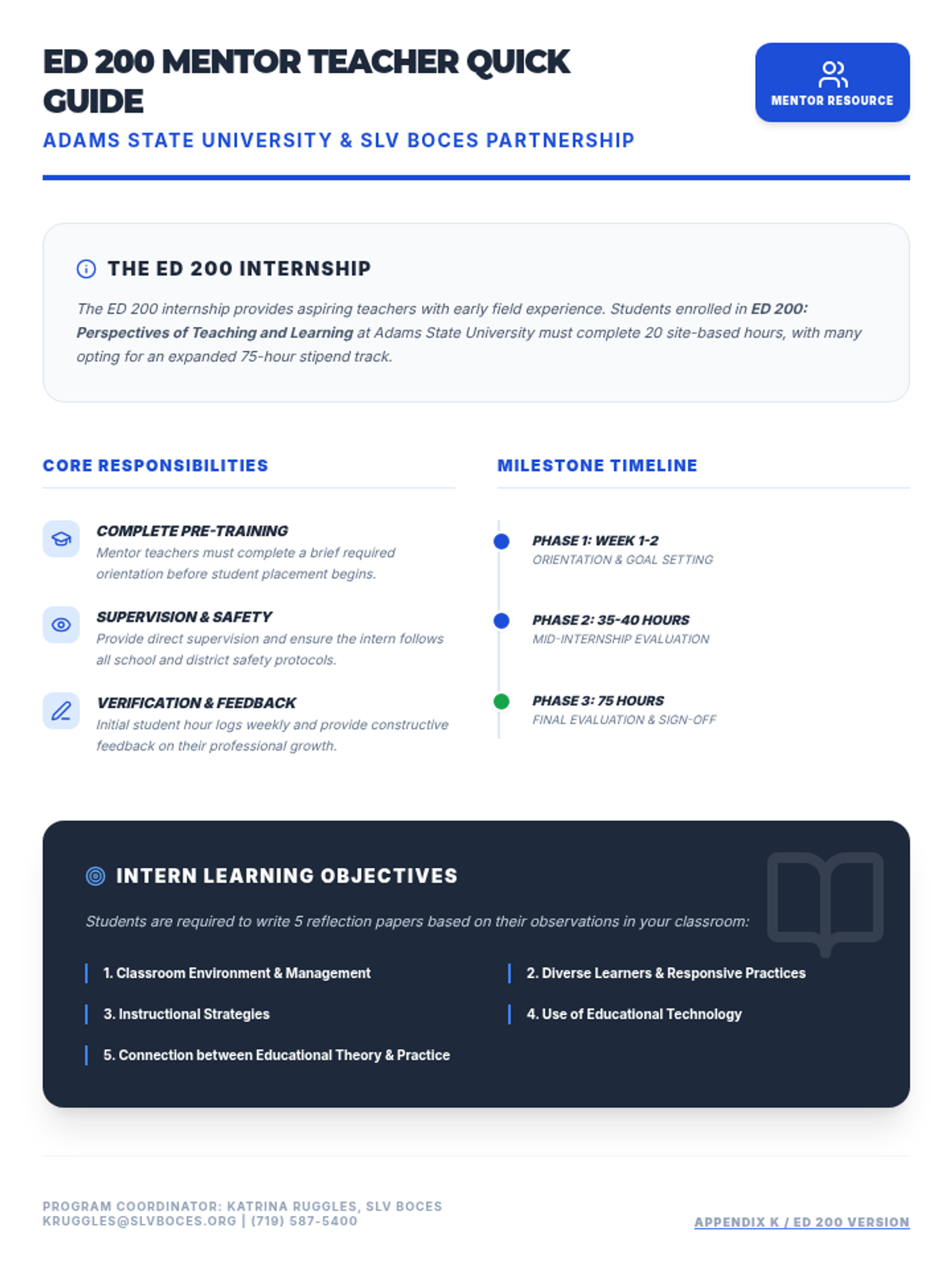
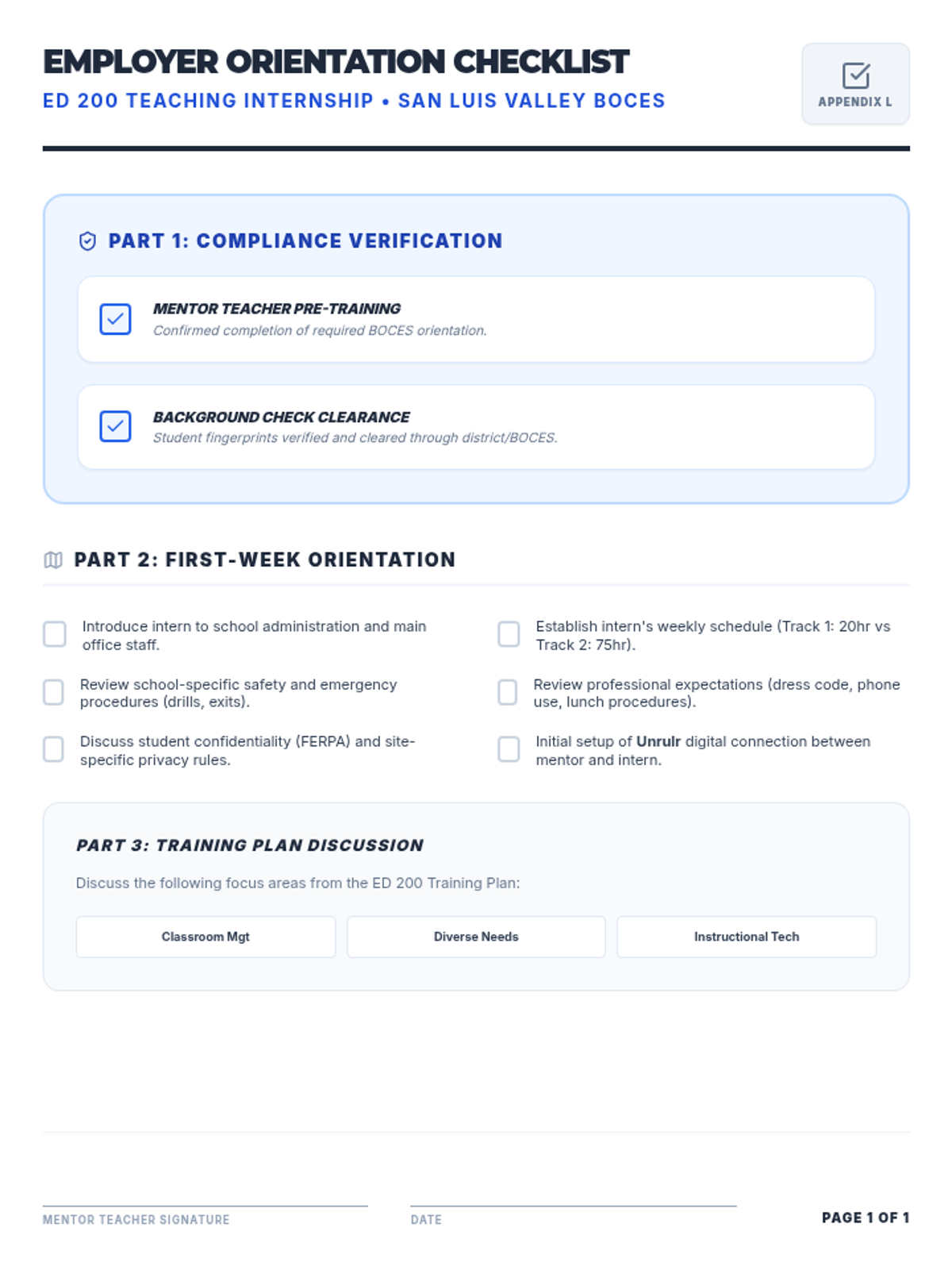
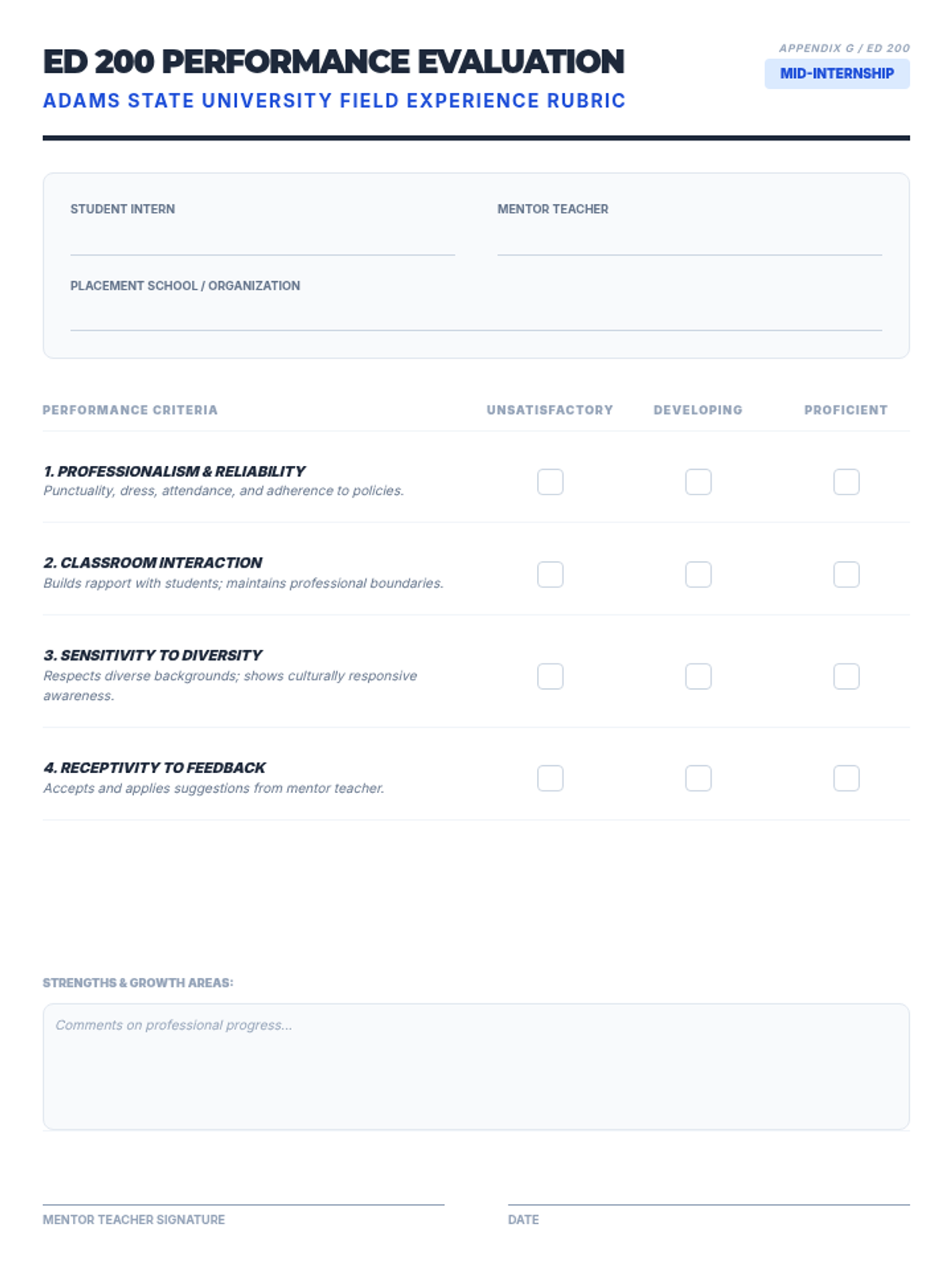
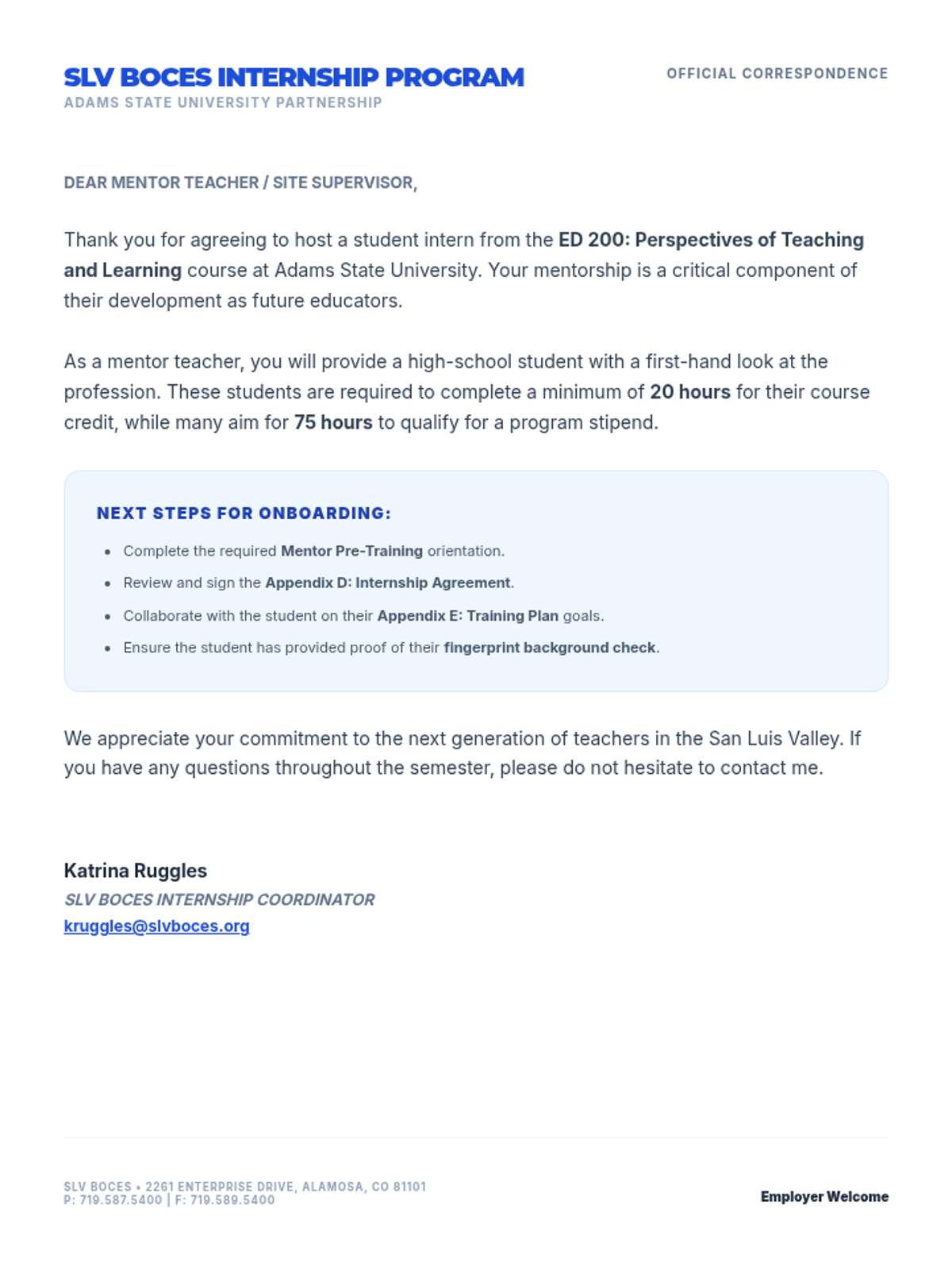
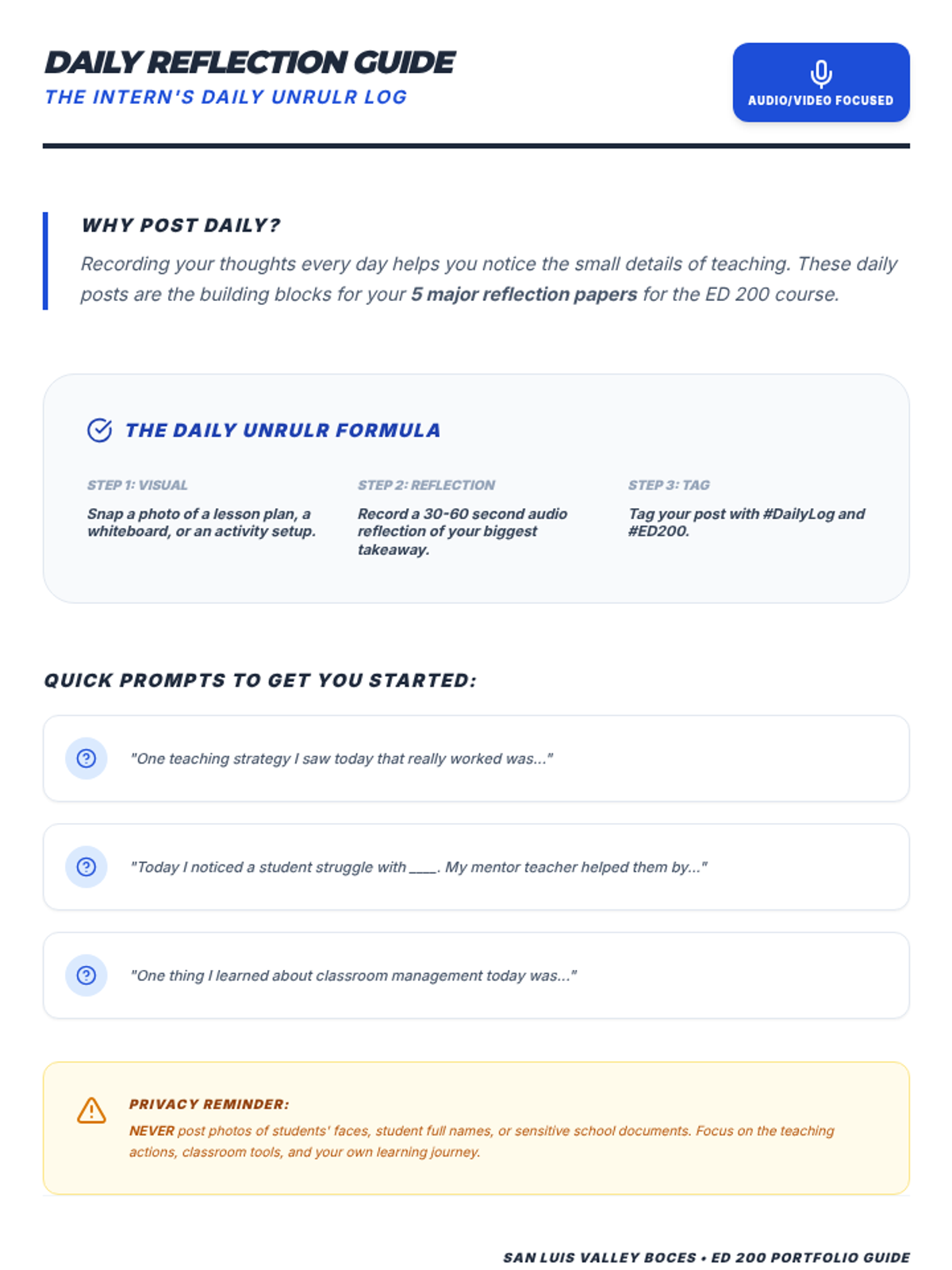
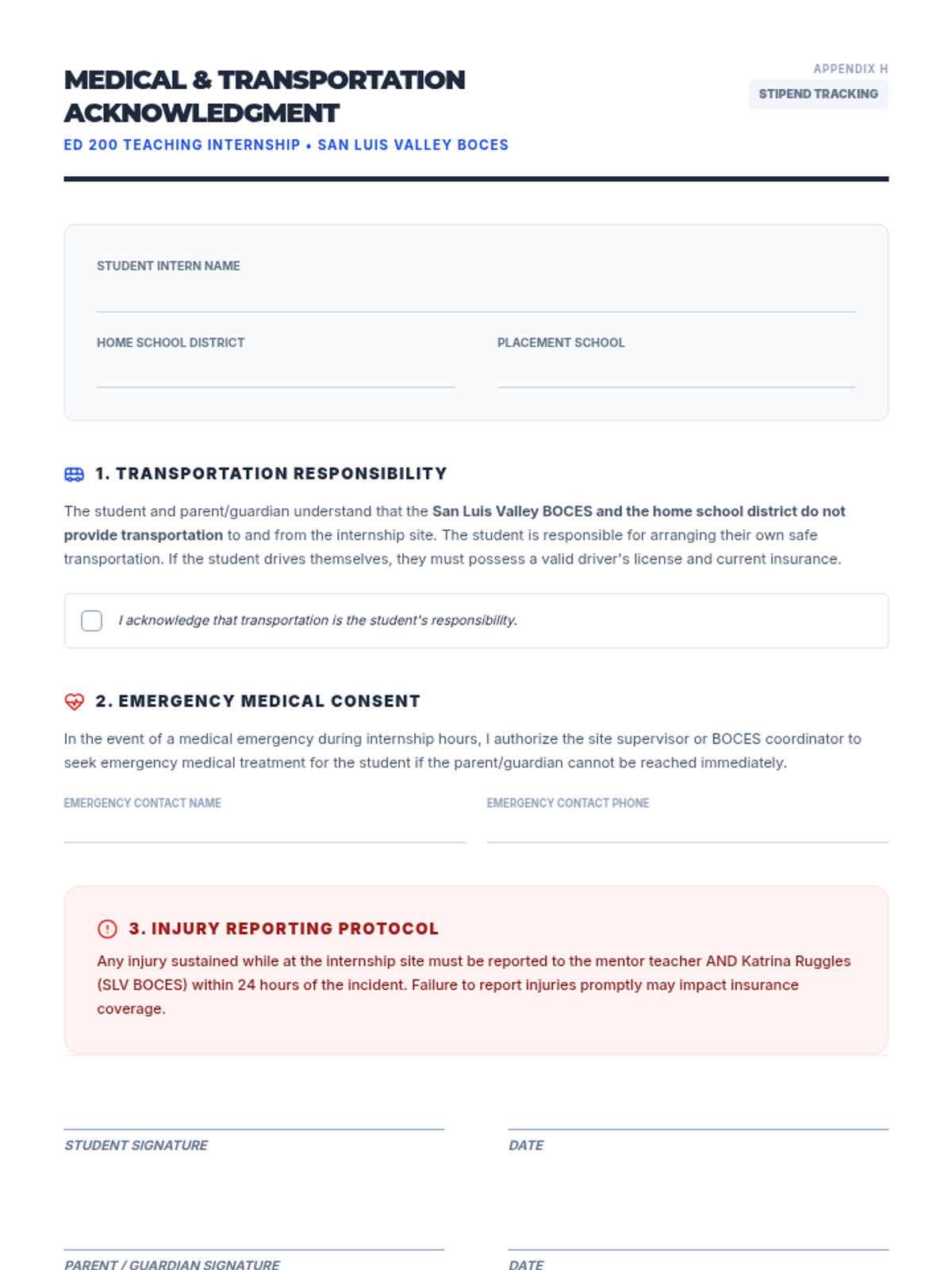
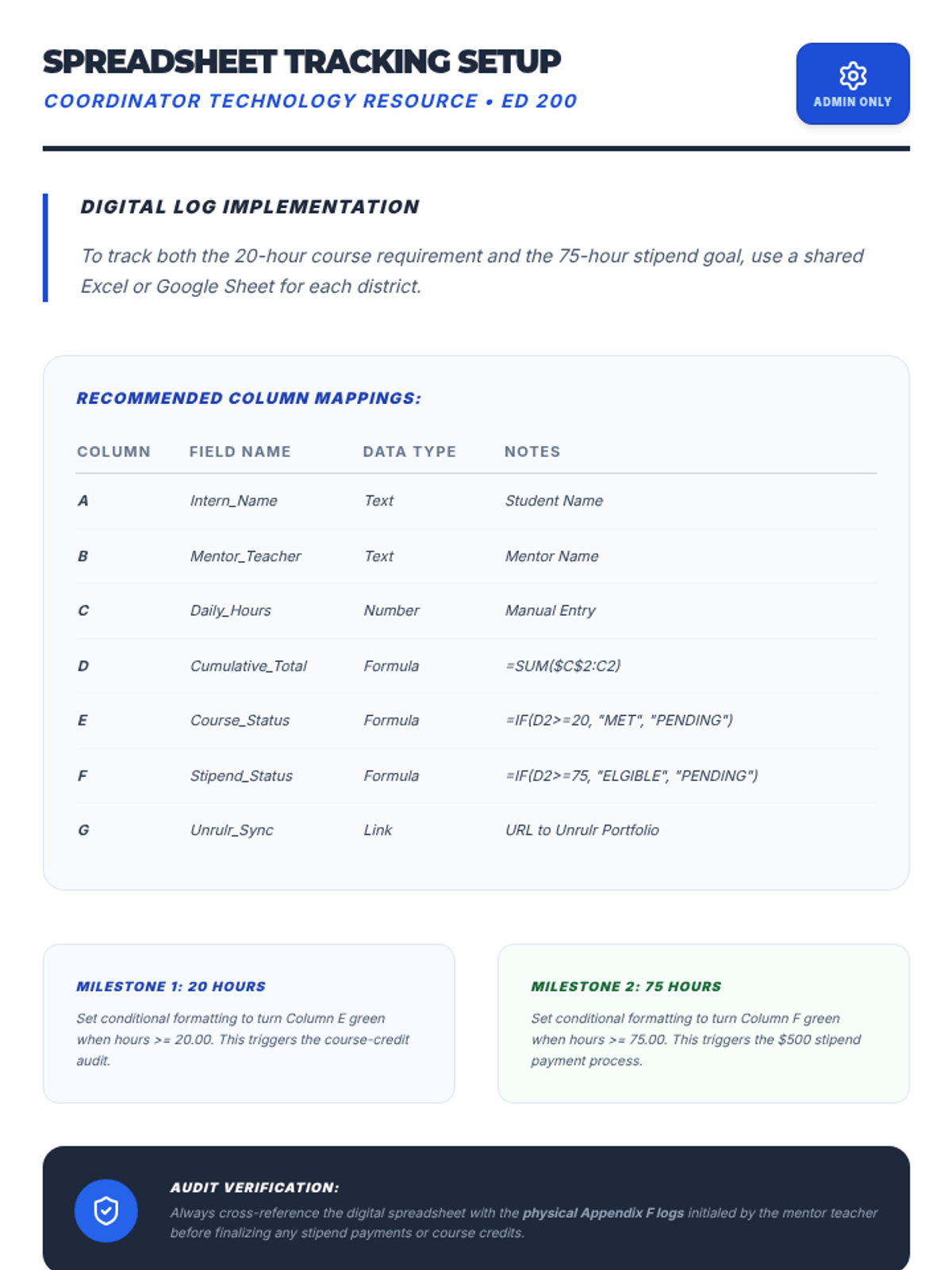
Specialized internship tracking for the ED 200: Perspectives of Teaching and Learning course. Coordinated by SLV BOCES and Adams State University, this system tracks the 20-hour course requirement and the 75-hour stipend path ($500).
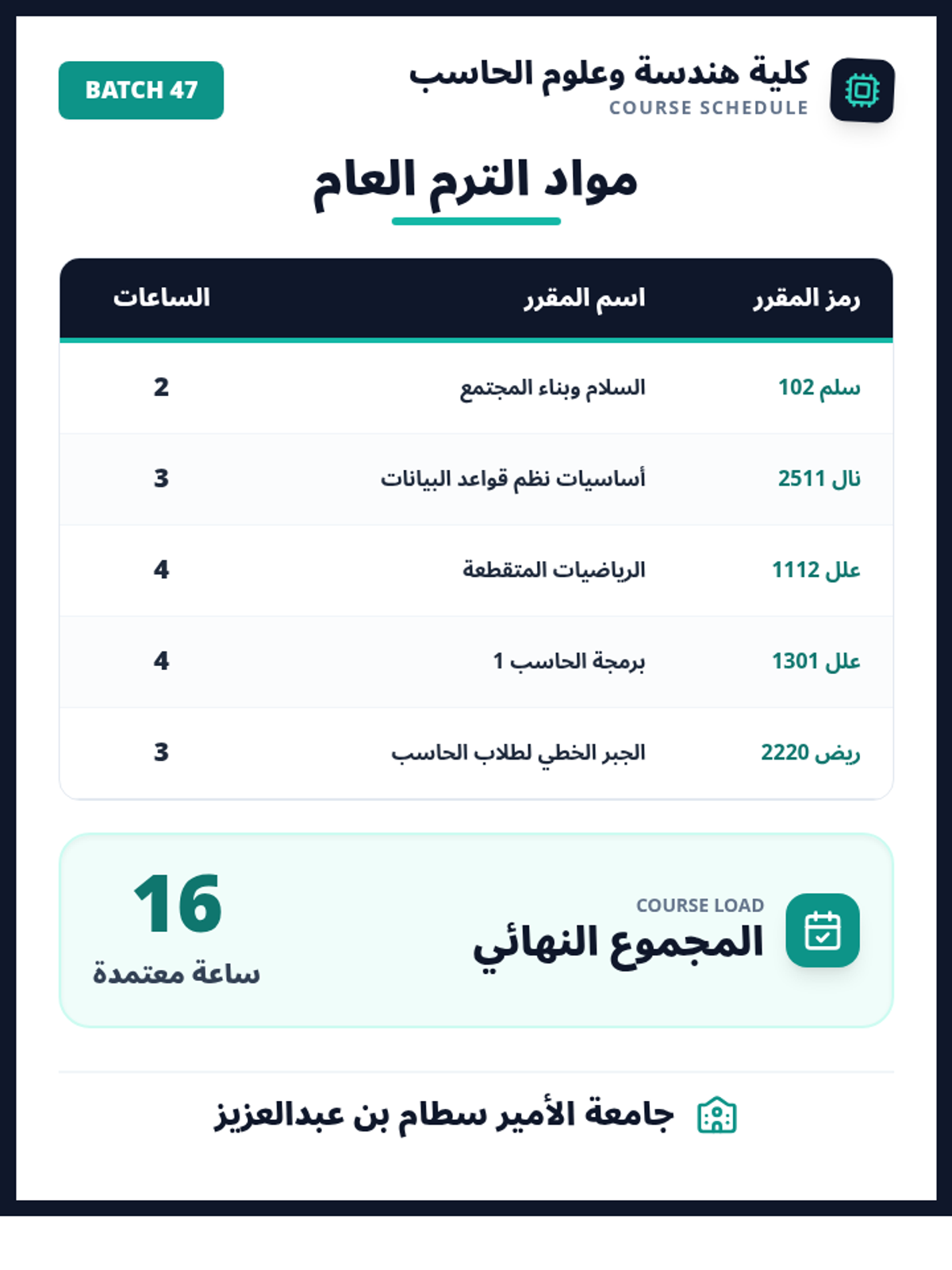
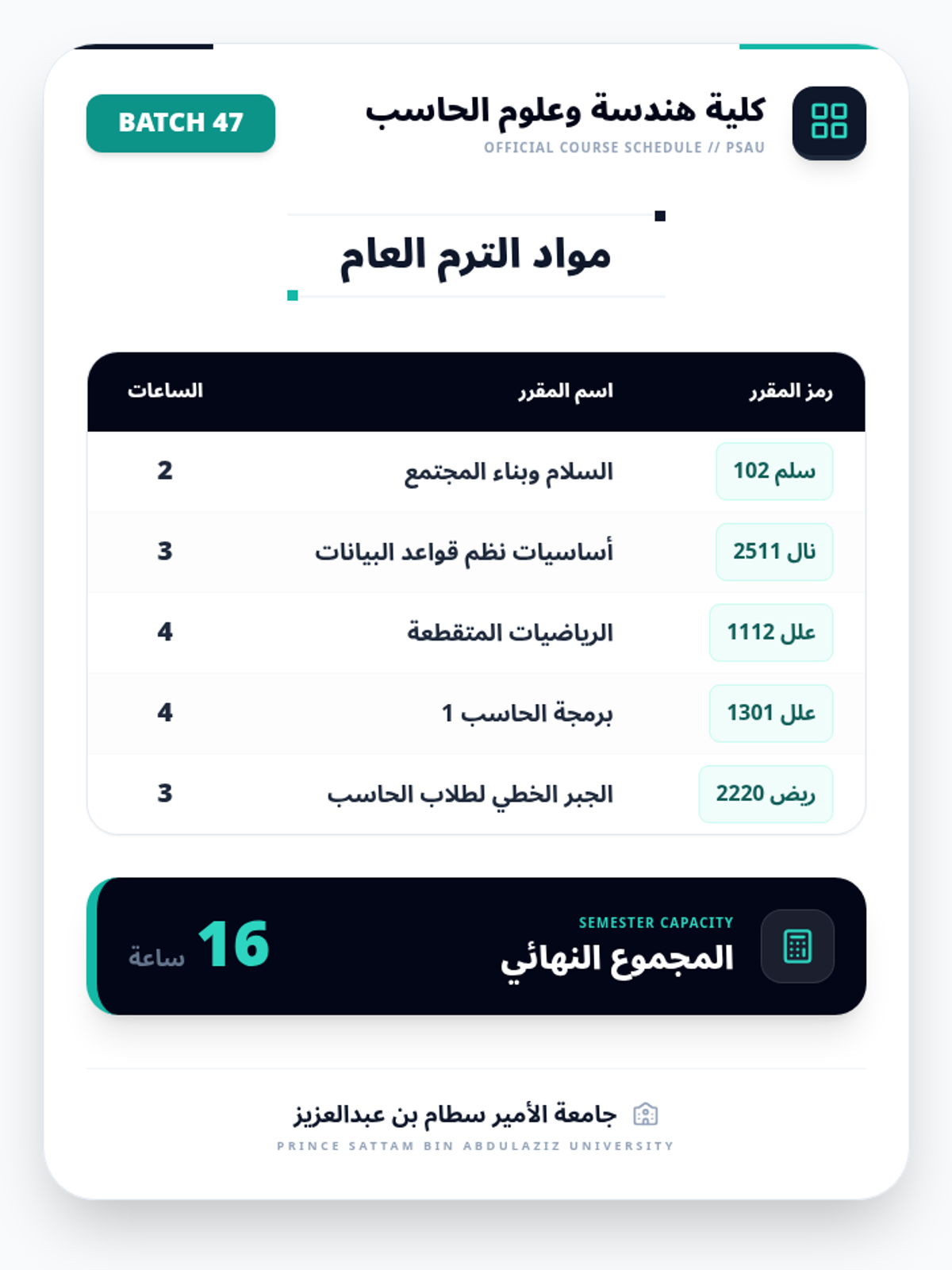
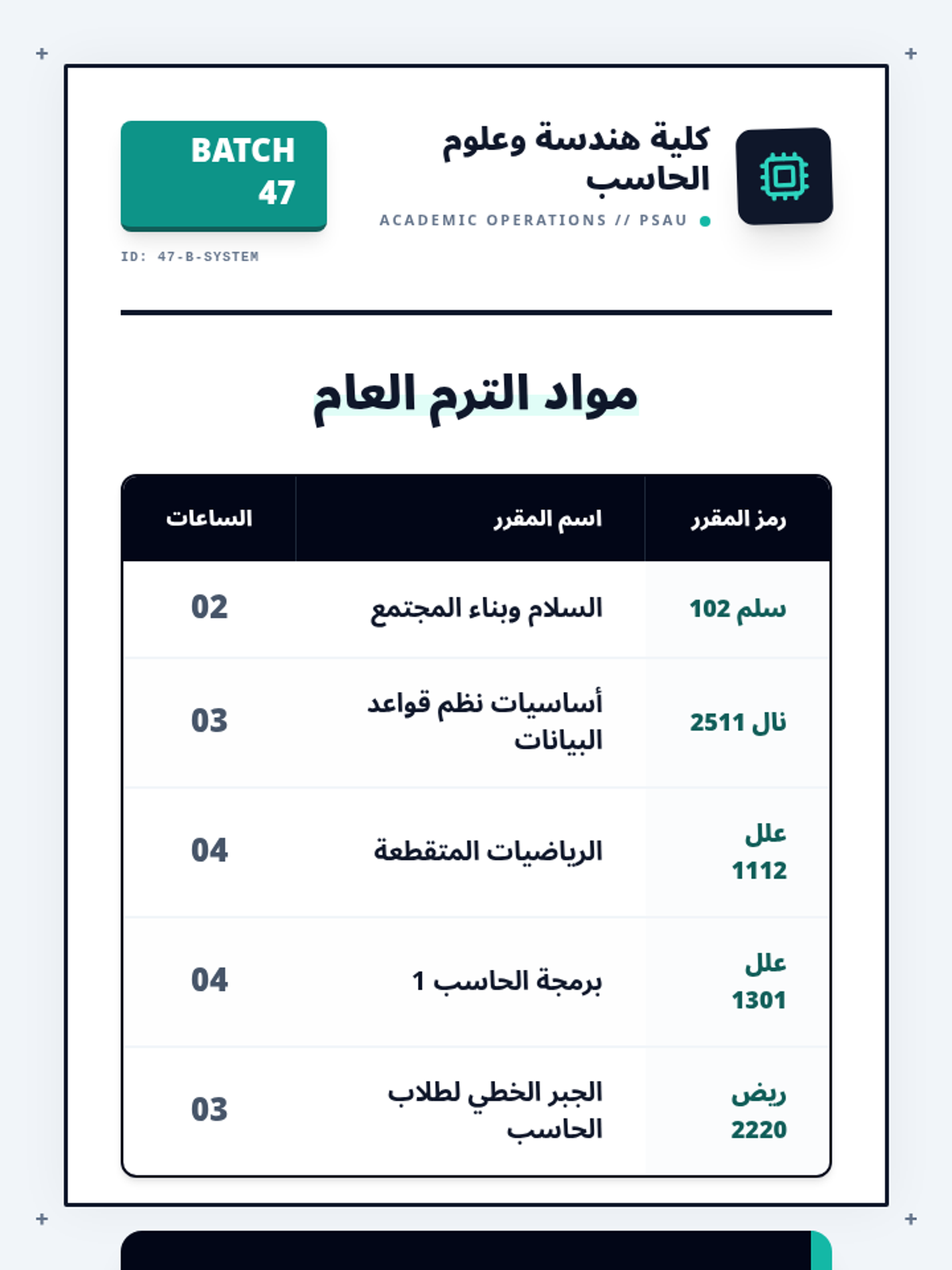
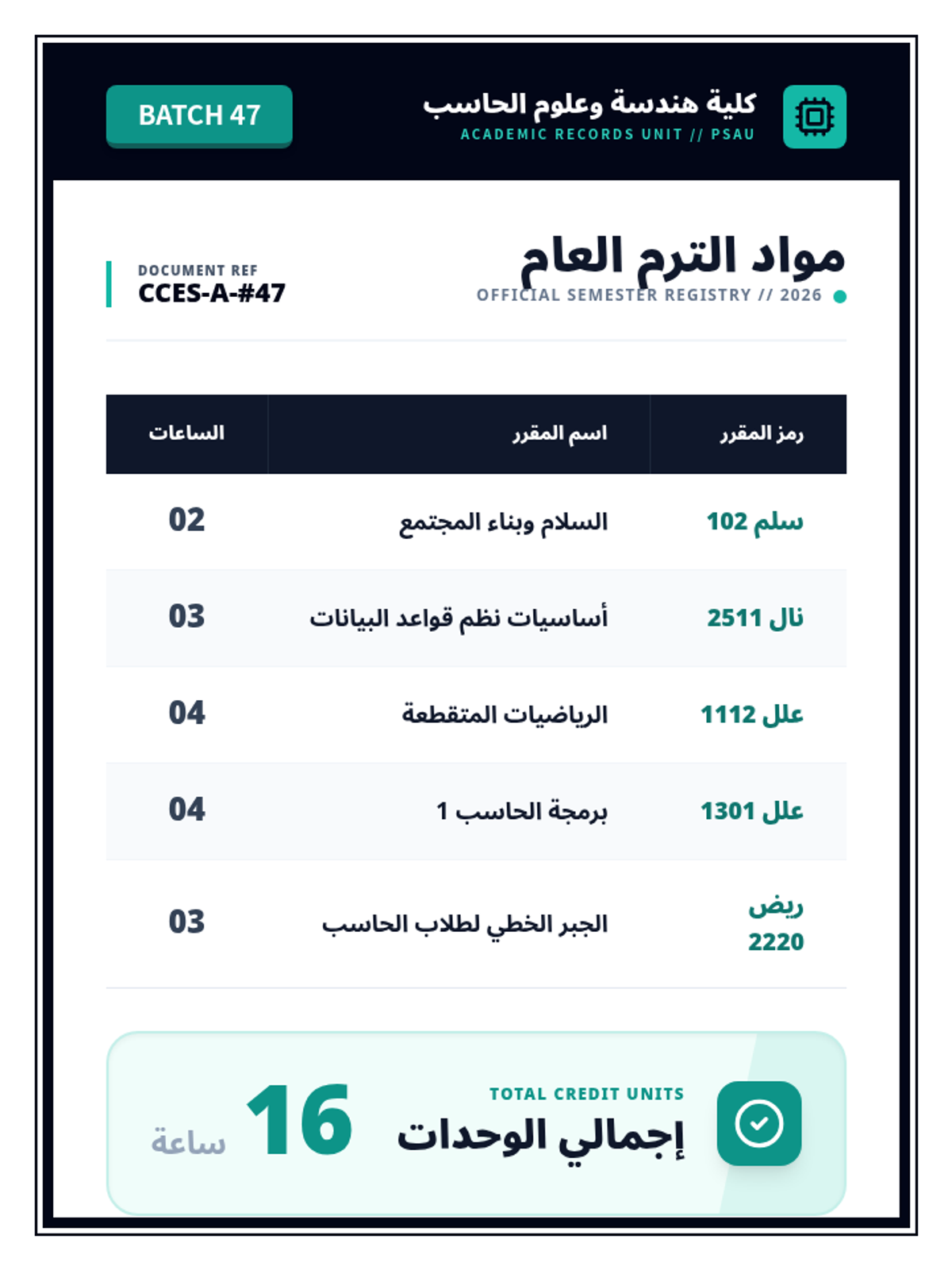
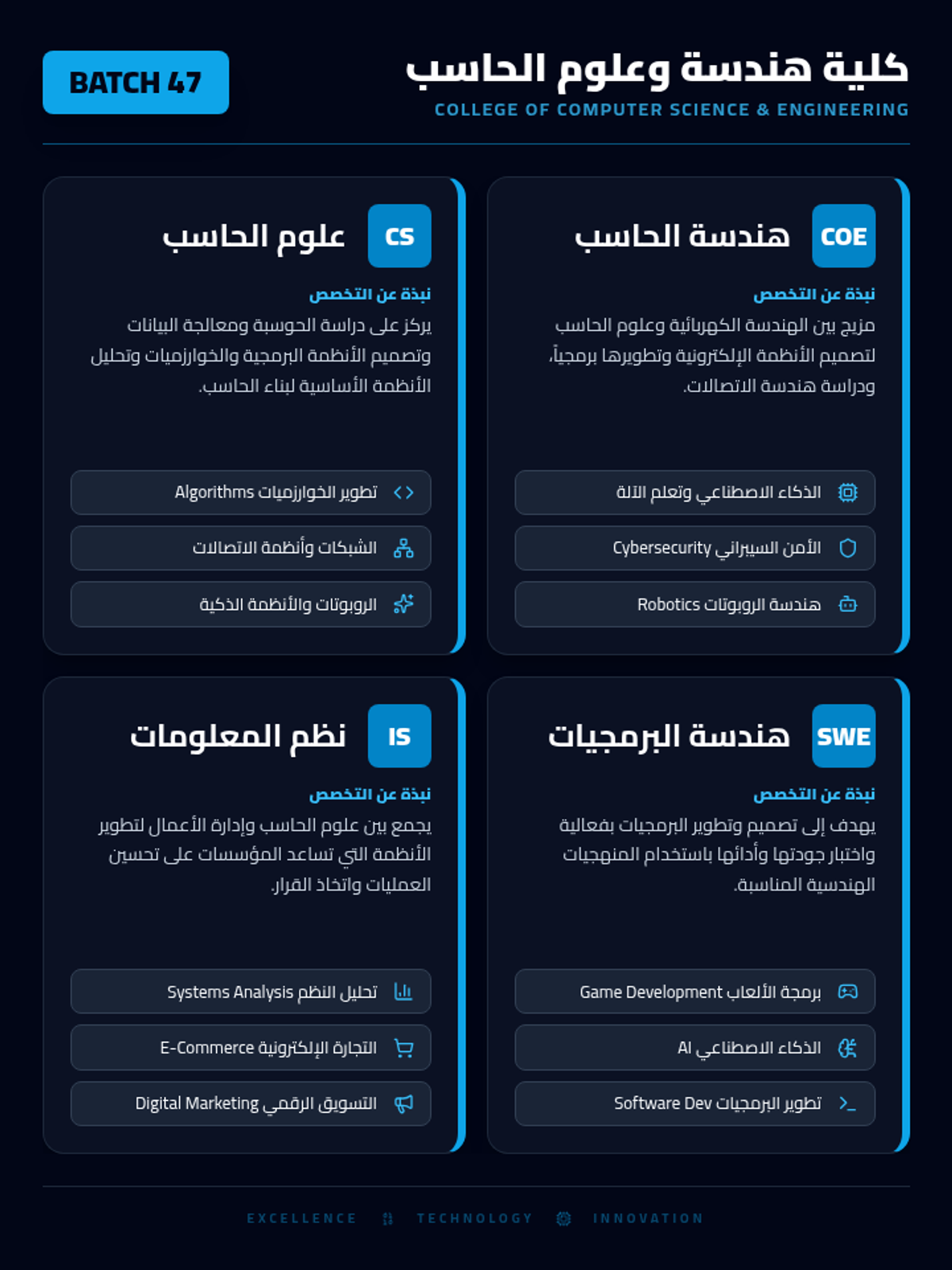
A collection of administrative and academic resources for the College of Computer Engineering and Sciences at Prince Sattam bin Abdulaziz University, tailored for Batch 47.
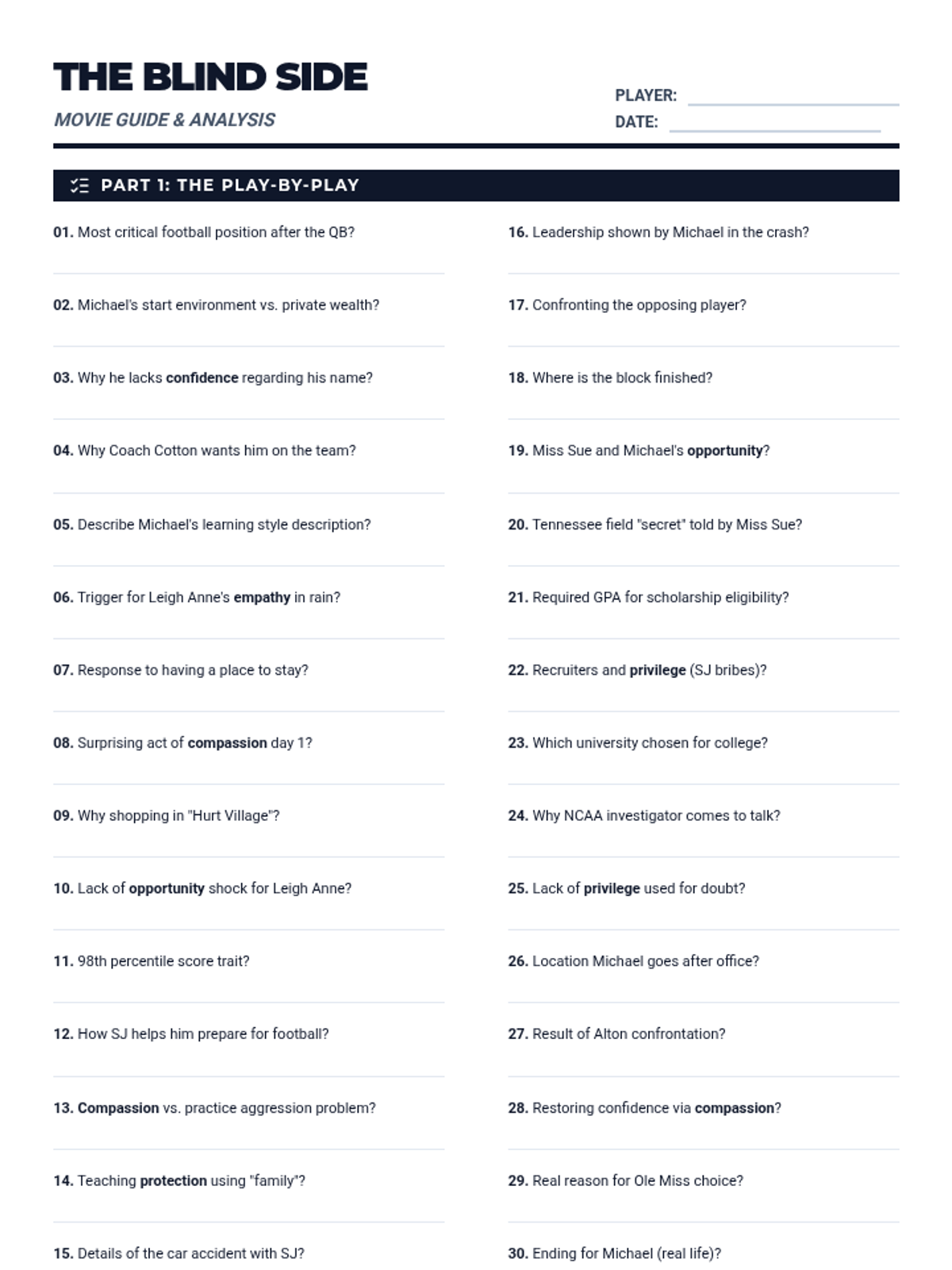
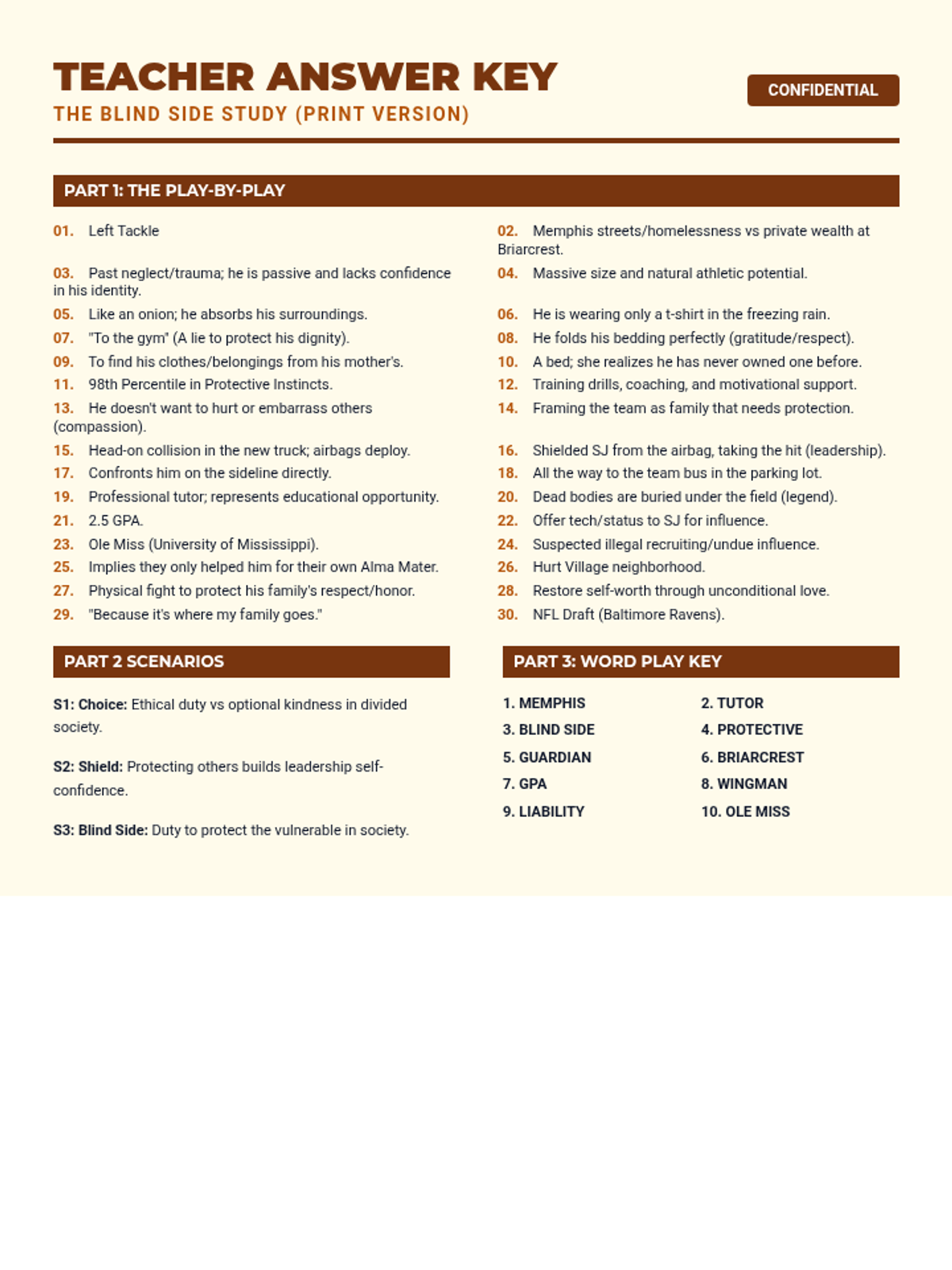
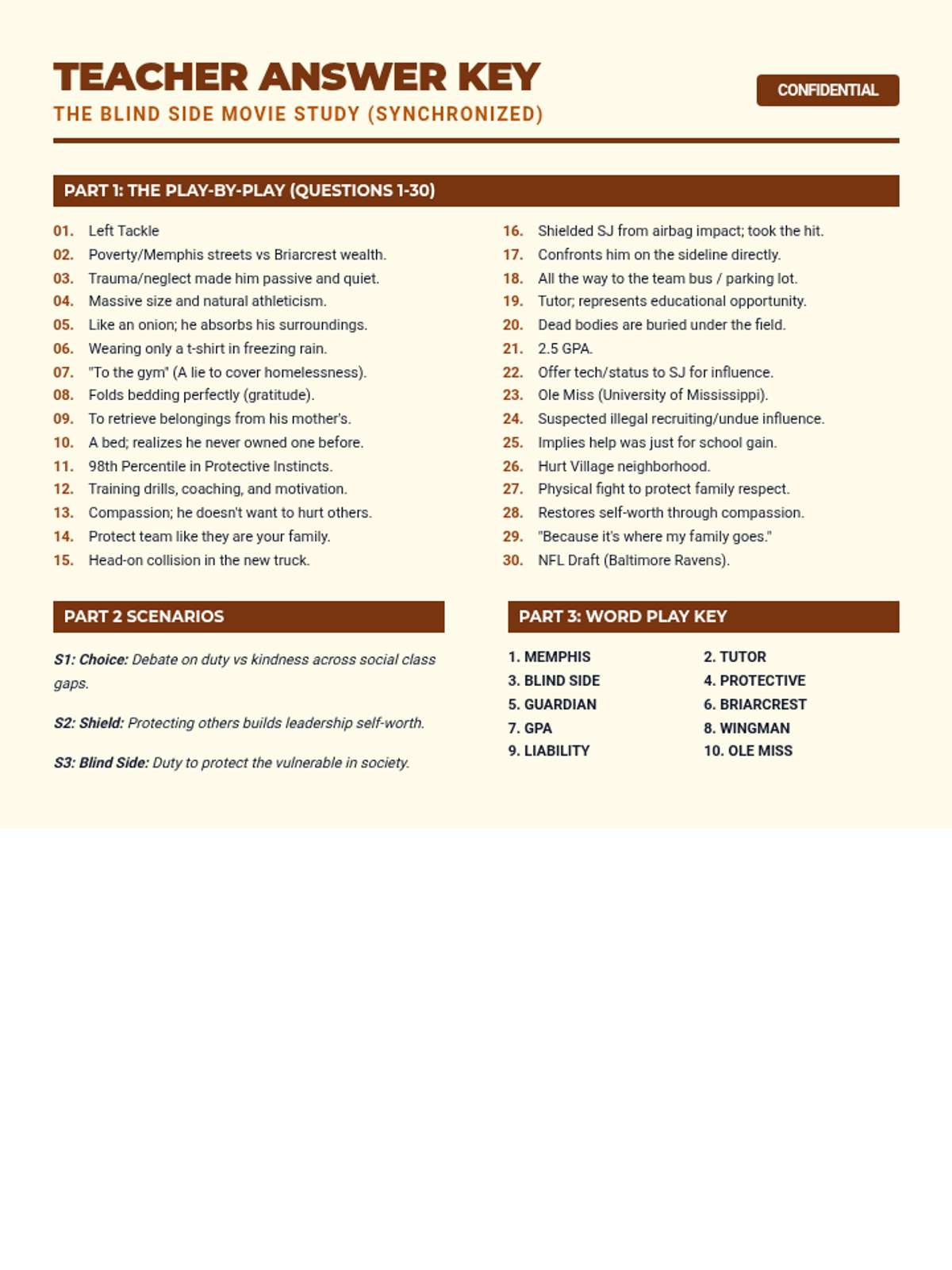
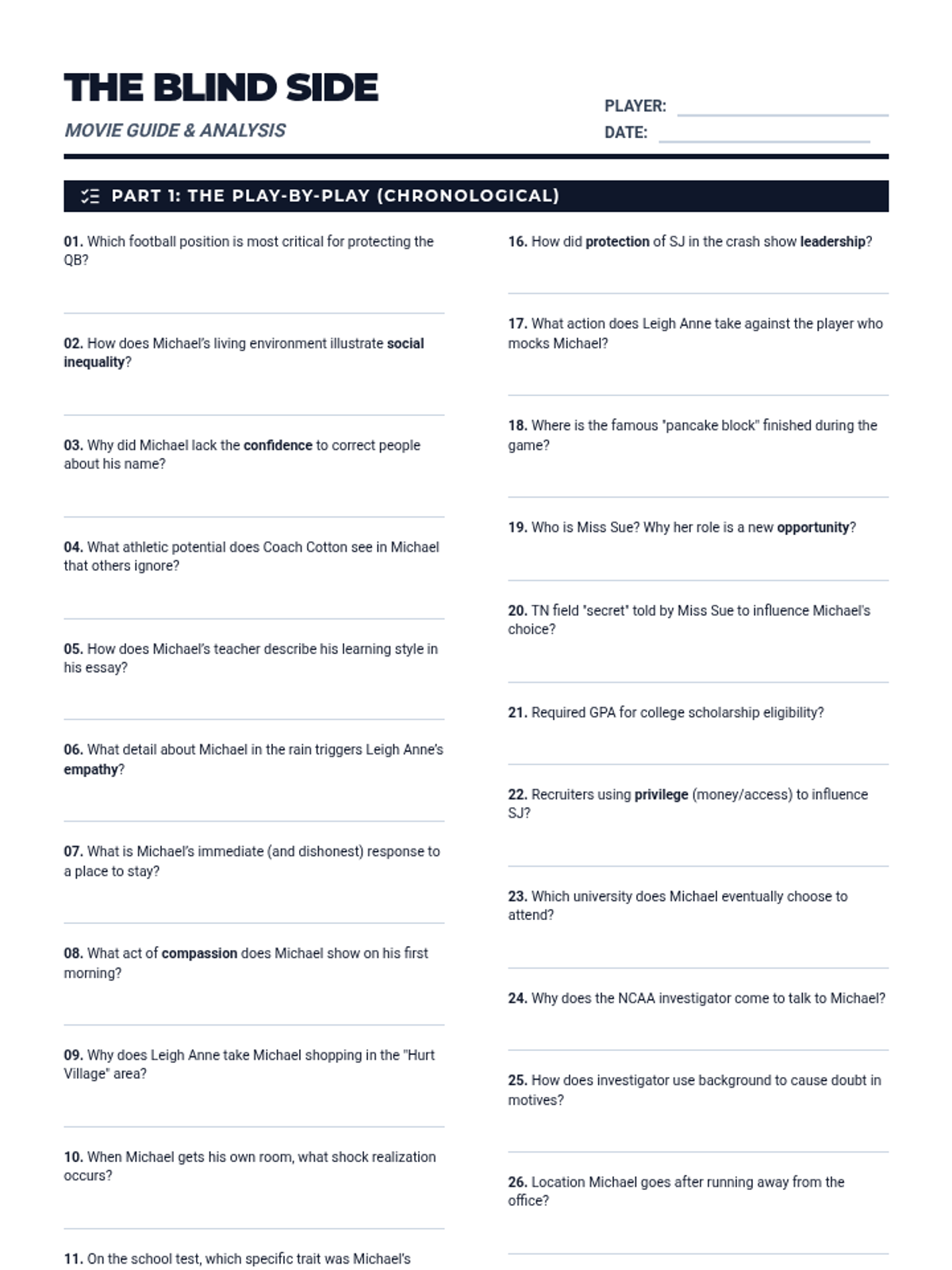
A comprehensive movie study for 'The Blind Side' focusing on character development, ethics, and leadership through Michael Oher's journey.
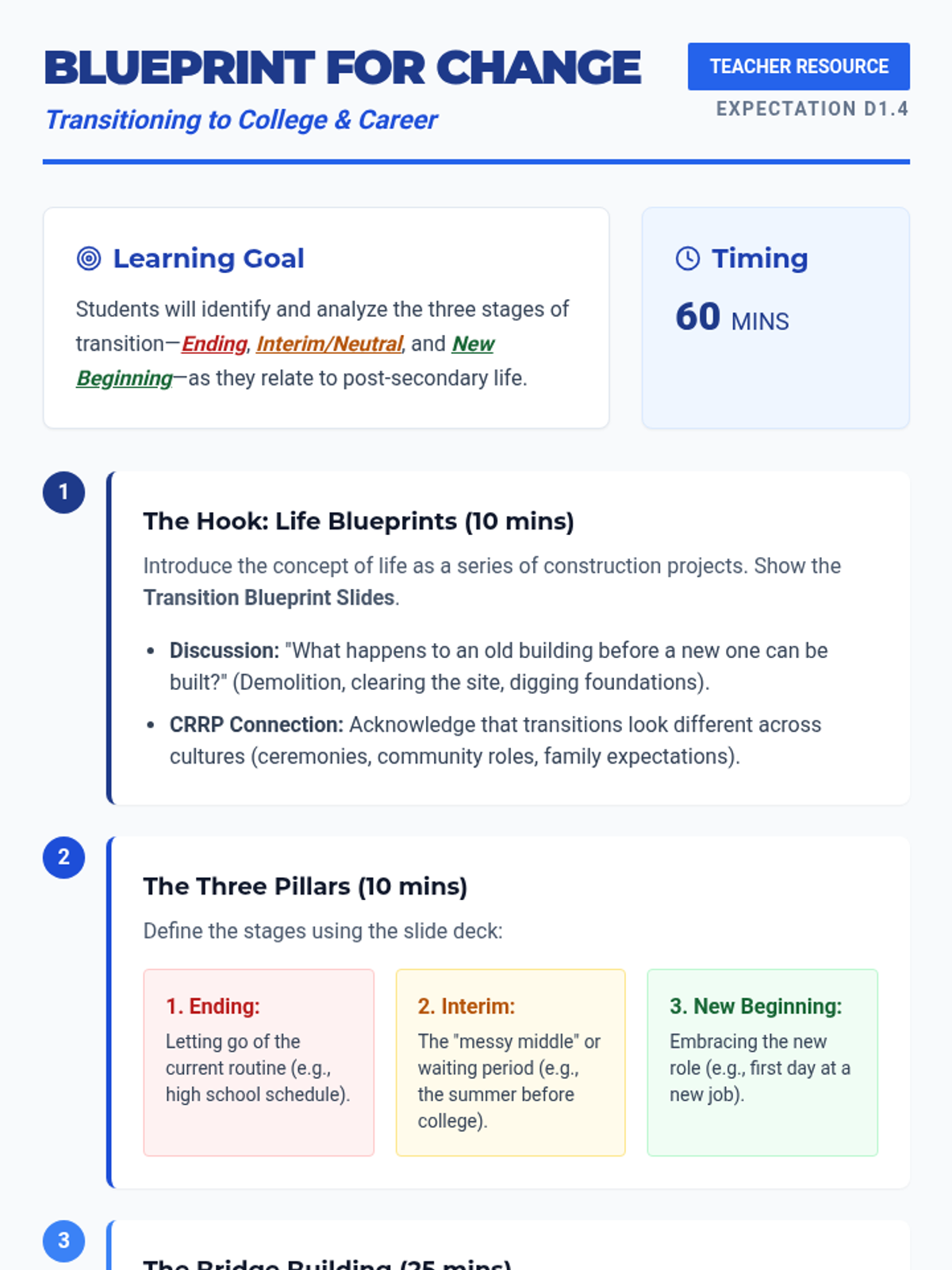
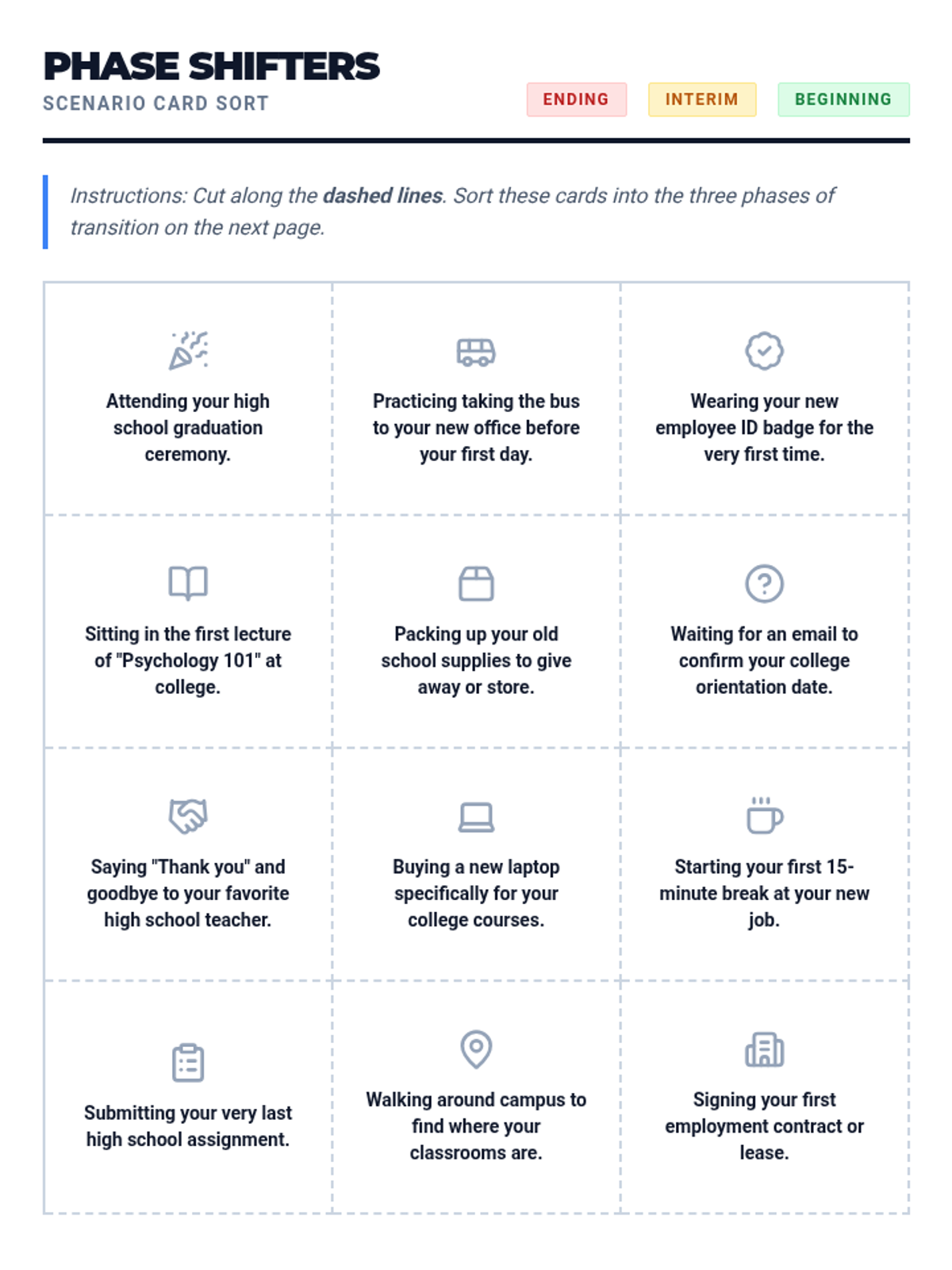
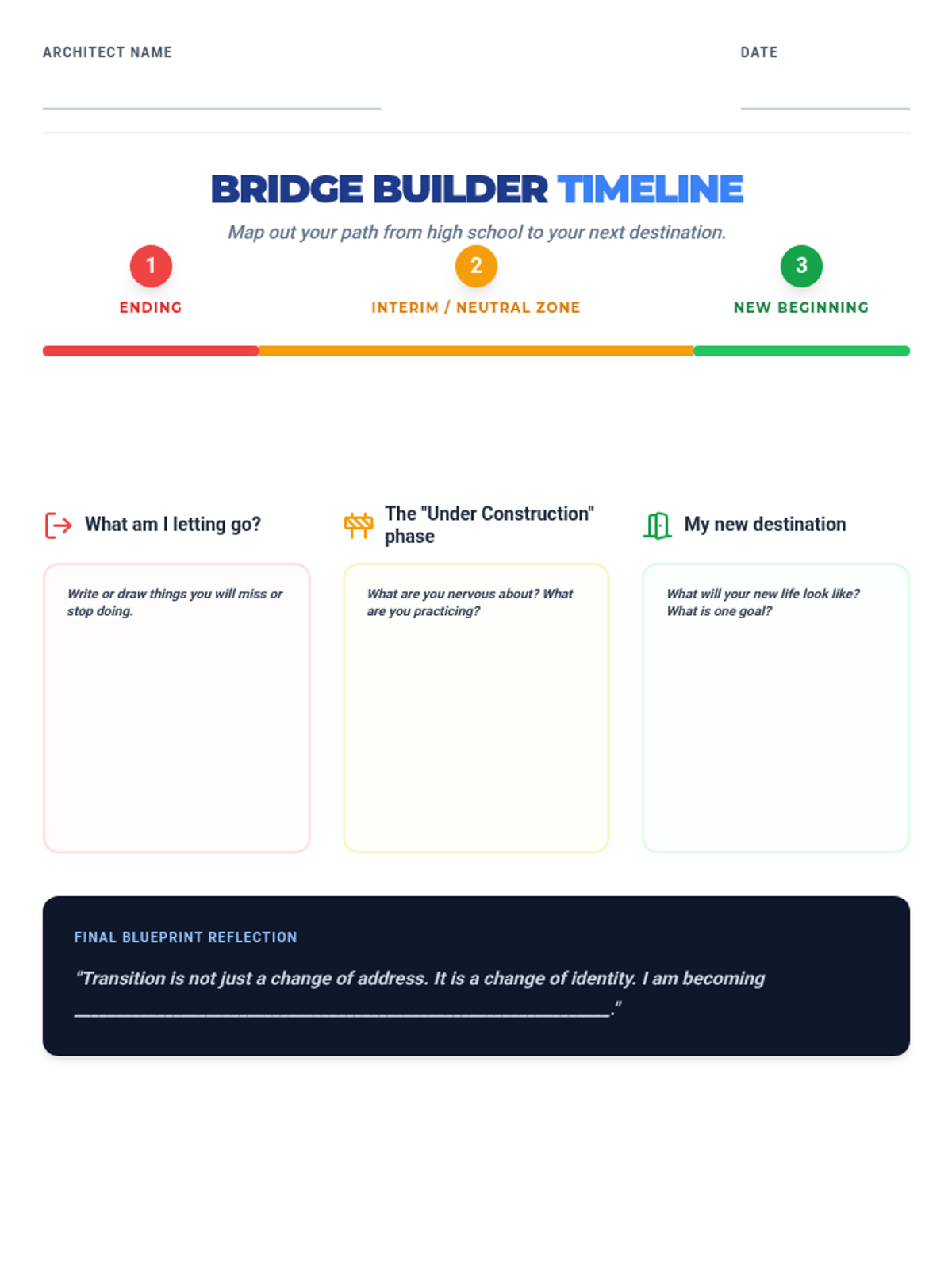
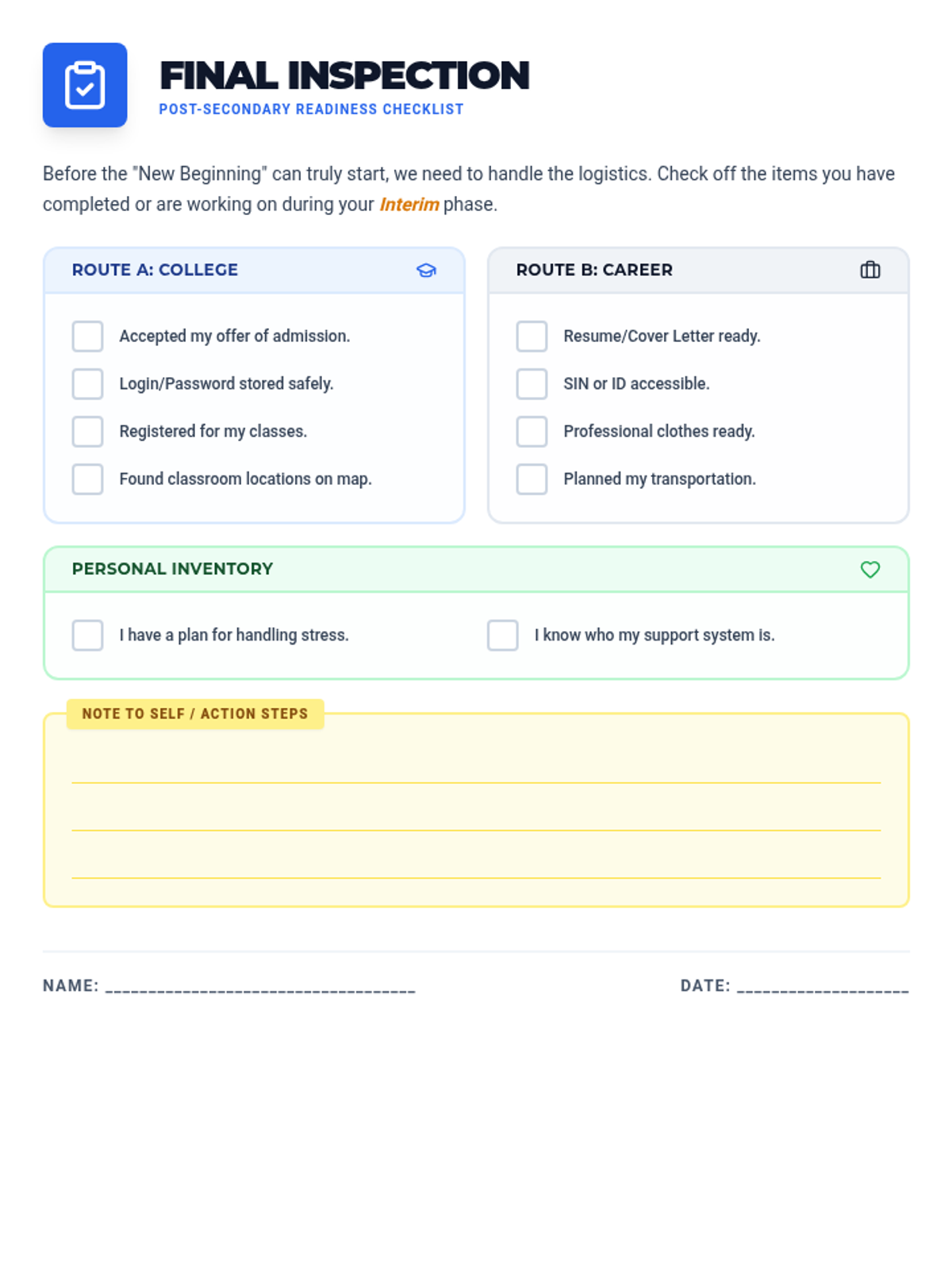
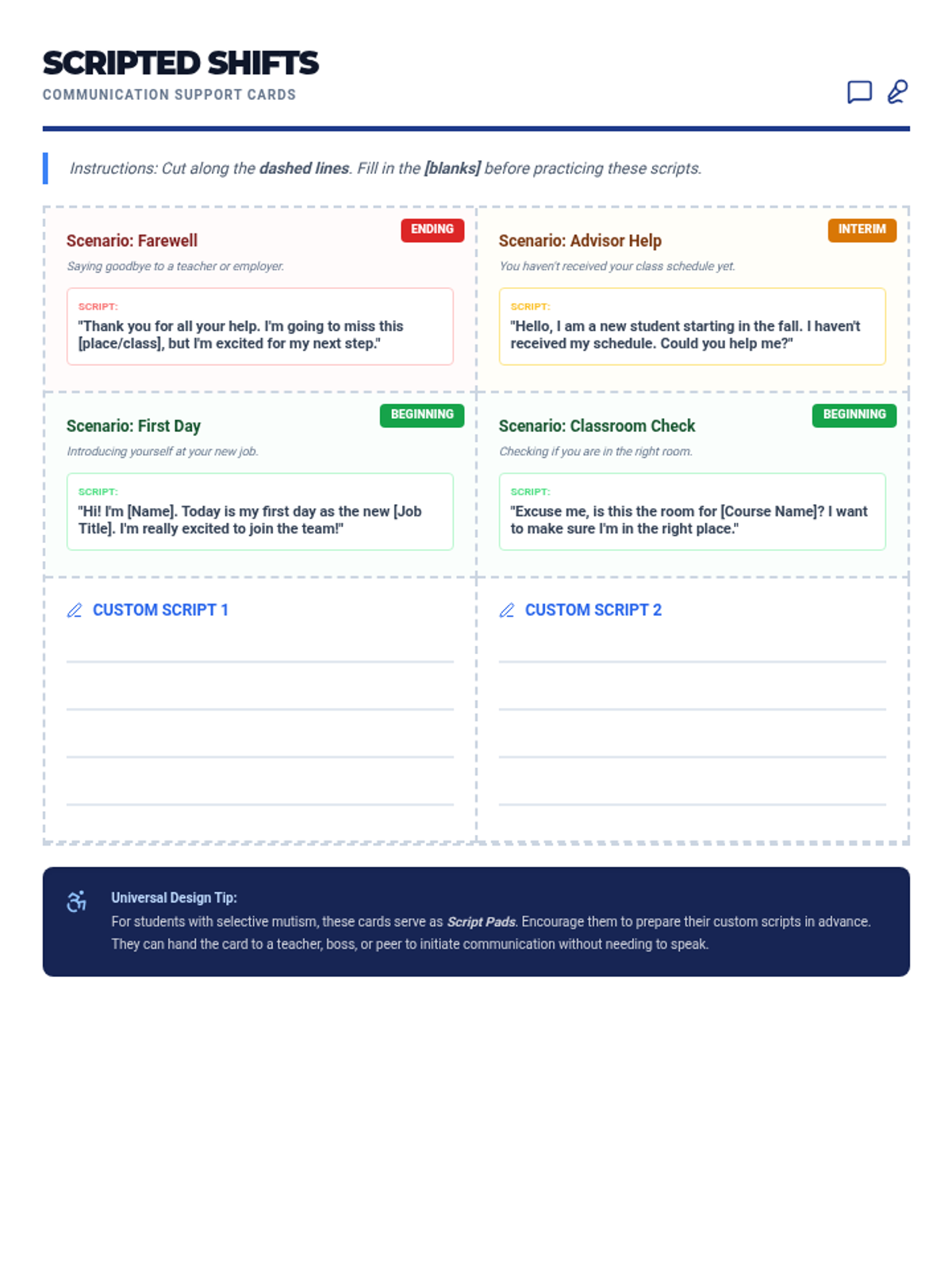
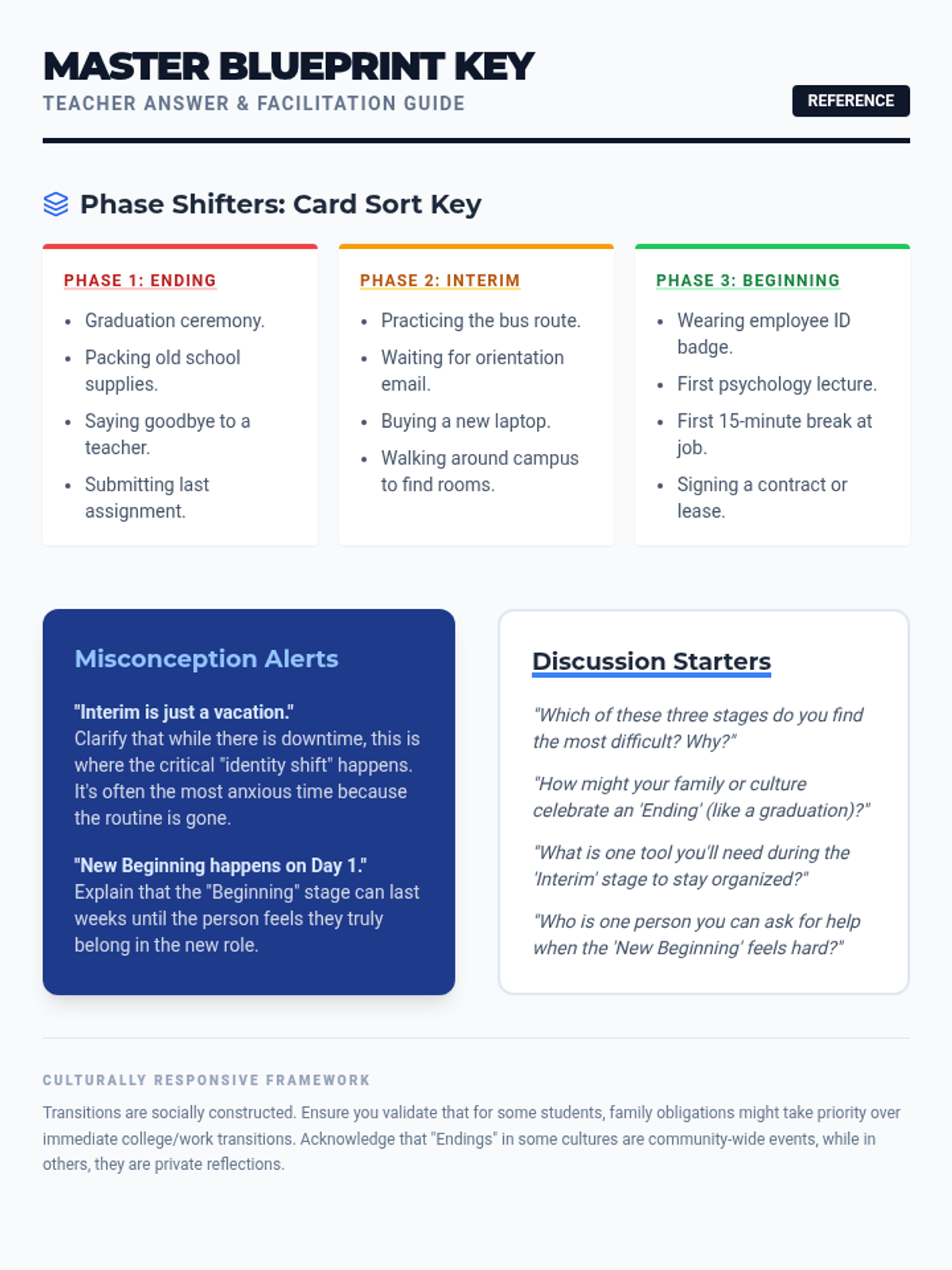
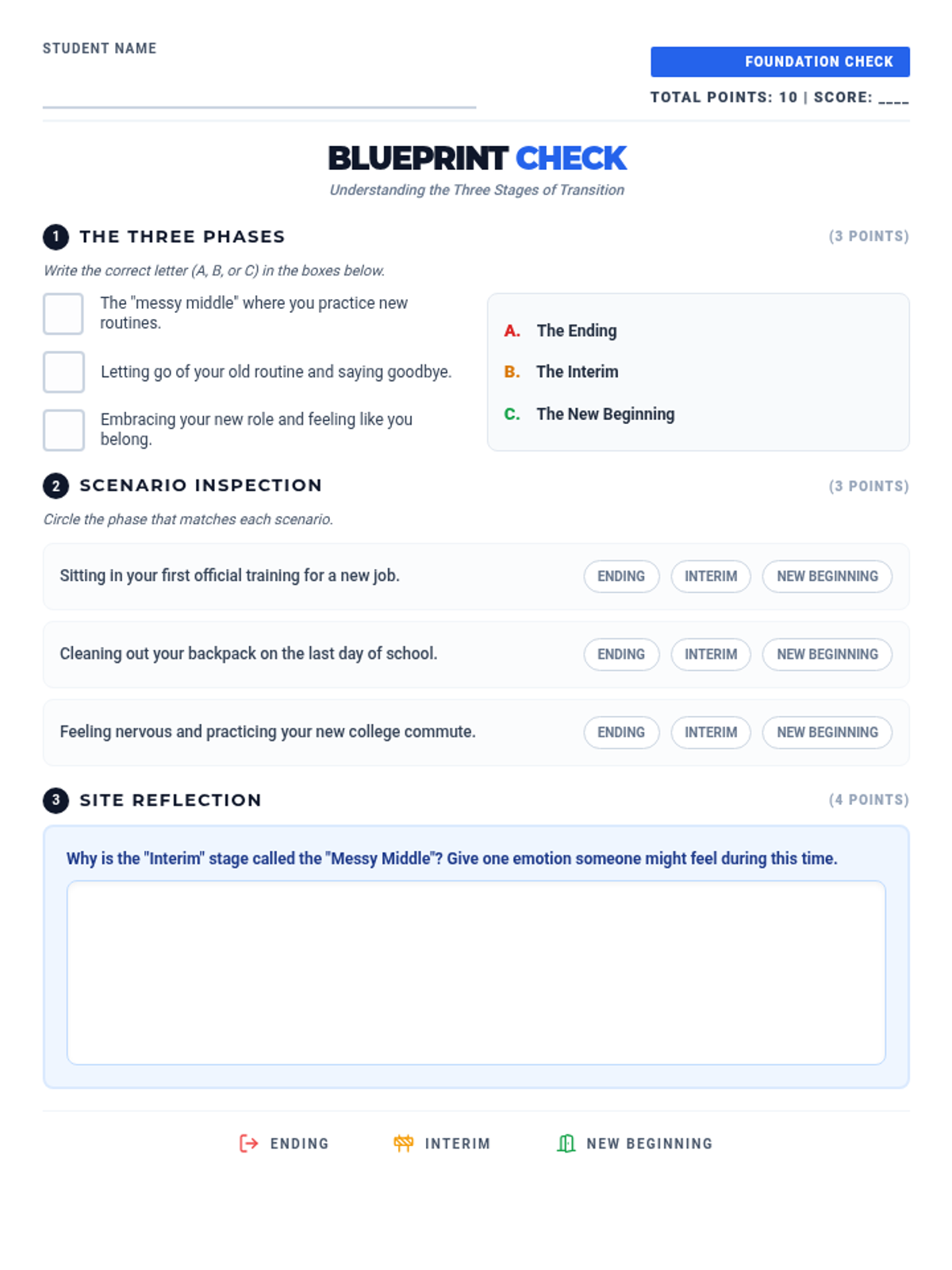
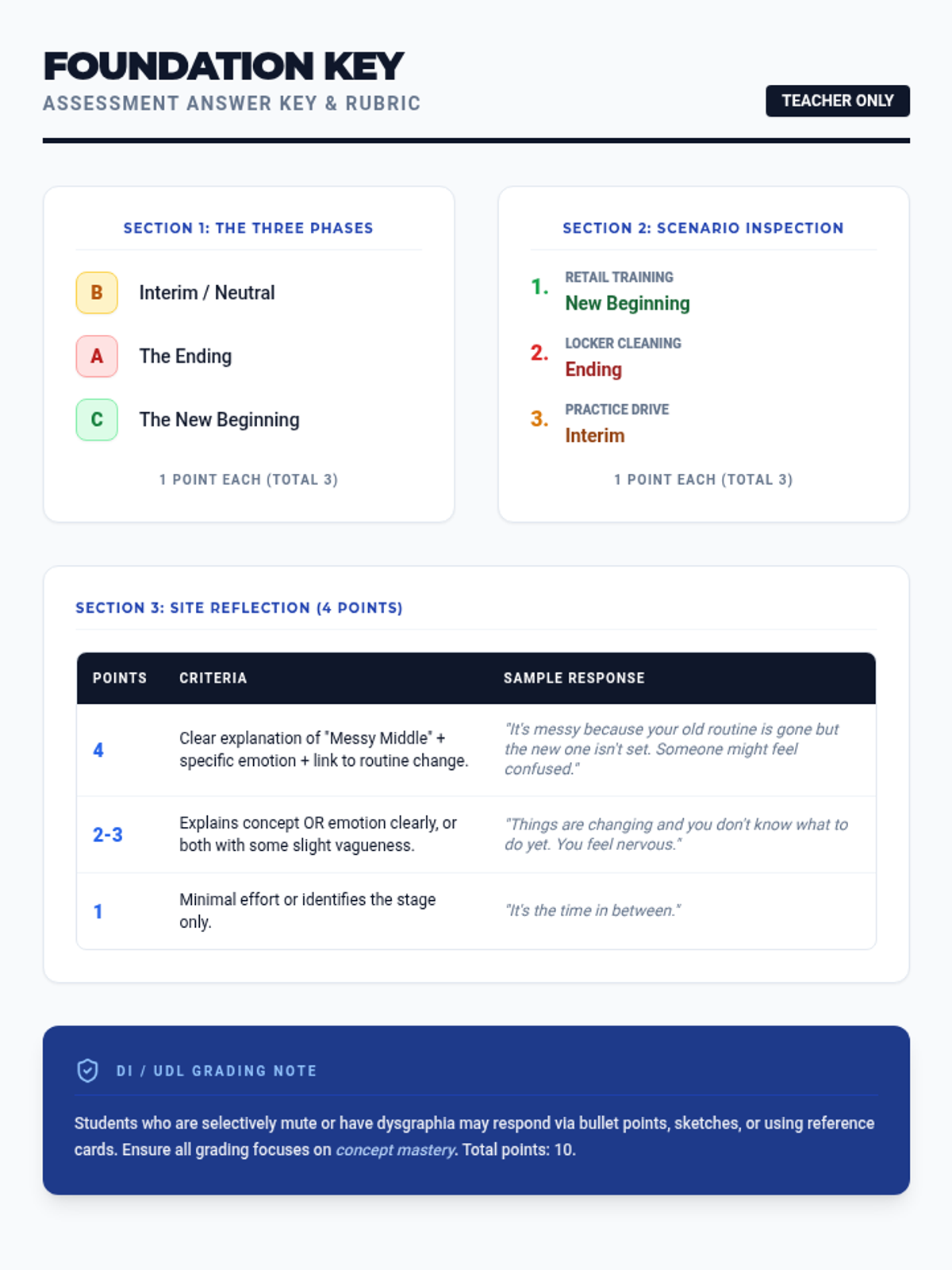
A comprehensive 60-minute lesson focused on the three stages of transition (Ending, Interim, and New Beginning) specifically tailored for students moving toward college or the workplace. This lesson employs UDL and DI strategies to support students with LD, autism, and those who are selectively mute through visual mapping and structured role-play.
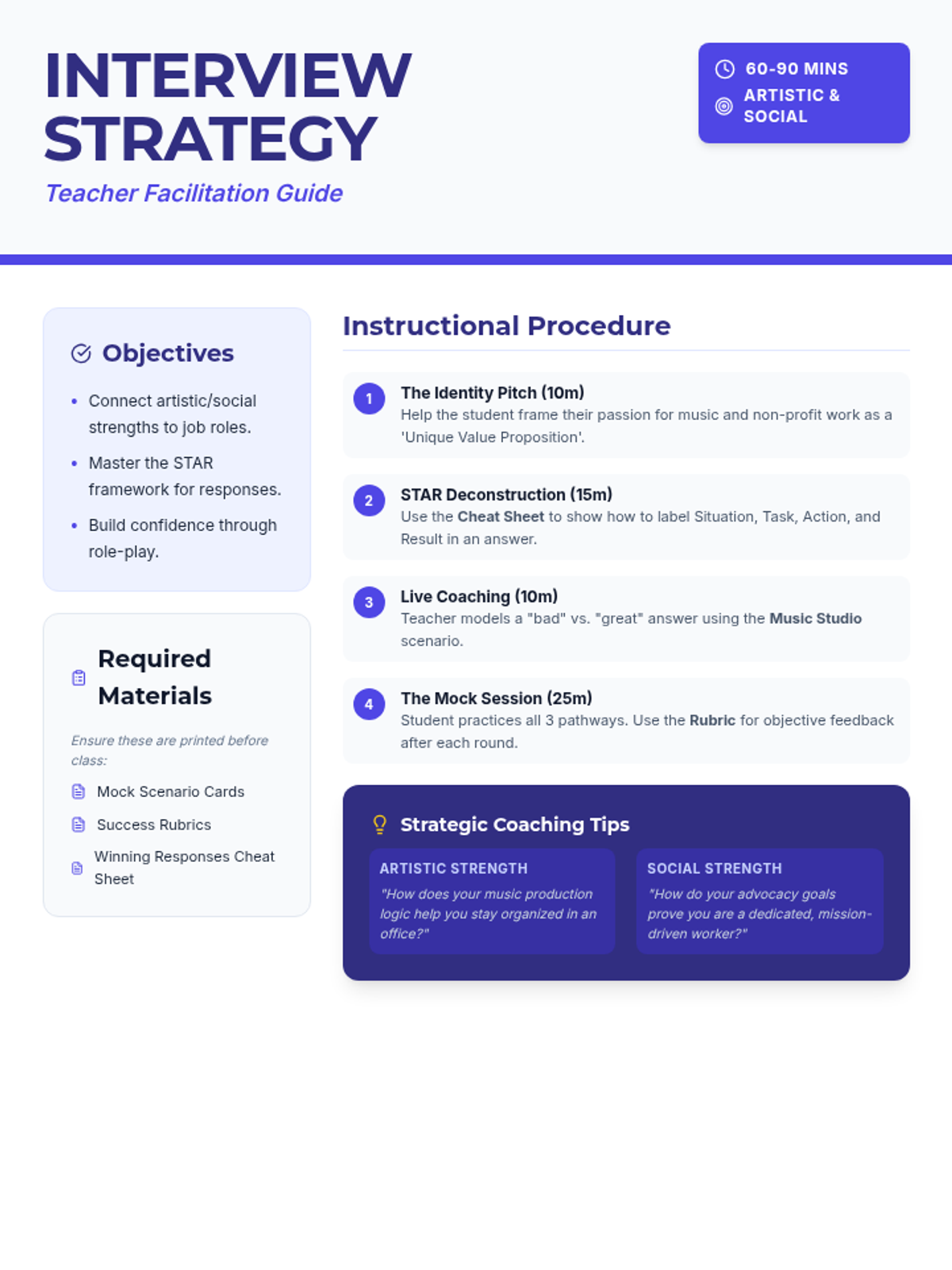
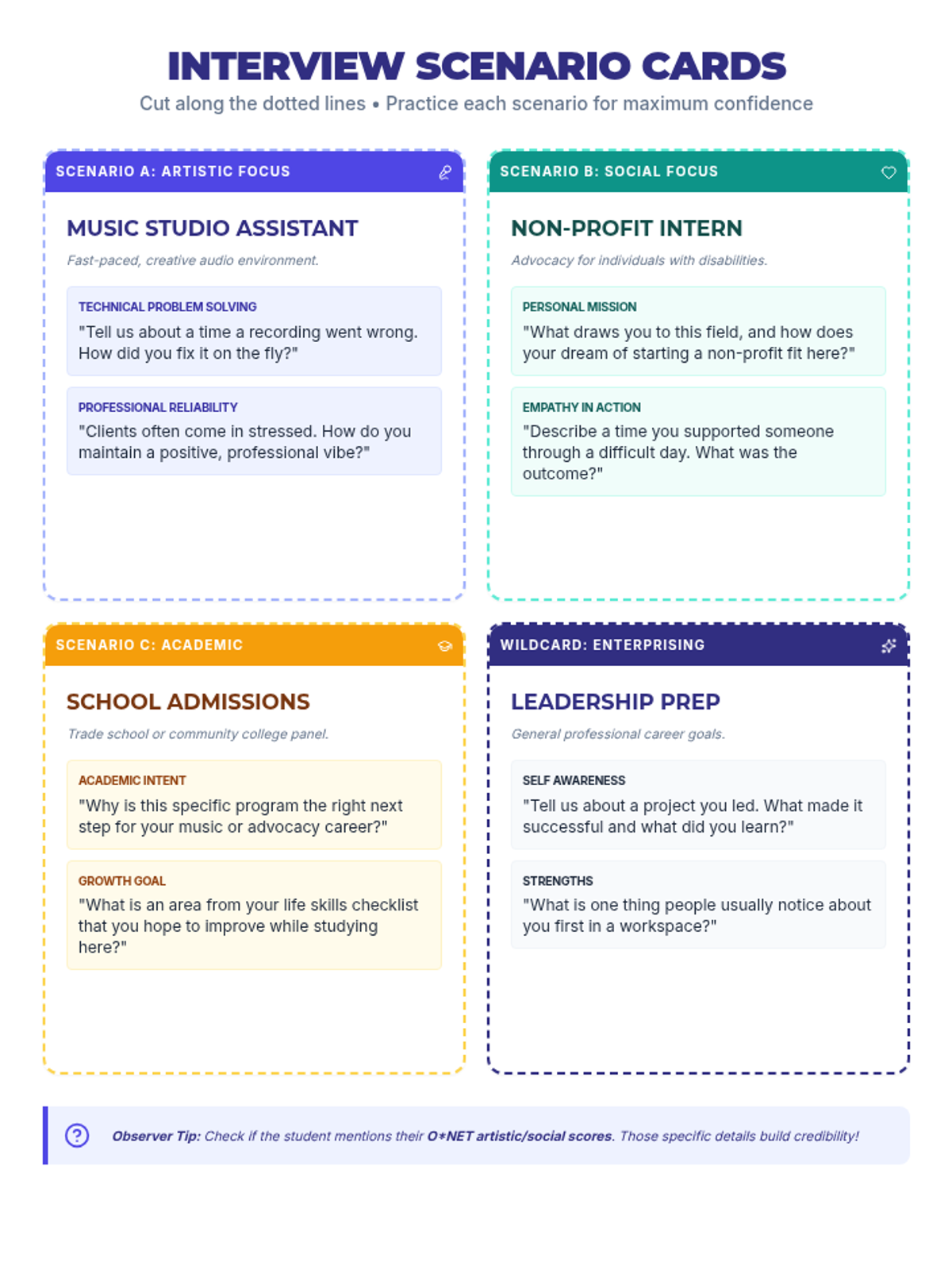
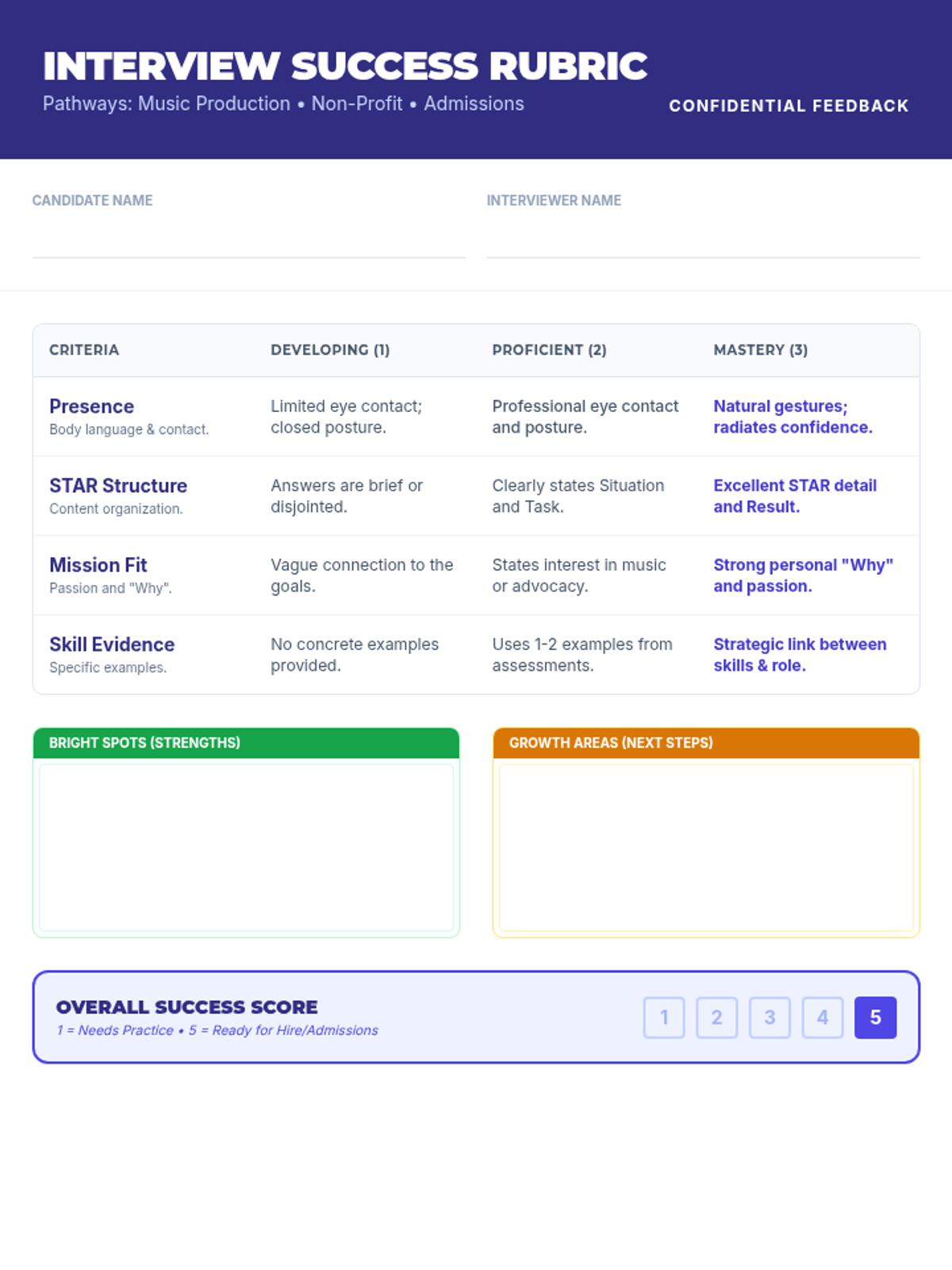
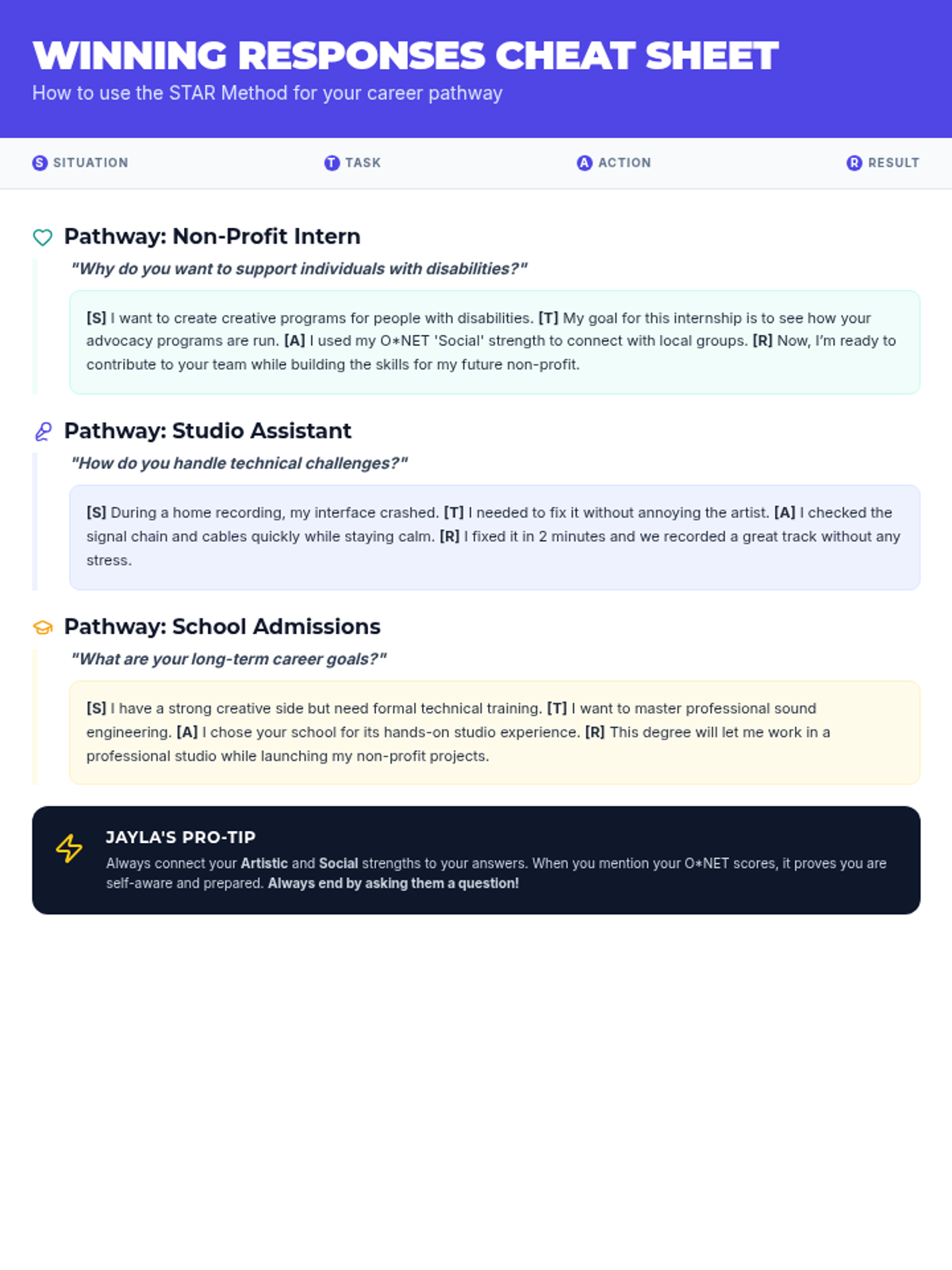
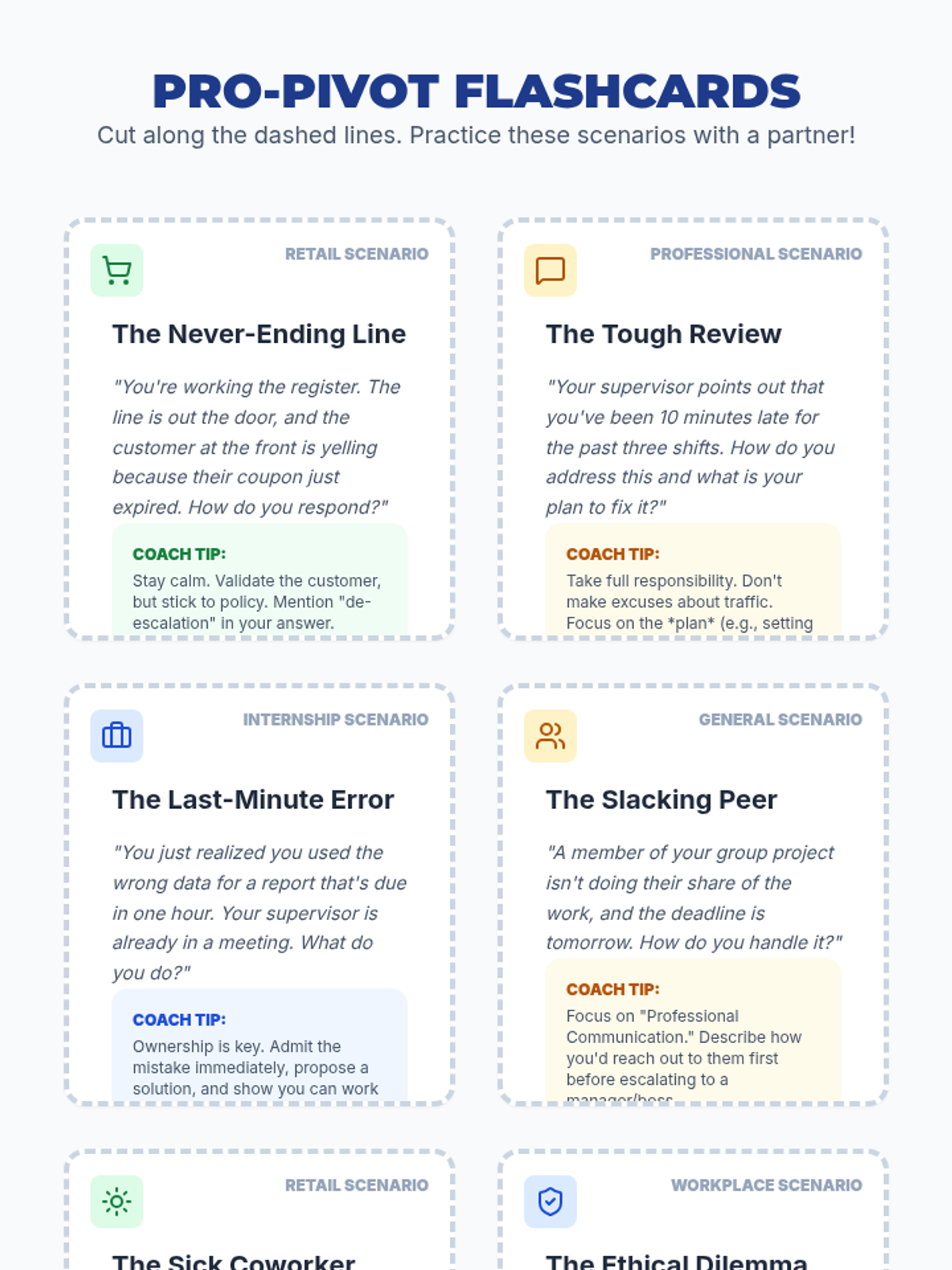
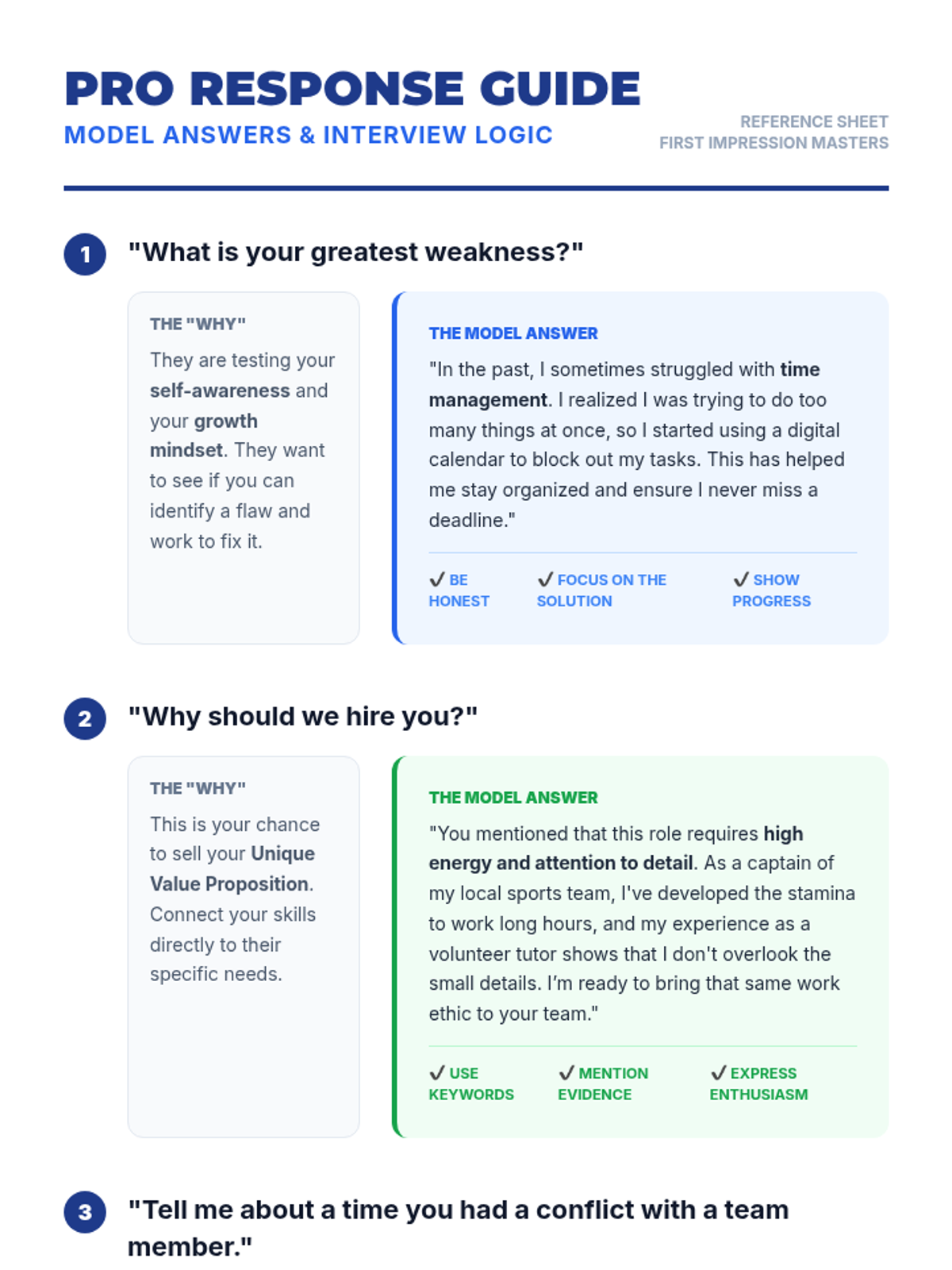
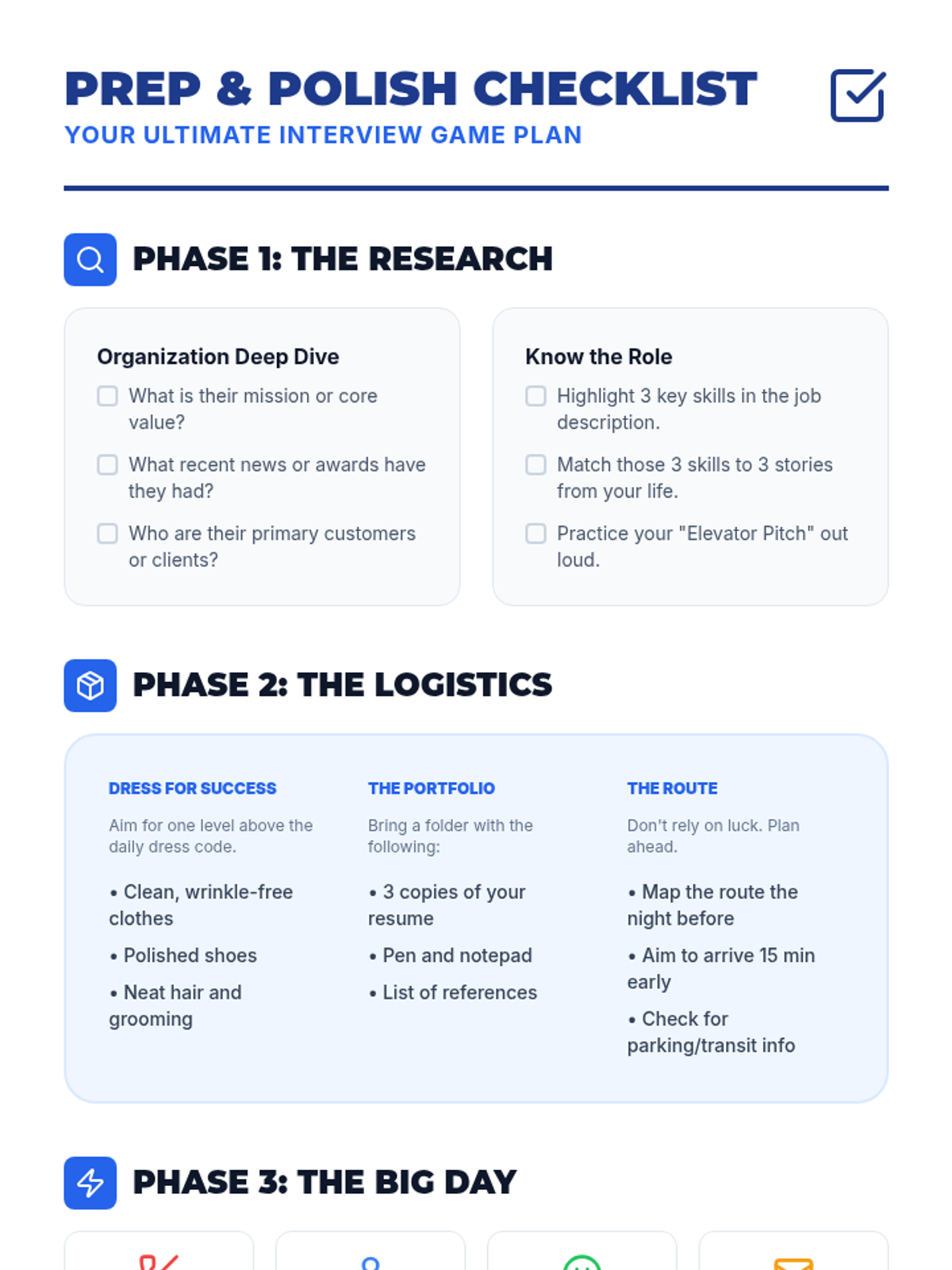
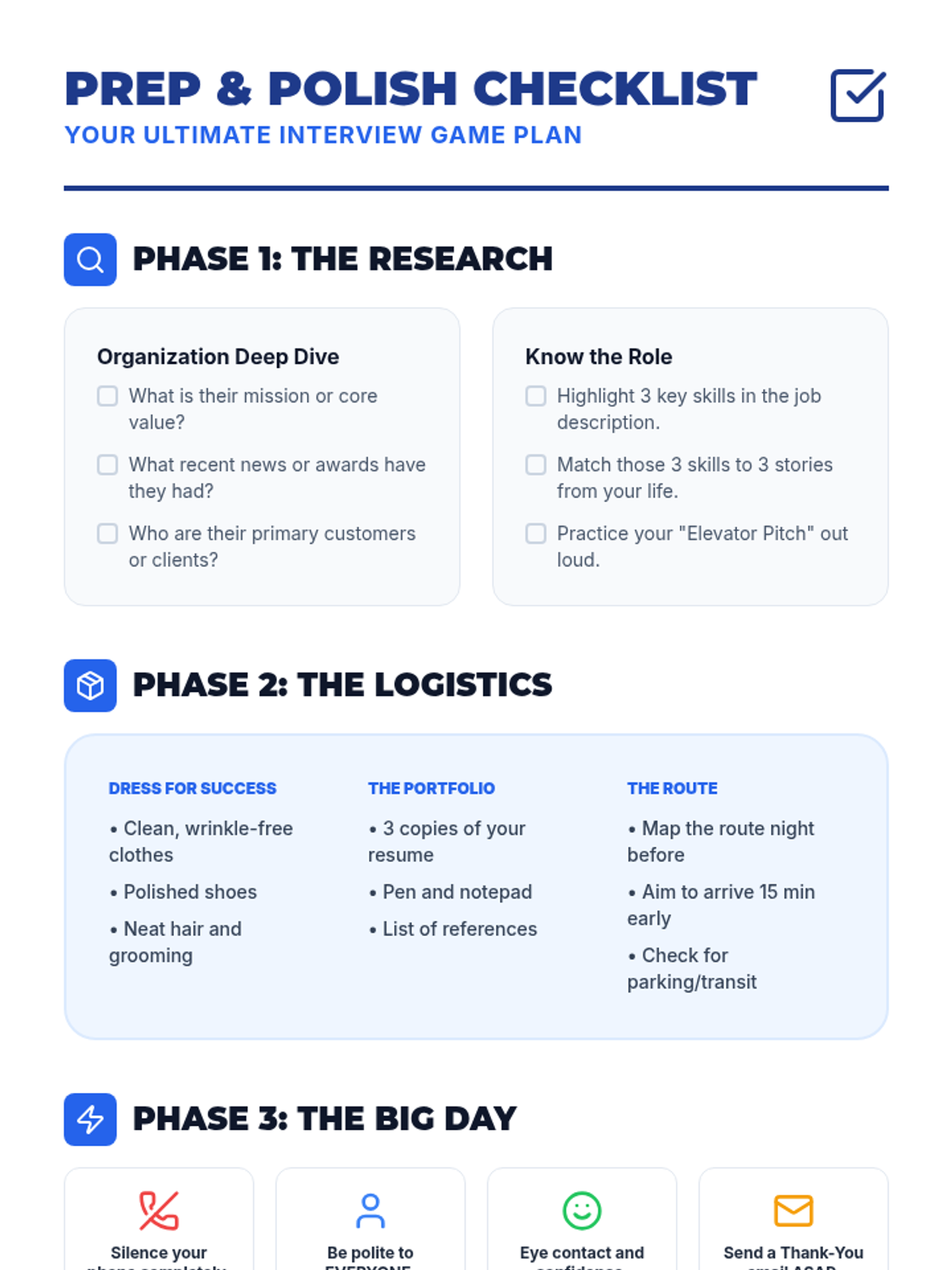
A comprehensive lesson designed to prepare students for interviews in non-profit, creative, and academic settings, featuring tailored role-play scenarios and feedback tools.
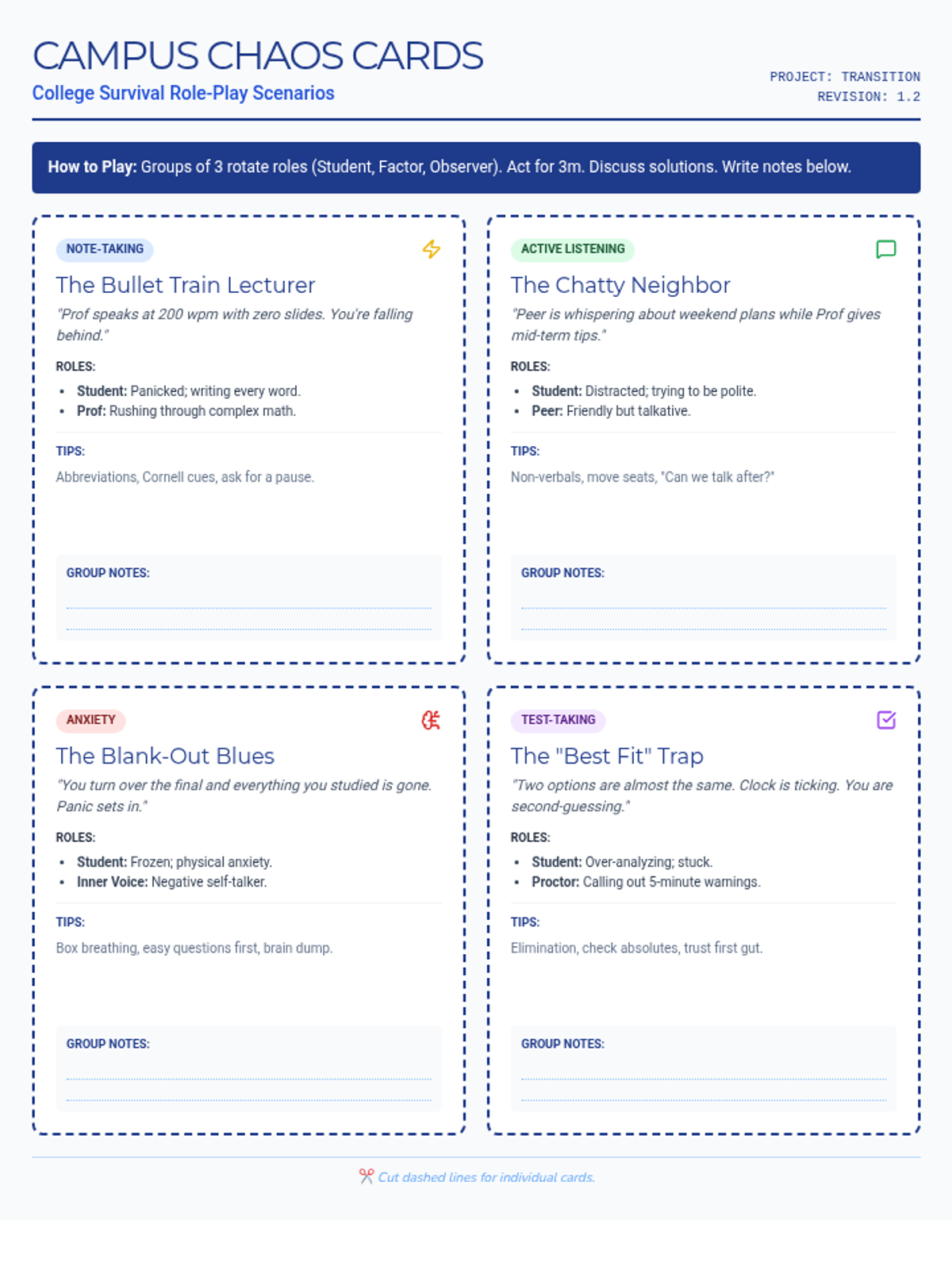
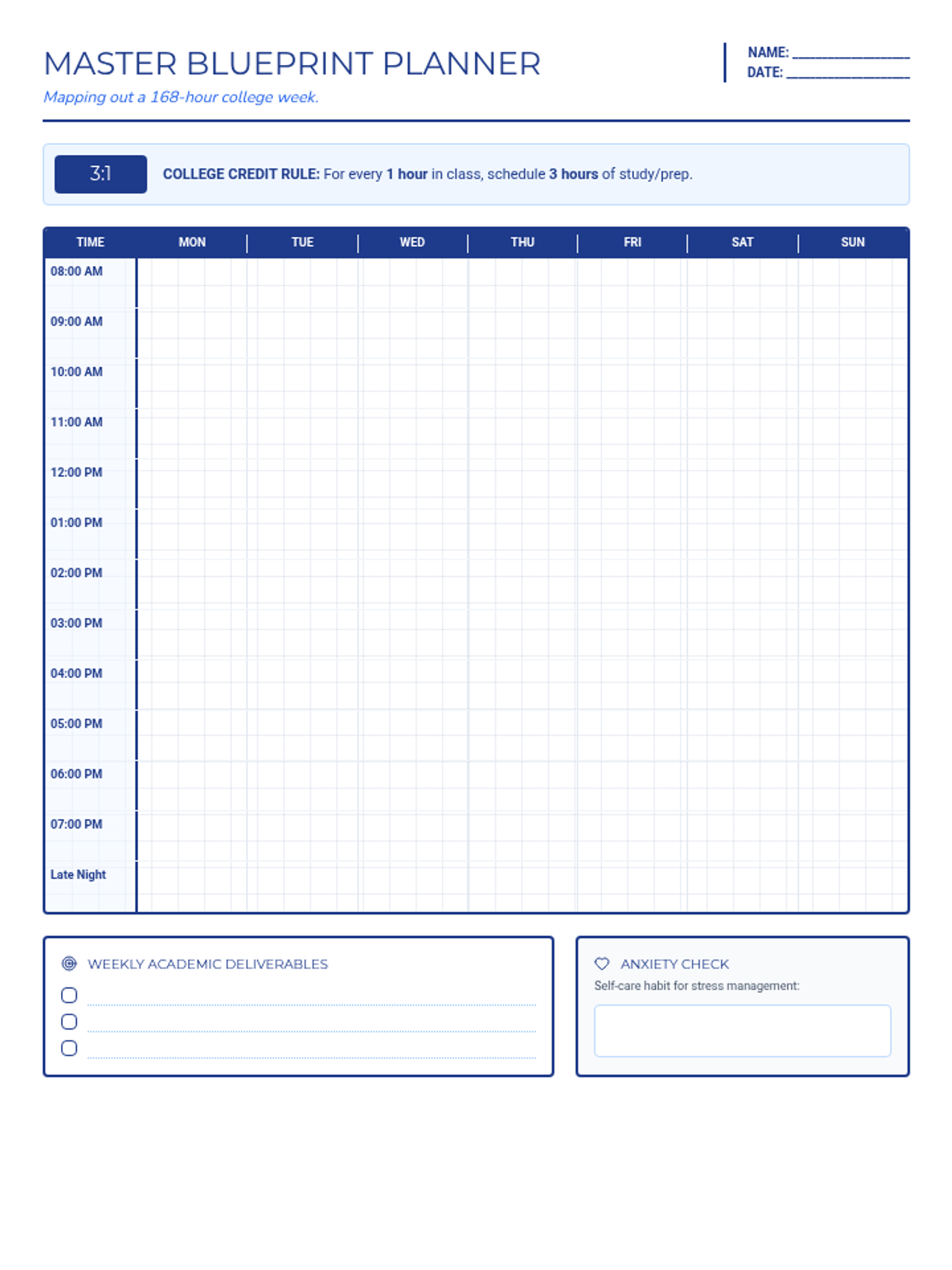
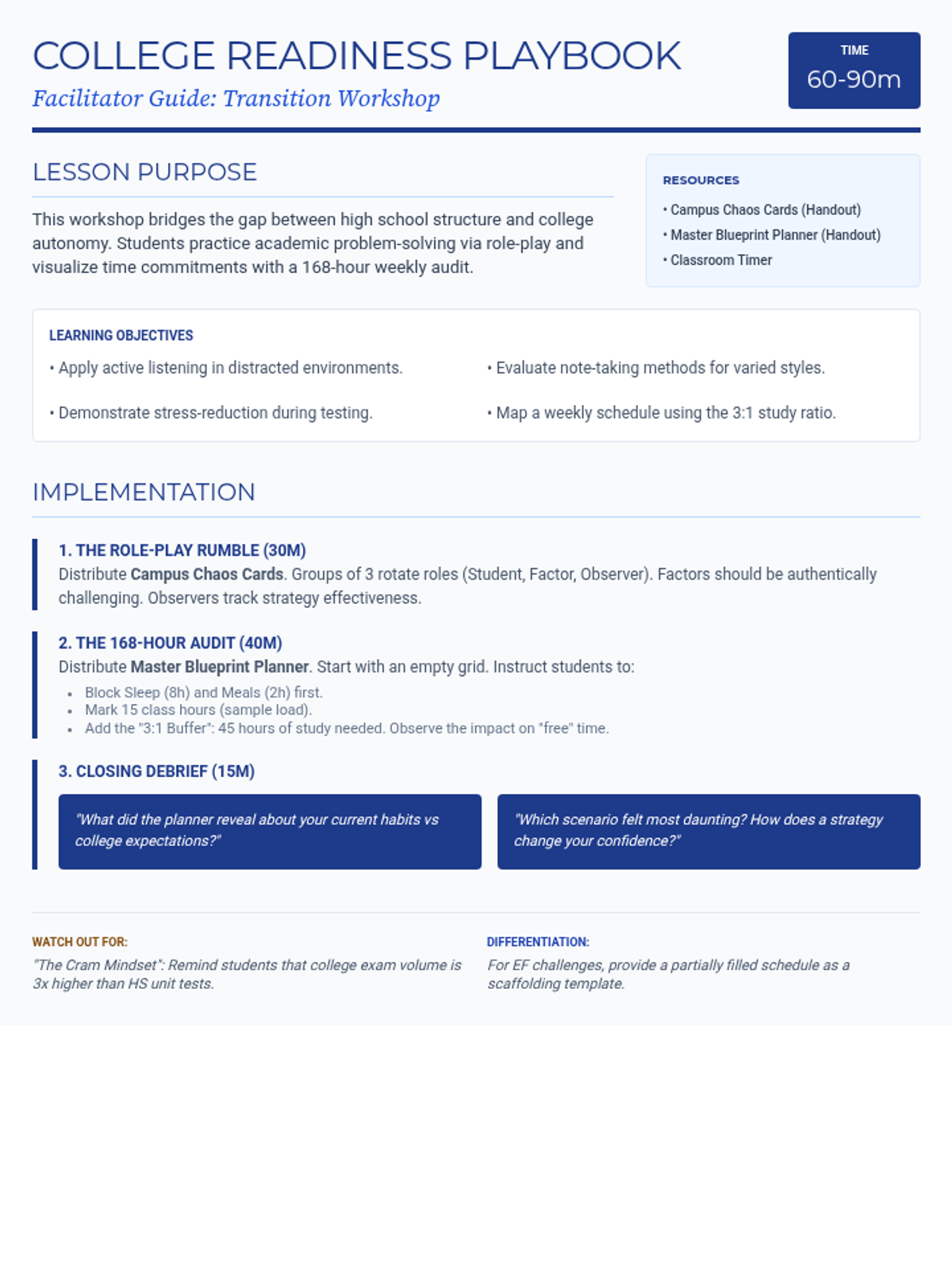
A transition-focused workshop helping high school seniors master the academic demands of college through immersive role-play and proactive scheduling.
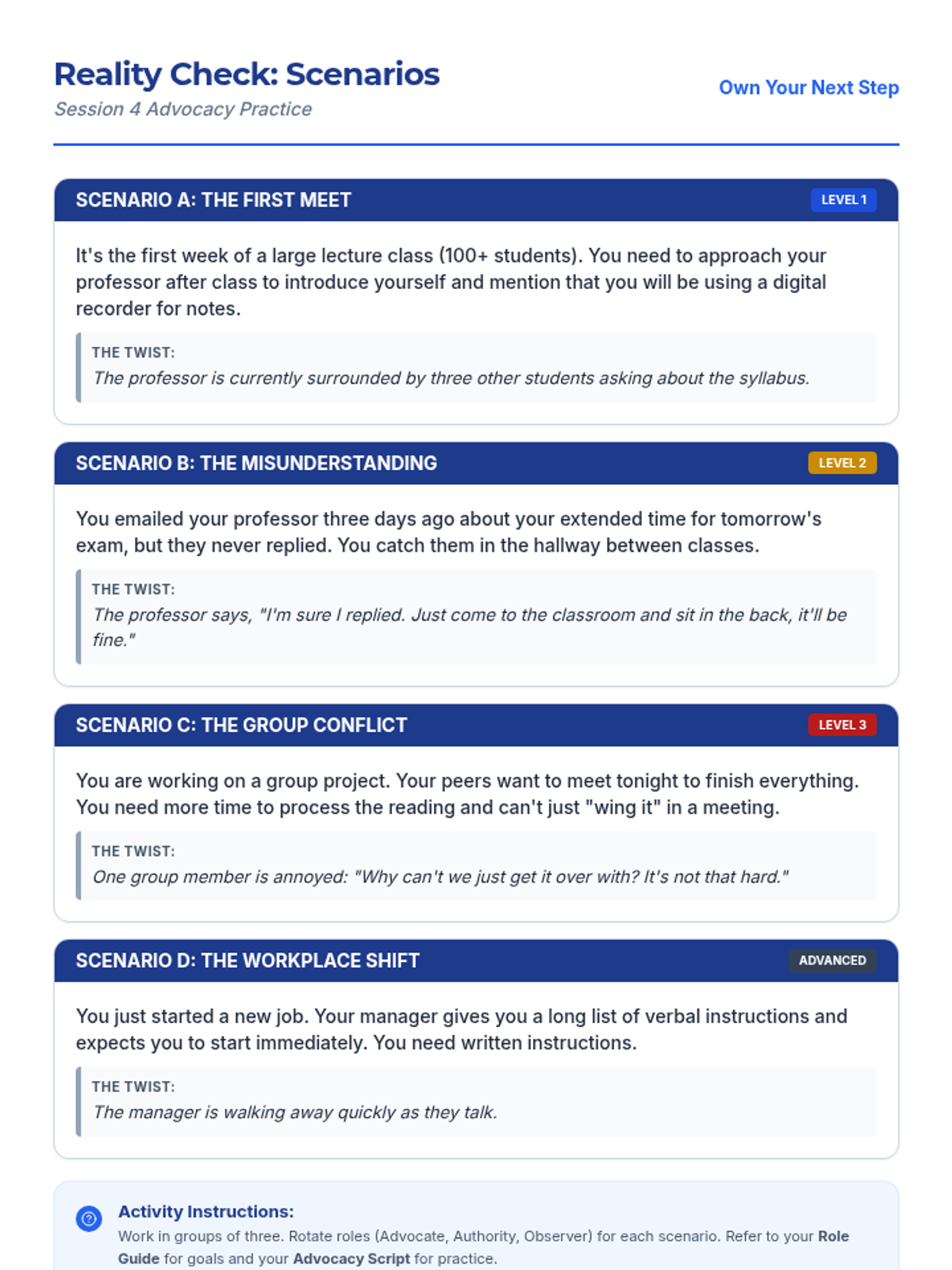
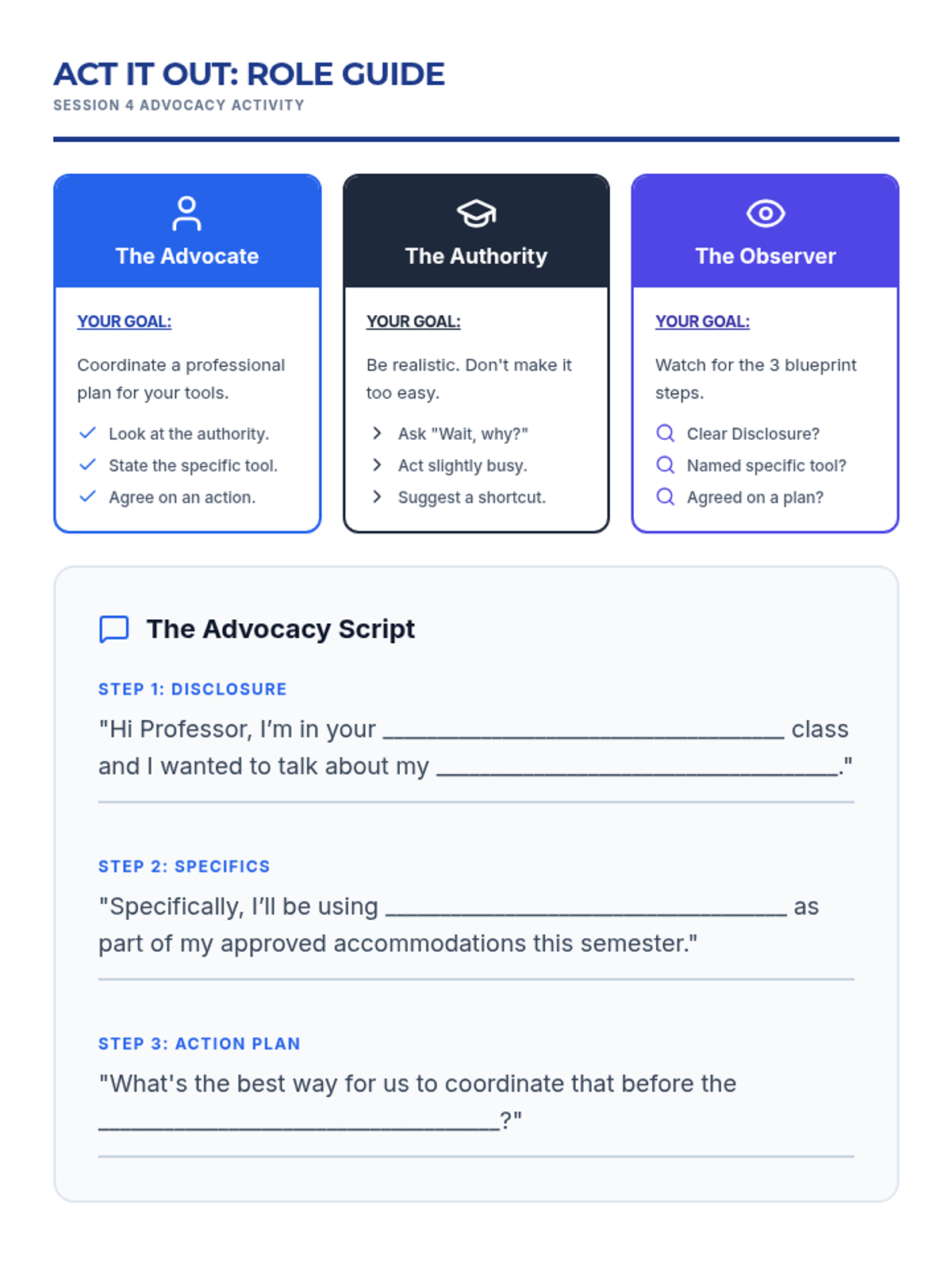
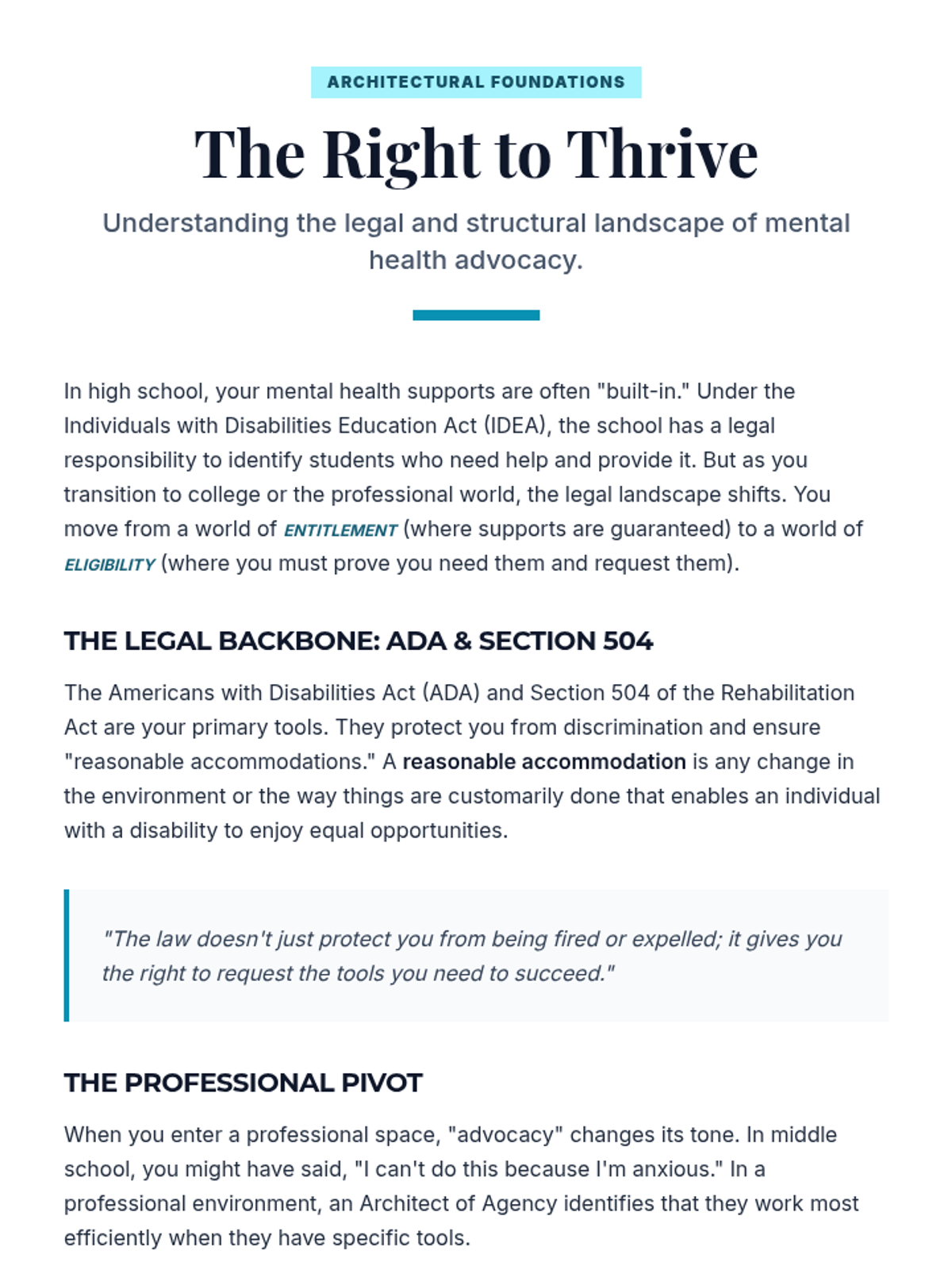
A focused session on postsecondary self-advocacy, teaching students with learning differences how to communicate their needs to professors and employers. The lesson emphasizes the transition from high school's automatic support to the self-initiated systems of college and the workplace.
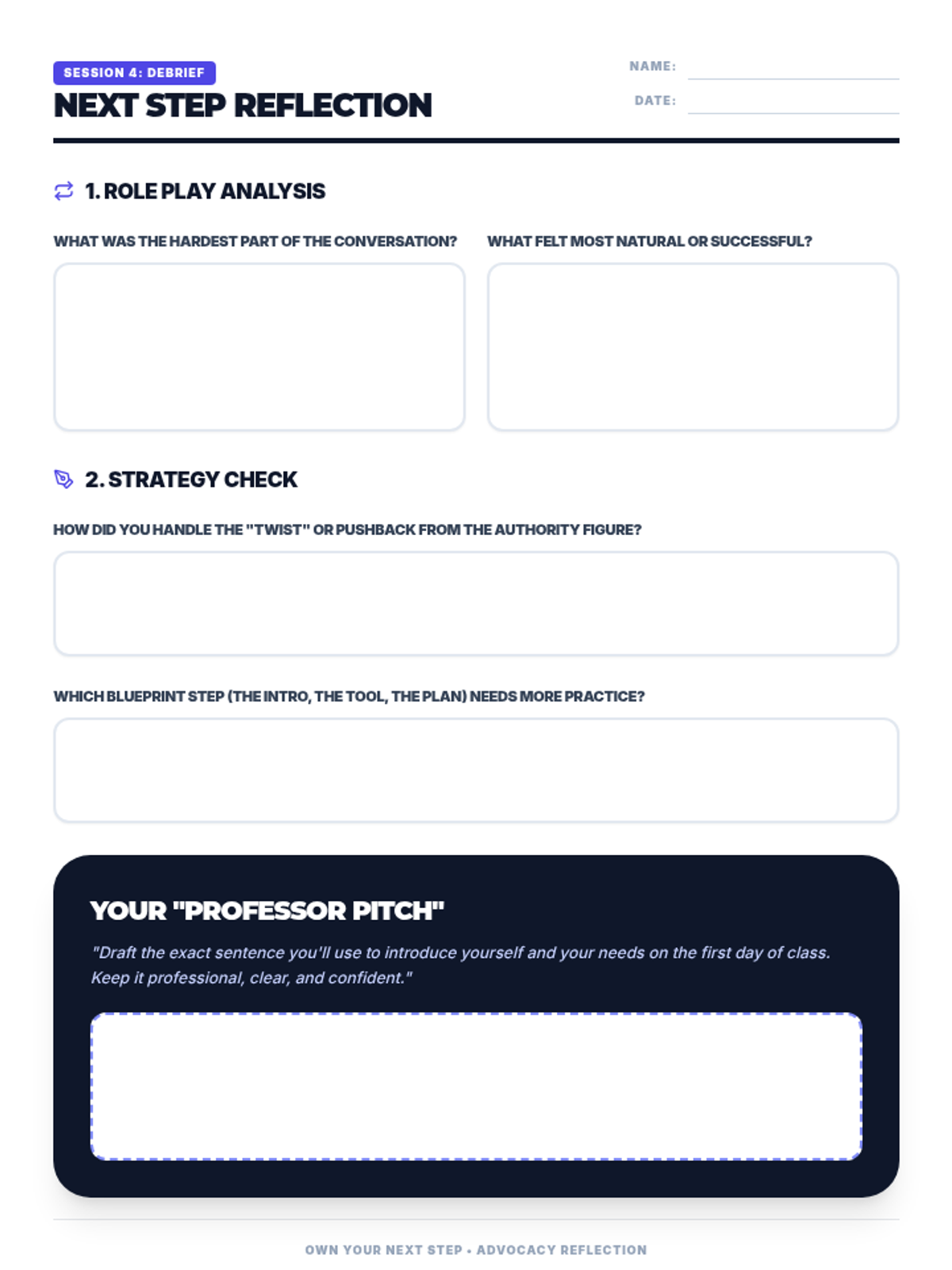
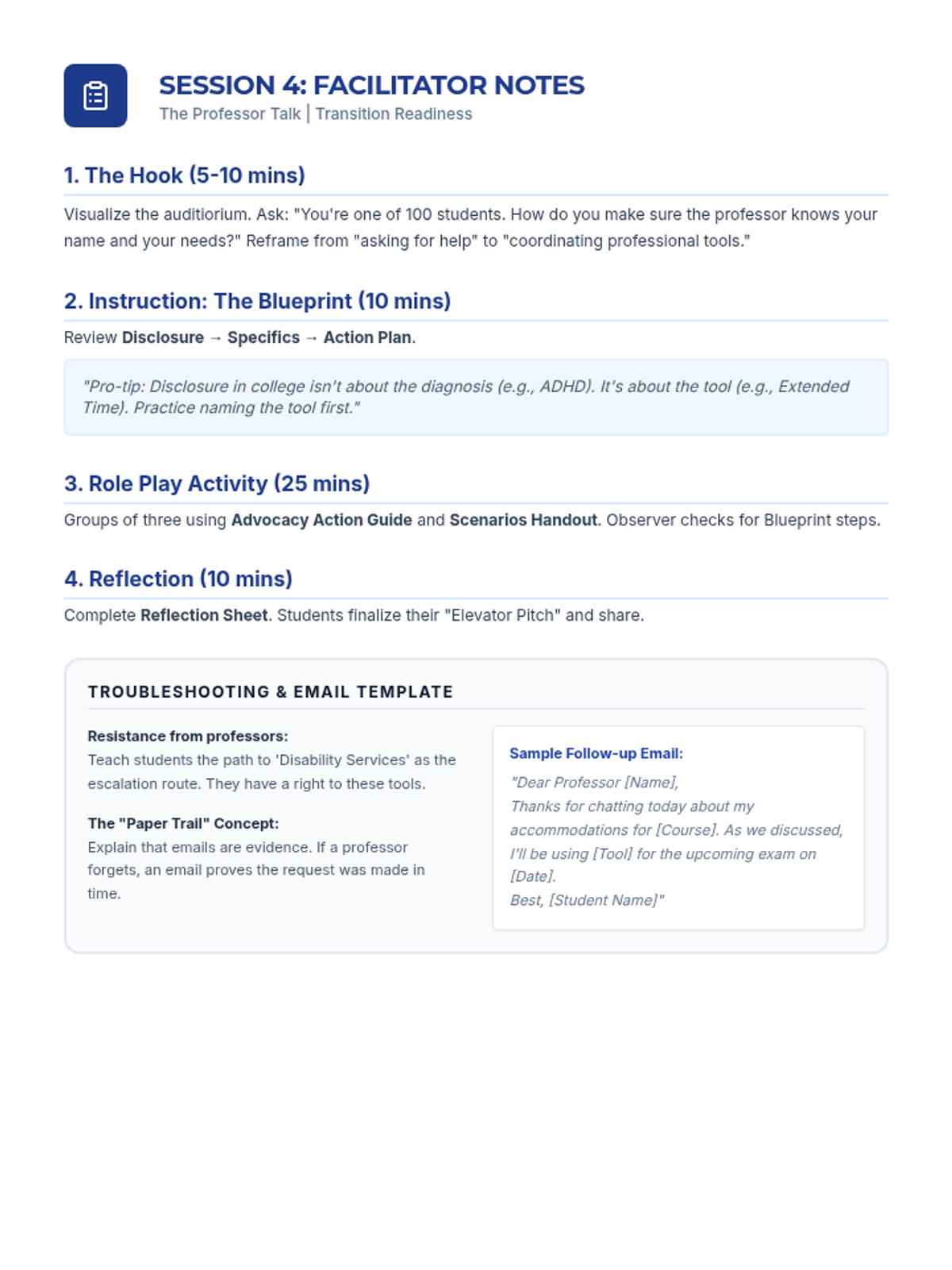
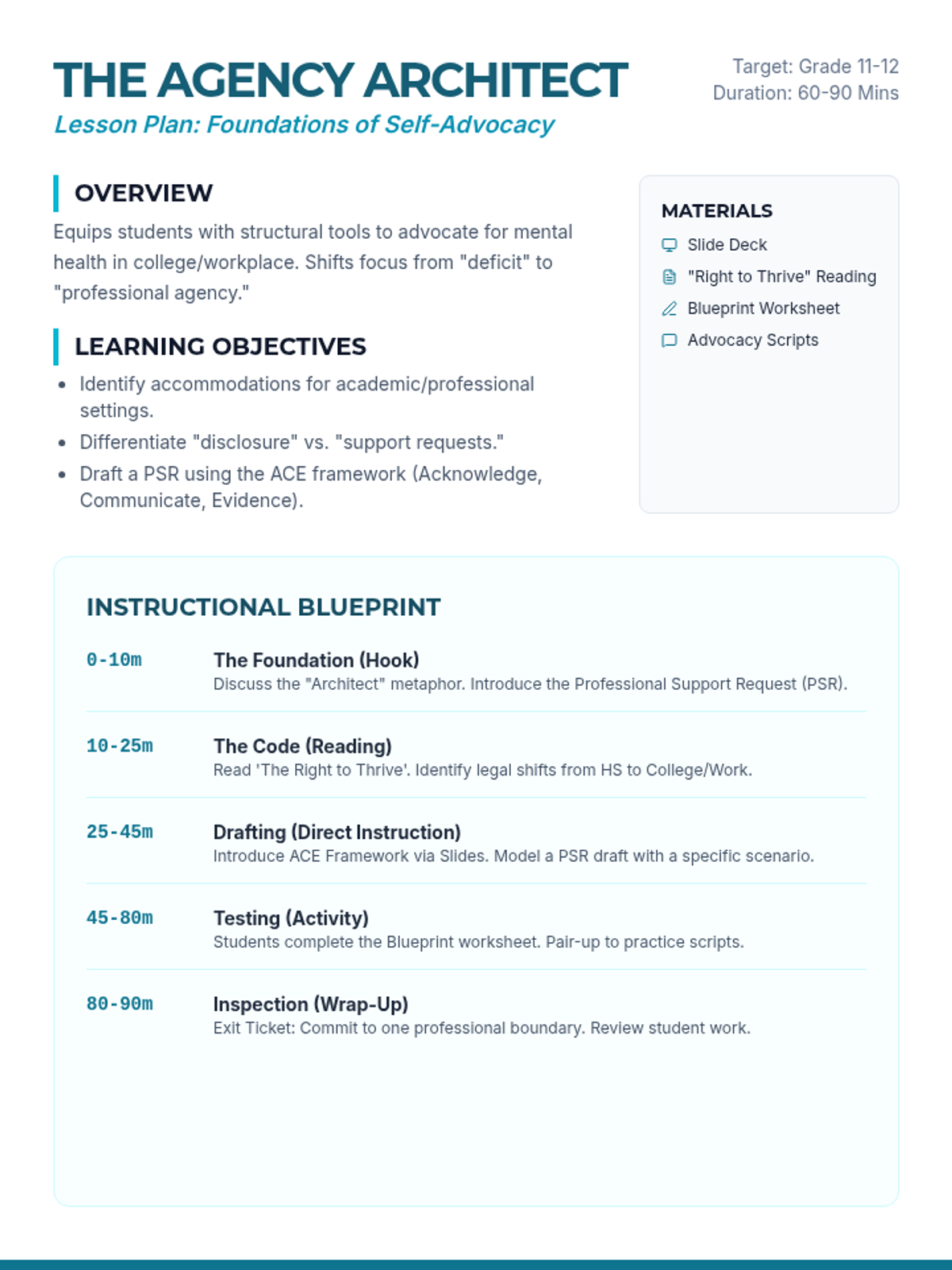
A high school session focused on empowering students to advocate for their mental health needs in professional and academic settings through the creation of 'Professional Support Requests'.
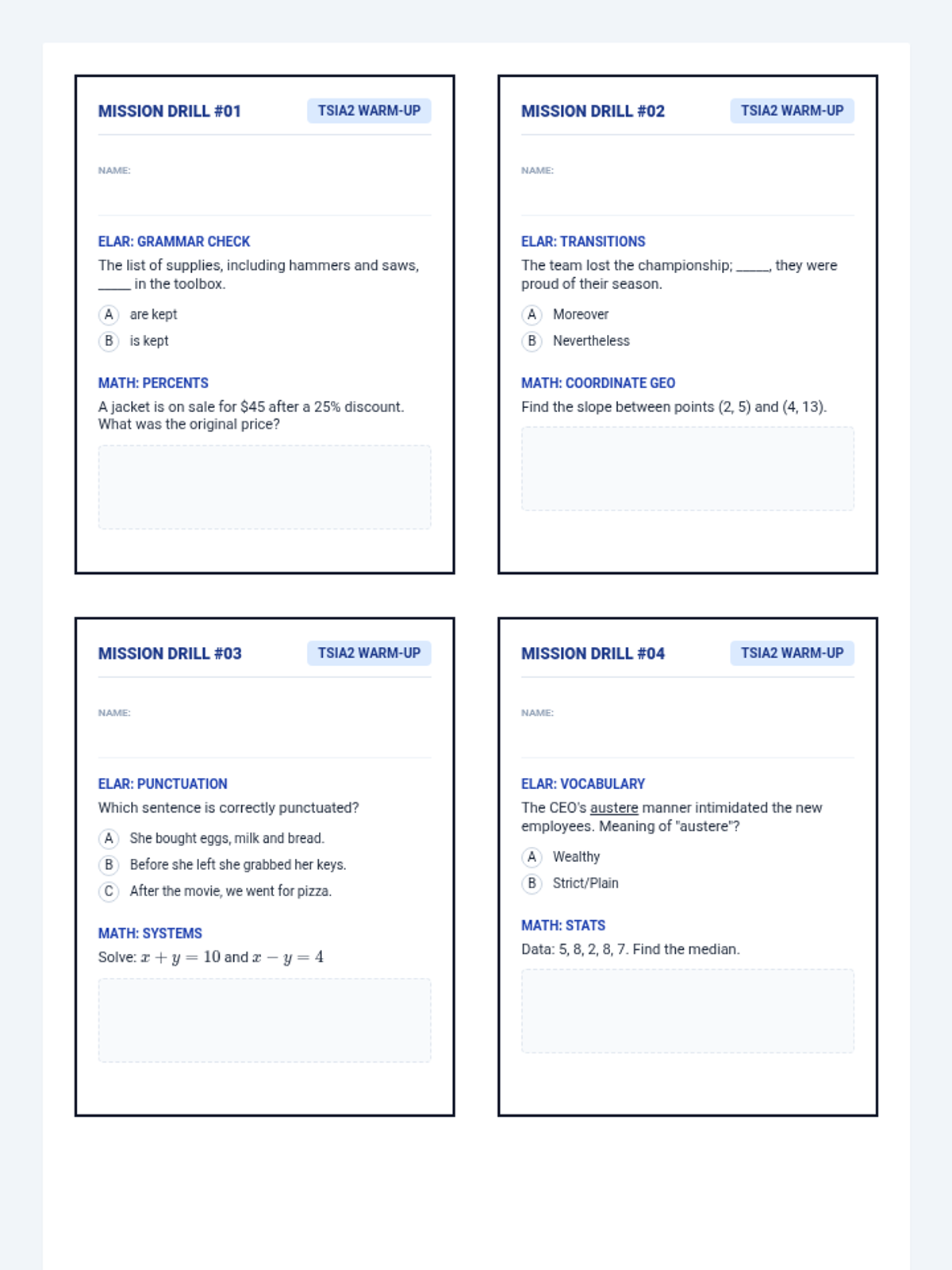
Short, focused practice sessions to reinforce concepts and track progress.
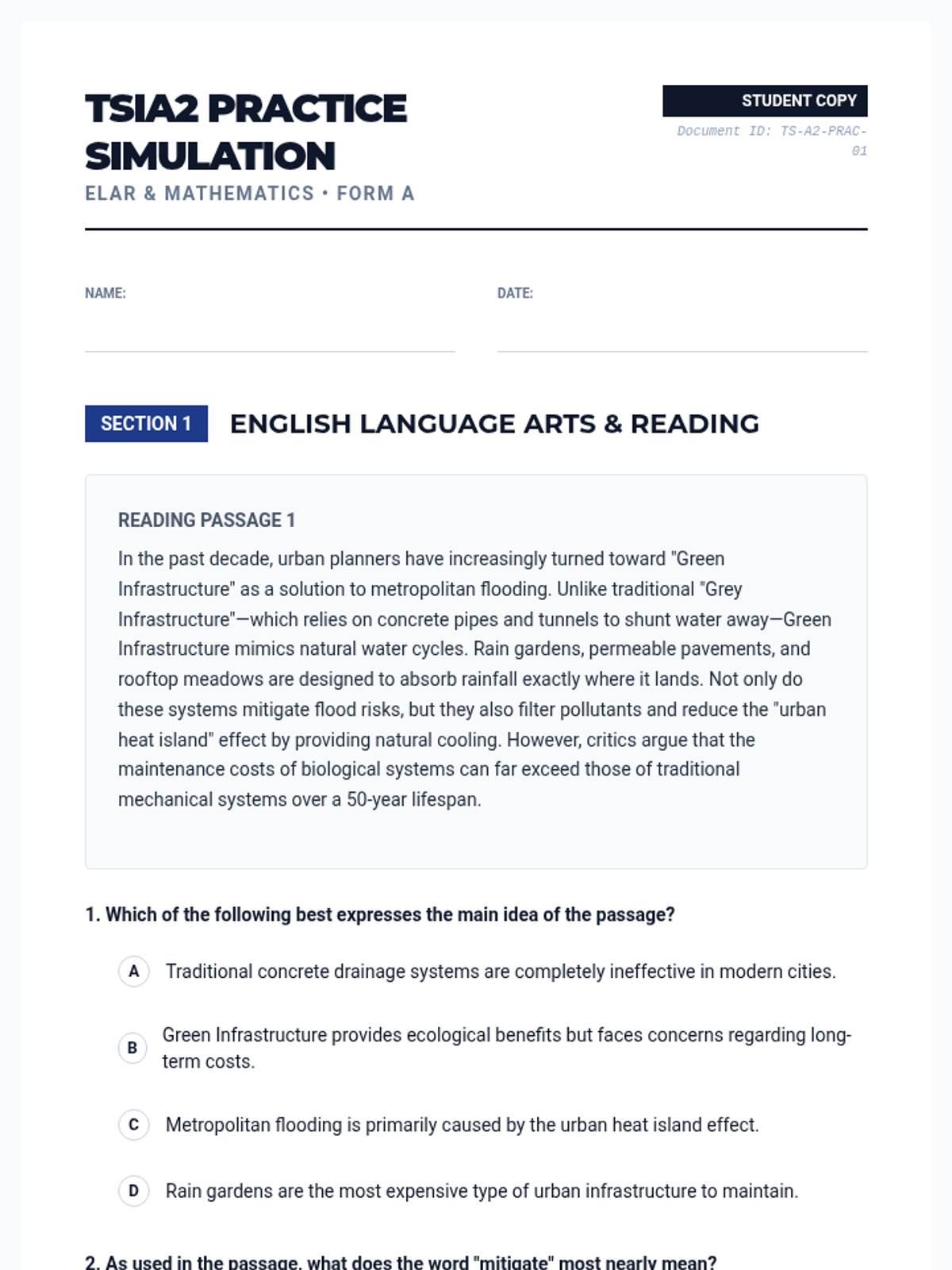
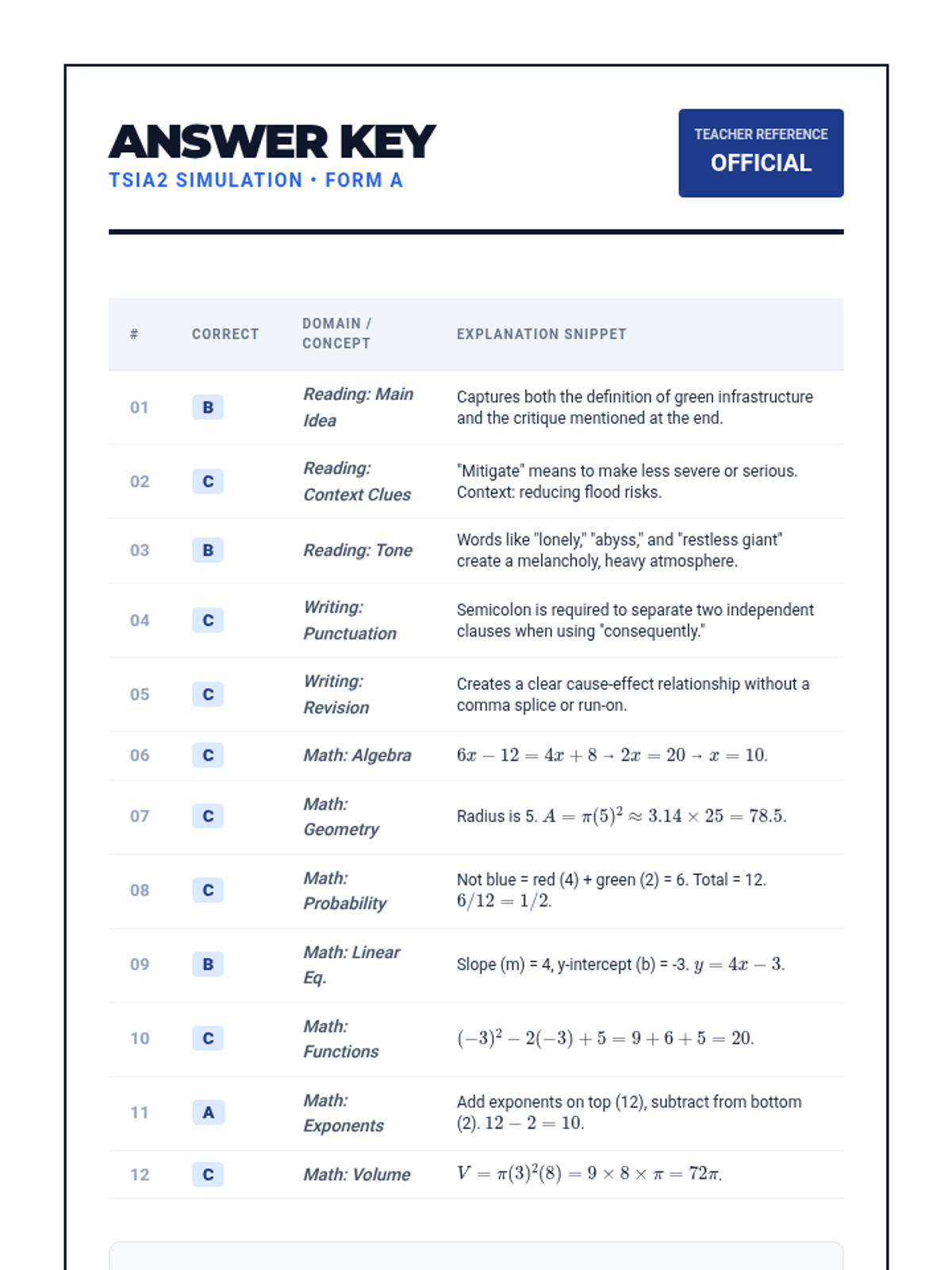
A full-length simulated testing experience to build stamina and assess readiness.
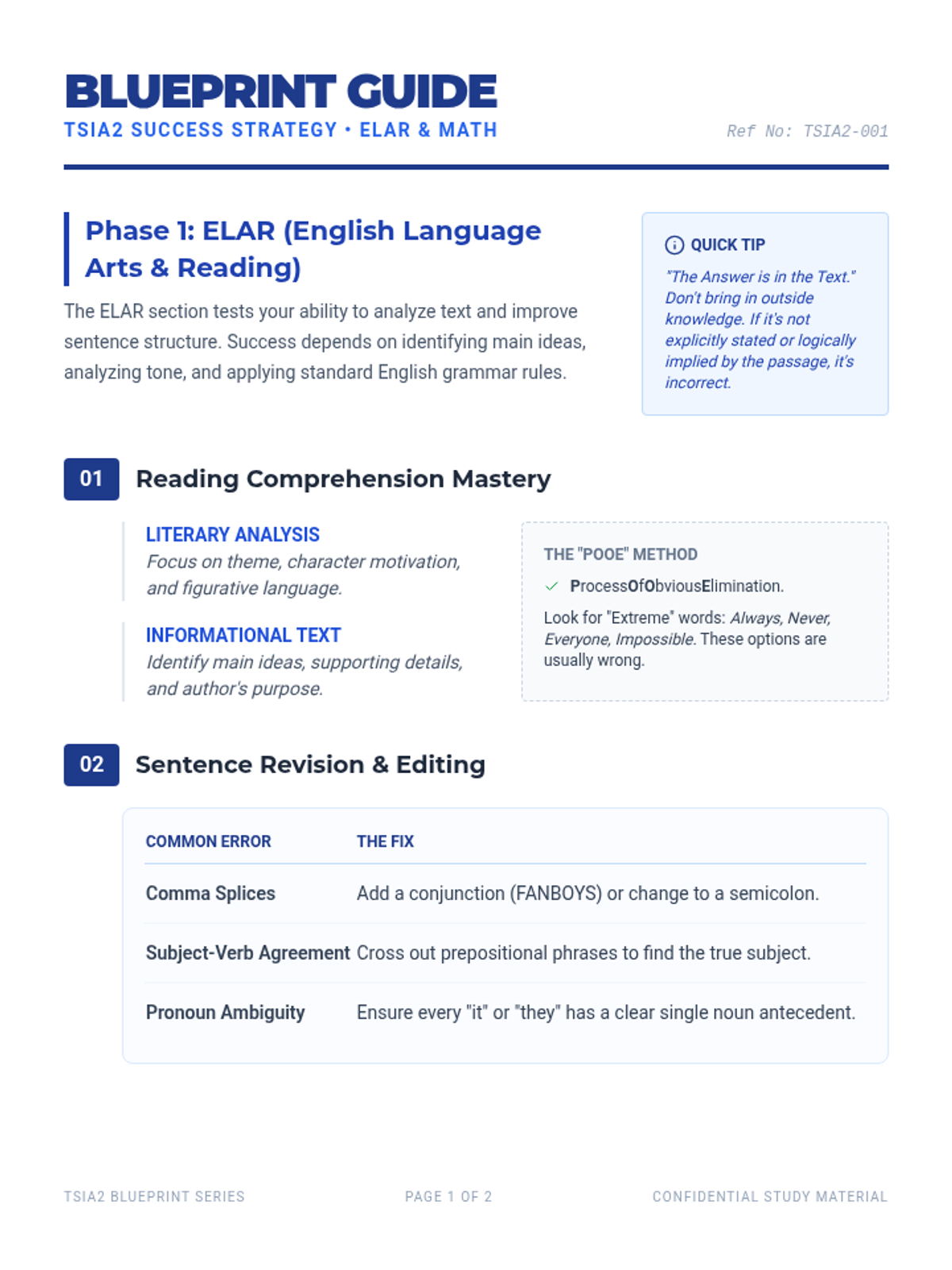
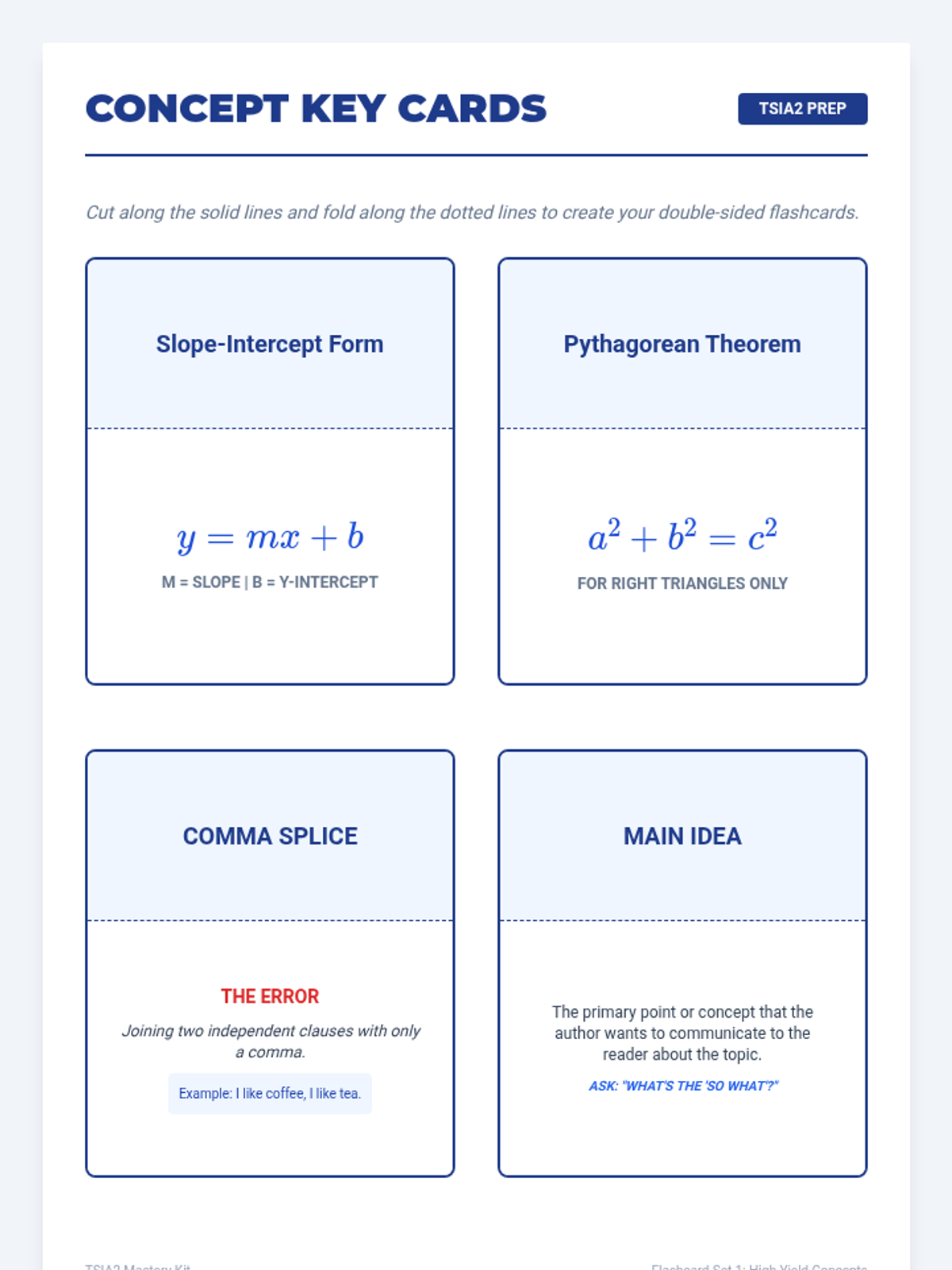
Foundational strategies and key concepts for both ELAR and Math sections of the TSIA2.
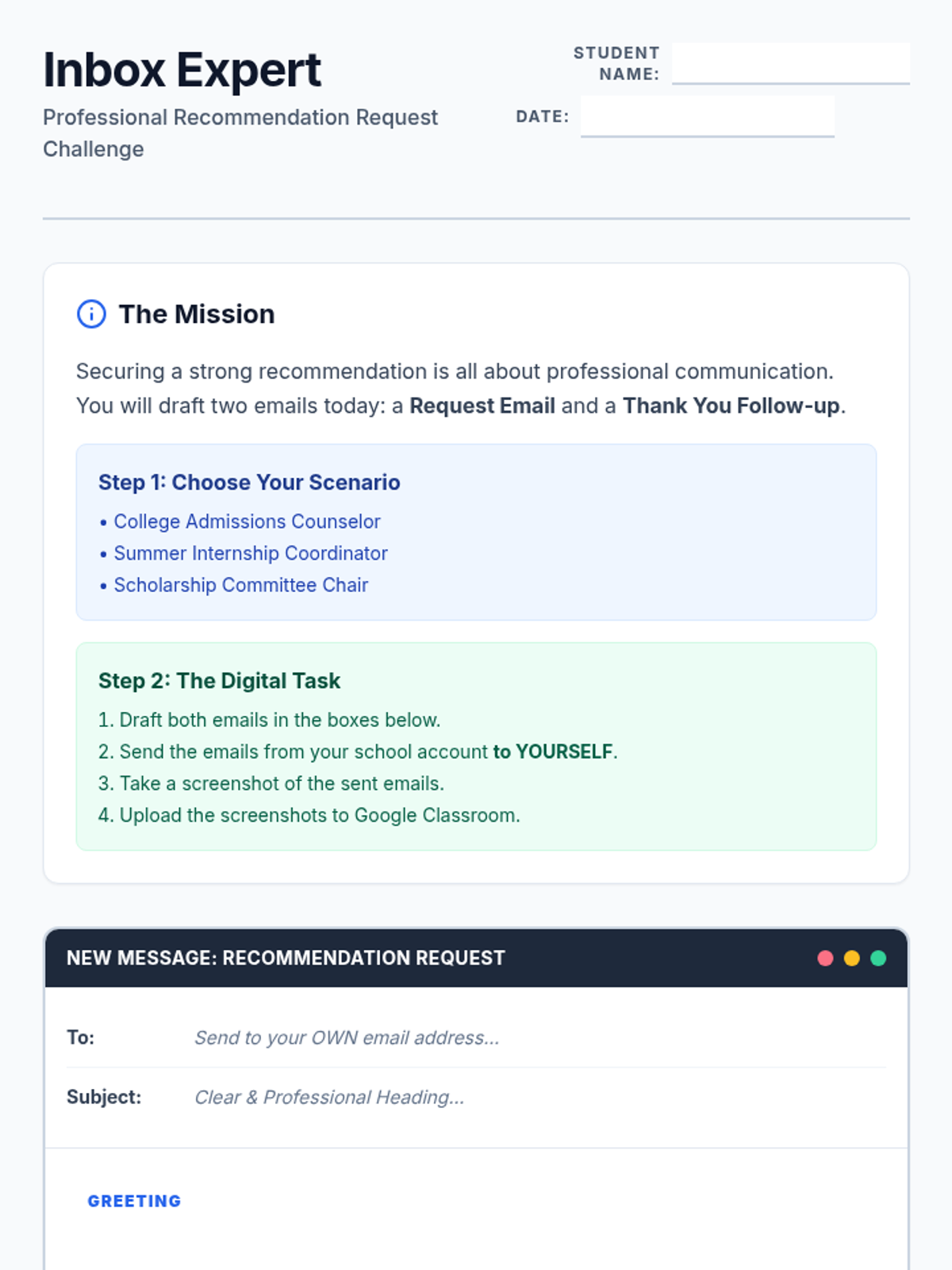
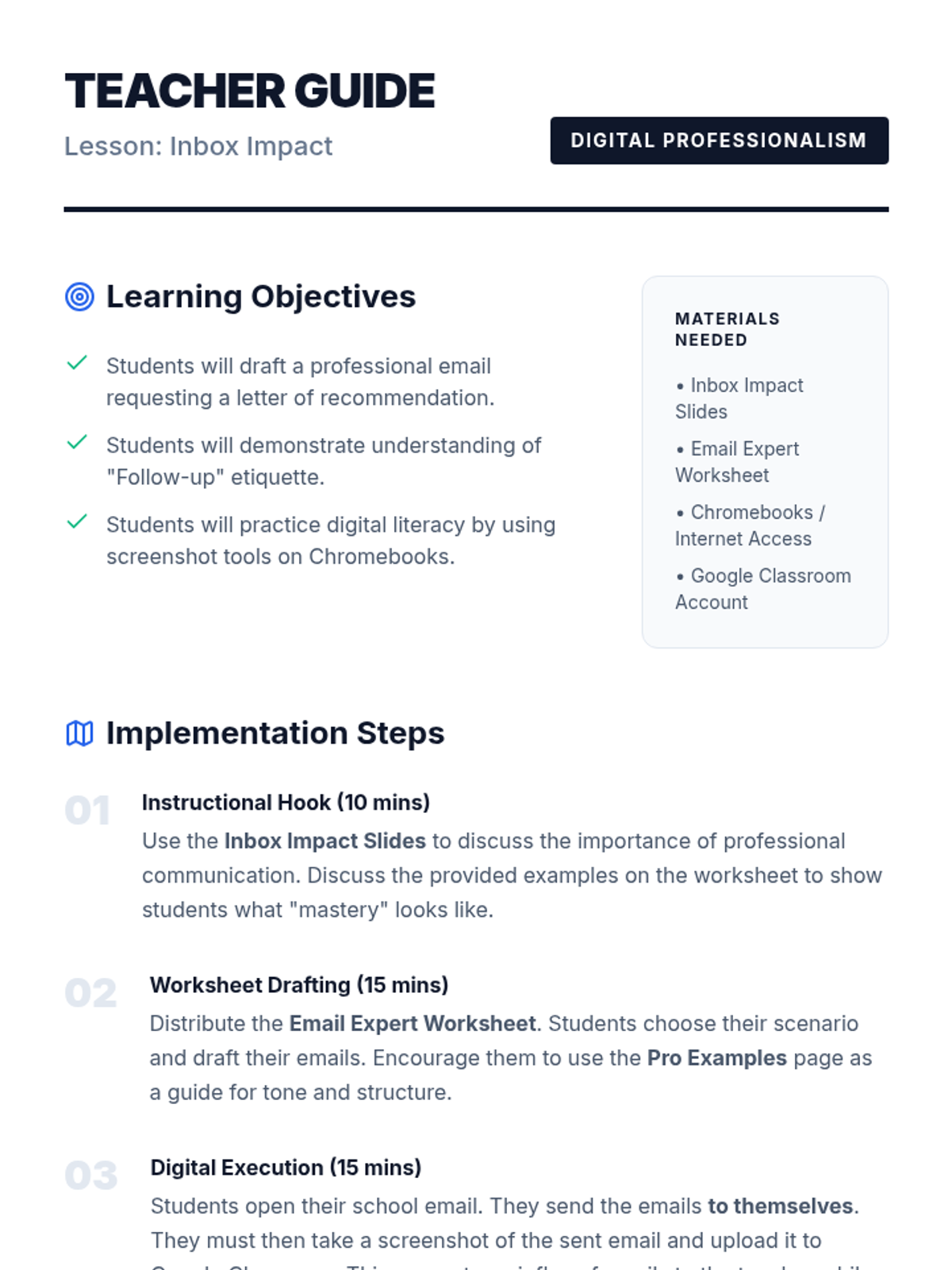
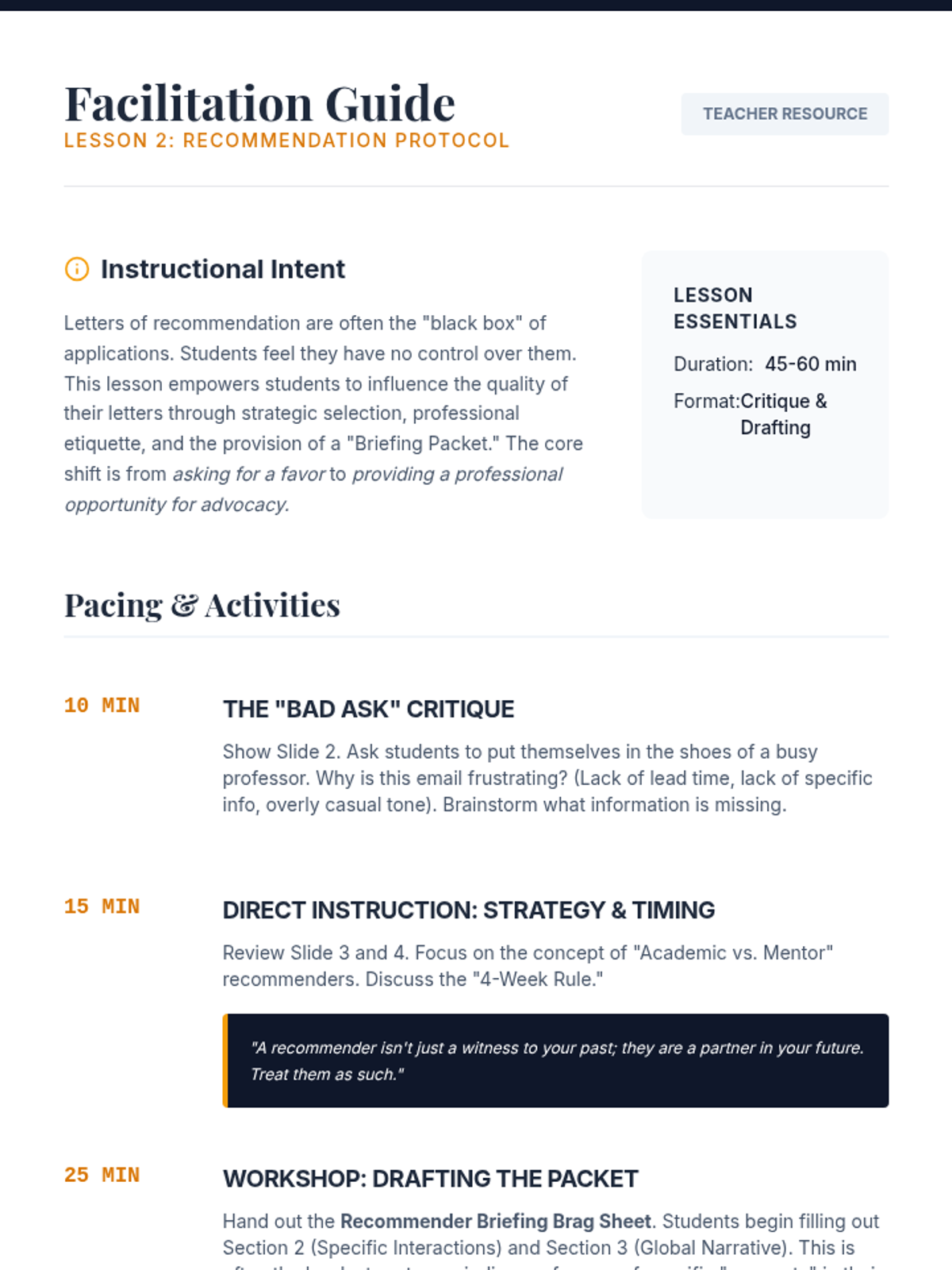
A lesson on drafting and sending professional emails to request letters of recommendation for college, internships, or scholarships. Students learn proper email etiquette, structure, and follow-up procedures.
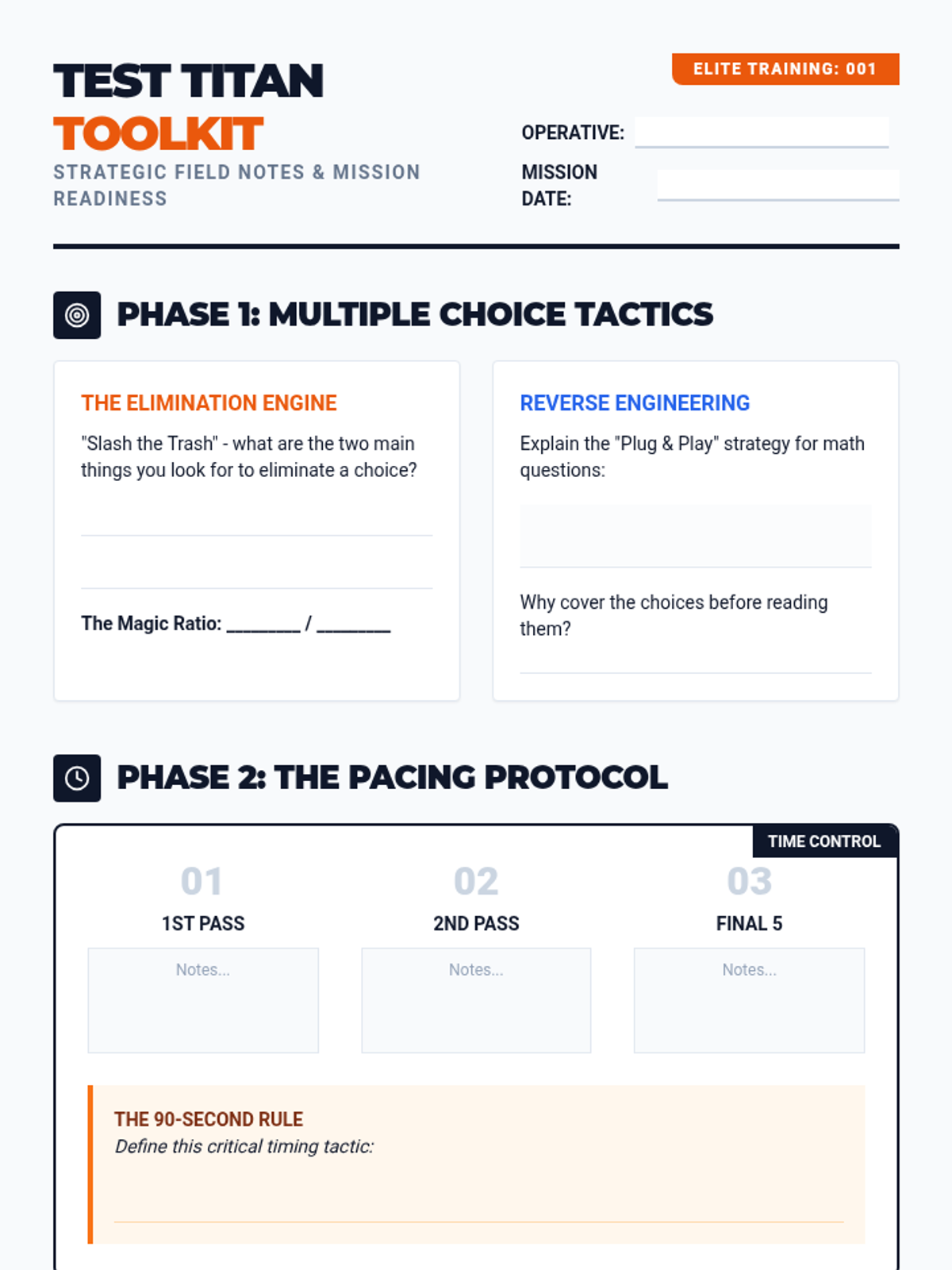
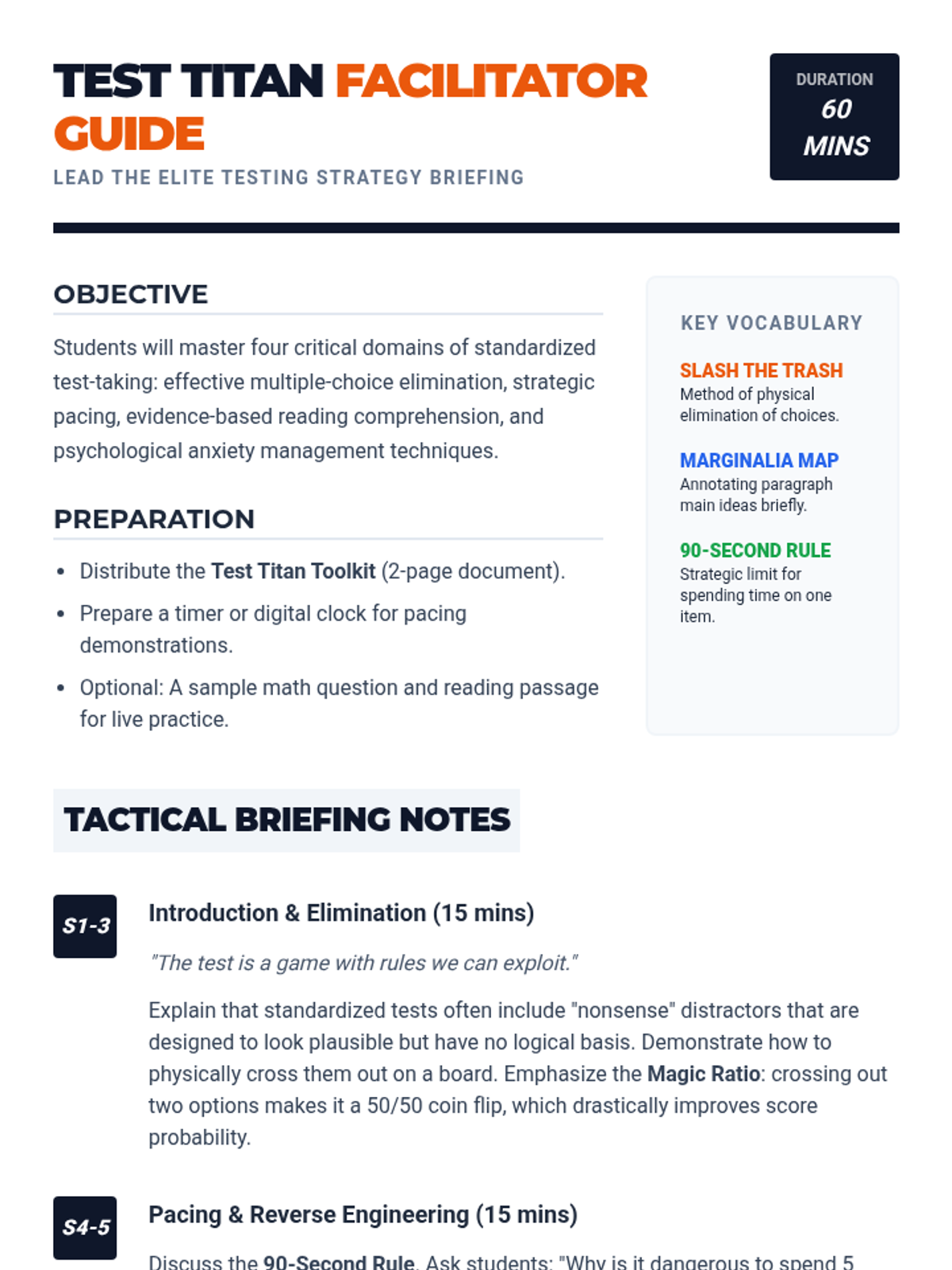
A comprehensive lesson equipping students with high-impact strategies for standardized testing, covering multiple choice tactics, pacing, reading comprehension, and anxiety management.
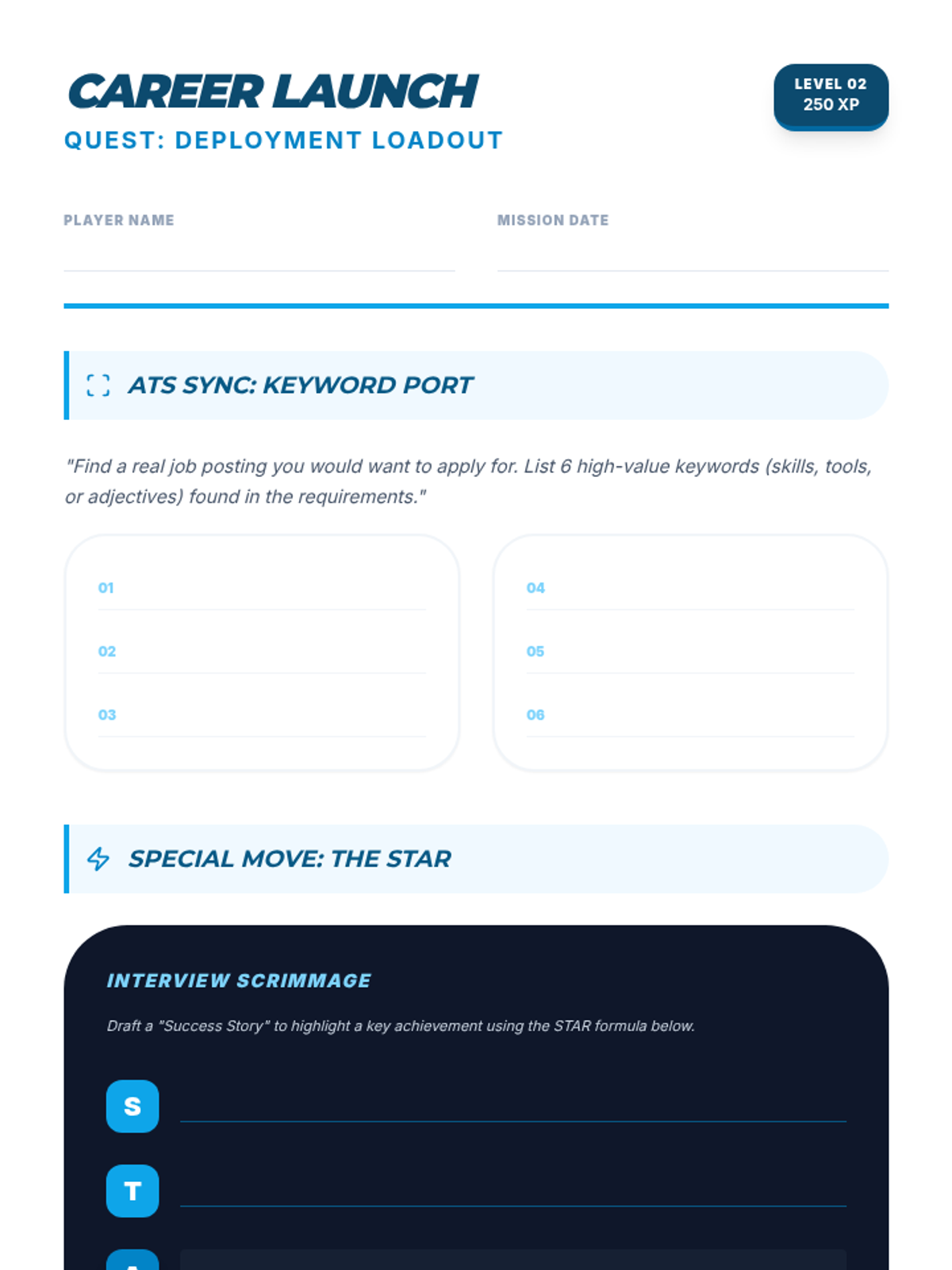
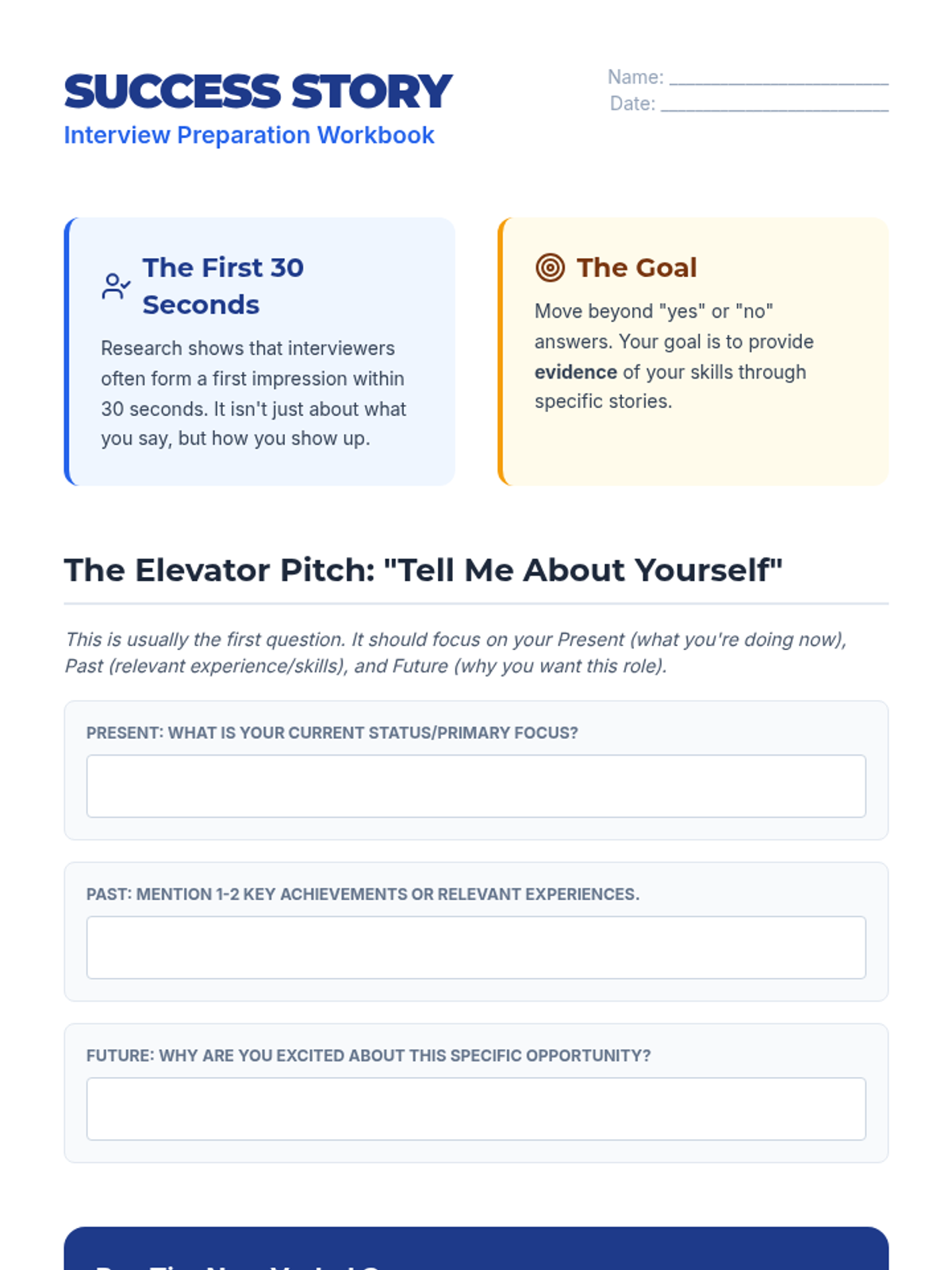
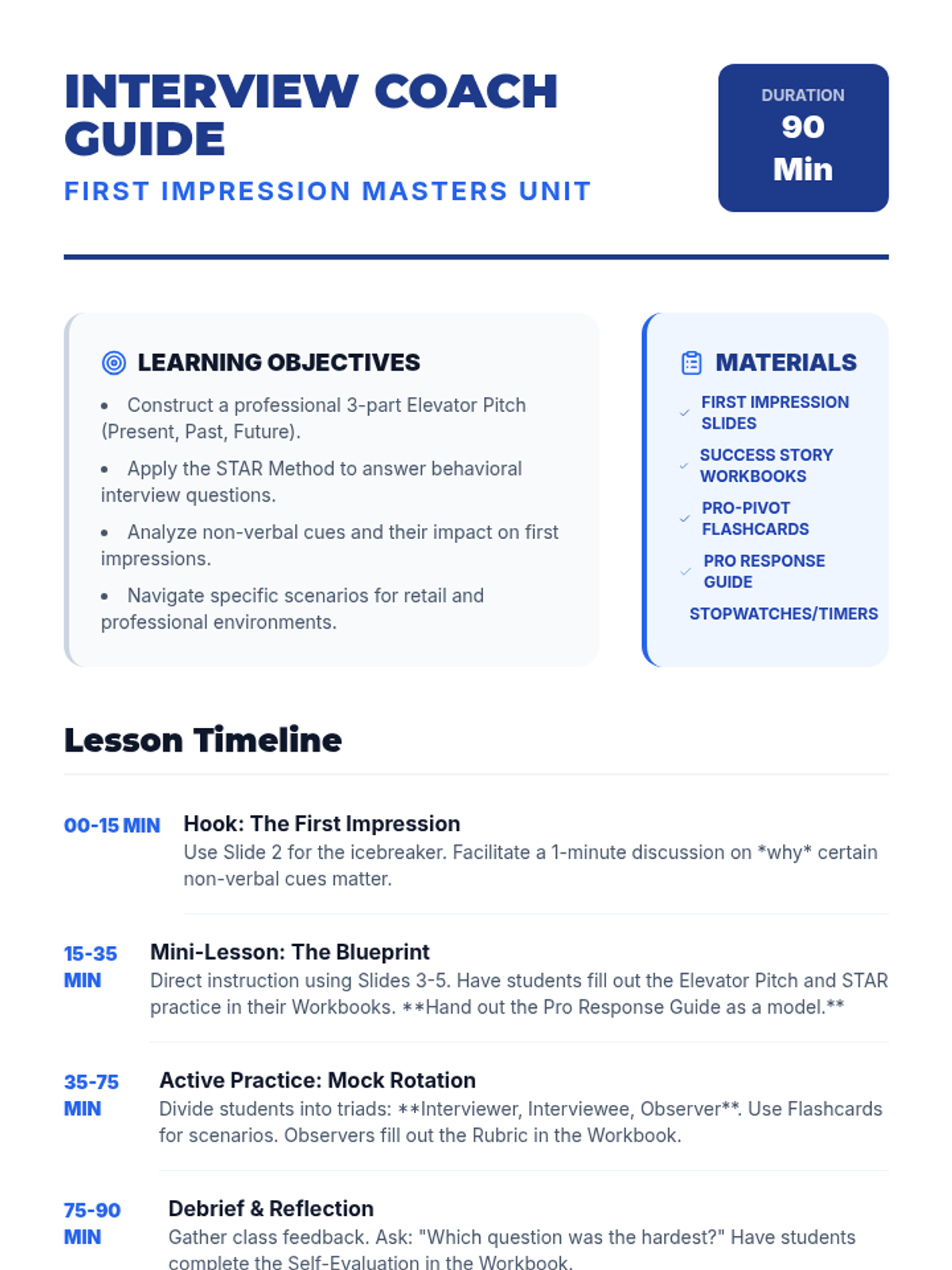
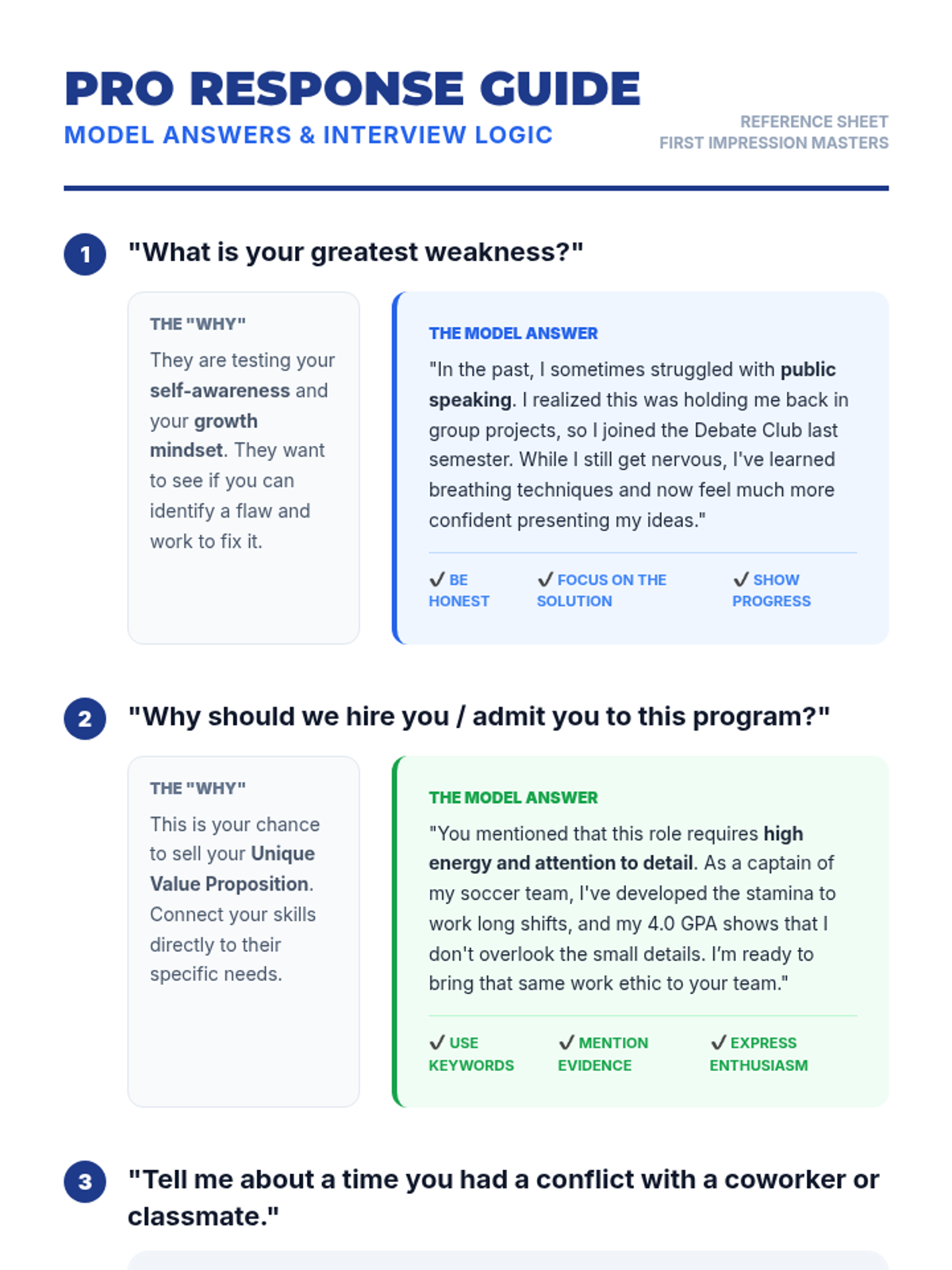
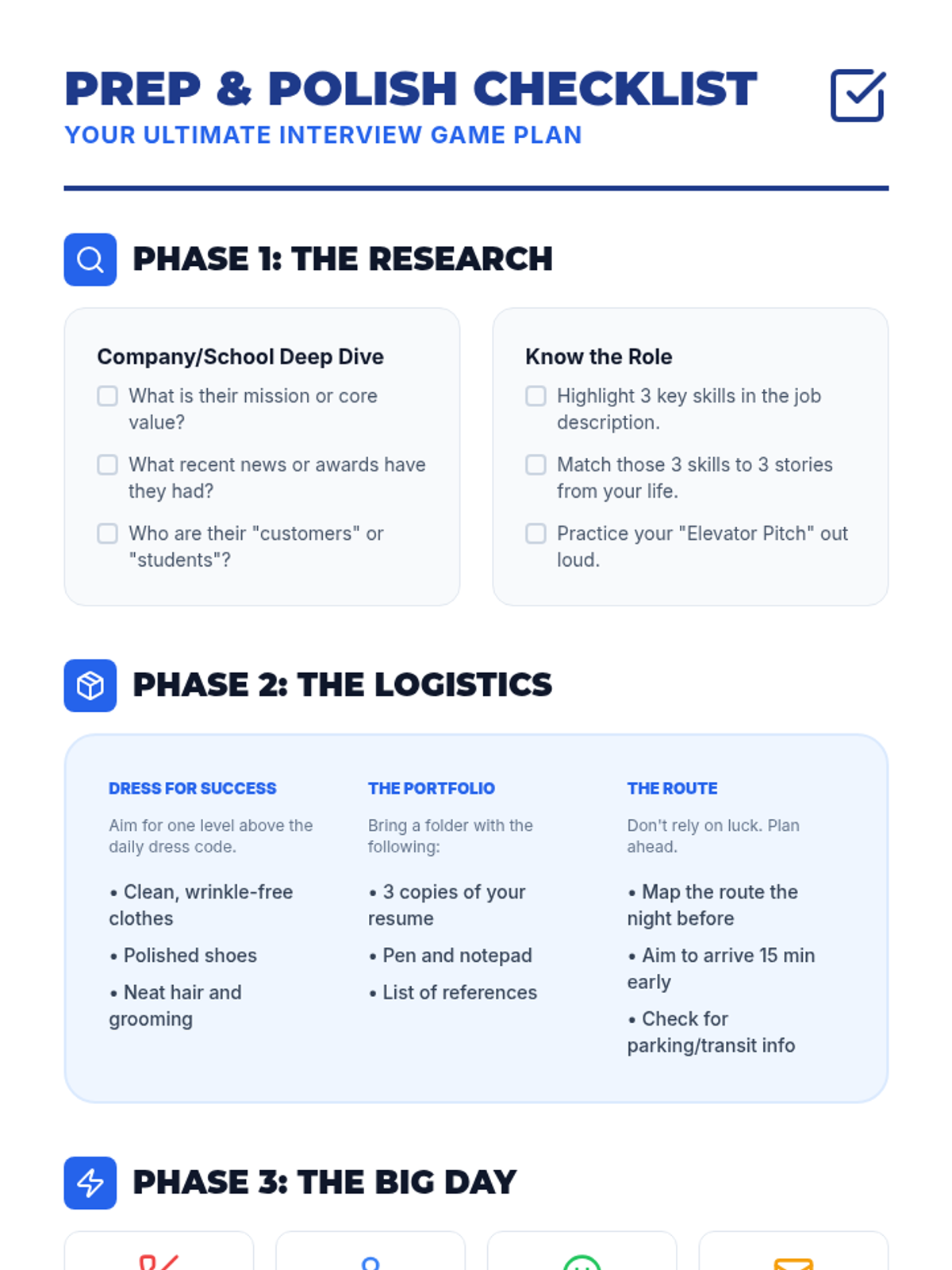
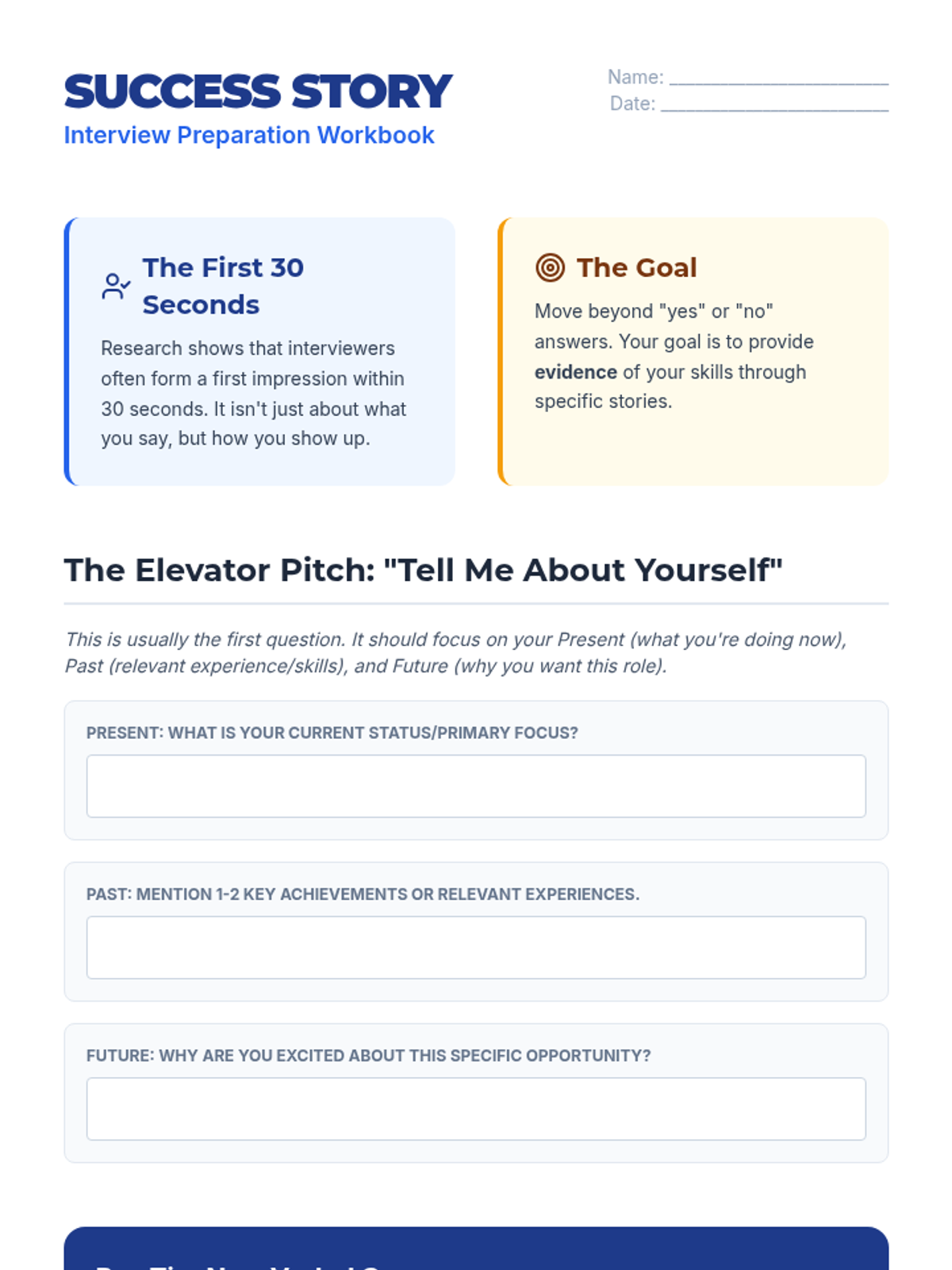
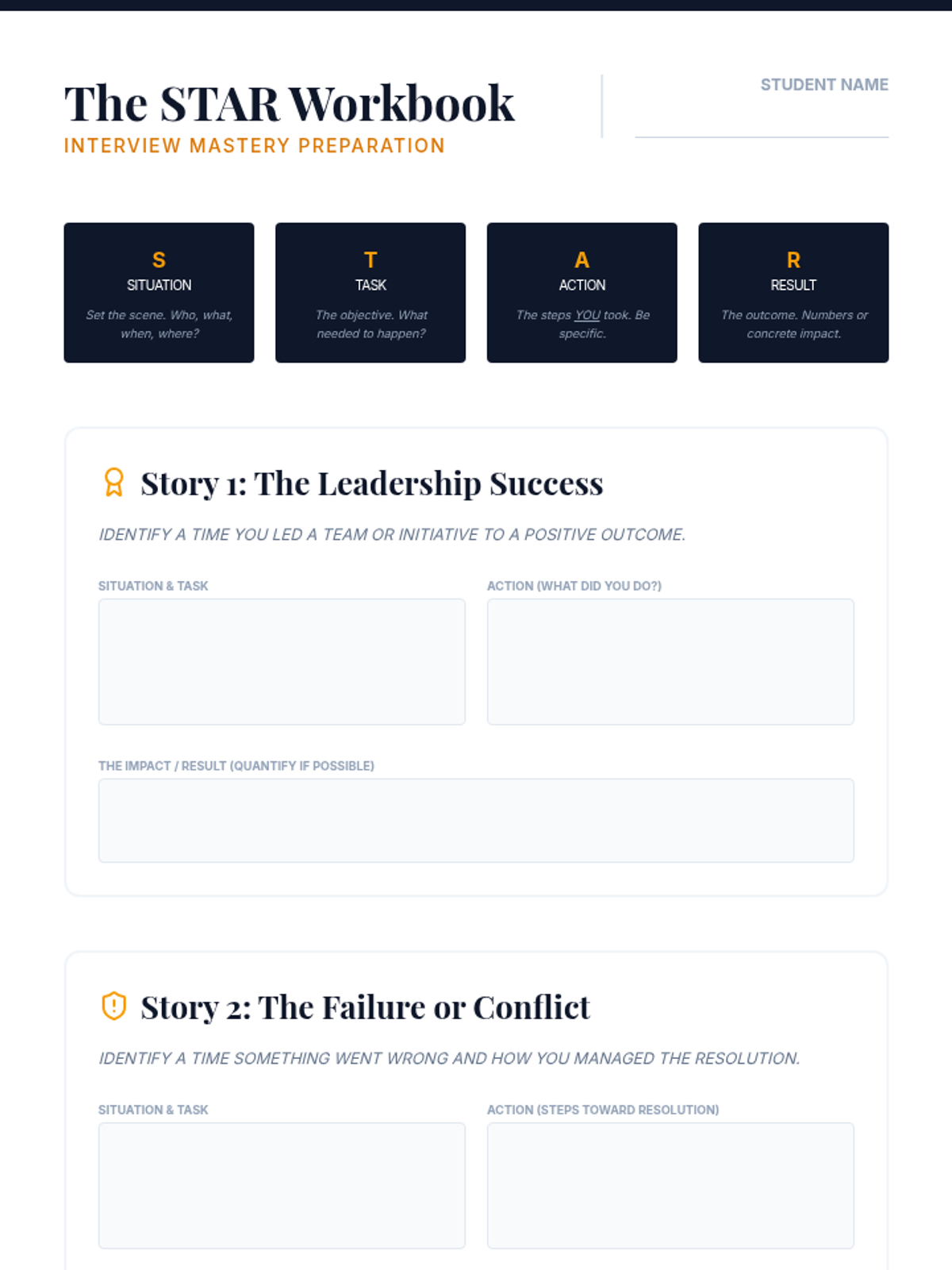
A comprehensive guide to mastering entry-level and academic interviews through the STAR method, practical scenarios, and self-reflection. Students will build a portfolio of stories to demonstrate their skills to future employers and admissions officers.
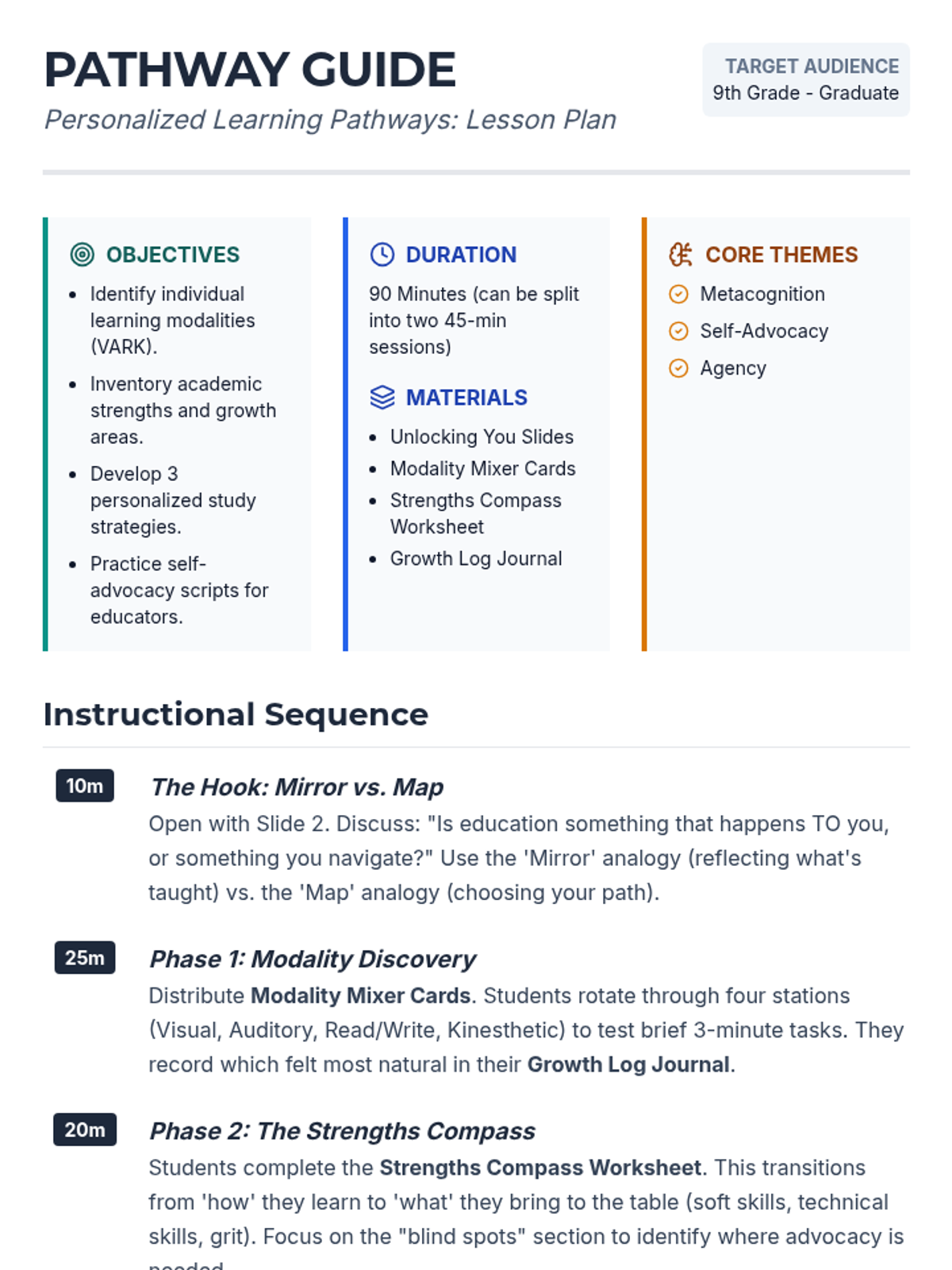
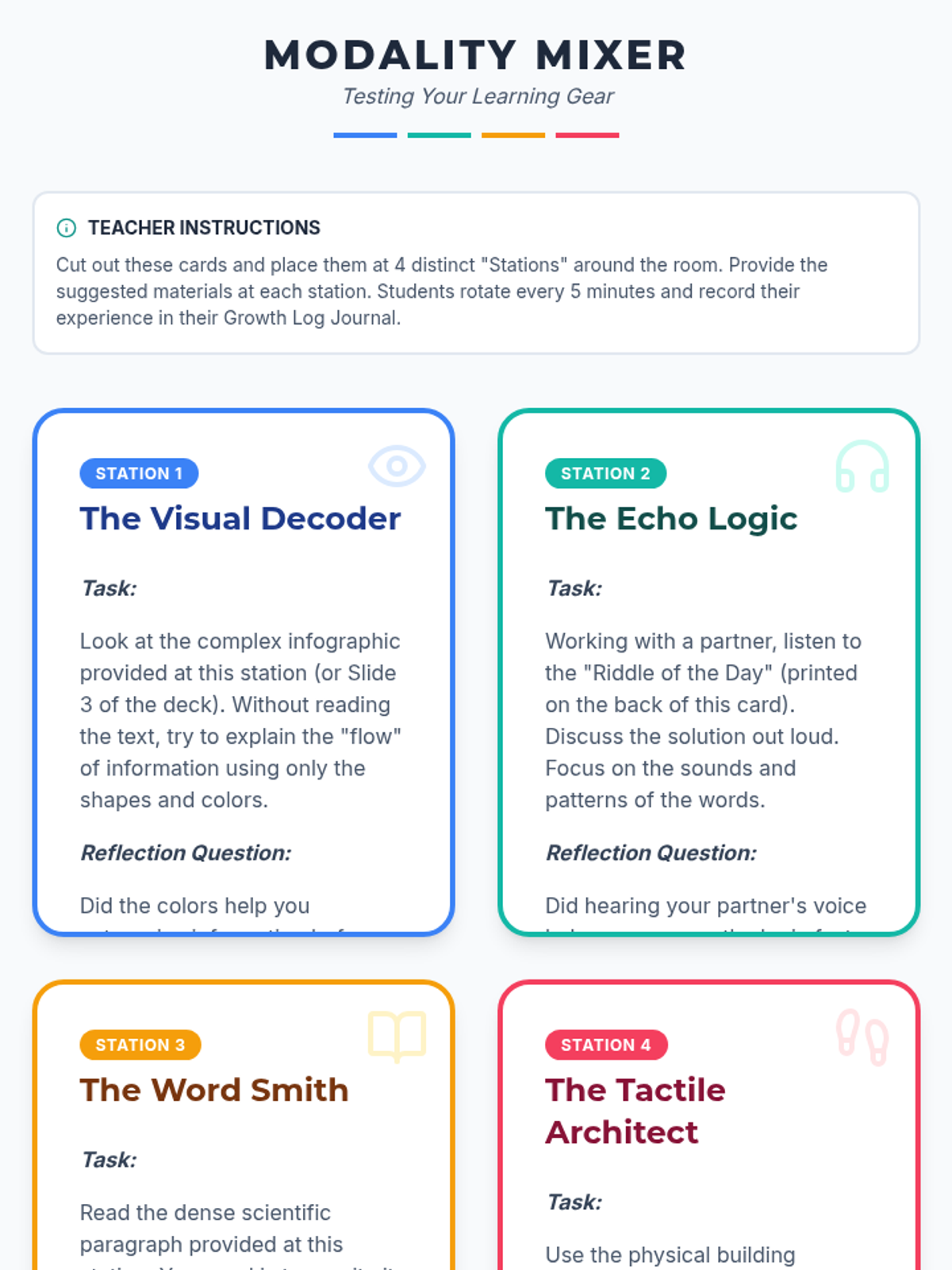
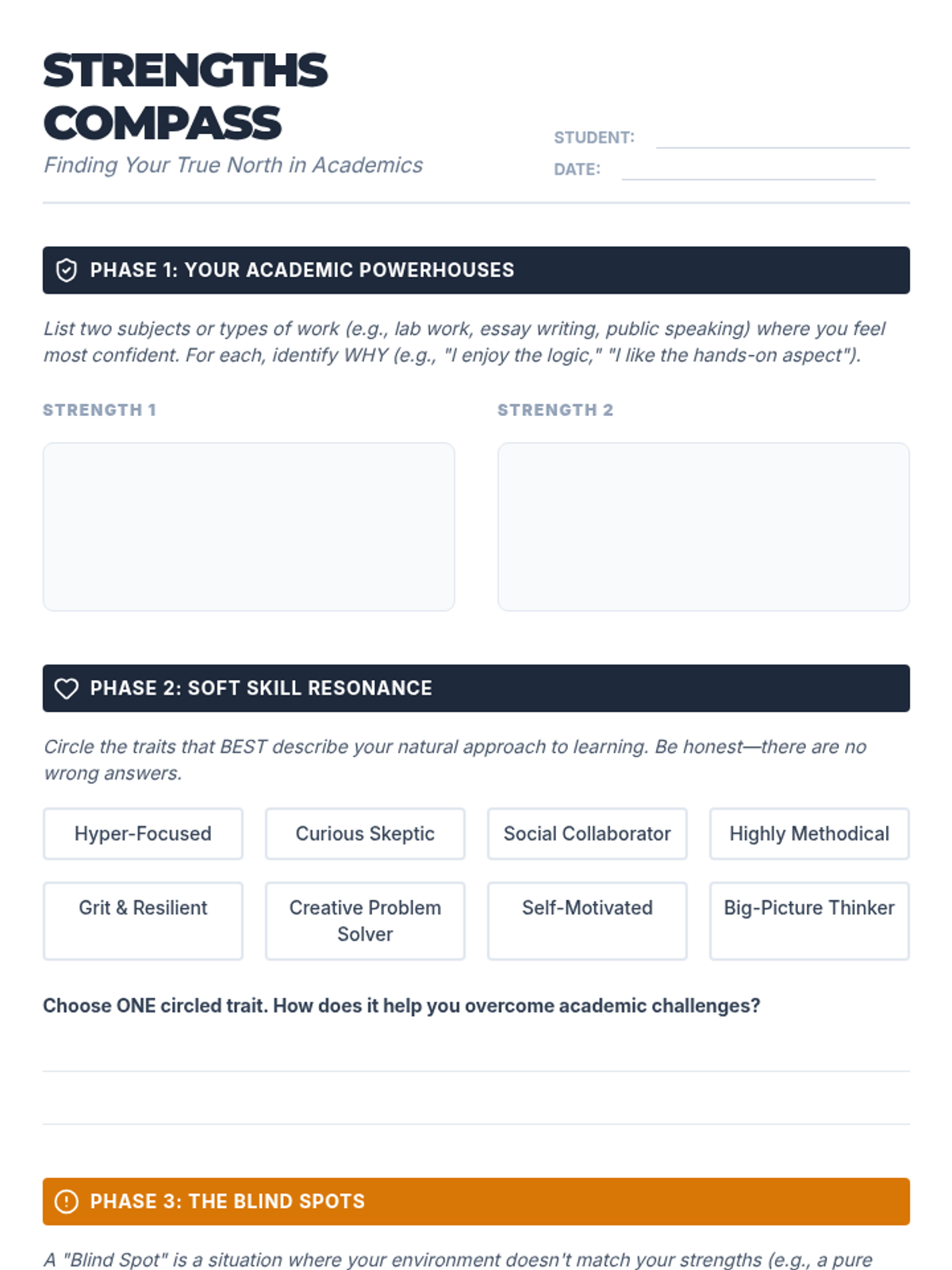
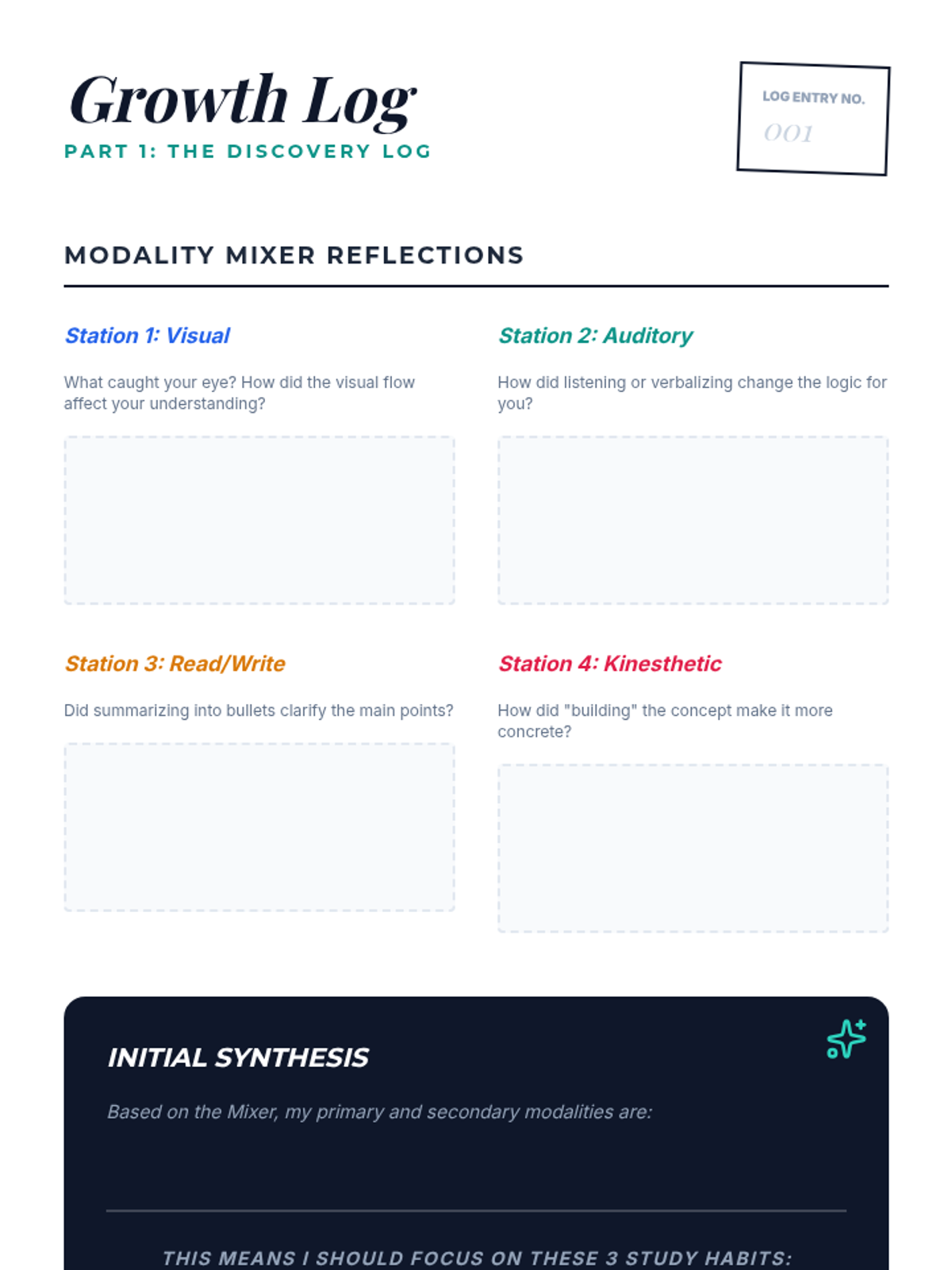
A comprehensive lesson designed to help high school and college students discover their unique learning profiles, set personalized goals, and develop self-advocacy skills. Students engage in reflective mapping and modality exploration to take charge of their academic journey.
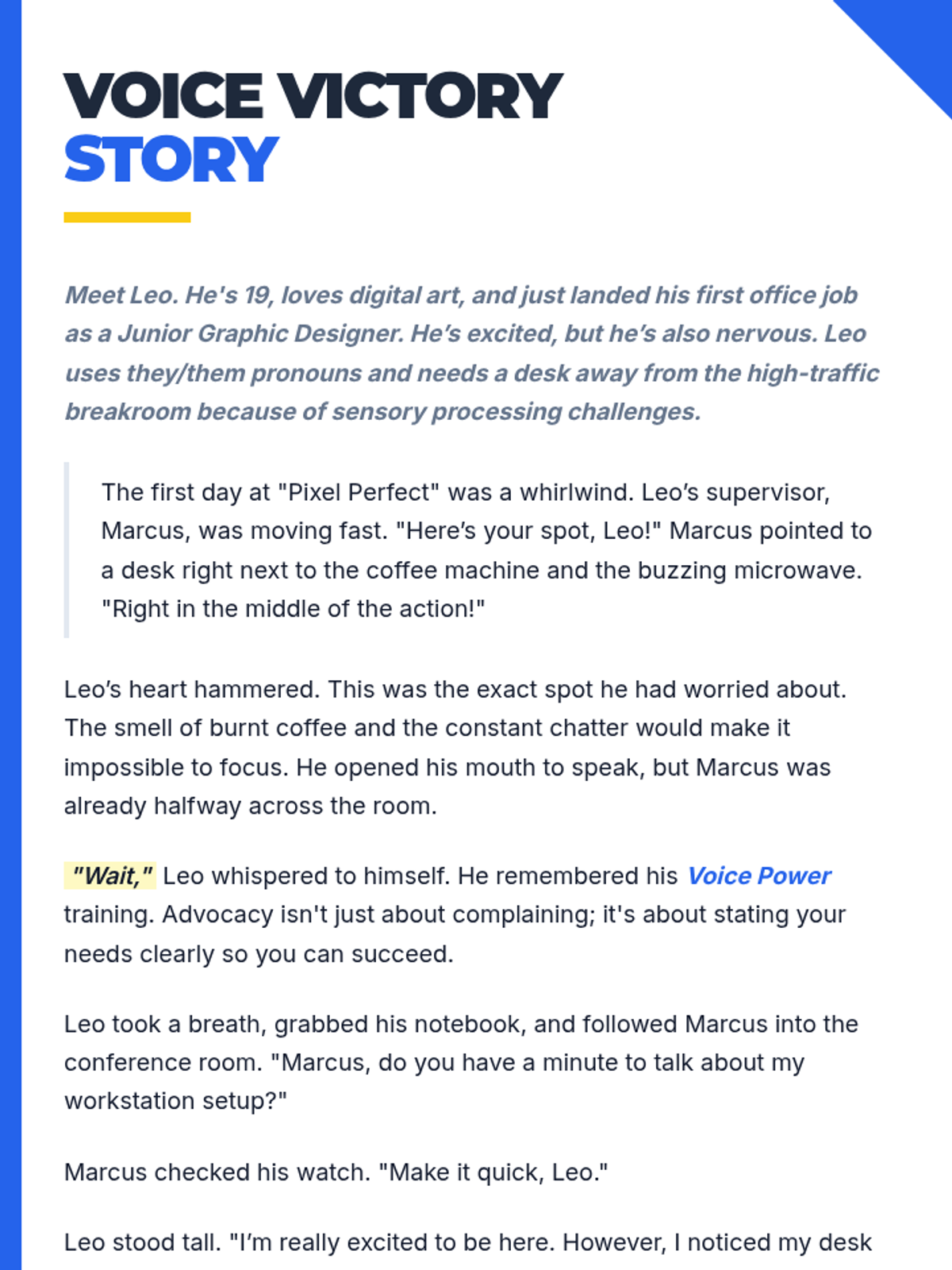
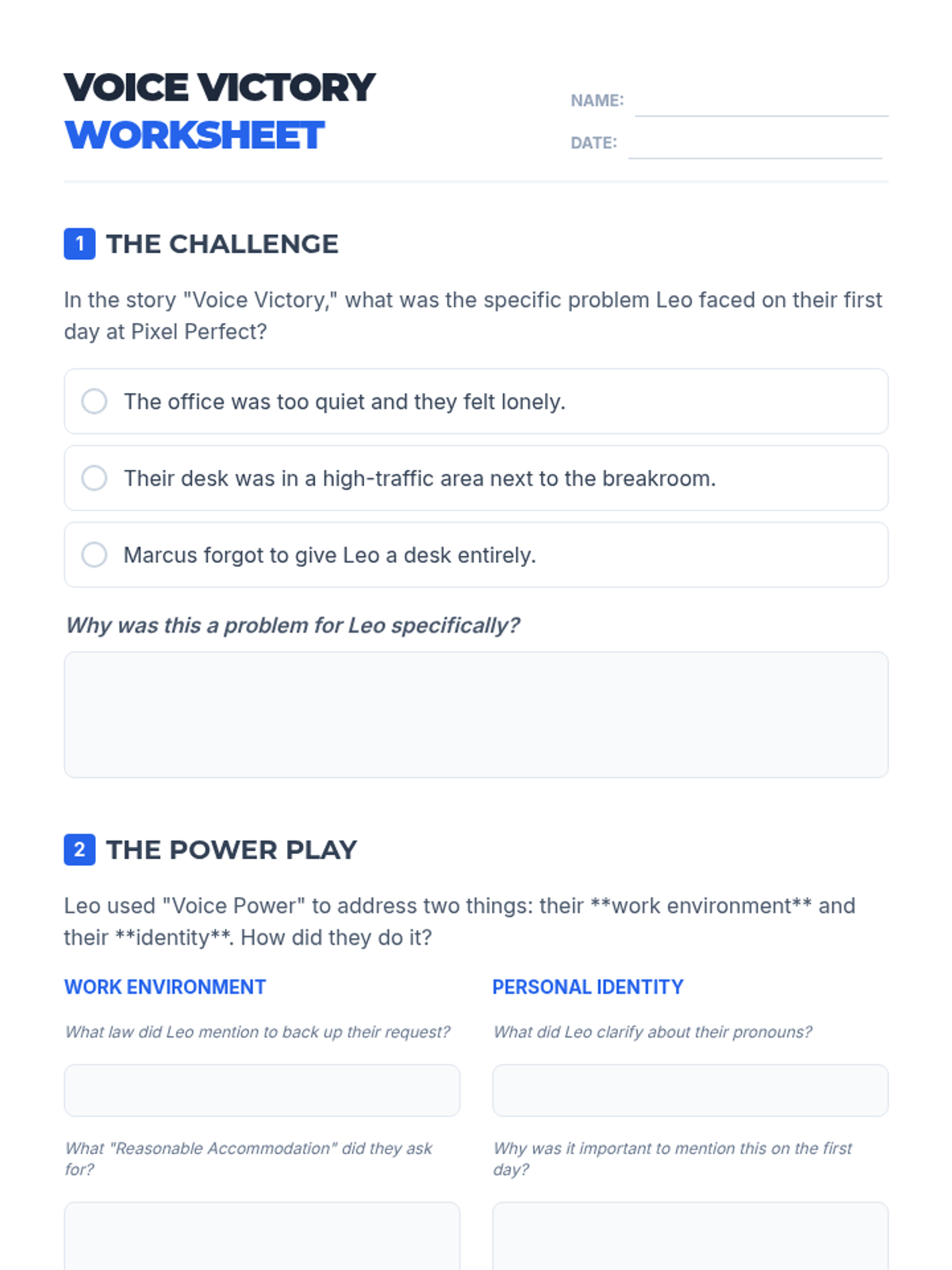
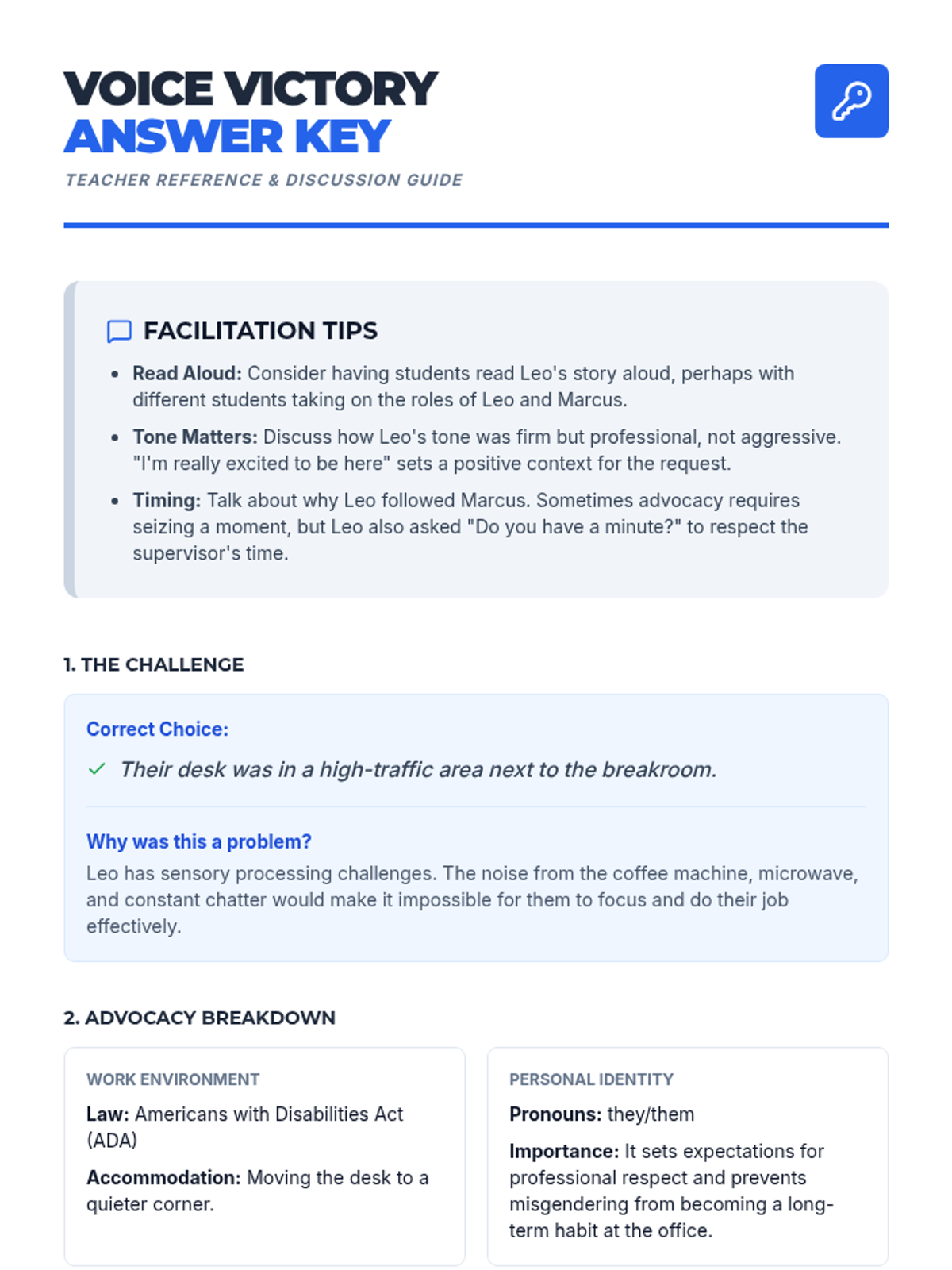
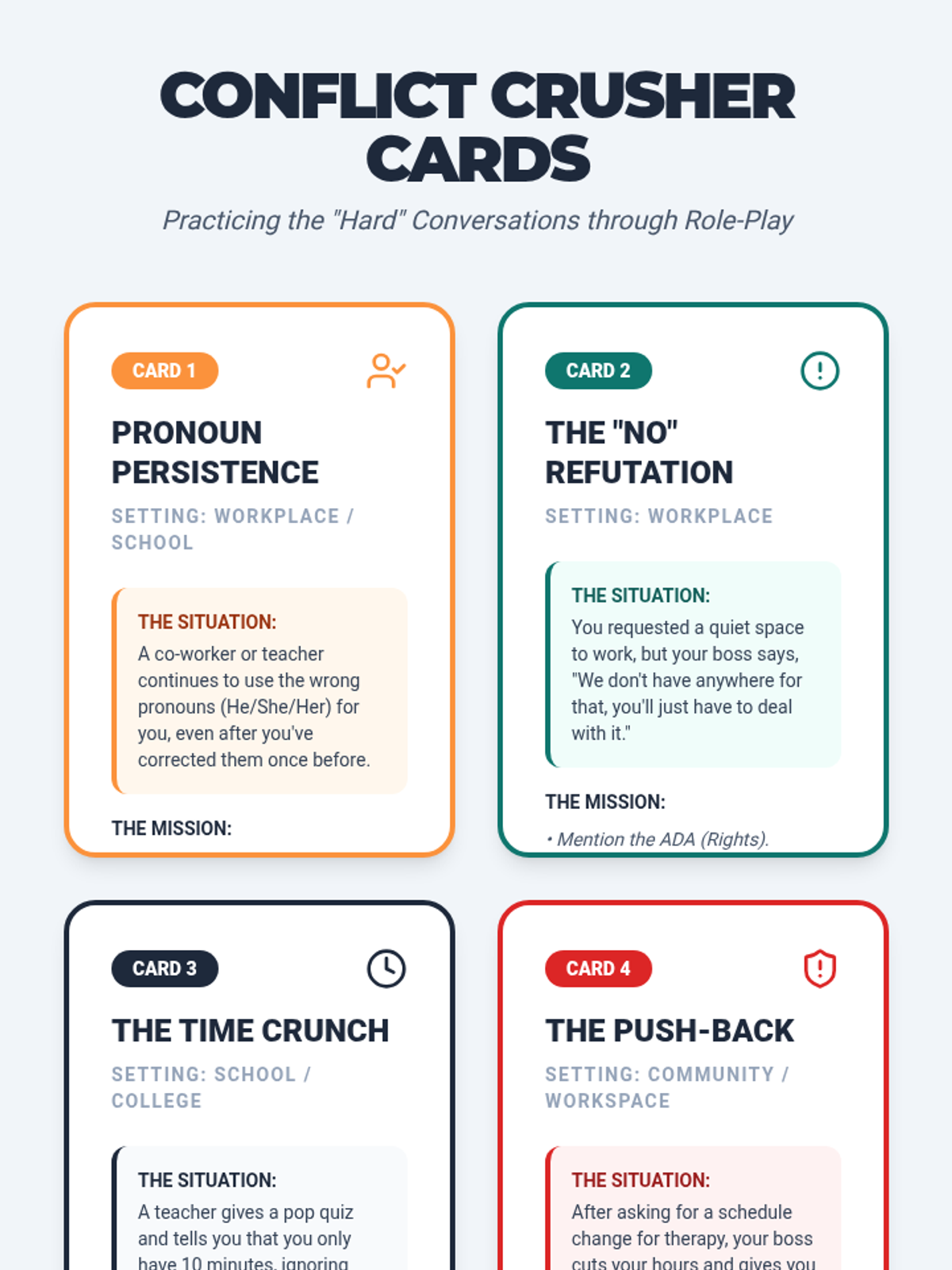
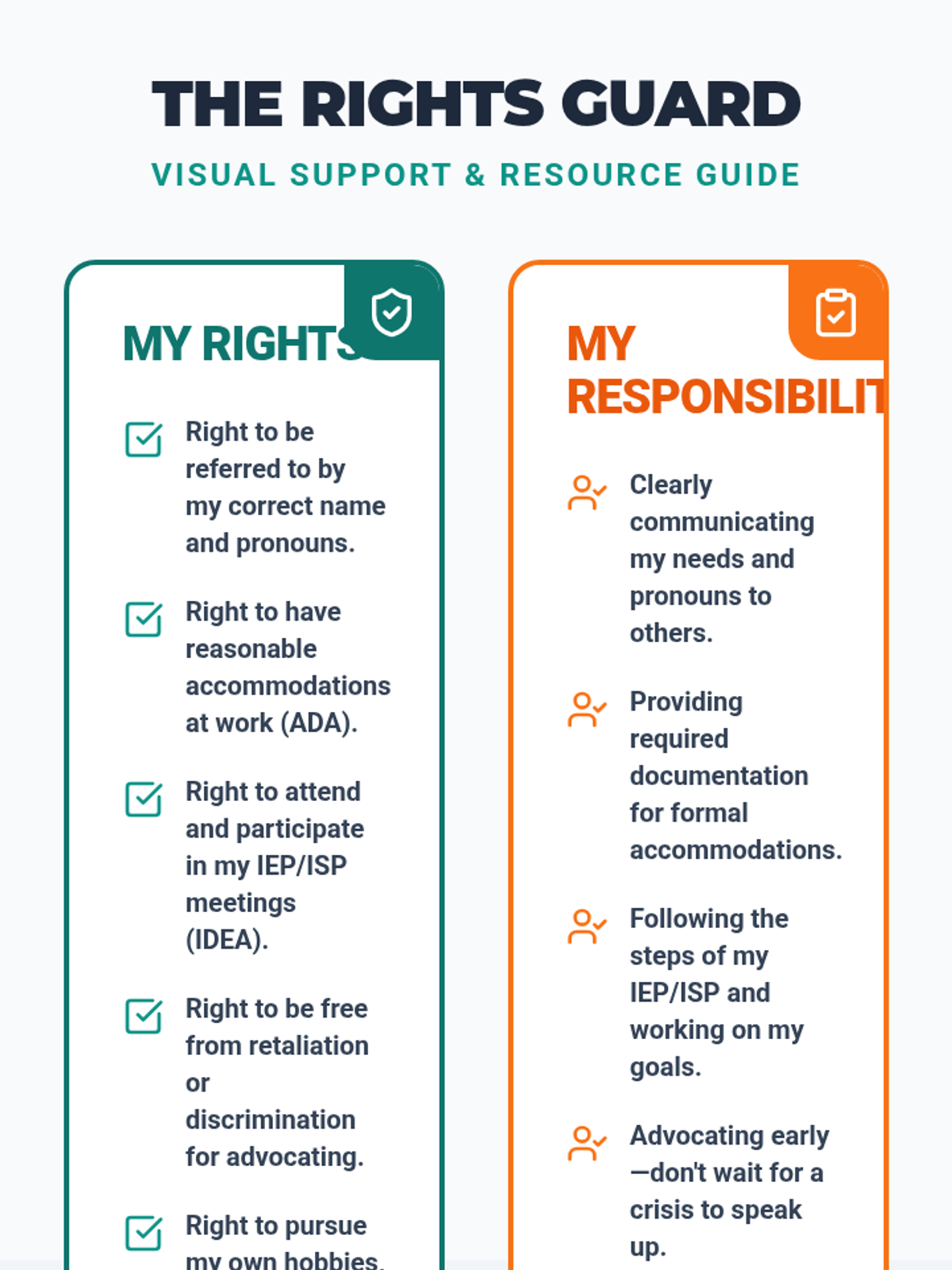
A comprehensive self-advocacy curriculum designed for young adults to navigate school, home, community, and the workplace with confidence. Focuses on personal identity (pronouns), legal rights (ADA/IDEA), and practical communication strategies.
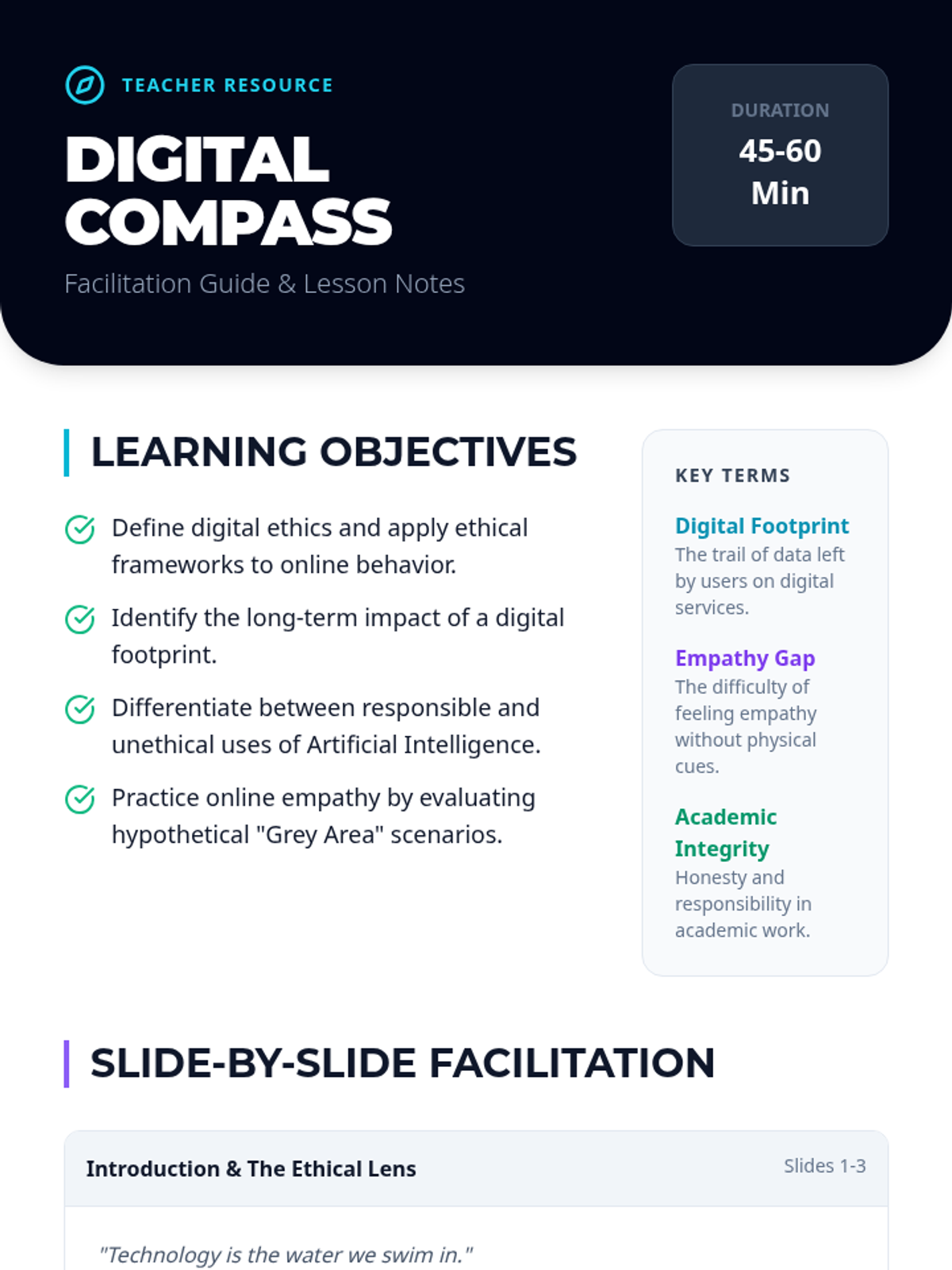
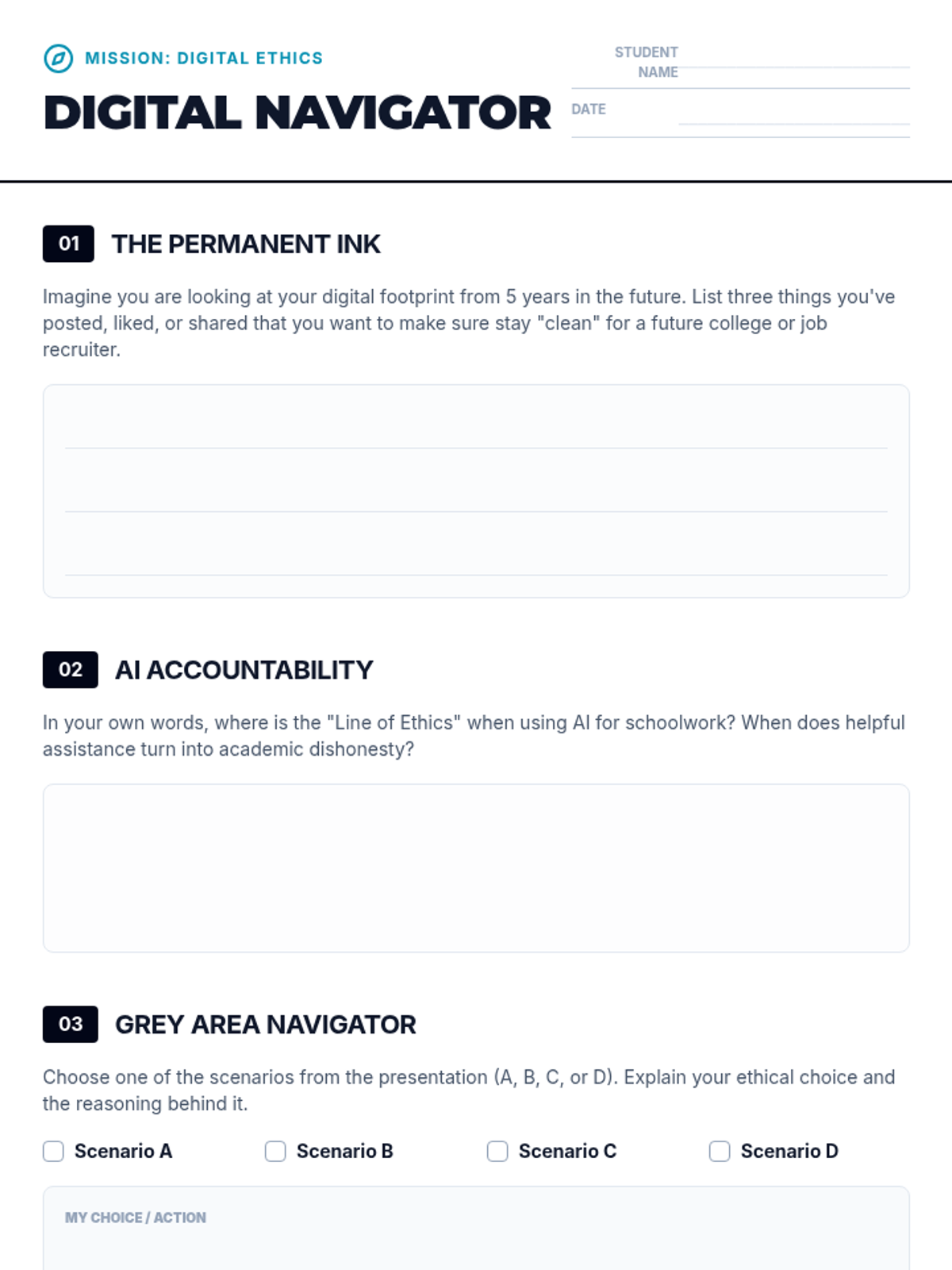
A comprehensive lesson exploring the ethical implications of digital technology use for students, covering privacy, digital footprints, AI responsibility, and online empathy.
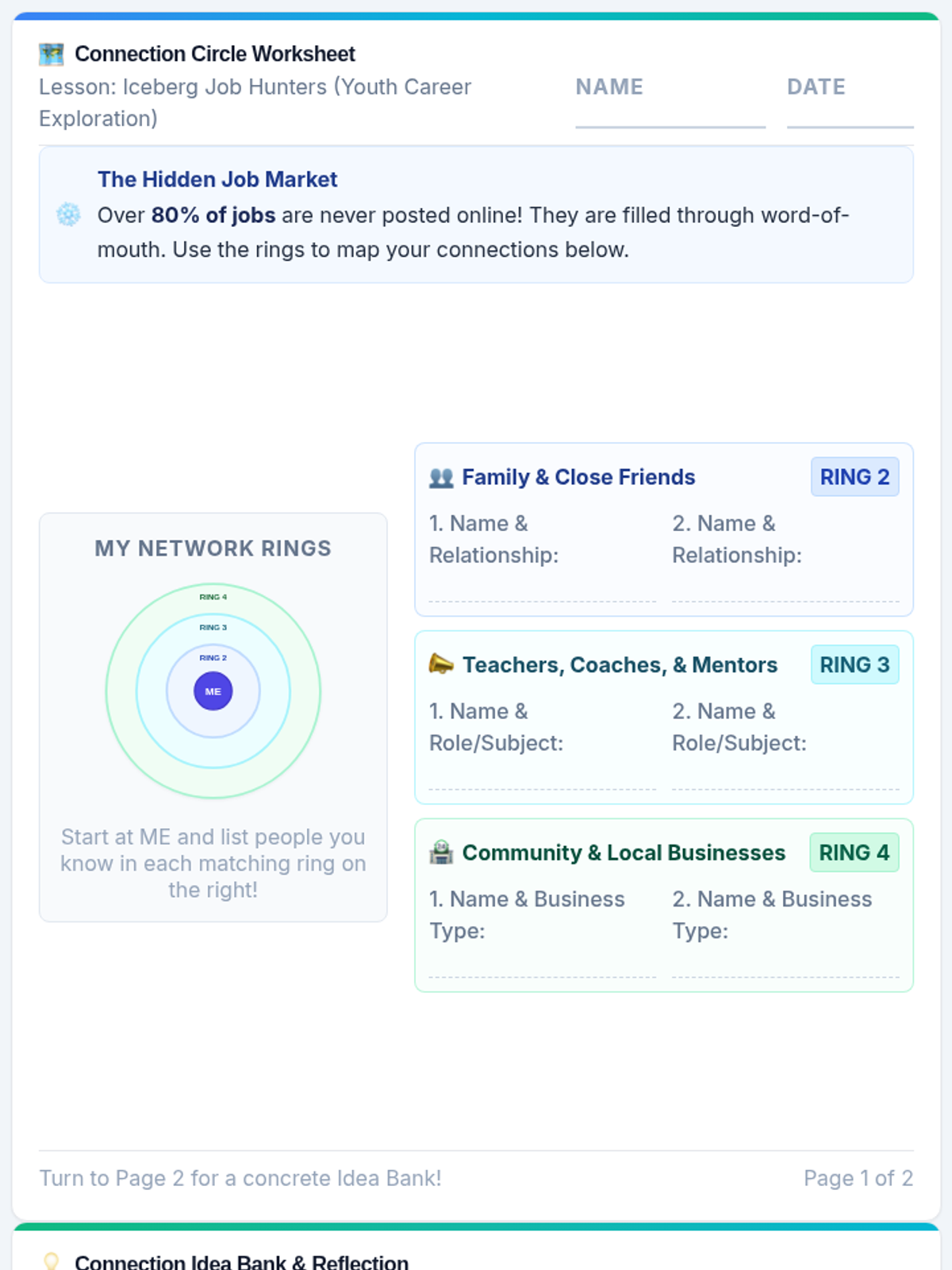
A highly visual career exploration lesson that introduces the Job Market Iceberg (Open vs. Hidden Job Market), guides students to map their network with concentric circles, and spotlights youth self-employment programs in Ontario. Includes visual symbols and concrete supports.
A comprehensive guide to the majors offered by the College of Computer Science and Engineering at Prince Sattam University for Batch 47. Includes detailed descriptions, career fields, and academic duration for COE, CS, SWE, and IS departments.
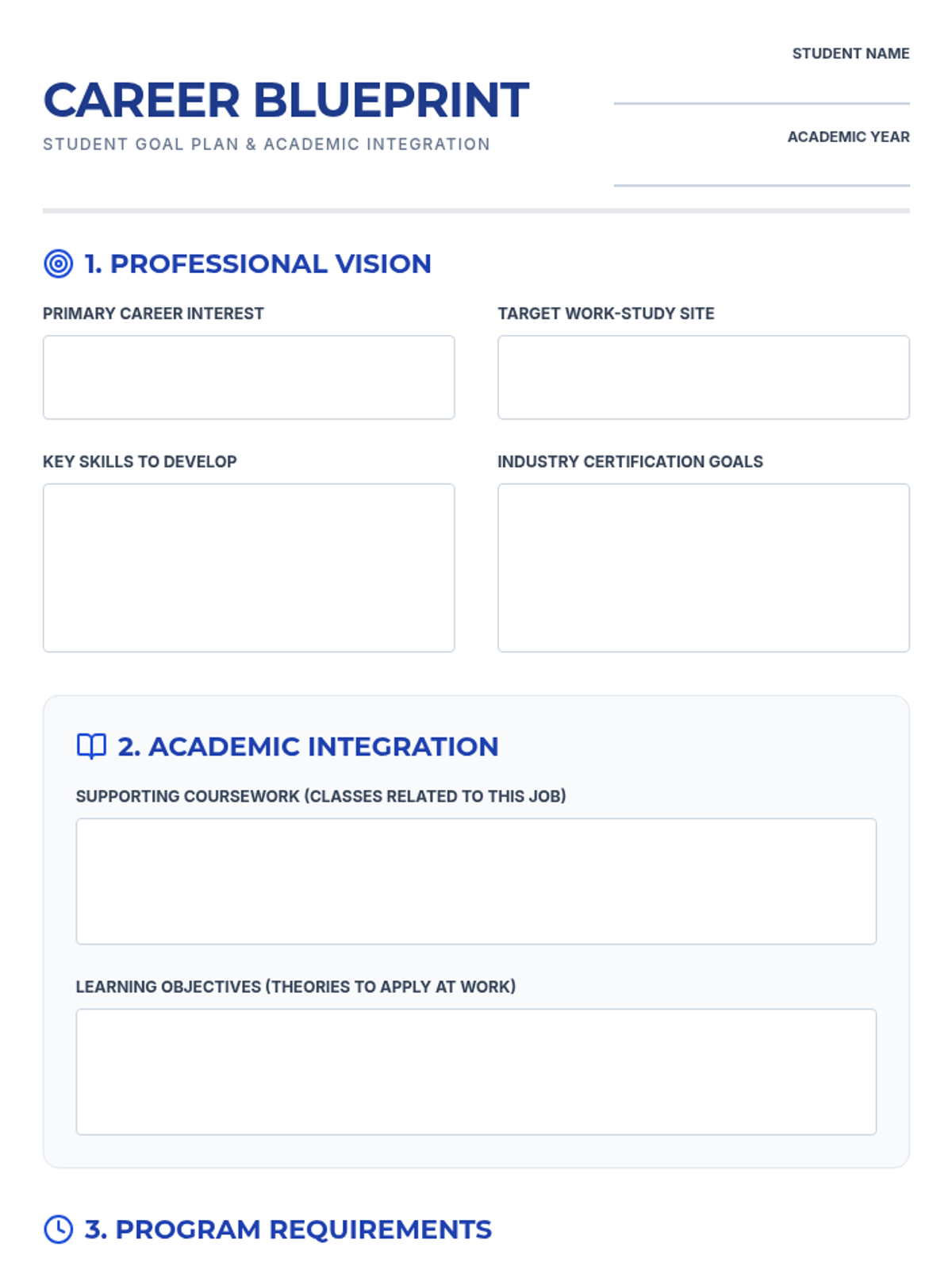
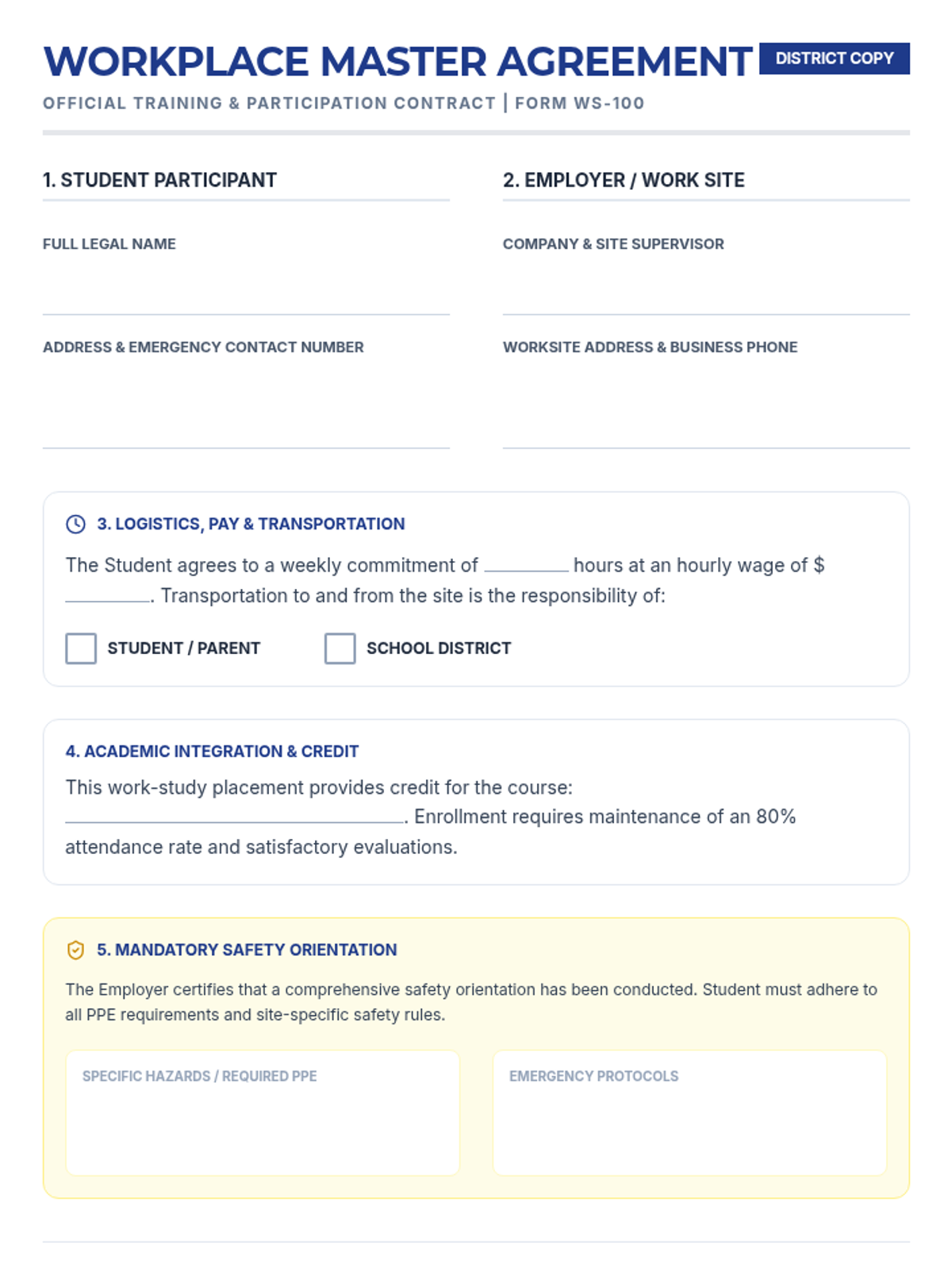
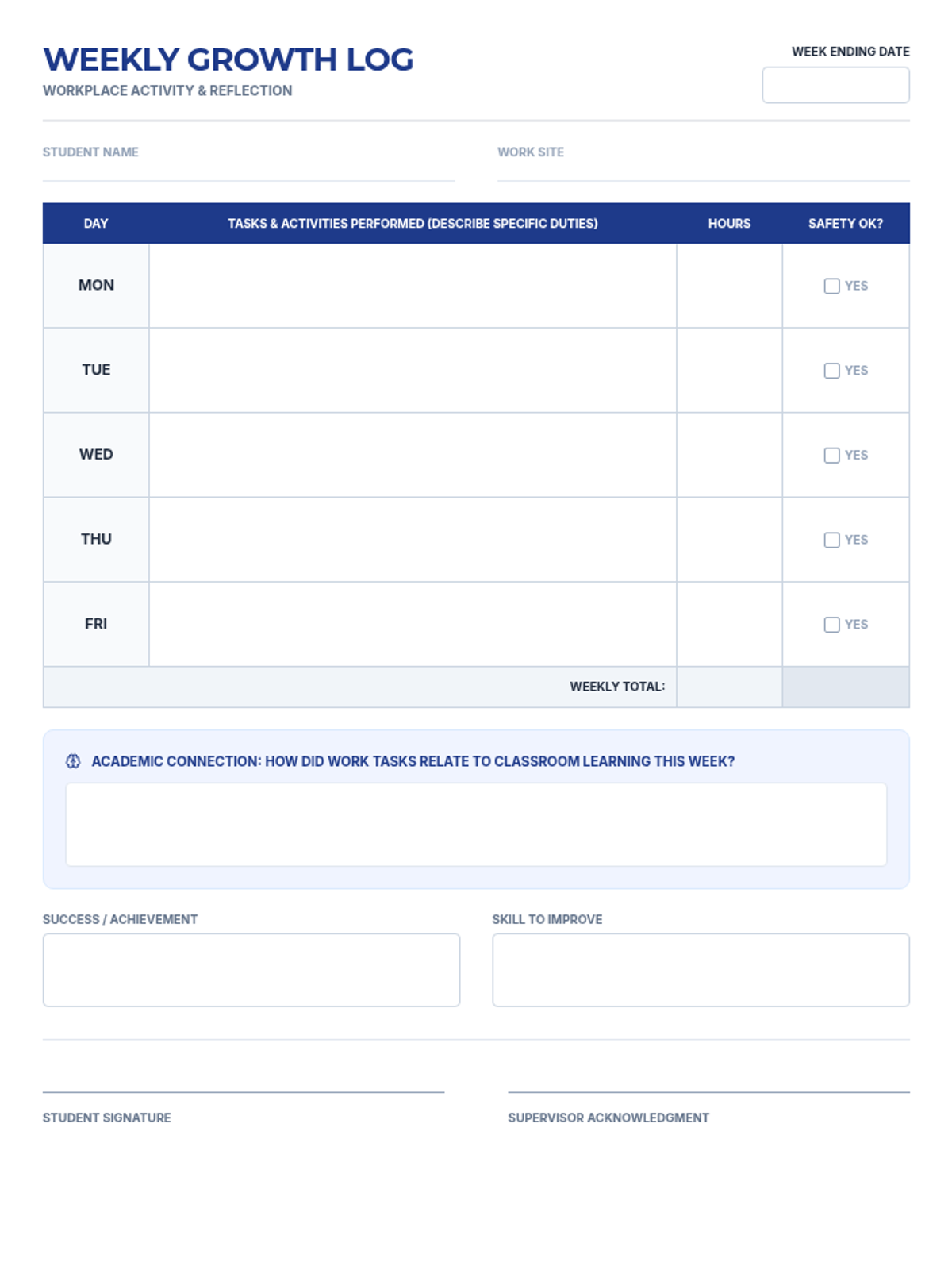
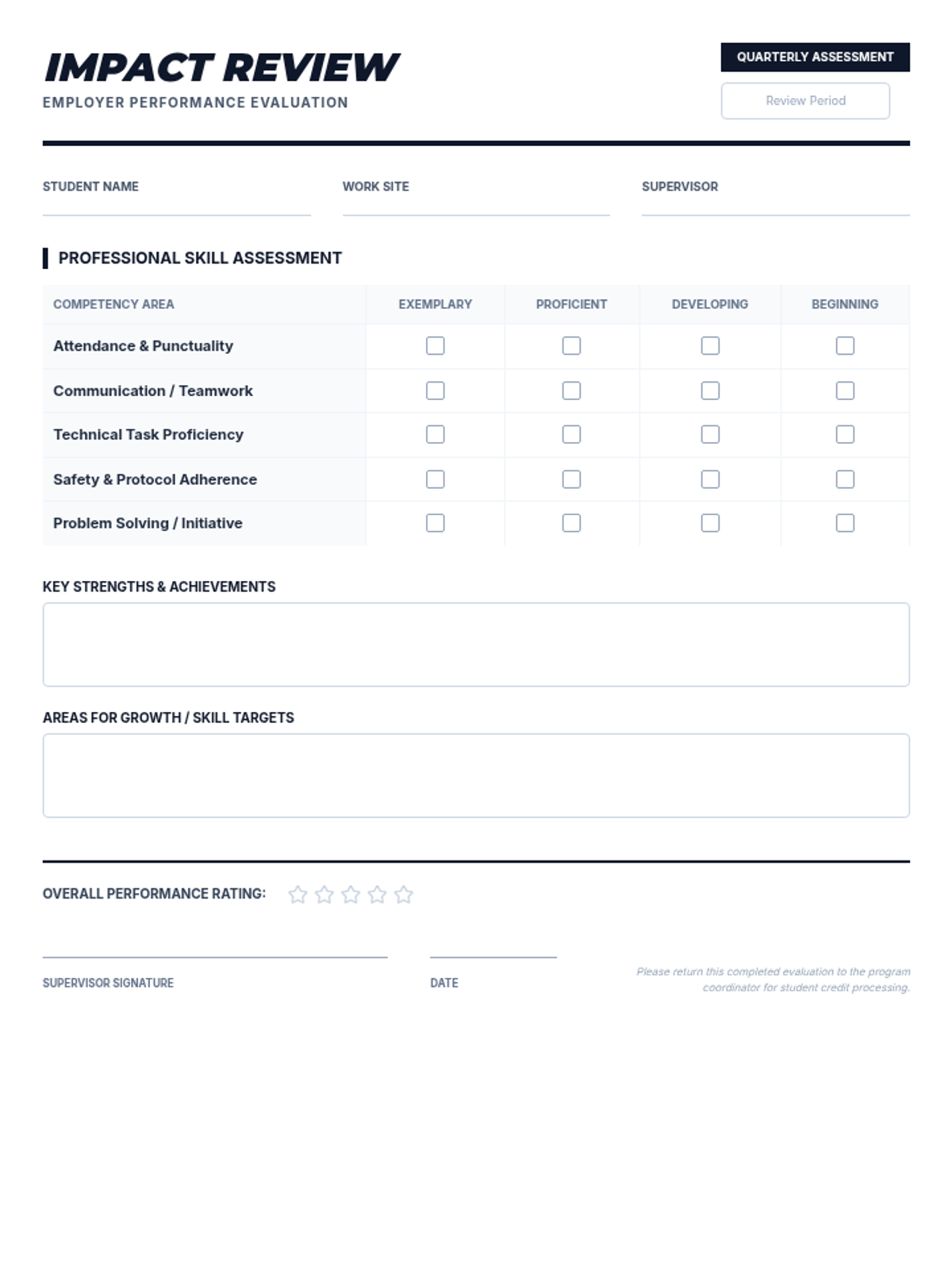
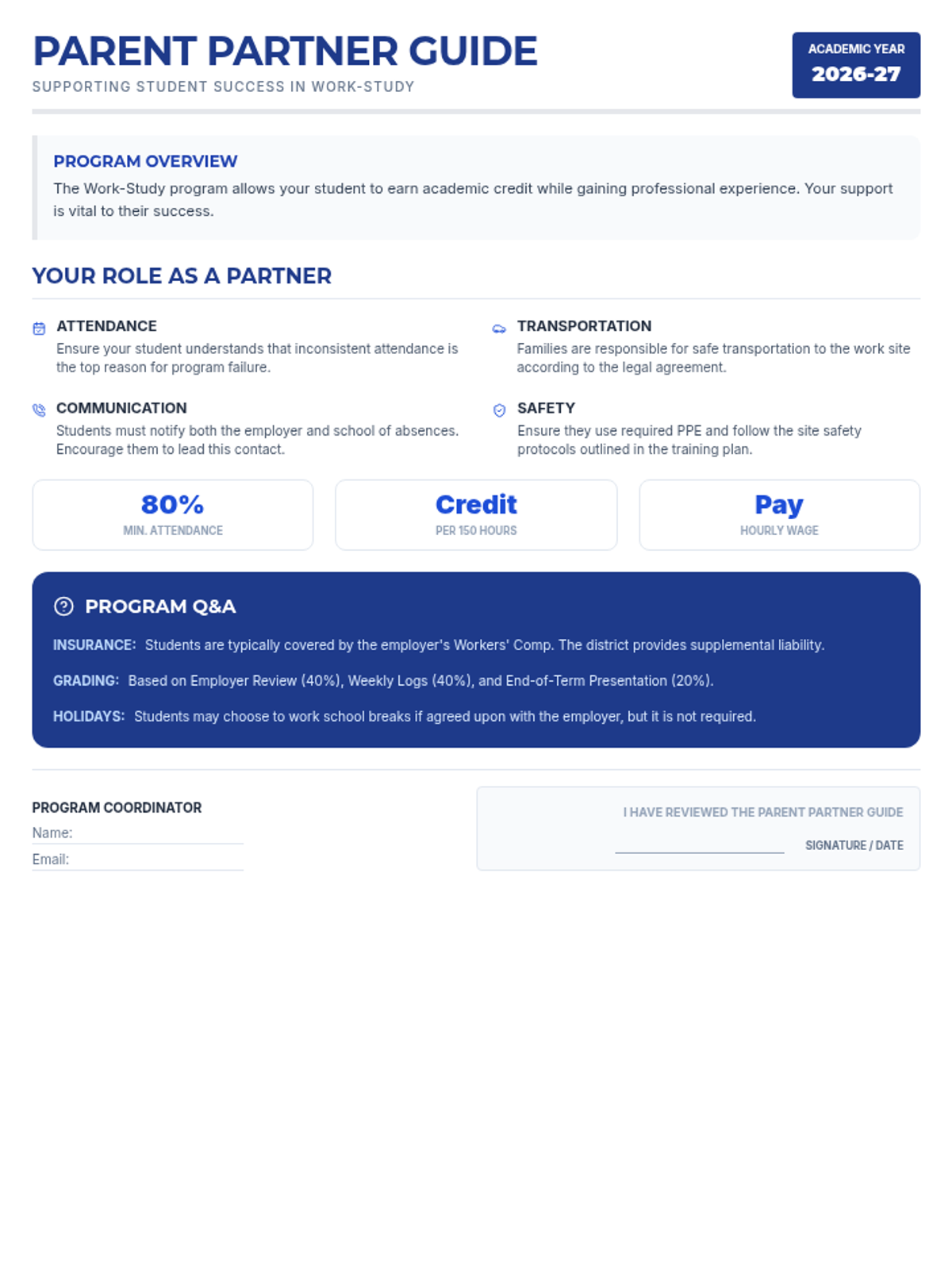
A comprehensive suite of documents for managing a work-study program, including goal setting, legal agreements, reflection logs, and performance evaluations.
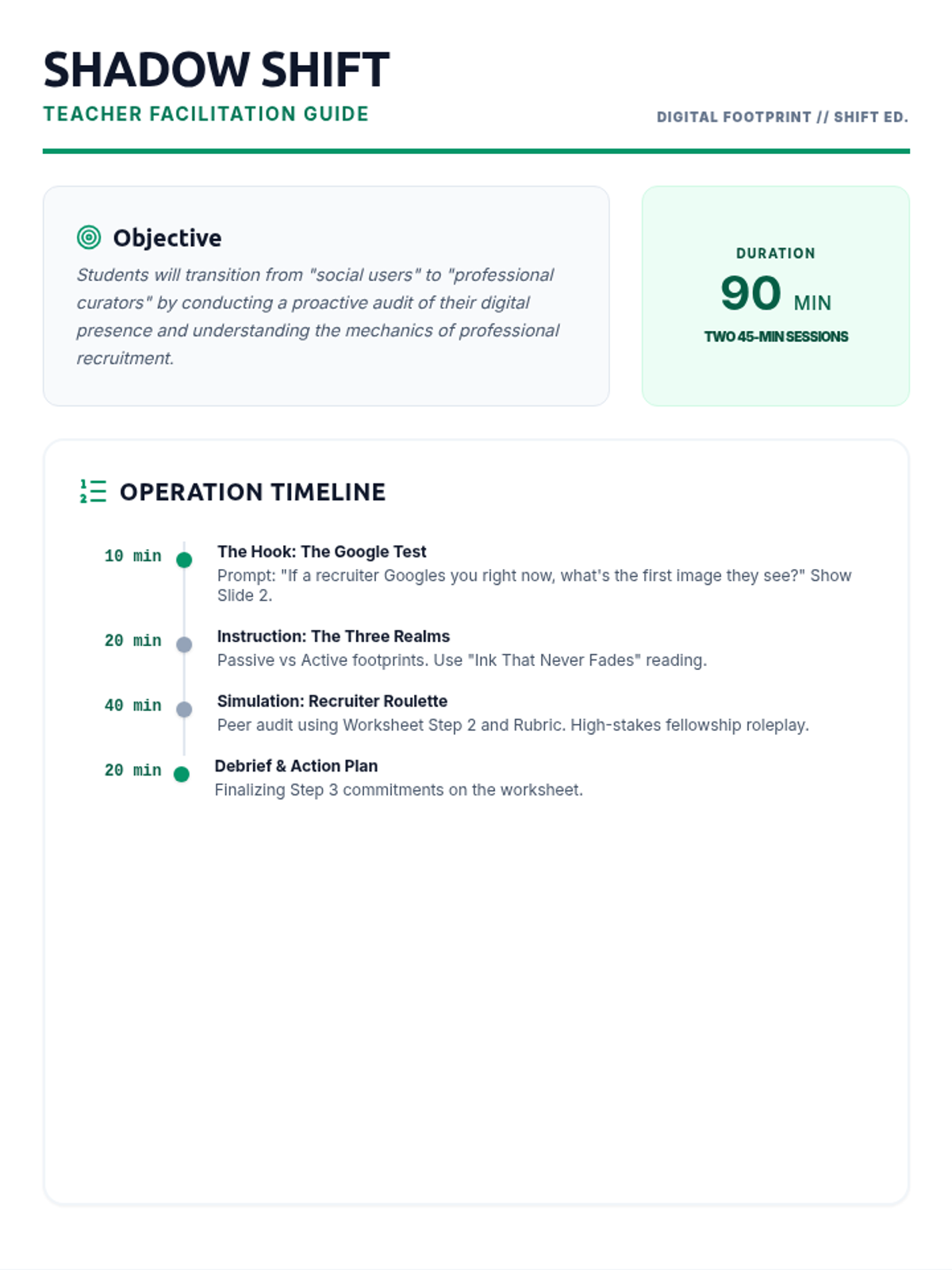
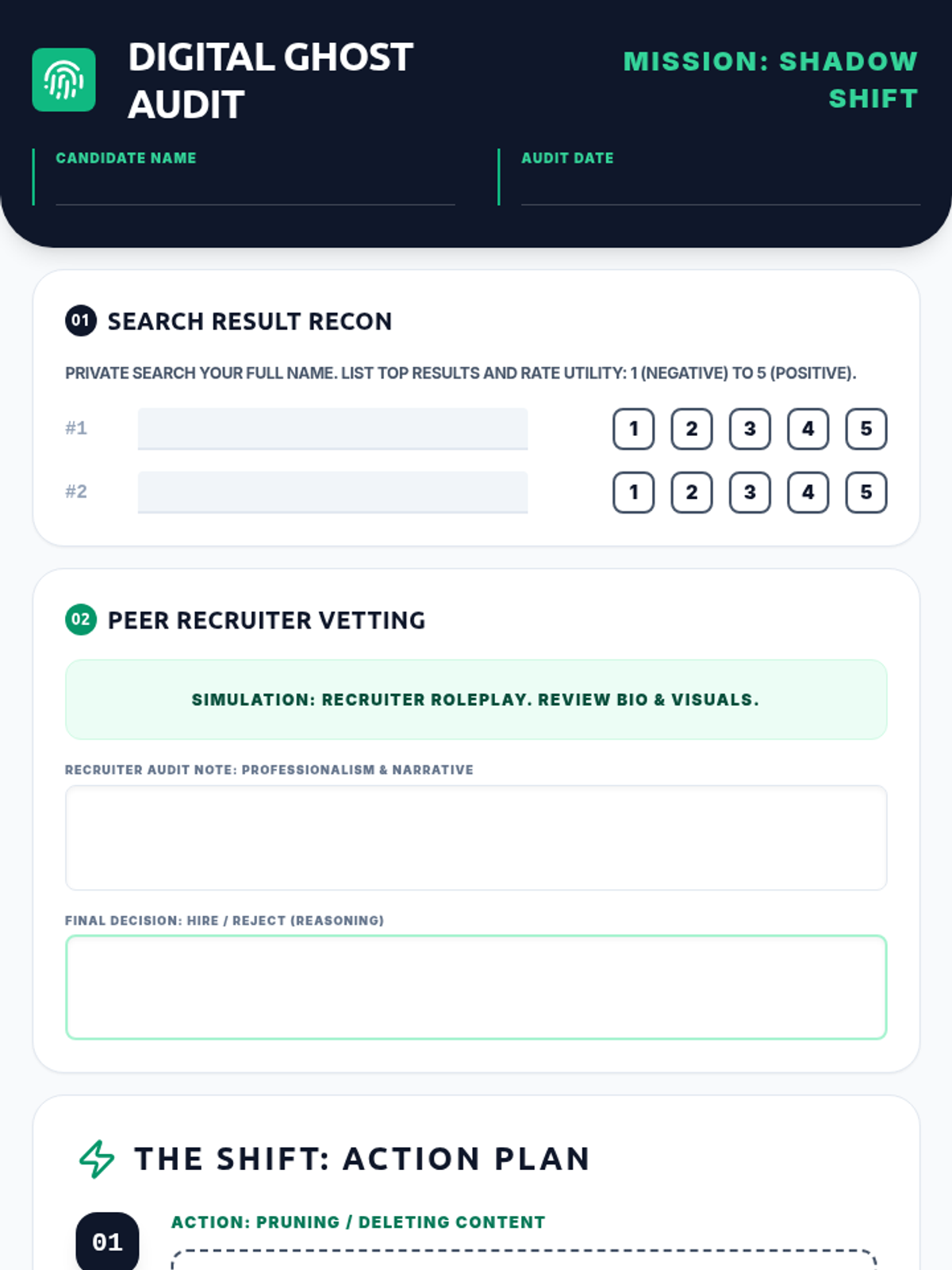
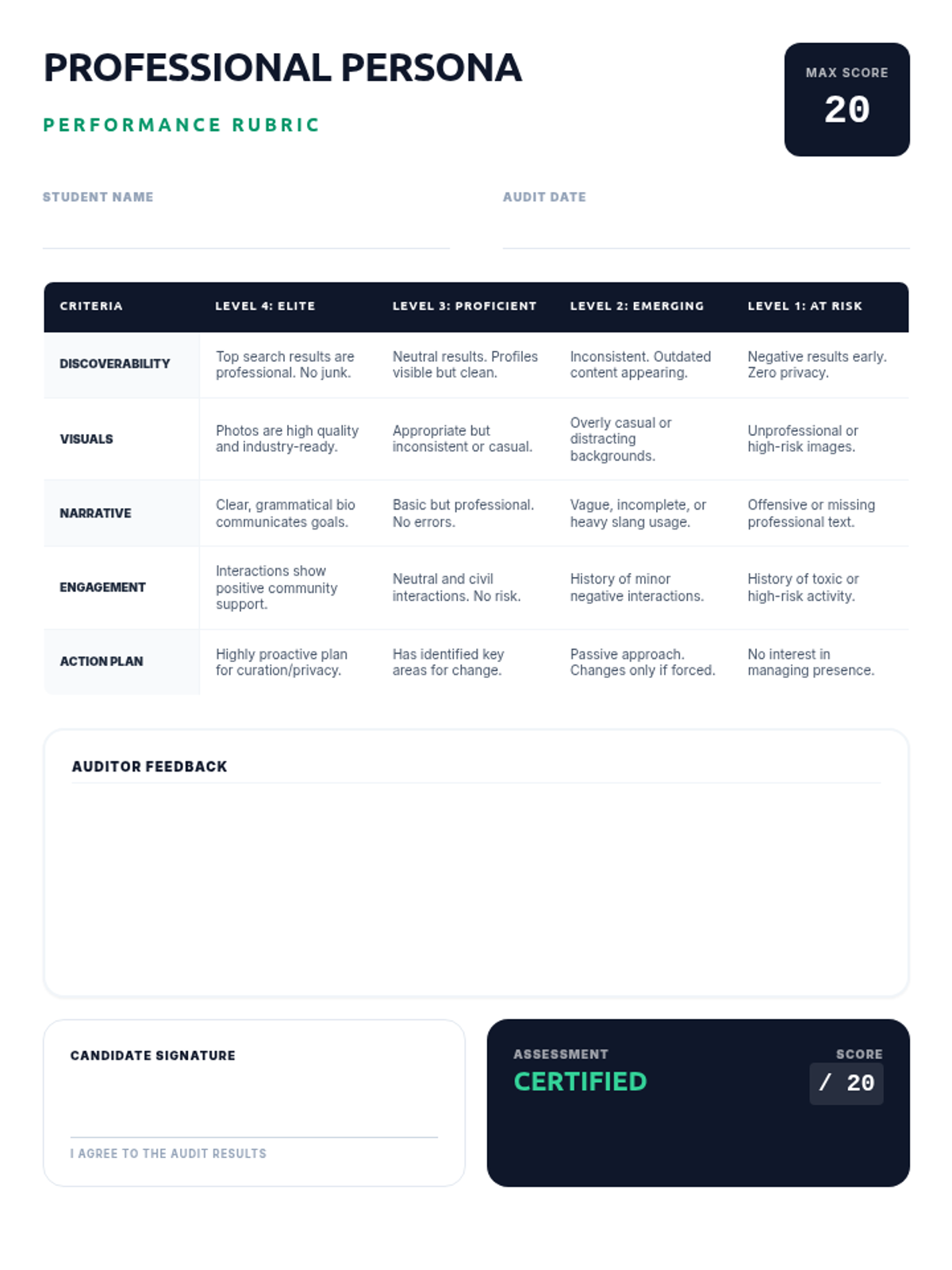
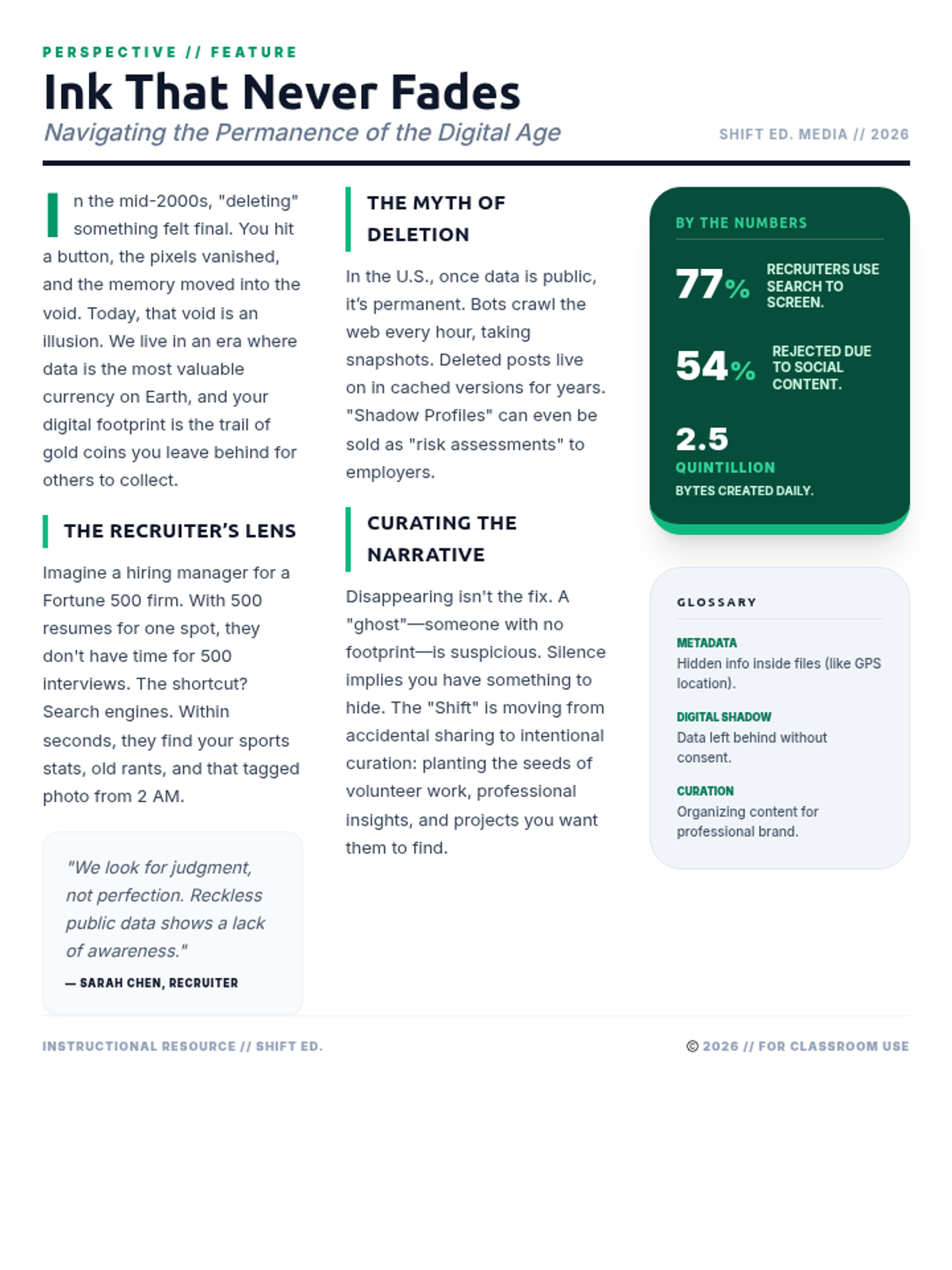
A deep dive into digital footprints, featuring a recruitment simulation where students audit their own and others' online personas to prepare for professional and collegiate success.
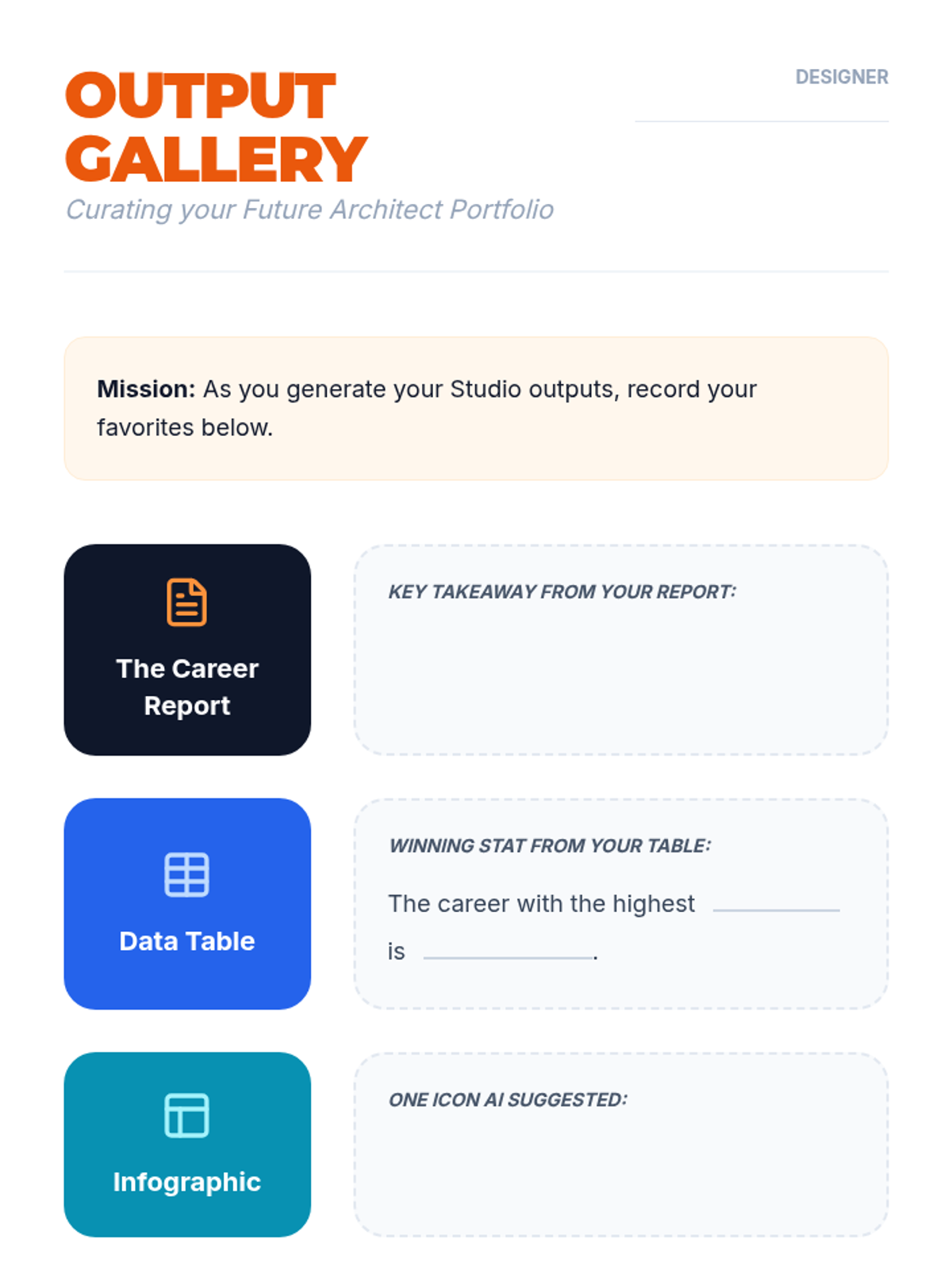
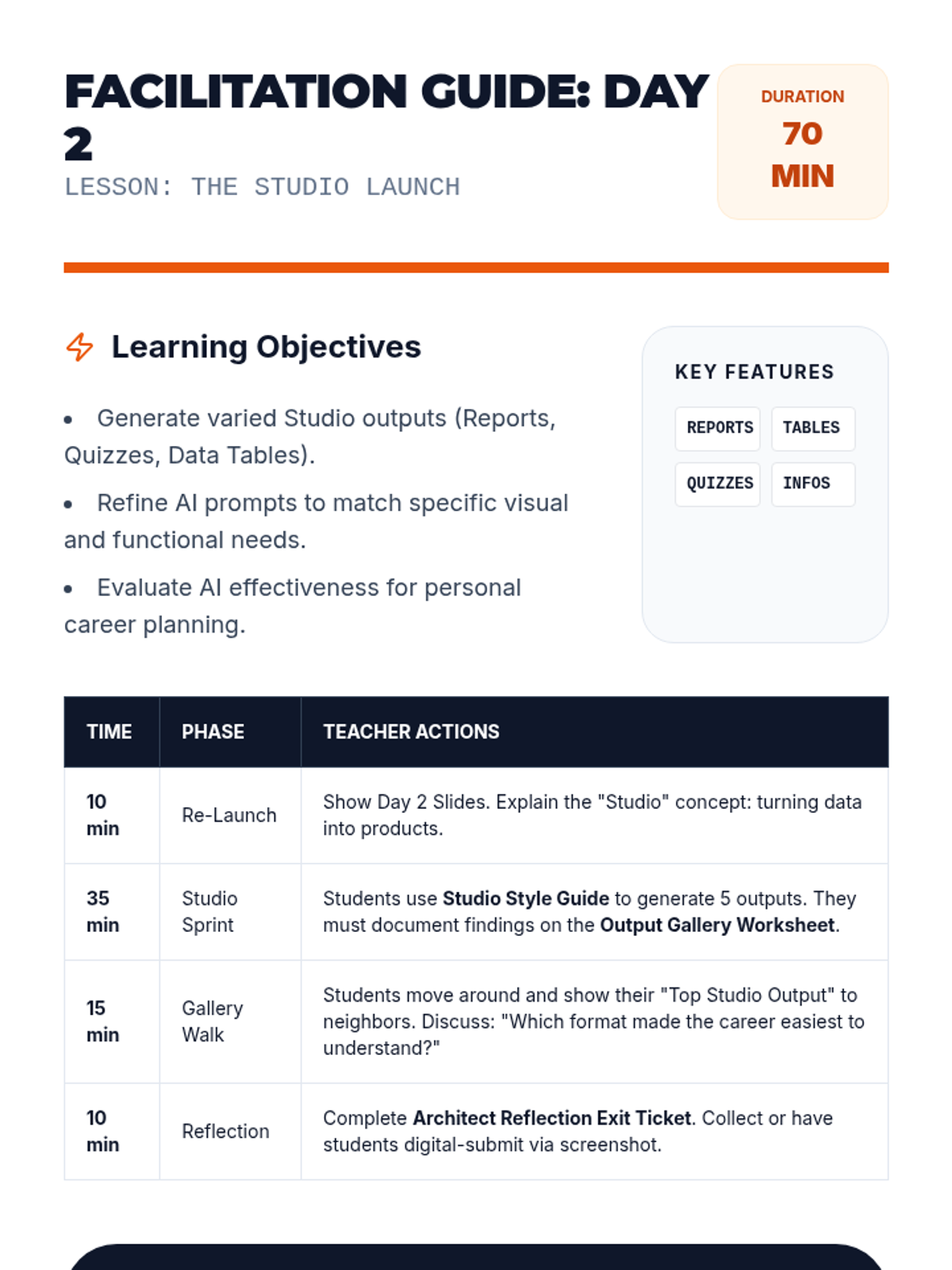
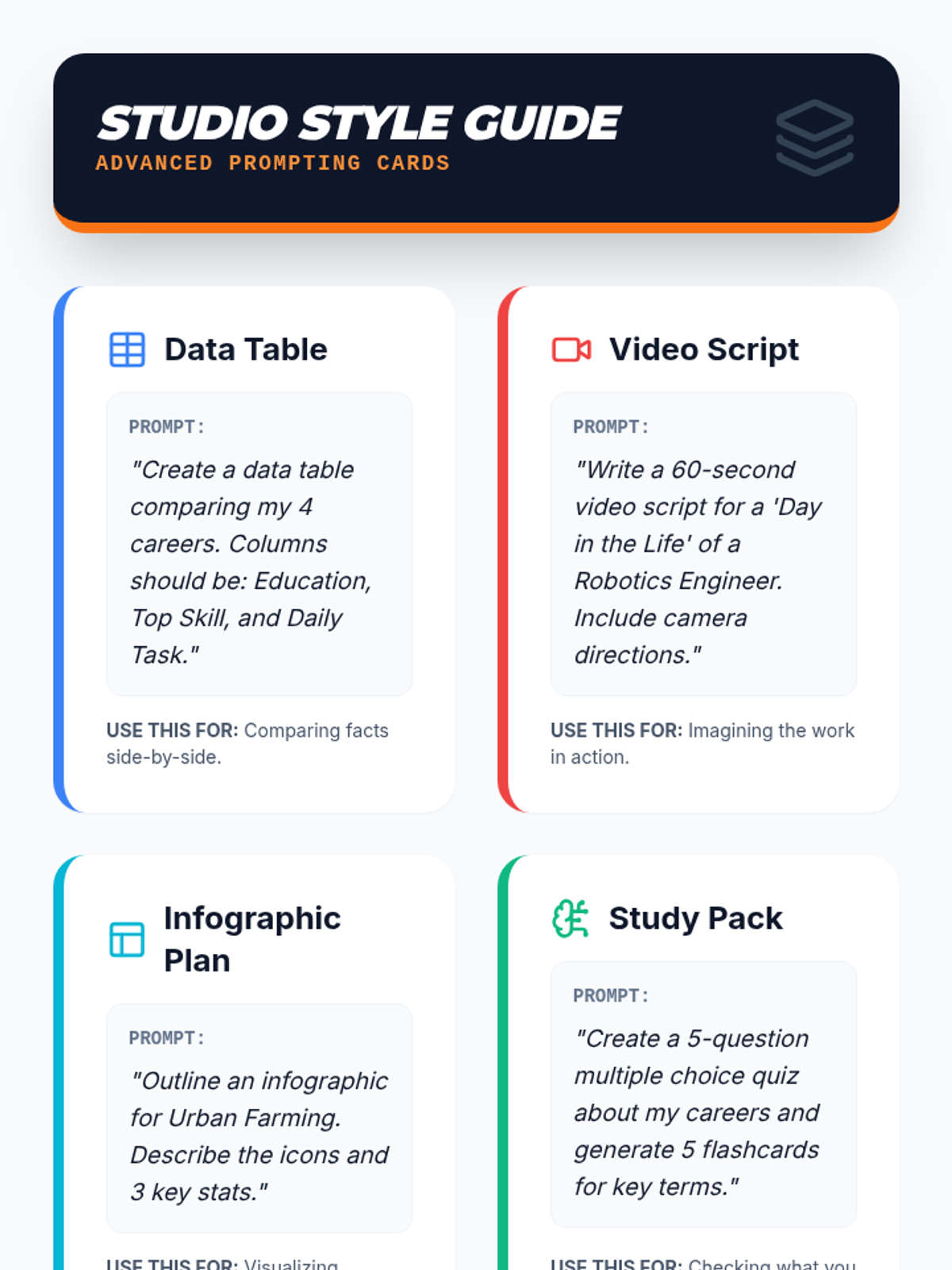
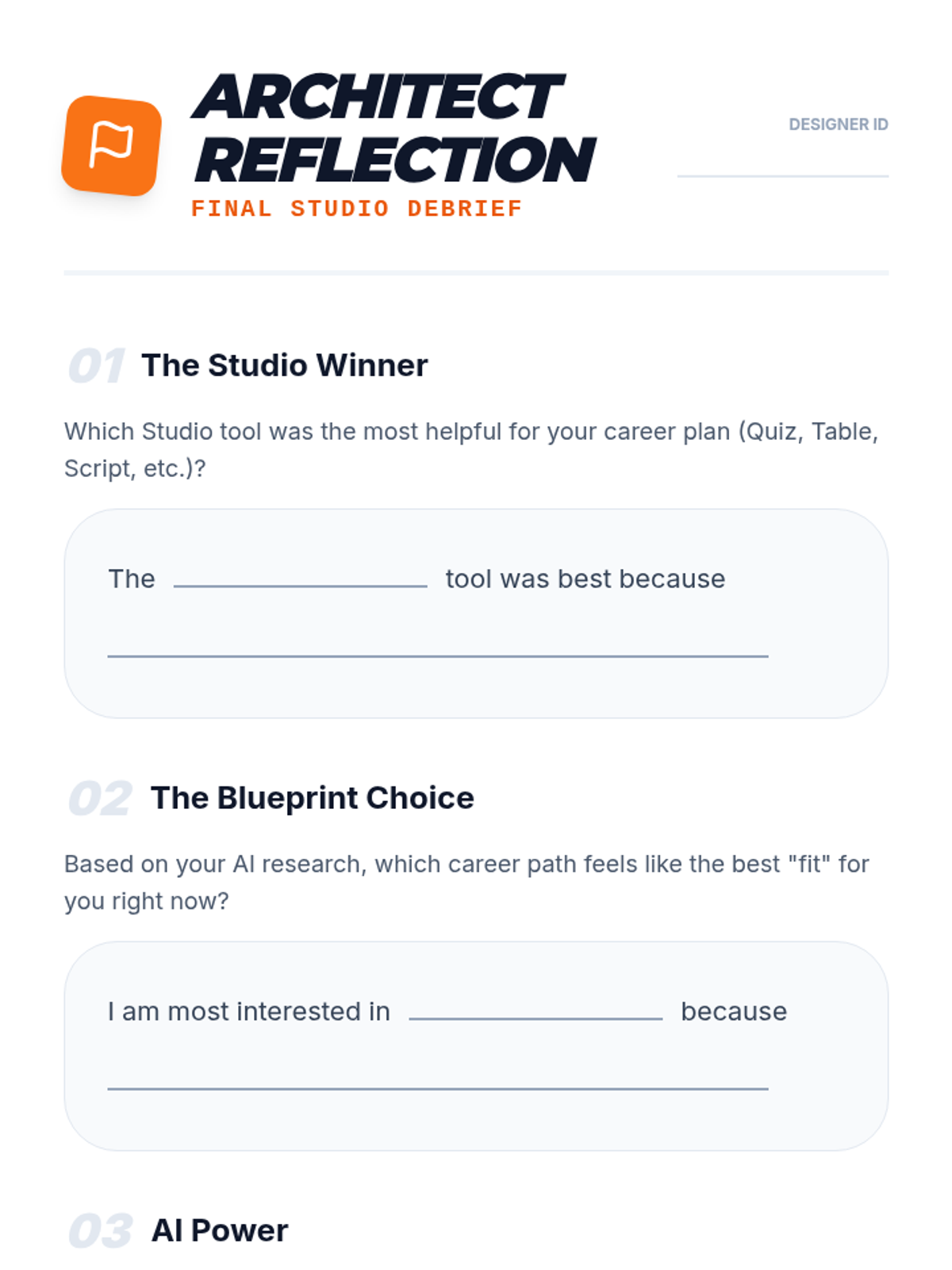
Students dive into the 'Studio' capabilities of NotebookLM, generating specific outputs like reports, quizzes, infographics, and data tables to refine their career plans.
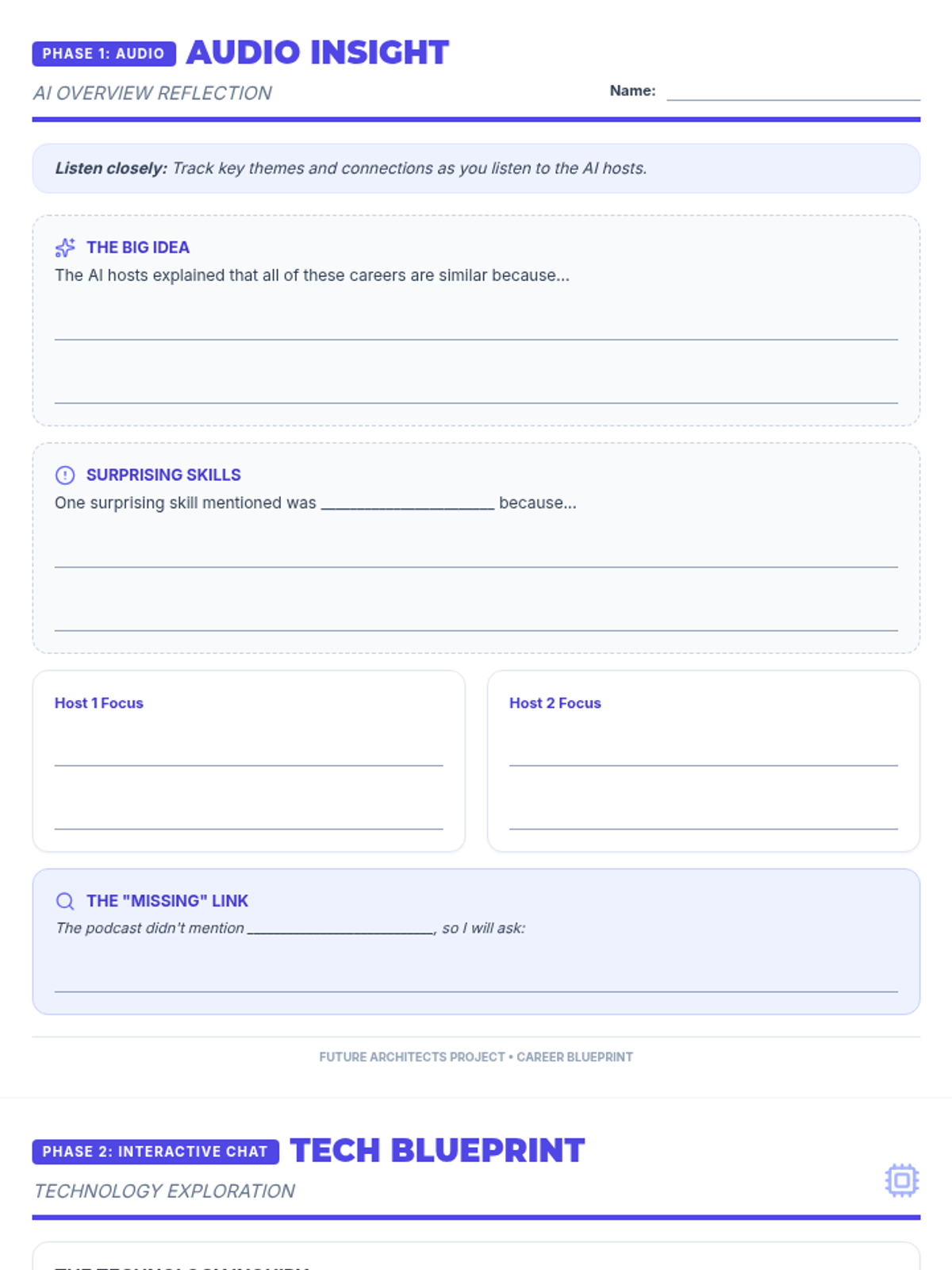
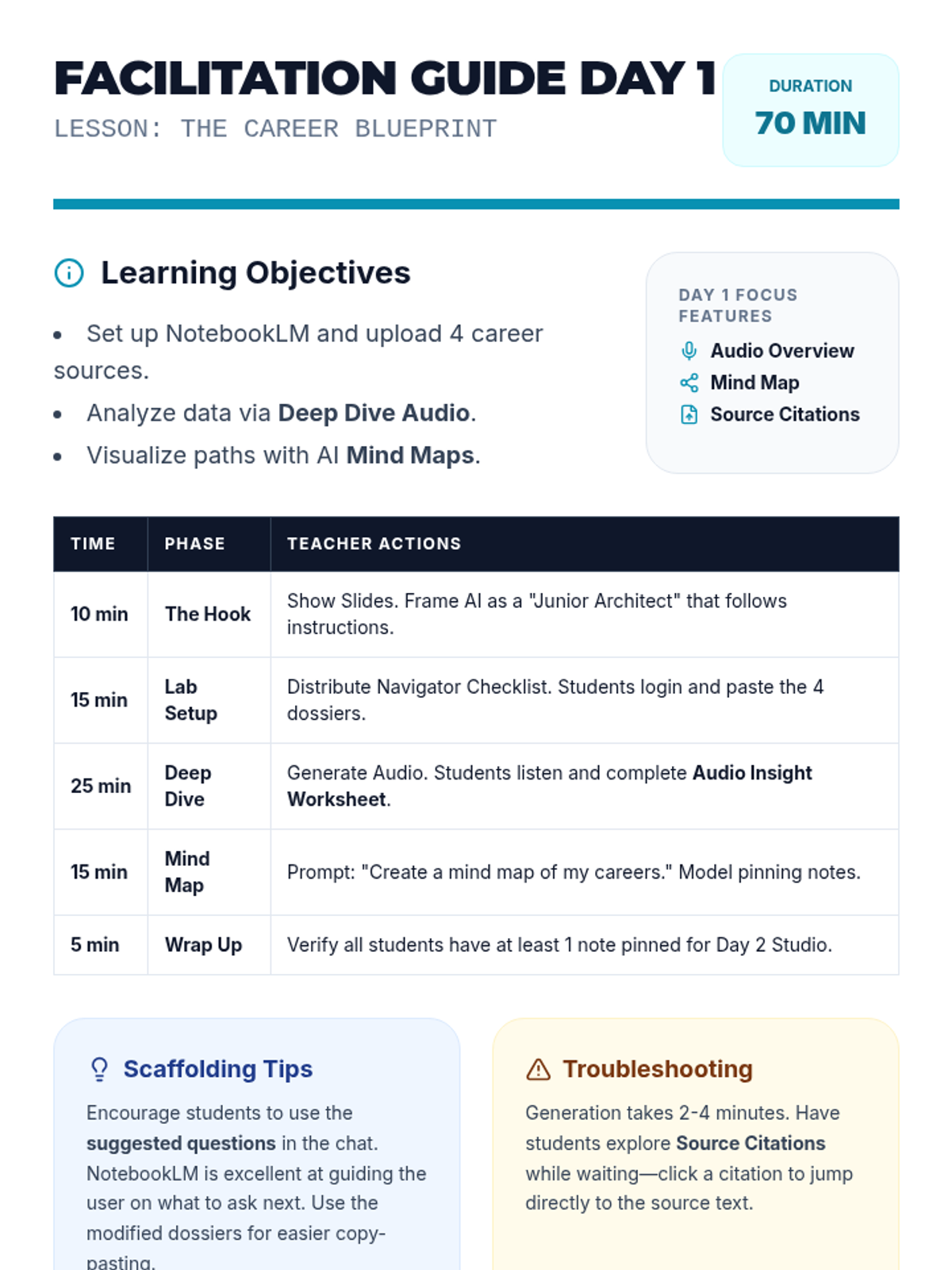
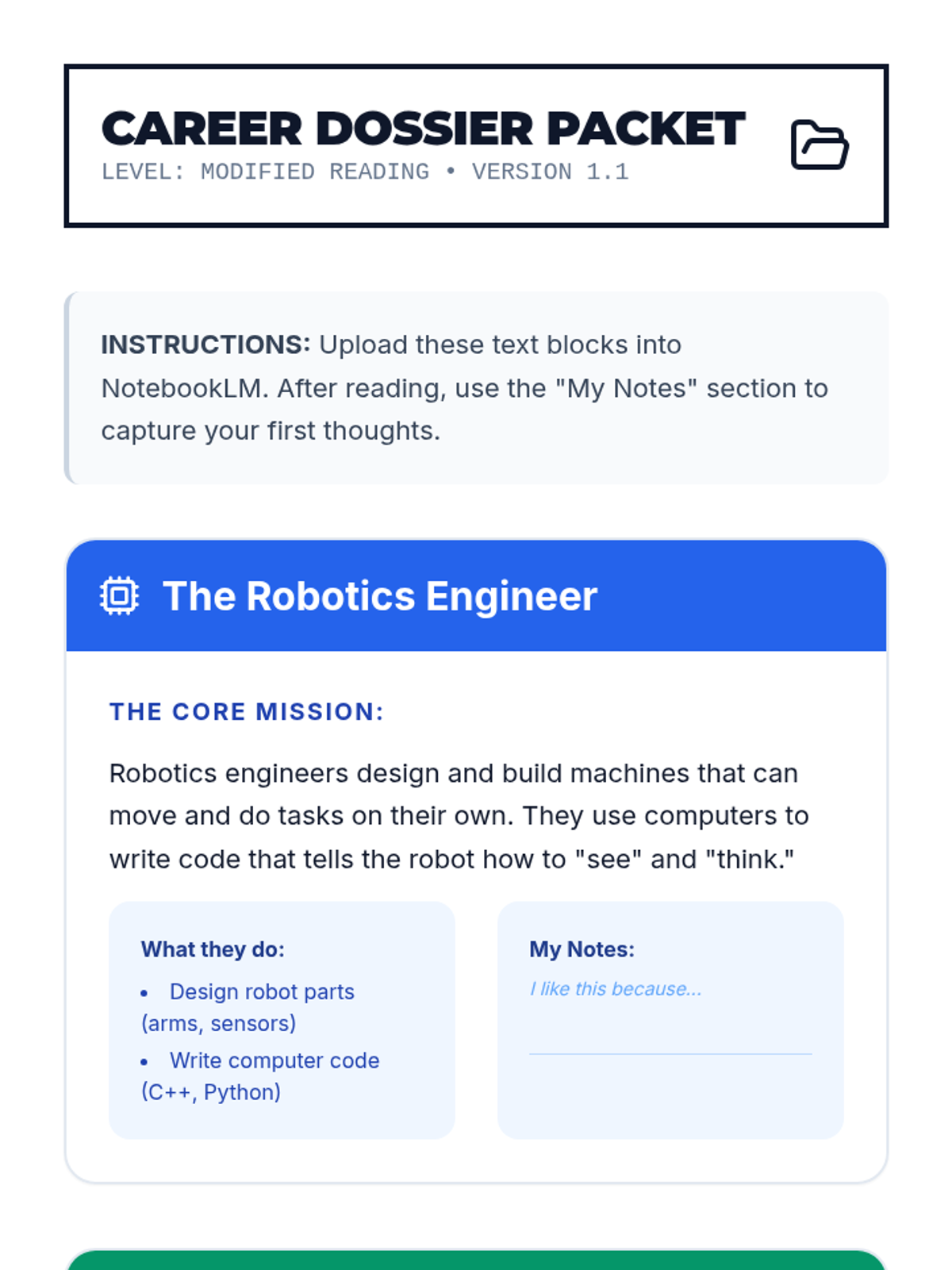
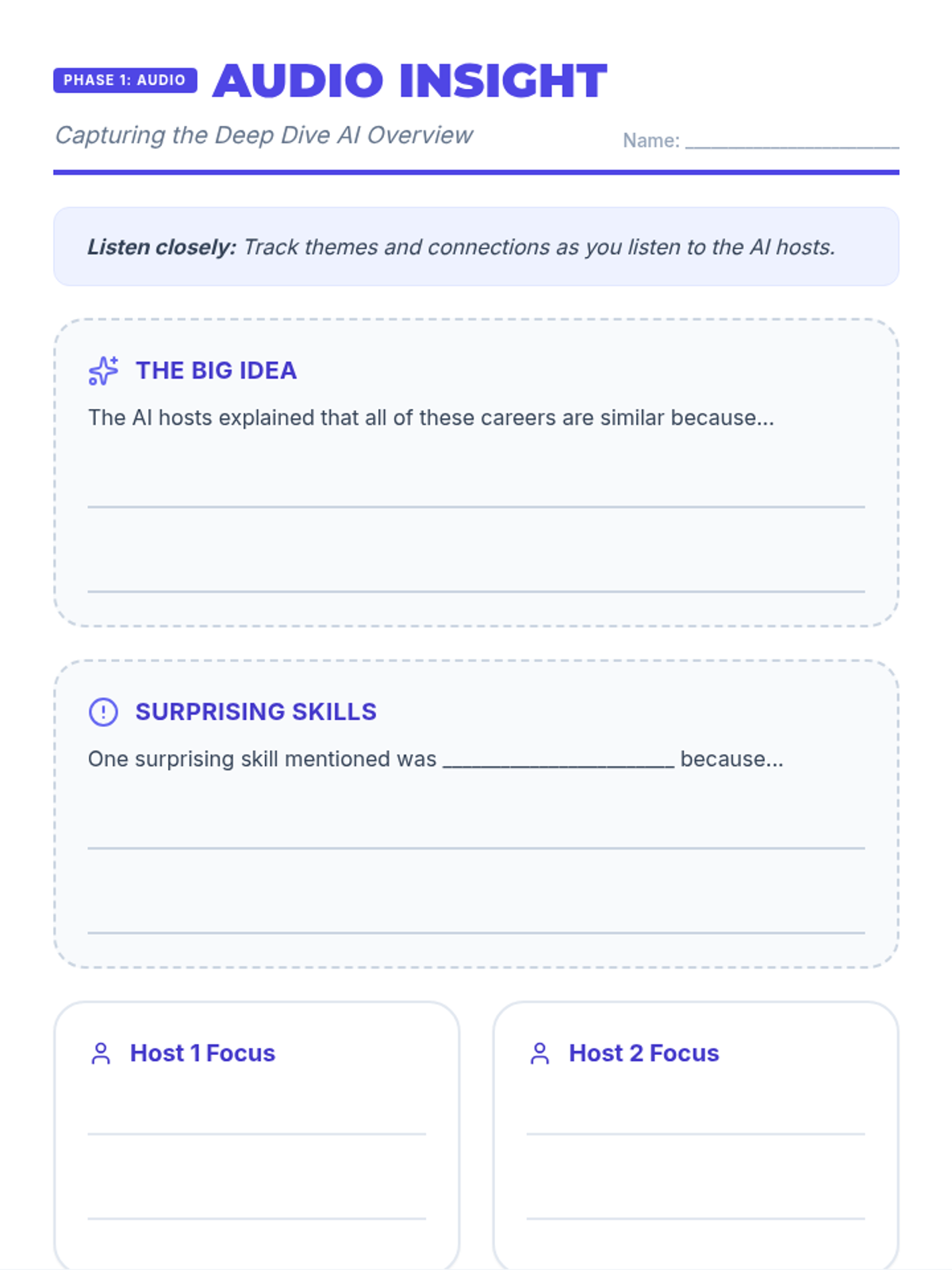
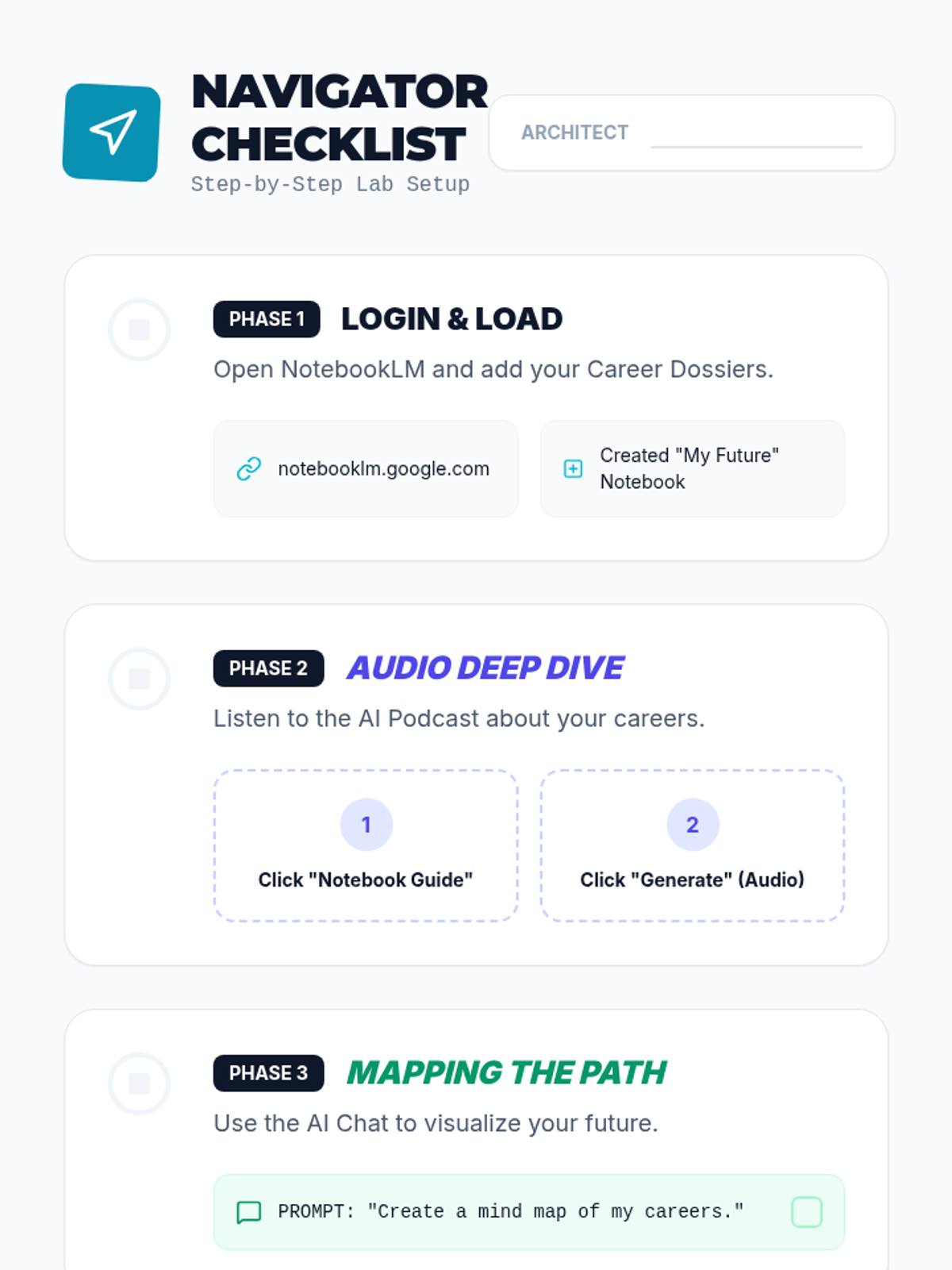
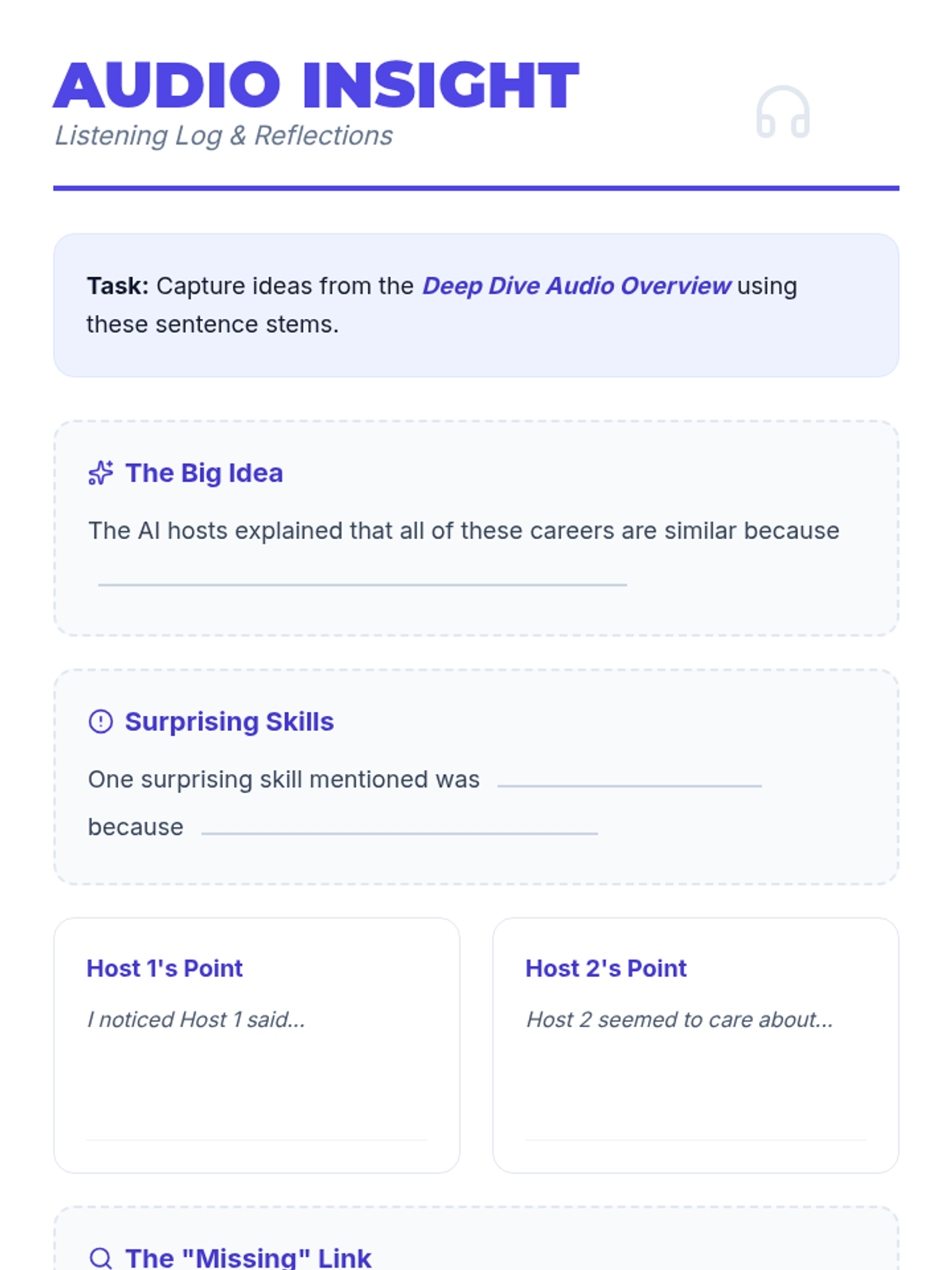
Students learn to set up their NotebookLM workspace, upload sources, and use high-level overview tools like Audio Overviews and Mind Maps to explore career options.
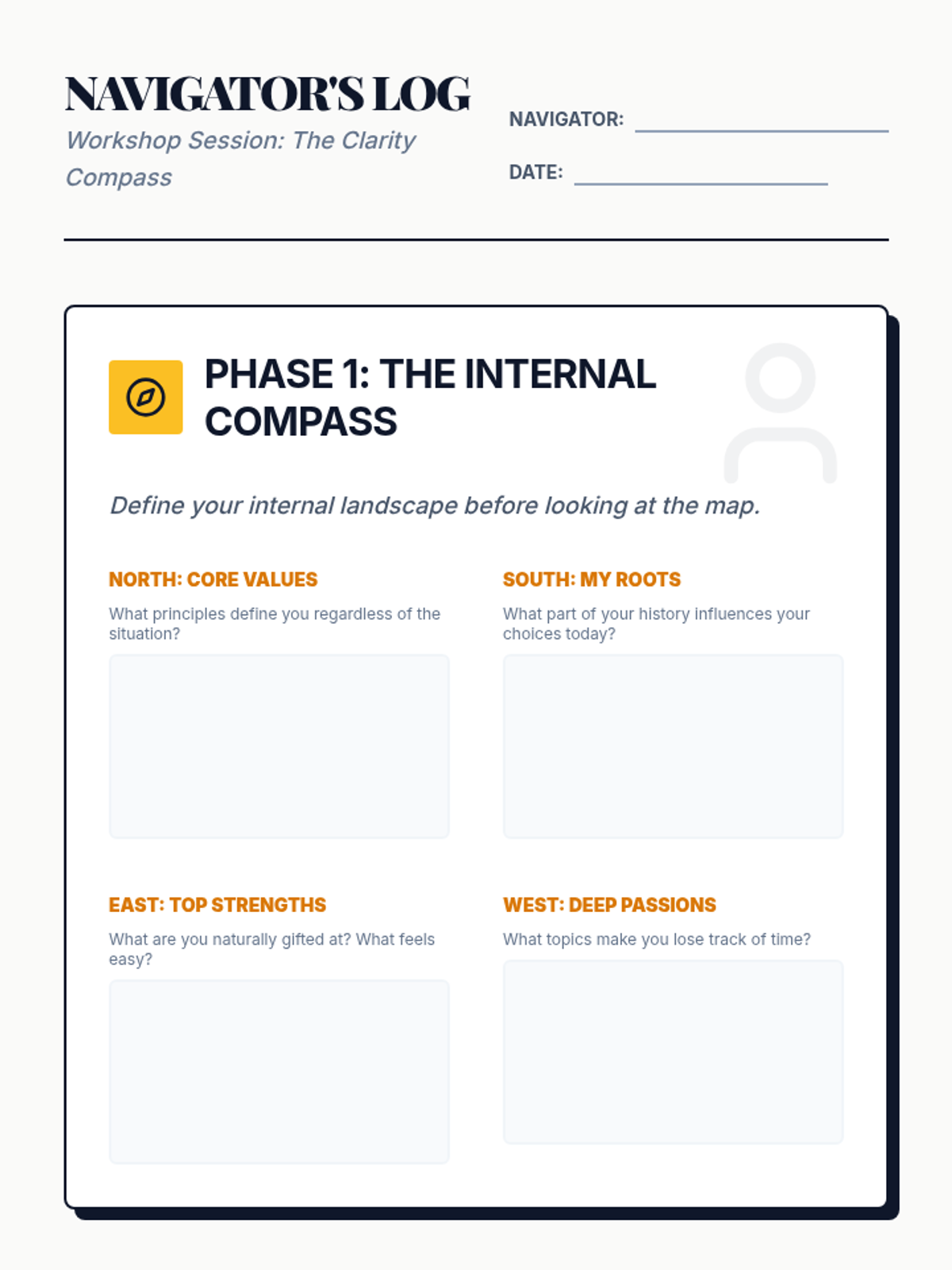
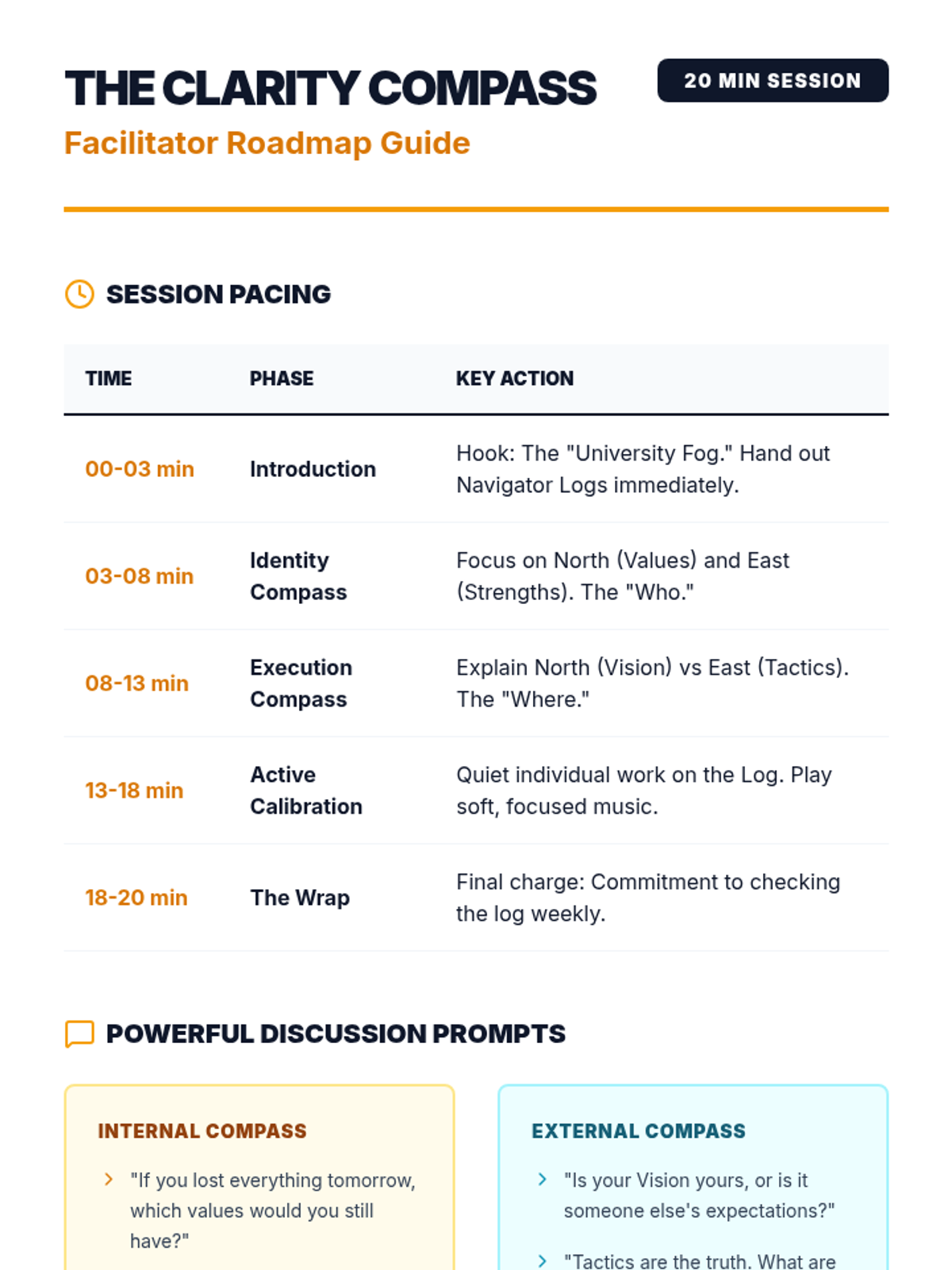
An introductory session that explores the Internal and External Clarity Compasses to help students align their personal values with actionable goals.
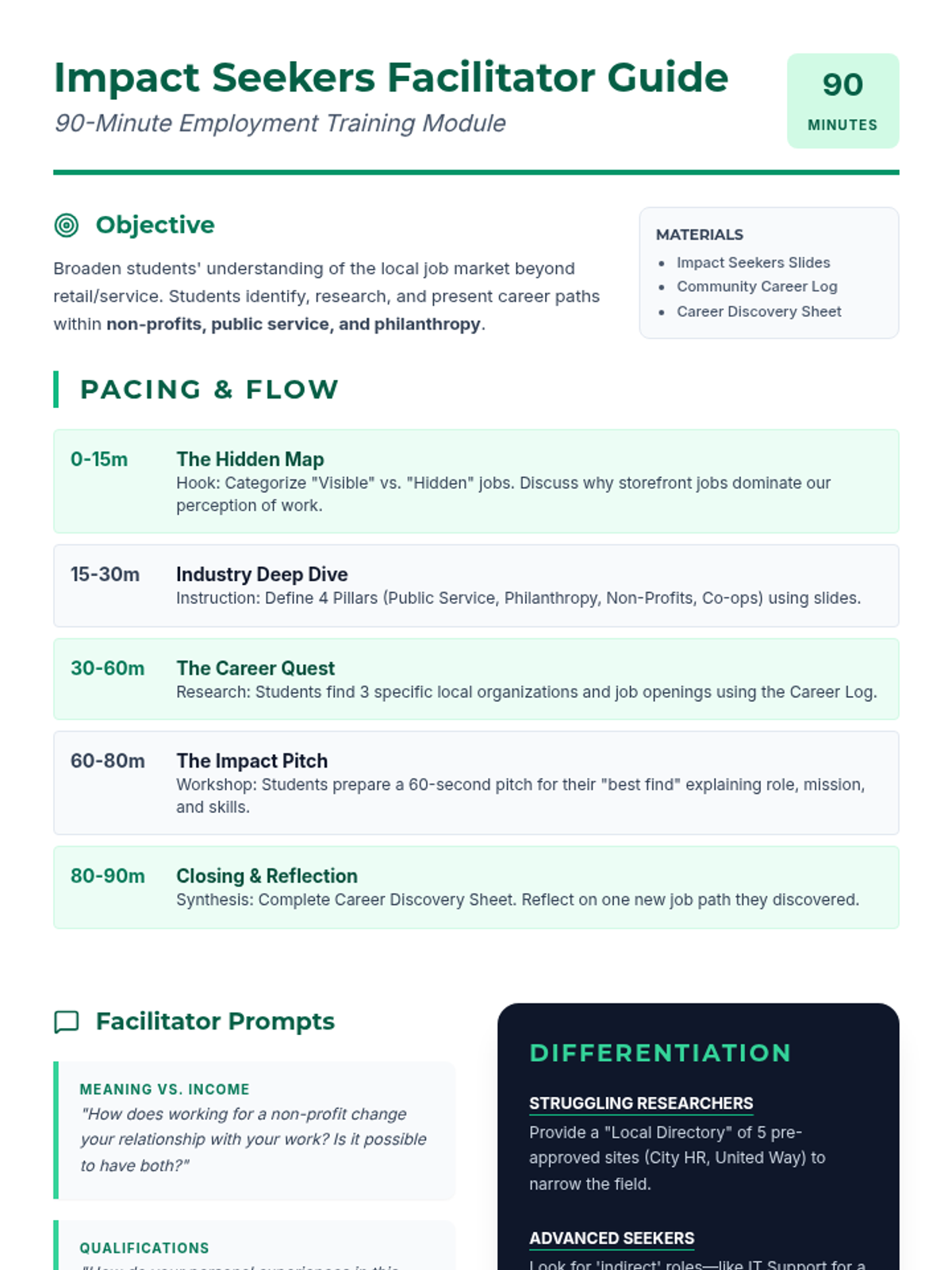
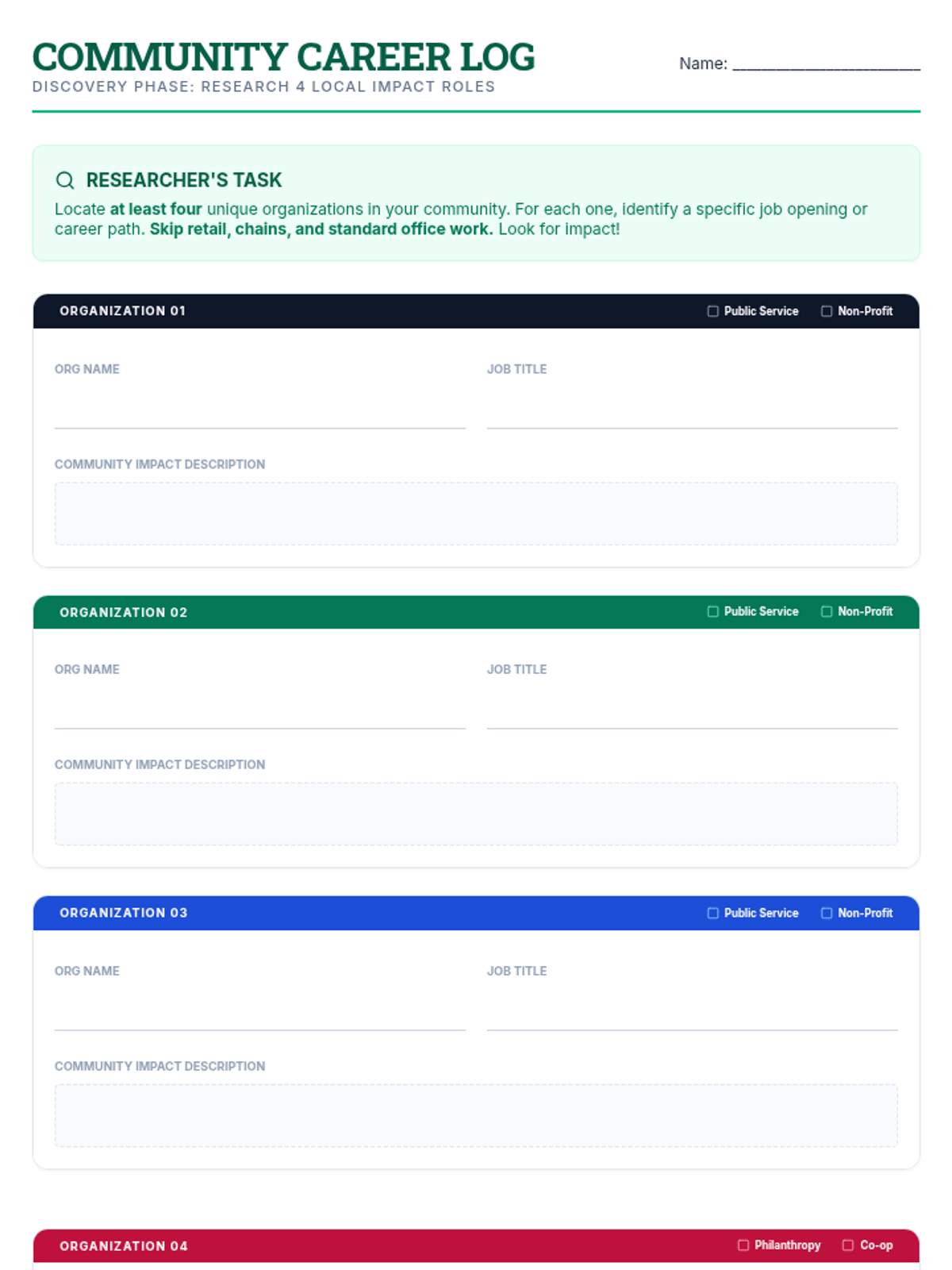
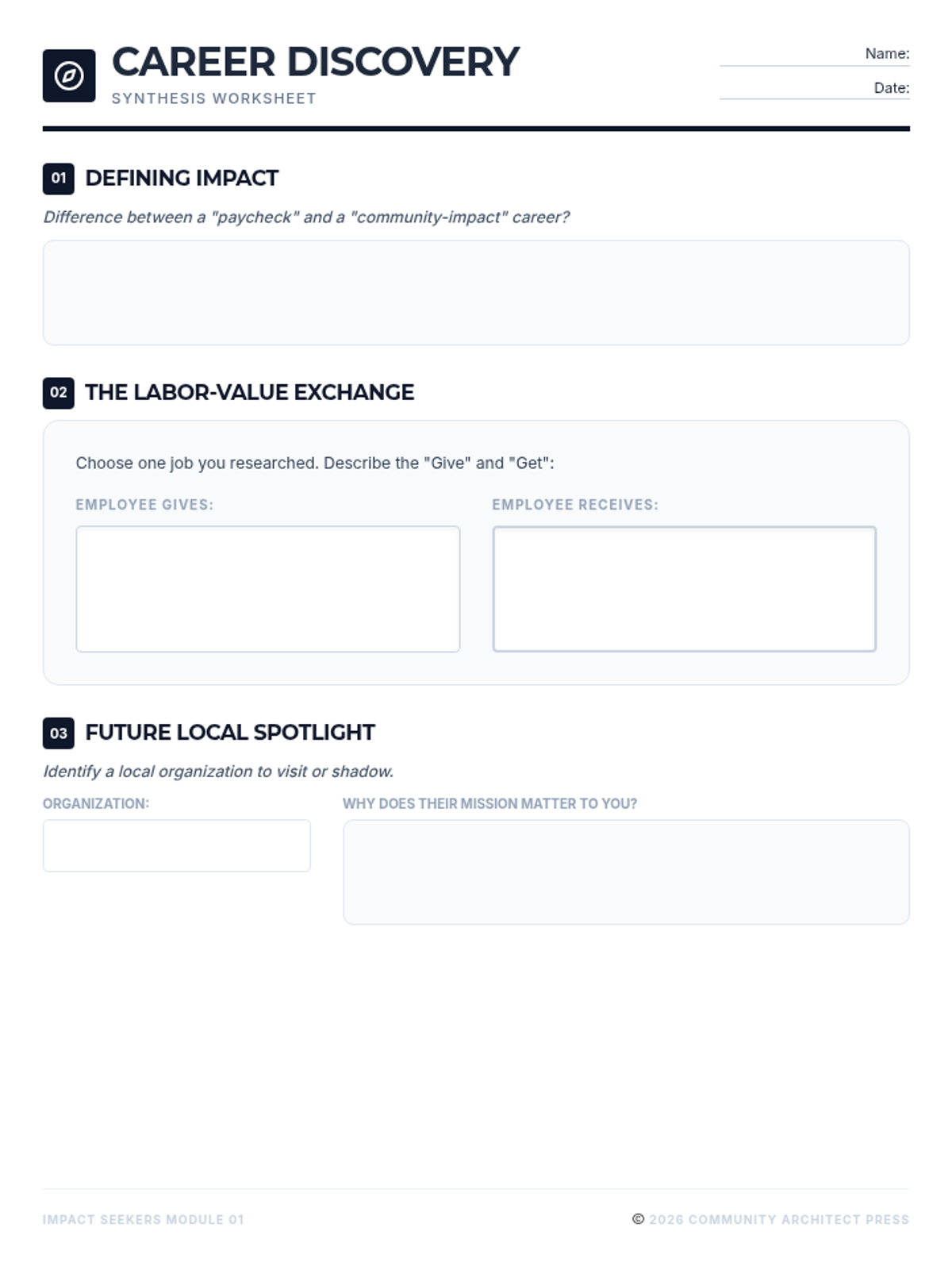
A 90-minute employment training session focused on discovering meaningful community-based careers beyond traditional retail. Students explore non-profits, public service, and philanthropic organizations to understand diverse career paths.
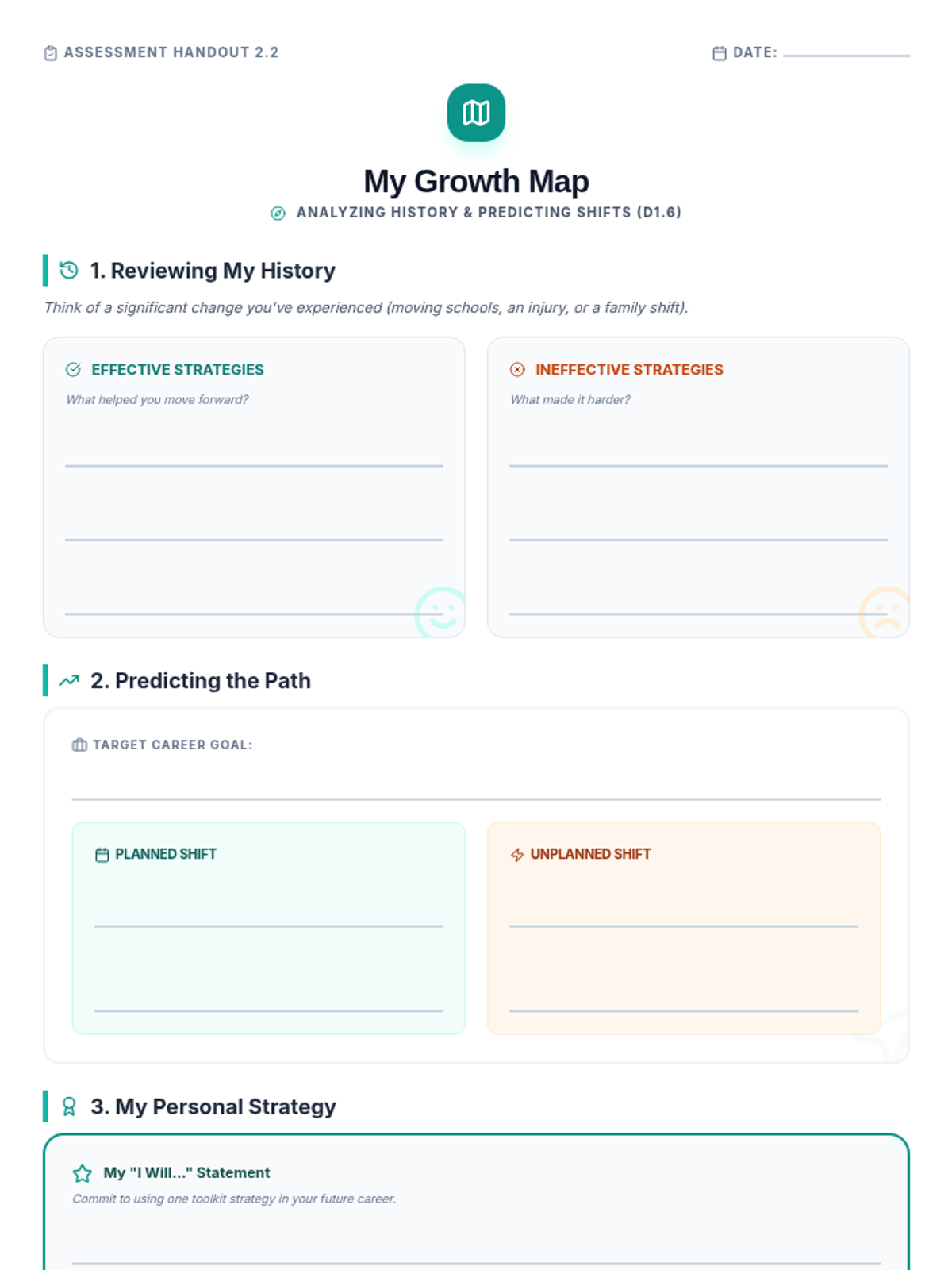
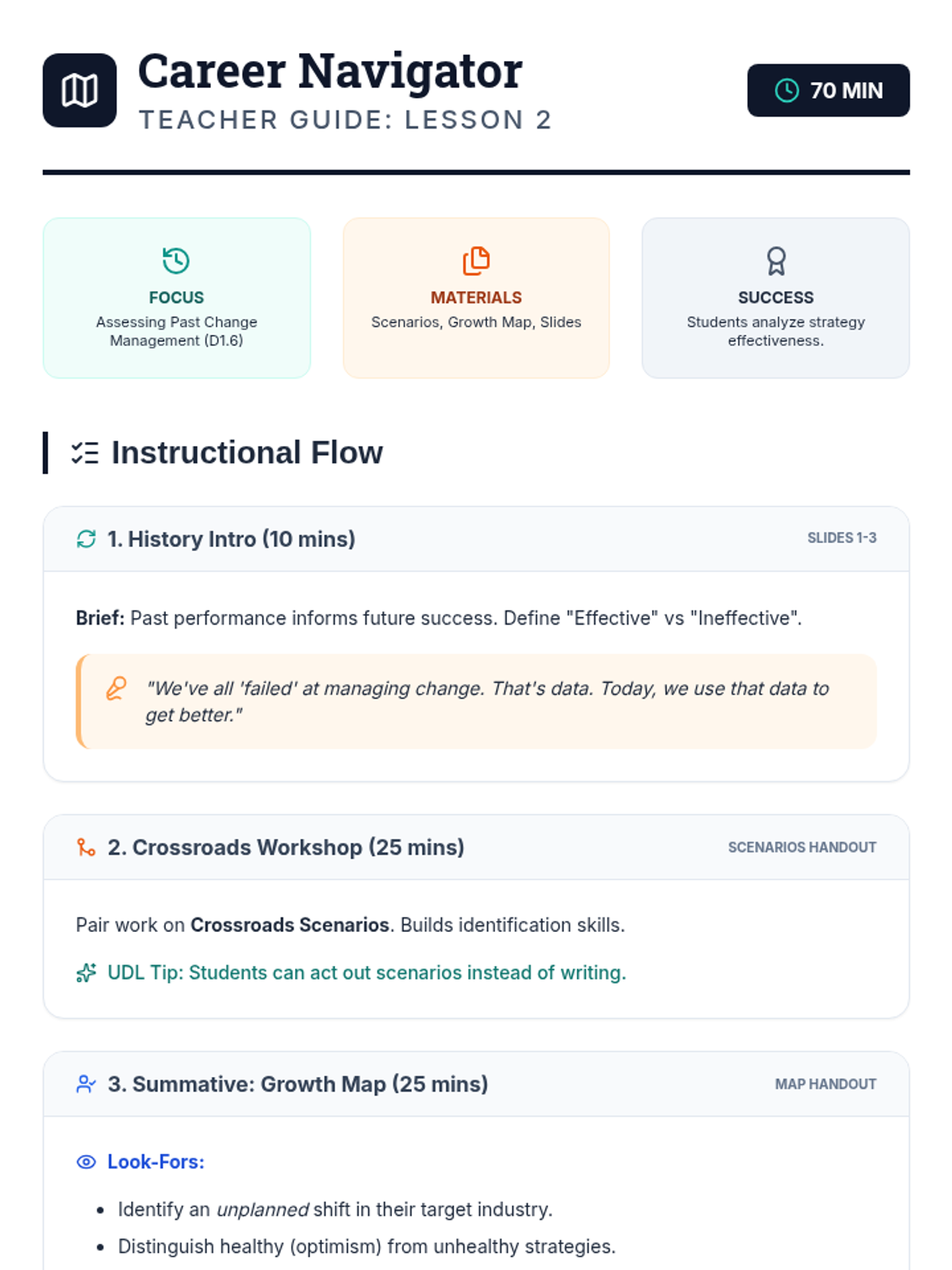
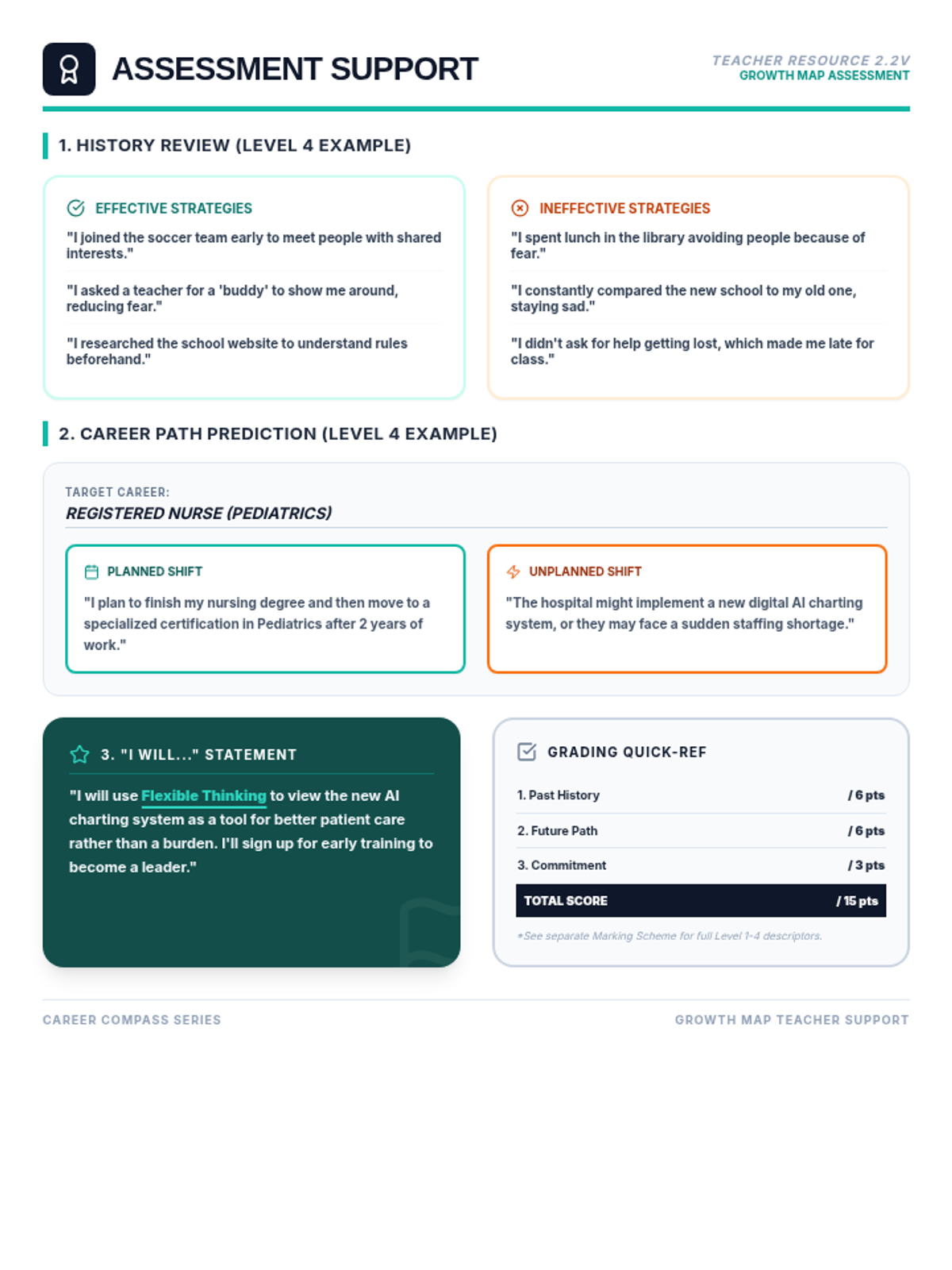
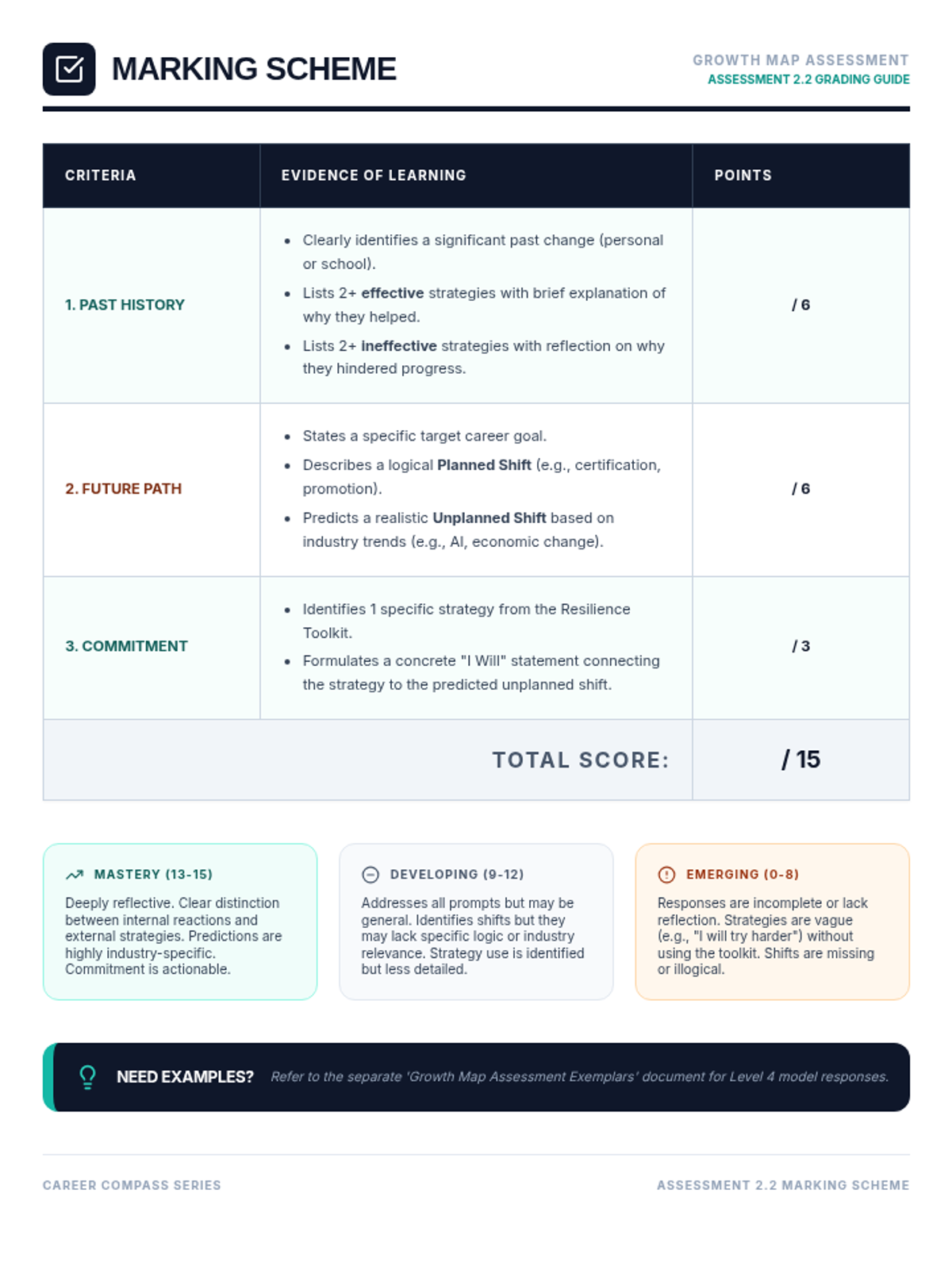
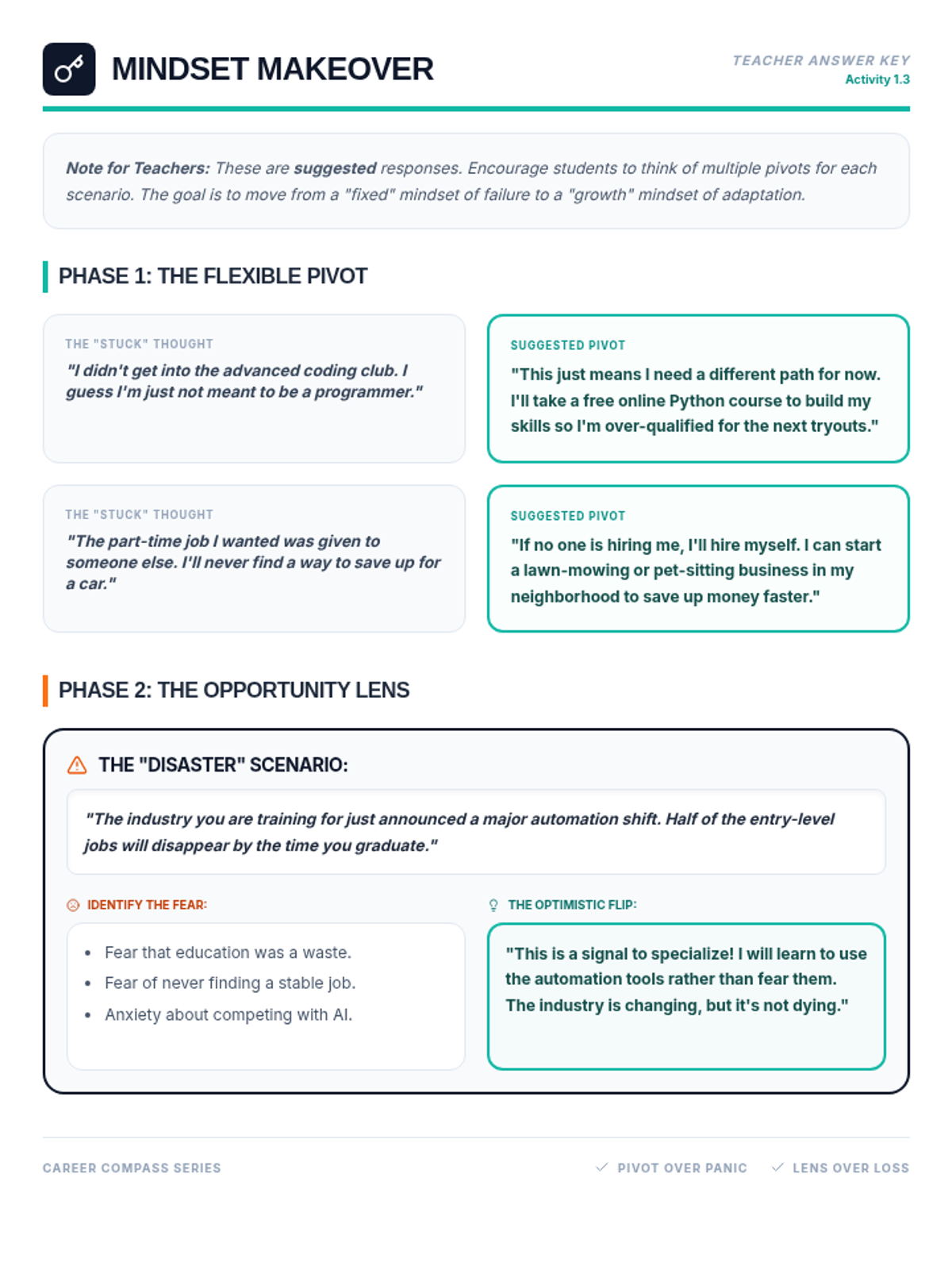
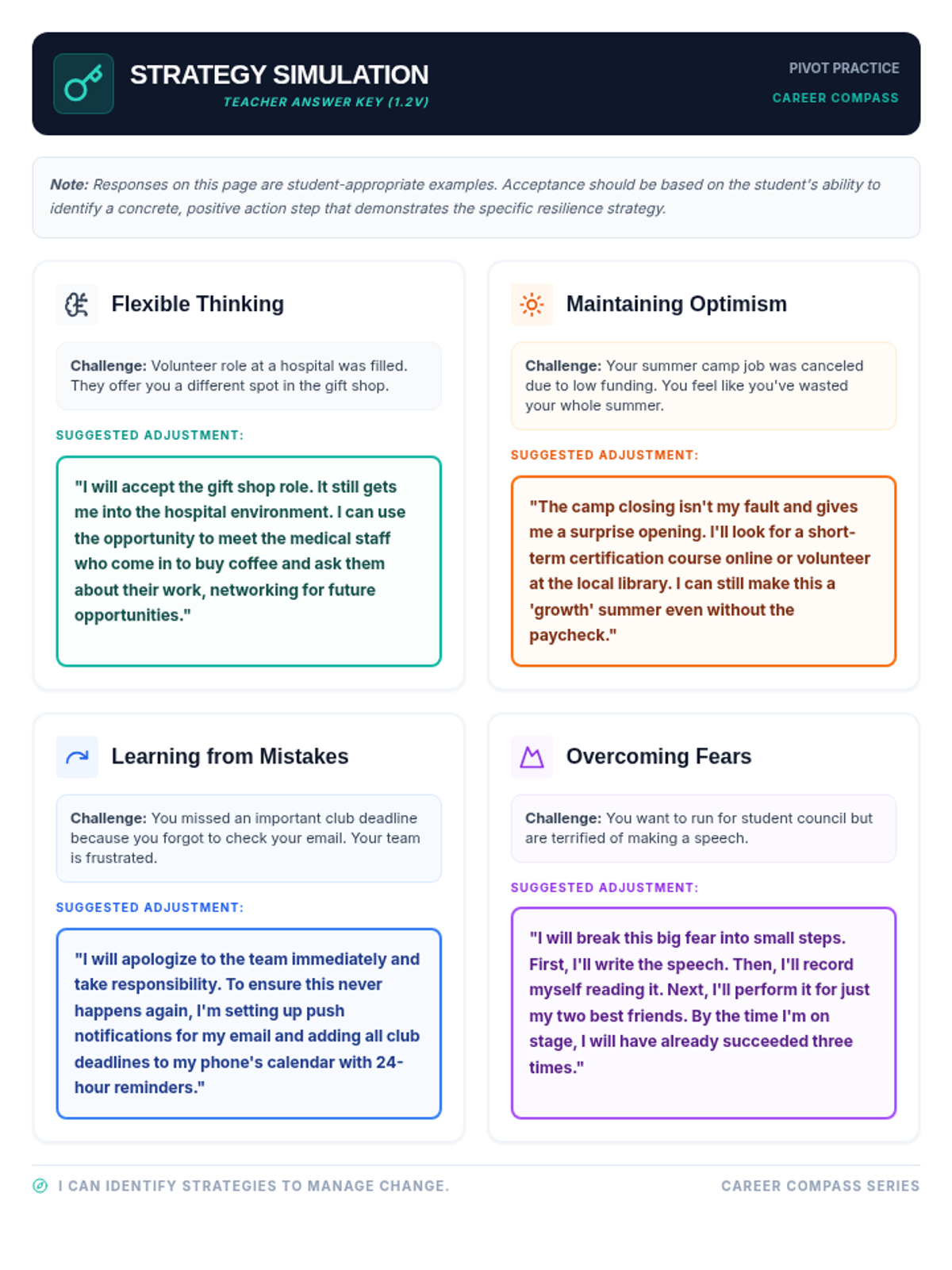
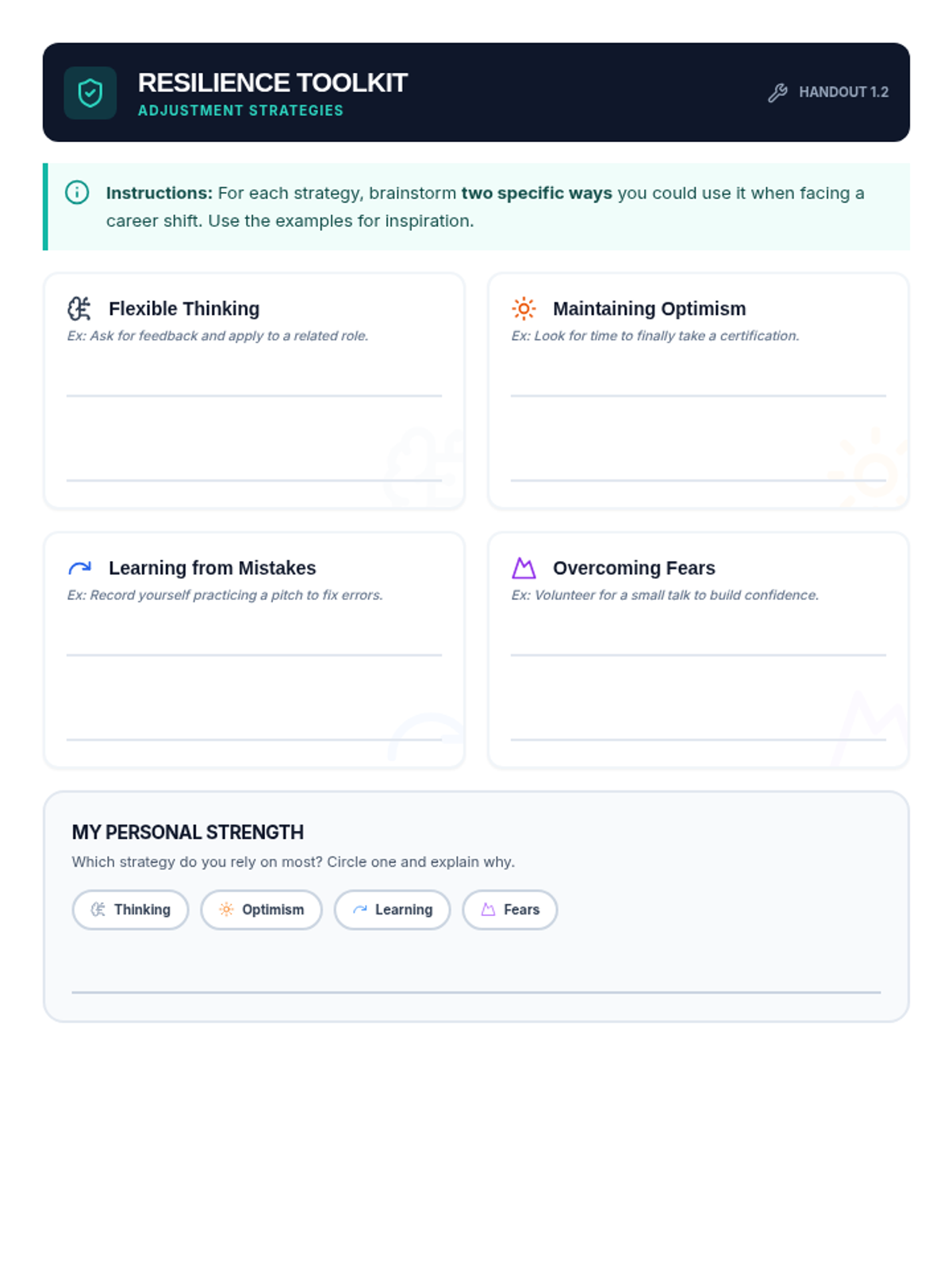
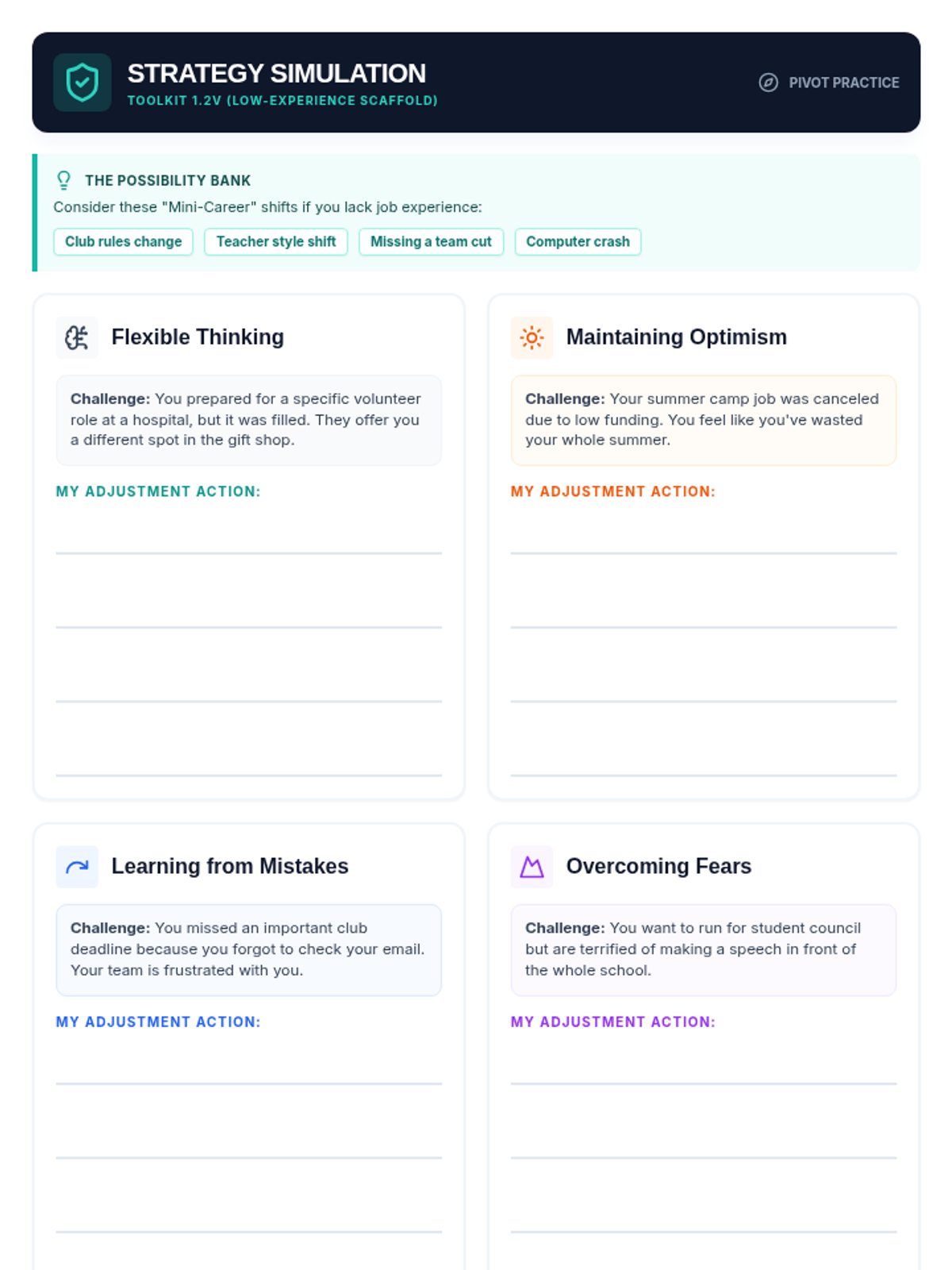
Students analyze past experiences with change to assess their own management strategies and apply resilience tools to real-world career scenarios.
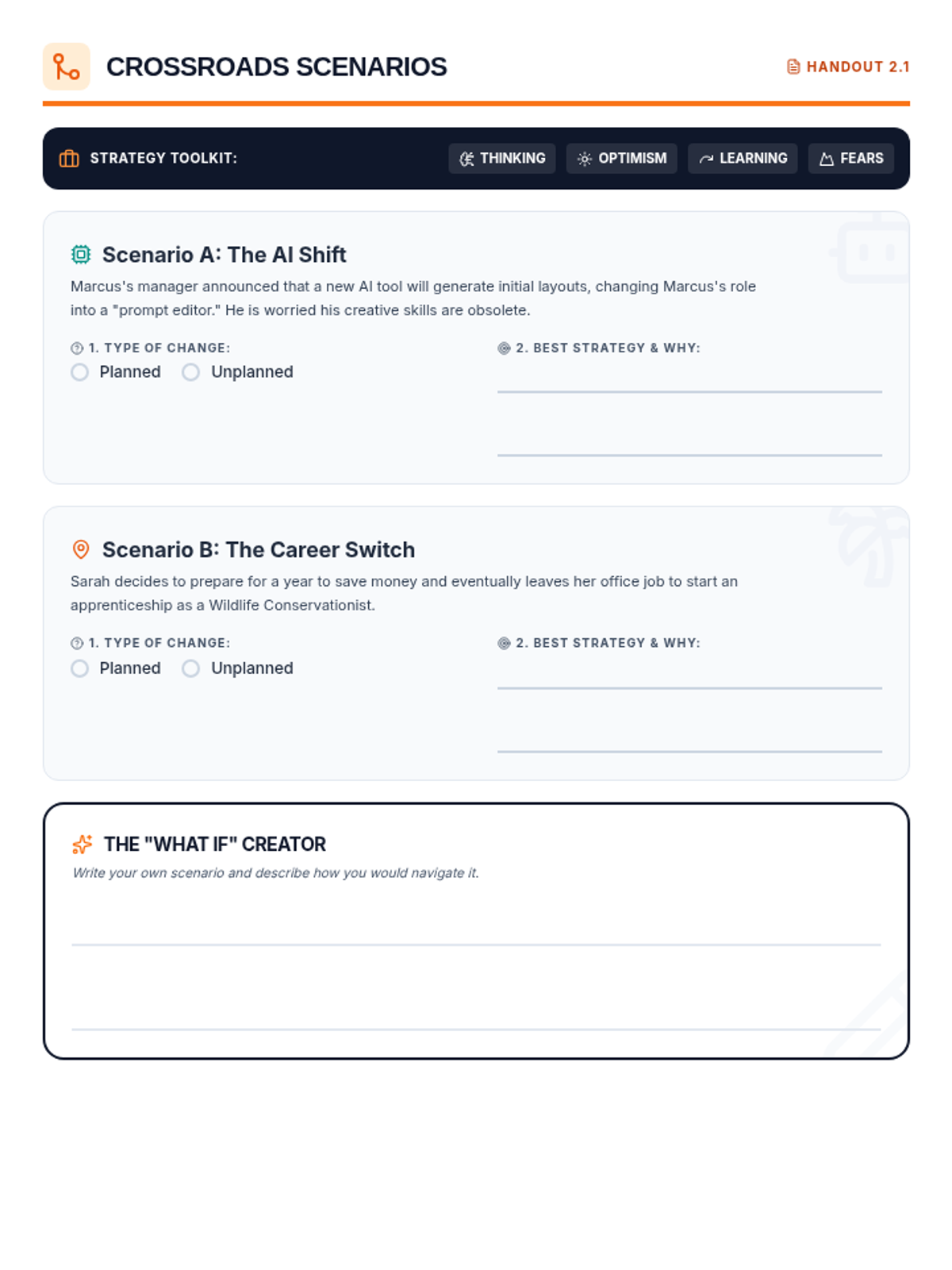
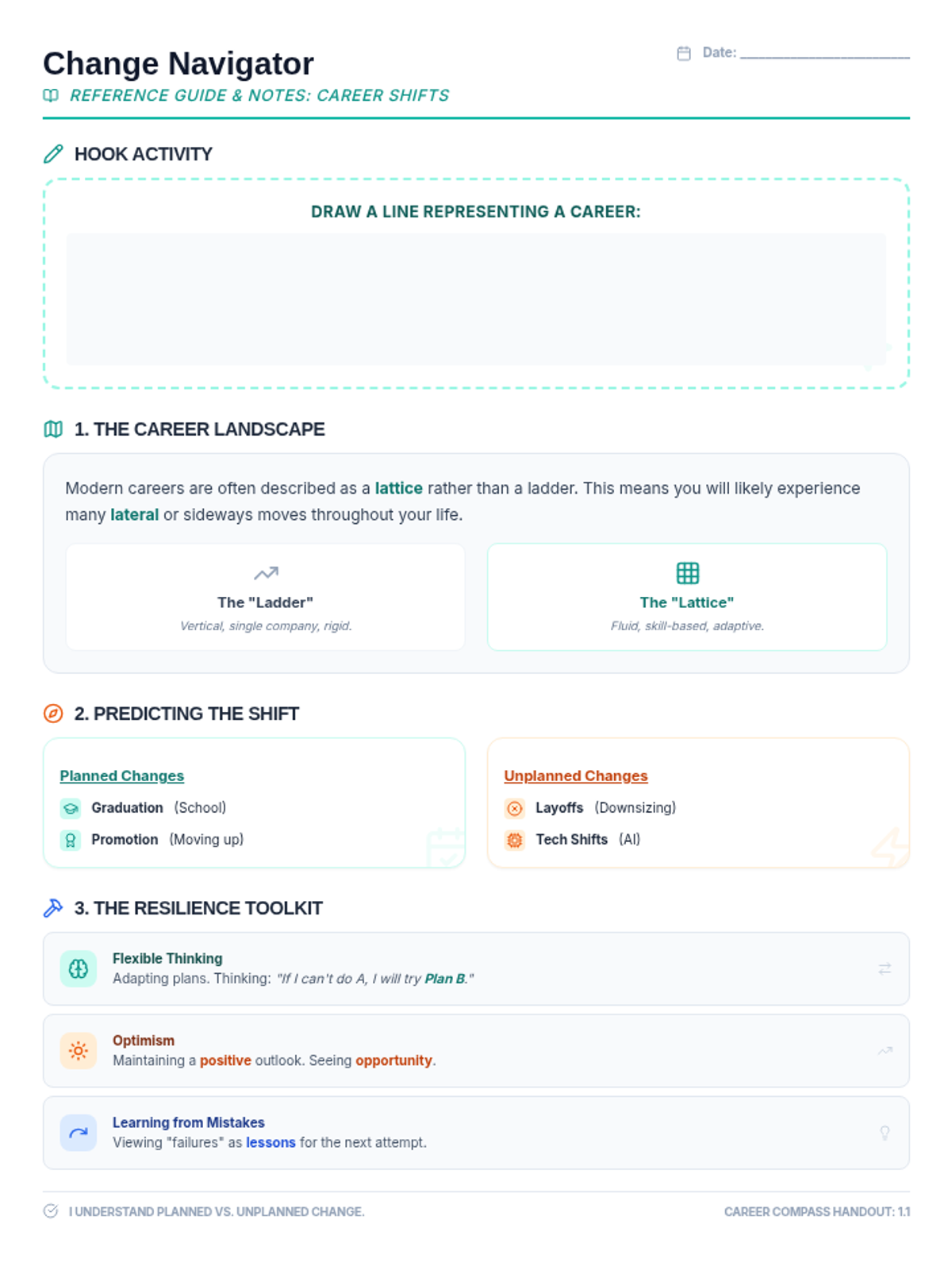
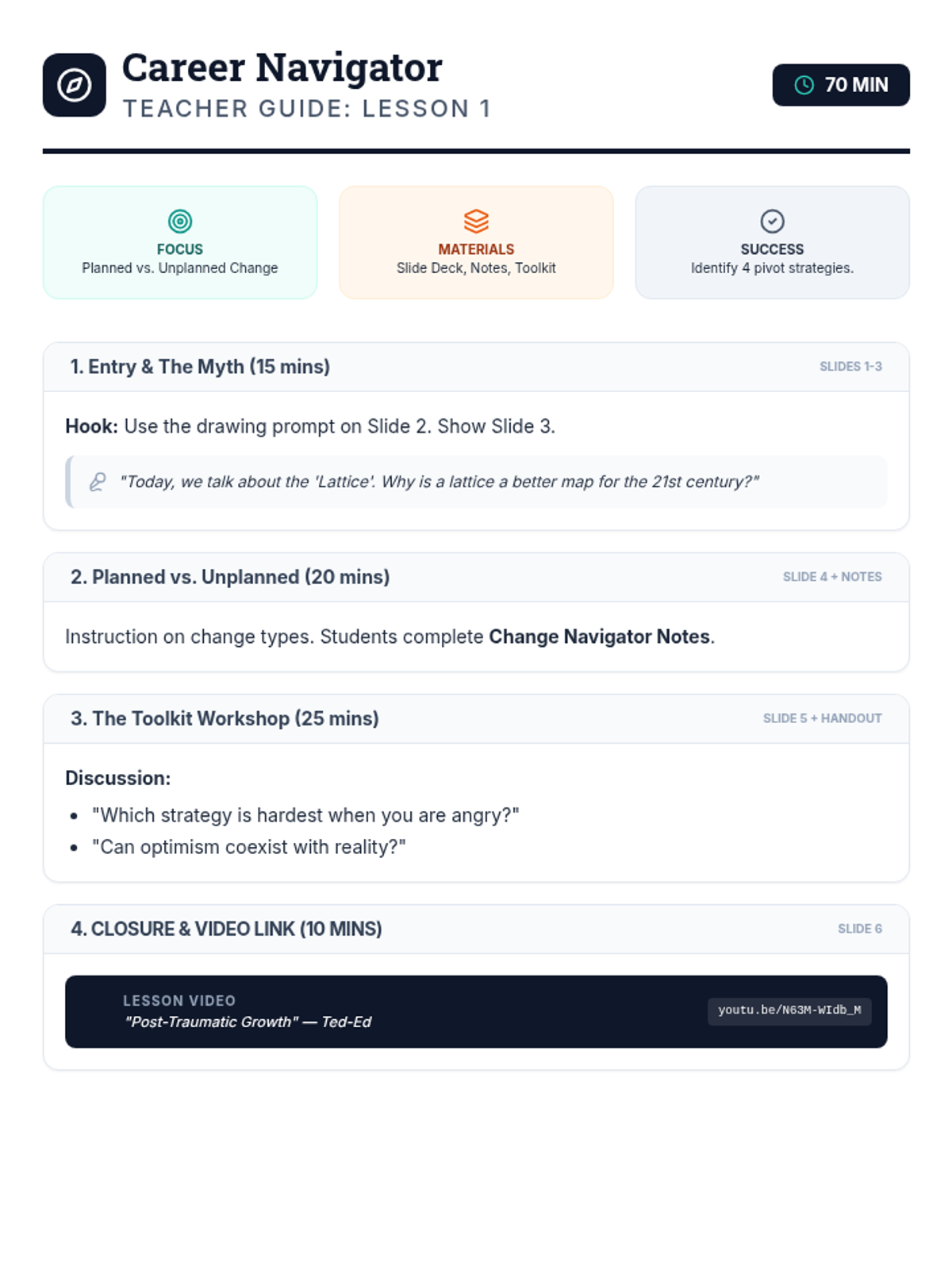
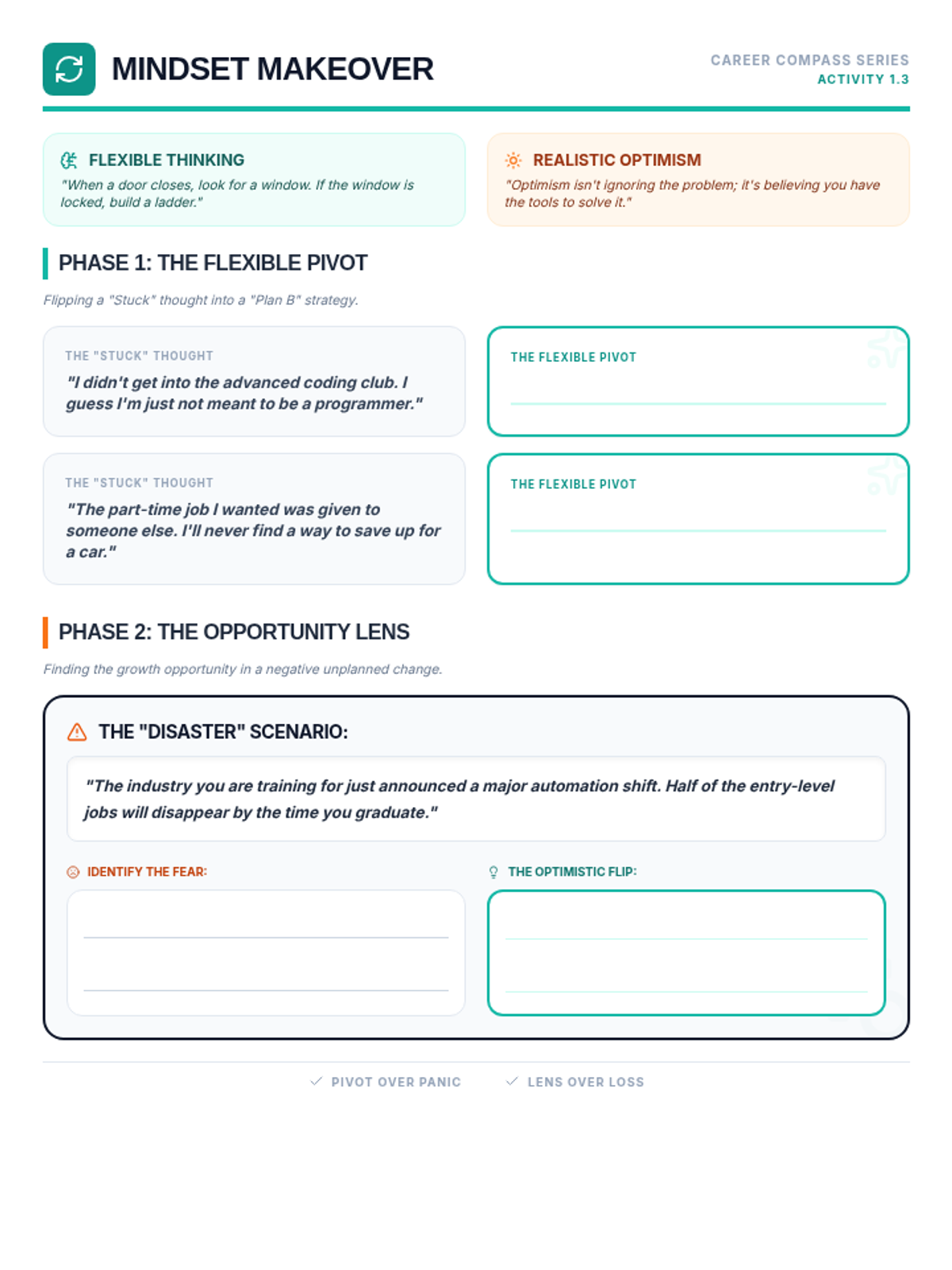
Students explore the nature of planned and unplanned career changes and identify key resilience strategies (flexible thinking, optimism, learning from mistakes) using visual-heavy guided notes.
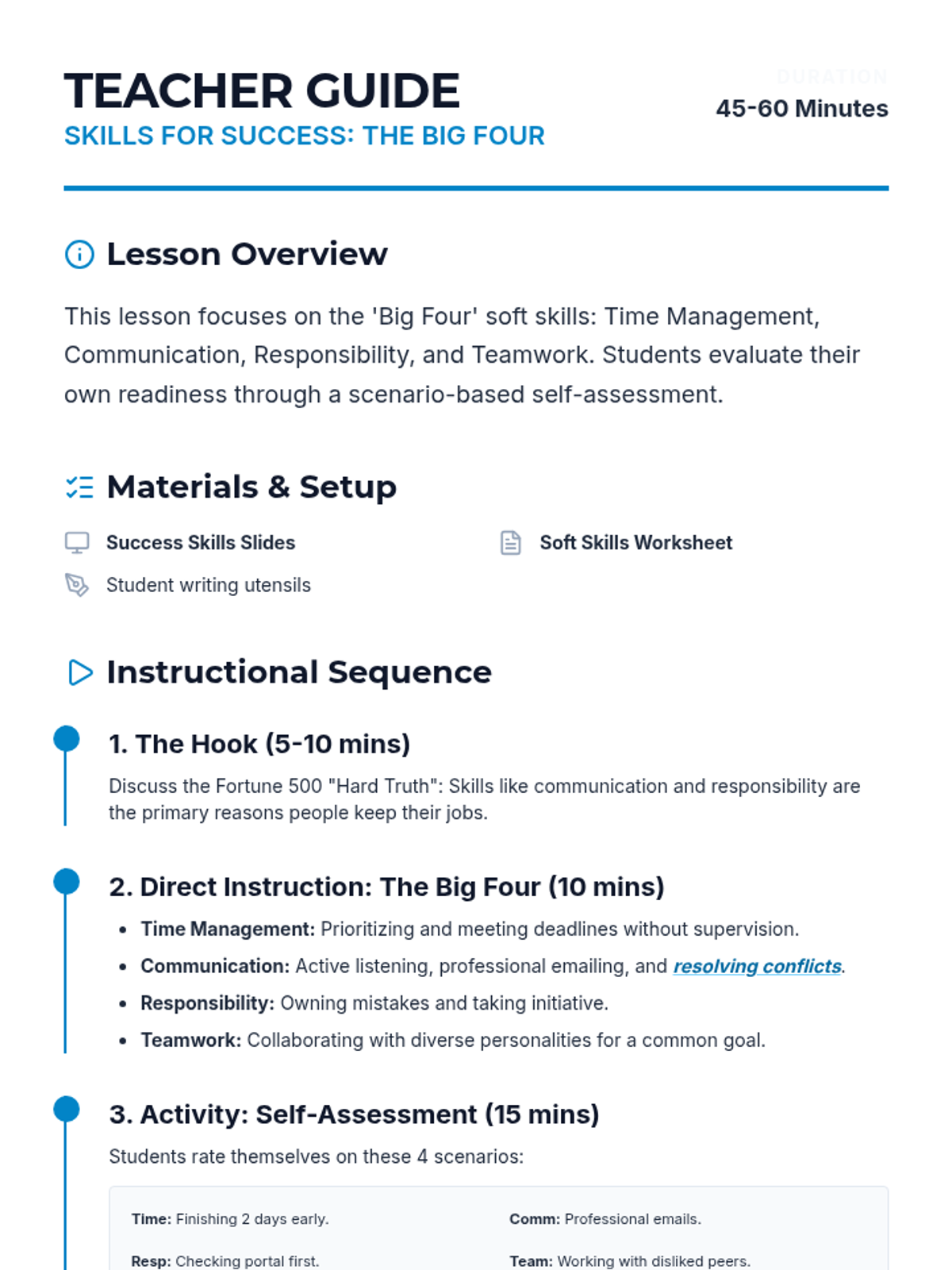
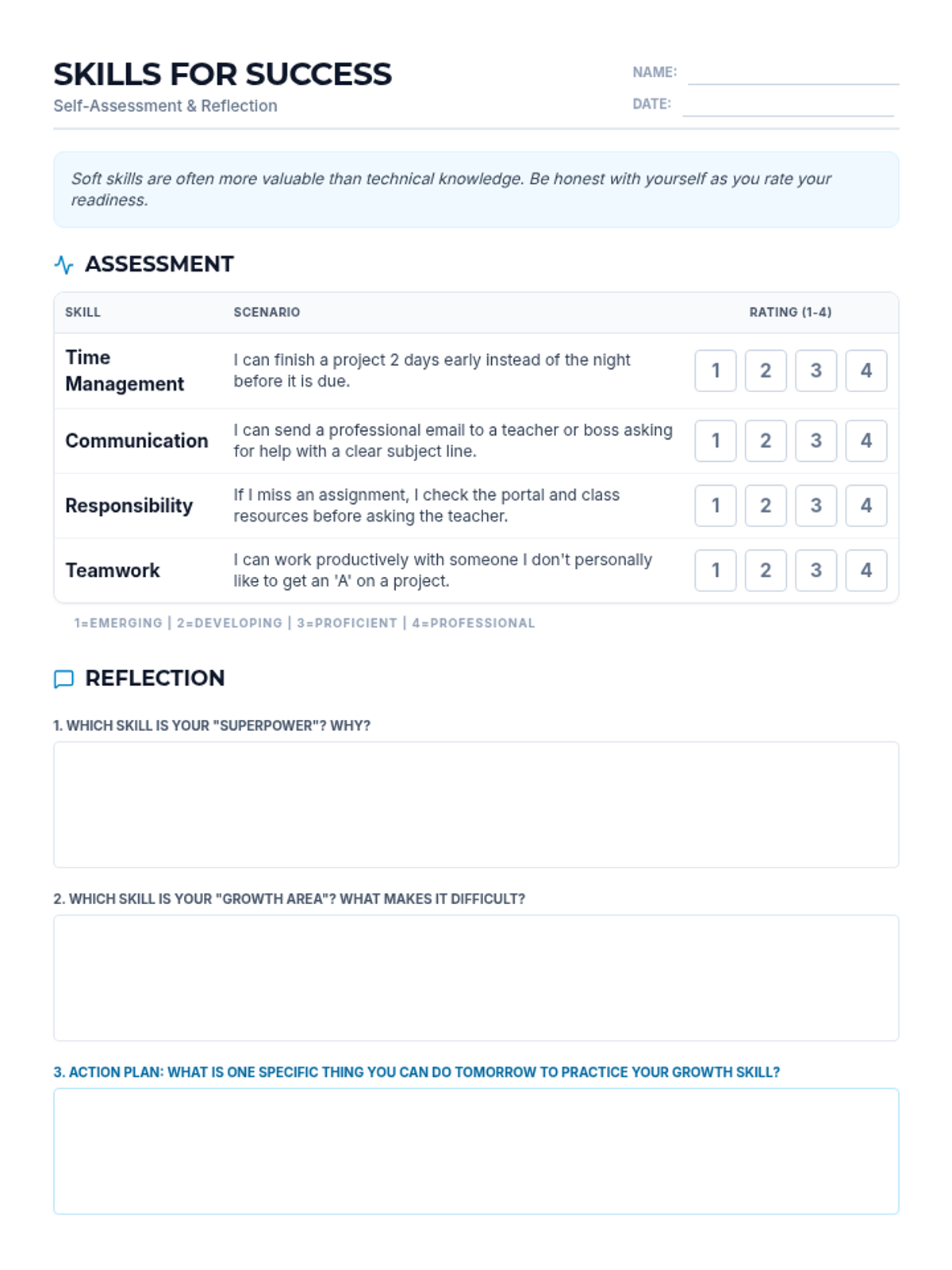
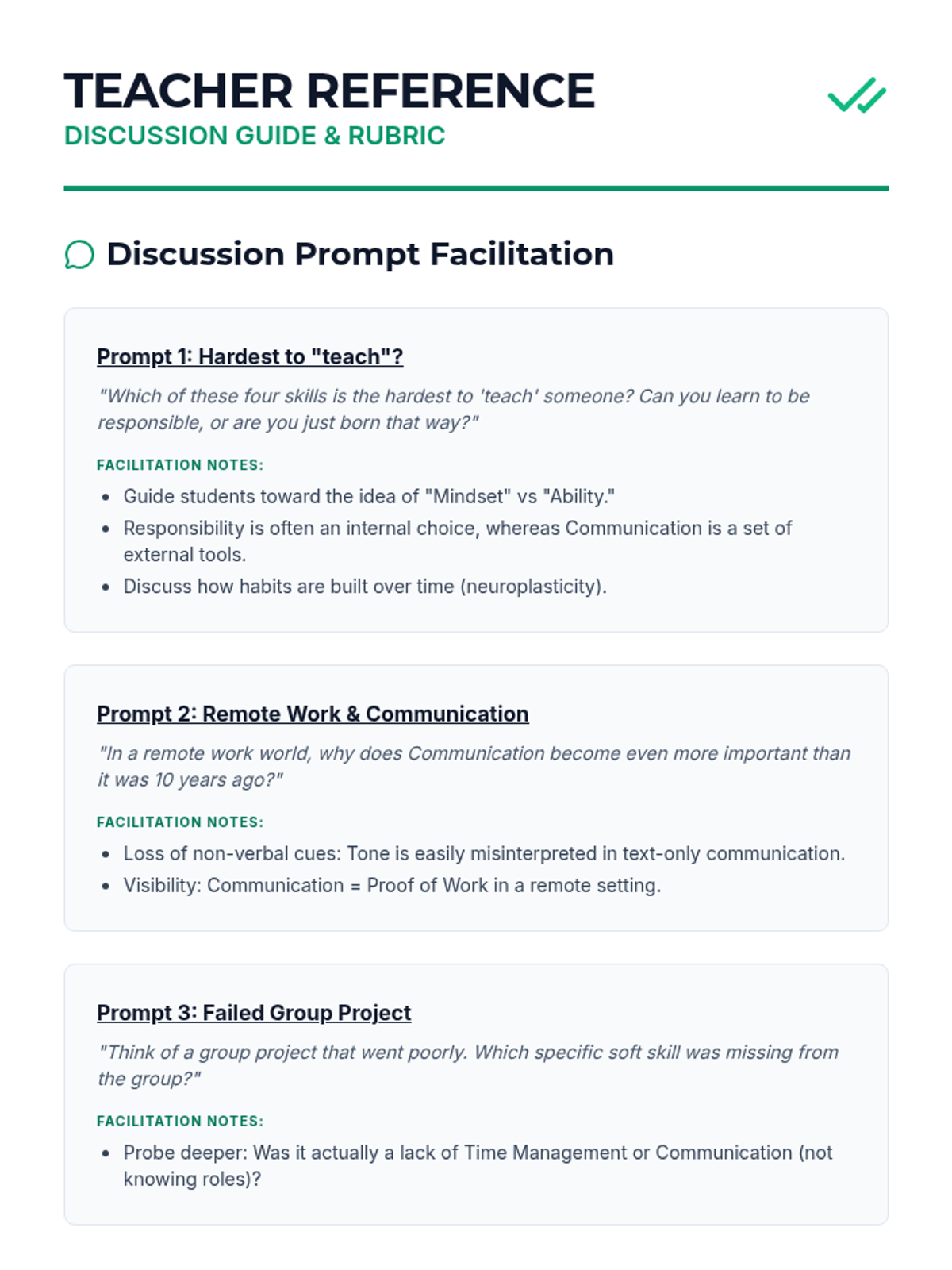
A lesson focused on the 'Big Four' soft skills: Time Management, Communication, Responsibility, and Teamwork. Students evaluate their own readiness through a scenario-based self-assessment and reflective discussion.
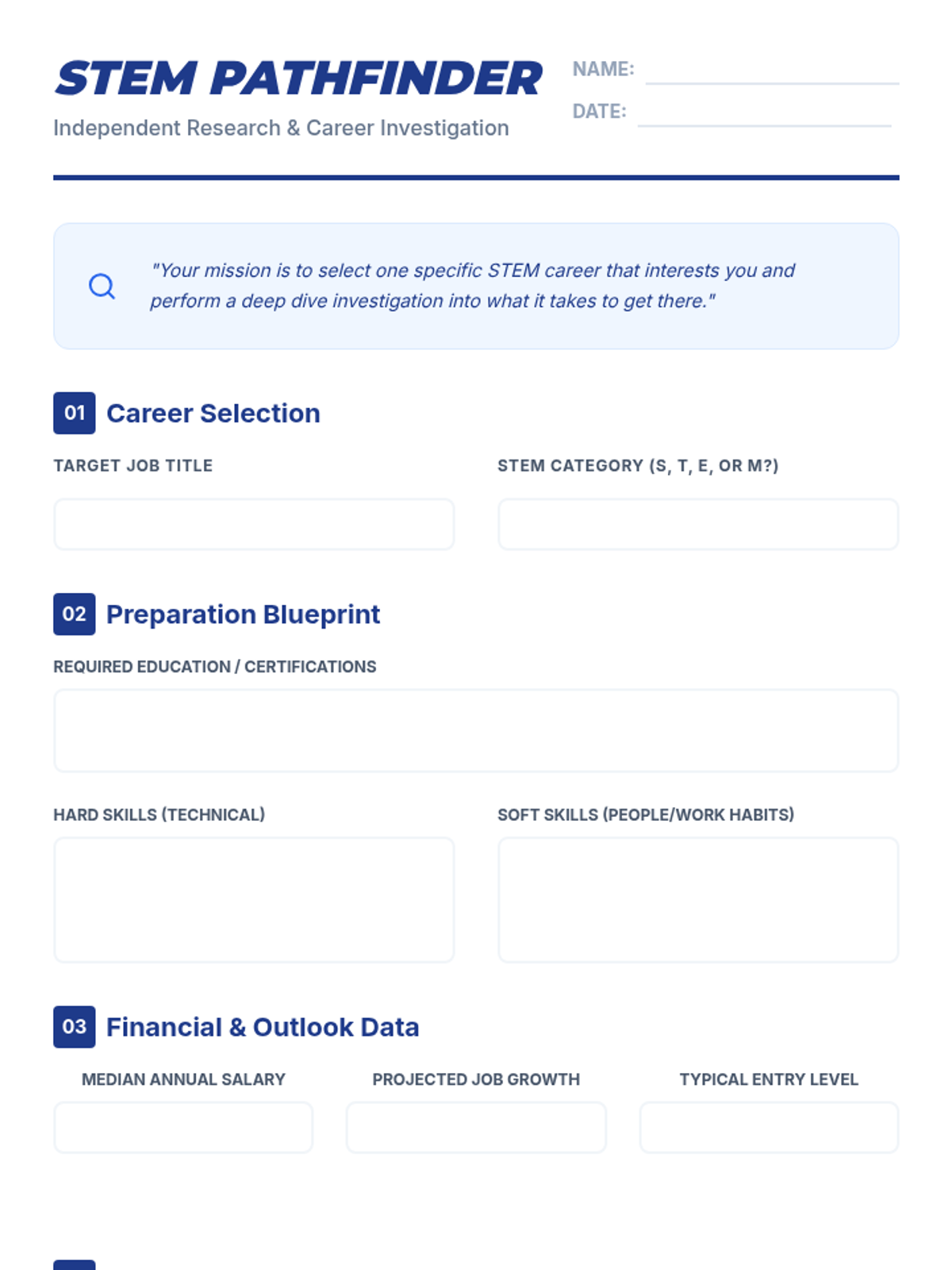
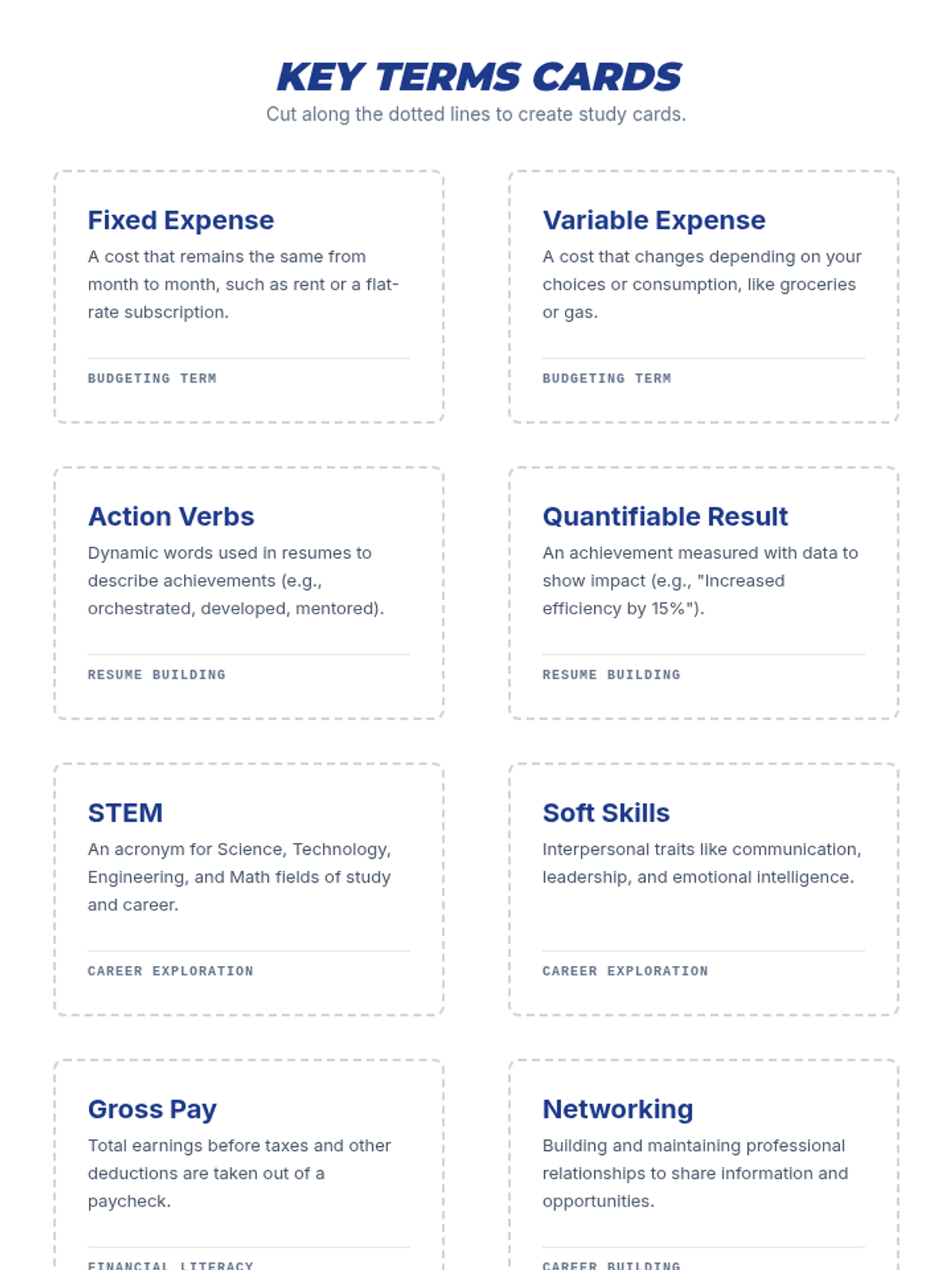
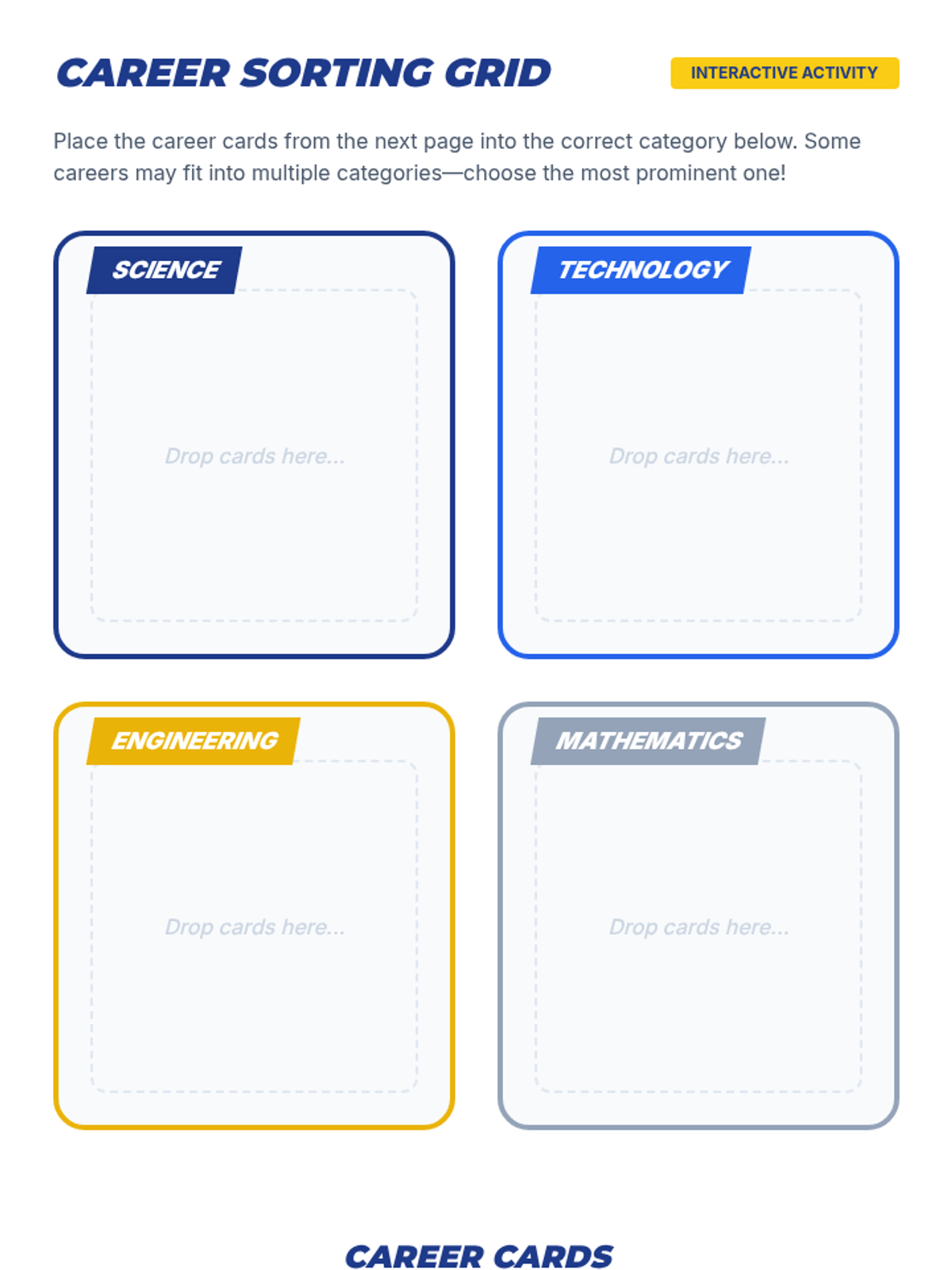
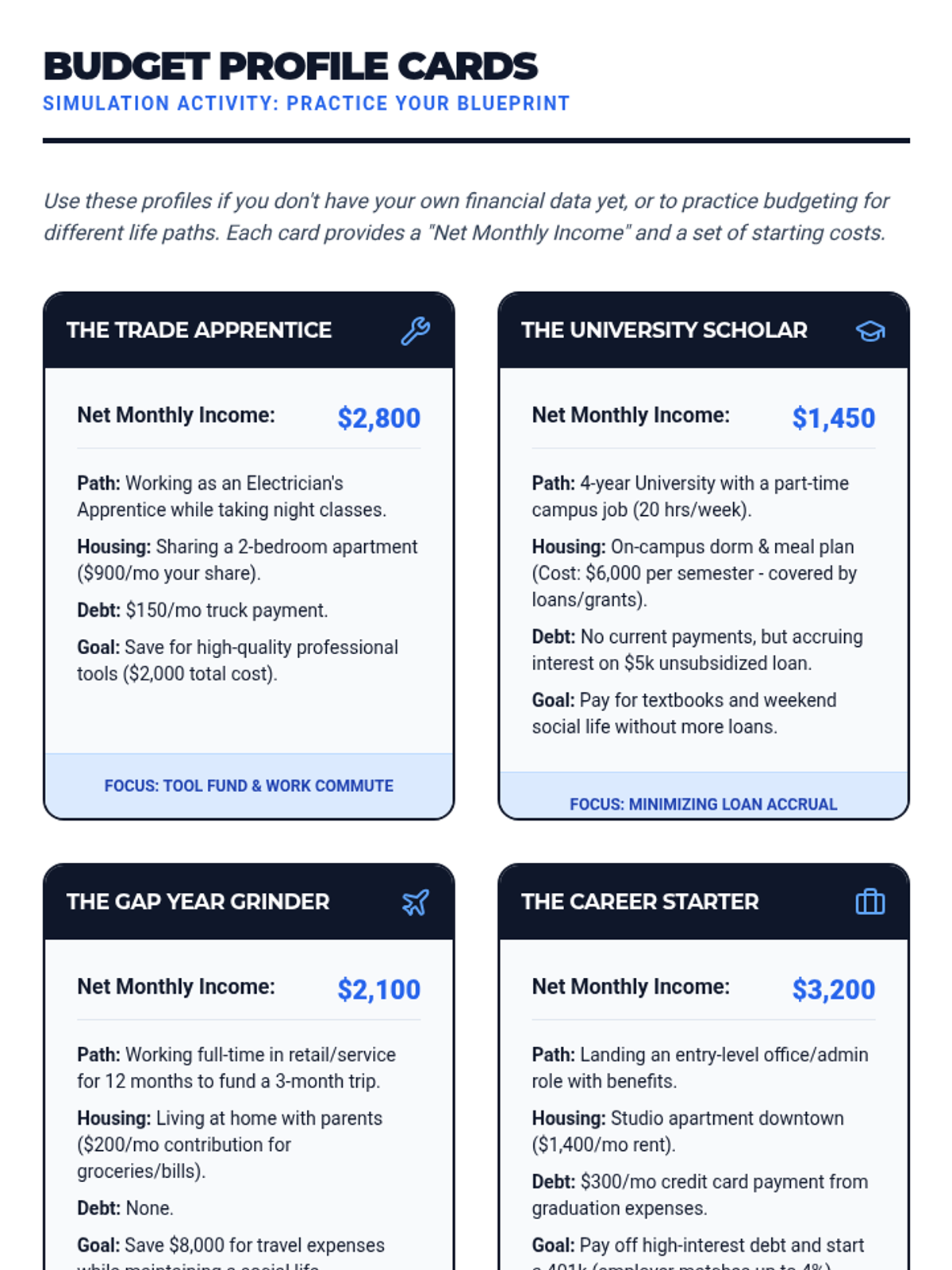
An introductory lesson covering the essentials of college budgeting, resume construction for entry-level positions, and a deep dive into various STEM career pathways.
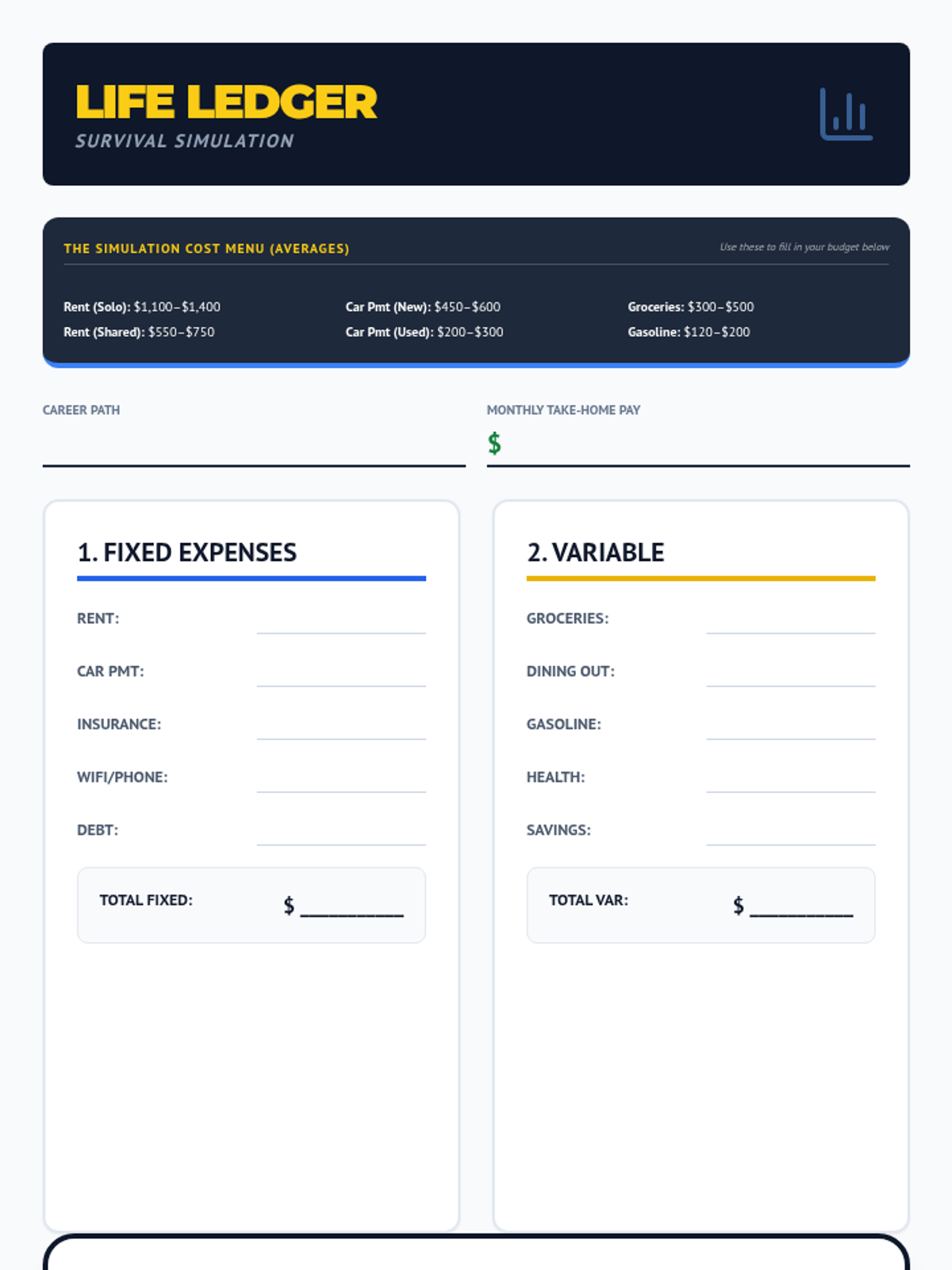
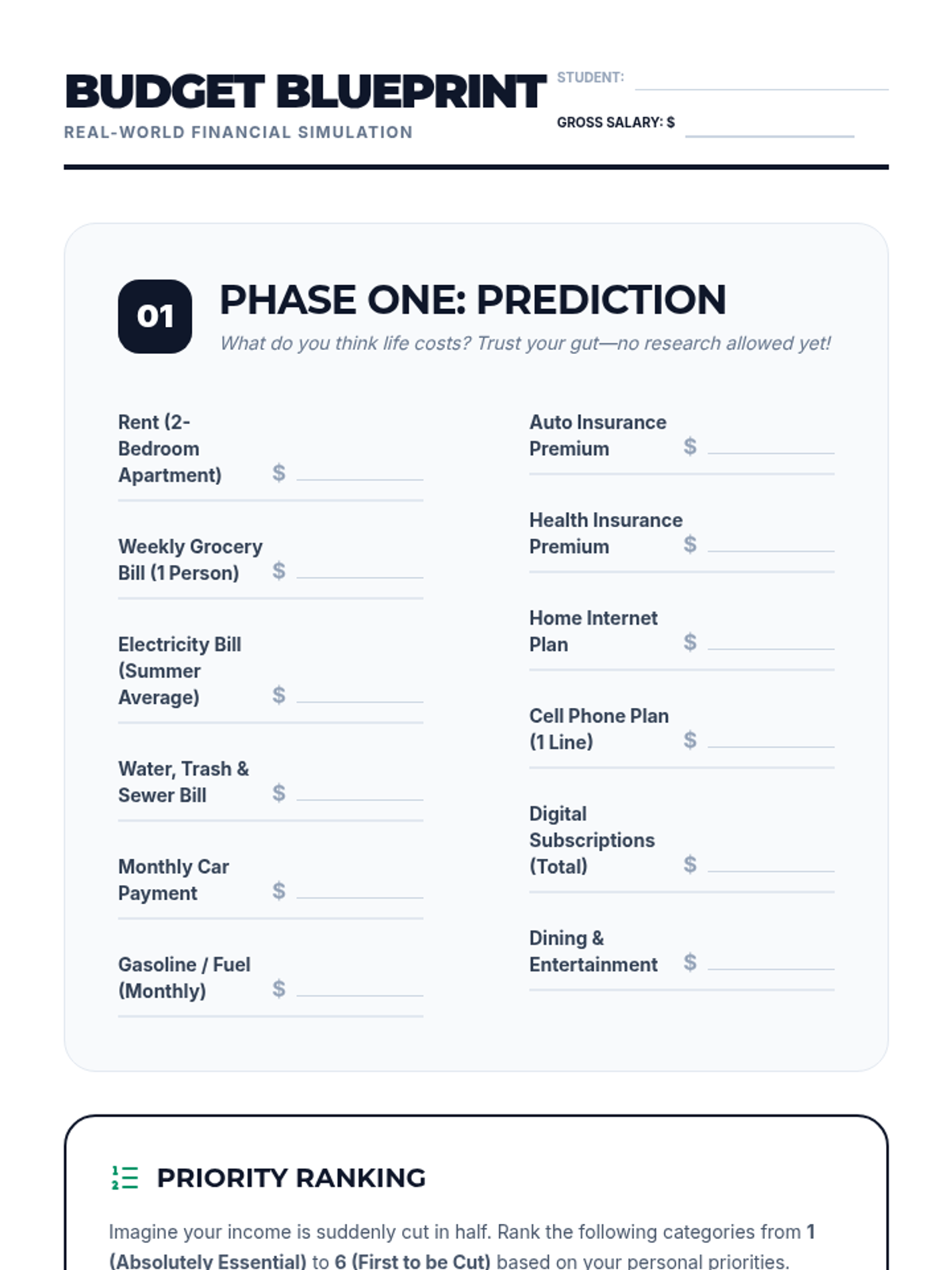
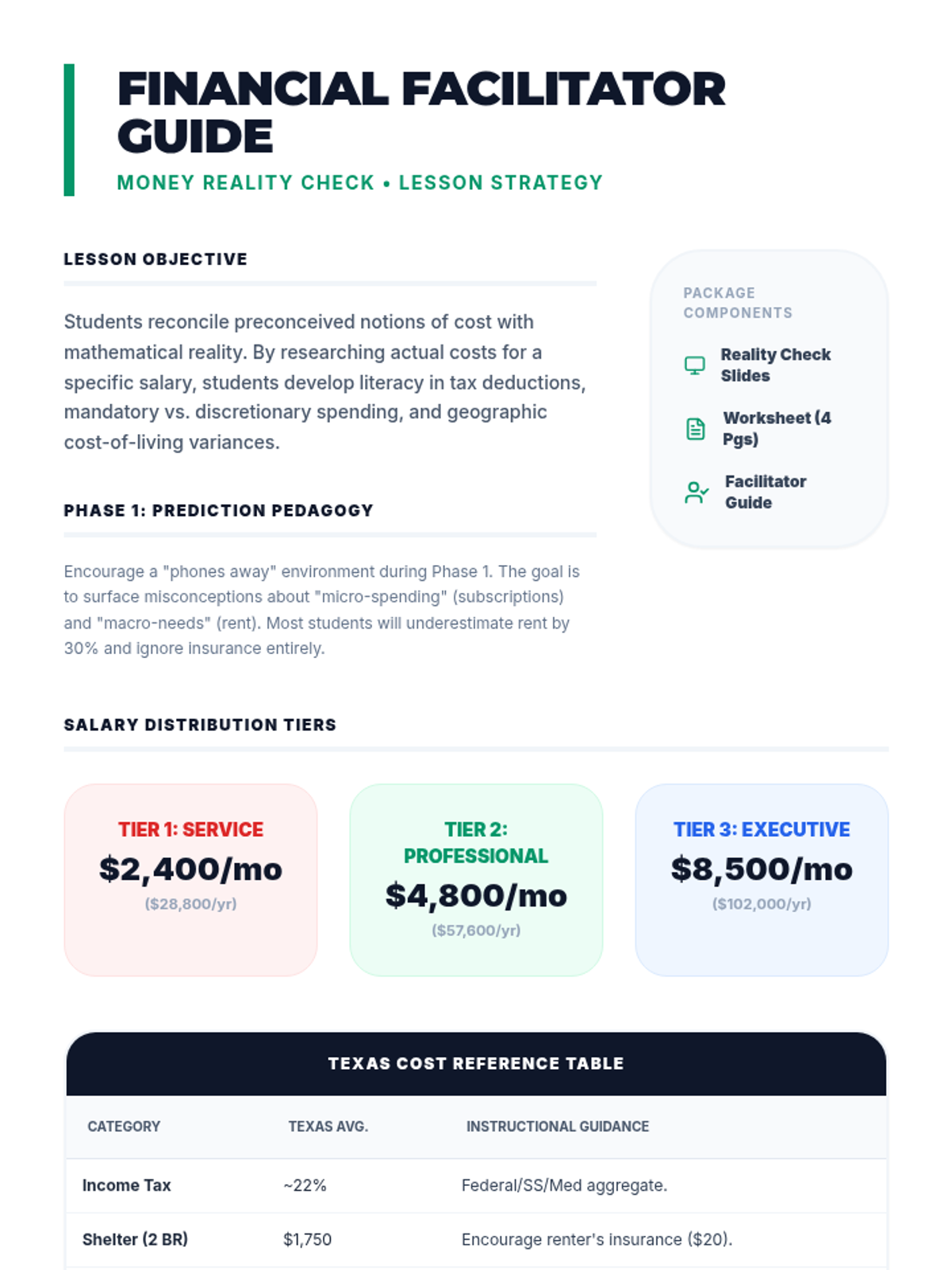
A practical budgeting lesson where students predict real-world costs, research actual expenses for a specific salary, and reconcile their expectations with financial reality.
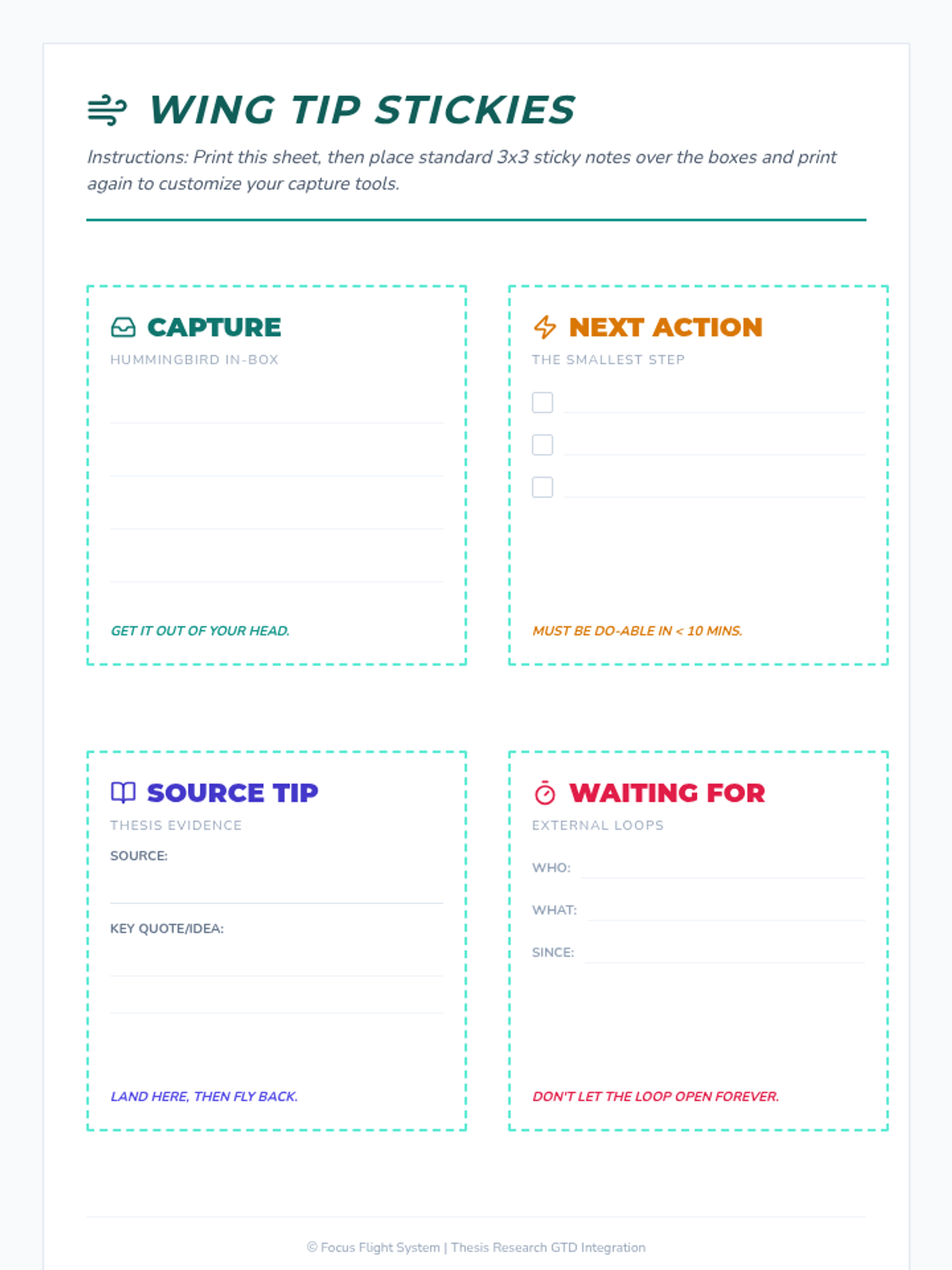
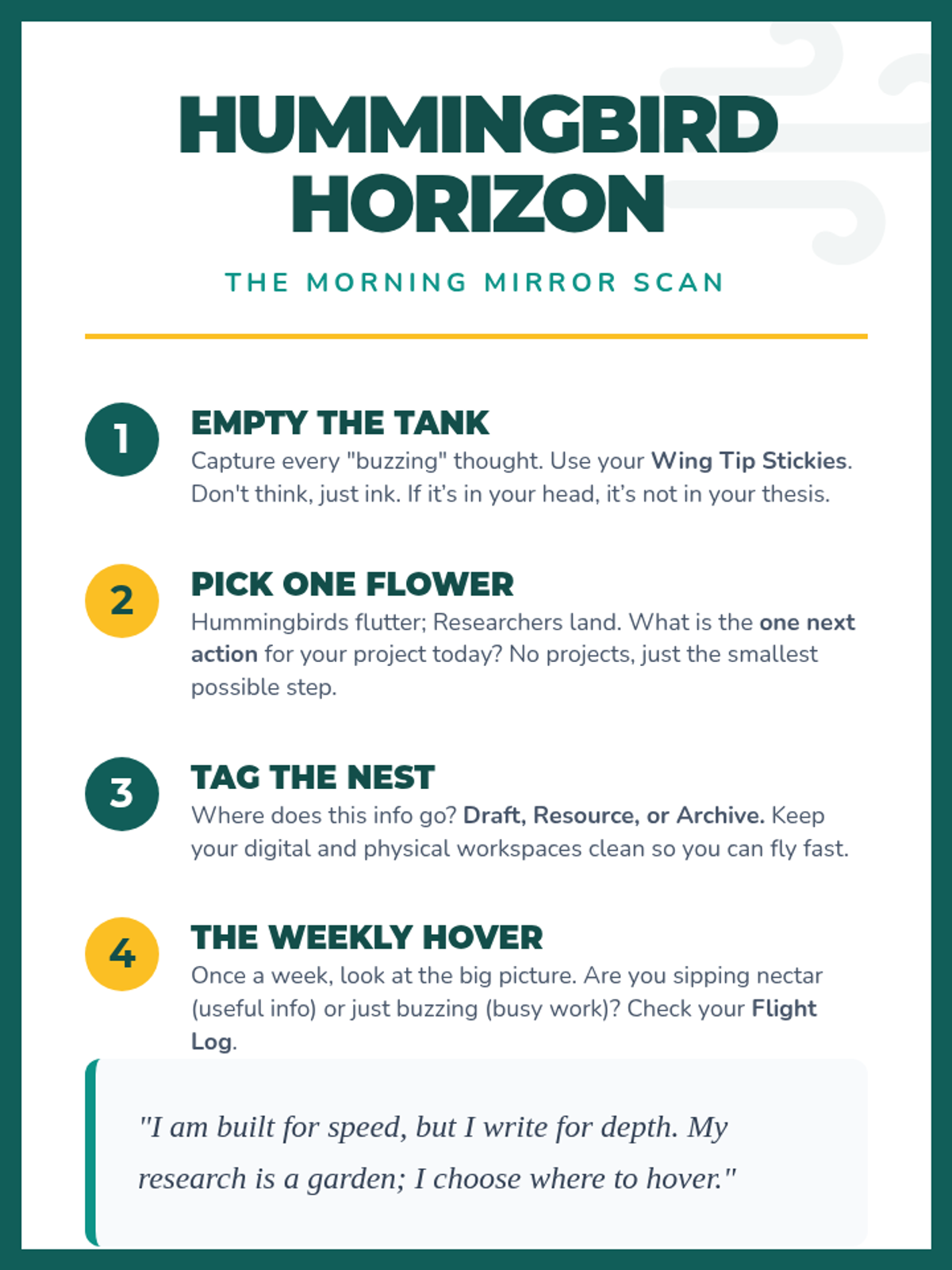
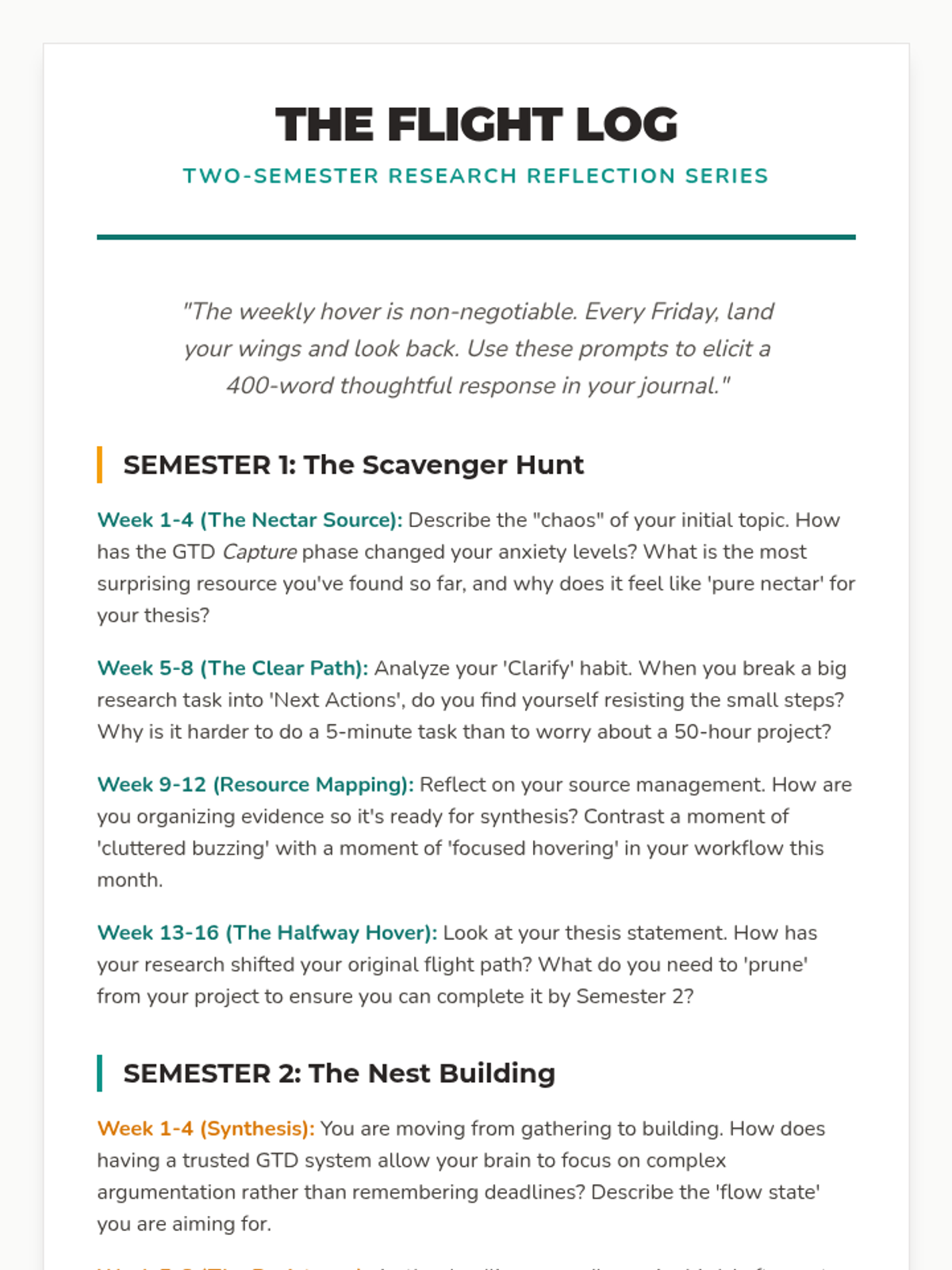
This lesson provides the foundational tools for the Focus Flight system: quick-capture sticky notes, a visual mindset poster, and structured reflection prompts to support a two-semester research thesis.
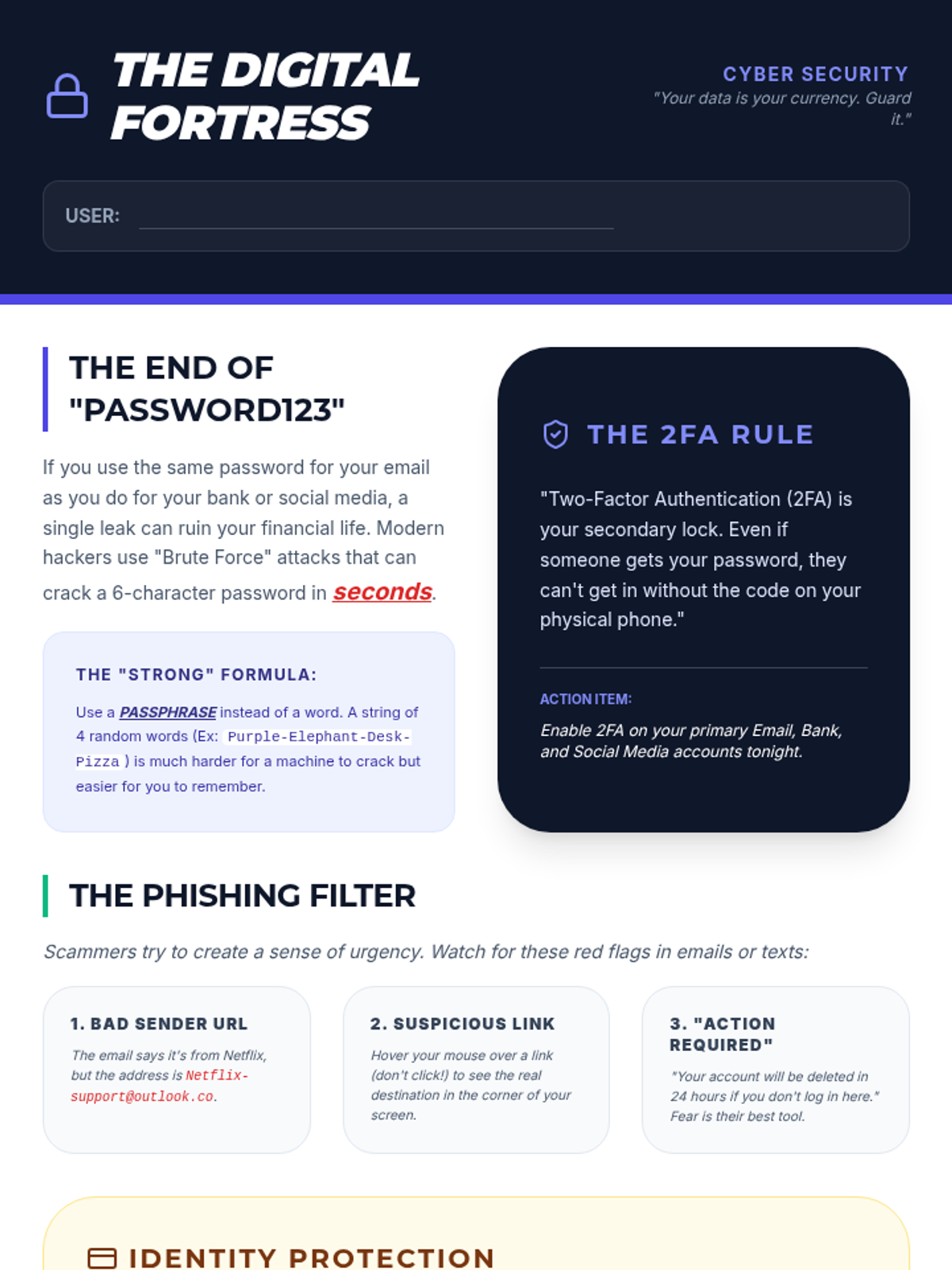
Teaches students how to protect their financial and personal data in a digital-first world, covering strong password habits, two-factor authentication, and how to spot phishing scams.
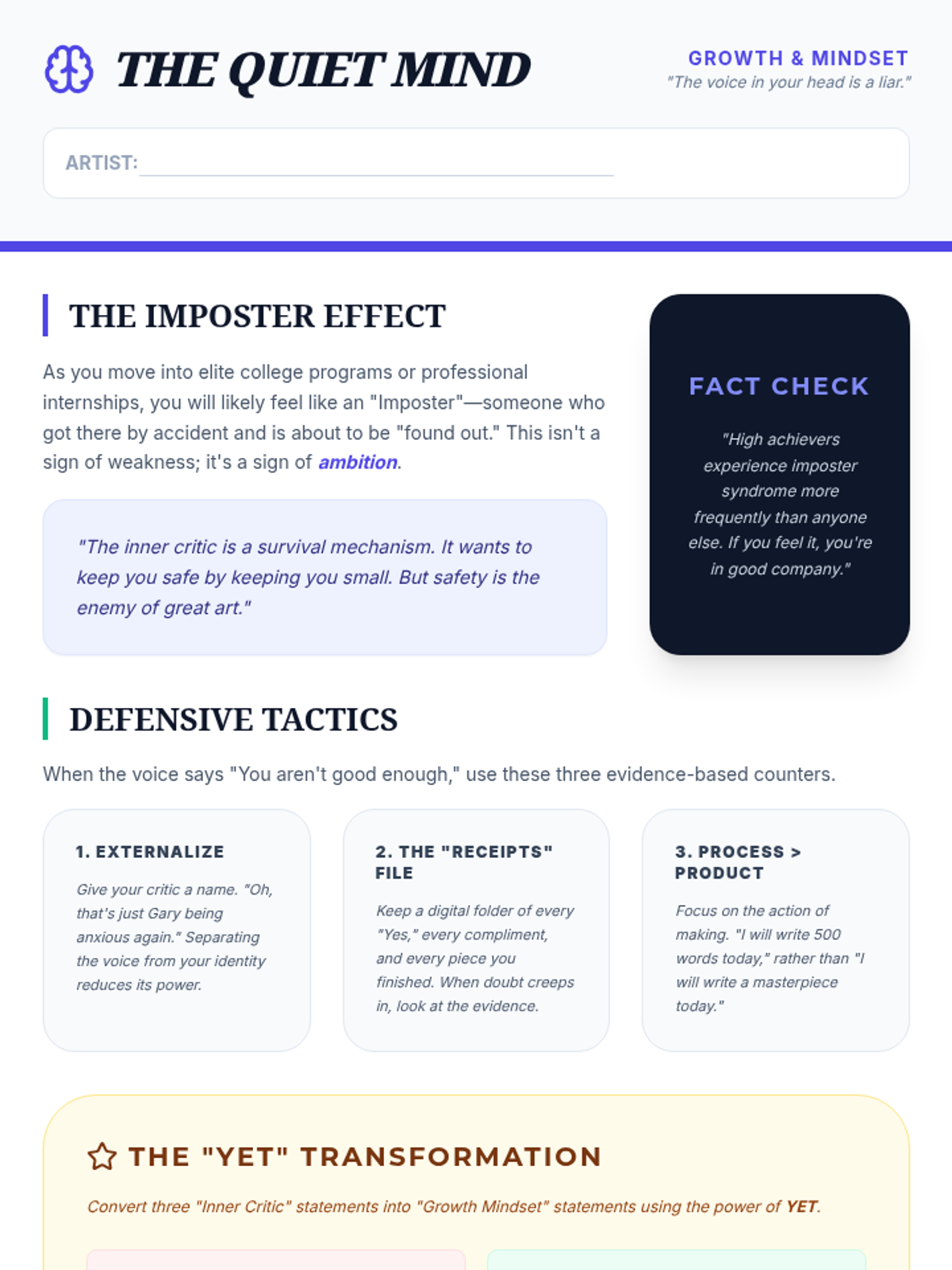
Explores the psychology of imposter syndrome in the arts and provides practical tools for silencing the 'inner critic' to maintain creative momentum.
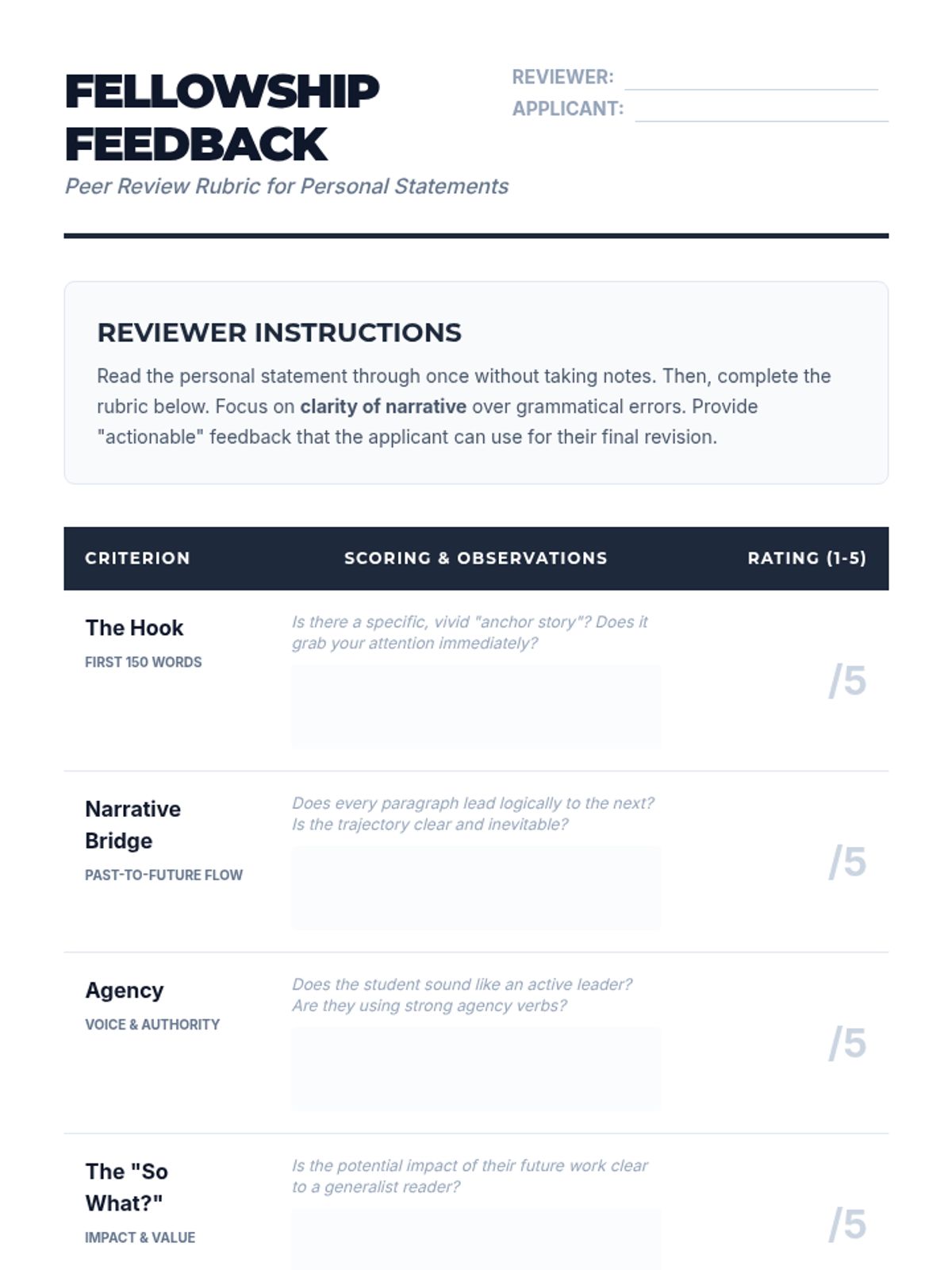
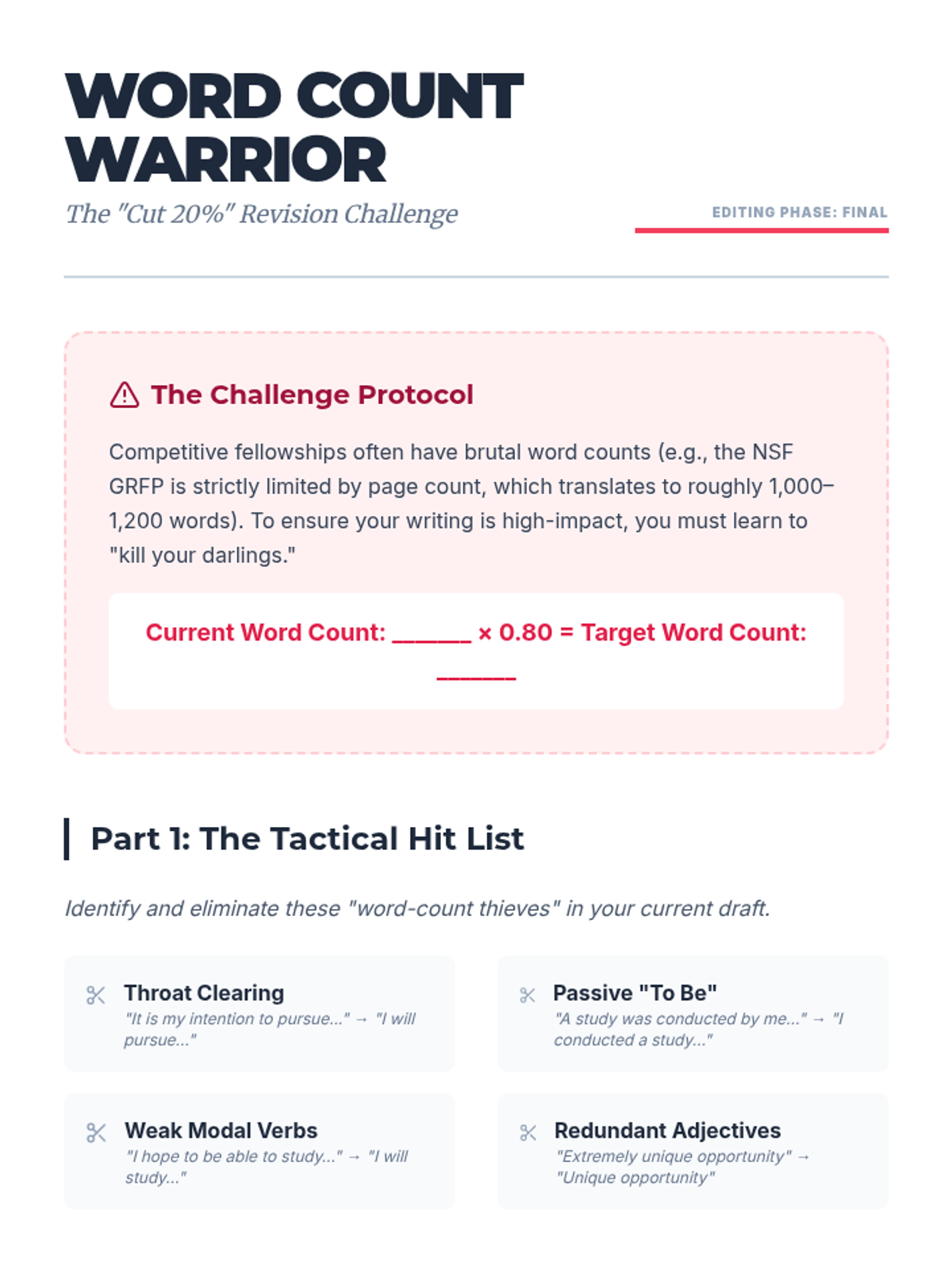
Through structured peer review and 'ruthless editing' challenges, students finalize their fellowship narratives, focusing on impact and word count precision.
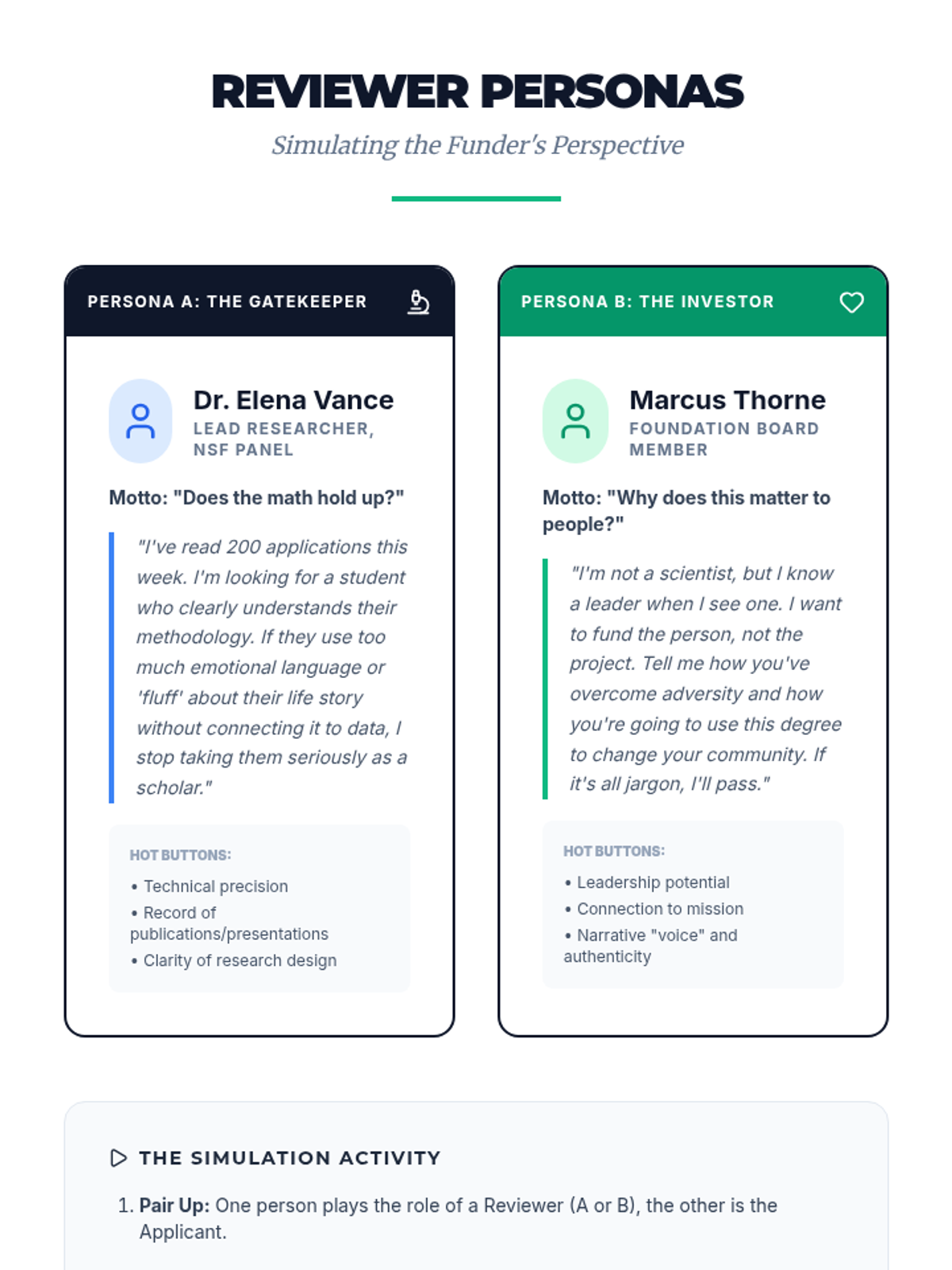
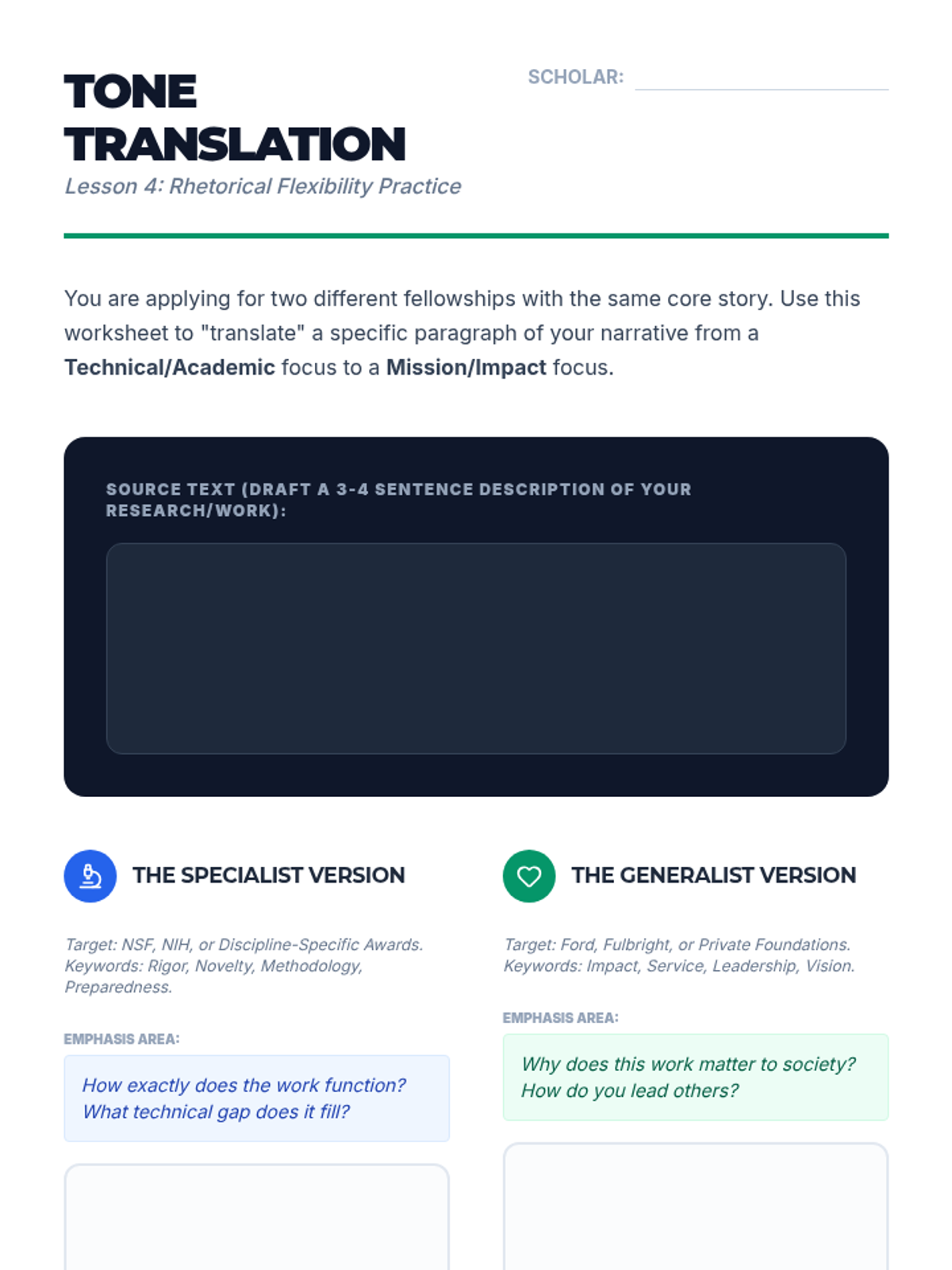
Students practice rhetorical flexibility by adapting their core narrative for different types of funders, from research-heavy agencies to community-focused foundations.
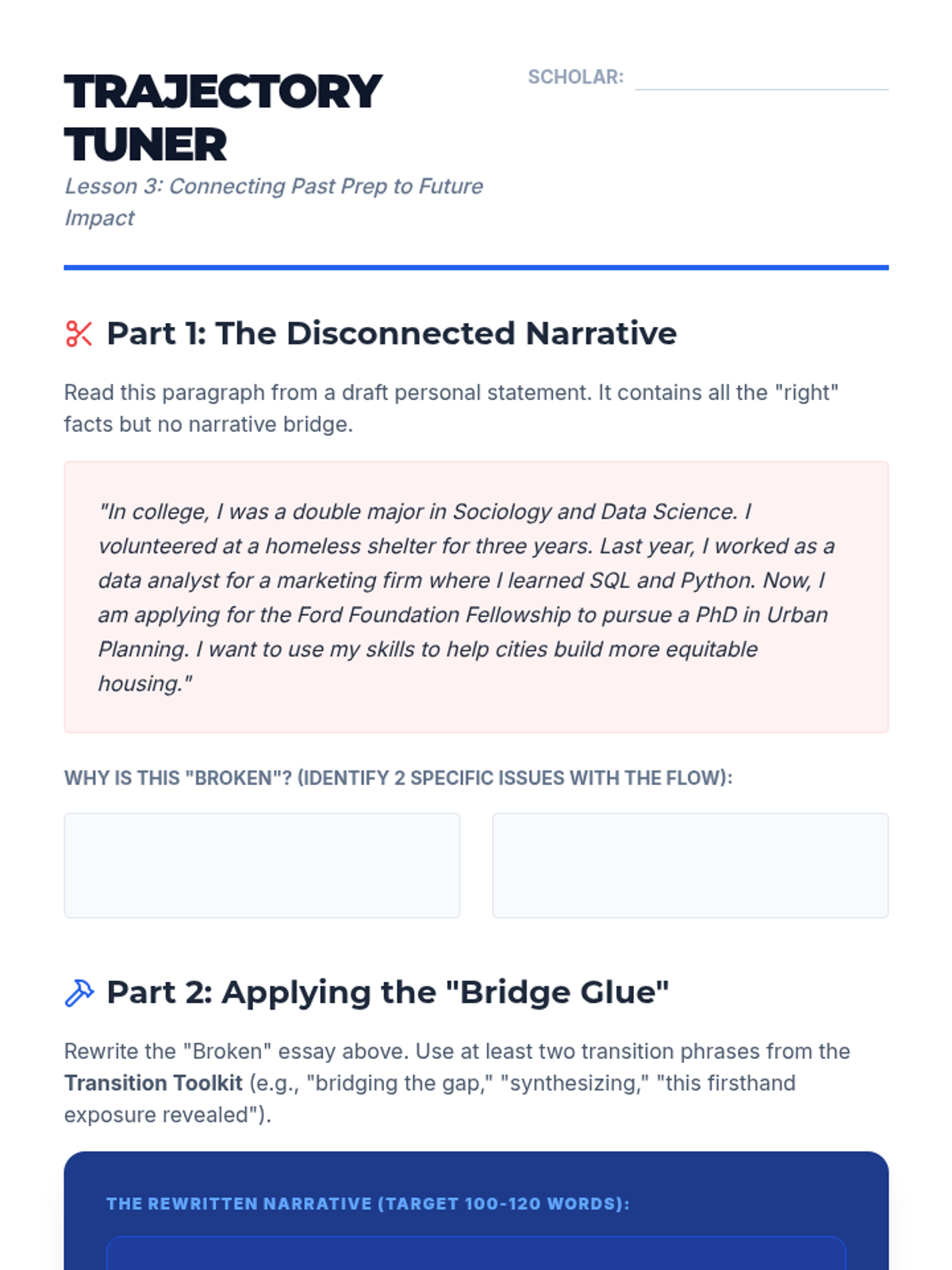
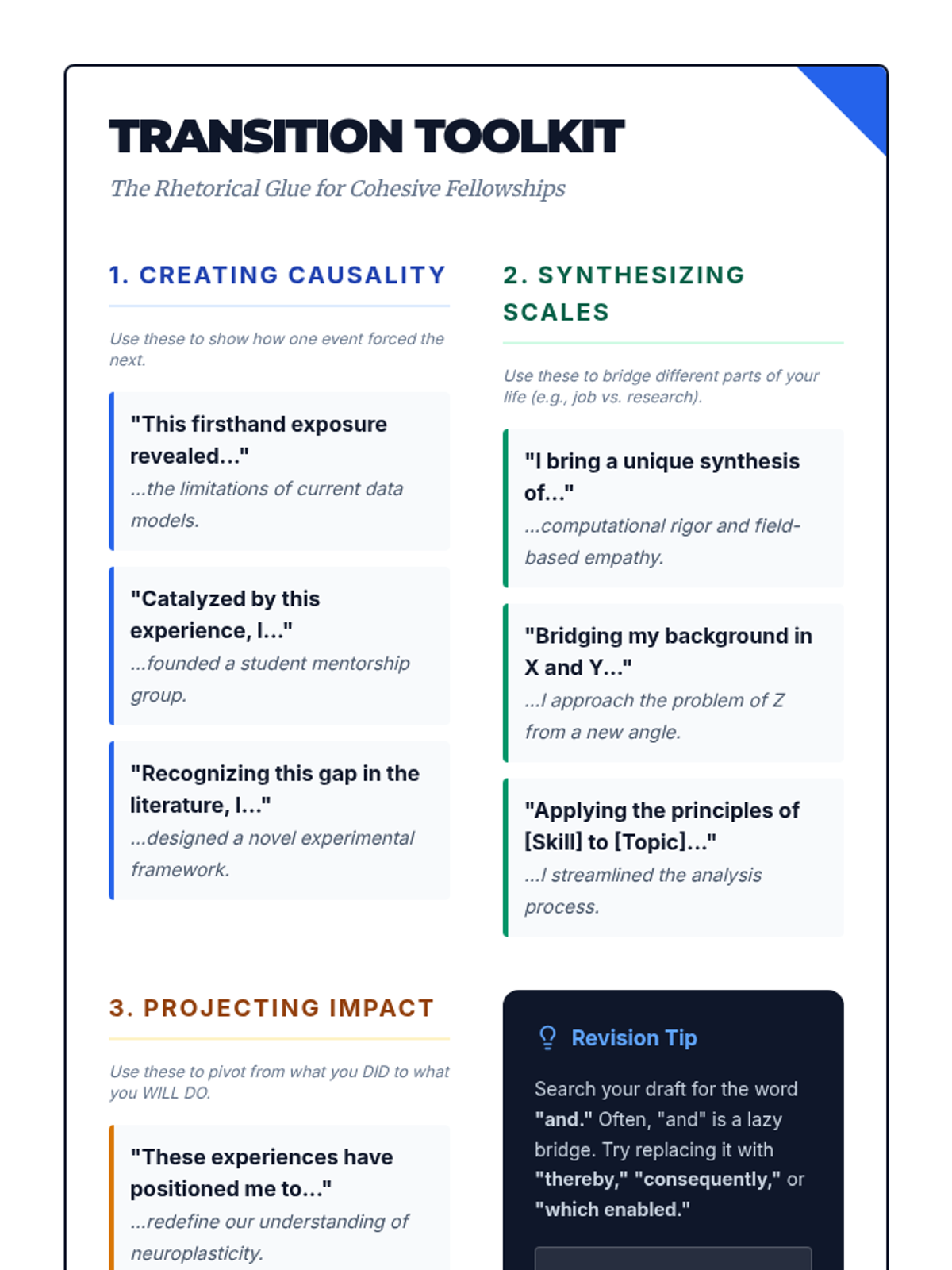
This lesson focuses on creating logical flow between a student's past trajectory, current research, and future career goals, ensuring a cohesive and persuasive argument for funding.
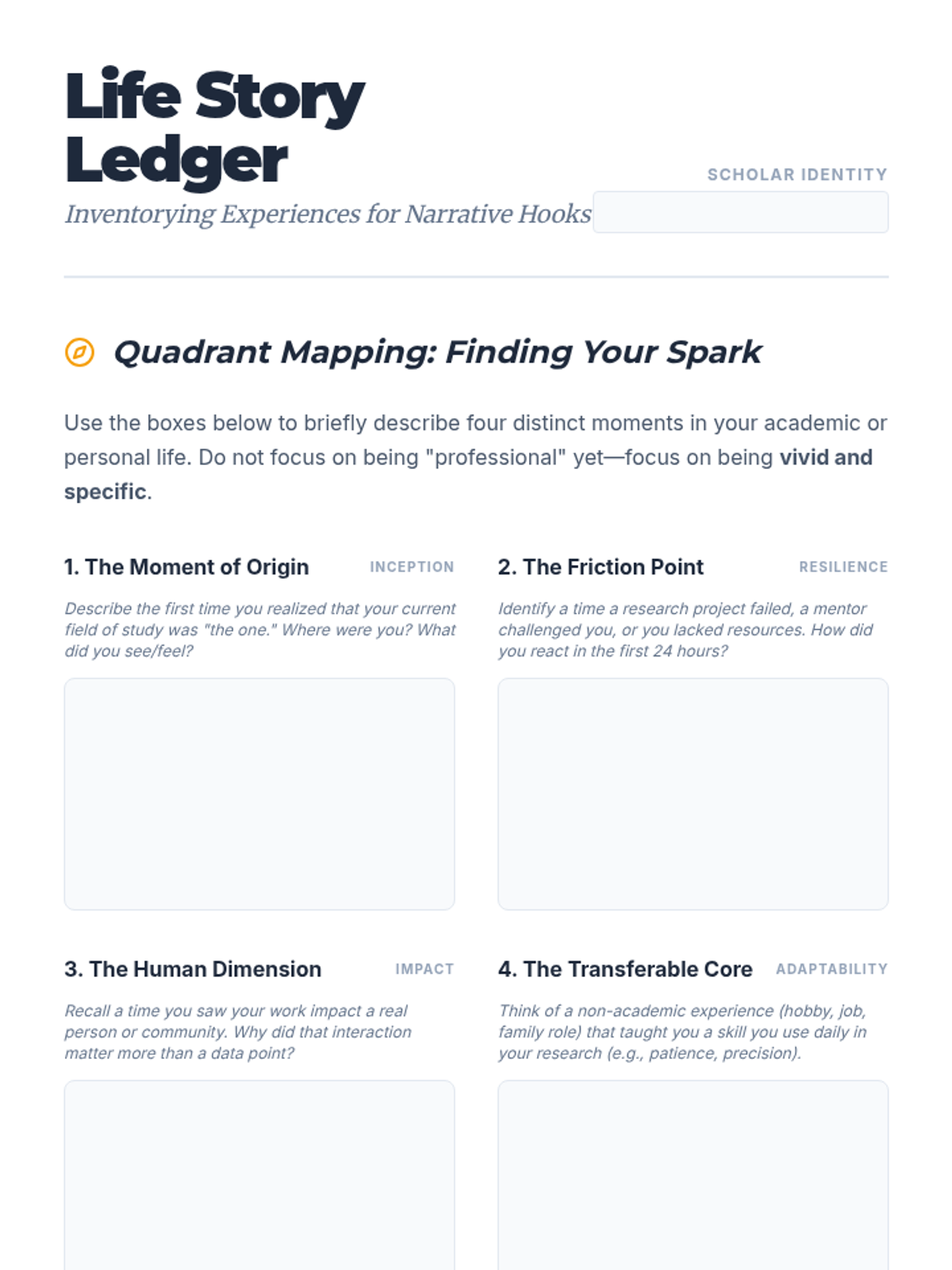
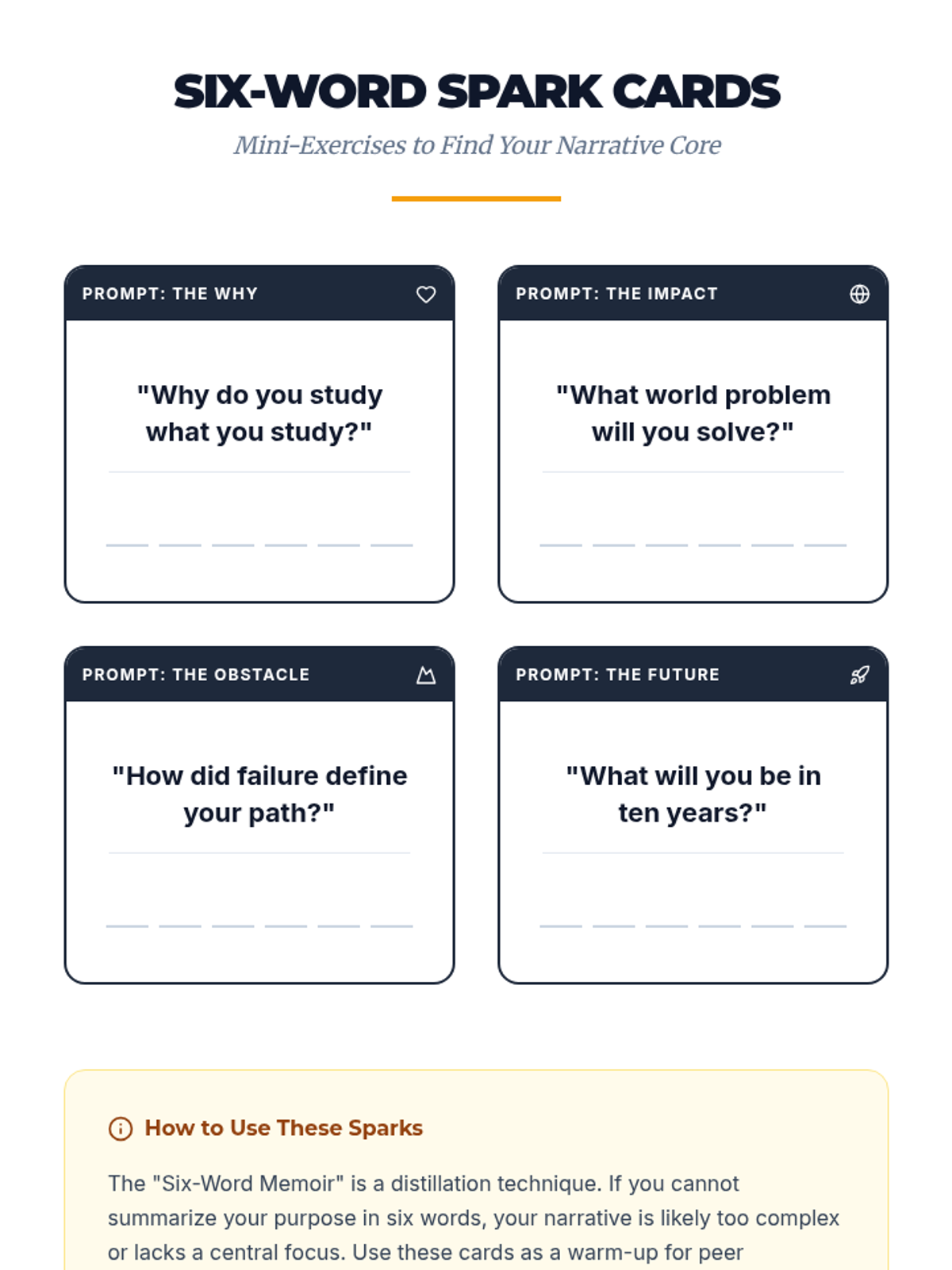
Using reflective writing and guided exercises like the 'Six-Word Memoir,' students identify pivotal moments and anchor stories that humanize their academic profile.
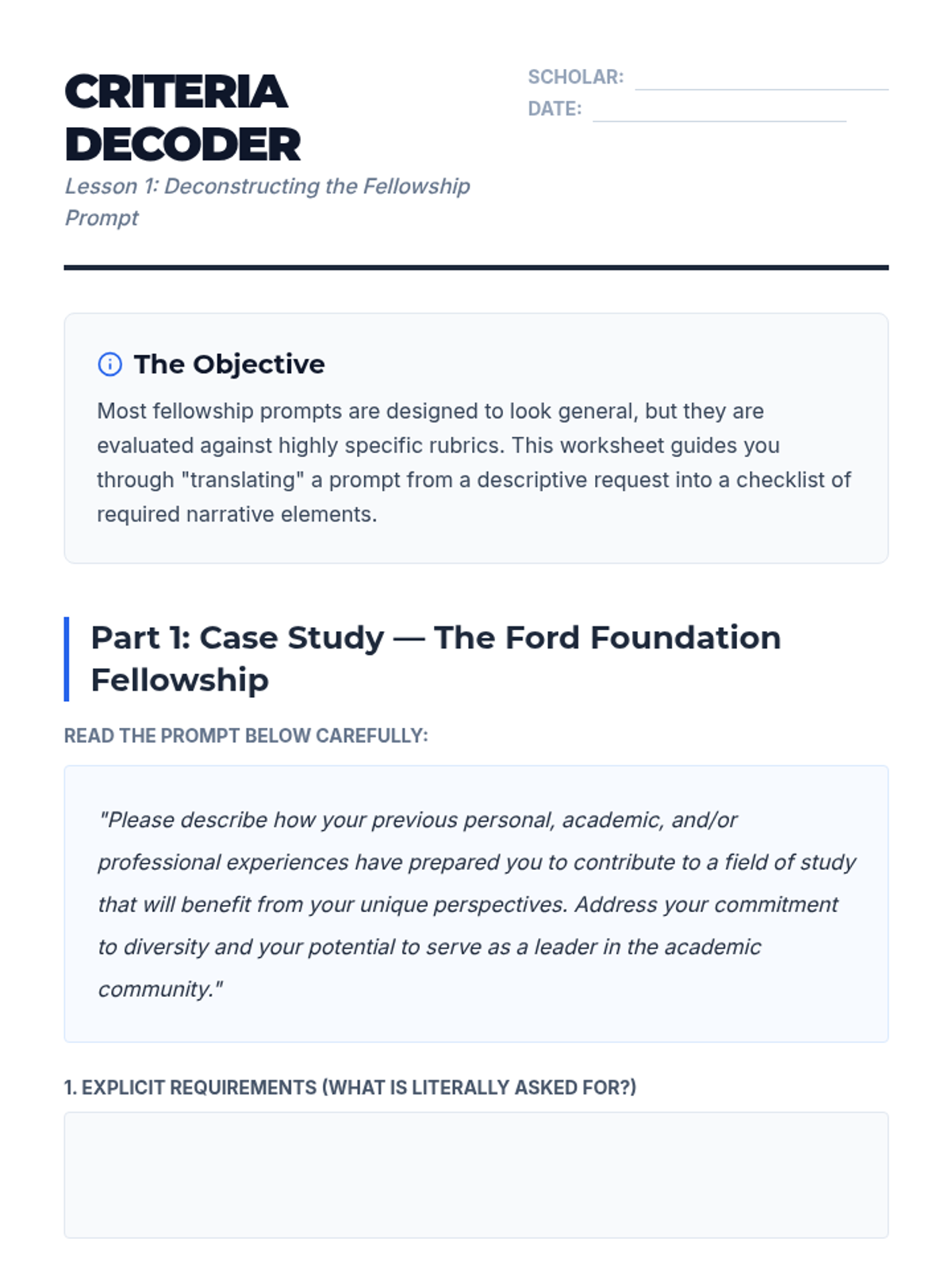
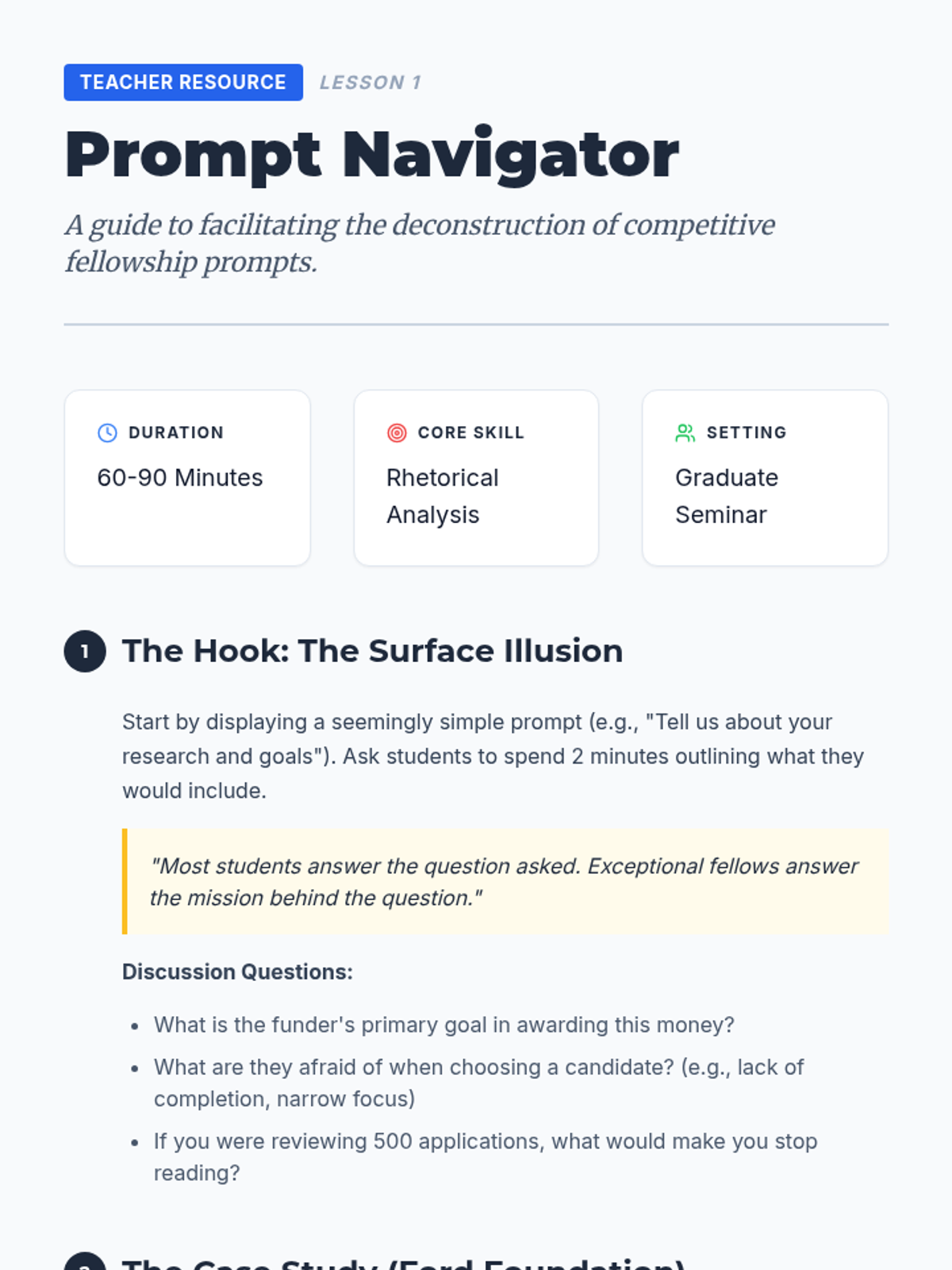
Students analyze prompts from major fellowship applications to identify explicit and implicit requirements, learning to map their responses to specific review criteria like 'Intellectual Merit' and 'Broader Impacts.'
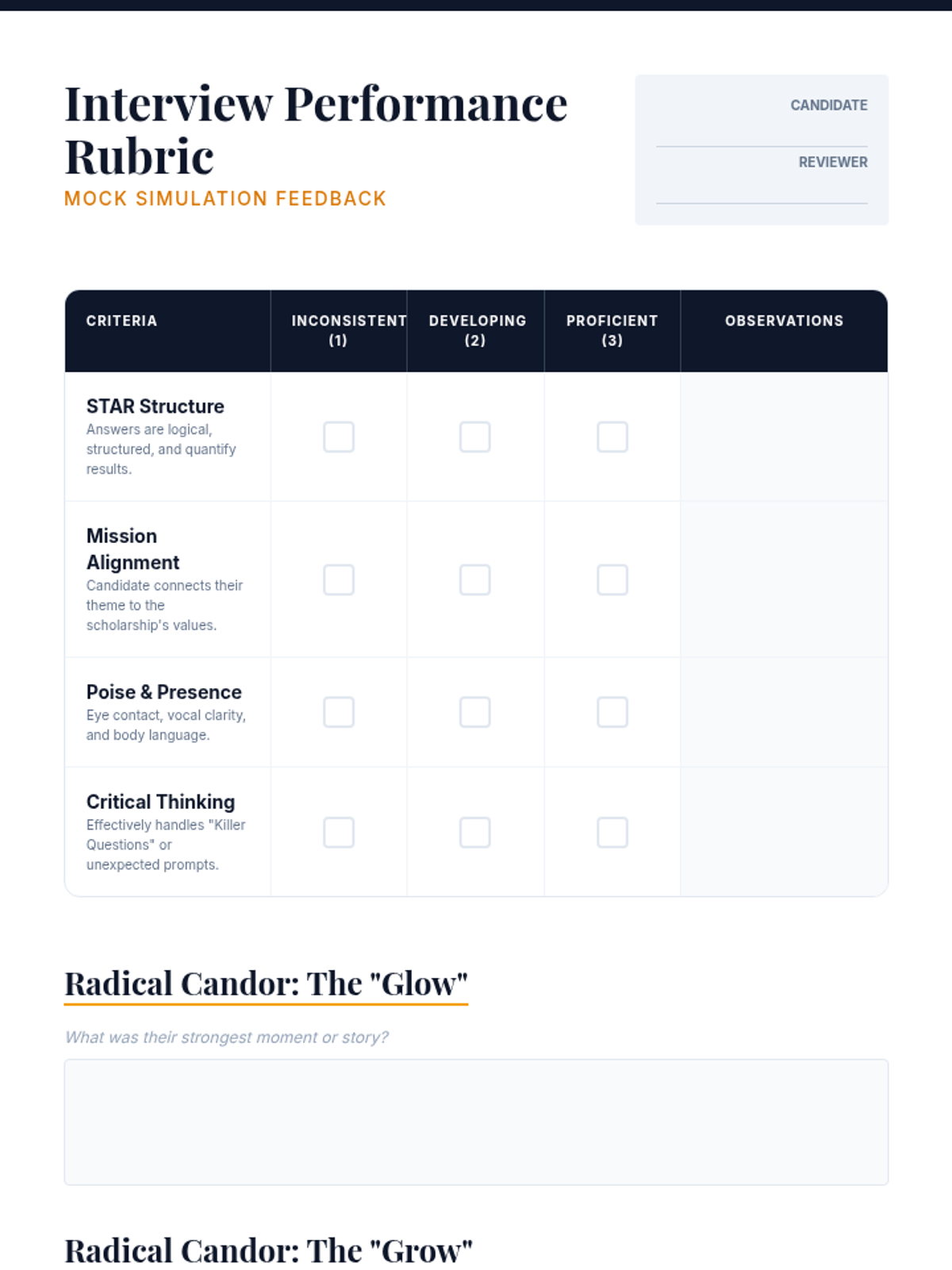
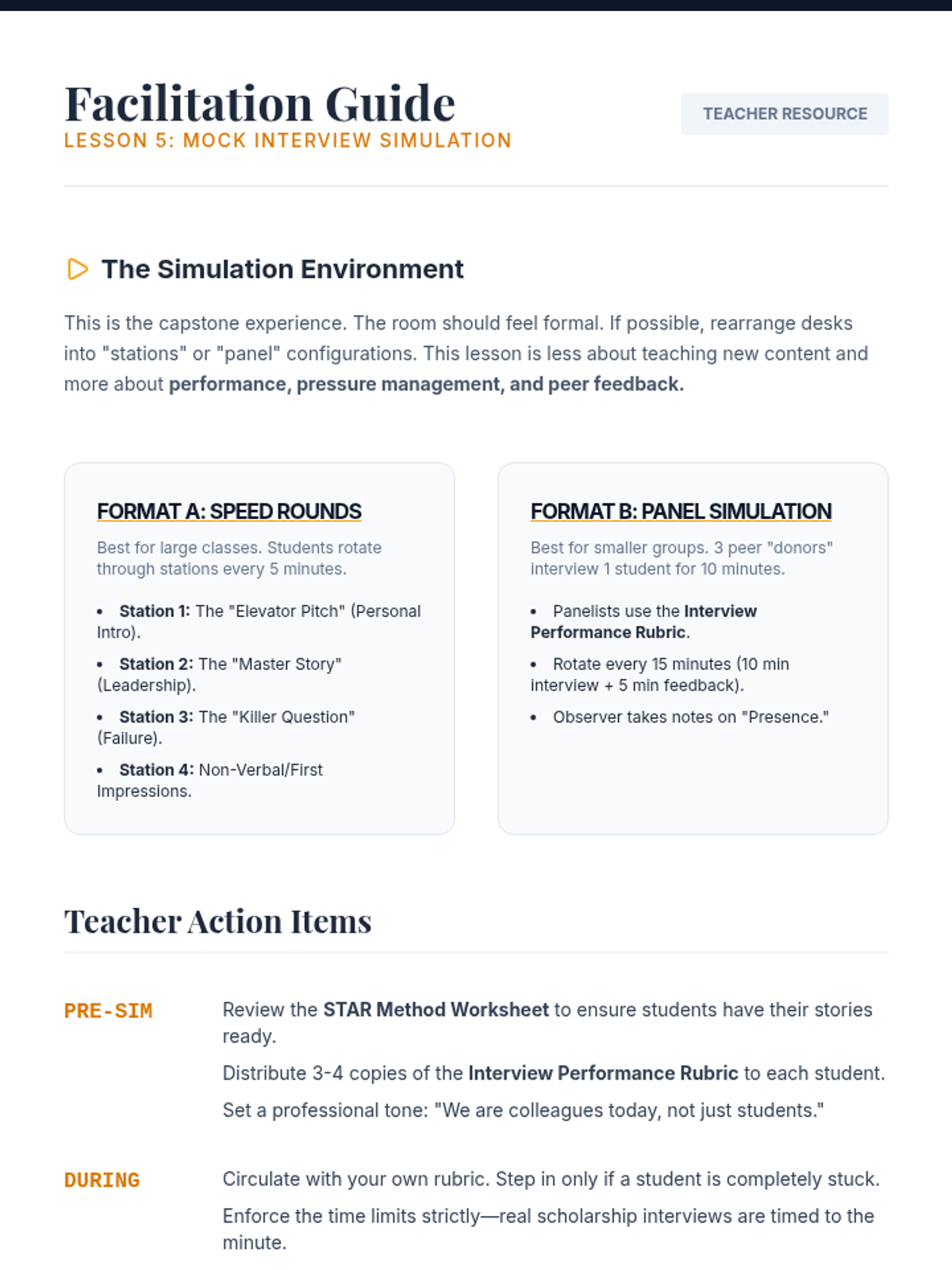
Students engage in mock interview simulations and learn post-interview etiquette and scholarship management.
Students prepare for scholarship interviews using the STAR method to answer behavioral questions effectively.
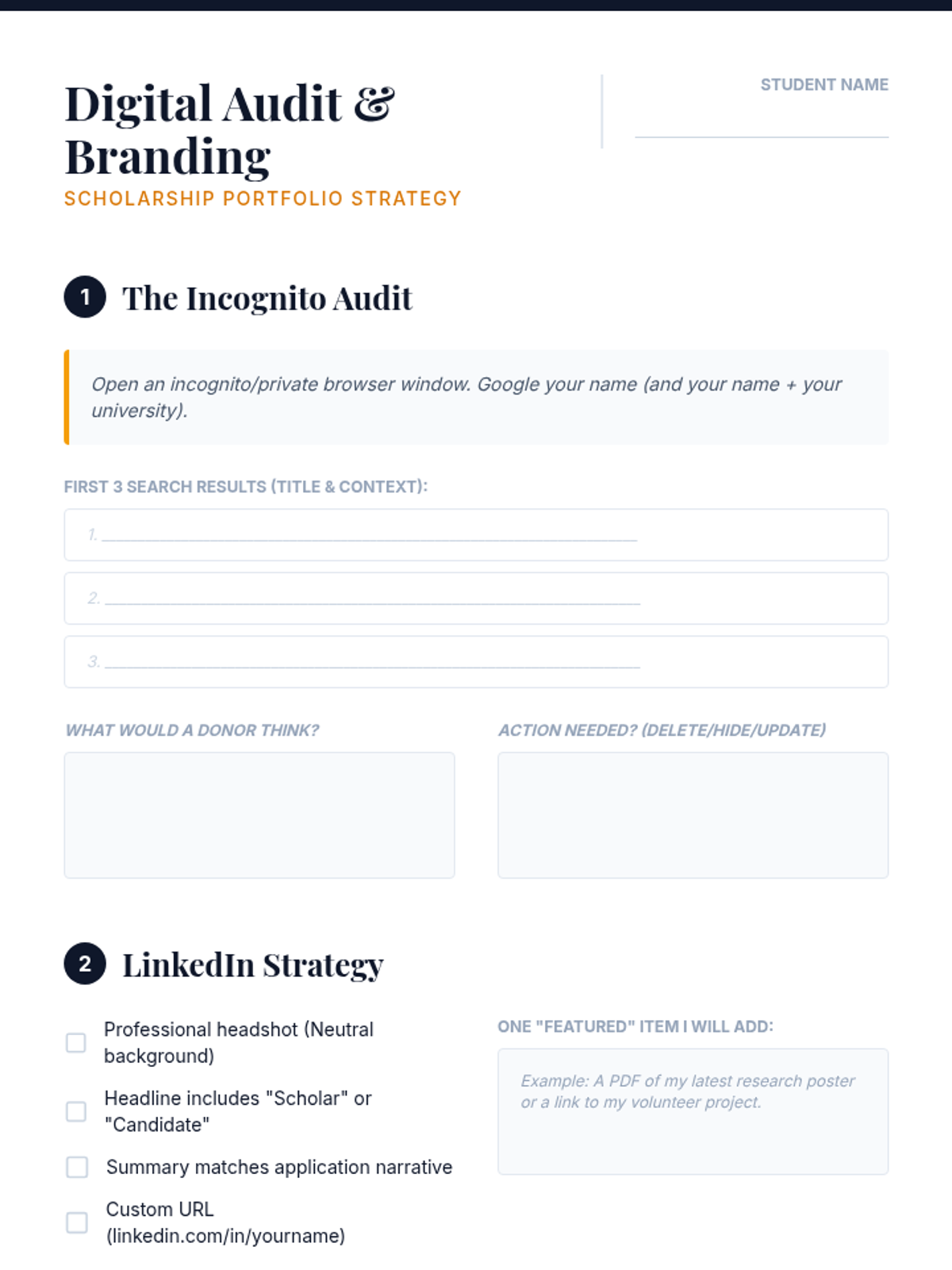
Students audit their digital footprint and curate supplemental materials to reinforce their application's narrative.
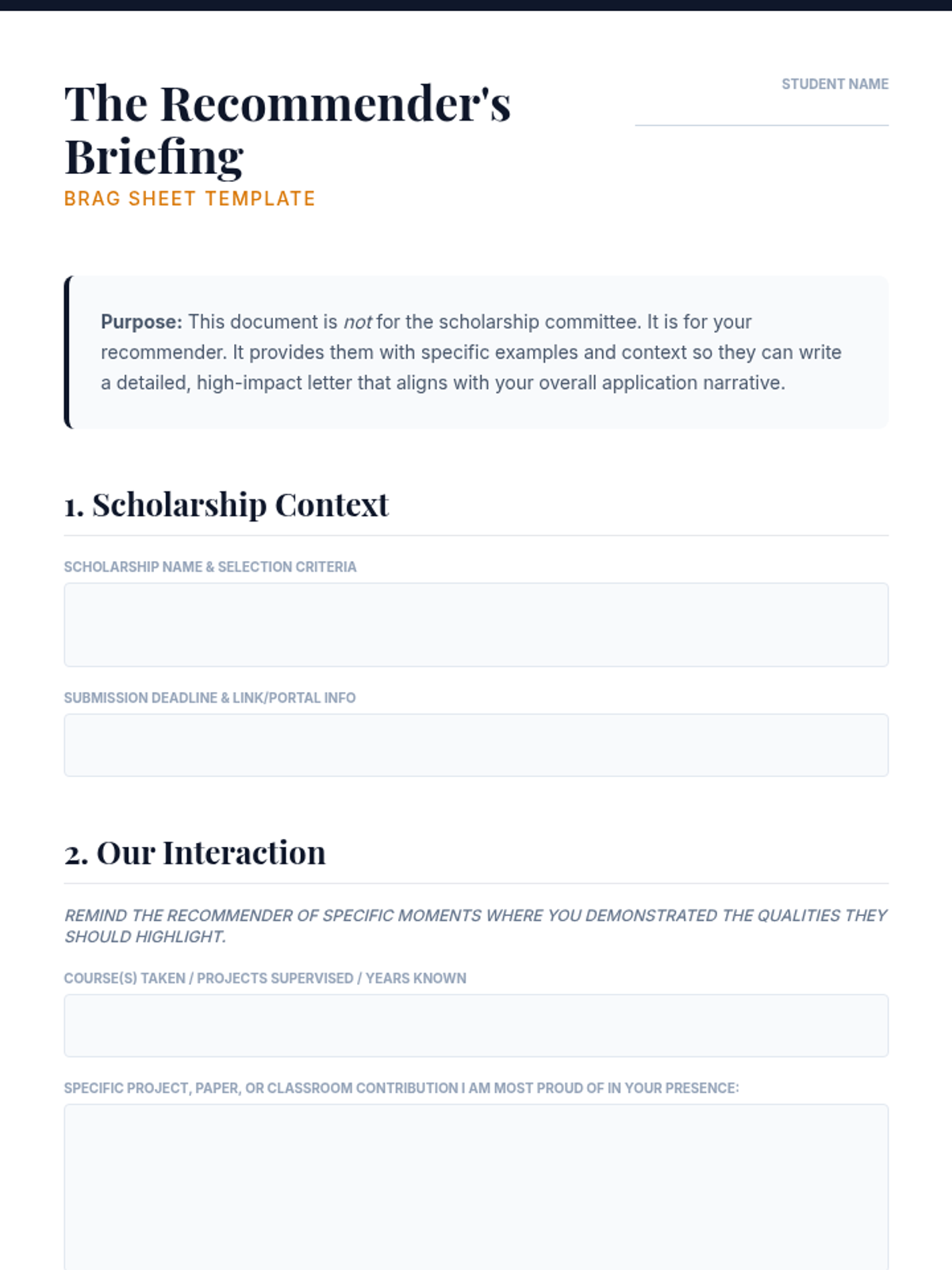
Students learn the etiquette and strategy for requesting letters of recommendation, creating 'brag sheets' to guide their recommenders.
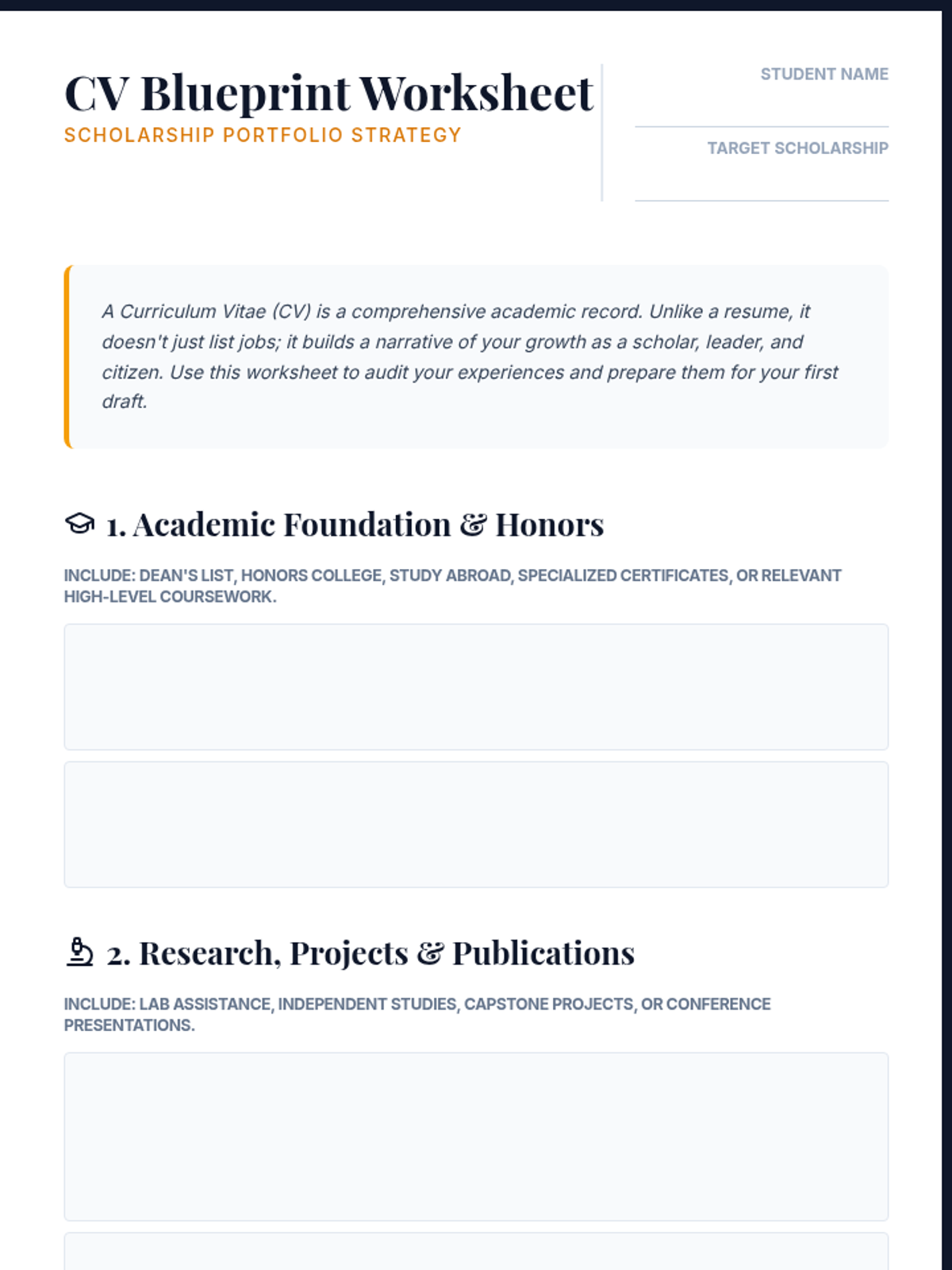
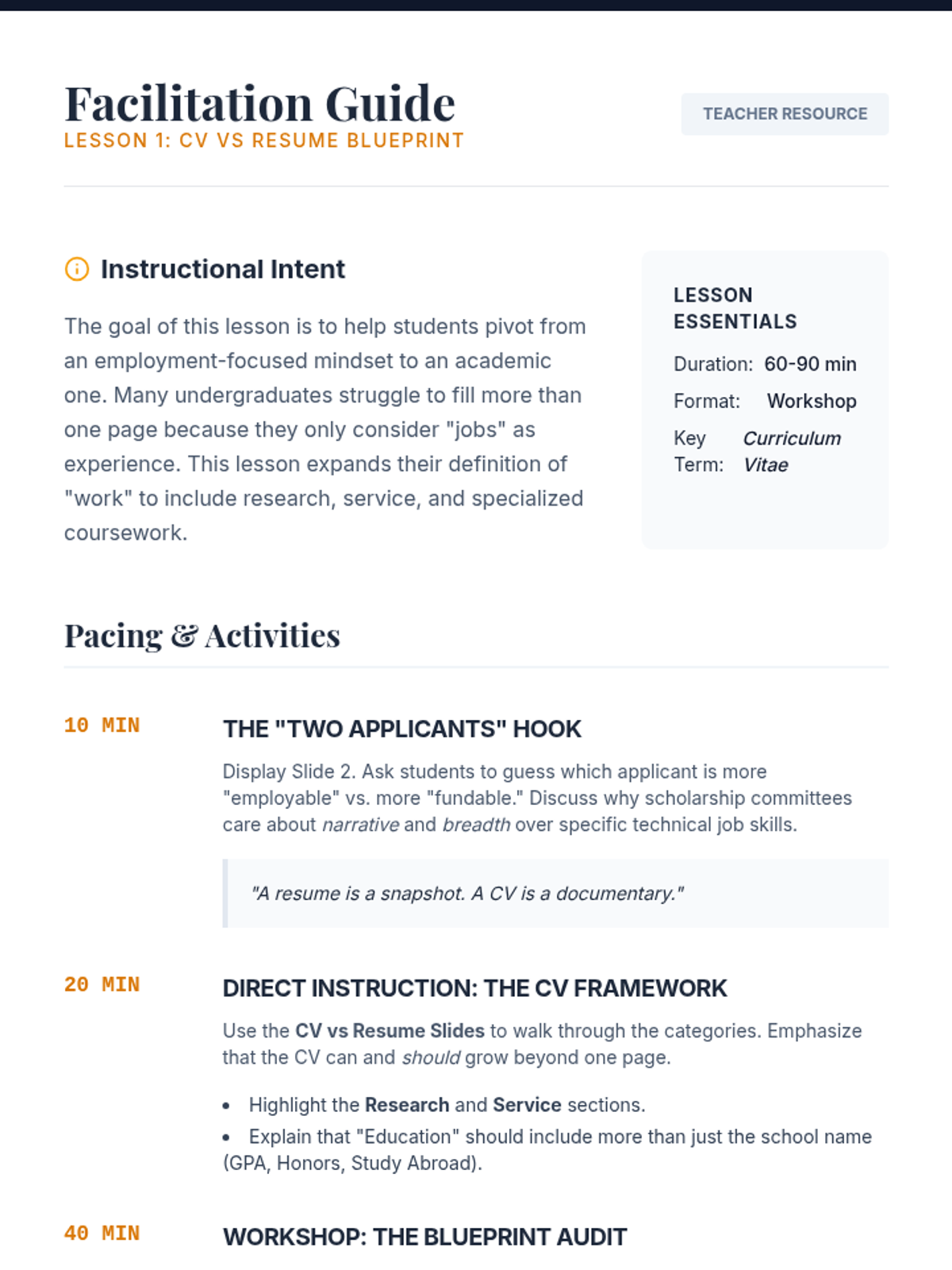
Students differentiate between a standard employment resume and an academic CV, building a document that highlights academic achievements, research, and leadership.
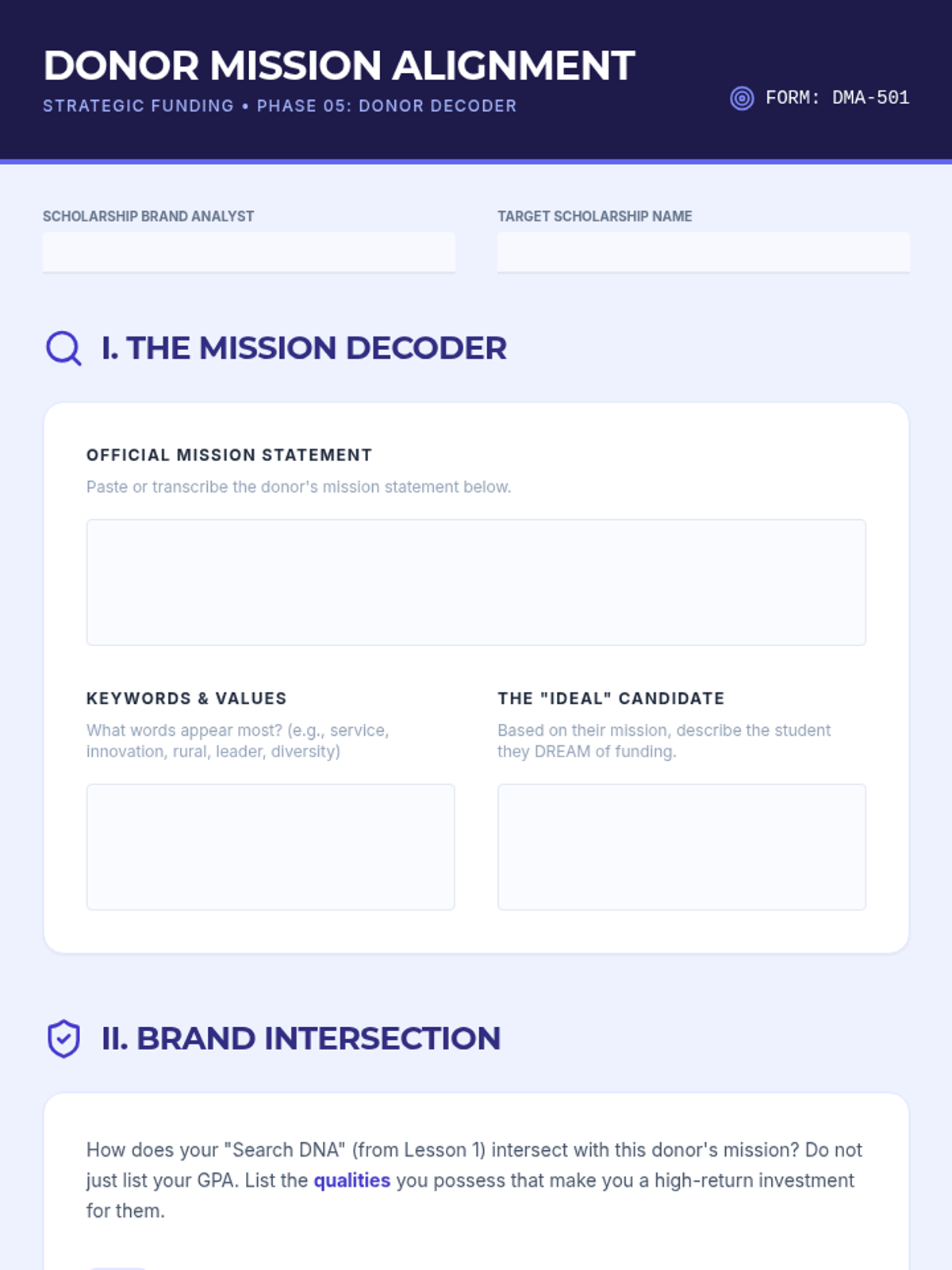
Students research donor organizations to align their personal brand with the funding source's mission and values.
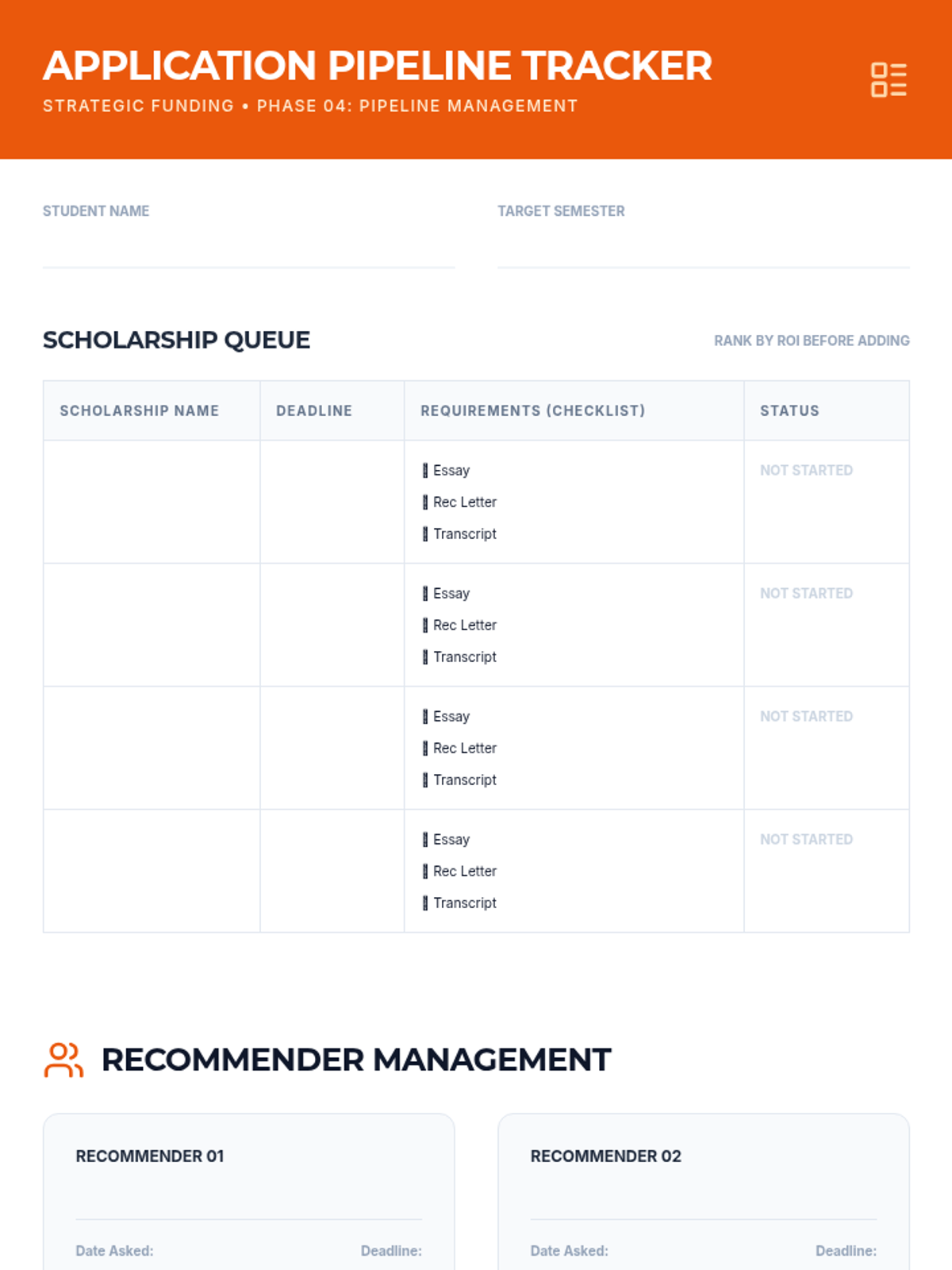
Students build a robust project management system to track deadlines, requirements, and application status.
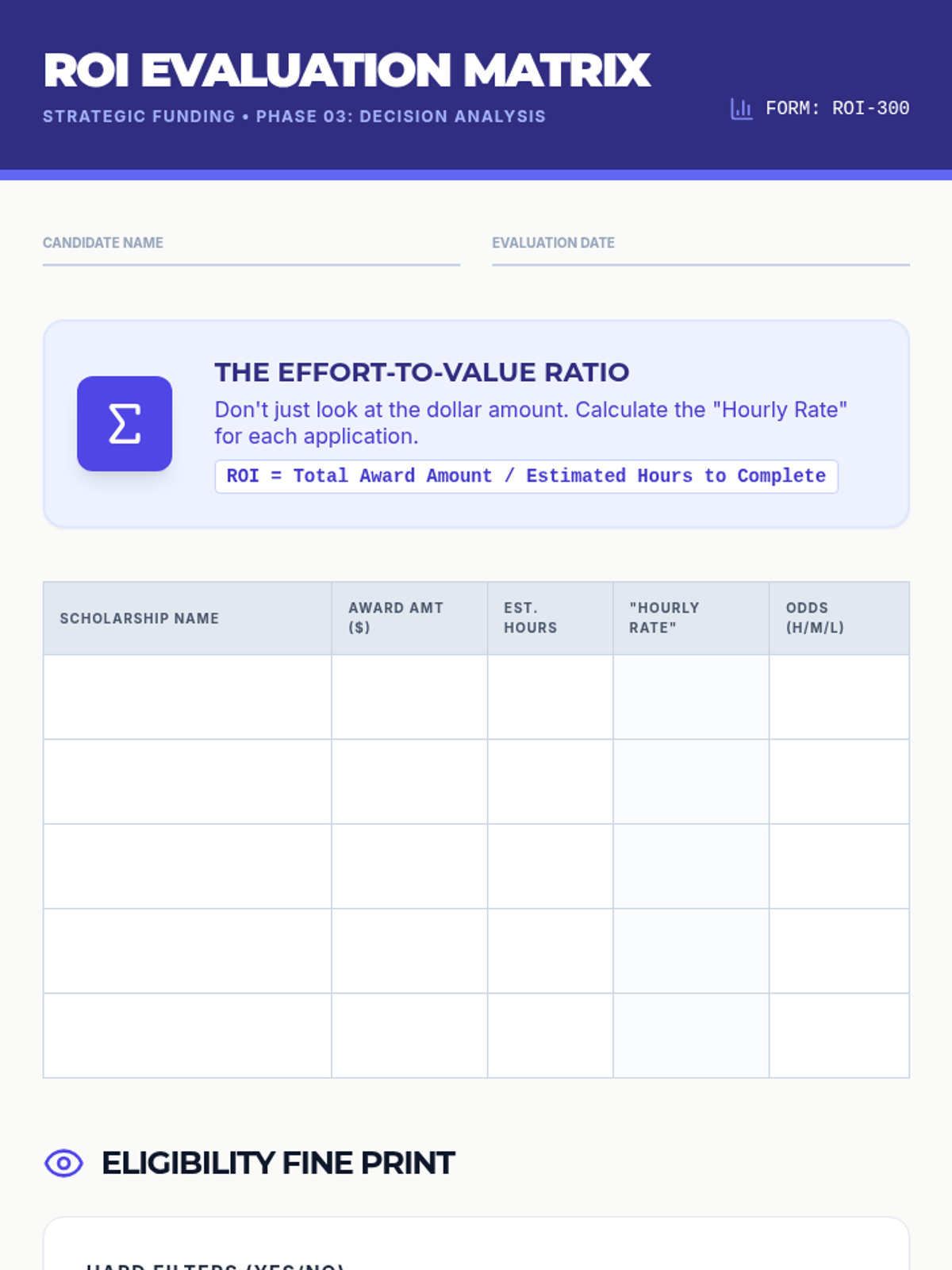
Students evaluate scholarship opportunities based on effort-to-value ratios and eligibility requirements.
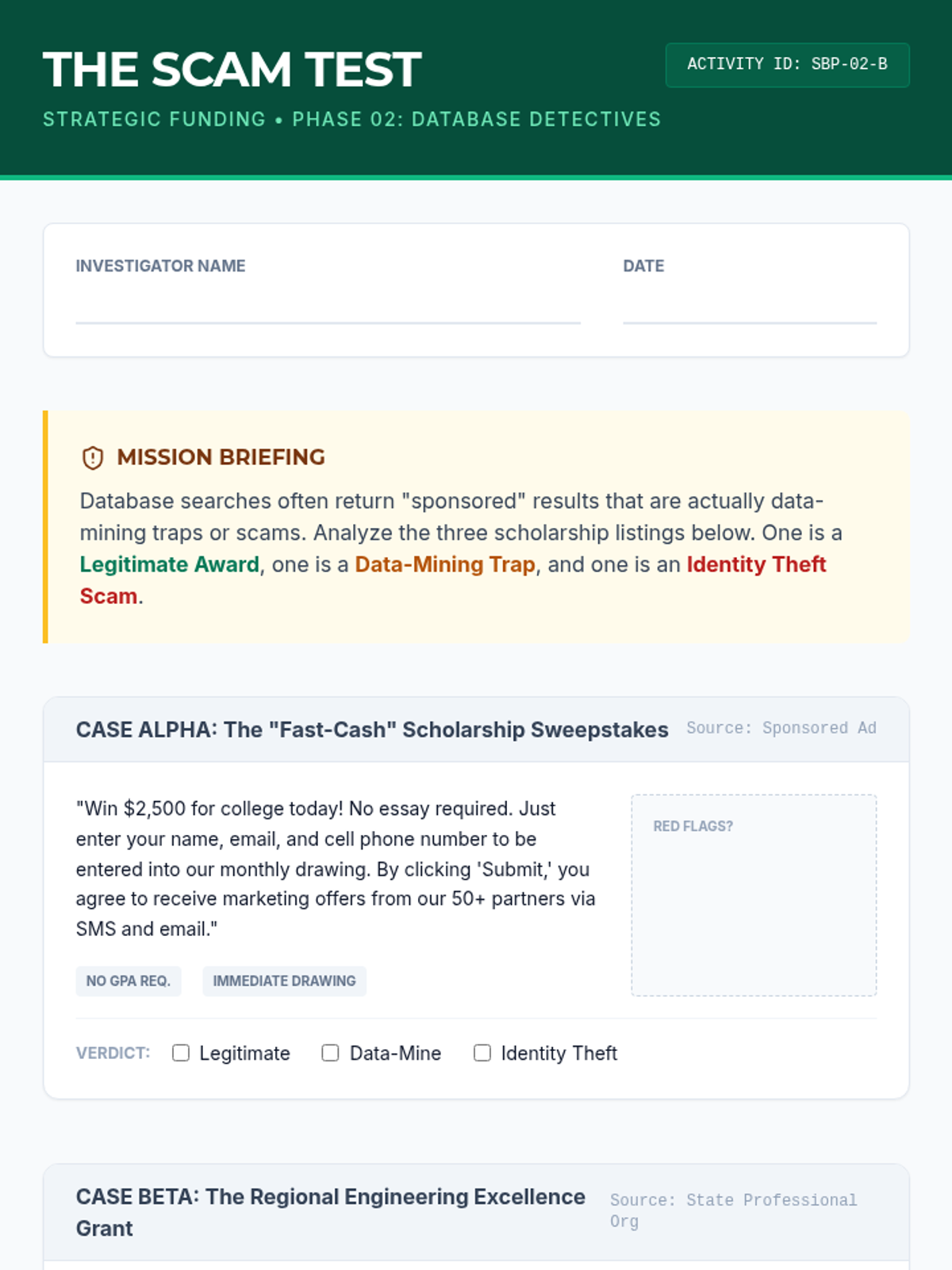
Students learn to use advanced search techniques and verify the legitimacy of scholarship databases and institutional resources.
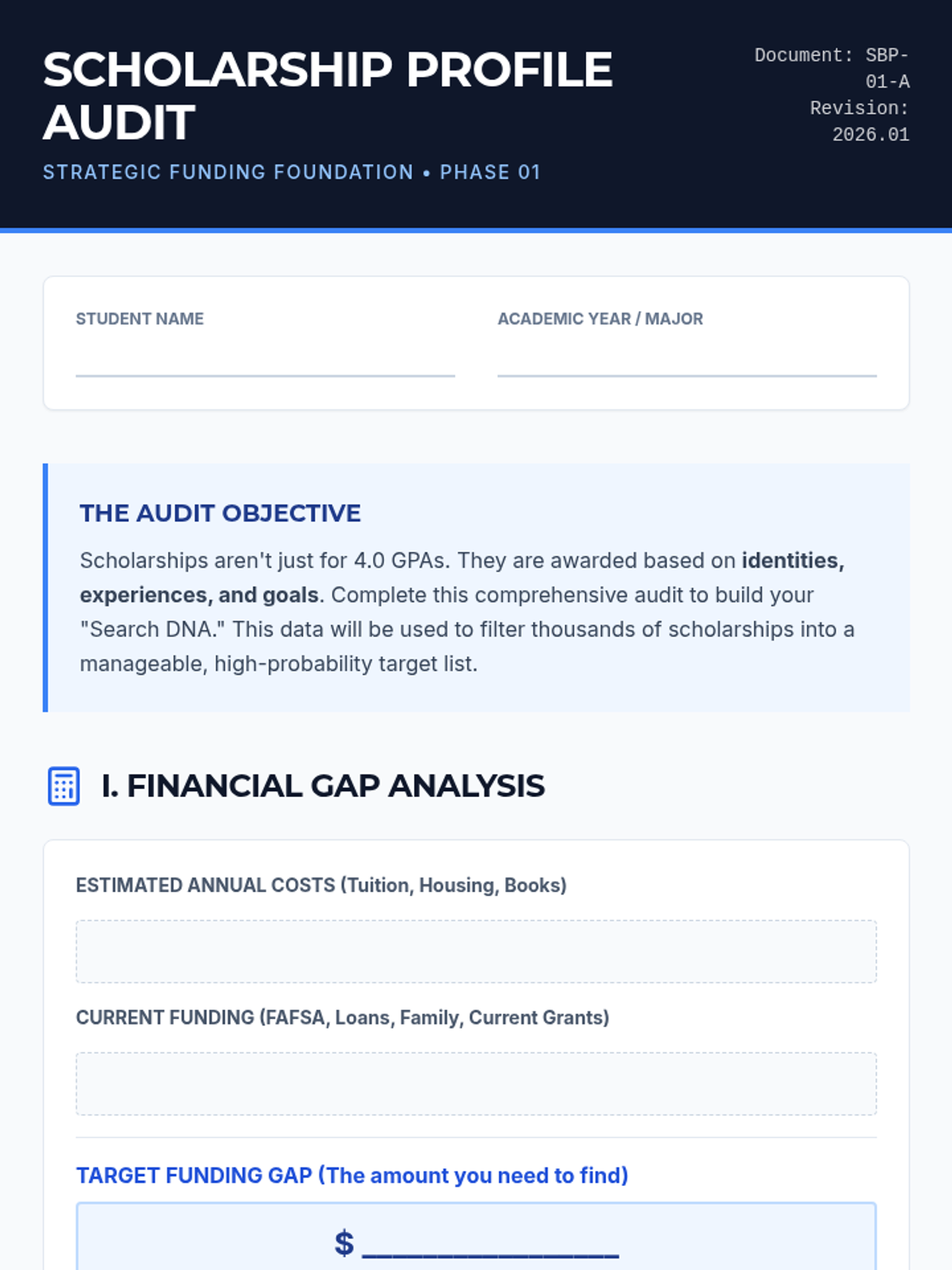
Students conduct a deep-dive audit of their financial needs and personal characteristics to identify niche scholarship opportunities.
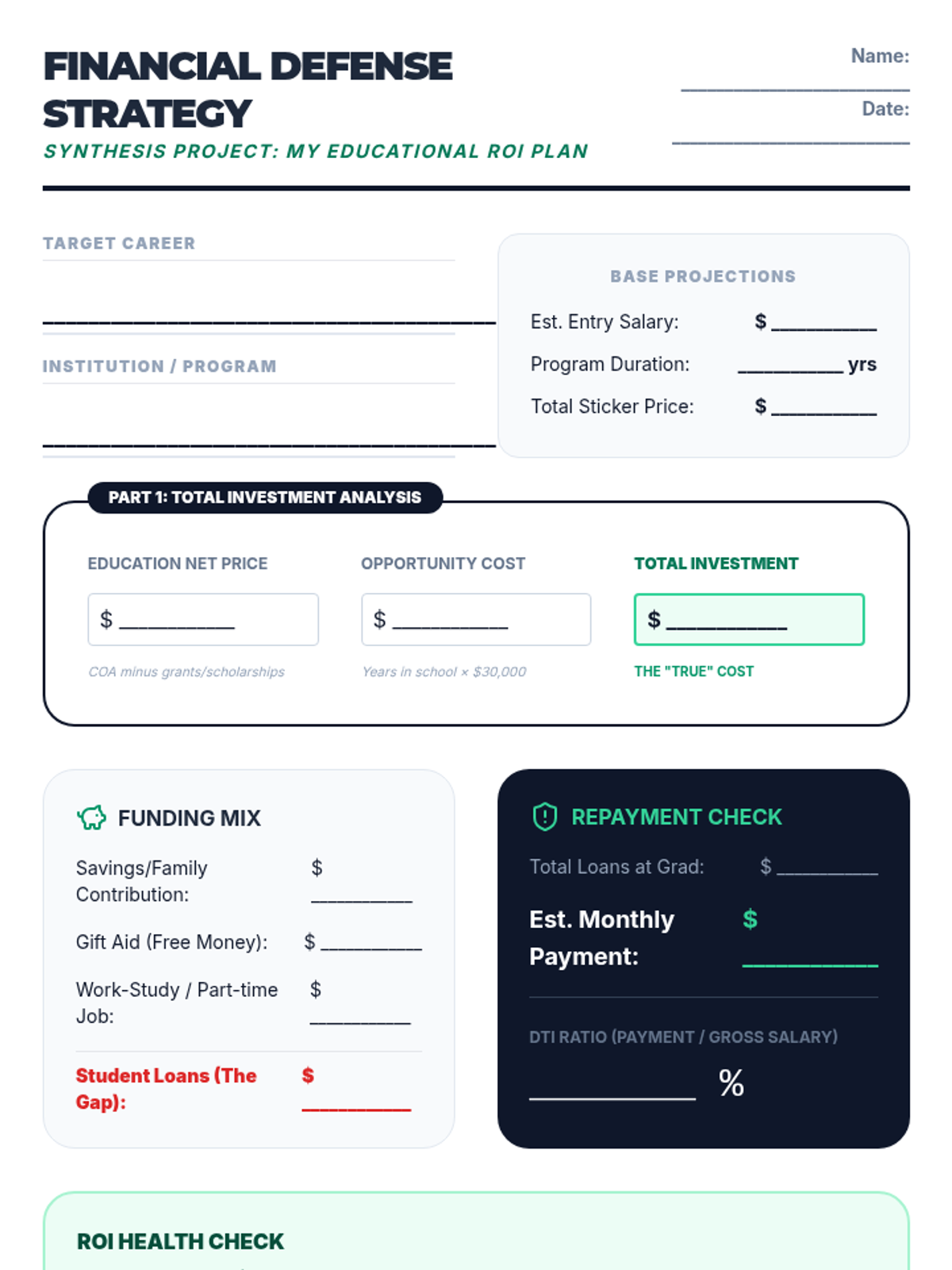
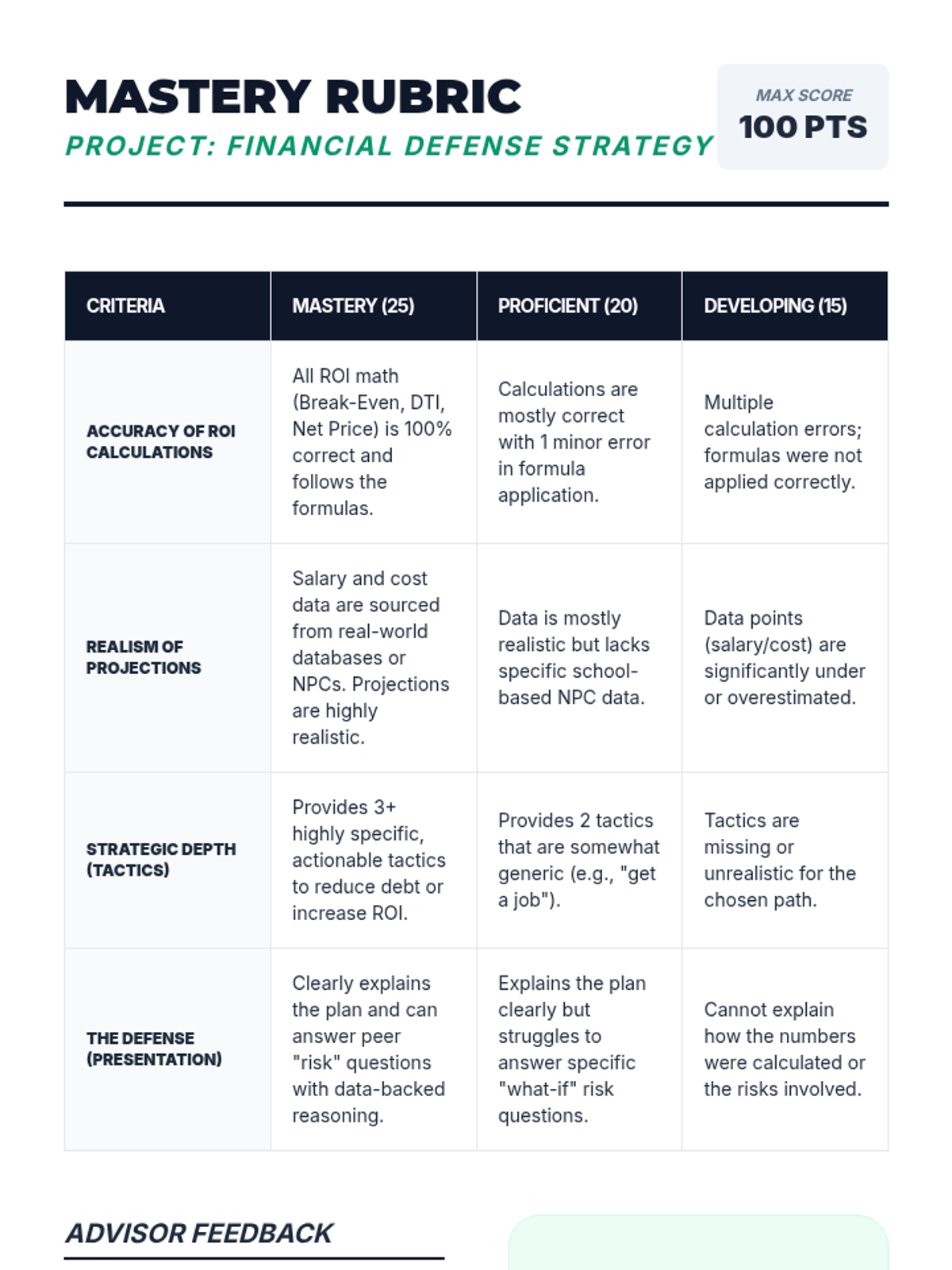
Students synthesize their learning into a final "Financial Defense" plan that outlines costs, aid, debt projections, and repayment strategies for a specific career path.
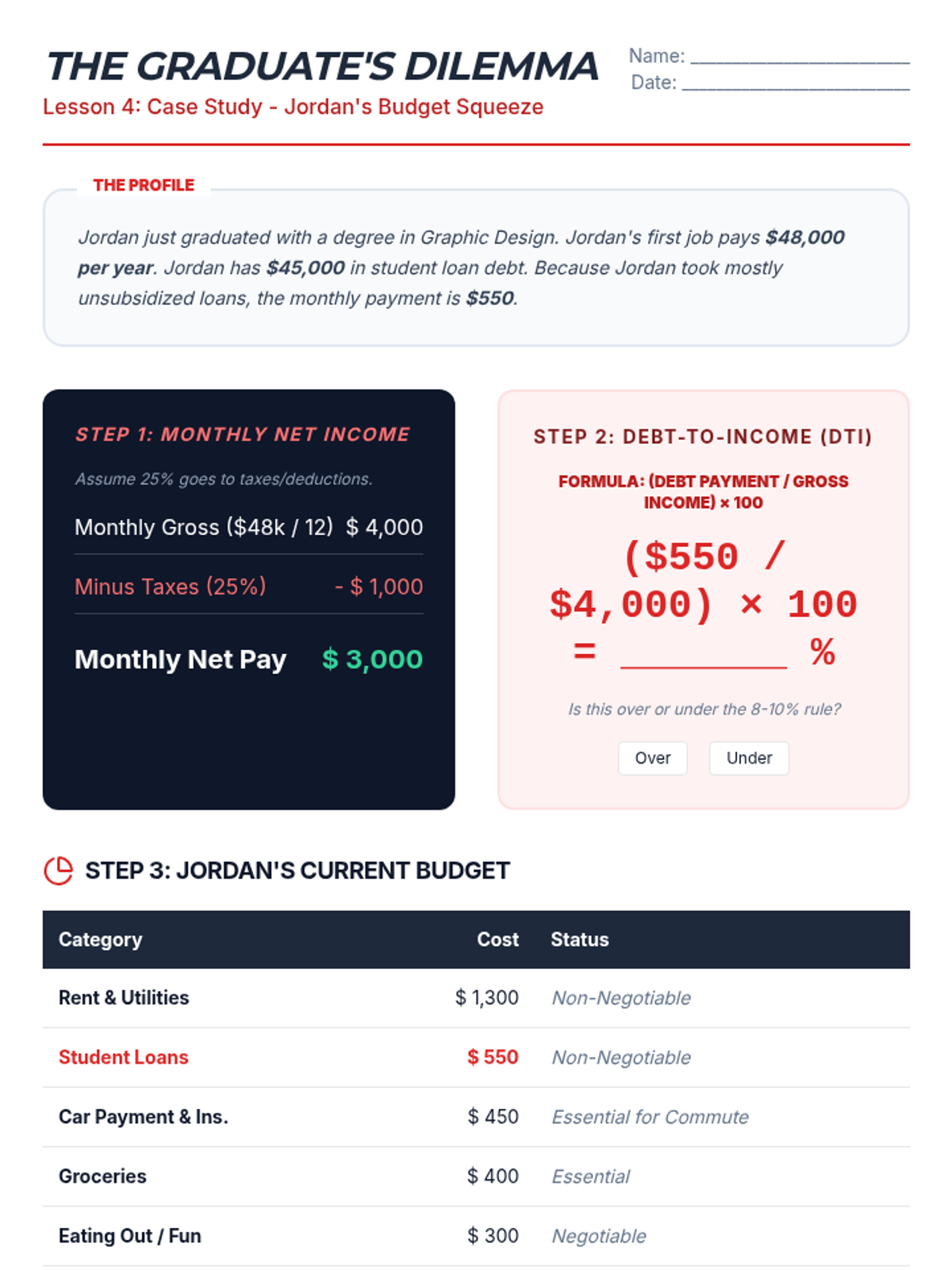
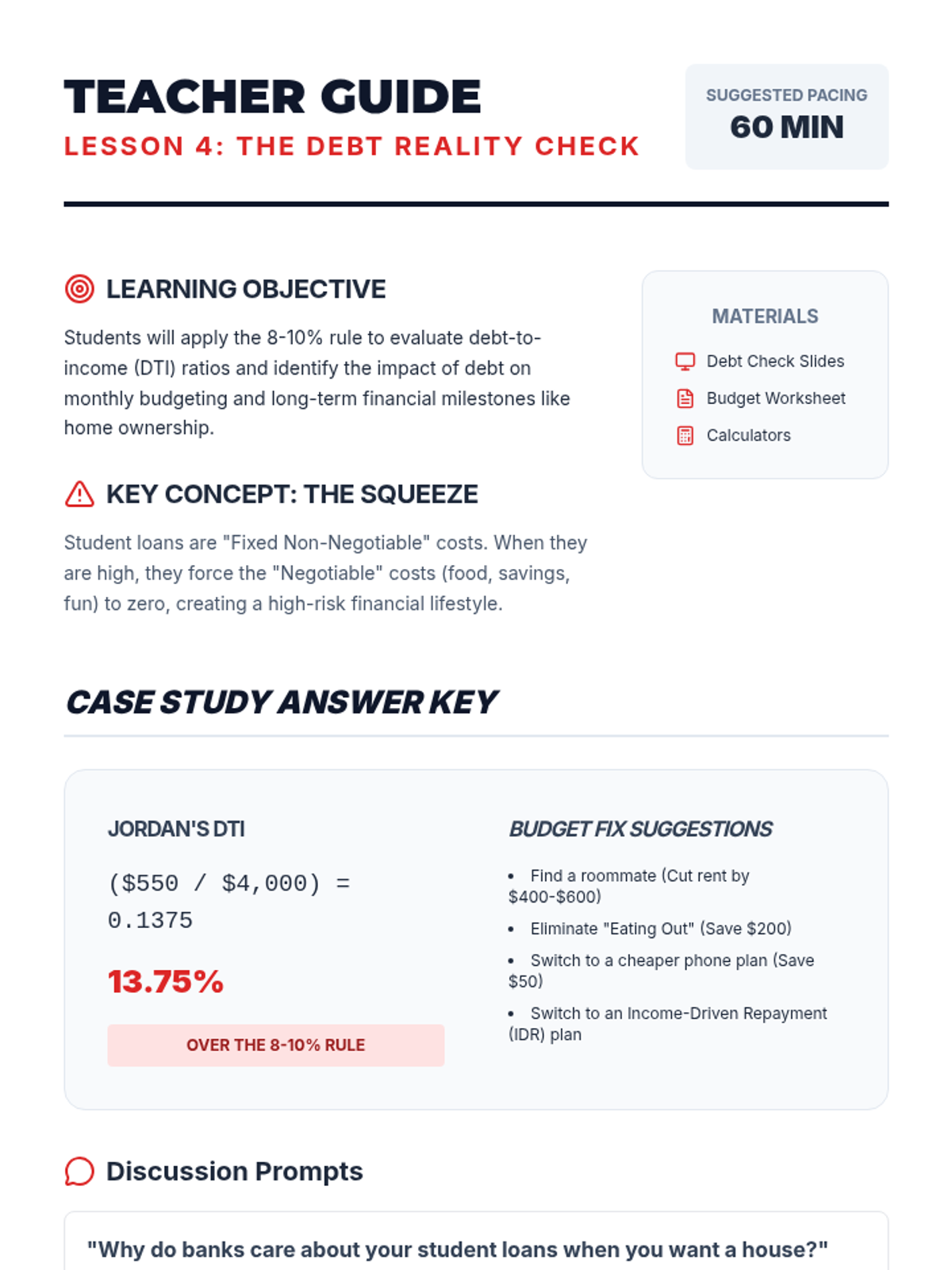
Students apply the 8-10% rule to analyze debt-to-income ratios and explore how student loan debt impacts future financial decisions like housing and lifestyle.
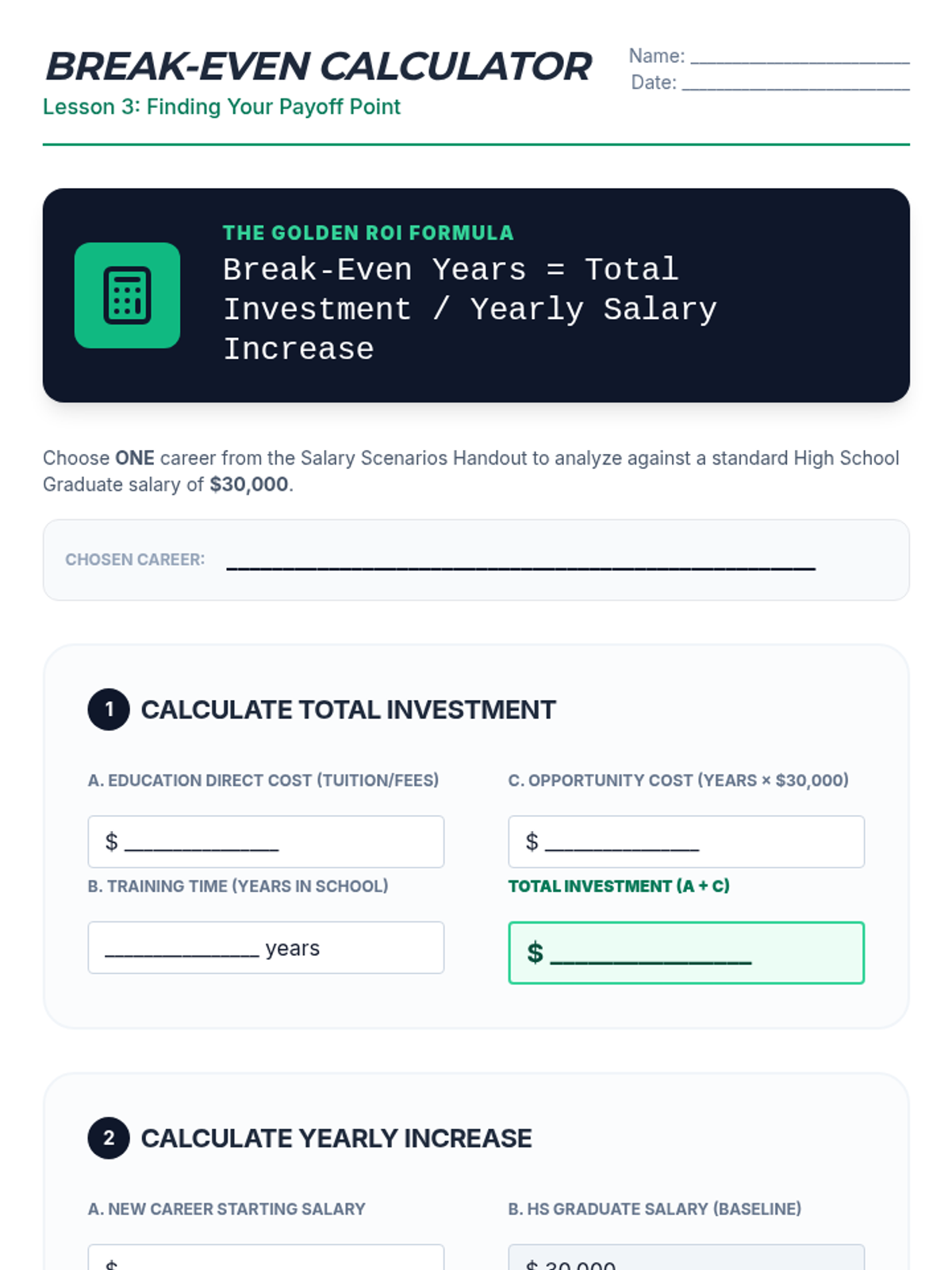
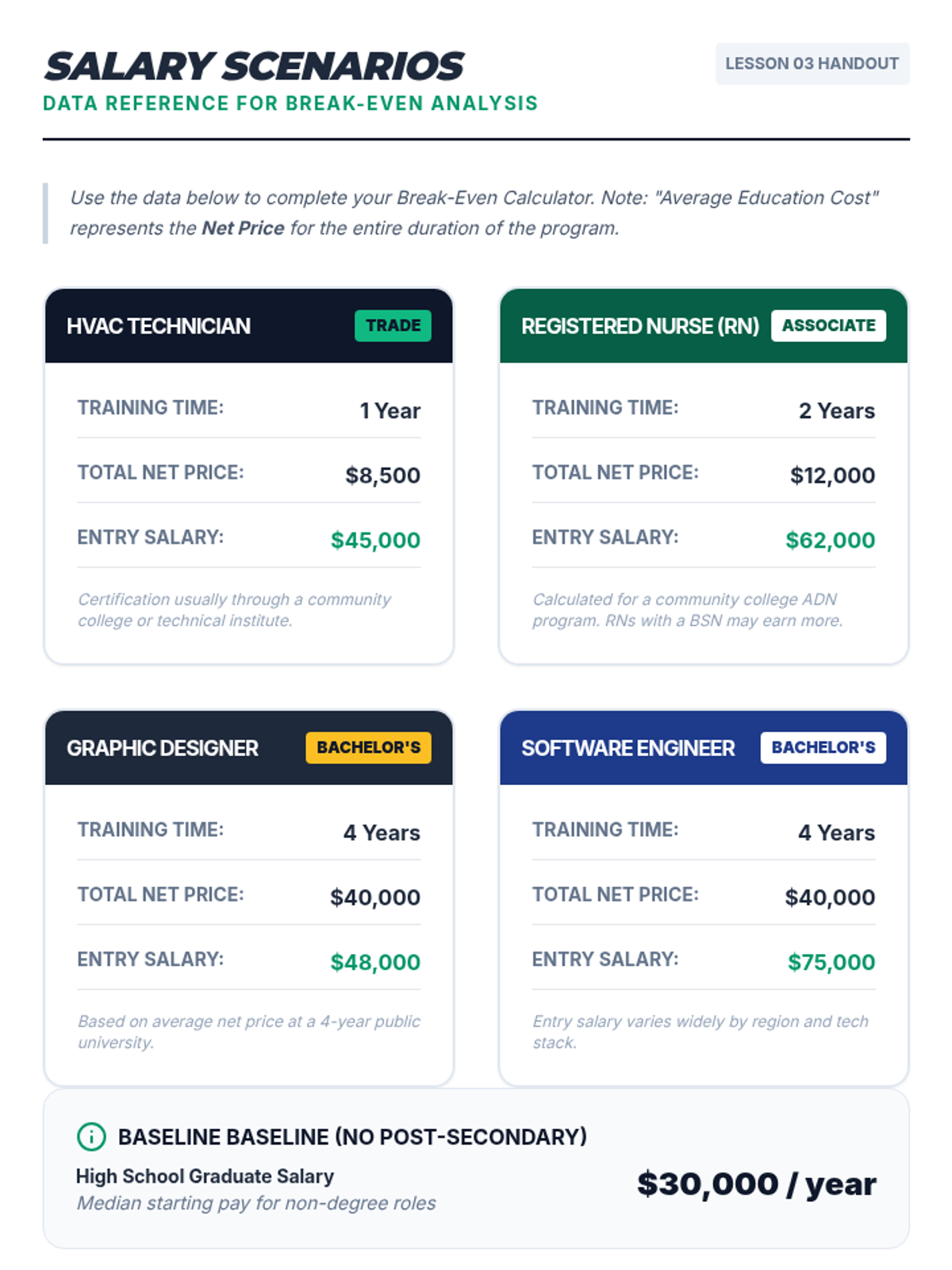
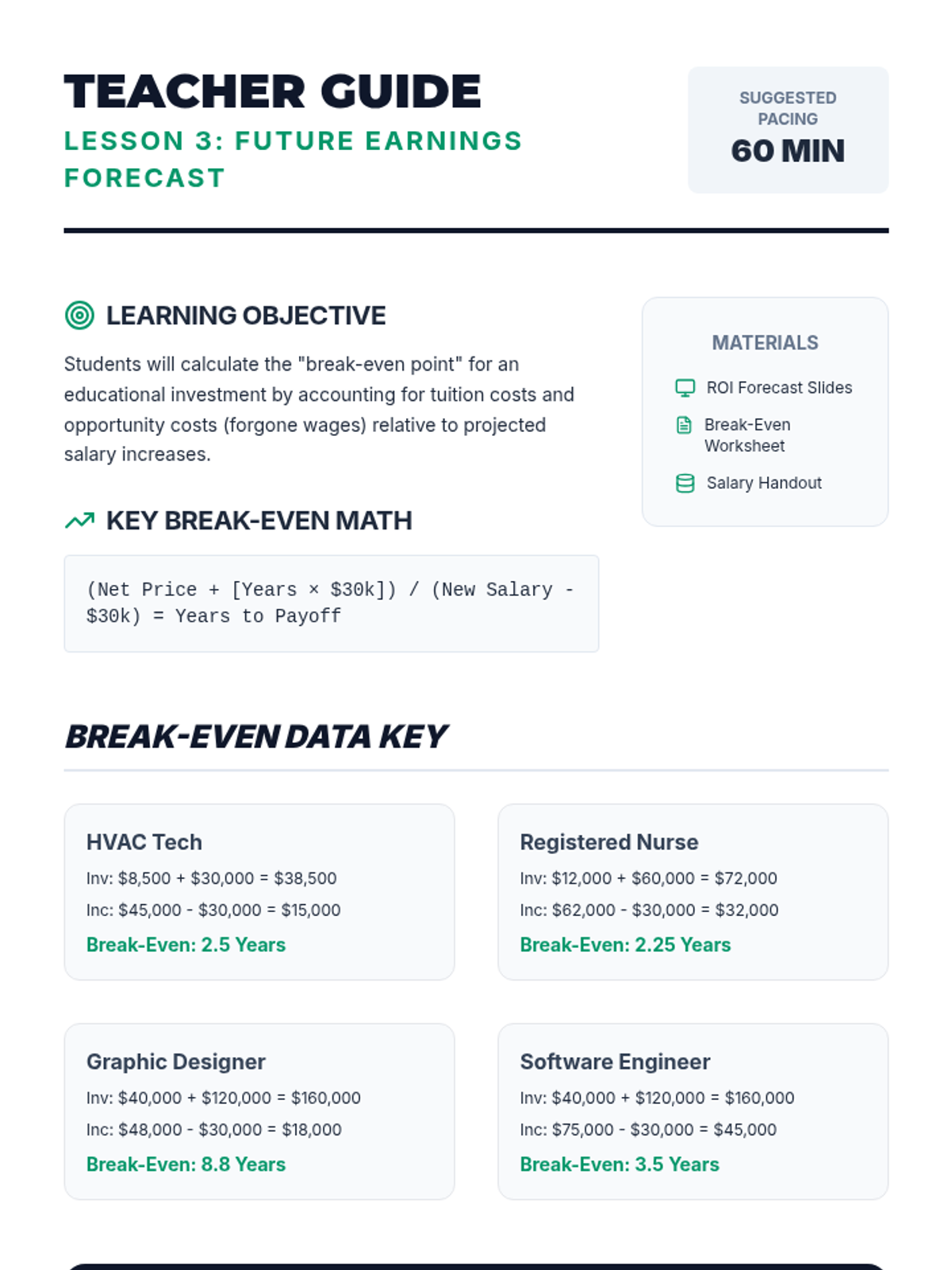
Learners research entry-level salaries and calculate opportunity costs to determine the break-even point for their educational investment.
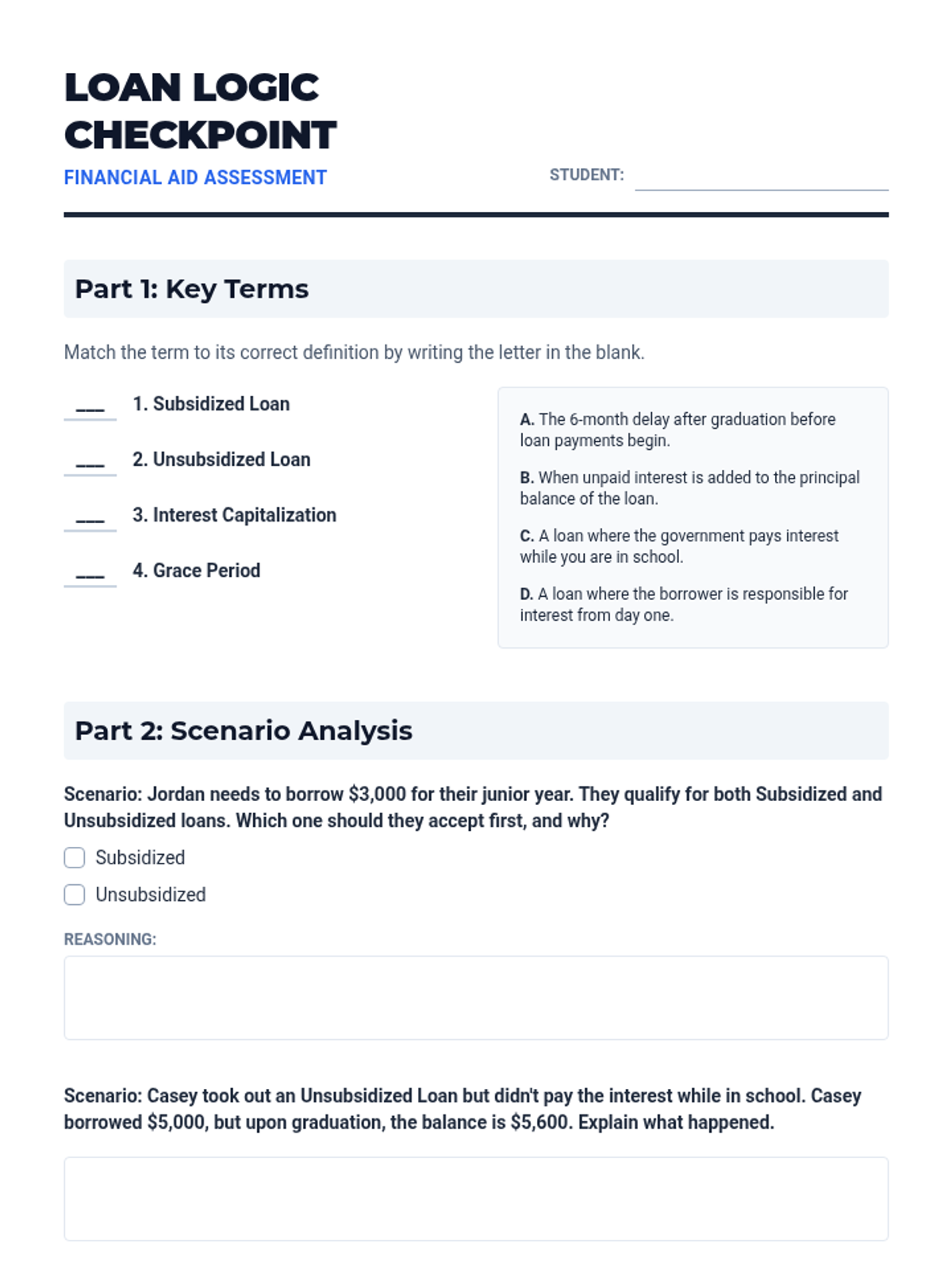
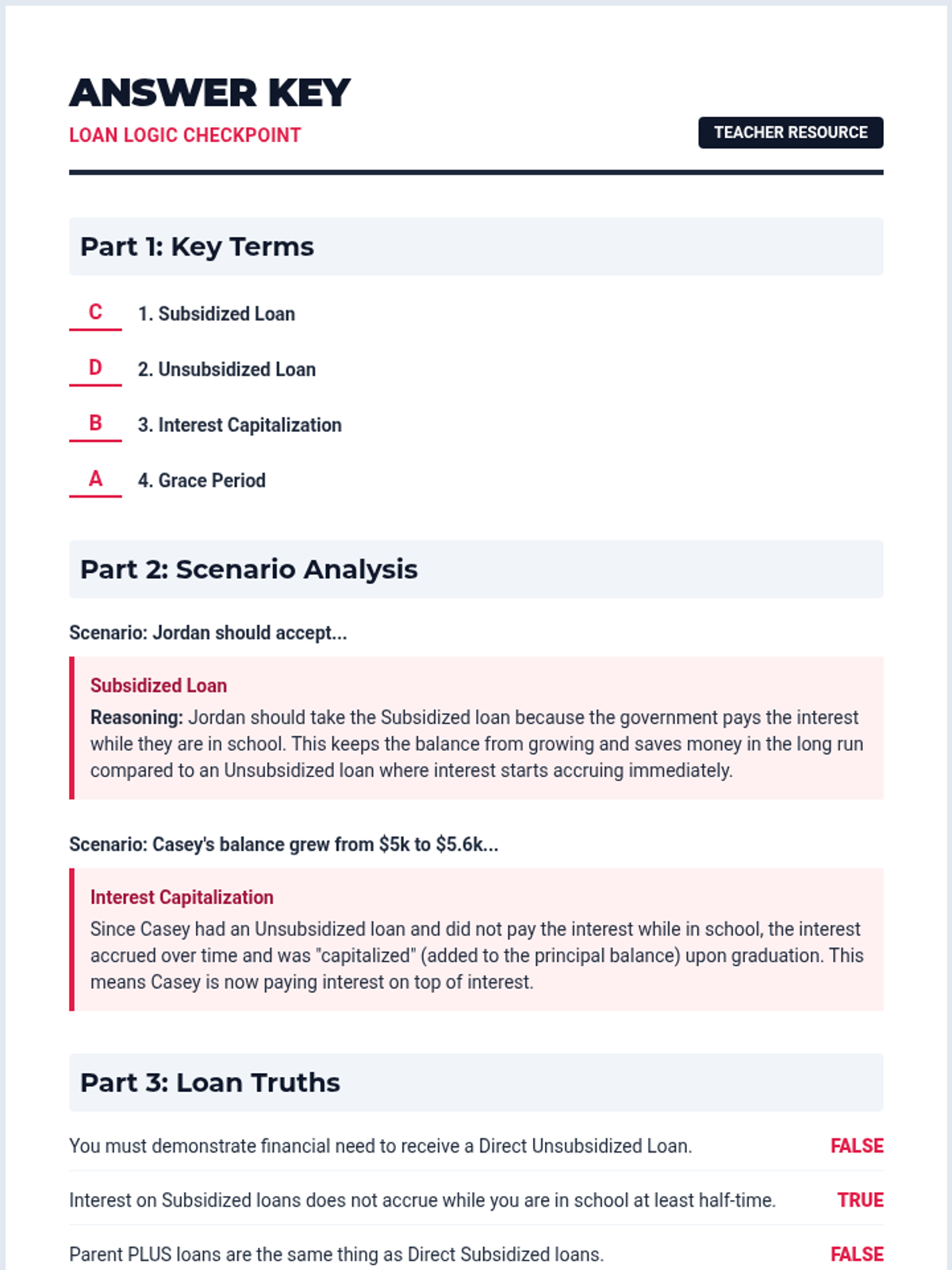
Students differentiate between various funding sources like grants, scholarships, and loans, while simulating financial aid applications and calculating interest accumulation.
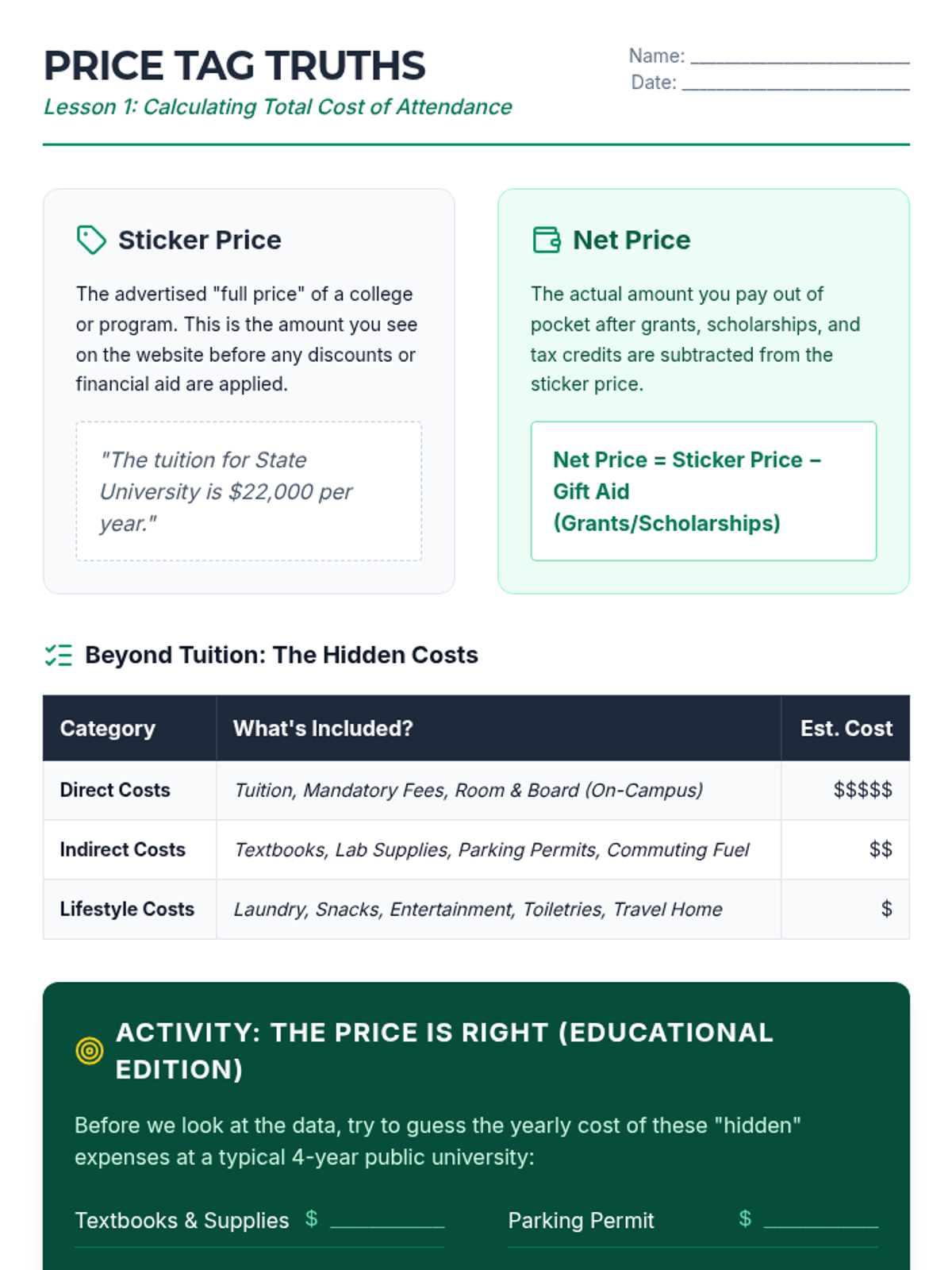
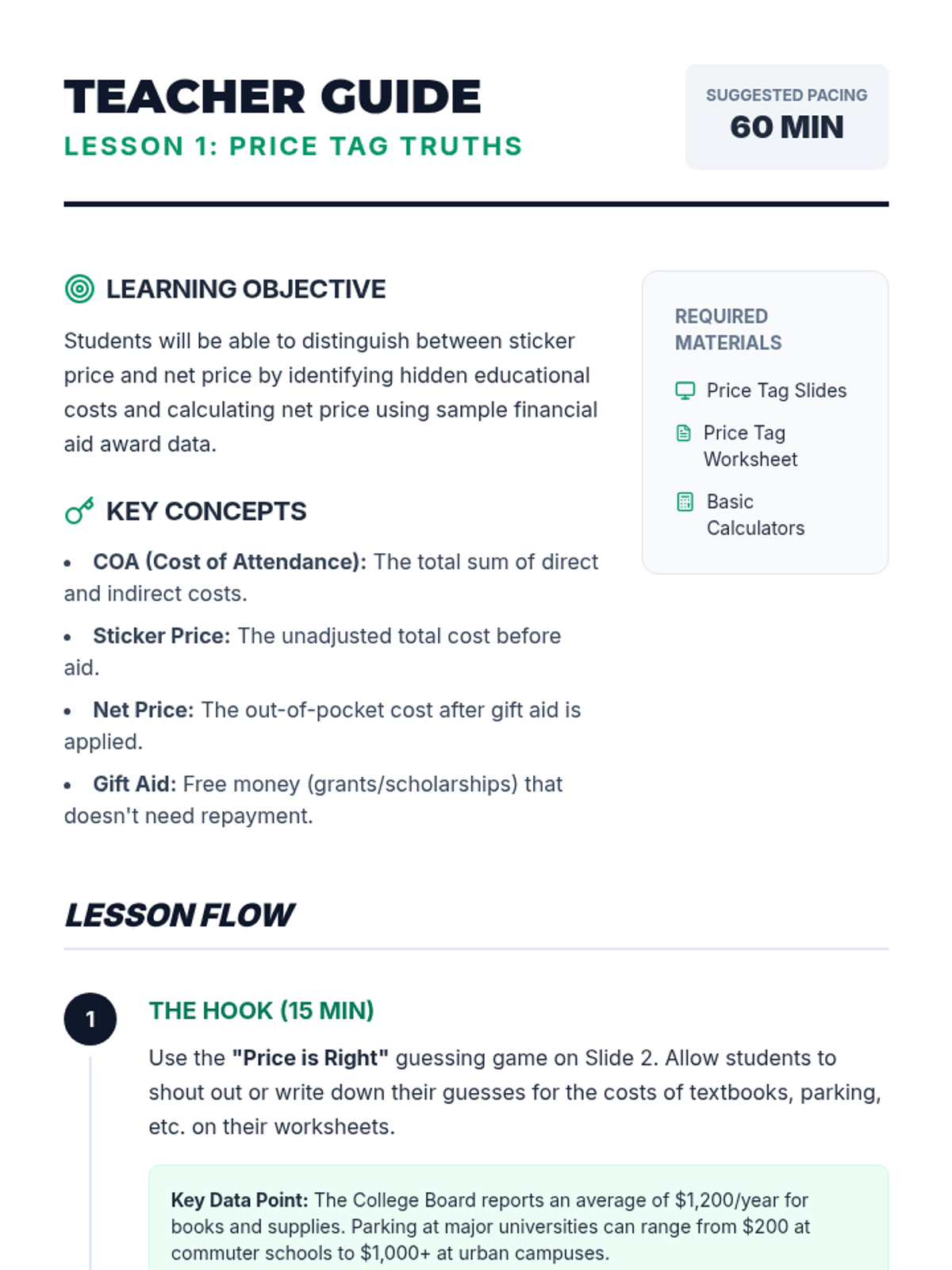
Students identify hidden costs of education beyond tuition to understand the difference between sticker price and net price. they use sample award letters and fee schedules to construct a realistic total cost of attendance.
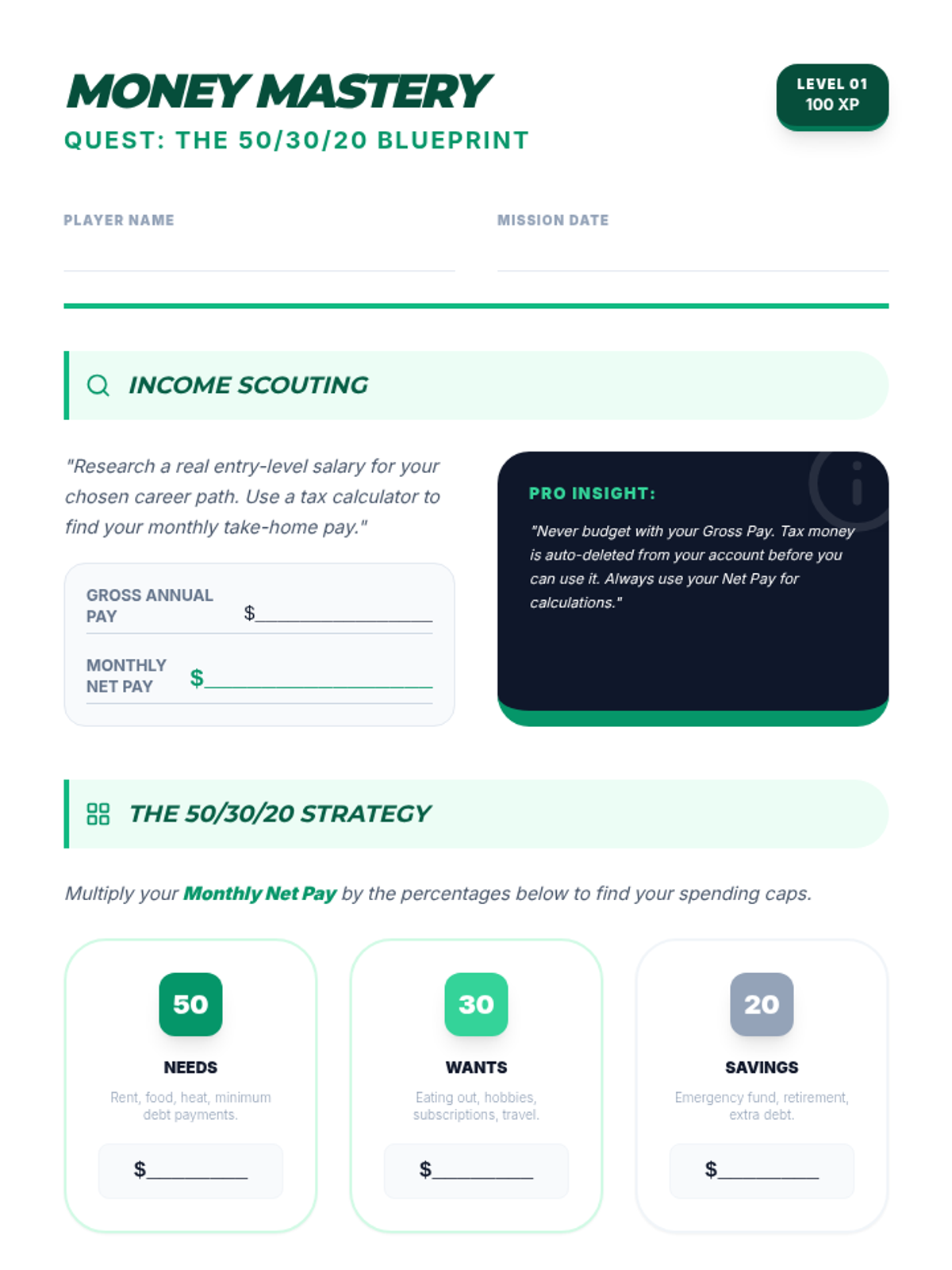
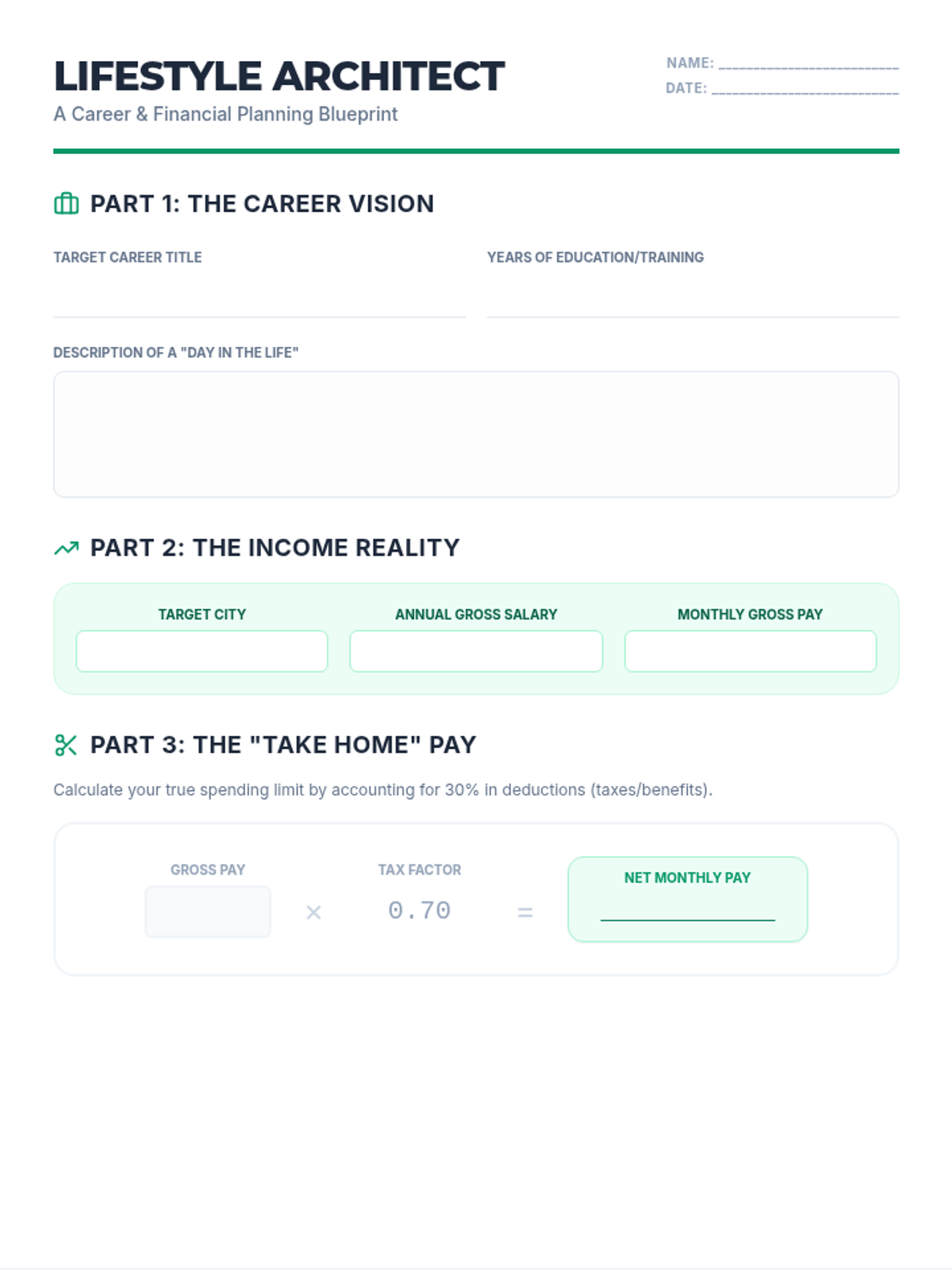
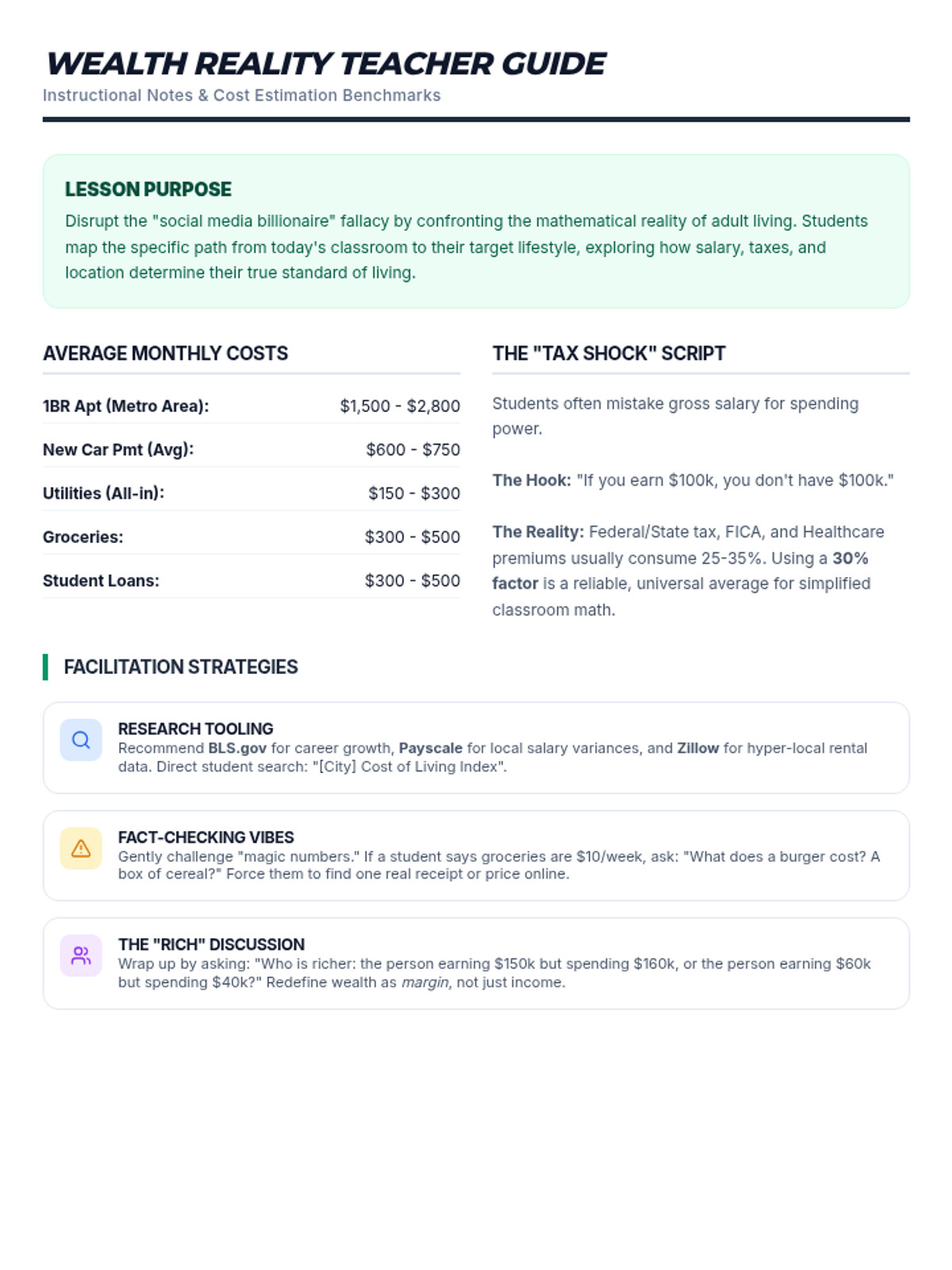
A lesson designed to ground student aspirations in financial reality by researching career salaries and mapping them against the actual costs of a desired lifestyle. Students will explore gross vs. net income, essential living expenses, and the long-term planning required to achieve financial goals.
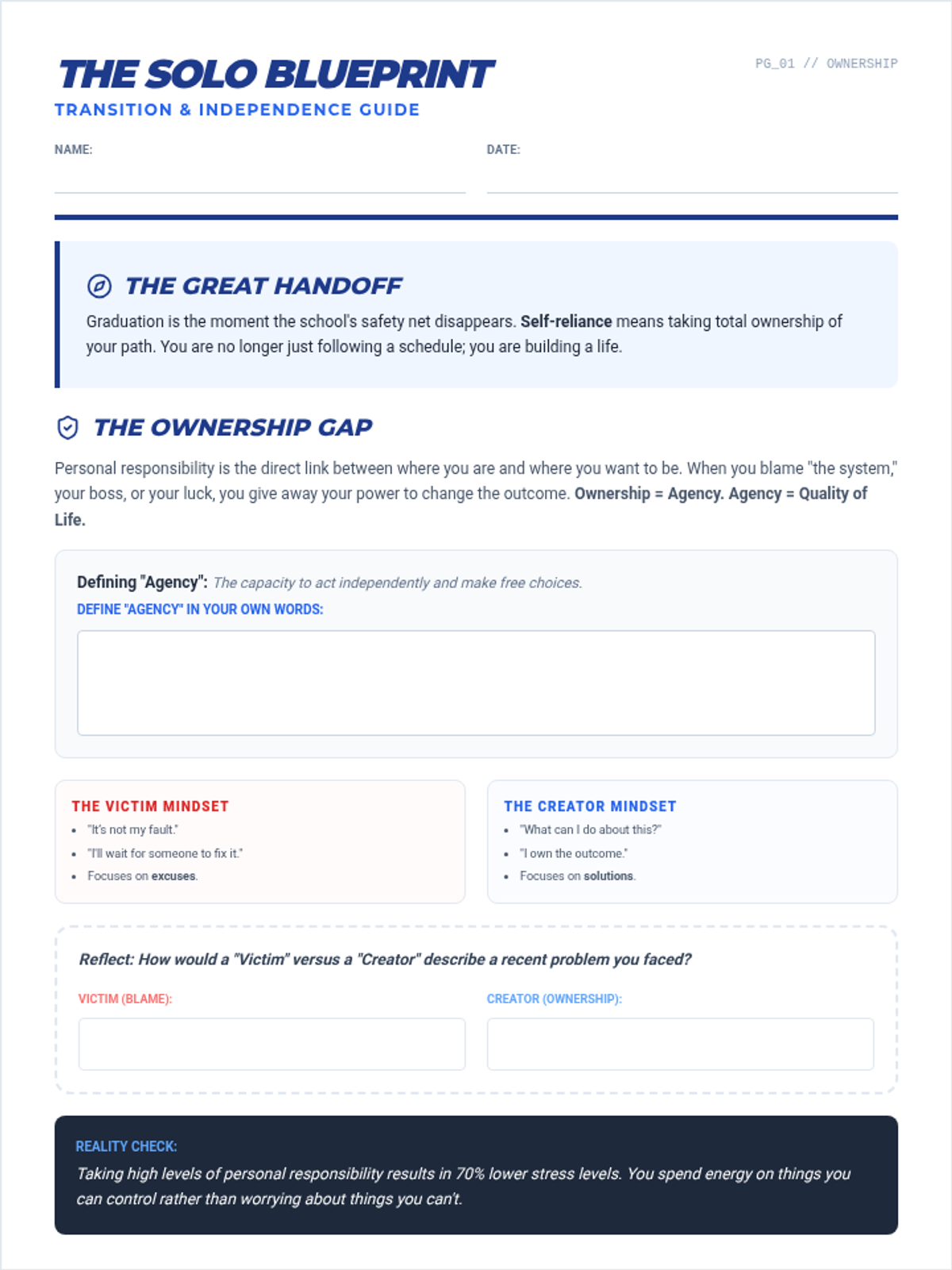
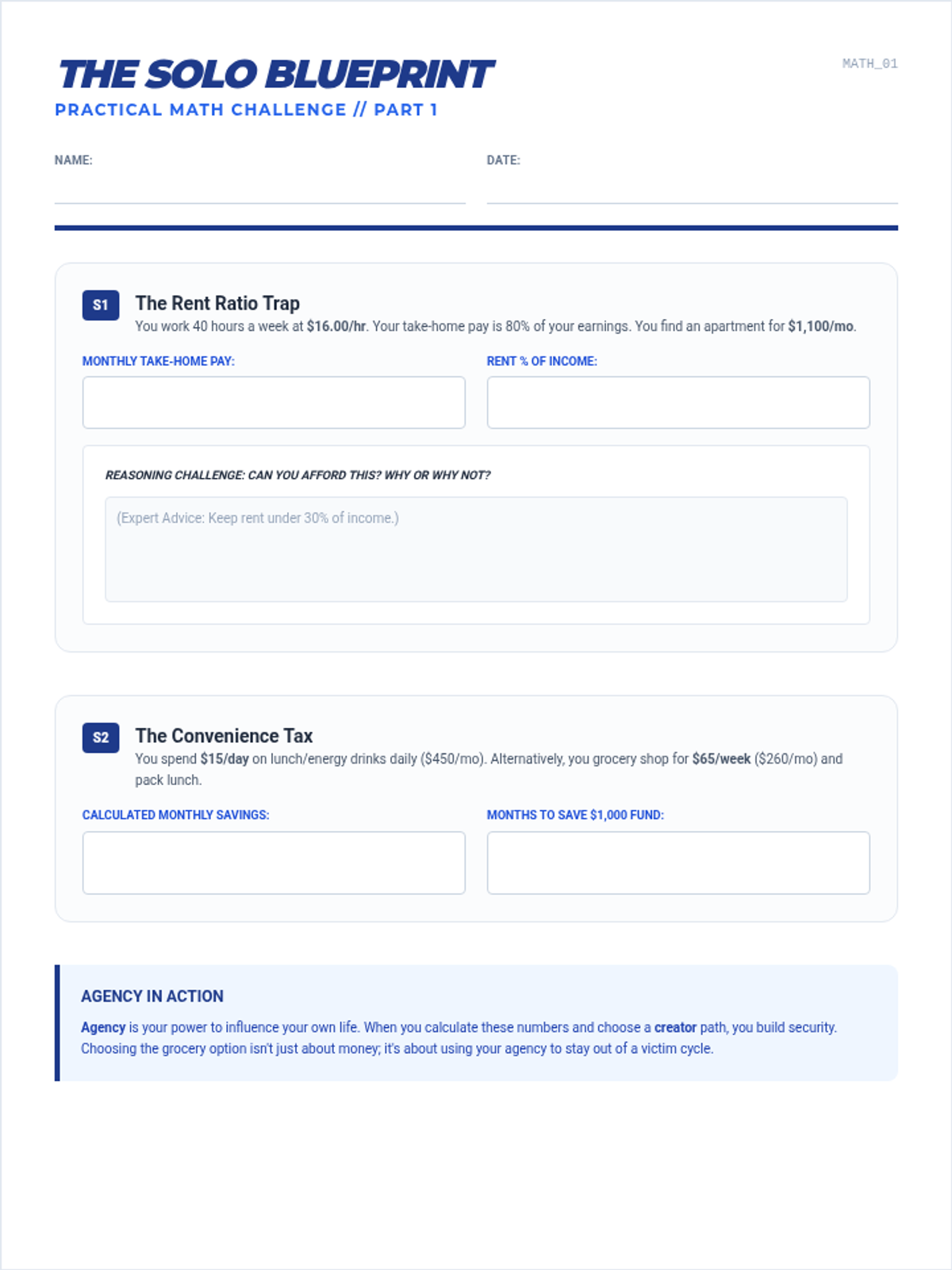
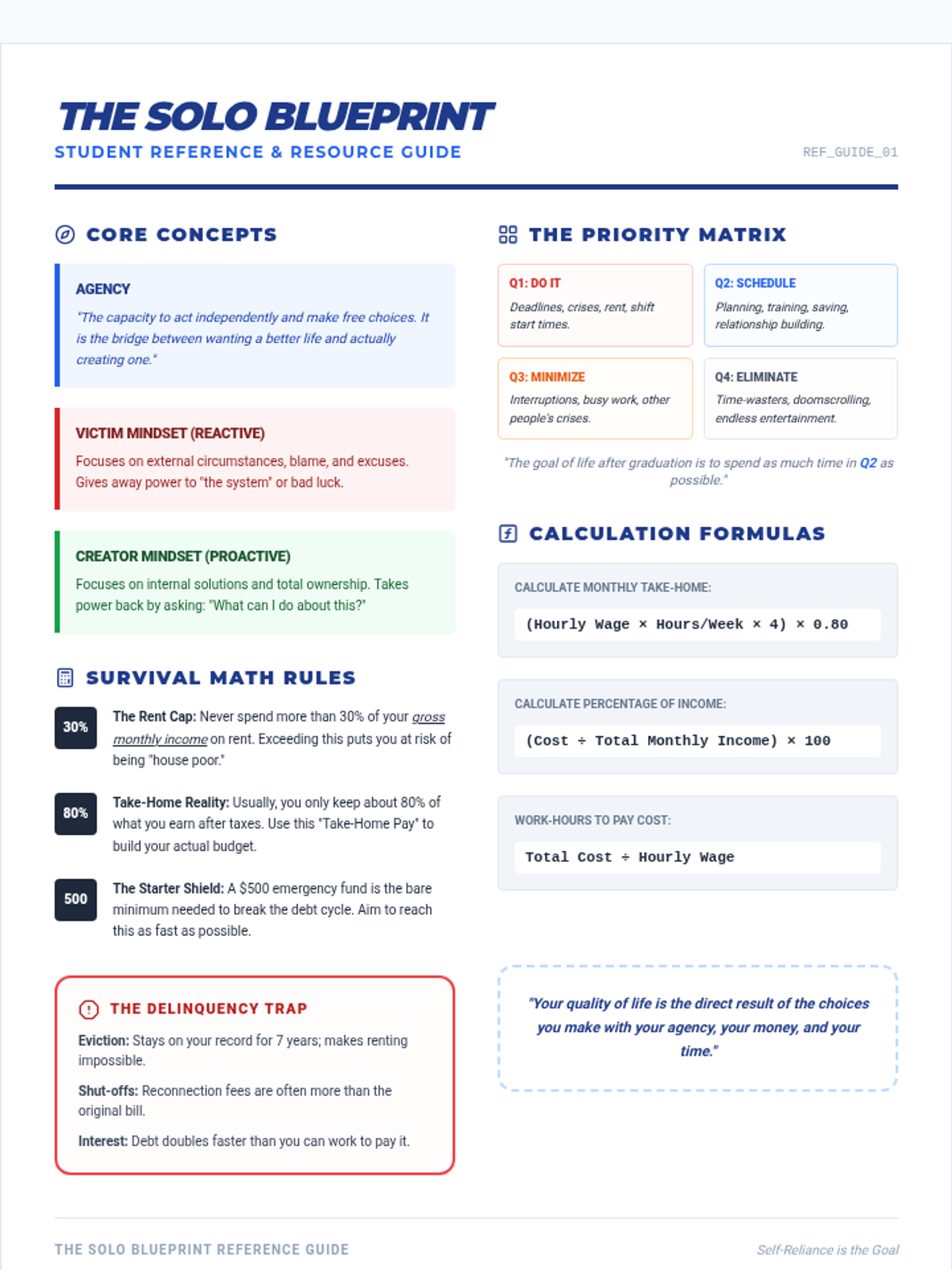
A comprehensive lesson for graduating seniors on transitioning to independence, covering ownership mindsets, financial survival, and time management.
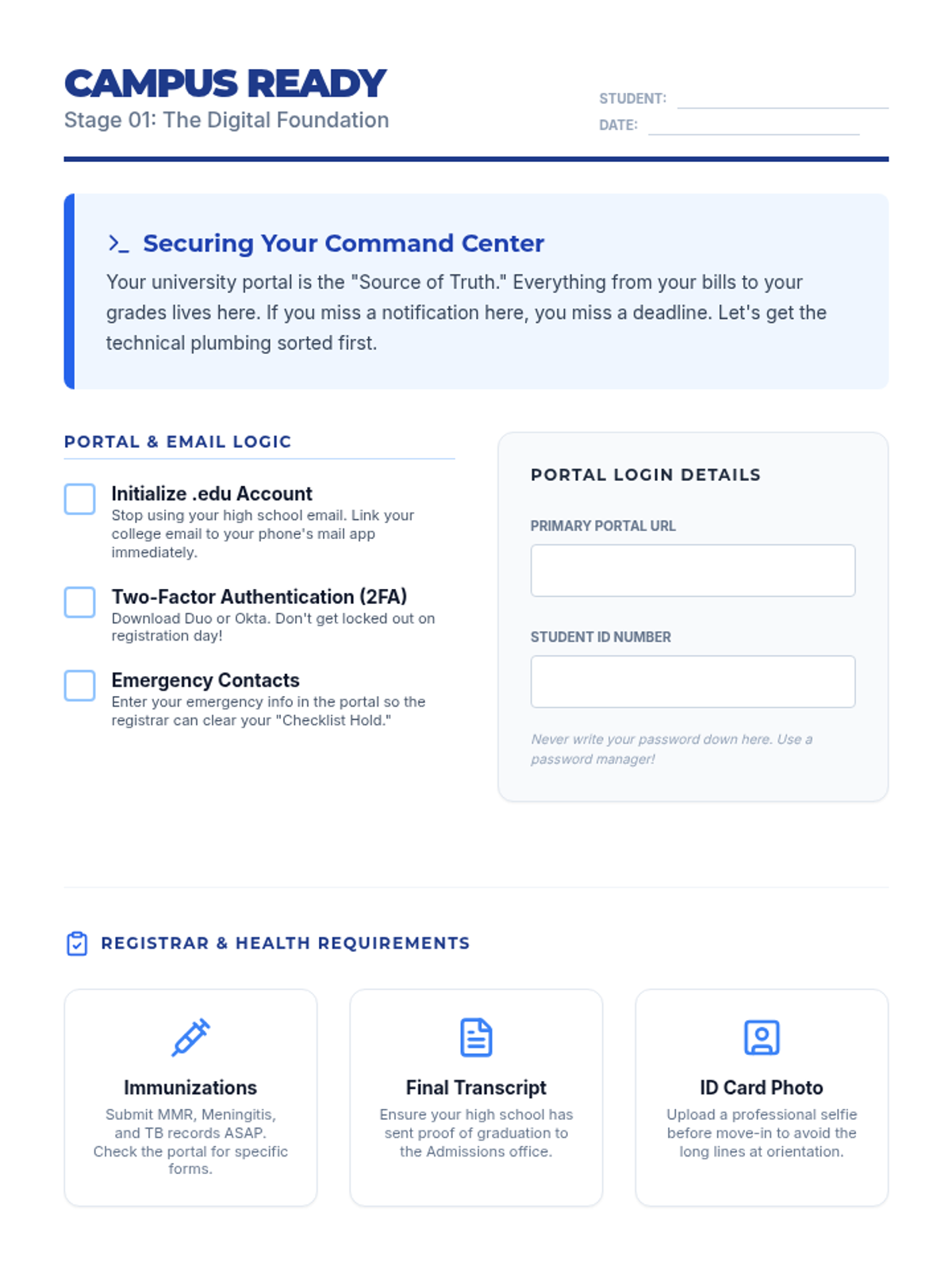
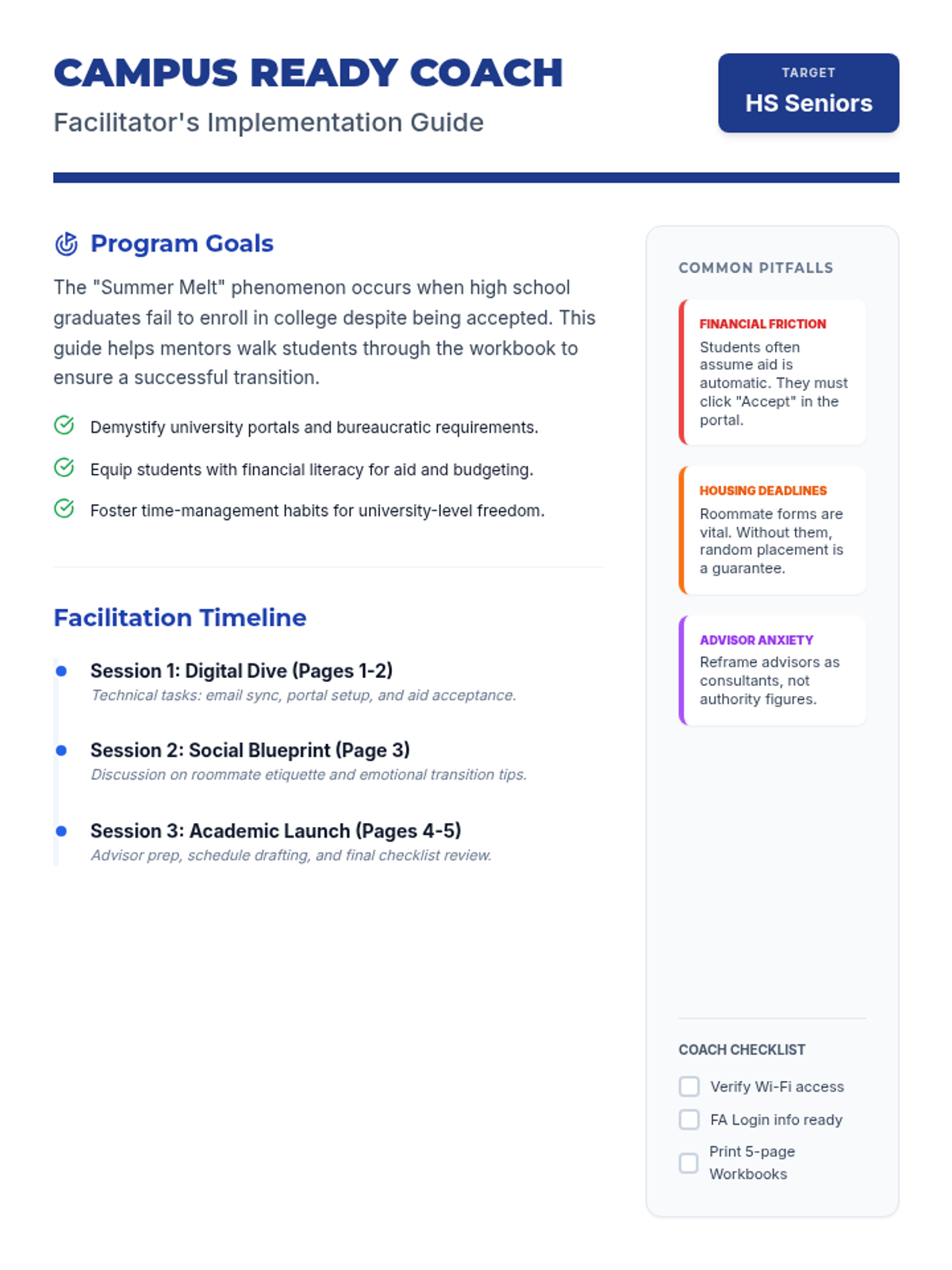
A comprehensive guide and workbook designed to help graduating high school seniors navigate the technical, financial, and social transitions of entering college. It covers everything from portal setup to roommate etiquette and financial literacy.
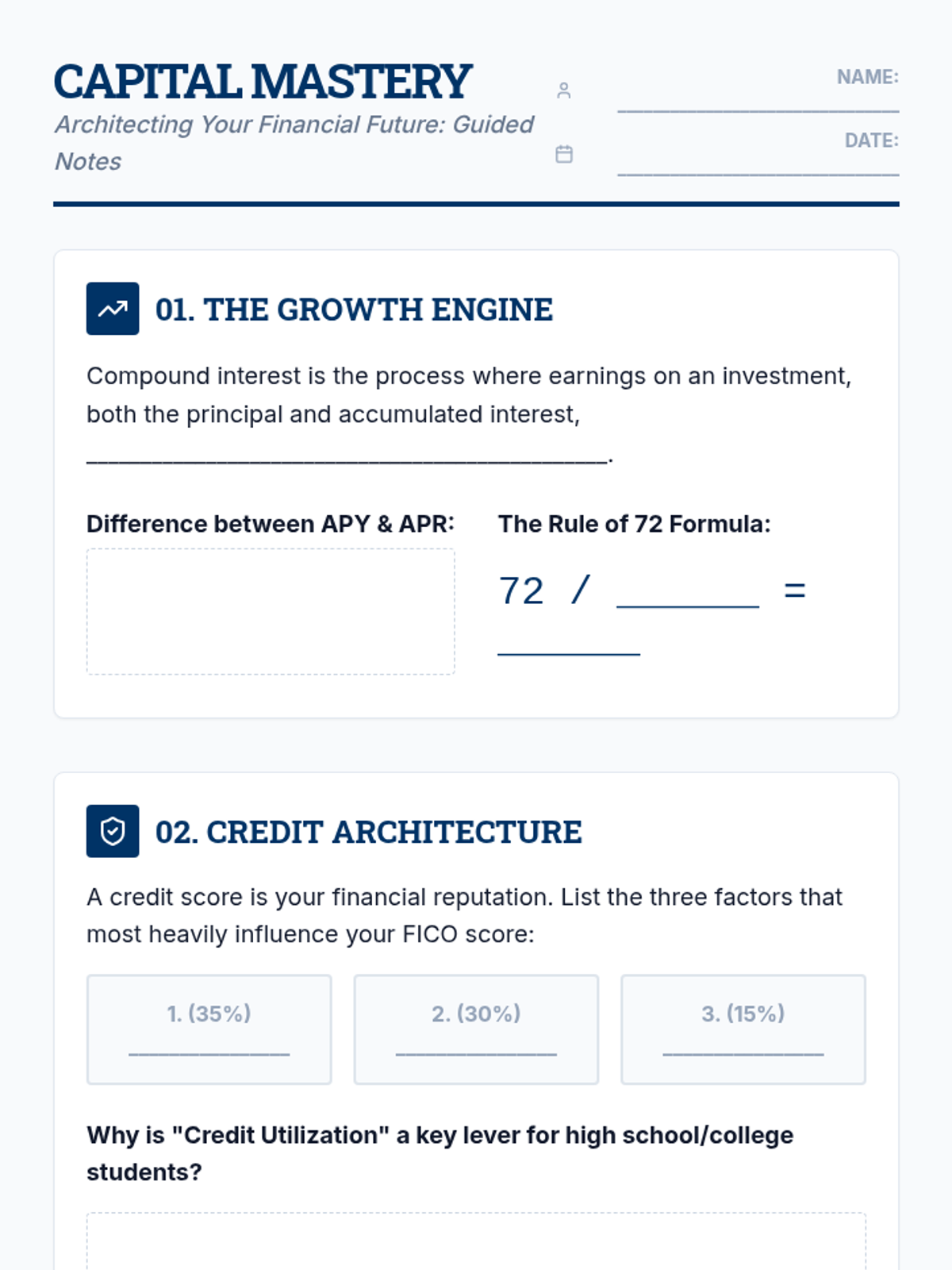
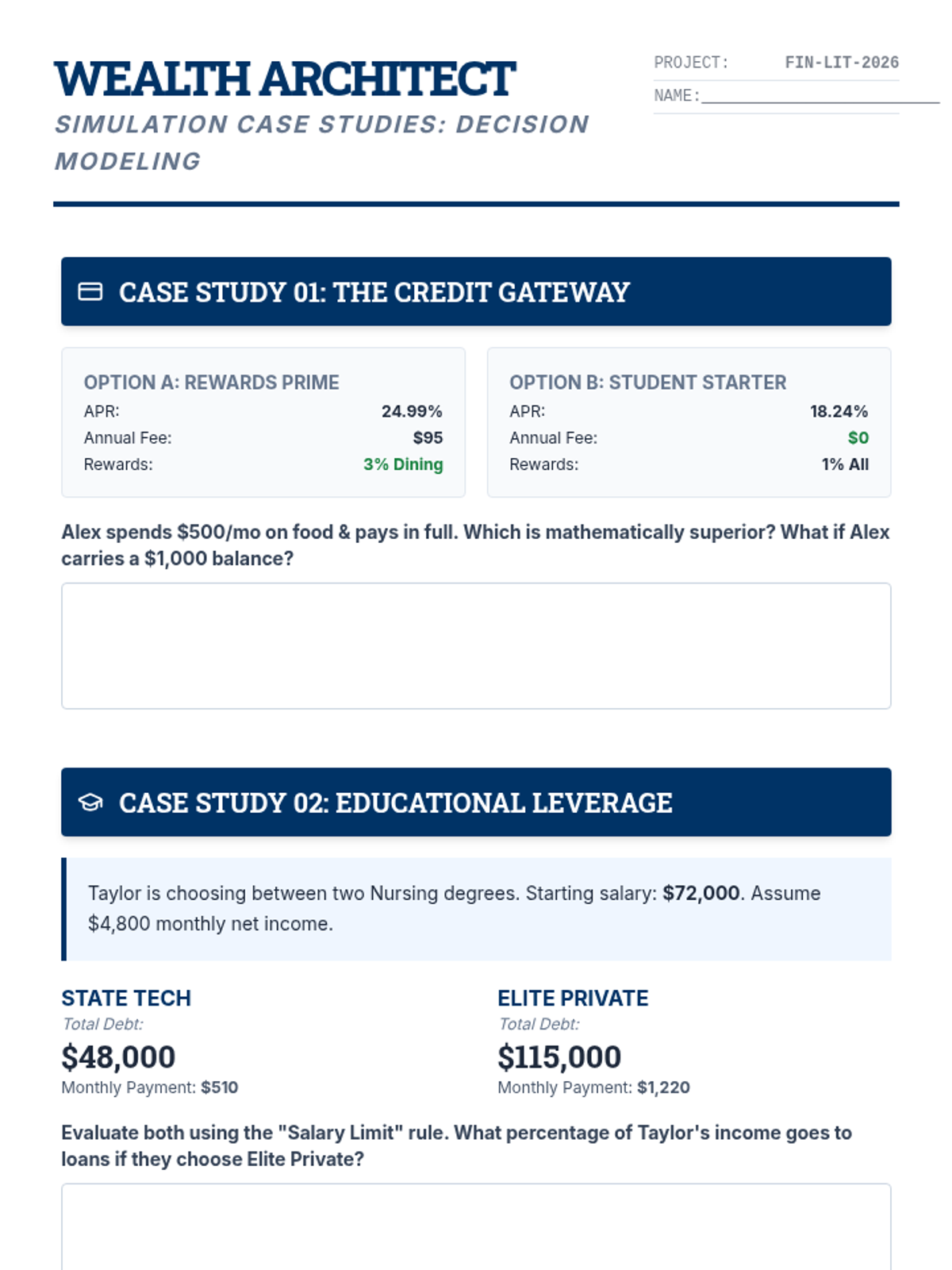
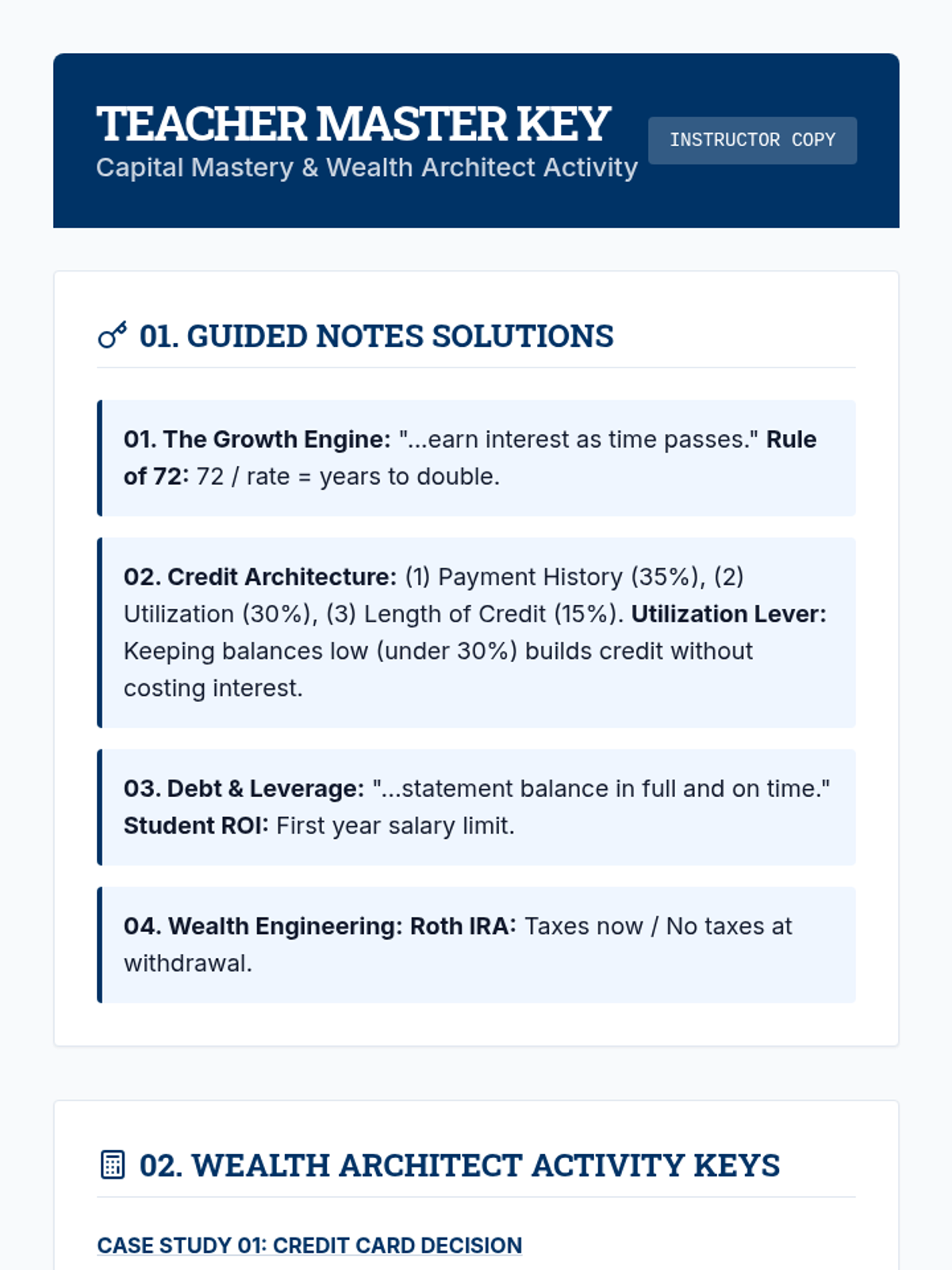
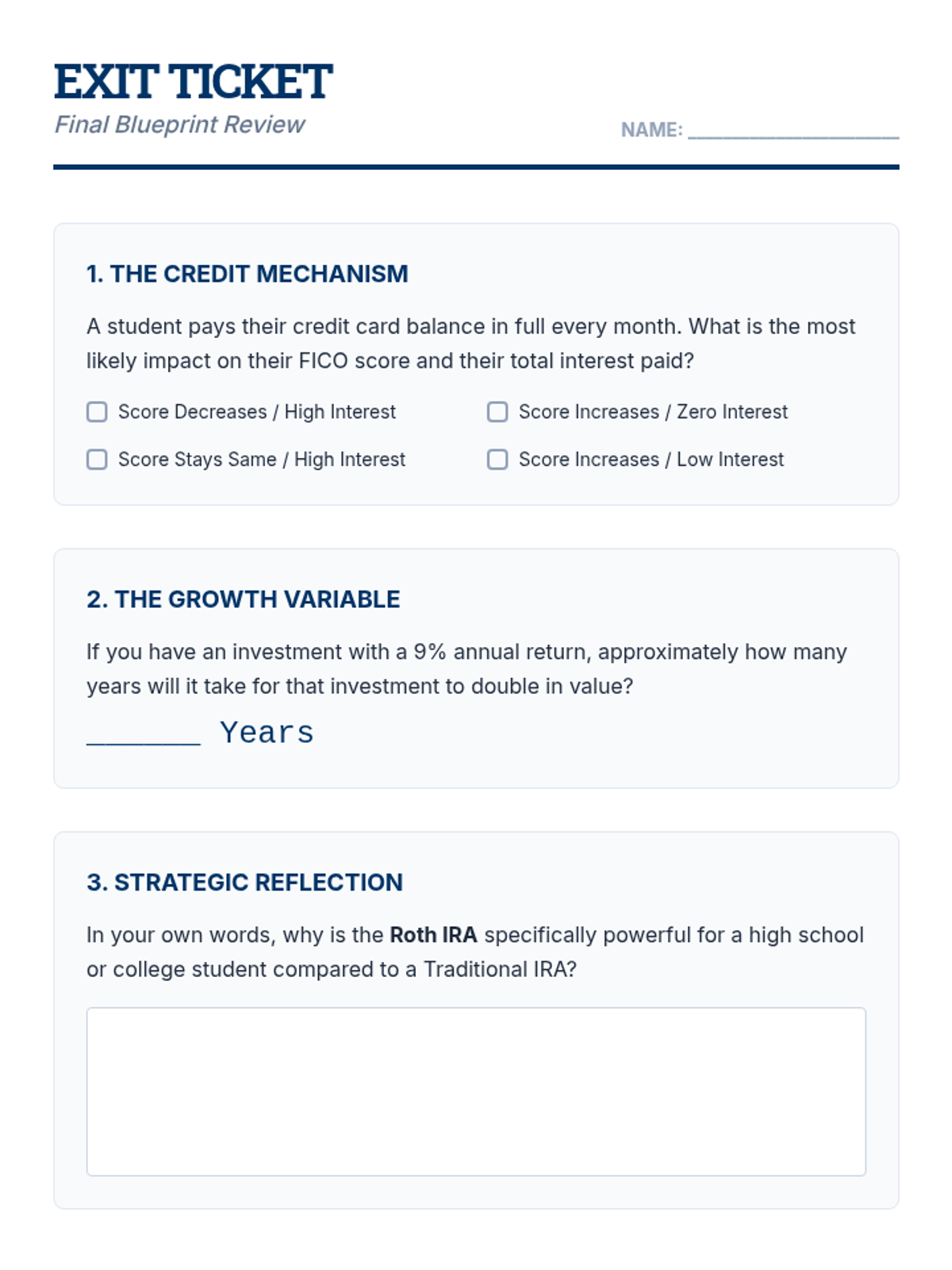
A high-level financial literacy lesson for advanced high school students, focusing on the mechanics of wealth building, credit architecture, and strategic debt management through the lens of long-term financial engineering.
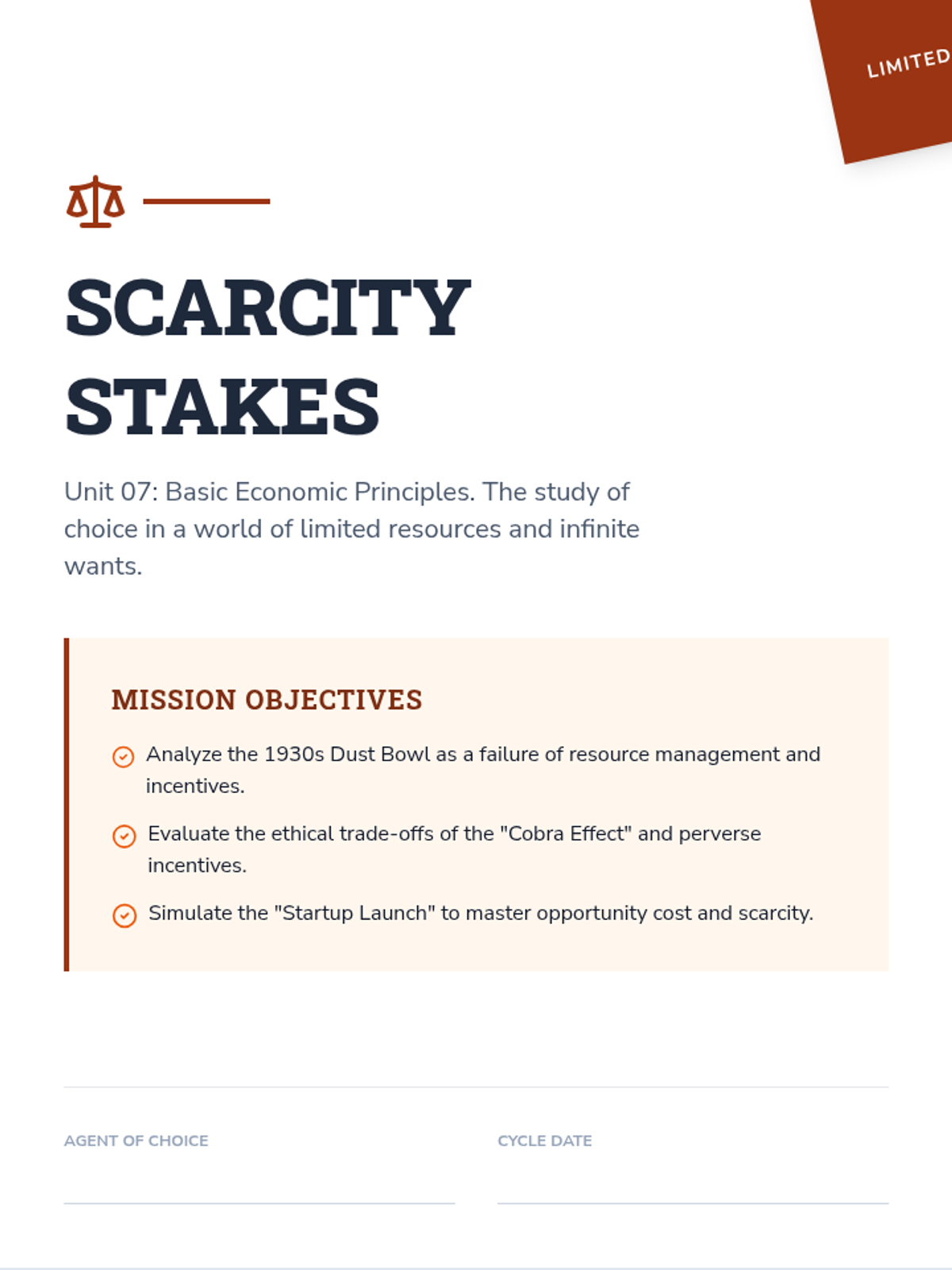
Explore the foundational pillars of economics through the history of the Dust Bowl, the ethics of organ markets, and simulations of scarcity and marginal utility.
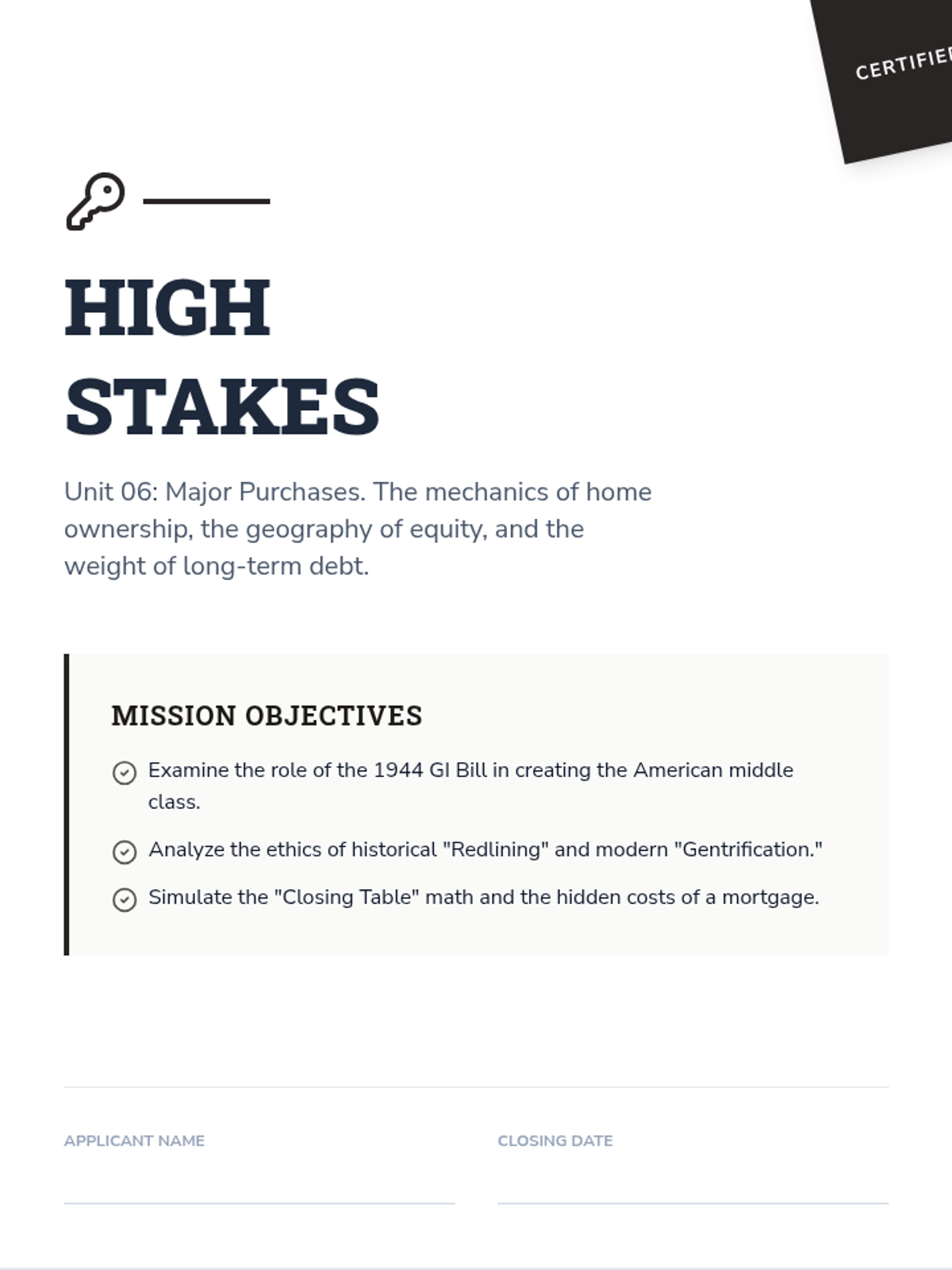
Master the mechanics of life's largest financial commitments through the history of the 30-year mortgage, the ethics of urban gentrification, and complex simulations of home ownership.
Uncover the mechanisms of risk management through the history of the Great Fire of London, the ethics of pre-existing conditions, and complex simulations of health and auto insurance.
Master the battlefield of the modern marketplace through the history of consumer protection, the ethics of planned obsolescence, and simulations of contract negotiation.
Uncover the mechanics of modern banking through historical currency crises, the ethics of fee structures, and simulations of liquidity management.
Analyze the mechanics of financial choice through historical market crashes, the ethics of credit, and complex simulations of high-stakes adult purchases.
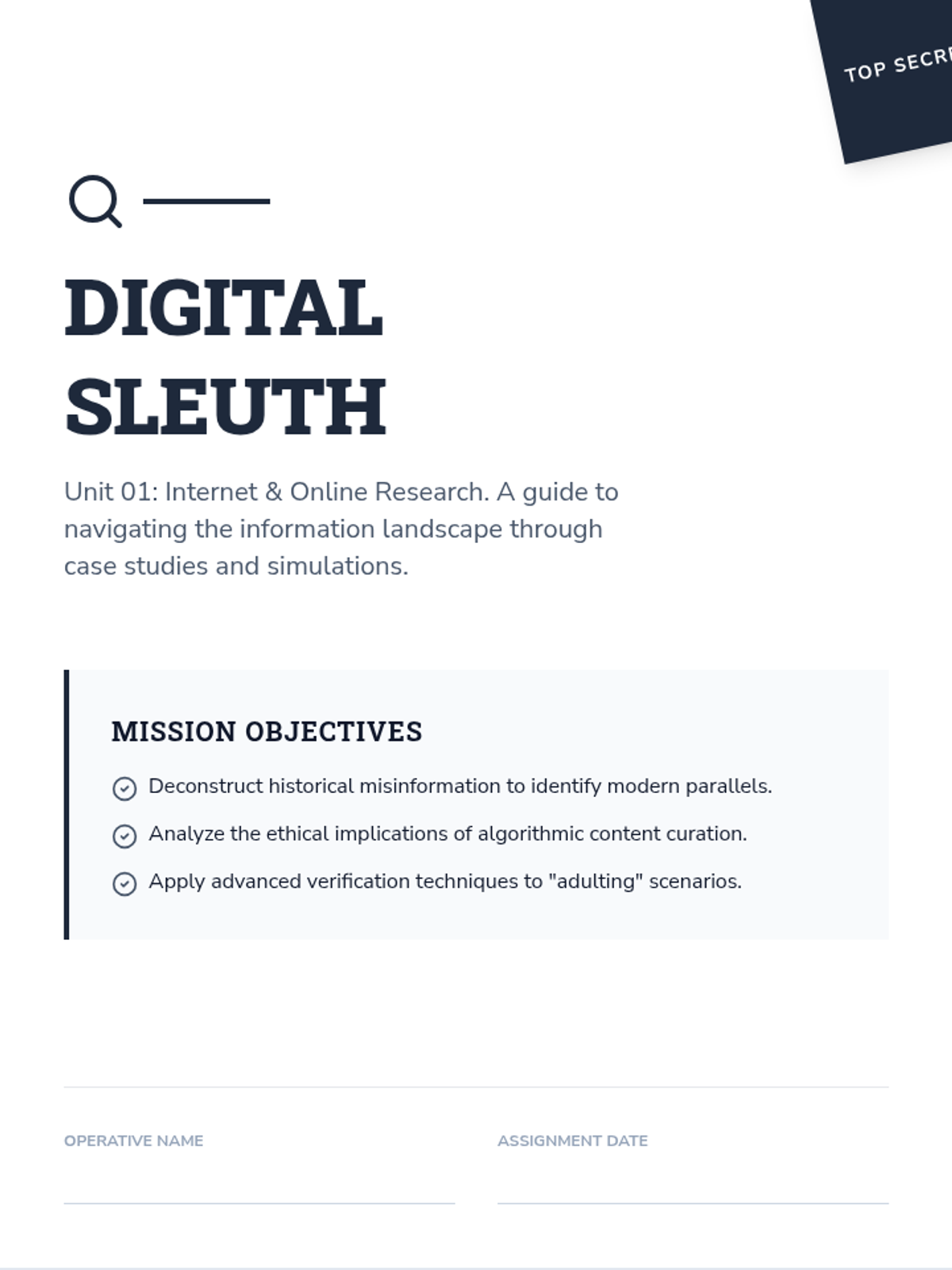
Master the art of information gathering and source verification in the digital age through historical misinformation cases and modern research simulations.
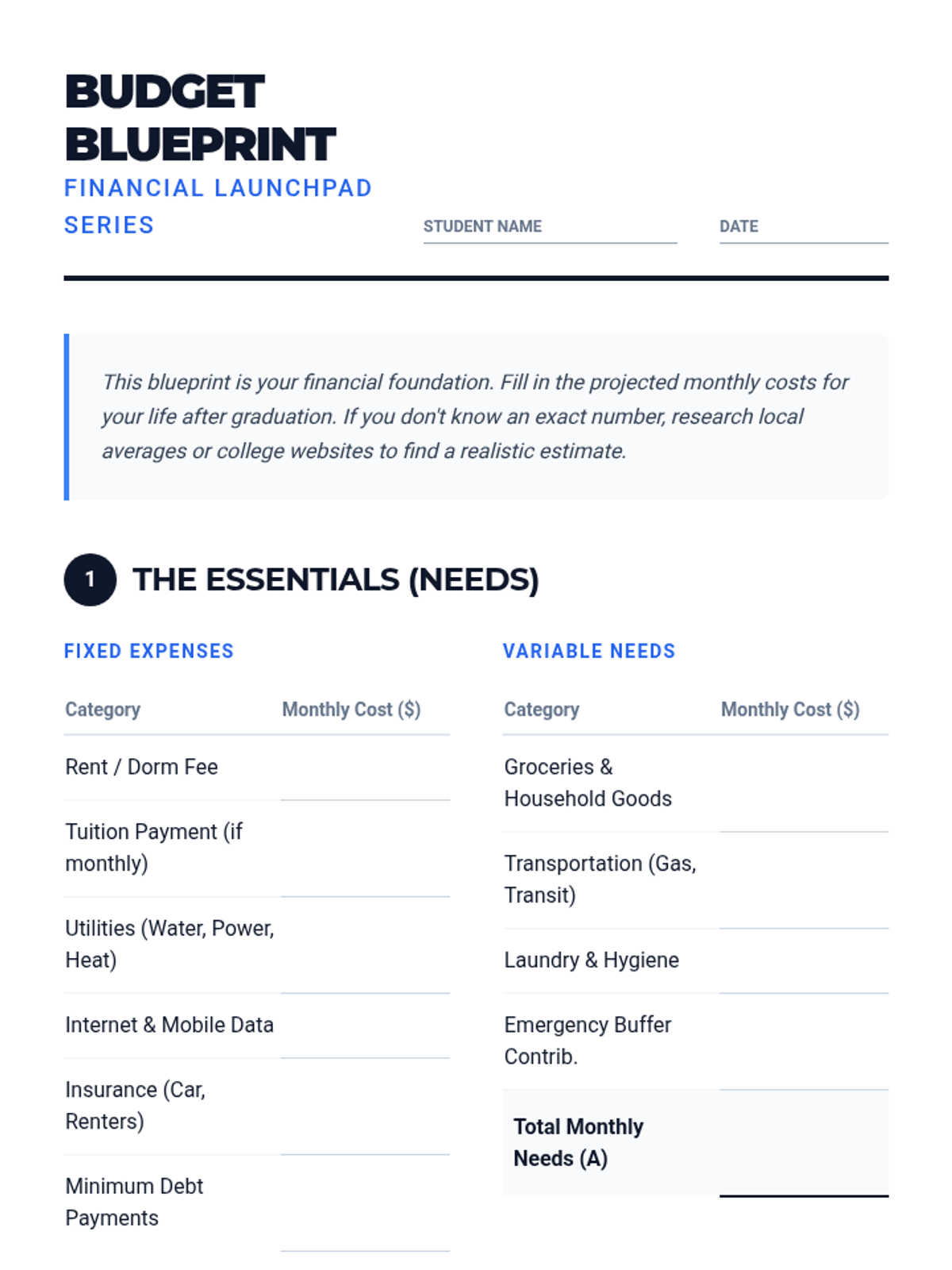
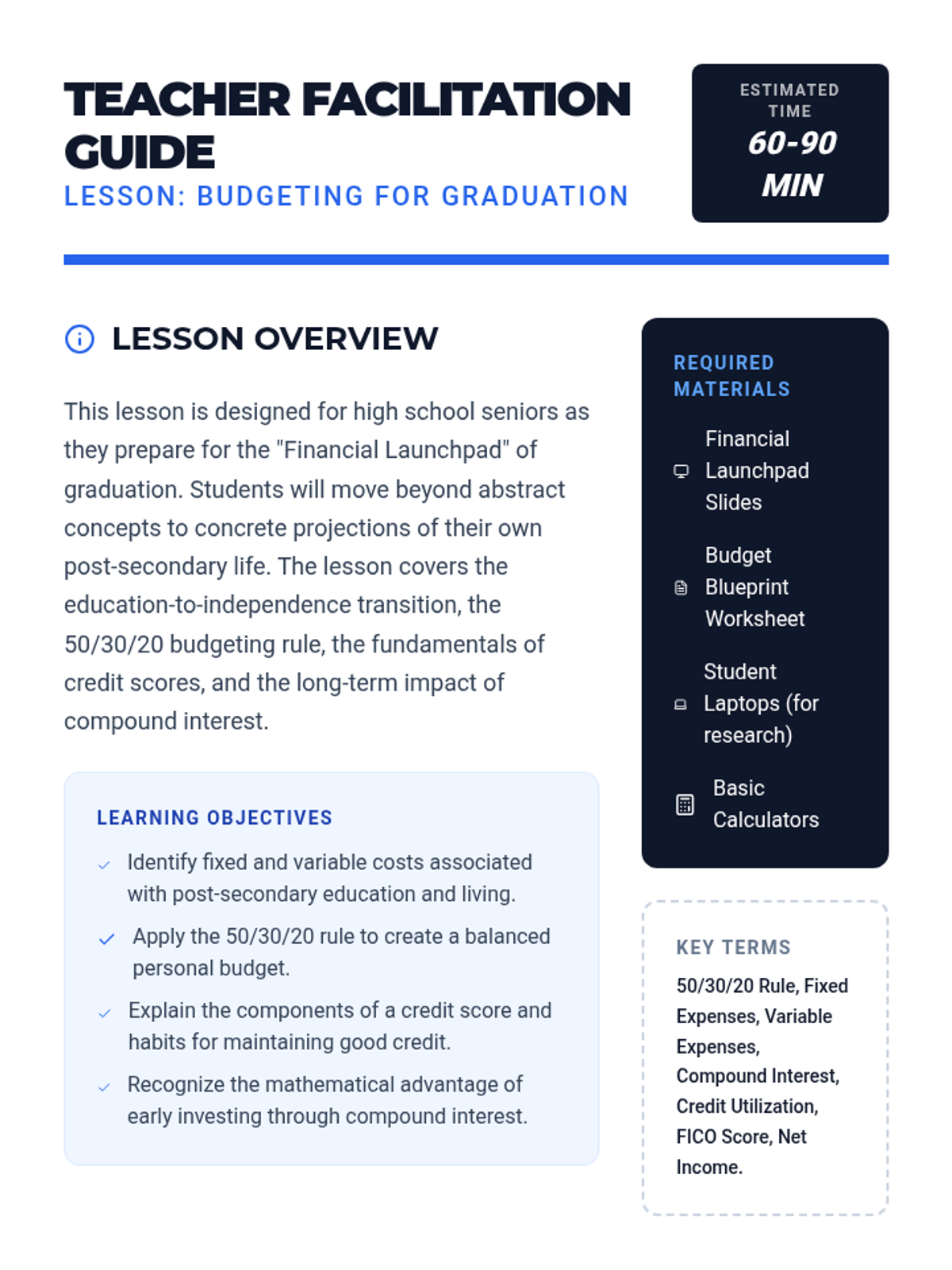
A foundational lesson on creating and managing a budget for life after high school, covering education costs, living expenses, and credit basics.