Blind Signals Slides Tactical Ops: Phase 01
Blind Signals
Navigating Trust in the Dark
Advanced Group Dynamics
The Hazard Zone
Can you successfully navigate a partner through a hazard zone without using a single word or your own eyes?
Mission Objective
Remove visual input to isolate and analyze the mechanics of trust and precision communication.
Critical
Analysis
"How does communication change when the 'feedback loop' is broken?"
"What is the physical cost of a trust breakdown in high-stakes environments?"
Communication Protocols
Acoustic Clarity
Specific, short commands. Eliminate filler words (um, uh, maybe).
Haptic Feedback
Using touch points to guide direction and speed without speaking.
Silent Sync
Developing shared rhythm and intuitive movement patterns.
Mission: Minefield Walk
The Rules of Engagement
One partner is blindfolded (The Operator).
One partner stands outside the field (The Navigator).
Navigator uses verbal cues only to guide through obstacles.
Rule Change: Level 2 - Navigation via tapping/haptics only.
Visuals Disabled
Post-Op Debrief
01
Where did the first communication breakdown occur?
02
How did the "blind" partner's heart rate or anxiety level affect their trust?
03
What command was the most effective? Why?
Trust Trajectory Worksheet Trust Trajectory Worksheet
Phase 01: Blind Signals & Non-Verbal Protocols
Name:
Date:
01
Pre-Ops Assumption
Before beginning the Minefield Walk, rate your level of trust in your partner's ability to navigate you safely using only verbal cues. Explain why.
Low Trust
1
2
3
4
5
High Trust
02
Incident Report
Phase Communication Failure (The "Glitch") Impact on Team Movement Verbal Only Haptic Only
03
Analytical Debrief
Question 1: The Feedback Loop
As the Operator (blindfolded), what specific phrase or touch caused the greatest increase in your confidence? Analyze why that specific signal worked better than others.
Question 2: Leadership under Restriction
As the Navigator, what was the hardest part about not being able to physically intervene? How did you adjust your "command voice" to compensate for the lack of visual feedback from your partner?
Question 3: Cognitive Load
Compare the stress of verbal navigation vs. haptic navigation. Which required more focus? Why?
Executive Summary
In one sentence, define the relationship between "signal clarity" and "blind trust" based on today's simulation.
Hazard Zone Teacher Guide Teacher Facilitation Guide
Hazard Zone: Lesson 01
Building Trust & Non-Verbal Communication
UNIT: ADVANCED DYNAMICS
Duration
60 Minutes
Group Size
Pairs / Triads
Logistics
Blindfolds, Gym Cones, Pool Noodles, Whistle
Simulation: Minefield Walk
Setup Instructions
Scatter "mines" (cones, foam blocks, noodles) across a 20x20ft area. Ensure some paths are tight (12-18 inches).
Designate a clear "Start" and "Finish" line.
Assign roles: **Navigator** (sighted, stays outside the field) and **Operator** (blindfolded).
Safety Protocol
Navigators are responsible for their partner's physical safety. If a collision is imminent, any student or the teacher may call "FREEZE" to stop all movement immediately.
Facilitation Phases
Phase 01: Verbal Only (10m)
Navigators use clear, concise spoken words. No touching.
Phase 02: Haptic Only (10m)
Navigator must guide Operator by placing hands on shoulders or arms. NO SPEAKING permitted.
Phase 03: Collaborative (10m)
One Navigator guides TWO blindfolded Operators who are tethered by a short rope or pool noodle.
Debriefing Questions
Cognitive Focus
"Which navigation method required more mental energy? Why did haptic guidance feel more or less secure than verbal guidance?"
Communication Glitches
"Identify one moment where a command was misunderstood. Was the error in the *delivery* of the signal or the *reception* of the signal?"
The Trust Threshold
"When did you stop 'feeling' for obstacles yourself and start 100% following your navigator's lead? What caused that shift?"
Advanced Modification
Introduce "Interference": Other teams can try to distract Navigators with loud noises or competing commands.
Blueprint Strategy Slides Tactical Ops: Phase 02
Blueprint Strategy
The Science of Planning vs. Action
Strategic Role Allocation
The 80/20 Rule
If you have ten minutes to solve a complex physical problem, why might spending eight minutes planning be the only way to win?
Today's Focus
Engineering the solution before the first move is made.
Tactical Roles
The Architect
Maintains the big picture. Focuses on the objective. Prevents the team from getting stuck in details.
The Facilitator
Manages internal communication. Ensures everyone's voice is heard during the planning phase.
The Operator
Executes specific mechanical tasks. Provides feedback to the Architect on physical constraints.
The Analyst
Watches for efficiency gaps. Suggests adjustments to the plan in real-time.
Case Study: Human Knot
Condition 01: No Planning
Dive straight in. Untangle as fast as possible. (Observe the chaos).
Condition 02: Blueprint Phase
8 minutes of discussion. NO physical contact. Mapping the knot visually before execution.
Freeze Phase
No movement allowed until the buzzer sounds.
Success Metrics
01
Time to
Completion
02
Volume of
Chaos
03
Resource
Waste
Which metric improves most with a blueprint?
Tactical Allocation Worksheet Tactical Allocation Worksheet
Phase 02: Role Assignment & Strategic Mapping
Team Code _____-____
01
Personnel Allocation
Architect (Strategic Lead)
Responsible for final decision making and big-picture mapping.
Facilitator (Comm Specialist)
Responsible for ensuring every team member's input is processed.
Operators (Execution Units)
The primary physical actors. List 2-3 members.
Analyst (Efficiency Monitor)
Tracks mistakes and suggests mid-game adjustments.
02
The Blueprint
Sketch or diagram the starting configuration of your team (e.g., hand placement in the Human Knot) and define the first THREE critical moves to be made once the freeze ends.
Diagram Area // Restricted to Visual Mapping
Priority 01: Initial Pivot
Priority 02: Expansion
Priority 03: Final Clear
03
Performance Audit
Protocol Adherence
Did the team follow the Blueprint? If not, what specific physical or psychological pressure caused the deviation?
Efficiency Rating
Rate the "Chaos-to-Resolution" ratio (1 = Extreme Chaos, 5 = Calculated Execution)
Role Performance
Who was the most critical role in this specific challenge? Why?
Knot Logic Teacher Guide Teacher Facilitation Guide
Knot Logic: Lesson 02
Strategic Planning & Role Allocation
PHASE 02: THE BLUEPRINT
Planning Time
8 Minutes
Execution Time
2 Minutes
Group Size
8-10 Members
Risk Level
Moderate
Activity: The Human Knot 2.0
Trial 01 Pure Chaos
Instructions: No Planning Permitted.
Have students stand in a tight circle, eyes closed, and reach across to grab two different hands. Once hands are linked, they open their eyes and must untangle without letting go. **Time limit: 3 minutes.**
Observation: Look for shouting, conflicting commands, and lack of physical coordination.
Trial 02 The Blueprint
Instructions: 8-Minute Planning Phase.
Reset the knot. Tell students they have 8 minutes to discuss their strategy and assign roles (Architect, Facilitator, Analyst, Operators). They may look at the knot but **CANNOT MOVE** until the whistle blows. They must complete the **Tactical Allocation Worksheet** during this phase.
Observation: Look for role-based dialogue. Is the Architect looking at the whole knot? Is the Facilitator asking quiet members for ideas?
Intervention Strategies
If the Architect is overbearing:
Pull the Architect aside and tell them they have "lost their voice" for 2 minutes. They can only observe and communicate via the Facilitator.
If the team ignores the Analyst:
Pause the clock and ask the Analyst for a "Status Report." Make the whole team listen to their efficiency observations before resuming.
Critical Debrief Questions
Q1.
"In Trial 2, how did having a predefined 'Architect' change the speed of decision-making during the execution phase?"
Q2.
"Identify one 'move' that failed in Trial 2 despite the planning. Why did the blueprint fail to account for that specific physical reality?"
Q3.
"What happens to team morale when planning time is perceived as 'wasted' vs. 'essential'?"
Pivot Point Slides Tactical Ops: Phase 03
Pivot Point
Adaptive Leadership in Flux
Crisis Management & Resiliency
The Shift
What happens to the group's hierarchy and strategy when the rules of the game change without warning?
Situational Leadership
The ability to recognize when the current plan (and the current leader) is no longer effective for the new reality.
Rigid Systems
• Rely on a single chain of command.
• Break when constraints change.
• Punish deviation from the plan.
• Result in "Strategic Paralysis."
Adaptive Systems
• Distributed decision-making.
• Fluid leadership roles.
• Rapid prototyping of new ideas.
• Result in "Resilient Success."
Crisis Triggers
Comm Blackout
Suddenly, the leader or the group can no longer speak. Pivot to signals.
Environmental Shift
"The floor is lava" or specific safe zones are removed. Adapt movement.
Resource Loss
Key equipment is "disabled" or team members are "sidelined."
Who Steps Up?
The Crisis Pilot
Takes control immediately when things go wrong to prevent panic.
The Strategy Pivot
Processes the new rules and invents the next move while the team is still acting.
Situational Leadership requires Ego Suppression.
Mission: Obstacle Pivot
"Your team must navigate the obstacle course. Every 60 seconds, a CRISIS CARD will be drawn. If you cannot adapt within 15 seconds, the mission fails."
Adapt
Execute
Iterate
Leadership Log Worksheet Leadership Log Worksheet
Phase 03: Situational Pivot & Adaptive Dynamics
Name:
Mission ID:PIVOT-03
01
Pre-Crisis Hierarchy
Before the simulation begins, identify your designated leaders and the core strategy. Who is in charge of "Command" and who is in charge of "Movement"?
Command Lead
Movement Lead
02
Crisis Pivot Log
Crisis Event Card Initial Reaction The "Pivot" Leader & Action Ex: Comm Blackout
03
Post-Op Analysis
1. The Ego Suppression Check
During a Crisis Card event, did the original leader step back to allow a more qualified peer to take over, or did they cling to their role? Describe a specific interaction that demonstrates this.
2. Situational Awareness
How many seconds did it take for the team to recognize the new constraint and stop following the old plan? What was the "Aha!" moment?
3. The Resiliency Factor
In high-pressure environments, a team's "resiliency" is their ability to bounce back from failure. Rate your team's resiliency below and explain your rating.
Brittle
Resilient
Crisis Cards Resource Teacher Resource: Print & Cut
Crisis Card Deck
Adaptive Leadership Simulation (Lesson 03)
How to Use:
Cut out these cards. During the 'Obstacle Pivot' activity, draw one card every 60-90 seconds. Shout out the crisis immediately. The team has 15 seconds to pivot their strategy or they must restart the current segment.
01
Comm Blackout
The current team leader has "lost their voice." They cannot speak or make any sound for the next 2 minutes. A new leader must take over verbal commands immediately.
Tactical Pivot: Leadership
02
Environmental Shift
"The floor is lava!" All team members must now move using only designated 'safe spots' (gym mats or hoops) or by staying in physical contact with a partner at all times.
Tactical Pivot: Environment
03
Personnel Loss
The two tallest members of the team have been "sidelined." They can still observe and give advice, but they CANNOT physically touch any equipment or other members.
Tactical Pivot: Resources
04
Objective Inversion
The "Finish Line" is now the "Start Line." The team must reverse their entire movement sequence to return to the beginning, but with half the time remaining.
Tactical Pivot: Goal
05
The Anchor Constraint
Two members of the team must remain physically linked at the wrist (using a band or light rope) for the remainder of the mission.
Tactical Pivot: Mechanics
??
Wild Card
Teacher Choice: Introduce a constraint unique to the current group's dynamic (e.g., if they are moving too fast, make them move in slow motion; if they are too quiet, make them chant their strategy).
Tactical Pivot: Instructor Discretion
Pressure Point Slides Tactical Ops: Phase 04
Pressure Point
Resolving Conflict in High-Stress Environments
Consensus Building & Emotional Regulation
The Friction
"How does a team move forward when two confident leaders strongly disagree on the only path to success?"
Frustration Engineering
Managing the biological response to failure (frustration) before it degrades the group's tactical efficiency.
The Breakdown Cycle
01. Failure
An attempt fails physically.
02. Frustration
Adrenaline rises. Logic drops.
03. Blame
Team turns inward on itself.
"We don't solve the problem; we solve the team first."
Tactical Protocols
The "Stop-Clock" Rule
When frustration is high, any member can call a "30-second silent reset." No talking. Only breathing.
Steel-Manning
To disagree with a peer, you must first explain their idea back to them better than they did.
Fist-to-Five
A rapid consensus tool. 0 fingers = total veto. 5 fingers = full support. Average above 3 = Proceed.
Data-Only Reframing
Replace "You messed up" with "The foot slipped at 22 seconds." Remove ego, use data.
Mission: The Vertical Limit
The High-Frustration Wall
The team must get ALL members over a 4ft - 6ft barrier without equipment.
If any member touches the wall with a "restricted" part of their body (e.g. knees), the whole team resets.
Total disagreement is expected. Managing it is the goal.
Frustration Level
Target: Maximum Discomfort
Consensus Protocol Worksheet Consensus Protocol Worksheet
Phase 04: Conflict Mitigation & Group De-escalation
Unit Focus Crisis Protocol
01
Symptom Tracking
During the challenge, failure is inevitable. Identify the specific moment when productive discussion turned into "High-Pressure Conflict." What were the biological or behavioral symptoms? (e.g., elevated voices, arms crossed, ignoring ideas).
02
The Mediation Toolkit
Fist-to-Five Audit
Record one instance where you used this tool to break a deadlock.
Issue:
Avg. Score:
1
2
3
4
5
Steel-Manning Log
Summarize a peer's idea that you disagreed with. Ensure your summary is so accurate they would say "Exactly!"
Write summary here...
03
Emotional Regulation Analysis
1. The Cost of Ego
Analyze a moment where a team member's "need to be right" cost the team time or energy. How could that person have reframed their disagreement using the Data-Only protocol?
2. The Silent Reset
Did your team utilize the "Stop-Clock" rule? If so, describe the shift in group energy before and after the 30-second silence. If not, why was it avoided?
3. Professional Transfer
Consider a professional workplace (e.g., a surgical team or a fire-fighting unit). Why are these consensus protocols more important in those settings than in a casual game of basketball?
Wall Climb Teacher Guide Teacher Facilitation Guide
The Wall: Lesson 04
Conflict Resolution & Emotional Regulation
Phase 04: Crisis Protocol
Setup Instructions
1. Construct a "Wall" using gym mats draped over a low volleyball net or a sturdy horizontal bar (4-6ft high).
2. Place crash mats on both sides of the barrier.
3. Designate a "Neutral Zone" 10ft away for team discussions.
Critical Safety
Spotting is Mandatory.
At least 4 students must act as active spotters for any person moving over the wall. No diving or jumping allowed. Controlled lifting only.
The Conflict Simulation
Stage 01: The Induction of Failure (15m)
Tell the team they have a strict 5-minute limit to get everyone over. Every time a "knee" touches the wall, or someone shouts in anger, the whole team resets to the Start Line. This is designed to induce frustration.
Stage 02: Mandatory Mediation (10m)
Pause the activity. The team must move to the Neutral Zone. They are REQUIRED to use these protocols before they can touch the wall again:
Steel-Manning The two most vocal dissenters must explain each other's plan to the team's satisfaction.
Fist-to-Five The group votes on a final strategy. No execution until average is > 3.5.
Teacher Intervention Points
Behavior Observed Facilitator Prompt Blaming a specific person for a reset. "Shift to Data-Only. What physical metric caused the reset, not who?" Team members withdrawing or going quiet. "Facilitator, run a quick Fist-to-Five. We need to see everyone's fingers." Rising voices and visible anger. "STOP CLOCK. 30 seconds of silent breathing. Now."
Closing Reflection Focus
"Which was harder: the physical act of getting over the wall, or the psychological act of listening to a plan you thought was wrong?"
Grand Challenge Slides Tactical Ops: Phase 05
Grand Challenge
Synthesizing High-Performance Collaboration
Performance Analysis & Final Mission
The Ultimate Unit
"Now that you've mastered the components—trust, strategy, adaptation, and conflict resolution—can your team operate as a single, cohesive unit to solve the final mission?"
The Synthesis Objective
Transferring physical team dynamics to professional, academic, and athletic excellence.
The Final Mission Profile
Phase A: The Strategic Lock
A multi-stage coordination task requiring precise planning and role allocation (Lesson 2).
Phase B: The Blind Transition
Movement segments requiring non-verbal trust and guidance (Lesson 1).
Phase C: The Crisis Pivot
Mid-activity rule changes forced by random event cards (Lesson 3).
Phase D: The Pressure Point
Intentionally difficult reset points to test conflict resolution (Lesson 4).
Post-Op
Analytics
Teams will be evaluated not just on completion, but on their collaboration data.
KPIs: Key Performance Indicators
Pivot Speed: Time from crisis to strategy shift.
Comm Ratio: Balance of voices in the group.
Protocol Adherence: Consistency of consensus tools.
Mission Debrief
"The skills you practiced today are the same ones used by NASA Ground Control, Elite Surgical Teams, and Championship Athletics."
How will you lead your next team?
Performance Analysis Worksheet Performance Analysis Report
Phase 05: Culminating Synthesis & Transfer Analysis
Operator:
Mission:GRAND CHALLENGE
01
Operational Data
Total Completion Time
__:__
Number of Resets
____
Crisis Cards Handled
____
02
Competency Synthesis
1. Trust & Non-Verbal Precision
During the 'Grand Challenge', how did your team's non-verbal signals evolve compared to Lesson 1? Identify a specific "silent" success.
2. Planning vs. Action Efficiency
Did your team spend more or less time planning today than in Lesson 2? Analyze the relationship between your planning duration and your reset count.
3. Pivot Capability
Describe the single most effective "Situational Leadership" moment today. Who stepped up, and what was the impact on the mission?
03
External Application
The Professional Bridge
Choose ONE of the following scenarios: (A) A High-Stakes Surgical Team, (B) A Venture-Backed Tech Startup during a Product Launch, or (C) A Professional Sports Team in the final 2 minutes of a Championship.
Apply TWO tactical protocols learned in this unit (e.g. Steel-Manning, Haptic Feedback, Situational Pivot) to that scenario. Explain why those specific tools would prevent failure.
Leadership Growth
How has your personal definition of "a good teammate" changed over the last five lessons?
Skill Rating
Final Self-Assessment: Adaptive Collaboration Level
Mastery / Level 04
Collaboration Rubric Teacher Guide Teacher Assessment Tool
Performance Rubric
Advanced Group Dynamics & Strategic Collaboration
UNIT: TACTICAL OPS
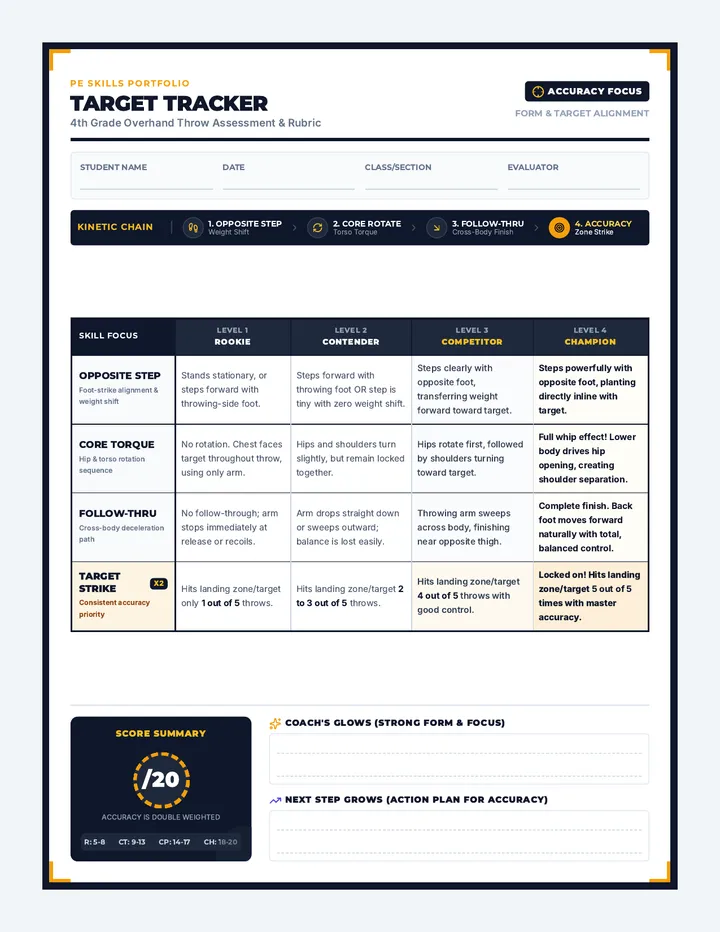
Competency Level 01: Emerging Level 02: Proficient Level 03: Strategic Mastery Communication Precision Relies on vague commands ("Move there," "Go left"). High error rate in non-verbal guidance. Uses specific, short commands. Successfully navigates segments using haptic/verbal cues with moderate speed. Protocols are automatic. Eliminates filler words. High-speed execution with zero touch-errors during blind segments. Role Allocation Roles are nominal; members revert to "Pure Chaos" under pressure. Architect is ignored. Roles are defined and followed during initial execution. Architect and Facilitator manage most voices. Hierarchy is fluid but respected. Analysts provide real-time data that Architects use to successfully adjust mid-game. Situational Pivot Crisis Cards cause paralysis. Team continues following old plan until total failure occurs. Recognizes the crisis immediately. Takes ~30 seconds to formulate a pivot plan. Some coordination loss. Pivot is instantaneous (< 15s). Group hierarchy shifts seamlessly based on the specific constraint (Ego Suppression). Emotional Regulation Conflict results in shouting or withdrawal. Refusal to listen to opposing viewpoints. Uses Fist-to-Five or Reset protocol when prompted by teacher. Maintains baseline morale. Self-facilitated de-escalation. Members use Steel-Manning independently to resolve complex strategy deadlocks.
Facilitator Summative Comments
Unit Mastery Level
L1
L2
L3
L4
Transfer Potential
Likelihood of student applying these collaboration skills in professional environments.
General observations on team growth from Phase 01 to Phase 05...