Refines conversational fluency through practice with idiomatic expressions and complex sentence structures. Targets pronunciation and appropriate register for professional and social settings.
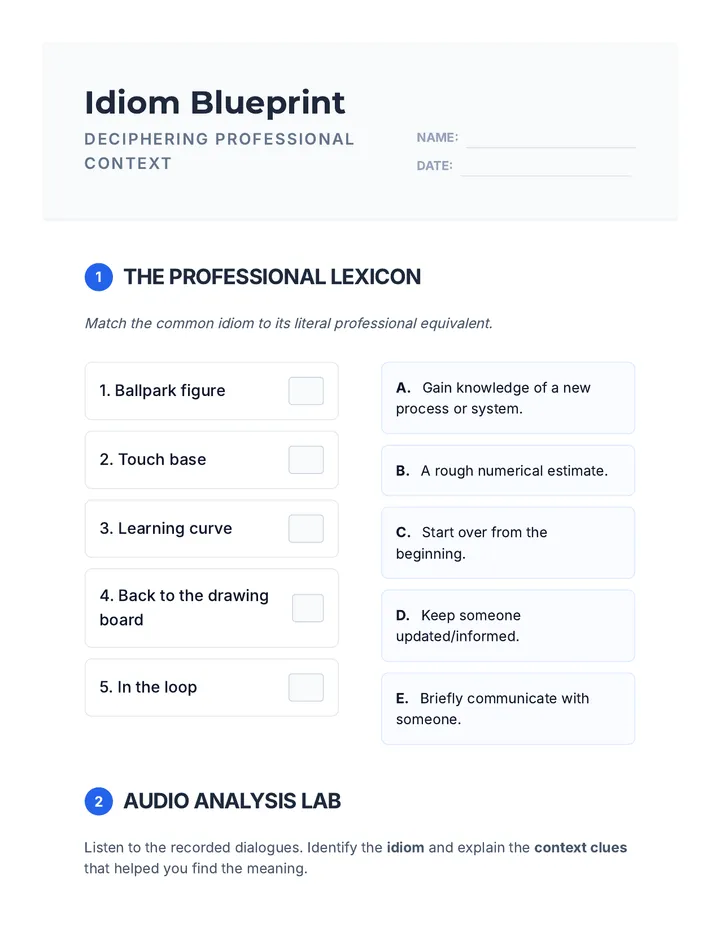
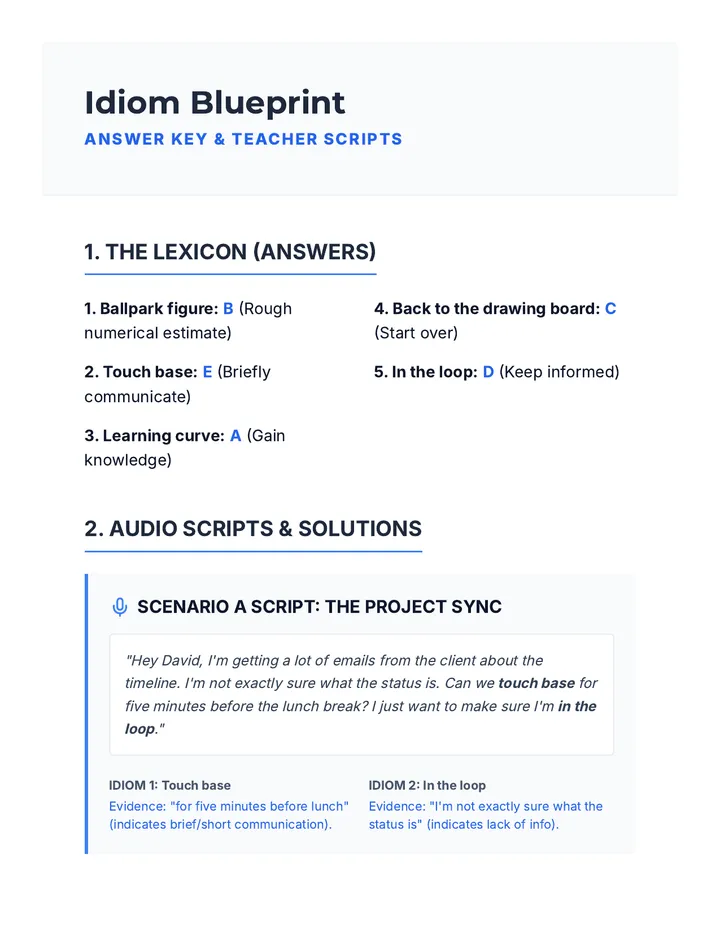
A 5-lesson sequence for graduate students to master idiomatic language, phrasal verbs, and cultural nuances in professional and academic networking environments. Students move from decoding literal meaning to applying figurative language in a high-stakes networking simulation.
This sequence guides intermediate ESL students through the complexities of spoken English, moving from basic sentence stress to the nuances of sarcasm, idioms, and academic signposting. Students will develop the ability to infer speaker intent and respond appropriately in real-world scenarios.
A comprehensive ESL sequence for 3rd graders focused on the language of comparative analysis. Students move from identifying attributes to constructing complex sentences and writing full comparative reports using content from science and social studies.
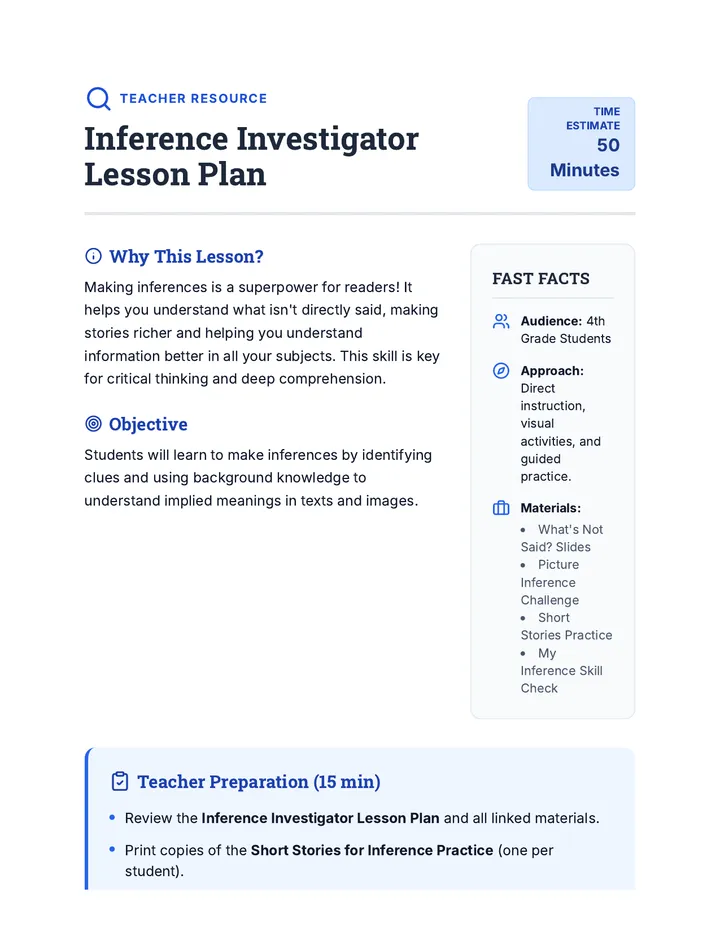
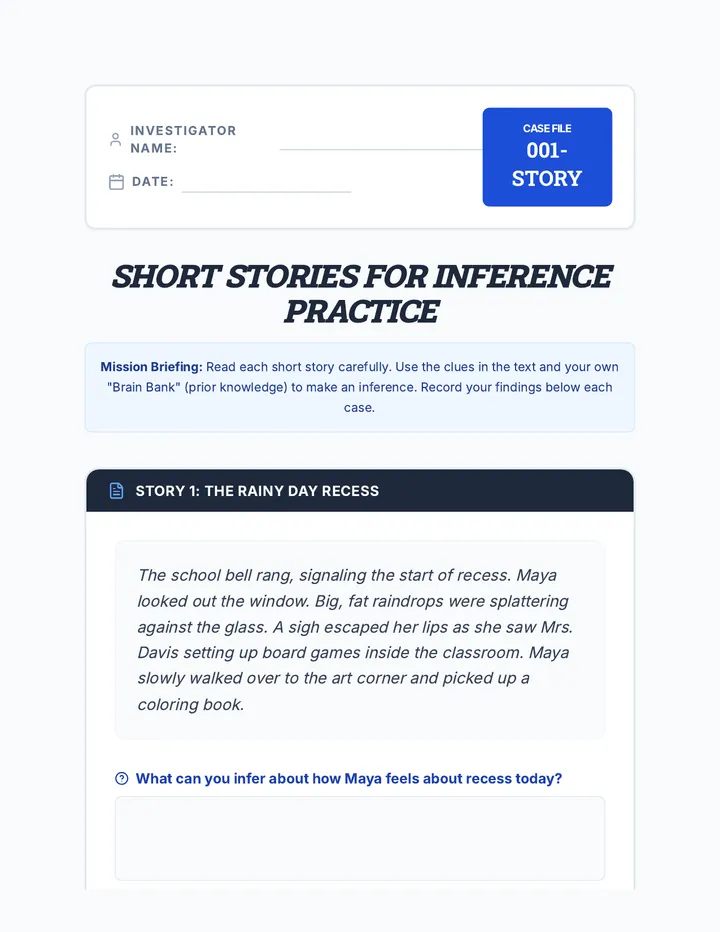
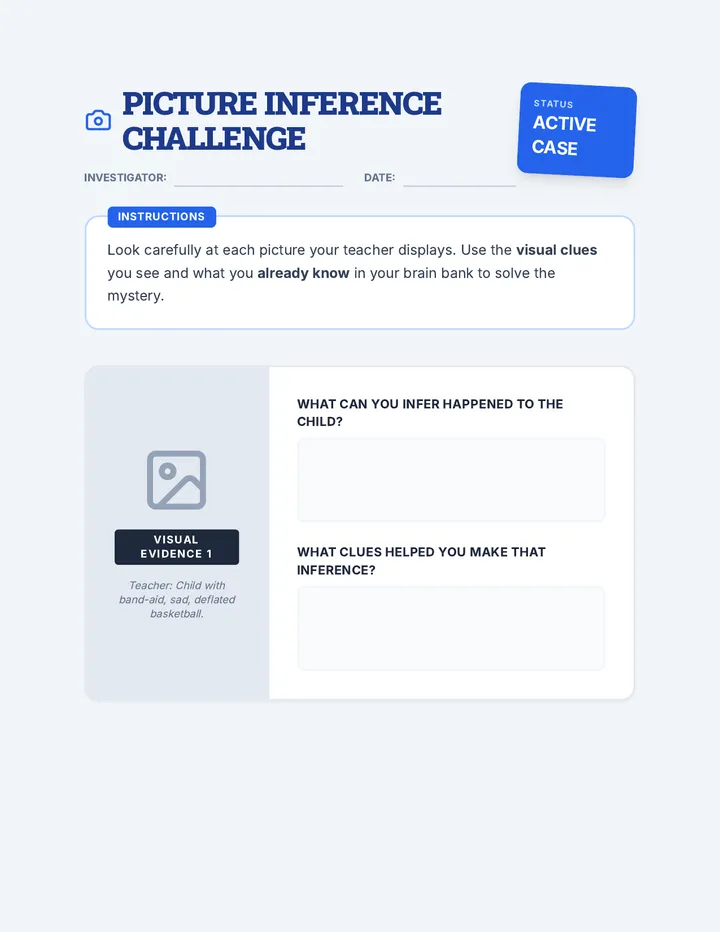
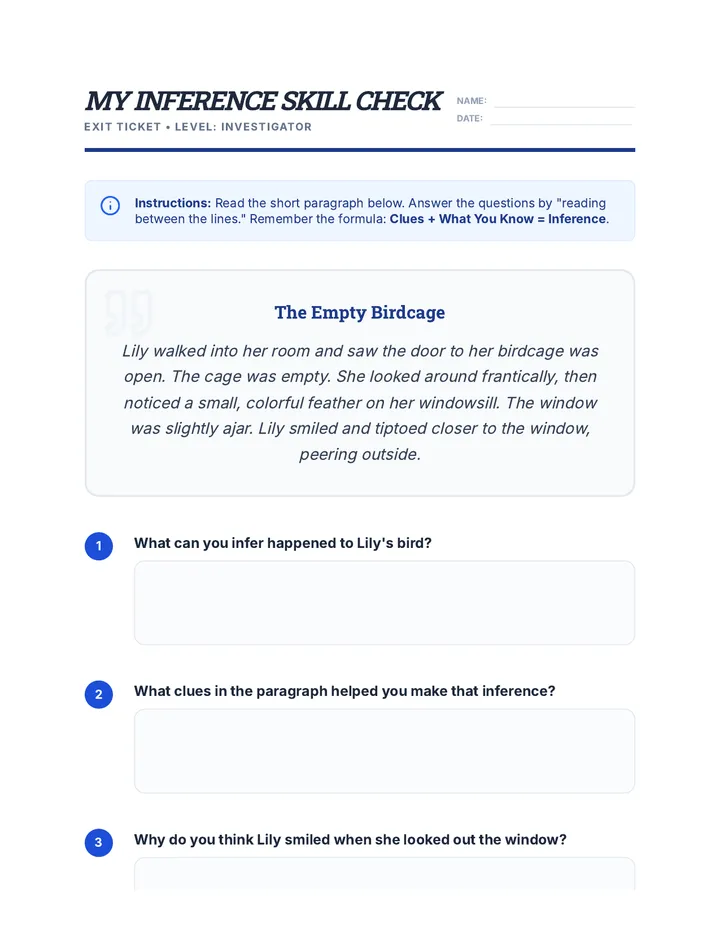
A comprehensive sequence for 4th-grade intermediate English learners focusing on making inferences in narrative texts. Students progress from visual analysis to complex literary interpretation using the core formula: Evidence + Schema = Inference.
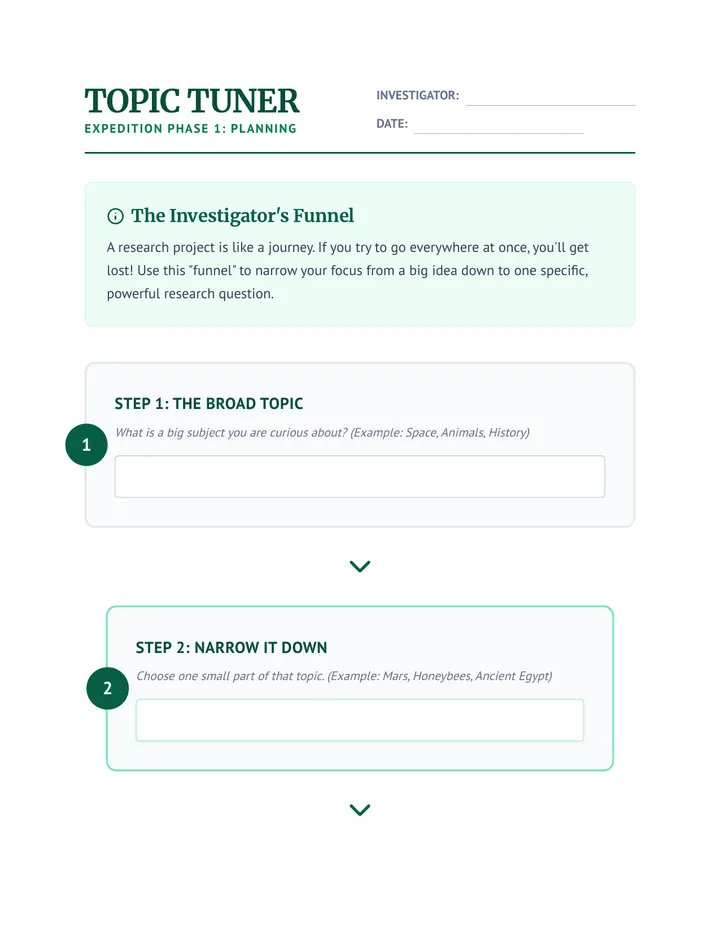
A comprehensive 5-lesson project-based sequence for 5th Grade ESL students to master the research cycle, from questioning to final publication. Students develop academic English skills through searching, evaluating, and synthesizing information on a chosen topic.
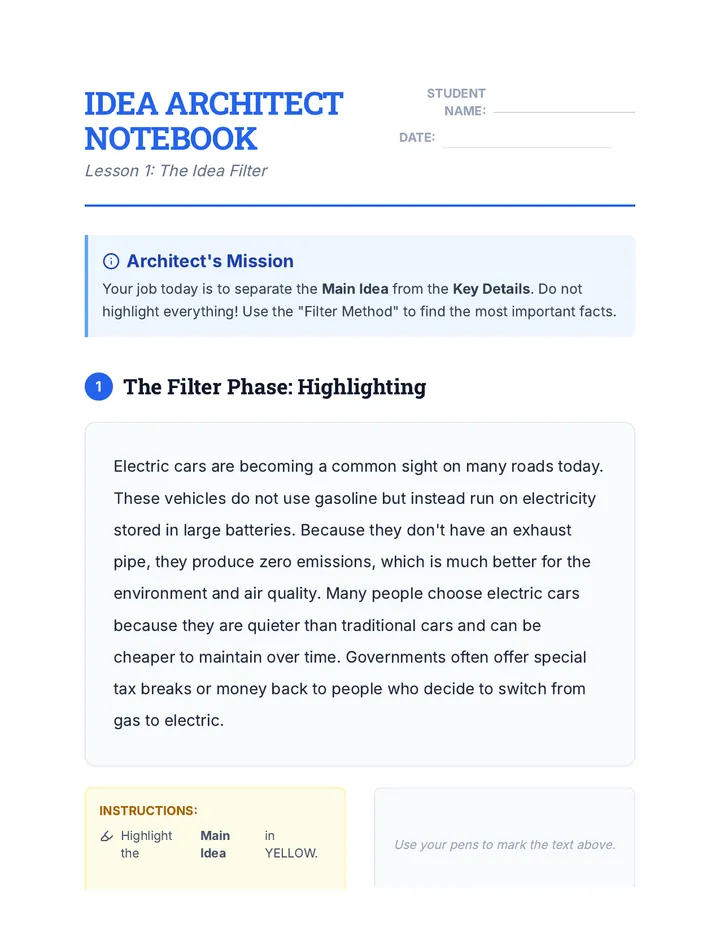
A comprehensive workshop-style unit for 6th Grade ESL students focused on the linguistic mechanics of paraphrasing and synthesizing information. Students move from identifying core concepts to orally retelling information, transforming individual sentences, and finally weaving multiple sources into a single coherent paragraph without plagiarizing.
A comprehensive sequence for 6th Grade ESL students to develop critical research and information literacy skills. Students progress from distinguishing basic facts and opinions to applying professional evaluation frameworks like the CRAAP test to determine source credibility.
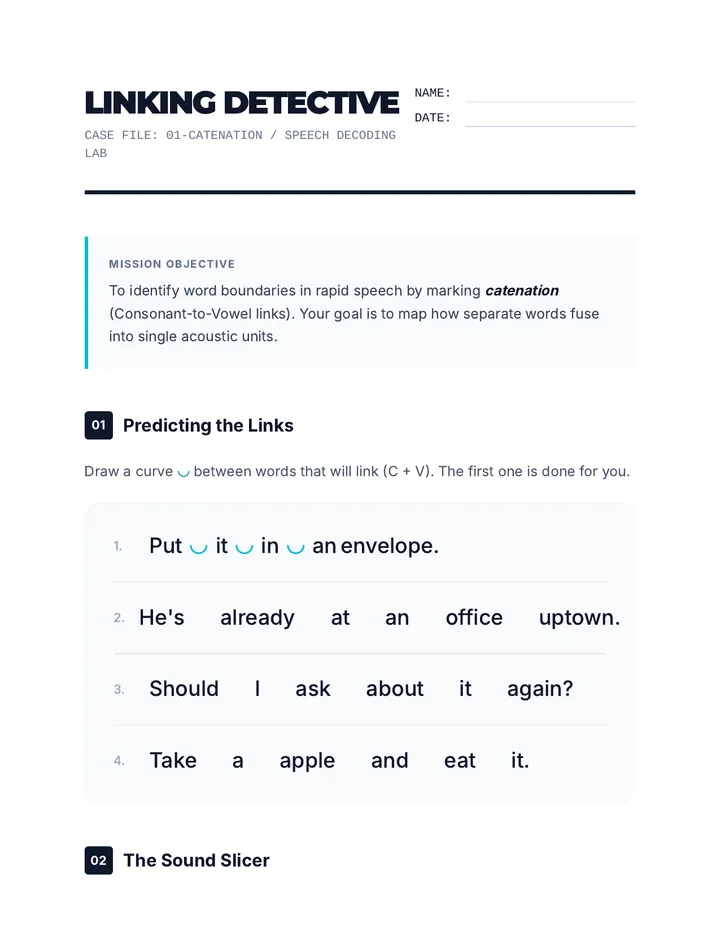
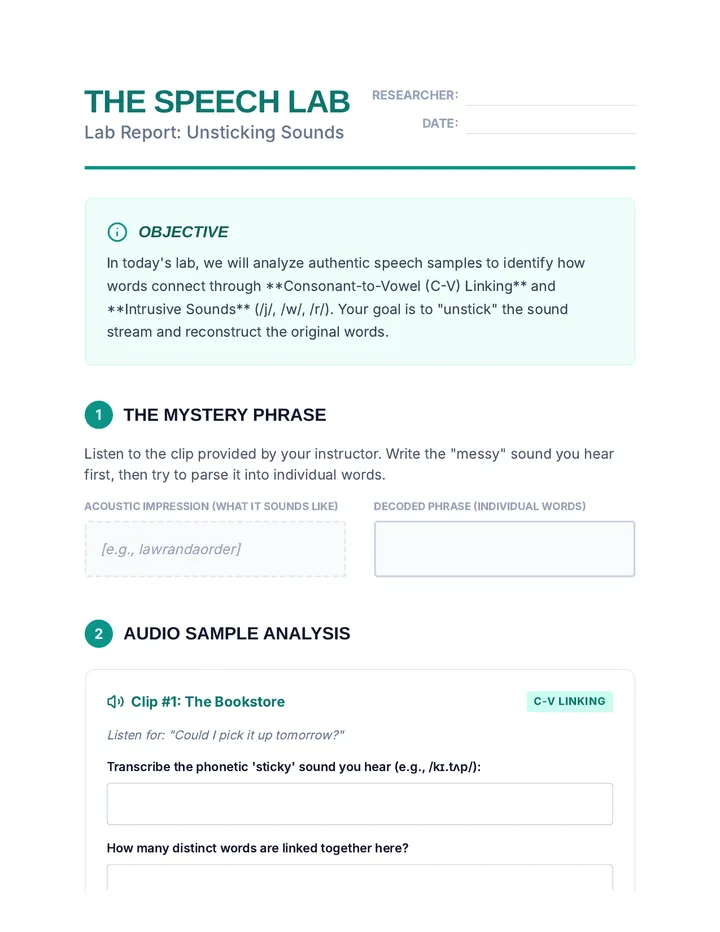
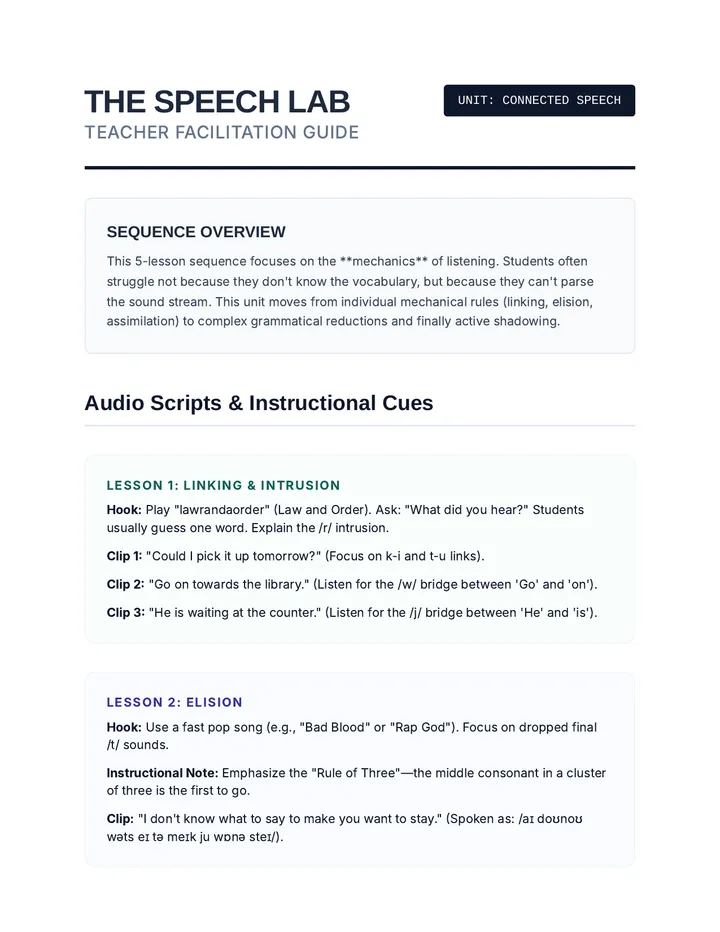
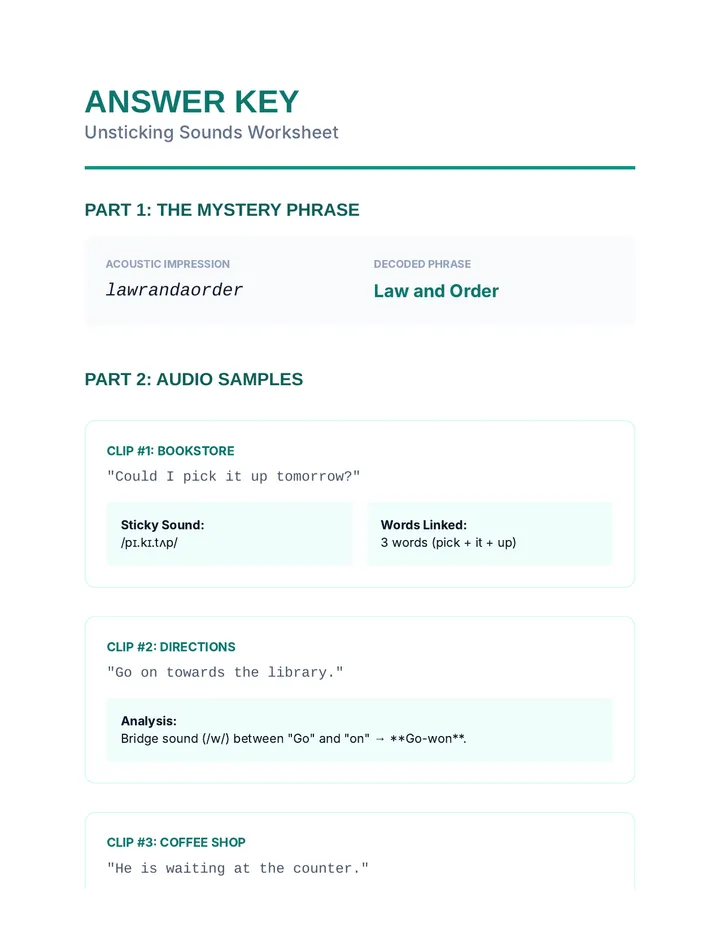
A comprehensive series for intermediate ESL graduate students focused on decoding natural, rapid English by mastering connected speech phenomena like linking, elision, and assimilation.
This sequence targets the mechanical difficulties of understanding natural, fast-paced English. Students explore phonological rules like linking, elision, and assimilation to decode authentic, fluid speech patterns found in campus social life.
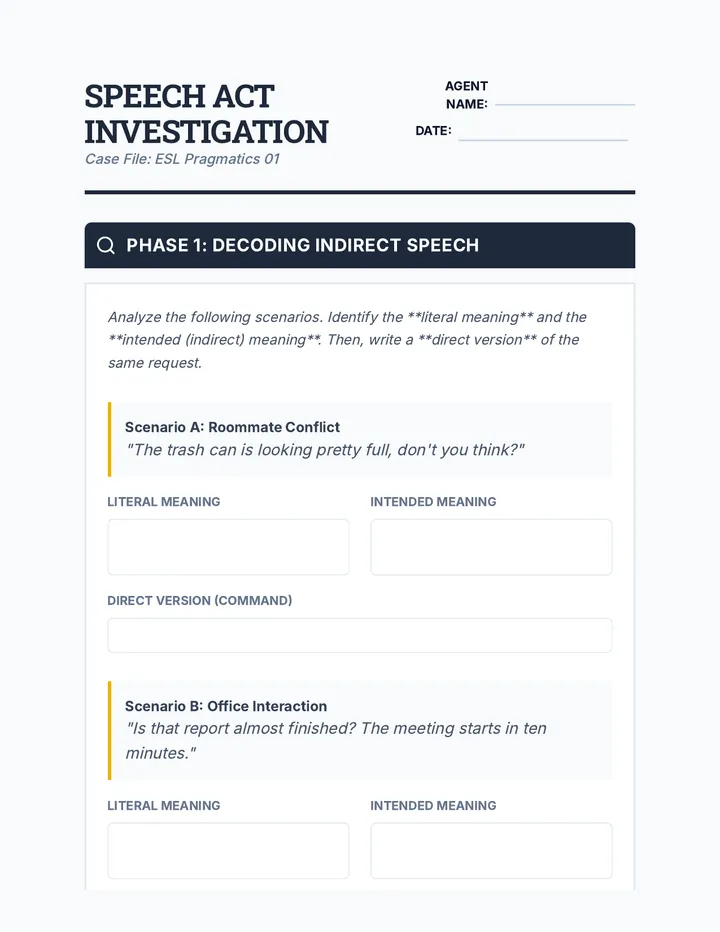
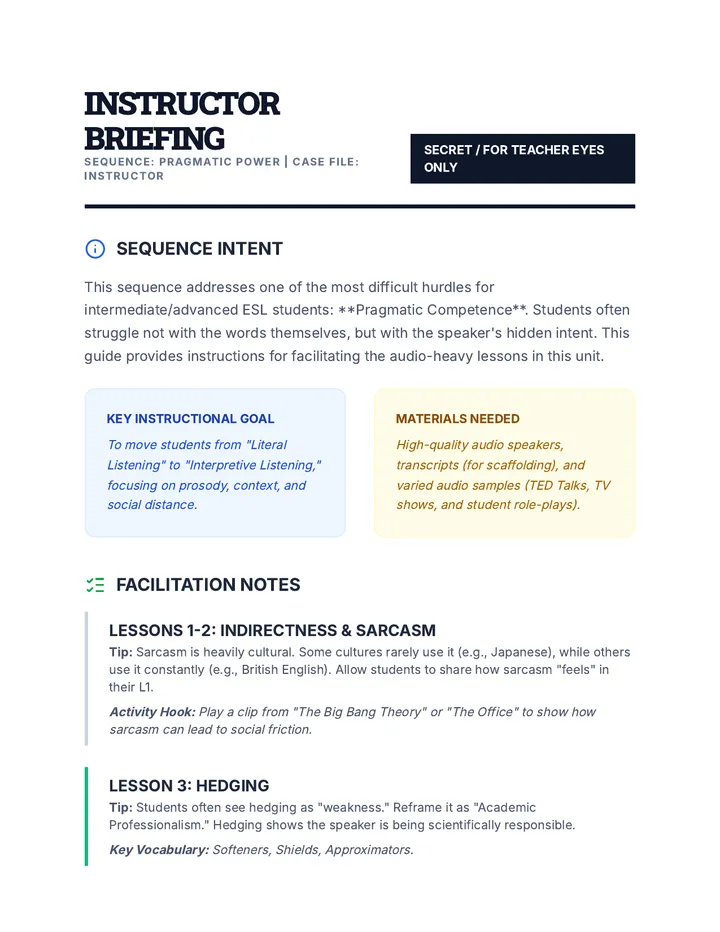
This sequence guides intermediate ESL students through the nuances of pragmatic meaning in English. Students will learn to decode indirect speech, sarcasm, hedging language, and emotional undertones in academic and social contexts to improve their listening comprehension and communicative competence.
A 4th-grade ESL listening sequence that transforms students into 'Sound Detectives' to master narrative elements. Students learn to filter 'auditory fluff' for main ideas, analyze character traits through vocal cues, track plot sequences using signal words, and predict endings using foreshadowing.
A comprehensive ESL listening sequence for 4th graders focusing on natural speech patterns, emotional tone, idioms, and social registers. Students act as 'Ear Detectives' to decode the hidden meanings in how English is actually spoken vs. how it is written.
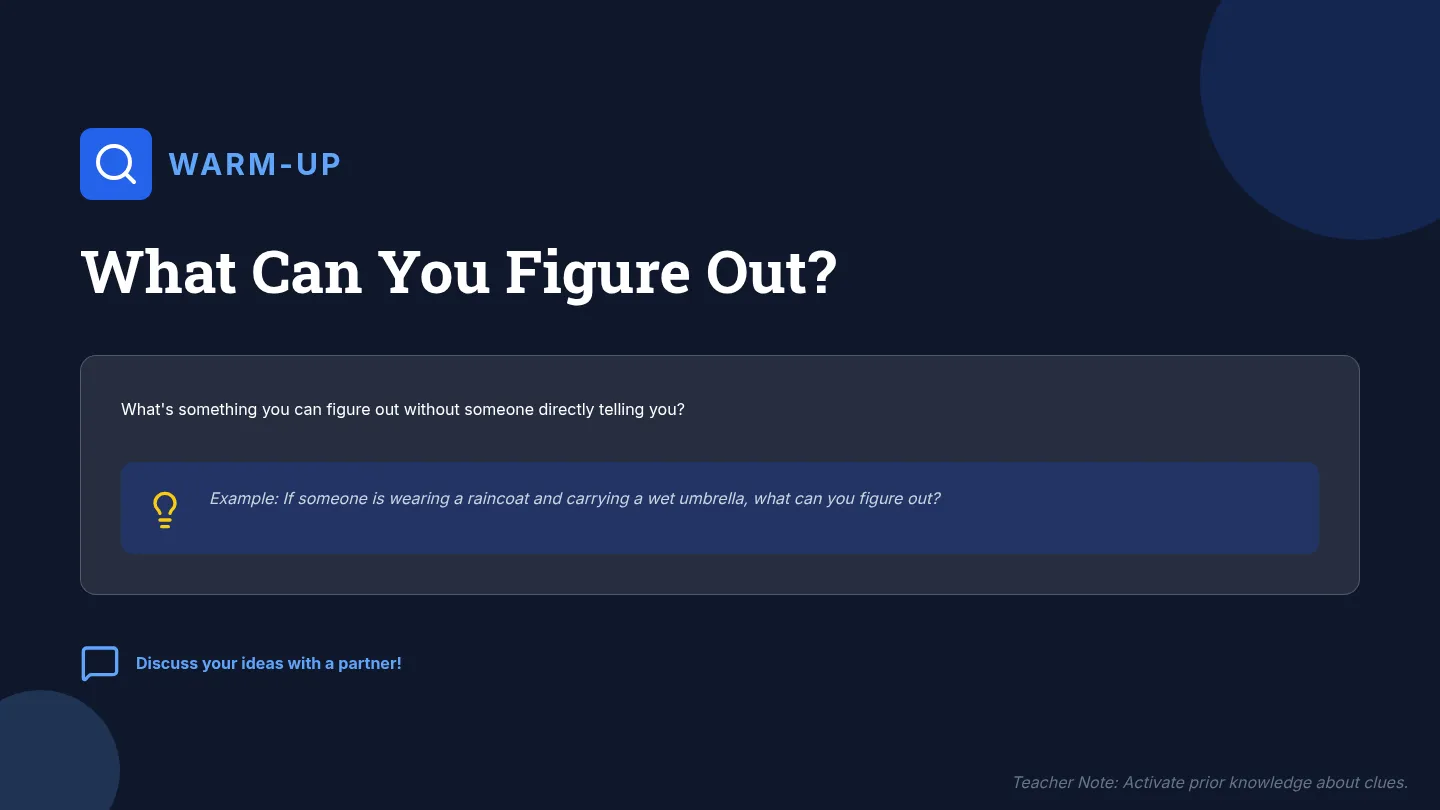
A 4th-grade lesson that transforms students into 'Inference Investigators,' teaching them to use textual and visual clues along with prior knowledge to draw conclusions and 'read between the lines.'
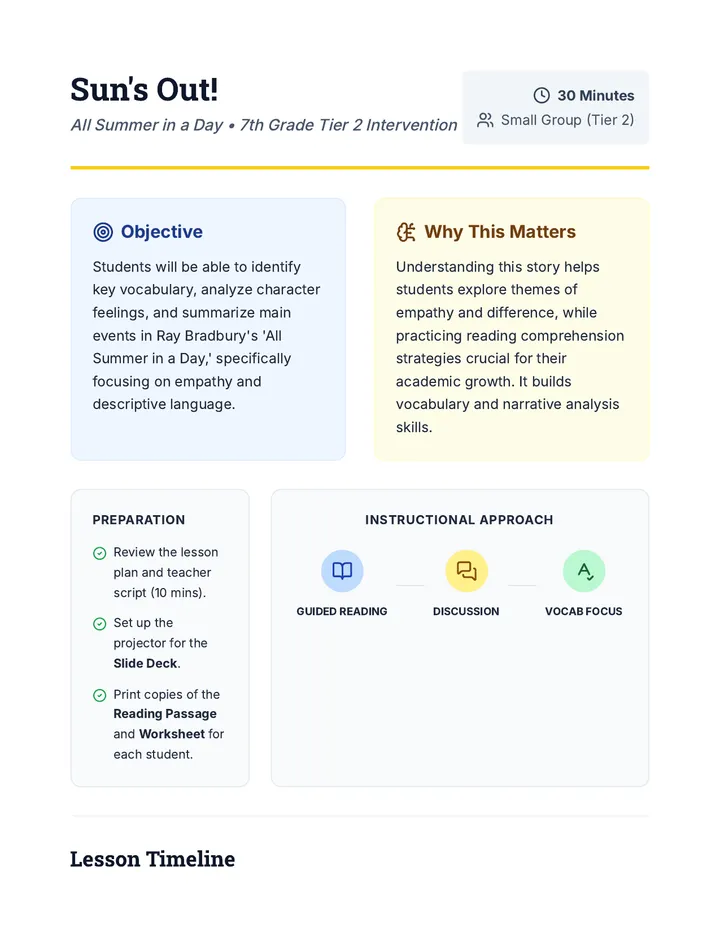
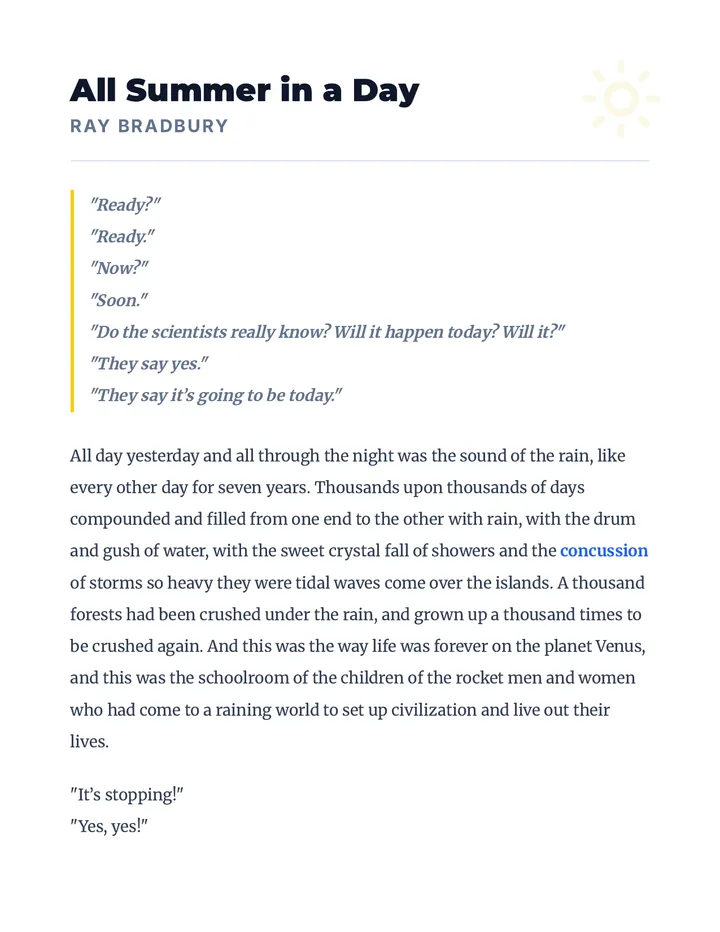
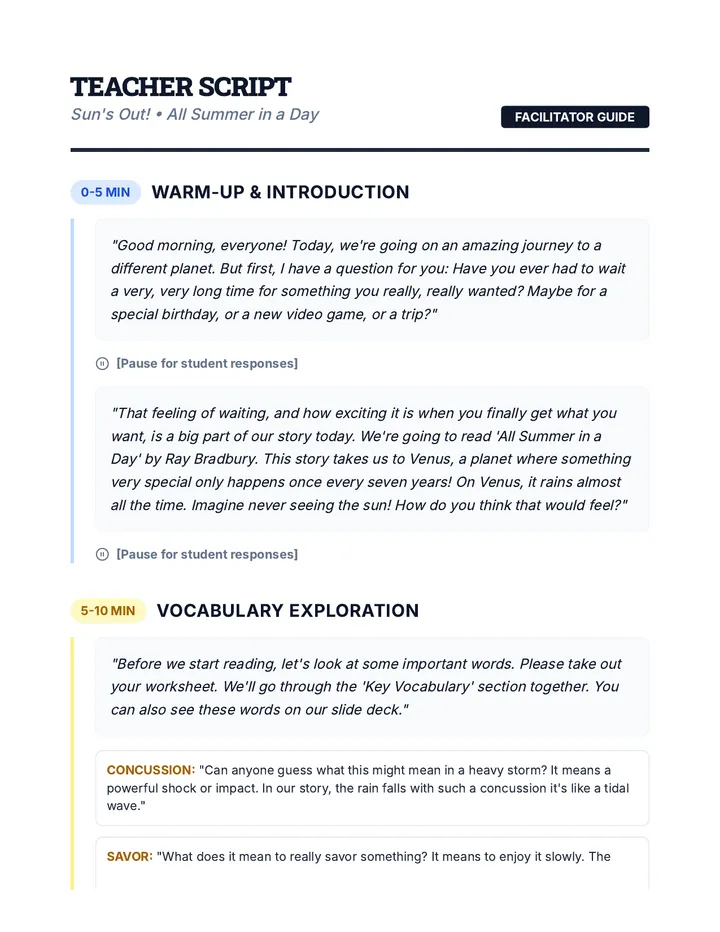
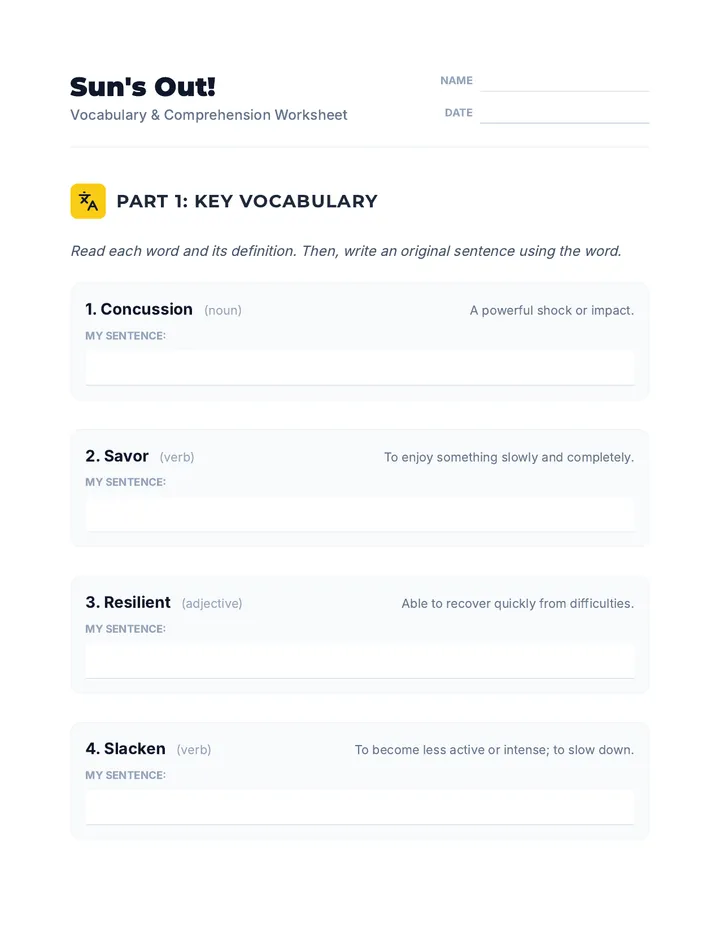
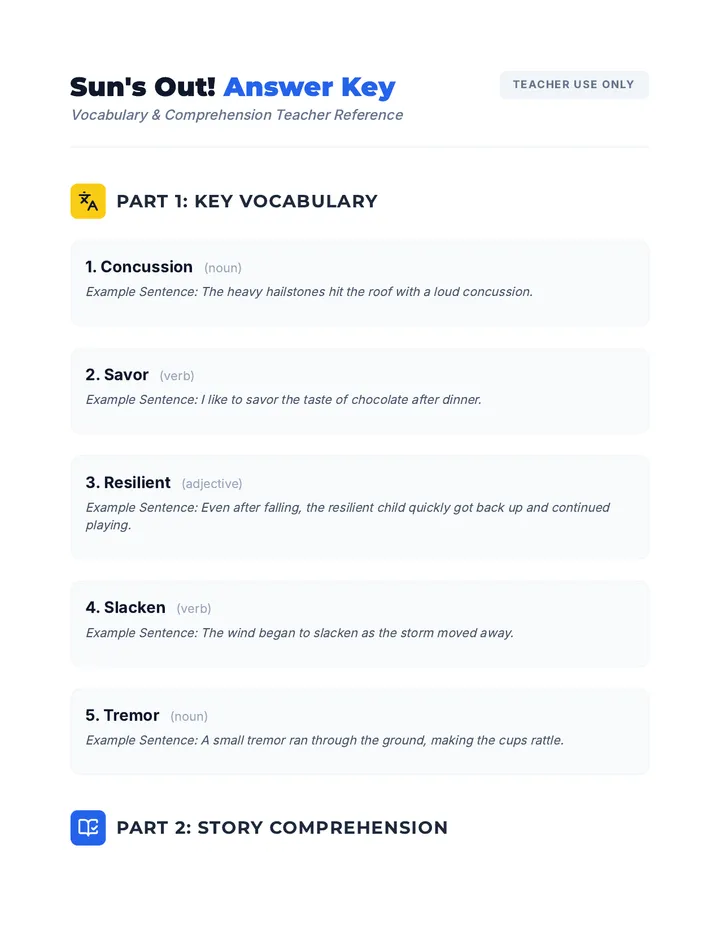
A 30-minute Tier 2 intervention lesson for 7th-grade students exploring Ray Bradbury's 'All Summer in a Day.' Focuses on vocabulary, character empathy, and comprehension through guided reading and discussion.
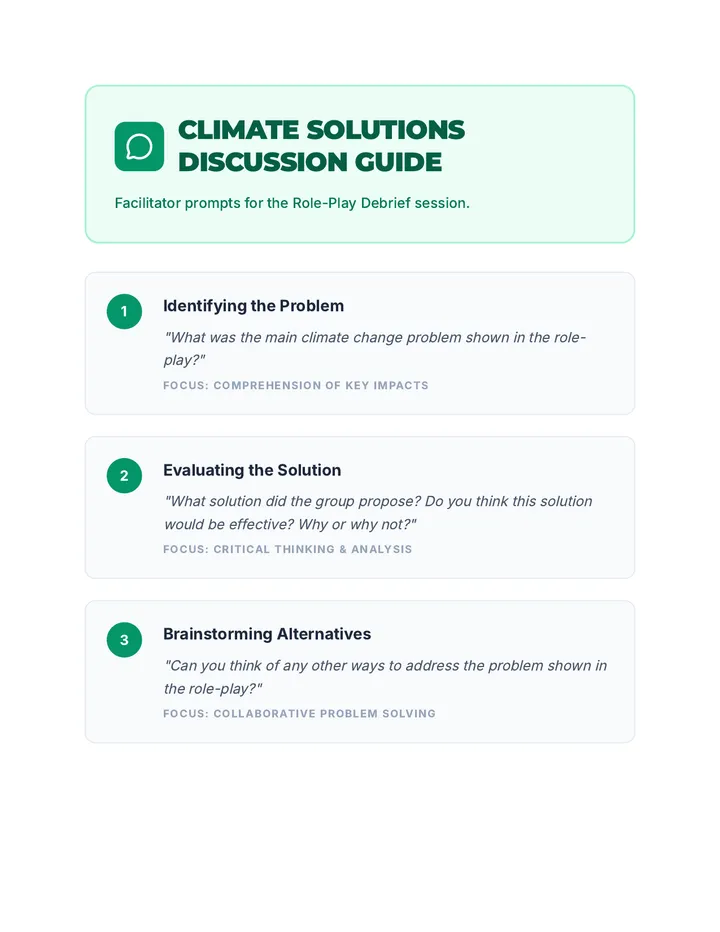
A 60-minute interactive lesson for 13-14 year old English language learners focused on climate change vocabulary, civic engagement, and collaborative problem-solving. Students explore causes, effects, and solutions through reading, role-play, and creative projects.
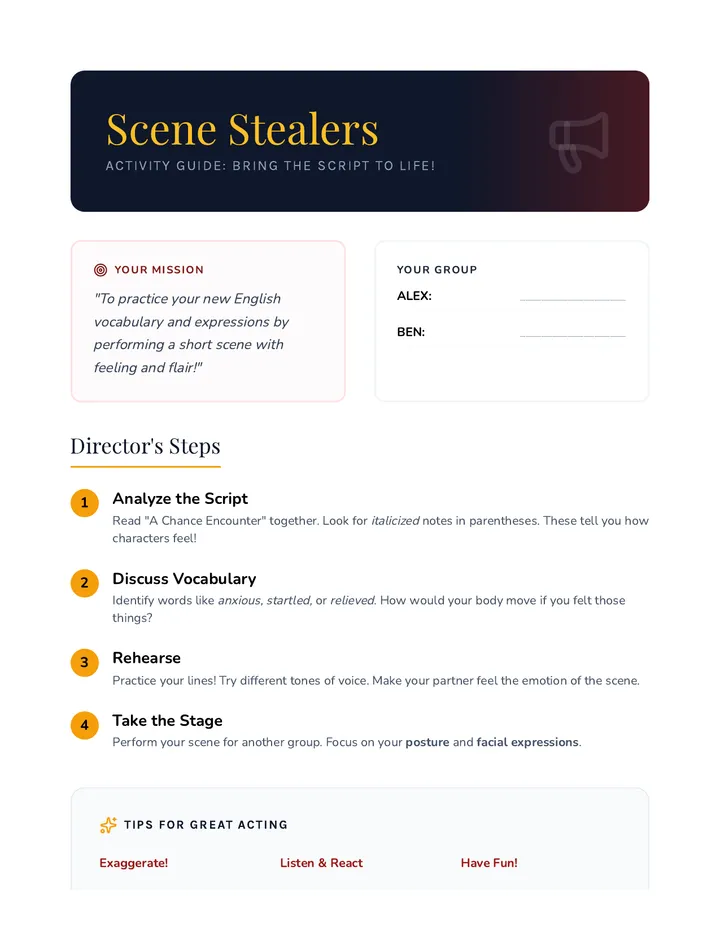
A high-energy, 30-minute lesson for middle school ESOL/EFL students that uses theatrical techniques to teach vocabulary related to emotions and actions. Students will participate in interactive games, a jigsaw reading, and collaborative script performance.
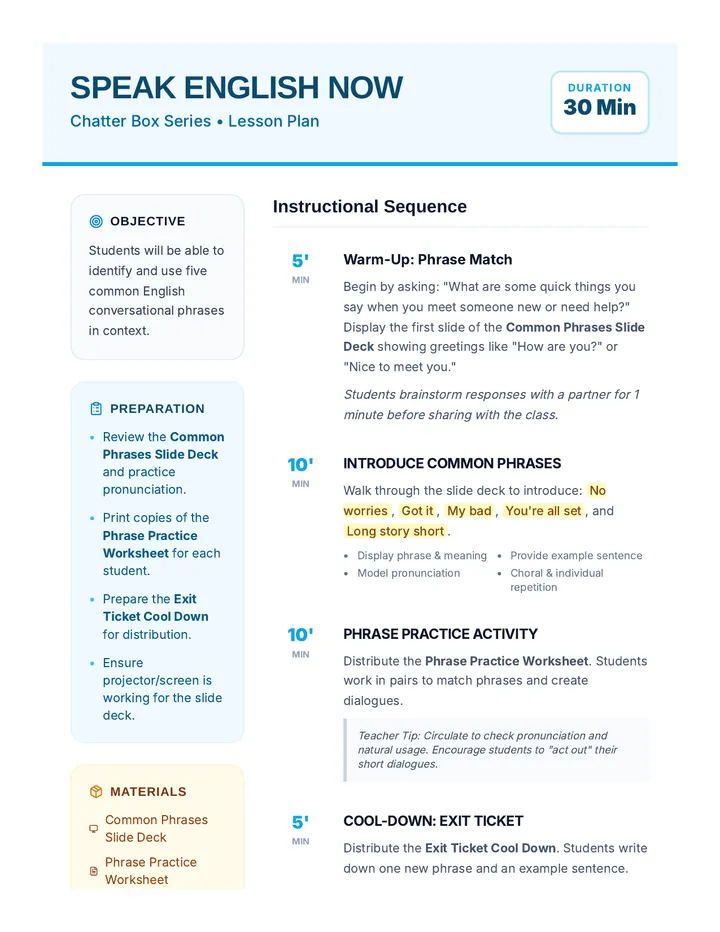
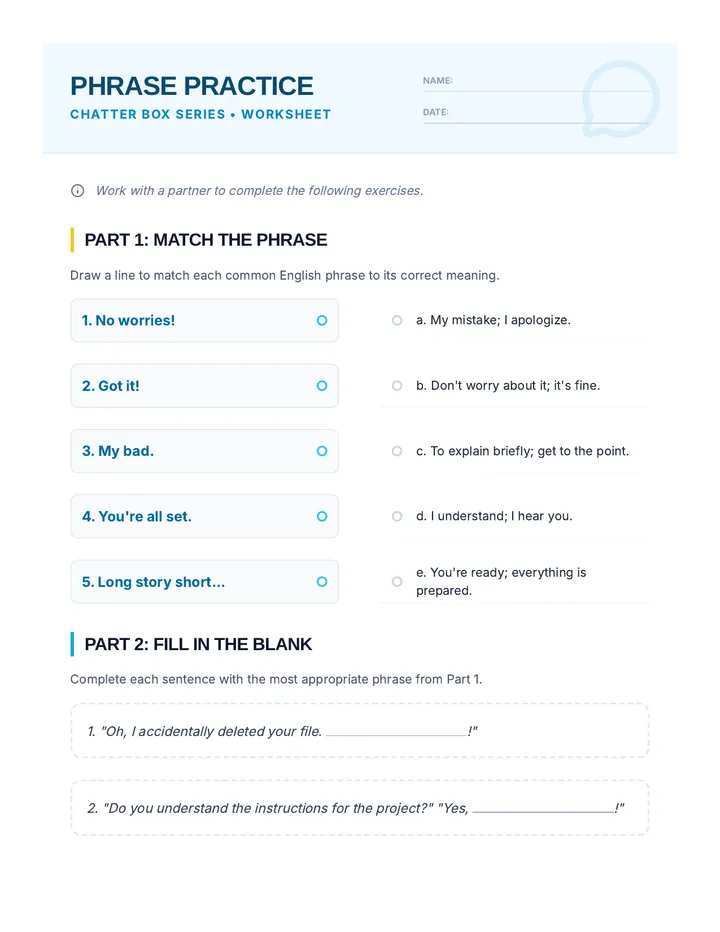
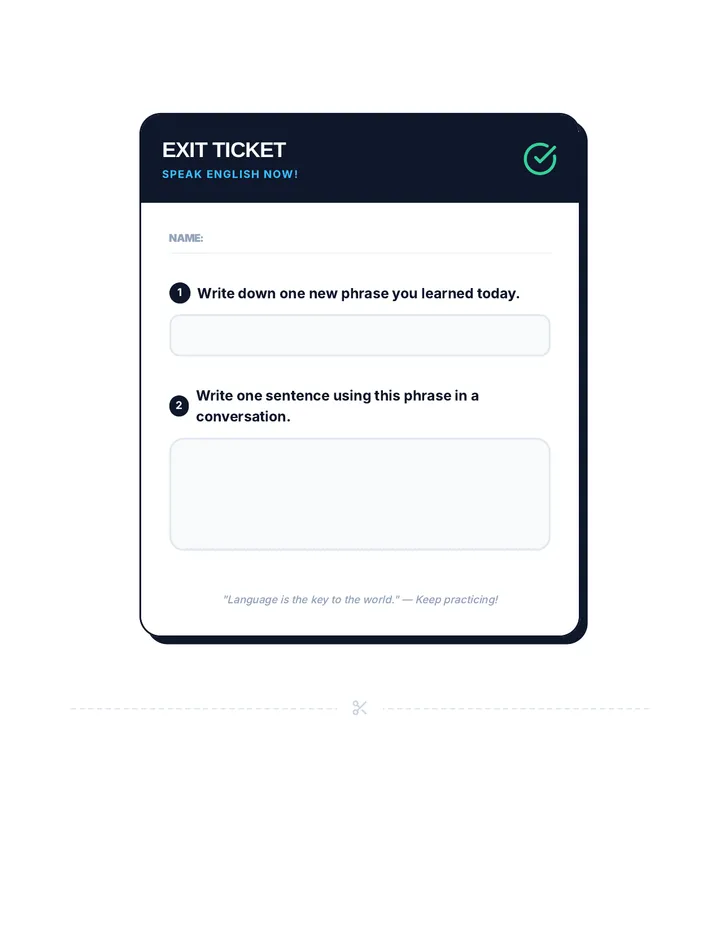
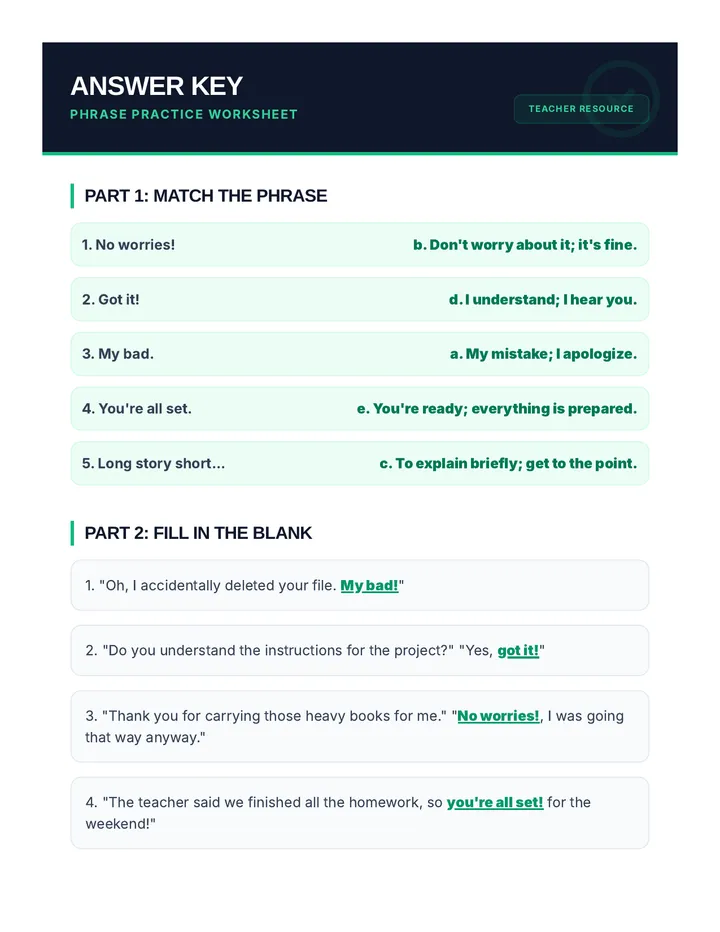
A high-energy, 30-minute session designed to help 7th-grade students master five common English conversational phrases. Students engage in interactive practice and role-playing to build confidence in everyday speaking scenarios.
A 30-minute ESL lesson for 7th graders focusing on common English idioms to improve conversational fluency and cultural understanding.
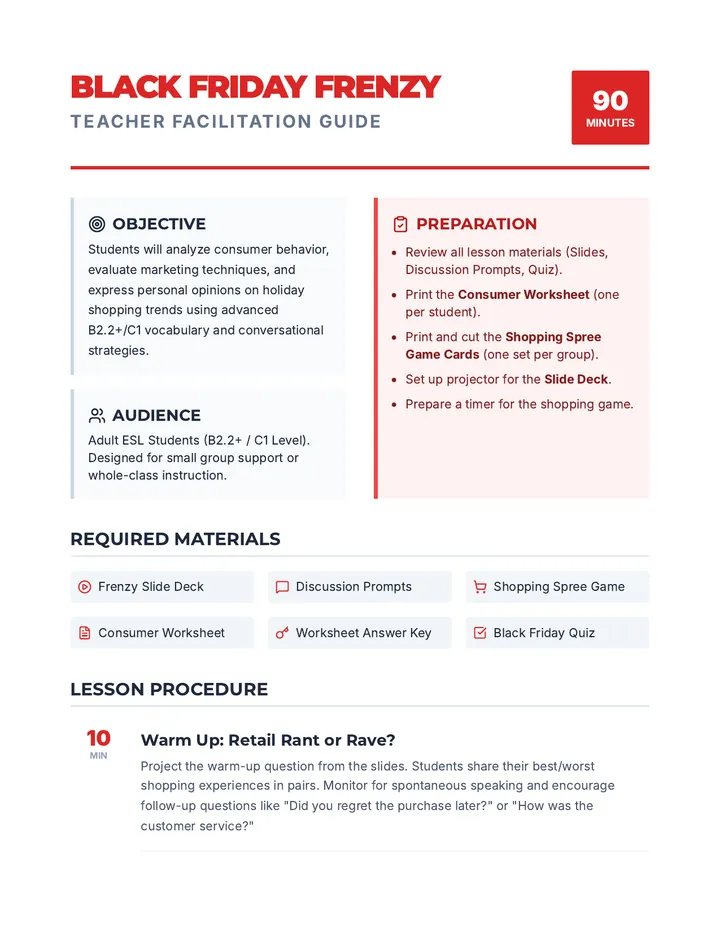
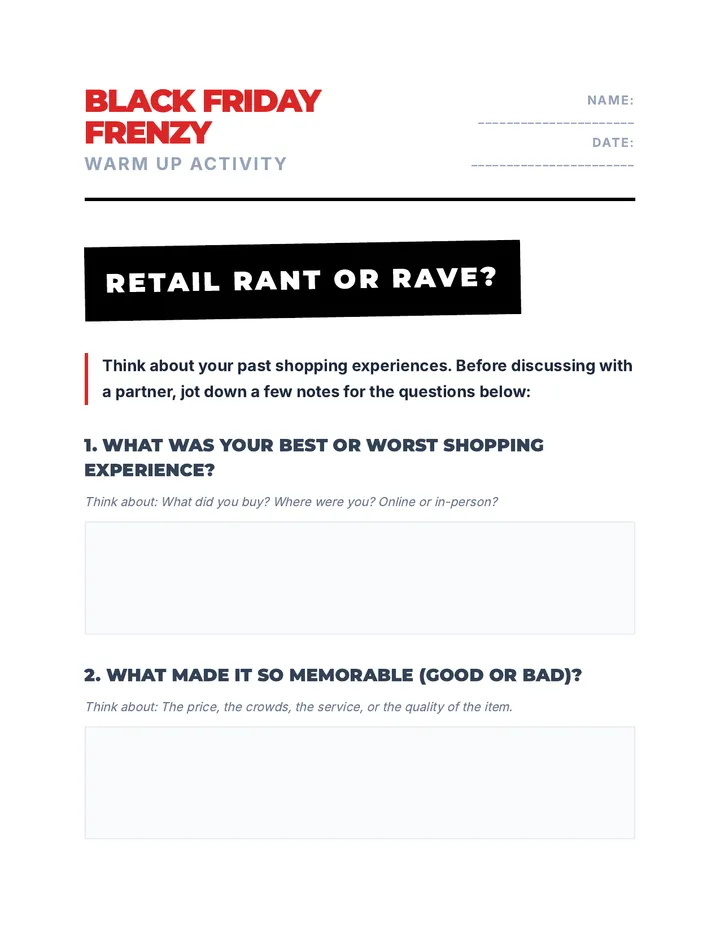
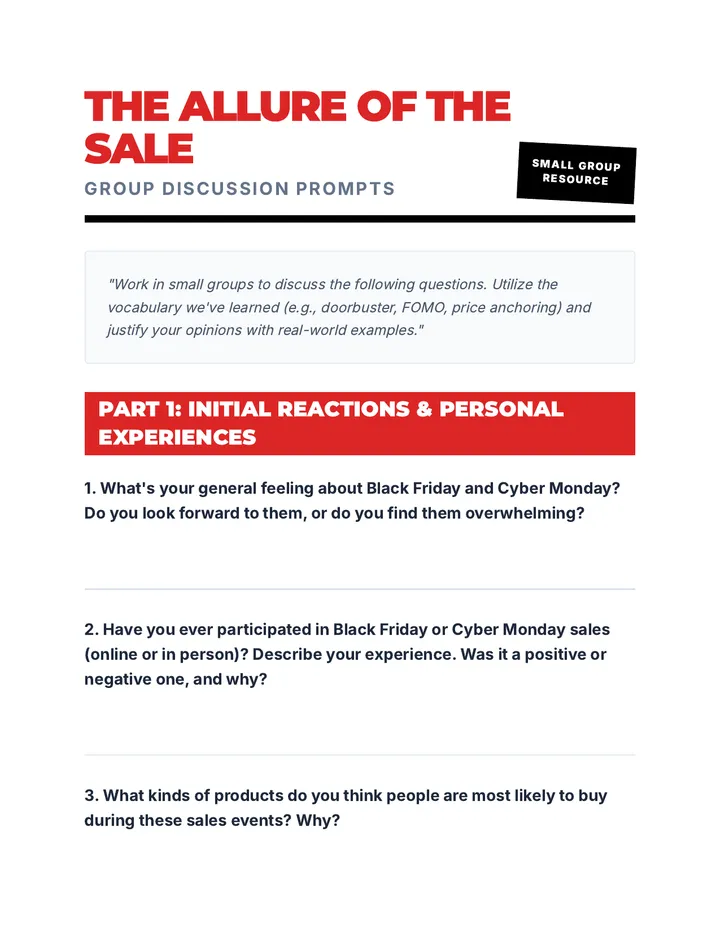
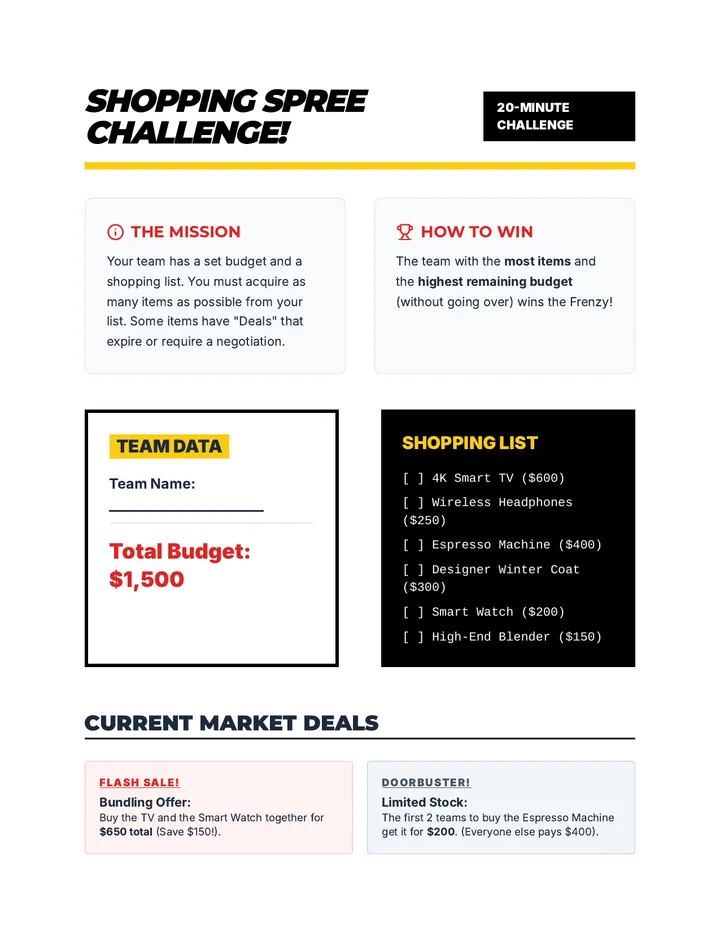
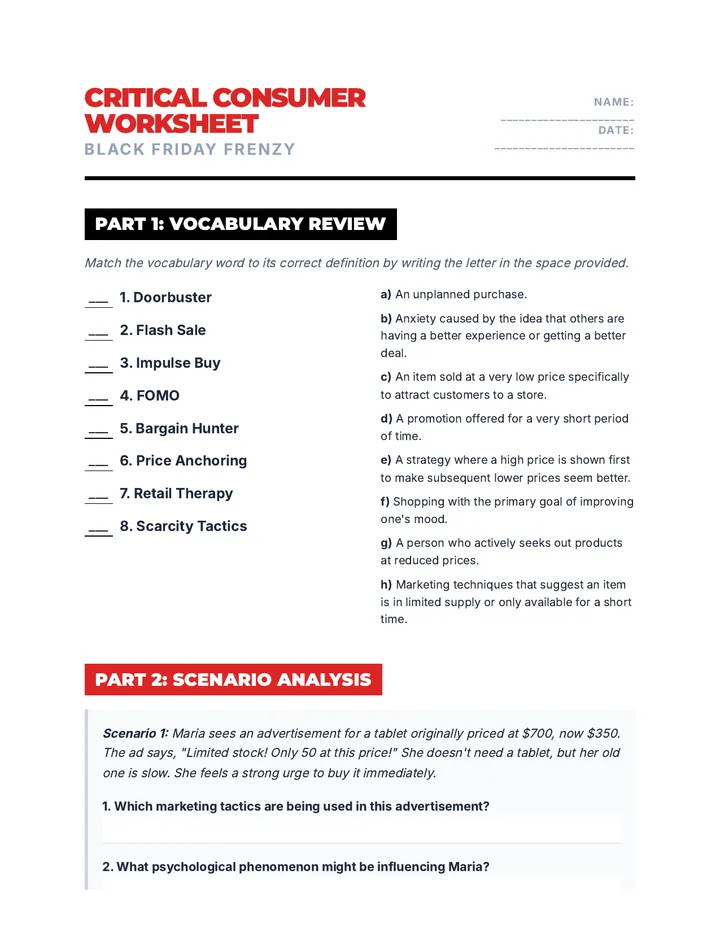
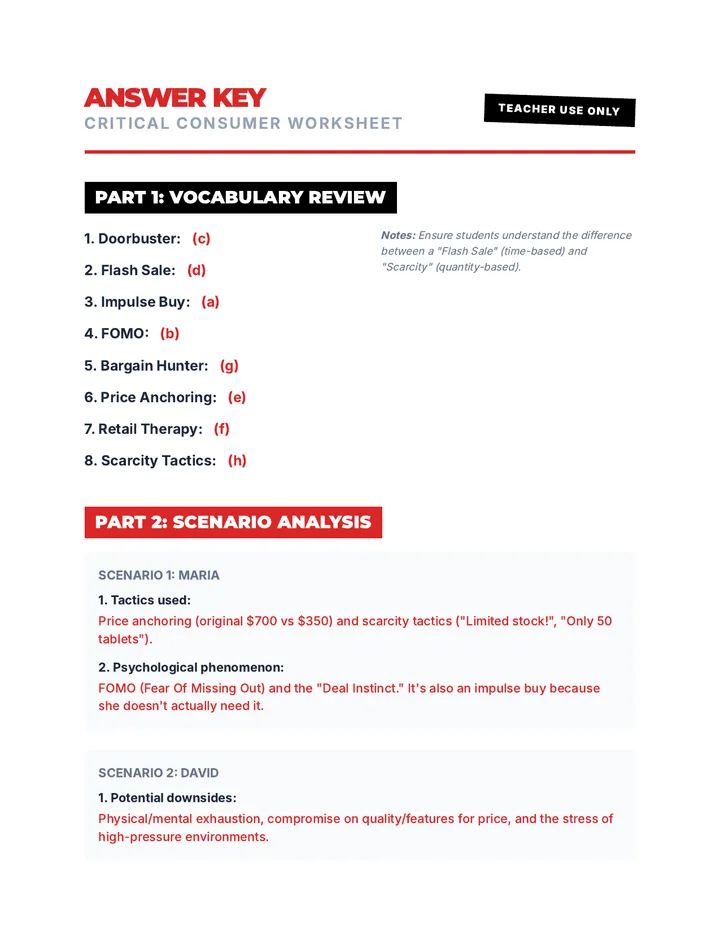
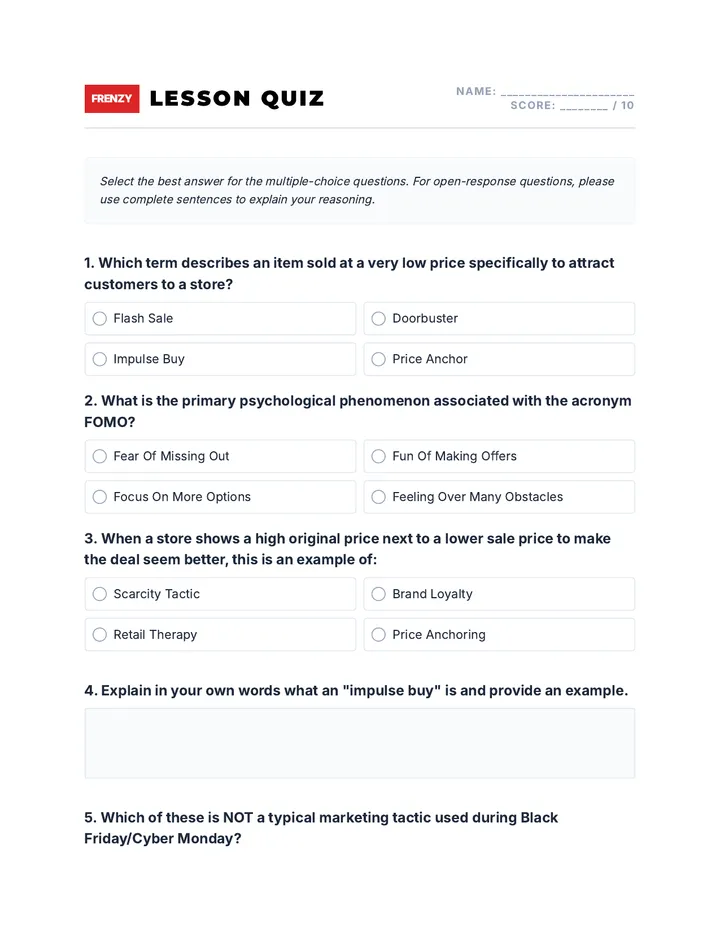
A 90-minute ESL lesson for B2.2+/C1 adult students exploring the cultural and psychological impact of Black Friday and Cyber Monday. Students will analyze marketing strategies, practice advanced vocabulary, and engage in a strategic shopping game.
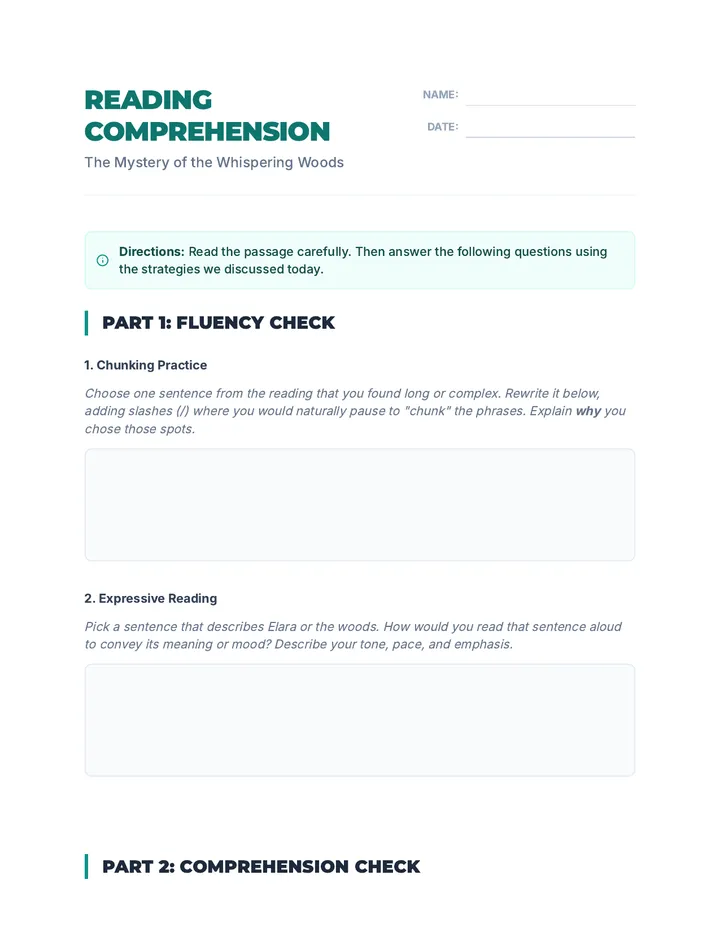
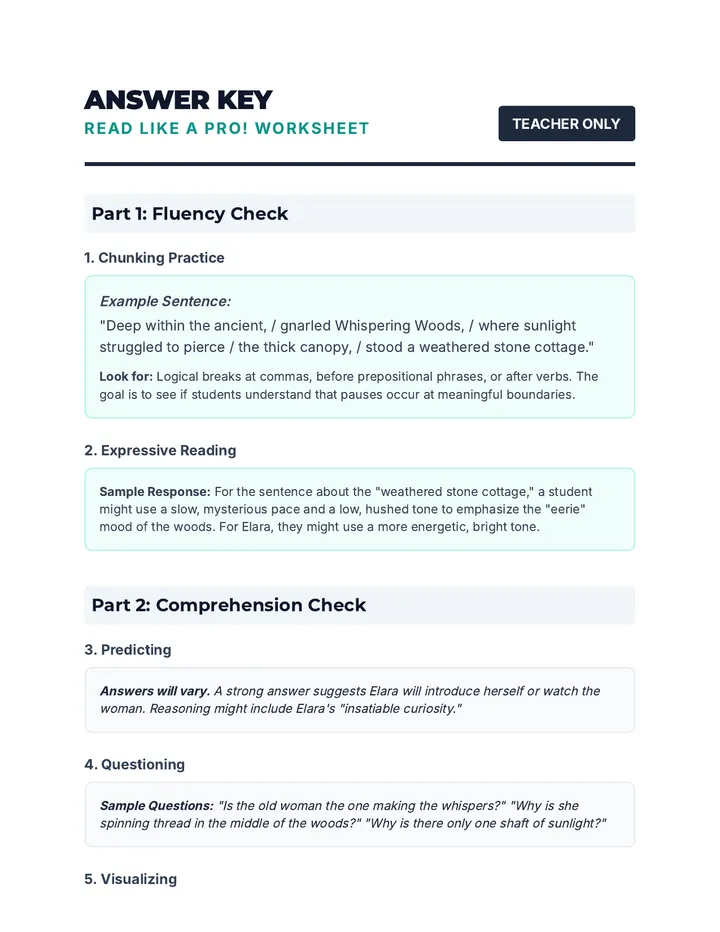
A 30-minute lesson for 7th graders focused on boosting reading fluency and comprehension through active strategies like chunking, predicting, and visualizing.
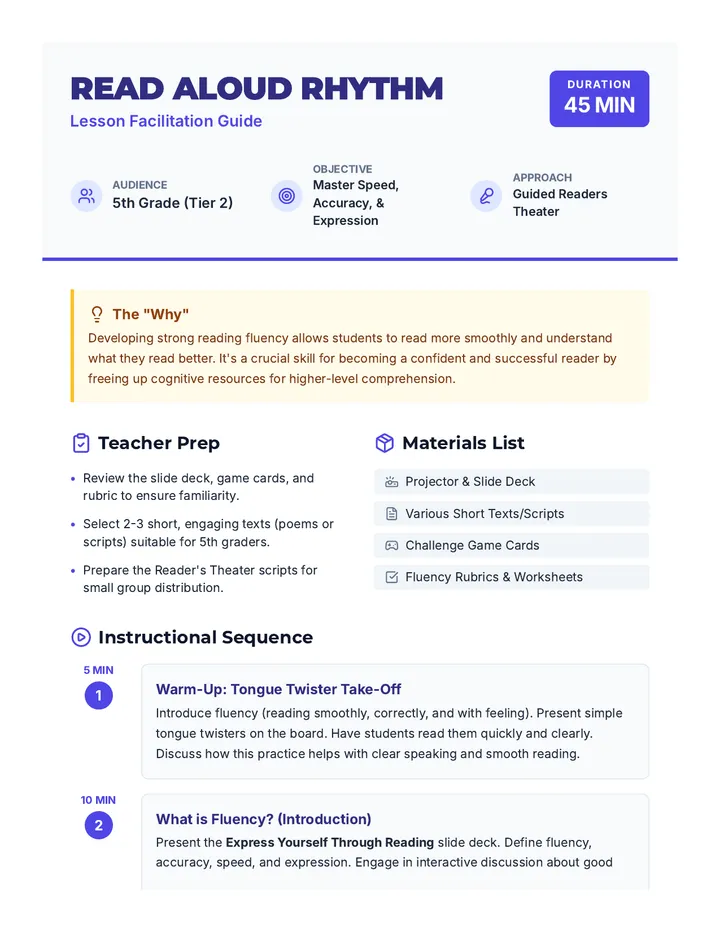
A high-energy small-group intervention focused on building reading fluency through speed, accuracy, and expression using modeled reading and a Readers Theater challenge.
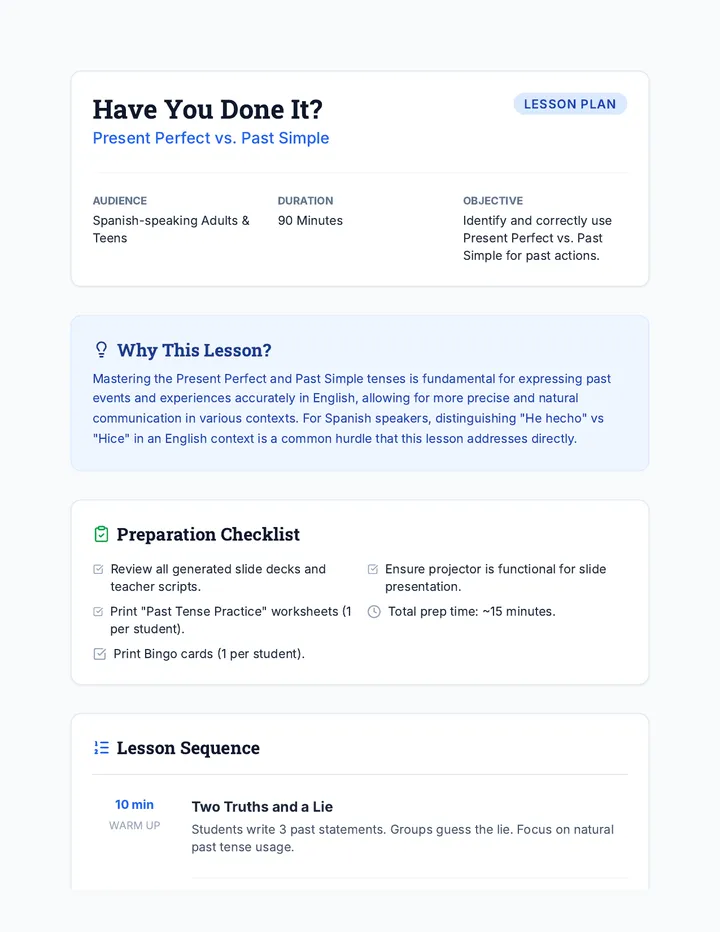
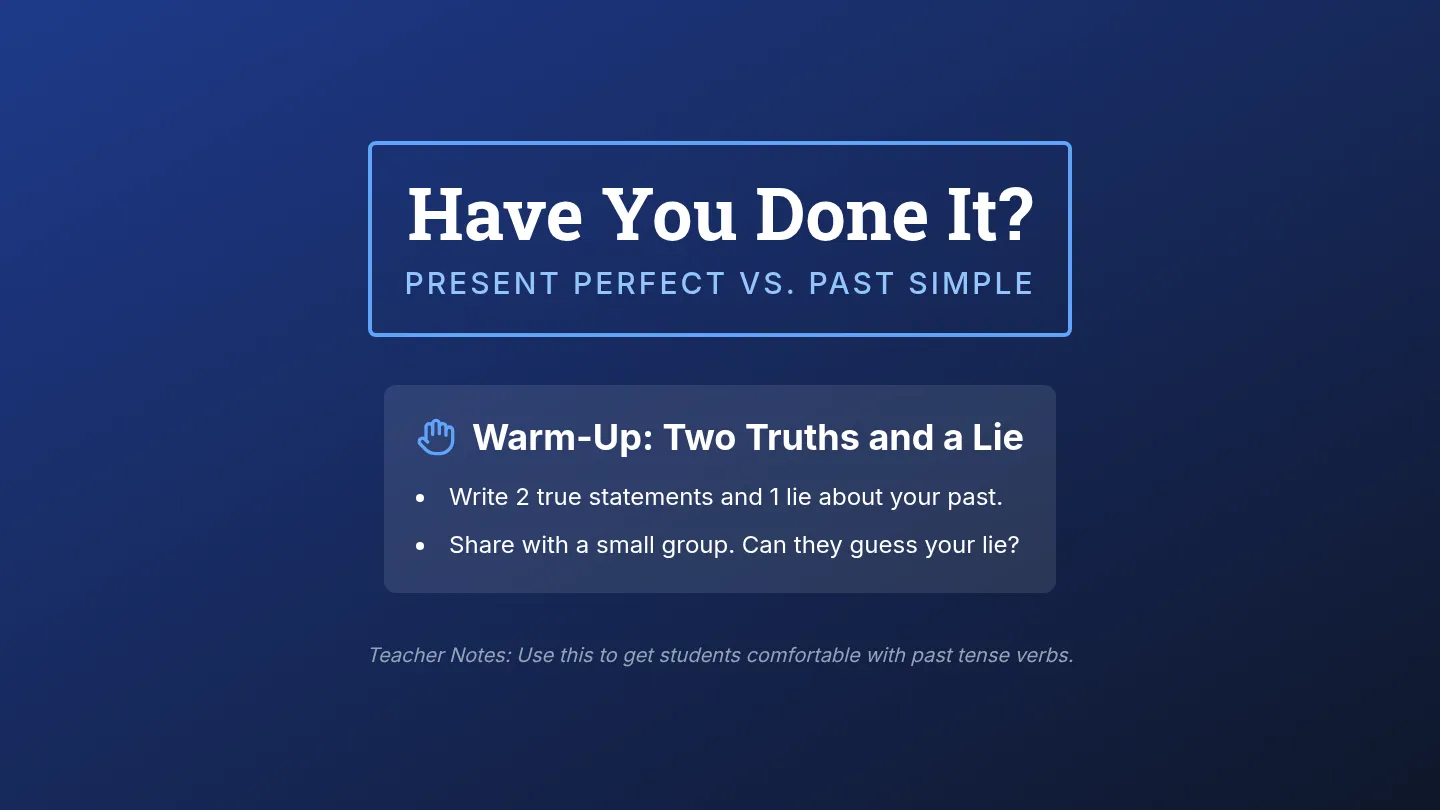
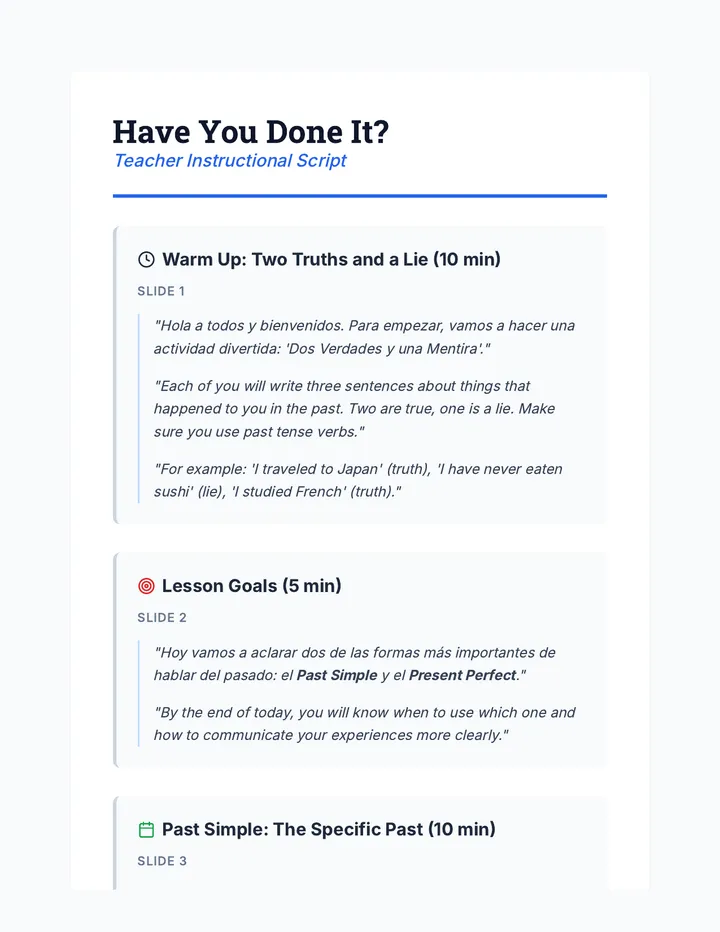
A comprehensive 90-minute ESL lesson for adults and teens focusing on the functional differences between Past Simple and Present Perfect tenses through the lens of life experiences and specific events.
This 15-minute Tier 2 phonics lesson helps 5th-grade ESE students improve their ability to sort and decode complex short and long 'e' words using advanced spelling patterns.
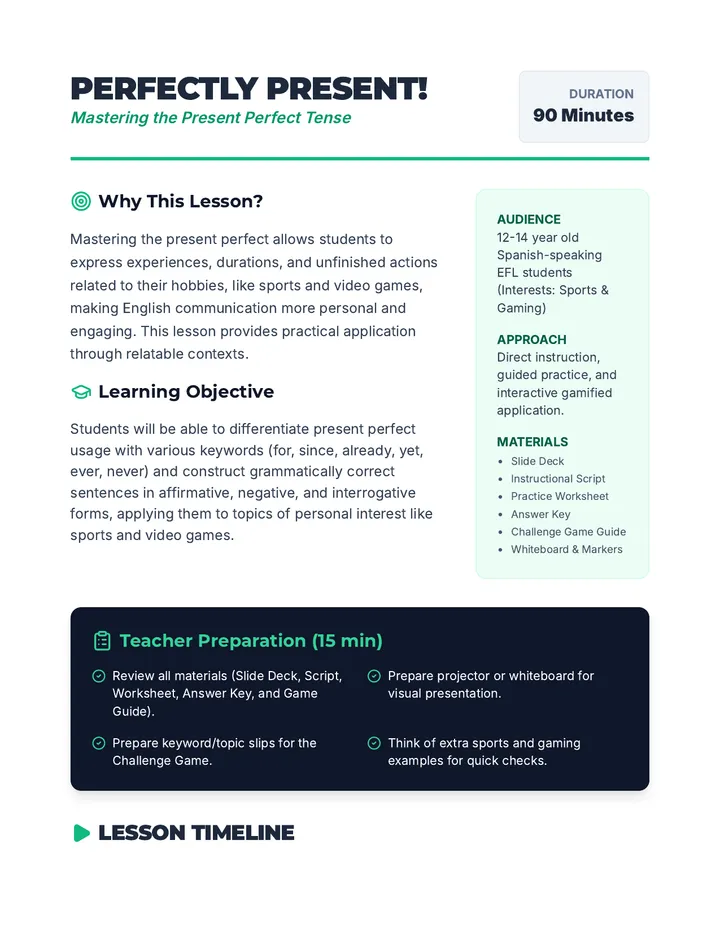
A 90-minute ESL lesson for 12-14 year olds focusing on the present perfect tense through the lens of sports and video games. Students will master keywords like 'for', 'since', 'already', 'yet', 'ever', and 'never' through interactive slides, a practice worksheet, and a team-based challenge game.