Safety Zone Slides Safety Zone Slides
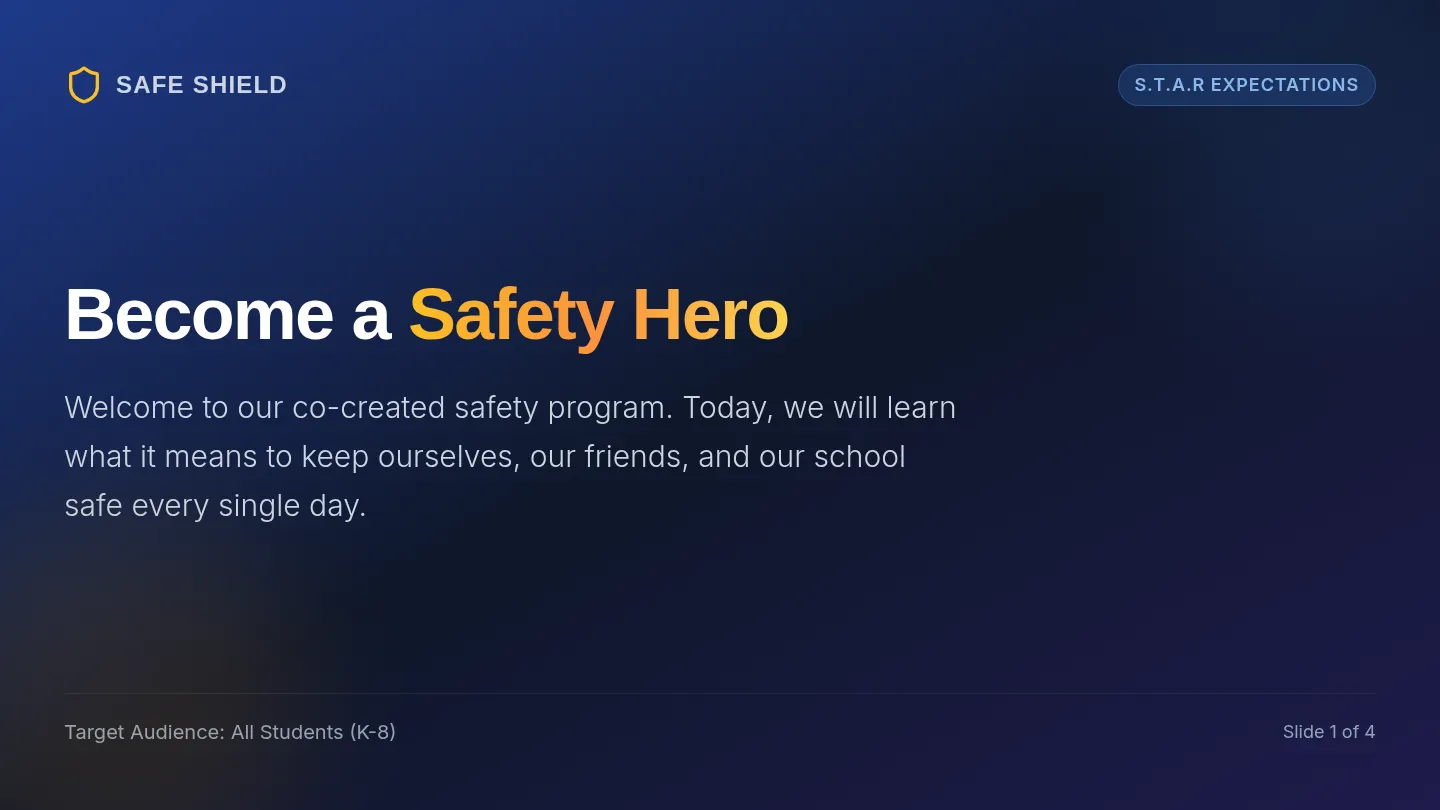
Mapping Our Community Safety Net
Essential Question
"How can we build a plan and a community that supports everyone's safety?"
What is a Safety Zone?
A Safety Zone is a place where you can go if you feel:
Unsafe or uncomfortable
Lost or followed
Like you need to call for help
Safety Zones are "Always Ready" places.
The Anatomy of a Safe Space
Visible Adults
People are working there or present who can help.
Well-Lit & Open
The space is public and easy to see from the street.
Phone Access
A place where you can ask to make a phone call.
Common Safe Zones
Fire Stations
Staffed 24/7 by first responders.
Public Libraries
Safe environments with helpful staff.
Police Stations
Official centers for safety and help.
Busy Stores
Grocery stores or shops with many people.
Your Turn: Safety Pins
1
Look at the map of our neighborhood or school.
2
Identify three places you would go if you felt unsafe.
3
Explain why those places are safe zones.
Knowledge Check
"Knowing where to go is the first step in taking control of your safety."
Identify
Evaluate
Map
Community Safety Map Worksheet Community Safety Map
Lesson 1: Mapping Safe Locations
Name:
Date:
Part 1: Identifying Safety Zones
Think about your daily route to school or places you hang out in your neighborhood. List 3 places that meet the criteria for a **Safety Zone** (well-lit, visible adults, phone access).
1
Location Name / Address
Why is this a safe place?
2
Location Name / Address
Why is this a safe place?
3
Location Name / Address
Why is this a safe place?
Part 2: Visualizing Your Safety Net
In the space below, sketch a simple map of your neighborhood or the area around your school. Mark your **Start Point** (like home or school) and use the pin icon symbol to mark your **Safety Zones**.
Sketch your map here. Label streets and key landmarks.
Place your pins clearly!
Pro Tip: A safe zone is even better if a trusted adult knows you might go there. Consider visiting these spots with a parent or guardian this week!
Bystander Shield Slides Bystander Shield Power
Standing Up for Our Friends
The Two Paths
The Bystander
"I see something happening, but I don't do anything. I hope someone else will help."
The Upstander
"I see something concerning, and I use my voice to protect others. I am the shield."
Spotting the Change
Friends often notice changes before adults do. Look for these signs:
Unexplained Gifts
New phones, clothes, or money that don't make sense.
Secrecy
Being very private about a "new friend" or where they are going.
Withdrawal
Stopping old hobbies or pulling away from regular friends.
Older "Boyfriend/Girlfriend"
Suddenly hanging out with someone much older than them.
Case Study: Leo's News
Scenario
"Your best friend Leo suddenly has the latest smartphone. He says a 'cool older cousin' gave it to him, but you've never heard of this cousin. Leo is spending all his lunch breaks texting and being very quiet. When you ask to see the phone, he hides it."
The Worry
What makes you feel uncomfortable in this story?
The Action
What would an Upstander do next?
Why is it hard to speak up?
"I don't want to be a snitch or a tattletale."
"What if I'm wrong and it's nothing?"
"I'm afraid Leo will be mad at me."
Remember: It's better to be wrong and safe than right and silent.
Reporting is Helping
Reporting isn't getting someone IN trouble.
Reporting is getting someone OUT of trouble.
Upstander Analysis Worksheet Upstander Analysis
Lesson 2: The Bystander Shield
Shield ID:
Incident Log: Case 102
"Maya has been spending all her time with a new 'friend' she met online who she says is a 19-year-old college student. This friend is giving her gift cards to her favorite game. Maya has started lying to her parents about where she is after school and has stopped coming to your house on Fridays."
1. Observation Pins
What specific details in this story feel like "red flags" to you? List three.
2. Upstander Action
If you were Maya's friend, what is the most important thing you could do to help her stay safe?
3. Breaking the Silence
"I'm afraid if I tell an adult, Maya will never talk to me again."
If you had this thought, how would you convince yourself to speak up anyway?
Team Shield Talk
In groups of three, role-play how you would approach a trusted adult to share your concerns about Maya. What words would you use?
Reporter
Trusted Adult
Observer
Reporting Signal Slides Clear Signal Reporting
Getting the Message Through
Why Clarity Matters
When we are worried or scared, our brains can get "noisy." This makes it hard for adults to understand exactly how to help.
"A clear signal gets a fast response."
The 4 W's of Reporting
Who
Who is involved? Who is at risk?
What
What exactly did you see or hear?
Where
Where did it happen? Where are they now?
When
When did this start? When was the last time?
Reporting: Facts vs. Feelings
Feelings
"I'm just really worried about Sarah. She's acting weird and I think something bad might be happening because she's never around anymore."
Harder for adults to act on.
Facts
"Sarah (Who) has missed soccer practice three times this week (When). She says she is meeting a friend from the mall (What). They meet at the park after school (Where)."
Clear Signal!
Who Can You Call?
911
For immediate danger or emergencies happening right now.
SafeHelpline / Childhotline
Specialized numbers for talking about personal safety and concerns.
A Trusted Adult
Teacher, Coach, Counselor, or Parent who will listen and help.
Transmission Test
We are going to practice making simulated "Hotline" calls using our worksheet.
Focus on your 4 W's. Be the Clear Signal.
Reporting Signal Worksheet Signal Master Field Guide
Lesson 3: Clear Signal Reporting
Operator:
The 4 W's Mission
In an emergency or safety situation, information needs to be transmitted clearly. Use the **4 W's** to transform "worries" into "facts" that adults can act on.
Part 1: Signal Conversion
Read the "Fuzzy Signal" below. Extract the facts to create a "Clear Signal."
Fuzzy Signal (The Worry)
"I'm scared for my friend David. This older teenager, 'Big J,' keeps picking him up from the skatepark in a black car every Tuesday. David won't tell me where they go, and he's acting really nervous when the car shows up. He missed my birthday party because he said he had to 'work' for J."
WHO is involved?
WHAT is happening?
WHERE is it happening?
WHEN did it happen?
Part 2: Transmission Script
Imagine you are calling a Safety Hotline. Write a script for what you would say using the facts you just found.
Hotline:
"Safety Hotline, what are you calling to report today?"
YOU (Clear Signal):
Emergency Protocol
If you are in immediate danger, don't worry about a script—call 911 immediately. For concerns about friends or situations that feel "wrong," use your Signal Master training to get help.
Personal Armor Slides Personal Armor Planning
Building Your Individual Safety Shield
What is Personal Armor?
Just like a fire drill or a seatbelt, Personal Armor is a plan you make before you need it.
It fits in your pocket or your mind.
It tells you exactly who to call.
It reminds you of your safe places.
"Be prepared, stay protected."
The Three Pillars of Your Plan
Trusted Circle
3-5 adults you can talk to about ANYTHING.
Safe Havens
The Safety Zones you mapped in Lesson 1.
Code Word
A secret word that tells your family "I need help now."
Who is in Your Trusted Circle?
A Trusted Adult is someone who:
Follows through on their promises.
Makes you feel safe and heard.
Can take action to help you.
Teacher / Counselor
Parent / Guardian
Coach / Mentor
The Power of the Code Word
A code word is a signal between you and your family. If you text or say it, they know to pick you up immediately, no questions asked.
Example A "PINEAPPLE"
Example B "BLUEBERRY"
Pick a word that is easy to remember but not commonly used in your daily talk.
Forge Your Armor
You are now going to fill out your Personal Safety Armor Card. This is your tangible takeaway for safety.
"Your safety is worth the planning."
Personal Safety Shield Card Armor Assembly Page
Lesson 4: Building Your Personal Safety Plan
Assembly Instructions
Fill out both cards below with your personal information.
Have a trusted adult review your plan and help you choose a code word.
Cut out the cards along the dashed lines.
Fold them in half and keep one in your bag/wallet and one at home!
Primary Armor Card
Personal Safety Armor
Protector Name (Yours):
Code Word:
Trusted Circle Contacts
Primary Safe Haven
Backup Armor Card
Personal Safety Armor
Trusted Circle Contacts
Primary Safe Haven
"The strongest armor is one shared with those you trust."
Safety Launch Slides Safety Message Launch
Becoming a Community Safety Advocate
The Power of One Message
You have learned how to protect yourself and your friends. Now, you can help protect your entire school.
"When we share what we know, we make the whole community stronger."
Raise Awareness
Teach Prevention
Build Support
What Makes a Message Stick?
Punchy Title
A short, catchy headline that grabs attention immediately.
Clear Visuals
Icons, drawings, or bold colors that explain the idea without words.
Simple Tip
One clear action people can take to stay safe.
Choose Your Launch Vehicle
The Safety Poster
A large visual for school hallways or community centers.
The Pocket Guide
A tri-fold brochure filled with safety tips and resources.
Your Mission
1
Choose one key safety tip from this sequence (Safe Zones, Upstander Power, or the 4 W's).
2
Design a creative resource to teach that tip to a 4th grader.
3
Include at least one hotline number or resource.
Time to Launch
Use your Campaign Planner worksheet to start sketching your design.
Let's build a safer community together.
Awareness Campaign Planner Worksheet Campaign Launch Planner
Lesson 5: Safety Message Launch
Strategist:
The Creative Mission
Your goal is to create a resource (Poster or Brochure) that teaches one key safety concept to younger students. Use this planner to organize your ideas before you start your final design.
1. The Key Concept
Which safety topic will you focus on?
Safety Zones (Mapping)
The 4 W's of Reporting
Upstander vs. Bystander
Trusted Circle Adults
2. The Big Headline
Write a "sticky" title that grabs attention.
3. Visual Sketch
Briefly describe or sketch the main image/icons you will use.
4. The "Safety Tip" Message
What is the one clear action you want your audience to take? Use simple language a 4th grader would understand.
Project Checklist
Punchy Headline
Clear Visuals/Icons
One Actionable Tip
At least 1 Hotline or Resource
Did you know?
"People are 40% more likely to remember information if it is paired with a relevant visual. Make your icons count!"