The master answer key for the Vocabulary Detective Challenge, providing the four-letter code (MAPS) and the reasoning for each deciphered word.
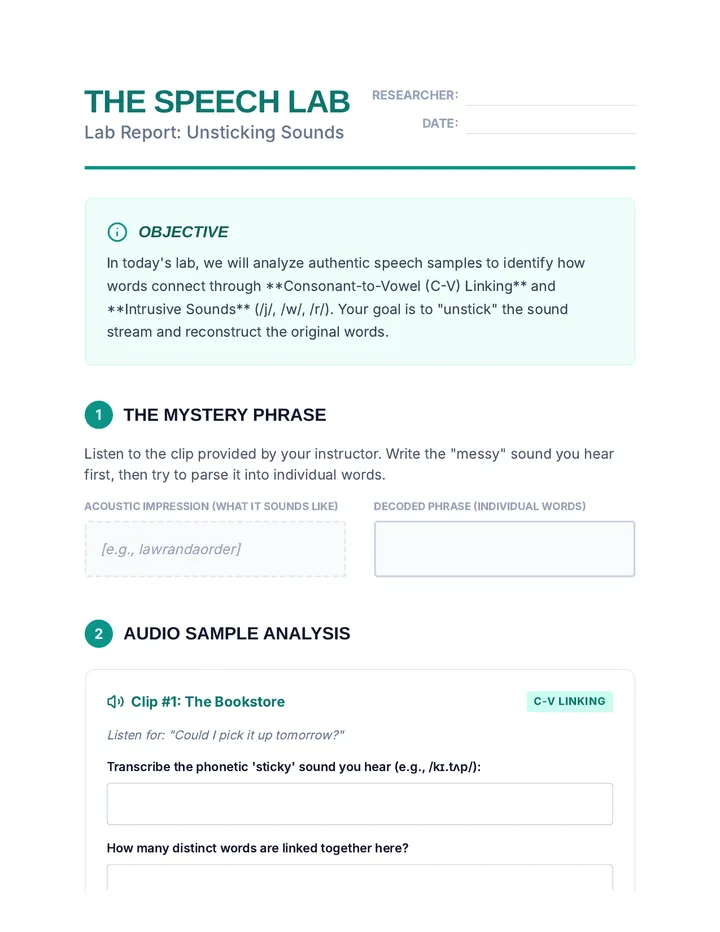
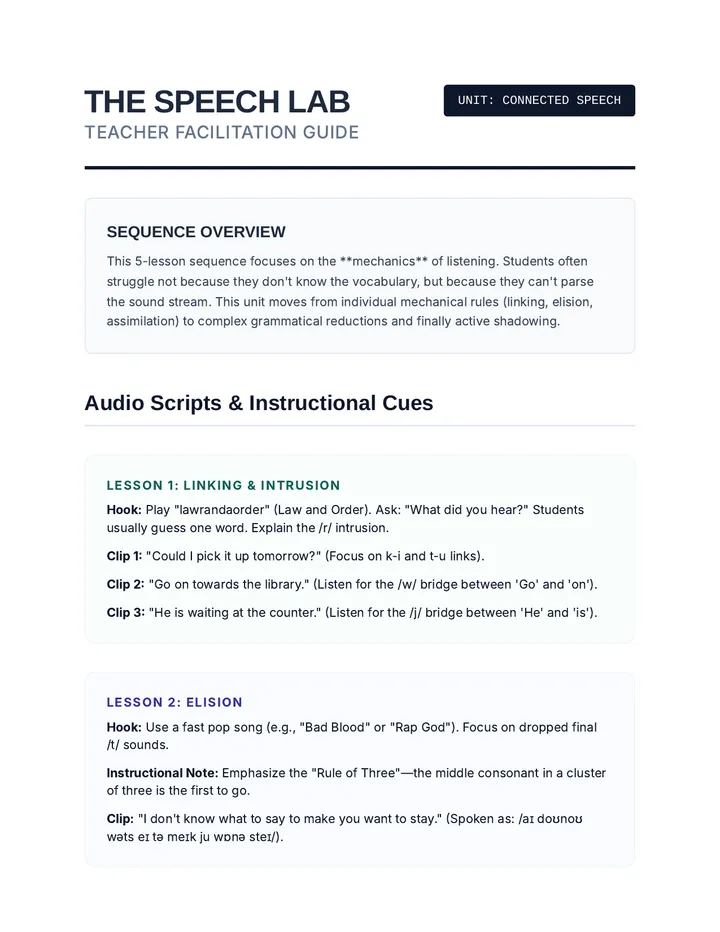
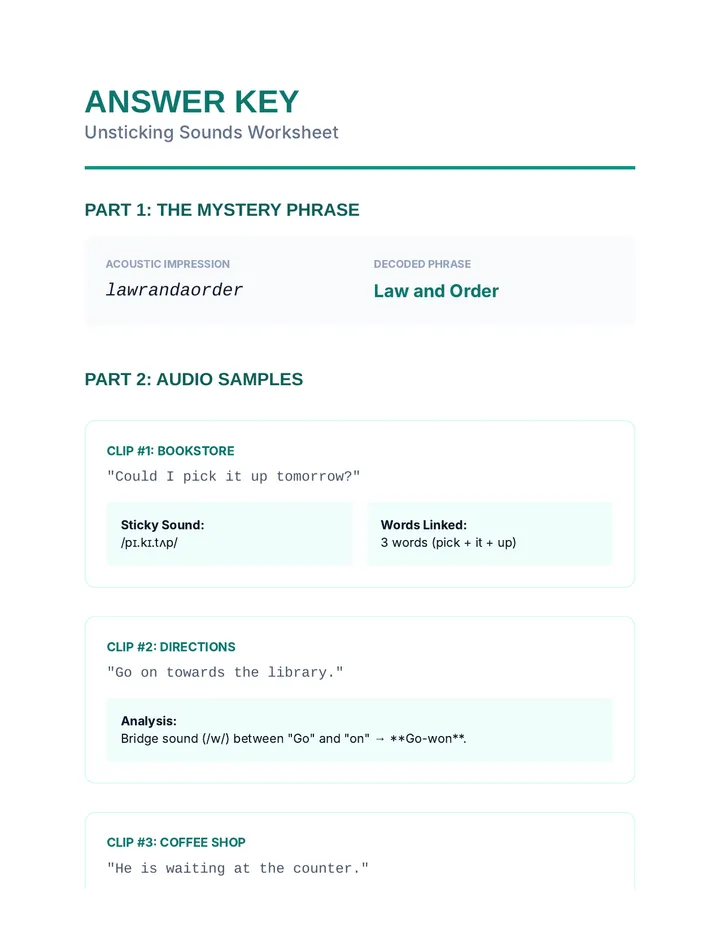
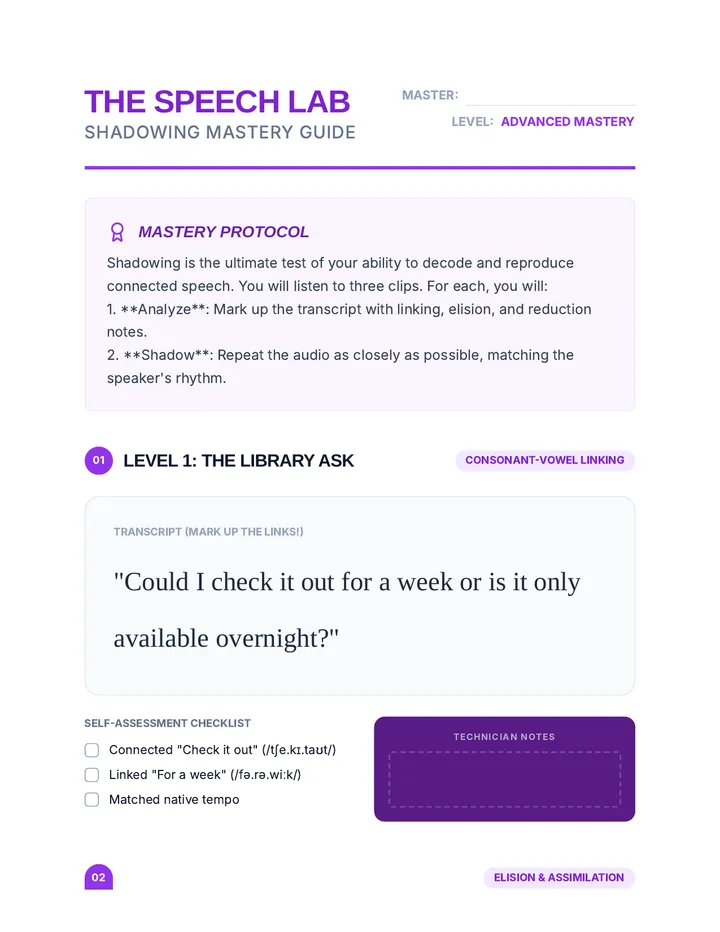
This sequence targets the mechanical difficulties of understanding natural, fast-paced English. Students explore phonological rules like linking, elision, and assimilation to decode authentic, fluid speech patterns found in campus social life.
Students engage in a 'shadowing' technique, repeating audio immediately after hearing it to internalize the rhythm and flow of connected speech. This active processing reinforces their ability to predict and process sound streams.
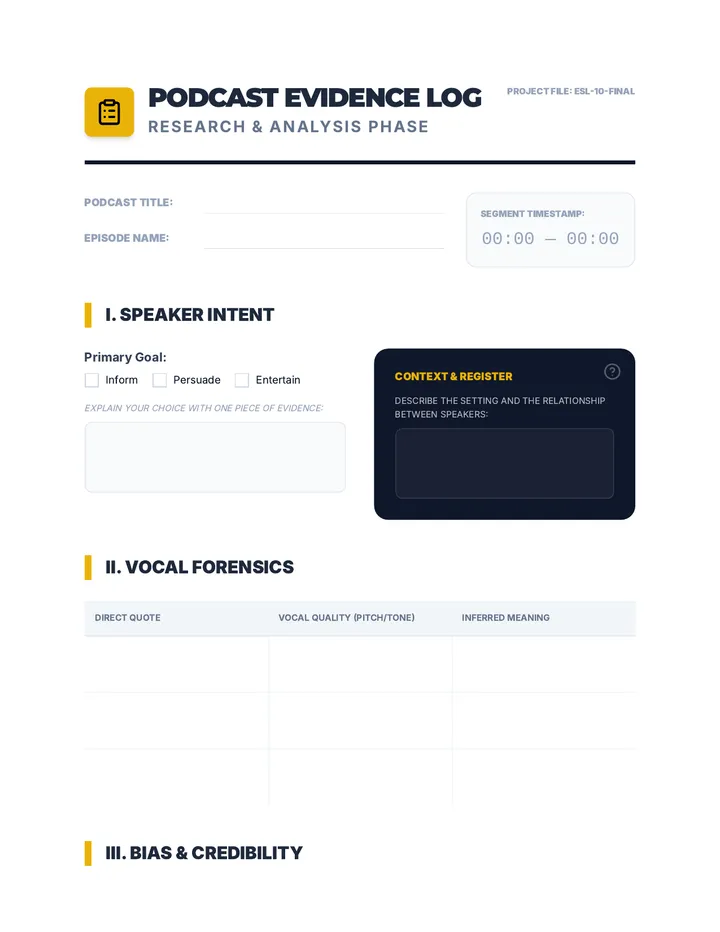
A detailed student evidence log for the final podcast project, providing sections for analyzing intent, vocal forensics, and bias check.
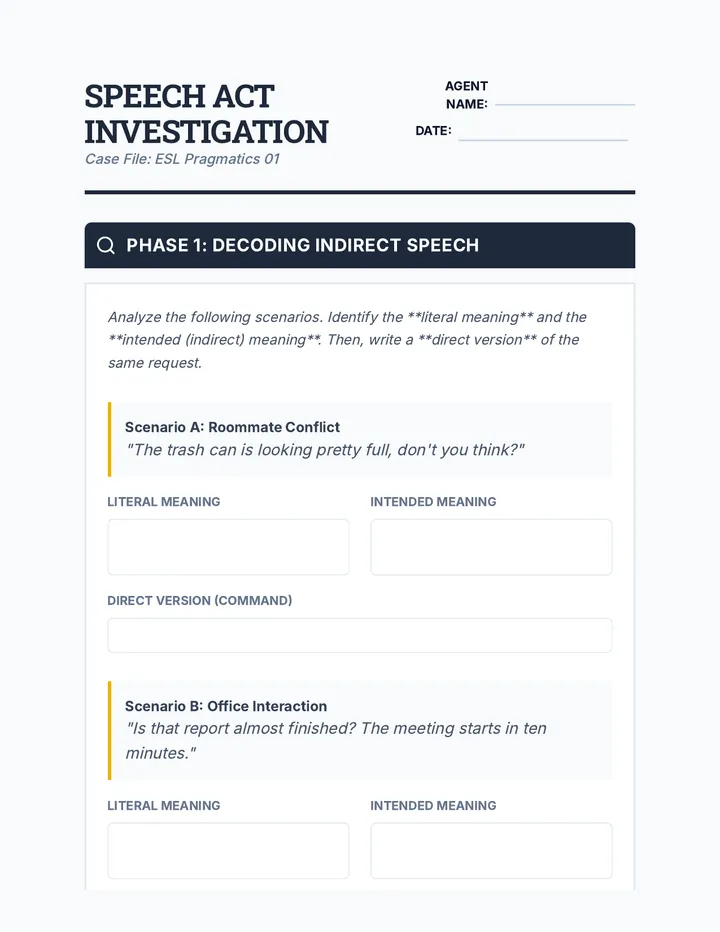
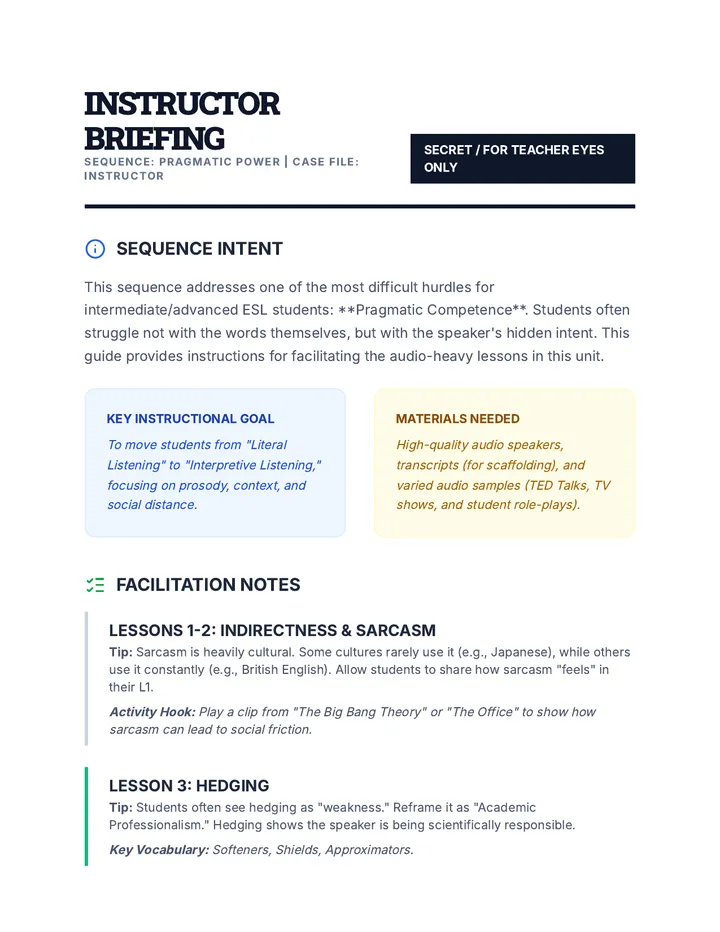
This sequence guides intermediate ESL students through the nuances of pragmatic meaning in English. Students will learn to decode indirect speech, sarcasm, hedging language, and emotional undertones in academic and social contexts to improve their listening comprehension and communicative competence.
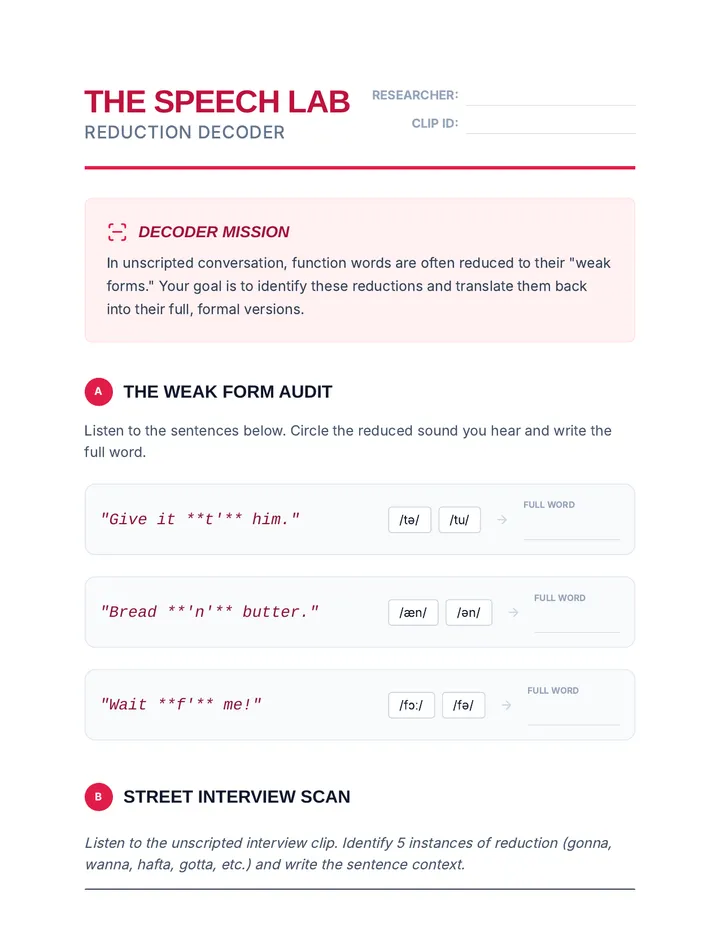
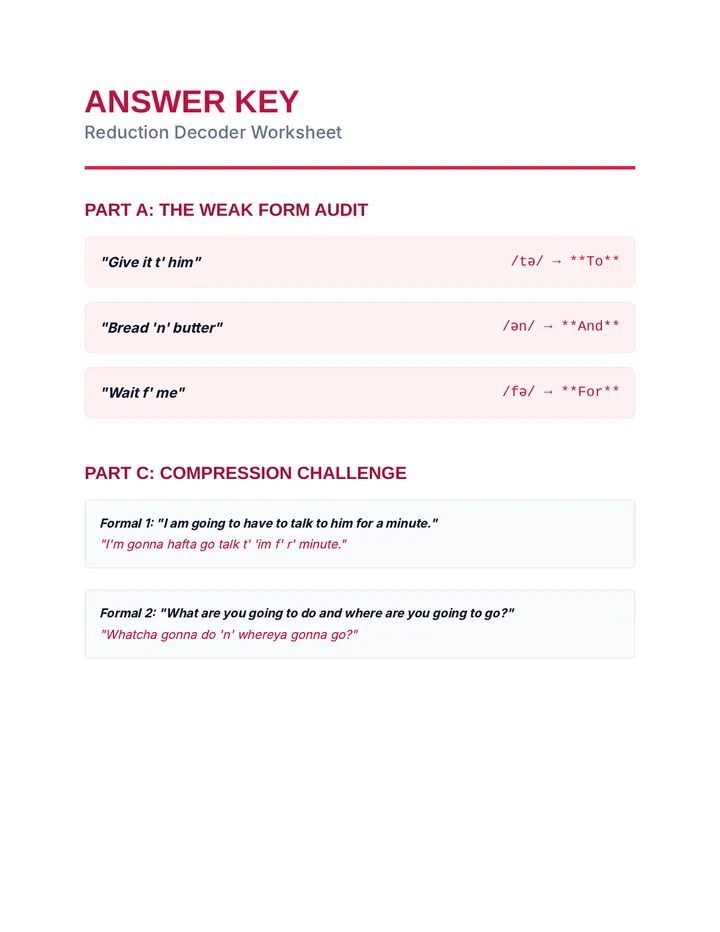
Focusing on function words, this lesson tackles common reductions like 'gonna,' 'wanna,' and weak forms of auxiliary verbs. Students analyze unscripted interviews to catch these reductions in context.
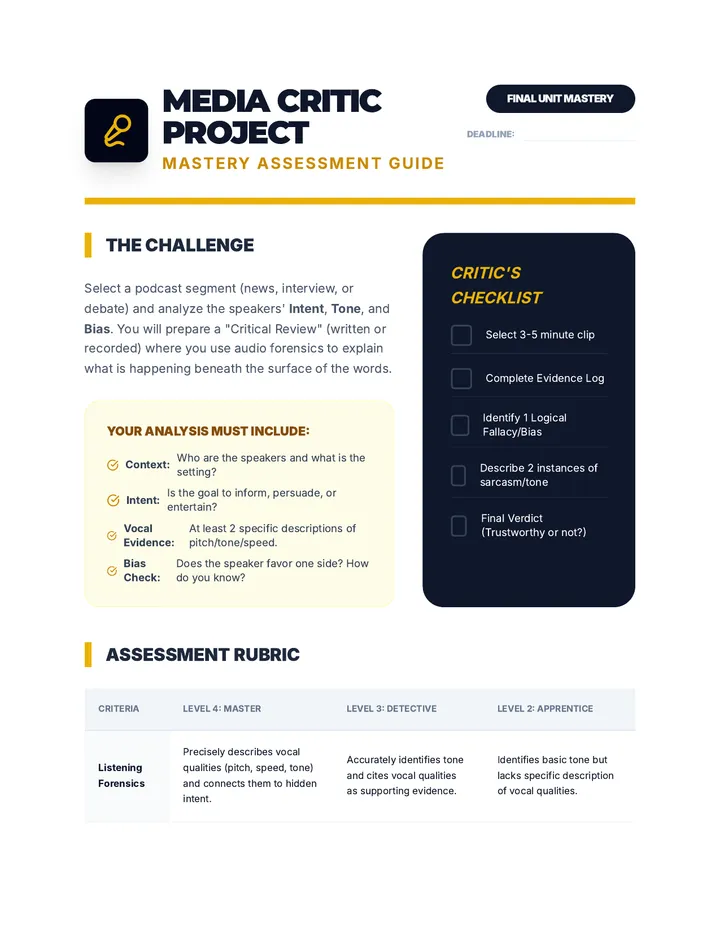
A guide for the final project where students select a podcast episode, analyze its intent and bias, and present their findings, including a checklist and a performance rubric.
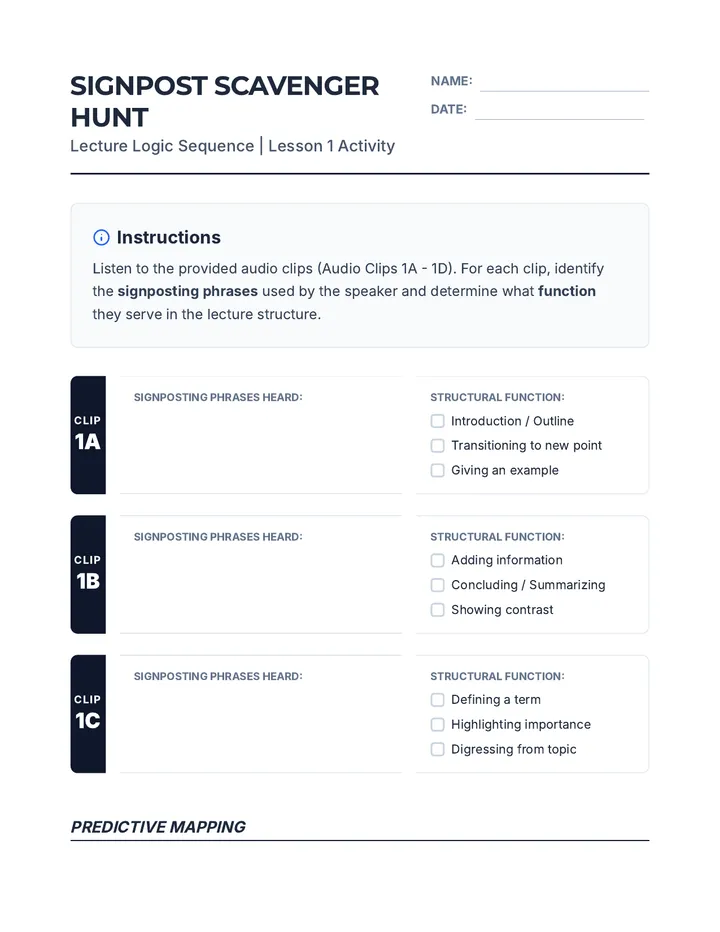
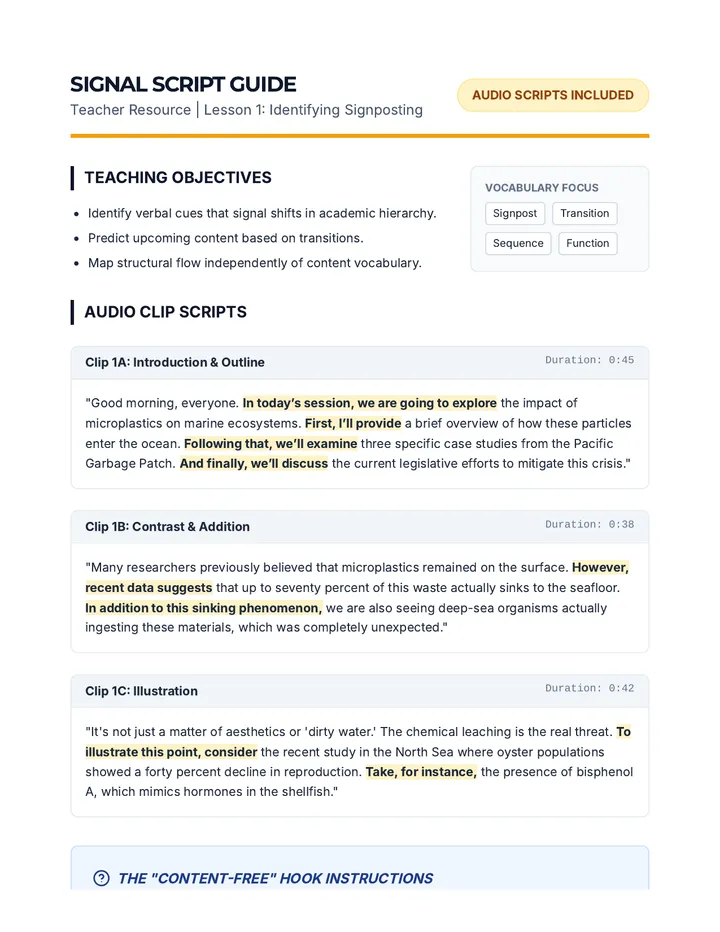
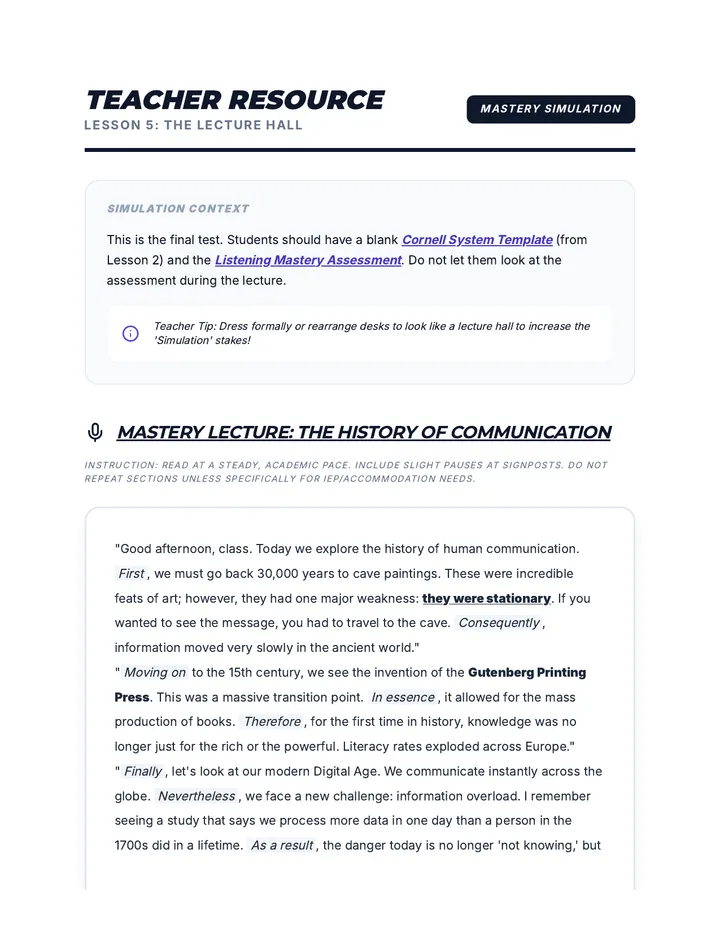
This sequence equips intermediate ESL students with the linguistic and cognitive tools needed to navigate university lectures. It covers discourse markers, hierarchy of information, identifying tangents, note-taking systems, and synthesizing long-form academic speech.
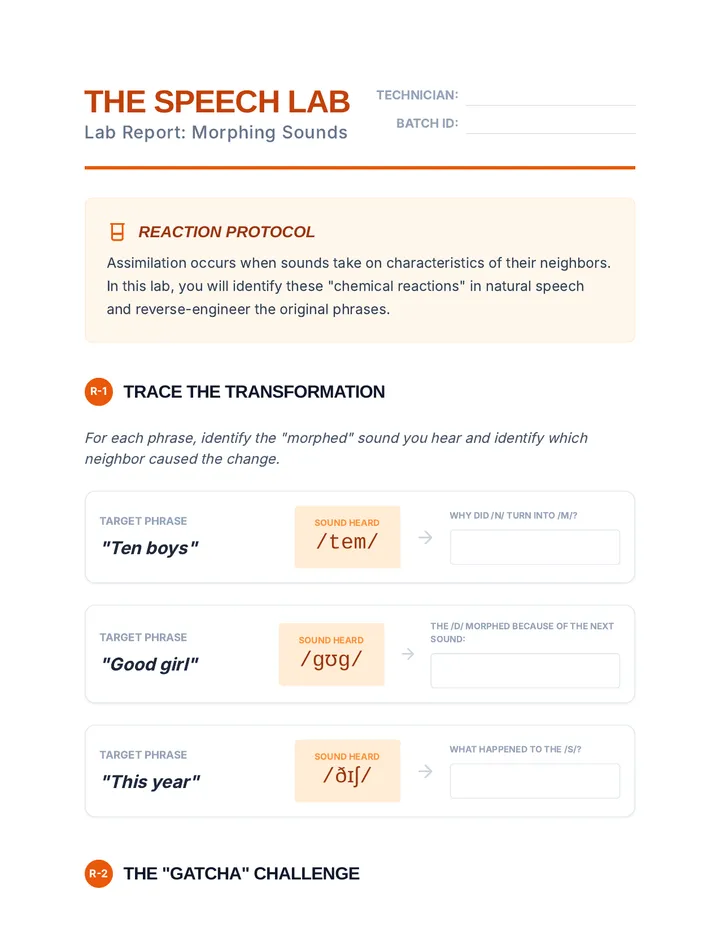
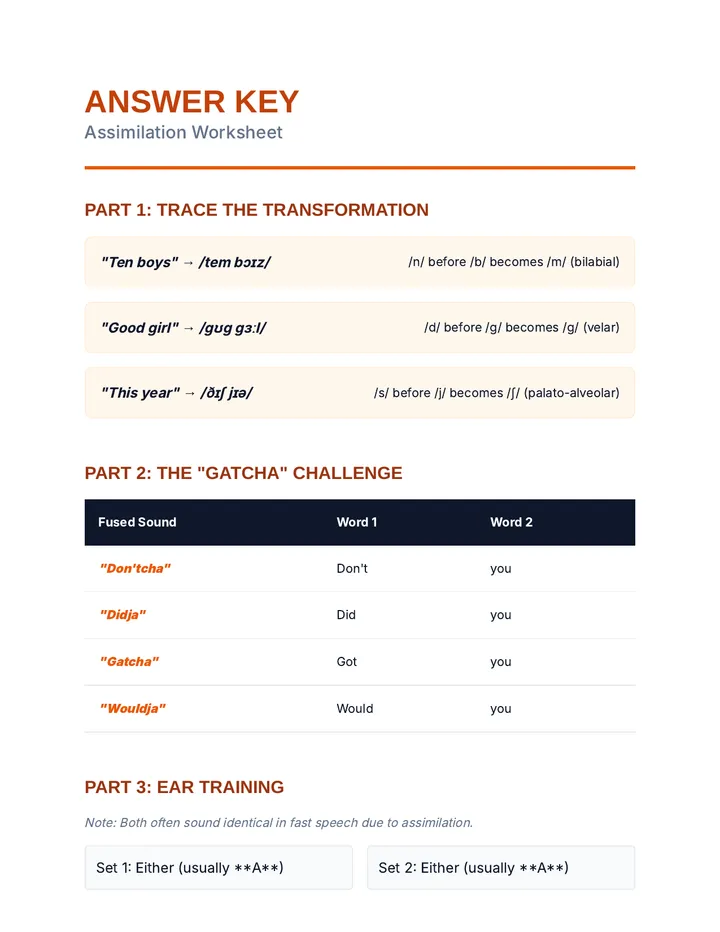
Students learn how sounds influence their neighbors (e.g., 'hand bag' becoming 'hambag'). The lesson uses minimal pair discrimination and dictation exercises to train ears to recognize words despite phonological changes.
Slides for the final project launch, introducing the media critic mission, criteria for analyzing podcasts, and methods for citing audio evidence.
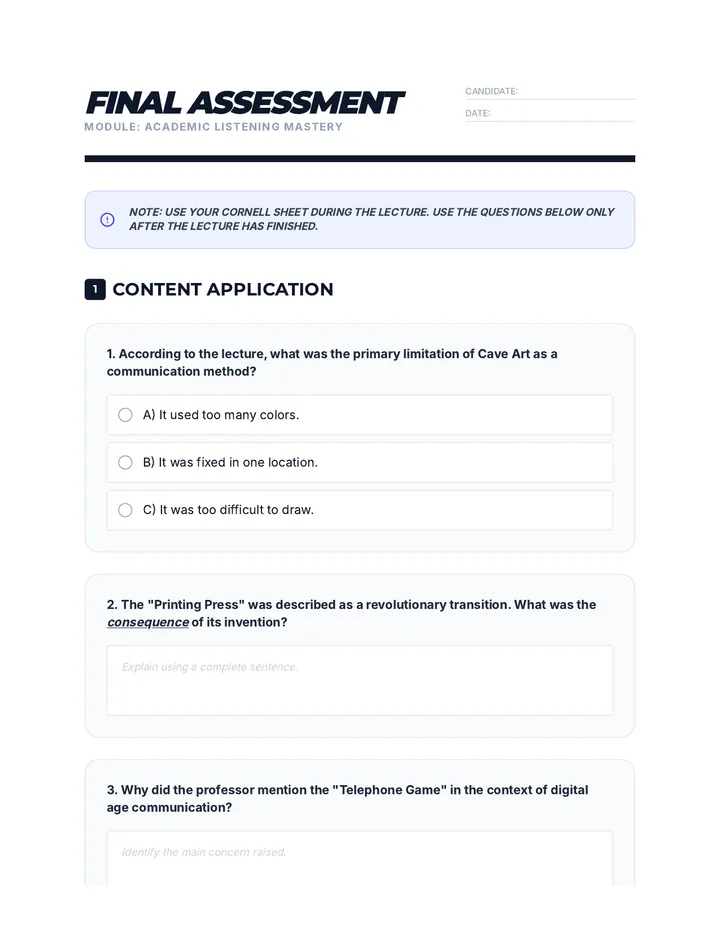
Students participate in a university-style mini-lecture simulation. They apply all learned strategies—signpost identification, Cornell note-taking, and synthesis—to capture information and complete a formal assessment.
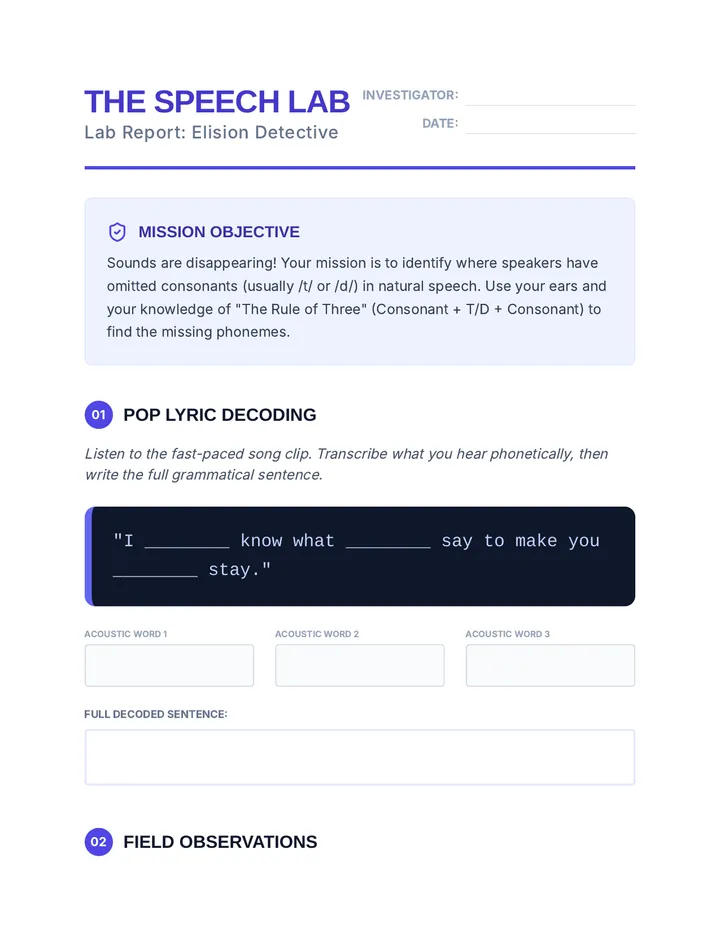
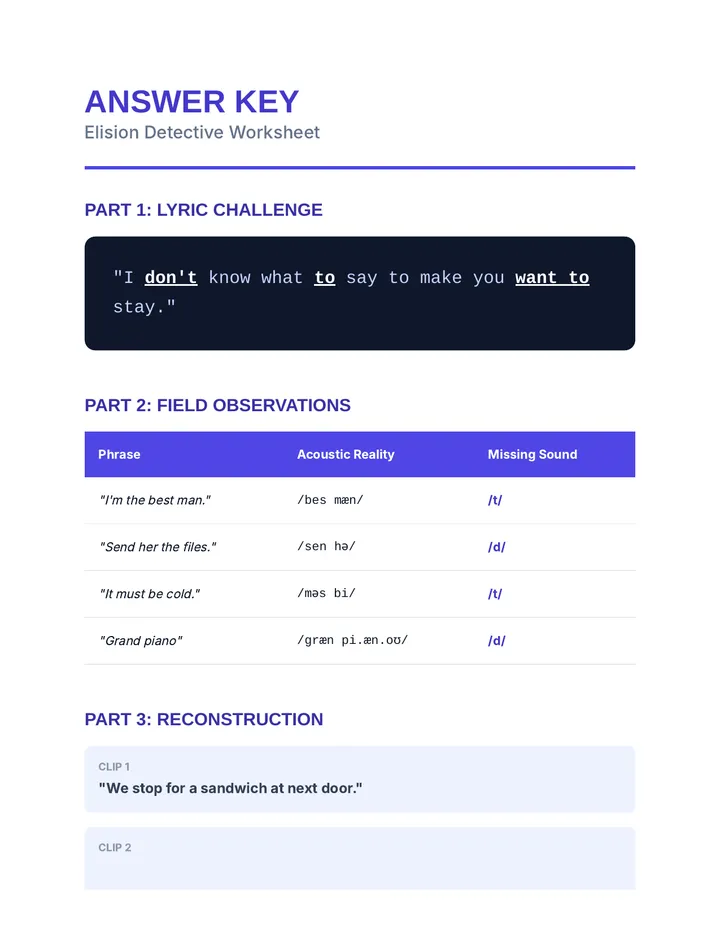
This lesson covers the phenomenon of elision, where sounds (particularly /t/ and /d/) disappear in rapid speech. Students practice listening to high-speed dialogues to identify words that have been 'swallowed' by the speaker.