Complex sentence structures, the subjunctive mood, and inversion for high-level linguistic precision. Addresses nuanced usage of advanced conditionals and passive voice variants across academic and professional contexts.
A grammar-focused ESL unit where students act as investigators to solve a classroom mystery. They master passive voice, modals of deduction, reported speech, and past perfect to write an objective case report.
An advanced exploration of English orthography for undergraduate students, focusing on the etymological origins and morphological structures of blends, digraphs, and trigraphs. This sequence prepares future educators to explain the 'why' behind spelling irregularities using historical linguistics and structural analysis.
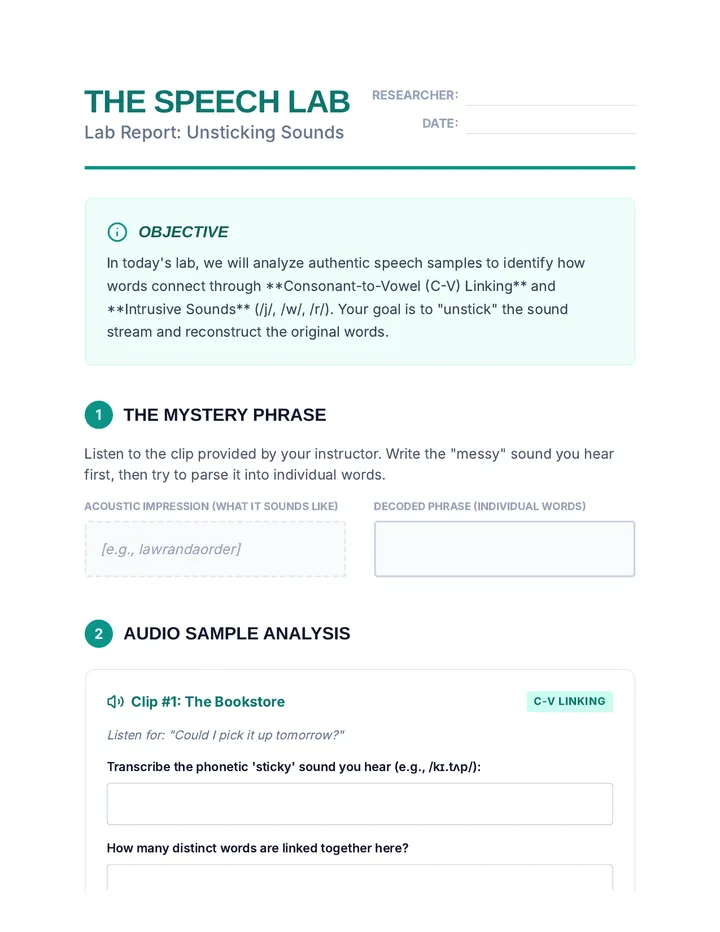
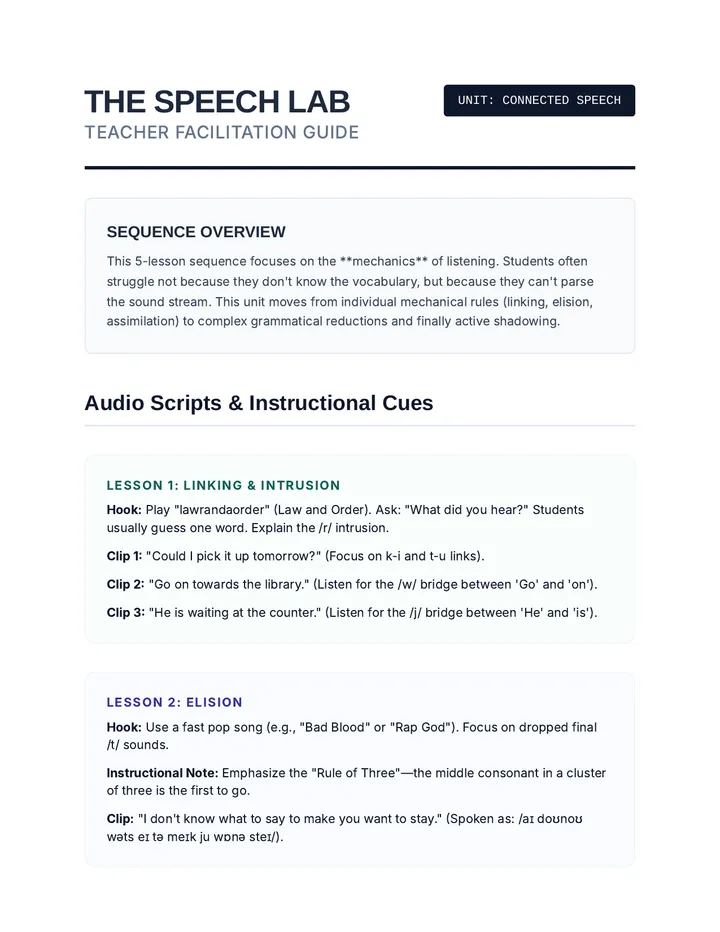
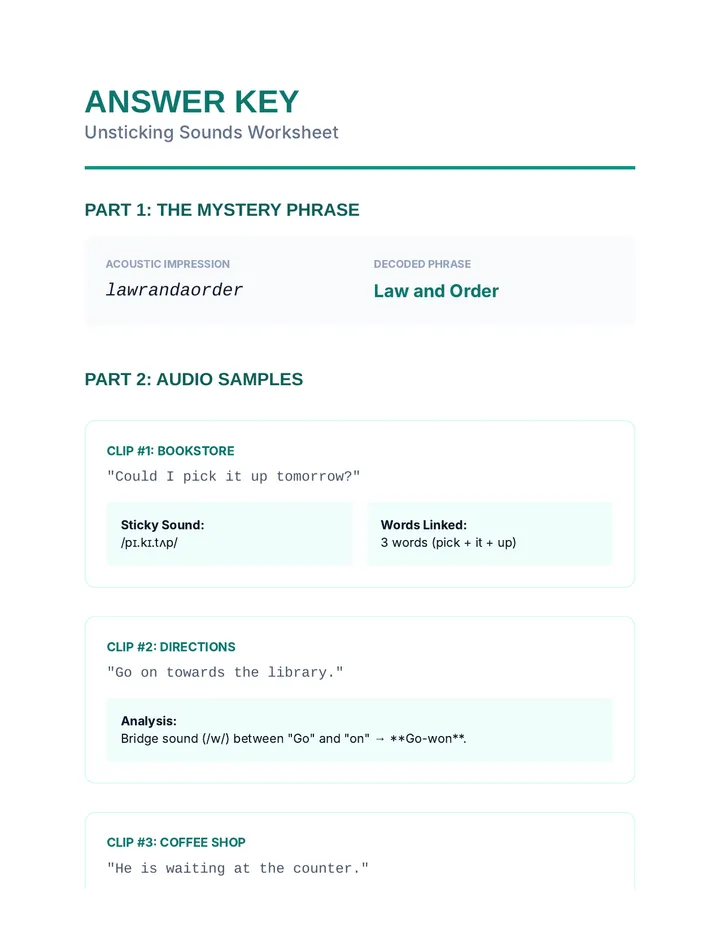
This sequence targets the mechanical difficulties of understanding natural, fast-paced English. Students explore phonological rules like linking, elision, and assimilation to decode authentic, fluid speech patterns found in campus social life.
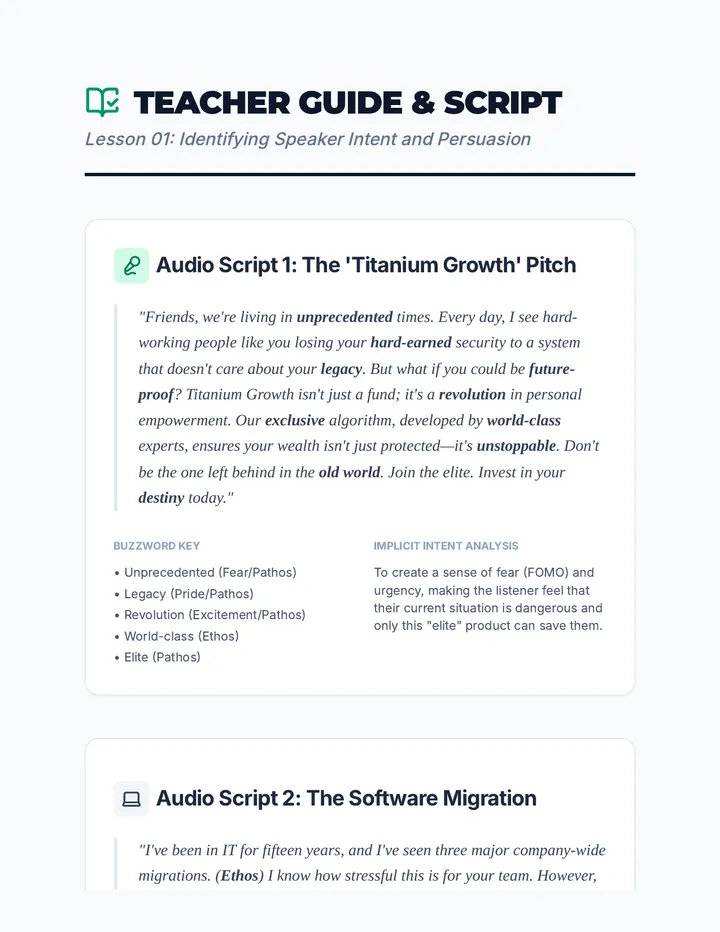
A 5-lesson sequence for 12th-grade ESL students focused on interpreting tone, intent, and implicit meaning in professional settings like job interviews and negotiations.
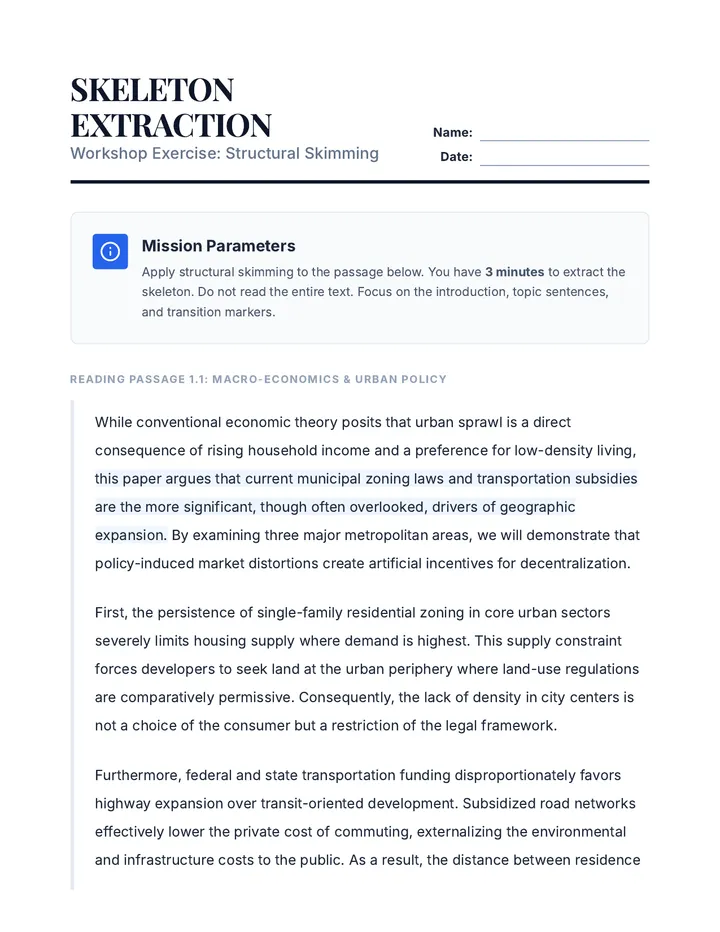
A high-intensity workshop sequence designed for graduate students to master the reading demands of the GRE, GMAT, and TOEFL. Focuses on skimming, scanning, contextual vocabulary, and syntactic deconstruction for maximum efficiency.
This sequence trains graduate-level ESL students to analyze the psychometric logic of standardized test questions. Students learn to identify common distractor patterns—such as absolute language, irrelevant truths, and faulty inferences—transforming their approach from guessing to systematic logical elimination.
A comprehensive sequence designed for graduate ESL students to master the integrated writing and speaking tasks of high-stakes academic exams like TOEFL iBT and IELTS. The curriculum focuses on shorthand note-taking, identifying inter-source relationships, utilizing structural templates, and rapid synthesis under timed conditions.
A comprehensive sequence designed to help 10th-grade ESL students master academic test-taking by analyzing question stems, evaluating answer choice logic, and applying prediction strategies. Students move from basic identification of keywords to complex synthesis of strategies across various question types.
A comprehensive 5-lesson unit for 11th-grade ESL students focused on deconstructing complex academic test prompts. Students transition from identifying instructional verbs to parsing syntax, distinguishing inference from literal recall, and mastering advanced strategies like prediction and handling negative constraints.
A comprehensive 11th Grade ESL sequence focused on mastering multiple-choice tests through the 'Test Detective' framework. Students learn to identify distractor patterns like scope errors, verbatim traps, and absolute language to improve academic reading comprehension and test performance.
A comprehensive unit for high school seniors focused on deconstructing the logic of standardized English exams. Students learn to identify question components, categorize common distractors, and apply process-of-elimination techniques to improve performance on tests like TOEFL, IELTS, and SAT.
A comprehensive sequence for 12th Grade ESL students focused on mastering the writing sections of high-stakes English proficiency exams. Students learn formulaic yet effective strategies for prompt analysis, outlining, introductory structure, body paragraph development, and rapid proofreading to maximize scores under strict time limits.
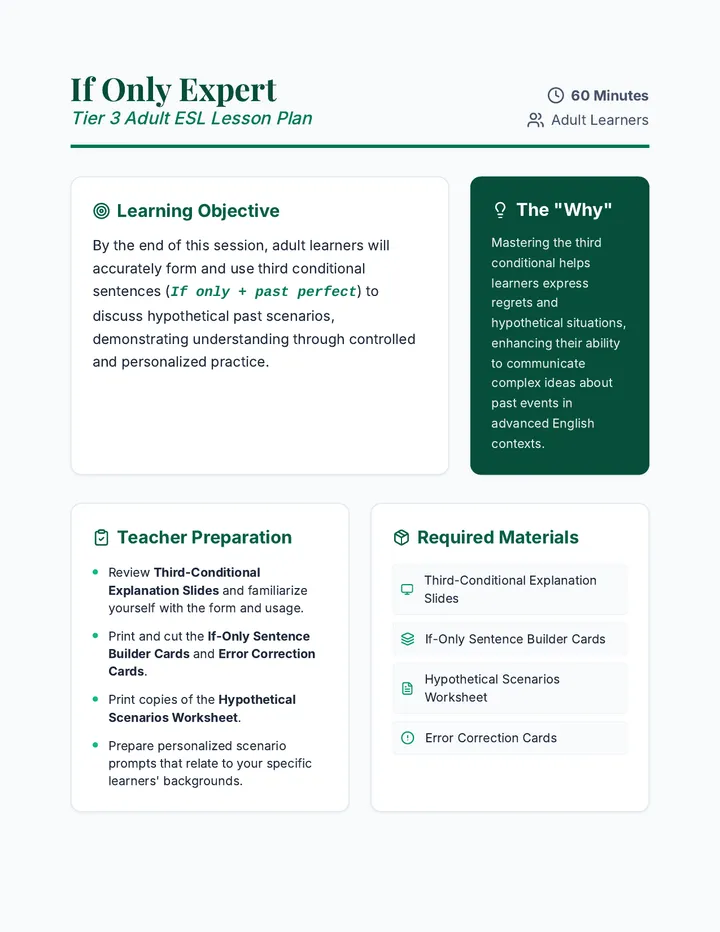
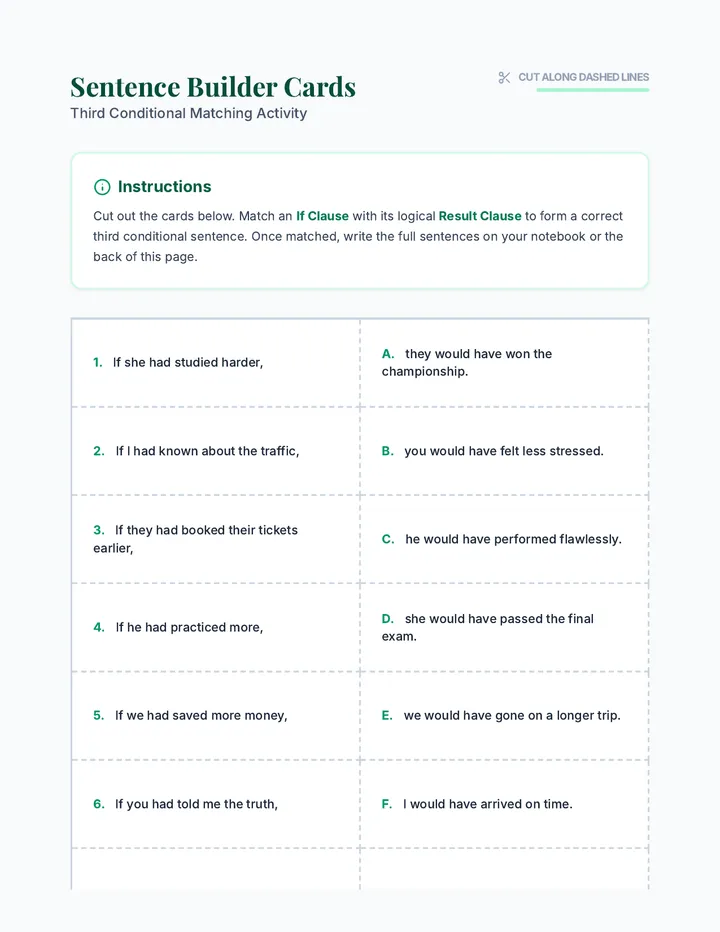
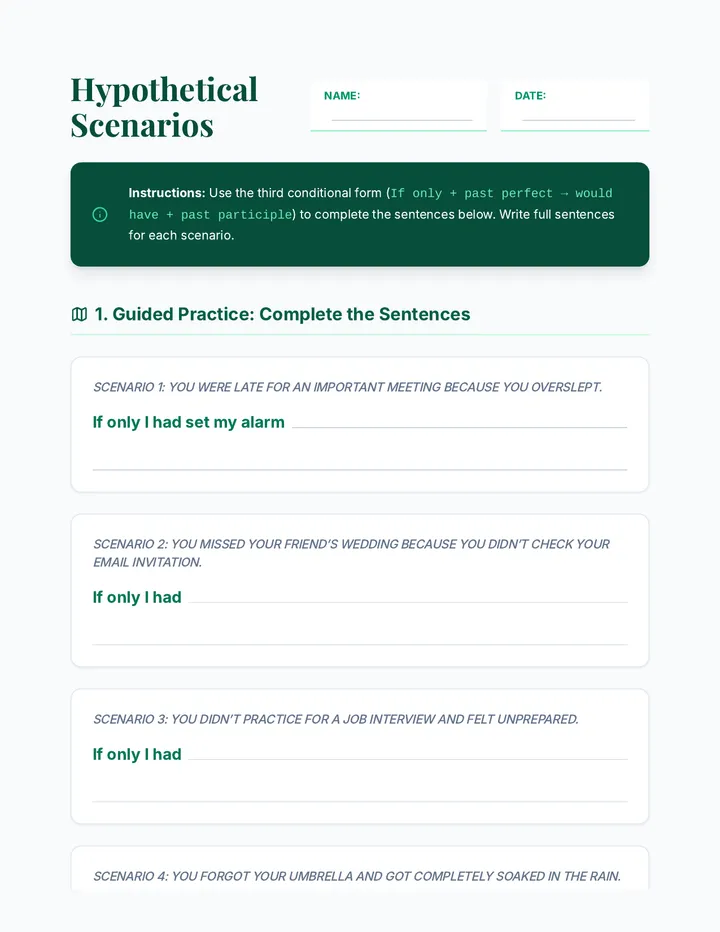
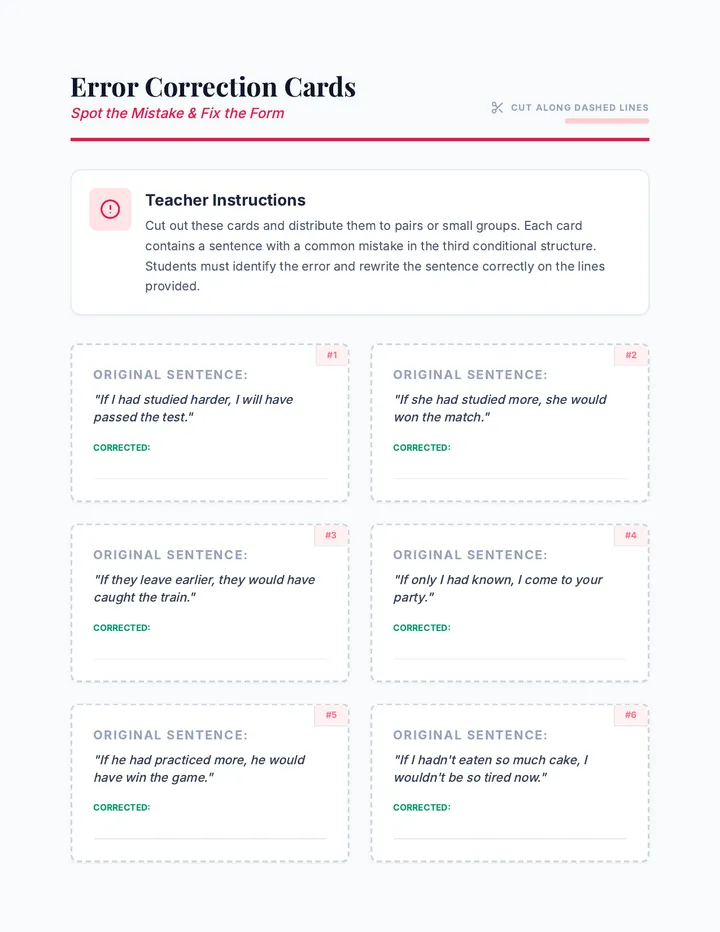
A 60-minute Tier 3 session for adult learners focused on mastering the third conditional to express regrets and hypothetical past scenarios. Participants will move from guided form analysis to personalized application through scenarios and error correction.