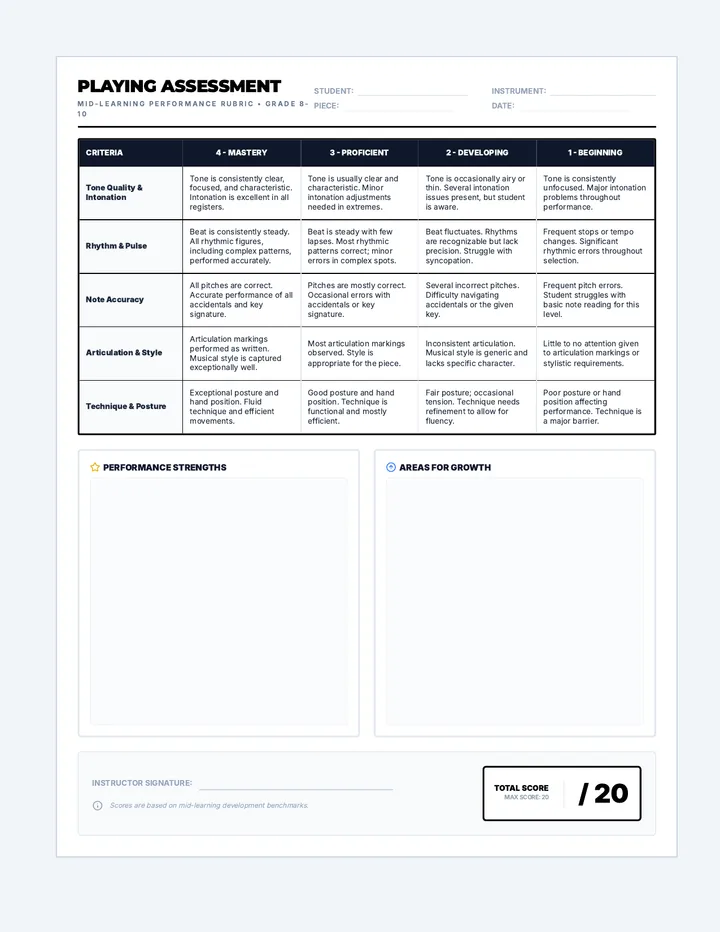
Fundamental notation, instrumental proficiency, and vocal techniques across various genres. Connects historical analysis with original composition and creative performance skills.
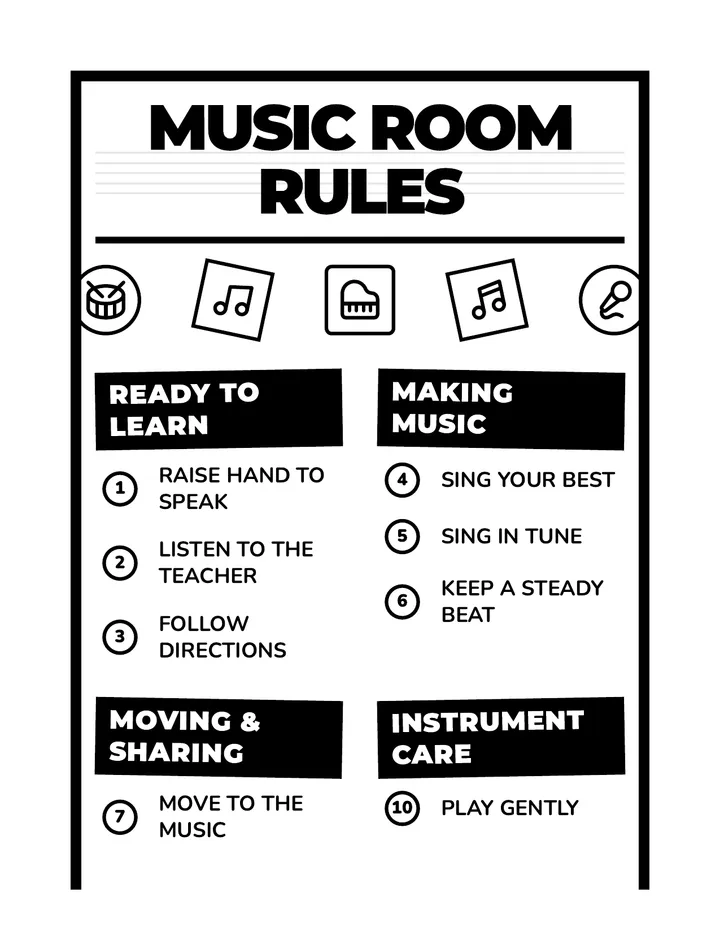
A high-contrast black and white music classroom rules poster designed for easy printing and coloring. It features 12 essential rules grouped into musical categories with decorative icons and space for students to personalize.
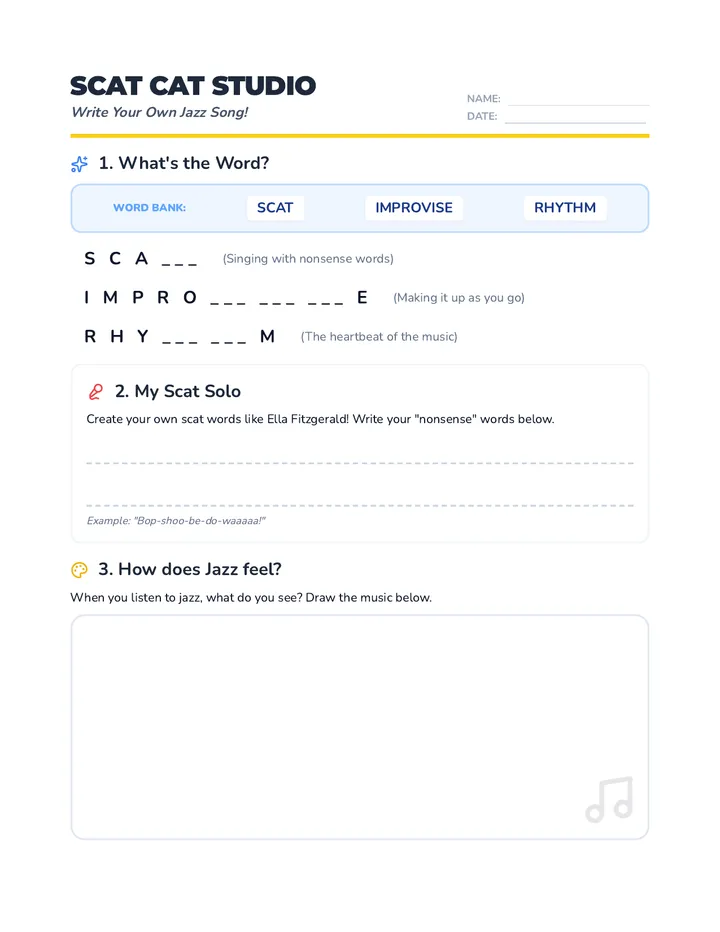
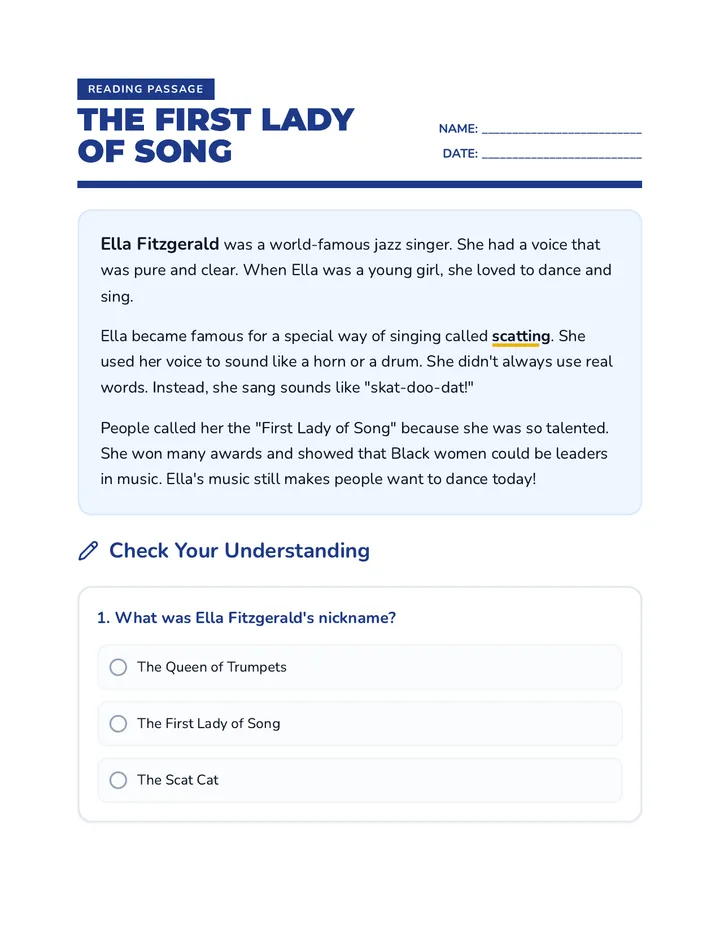
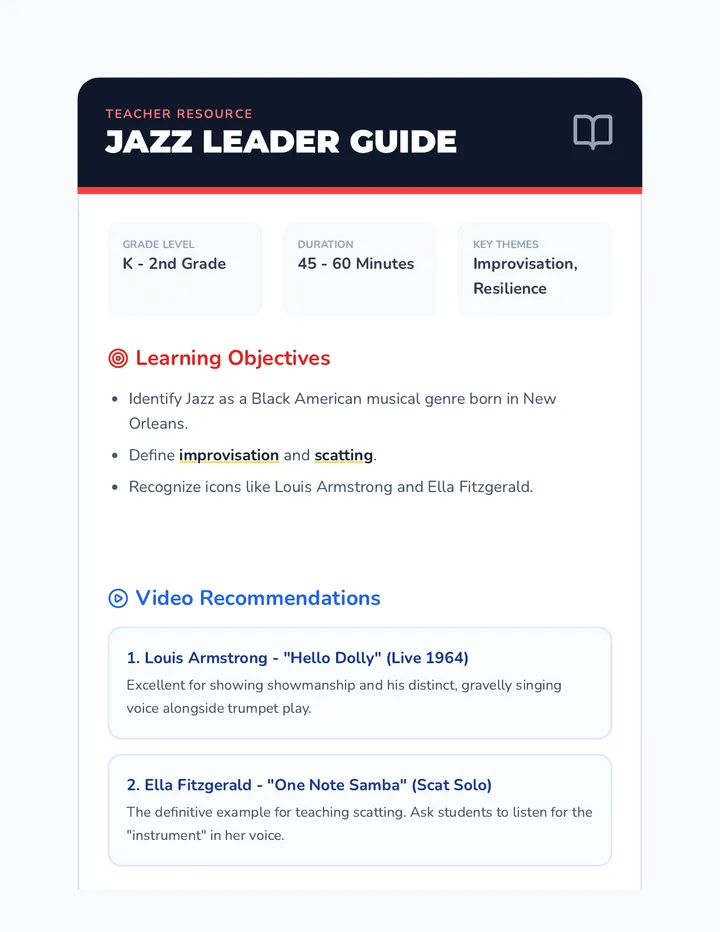
An introductory exploration of jazz music for K-2 students, centering its Black American roots and legendary pioneers through listening, speaking, and creative expression.
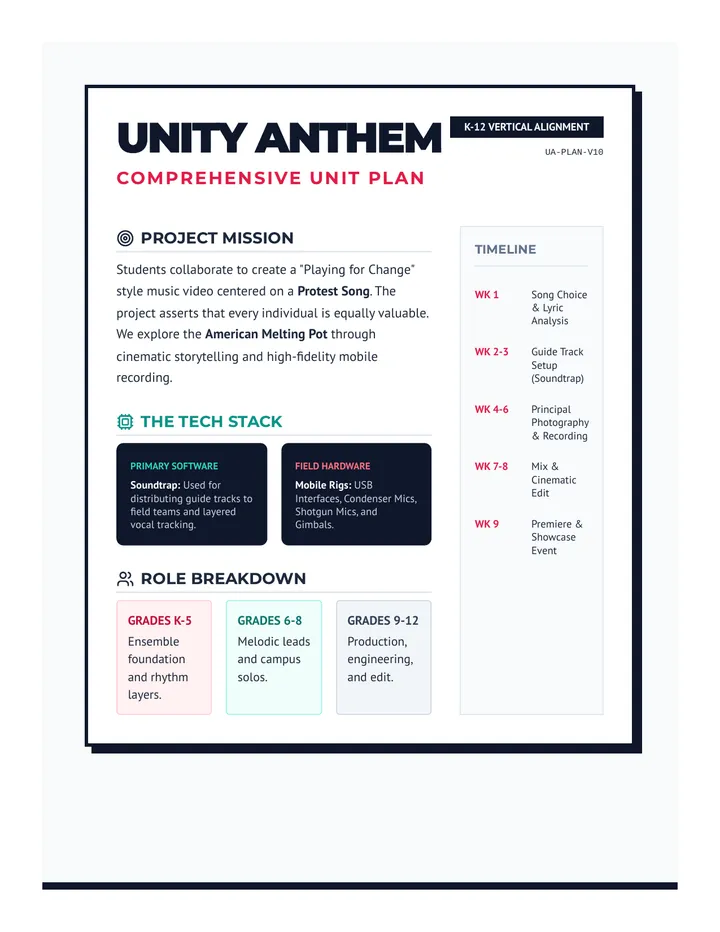
A K-12 collaborative music video project where students across all grade levels work together to produce a 'Playing for Change' style cover of a protest song centered on equality and cultural identity. High school students lead production, while K-8 students provide the musical and visual heart of the performance.
A comprehensive 6-lesson unit for 5th graders exploring the history, evolution, and legendary figures of American Jazz, from its New Orleans roots to its global legacy today.
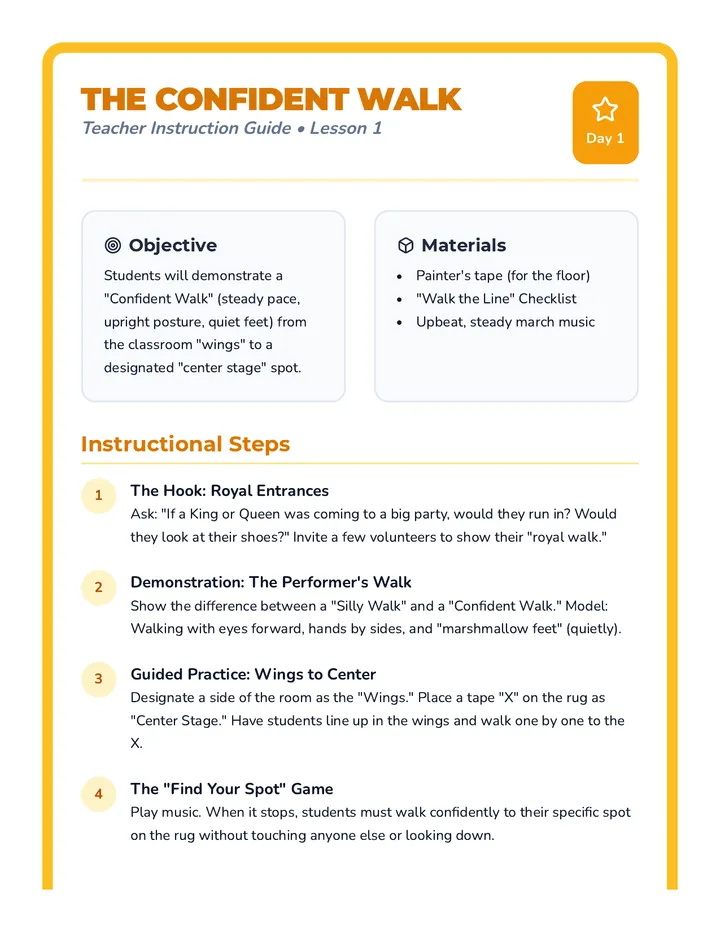
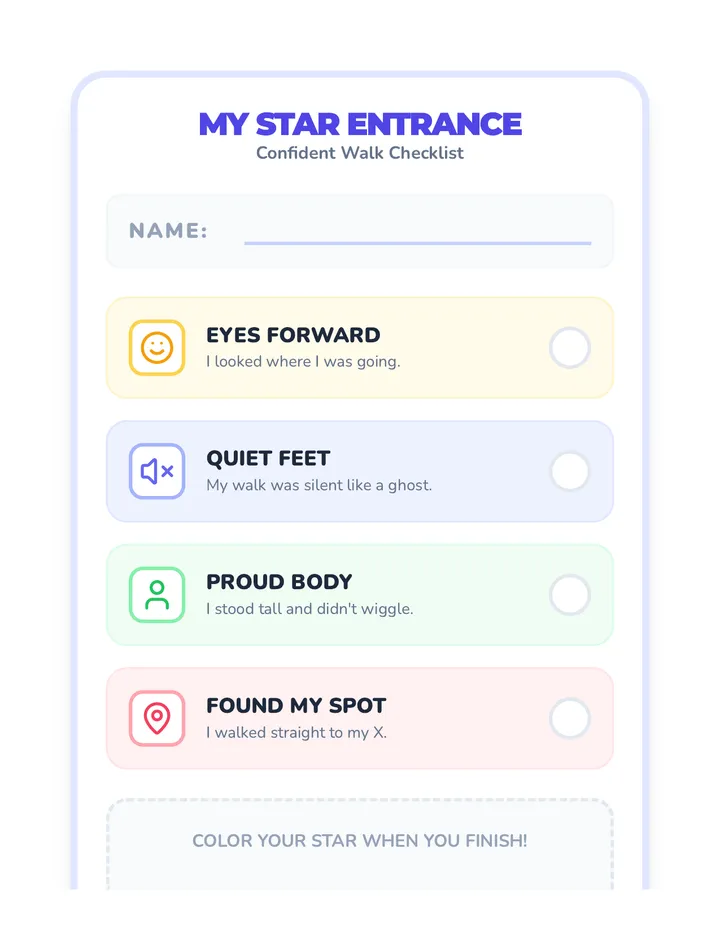
A Kindergarten music sequence focused on stage presence, performance routine, and building confidence through role-play and preparation. Students learn the full cycle of a performance, from walking on stage to the final bow.
This advanced performance sequence for graduate vocalists bridges the gap between technical vocal production and authentic theatrical embodiment. Students move from deep text analysis and subtexting to physical movement (Laban efforts) and stage optics, culminating in a synthesized performance where vocal technique serves dramatic intent.
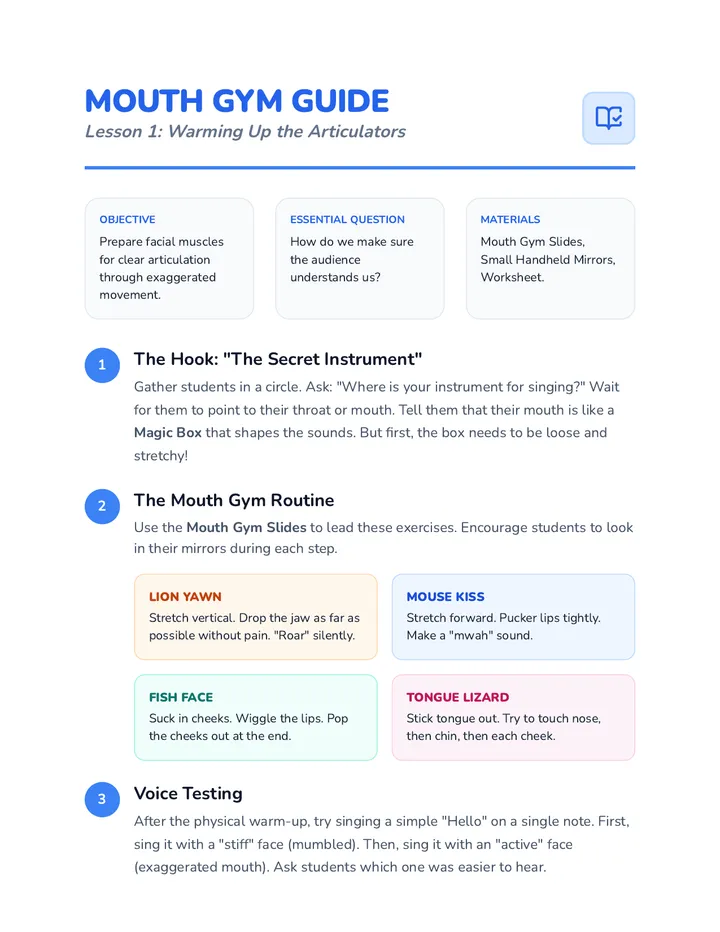
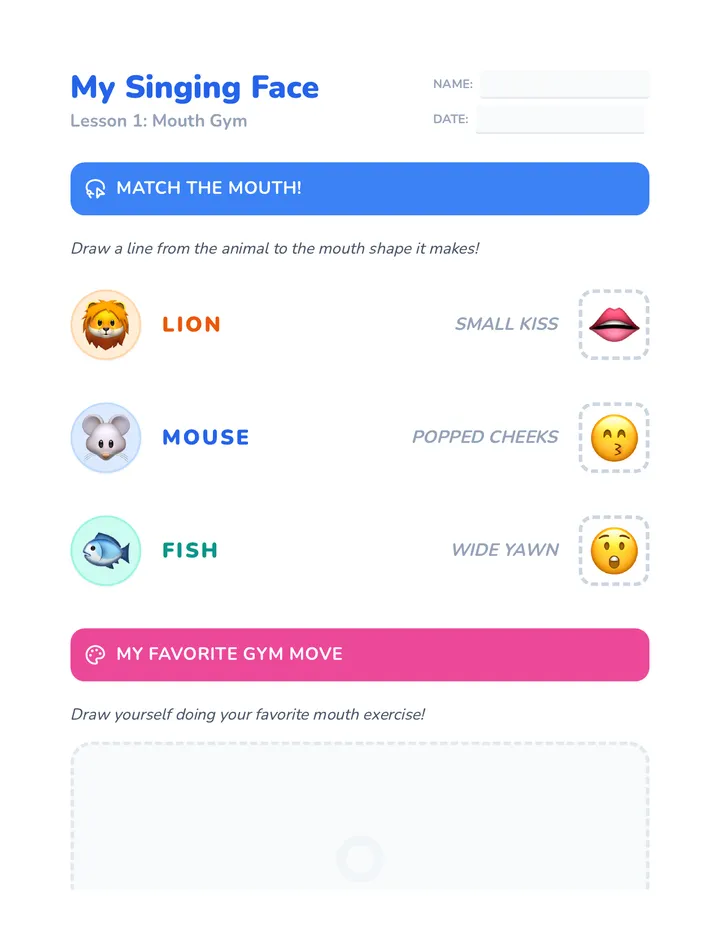
A fun, interactive music sequence for Pre-K students focused on developing clear articulation and rhythmic precision in singing through games, mouth gymnastics, and nursery rhymes.
This sequence guides 6th-grade students through the intersection of vocal technique, performance psychology, and genre stylization. Students explore how to adapt their voice and physical presence for Folk and Musical Theater while building the emotional resilience needed for public performance.
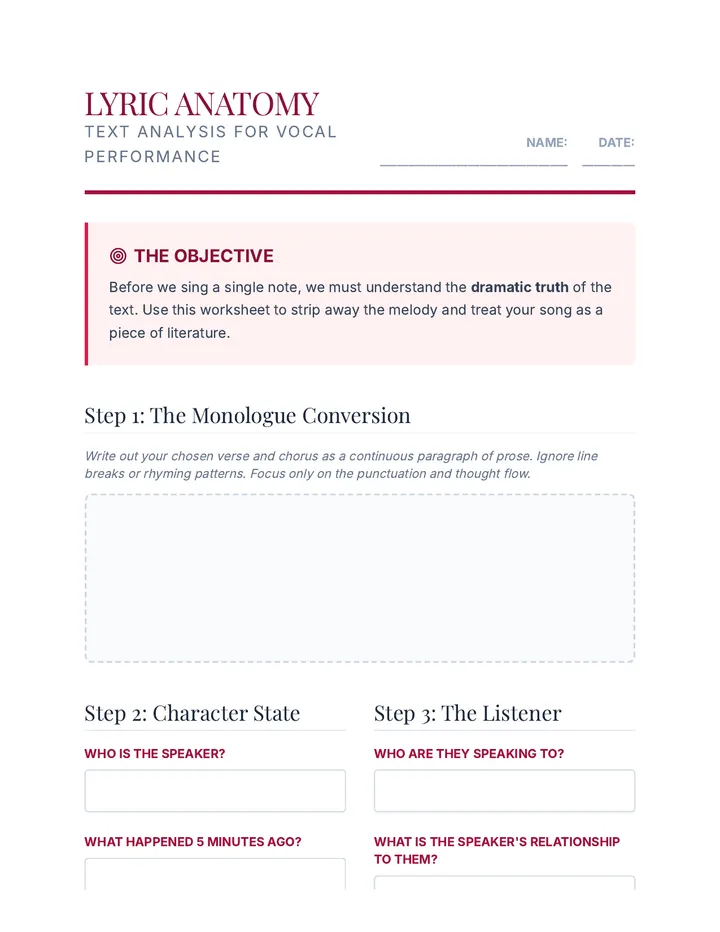
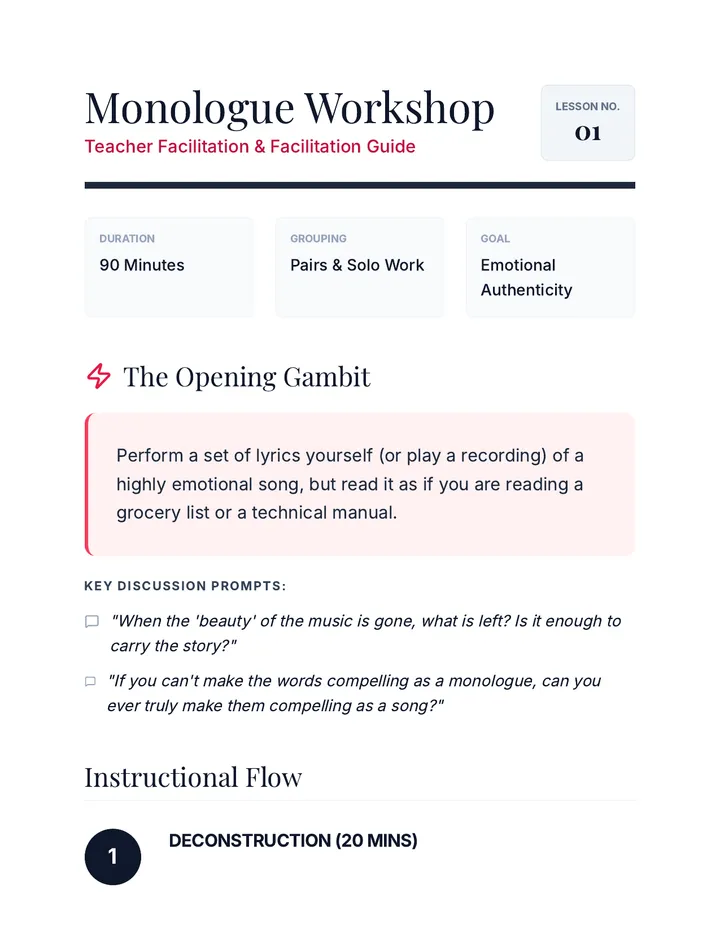
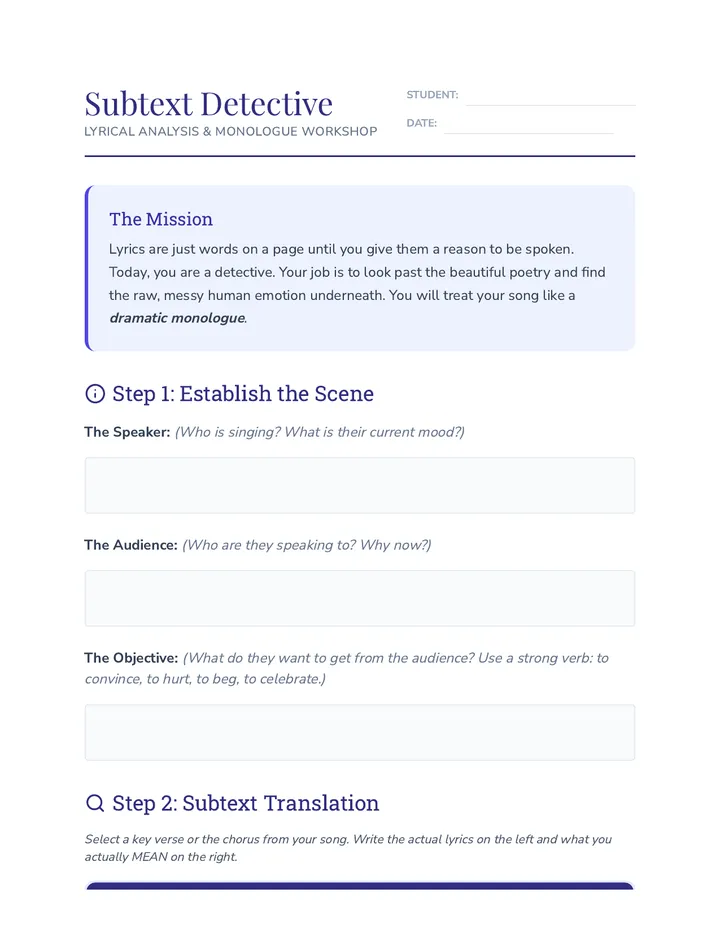
A comprehensive vocal performance sequence for 12th graders focusing on the intersection of acting and singing. Students learn to treat songs as monologues, identify subtext and objectives, map musical arcs, and use vocal timbre as an expressive tool for storytelling.
A 5th-grade music history sequence exploring the development of Jazz and Blues, from African call-and-response roots to the birth of Rock n' Roll. Students investigate structural forms like the 12-bar blues, concepts like syncopation and improvisation, and the cultural resilience behind the music.
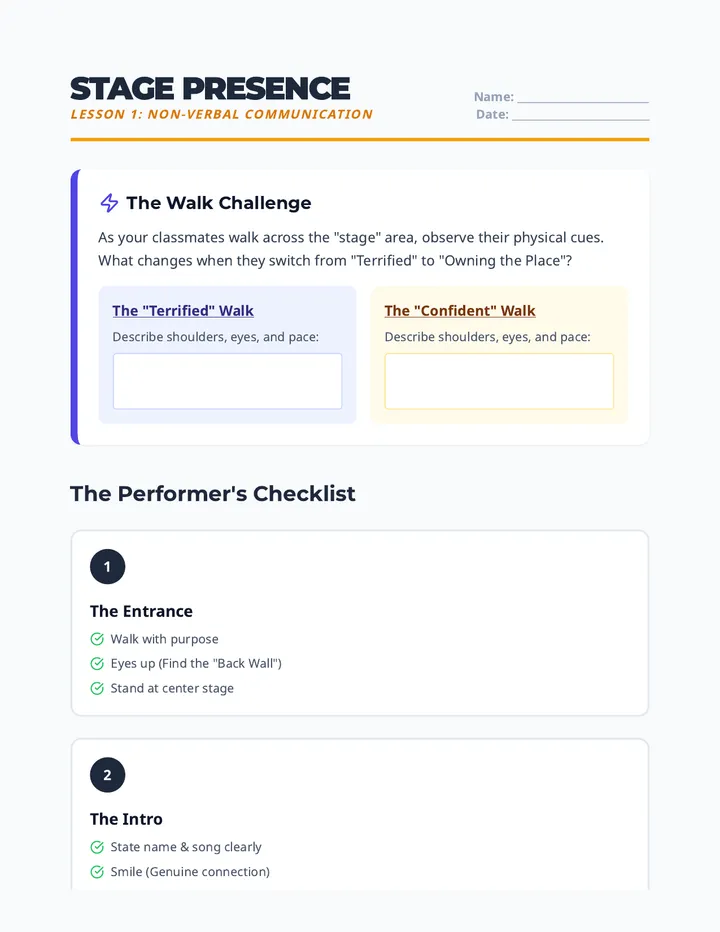
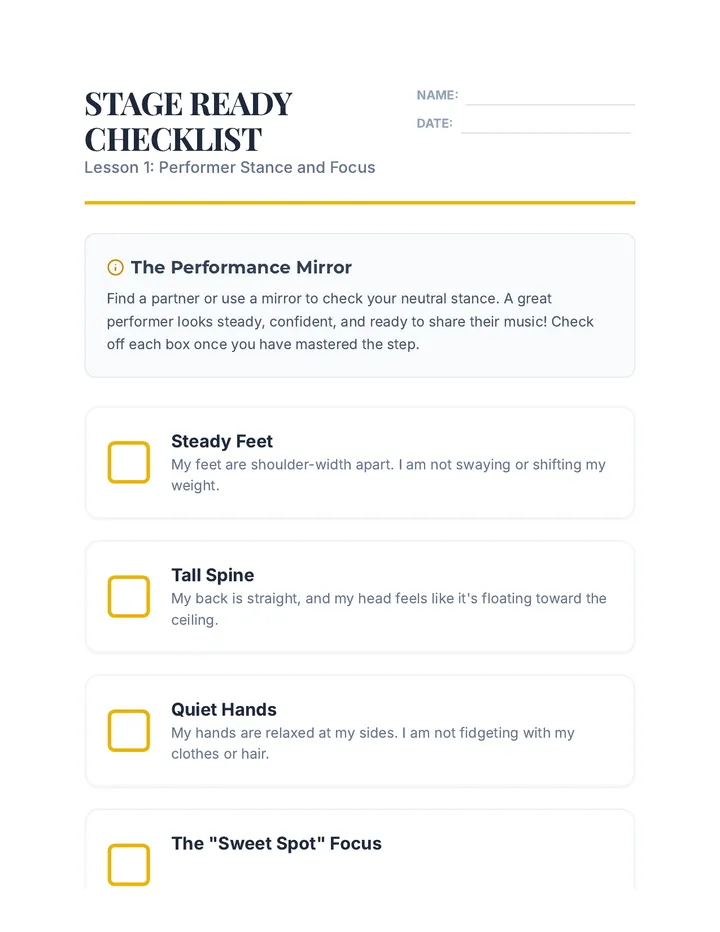
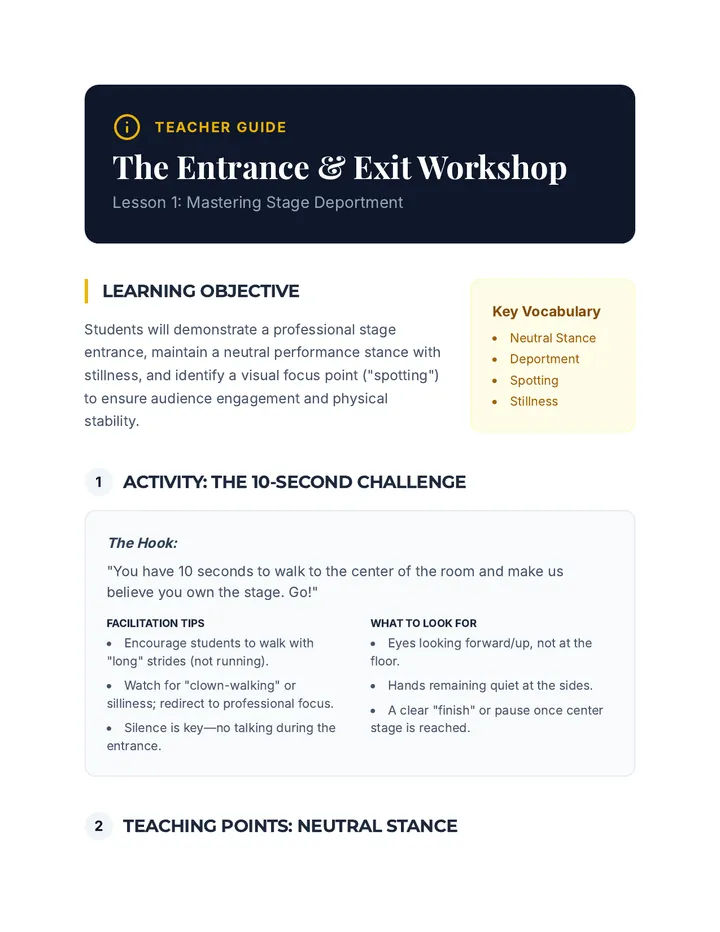
This sequence guides 4th-grade students through the visual and psychological aspects of vocal performance. Students will master stage presence, manage performance anxiety, and learn to connect with their audience through non-verbal communication and professional etiquette.
A comprehensive vocal performance sequence that teaches students to move beyond notes and rhythms to become vocal 'actors.' Students analyze subtext, master expressive diction, map musical phrasing, and explore tone color to deliver emotionally authentic performances.
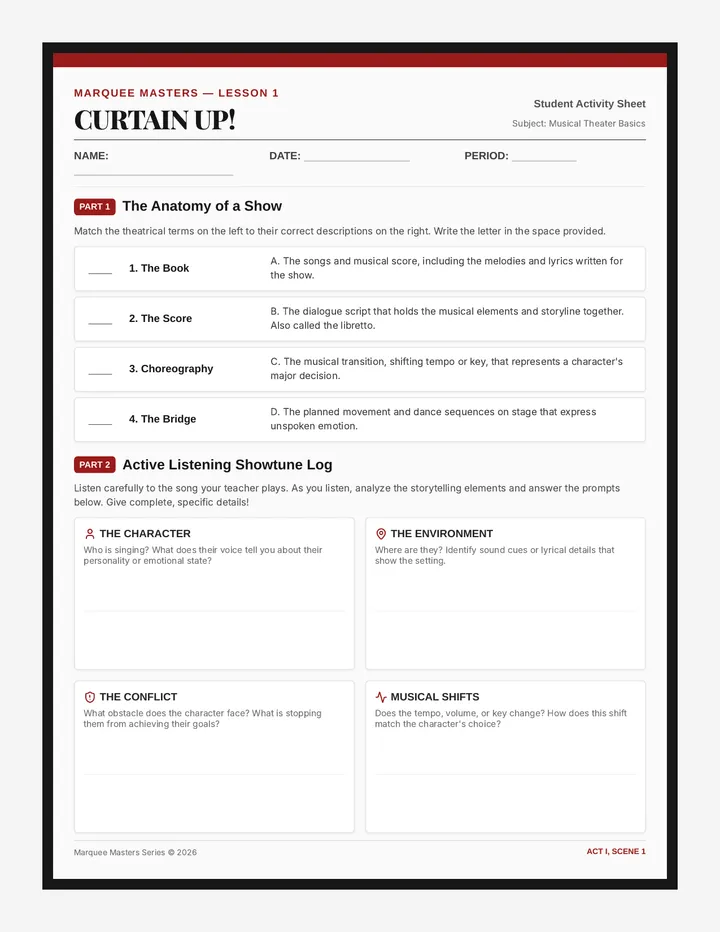
An immersive 8-lesson musical theater sequence for middle school students exploring the history, character motivations, and performance techniques of Broadway showtunes. Students analyze historical eras, dissect character lyrics, and develop basic stage performance skills.
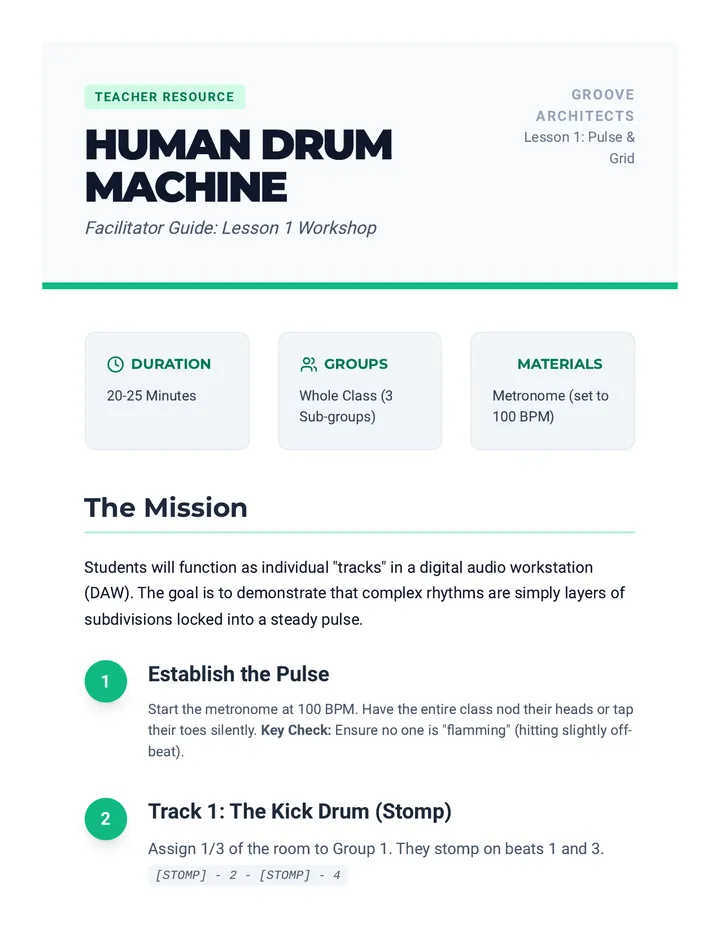
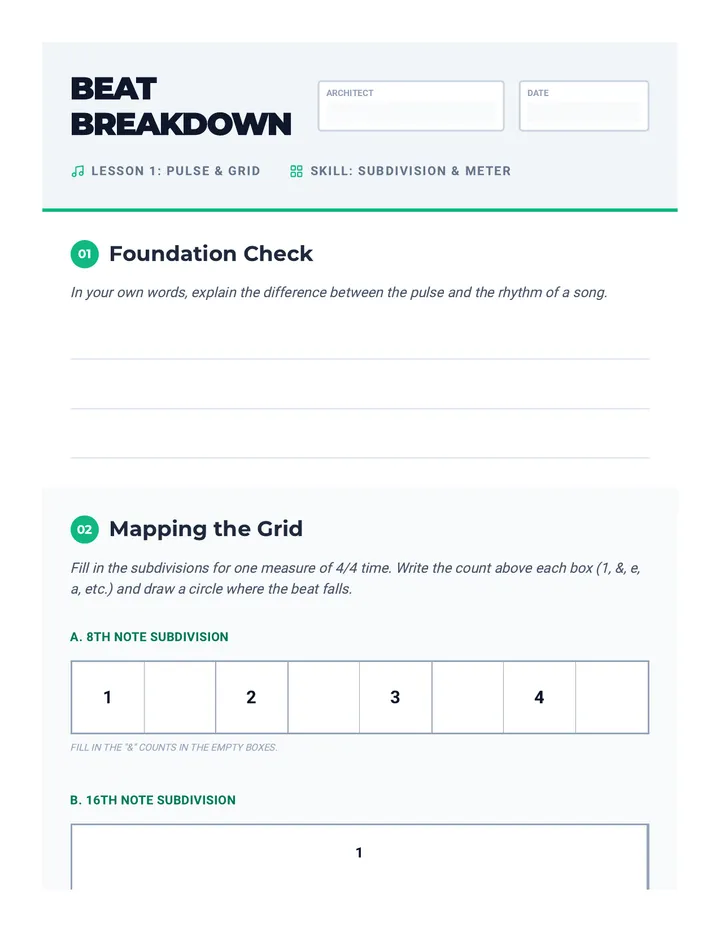
A comprehensive 5-lesson sequence for 7th-grade students on the fundamentals of rhythm, exploring subdivision, syncopation, ostinatos, and polyrhythms, culminating in an original percussion ensemble composition.
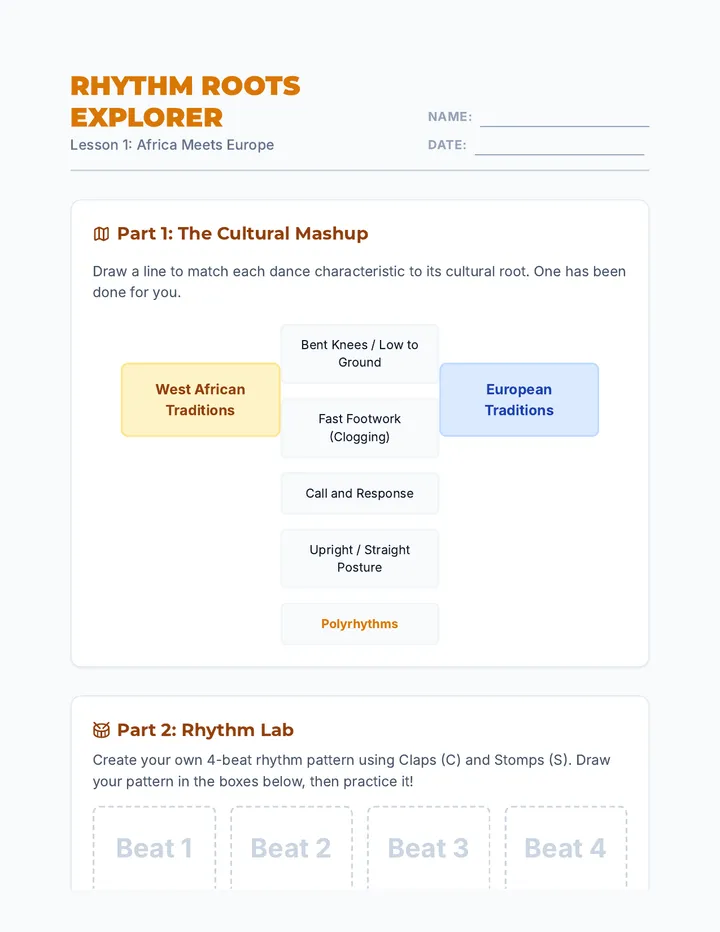
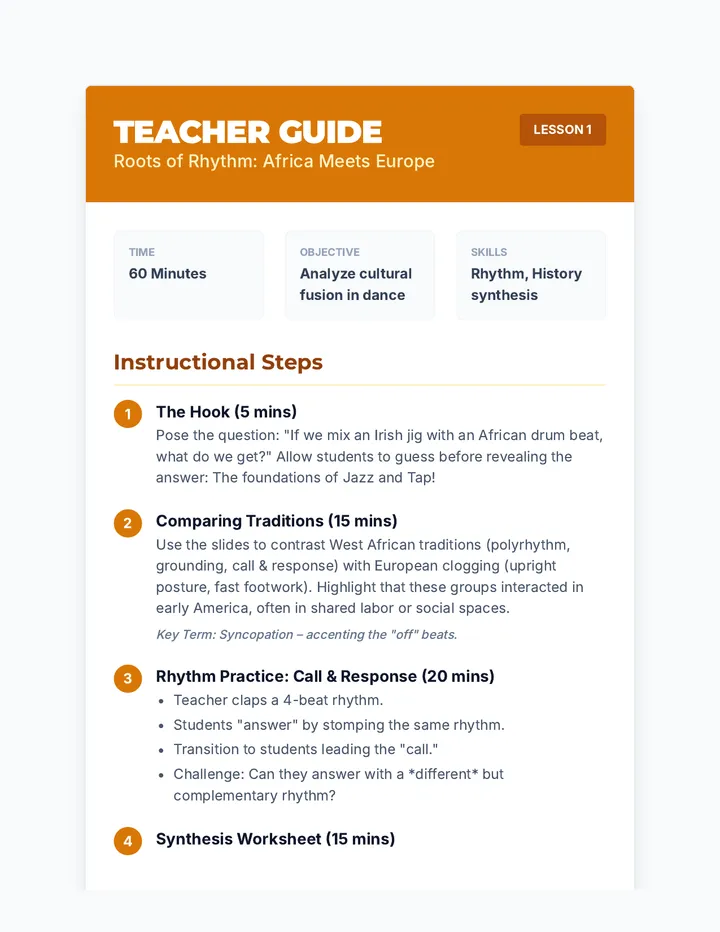
A 5-lesson unit for 4th graders exploring the cultural origins and evolution of American Jazz and Tap dance, from African and European roots to the Harlem Renaissance and Broadway.
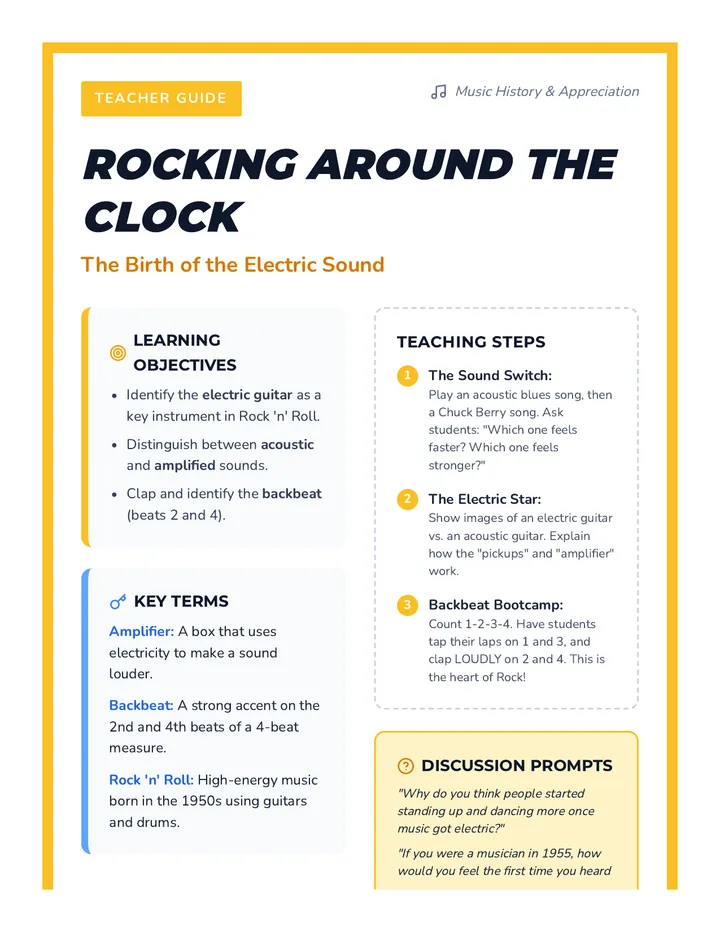
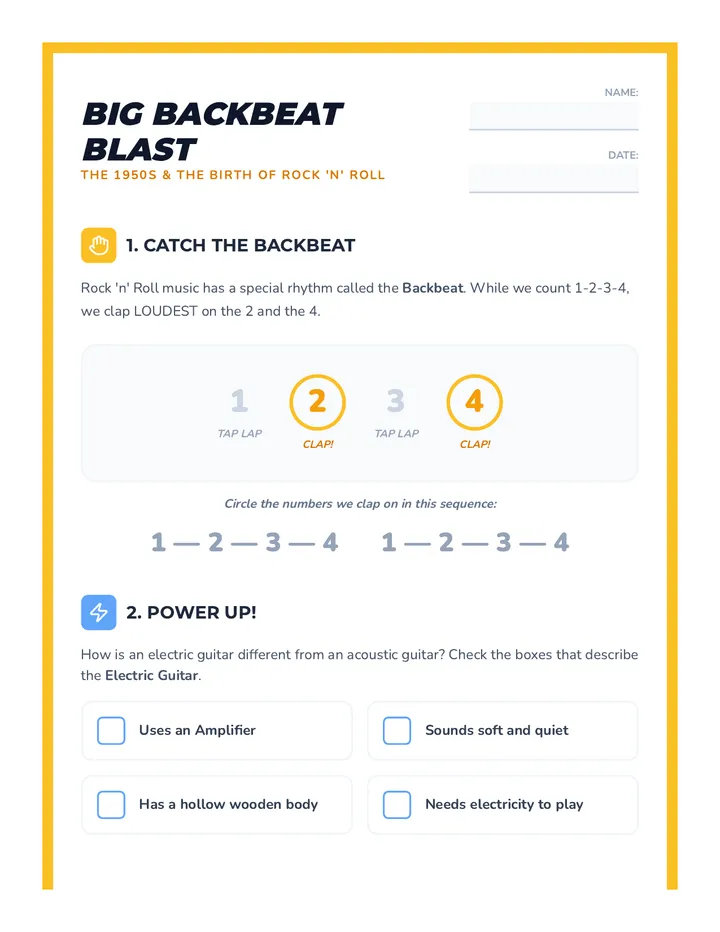
A journey through the 20th and 21st centuries, exploring how technology like electric guitars and synthesizers shaped genres from Rock 'n' Roll to Pop. Students analyze rhythm, structure, and sound to build a chronological timeline of musical evolution.
A global musical expedition for 2nd graders to discover how geography and culture shape instruments and traditions across four continents. Students explore materials, physics of sound, and the cultural roles of music through inquiry and hands-on activities.
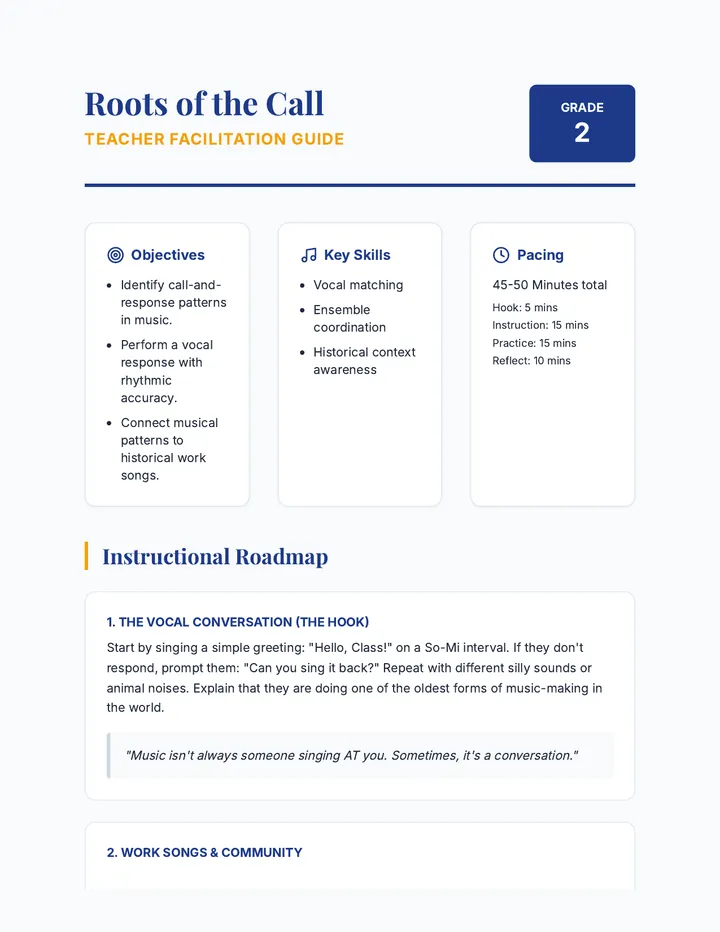
An immersive workshop-style sequence for 2nd graders exploring the roots of Jazz, Blues, and Folk music through call-and-response, syncopation, and improvisation. Students trace American musical history from work songs to the Swing era through active music-making.
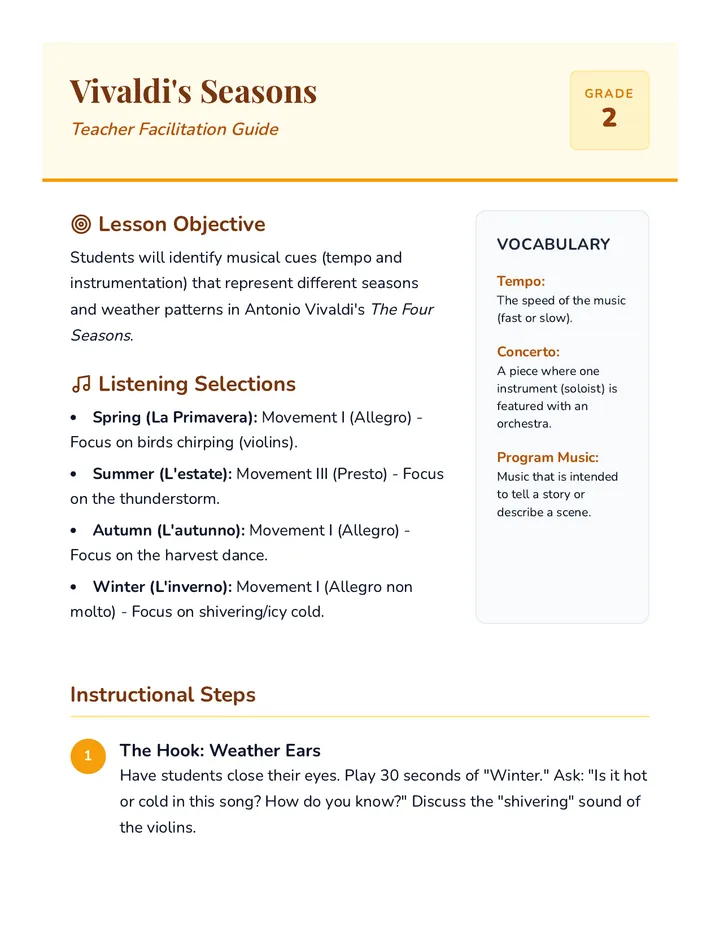
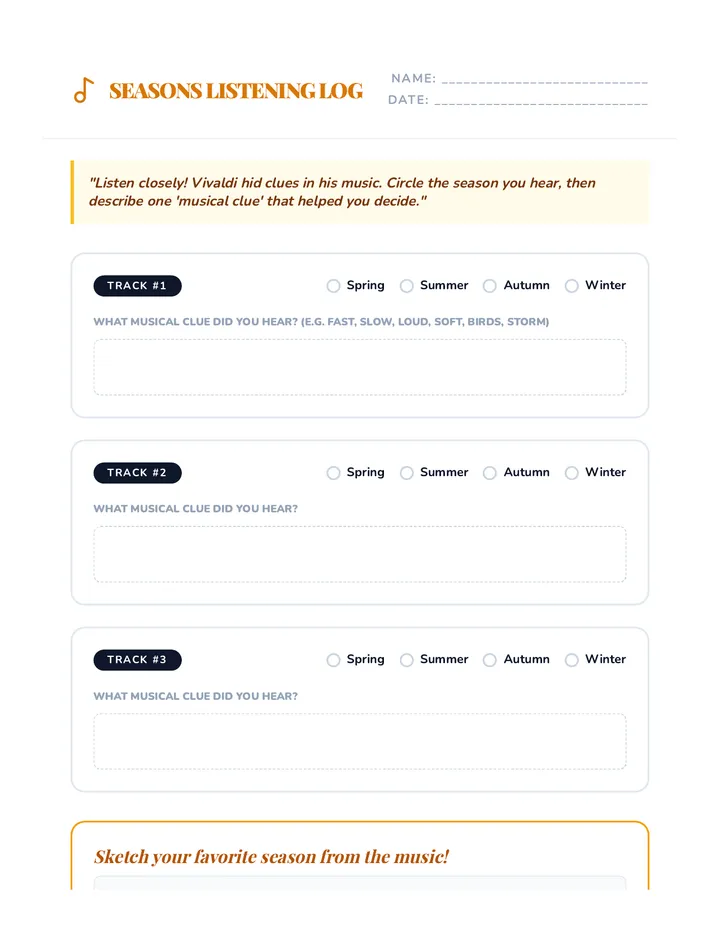
A 5-lesson sequence for 2nd graders exploring how classical composers use musical elements to tell stories and express emotions. Students 'meet' famous composers like Vivaldi and Beethoven, identifying tempo, dynamics, and leitmotifs in iconic works.
A comprehensive introduction to the four families of the orchestra for 2nd graders. Students explore timbre, mechanics, and historical roles of strings, woodwinds, brass, and percussion, culminating in a conductor simulation.
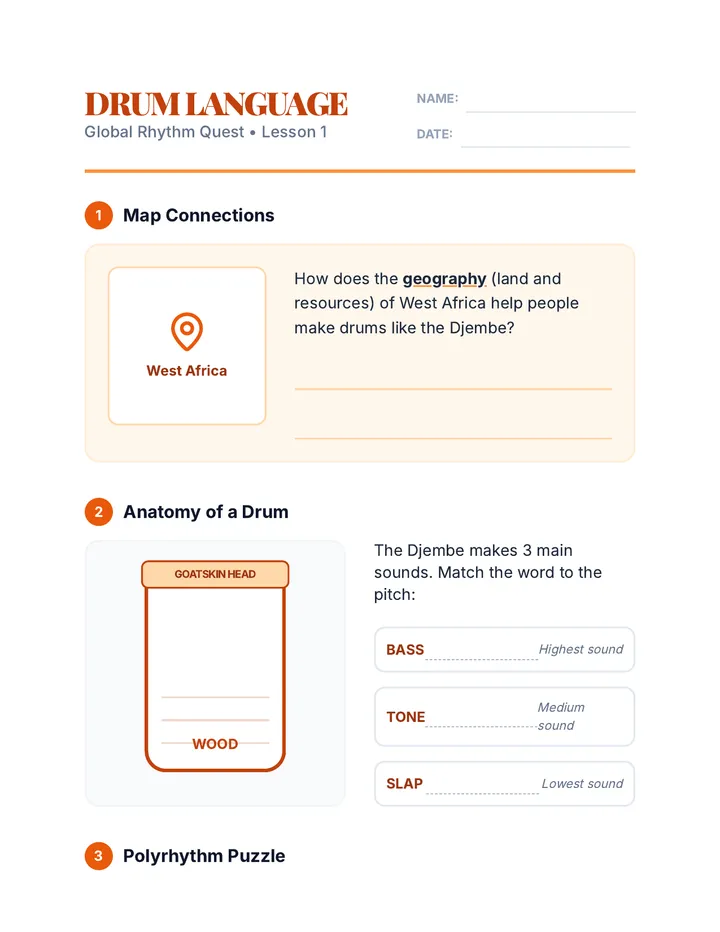
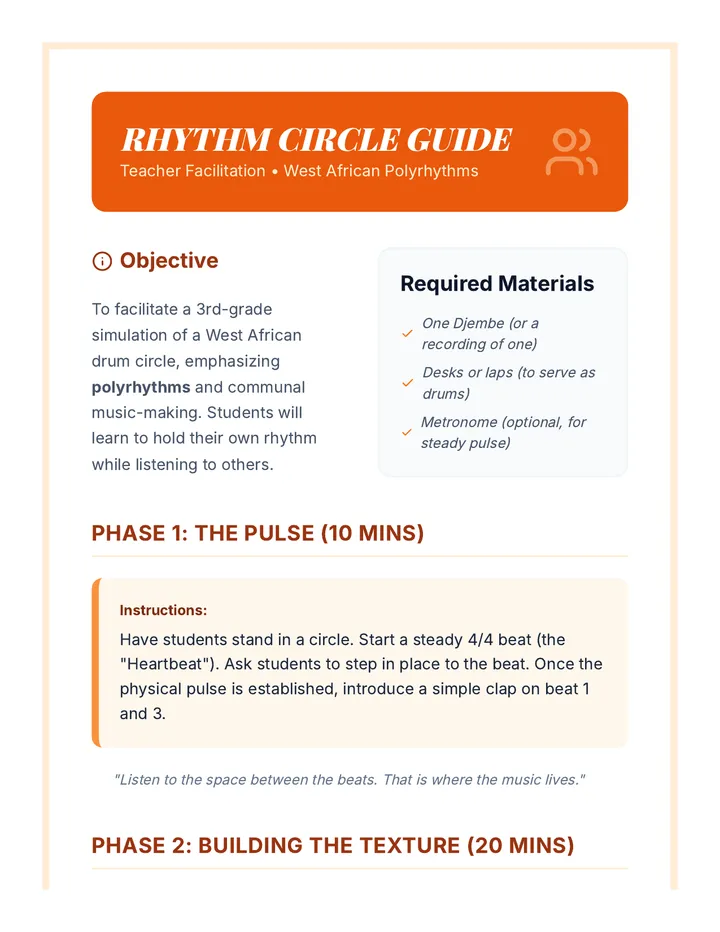
A 5-lesson sequence for 3rd graders exploring the music and instruments of West Africa, Asia, the Andes, and North America, focusing on how geography and culture shape sound.
This sequence explores how technology—from the electric guitar to digital software—transformed music from the mid-20th century to today, focusing on genre evolution, song structure, and production.
A comprehensive introduction to the orchestra and the Classical era for 3rd graders, covering instrument families, specific sections, key composers (Mozart and Beethoven), and the art of conducting.
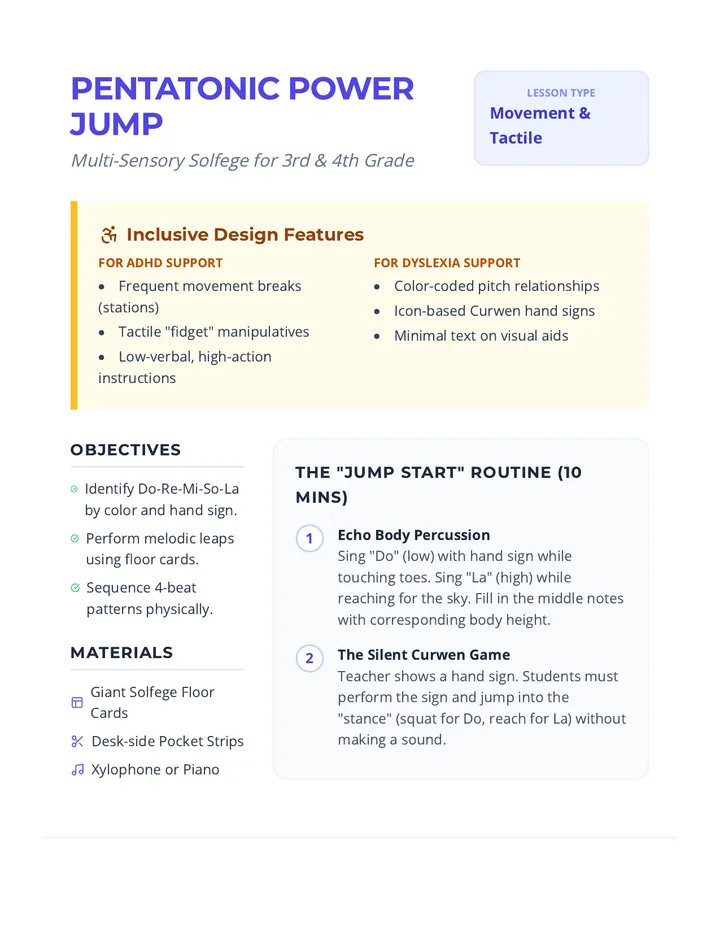
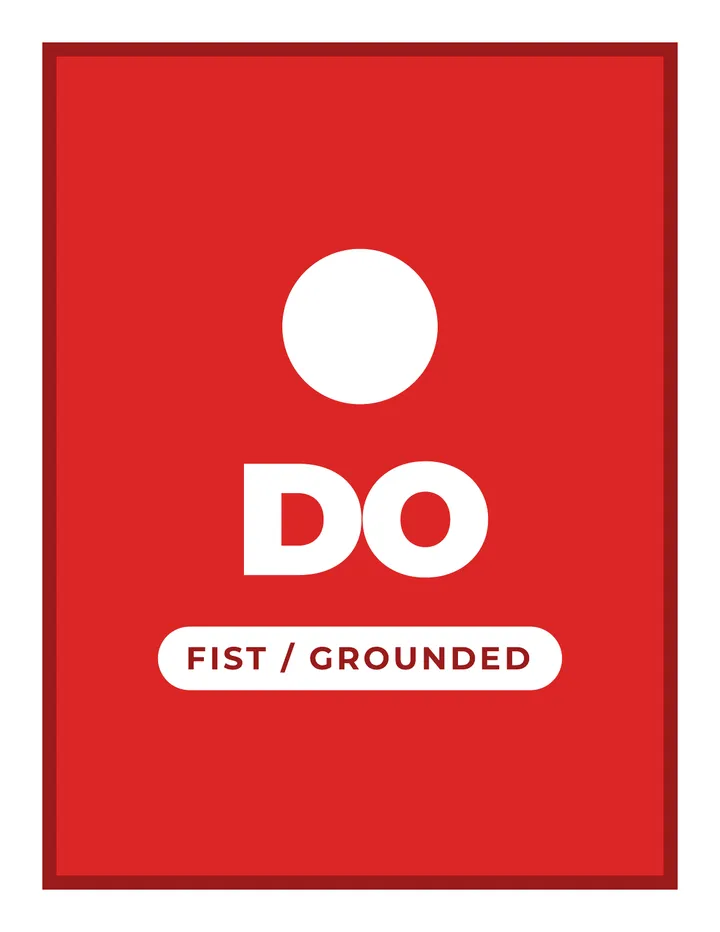
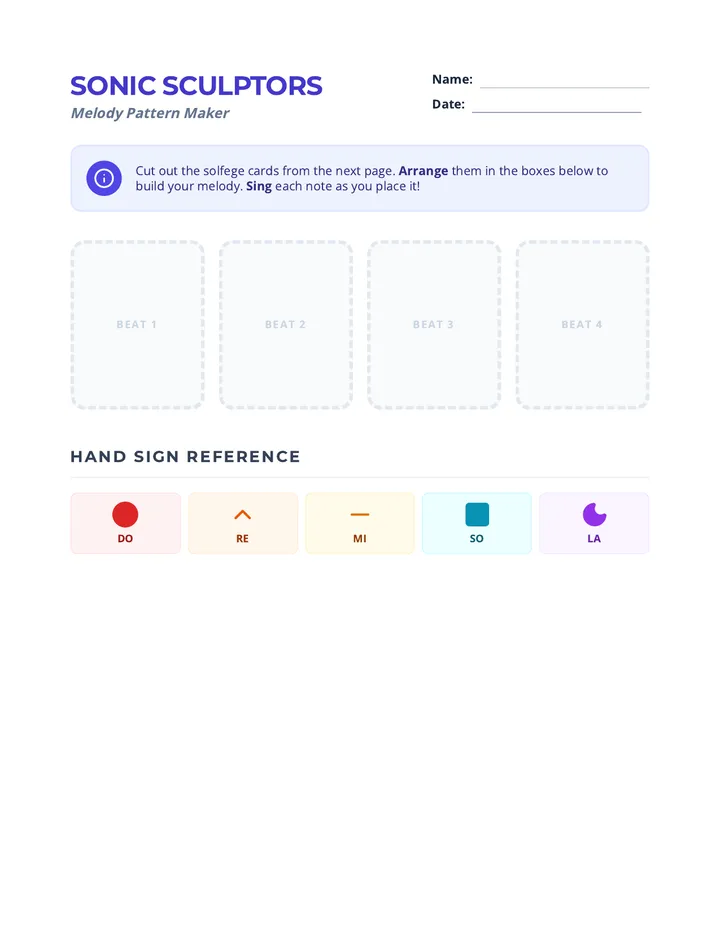
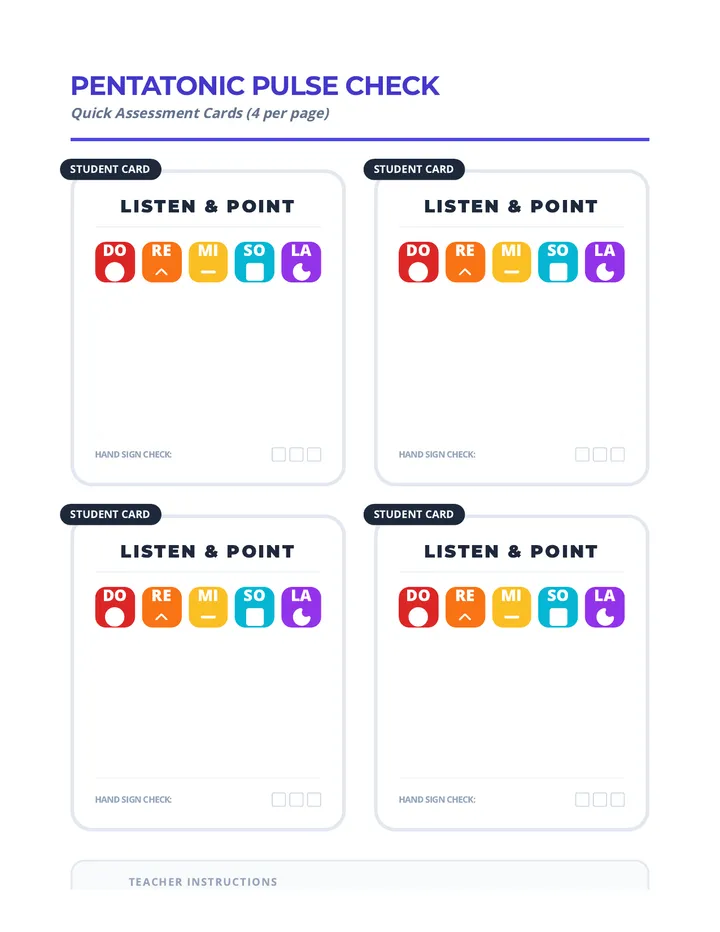
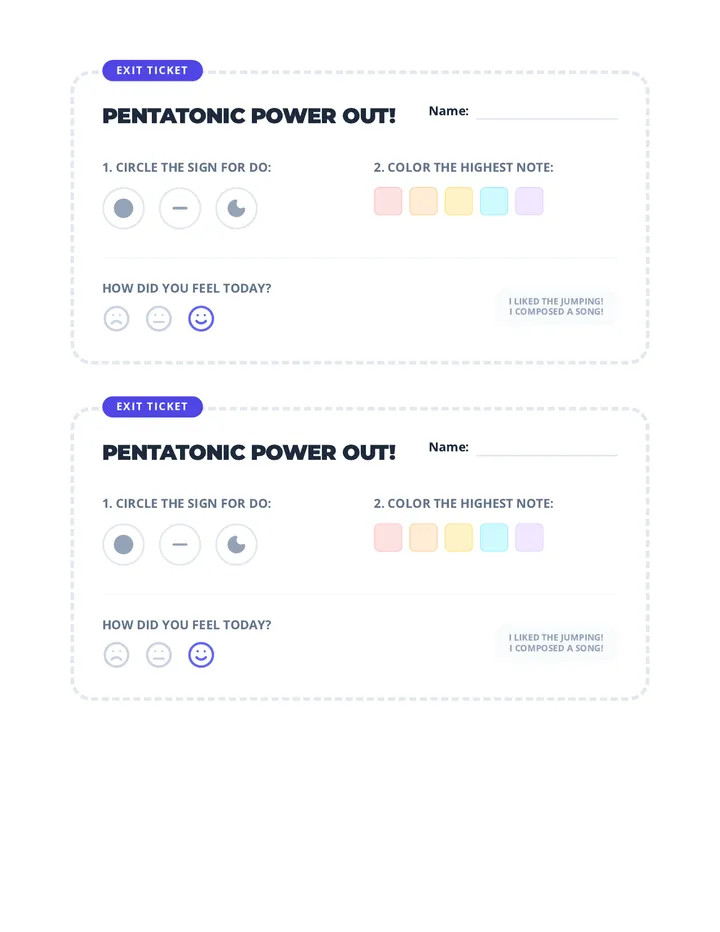
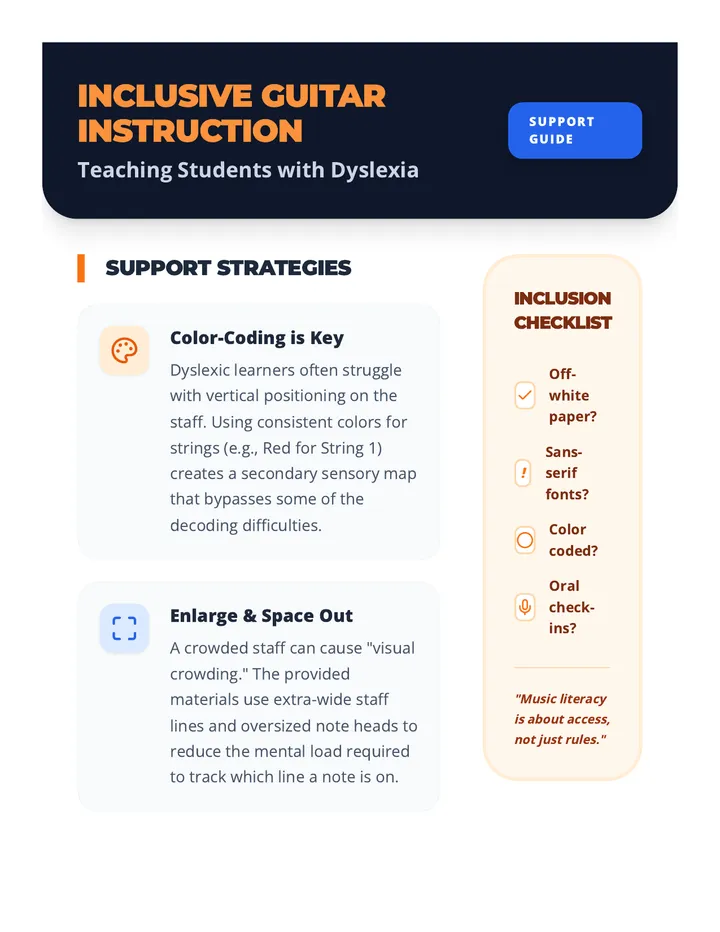
A high-energy, multi-sensory lesson for 3rd and 4th graders focusing on the pentatonic scale through movement and tactile manipulatives. This lesson is specifically designed to support students with dyslexia and ADHD.
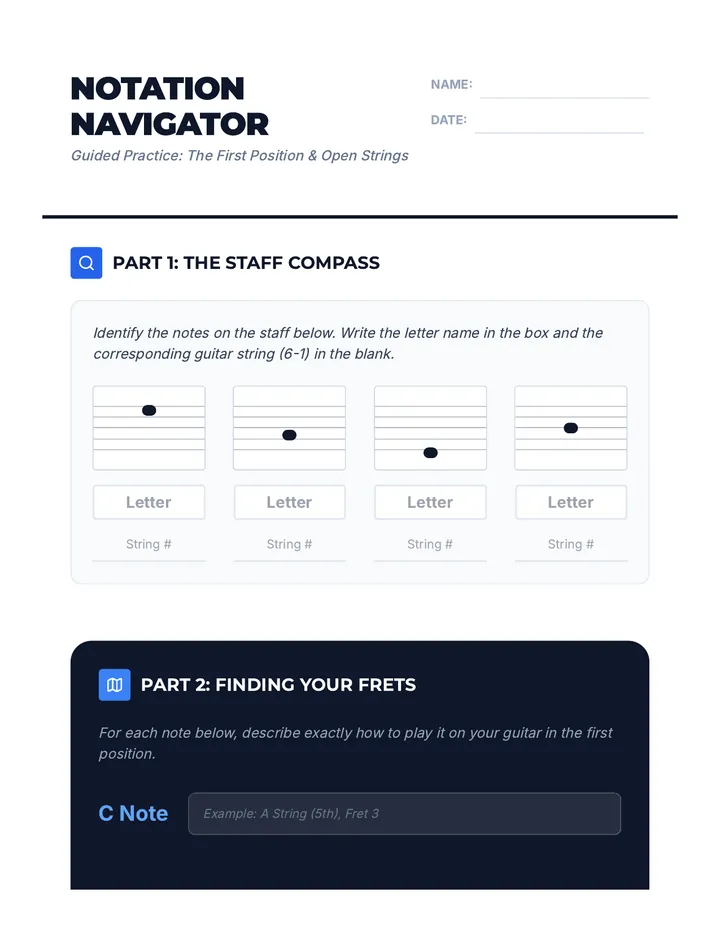
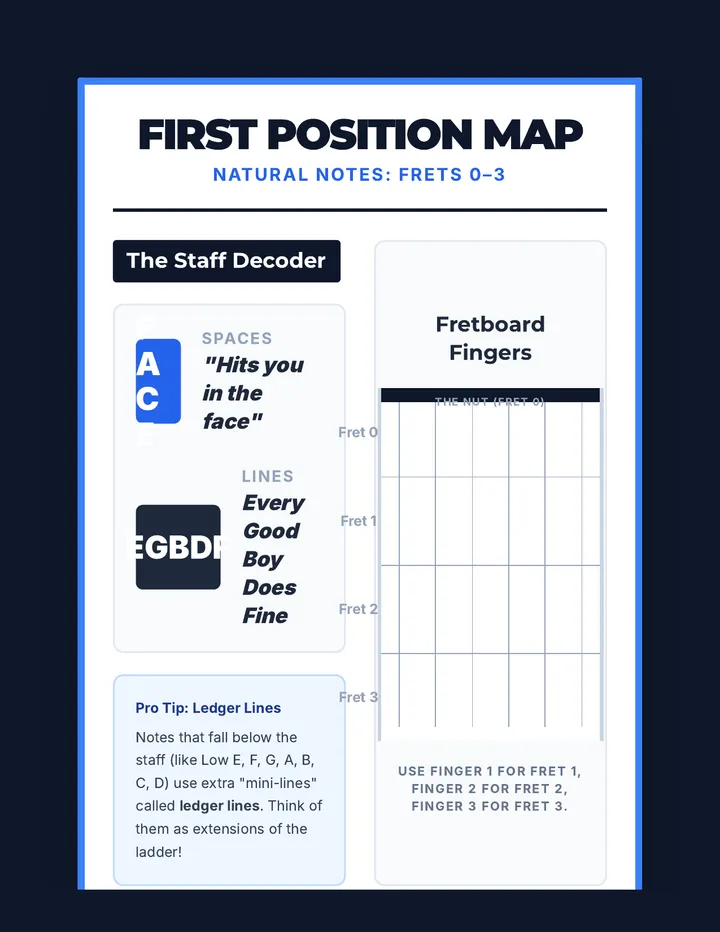
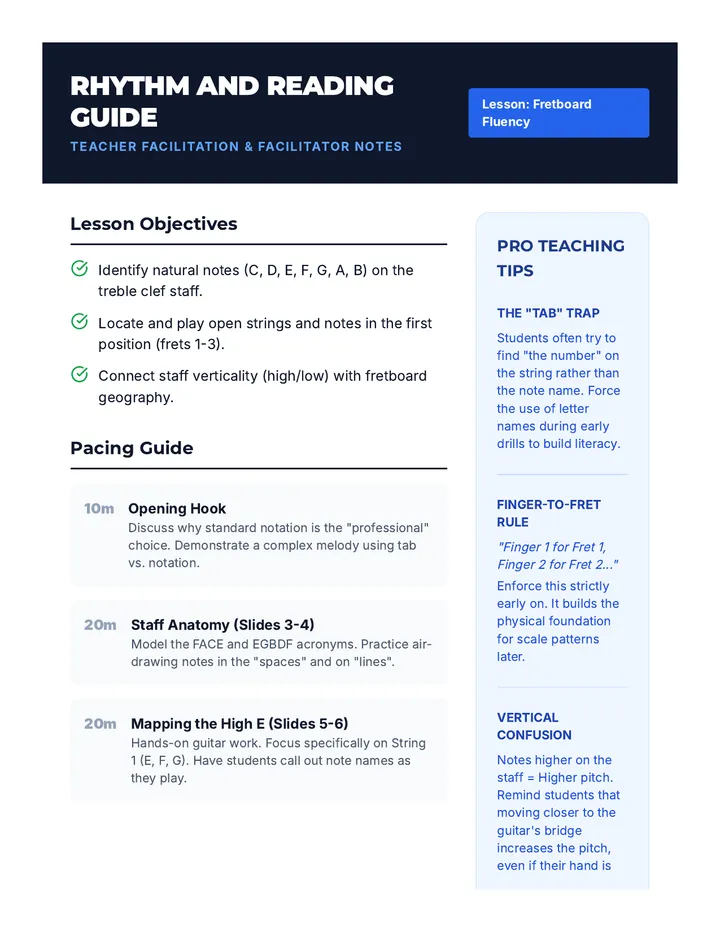
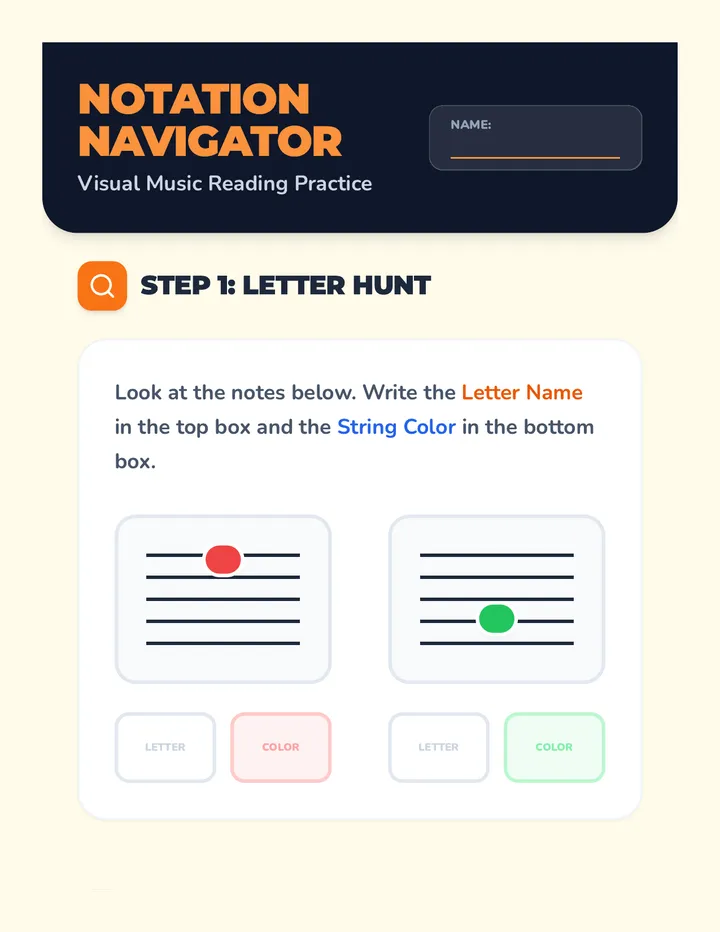
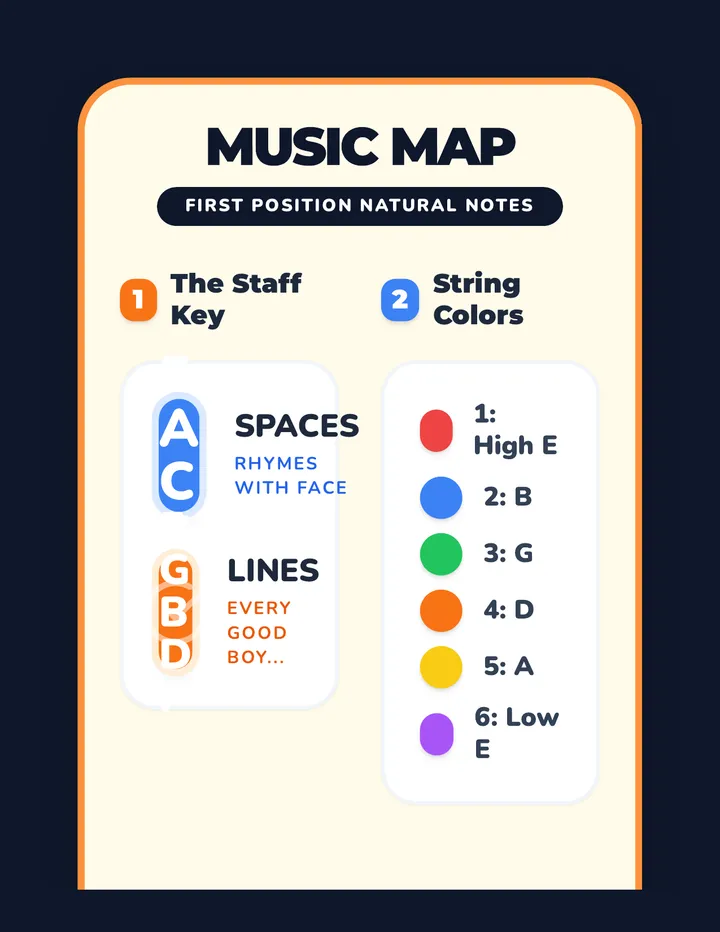
A comprehensive introduction to reading standard musical notation on the guitar, specifically targeting open strings and the first position notes for high school beginners.
A comprehensive guide to understanding and applying musical tempo, covering Italian terminology, BPM, and metronome markings.
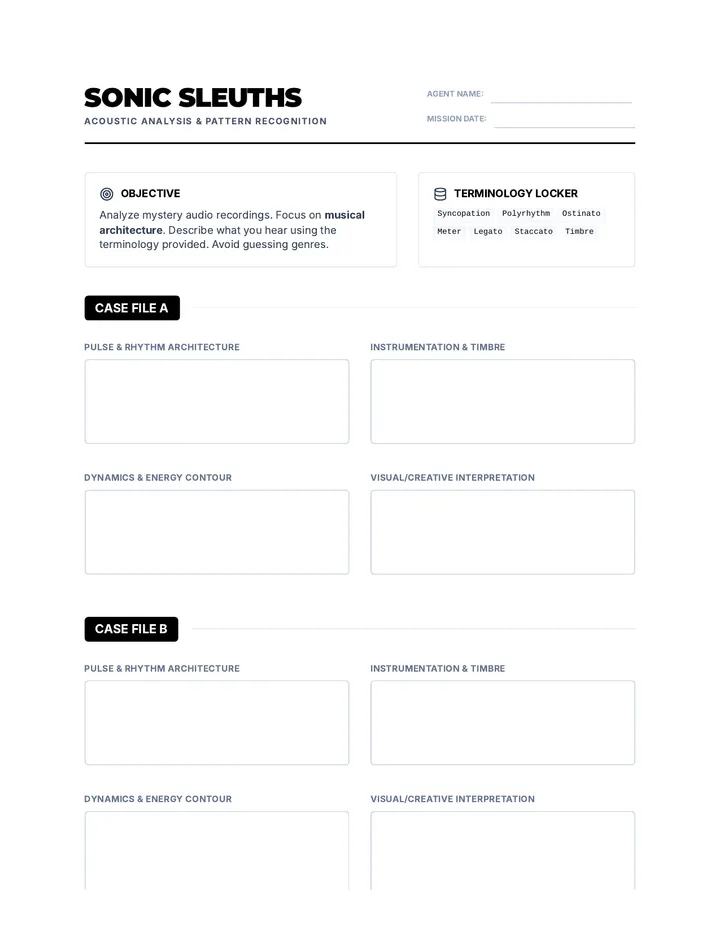
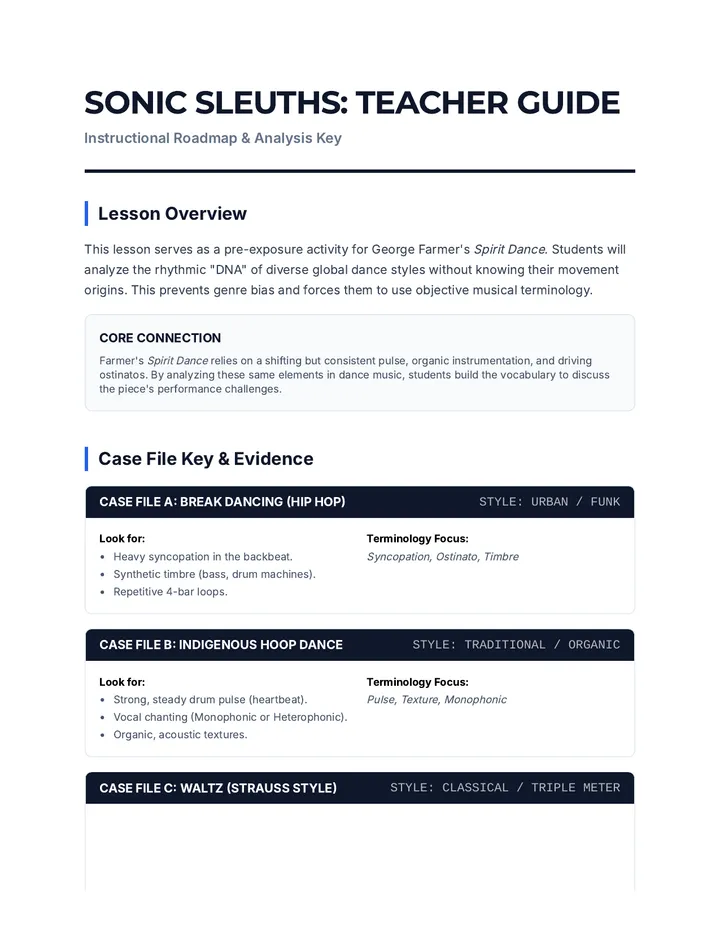
A listening-focused lesson where students analyze the musical characteristics of various dance styles without knowing their movement-based origins, building terminology skills before connecting to George Farmer's 'Spirit Dance'.
An early childhood music and science integration lesson exploring 2/4 meter and ABA form through the whimsical lens of bees and flowers. Students move, listen, and create while learning about the rhythmic "polka" beat and the structure of music.
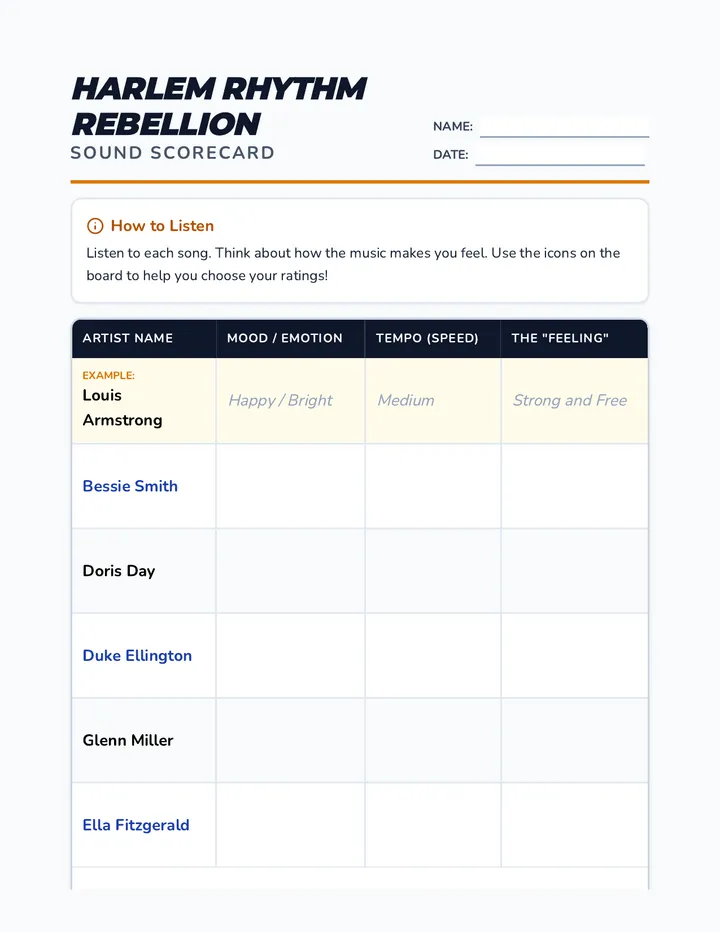
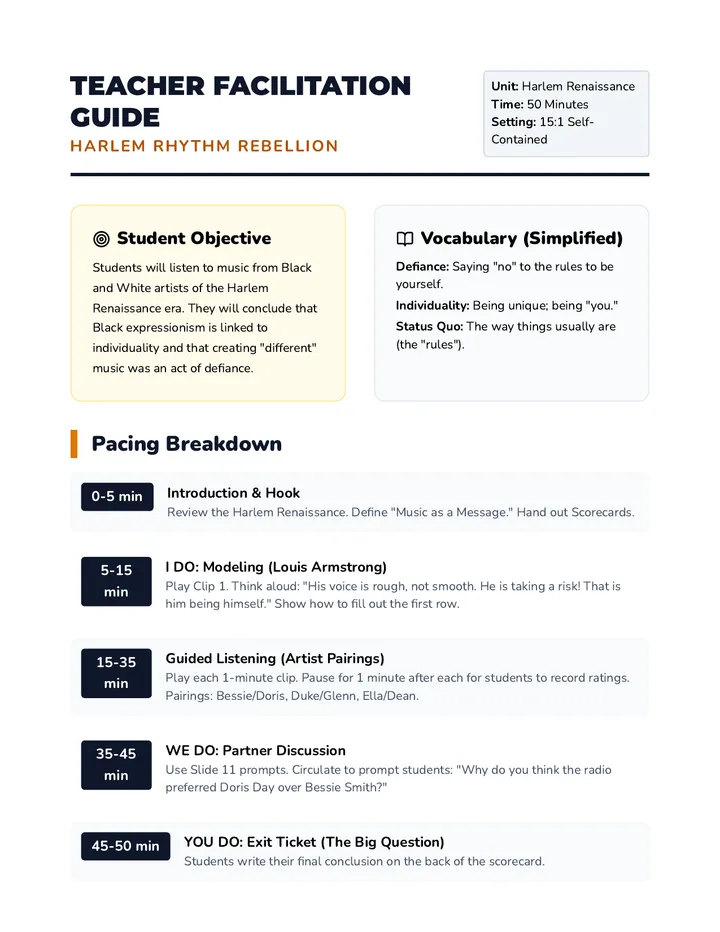
A 50-minute lesson exploring the connection between Jazz music, Black expressionism, and the Harlem Renaissance through music comparison and artist biopics. Students will analyze the differences between Black and White artists of the era to understand music as an act of defiance and cultural identity.
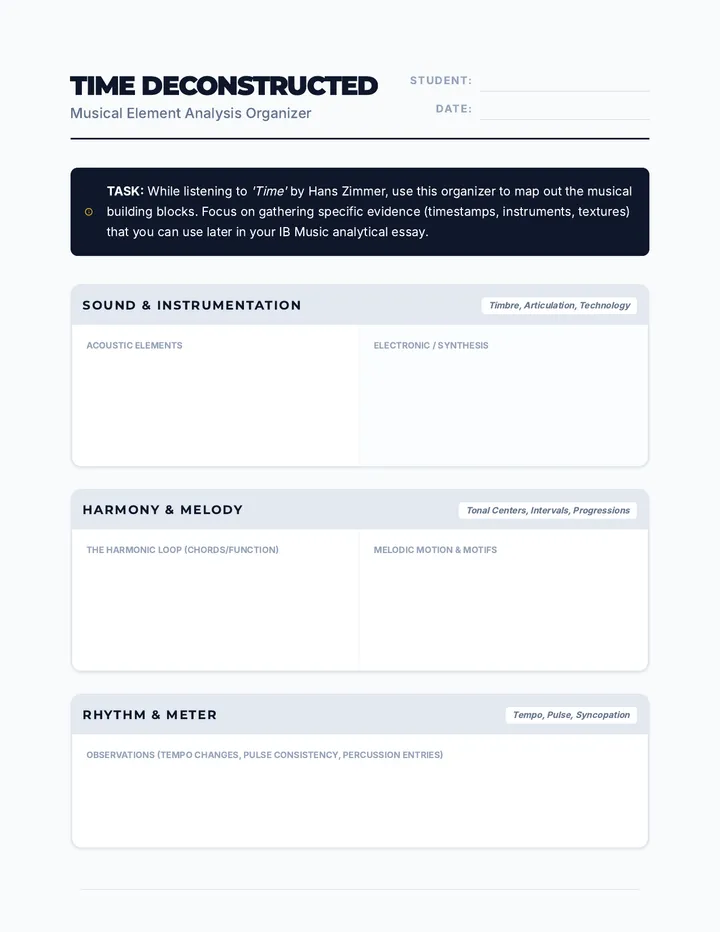
An in-depth exploration of Hans Zimmer's 'Time' from the Inception soundtrack, focusing on IB Music's Dramatic Impact and Music Technology Areas of Inquiry to build essay-writing skills.
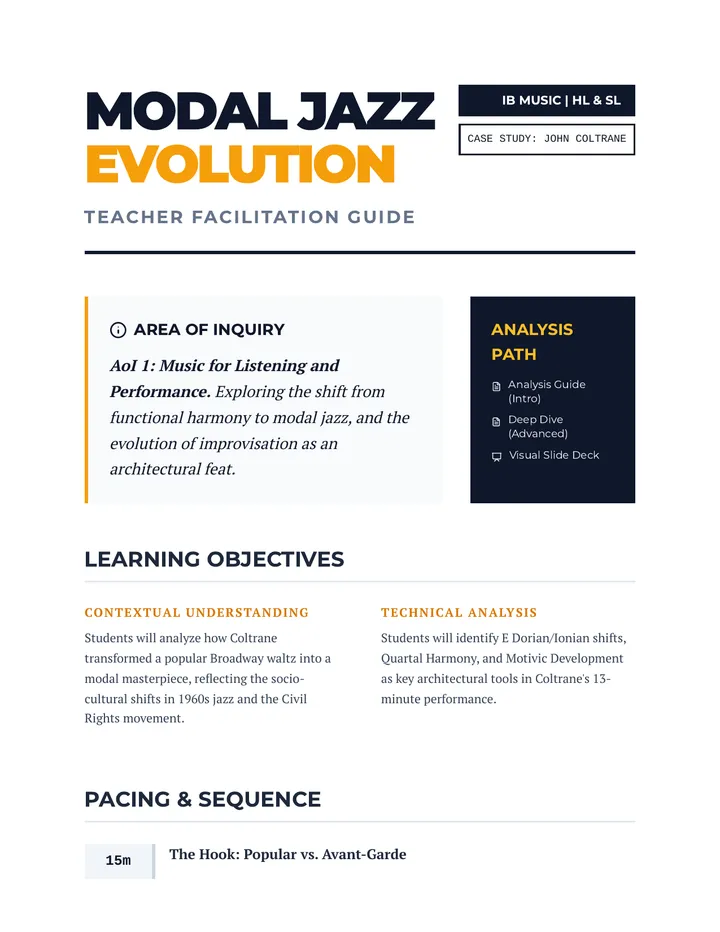
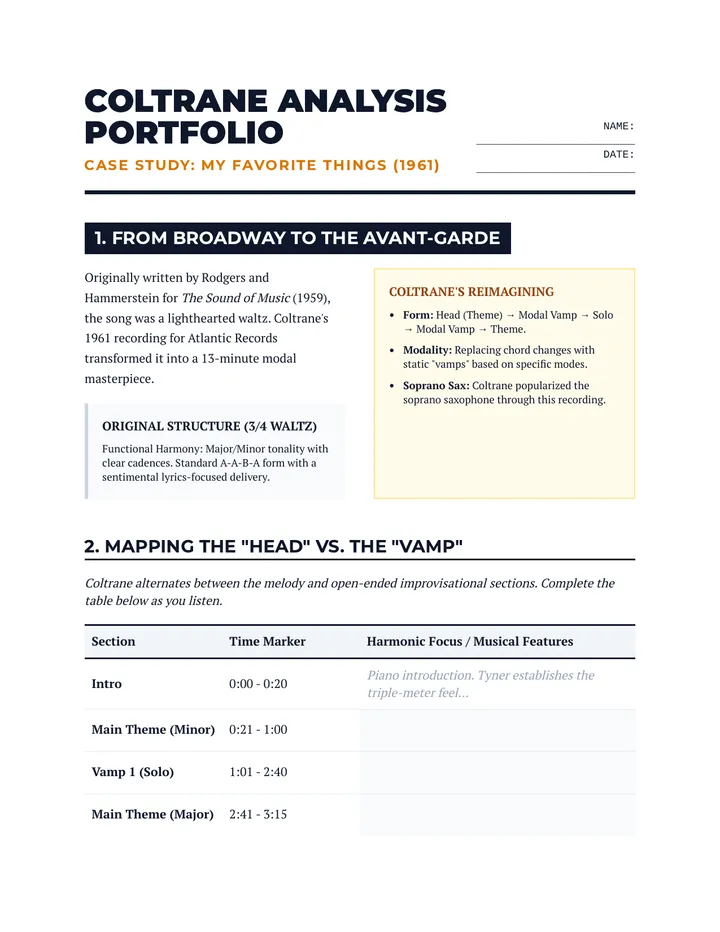
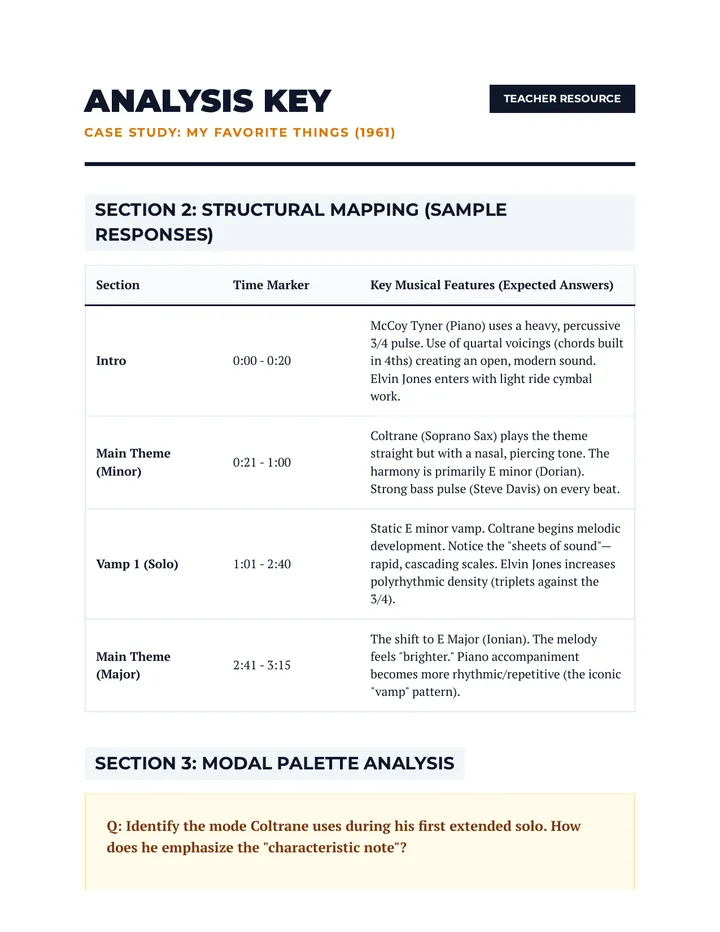
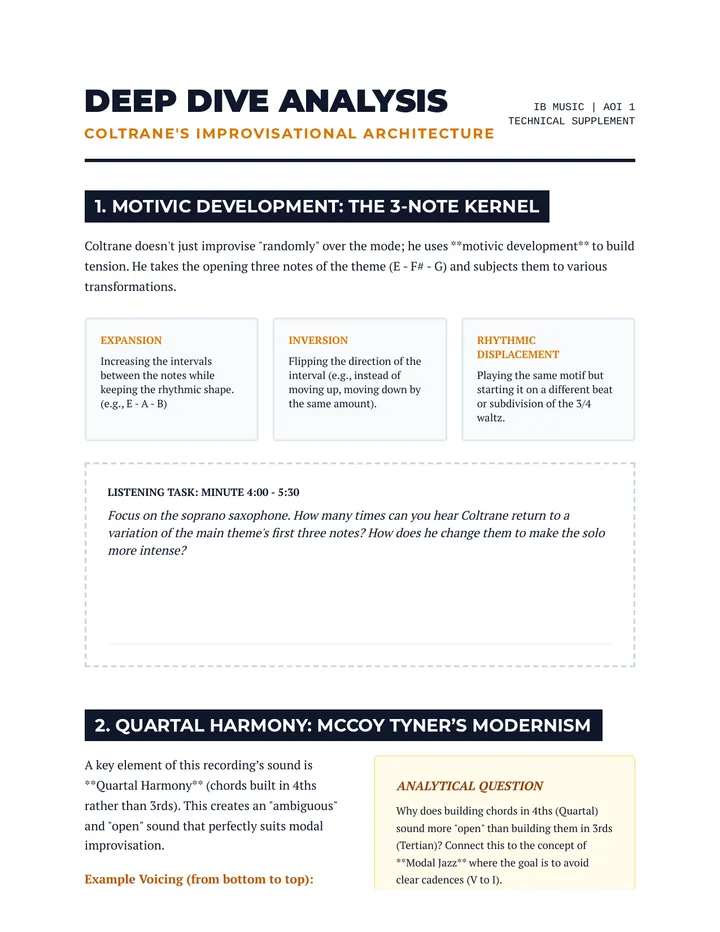
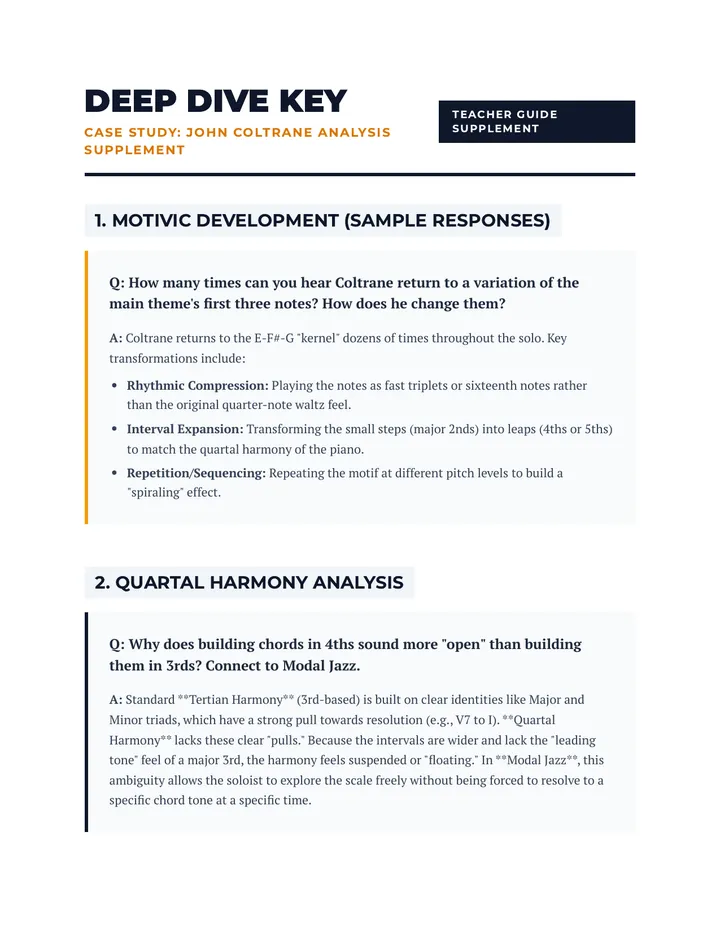
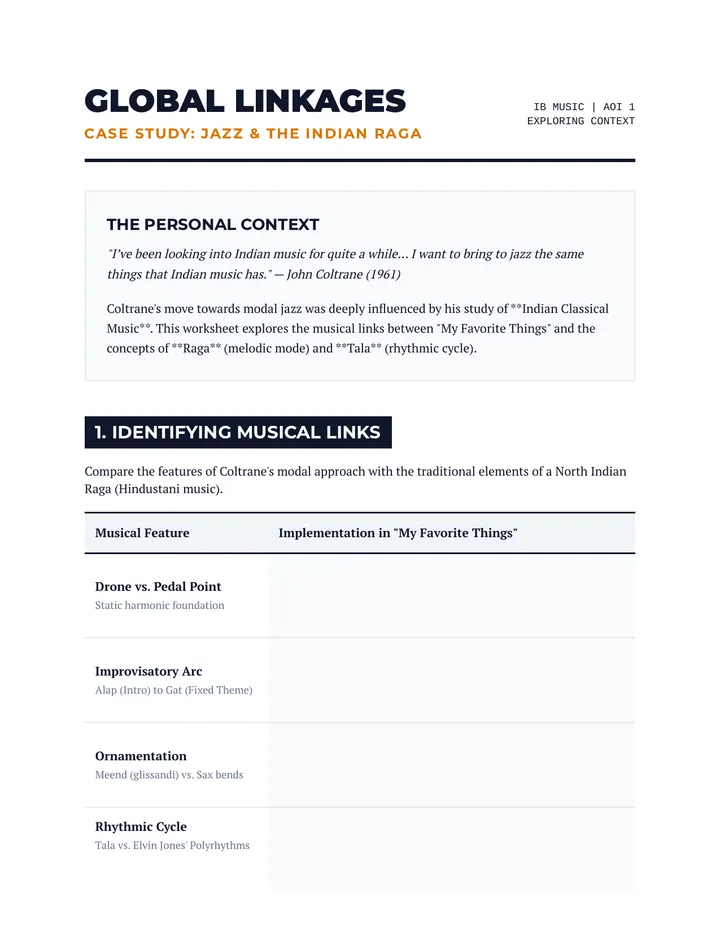
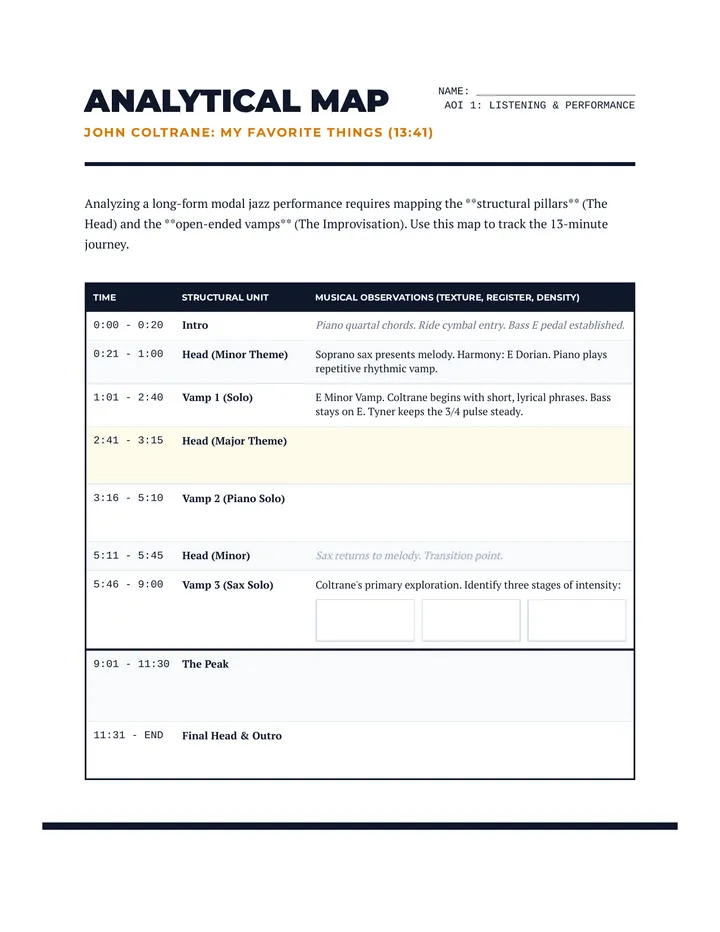
A comprehensive exploration of John Coltrane's 'My Favorite Things' for IB Music, focusing on modal jazz, structural innovation, and the 'Exploring Music in Context' Area of Inquiry.
Second and third graders explore the history of American folk music on the Idaho Trail, focusing on the unique sounds of the banjo, fiddle, and washboard while practicing call-and-response.
Students explore the art of conducting, learning to lead an ensemble through 4/4 and 3/4 time signatures while controlling dynamics and tempo with physical gestures. This lesson emphasizes leadership, non-verbal communication, and collaborative music-making.
A comprehensive lesson on film music focusing on iconic composers, the difference between motifs and themes, and the impact of scores in movies like Jaws and Ghostbusters.
A delightful introduction to melody and pitch through the lens of Idaho's native birds. Students use scarves and vocal play to connect physical movement with melodic contour.
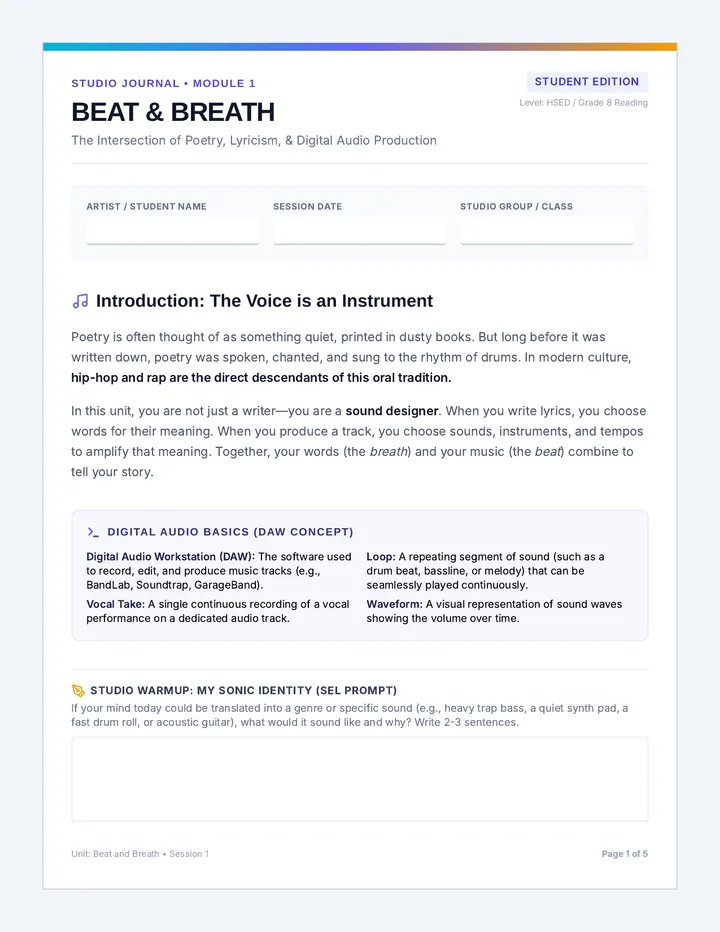
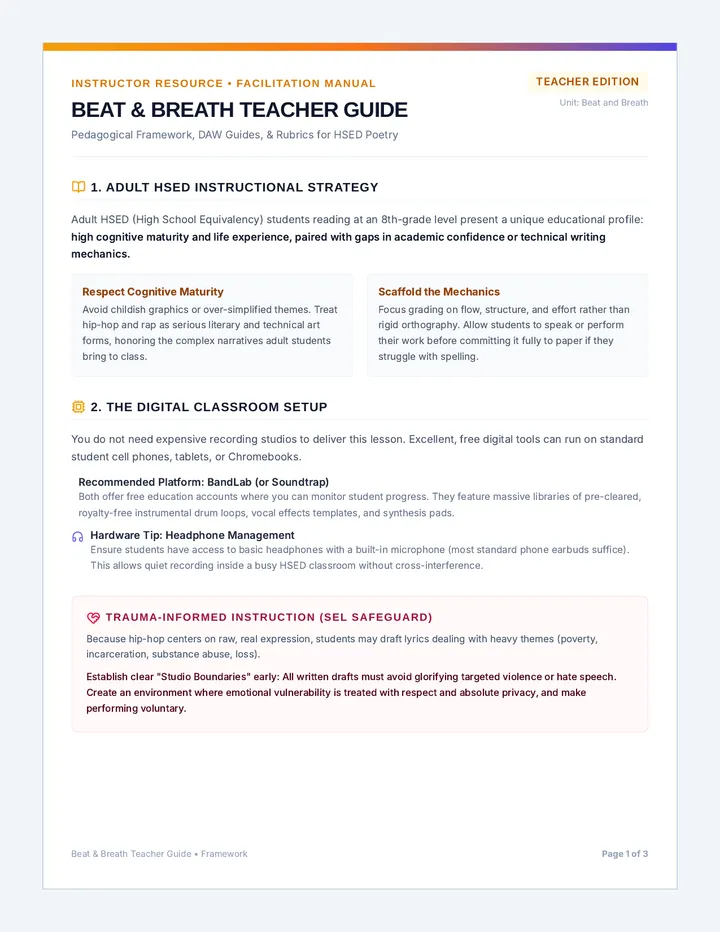
A comprehensive poetry and music production unit for adult HSED students. It integrates poetry analysis, hip-hop lyricism, emotional self-expression (SEL), and digital audio production concepts into a cohesive, print-ready student workbook and teacher guide.
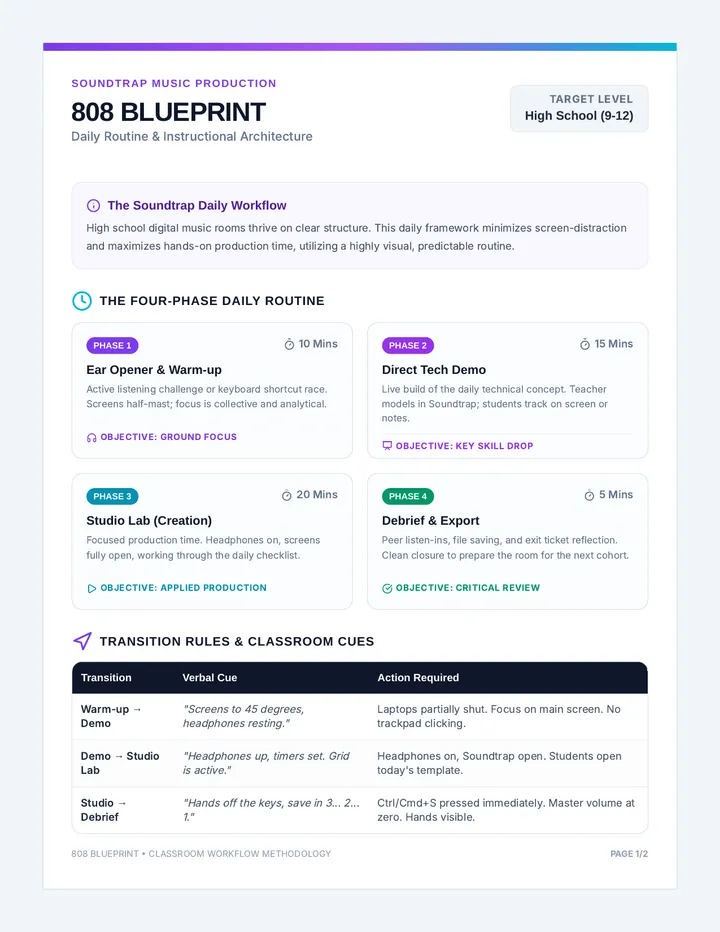
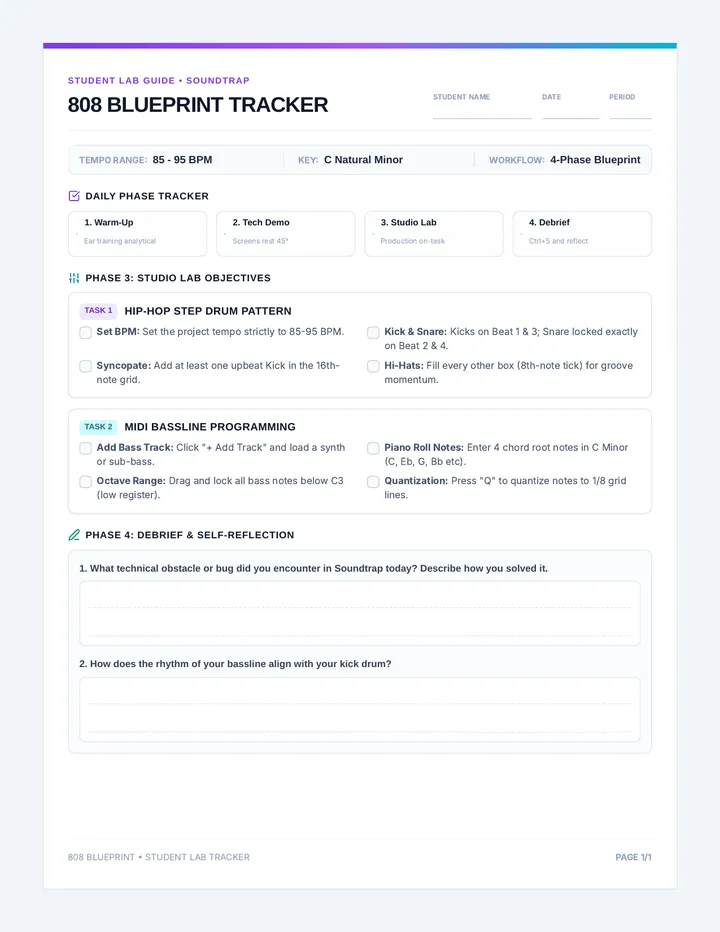
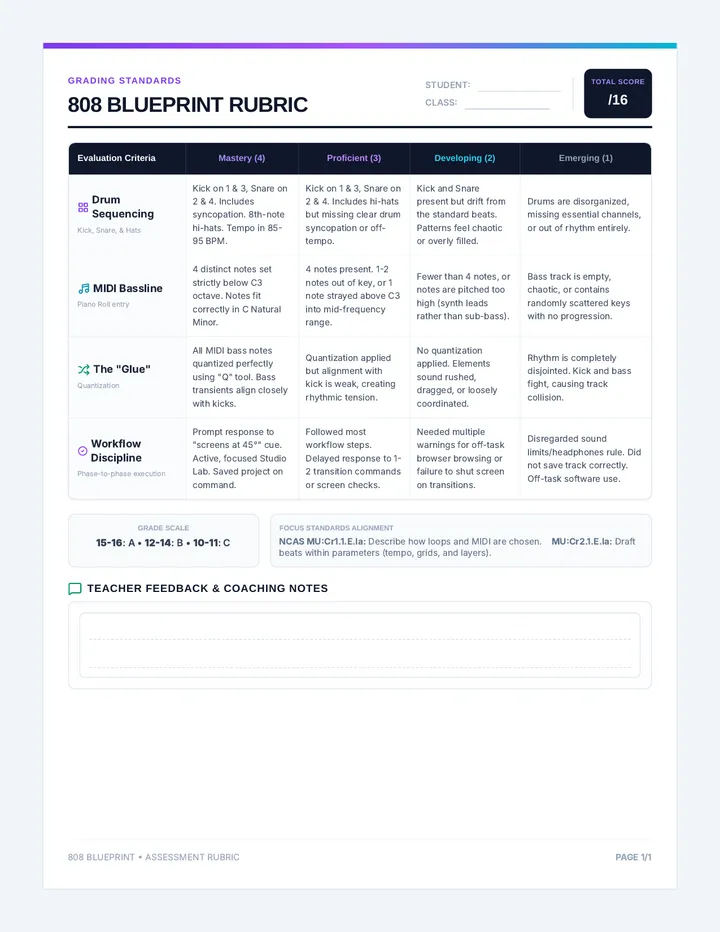
A comprehensive daily format lesson bundle for high school digital music production in Soundtrap. Students master the 4-phase daily workflow (Warm-up, Direct Instruction, Studio Lab, Debrief) while creating an authentic hip-hop beat using step sequencers and MIDI basslines.
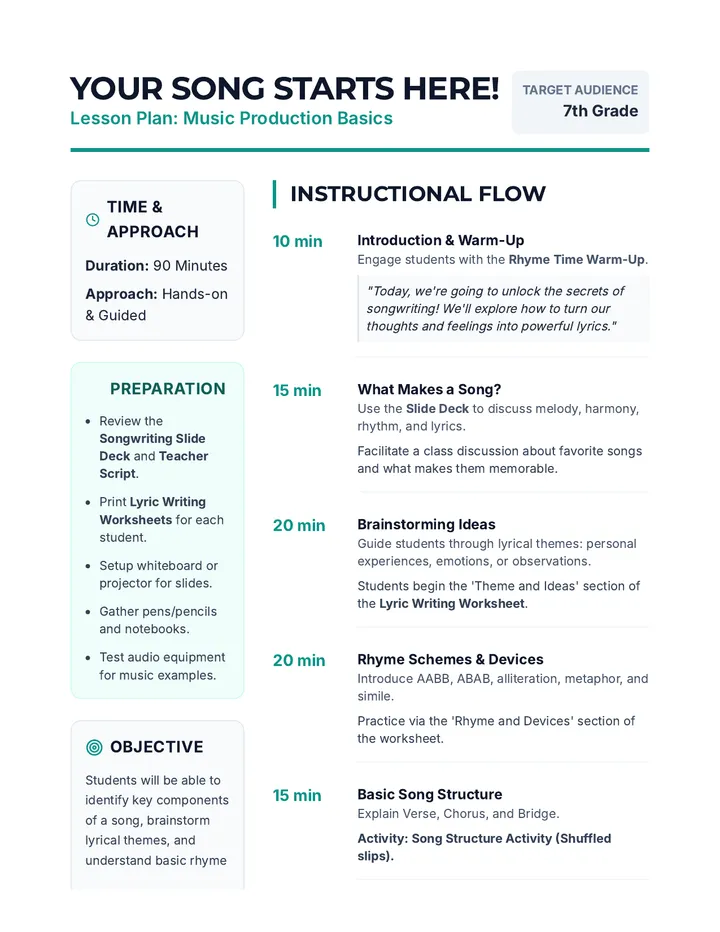
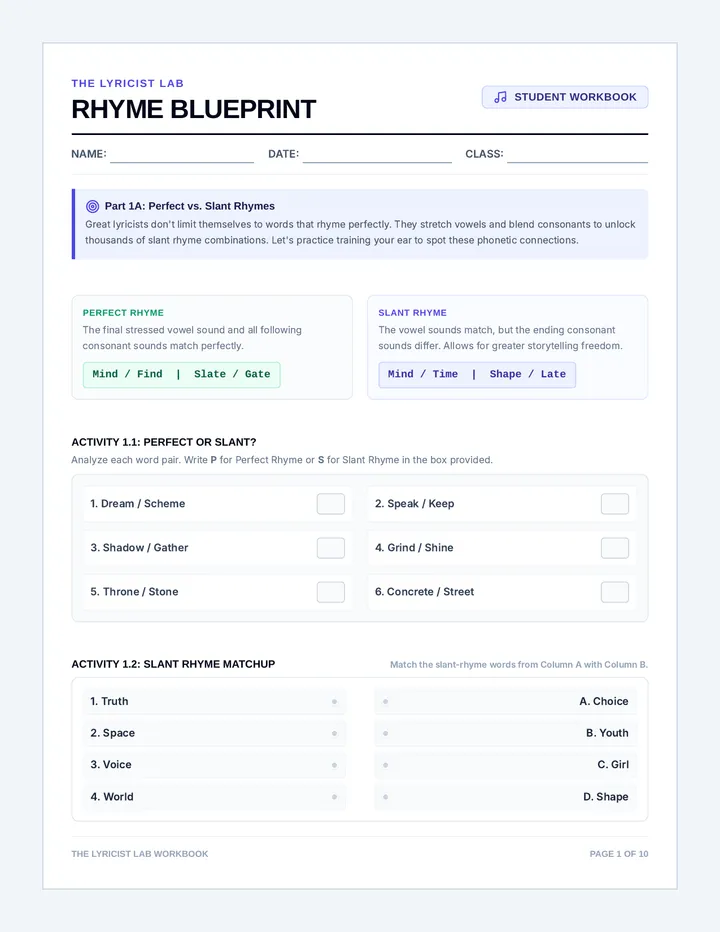
A comprehensive 90-minute lesson introducing 7th graders to songwriting and lyric writing, covering themes, rhyme schemes, poetic devices, and song structure.
A comprehensive lesson that breaks down the structural, rhythmic, and poetic elements of hip-hop and rap lyrics. Students learn complex rhyming, flow cadence, figurative imagery, and wordplay, then plan and write a complete 16-bar verse using highly visual scaffolding.
A comprehensive digital music portfolio project where students curate, analyze, and reflect on their musical creations using DAWs, notation tools, and audio recordings. This unit guides students through selecting their best work, performing deep artist analysis, and presenting a professional digital portfolio.
A comprehensive 60-minute introductory music lesson exploring rhythm, melody, dynamics, and tempo through the lens of a 'Sound Lab'. Students act as scientists to experiment with musical elements.
A block-building music lesson where students 'craft' rhythms, 'survive' rapid direction changes, and explore Orff percussion through a pixelated world theme. Includes singing, dancing, and body percussion activities.
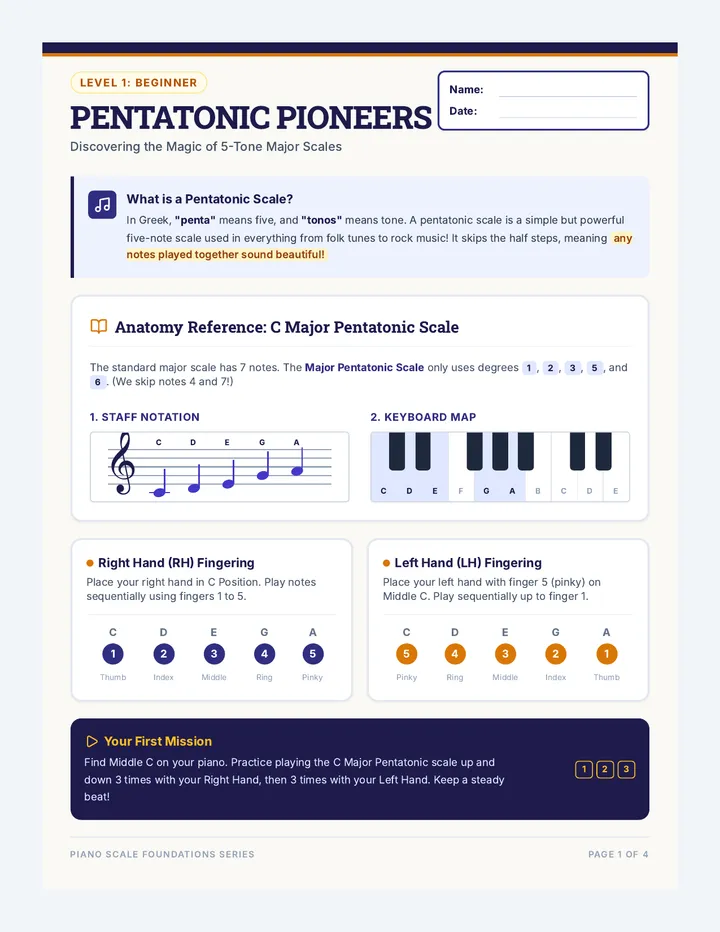
A lesson dedicated to learning the fundamentals of major scales on the piano, beginning with pentatonic scales. Contains an interactive multi-page mini booklet with keyboard coloring, staff notation trace-and-write, and fingering guides.
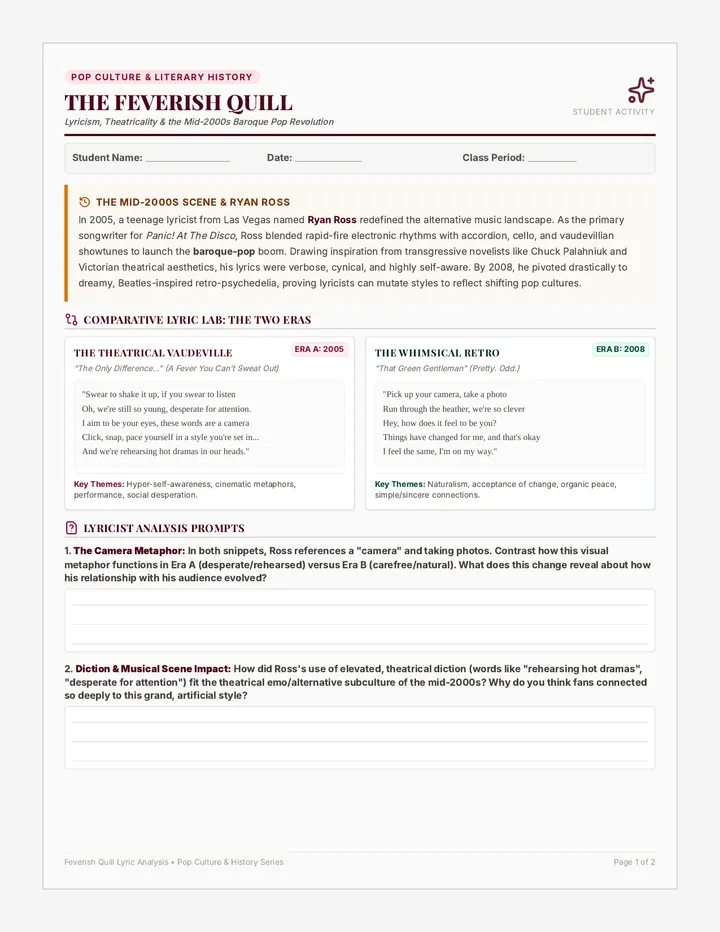
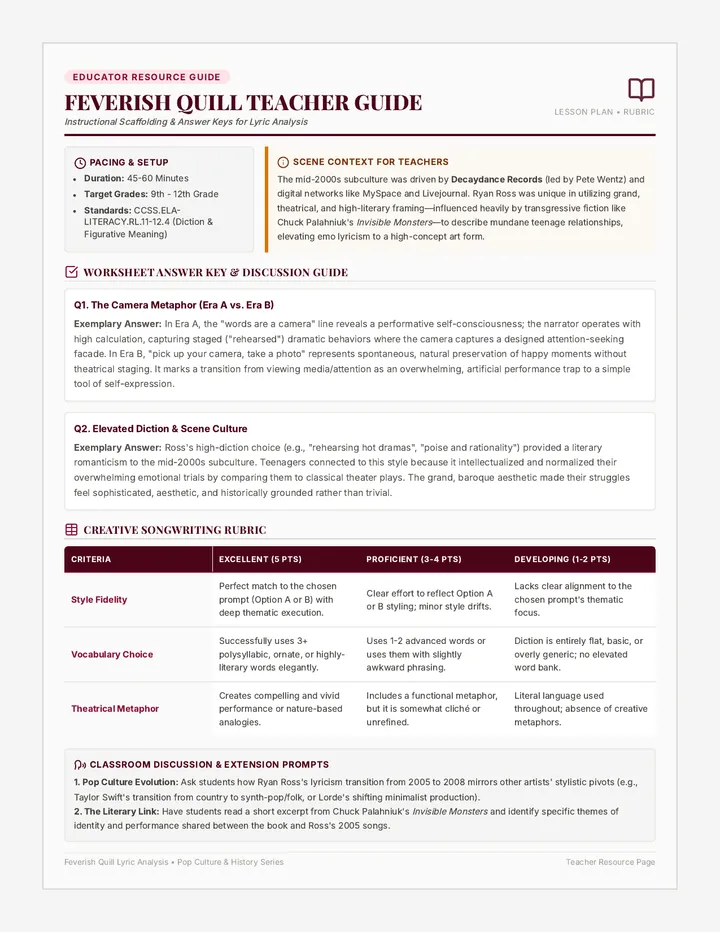
A creative lyric analysis and songwriting lesson exploring Ryan Ross's influential role as a lyricist in the mid-2000s alternative and baroque-pop music scene. Students analyze his verbose, theatrical style and write their own historically-inspired lyrics.