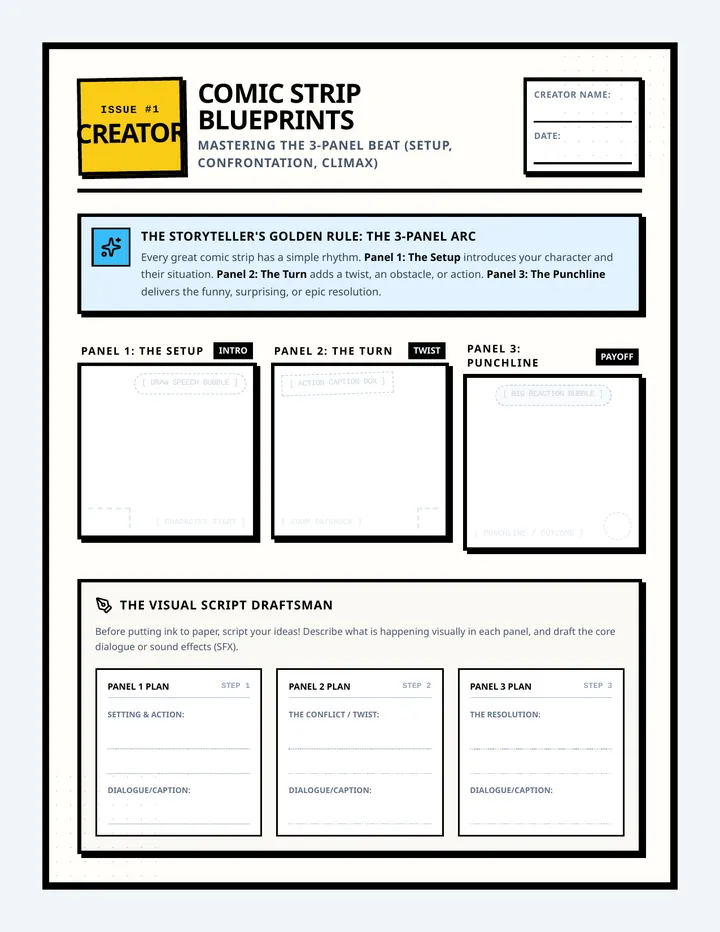
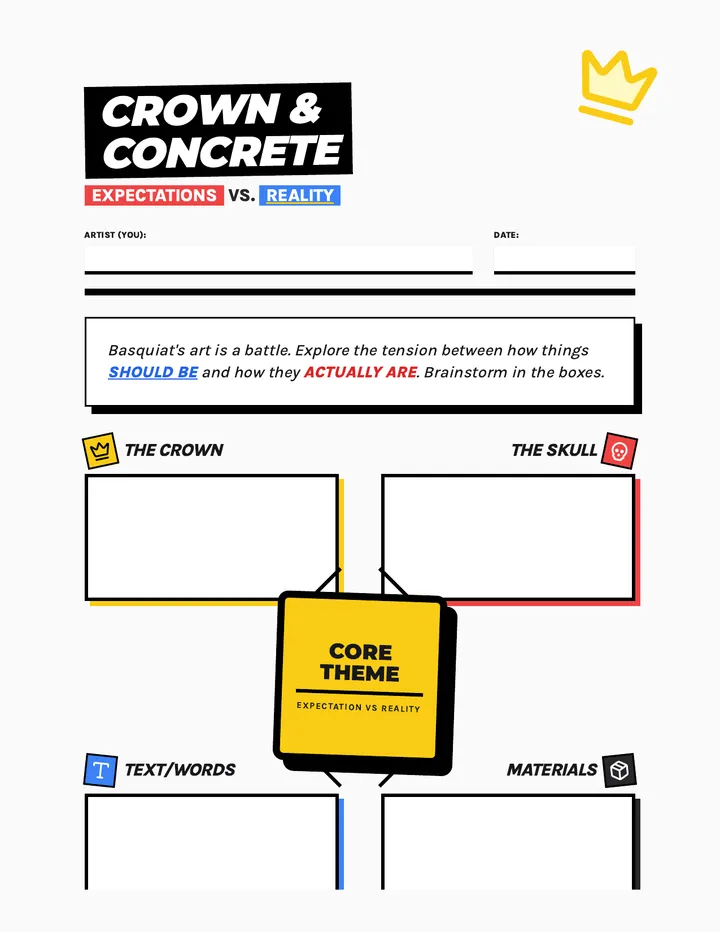
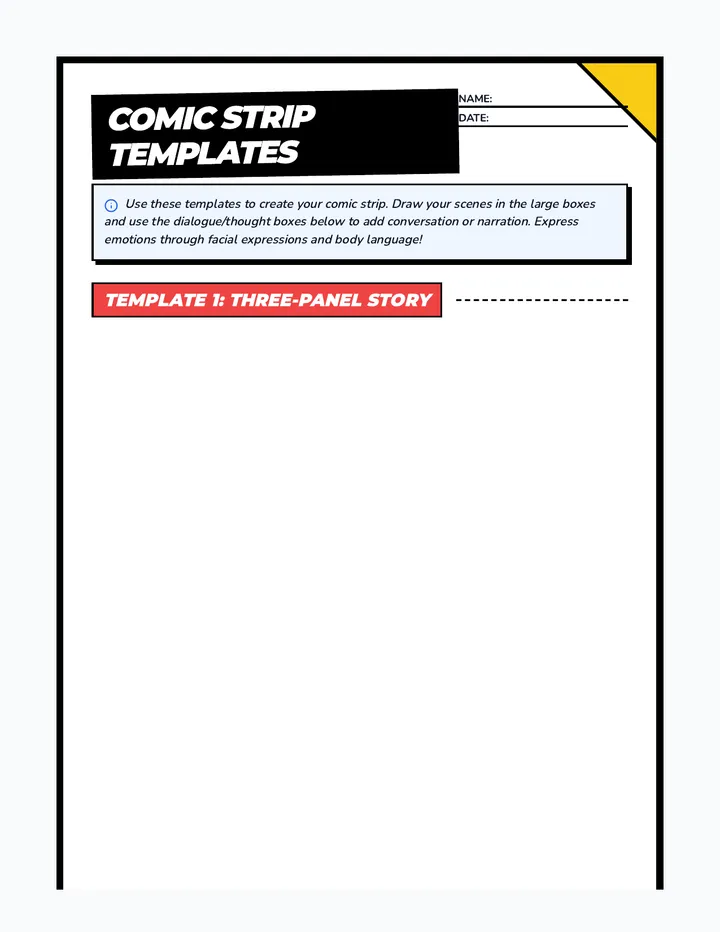
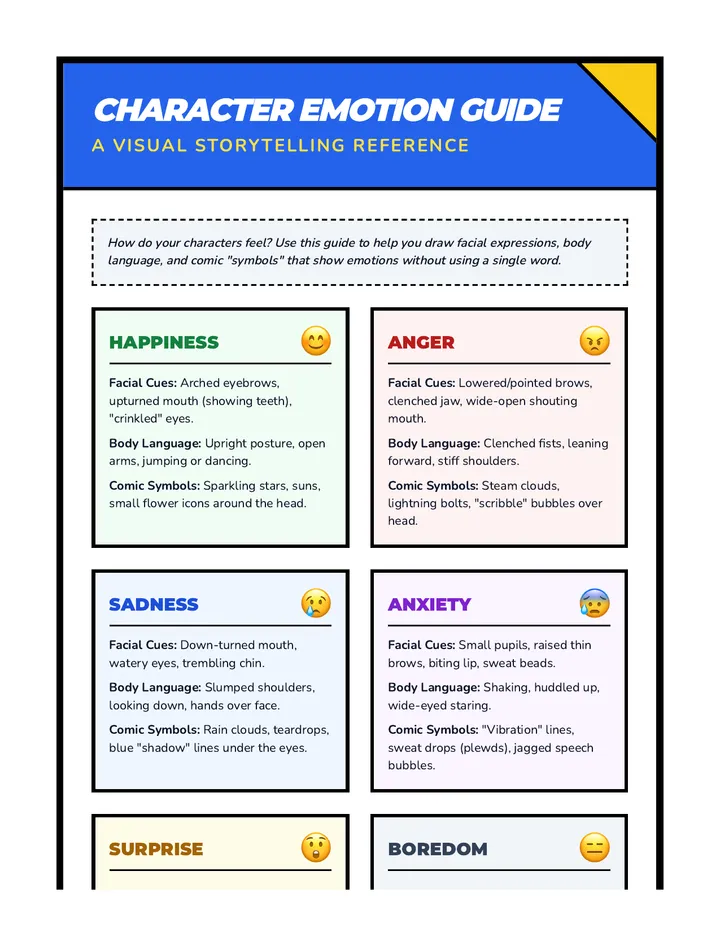
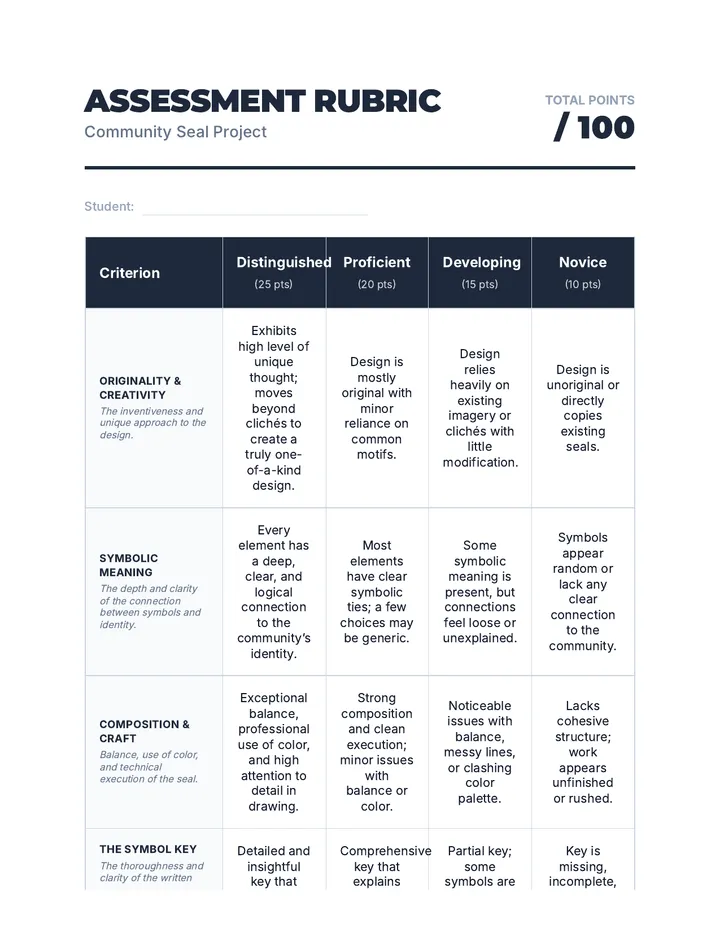
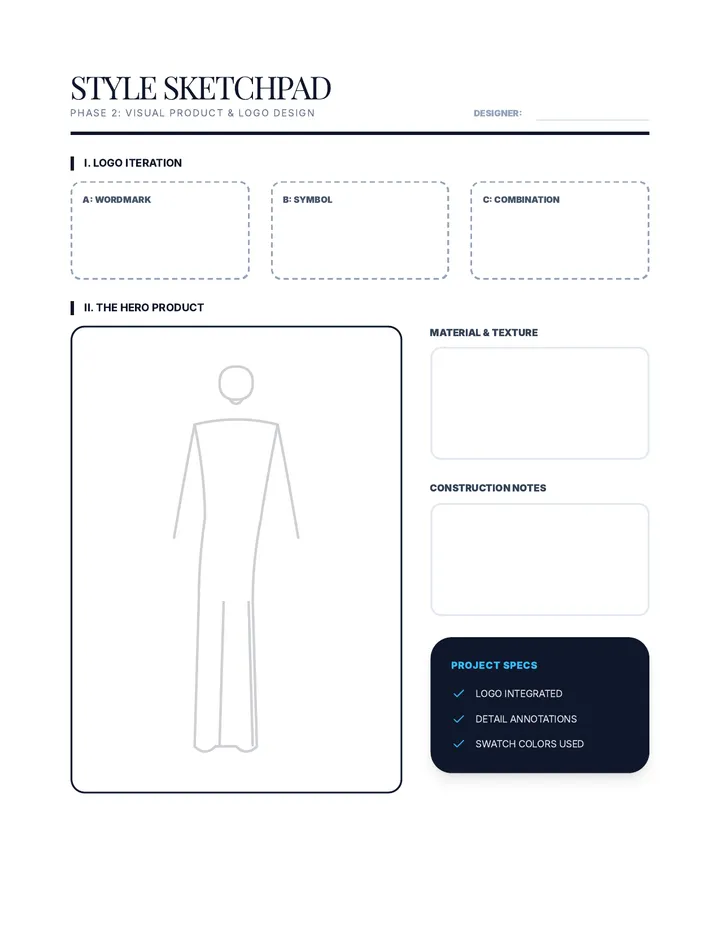
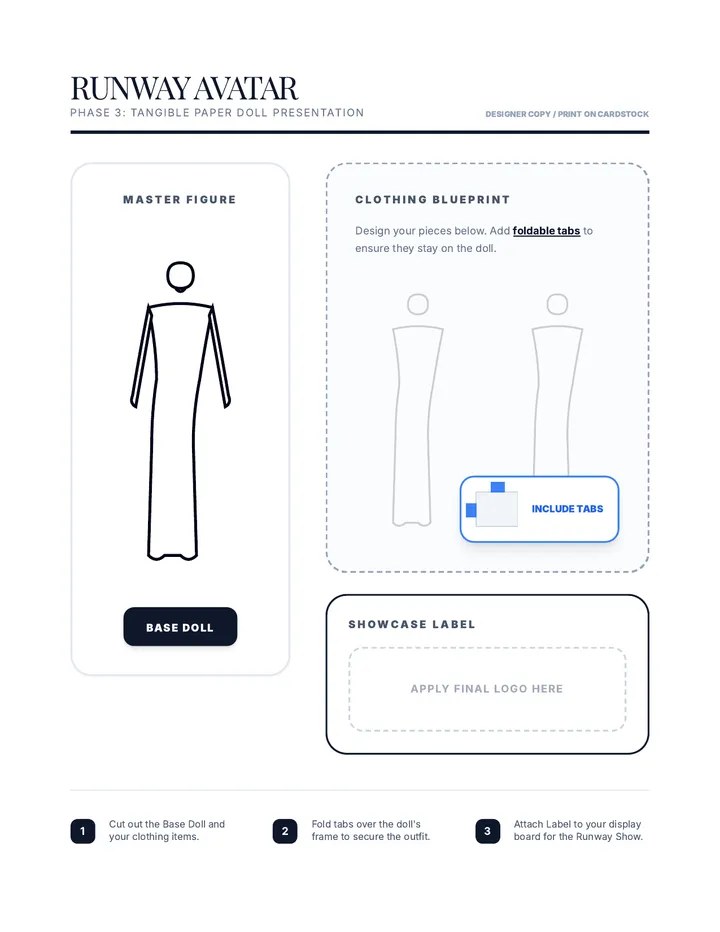
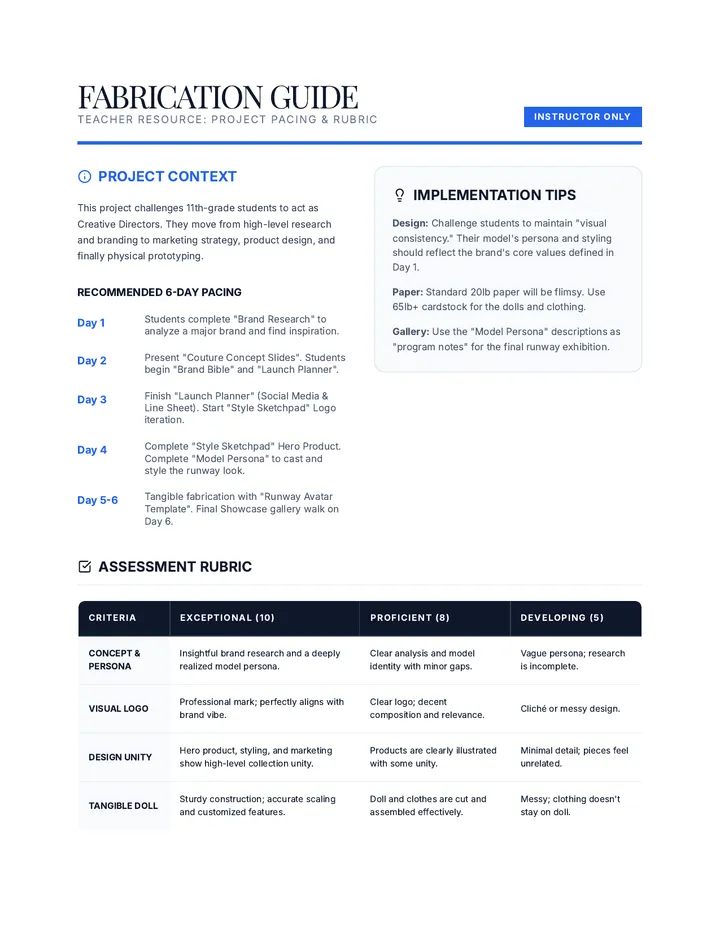
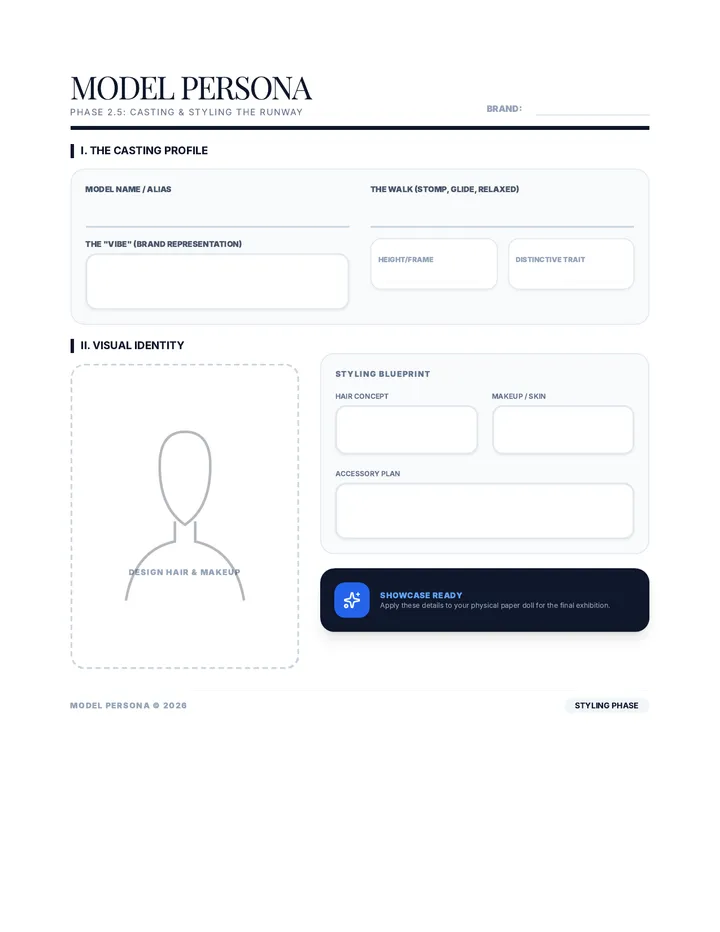
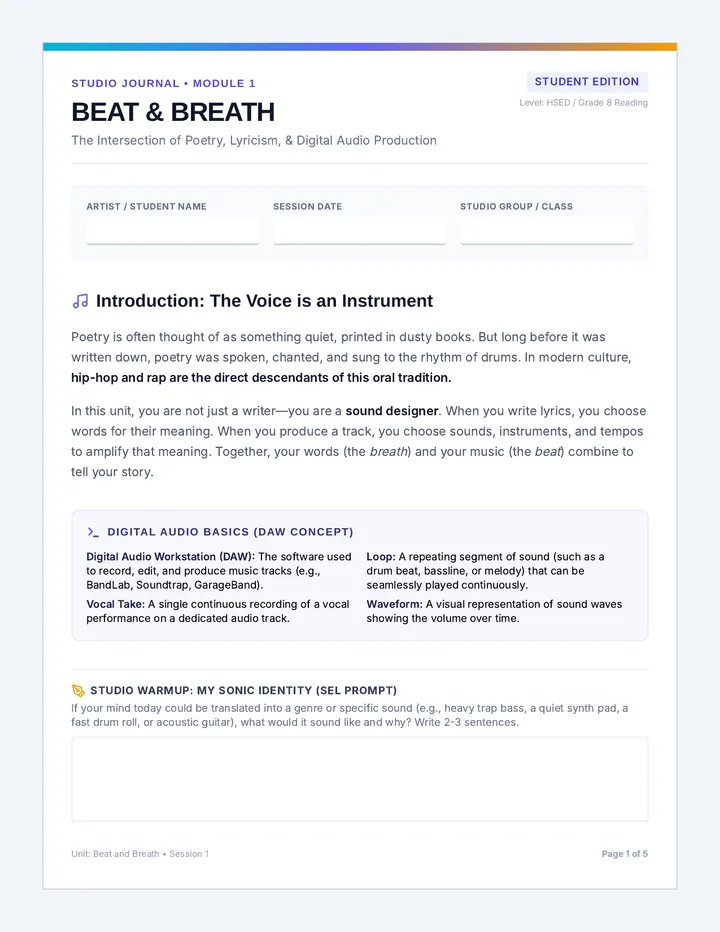
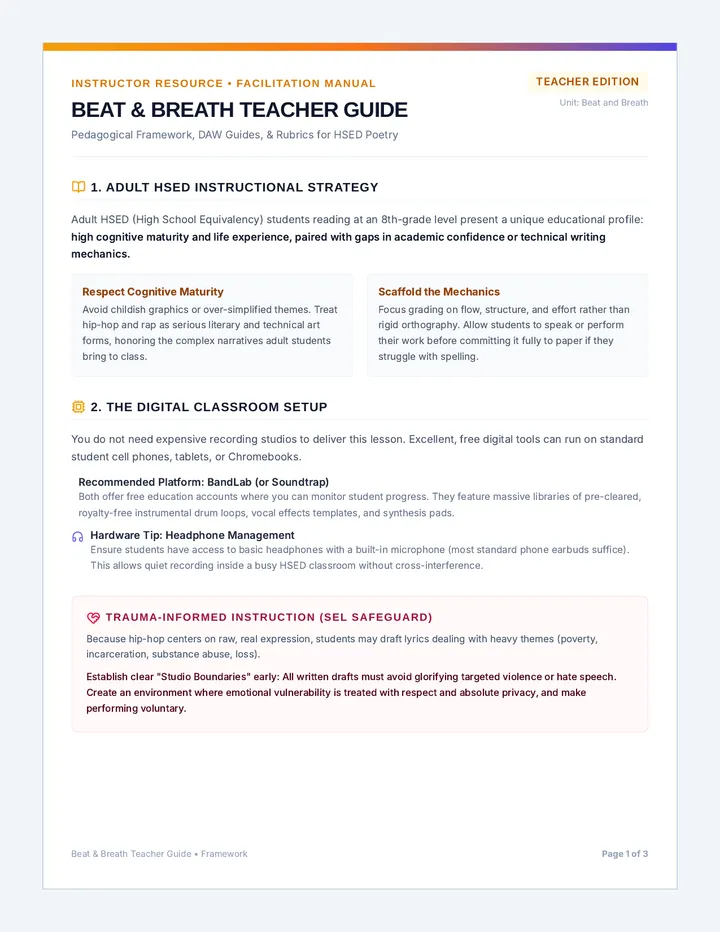
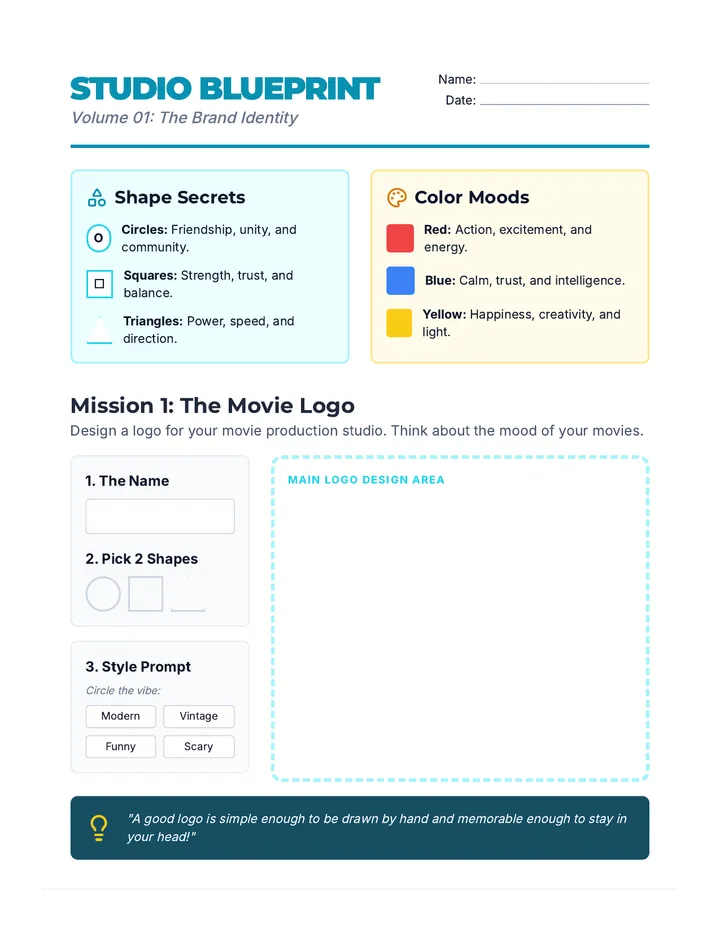
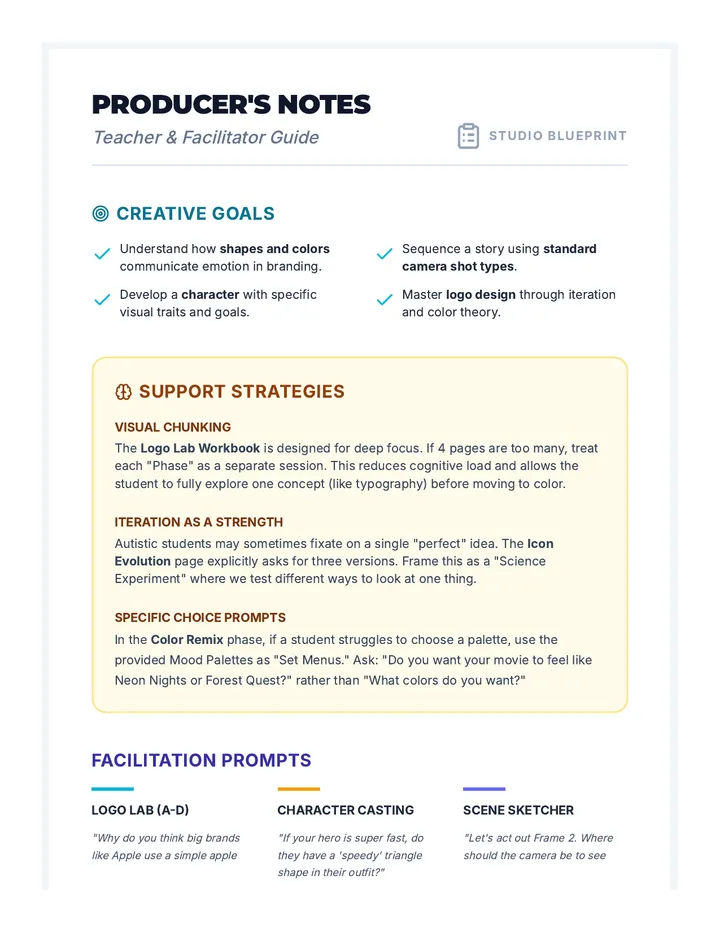
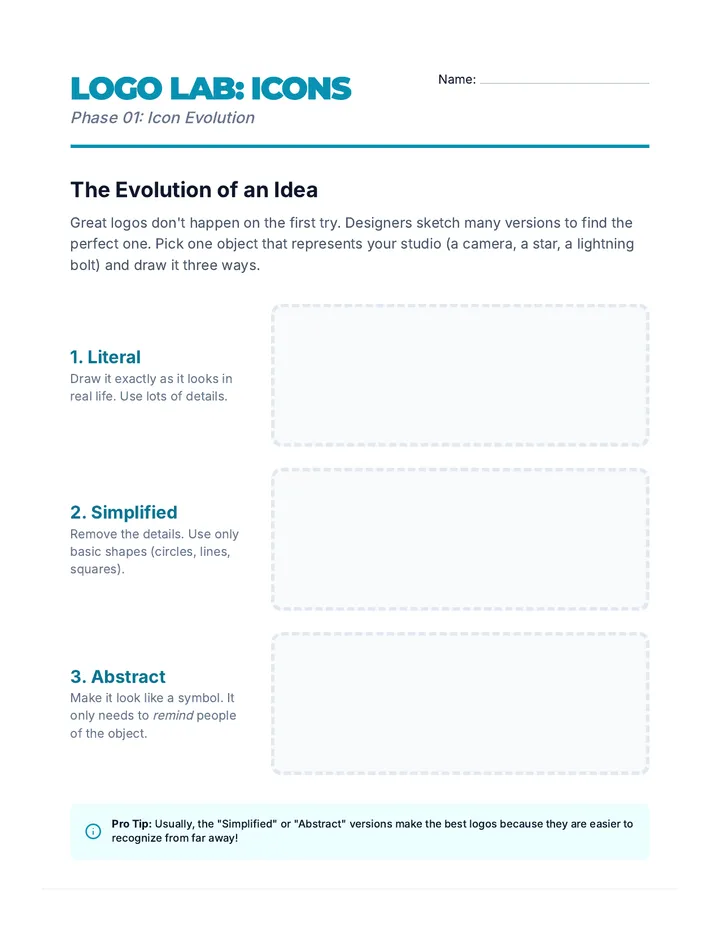
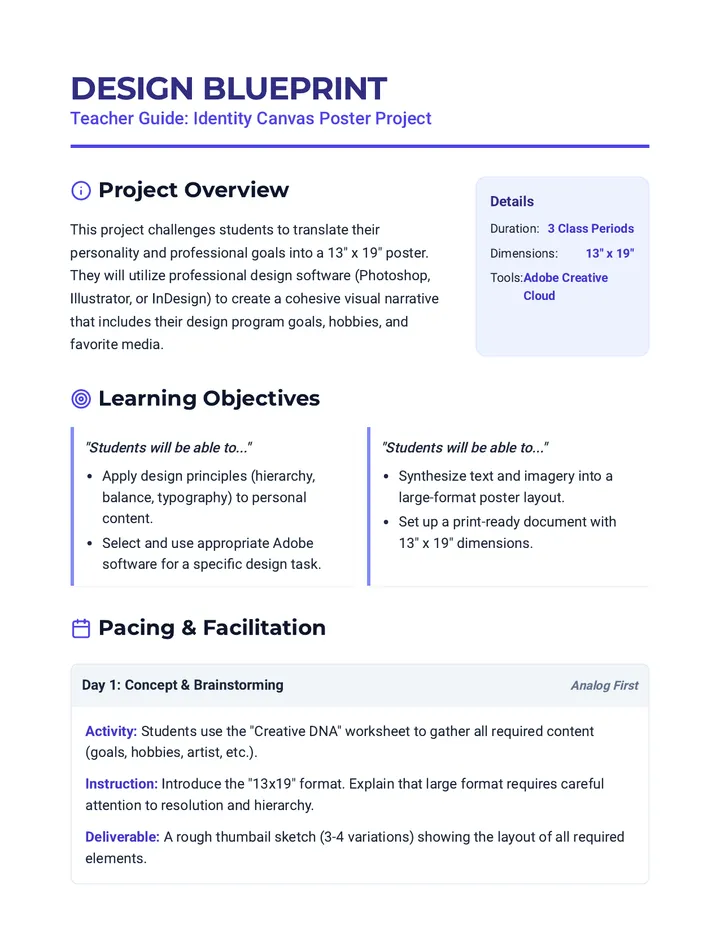
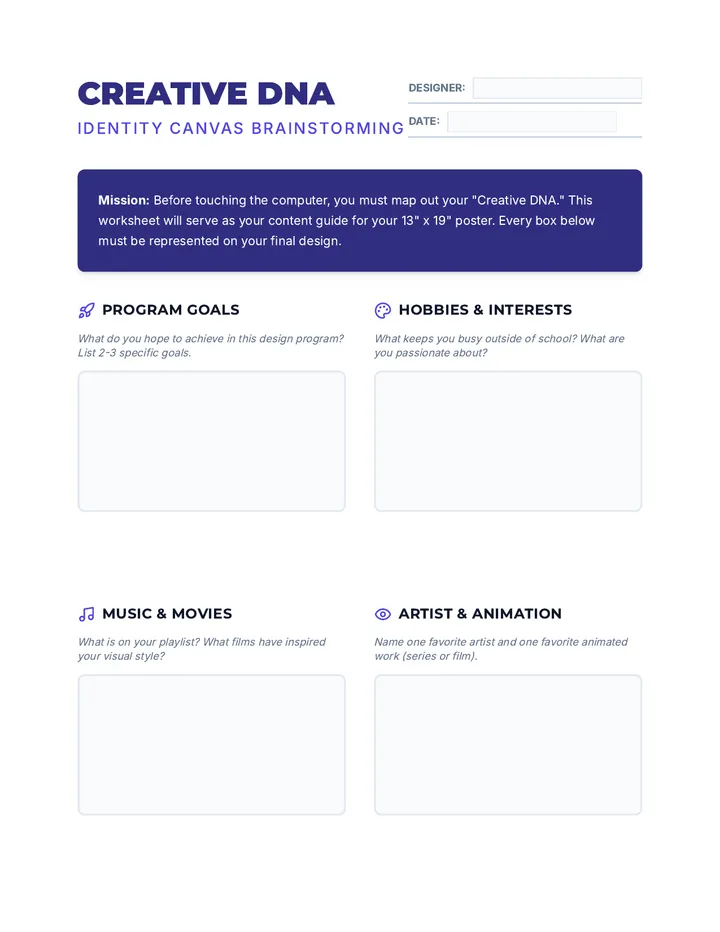
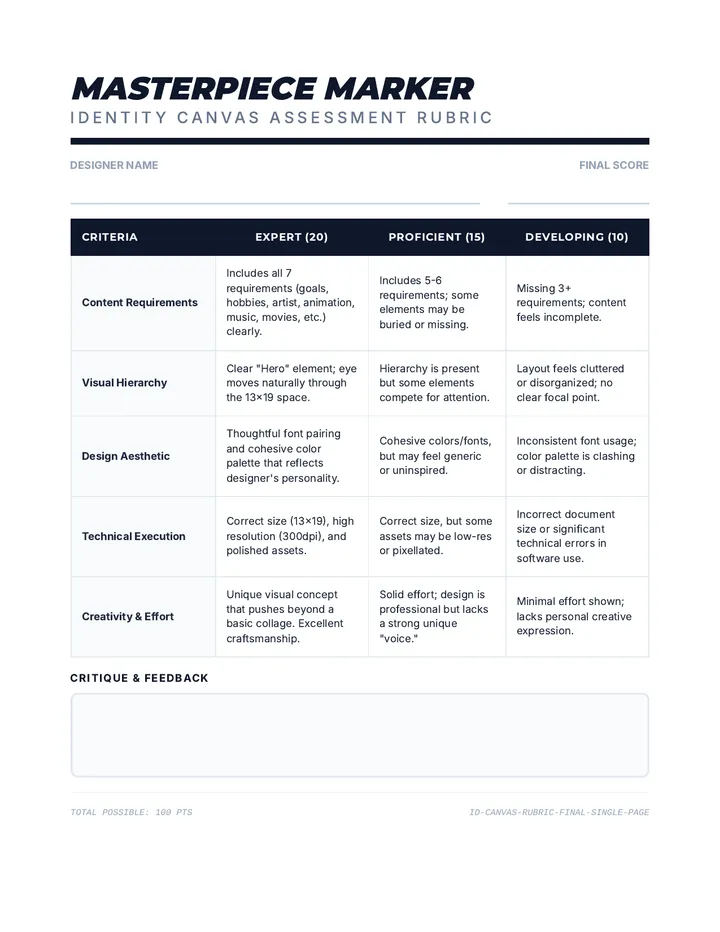
Techniques for brainstorming, collaborative project management, and individual artistic expression. Guides students through the iterative creative process from initial concept to final execution.
Une formation immersive de 12 heures destinée aux professeurs-documentalistes pour maîtriser les codes de la littérature adolescente actuelle et concevoir des stratégies de médiation innovantes au CDI.
A comprehensive workshop sequence on goal setting and visual manifestation.
A 3rd-grade music history and appreciation unit exploring the roots of American folk and blues music, focusing on oral traditions, storytelling, and musical structures like call-and-response and the AAB blues form.
This project-based sequence takes students on a global tour as ethnomusicologists, examining how geography and culture influence musical instruments and sounds. Students classify instruments using the Hornbostel-Sachs system and explore rhythms and scales from Africa, Asia, and Latin America.
A 1st Grade music sequence focused on programmatic music, teaching students how composers use instruments, tempo, and pitch to tell stories without words. Students explore famous works like Saint-Saëns' Carnival of the Animals, Prokofiev's Peter and the Wolf, and Vivaldi's Four Seasons before creating their own sound stories.
An inquiry-based exploration of music history for 1st graders, tracing the evolution of instruments from natural ancient materials to modern electronic synthesizers. Students develop comparative analysis skills and sound discrimination through hands-on activities, movement, and creative design.
A Kindergarten music appreciation unit exploring program music. Students learn how composers use tempo, pitch, and timbre to represent animals, characters, and settings, culminating in the creation of their own musical narrative.
This sequence introduces Kindergarteners to the distinctly American art forms of Jazz and Blues, focusing on emotion and spontaneity. Students explore the 'swing' feel, improvisation, and scat singing through active movement and vocal play.
This sequence analyzes how technology in the 20th and 21st centuries revolutionized music production and consumption. Students trace the evolution from early Rock 'n' Roll amplification to electronic synthesis and digital sampling, culminating in a creative project where they design music for the future.
This 4th-grade music history sequence explores the evolution of American music from African roots to Jazz. Students investigate how historical context, community struggle, and cultural migration shaped genres like Spirituals, Blues, Ragtime, and Jazz through active listening, writing, and performance.
This sequence traces the evolution of contemporary music from 19th-century African American spirituals through the development of the Blues, Jazz, and Rock & Roll. Students investigate how cultural exchange, technology, and social struggles shaped the sounds we listen to today, culminating in a musical genealogy project.
A graduate-level studio sequence focused on the transition from technical exercises to a cohesive, professional body of work. Students develop a thematic series, tackle the challenges of large-scale execution, engage in rigorous formal critiques, and curate a final presentation.
An advanced playwriting module for graduate students focusing on non-linear, fragmented, and experimental dramatic structures. Students interrogate traditional narrative shapes and develop a comprehensive structural blueprint for a full-length experimental work.
A project-based sequence for 5th-grade students to master the dramatic arc and write a short one-act play focusing on conflict and resolution.
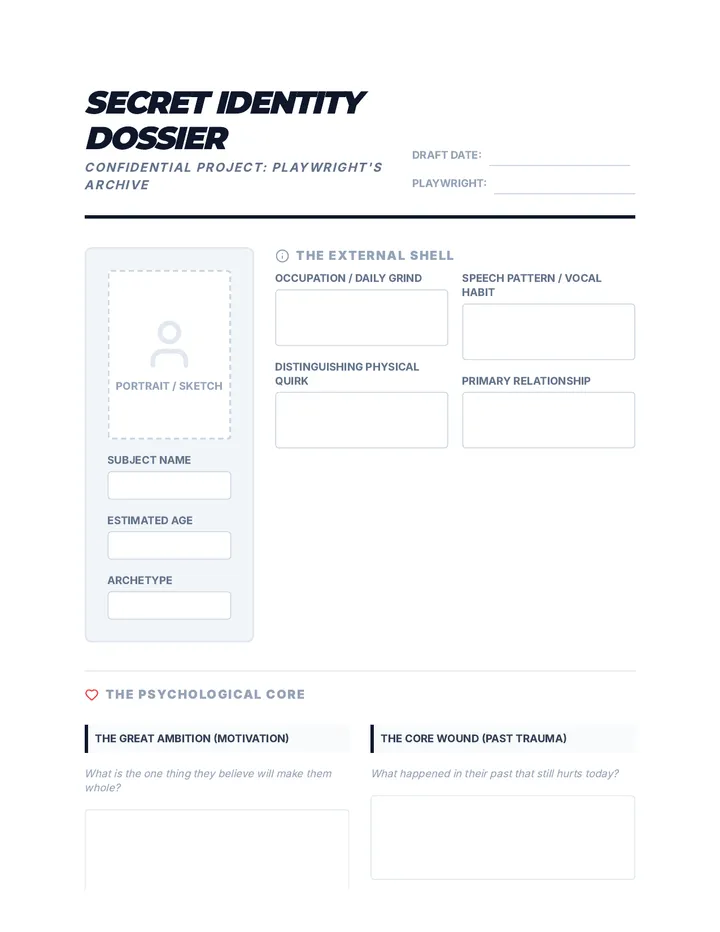
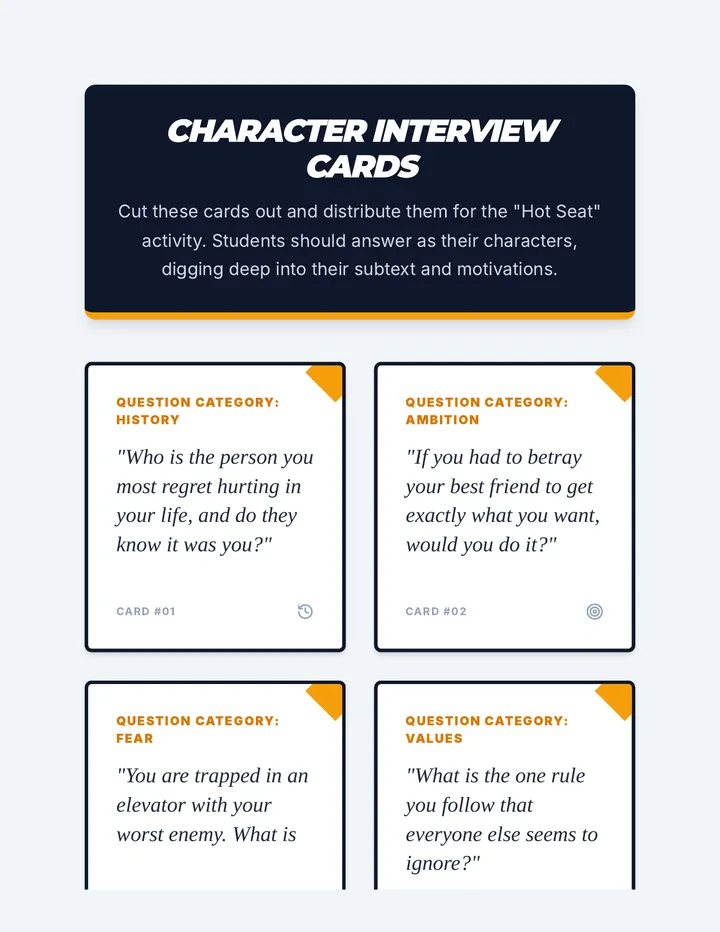
A 5-lesson theater arts sequence for 5th graders focused on creating multi-dimensional stage characters through profile building, improvisation, monologue writing, and dialogue refinement. Students move from external traits to internal motivations, learning how to create friction and unique voices for the stage.
An advanced playwriting sequence for undergraduate students focusing on non-traditional structures, including non-linear time, verbatim theater, absurdism, meta-theatricality, and multimedia integration. Students will move from theoretical analysis of experimental playwrights to creating their own rule-breaking scripts.
A high-level graduate sequence exploring the transition from solo improvisation to complex ensemble instant composition, utilizing Viewpoints, Contact Improvisation, and indeterminate scoring.
A project-based sequence for 11th-grade students focusing on the macro-level engineering of a one-act play. Students transition from deconstructing dramatic structures to drafting a complete narrative treatment, emphasizing conflict, stakes, and structural integrity.
A comprehensive playwriting sequence that takes 10th-grade students from initial character creation to a polished ten-minute play script. Students explore archetypes, master narrative structure, learn the importance of stage business, and engage in the collaborative revision process of a table read.
A 4th-grade music sequence where students transform from music listeners to composers. Students explore the architecture of major and pentatonic scales, draft melodic shapes, and finally notate their own 4-measure musical motifs.
This sequence explores the representation of apes in the film 'Rise of the Planet of the Apes', focusing on the transition from scientific subjects to sentient leaders. Students analyze the use of motion-capture technology and narrative techniques used to humanize non-human characters.
An immersive workshop-style sequence for 2nd graders exploring the roots of Jazz, Blues, and Folk music through call-and-response, syncopation, and improvisation. Students trace American musical history from work songs to the Swing era through active music-making.
A 5-lesson sequence for 2nd graders exploring how classical composers use musical elements to tell stories and express emotions. Students 'meet' famous composers like Vivaldi and Beethoven, identifying tempo, dynamics, and leitmotifs in iconic works.
A 5-lesson sequence for 3rd graders exploring the music and instruments of West Africa, Asia, the Andes, and North America, focusing on how geography and culture shape sound.
Students explore the world of Jazz through rhythm, syncopation, and improvisation. They'll meet legends like Louis Armstrong and Ella Fitzgerald while learning to find their own musical voice through 'swing' and scat singing.
This sequence investigates how the technological explosion of the 20th and 21st centuries, from the electric guitar to AI, redefined music genres and creation. Students analyze production techniques, listen for layers, and explore the concept of technology as a musical instrument.
A 1st Grade music history sequence exploring the lives and works of Mozart, Beethoven, Tchaikovsky, and John Williams through storytelling, active listening, and sensory exploration.
This 1st Grade sequence explores the uniquely American roots of Folk, Blues, and Jazz. Students learn about oral traditions, call-and-response, syncopation, and improvisation through interactive singing and rhythmic games.
A graduate-level exploration of how technological advancement (from notation to algorithms) acts as a primary driver of musical aesthetics and evolution. Students analyze the reciprocal relationship between material culture and musical expression using media theory and organology.
A graduate-level exploration of the intersection between medium and meaning. Students innovate with traditional materials, exploring chemical interactions, substrate manipulation, and mixed-media synthesis to develop a unique 'mark-making' vocabulary where physical texture contributes to conceptual depth.
This advanced sequence for graduate students explores the deconstruction of classical composition through dynamic symmetry, edge tension, non-Euclidean perspective, and visual hierarchy. Students will move from rigid geometric analysis to 'anti-compositional' strategies to create contemporary, tension-filled imagery.
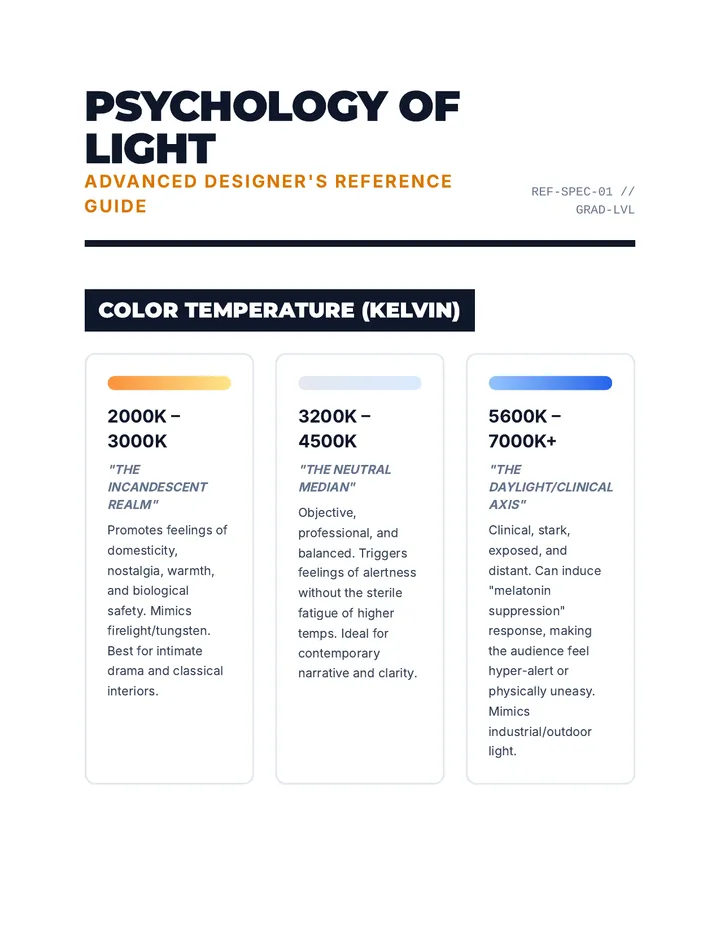
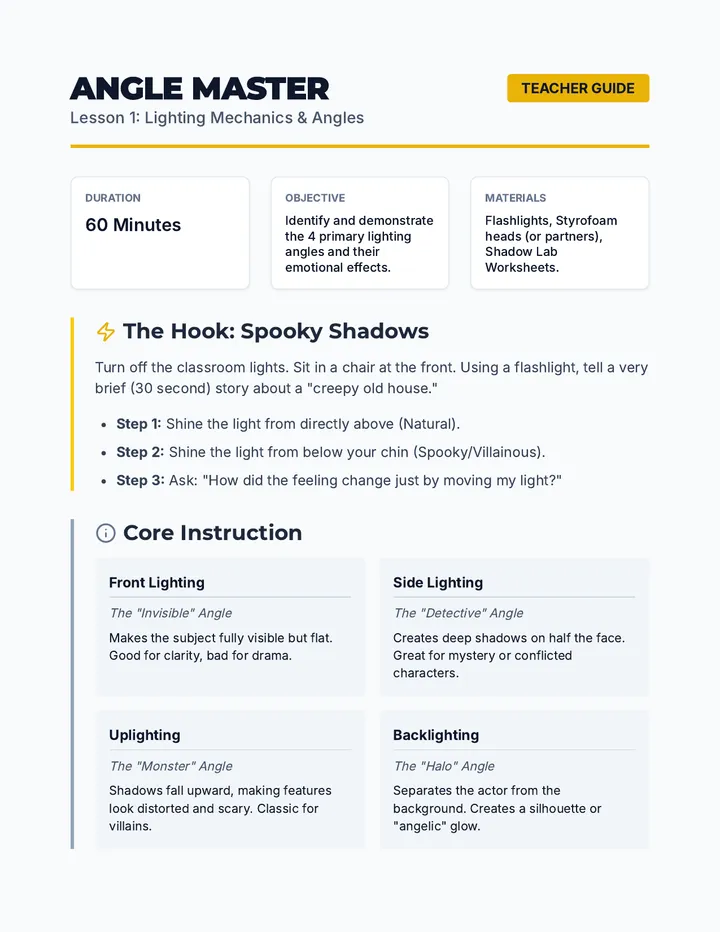
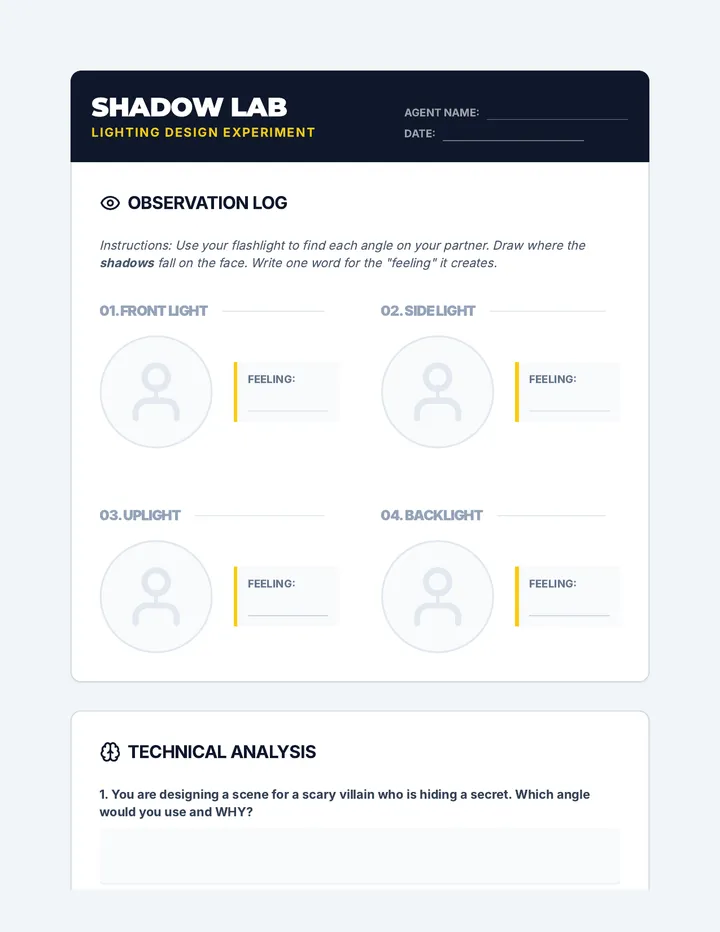
A 5-lesson sequence for 5th graders exploring technical theater through lighting and sound engineering. Students learn how to manipulate mood and focus using physical properties of light and creative sound design, culminating in a technical rehearsal simulation.
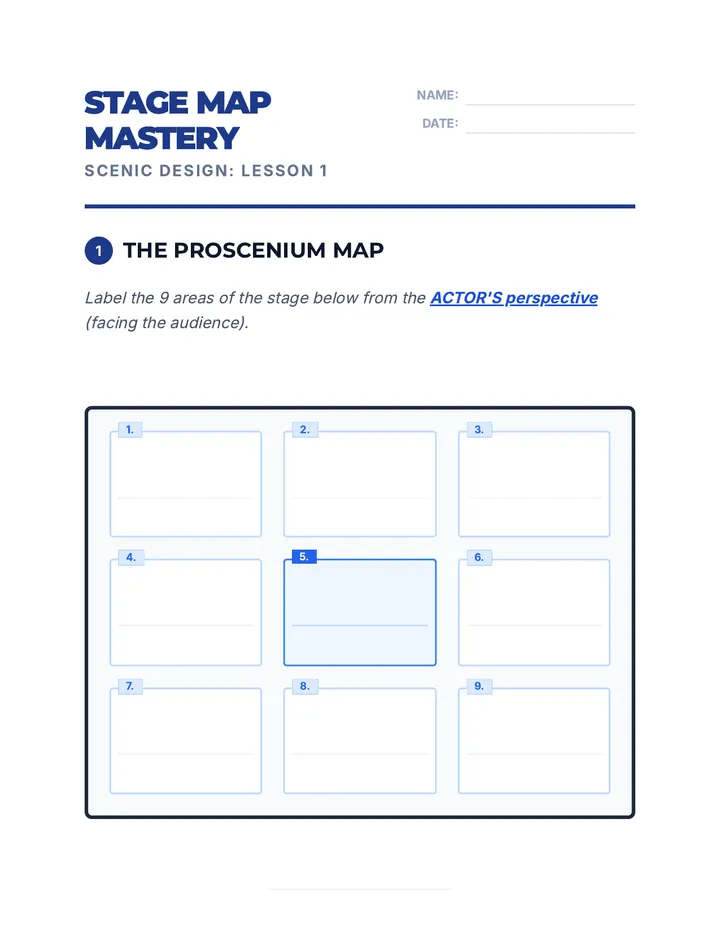
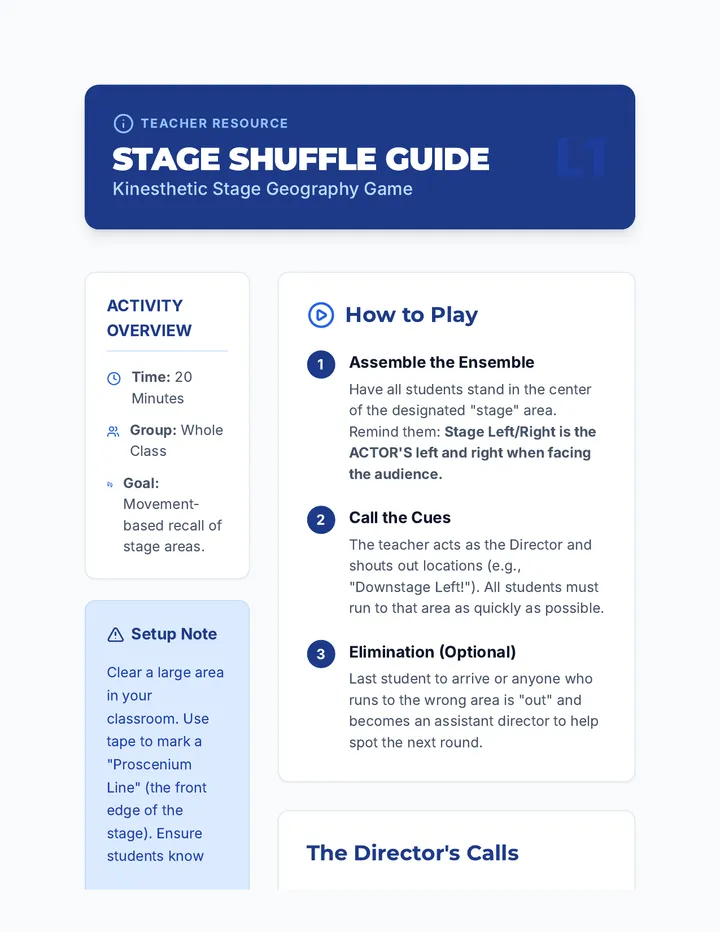
This sequence introduces 5th-grade students to the world of technical theater through the lens of scenic design. Students progress from learning stage geography to analyzing scripts, drafting floor plans, and ultimately building a 3D scale model (maquette) of their own set design.
A comprehensive exploration of stage management for undergraduate students, covering organizational hierarchy, documentation, rehearsal management, and technical execution. Students transition from understanding the SM role to mastery of the prompt book and cue calling.
A comprehensive graduate-level course on the professional development of a new play, focusing on revision strategies, collaborative feedback, and industry-standard submission practices. Students transition from draft to a polished, professional-grade script and submission package.
A 5-lesson sequence for 5th-grade students focusing on the iterative process of playwriting, from the first table read to a final, polished performance-ready script. Students develop skills in auditory analysis, dialogue refinement, conciseness, and collaboration.
A graduate-level sequence exploring advanced pedagogical frameworks for creative movement facilitation. Students deconstruct somatic cues, developmental patterns, trauma-informed practices, and neurodiverse scaffolding to design inclusive and effective movement workshops.
A comprehensive introduction to playwriting for 7th graders, focusing on the transition from narrative prose to technical script formatting, dialogue subtext, stage directions, and scene structure.
A 5-lesson unit for 6th-grade students exploring character construction and the narrative structure of stage plays, from initial concept to a professional pitch.
A comprehensive 12th-grade theater arts sequence focused on the structural engineering of dramatic writing. Students transition from structural analysis to drafting and revising an original one-act play through a professional workshop model.
This sequence guides 5th-grade students through the intricacies of advanced rhythmic notation, moving from sixteenth note subdivisions and dotted rhythms to the complexities of syncopation and compound meter. Through a blend of auditory analysis, physical performance, and formal notation, students develop the skills to decode and compose sophisticated musical patterns.