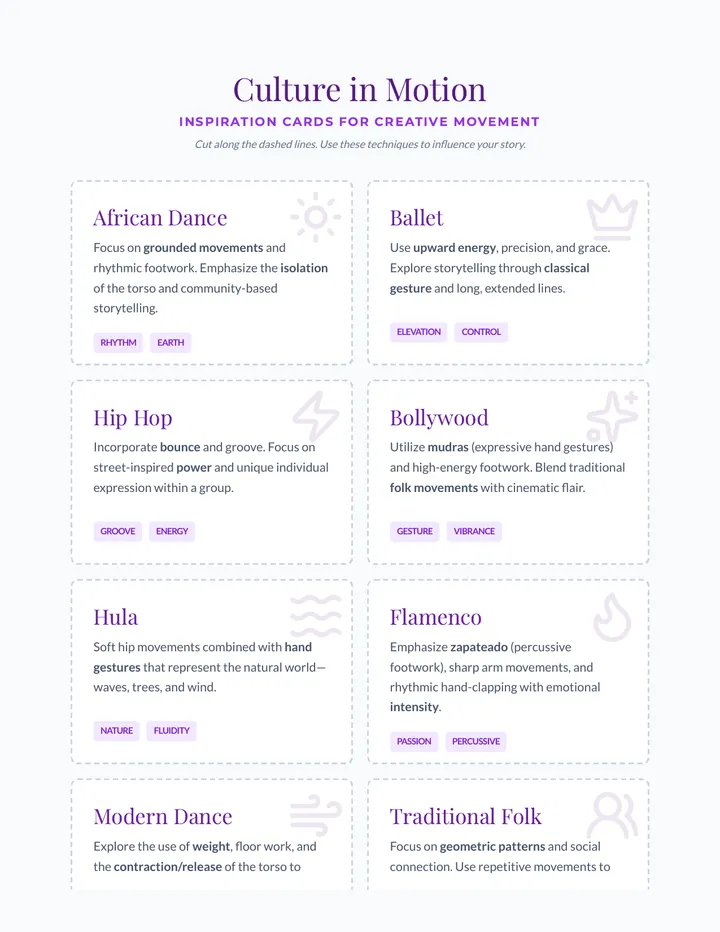
Develops technical proficiency and creative movement skills across various styles. Examines choreographic principles alongside the historical and cultural origins of diverse global dance forms.
A foundational dance unit for Pre-K students exploring tempo, energy, and rhythm. Students learn to connect auditory cues to physical movement through play-based activities and character-driven exercises.
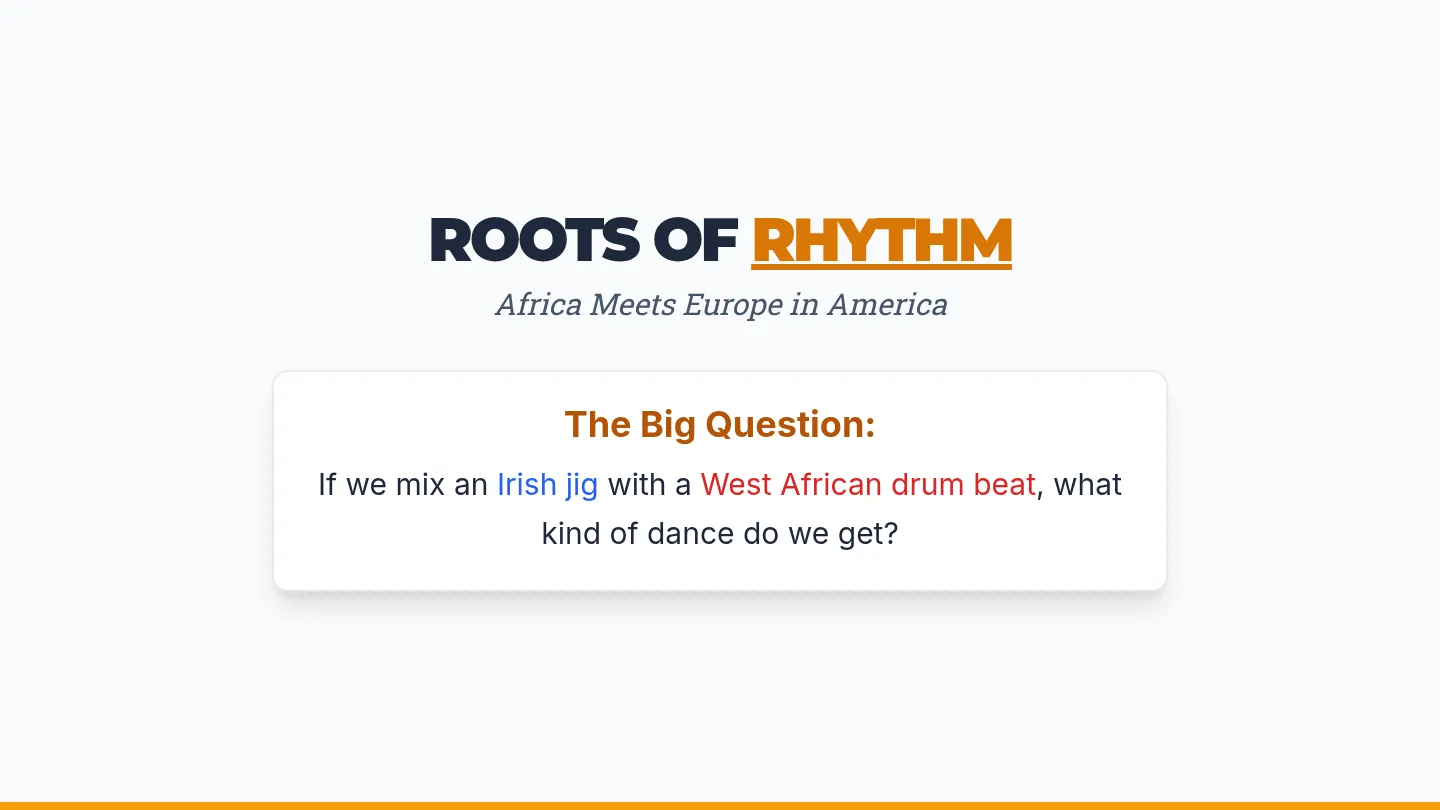
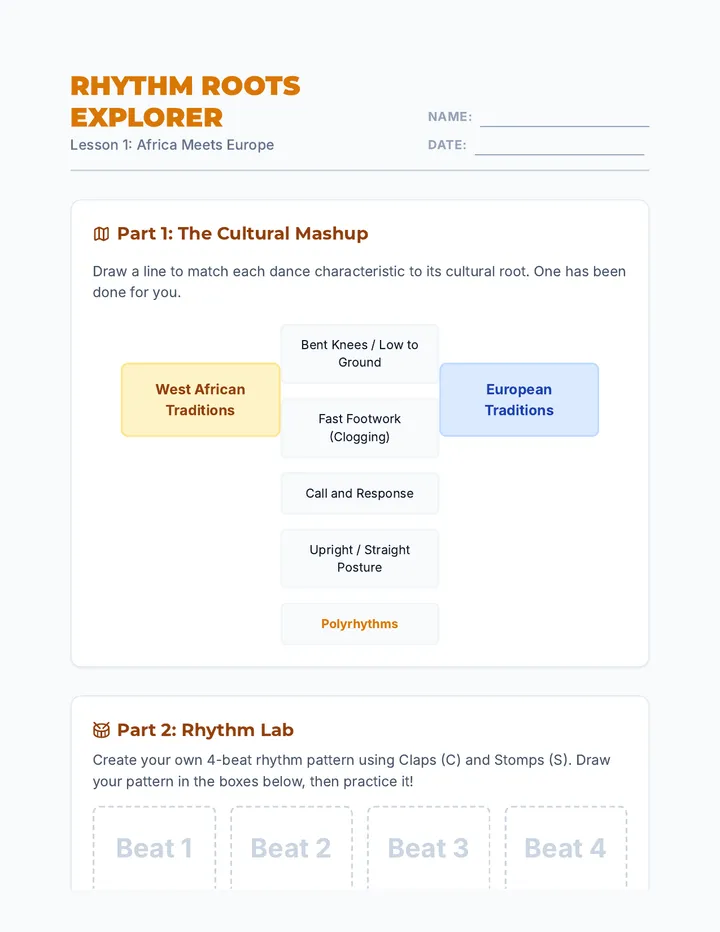
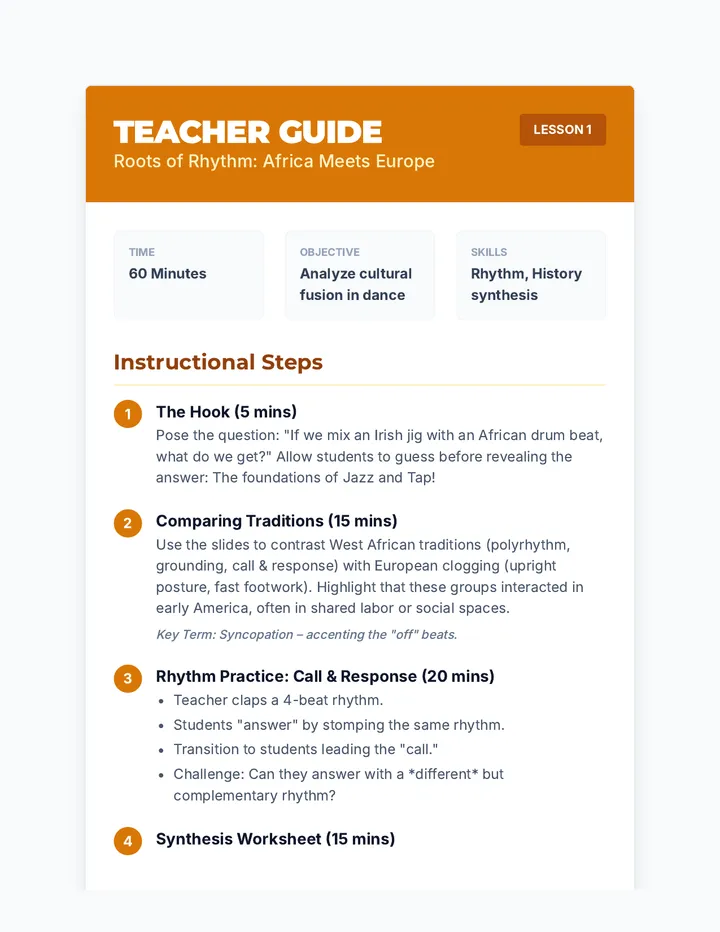
A 5-lesson unit for 4th graders exploring the cultural origins and evolution of American Jazz and Tap dance, from African and European roots to the Harlem Renaissance and Broadway.
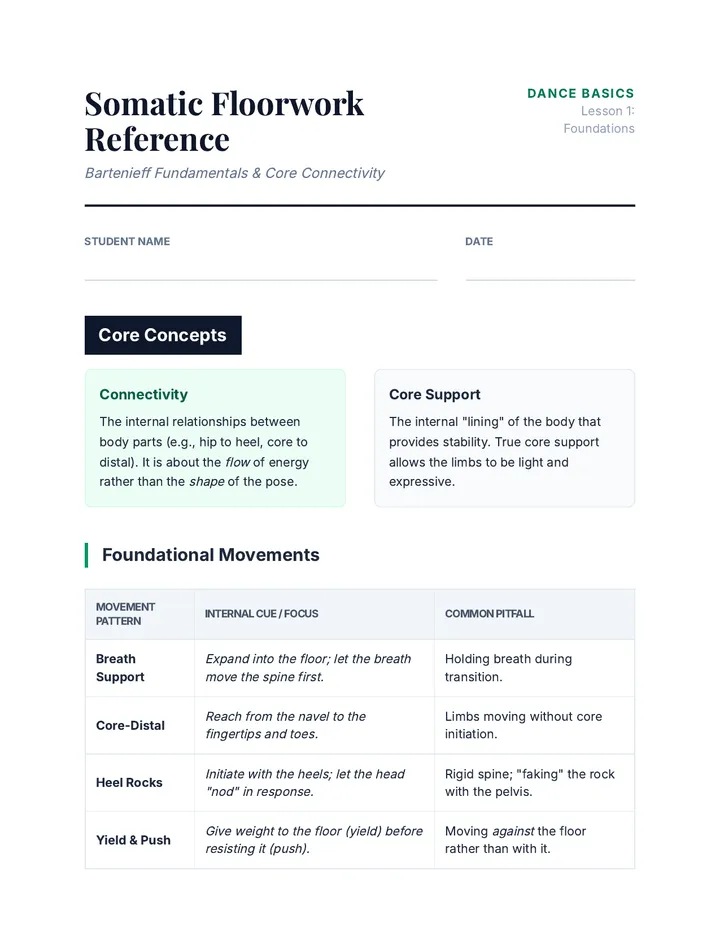
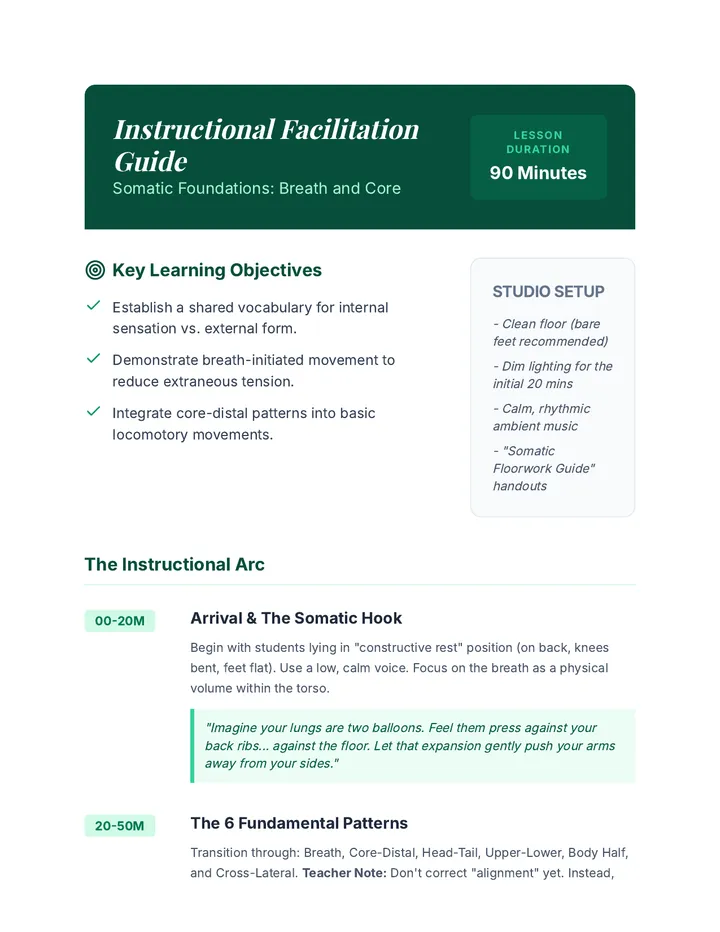
A comprehensive undergraduate dance sequence that bridges internal somatic awareness with choreographic principles. Students progress from floor-based somatic explorations to creating and critiquing original movement phrases using professional choreographic devices.
A graduate-level sequence exploring creative movement as a rigorous Practice-as-Research (PaR) methodology. It bridges phenomenological philosophy and somatic practice to investigate academic questions through the body.
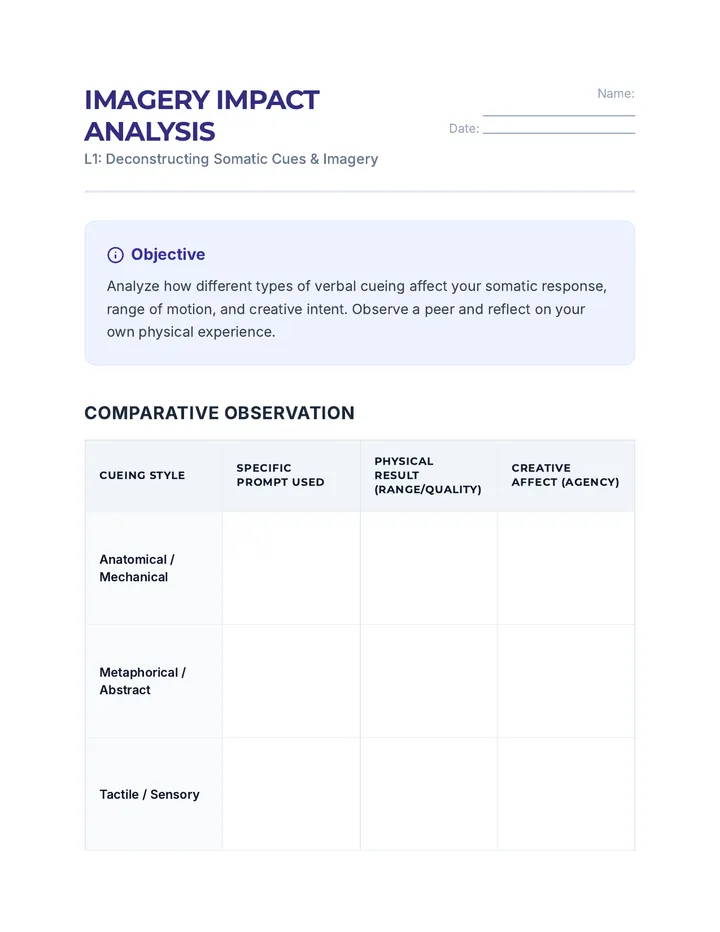
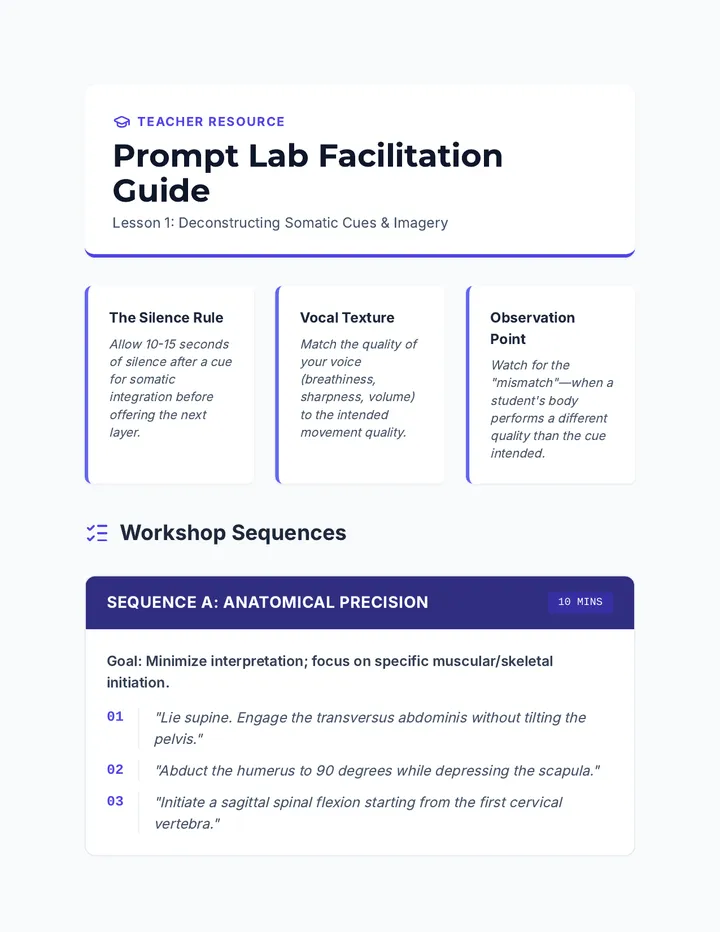
A graduate-level sequence exploring advanced pedagogical frameworks for creative movement facilitation. Students deconstruct somatic cues, developmental patterns, trauma-informed practices, and neurodiverse scaffolding to design inclusive and effective movement workshops.
A vibrant and active introduction to Hispanic music and culture for Kindergarten students. Students explore the Spanish guitar, maracas, dance steps like Salsa, and concepts of tempo through hands-on making, movement games, and collaborative performance.
A first-grade introduction to global dance traditions, exploring dance as communication, storytelling, community building, and performance art. Students learn basic movements from Hula, folk dances, and ballet while developing cultural appreciation and creative expression.
A high-energy dance sequence for Pre-K students focusing on body isolations, dynamics, rhythm, and stylized movement through a 'Neon Jungle' theme. Students will learn the building blocks of jazz dance while developing coordination and musicality.
A high-energy introduction to Jazz dance for Kindergarteners, focusing on rhythm, isolations, parallel alignment, and movement dynamics. Students learn to find the beat, move individual body parts, and perform a basic jazz combination.
This sequence introduces Kindergarten students to Contemporary and Creative Dance. It covers breath-led movement, safe floor transitions, the concepts of contraction and release, emotional expression through shape, and guided improvisation.
A foundational ballet sequence for Kindergarteners exploring posture, turnout, basic movements, and balance through creative imagery and playful instruction.
A foundational dance sequence for Kindergarteners focusing on personal space (kinesphere), levels, pathways, and locomotor movements like skipping and galloping. Students learn to move safely and creatively while developing body control and balance.
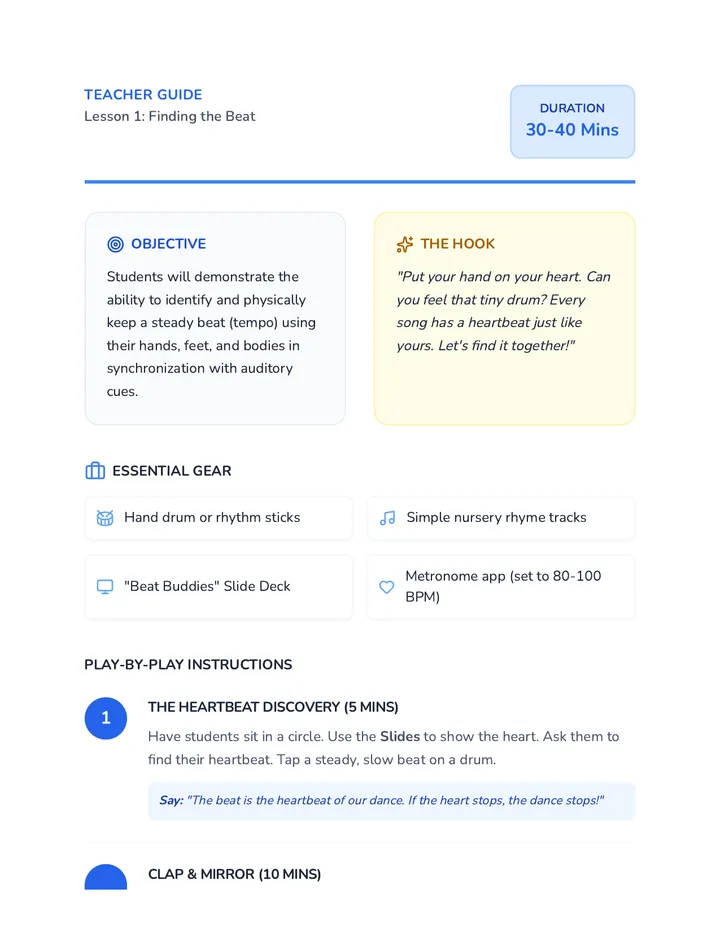
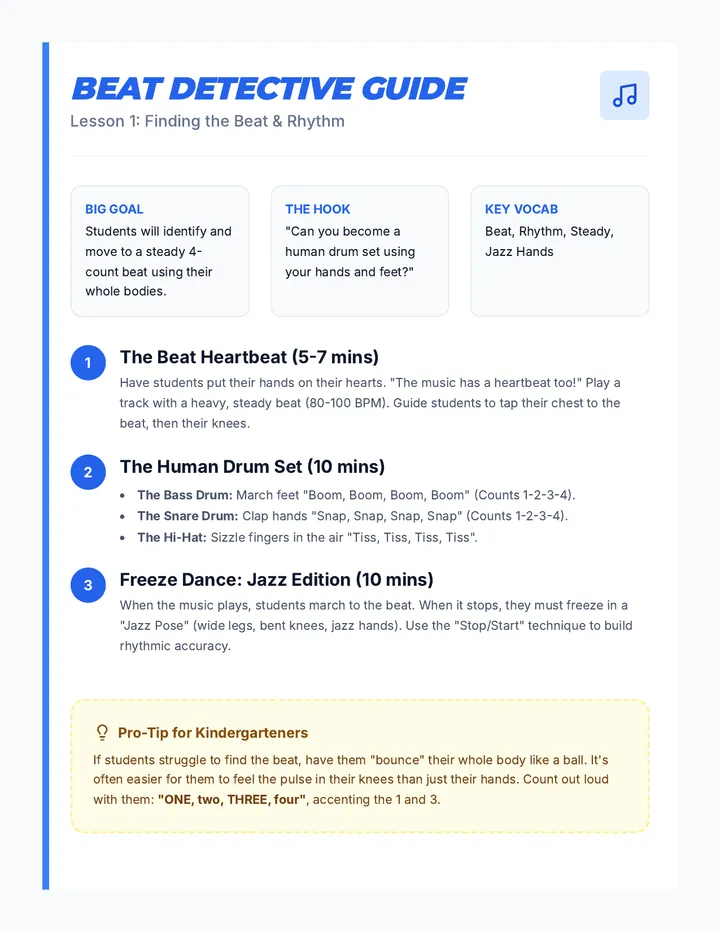
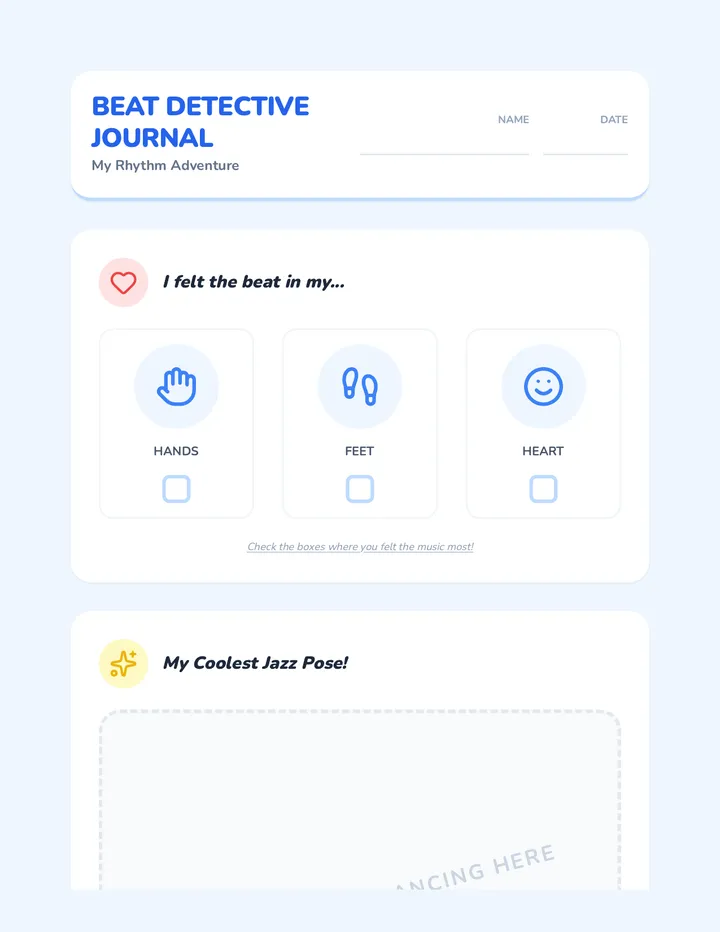
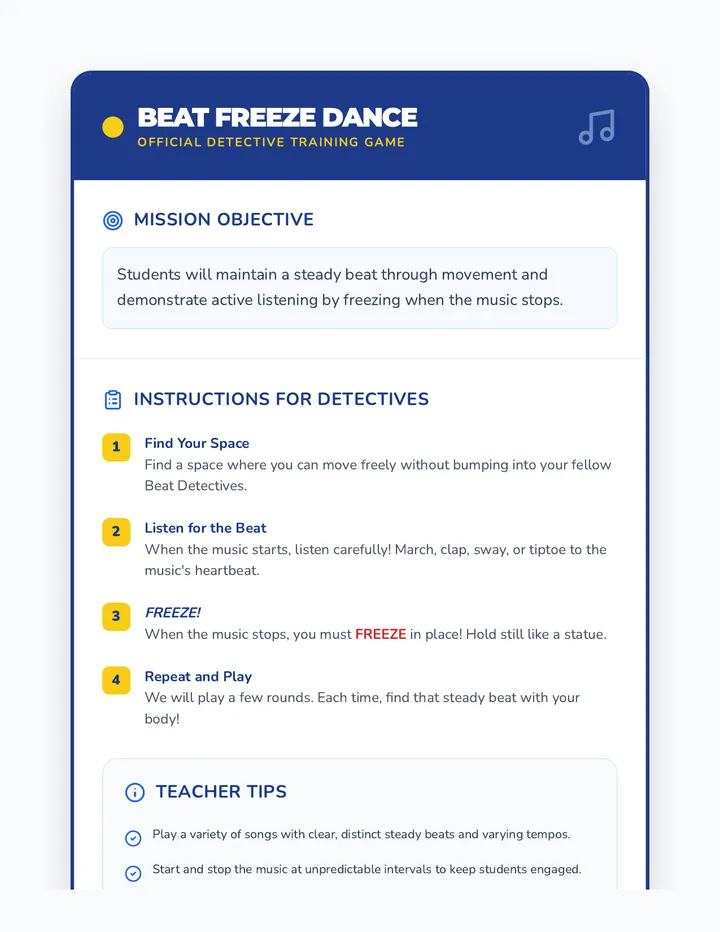
A high-energy 30-minute lesson where Kindergarten students learn to identify and move to a steady beat through interactive games and detective-themed exploration.
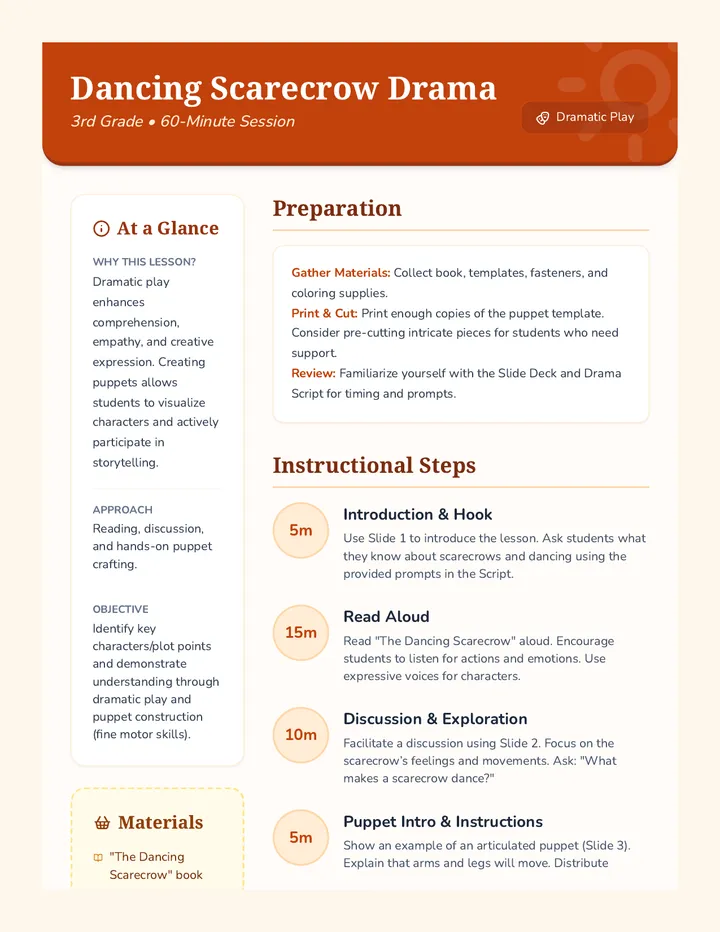
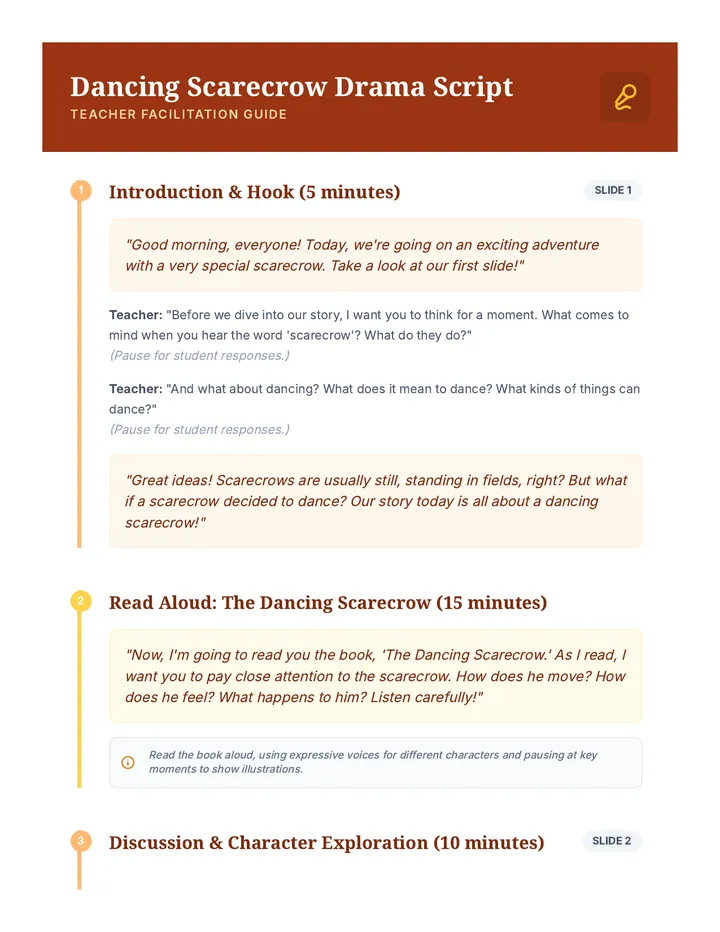
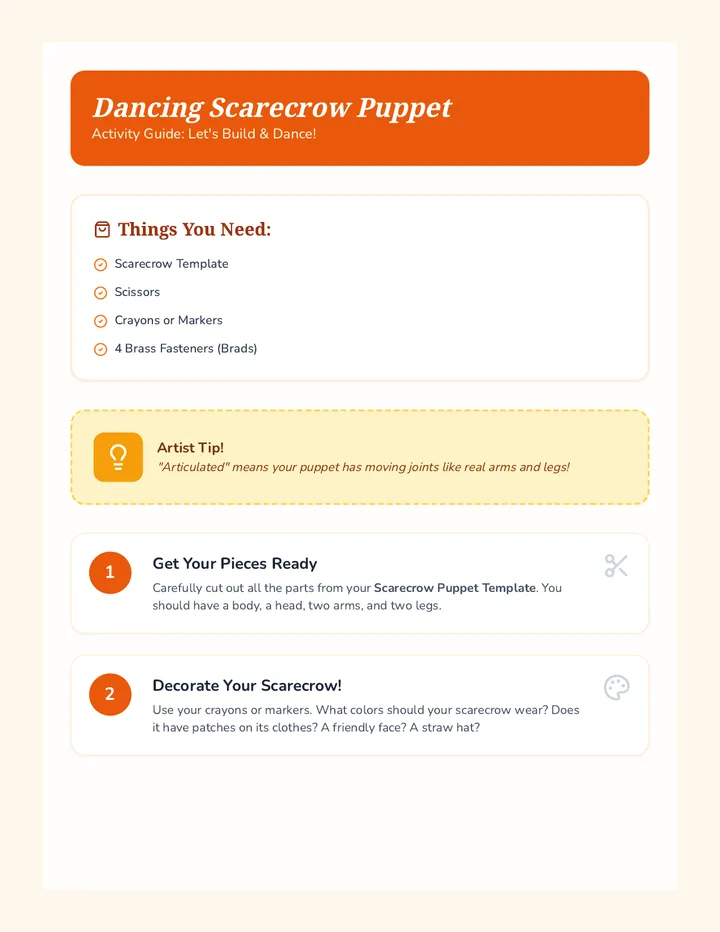
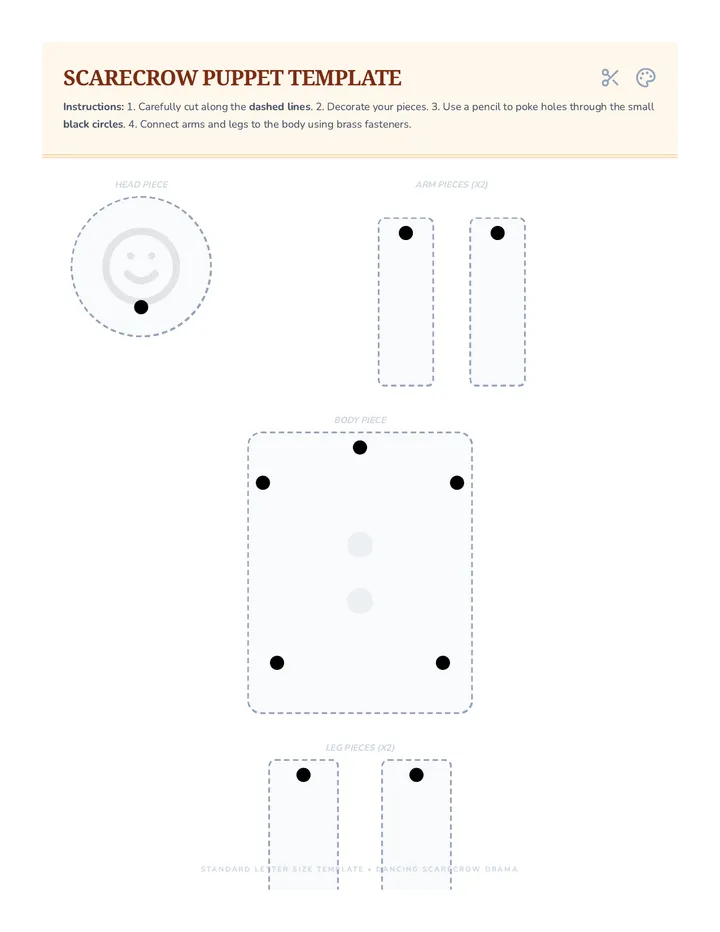
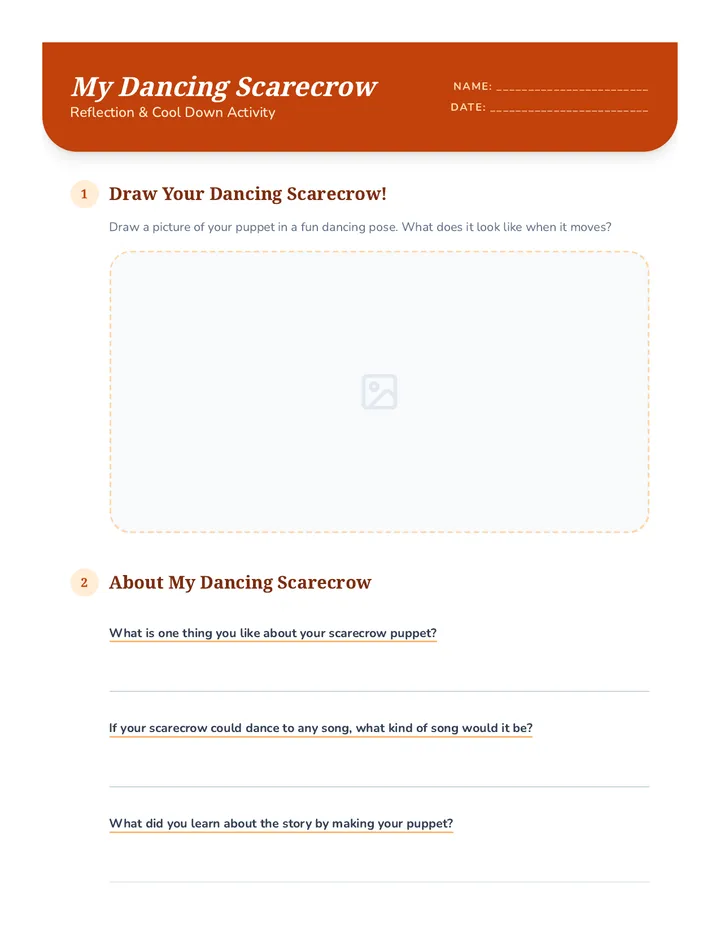
This lesson plan engages 3rd-grade students in a dramatic play experience based on 'The Dancing Scarecrow.' Students explore character and plot by designing and building articulated scarecrow puppets to foster imagination and teamwork.
An individualized exploration of personal body awareness and movement potential, focusing on anatomical understanding and healthy movement practices for 9th-grade dancers.
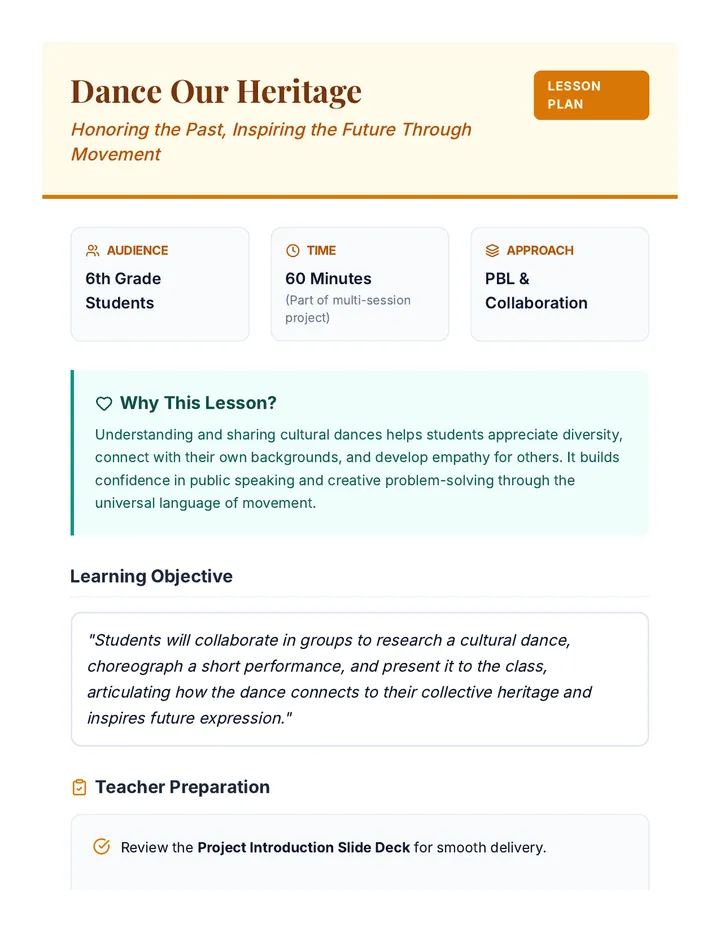
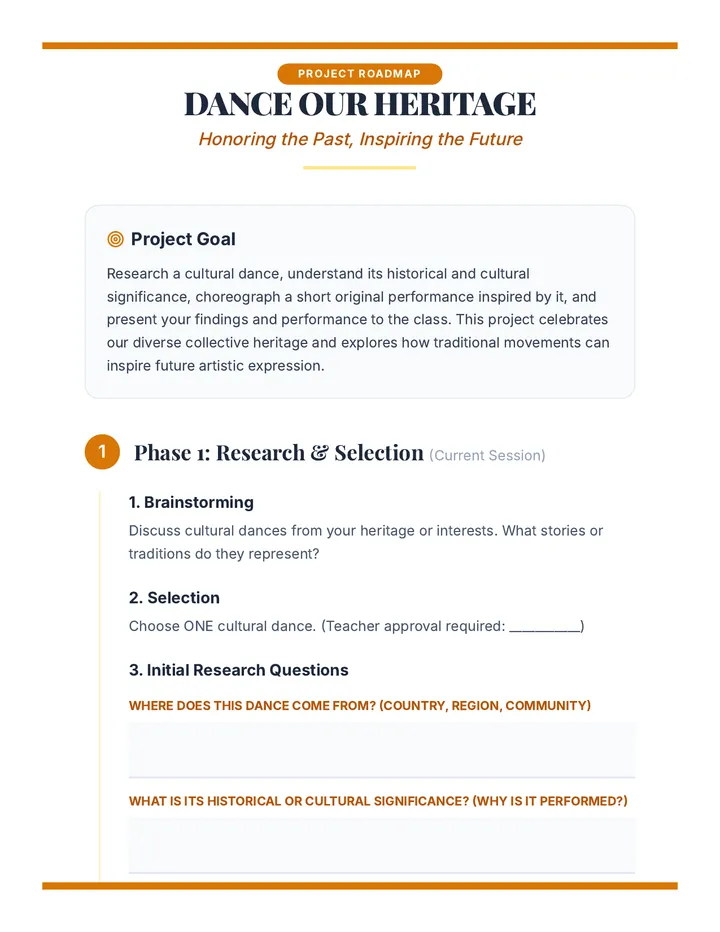
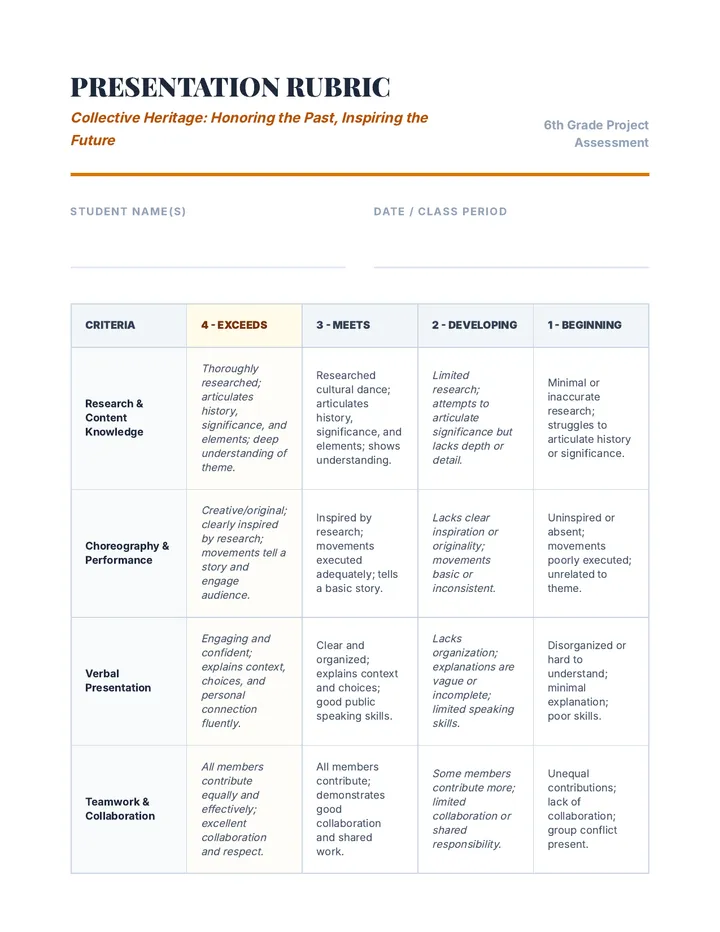
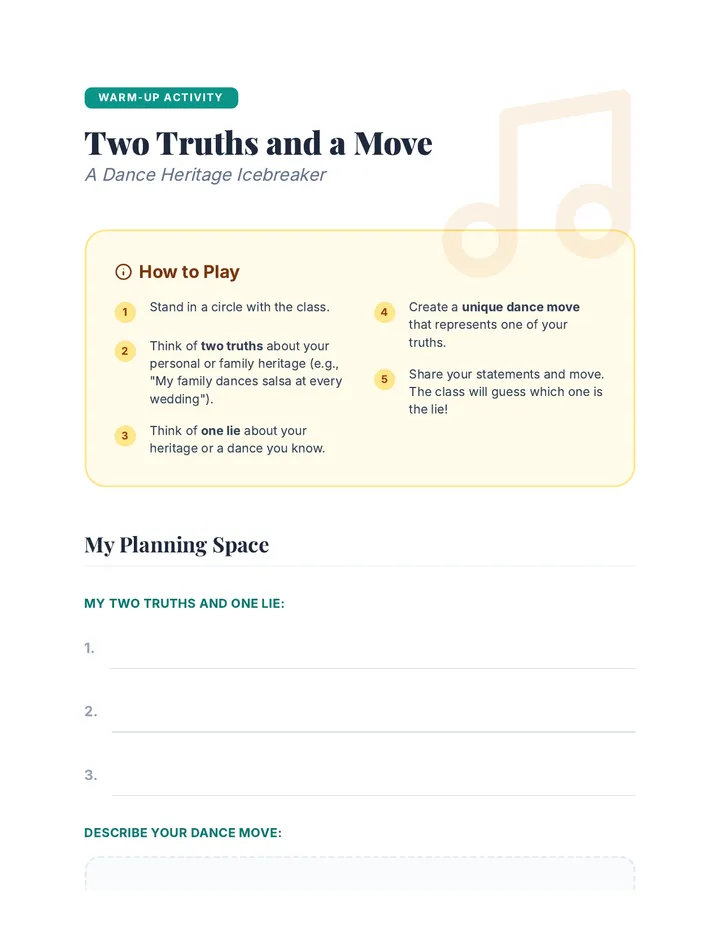
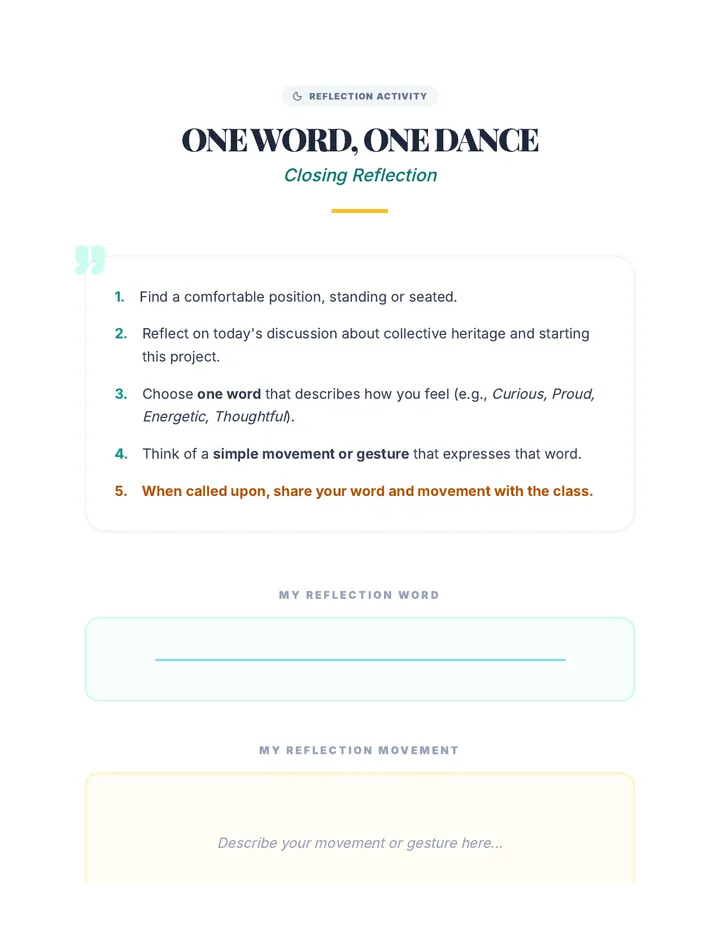
Students will work in groups to research a cultural dance, choreograph a performance, and present it to the class, connecting with their roots and envisioning a future inspired by tradition. This 60-minute lesson launches a multi-session project focused on teamwork, research, and creative expression.
In this energetic 50-minute session, 7th graders discover how emotions are expressed through dynamic movement, building self-awareness and creative confidence through dance and motion.
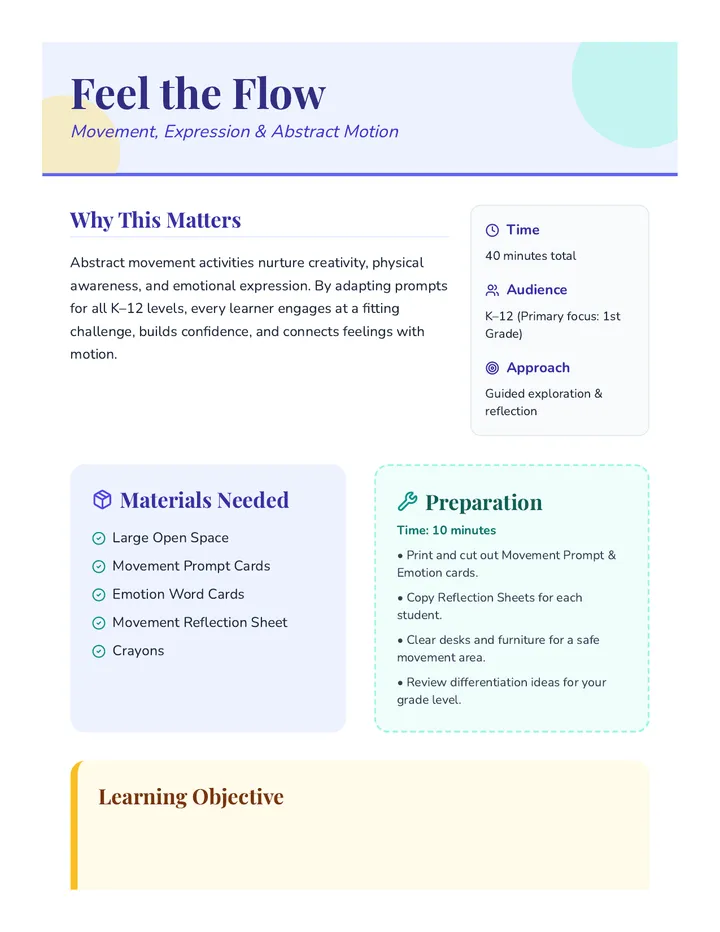
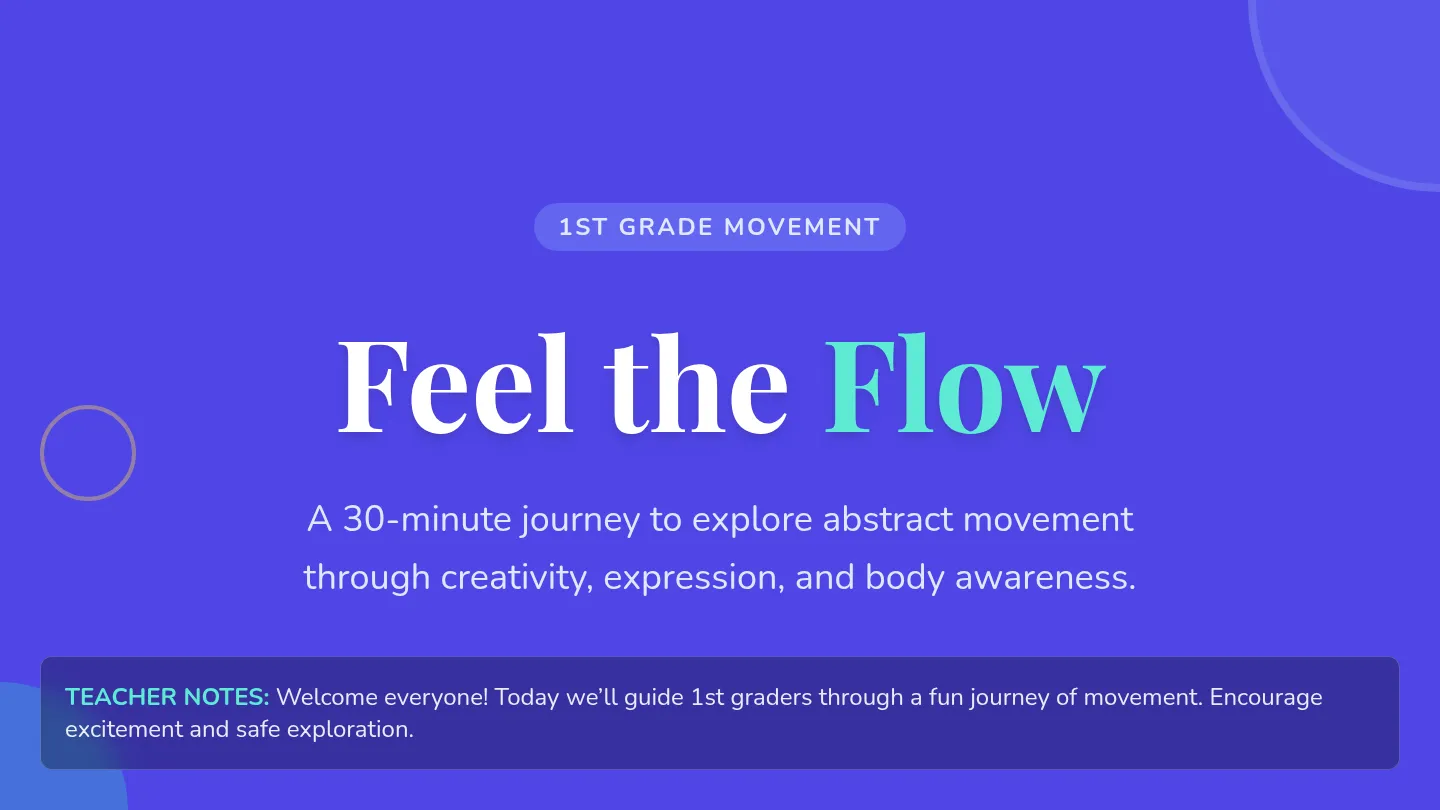
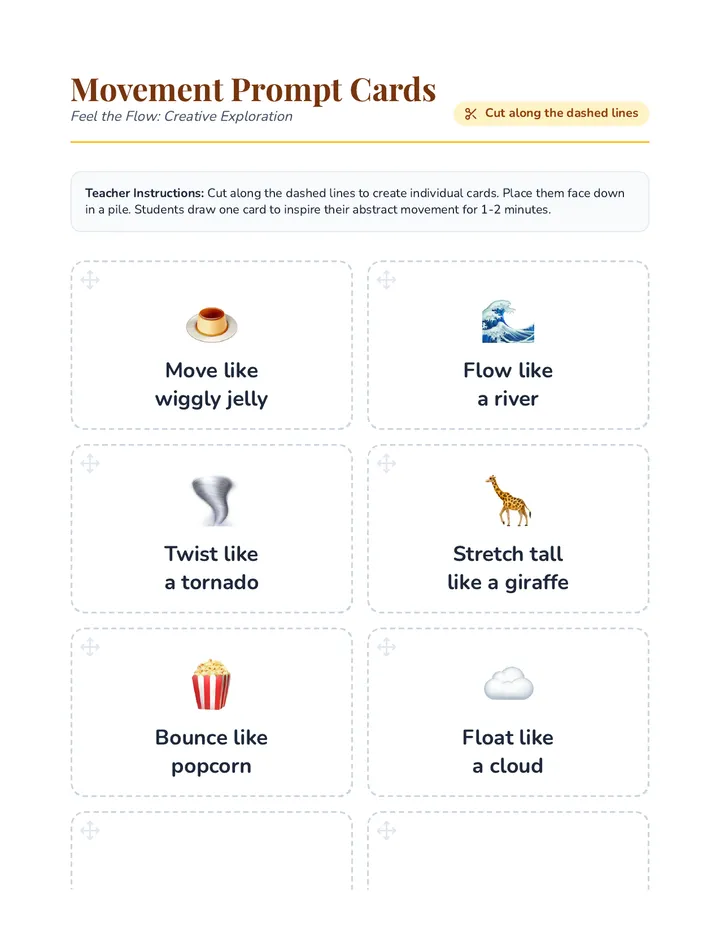
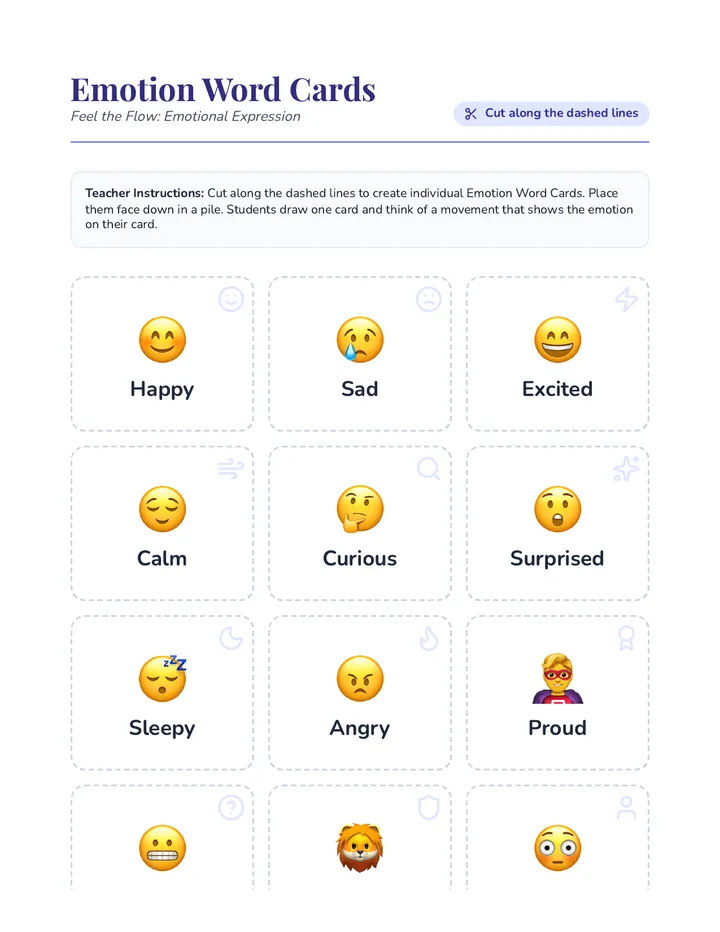
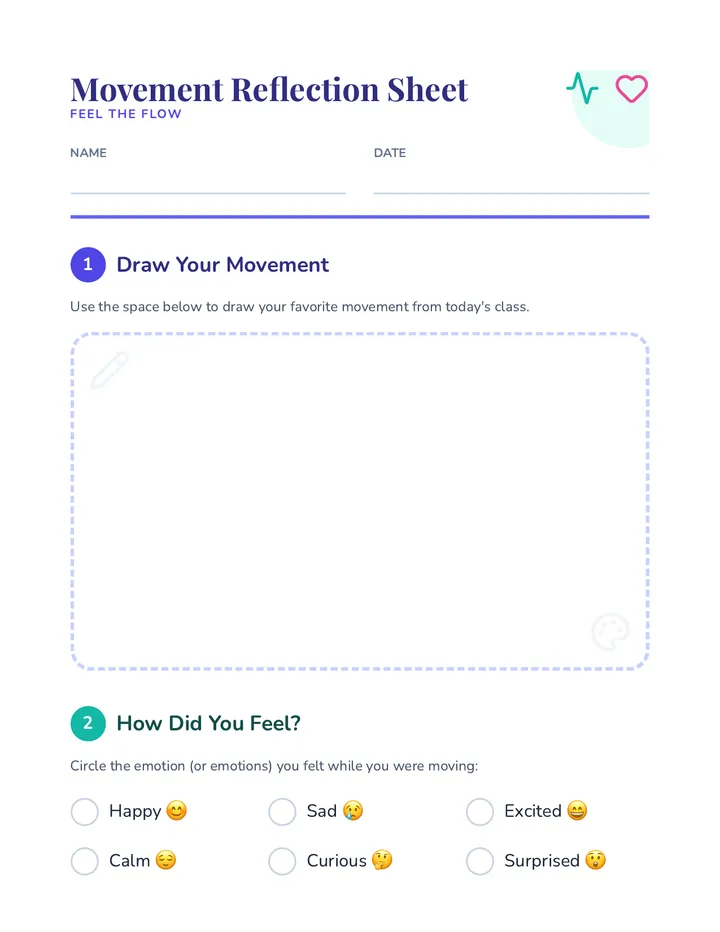
A 30-minute creative movement lesson for 1st graders (adaptable for K-12) that explores abstract motion, body awareness, and emotional expression. Students use prompts and emotion cards to express themselves through movement and reflect on their experience.
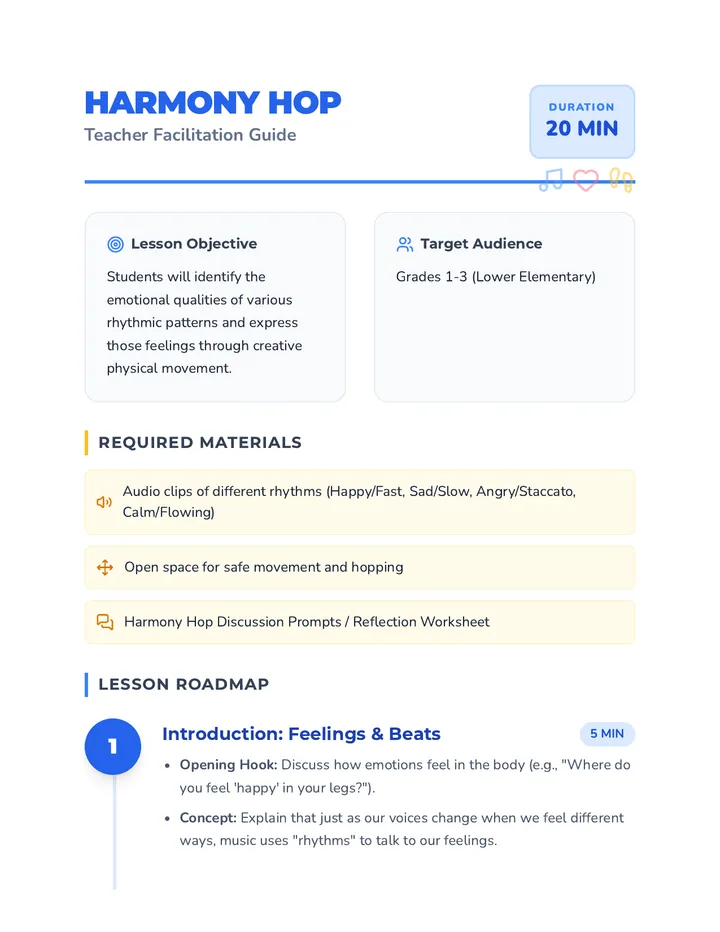
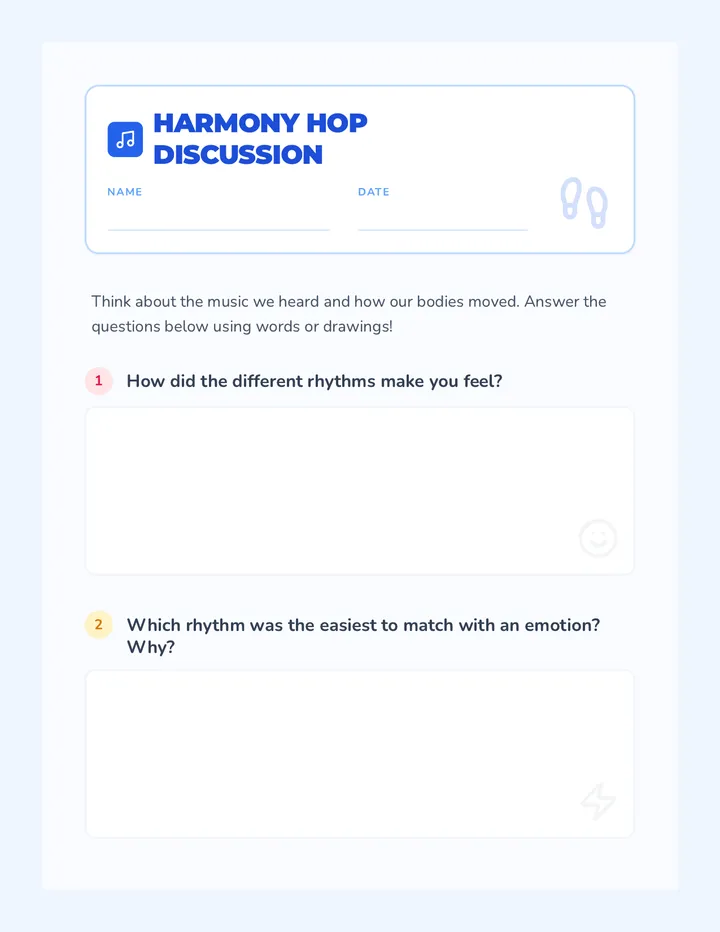
A 20-minute movement-based music lesson where students in grades 1-3 explore the connection between rhythmic patterns and emotional expression. Through listening, movement, and reflection, students develop emotional intelligence and musical awareness.
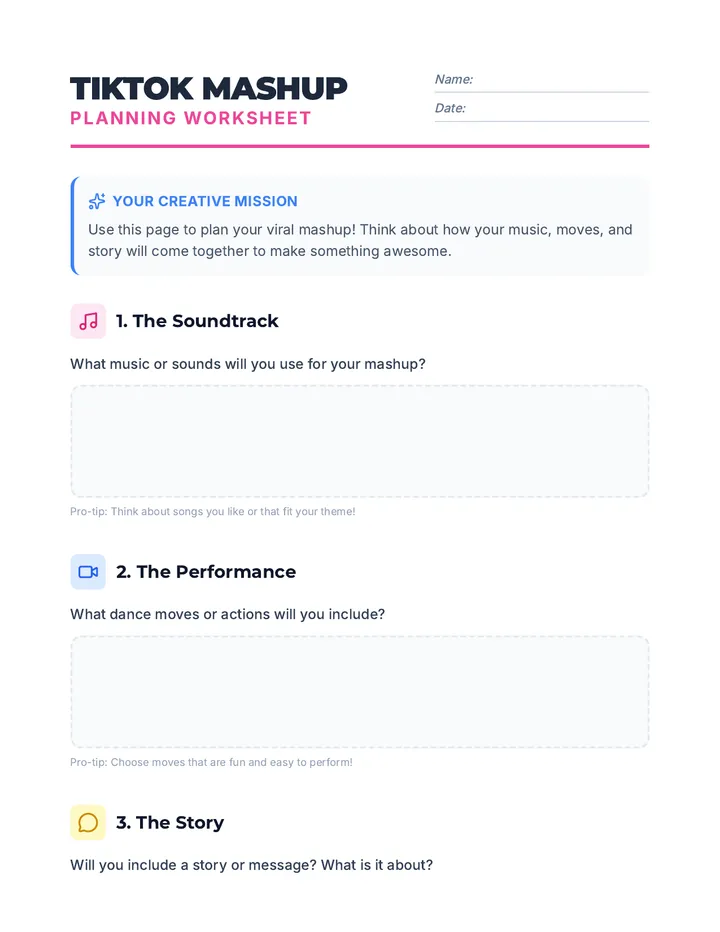
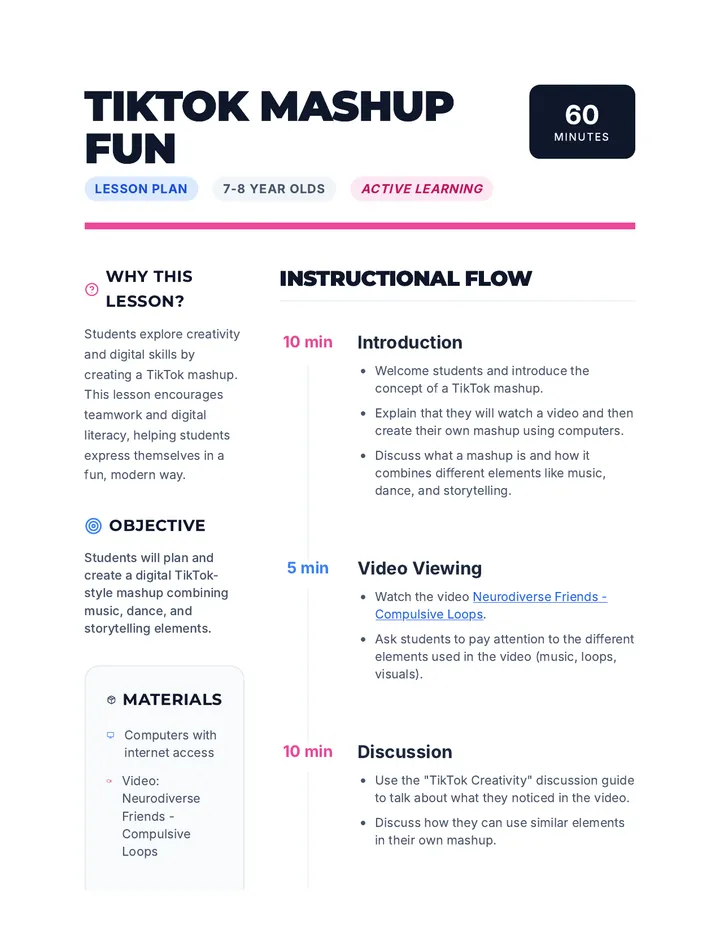
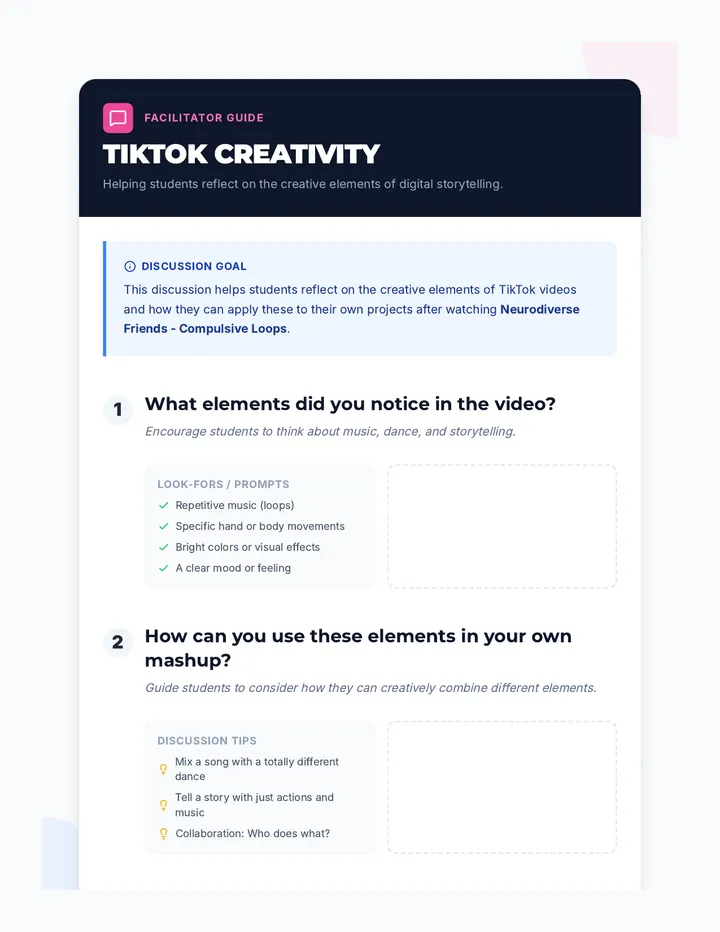
A high-energy, creative lesson where students aged 7-8 learn to plan and create their own TikTok-style mashups, focusing on digital literacy, storytelling, and collaboration.
Students explore the Nutcracker Ballet through storytelling, music appreciation, and creative movement, learning about characters and the magic of performance art.
A creative exploration of winter for 5-6 year olds, featuring storytelling, a cotton ball winter scene craft, and an active Snowflake Dance movement game.
A creative 1st-grade lesson where students explore and express the meaning of friendship through various art forms like painting, poetry, and movement.
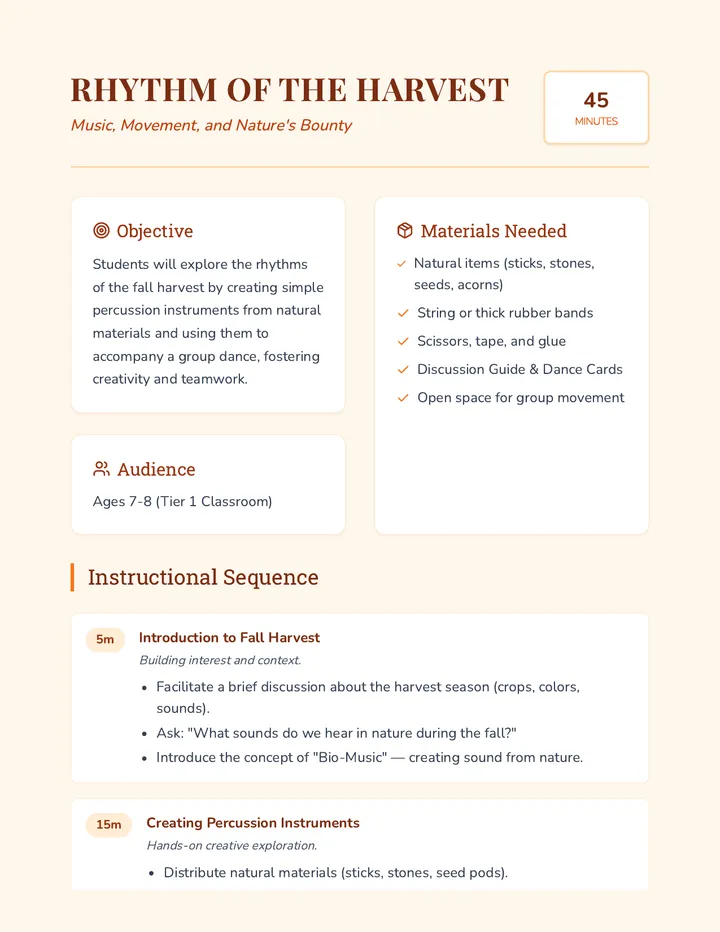
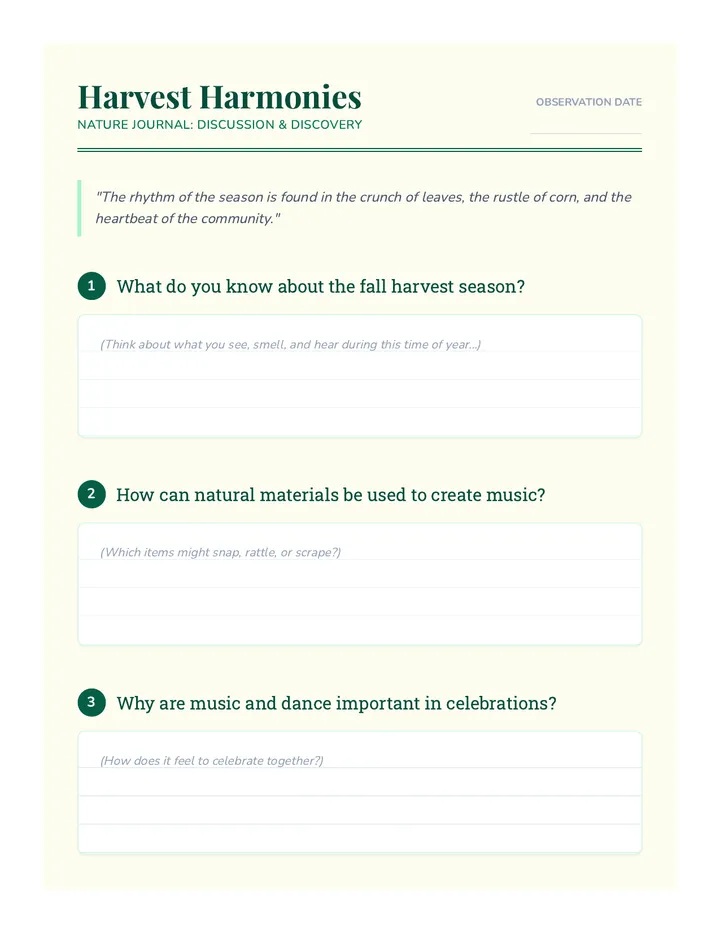
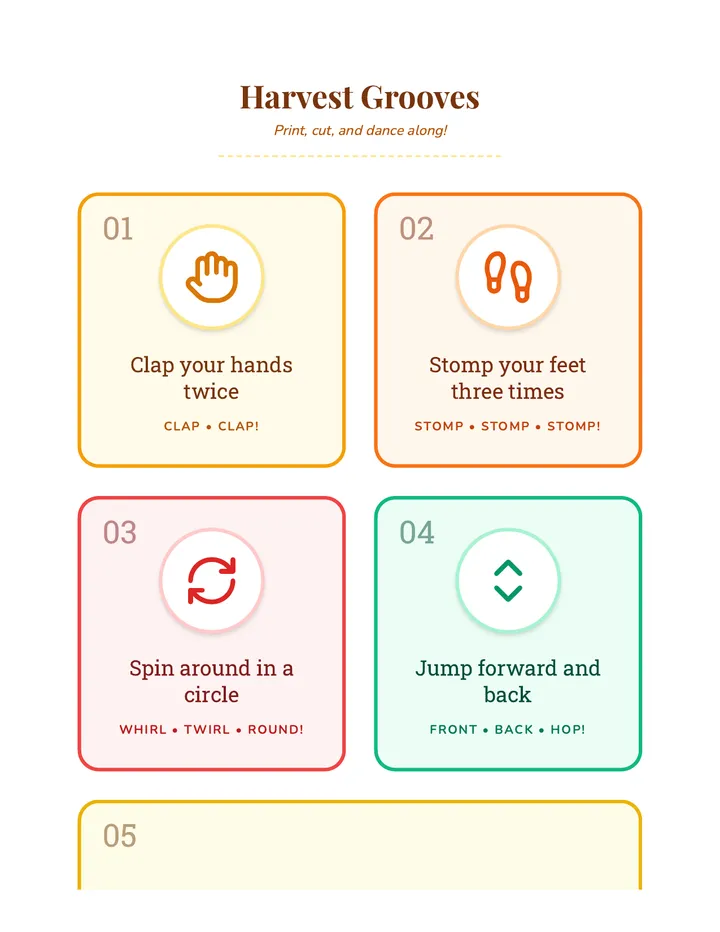
Students explore the rhythms and sounds of the fall harvest season by creating percussion instruments from natural materials and performing a group dance. This lesson fosters creativity, teamwork, and an appreciation for nature through music and movement.
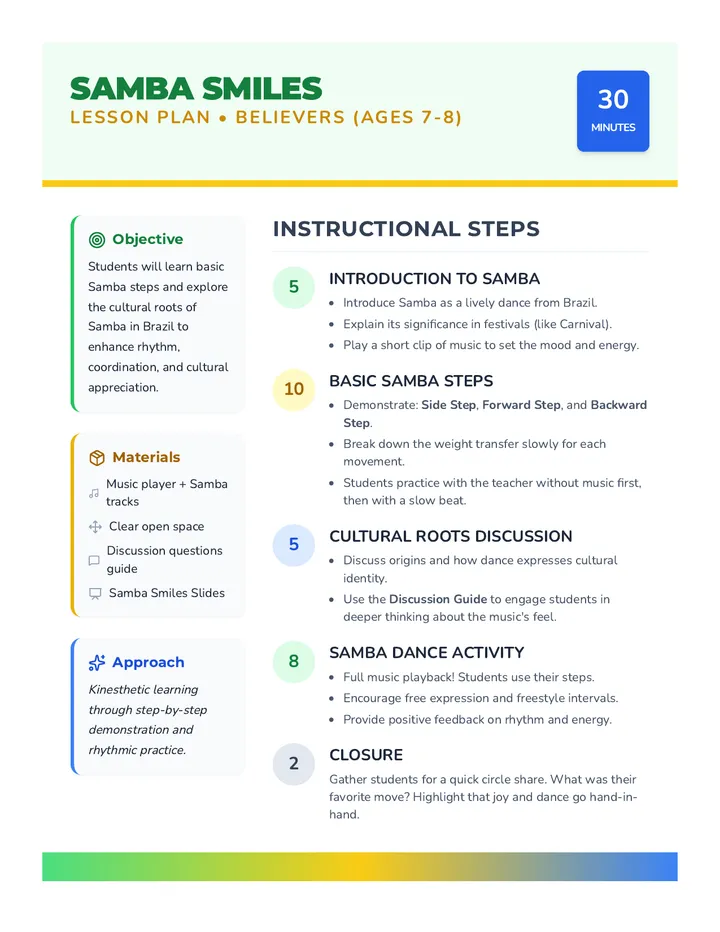
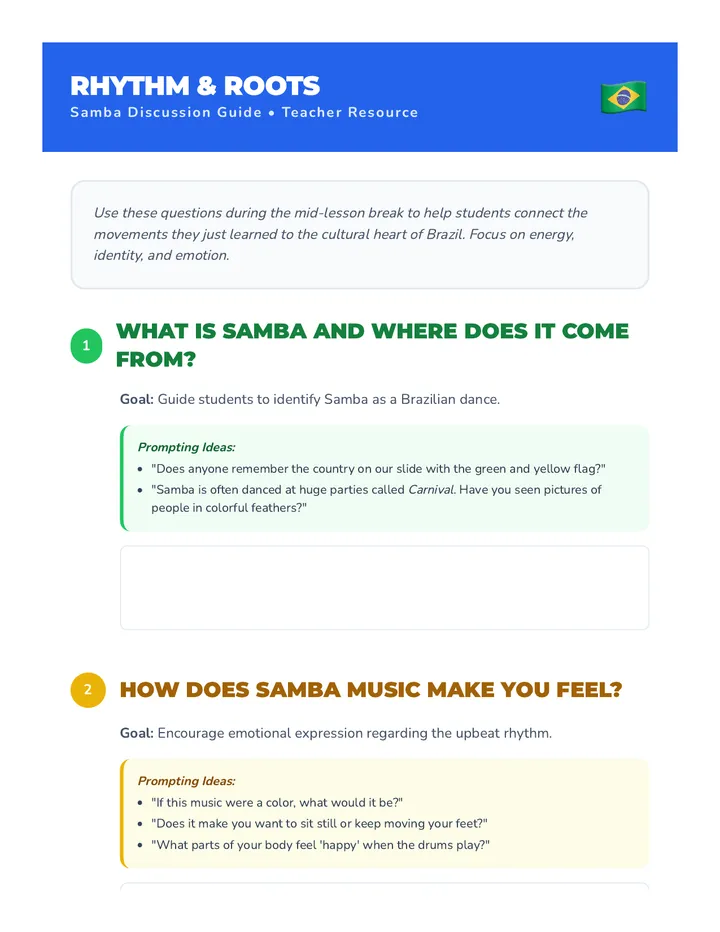
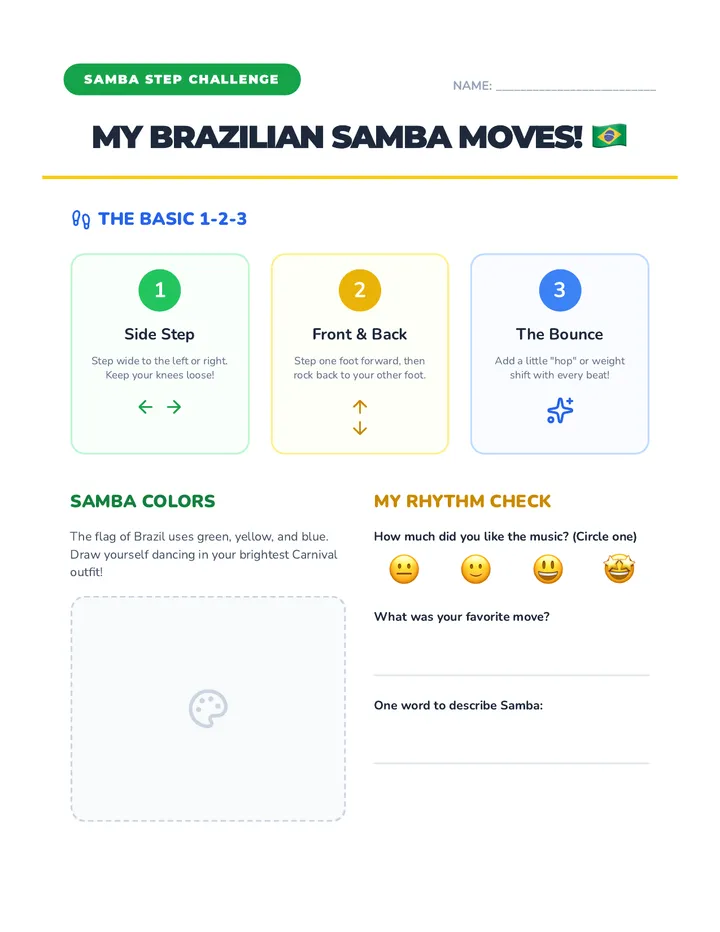
An energetic introduction to the Brazilian dance style of Samba, covering basic steps, cultural history, and rhythmic expression for students aged 7-8.
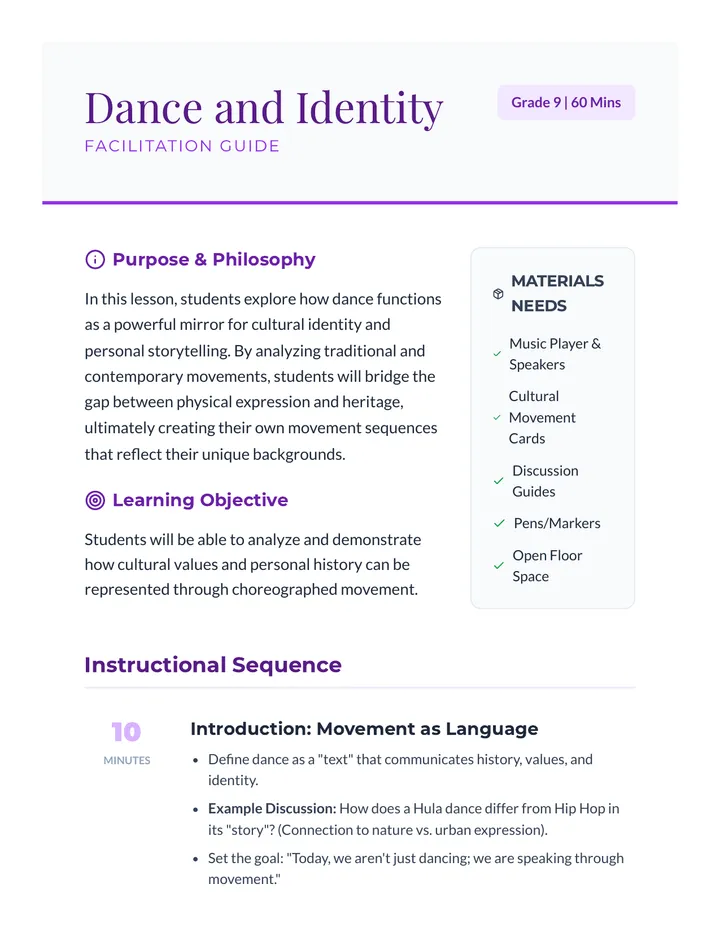
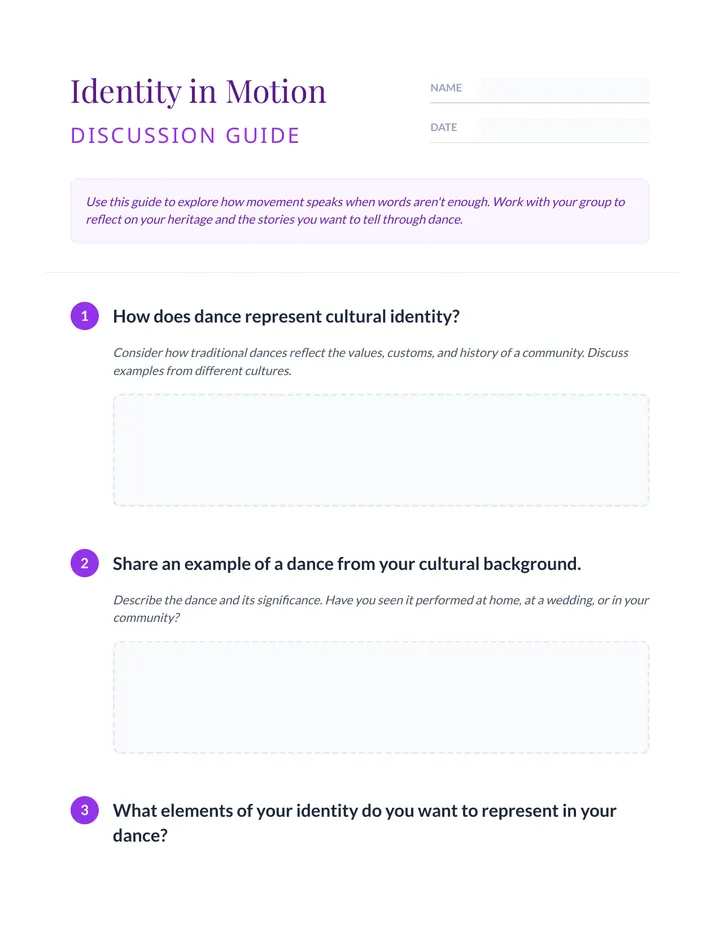
A lesson for Grade 9 students exploring how dance reflects cultural identity, featuring a creative movement activity and group discussion.
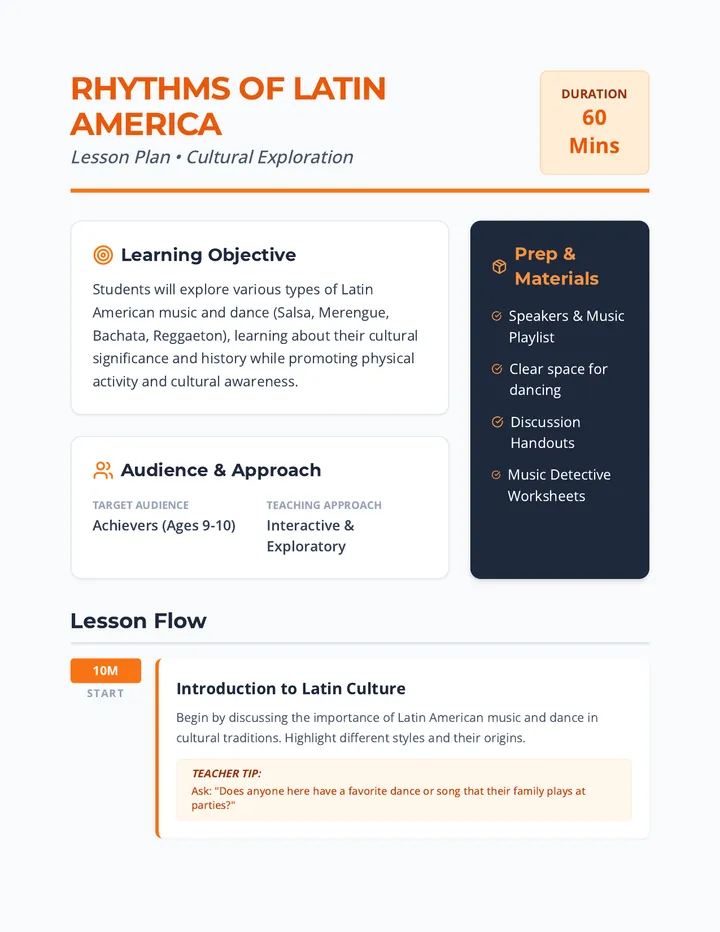
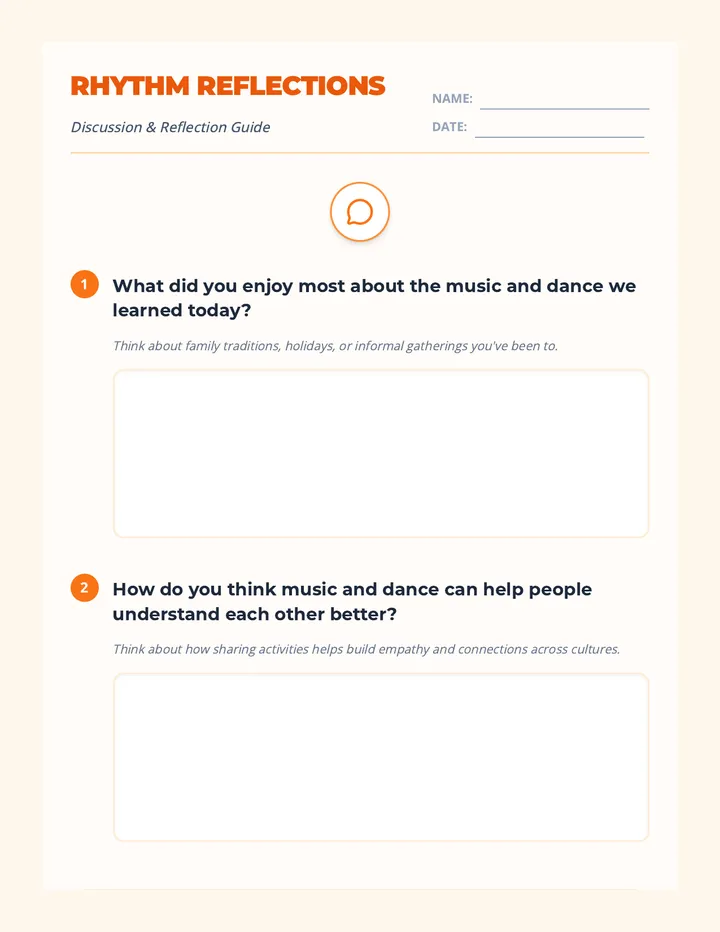
A 1-hour cultural exploration of Latin American music and dance, focusing on genres like Salsa, Merengue, and Bachata. Students learn basic dance steps and discuss the role of music in expressing cultural identity.
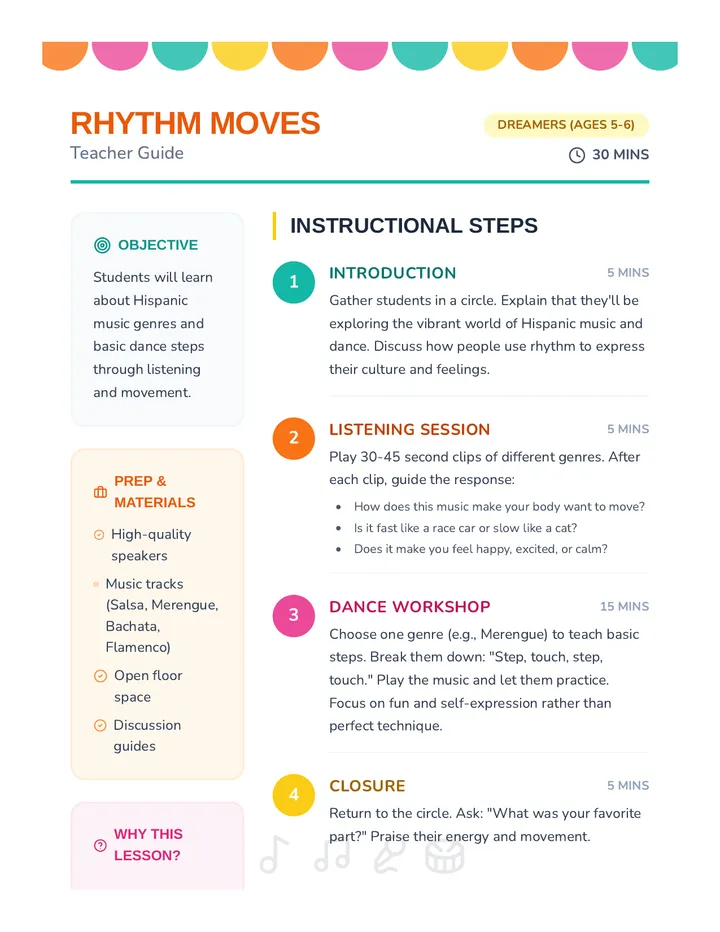
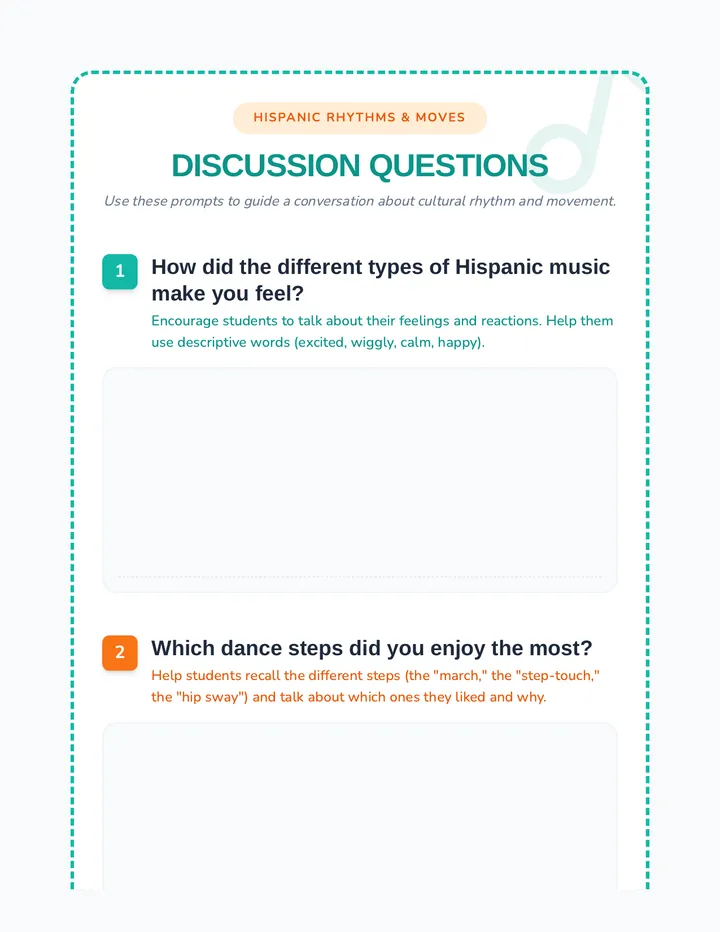
A vibrant introduction to Hispanic music genres and dance for young learners, featuring listening sessions and a hands-on dance workshop to explore cultural rhythms.
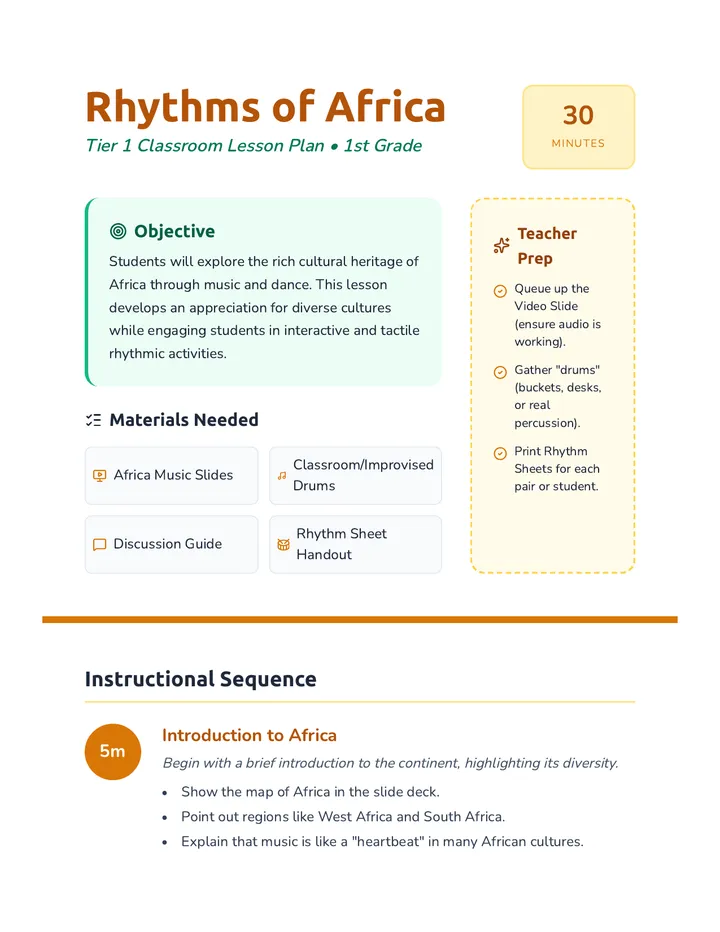
A 30-minute interactive lesson for 1st Grade students to explore African culture through traditional music, drumming, and dance. Students will watch a video, discuss musical elements, and participate in a hands-on rhythm activity.