Develops technical proficiency and creative movement skills across various styles. Examines choreographic principles alongside the historical and cultural origins of diverse global dance forms.
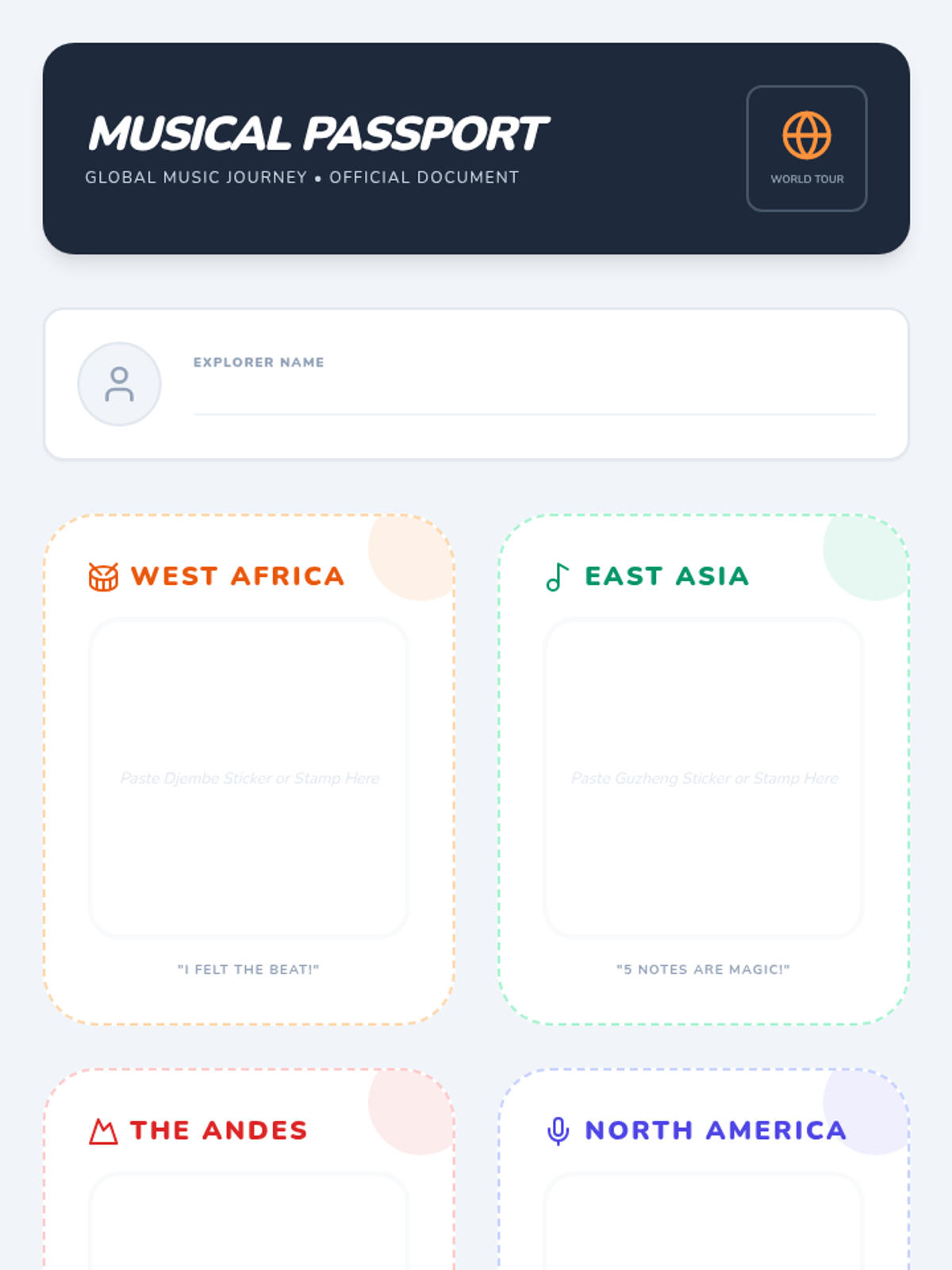
A cumulative celebration where students synthesize their learning by creating a musical passport and identifying universal themes in global music making.
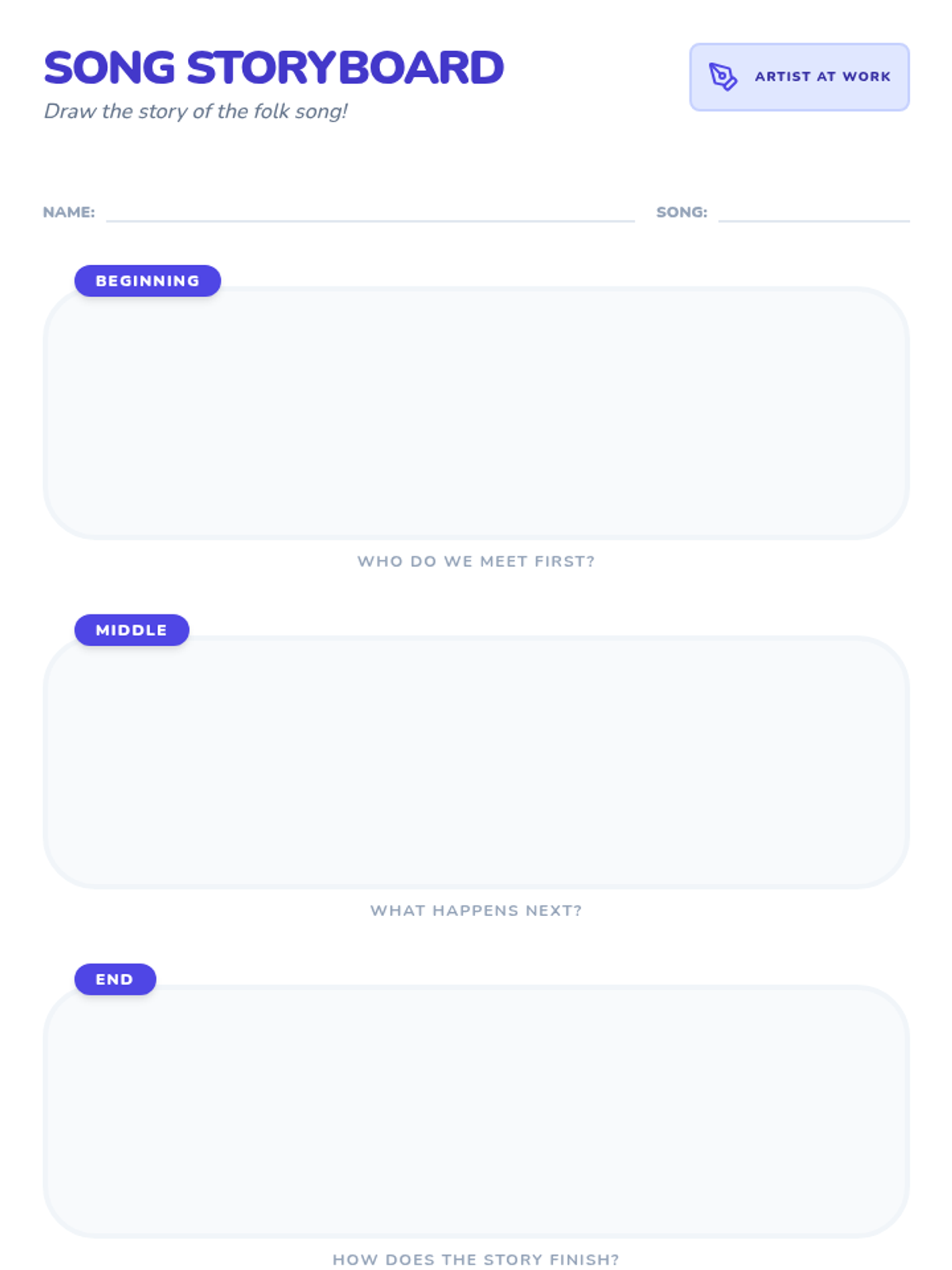
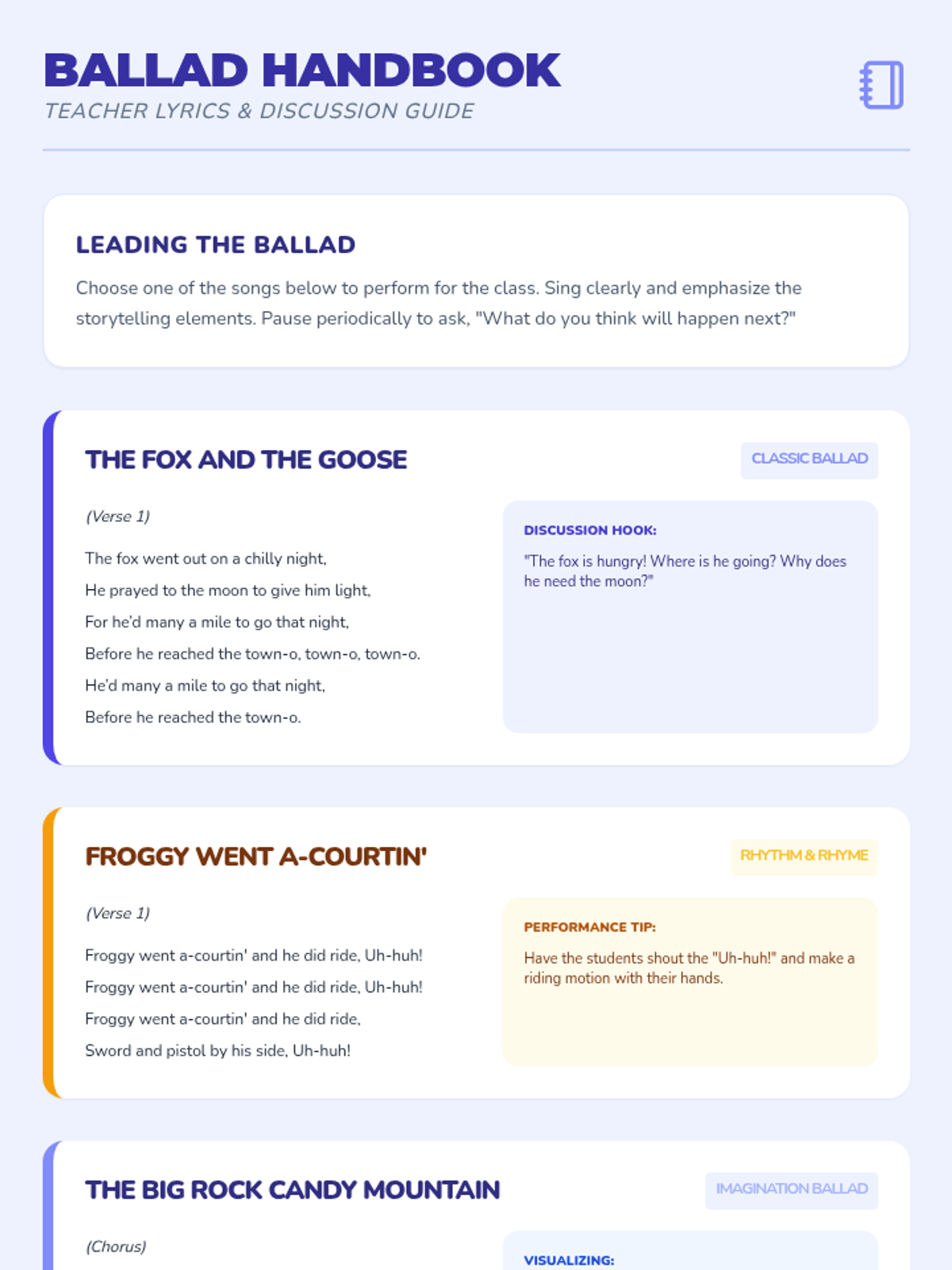
An exploration of American folk music where students discover the banjo and fiddle while learning how songs tell stories of history and daily life.
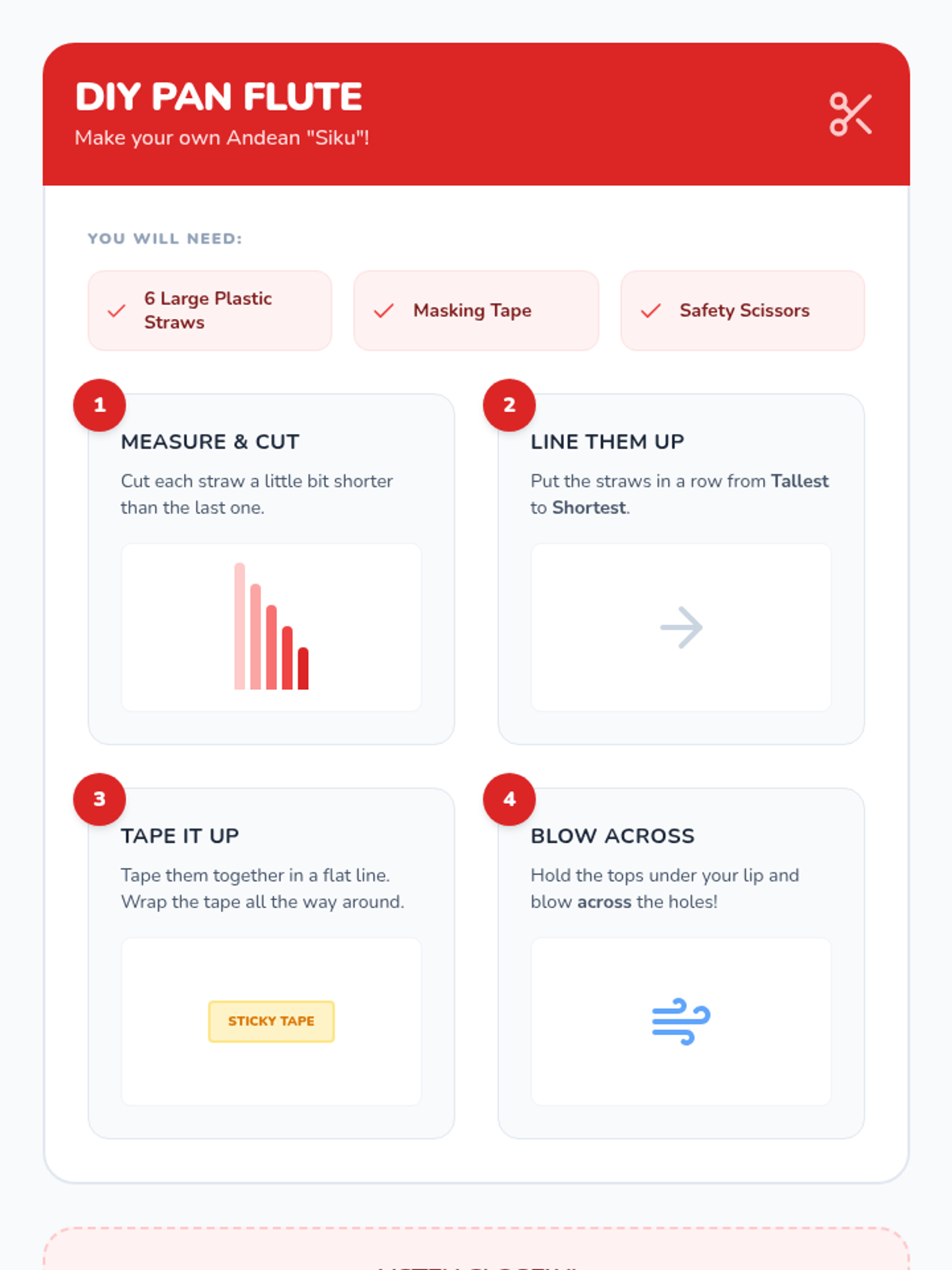
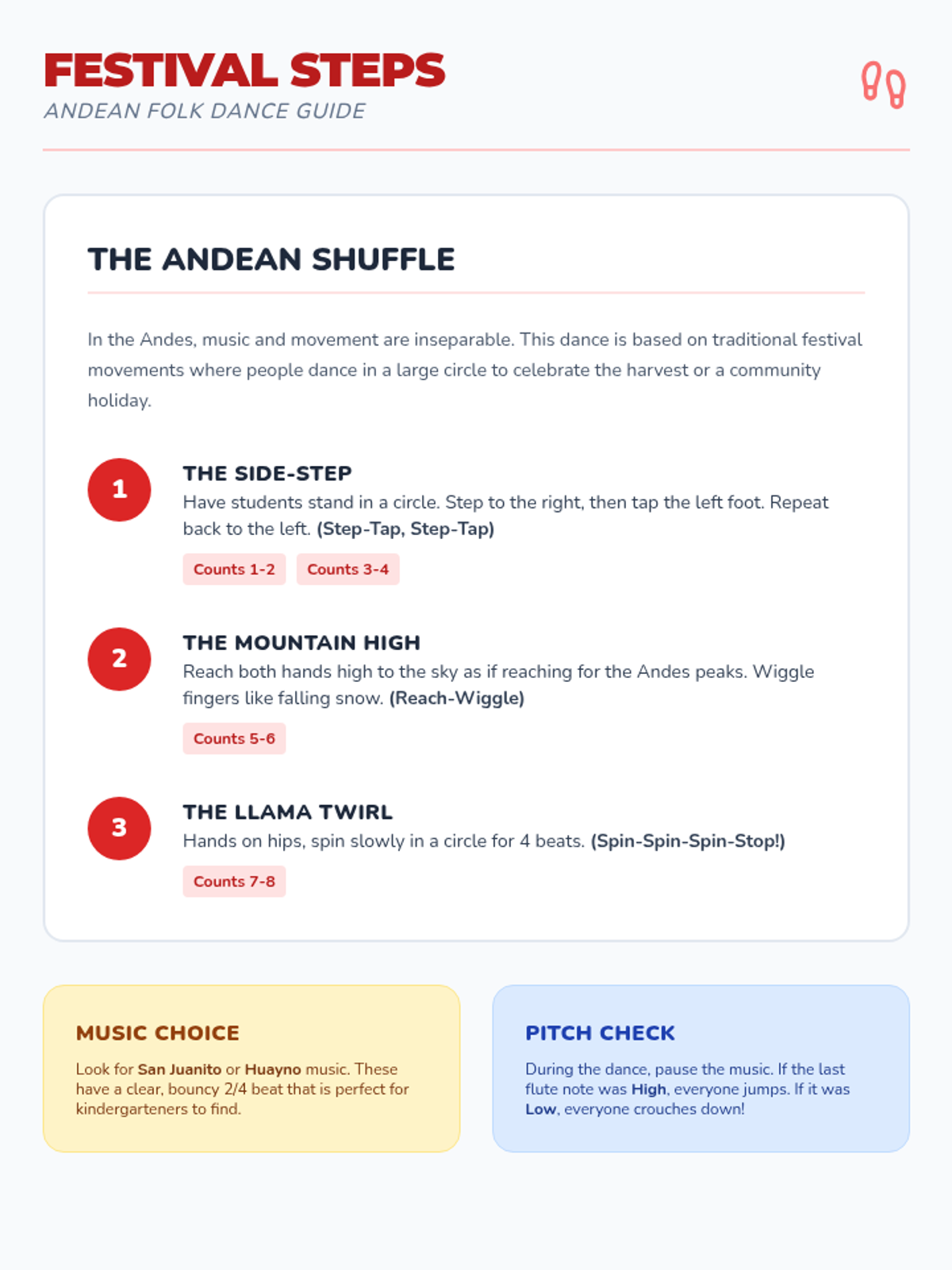
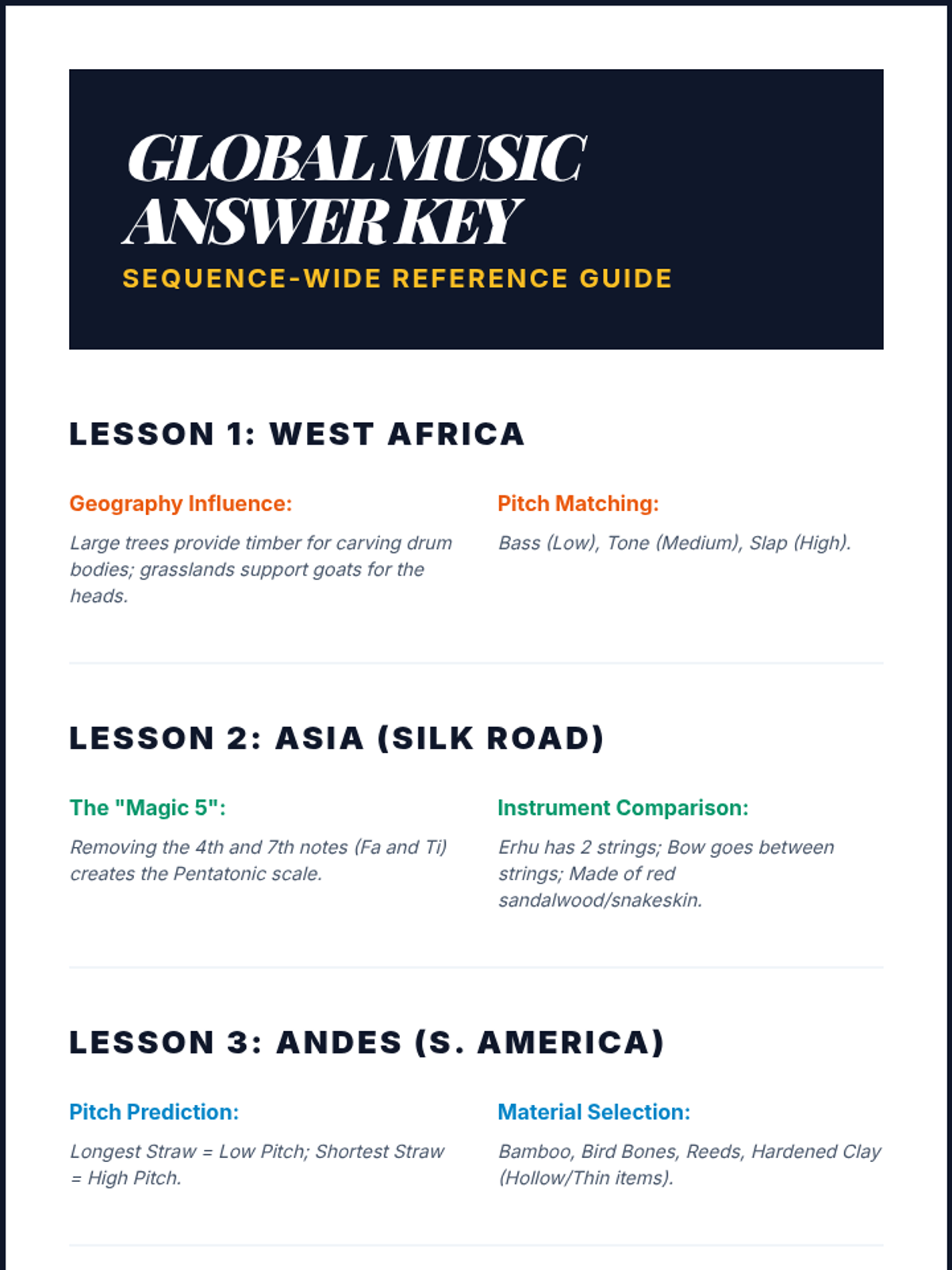
Students investigate the pan flute and the charango, learning about Andean festivals and experiencing traditional dance and pitch variation.
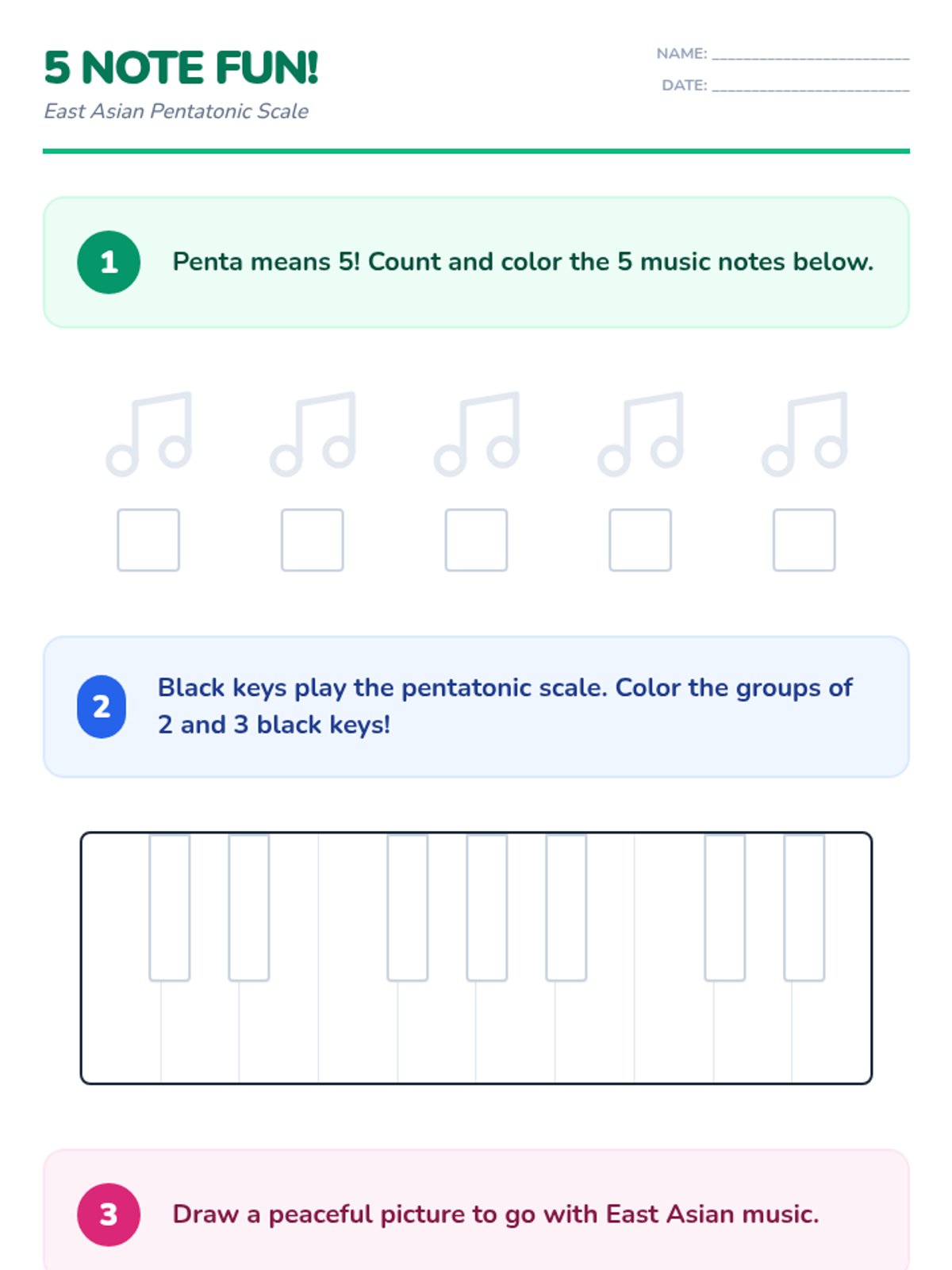
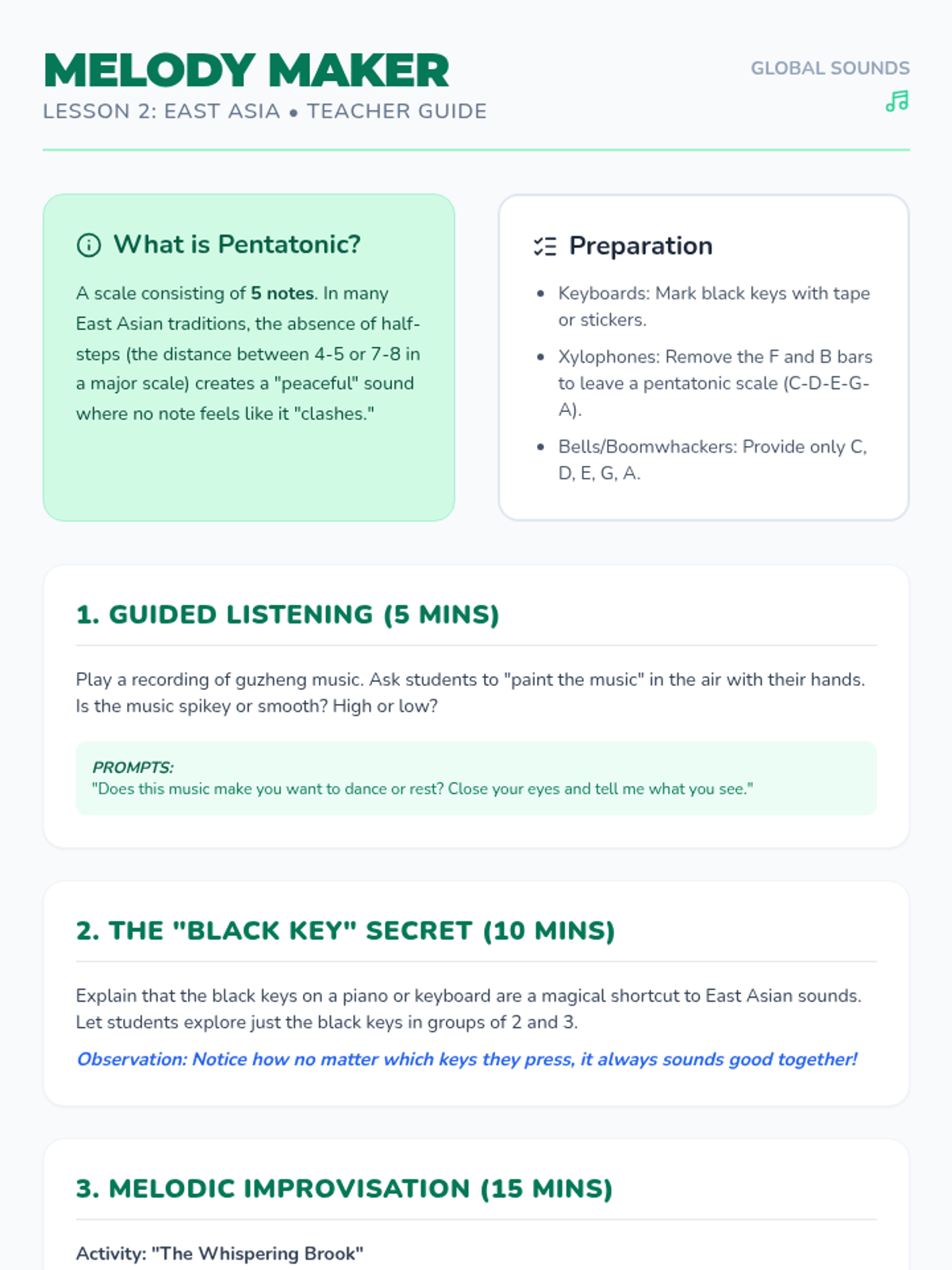
Learners explore the peaceful sounds of the guzheng and the pentatonic scale, practicing melodic improvisation on simple instruments.
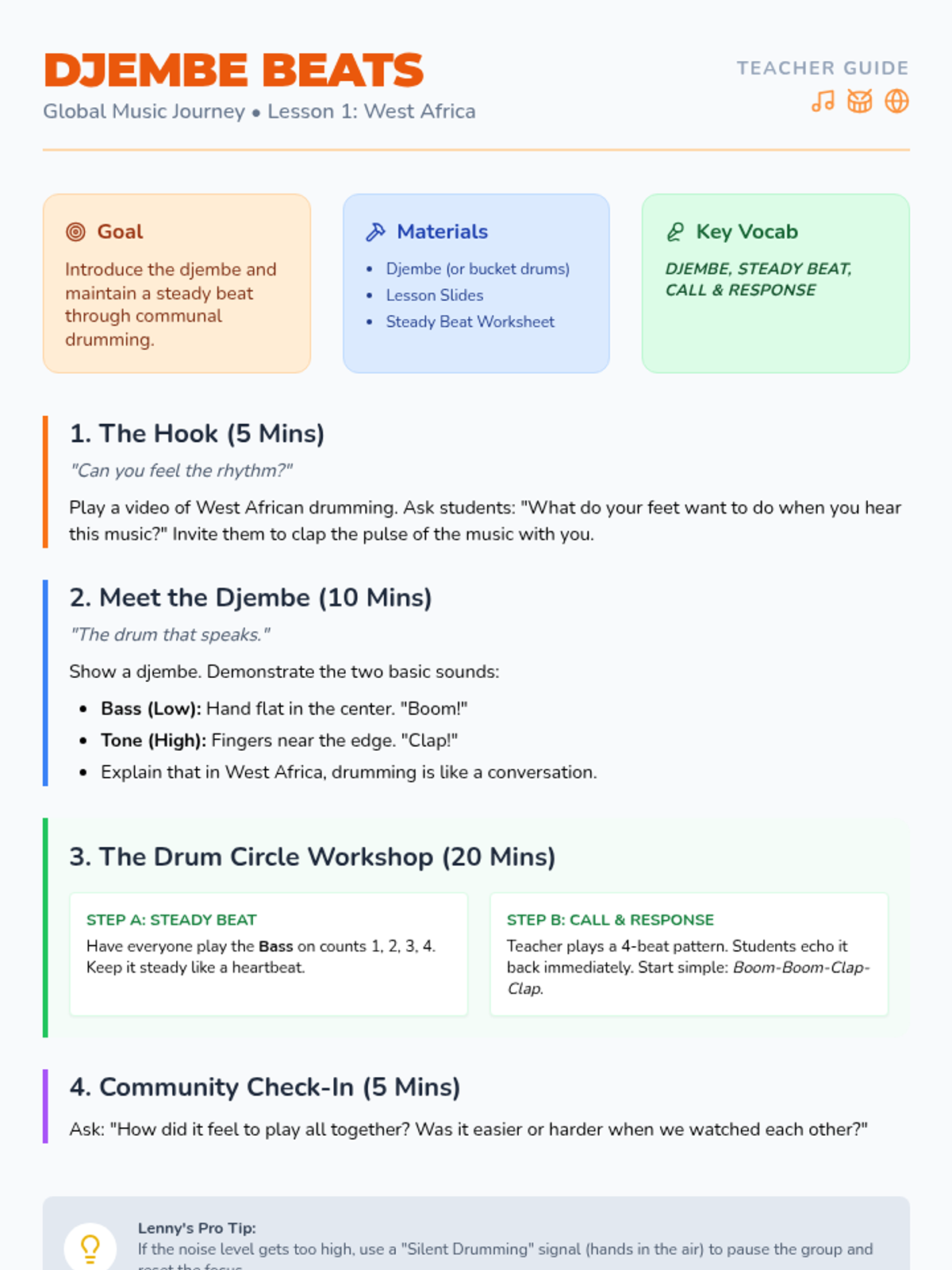
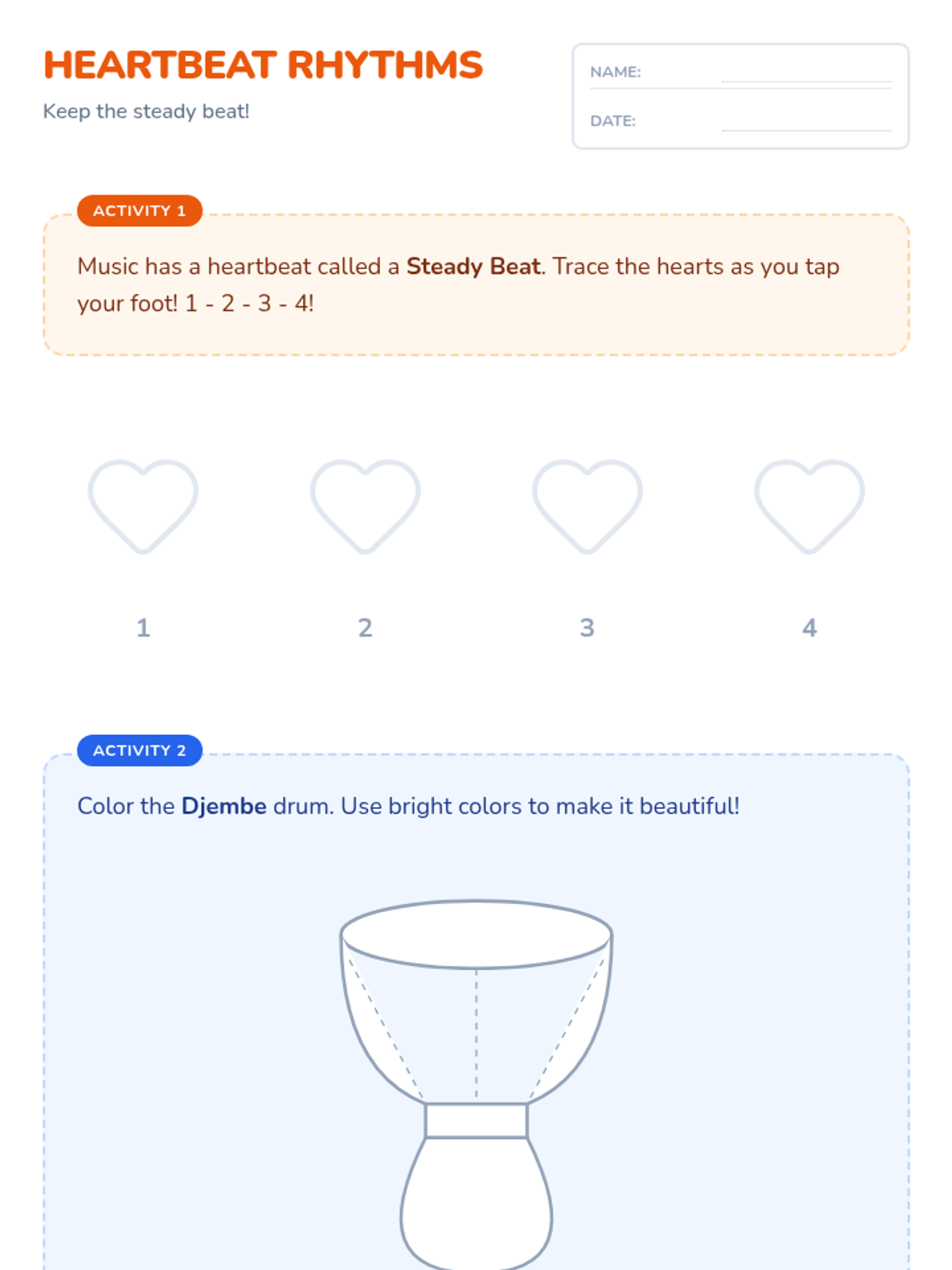
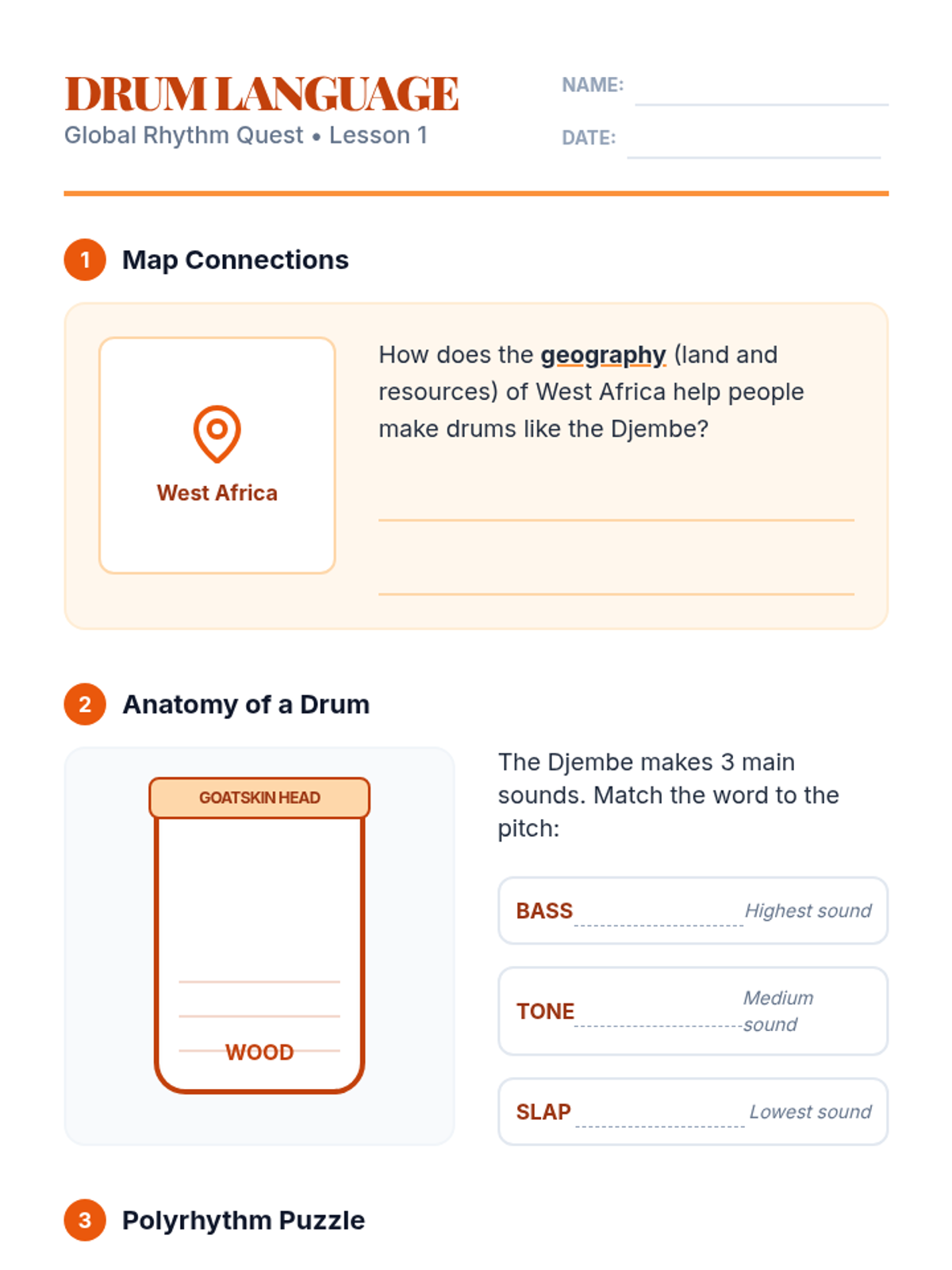
Students discover the djembe and the vibrant traditions of West African drumming, focusing on maintaining a steady beat and participating in a call-and-response circle.
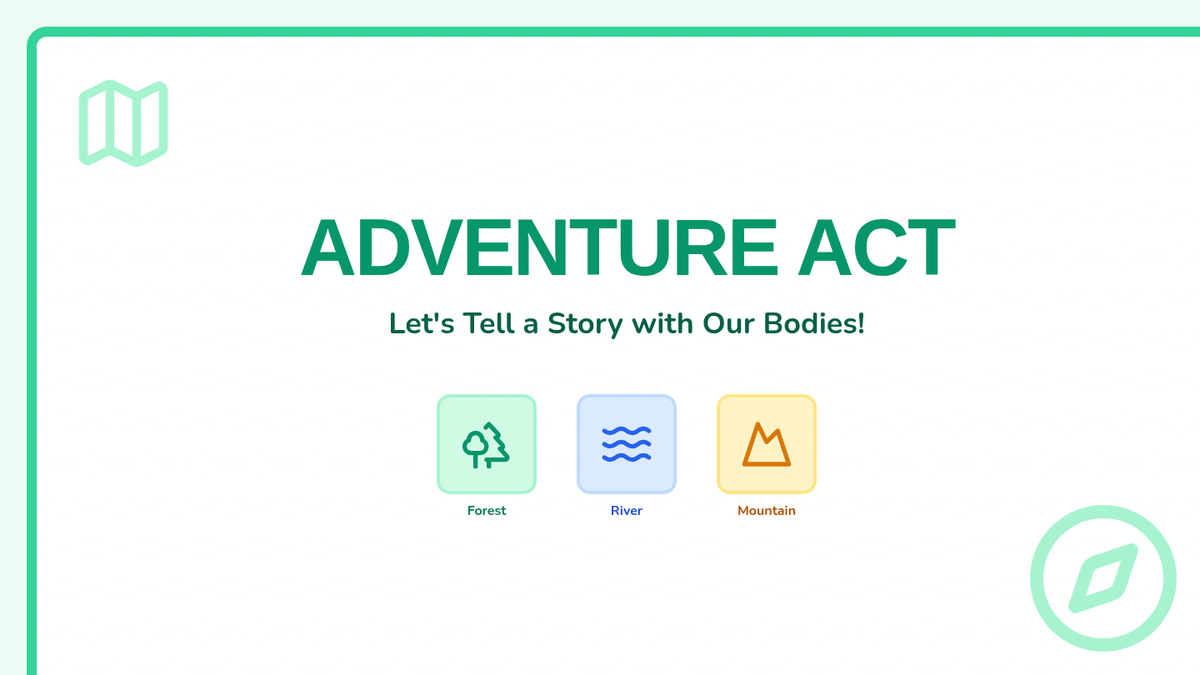
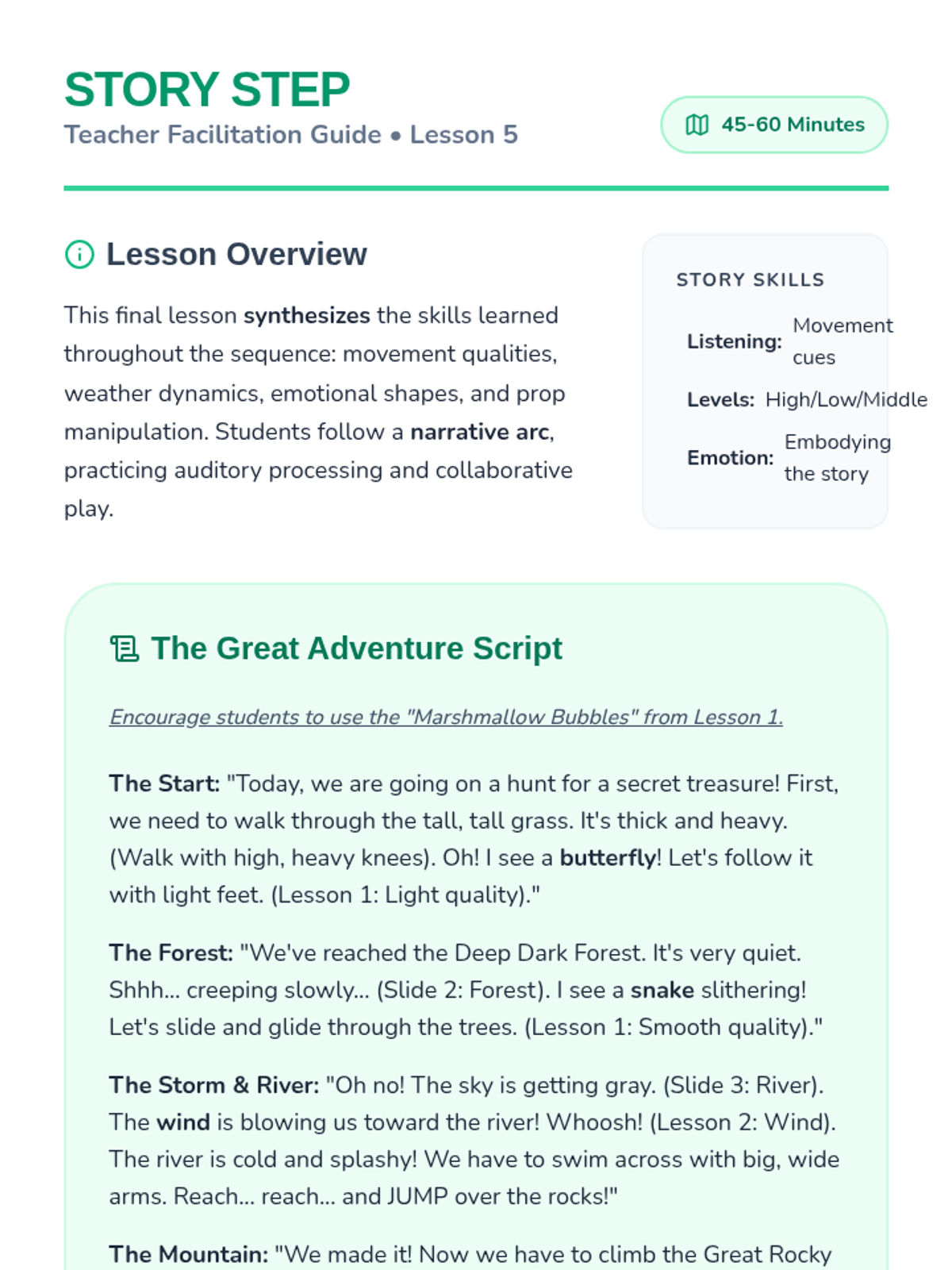
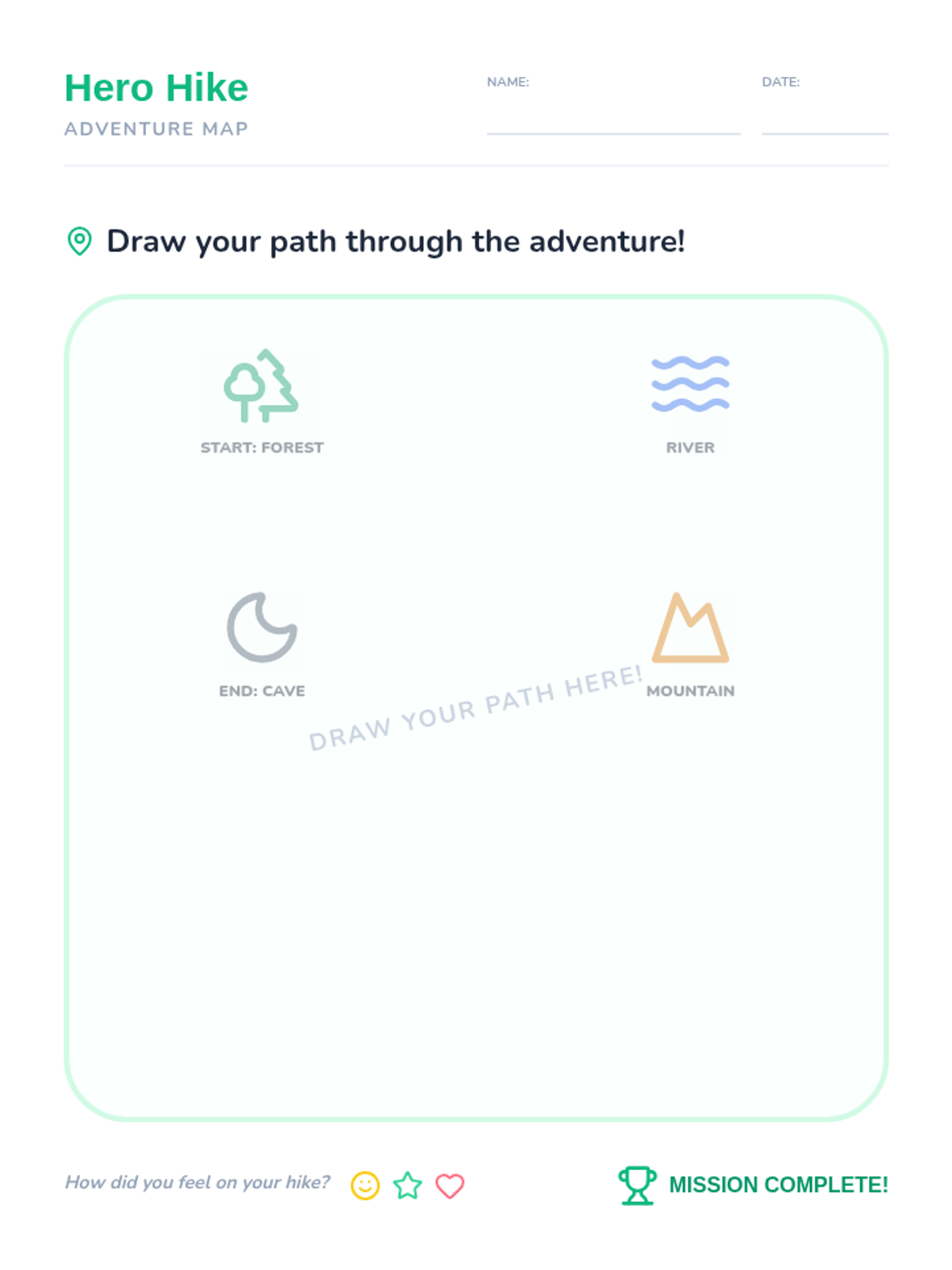
The teacher narrates a simple adventure story, and students act it out collectively using the skills they have learned. They might cross a river (jumping), climb a mountain (high levels), or hide in a cave (low levels). This synthesizes listening skills with creative movement.
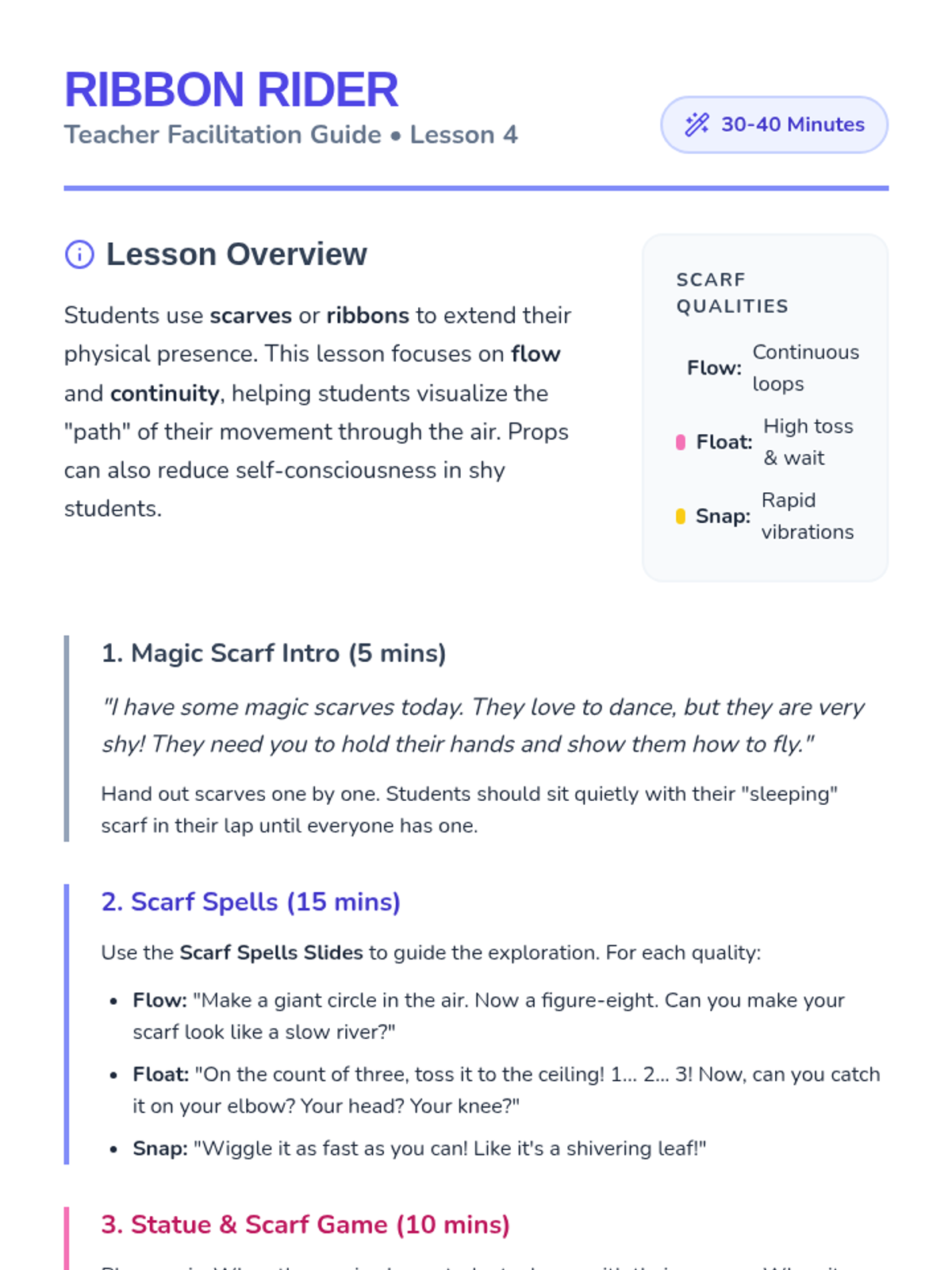
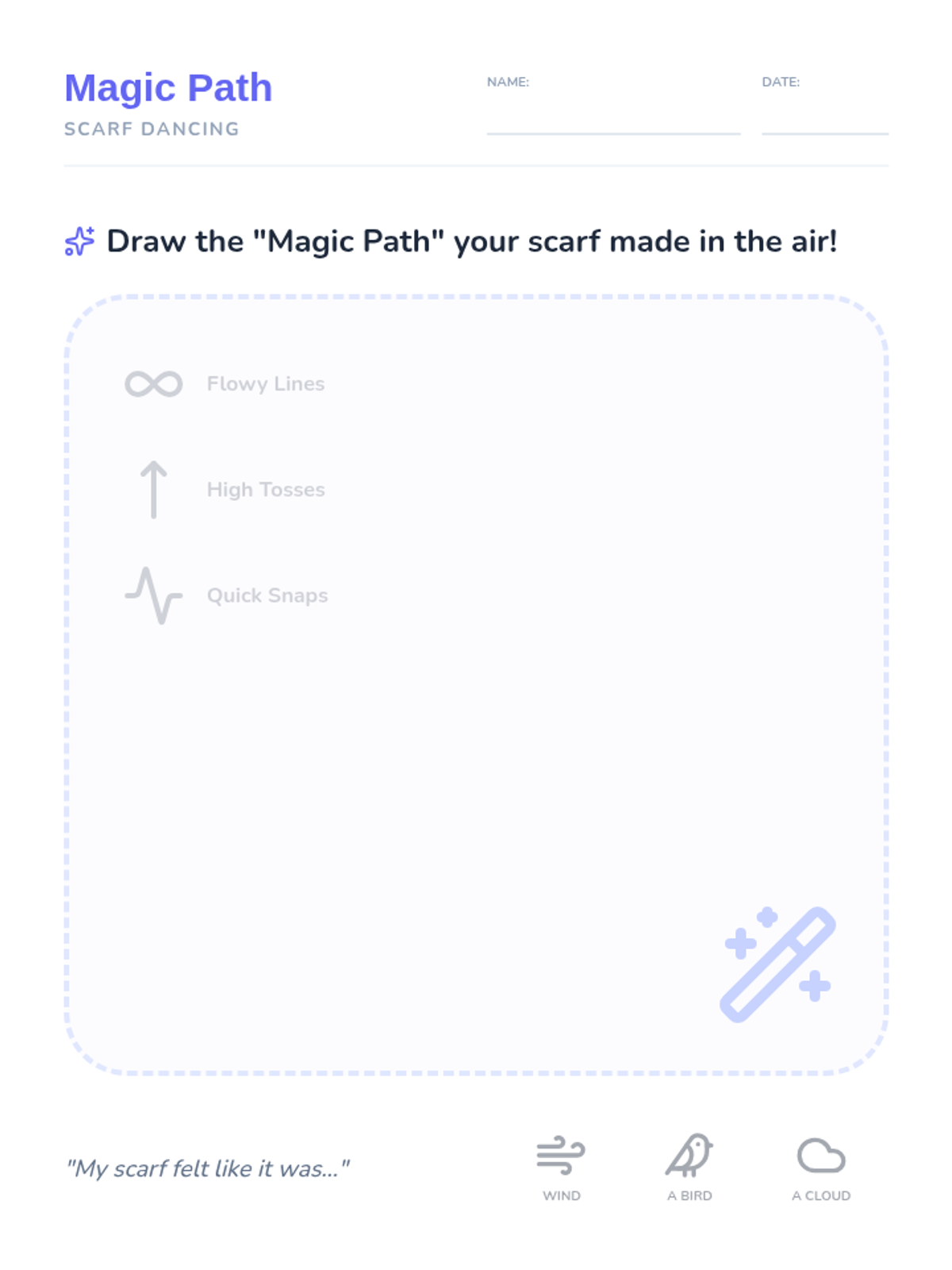
Students use scarves or ribbons to extend their movement range and visual expression. They explore how the prop reacts to their movement, creating soft, flowing lines or sharp snaps. The prop serves as a partner, helping shy students express themselves more boldly.
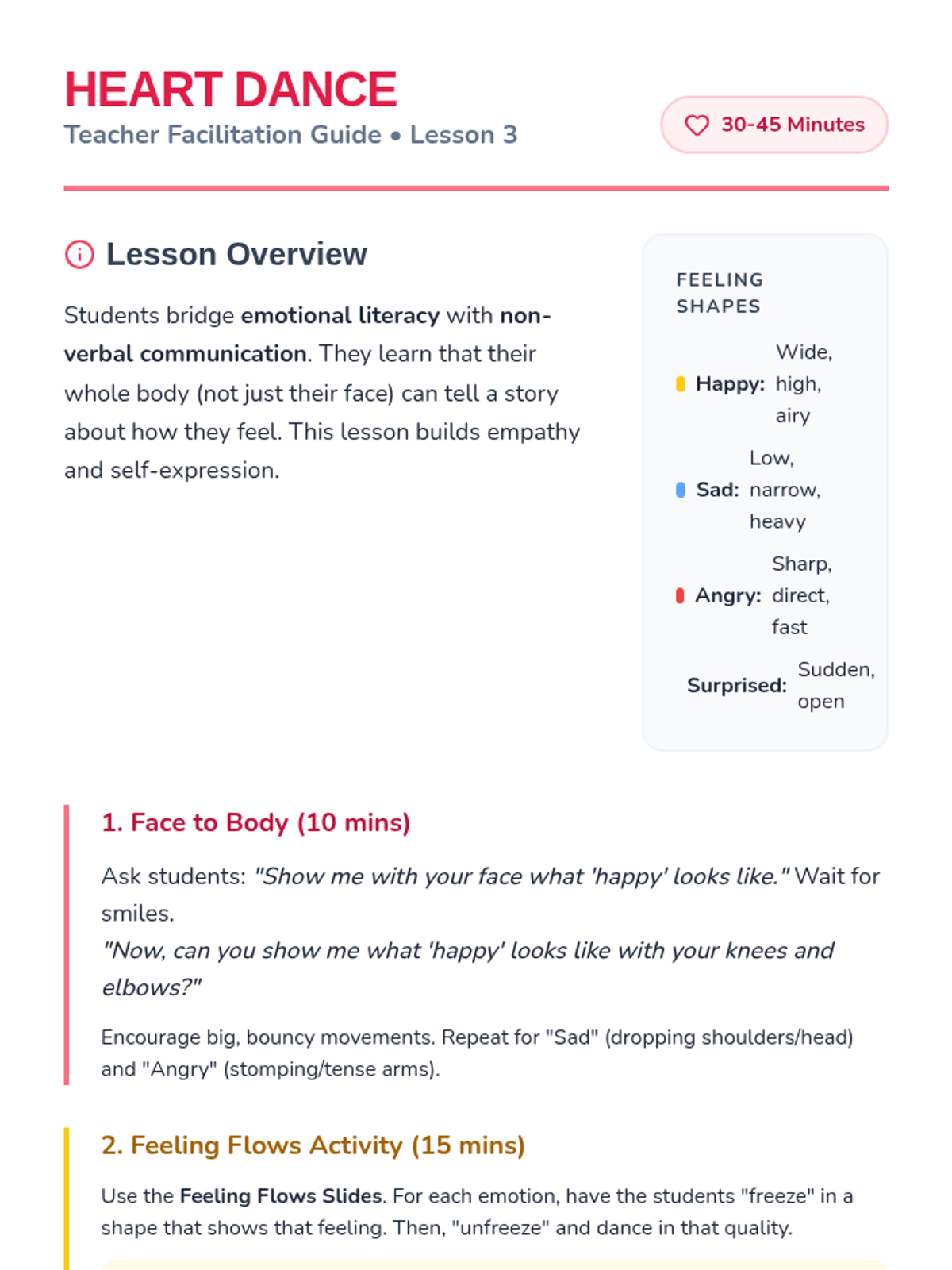
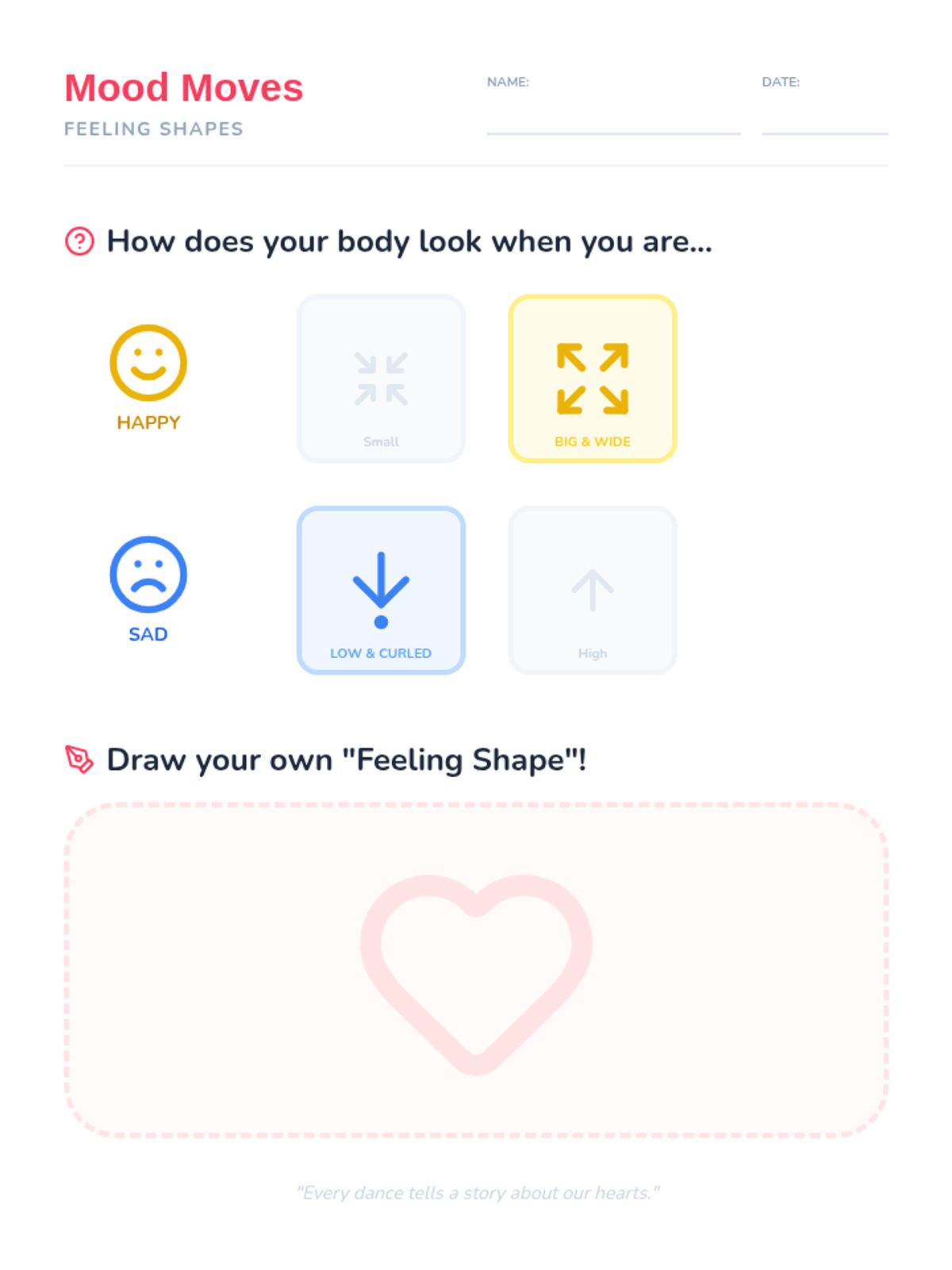
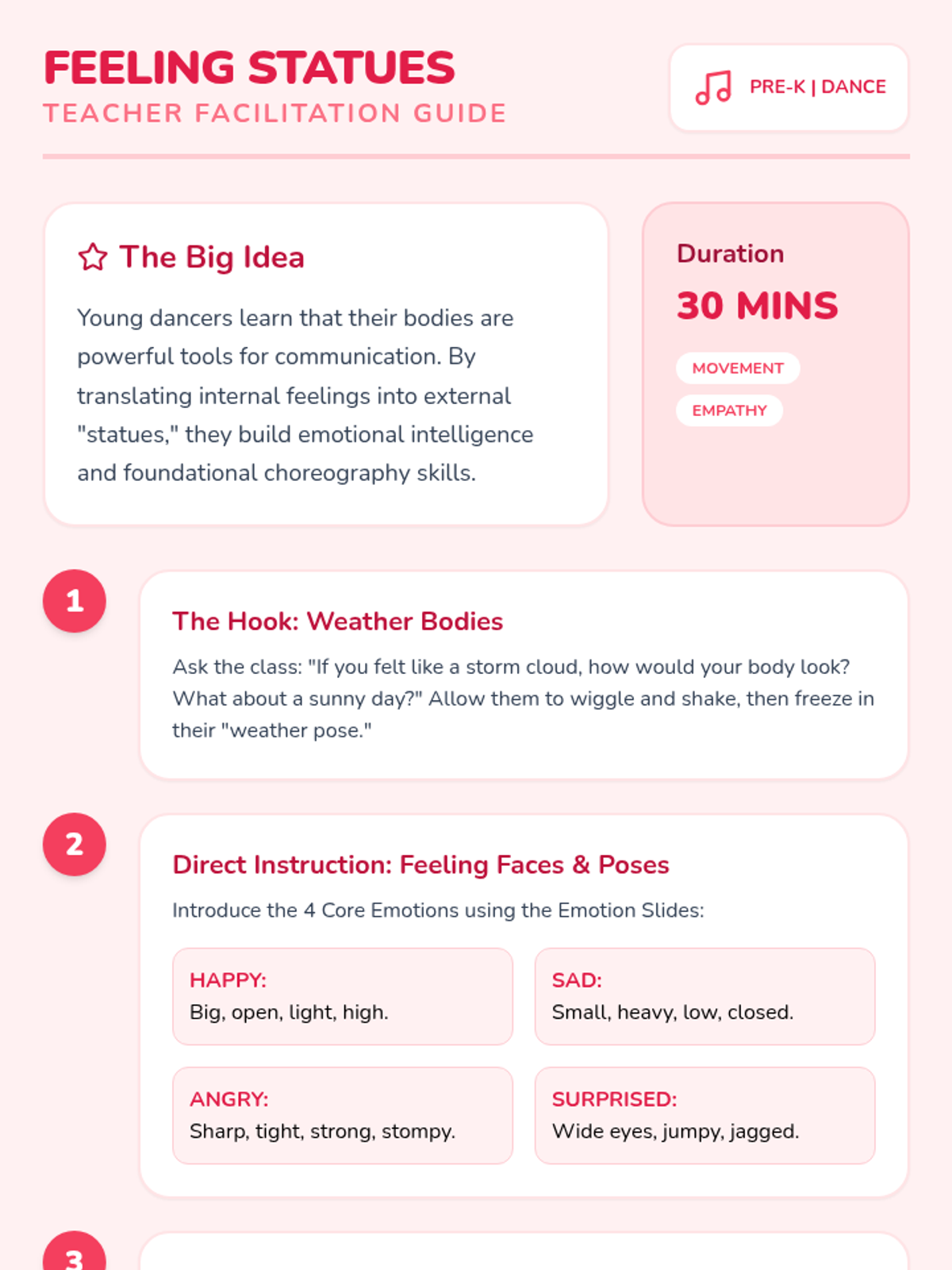
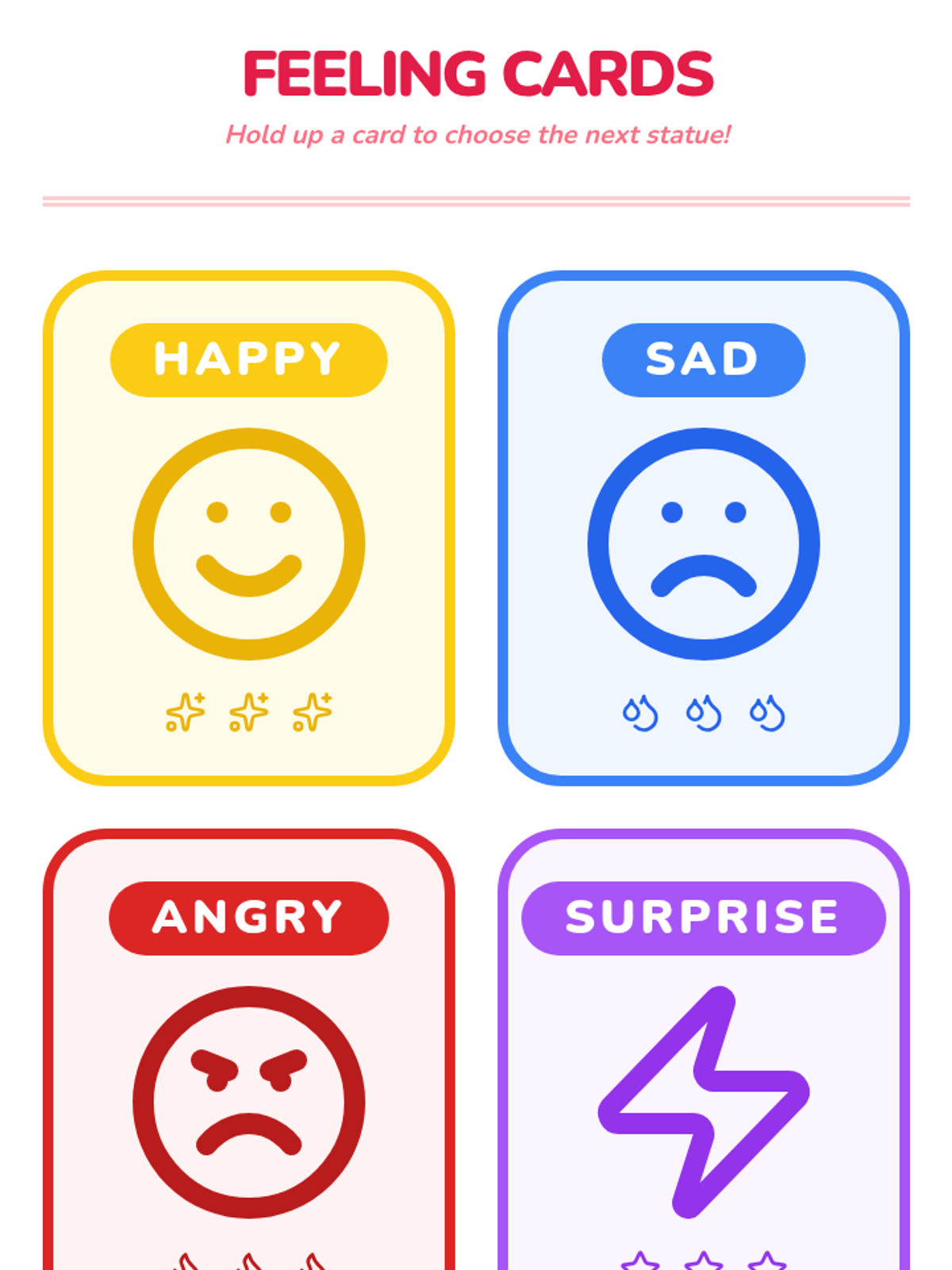
Students identify basic emotions (happy, sad, angry, surprised) and create body shapes that represent them. They explore how an 'angry' dance might look sharp and fast, while a 'sad' dance might be slow and low. This connects emotional literacy with physical expression.
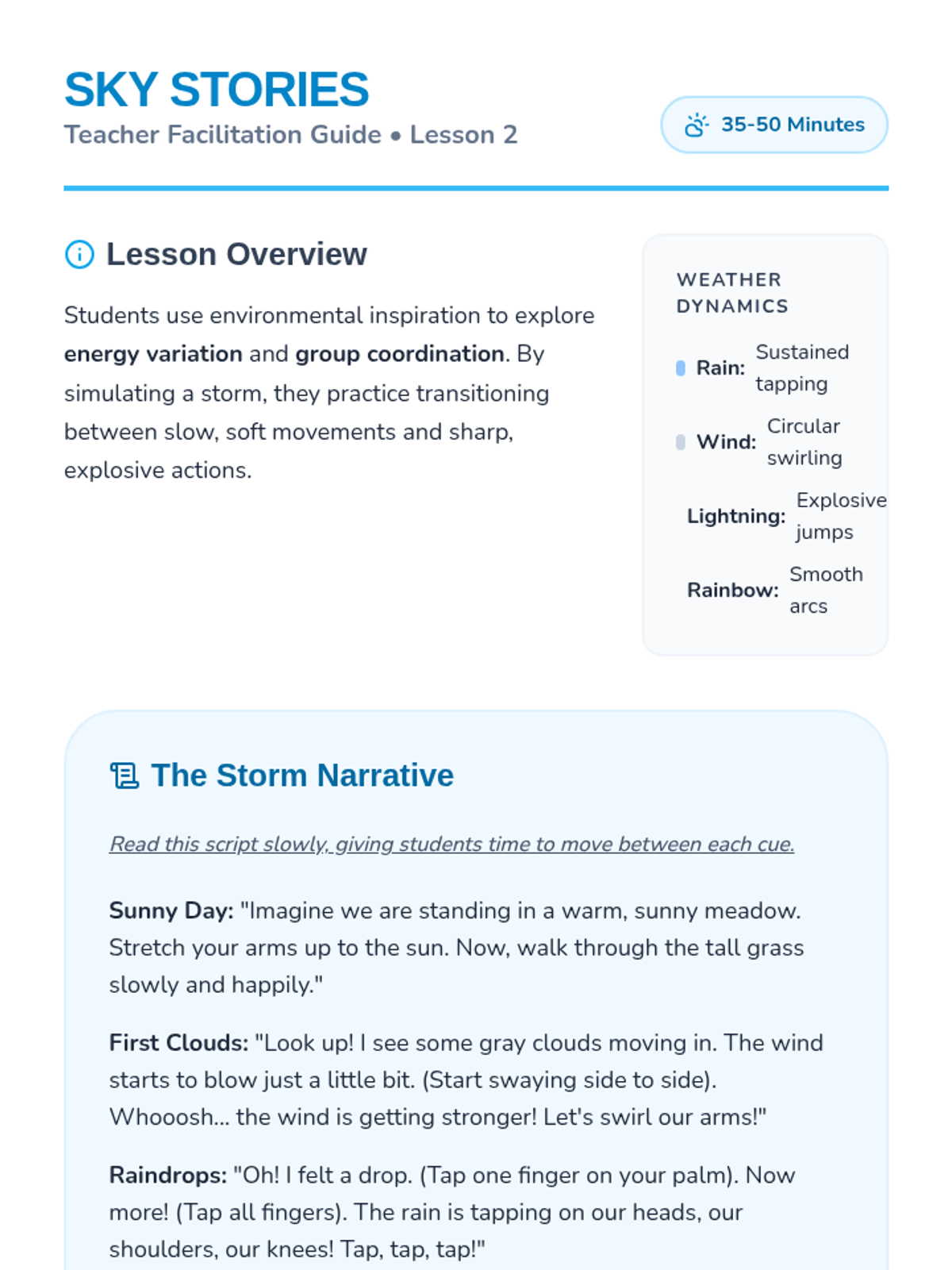
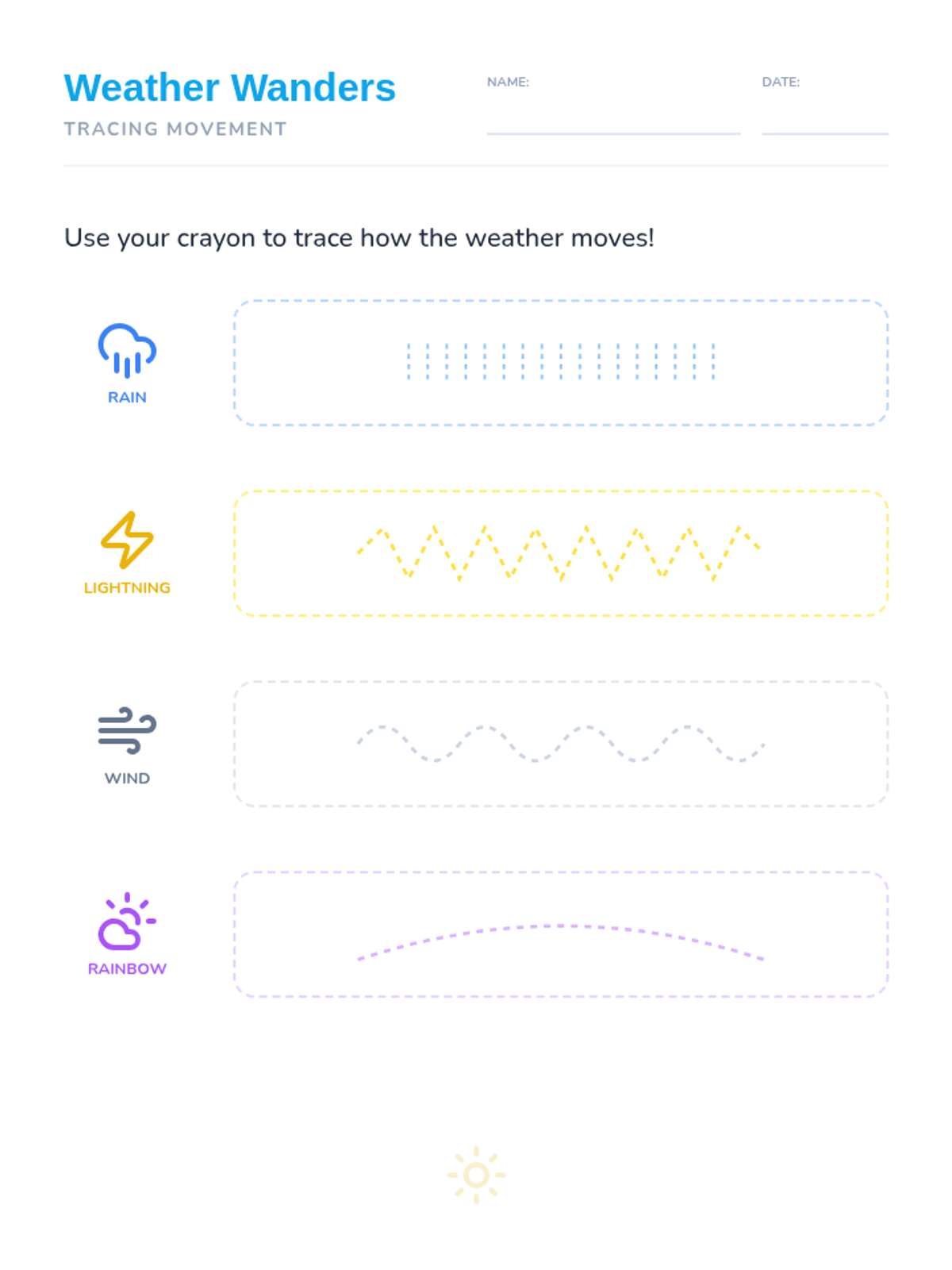
Using the environment as inspiration, students use their bodies to depict weather conditions. They swirl for wind, tap for rain, and jump for lightning. The teacher guides a 'storm' narrative where the class transitions from a sunny day to a storm and back to a rainbow.
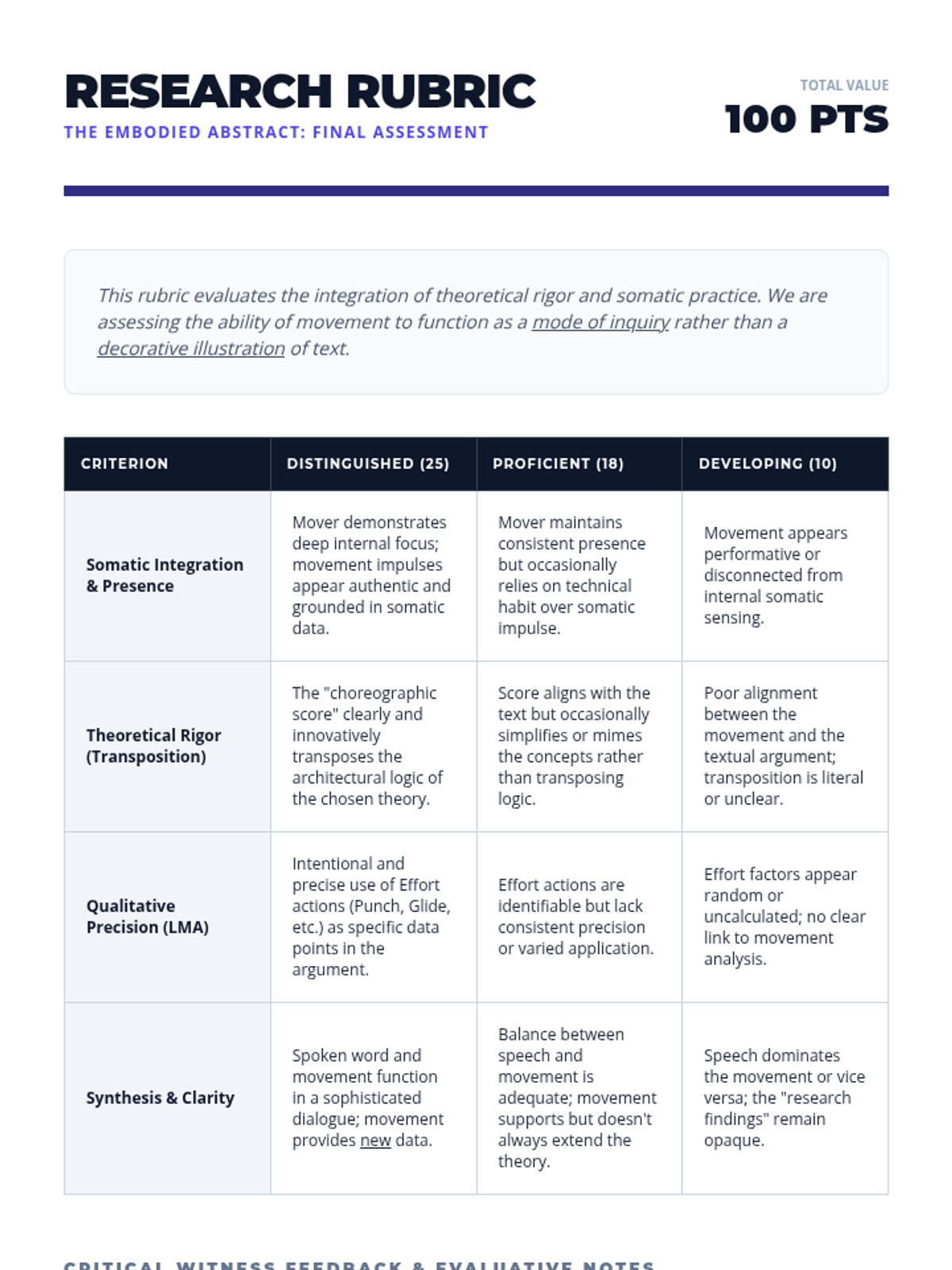
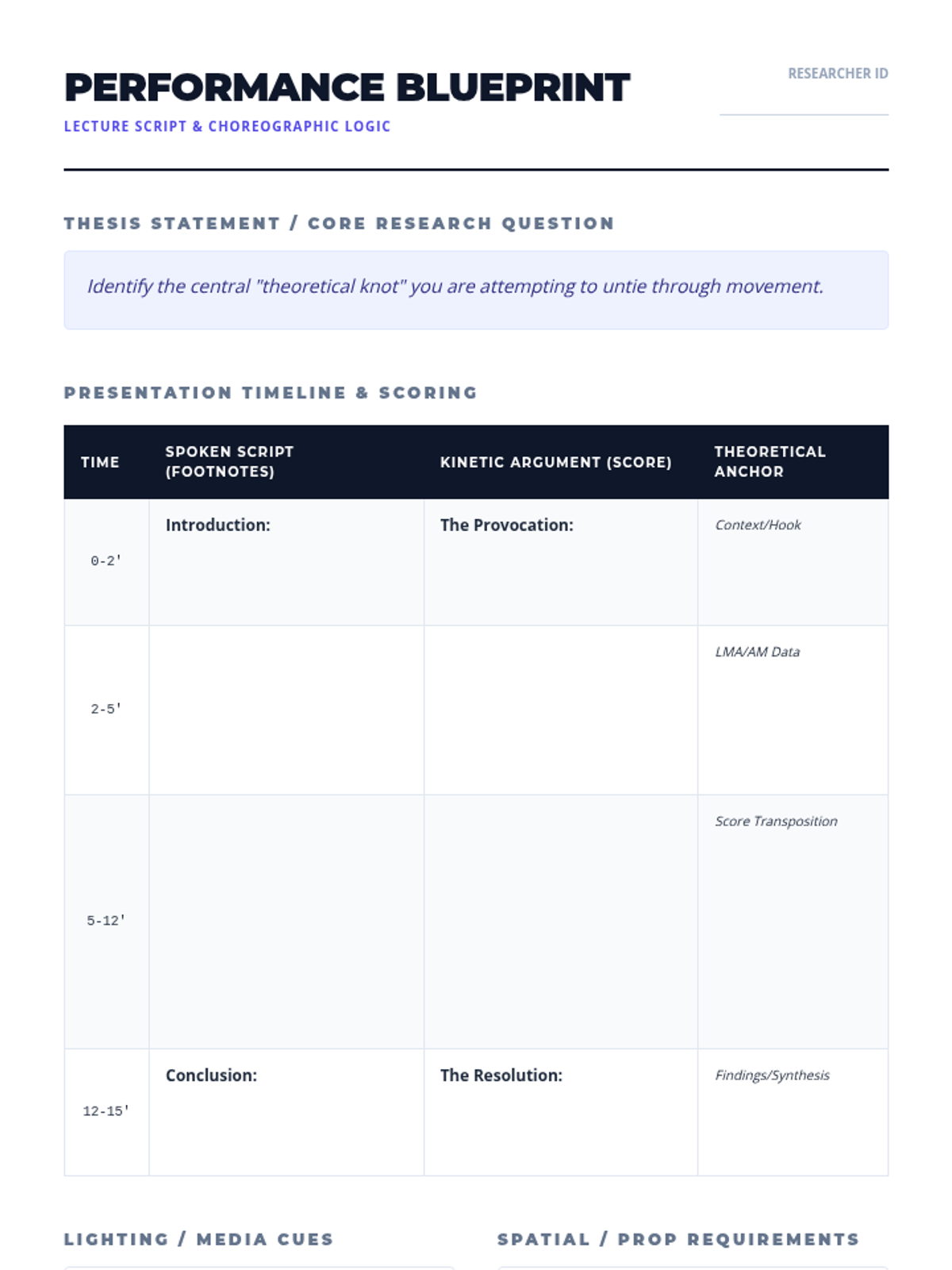
A final mastery-based lesson where students present research findings through performance-lectures.
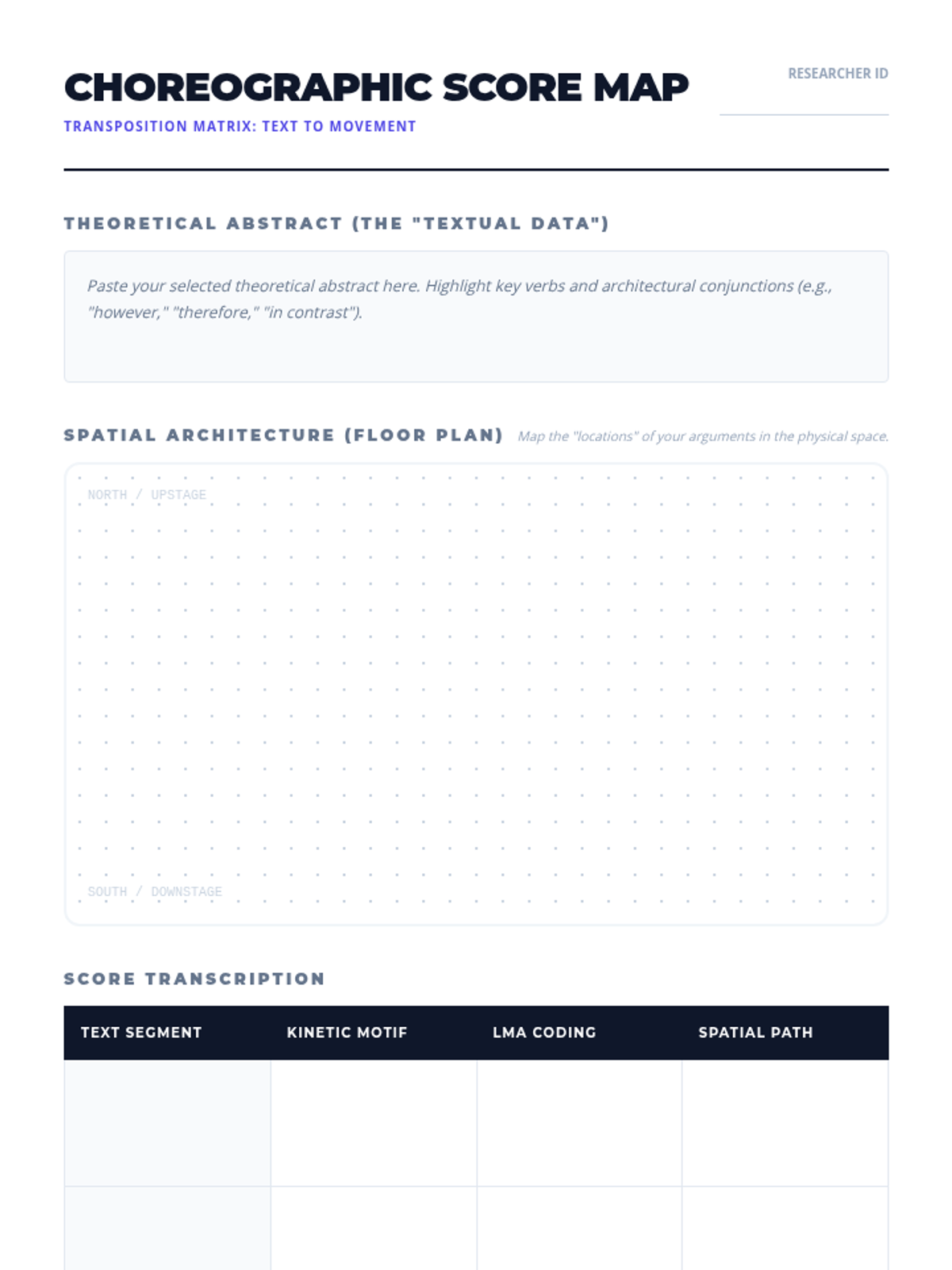
Translating dense theoretical abstracts into choreographic scores to analyze the architecture of arguments.
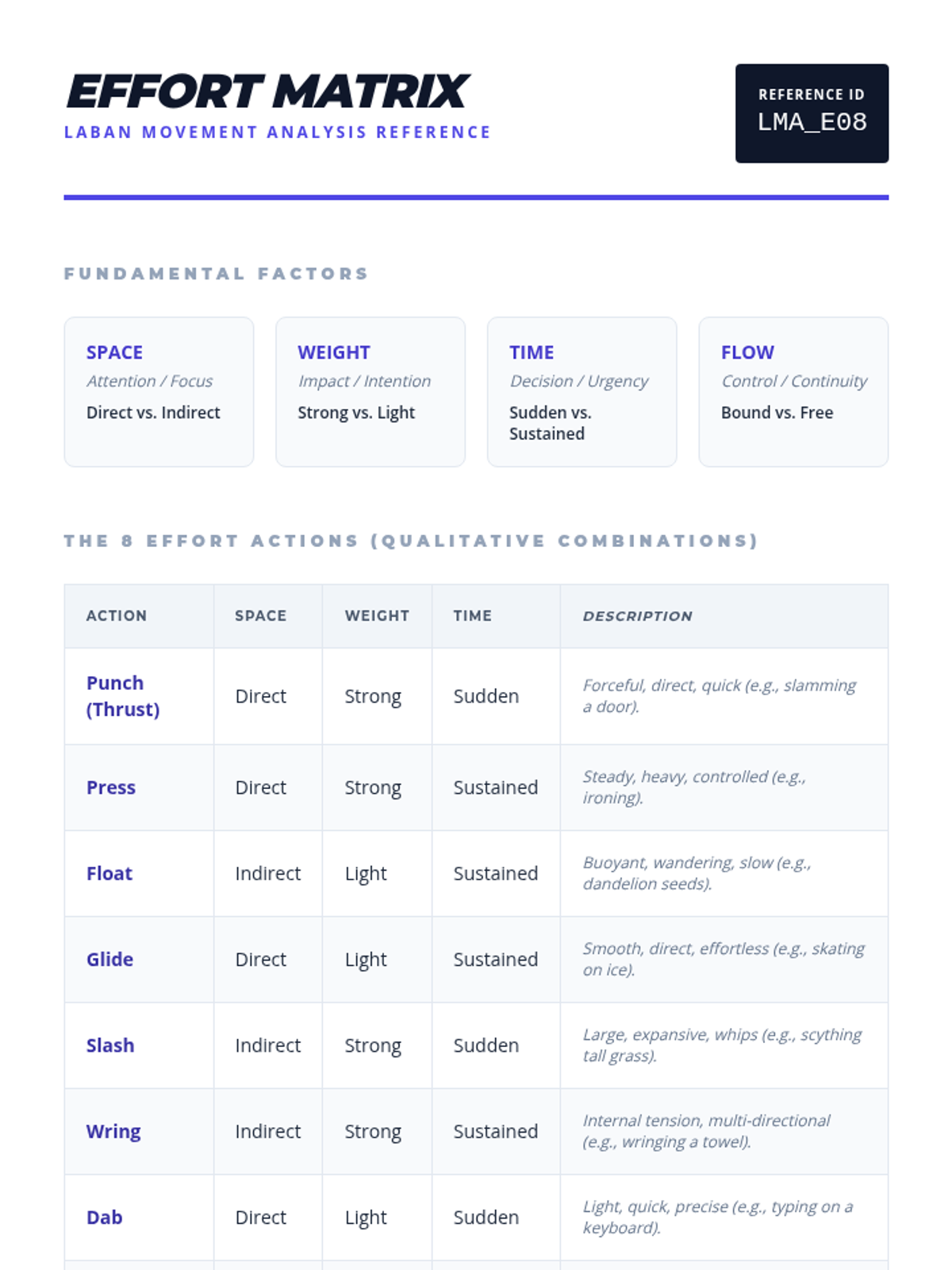
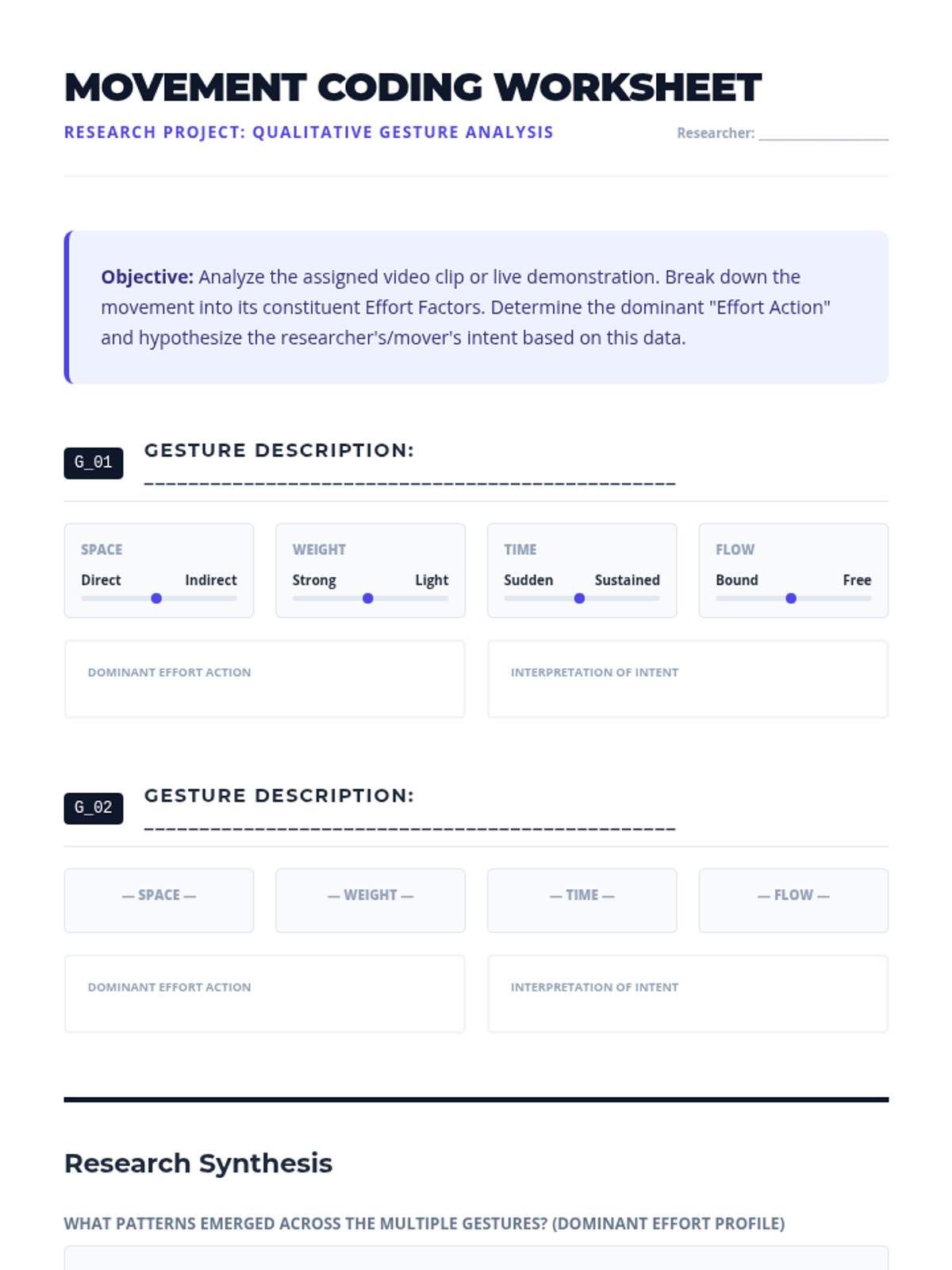
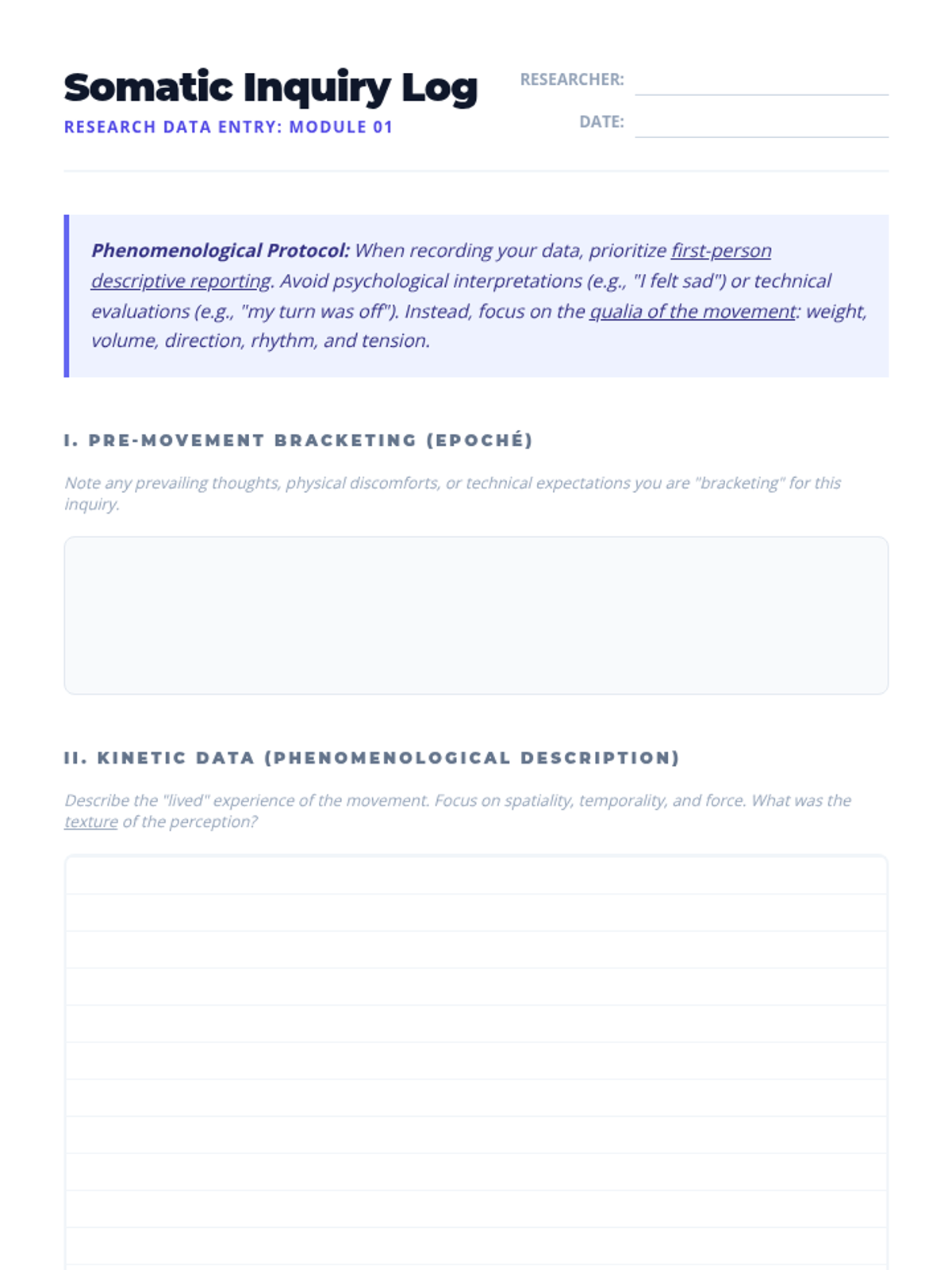
Learning to codify movement using Laban's Effort factors as a tool for qualitative data analysis.
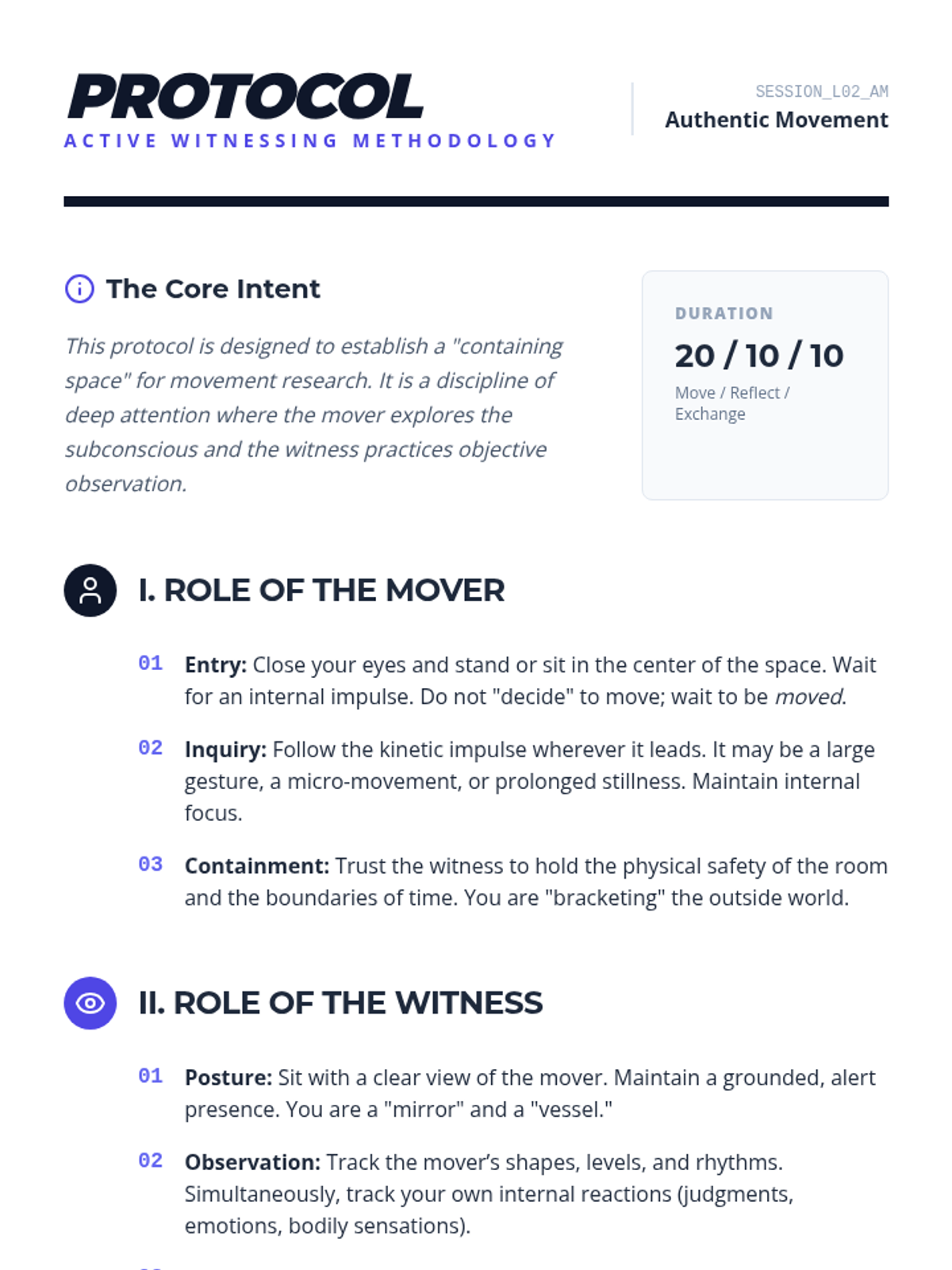
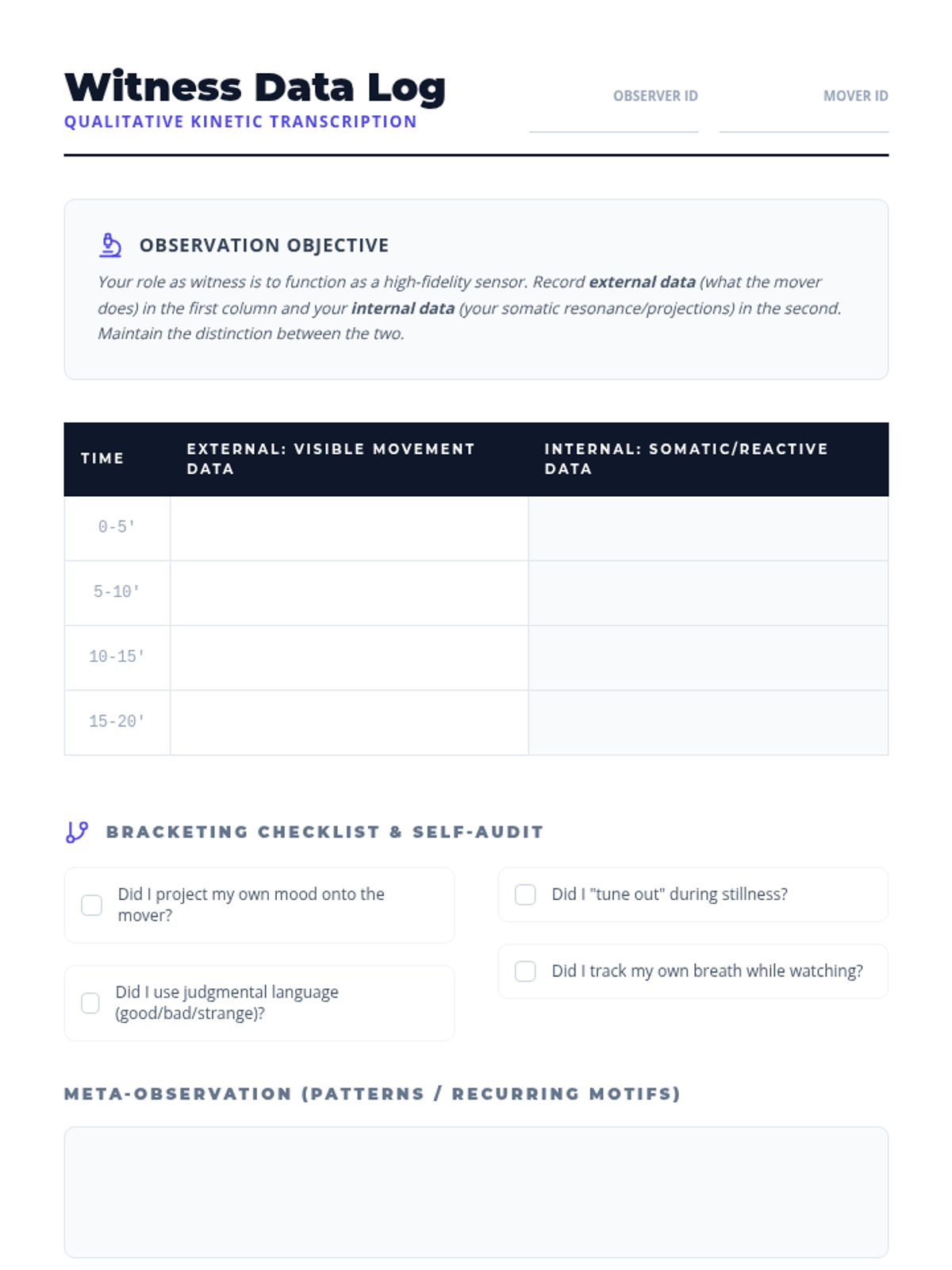
Utilizing the Mover/Witness discipline to access and transcribe subconscious kinetic data.
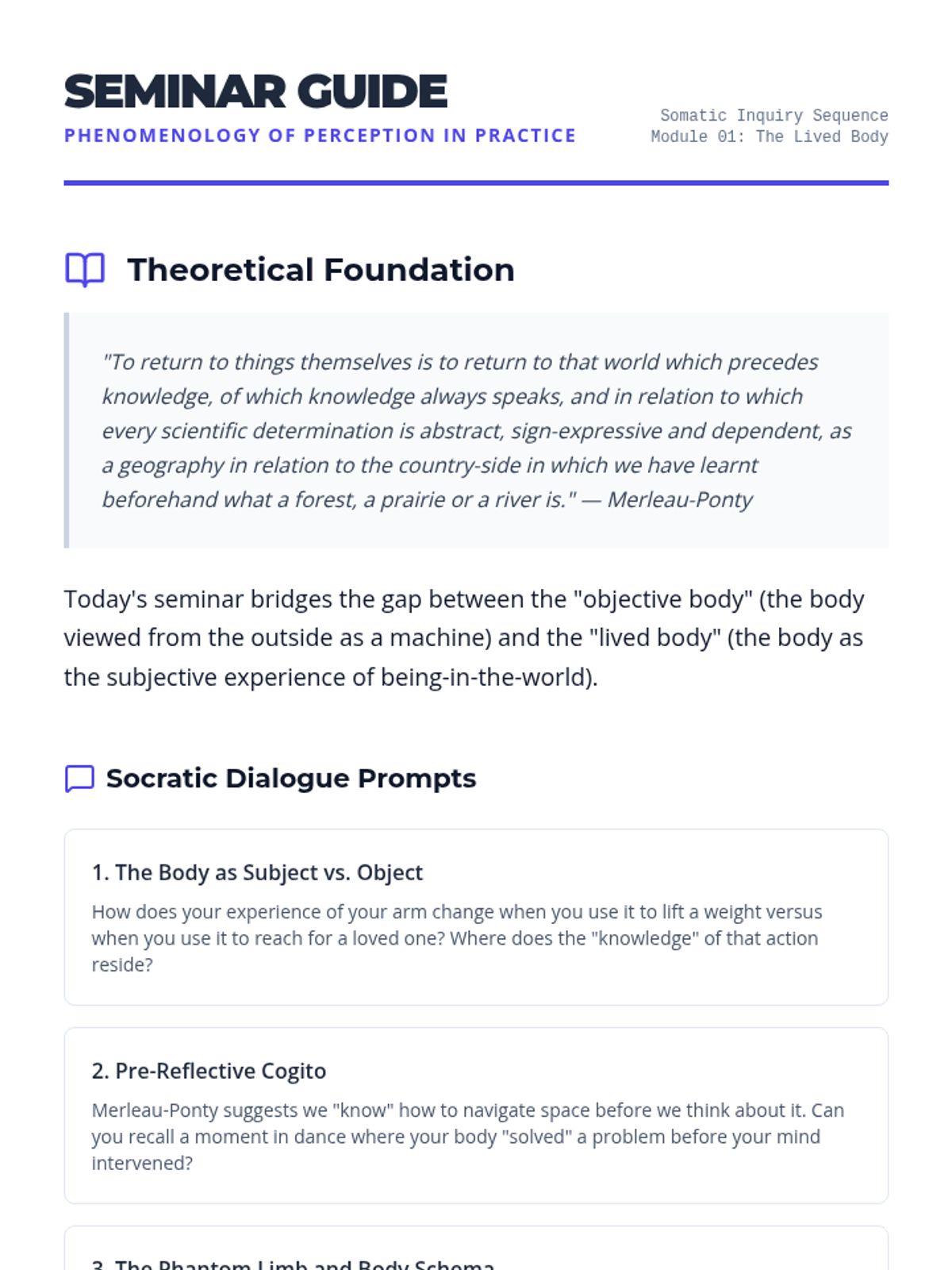
Students engage with Merleau-Ponty and Husserl, translating theoretical 'lived body' concepts into movement experiments.
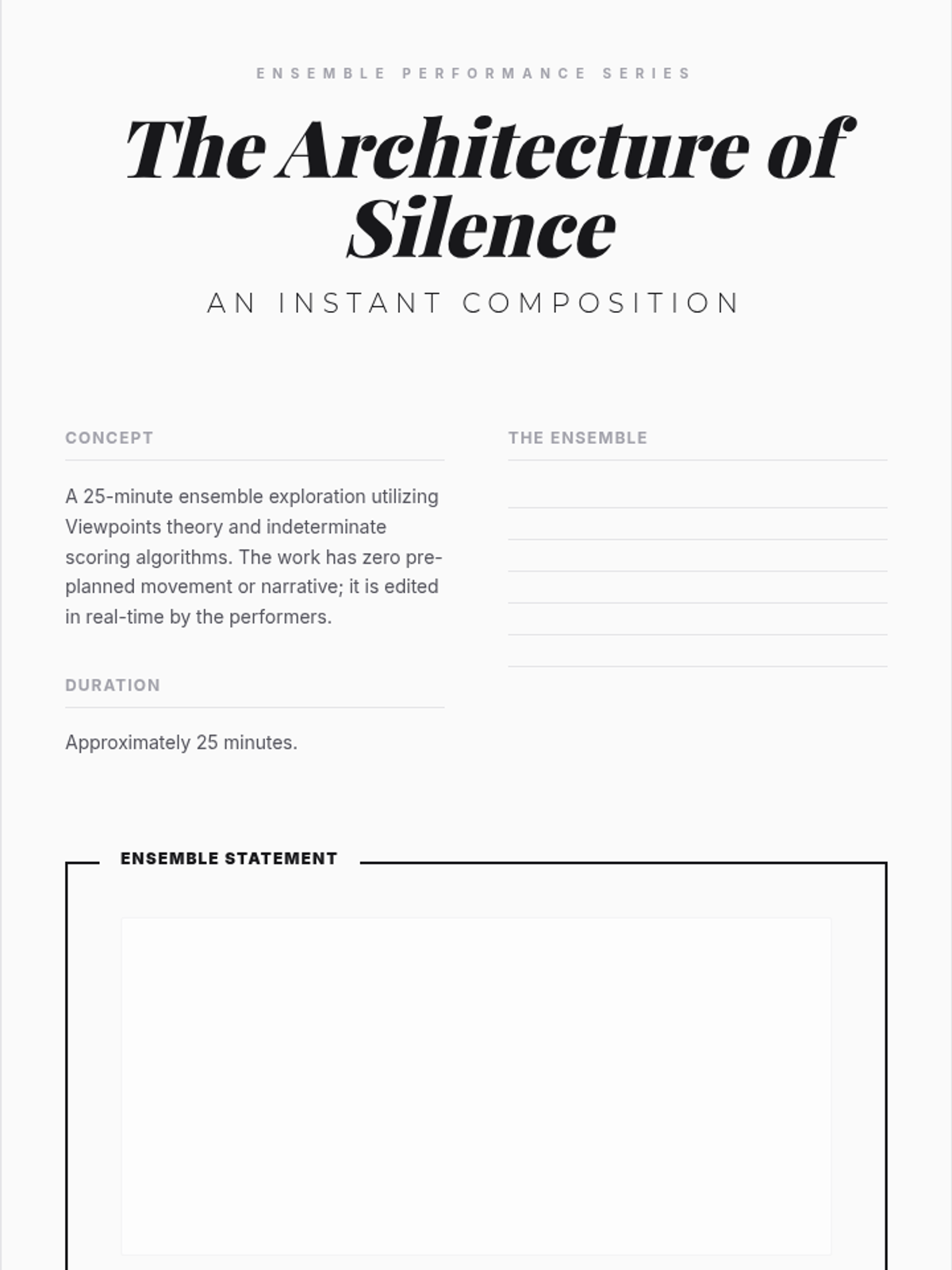
Culminates the sequence with a long-form instant composition performance, demonstrating ensemble mastery and compositional rigor.
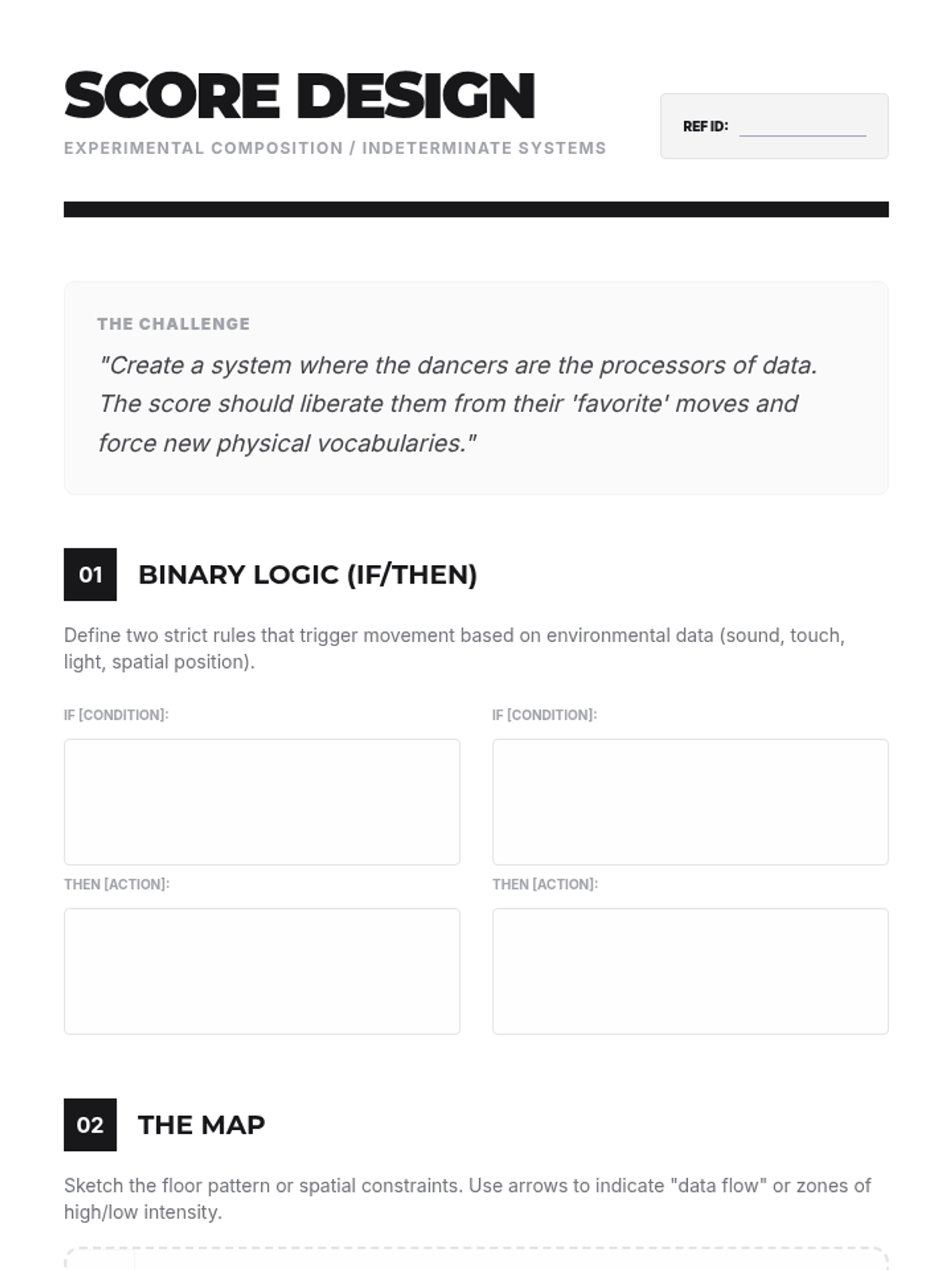
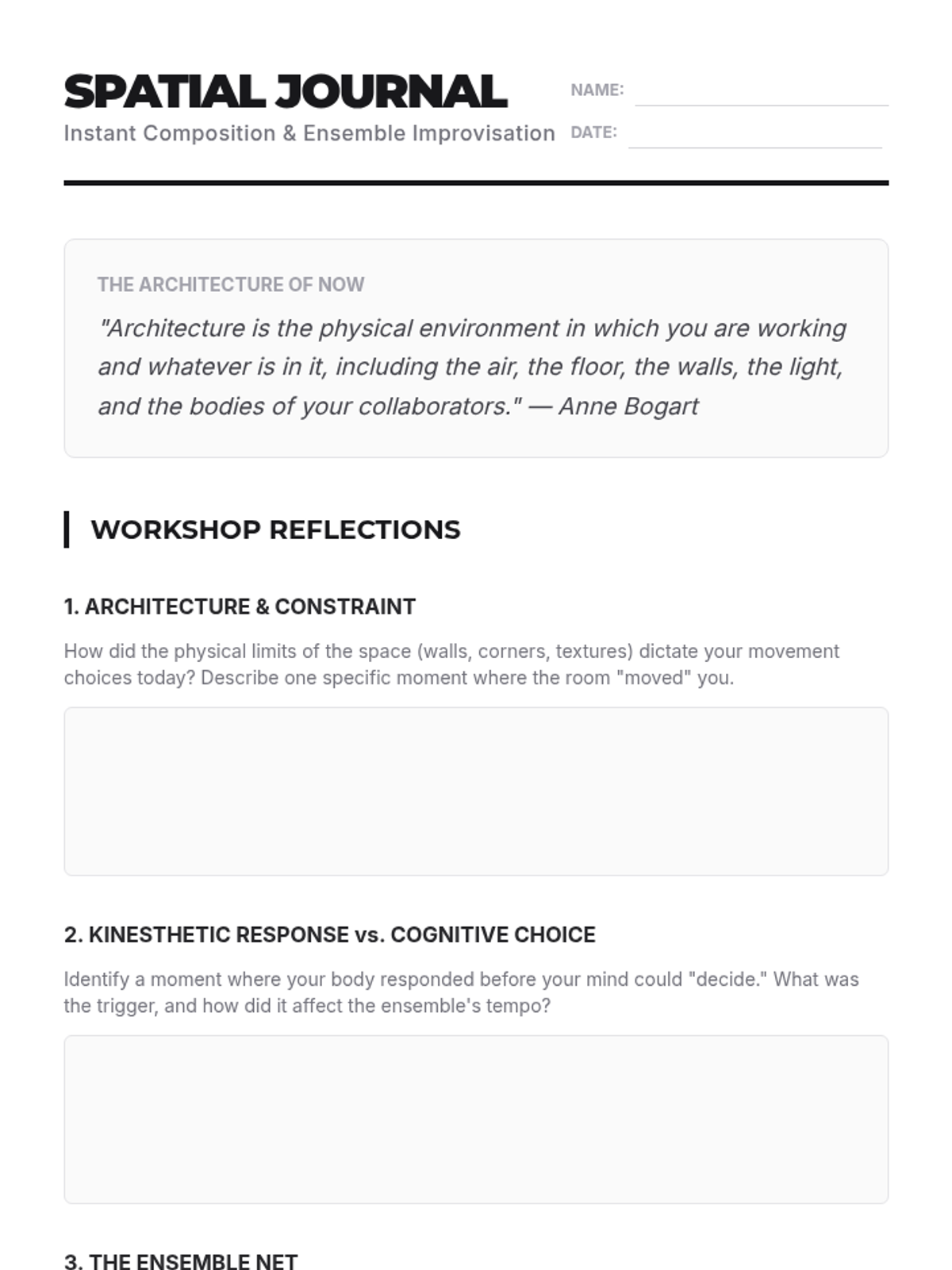
Investigates the history and practice of indeterminate scoring, using constraints to drive experimental movement.
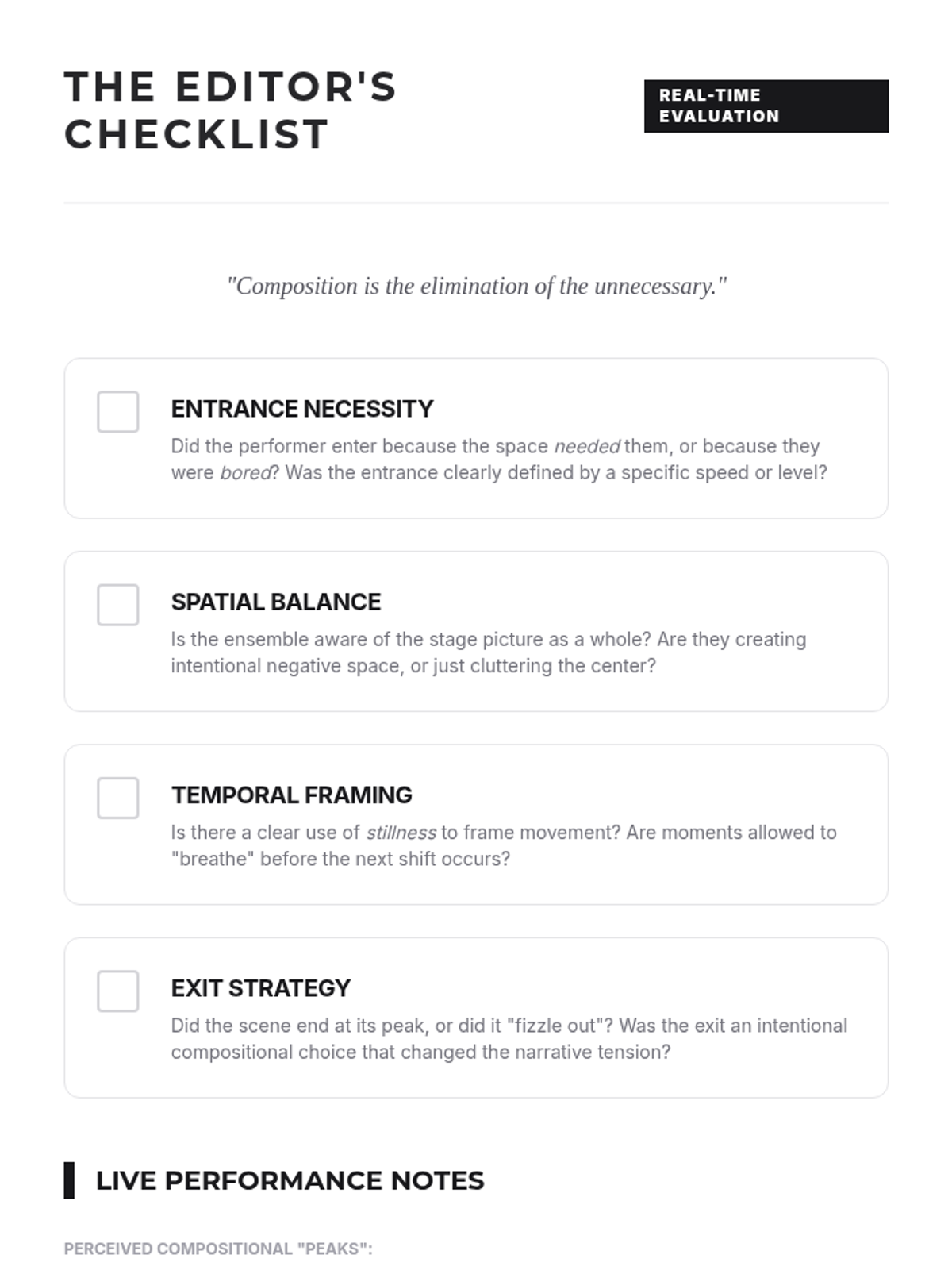
Develops the skill of real-time editing, distinguishing intentional composition from unstructured 'jamming.'
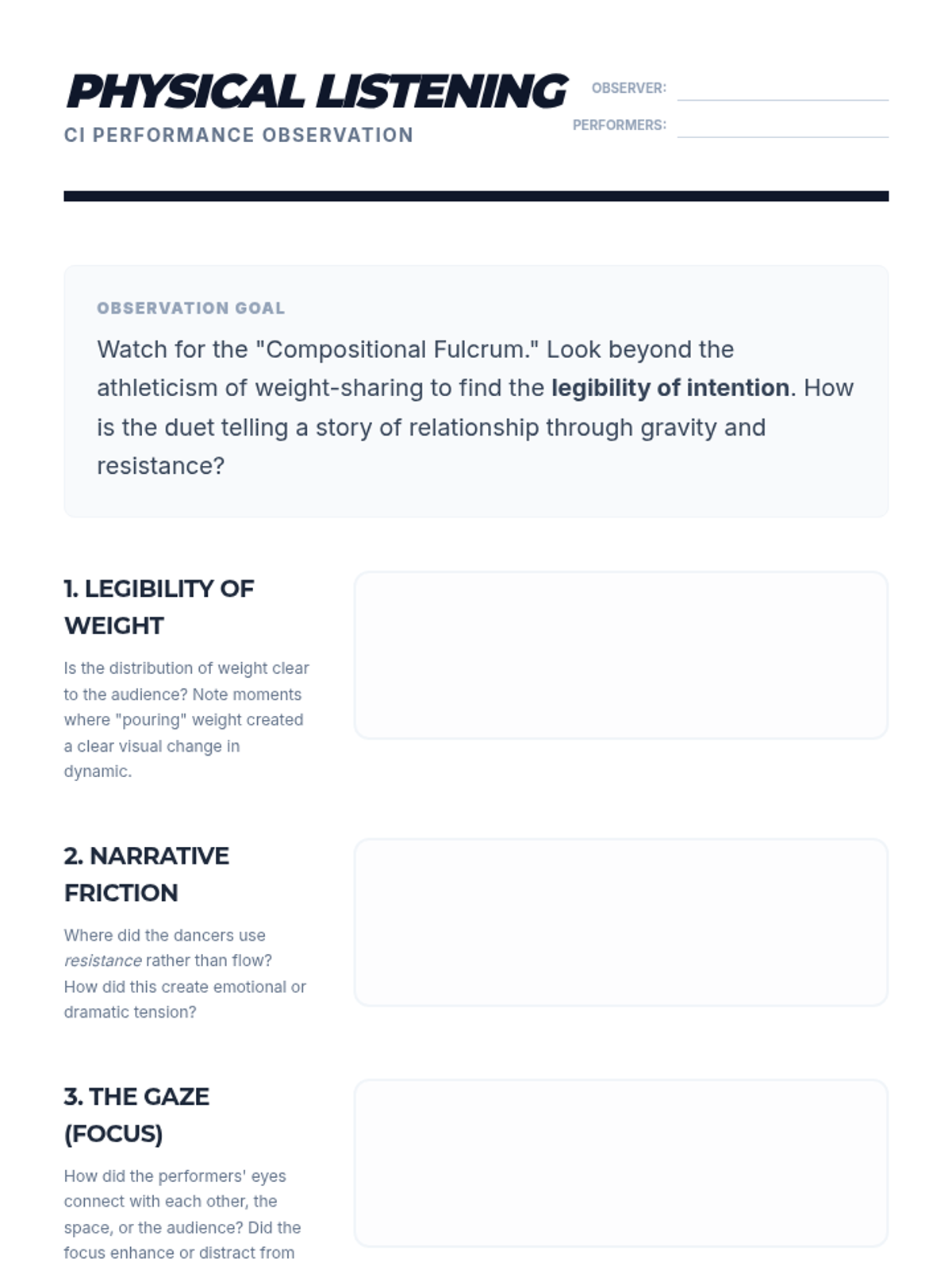
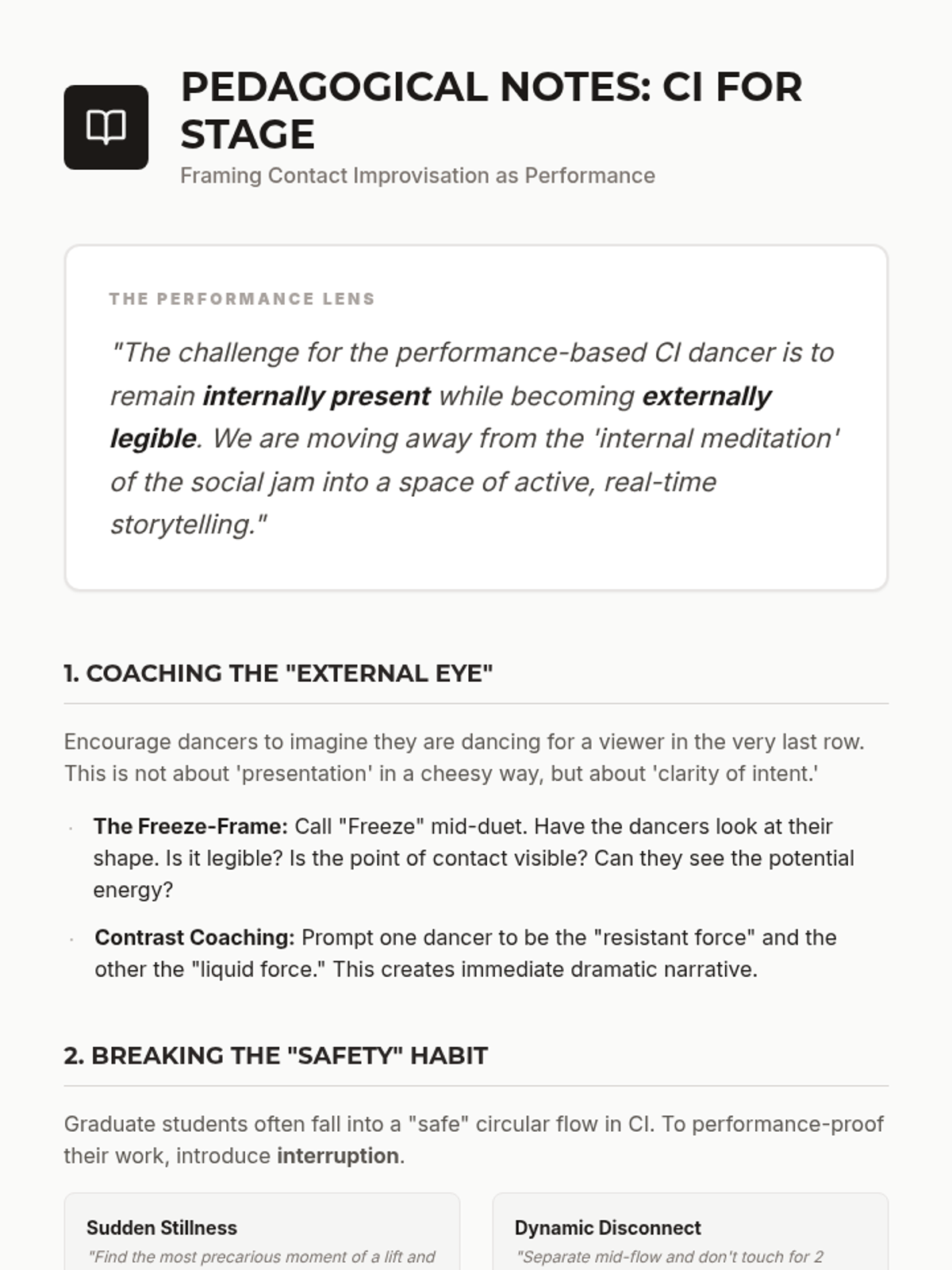
Explores Contact Improvisation as a performance tool, emphasizing weight-sharing and physical listening to create narrative tension.
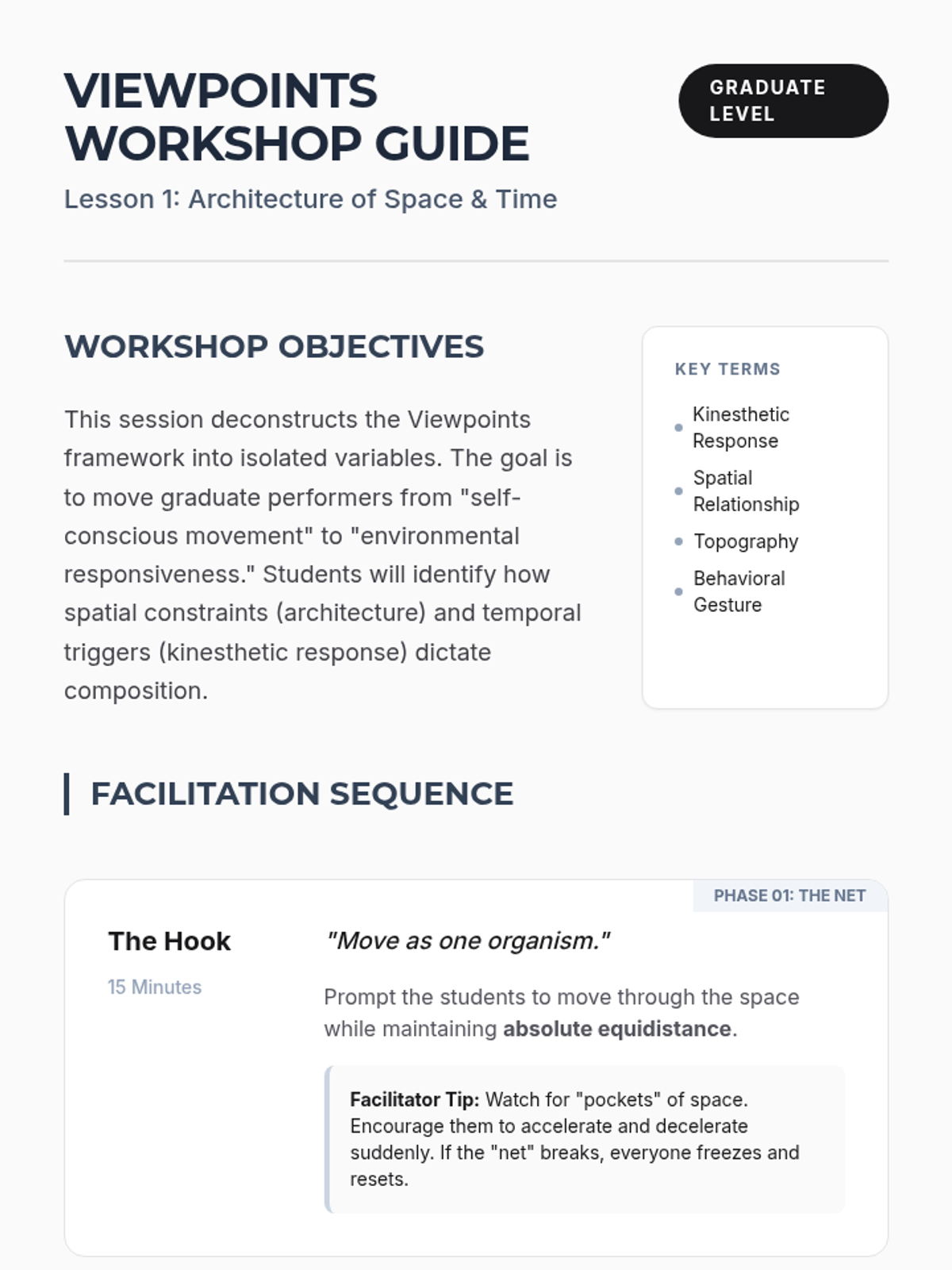
Focuses on deconstructing the Viewpoints technique to heighten spatial and temporal awareness within an ensemble.
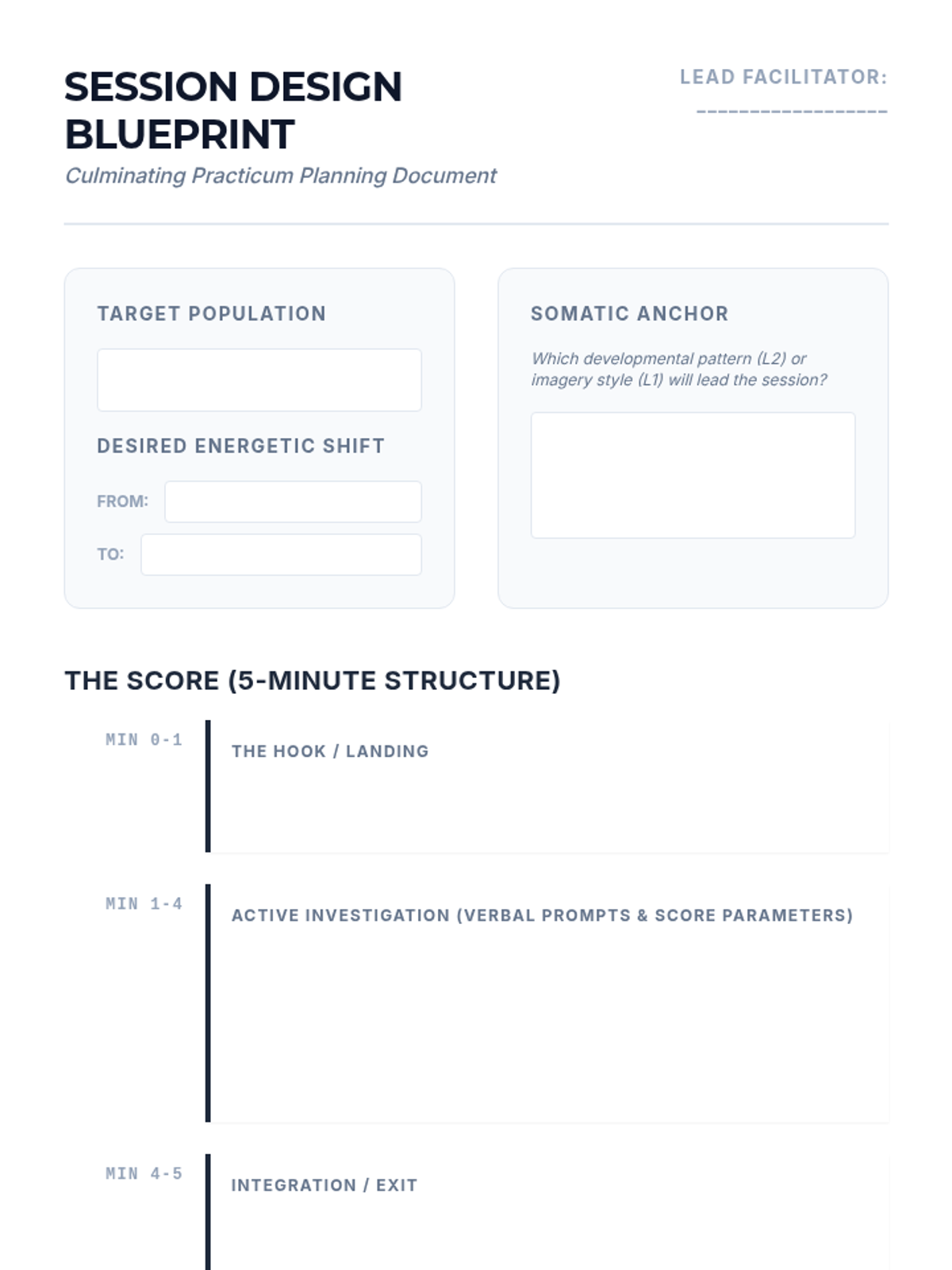
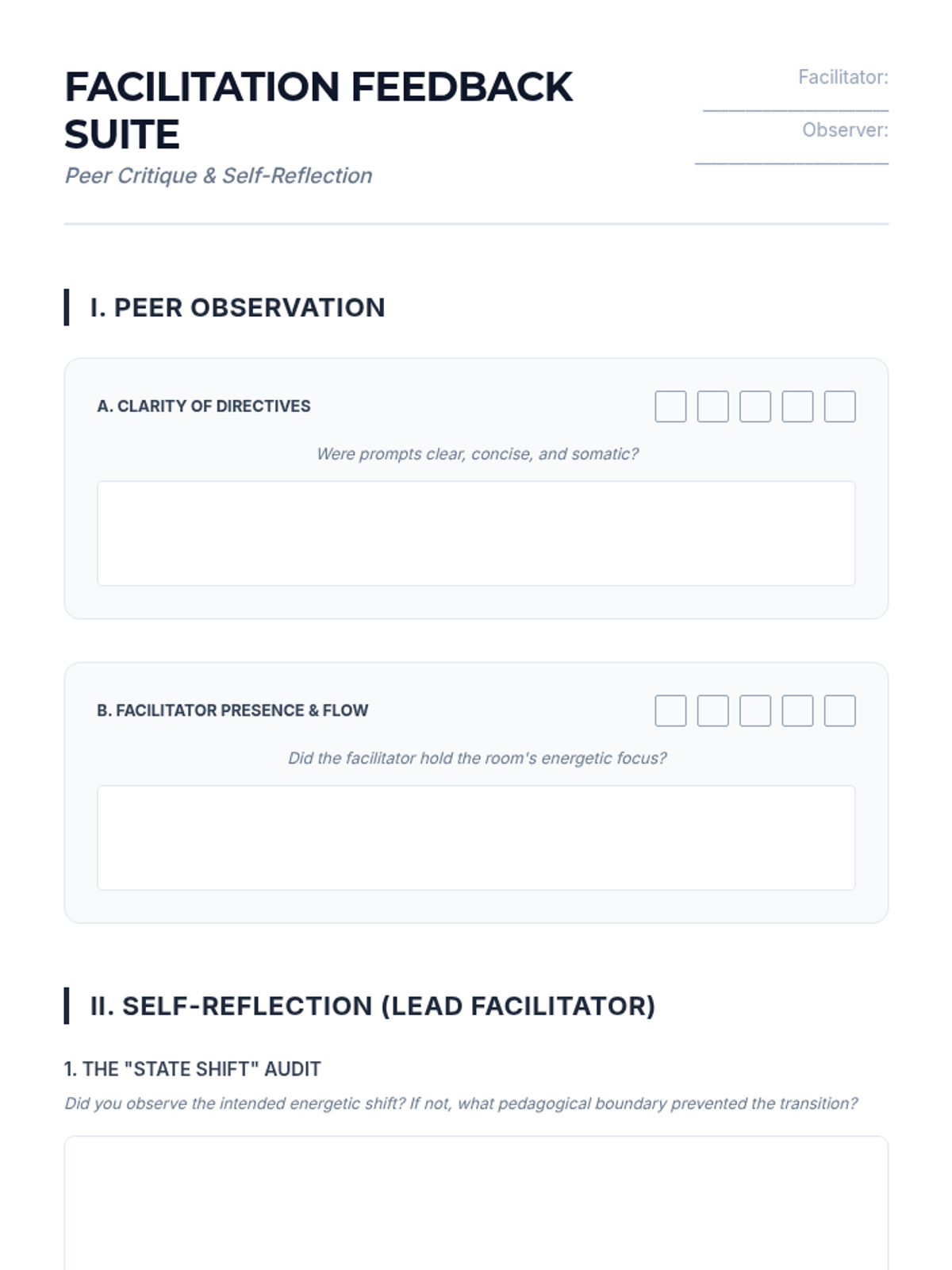
A culminating practicum where students lead a creative movement session and receive peer critique on their facilitation techniques.
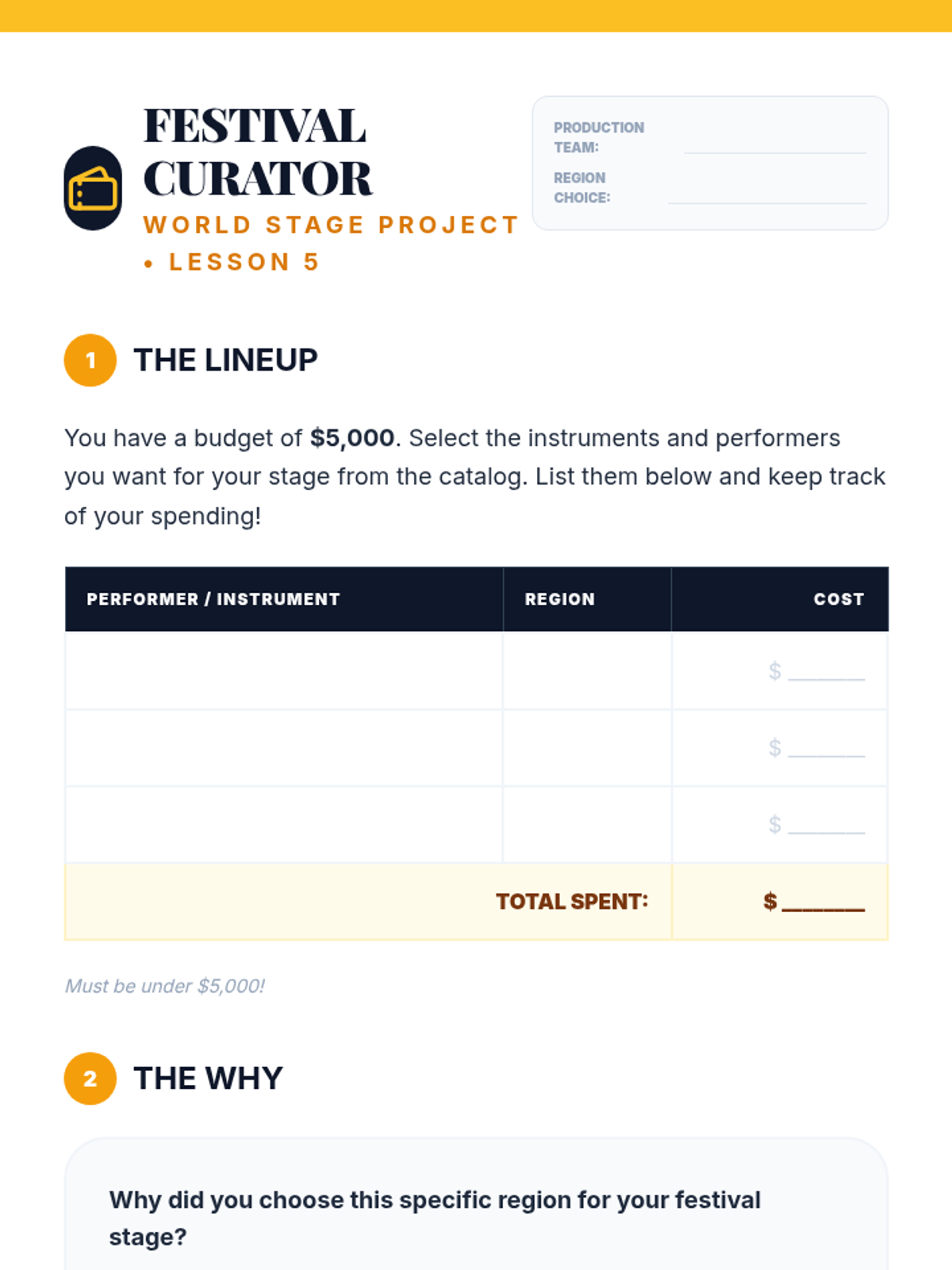
Students work in small groups to 'curate' a stage for a world music festival. They select a region, choose instruments to feature, and explain why that music is unique.
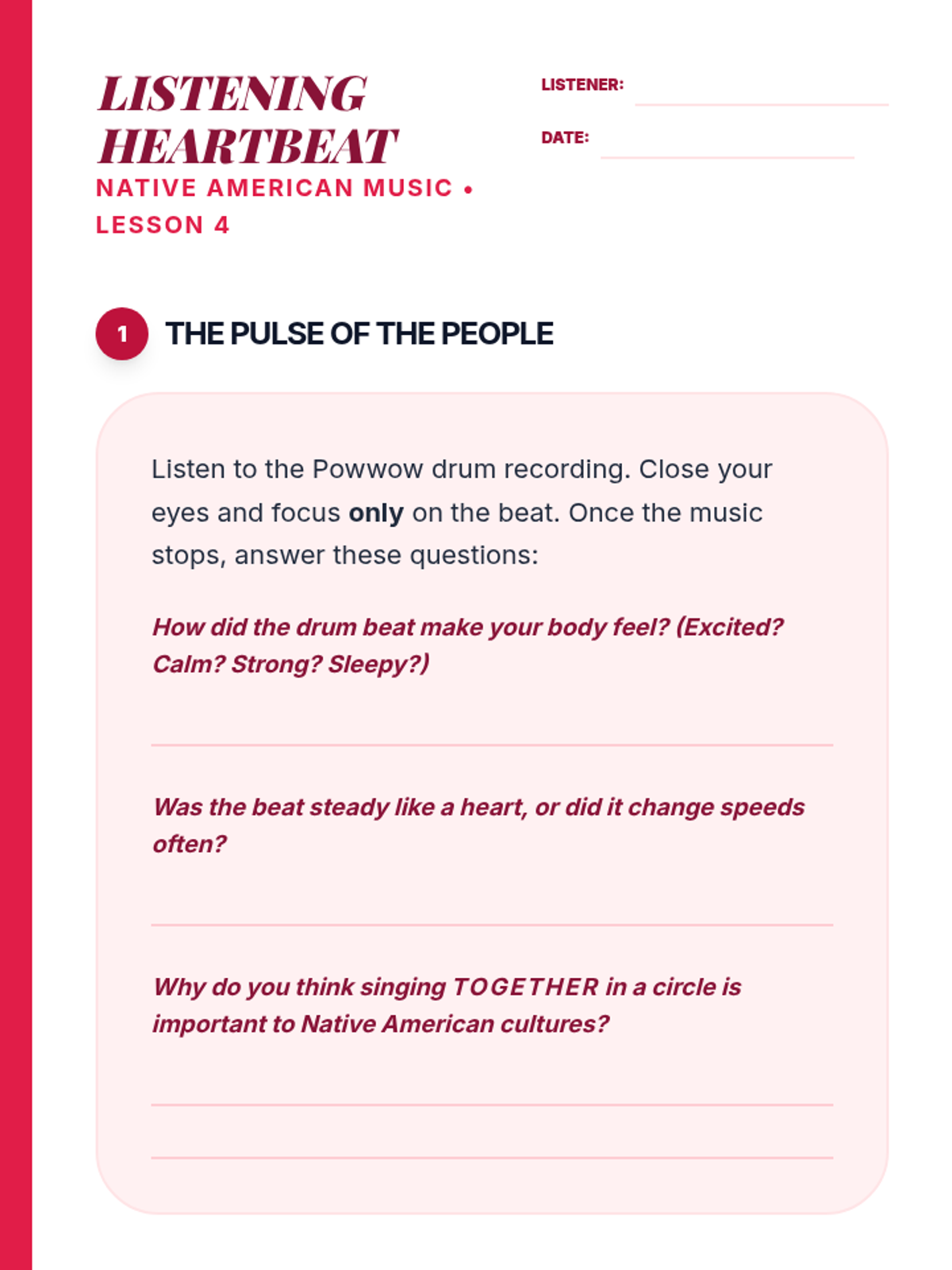
Students listen to the drumming and singing styles of Native American tribes. They discuss the importance of the drum as the 'heartbeat' and the preservation of culture through powwow music.
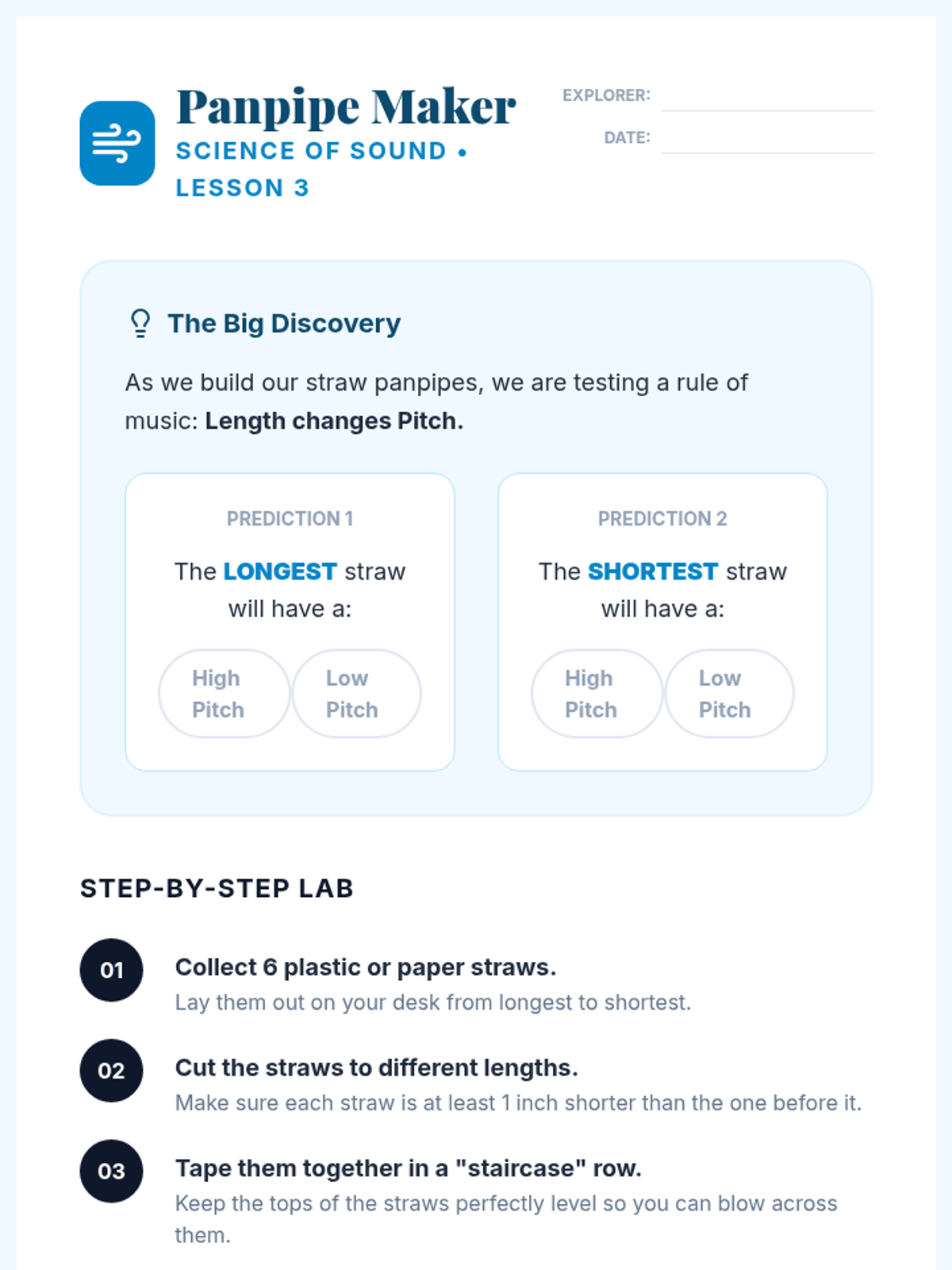
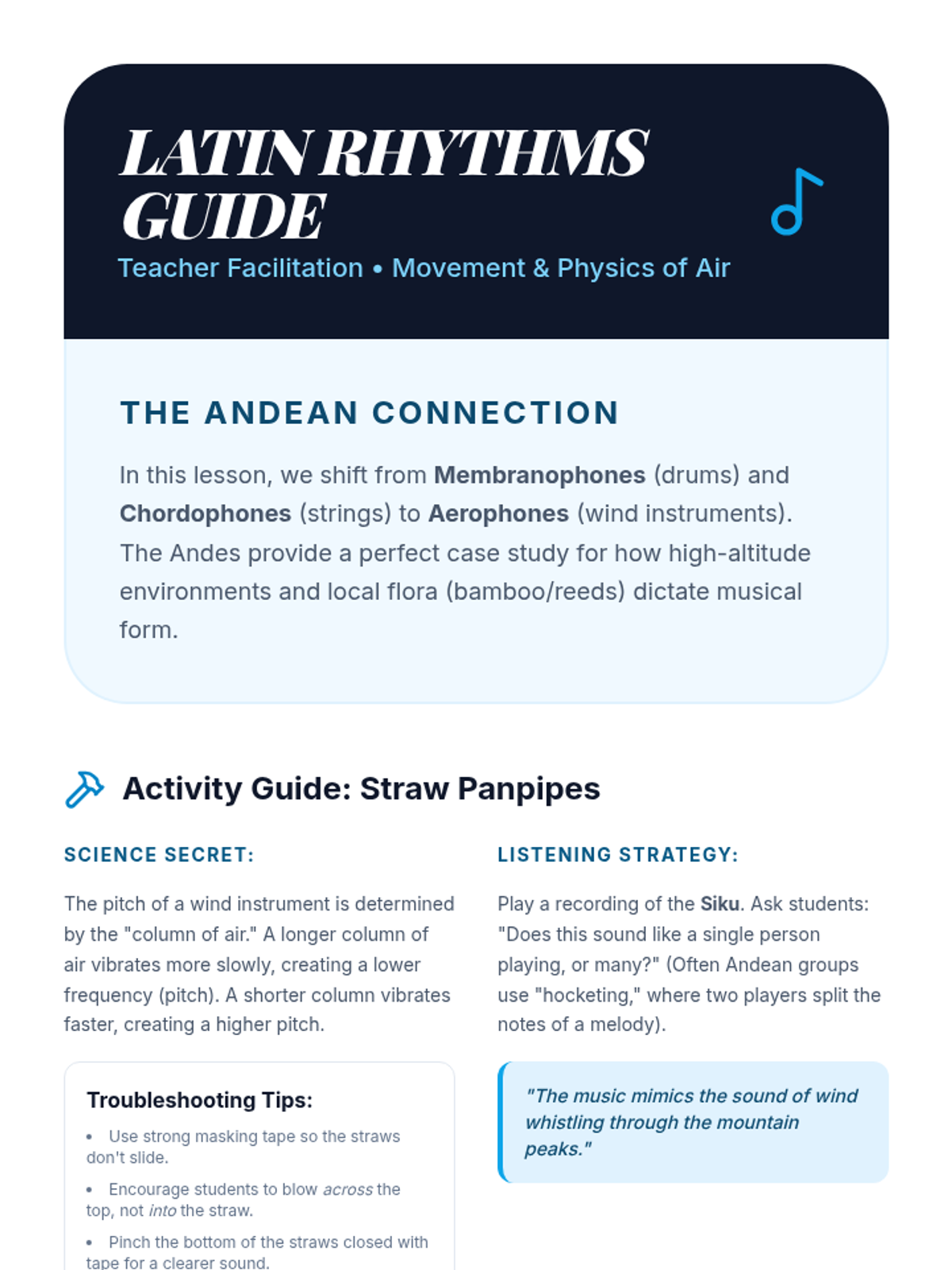
Students investigate the wind and percussion instruments of South America, such as panpipes and maracas, and explore the connection between music and dance in Latin American cultures.
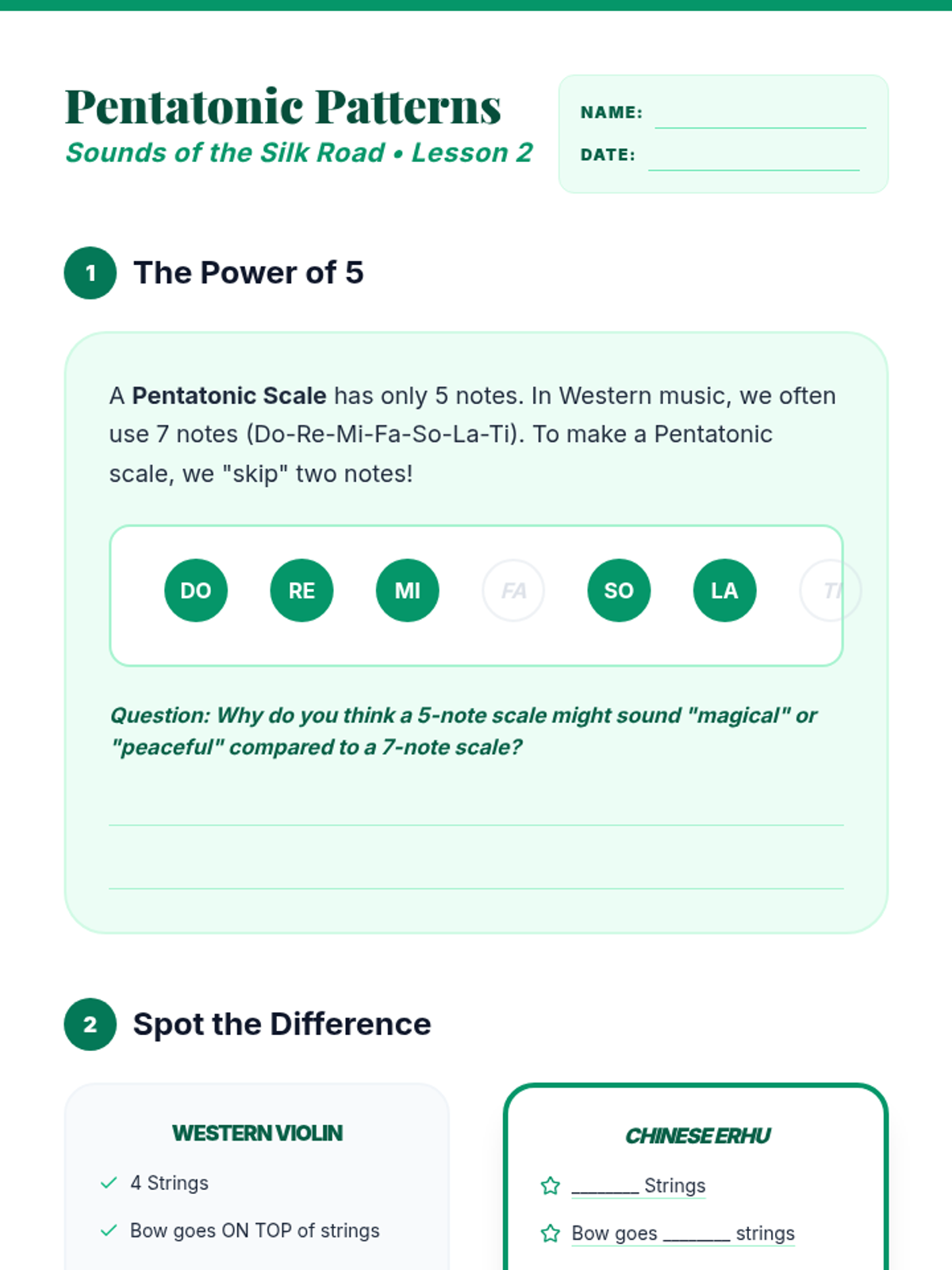
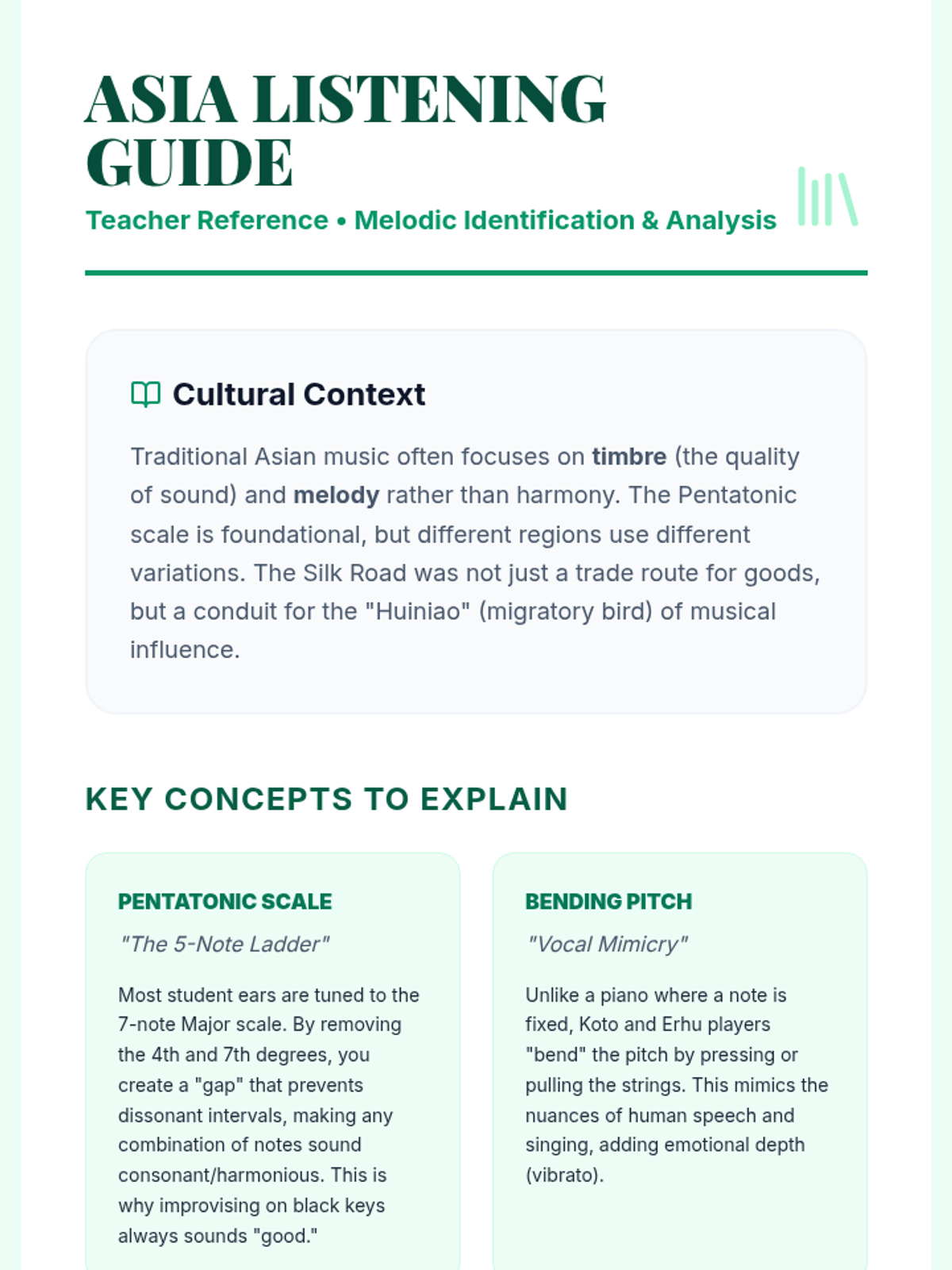
This lesson introduces the Pentatonic scale (5-note scale) common in traditional Chinese and Japanese music. Students listen to string instruments like the Koto or Erhu and compare them to the violin.
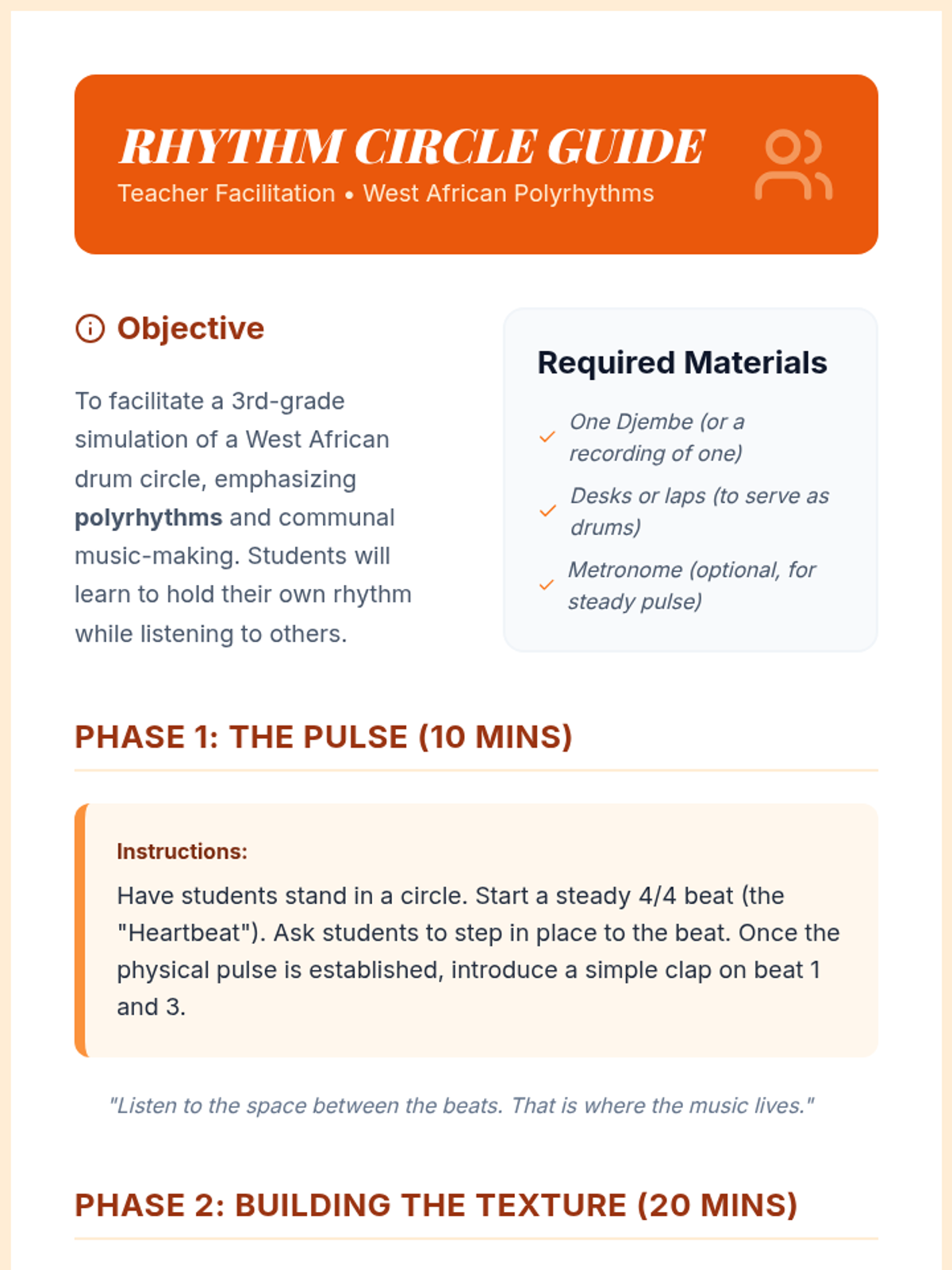
Students explore polyrhythms and the role of the Djembe drum in West African culture, learning how rhythm serves as a form of communication and community celebration.
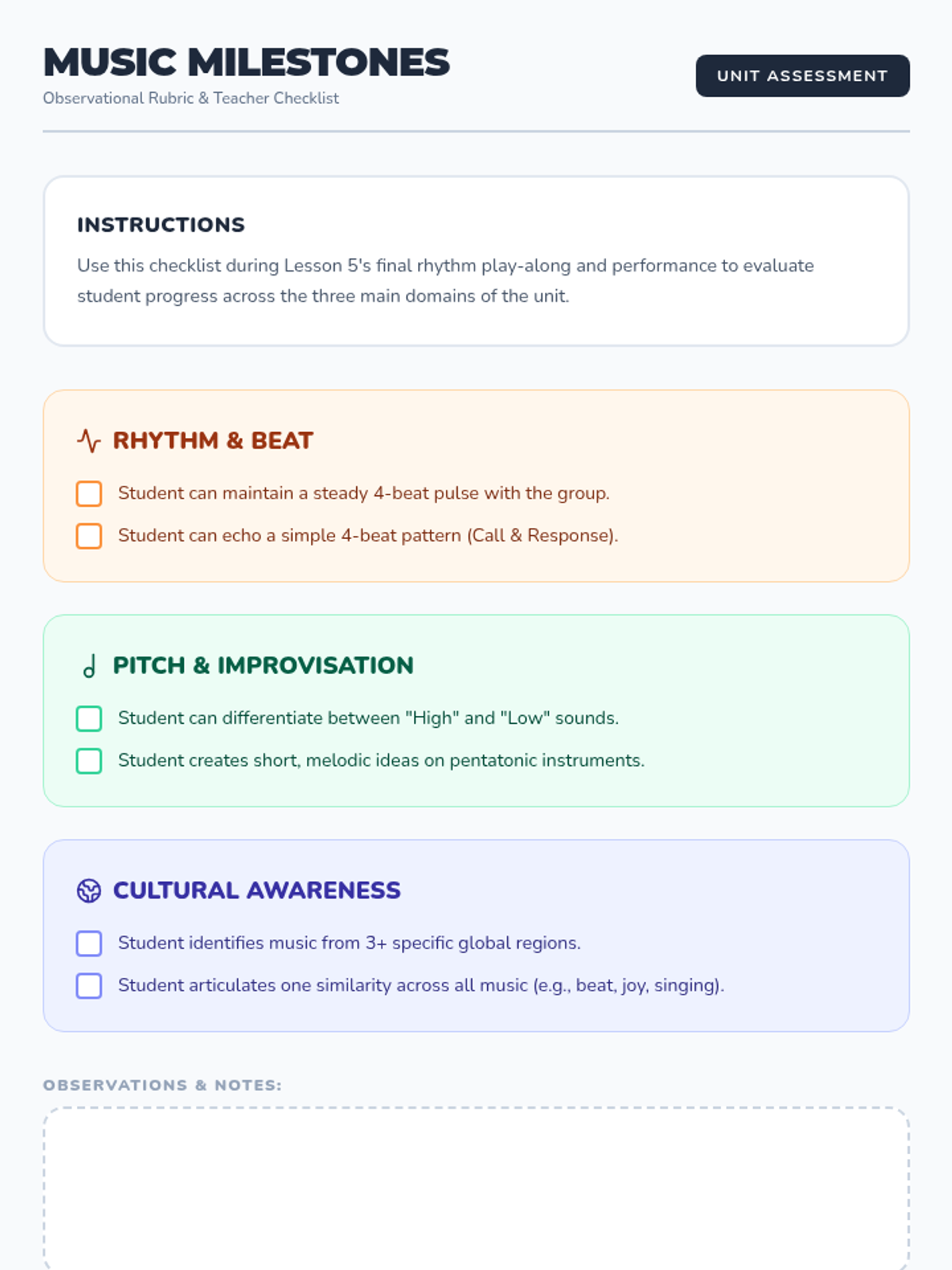
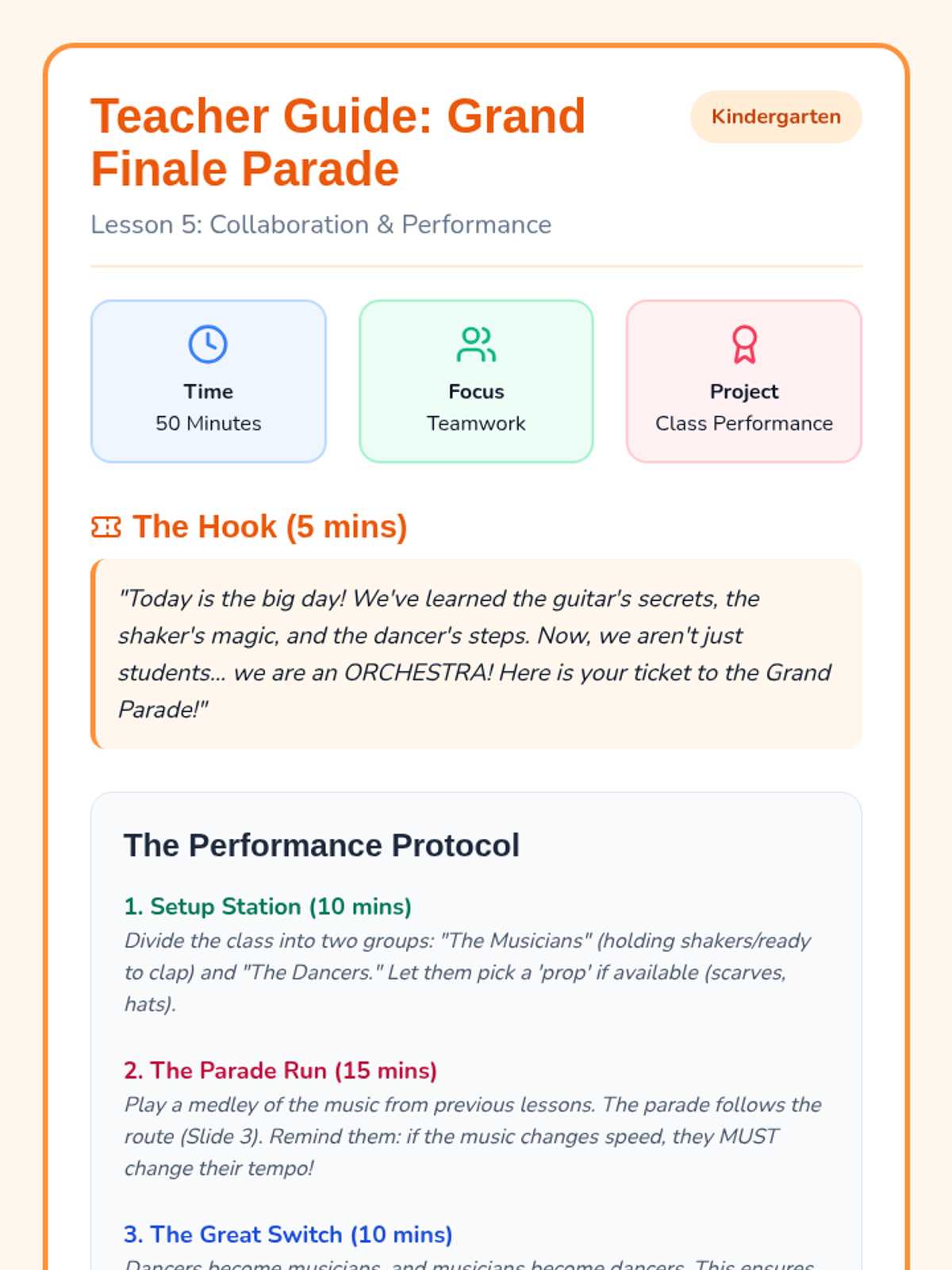
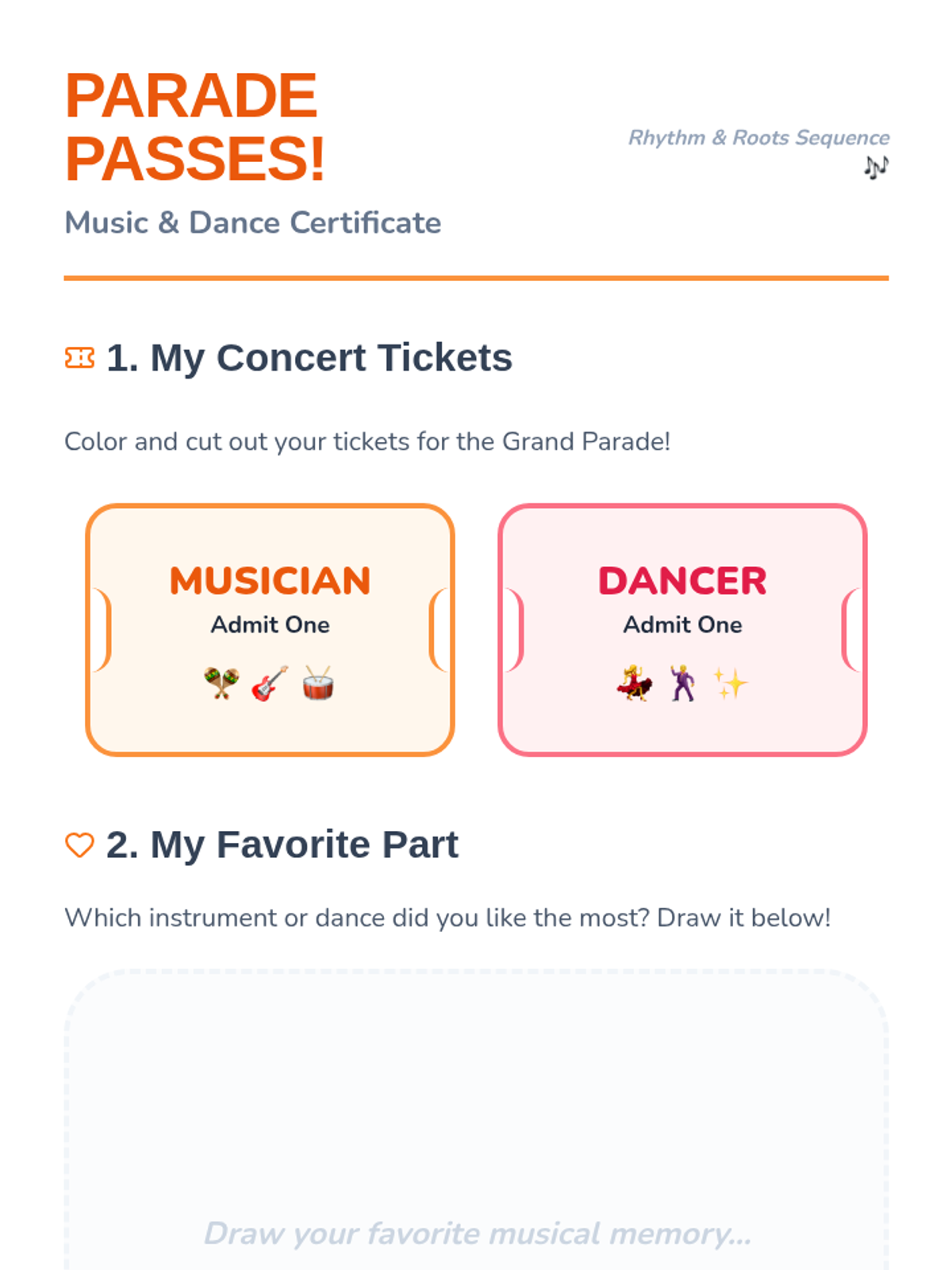
A celebratory final lesson where students combine their musical skills for a classroom parade, taking turns as musicians and dancers.
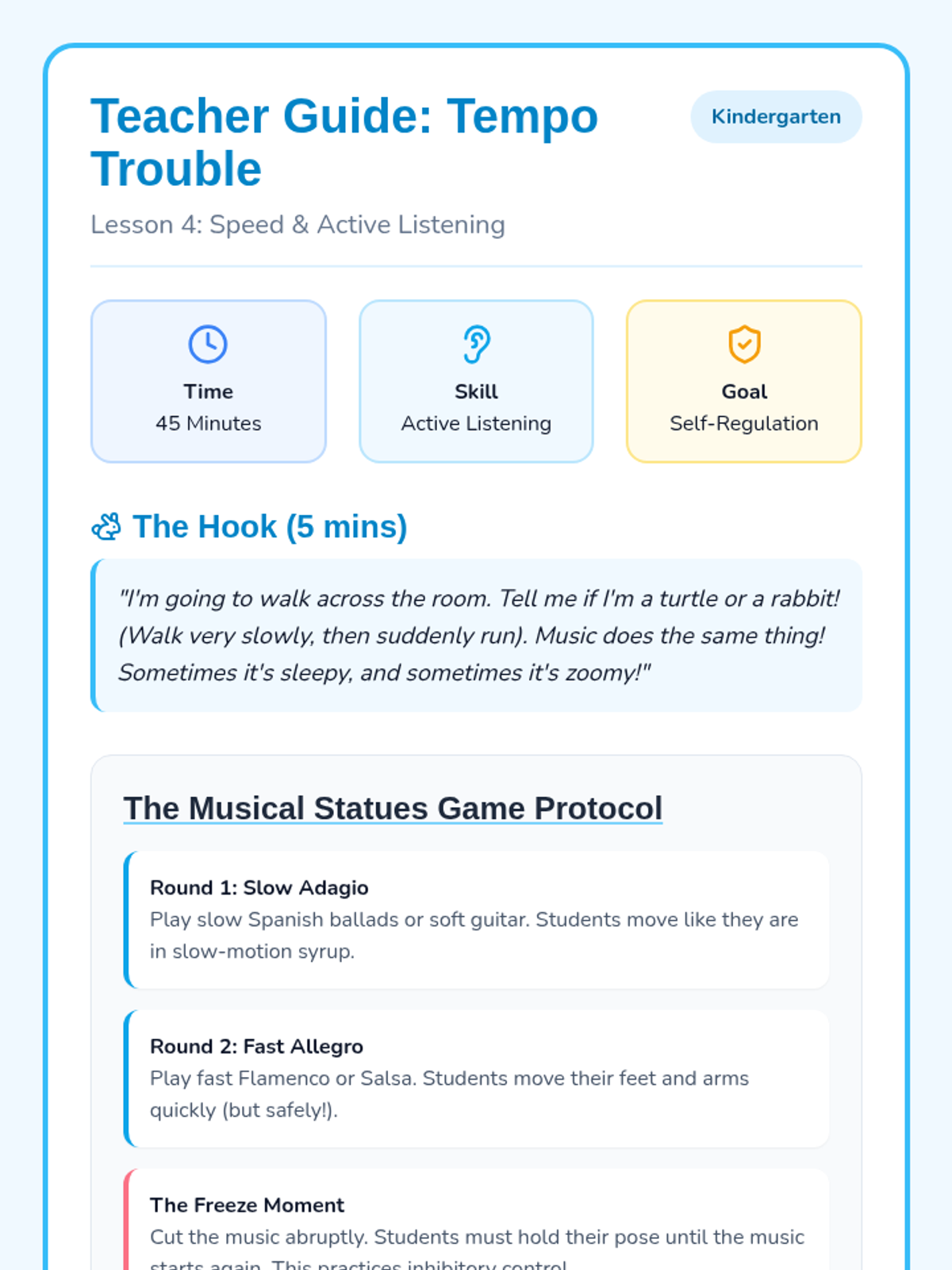
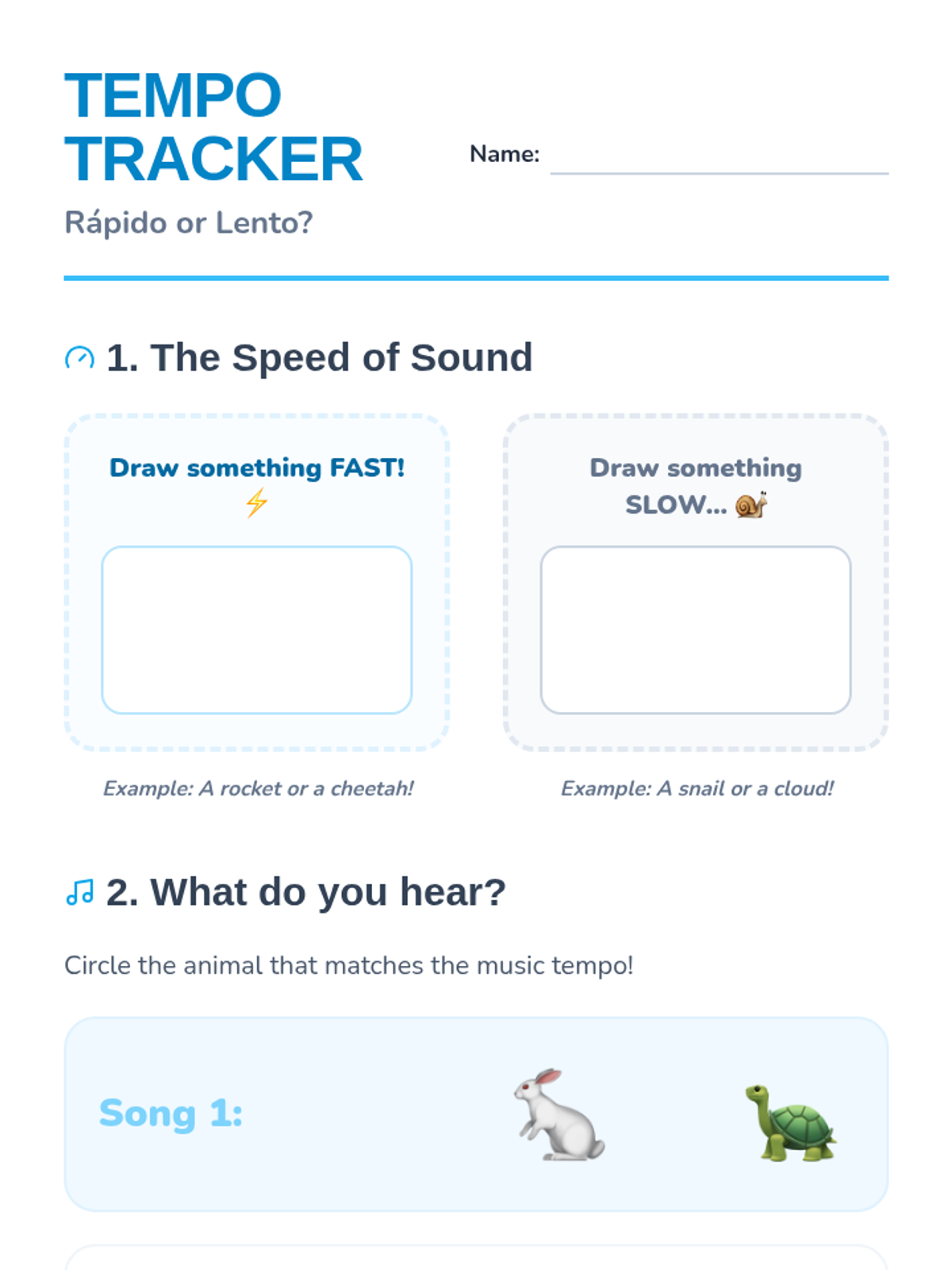
Through a game of Musical Statues, students differentiate between fast and slow tempos, practicing active listening and self-regulation.
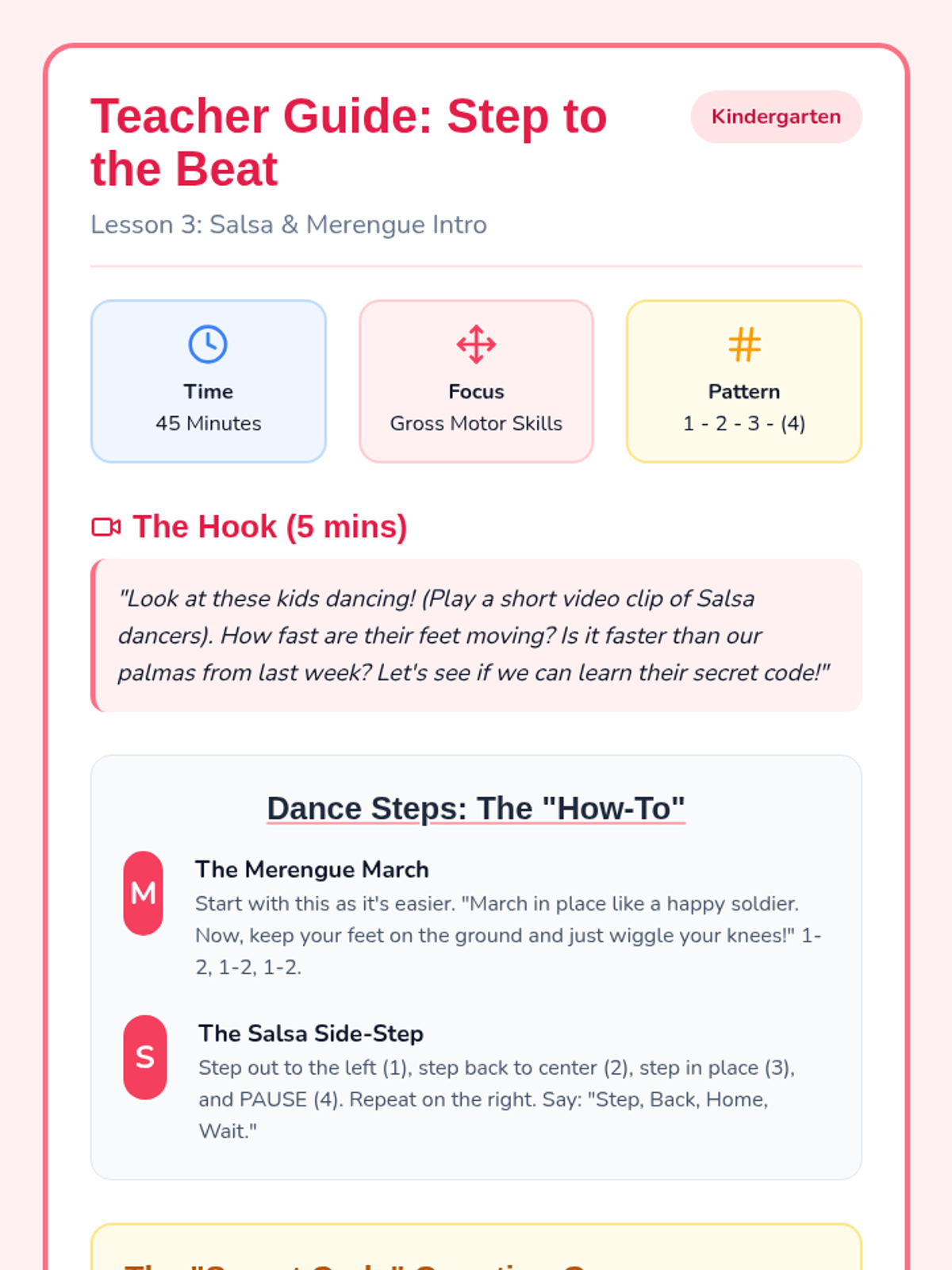
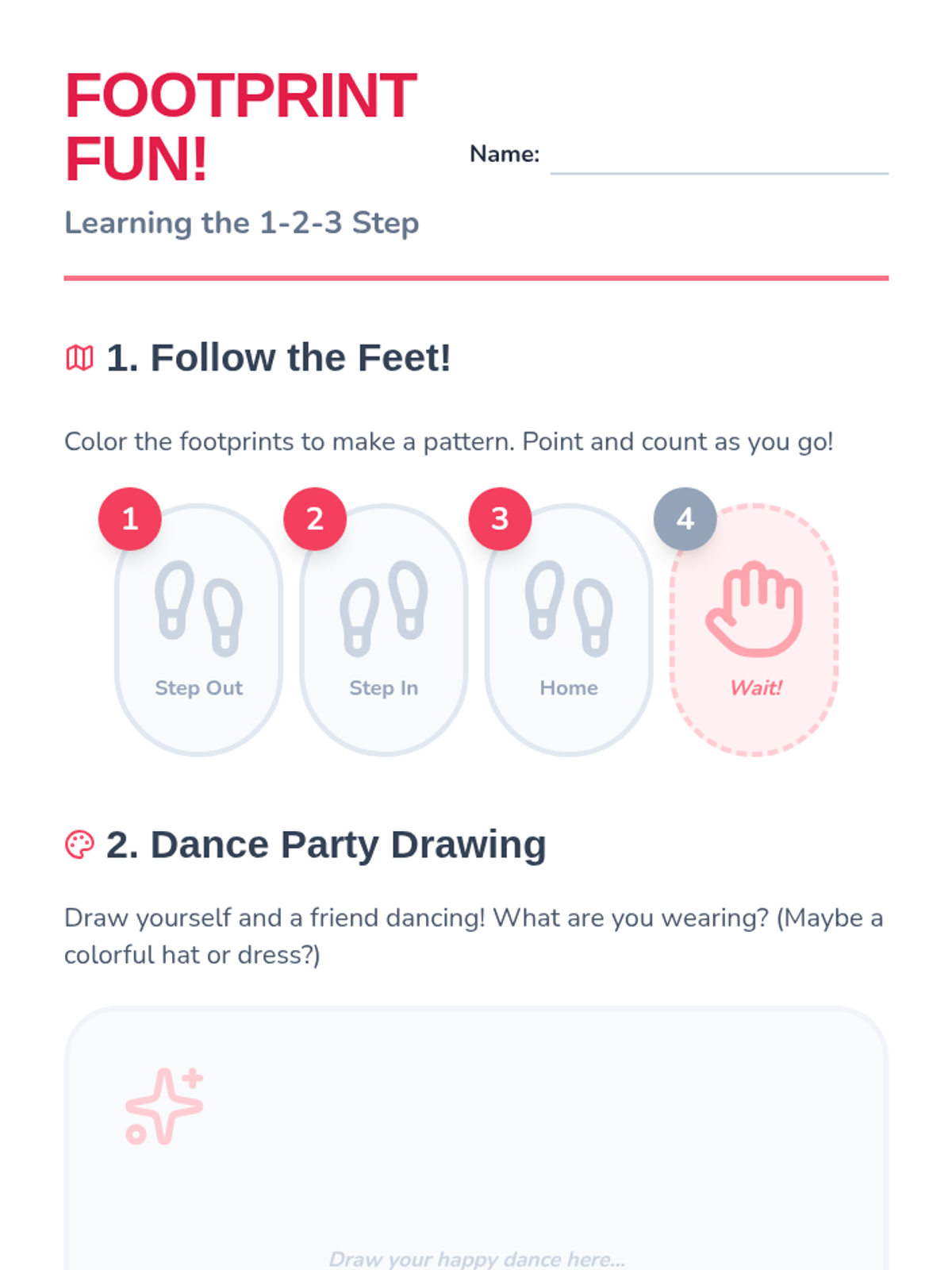
Students learn basic 1-2-3 dance steps for Salsa and Merengue, discovering how dance is used for celebration in Latin cultures.
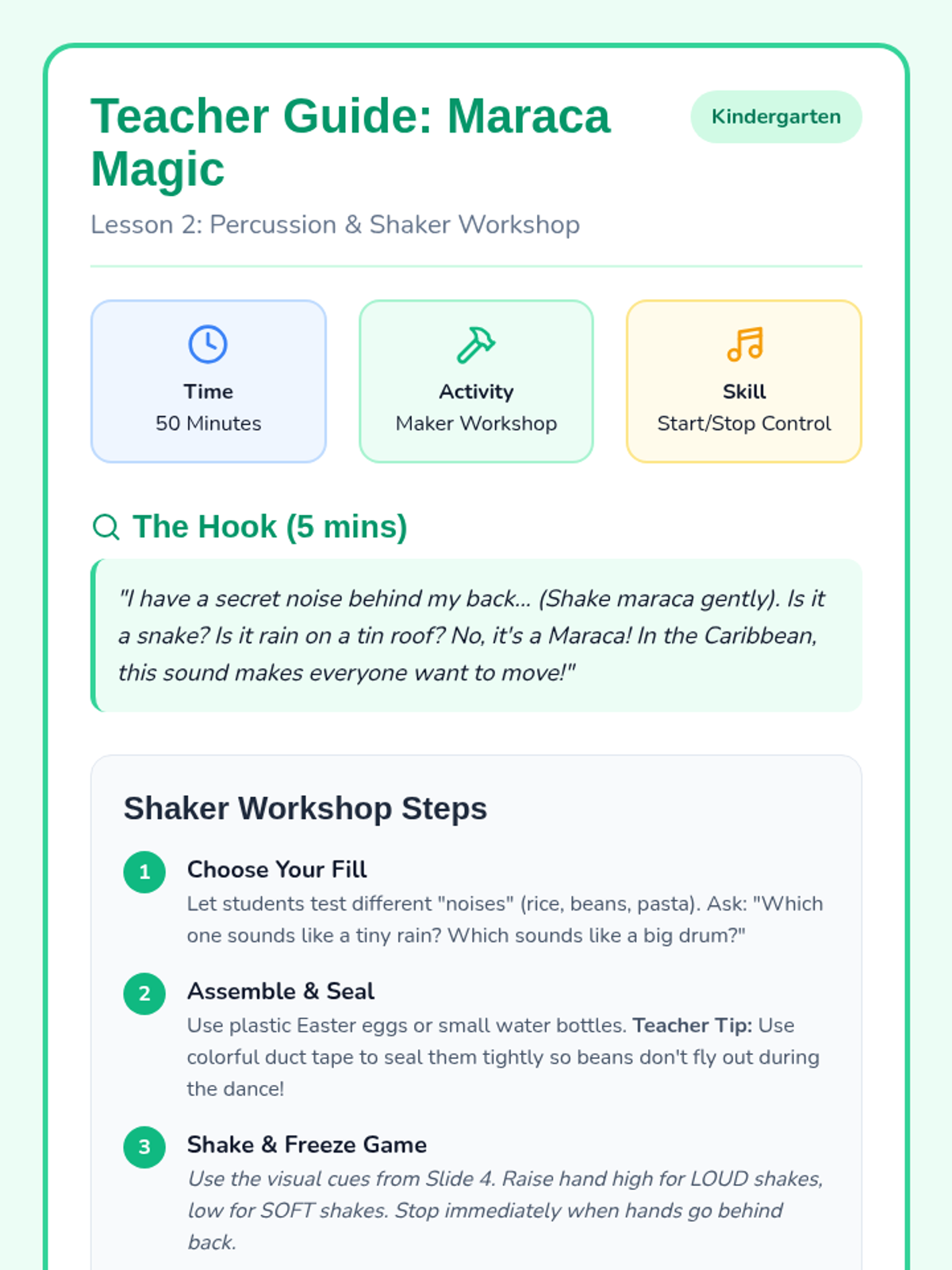
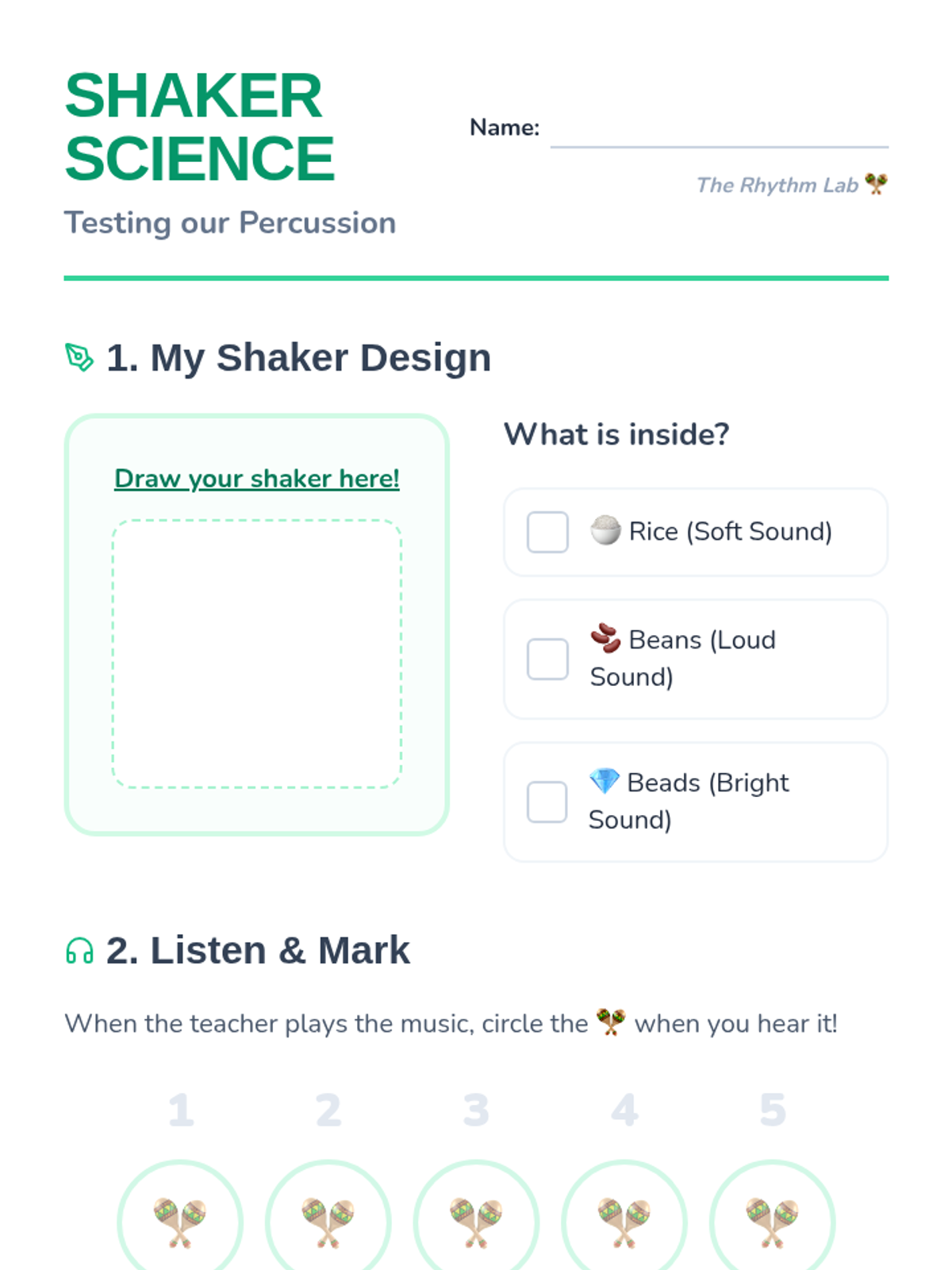
Focusing on percussion, students explore maracas and make their own shakers. They learn to follow a conductor's cues to start and stop their rhythms.
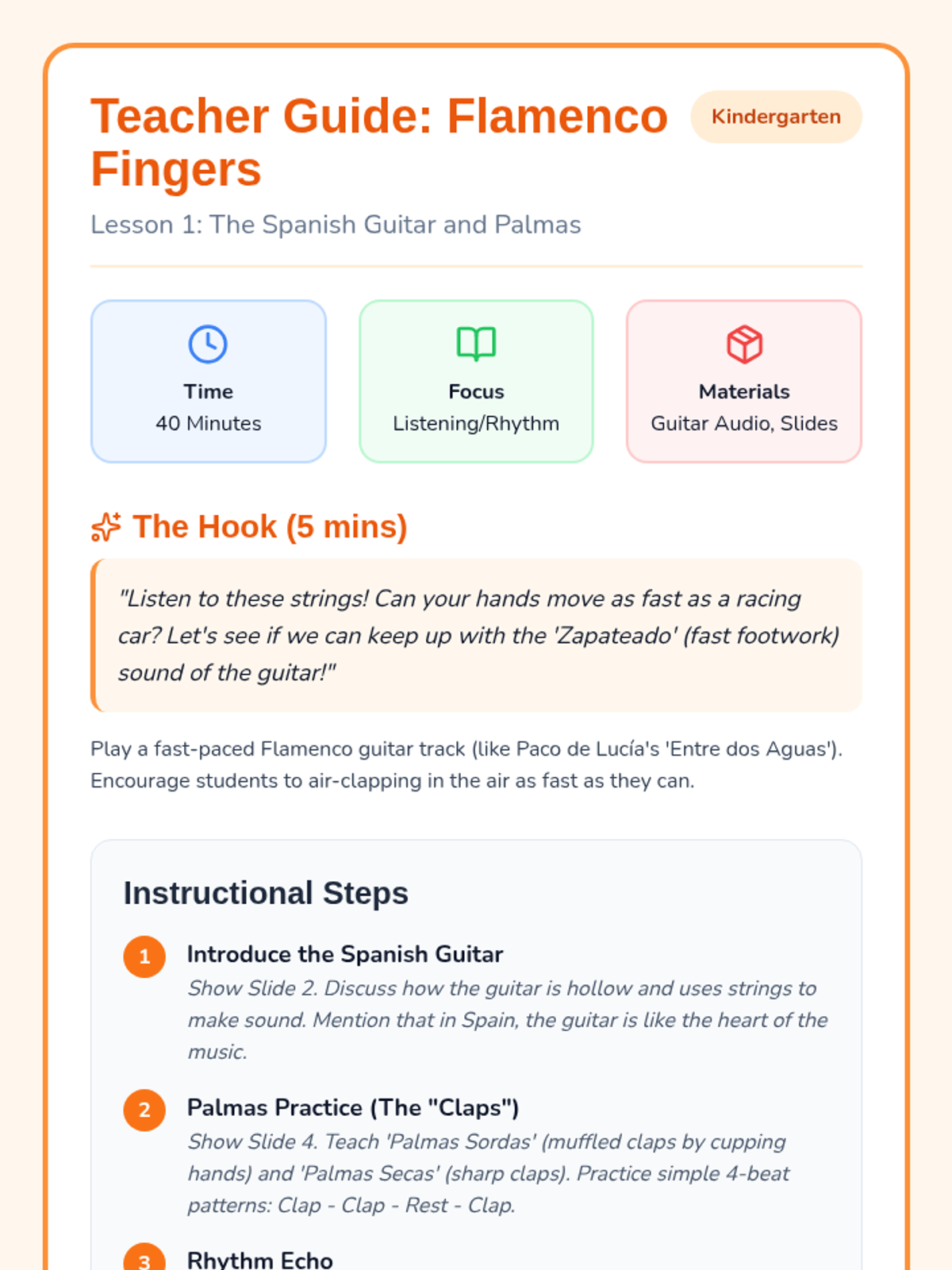
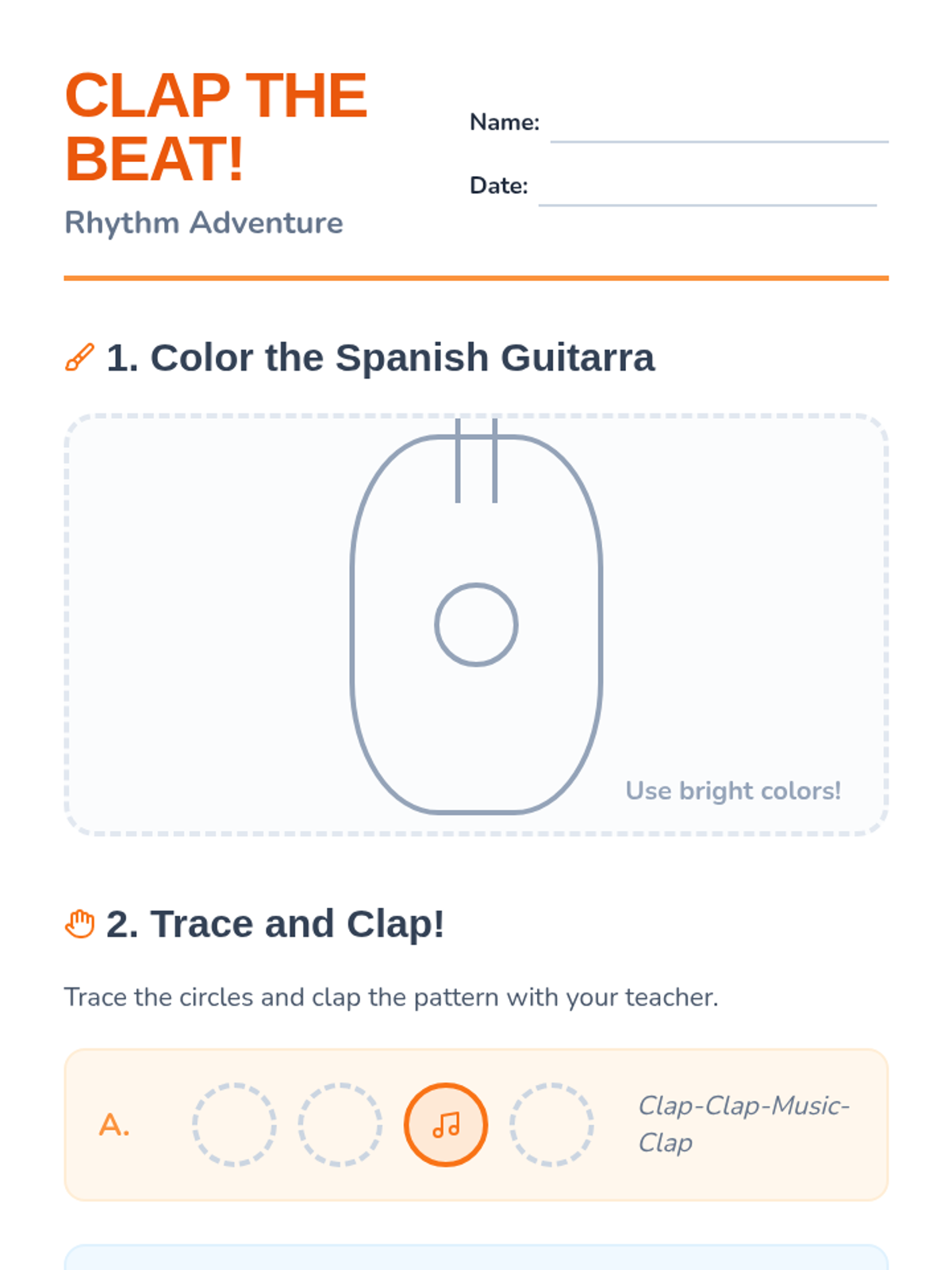
Students discover the soulful sounds of the Spanish guitar and the rhythmic tradition of Flamenco palmas (hand clapping). They practice coordination by matching claps to different speeds of music.
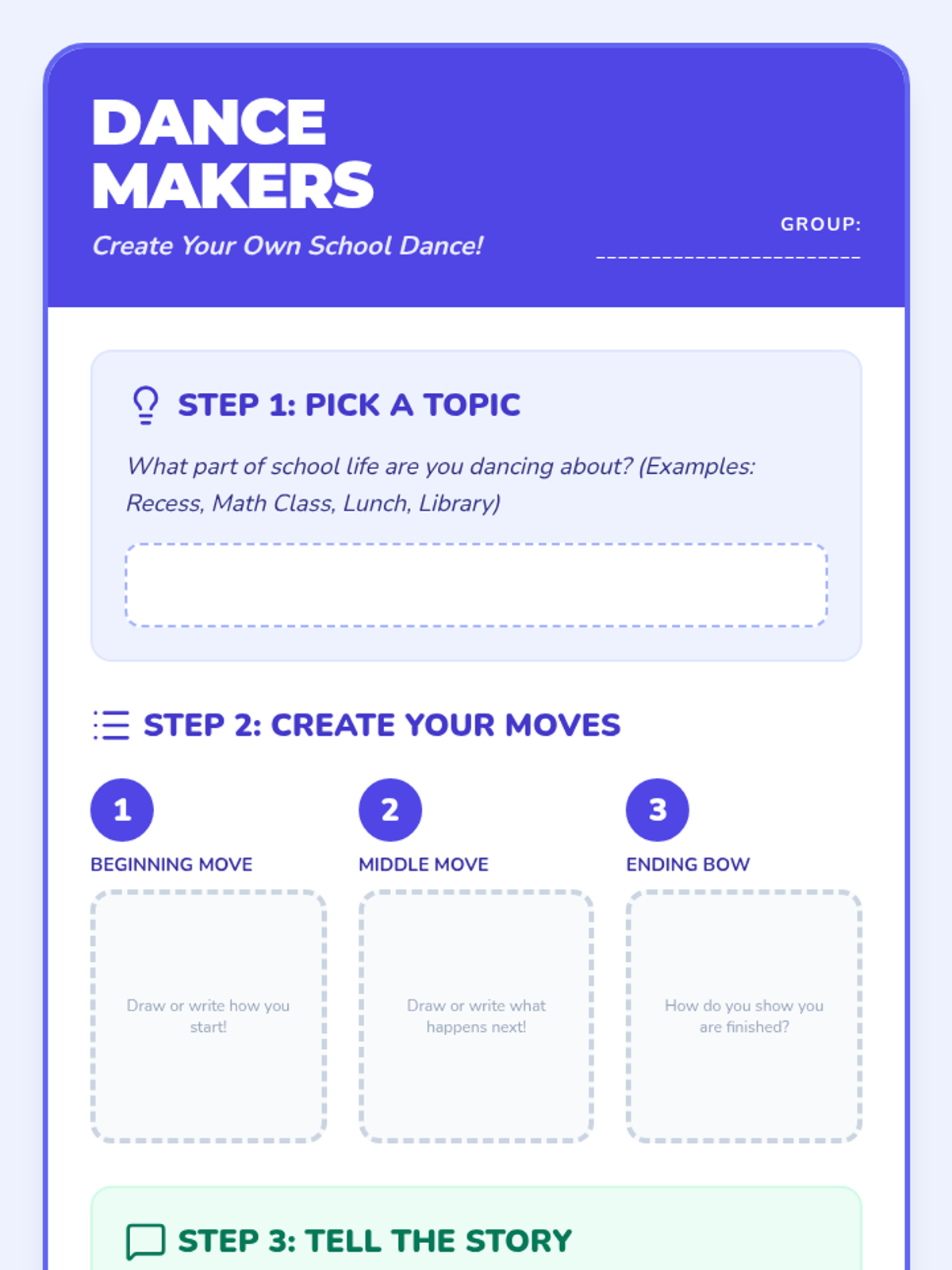
A culminating workshop where students combine storytelling, community, and performance to create and perform their own classroom dance.
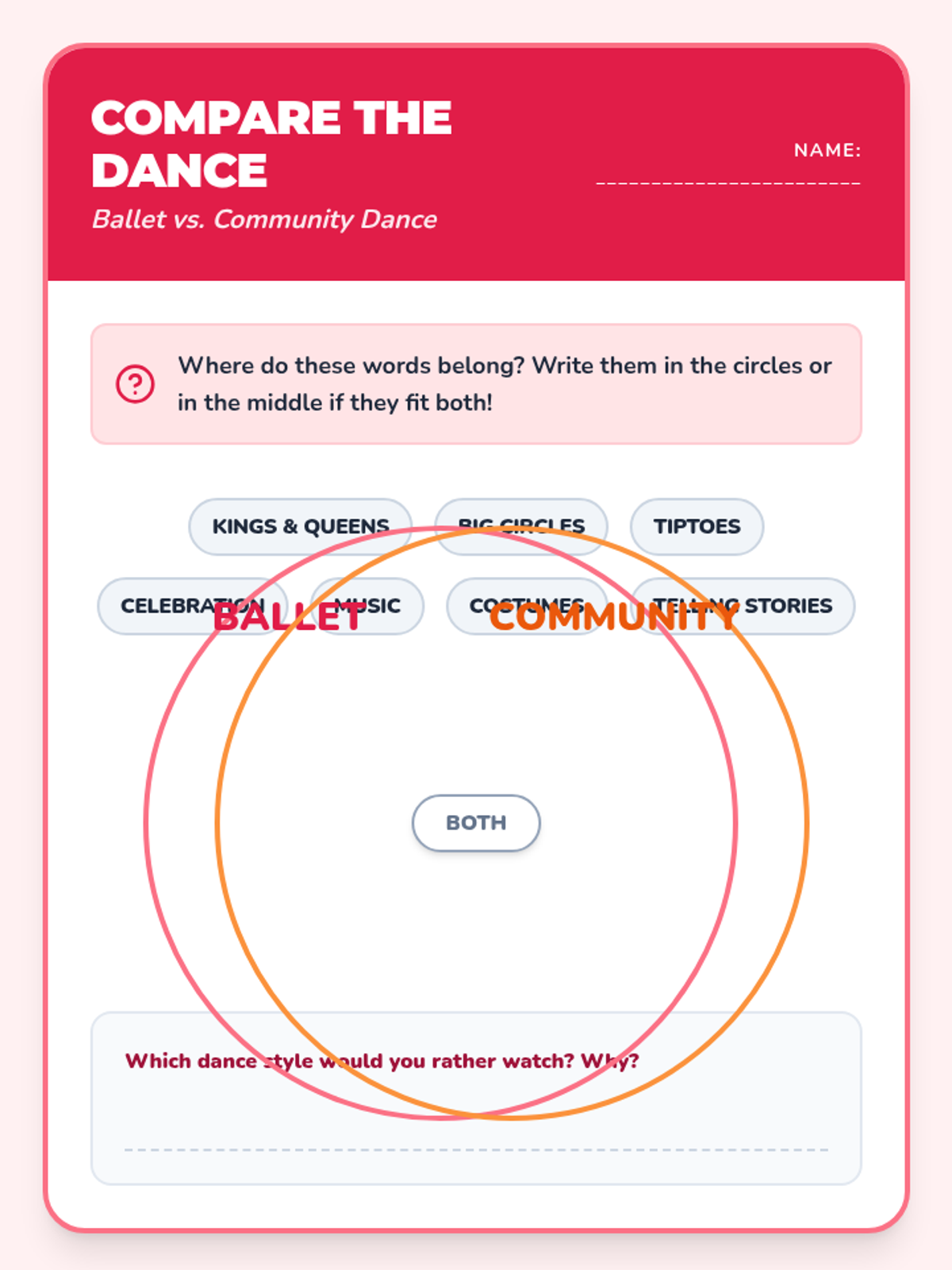
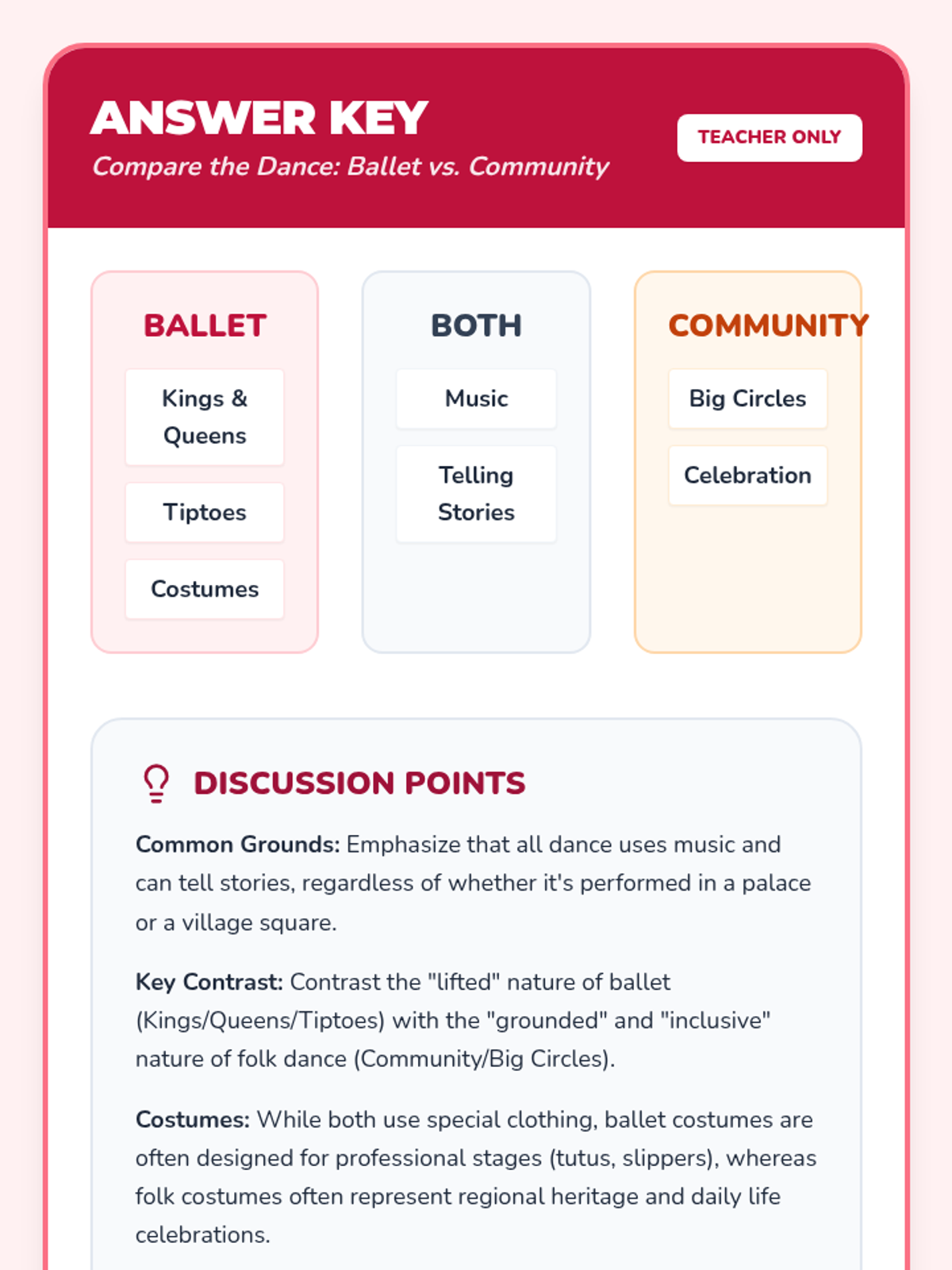
Introduces the history of ballet from royal courts to professional stages, contrasting grounded folk movements with lifted ballet posture.
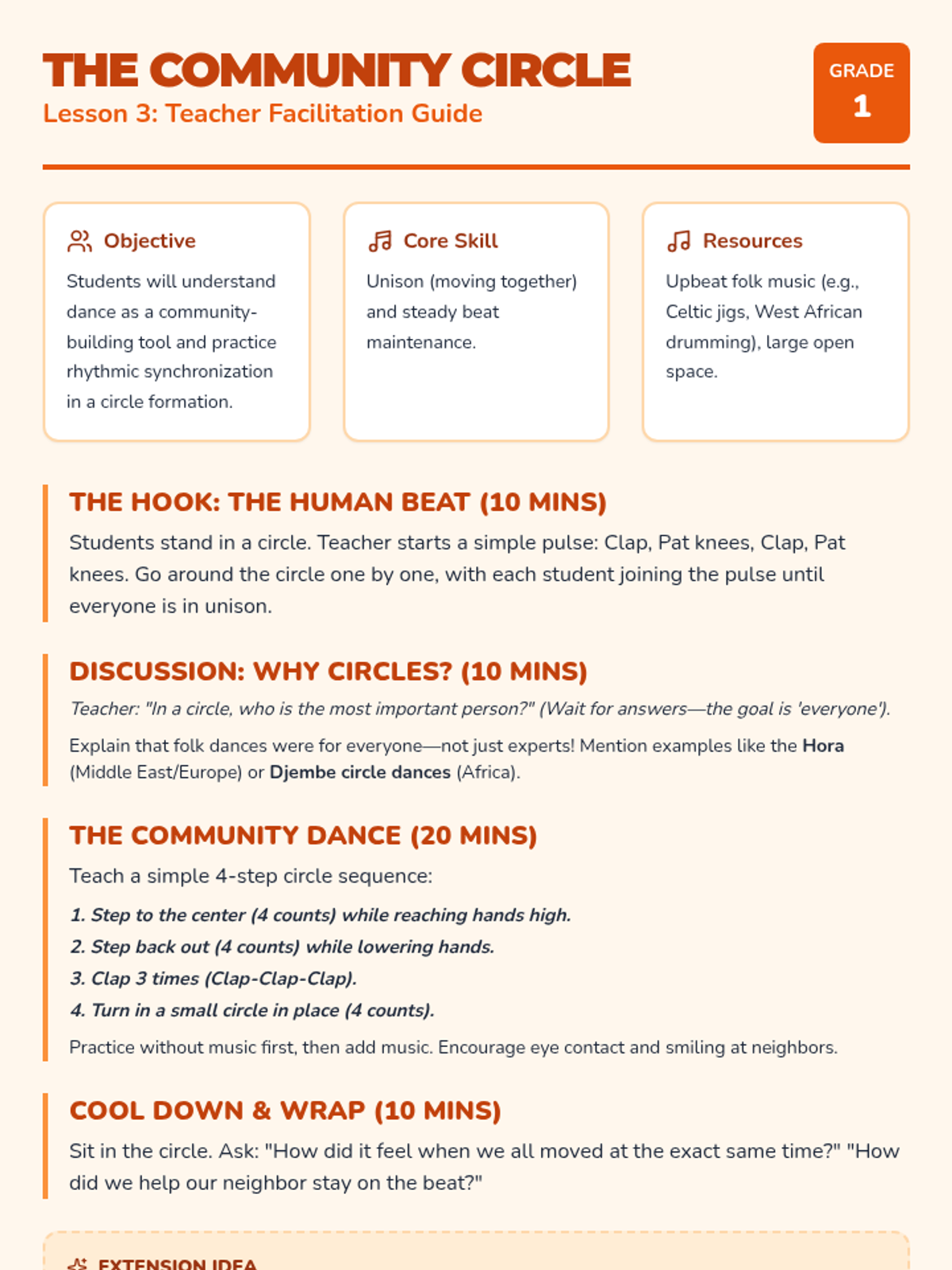
Focuses on dance as a tool for community bonding and celebration through European and African circle dance traditions.
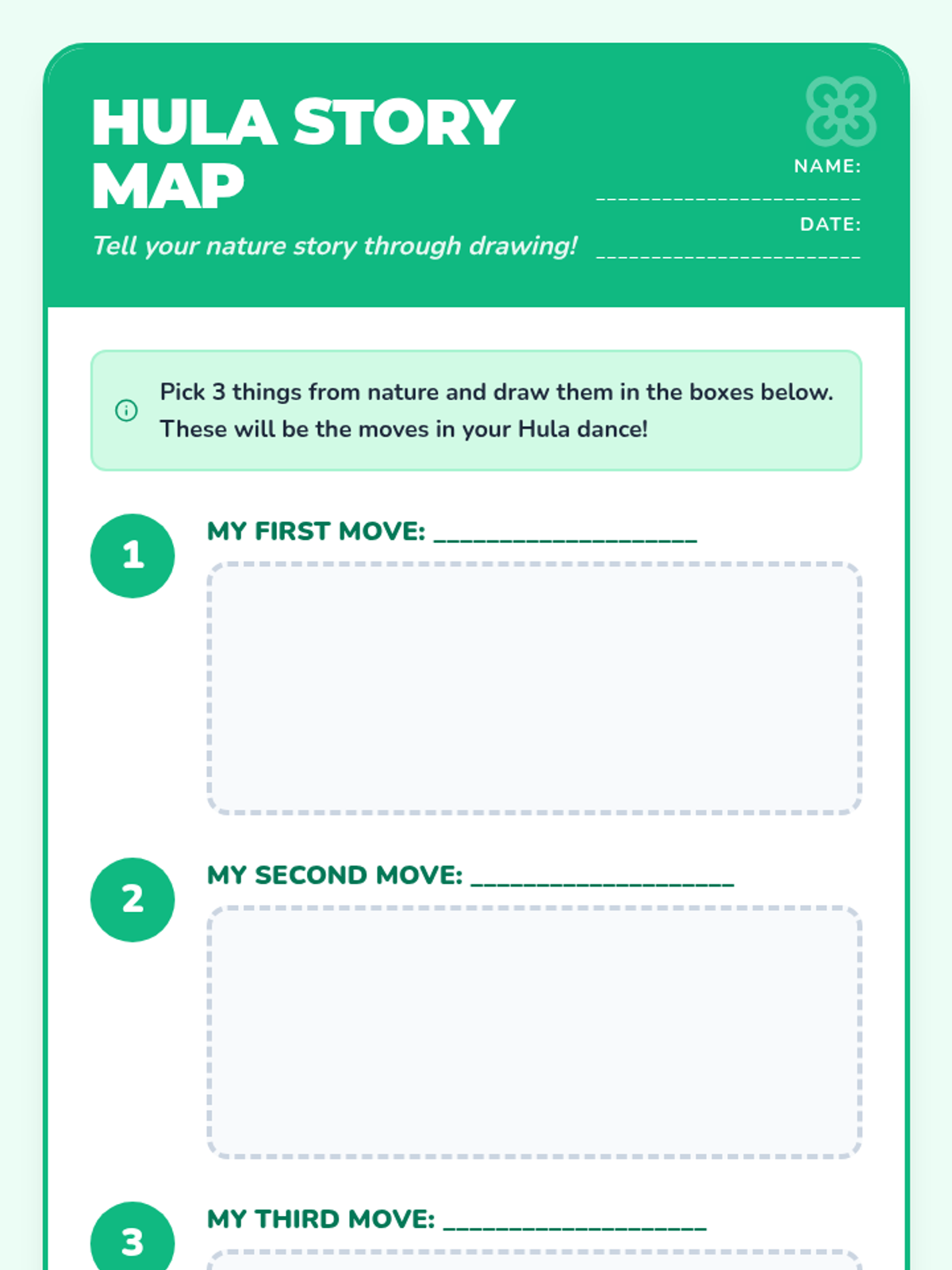
A study of Hula as a method of preserving history and storytelling, where hand motions represent elements of nature and cultural heritage.
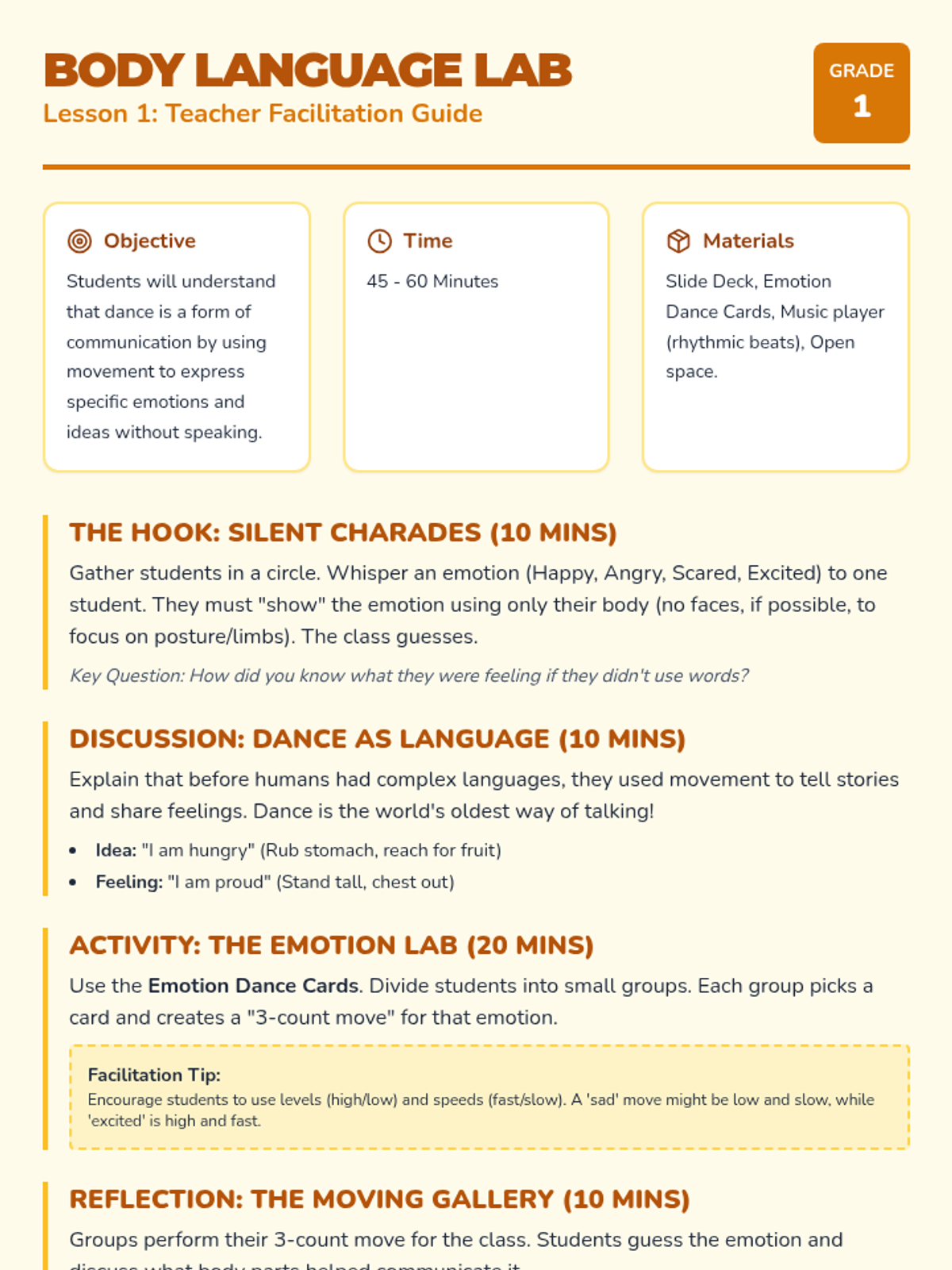
Students explore how movement can express ideas and emotions without words, mimicking early human communication and establishing dance as a universal language.
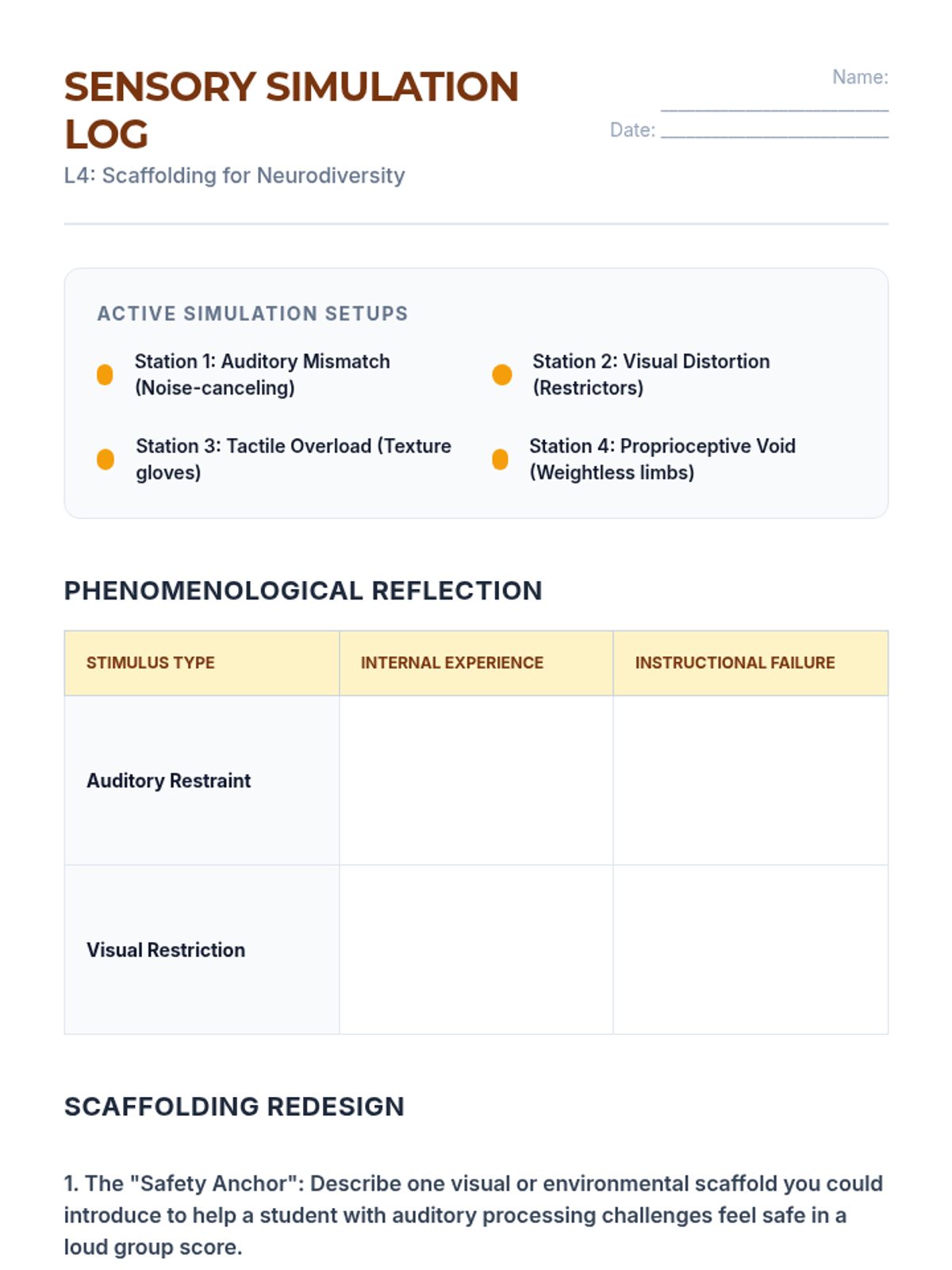
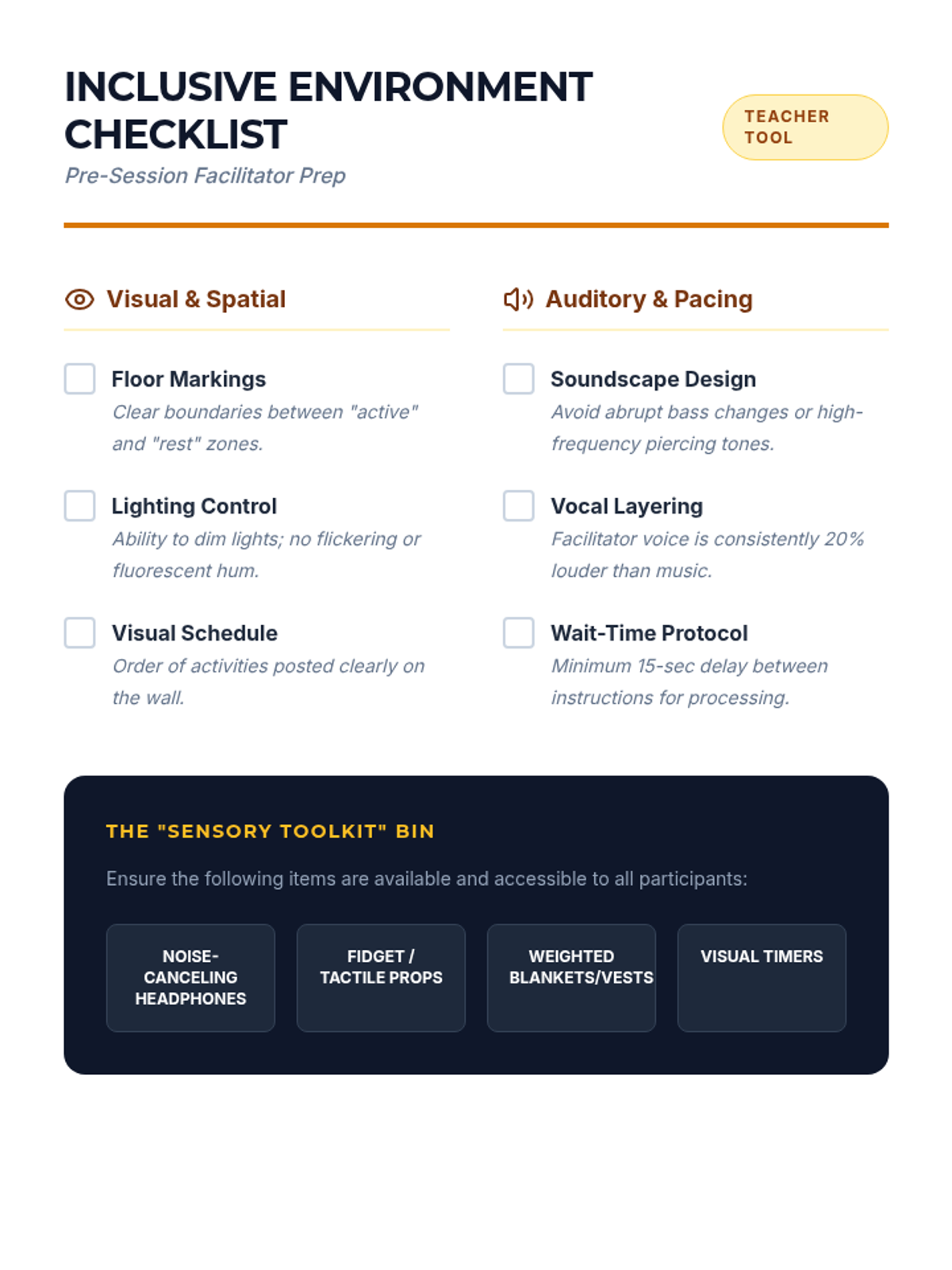
Research and apply sensory-friendly practices and scaffolding techniques for neurodiverse populations in movement settings.
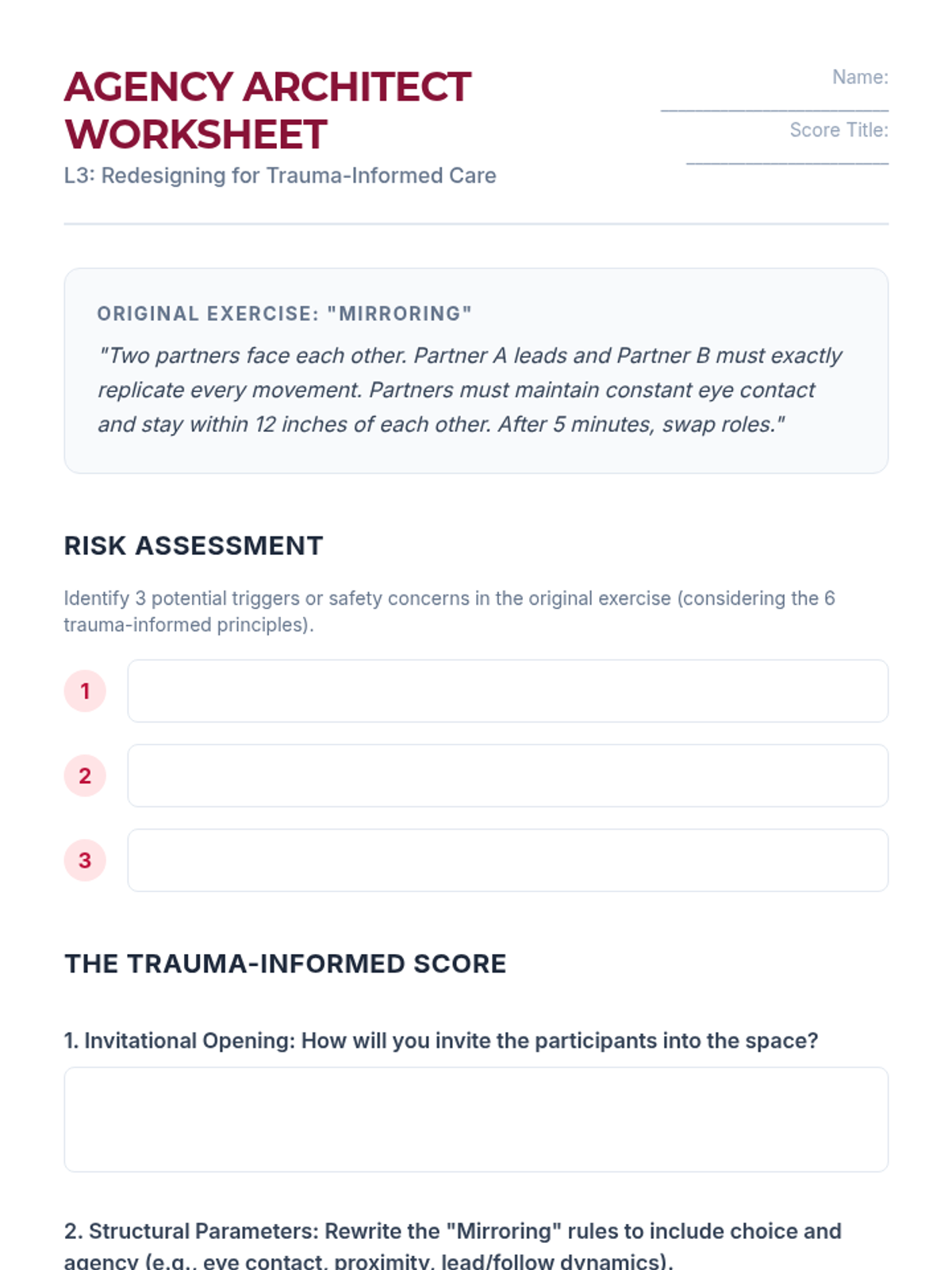
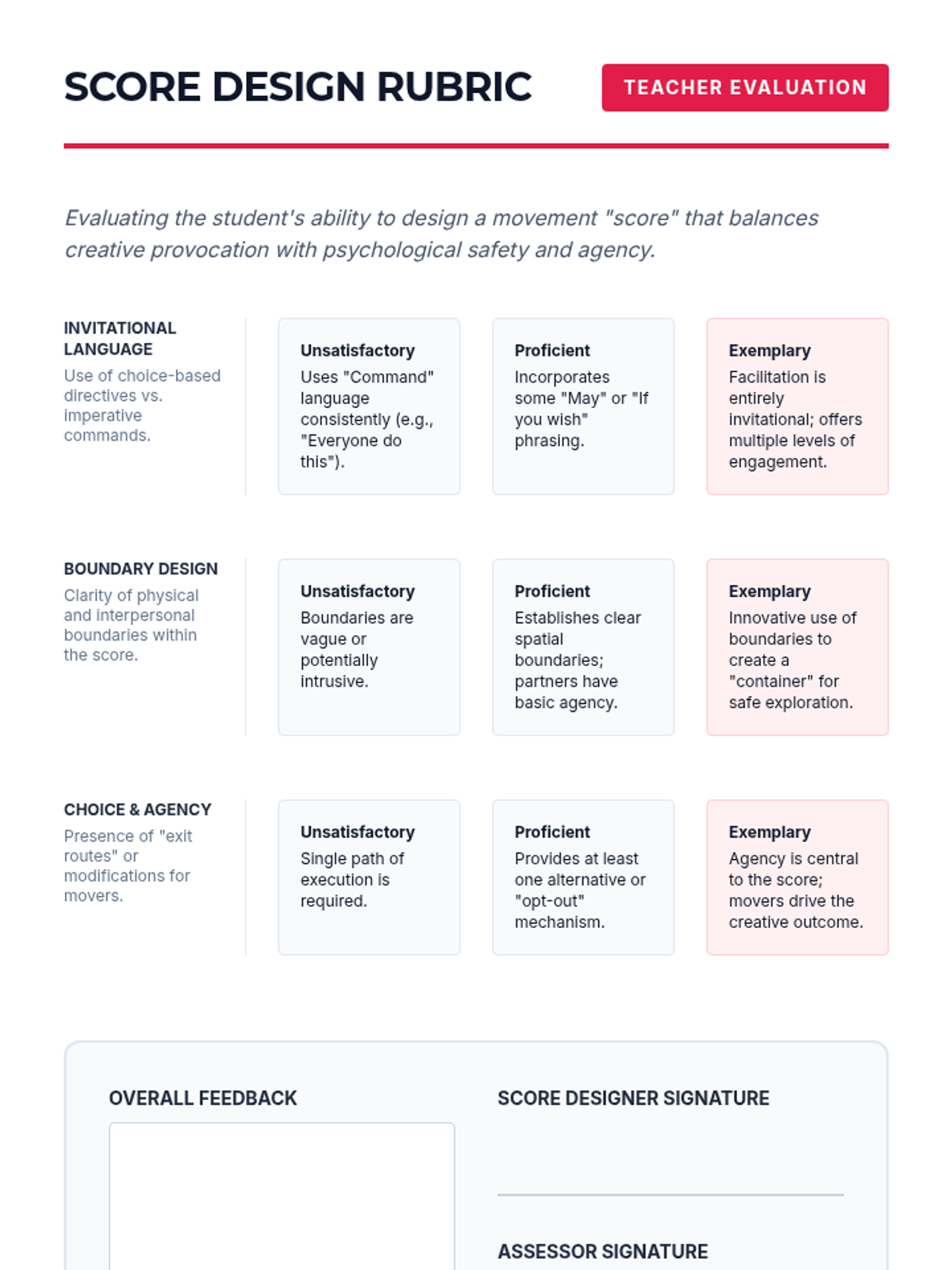
Investigate the intersection of movement and emotional safety through the design of trauma-informed 'scores'.
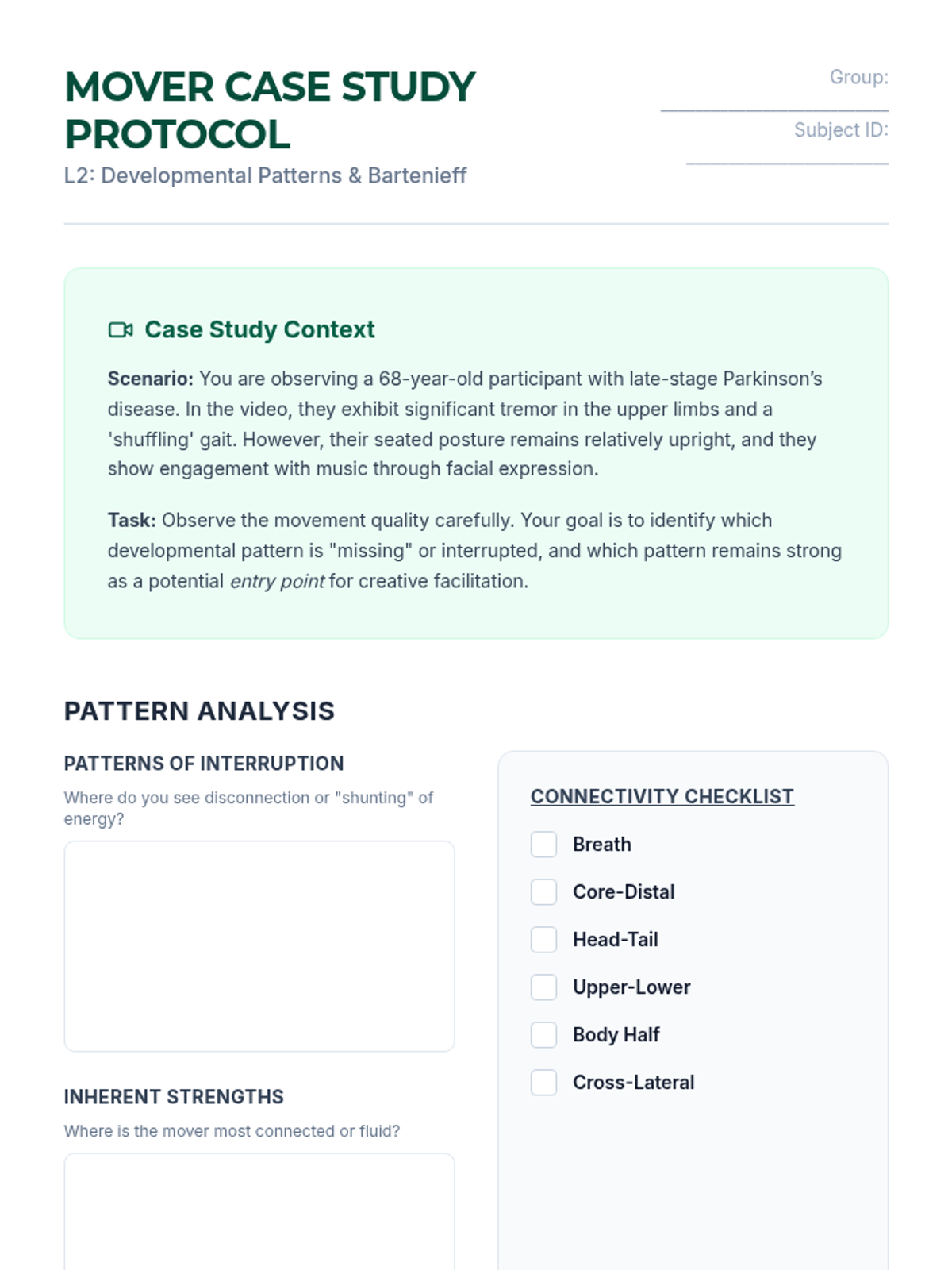
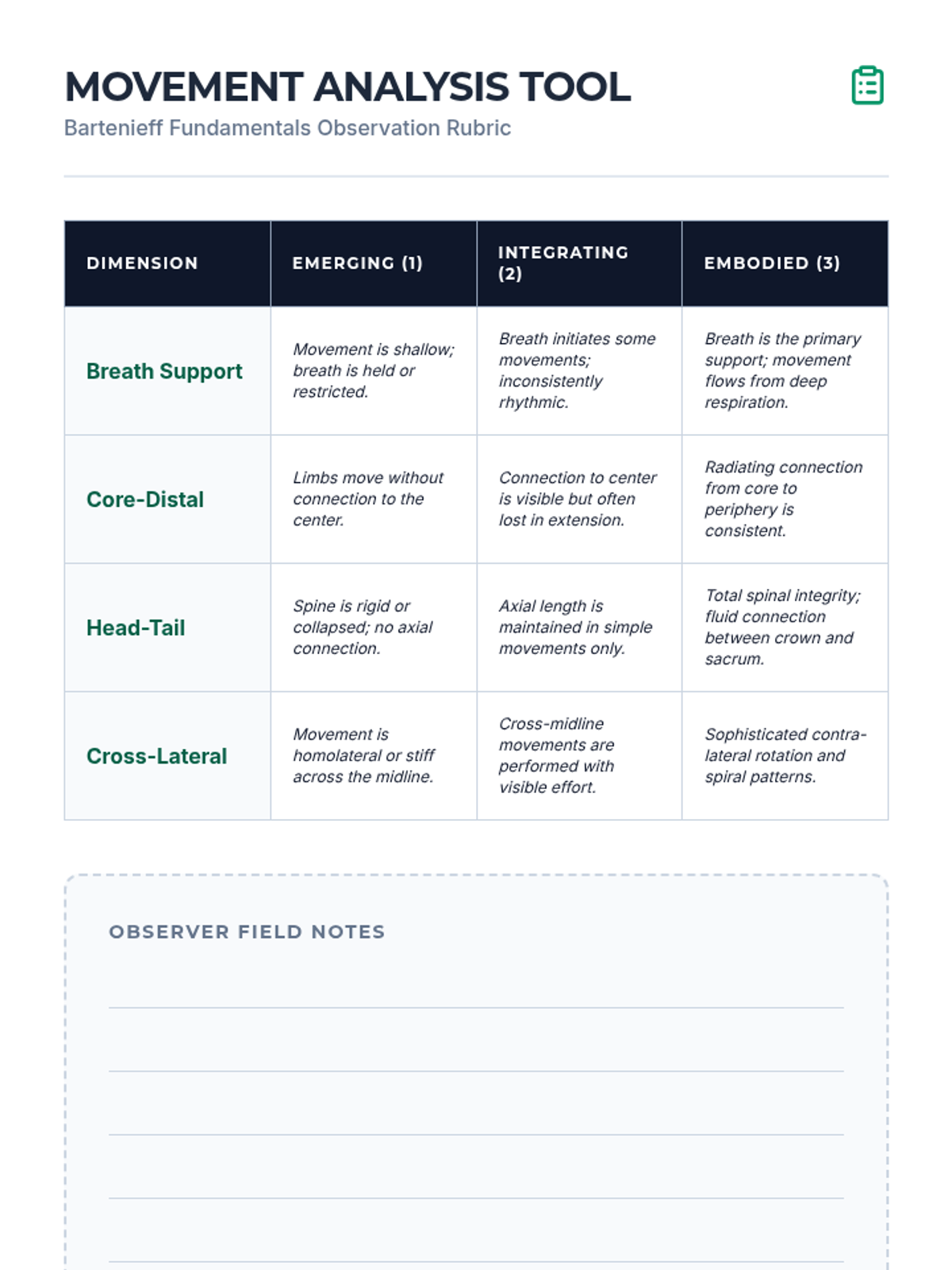
Connect creative movement to Bartenieff Fundamentals and developmental patterns to support movers with diverse physical abilities.
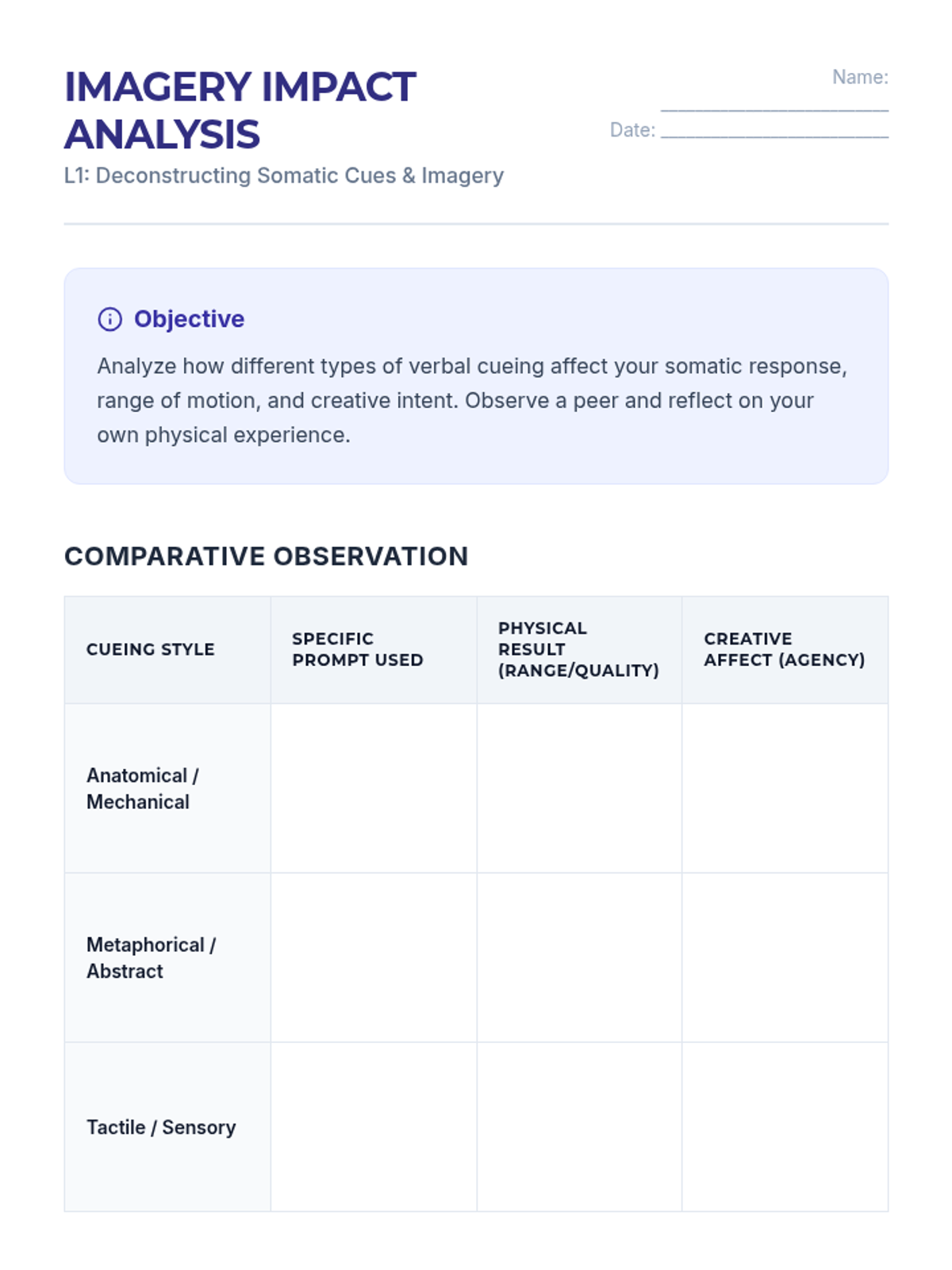
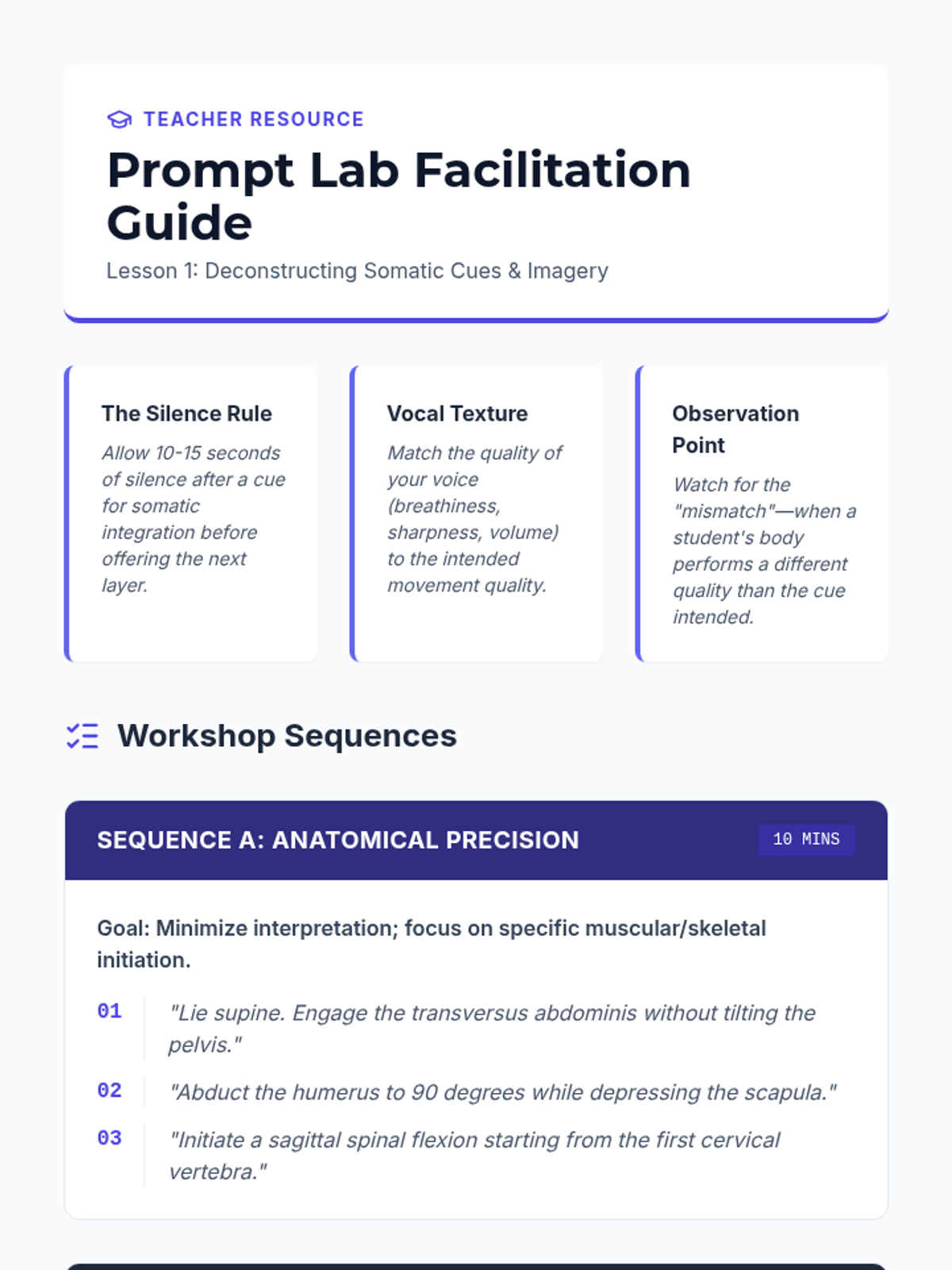
Analyze the efficacy of anatomical versus metaphorical cueing in generating movement quality and somatic response.
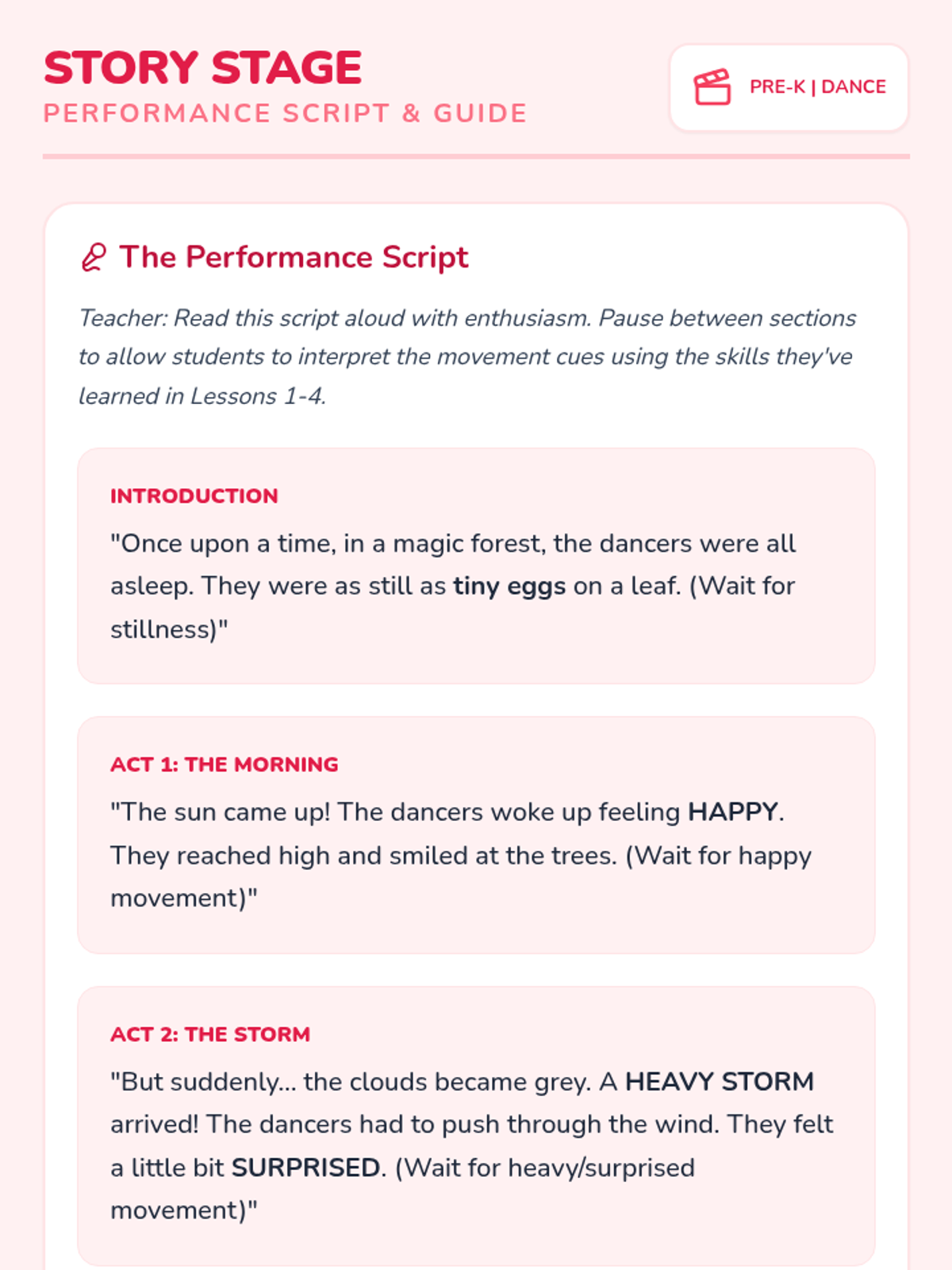
The sequence concludes with a grand performance where students dance along to a teacher-narrated story. This lesson synthesizes all previous skills into a collaborative group dance.
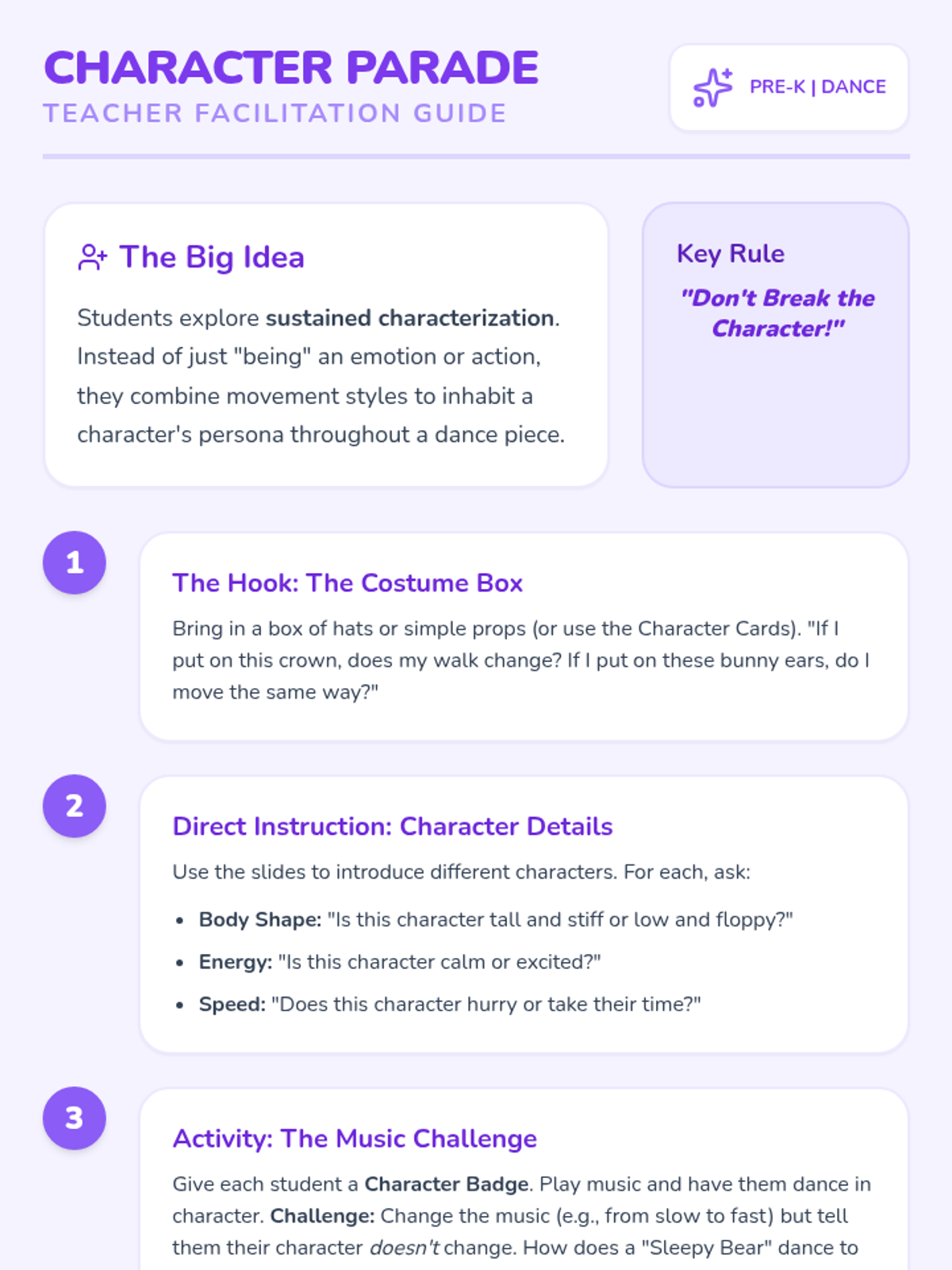
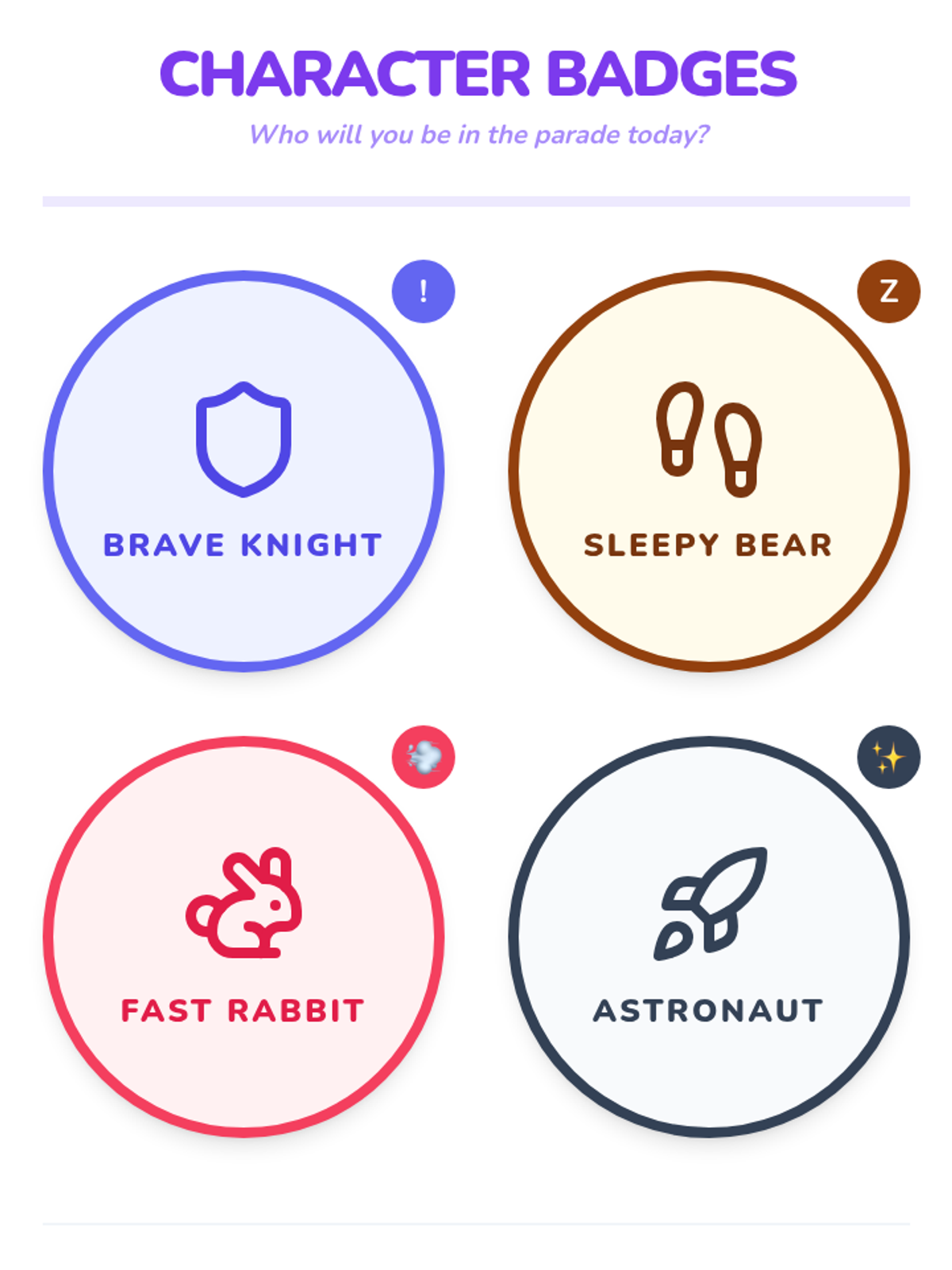
Children choose and inhabit a character through movement, exploring how different characters walk, jump, and dance. They practice staying in character while reacting to music.
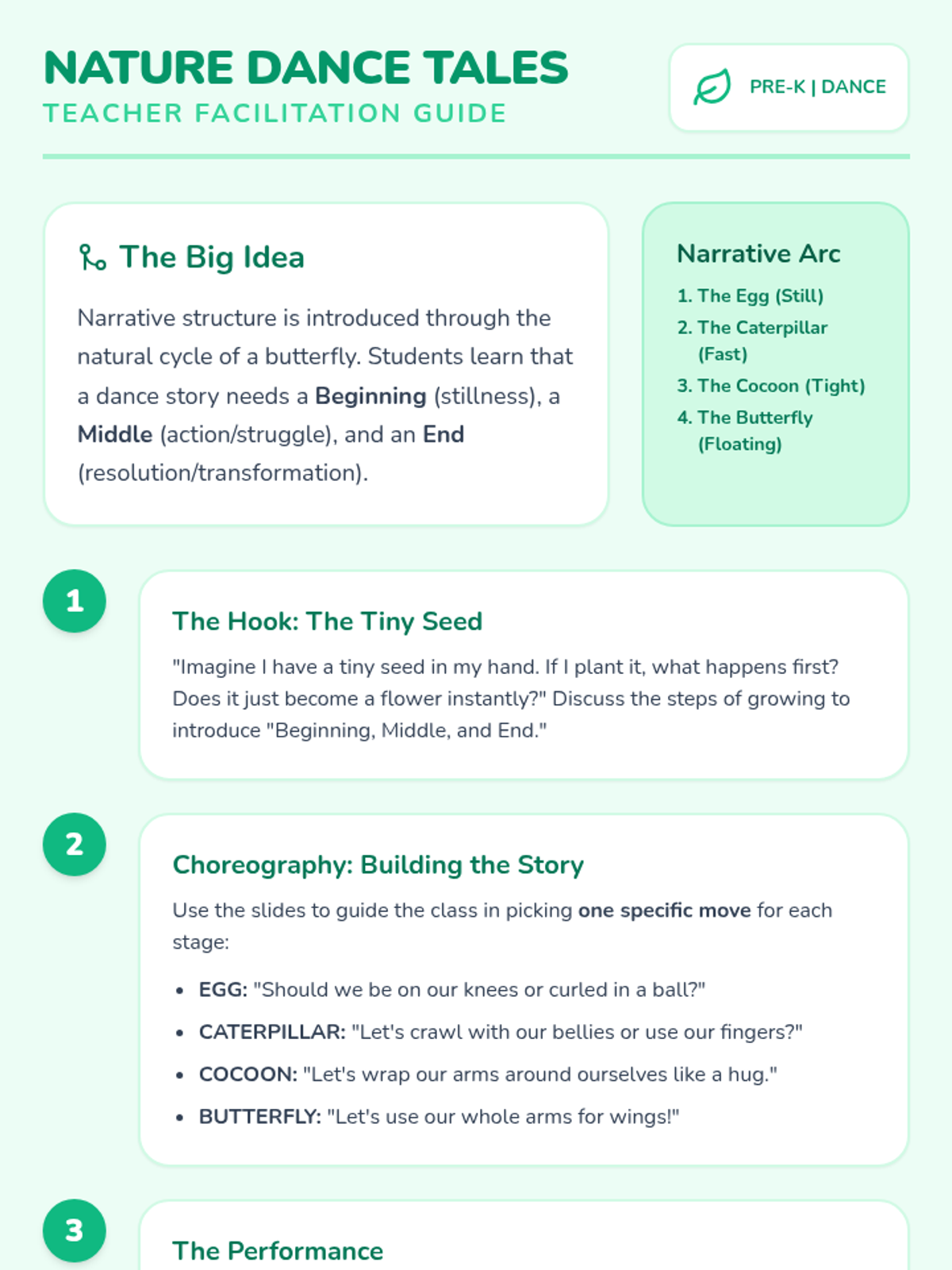
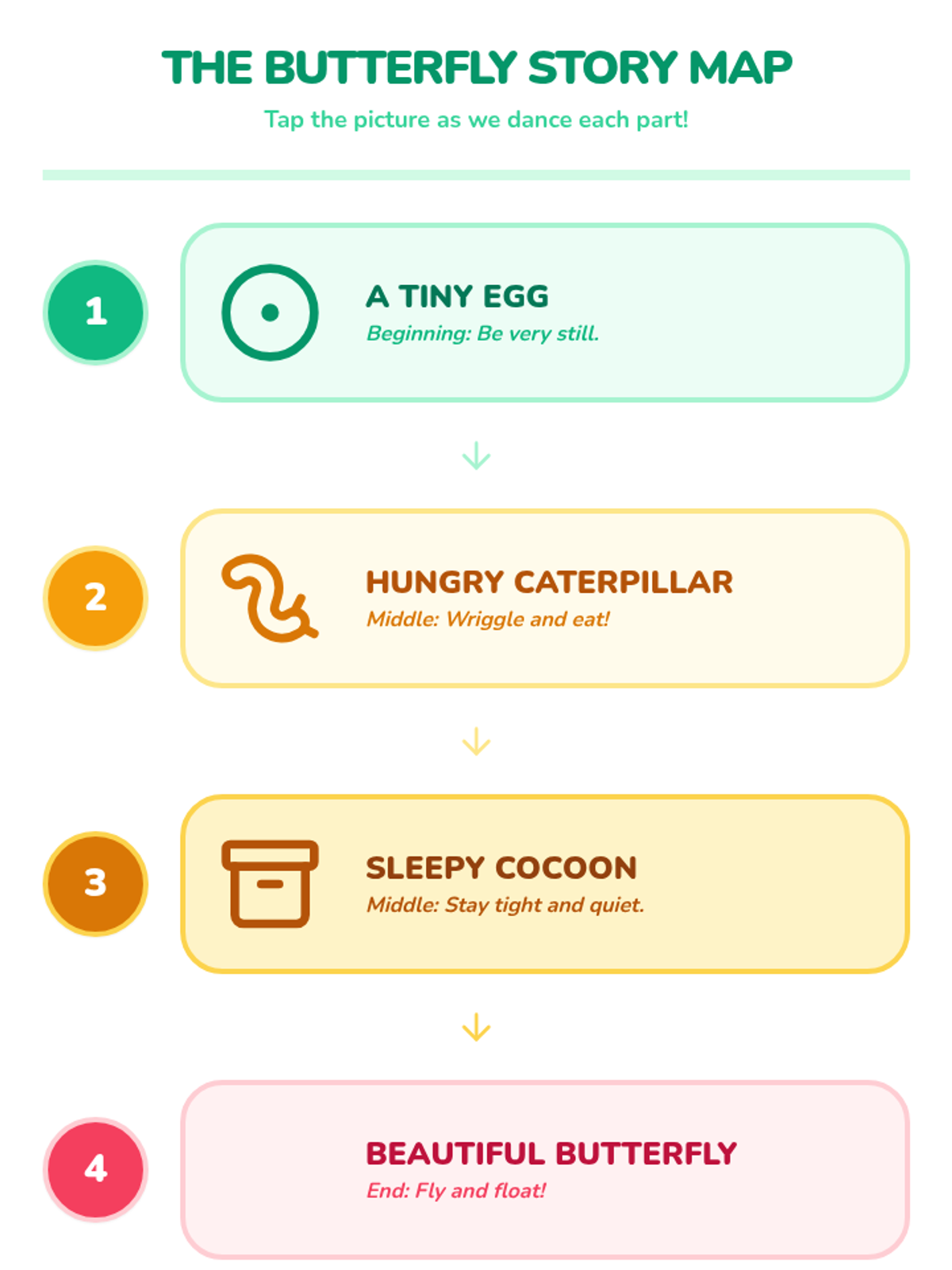
Students learn about narrative structure (beginning, middle, and end) by dancing the lifecycle of a butterfly. This lesson introduces the concept of sequencing in choreography.
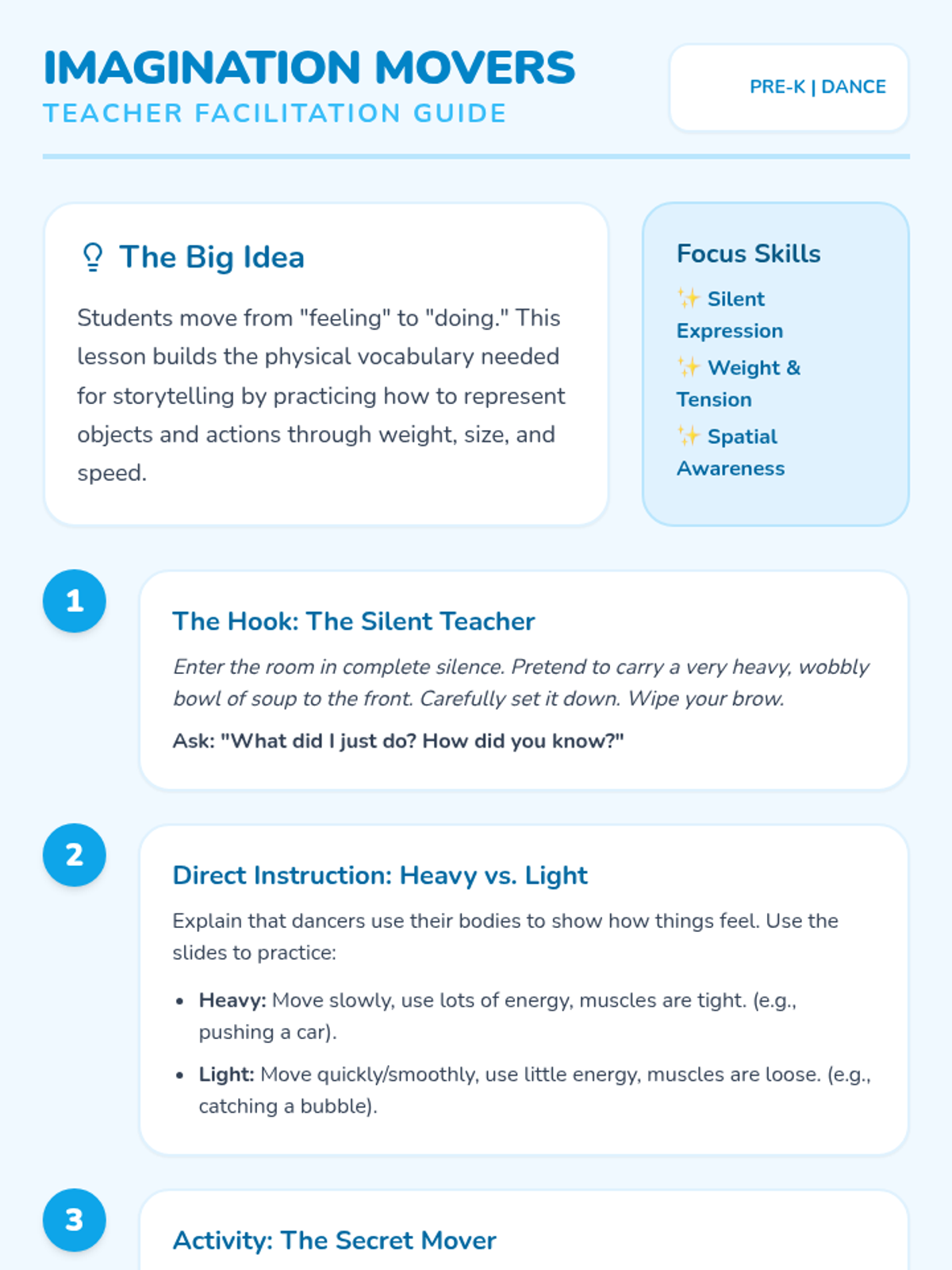
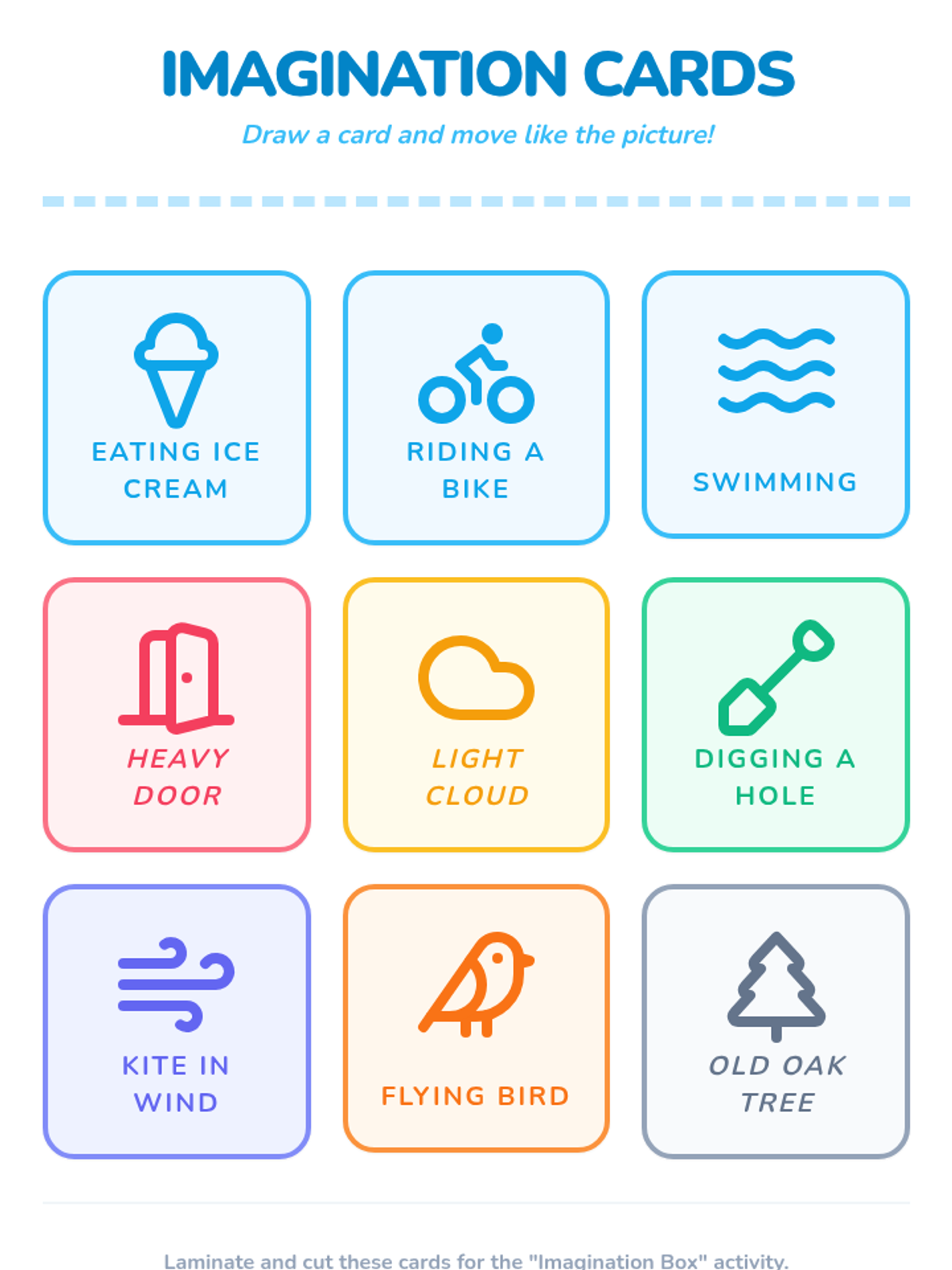
Learners use their bodies to represent objects and actions without speaking, building a 'movement vocabulary' for storytelling. Activities include a pantomime guessing game and creative imagination challenges.
Students explore the connection between emotions and movement by creating 'statues' that represent feelings like joy, sadness, and anger. This lesson focuses on nonverbal communication and body awareness.