Cultural identity, community development, and public policy through the lens of creative practice. Addresses arts advocacy strategies and integrates interdisciplinary connections across social and professional sectors.
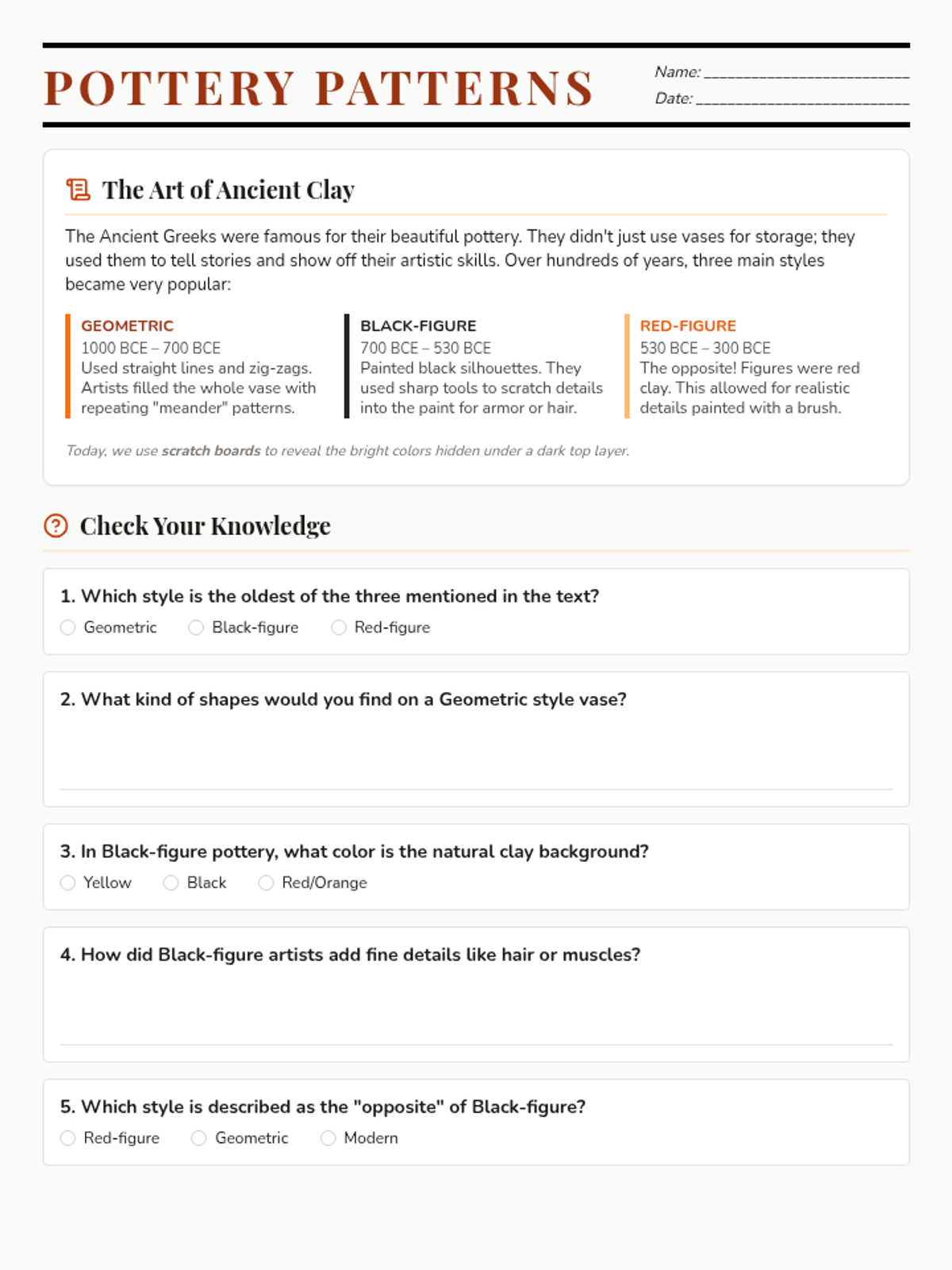
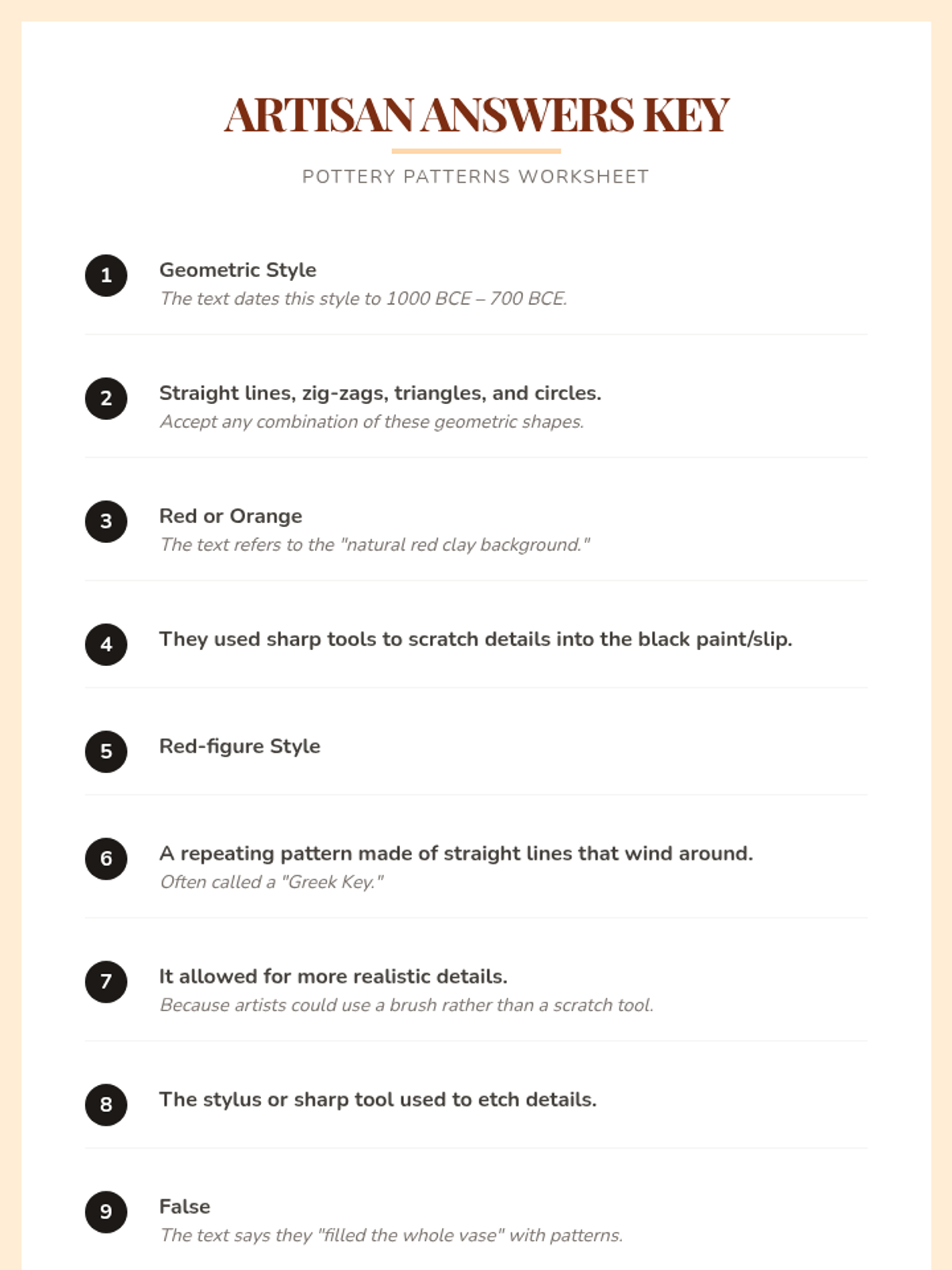
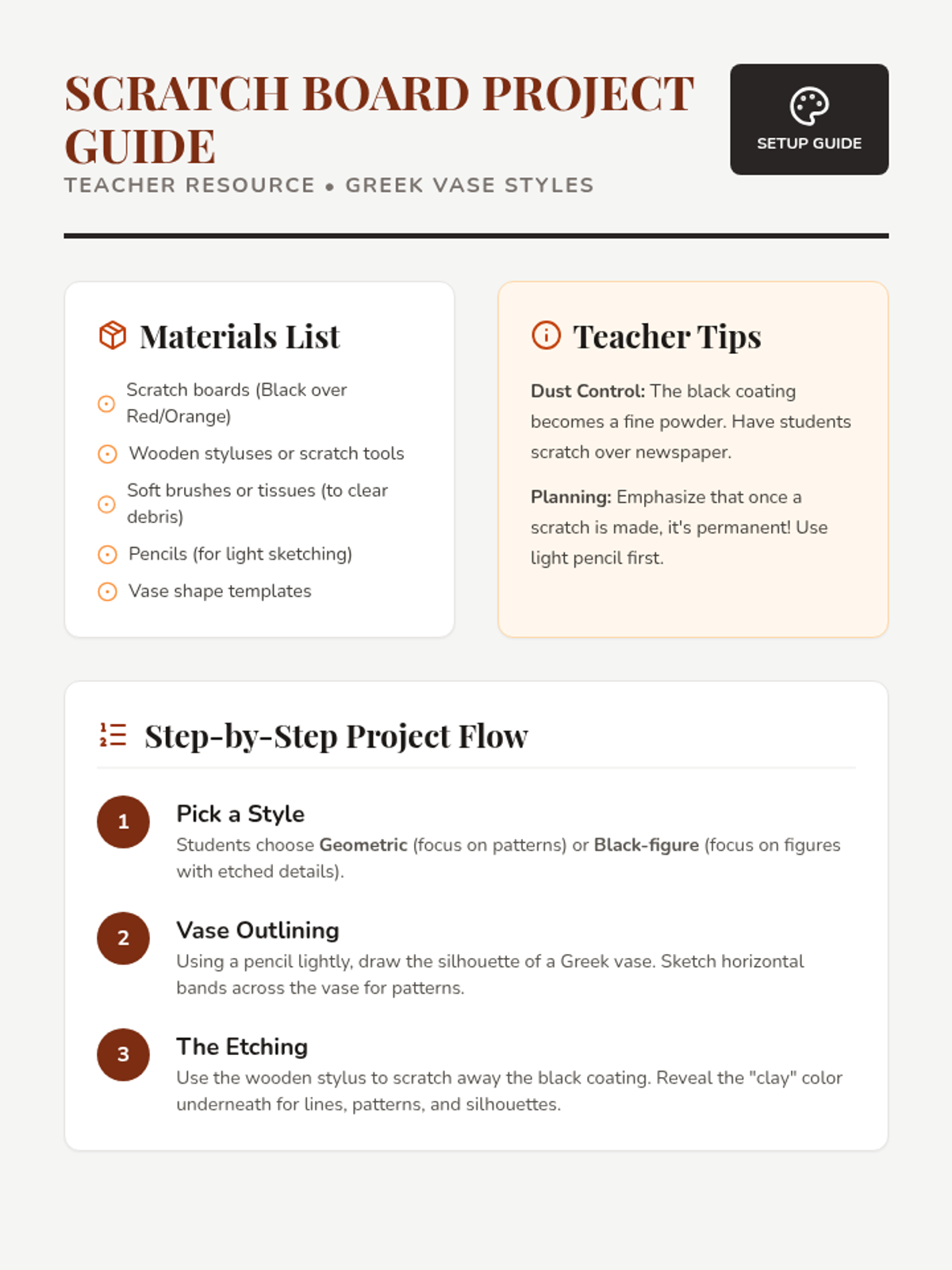
An introduction to the three primary styles of Ancient Greek pottery: Geometric, Black-figure, and Red-figure. Students read about the history and techniques before creating their own scratch board art.
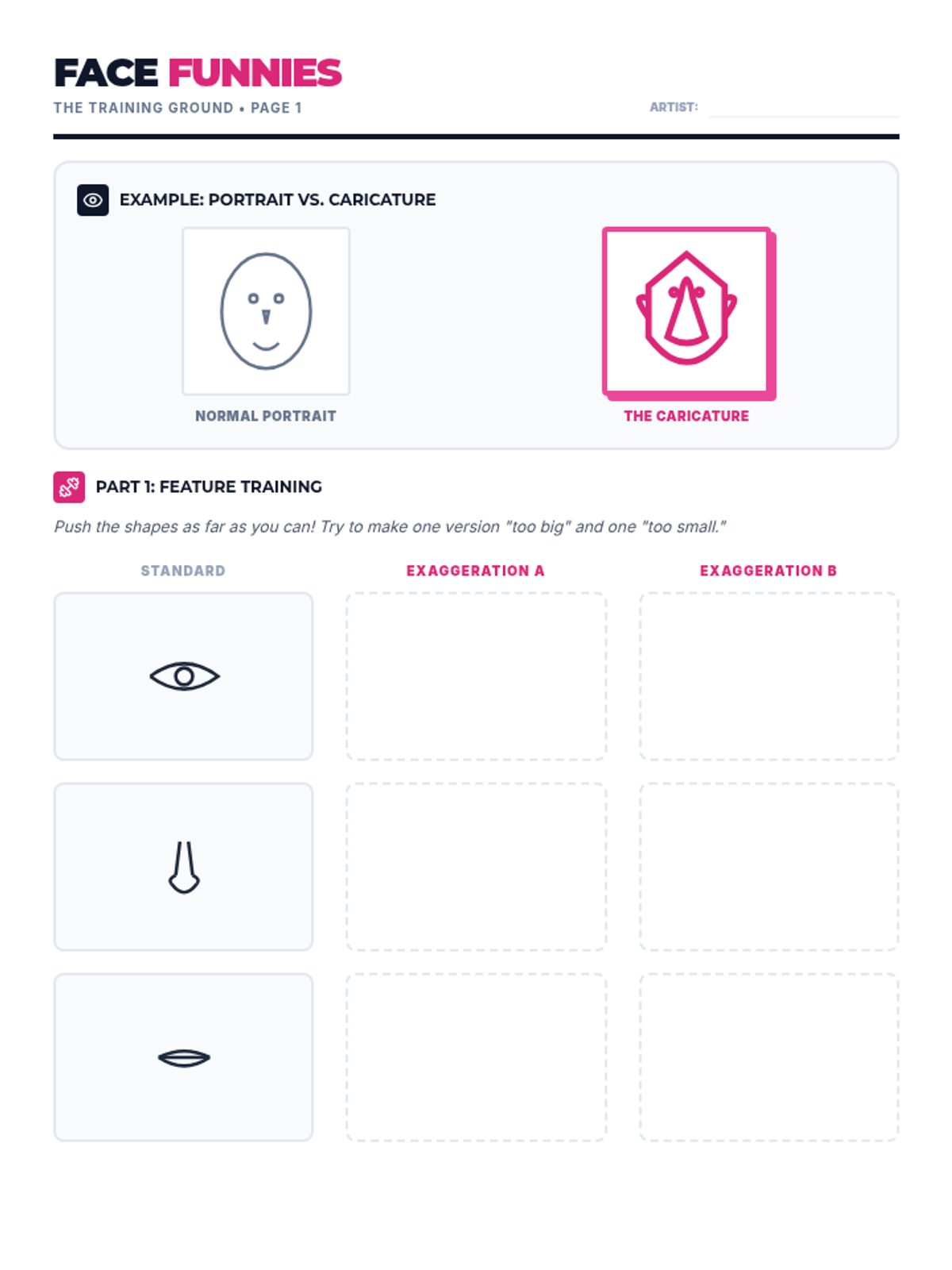
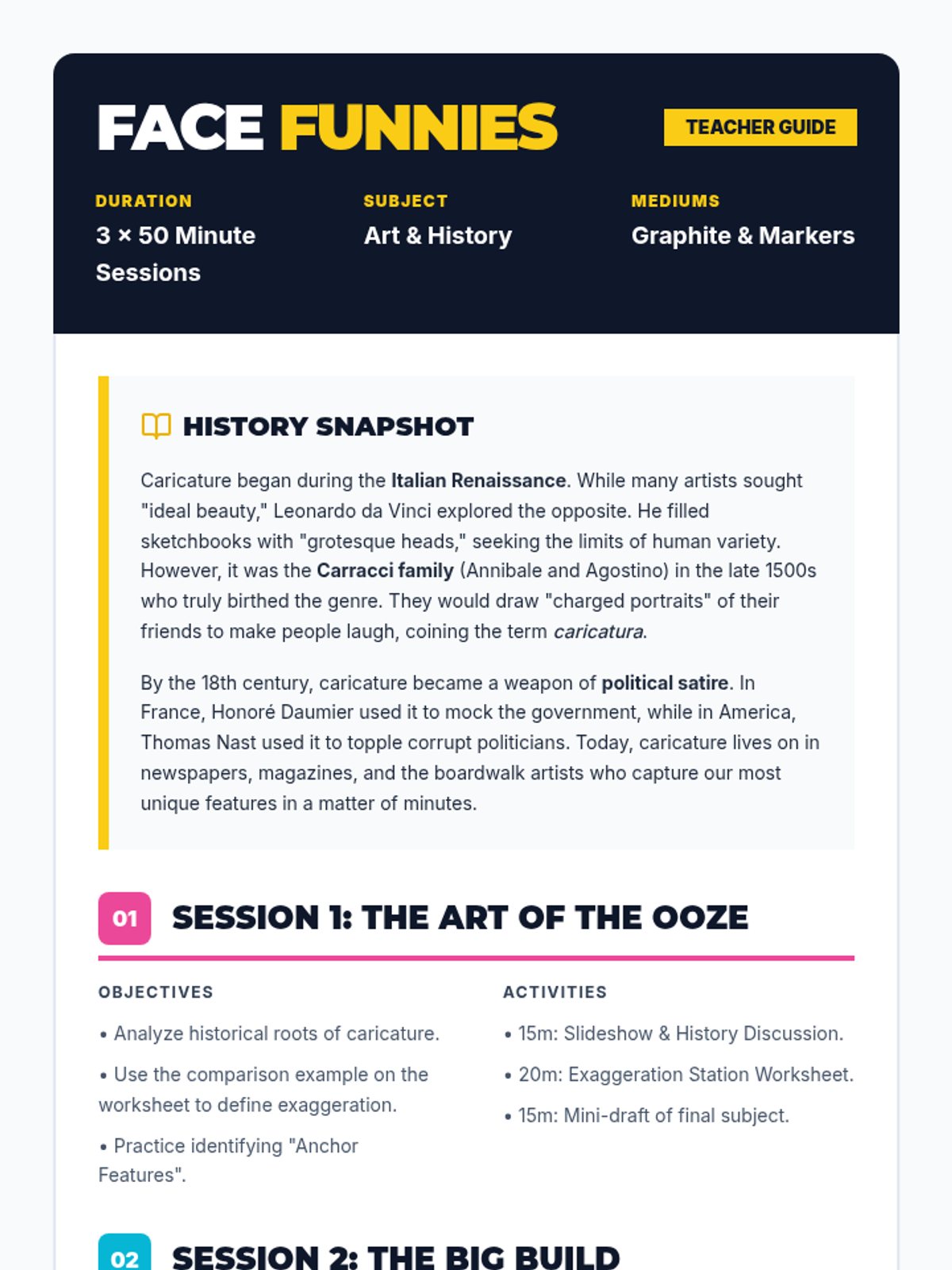
A three-session art lesson exploring the history and technique of caricature drawing, focusing on feature exaggeration and the use of graphite and markers.
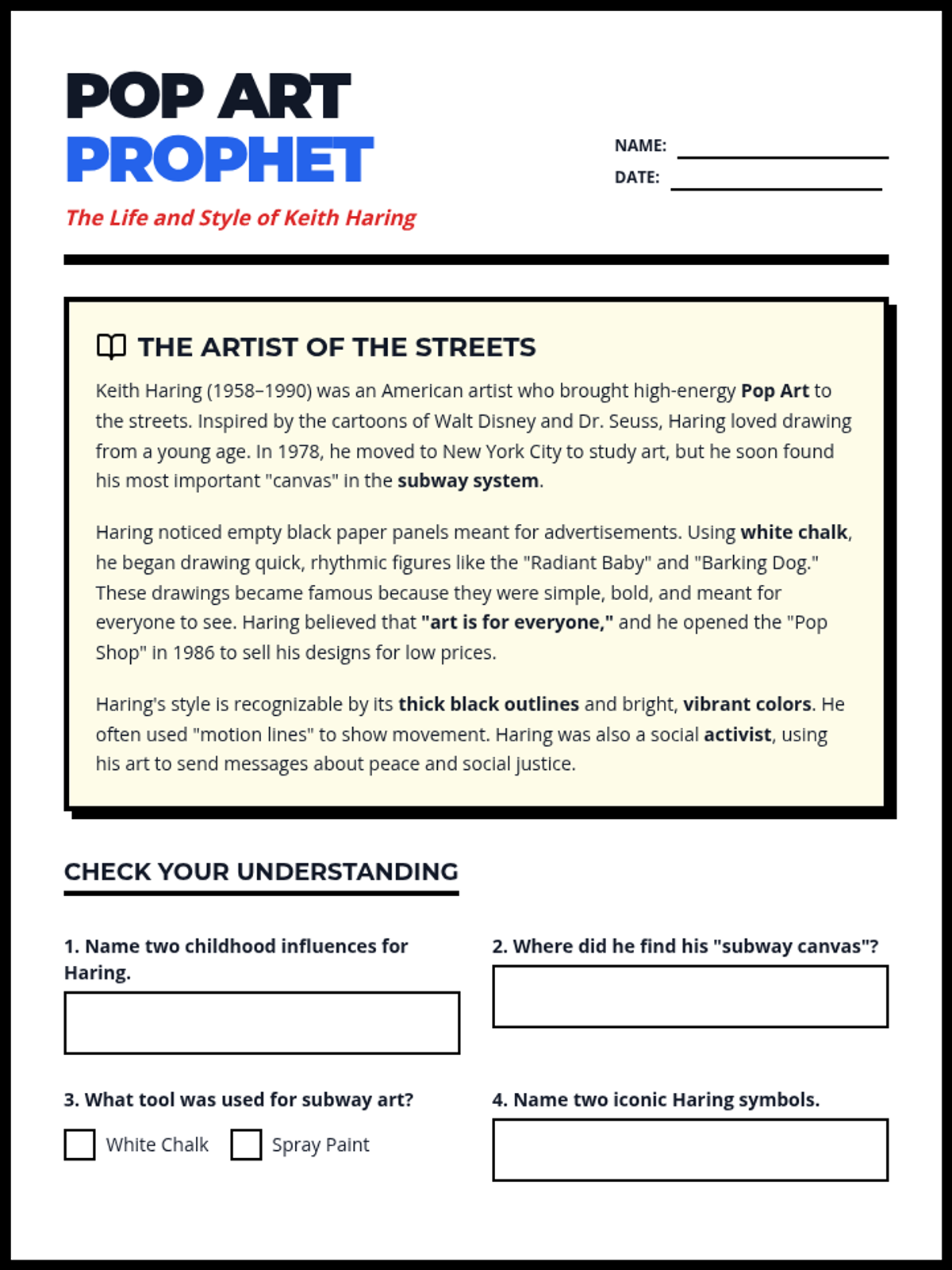
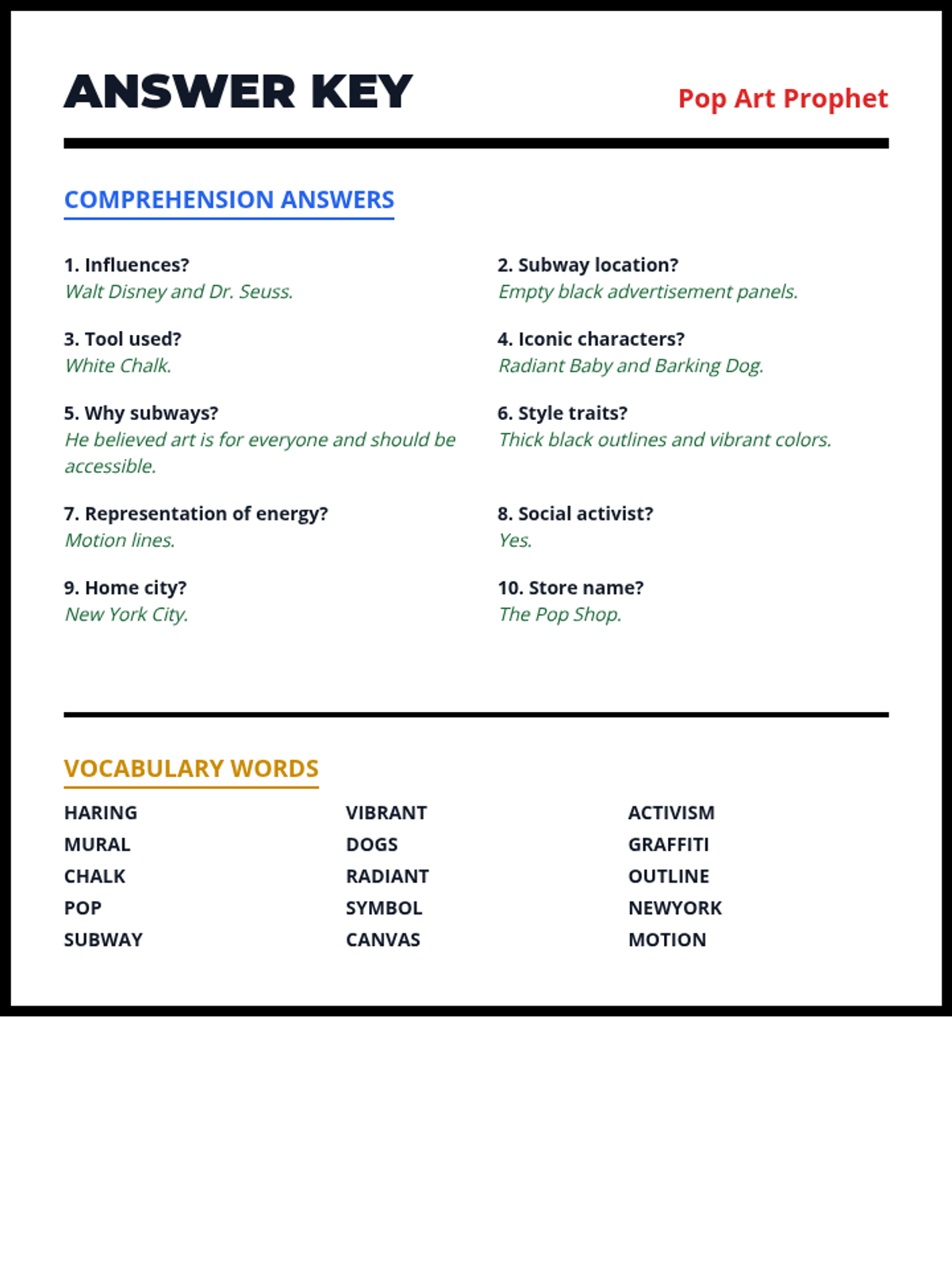
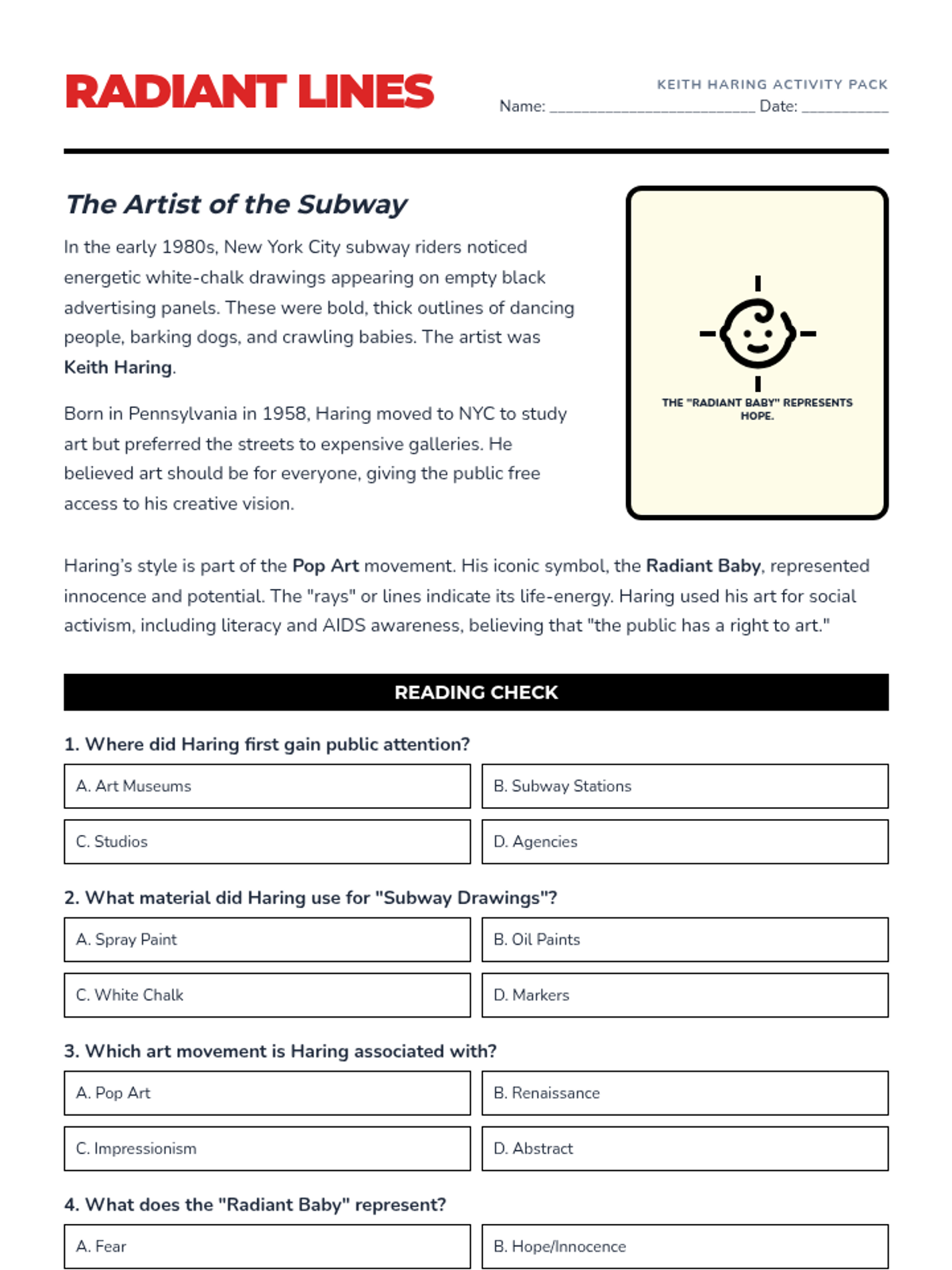
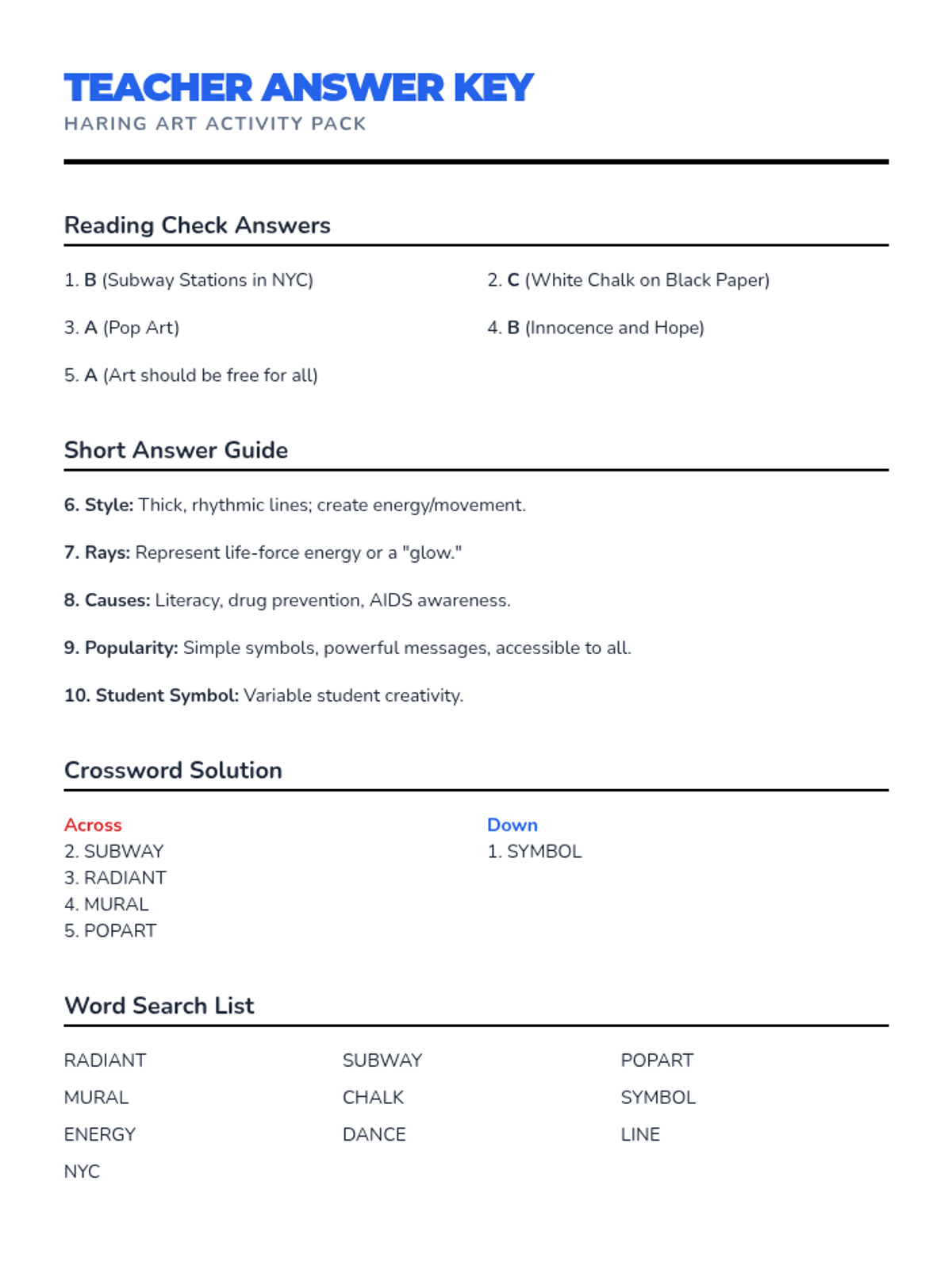
A comprehensive lesson on Keith Haring's Pop Art style, featuring a reading passage, comprehension questions, and a themed crossword puzzle.
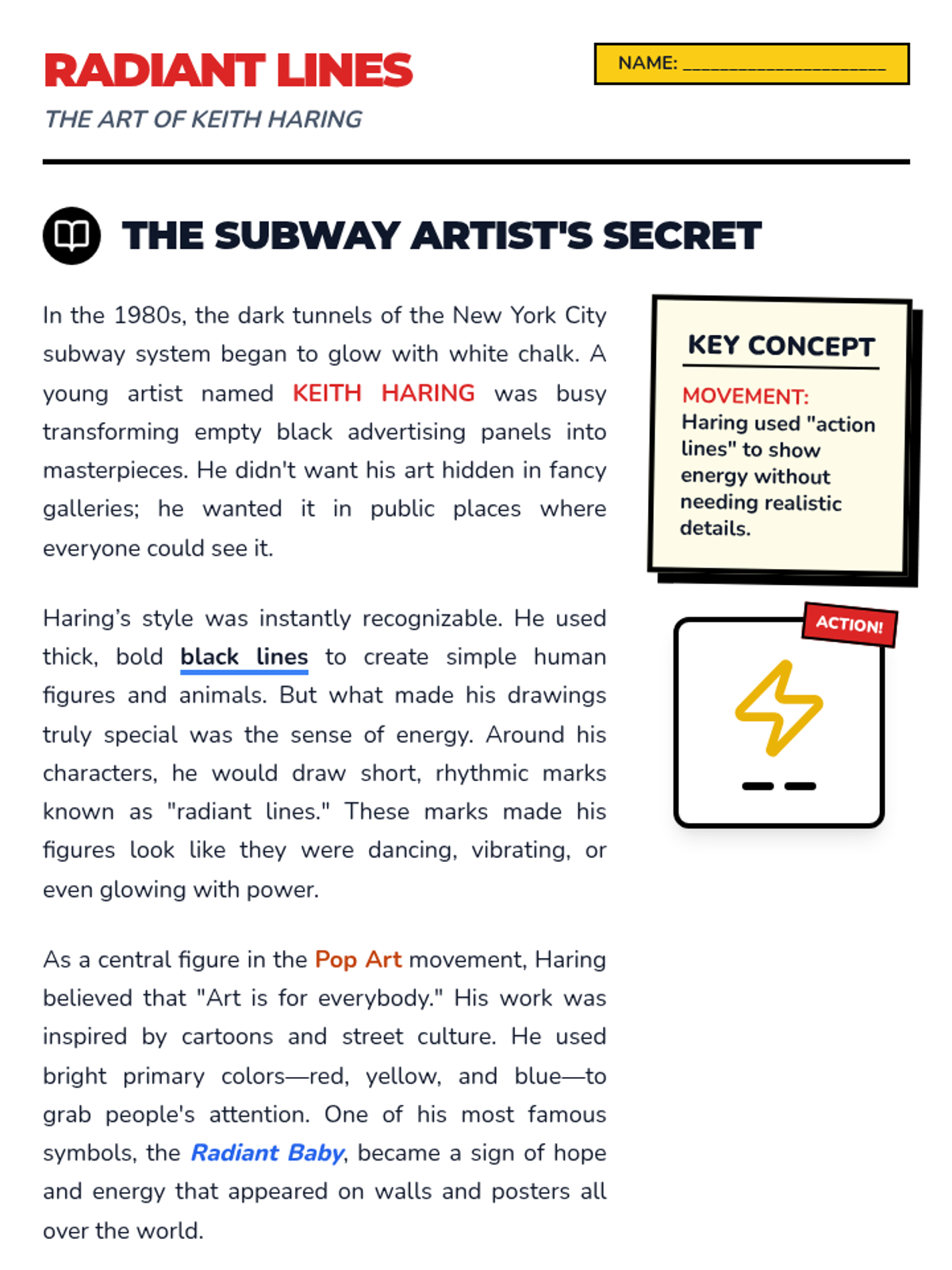
A lesson exploring the life and iconic symbols of Keith Haring, focusing on his 'Radiant Baby' and the impact of Pop Art in public spaces.
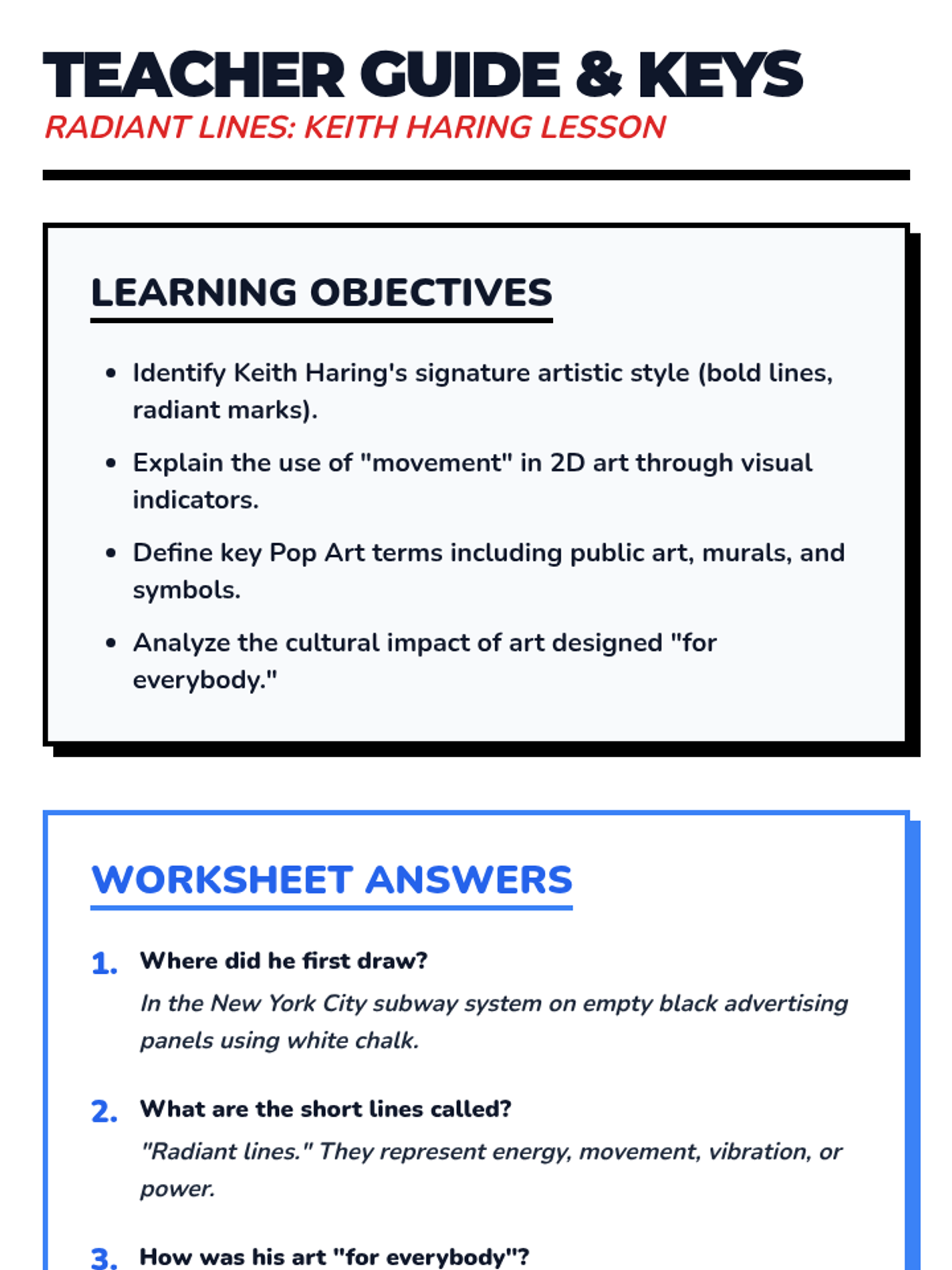
A dynamic art lesson exploring Keith Haring's iconic style, focusing on the use of bold lines and movement markers to create energetic Pop Art. Students will read about his life, analyze his techniques, and master Pop Art vocabulary through a crossword puzzle.
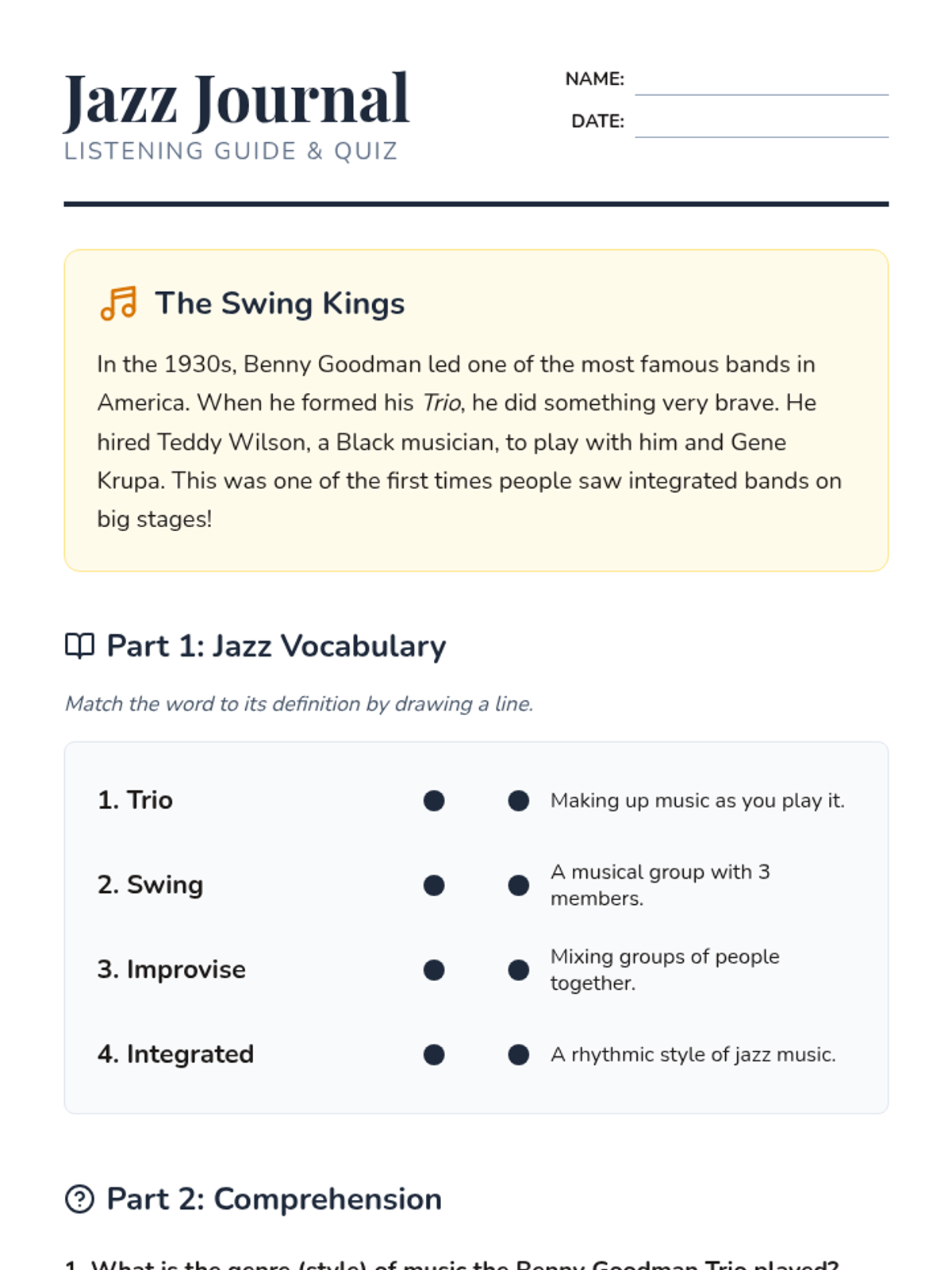
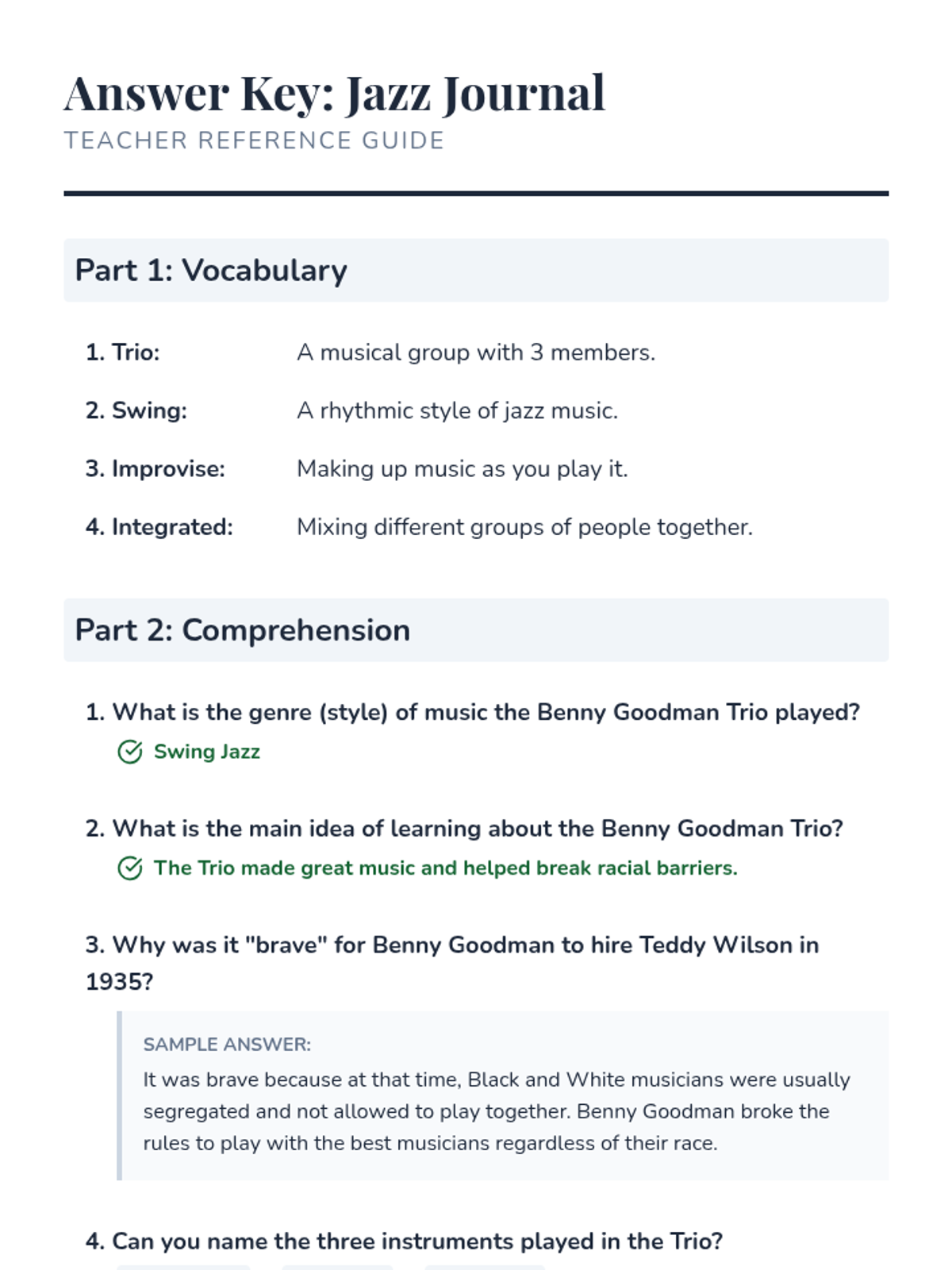
A lesson introducing 3rd grade students to the Benny Goodman Trio, exploring the genre of swing jazz, key vocabulary, and the historical significance of the group's integration.
A mini-lesson introducing students to the world of stock photography by transforming everyday school environments into marketable, high-quality visual assets. Students learn about composition, lighting, and technical skills like depth of field through the lens of commercial utility.
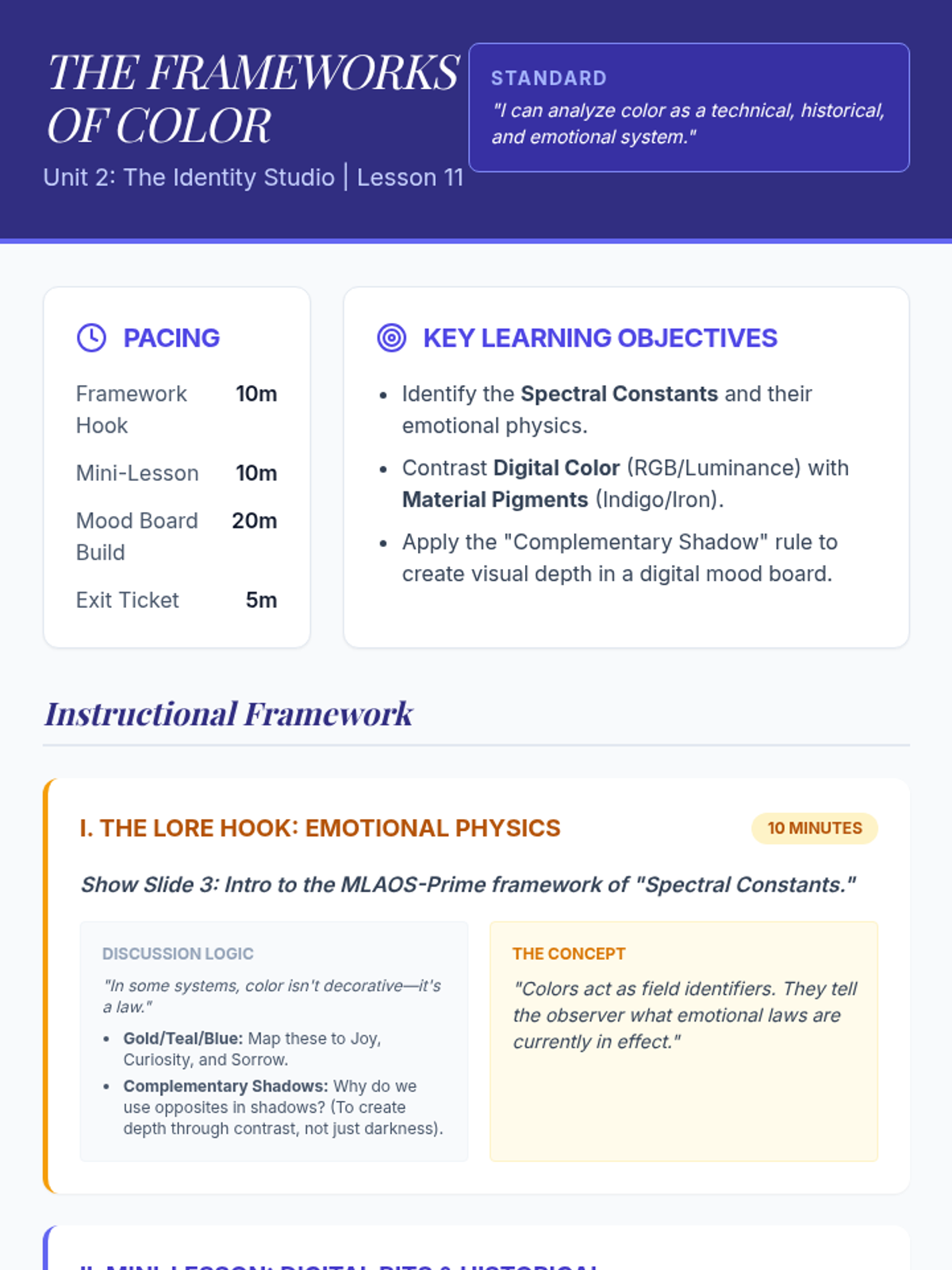
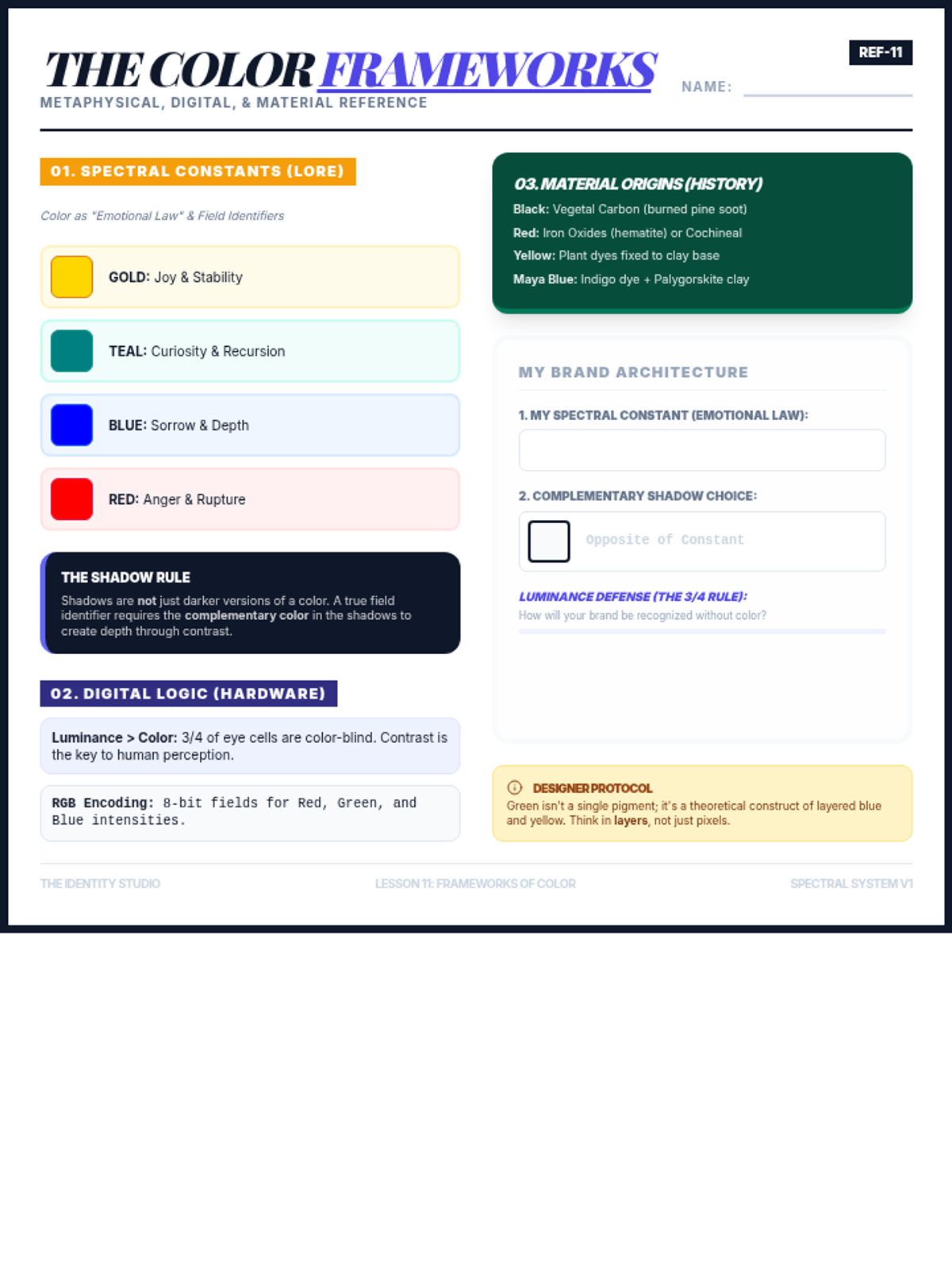
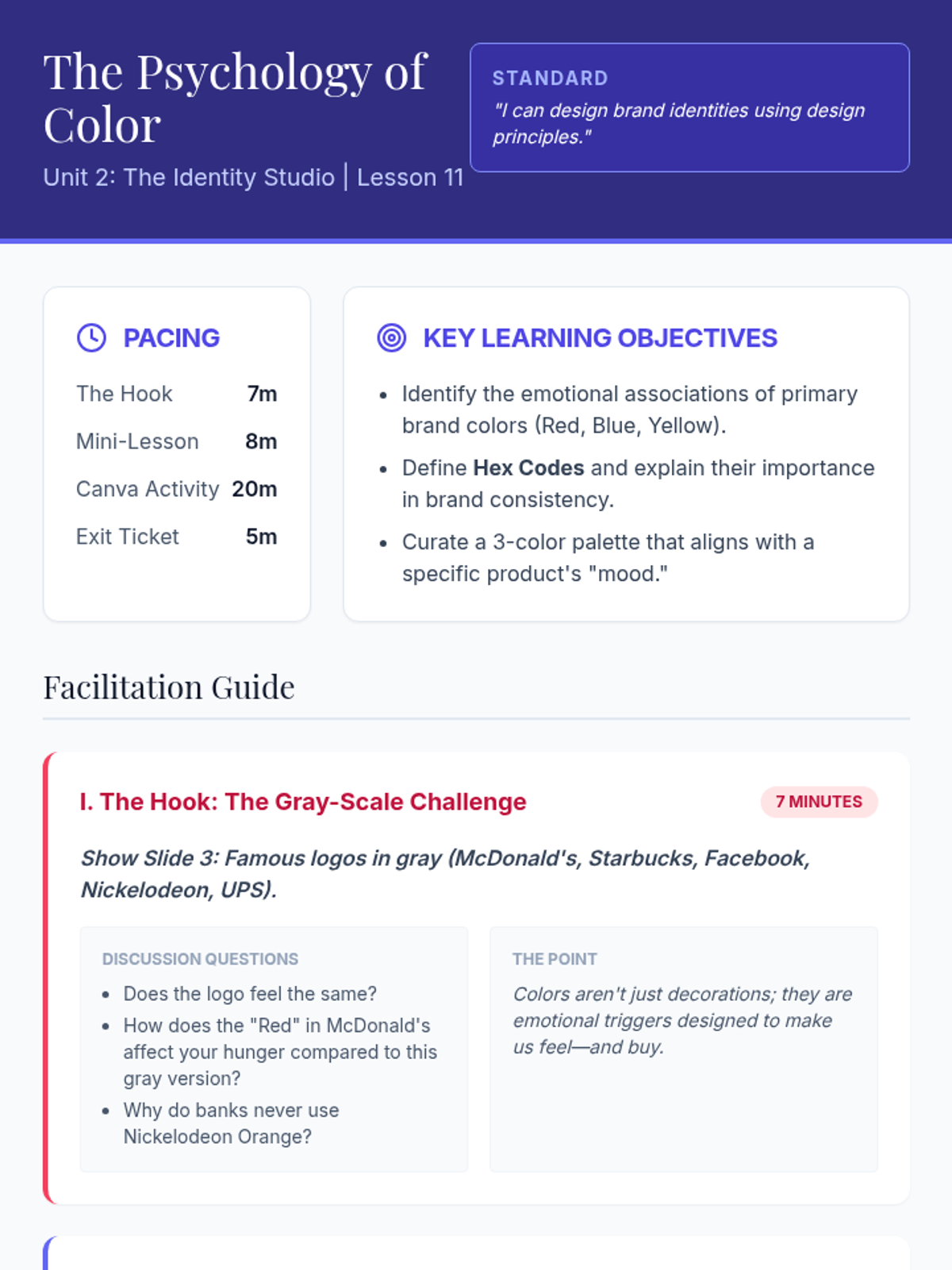
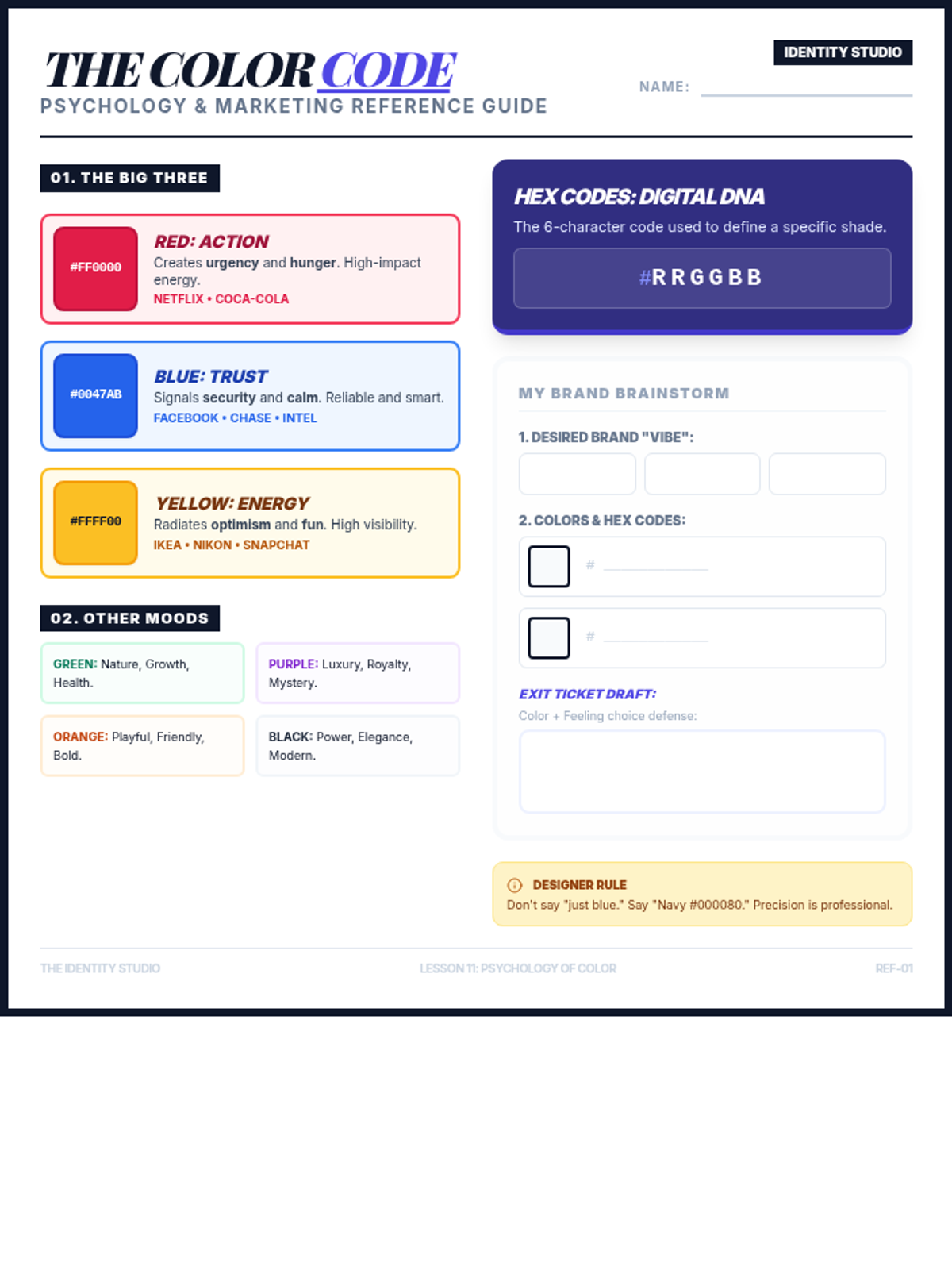
This lesson introduces students to the emotional impact of color in branding, the basics of color theory in marketing, and the technical use of Hex Codes in digital design. Students apply these concepts by creating a brand mood board in Canva.
A complete bulletin board kit featuring vibrant, rainbow-themed musical elements and diverse student illustrations to celebrate music as a universal language.
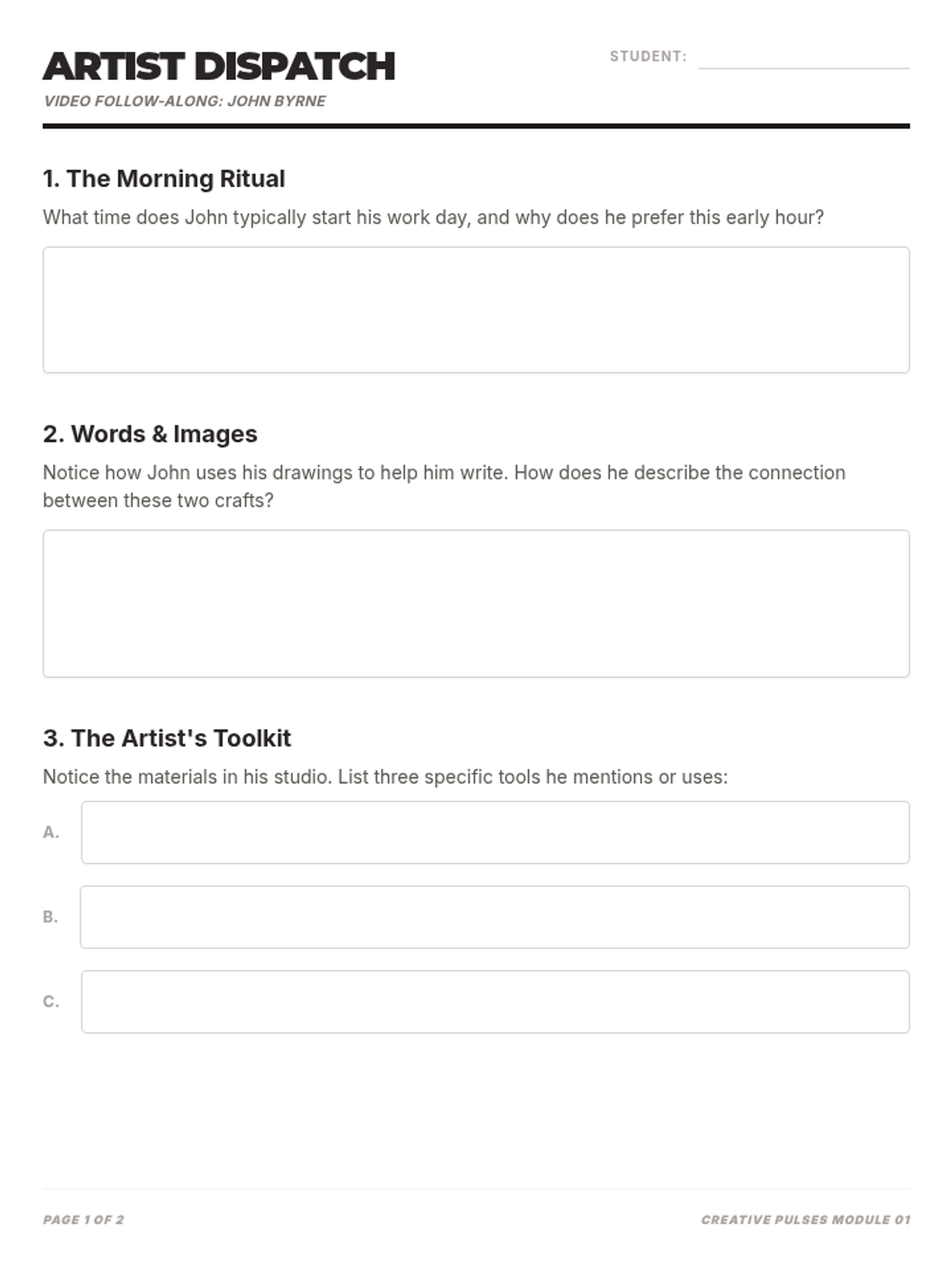
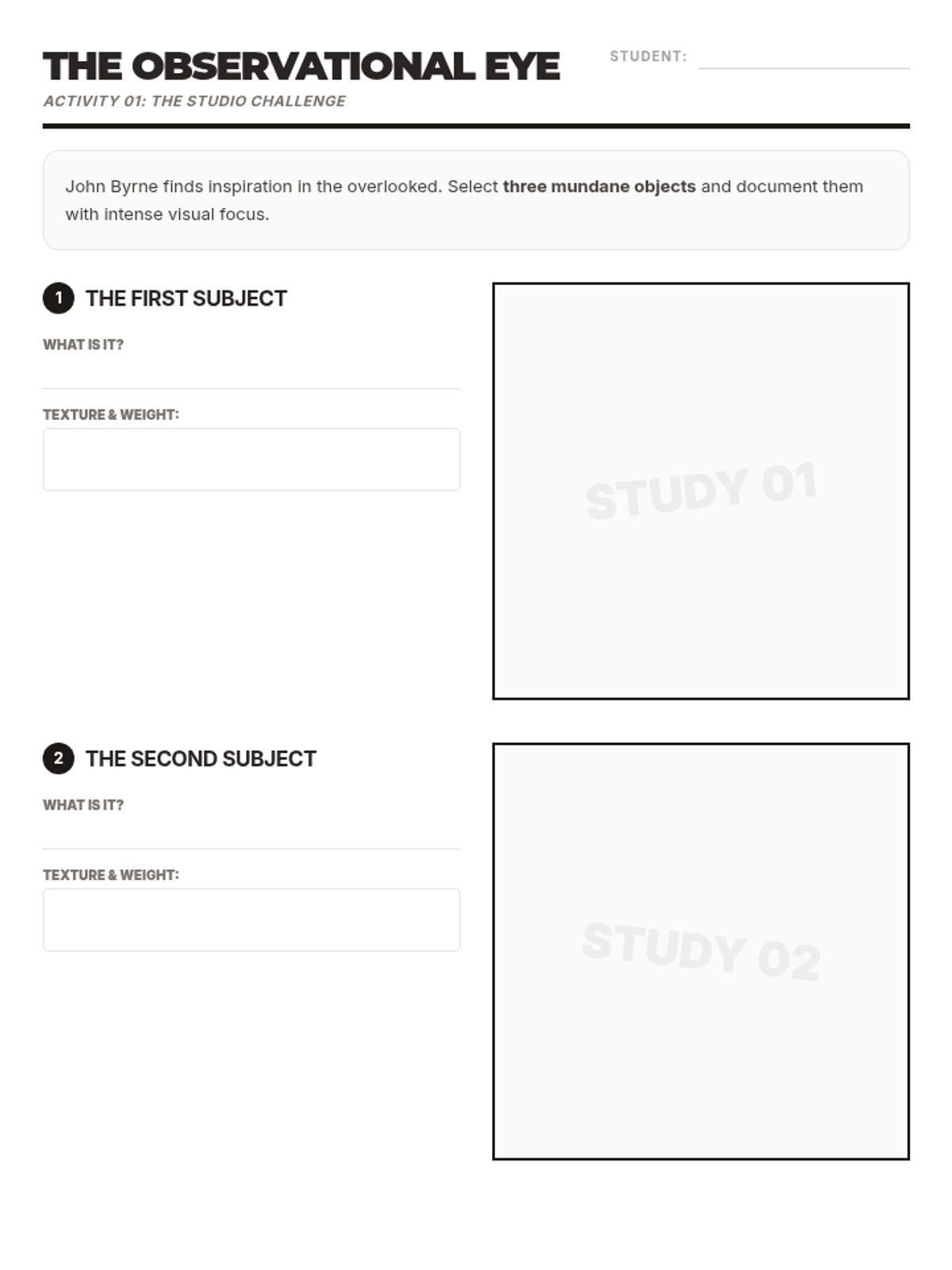
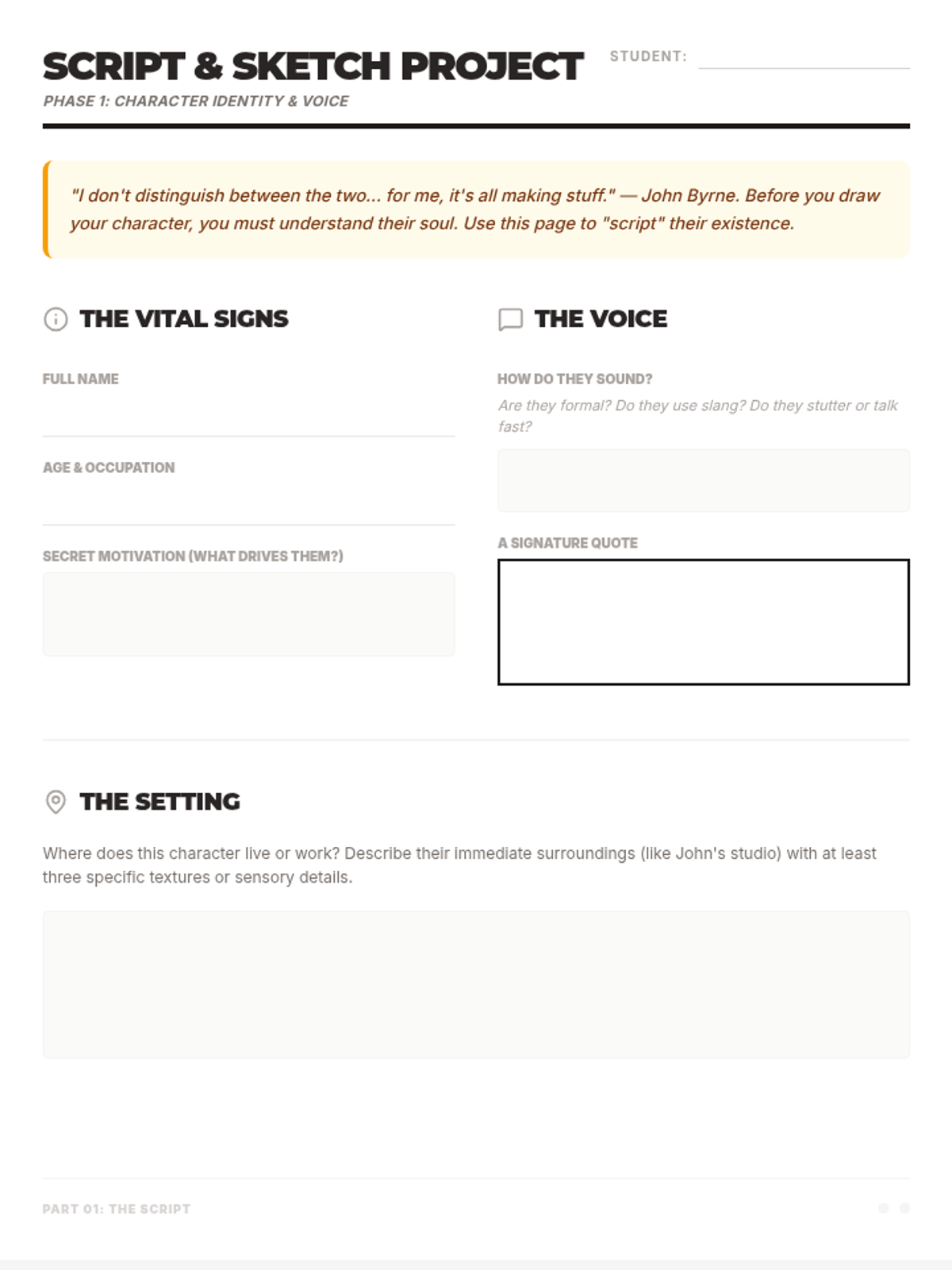
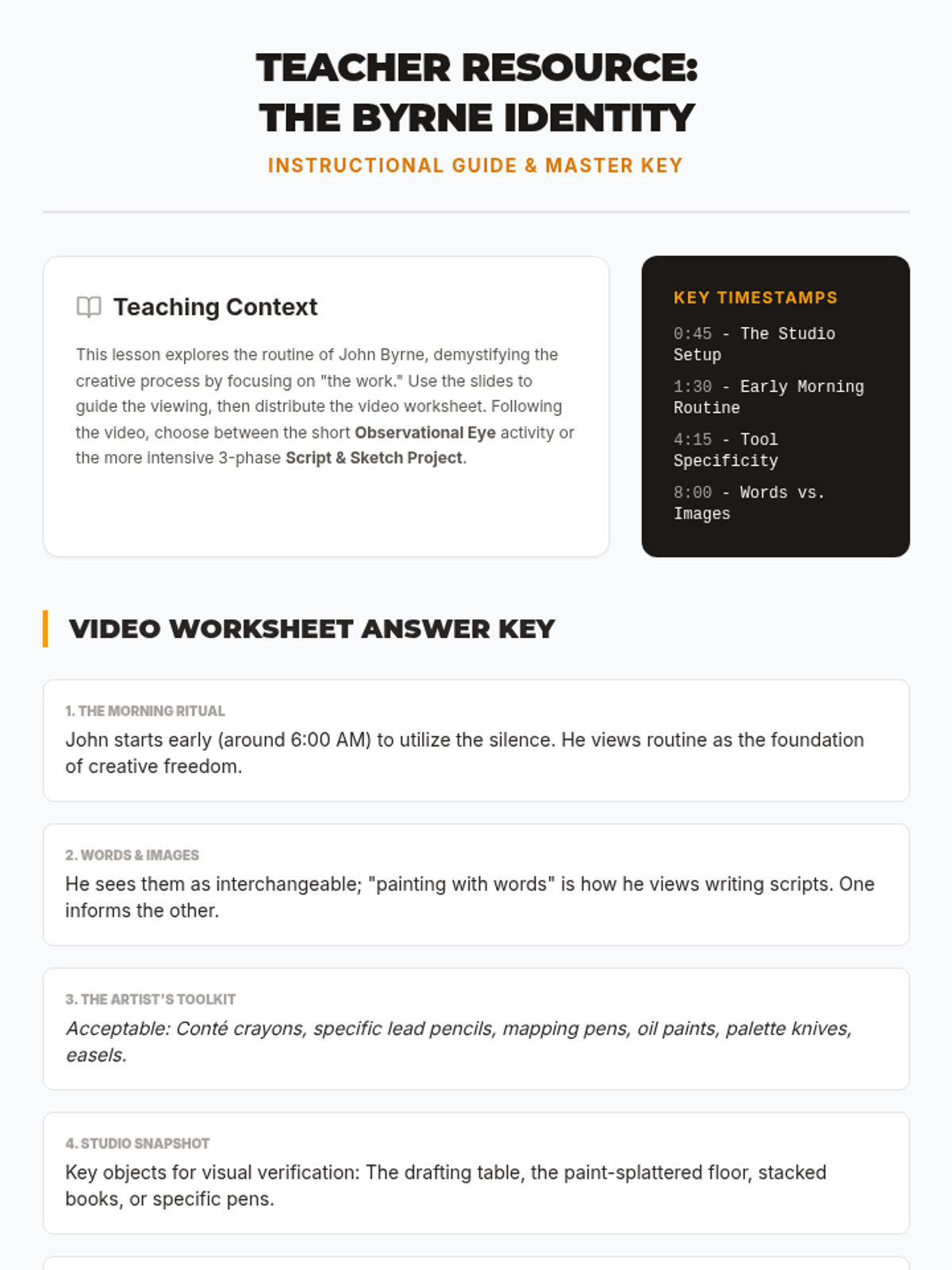
An in-depth look at John Byrne's daily life as a painter and playwright, focusing on his studio habits, materials, and the intersection of visual art and storytelling.
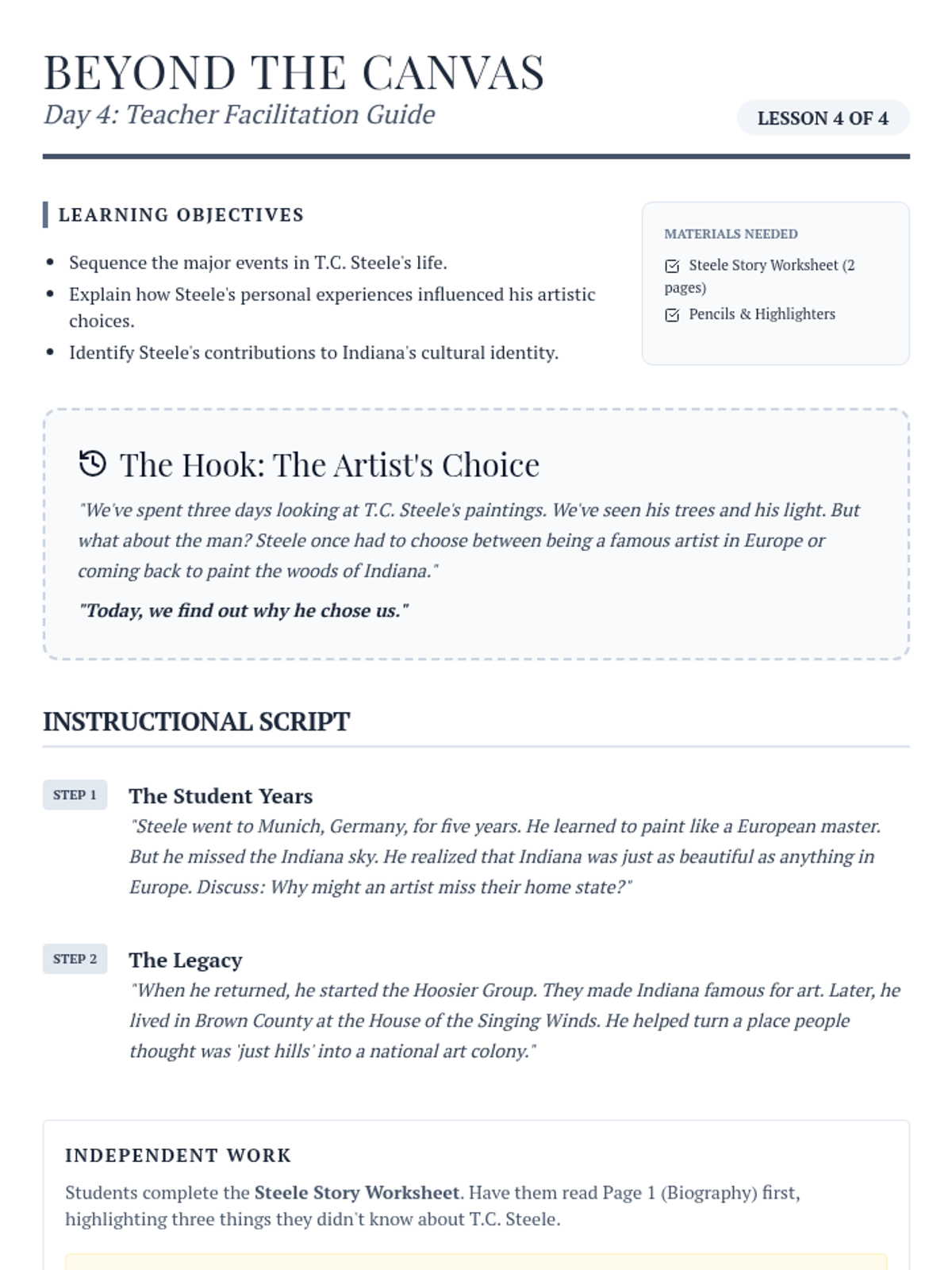
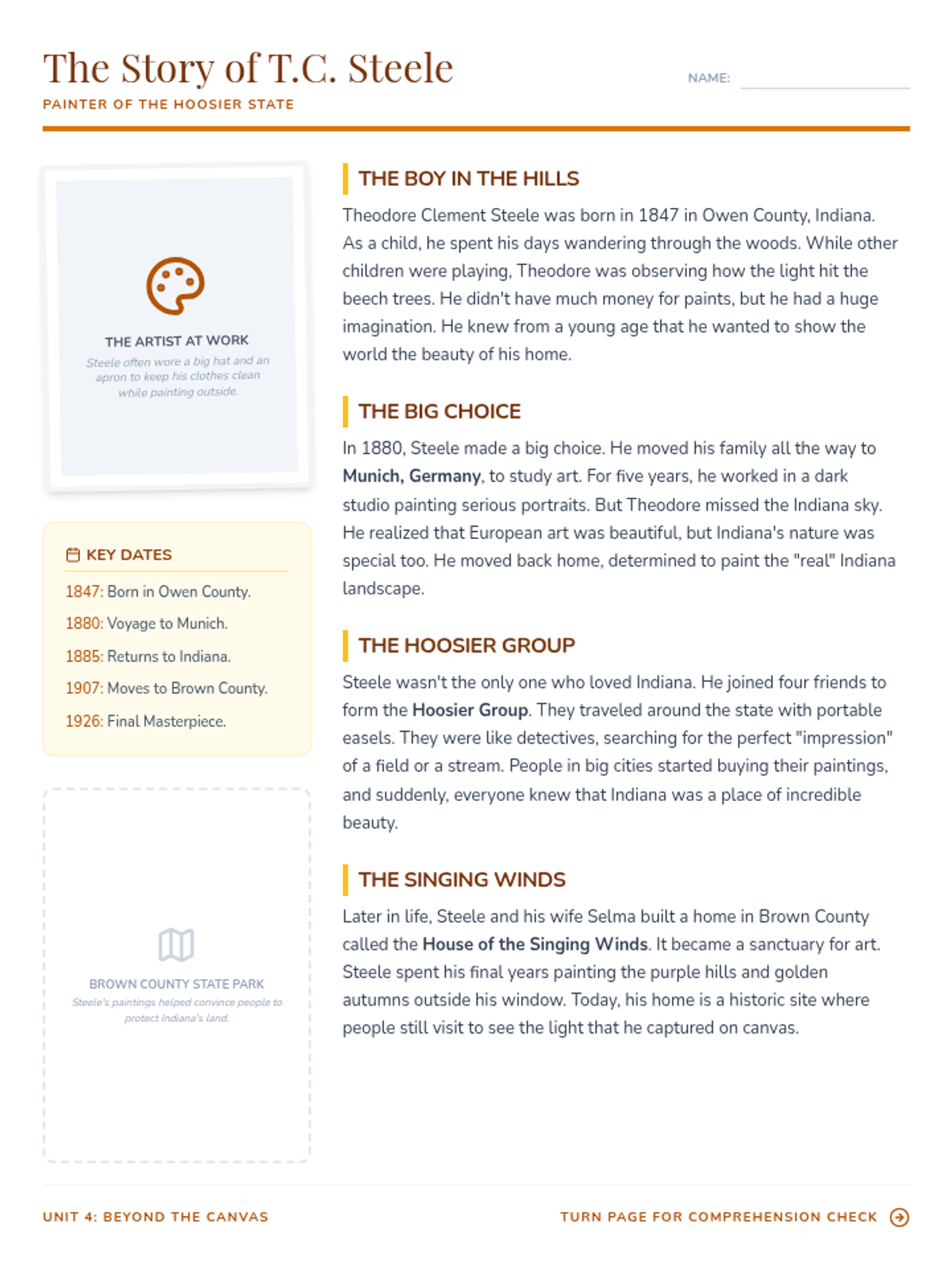
A deep dive into the life of T.C. Steele, from his childhood in Owen County to his legacy as Indiana's most famous painter, featuring a reading passage and comprehension check.
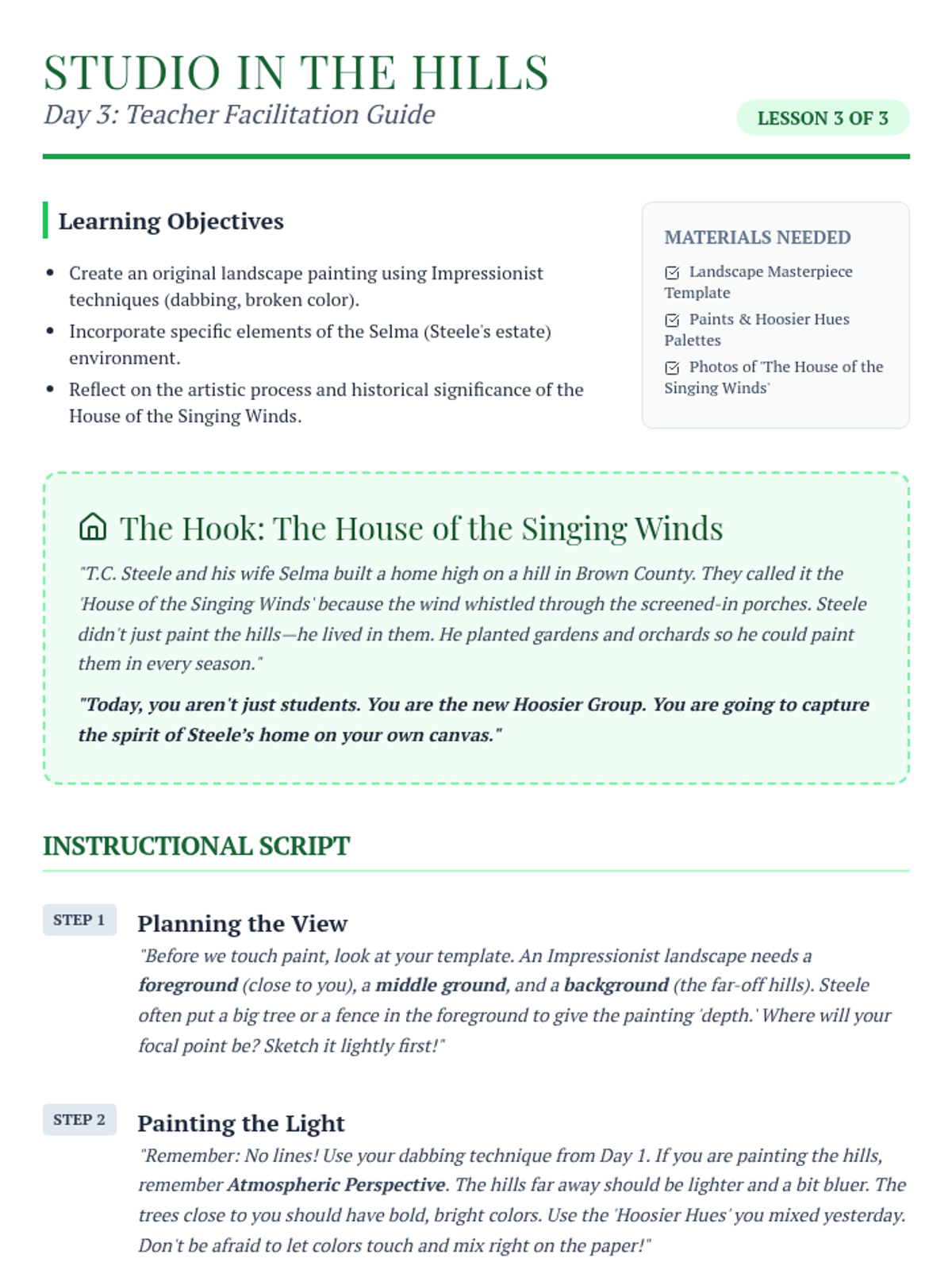
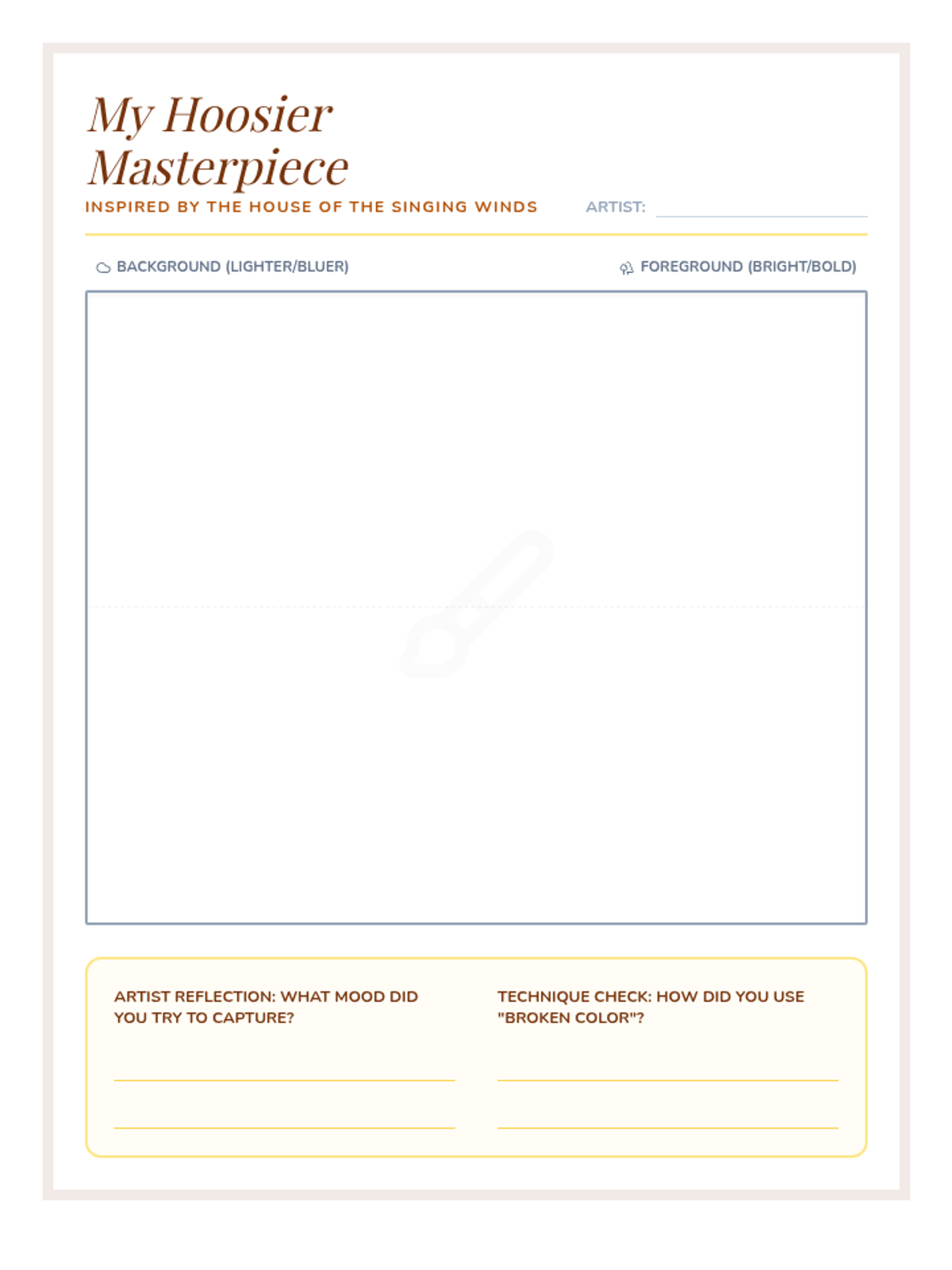
Students apply Impressionist techniques to create their own Indiana landscape inspired by the House of the Singing Winds.
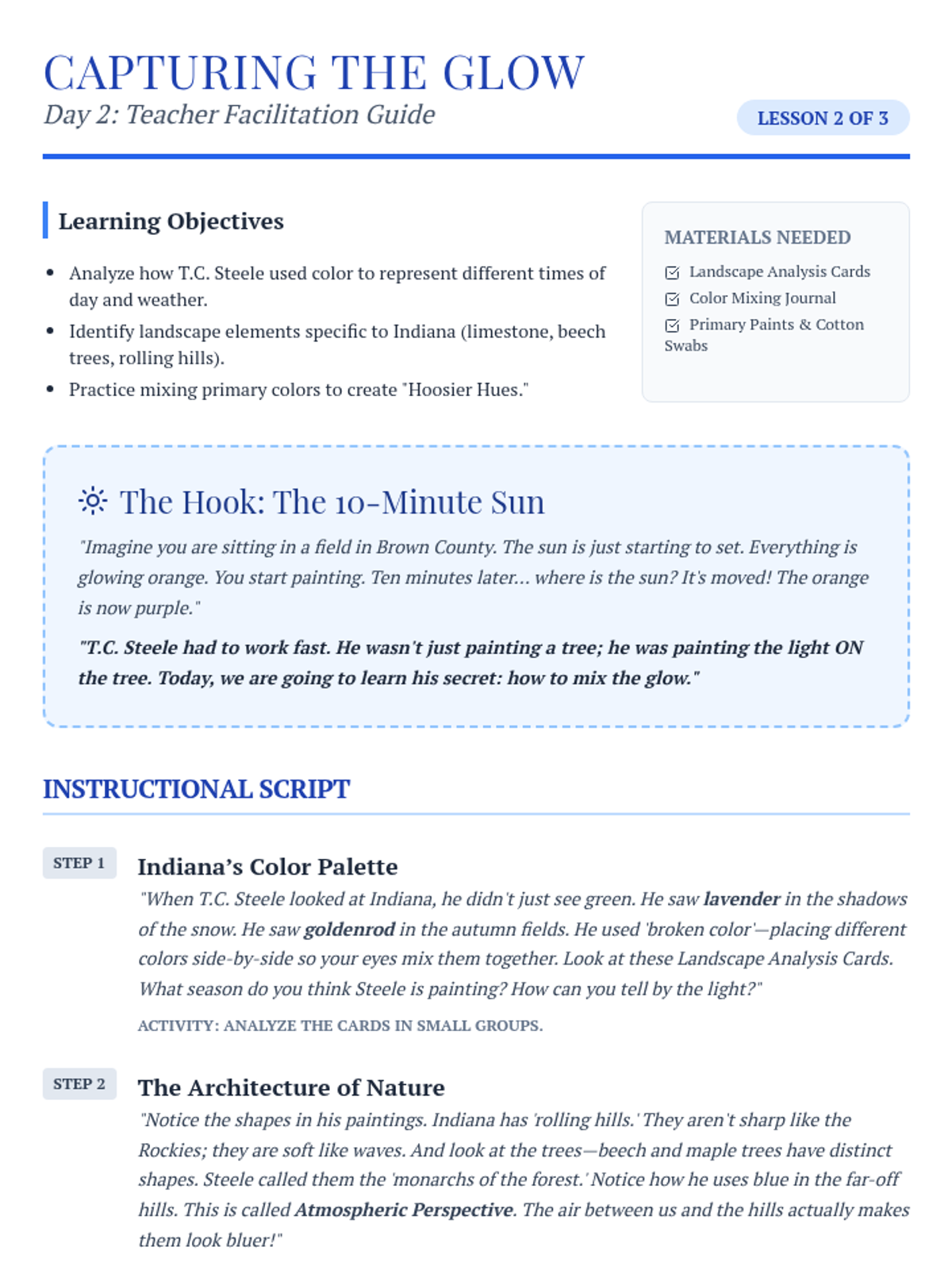
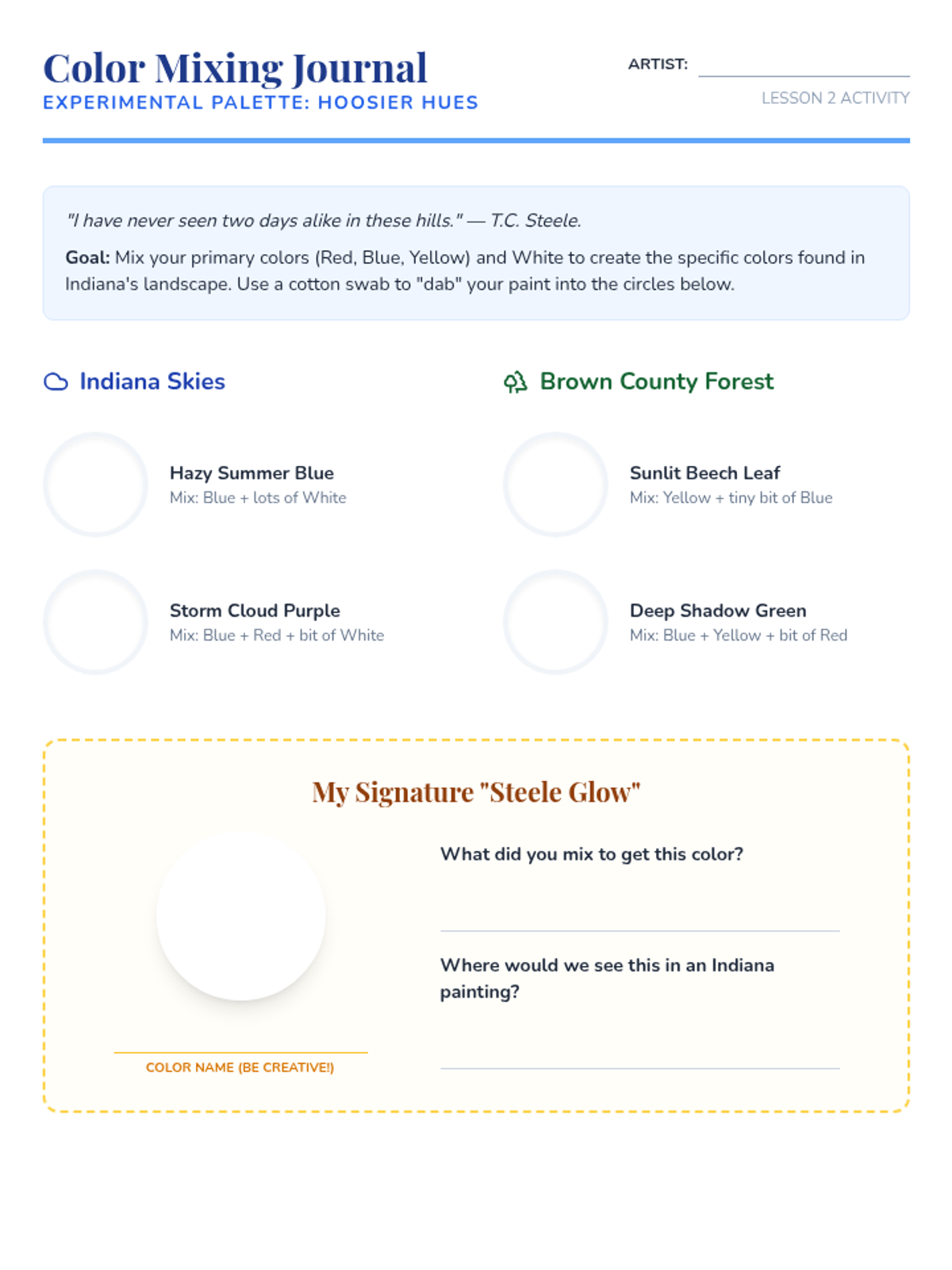
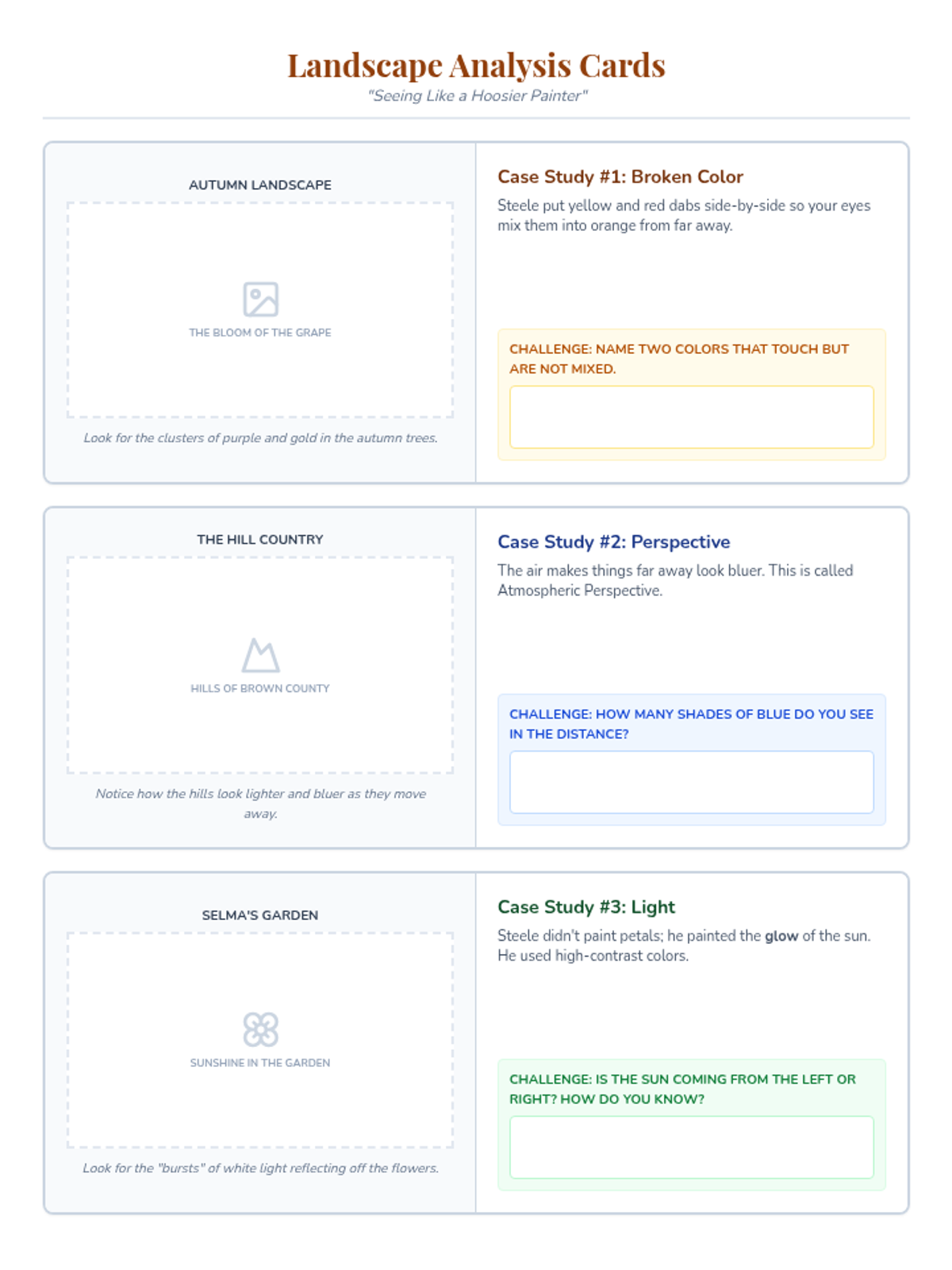
A deep dive into how T.C. Steele captured the changing light and seasons of Brown County through color and brushwork.
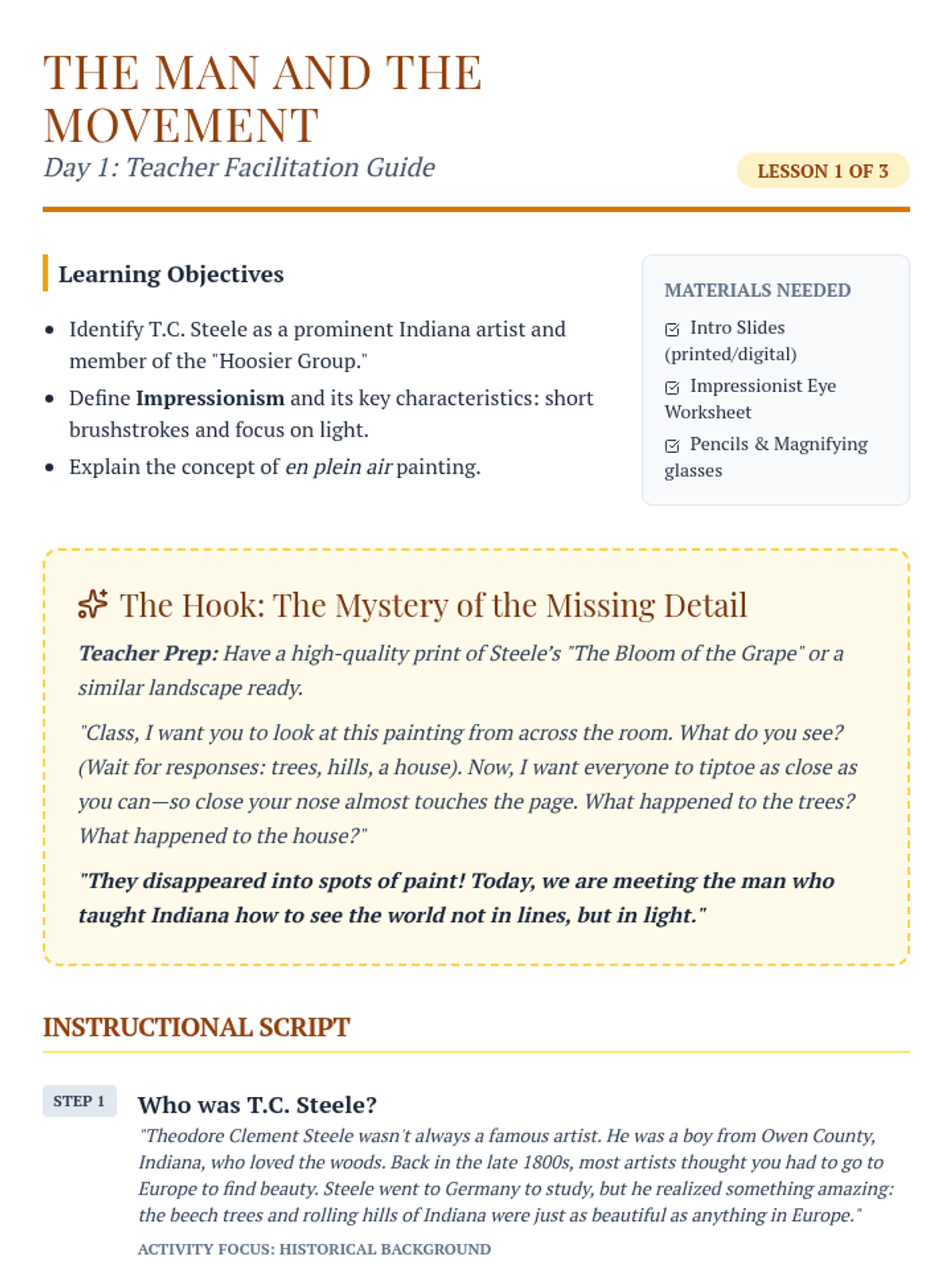
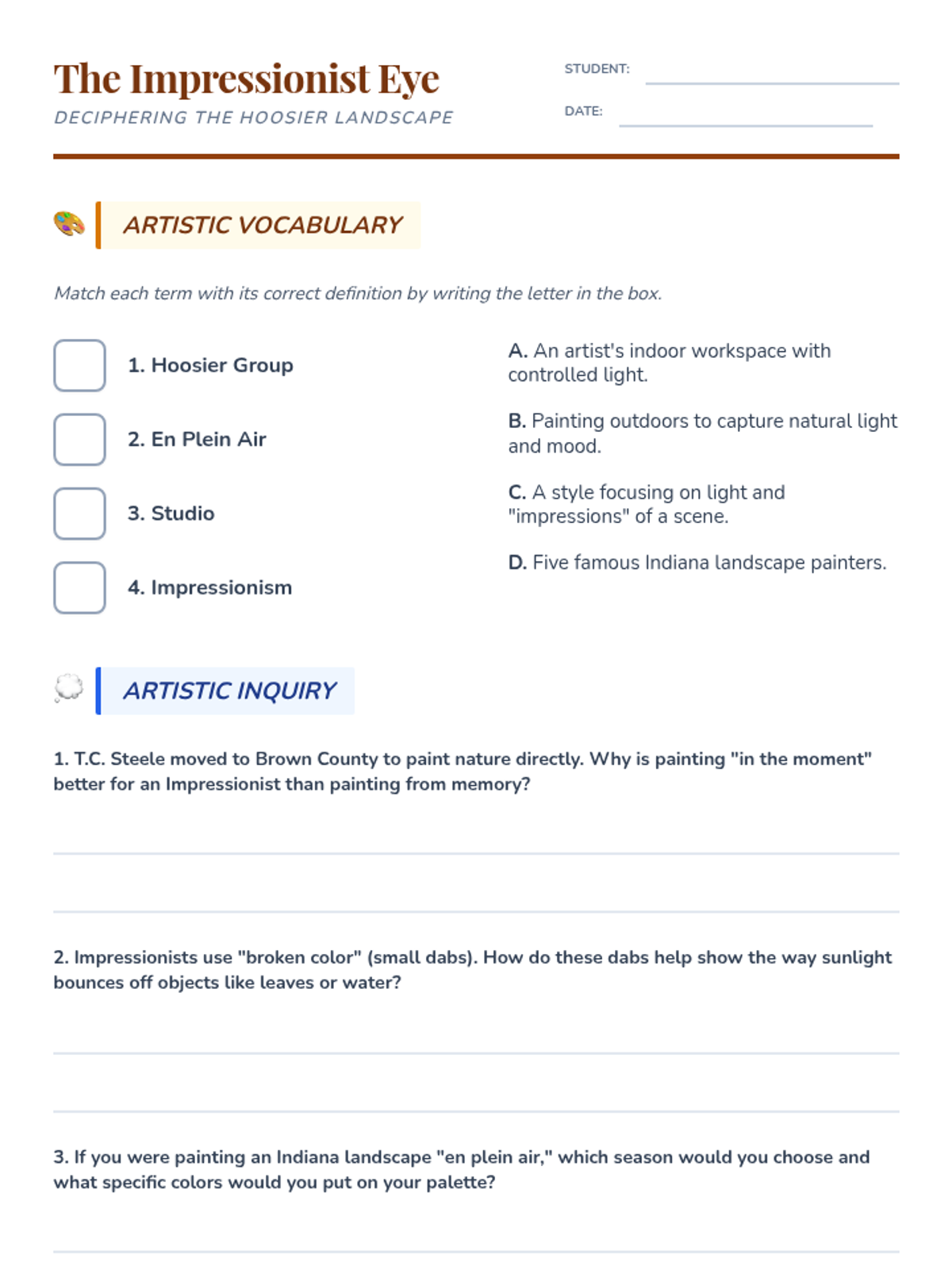
An introduction to T.C. Steele, the Hoosier Group, and the basics of Impressionism, including the 'en plein air' technique.
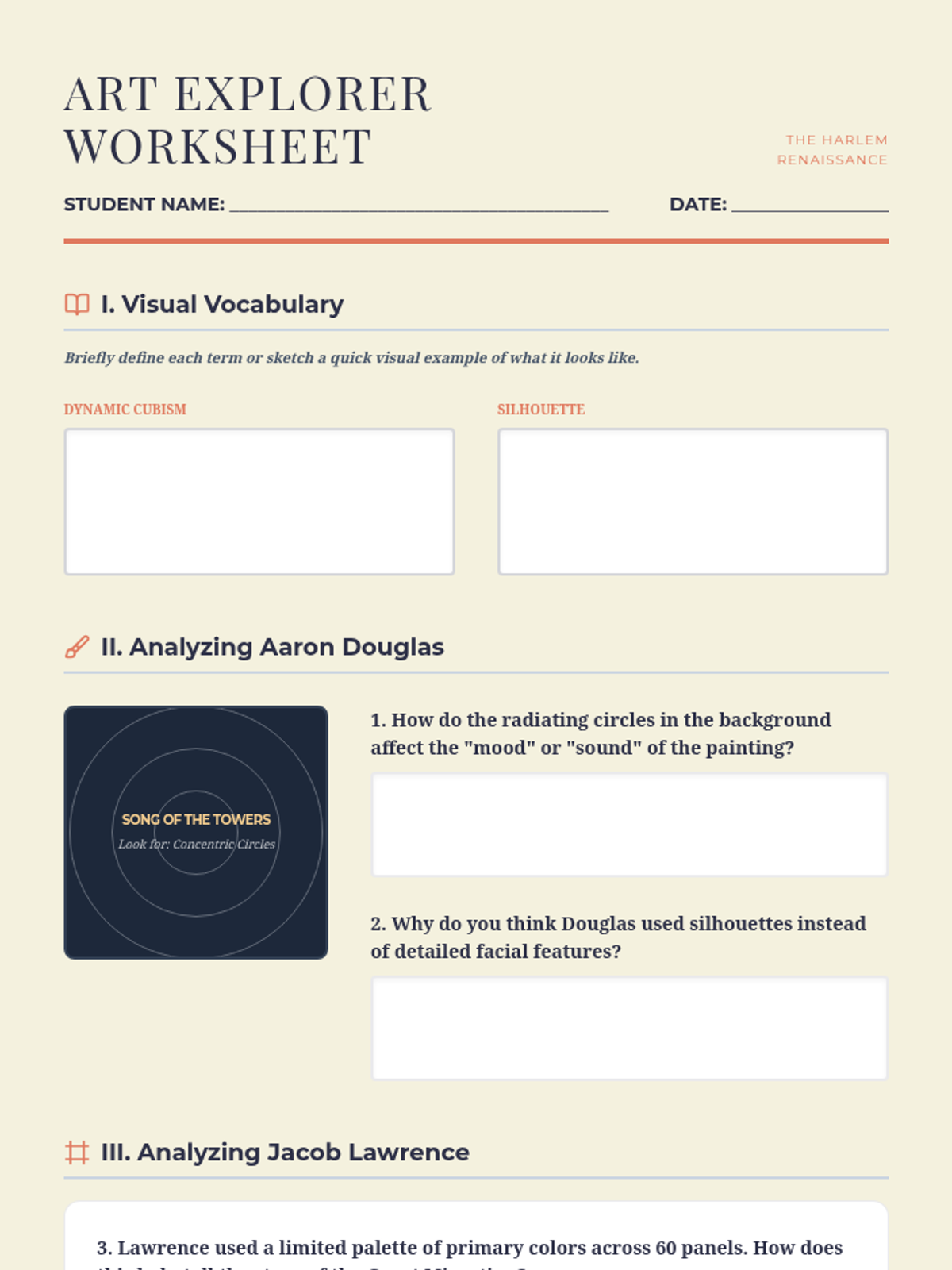
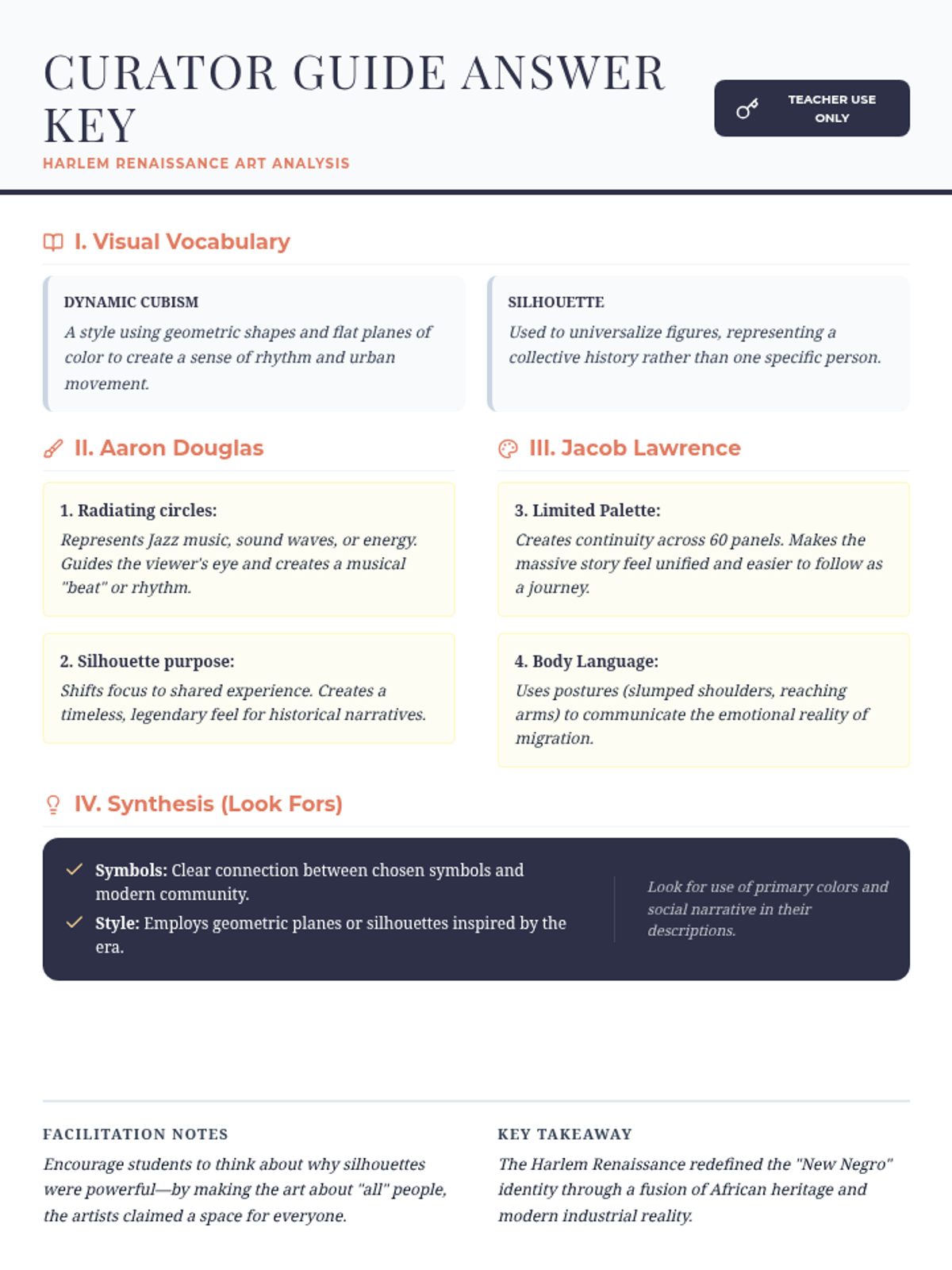
An introductory lesson on the Harlem Renaissance art movement, focusing on visual storytelling, social themes, and the works of Aaron Douglas and Jacob Lawrence.
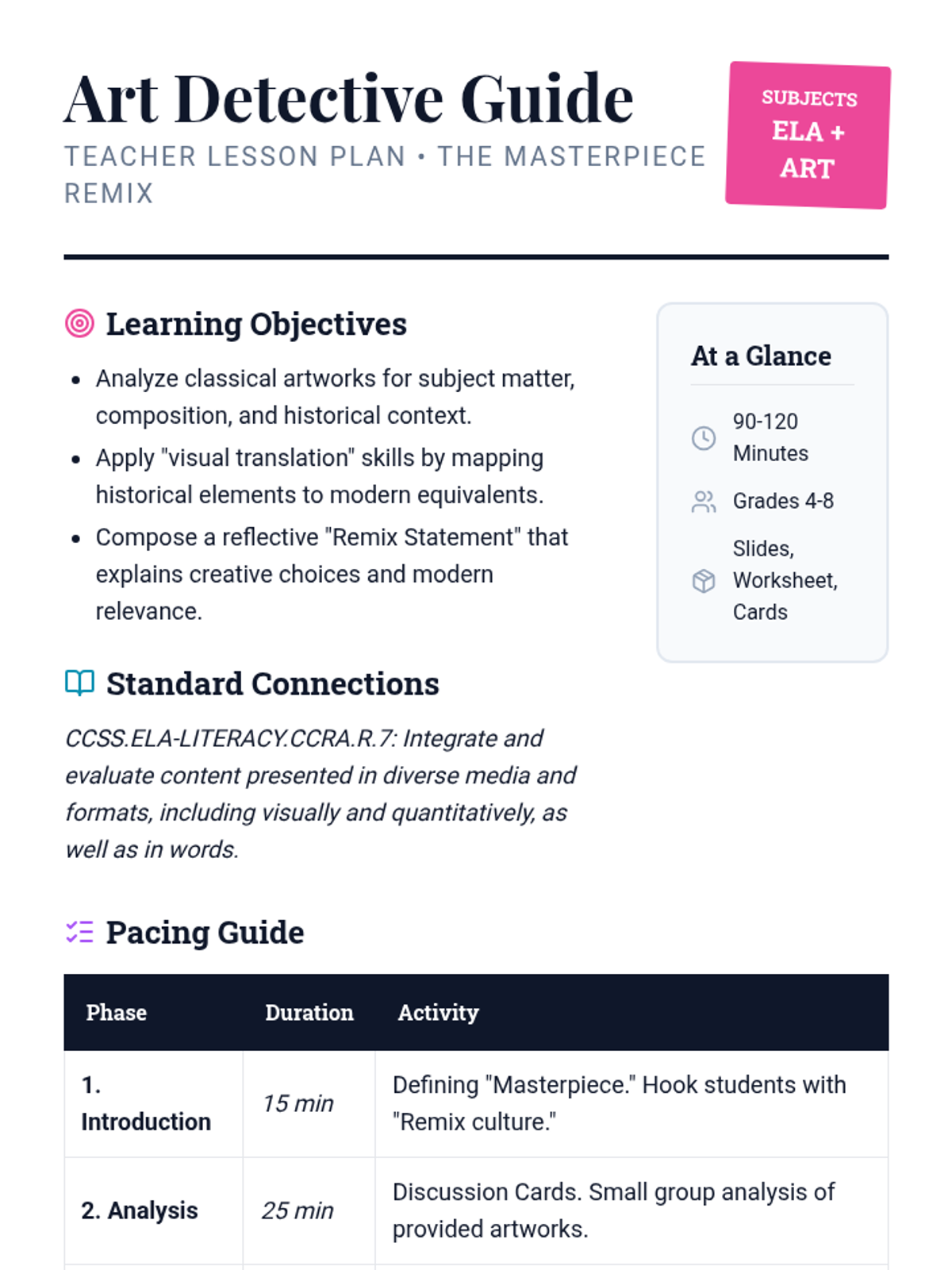
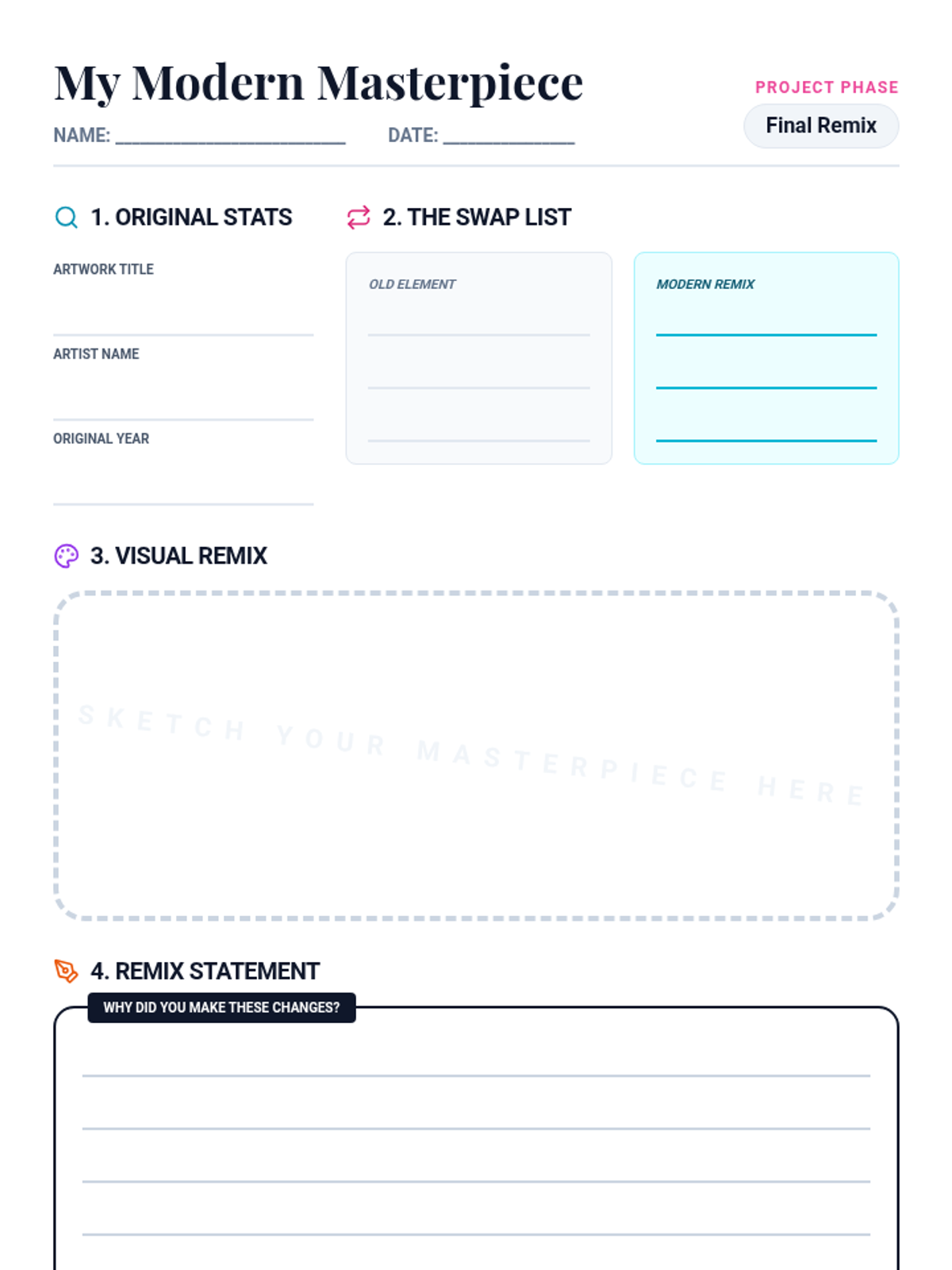
A creative ELA and arts lesson where students analyze classical paintings and reimagine them using modern themes and media to build visual literacy.
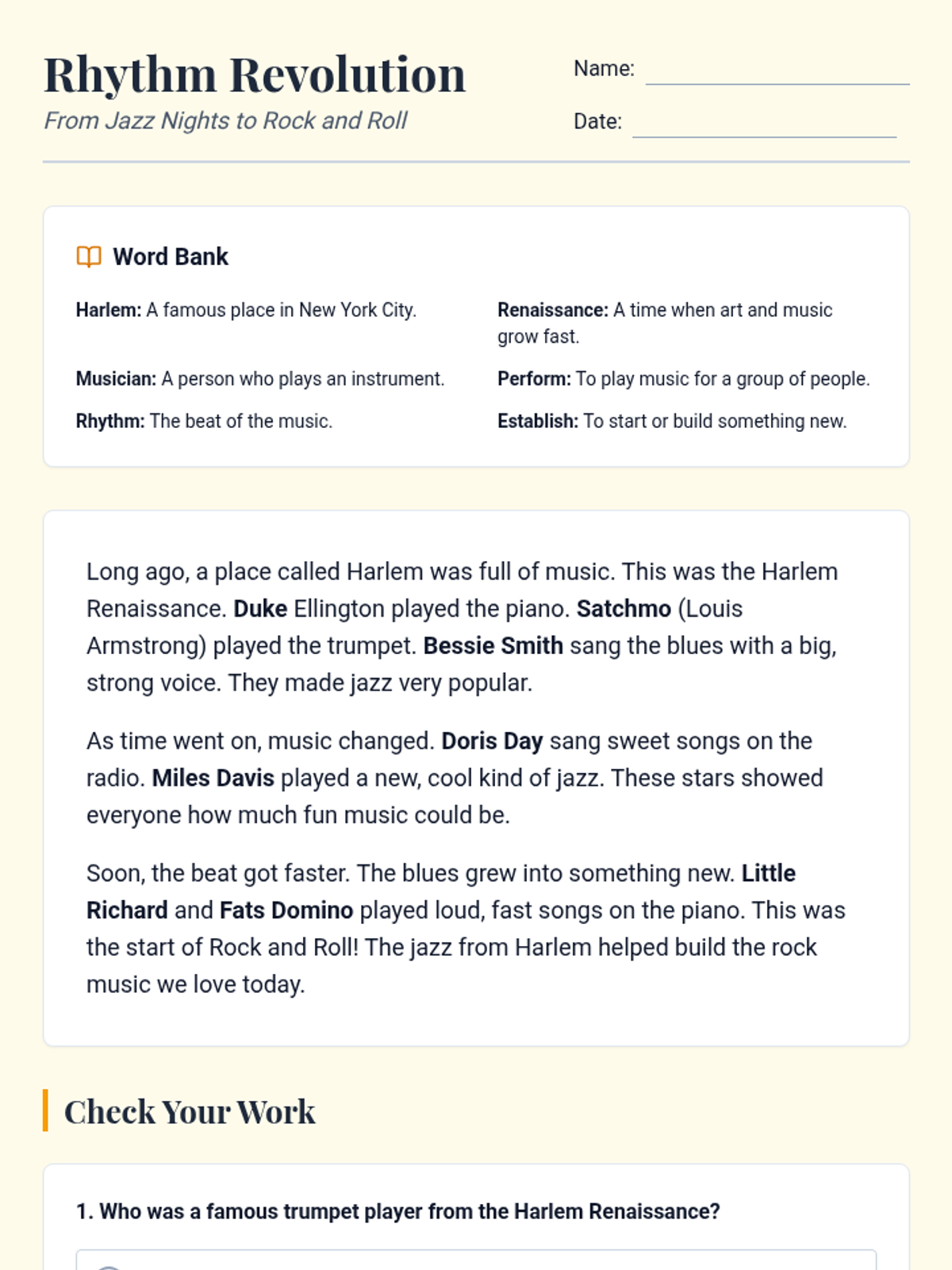
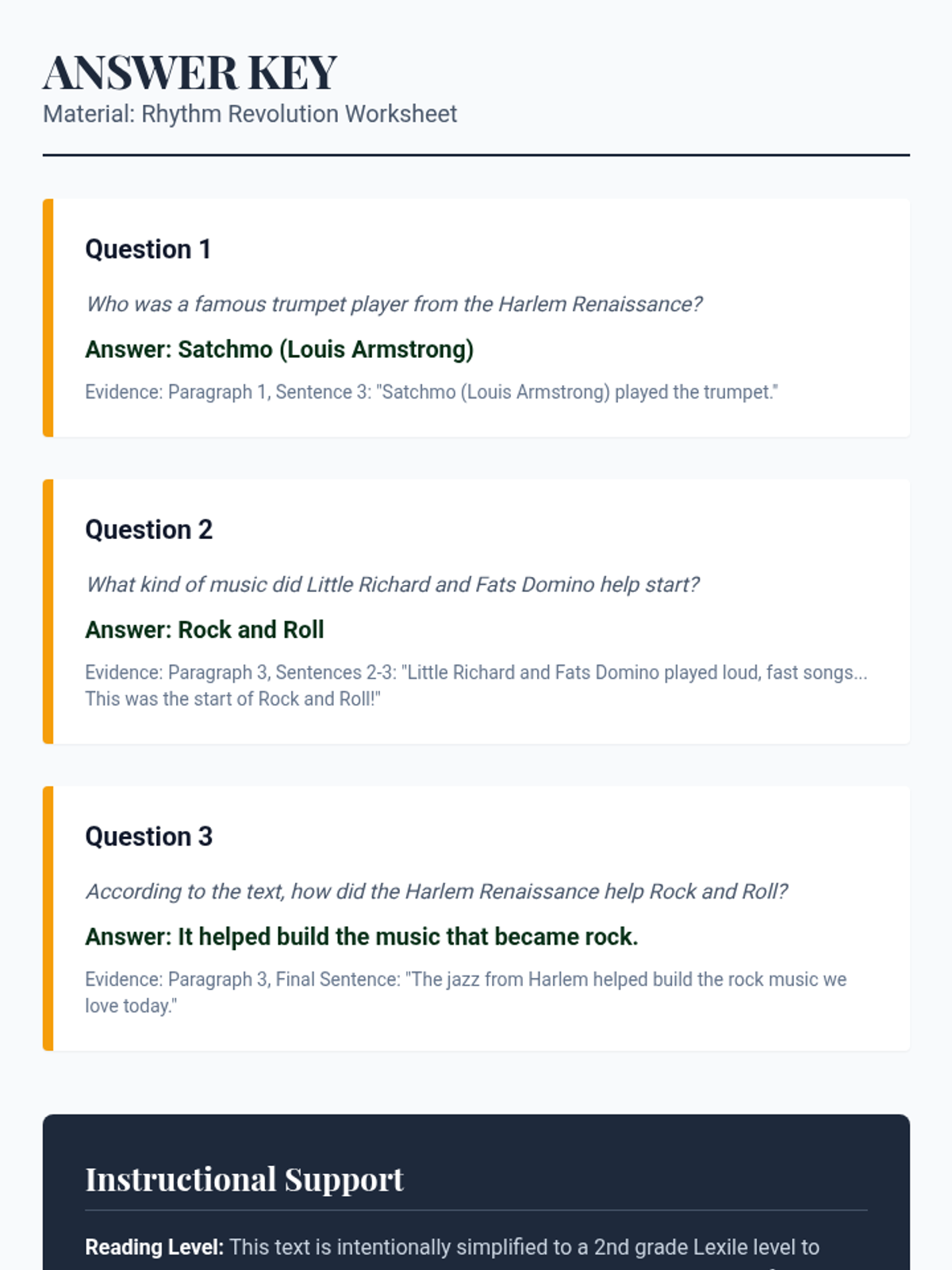
A lesson exploring the musical evolution from the Harlem Renaissance jazz scene to the birth of Rock and Roll, written at an accessible reading level.
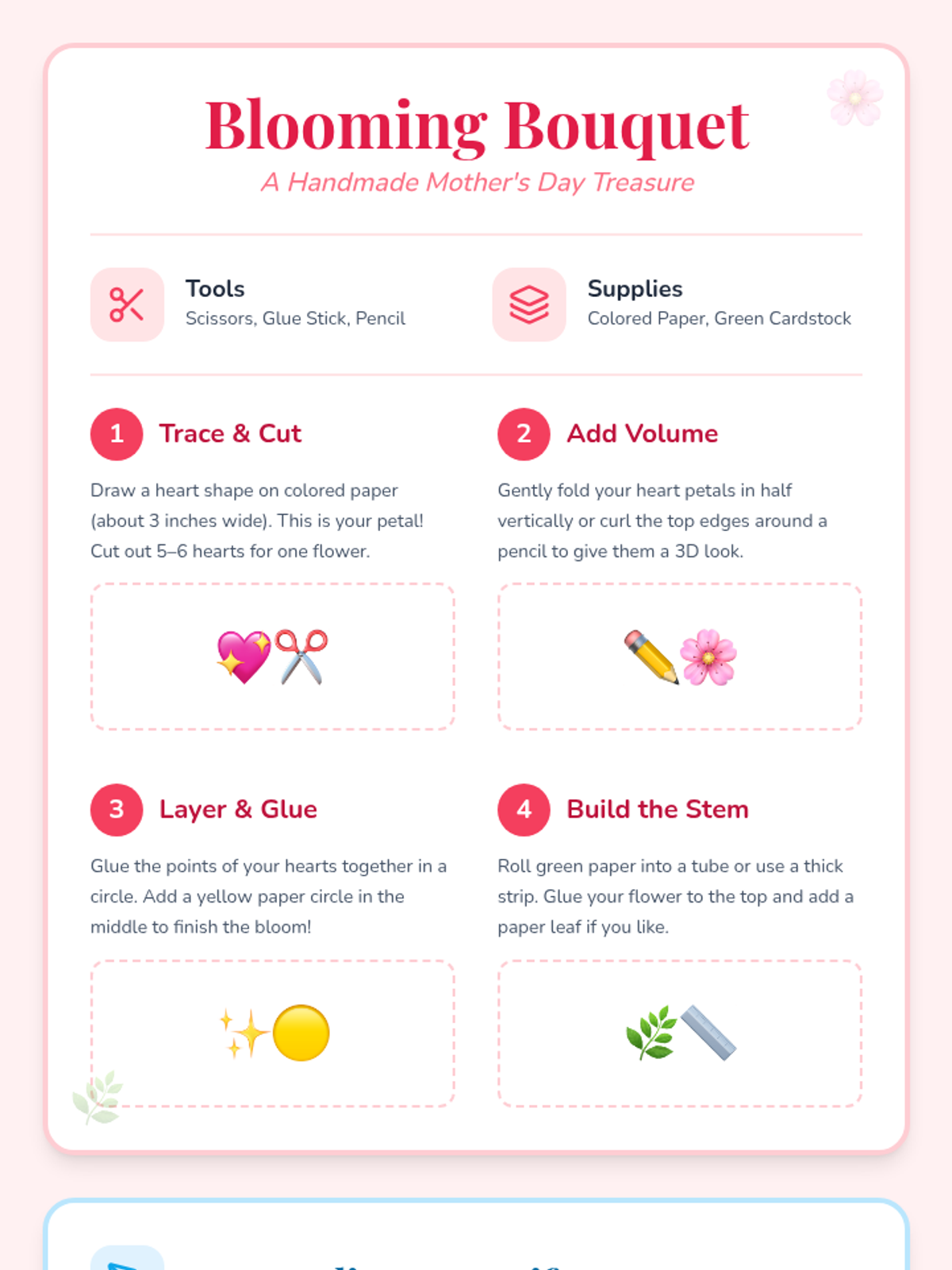
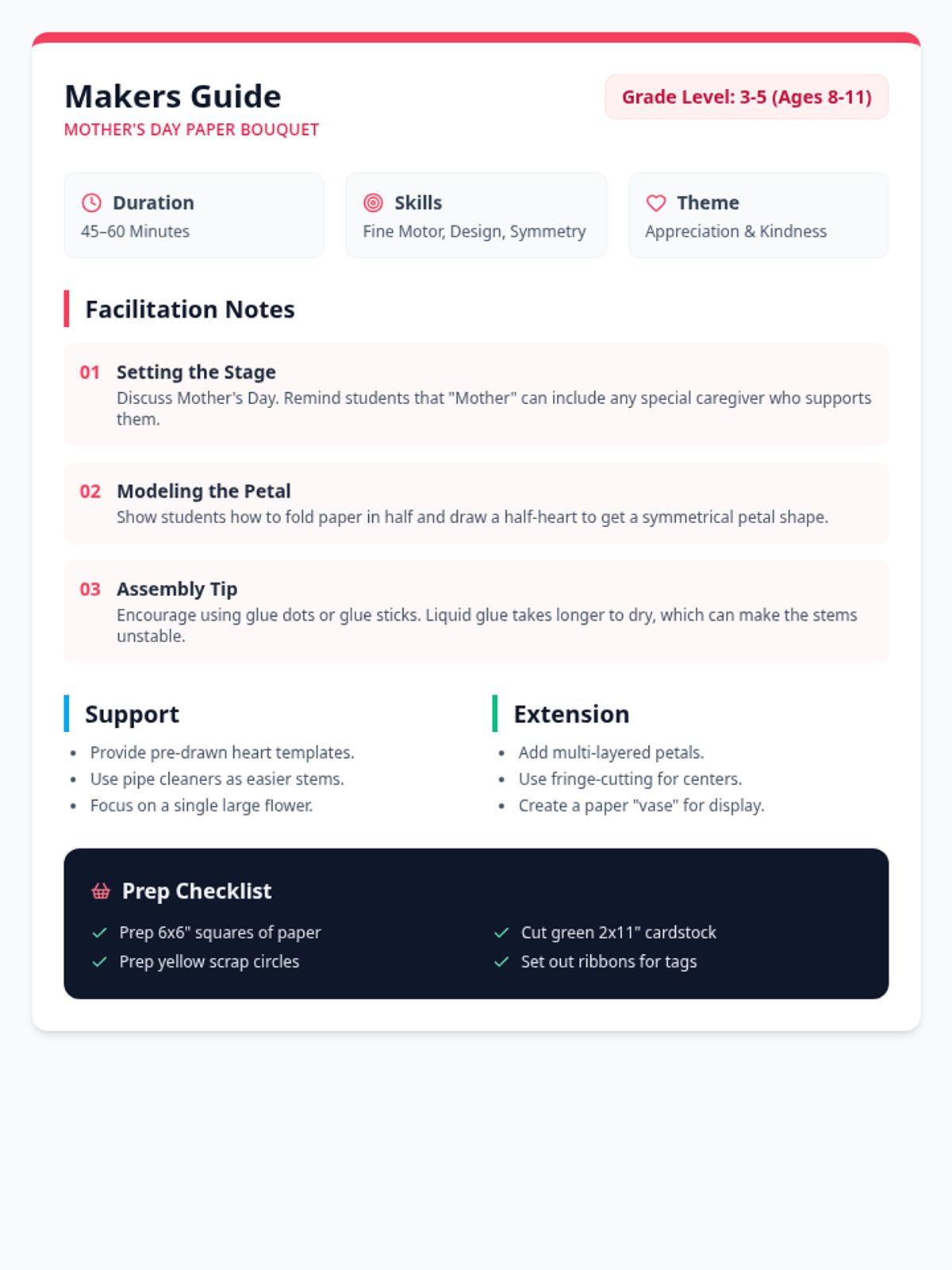
A creative crafting lesson where students design and build a personalized paper flower bouquet for Mother's Day, focusing on fine motor skills and thoughtful expression.
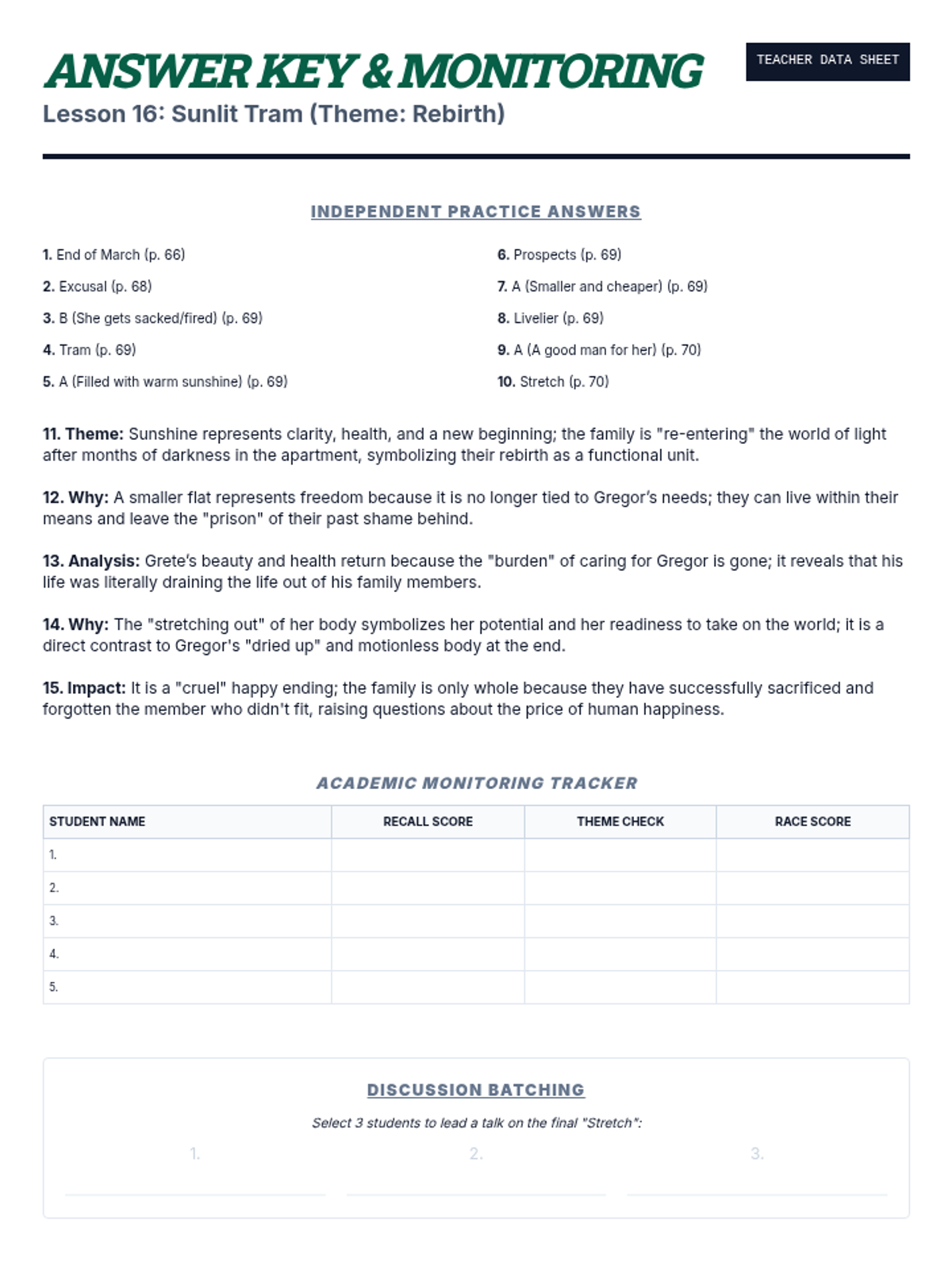
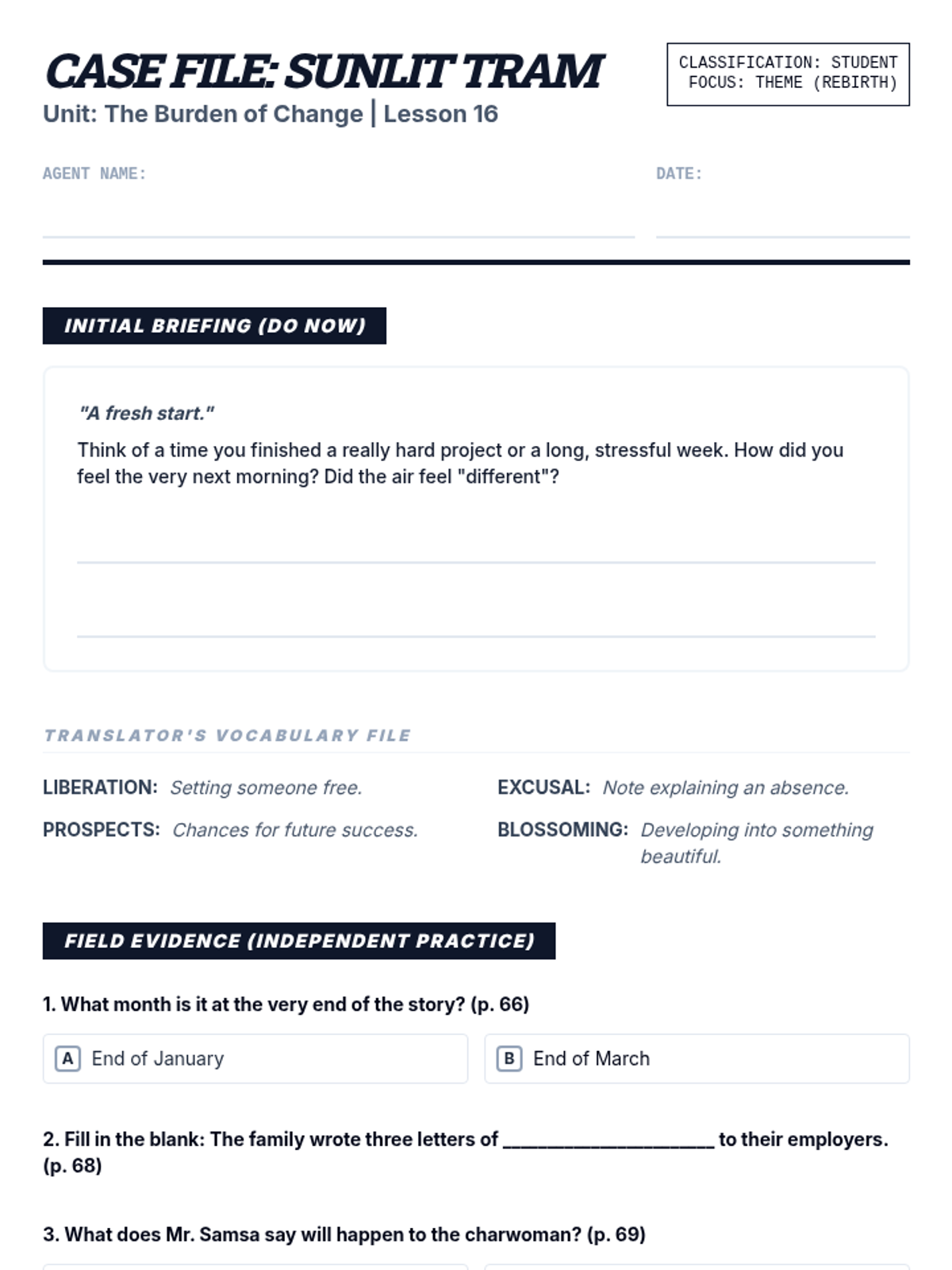
Concludes with the theme of rebirth and liberation as the family leaves the apartment and looks toward the future.
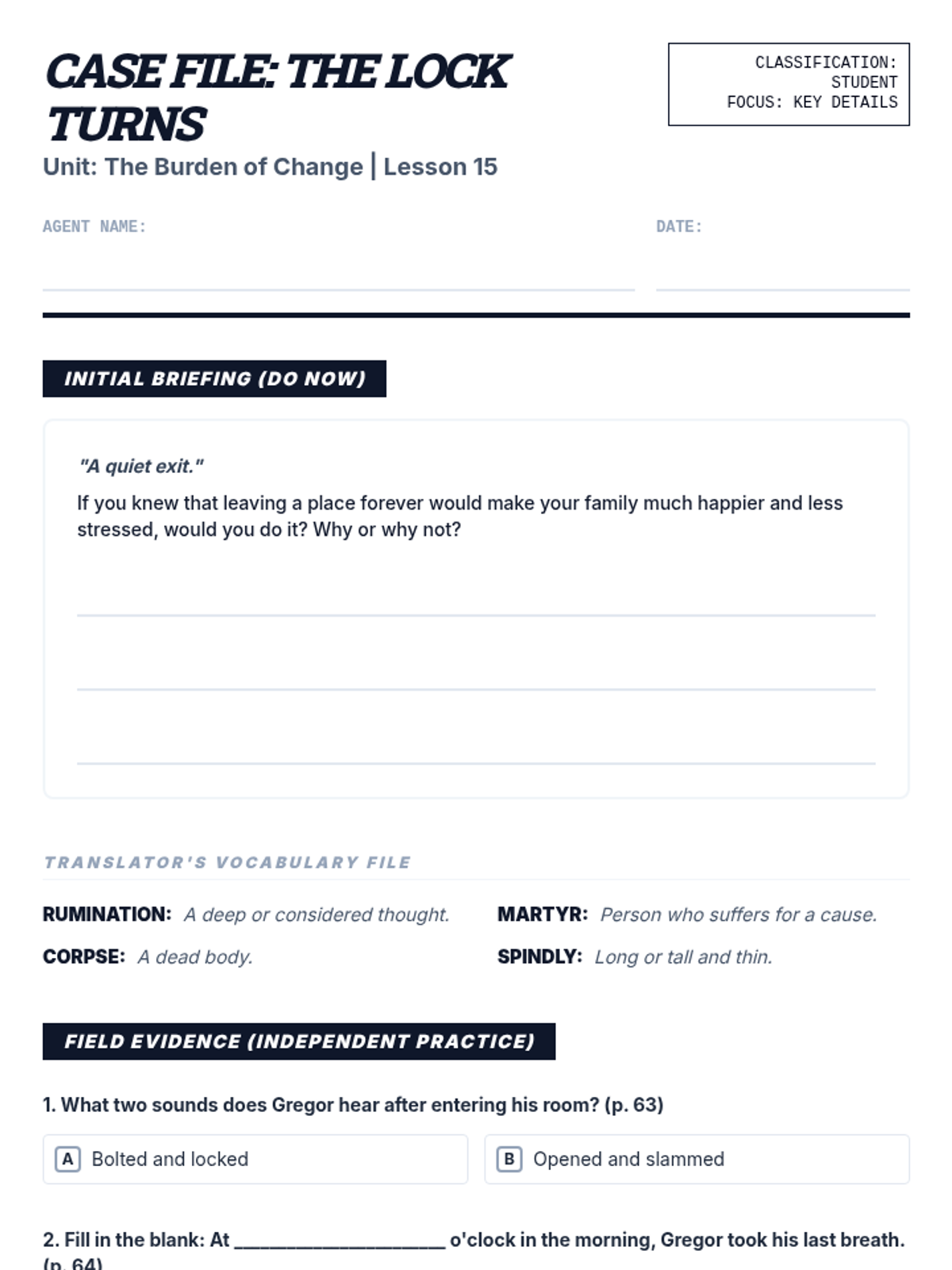
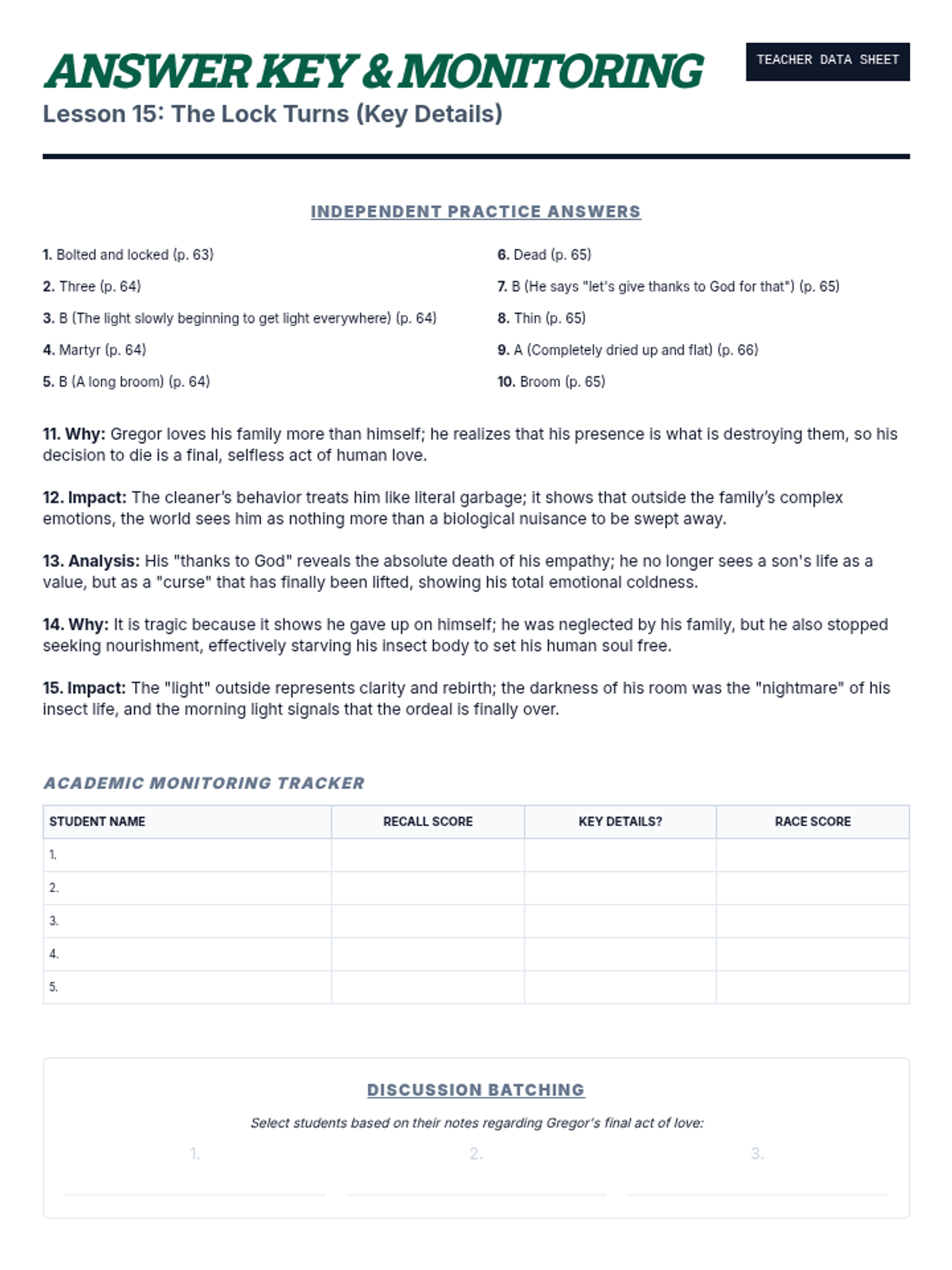
Focuses on the key details of Gregor's final moments and the discovery of his body by the charwoman.
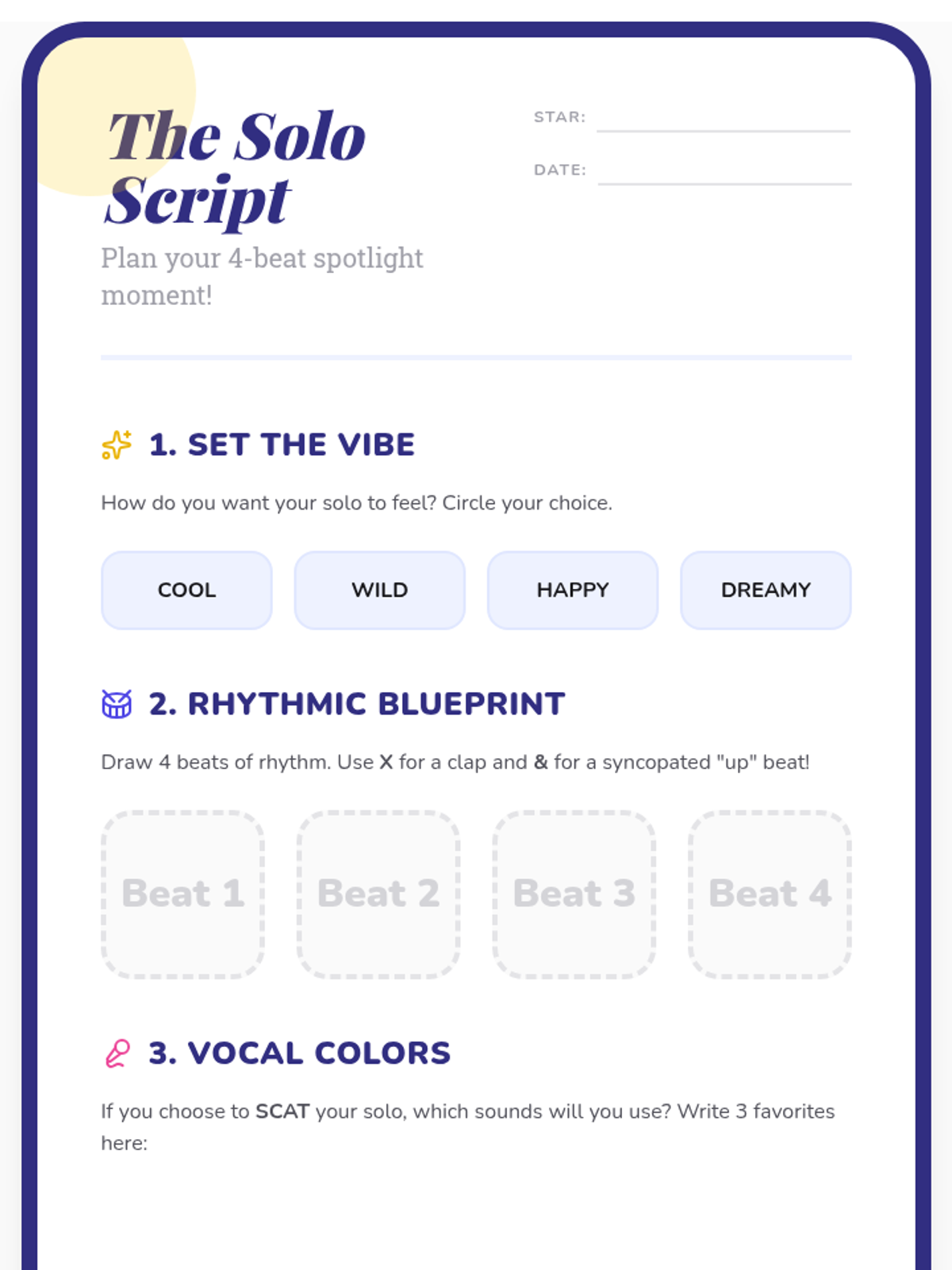
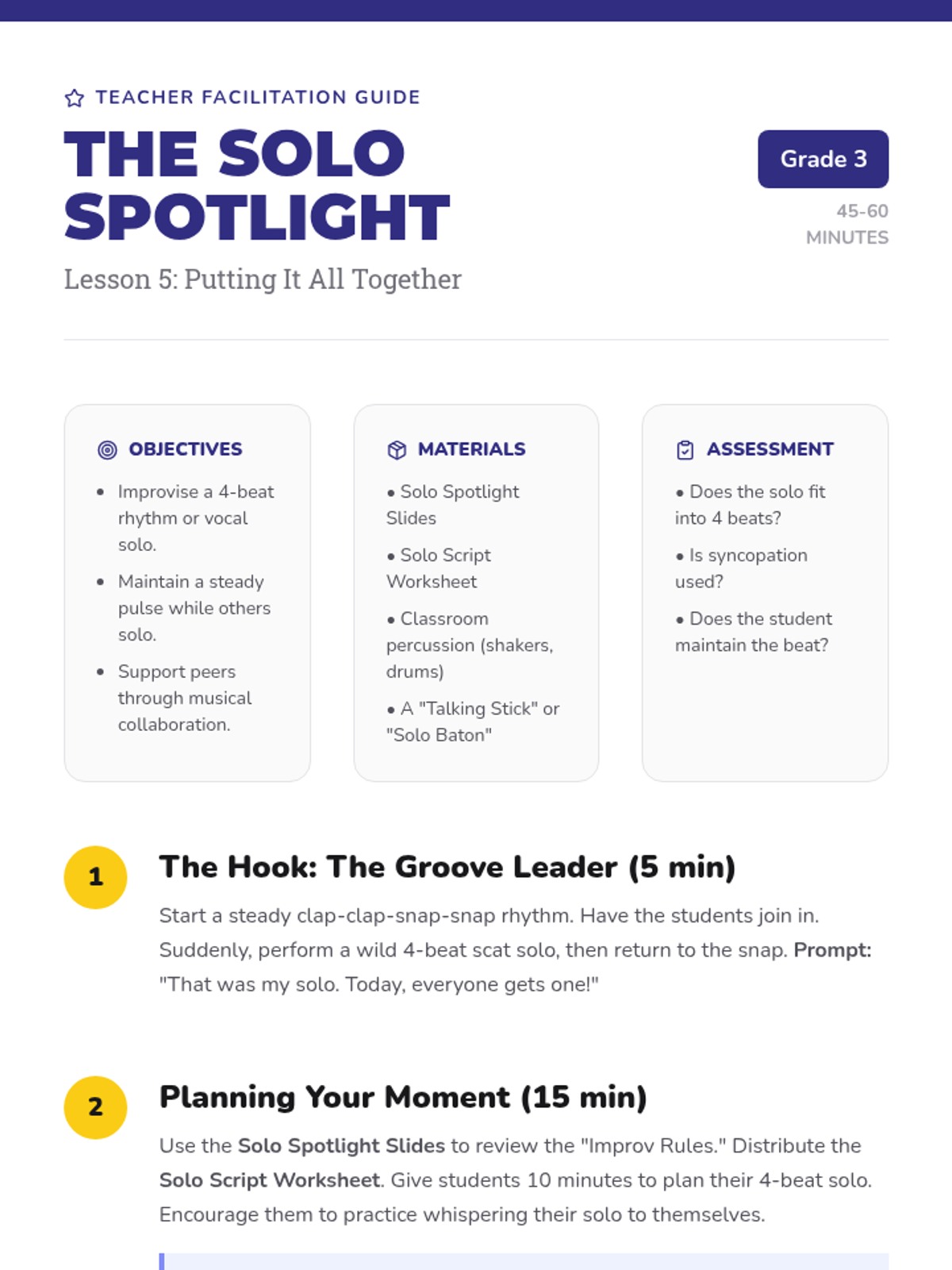
Students apply what they've learned by creating a classroom percussion circle where individuals take turns 'soloing' over a steady beat, applying the concept of improvisation.
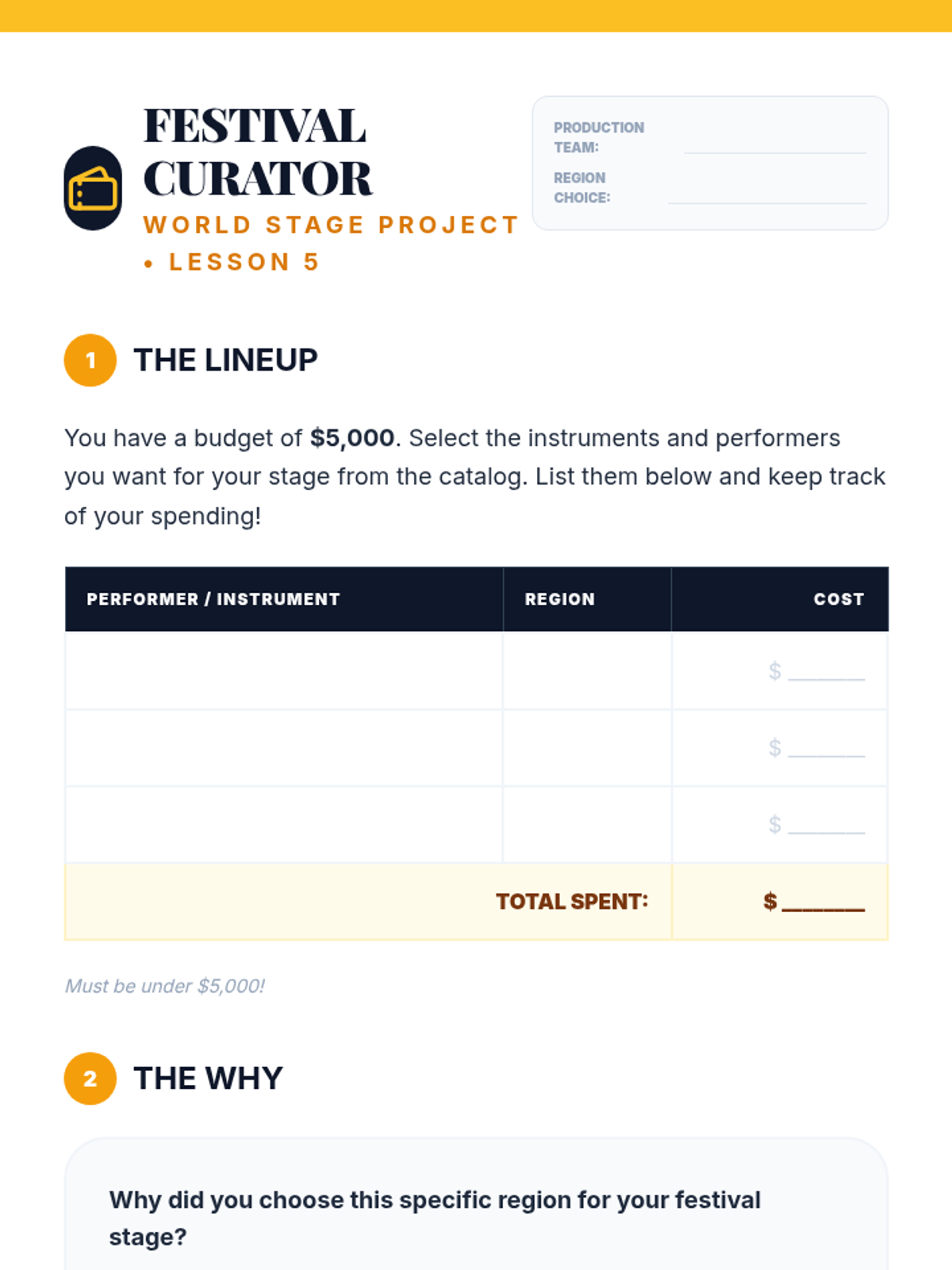
Students work in small groups to 'curate' a stage for a world music festival. They select a region, choose instruments to feature, and explain why that music is unique.
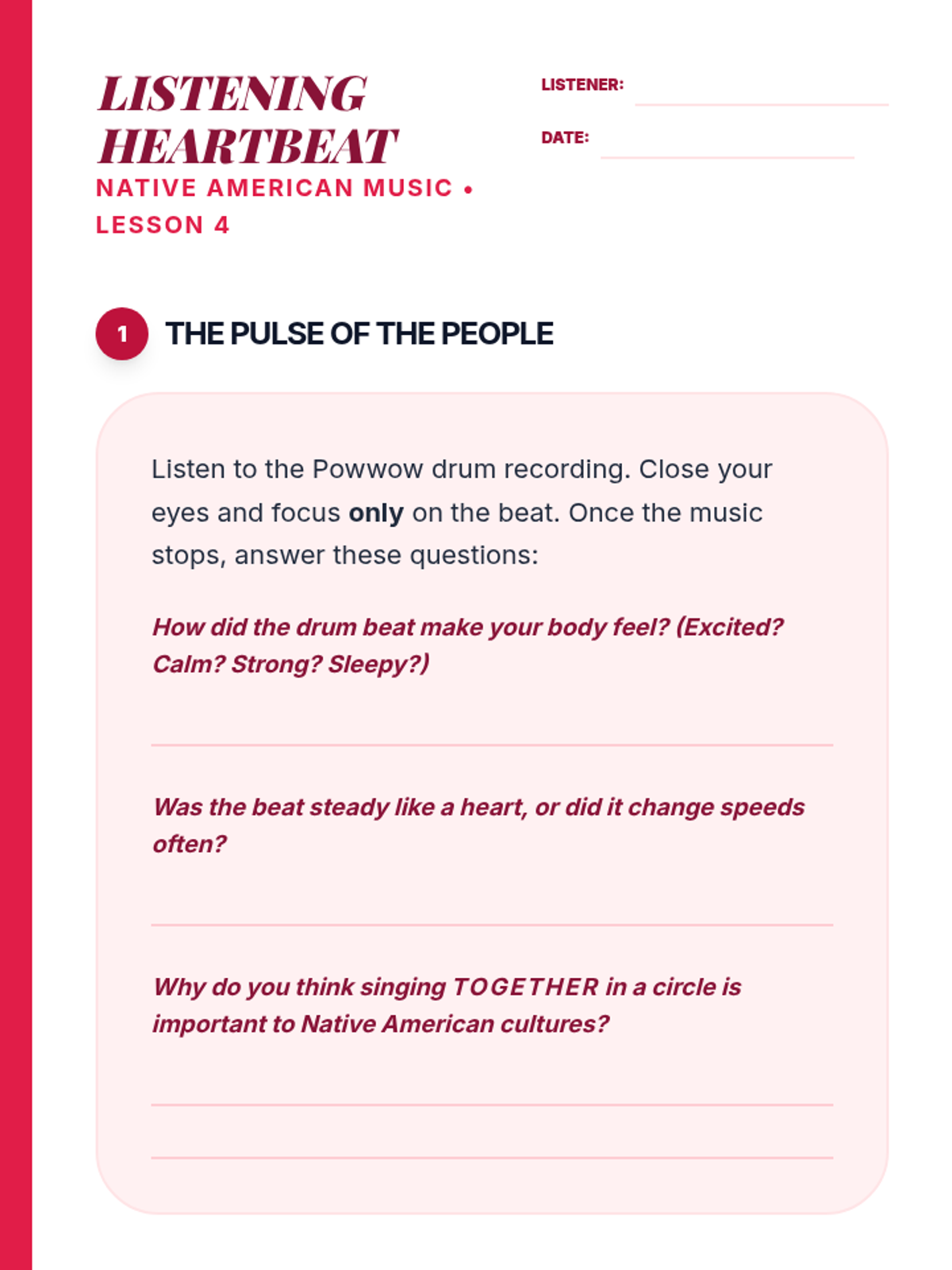
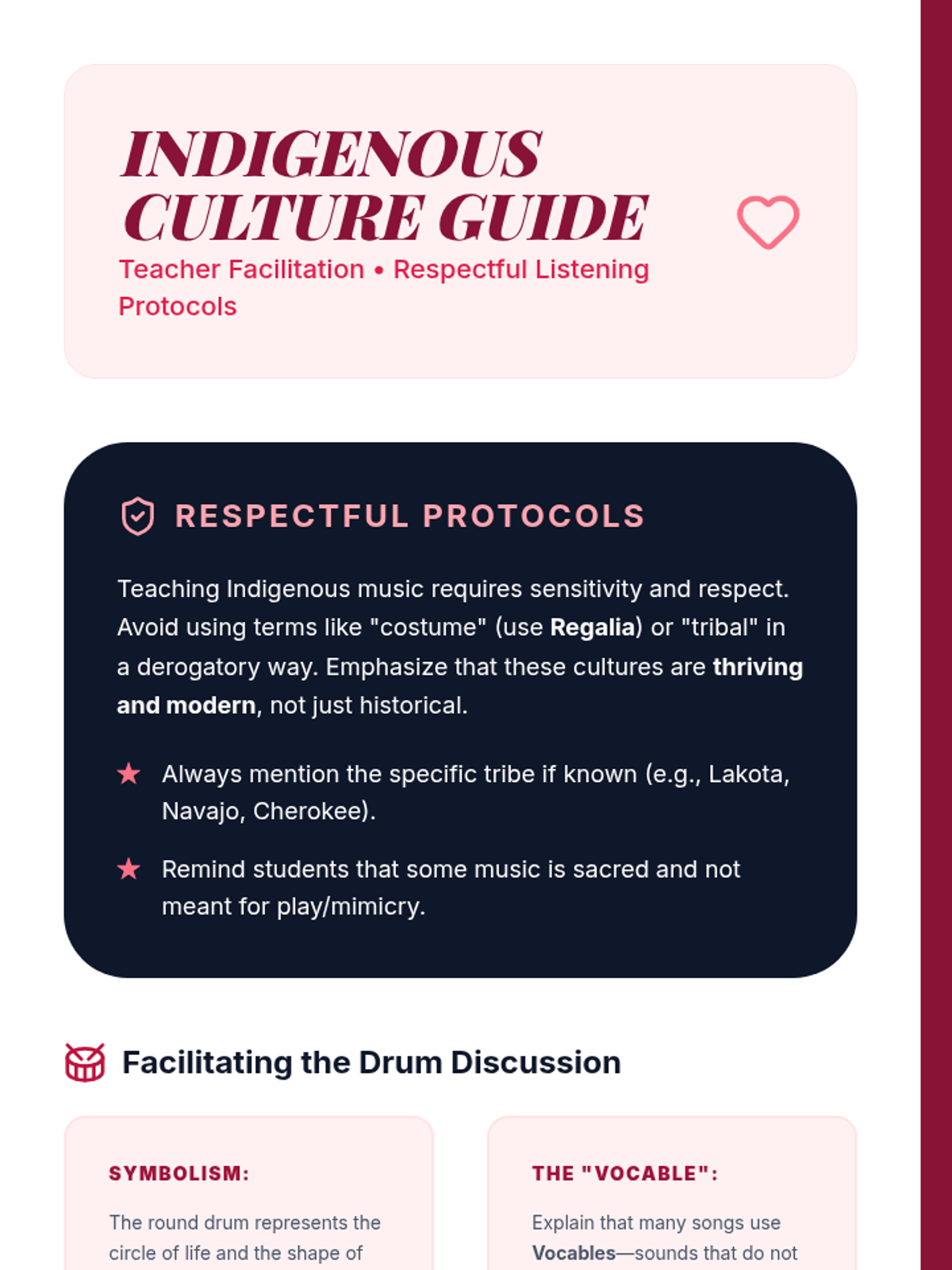
Students listen to the drumming and singing styles of Native American tribes. They discuss the importance of the drum as the 'heartbeat' and the preservation of culture through powwow music.
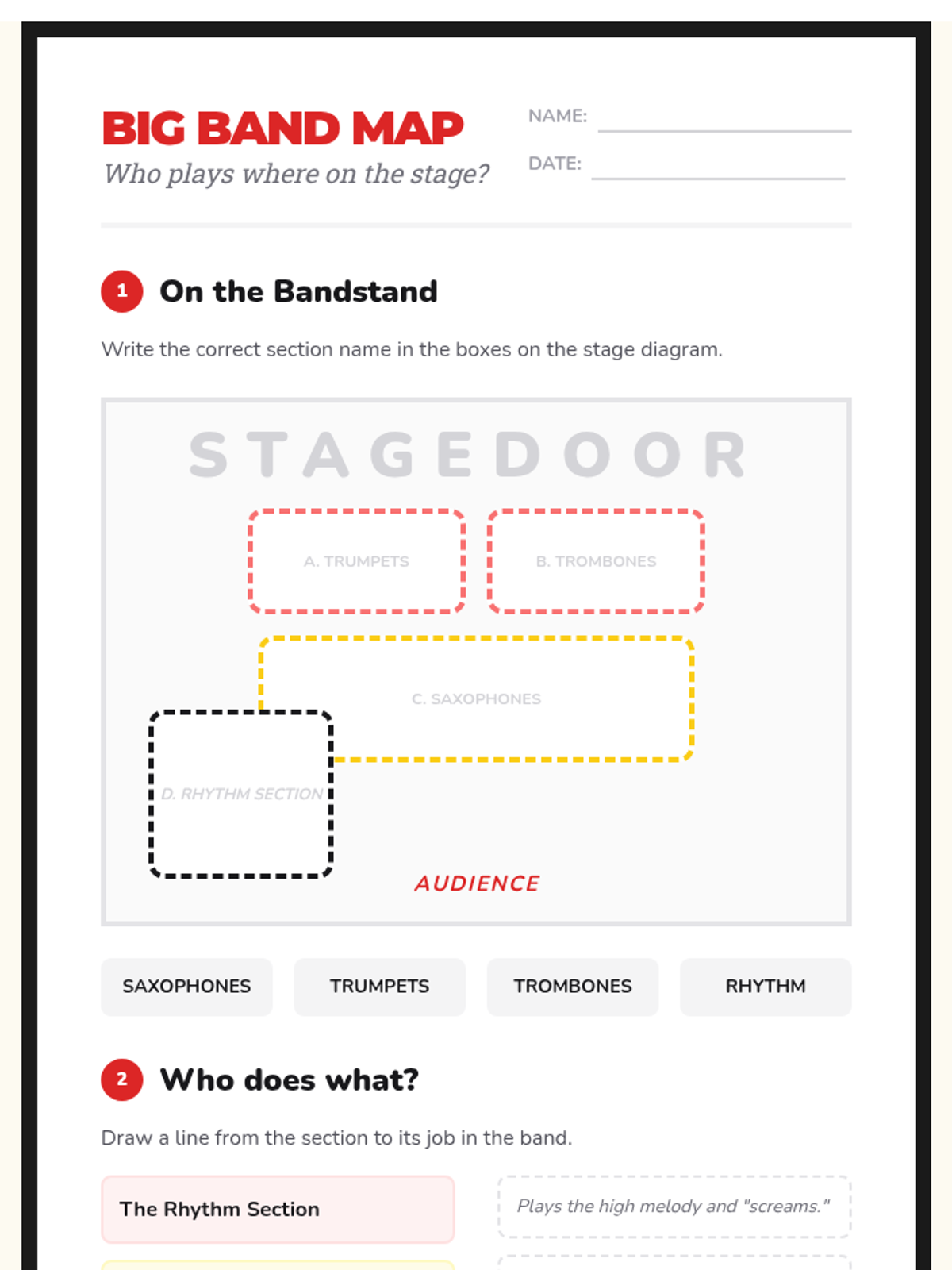
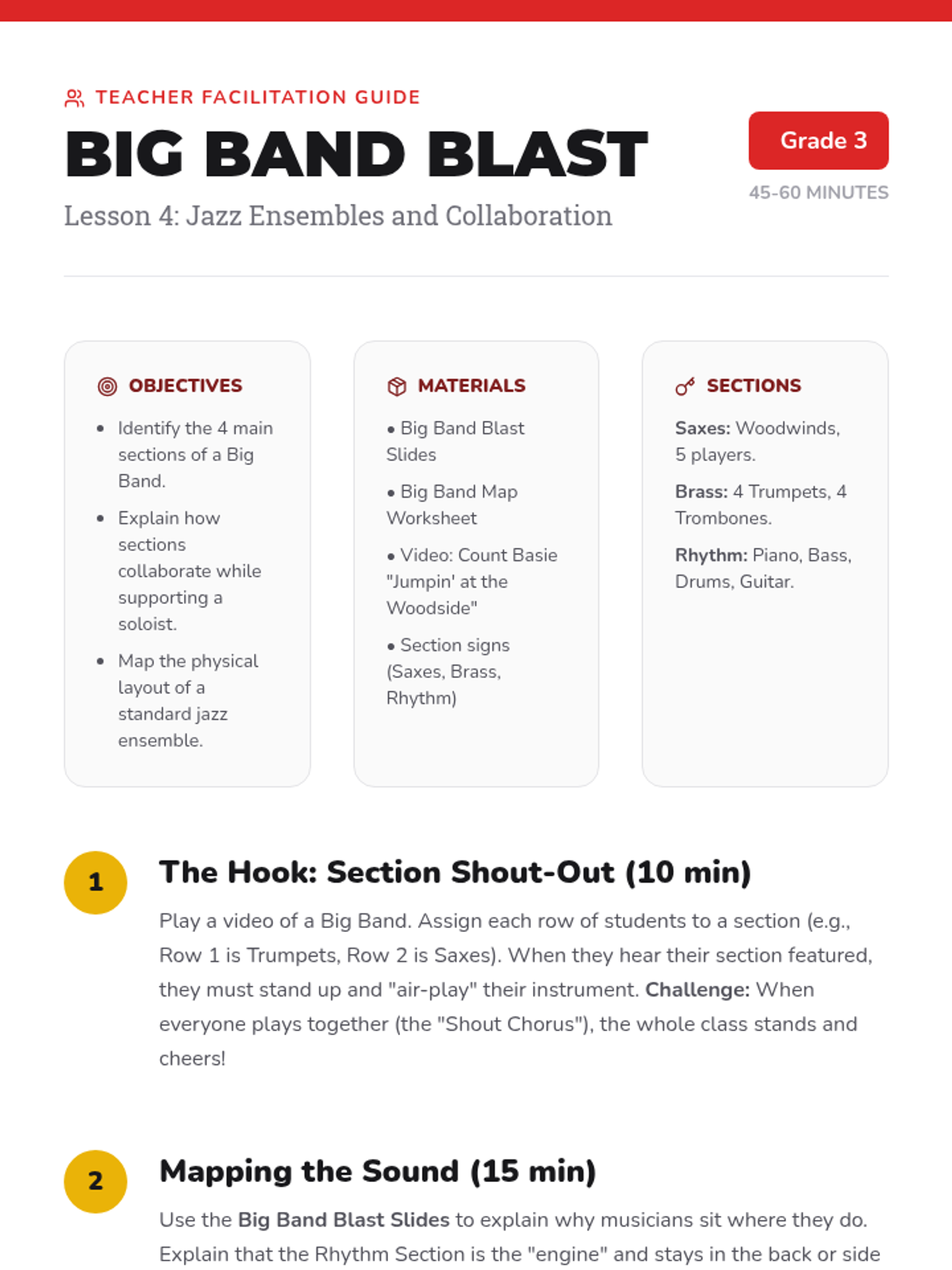
Students look at larger jazz ensembles, identifying the sections (saxophones, trumpets, trombones, rhythm). They learn how many musicians play together while still allowing for solos.
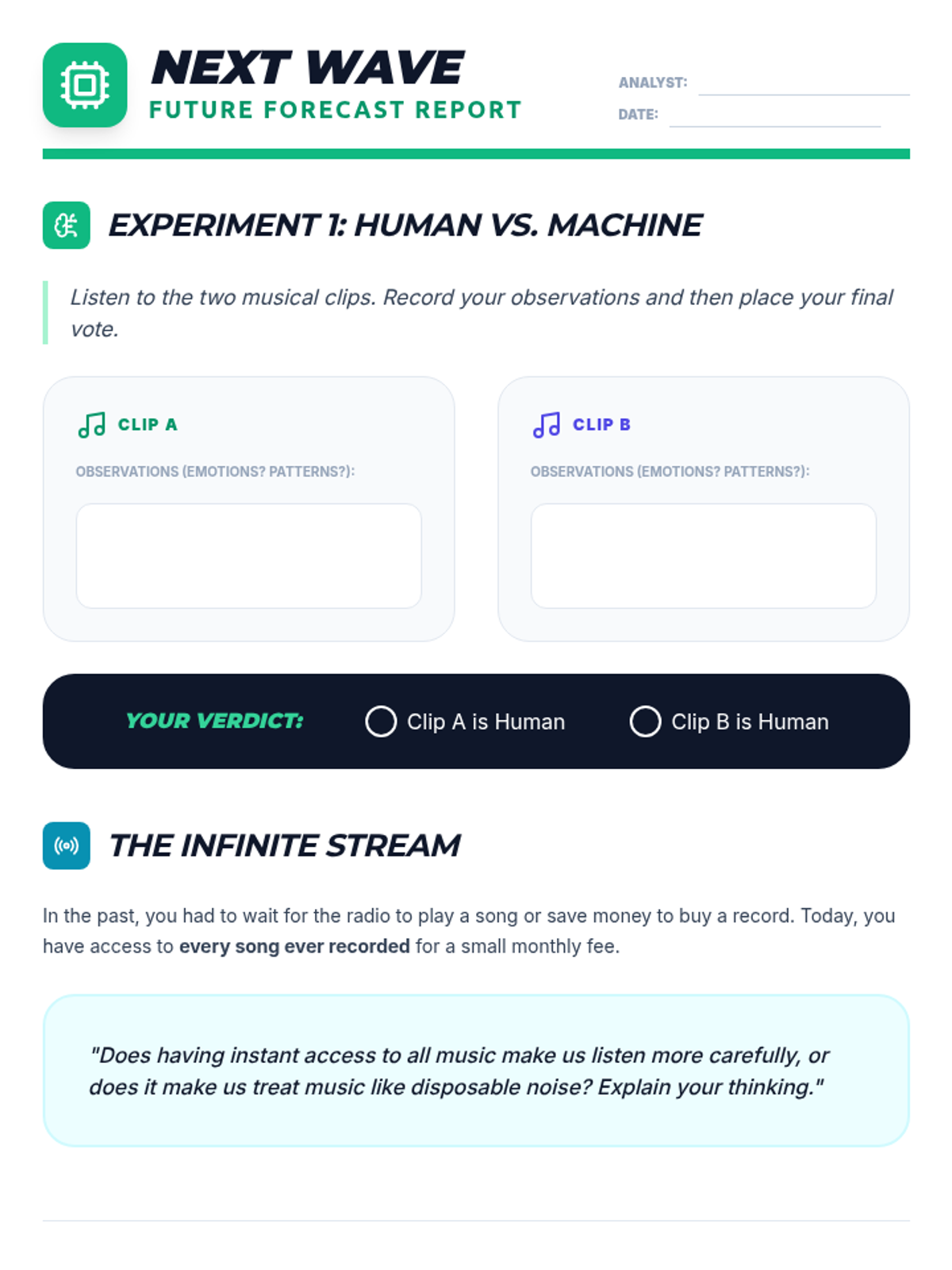
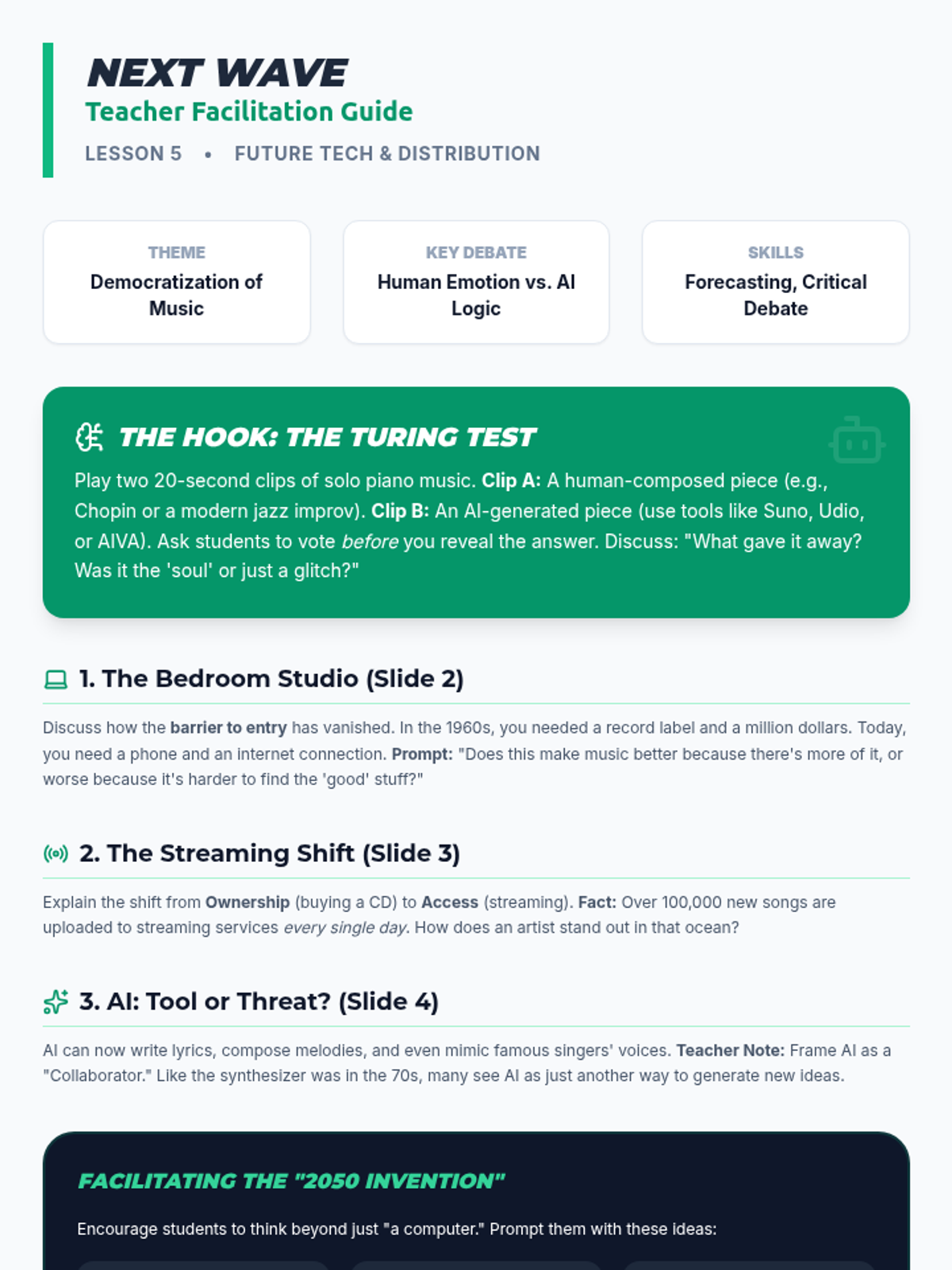
Students debate the future of music history, looking at streaming, AI composition, and bedroom production, analyzing how digital tools change the creation and distribution of music.
Students investigate the wind and percussion instruments of South America, such as panpipes and maracas, and explore the connection between music and dance in Latin American cultures.
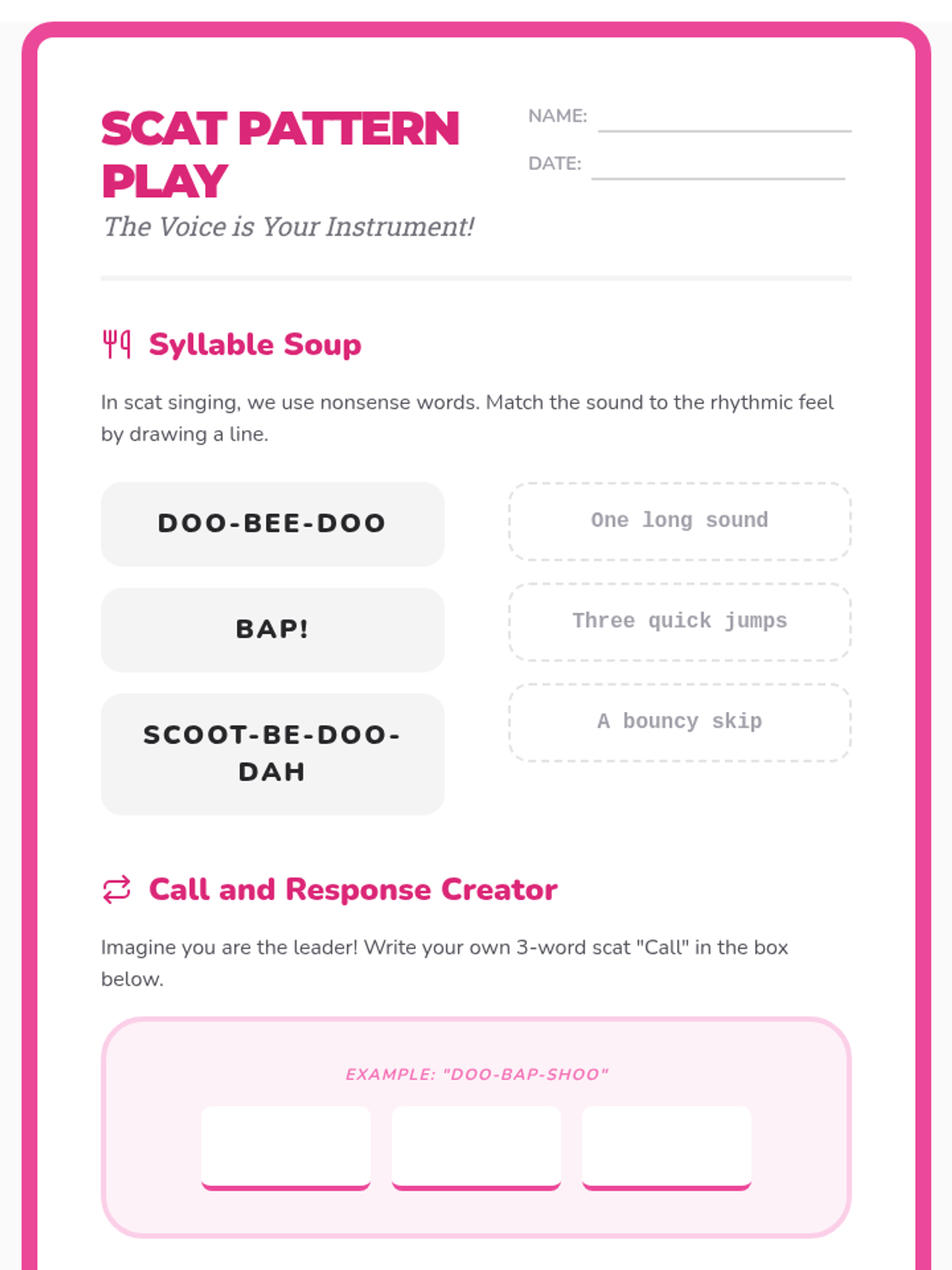
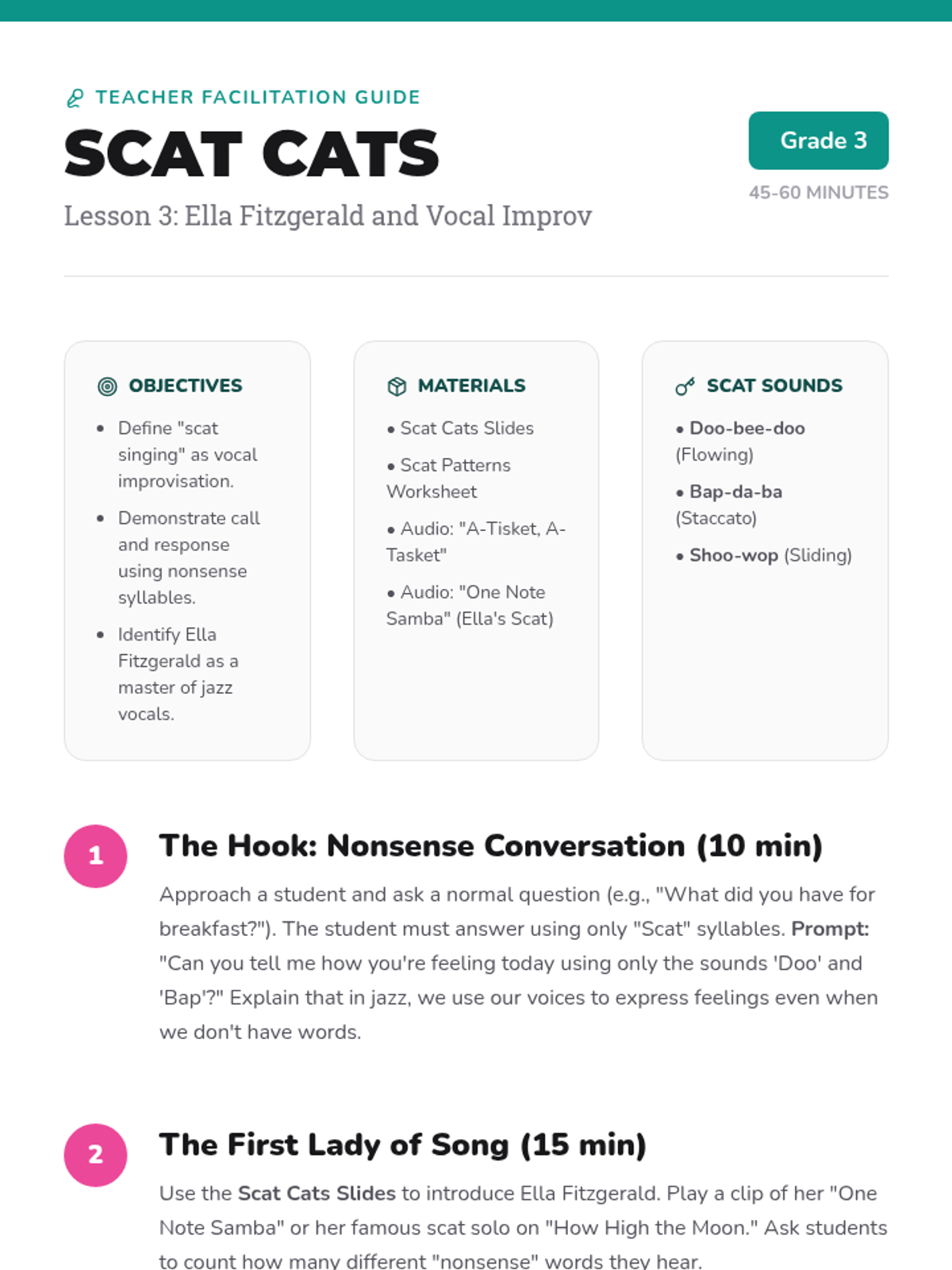
Students explore vocal improvisation through scat singing—using the voice as an instrument with nonsense syllables. They practice call-and-response scat patterns.
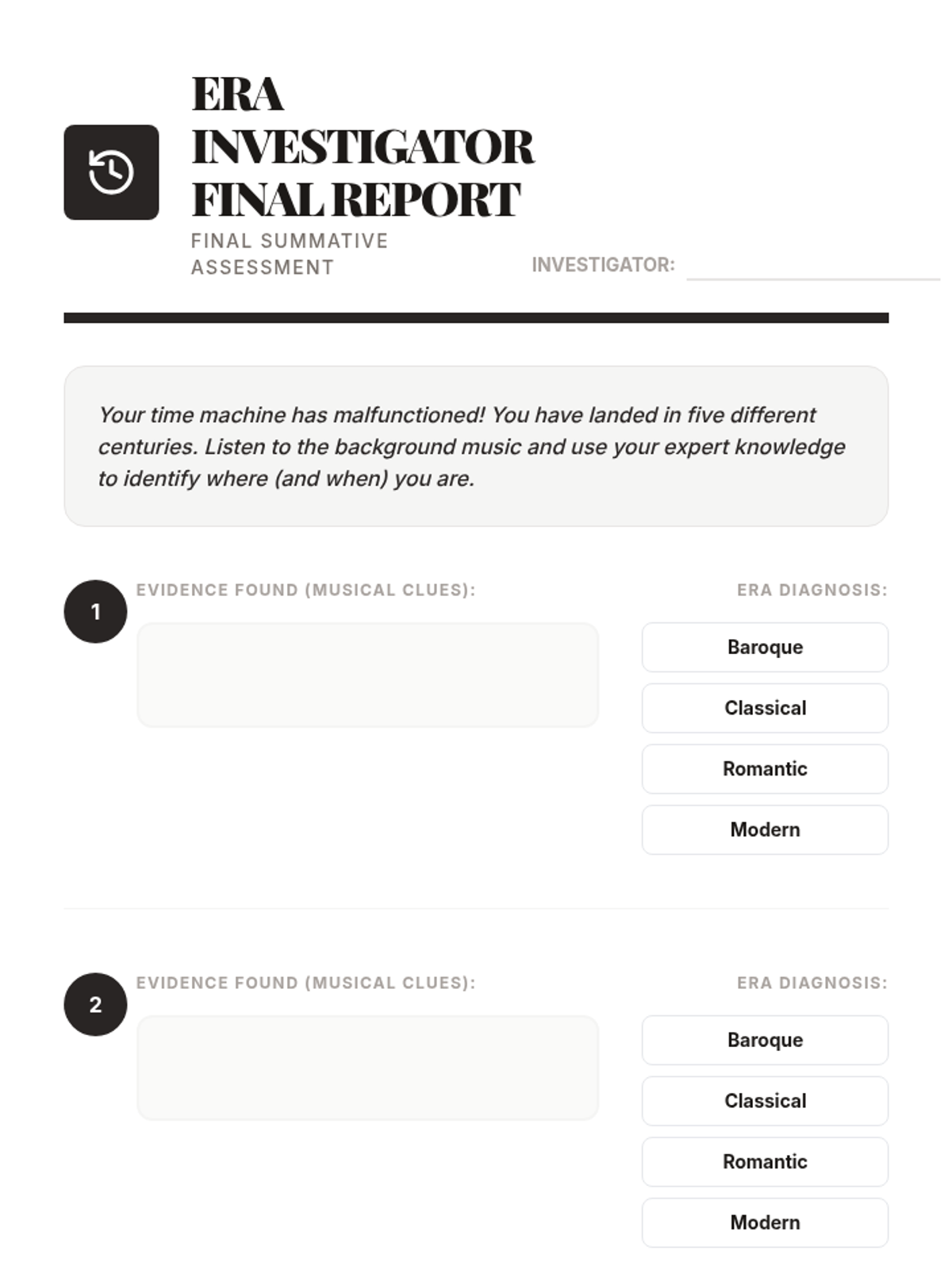
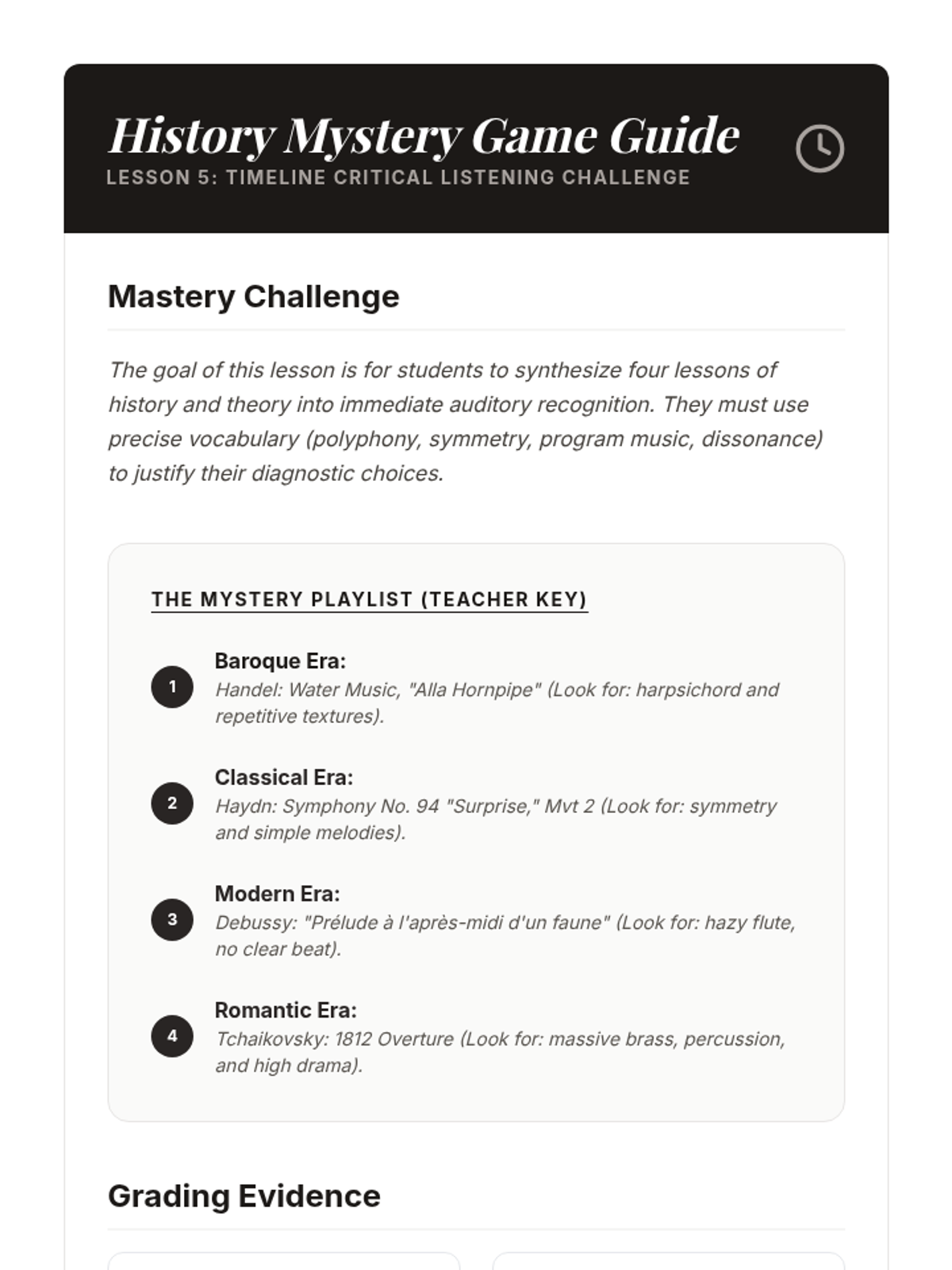
Synthesize knowledge by categorizing mystery musical excerpts into the correct historical era. Students will use specific vocabulary to justify their choices in a 'Time Machine' game.
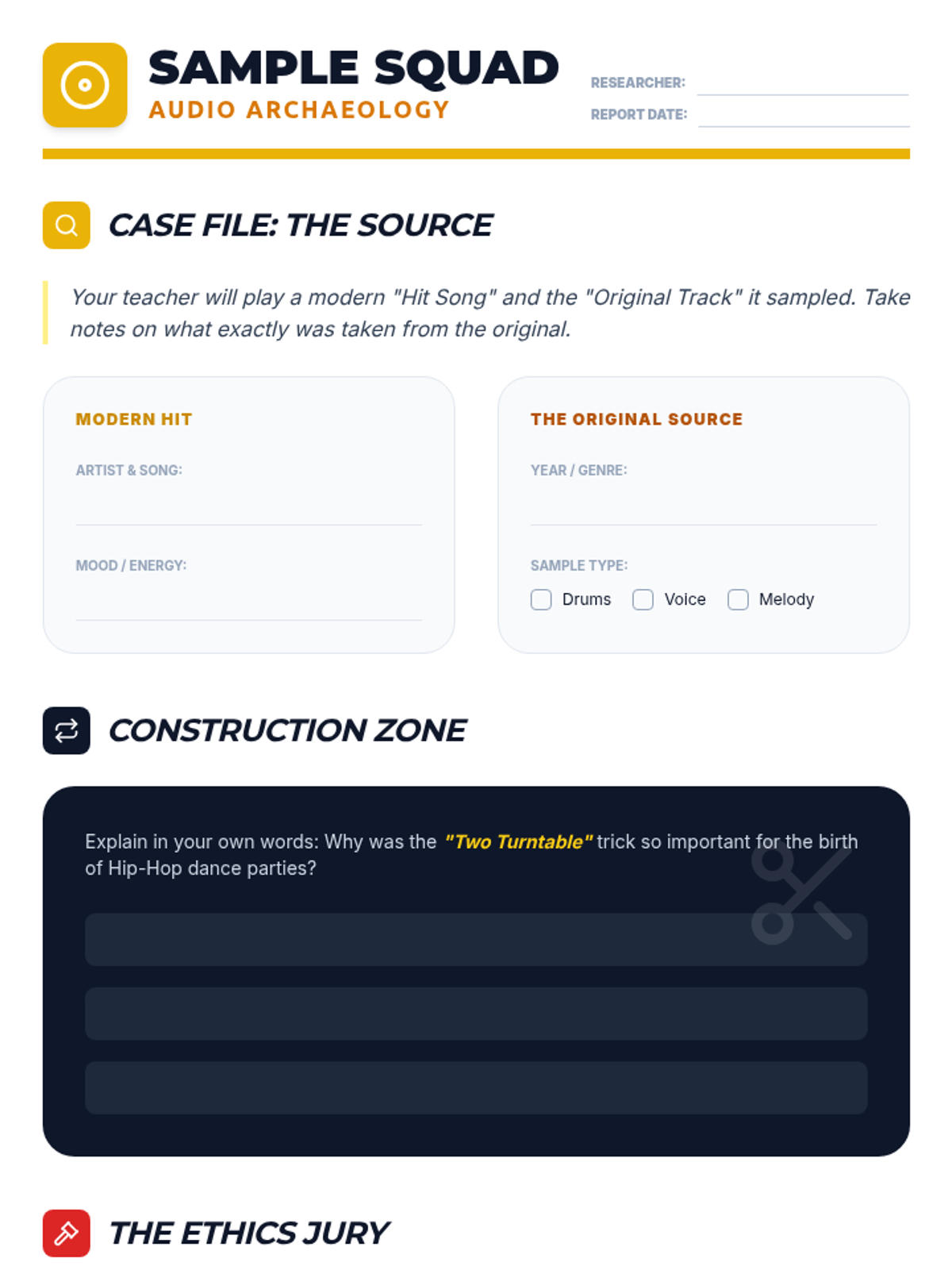
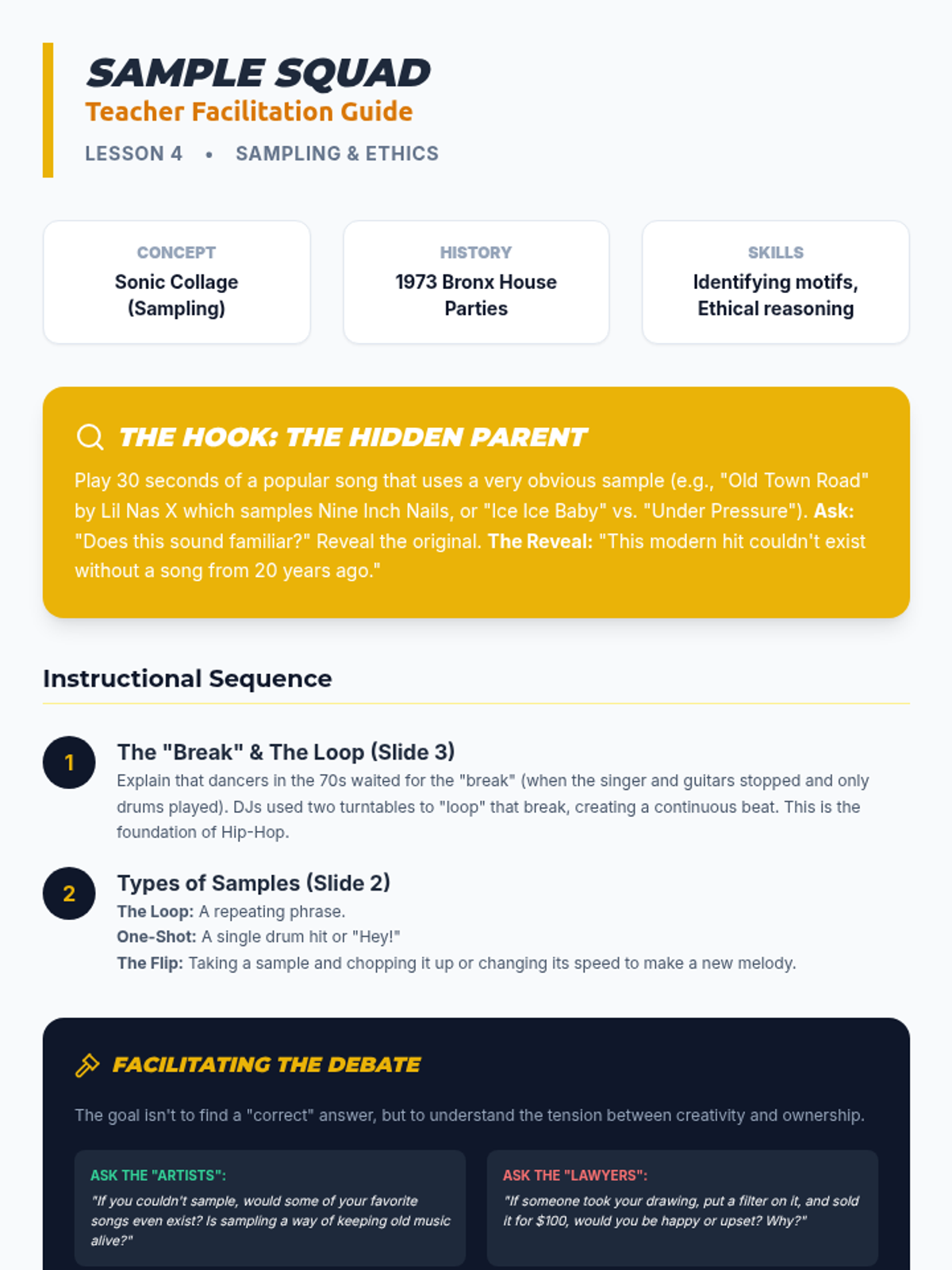
Students investigate the origins of Hip-Hop and the revolutionary technique of sampling, discussing the artistic and legal implications of repurposing existing audio to create new music.
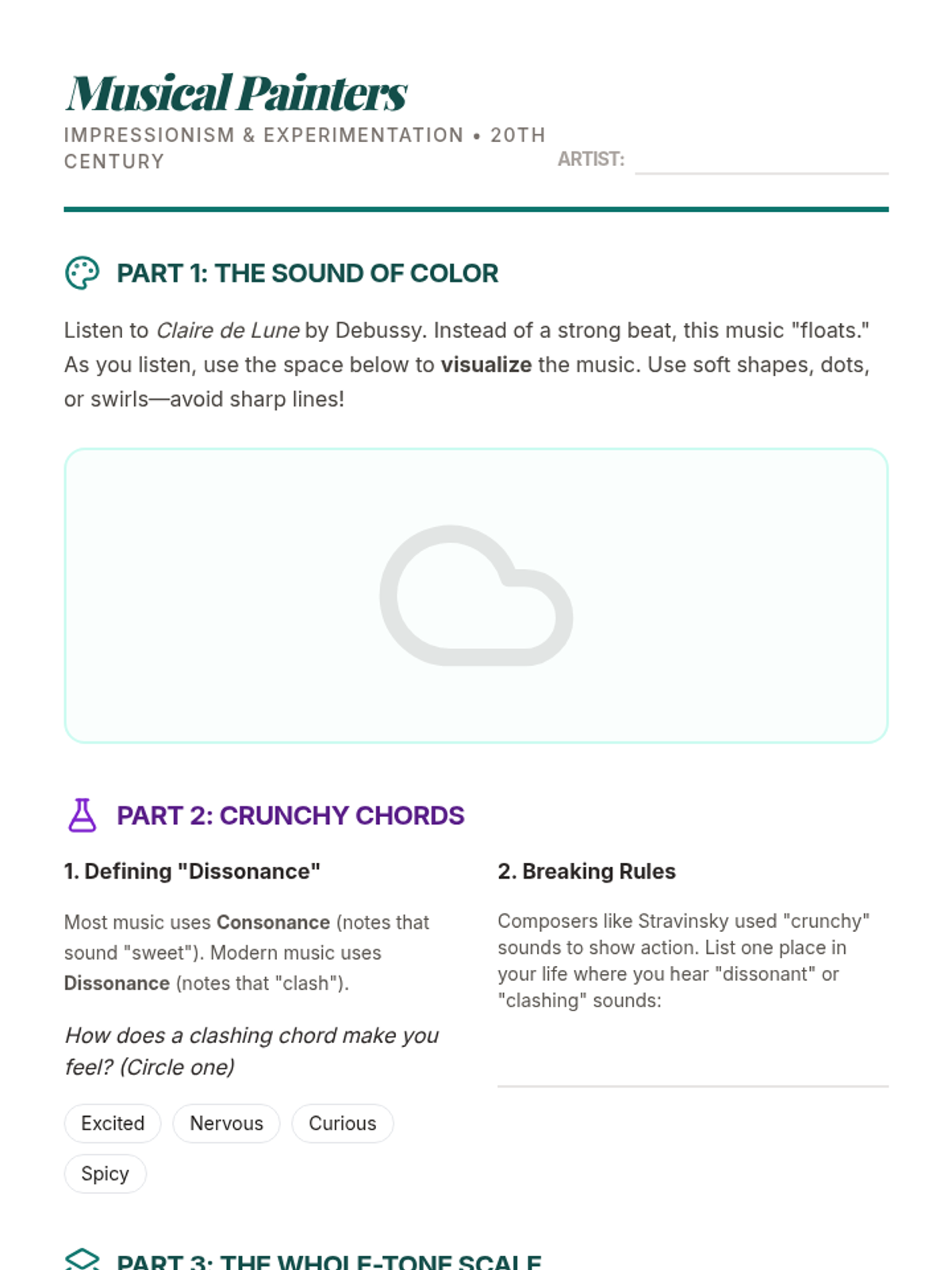
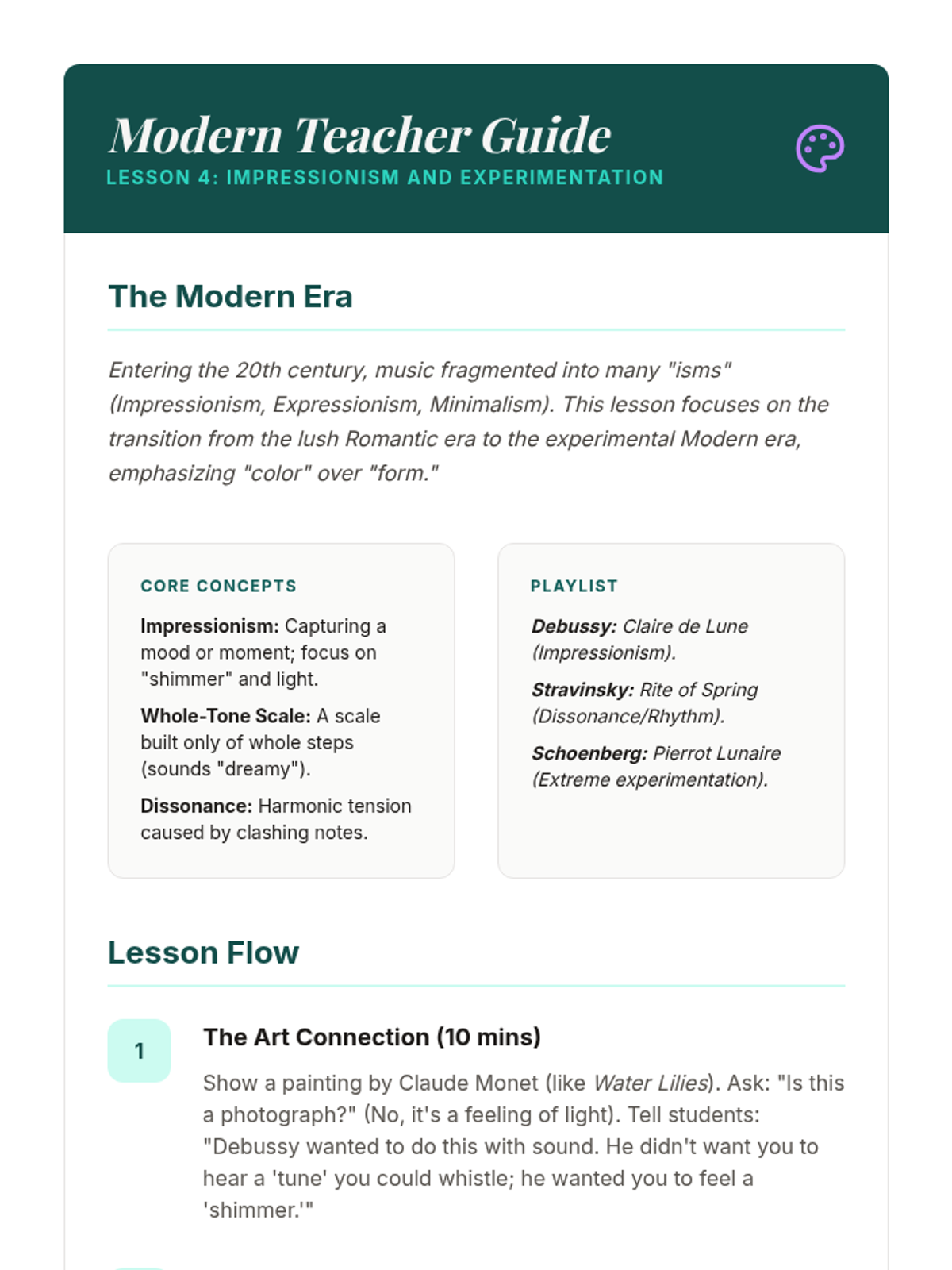
Examine how 20th-century composers like Debussy used 'colors' and dissonance to break traditional rules. Students will experiment with whole-tone scales and auditory analysis.
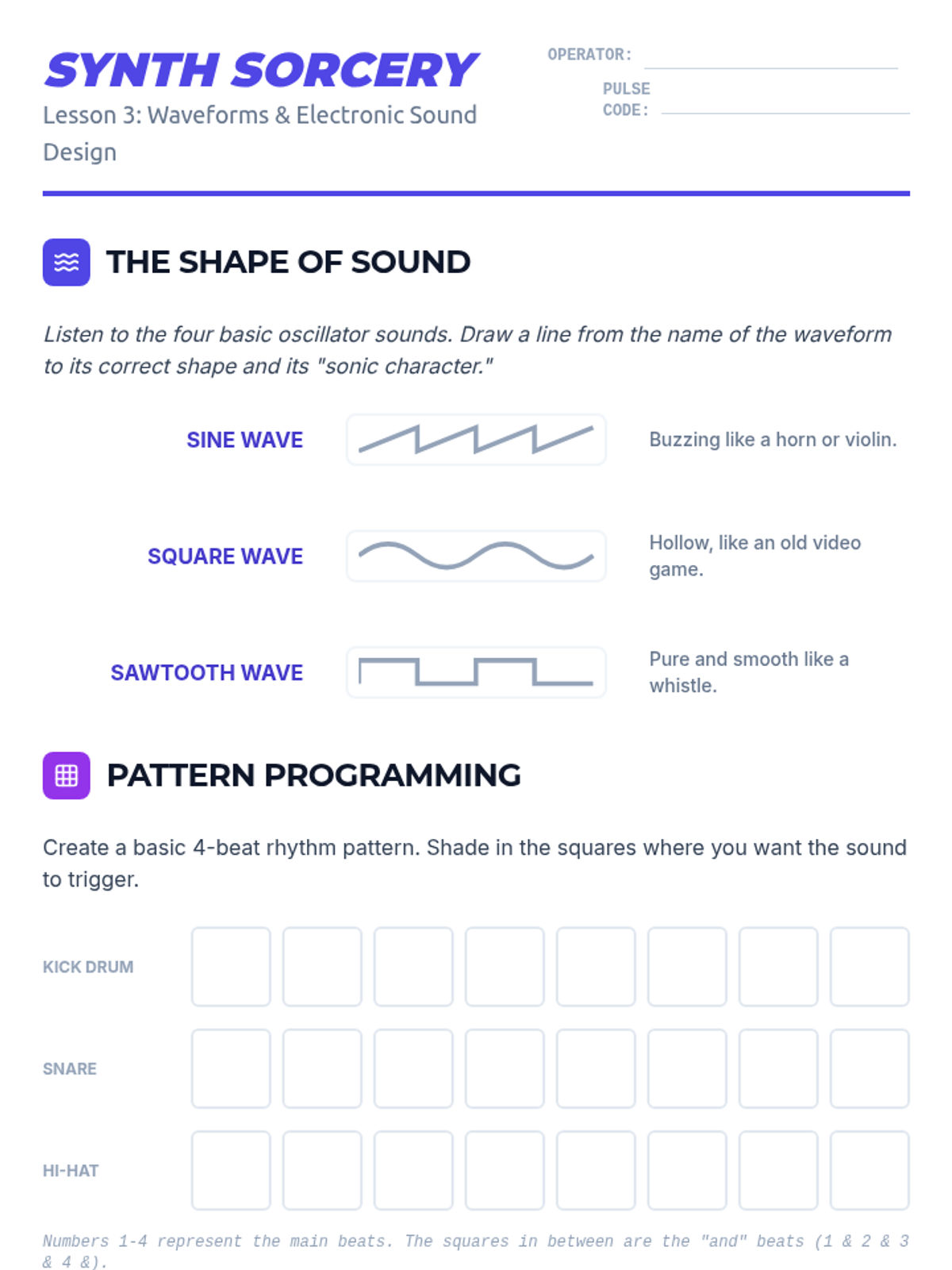
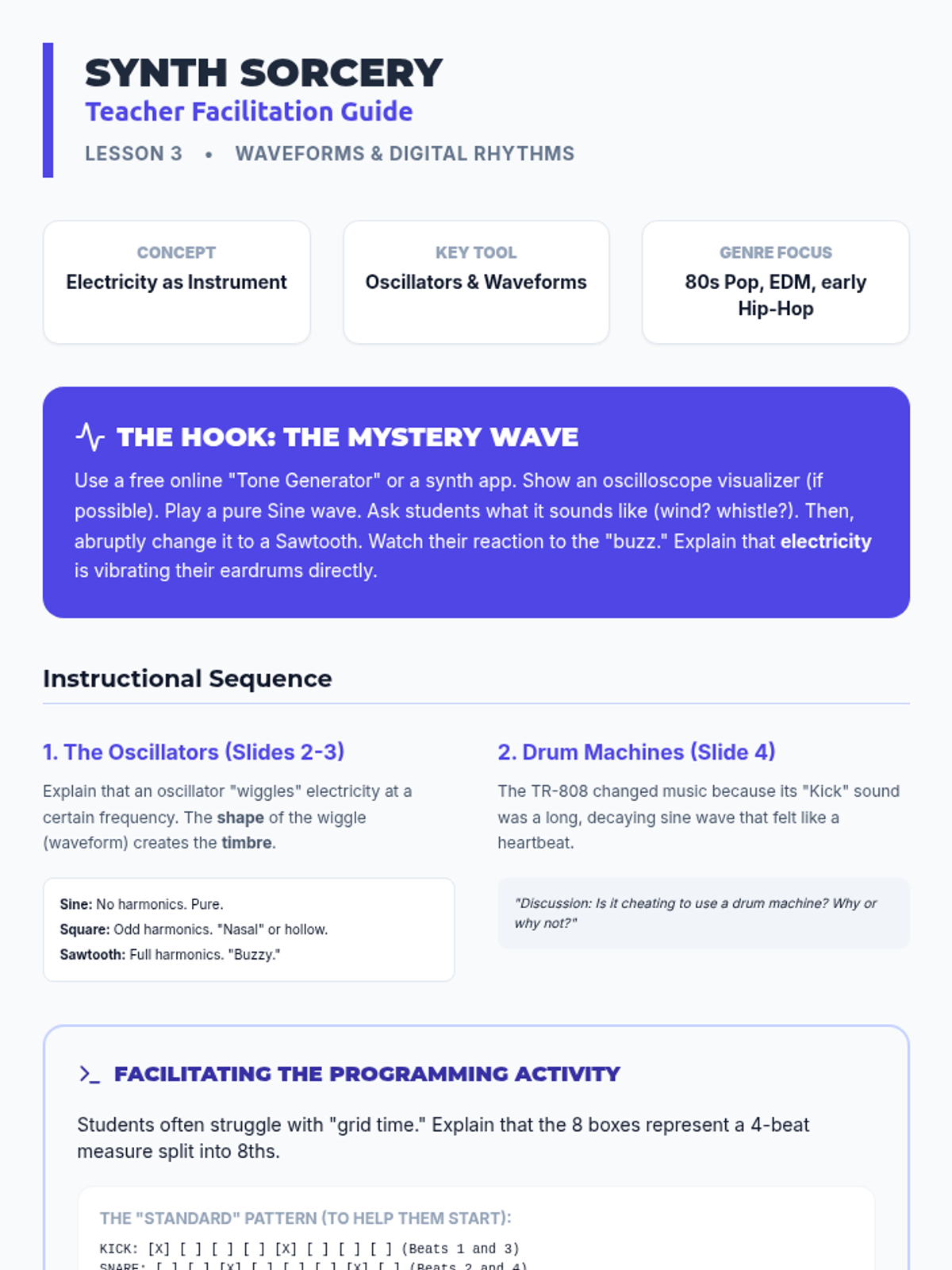
Students explore the introduction of synthesizers and drum machines in the 70s and 80s, learning about waveforms and how electricity can be used to design completely new sounds.
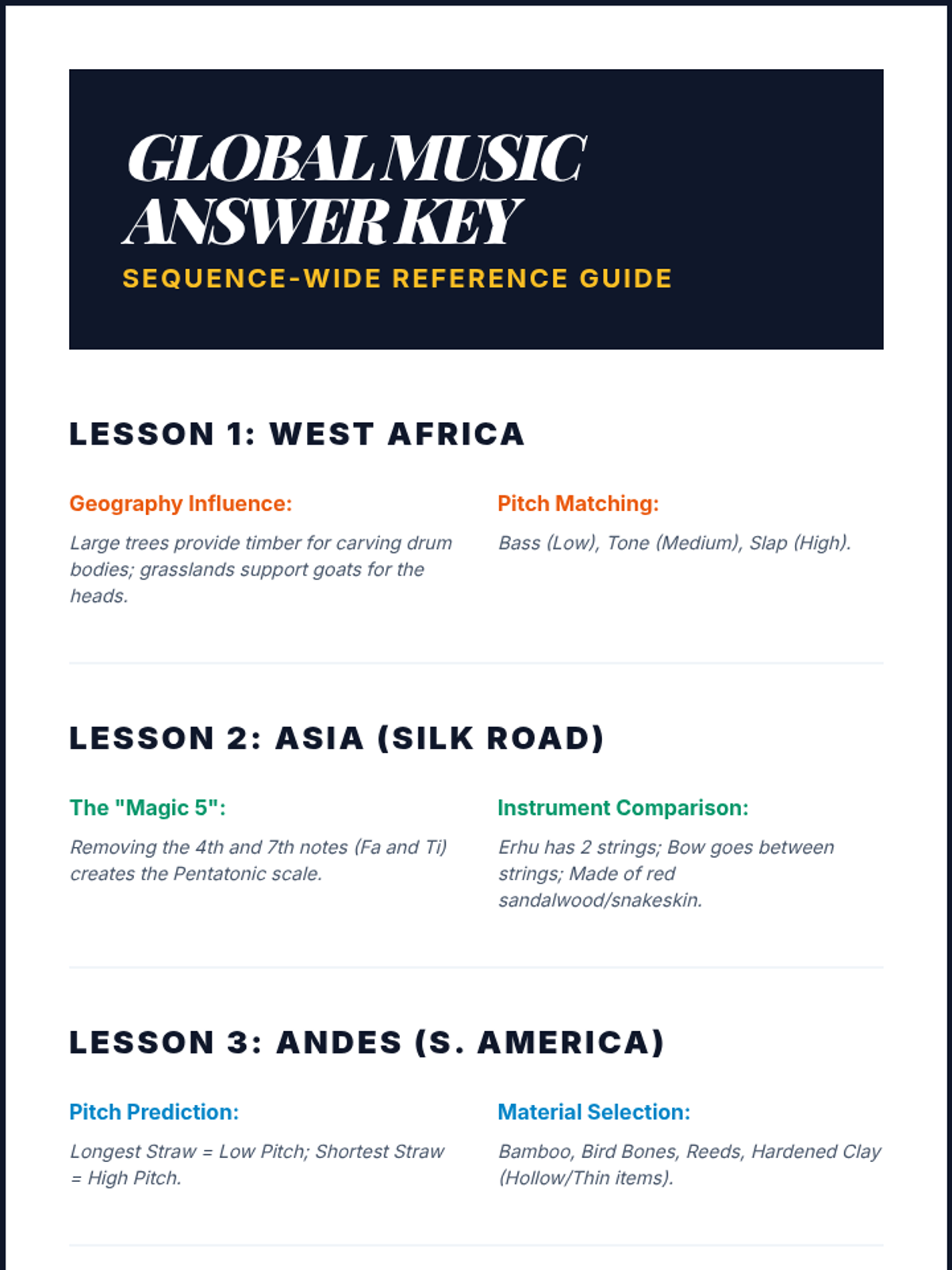
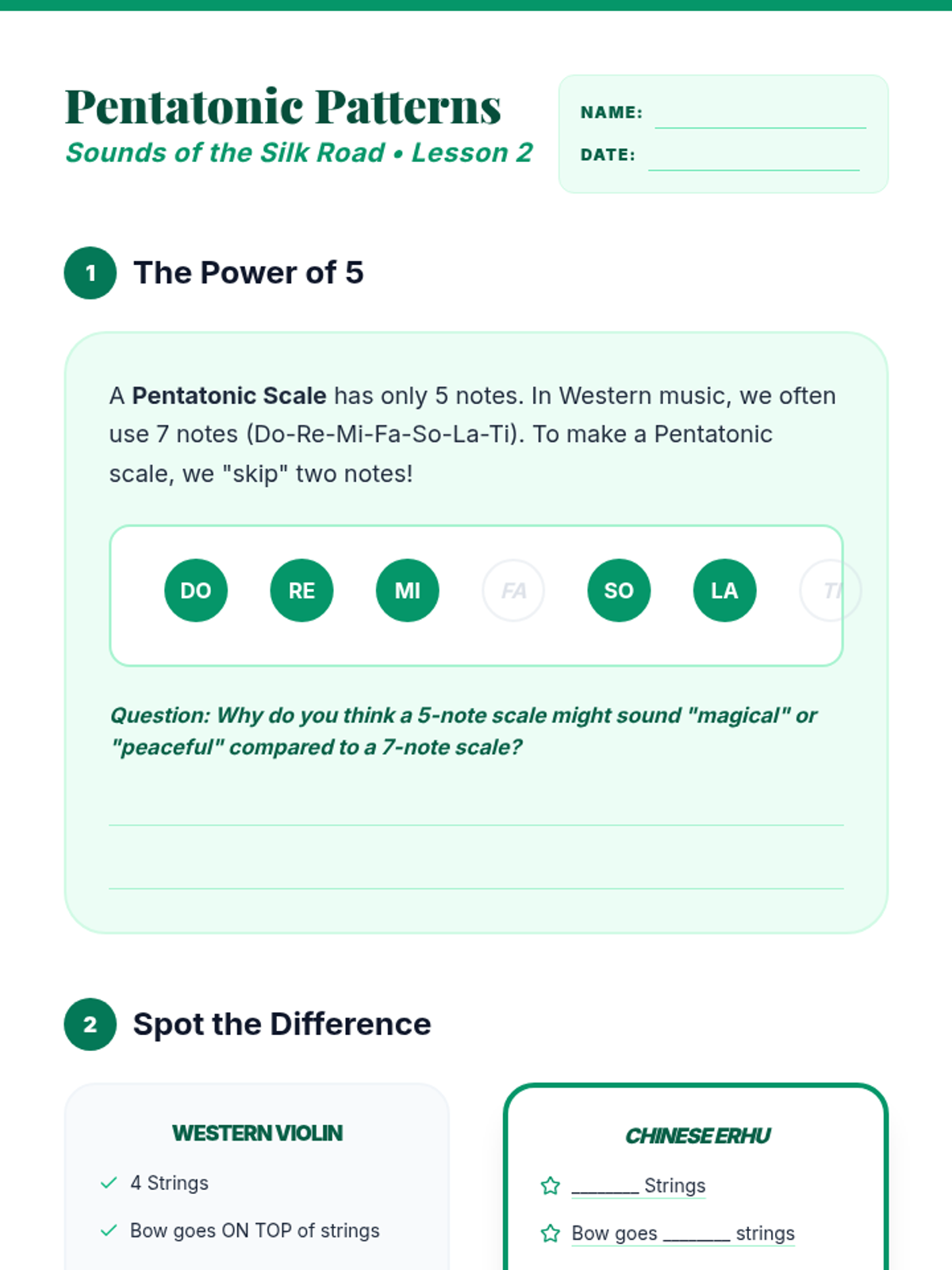
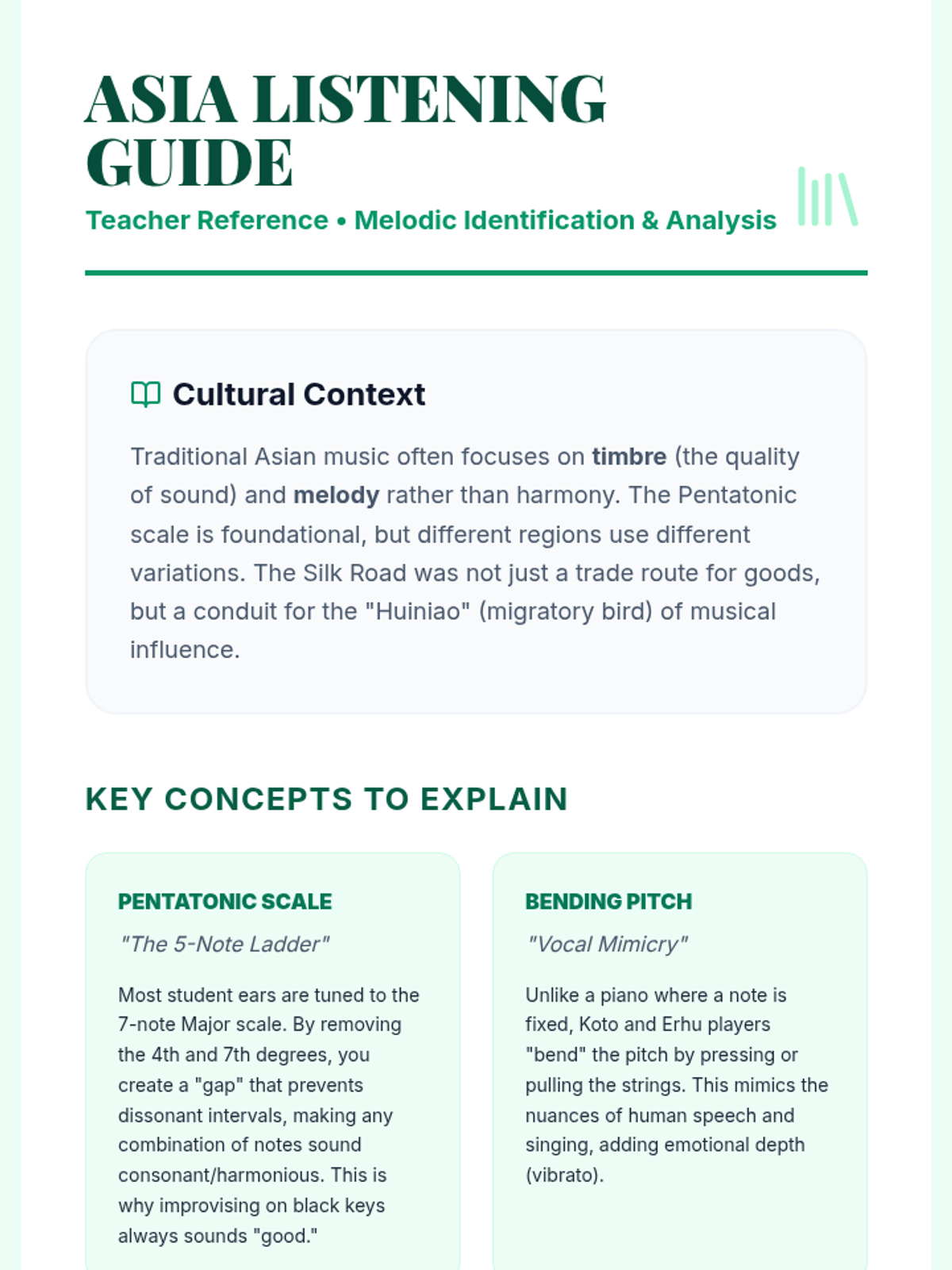
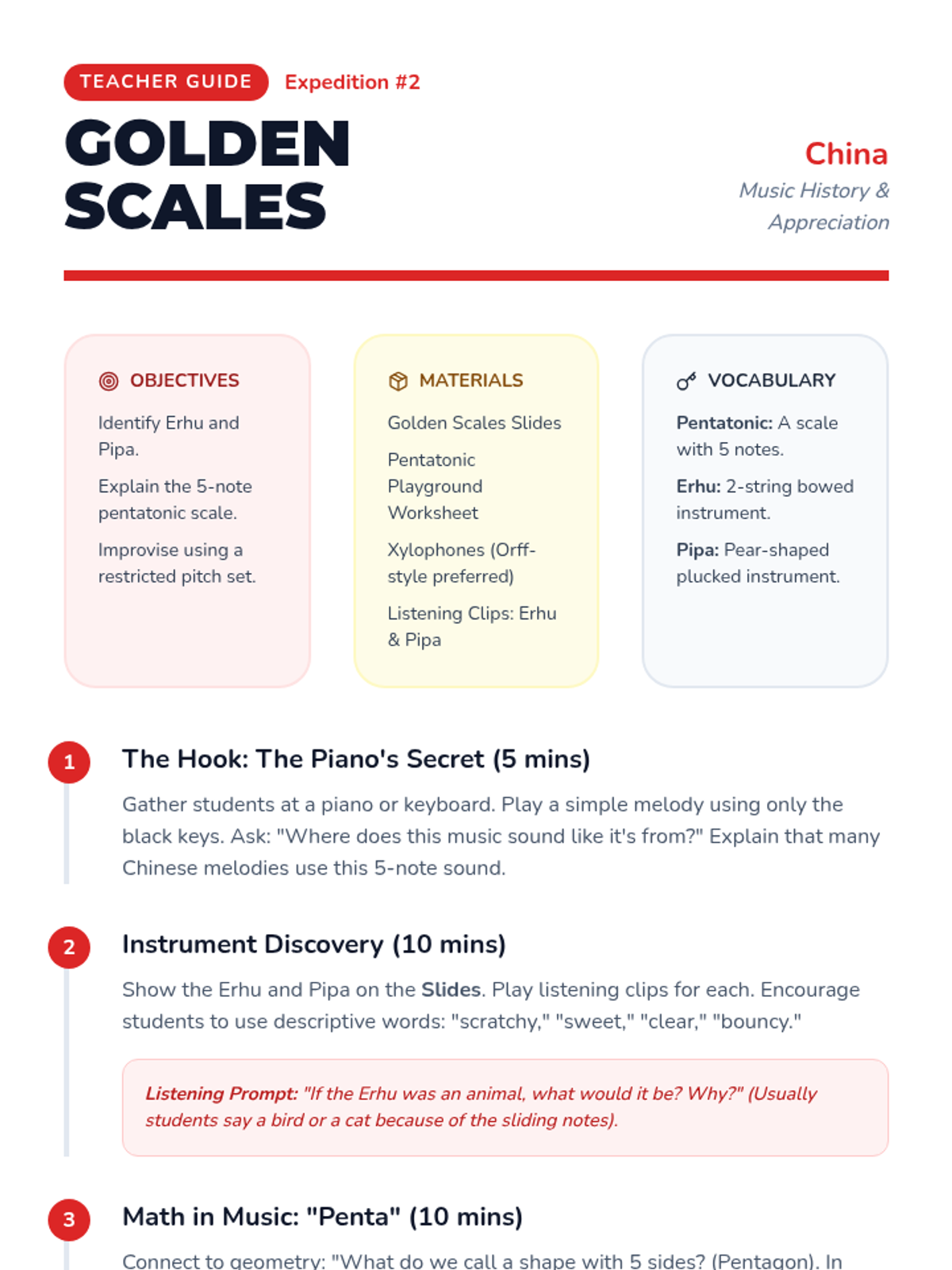
This lesson introduces the Pentatonic scale (5-note scale) common in traditional Chinese and Japanese music. Students listen to string instruments like the Koto or Erhu and compare them to the violin.
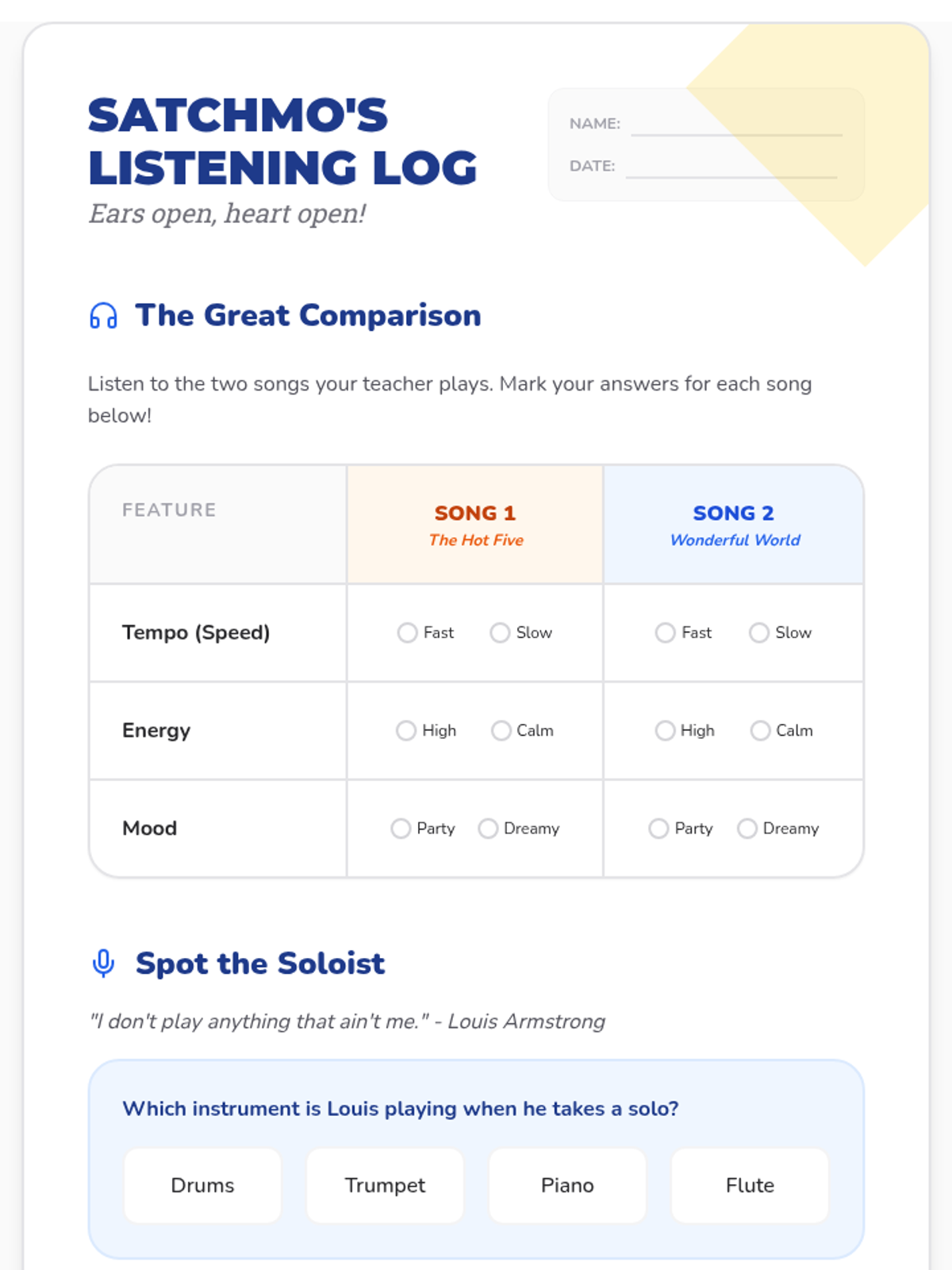
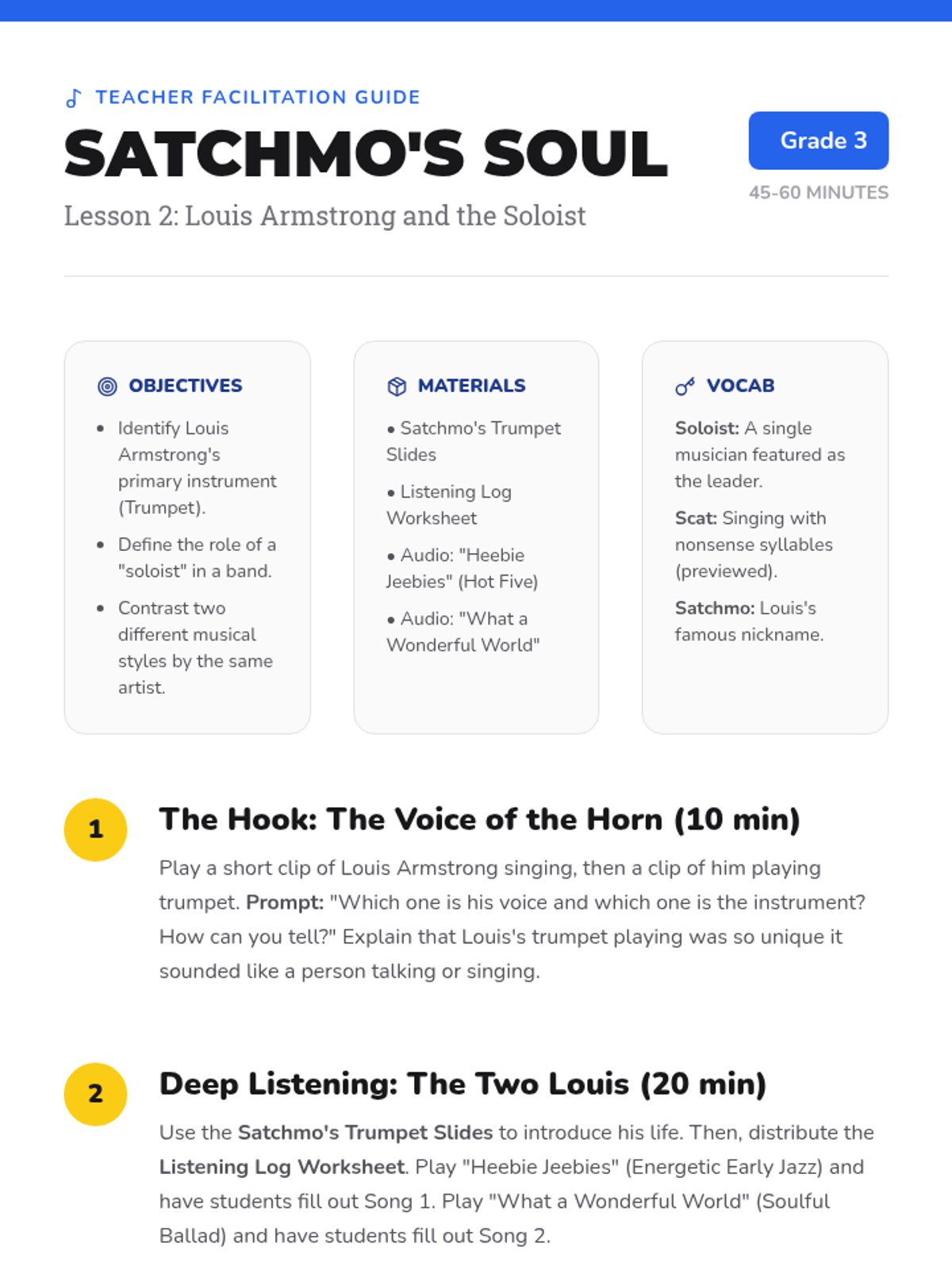
A focus on Louis Armstrong as a vocalist and trumpeter. Students learn about the role of the soloist in jazz and how personality shines through instrumental music.
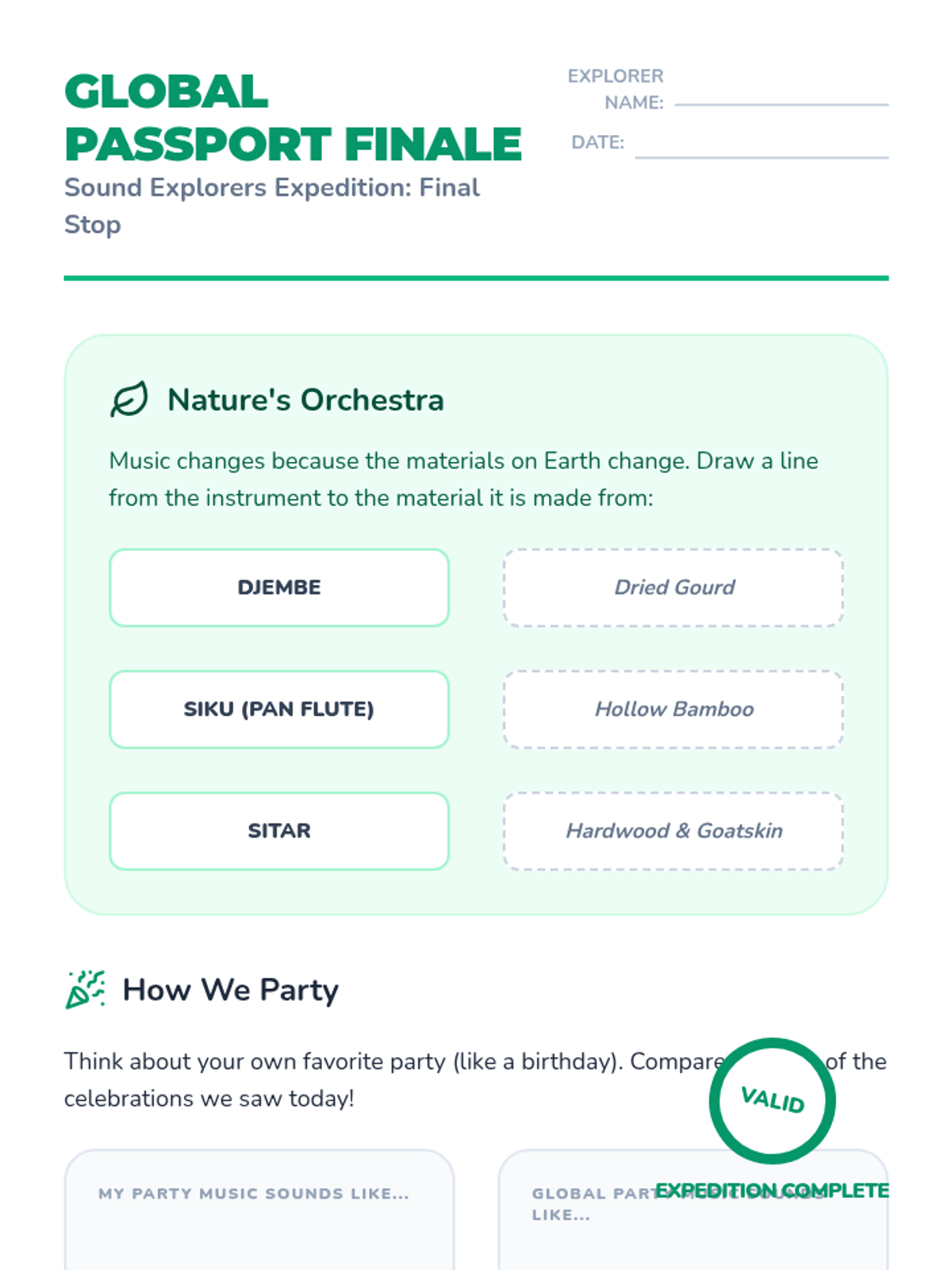
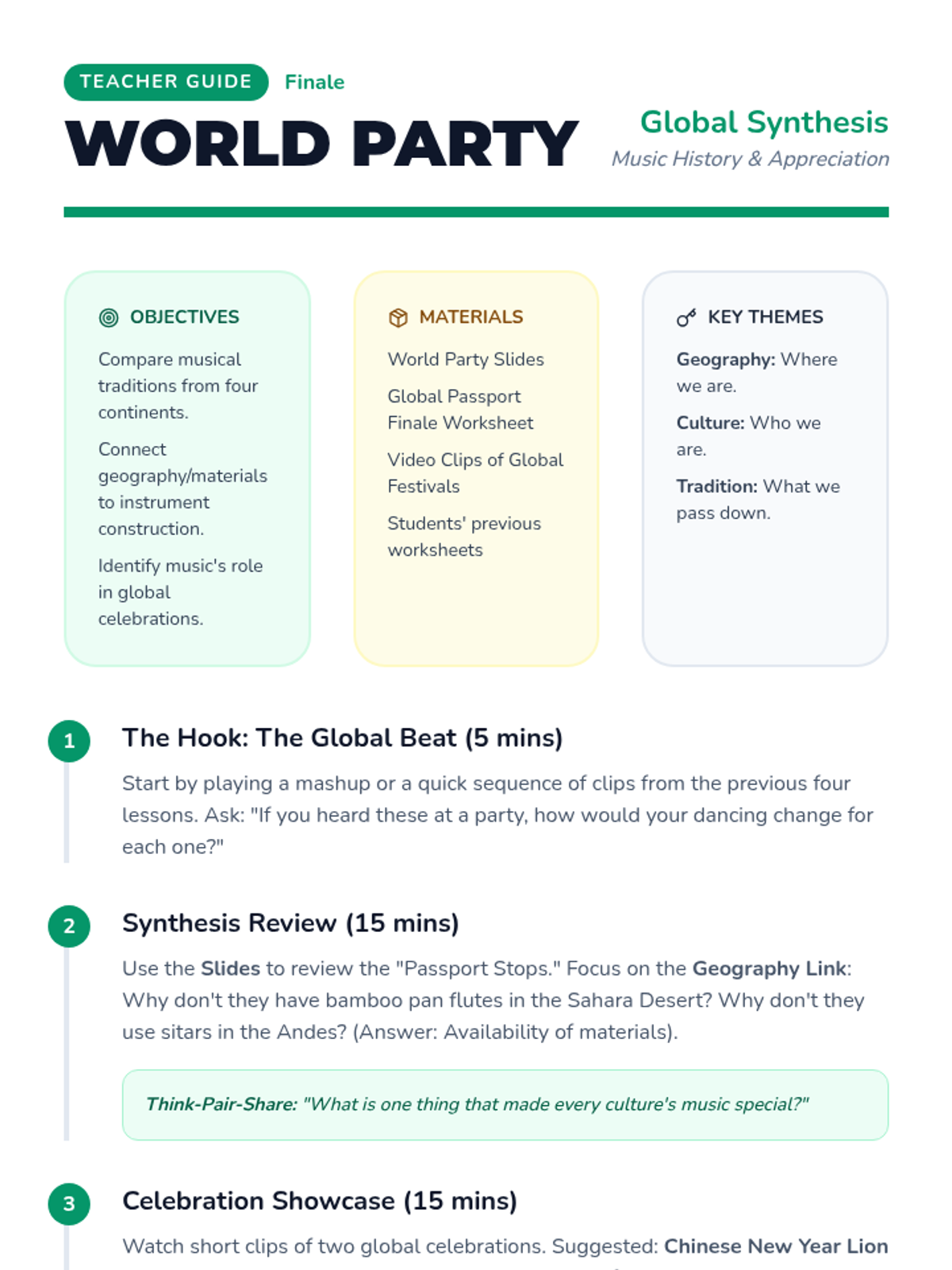
A culminating lesson where students compare musical celebrations from the cultures studied, synthesizing their understanding of music's role in global traditions.
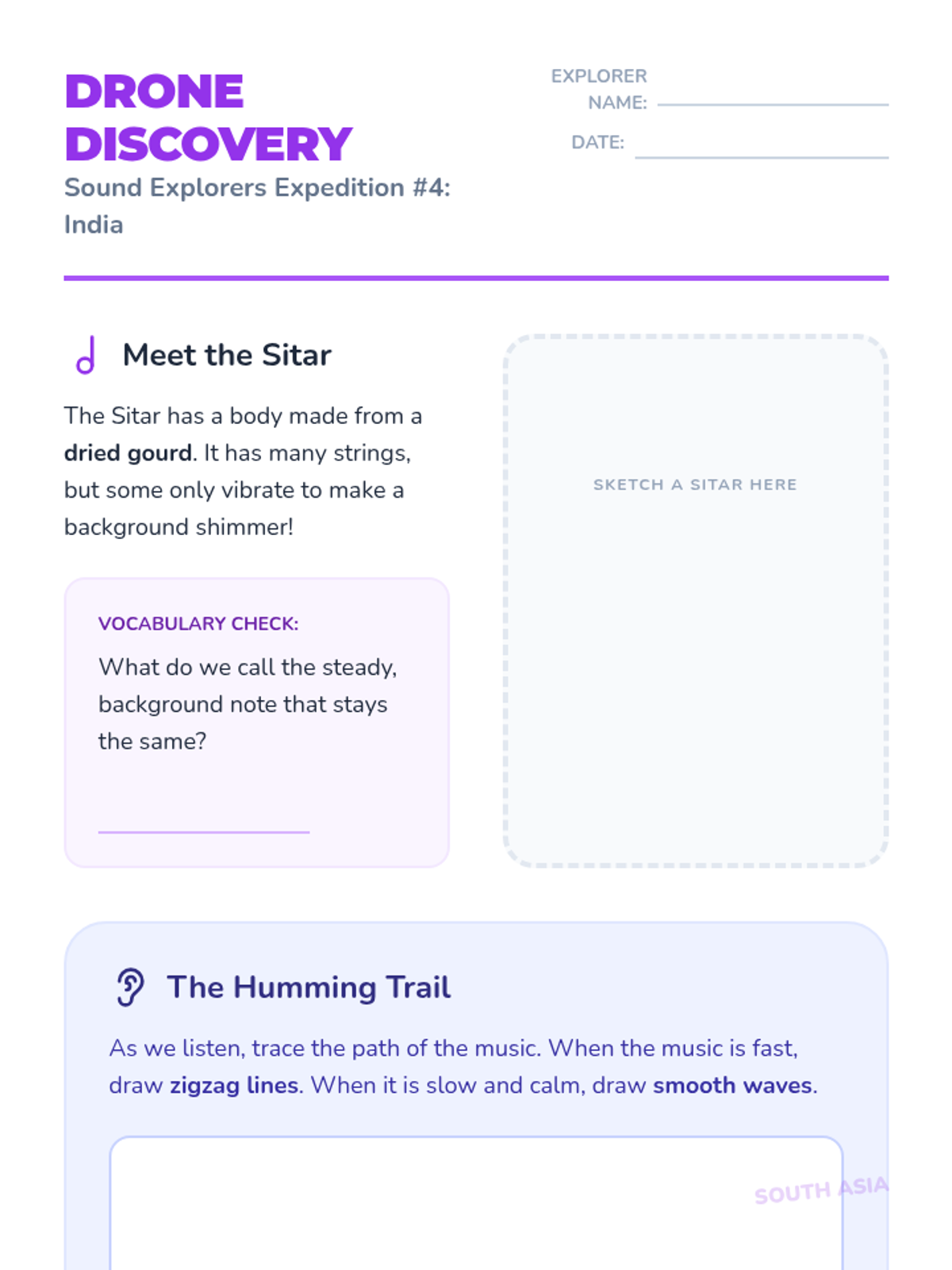
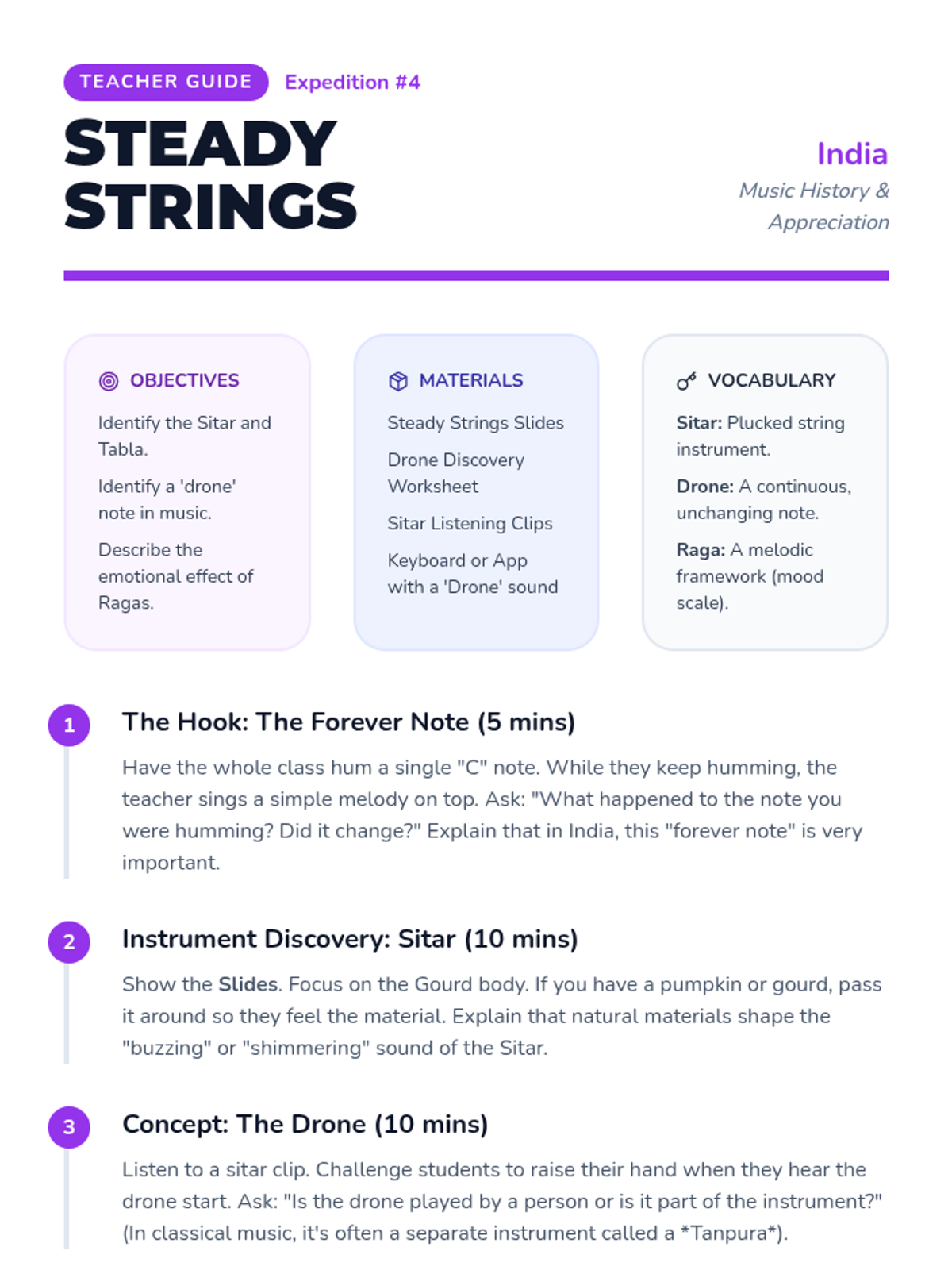
Introduction to the Sitar and the concept of a 'drone' note in Indian classical music, focusing on listening endurance and harmonic texture.
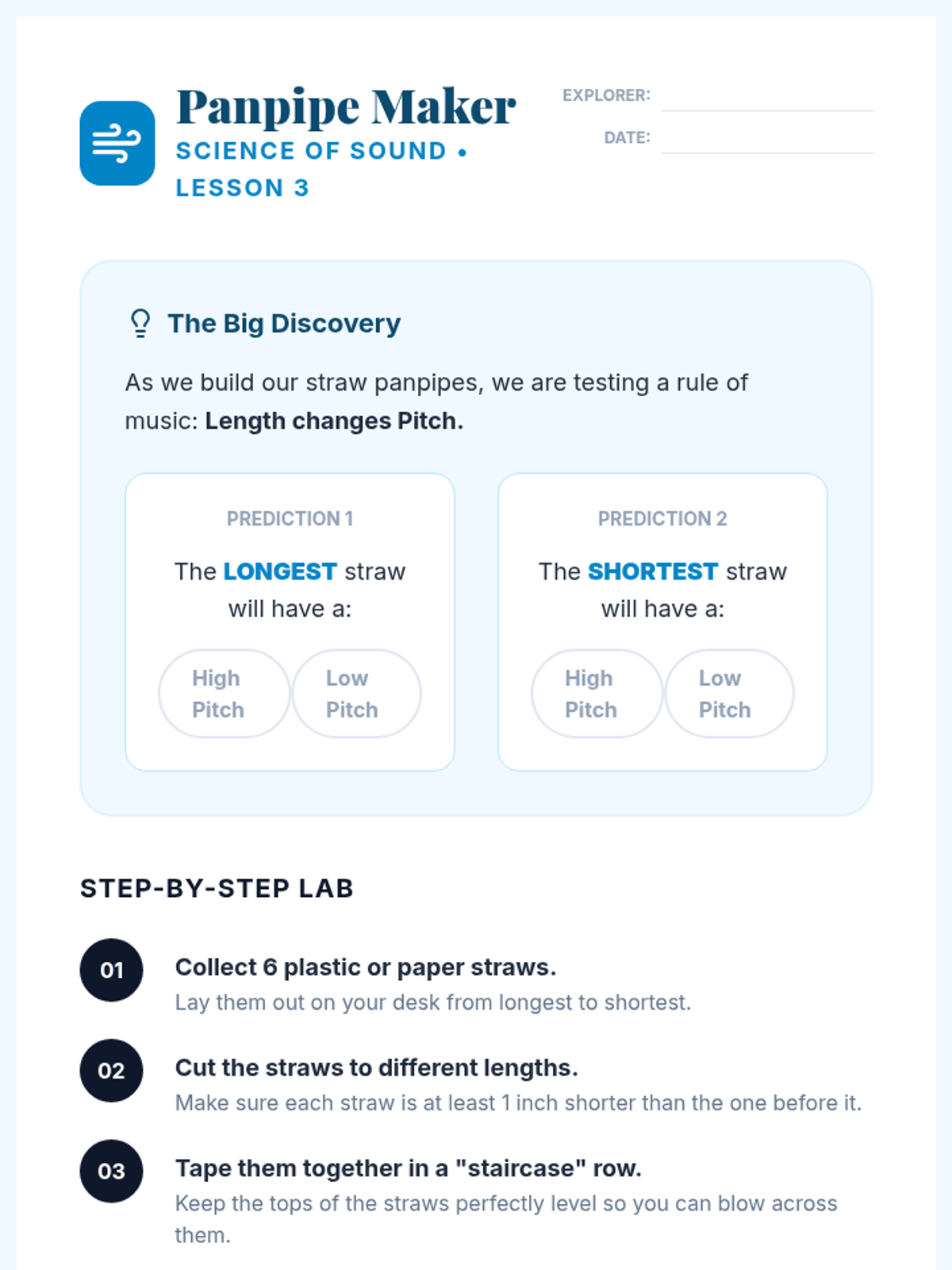
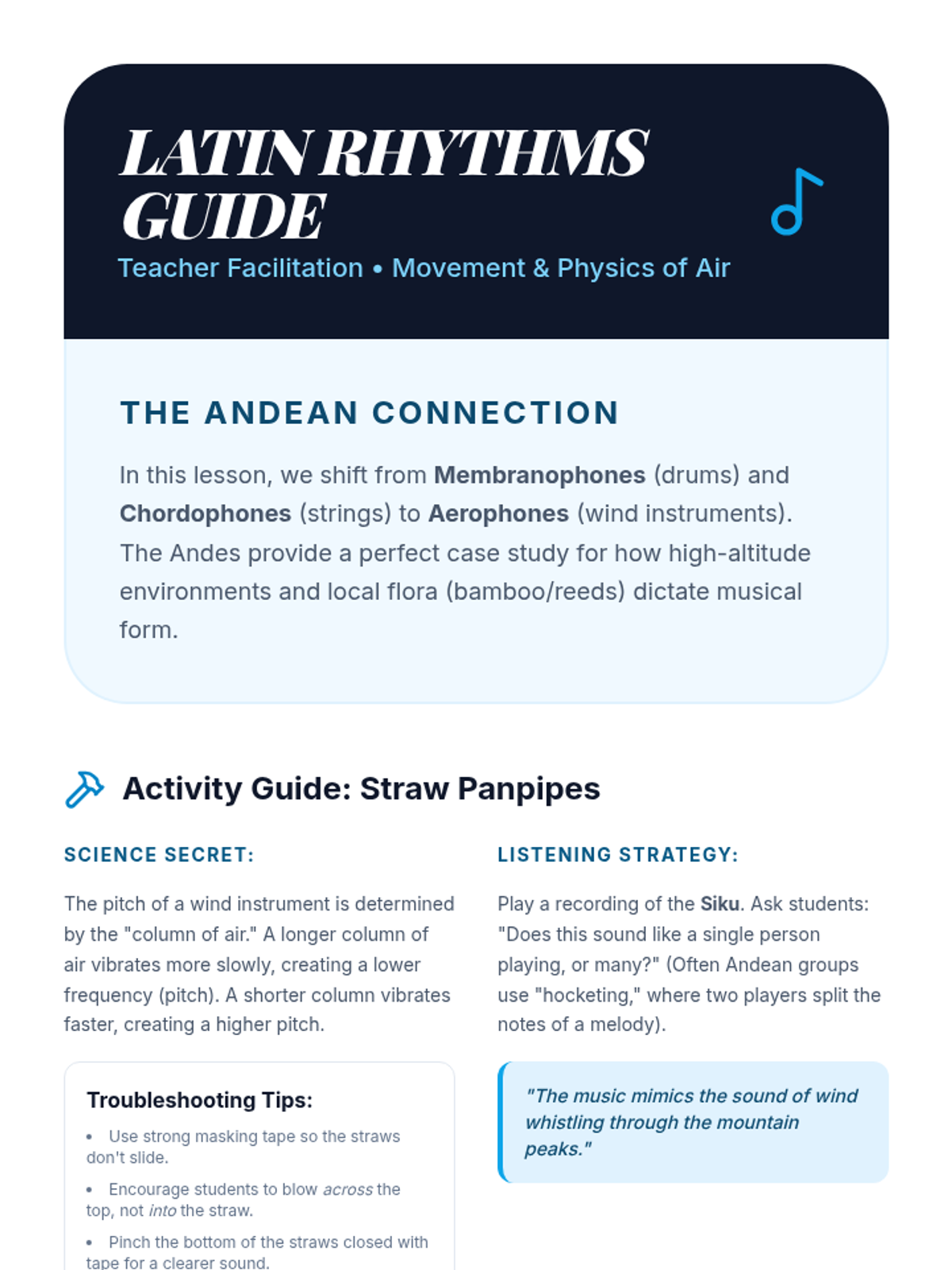
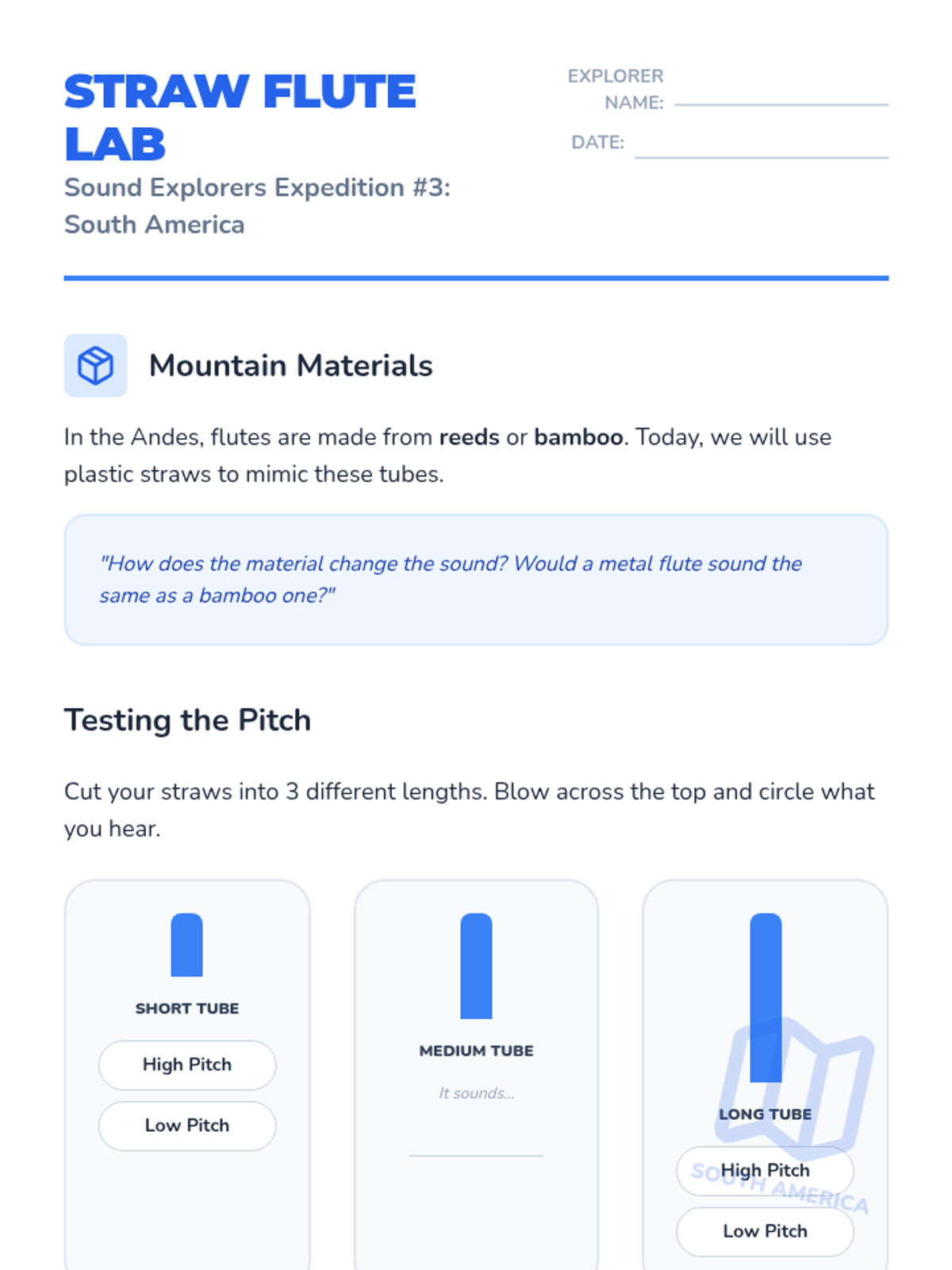
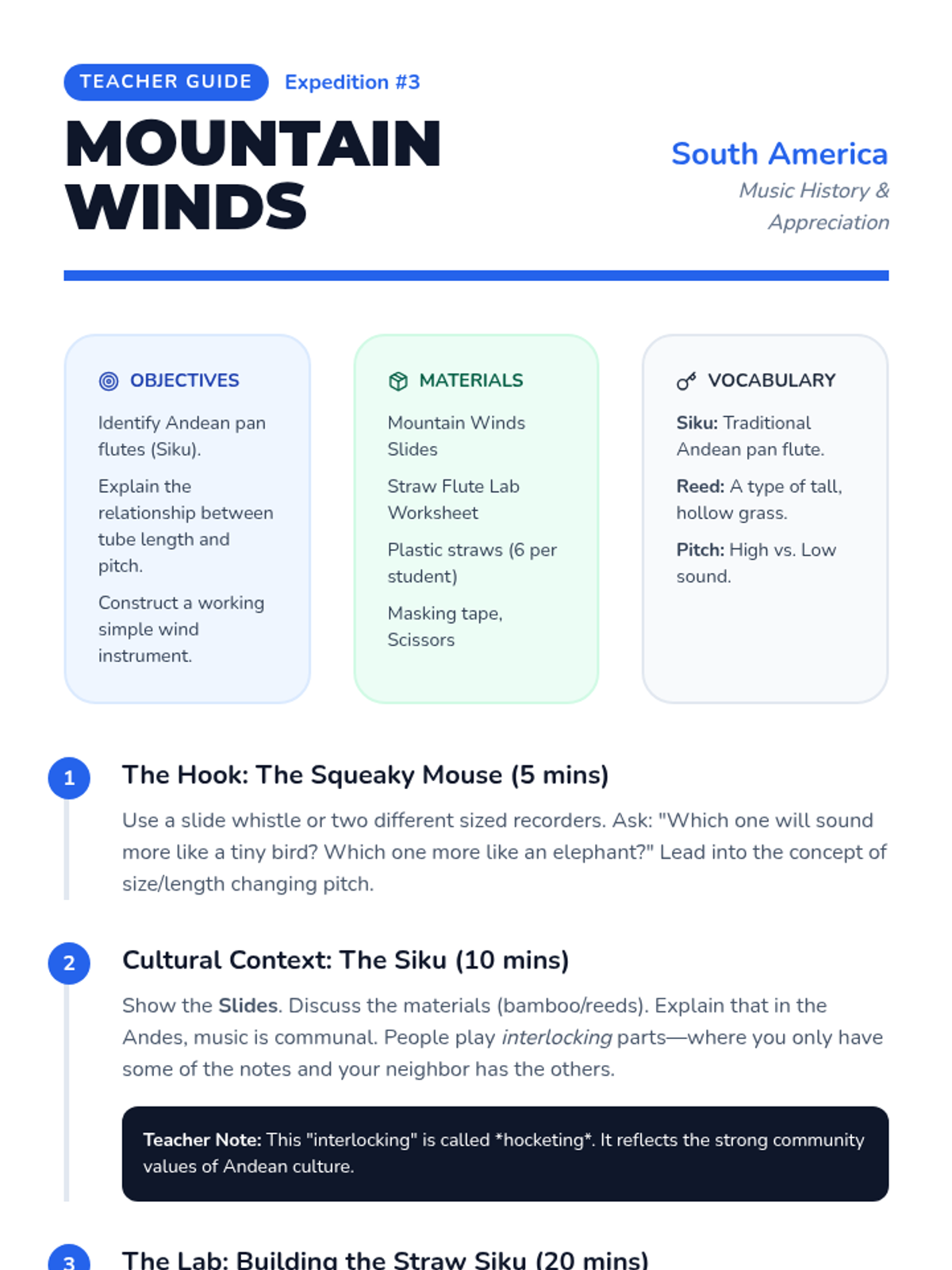
Students investigate the pan flutes of the Andes Mountains, discussing how natural materials shape sound and constructing straw flutes to learn about pitch.
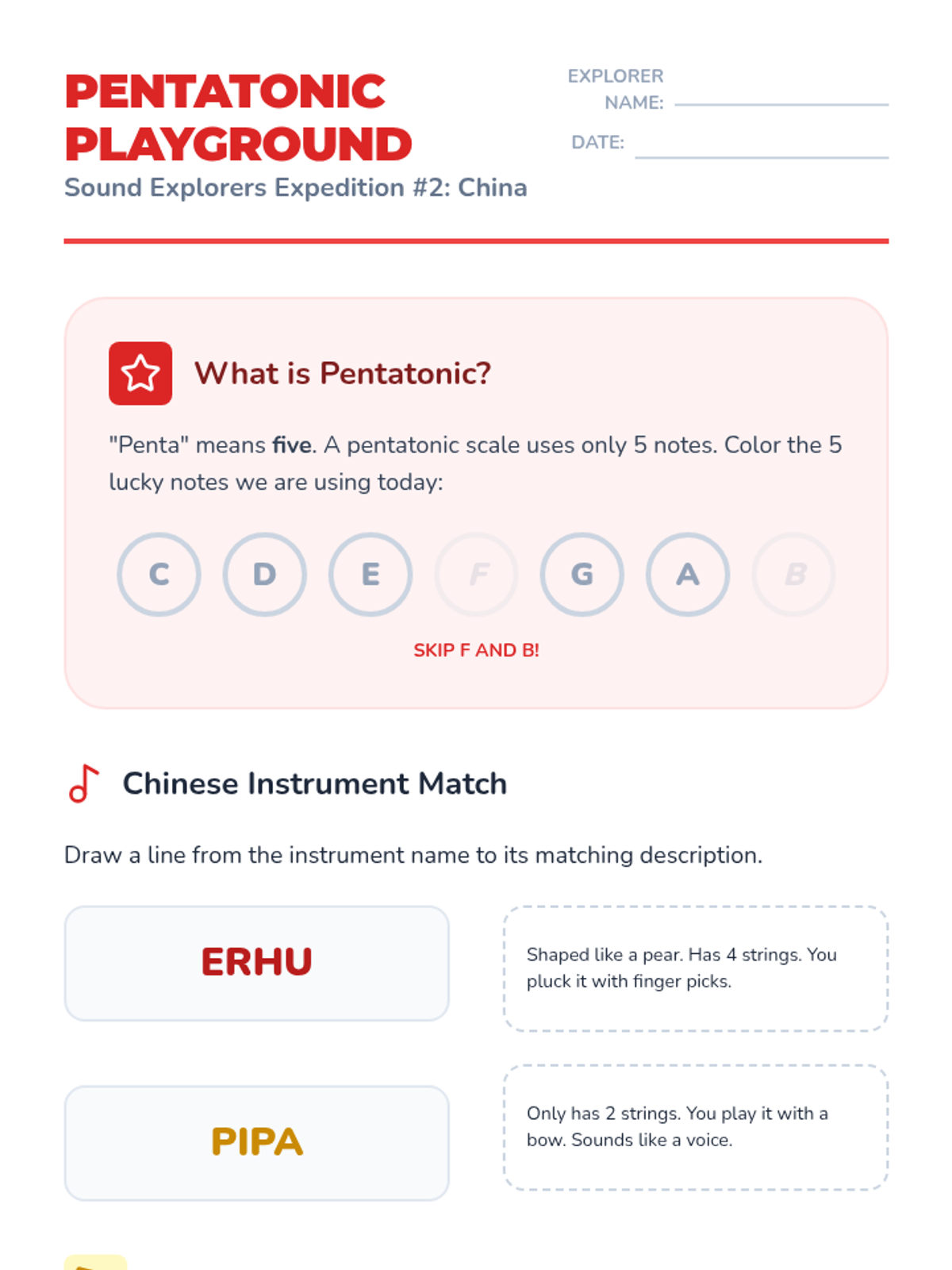
Learners discover the Erhu and Pipa and explore the five-note pentatonic scale common in traditional Chinese music through listening and xylophone exploration.
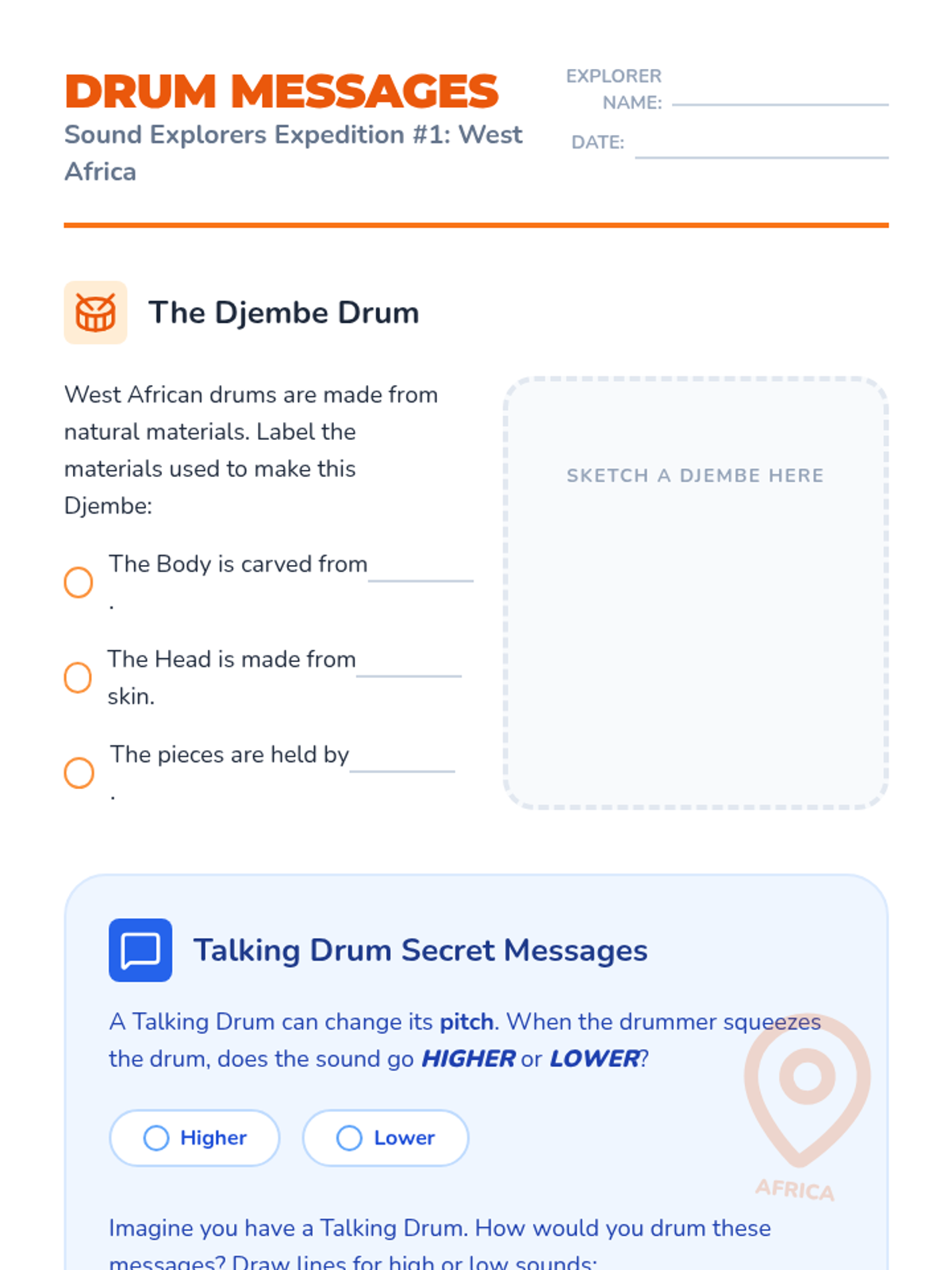
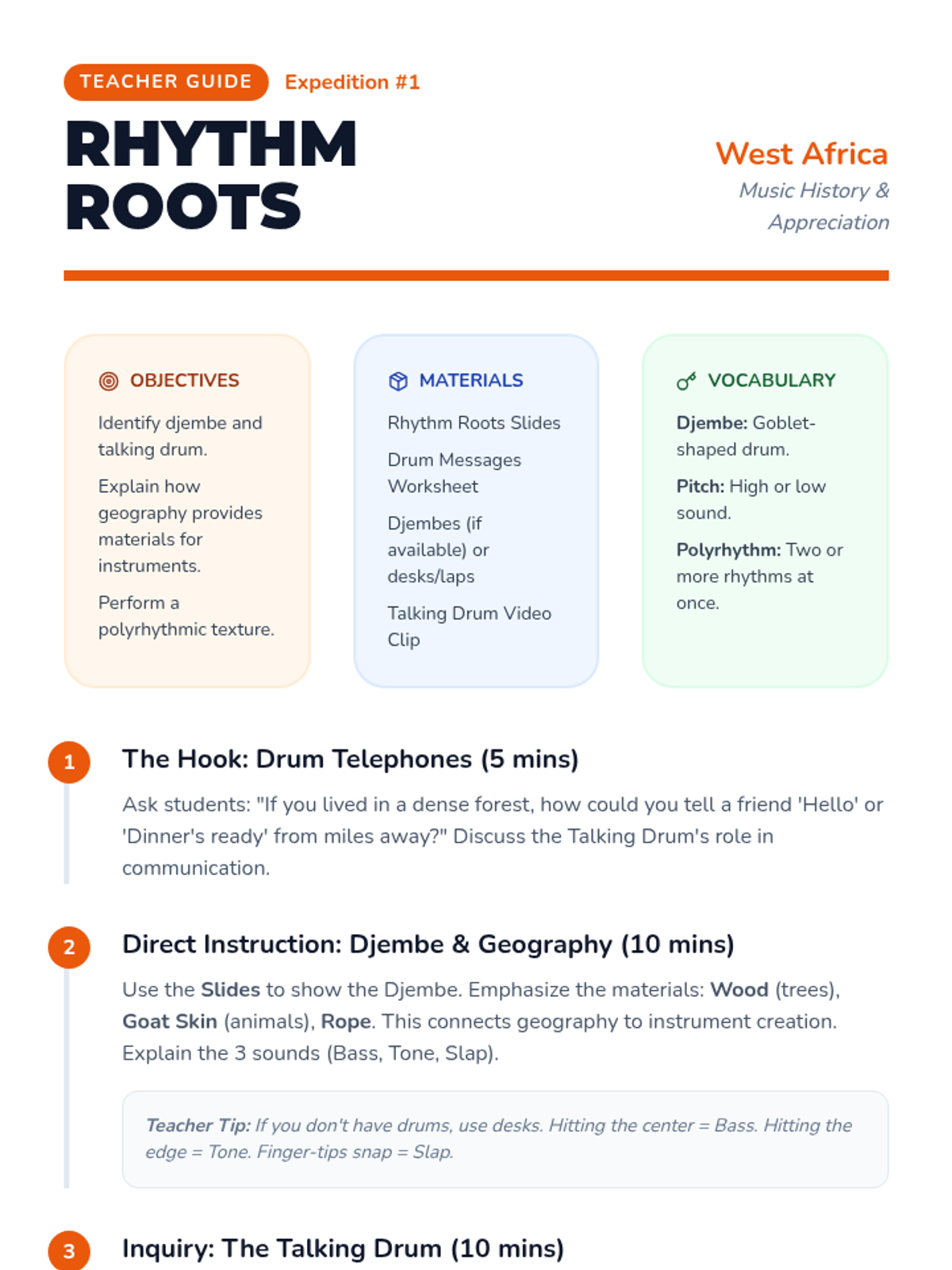
Students explore the djembe and talking drums of West Africa, learning how drums can mimic human speech and layering simple rhythms to create polyphonic textures.
Bring all skills together in a classroom 'Swing Band' performance that highlights group collaboration and individual creativity.
Learn the art of vocal improvisation using scat syllables, inspired by jazz legends like Ella Fitzgerald and Louis Armstrong.
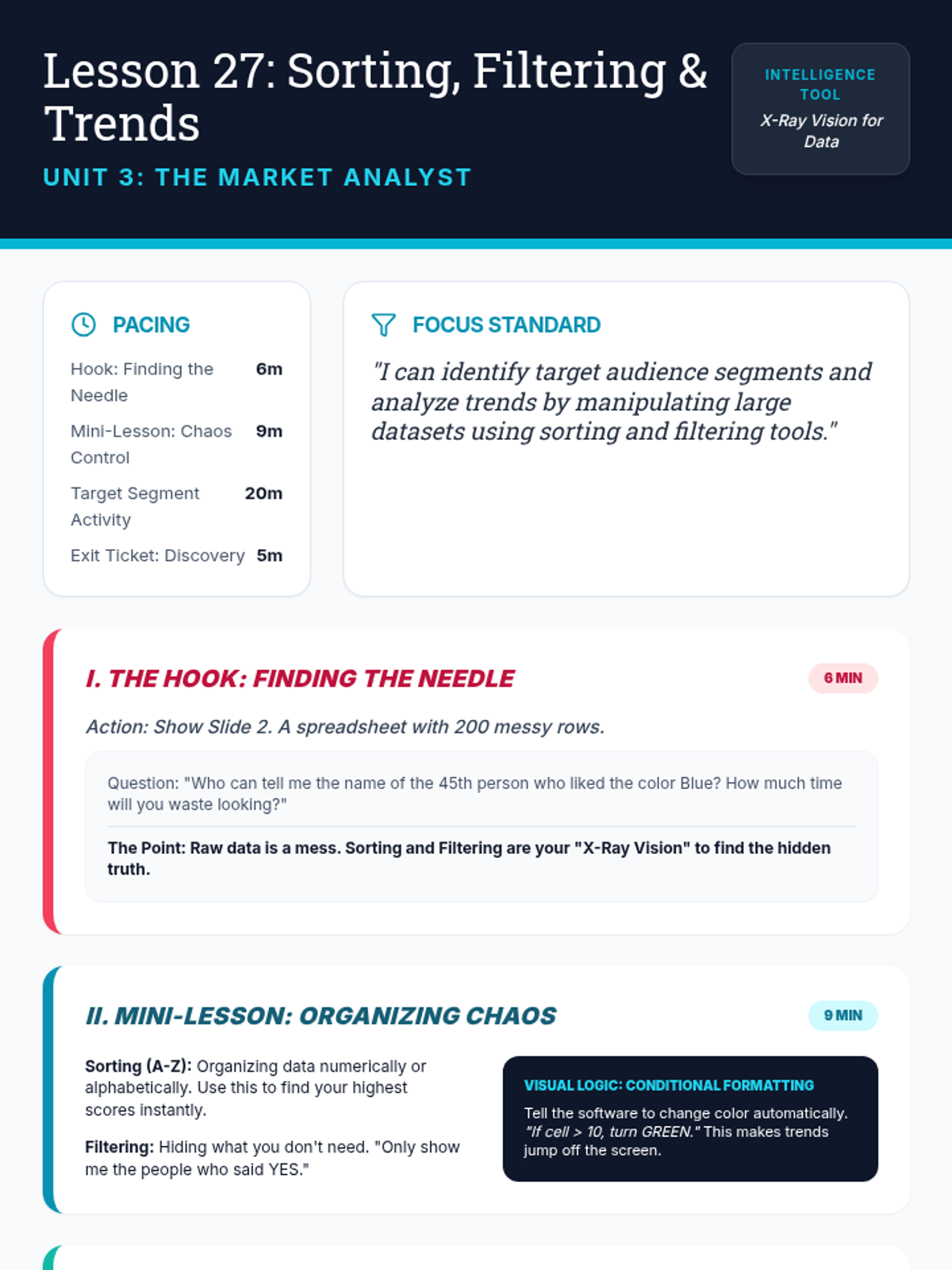
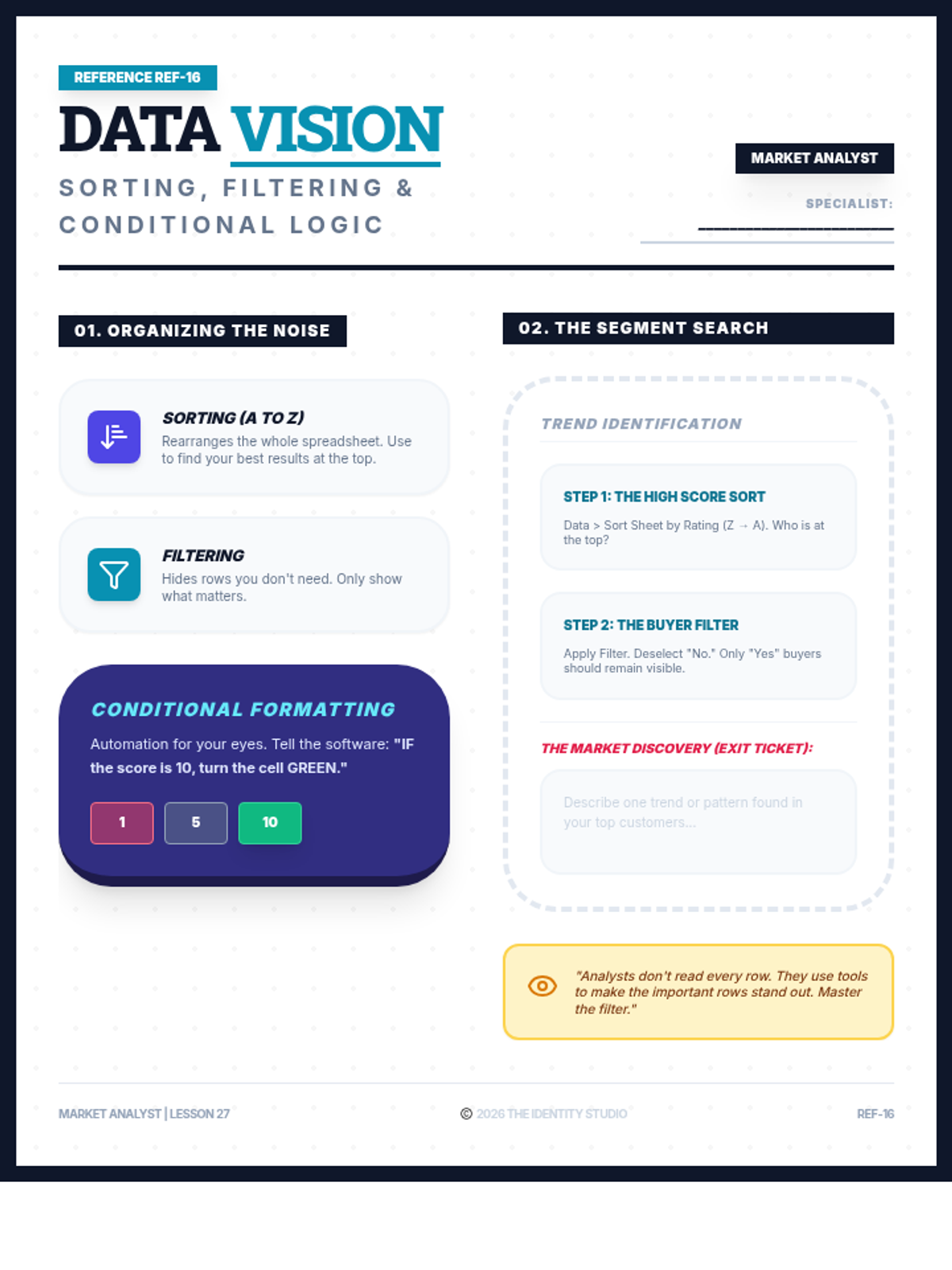
Students gain 'x-ray vision' over large datasets by learning to sort and filter information. They explore conditional formatting to visualize trends and identify specific target segments within their market research data.
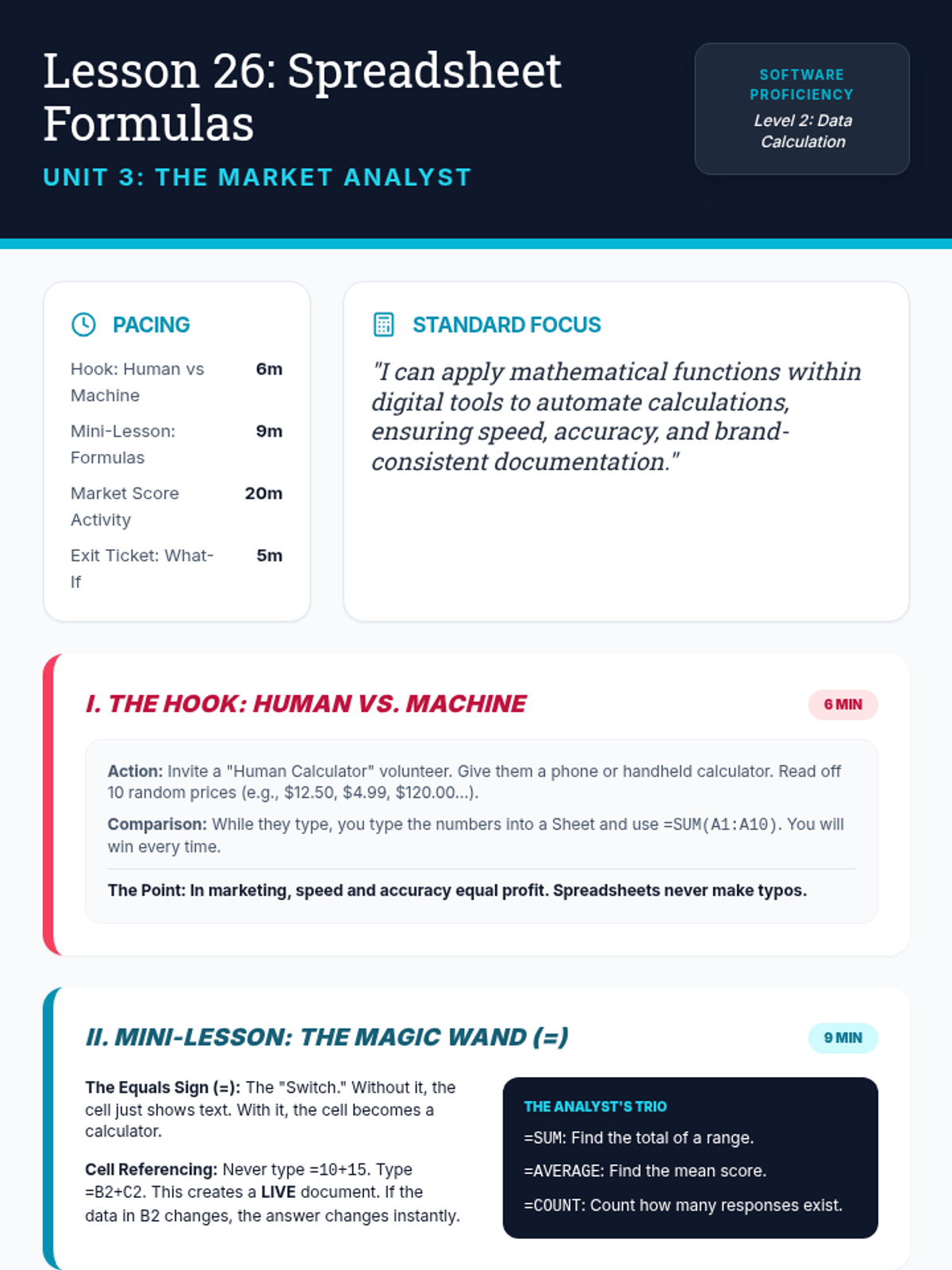
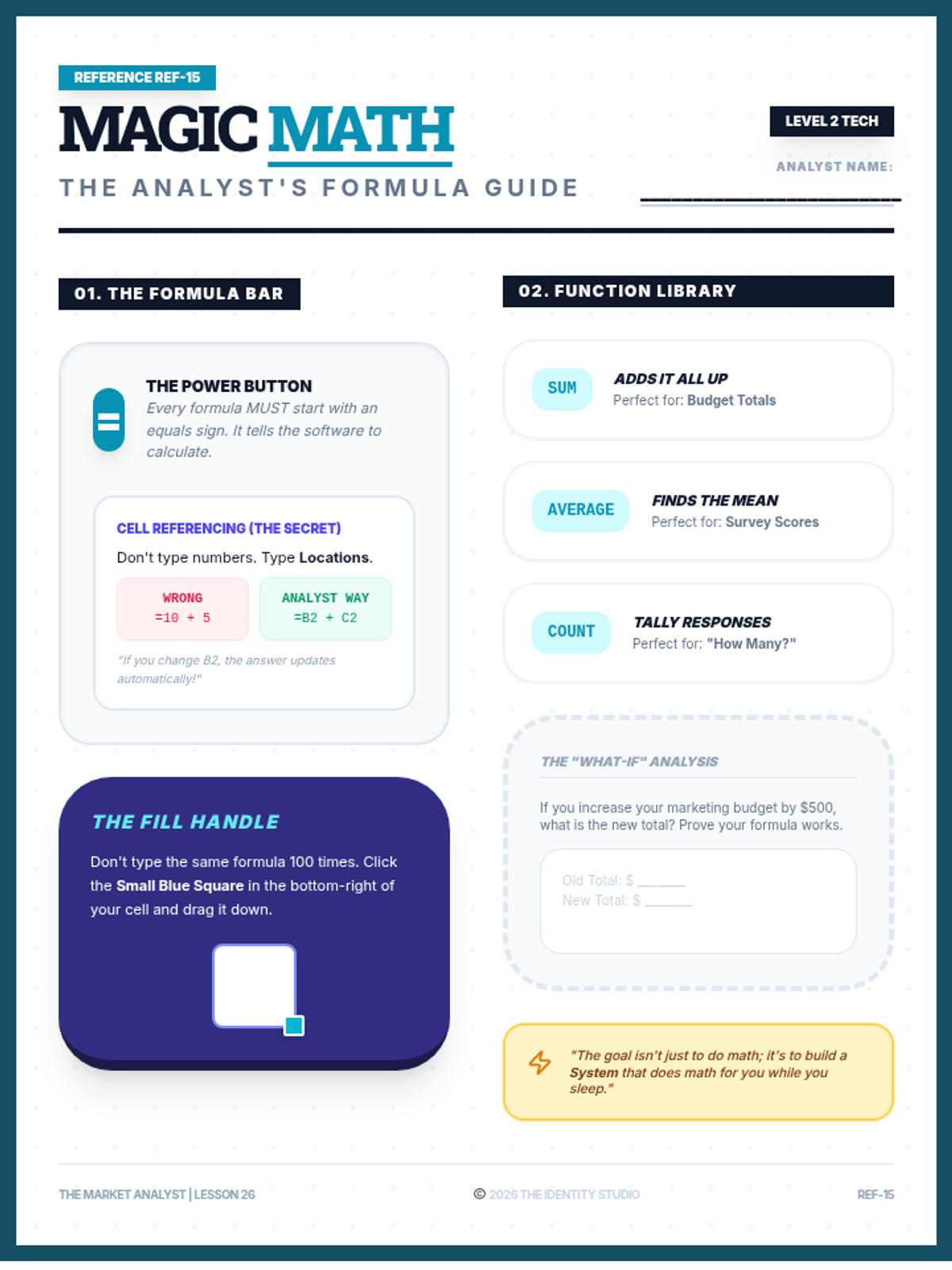
Students transition from data entry to data analysis by mastering fundamental spreadsheet formulas. They learn the power of the equals sign, cell referencing, and essential functions like =SUM, =AVERAGE, and =COUNT to automate business calculations.
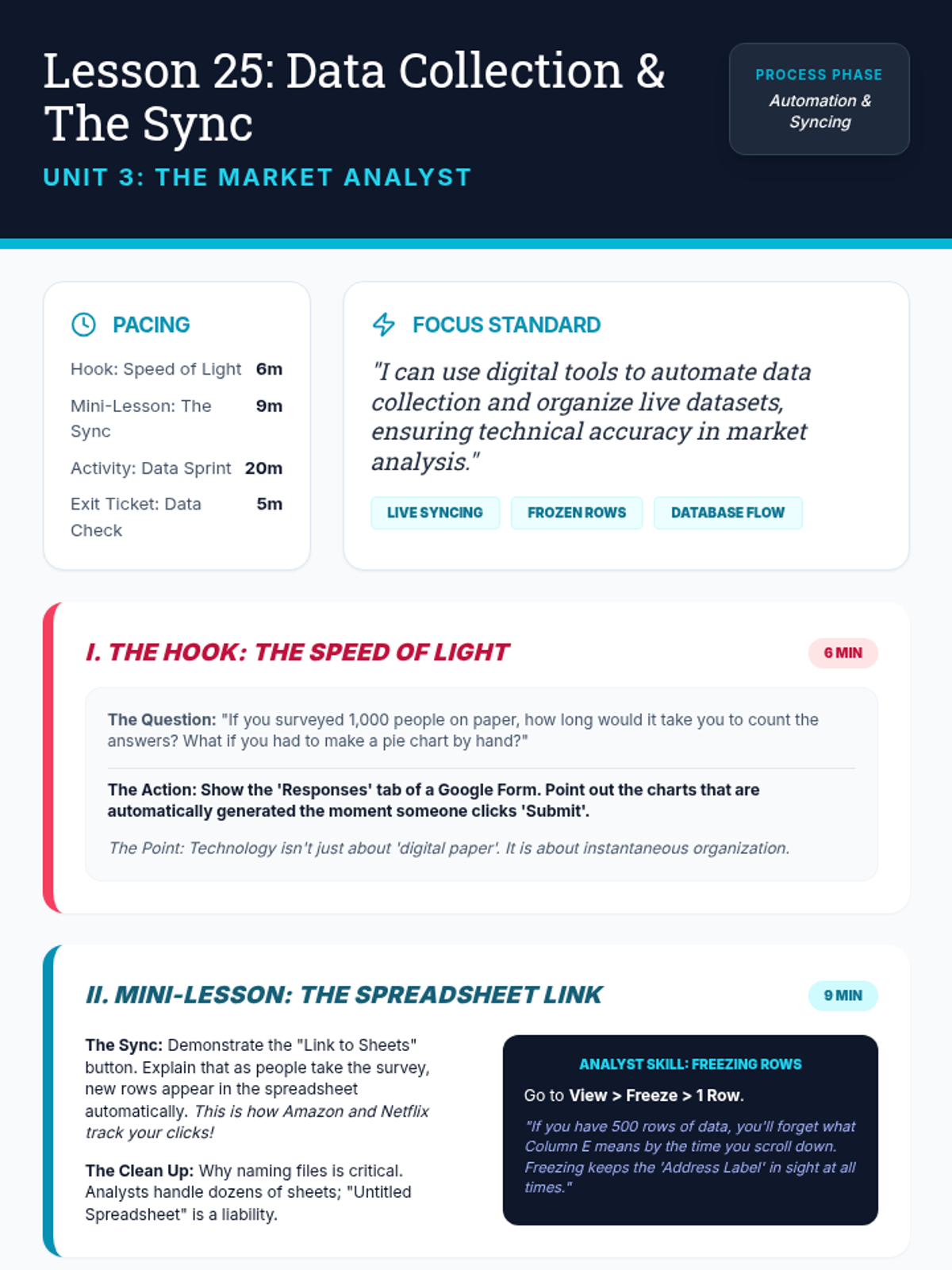
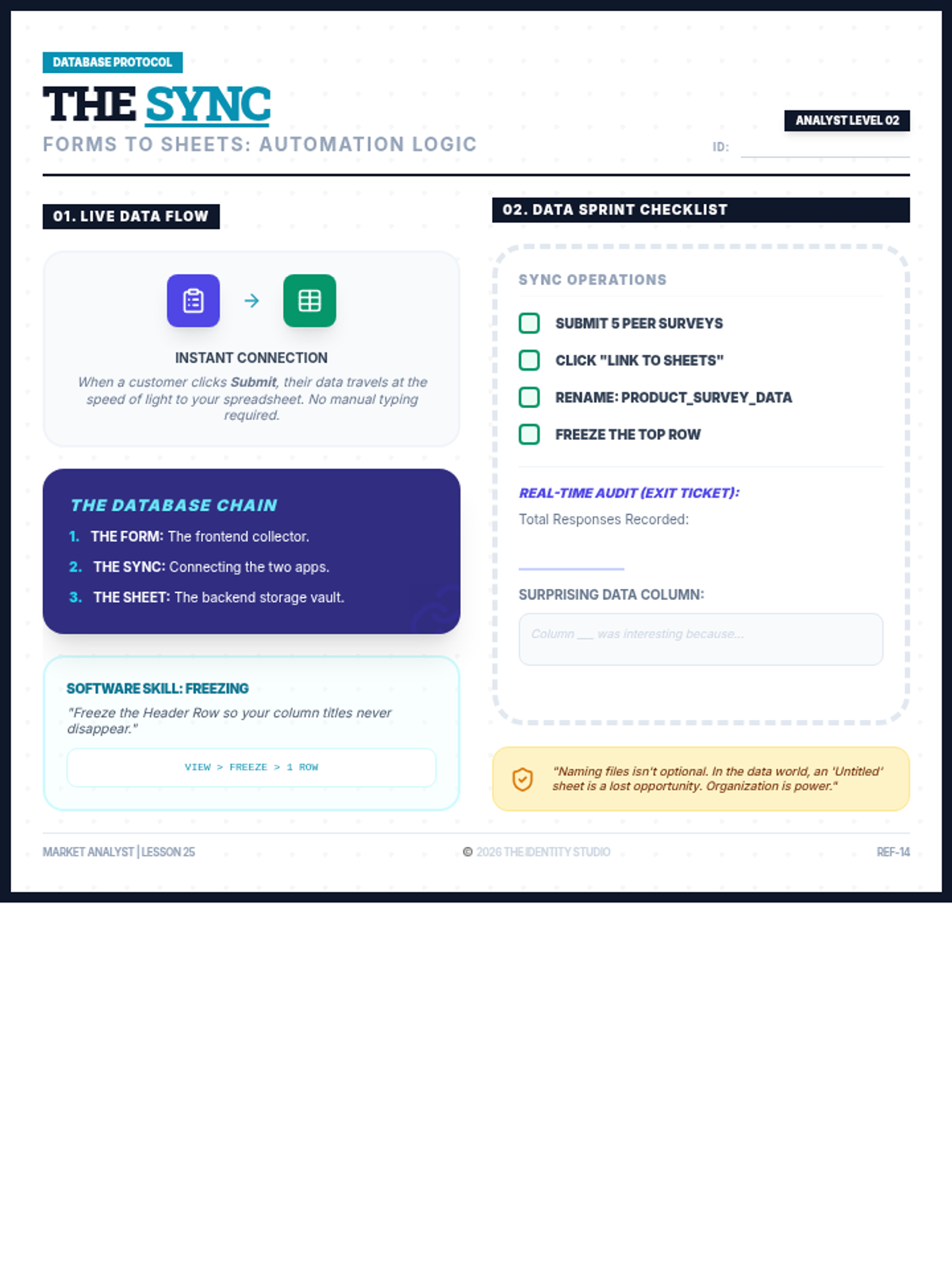
Students explore the efficiency of automated data collection by linking their market research forms to live spreadsheets. They learn the concept of real-time data syncing and master the 'Freezing Rows' skill to manage large datasets effectively.
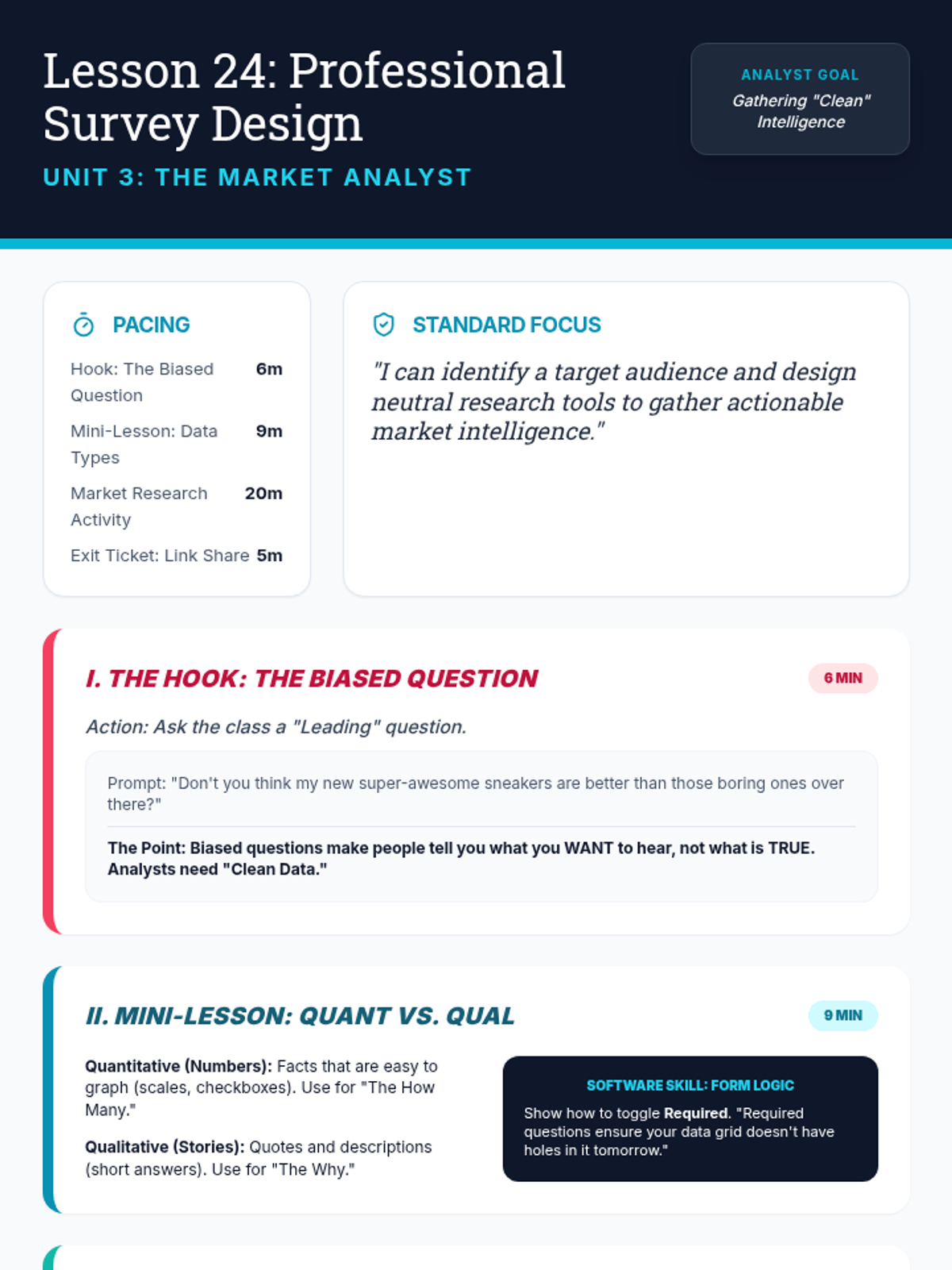
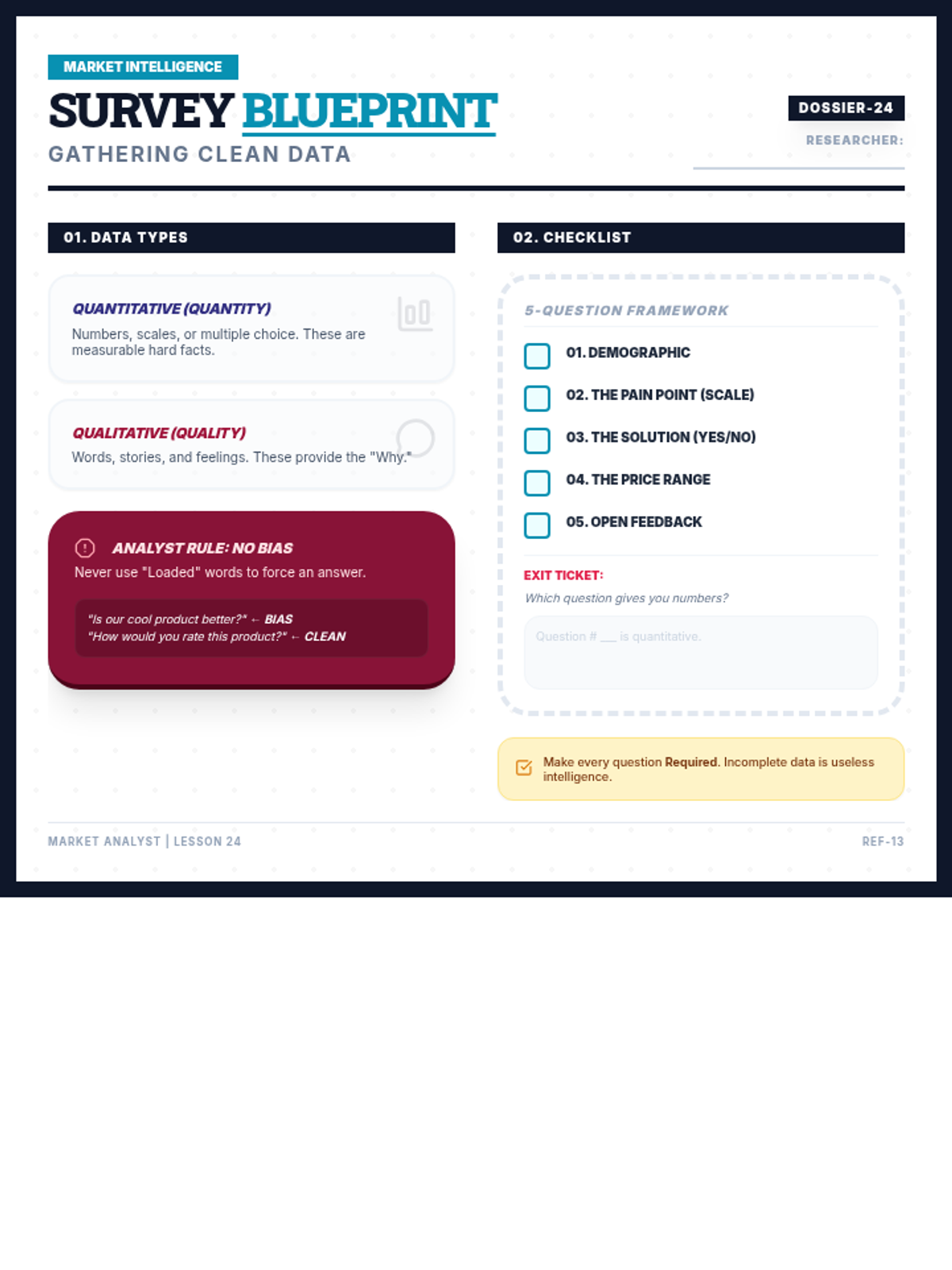
Students learn the art of professional survey design to gather market intelligence. They distinguish between quantitative and qualitative data, identify biased questioning, and build a multi-format survey in Google Forms or Microsoft Forms to collect clean data from their target audience.
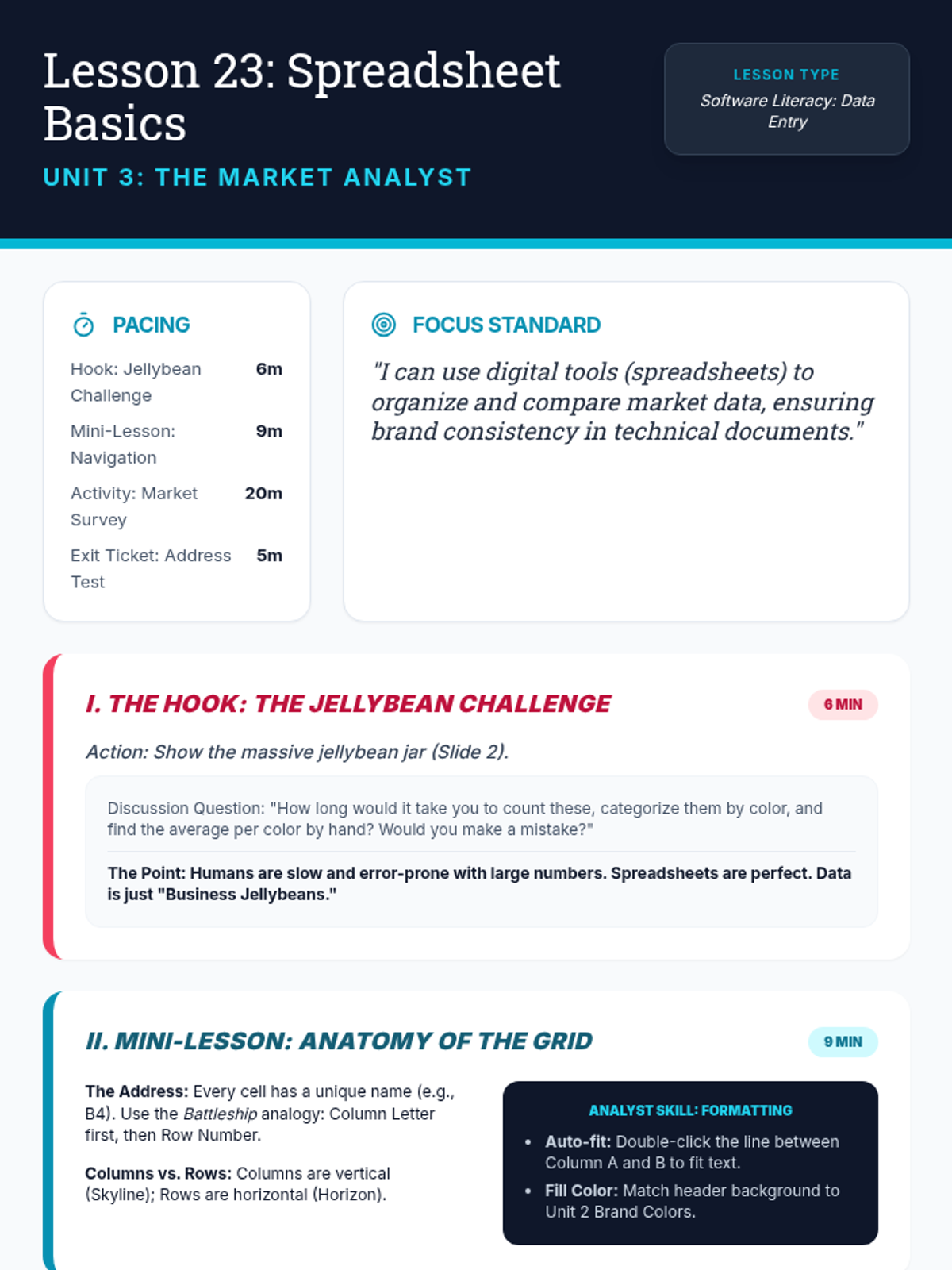
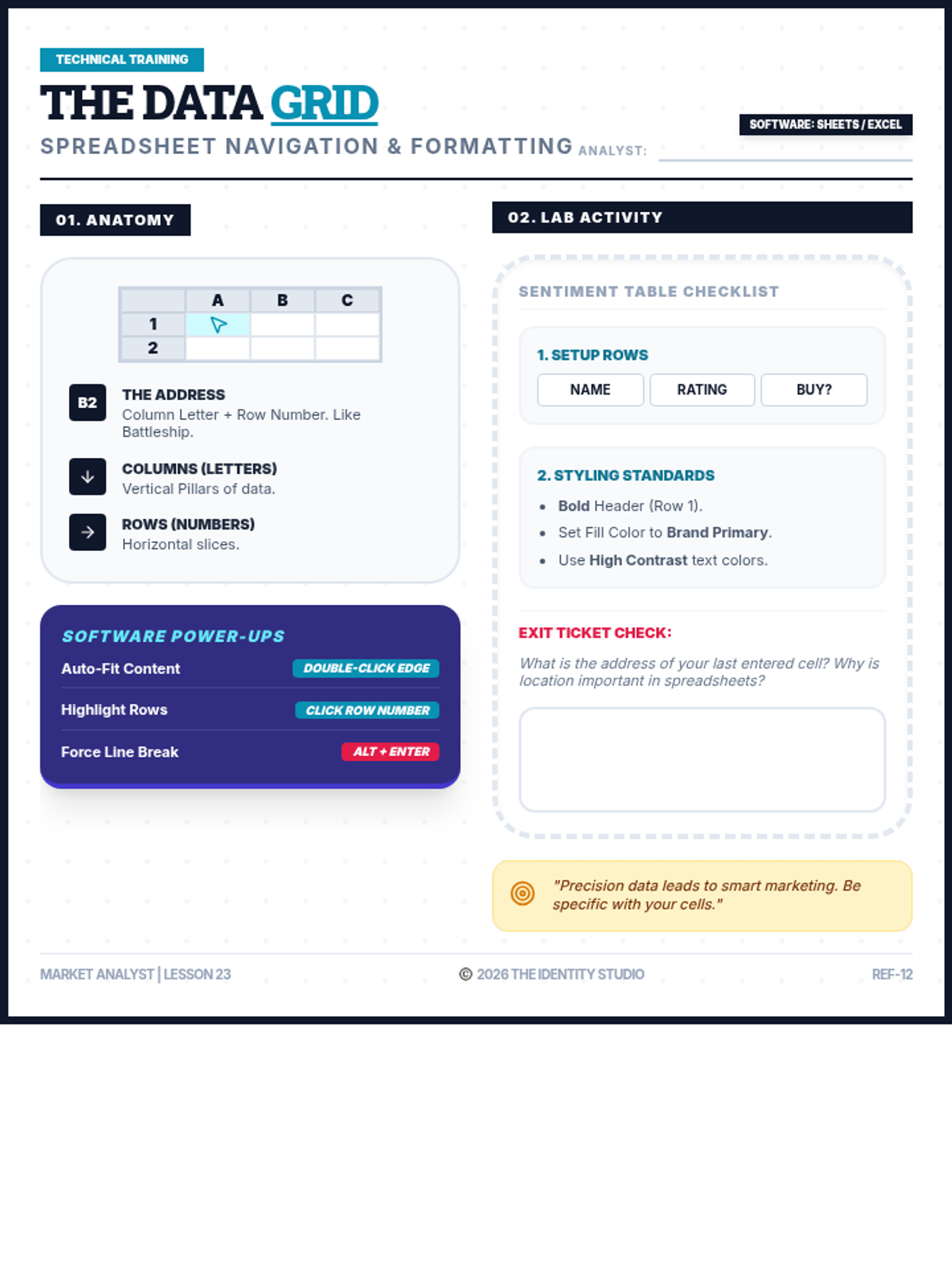
This lesson introduces students to the fundamental structure of spreadsheet software. They learn about cells, rows, columns, and addresses while performing basic data entry and formatting to align with their brand identity.
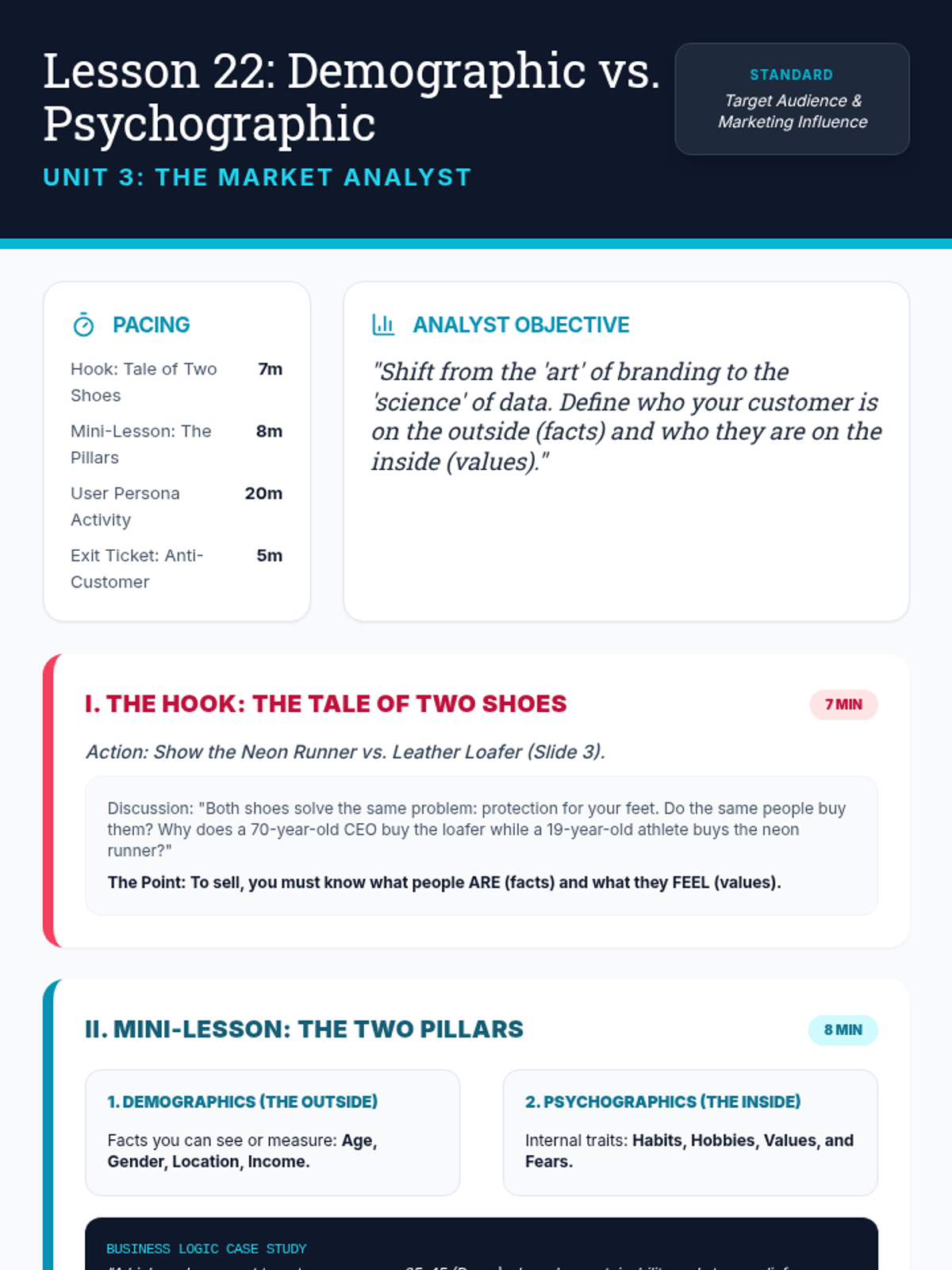
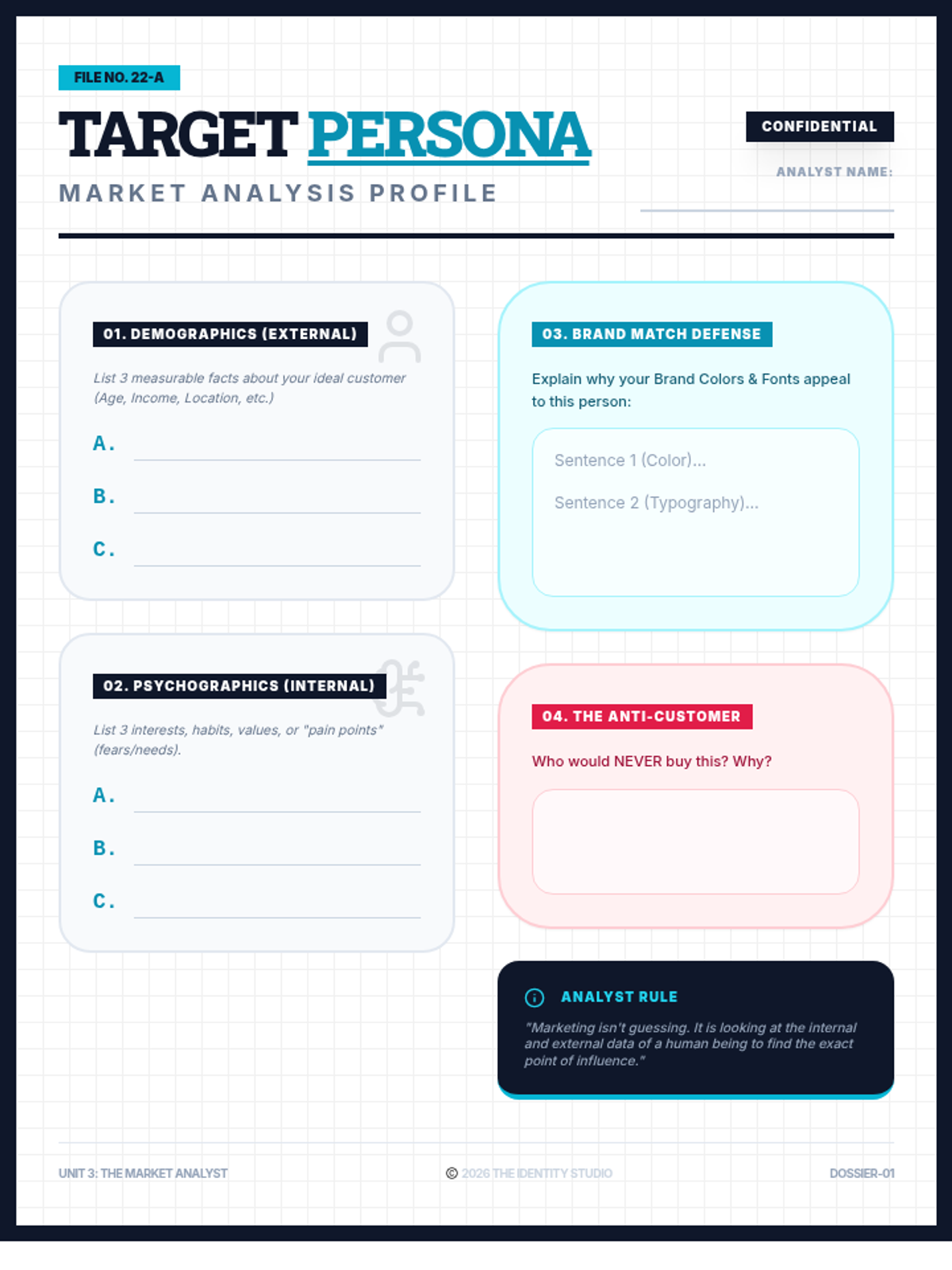
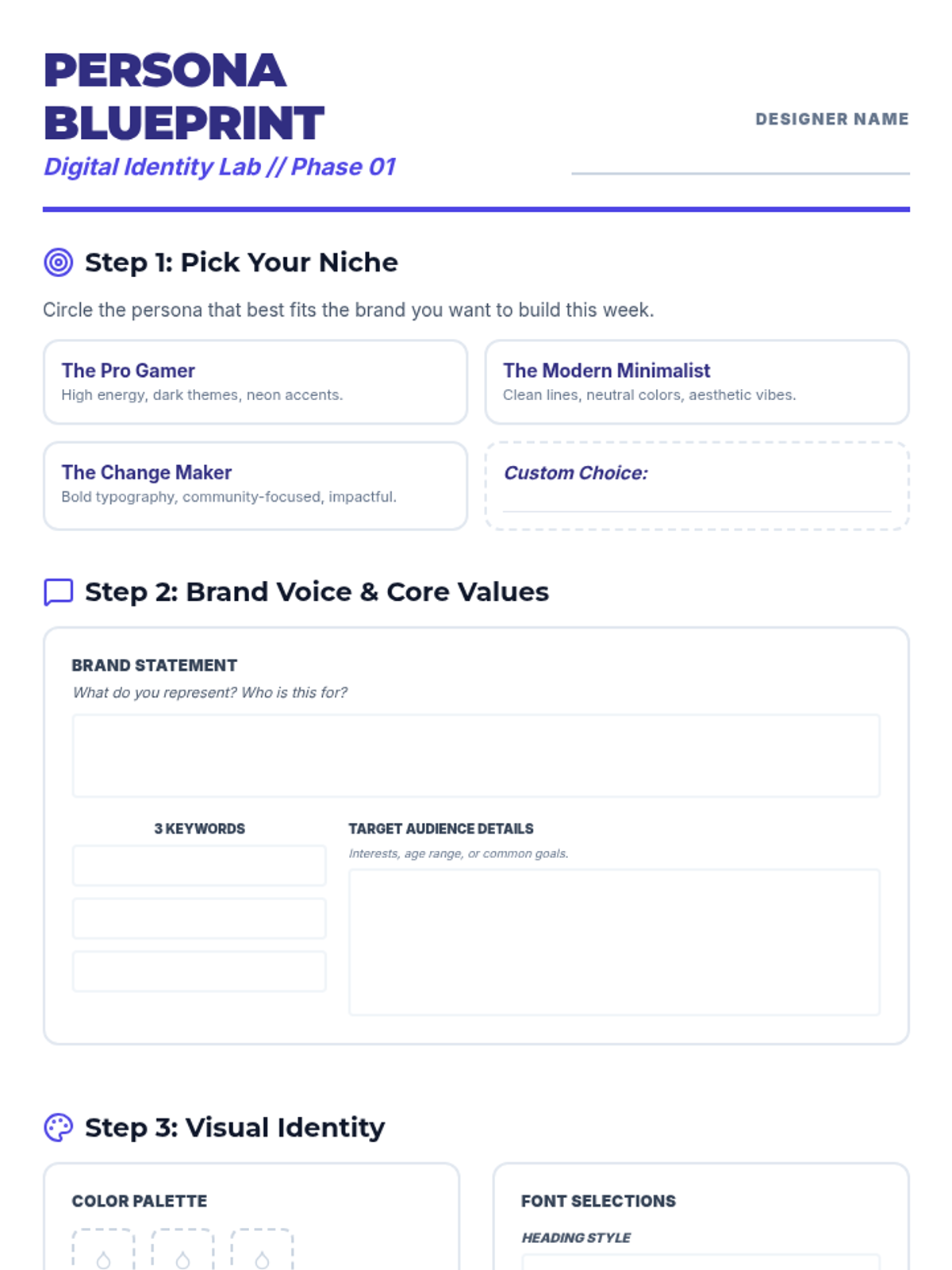
Students transition from brand design to market analysis by distinguishing between demographic data (external facts) and psychographic data (internal values). They apply these concepts by building a formal User Persona for their brand, justifying their earlier design choices based on audience data.
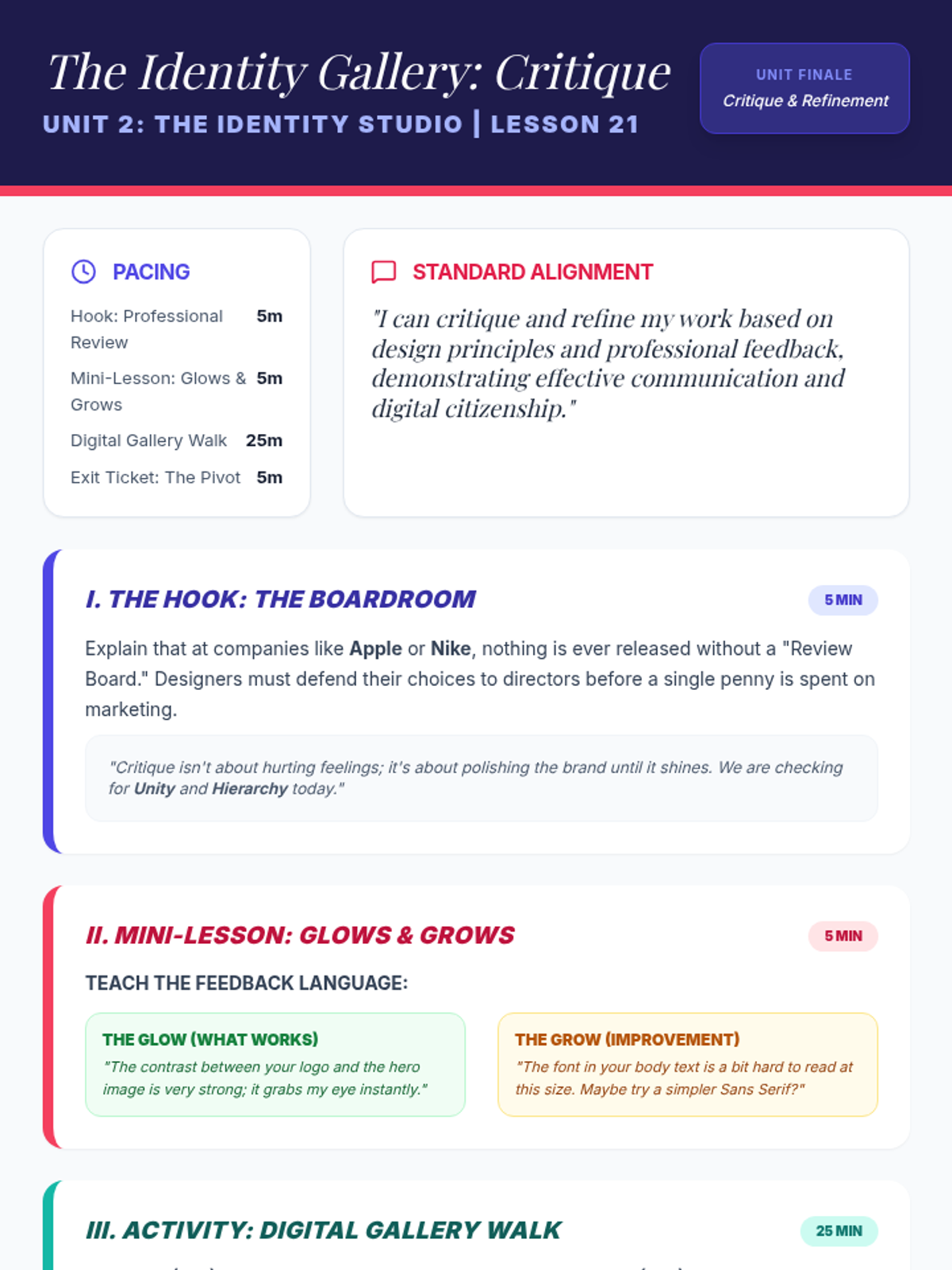
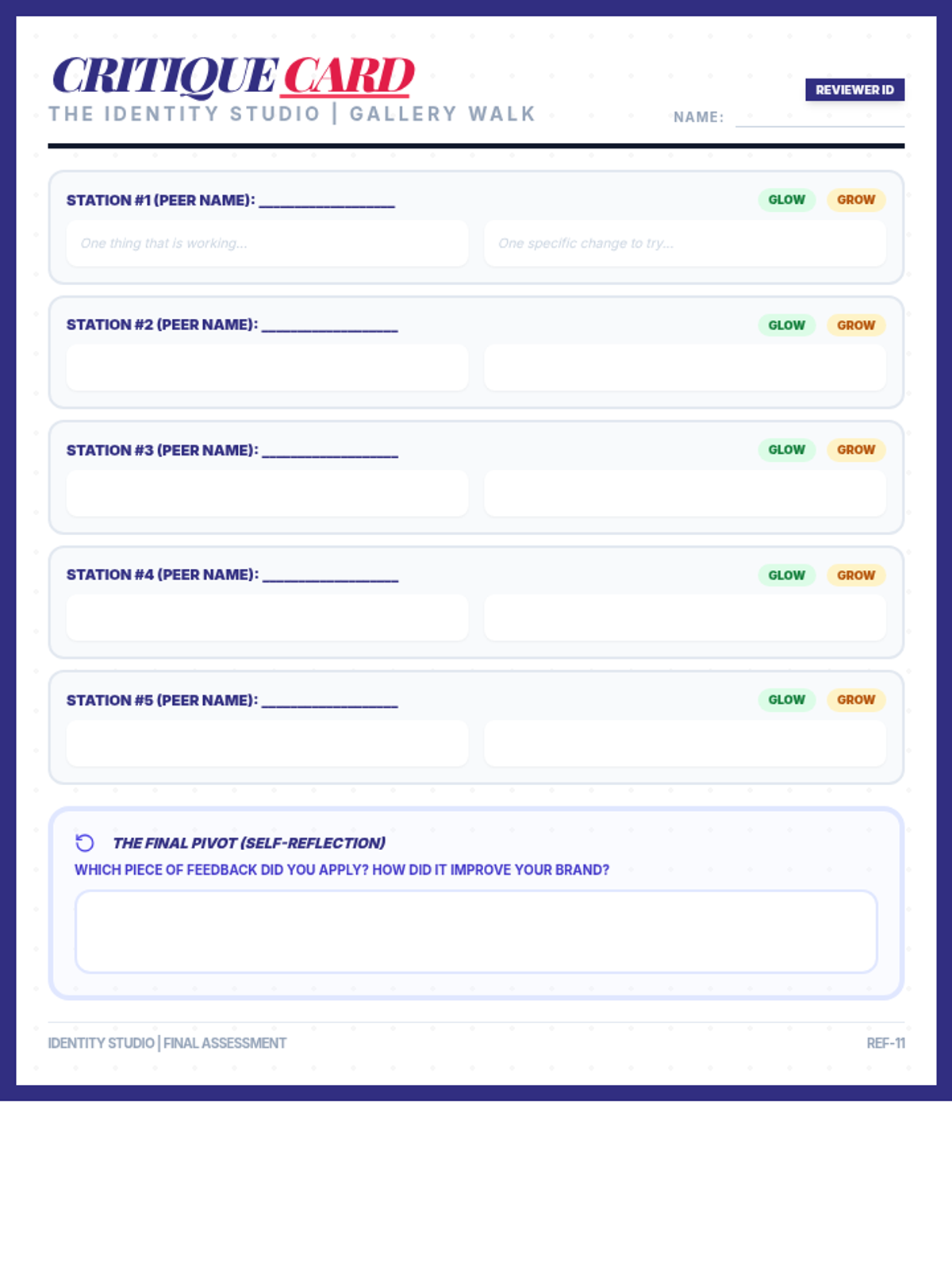
Students participate in a professional 'Gallery Walk' to provide and receive constructive feedback on their Brand Style Guides and One-Pagers. They apply the 'Glow and Grow' framework to refine their designs, fulfilling standards for artistic critique and professional communication.
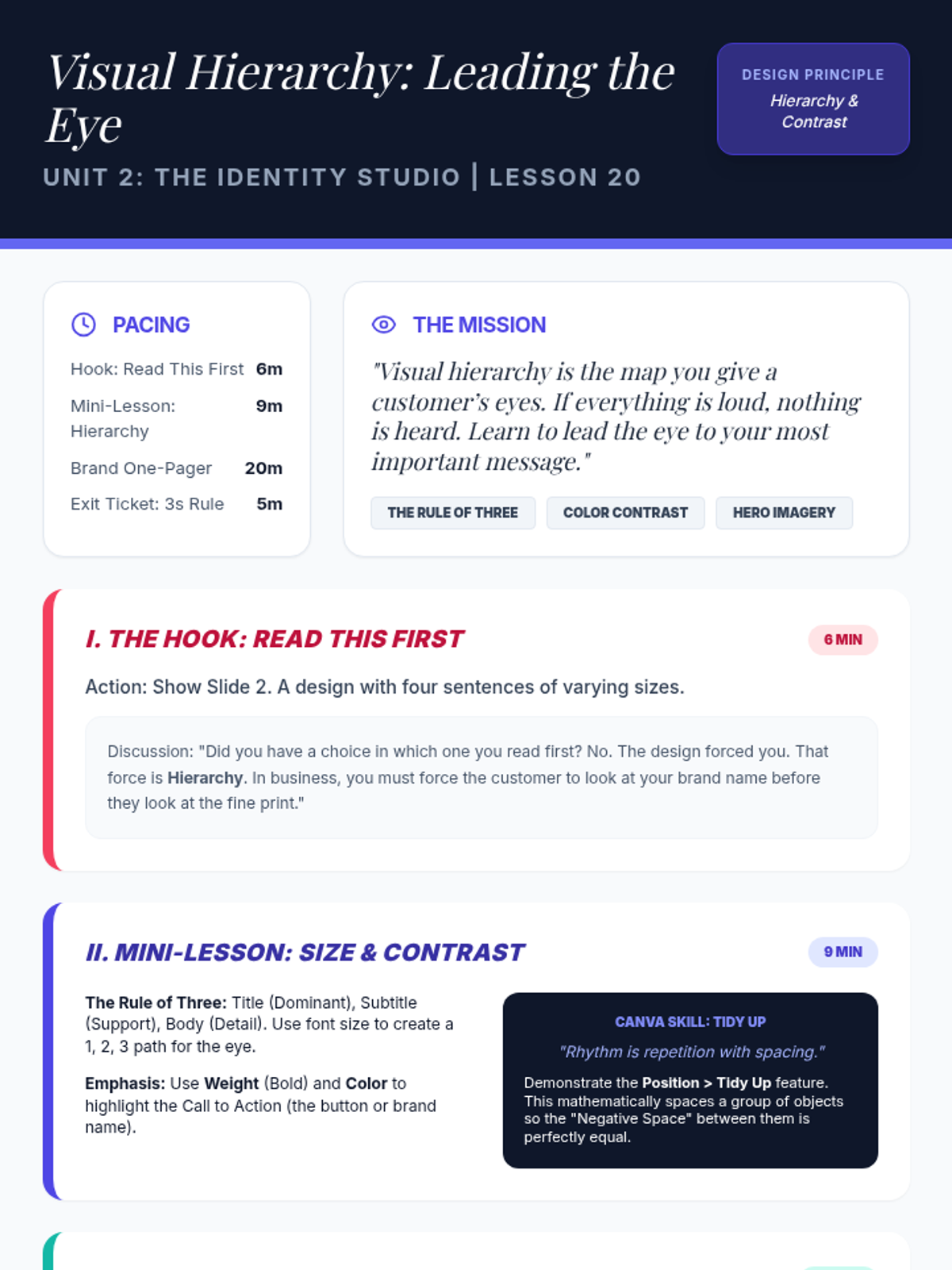
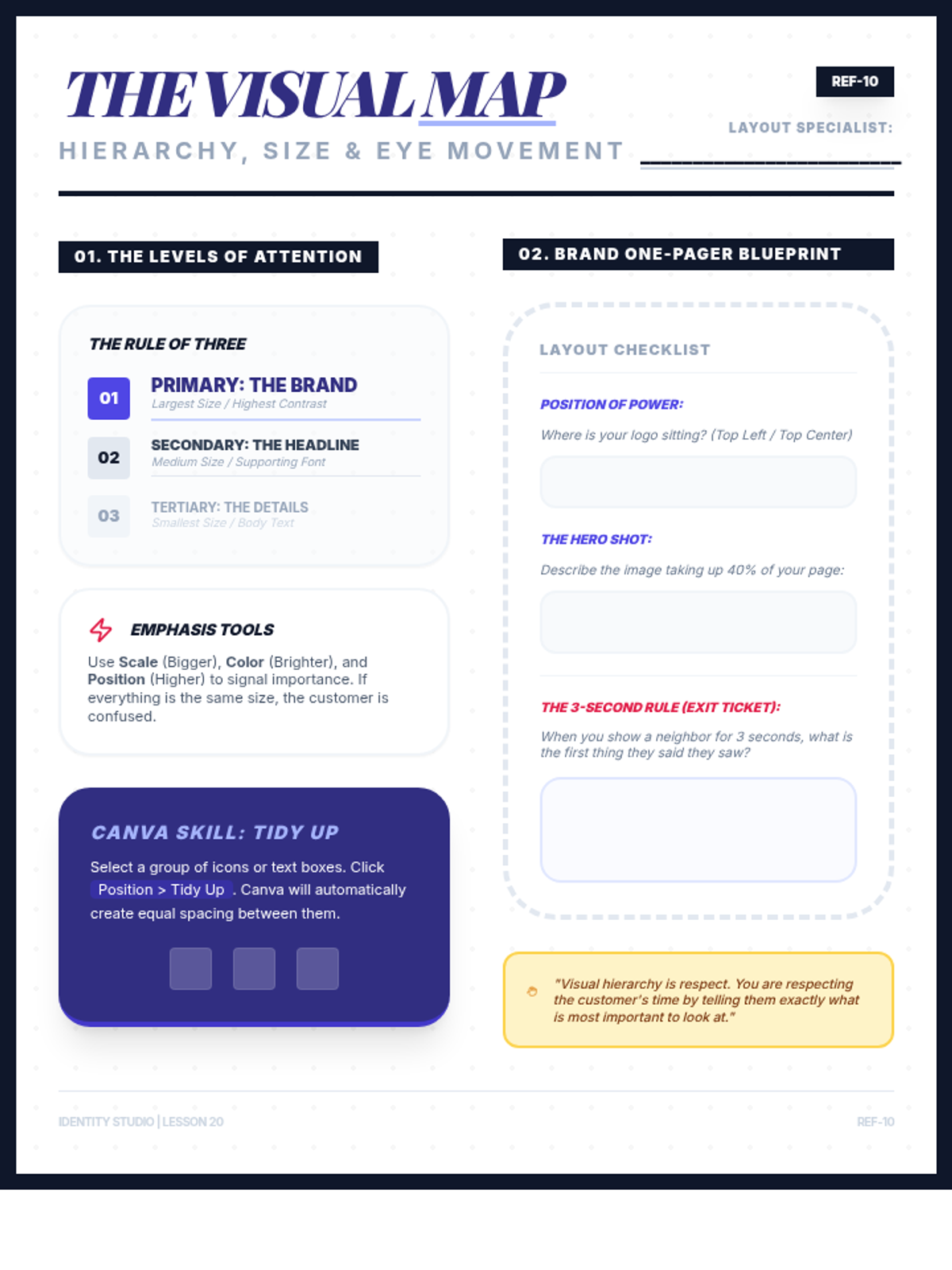
Students master the principle of visual hierarchy to lead a customer's eye through a design. They apply the 'Rule of Three' (Size, Weight, and Contrast) to create a professional brand 'One-Pager' in Canva, ensuring their most important brand assets receive maximum visibility.
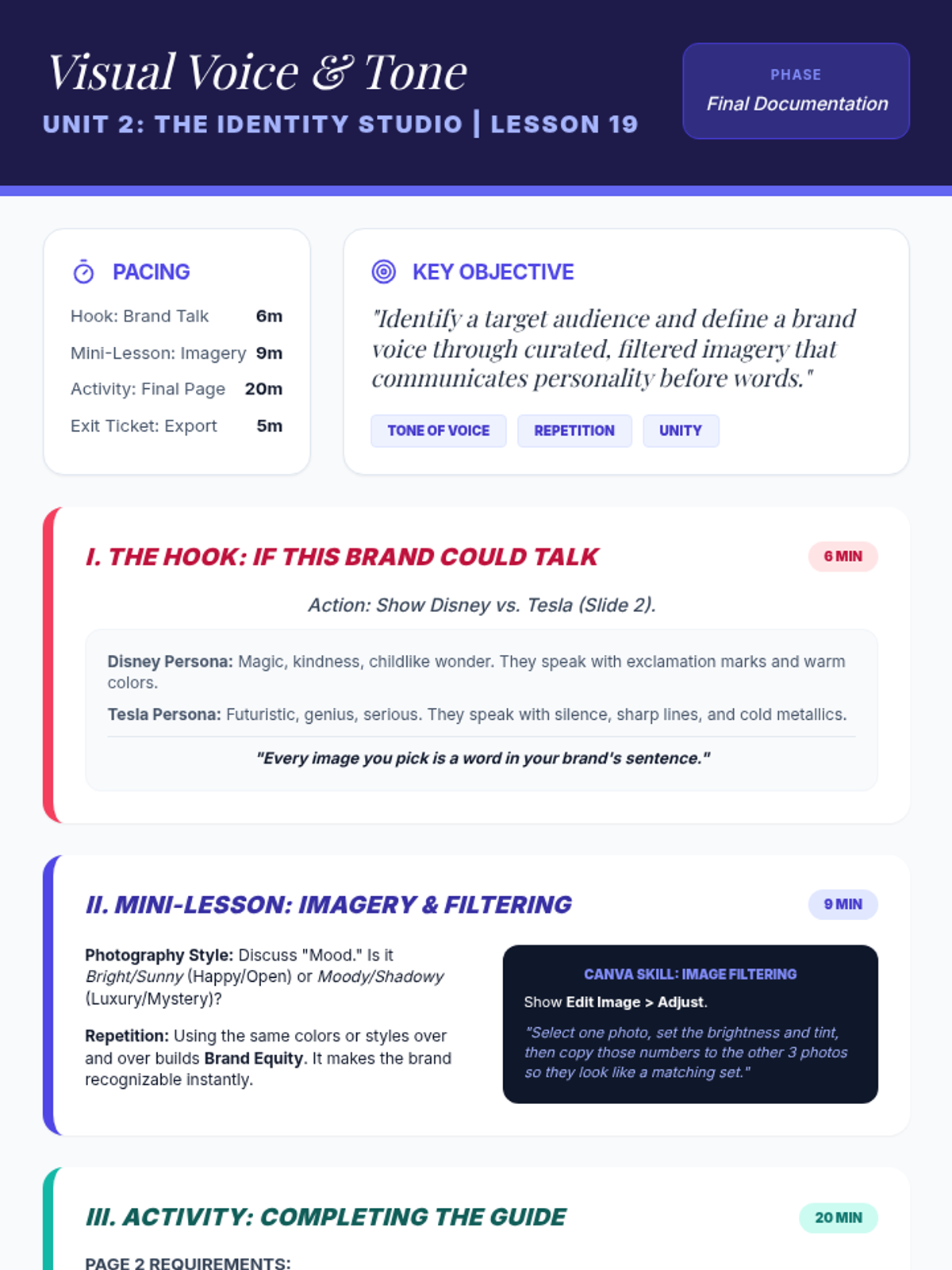
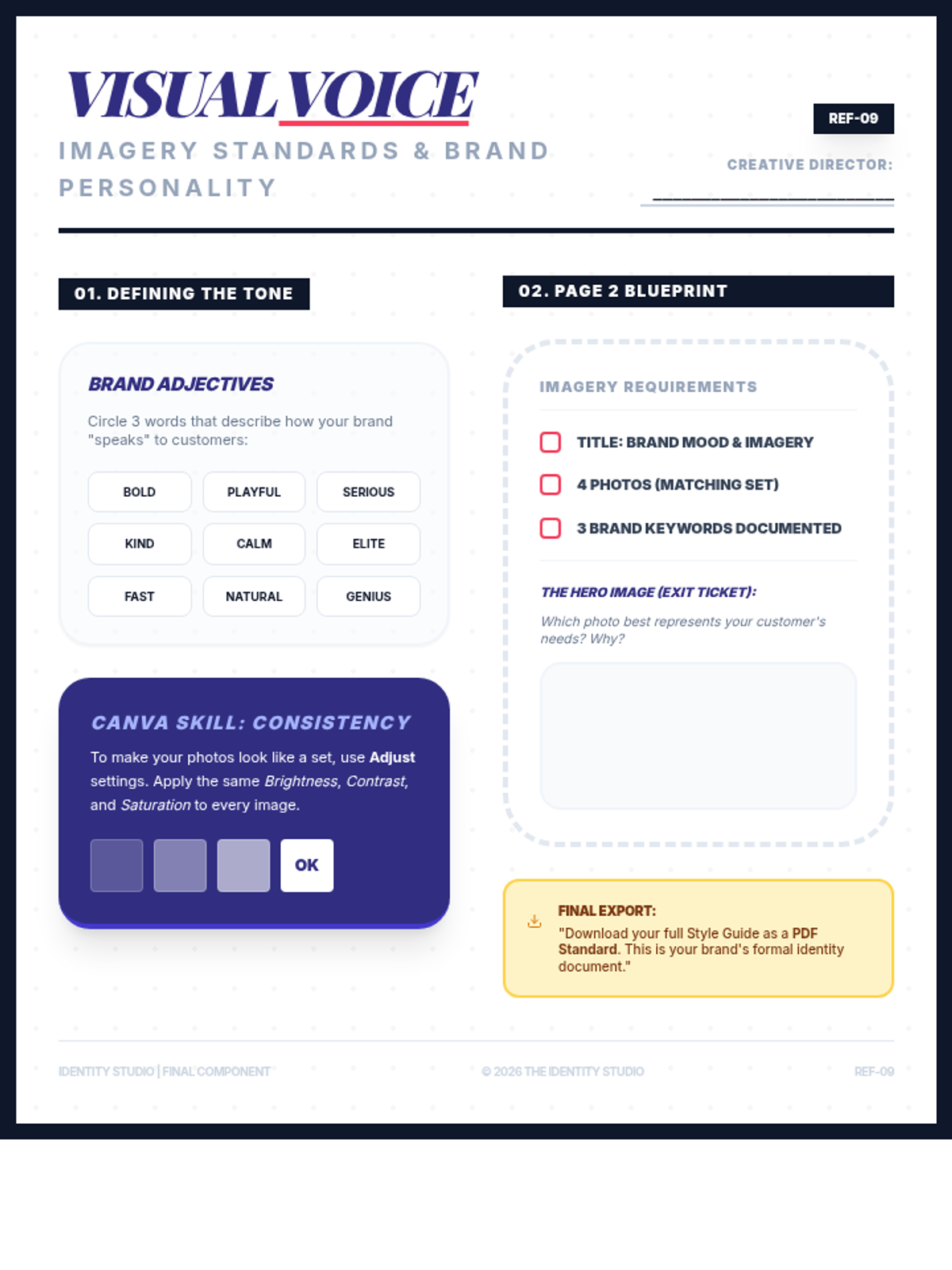
Students define their brand's 'personality' by selecting and filtering imagery that aligns with a specific tone. They complete their formal Brand Style Guide by documenting photography standards and brand keywords, focusing on the principles of repetition and unity.
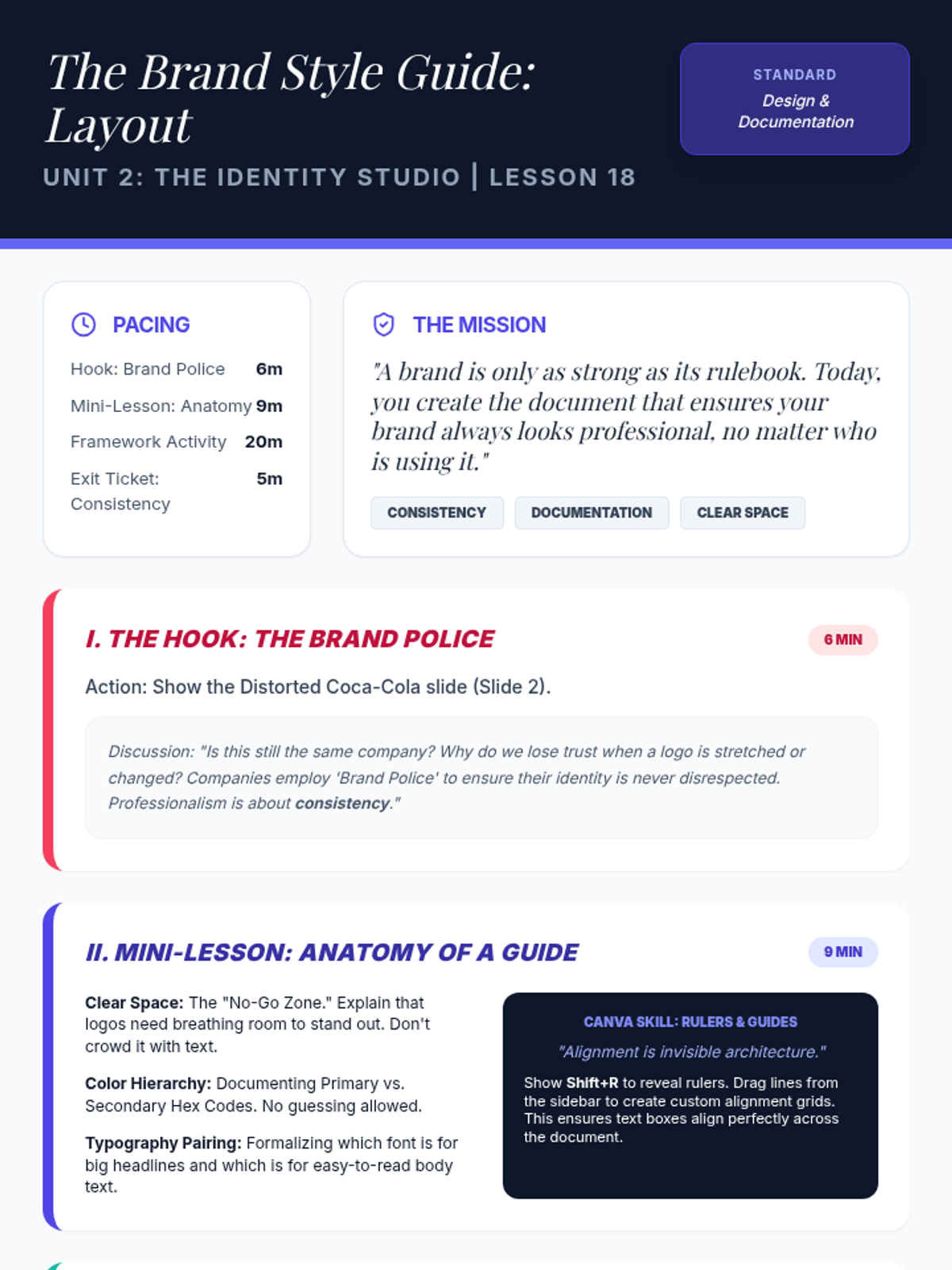
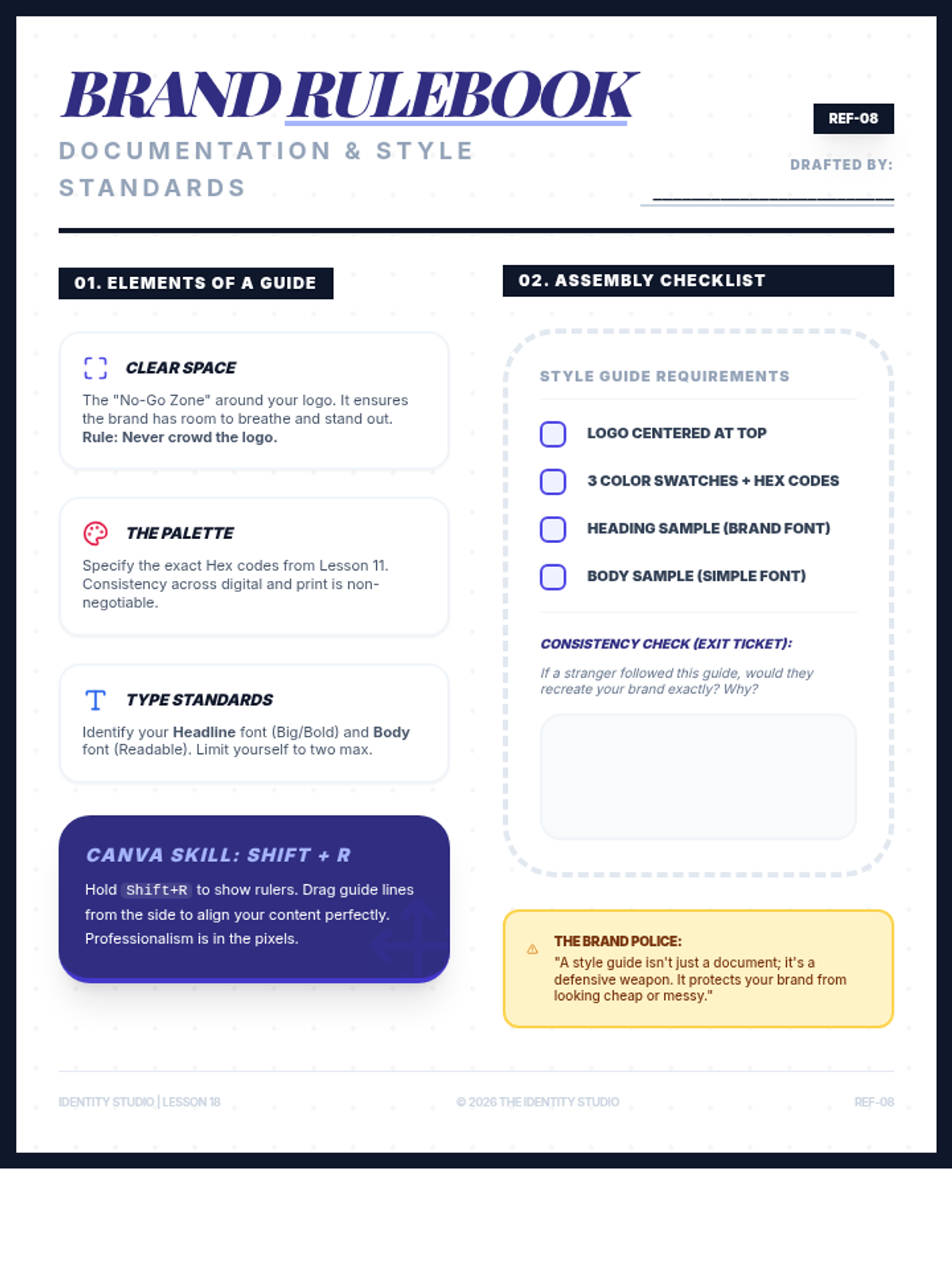
Students transition from brand creation to documentation by building a formal Style Guide. They learn the importance of brand consistency through 'The Brand Police' concept and document their logo usage, hex codes, and typography pairings in Canva using alignment rulers and guides.
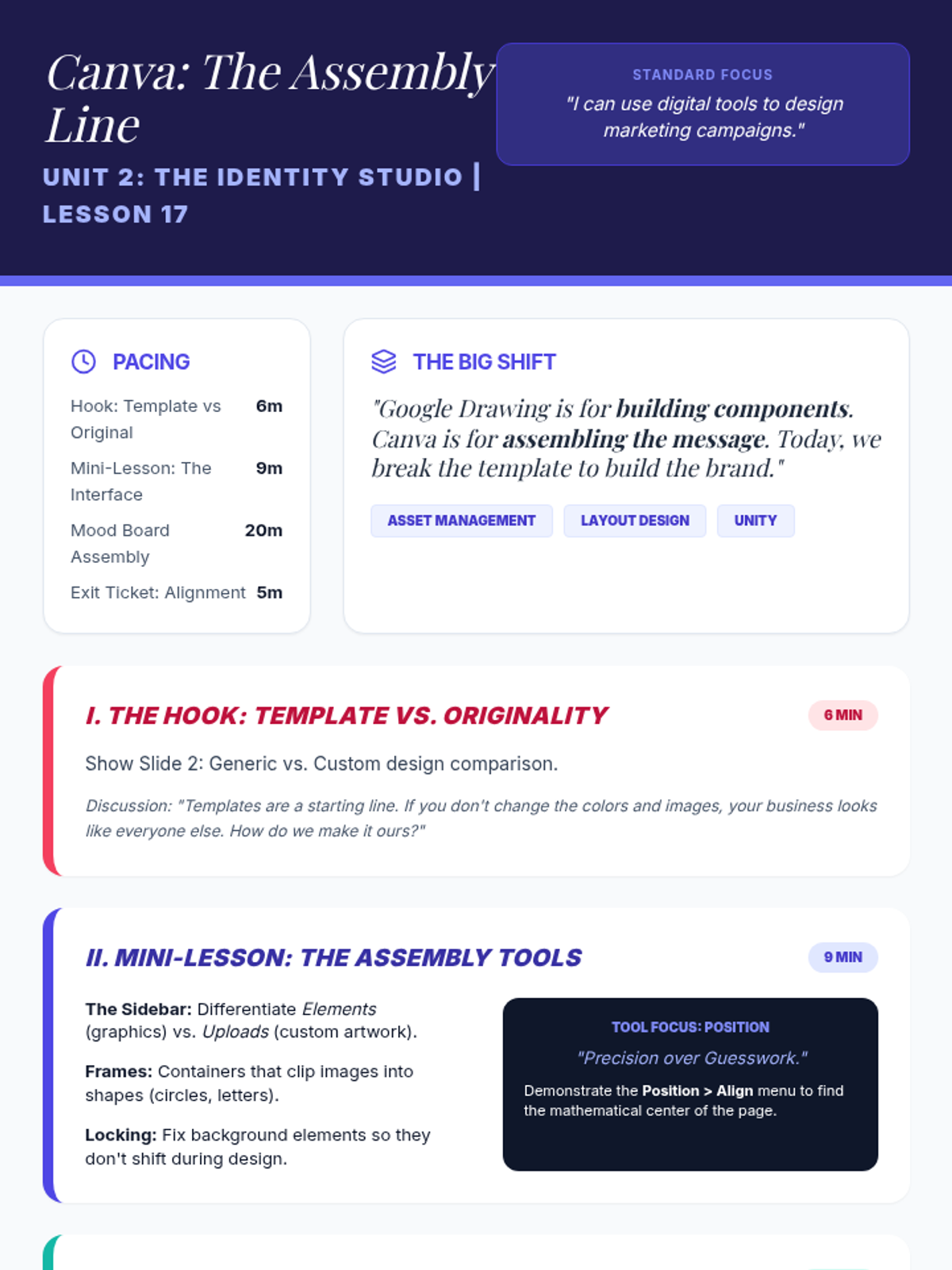
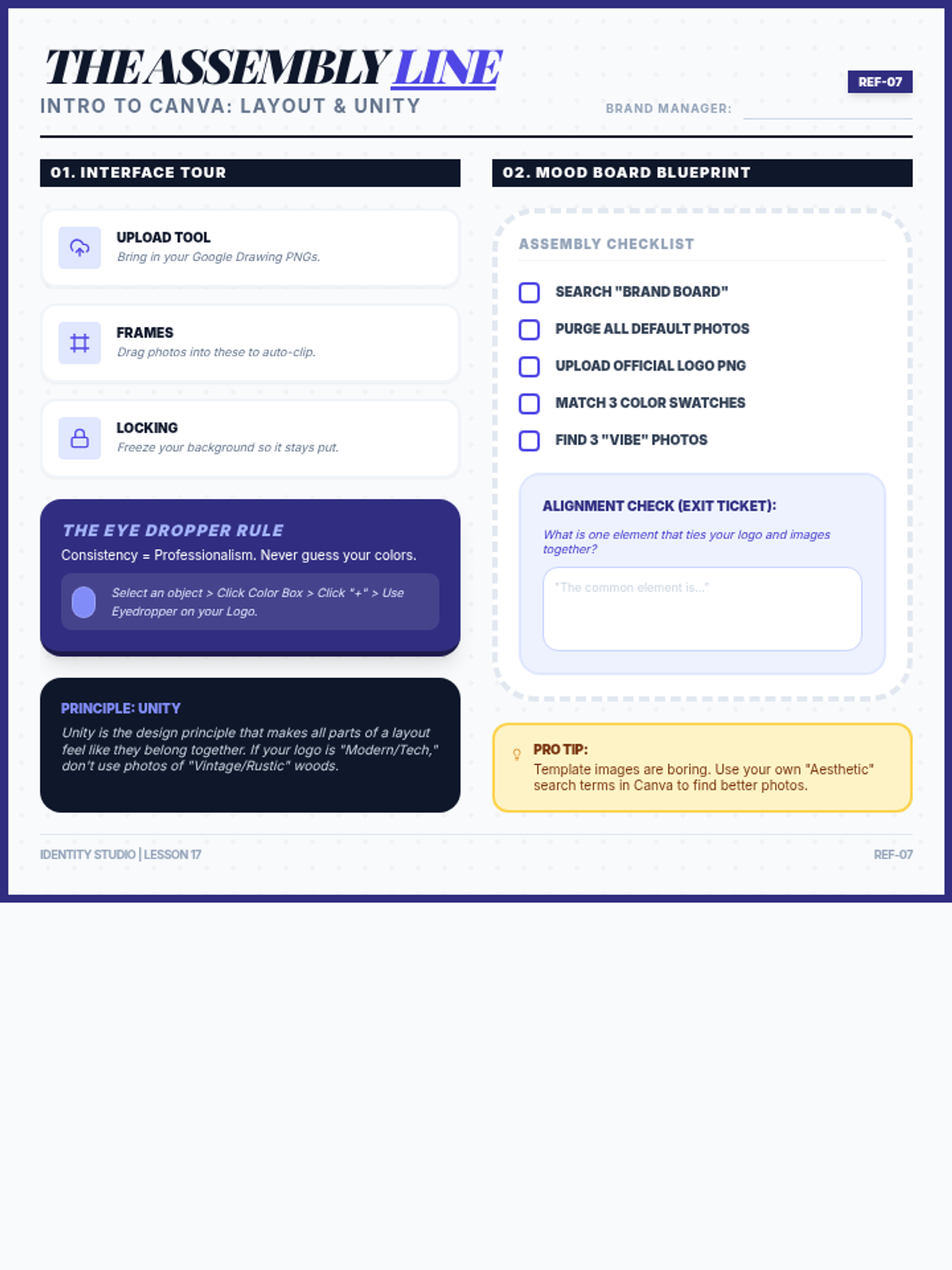
Students transition to Canva as a layout tool to assemble their brand assets into a professional Mood Board. They learn to 'break' templates by replacing generic elements with their own custom logos and colors, focusing on brand consistency and visual harmony.
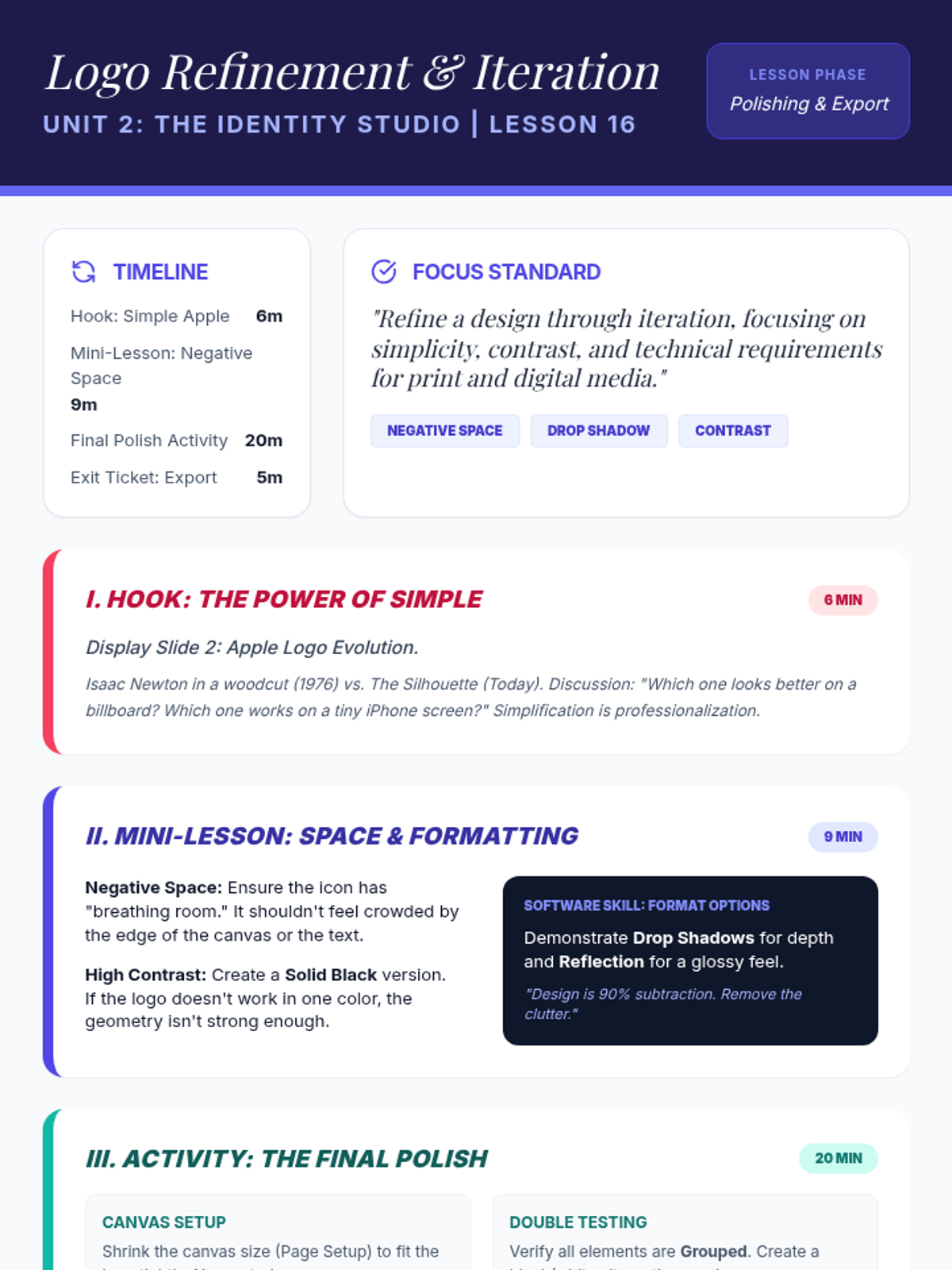
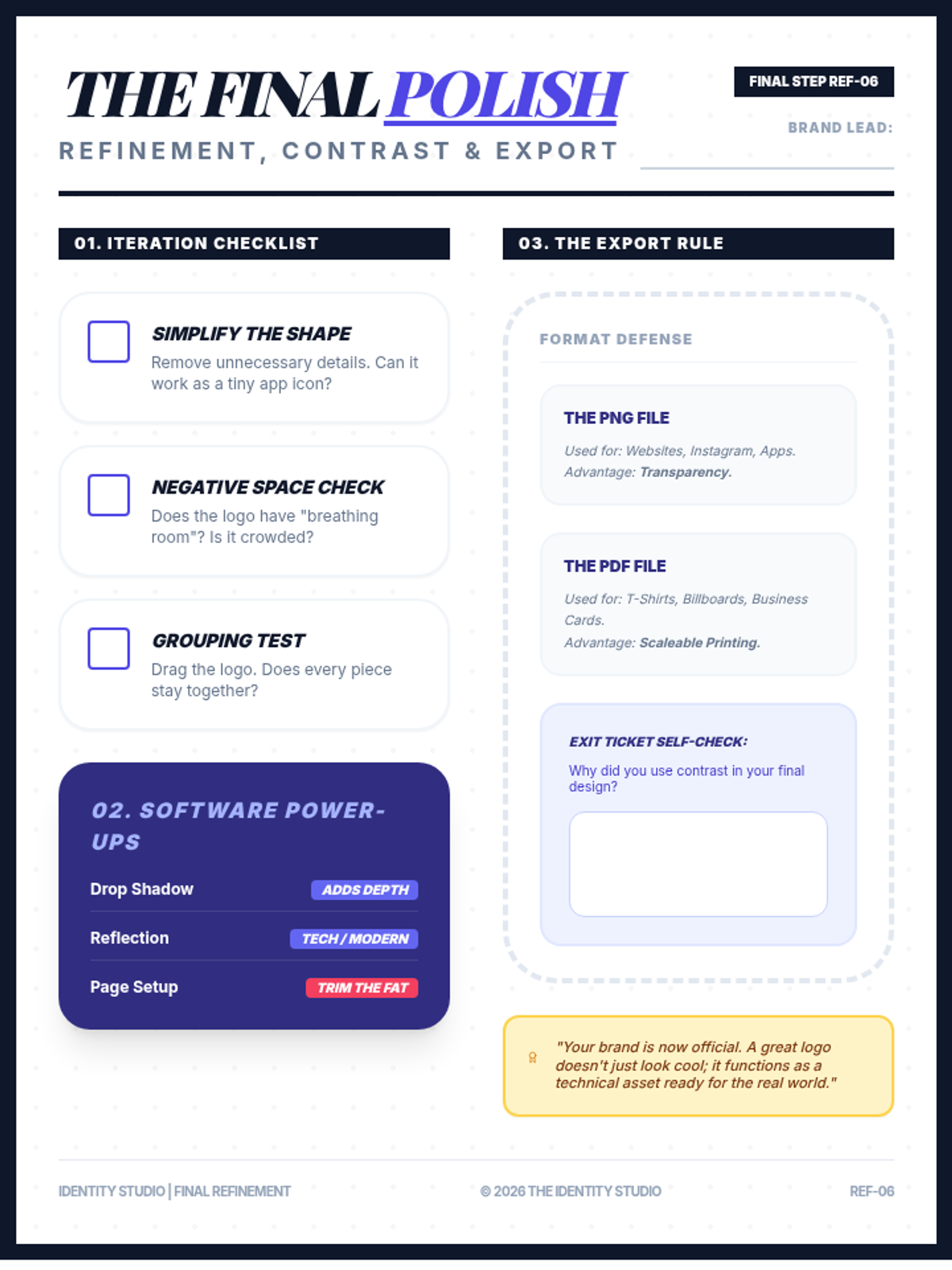
Students refine their logo drafts for professional use, focusing on simplicity, negative space, and contrast. They learn to create multiple versions (Full Color and Solid Black) and understand the technical export requirements for digital vs. print media (PNG vs. PDF).
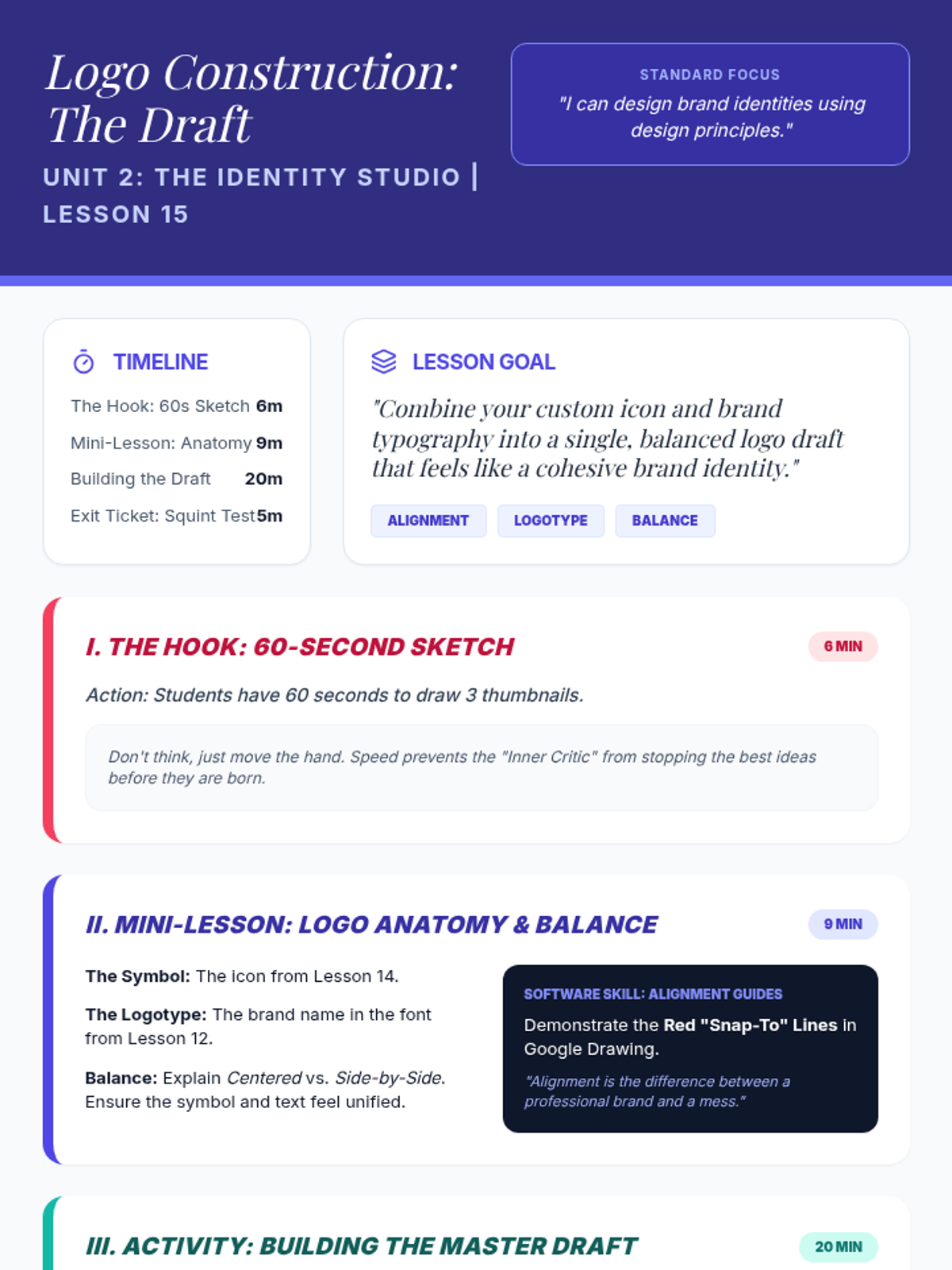
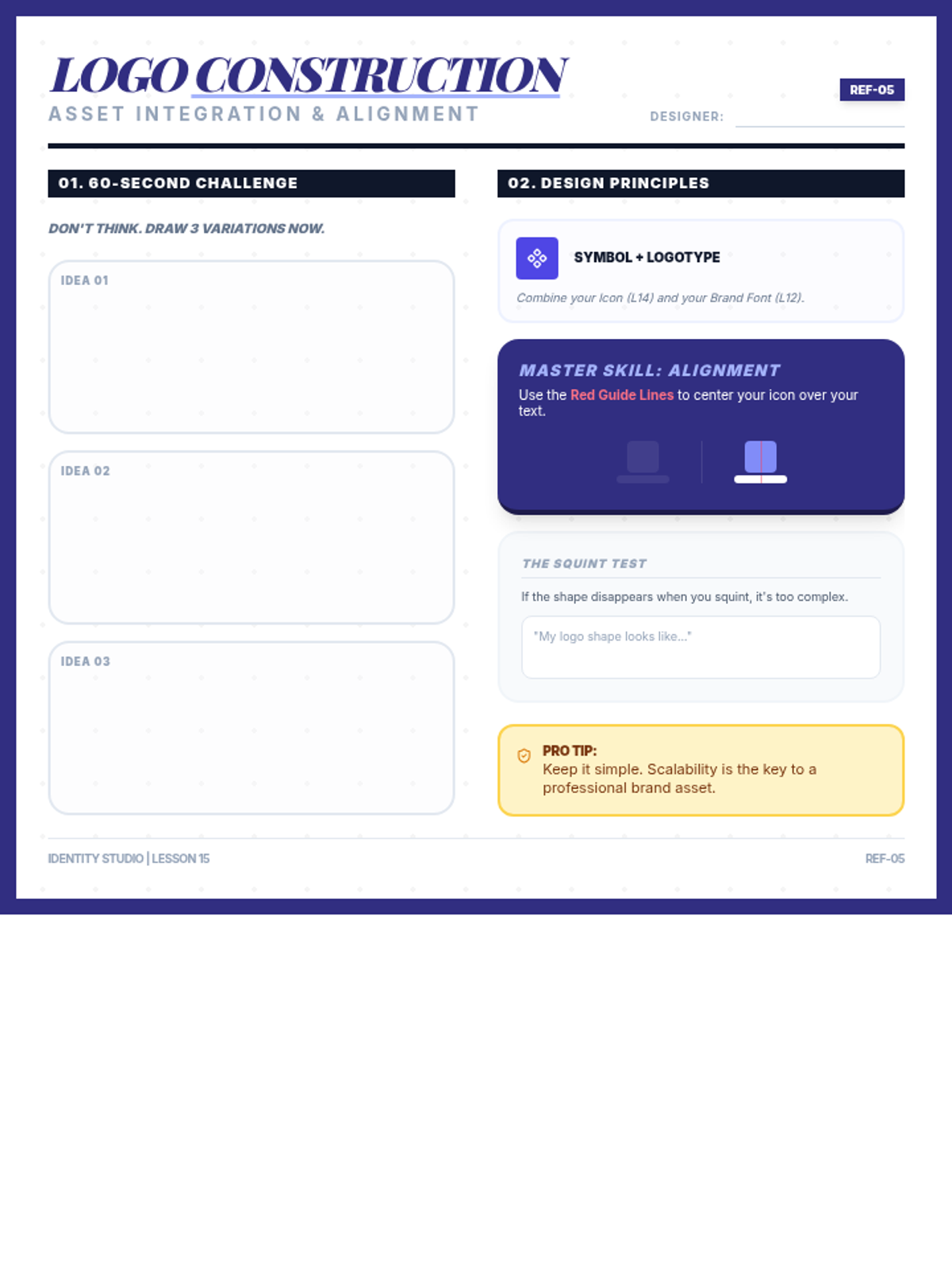
Students transition from creating isolated assets to building their official brand logo. They learn the anatomy of a logo (Symbol + Logotype), master alignment guides in Google Drawing, and perform the 'Squint Test' to ensure their design is clear and balanced.
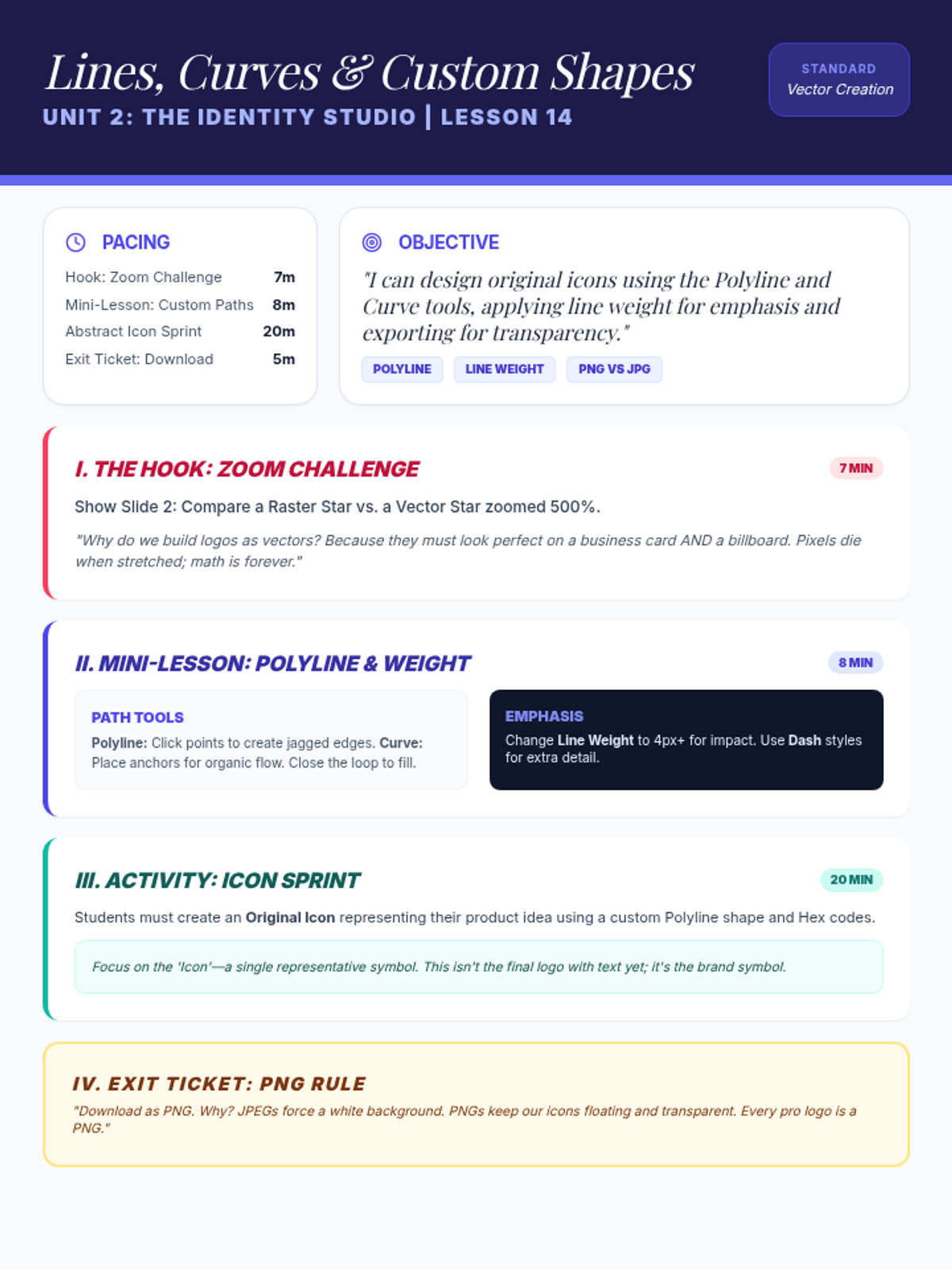
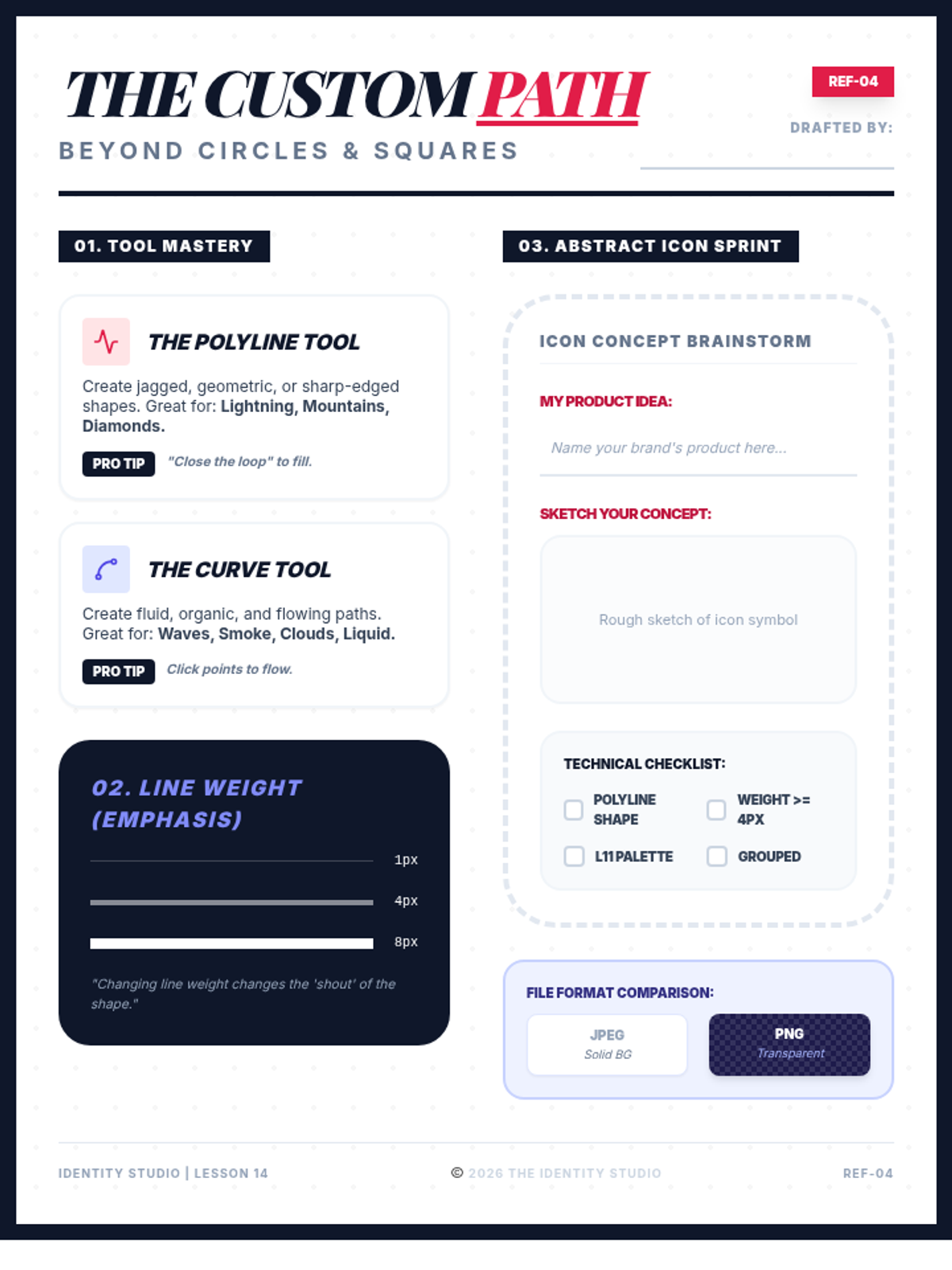
Students advance their Google Drawing skills by moving beyond basic geometric shapes to custom paths. They learn to use the Polyline and Curve tools to create original icons, while understanding the technical differences between Vector and Raster images and the importance of PNG transparency.
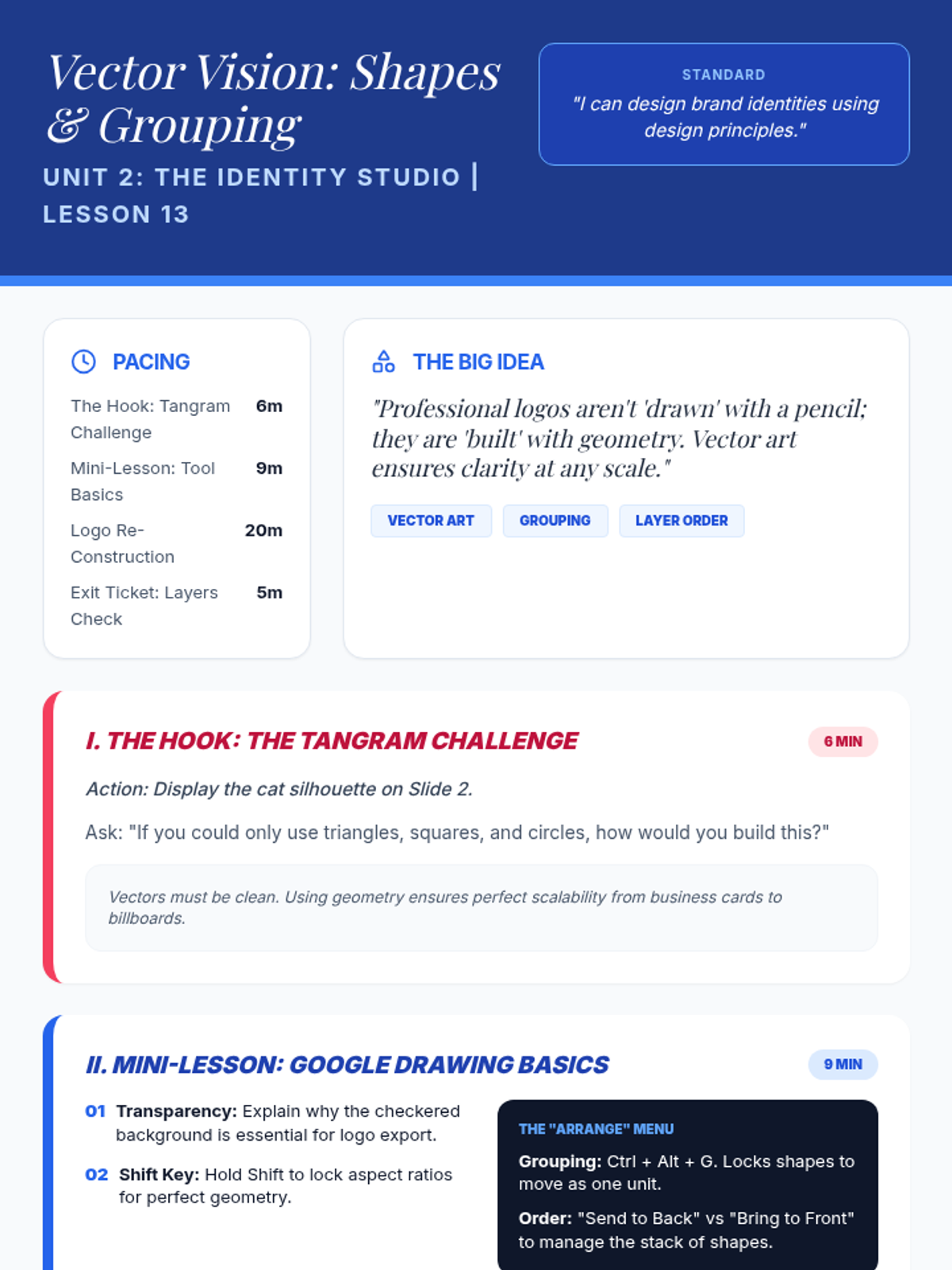
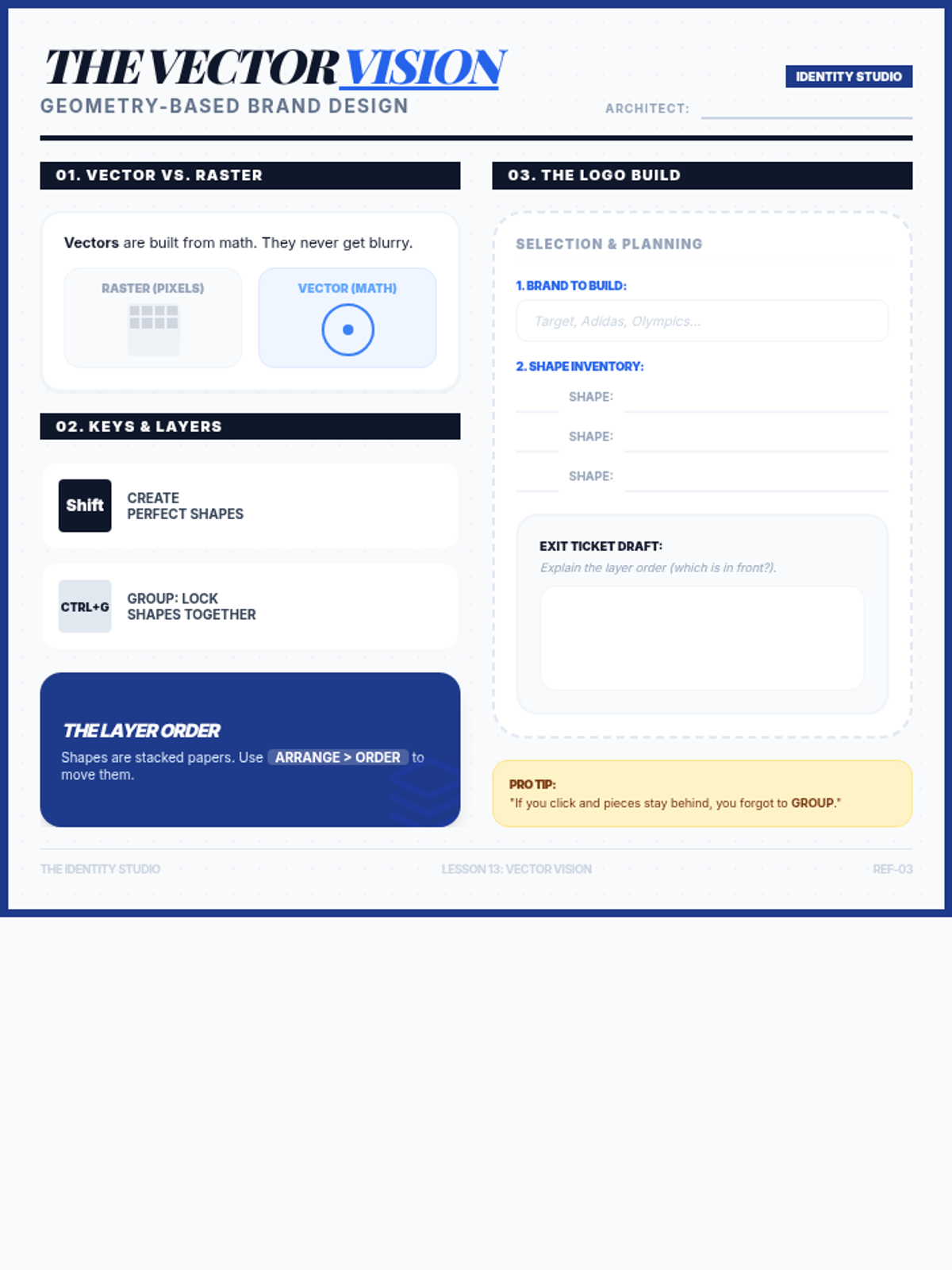
This lesson introduces students to the concept of vector art using Google Drawing. Students learn to build complex objects using simple geometric shapes, mastering skills like grouping, layering (order), and the use of the Shift key for perfect proportions.
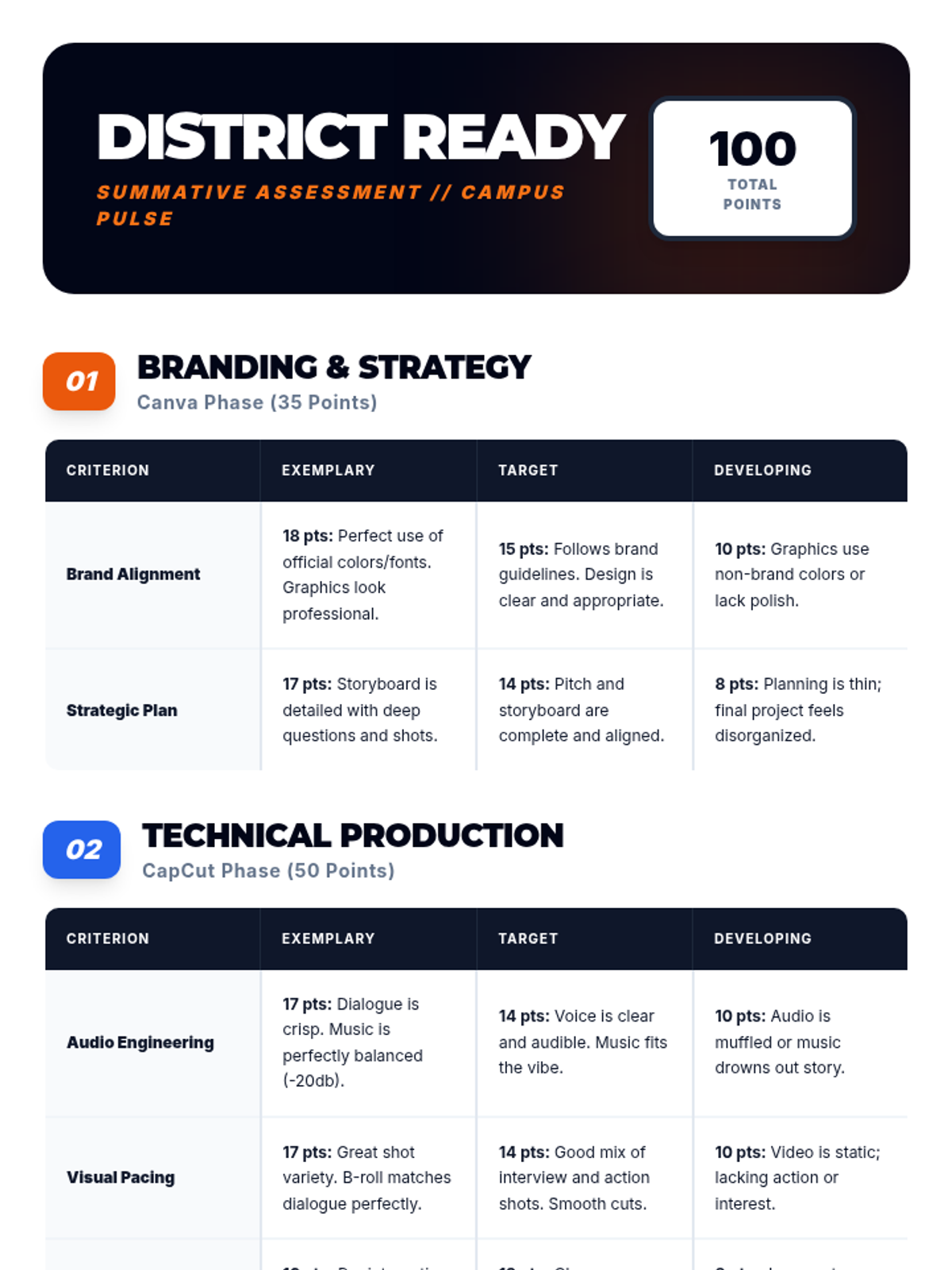
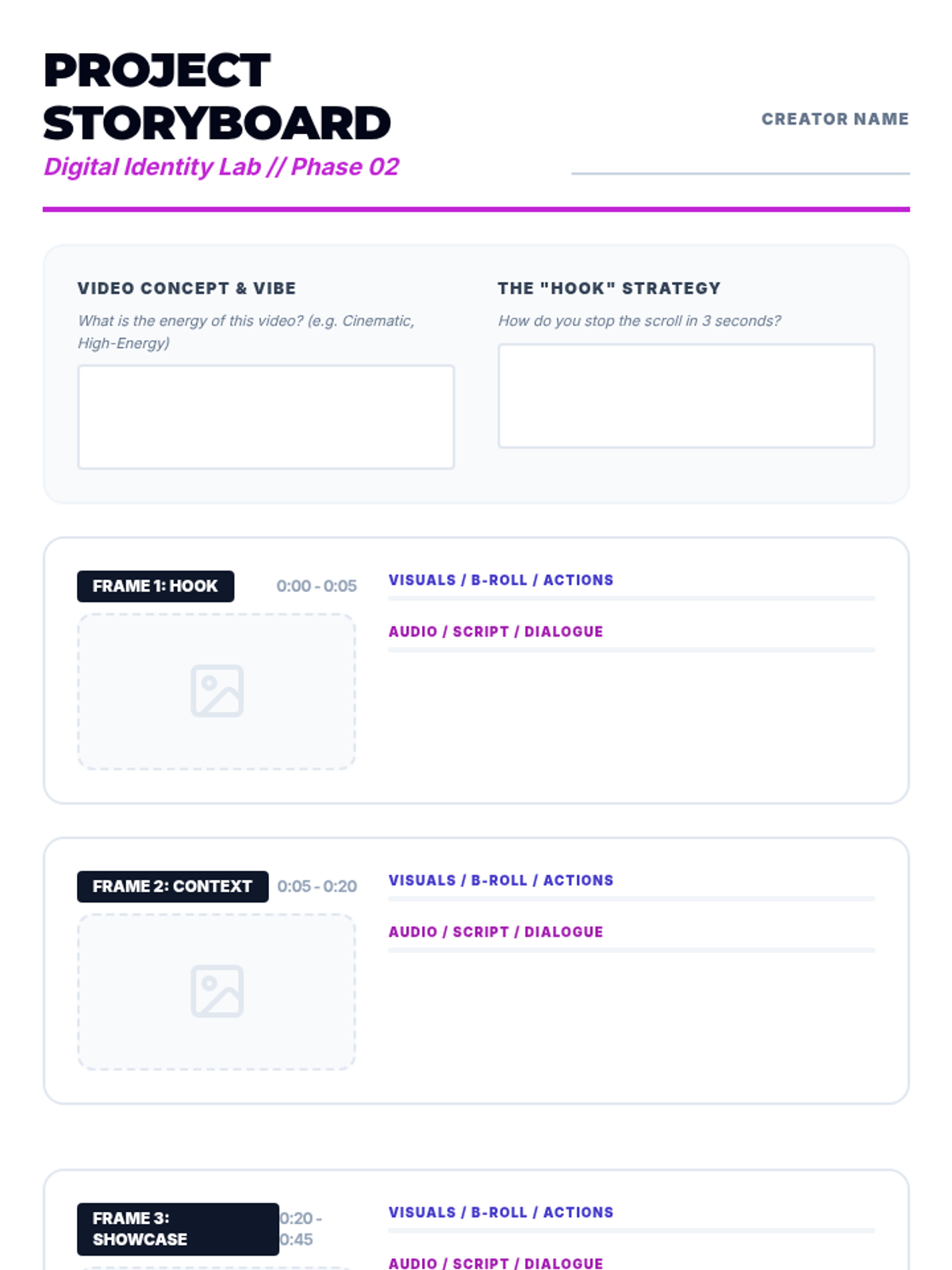
Students capture field footage and use CapCut to assemble a professional-grade short-form video featuring interviews, B-roll, and district branding.
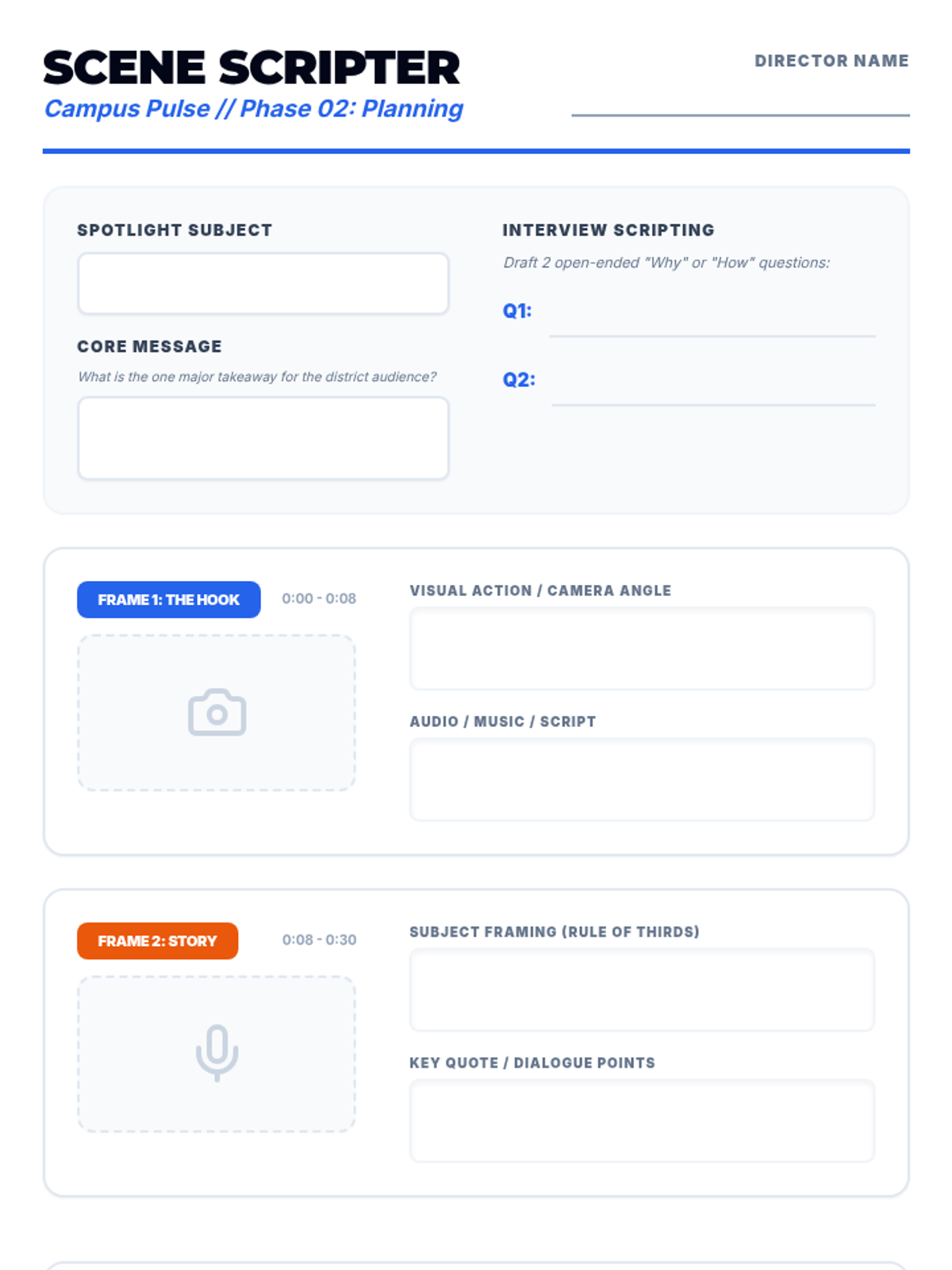
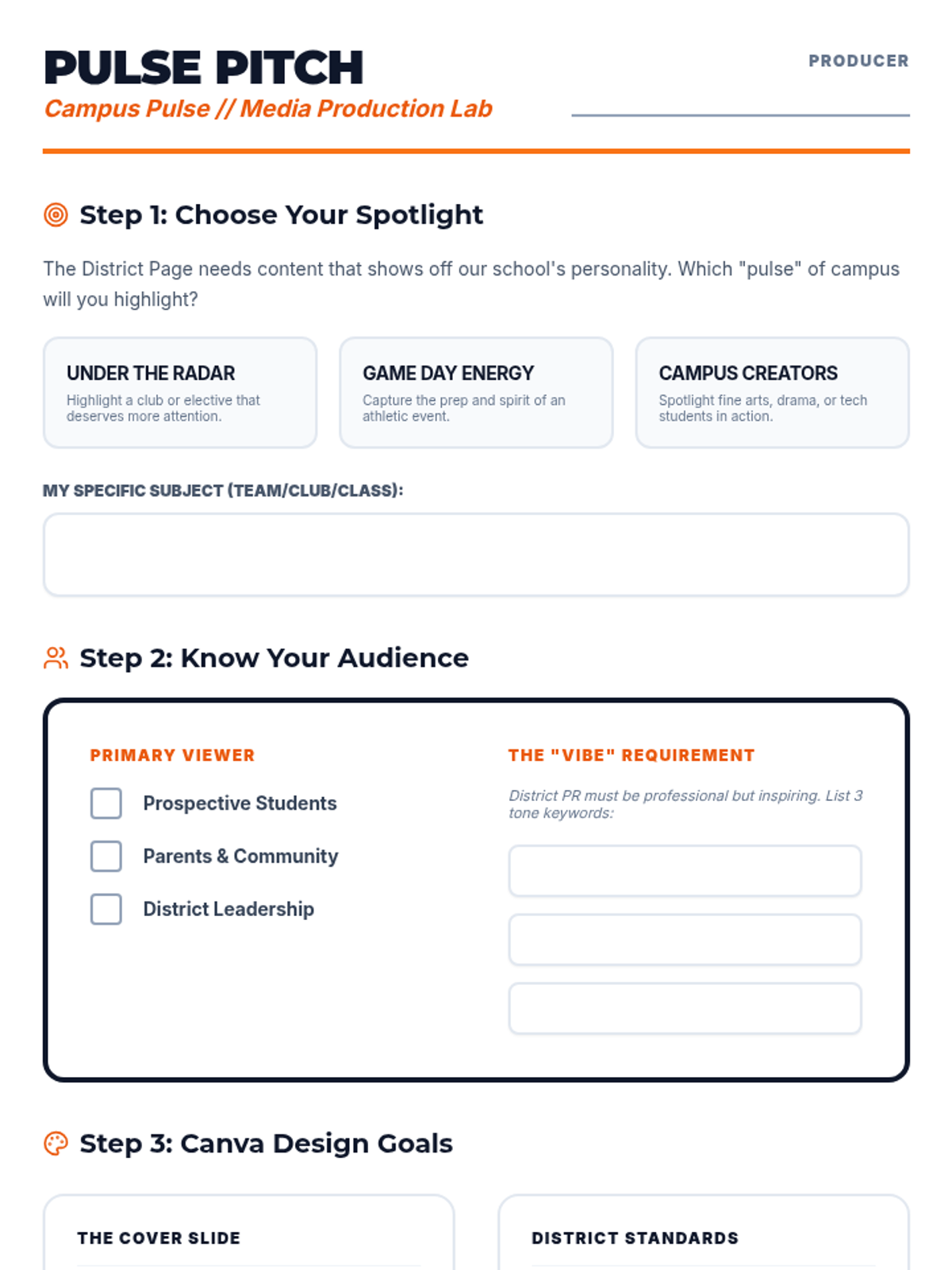
Students define their spotlight subject, research the target audience, and create professional brand assets in Canva, including a video thumbnail and intro graphic.
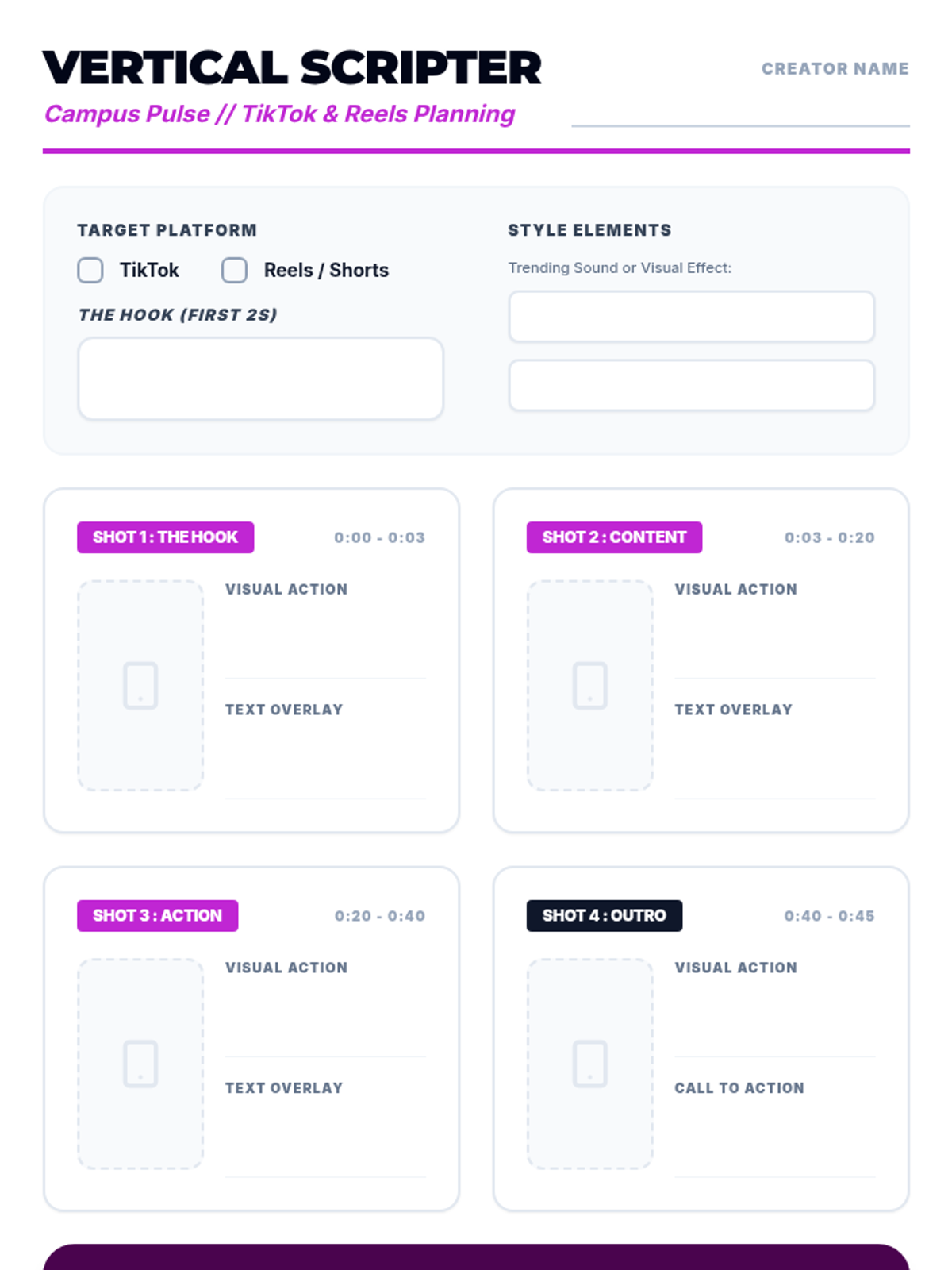
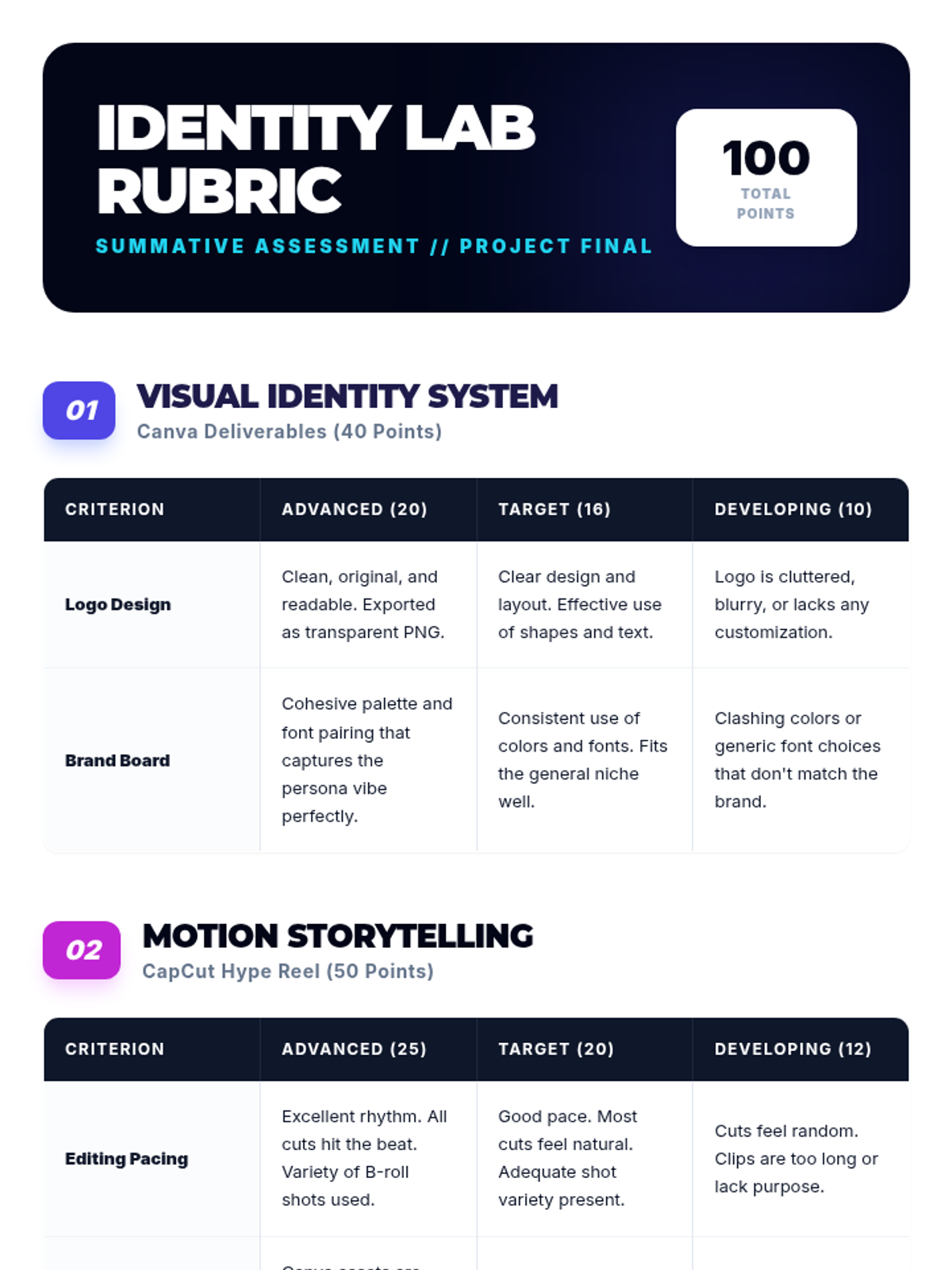
Students transition their brand into motion by creating a 60-second short-form video in CapCut, applying editing techniques like transitions, overlays, and sound design.
Students define their personal brand identity and create a visual 'Brand Board' using Canva, focusing on color theory, typography, and logo design.