Students explore the connection between emotions and movement by creating 'statues' that represent feelings like joy, sadness, and anger. This lesson focuses on nonverbal communication and body awareness.
A 30-minute introduction to sight reading in 6/8 time and the key of E-flat major, focusing on the feeling of compound meter and navigating three flats.
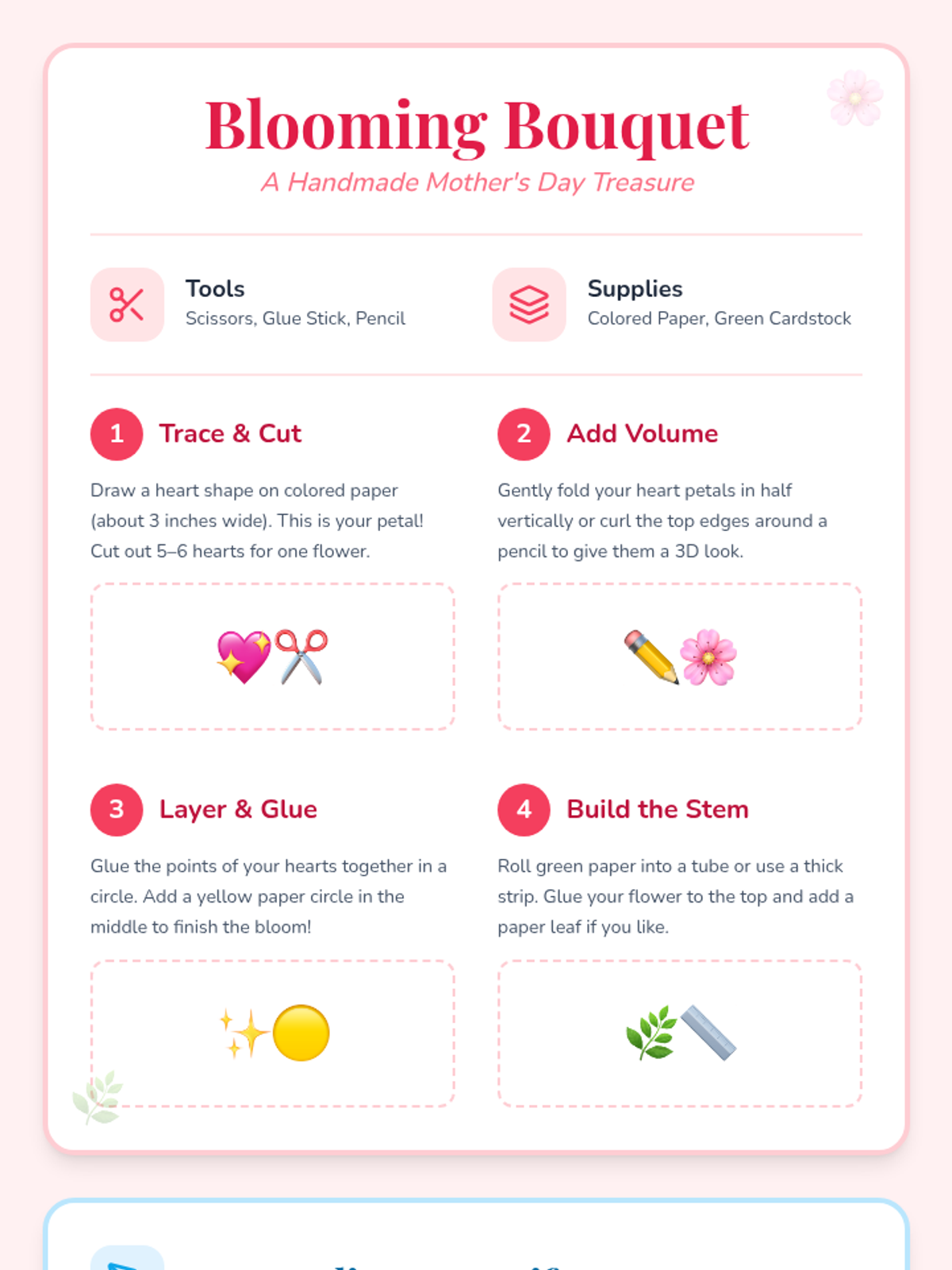
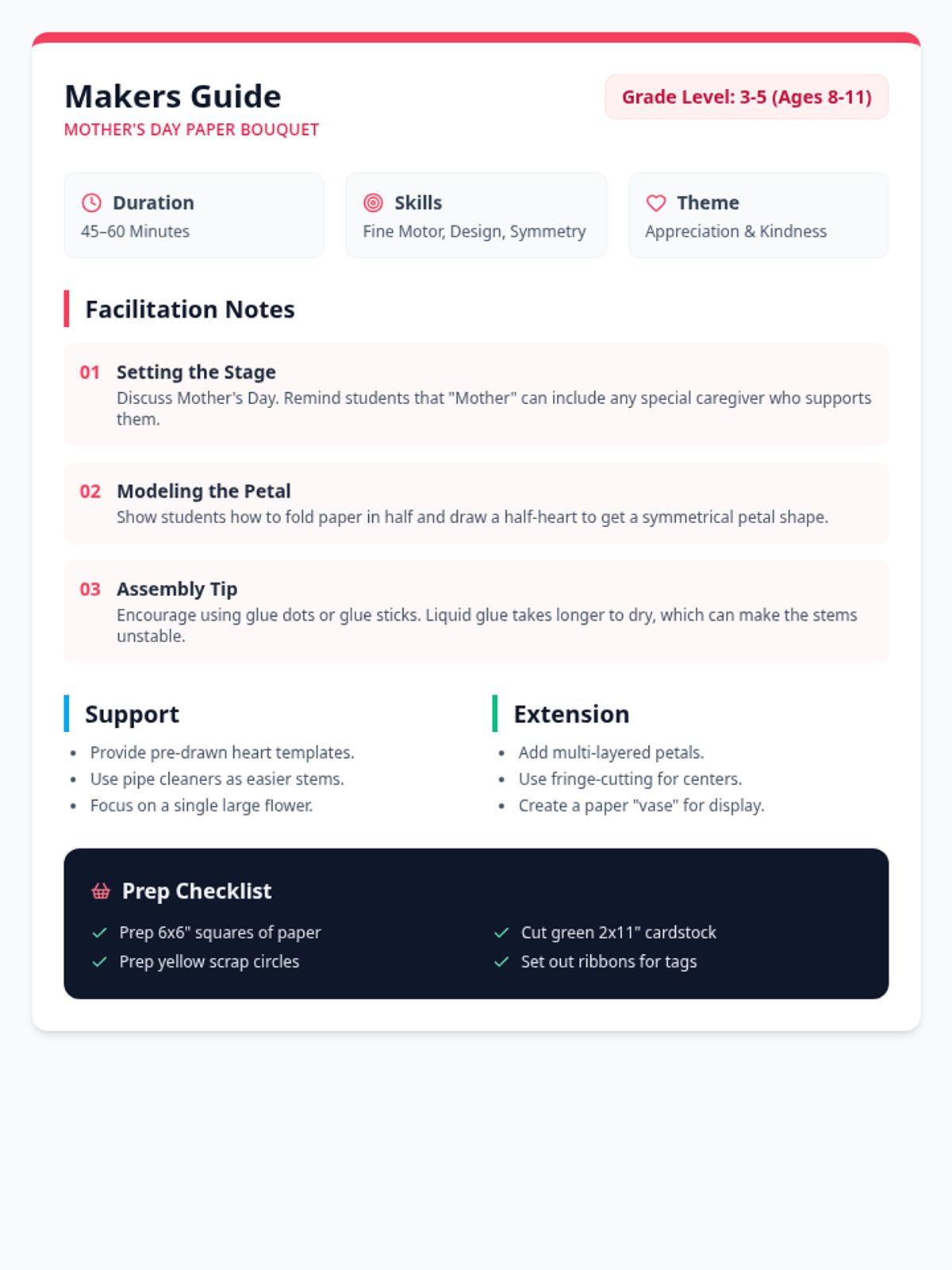
A fun and engaging 30-minute craft session where young students create their own 'Love Bug' characters using paper shapes. This lesson focuses on fine motor skills, shape recognition, and creative expression.
Conception d'actions de médiation concrètes, de la mise en espace physique du CDI aux outils numériques, pour engager les élèves dans la lecture.
Exploration de l'histoire, des genres et des mutations actuelles de l'édition pour adolescents, incluant l'impact des réseaux sociaux et des nouvelles tendances éditoriales.
A project-based lesson for middle school students to learn fundamental composition techniques, including melody writing, harmonic support, and arranging for classroom instruments. Students will apply these skills to create and perform an original short piece.
Students explore the historical significance and emotional weight of the Greensboro Sit-ins through drama-based activities and historical analysis, focusing on the theme of courage.
An interactive, game-based lesson where students use body percussion to perform quarter notes, eighth notes, and quarter rests at varying tempos.
A comprehensive look at the 1937 Degenerate Art exhibition in Nazi Germany, exploring how art was used as a tool for propaganda and the suppression of modern expression.
Students explore the intersection of geometry and realism by mastering one-point linear perspective, inspired by Leonardo da Vinci's Renaissance masterpieces.
A foundational visual literacy lesson for Pre-K students to understand that pictures and objects (symbols) can represent complex ideas like love, luck, and safety. Students engage with a video, play Symbol Bingo, and practice identifying symbols in their environment.
In this kindergarten music and science lesson, students explore rhythm and nature by investigating how and why woodpeckers 'drum' on trees. They use rhythm sticks and wooden blocks to mimic bird patterns, learn about biological adaptations through a video, and practice volume control.
Students explore colors and patterns in nature through the lens of insects, practicing observation skills and creating their own pattern-based bug art.
A visual arts and science lesson where students explore the concept of fog as a 'cloud on the ground' through watercolor painting and sponge-dabbing techniques.
A music lesson where students compose and perform a new verse for 'Going Green Song' about environmental issues in their own school.
A music theory lesson for 3rd and 4th graders focused on identifying the 'tonic' (the home note) and understanding the concept of musical resolution using patterns and expectations.
Students explore how the brain uses patterns and expectations to process music, learning about the 'tonic' and 'resolution' through a rhythmic composition game.
Students explore the concept of tempo and rhythm through a catchy song about the solar system, using rhythm sticks to match shifting speeds.
A cross-curricular Art and Creative Writing lesson where students explore the mesmerising movement of starling murmurations to learn about emergence and collective behaviour.
An art and science integration lesson where students explore the Aurora Borealis through scientific inquiry and chalk pastel landscapes. Students learn about Earth's magnetic field and solar particles before recreating the shimmering sky.