Students explore how movement can express ideas and emotions without words, mimicking early human communication and establishing dance as a universal language.
A fun and engaging 30-minute craft session where young students create their own 'Love Bug' characters using paper shapes. This lesson focuses on fine motor skills, shape recognition, and creative expression.
A high-energy, low-pressure 15-minute music lesson designed to engage disengaged students and build vocal confidence through rhythm and stealth games. This lesson moves from non-verbal rhythmic games to collective vocalizing to bypass the fear of singing.
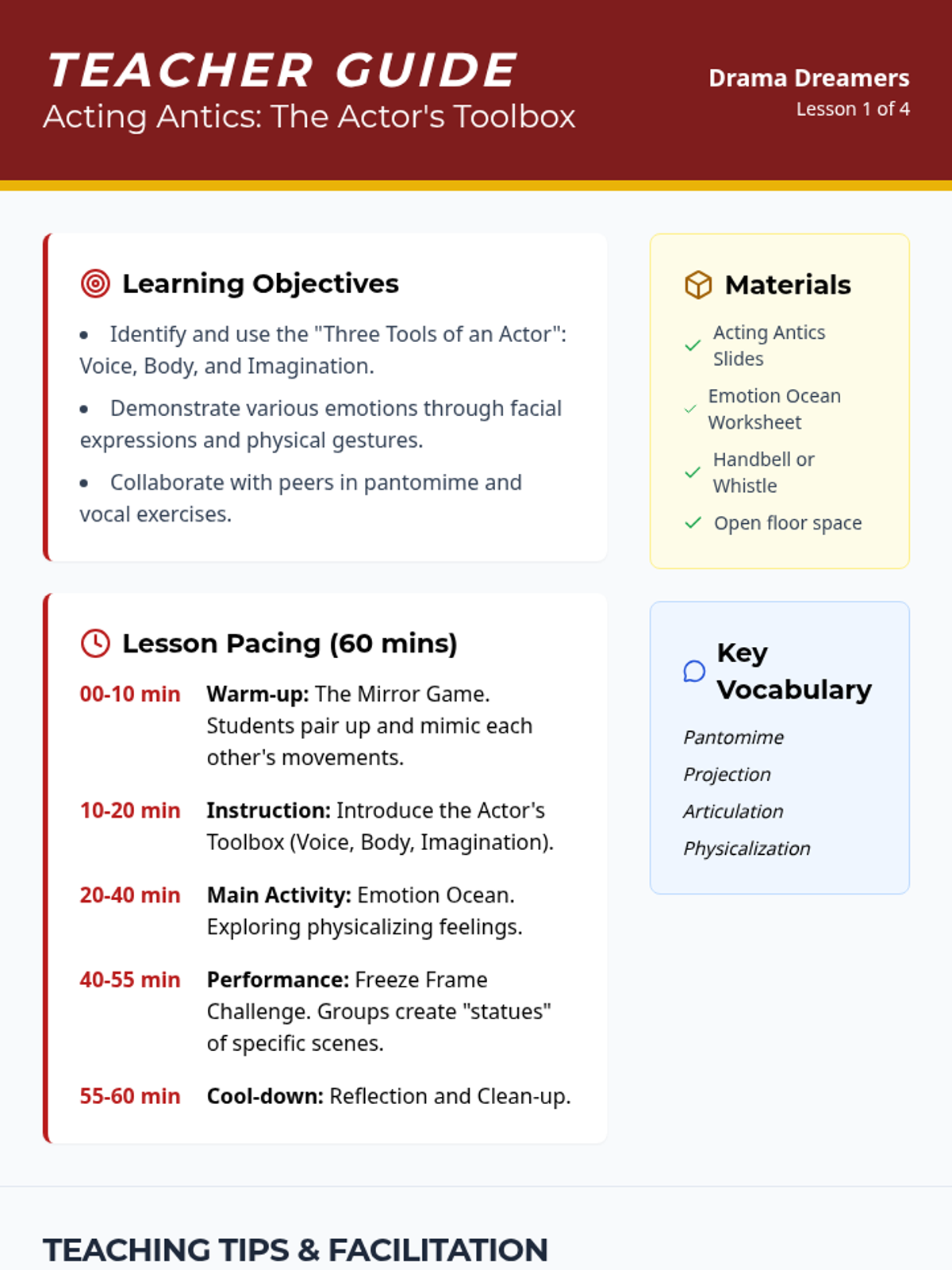
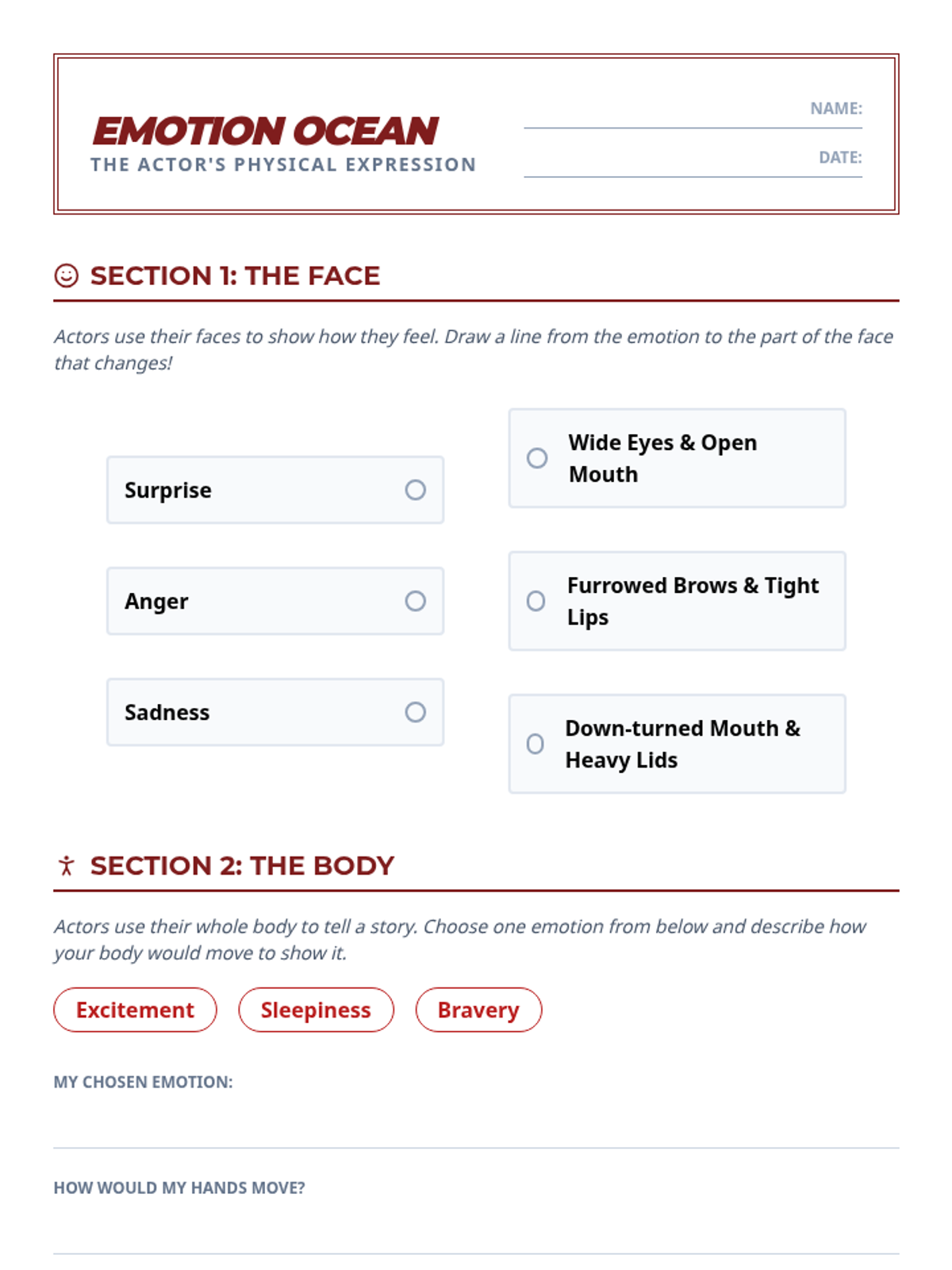
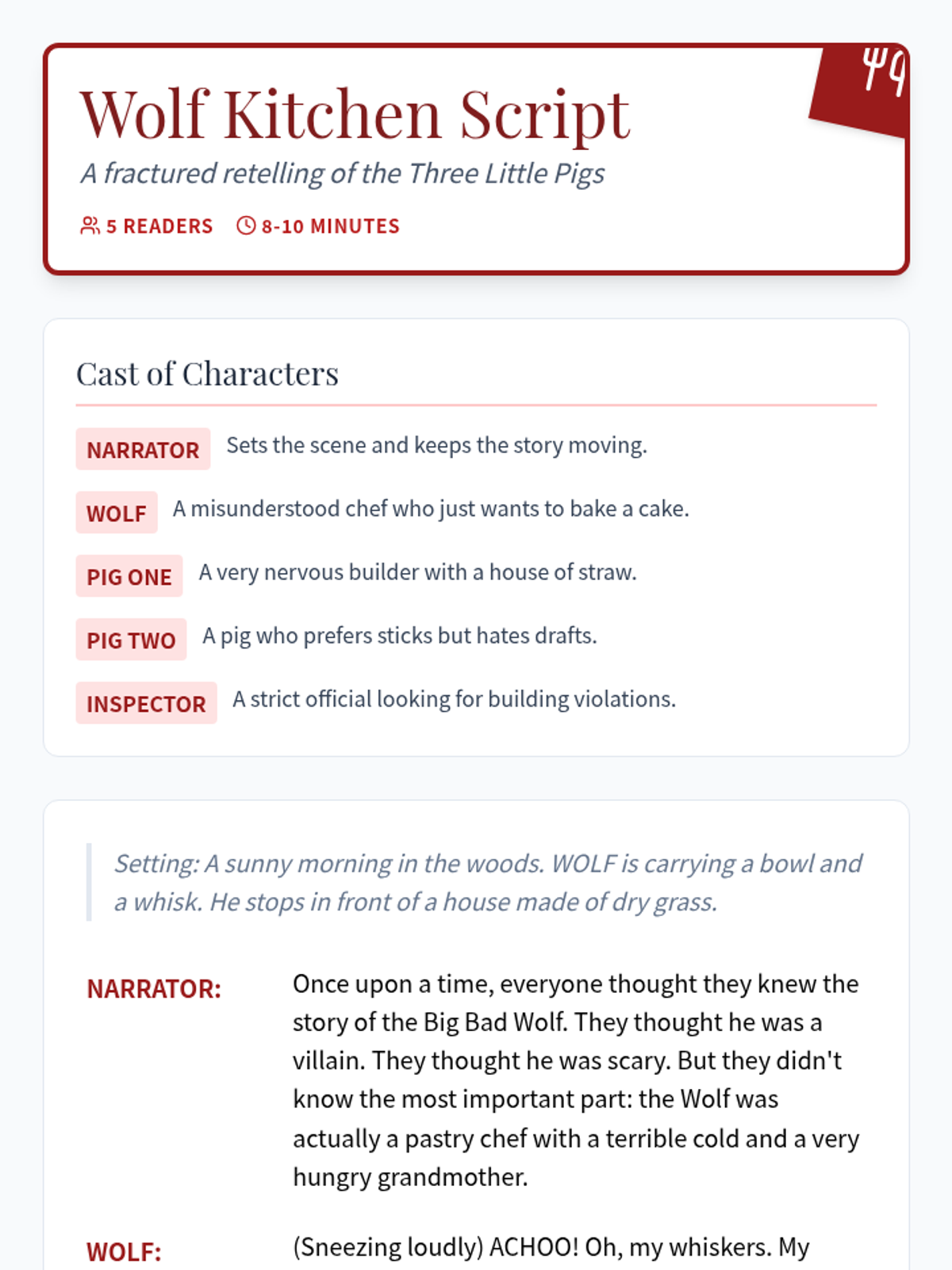
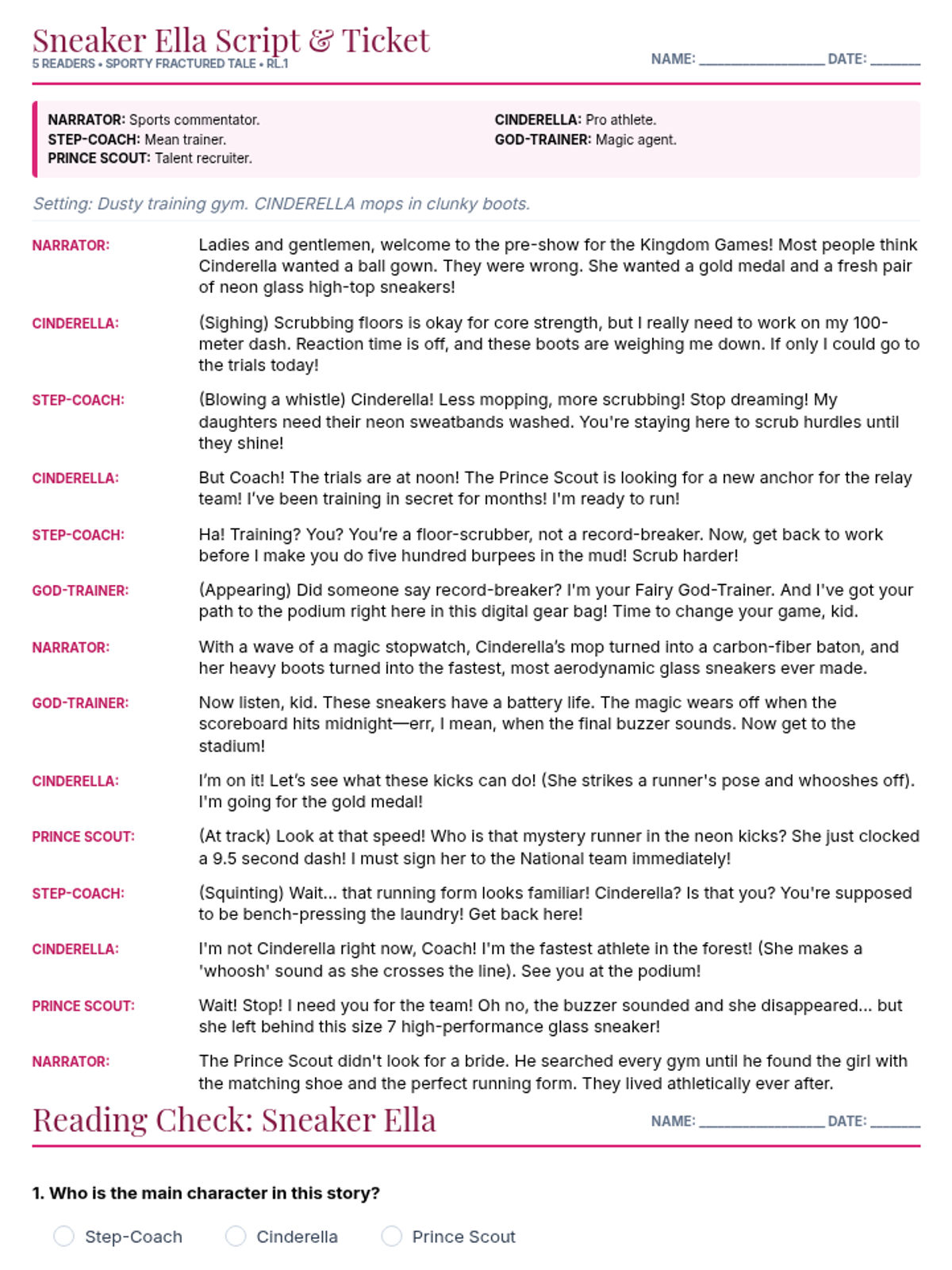
A short, impactful drama lesson centered around a school assembly script about Ruby Bridges. Students explore themes of bravery and segregation through performance, visual storytelling, and personal reflection.
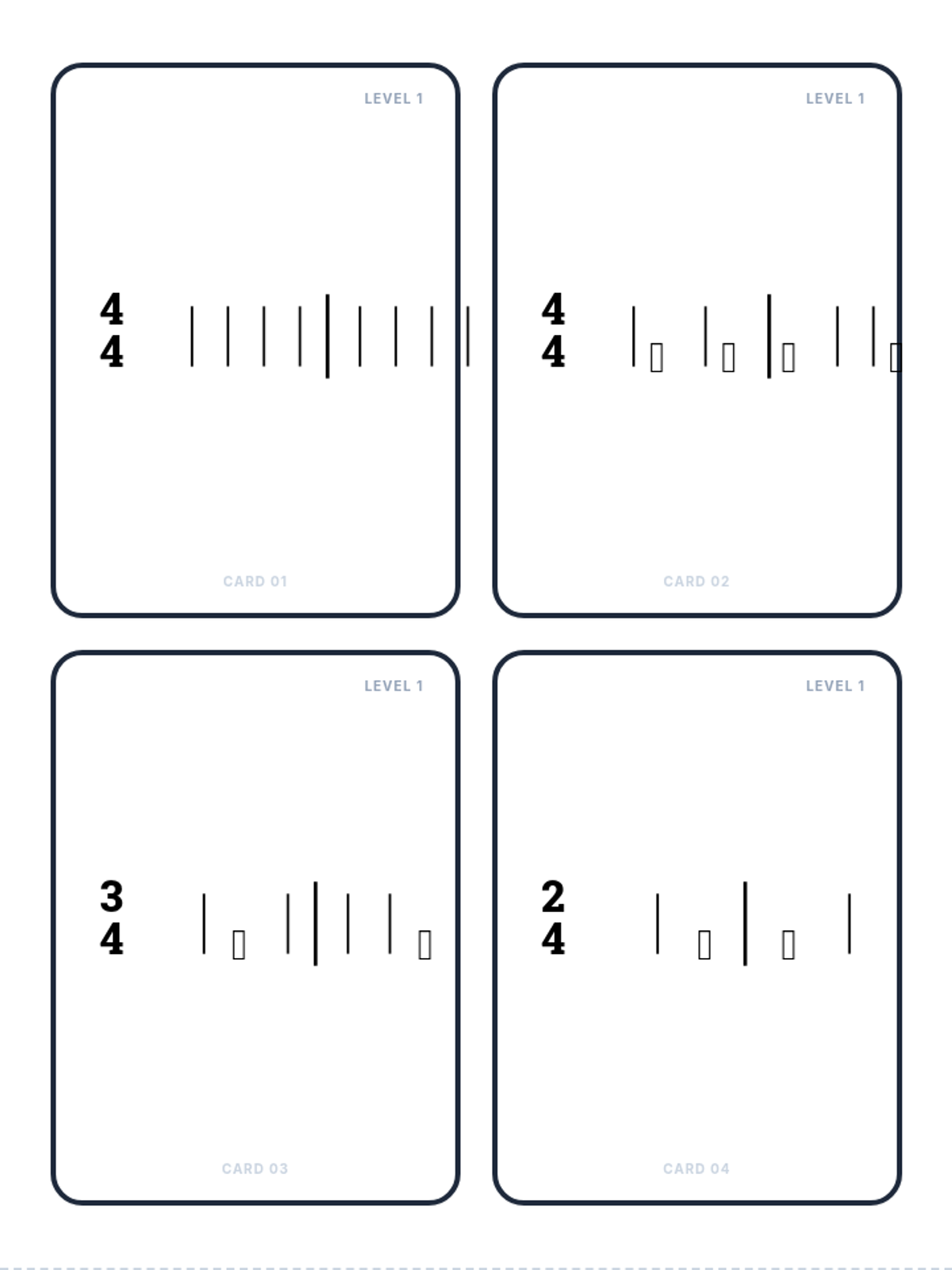
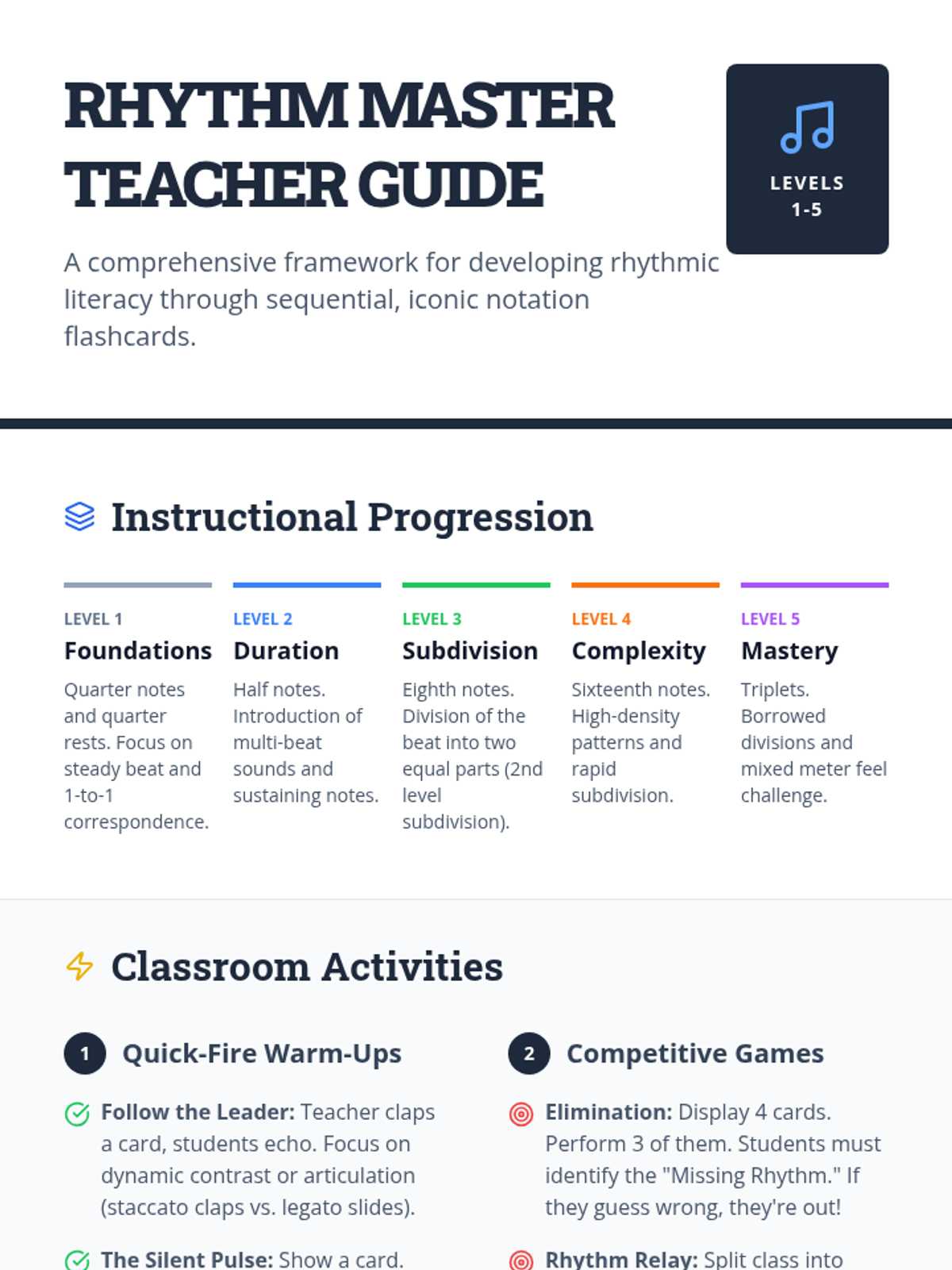
An interactive, game-based lesson where students use body percussion to perform quarter notes, eighth notes, and quarter rests at varying tempos.
A collaborative art lesson where 1st and 2nd-grade students explore the concept of community by creating a layered mural of rainforest animals based on their habitats.
A music and science integration lesson where students analyze animal classifications and write their own verses for the 'Animal Song' using AABB rhyme schemes.
A hands-on art and science lesson where students explore the anatomical structures of fungi through clay modeling and painting, using visual references from nature.
A creative art lesson focused on positive and negative space through the lens of Kirigami snowflake cutting. Students create a dual-image composition using both their snowflake and the leftover scraps to explore spatial relationships.
A visual arts and science lesson where students explore the concept of fog as a 'cloud on the ground' through watercolor painting and sponge-dabbing techniques.
A music lesson where students compose and perform a new verse for 'Going Green Song' about environmental issues in their own school.
Students explore how the brain uses patterns and expectations to process music, learning about the 'tonic' and 'resolution' through a rhythmic composition game.
A music and literacy lesson where elementary students learn about musical resolution by connecting it to narrative arcs in stories. Students will use the concept of the 'tonic' note to create soundscapes for specific story prompts.
Students will explore the biological and neurological connection between music and the human body, learning about brain patterns, the tonic, and physiological reactions like increased heart rate and blood flow.
Students explore the concept of tempo and rhythm through a catchy song about the solar system, using rhythm sticks to match shifting speeds.
A fun, interactive music lesson where students use a balloon analogy to understand how vocal folds create different pitches and how breath control changes volume. Includes a slide presentation, a comprehensive teacher guide, and a student activity sheet.
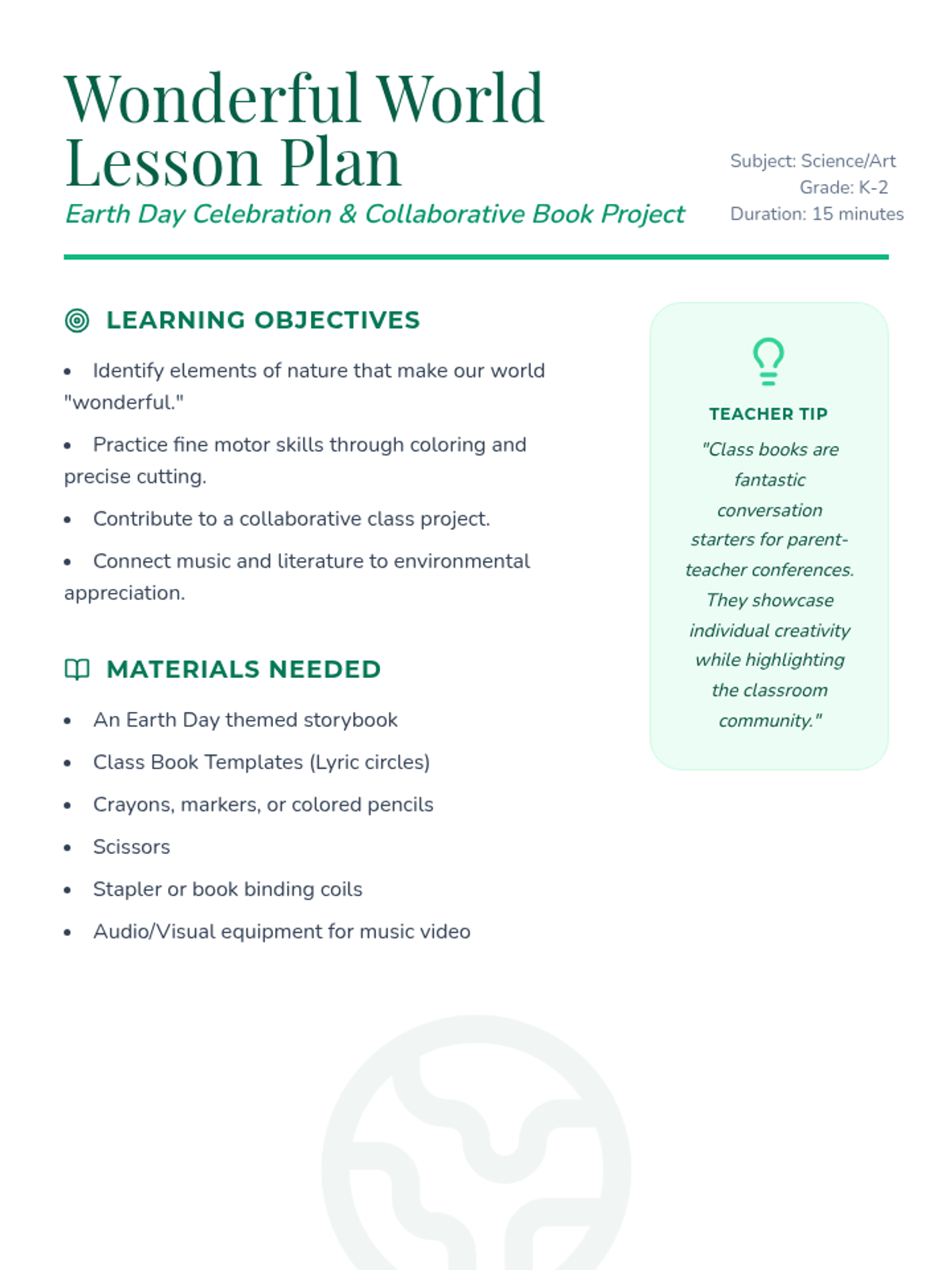
An art and science integration lesson where students explore the Aurora Borealis through scientific inquiry and chalk pastel landscapes. Students learn about Earth's magnetic field and solar particles before recreating the shimmering sky.
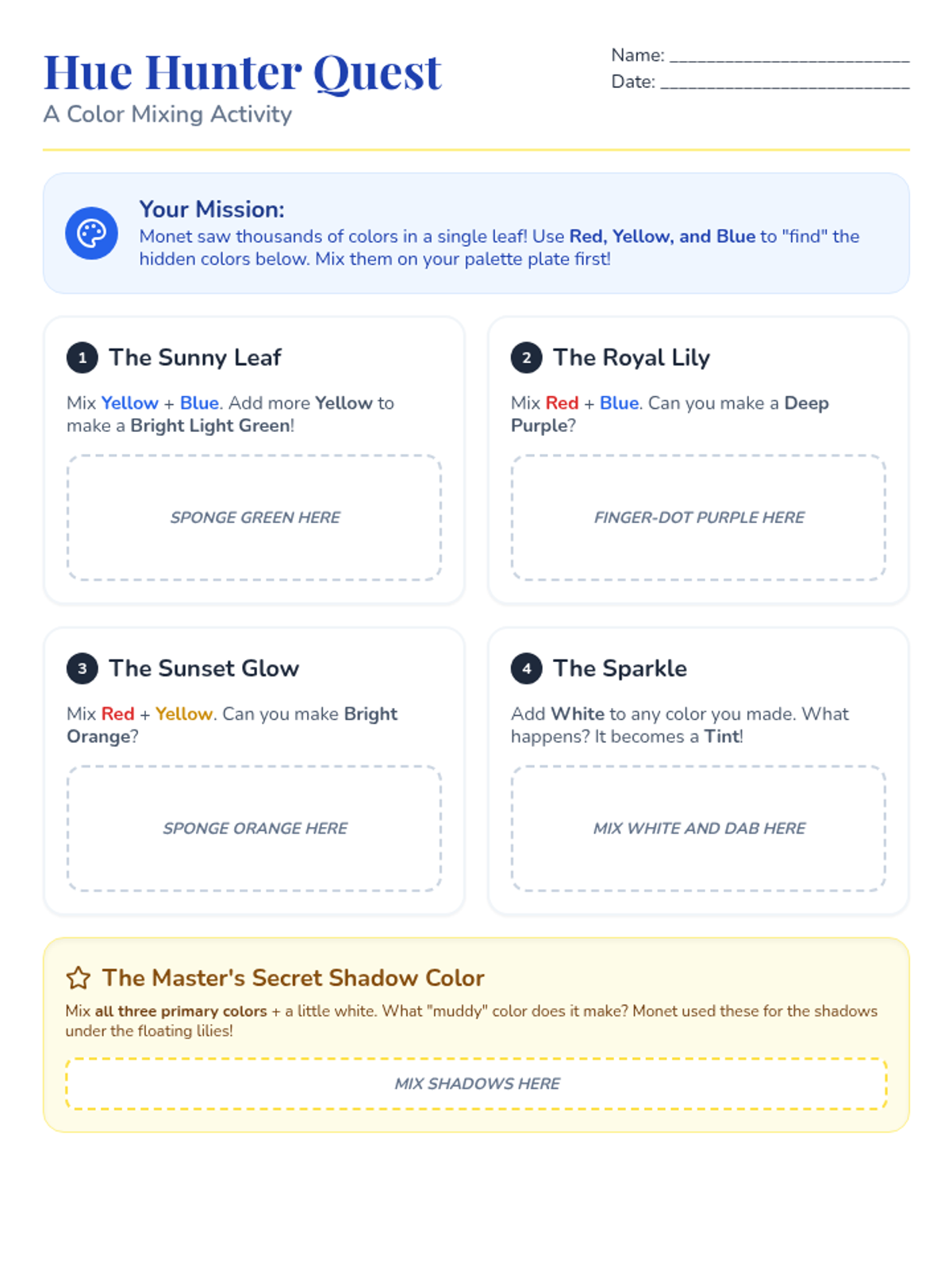
Students explore the intersection of science and art by using homemade or primary watercolors to create original artwork, focusing on the magic of color mixing to create secondary colors.
A vibrant introduction to color theory where young students explore primary colors and discover how to create secondary colors through a mess-free "squish" experiment and interactive video predictions.
A hands-on art and science lesson where 1st graders explore how changing color ratios creates different 'shades' of green, using watercolor mixing experiments.
A hands-on STEAM lesson where students explore the physical transformation of Ivory soap through heat, then use the resulting 'cloud' material to create sensory soap dough sculptures. Students practice observation, descriptive language, and tactile art skills.
A high-energy 1st-grade lesson that uses music and rhythm to build alphabet fluency and phonological awareness. Students will analyze the 'ABC Party' video and collaborate to create their own rhythmic remixes of the alphabet.
Students explore how physical action and decisions drive story and reveal character traits without using words, featuring a 'Silent Scenes' activity and a video analysis.
Students learn the visual language of comics—including iconography, panels, and gutters—to design an original superhero and introduce them in a three-panel 'Hero Launch' comic strip.
A fun, interactive lesson for K-1 students exploring how breaking patterns and 'interrupters' create humor, featuring the Scratch Garden 'Spelling the Numbers' song.
Students will explore the intersection of language and visual art by identifying onomatopoeia in Pop Art and creating 3D 'Sound Sculptures' that represent the visual feeling of a sound.
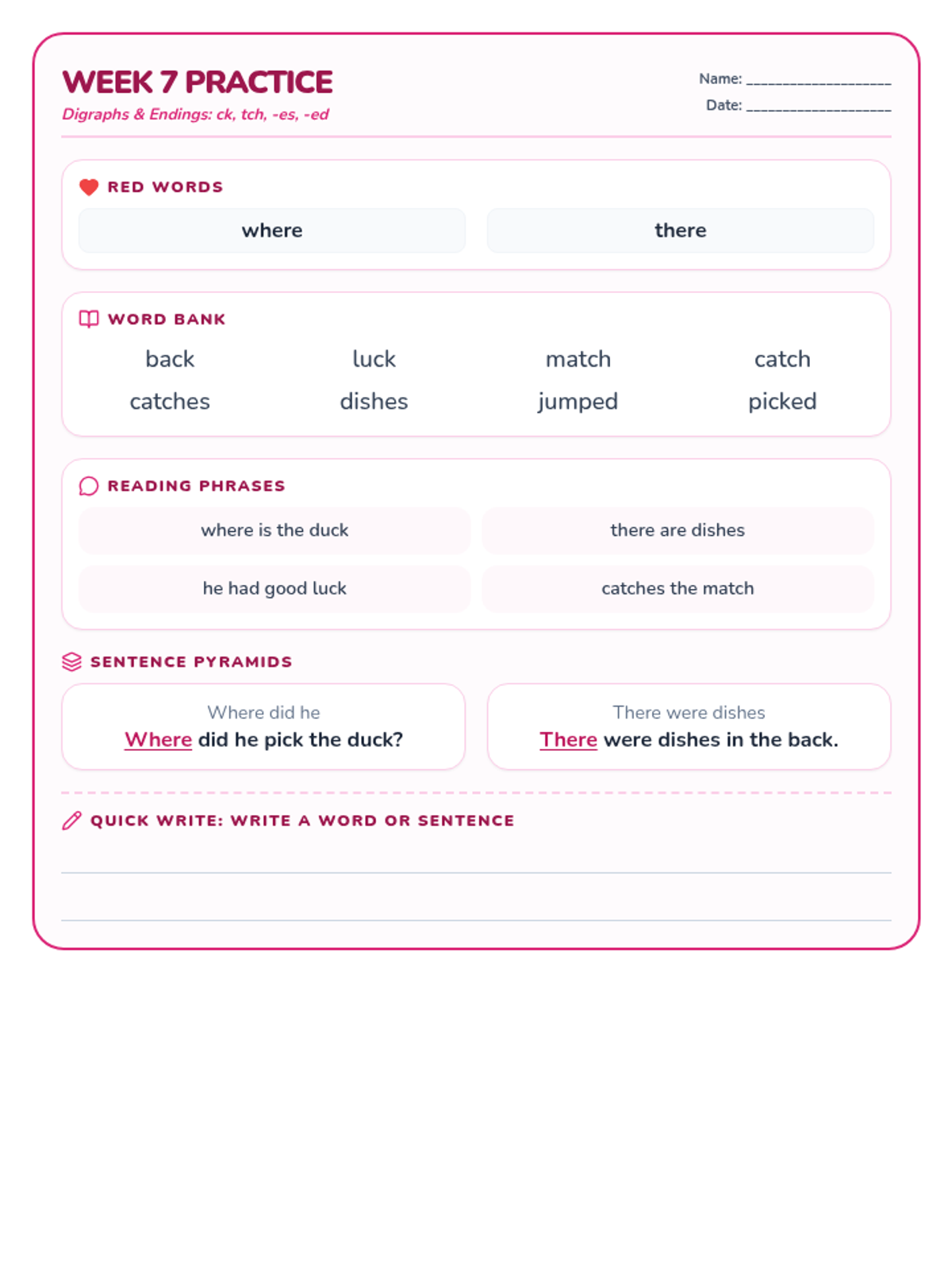
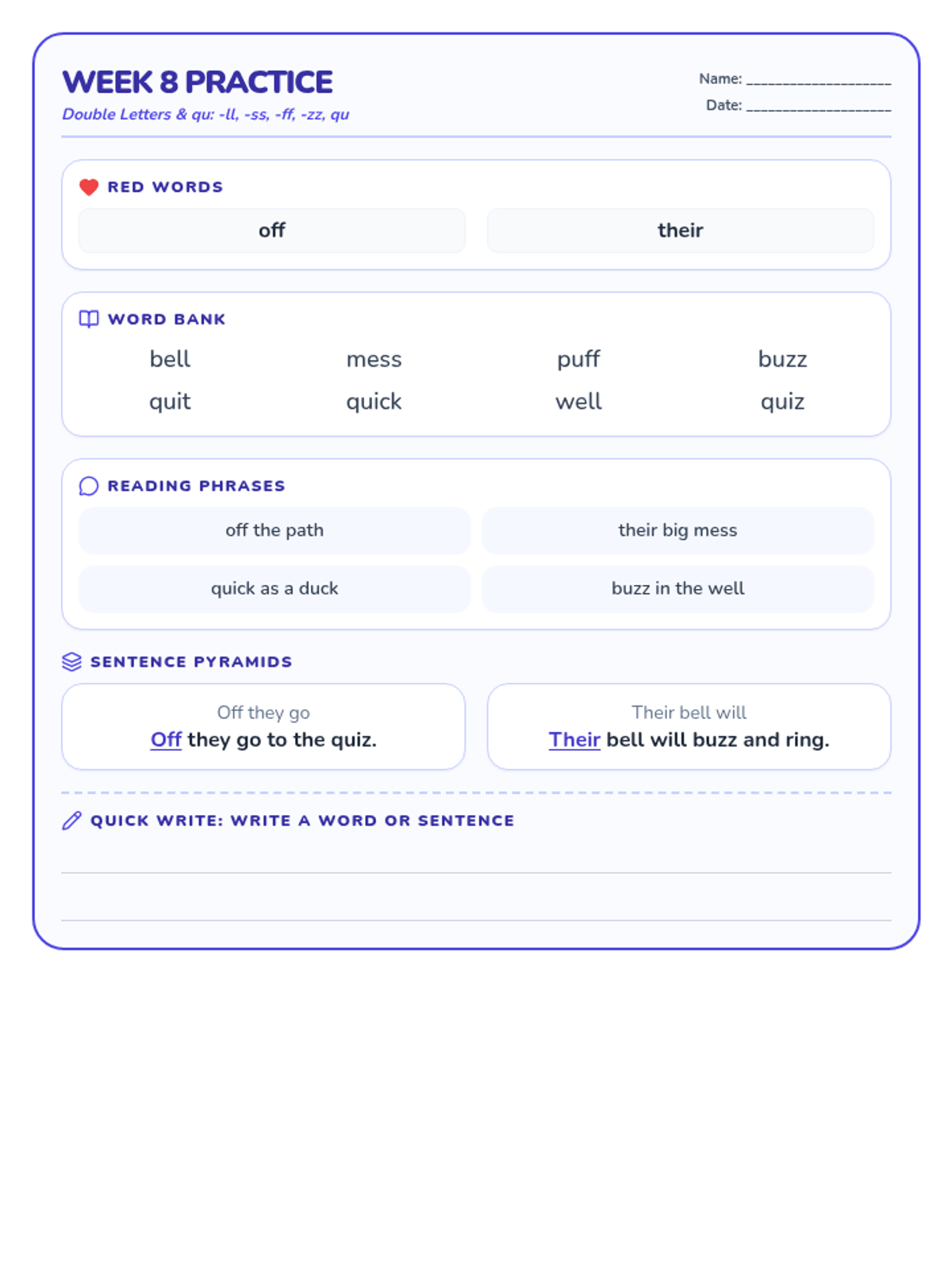
A 1st-grade drama and phonics lesson where students explore the /kw/ sound, tone, and character feelings through the interaction between a noisy Duck and a frustrated Queen.
A cumulative review where students synthesize their knowledge to build a complete timeline of music history. They categorize genres by their technological and musical characteristics.
Students deconstruct modern pop songs to find the 'Verse-Chorus' pattern. They use a 'Song Sandwich' analogy to understand how most modern music is structured.
An introduction to the digital age of music, where students explore synthesizers and drum machines from the 1980s. They compare electronic sounds with traditional acoustic instruments.
Learners dive into the 1970s Funk era, focusing on the bass guitar and the importance of 'The One.' They practice rhythmic grounding through movement and listening exercises.
Students explore the birth of Rock 'n' Roll, focusing on the electric guitar and the shift from acoustic to amplified sound. They learn to identify the backbeat and understand how electricity changed the energy of music.
A culminating lesson where students review the composers and create a visual gallery and class playlist of their favorite melodies.
A celebration of the jazz ensemble where students identify instruments and role-play as soloists and background players.
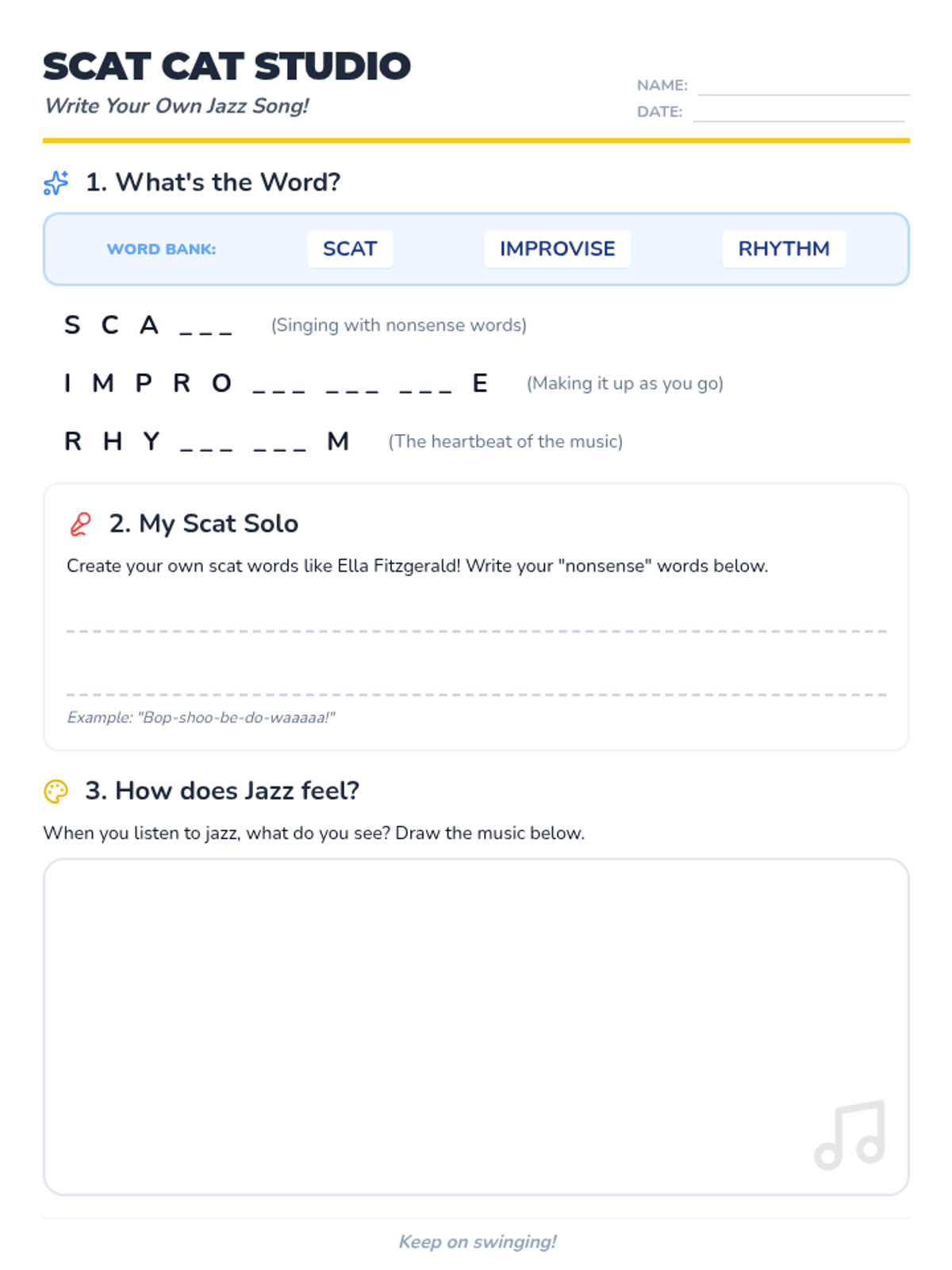
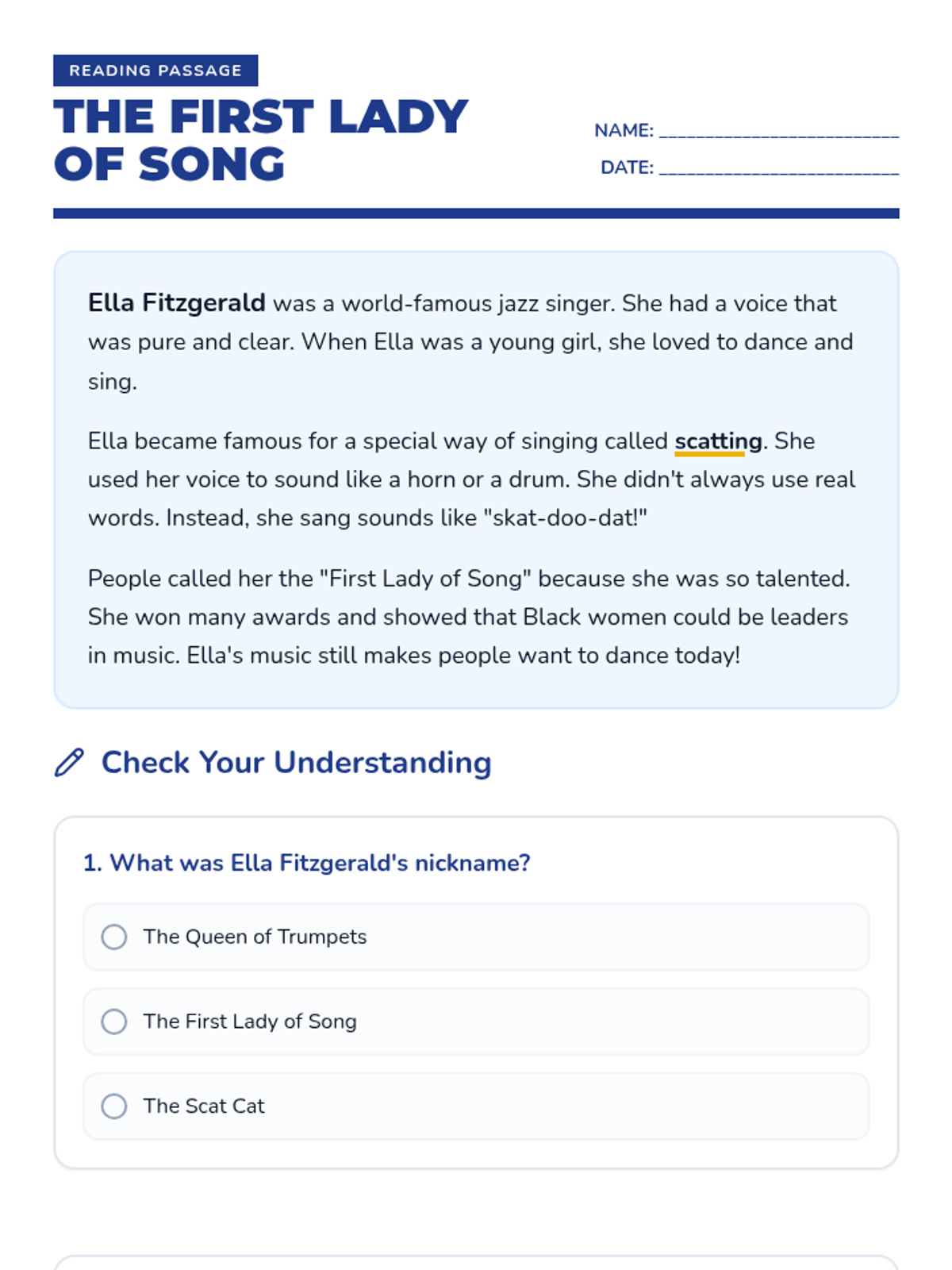
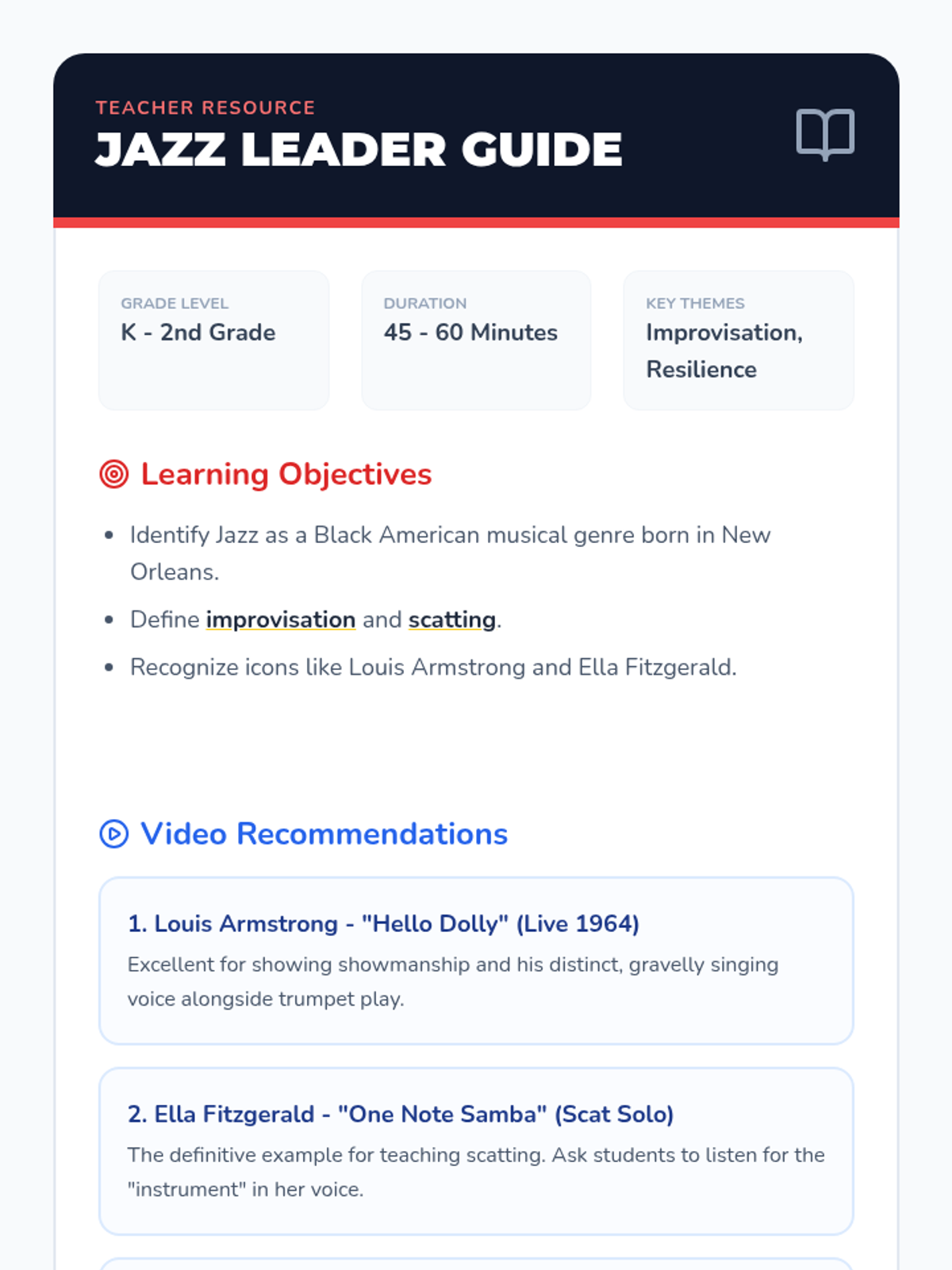
Students learn about Louis Armstrong and practice scat singing, discovering the freedom of improvisation and vocal creativity.
Students connect classical music concepts to modern film scores by John Williams, identifying how music creates mood and atmosphere in movies.
Students explore the magical world of ballet through the music of Tchaikovsky, focusing on character identification in The Nutcracker.