Students will explore the biological and neurological connection between music and the human body, learning about brain patterns, the tonic, and physiological reactions like increased heart rate and blood flow.
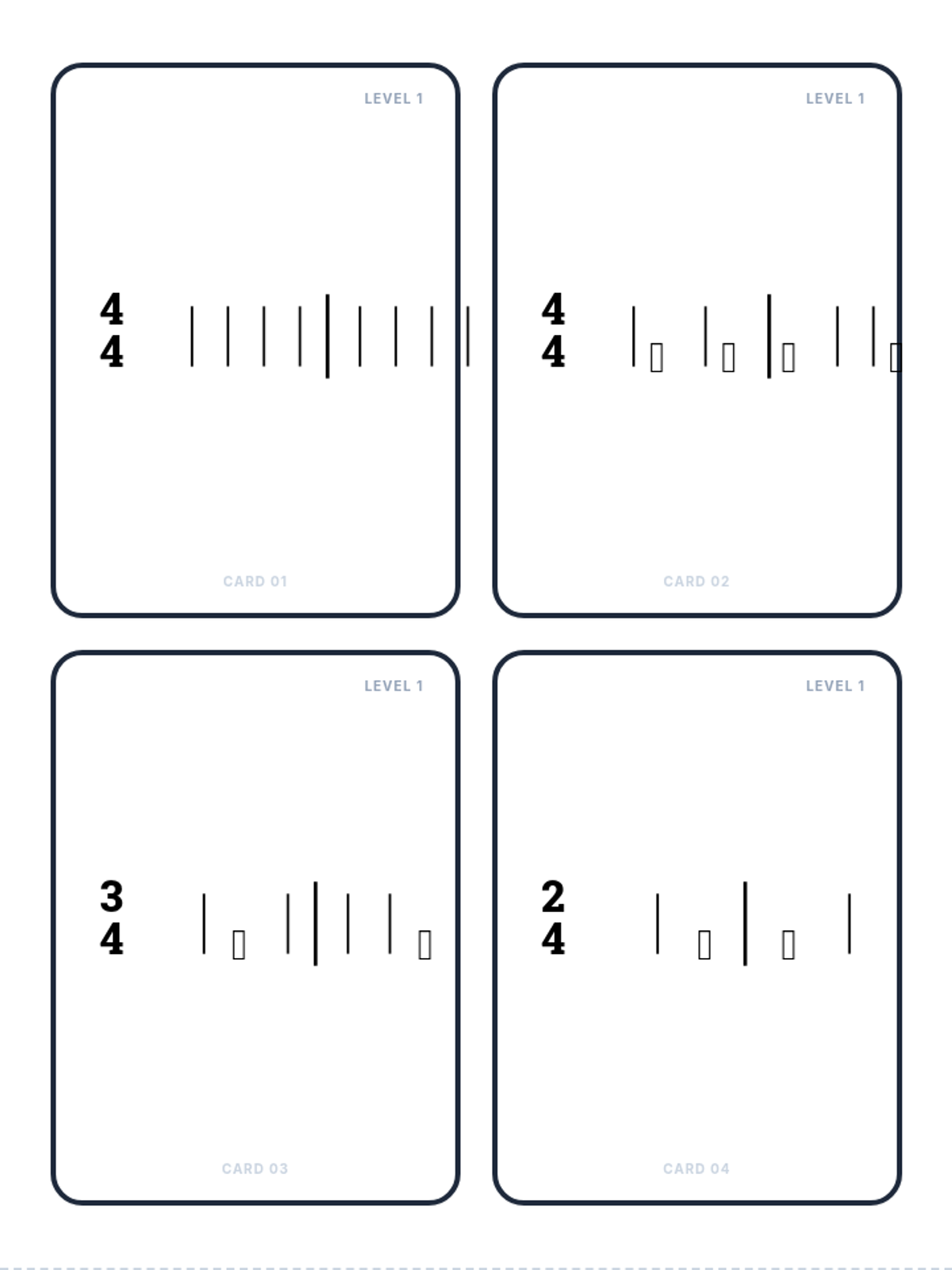
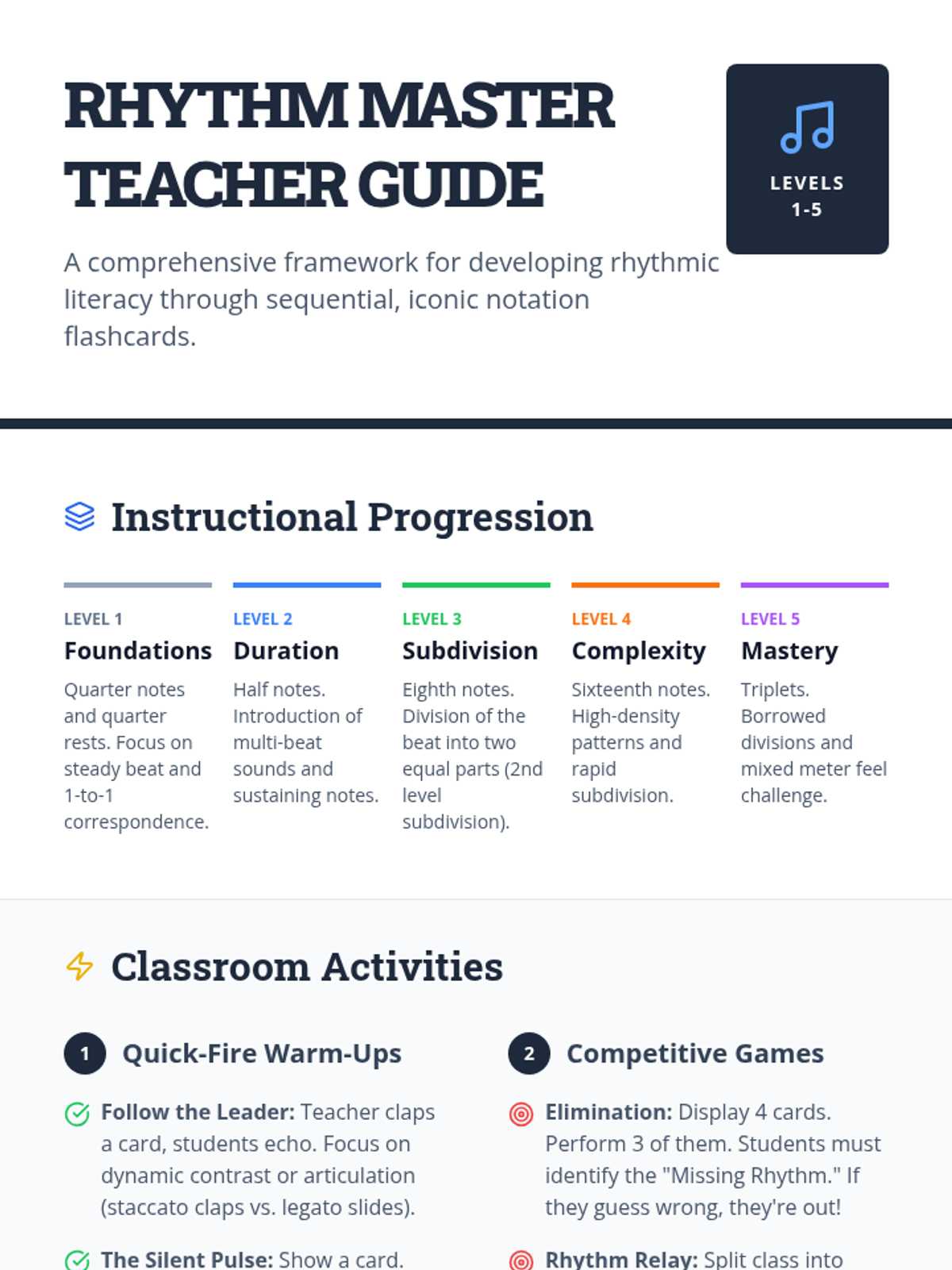
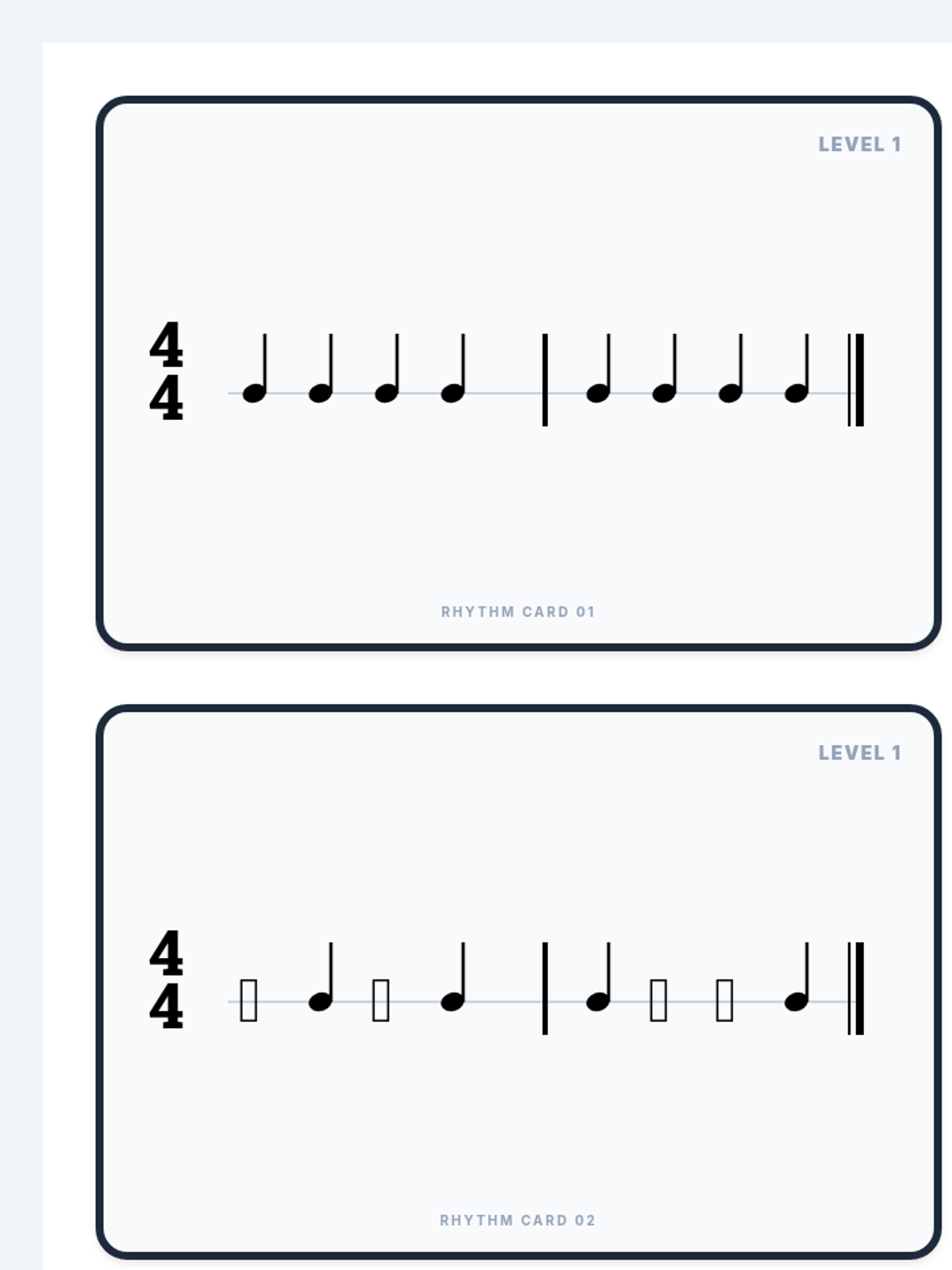
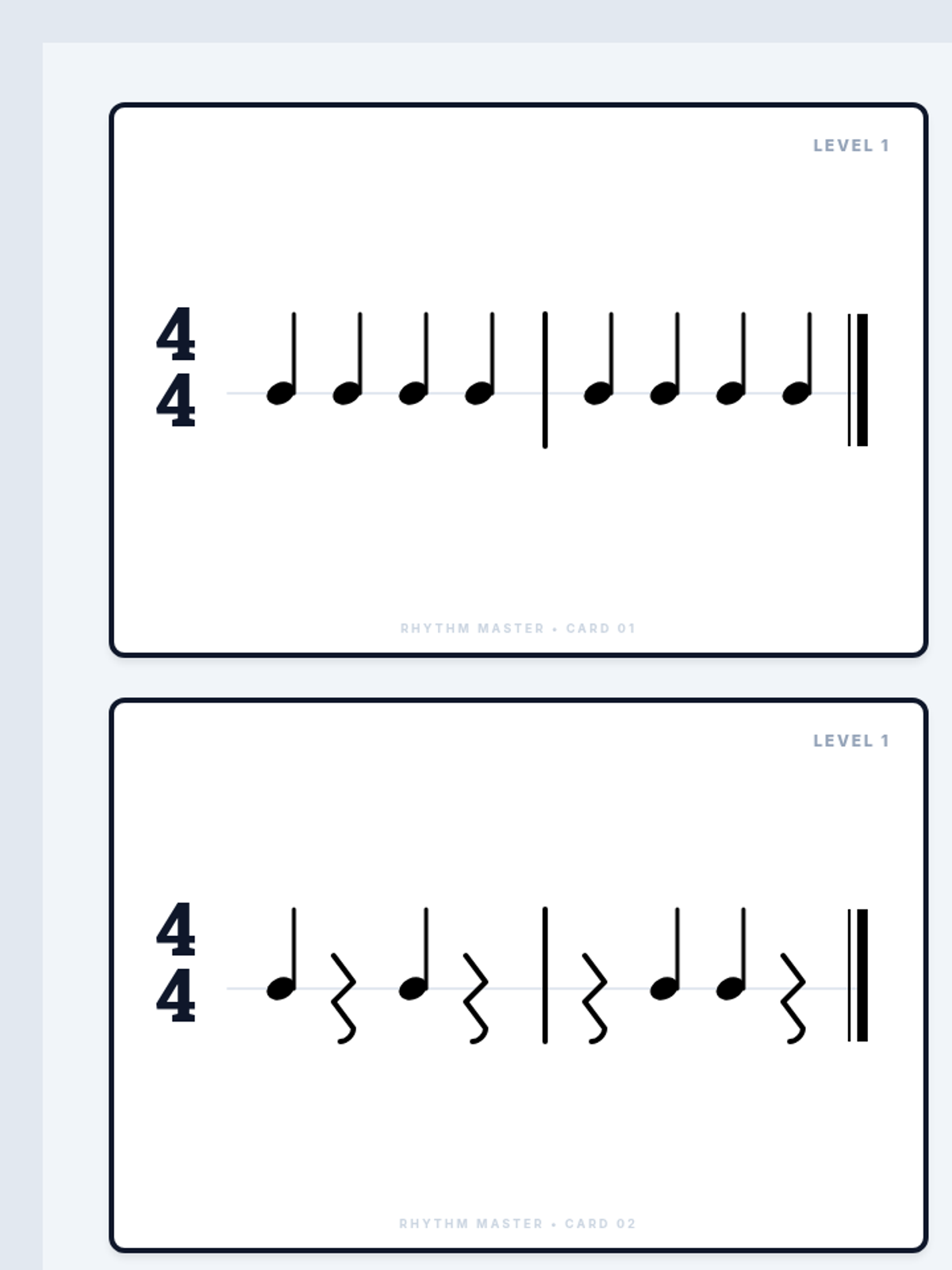
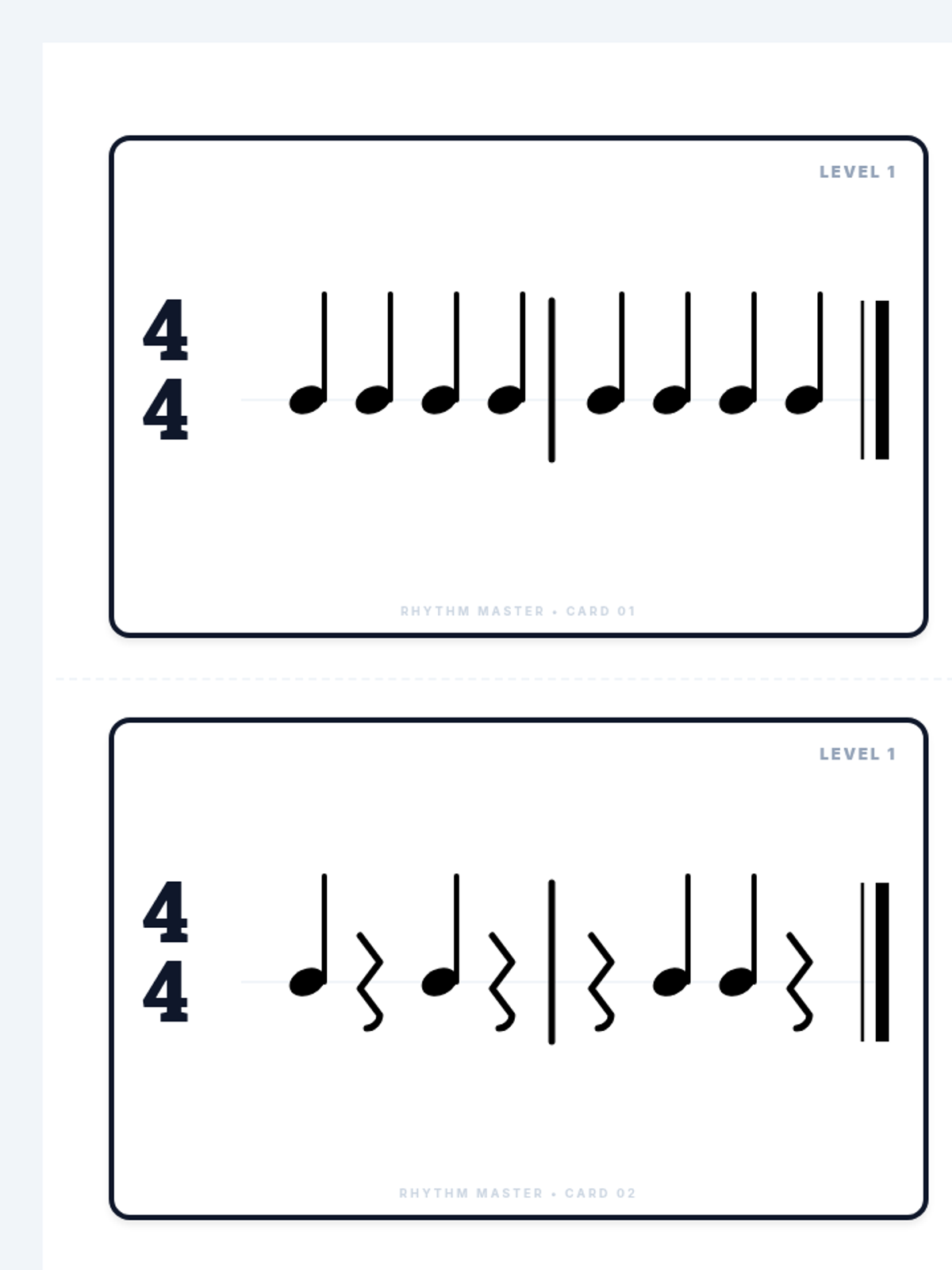
A series of rhythm reading flashcards and a teacher's guide covering basic to advanced rhythmic patterns. Activities progress from quarter notes and rests to complex sixteenth notes and triplets across multiple time signatures.
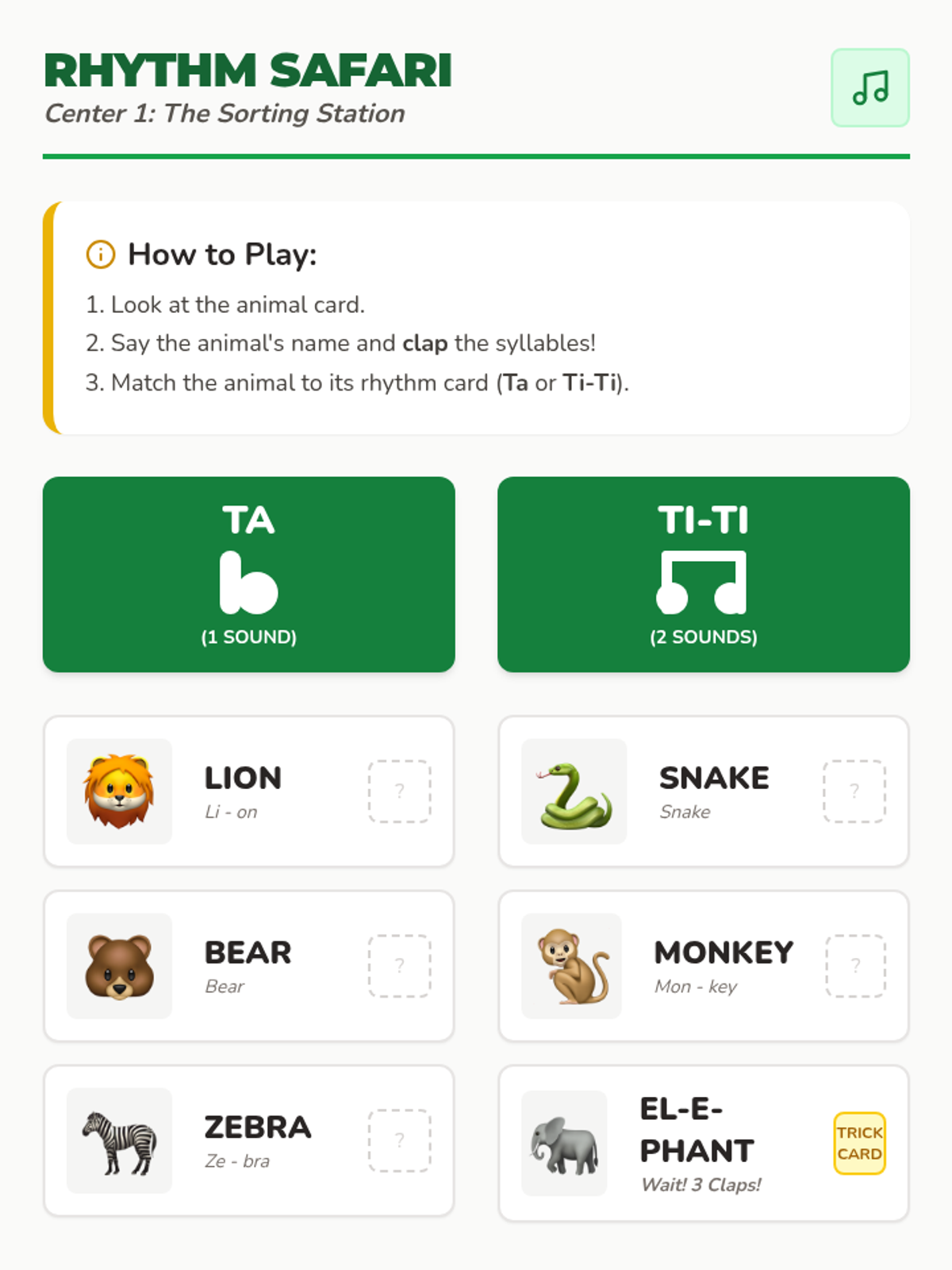
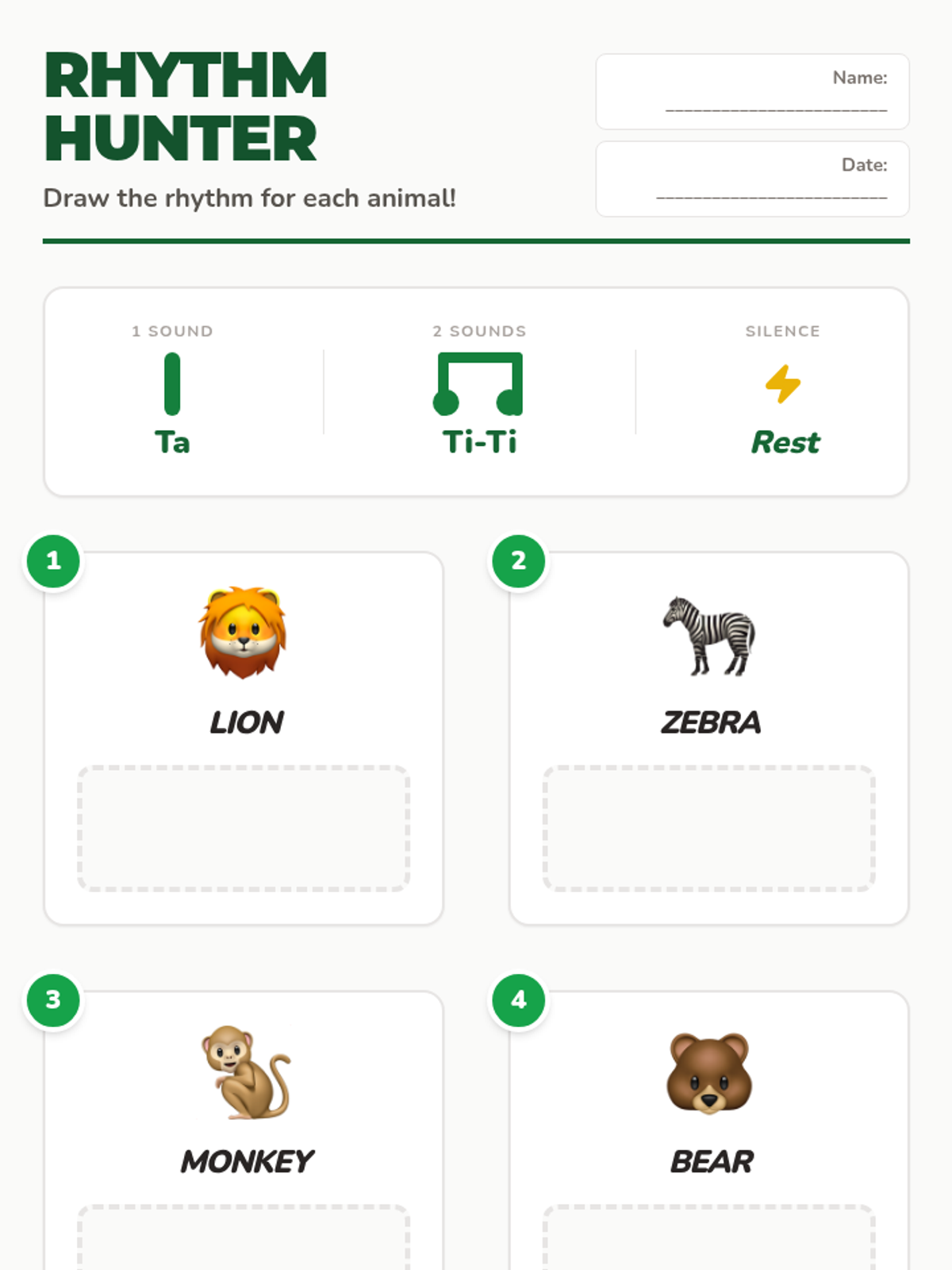
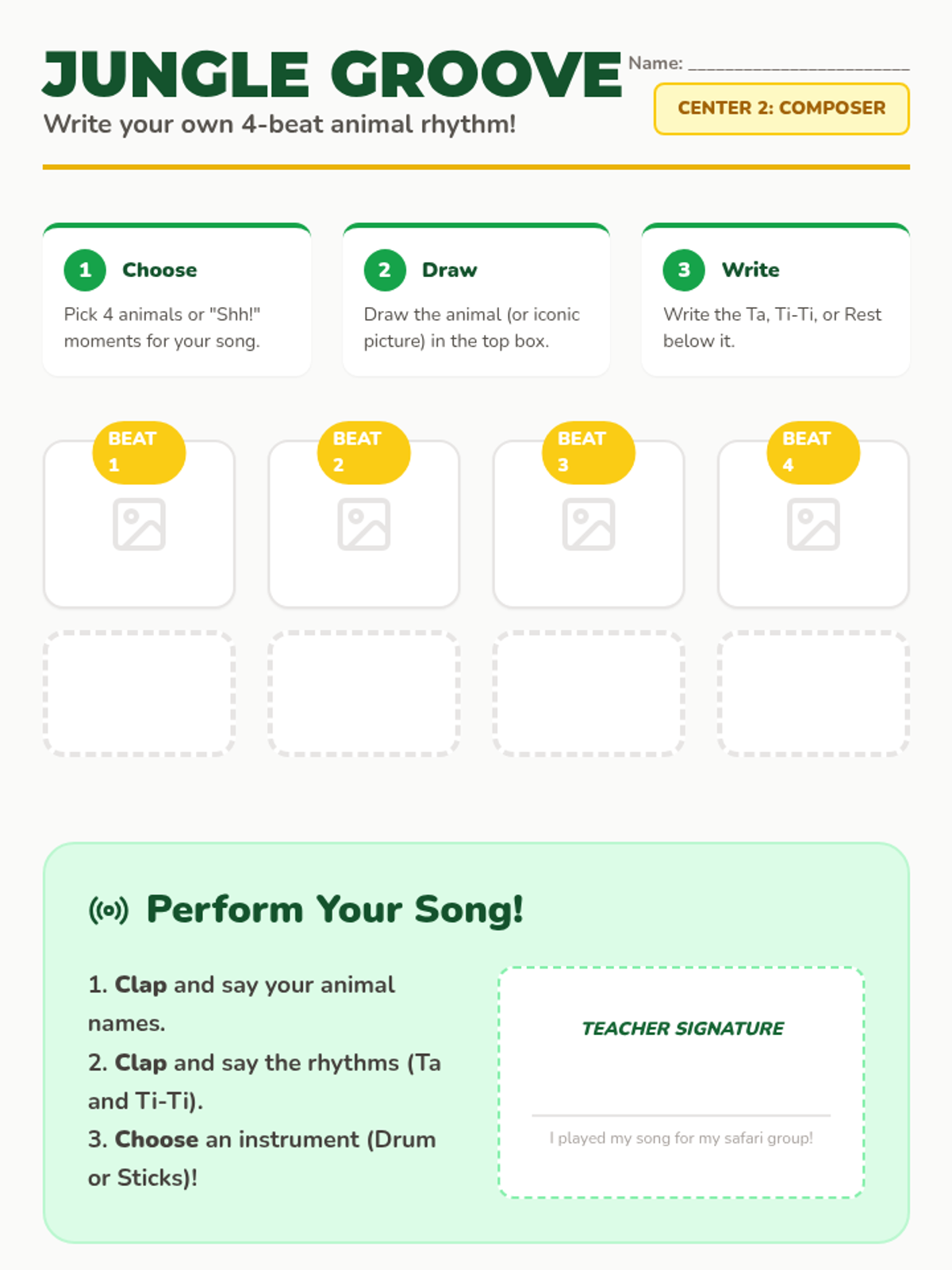
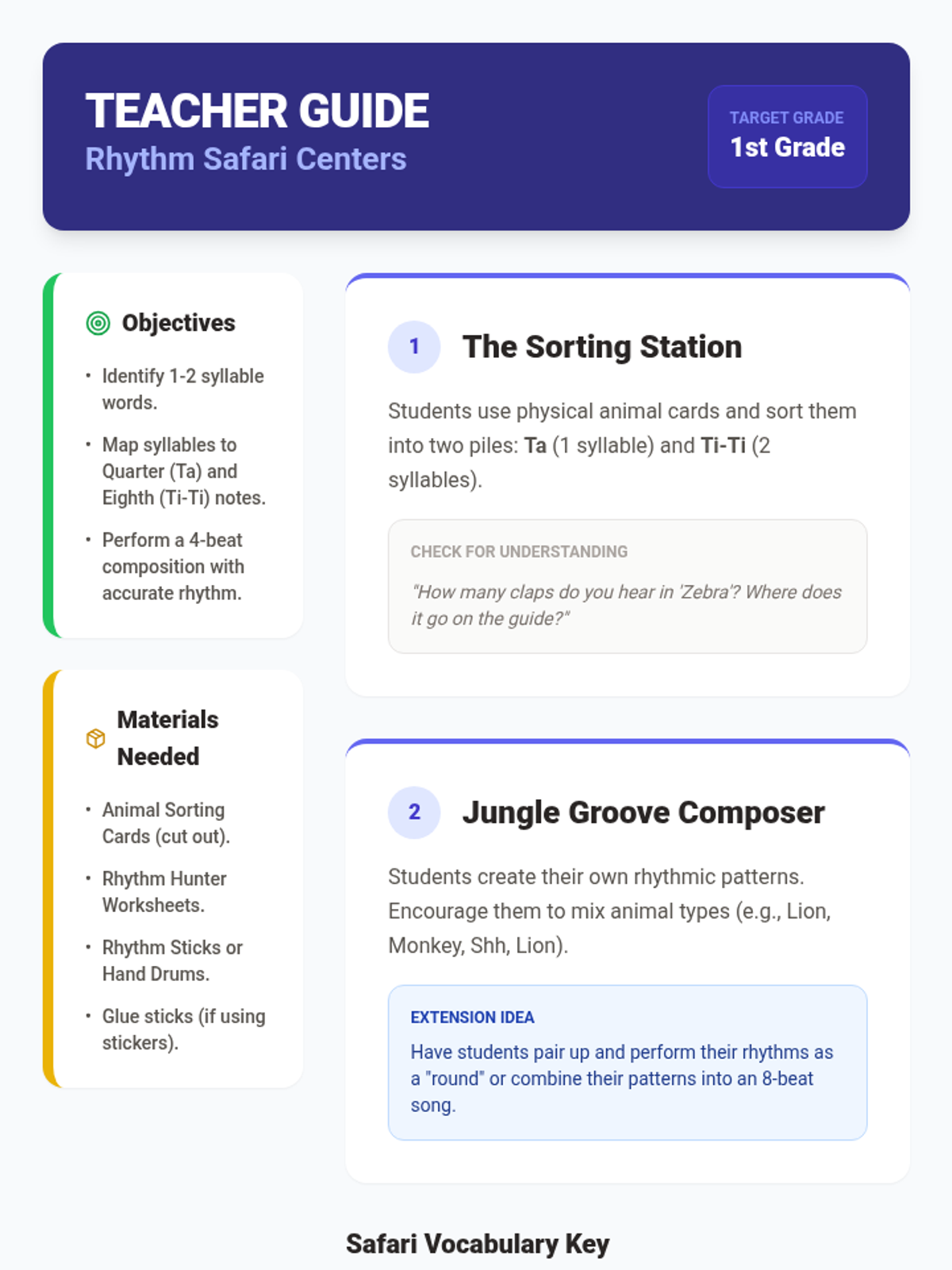
A series of music center activities for first graders to connect word syllables to rhythmic notation (Ta and Ti-Ti) through a zoo animal theme. Students will sort animal names by rhythm and create their own rhythmic patterns.
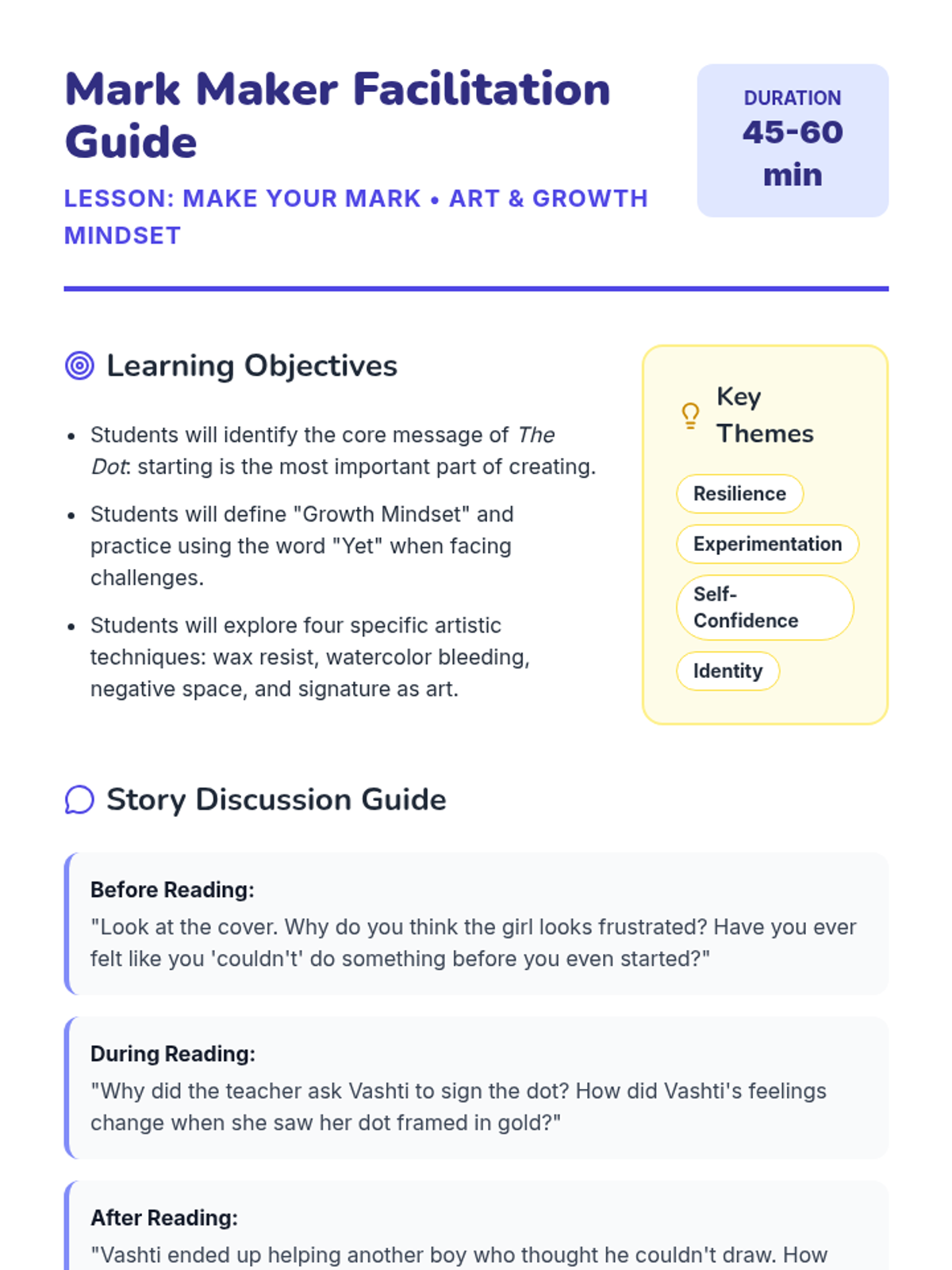
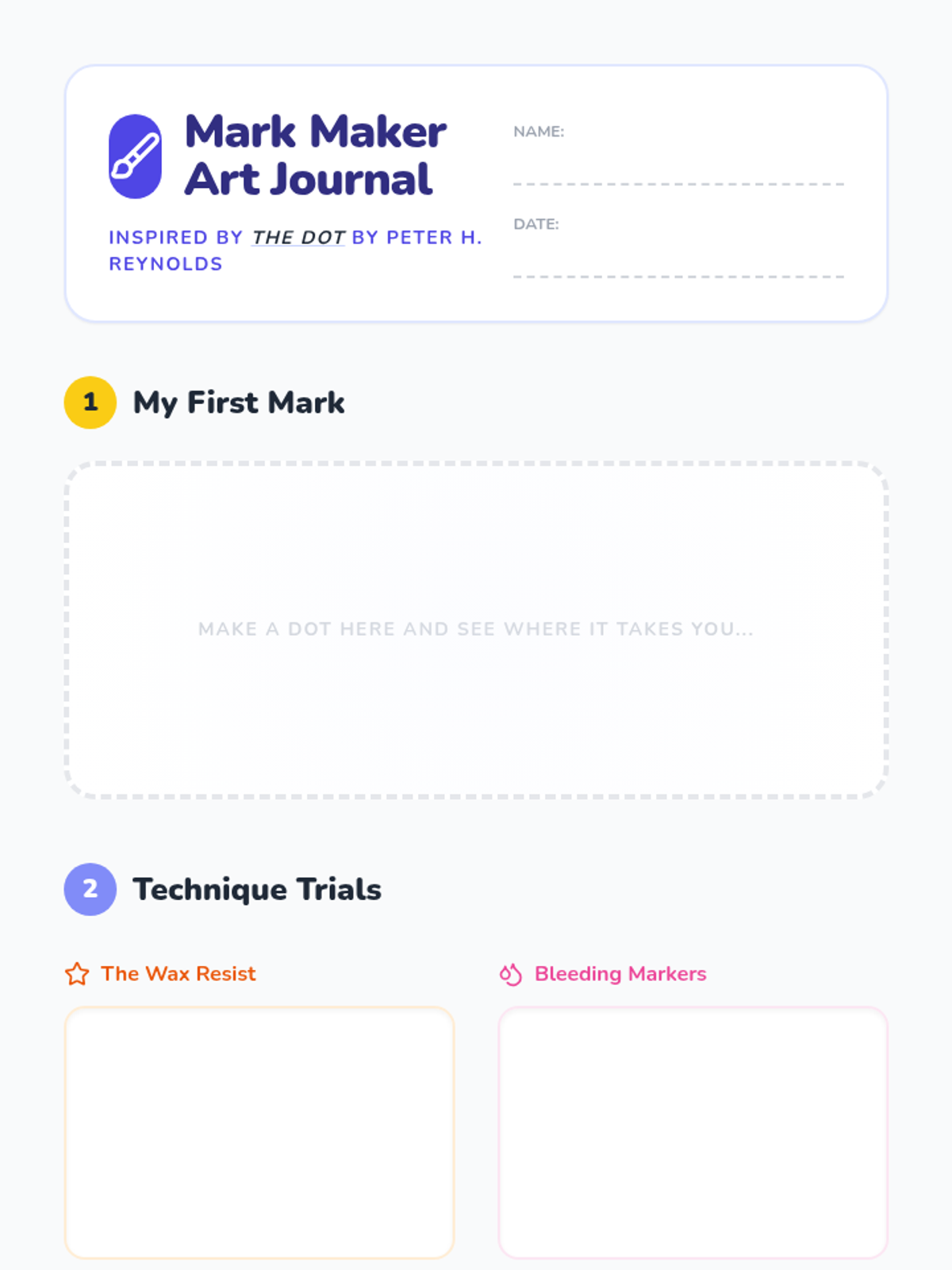
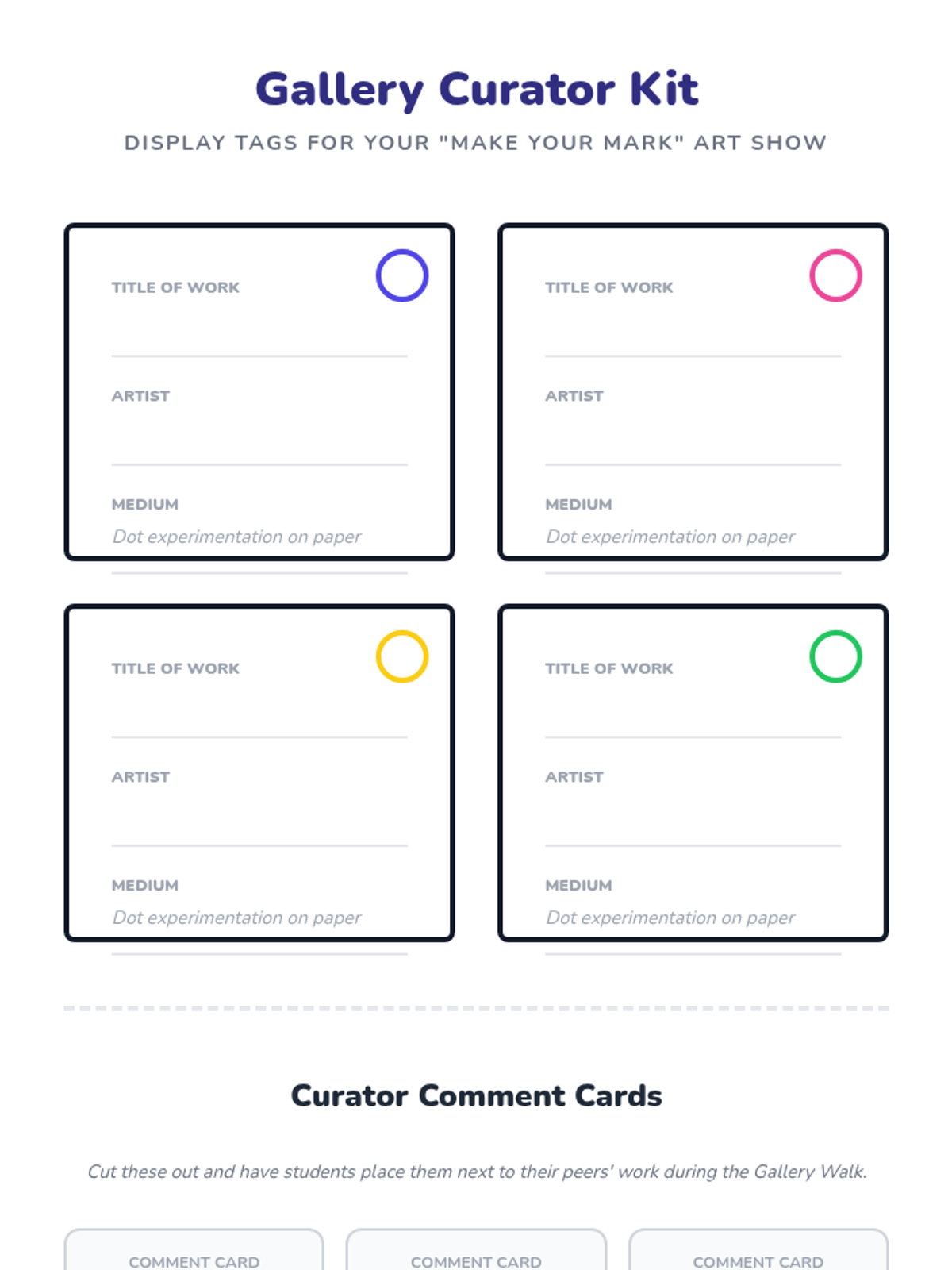
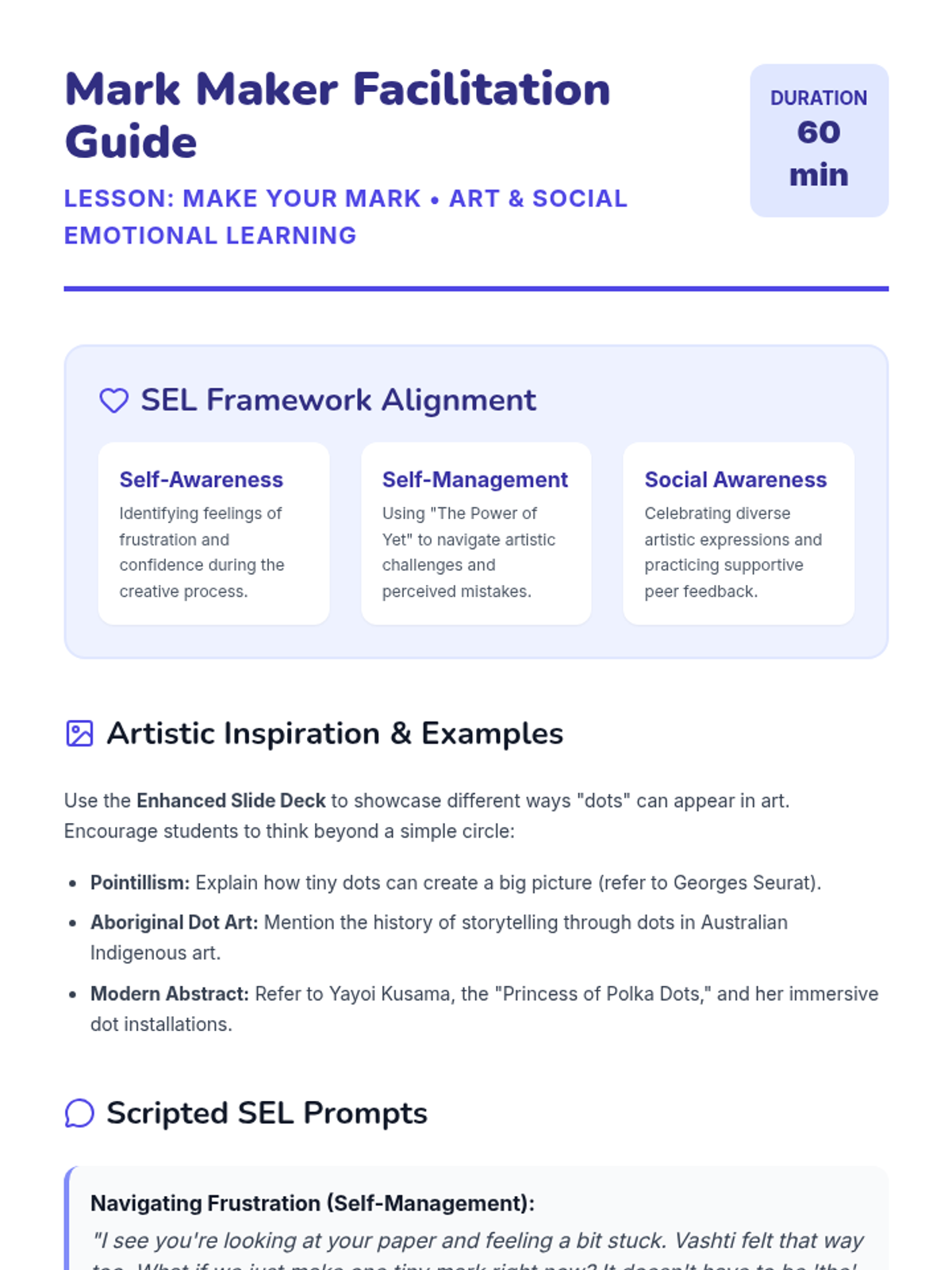
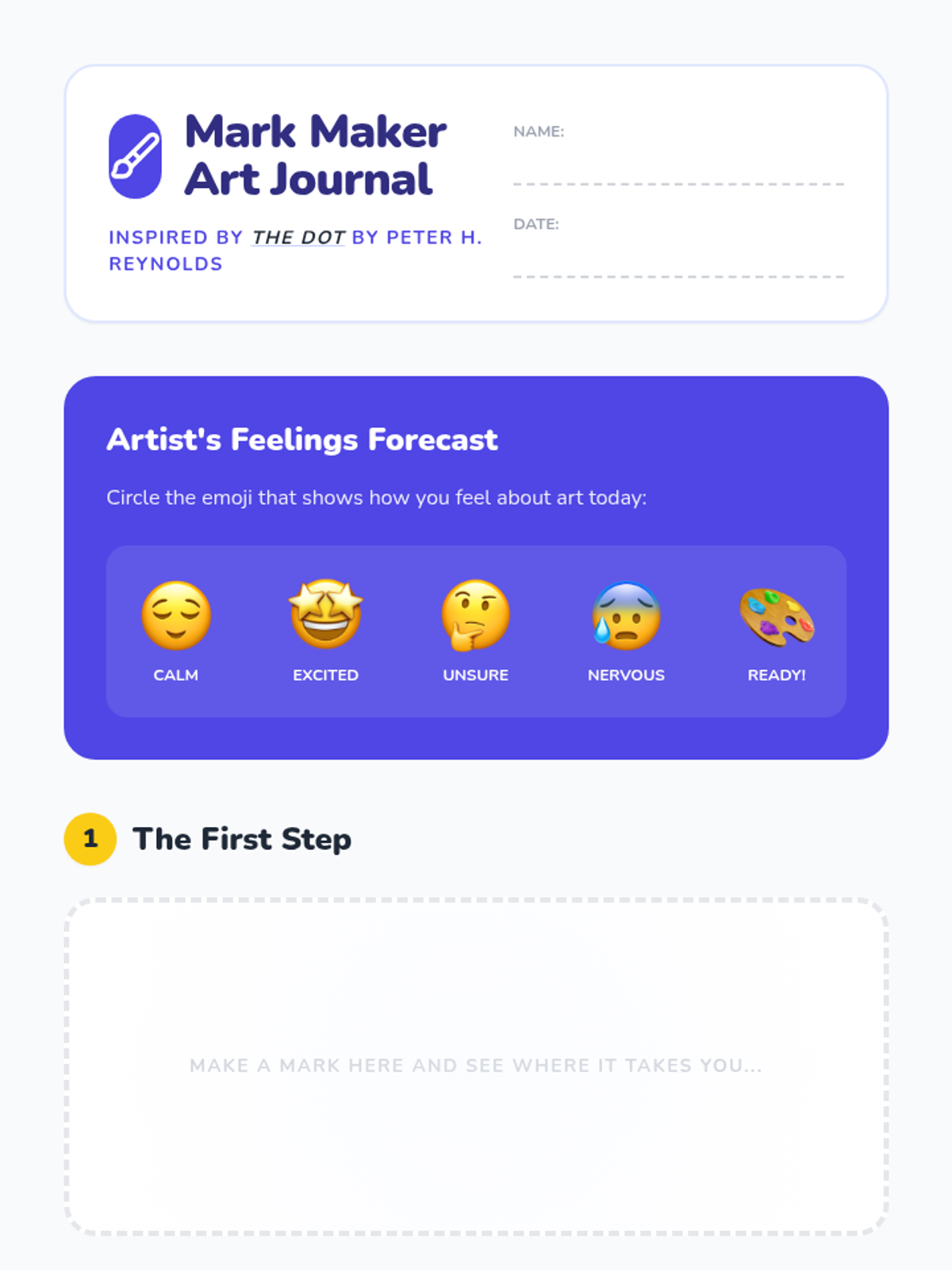
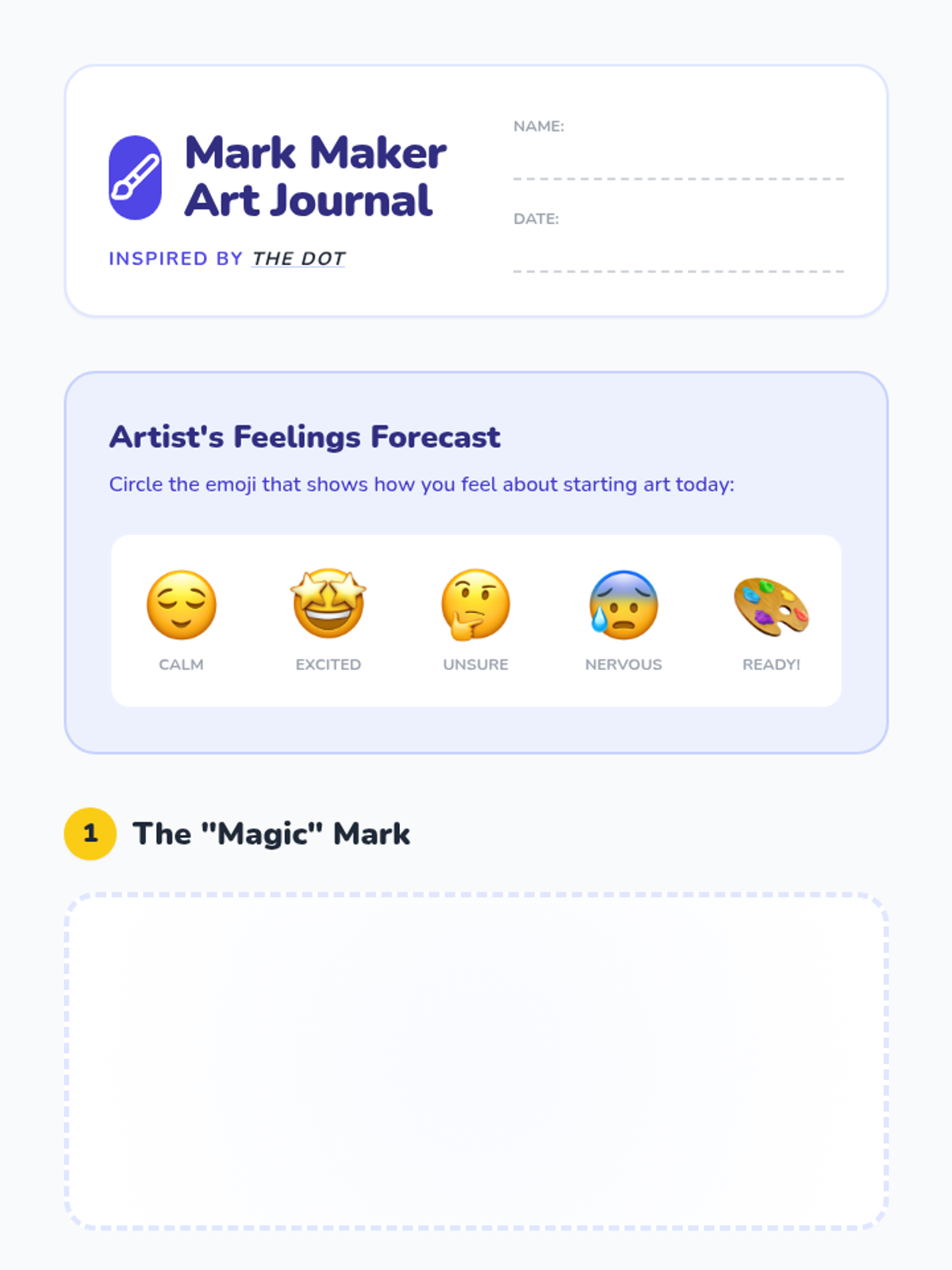
A creative art lesson inspired by 'The Dot' by Peter H. Reynolds, focusing on growth mindset and artistic experimentation. Students will learn that 'making your mark' starts with just one small step.
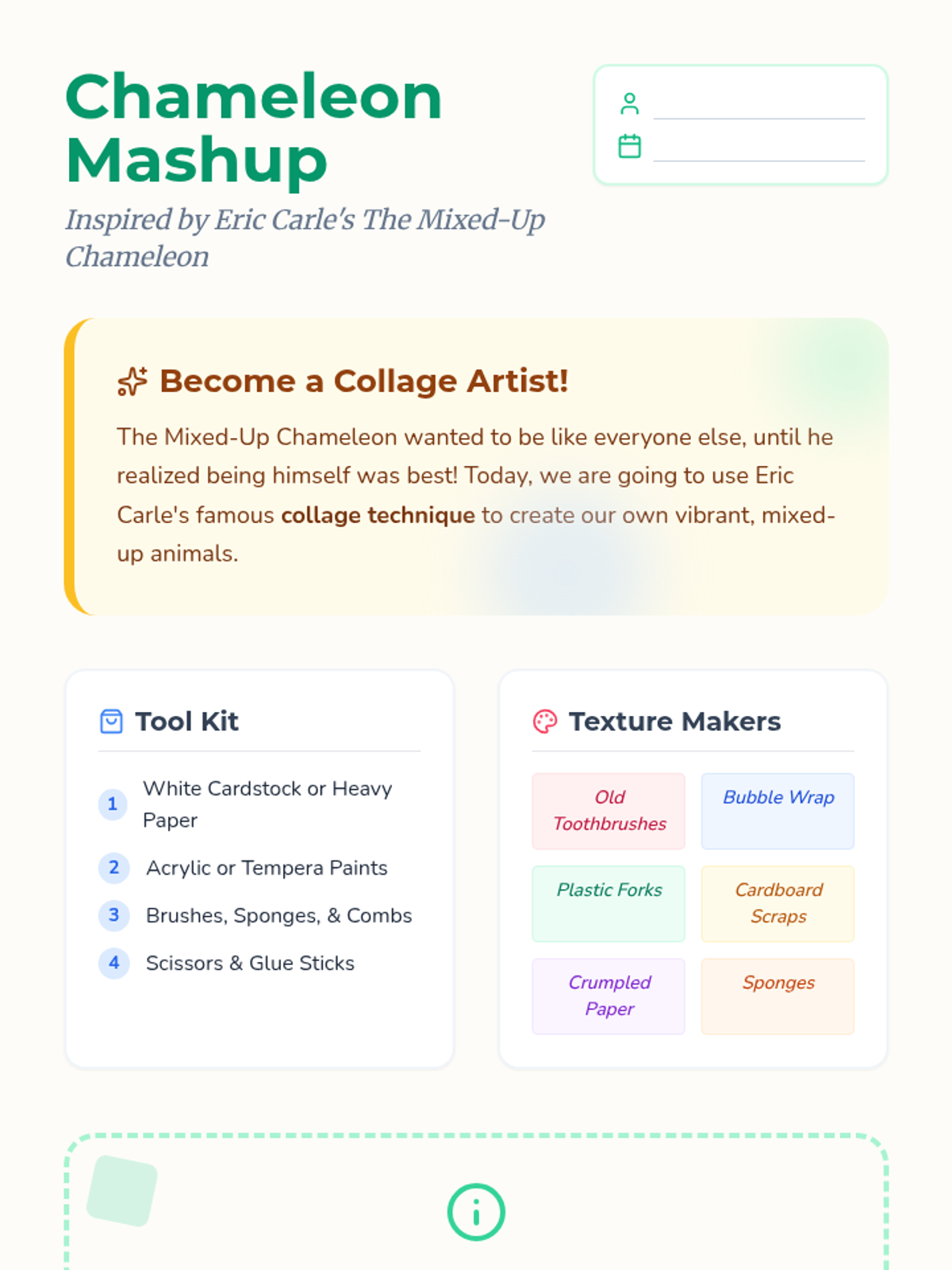
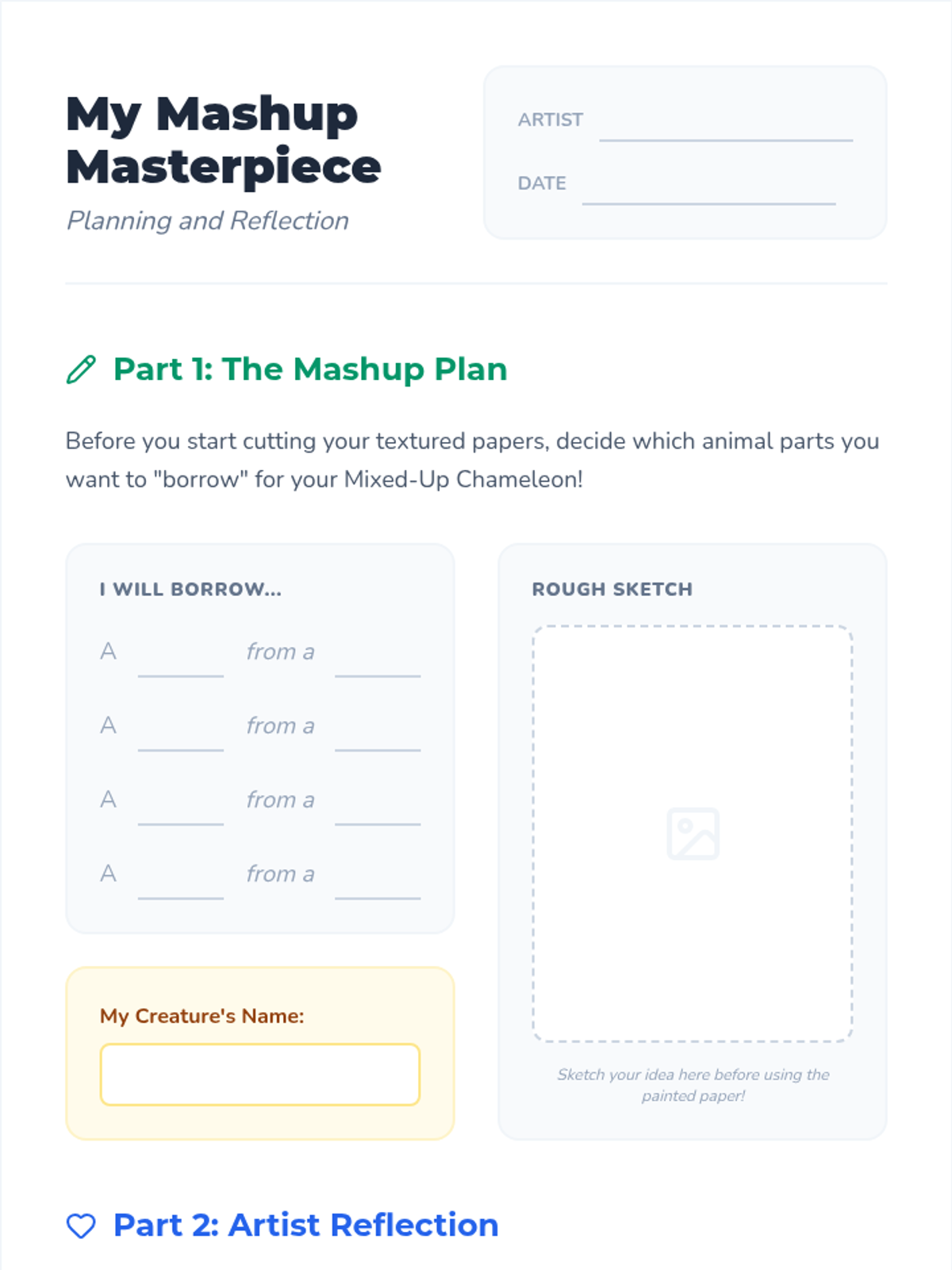
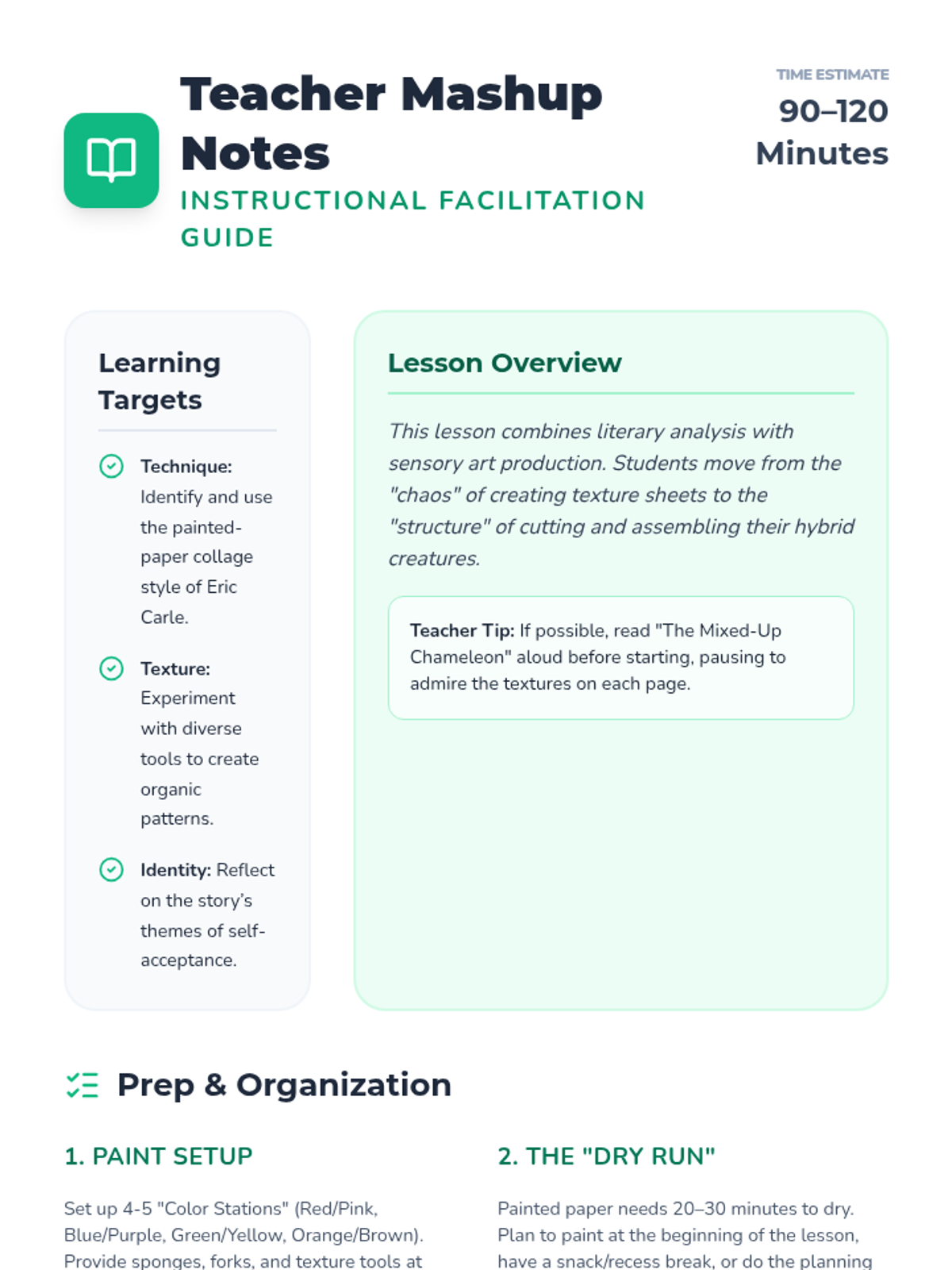
A creative art lesson where students explore identity and diversity by creating their own mixed-up animals inspired by Eric Carle's colorful collage style. Students will learn the 'painted paper' technique to create vibrant textures.
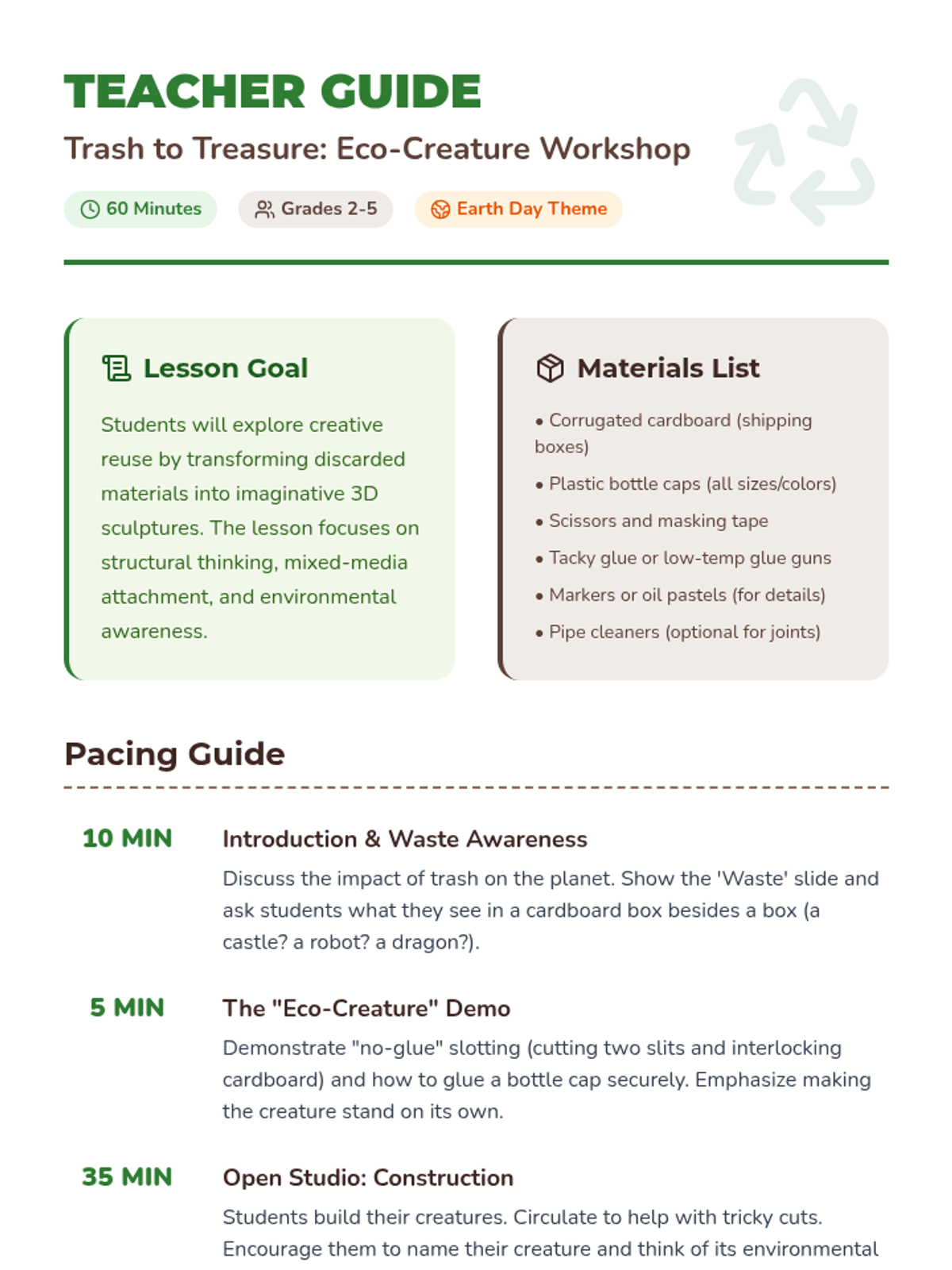
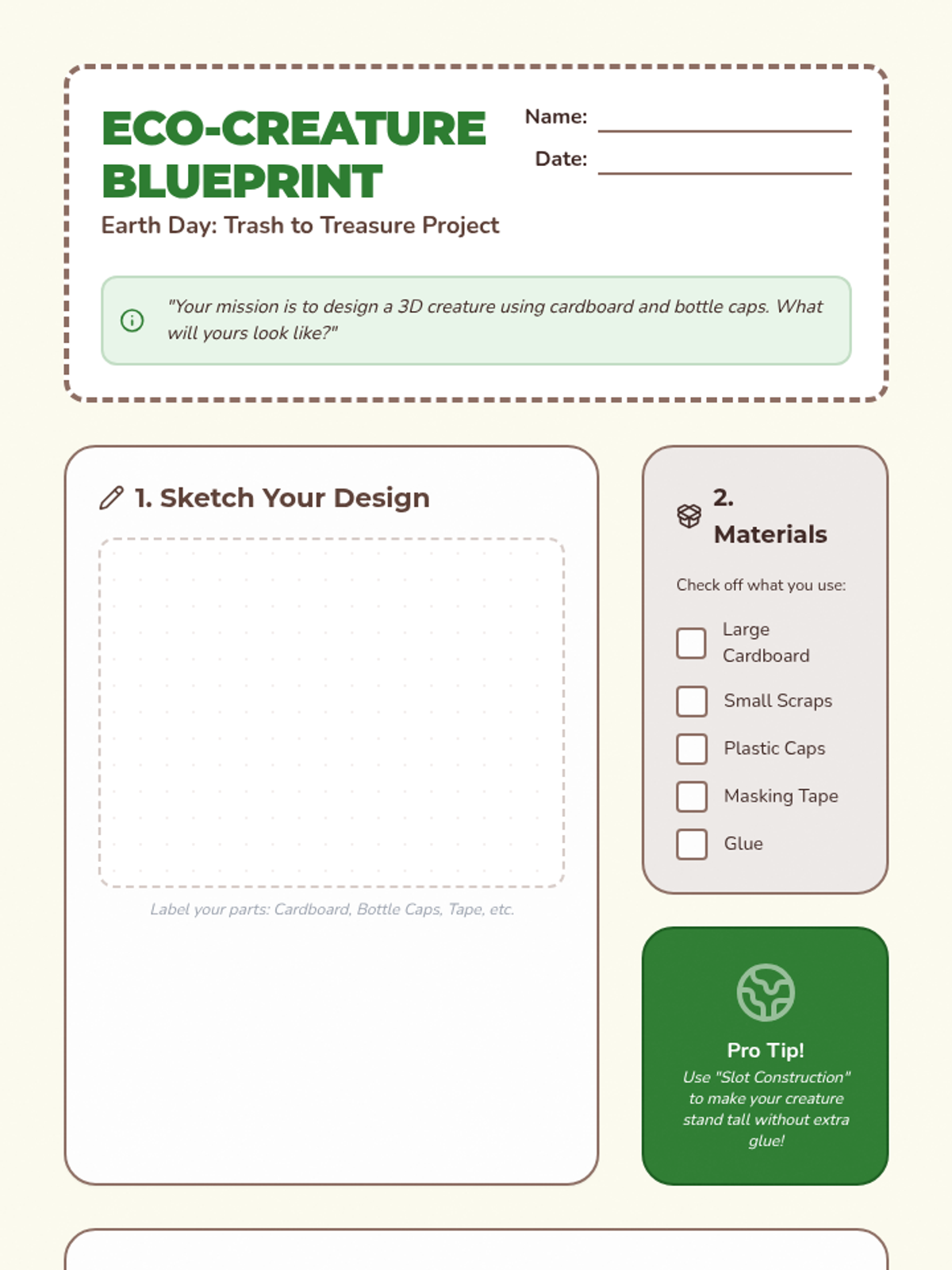
In this 60-minute art lesson, students transform everyday waste—cardboard and bottle caps—into imaginative 'Eco-Creatures,' learning about the importance of recycling and creative reuse for Earth Day.
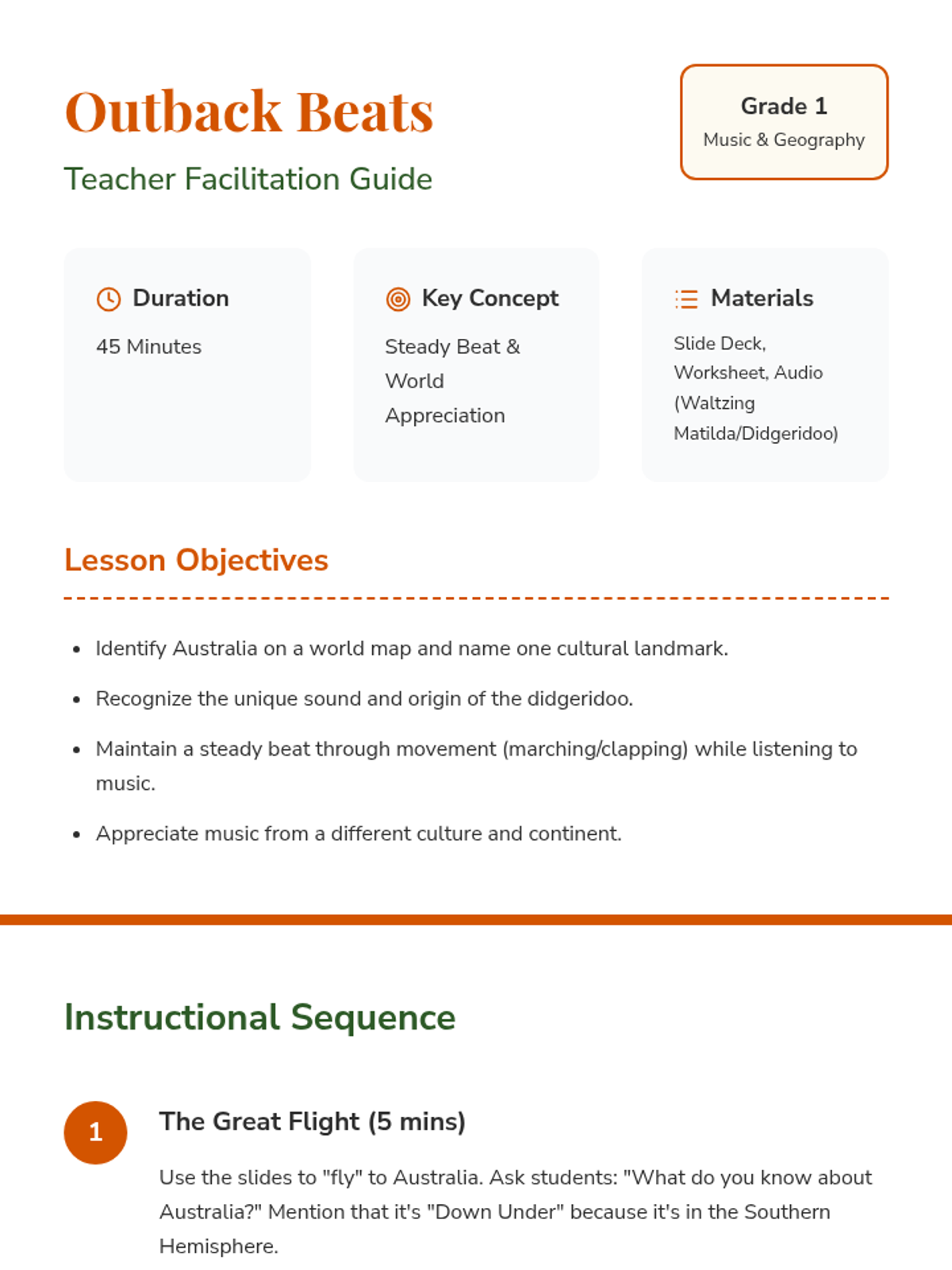
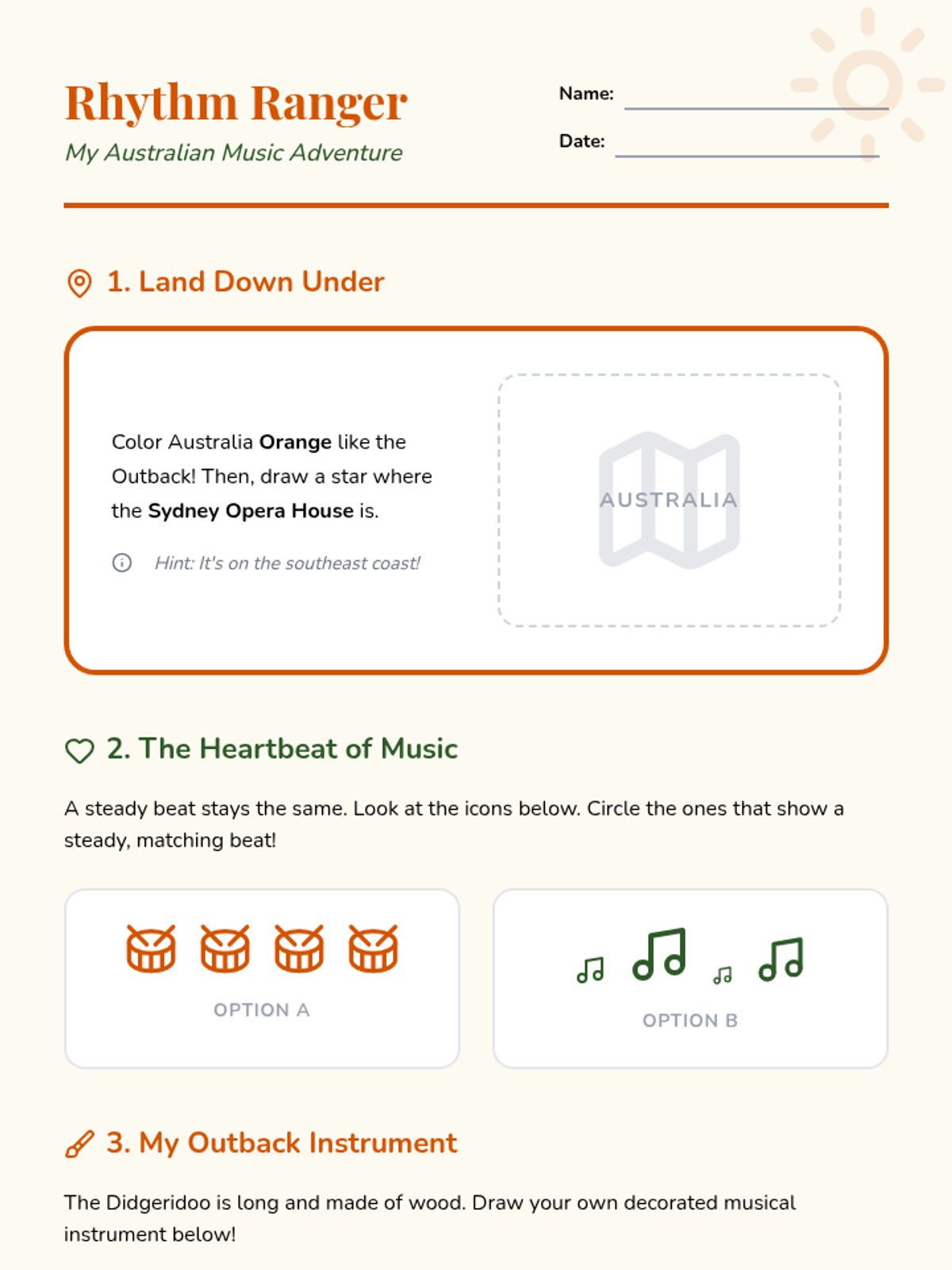
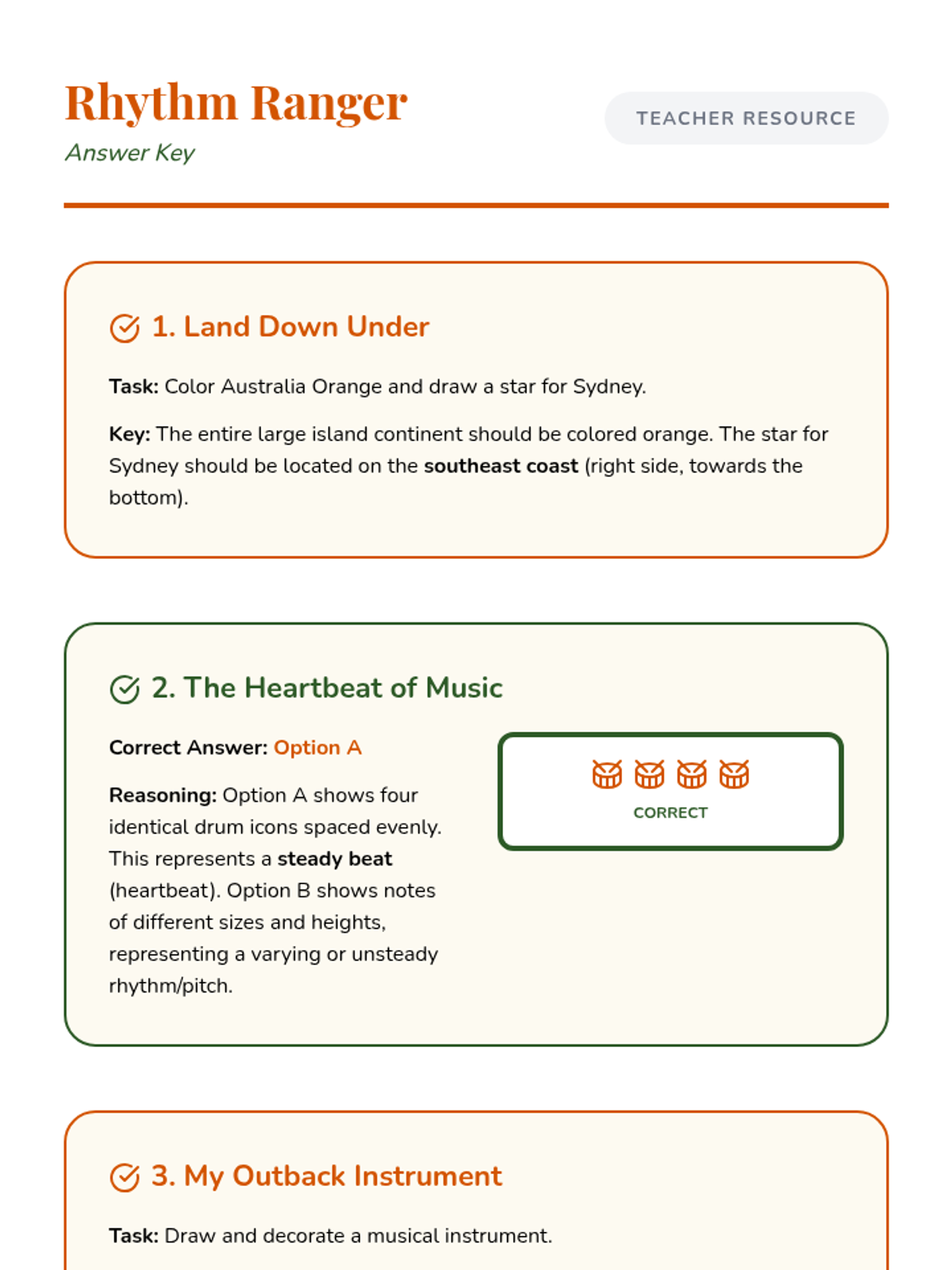
A first-grade introduction to Australian music and culture, focusing on the didgeridoo, the folk classic 'Waltzing Matilda', and maintaining a steady beat through movement and listening.
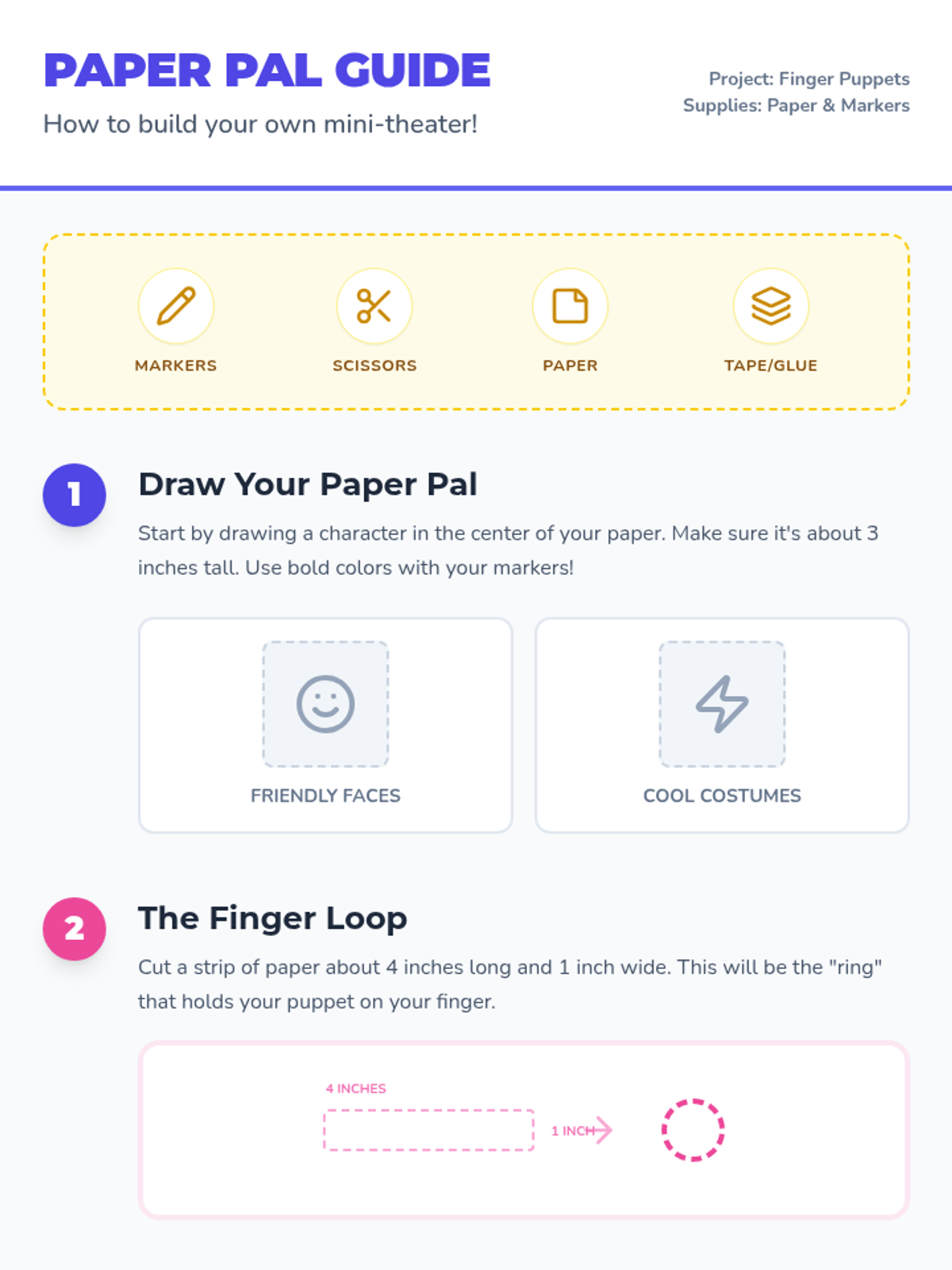
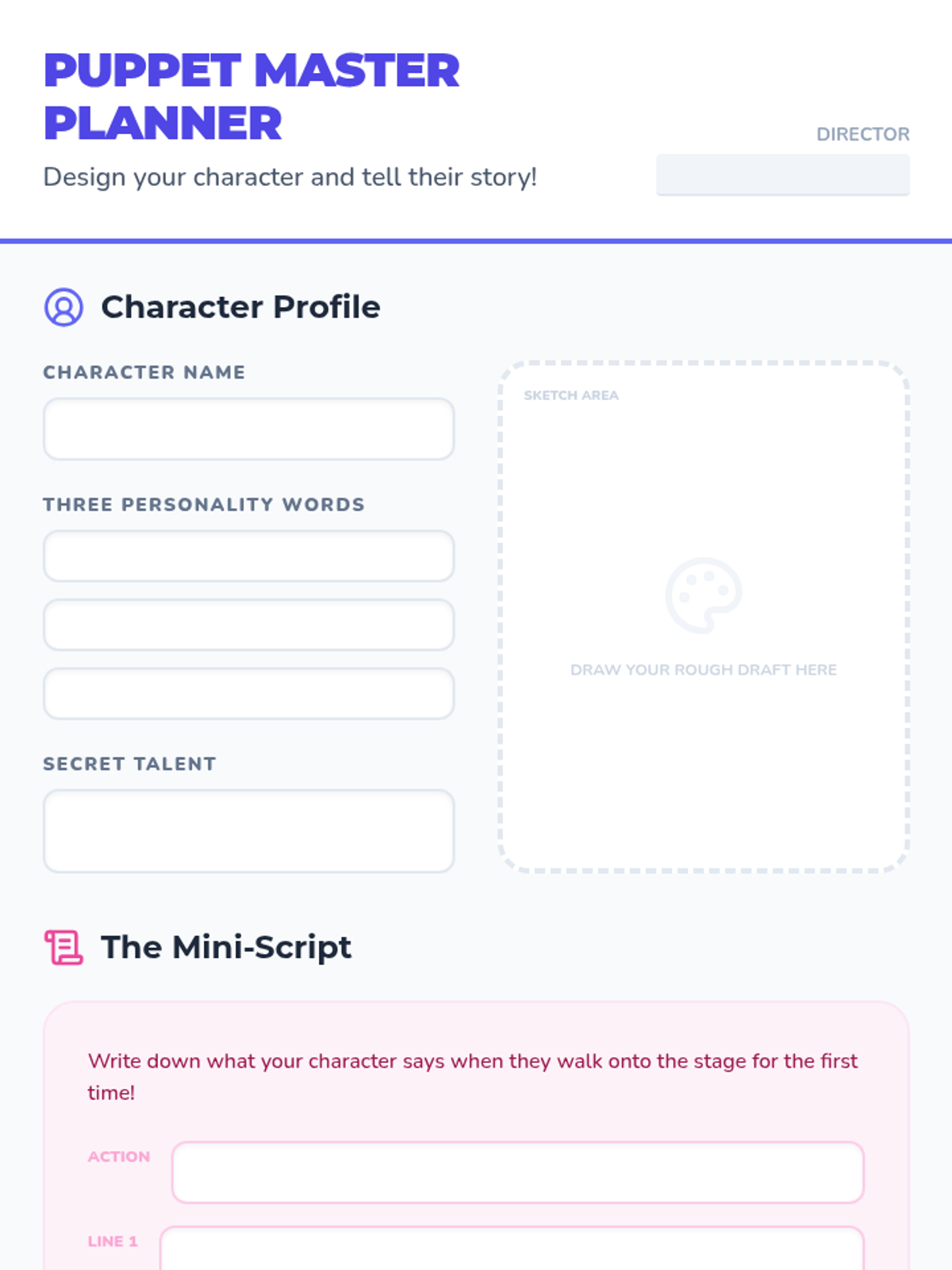
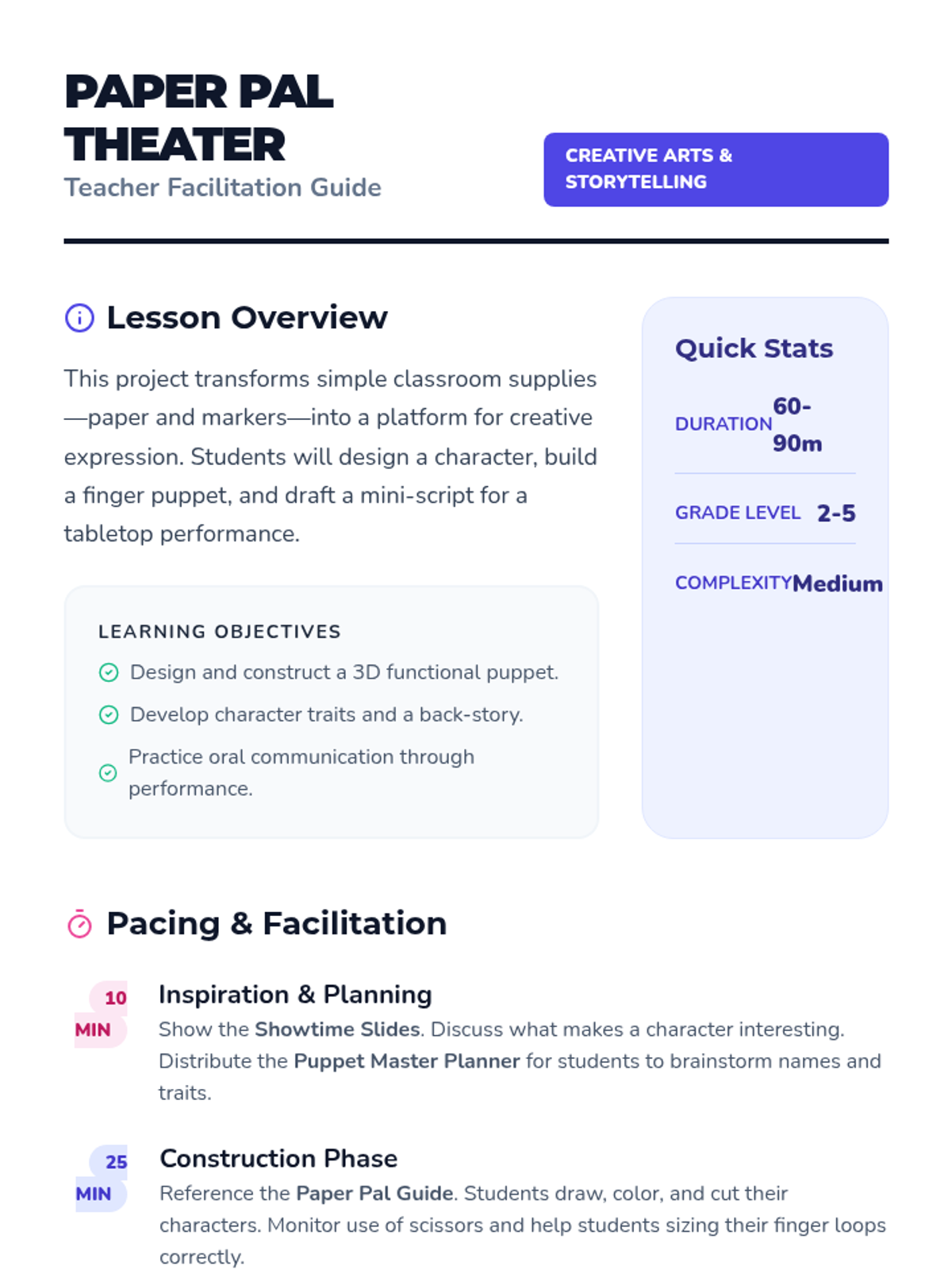
Students design and build their own paper finger puppets and a tabletop stage using markers and paper. This project combines visual arts with storytelling and performance.
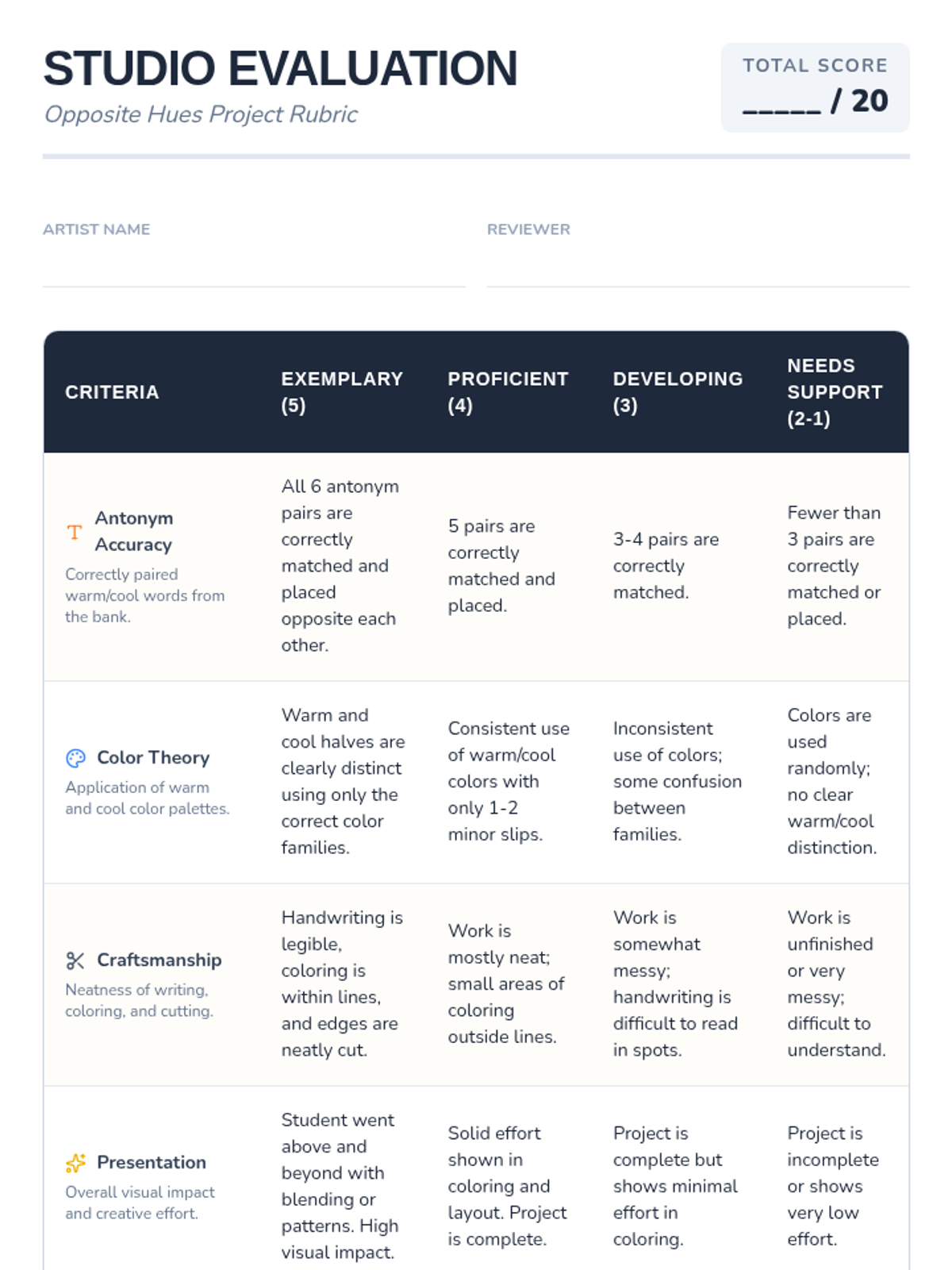
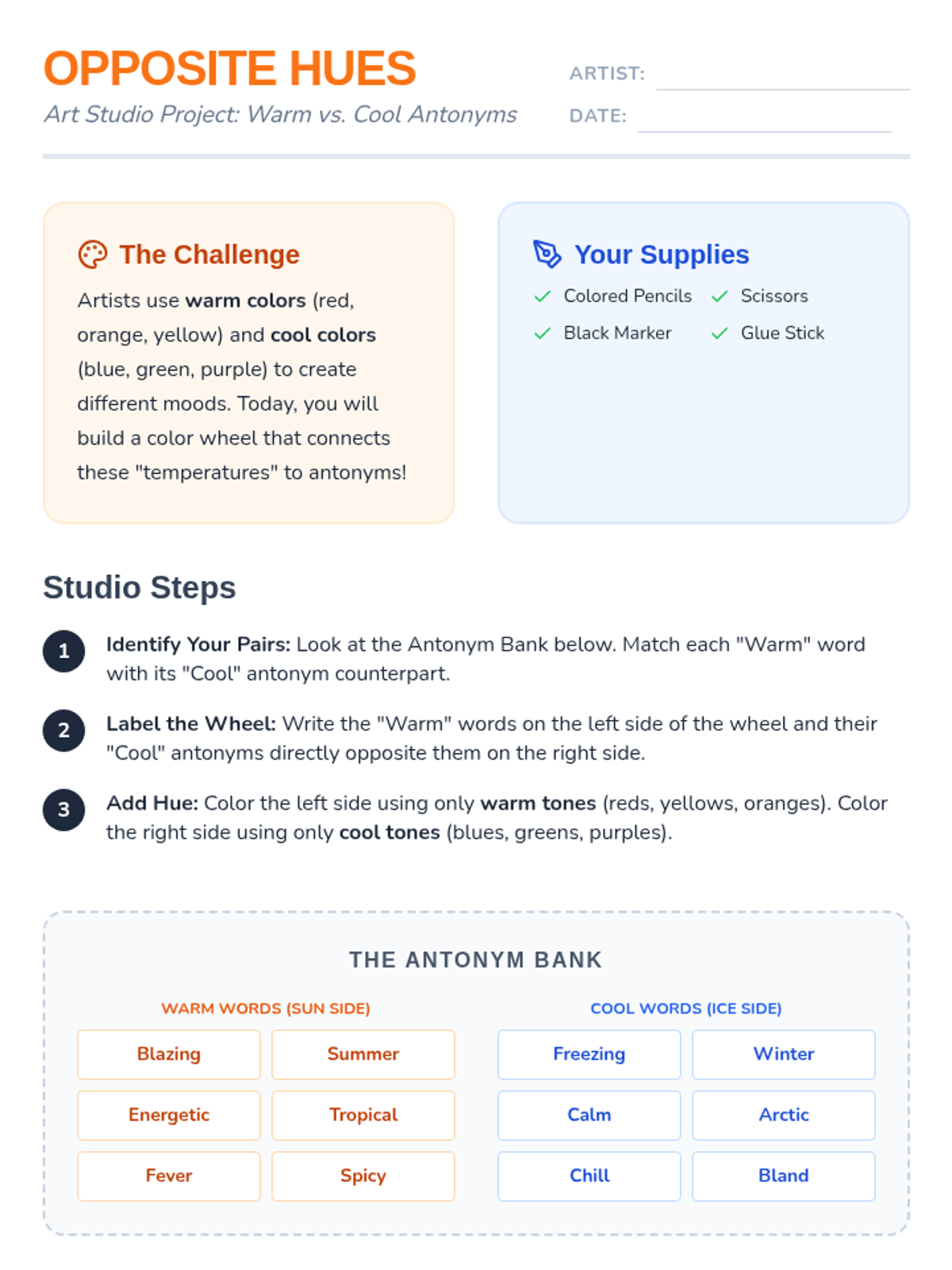
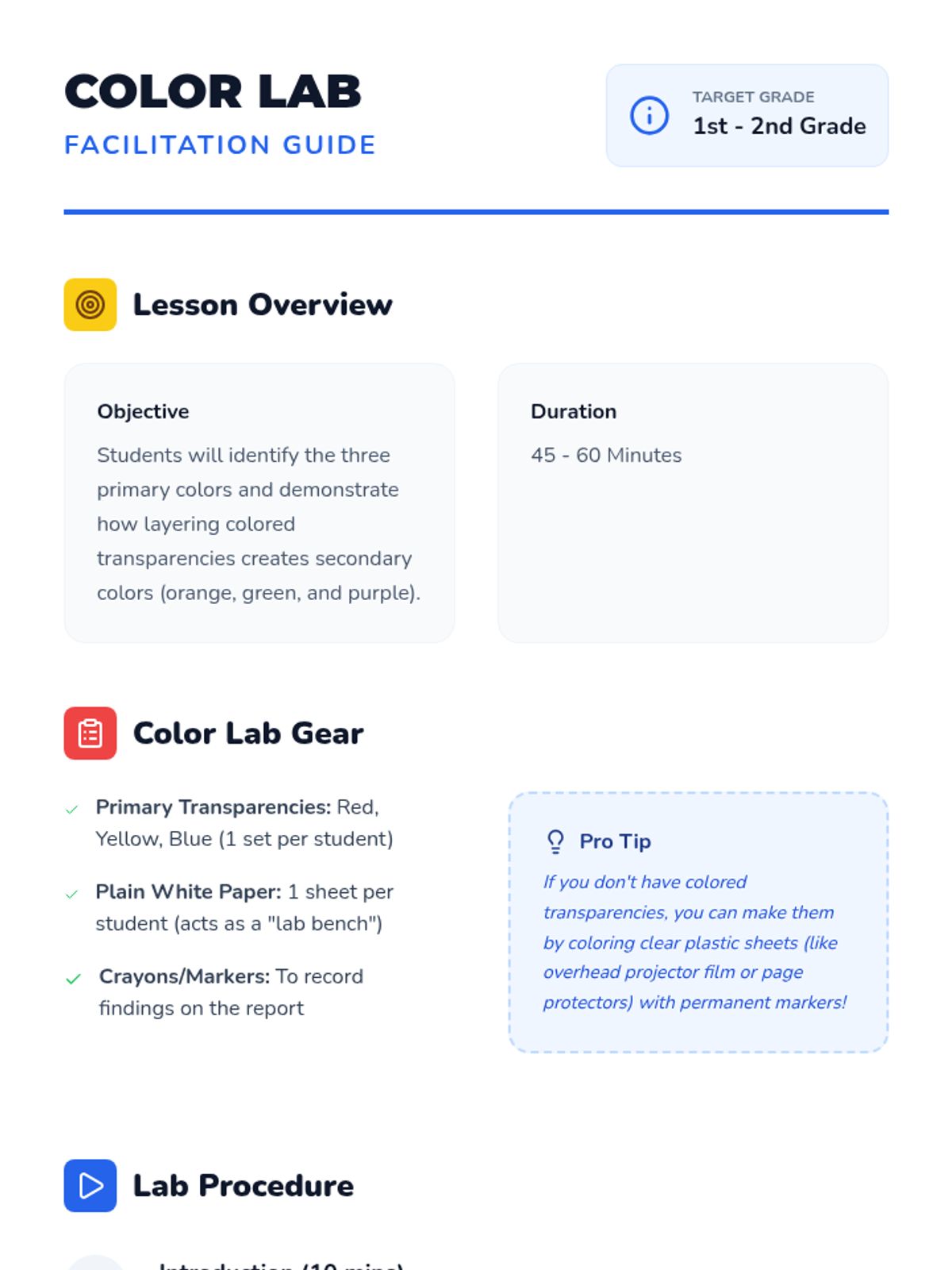
A hands-on art and language arts lesson where students explore color temperature by pairing warm and cool colors with antonyms. Students create a visual 'Opposite Wheel' to demonstrate their understanding of both color theory and vocabulary.
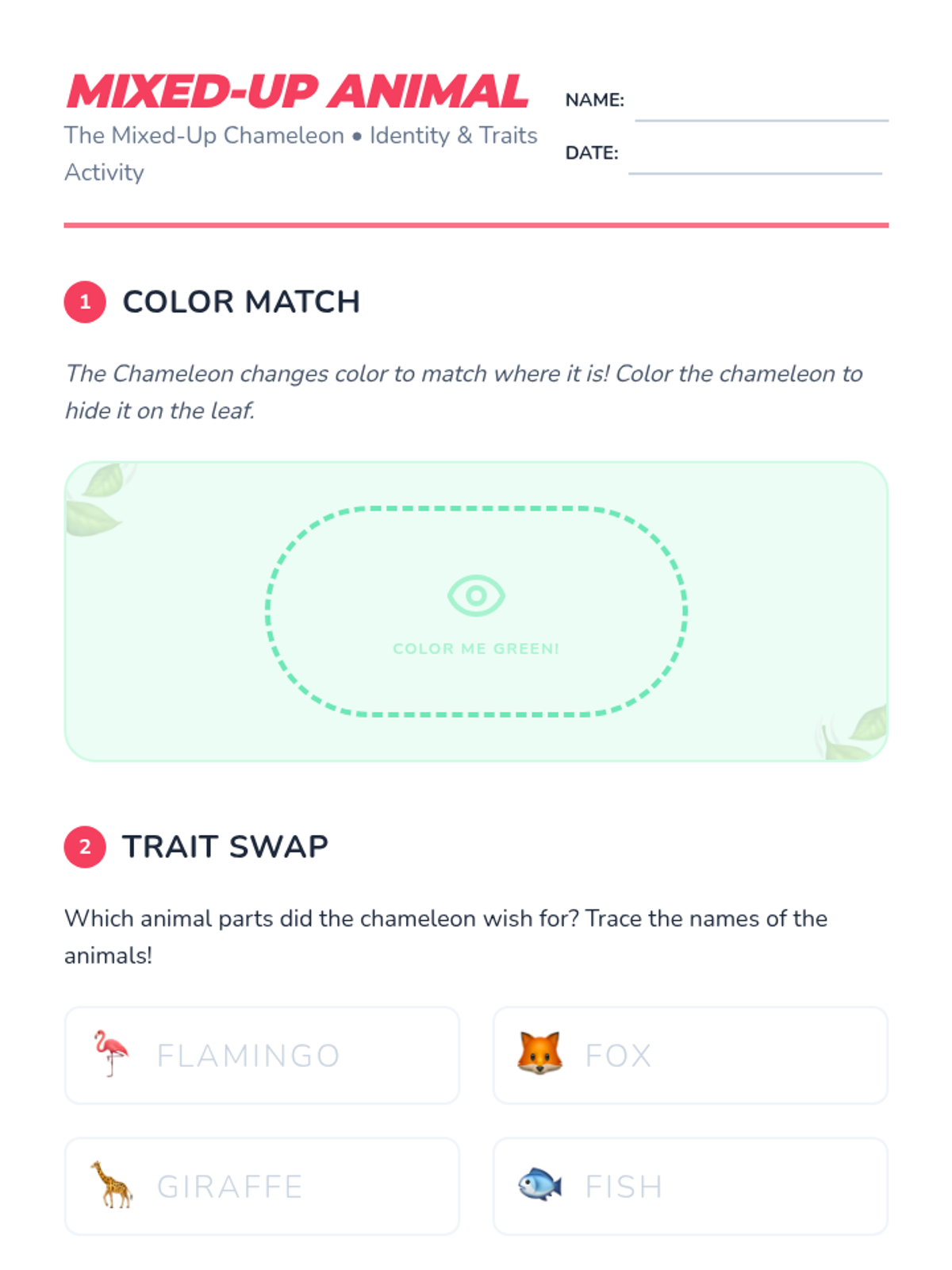
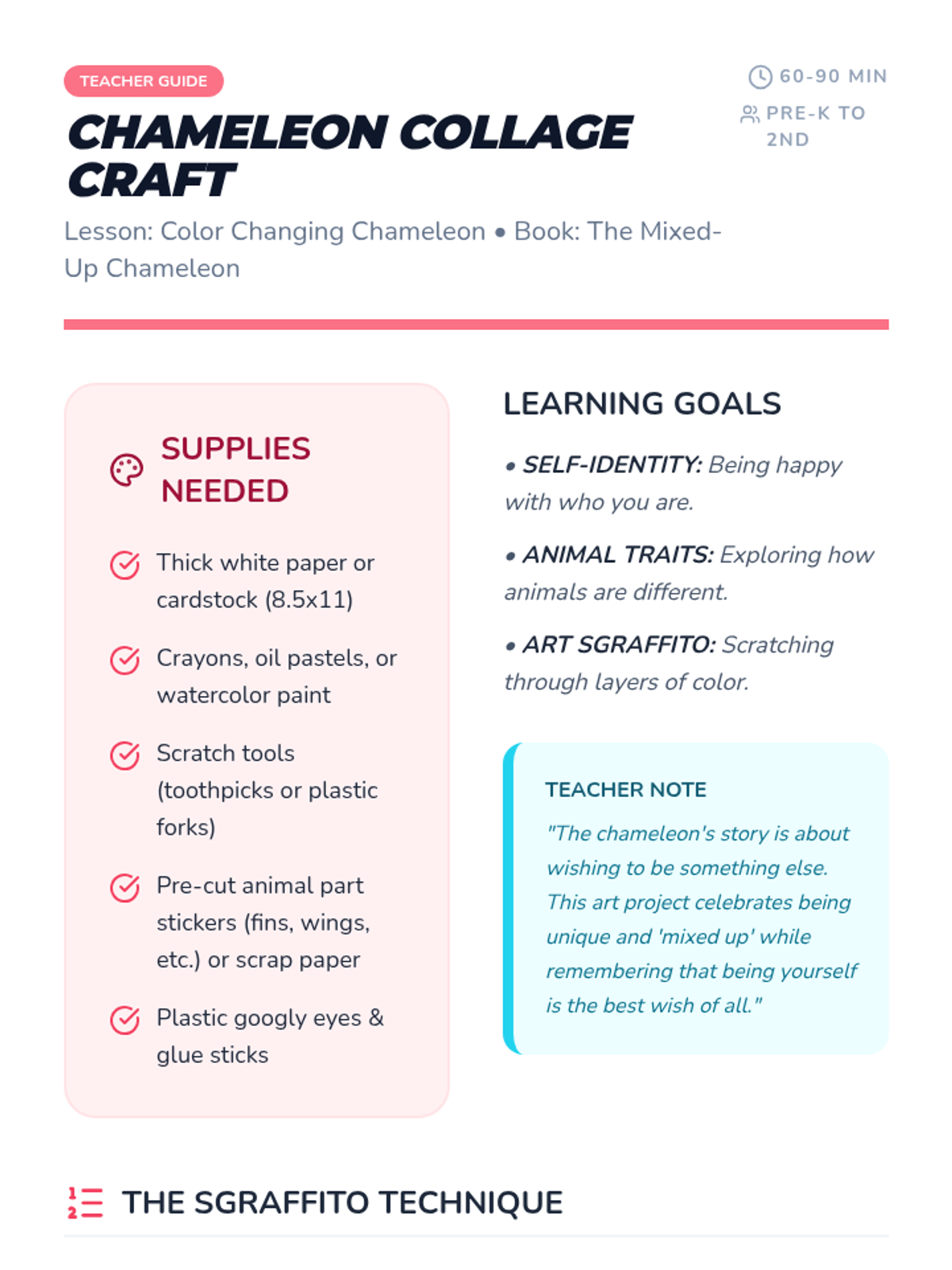
Focusing on 'The Mixed-Up Chameleon,' this lesson explores the vibrant world of colors and animal traits through layered collage and mixed-media art.
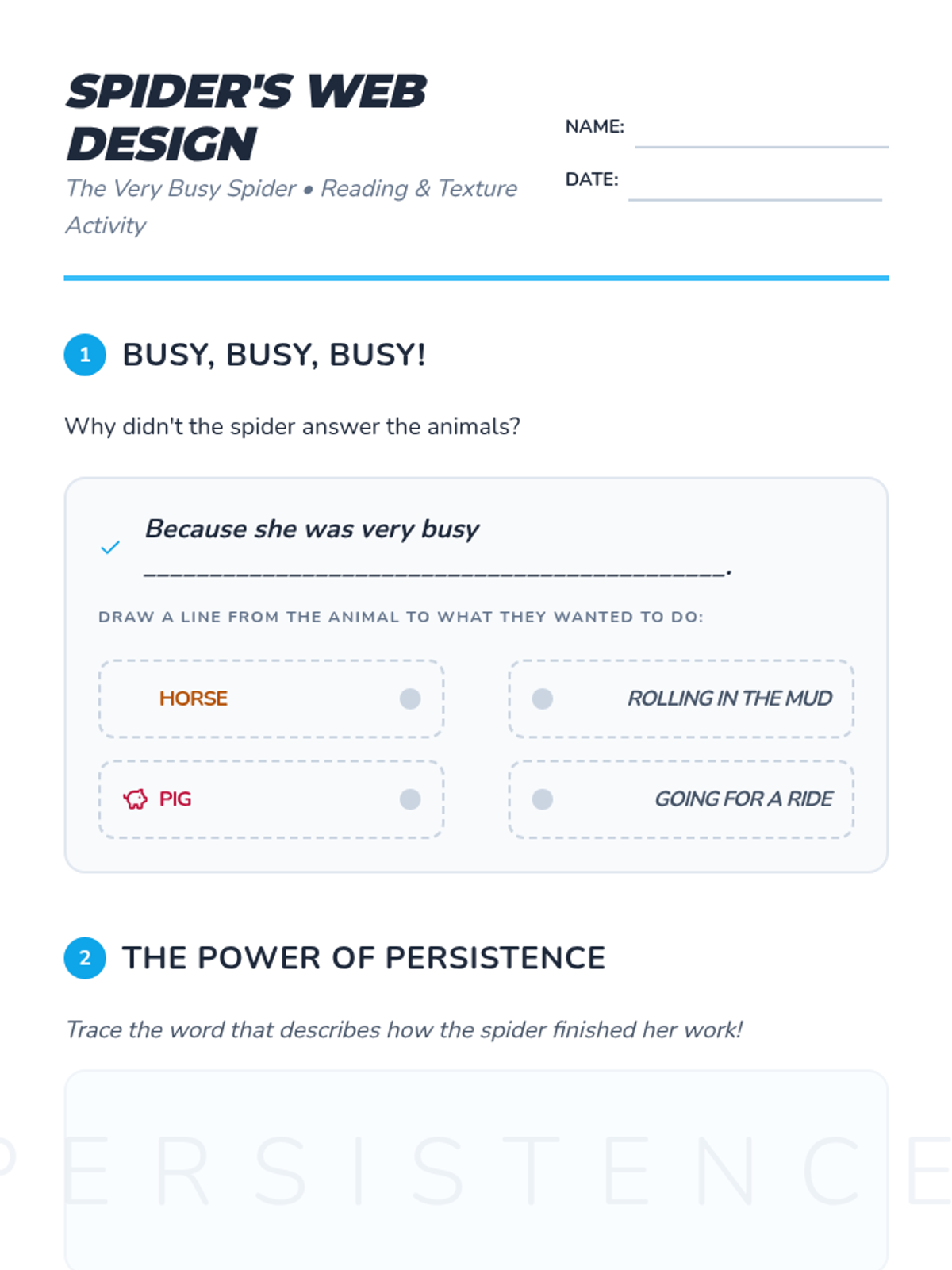
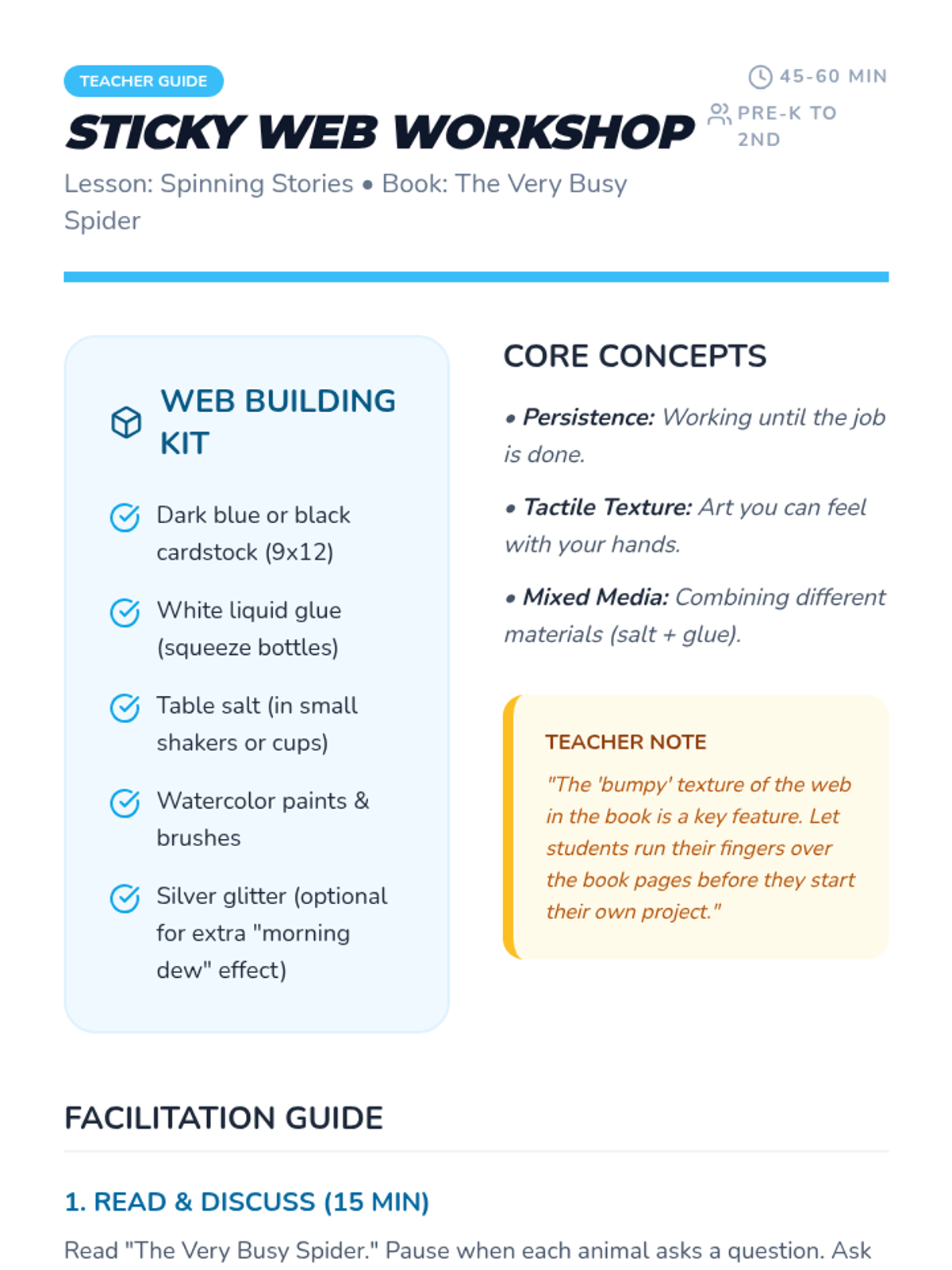
Focusing on 'The Very Busy Spider,' this lesson explores the themes of hard work and persistence while teaching students how to create tactile textures in their art using mixed media.
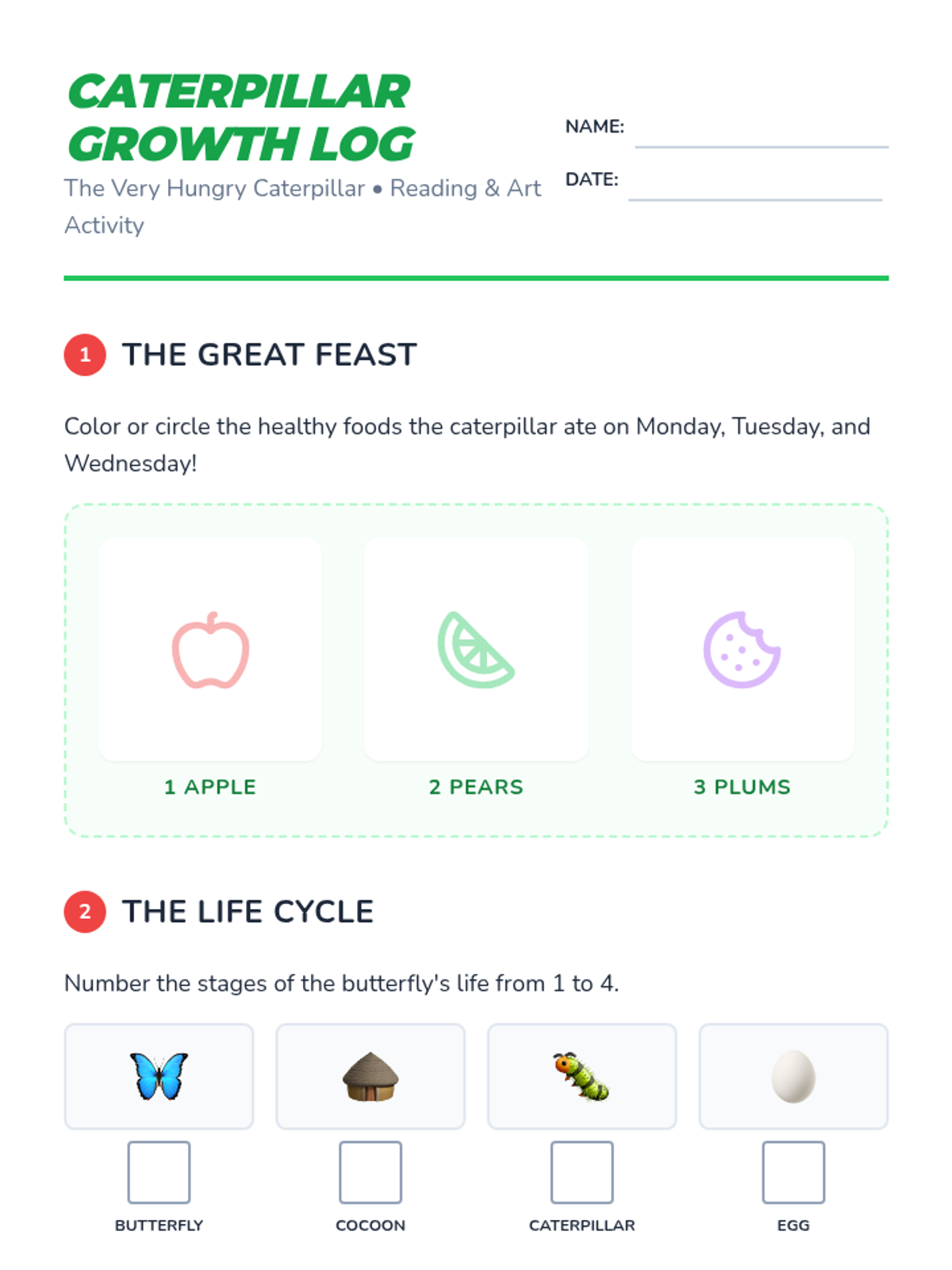
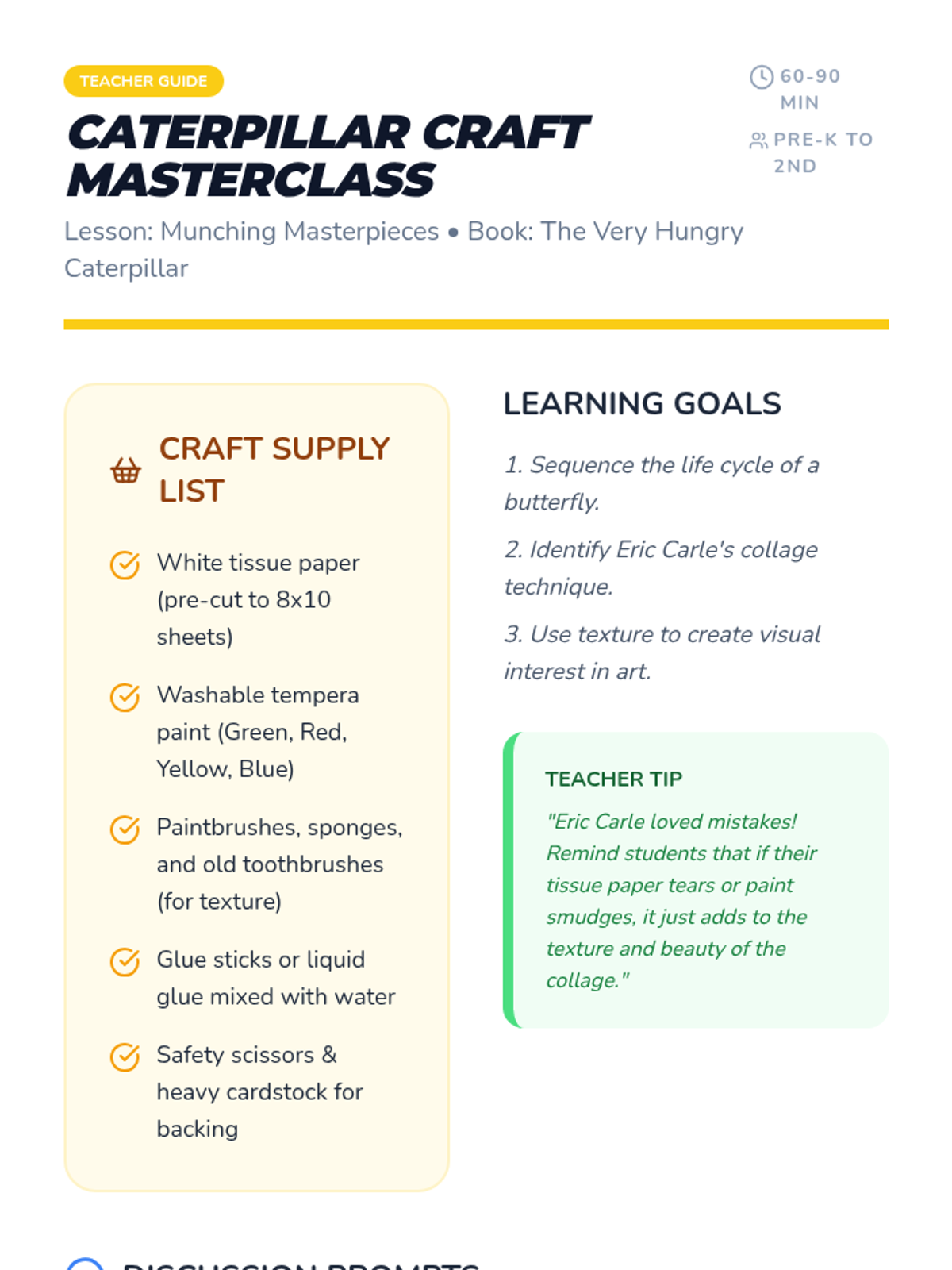
Focusing on 'The Very Hungry Caterpillar,' this lesson teaches students about the life cycle of a butterfly through the lens of Eric Carle's signature tissue paper collage technique.
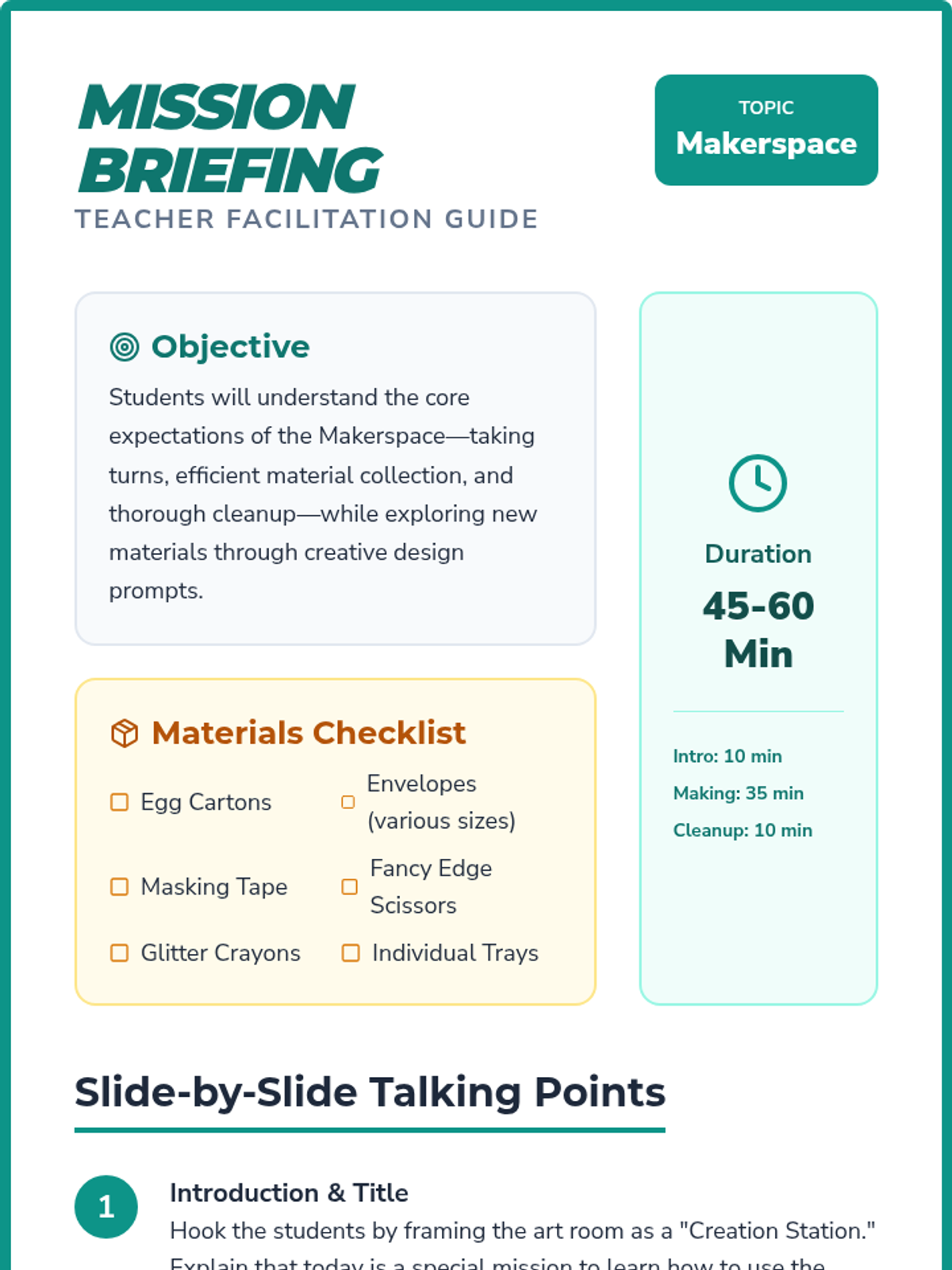
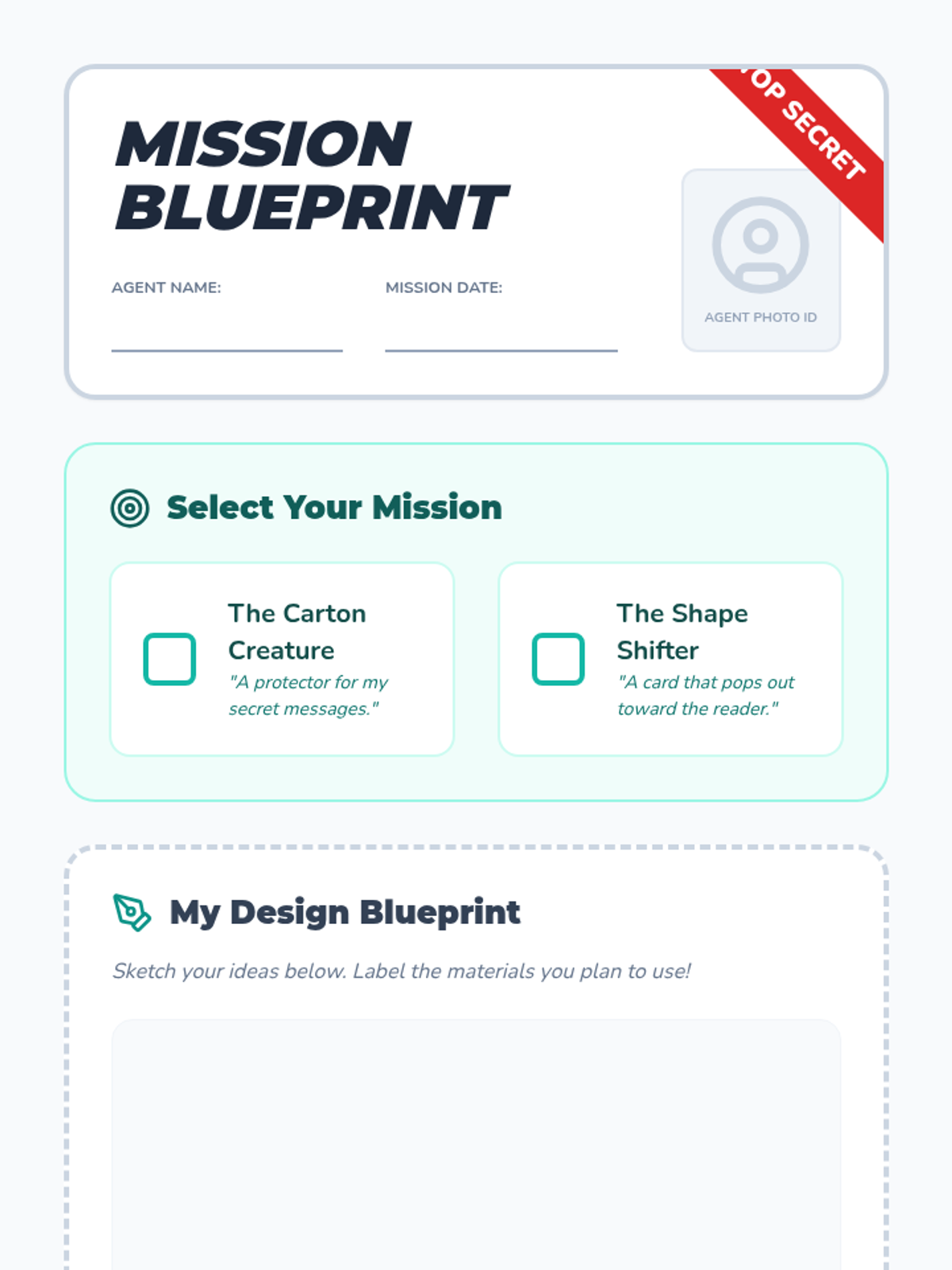
A guide for young artists on navigating a makerspace with respect and creativity, focusing on material exploration and studio etiquette.
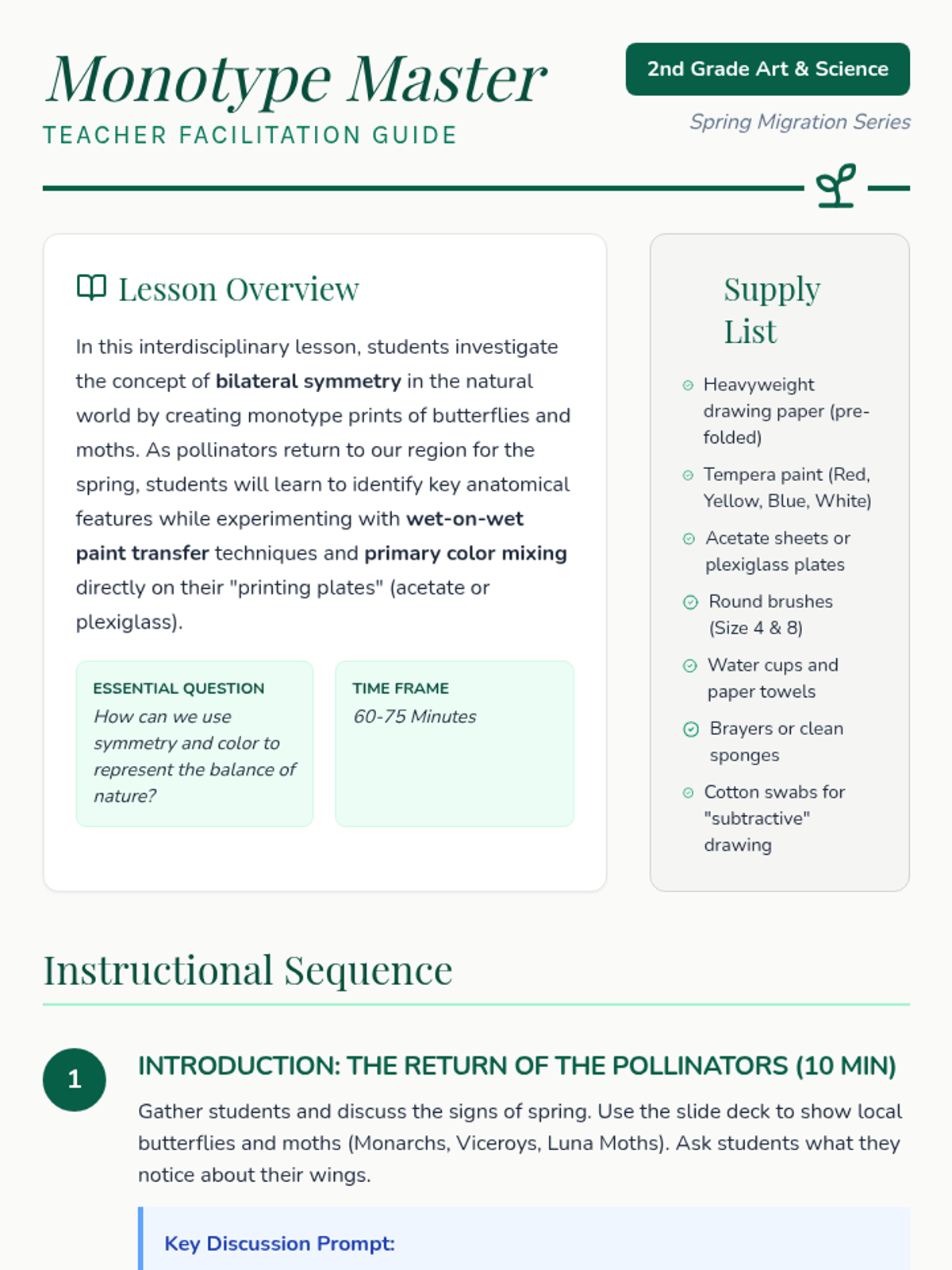
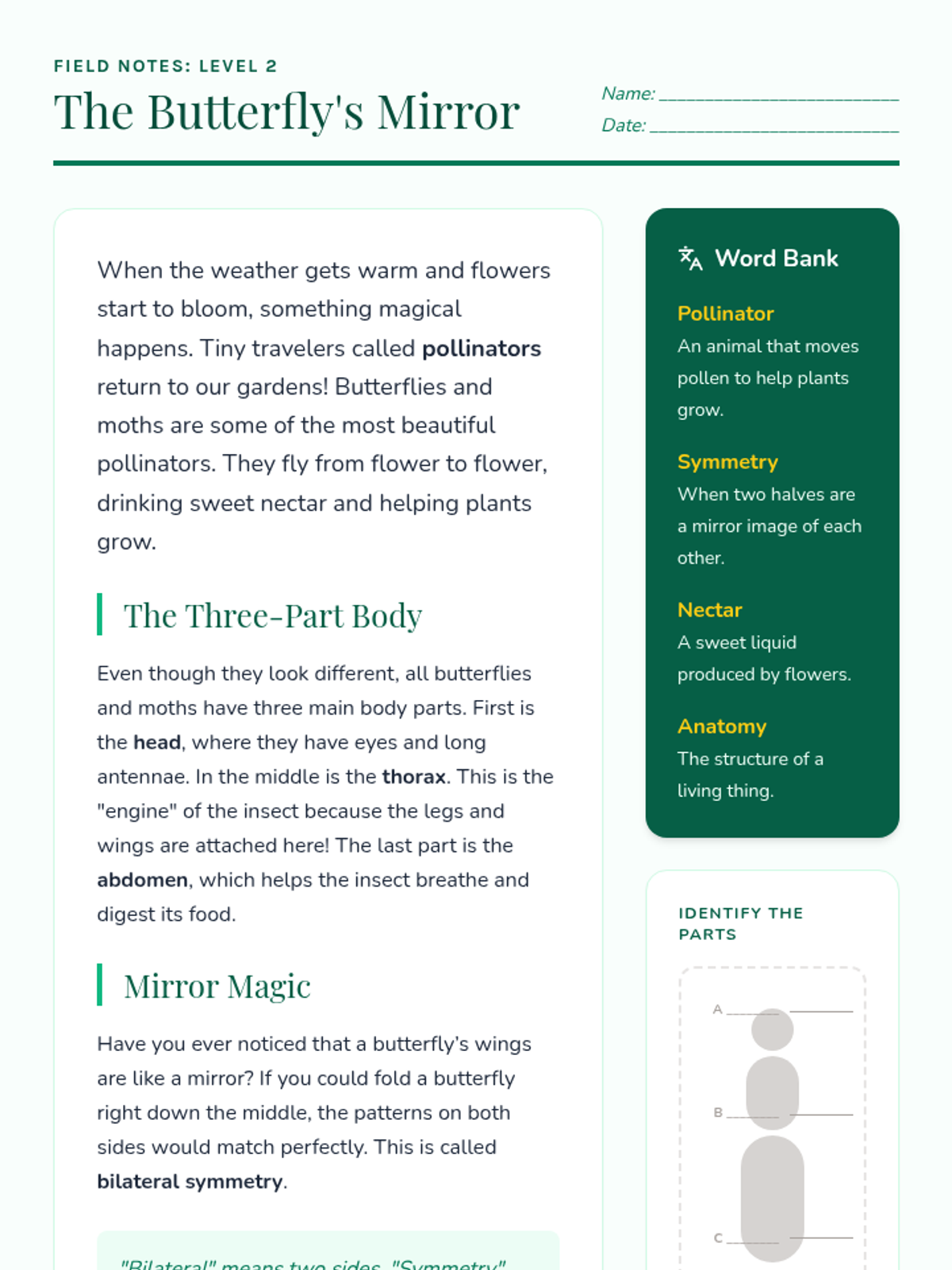
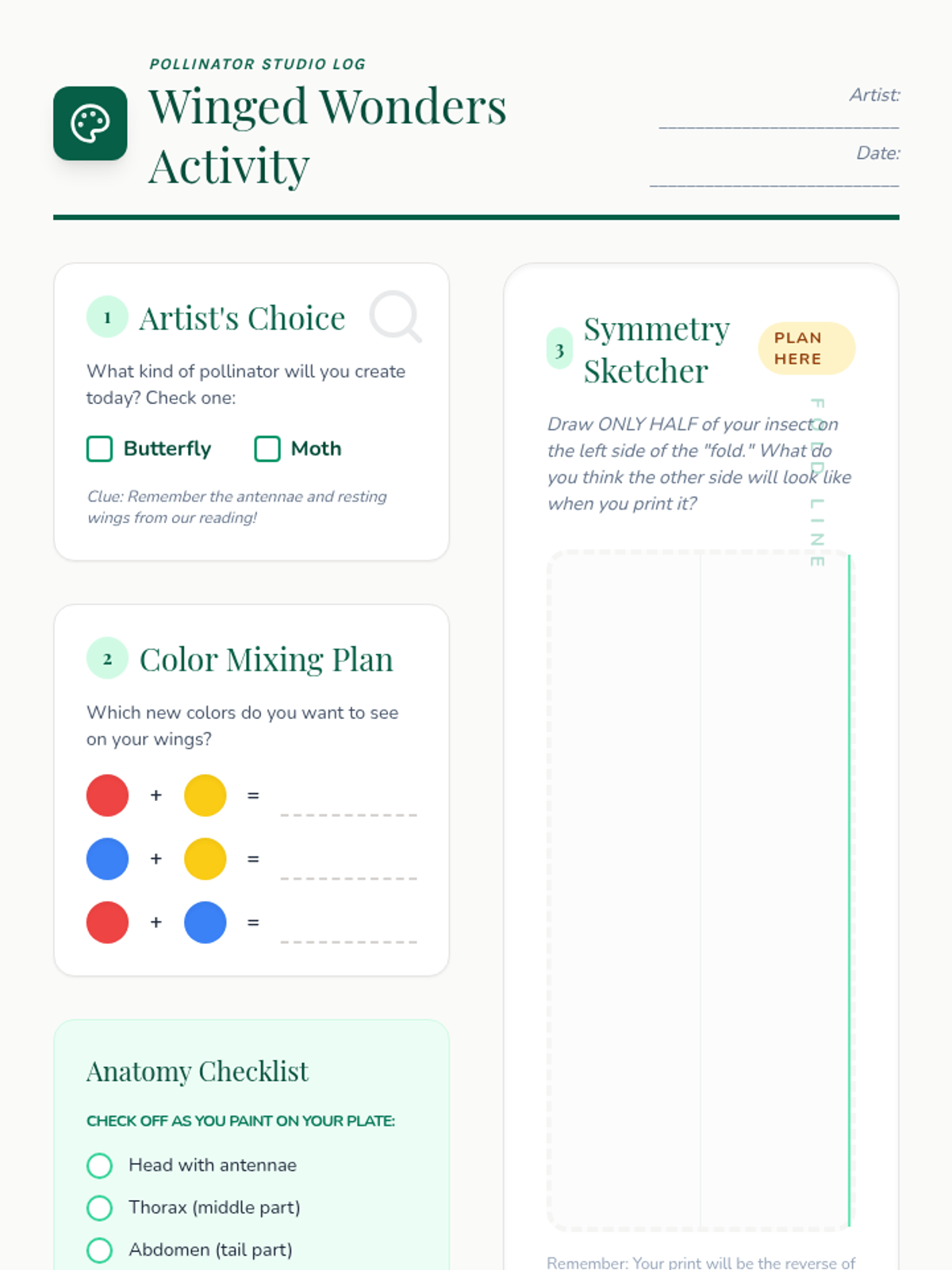
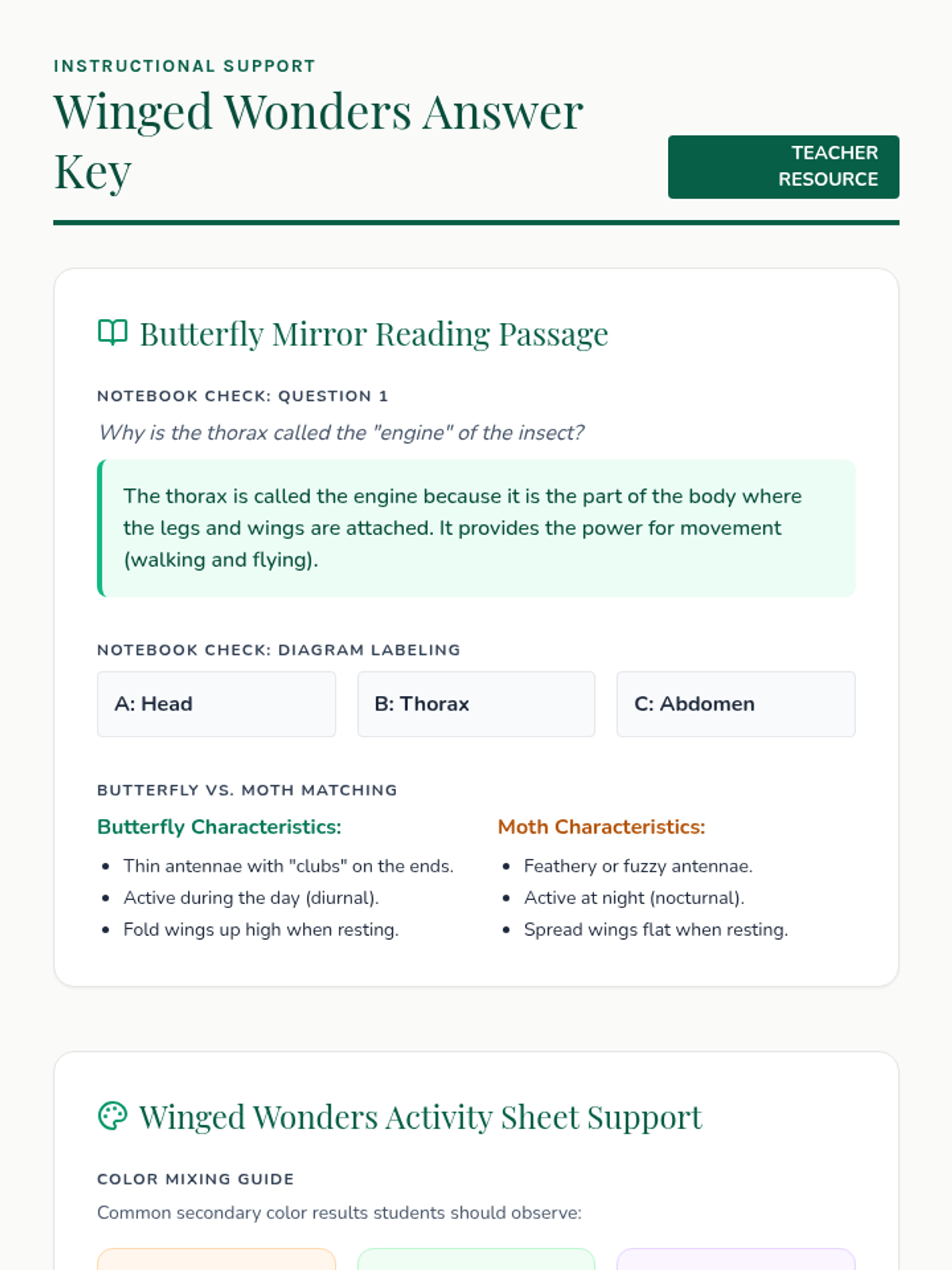
A creative art and science lesson where second graders explore bilateral symmetry through monotype printing. Students learn about pollinator anatomy and color mixing while creating unique butterfly or moth prints.
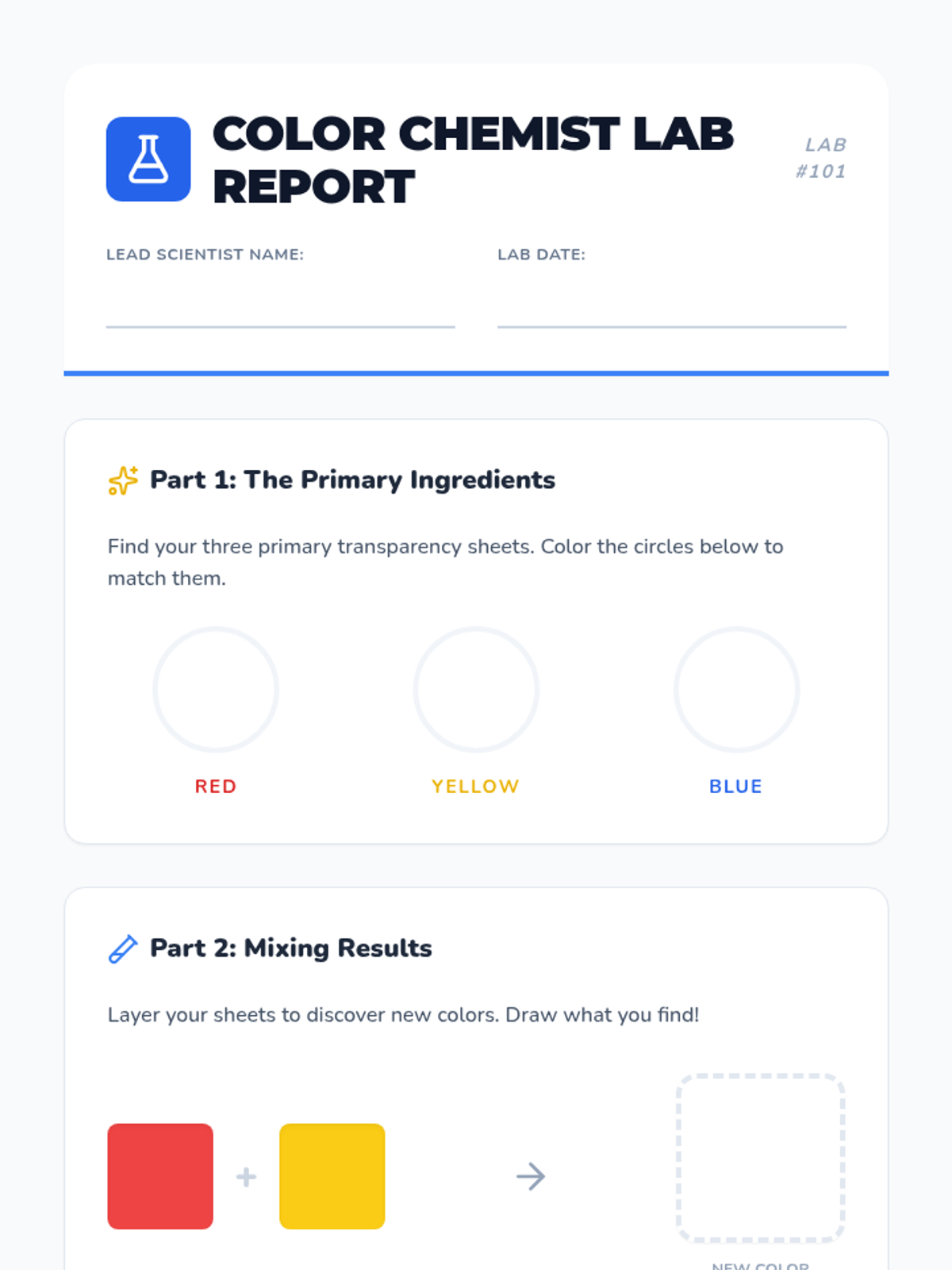
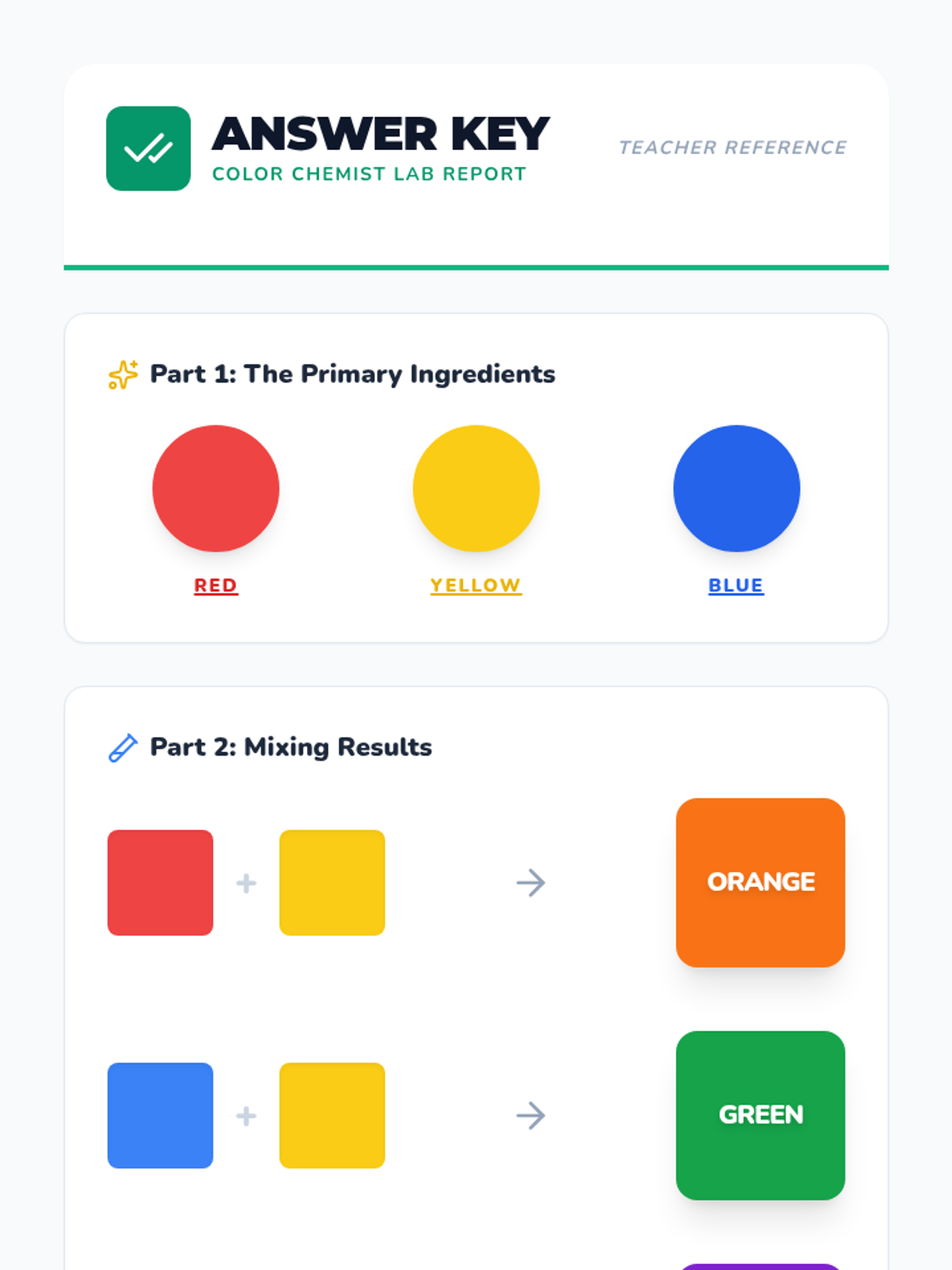
A hands-on exploration of primary color mixing using colored transparencies. Students act as 'Color Chemists' to discover how layering red, blue, and yellow creates new colors.
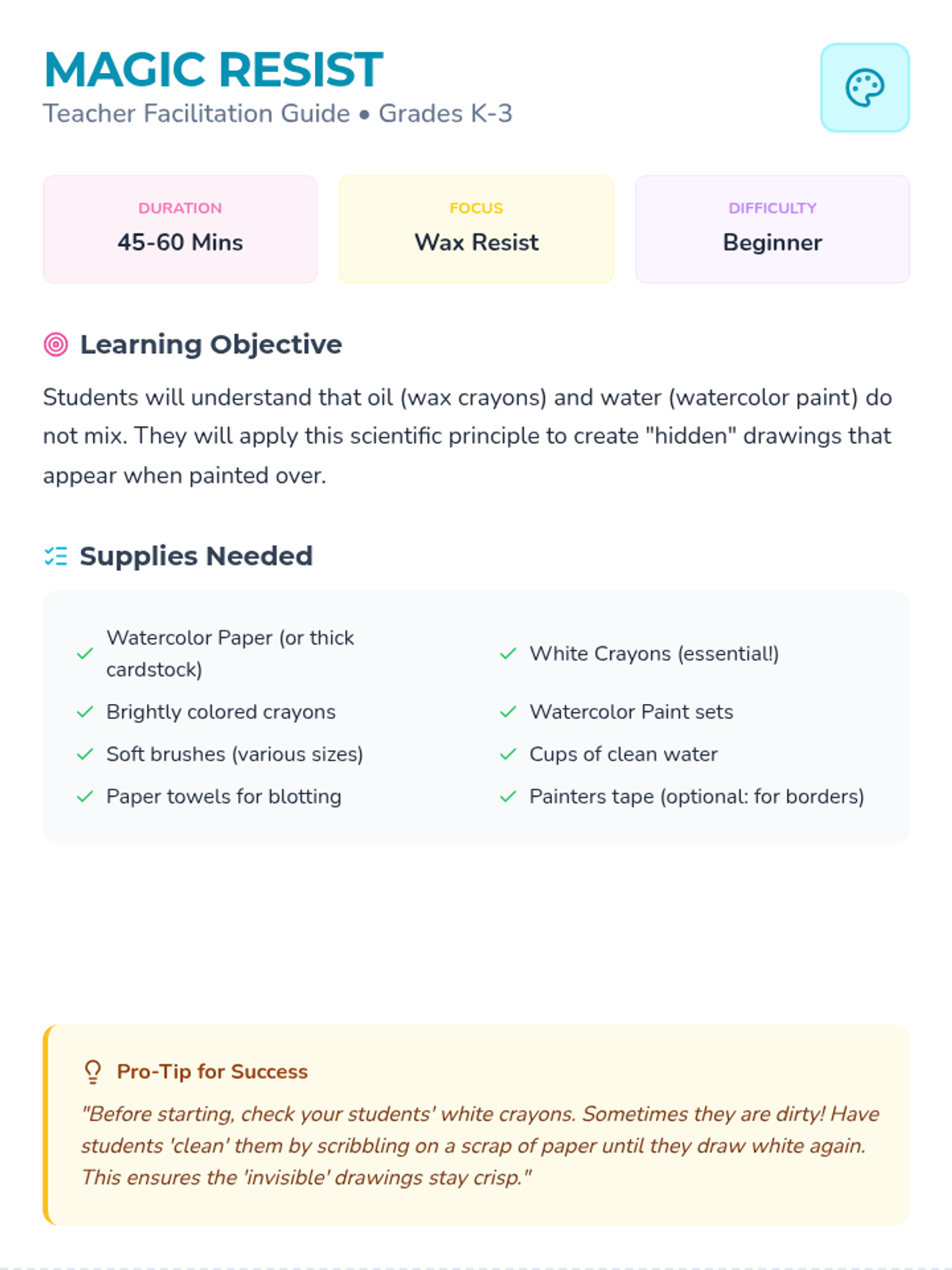
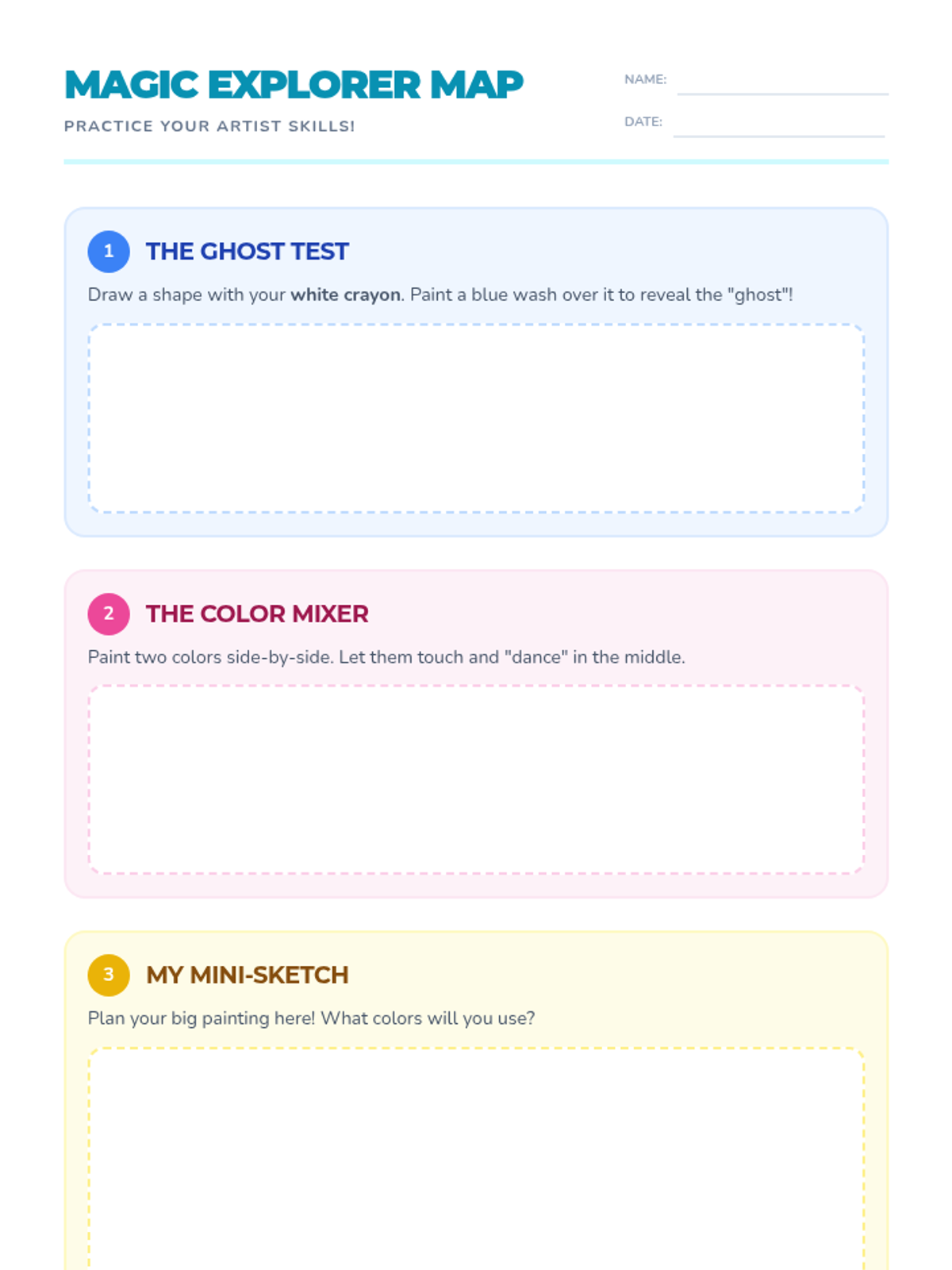
Students explore the wax-resist watercolor technique to create vibrant landscapes. This lesson introduces basic color mixing and the "magic" of how oil and water don't mix.
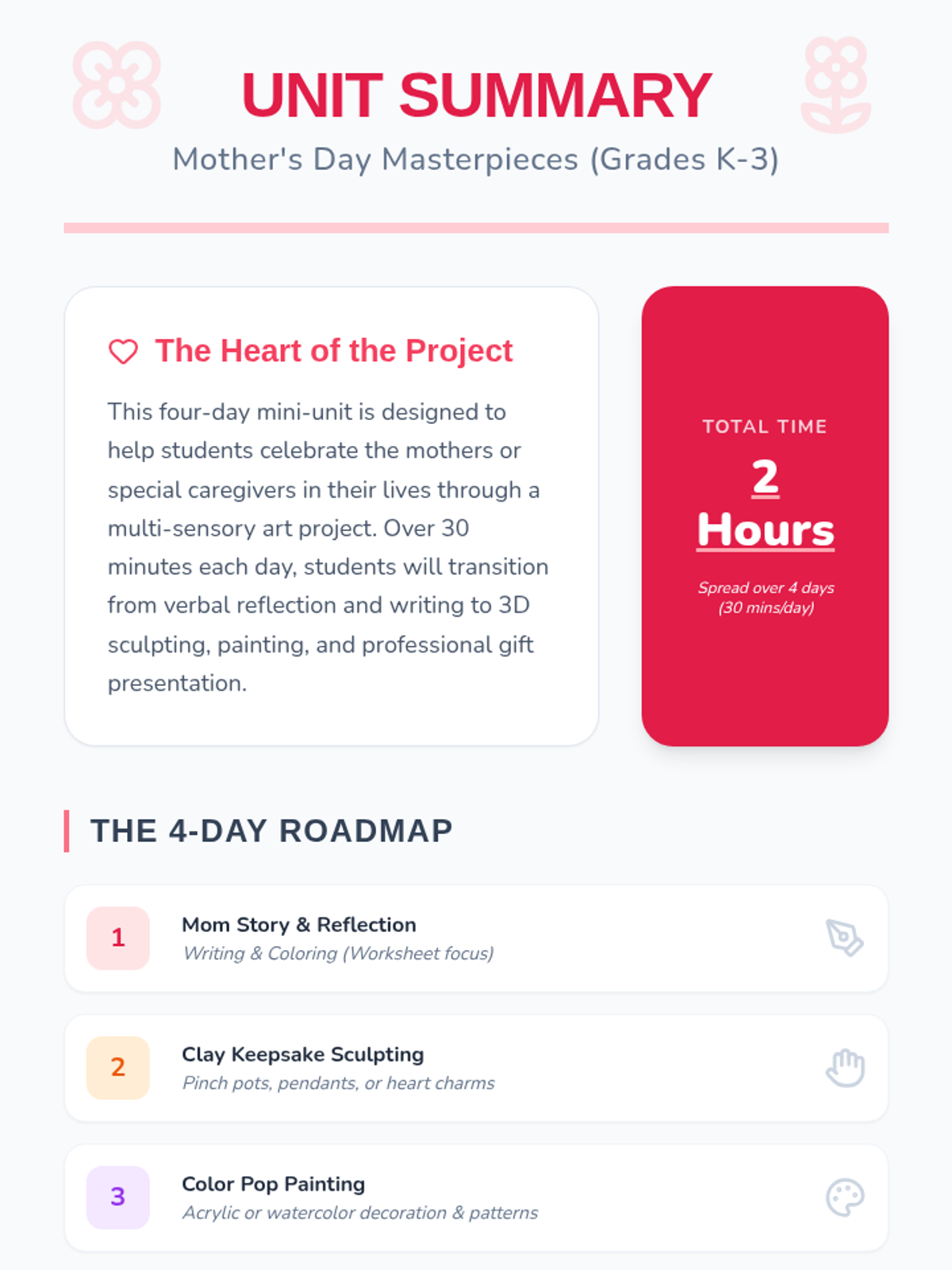
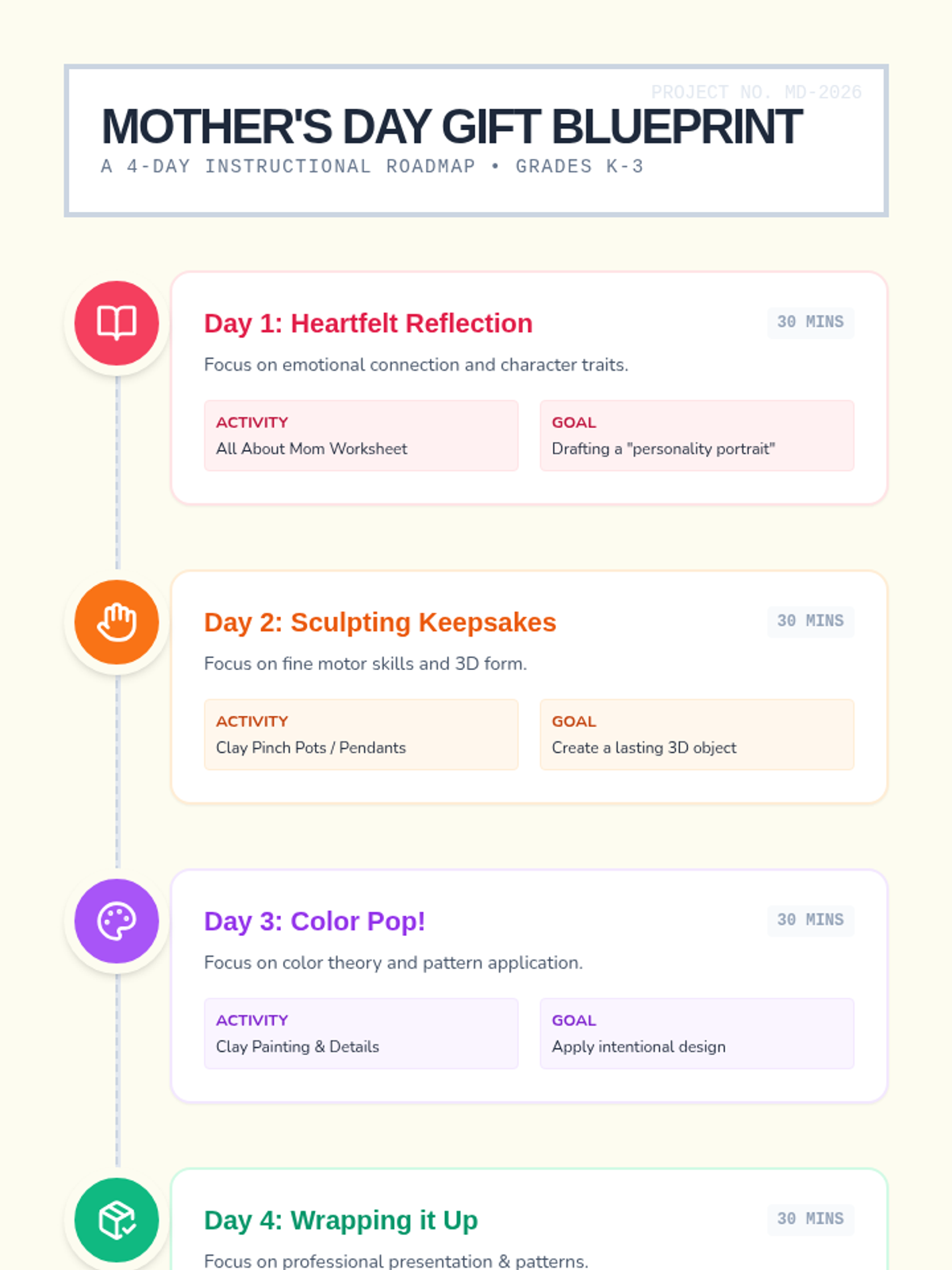
High-level planning resources and summaries for the Mother's Day unit.
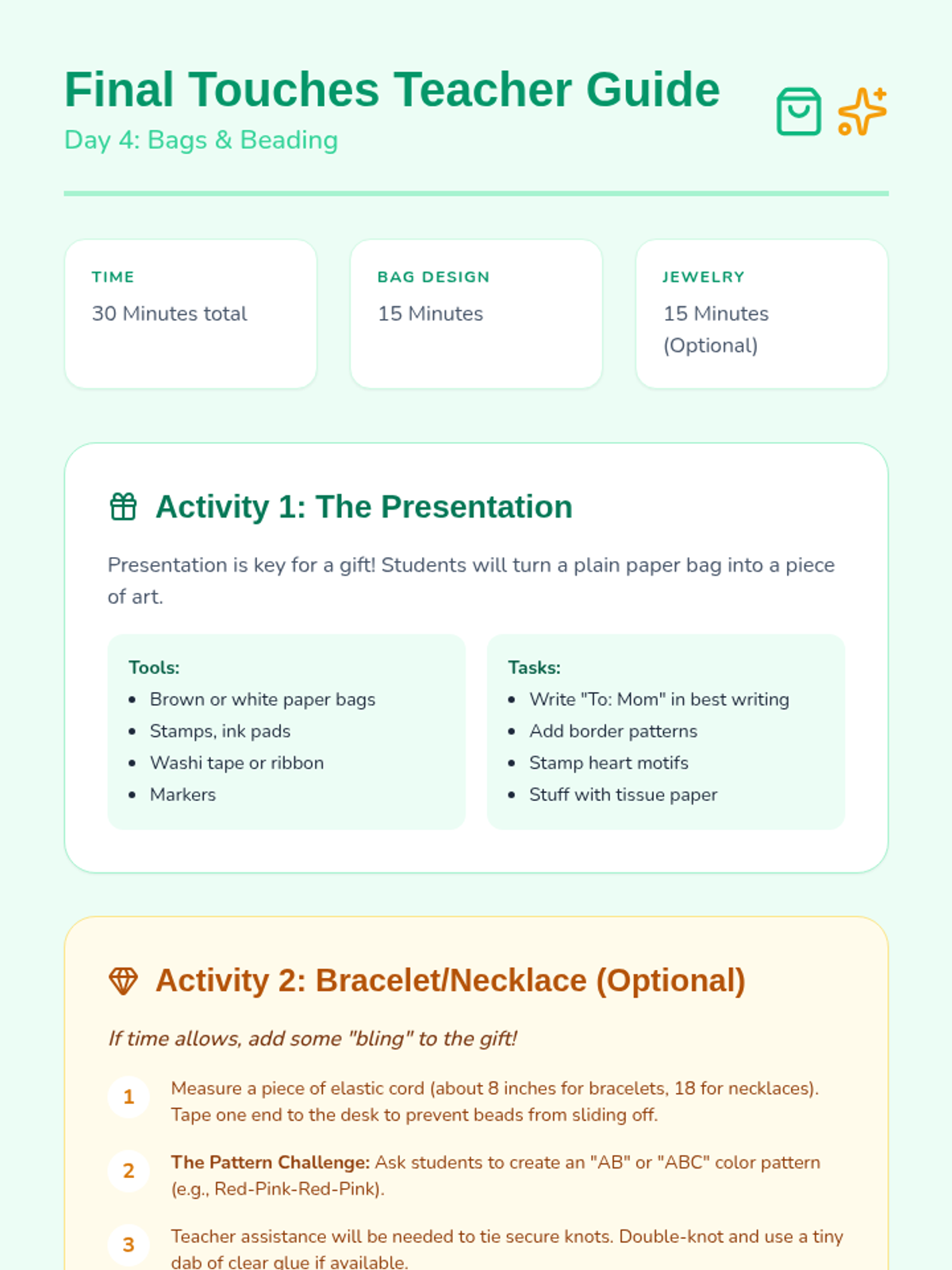
Students decorate gift bags for their creations and, if time permits, bead a personalized necklace or bracelet to complete the gift set.
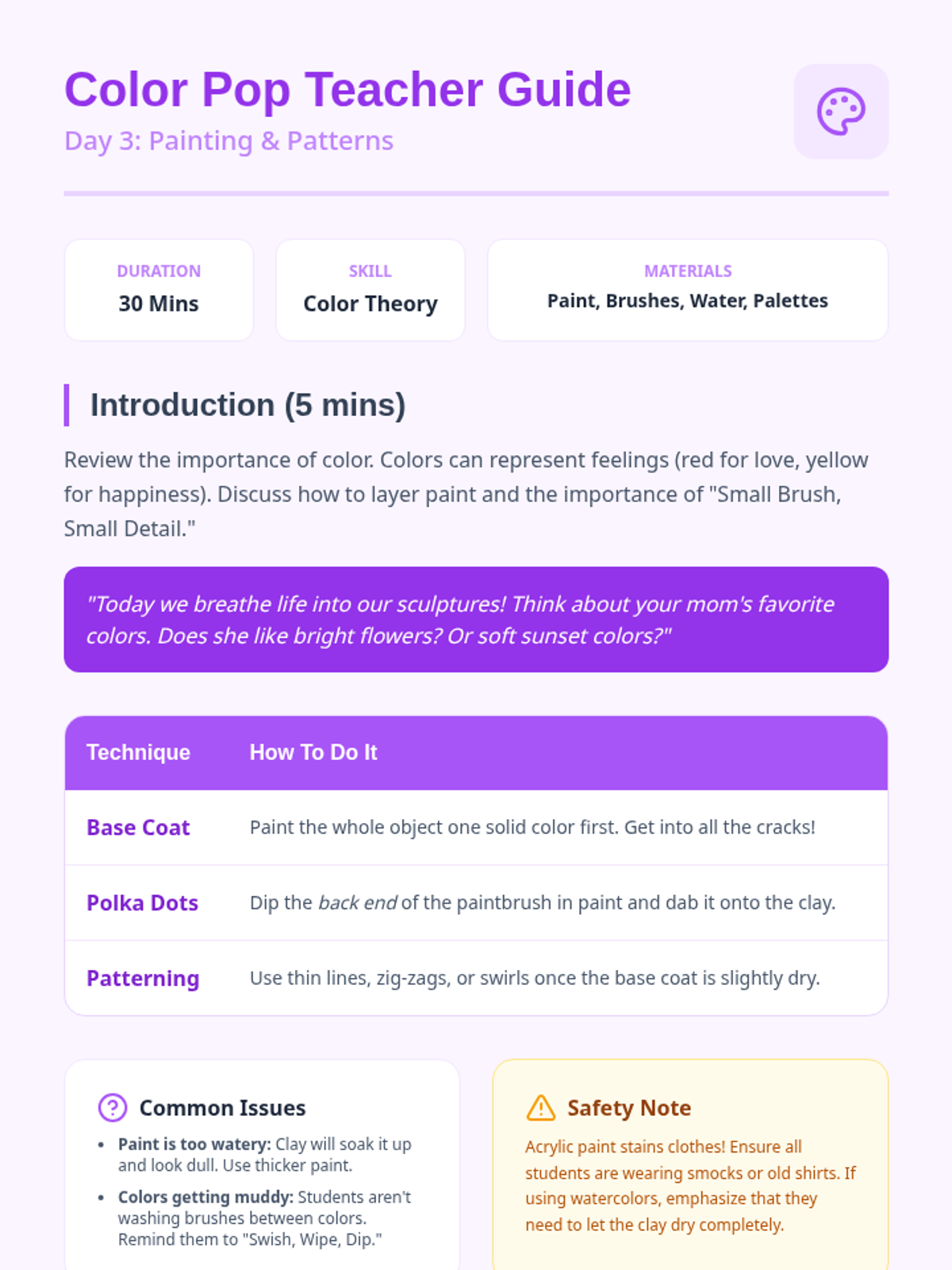
Students add personality and color to their dried clay creations using acrylic paints or watercolors, focusing on patterns and vibrant designs.
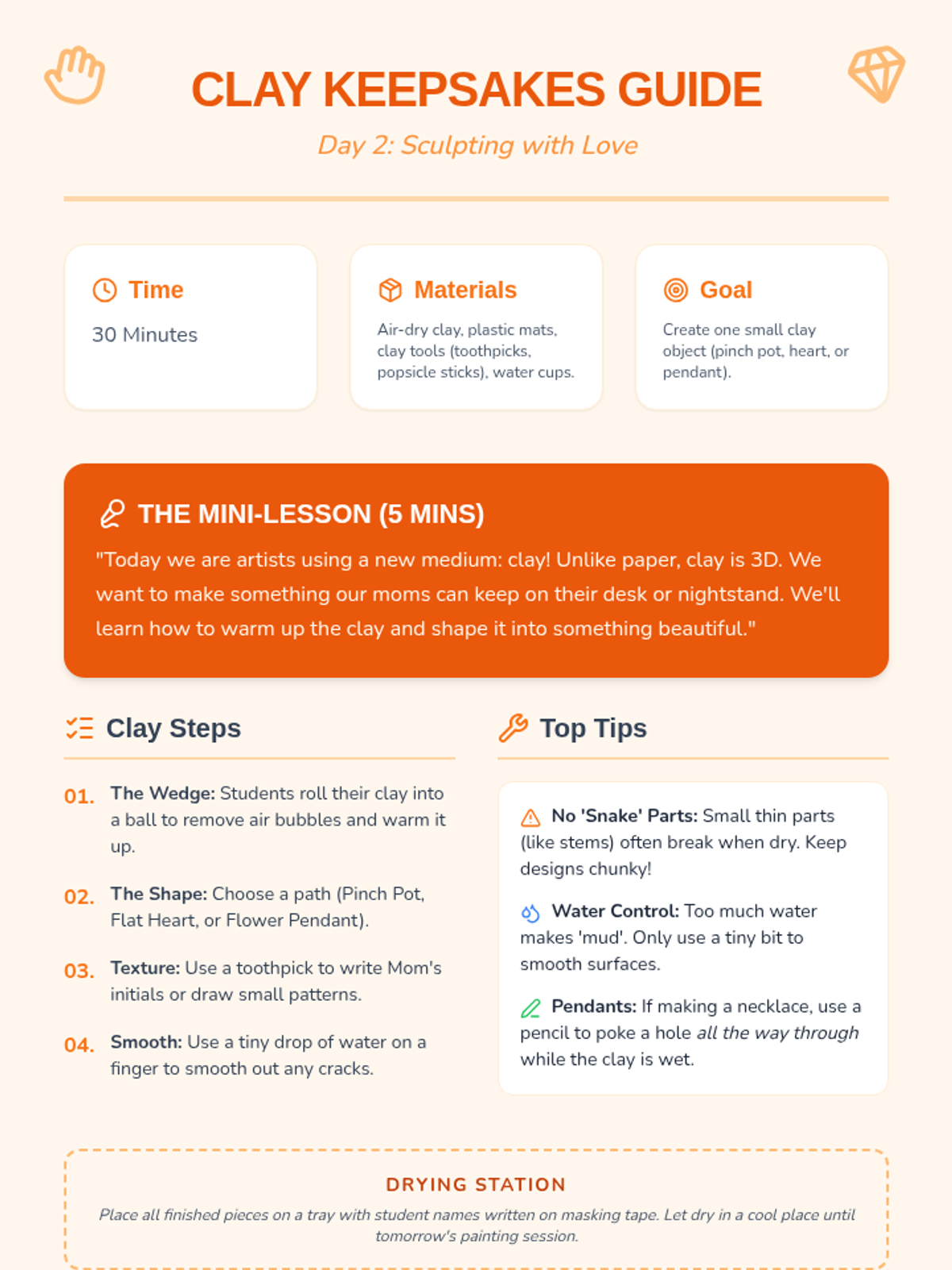
Students use their fine motor skills to sculpt a special clay creation, such as a pinch pot or a pendant, as a lasting gift for their mothers.
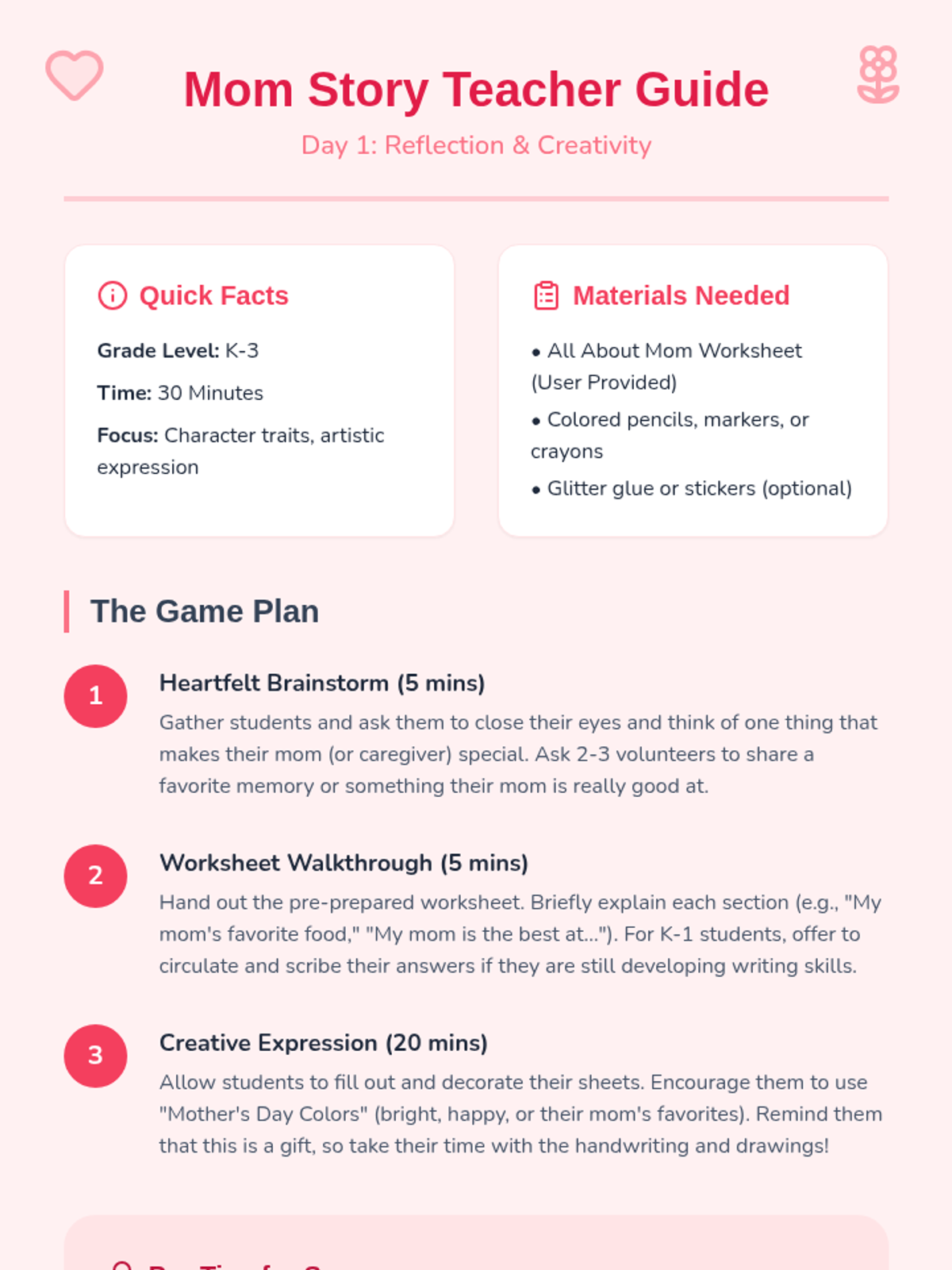
Students reflect on their mothers' unique qualities while completing and decorating an 'All About Mom' worksheet with creative details and vibrant colors.
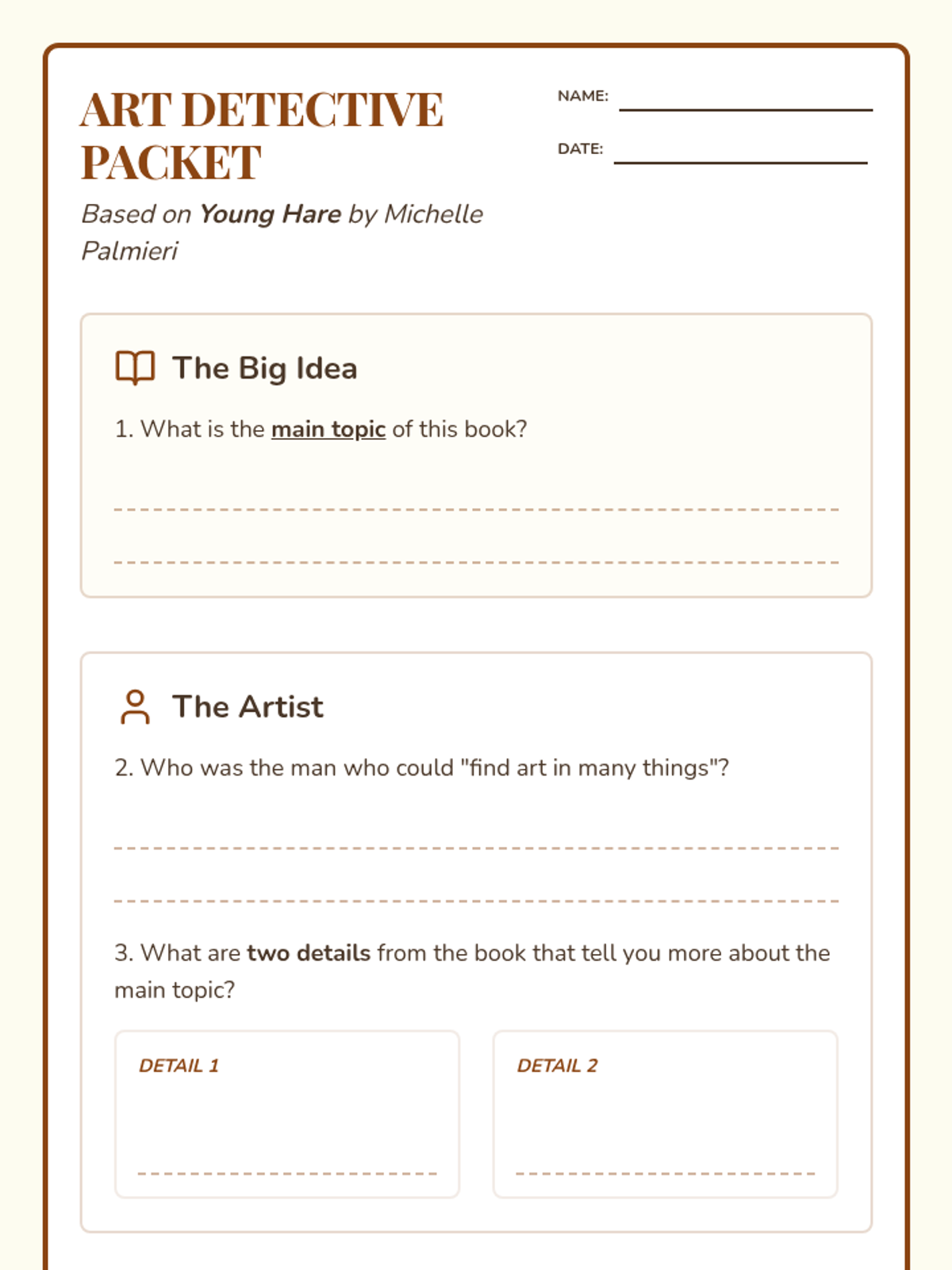
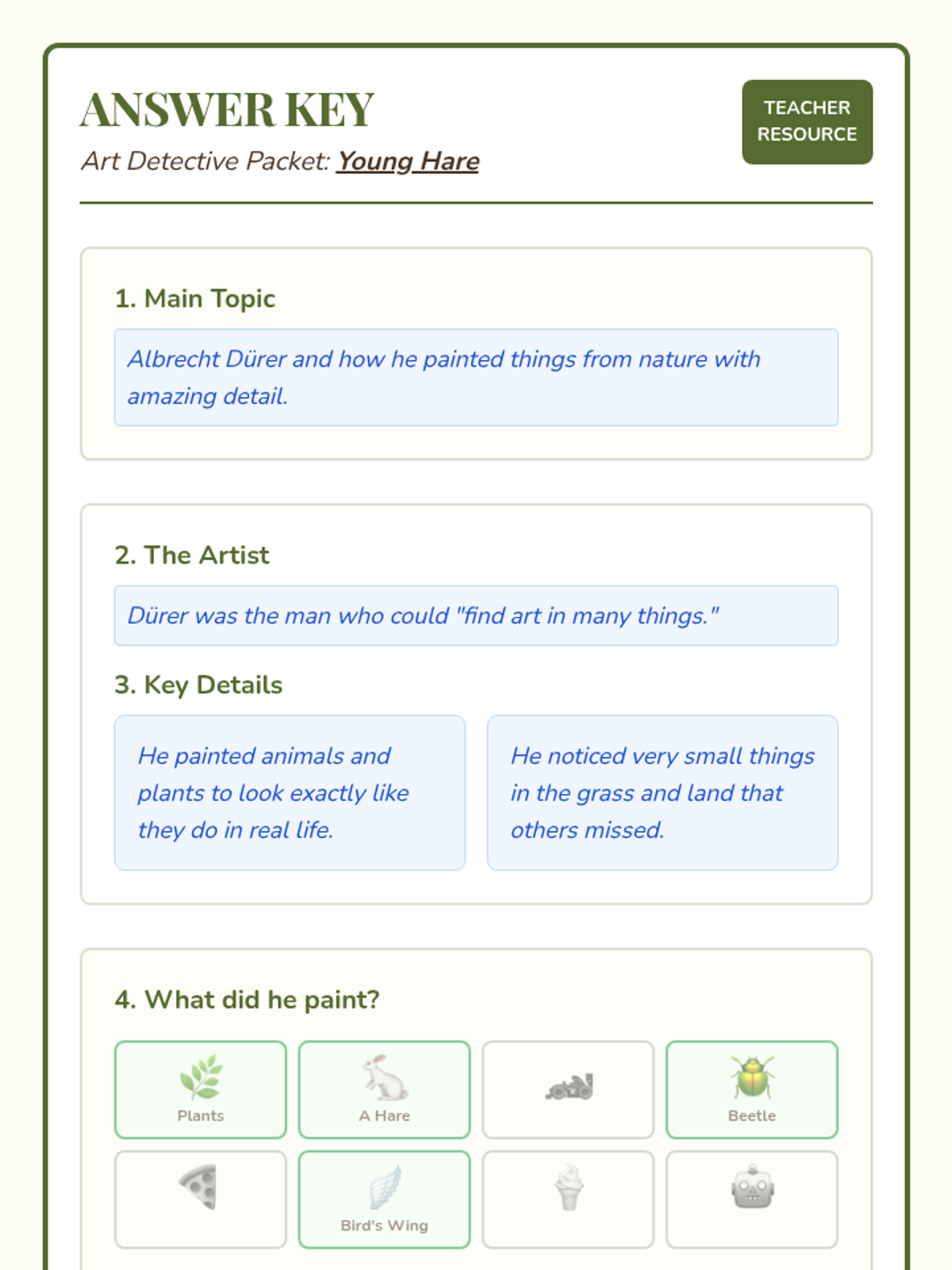
A comprehensive reading and art appreciation packet based on Michelle Palmieri's book about the artist Albrecht Dürer, designed for advanced first graders.
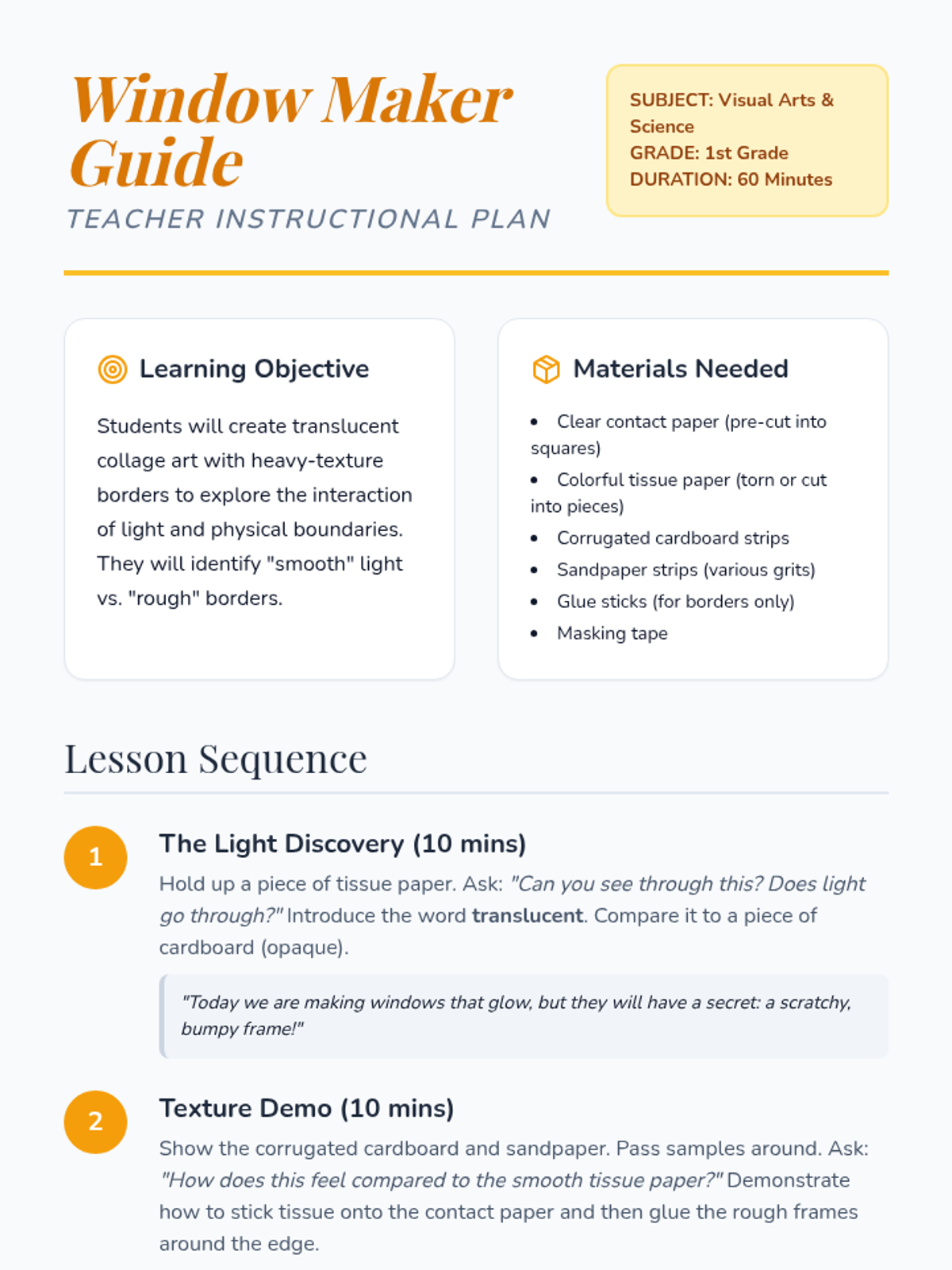
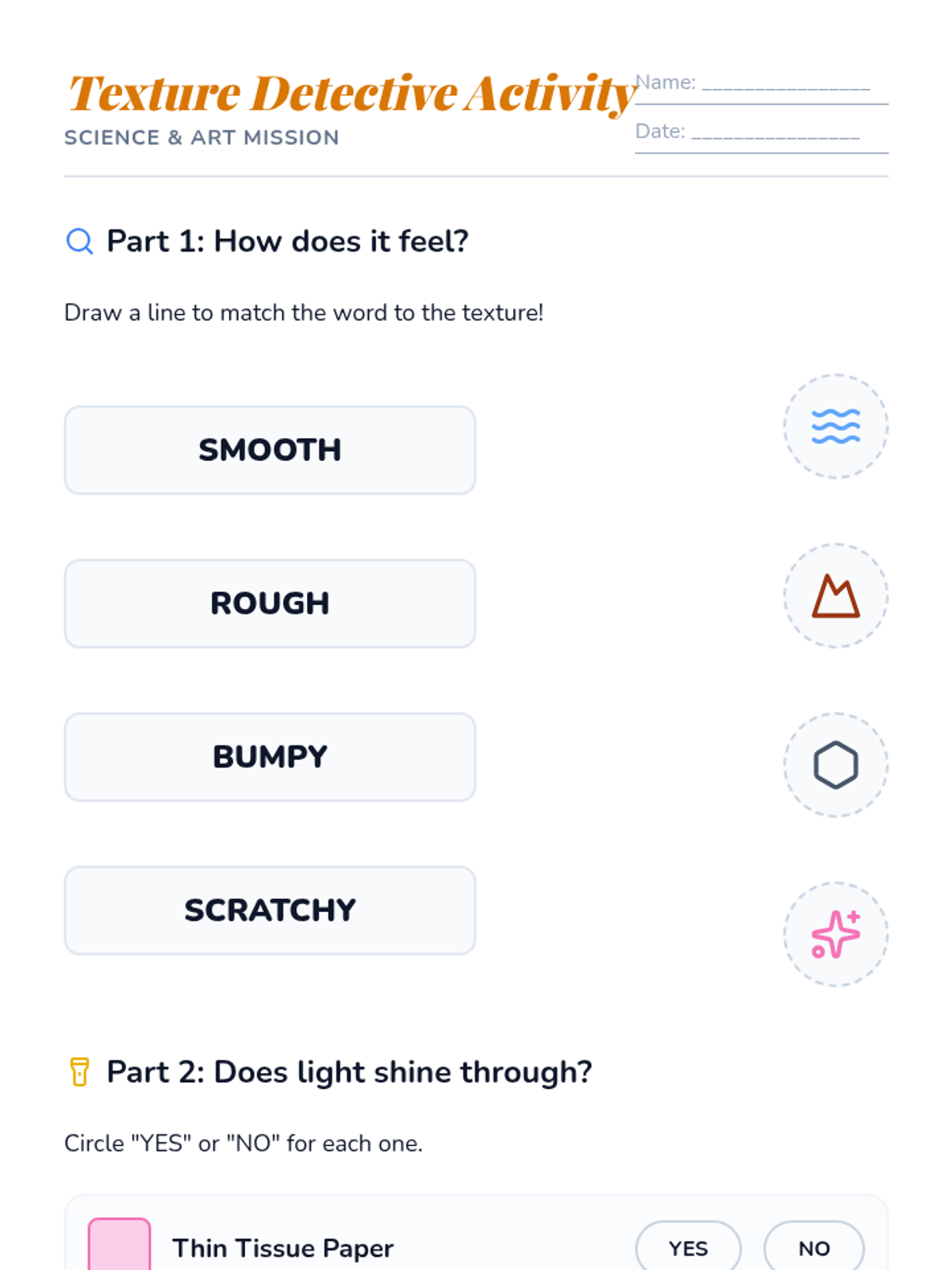
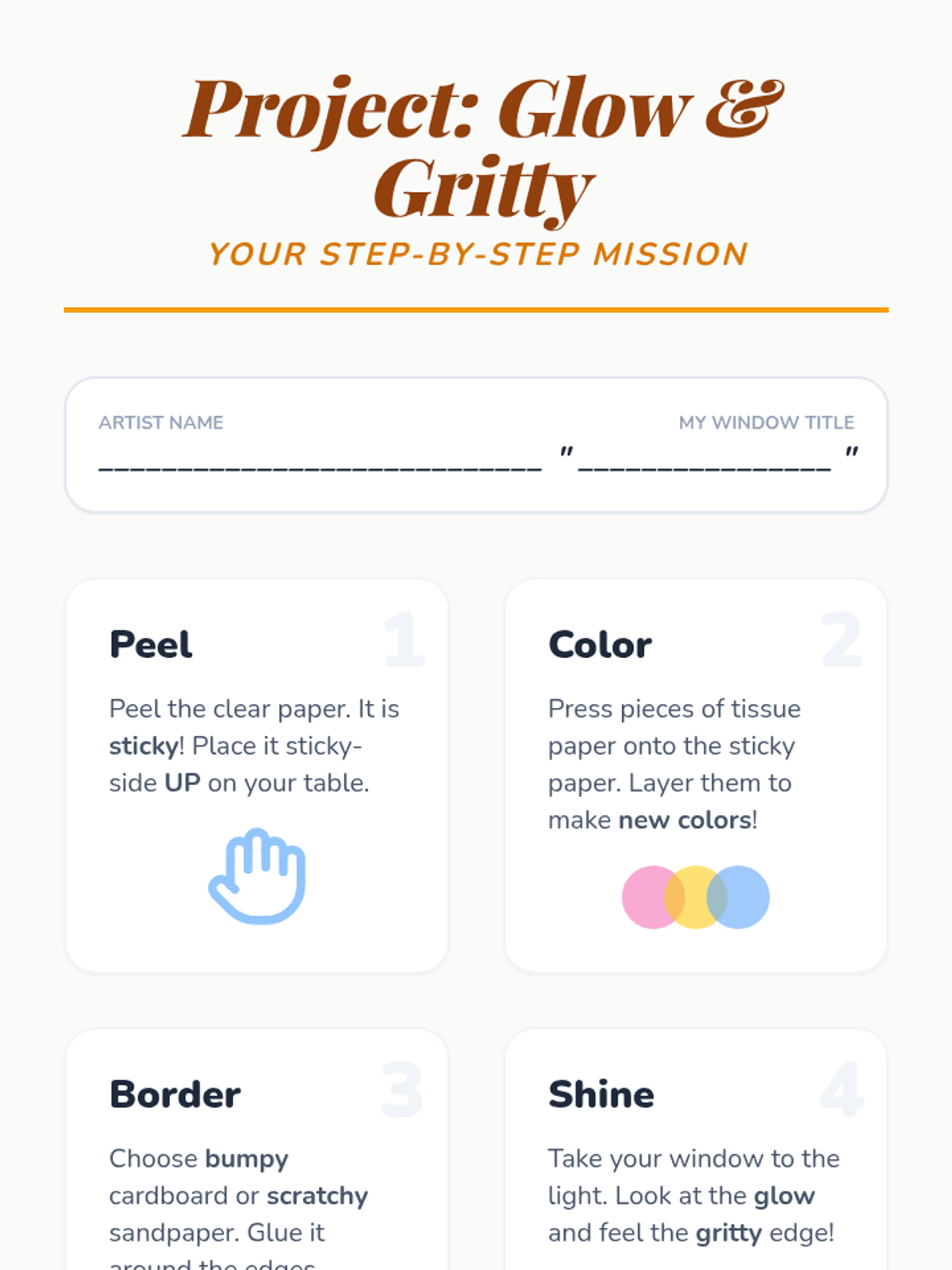
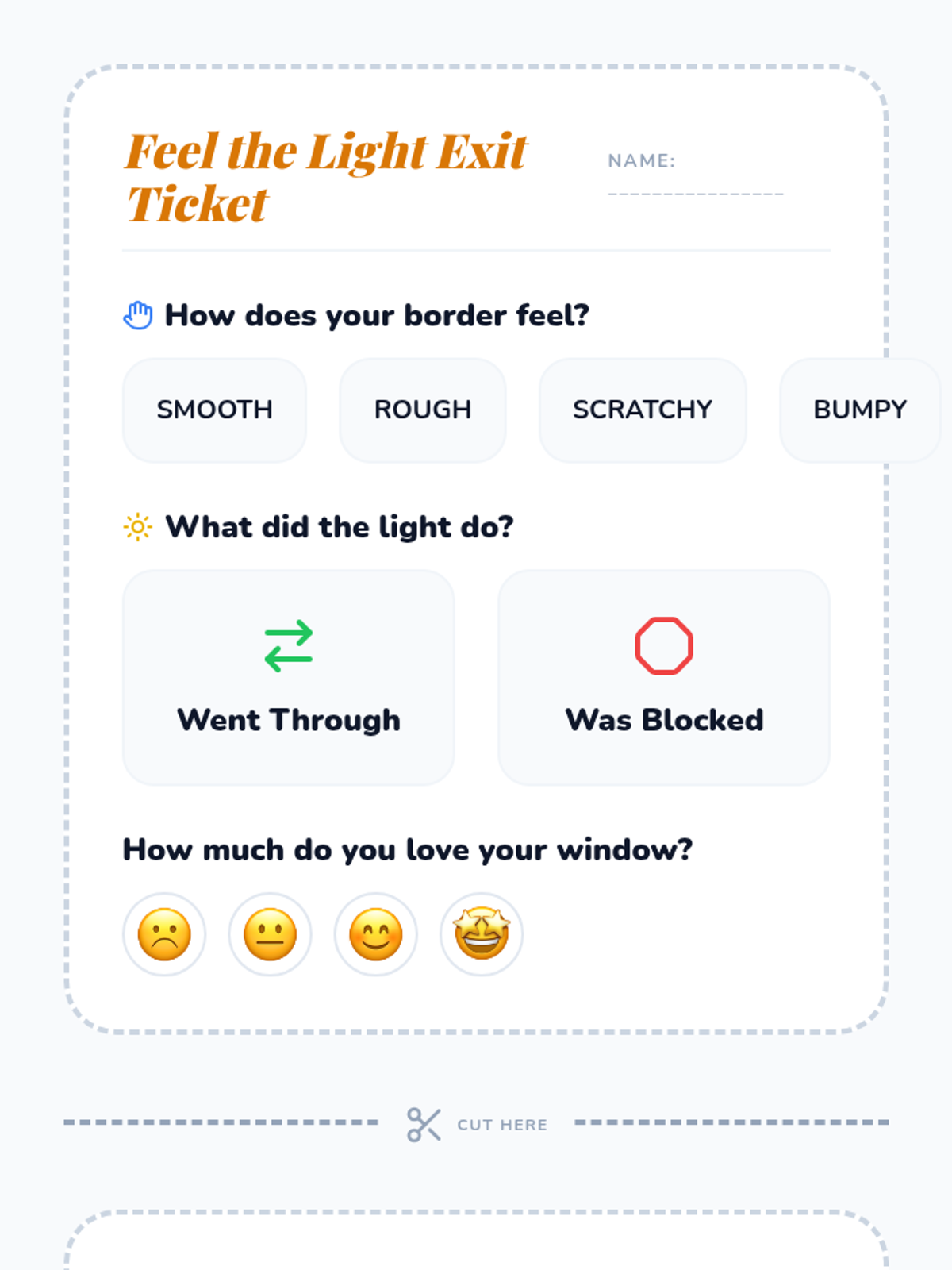
A hands-on art and science lesson where 1st graders explore translucency and texture by creating tissue paper 'stained glass' windows with rough, tactile borders. Students investigate how light interacts with different materials and distinguish between smooth and textured surfaces.
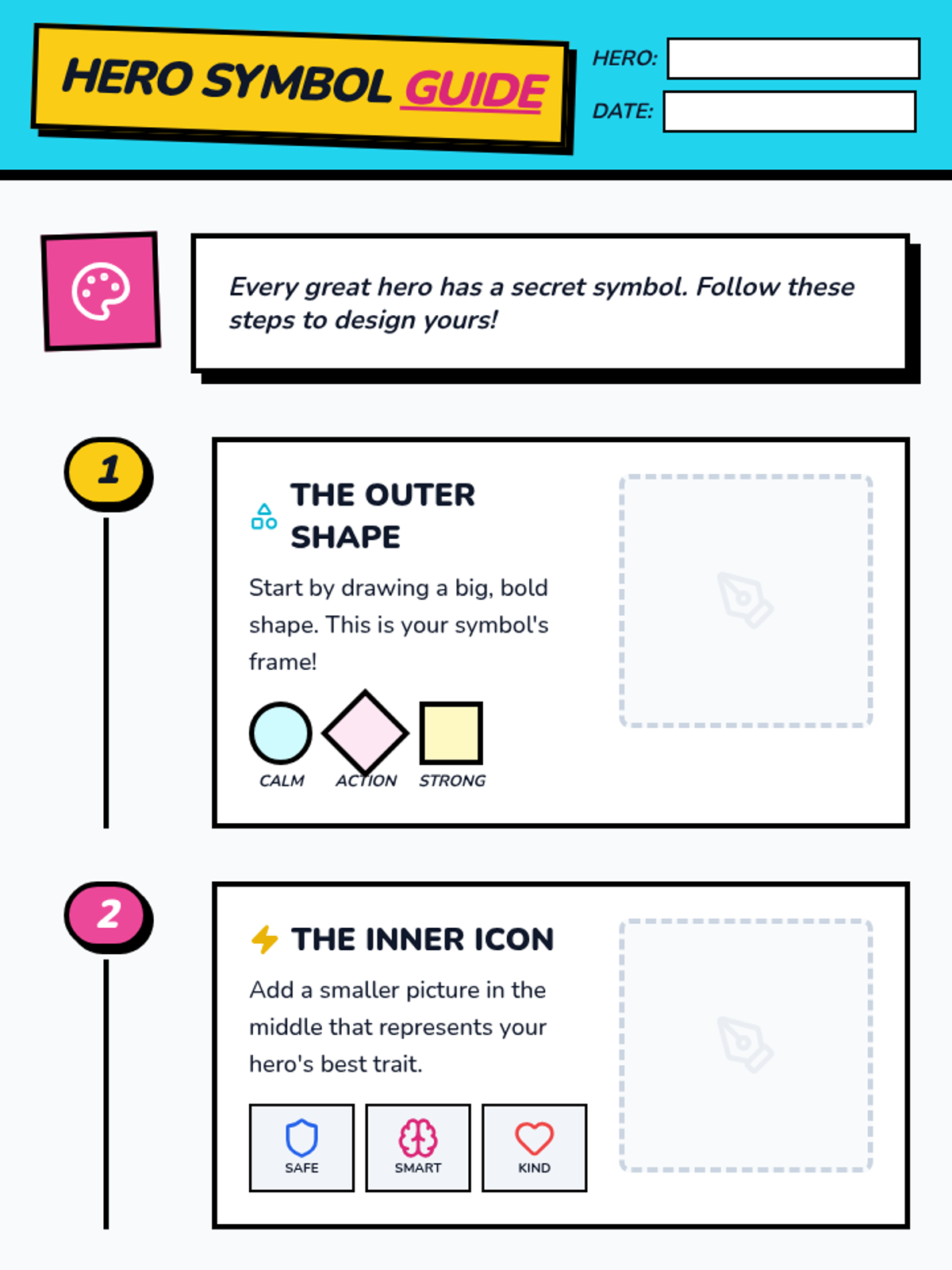
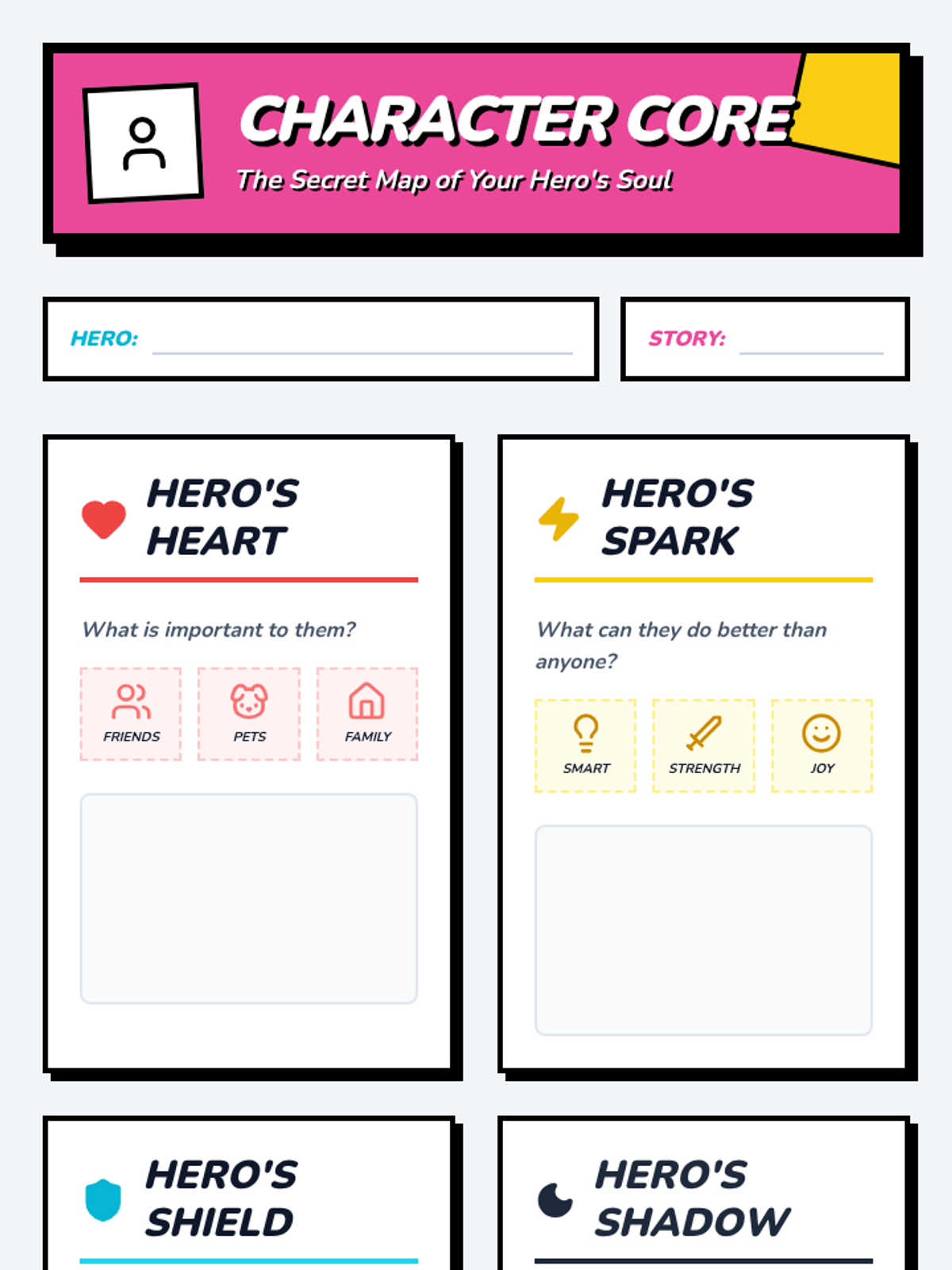
Students explore character traits and motivations by designing a unique visual symbol that represents their graphic novel protagonist.
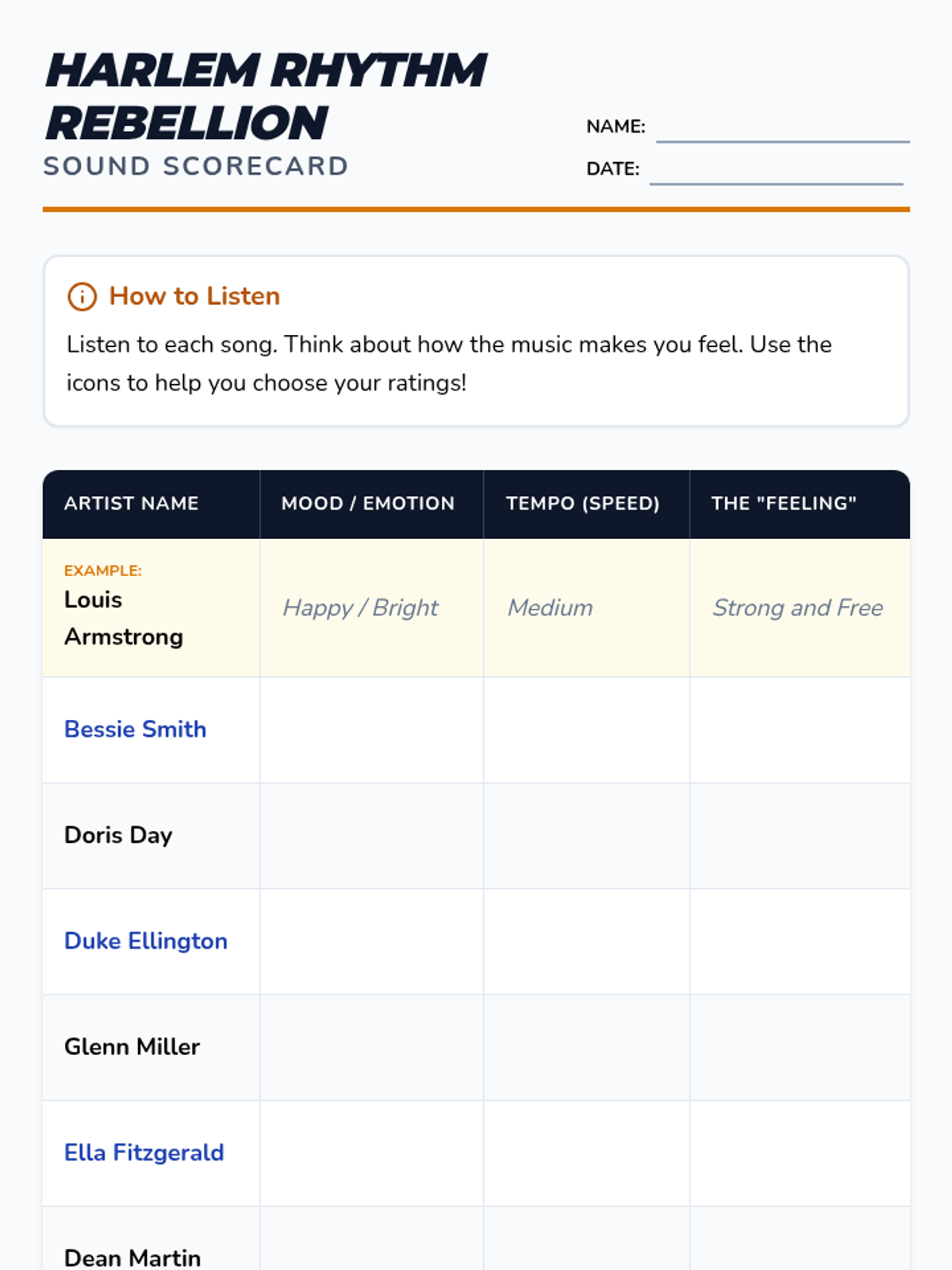
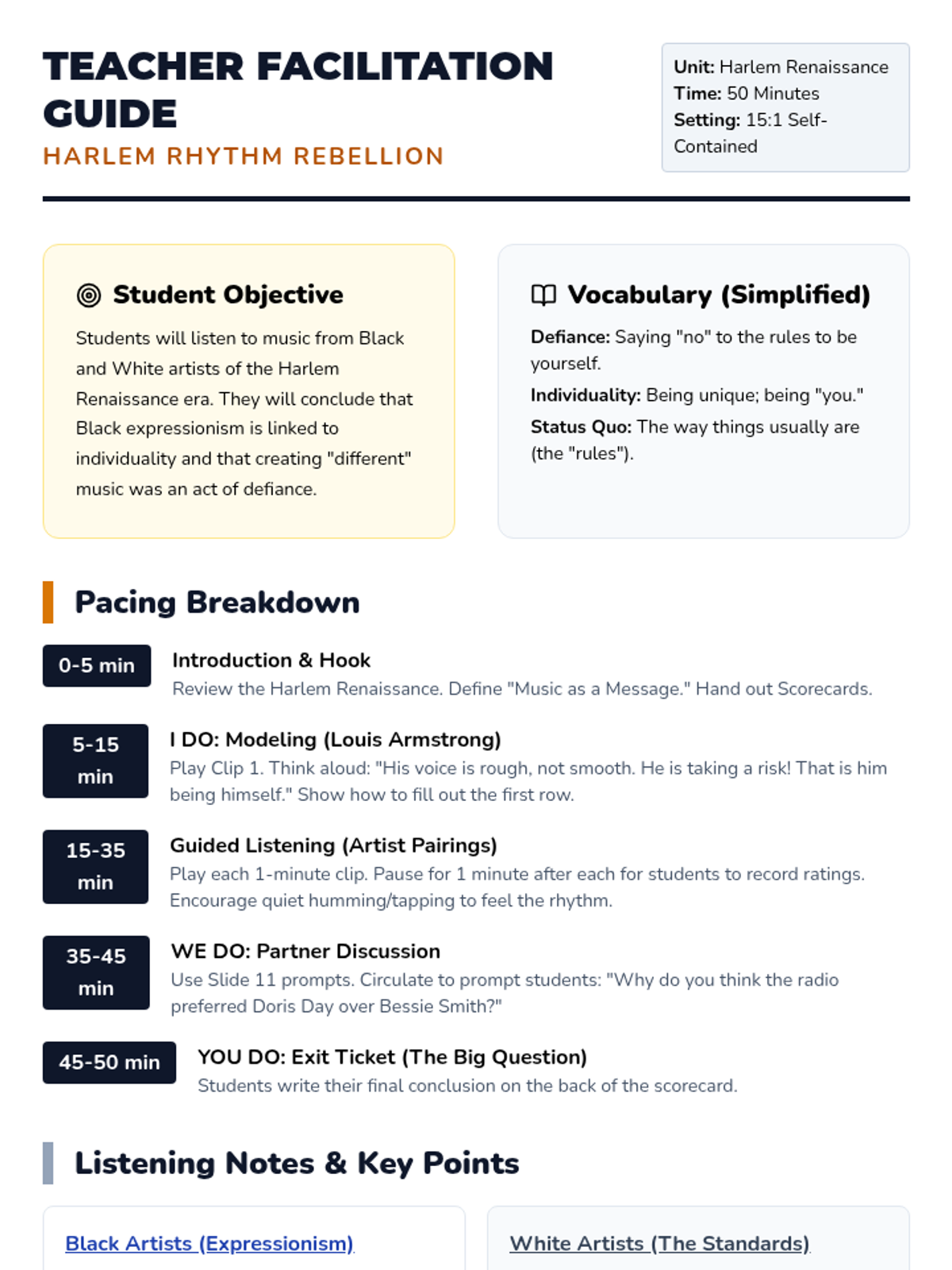
A 50-minute lesson exploring the connection between Jazz music, Black expressionism, and the Harlem Renaissance through music comparison and artist biopics. Students will analyze the differences between Black and White artists of the era to understand music as an act of defiance and cultural identity.
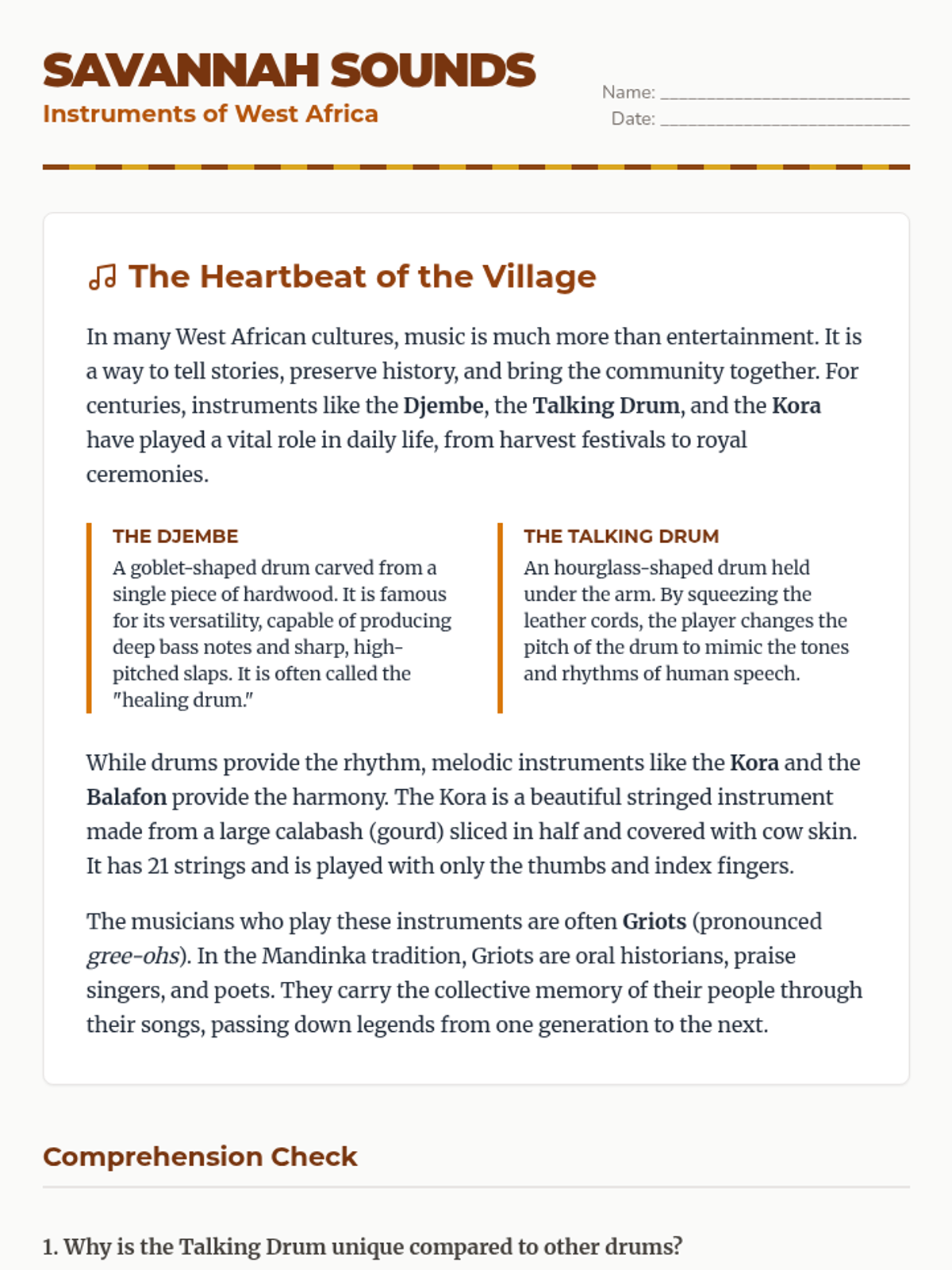
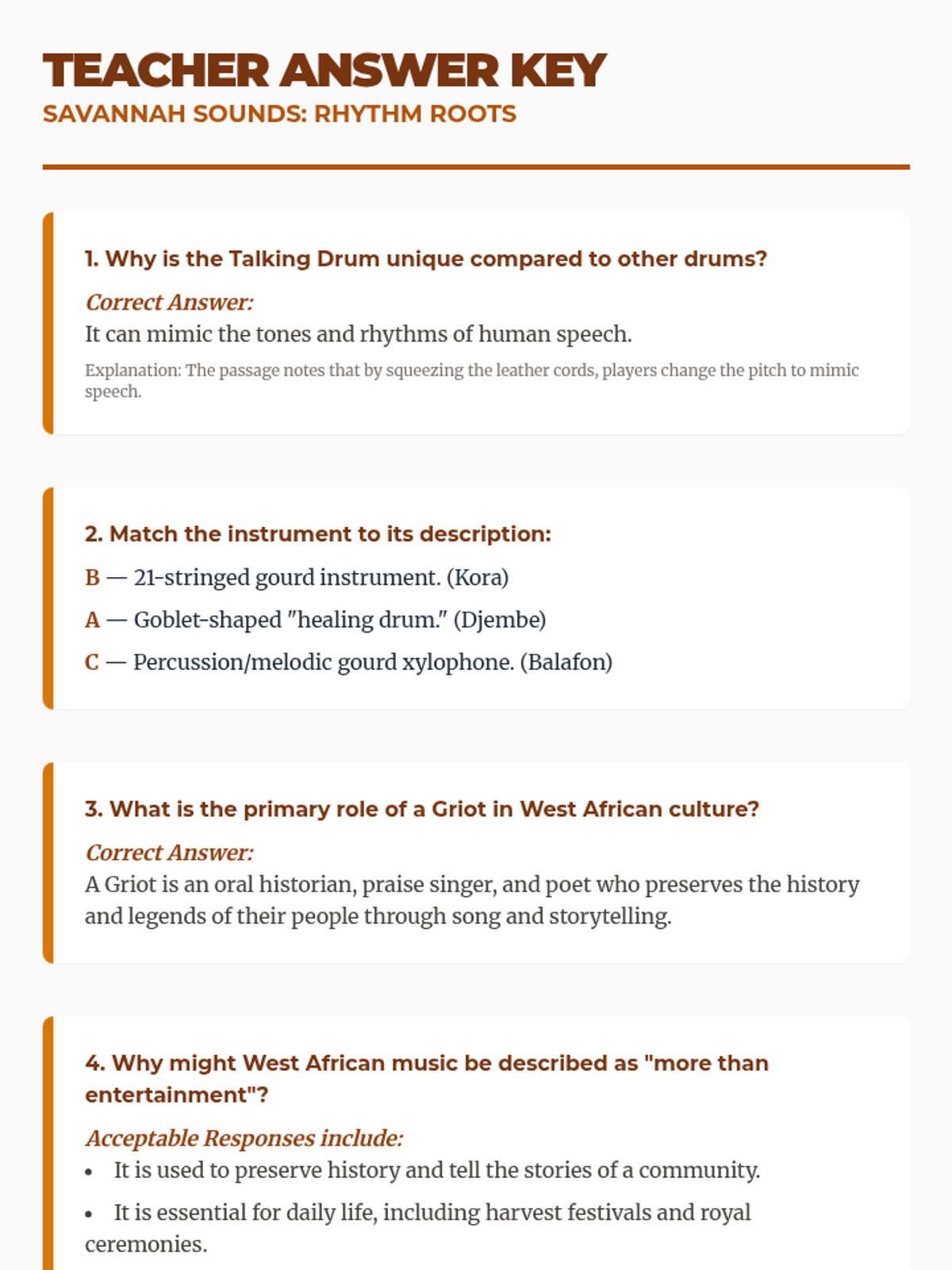
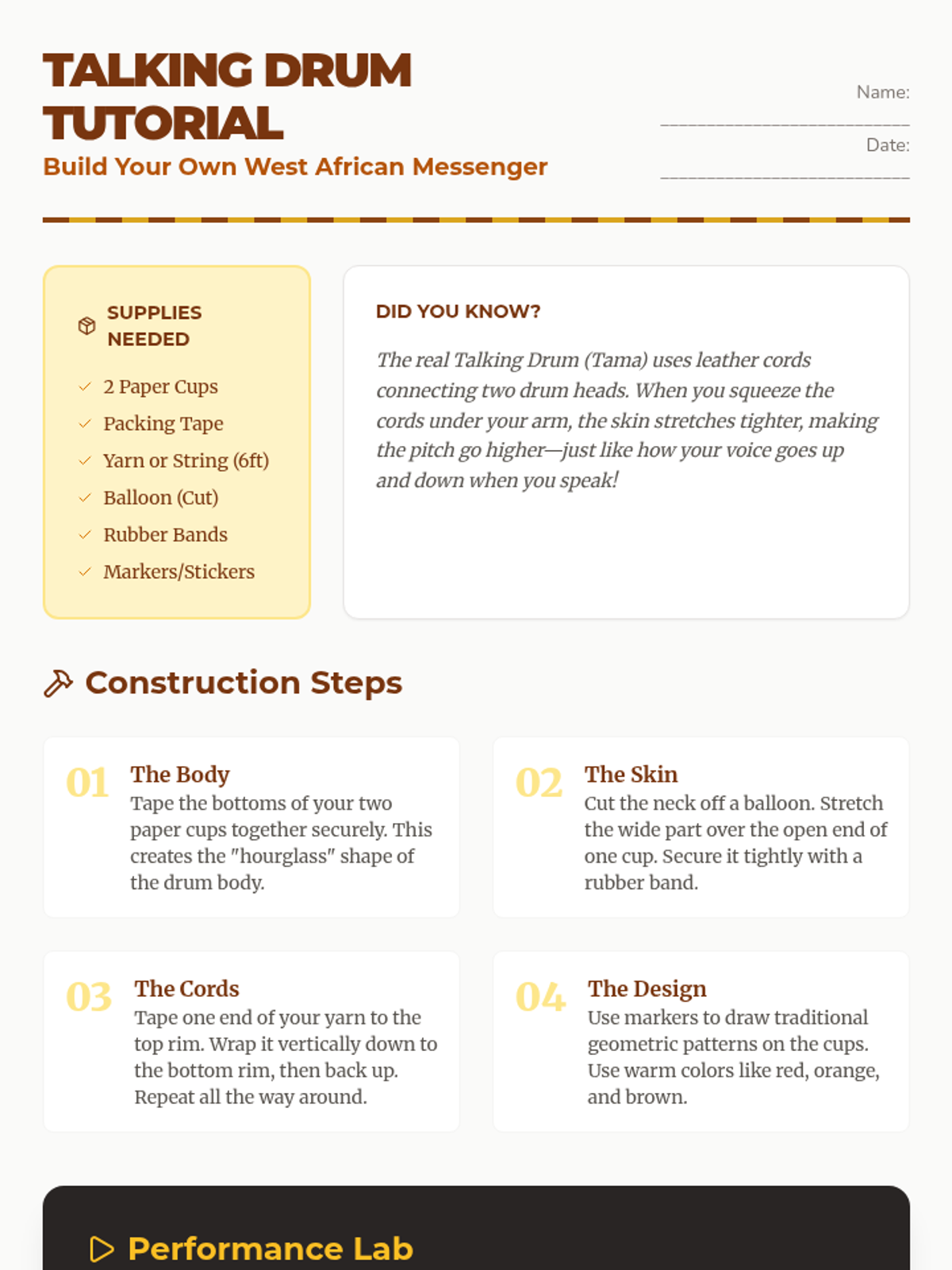
An introduction to the vibrant musical traditions of West Africa, focusing on iconic percussion and melodic instruments like the djembe, kora, and talking drum.
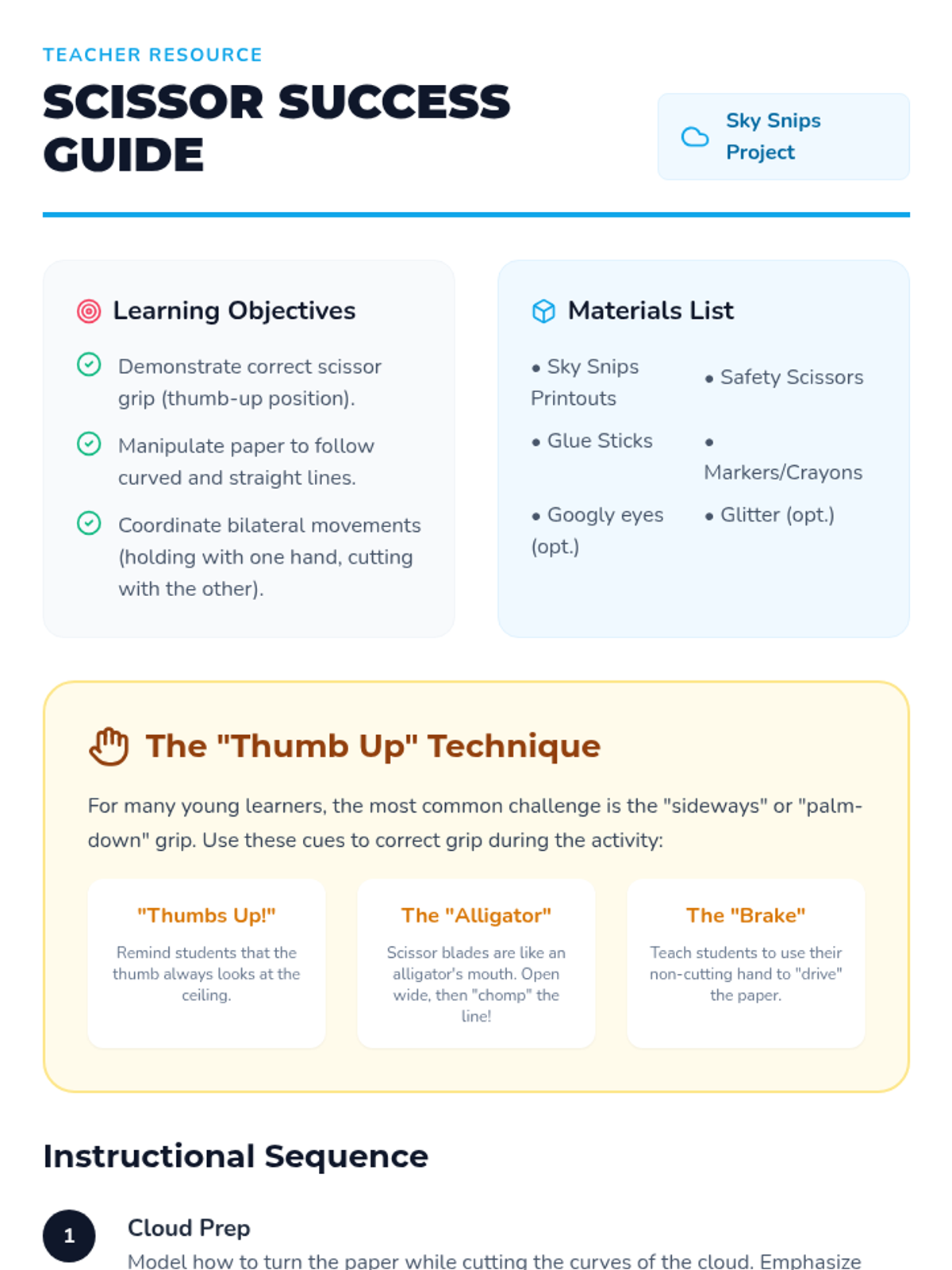
A creative art project focused on developing fine motor skills through cutting and assembling a vibrant rainbow cloud. Students practice hand-eye coordination by following lines to cut out shapes and strips.
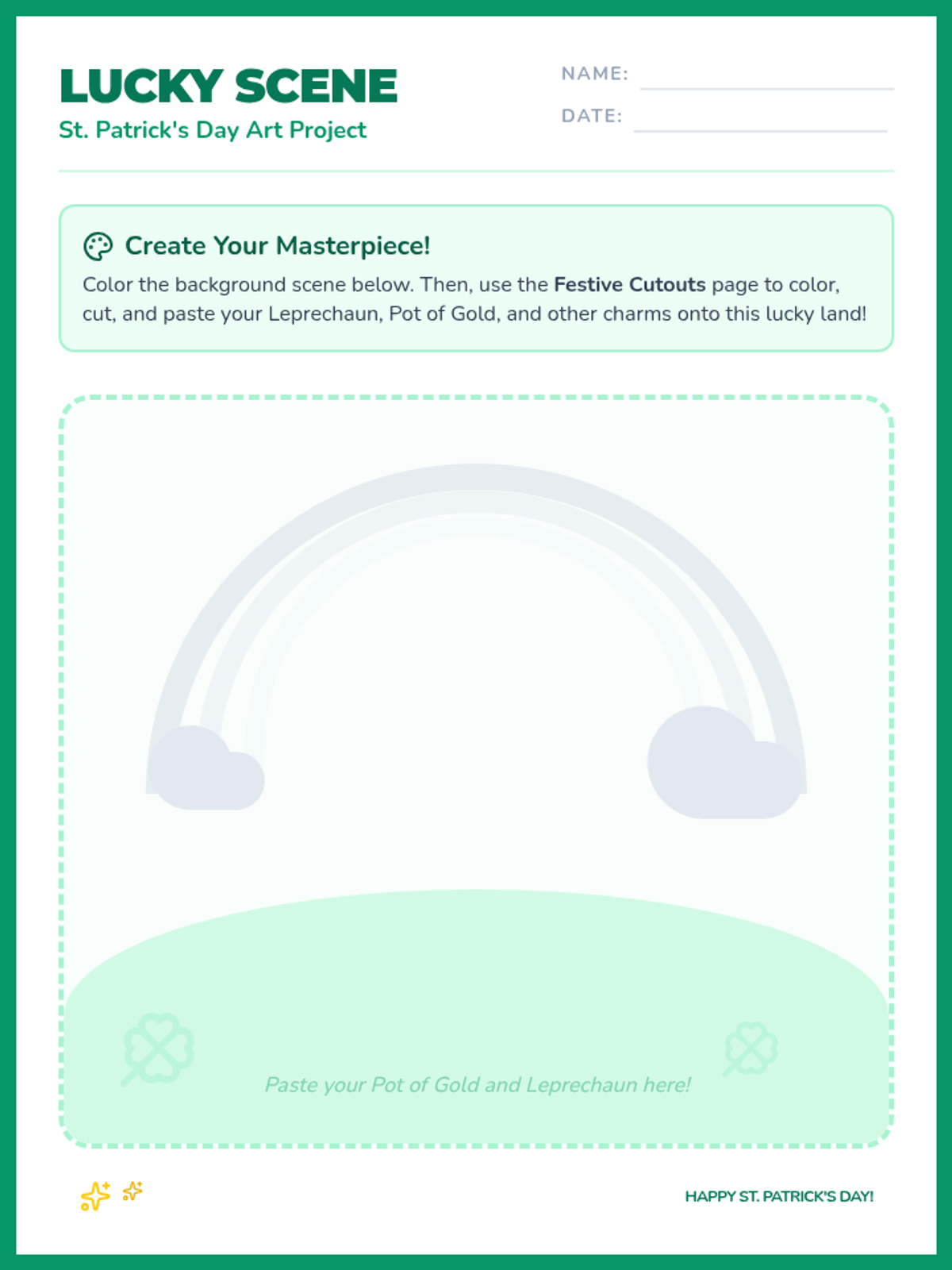
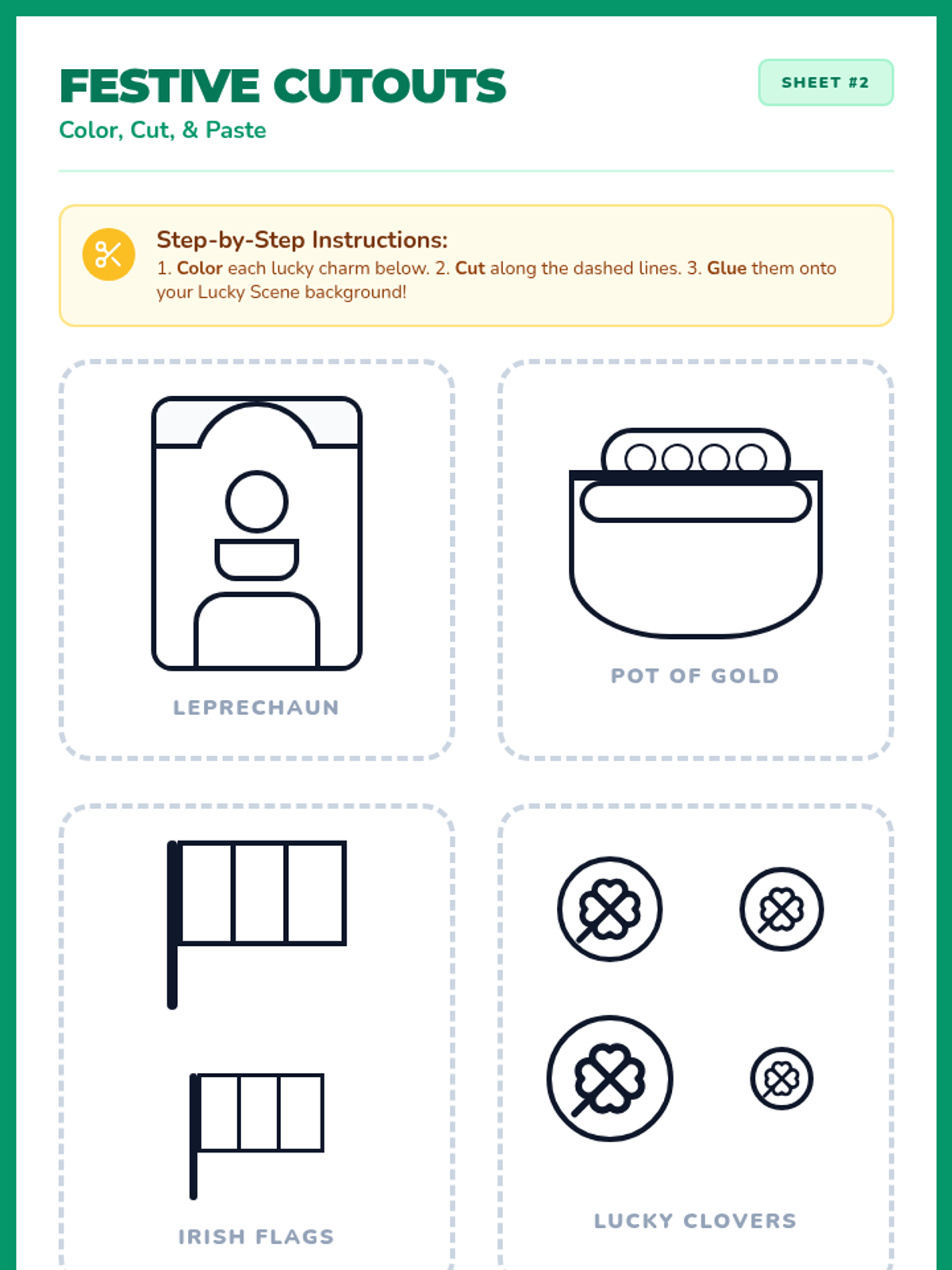
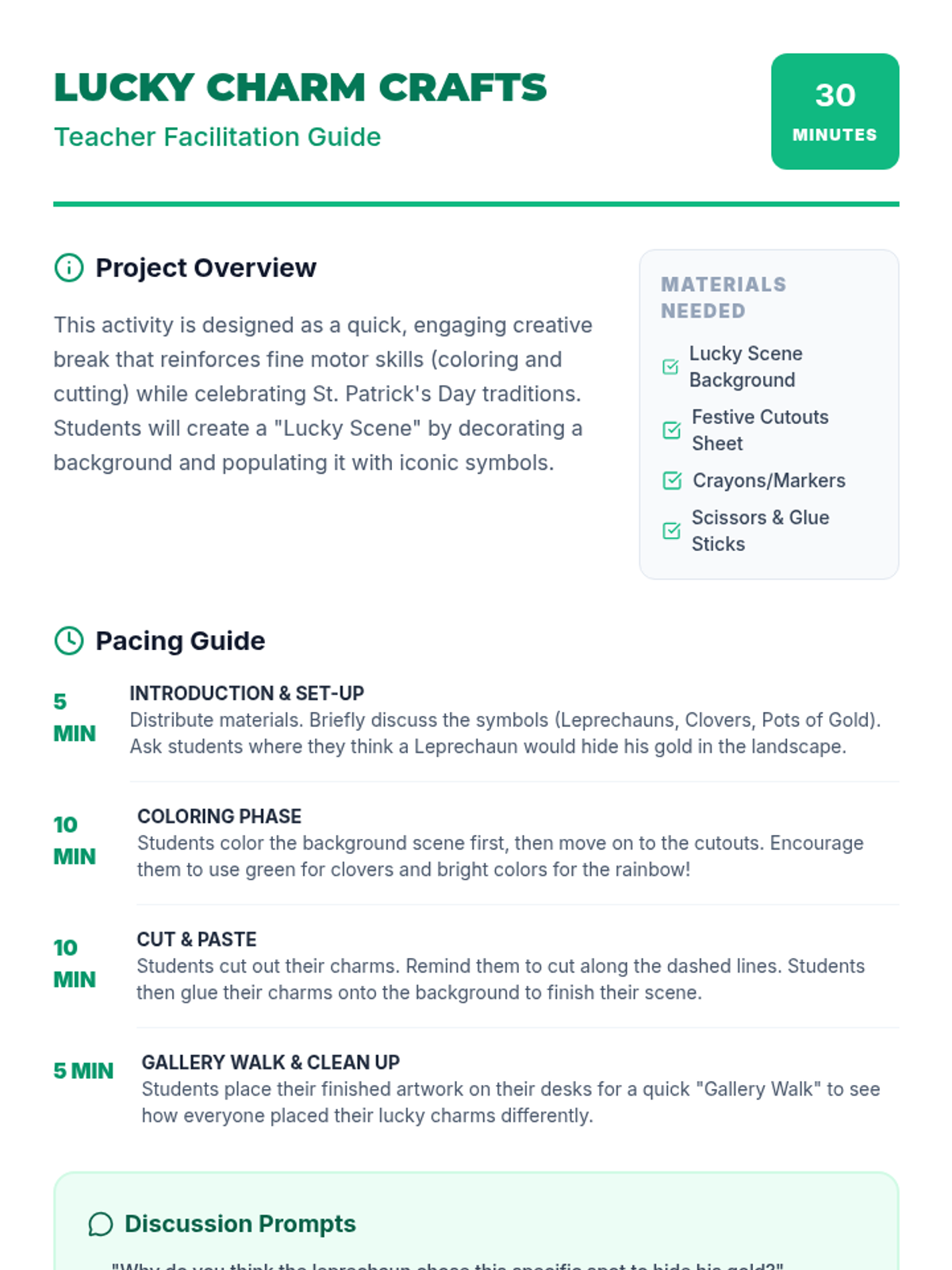
A quick, 30-minute creative art project where students color, cut, and paste iconic St. Patrick's Day symbols to create their own festive scene.
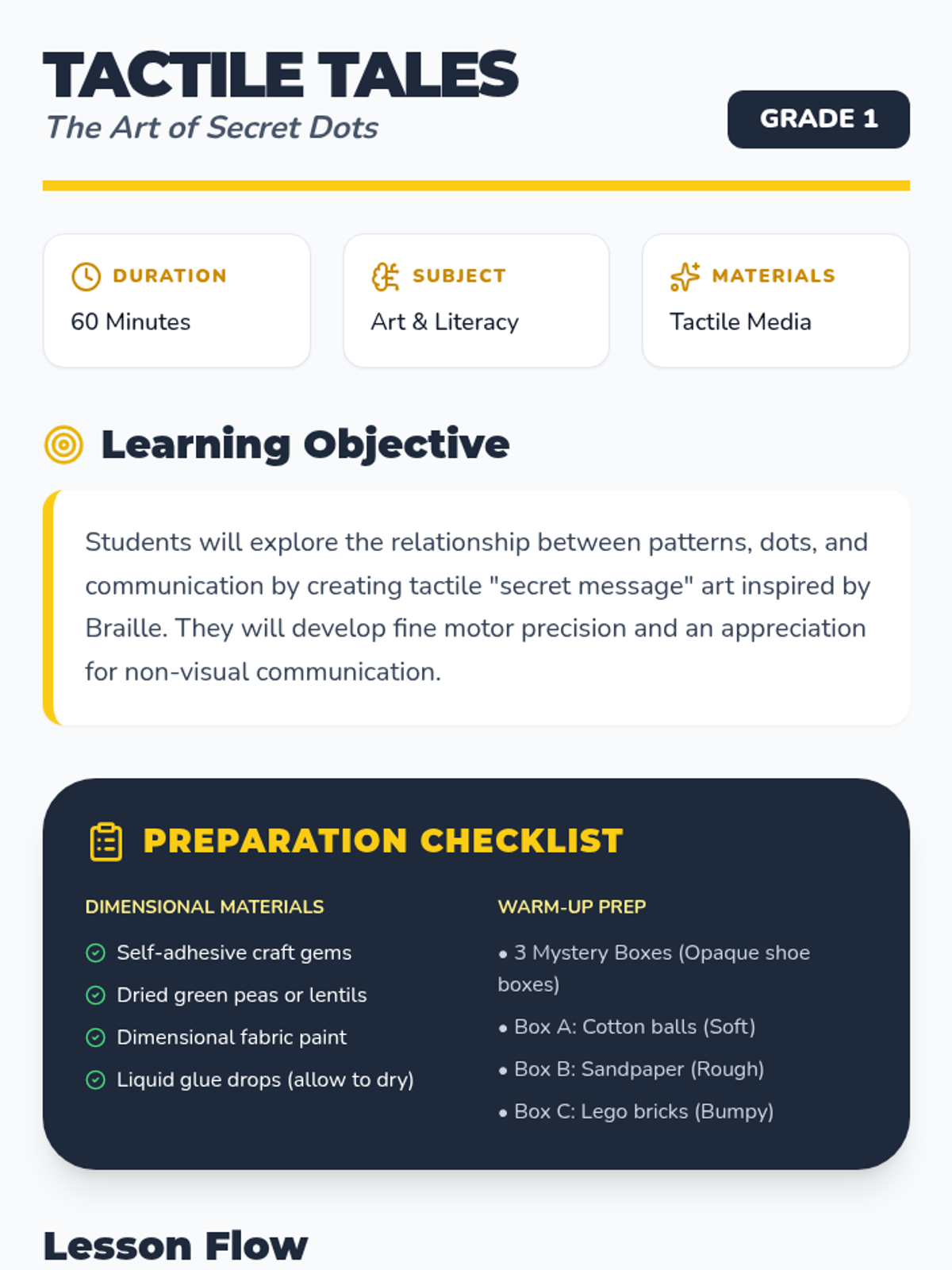
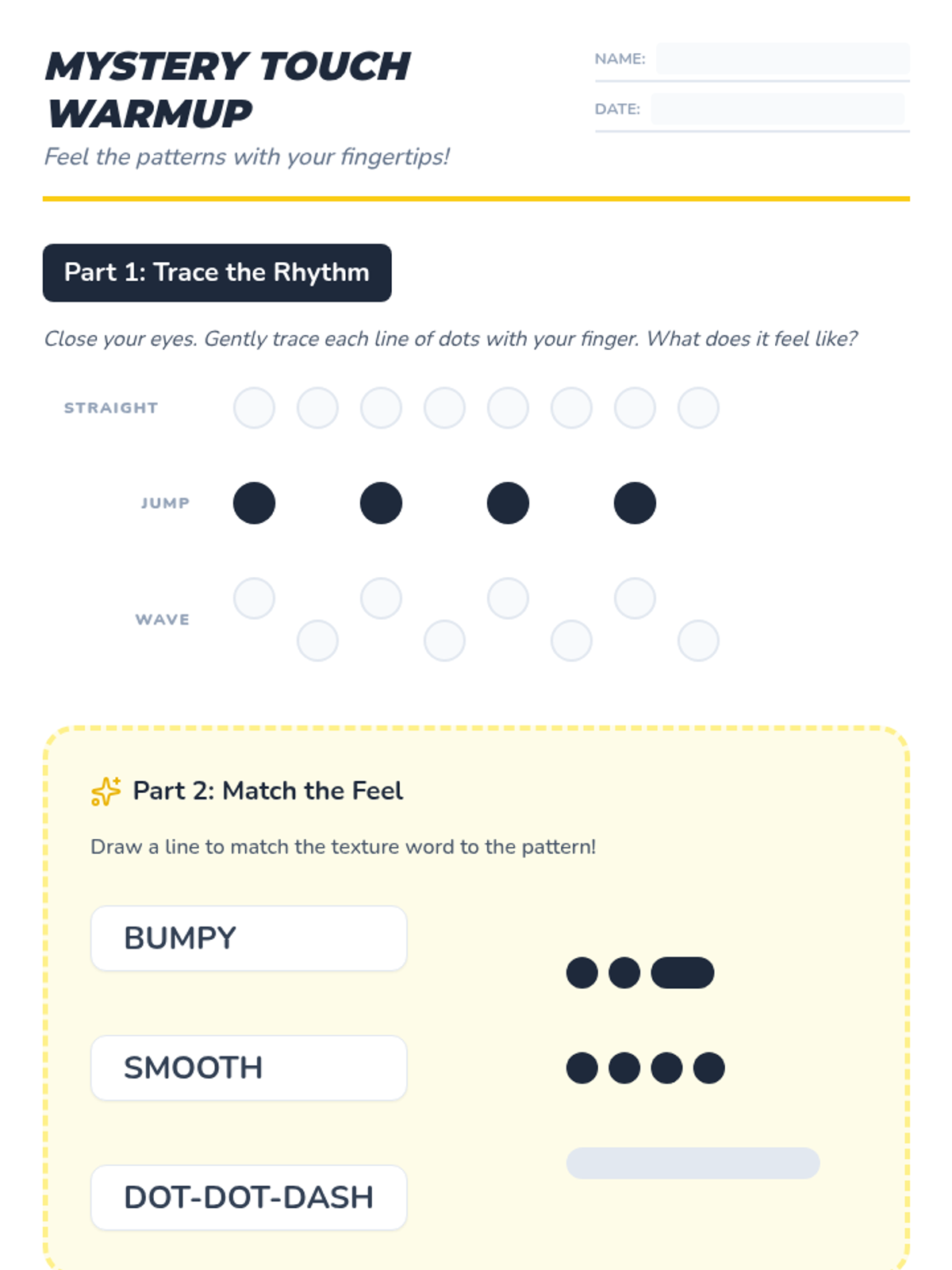
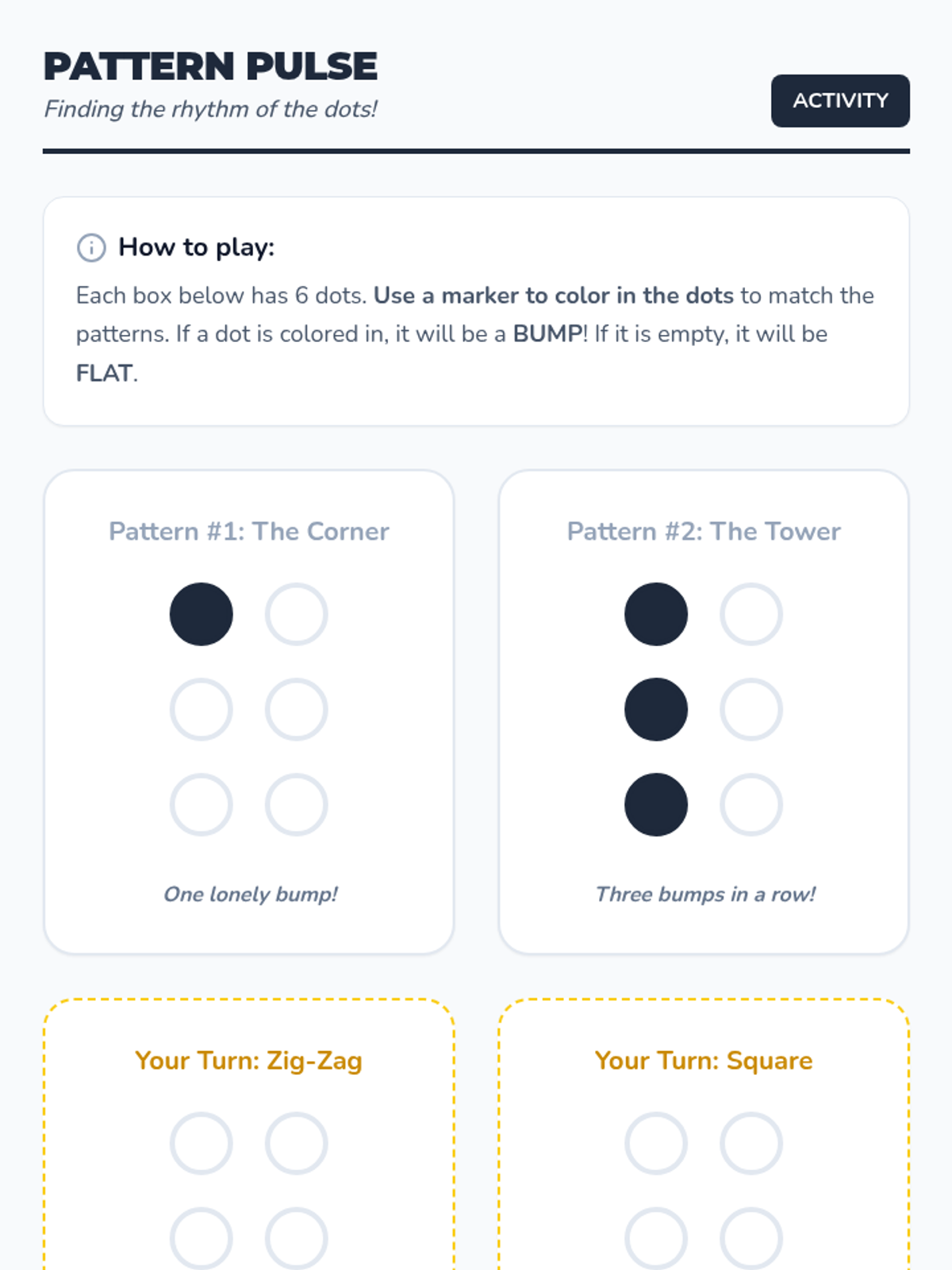
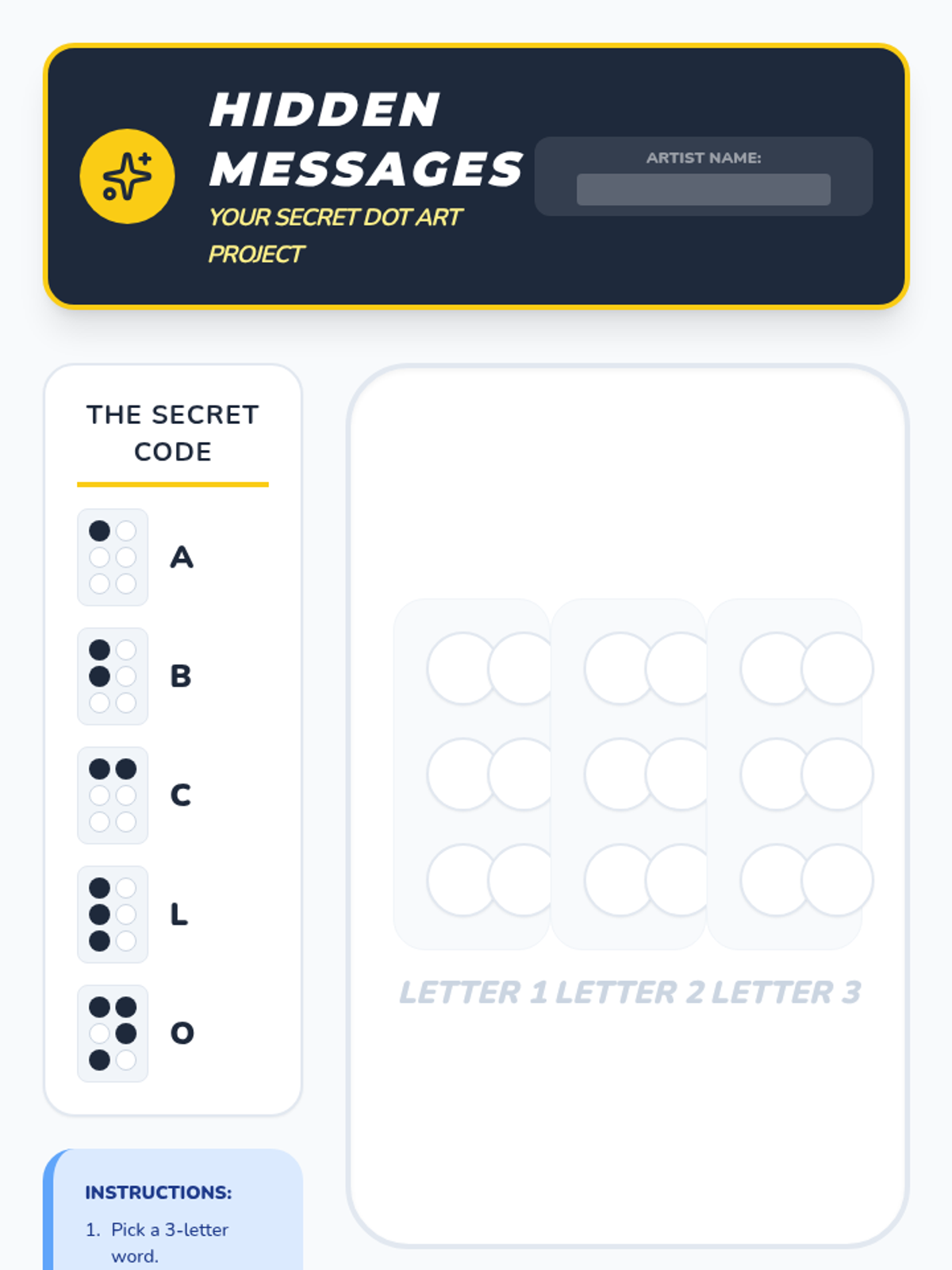
A hands-on art and communication lesson where 1st graders explore Braille through tactile patterns, using dimensional materials to create 'secret message' art that can be read with the fingers.
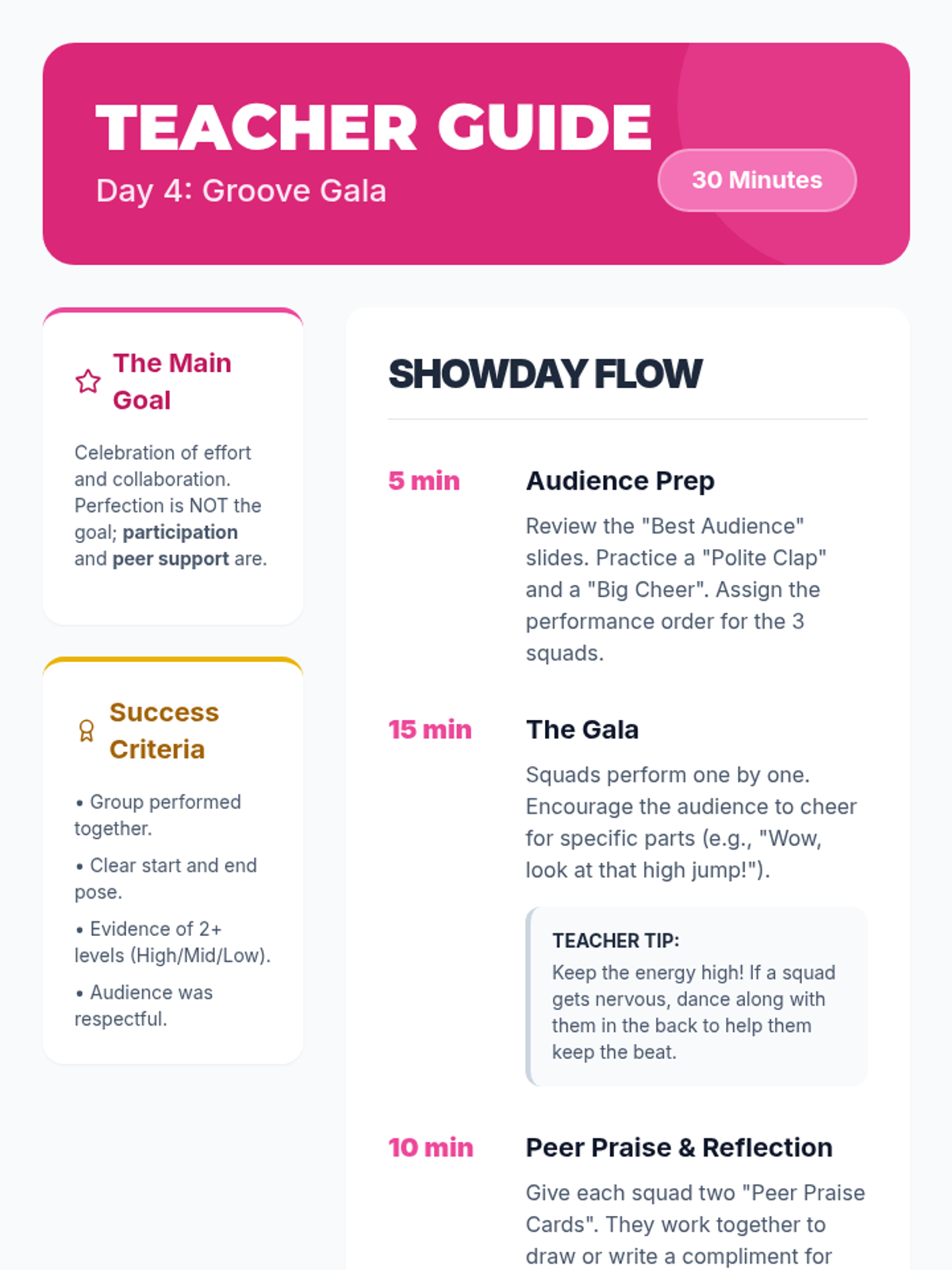
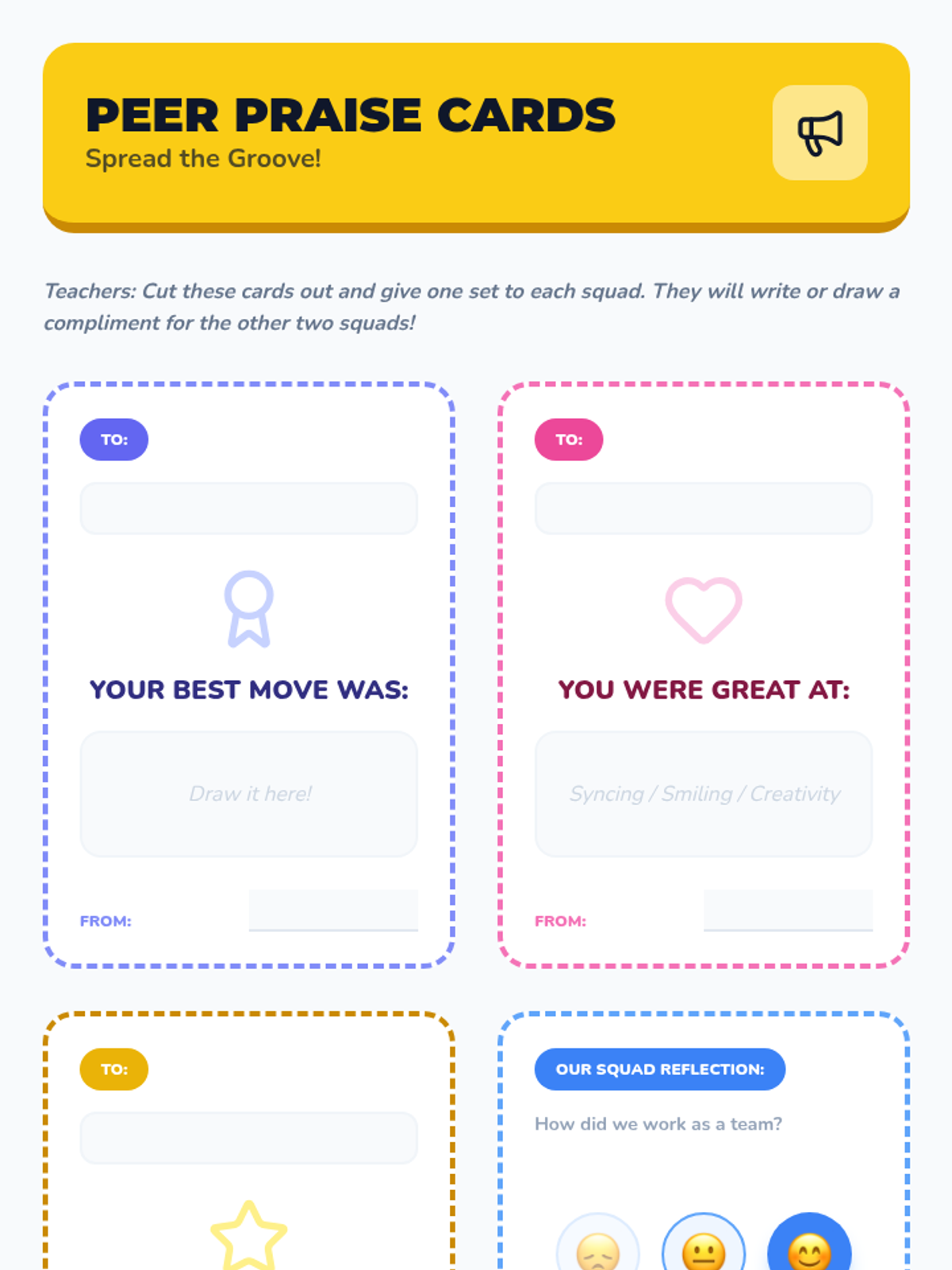
The final performance day where groups showcase their choreography and celebrate each other's creativity.
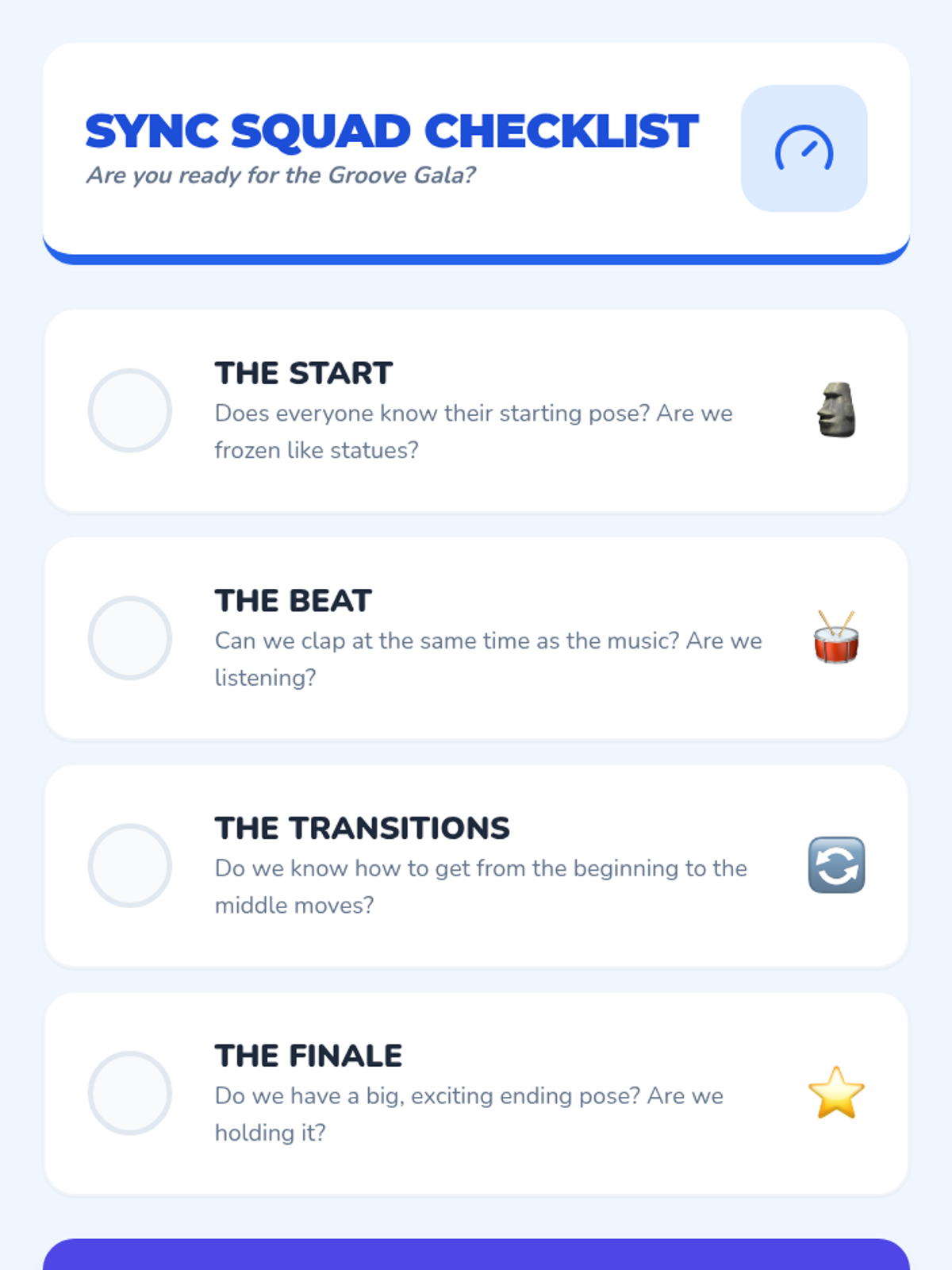
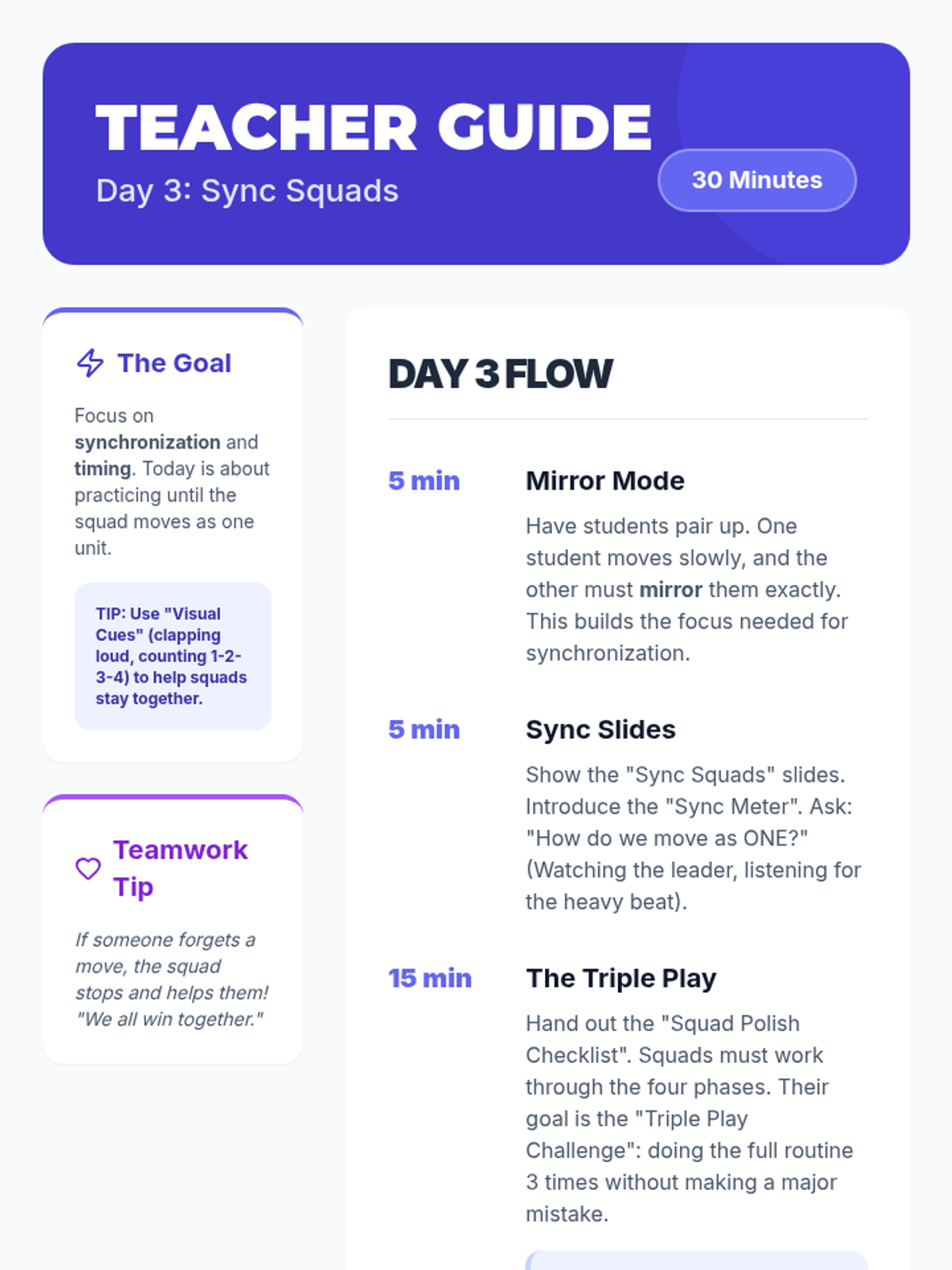
Squads practice their full routine, adding transitions and ensuring every member is in sync.
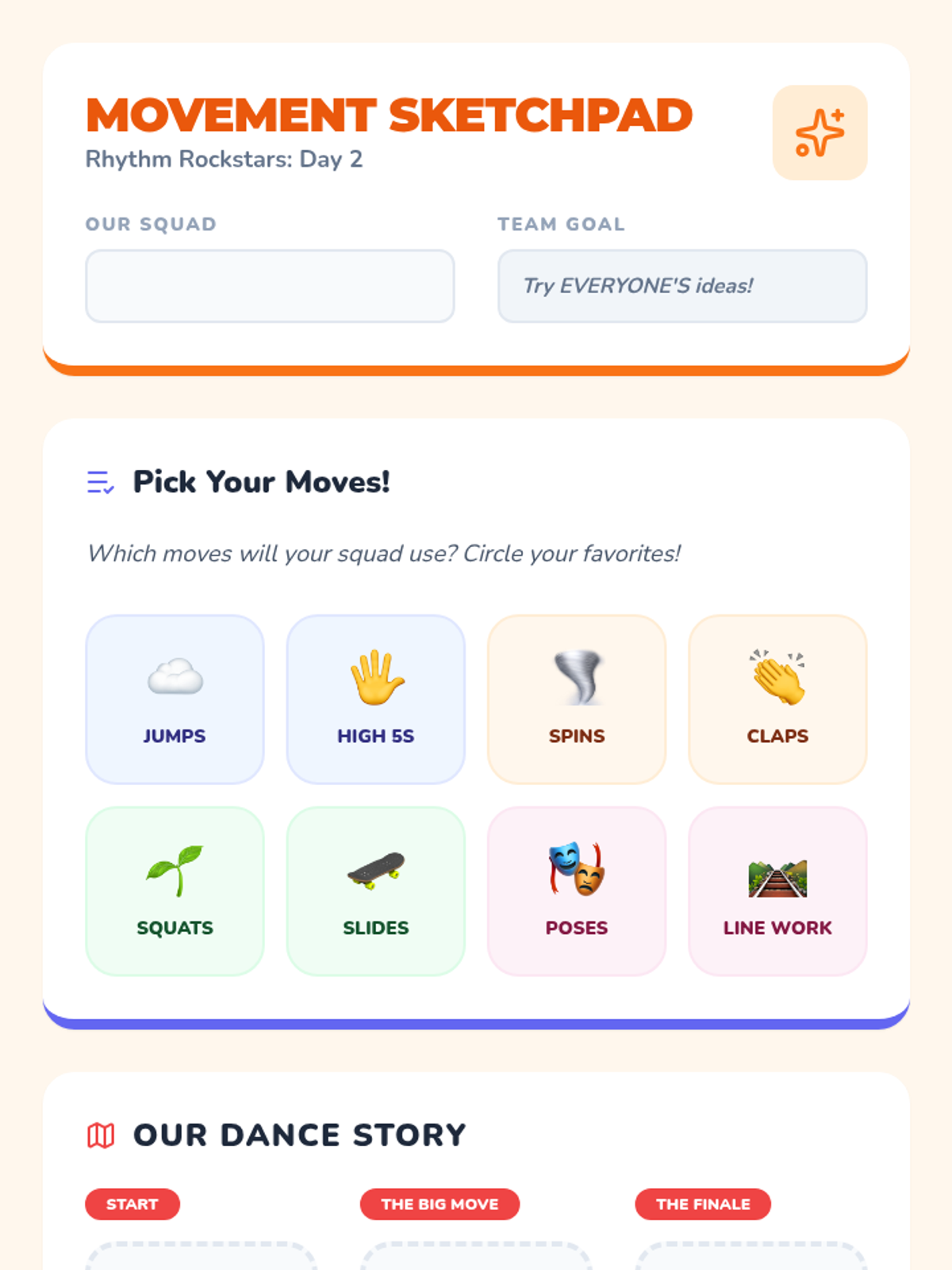
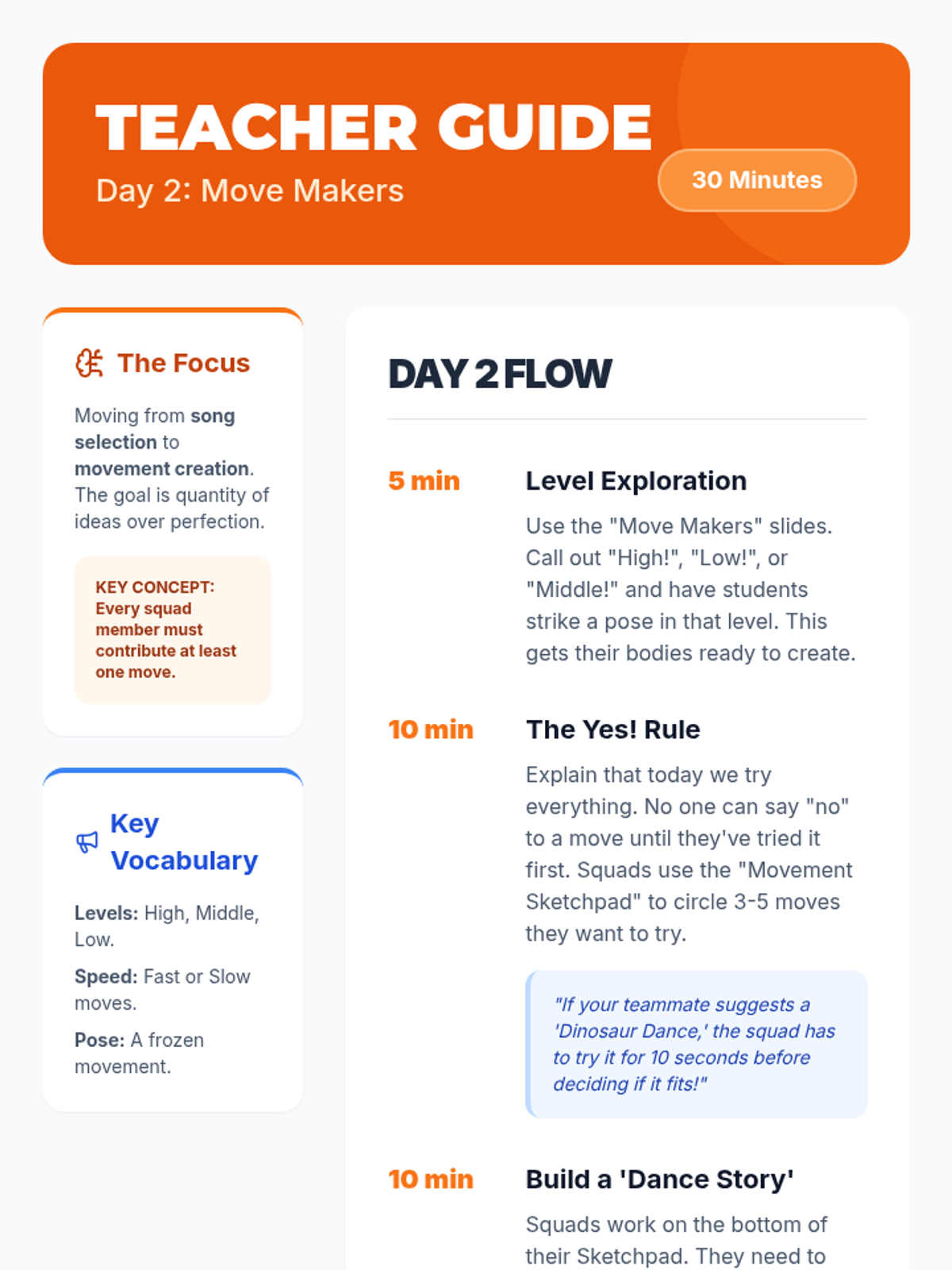
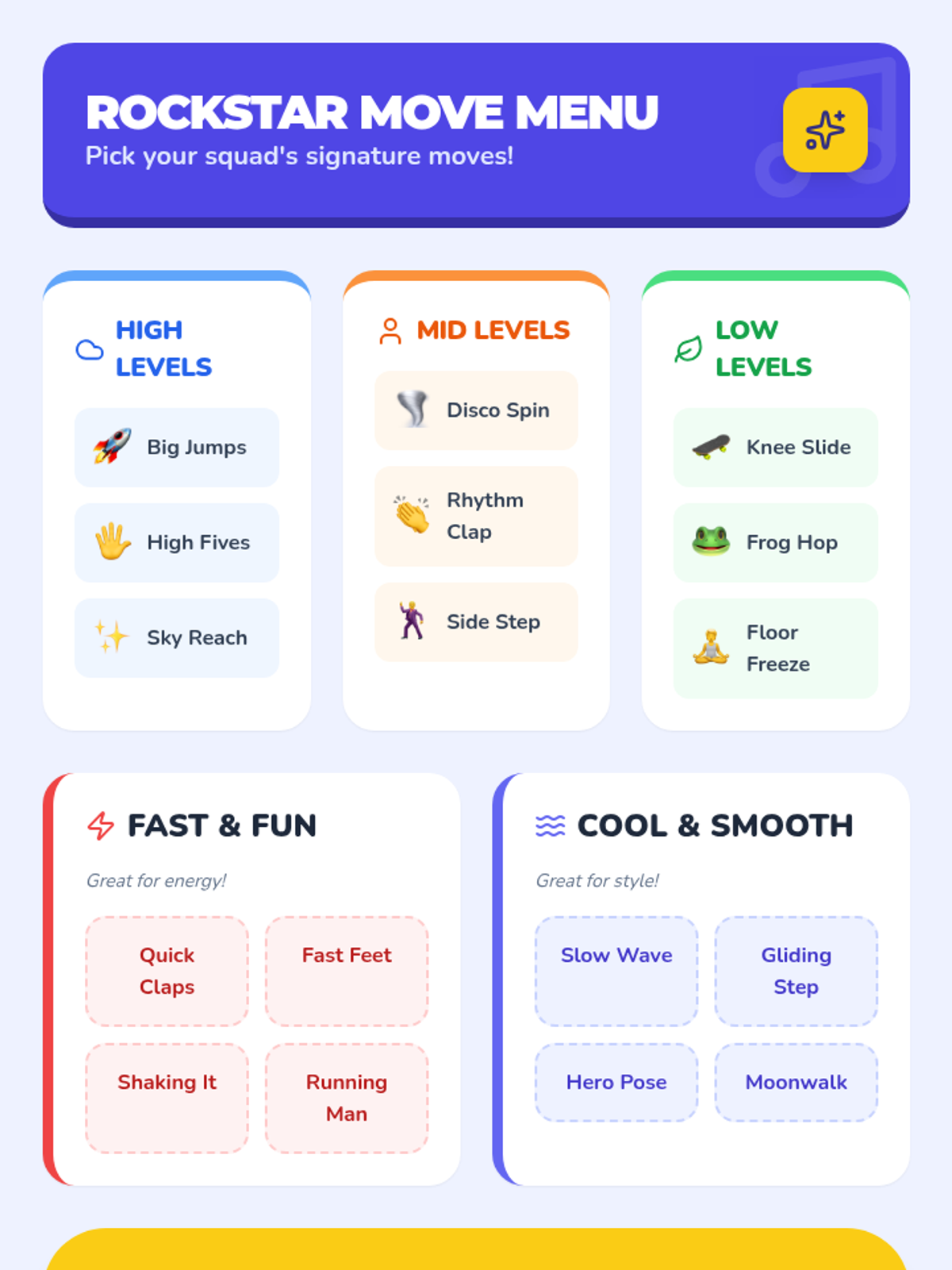
Groups brainstorm dance moves using different levels and speeds, focusing on including everyone's ideas.
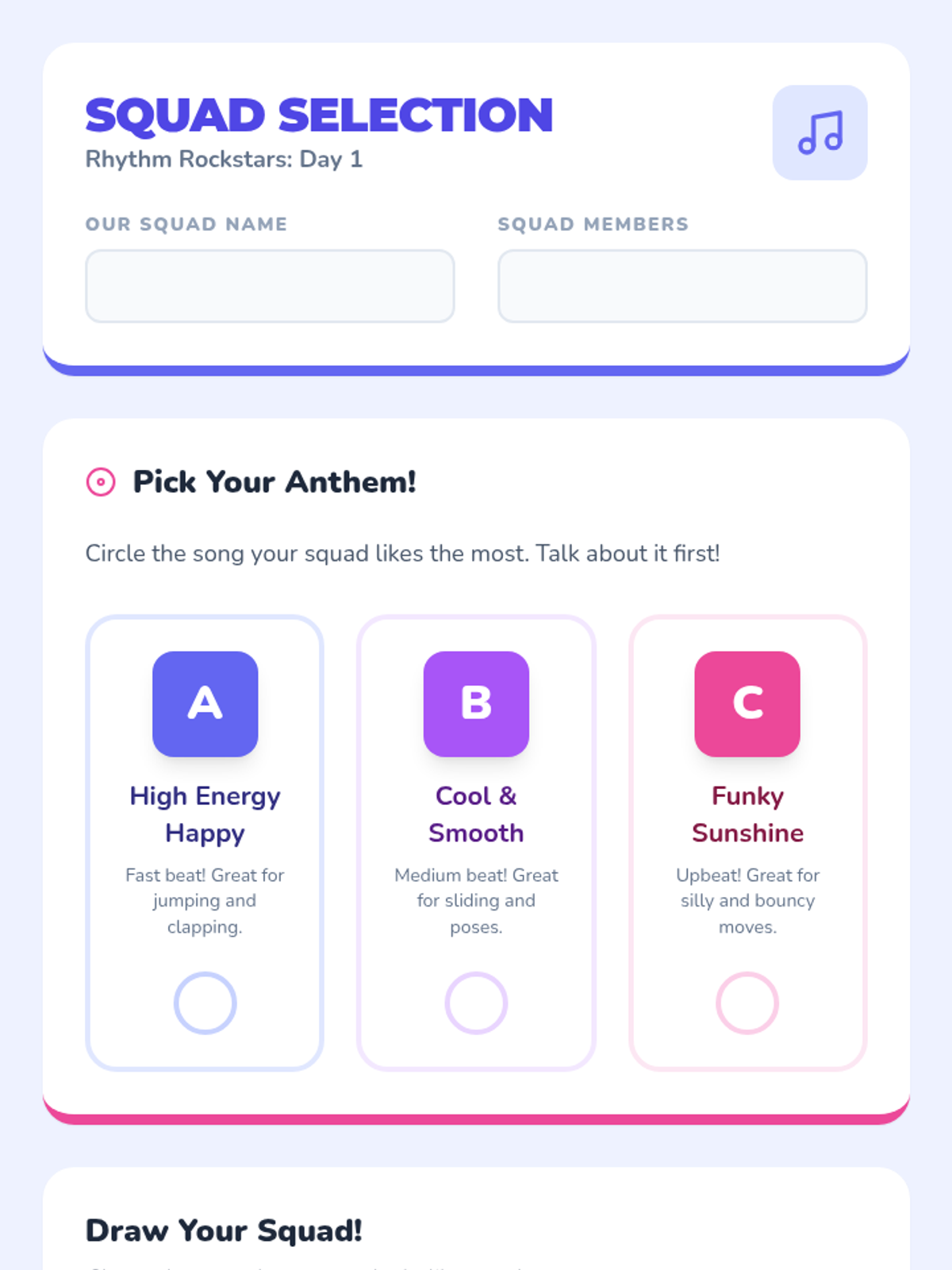
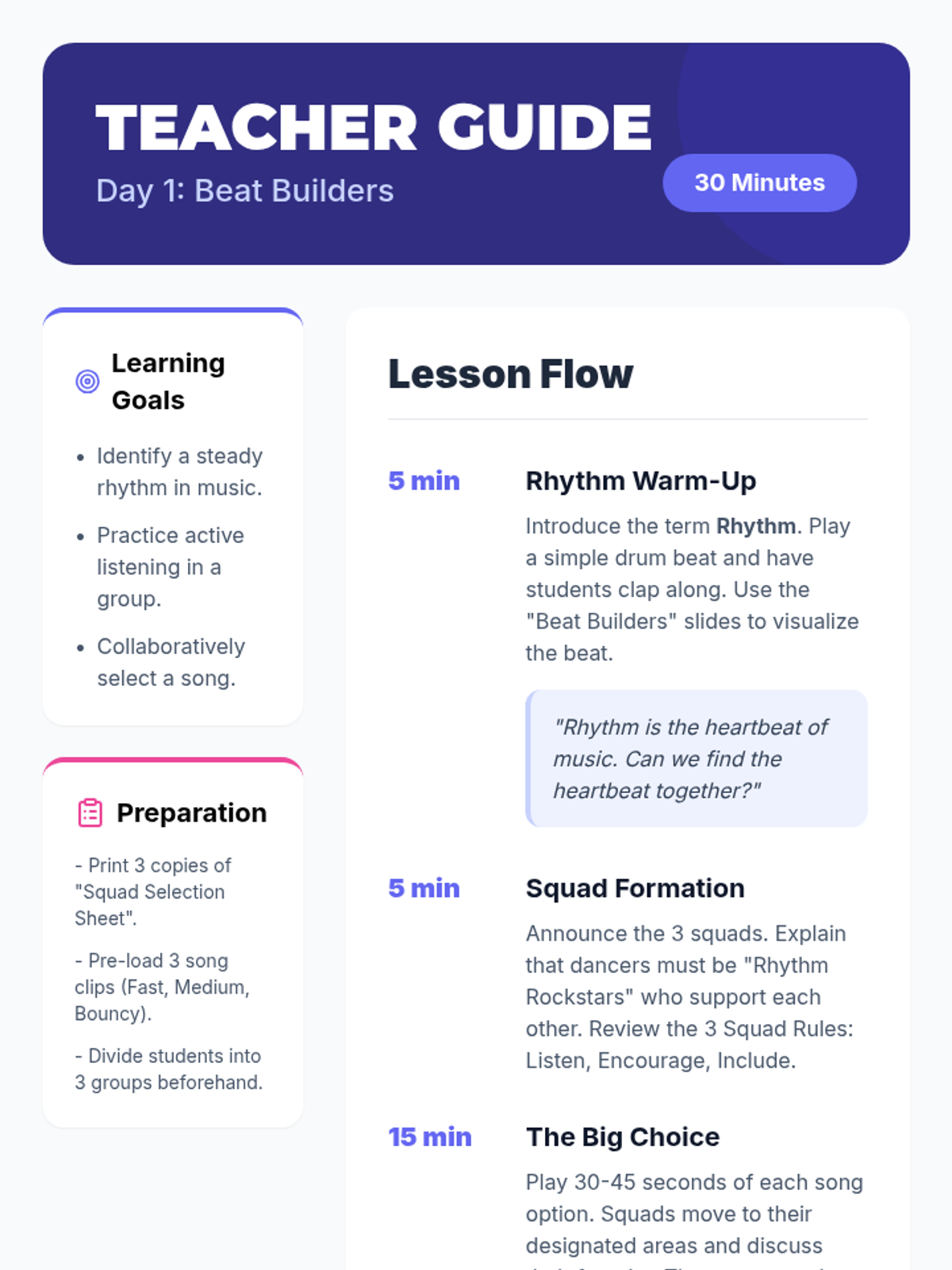
Students explore rhythm and tempo, form their dance squads, and select their group's performance song.