A high-energy 1st-grade lesson that uses music and rhythm to build alphabet fluency and phonological awareness. Students will analyze the 'ABC Party' video and collaborate to create their own rhythmic remixes of the alphabet.
A fun and engaging 30-minute craft session where young students create their own 'Love Bug' characters using paper shapes. This lesson focuses on fine motor skills, shape recognition, and creative expression.
A high-energy, low-pressure 15-minute music lesson designed to engage disengaged students and build vocal confidence through rhythm and stealth games. This lesson moves from non-verbal rhythmic games to collective vocalizing to bypass the fear of singing.
A short, impactful drama lesson centered around a school assembly script about Ruby Bridges. Students explore themes of bravery and segregation through performance, visual storytelling, and personal reflection.
An interactive, game-based lesson where students use body percussion to perform quarter notes, eighth notes, and quarter rests at varying tempos.
A collaborative art lesson where 1st and 2nd-grade students explore the concept of community by creating a layered mural of rainforest animals based on their habitats.
A music and science integration lesson where students analyze animal classifications and write their own verses for the 'Animal Song' using AABB rhyme schemes.
A hands-on art and science lesson where students explore the anatomical structures of fungi through clay modeling and painting, using visual references from nature.
A creative art lesson focused on positive and negative space through the lens of Kirigami snowflake cutting. Students create a dual-image composition using both their snowflake and the leftover scraps to explore spatial relationships.
A visual arts and science lesson where students explore the concept of fog as a 'cloud on the ground' through watercolor painting and sponge-dabbing techniques.
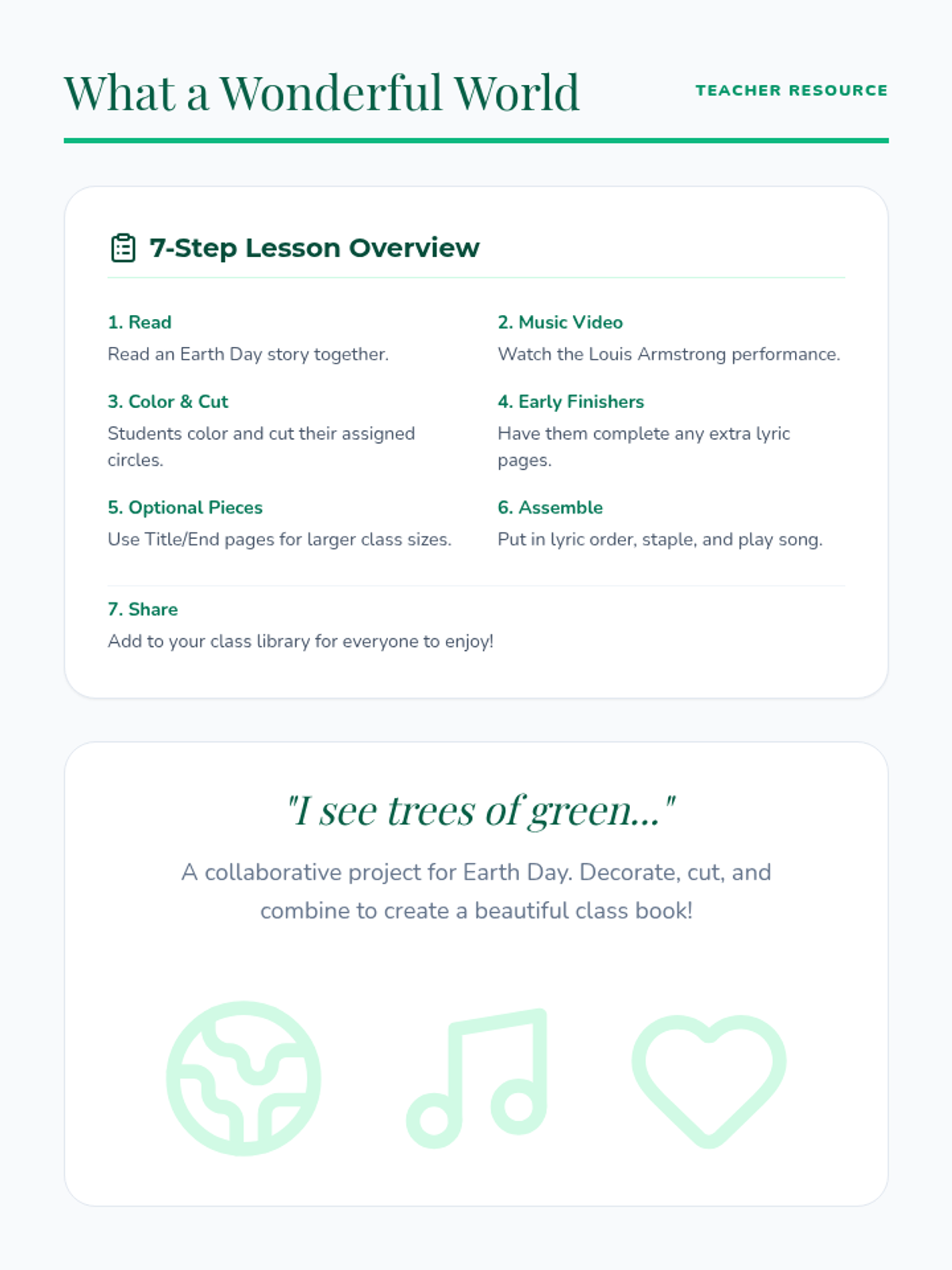
A music lesson where students compose and perform a new verse for 'Going Green Song' about environmental issues in their own school.
Students explore how the brain uses patterns and expectations to process music, learning about the 'tonic' and 'resolution' through a rhythmic composition game.