Techniques for brainstorming, collaborative project management, and individual artistic expression. Guides students through the iterative creative process from initial concept to final execution.
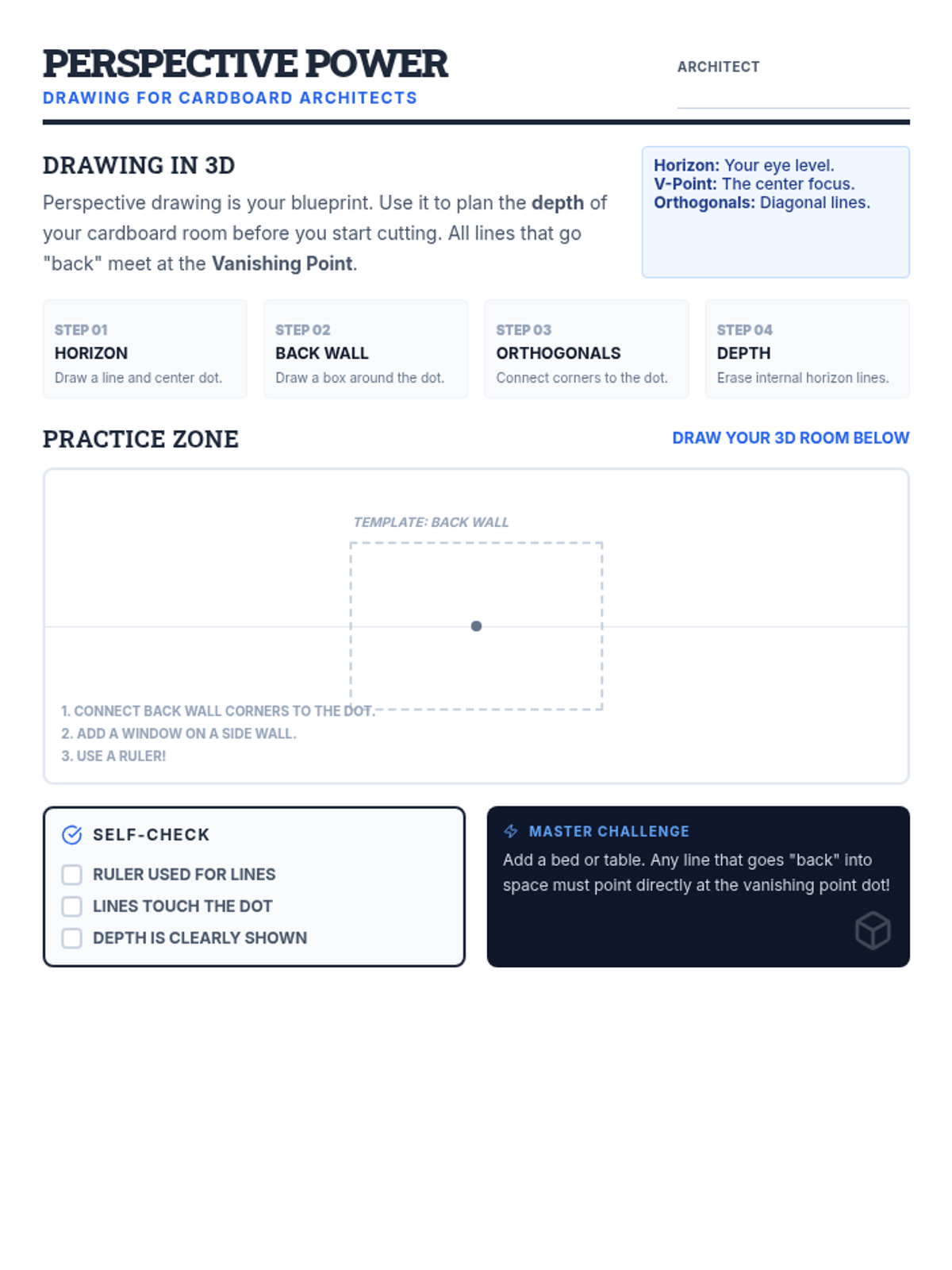
A step-by-step worksheet teaching one-point perspective drawing. Students learn key vocabulary and follow a 4-step process to create a 3D room on a 2D plane, with a dedicated practice area.
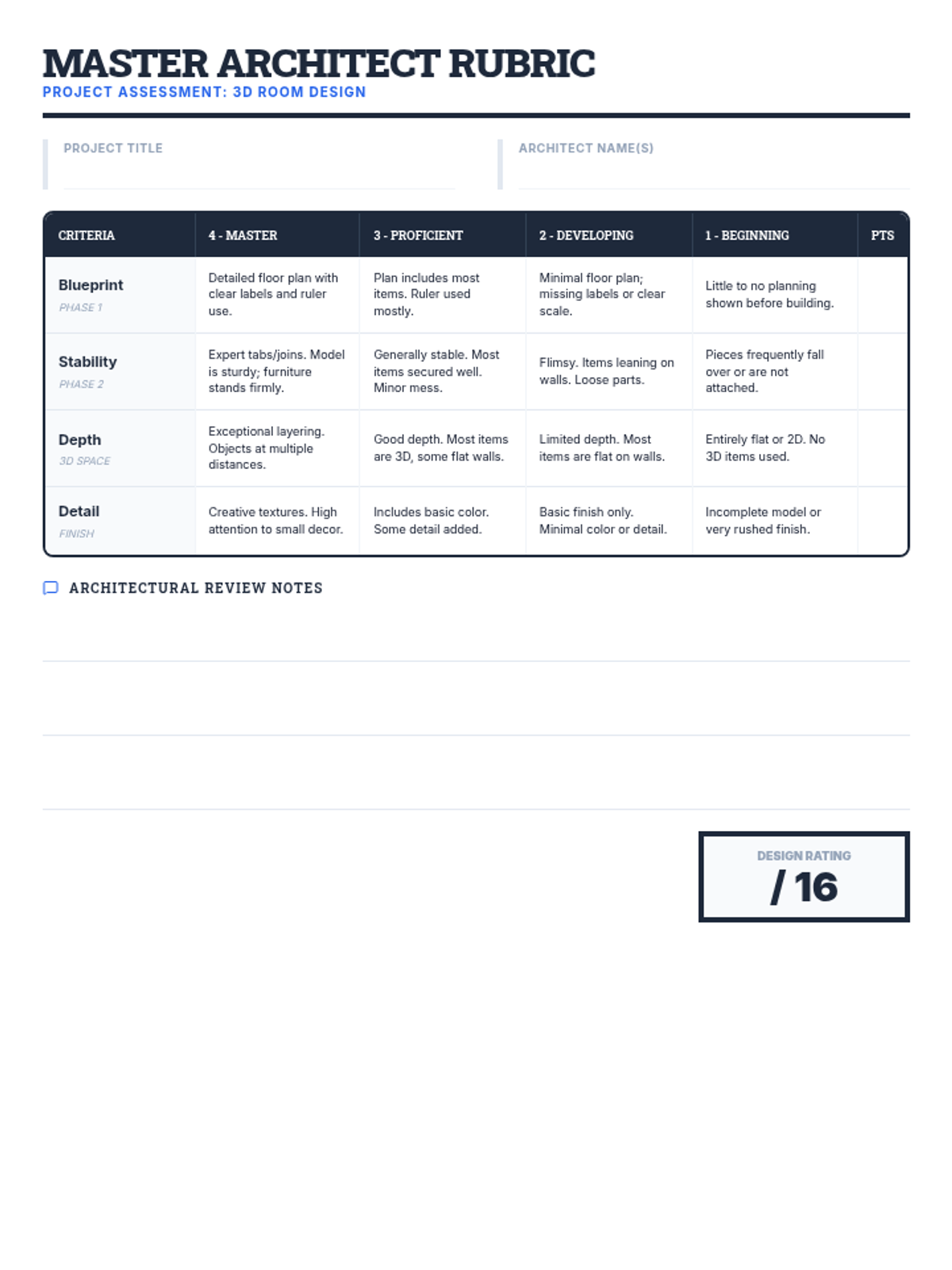
A comprehensive grading rubric for the cardboard room project. Evaluates planning, structural stability, use of depth, and craftsmanship on a 4-point scale.
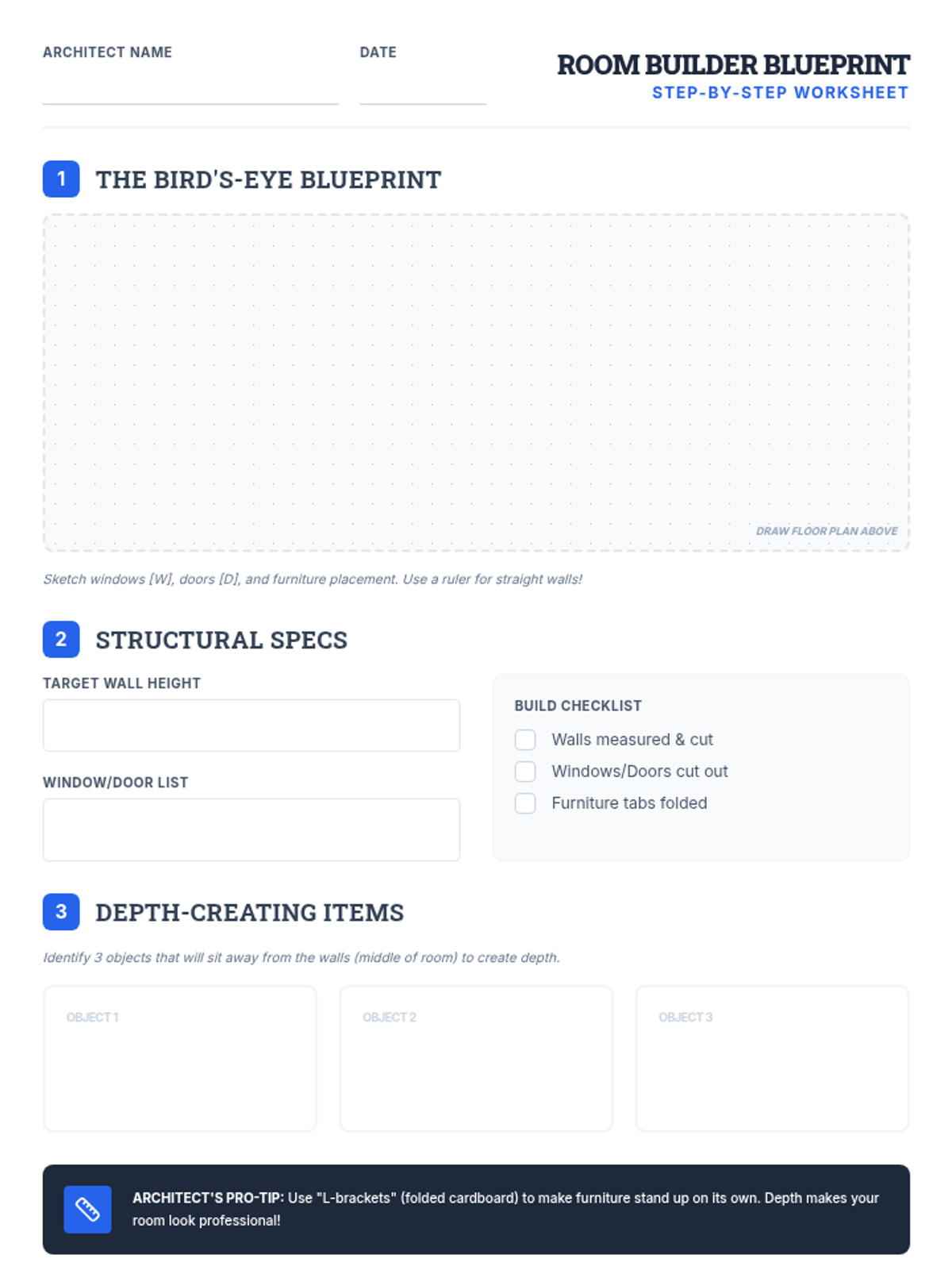
A step-by-step planning worksheet for students. Includes a grid for floor plan sketching, structural checklists, and a section for identifying depth-creating furniture.
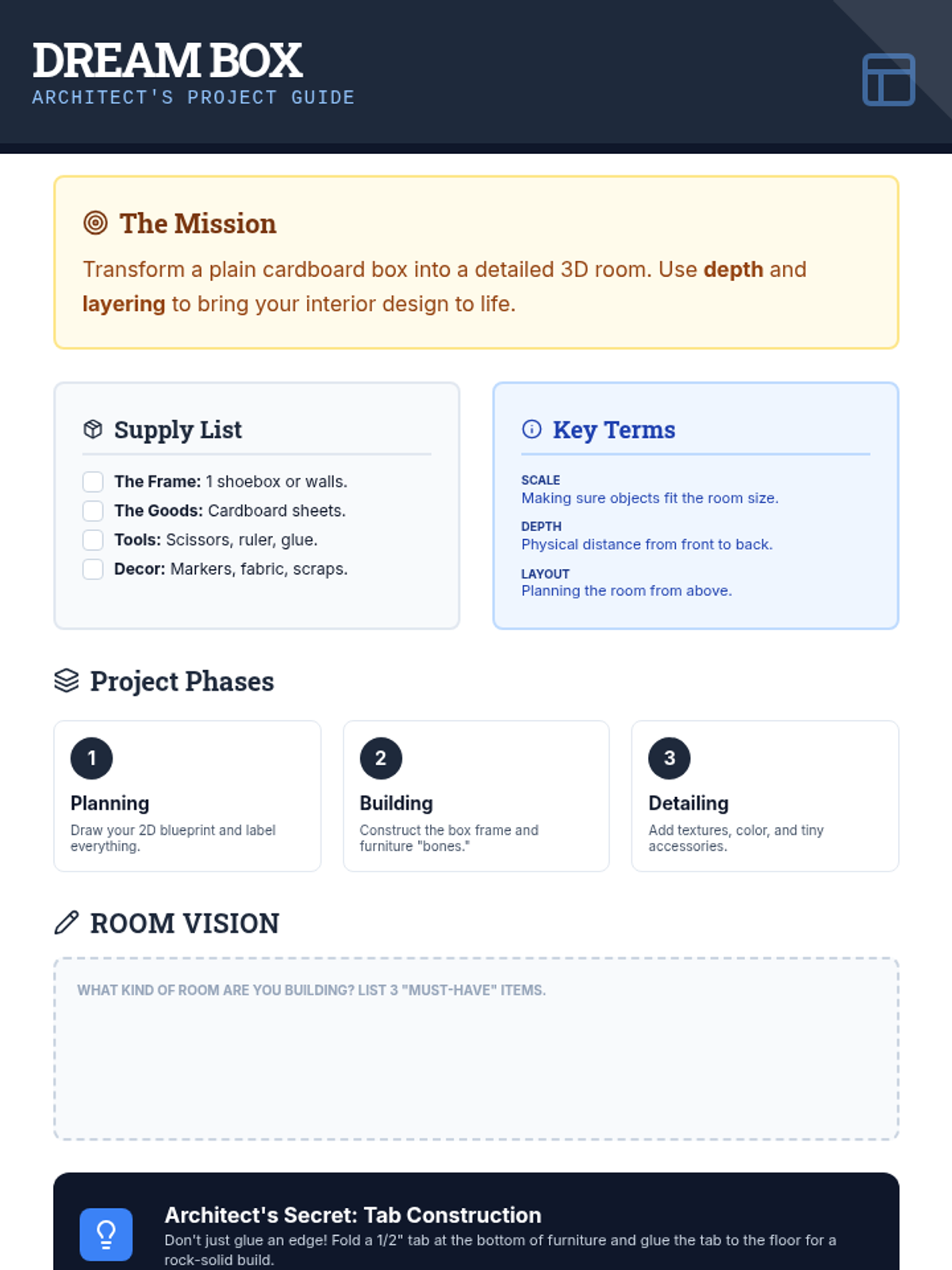
A visual project guide for students, introducing the Dream Box project where they design and build a 3D cardboard room. Includes project phases, material lists, and key vocabulary.
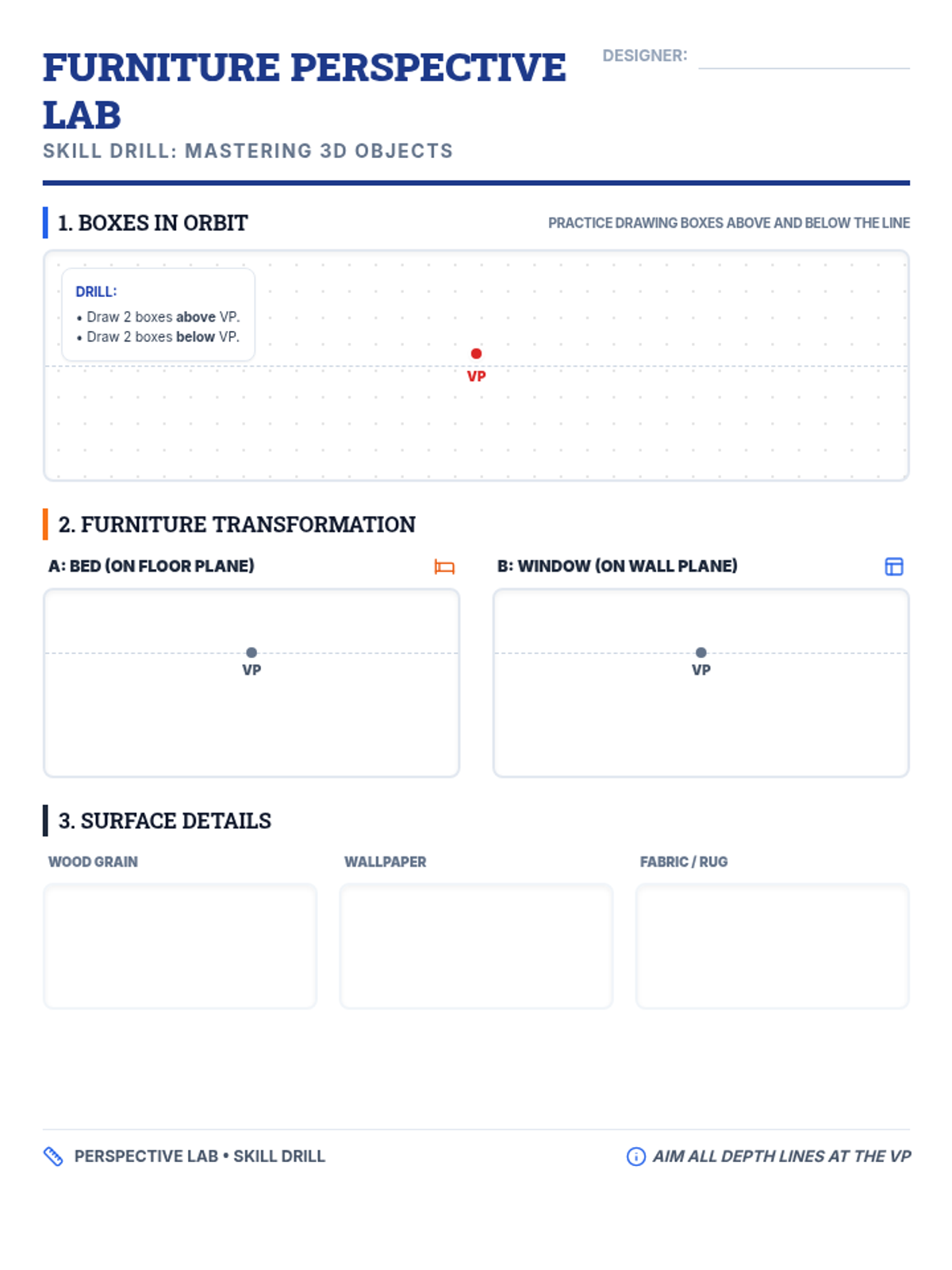
A focused sketching worksheet designed to help students practice drawing 3D boxes and transforming them into room furniture like beds and windows using one-point perspective.
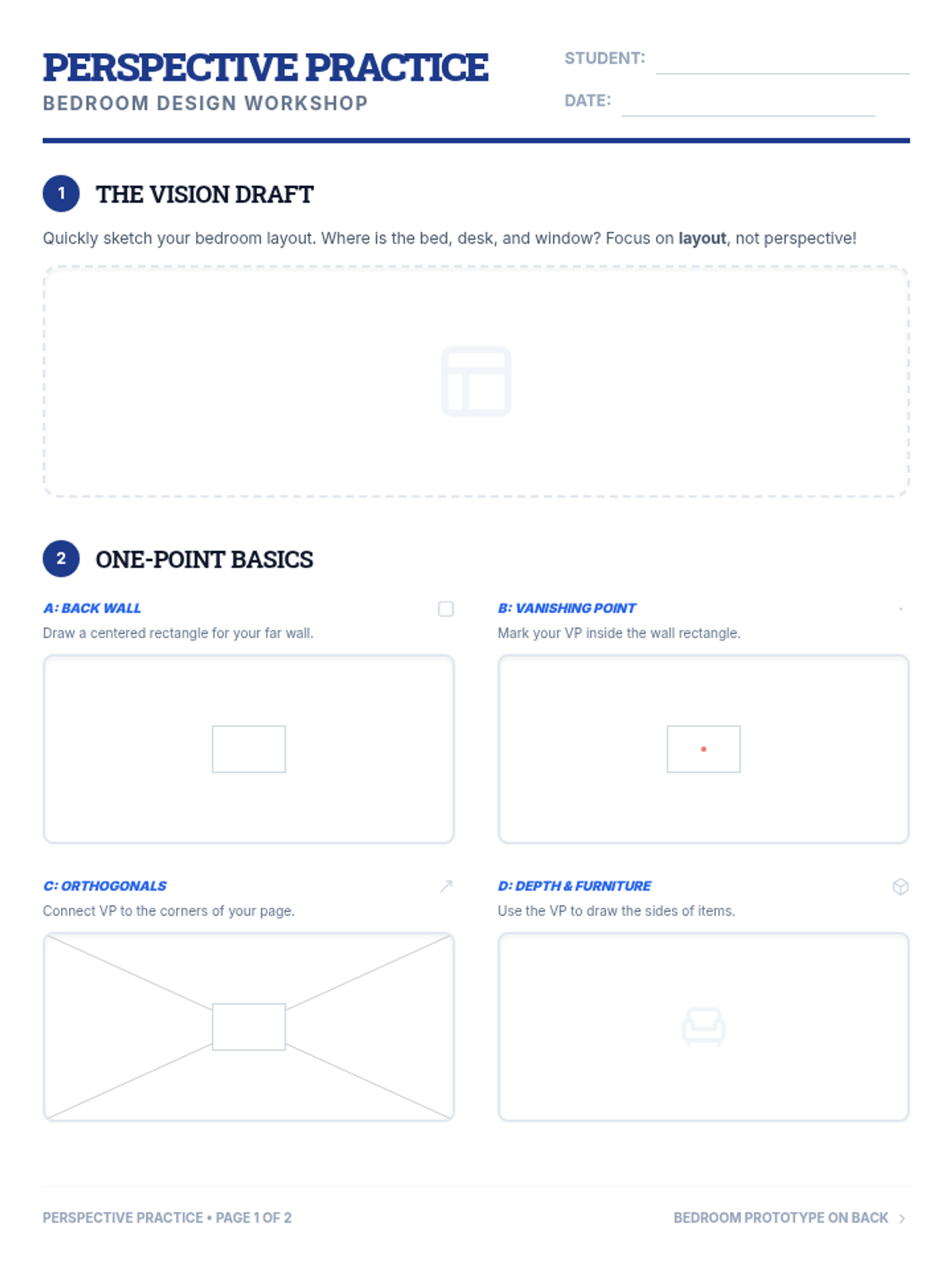
A two-page practice worksheet for students to brainstorm their bedroom layout and follow a step-by-step guide to drawing a room in one-point perspective.
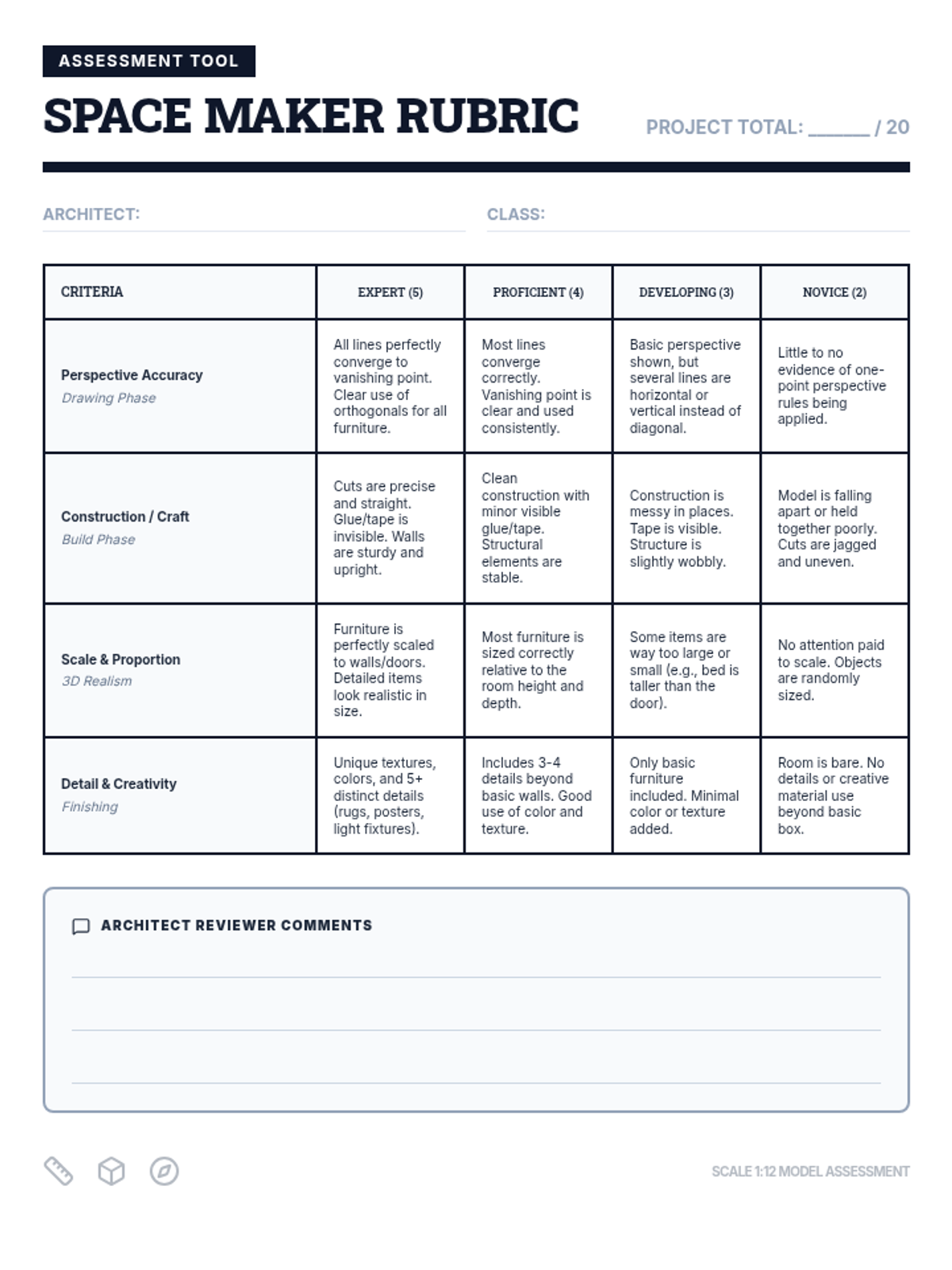
A grading rubric for assessing students' one-point perspective planning and final cardboard room construction, focusing on perspective accuracy, craftsmanship, and scale.
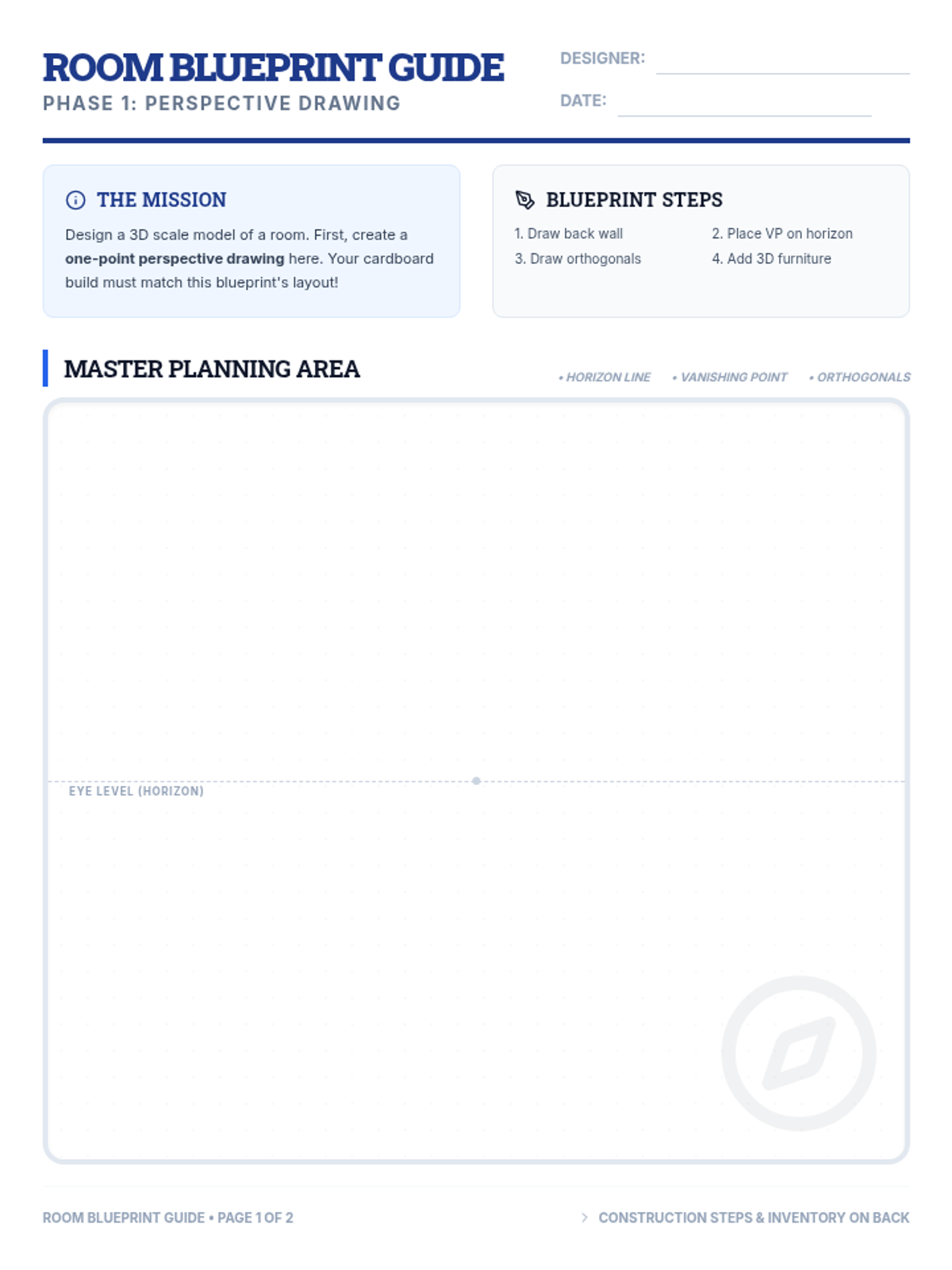
A comprehensive project guide for students that outlines the steps for both the one-point perspective planning phase and the subsequent cardboard construction phase.
An instructional slide deck covering the principles of one-point perspective, essential architectural vocabulary, and basic cardboard engineering techniques for building a 3D room.
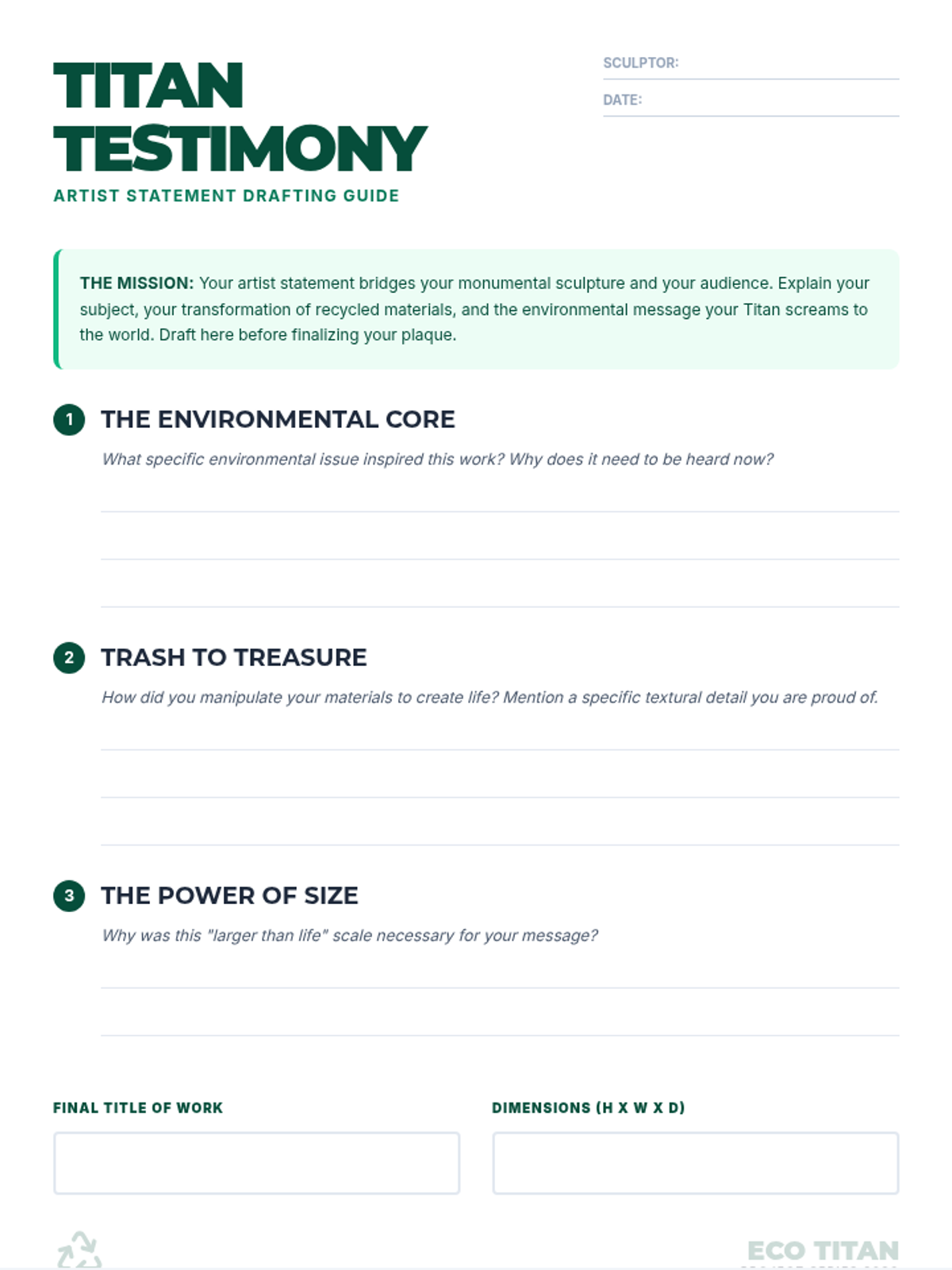
A two-page student resource for drafting and presenting artist statements. The first page provides a guided worksheet for reflection on environmental themes and materials, while the second page offers a formal gallery plaque template for final display. Optimized for clean page breaks and handwriting legibility.
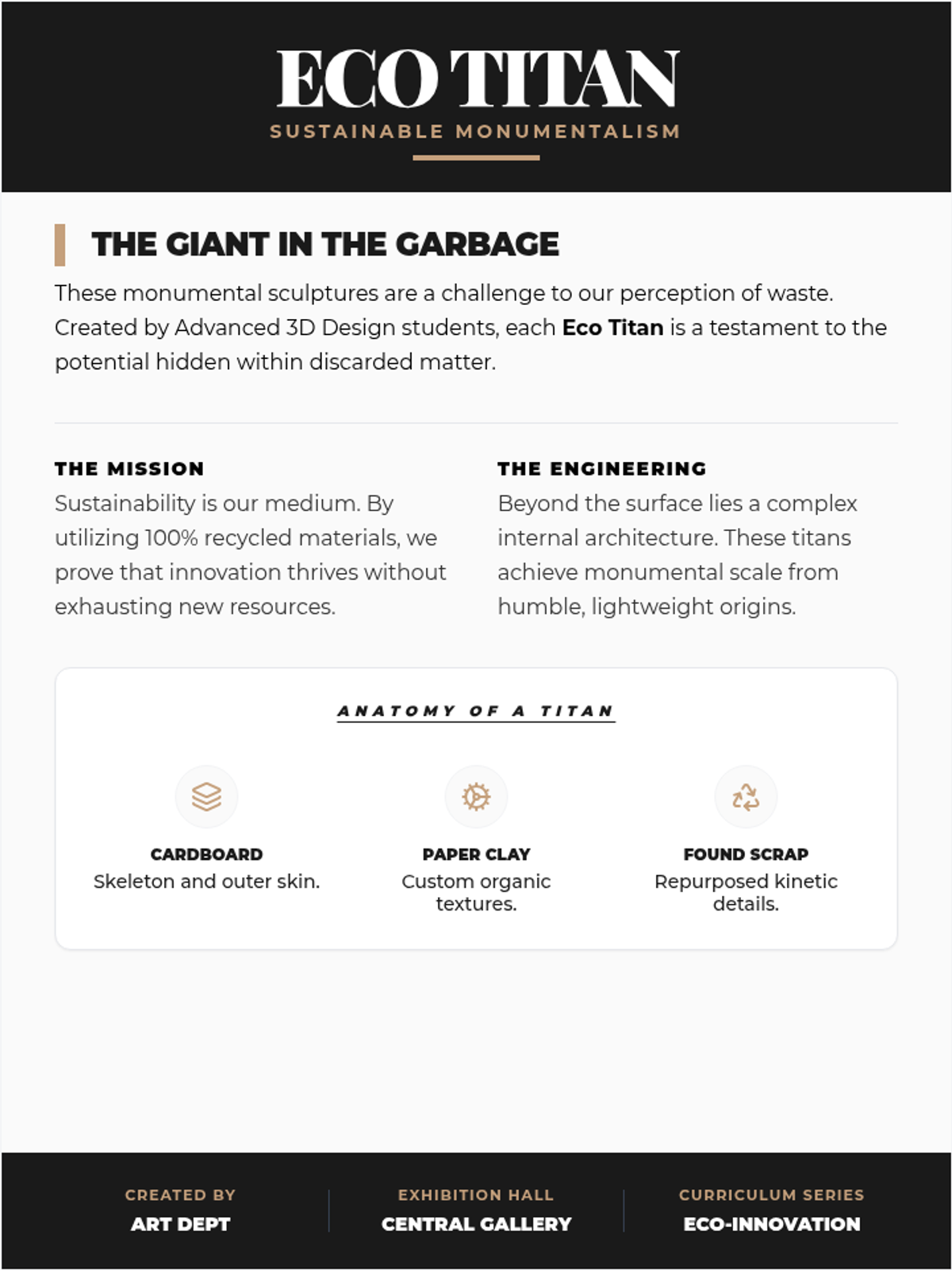
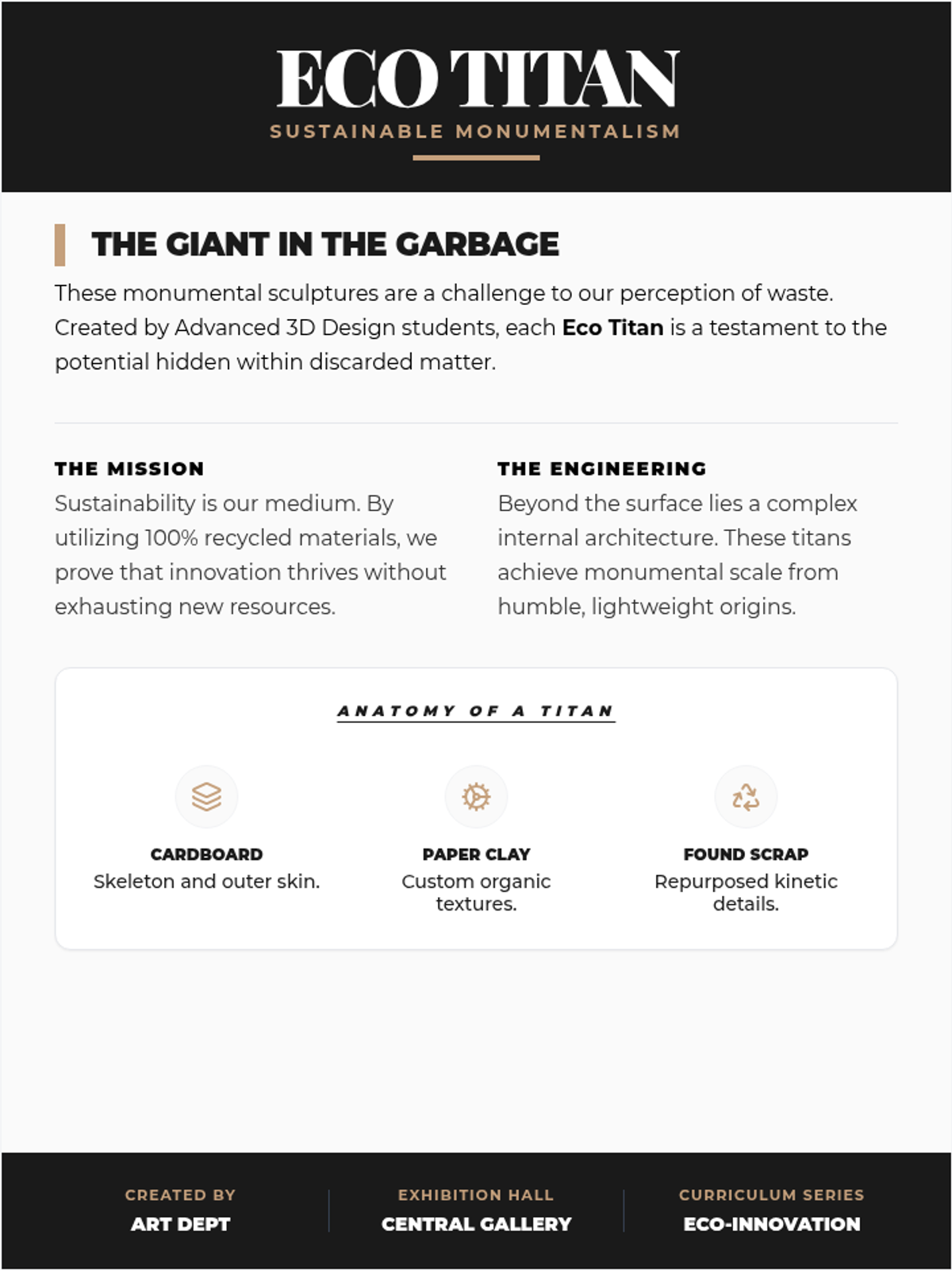
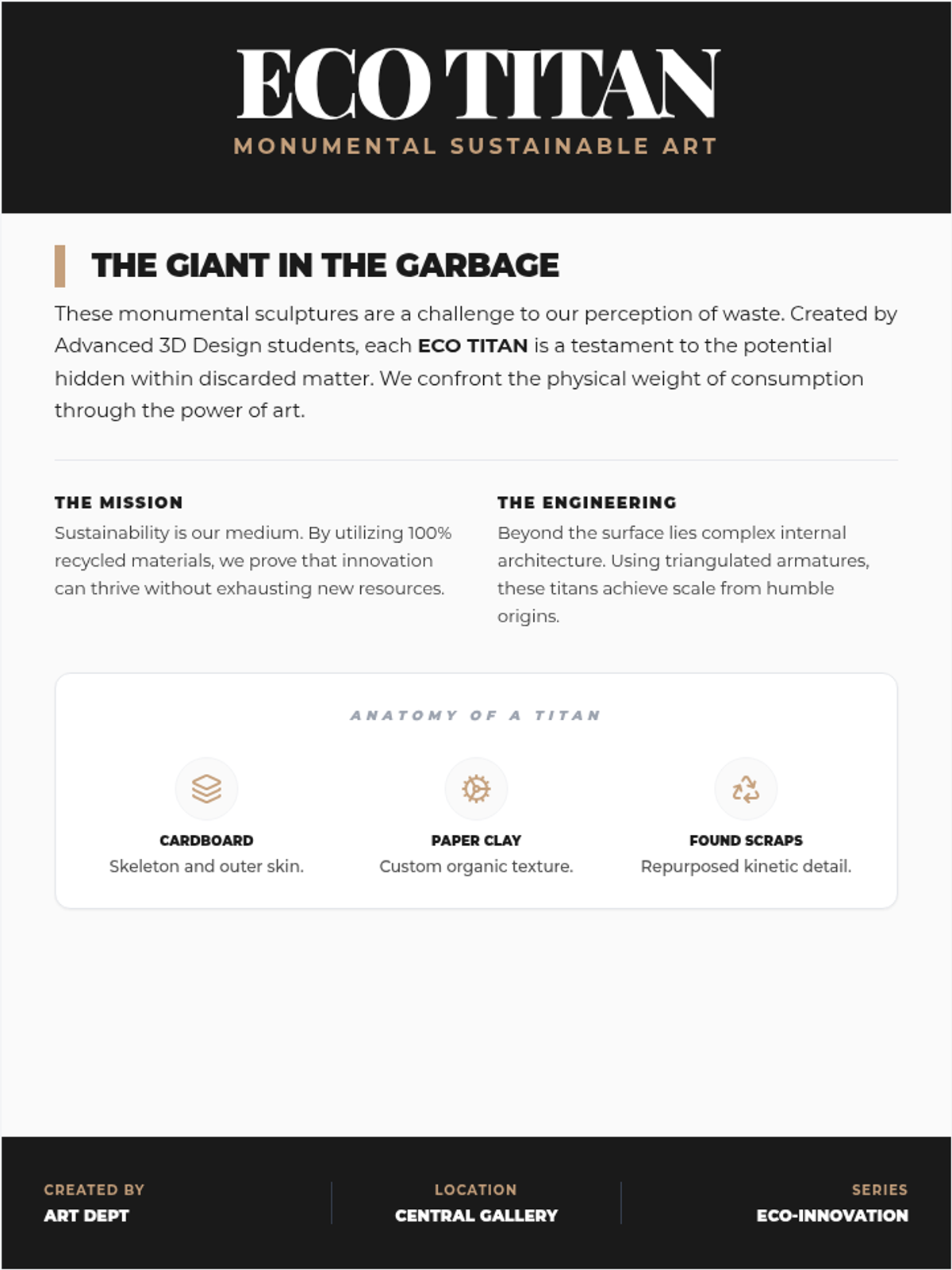
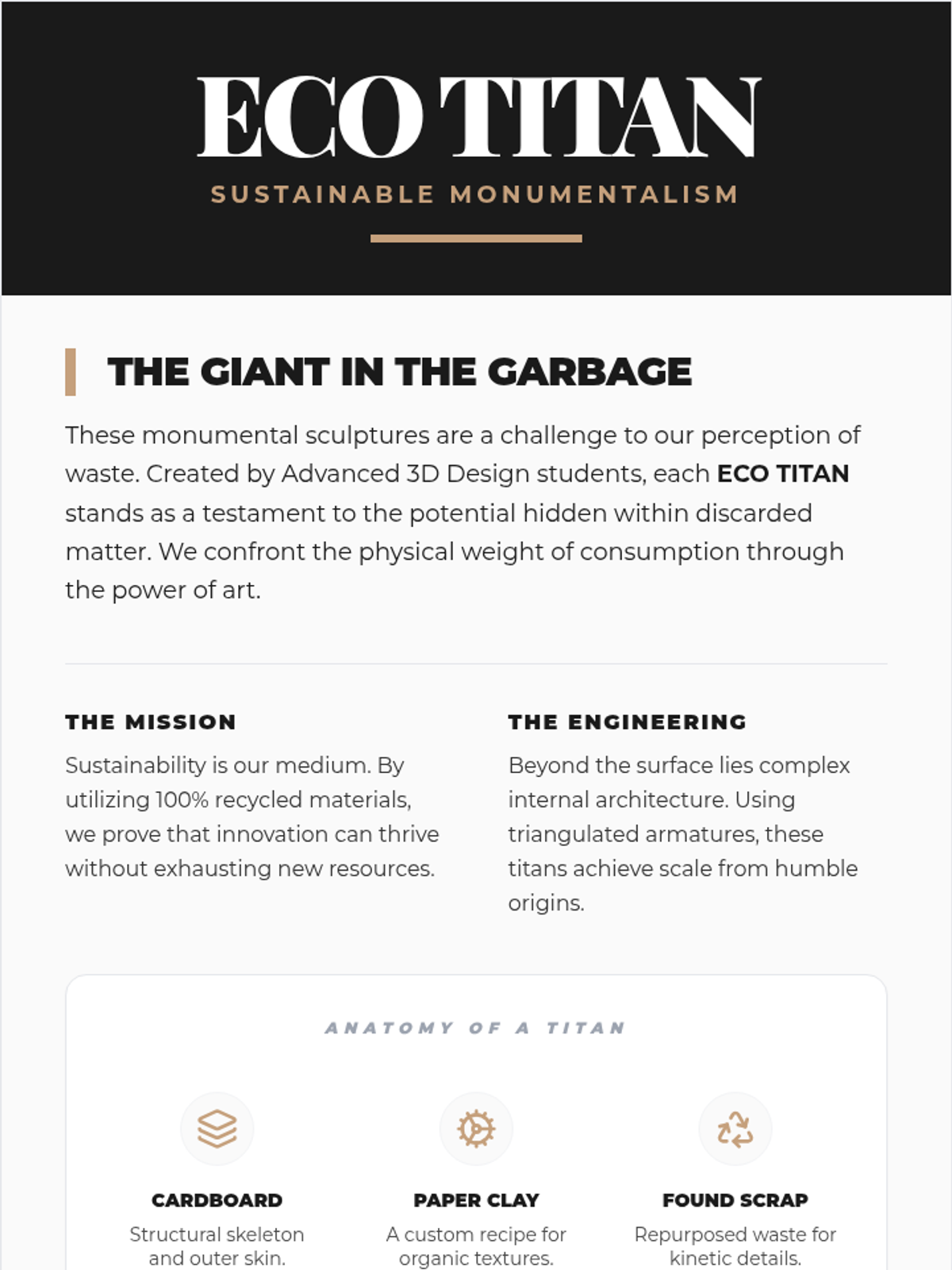
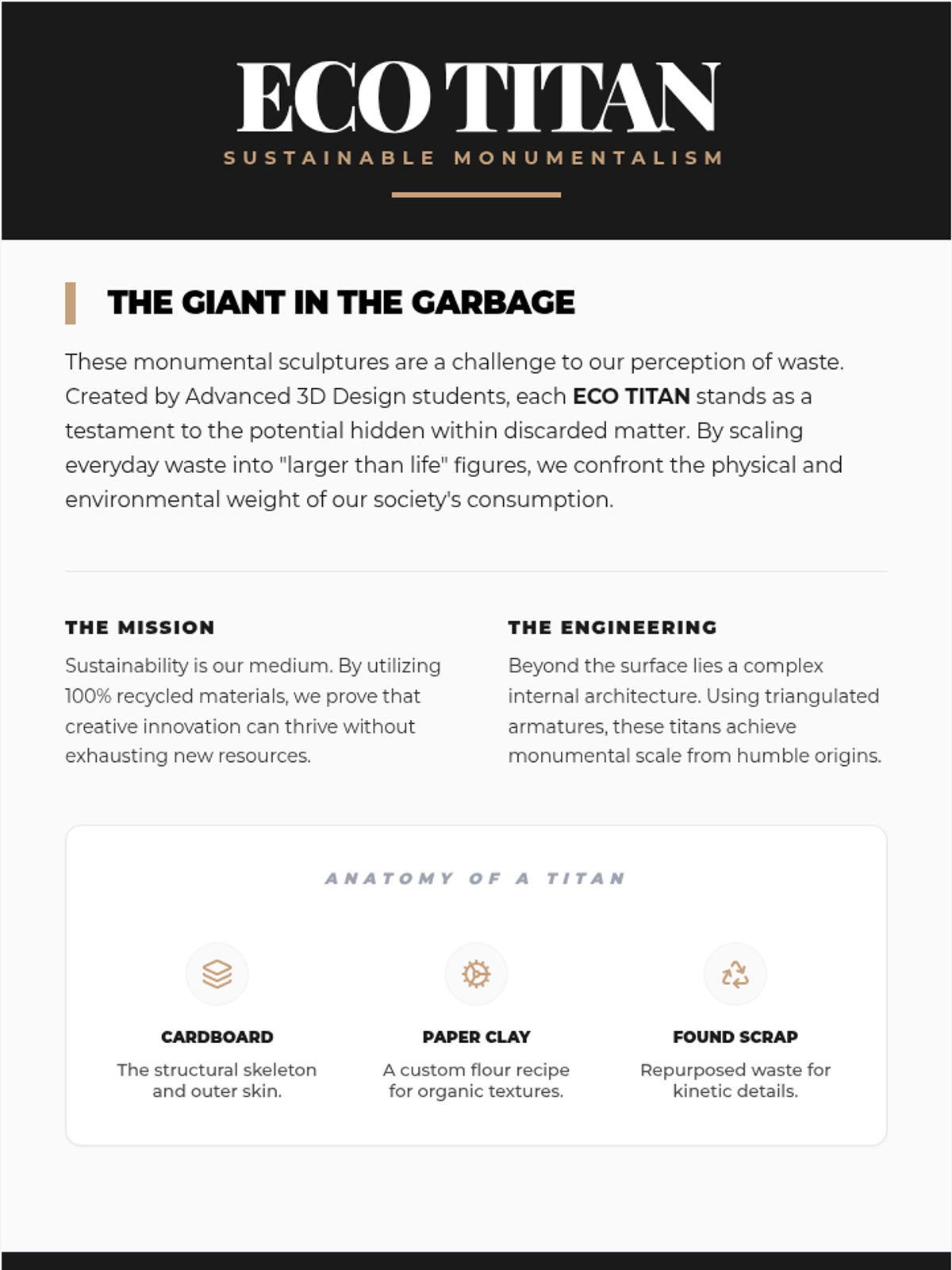
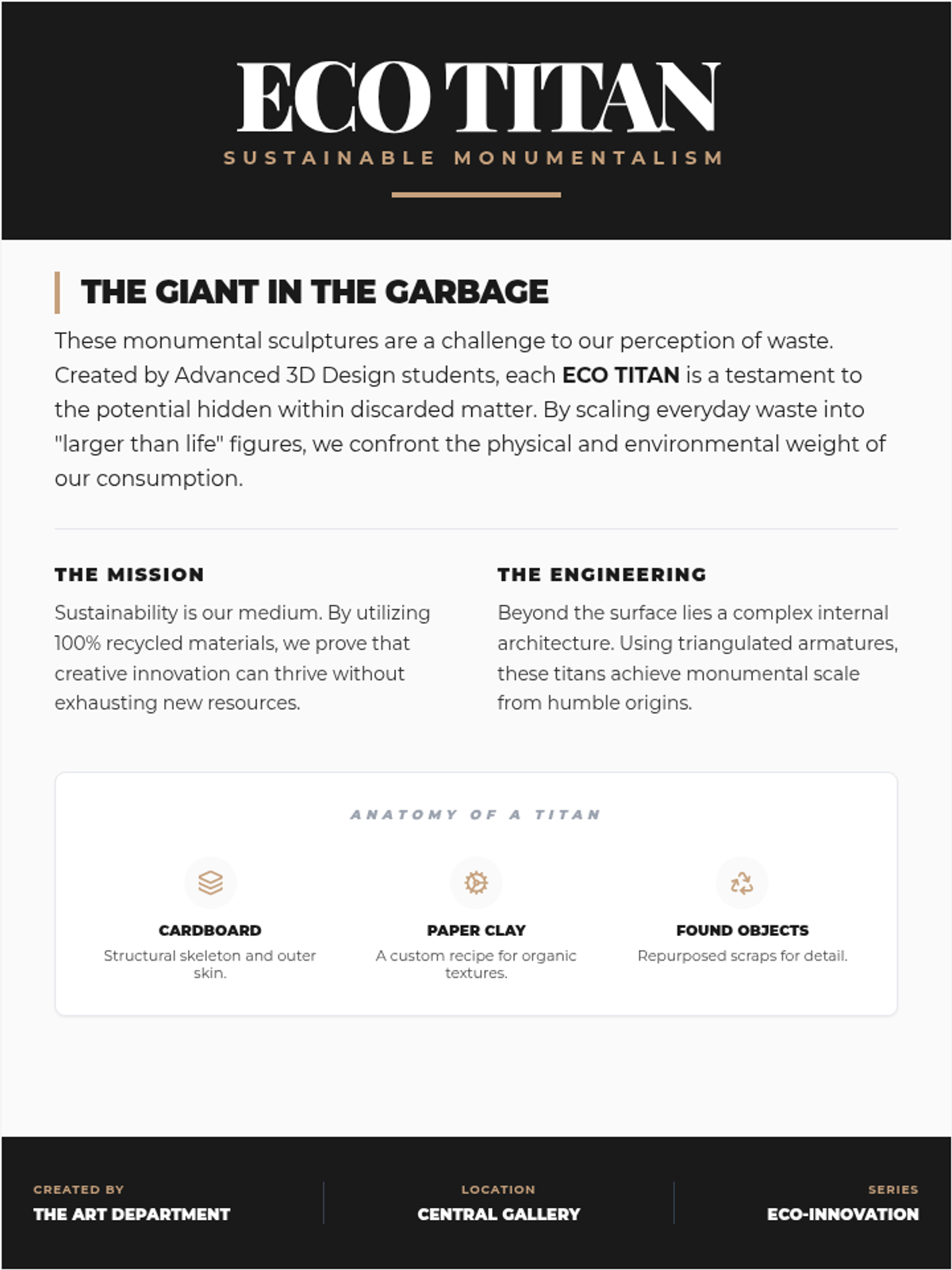
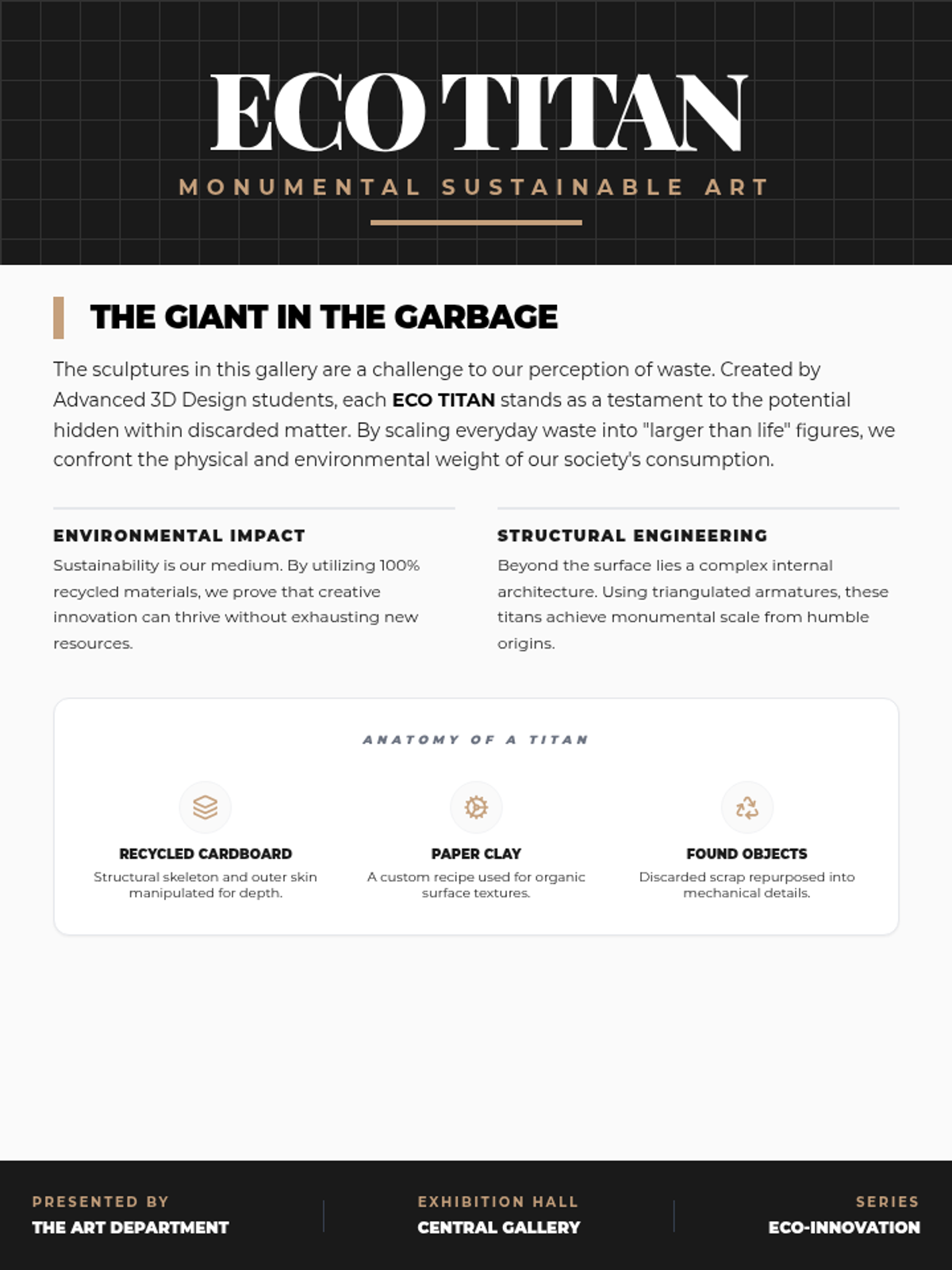
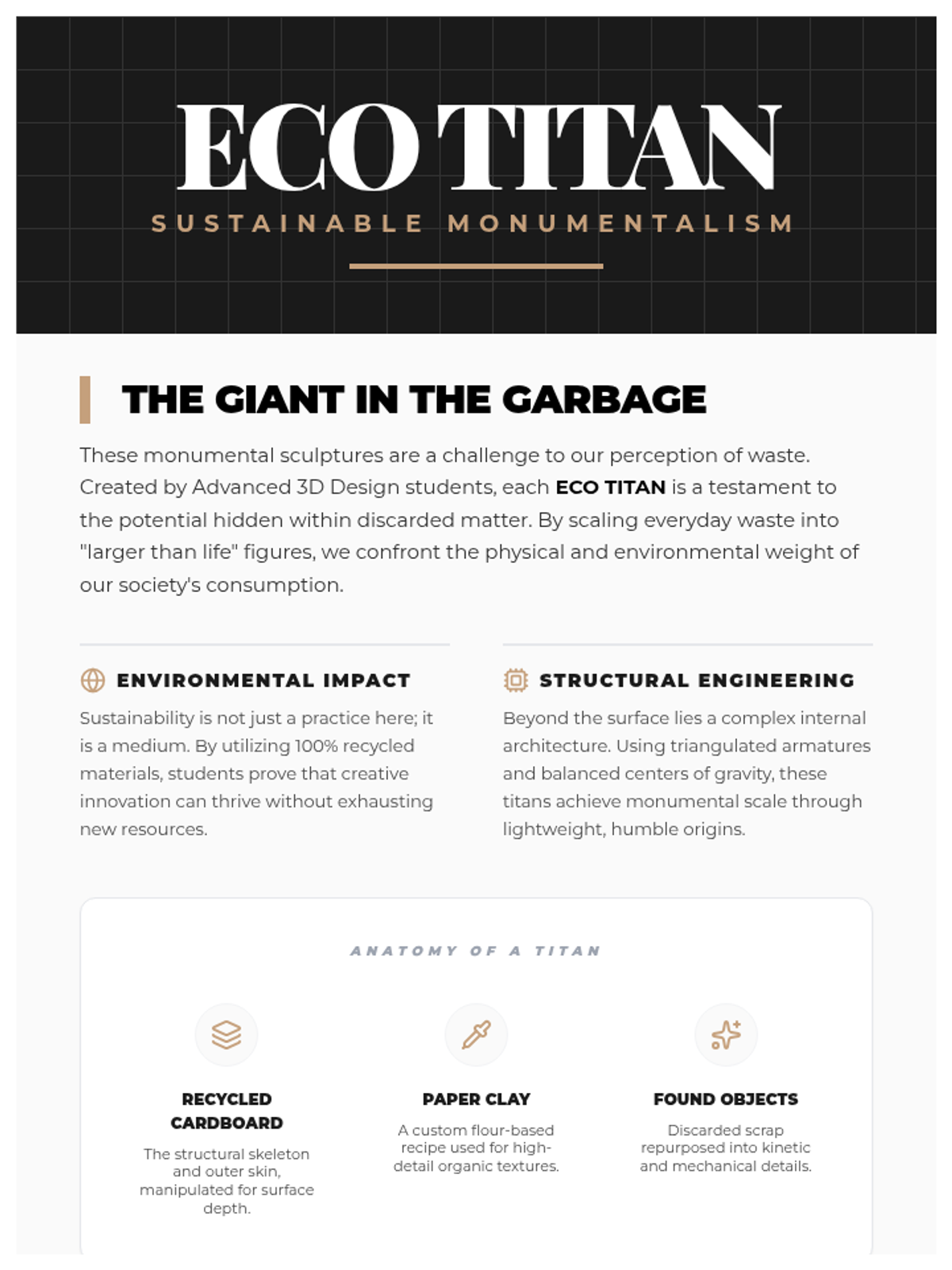
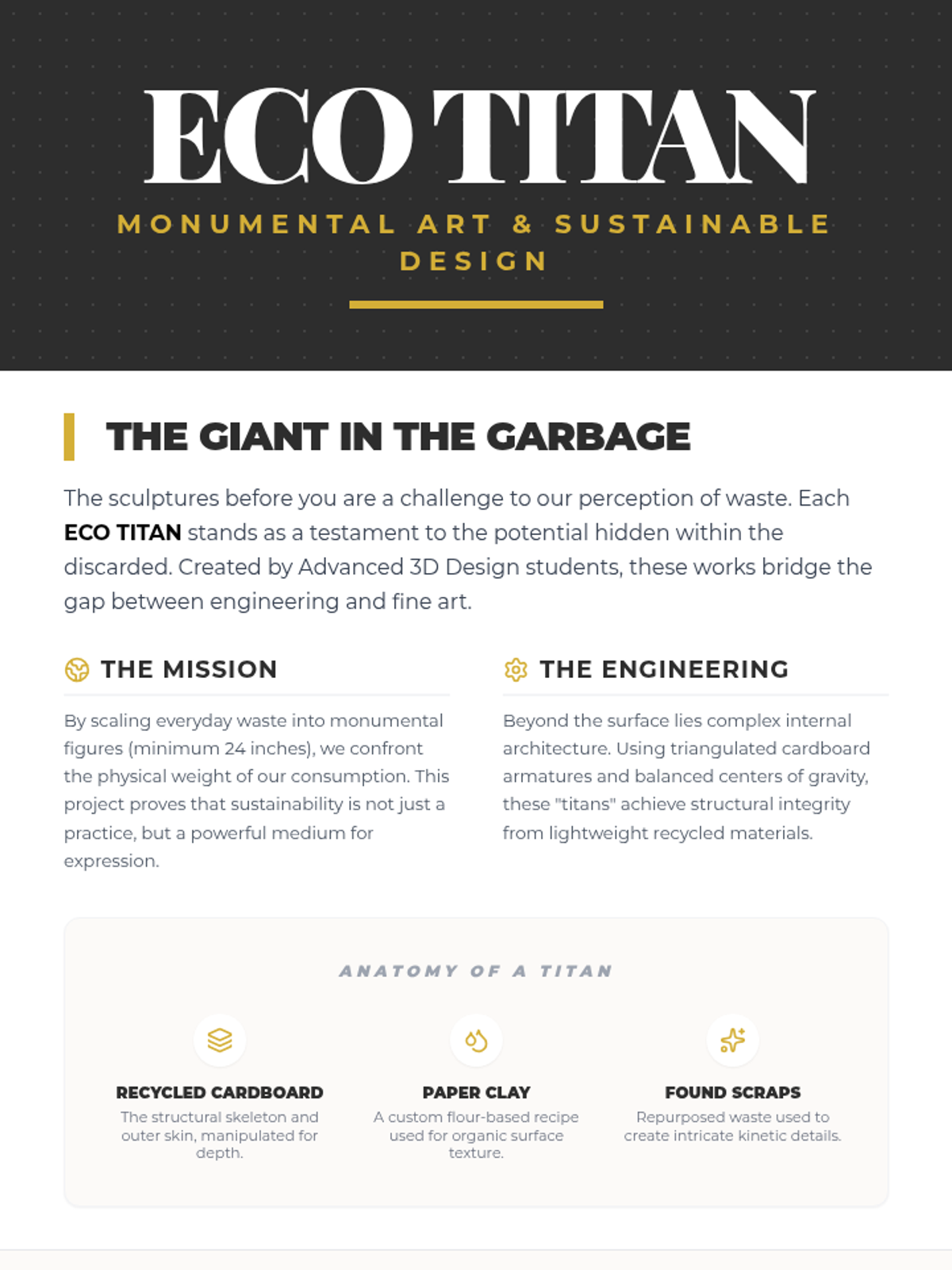
A professional gallery exhibition poster designed to explain the 'Eco Titan' project to the public, featuring bold monumental typography, an explanation of the sustainable mission, and a breakdown of the materials used. This version is optimized as a high-impact, single-page display.
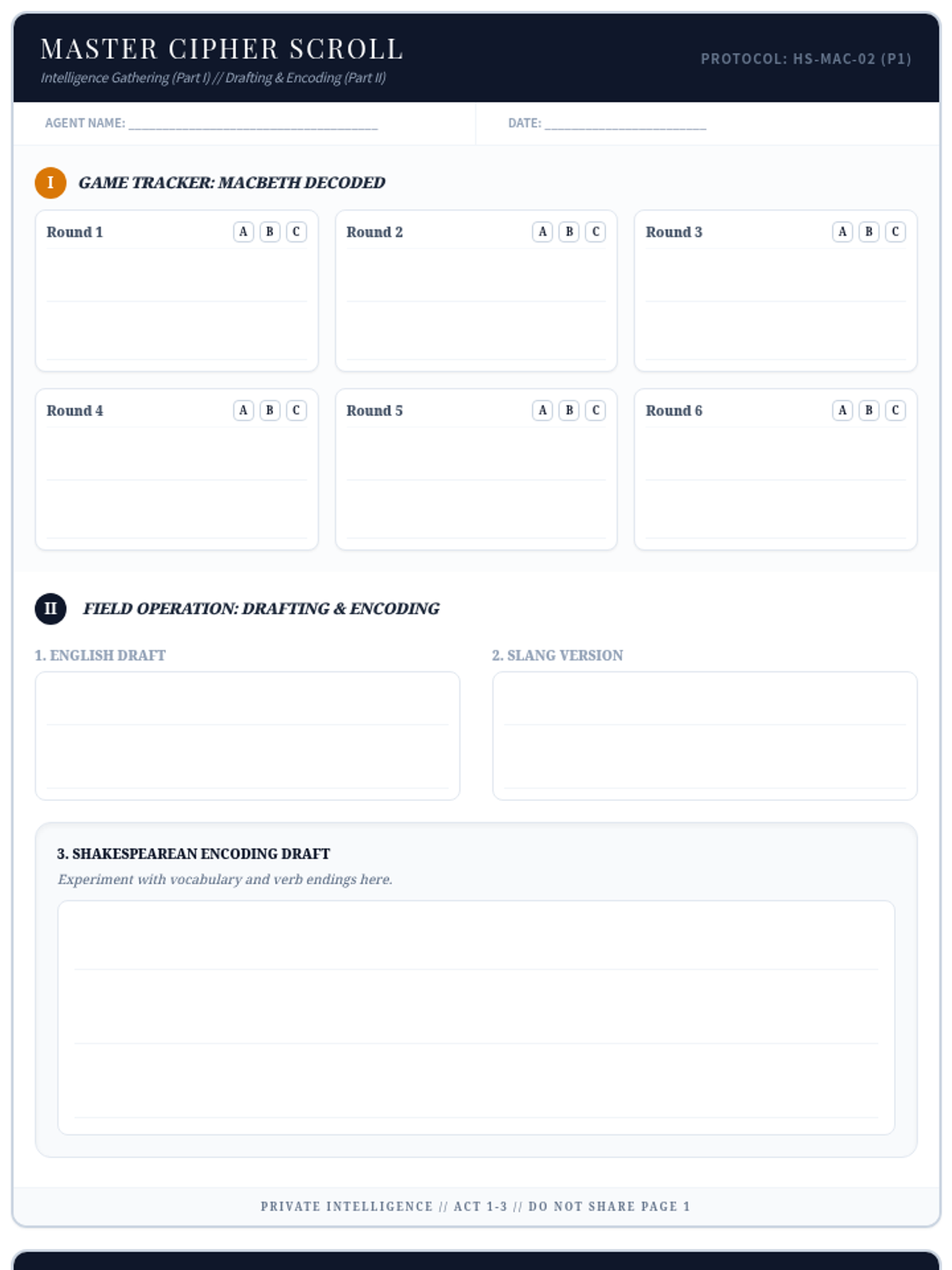
An expanded, two-page version of the game note scroll worksheet. Page 1 contains the game tracker and initial drafts, while Page 2 features the final Shakespearean encoding and space for peer decoding to ensure secrecy. Updated with improved page breaks and writing space.
An updated Jeopardy-style game show slide deck for Macbeth Acts 1-3. Features interpretation slides that display both the quote and multiple-choice translations for better clarity. Round 6 choices now reflect full-quote translations.
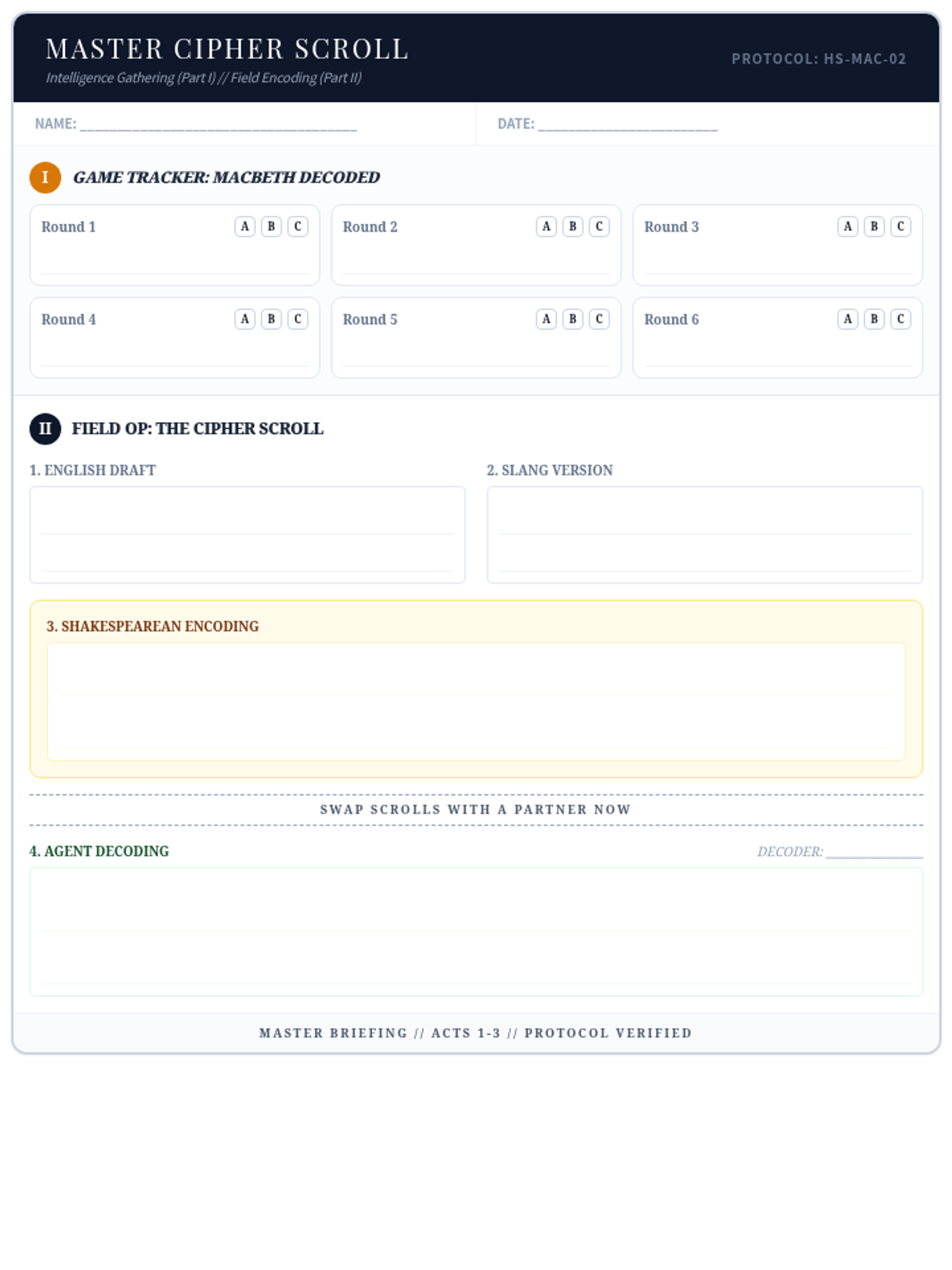
A combined worksheet featuring a top section for tracking 6 rounds of the 'Macbeth Decoded' game show and a bottom section containing the original 'Cipher Scroll' encoding activity. Updated for better handwriting space and to fit on one page.
A Jeopardy-style game show slide deck for Acts 1-3 of Macbeth, requiring students to use their Lexicon to decode phrases and justify their hypotheses. Expanded to 6 rounds.
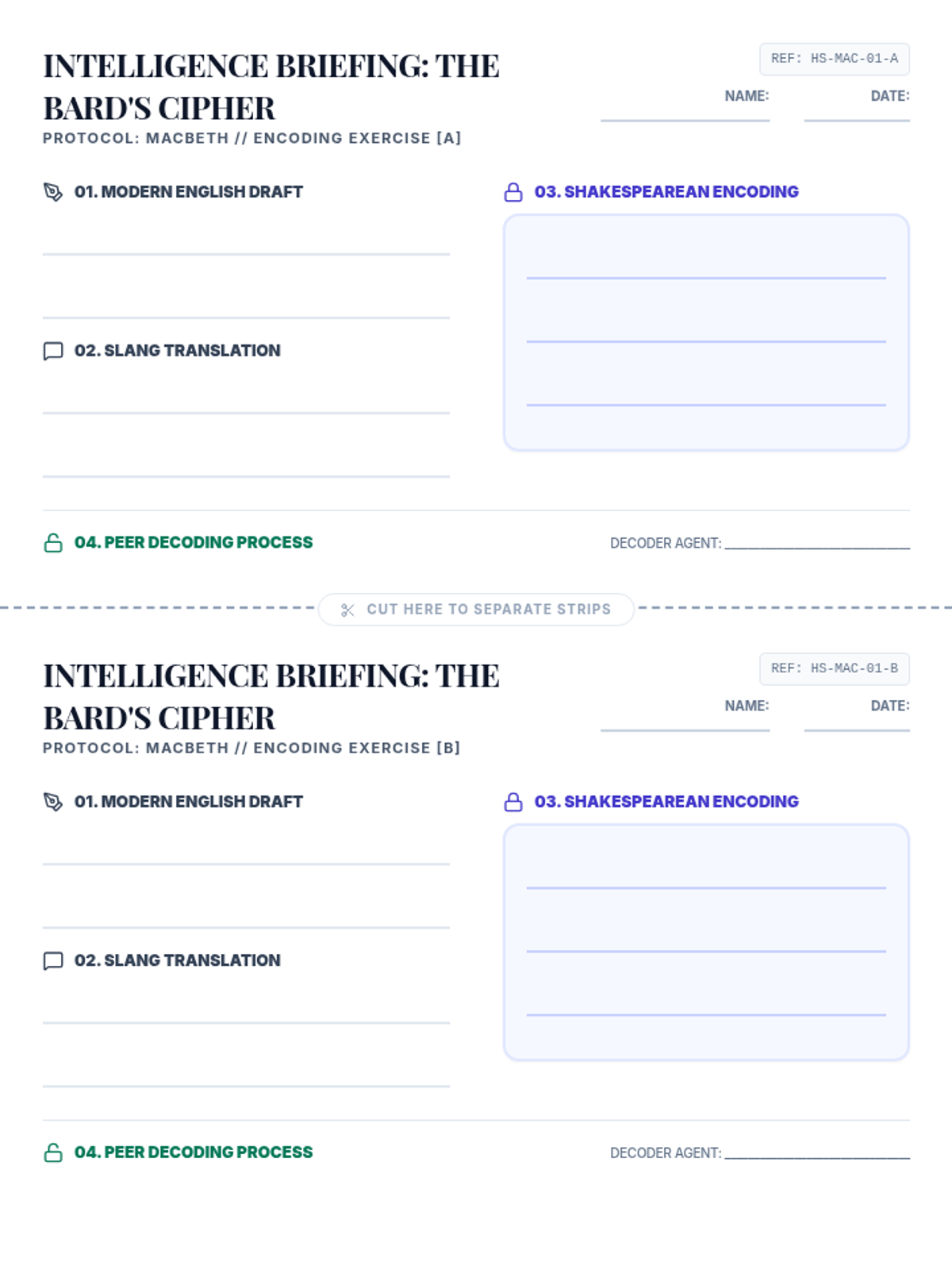
A compact, high-school oriented version of the Cipher Scroll activity, formatted as two strips per page with lines for modern, slang, and Shakespearean translations. Updated for better handwriting space and readability.
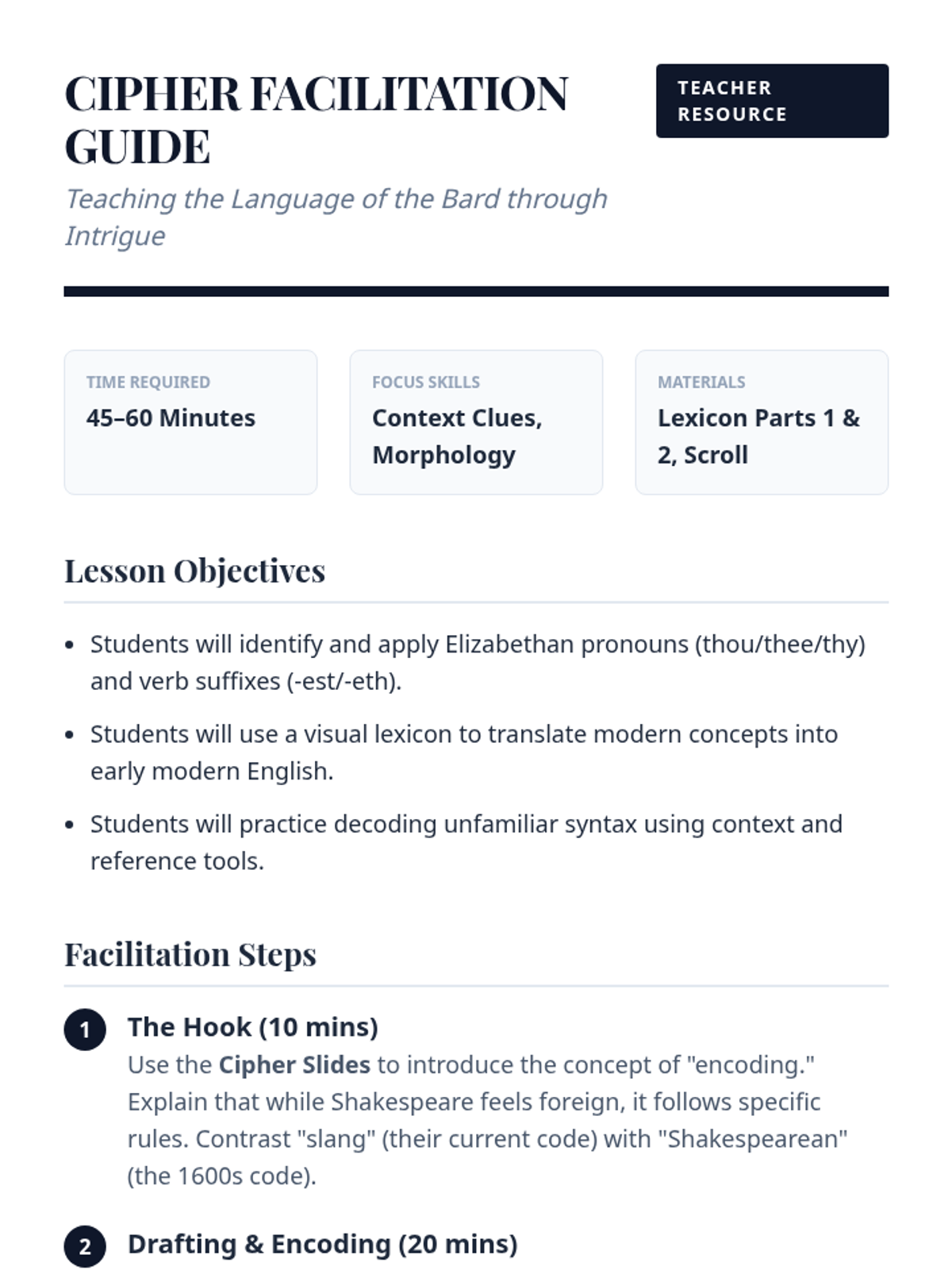
A teacher resource for 'The Bard's Cipher' lesson, providing instructional strategies, common misconceptions, and translation examples to facilitate student success. Updated to fix page breaks and icon rendering.
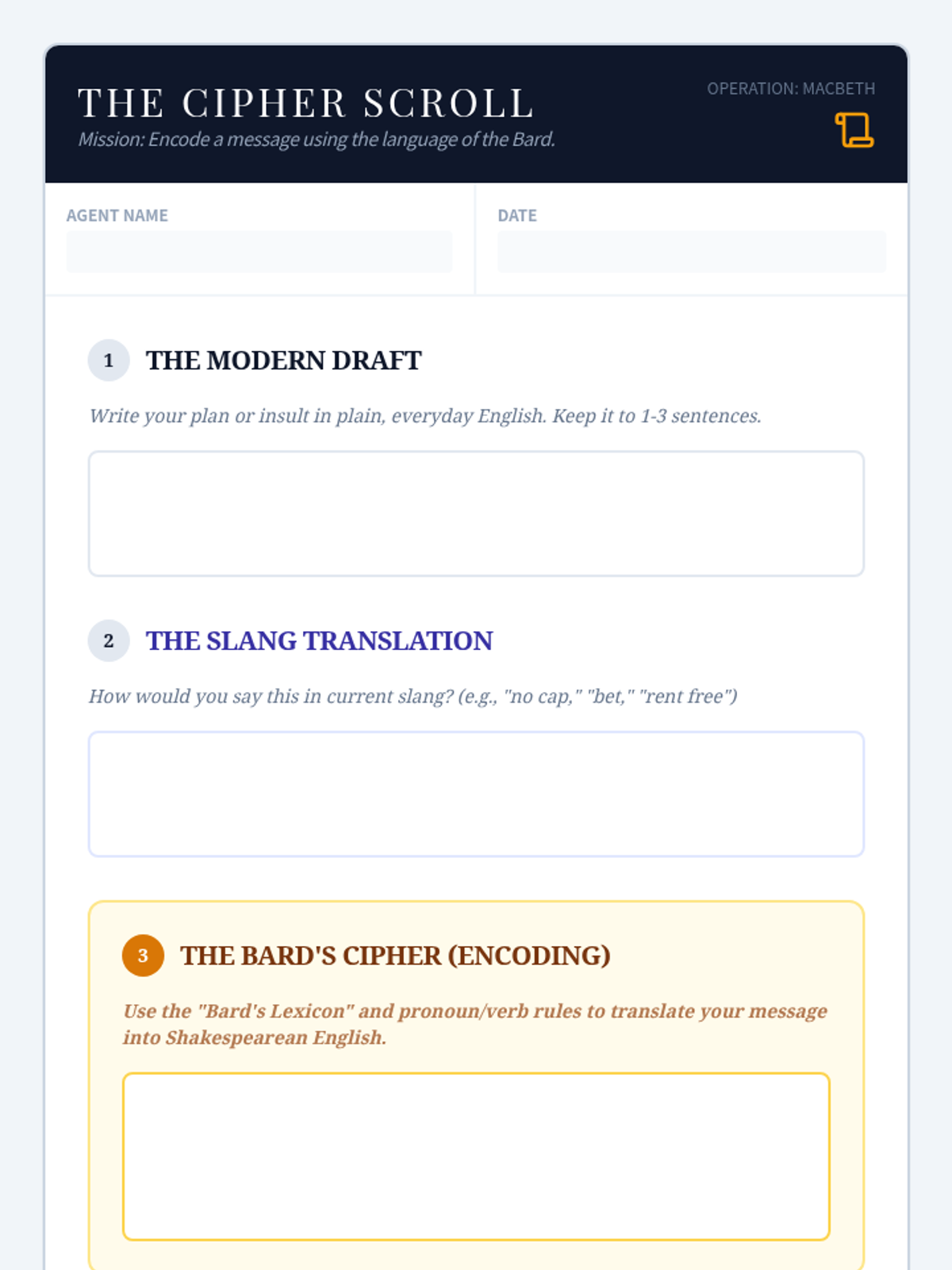
A multi-step activity worksheet where students draft a message in modern English and slang before 'encoding' it into Shakespearean language for a partner to decode. Updated to fix page break issues.
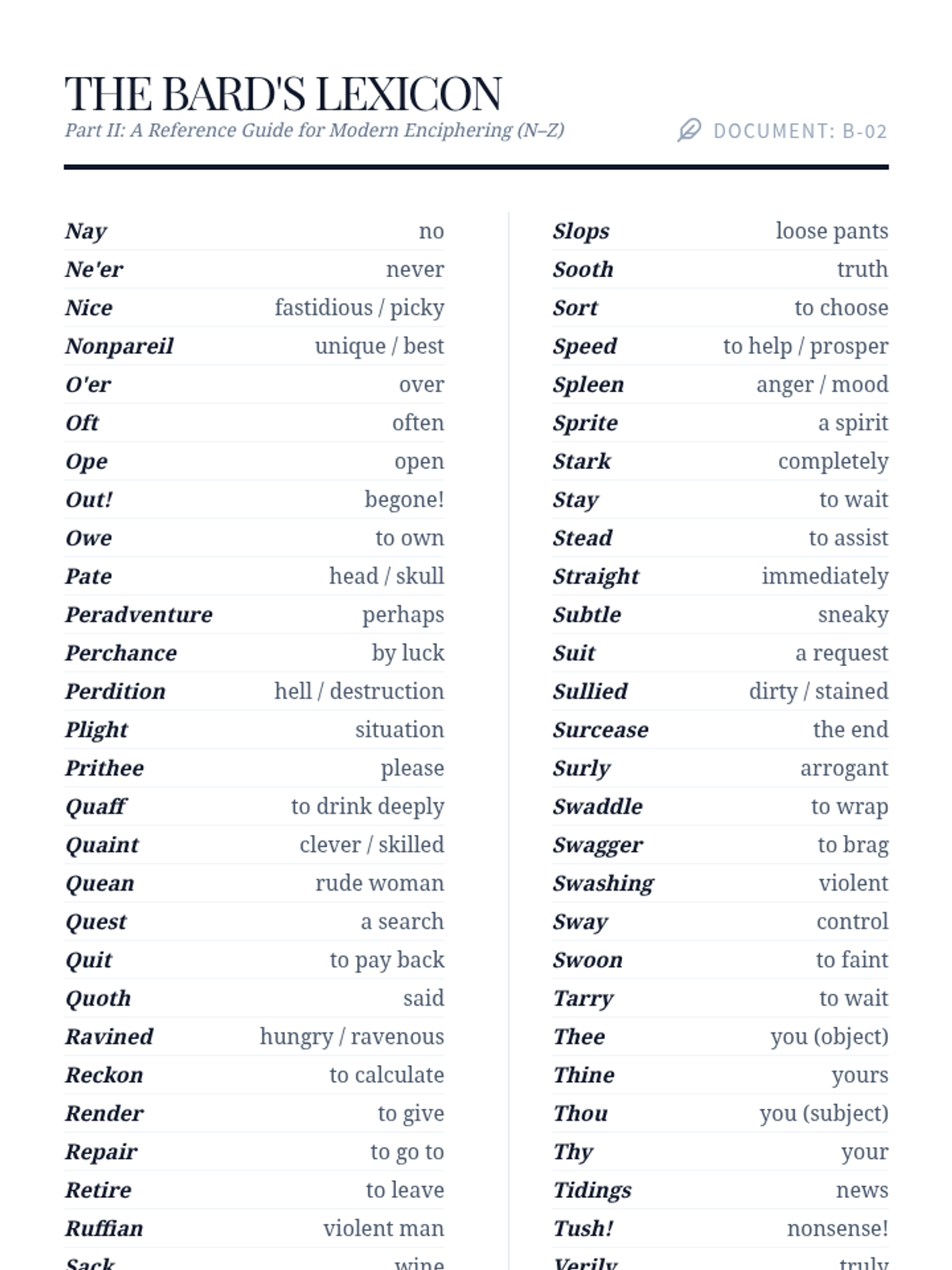
Part 2 of the visual word bank (N-Z) for the Shakespearean encoding activity, completing the alphabet with common Elizabethan words and their modern translations in pt. 12 font. Total word count across two parts exceeds 100.
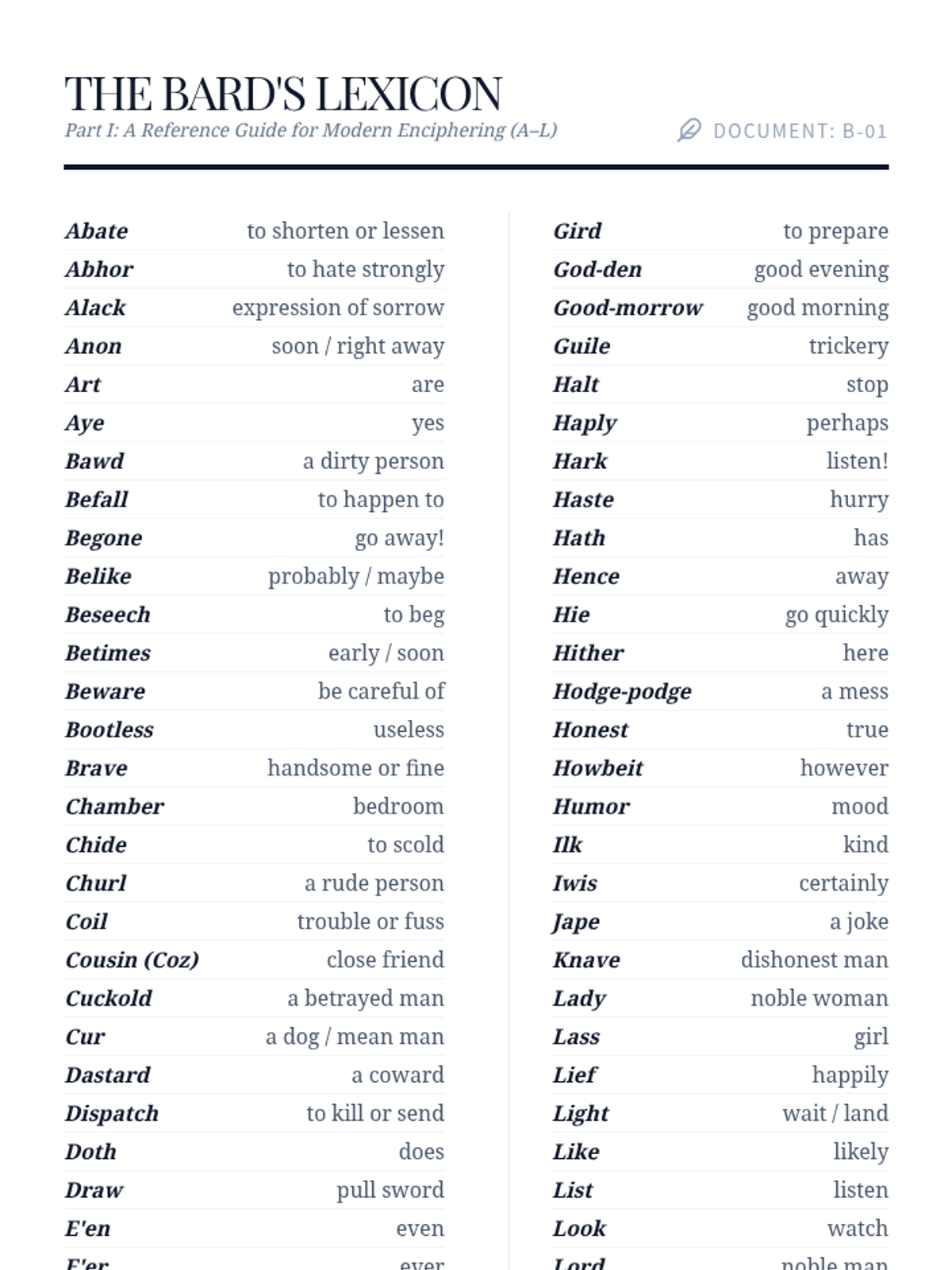
Part 1 of the visual word bank (A-M) for the Shakespearean encoding activity, featuring common Elizabethan words and their modern translations in pt. 12 font. Total word count across two parts exceeds 100.
An introductory slide deck for 'The Bard's Cipher' activity, covering basic Shakespearean pronouns, verb endings, and activity instructions with a moody Elizabethan aesthetic.
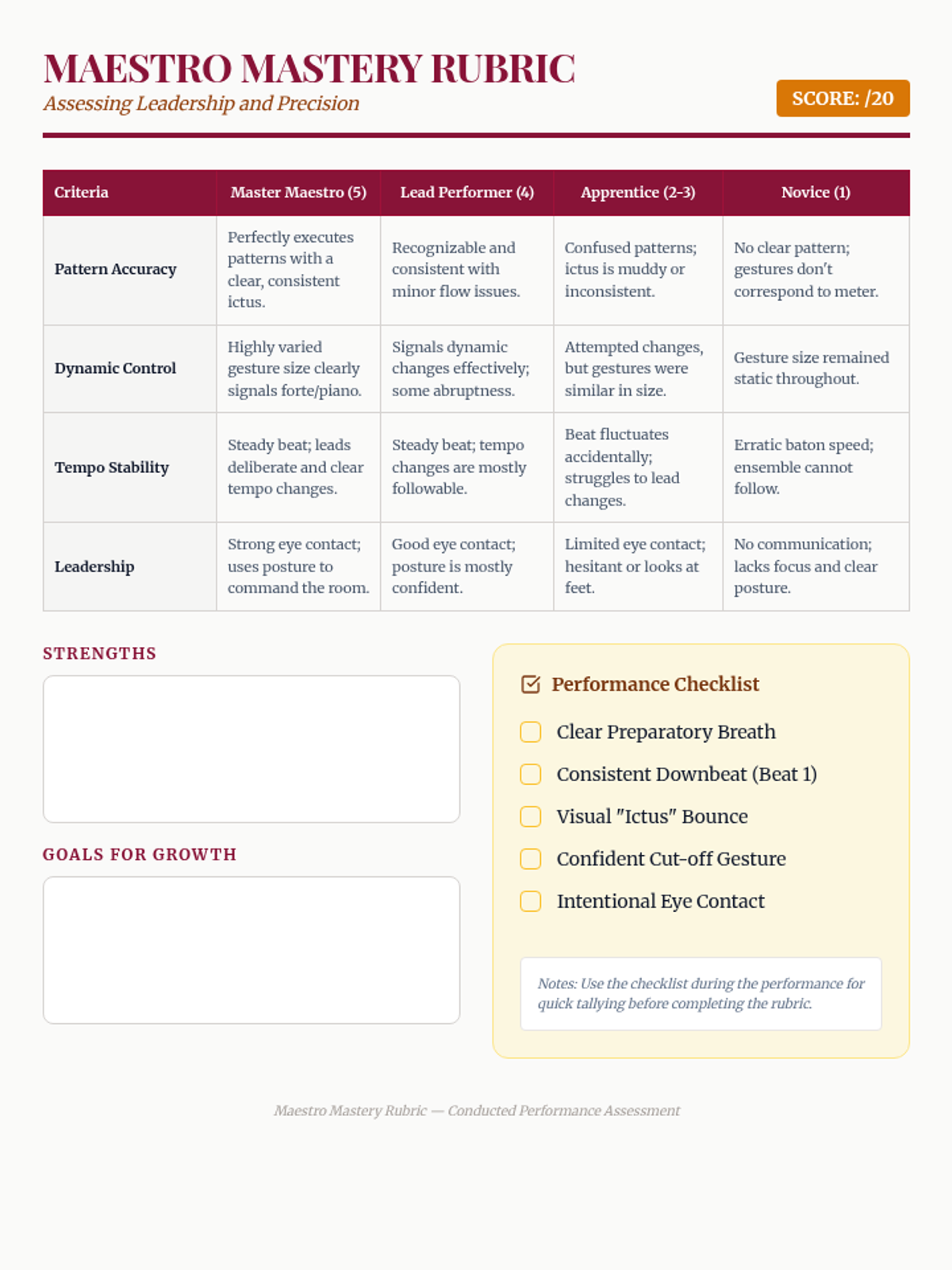
Teacher rubric for evaluating student conducting performance. Covers pattern accuracy, dynamic control, tempo consistency, and leadership presence with a 20-point scoring system.
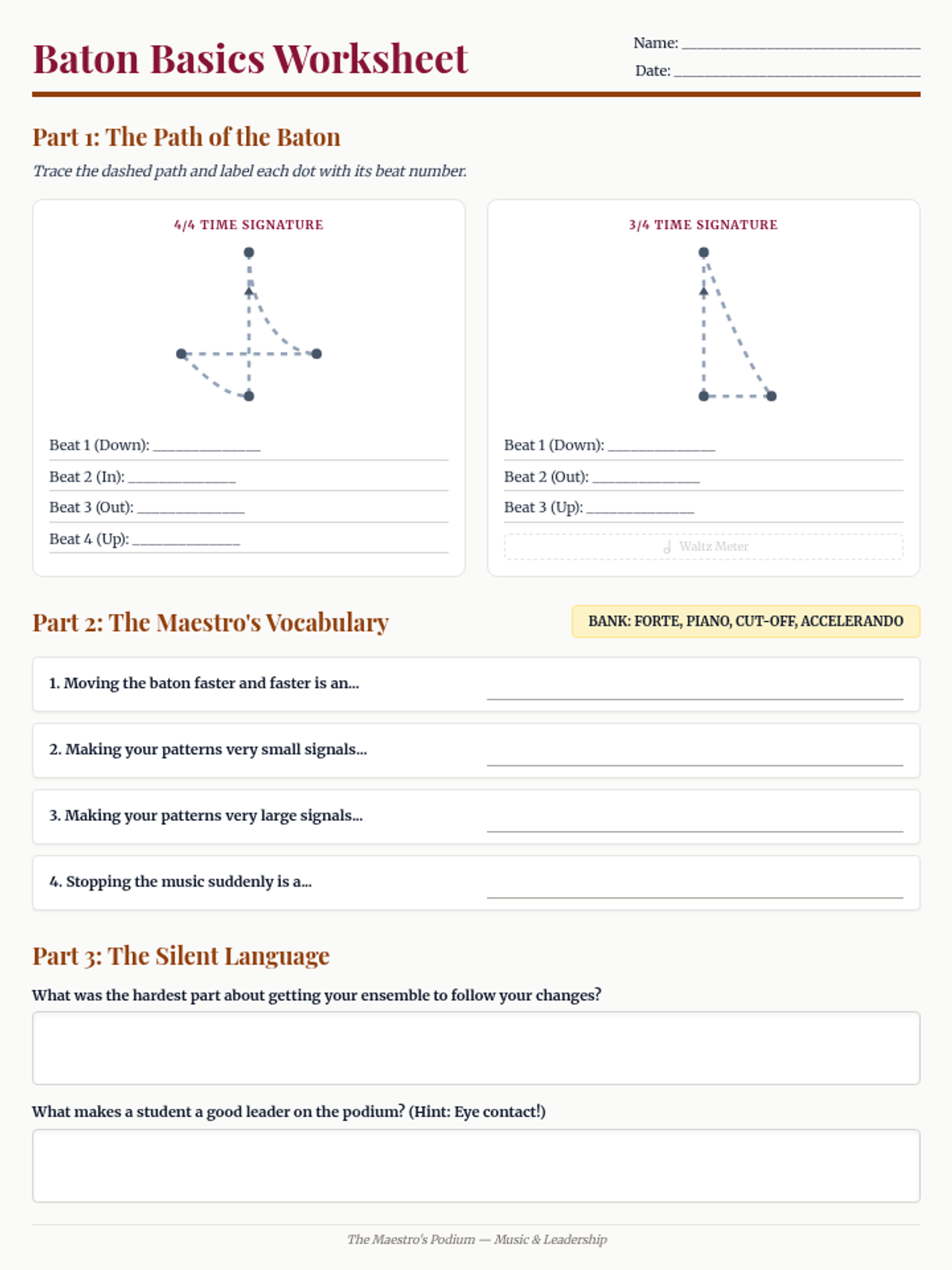
Student worksheet for reinforcing conducting patterns and the relationship between physical gestures and musical outcomes. Includes pattern labeling, vocabulary matching, and reflection questions.
Instructional slide deck for teaching conducting basics. Features visual patterns for 4/4 and 3/4 time, explanations of dynamics and tempo, and the concept of the ictus.
Comprehensive lesson plan for teaching conducting patterns, dynamics, and tempo control to elementary students. Includes objectives, step-by-step procedures, and differentiation strategies.
A slide deck for Lesson 5 focusing on character perspective and the 'Hot Seat' technique. Revised for 'Active Craft' branding and During Reading categorization. Global travel theme.
A slide deck for Lesson 4 exploring informational text structures (cause/effect). Revised for 'Active Craft' branding and During Reading categorization. Environment theme.
A slide deck for Lesson 3 introducing tableaux centered on the 'Joy of Hobbies' theme and narrative story structure. Revised for 'Active Craft' branding and During Reading categorization.
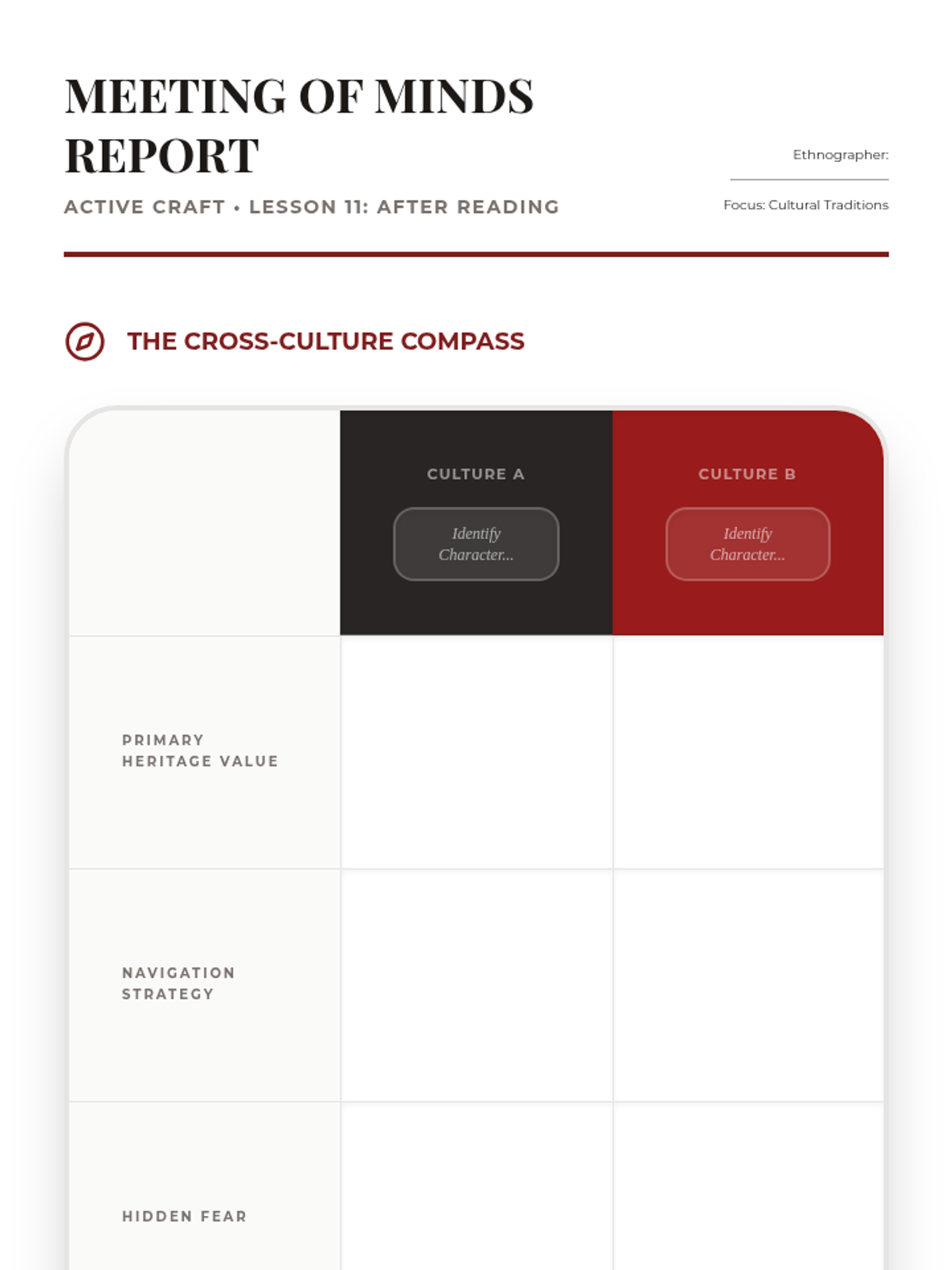
A reporting sheet for character comparison. Revised for 'Active Craft' branding and After Reading categorization for evaluation across texts. Culture/tradition theme. Increased space and shadow depth.
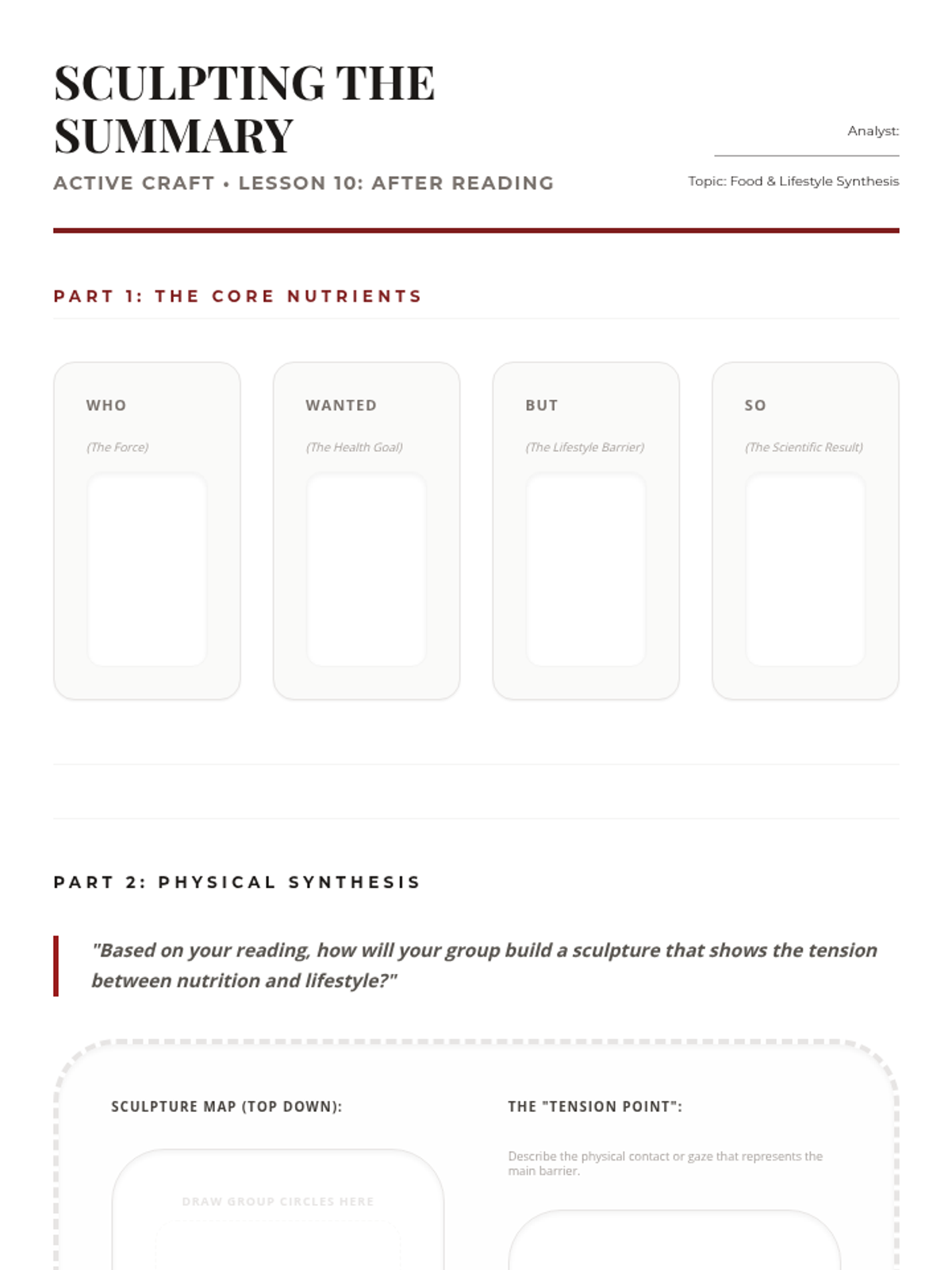
A planning sheet for summary sculptures. Revised for 'Active Craft' branding and After Reading categorization for summarization. Food and health theme. Increased response box heights and improved layout.
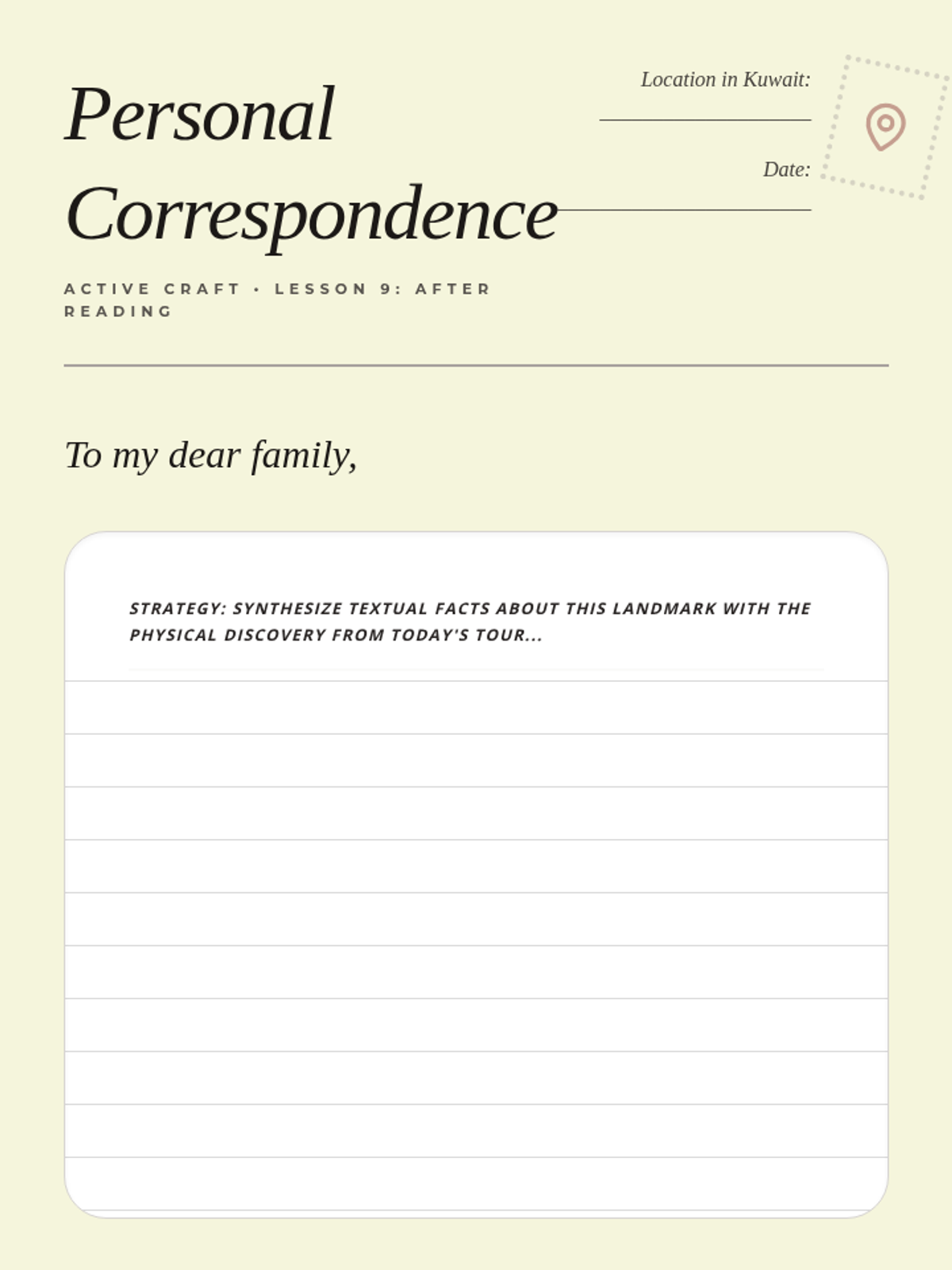
A character-themed stationery sheet for Lesson 9. Revised for 'Active Craft' branding and After Reading categorization. Landmarks theme. Increased space and contrast.
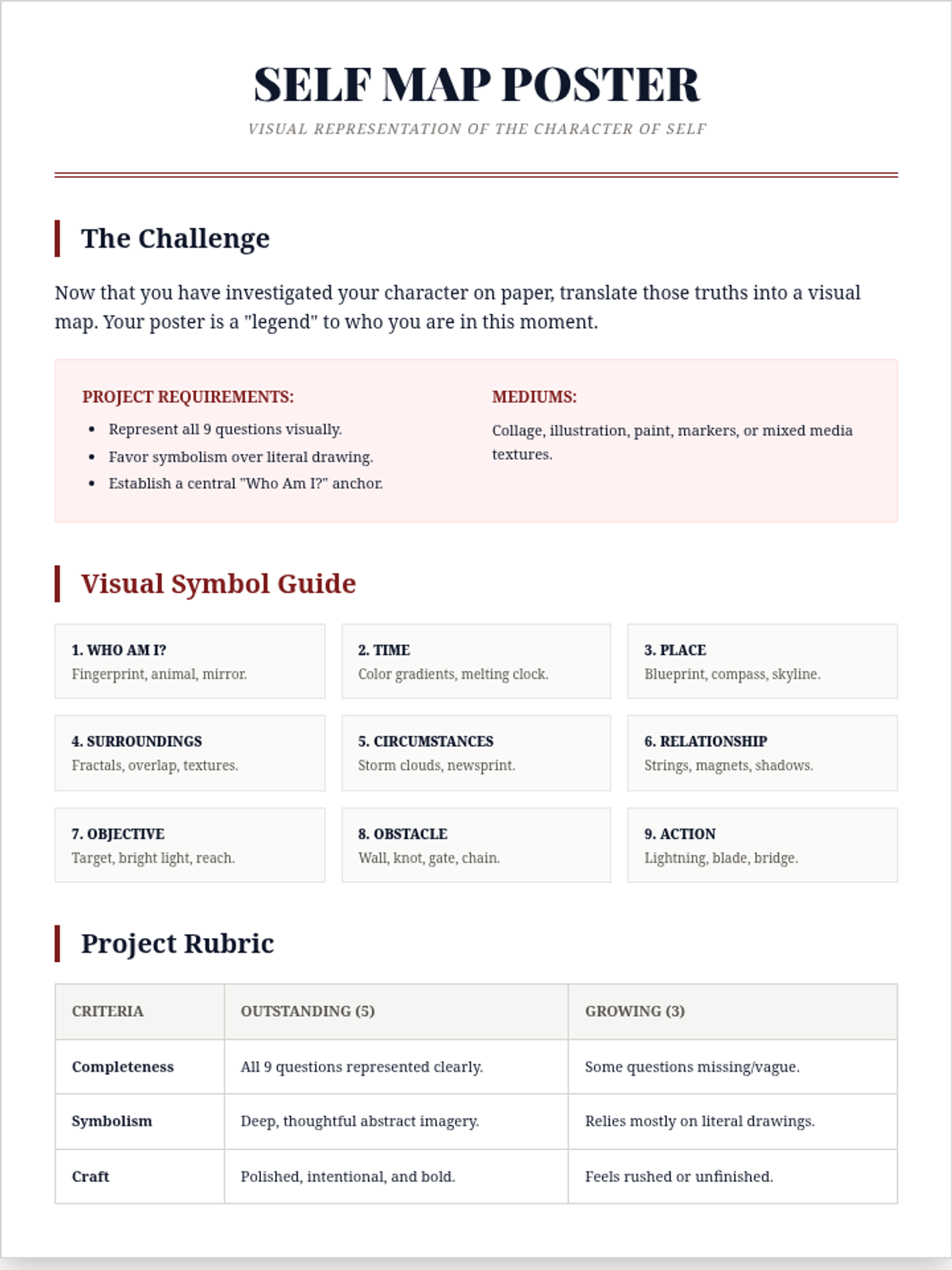
A project guide and rubric for Day 2, instructing students on how to translate their Hagen investigation into a visual character map poster using symbolism and creative layout.
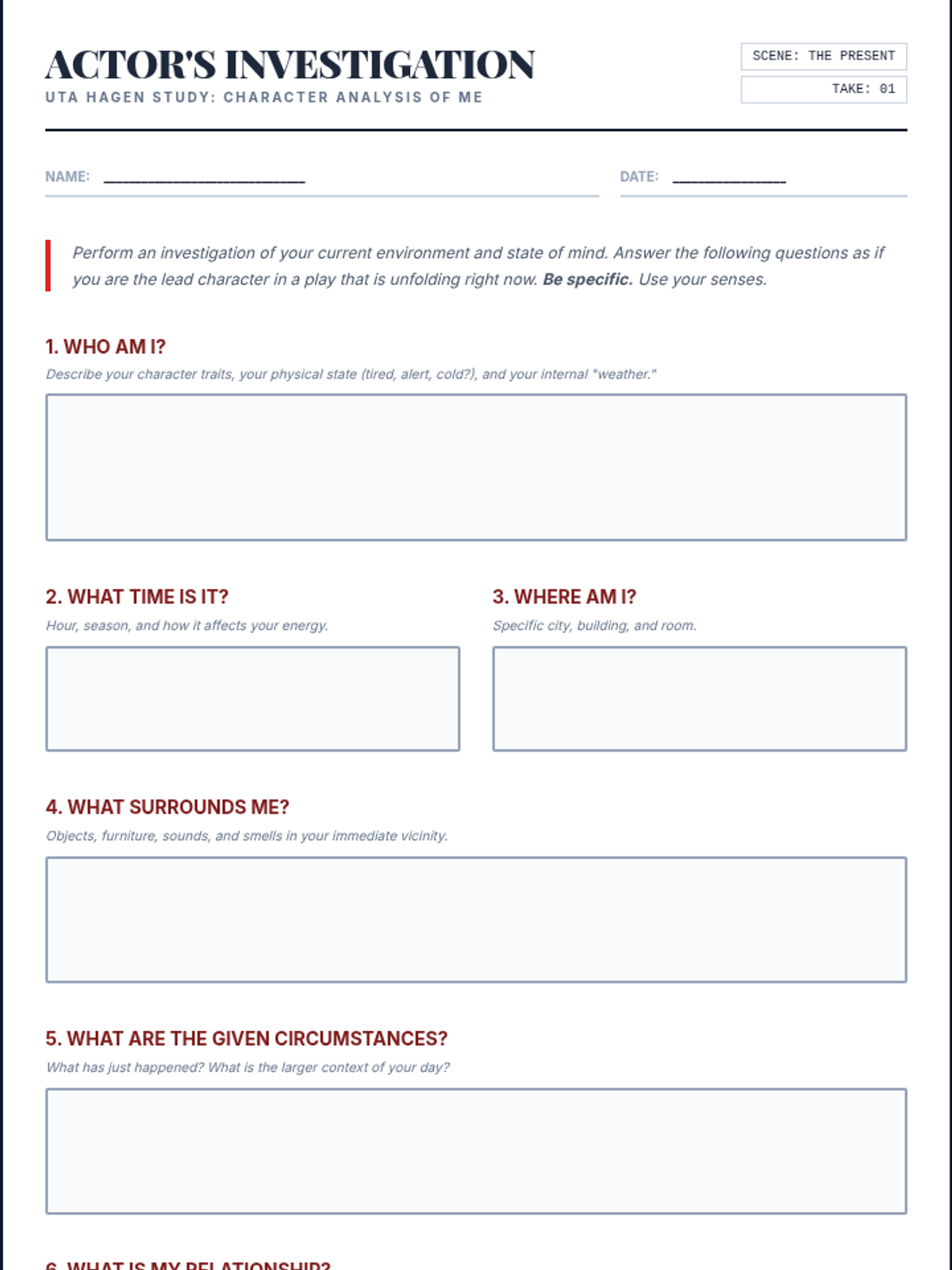
A structured character study worksheet based on Uta Hagen's 9 Questions, prompting students to analyze themselves as characters in their own lives with ample space for reflective writing.
A visual presentation introducing Uta Hagen and her 9 questions for the actor, designed to guide students through the Day 1 introduction of their self-study project.
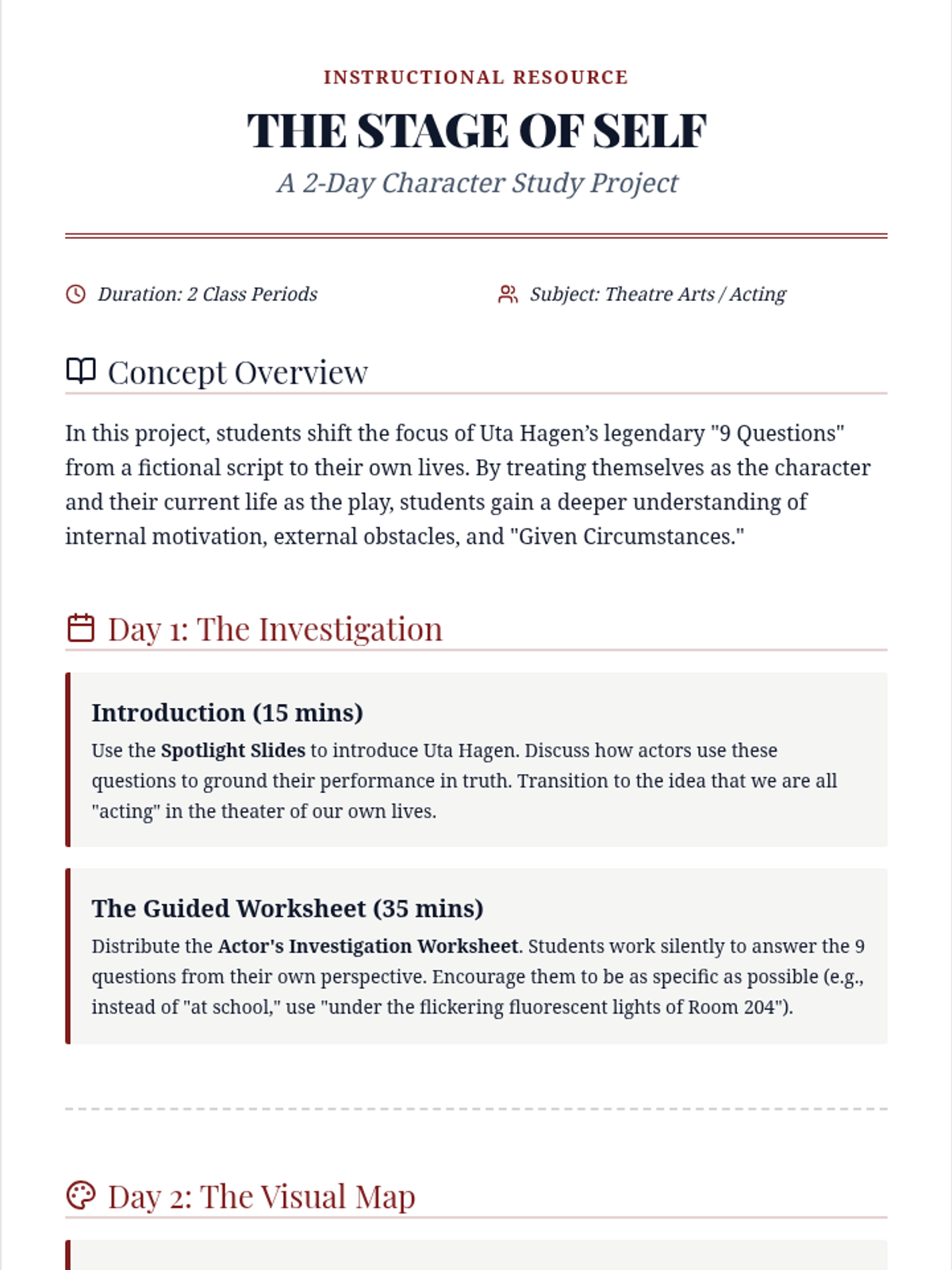
A comprehensive teacher's guide for a 2-day drama project, outlining lesson plans, teaching tips, and instructional strategies for using Uta Hagen's 9 Questions in a self-study character project.
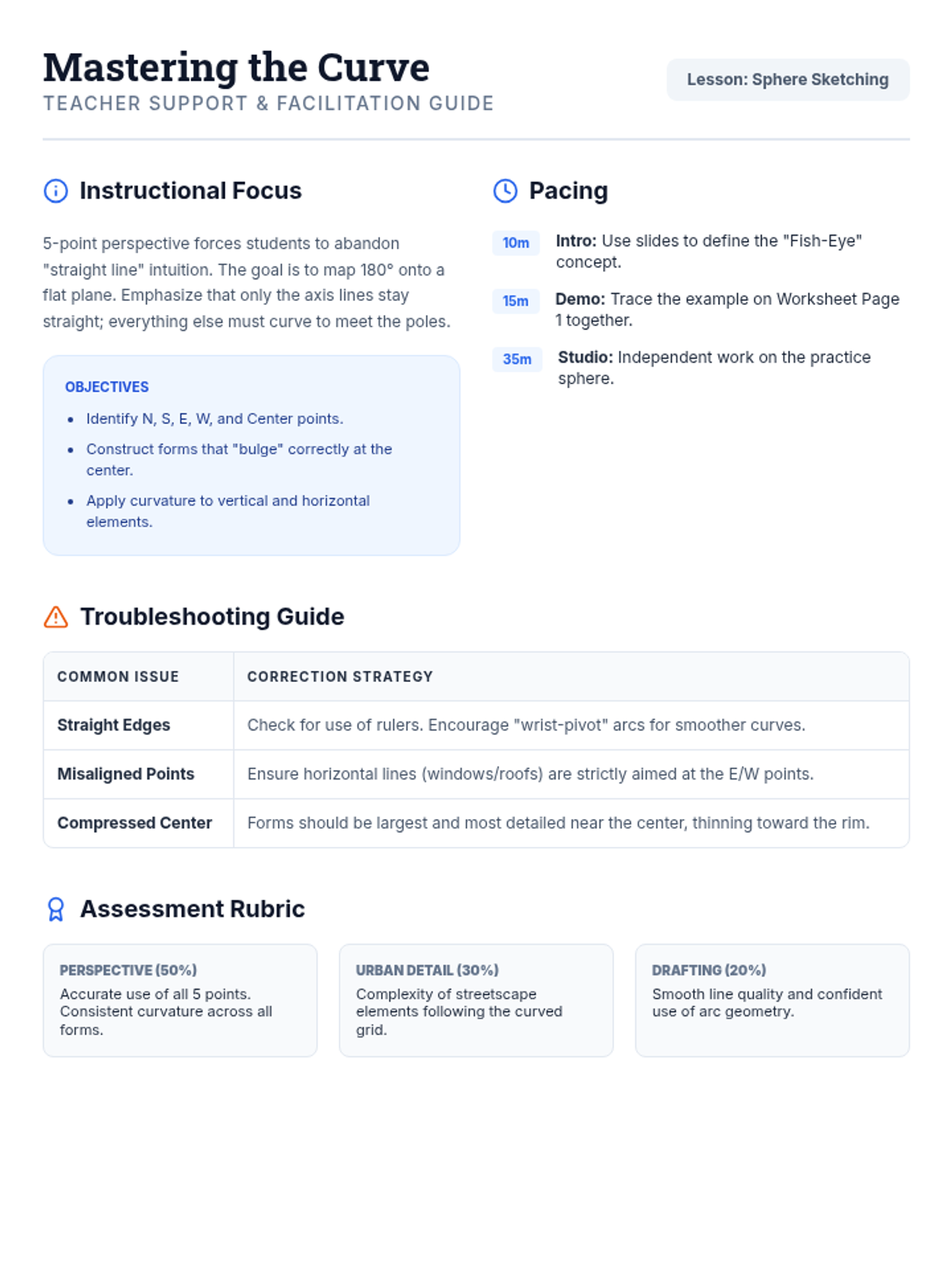
Teacher-facing guide for facilitating the 5-point perspective lesson. Includes instructional objectives, a detailed pacing guide, common student mistakes with suggested fixes, and a clear assessment rubric for evaluating curvilinear sketches.
Visual presentation slides covering the core concepts of 5-point perspective. Includes clear diagrams of the five vanishing points, explanations of the "fish-eye" effect, and specific rules for drawing urban architectural features like skyscrapers and streets on a curved grid.
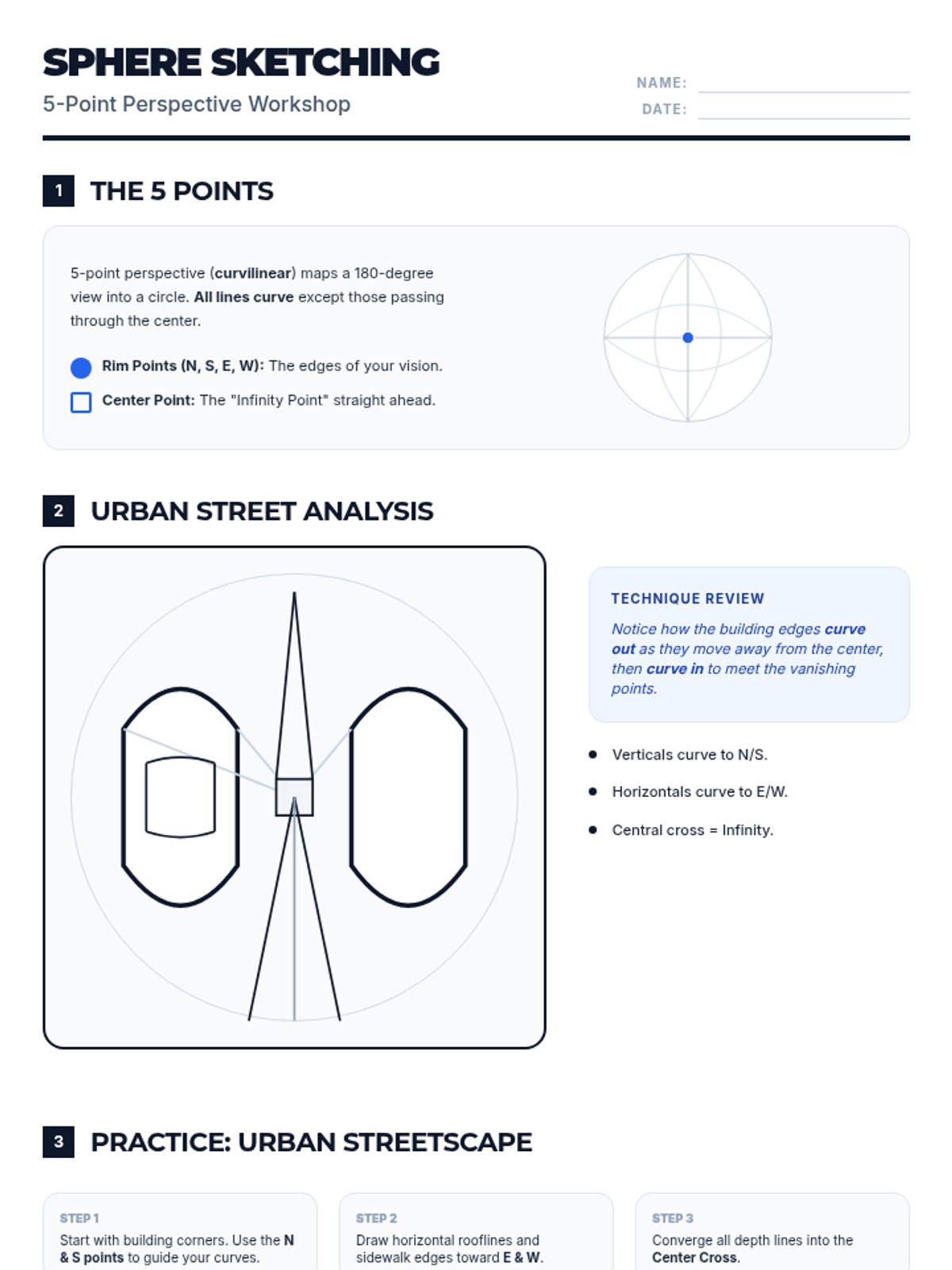
A comprehensive 2-page worksheet for mastering 5-point perspective. Includes a detailed visual guide on curvilinear points, a worked urban city street example for analysis, and a full-page practice area with a pre-formatted spherical grid for student sketching.
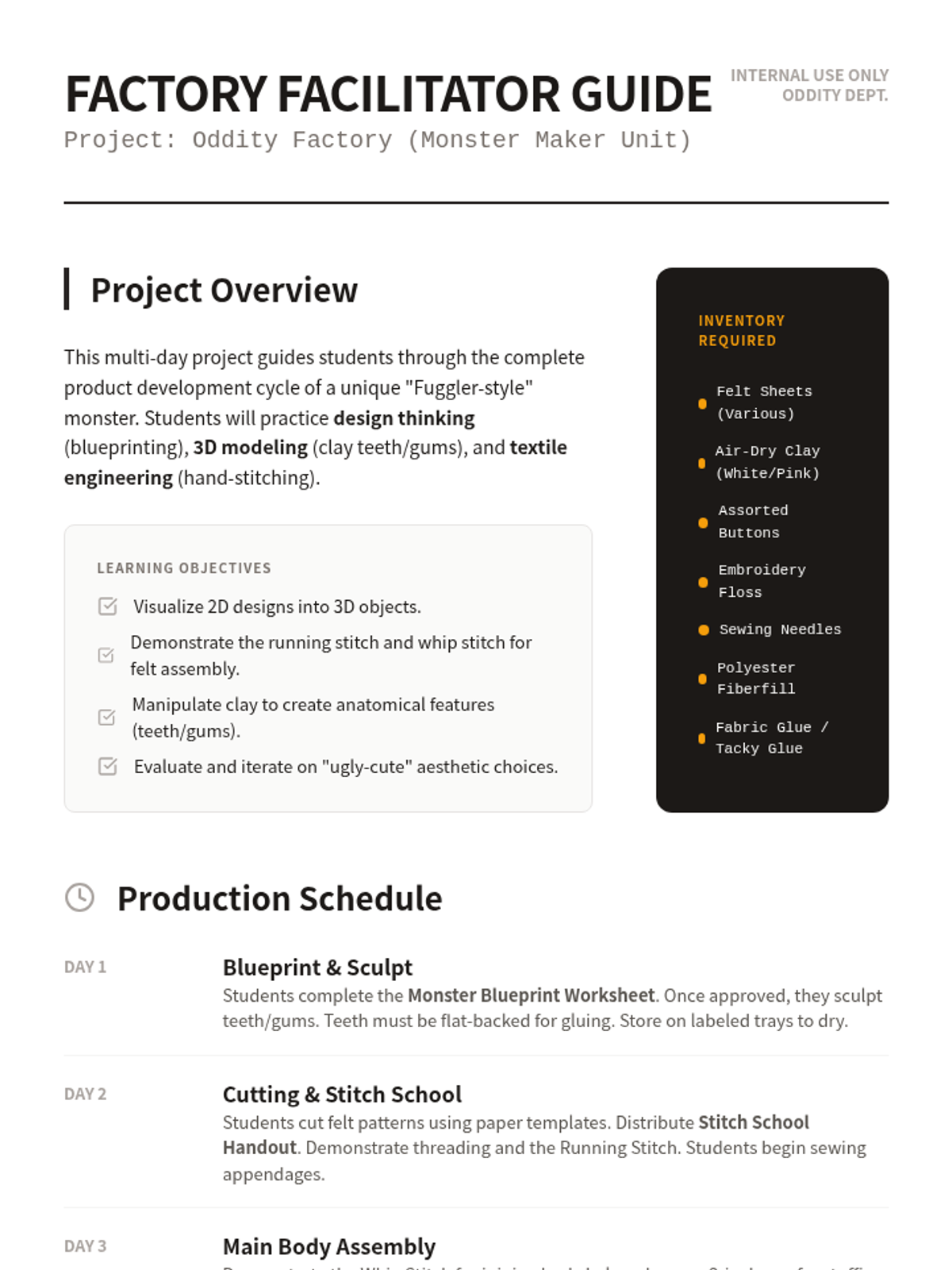
A teacher facilitation guide outlining pacing, learning objectives, material lists, and troubleshooting tips for managing the multi-day monster-making project.
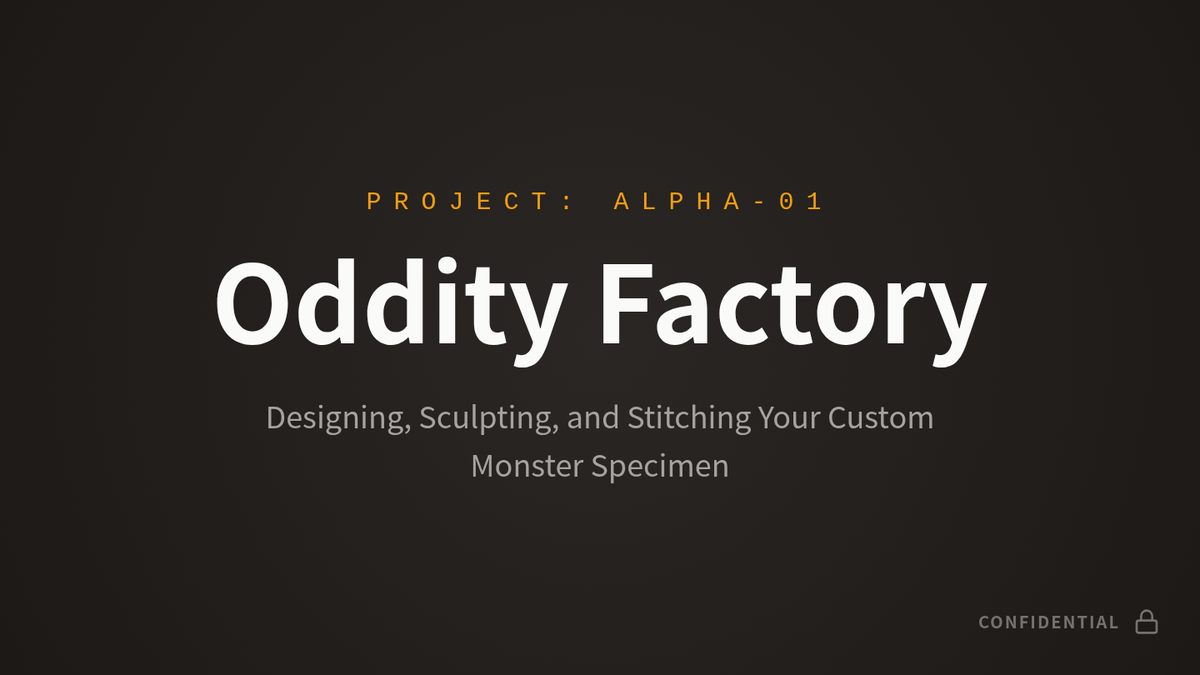
An introductory slide deck for the project, covering the 'funny-ugly' aesthetic, project timeline, clay modeling tips, and basic hand-stitching overview.
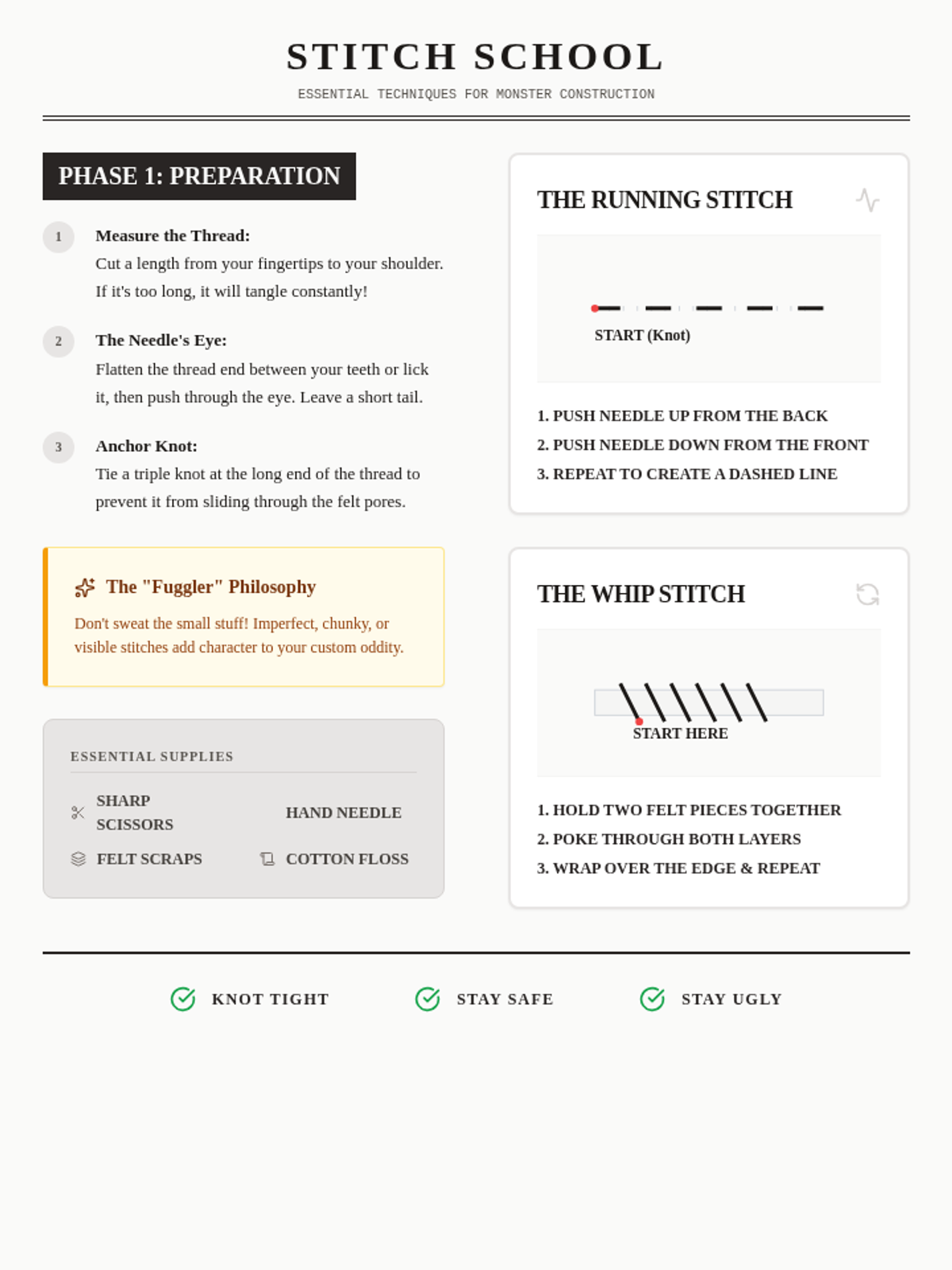
An illustrated reference sheet teaching the basics of threading a needle, tying knots, and performing the running and whip stitches for felt assembly.
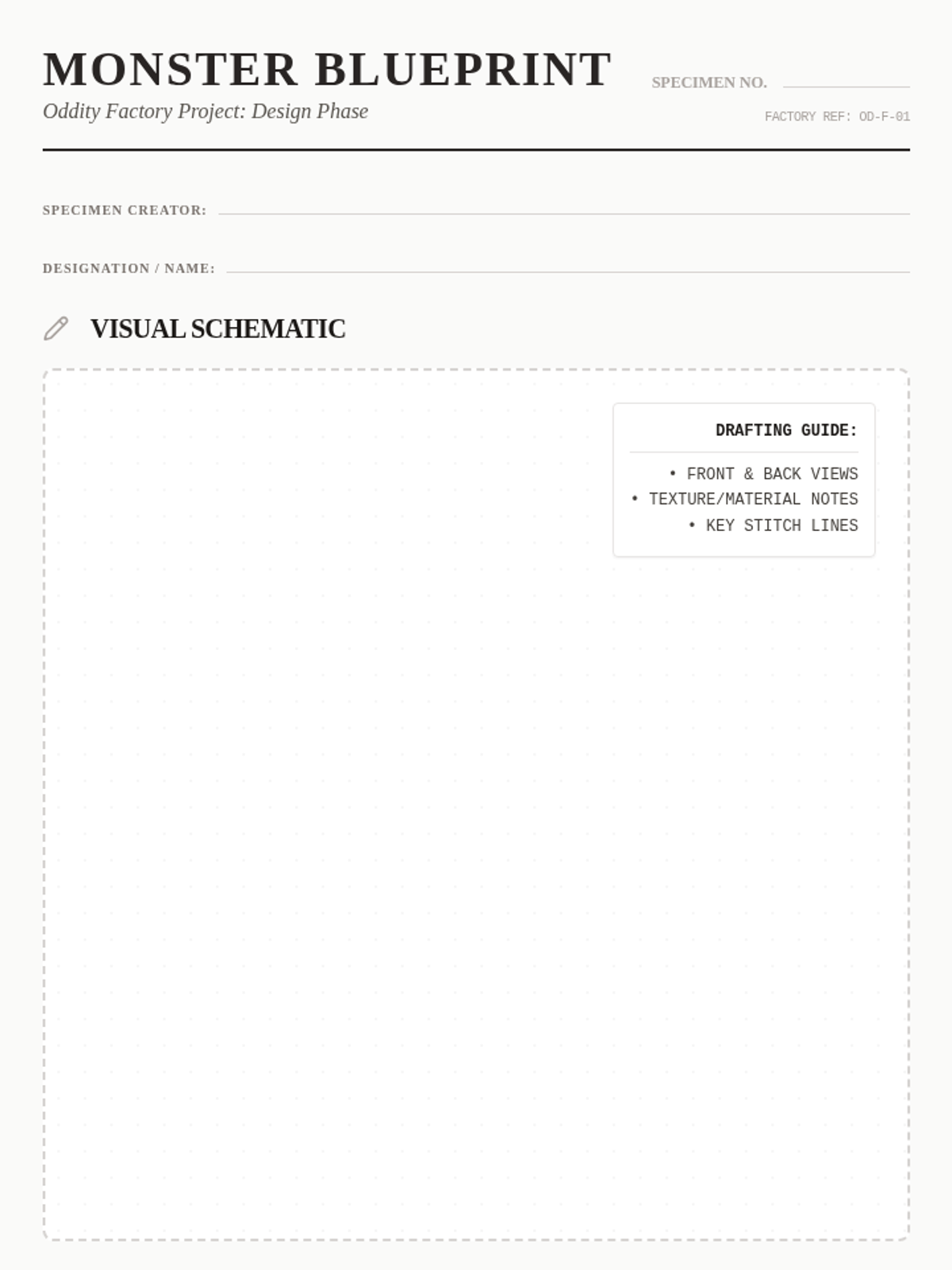
A detailed design planning worksheet for students to sketch their monster, plan materials (felt, buttons, clay), and conceptualize the unique 'ugly-cute' features of their creation.
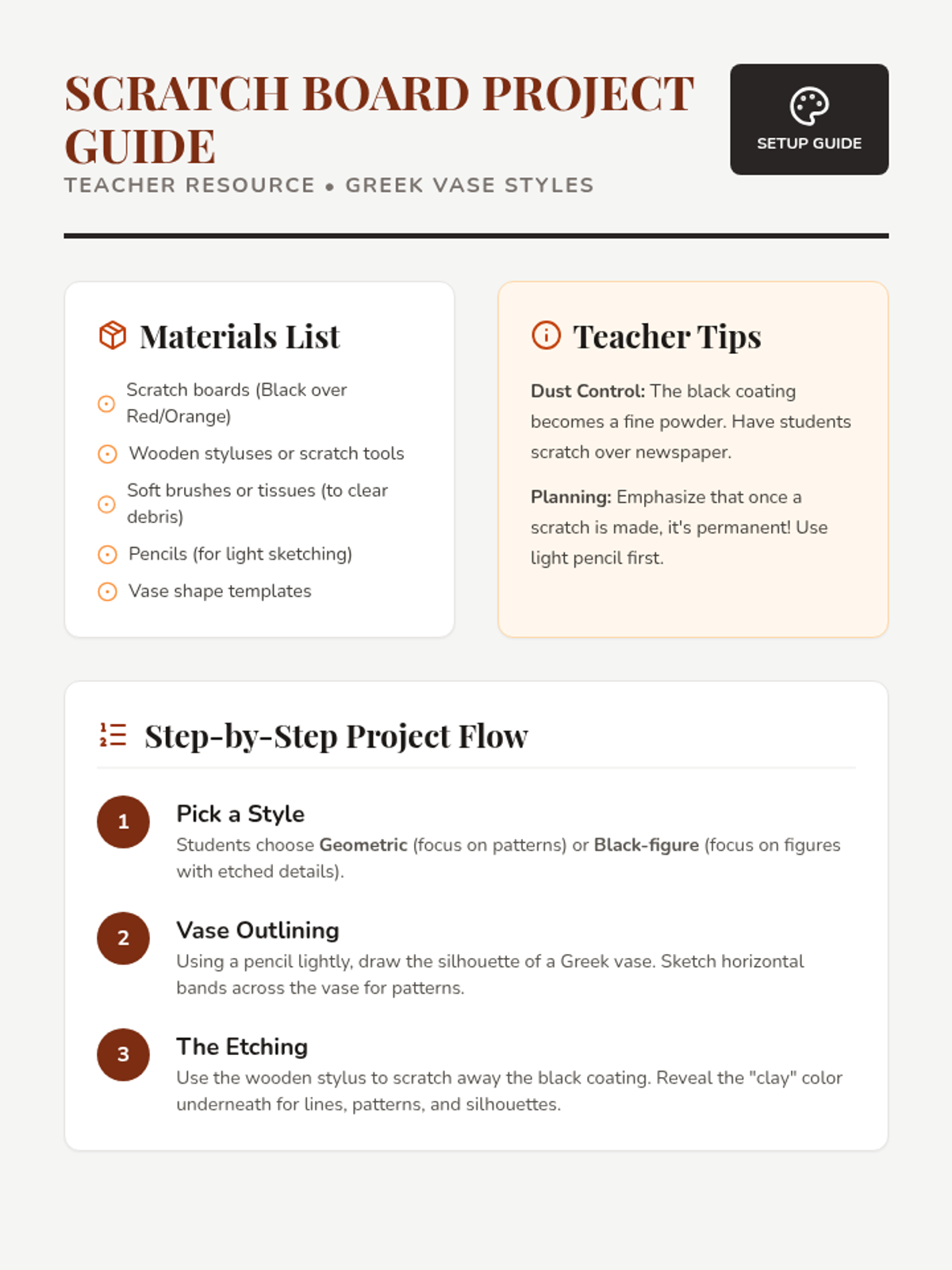
A teacher's guide for the scratch board art project, including materials, prep tips, step-by-step student instructions, and historical discussion prompts.
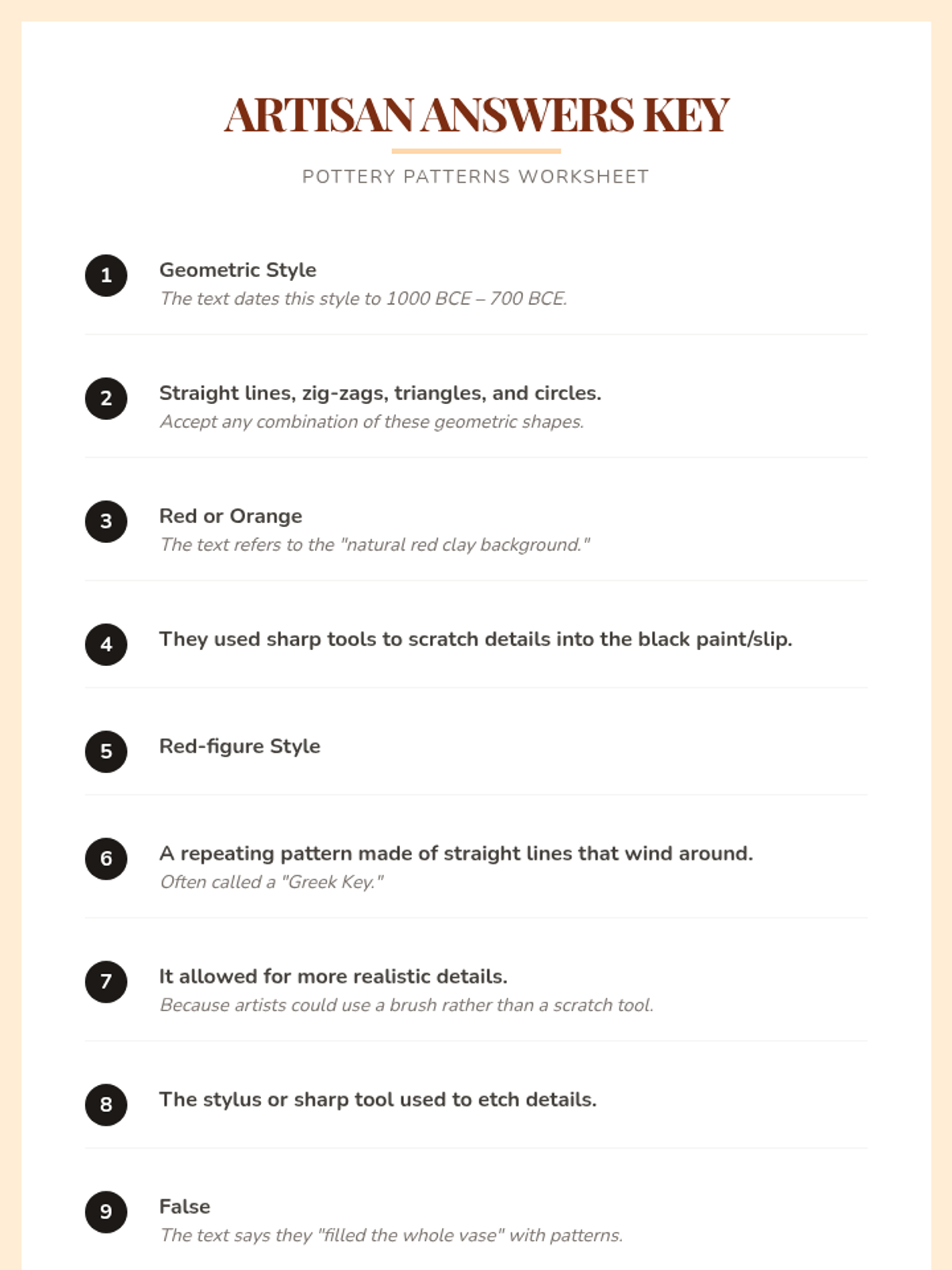
An answer key for the Pottery Patterns Worksheet, providing clear answers and teacher notes for all 10 questions.
Instructional slides introducing the history and visual characteristics of Geometric, Black-figure, and Red-figure pottery. Includes a project introduction slide connecting the history to scratch board art.
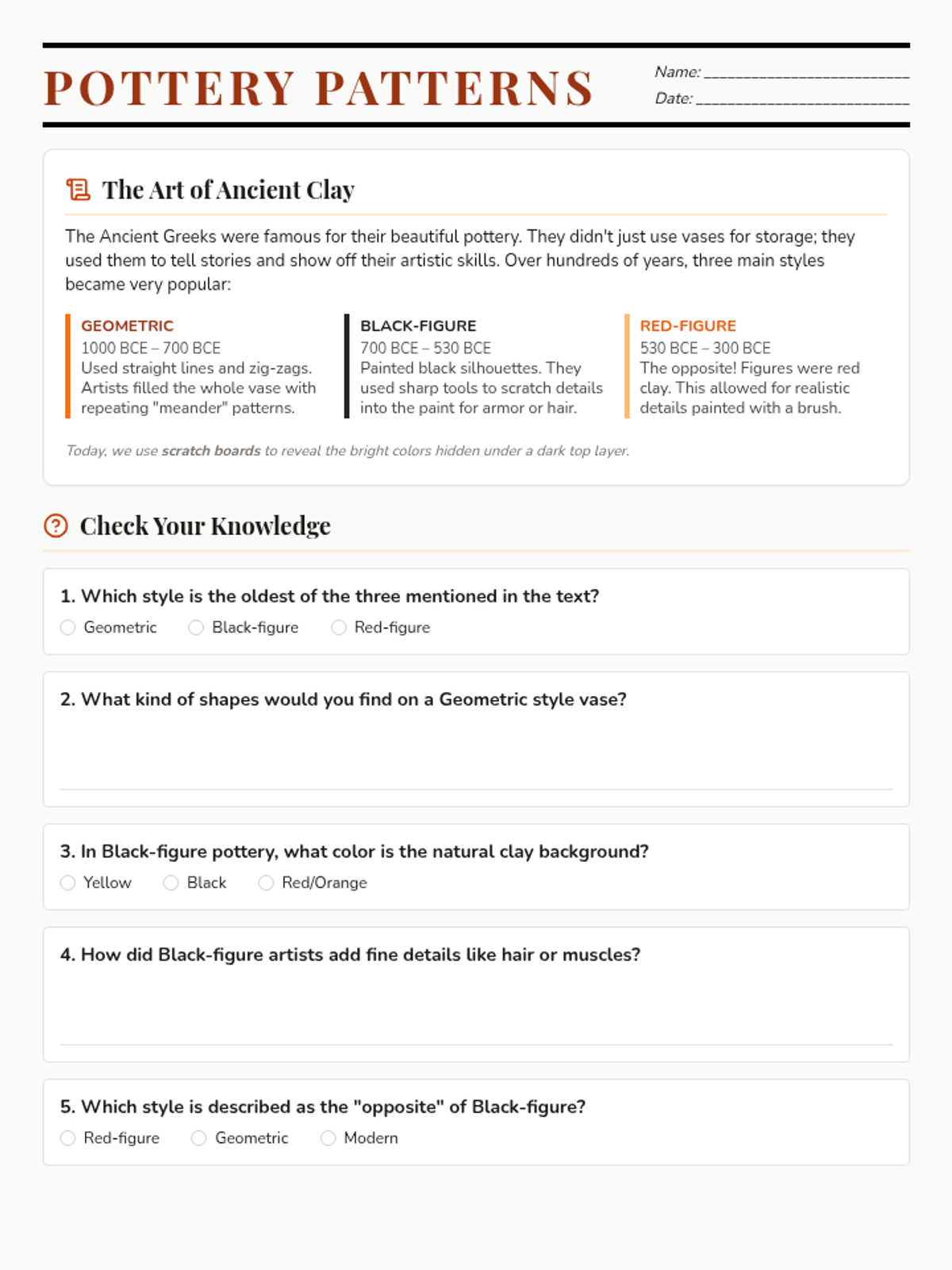
An introductory reading passage about Geometric, Black-figure, and Red-figure Greek pottery styles followed by 10 comprehension questions. Designed for primary/middle school students to build background knowledge before an art project.
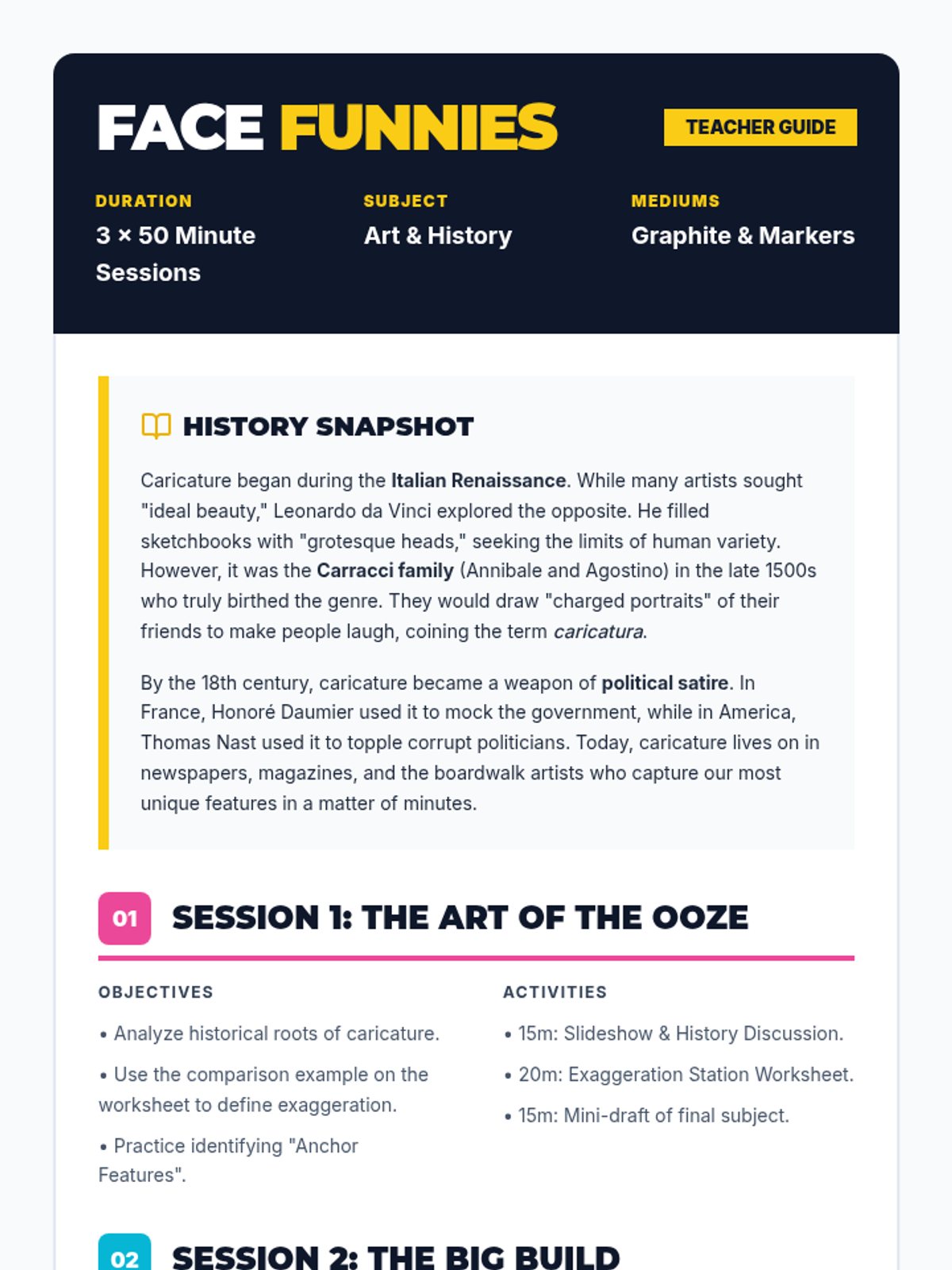
A comprehensive instructional guide for teachers, detailing the lesson's three-session structure, historical context, key learning objectives, and classroom facilitation tips.
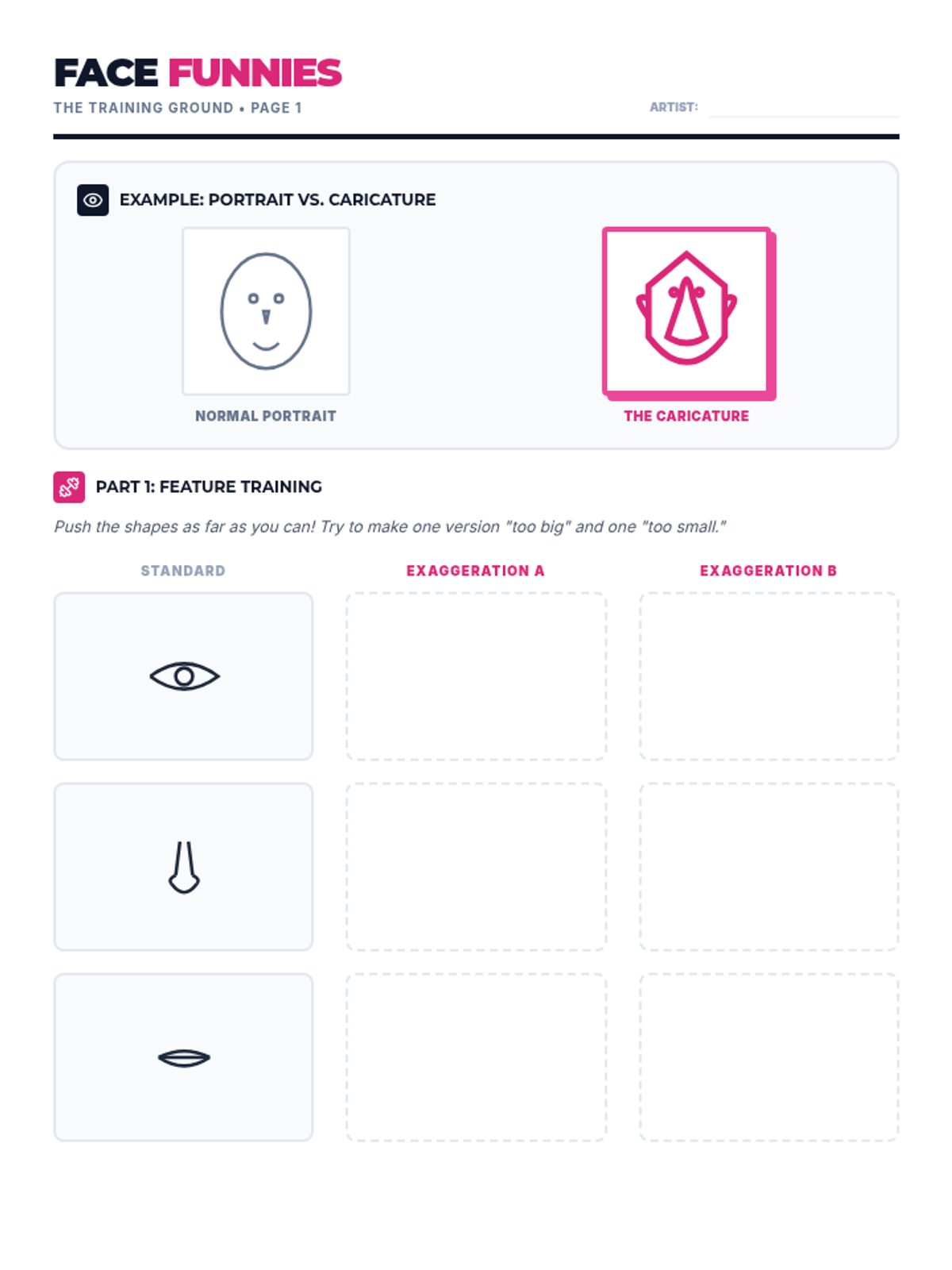
A student worksheet for practicing the fundamental skills of caricature: observing features and applying varied levels of exaggeration before attempting a full sketch. Now includes a generous two-page layout for better practice space.
A visual presentation introducing caricature art, its history from the Renaissance to modern times, and a step-by-step guide for creating an exaggerated portrait using graphite and markers.
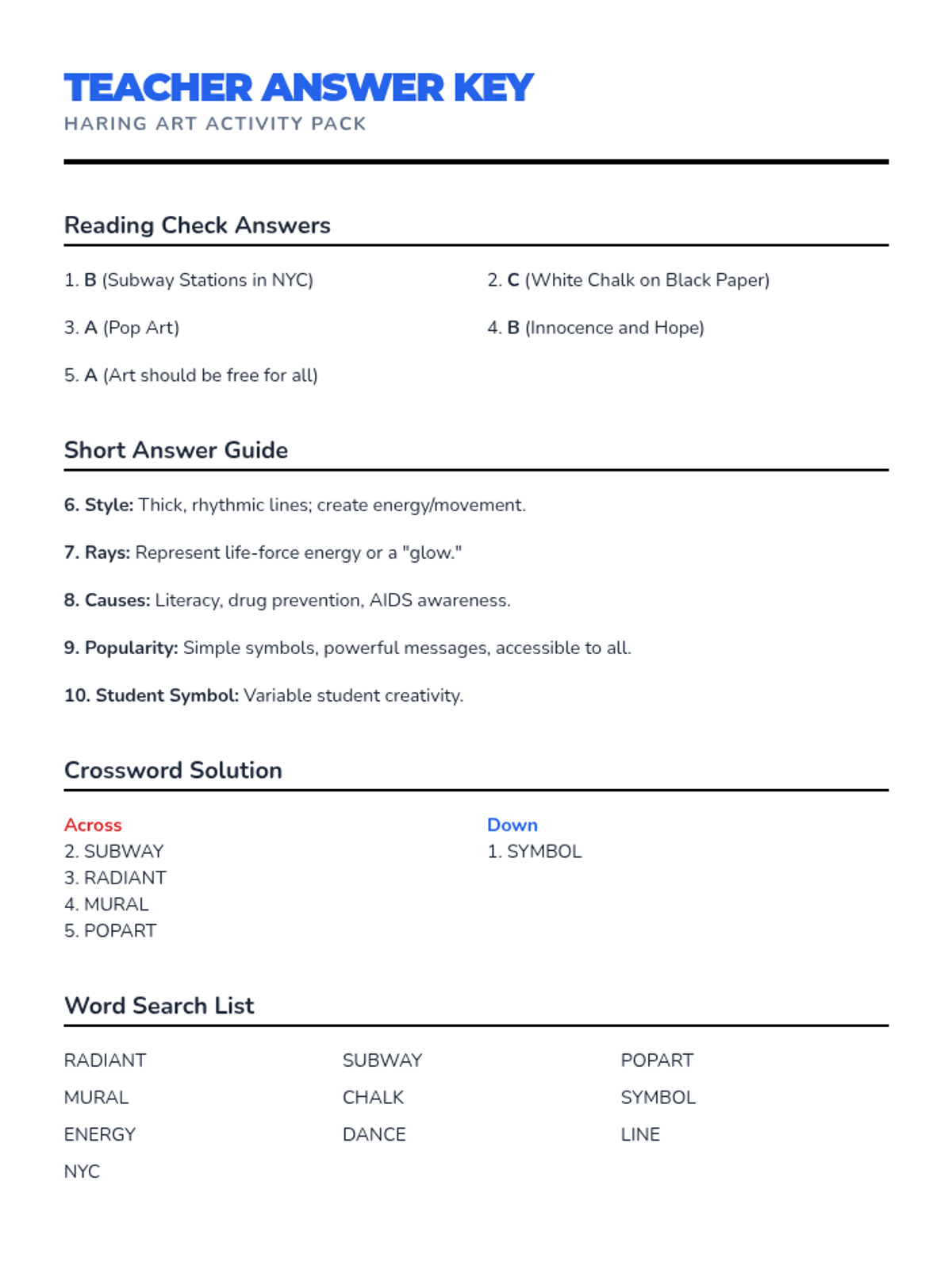
Teacher answer key for all activities in the Haring Art Activity Pack.
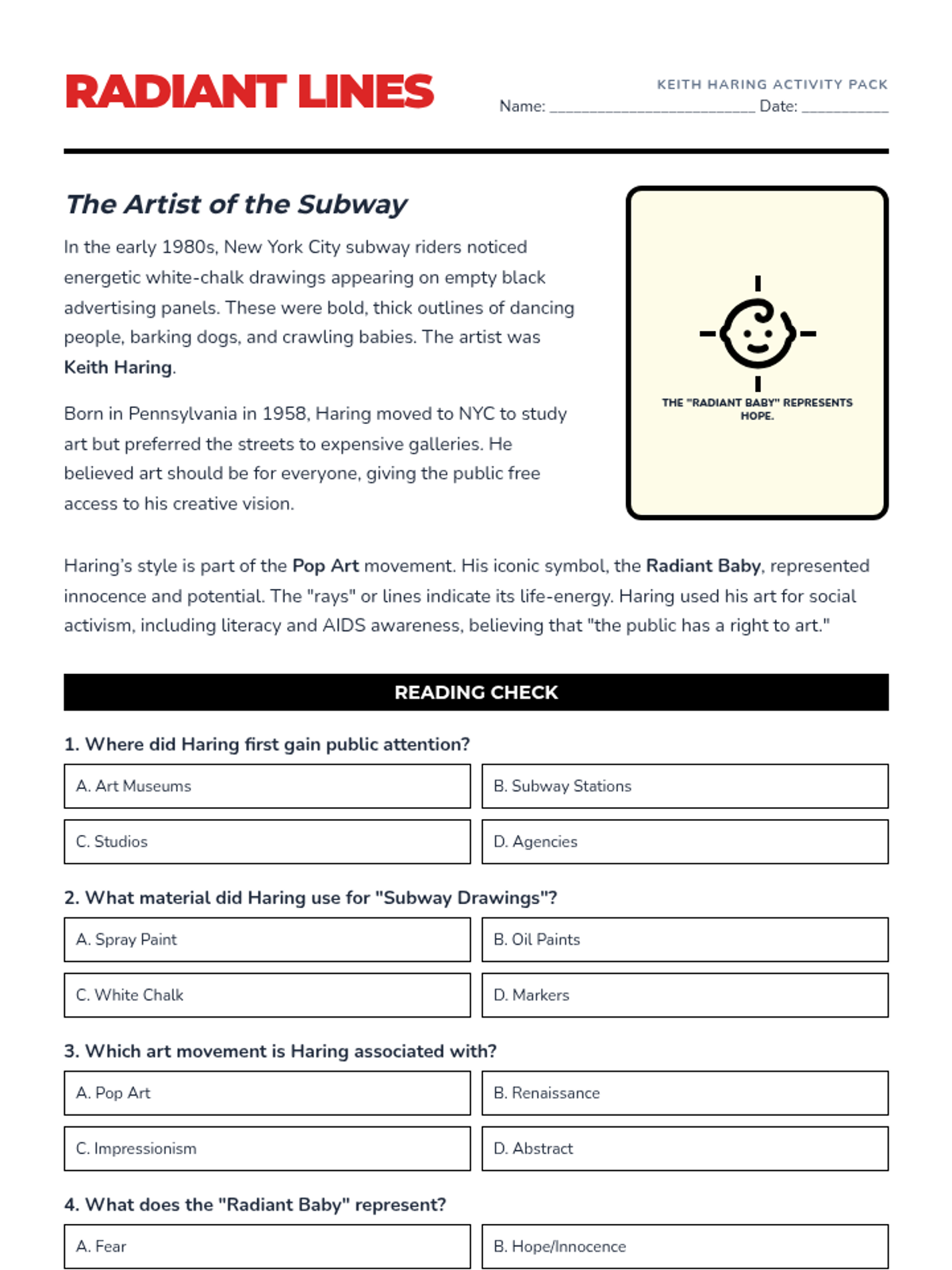
A comprehensive activity pack including a reading passage, 10 comprehension questions, a themed crossword, and a word search about Keith Haring and Pop Art. All on unified pages for efficiency.
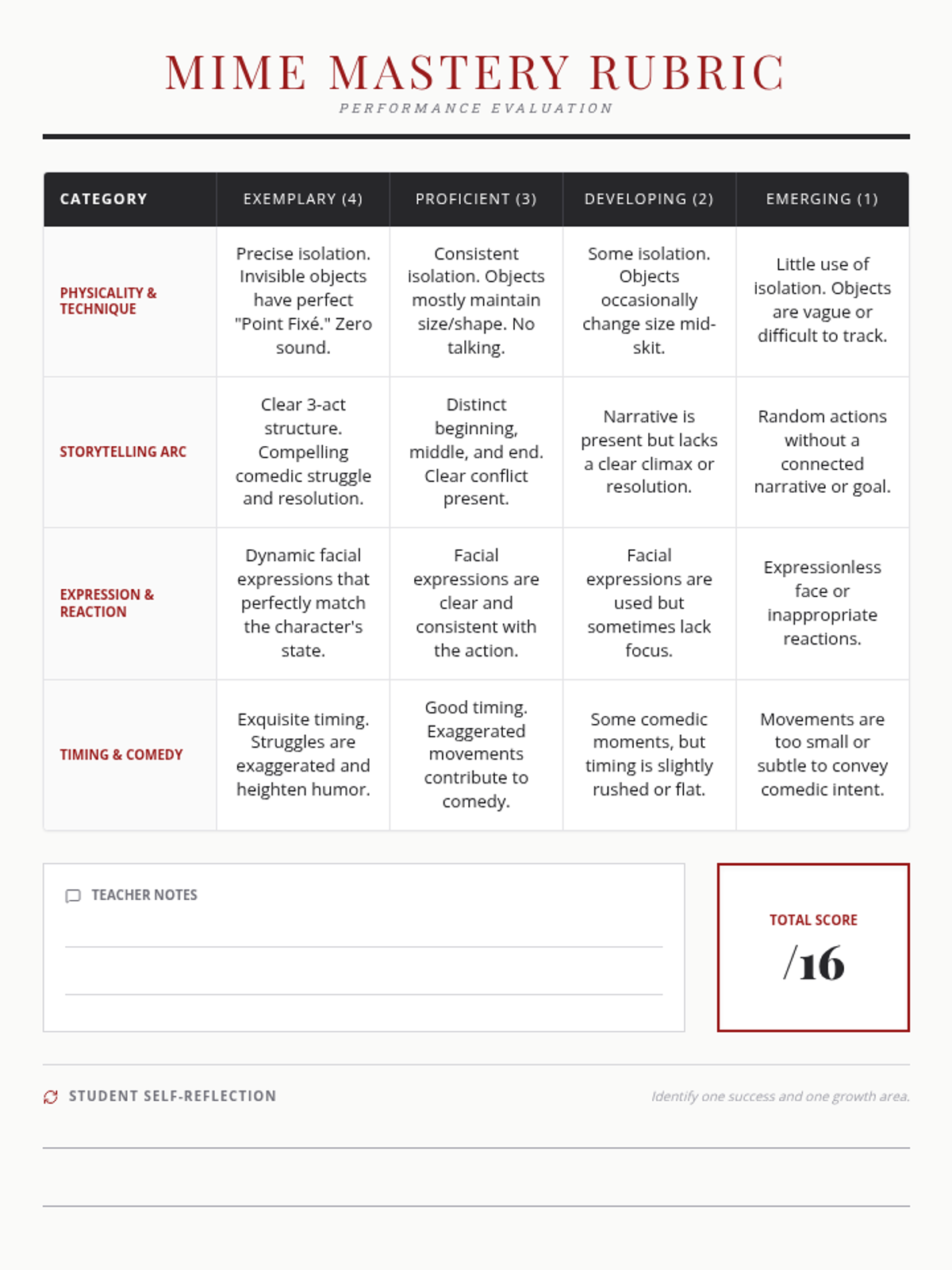
A performance rubric for evaluating mime and comedy performances, focusing on physicality, story arc, facial expression, and comedic timing.
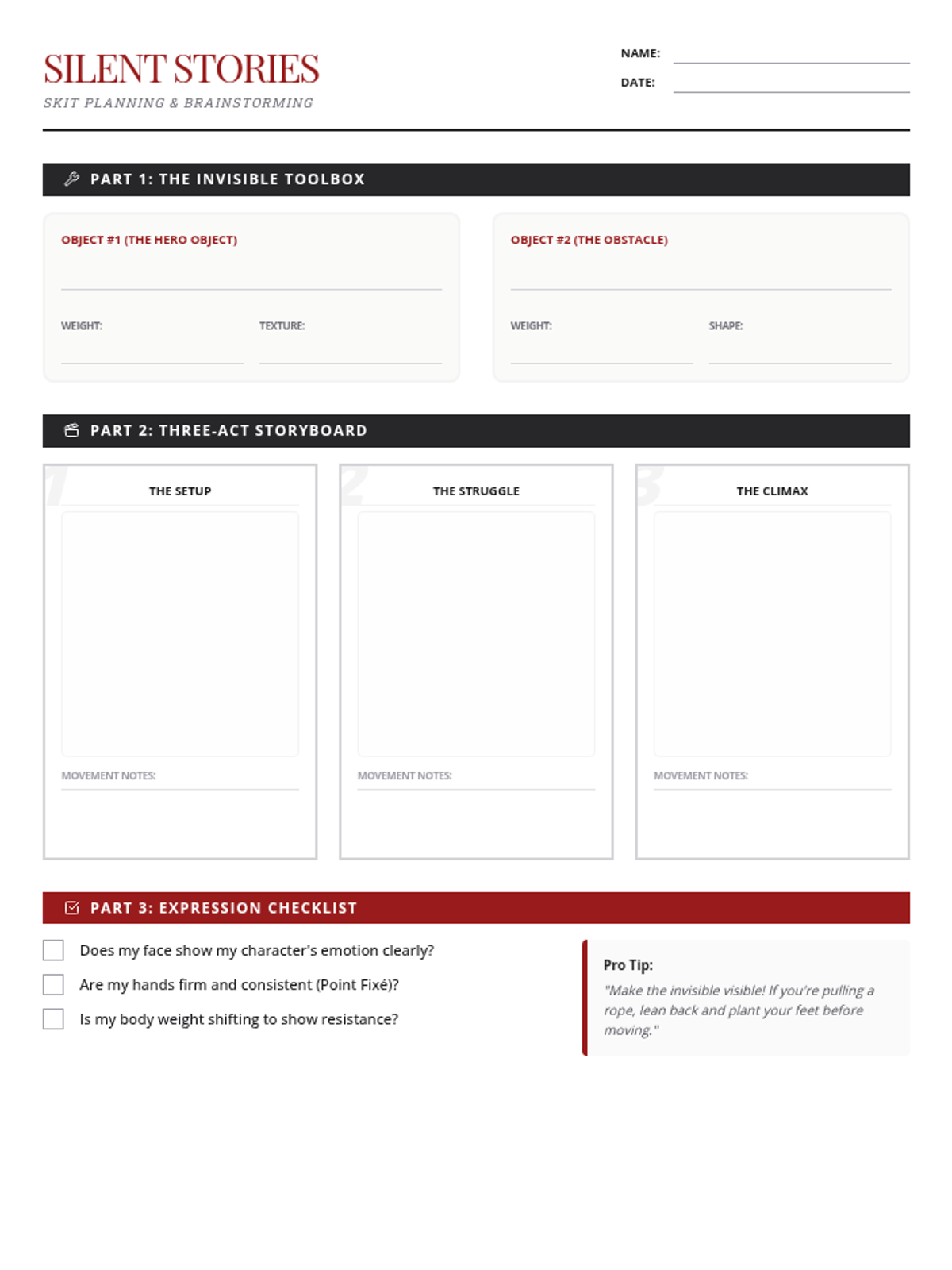
A planning worksheet for students to brainstorm and storyboard a short mime performance, including sections for invisible object details and a three-act comedic arc.