Historical evolution of performance, technical stagecraft, and core acting techniques. Develops playwriting skills and fosters imaginative expression through script development and production management.
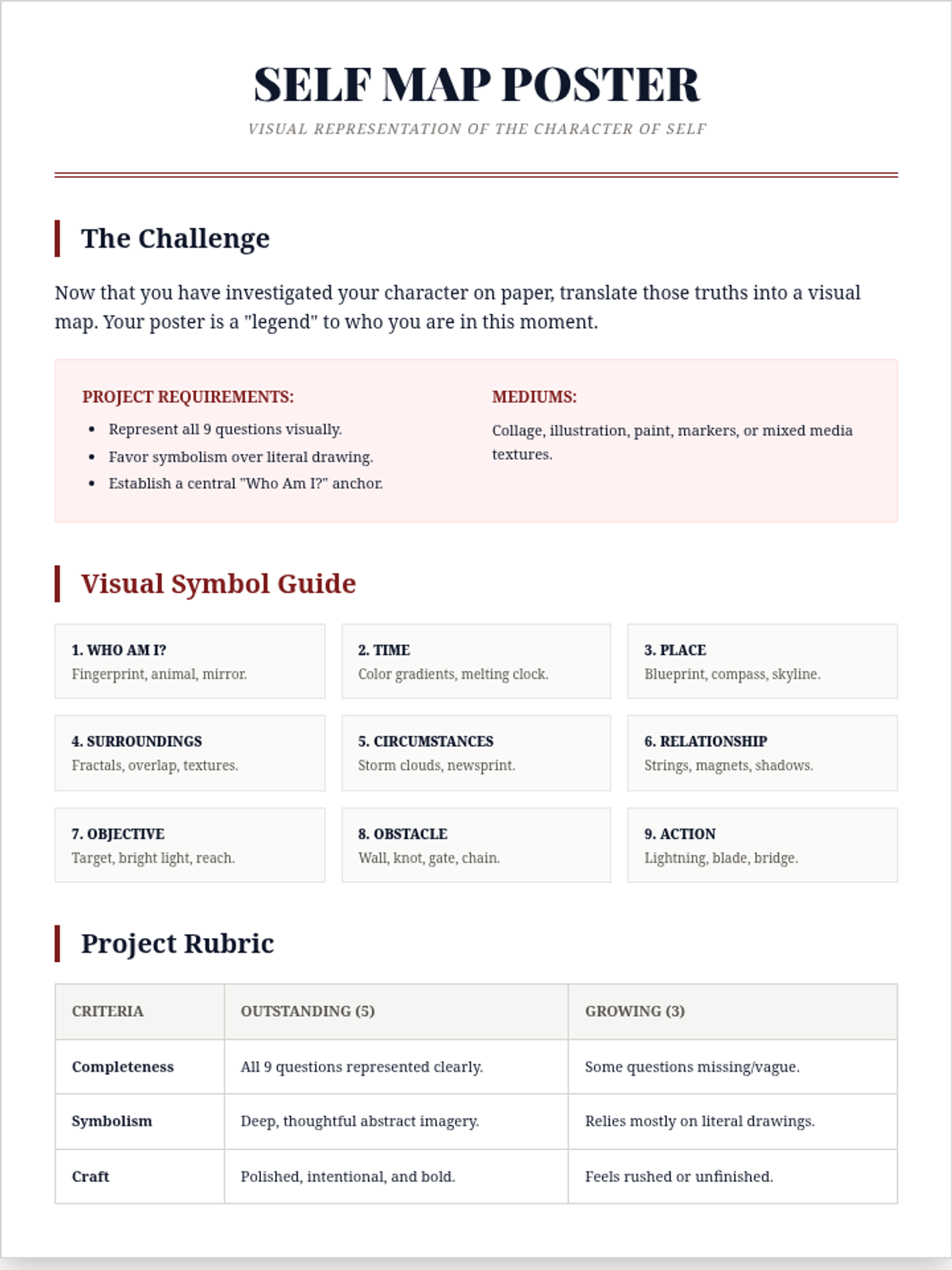
A project guide and rubric for Day 2, instructing students on how to translate their Hagen investigation into a visual character map poster using symbolism and creative layout.
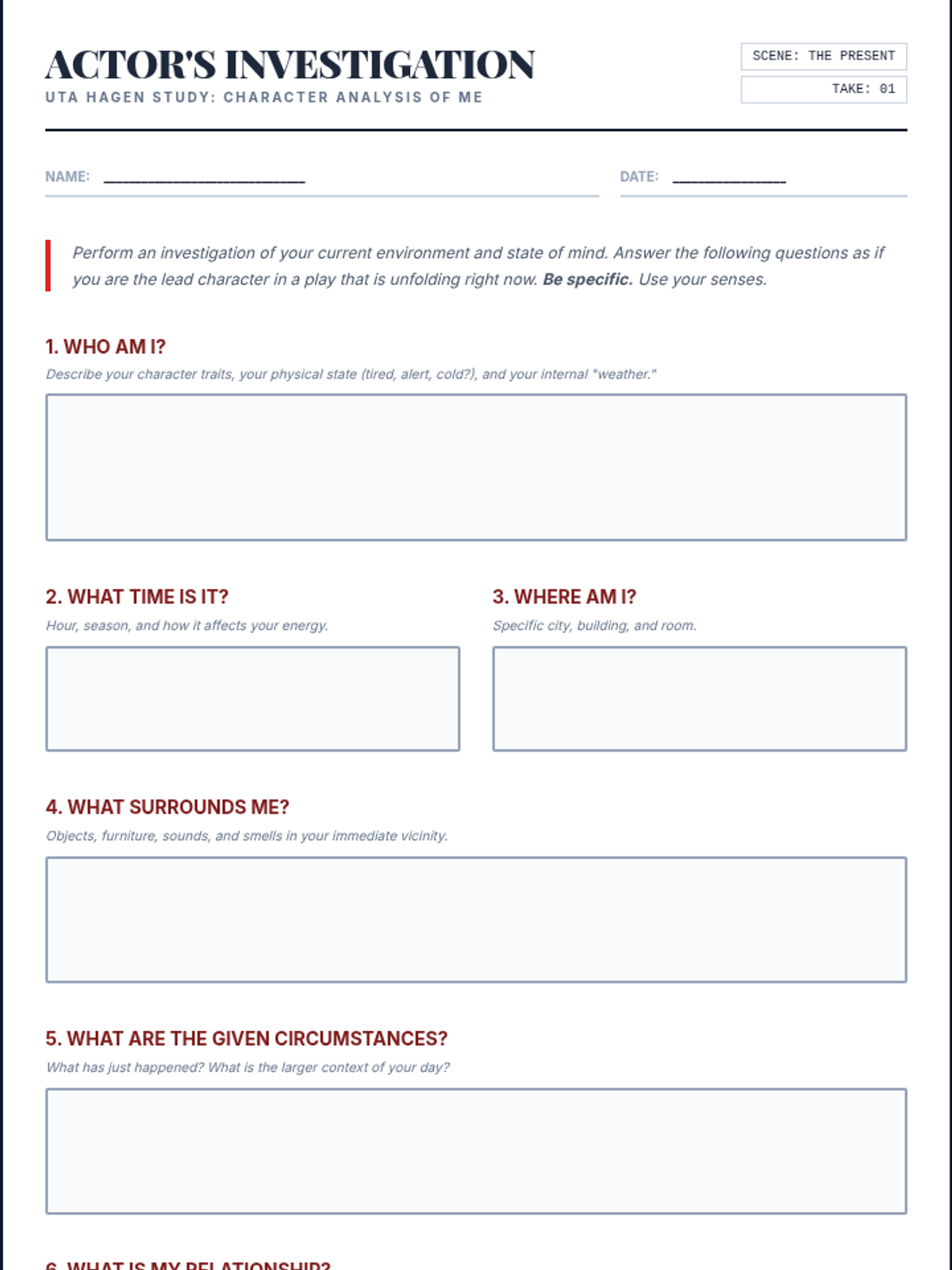
A structured character study worksheet based on Uta Hagen's 9 Questions, prompting students to analyze themselves as characters in their own lives with ample space for reflective writing.
A visual presentation introducing Uta Hagen and her 9 questions for the actor, designed to guide students through the Day 1 introduction of their self-study project.
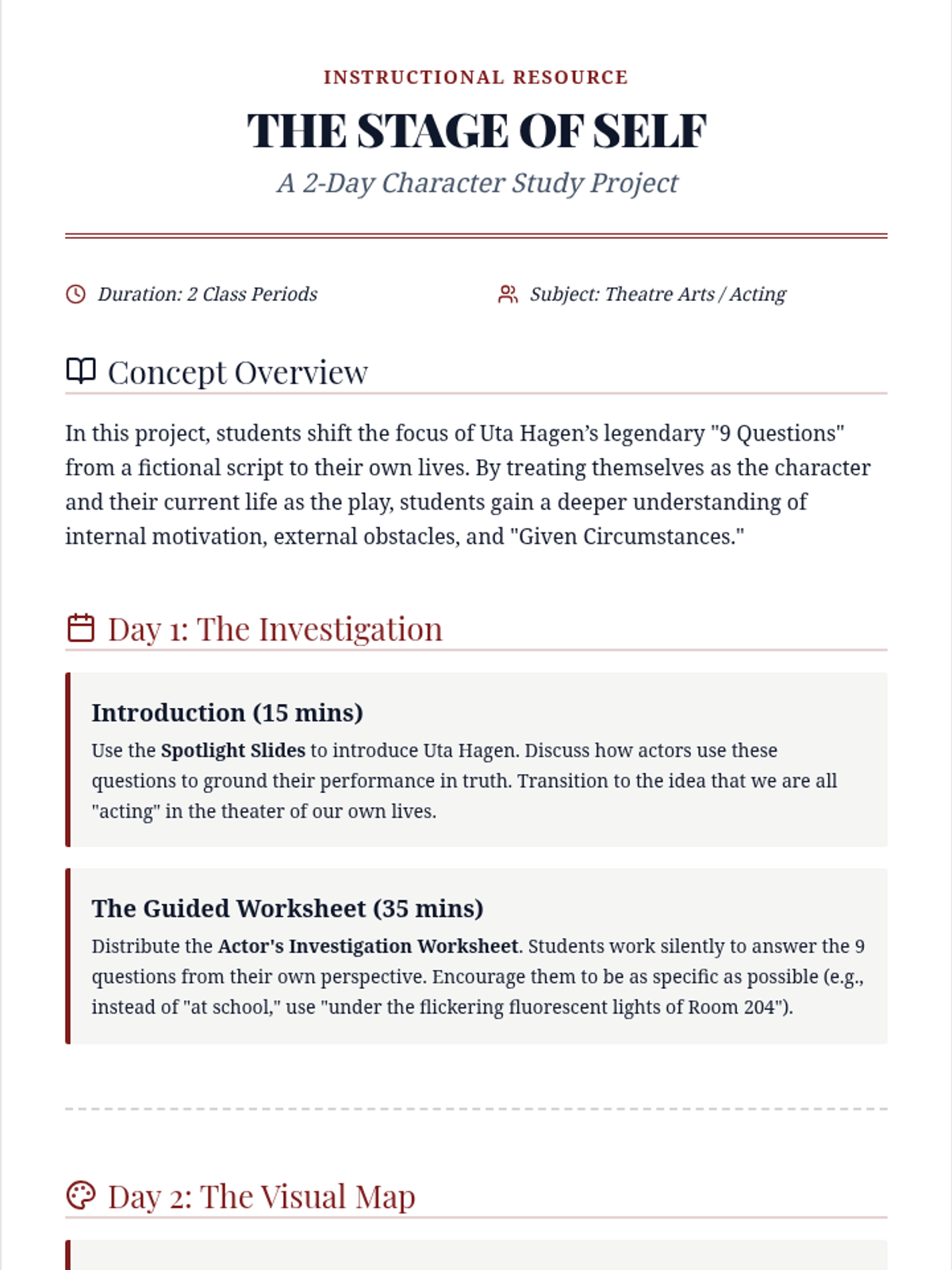
A comprehensive teacher's guide for a 2-day drama project, outlining lesson plans, teaching tips, and instructional strategies for using Uta Hagen's 9 Questions in a self-study character project.
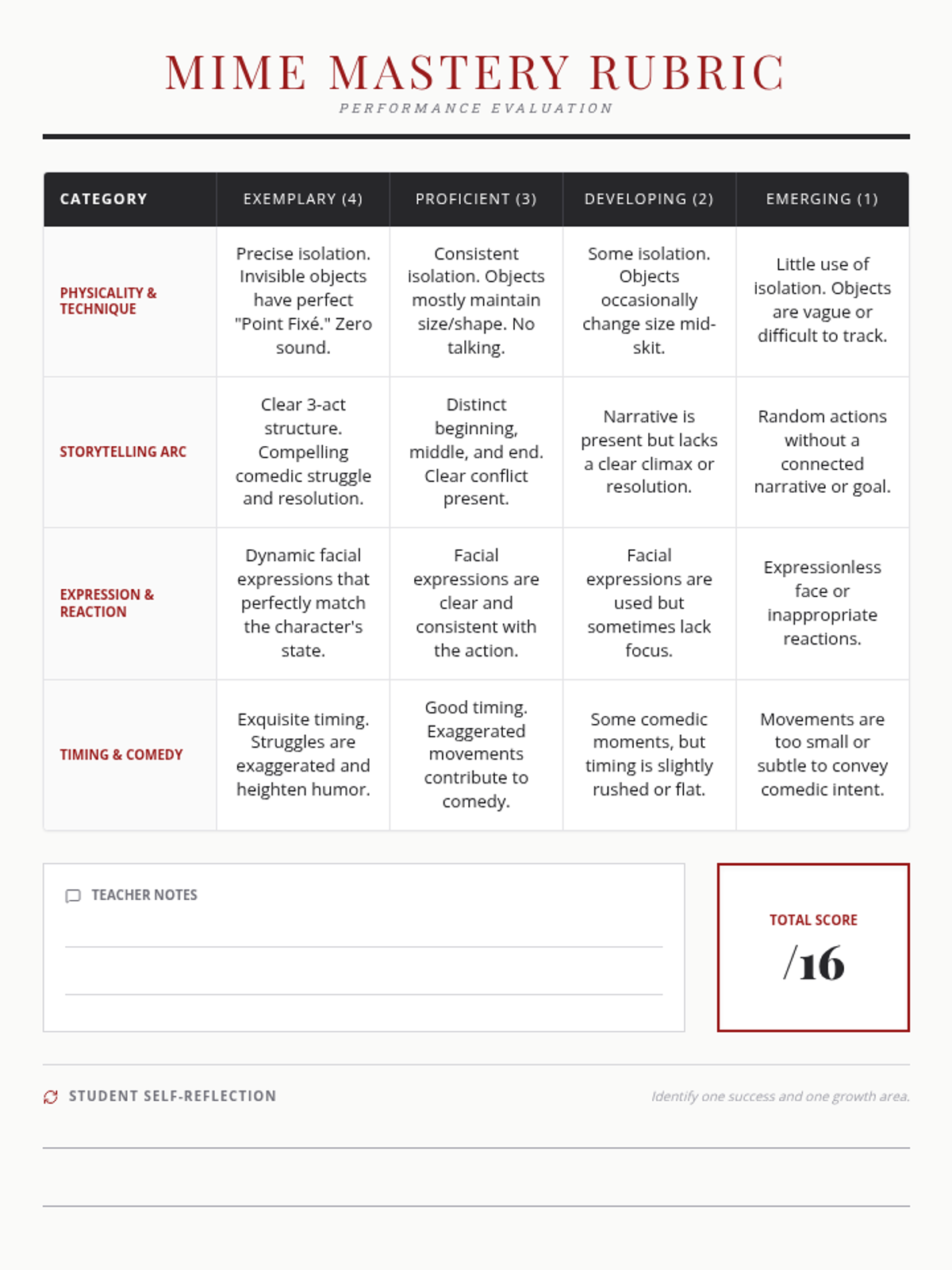
A performance rubric for evaluating mime and comedy performances, focusing on physicality, story arc, facial expression, and comedic timing.
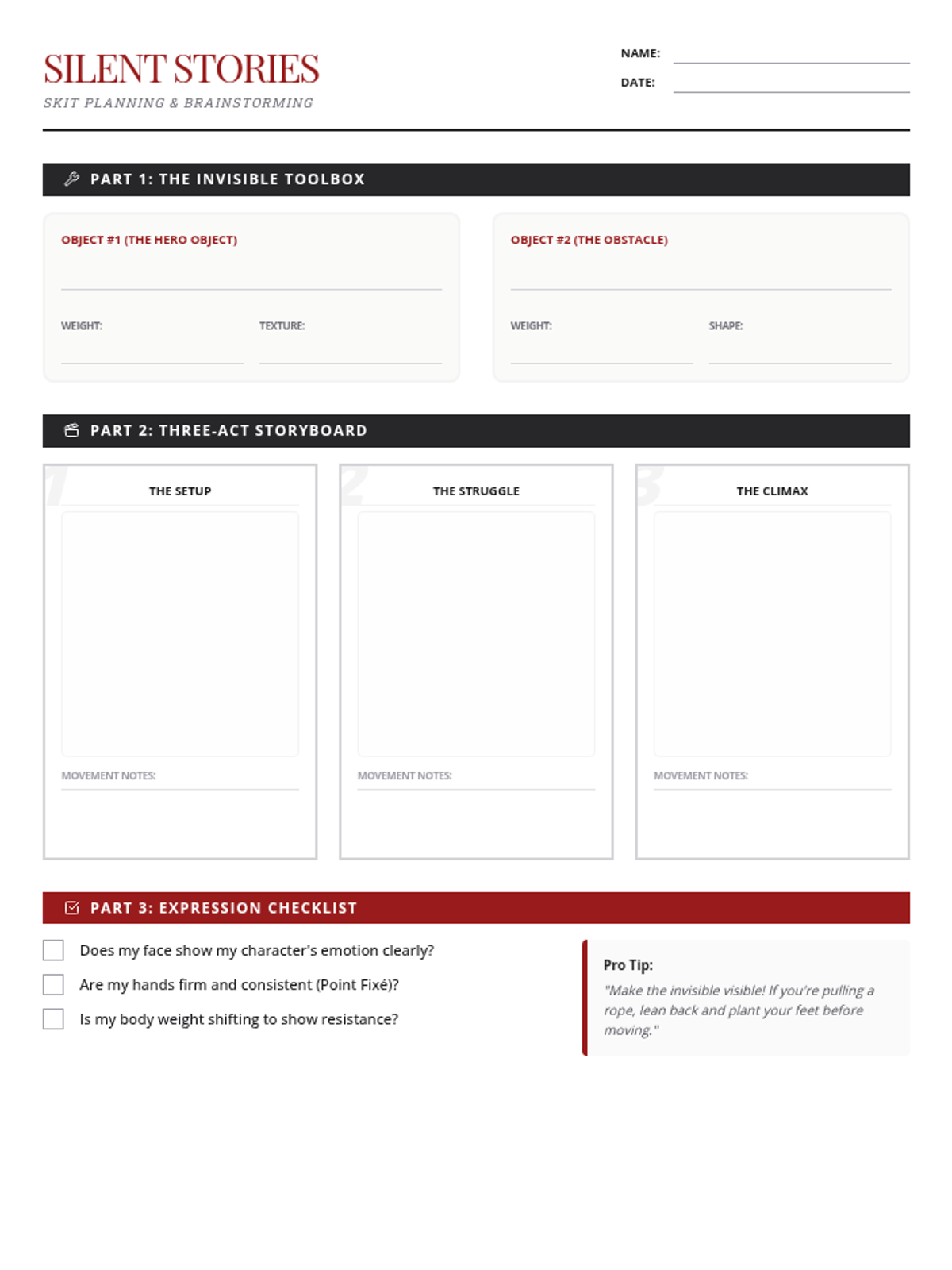
A planning worksheet for students to brainstorm and storyboard a short mime performance, including sections for invisible object details and a three-act comedic arc.
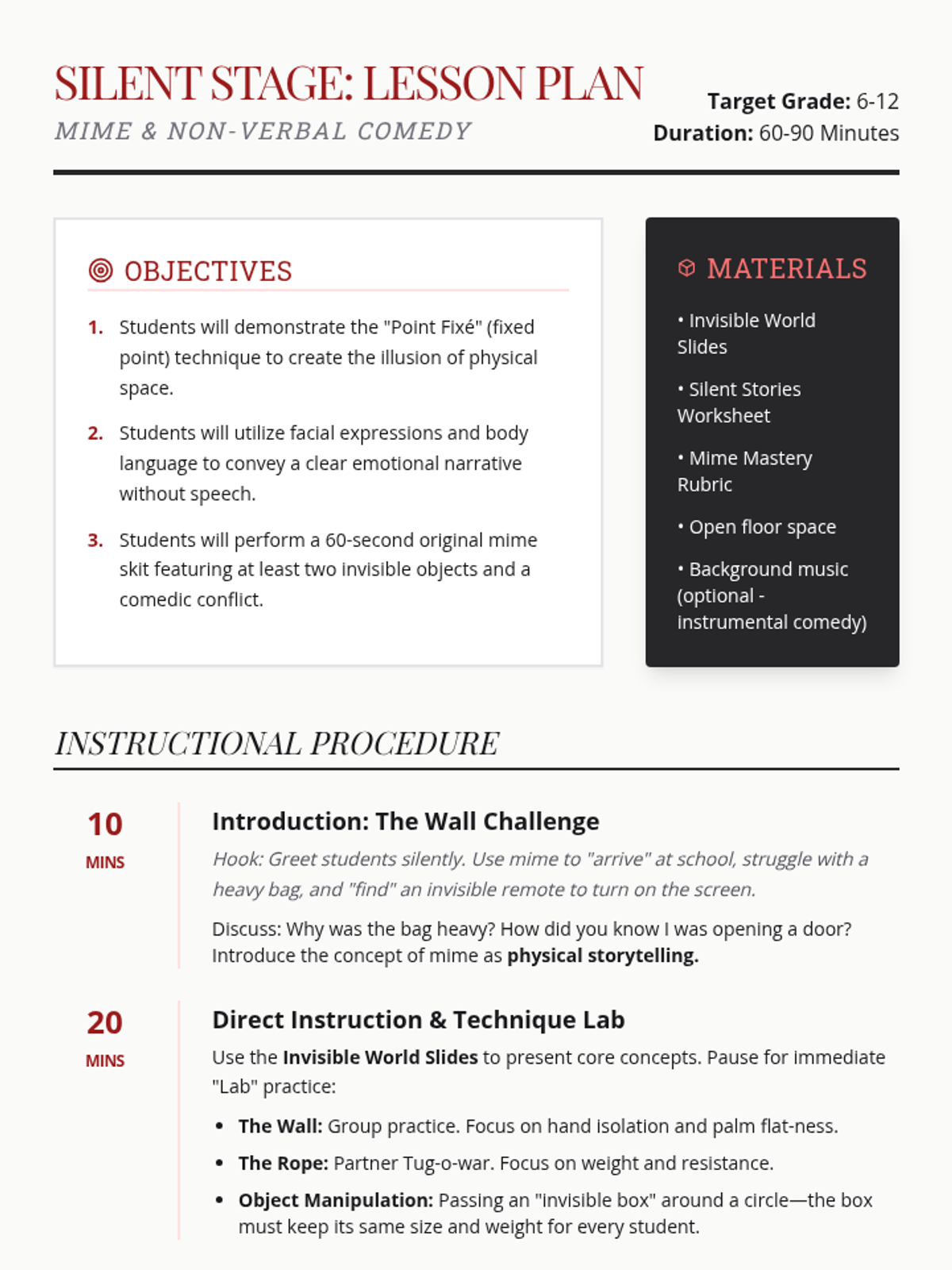
A teacher's lesson plan for the 'Silent Stage' mime unit, including learning objectives, a minute-by-minute procedure, and differentiation strategies for varying skill levels.
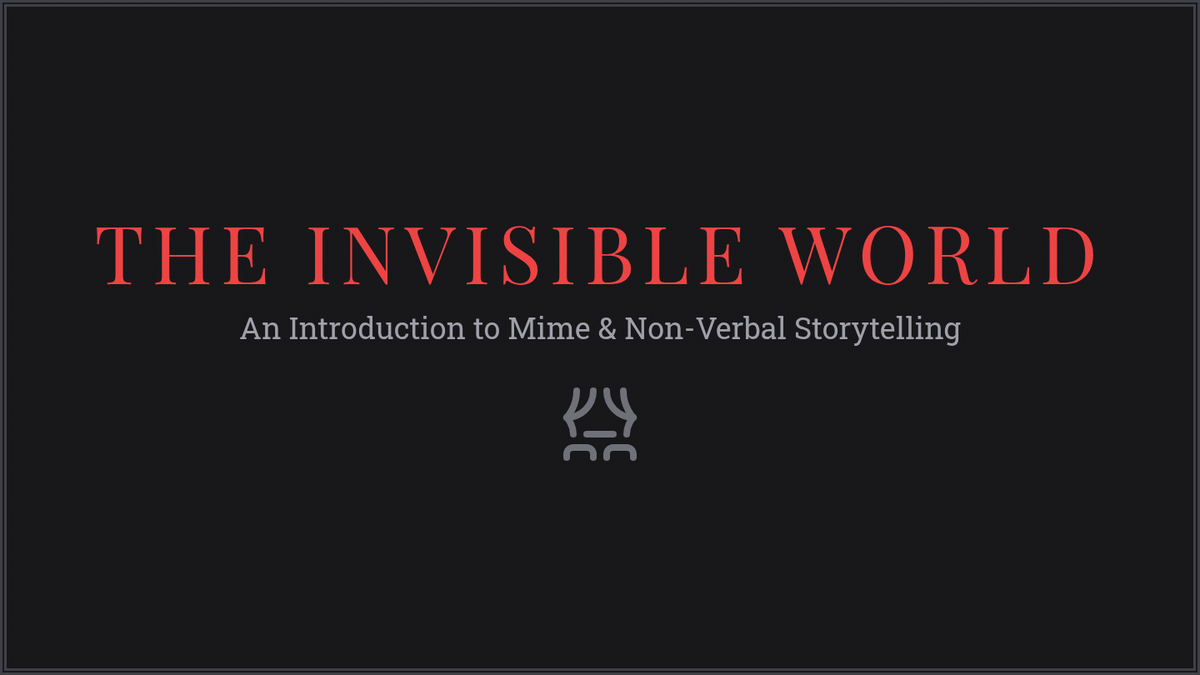
An introductory slide deck for a mime and non-verbal comedy lesson, featuring key terminology, visual explanations of 'The Wall' and 'The Rope' techniques, and the 'Object + Struggle = Comedy' formula.
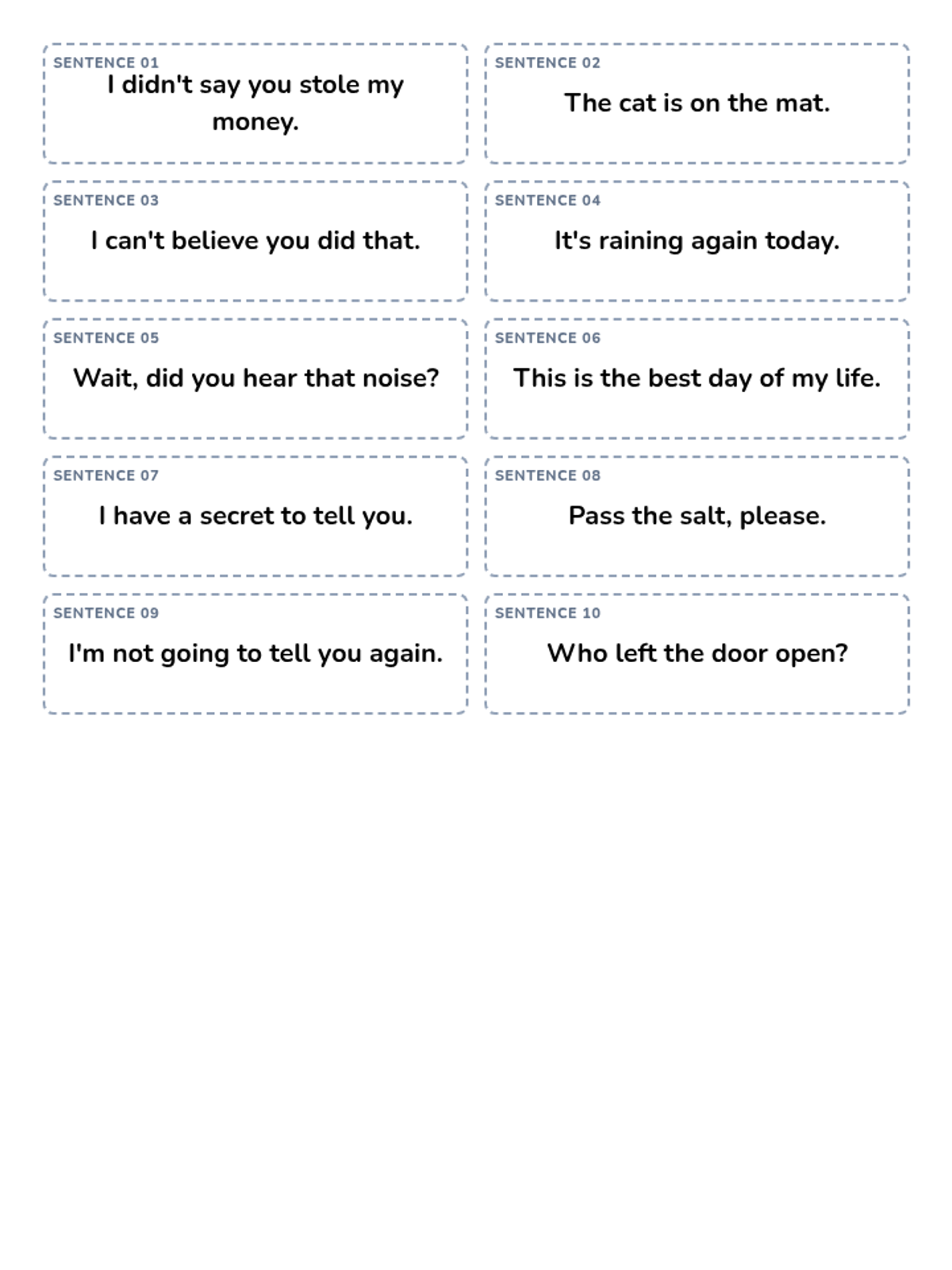
The complete set of 25 sentence cards and 18 mood/expression cards, formatted for printing and cutting to facilitate vocal expression activities.
A vibrant presentation deck that introduces the concept of vocal expression and prosody, featuring interactive challenges and clear instructions for the activity.
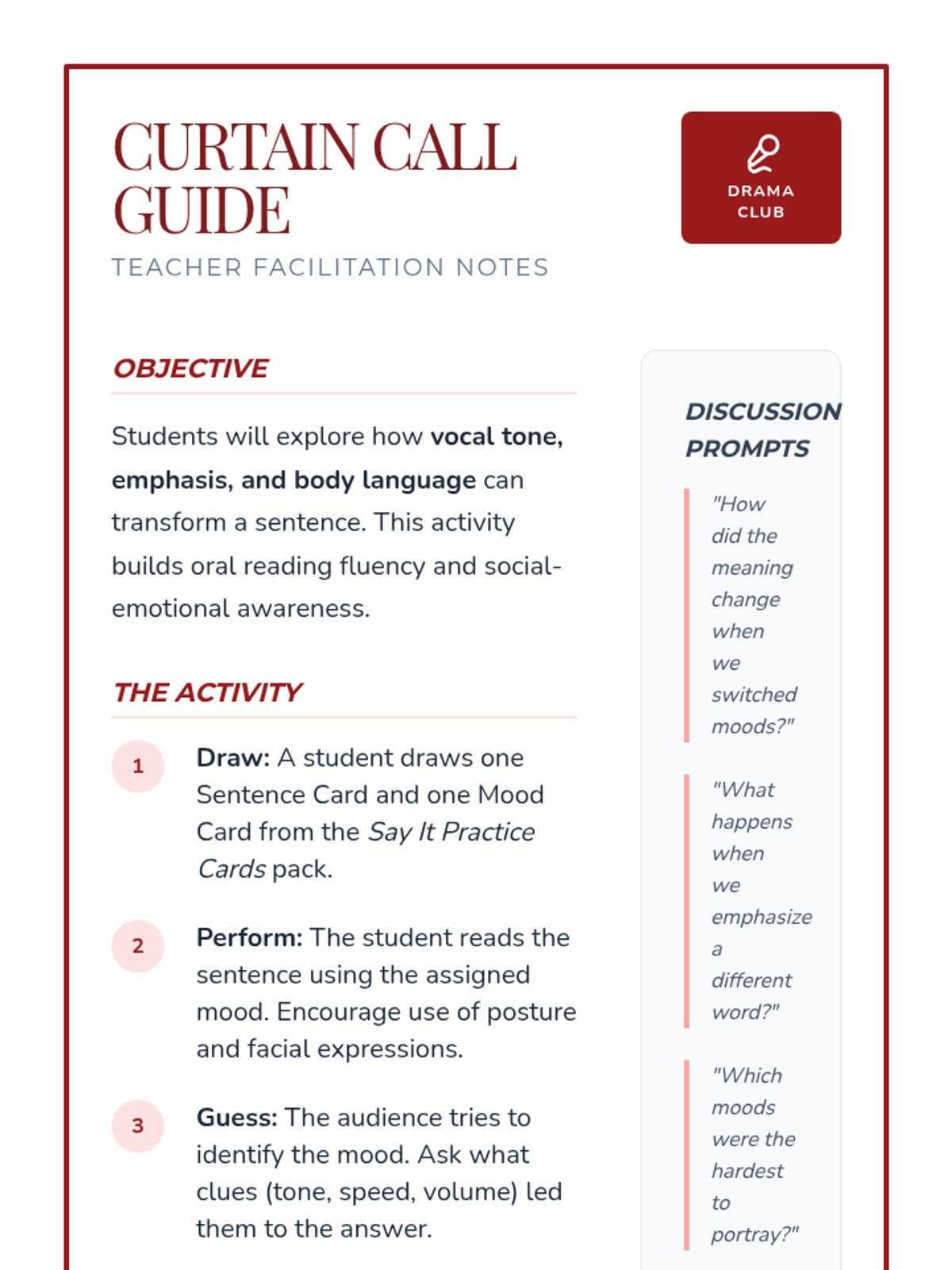
A teacher facilitation guide for the 'Say It Like You Mean It' vocal expression activity, featuring instructional steps, discussion prompts, and creative variations for the classroom.
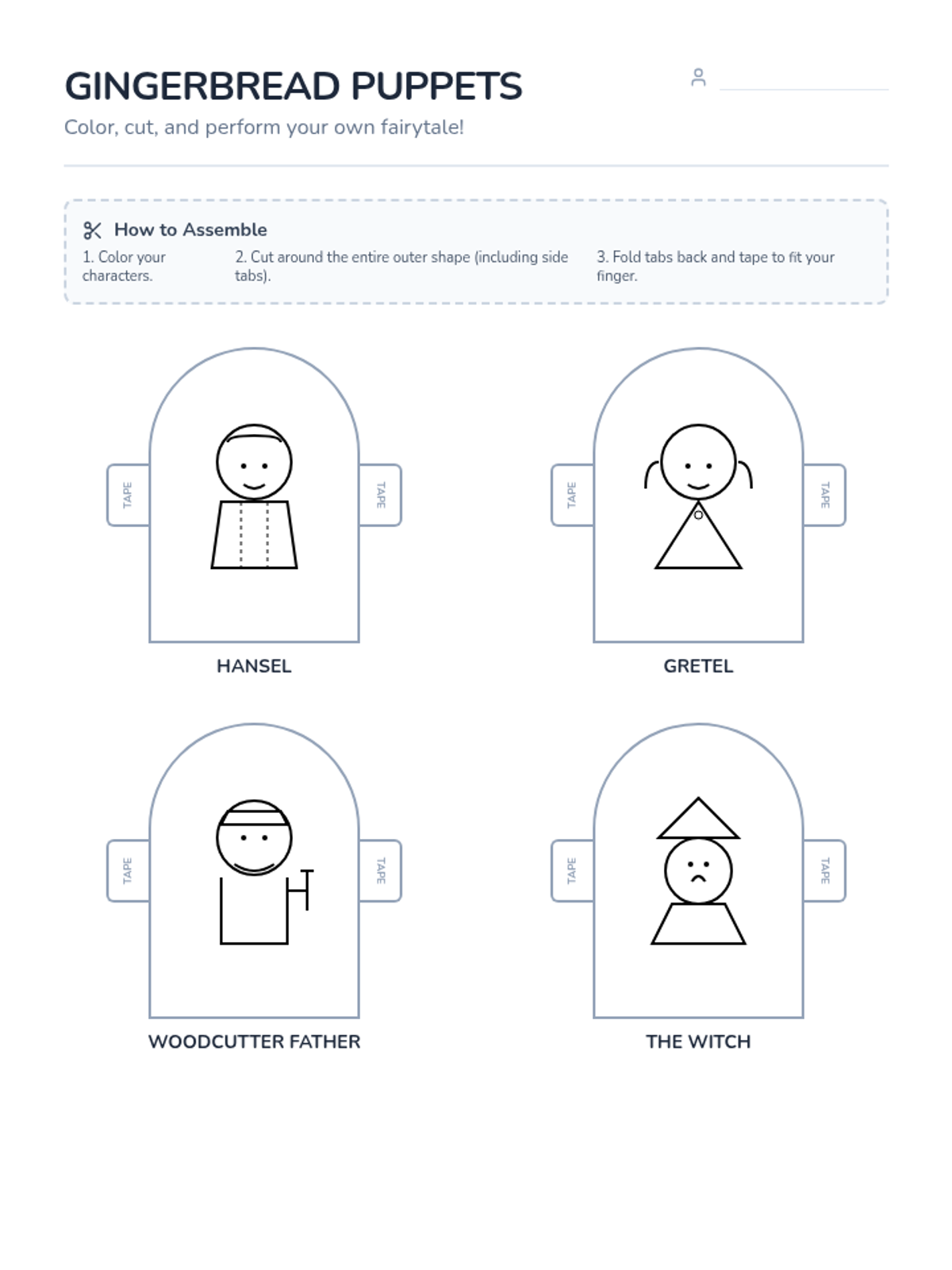
A printable black and white worksheet featuring Hansel, Gretel, the Witch, the Father, and the Gingerbread House as finger puppets for coloring and assembly.
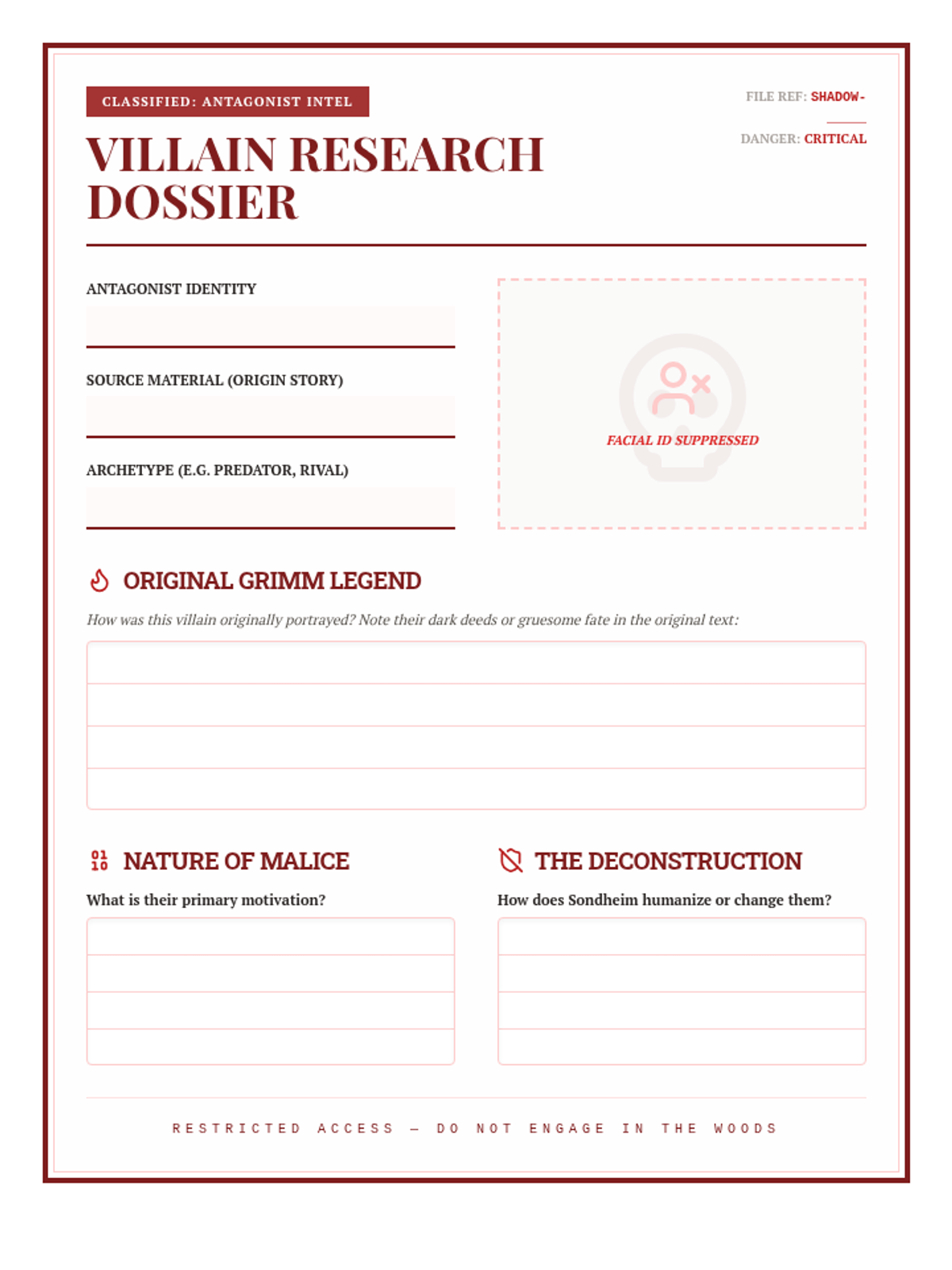
A specialized research dossier focusing on the antagonists and dark roots of fairytale characters in 'Into the Woods'.
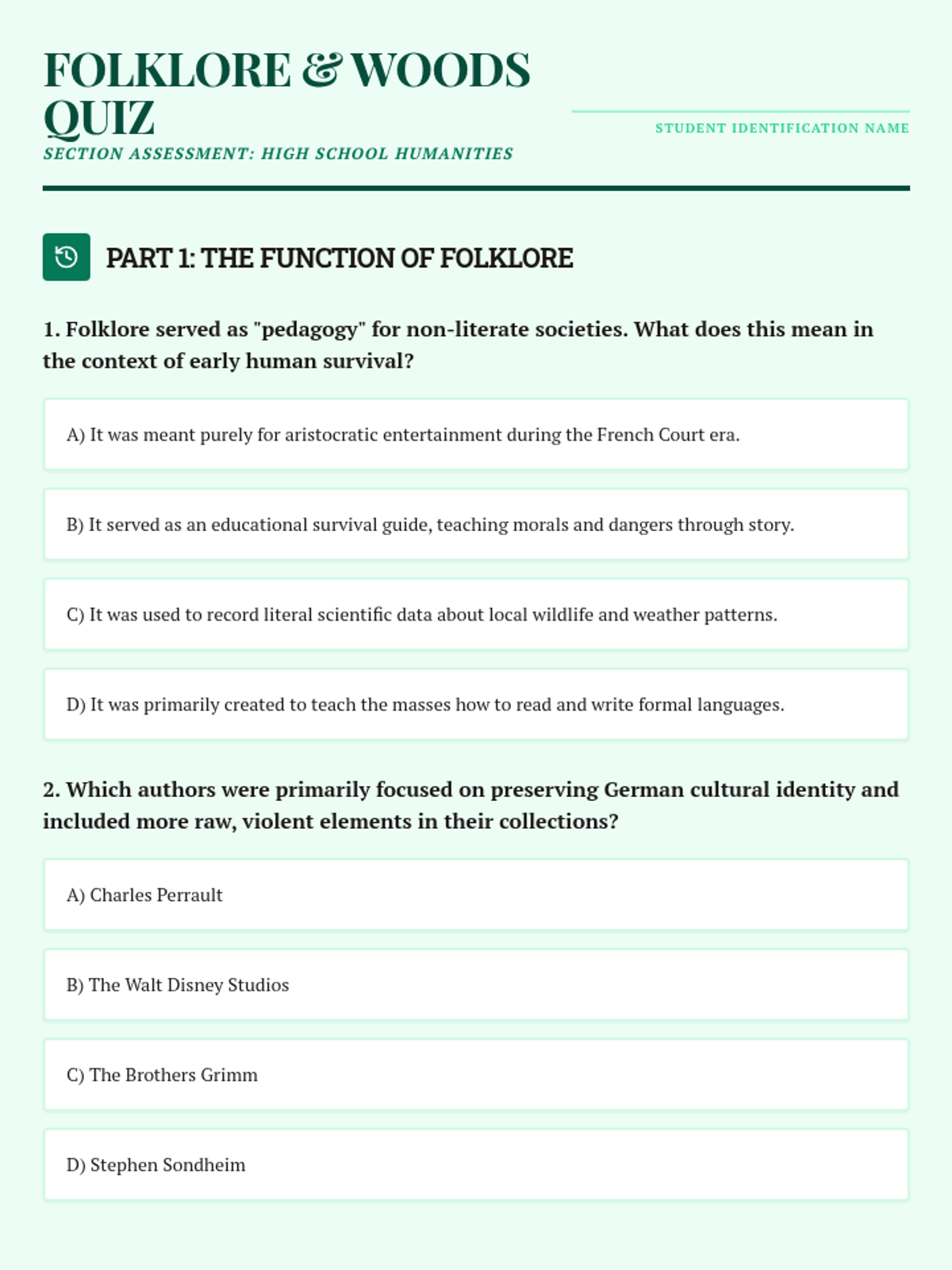
A high-school level quiz covering the purpose of folklore, literary history (Perrault/Grimm), and thematic subversion in 'Into the Woods'.
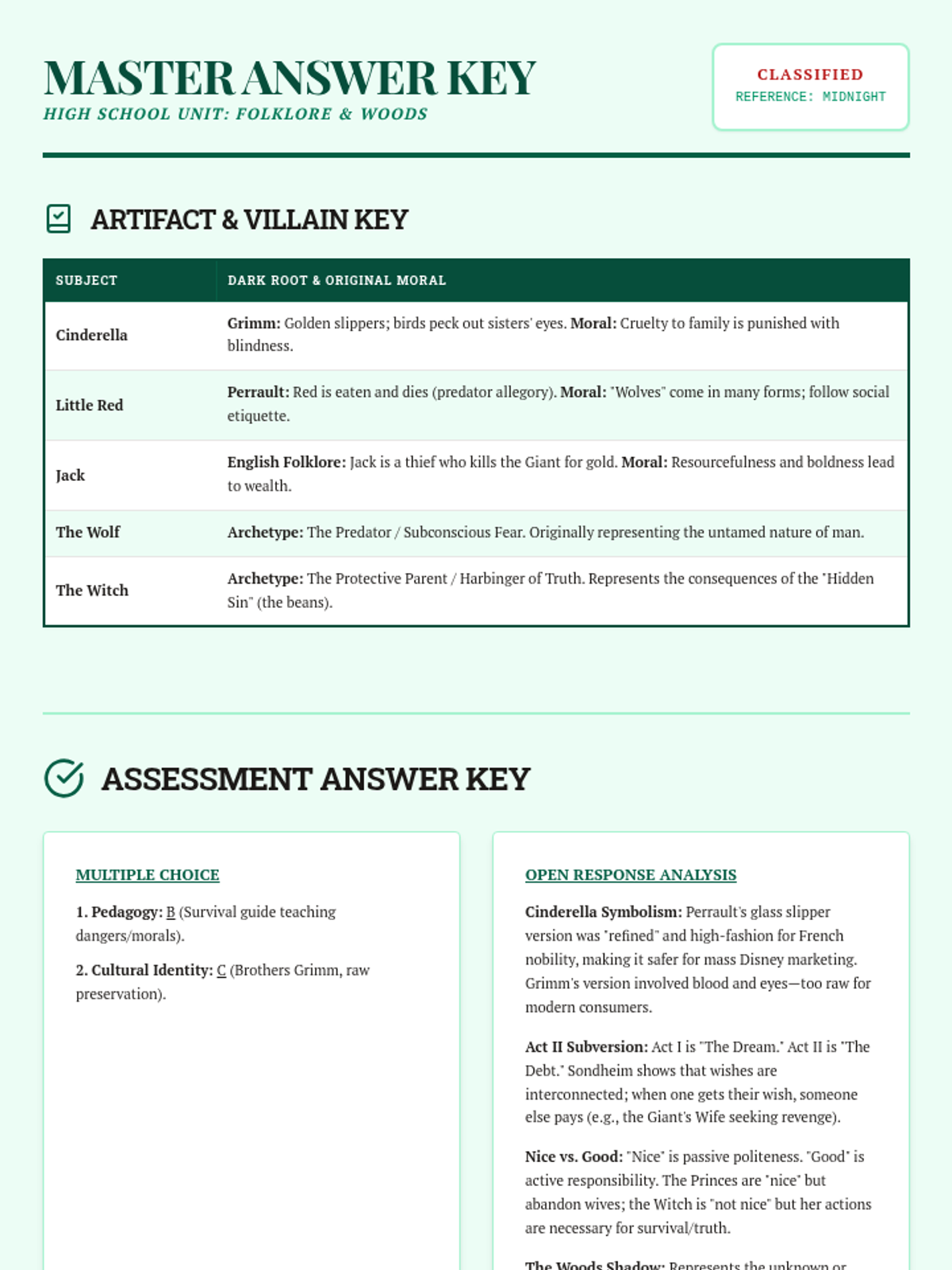
A comprehensive answer key for the high-school folklore unit, including character origins, literary history, and assessment answers.
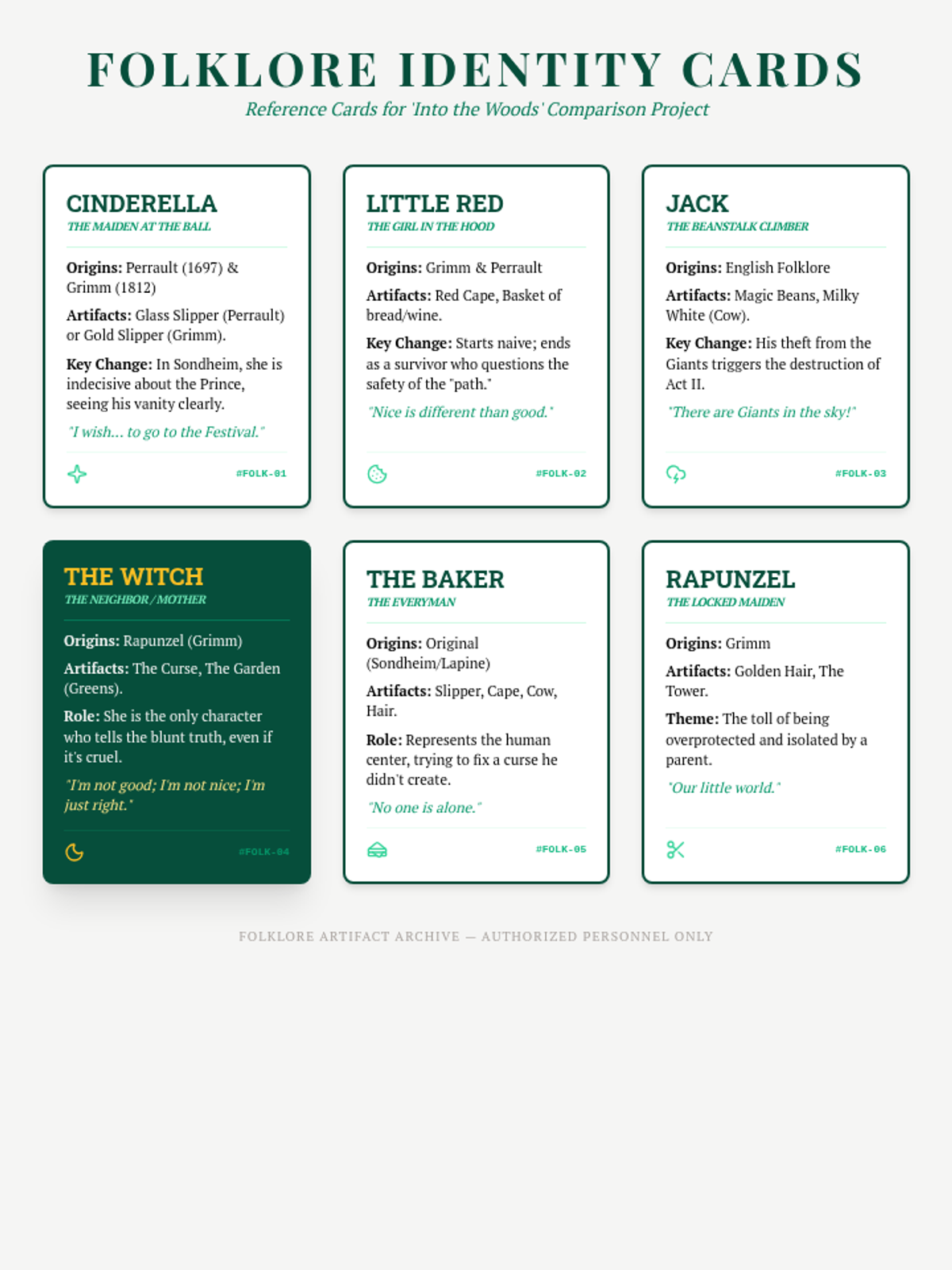
A set of reference cards for 'Into the Woods' characters, including their folklore origins, artifacts, and key changes in the musical adaptation.
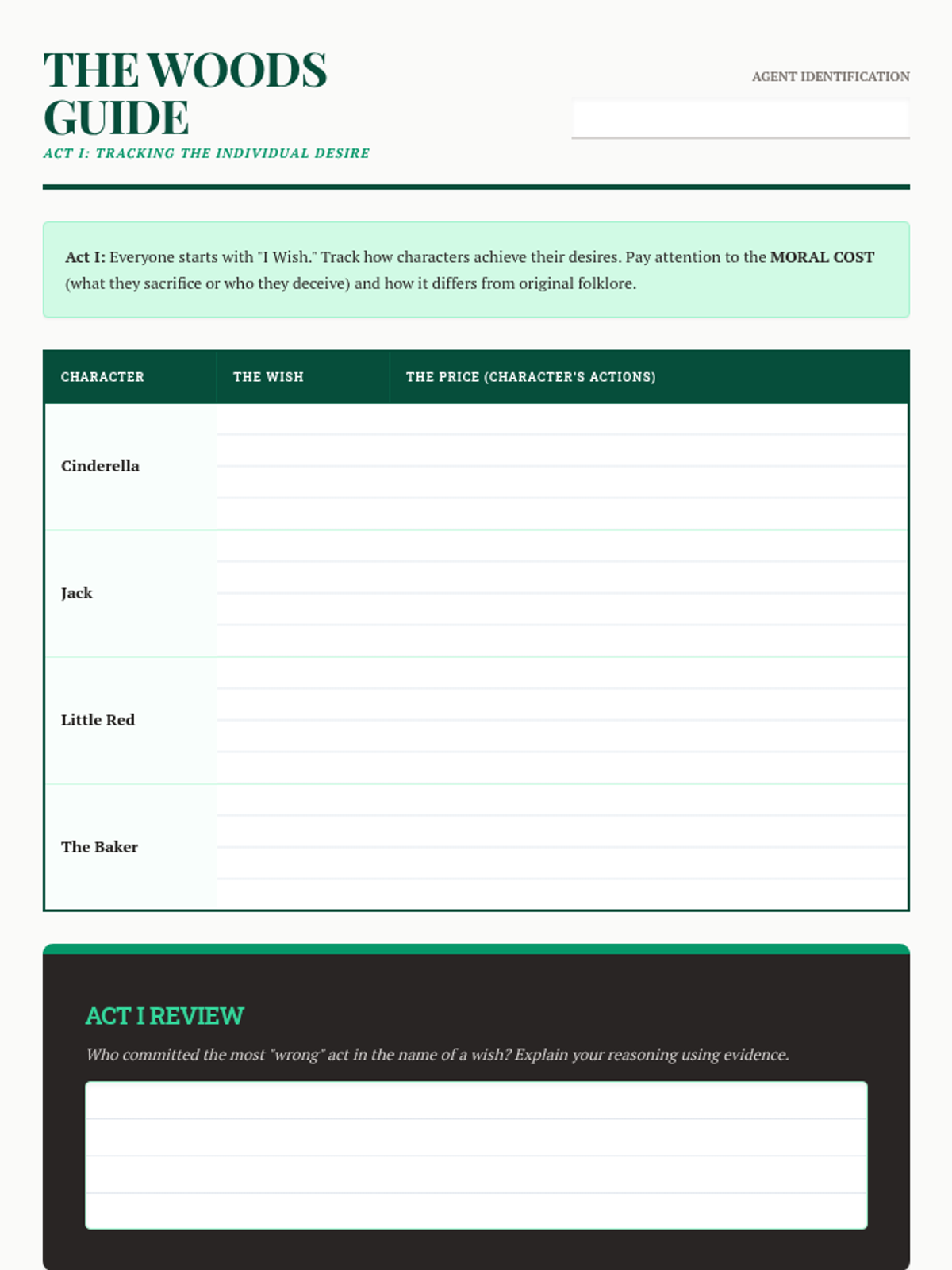
A detailed watching guide for 'Into the Woods' that tracks character wishes in Act I and their consequences in Act II.
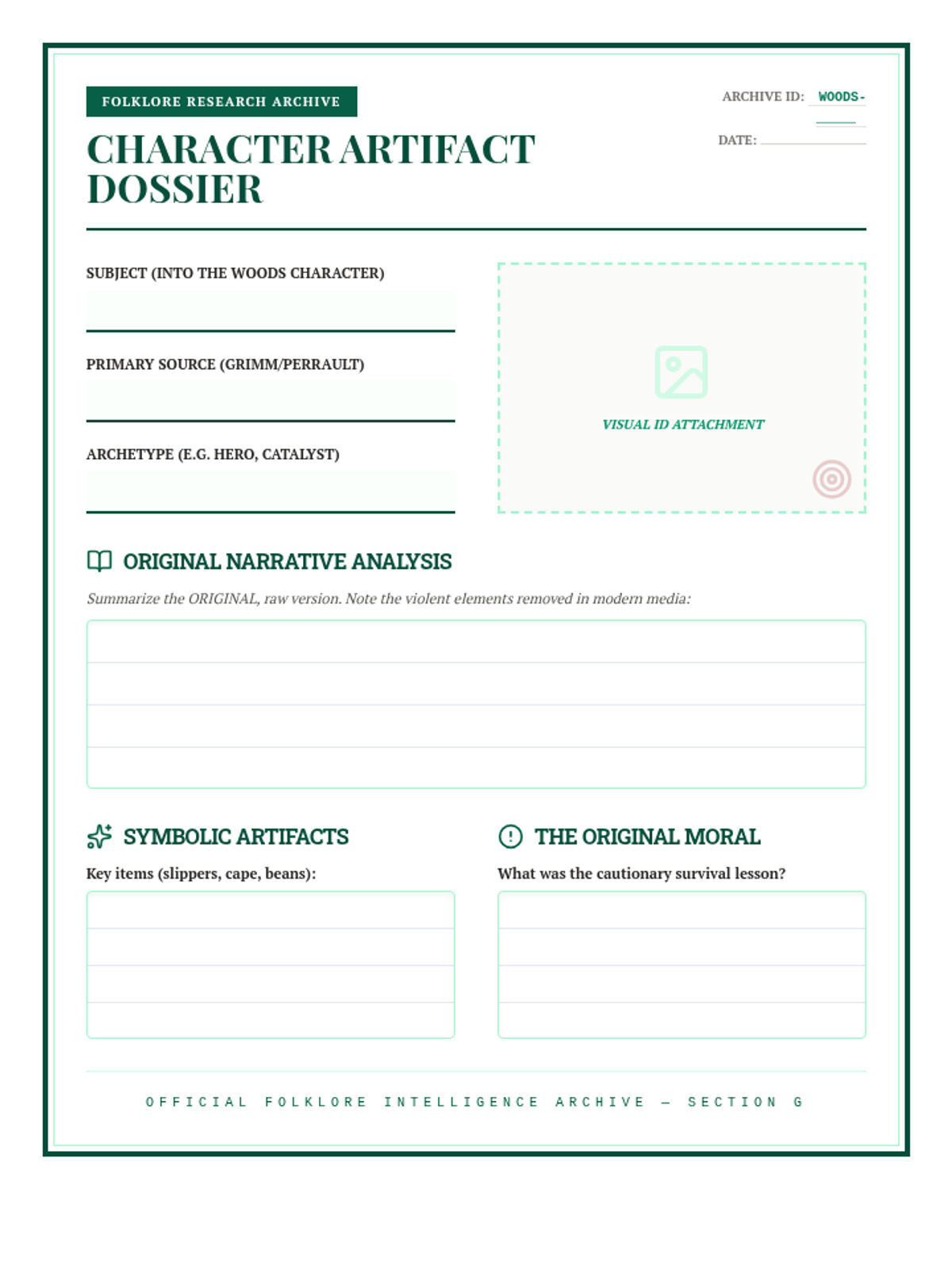
A research worksheet for students to document the original versions of fairytale characters, their attributes, and their cultural endurance.
High-school introductory slides for the 'Into the Woods' folklore project, exploring the purpose of stories, literary history, and Sondheim's deconstruction.
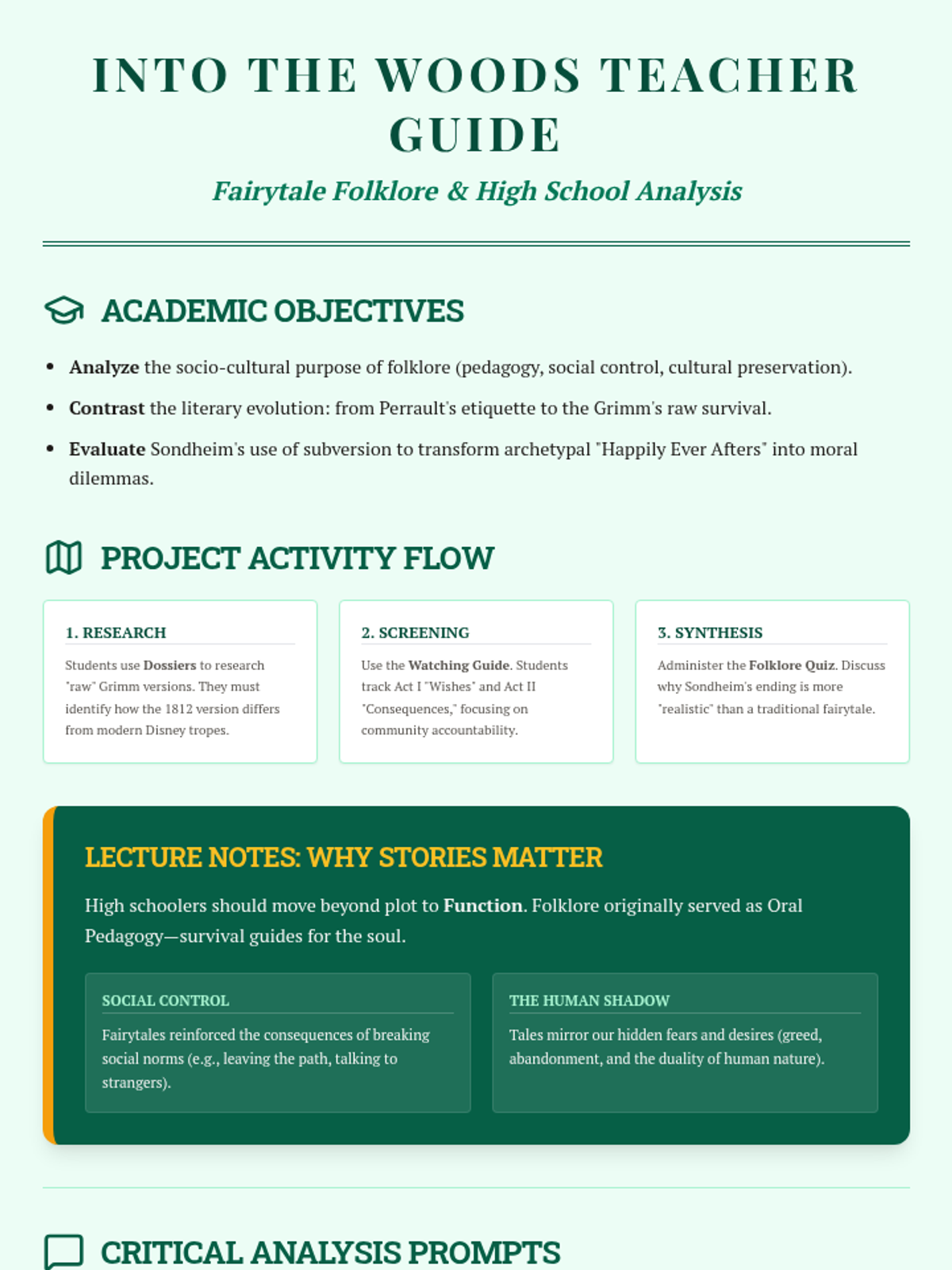
A teacher's facilitation guide for the 'Into the Woods' folklore project, including academic objectives, socratic seminar prompts, and theoretical frameworks for high school analysis.
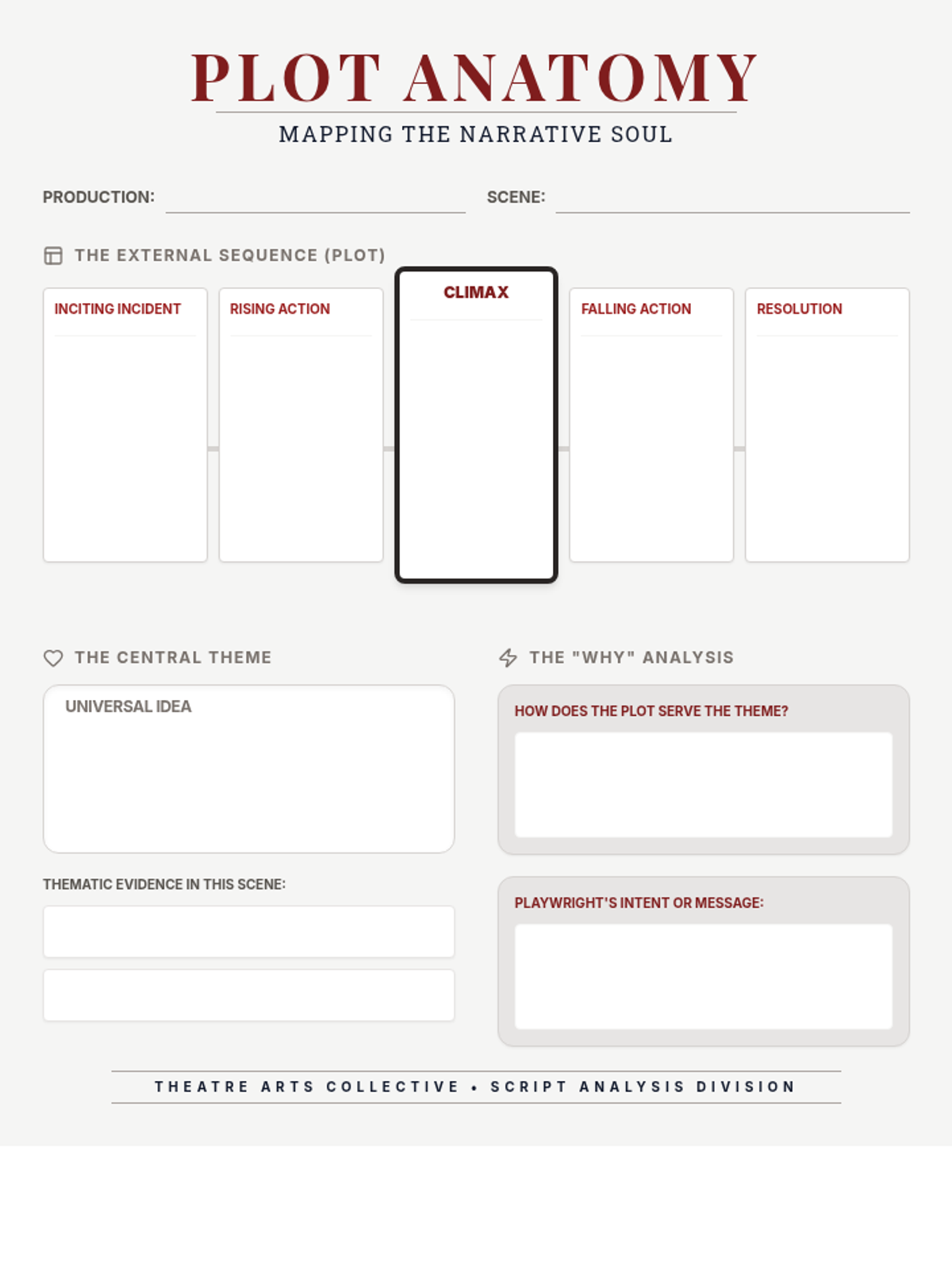
A graphic organizer for theatre students to bridge the gap between plot (what happens) and theme (what it means). Features a narrative arc skeleton and dedicated space for thematic evidence and 'why' analysis.
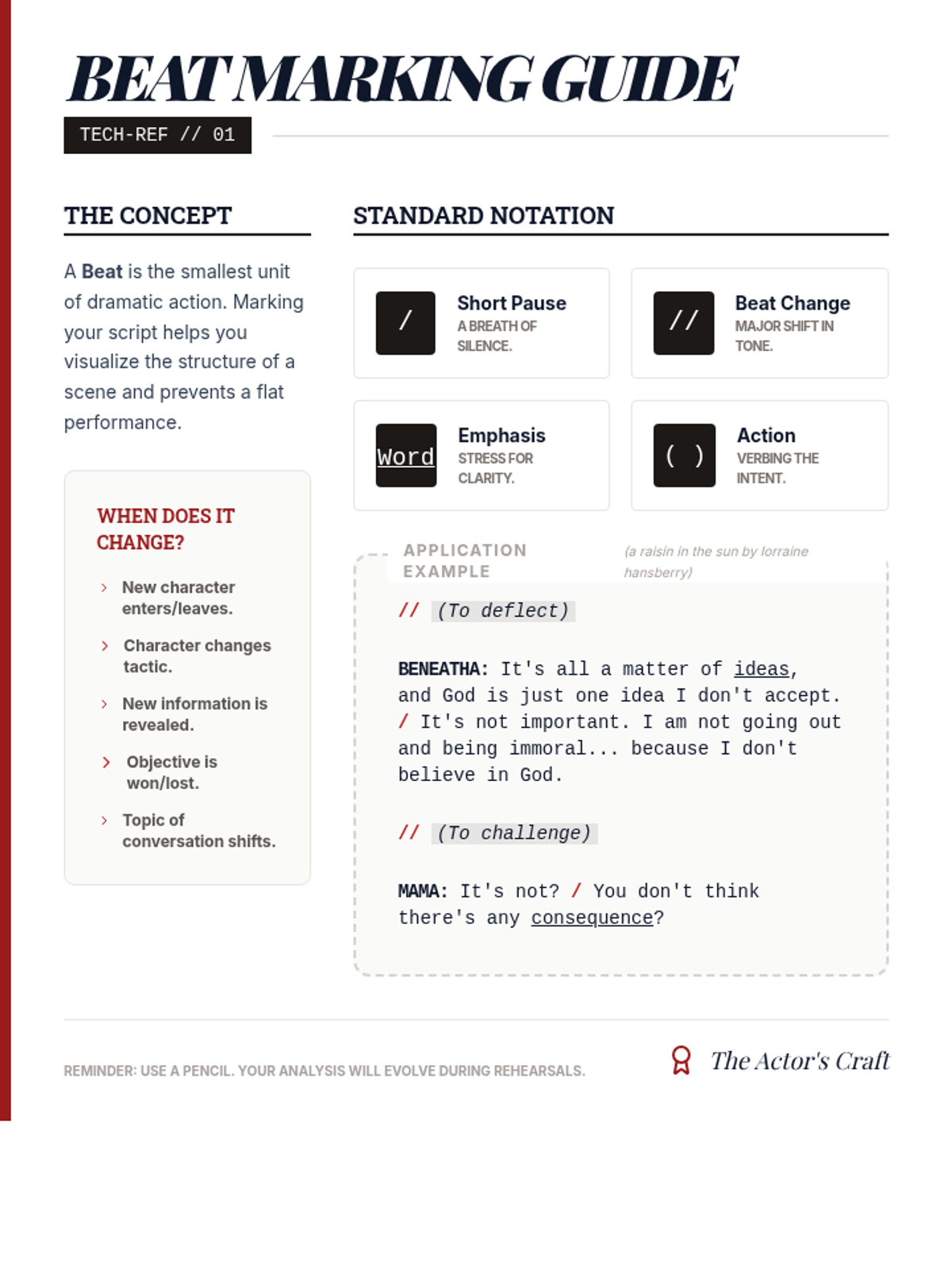
A technical reference sheet for theatre students explaining script notation symbols and the concept of 'beats'. Includes standard symbols for pauses, emphasis, and tactical shifts with a practical example.
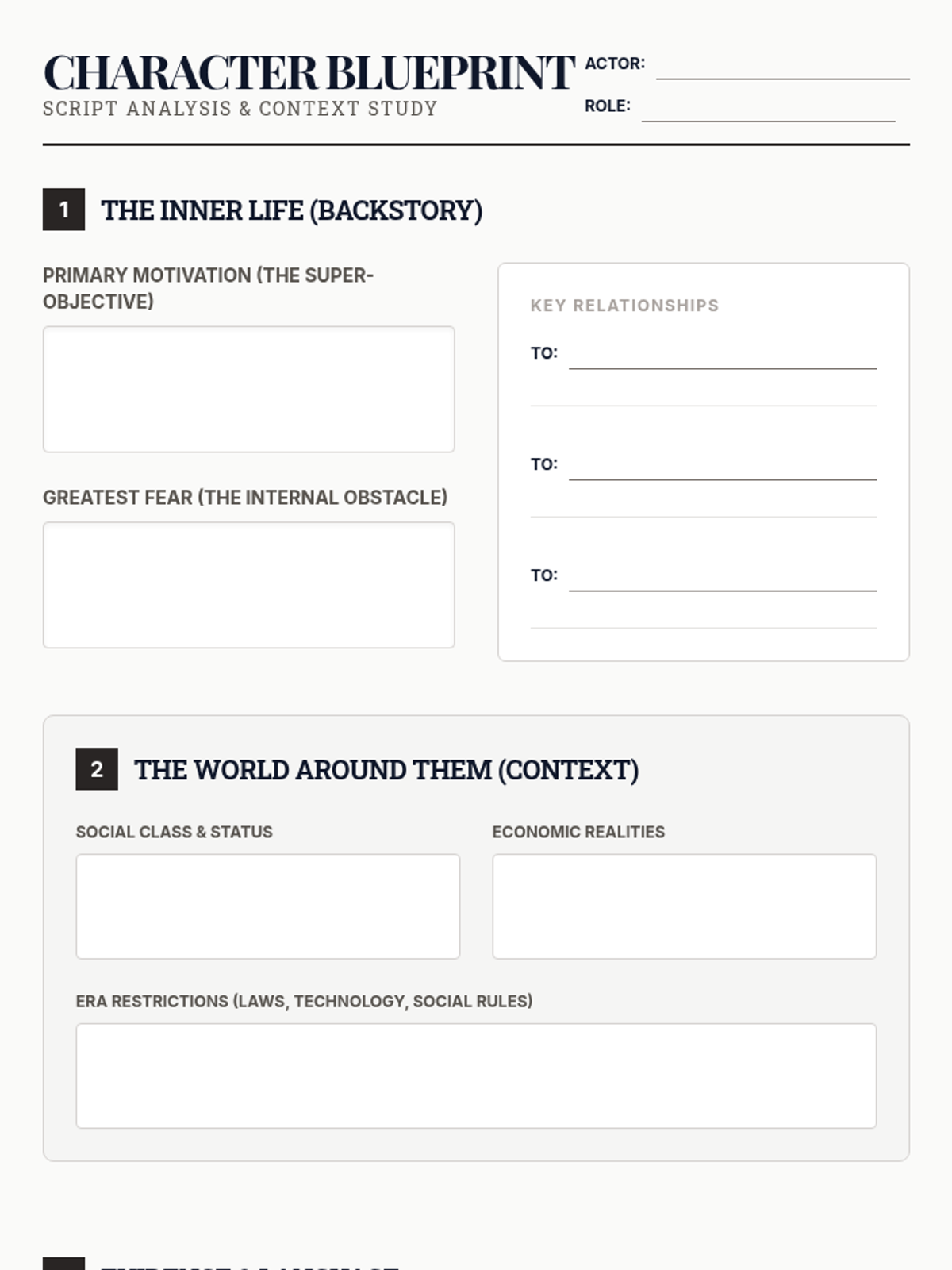
A character analysis worksheet for theatre students to develop deep backstories, explore historical context, and cite script evidence for their roles during the table work phase.
A visual guide for theatre students introducing the concepts of table work, plot versus theme, historical context, and the technical skill of beat marking. Includes vocabulary definitions and discussion prompts for script analysis.
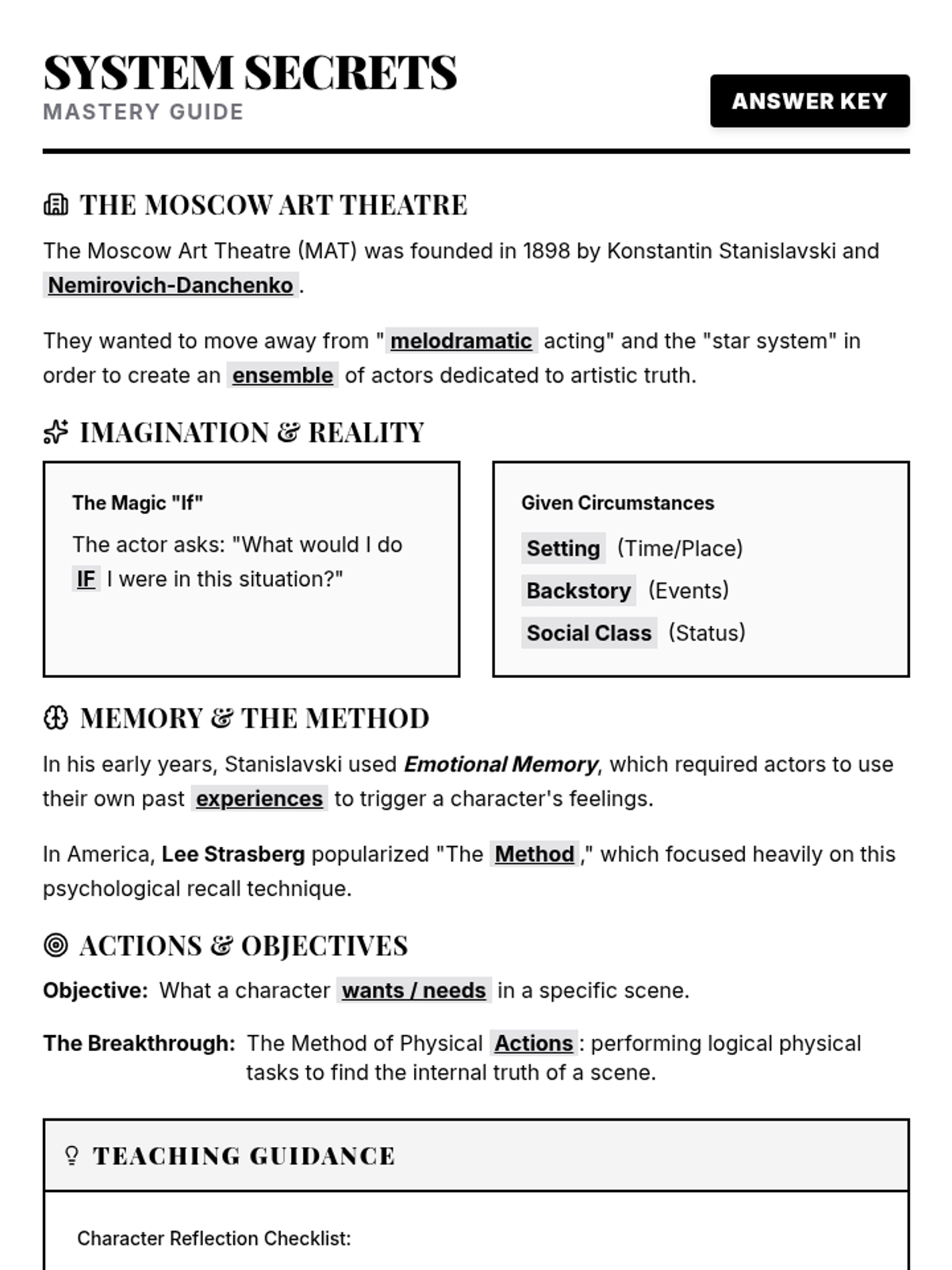
A high-contrast, black and white optimized version of the Stanislavski answer key, matching the student worksheet for consistency.
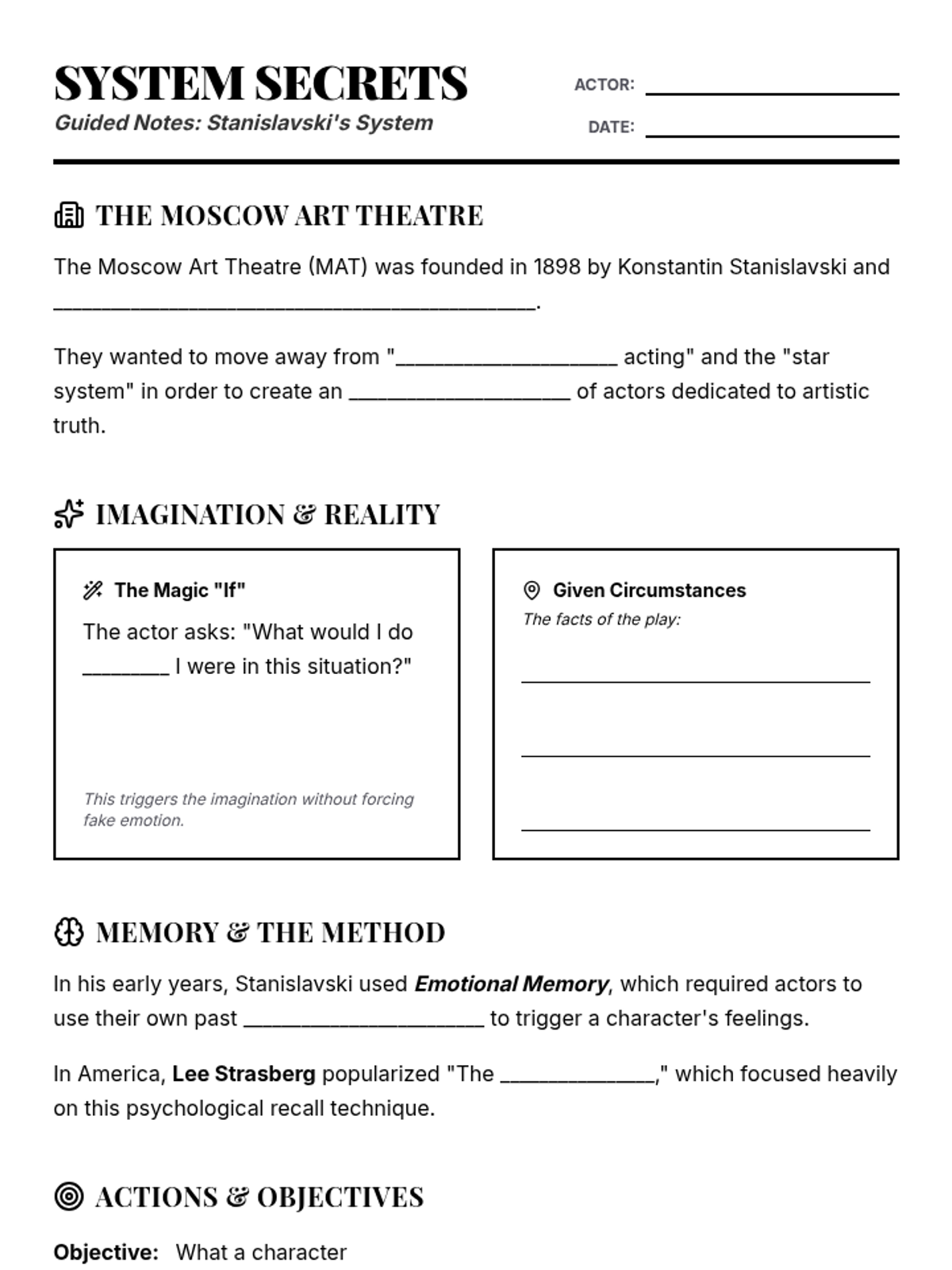
A high-contrast, black and white optimized version of the Stanislavski guided notes worksheet, ideal for printing and student use.
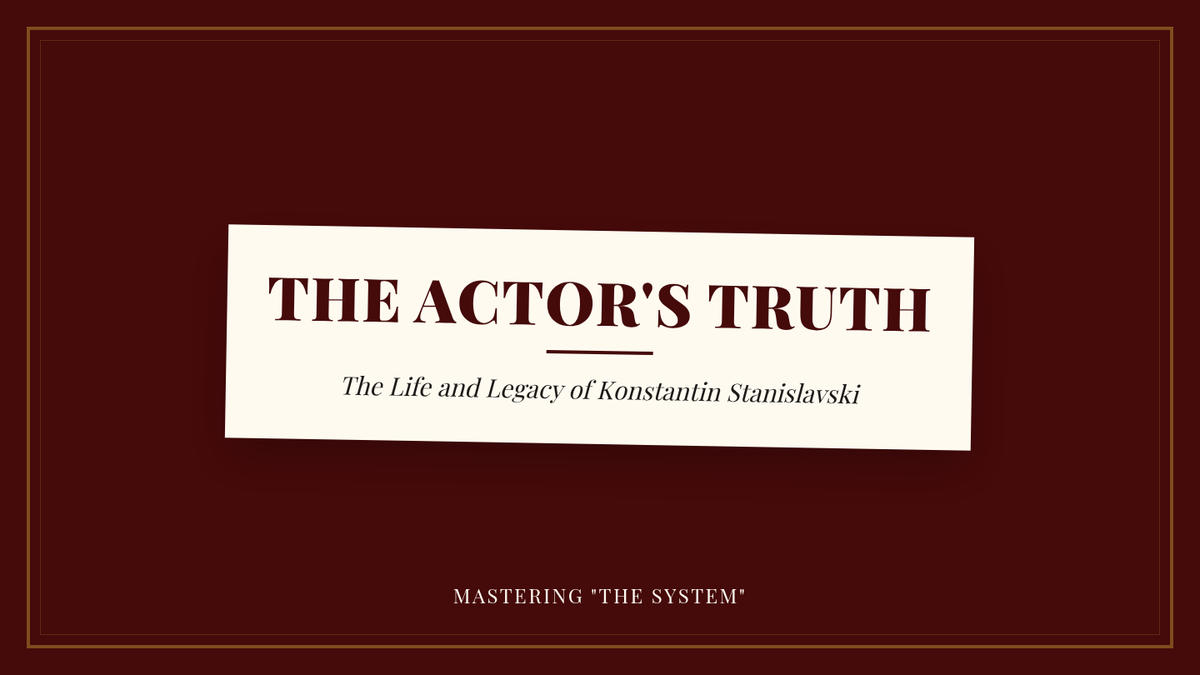
A visually striking slideshow covering the Moscow Art Theatre, the Magic If, Given Circumstances, and the evolution from Emotional Memory to Physical Actions in Stanislavski's System.
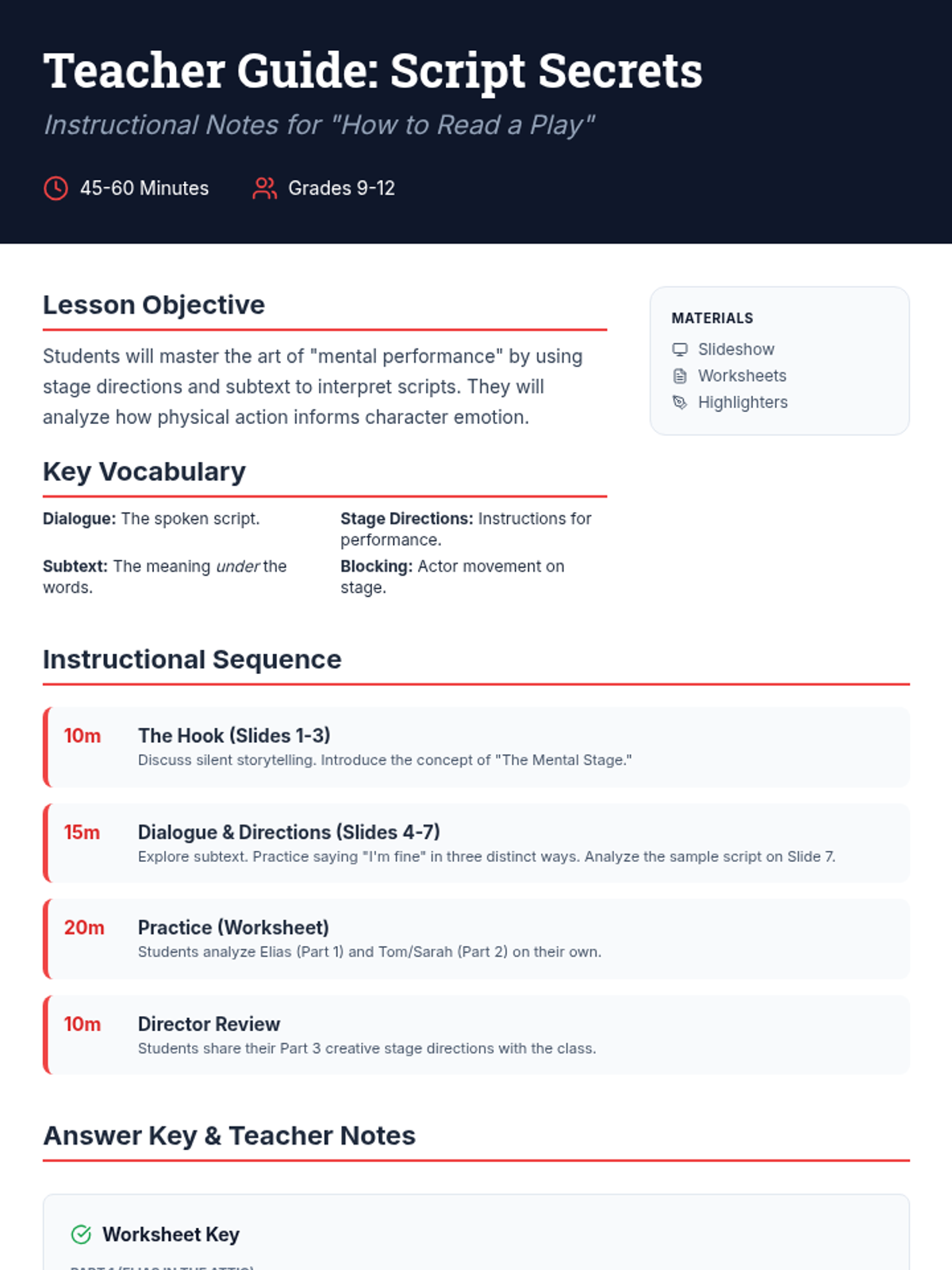
A comprehensive teacher guide for the Script Secrets lesson, including learning objectives, pacing suggestions, discussion prompts, and an answer key for the student worksheet.
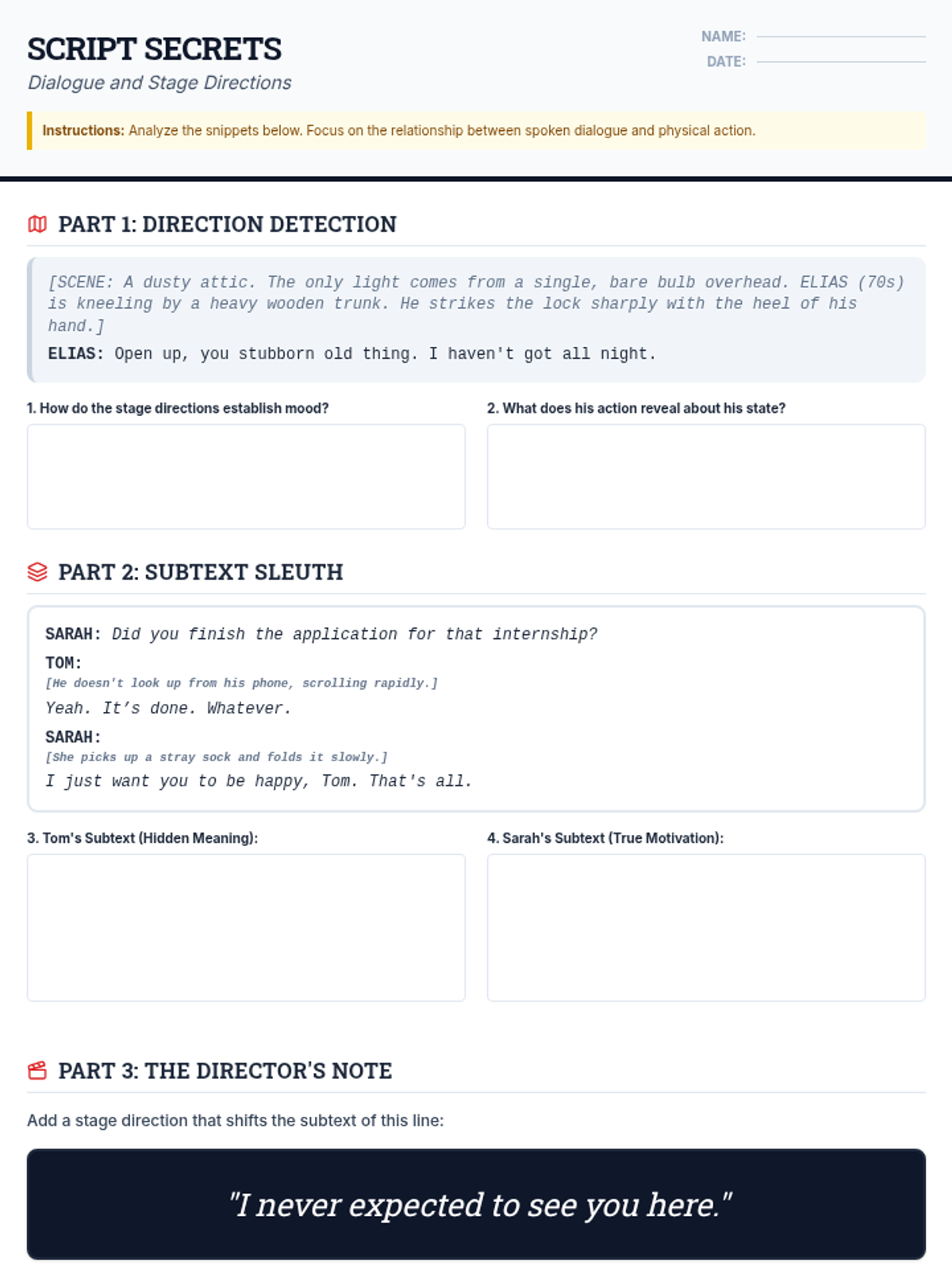
A practice worksheet for high school students to apply their knowledge of script analysis, focusing on identifying stage directions, interpreting subtext, and directing dialogue.
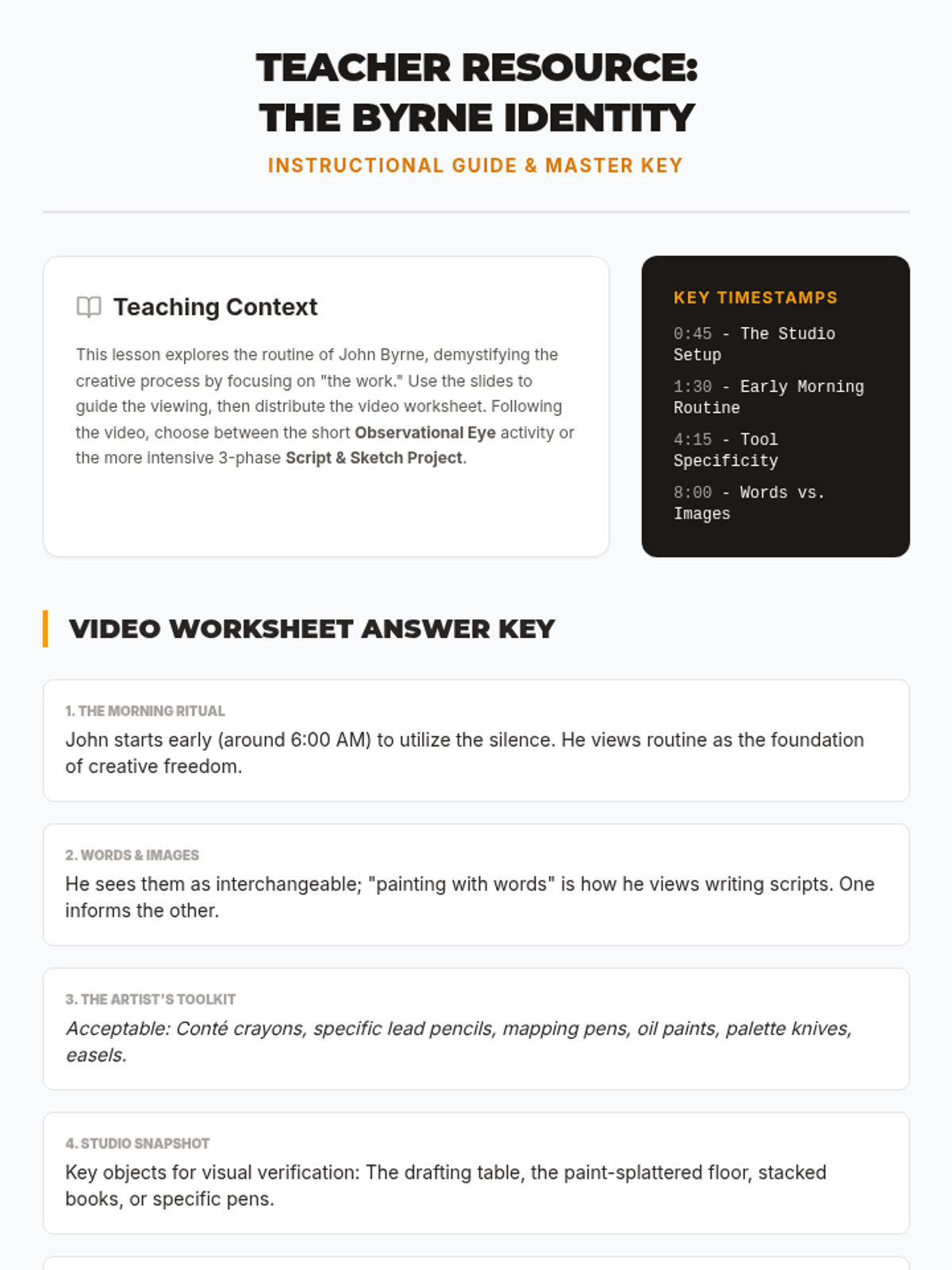
Teacher's guide for the John Byrne lesson. Includes timestamped highlights, answer key for the video worksheet, and instructional tips for the expanded Script & Sketch Story Project.
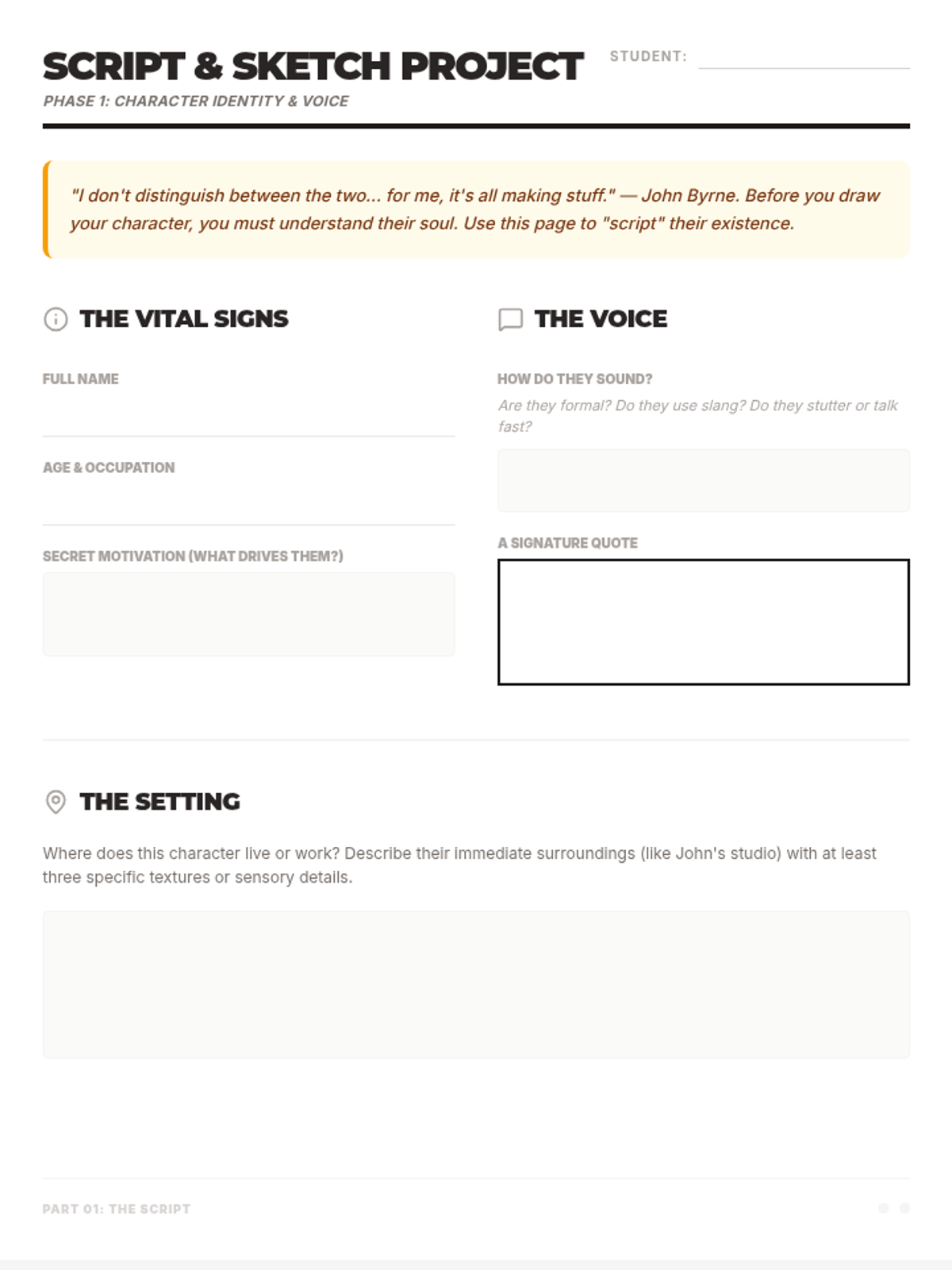
An expanded character-building project that spans three phases: identity/scripting, visual anatomy/sketching, and a short story/narrative scene. Inspired by John Byrne's multidisciplinary career.
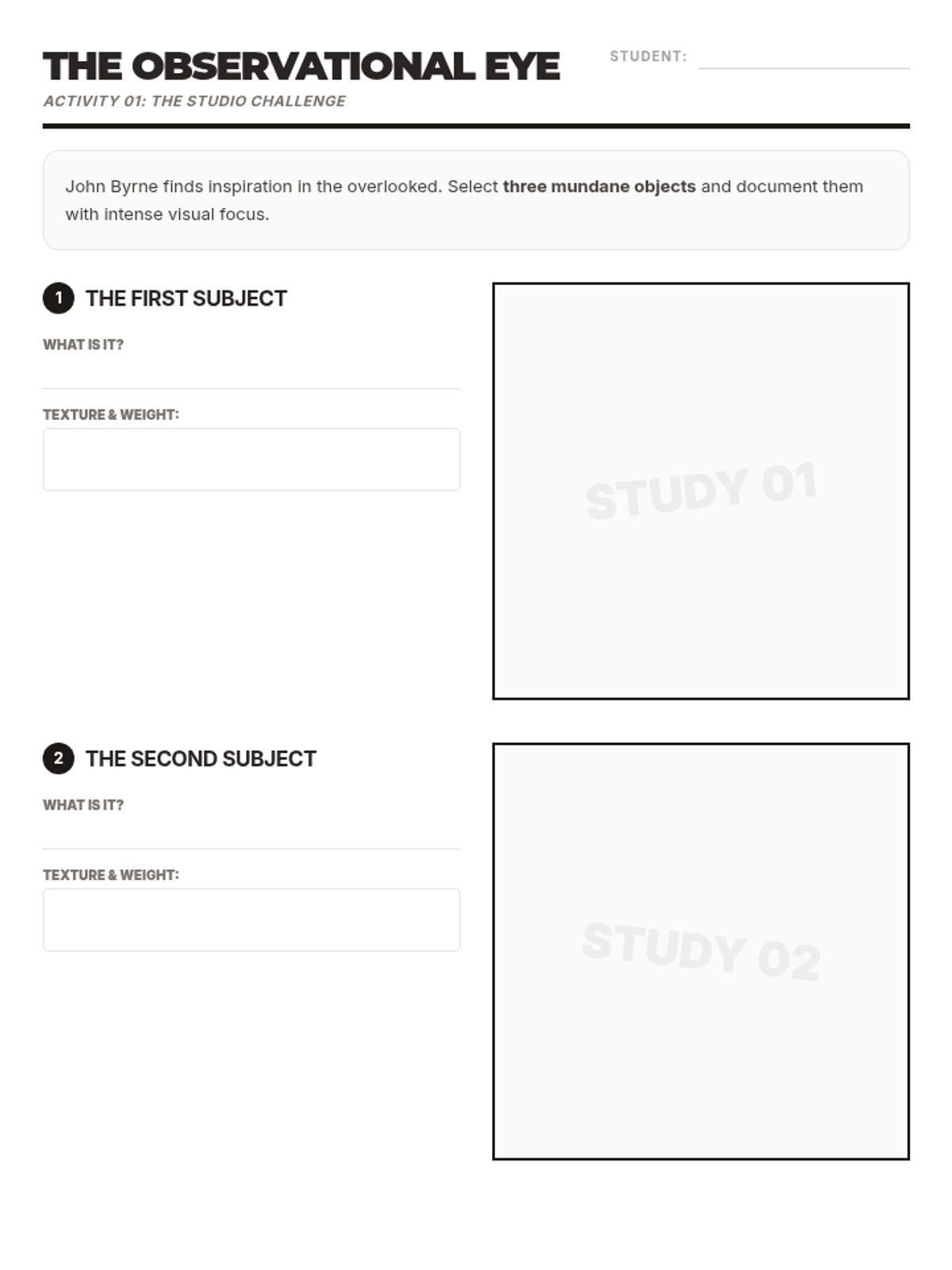
A sketching activity focused on observation and detail, encouraging students to draw and describe three mundane objects. Corrected for a clean 2-page flow.
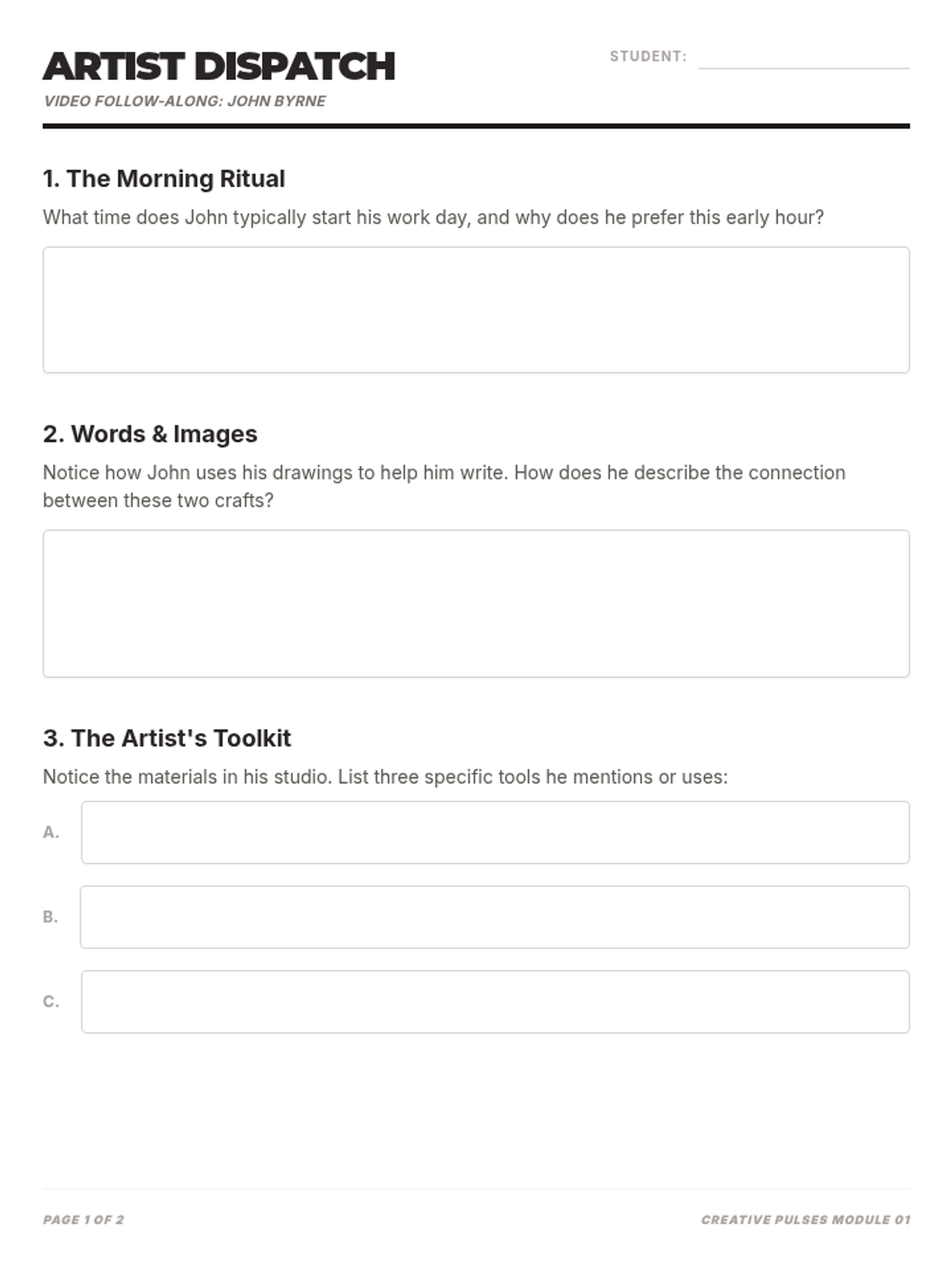
A two-page follow-along worksheet for the John Byrne documentary. Question #4 and #5 are moved to the second page to allow for a larger sketch area. Revised for footer consistency and watermark clarity.
A presentation slide deck introducing John Byrne, his work as a painter and playwright, and embedding the documentary for classroom viewing.
A visual presentation for Romeo and Juliet Act 5, covering the plot points from Mantua to the final reconciliation in the tomb.
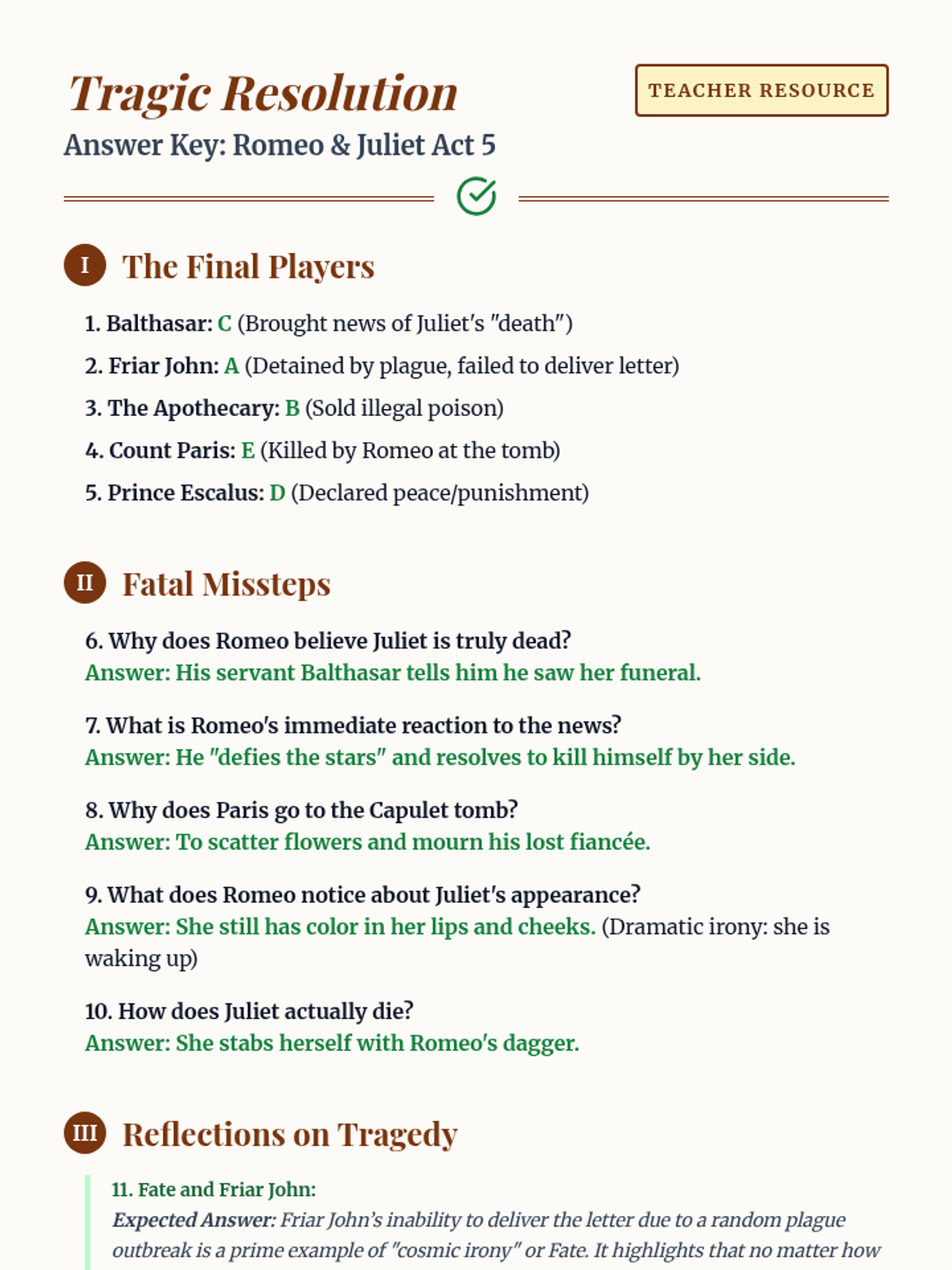
The comprehensive answer key for the Act 5 Romeo and Juliet quiz, including suggested responses for short answer questions.
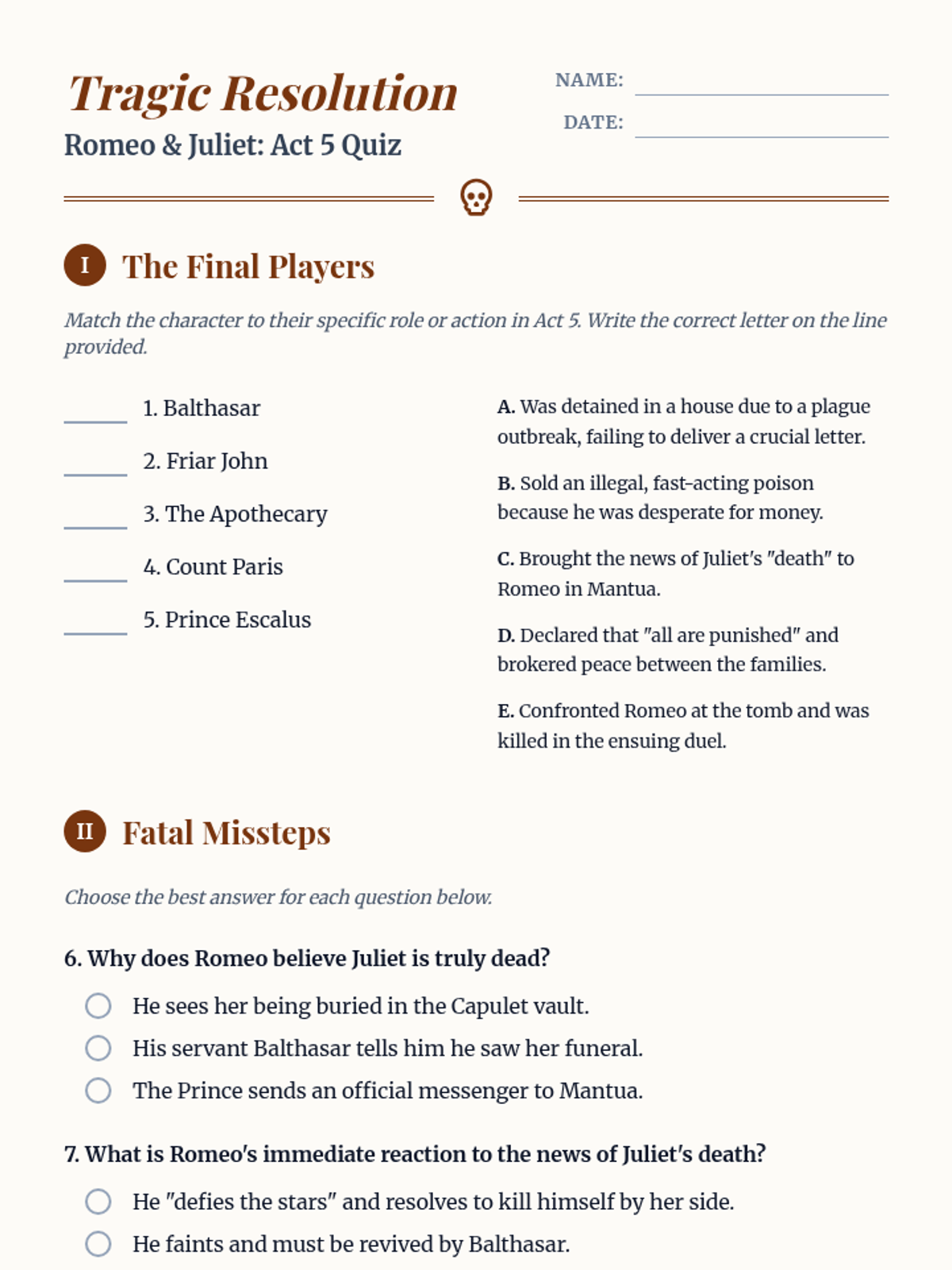
A formal Act 5 quiz for Romeo and Juliet featuring character matching, multiple choice with 3 options, and short answer questions with a vintage manuscript aesthetic.
An engaging slideshow for high school students covering the essential techniques for reading a play, with deep dives into dialogue, subtext, and stage directions.
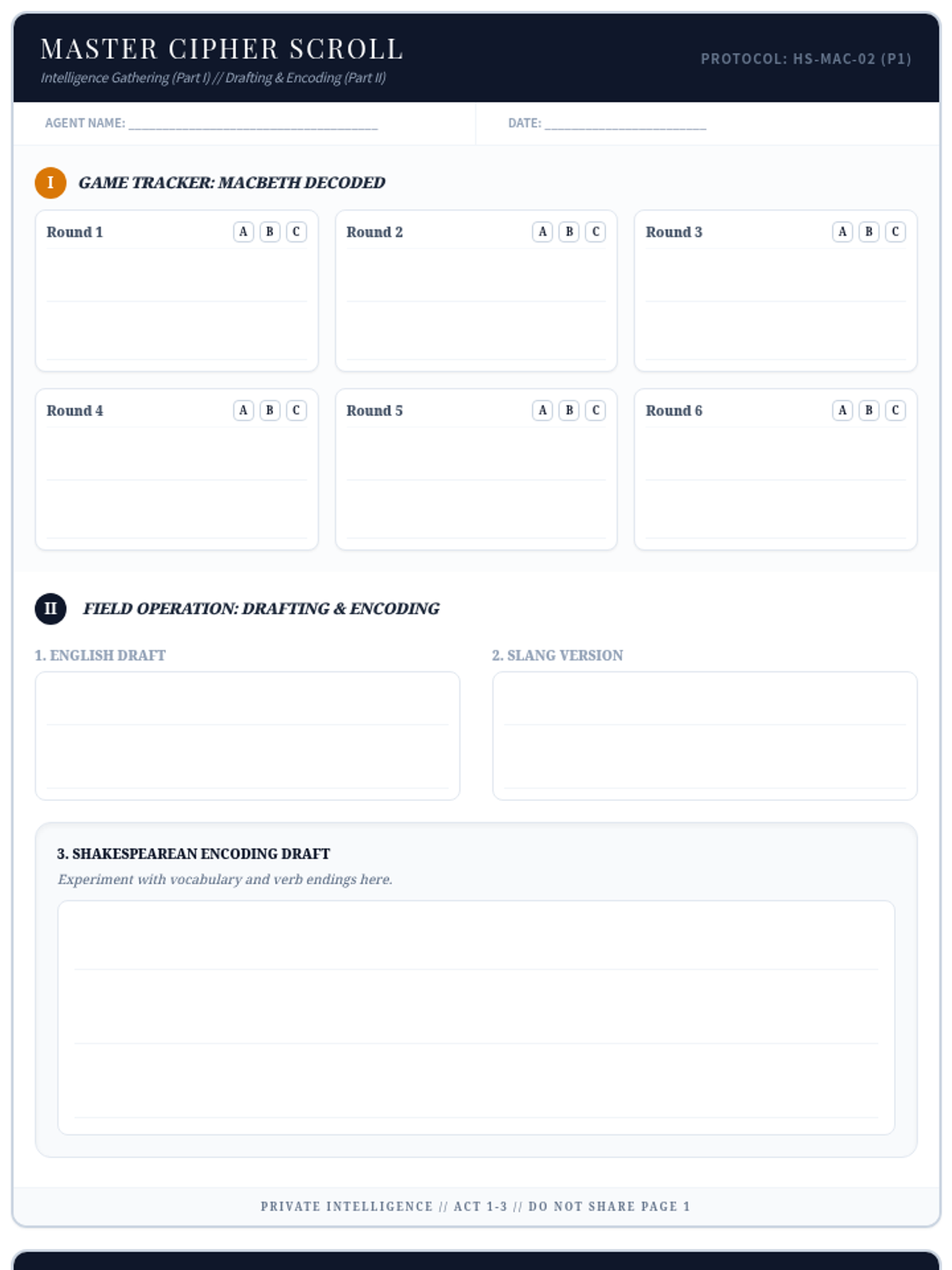
An expanded, two-page version of the game note scroll worksheet. Page 1 contains the game tracker and initial drafts, while Page 2 features the final Shakespearean encoding and space for peer decoding to ensure secrecy. Updated with improved page breaks and writing space.
An updated Jeopardy-style game show slide deck for Macbeth Acts 1-3. Features interpretation slides that display both the quote and multiple-choice translations for better clarity. Round 6 choices now reflect full-quote translations.
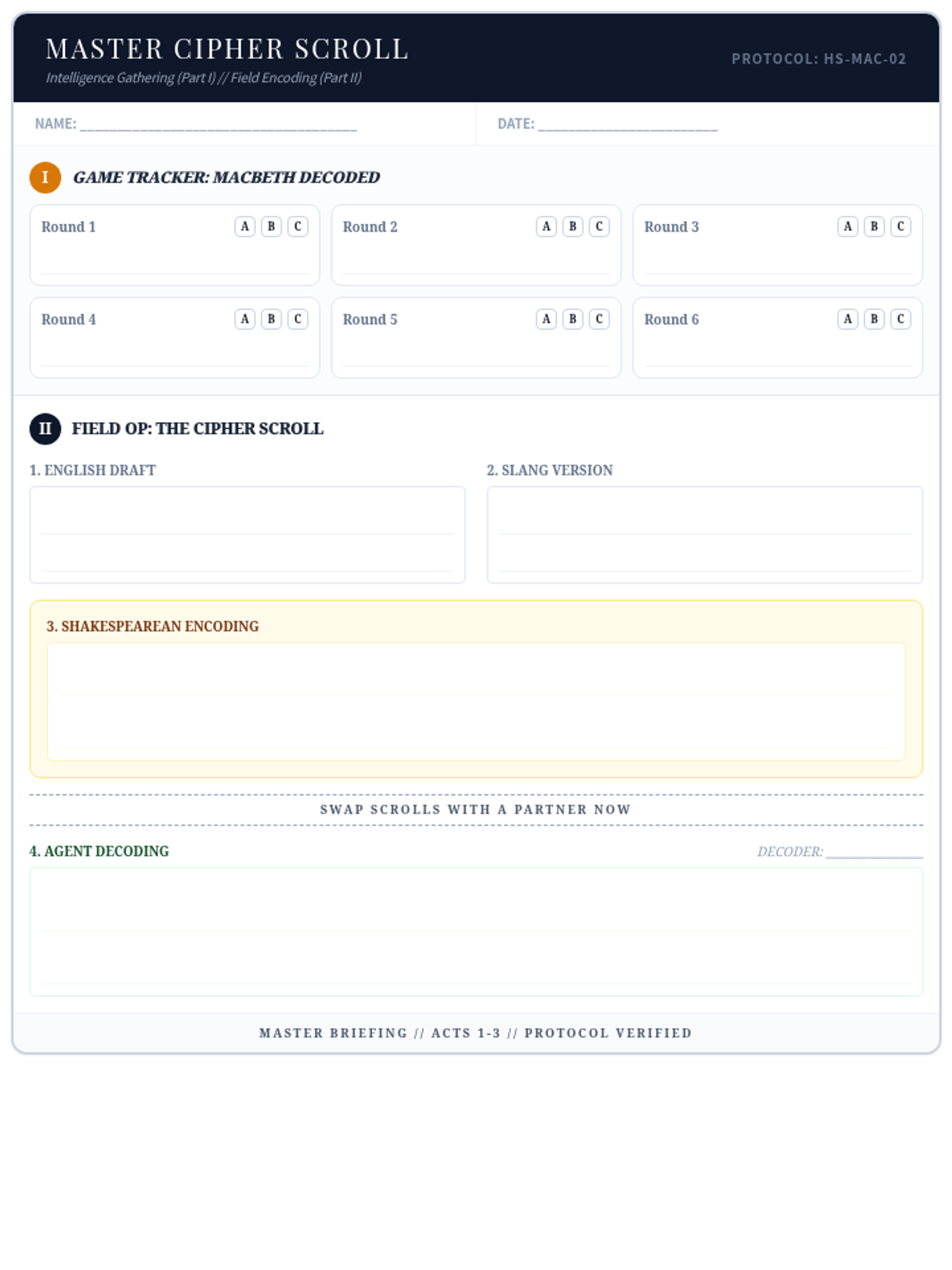
A combined worksheet featuring a top section for tracking 6 rounds of the 'Macbeth Decoded' game show and a bottom section containing the original 'Cipher Scroll' encoding activity. Updated for better handwriting space and to fit on one page.
A Jeopardy-style game show slide deck for Acts 1-3 of Macbeth, requiring students to use their Lexicon to decode phrases and justify their hypotheses. Expanded to 6 rounds.
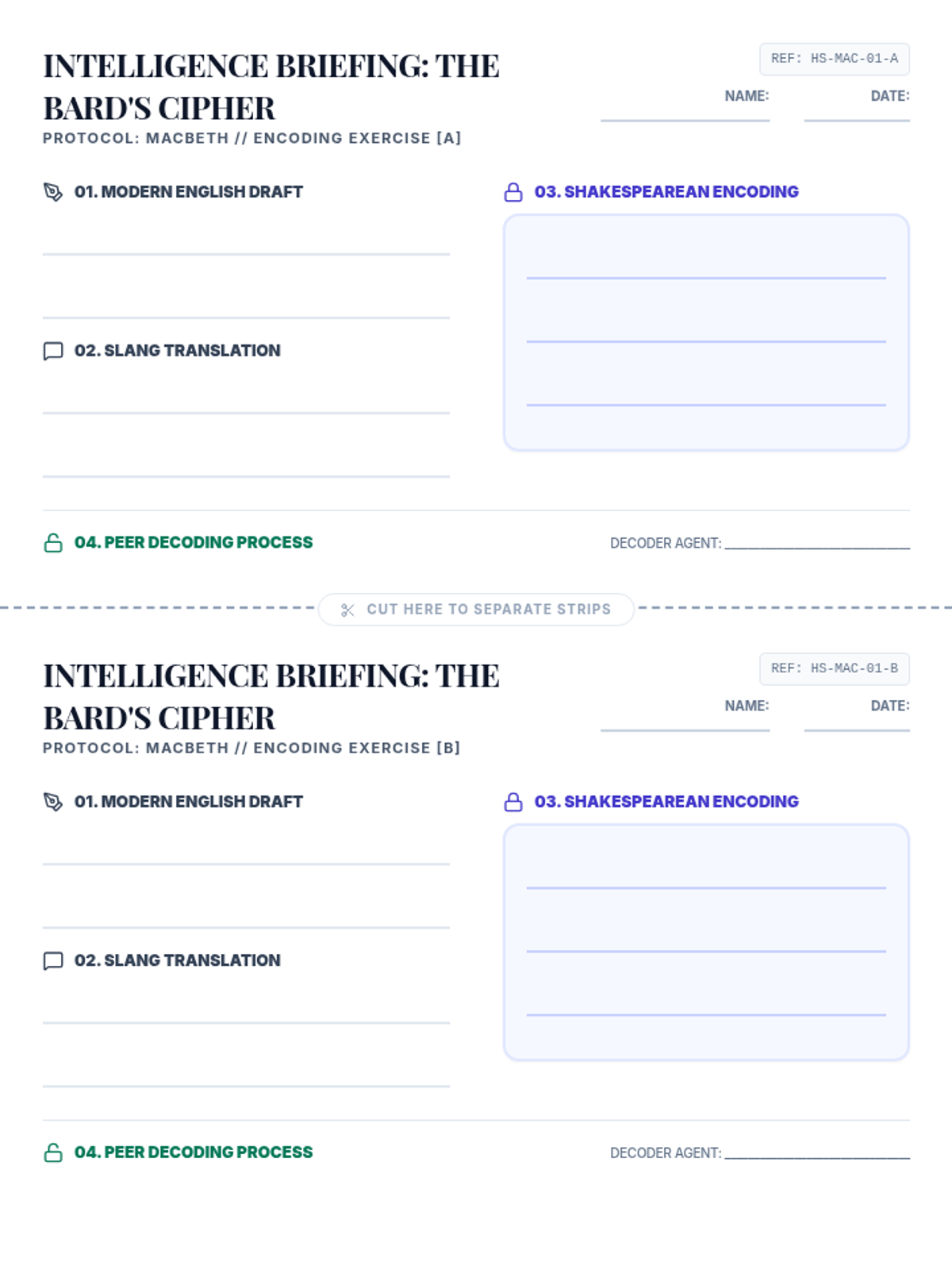
A compact, high-school oriented version of the Cipher Scroll activity, formatted as two strips per page with lines for modern, slang, and Shakespearean translations. Updated for better handwriting space and readability.
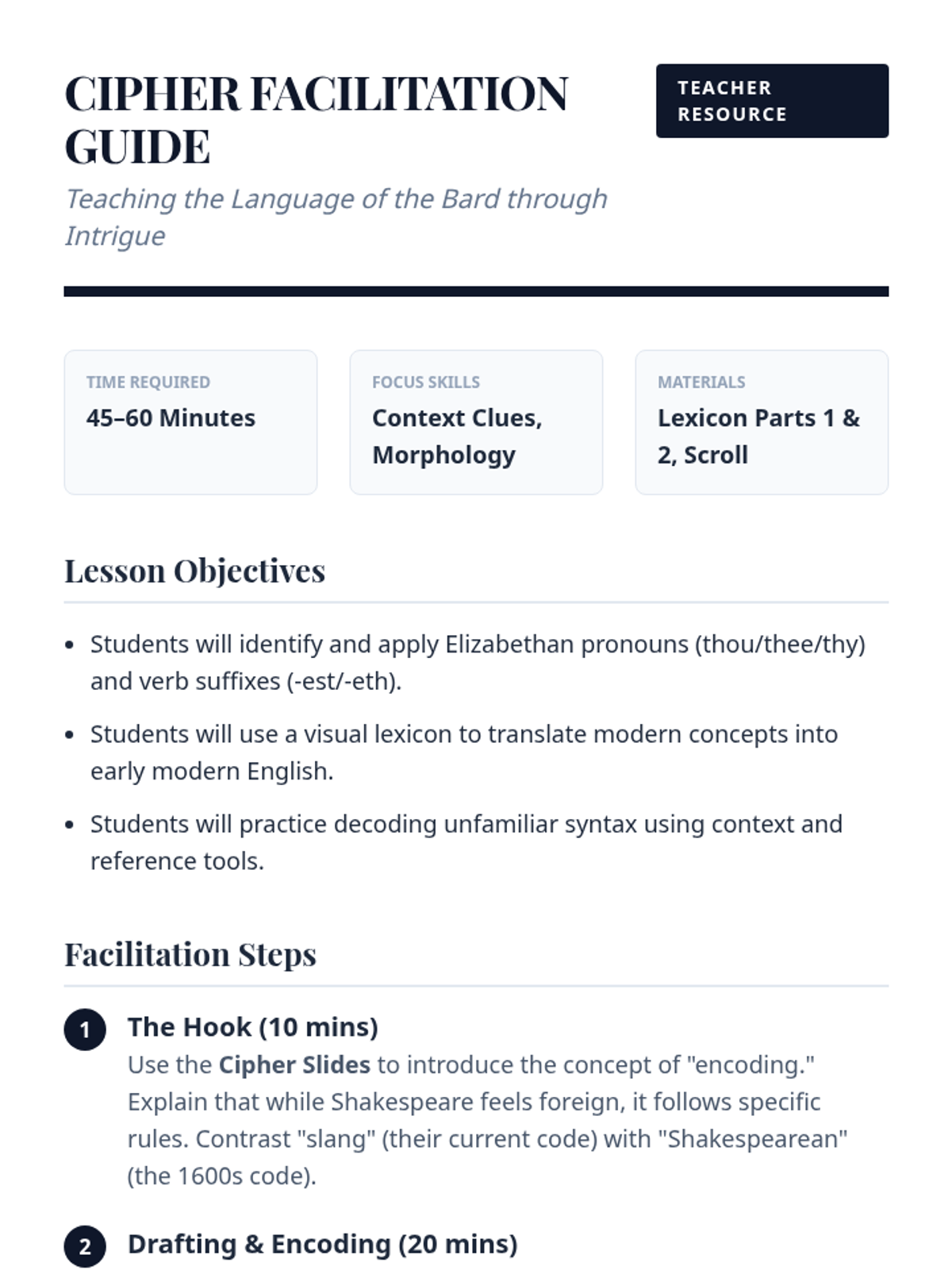
A teacher resource for 'The Bard's Cipher' lesson, providing instructional strategies, common misconceptions, and translation examples to facilitate student success. Updated to fix page breaks and icon rendering.
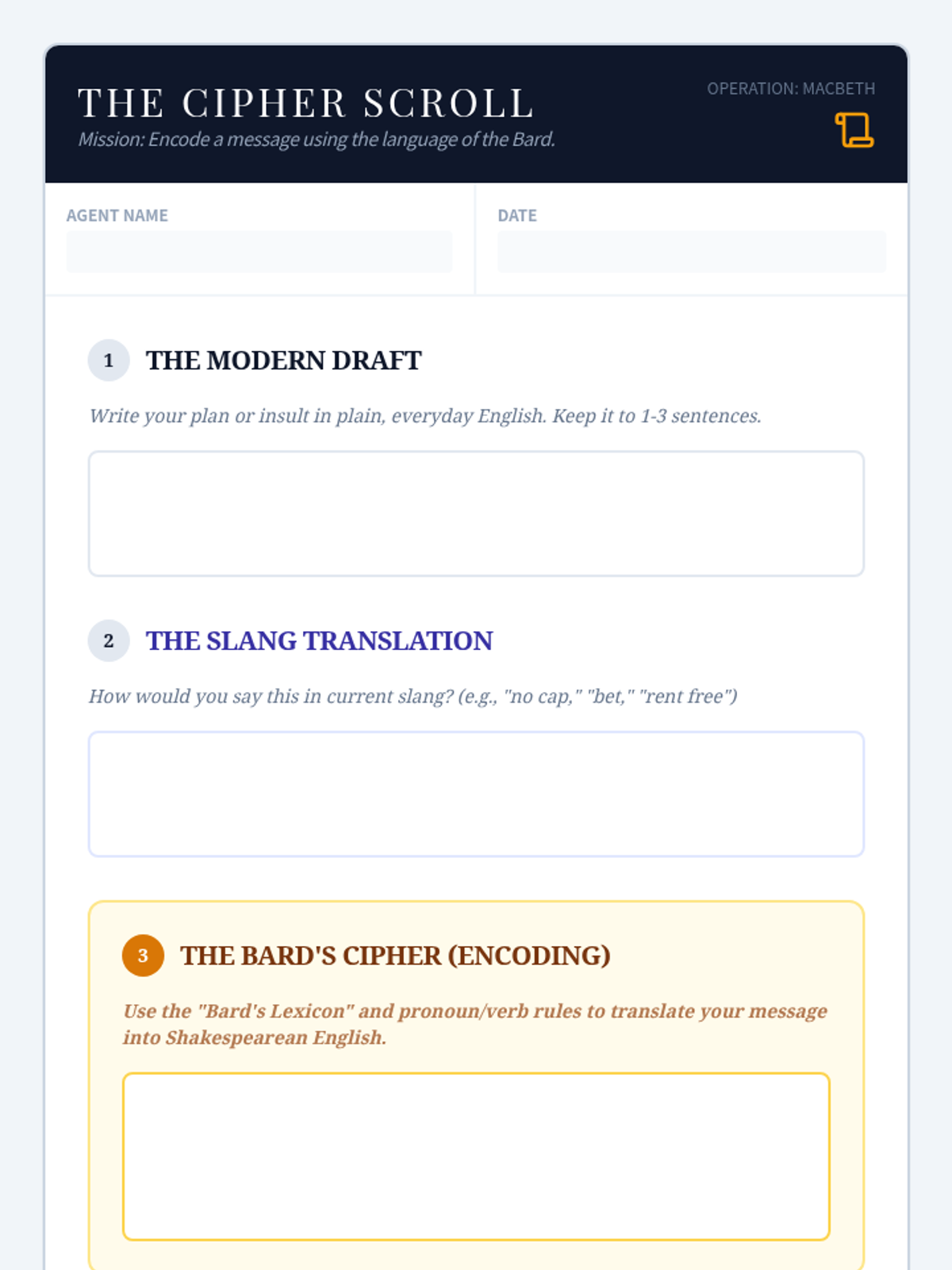
A multi-step activity worksheet where students draft a message in modern English and slang before 'encoding' it into Shakespearean language for a partner to decode. Updated to fix page break issues.
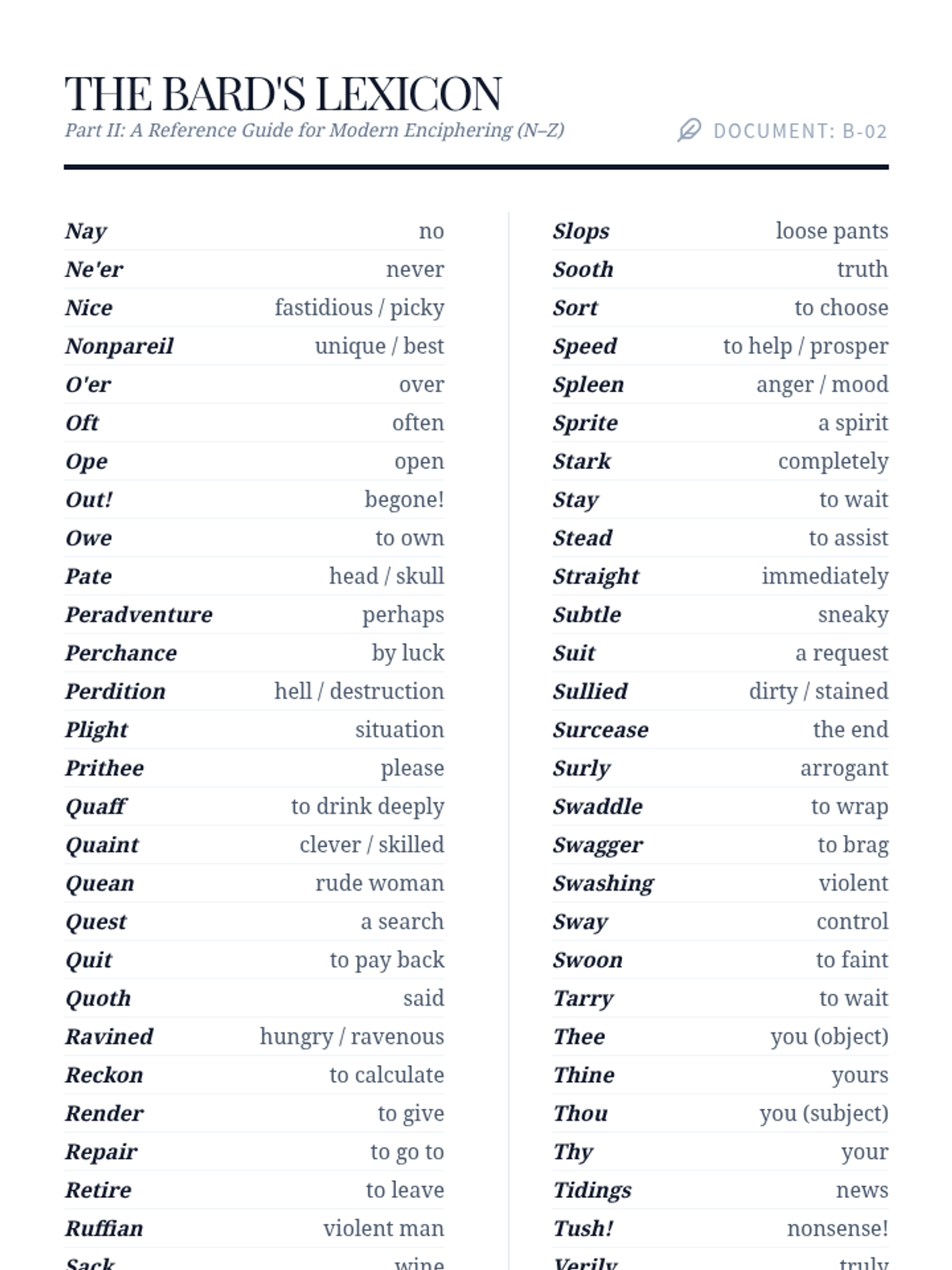
Part 2 of the visual word bank (N-Z) for the Shakespearean encoding activity, completing the alphabet with common Elizabethan words and their modern translations in pt. 12 font. Total word count across two parts exceeds 100.
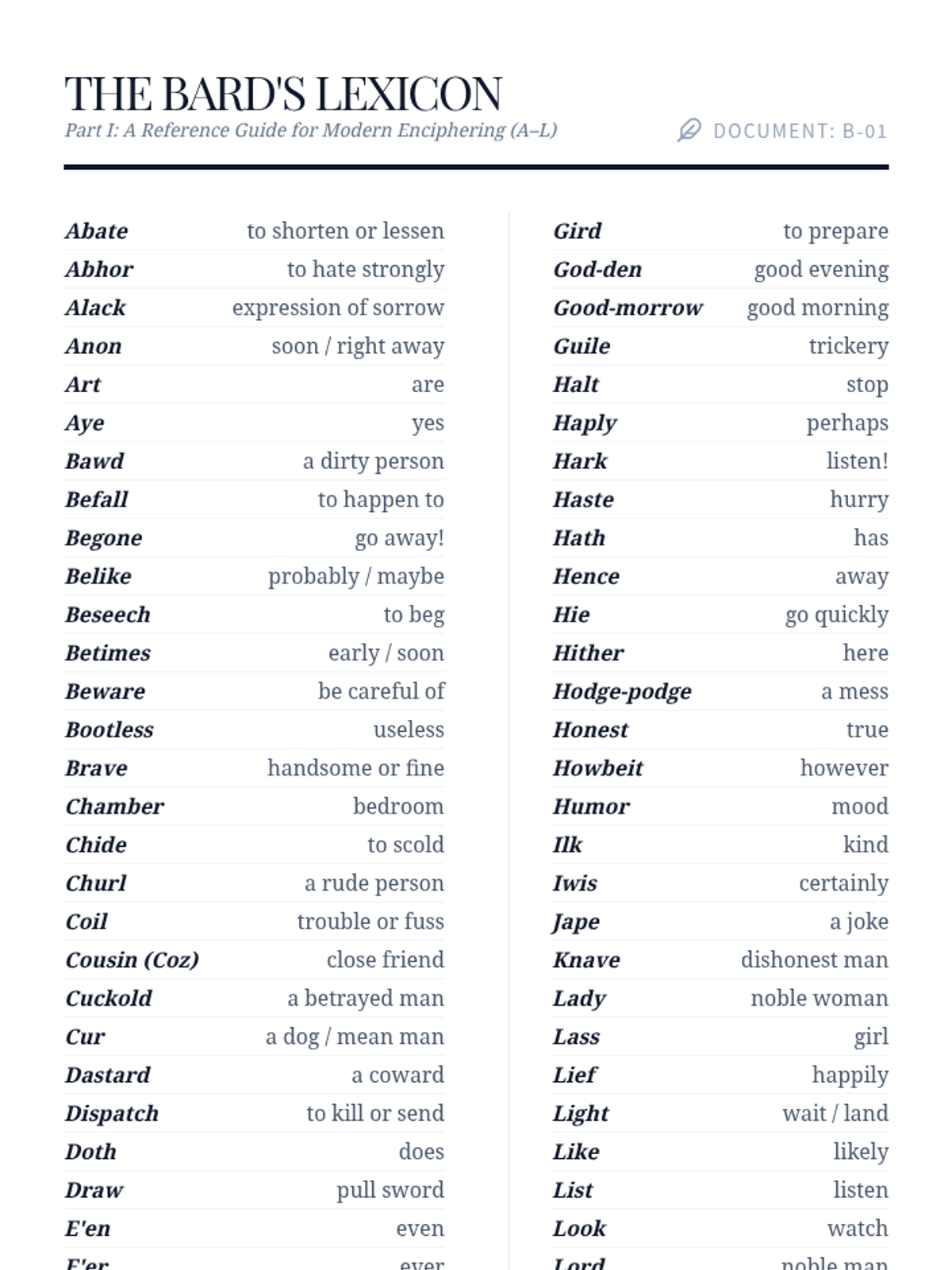
Part 1 of the visual word bank (A-M) for the Shakespearean encoding activity, featuring common Elizabethan words and their modern translations in pt. 12 font. Total word count across two parts exceeds 100.
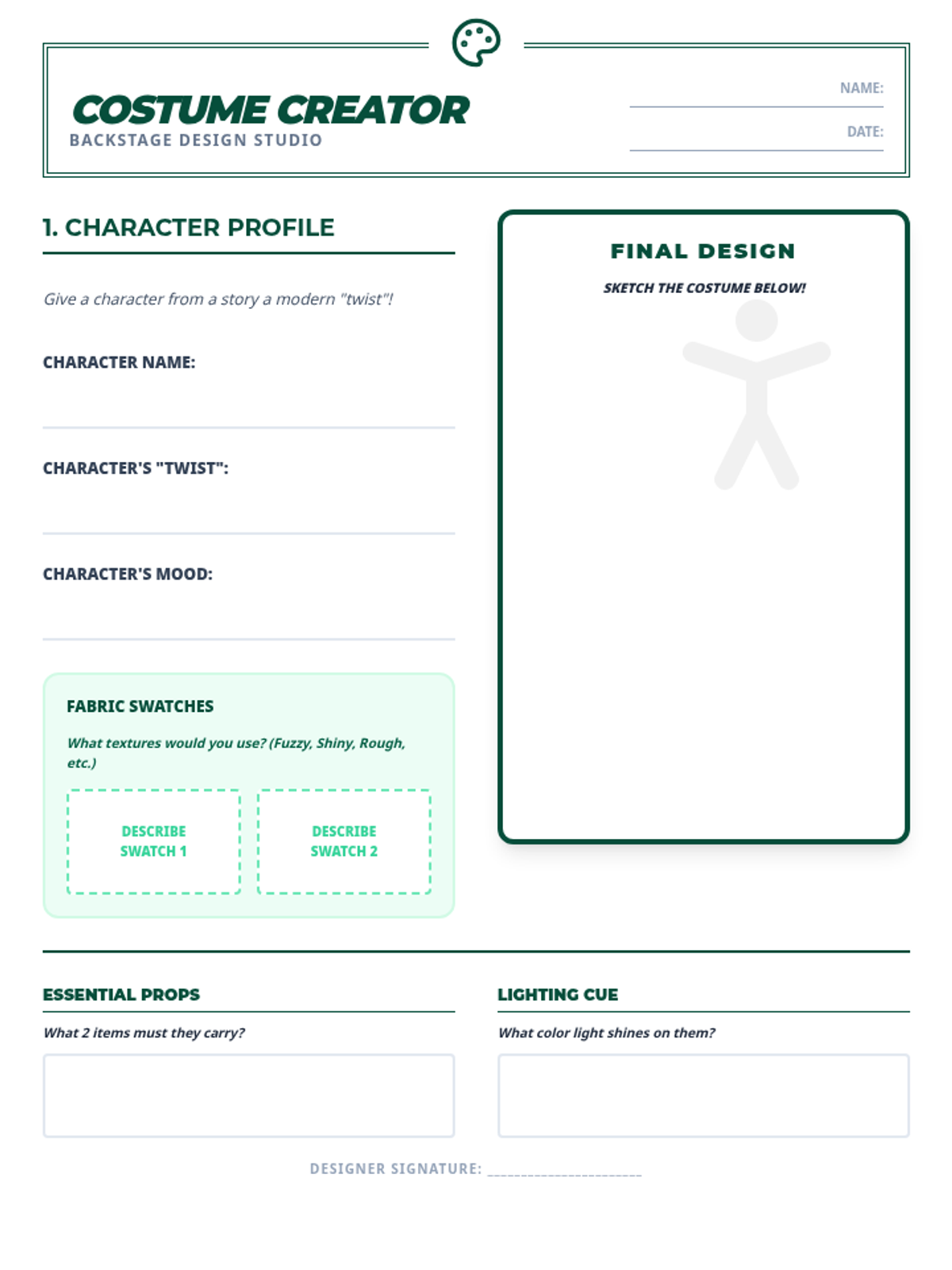
A student design worksheet for creating a character costume and identifying technical needs. Revised with white background response areas, larger swatch boxes, and improved text contrast for instructions. Optimized for single-page printing.
Presentation for Lesson 5, exploring theatrical roles and technical elements. Revised for better contrast, vertical balance on Slide 2, and improved visual composition on Slide 4.
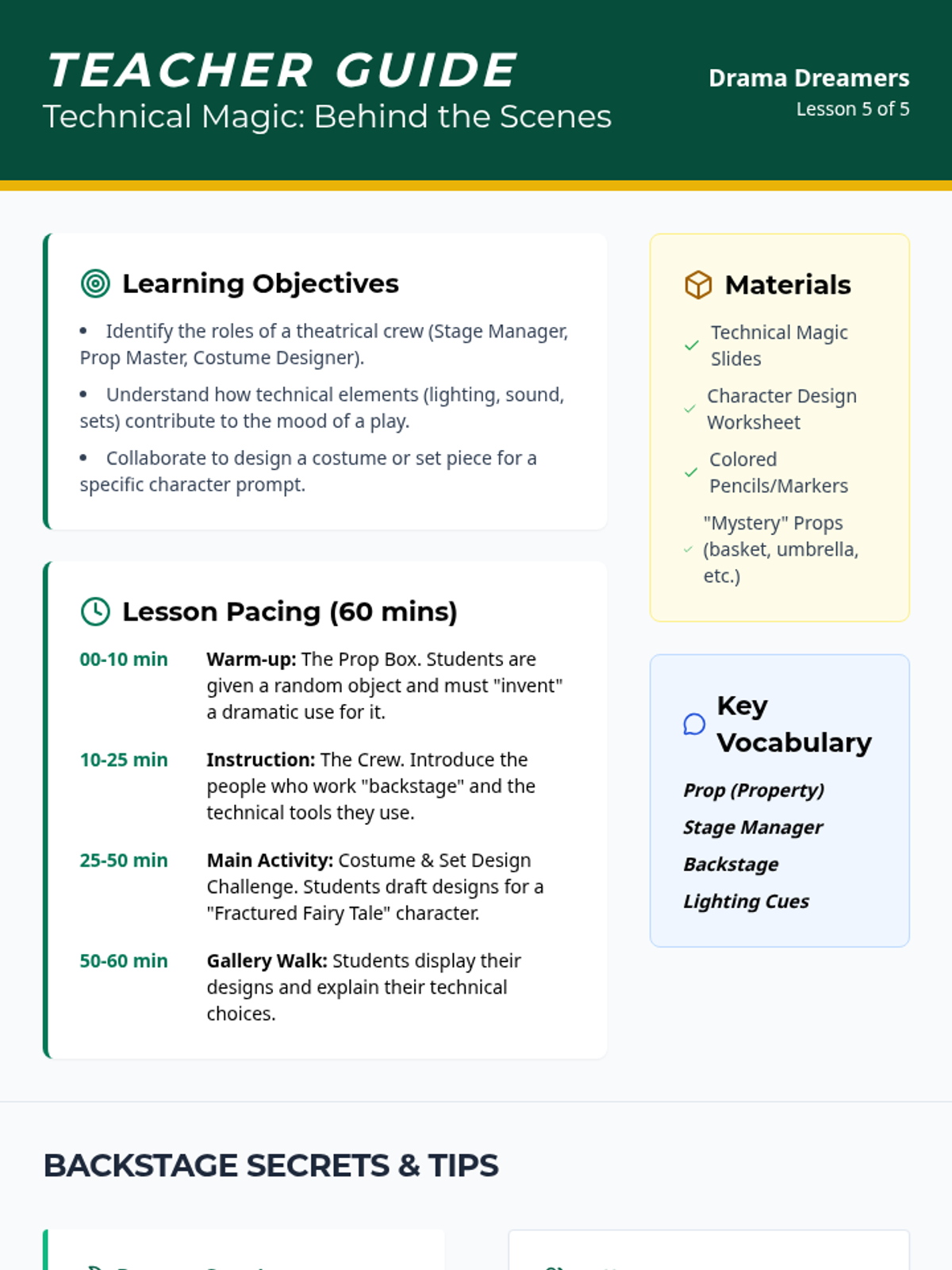
Instructional guide for Lesson 5, focusing on technical theater. Covers the crew, props, set design, and the use of lighting and sound to create mood.
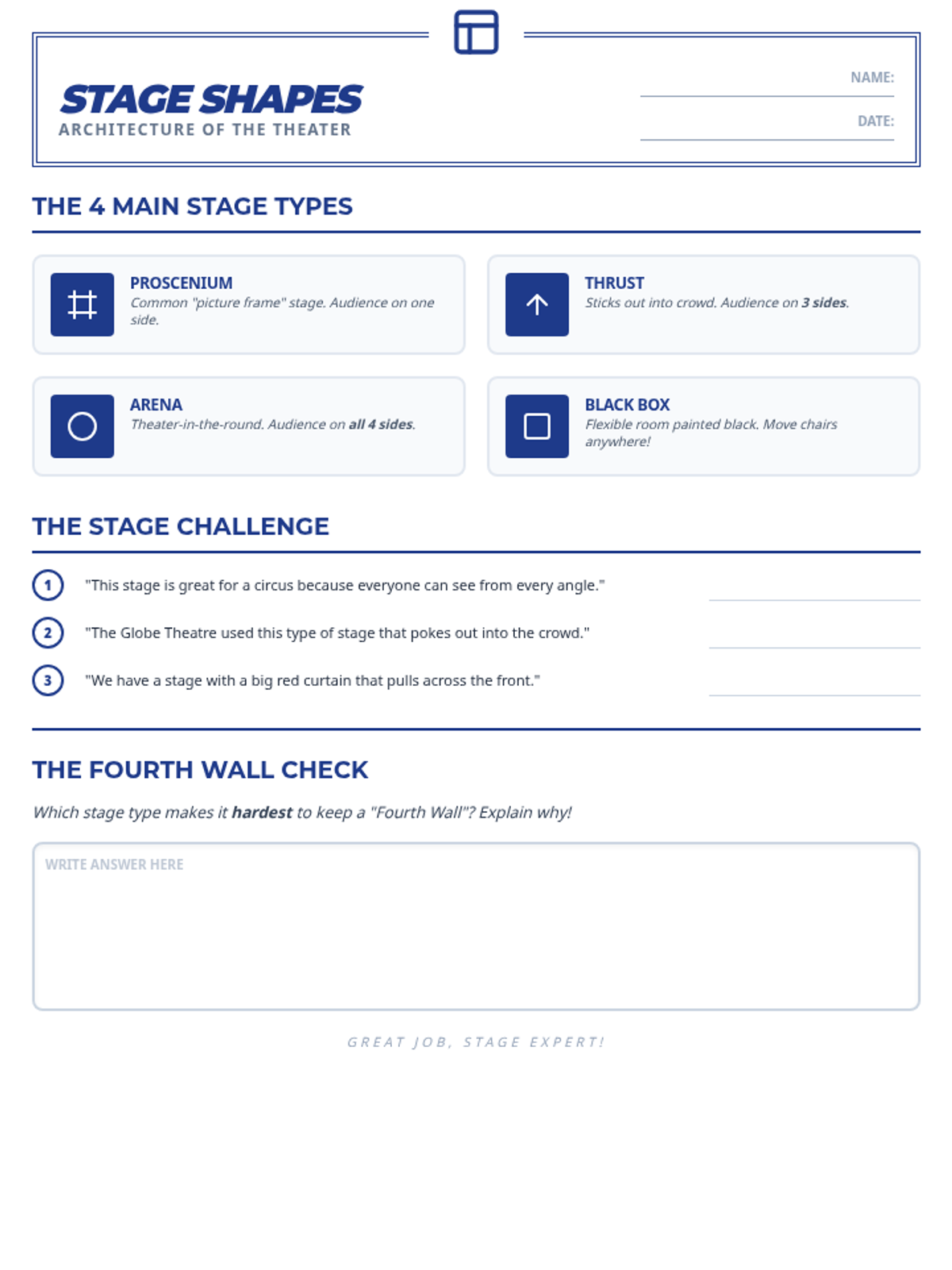
A student reference sheet and activity identifying the four primary types of stages: Proscenium, Thrust, Arena, and Black Box. Includes a matching challenge and a critical thinking question about the "Fourth Wall." Revised to fit on a single page with a white answer area and improved contrast.
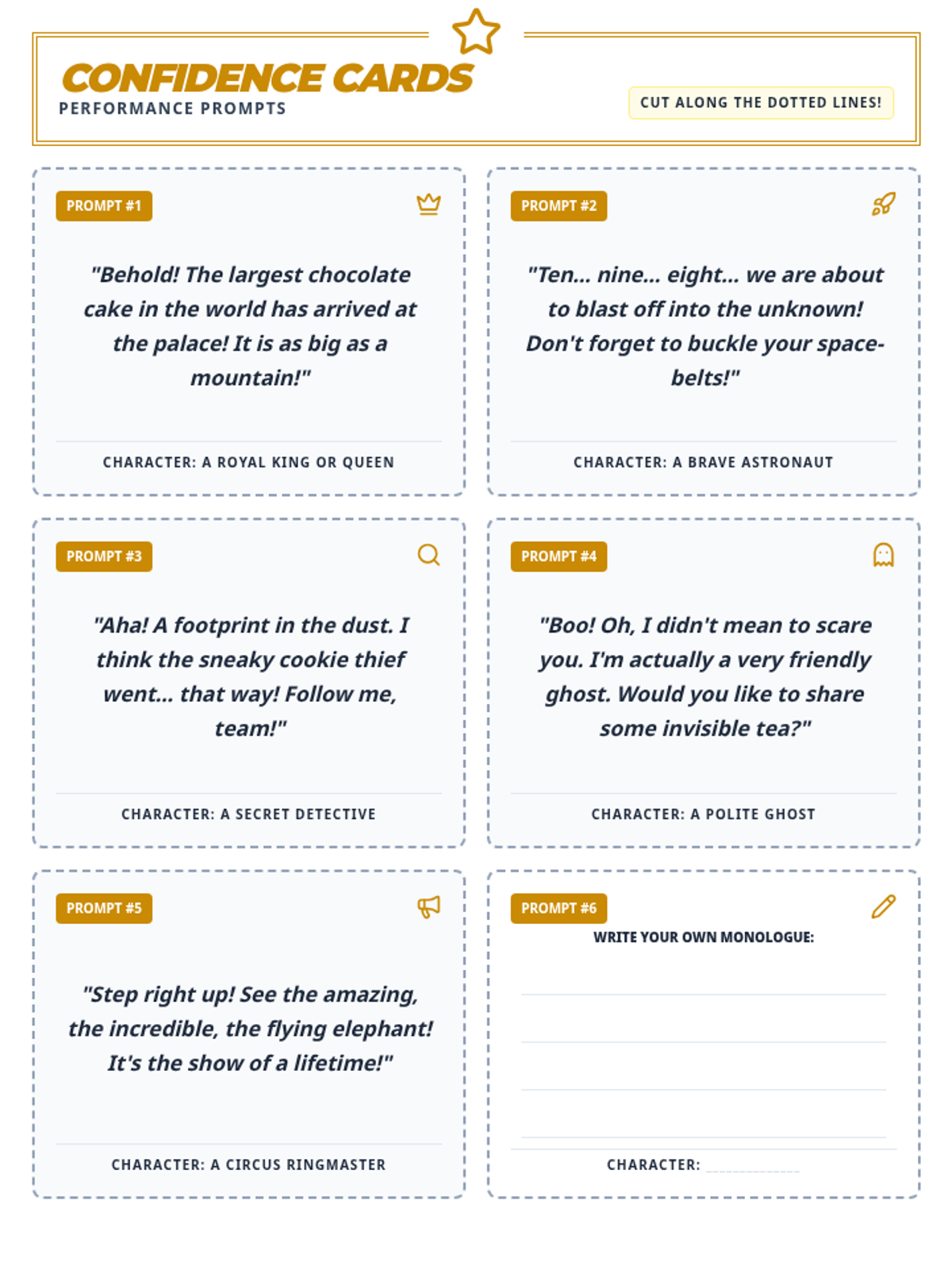
A collection of six cut-out performance prompt cards for students to practice monologues. Revised for single-page printing, improved writing space, and color consistency across all cards.
Final presentation for the unit, focusing on performance skills like projection and eye contact. Includes tongue twisters and the "Glow and Grow" feedback framework.
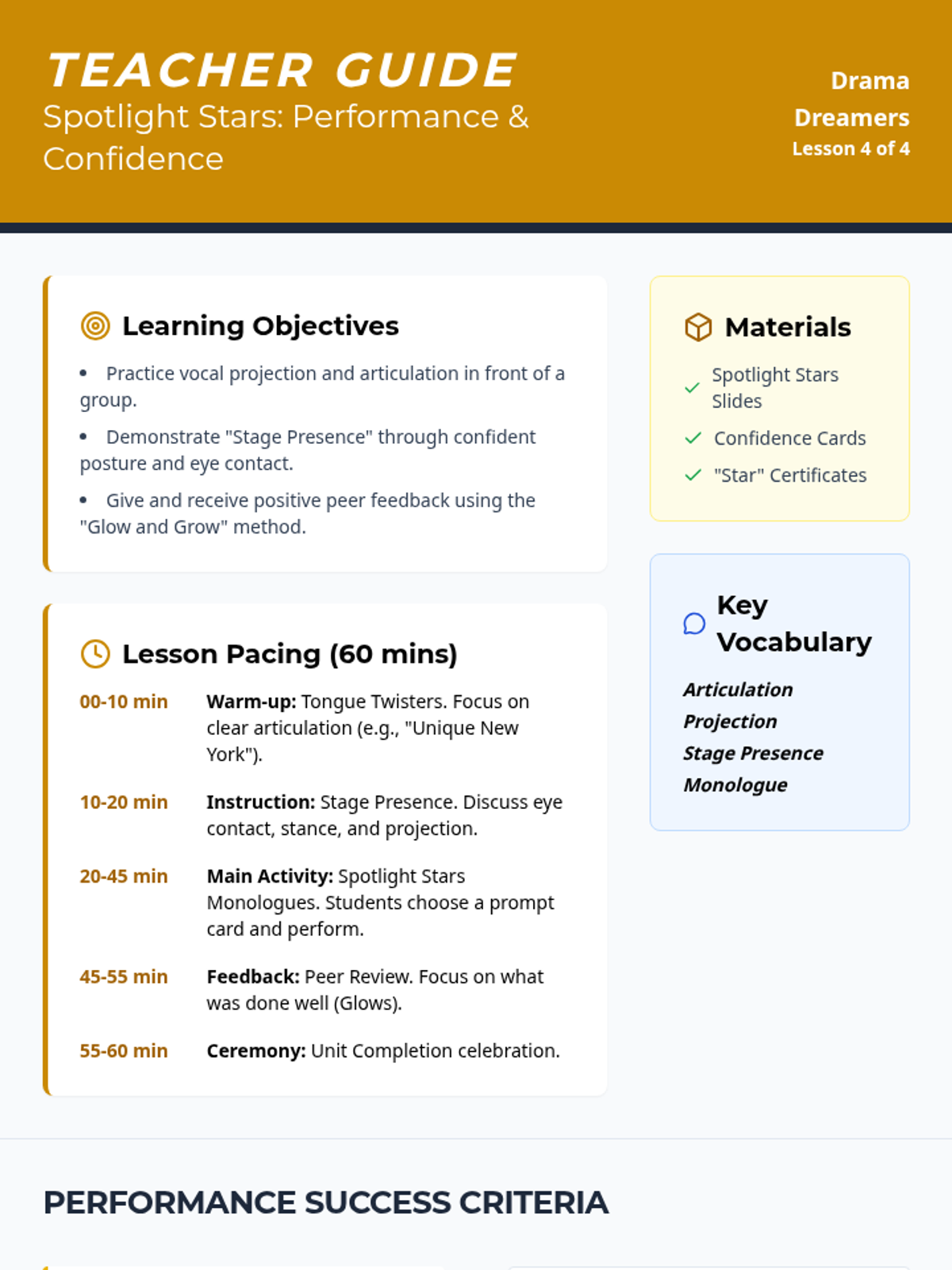
Instructional guide for Lesson 4, focusing on performance skills and confidence-building. Revised to fix pacing fragmentation, improve header contrast, and include detailed success criteria on page 2.
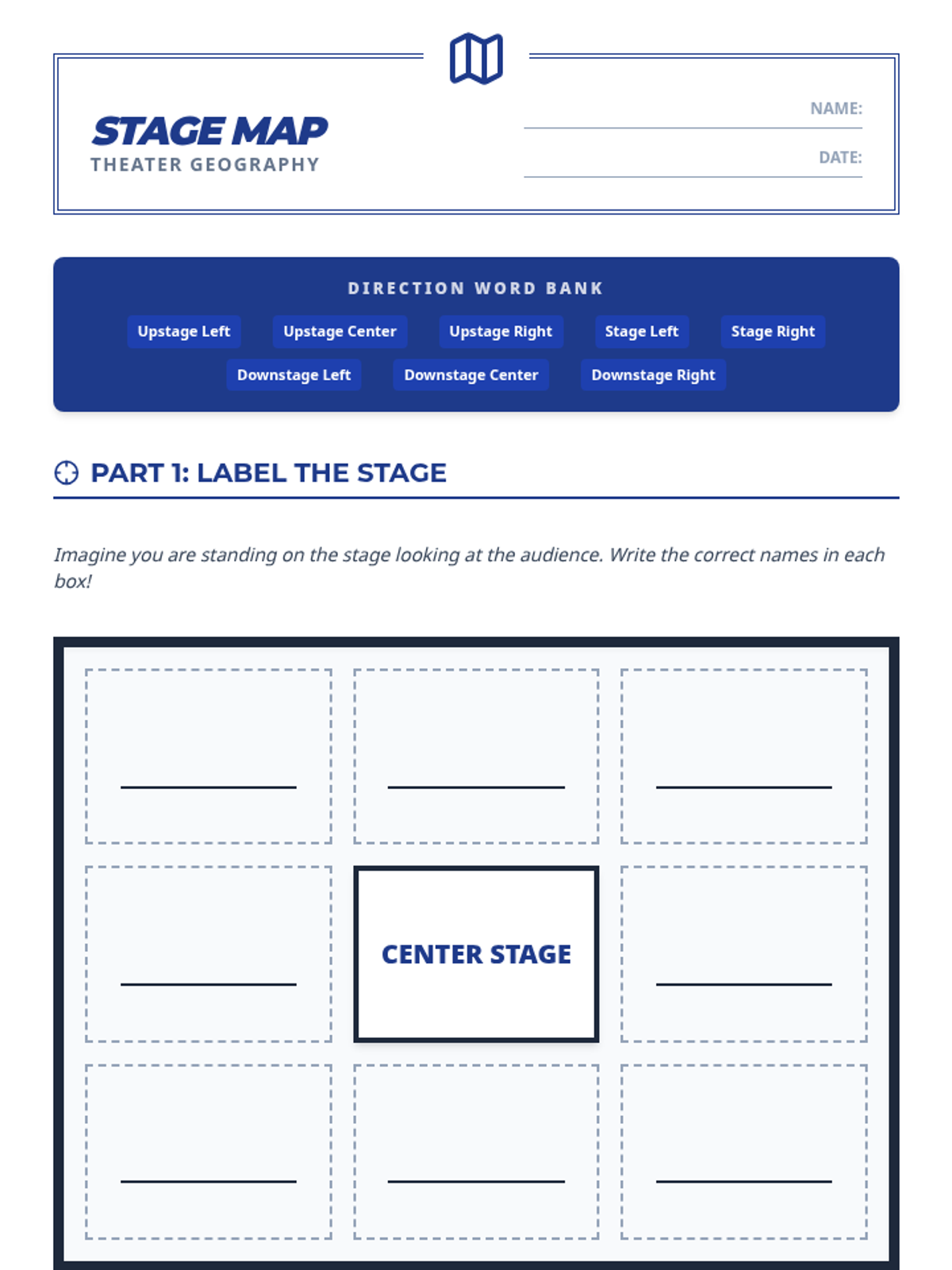
A student worksheet for mapping stage directions. Revised with a visible word bank, improved page breaks, and high-contrast writing areas for student completion.
Presentation for Lesson 3, visualizing the "Raked Stage" and mapping the 9 areas of a stage. Revised with improved text contrast on Slide 5 and better label positioning on Slide 2.
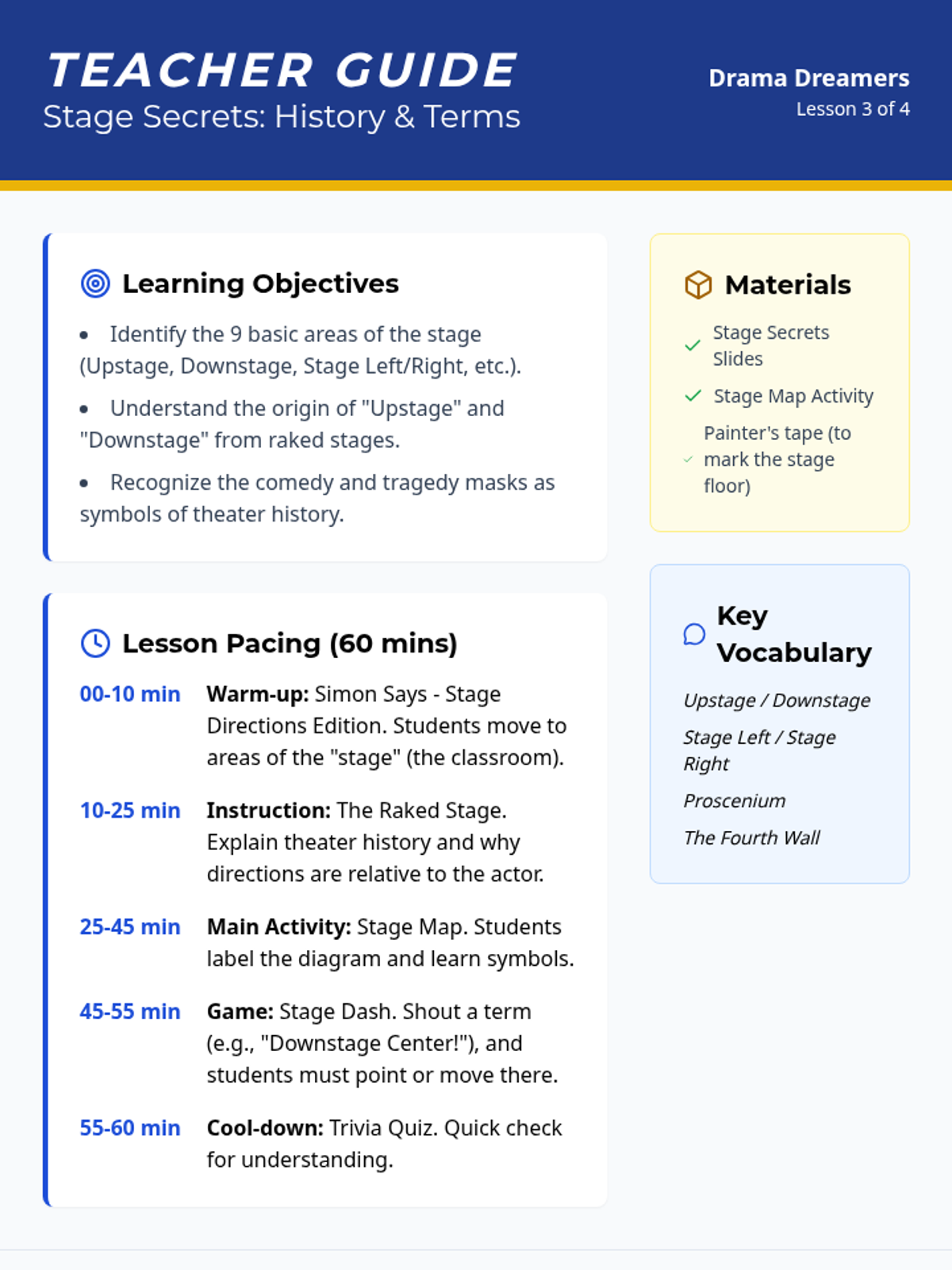
Instructional guide for Lesson 3, covering stage directions and theater history. Revised with a visual teacher's reference map, improved spacing, and a new extension activity.
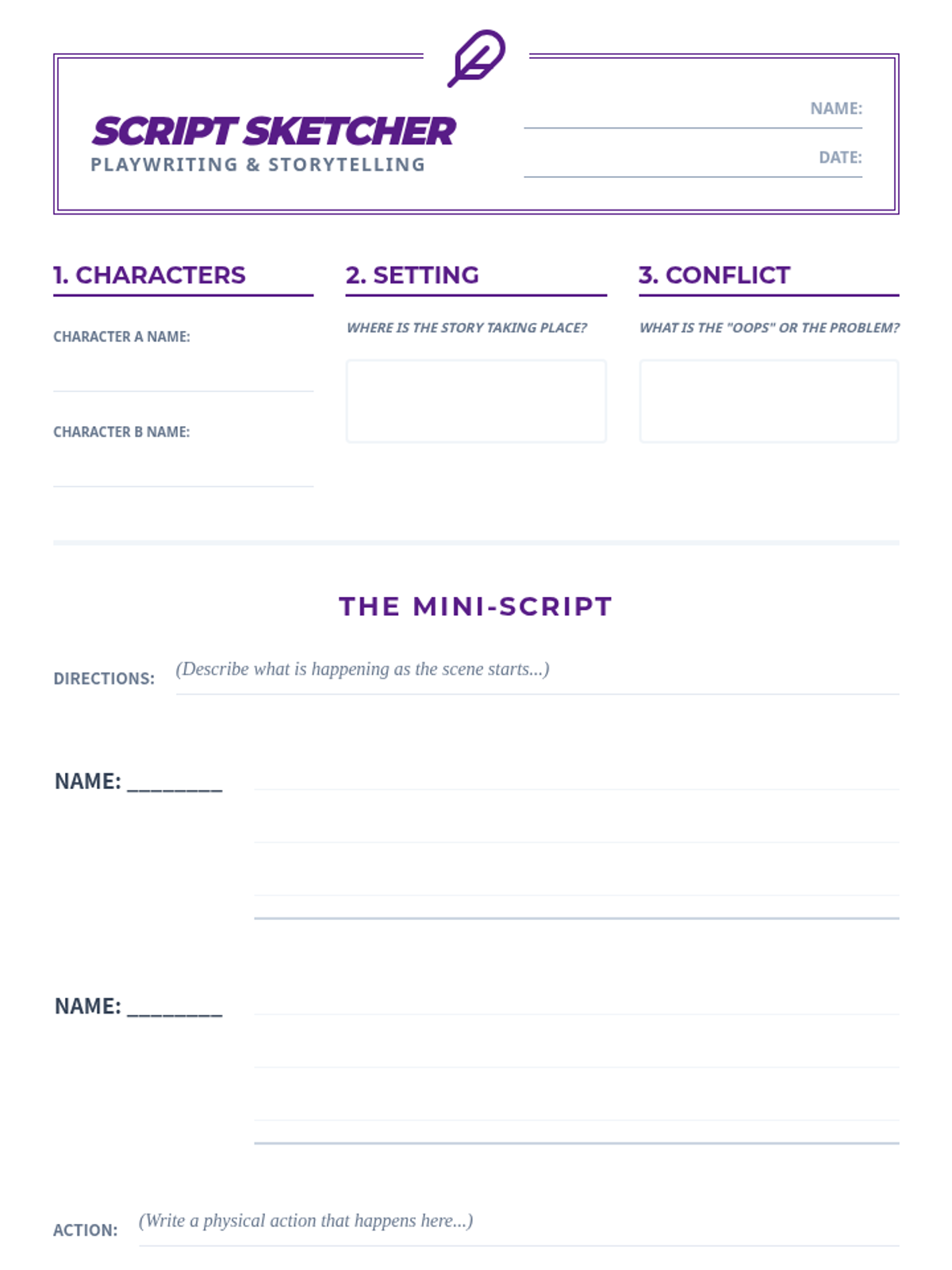
A structured student worksheet for drafting a mini-scene. Revised with larger handwriting areas, higher contrast hint text, and improved spacing to avoid wasteful page breaks.
Presentation for Lesson 2, explaining the elements of a play and script formatting. Revised for better contrast, fixed duplicated content, and improved visual impact.
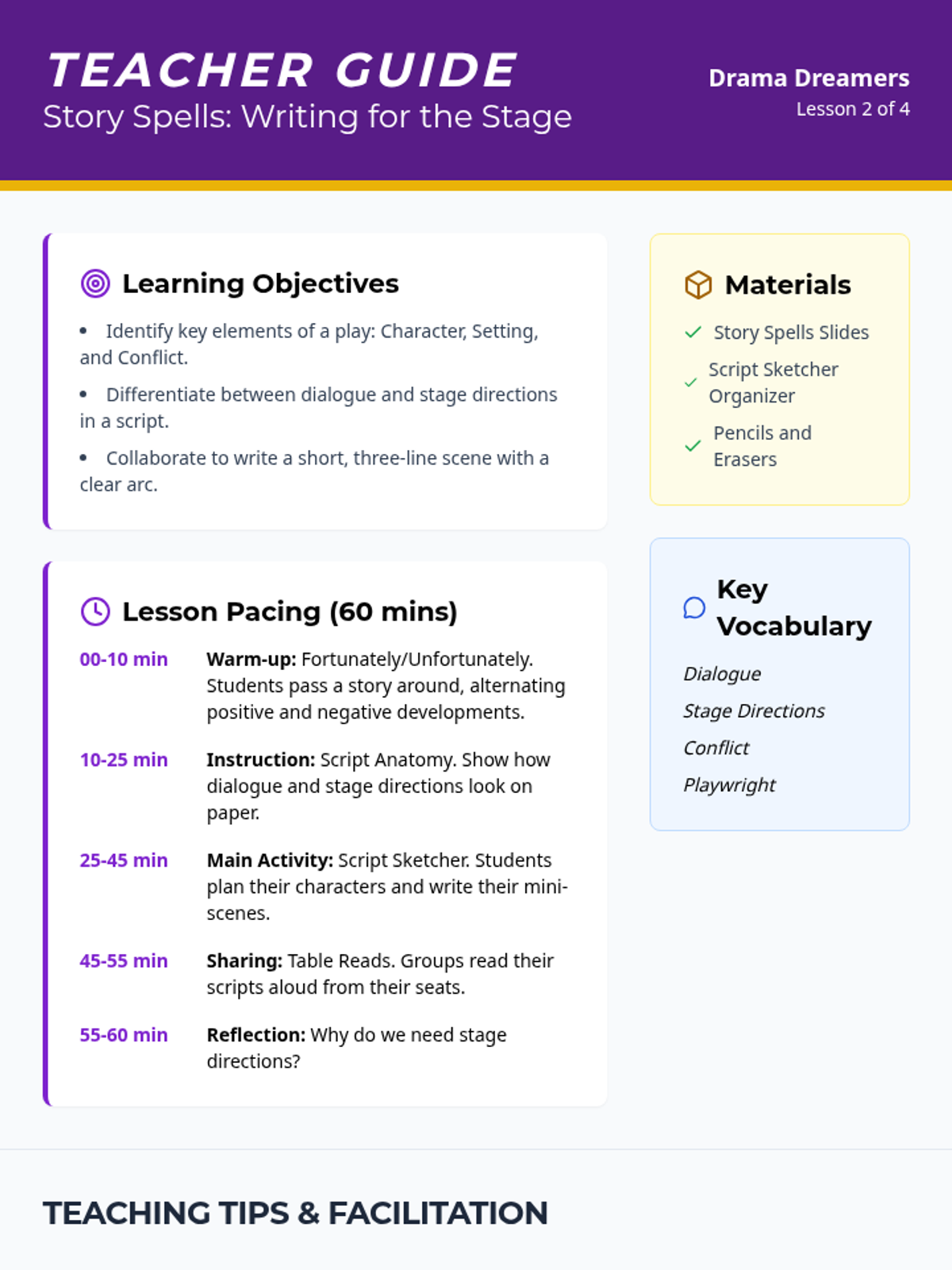
Instructional guide for Lesson 2, focusing on playwriting basics. Revised with fixed page breaks, improved layout alignment, and extra debrief questions.
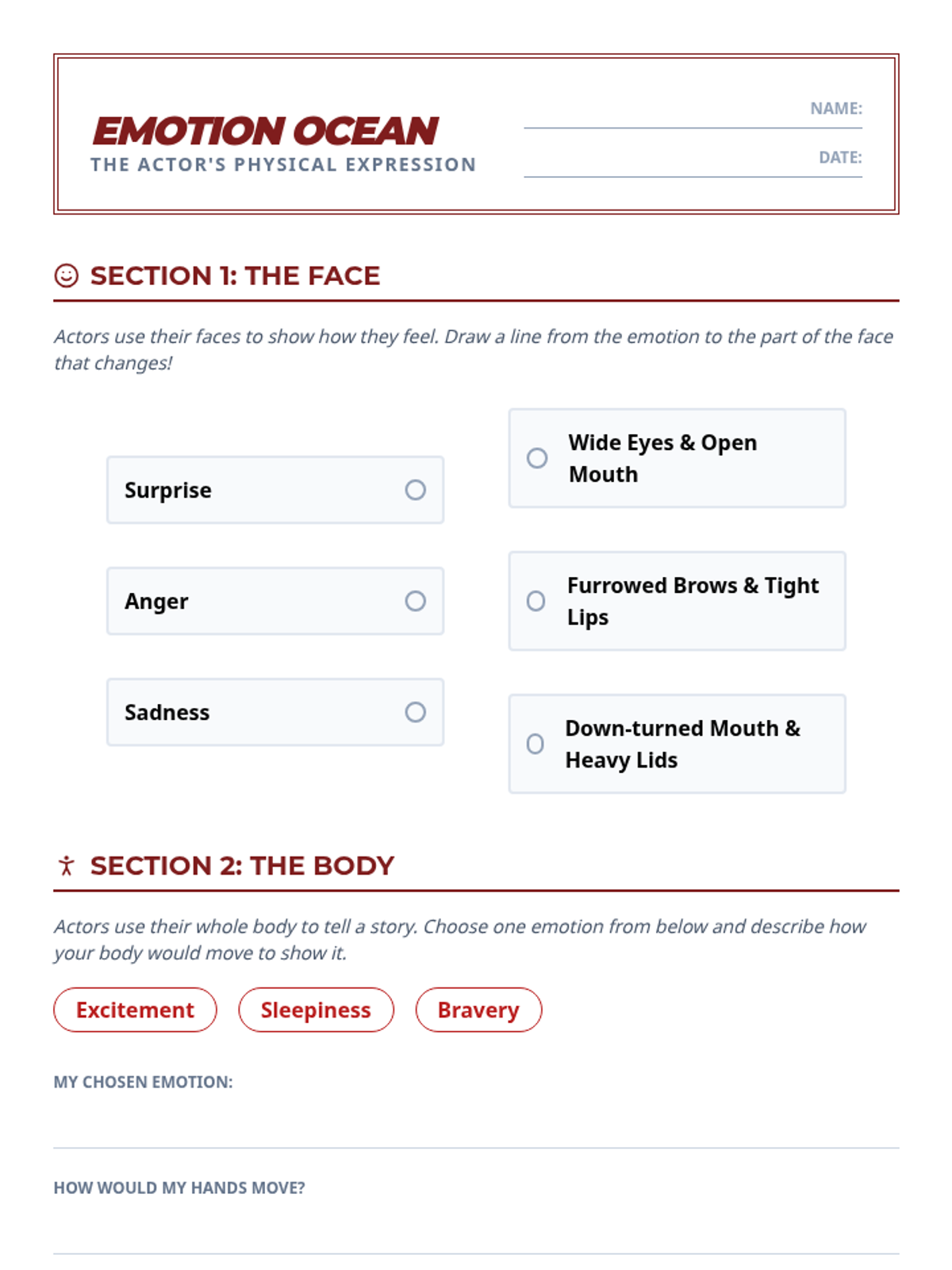
A student worksheet for Lesson 1 focused on facial expressions and physicalization of emotions. Includes matching exercises and a character sketching area. Revised for better matching logic, fixed page breaks, and a larger drawing area.
Visual presentation for Lesson 1, introducing students to the "Actor's Toolbox" with interactive activities for voice, body, and imagination.
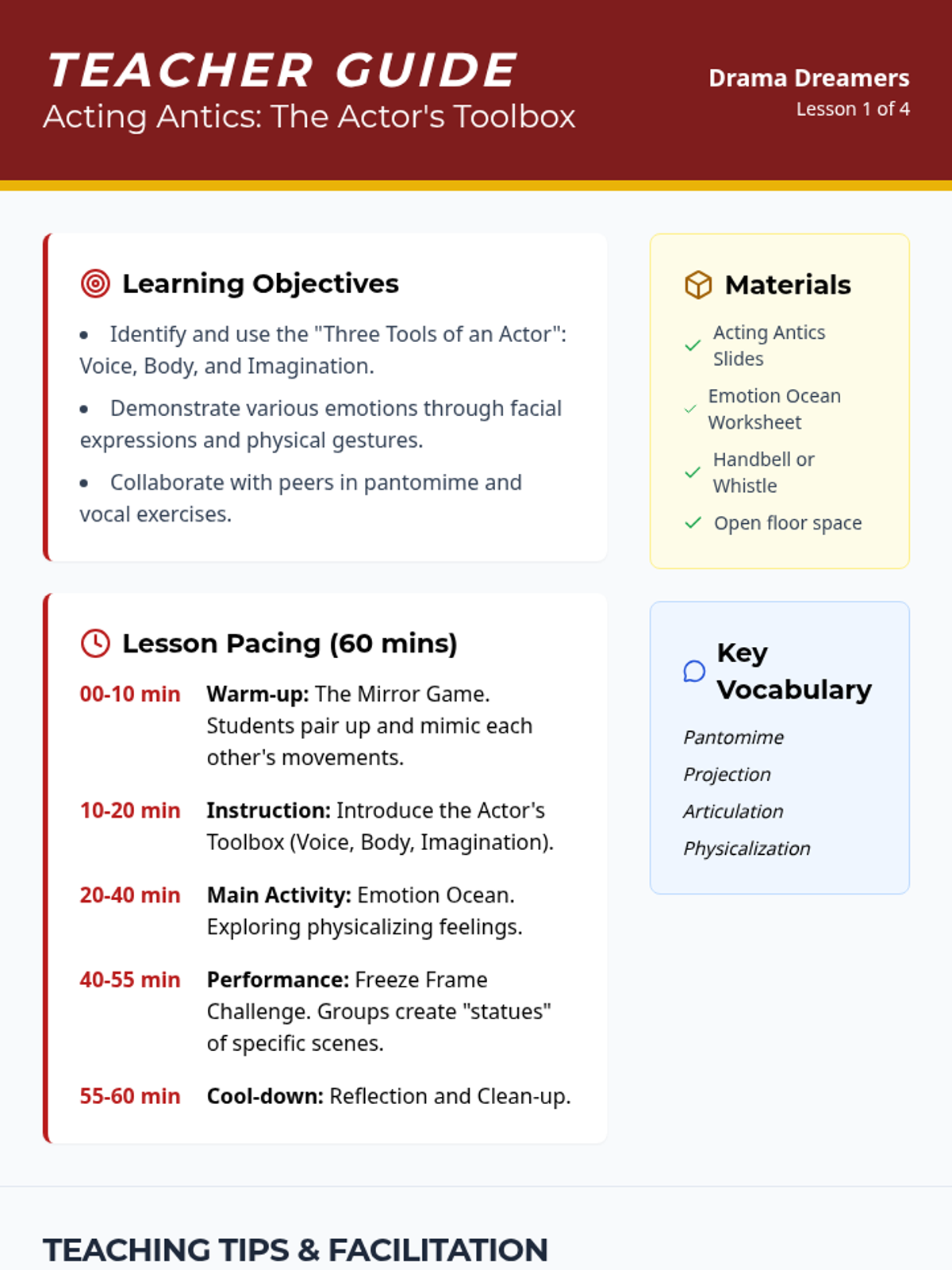
A comprehensive teacher guide for Lesson 1, including learning objectives, a timed lesson plan, vocabulary, and differentiation strategies for grades 1-5. Revised with extra discussion questions and improved header contrast.
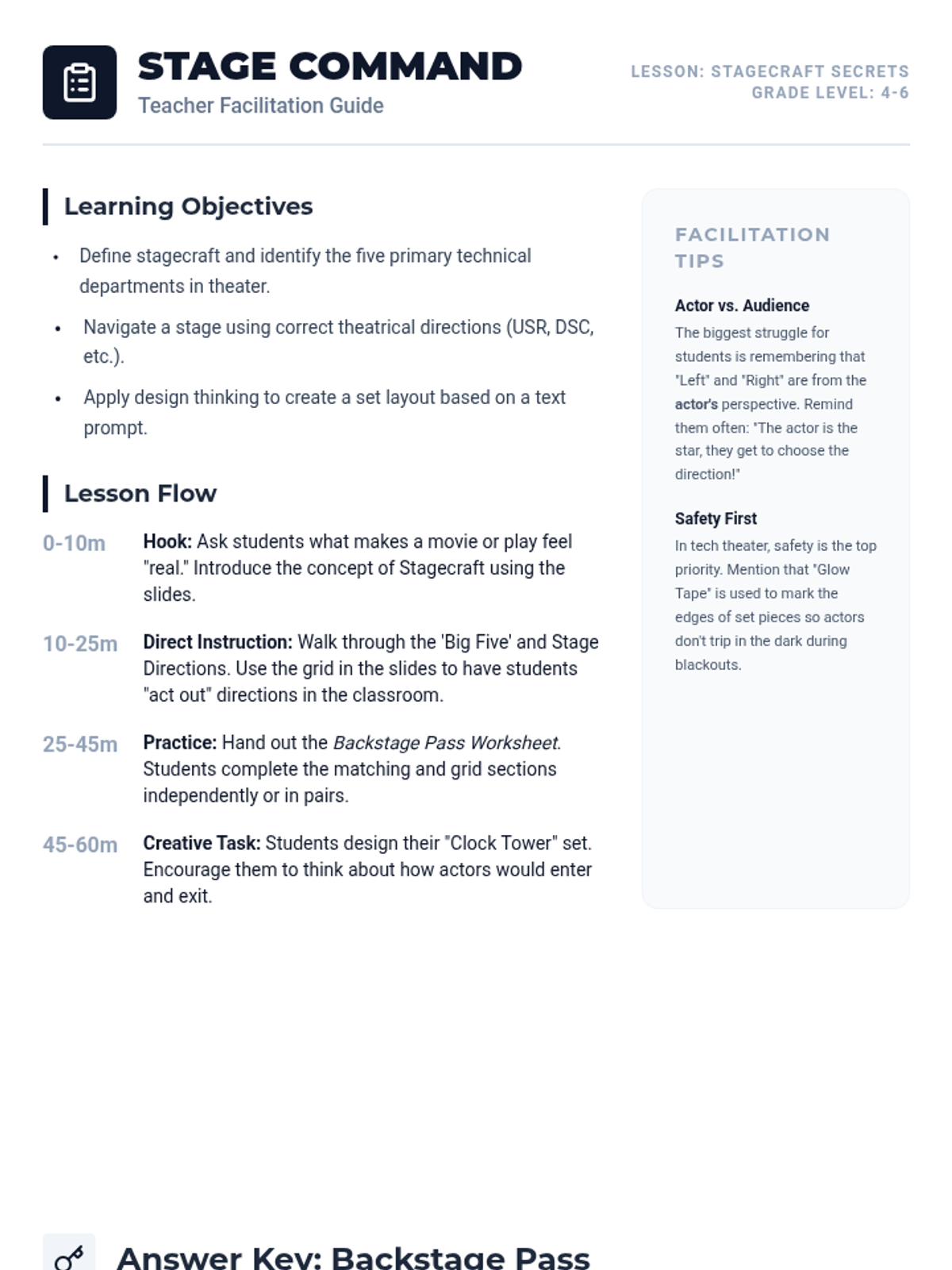
A teacher facilitation guide for the 'Stagecraft Secrets' lesson. It includes clear learning objectives, a timed lesson flow, practical facilitation tips for classroom activities, and a complete answer key for the 'Backstage Pass Worksheet'.
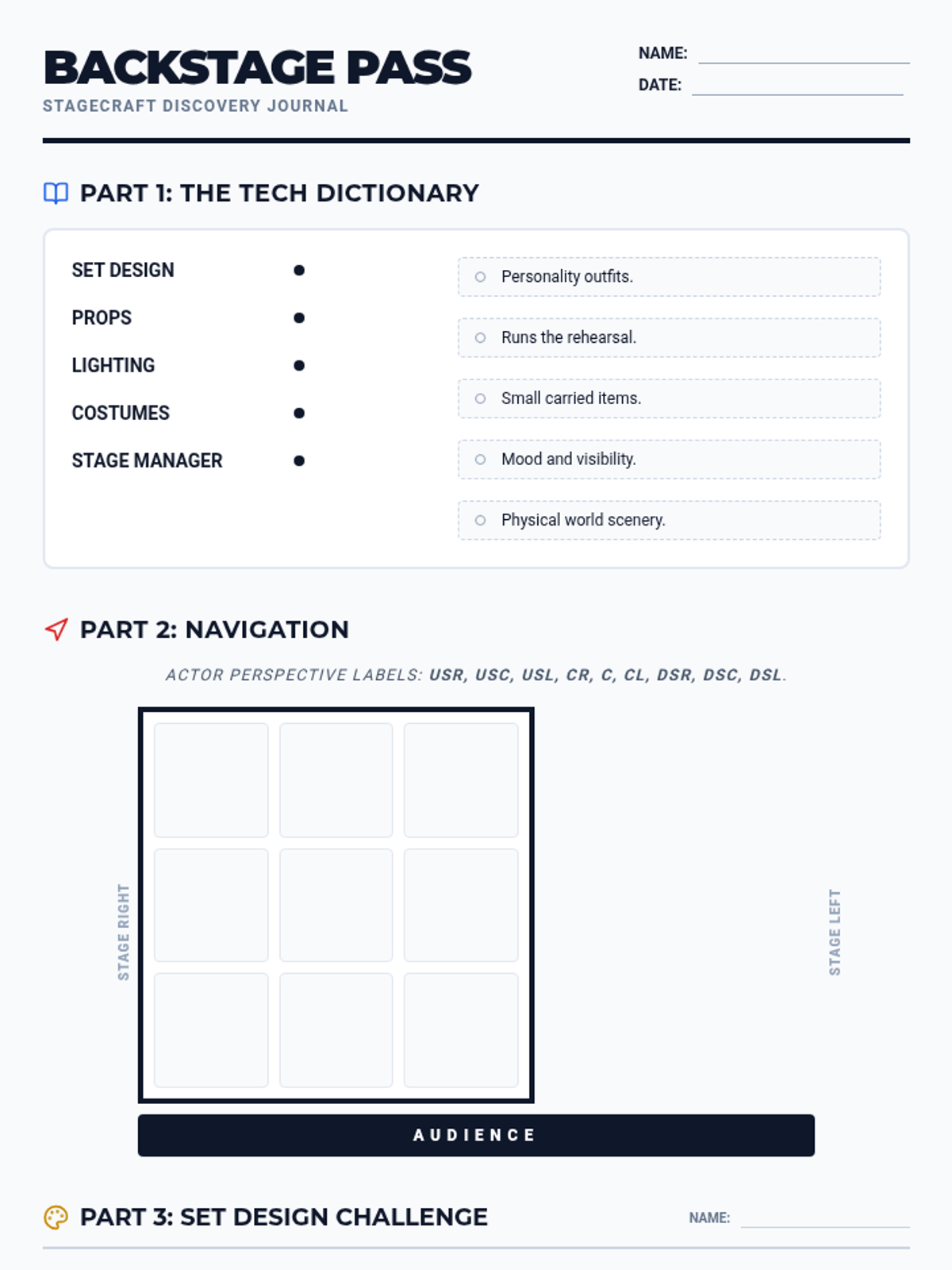
A comprehensive student worksheet for grades 4-6 designed to reinforce stagecraft fundamentals. It includes a vocabulary matching section, a stage directions grid to label, and a creative 'Set Design Challenge' focused on a mysterious clock tower attic. The design uses a professional technical blueprint aesthetic.
A vibrant, high-contrast slide deck introducing the fundamentals of stagecraft. It covers the definition of theater tech, the 'Big Five' departments (Set, Props, Lights, Sound, Costumes), a comprehensive guide to stage directions, and an introduction to the set design challenge.
A student-facing fill-in-the-blank slide deck template for students to build their final directorial pitch for Matilda Jr. in two stage configurations.
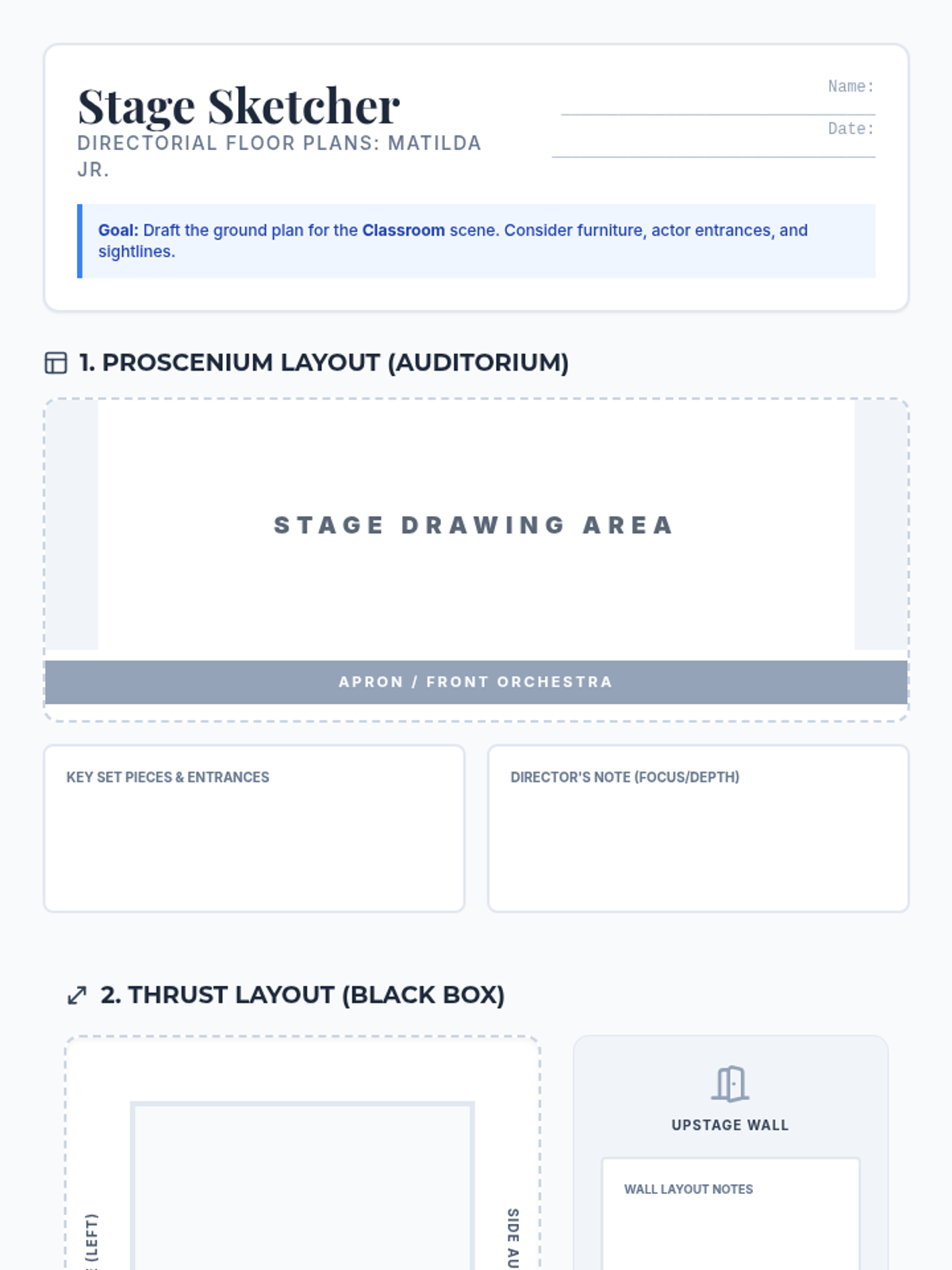
A workspace for students to sketch out floor plans for both proscenium and thrust stage configurations, focusing on the Classroom scene in Matilda Jr.
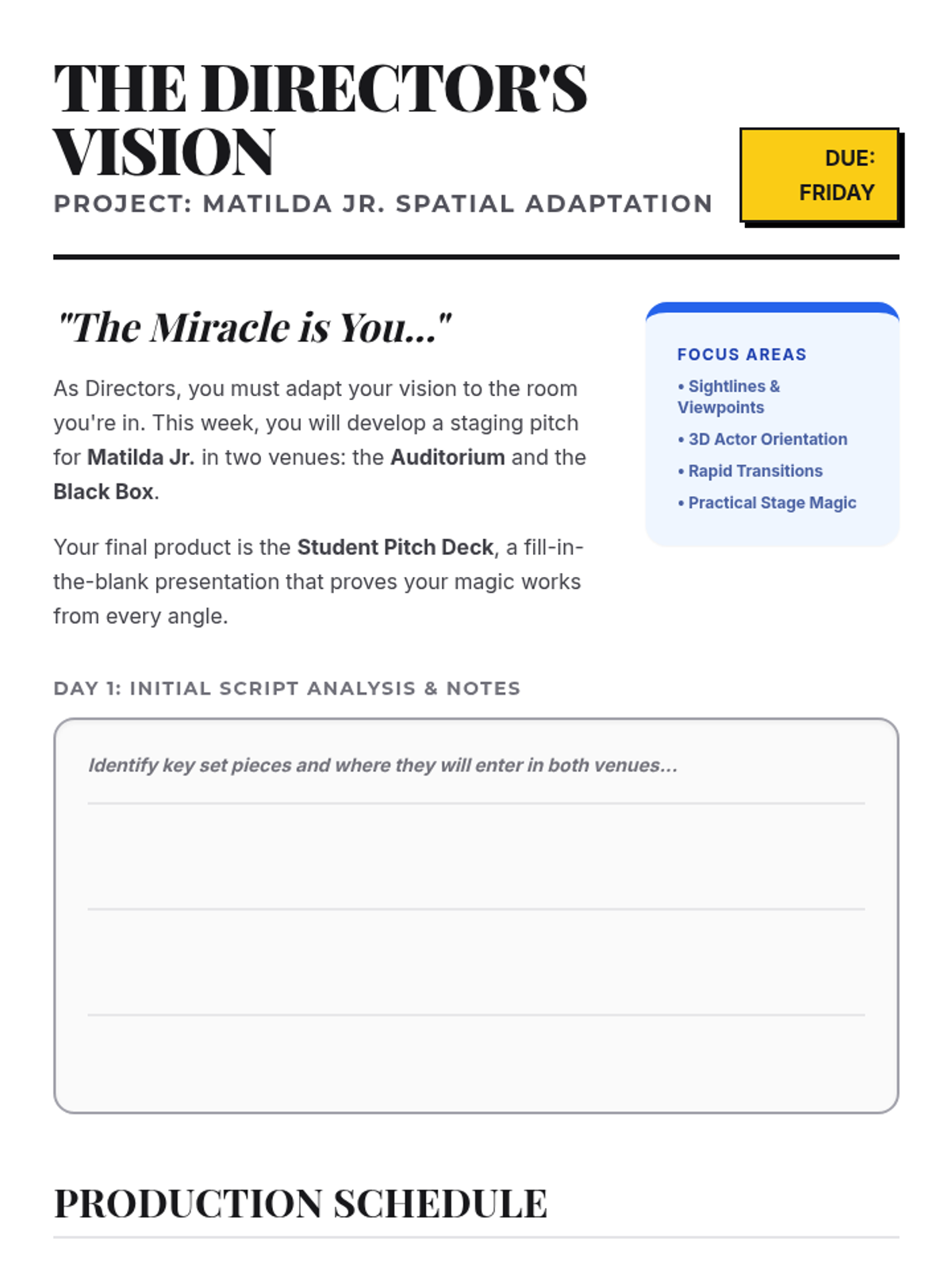
A detailed project handout outlining a 5-day directorial challenge to adapt Matilda Jr. for two different stage configurations, including a schedule and rubric.
A high-energy presentation introducing the spatial challenge for Matilda Jr., contrasting proscenium and thrust staging and highlighting key scenes for students to solve.
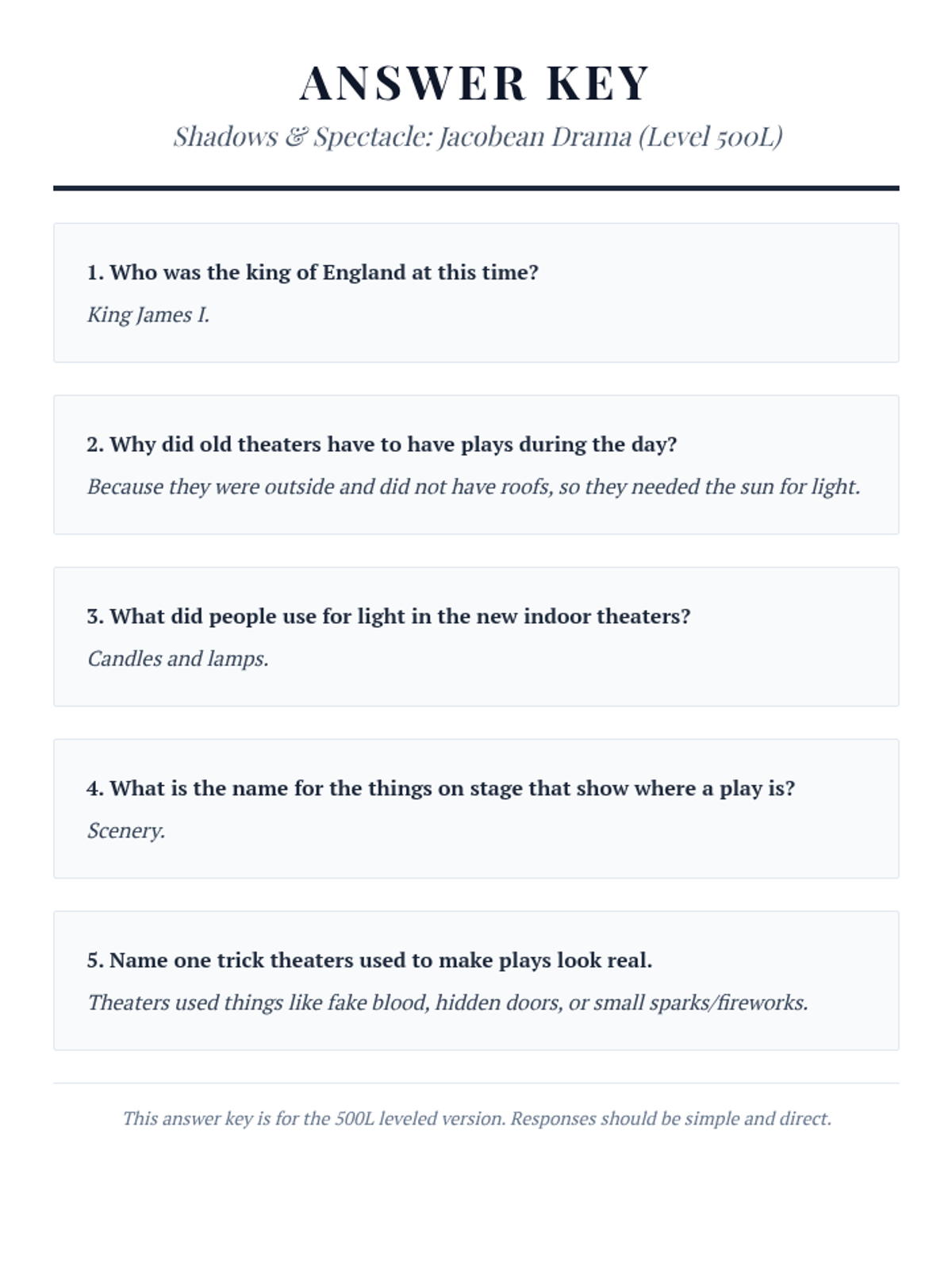
The answer key for the 500L version of the Shadows and Spectacle handout.
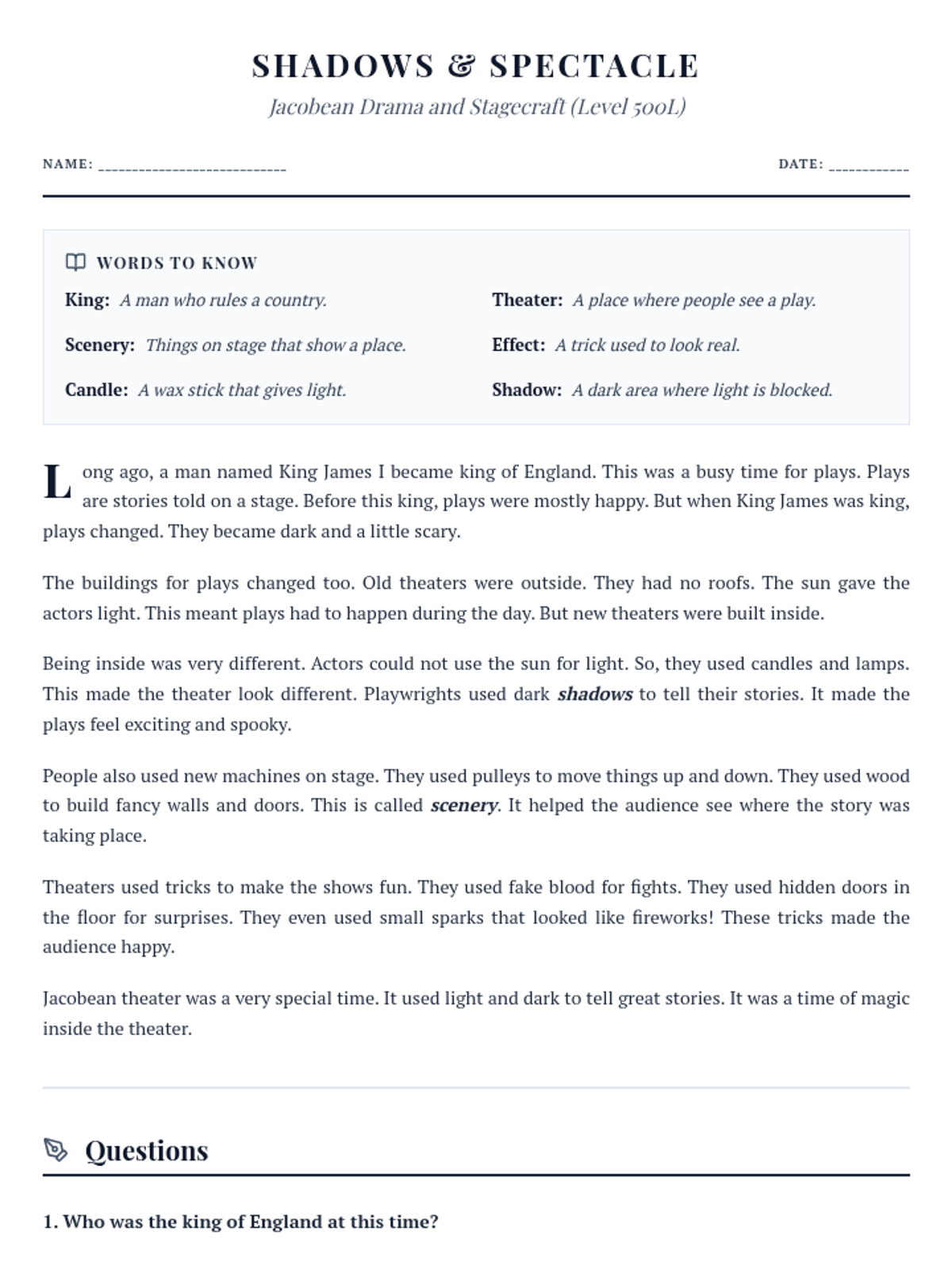
A printable handout featuring a 500L leveled version of the article on Jacobean drama and stagecraft, including a simplified vocabulary bank and questions.
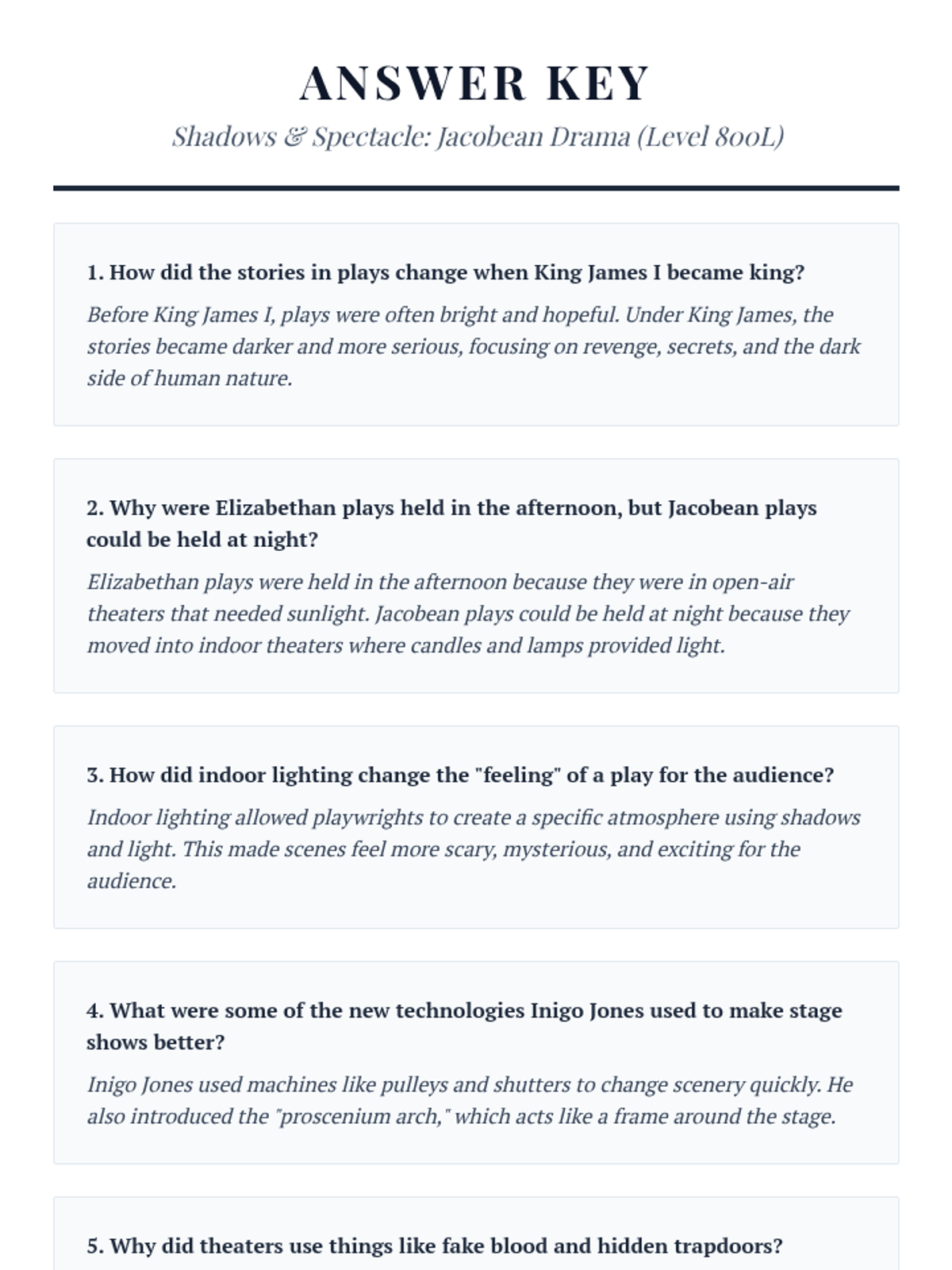
The answer key for the 800L version of the Shadows and Spectacle handout.
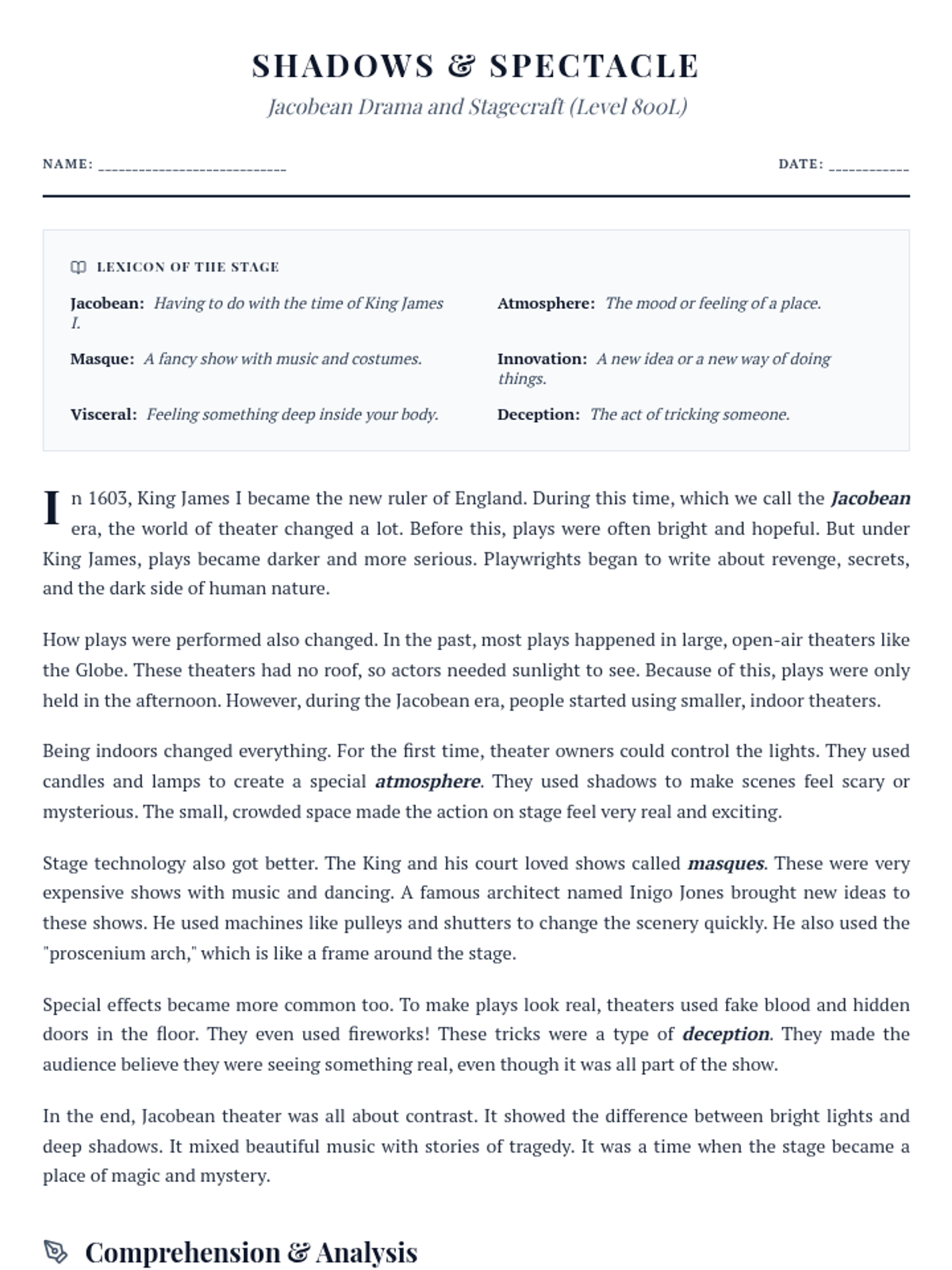
A printable handout featuring an 800L leveled version of the article on Jacobean drama and stagecraft, including a vocabulary bank and five comprehension questions.
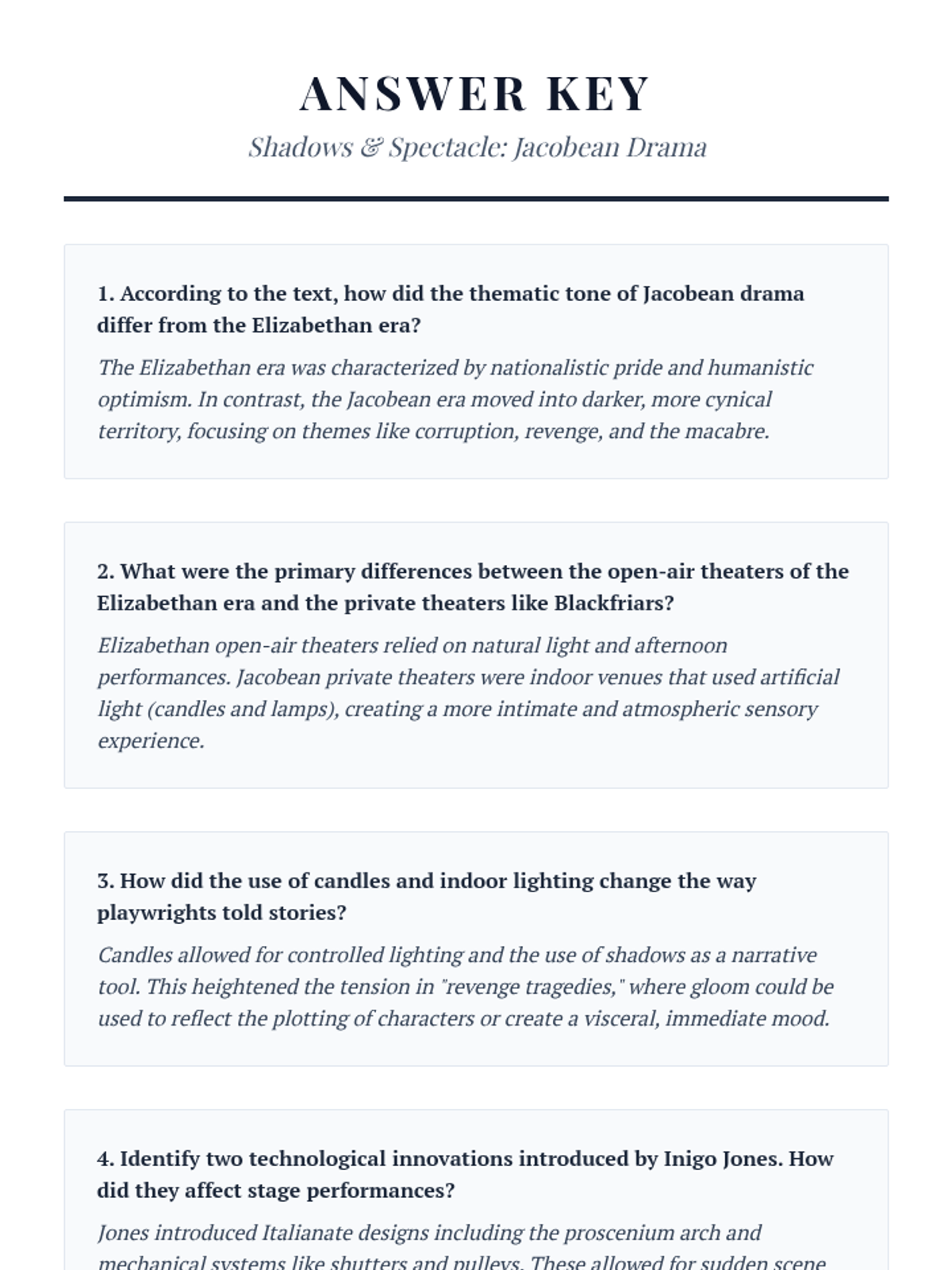
The answer key for the Shadows and Spectacle handout, providing suggested responses for the comprehension questions.
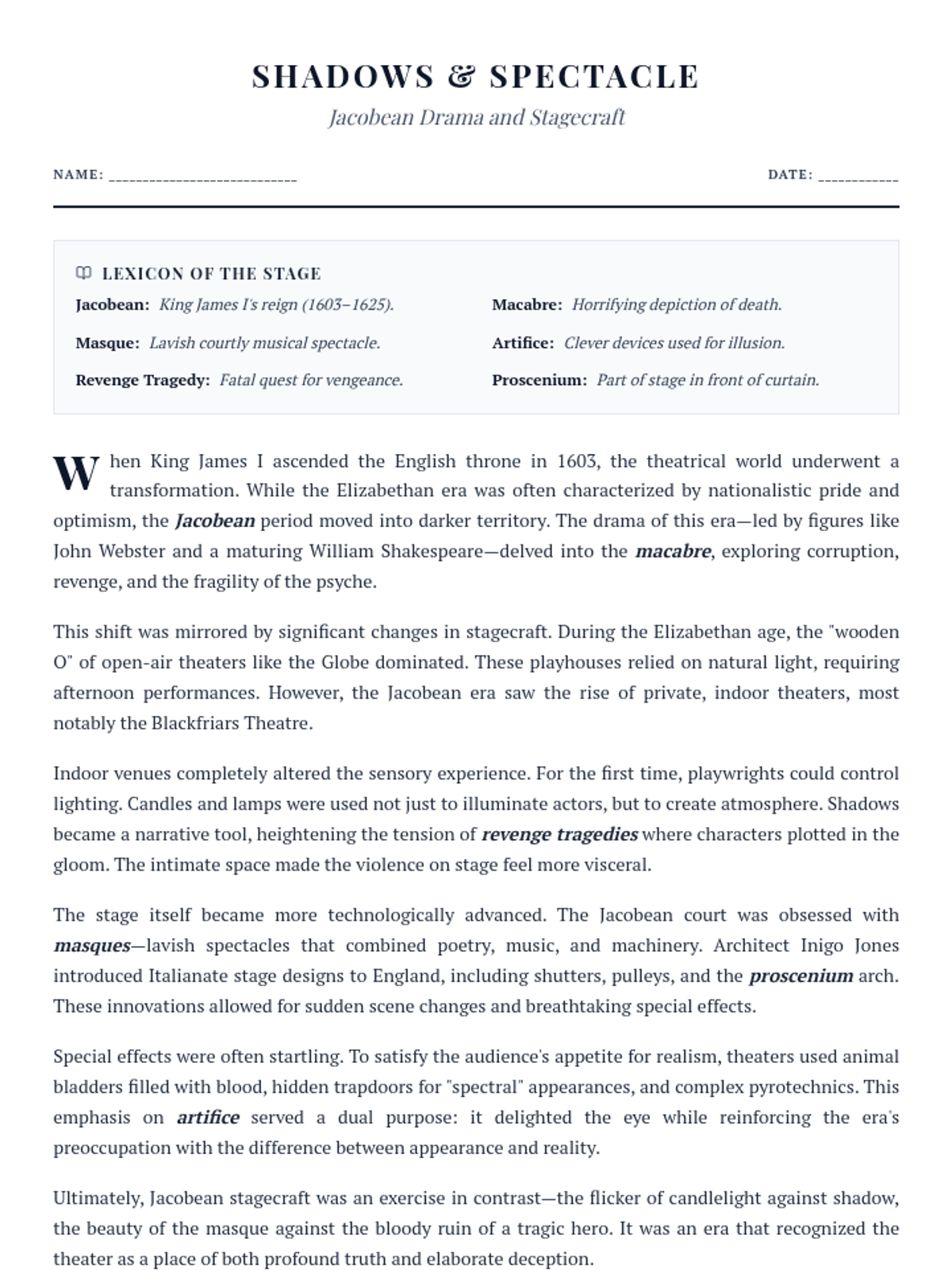
A printable handout featuring an article on Jacobean drama and stagecraft, including a vocabulary bank and five comprehension questions for independent student work.
An introductory slide deck for the clay miniatures unit, covering the 10-day timeline, career inspirations (set design, sculpting), and the studio habits required for success.
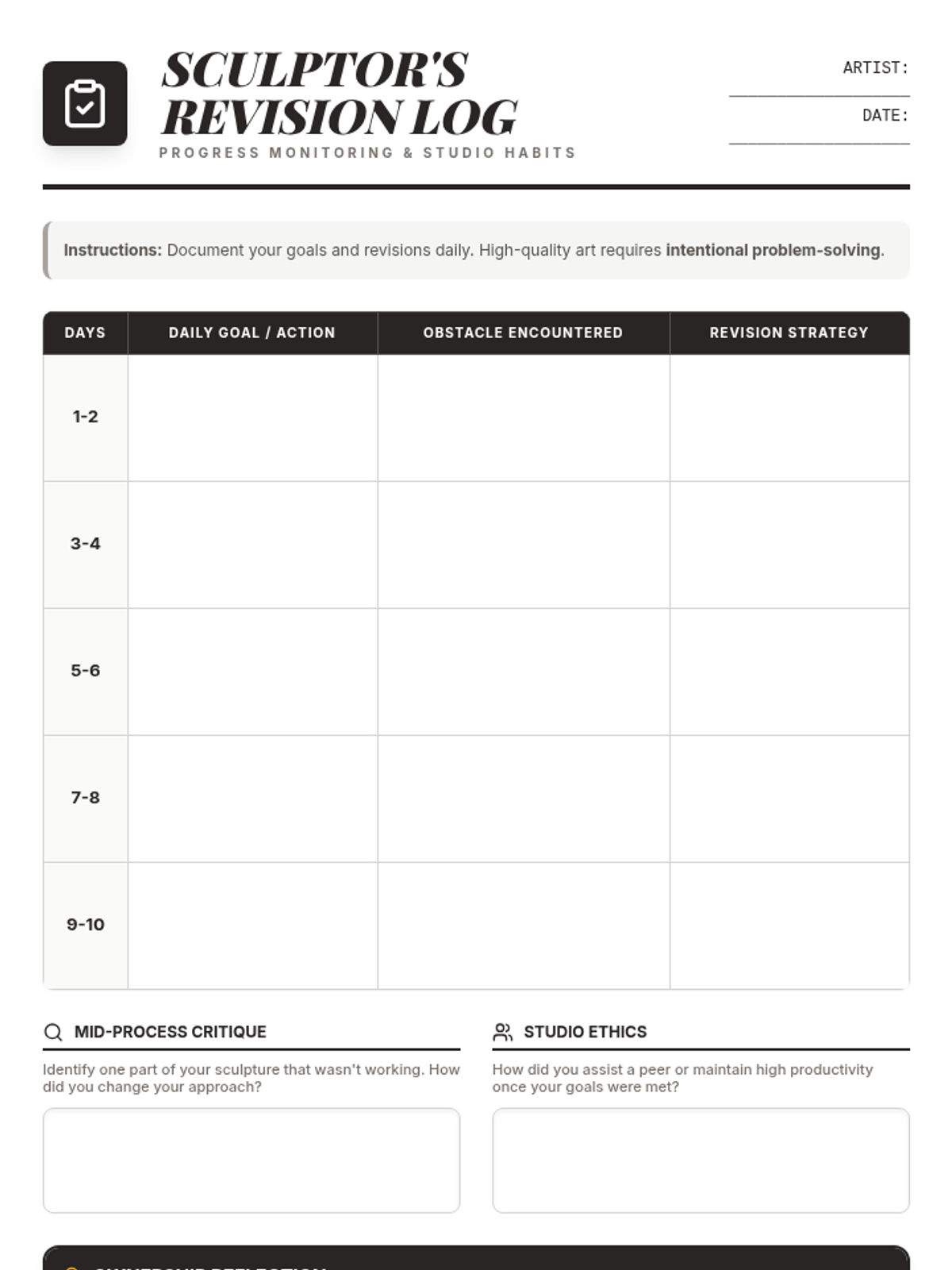
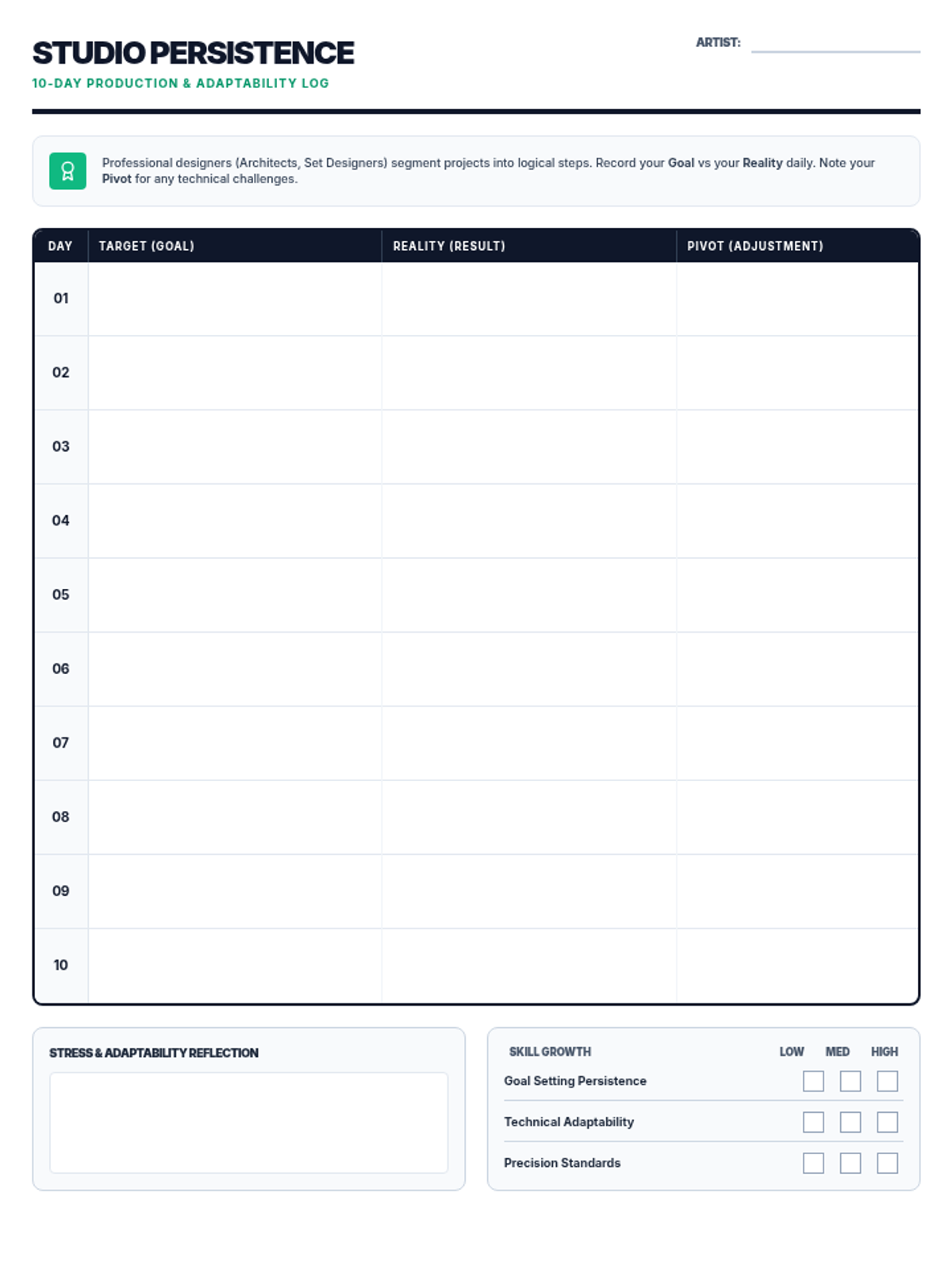
A daily log for students to track their progress, identify obstacles, and document the revision strategies they used throughout the 10-day sculpting process.
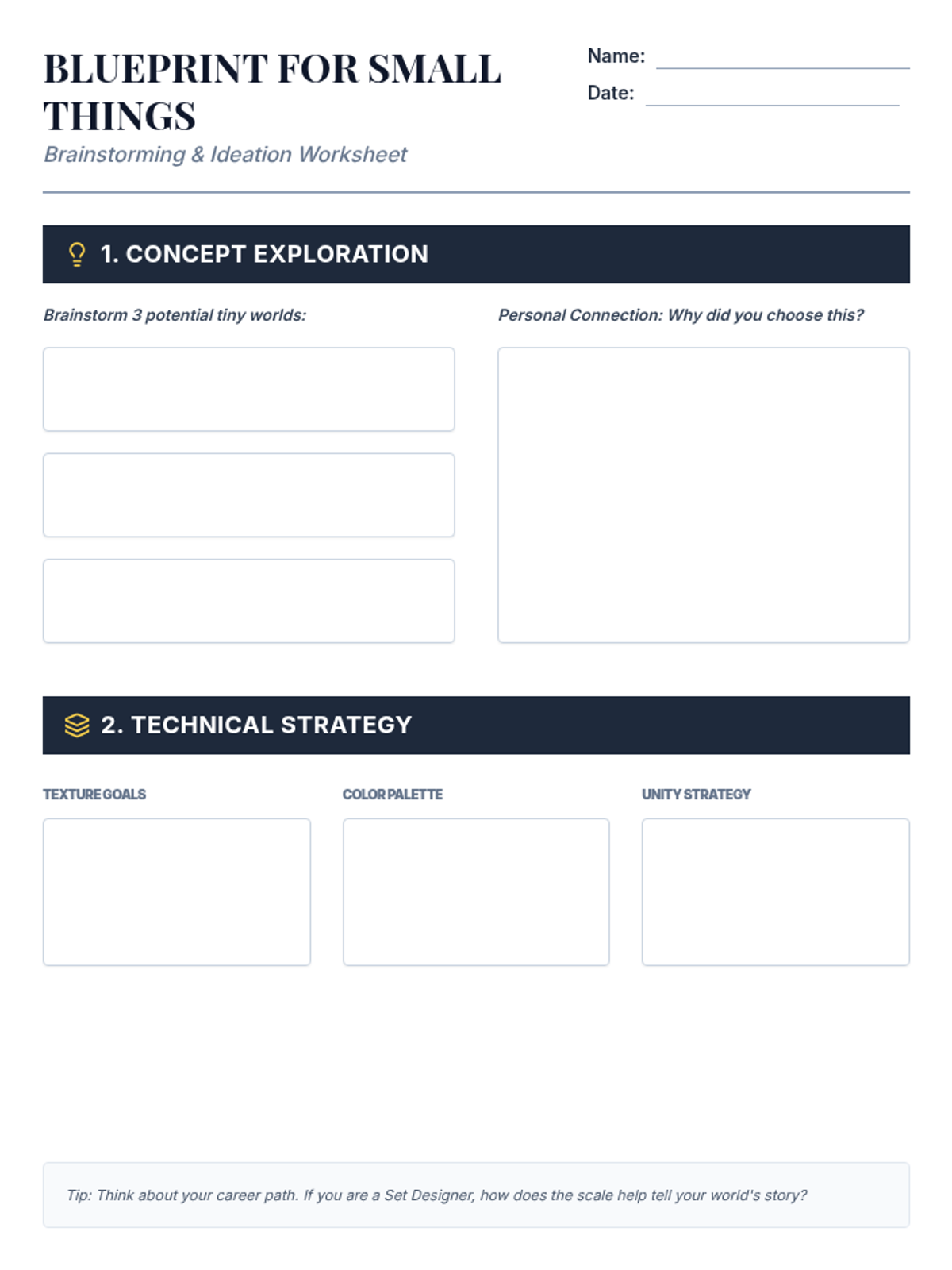
A student-facing ideation worksheet for brainstorming miniature concepts, sketching designs from multiple angles, and planning technical elements like texture and color.
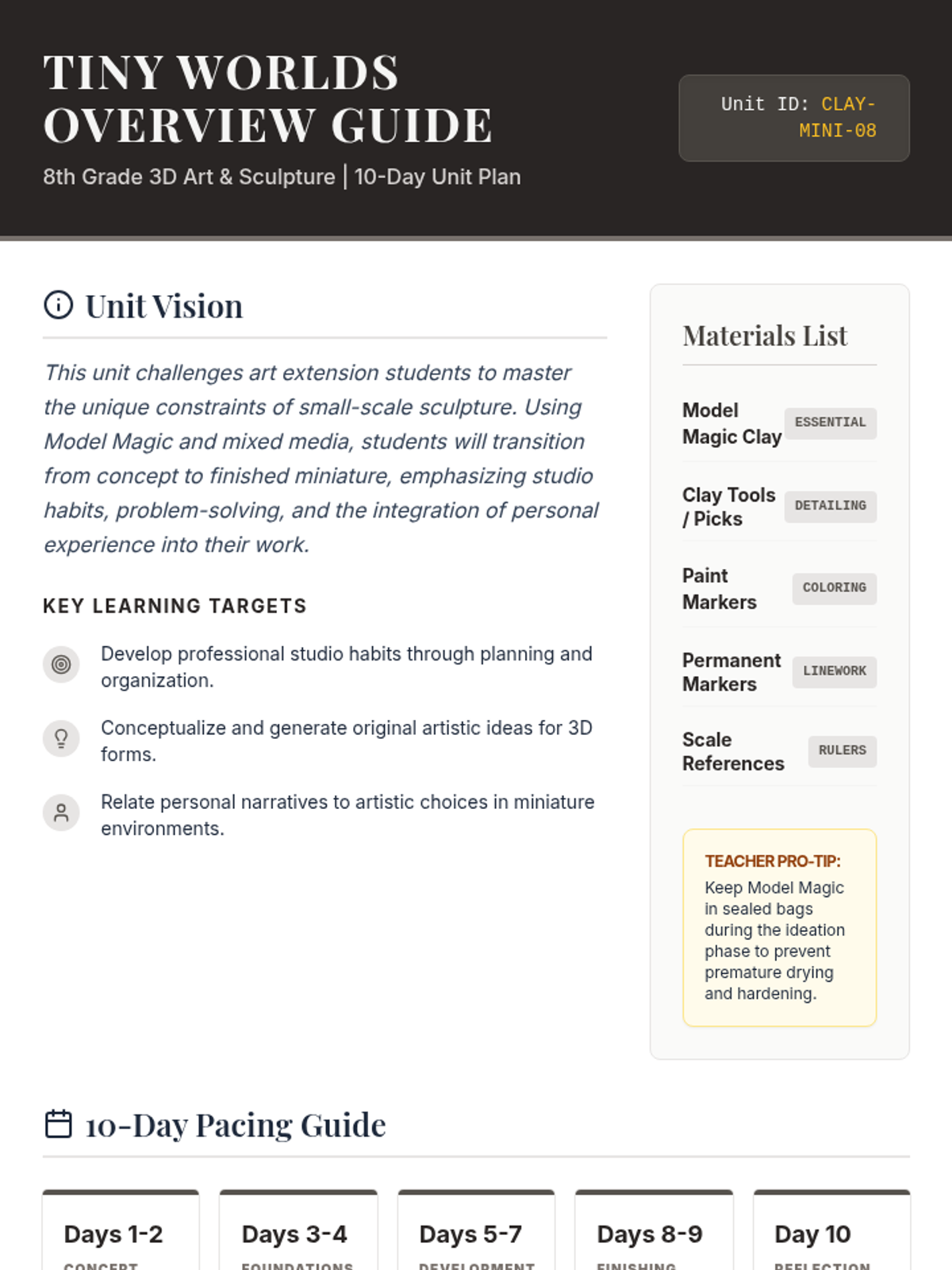
A high-level unit overview guide for teachers, outlining the 10-day pacing, learning targets, materials, and career connections for the clay miniatures unit.
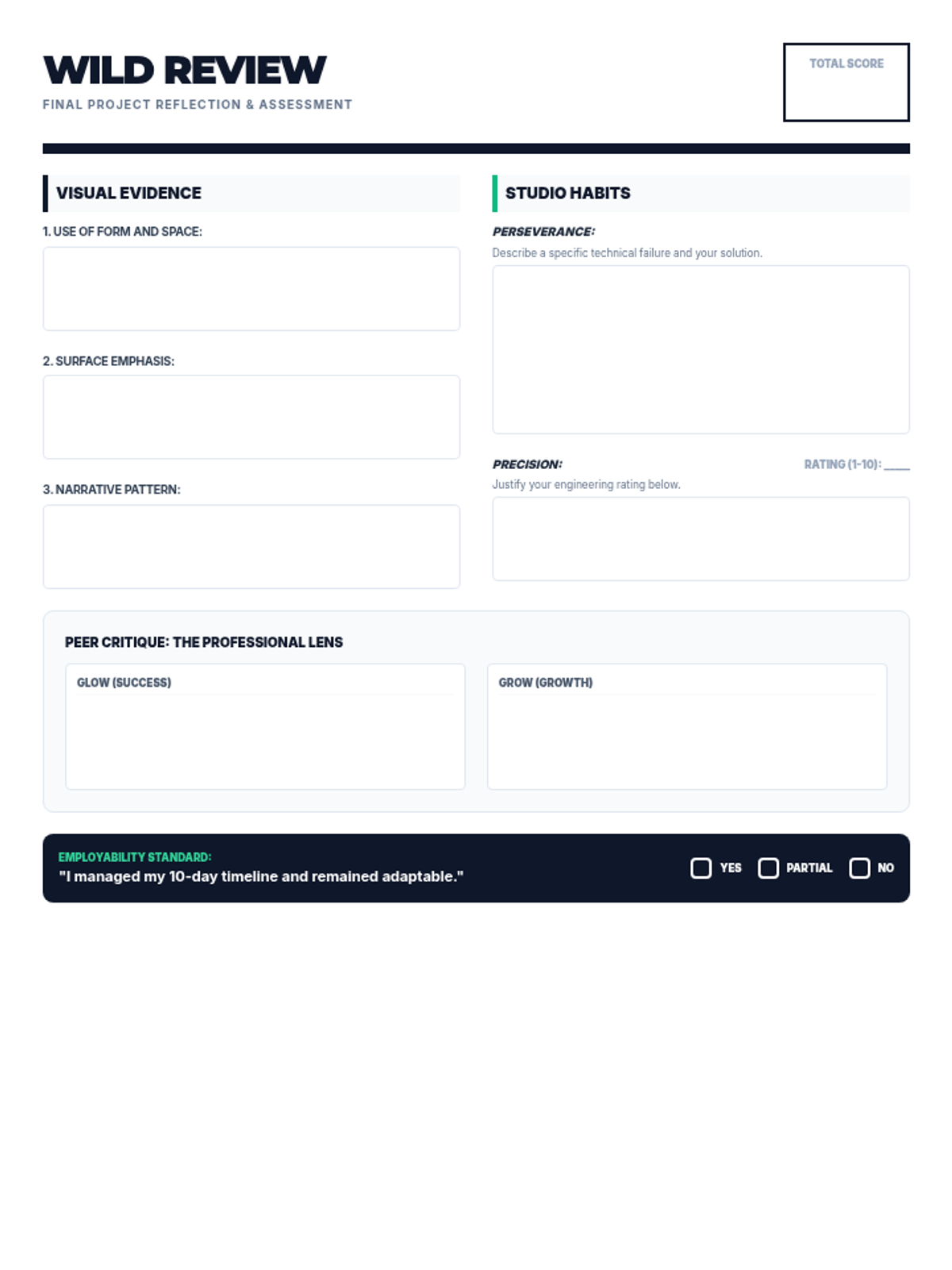
A final project reflection and rubric focusing on visual analysis, perseverance in the studio, and peer critique.
A slide deck for the final phase of the project, focusing on color application, surface texture, and using paint markers to enhance 3D form.
A daily studio habit tracker focused on goal setting, adaptability, and managing stress during the construction phase.
An introductory slide deck for 'The Bard's Cipher' activity, covering basic Shakespearean pronouns, verb endings, and activity instructions with a moody Elizabethan aesthetic.