Fundamental techniques for drawing, painting, sculpture, and photography alongside modern digital design principles. Analyzes historical artistic movements while building skills in printmaking and graphic media.
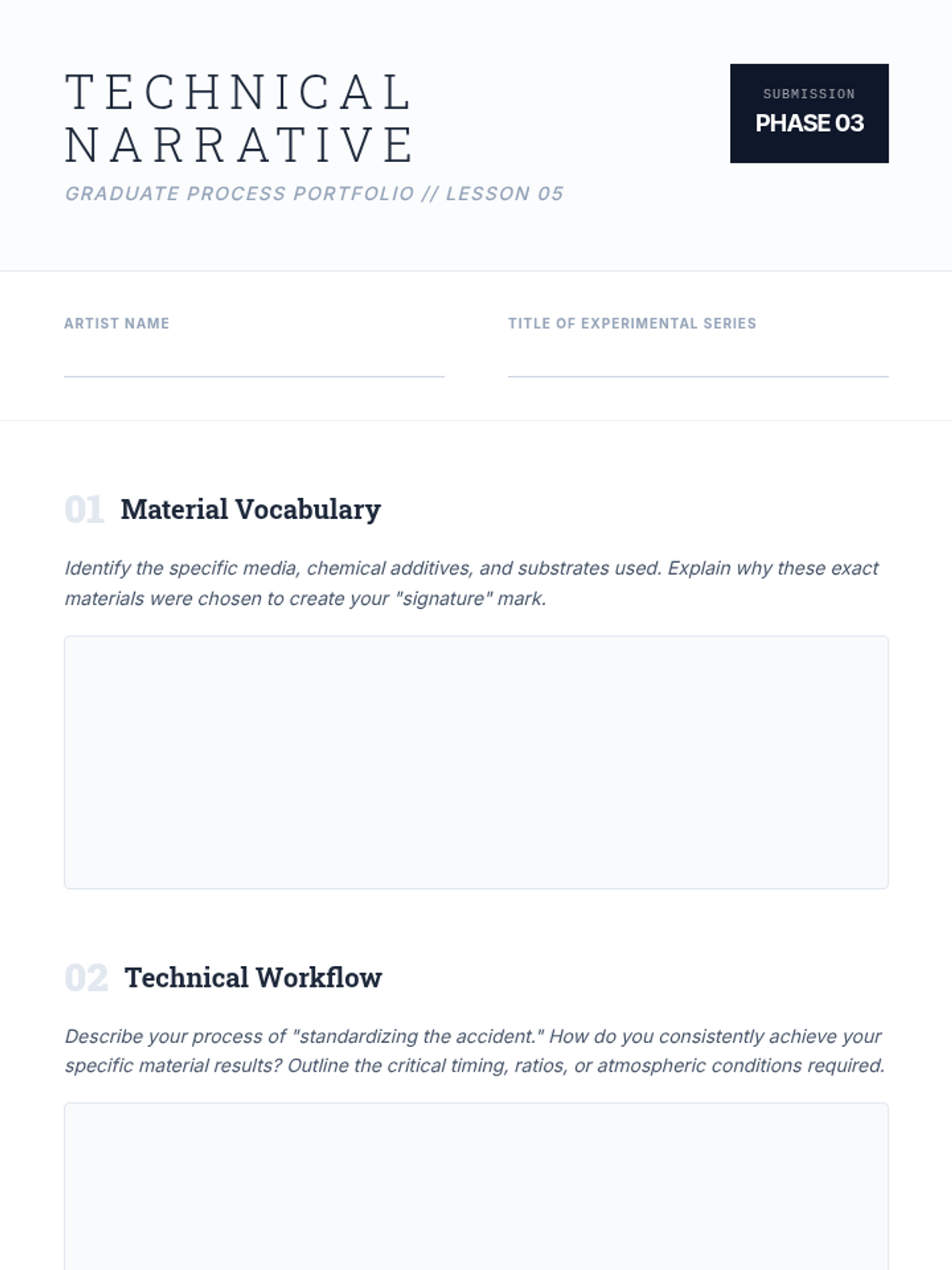
A structured technical artist statement template for graduate students to articulate the synthesis of material process and conceptual intent.
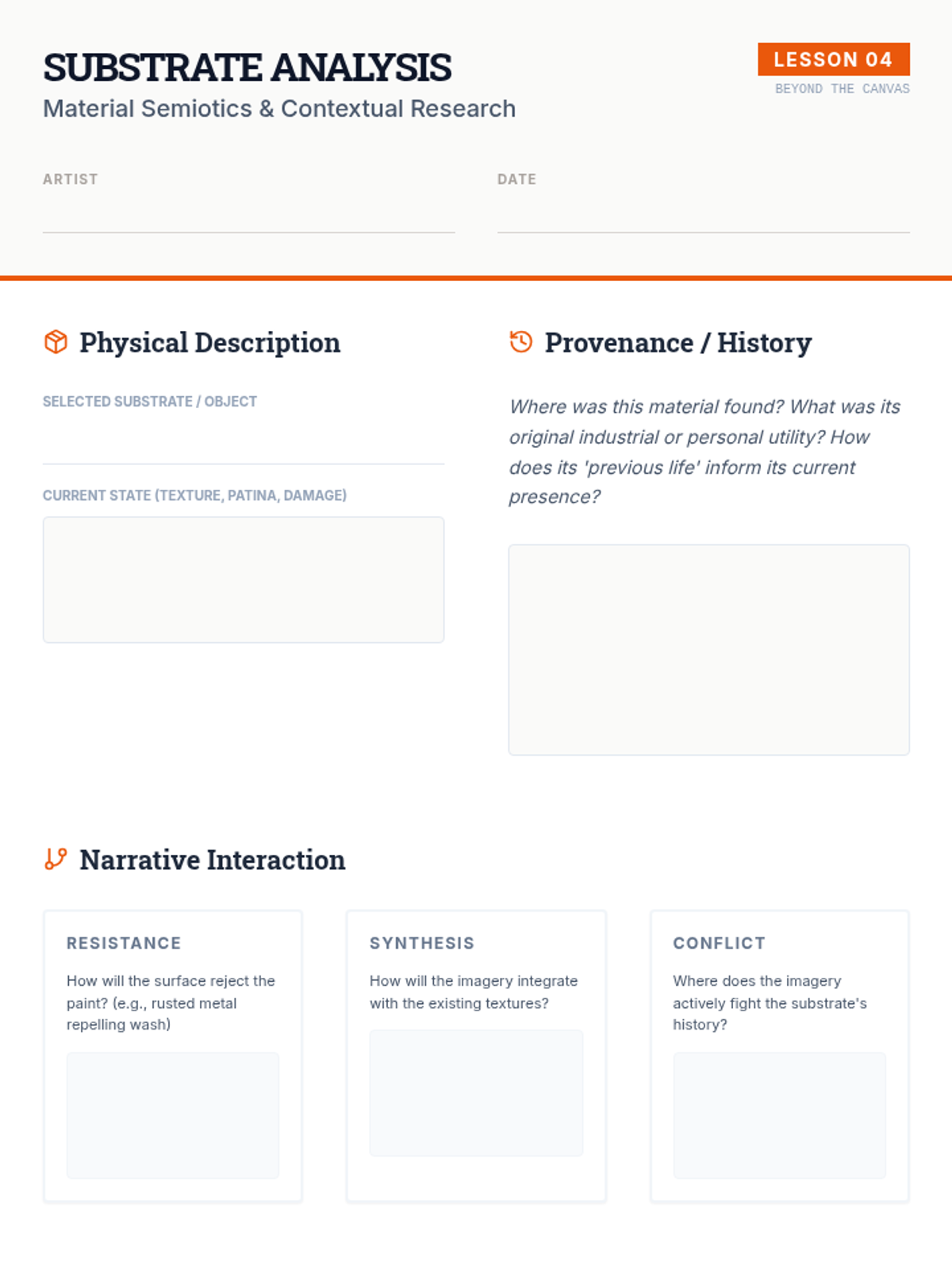
A student analysis worksheet for researching and planning the conceptual use of non-traditional substrates and found objects.
A visual presentation for graduate students exploring the semiotics of substrate and how choice of surface impacts conceptual narrative.
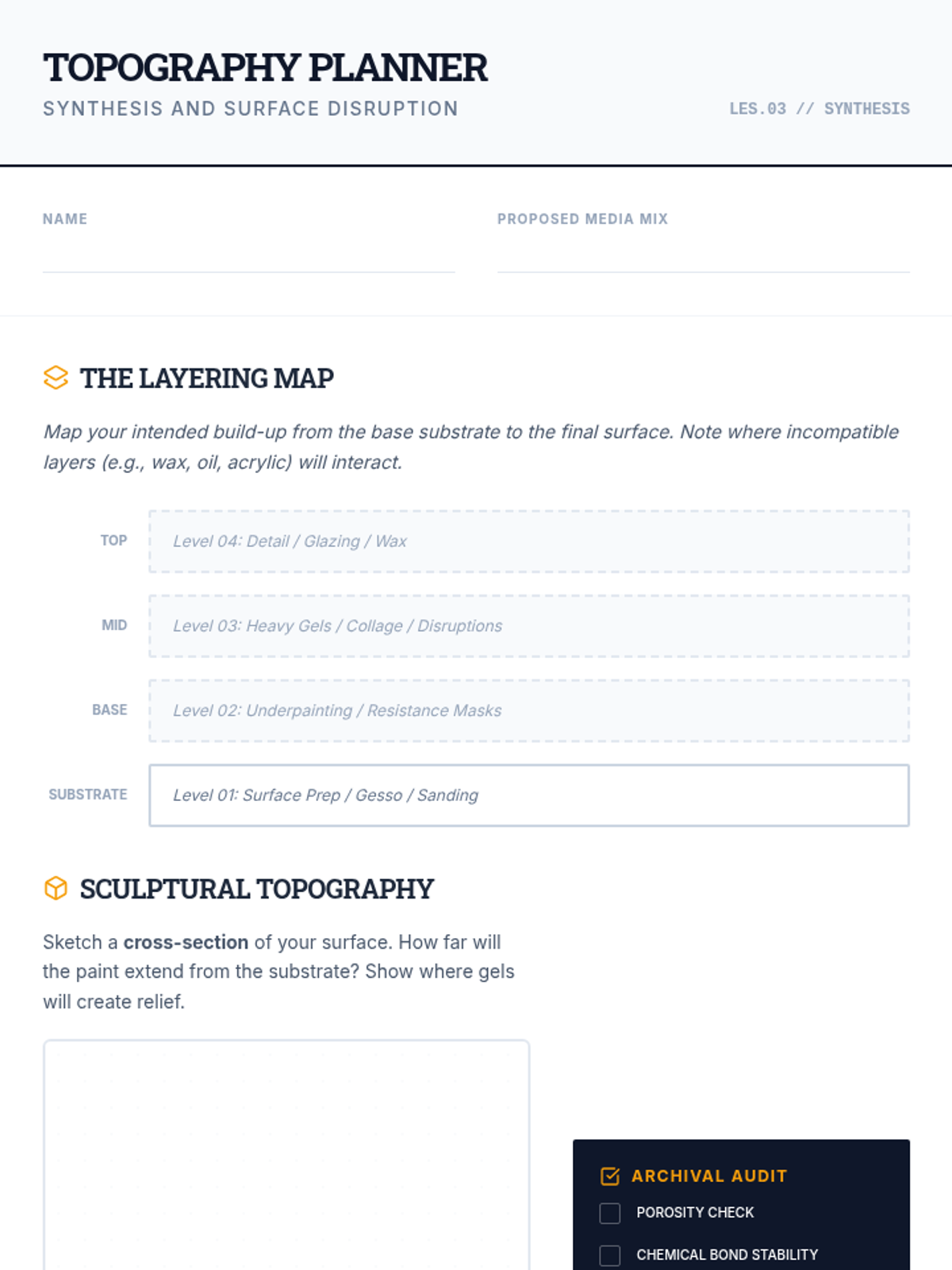
A planning document for students to map out 3D layers, material compatibility, and conceptual intent for mixed media works.
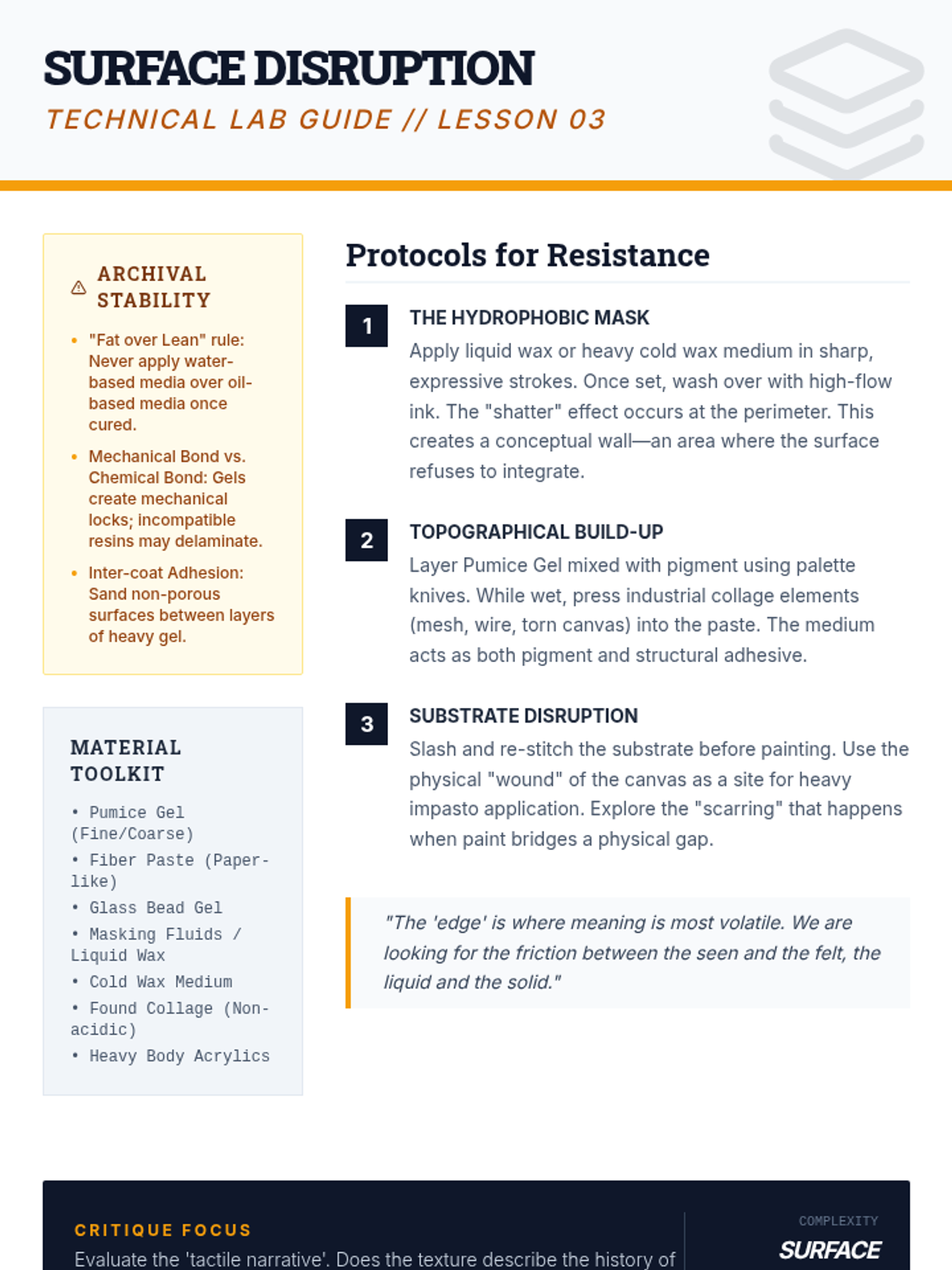
A technical facilitation guide for graduate instructors focusing on mixed media synthesis, archival stability, and 3D surface disruption techniques.
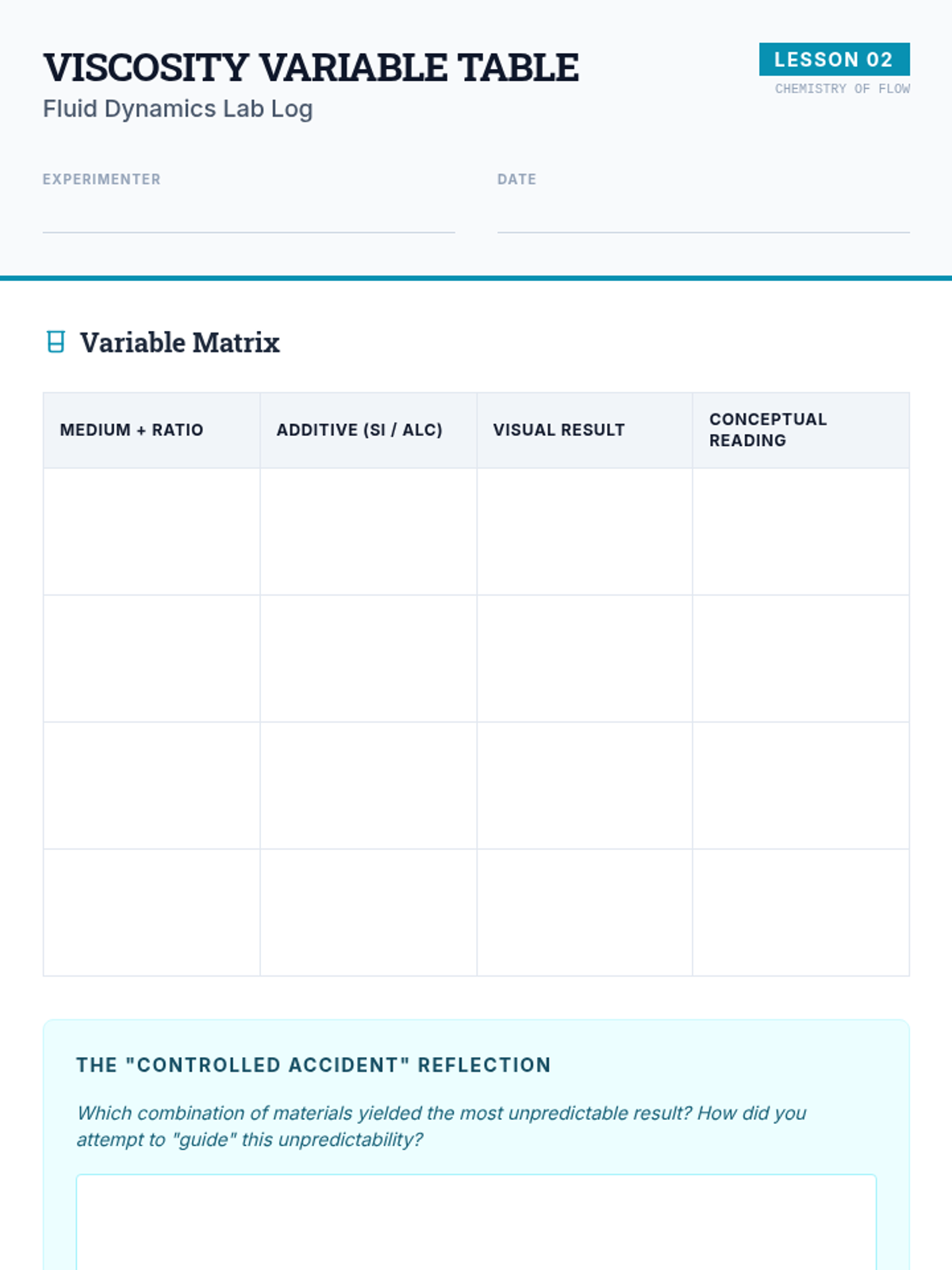
A technical recording sheet for students to track the effects of various acrylic additives and viscosity ratios on their experimental works.
A visual presentation for graduate students exploring the intersection of viscosity, surface tension, and chemical additives in acrylic painting.
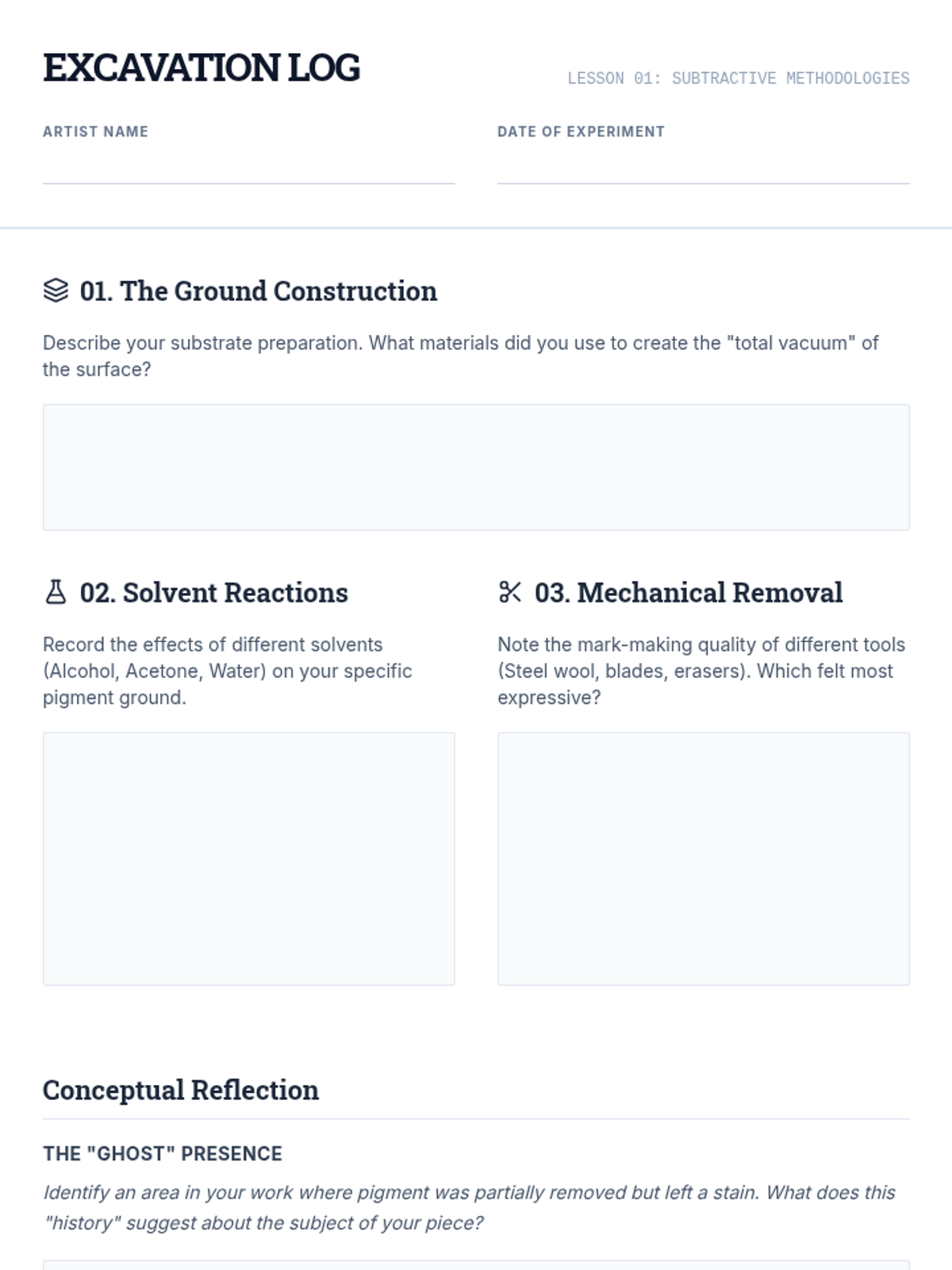
A student process log for recording technical results and conceptual reflections during the subtractive drawing workshop.
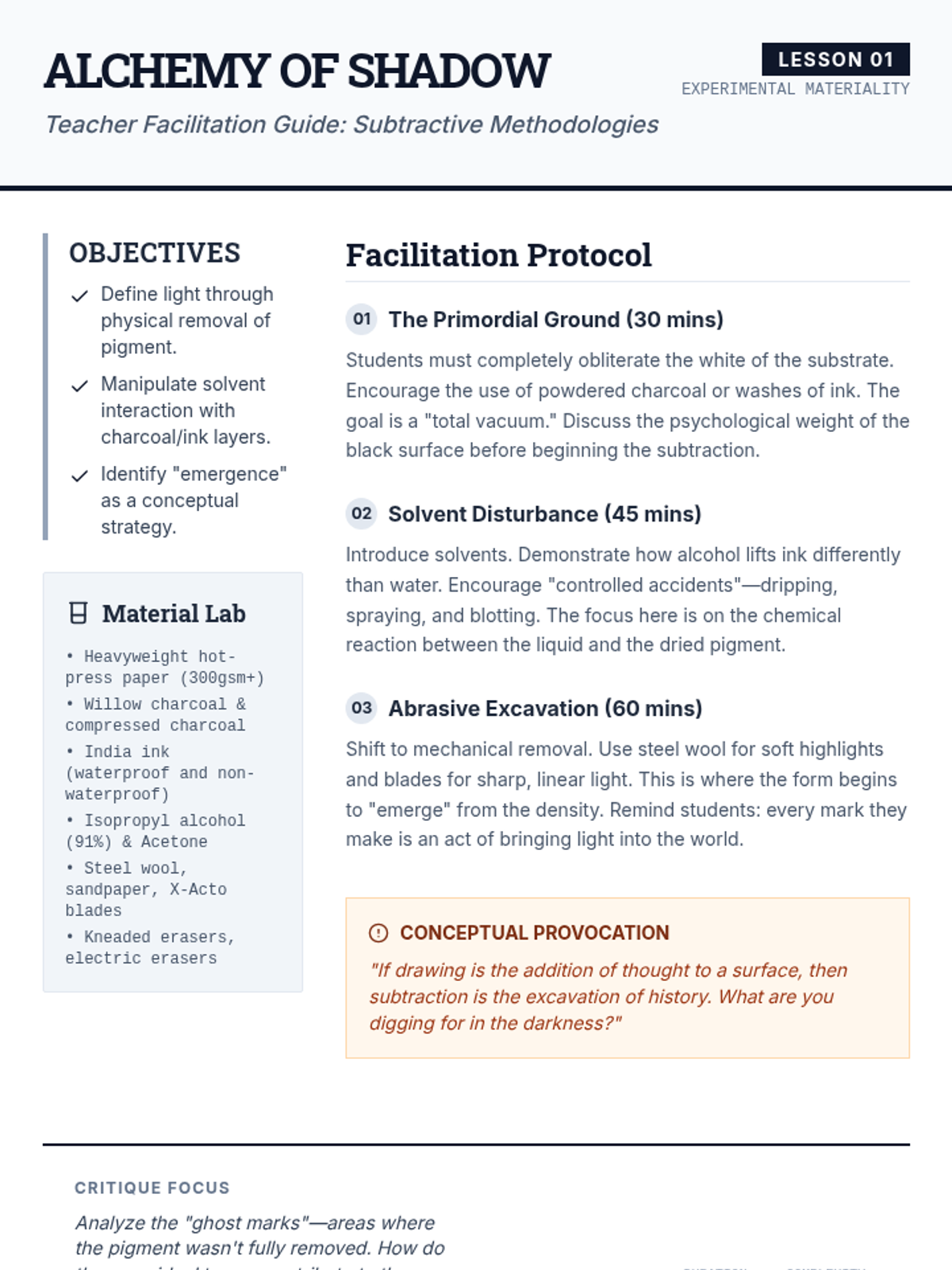
A technical facilitation guide for graduate instructors focusing on subtractive drawing techniques using charcoal, ink, and various solvents.
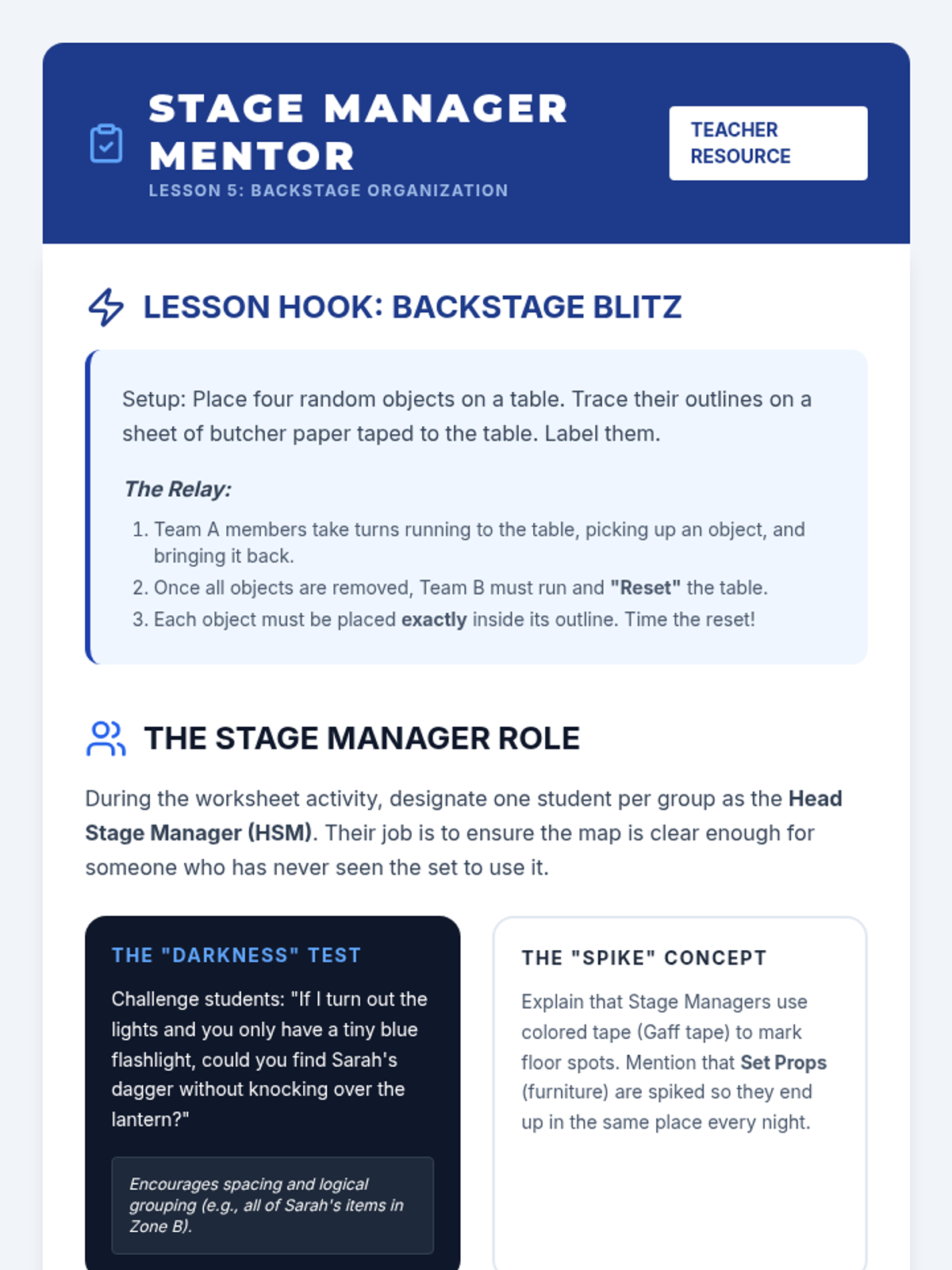
Teacher guide for Lesson 5: Backstage Organization and Prop Tables. Includes relay race hook instructions, "darkness test" simulation tips, and a unit reflection guide.
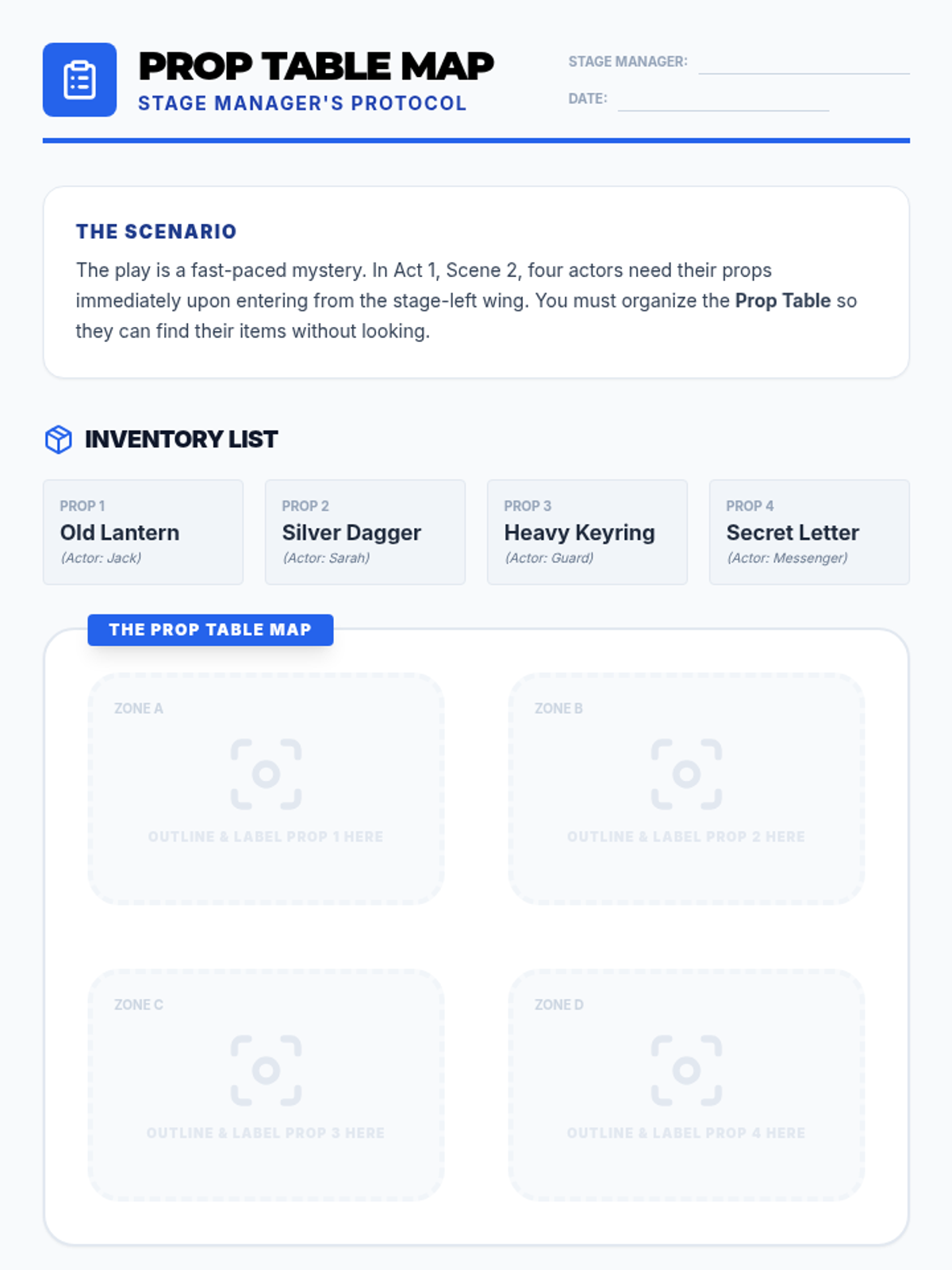
Student worksheet for Lesson 5: Stage Management organization. Features a prop table mapping activity for a specific scene.
Educational slide deck for Lesson 5: Backstage Organization and Prop Tables. Covers the importance of organization, prop table setup, and the concept of "spiking" furniture.
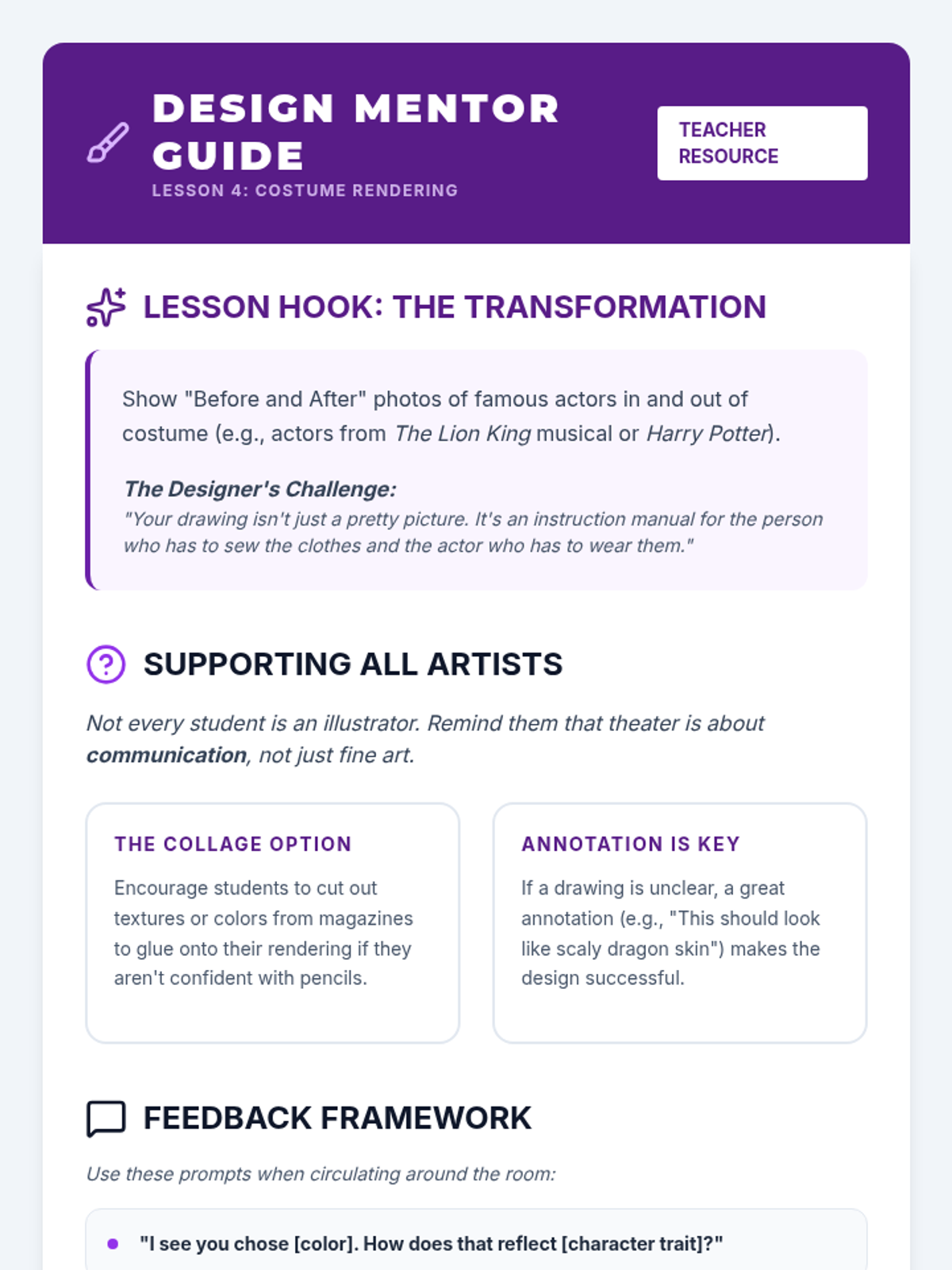
Teacher guide for Lesson 4: Costume Rendering and Collage. Includes instructions for the "Transformation" hook, artistic support strategies for varied skill levels, and feedback prompts for student designs.
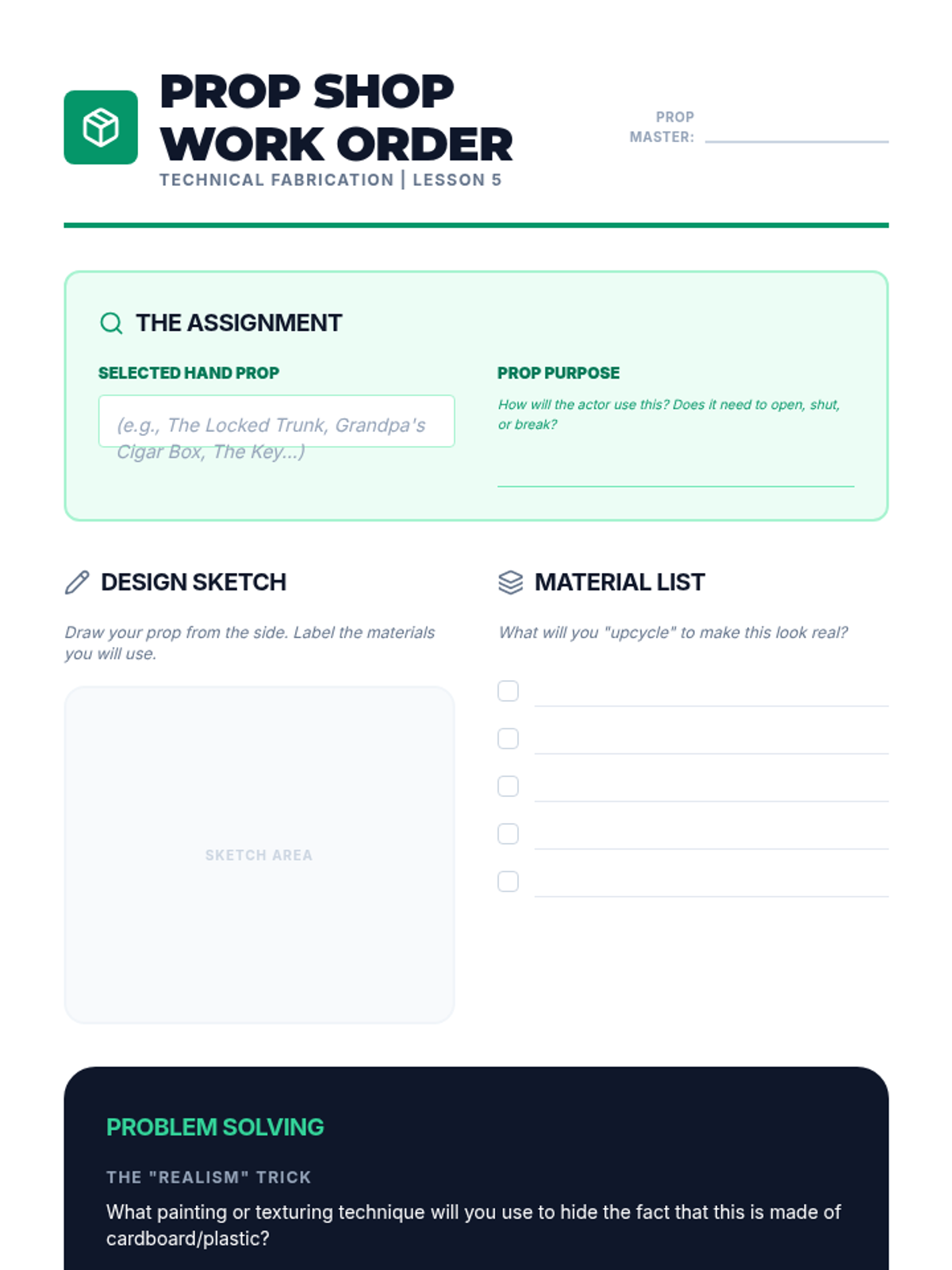
A design planning sheet for students to prototype and build a hand prop, including sections for sketching, material listing, and peer feedback.
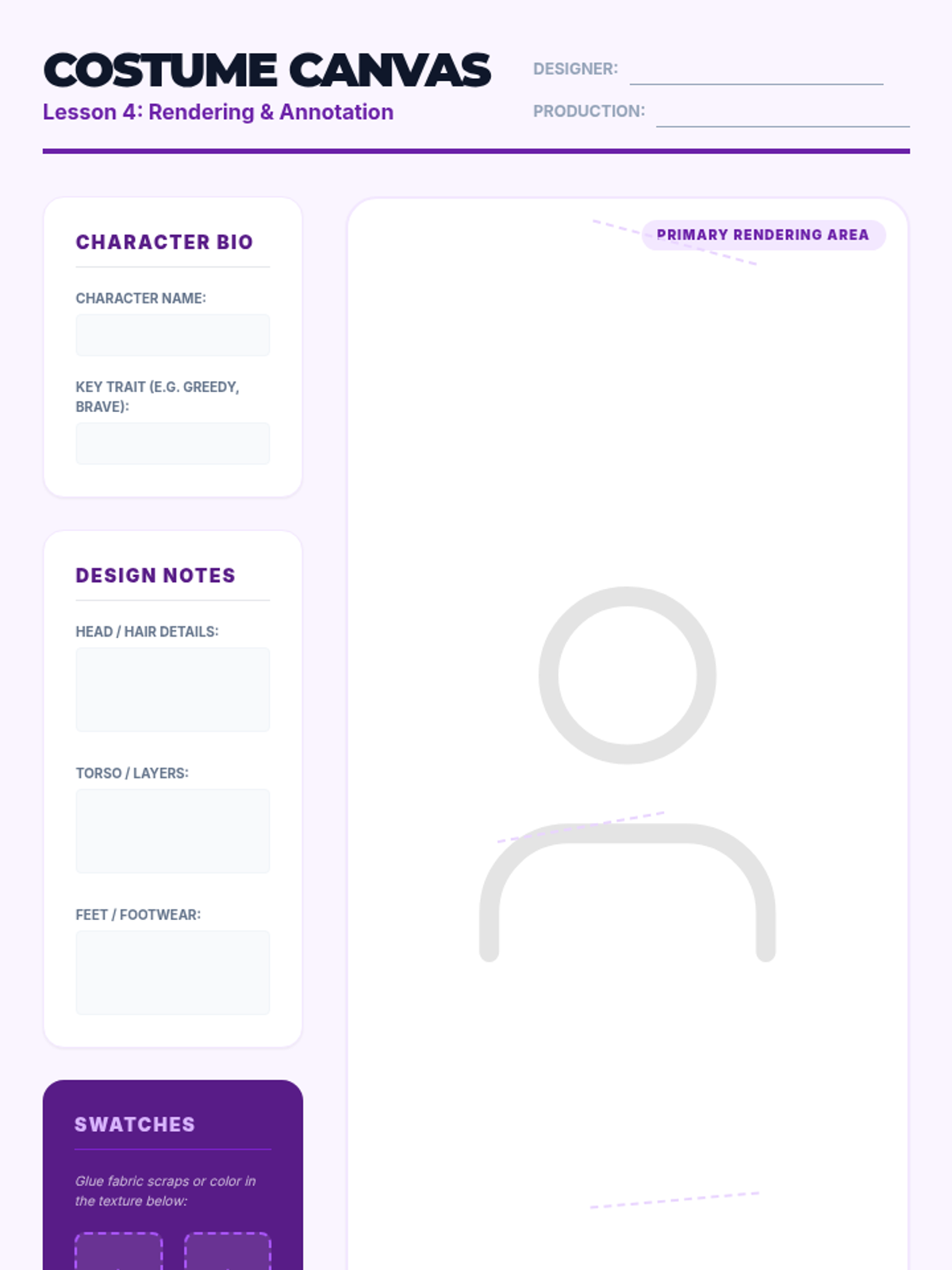
Student worksheet for Lesson 4: Creating a costume rendering. Includes space for character bio, design notes, swatches, and a large drawing area.
Educational slide deck for Lesson 4: Costume Rendering and Collage. Covers the components of a professional rendering (sketch, swatches, annotations) and the importance of visual storytelling.
Introductory slides for the Prop Shop Prototypes lesson, covering the definition of props, the prop master's checklist, and the gallery walk finale.
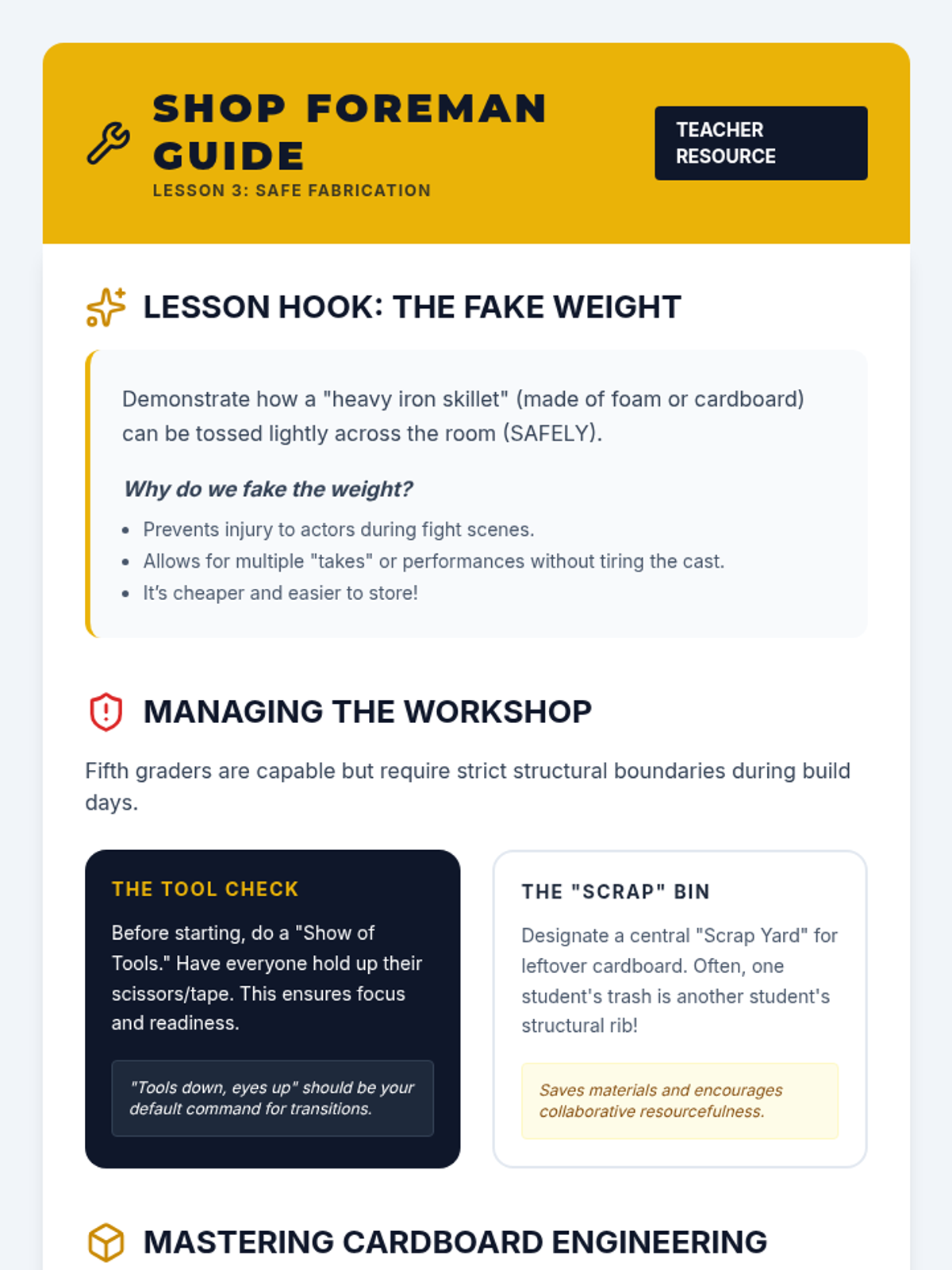
Teacher guide for Lesson 3: Safe Prop Fabrication. Includes fabrication tips, workshop safety protocols, and supply list suggestions.
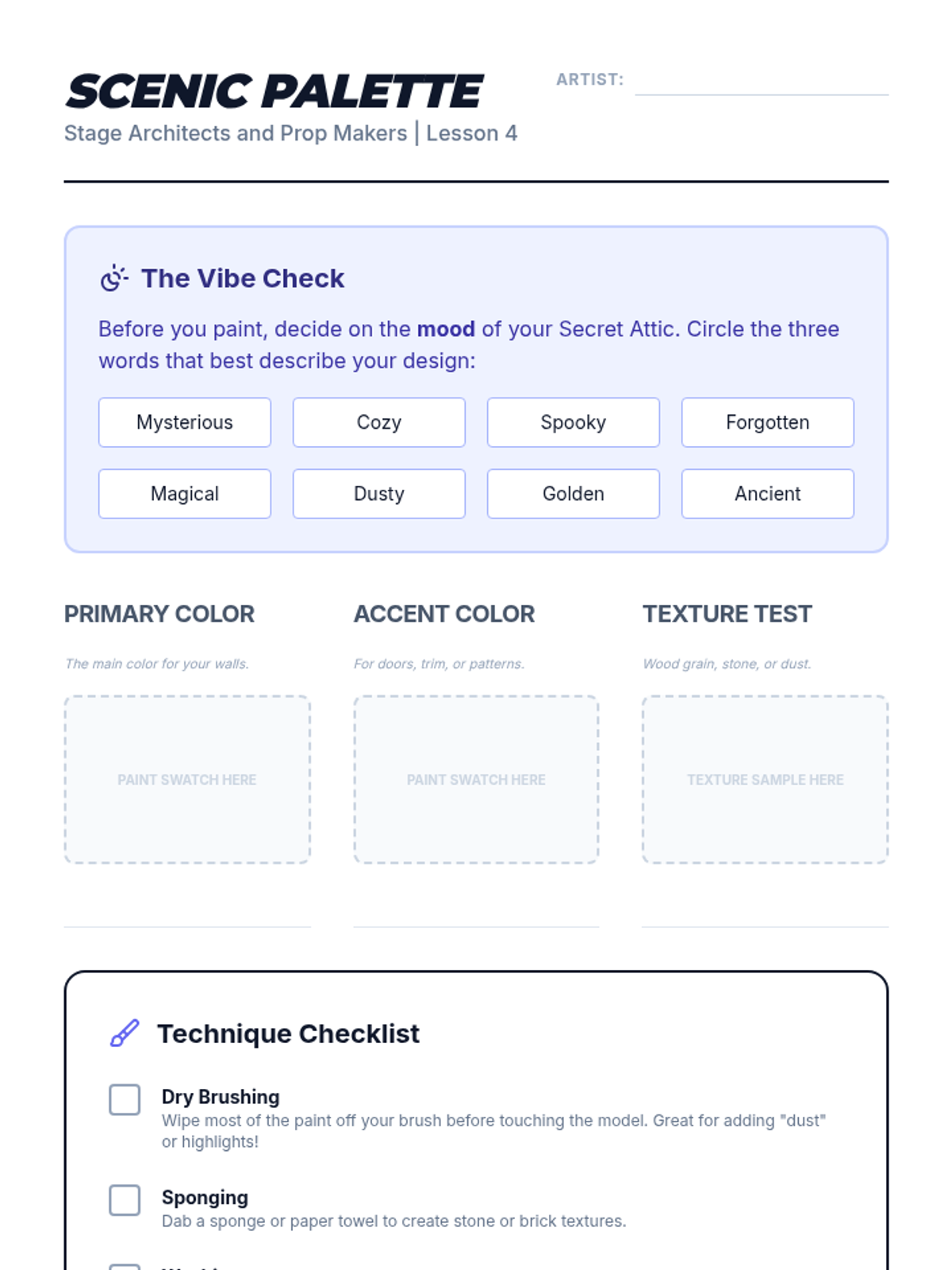
A student worksheet for planning the color scheme and textures of their scenic model, including space for paint swatches and technique descriptions.
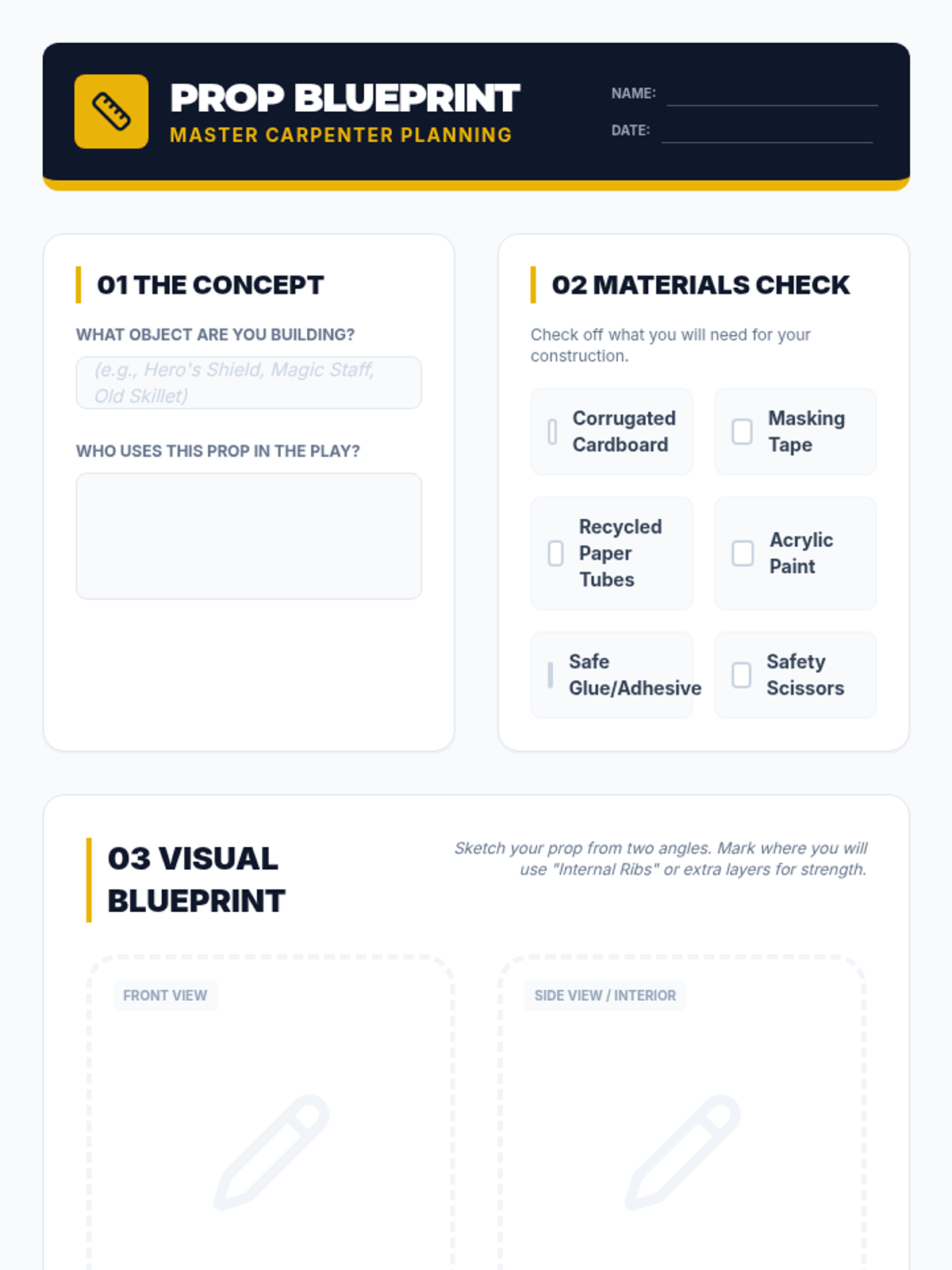
Student worksheet for Lesson 3: Planning the fabrication of a safe hand prop using cardboard and recycled materials. Includes a sketch area and materials checklist.
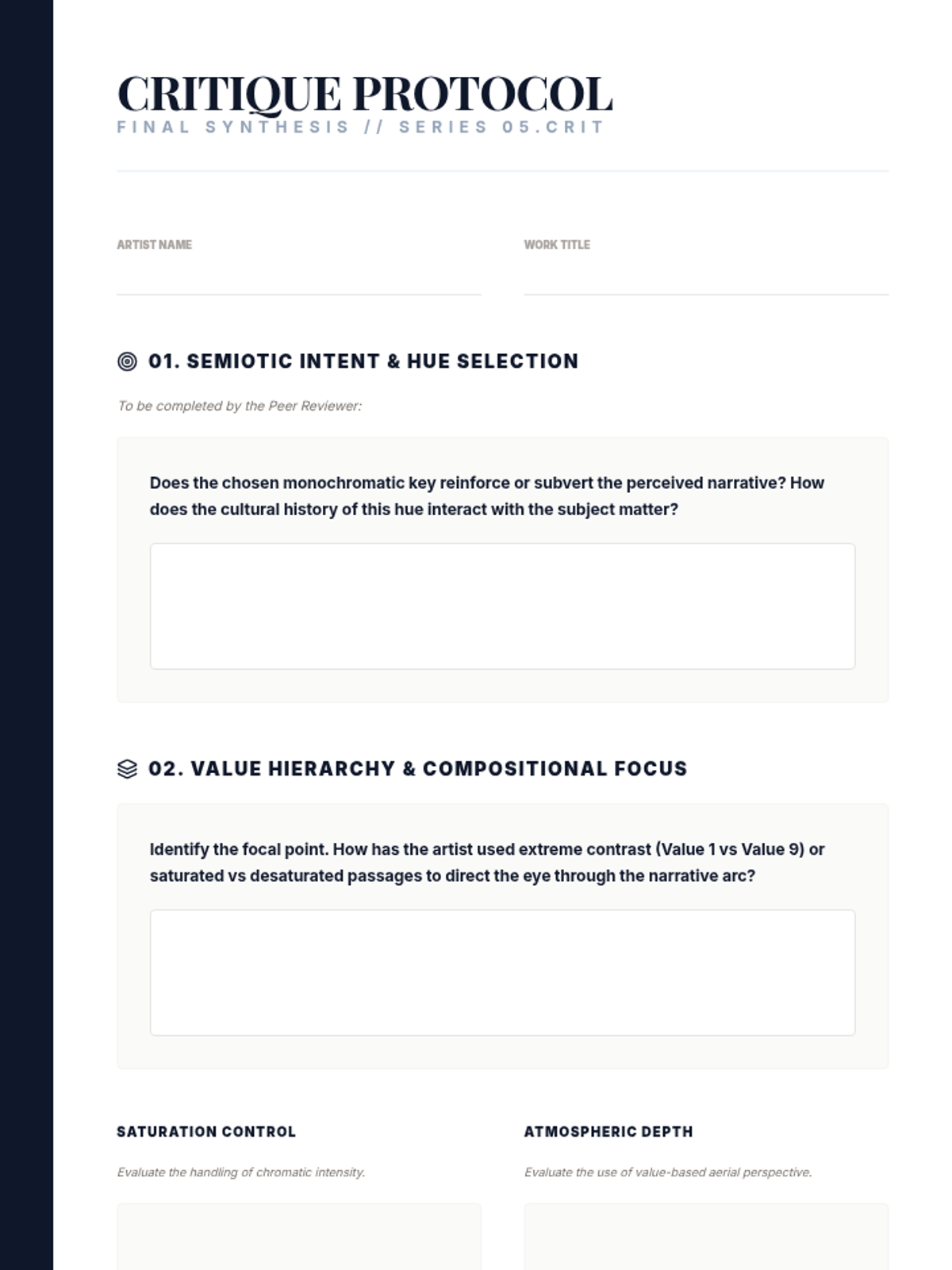
A structured peer critique protocol for graduate students to evaluate monochromatic narrative paintings, focusing on semiotic intent, value hierarchy, and narrative resonance.
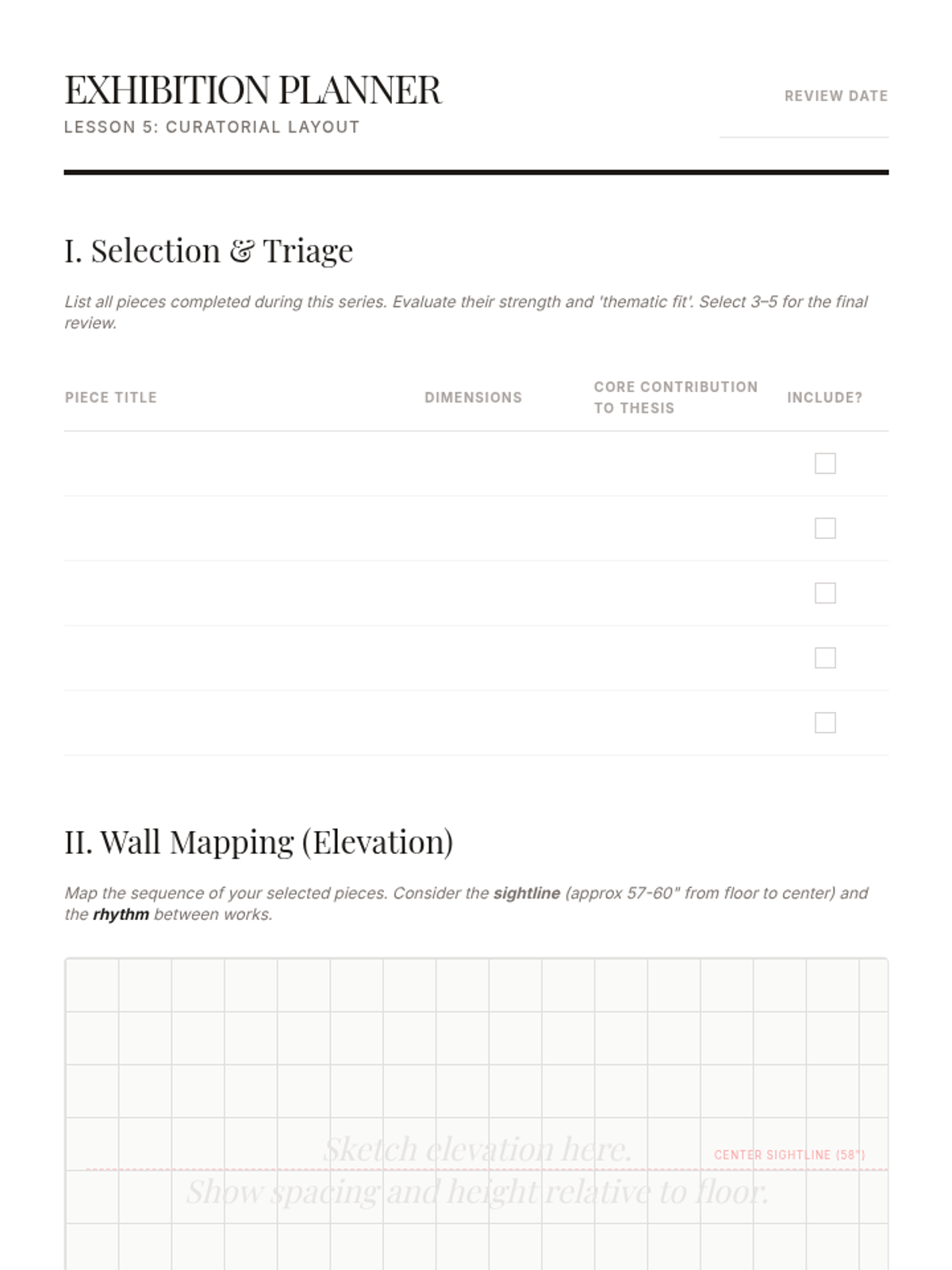
An exhibition layout planner for students to select and sequence their works, including wall elevations and lighting considerations.
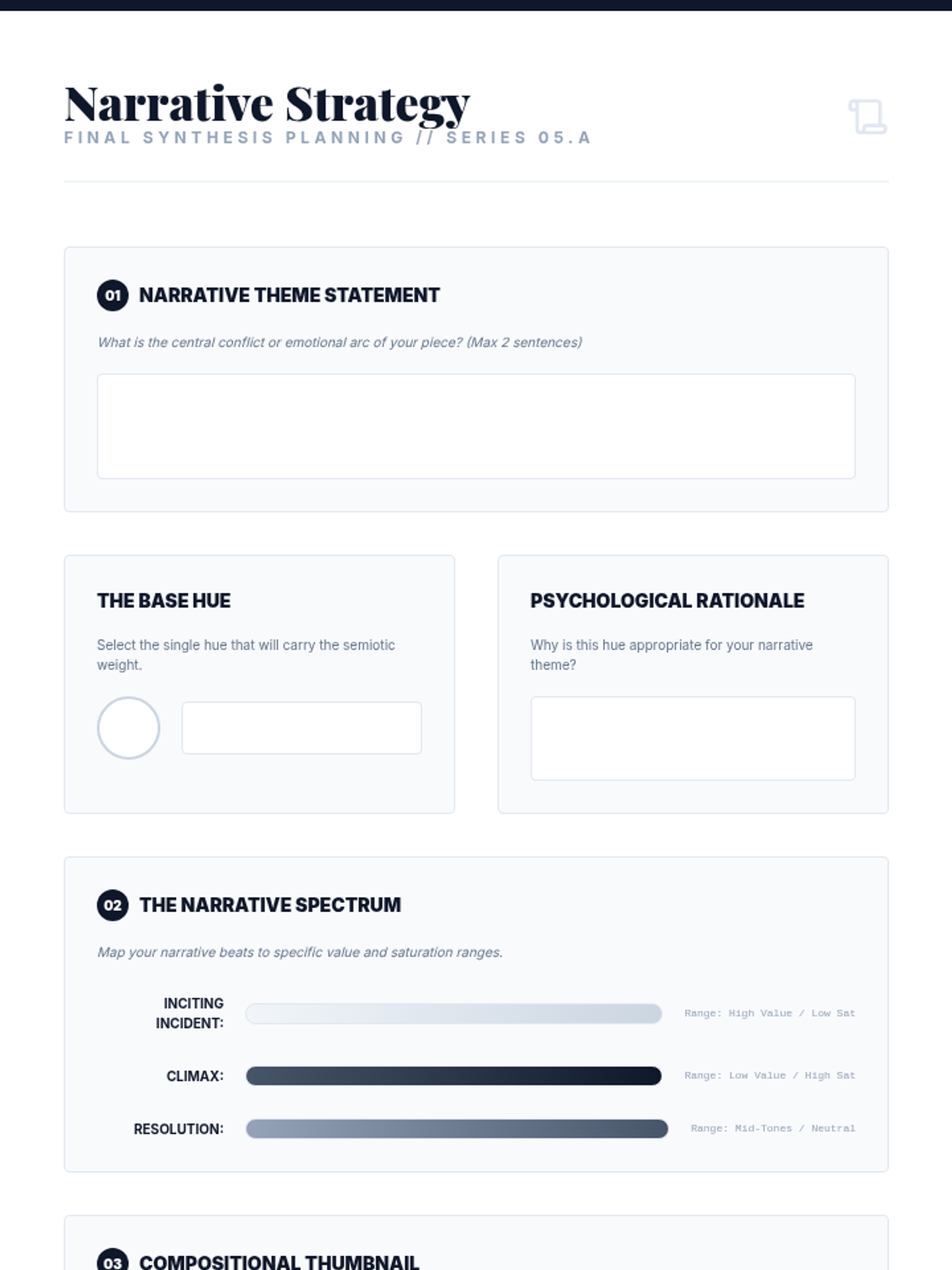
A strategy worksheet for graduate students to plan their final monochromatic painting, mapping narrative beats to specific value and saturation ranges within a single-hue palette.
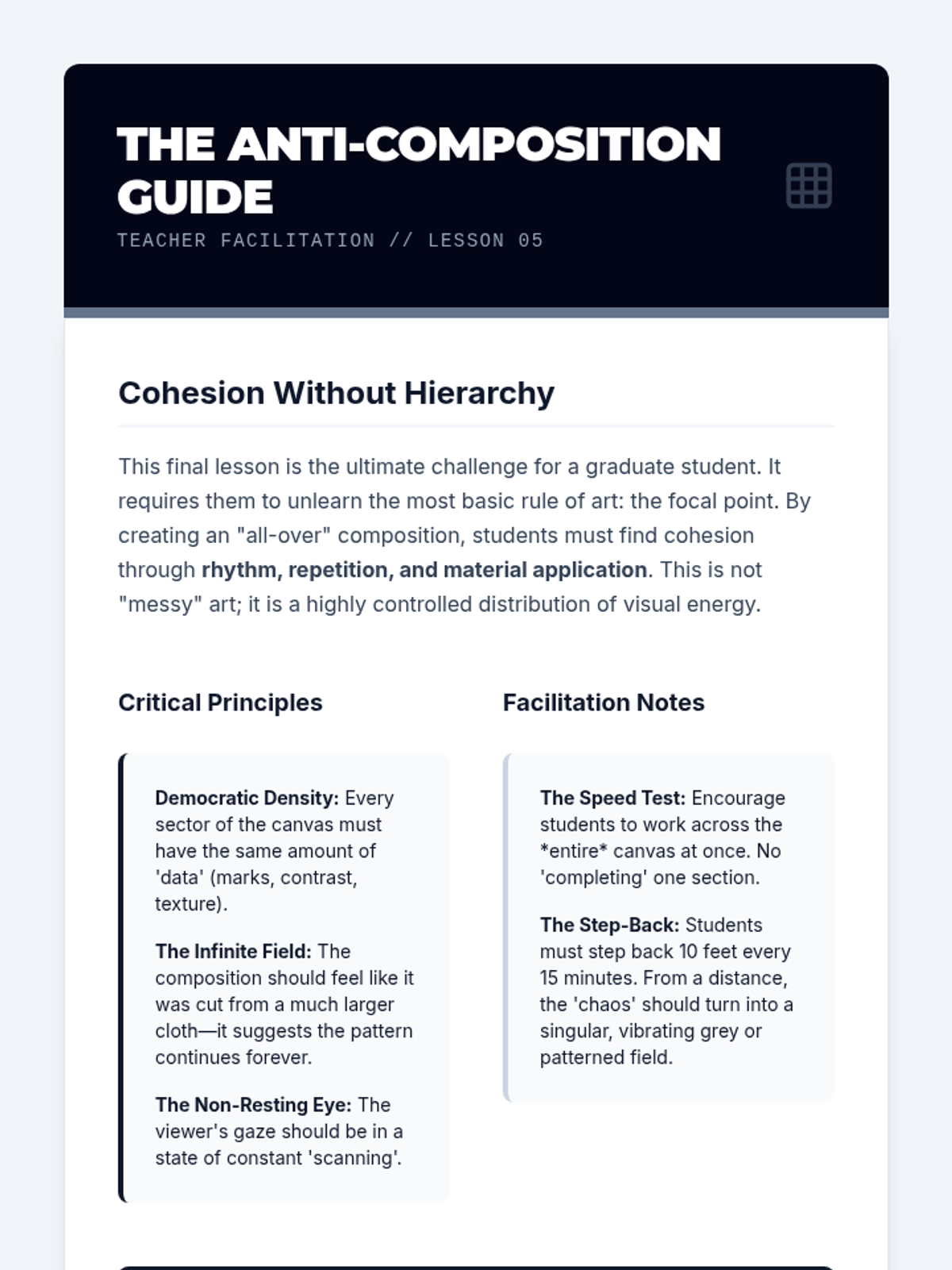
A facilitator guide for Lesson 5, focusing on teaching all-over compositions, rhythmic repetition, and final portfolio critique strategies for graduate-level art.
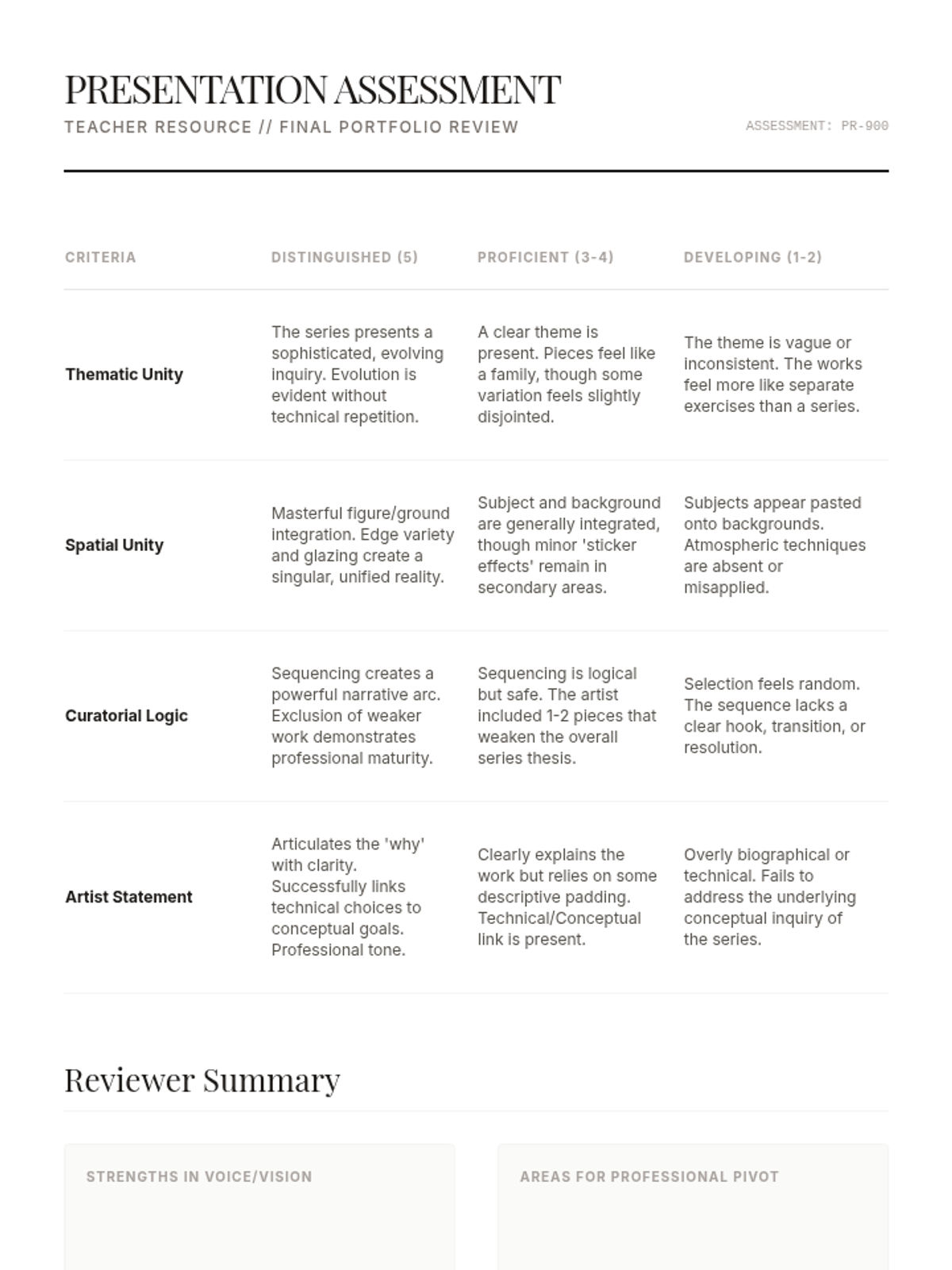
An assessment rubric for evaluating graduate students' final portfolio presentations, focusing on thematic unity, spatial integration, curation, and professional articulation.
Instructional presentation for Lesson 5 on monochromatic narrative. Covers value as a storytelling tool, saturation control, and the final synthesis project brief.
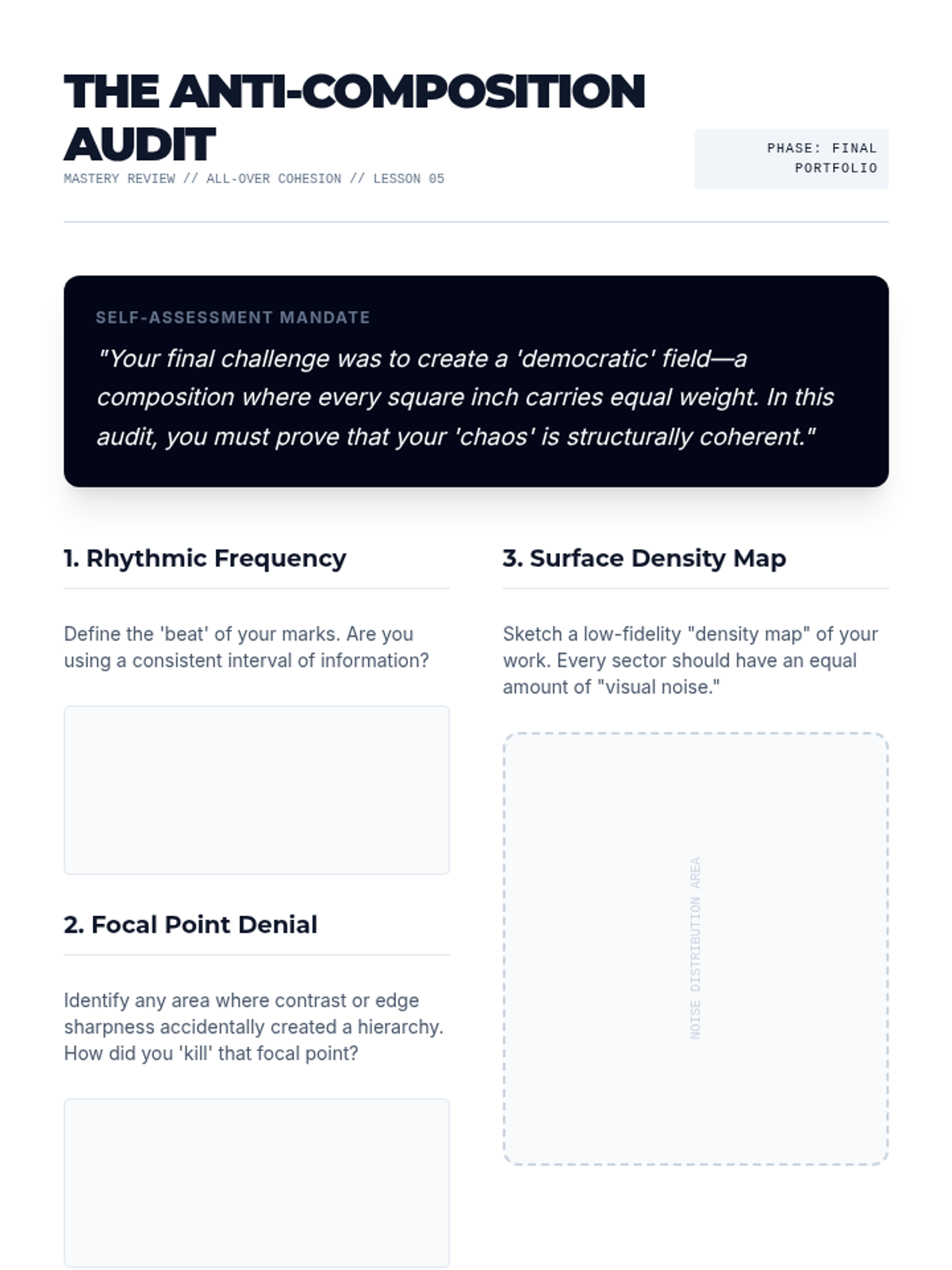
A reflection and critique sheet for graduate students to evaluate all-over compositions, focusing on rhythmic repetition and the successful removal of traditional focal points.
A professional slide deck addressing the principles of curation, sequencing, and artist statement writing for a final portfolio review.
A slide deck for graduate students focusing on all-over compositions, rhythmic repetition, and maintaining cohesion without a traditional focal point.
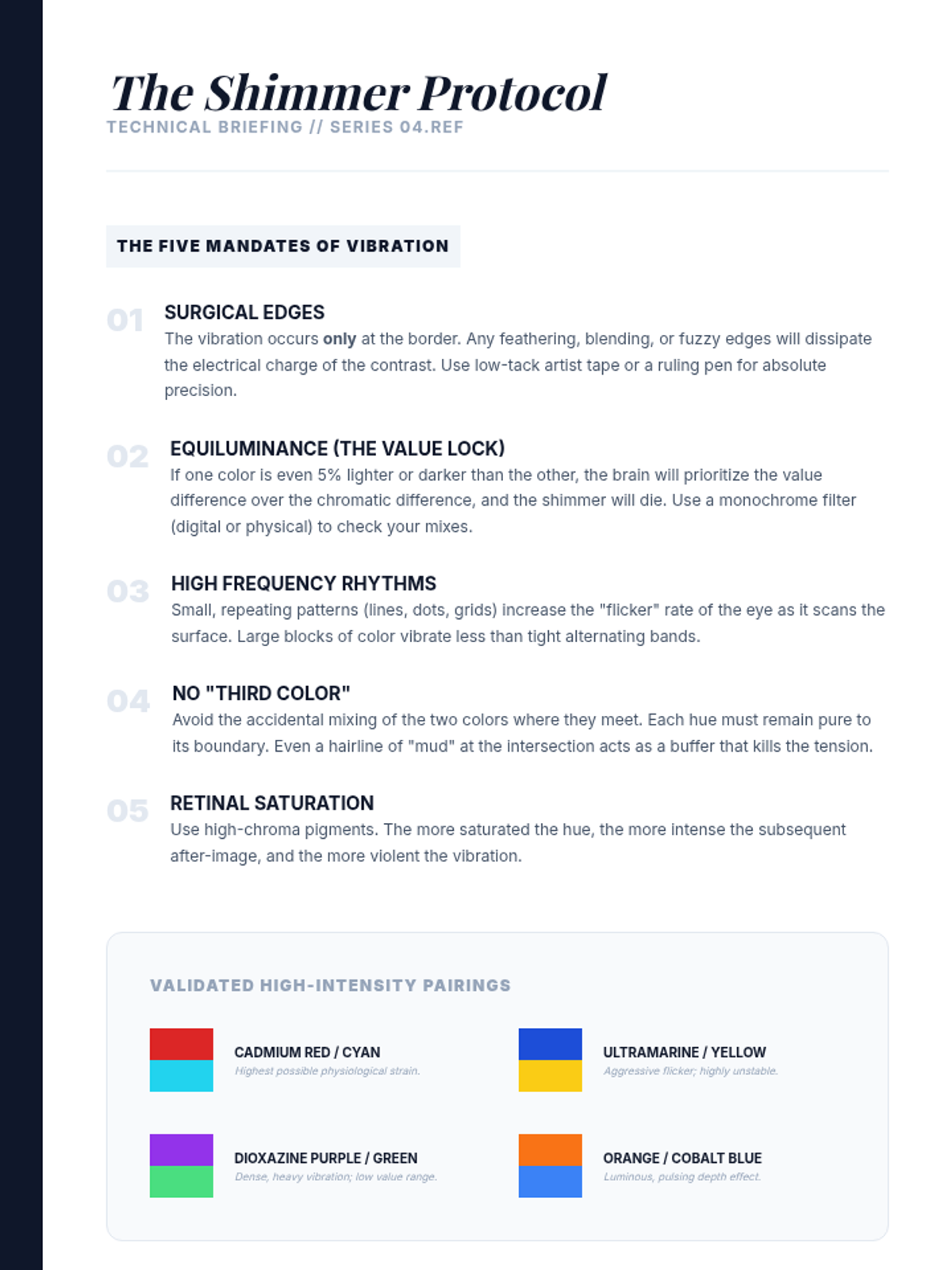
A technical reference sheet for achieving maximum optical vibration in painting, detailing mandates for edge precision, equiluminance, and high-frequency patterns.
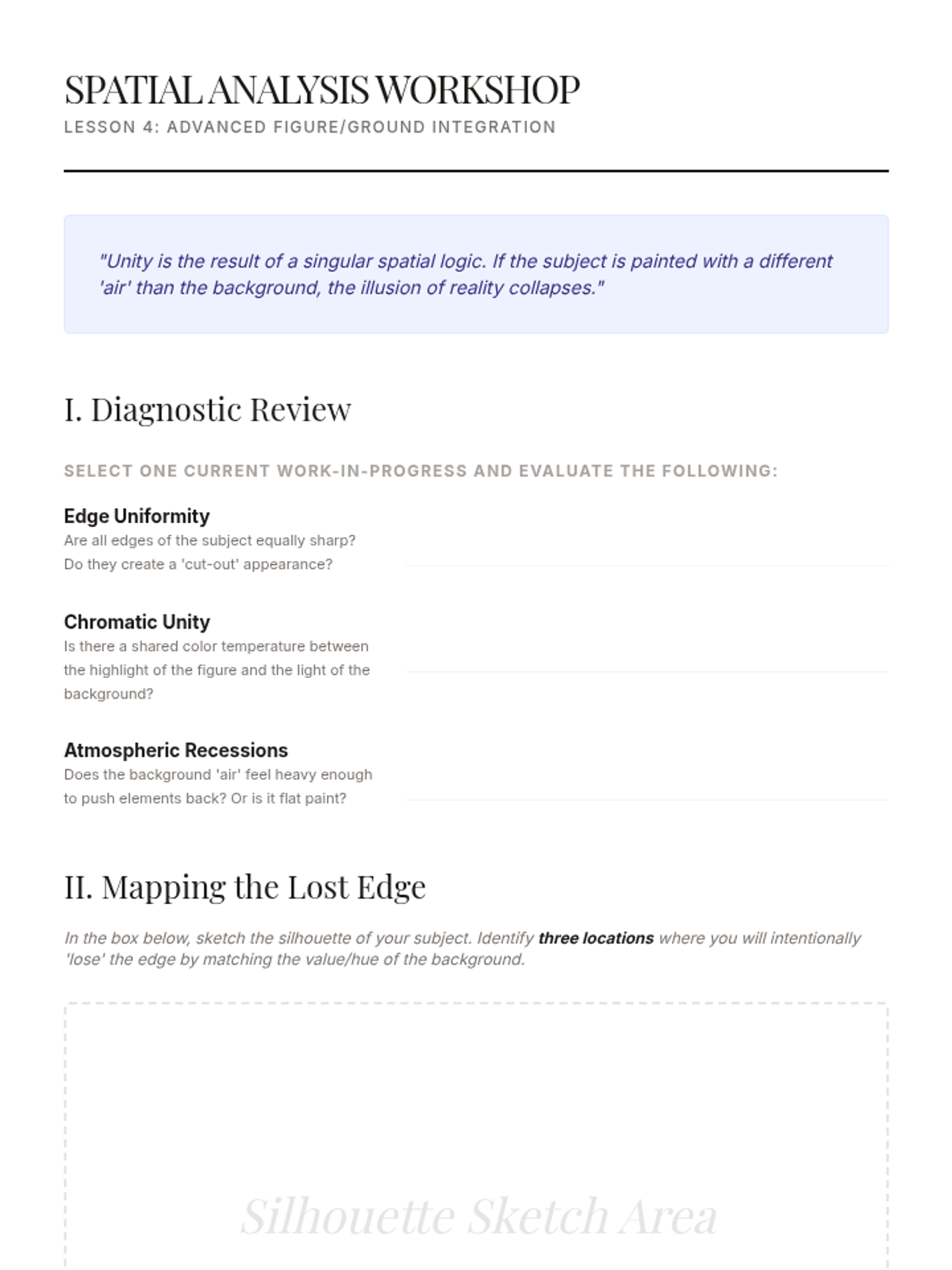
A structured spatial analysis workshop for students to evaluate and plan the integration of subject and background in their own paintings.
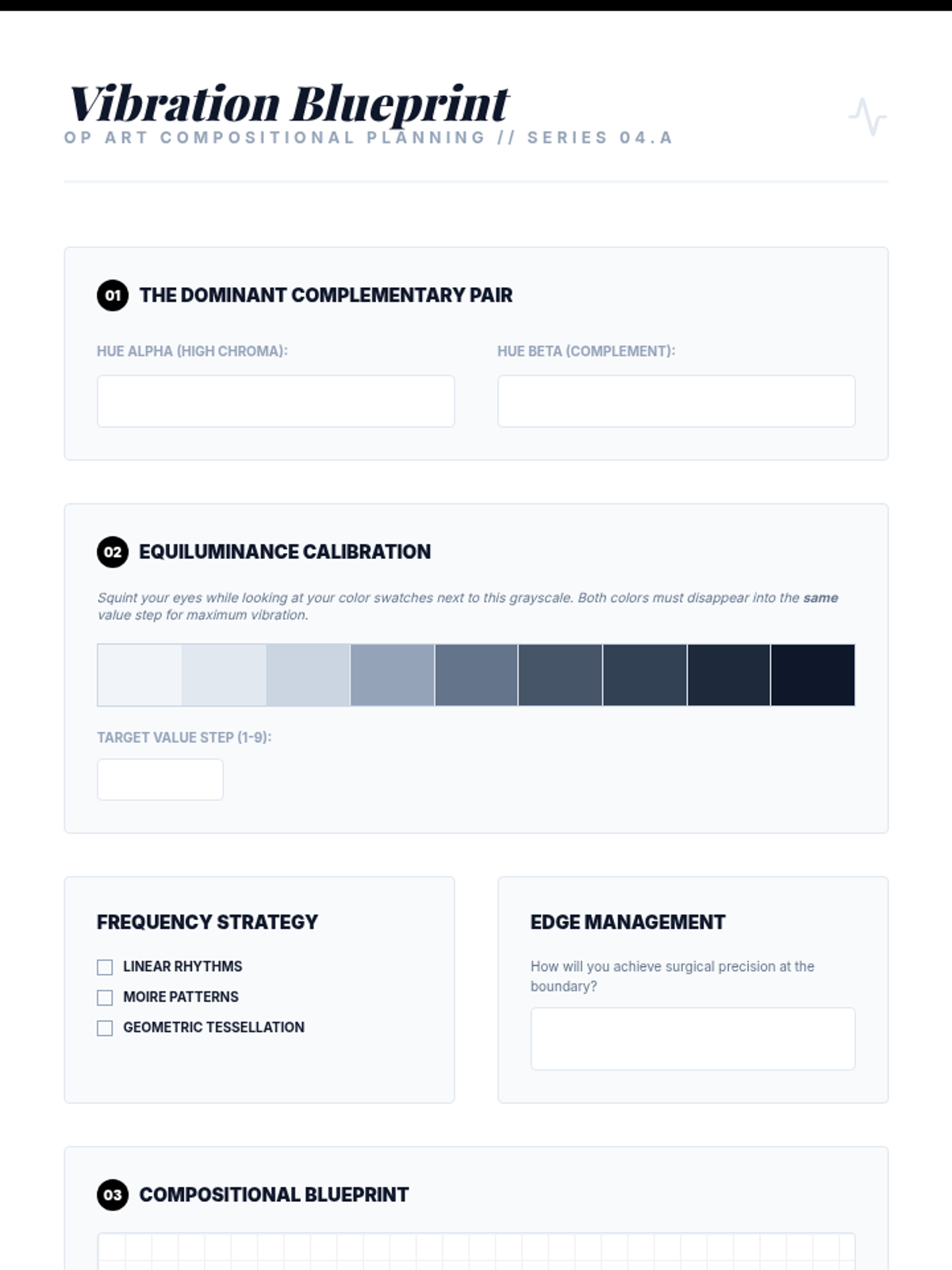
A technical planning worksheet for graduate students to design an Op Art composition, including sections for complementary pair selection, equiluminance calibration, and rhythmic strategy.
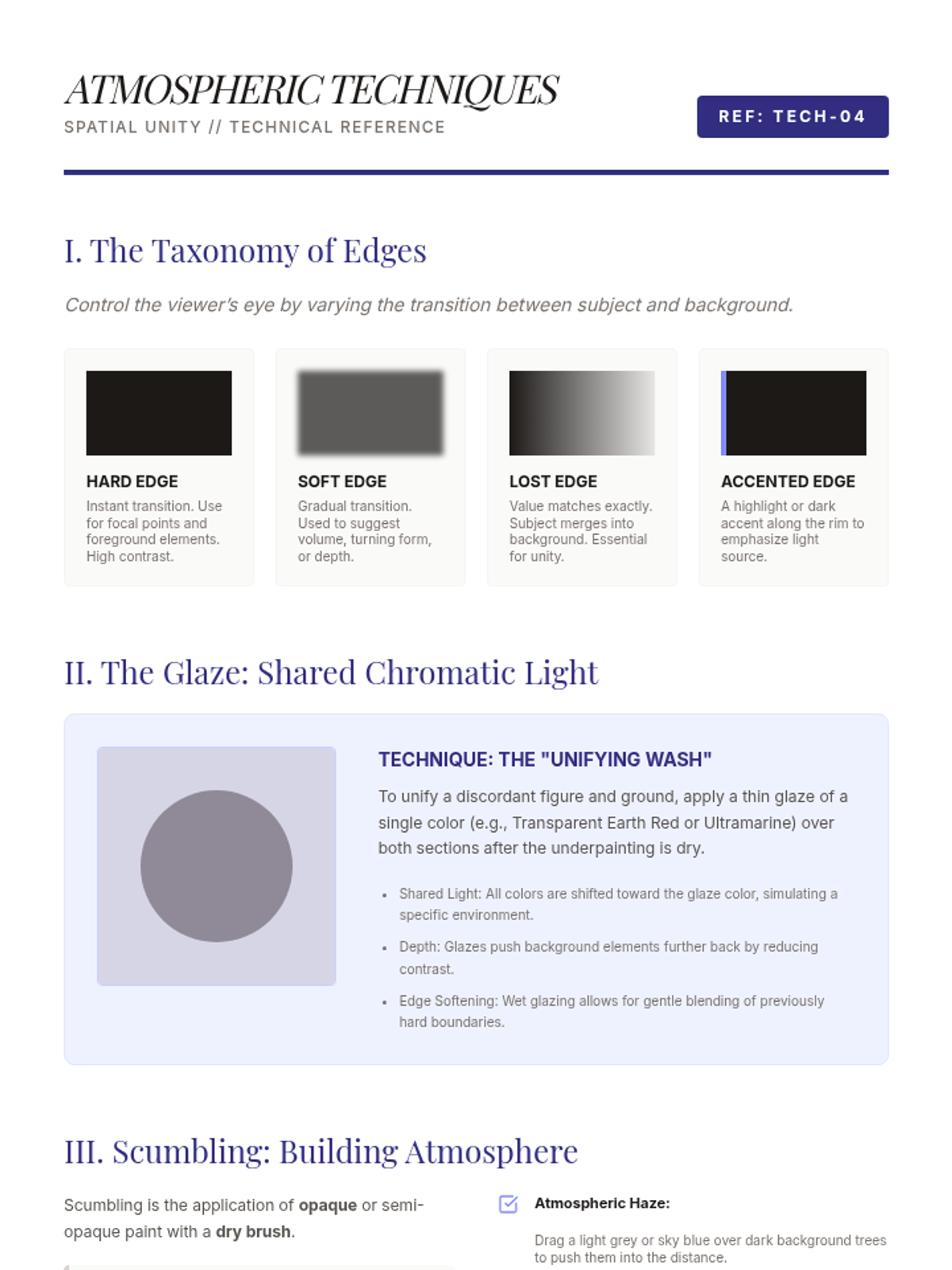
A technical reference for advanced figure/ground integration, covering edge variety, glazing for chromatic unity, and scumbling for atmospheric depth.
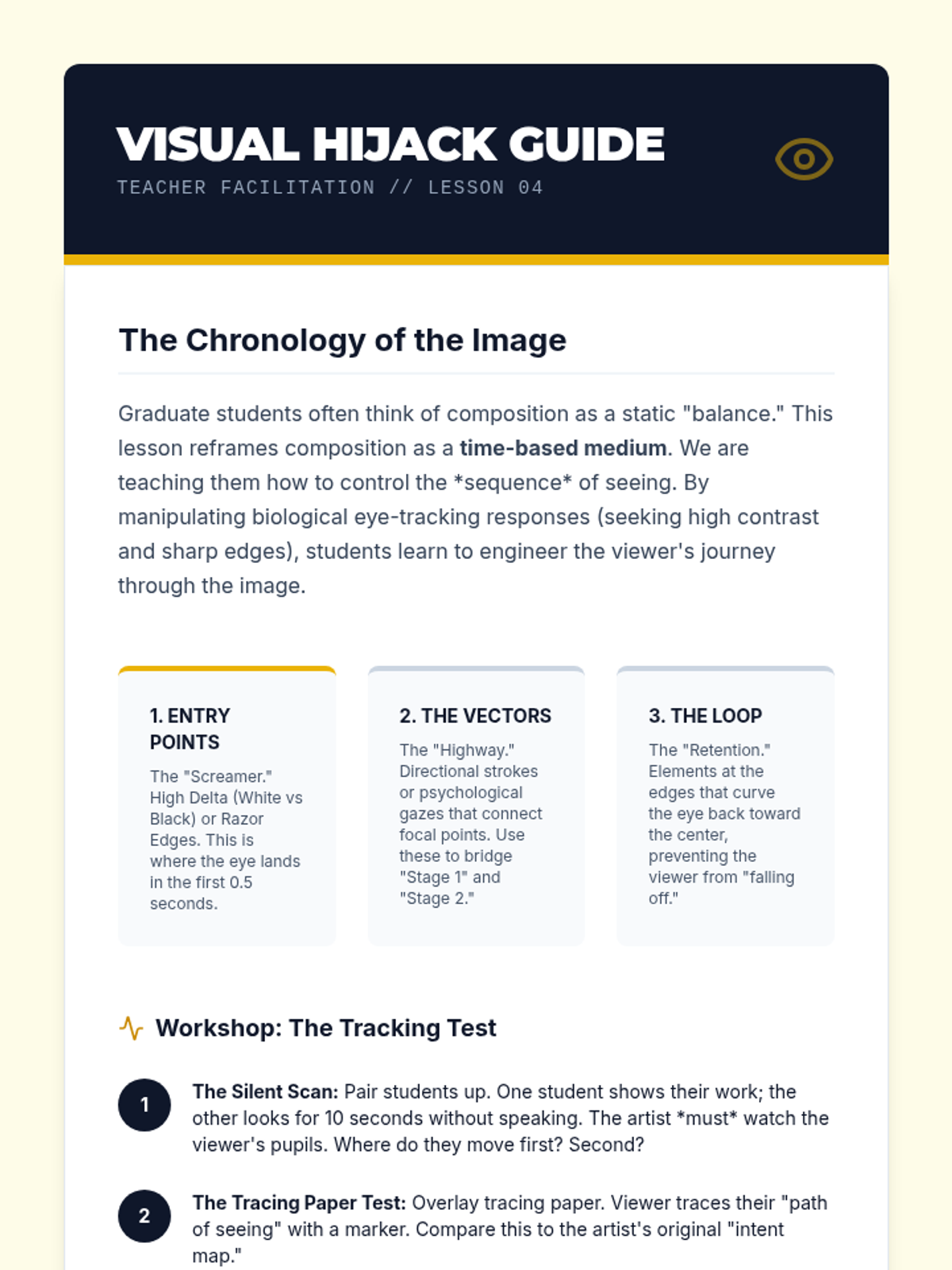
A facilitator guide for Lesson 4, focusing on teaching eye-tracking principles, controlling the chronological reading of an image, and managing student critique sessions.
Instructional presentation for Lesson 4 on optical vibration and Op Art techniques. Covers retinal fatigue, simultaneous contrast, and the principle of equiluminance.
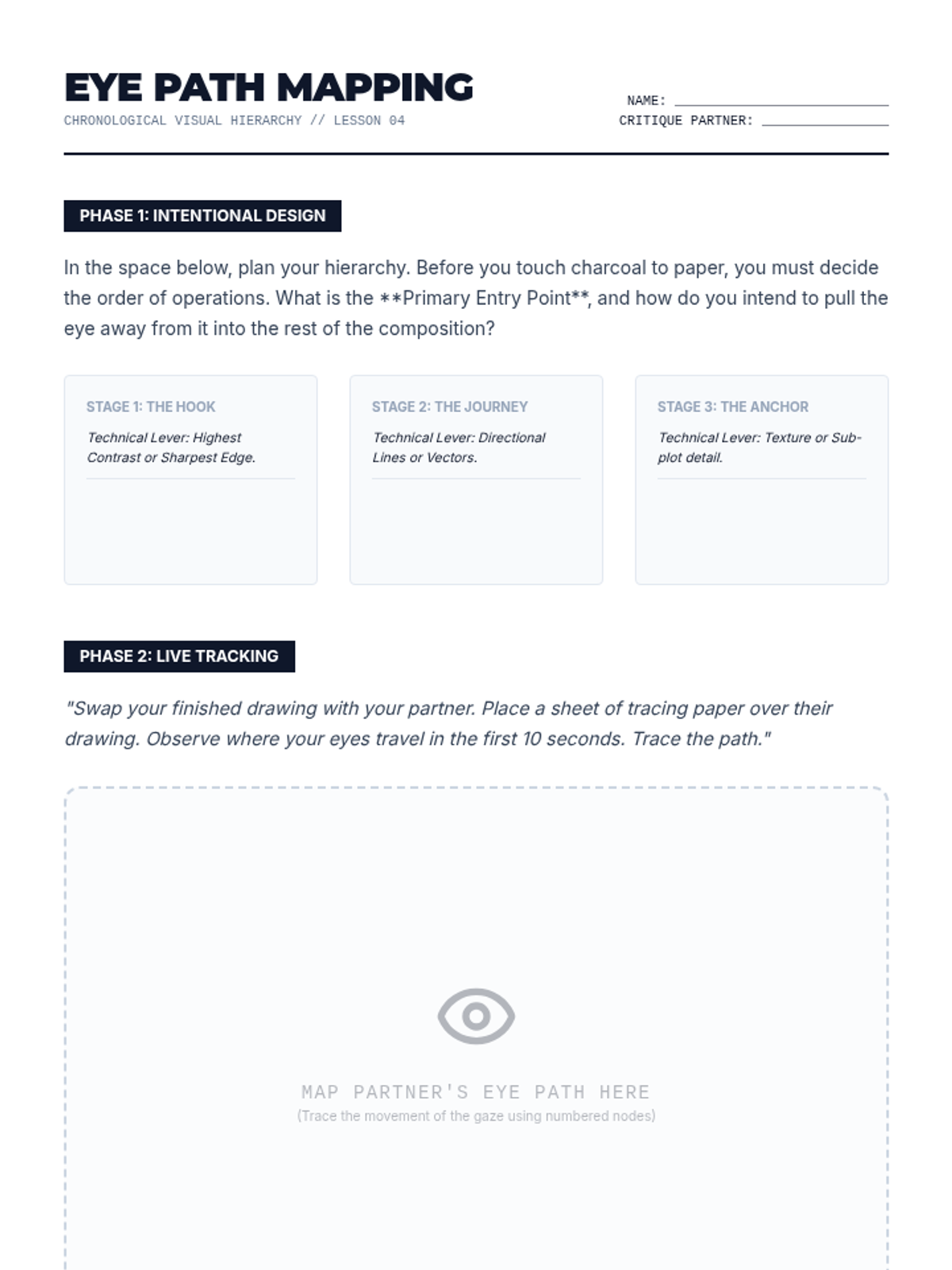
A mapping worksheet for graduate students to track and analyze viewer eye movement across their compositions, comparing intent with actual viewer behavior.
A technical slide deck addressing the integration of subject and background through glazing, scumbling, and edge manipulation to create a unified spatial reality.
A slide deck for graduate students focusing on visual hierarchy, eye-tracking principles, and controlling the chronological reading of an image.
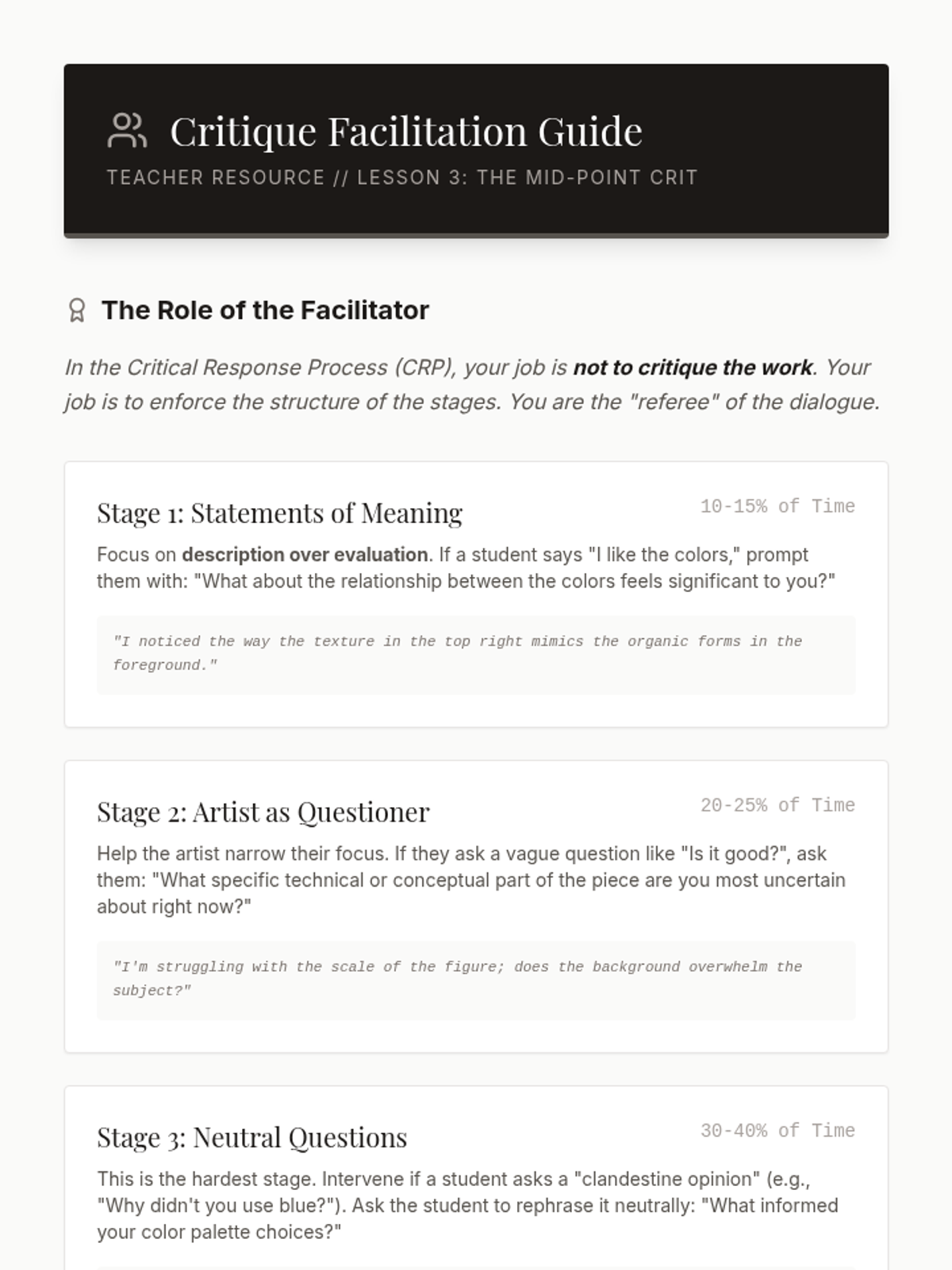
A teacher resource for facilitating the Critical Response Process during art critiques, providing stage-by-stage prompts and intervention strategies.
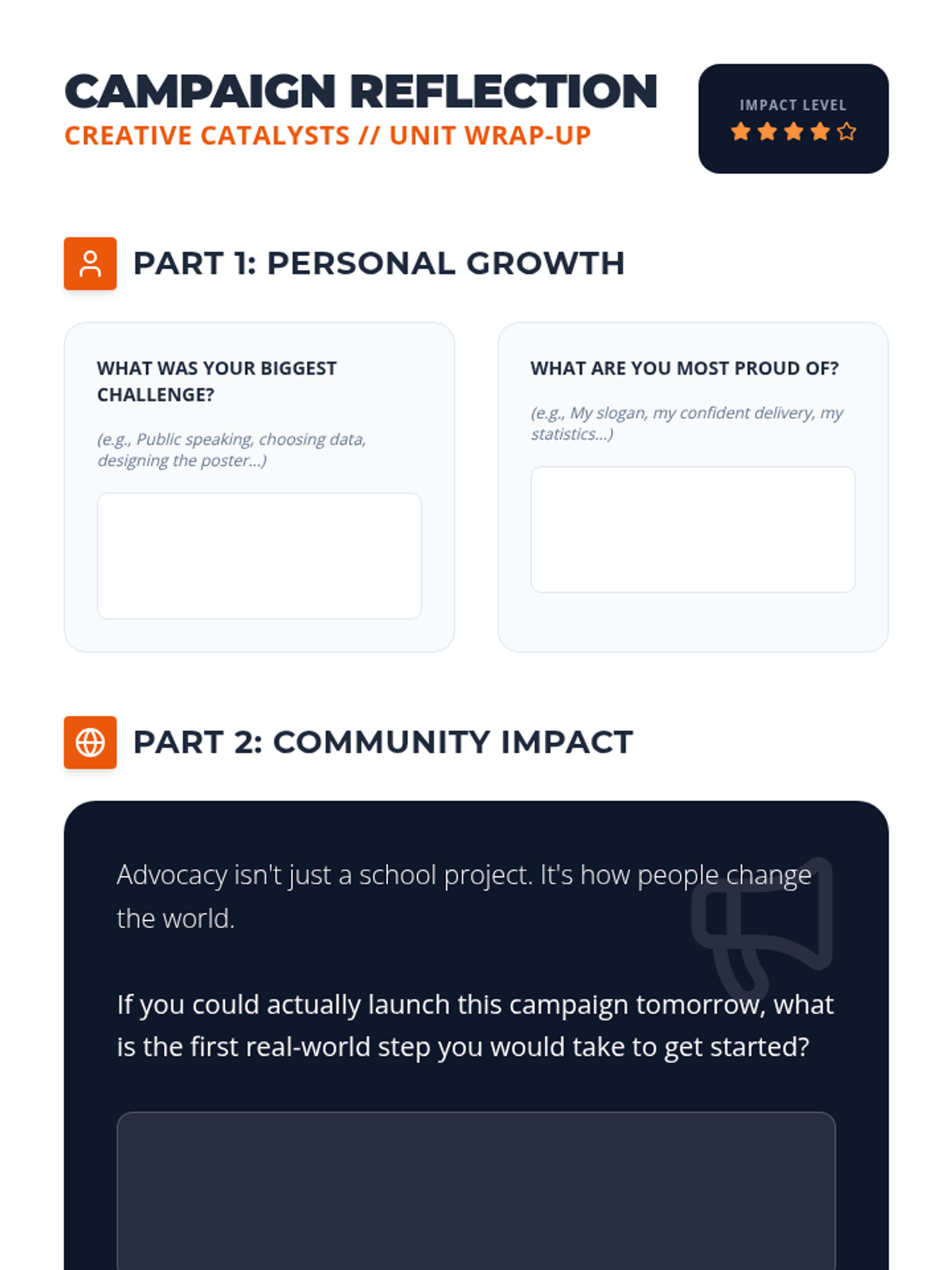
Final reflection journal for students to assess their growth, project impact, and the power of student advocacy after completing their campaign.
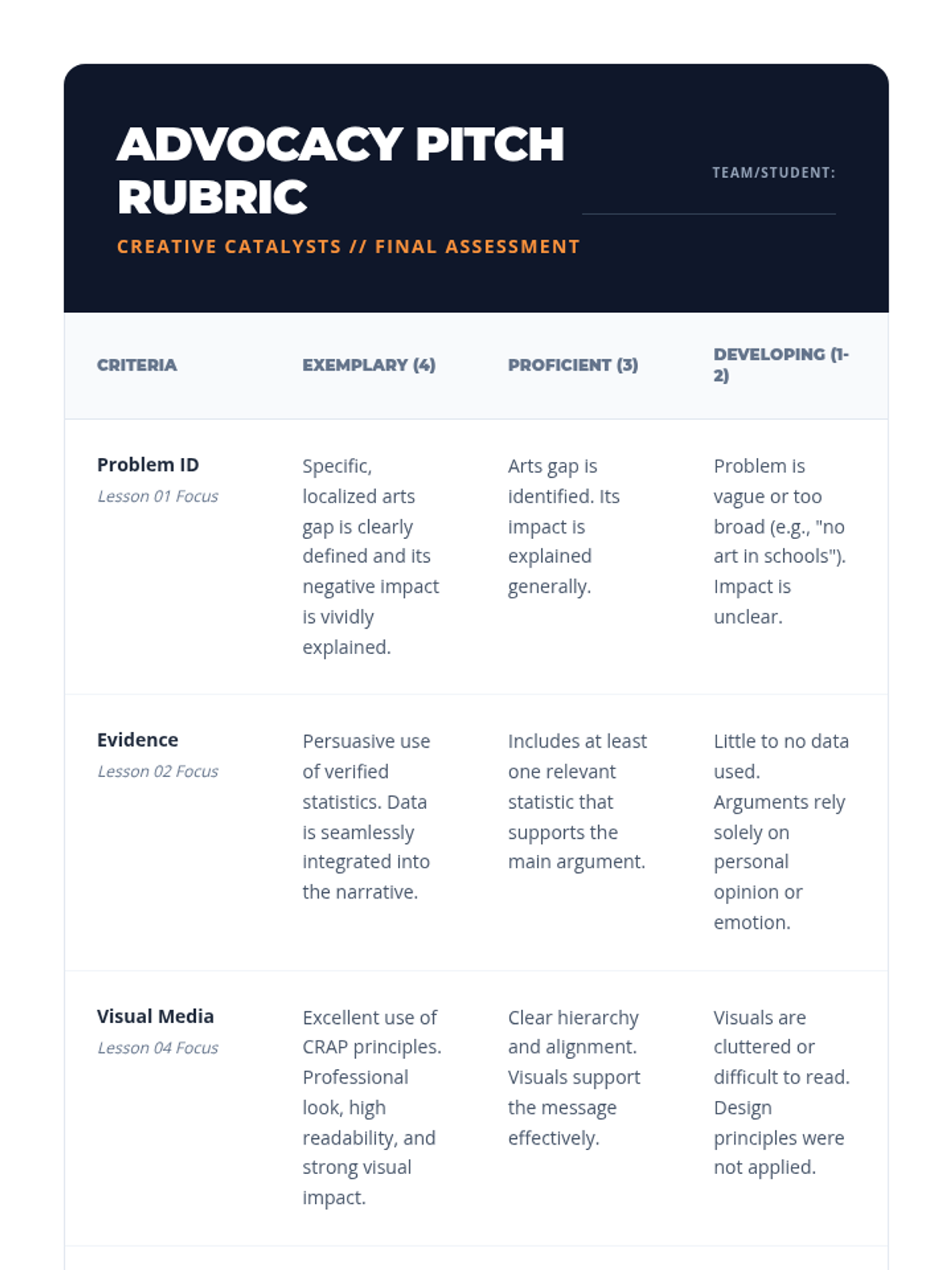
Evaluation rubric for the final advocacy pitch, assessing problem identification, evidence usage, visual design, and oral delivery.
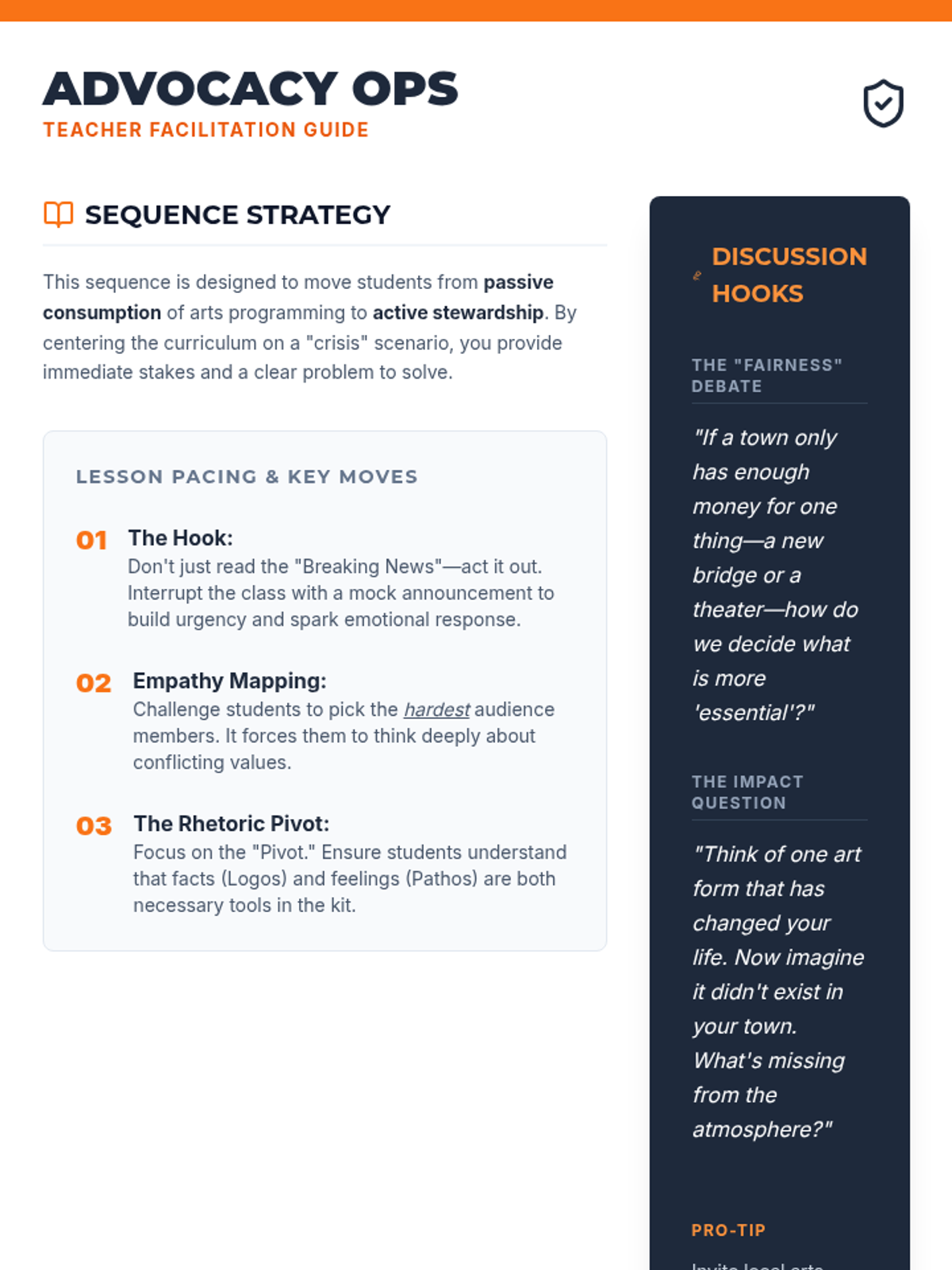
A comprehensive teacher guide for facilitating the 5-lesson advocacy sequence, updated with larger fonts and clearer sections.
Slide deck for Lesson 5, introducing tips for body language, analyzing a high-stakes pitch, and the structure of a two-minute advocacy presentation.
A 2-page rubric and reflection form for the final "Elevator Pitch" presentation, including peer feedback sections. Updated for better font legibility.
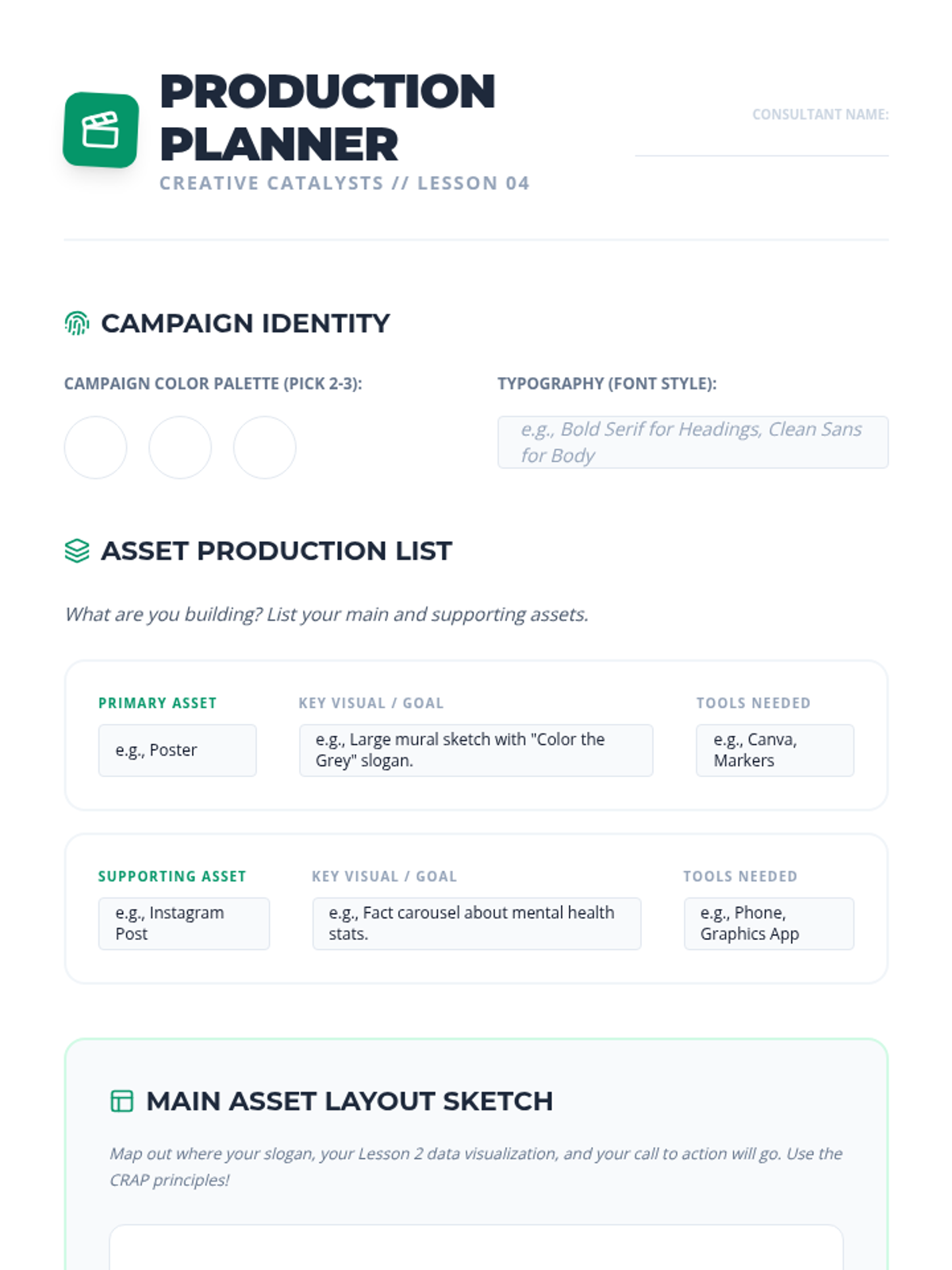
Worksheet for students to plan and sketch the production of their multi-channel advocacy campaign assets, including color palettes and asset lists.
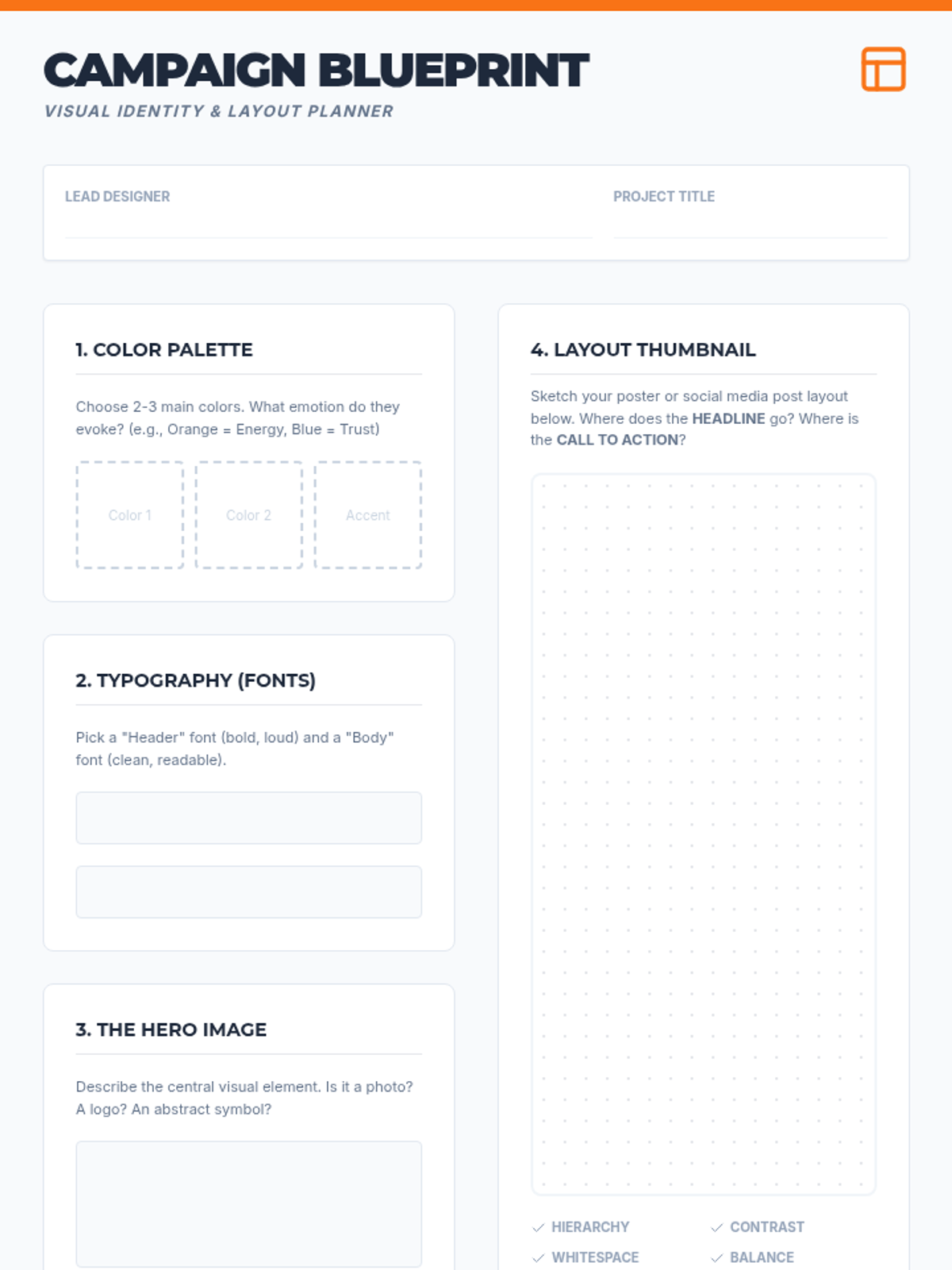
A campaign blueprint worksheet for planning visual elements like color, fonts, and layout for advocacy materials.
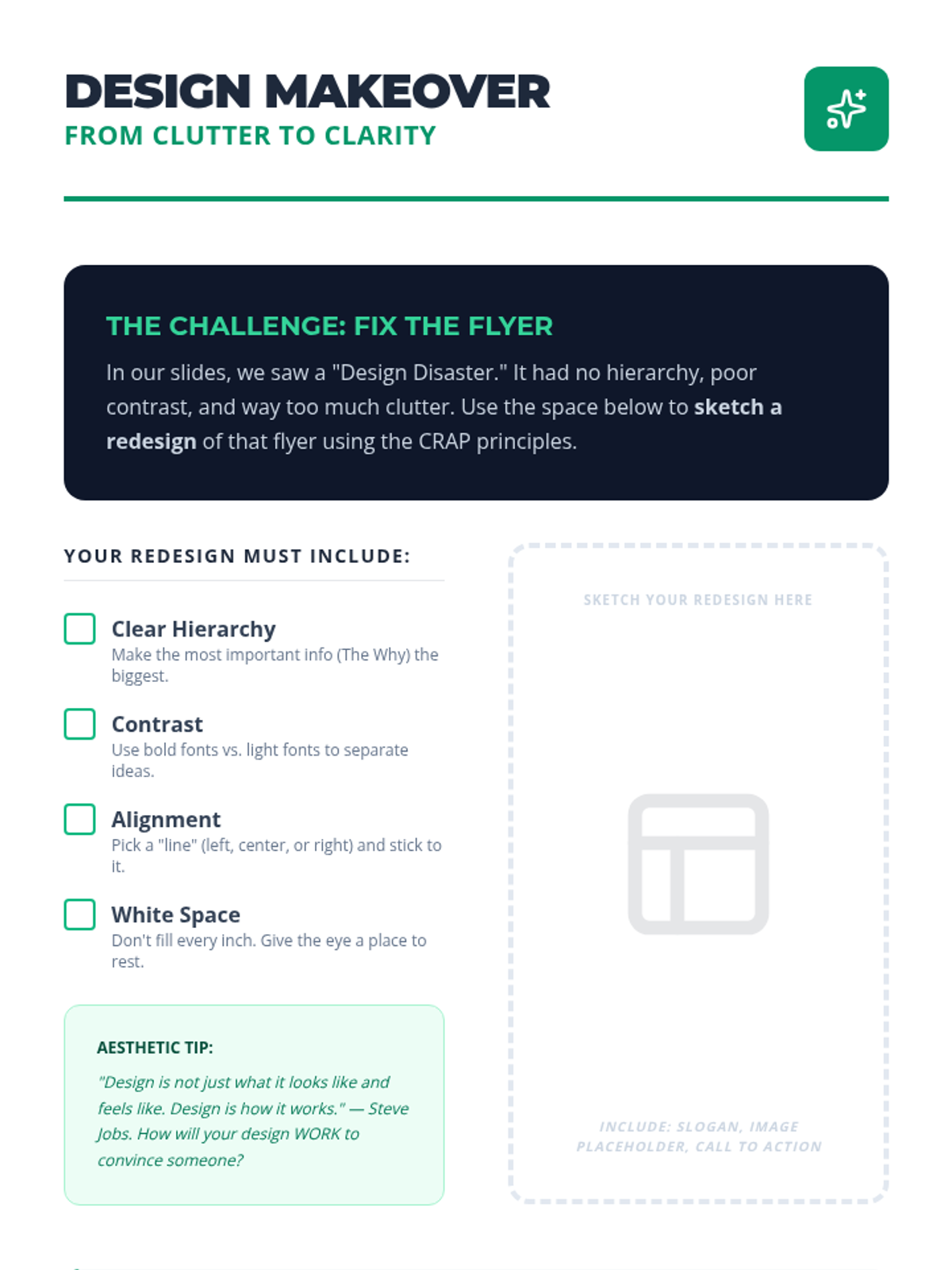
Practice activity where students apply the CRAP principles (Contrast, Repetition, Alignment, Proximity) to redesign a poorly structured flyer.
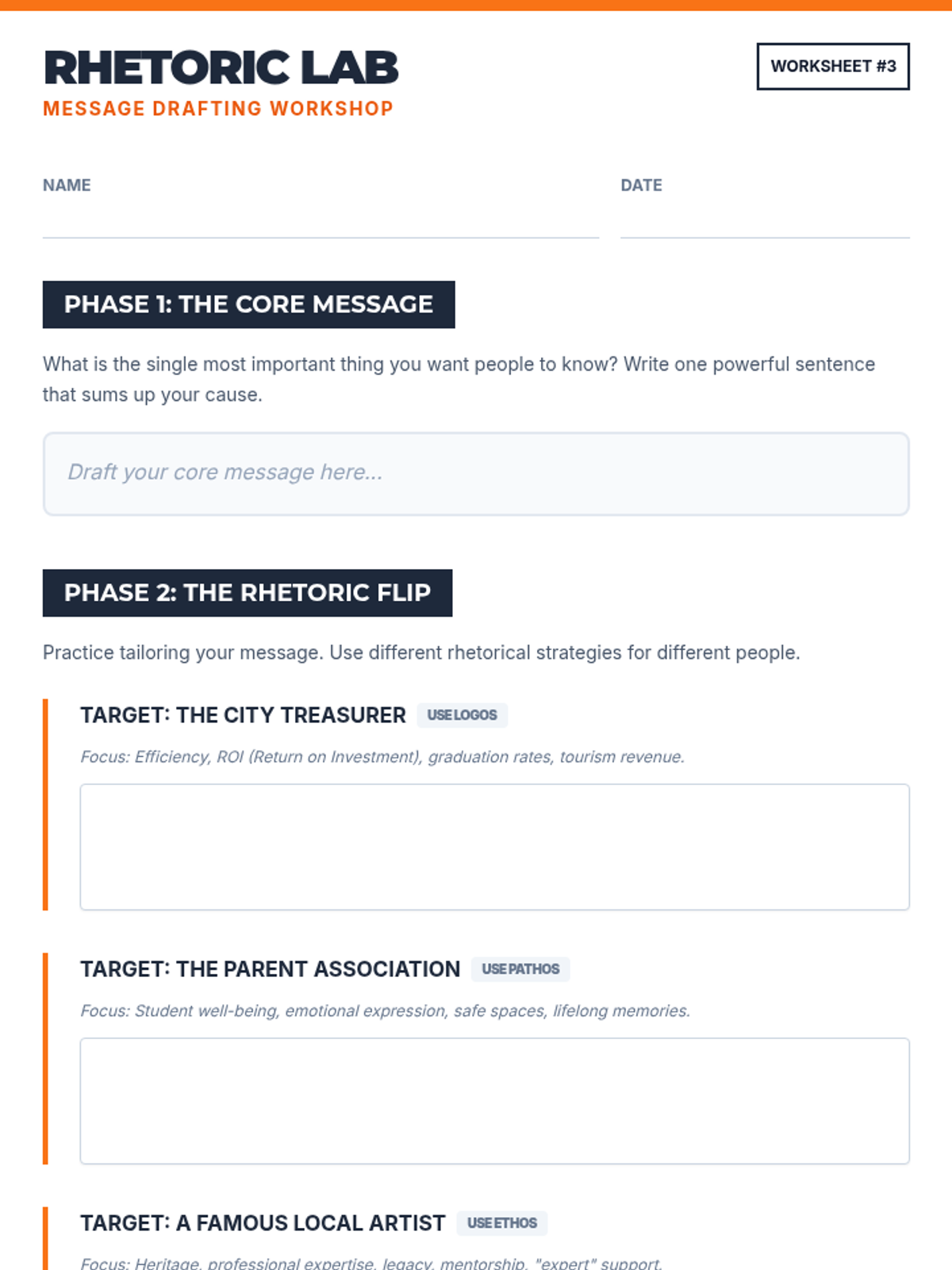
A drafting worksheet where students practice writing for different audiences using Logos, Pathos, and Ethos.
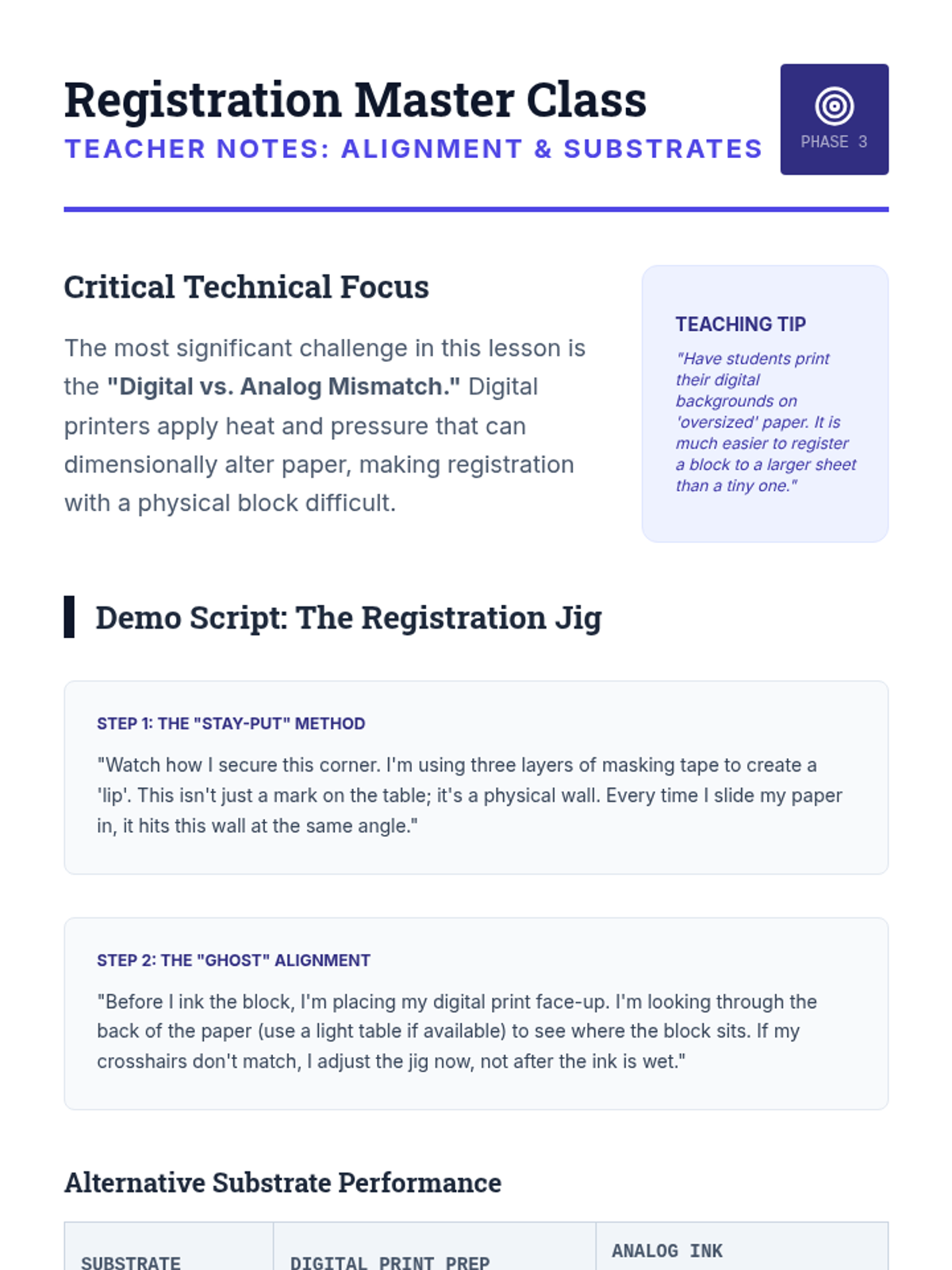
A teacher resource for setting up registration jigs and managing alternative substrate printing during the hybrid layering phase.
Slide deck for Lesson 4, introducing the CRAP principles of design (Contrast, Repetition, Alignment, Proximity) and discussing different media channels for advocacy.
Slides for Lesson 3 focusing on rhetorical strategies (Logos, Pathos, Ethos) applied specifically to arts advocacy messaging.
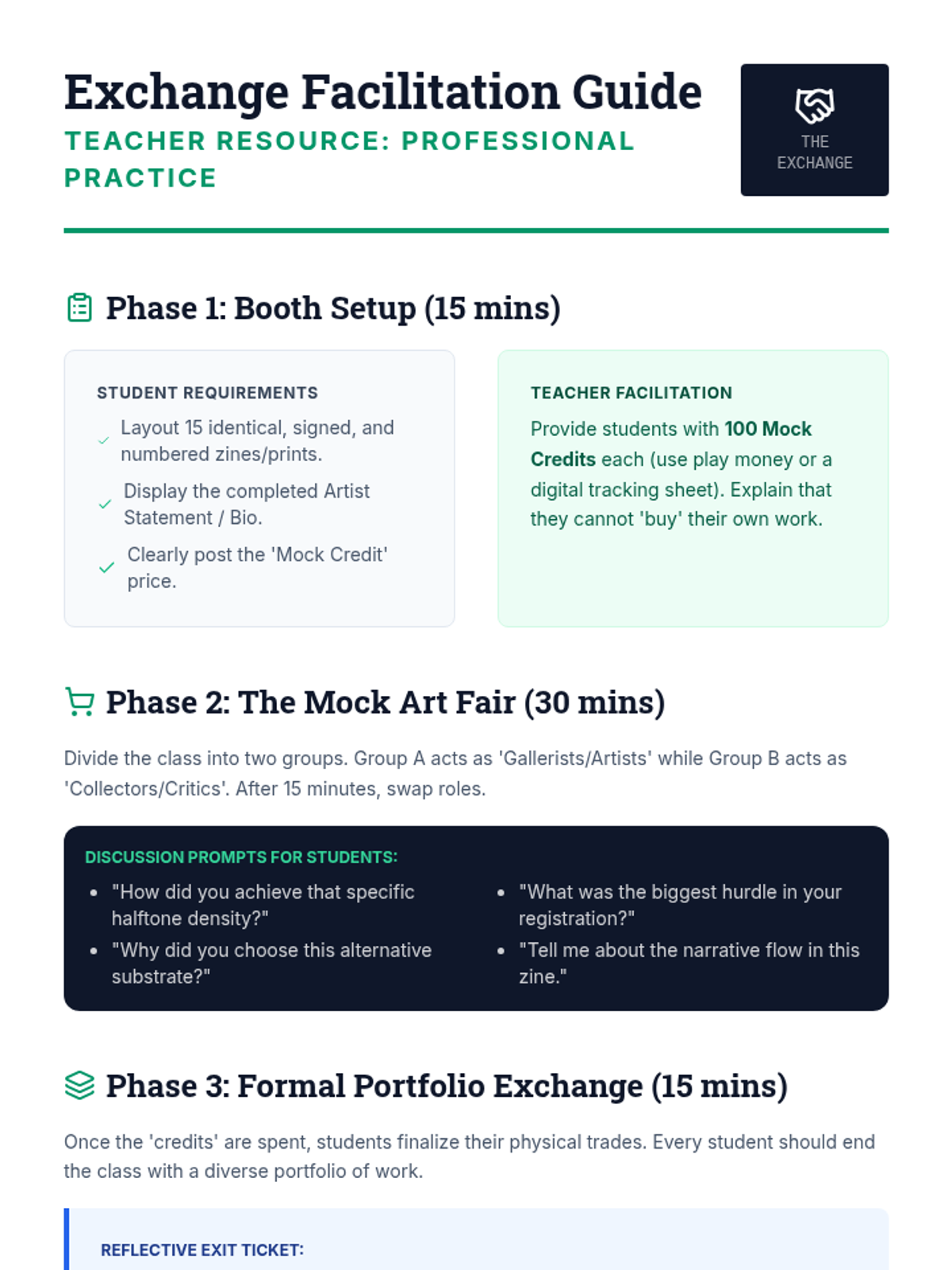
A teacher guide for facilitating the final print exchange, managing the mock art fair, and evaluating the hybrid printmaking portfolios.
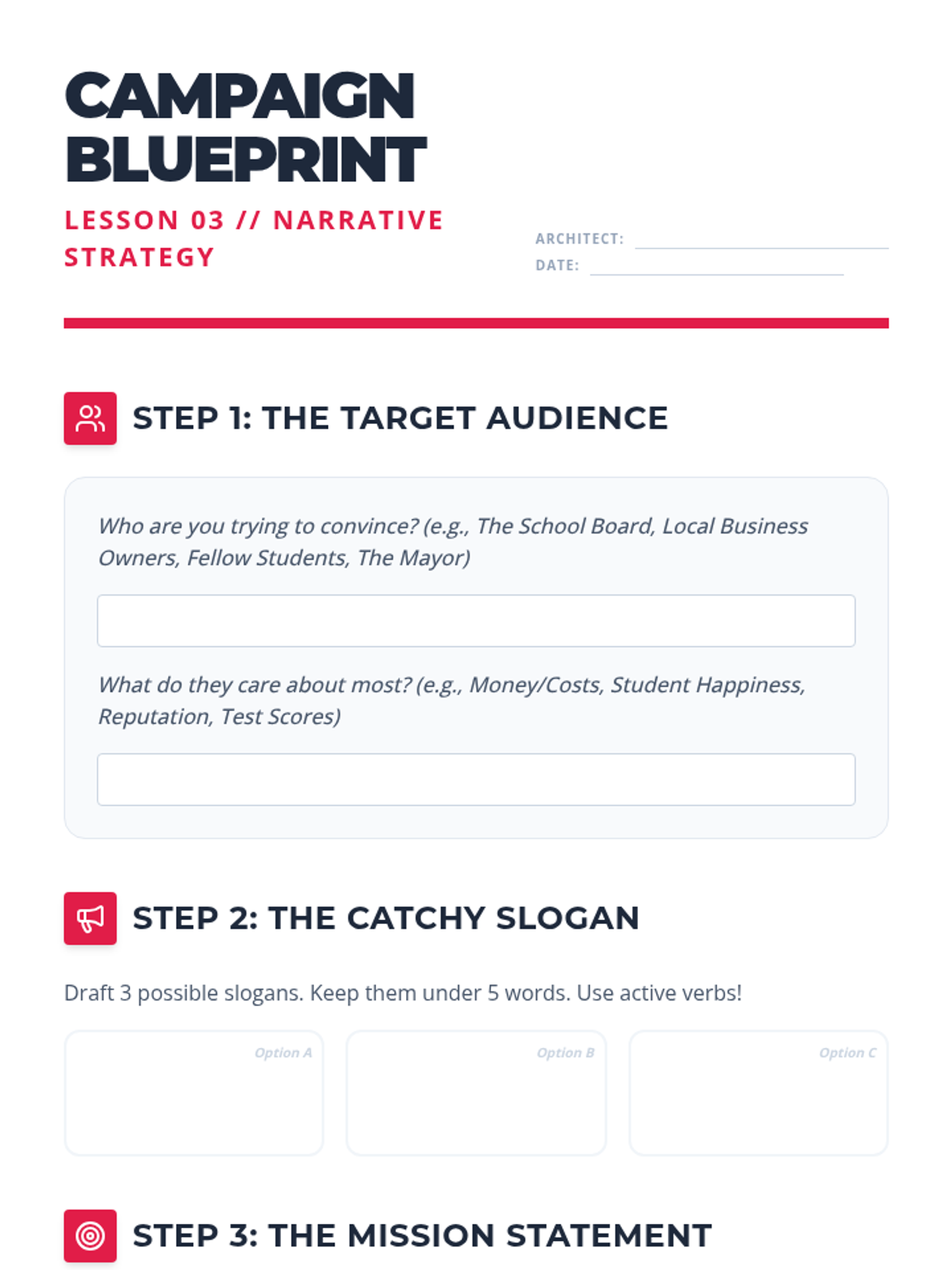
Drafting worksheet for Lesson 3, guiding students through audience identification, slogan creation, mission statement drafting, and a full elevator pitch structure.
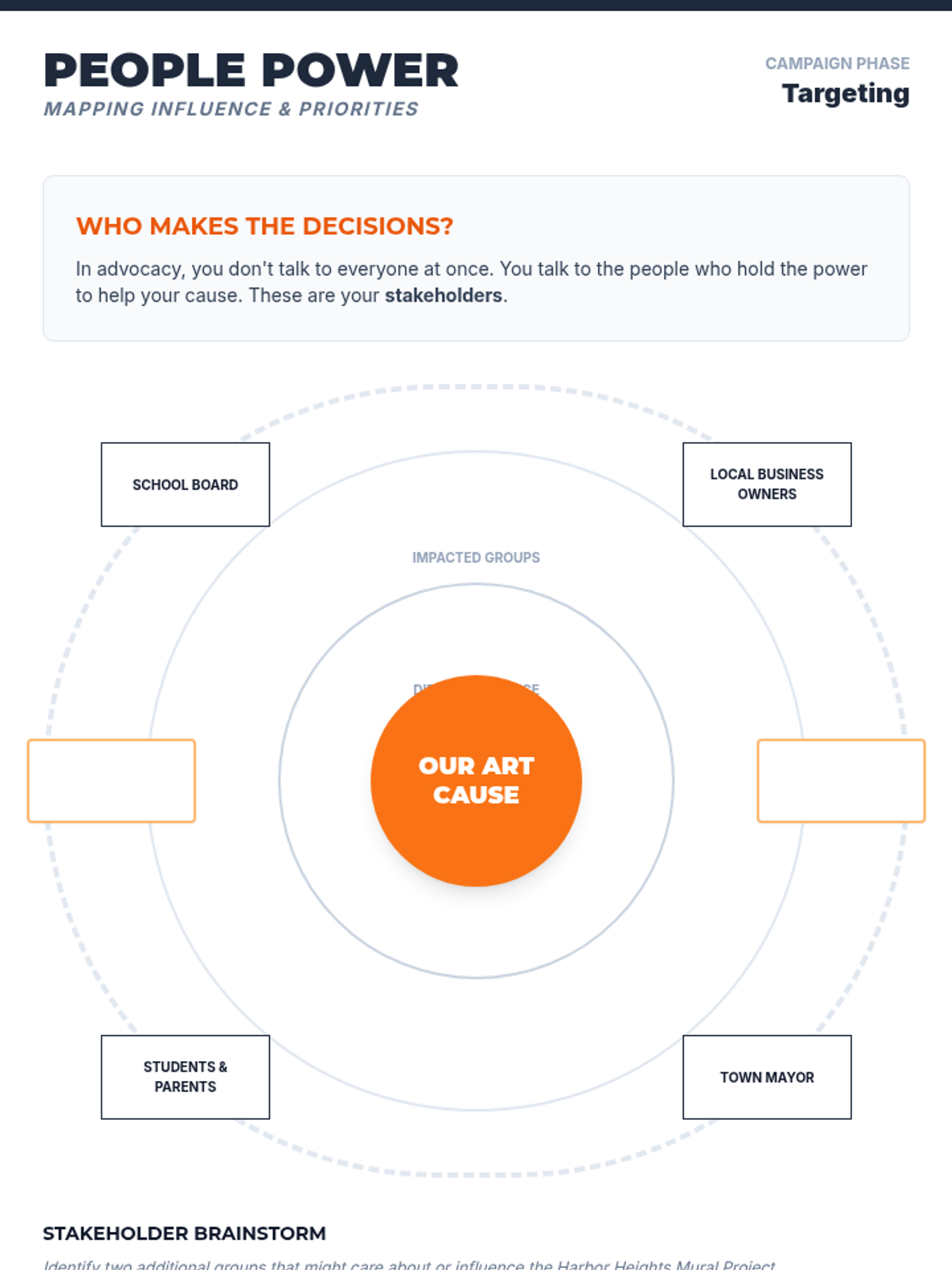
A 2-page student handout for stakeholder mapping and empathy mapping, helping students understand different audience perspectives.
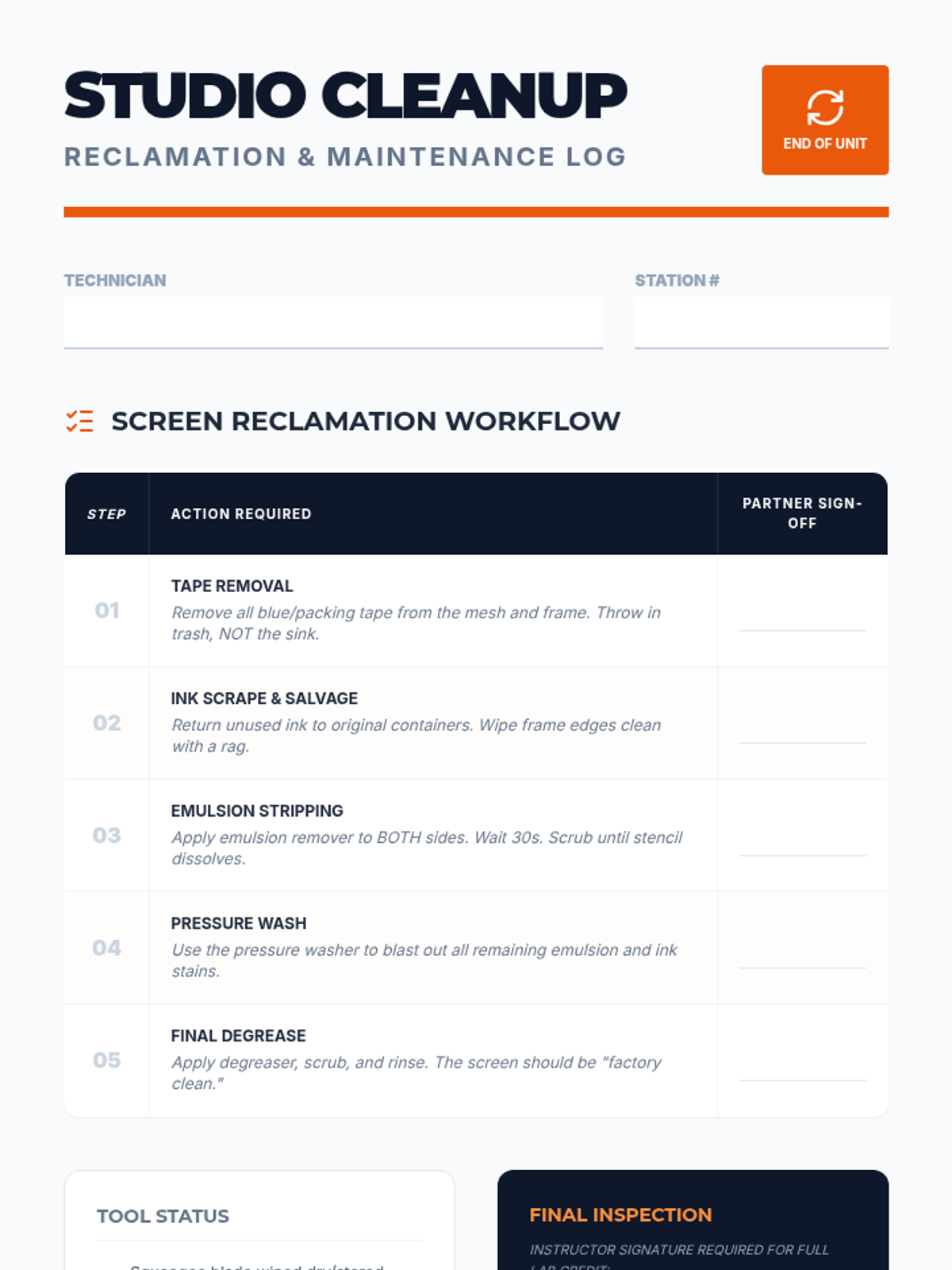
Final studio responsibility checklist for screen reclamation and equipment maintenance.
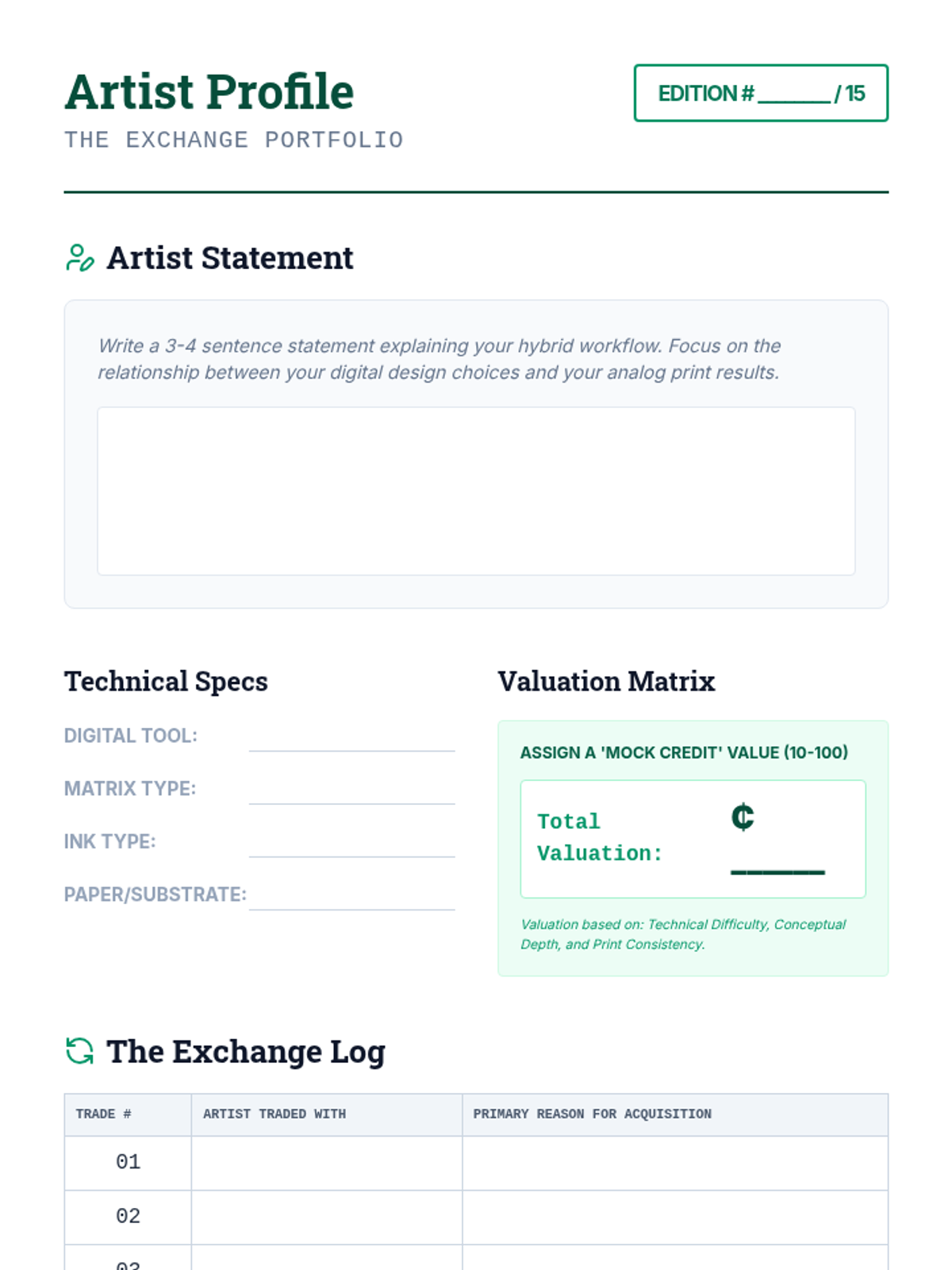
A student artist statement and valuation worksheet for participation in the final print exchange portfolio.
Slide deck for Lesson 3, introducing the "Slogan Match" game, the rhetorical triangle (ethos, pathos, logos), and the key elements of an advocacy narrative.
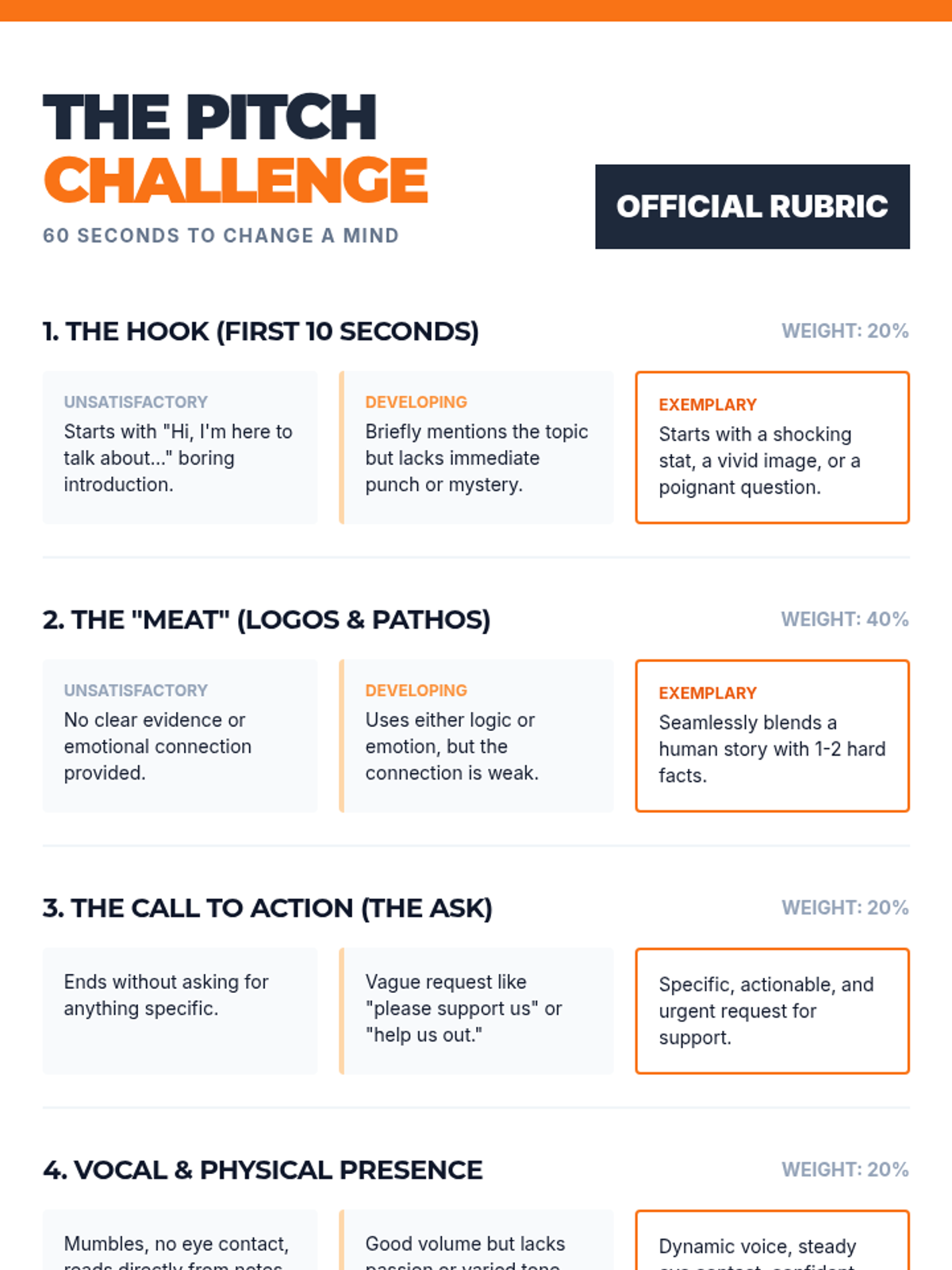
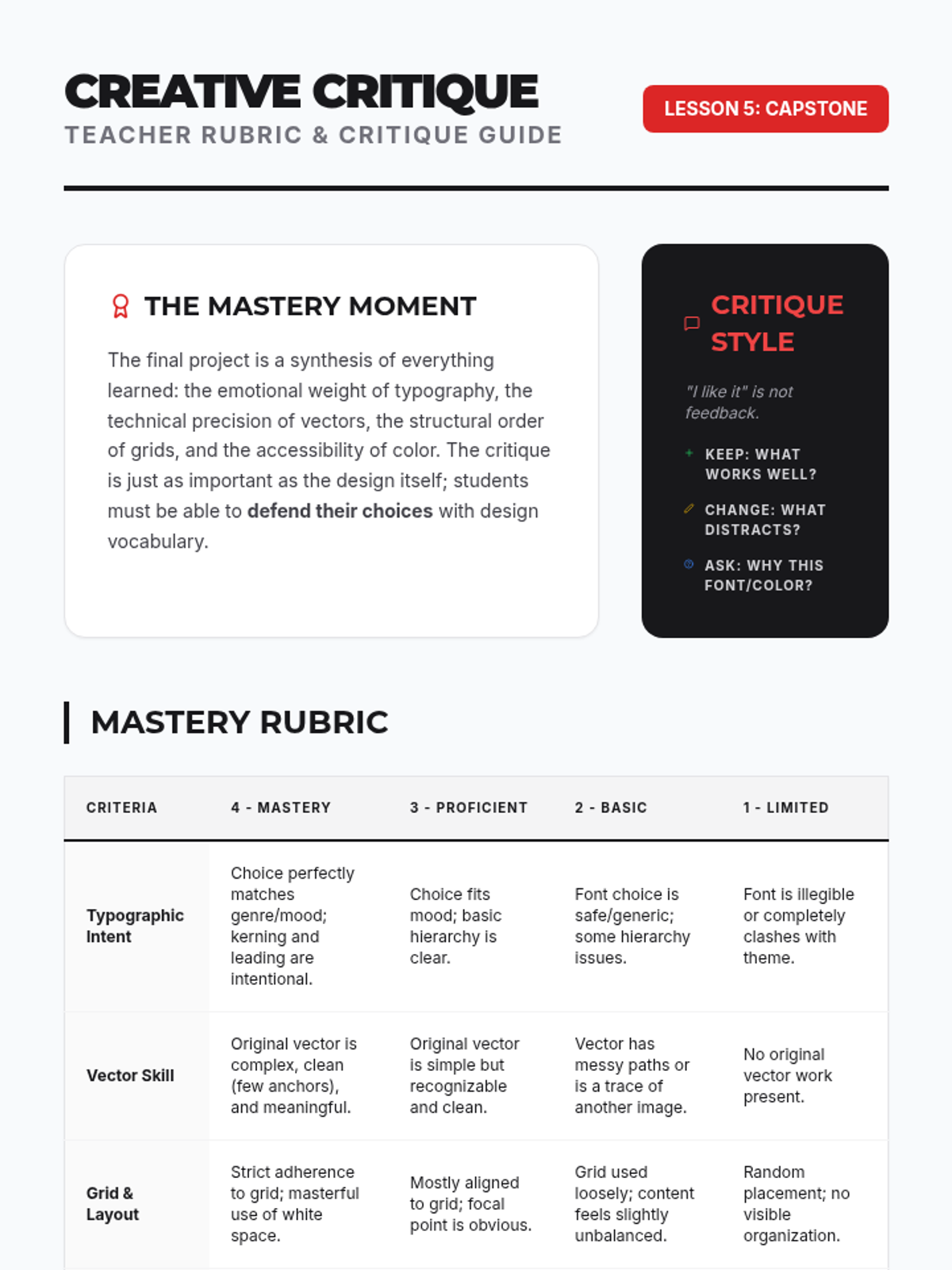
Teacher evaluation rubric and facilitation guide for Lesson 5, focusing on the creative pitch and final project mastery criteria.
A slide deck for the final print exchange, focusing on professional artist statements, valuation, and networking within the artistic community.
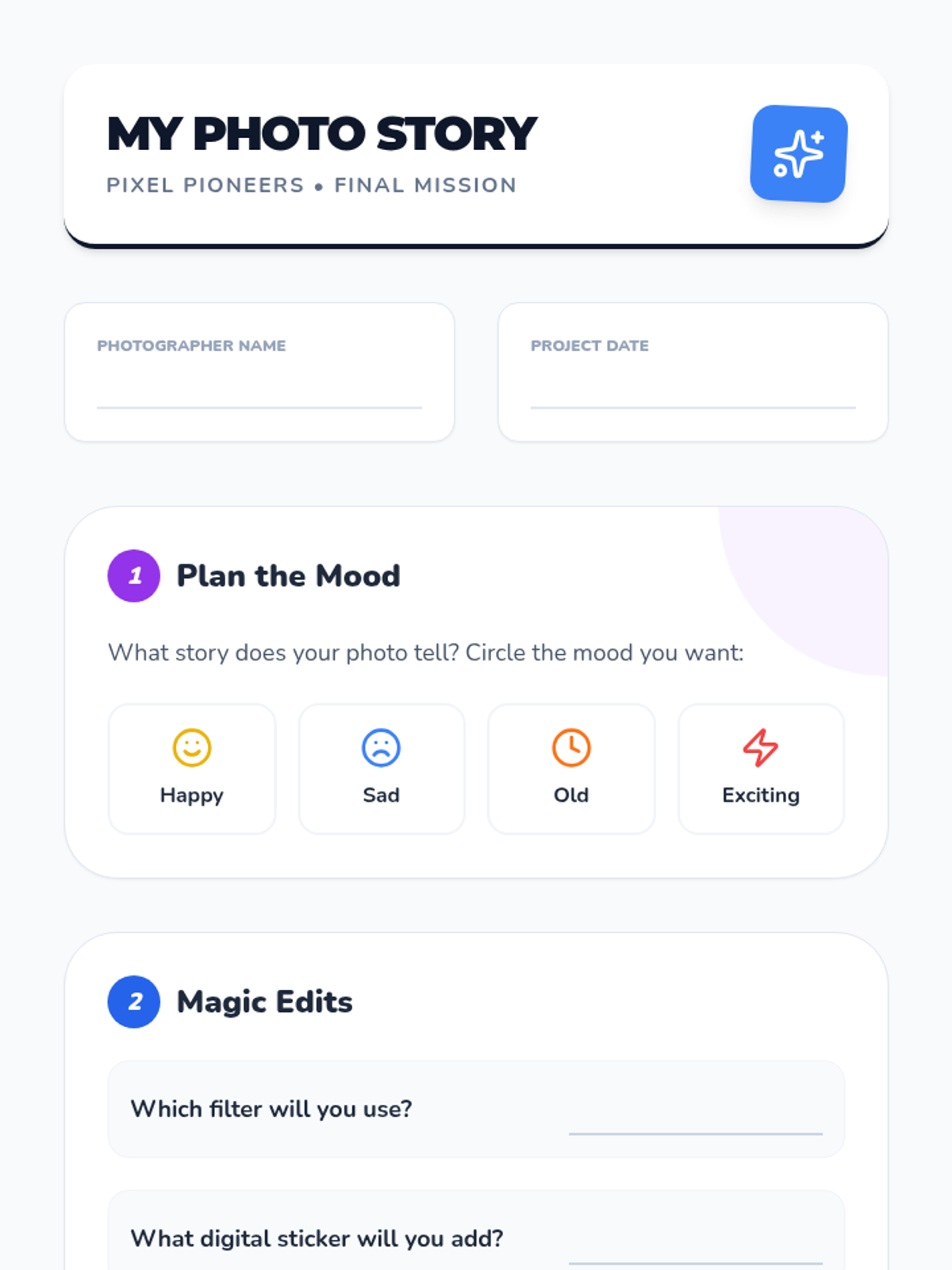
Student project planner for selecting a photo, choosing a filter, and planning digital additions for a final photo story.
Visual examples of how digital stickers and drawing tools can be used to add creative layers to photographs.
Visual examples showing how digital filters like black-and-white, sepia, and vivid change the emotion of a photograph.
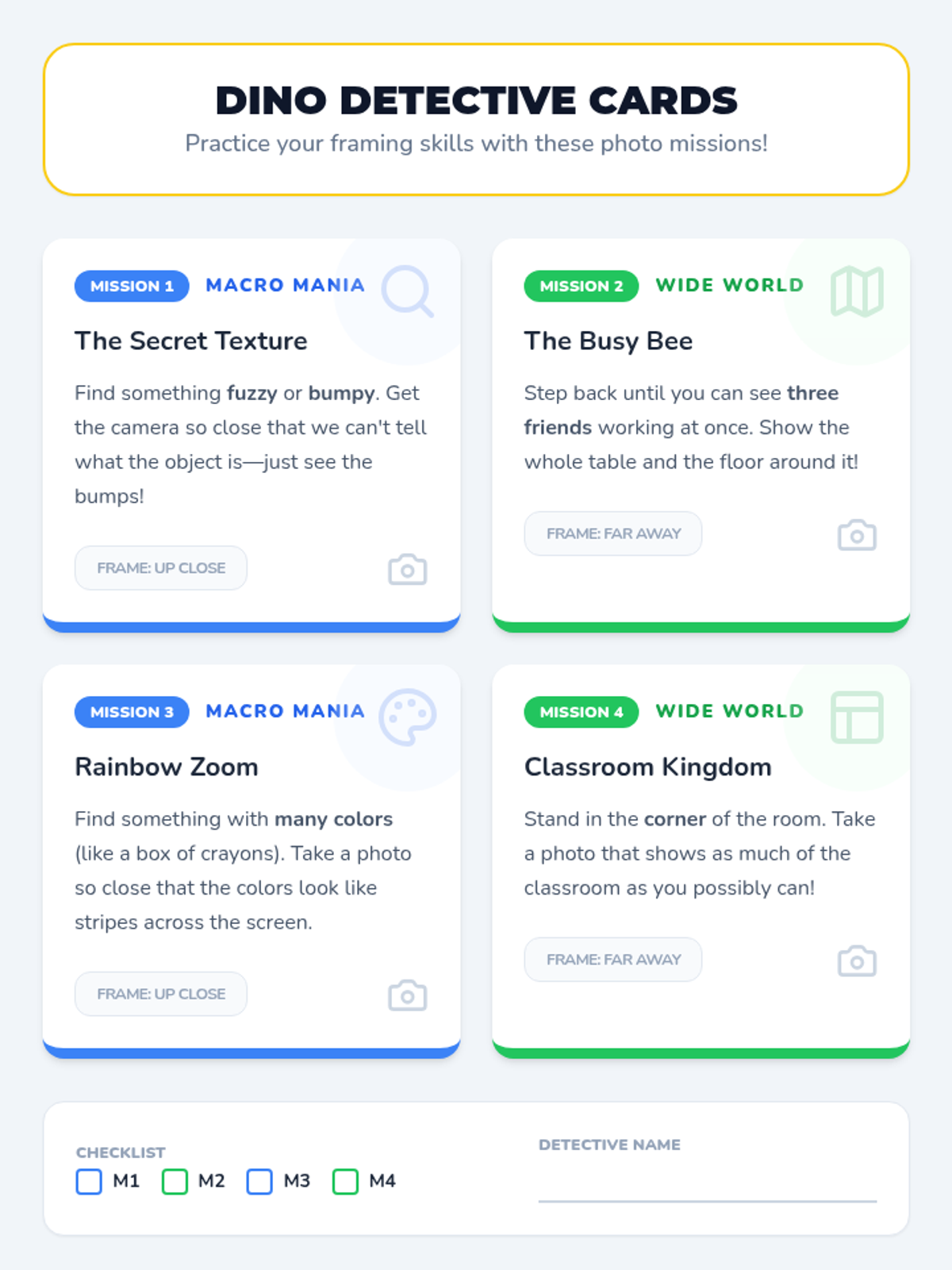
Scavenger hunt task cards for 1st graders to practice macro (up close) and wide (far away) photography framing.
Visual slides for 1st graders explaining macro vs. wide framing and the importance of physical movement in digital photography.
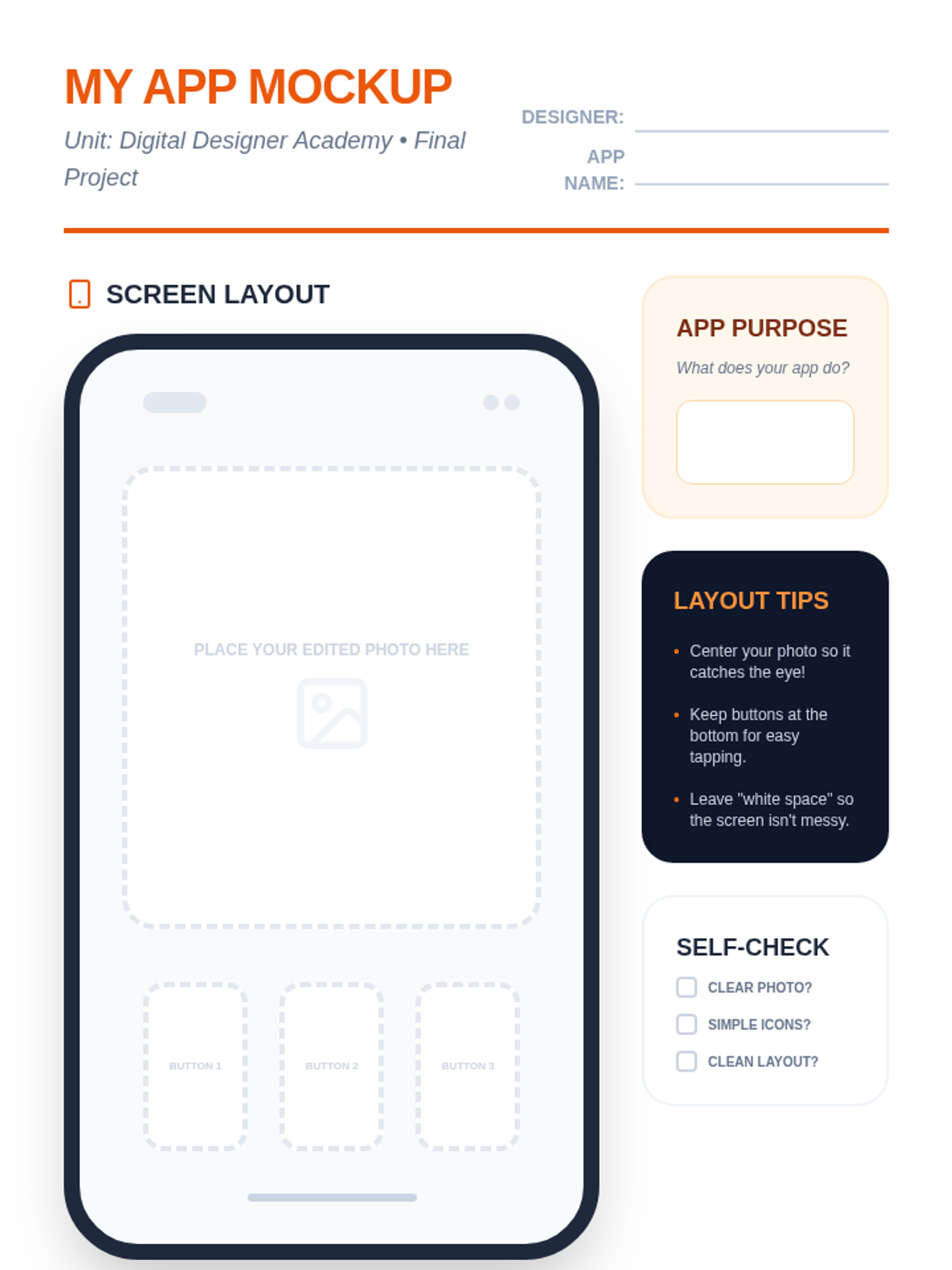
The final project template for 2nd graders to design their own app mockup, featuring areas for a photo, custom buttons, and planning notes.
Final project slides for 2nd graders, teaching them how to arrange photos and icons into a functional app screen layout (mockup).
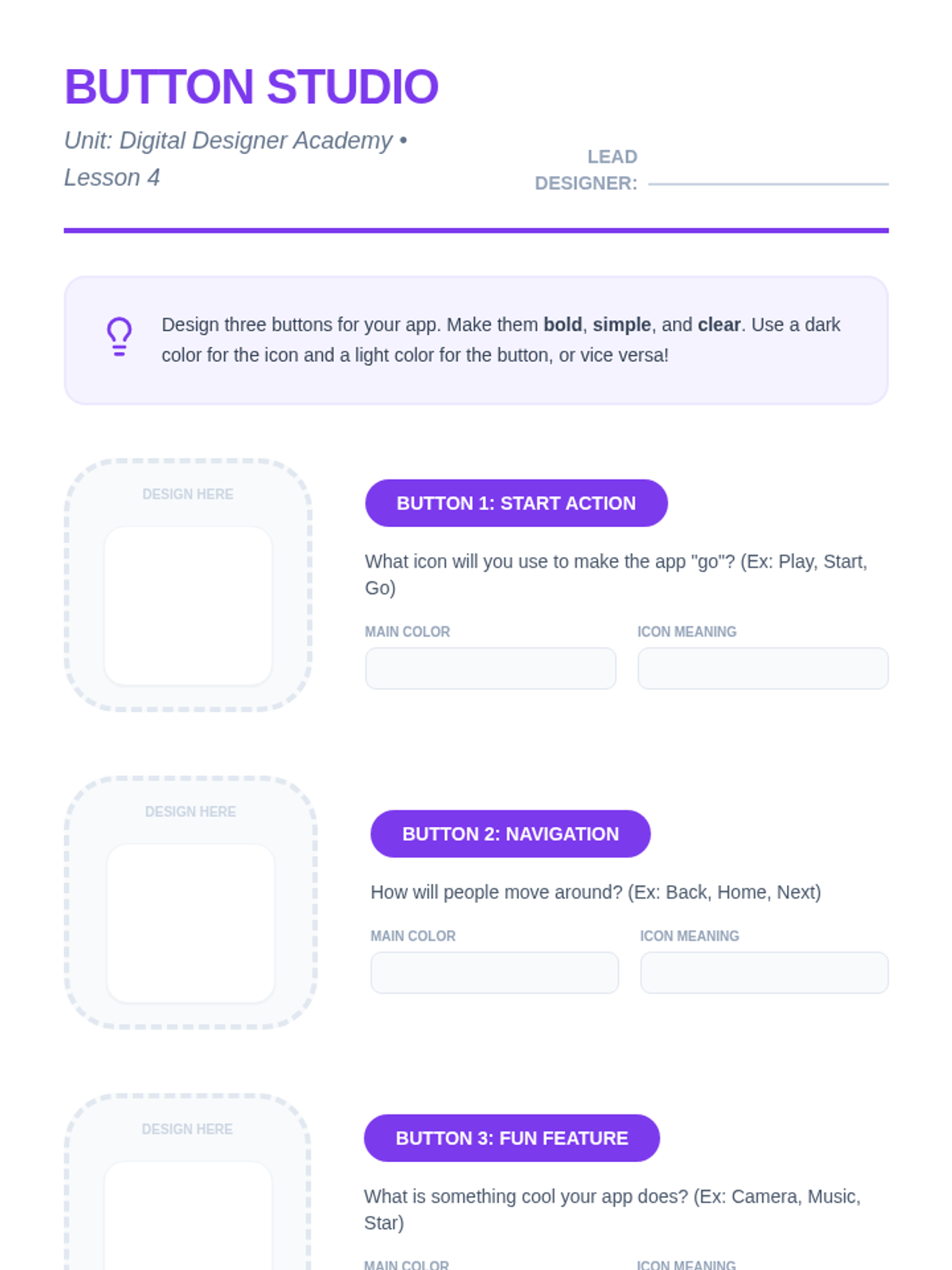
A design worksheet for students to plan and sketch three functional buttons for their app, focusing on color choice and icon clarity.
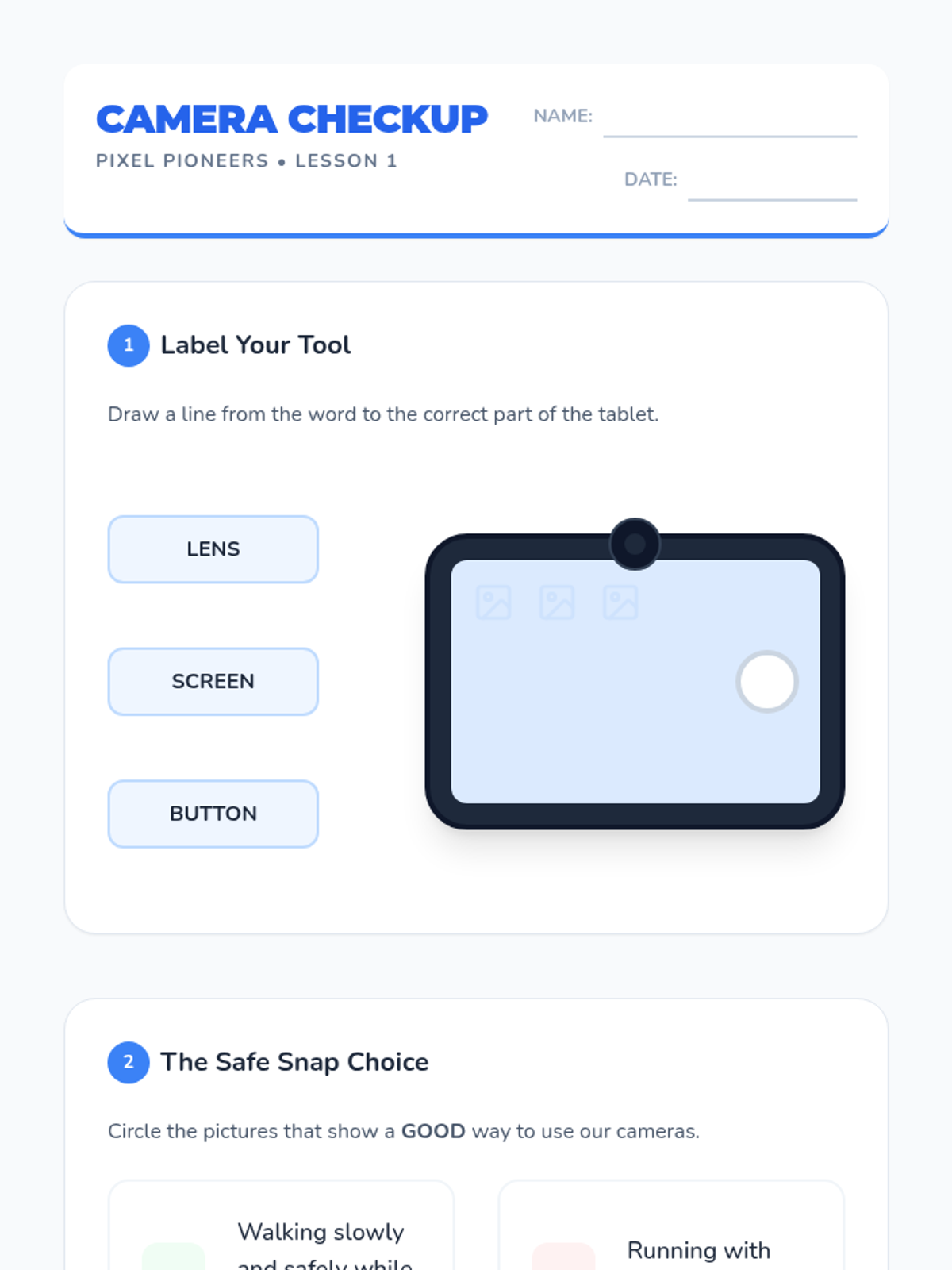
Worksheet for students to label tablet parts, identify safe photography behaviors, and illustrate proper camera grip.
Lesson 4 slides for 2nd graders, focusing on the principles of icon design, including simple shapes, contrast, and communicating action.
Visual presentation introducing 1st graders to camera handling, two-hand grip, and digital safety rules for photography.
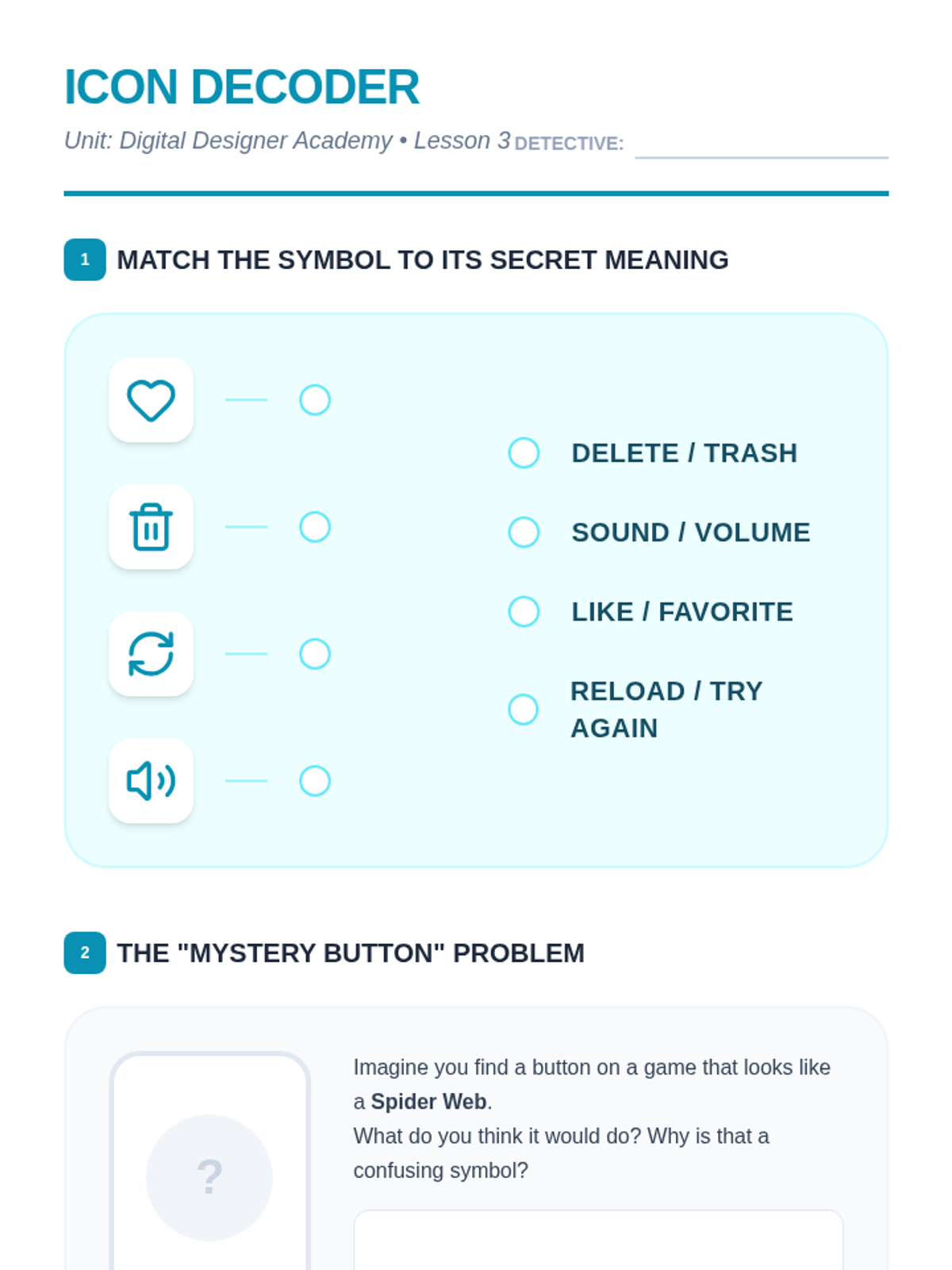
An "Icon Decoder" worksheet where students match common UI symbols to their functions and reflect on icon clarity.
Introductory slides to User Interface (UI) design for 2nd graders, explaining the purpose of buttons, icons, and symbols in digital applications.
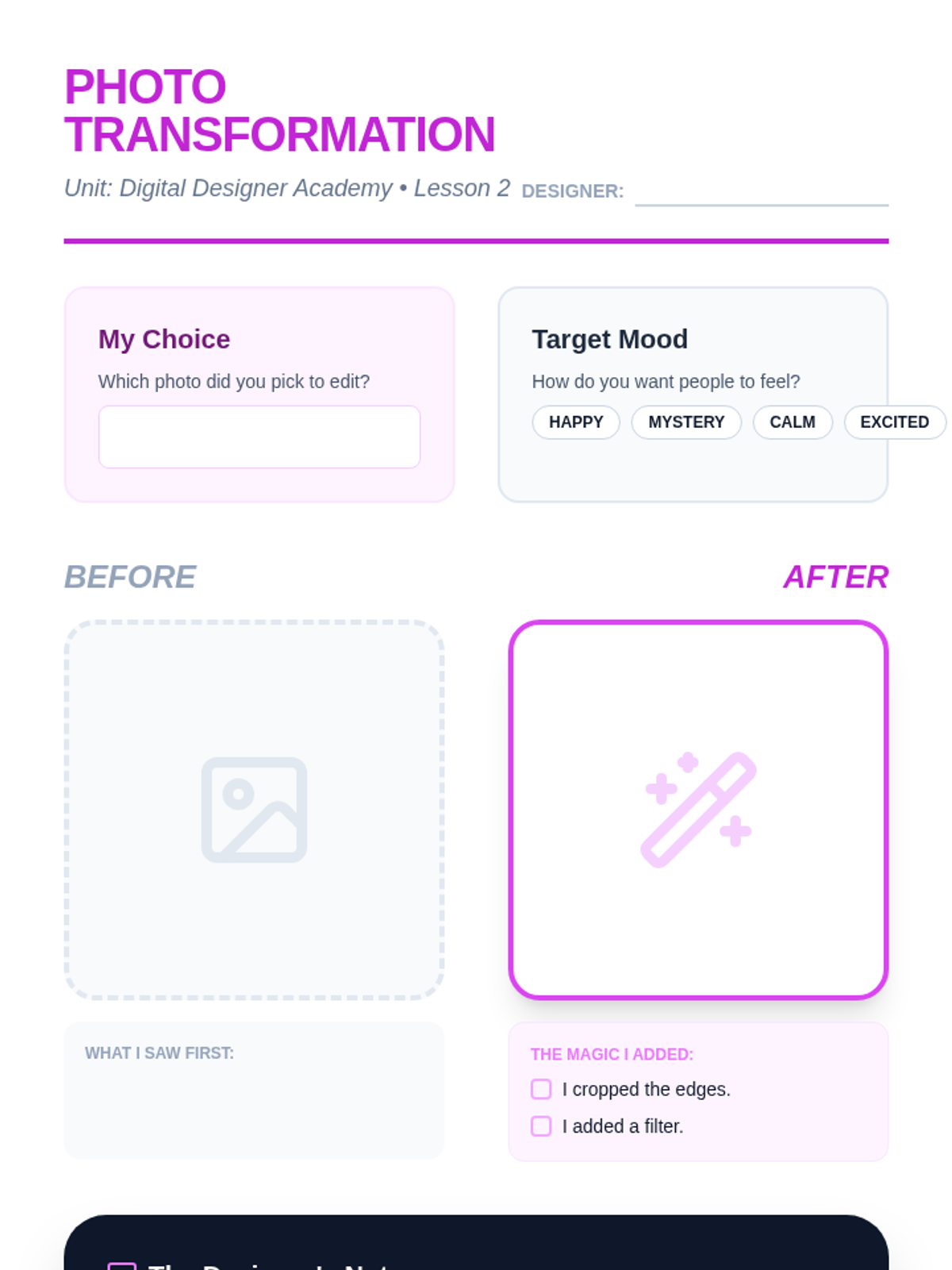
A student log for documenting the transformation of a photo using cropping and filters, focusing on the intent and outcome of digital editing.
Lesson 2 slides for 2nd graders, introducing the concepts of cropping to improve composition and using filters to convey different moods in photography.
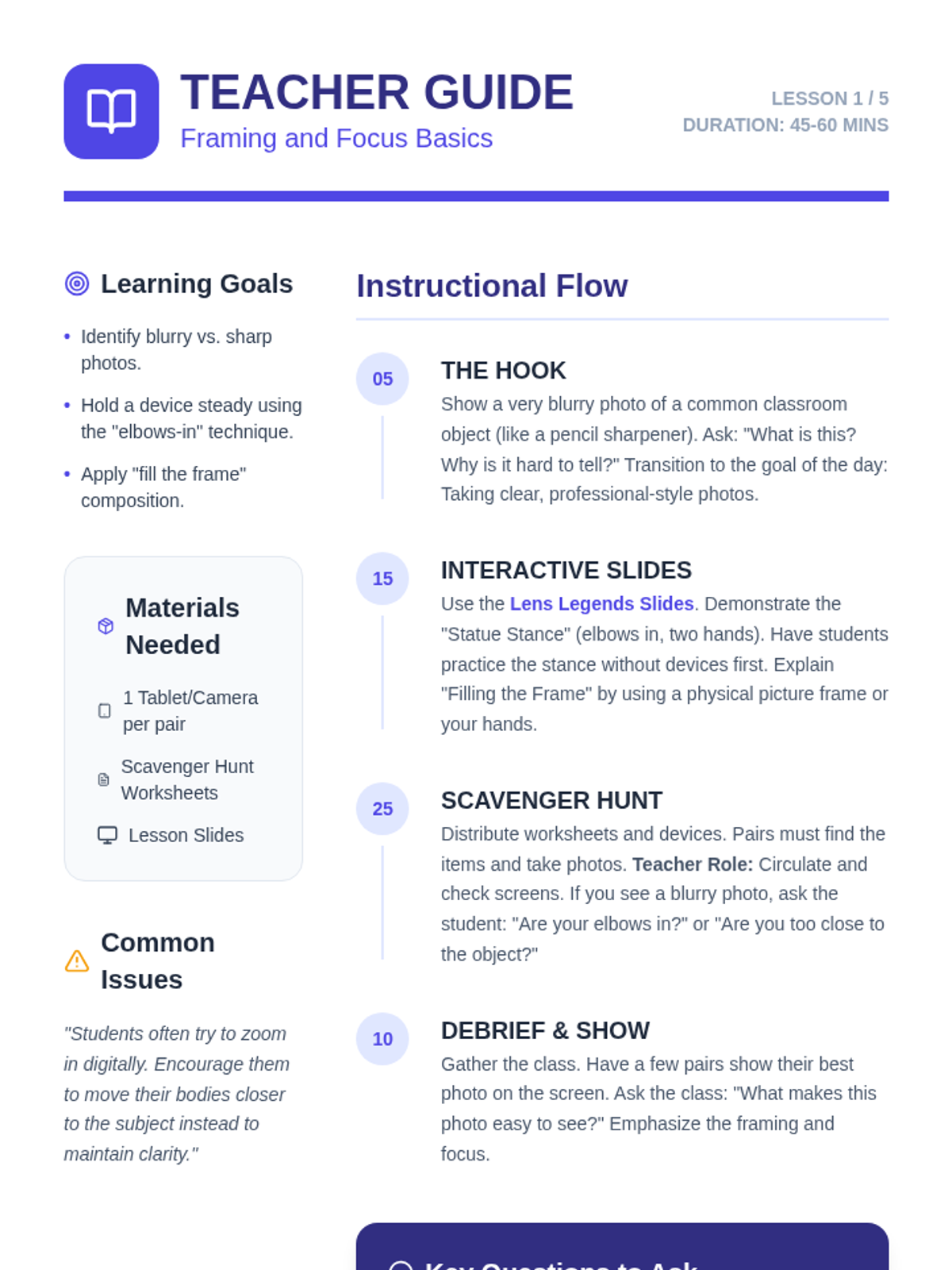
A comprehensive teacher guide for Lesson 1, including learning goals, instructional flow, and troubleshooting tips for teaching 2nd graders photography basics.
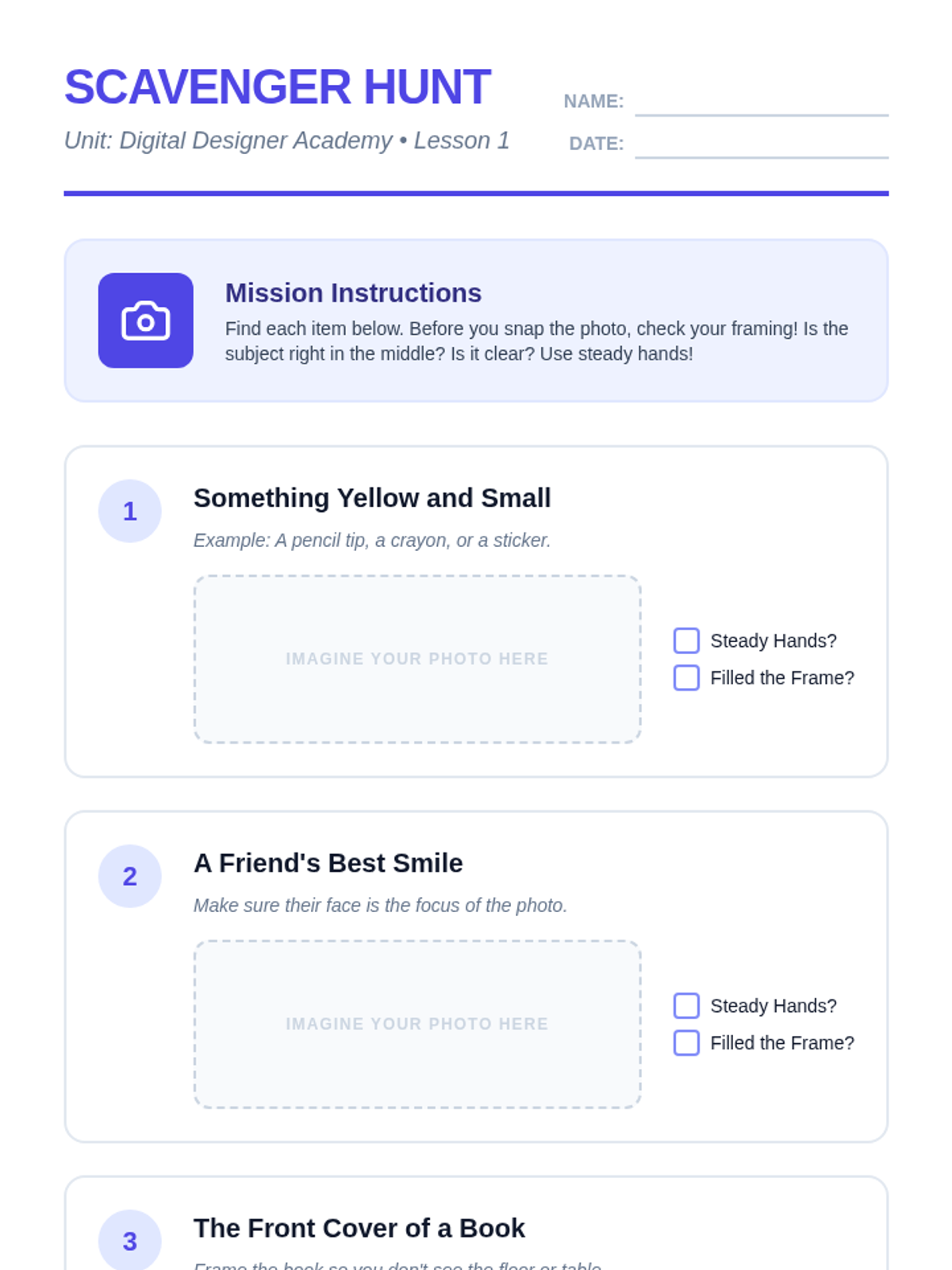
A student worksheet for a photo scavenger hunt, focusing on applying framing and focus techniques in the classroom.
Introductory slides for Lesson 1, teaching 2nd graders the basics of steady hands, focus, and framing in digital photography.
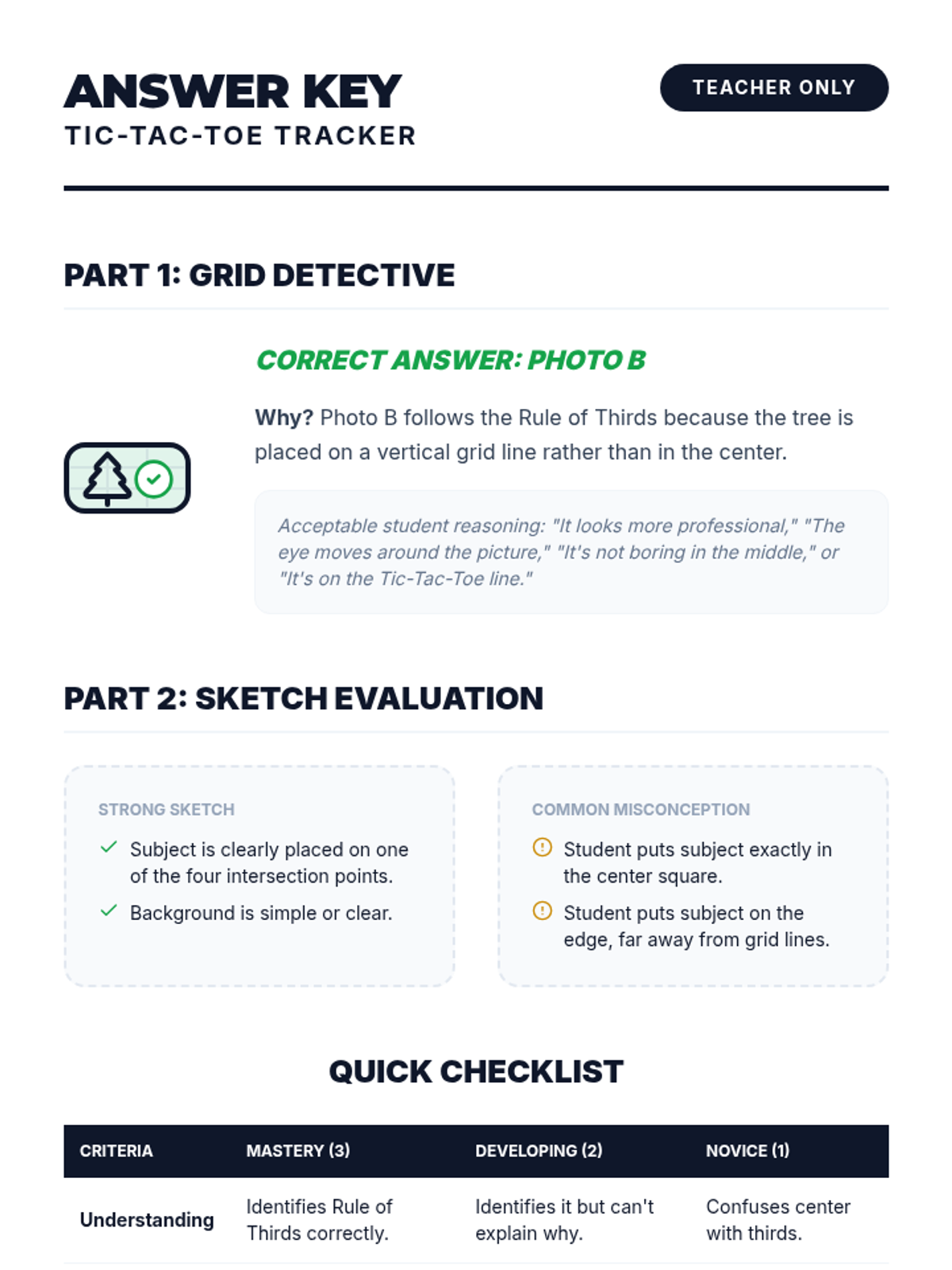
Answer key and evaluation guide for the Tic-Tac-Toe Tracker Worksheet, including a quick grading rubric for the Rule of Thirds.
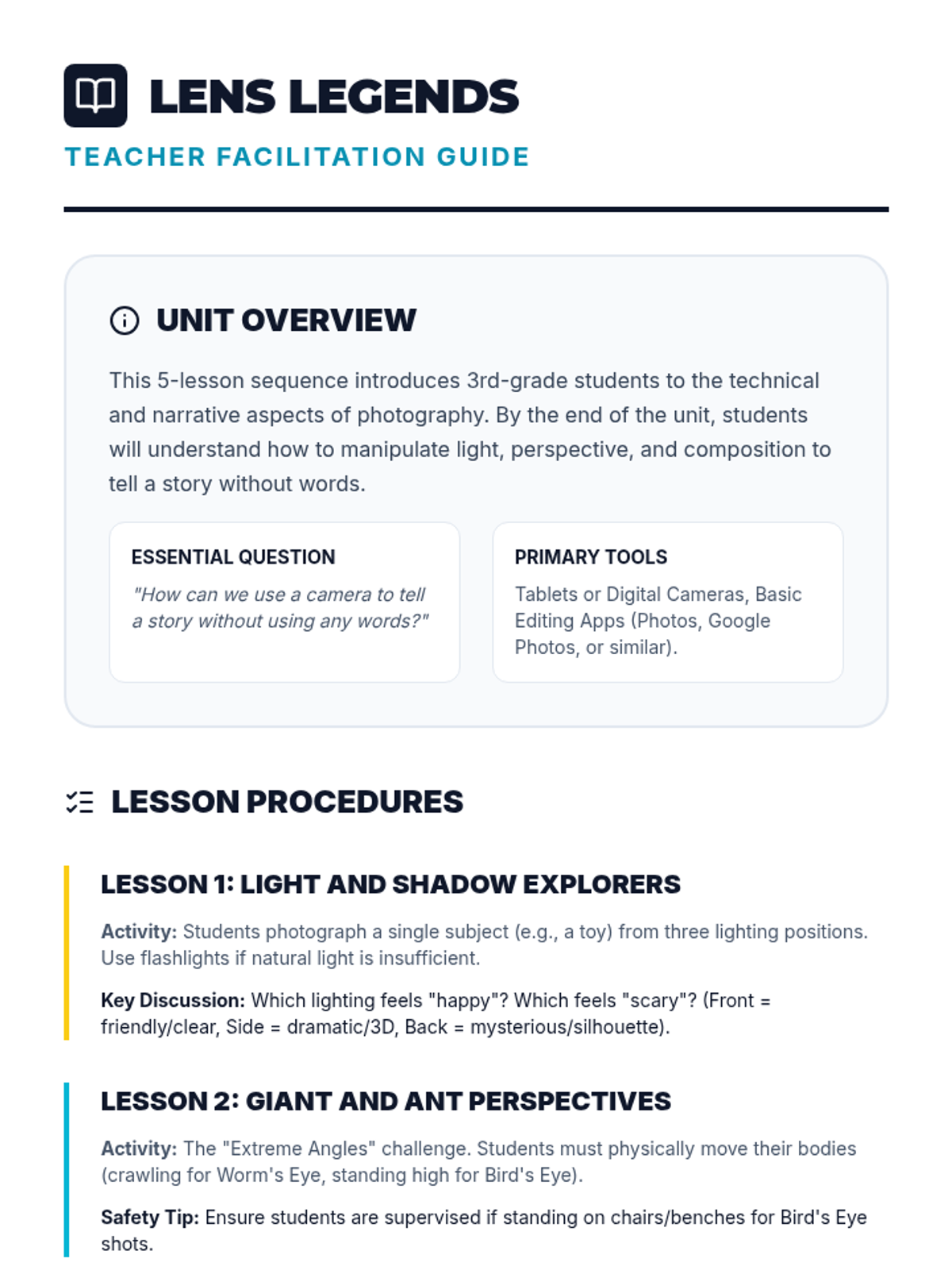
Comprehensive facilitation guide for teachers covering all five lessons, including activity procedures, discussion prompts, differentiation, and assessment tips.
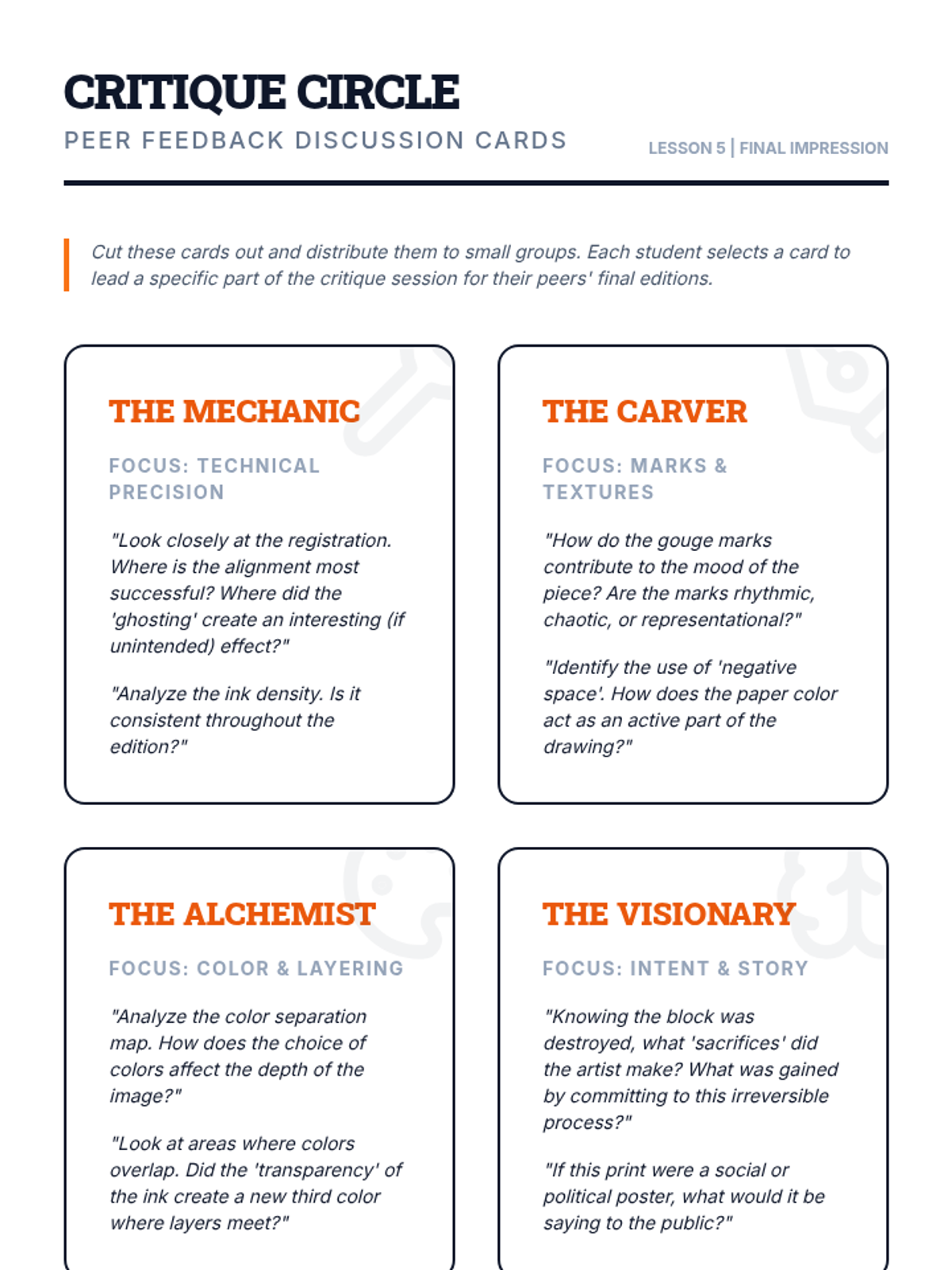
Discussion prompt cards for peer critique sessions, focusing on technical execution, mark-making, color theory, and conceptual growth in relief printing.
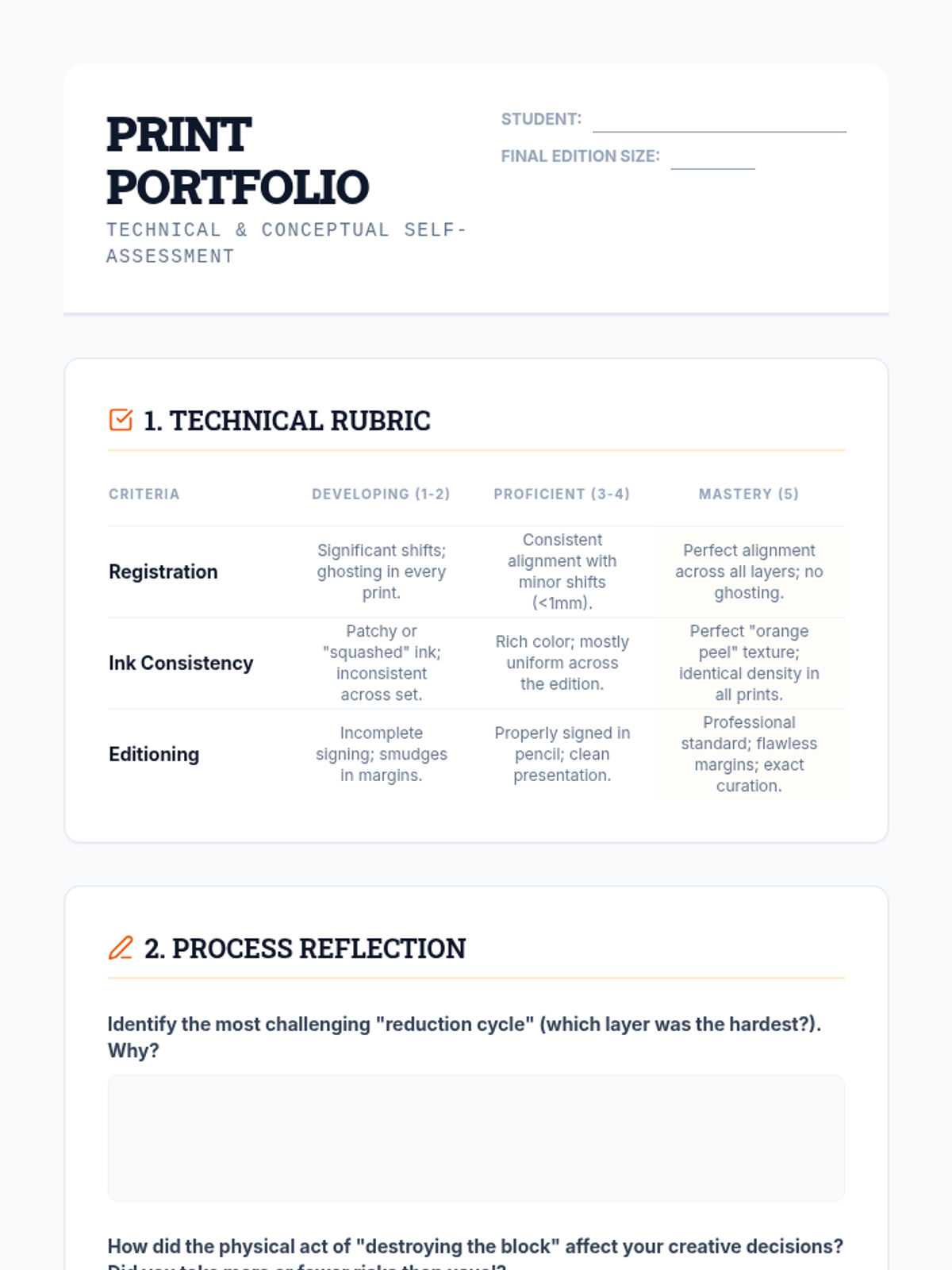
A professional self-assessment rubric and reflection sheet for students to evaluate their technical execution and conceptual growth during the reduction printing process.
Final slides covering the reduction cycle culmination, edition curation standards, and professional signing conventions for fine art prints.
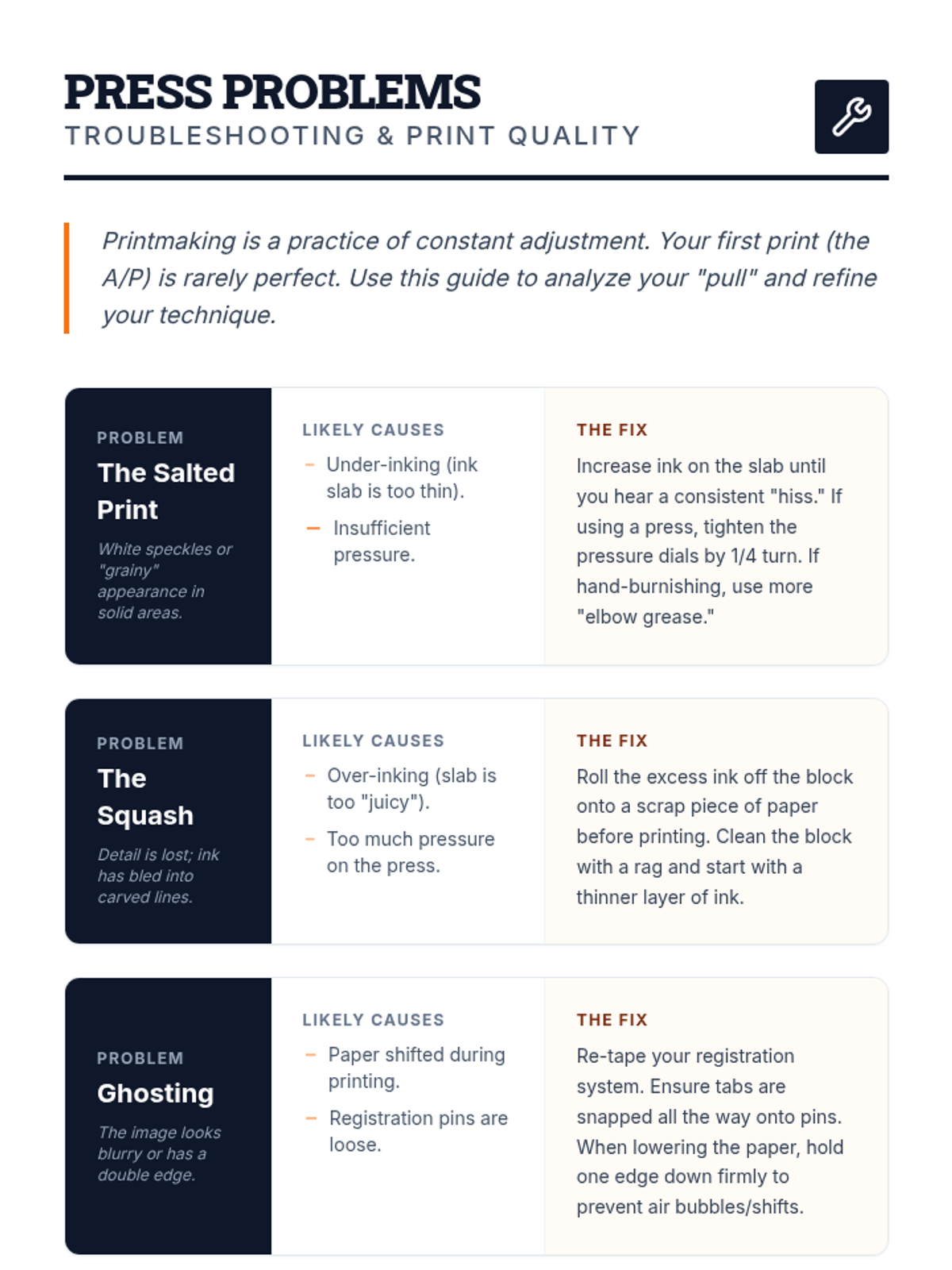
A troubleshooting guide for students to diagnose and correct common relief printing issues like over-inking, under-inking, and registration shifts.
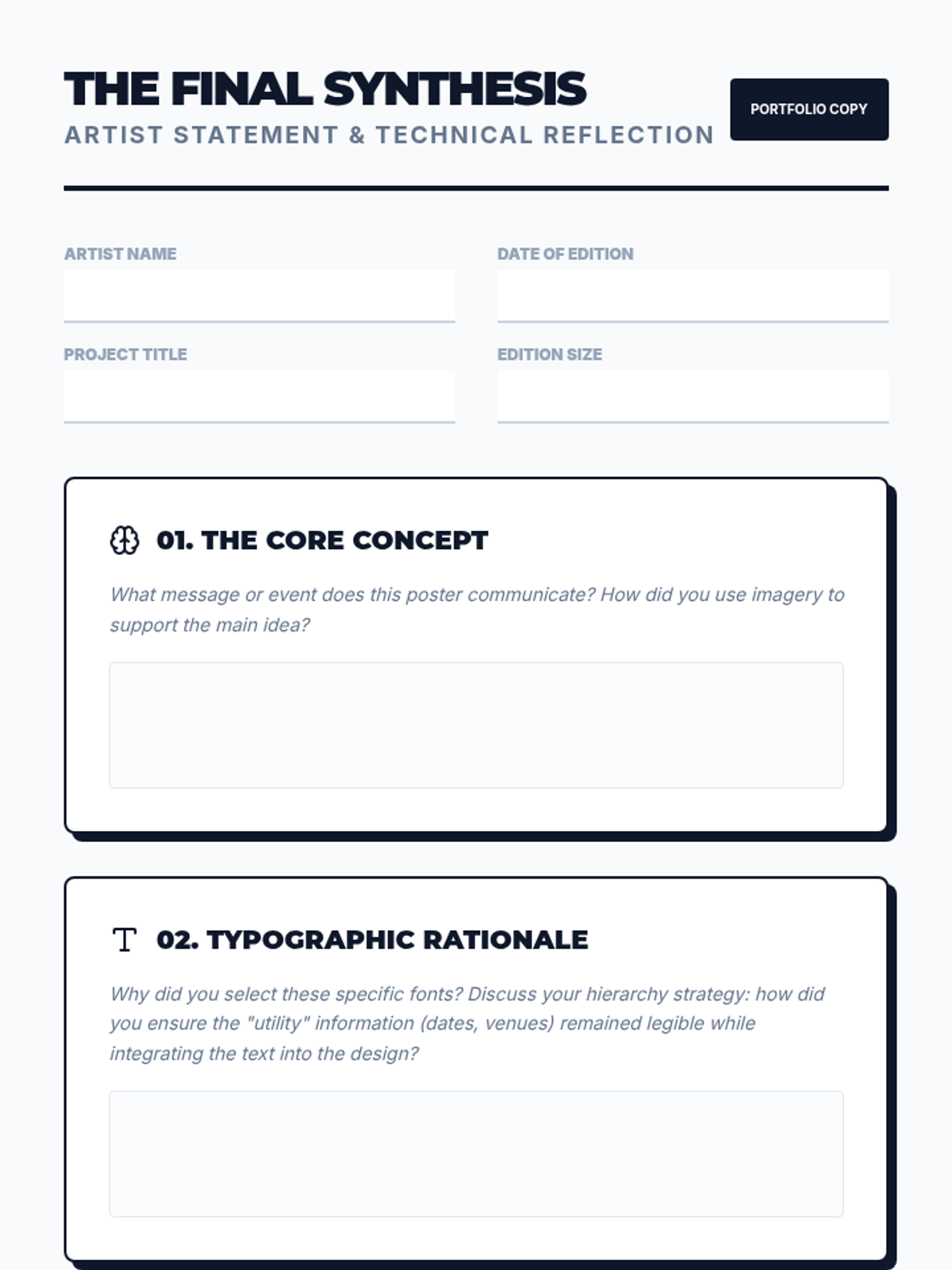
Student reflection sheet for synthesizing typographic choices, technical challenges, and the essential question for the final portfolio.
Visual presentation for Lesson 5, exploring studio responsibility through screen reclamation and the synthesis of work through artist statements and portfolio assembly.
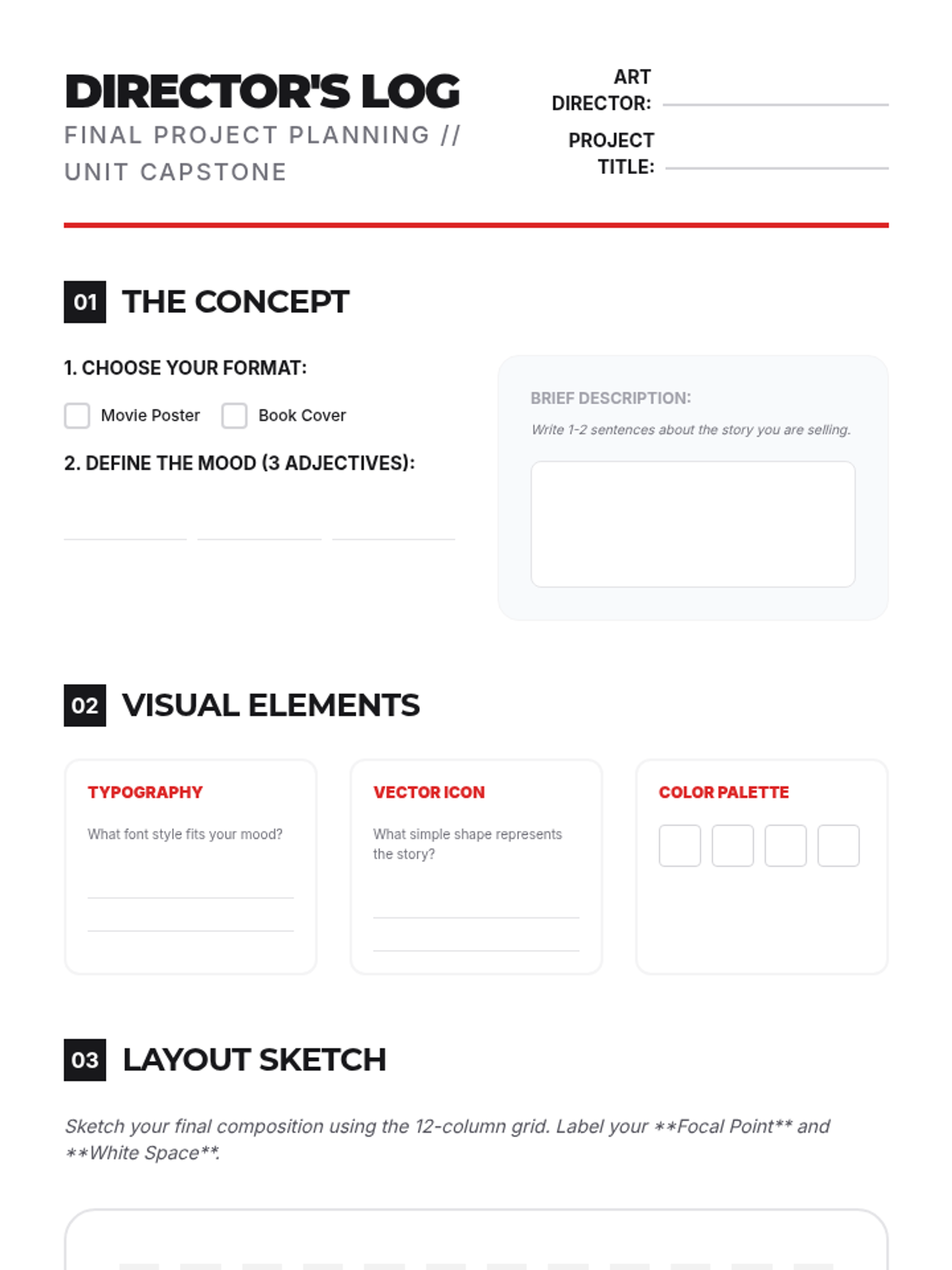
Student planning log for their final project, covering brainstorming, mood boarding, and layout sketching using a grid.
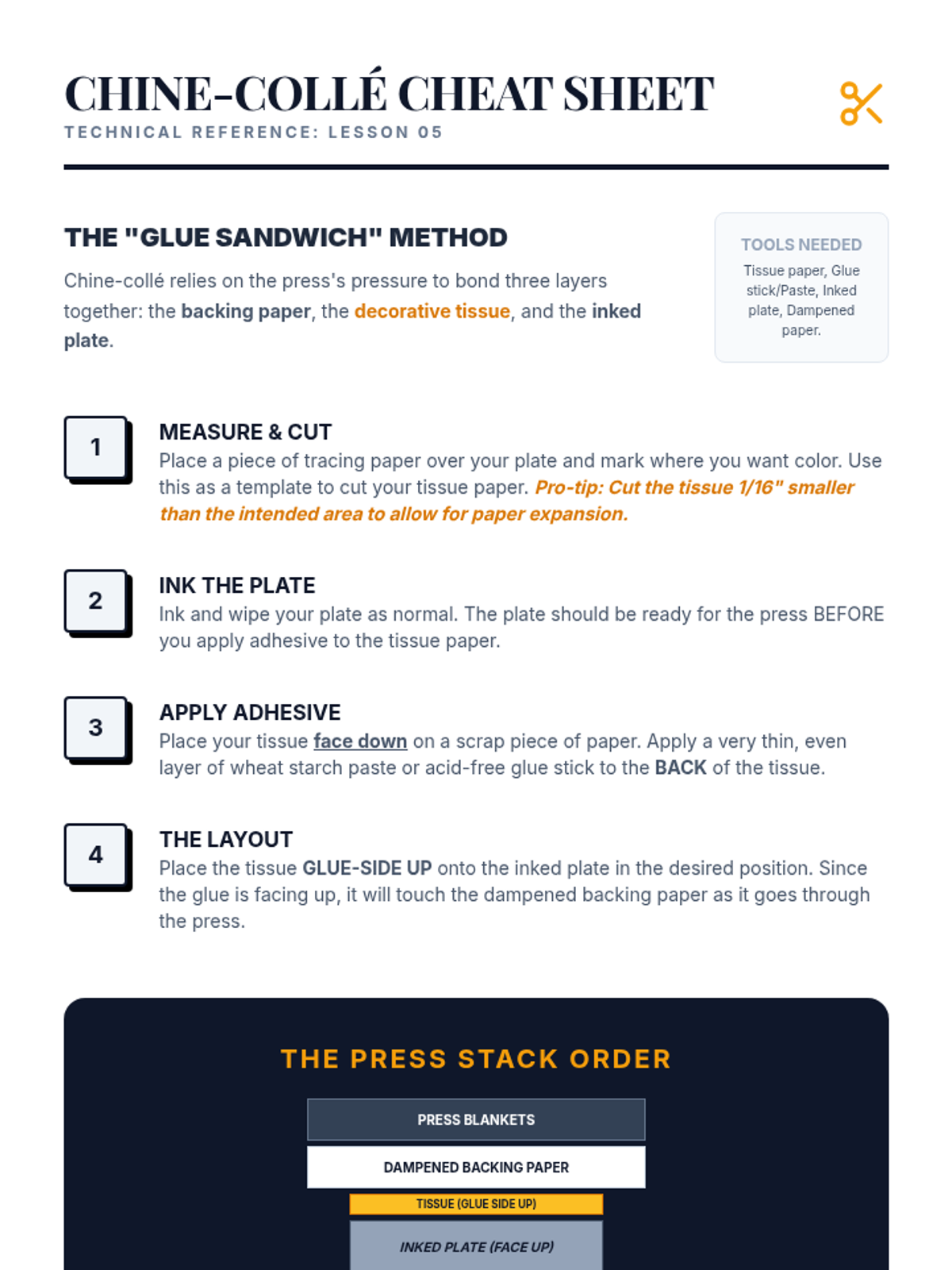
Technical reference sheet for the Chine-collé process, including the "glue sandwich" stacking order and troubleshooting tips.
Technical slides for Lesson 4 covering ink slab preparation, the "hiss" of the brayer, registration routines, and troubleshooting print quality.
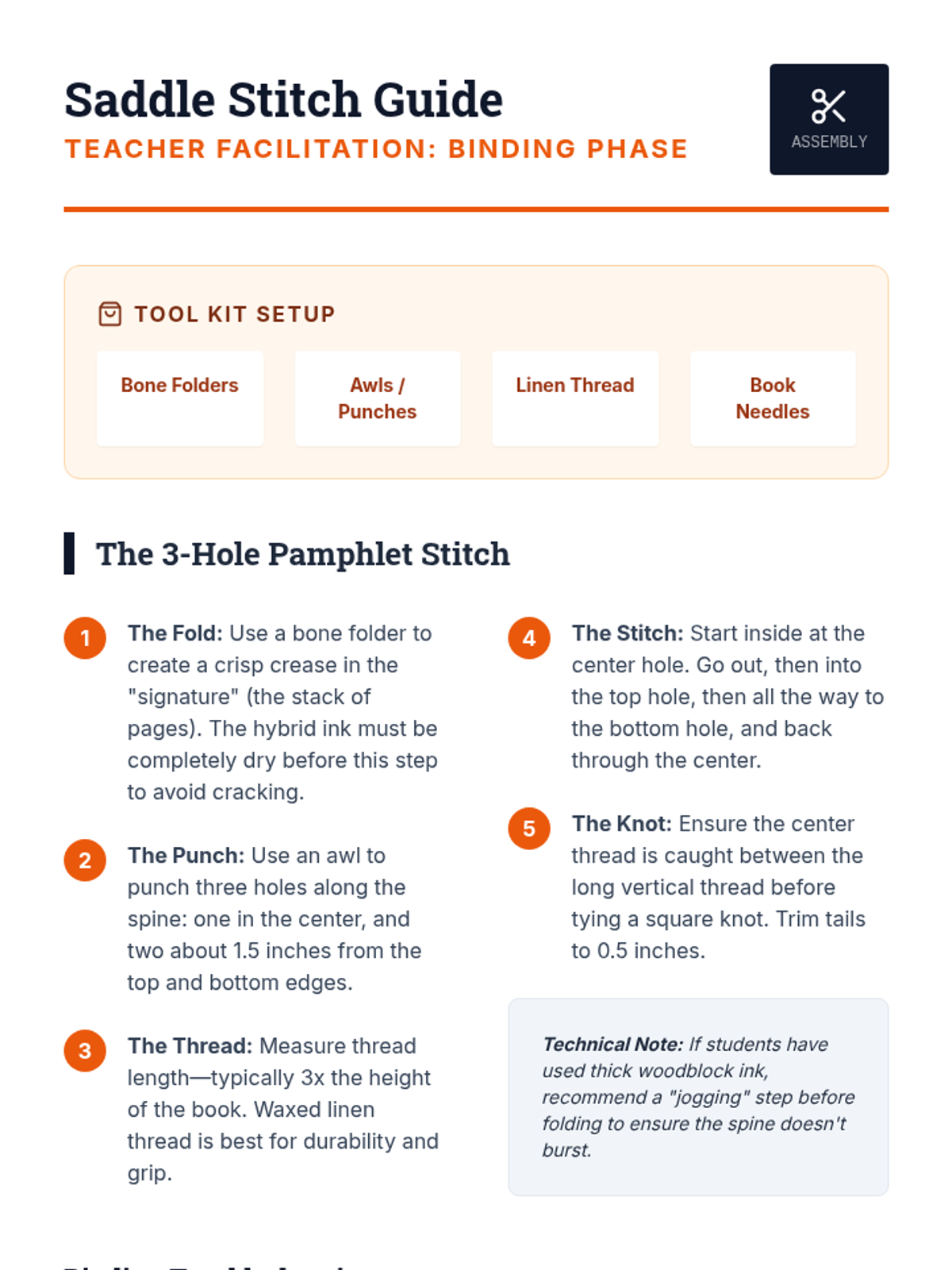
A teacher guide for facilitating the zine binding phase, focusing on the 3-hole pamphlet stitch and material preparation.
Introductory slide deck for Lesson 5, covering the final project brief (movie poster/book cover), project requirements, and the creative workflow.
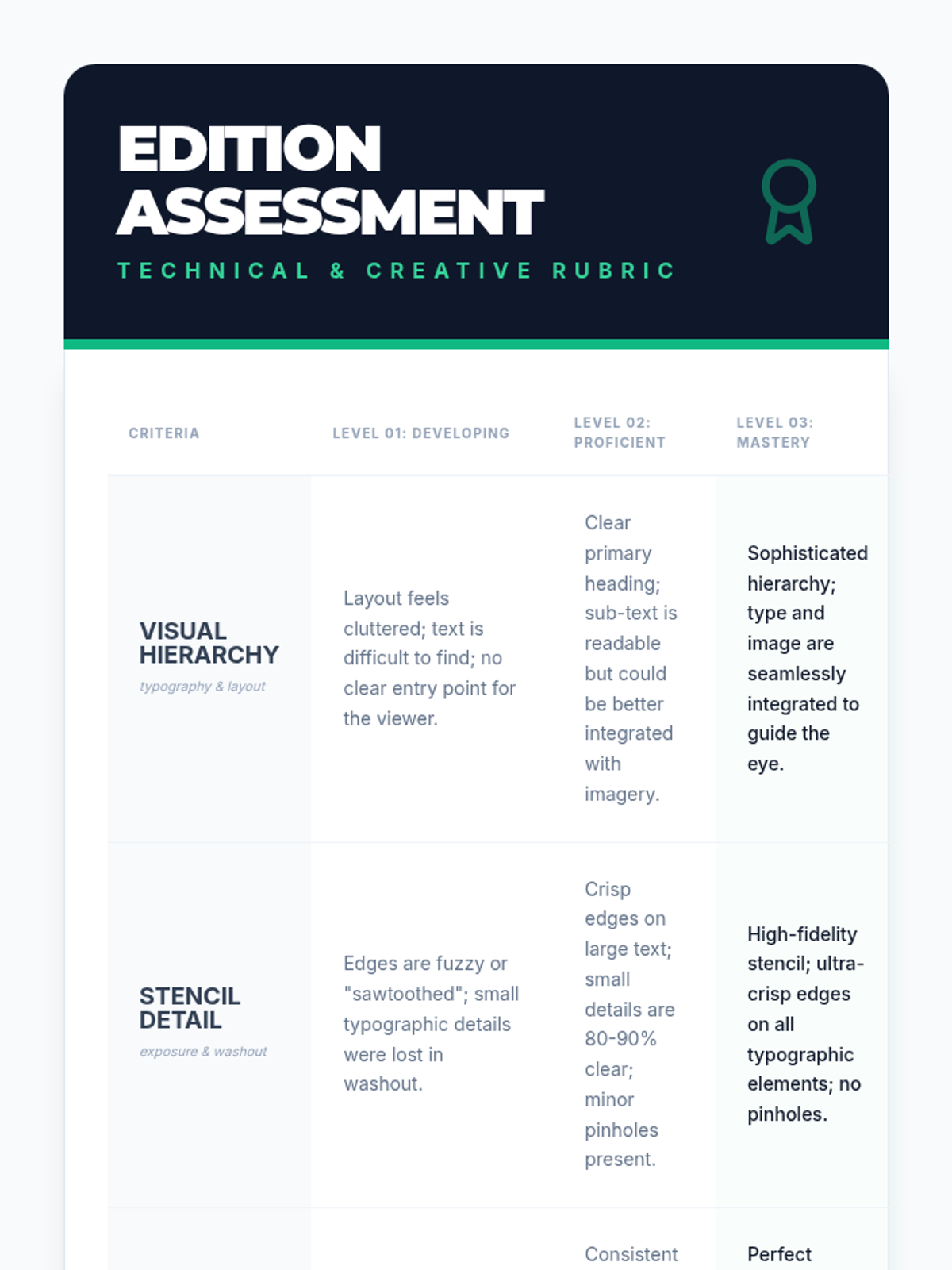
Technical rubric for assessing the final screen-printed poster series, focusing on hierarchy and print quality.
Slide deck for Lesson 5, introducing the Chine-collé process and the collaborative "Remix" challenge.
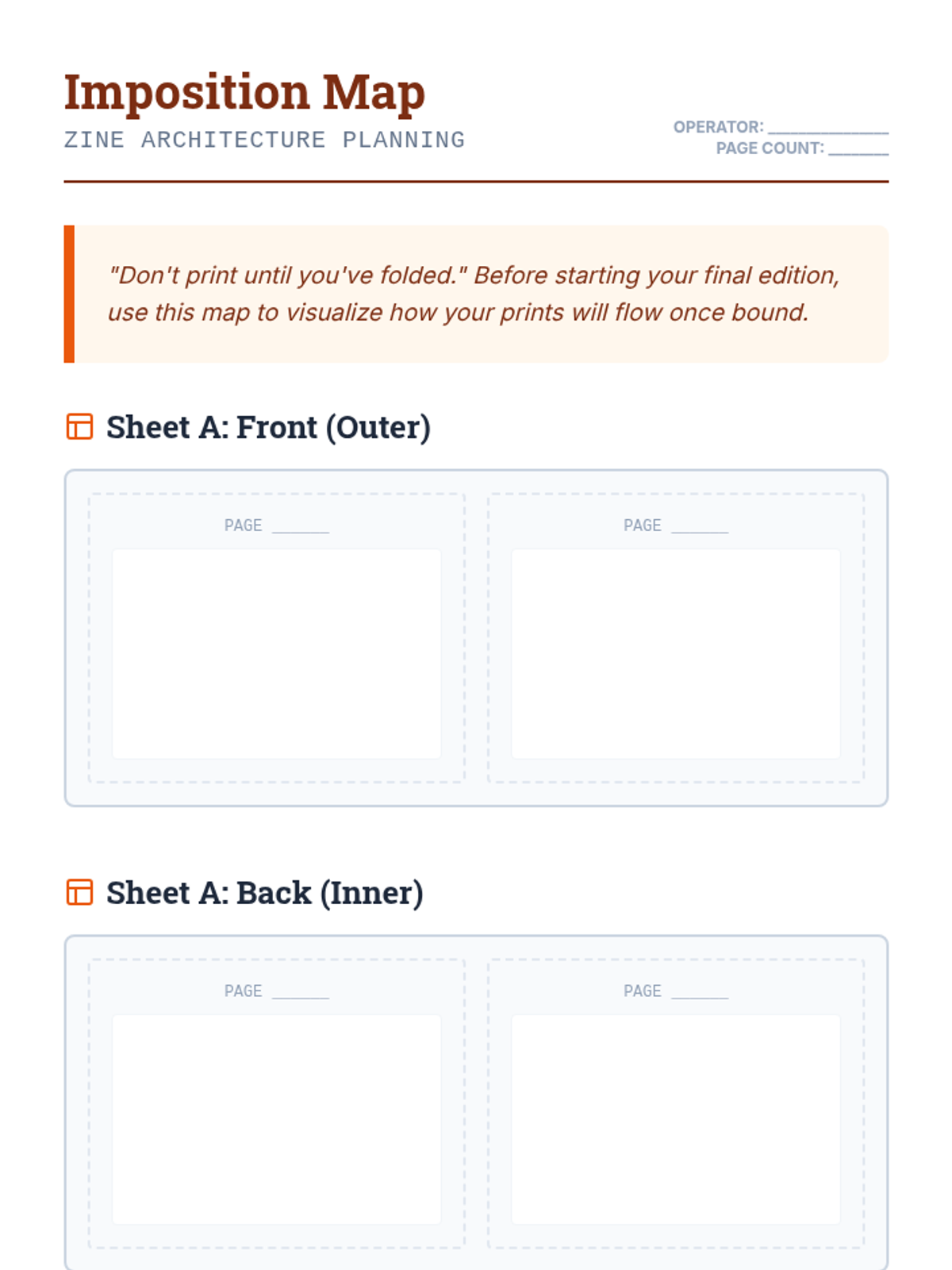
A student imposition map and pagination planning worksheet for designing a hybrid zine.
Instructional slides for Lesson 1, introducing the concept of arts advocacy and the "Needs Matrix" through a crisis scenario. Updated for improved readability.
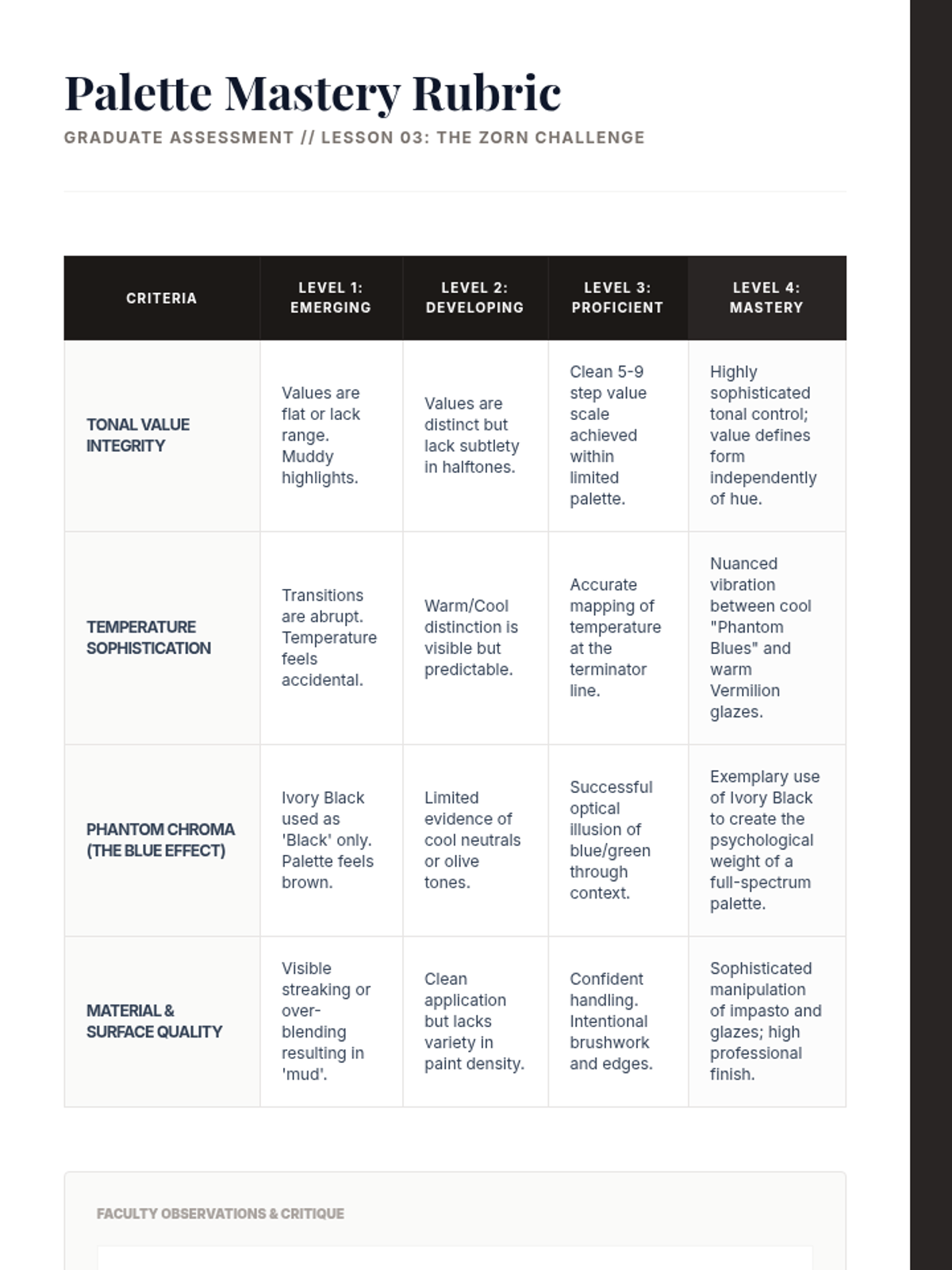
A comprehensive assessment rubric for evaluating graduate student mastery of the Zorn limited palette, focusing on value, temperature, chroma control, and surface quality.