Fundamental notation, instrumental proficiency, and vocal techniques across various genres. Connects historical analysis with original composition and creative performance skills.
A high-fidelity visual mockup of the final bulletin board design, featuring a layered black background, rainbow piano key borders, 3D-styled typography, and diverse musician illustrations with detailed cultural clothing patterns.
A simplified grading rubric for a 3-paragraph concert review, with consolidated criteria and a clear 100-point scale.
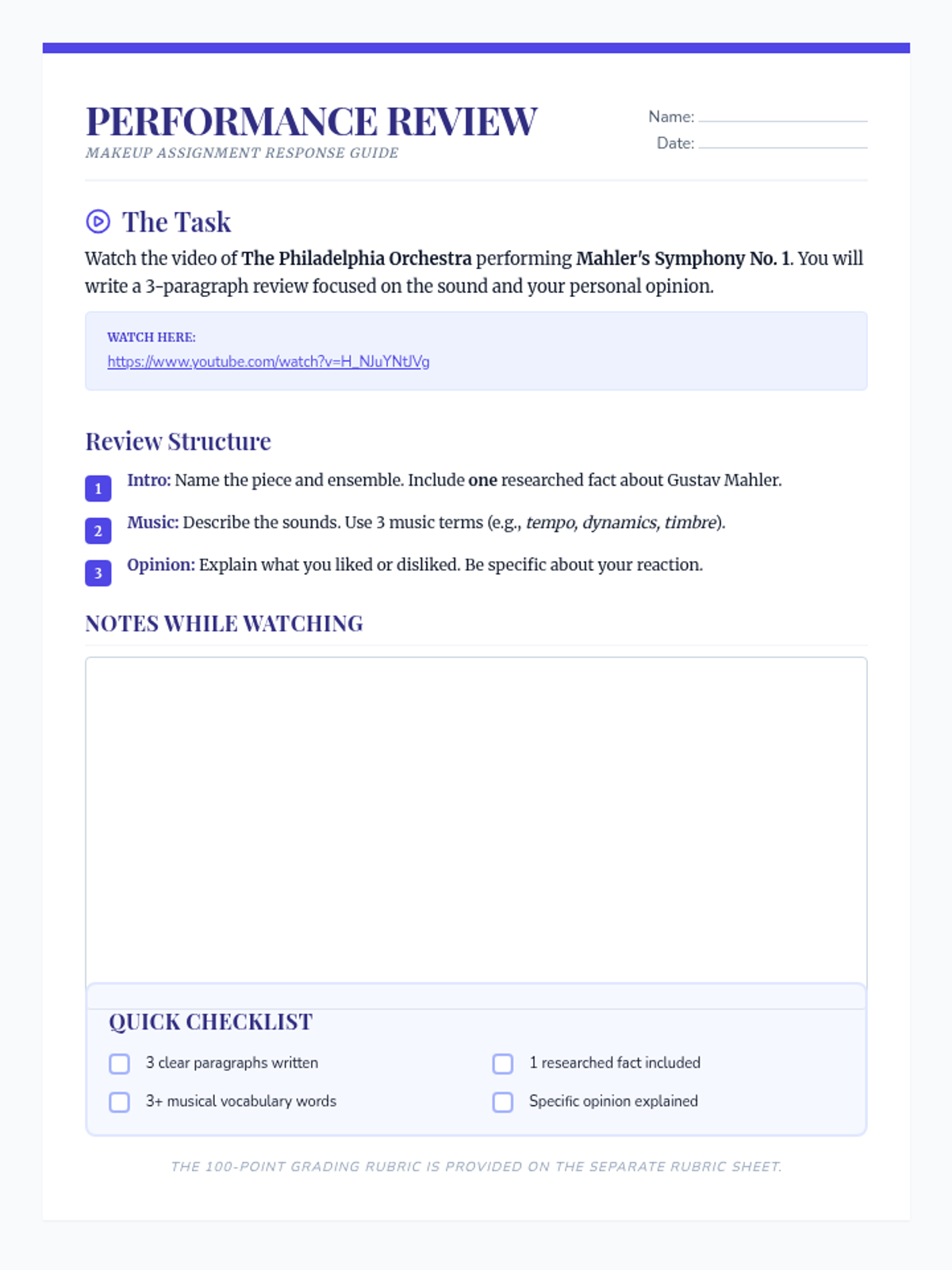
A simplified 3-paragraph assignment sheet for a concert review. It features reduced research requirements (1 source) and a heavy focus on musical analysis and personal opinion.
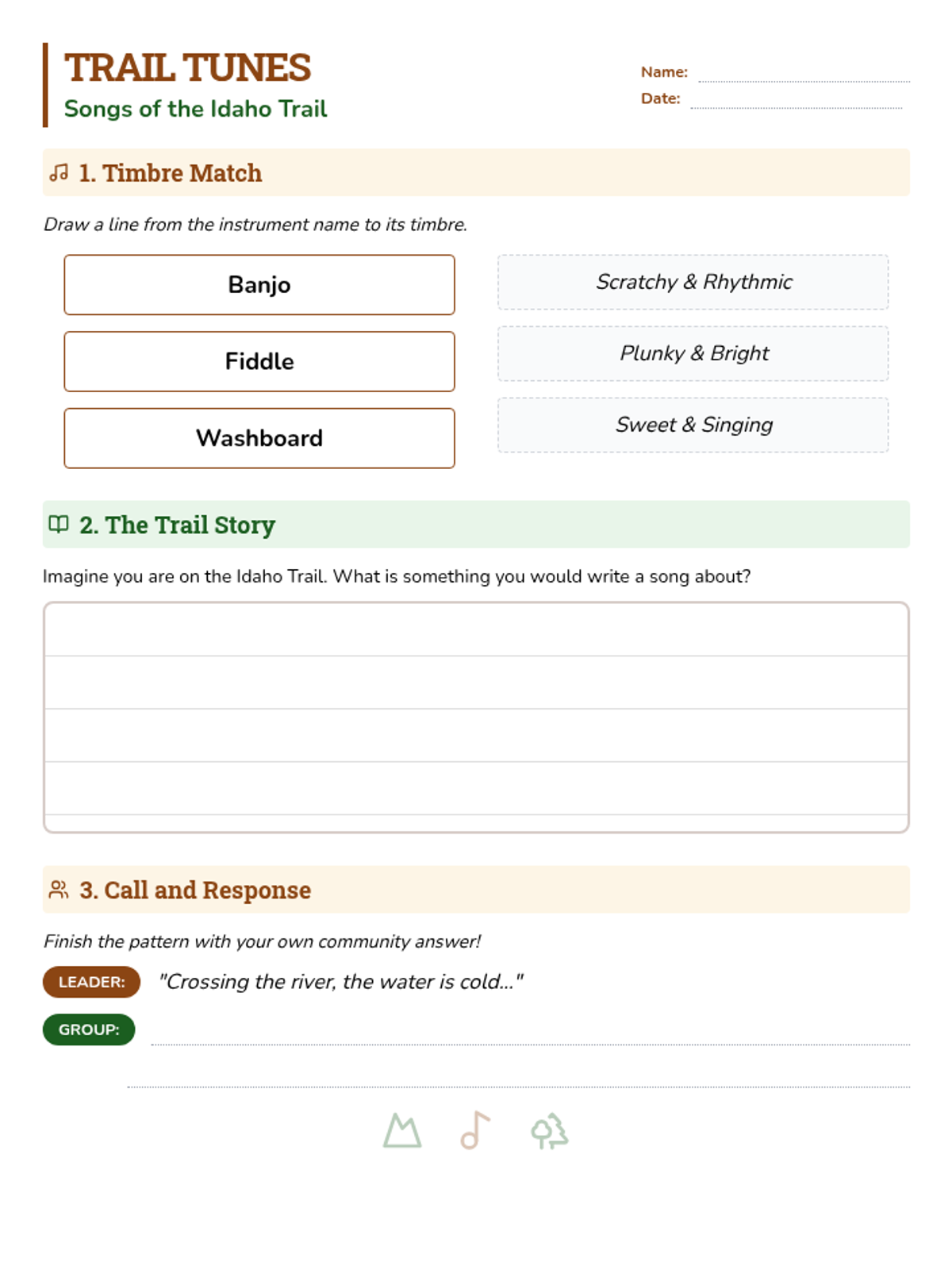
A student assessment worksheet featuring instrument matching, a short creative writing prompt about the Idaho Trail, and a call-and-response completion activity. Fits on a single page for efficiency.
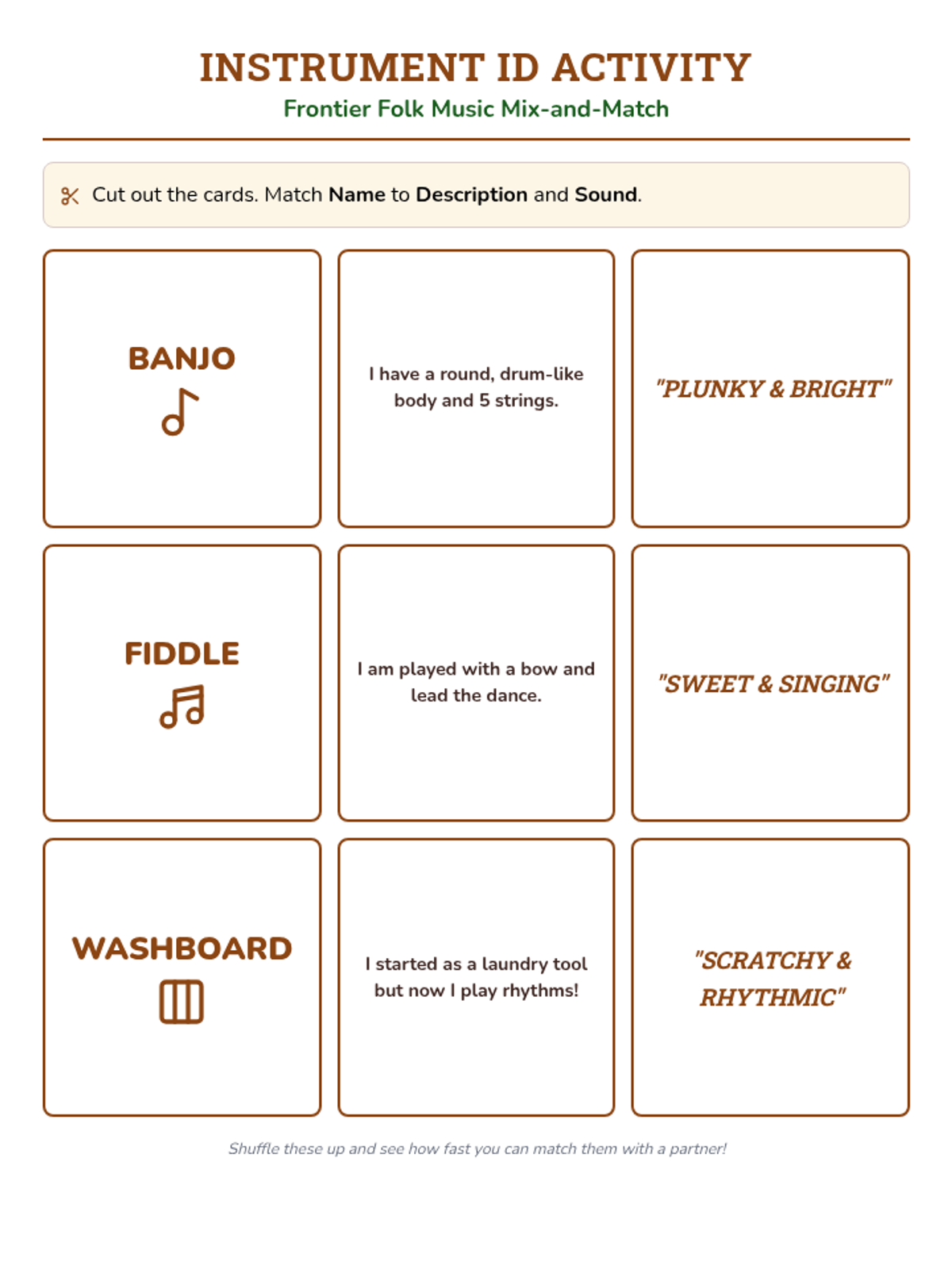
A printable card-sorting activity where students match instrument names with their visual descriptions and characteristic "sound secret" timbres. All cards use uniform styling to focus on identification skills.
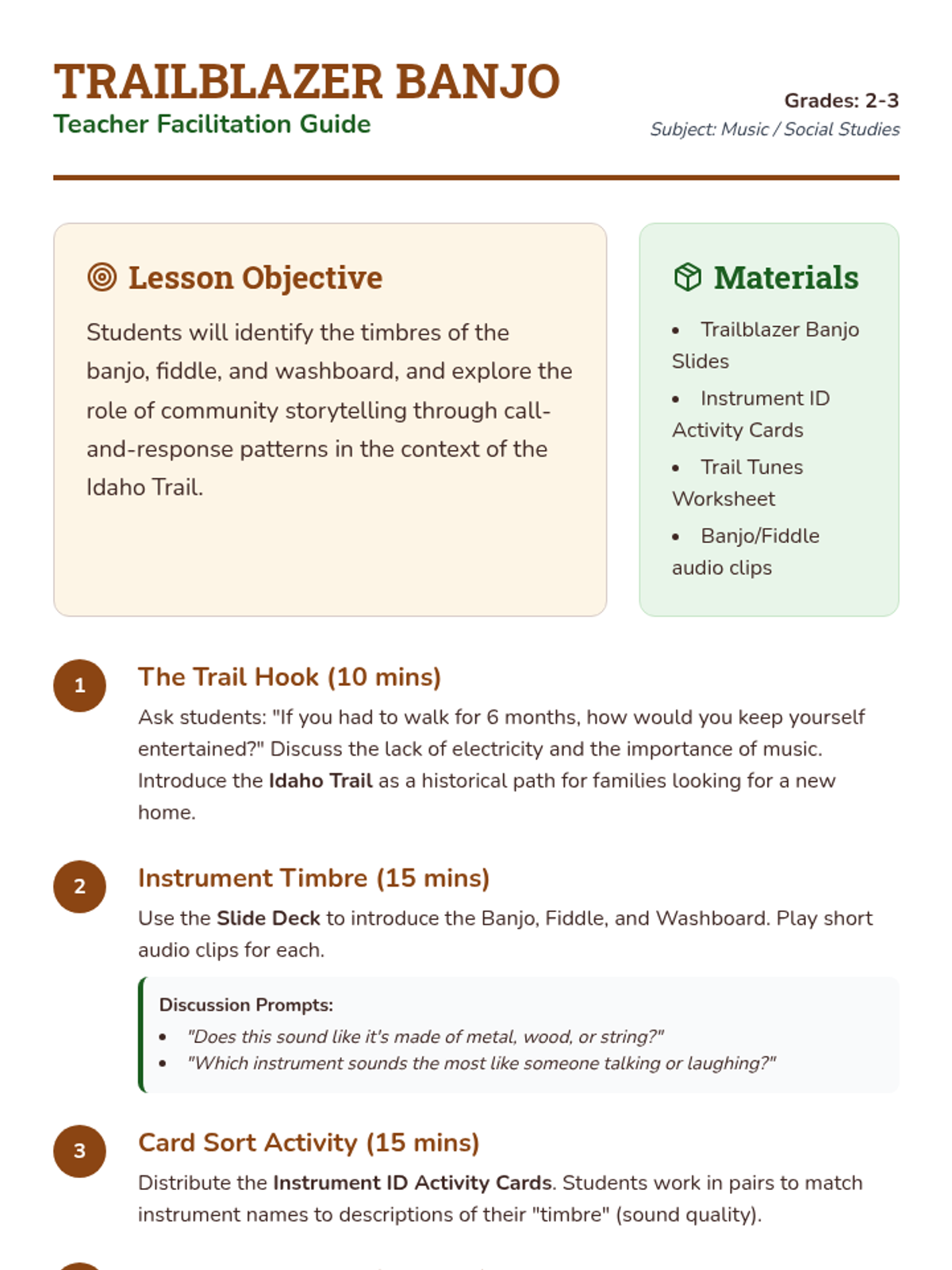
A comprehensive instructional guide for teachers, outlining the lesson sequence, discussion prompts, and alignment with music standards for the Idaho Trail folk music lesson.
A visual presentation introducing students to the history of folk music on the Idaho Trail, featuring descriptions of traditional instruments and a call-and-response practice slide.
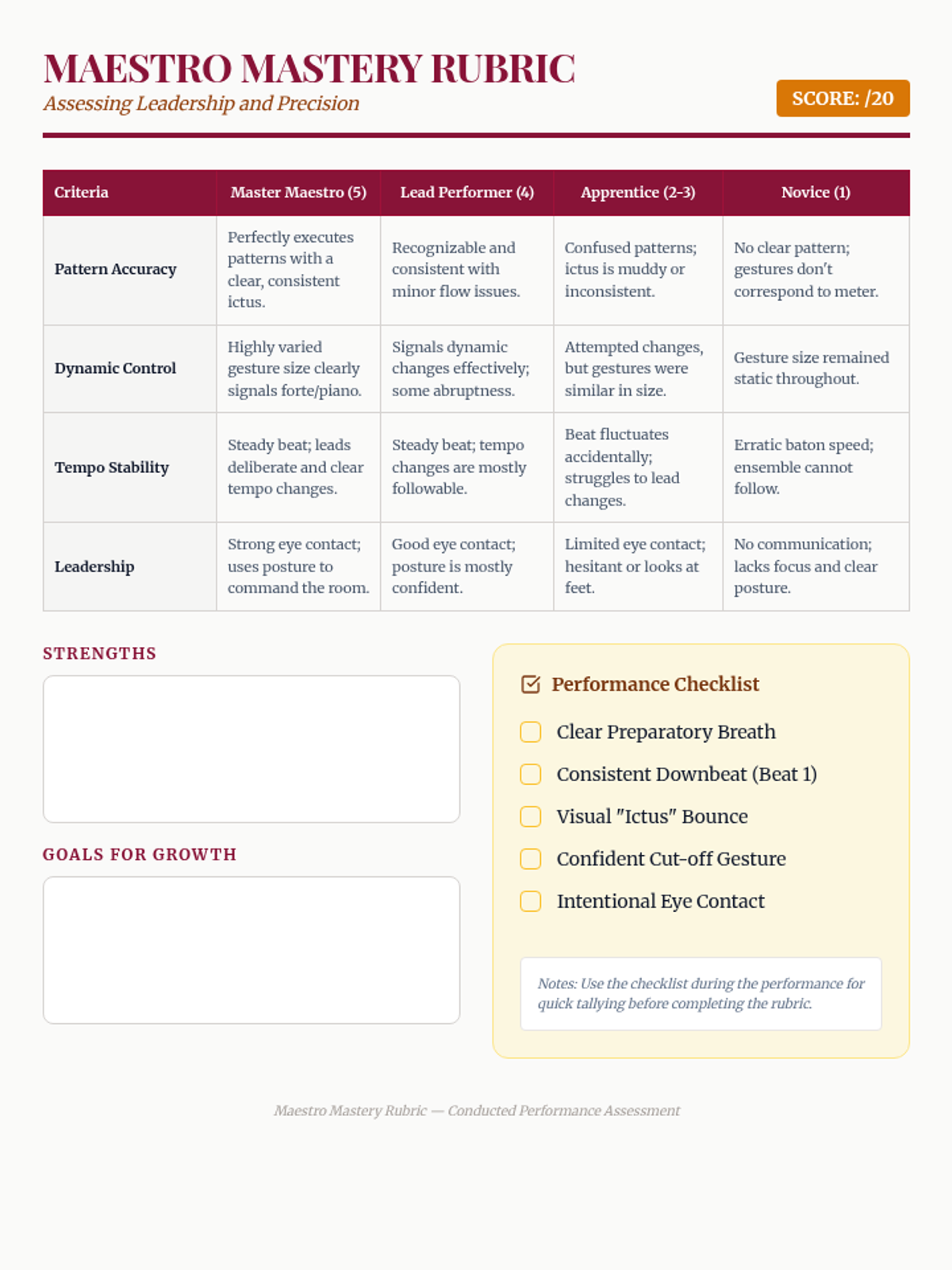
Teacher rubric for evaluating student conducting performance. Covers pattern accuracy, dynamic control, tempo consistency, and leadership presence with a 20-point scoring system.
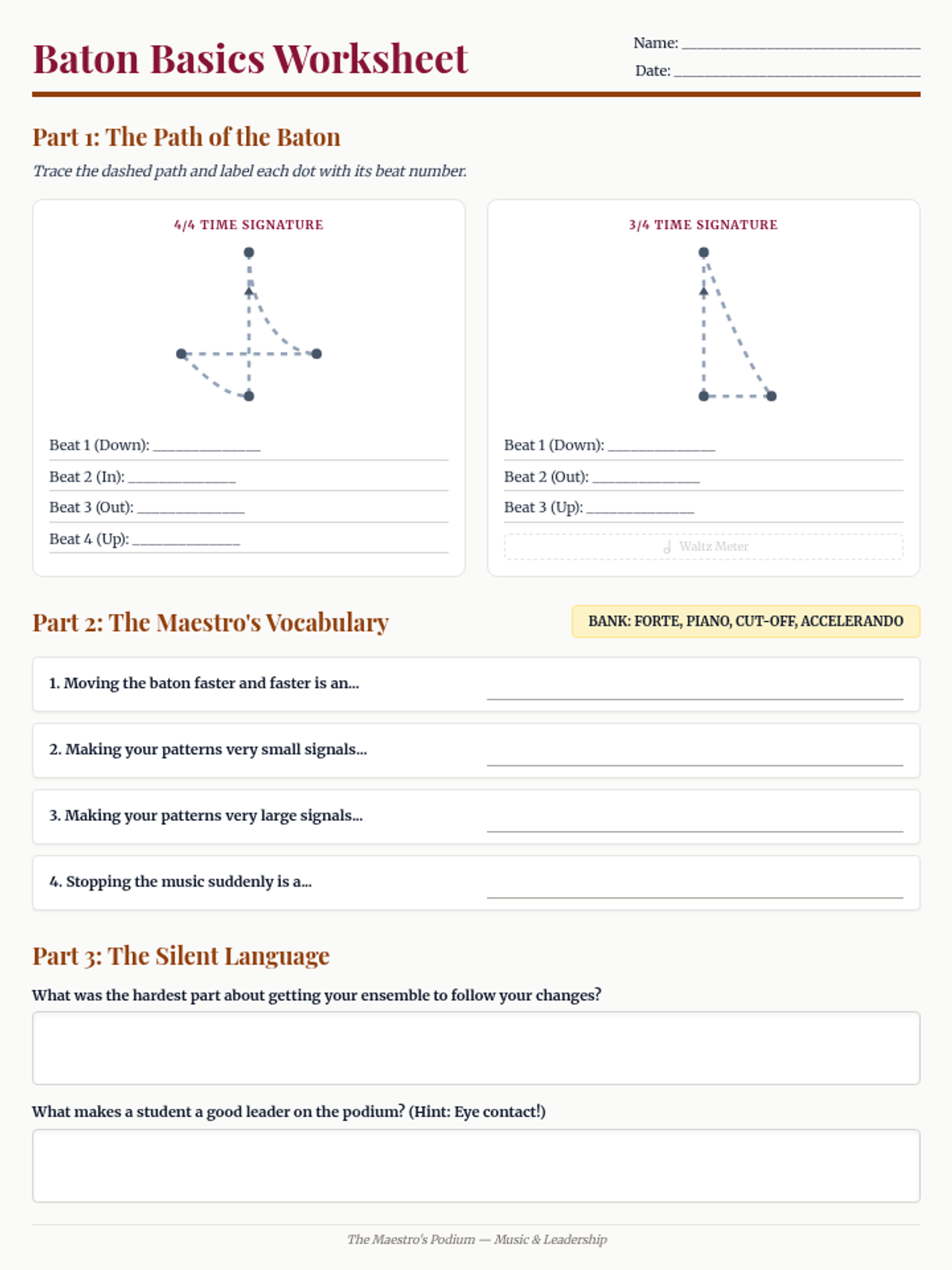
Student worksheet for reinforcing conducting patterns and the relationship between physical gestures and musical outcomes. Includes pattern labeling, vocabulary matching, and reflection questions.
Instructional slide deck for teaching conducting basics. Features visual patterns for 4/4 and 3/4 time, explanations of dynamics and tempo, and the concept of the ictus.
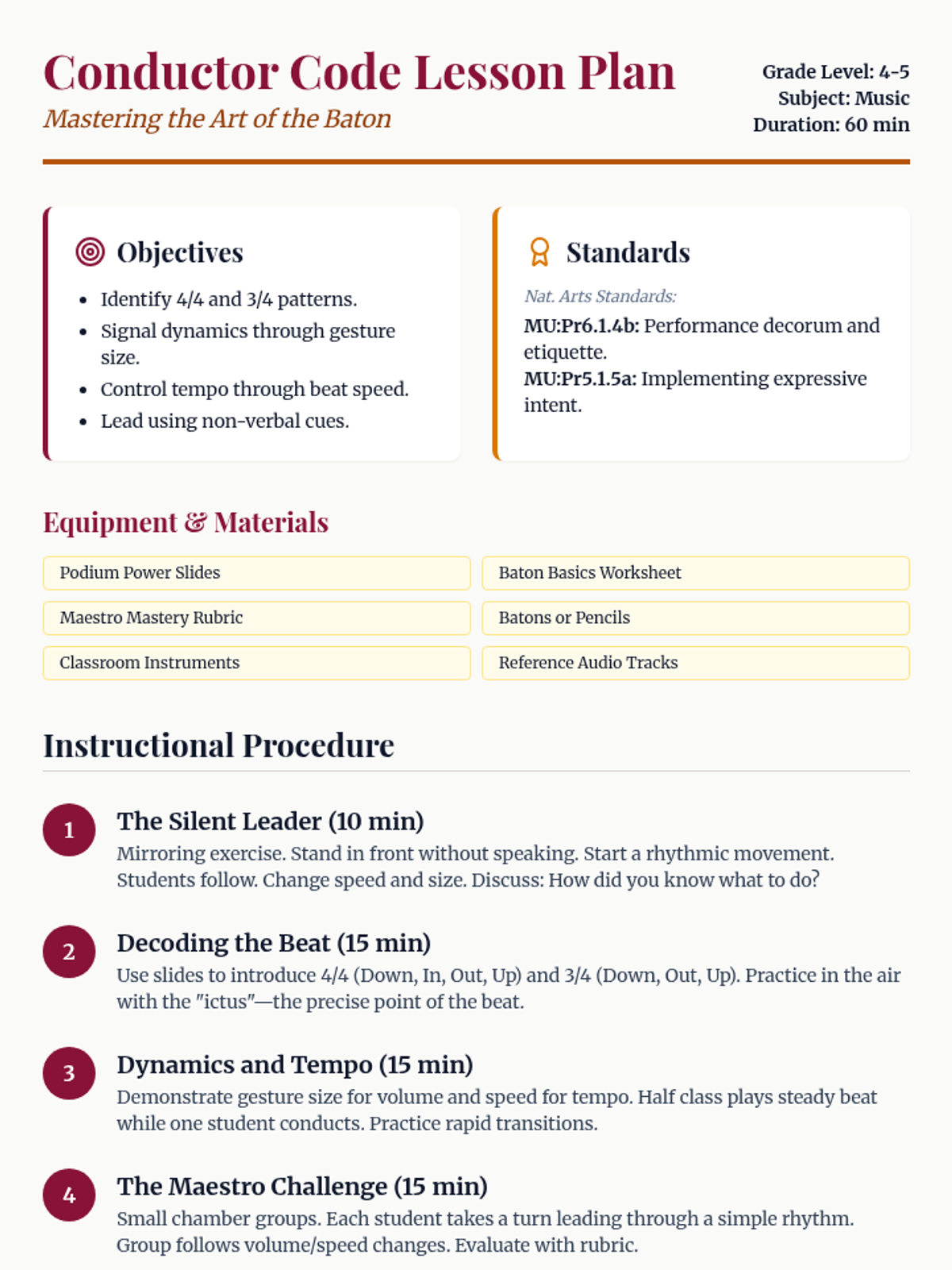
Comprehensive lesson plan for teaching conducting patterns, dynamics, and tempo control to elementary students. Includes objectives, step-by-step procedures, and differentiation strategies.
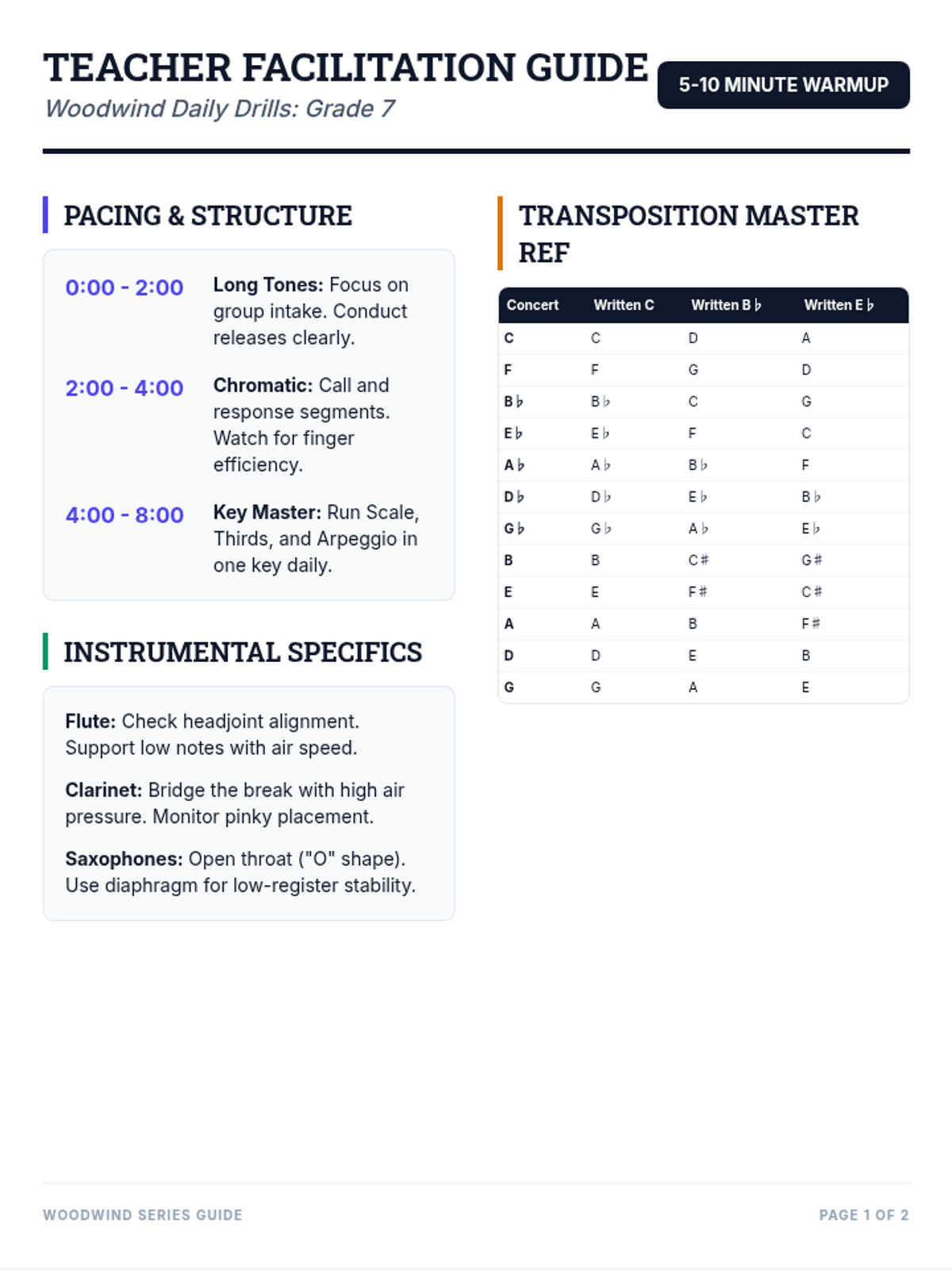
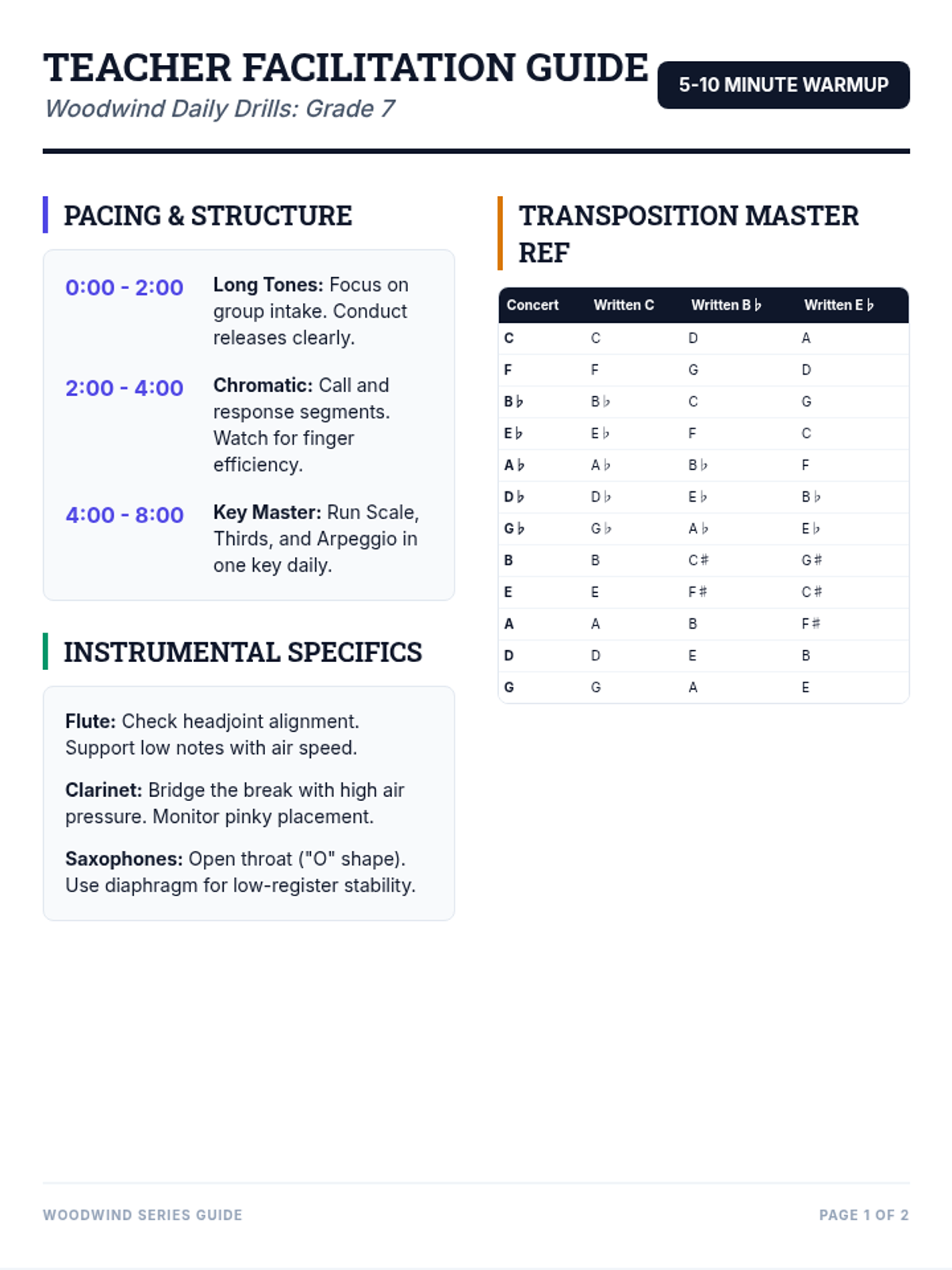
A revised 2-page teacher guide with a full 12-key transposition table, clear pacing guidelines, and a comprehensive observational assessment rubric.
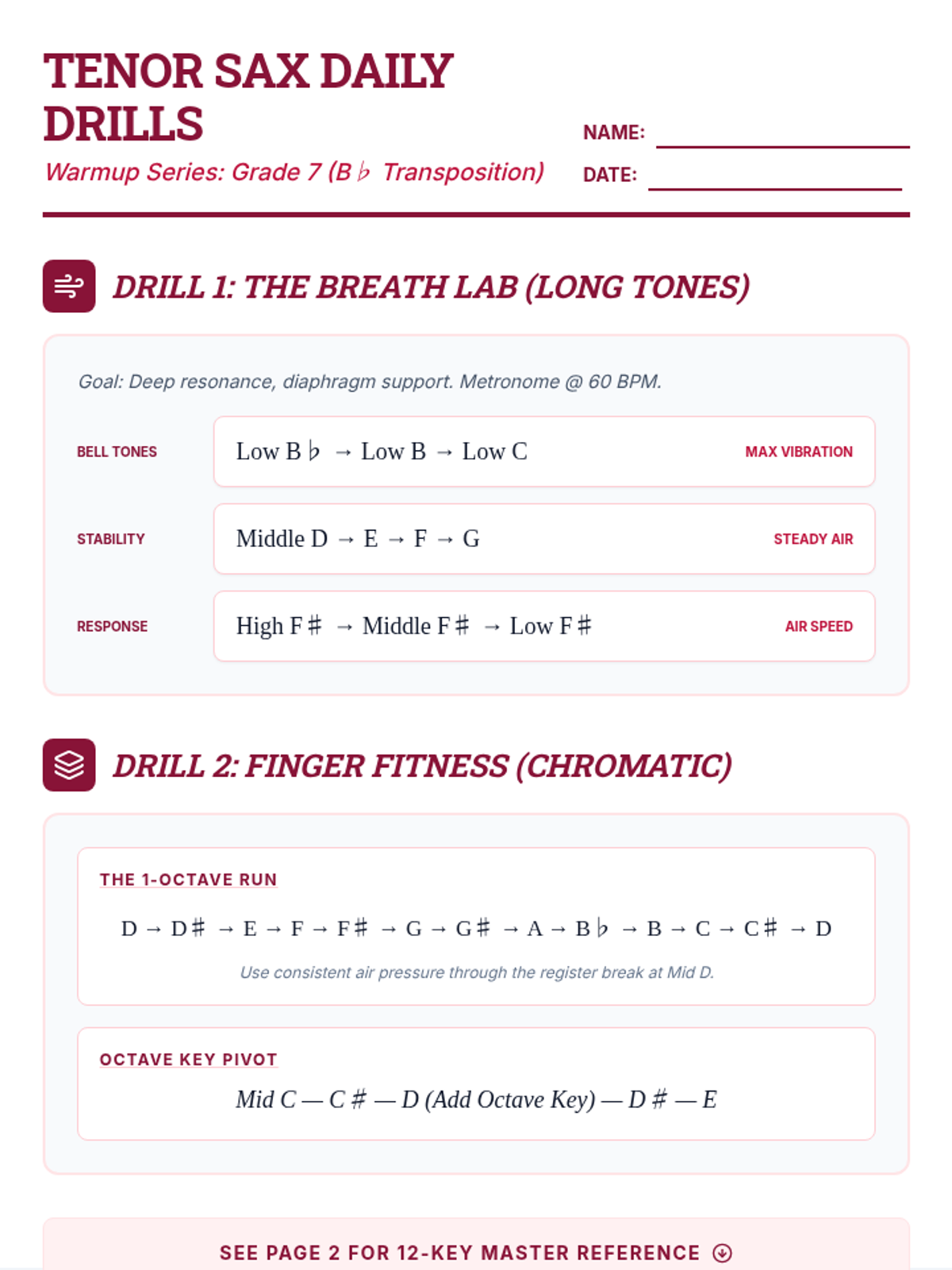
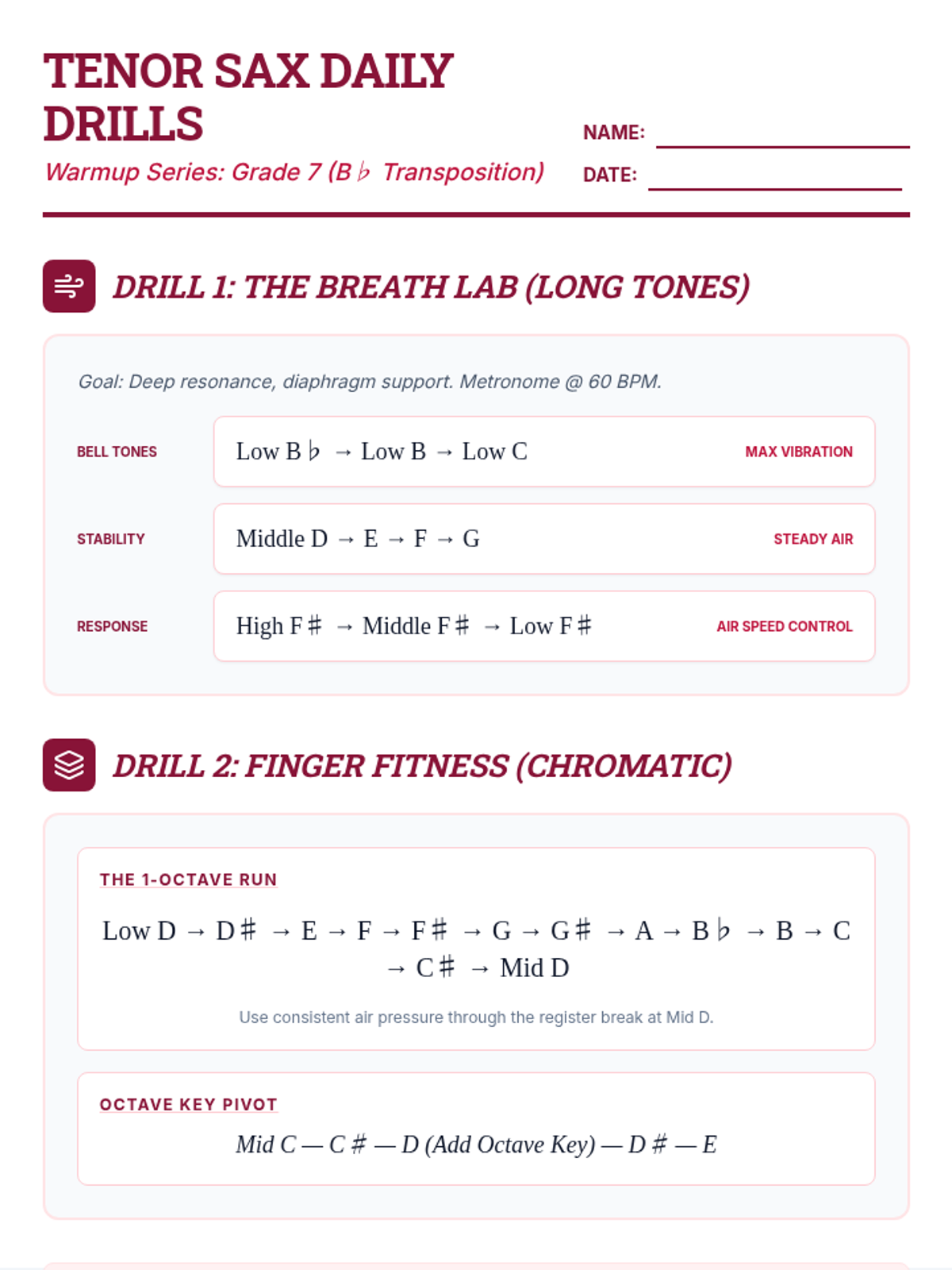
A 2-page daily warmup sheet for 7th grade tenor sax players featuring written-out scales in all 12 keys, bell tone drills, and octave pivot exercises.
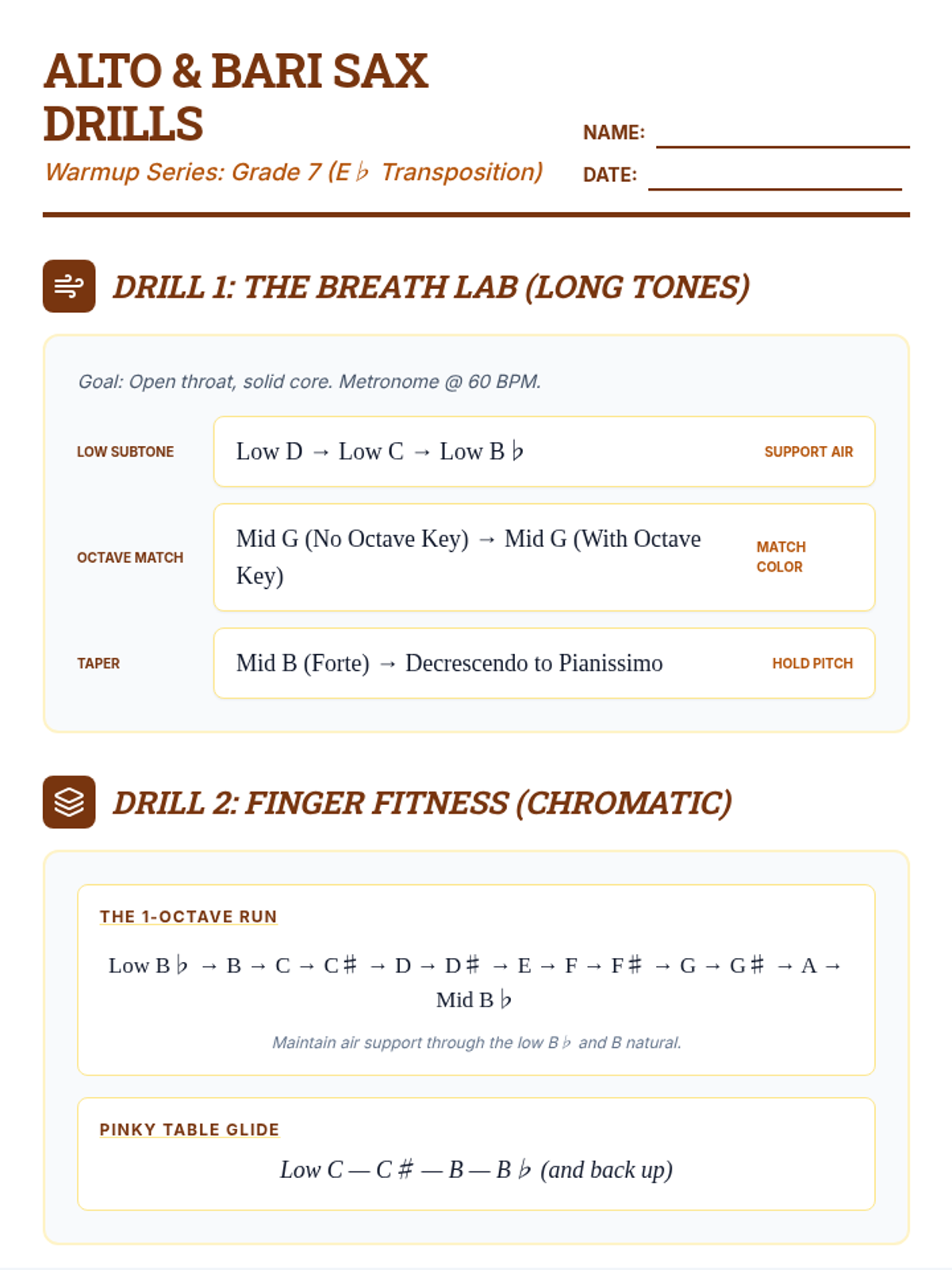
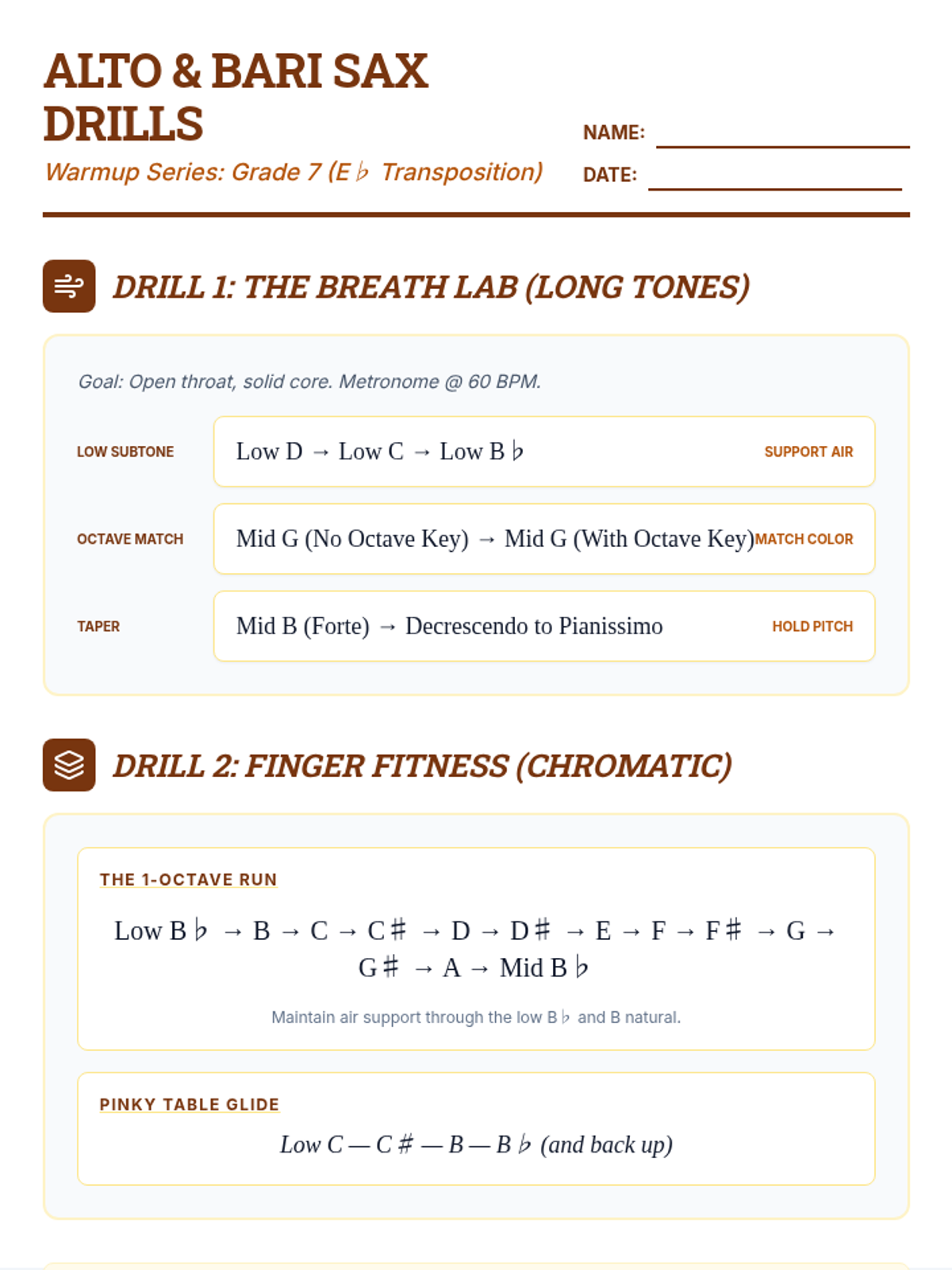
A 2-page daily warmup sheet for 7th grade alto and bari sax players featuring written-out scales in all 12 keys, subtone drills, and octave matching exercises.
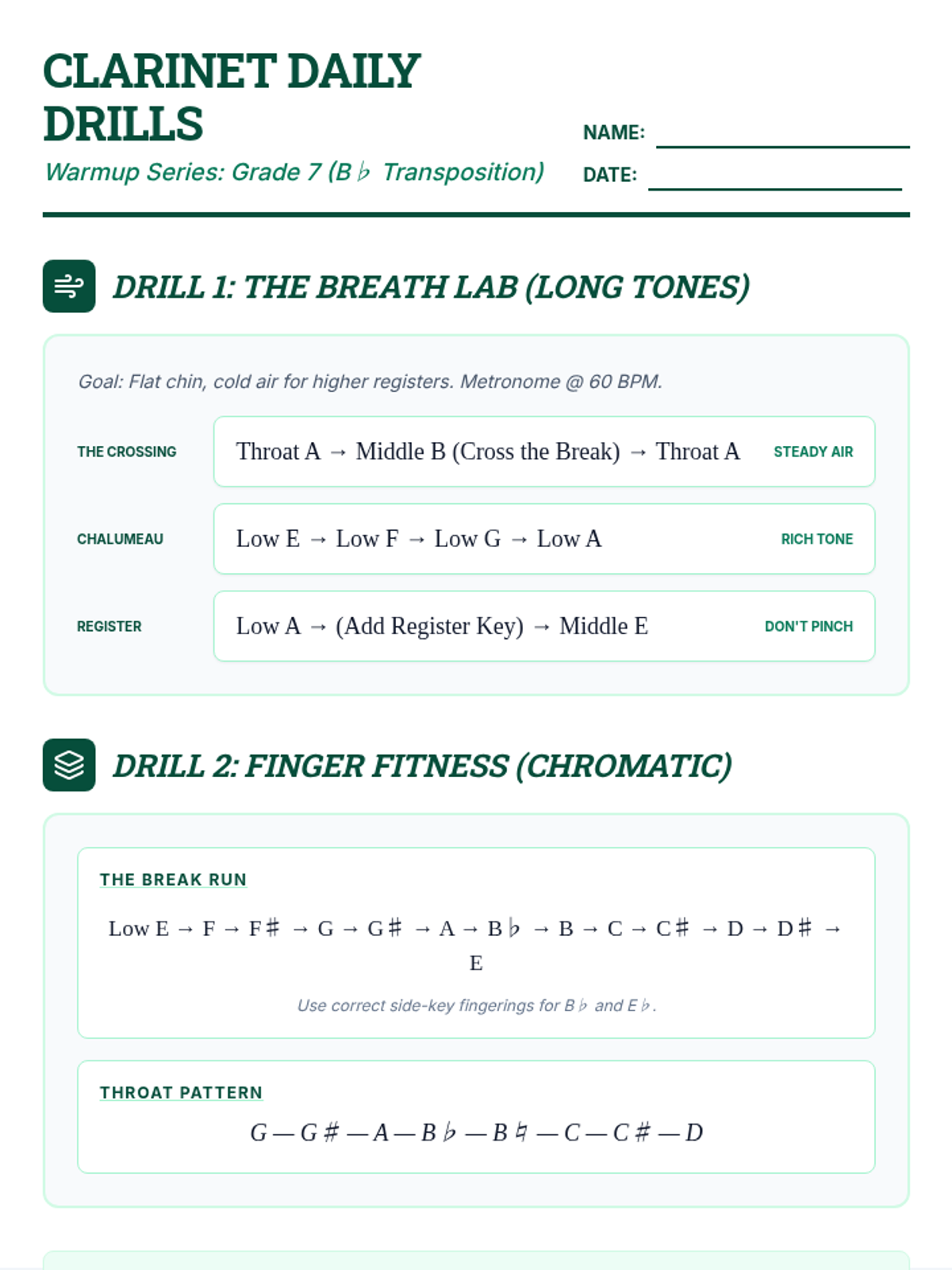
A 2-page daily warmup sheet for 7th grade clarinet players featuring written-out scales in all 12 keys, crossing the break drills, and chalumeau tone exercises.
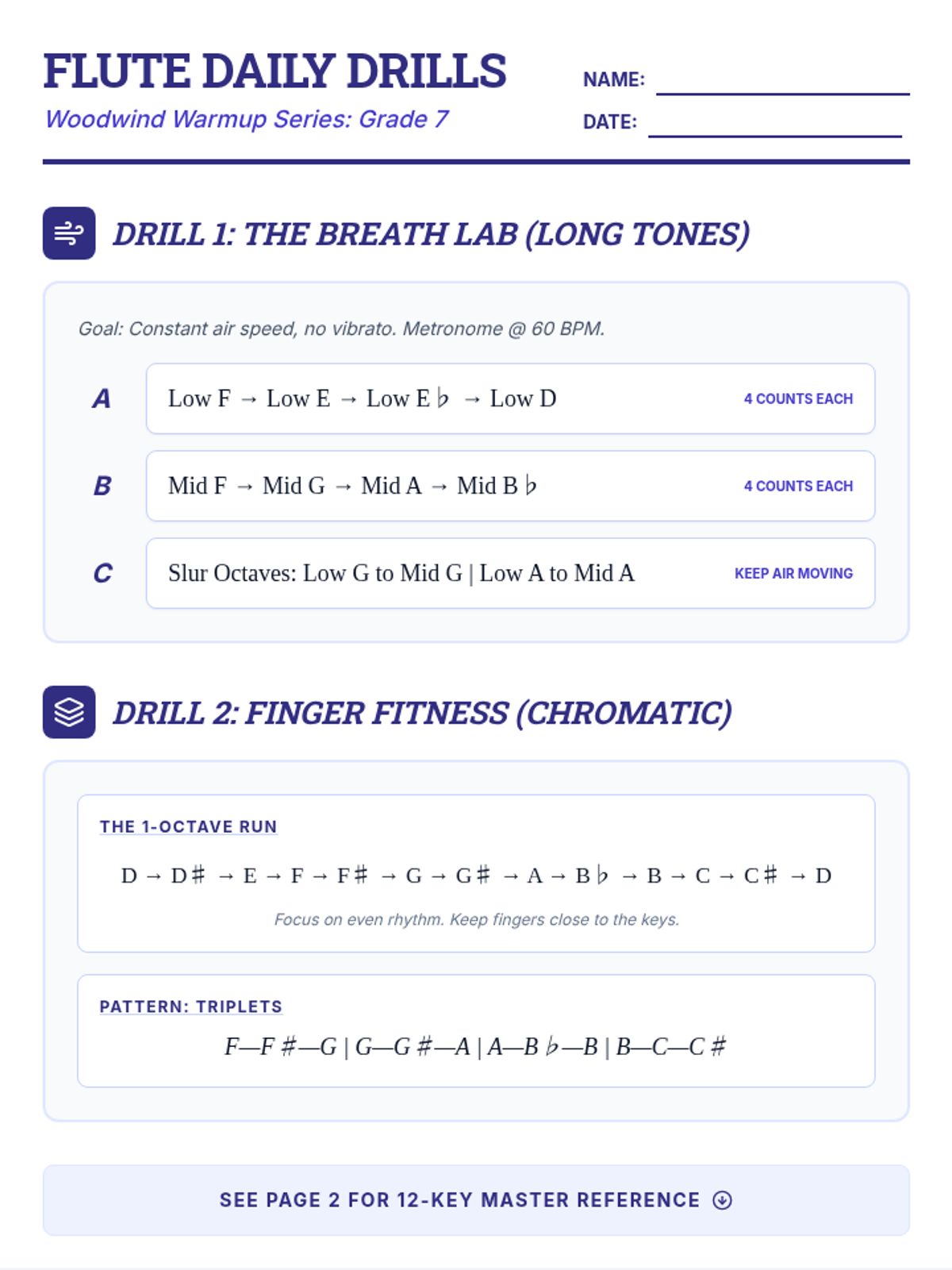
A comprehensive 2-page daily warmup sheet for 7th grade flute players featuring long tones, chromatic exercises, and written-out note sequences for all 12 major scales.
A visual presentation deck for woodwind sectionals or full band rehearsals, providing cues and visualizations for long tones, chromatic exercises, and the 12-key scale laboratory.
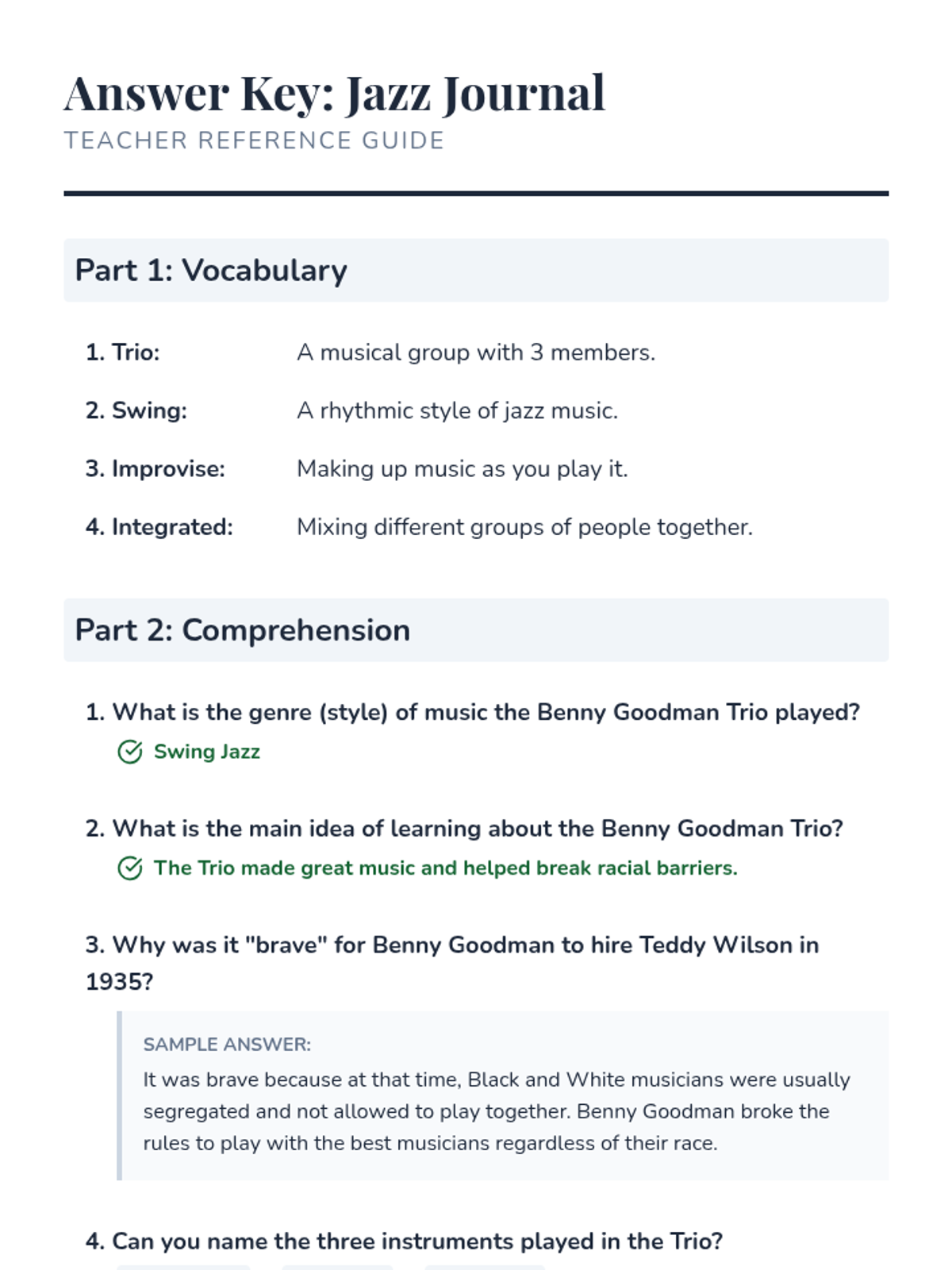
An answer key for the Jazz Journal worksheet, including teaching tips and sample responses for the teacher.
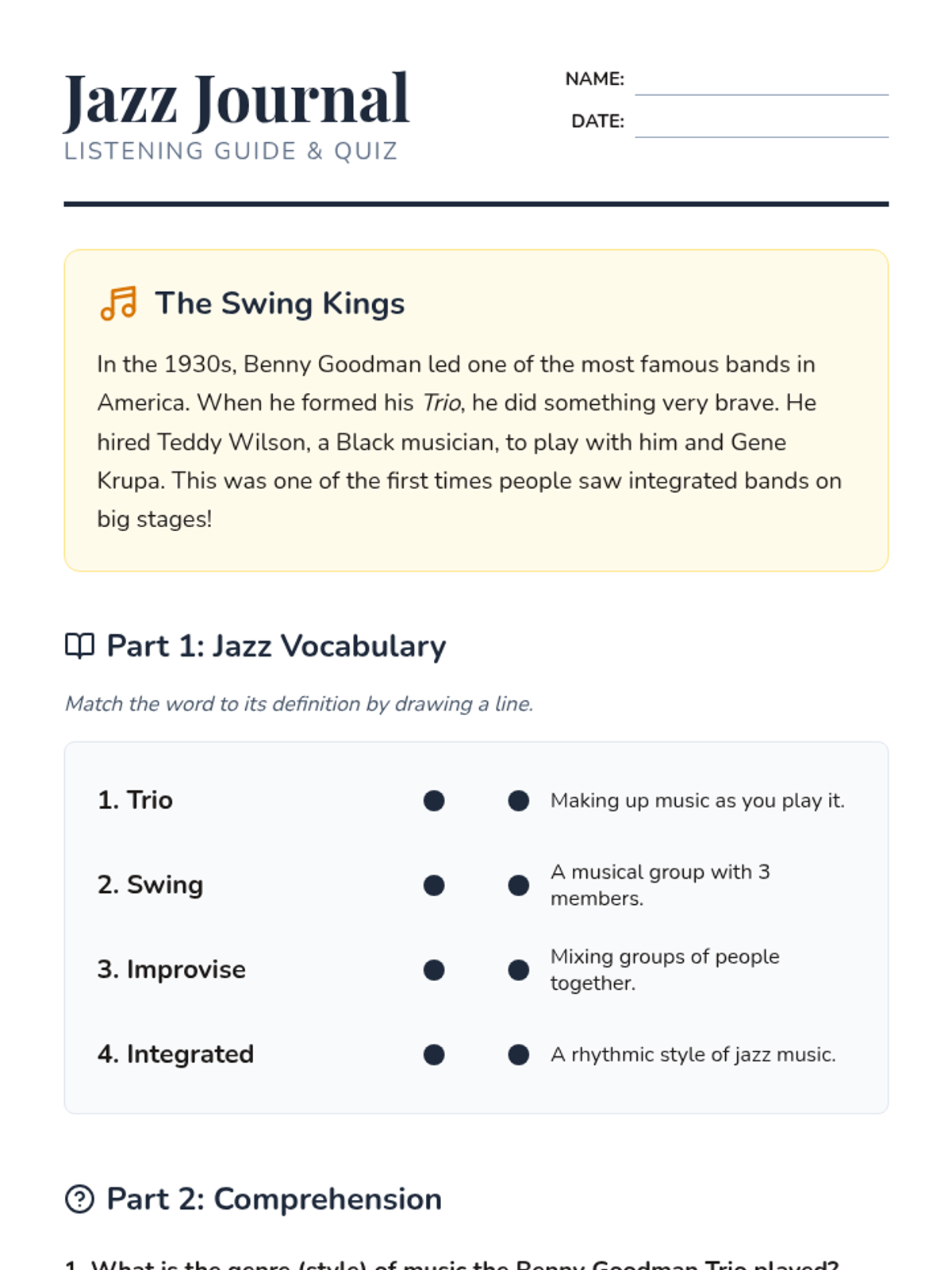
A student-facing worksheet for 3rd graders that includes vocabulary matching, multiple-choice comprehension questions, and a short answer section focused on the Benny Goodman Trio.
An 8-slide presentation introducing 3rd-grade students to Benny Goodman, the concept of a trio, swing jazz, and the significance of racial integration in music history.
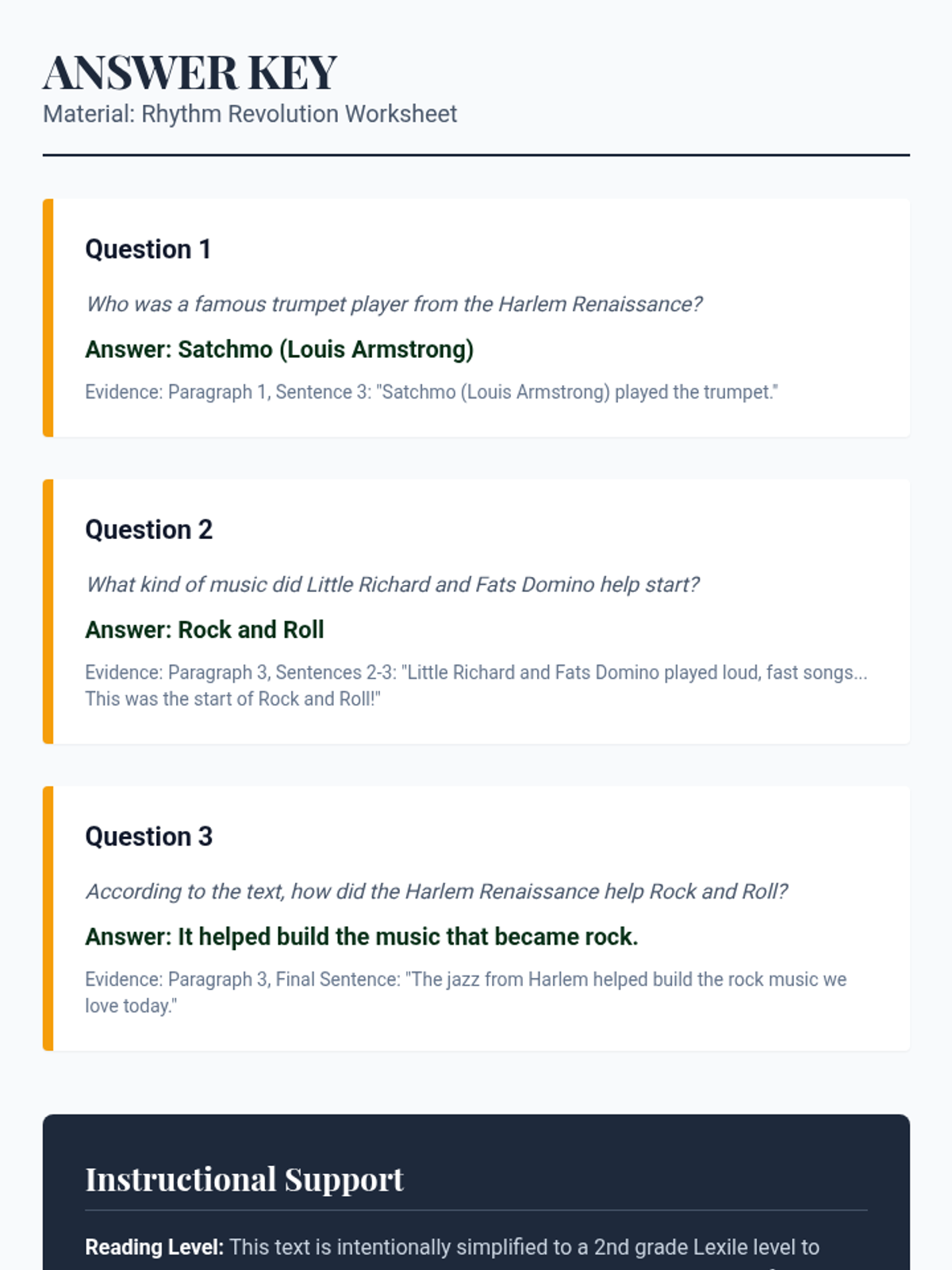
An answer key and instructional guide for the Rhythm Revolution Worksheet. Fixes issues with heading orphans and text contrast.
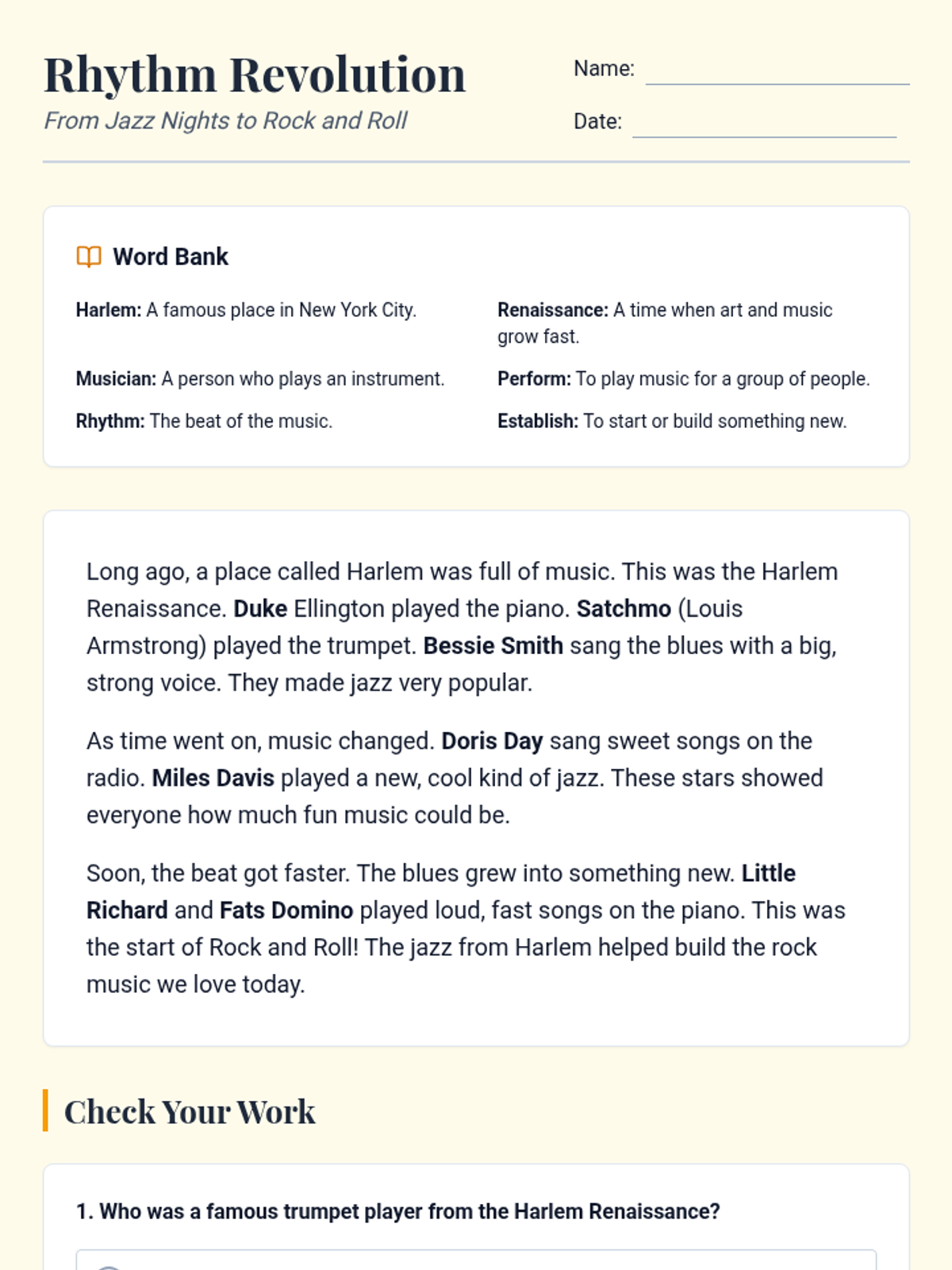
A reading comprehension worksheet about the transition from the Harlem Renaissance to Rock and Roll, written at a second-grade level for middle school students. Fixes issues with question page breaks and alignment.
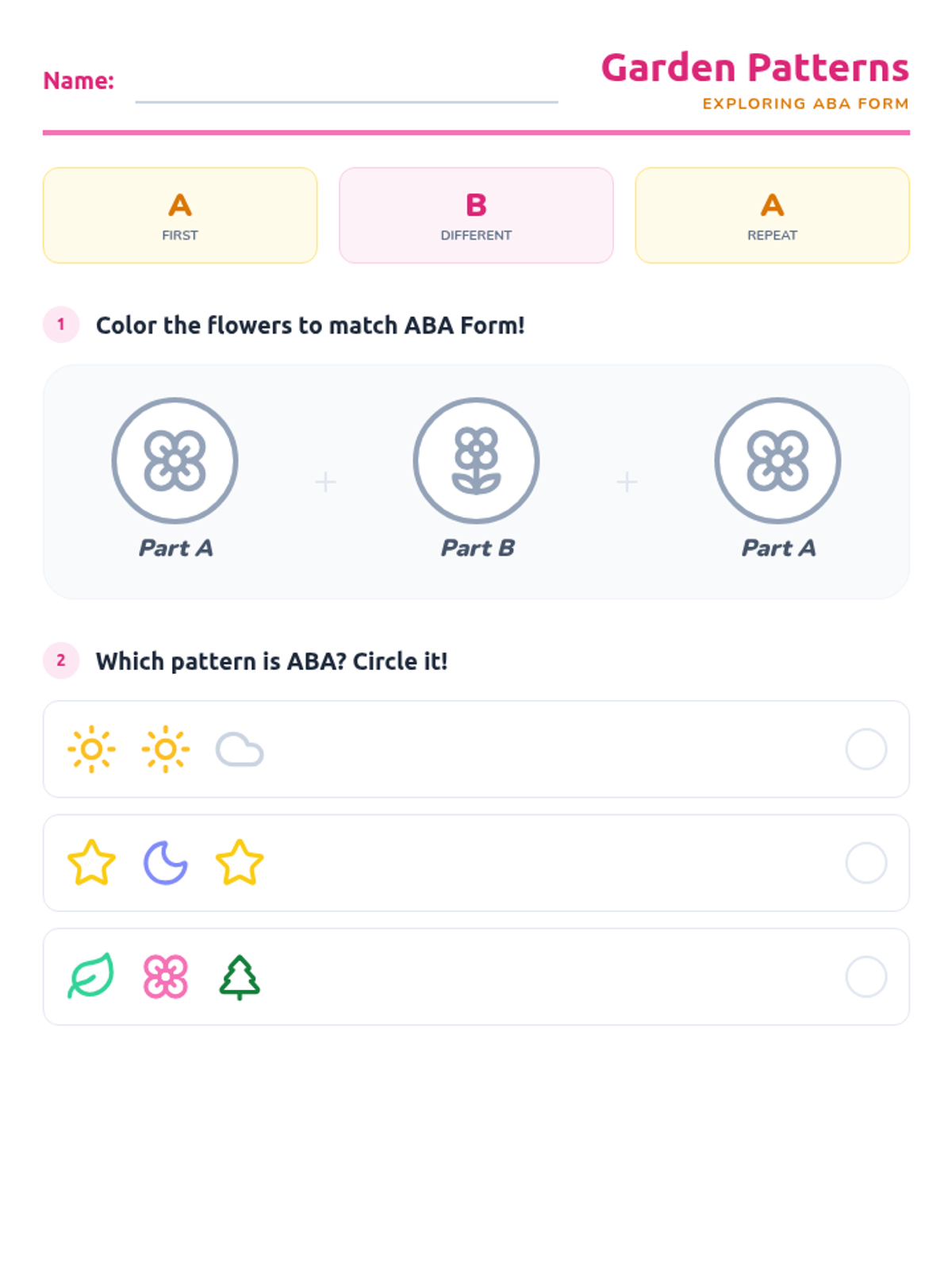
An introductory ABA form activity for primary students; includes coloring tasks and pattern identification exercises that use garden-themed symbols to visualize musical structure.
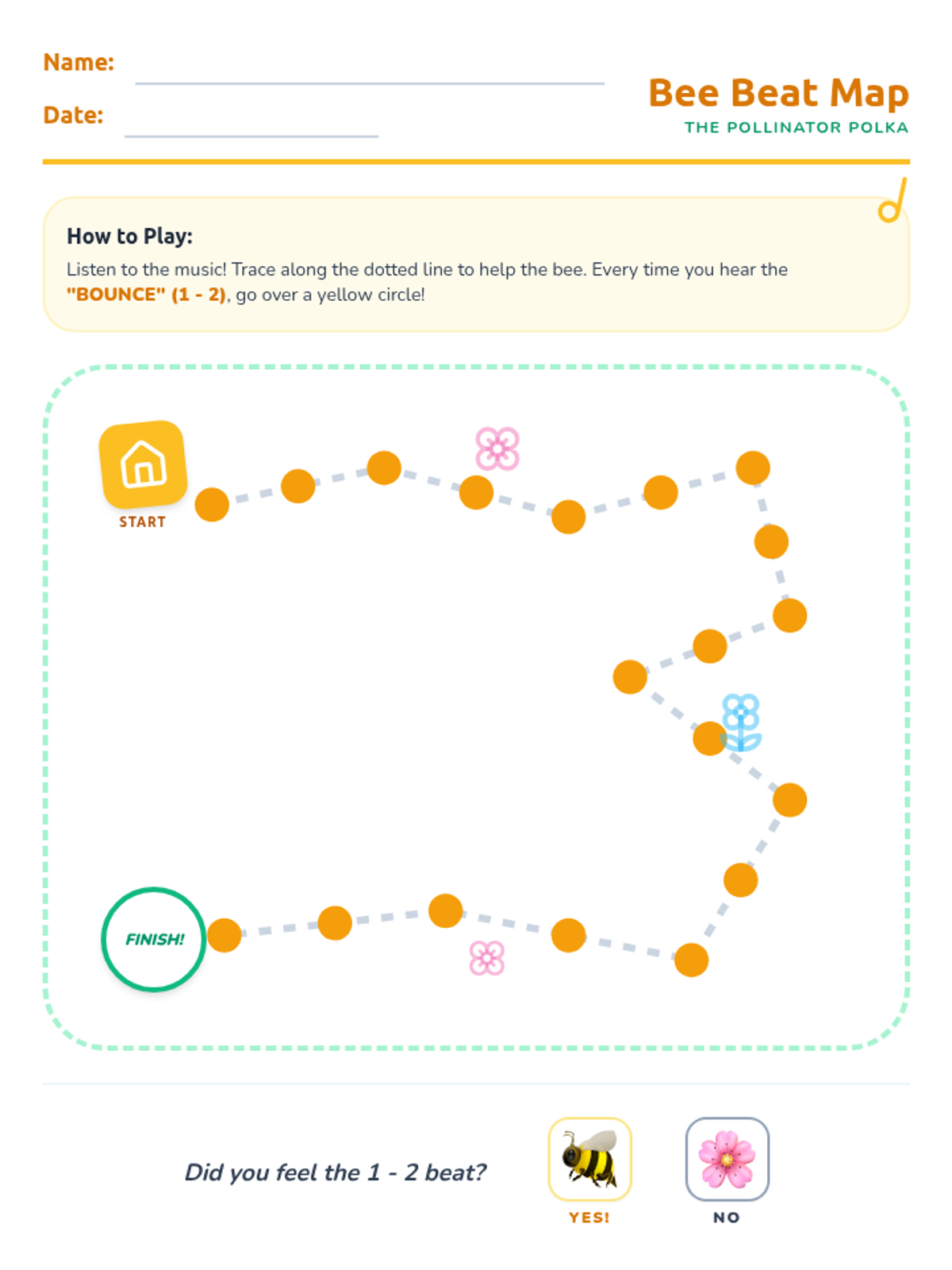
A student worksheet for early learners that facilitates rhythmic tracing; students trace the bee's flight path in time with a 2/4 polka beat, reinforcing steady beat perception and fine motor control.
A vibrant, high-contrast slide deck designed for young children, featuring bold visuals of bees and flowers to explain 2/4 polka meter and ABA form through interactive movement prompts.
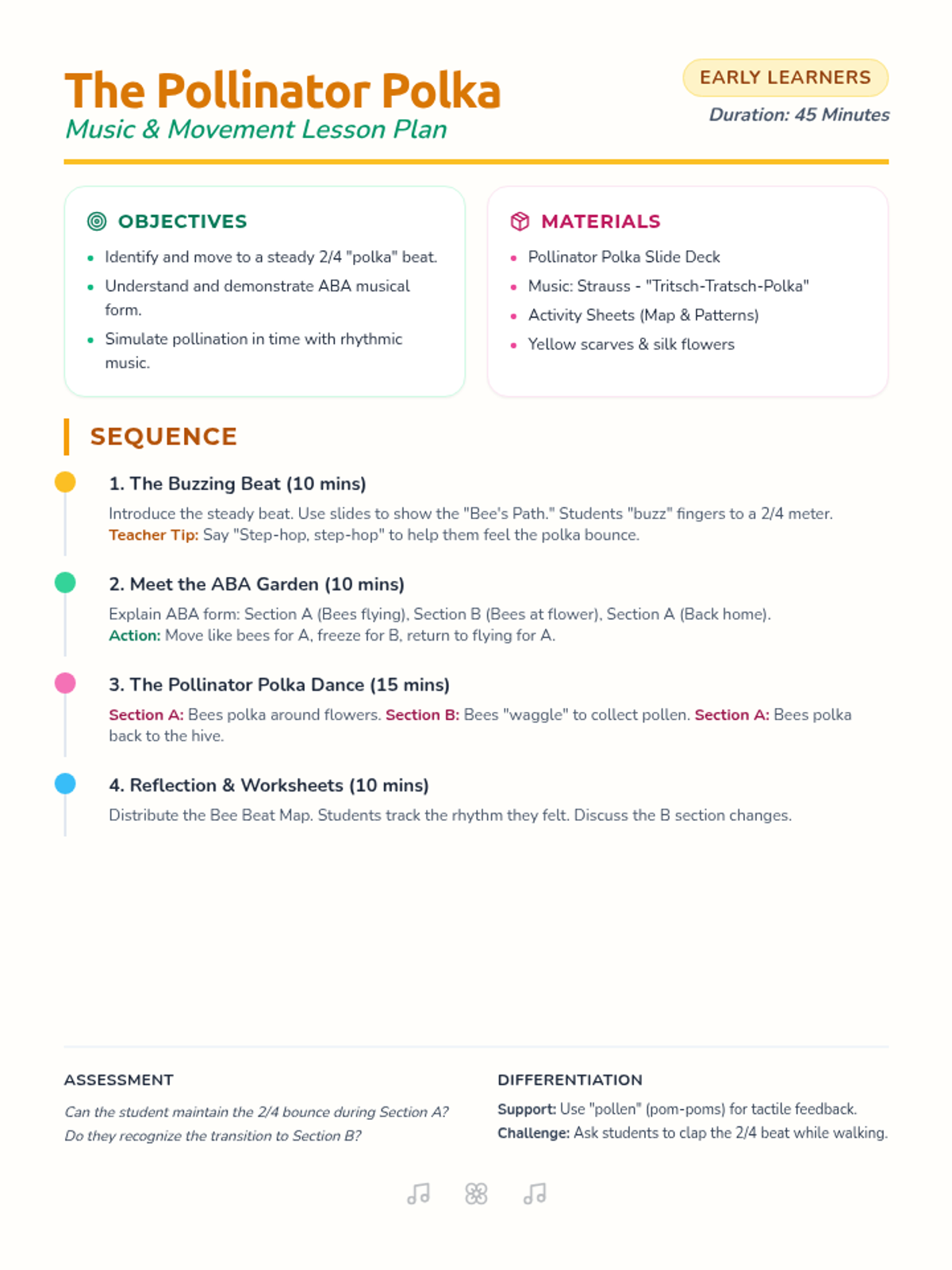
A comprehensive lesson plan for teachers, detailing the 45-minute instructional sequence, learning objectives, and movement-based strategies for teaching 2/4 meter and ABA form through a pollinator theme.
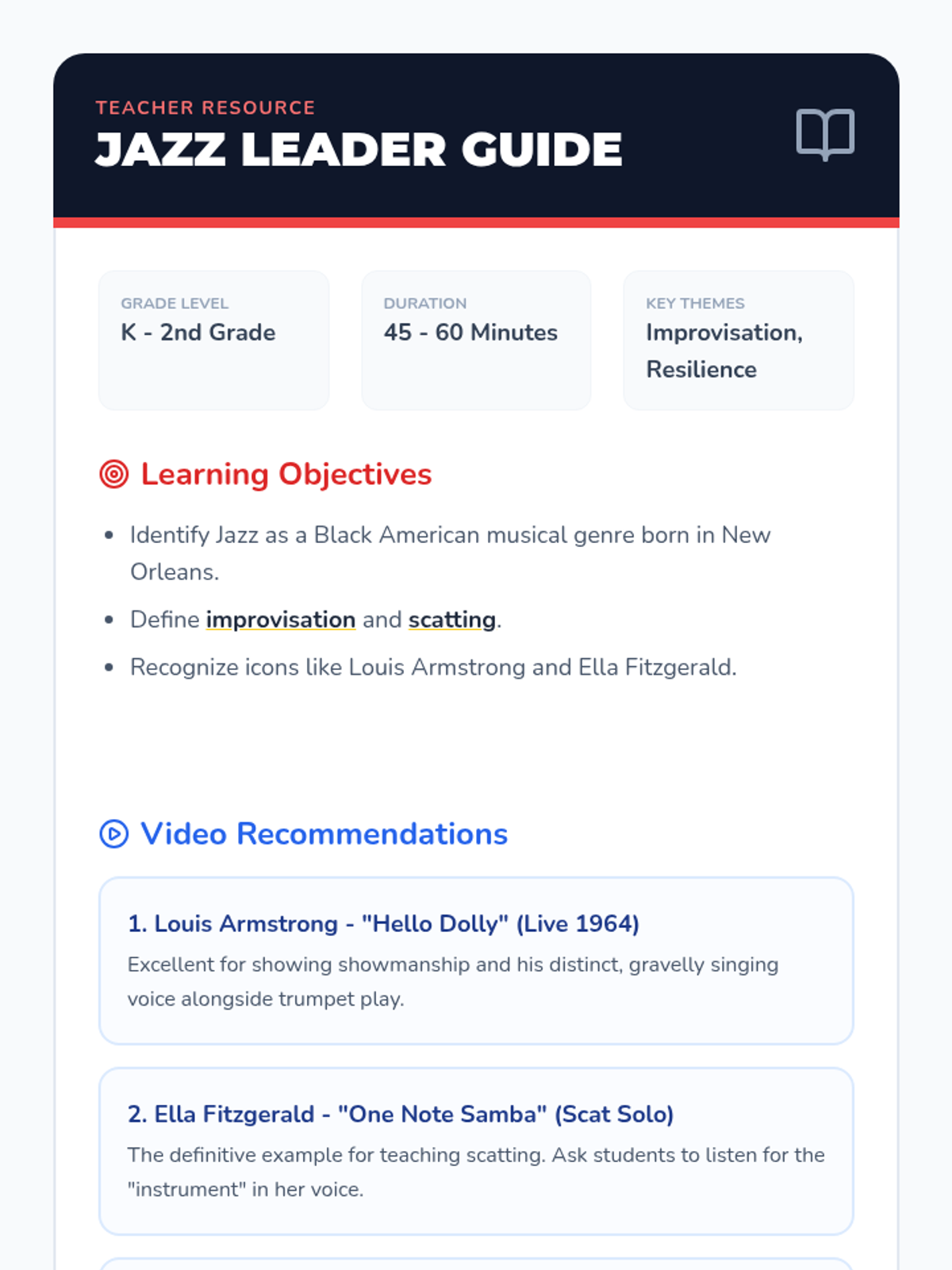
A multi-page teacher facilitation guide for the Jazz Journey lesson, including video recommendations, literacy integration strategies, and a light-colored teacher observation log.
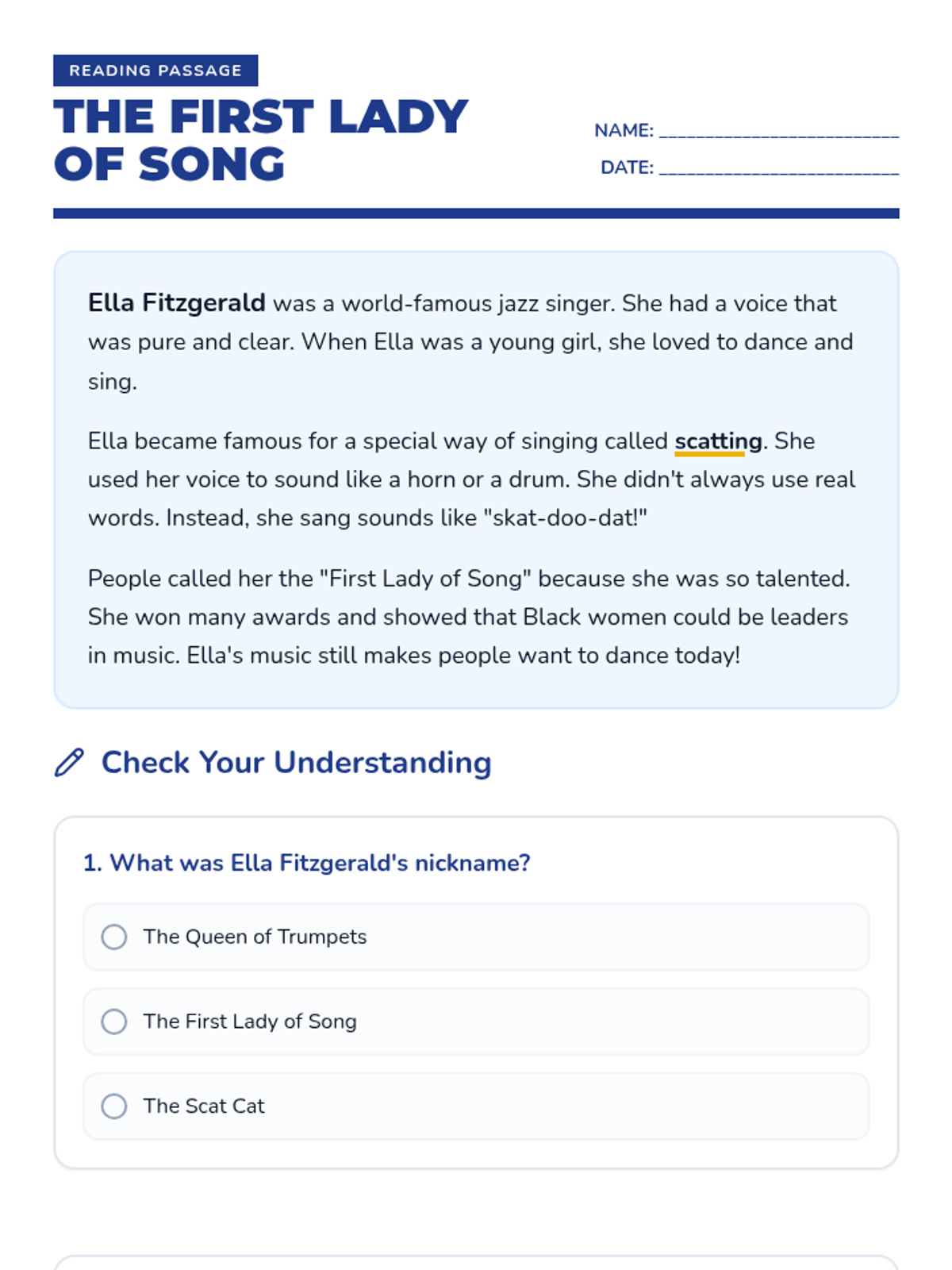
A reading comprehension document for K-2 students about Ella Fitzgerald, featuring primary writing lines for short answers and consistent styling for multiple-choice questions.
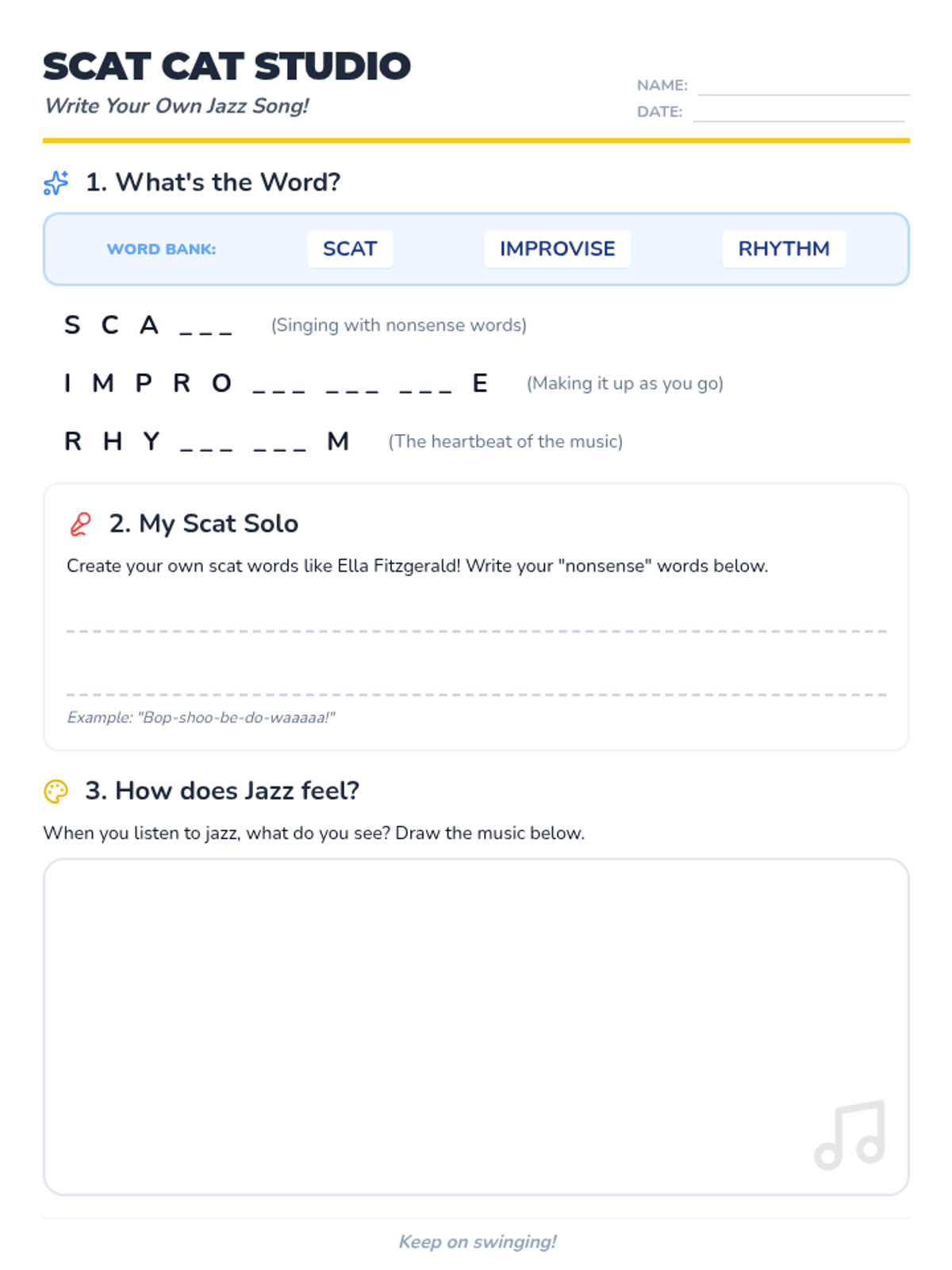
A single-page student activity sheet for K-2 focused on jazz vocabulary with a word bank, creative scat-singing lyric writing, and visual expression of musical listening.
A vibrant slide deck introducing K-2 students to the origins of jazz, the concept of improvisation, and icons like Louis Armstrong and Ella Fitzgerald, centering Black history and culture.
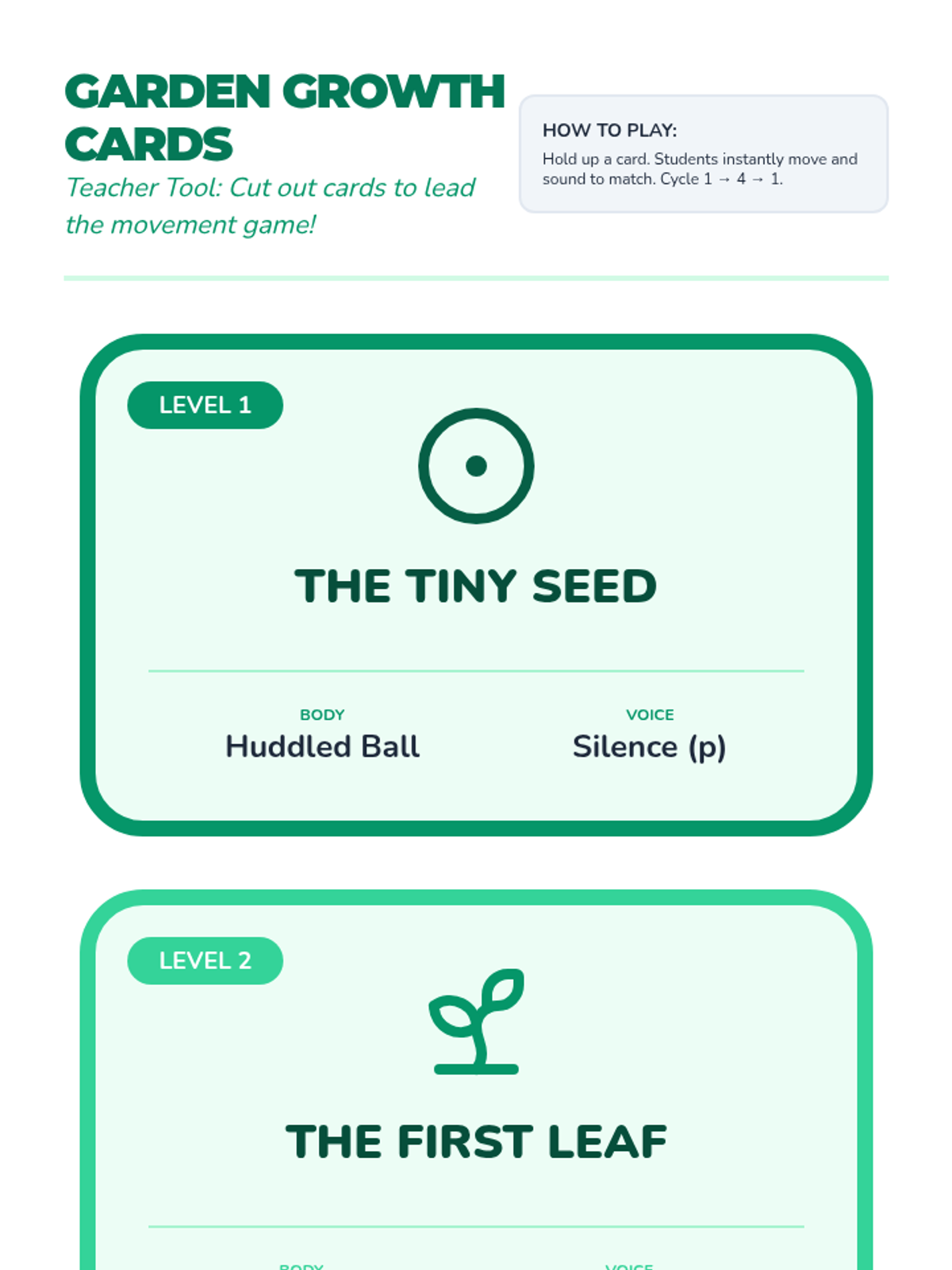
Large instructional game cards for the Seedling Symphony lesson, designed to be used by teachers to guide students through the physical and vocal changes associated with plant growth.
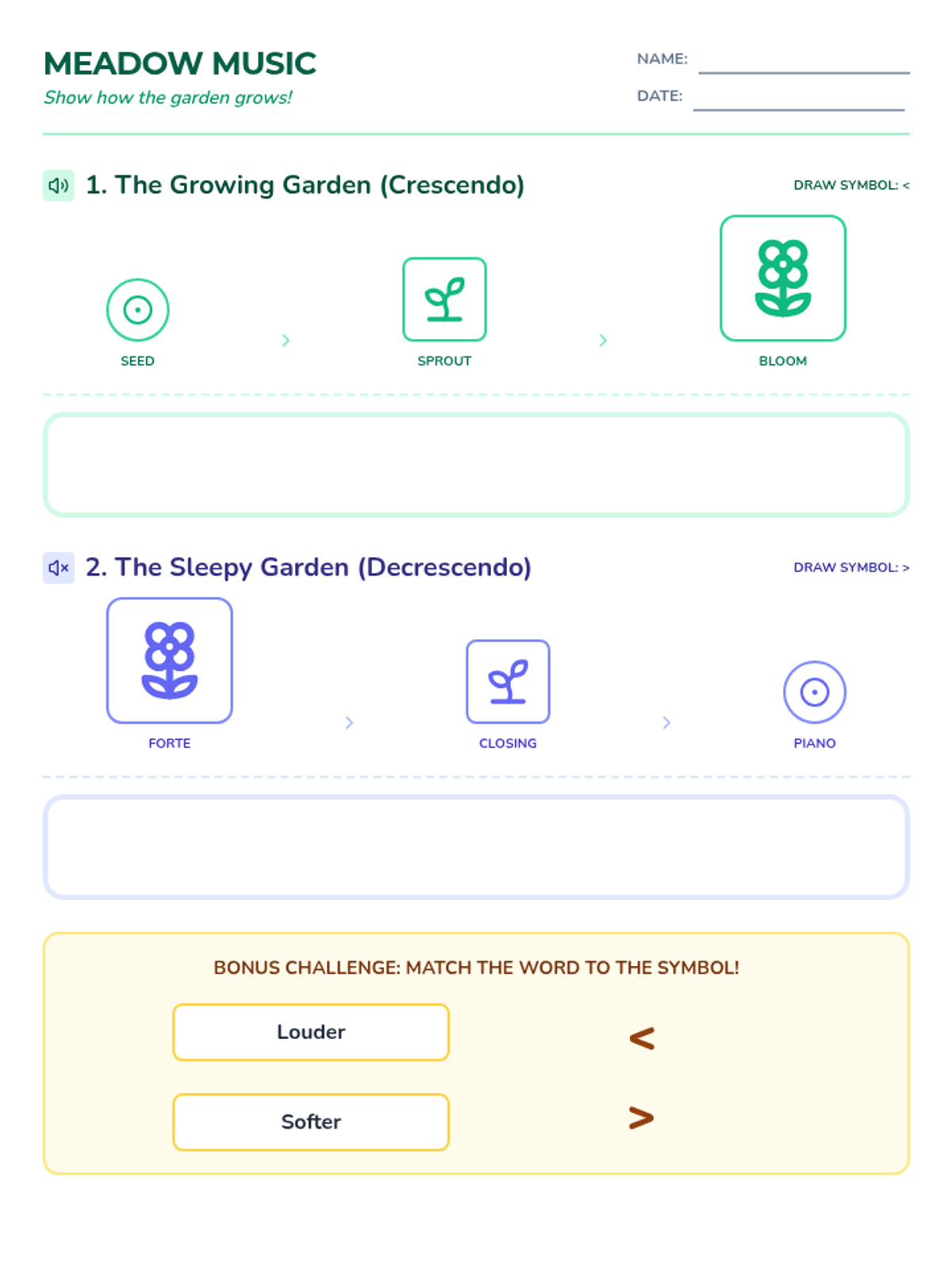
A student activity sheet for the Seedling Symphony lesson where children draw musical symbols to match stages of plant growth.
A vibrant slide deck that uses visual metaphors of plant growth to teach crescendo, decrescendo, piano, and forte to young learners.
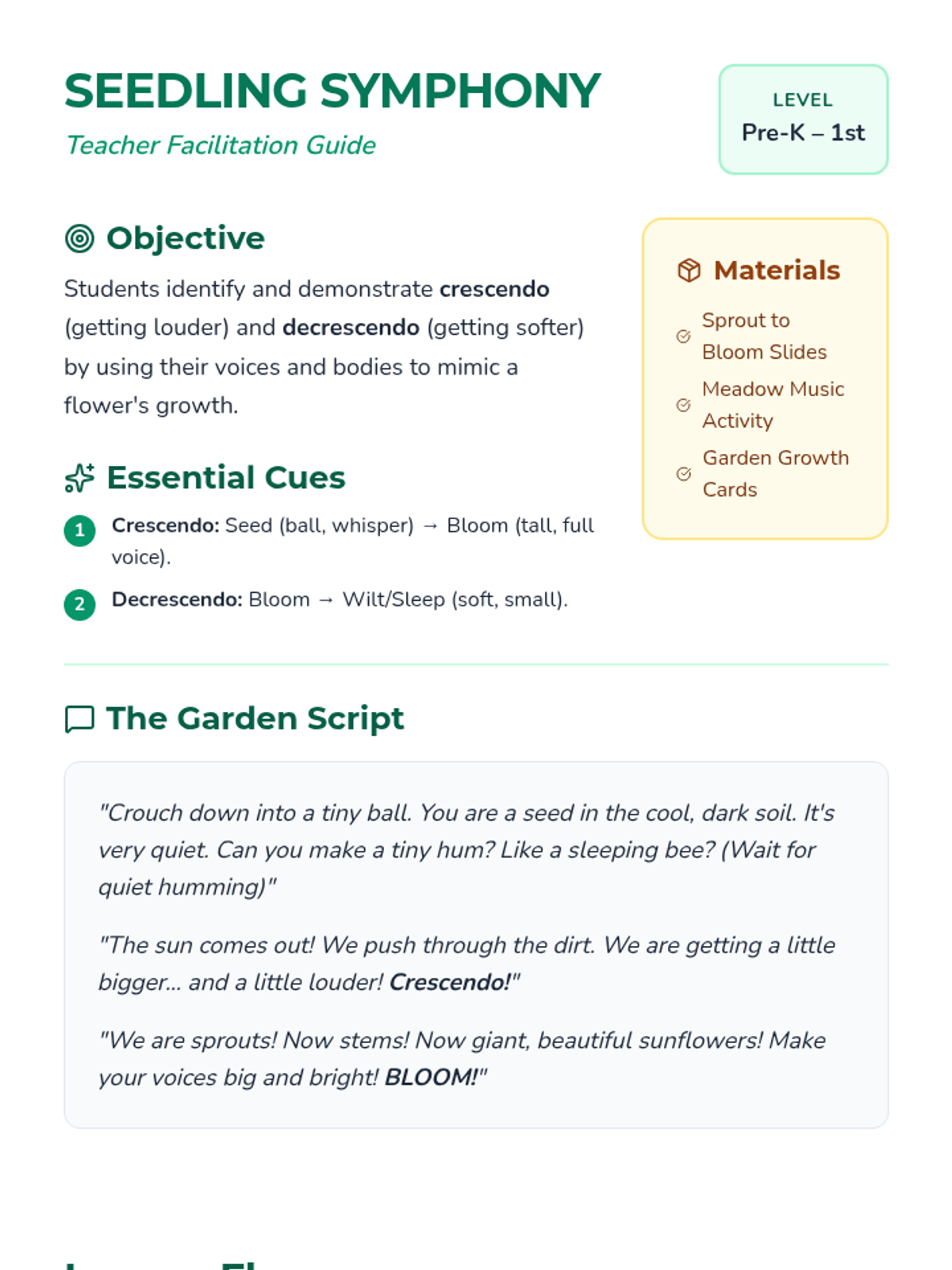
A comprehensive teacher's guide for the Seedling Symphony lesson, featuring learning objectives, a guided script, pacing suggestions, and an assessment checklist.
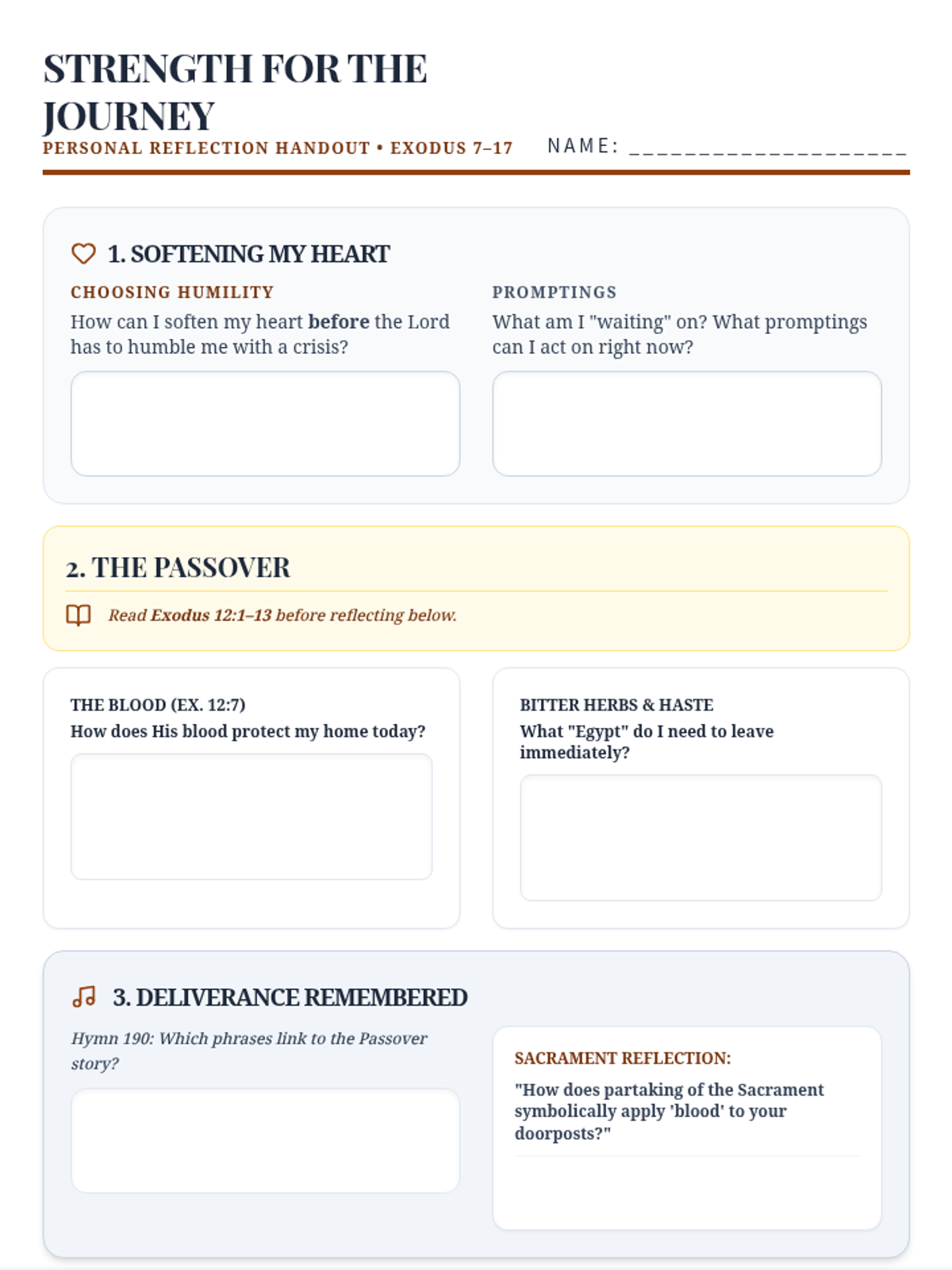
Updated student handout with specific reflection prompts in Part 5 regarding daily consistency and physical tasks, aligning with the updated lesson flow. Part 3 now includes the requested discussion question. Spacing optimized for two-page printing.
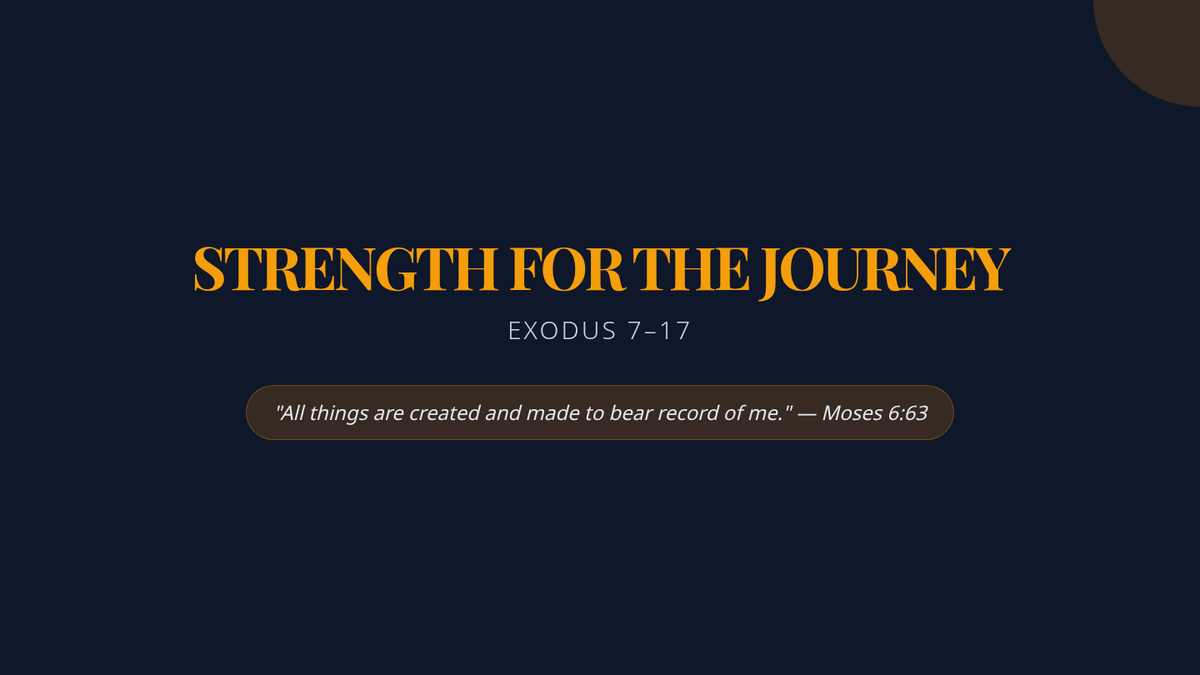
Updated lesson slides with a new slide (Slide 7) for Part 4: The Refining Wait. It explains how the Lord could have saved Israel on day one but waited to work on the hearts of others. All subsequent slides shifted accordingly. Layout and typography improved for clarity.
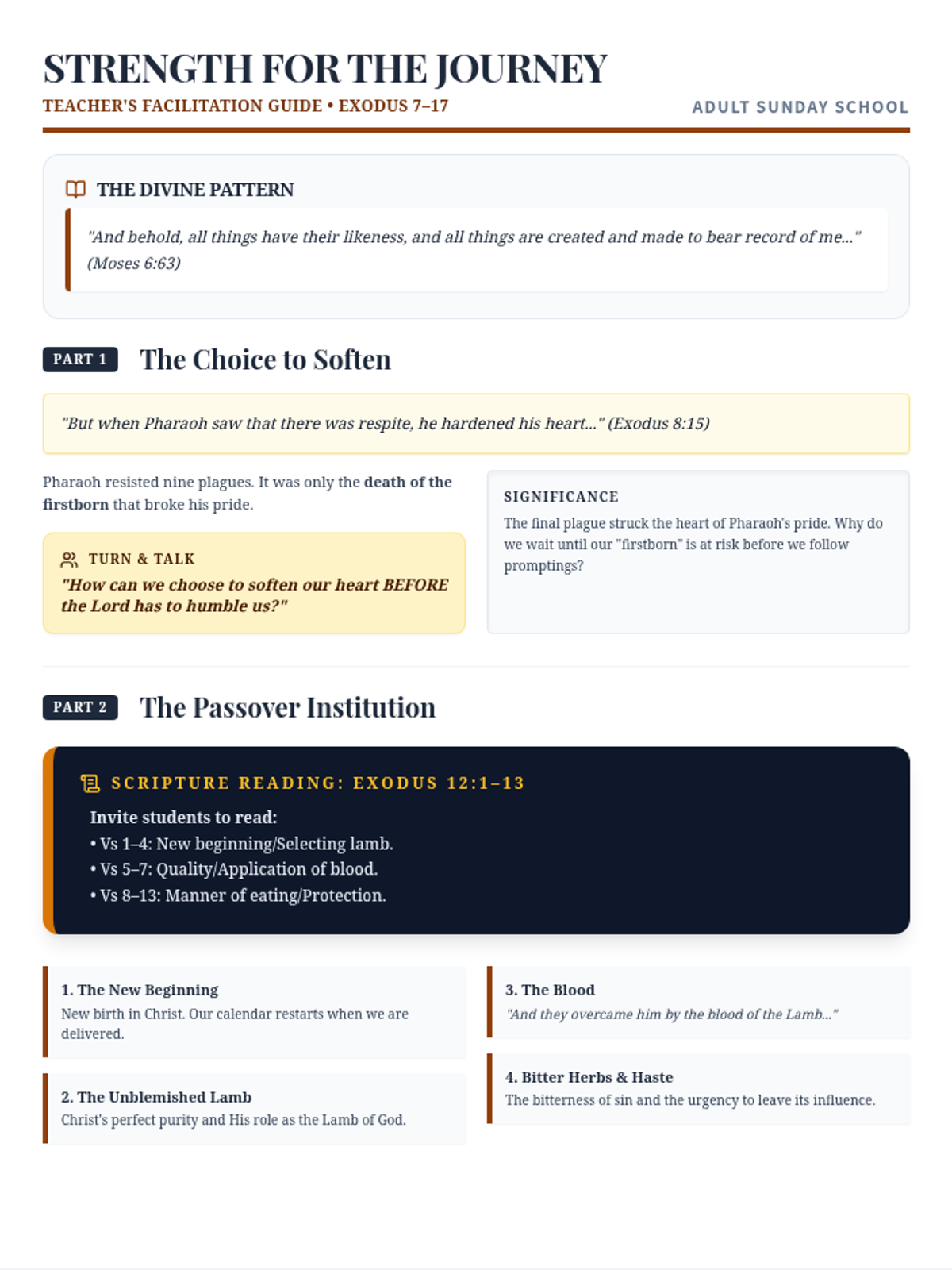
Updated Teacher Guide for the 'Strength for the Journey' lesson. Added explanation to Part 4 about how the Lord could have saved Israel on day one but waited to work on the hearts of others during the plagues. Consolidated reflection lines and improved page flow to 4 pages.
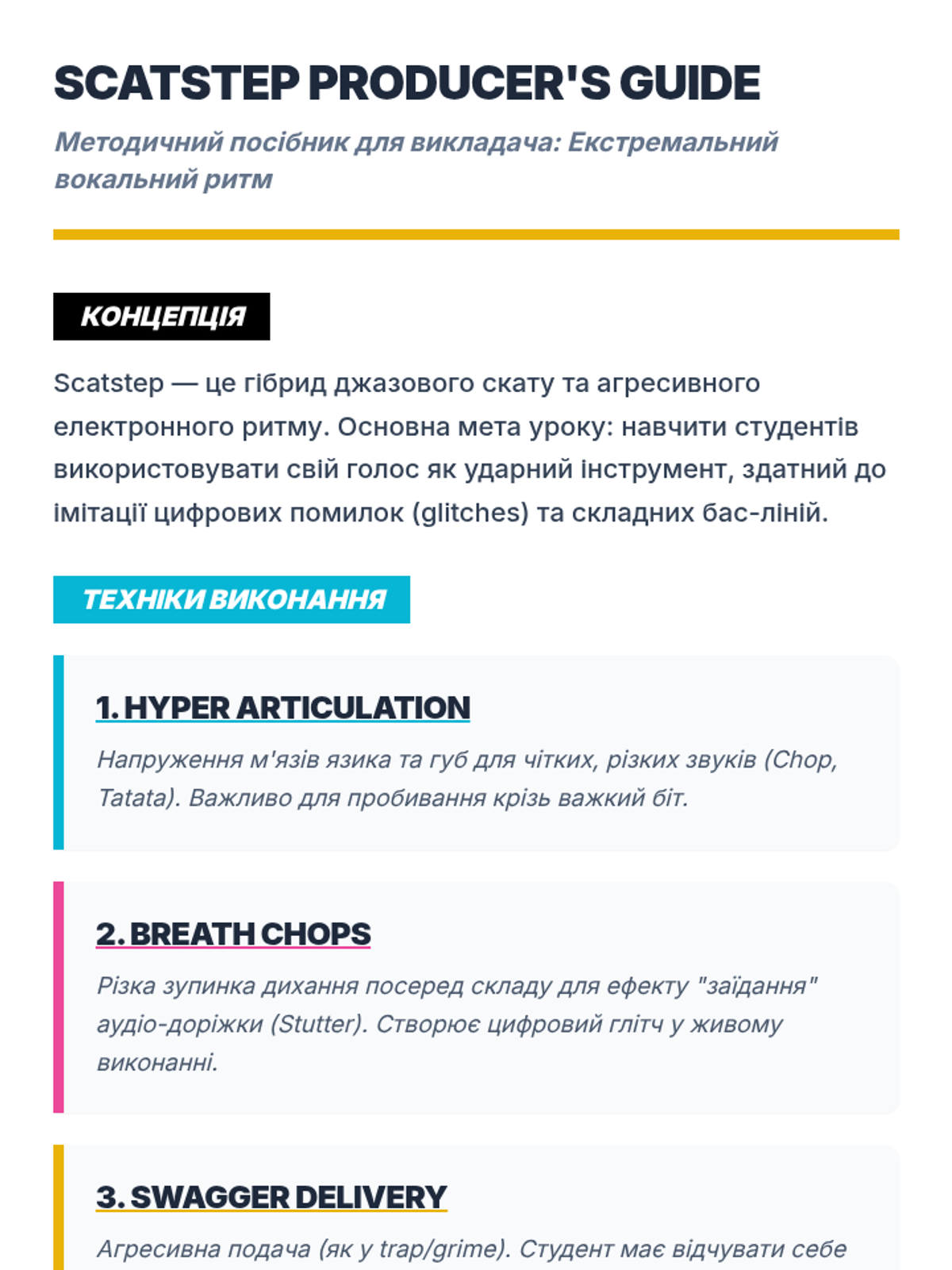
Методичний посібник для викладачів, що розкриває техніки гіперартикуляції, роботи з диханням та пояснює відповідність вокальних складів різним музичним жанрам.
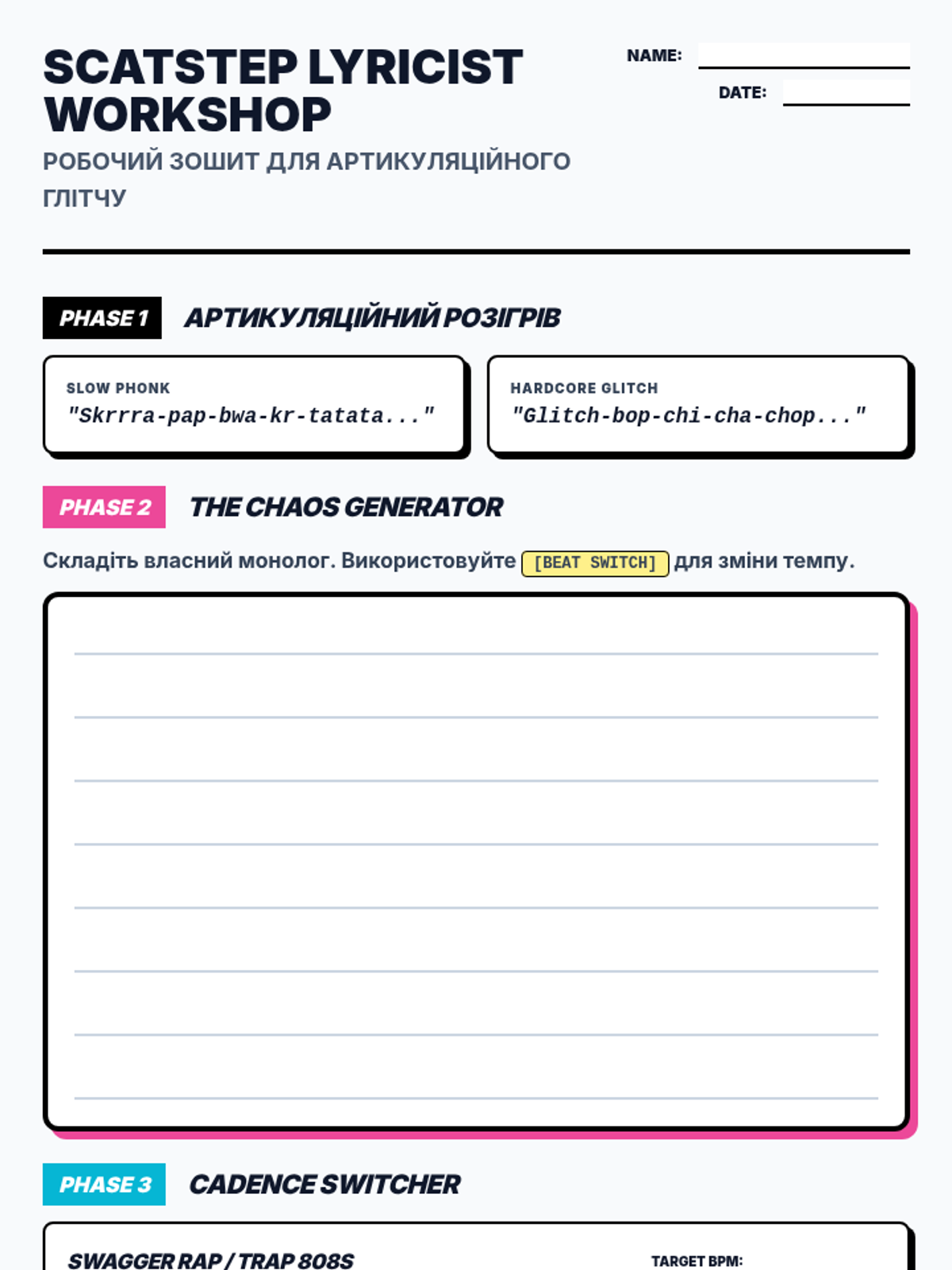
Робочий зошит для практики скат-монологів, що містить вправи на розігрів артикуляції, конструктор хаотичних текстів та трекер зміни темпу.
Презентація Scatstep Masterclass пояснює основи екстремального скату, включаючи фонетичний арсенал, структуру біта (phonk, hardbass, trap) та вправи на артикуляцію.
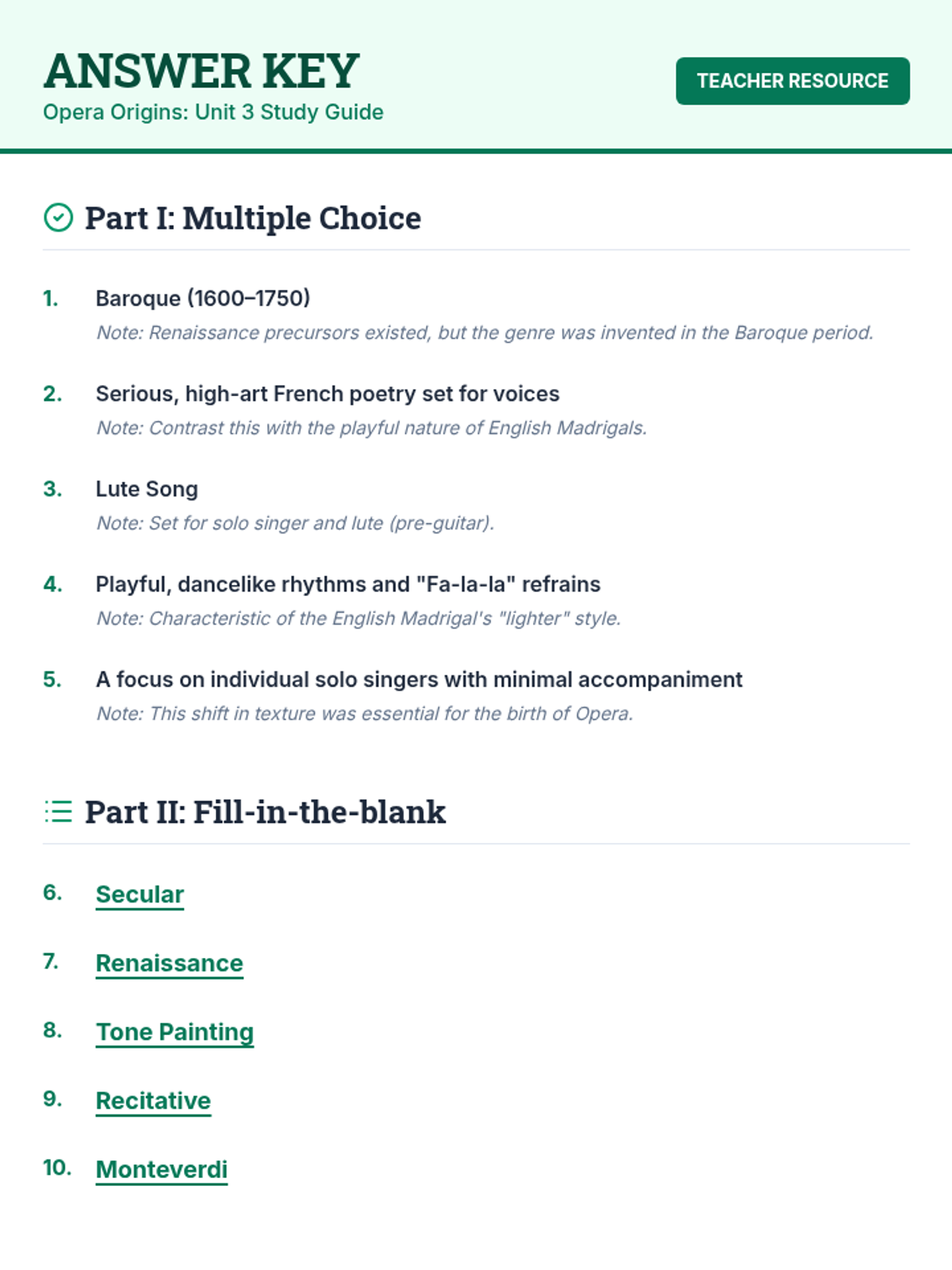
A teacher's answer key for the Opera Origins study guide, including correct responses and brief instructional notes for each question.
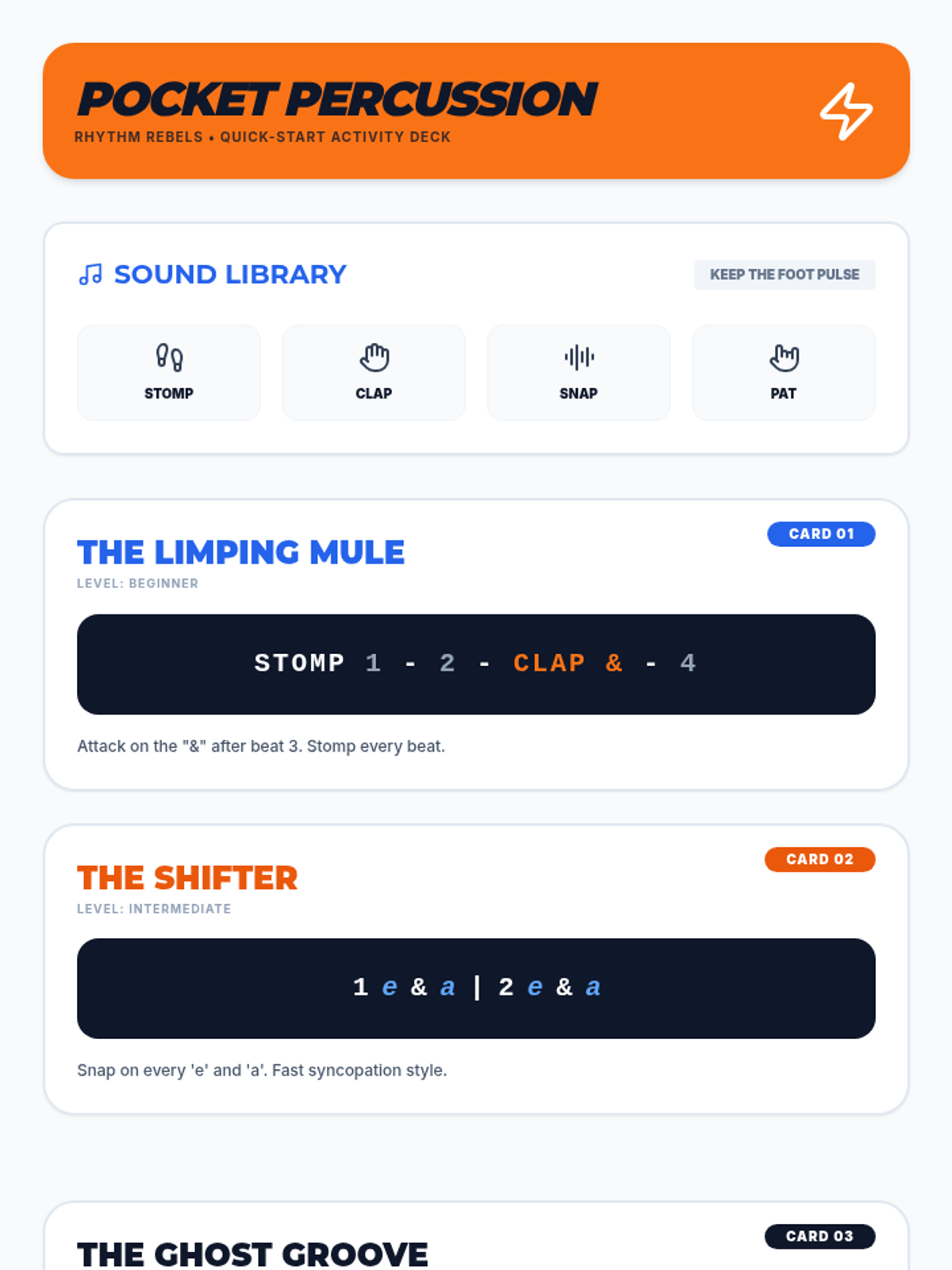
A set of 'Pocket Percussion' activity cards designed to help students practice body percussion and syncopation. It features a sound library (stomp, clap, snap, pat) and four progressive challenge cards to build rhythmic independence.
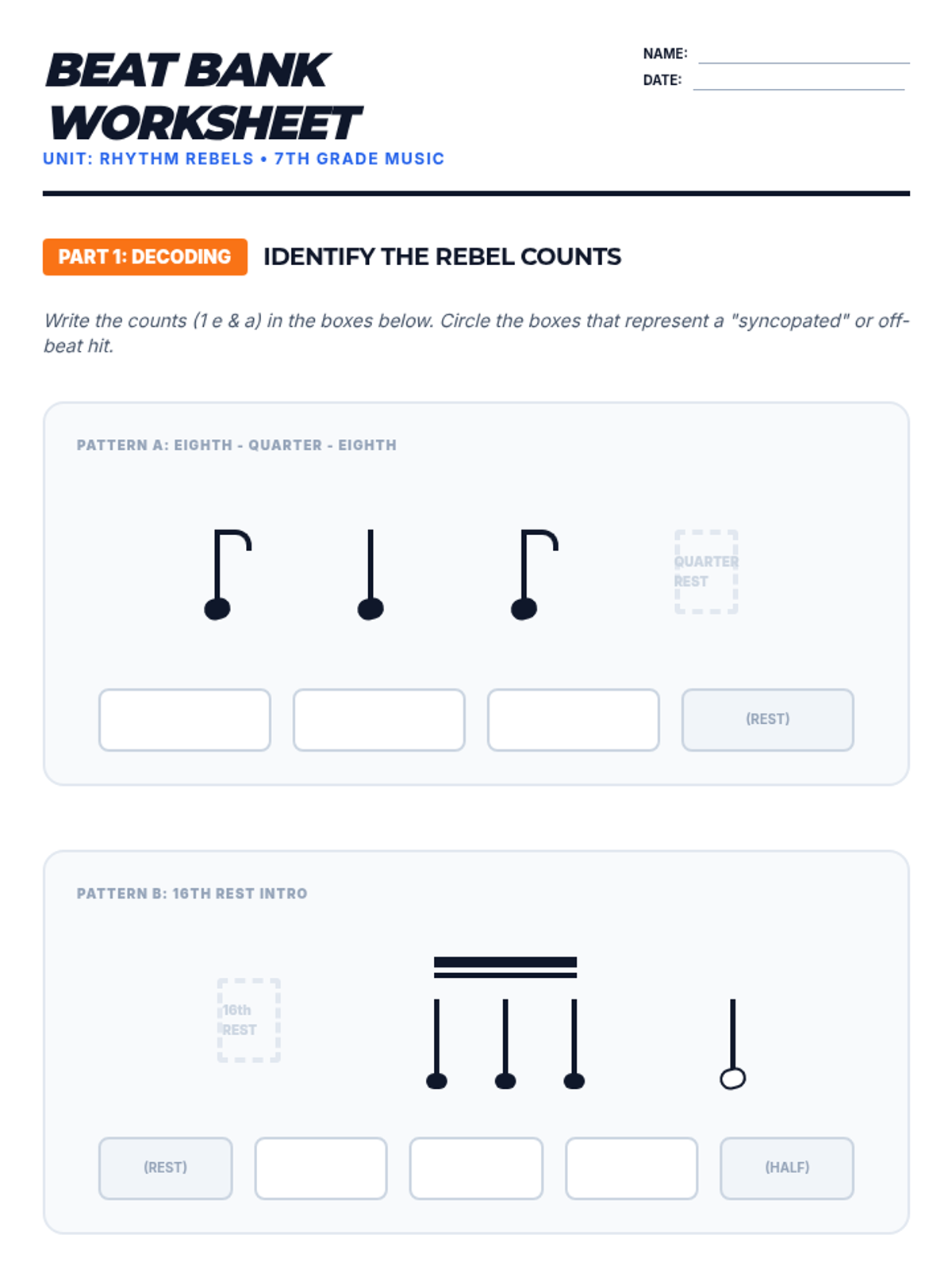
A student worksheet for the 'Rhythm Rebels' music lesson. It includes two parts: 'Decoding the Code' for rhythmic analysis practice and 'The Rebel Groove Composition' for students to write their own 4-measure syncopated rhythm.
An engaging 7-slide presentation for the 'Rhythm Rebels' music lesson. It uses a high-contrast industrial theme to teach syncopation, 16th-note grids, and counting techniques with bold visuals and clear step-by-step instructions.
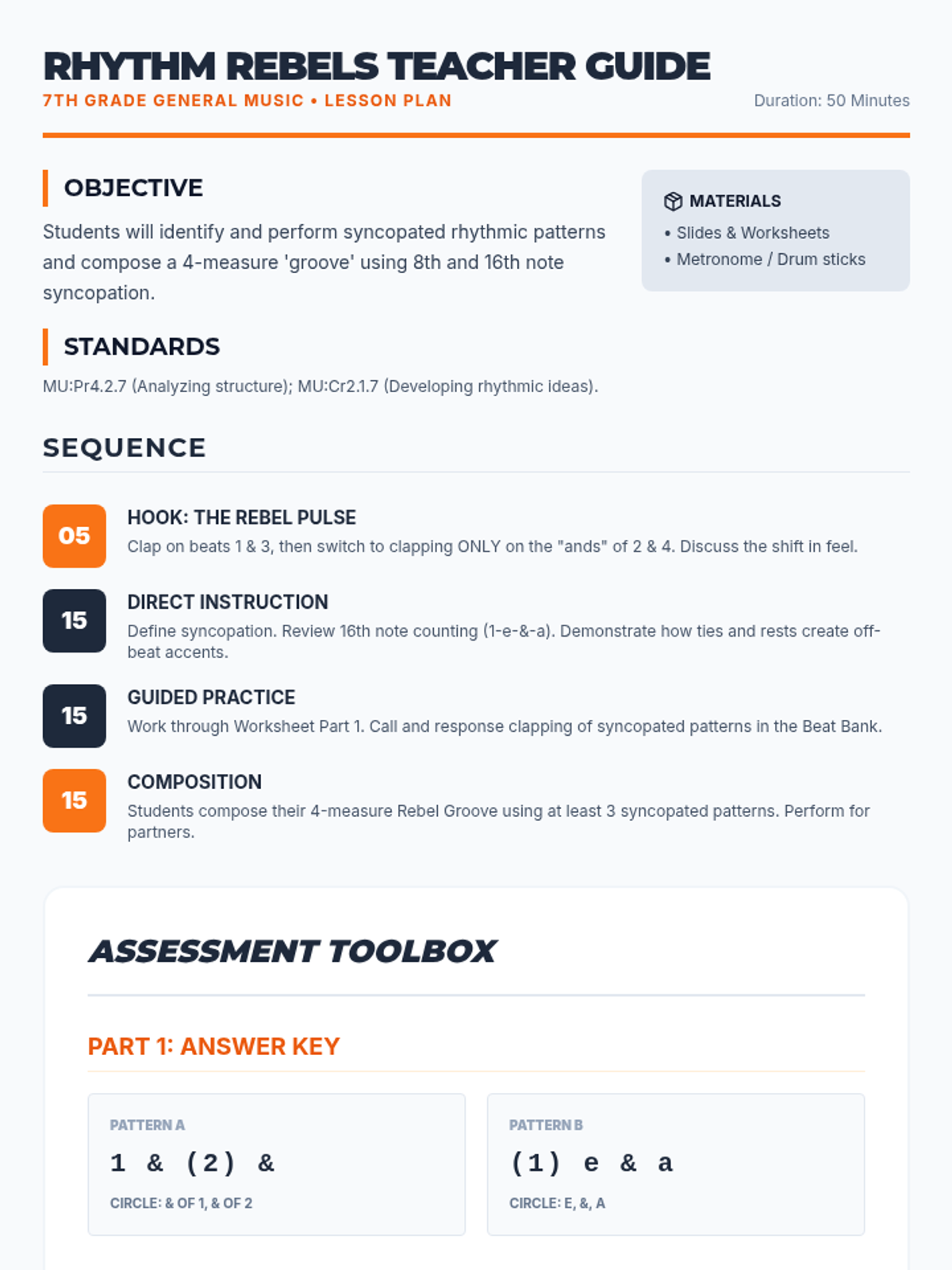
A comprehensive teacher's guide for the 'Rhythm Rebels' music lesson, featuring lesson objectives, a detailed 50-minute procedure, differentiation strategies, and an assessment rubric for the student composition task.
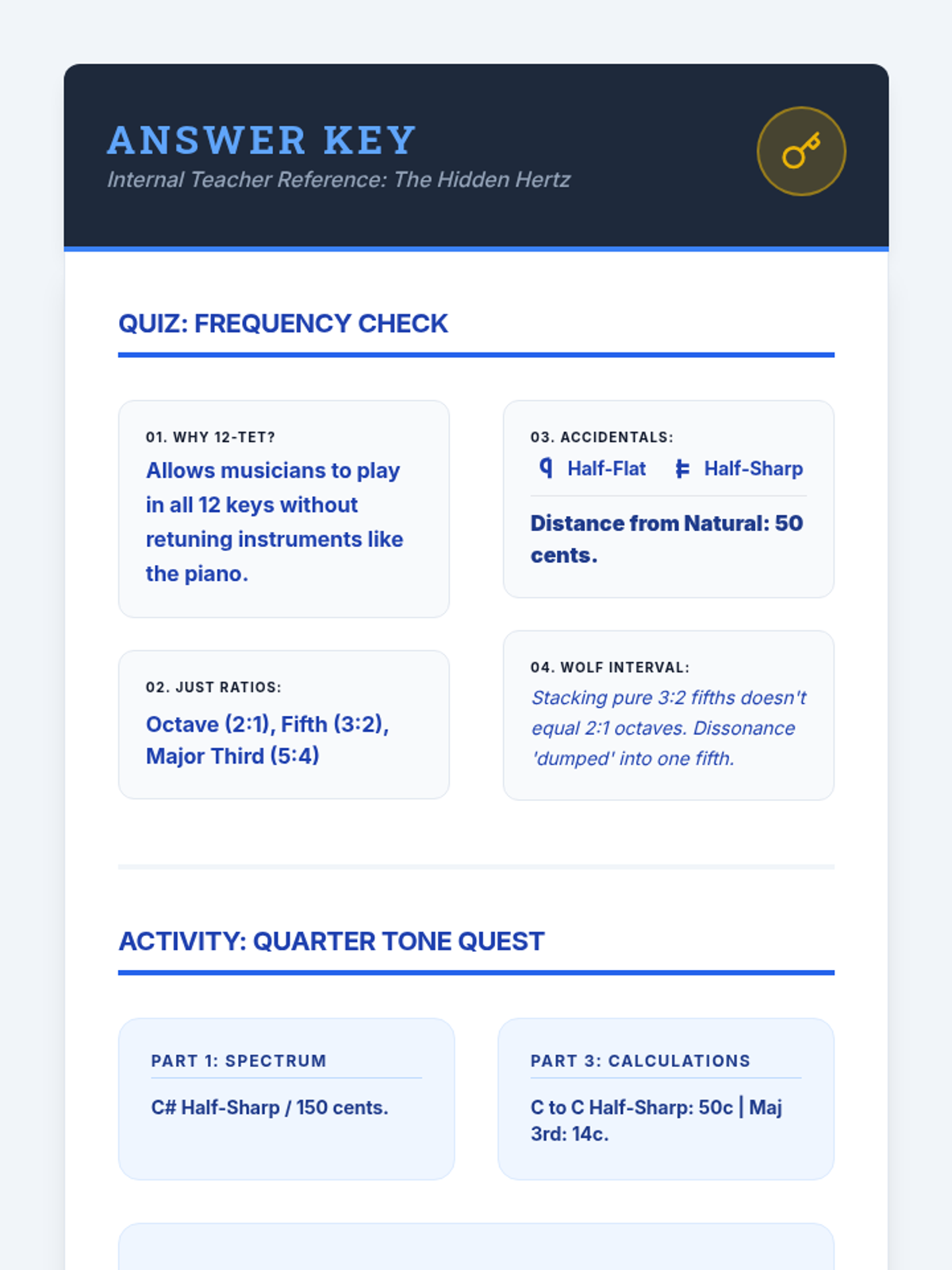
A combined answer key for the Frequency Check Quiz and the Quarter Tone Quest Activity, providing clear explanations for teachers.
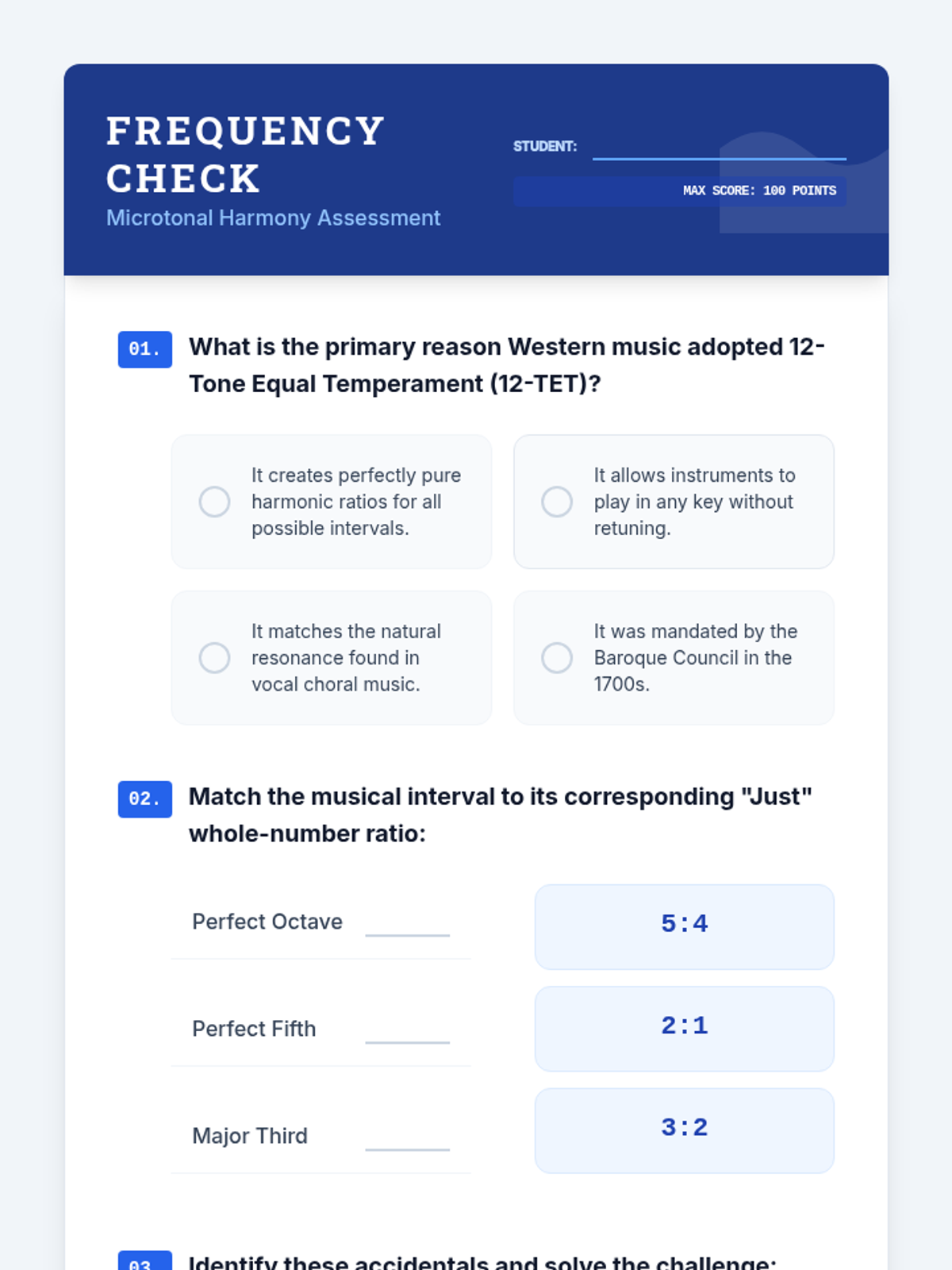
A summative quiz evaluating student understanding of tuning ratios, 12-TET vs. Just Intonation, microtonal symbols, and historical concepts like the Wolf Interval.
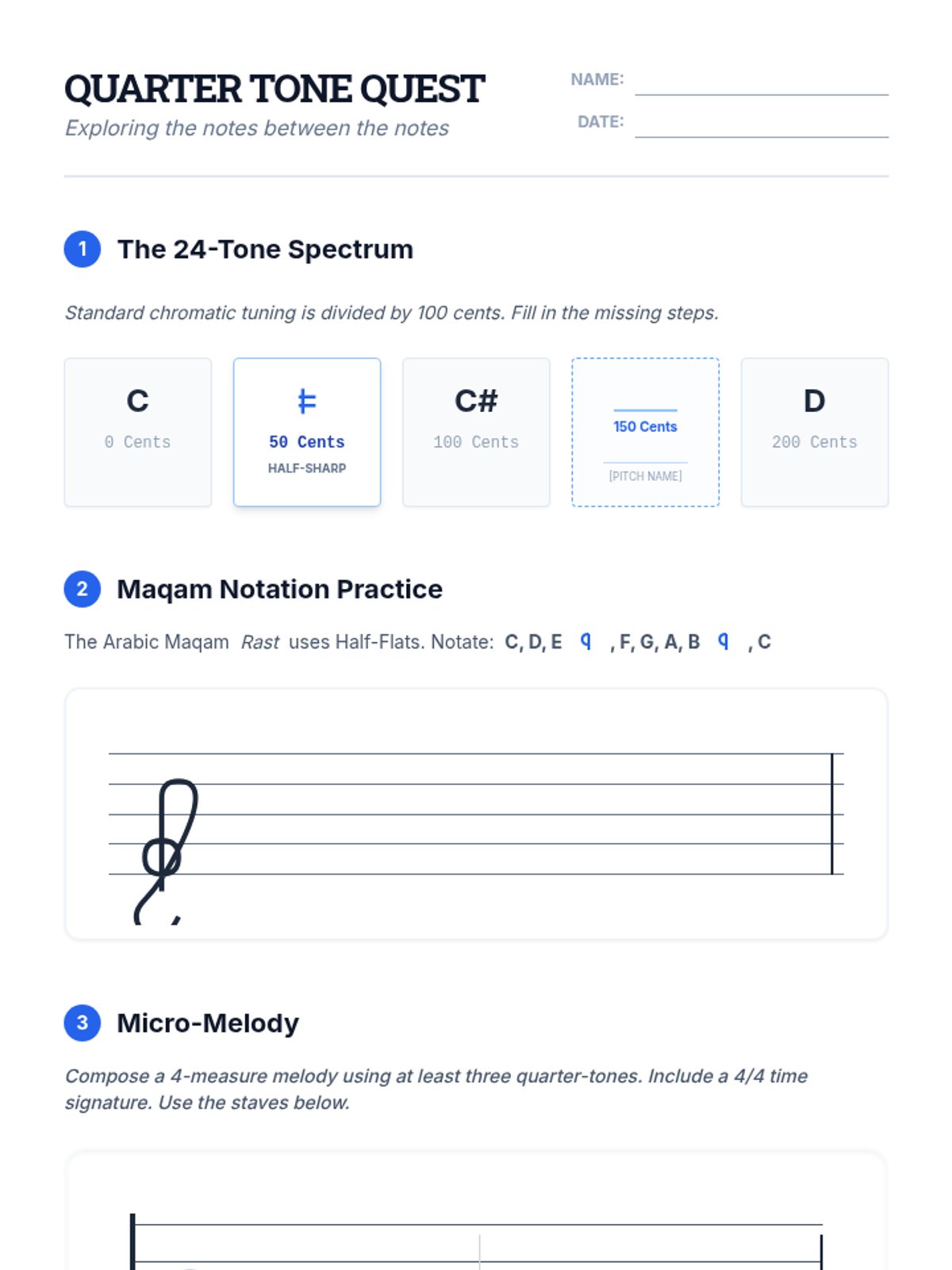
A practical worksheet for students to practice quarter-tone notation, calculate cent distances, and compose their own microtonal melodies.
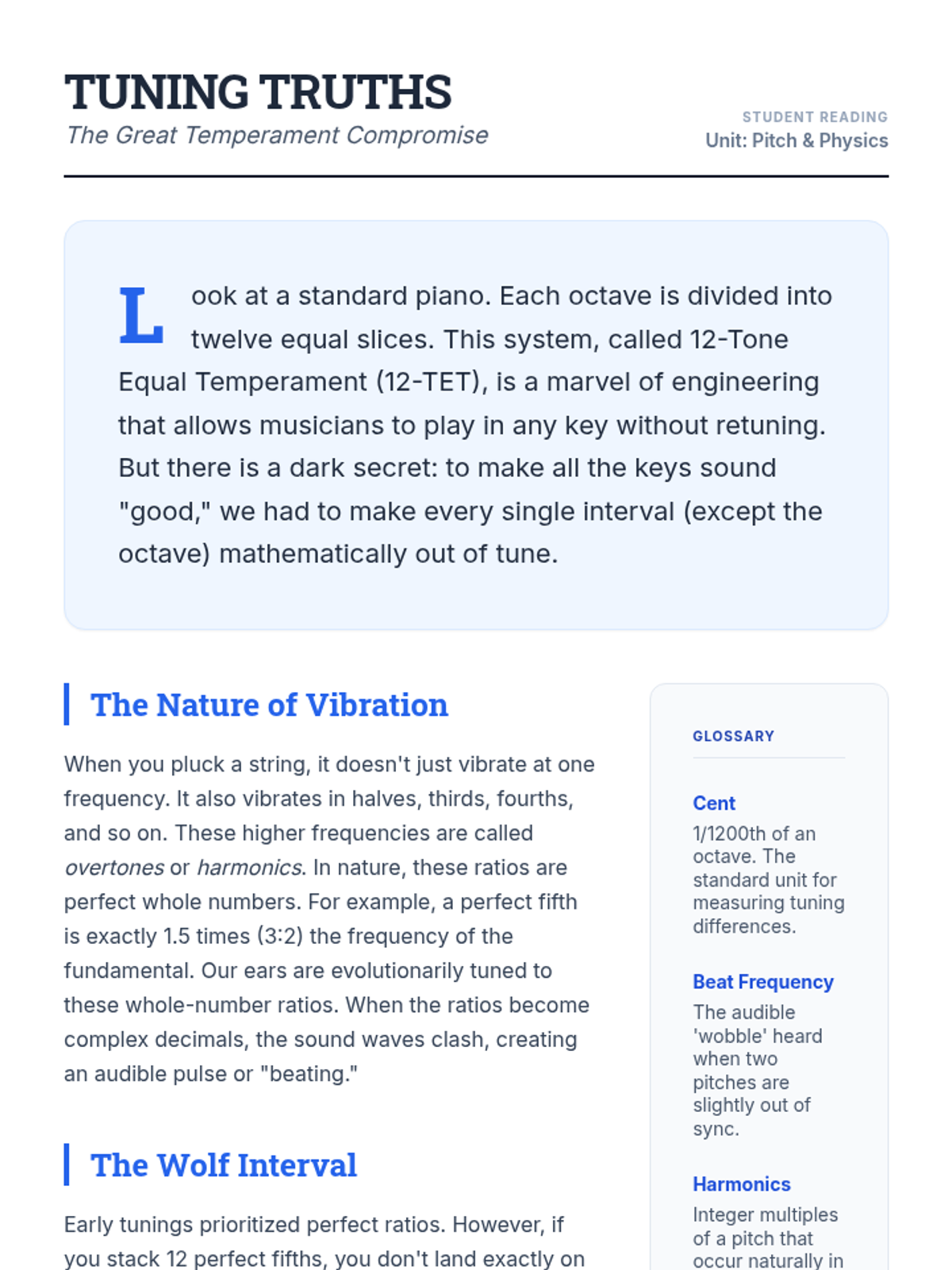
A deep-dive reading passage for students exploring the history of tuning, the physics of the harmonic series, and the trade-offs of Equal Temperament.
An engaging slide deck introducing microtonality, the physics of harmonic series, global tuning systems, and microtonal notation.
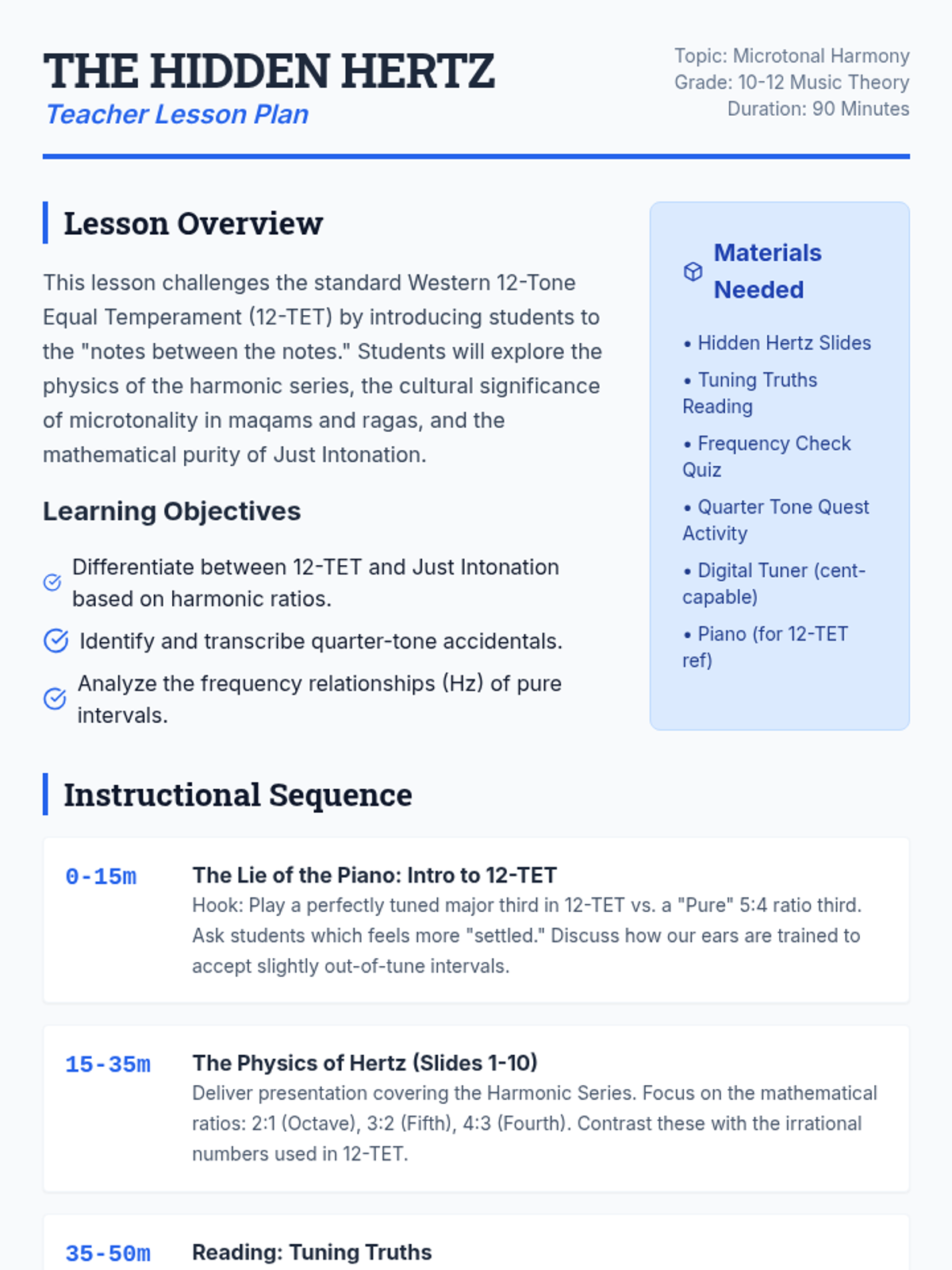
A comprehensive teacher lesson plan for introducing microtonal harmony, including learning objectives, a detailed pacing guide, and differentiation strategies.
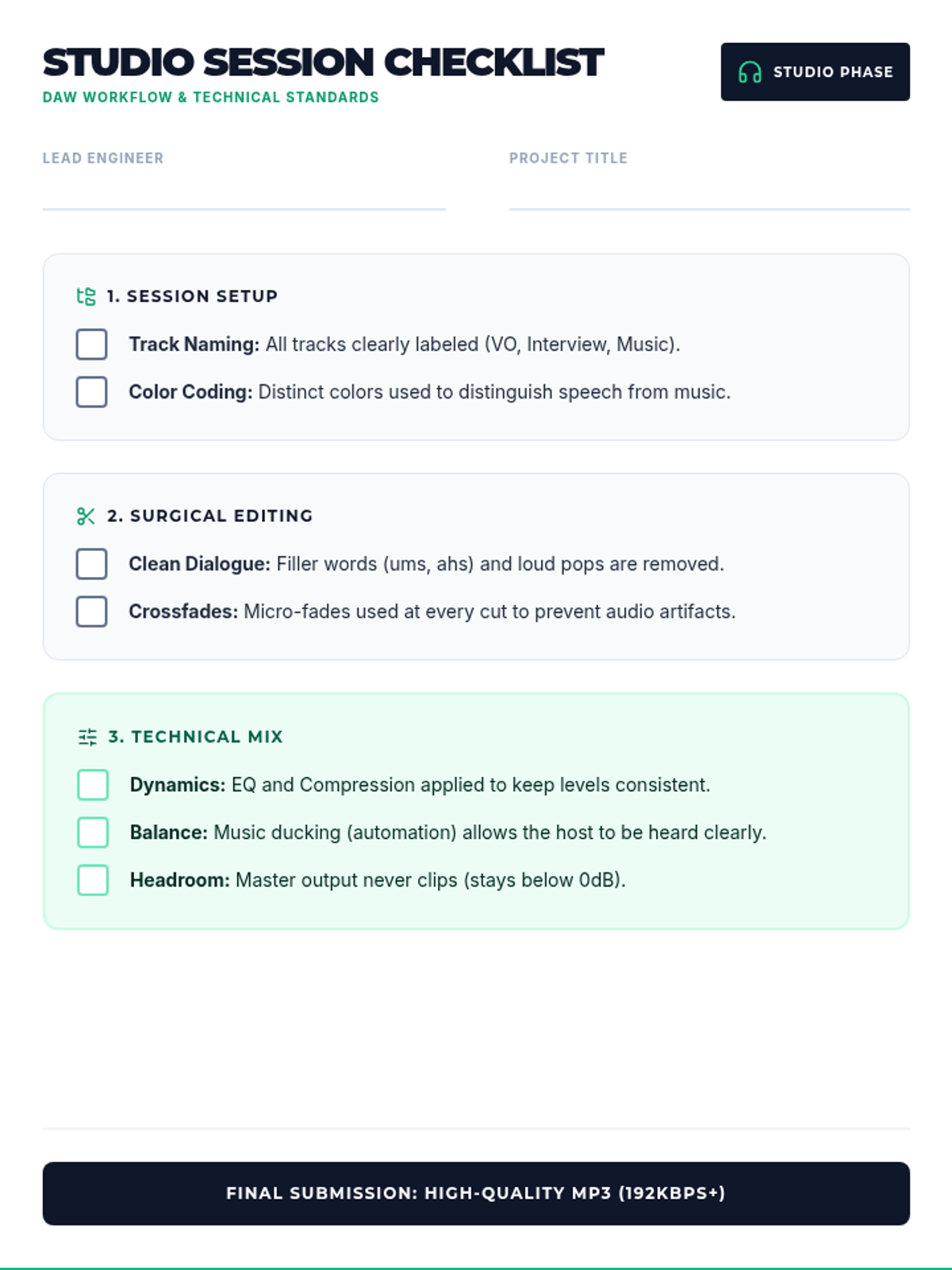
A technical checklist for students to follow during the production phase in Soundtrap. It ensures quality control across session organization, surgical audio editing, and professional mixing/mastering techniques.
Introductory slide deck for a podcasting unit. It covers the definition of the medium, the importance of "The Big Question" in journalism, ethical considerations in audio reporting, and an overview of the Soundtrap production workflow.
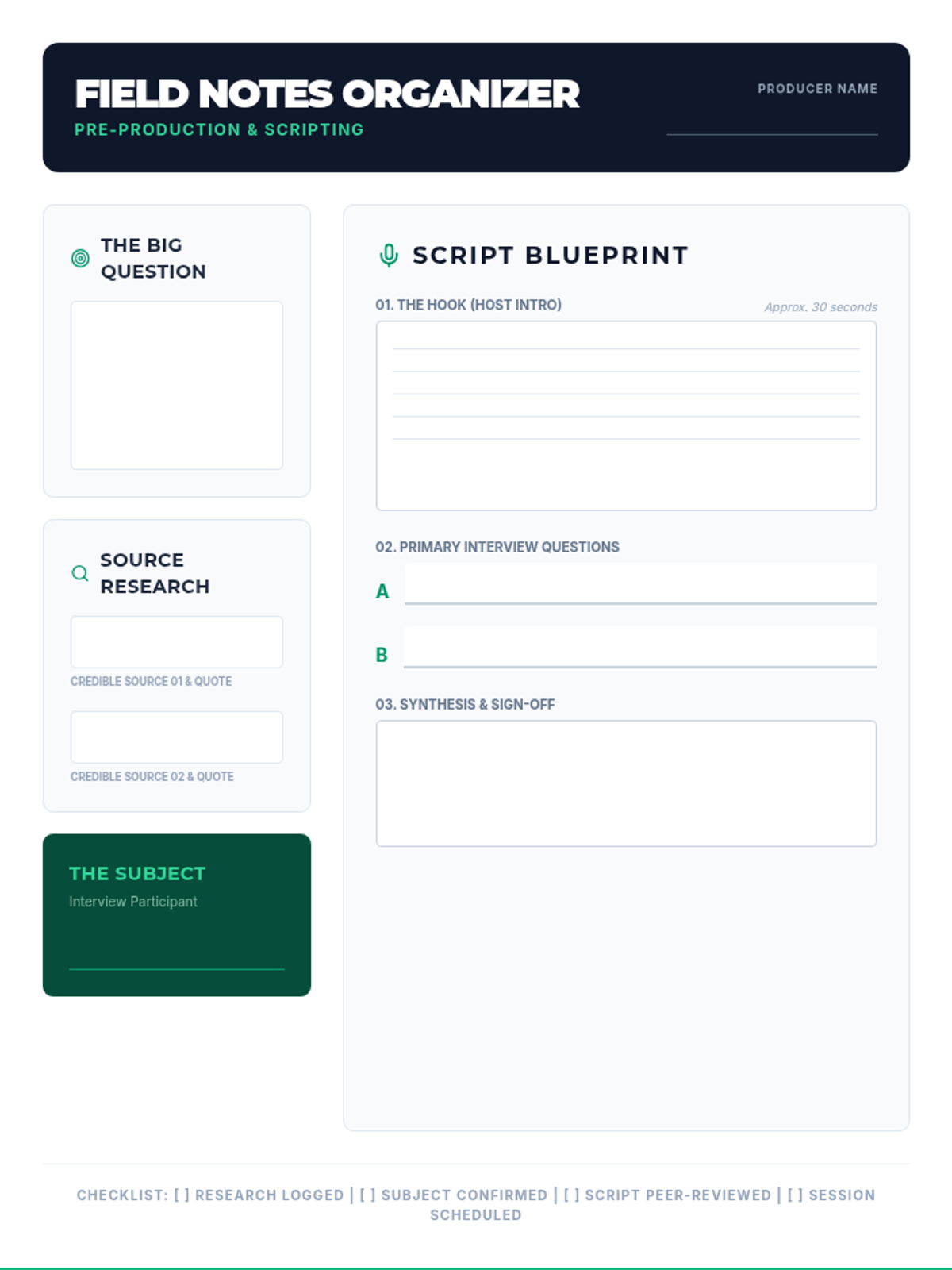
A student research and scripting organizer designed for the pre-production phase of a podcast. It guides students through defining their "Big Question," tracking sources, and drafting host narration and interview questions.
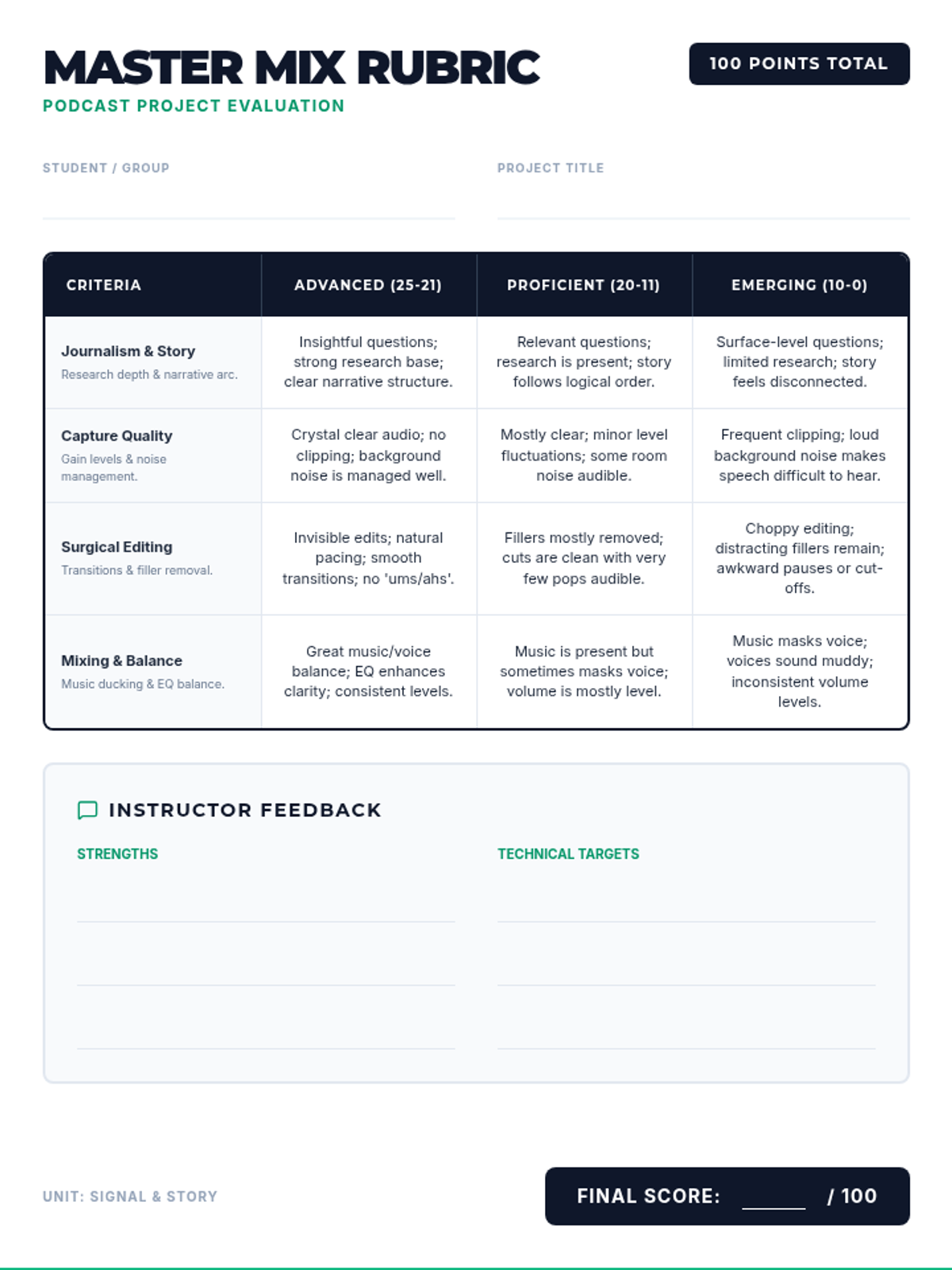
A professional project rubric for evaluating podcast productions. It balances journalistic criteria (research, questioning) with technical audio engineering requirements (mixing, editing, and audio quality) on a 100-point scale.
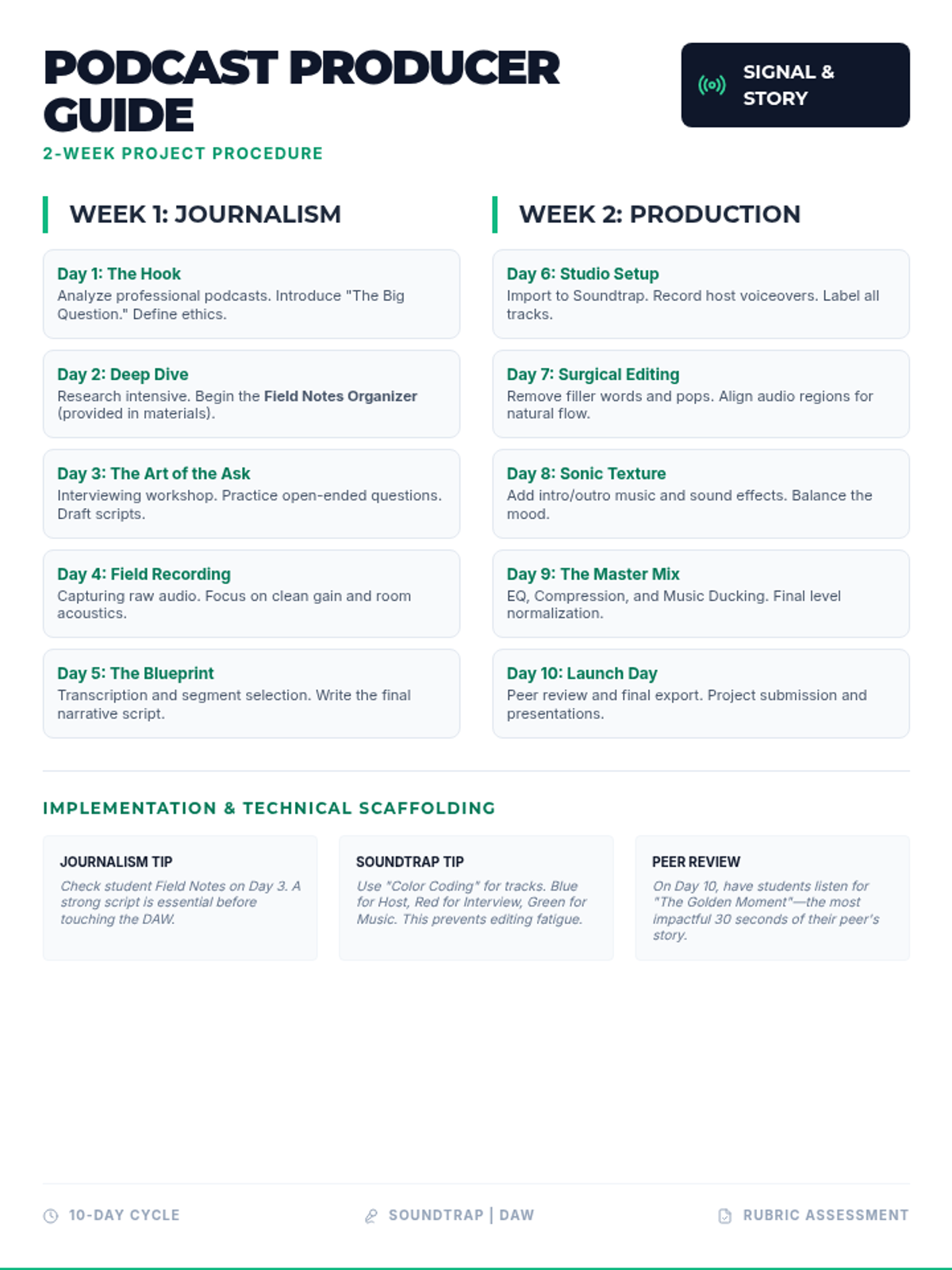
A comprehensive teacher's guide outlining a 10-day step-by-step procedure for a podcasting project. It includes daily lesson focuses, technical implementation strategies for Soundtrap, and journalistic scaffolding techniques.
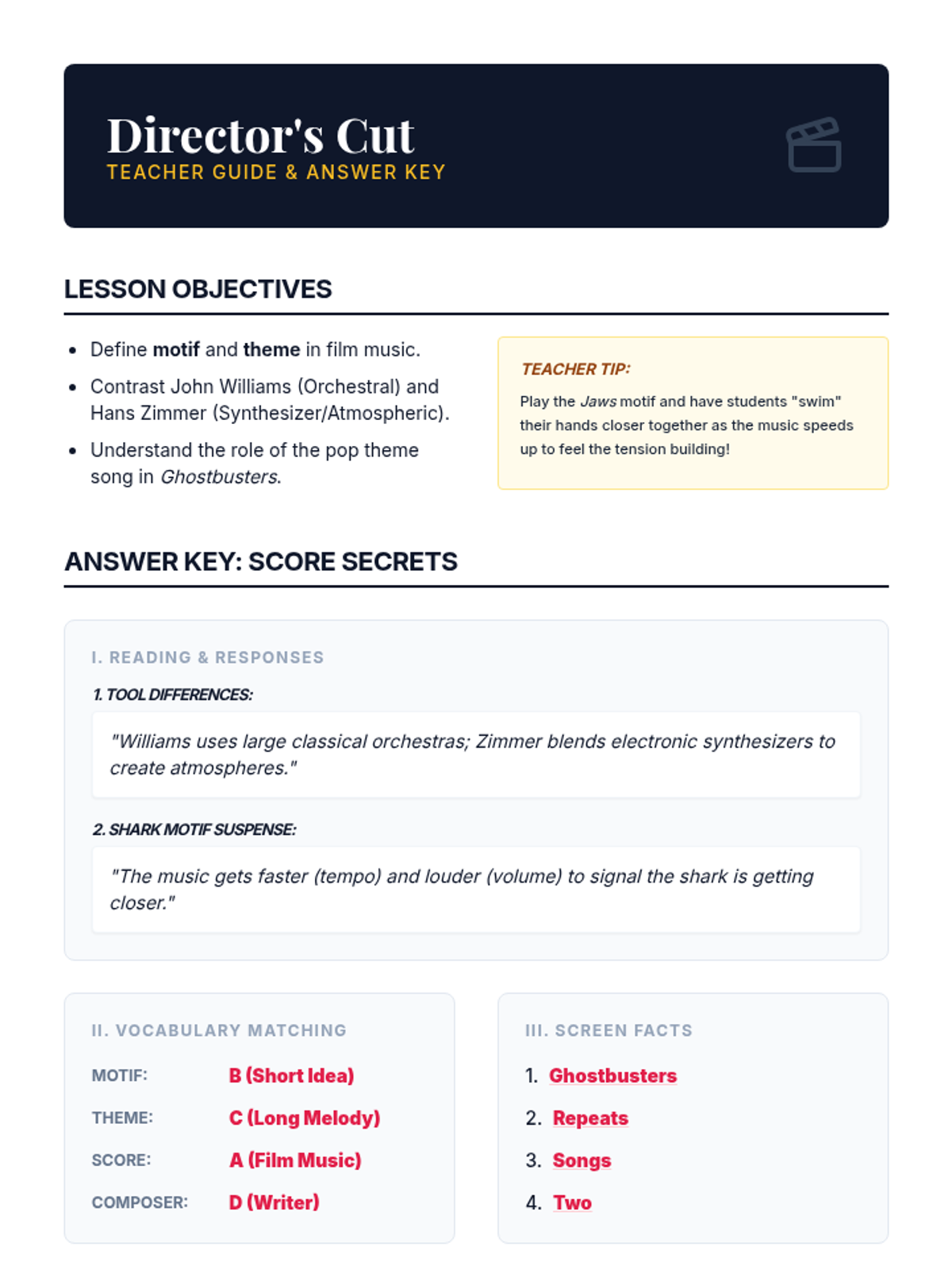
A teacher's guide containing lesson objectives, an answer key for the worksheet, and discussion prompts to facilitate the film music lesson. Revised for layout consistency and contrast.
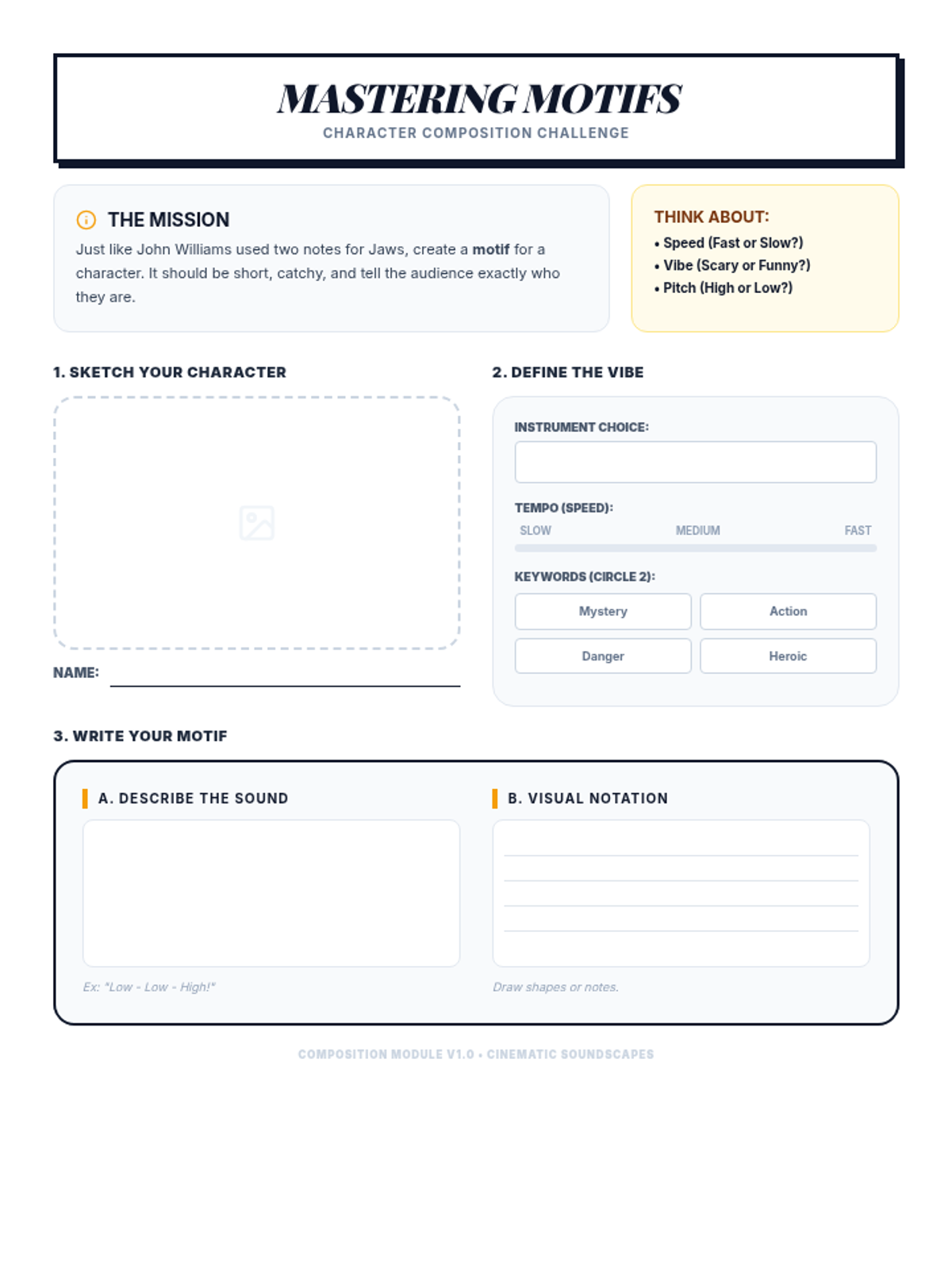
A creative composition activity where students design a character and create a musical motif to represent them, focusing on tempo, instrumentation, and pitch. Re-designed to fit on one page with toner-friendly light backgrounds.
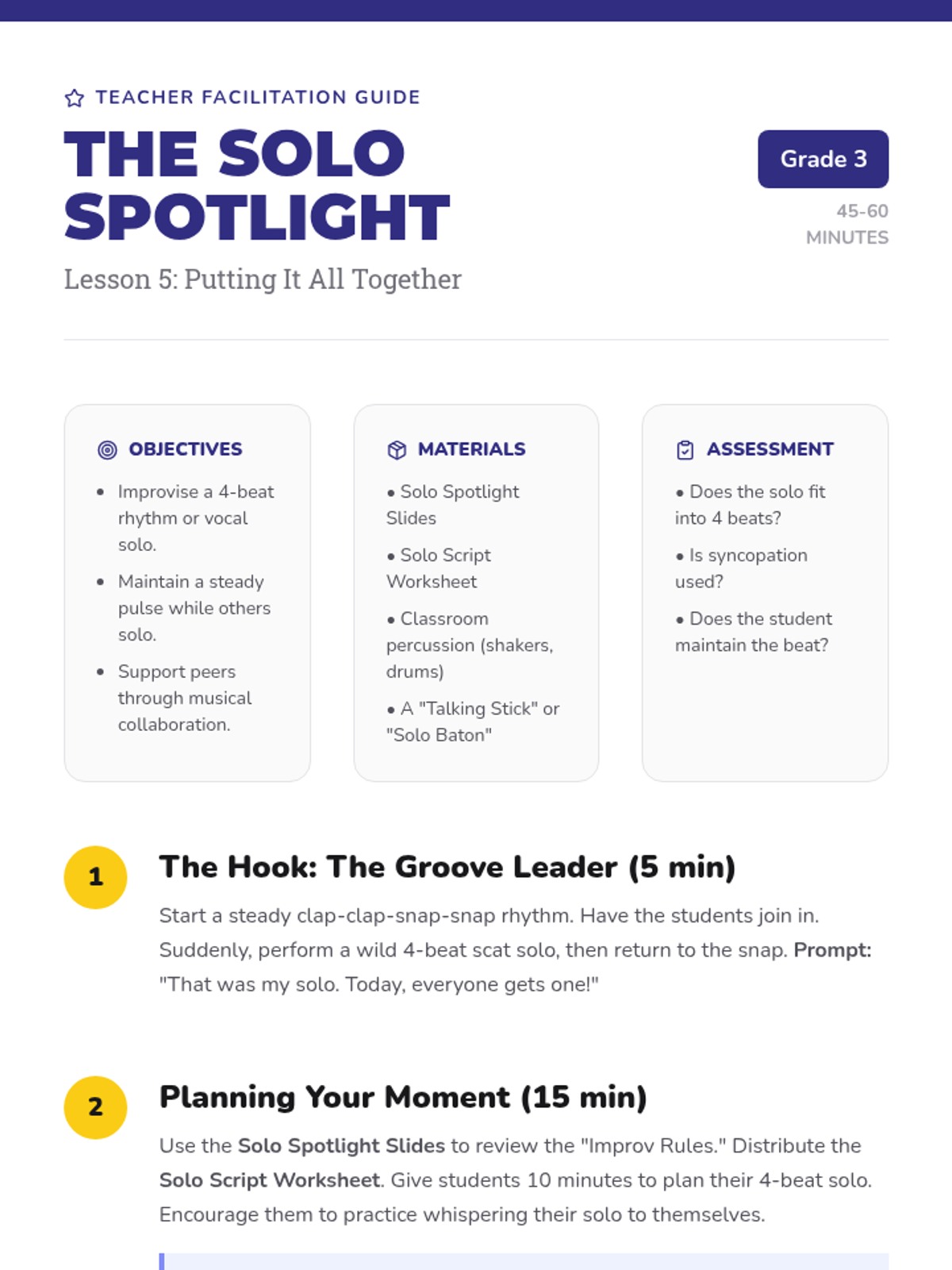
A facilitation guide for the final lesson, including solo circle rules and assessment criteria for student improvisation.
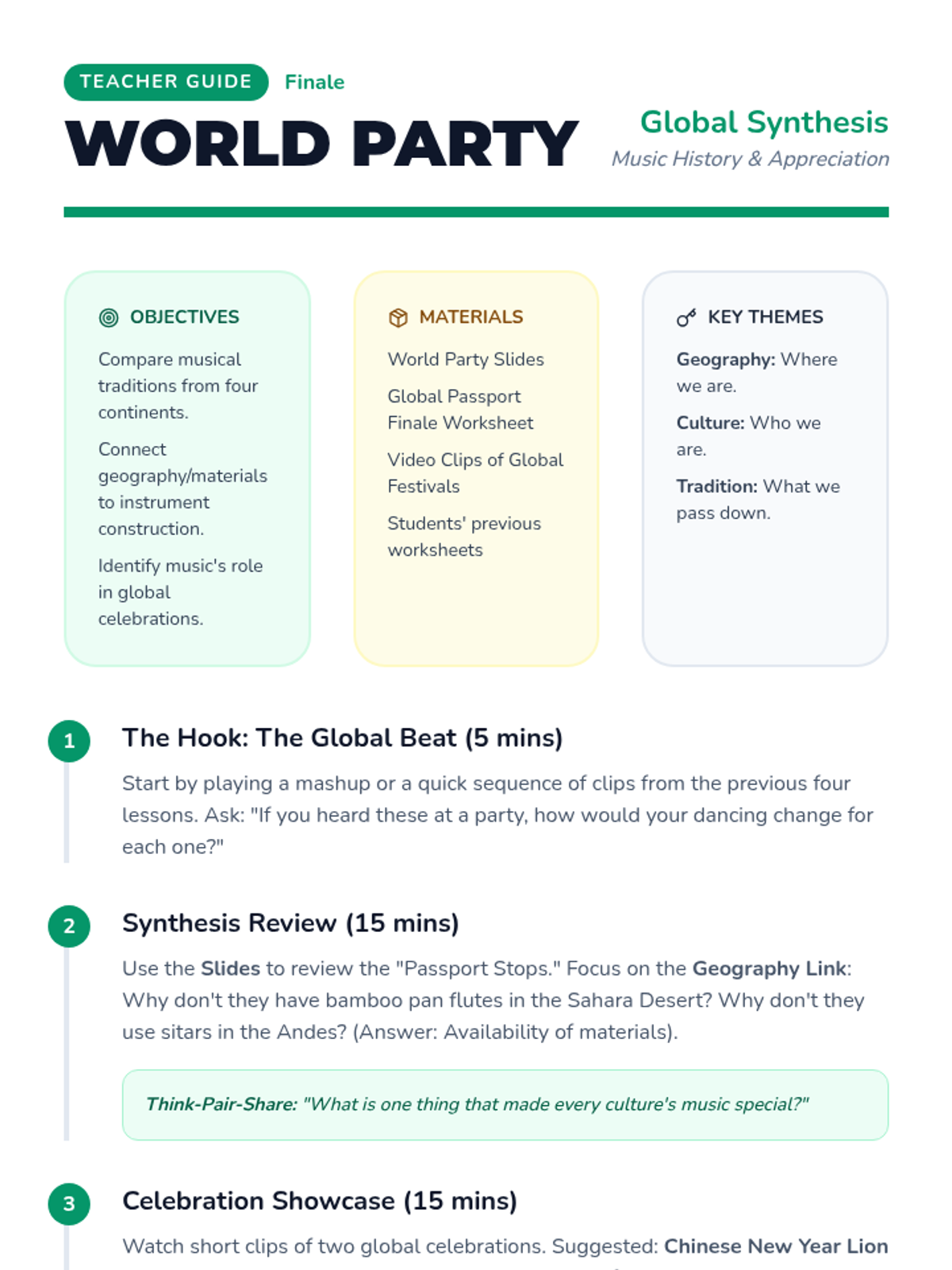
A teacher guide for the final lesson, providing a roadmap for synthesizing the global music journey and assessing student understanding of the sequence's essential question.
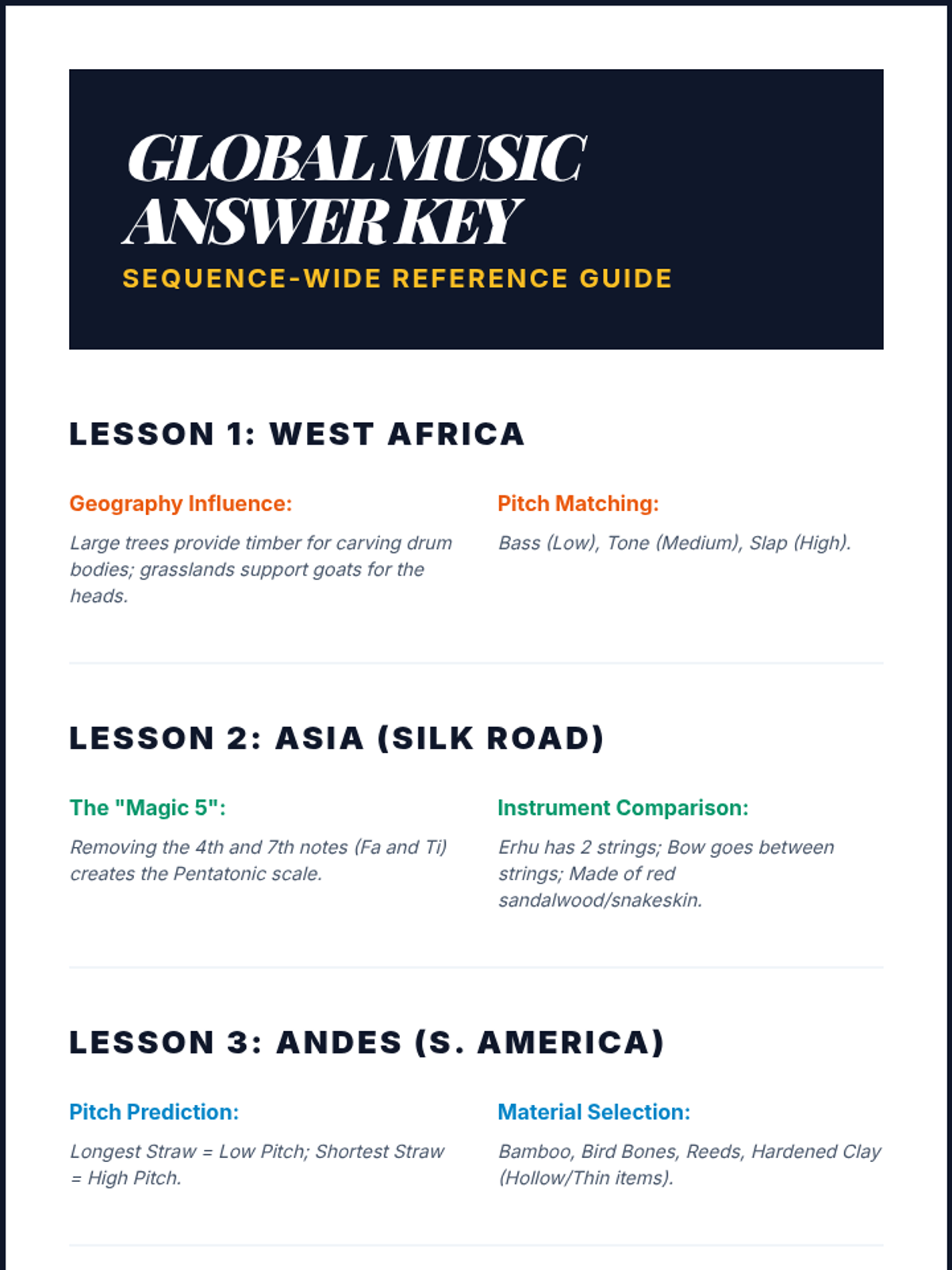
Comprehensive teacher answer key and reference guide covering all five lessons in the "Global Rhythm Quest" sequence.
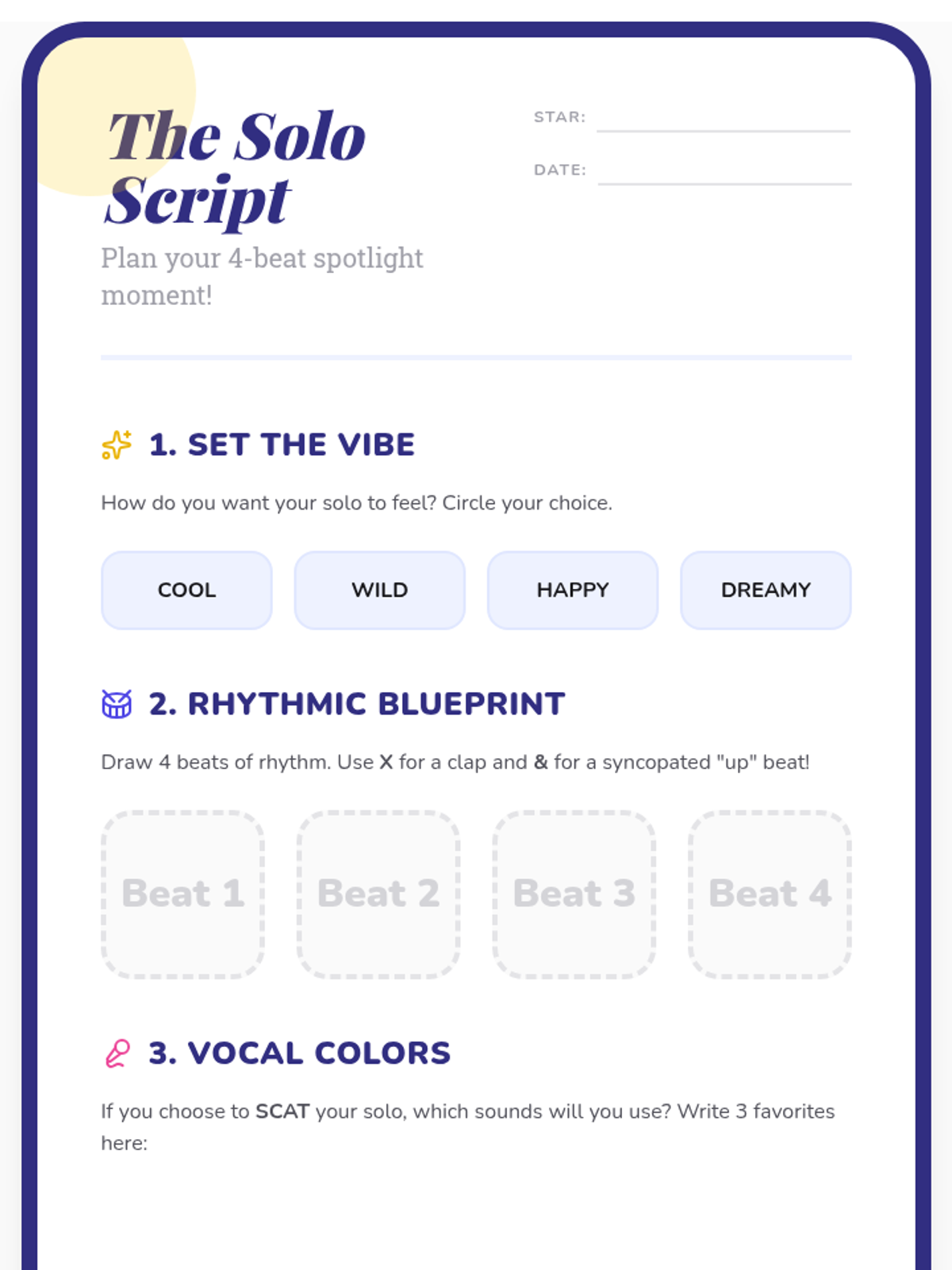
A student planning sheet for designing a simple 4-beat rhythm or scat solo for the final classroom improvisation circle. Identical styling applied to all mood options.
Final presentation slides for Lesson 5, reviewing the journey through music history and addressing the essential question regarding technology's impact on sound.
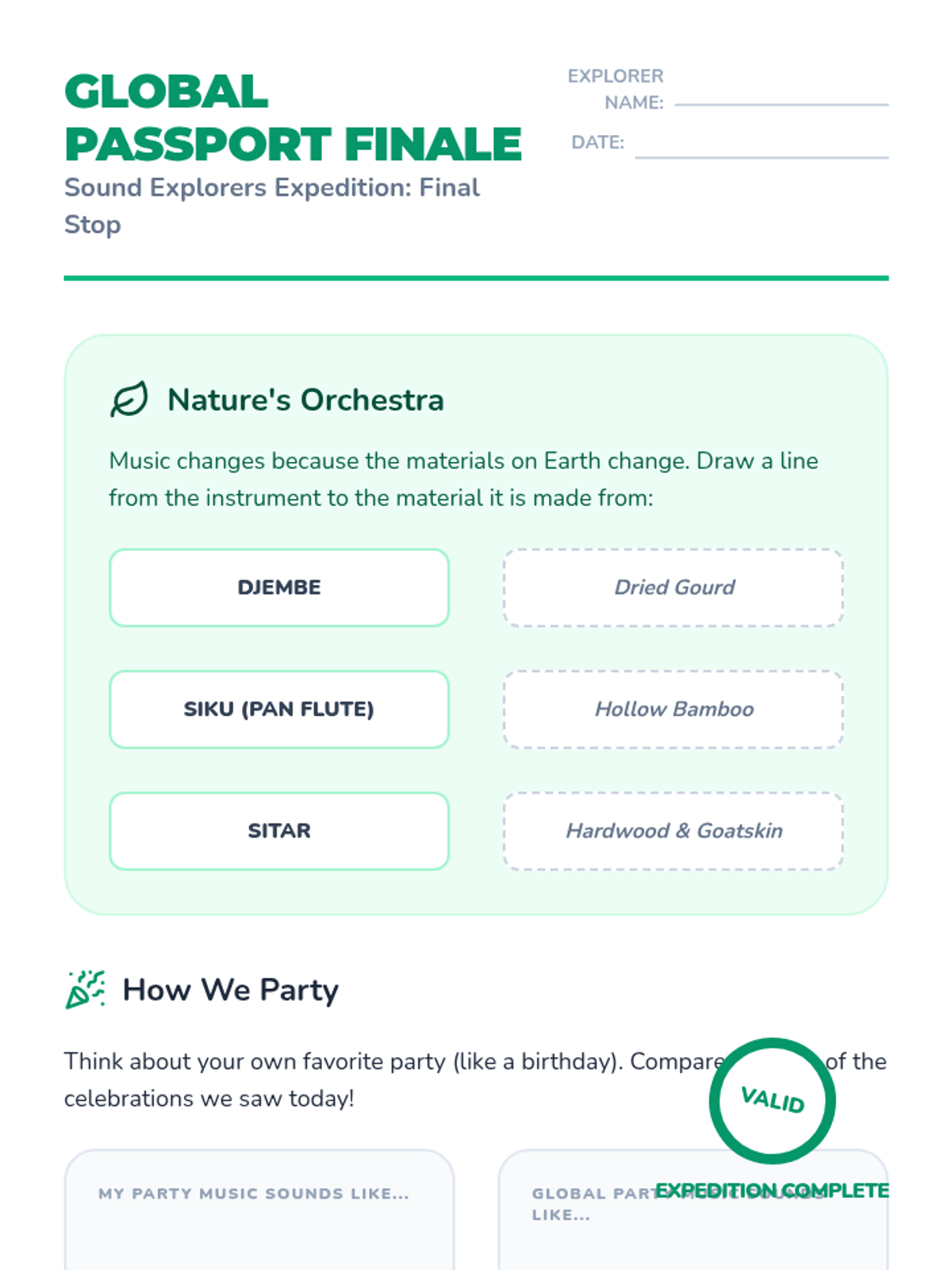
A final synthesis worksheet for students to compare musical instruments, materials, and cultural celebrations, acting as a final "passport" reflection.
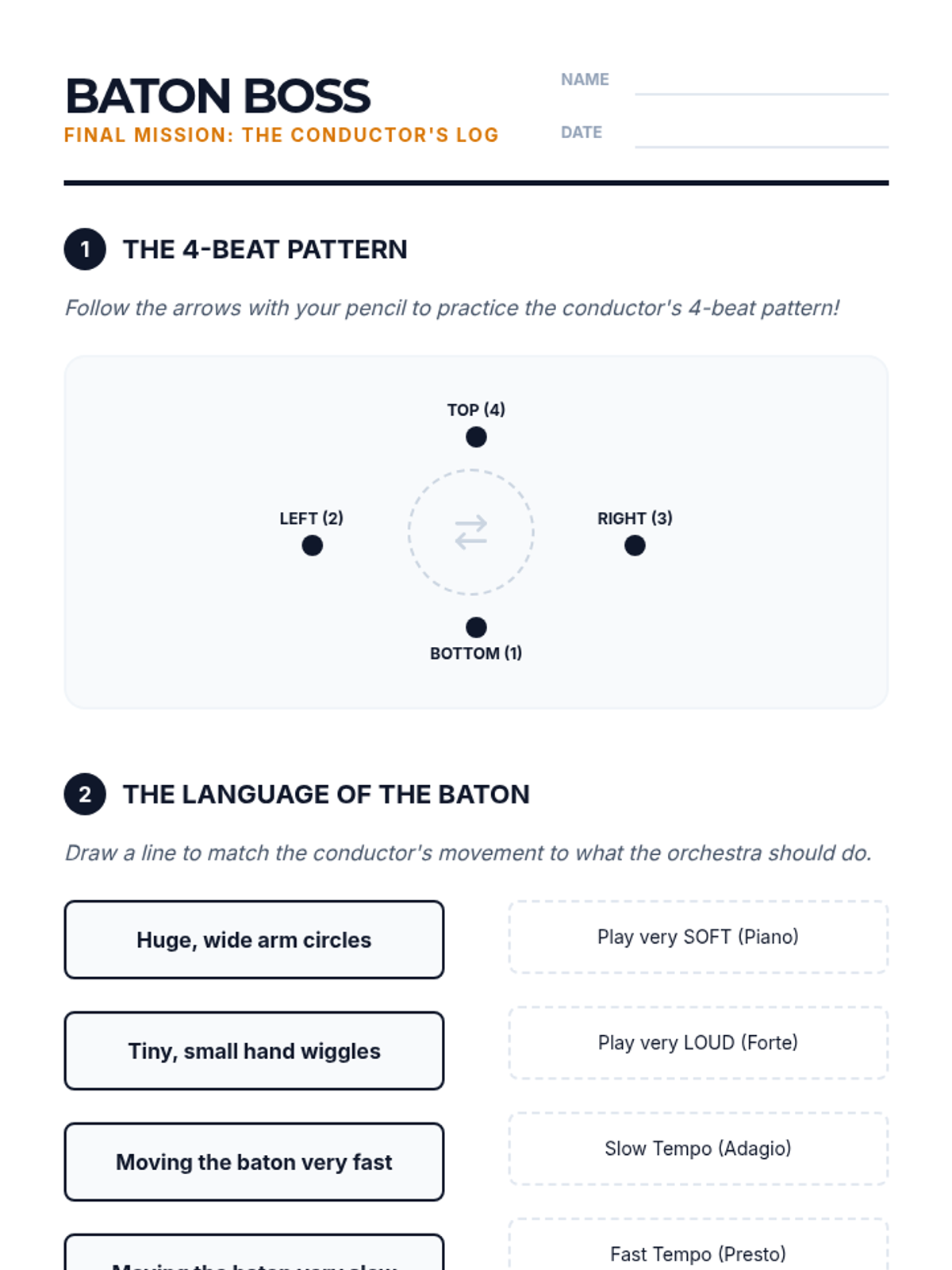
A student worksheet for Lesson 5 including a conducting pattern practice, vocabulary matching for dynamics and tempo, and a final sequence reflection.
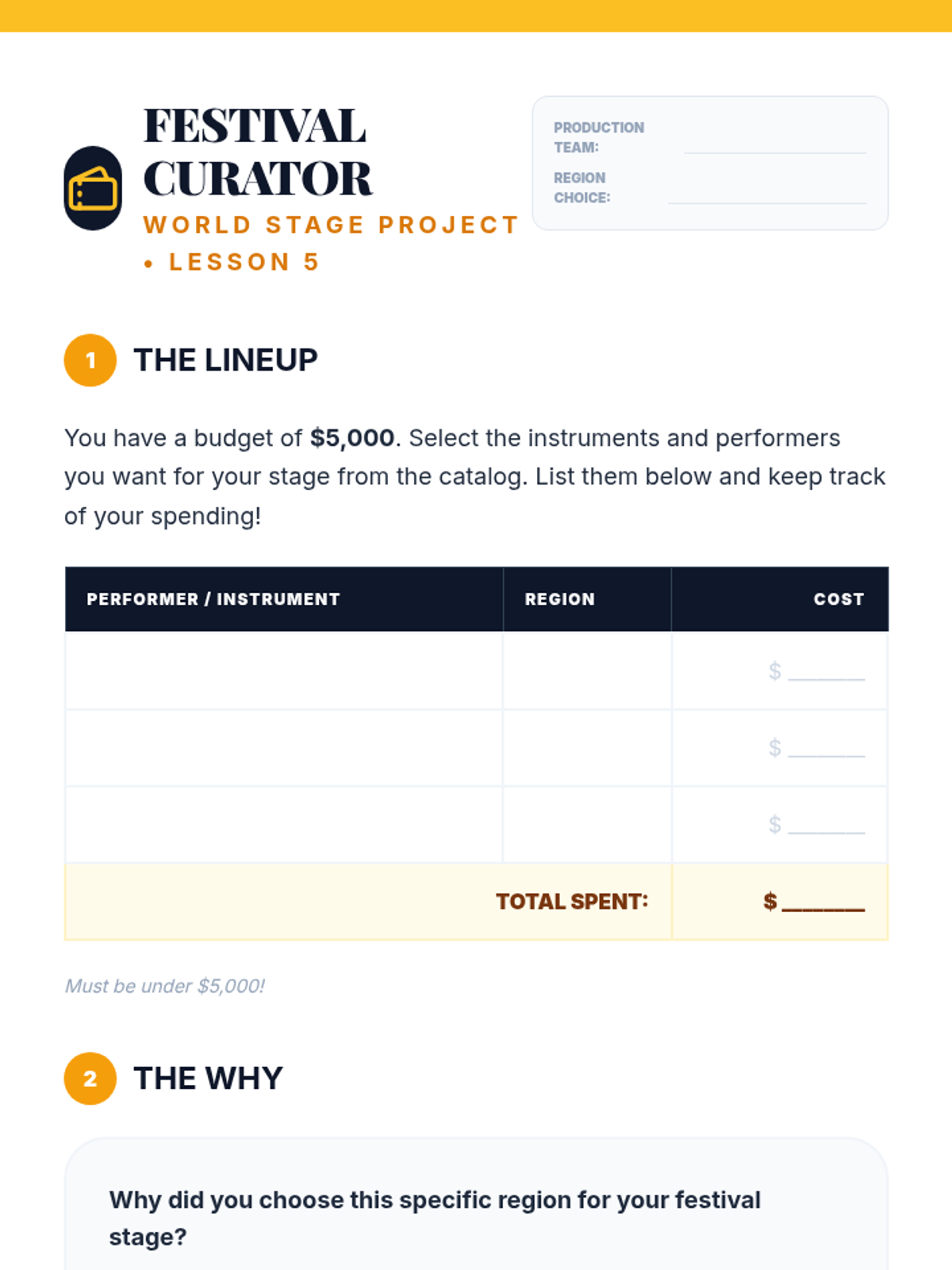
Student project planner for the "World Stage" festival, including budget tracking, a written pitch for a selected region, and a stage design blueprint area.
Visual presentation for the final lesson, synthesizing the global journey, reviewing key instruments, and exploring how different cultures use music for celebration.
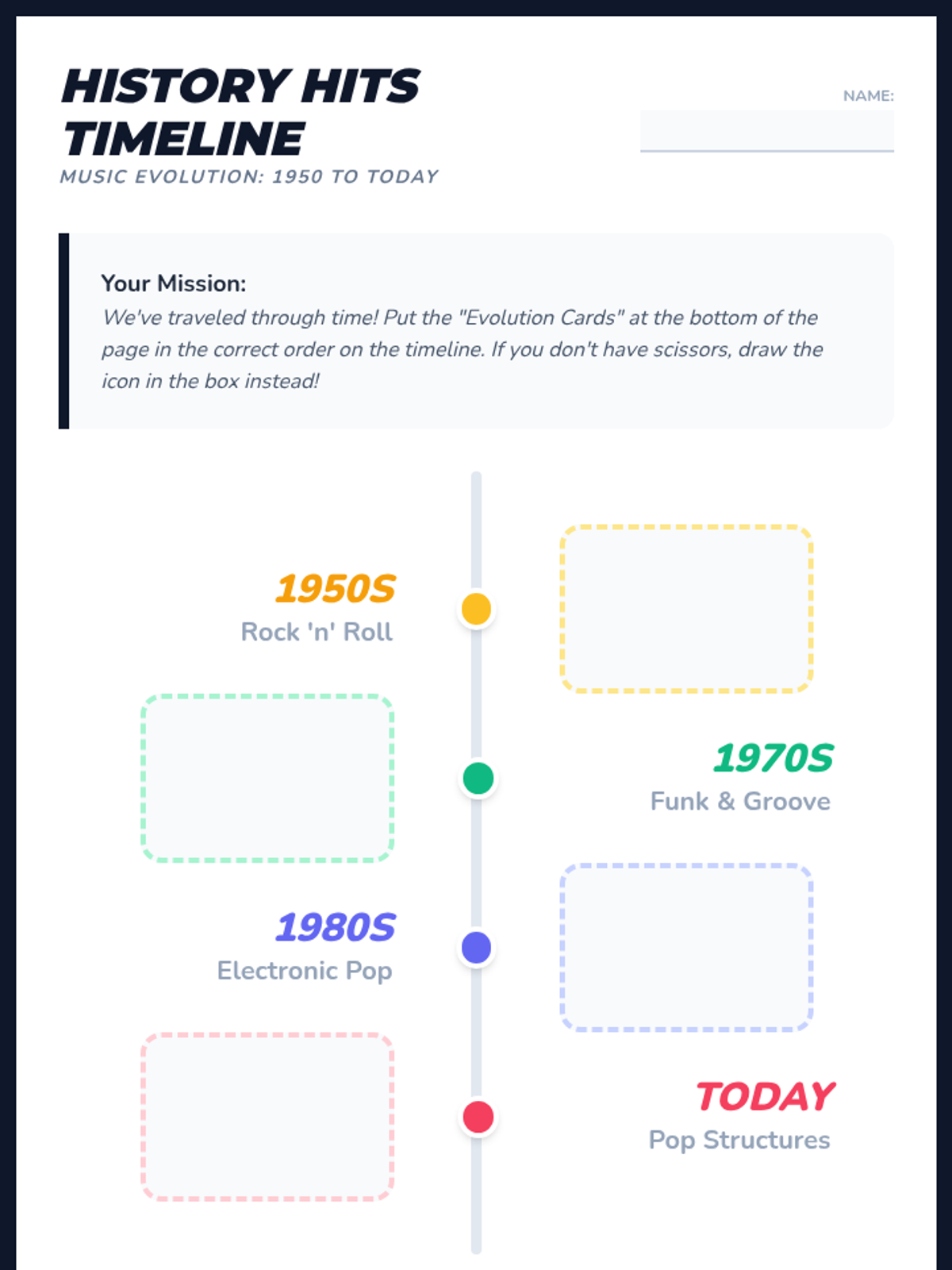
Final cumulative worksheet for Lesson 5. Students place technological and musical milestones on a chronological timeline from the 1950s to the present.
A visual presentation for the final project, focusing on the rules of improvisation and how to conduct a classroom solo circle.
Visual presentation slides for Lesson 5, introducing the "World Stage" festival project, defining the curator's role, and providing an instrument catalog with "budget" pricing.
A visual presentation for Lesson 5 introducing the conductor's role, gestures for tempo and dynamics, and the "Living Orchestra" simulation.
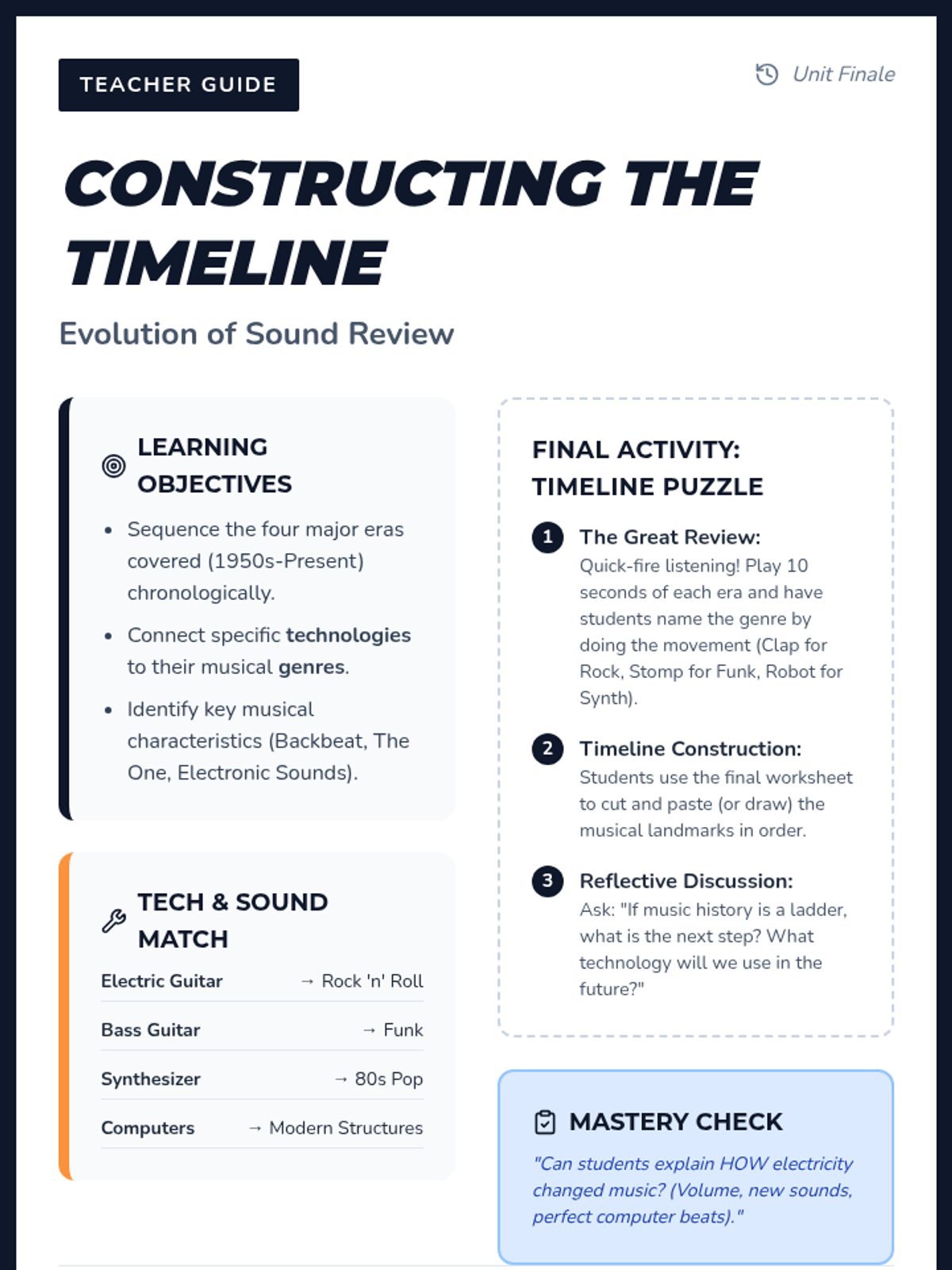
Teacher guide for the final lesson, synthesizing the entire unit. Includes a review of all eras, their technologies, and instructions for the cumulative timeline activity.
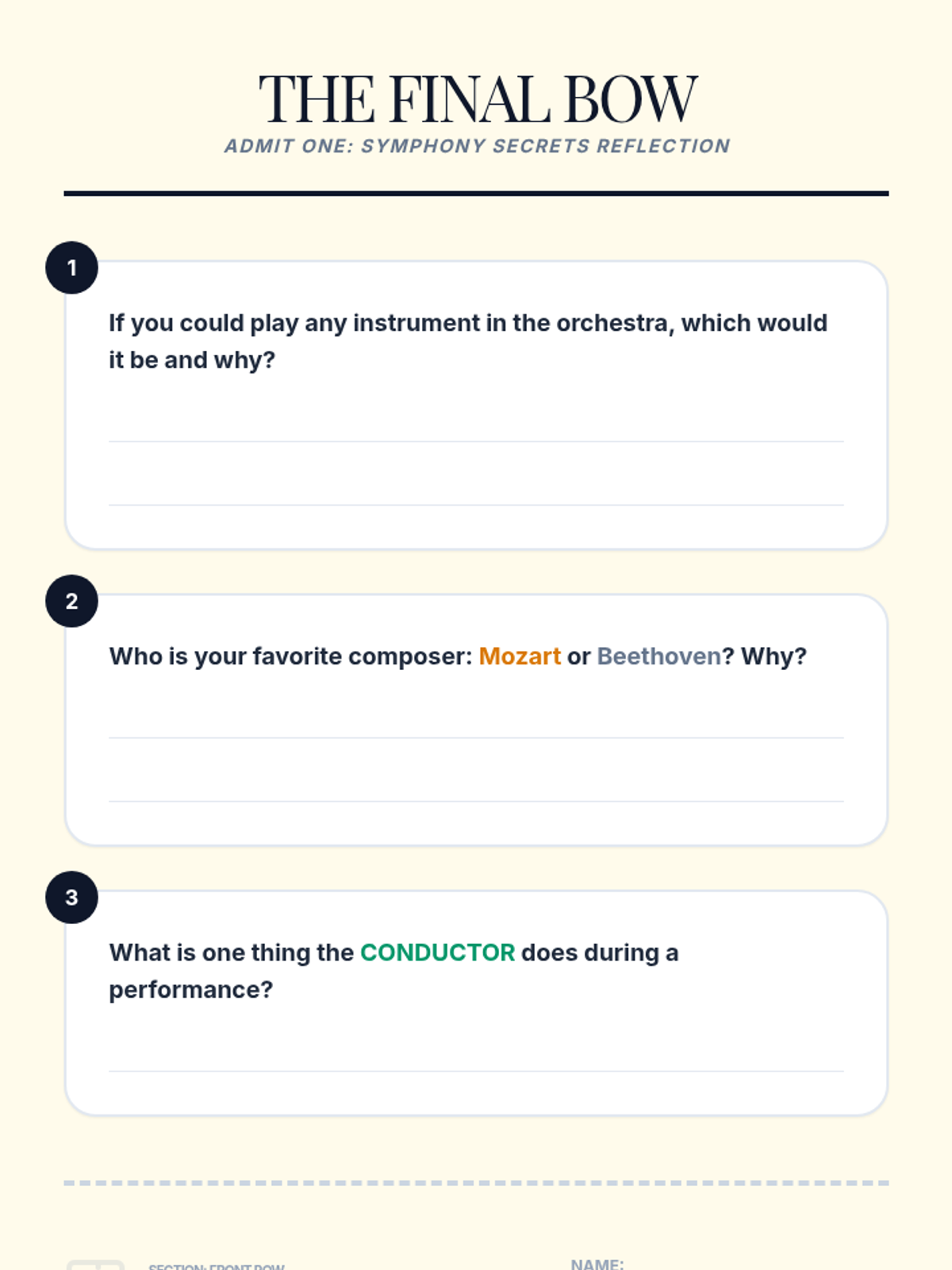
A student reflection exit ticket for the end of the 'Symphony Secrets' sequence, designed with a theater ticket aesthetic.
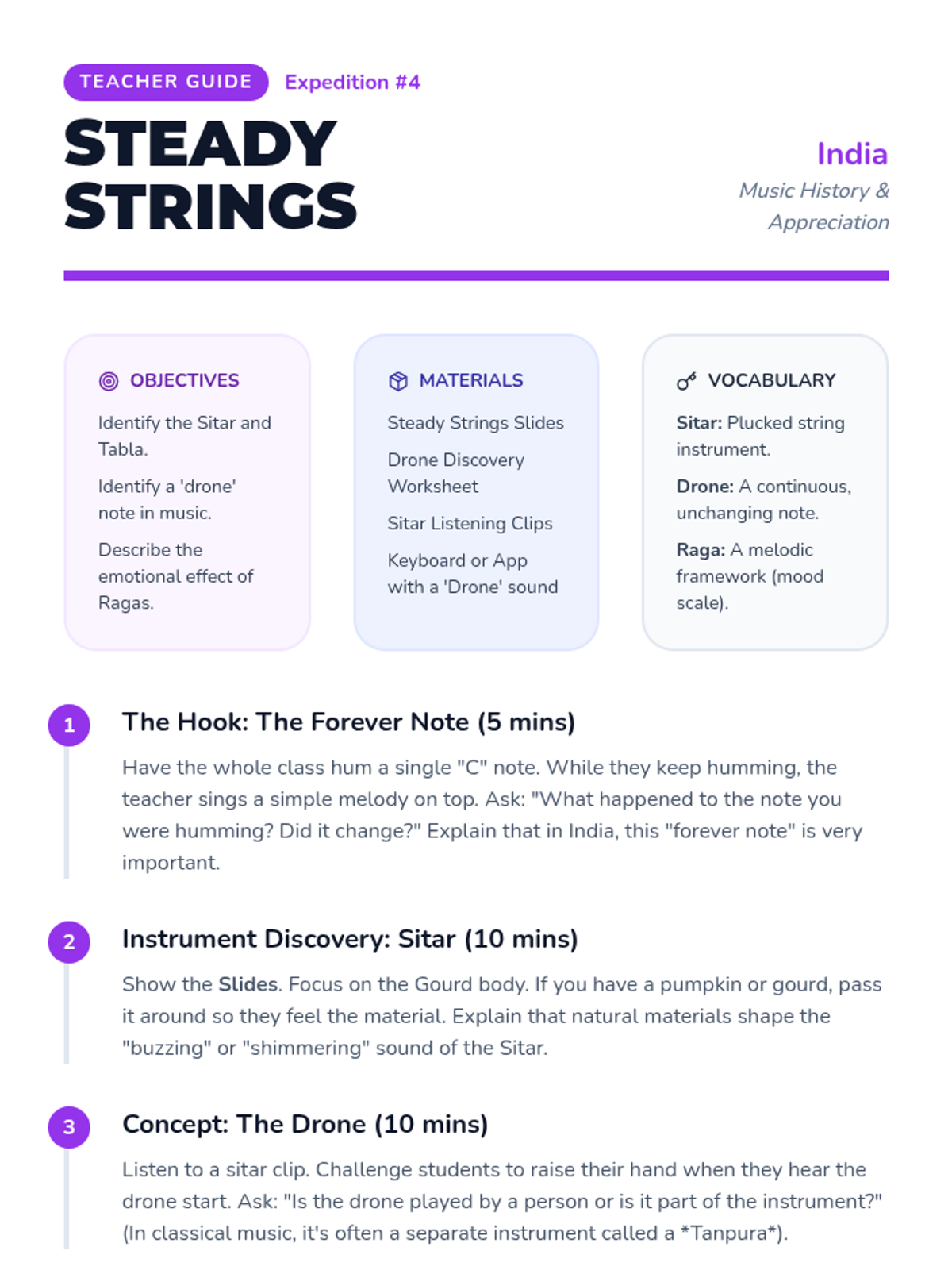
A teacher guide for the fourth lesson, outlining how to teach the concept of the drone and lead listening activities for Indian classical music.
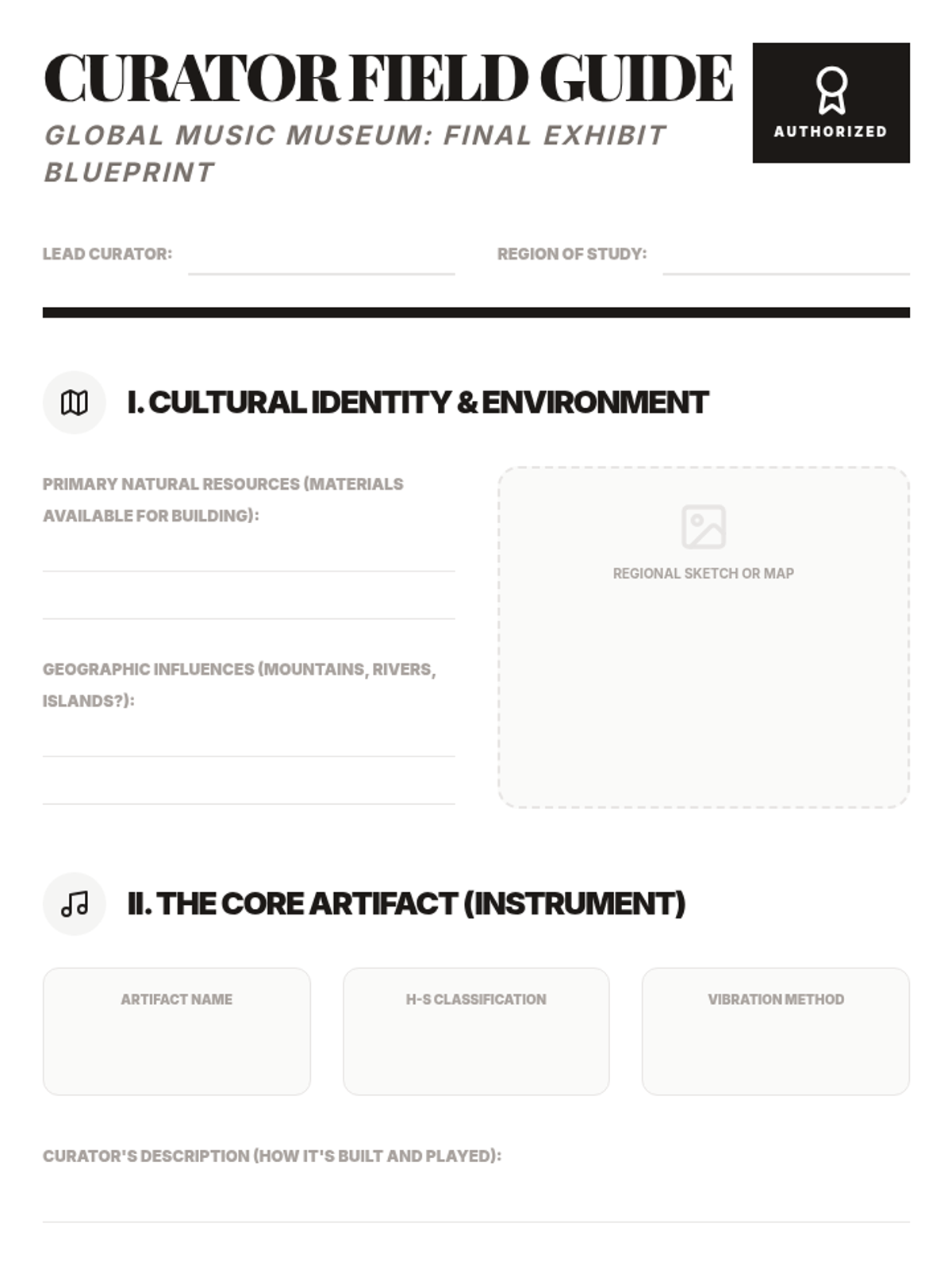
Student exhibit planner and research guide for the final Music Museum project. Guides students through cultural research, instrument classification, and visual exhibit design.
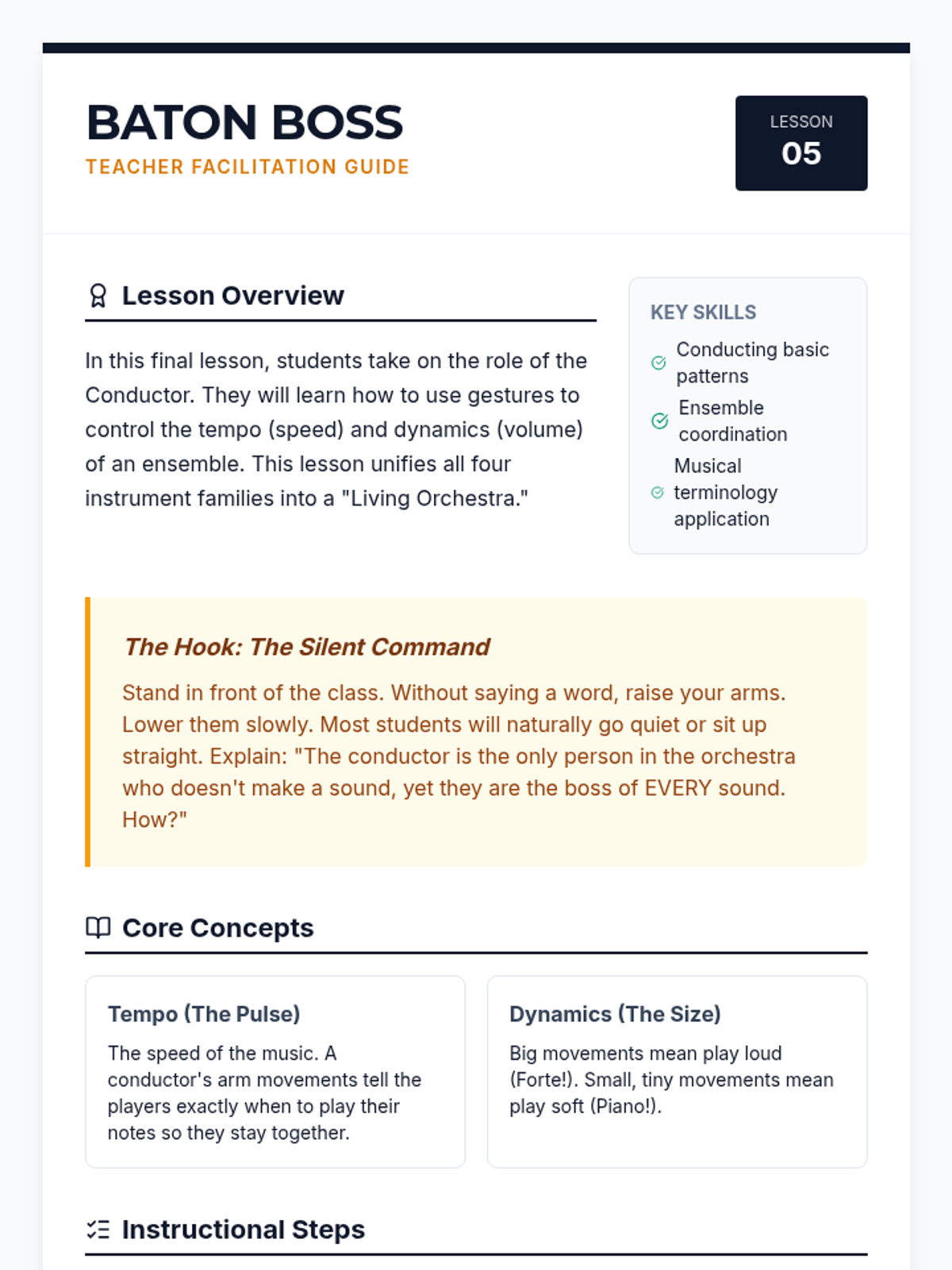
A teacher facilitation guide for Lesson 5, focusing on the conductor's role, tempo, dynamics, and the "Living Orchestra" simulation.
Presentation slides for Lesson 4, explaining the Verse-Chorus song structure using the 'Song Sandwich' analogy and identifying patterns in familiar music.
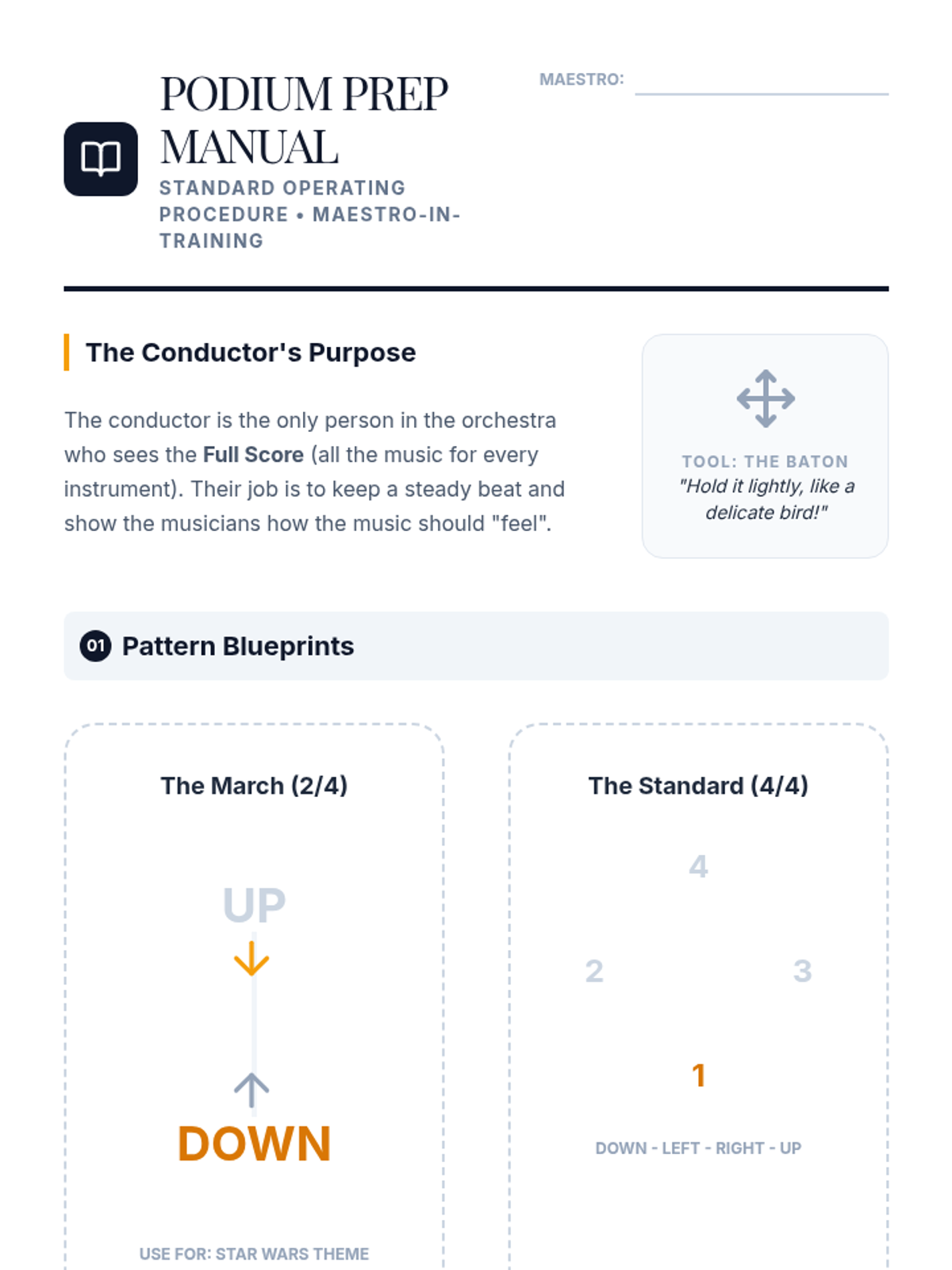
A student instructional guide for practicing basic conducting patterns (2/4 and 4/4) and understanding non-verbal cues.