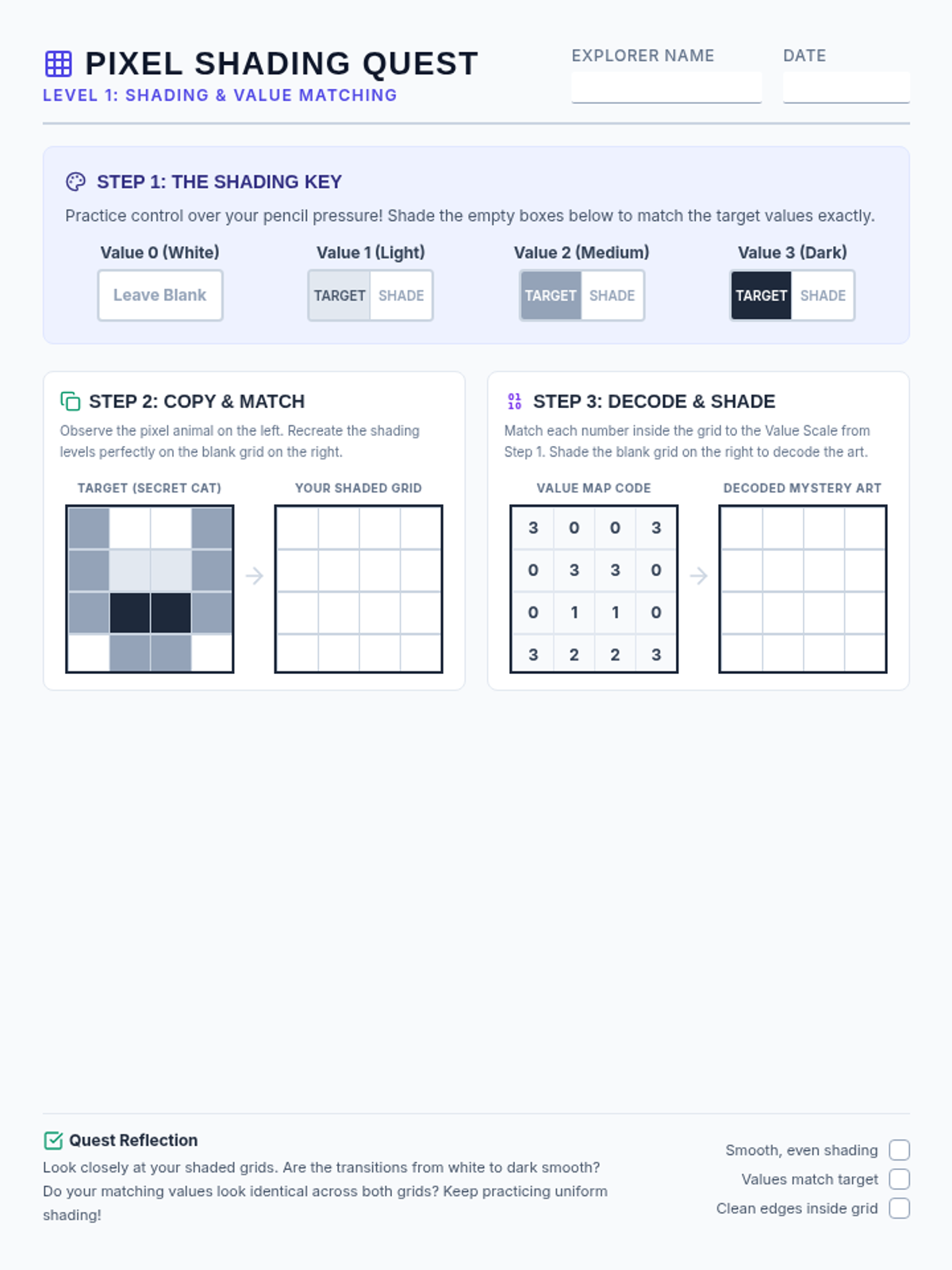
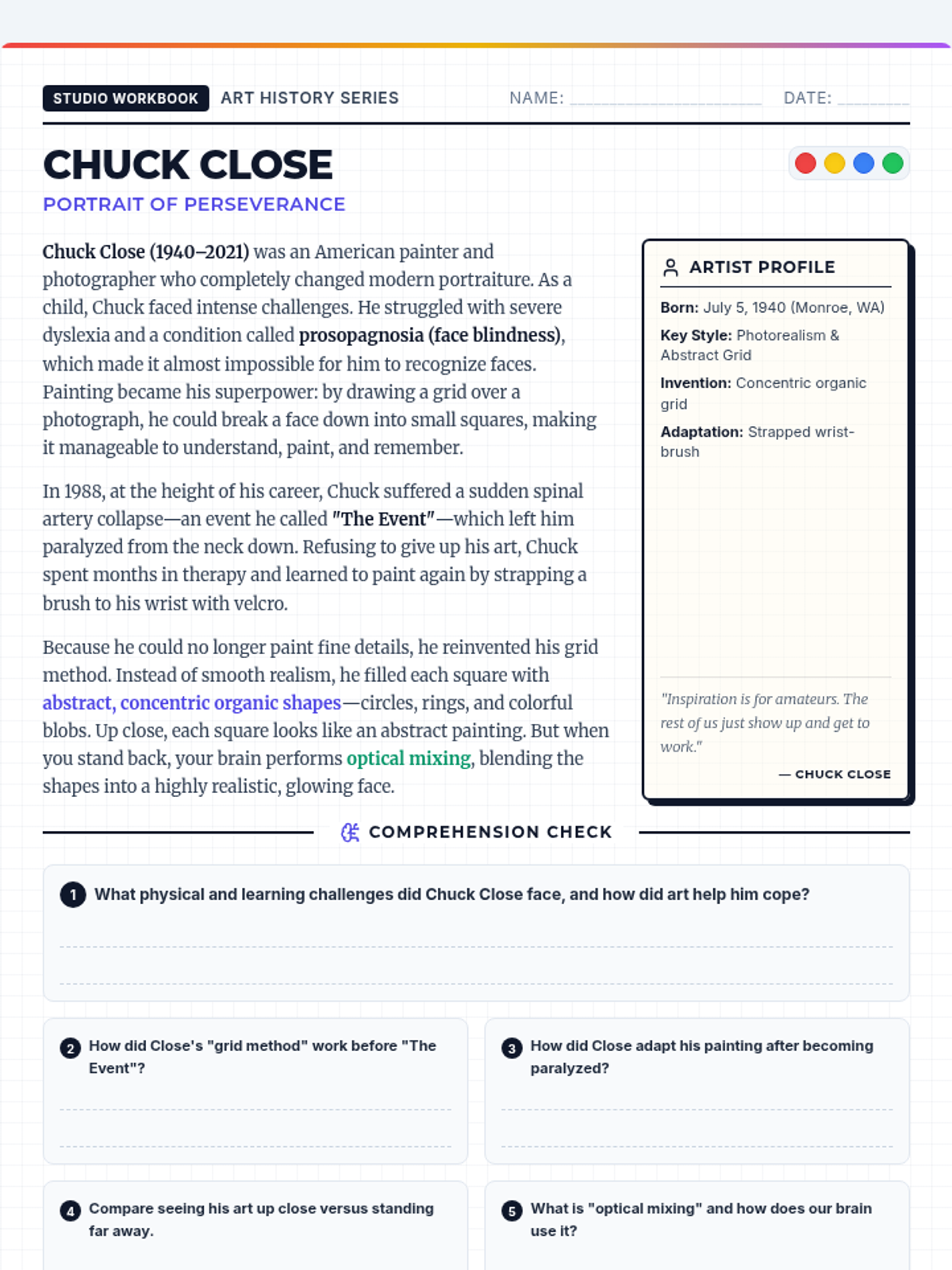
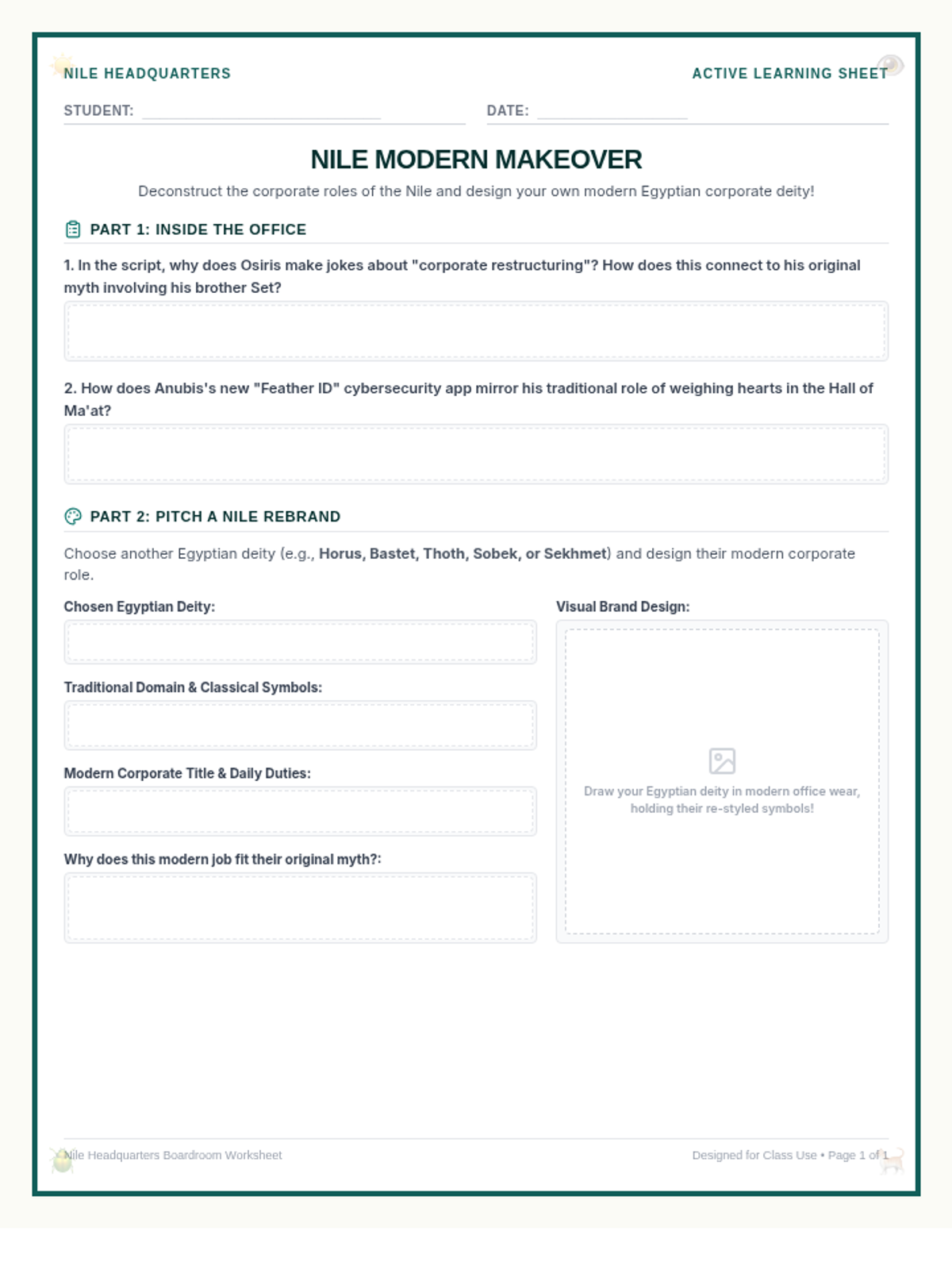
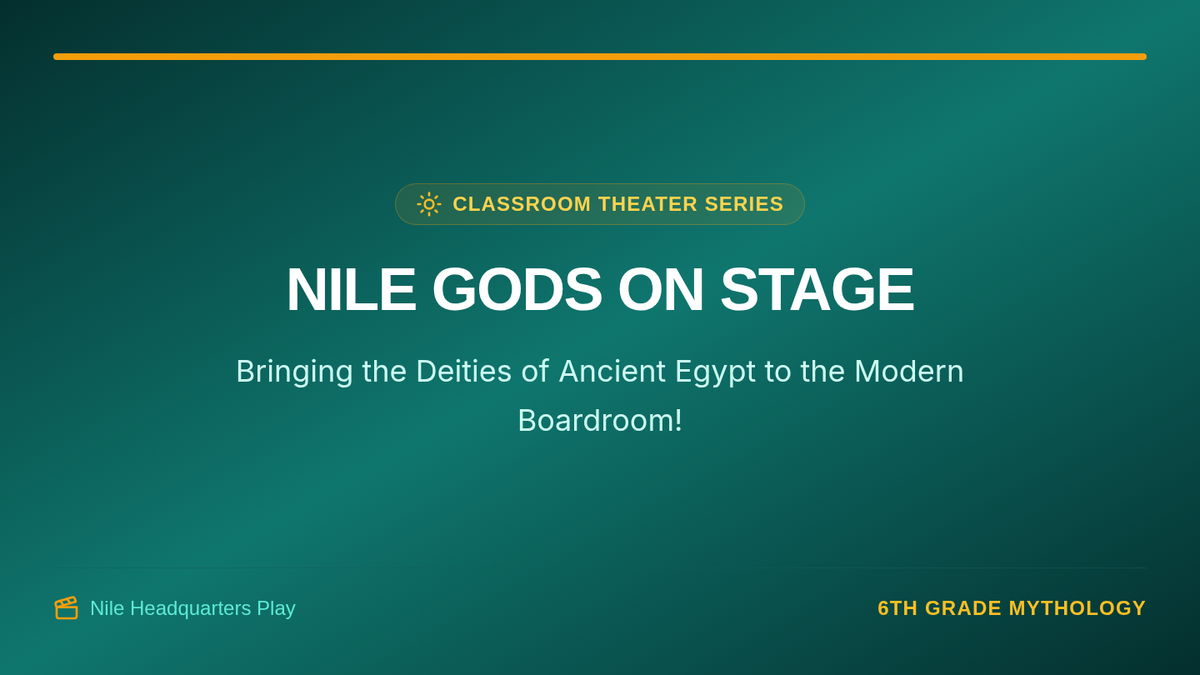
A visual presentation deck supporting the 'Stage Sketchers' lesson. It includes the Khan Academy video embed, vocabulary definitions, visual cues for analyzing the narrator's drawing, and prompts for the set design activity.
A professional assessment rubric for a pom dance routine, featuring specific criteria for precision, technique, musicality, and performance with space for teacher feedback.
A vibrant presentation for a jazzy pom dance class, highlighting routine style, essential pom positions, formation strategies, and performance energy.
A comprehensive teacher choreography guide for an intermediate jazzy pom routine to 'Under the Sea', starting at the 1:58 mark with timestamped breakdowns.
A student 'Lab Log' and worksheet for documenting primary color experiments, visual weight analysis, and art planning, styled as a scientific report.
A vibrant, high-contrast slide deck to introduce primary colors and Piet Mondrian to 4th-5th graders, styled as a modern 'Color Lab' mission.
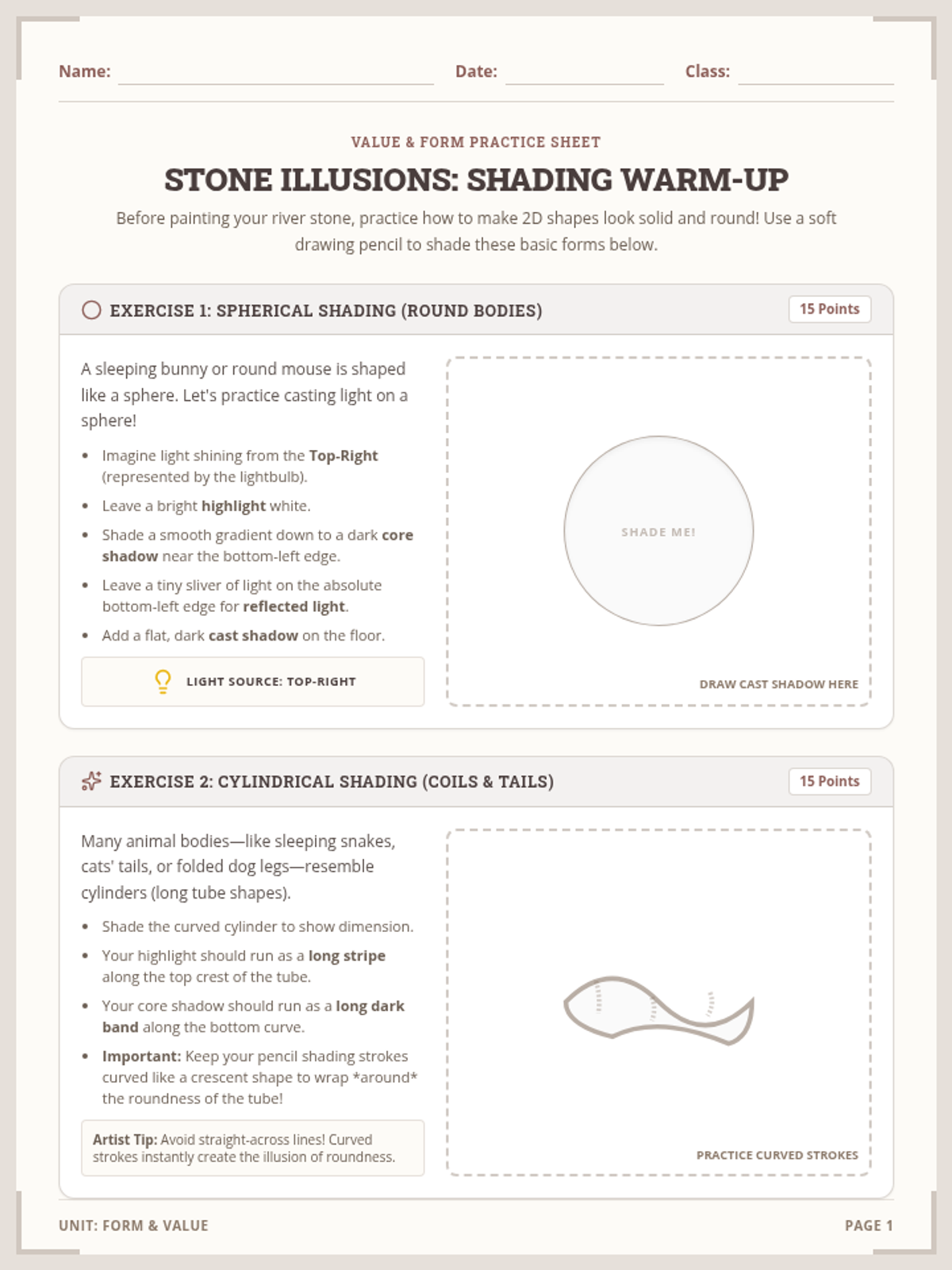
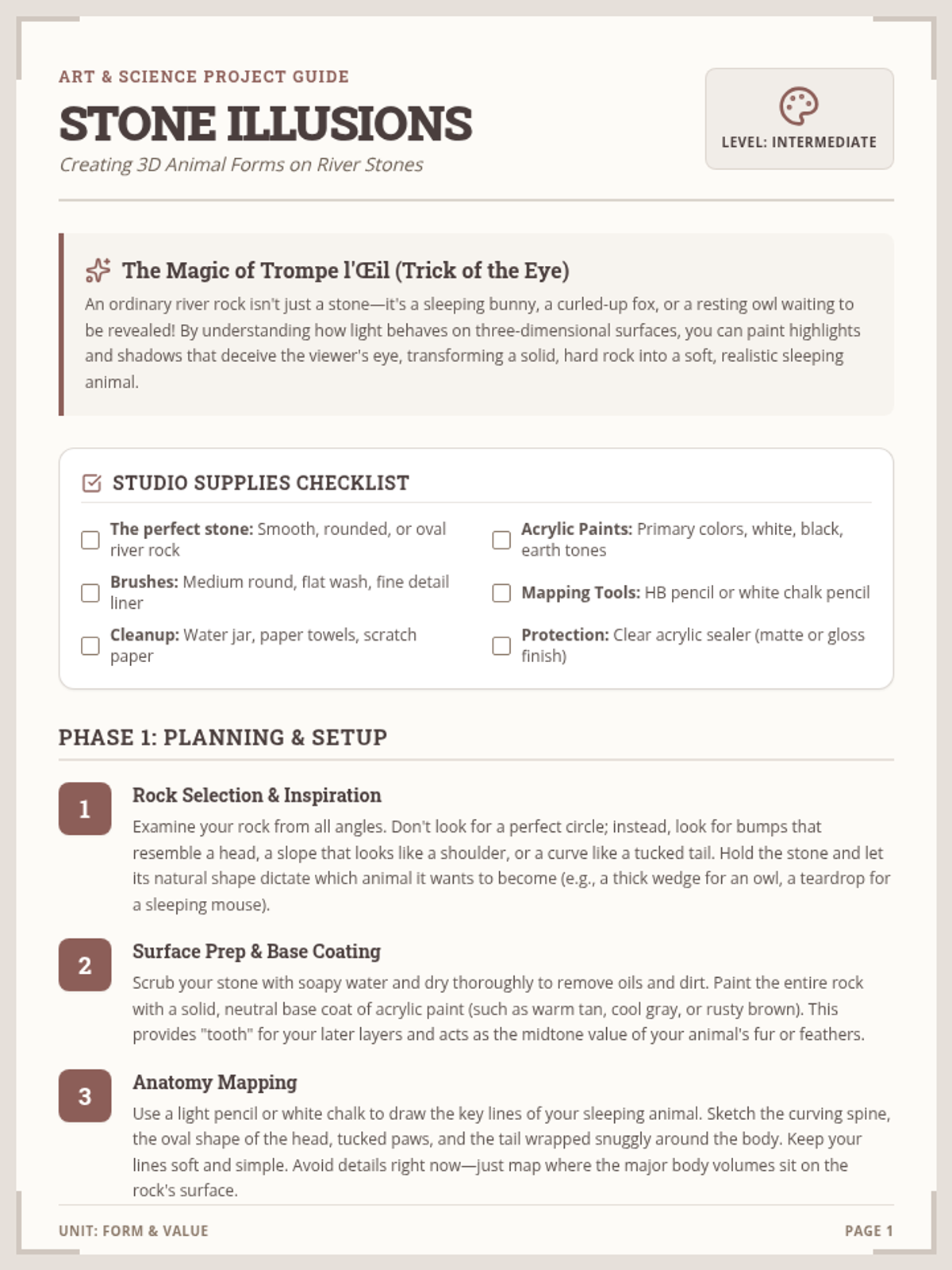
A detailed two-page teacher guide and lesson plan for a 4th-5th grade art lesson on primary colors, styled as a modern 'Color Lab' instructional manual.
An assessment rubric for the Groove Blueprint project, focusing on notation accuracy, rhythm diversity, performance quality, and creative design. Theme matches the 'Beat Lab' project aesthetic.
A comprehensive teacher guide for the Beat Lab project, including pacing suggestions, differentiation strategies, and an answer key for the Rhythm Recon worksheet.
The primary 'producible' for the rhythm project. A sleek composition worksheet where students design a 4-measure rhythm following specific complexity requirements. Includes a 'beat grid' layout for visual clarity.
A 'rhythm math' and diagnostics worksheet where students solve equations using musical notes and identify errors in 4/4 measures. Features a technical, 'Beat Lab' HQ theme.
A vibrant, futuristic slide deck introducing the 'Beat Lab' project. It covers rhythm values (whole to sixteenth) and their corresponding rests with high-contrast visuals designed for 6th-grade students.
A 4-question multiple choice exit ticket for the final lesson, assessing student understanding of jazz's legacy and its core elements.
A student worksheet for the final lesson, featuring reflection questions on the unit and a section on jazz's influence on modern music.
A visual presentation for Lesson 6, exploring the legacy of jazz, its influence on modern music like Hip Hop, and its status as a global art form.
A teacher's guide for the final lesson on the legacy of jazz, covering its influence on modern music and its status as a global art form.
A 4-question multiple choice exit ticket for Lesson 5, assessing student understanding of Bebop, Charlie Parker, and Cool Jazz.
A student worksheet for Lesson 5, featuring a comparison activity between Swing and Bebop, and reflective questions about Charlie Parker and Miles Davis.
A visual presentation for Lesson 5, exploring the characteristics of Bebop, the architects Charlie Parker and Dizzy Gillespie, and the "Cool Jazz" of Miles Davis.
A teacher's guide for the fifth lesson on Bebop and Miles Davis, covering Charlie Parker, the transition from swing, and the birth of cool jazz.
A 5-minute partner activity where students take turns being the "Source" and "Mirror" to build rhythmic and vocal confidence in a low-stakes duel.
A 4-question multiple choice exit ticket for Lesson 4, assessing student understanding of the Swing Era, Duke Ellington, and Big Band characteristics.
A student worksheet for Lesson 4, including a band section labeling activity, listening responses, and a section on the Savoy Ballroom.
A visual presentation for Lesson 4, exploring the characteristics of Swing music, the structure of a Big Band, and the career of Duke Ellington.
A teacher's guide for the fourth lesson on the Swing Era and Big Bands, covering Duke Ellington, band sections, and dance culture.
A 4-question multiple choice exit ticket for Lesson 3, assessing student understanding of the Great Migration, Louis Armstrong, and scat singing.
A student worksheet for Lesson 3, including a migration mapping activity, a profile section on Louis Armstrong, and a "scat lab" for creating nonsense syllables.
A visual presentation for Lesson 3, exploring Louis Armstrong's career, the Great Migration, and the invention of scat singing.
A teacher's guide for the third lesson on Louis Armstrong and the Great Migration, covering Chicago jazz, scat singing, and solo improvisation.
A 4-question multiple choice exit ticket for Lesson 2, assessing student understanding of Scott Joplin, Ragtime, and the Blues structure.
A student worksheet for Lesson 2, including fill-in-the-blank notes on Scott Joplin and a creative writing activity for a 12-bar blues poem.
A visual presentation for Lesson 2, exploring the characteristics of Ragtime and Blues and their role as the precursors to jazz.
A teacher's guide for the second lesson on Ragtime and Blues, covering Scott Joplin, the 12-bar blues structure, and the exit ticket answer key.
A 4-question multiple choice exit ticket for Lesson 1, assessing student understanding of jazz origins and key terms.
A student worksheet for Lesson 1, featuring listening guide sections, vocabulary highlights, and a matching activity for brass band instruments.
A rhythmic anthem for the Beat Bandits lesson, designed as a progressive chant that moves from silence to humming to a high-energy vocal finale.
A visual presentation for Lesson 1, introducing New Orleans, Congo Square, syncopation, and the essential instruments of early jazz.
A teacher's guide for the first lesson on Jazz origins, covering learning objectives, listening examples, pacing, and the exit ticket answer key.
A printable sheet of 20 "Beat Bandit" reward stickers in four varieties: Official Beat Bandit, Stealth Master, Pulse Professional, and Vocal Vanisher. Designed for 8.5x11 sticker paper.
A set of printable inventory-style command cards for 'Rhythm Crafter'. Includes standard action items (Sing, Dance, Play, Freeze) and advanced 'enchantment' modifiers for tempo and dynamics.
A specialized teacher's guide for the 'Rhythm Crafter' Minecraft-themed lesson. Features gameplay-inspired instructional phases, 'survival mode' rules, and assessment tips based on student 'XP' and rhythm crafting.
A Minecraft-themed worksheet where students identify body percussion 'blocks', craft their own rhythm sequences in a grid, and reflect on their 'survival' during the movement game.
A pixel-themed presentation for the 'Rhythm Crafter' lesson. Features Minecraft-inspired visuals for Orff body percussion blocks, the 'Crafting Song' lyrics, and high-stakes 'Hardcore Survival' movement cues.
A low-pressure student activity sheet designed to accompany the 15-minute Beat Bandits lesson, focusing on rhythmic decoding and sensory feedback from vocalizing.
A high-contrast, stealth-themed slide deck for a music lesson focusing on non-verbal rhythm and low-stakes vocalization. Updated with a Shadow Duel pair game slide.
Updated 20-minute teacher guide incorporating the "Shadow Duel" pair game to bridge rhythmic work and vocalization.
Instructional guide for the group ensemble activity, outlining how to assign instrument roles and layer different rhythmic patterns (quarter notes, eighth notes, and rests) into a polyphonic performance.
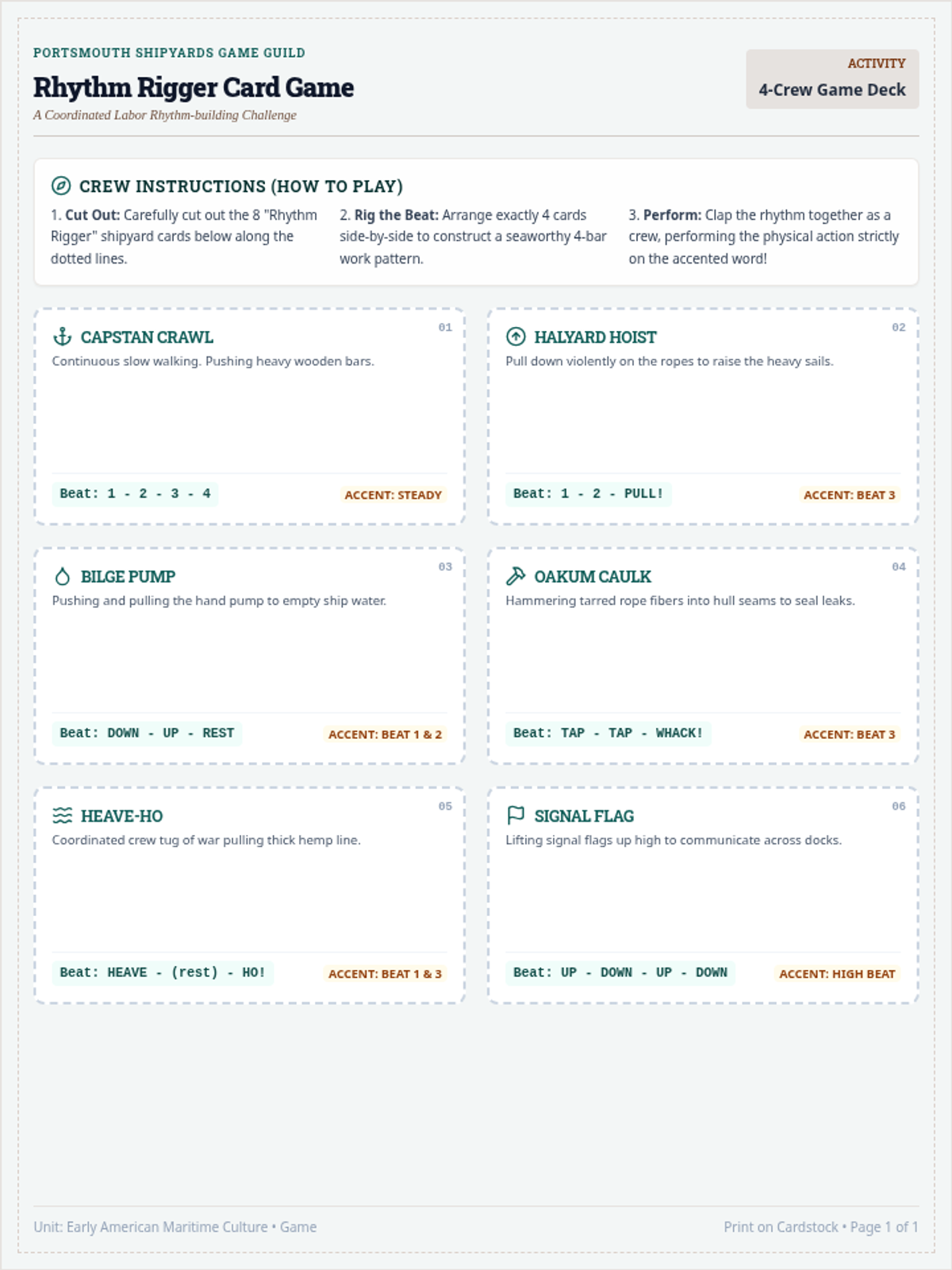
Printable game cards for 'Rhythm Explorers' lesson, featuring quarter notes, eighth notes, and rests with animal identifiers and game instructions.
Student worksheet featuring rhythm matching, basic rhythm addition, and a 4-beat composition area with space for peer review.
Engaging slide presentation for 'Rhythm Explorers' featuring animal associations for musical notation, practice patterns, and performance prompts.
Comprehensive lesson plan for the 'Rhythm Explorers' lesson, detailing the jungle-themed approach to teaching quarter notes, eighth notes, and rests to 3rd grade students.