A professional assessment rubric for a pom dance routine, featuring specific criteria for precision, technique, musicality, and performance with space for teacher feedback.
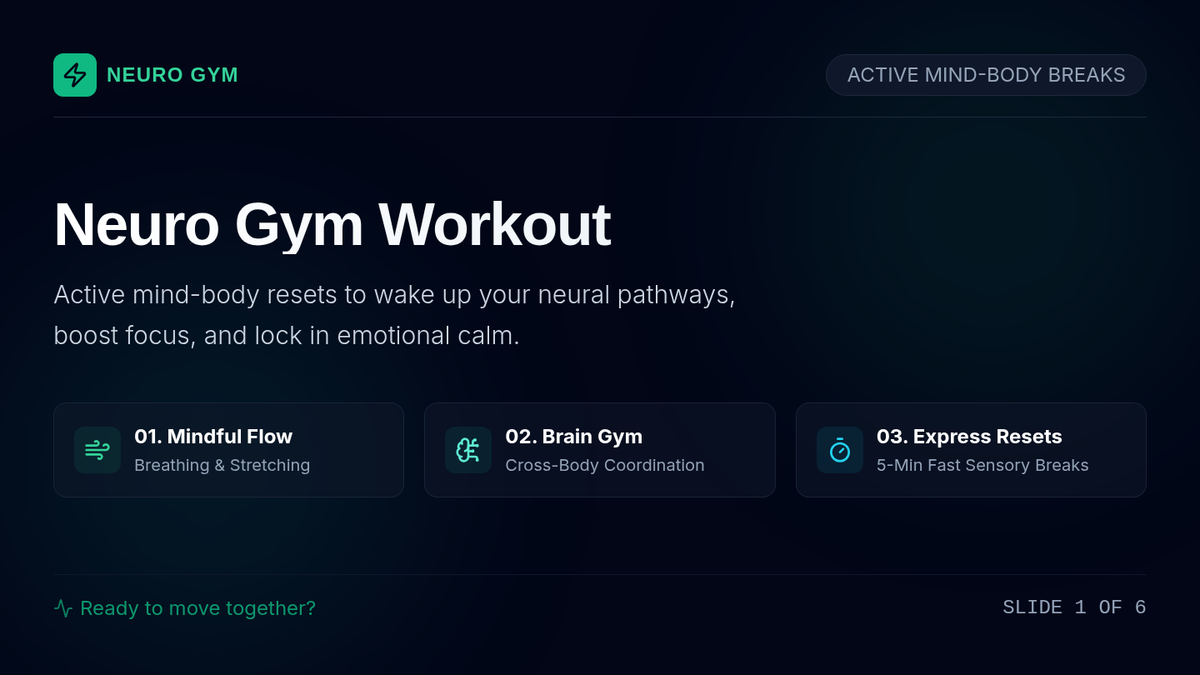
Visual, step-by-step interactive slide deck to guide student group exercises and mindfulness discussions. Includes embedded movement videos for Mindful Flow, Brain Gym, and Express Resets, alongside guided group reflection prompts.
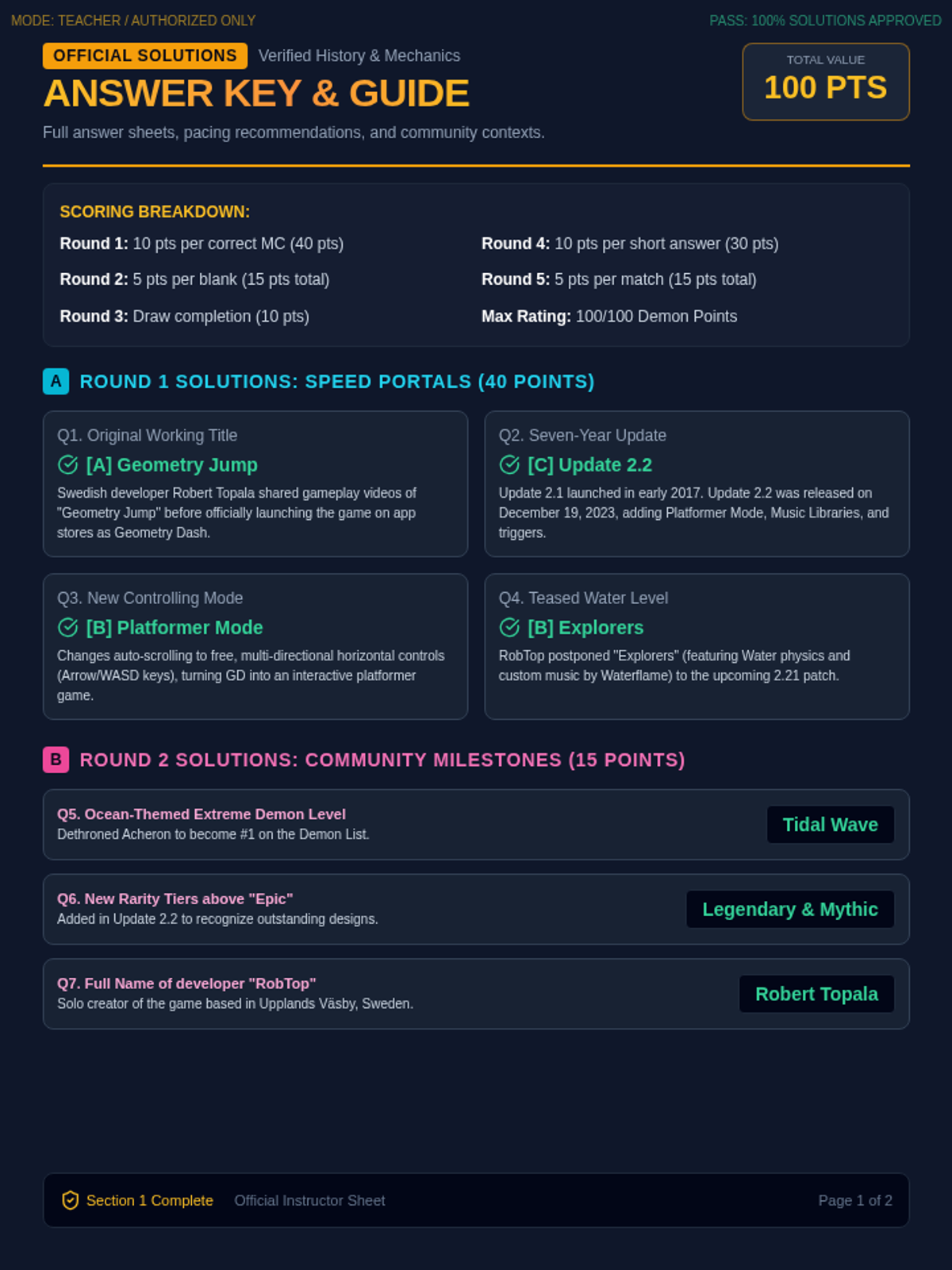
A detailed 2-page teacher answer key and grading guide for the Dash Masters Quiz. Provides clear solutions, historical background for each trivia point, and rubrics for the icon creator section.
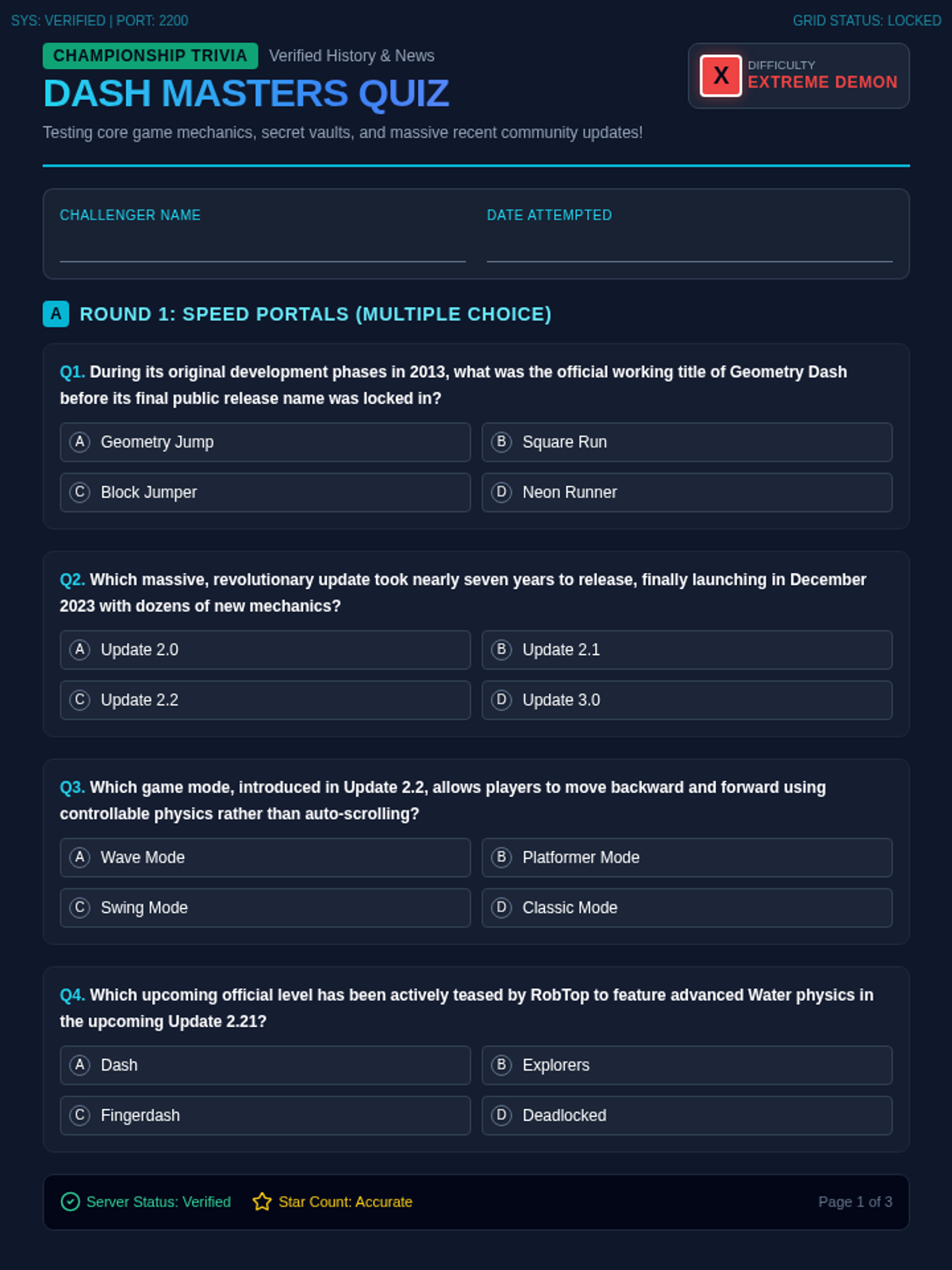
A revised 3-page printable Geometry Dash quiz highlighting highly accurate, well-known recent community news (Update 2.2, Tidal Wave, Legendary/Mythic ratings, Explorers teasers) and classic game trivia.
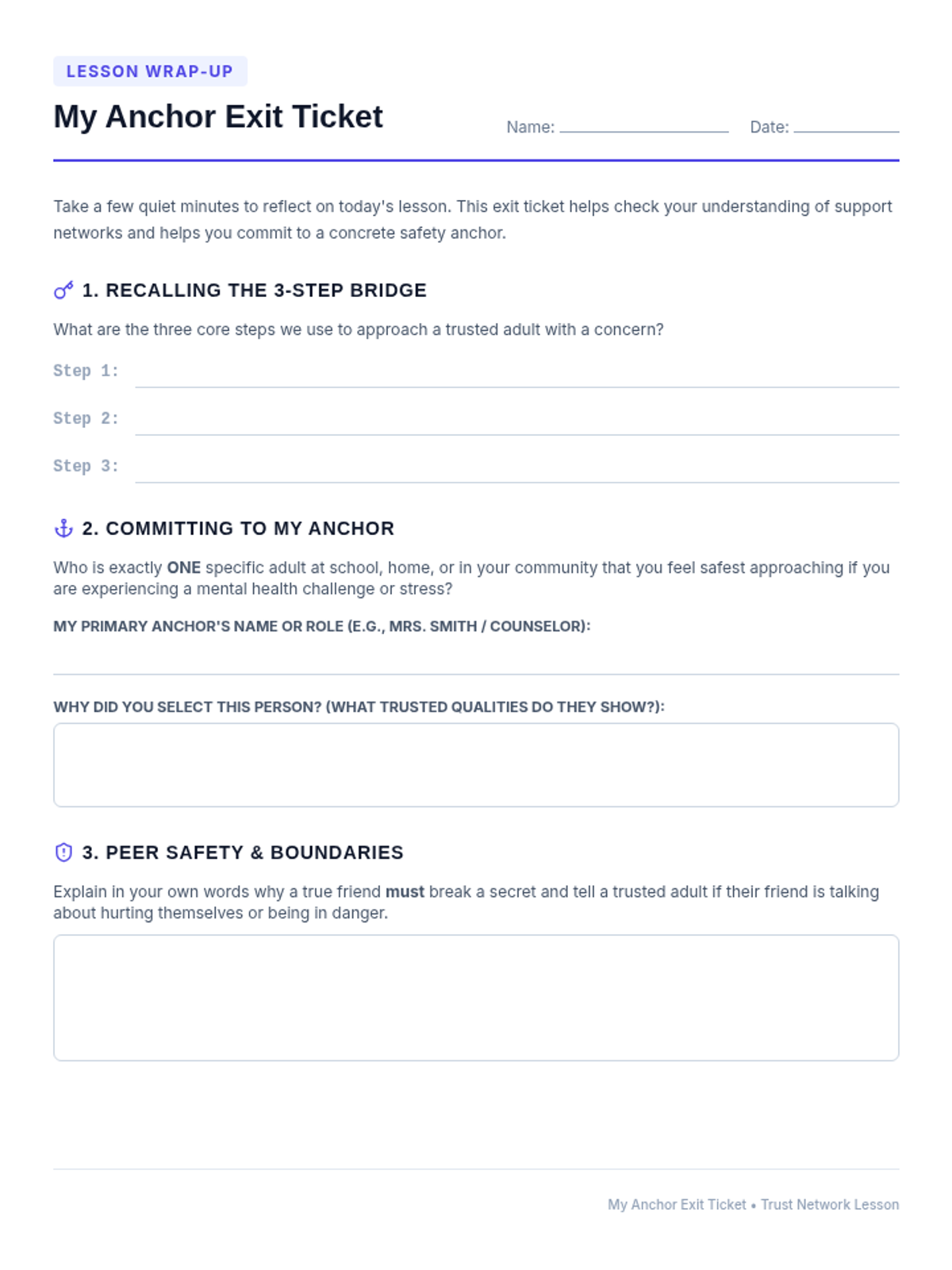
A 1-page exit ticket designed for student self-reflection, checking recall of the 3-Step Bridge, and committing to a primary trusted adult anchor.
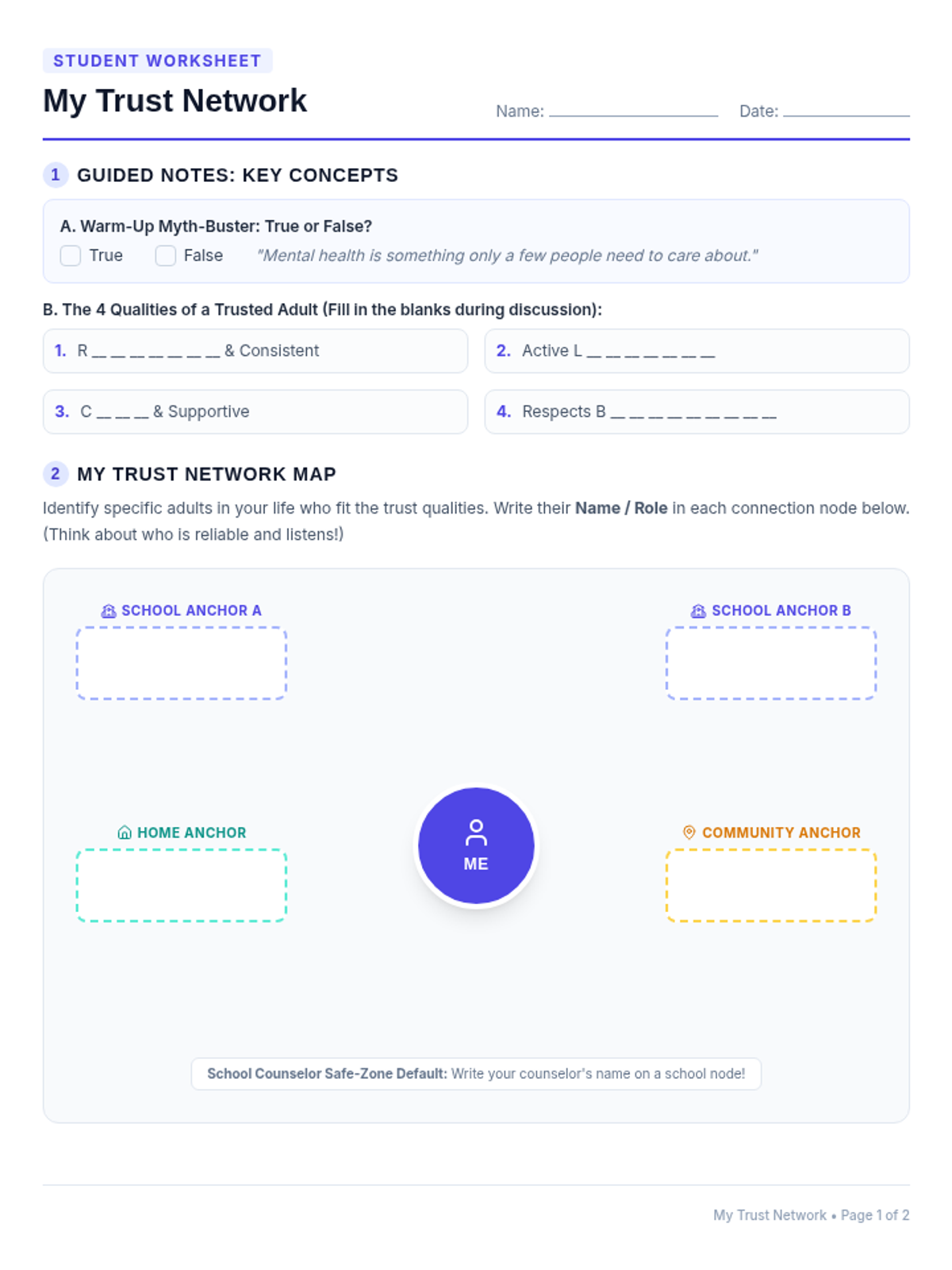
A 2-page student activity worksheet designed for reflection, support network mapping, and writing practice conversations using the 3-Step Bridge framework.
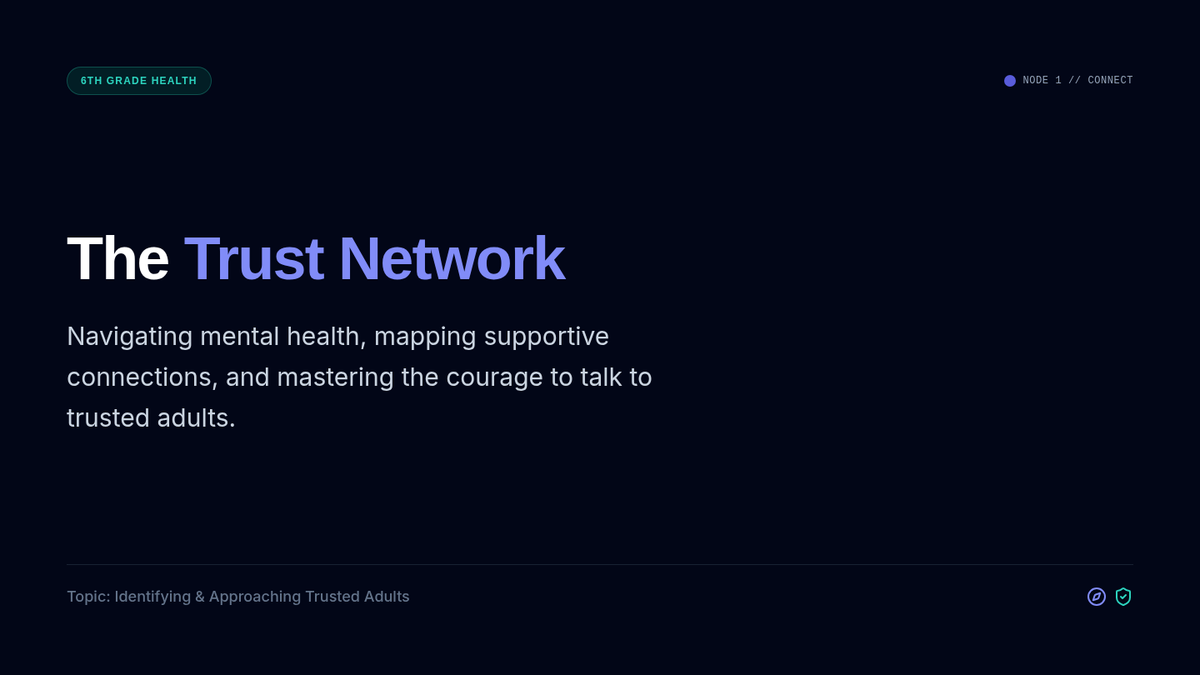
An interactive, 6-slide presentation with large readable text (minimum 24px) that covers mental health myths, the 4 qualities of trusted adults, network mapping, the 3-Step Bridge conversation guide, and peer boundaries.
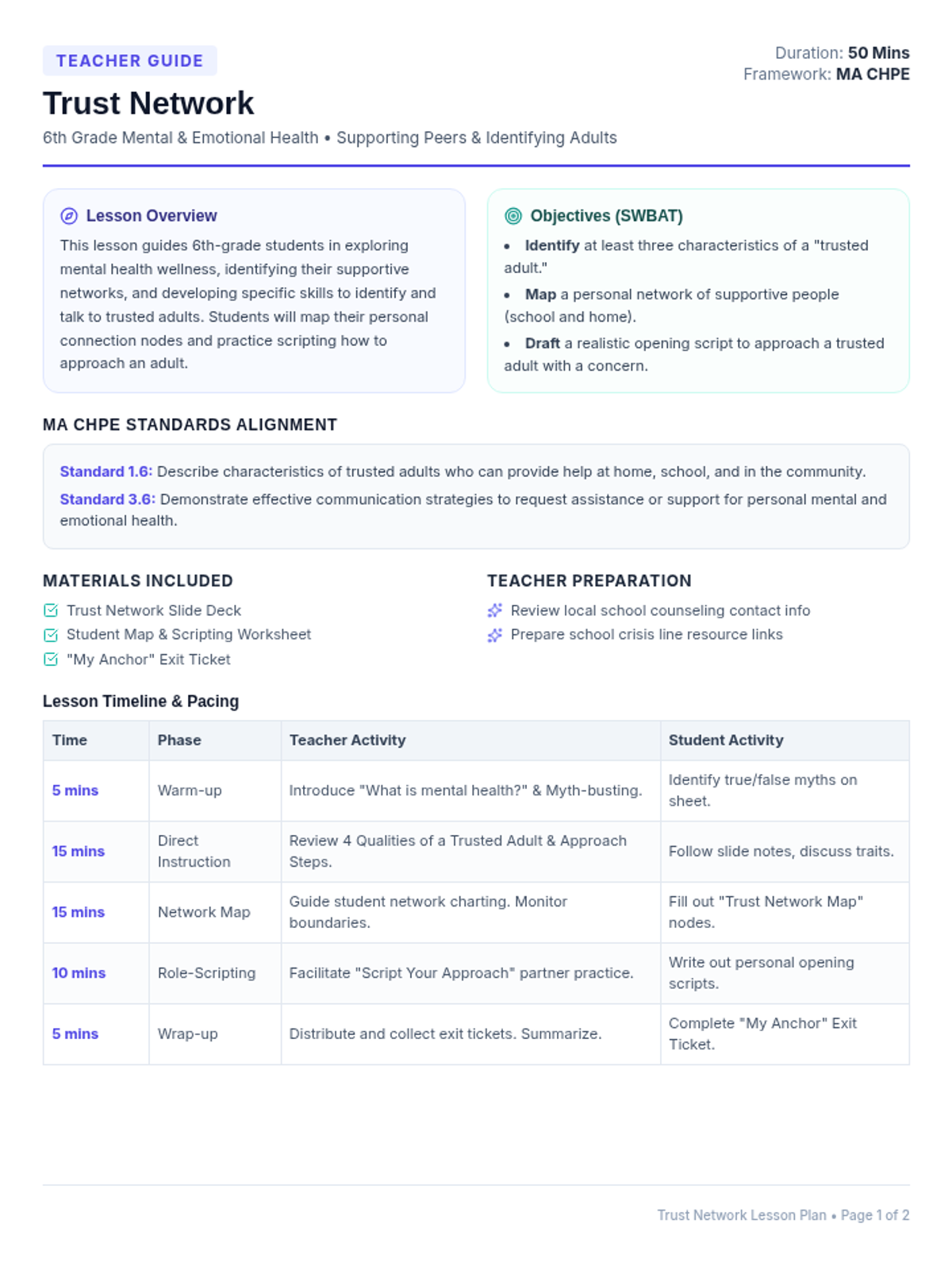
A detailed, 2-page teacher facilitation guide containing lesson objectives, MA health standards, timing, scripts, and differentiation tips for teaching 6th graders how to identify and talk to trusted adults.
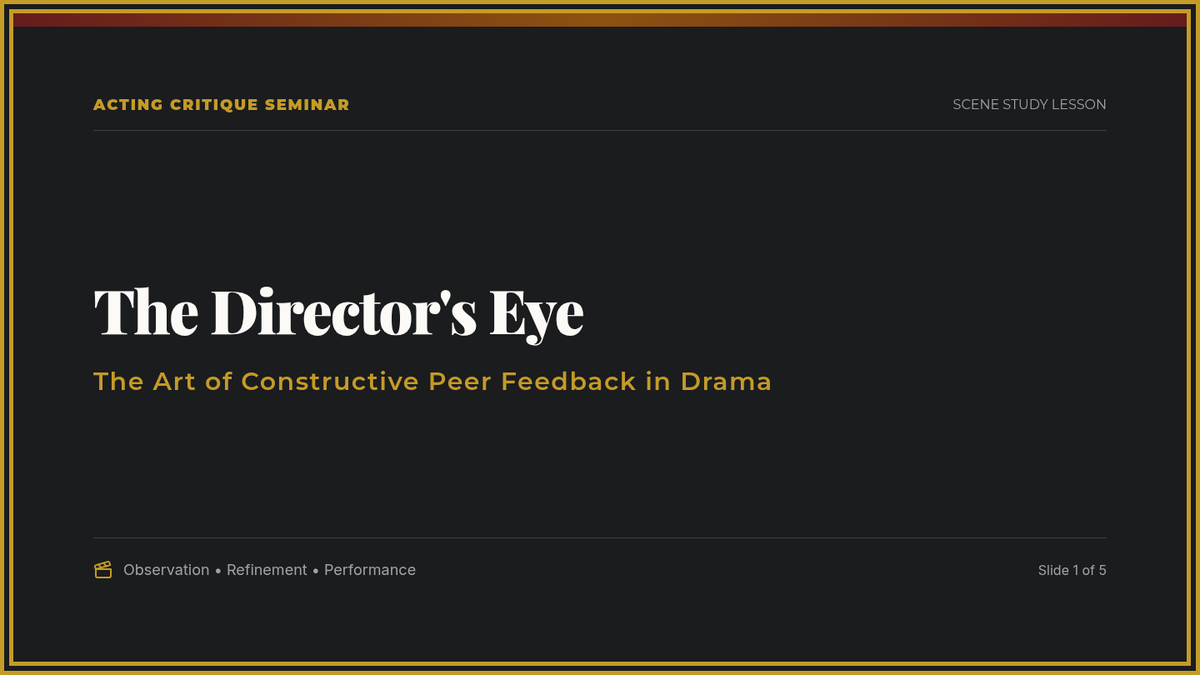
A premium 5-slide presentation to teach drama students how to use their 'Director's Eye' to observe peer acting and deliver constructive, professional feedback. It introduces the Four Pillars of Characterization and models effective Glow & Grow responses with a minimum text size of 24px.
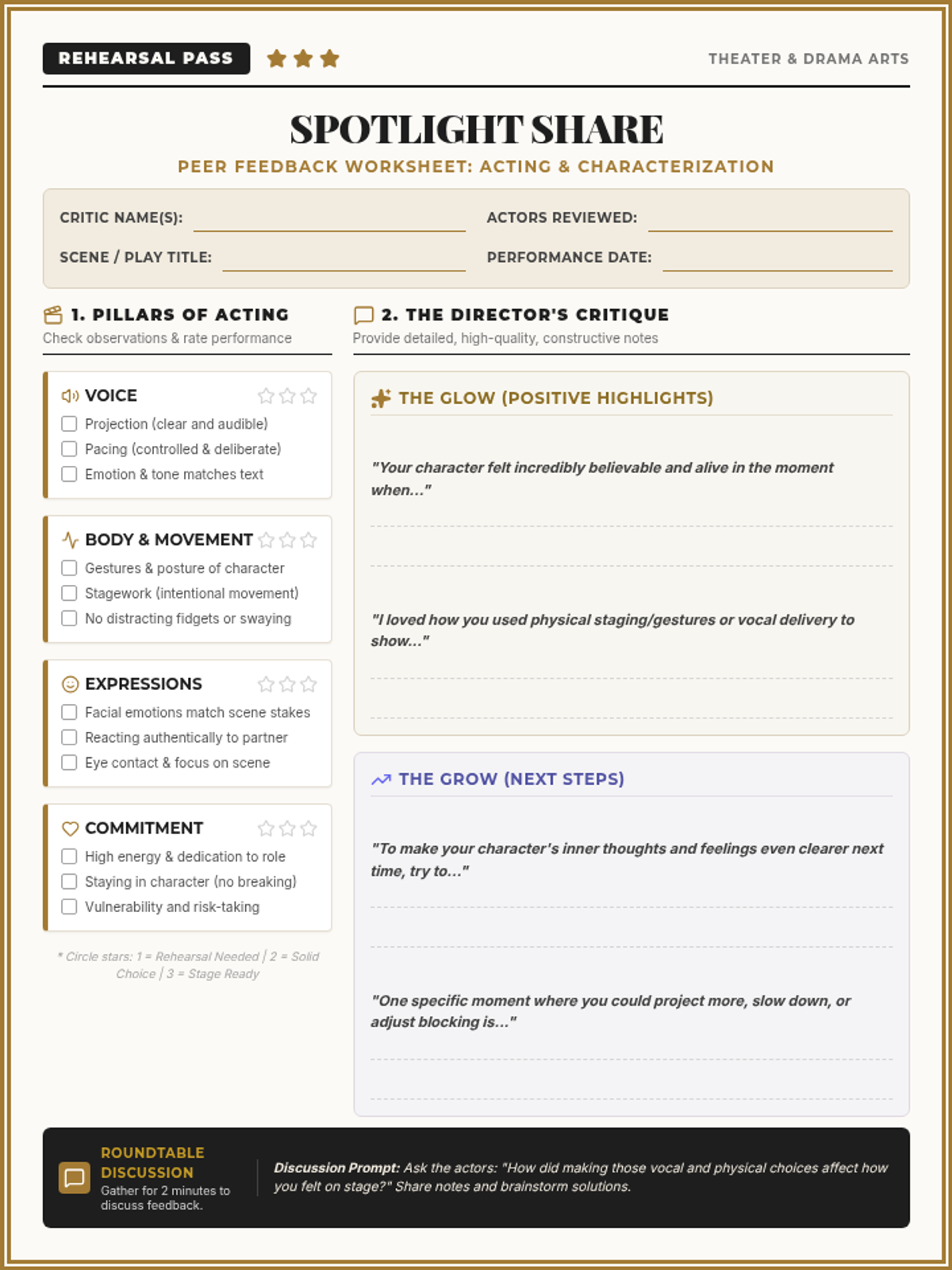
A high-quality, theater-themed printable peer feedback worksheet for scene acting assignments. It focuses on the four pillars of characterization (voice, physical movement, facial expression, emotional commitment) and structures constructive criticism using a clear Glow and Grow format with structured sentence starters.
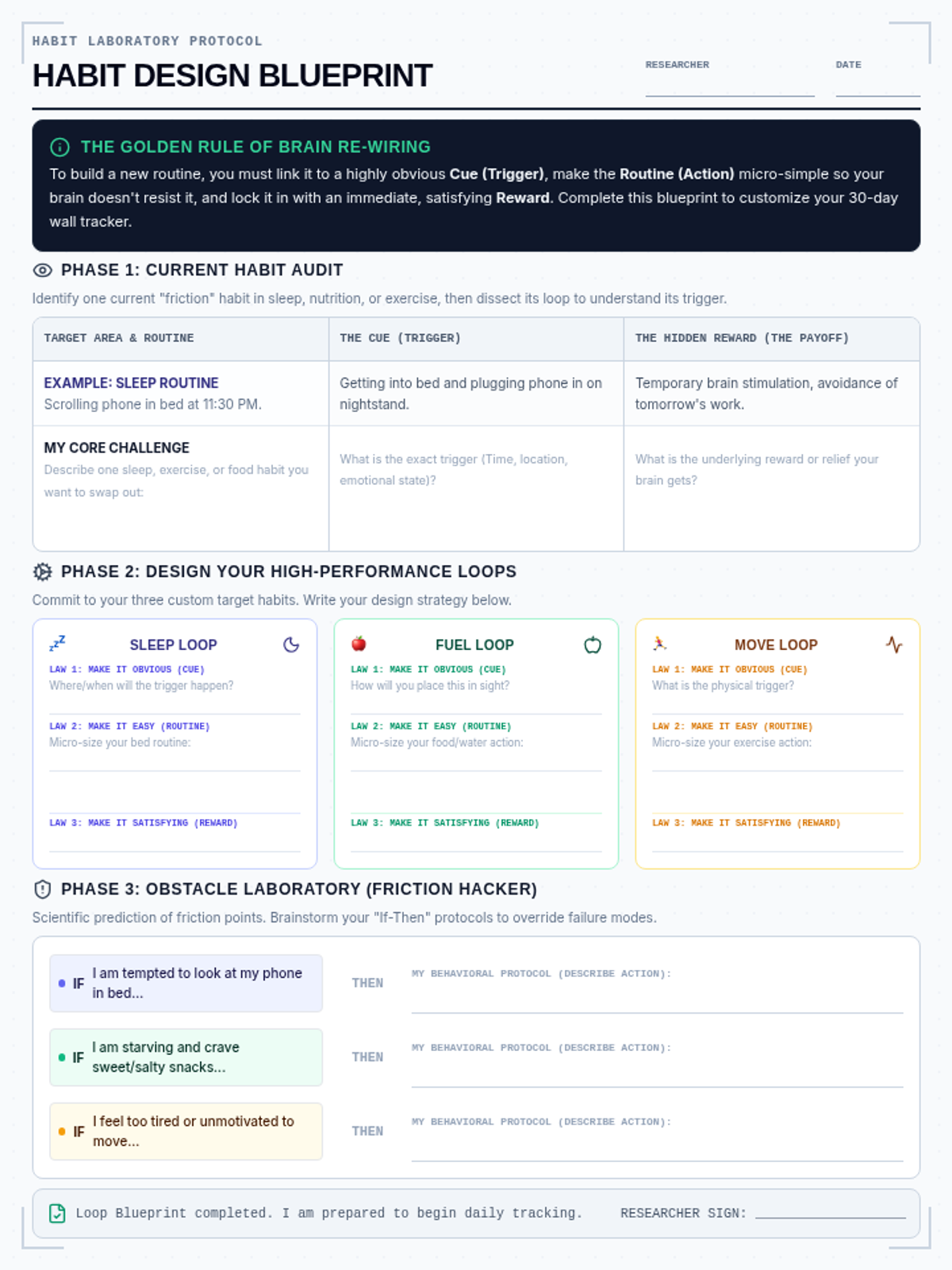
A student worksheet for analyzing current health habits and designing customized cue-routine-reward habit loops. It guides students through identifying behavior triggers, predicting obstacles, and establishing meaningful rewards before starting their tracker.
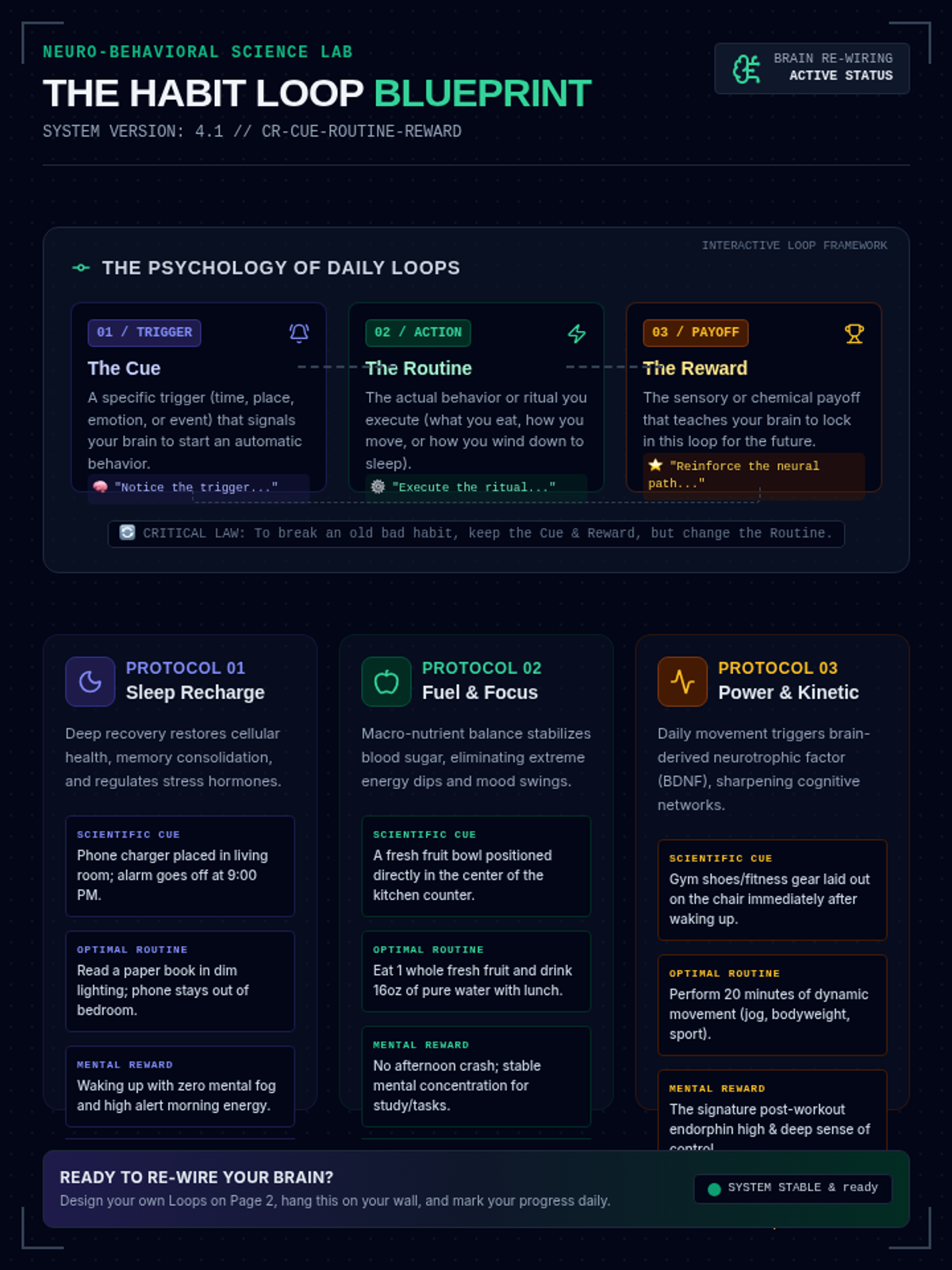
A beautifully designed 2-page wall-printable poster and habit tracking system. Page 1 teaches the psychology of cues, routines, and rewards with colorful scientific diagrams, while Page 2 provides an customizable 30-day tracking grid for sleep, nutrition, and exercise with physical writing lines.
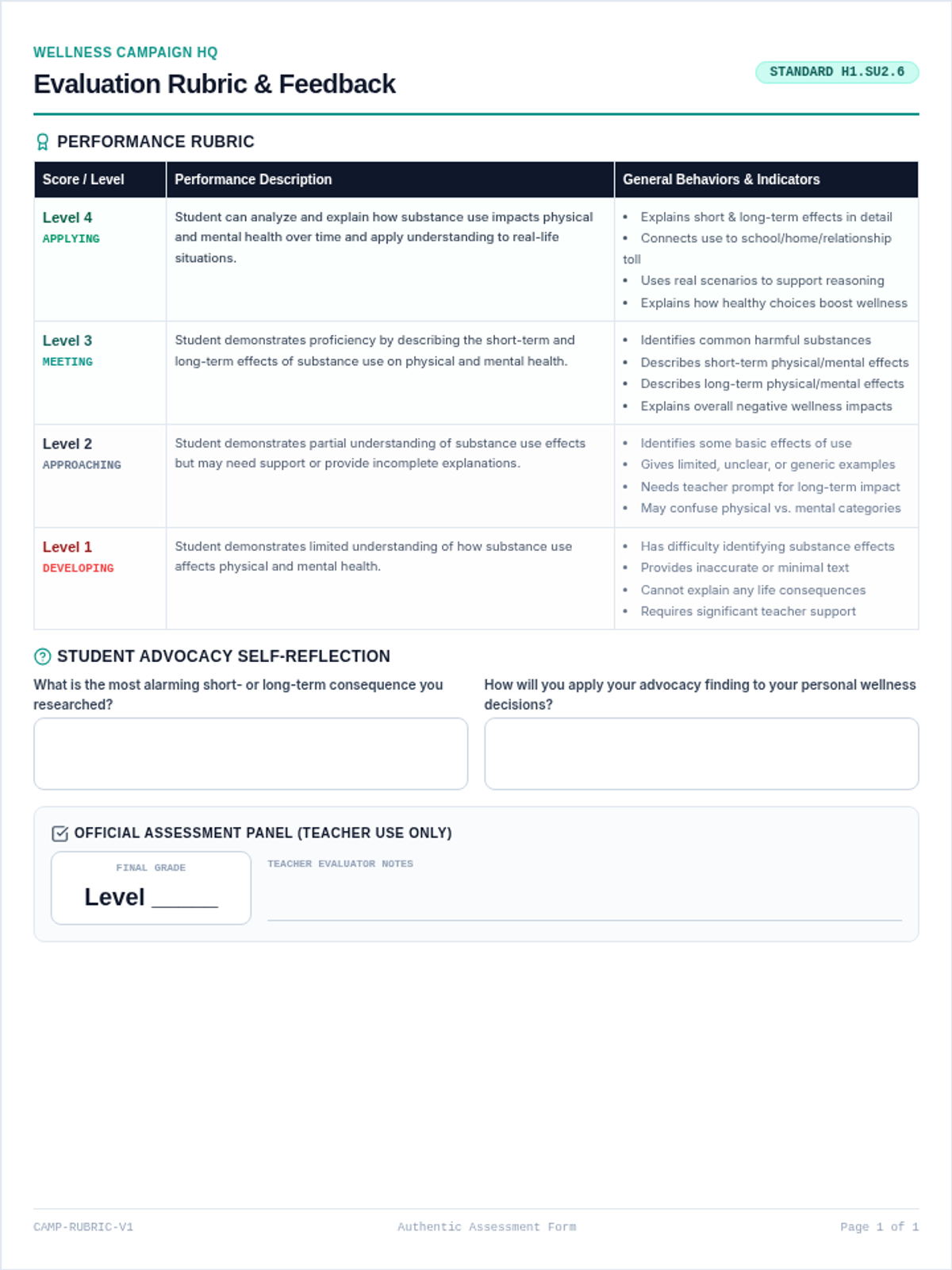
A 1-page print-ready grading rubric and self-reflection sheet based on standard H1.Su2.6, allowing teachers to score students across Levels 1-4 and students to self-reflect.
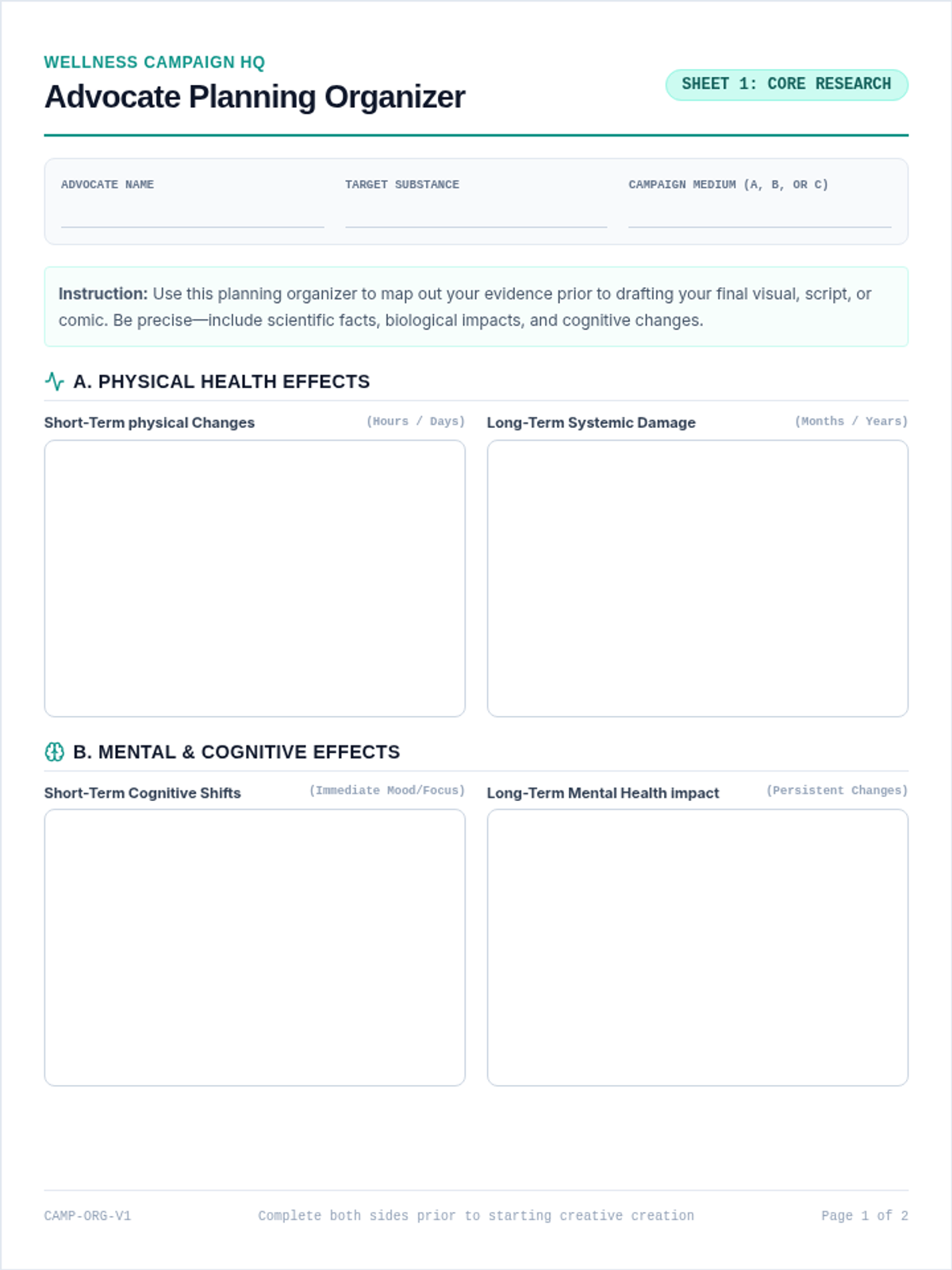
A 2-page print-ready graphic organizer for students to research, brainstorm, and structure the physical, mental, and social effects of their chosen substance, with dedicated spaces for Level 4 criteria.
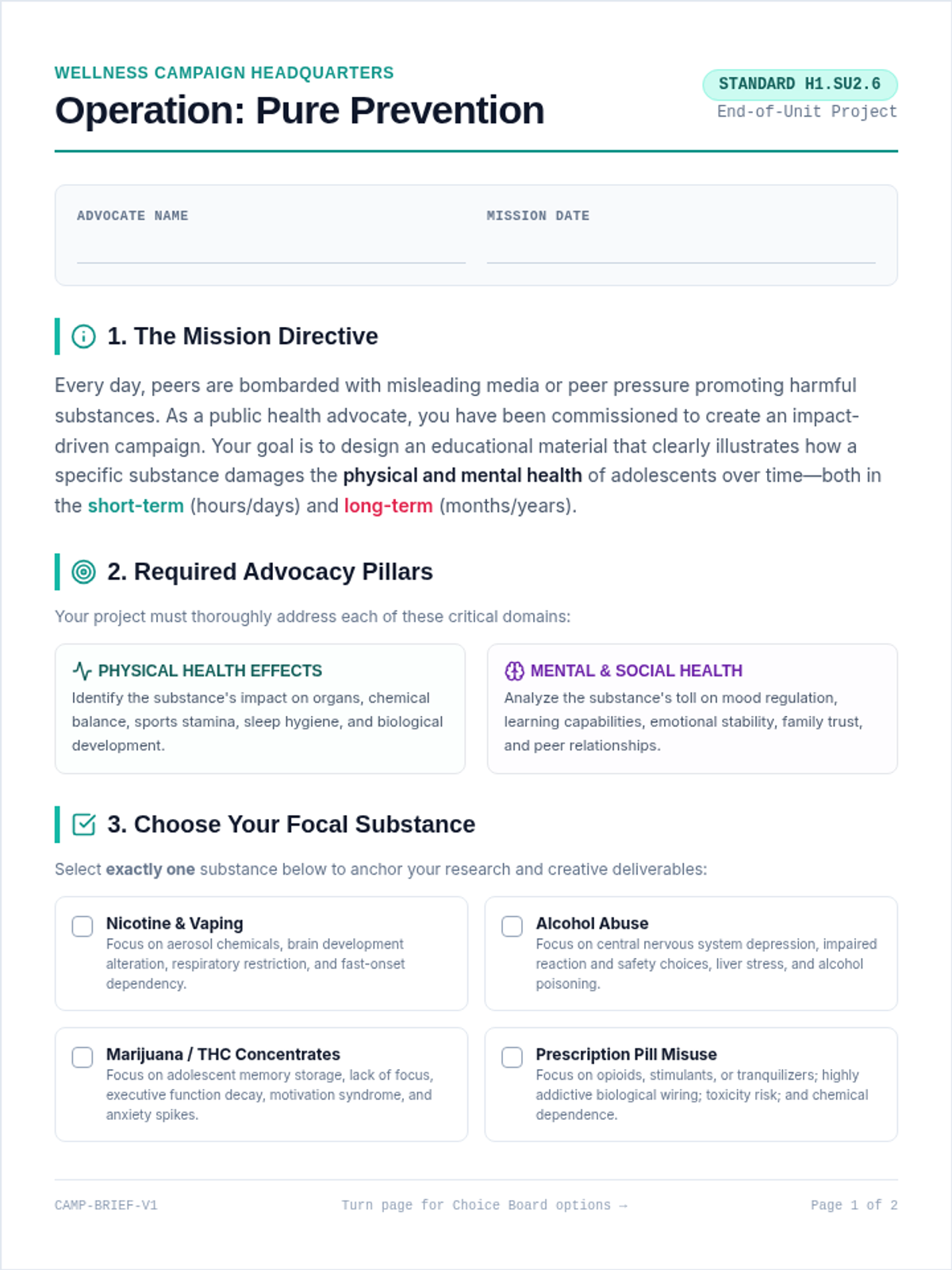
A 2-page print-ready student project guide outlining the public health advocate scenario, chosen substance categories, and the detailed 3-option creative choice board.
A 6-slide presentation introducing the end-of-unit substance use advocacy project, breaking down short- and long-term physical and mental effects, detailing the creative choice board, and highlighting rubric expectations.
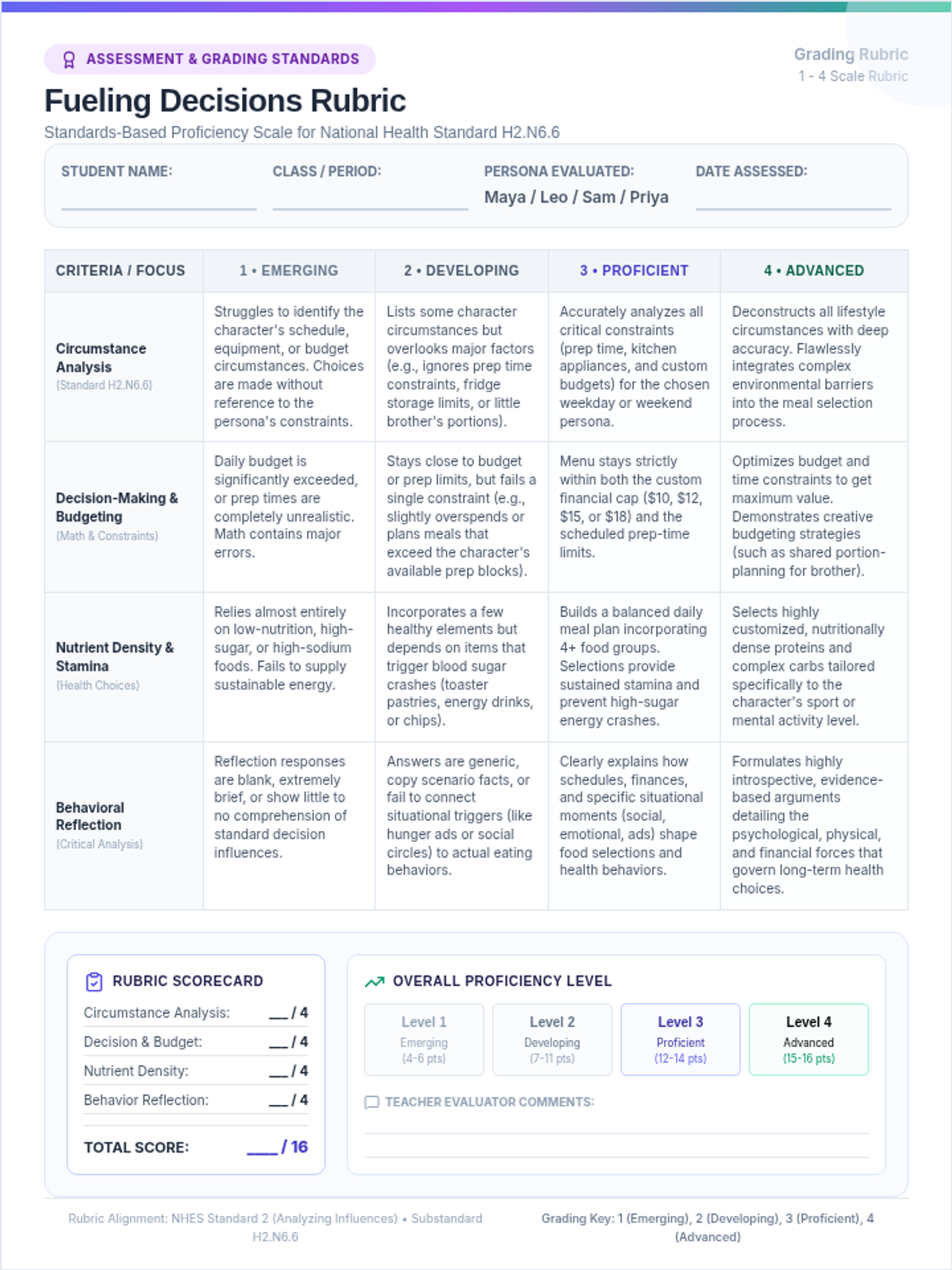
A 1-page standards-based proficiency rubric on a 1-4 scale for the Fueling Decisions unit. It evaluates student performance on circumstance analysis, decision-making, nutrition, and reflection.
A high-impact 7-slide presentation designed for Day 16. It includes a projected Class Entry Directions slide with +1 More Work entry tasks, outlines recording level guidelines, models decibel clipping, and guides students through Figure 4.2 Steps 5 and 6.
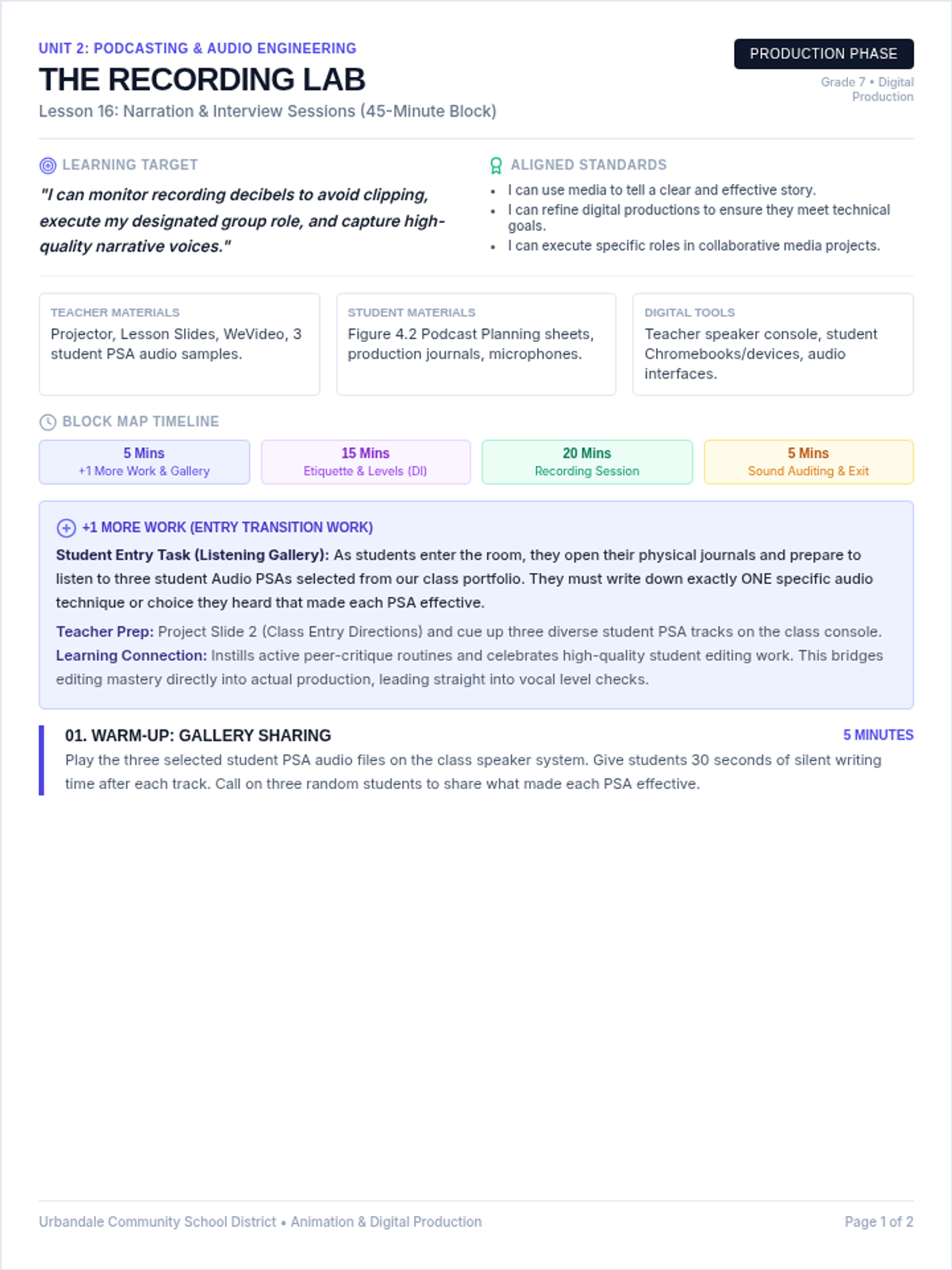
Sub-ready lesson plan for Day 16: The Recording Lab, transitioning students from planning to digital production with active level monitoring and sound audits.
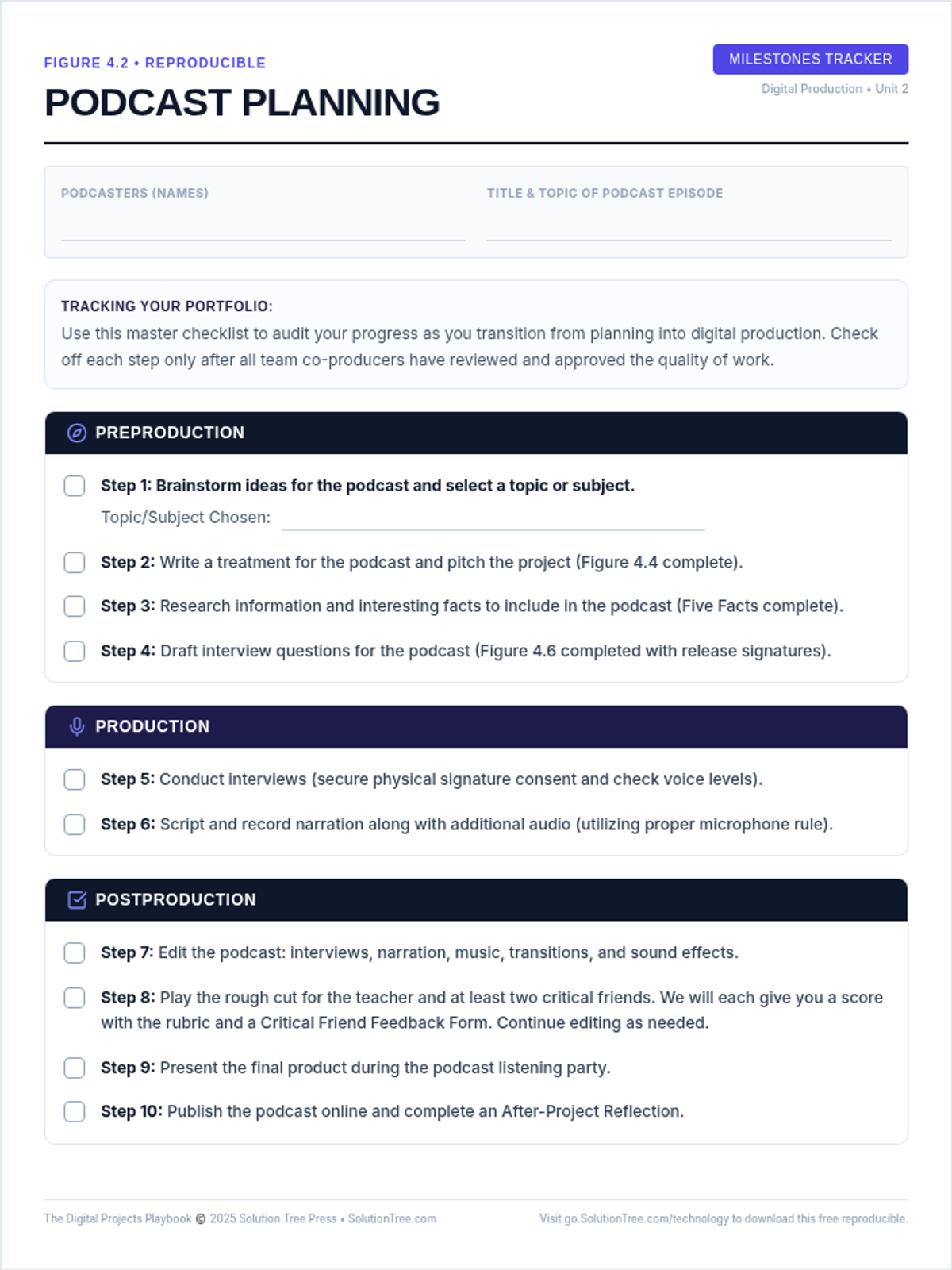
Figure 4.2 Podcast Planning. A beautifully styled 1-page pre-production, production, and post-production checklist for 7th-grade students to track their podcasting milestones from brainstorm to publication. Sourced from The Digital Projects Playbook.
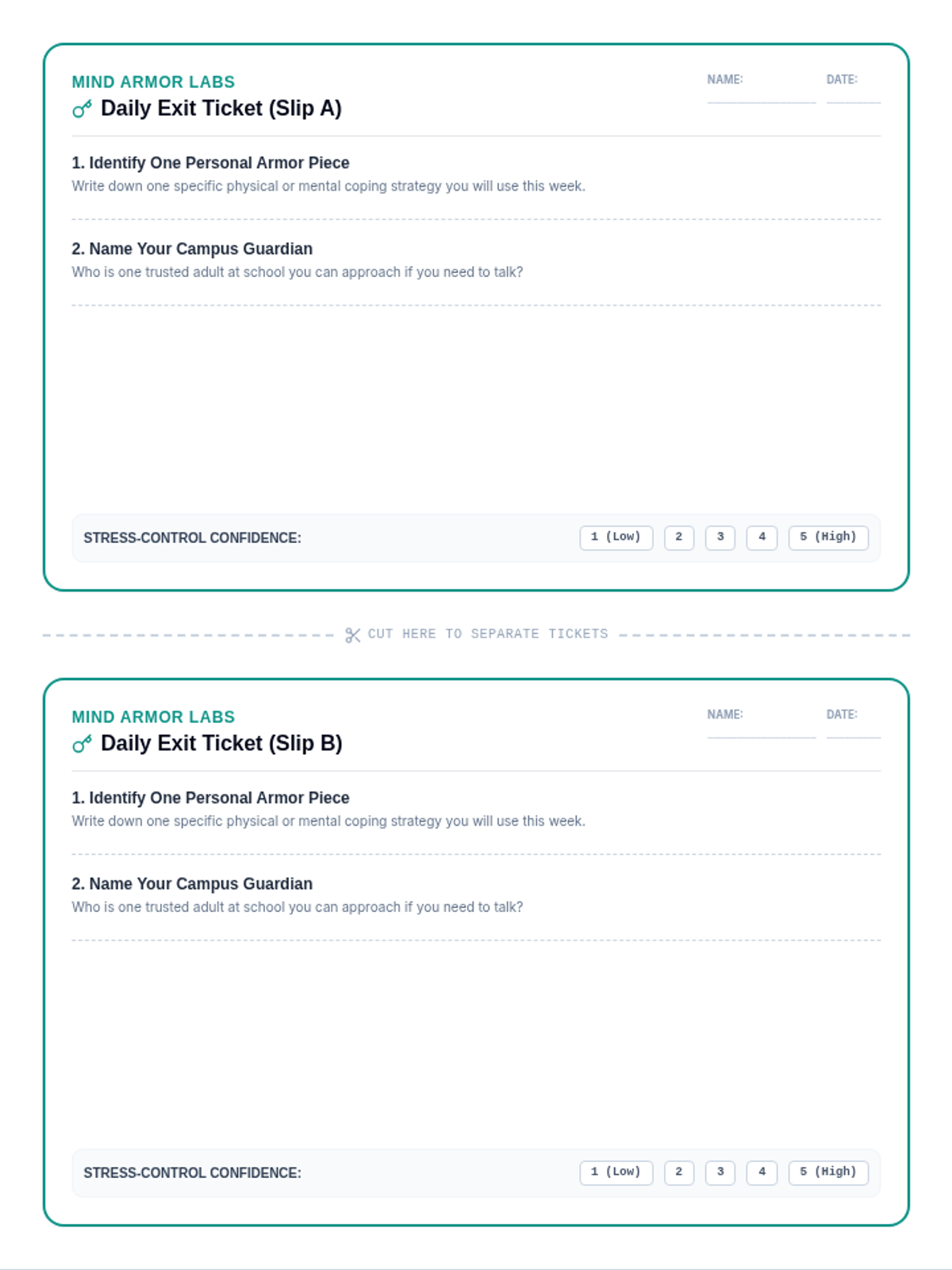
A single-page, double-slip student exit ticket. It contains two identical cut-out reflection cards prompting students to name a personal physical coping skill, list a school-based trusted adult, and self-rate their confidence.
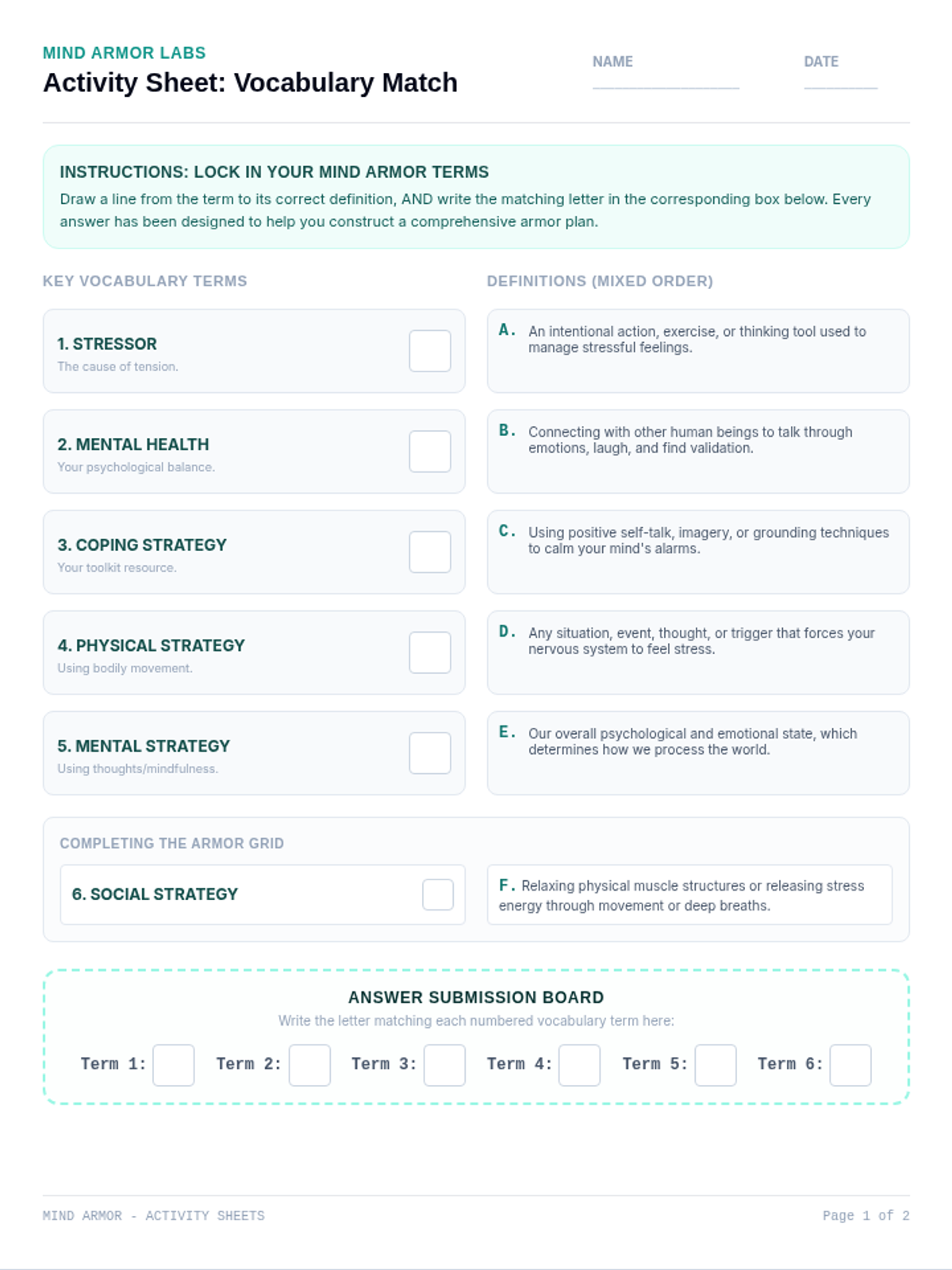
A 2-page student activity sheet bundle. Page 1 features a core vocabulary matching activity on stress, mental health, and coping strategies. Page 2 presents real-world stress scenarios (Maya's test anxiety and Jordan's friendship conflict) for analysis and coping tool application.
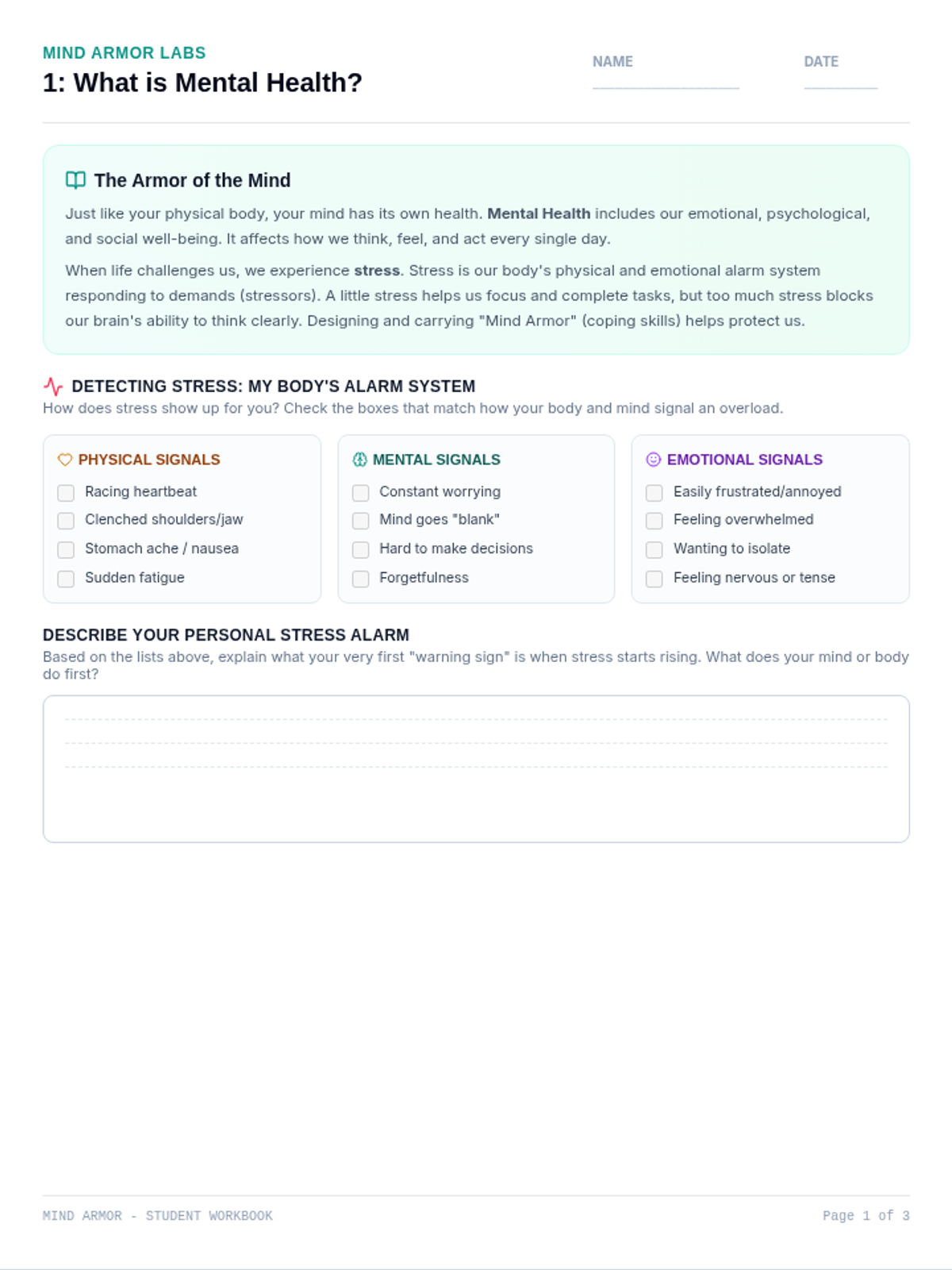
A 3-page interactive student workbook focused on mental health education. Includes reading passages about stress, a personal stress-signal checklist, deep exploration of physical/mental/social coping skills, and a visual mapping activity for identifying trusted adults.
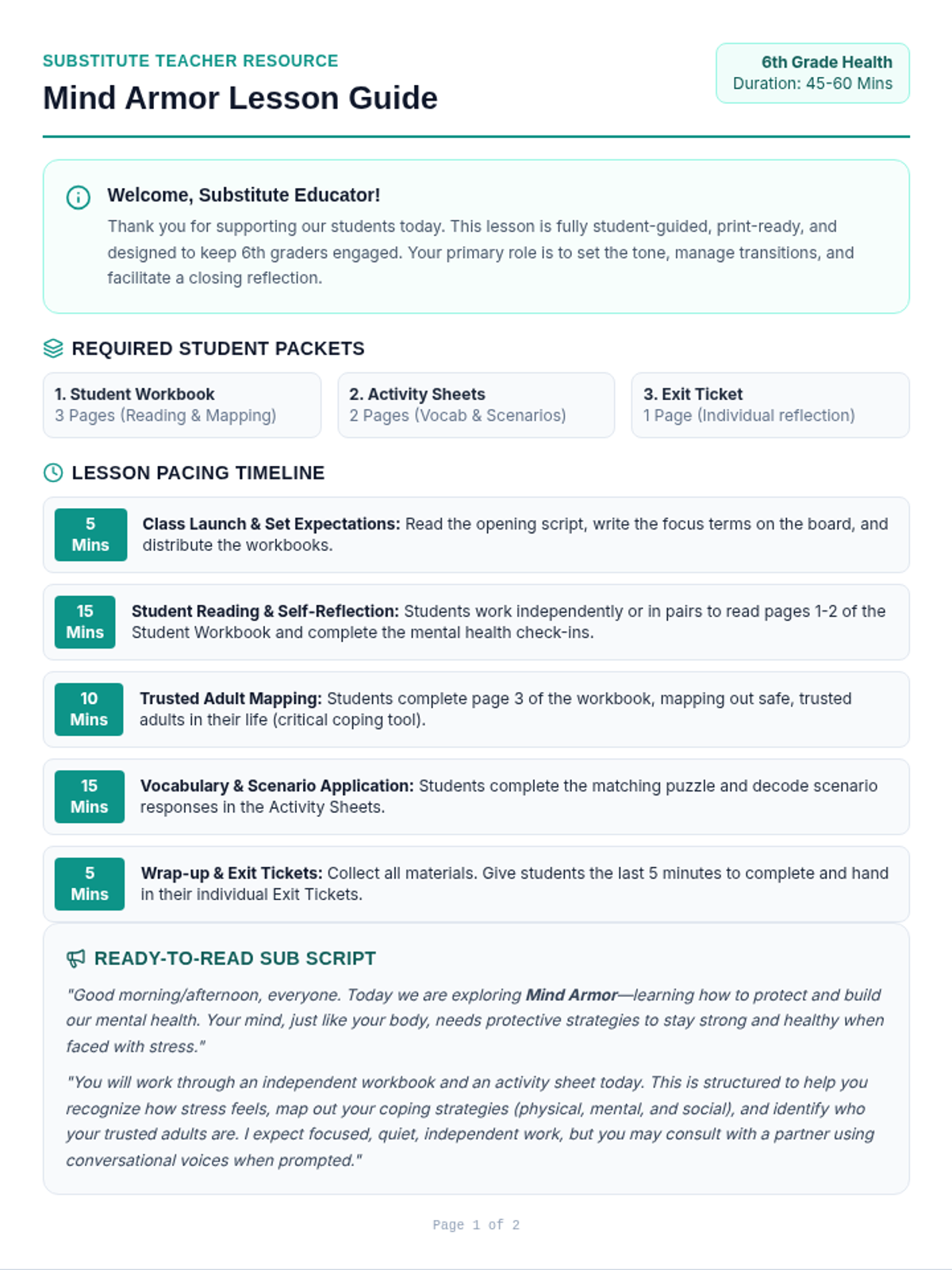
A 2-page substitute teacher facilitation guide for the Mind Armor lesson. It contains complete lesson instructions, ready-to-read scripts, a pacing timeline, classroom management tips, and answer keys for the student activities.
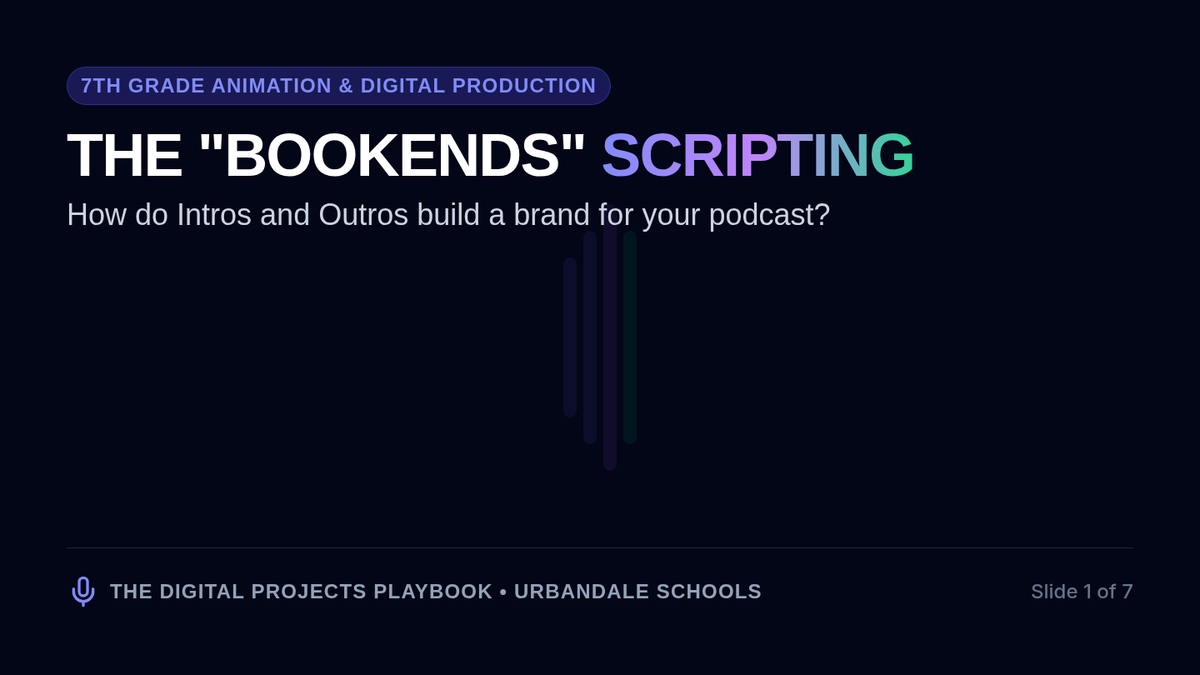
A high-impact 7-slide presentation designed for Day 15. It includes a projected Class Entry Directions slide with +1 More Work entry tasks, outlines vocal acting principles, models the 5-second hook test, and guides students through Figure 4.7 Intro/Outro Organizer.
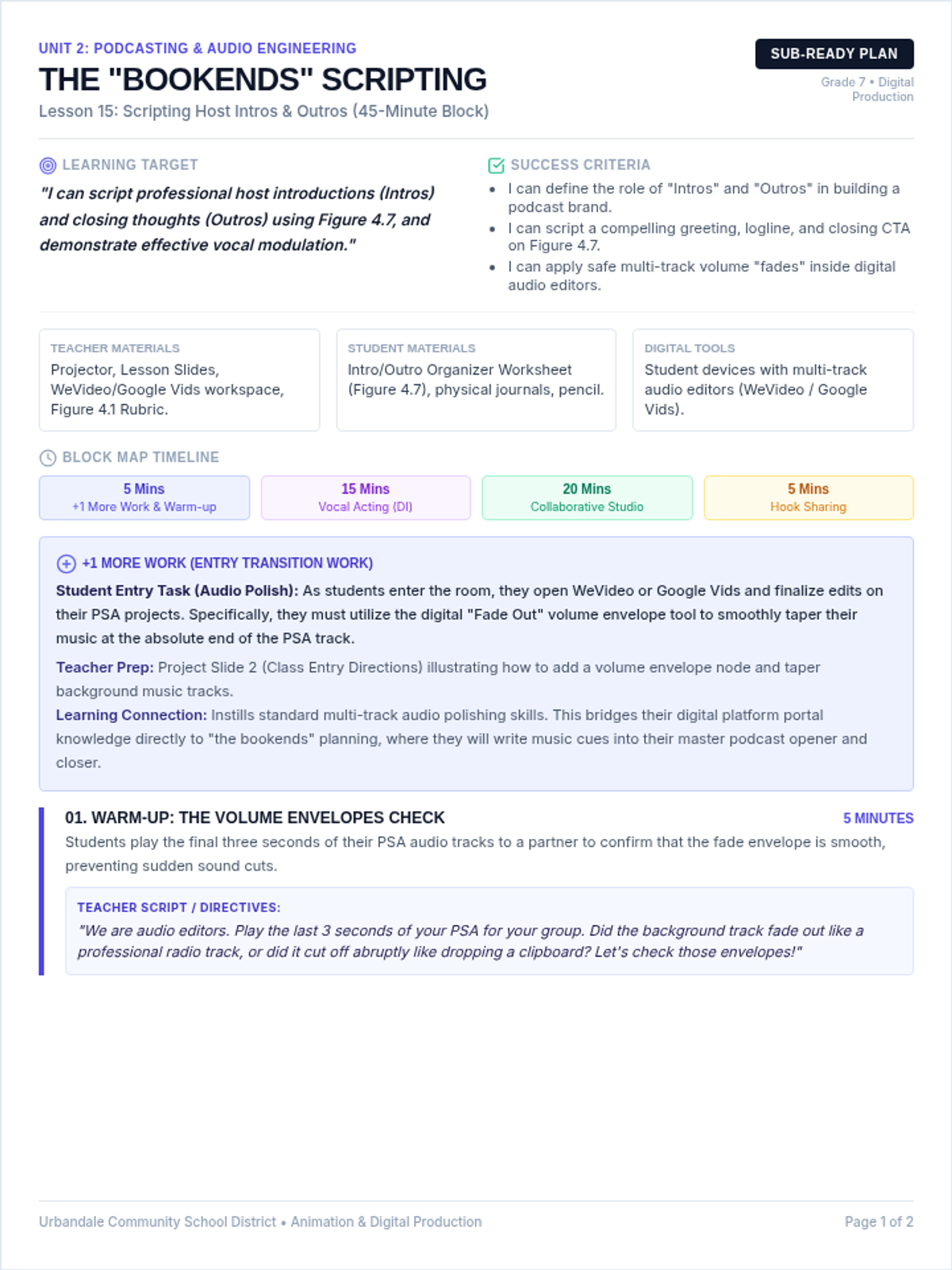
Sub-ready lesson plan for Day 15: The 'Bookends' Scripting, detailing vocal acting, enthusiasm, Figure 4.1 Rubric standards, and Figure 4.7 Intro/Outro Organizer.
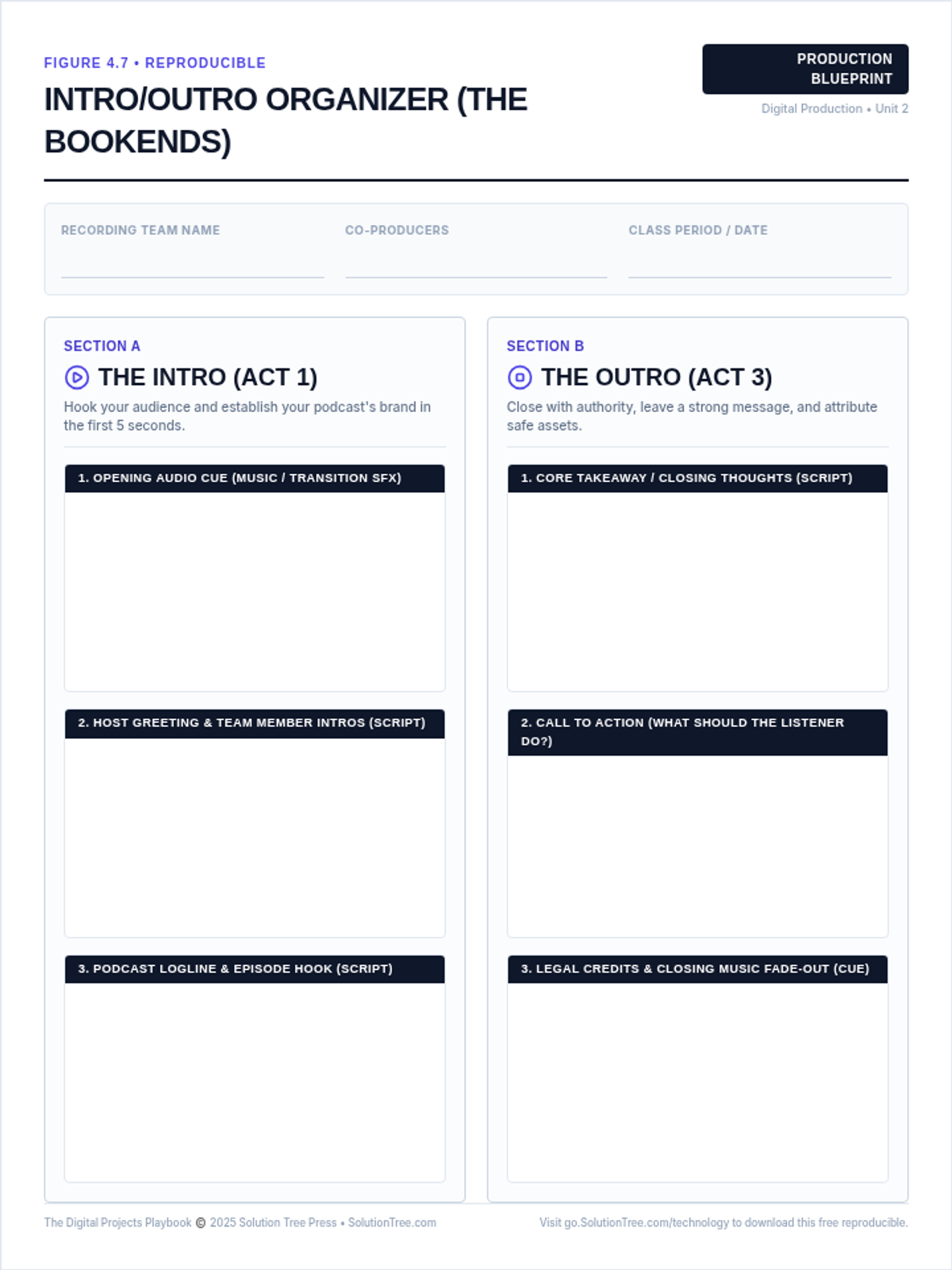
Figure 4.7 Intro/Outro Organizer. A beautifully styled 1-page pre-production planning worksheet for 7th-grade partners to script host introductions, hook listeners, outline calls to action, and manage audio transitions. Sourced from The Digital Projects Playbook.