A detailed two-page teacher guide and lesson plan for a 4th-5th grade art lesson on primary colors, styled as a modern 'Color Lab' instructional manual.
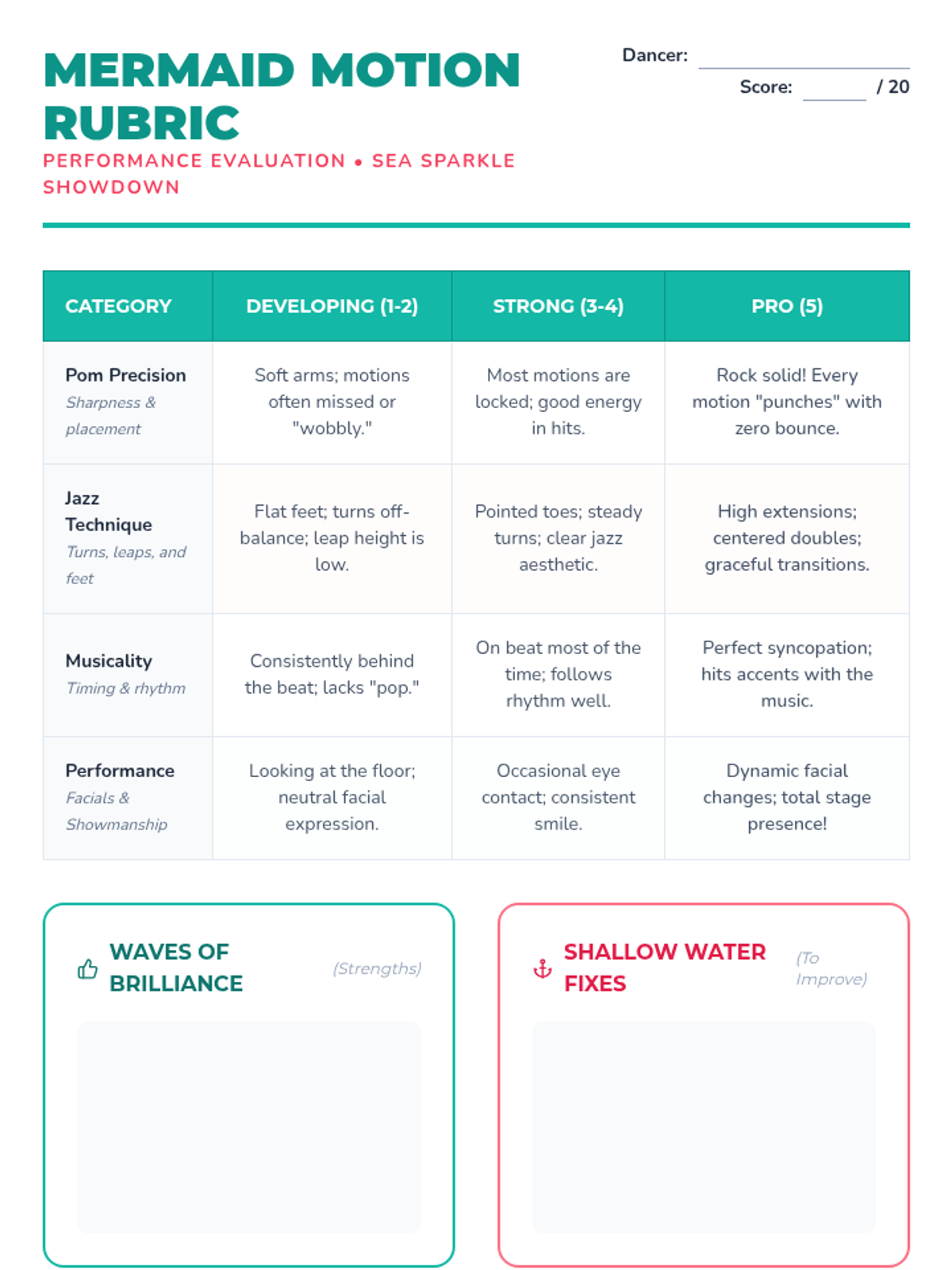
A professional assessment rubric for a pom dance routine, featuring specific criteria for precision, technique, musicality, and performance with space for teacher feedback.
A vibrant presentation for a jazzy pom dance class, highlighting routine style, essential pom positions, formation strategies, and performance energy.
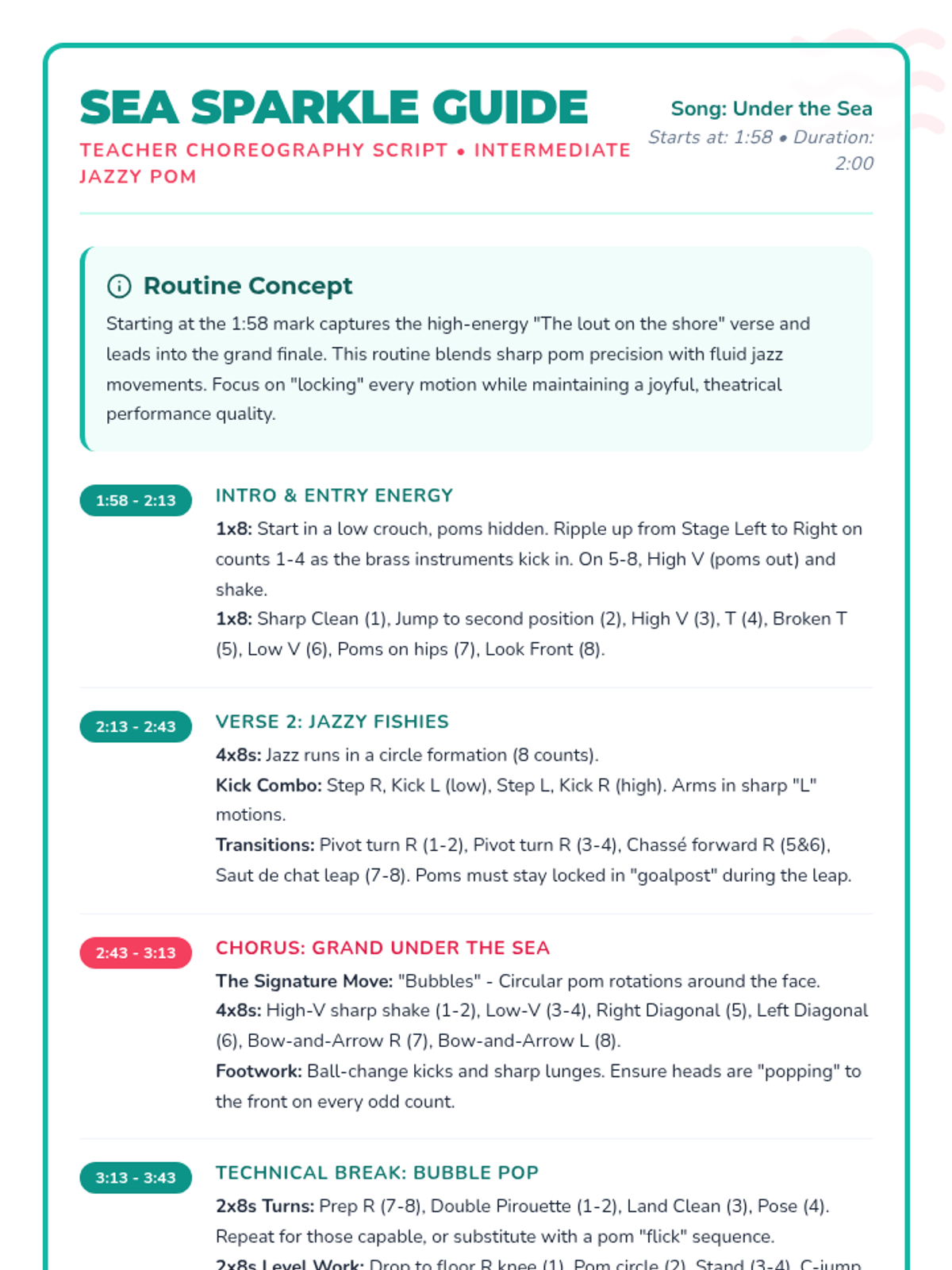
A comprehensive teacher choreography guide for an intermediate jazzy pom routine to 'Under the Sea', starting at the 1:58 mark with timestamped breakdowns.
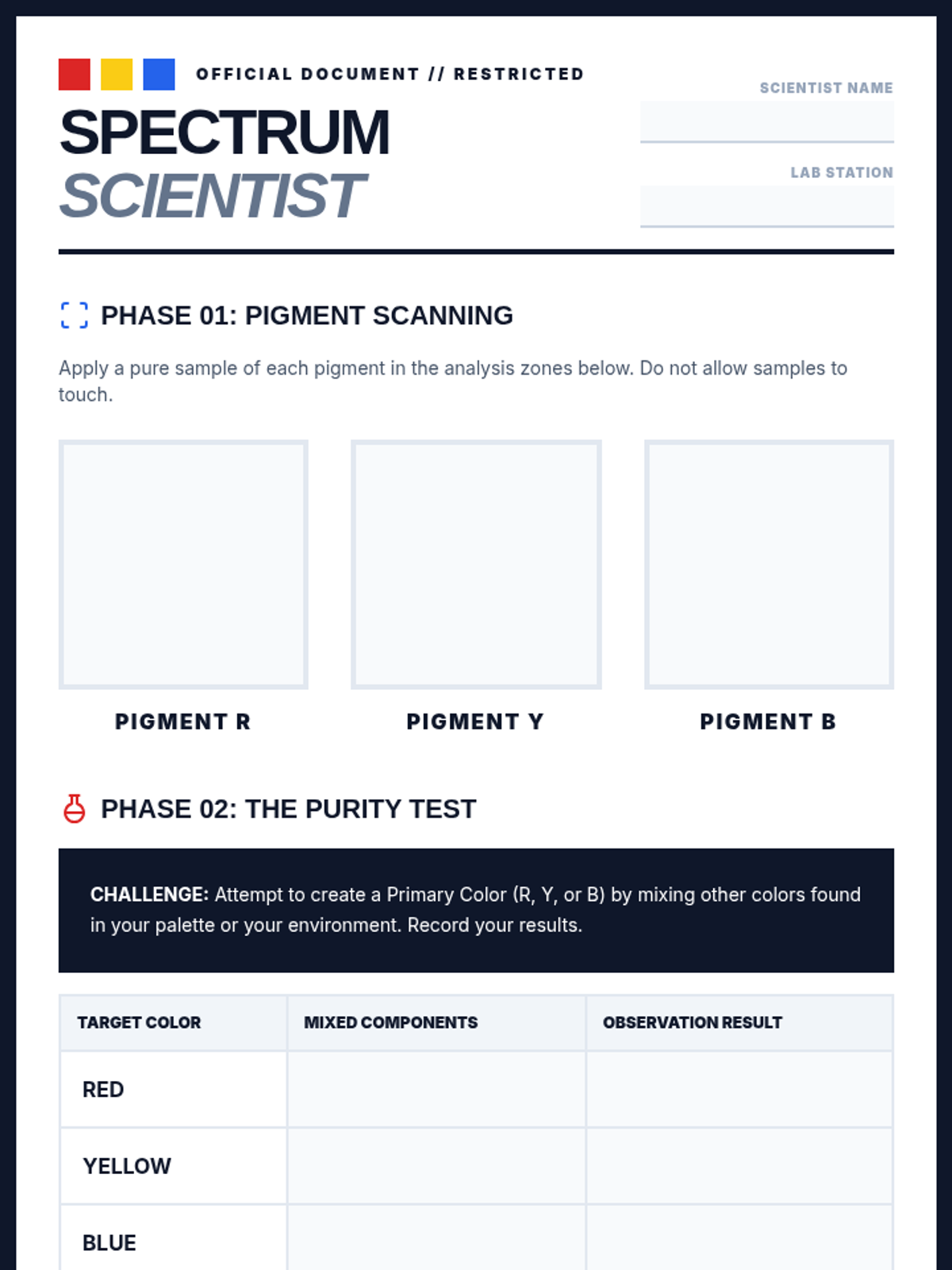
A student 'Lab Log' and worksheet for documenting primary color experiments, visual weight analysis, and art planning, styled as a scientific report.
A vibrant, high-contrast slide deck to introduce primary colors and Piet Mondrian to 4th-5th graders, styled as a modern 'Color Lab' mission.
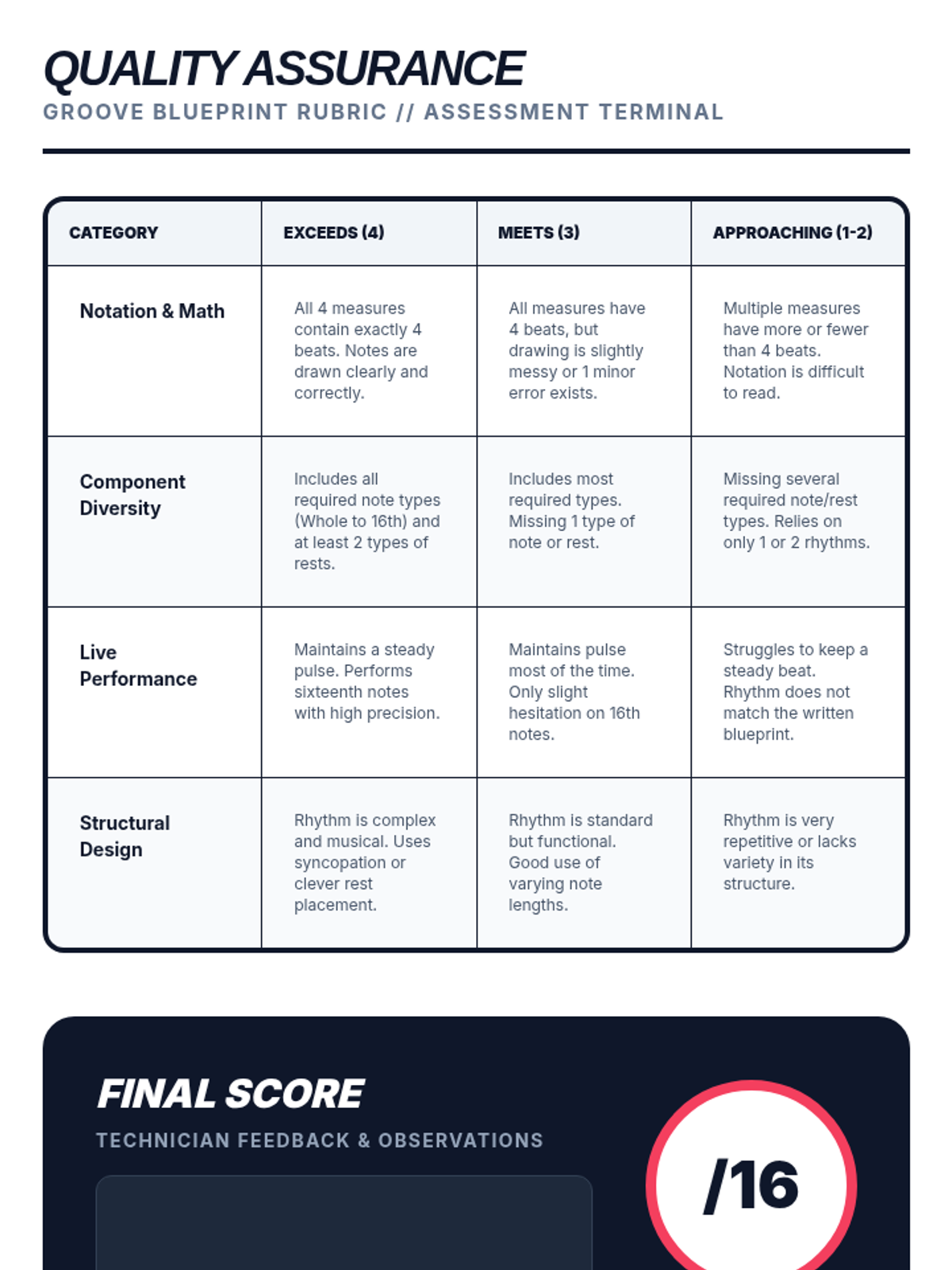
An assessment rubric for the Groove Blueprint project, focusing on notation accuracy, rhythm diversity, performance quality, and creative design. Theme matches the 'Beat Lab' project aesthetic.
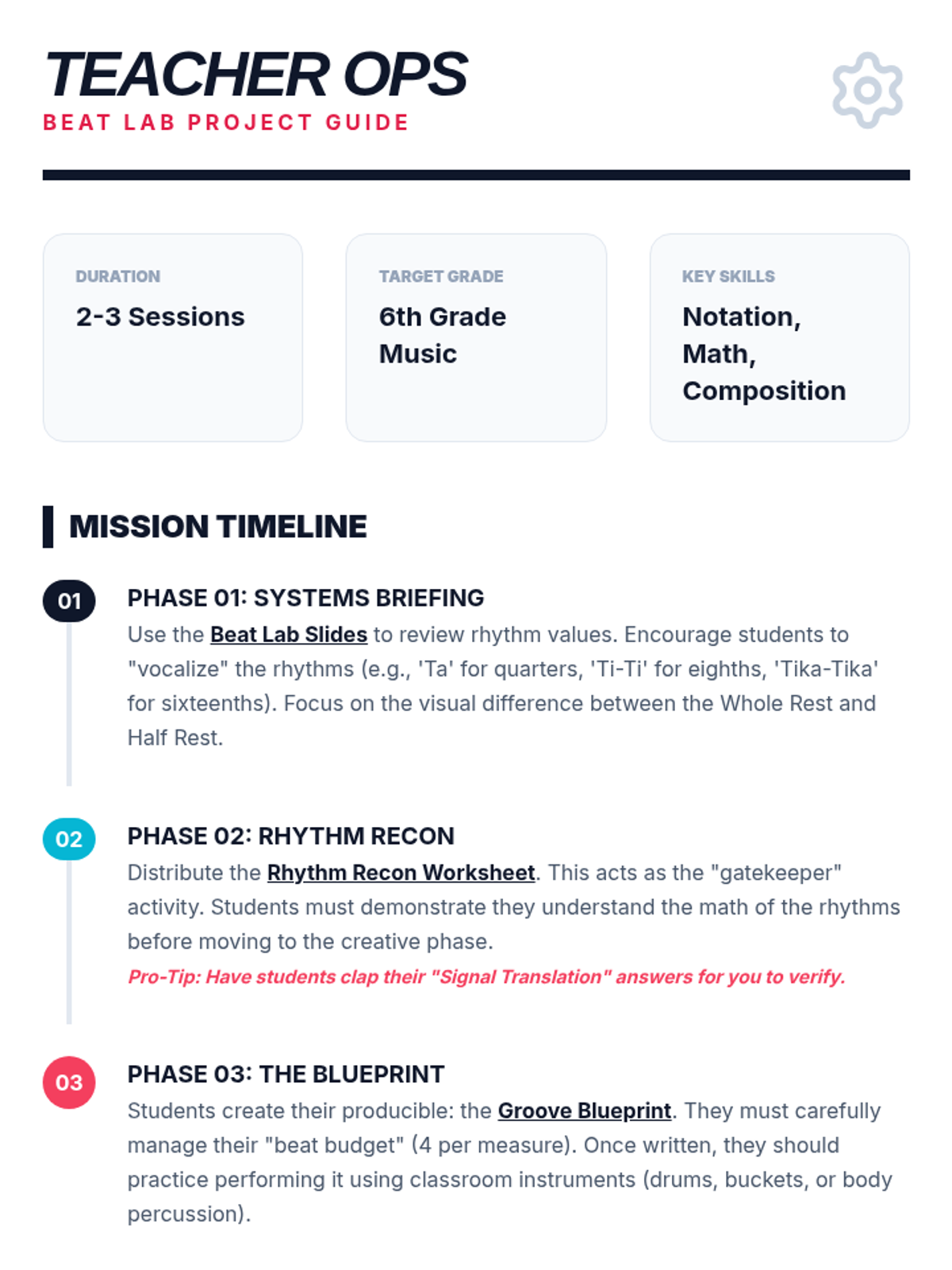
A comprehensive teacher guide for the Beat Lab project, including pacing suggestions, differentiation strategies, and an answer key for the Rhythm Recon worksheet.
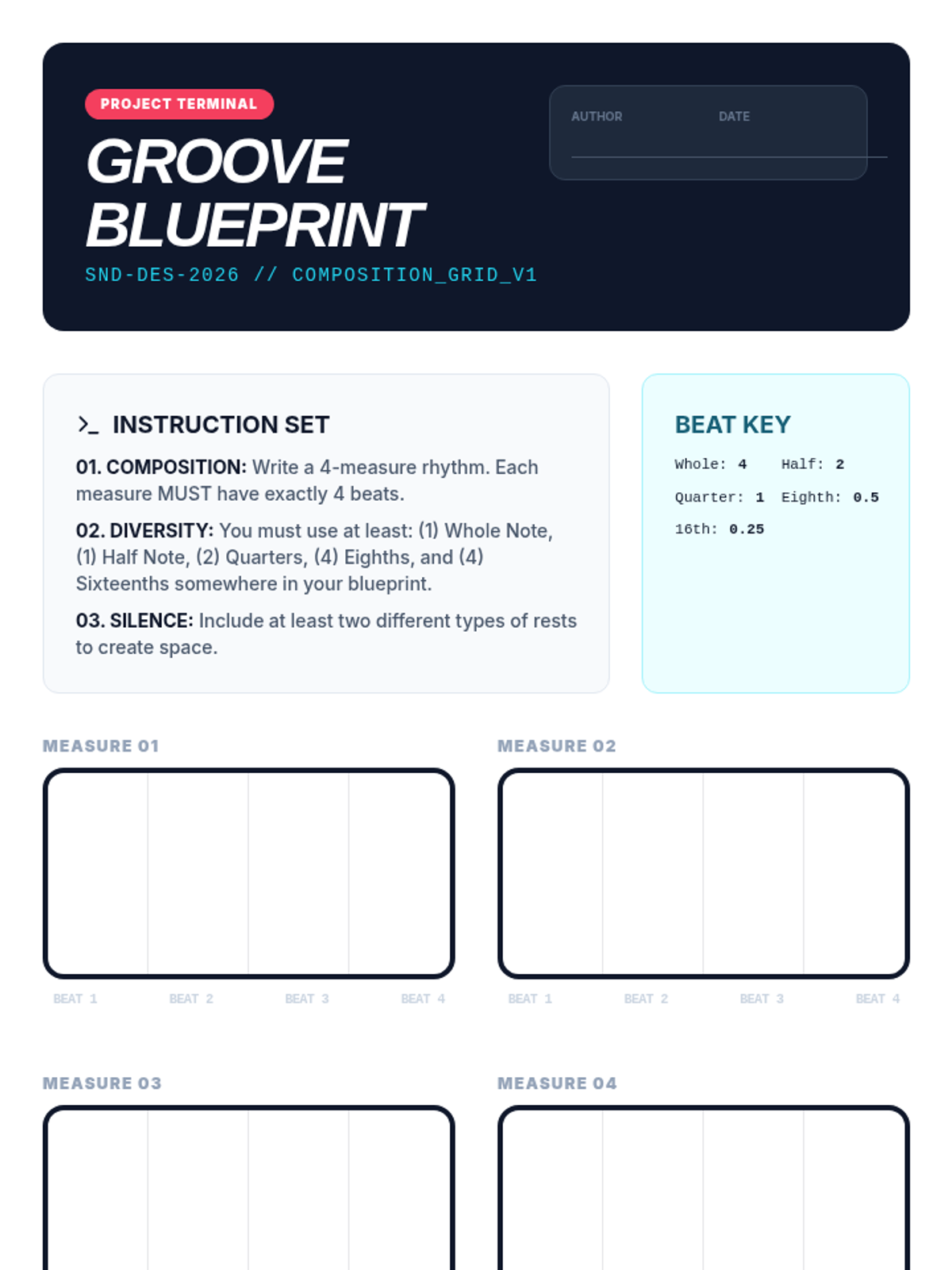
The primary 'producible' for the rhythm project. A sleek composition worksheet where students design a 4-measure rhythm following specific complexity requirements. Includes a 'beat grid' layout for visual clarity.
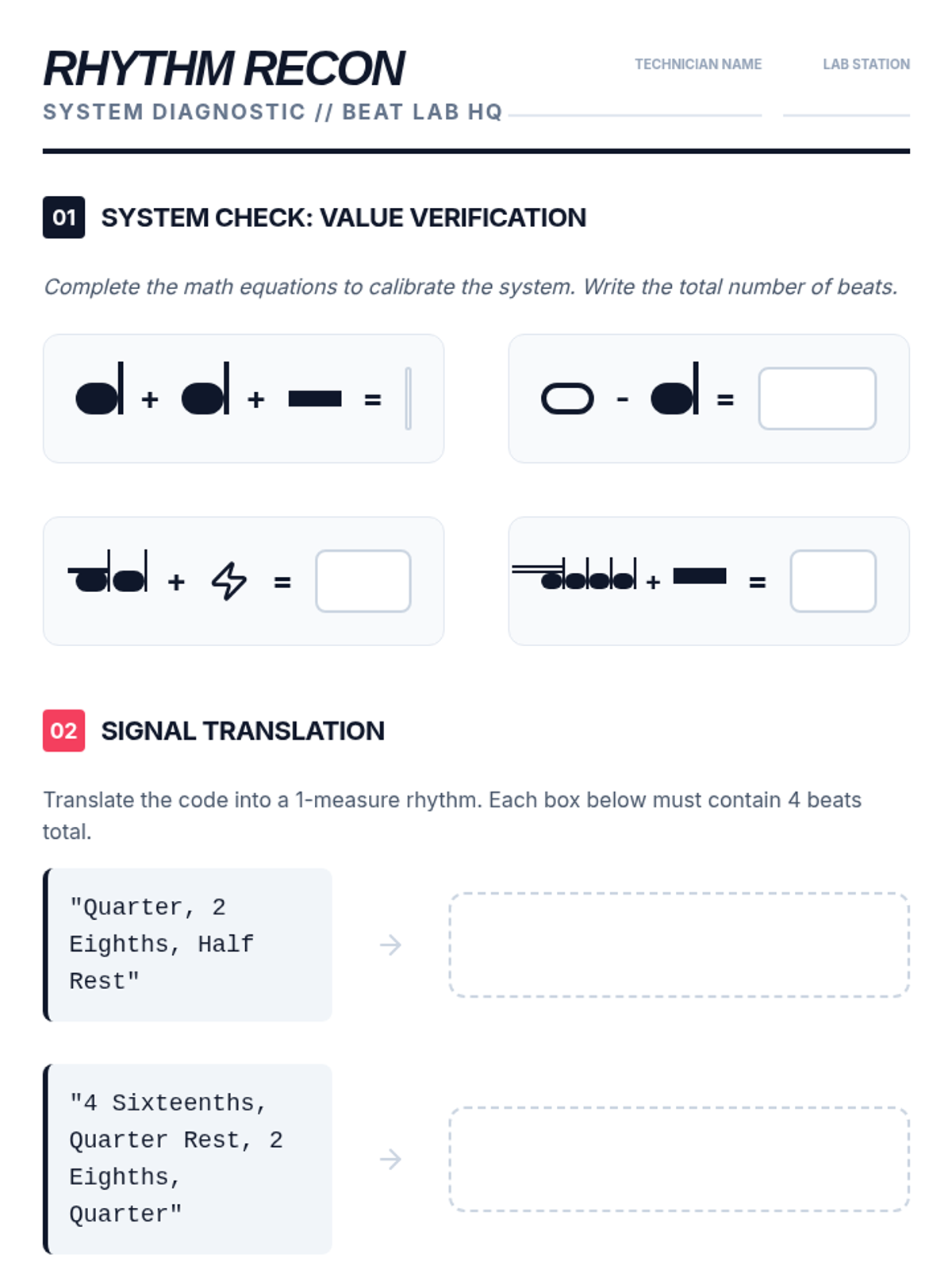
A 'rhythm math' and diagnostics worksheet where students solve equations using musical notes and identify errors in 4/4 measures. Features a technical, 'Beat Lab' HQ theme.
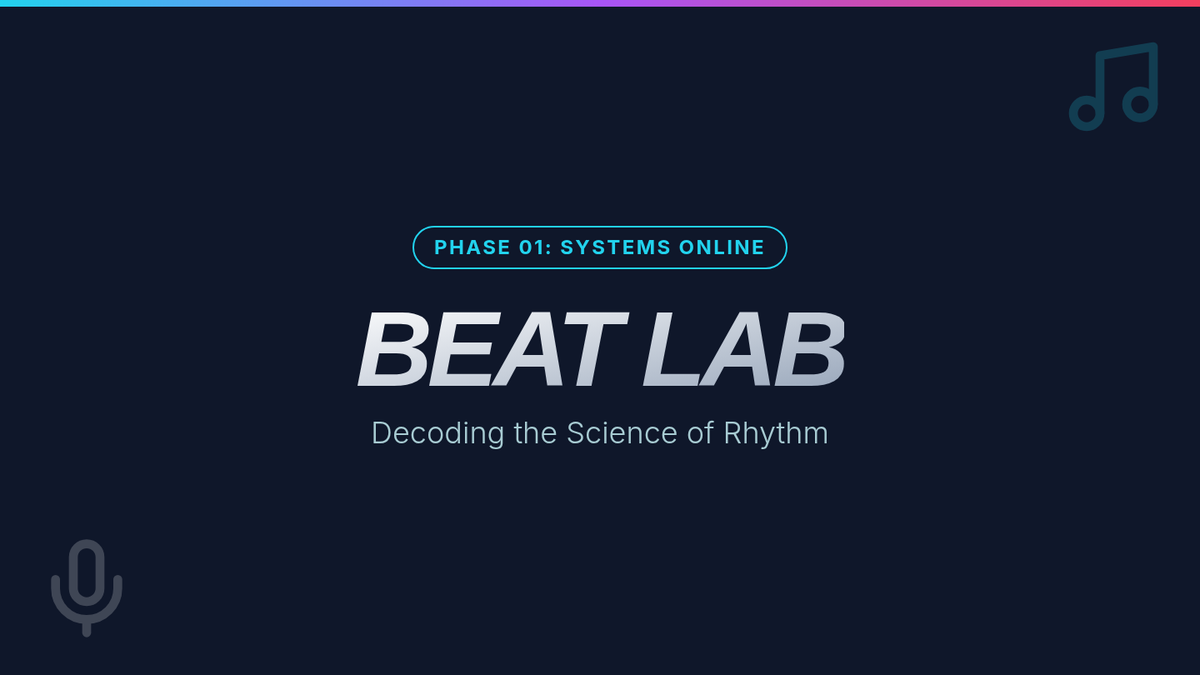
A vibrant, futuristic slide deck introducing the 'Beat Lab' project. It covers rhythm values (whole to sixteenth) and their corresponding rests with high-contrast visuals designed for 6th-grade students.
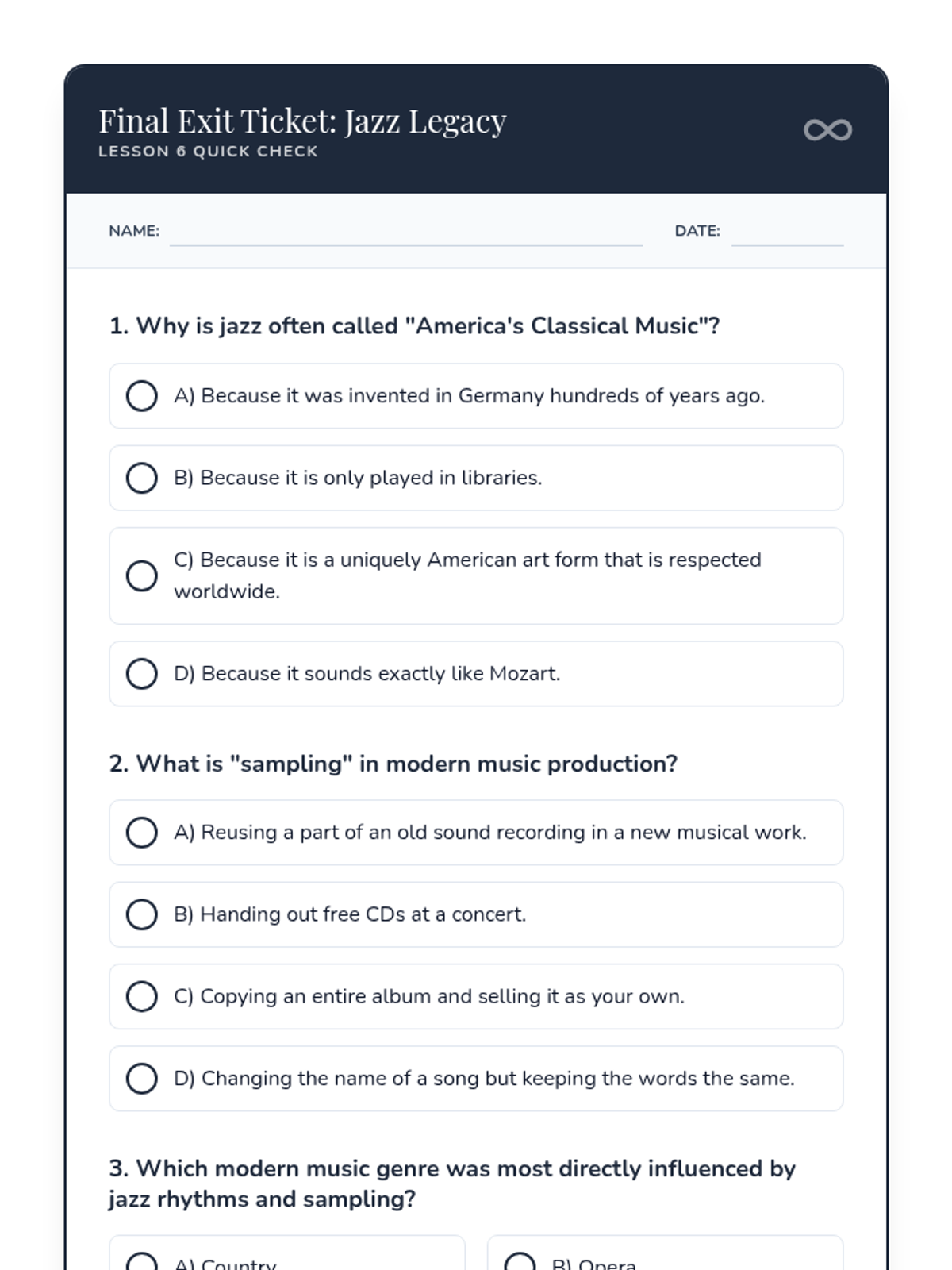
A 4-question multiple choice exit ticket for the final lesson, assessing student understanding of jazz's legacy and its core elements.
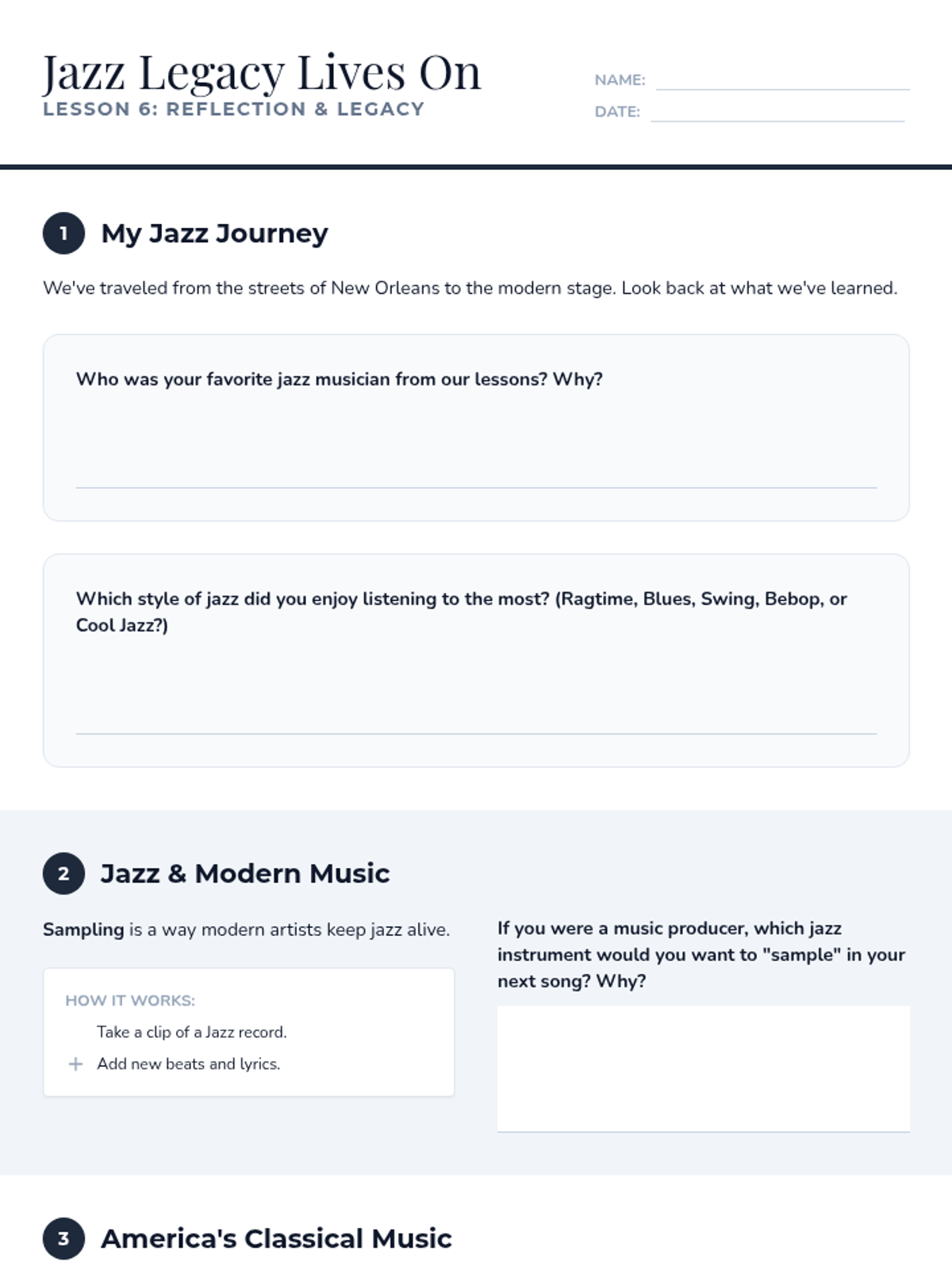
A student worksheet for the final lesson, featuring reflection questions on the unit and a section on jazz's influence on modern music.
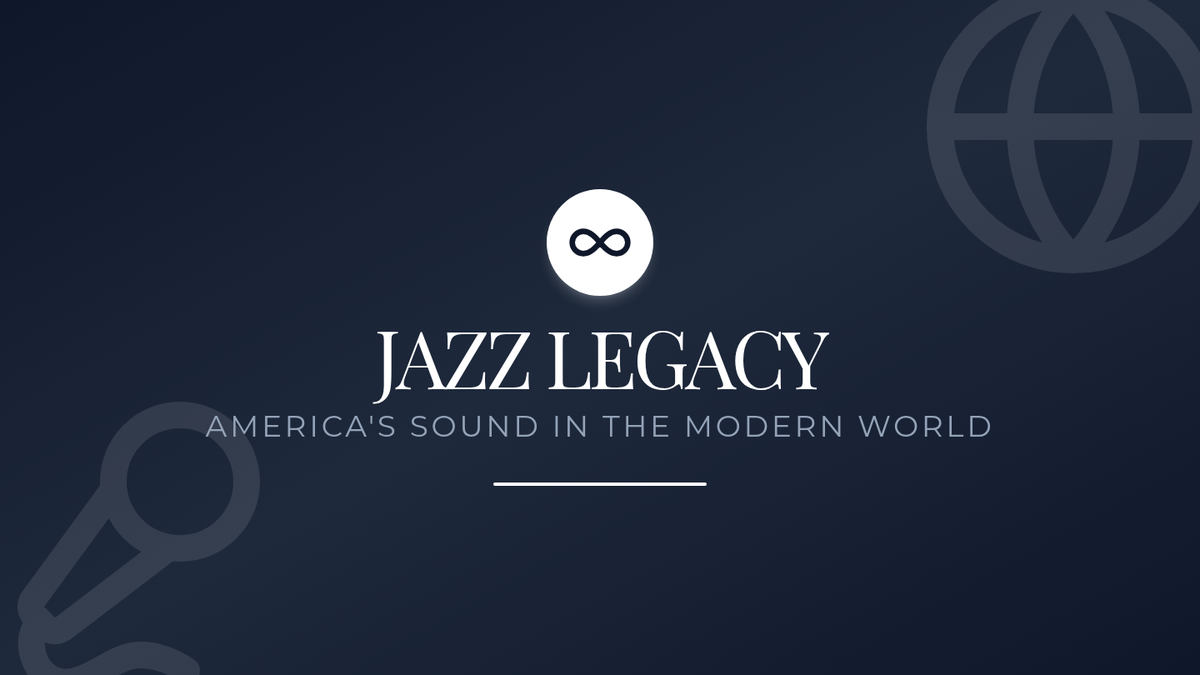
A visual presentation for Lesson 6, exploring the legacy of jazz, its influence on modern music like Hip Hop, and its status as a global art form.
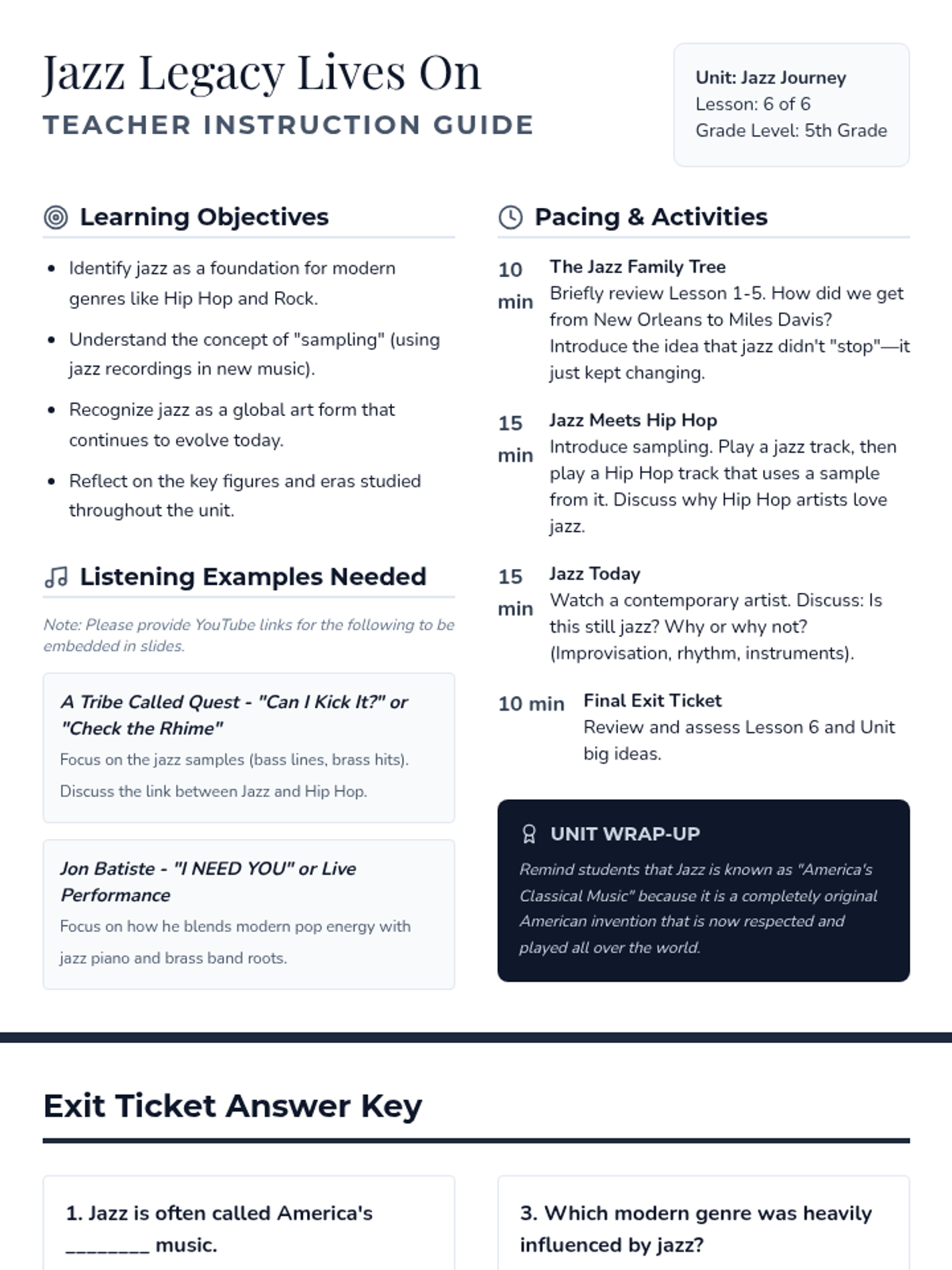
A teacher's guide for the final lesson on the legacy of jazz, covering its influence on modern music and its status as a global art form.
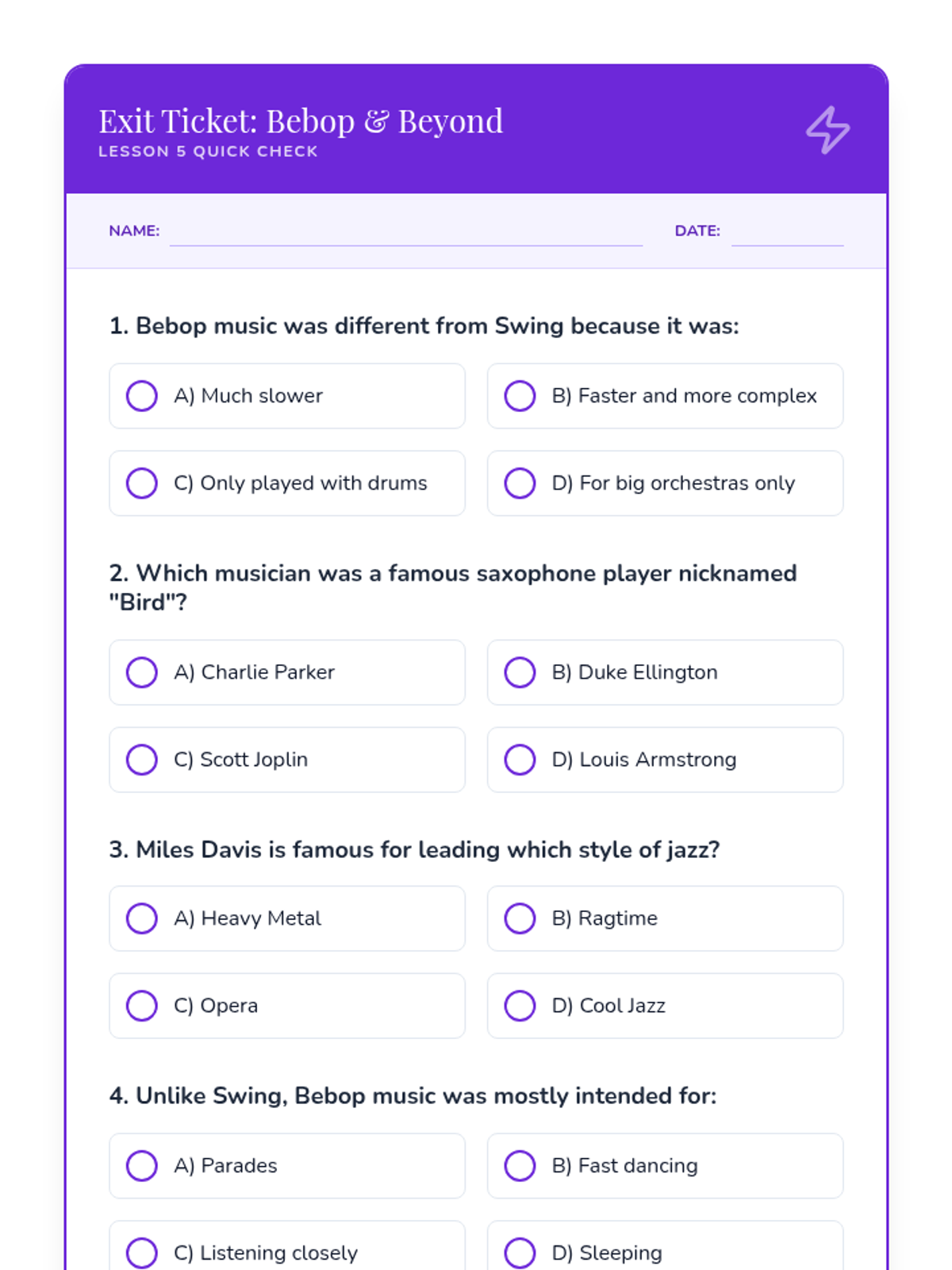
A 4-question multiple choice exit ticket for Lesson 5, assessing student understanding of Bebop, Charlie Parker, and Cool Jazz.
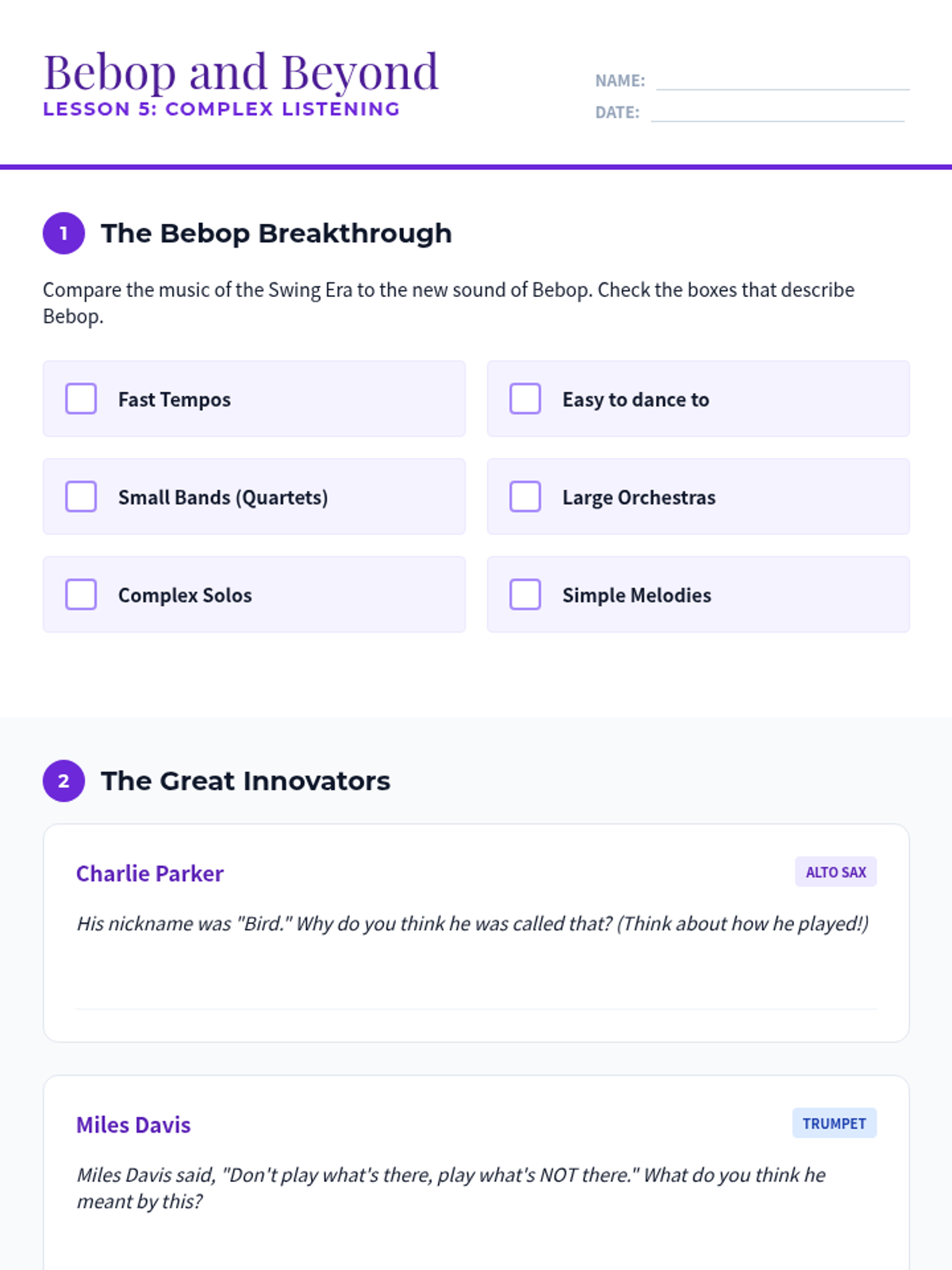
A student worksheet for Lesson 5, featuring a comparison activity between Swing and Bebop, and reflective questions about Charlie Parker and Miles Davis.
A visual presentation for Lesson 5, exploring the characteristics of Bebop, the architects Charlie Parker and Dizzy Gillespie, and the "Cool Jazz" of Miles Davis.
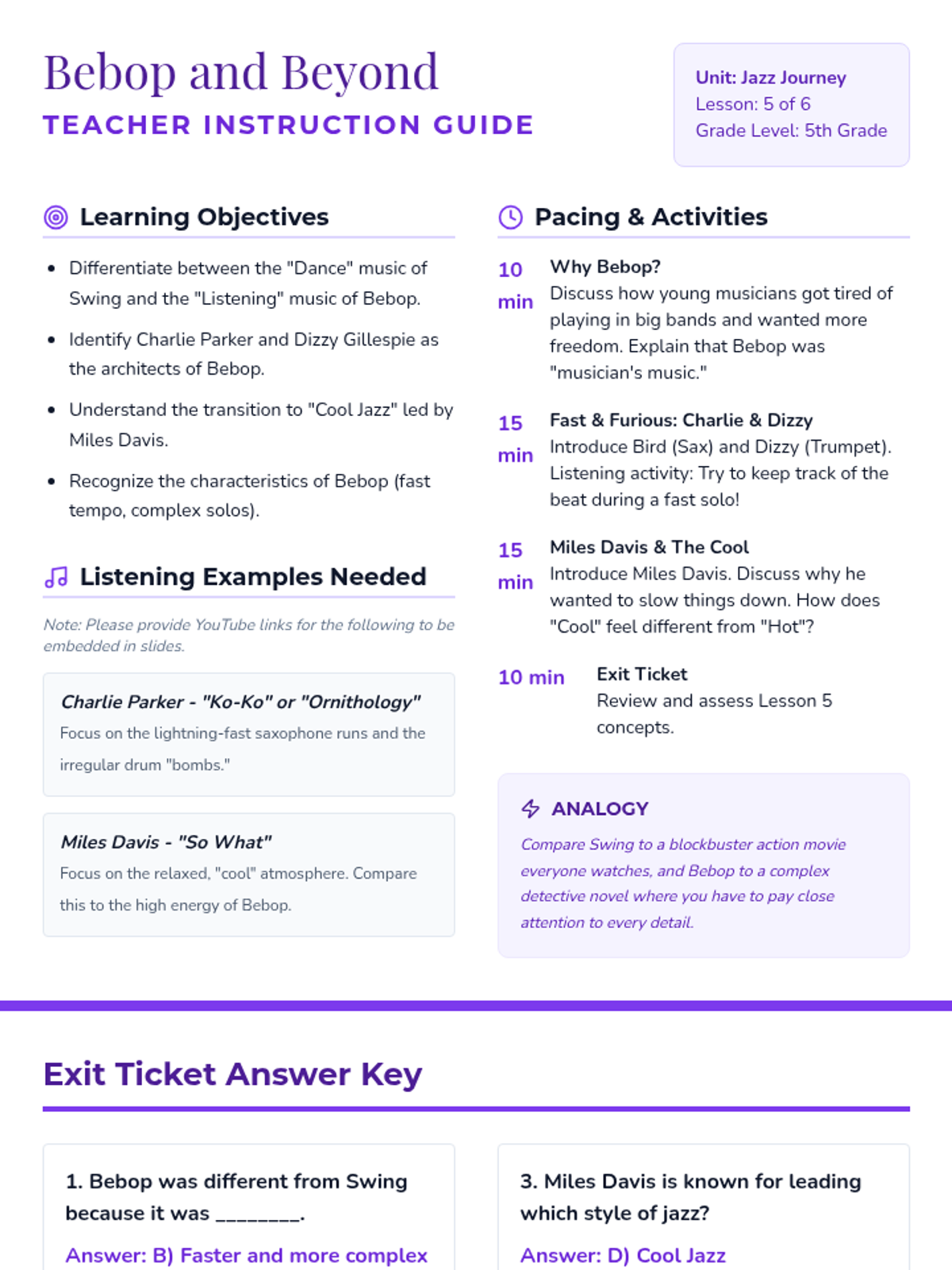
A teacher's guide for the fifth lesson on Bebop and Miles Davis, covering Charlie Parker, the transition from swing, and the birth of cool jazz.
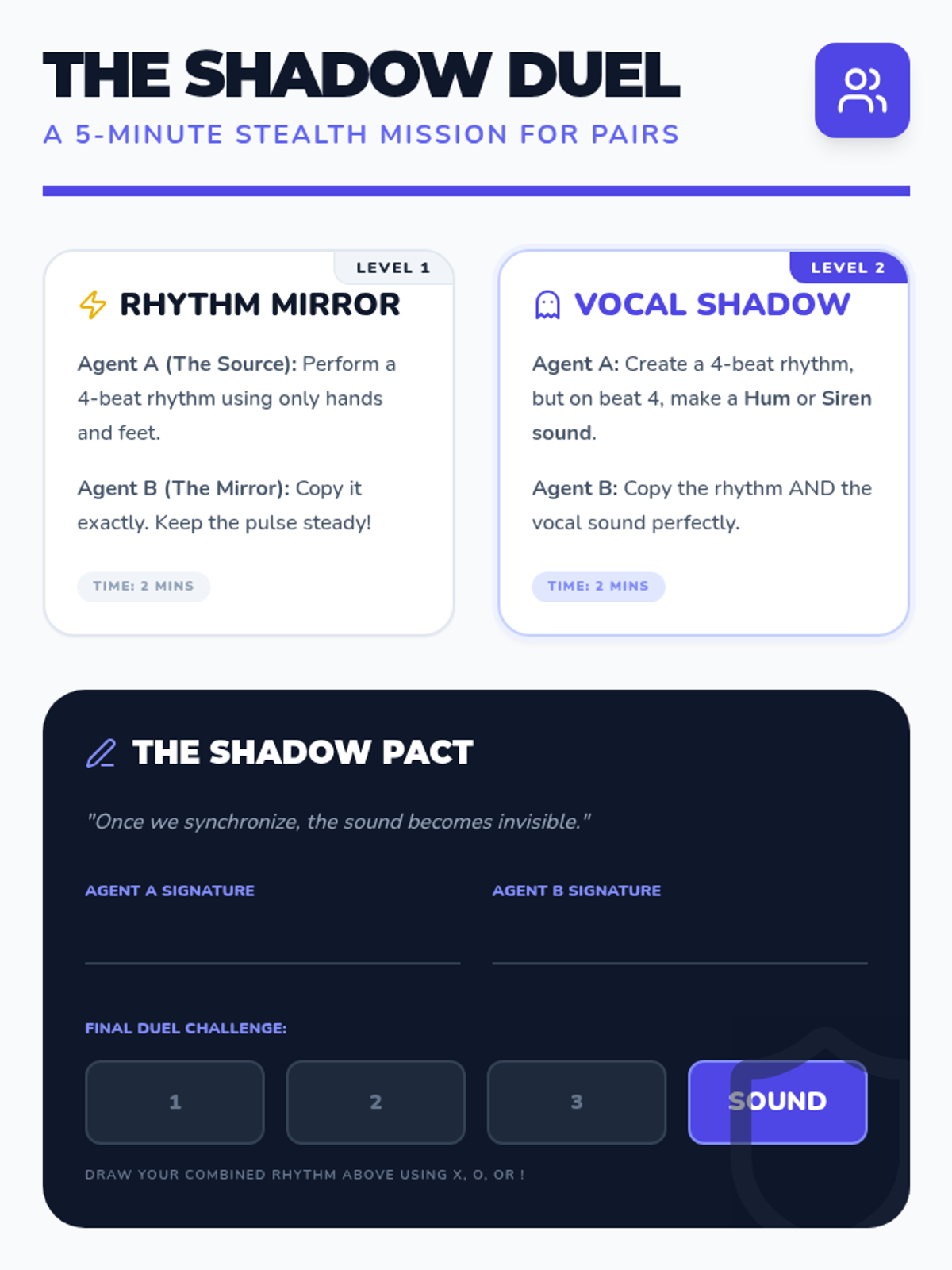
A 5-minute partner activity where students take turns being the "Source" and "Mirror" to build rhythmic and vocal confidence in a low-stakes duel.