A comprehensive graduate-level bridge between basic music fundamentals and advanced harmonic theory, focusing on the construction of triads and seventh chords, figured bass realization, and the rigorous principles of SATB voice leading.
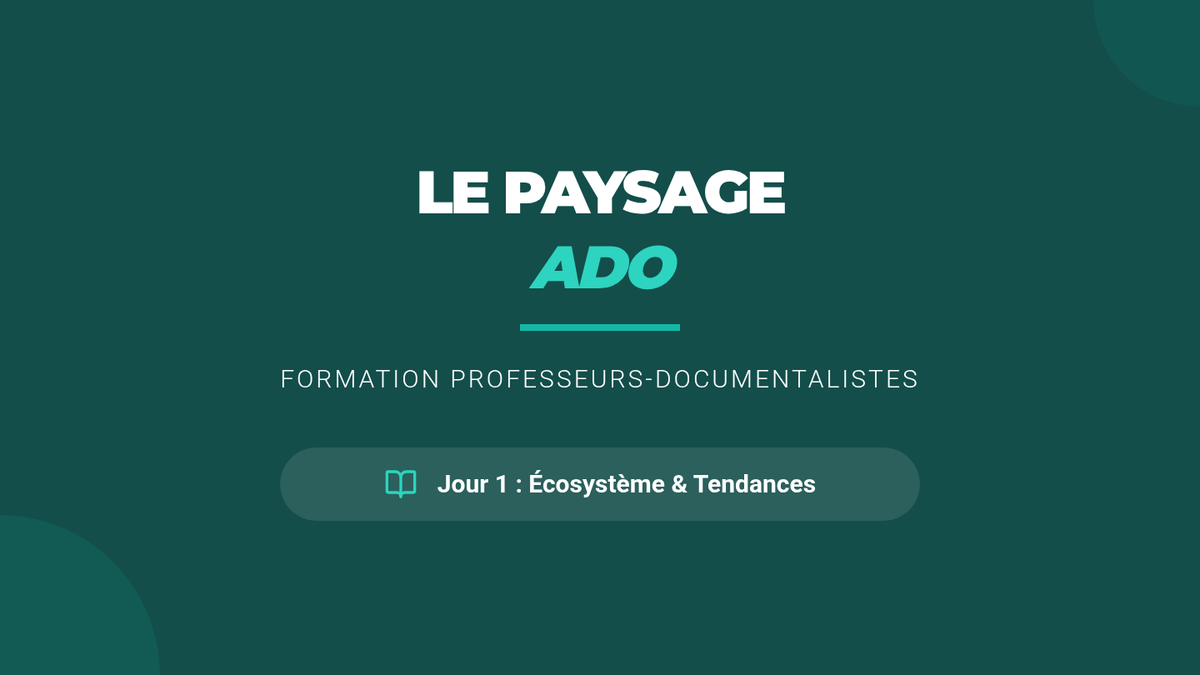
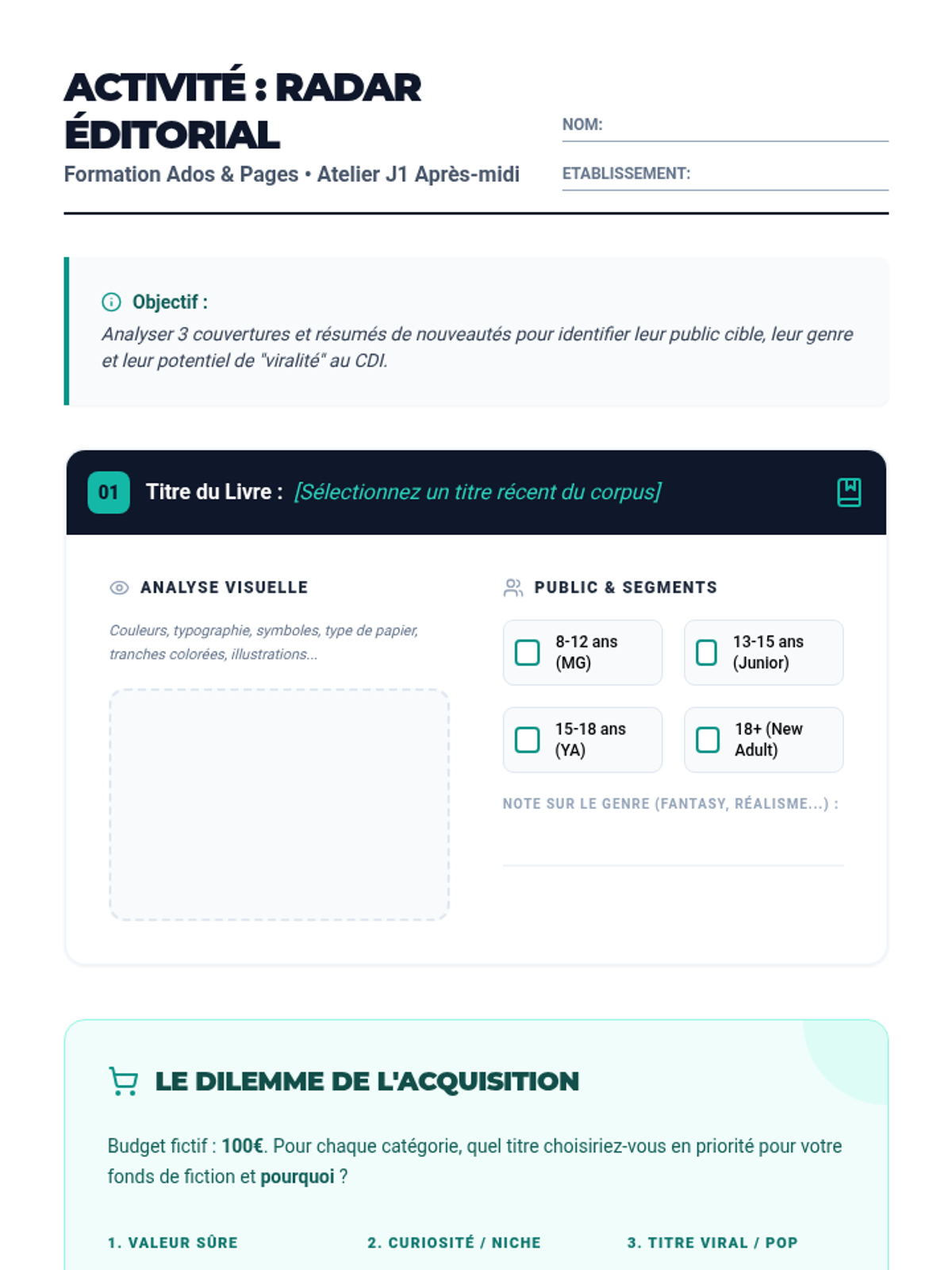
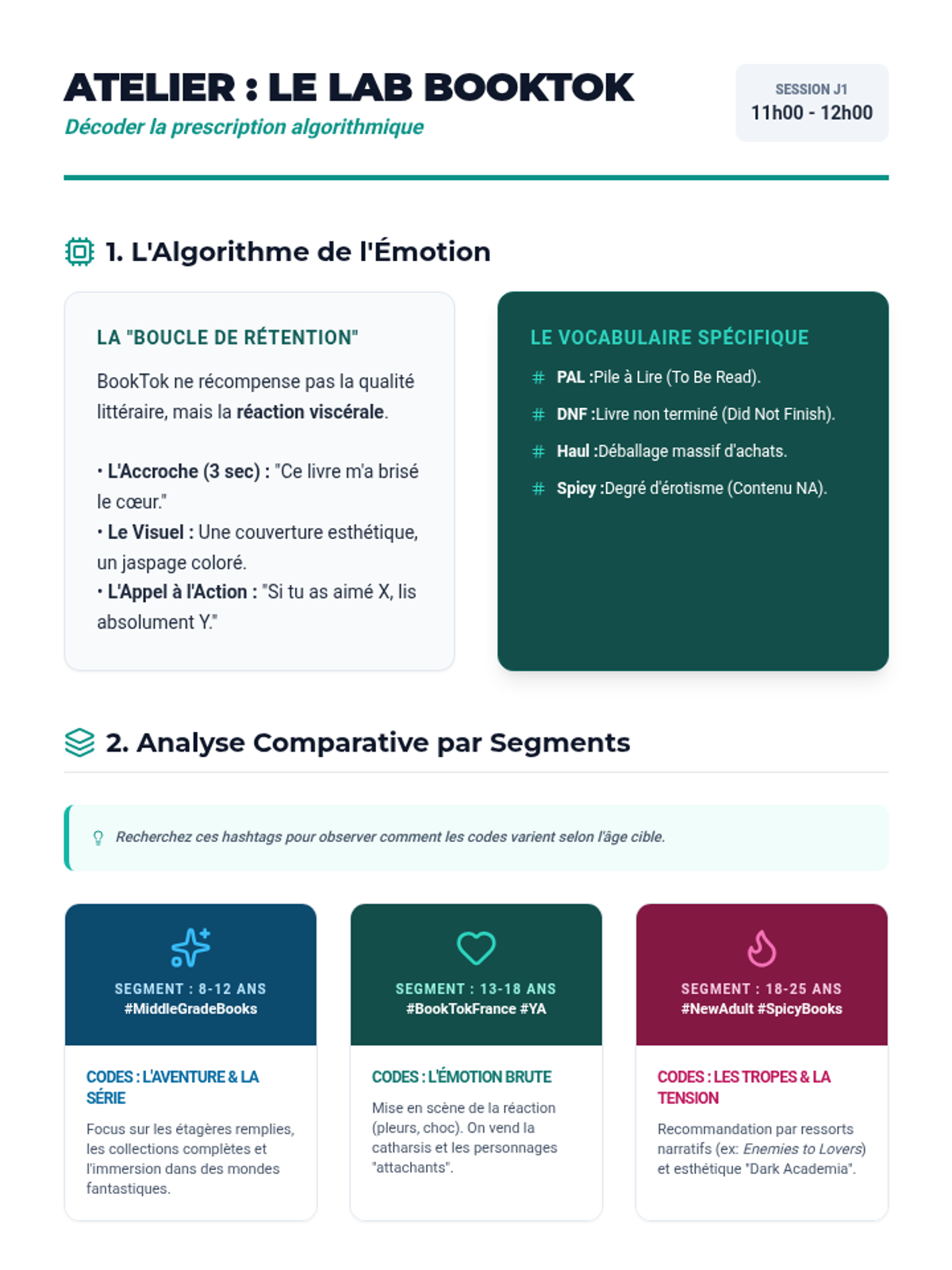
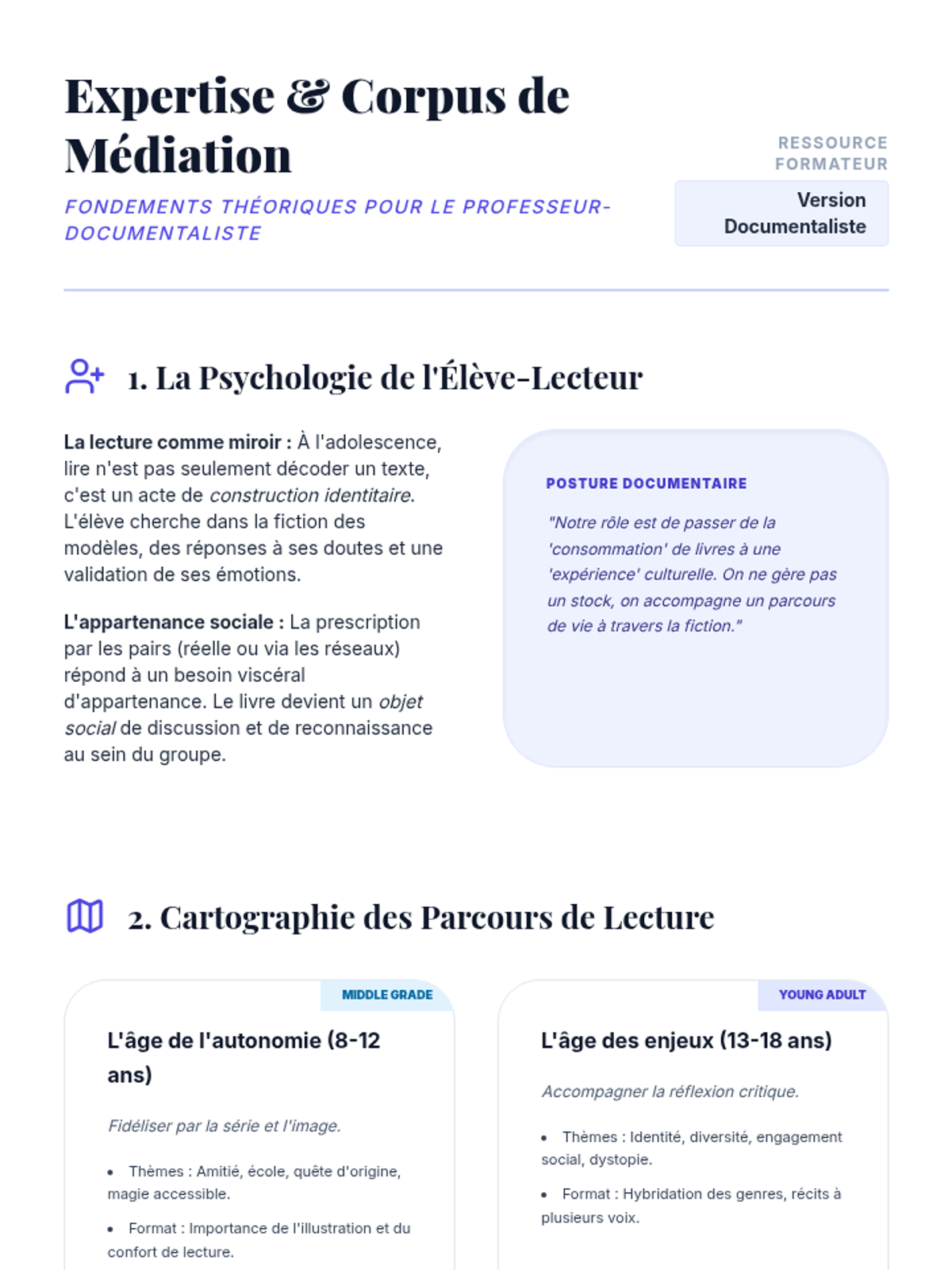
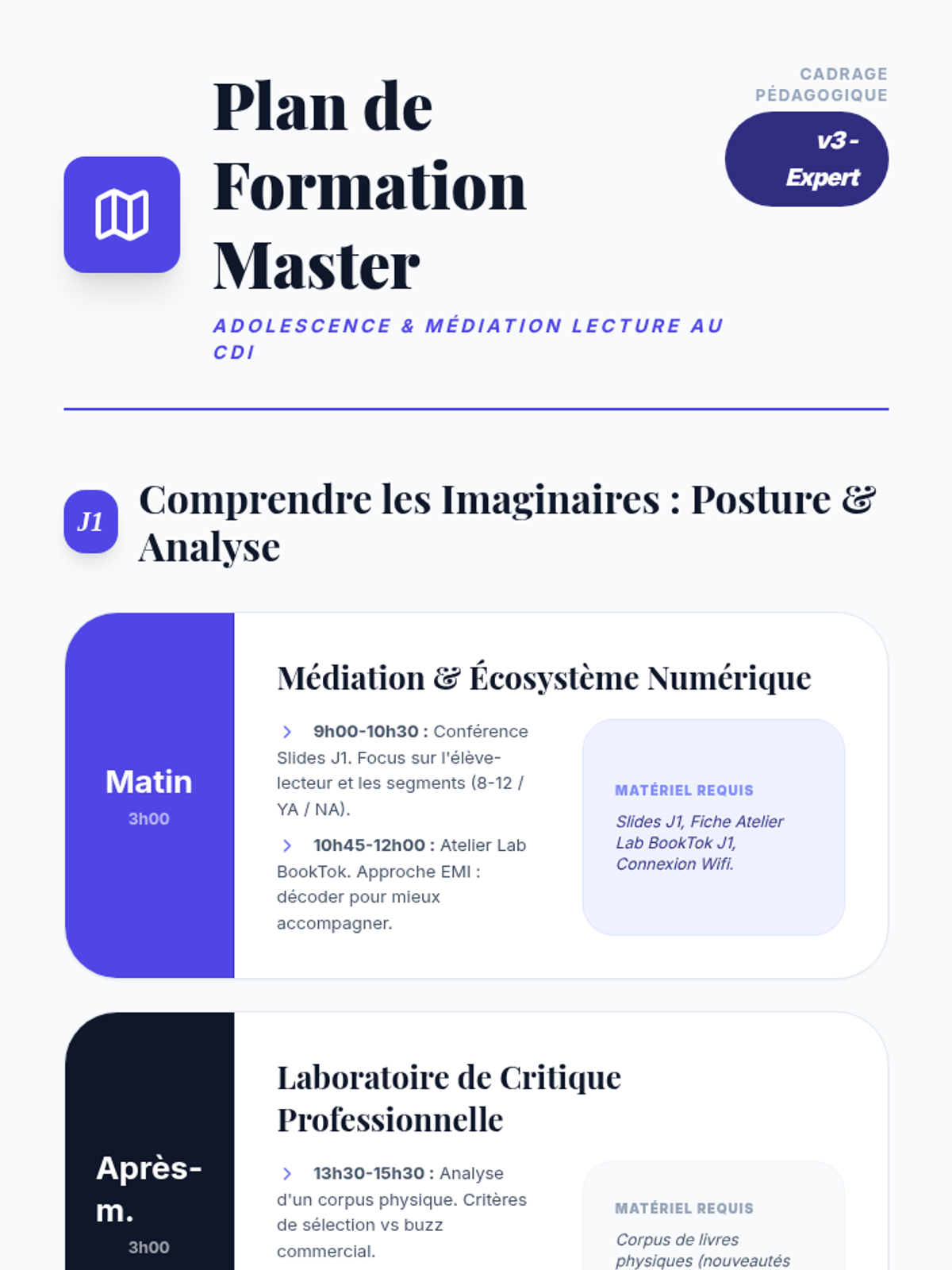
Une formation immersive de 12 heures destinée aux professeurs-documentalistes pour maîtriser les codes de la littérature adolescente actuelle et concevoir des stratégies de médiation innovantes au CDI.
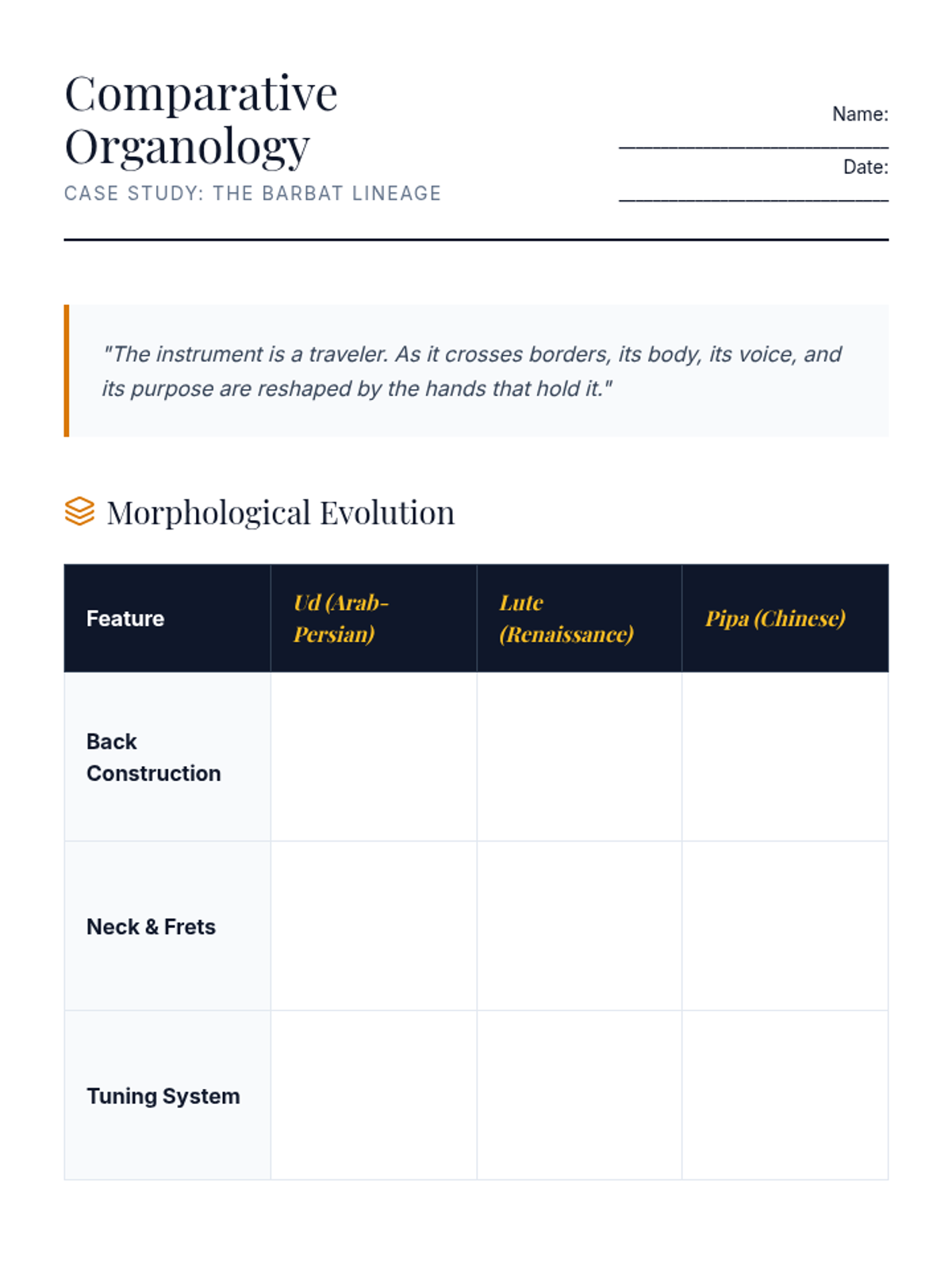
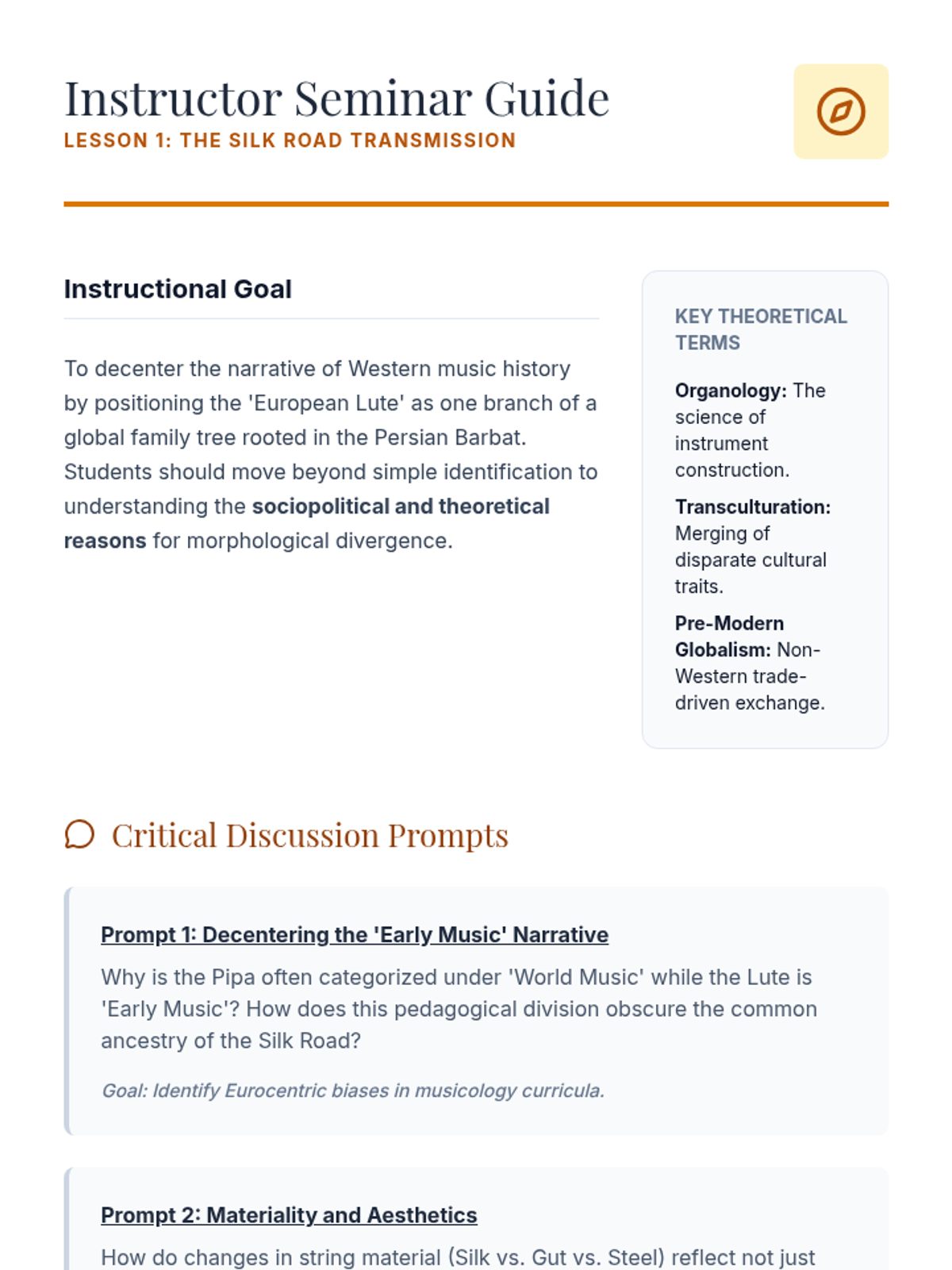
A graduate-level exploration of music history through the lenses of migration, diaspora, and cultural hybridity, moving beyond Western-centric narratives to examine how global movement shapes musical evolution.
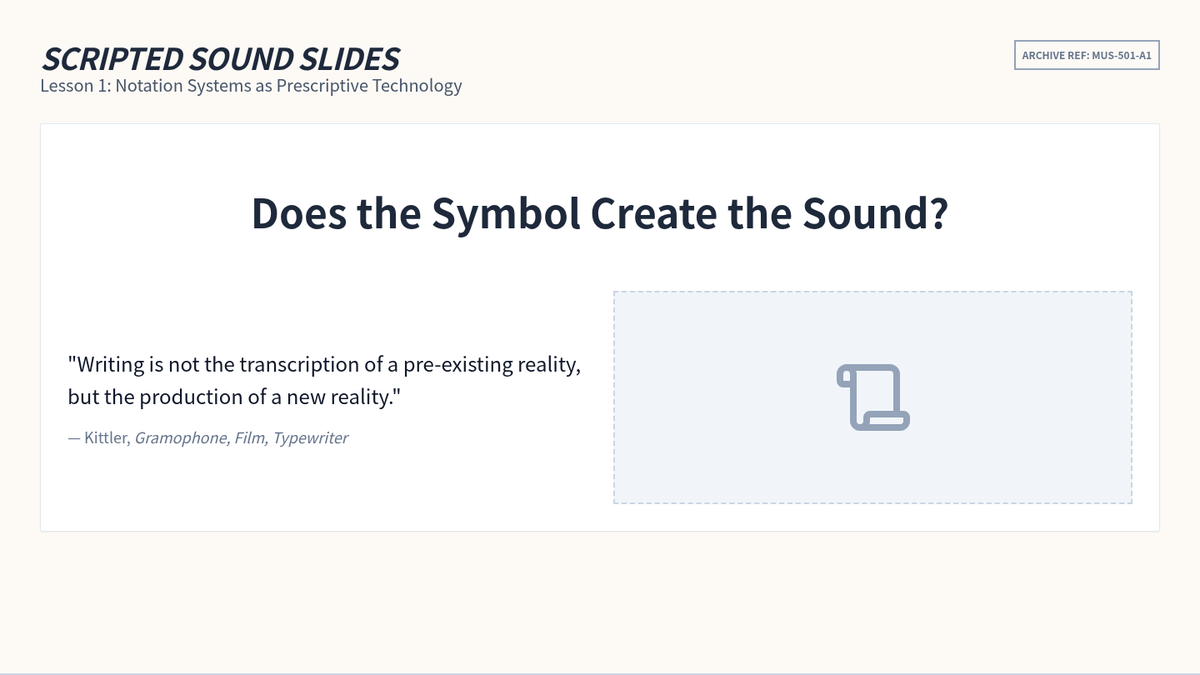
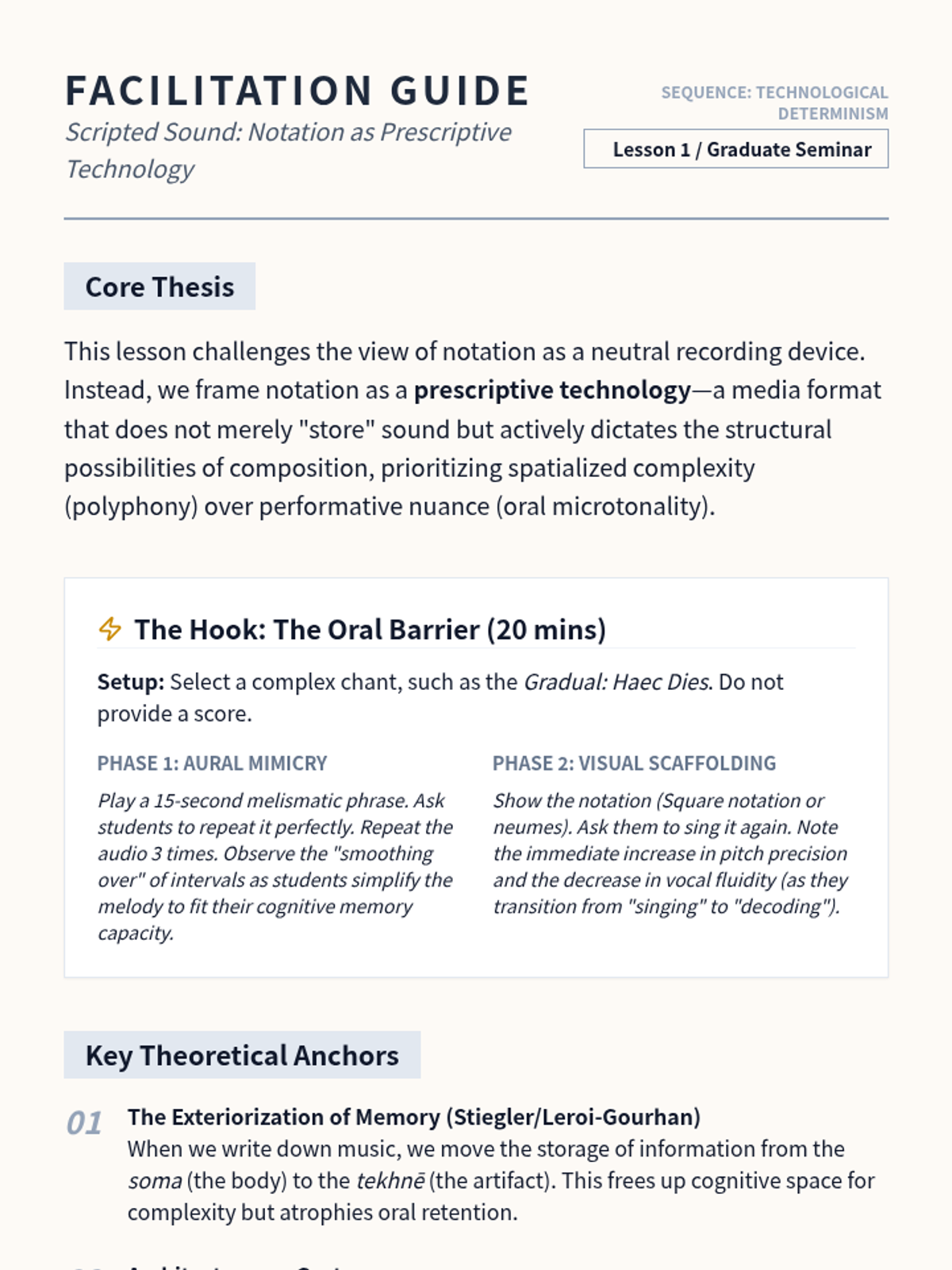
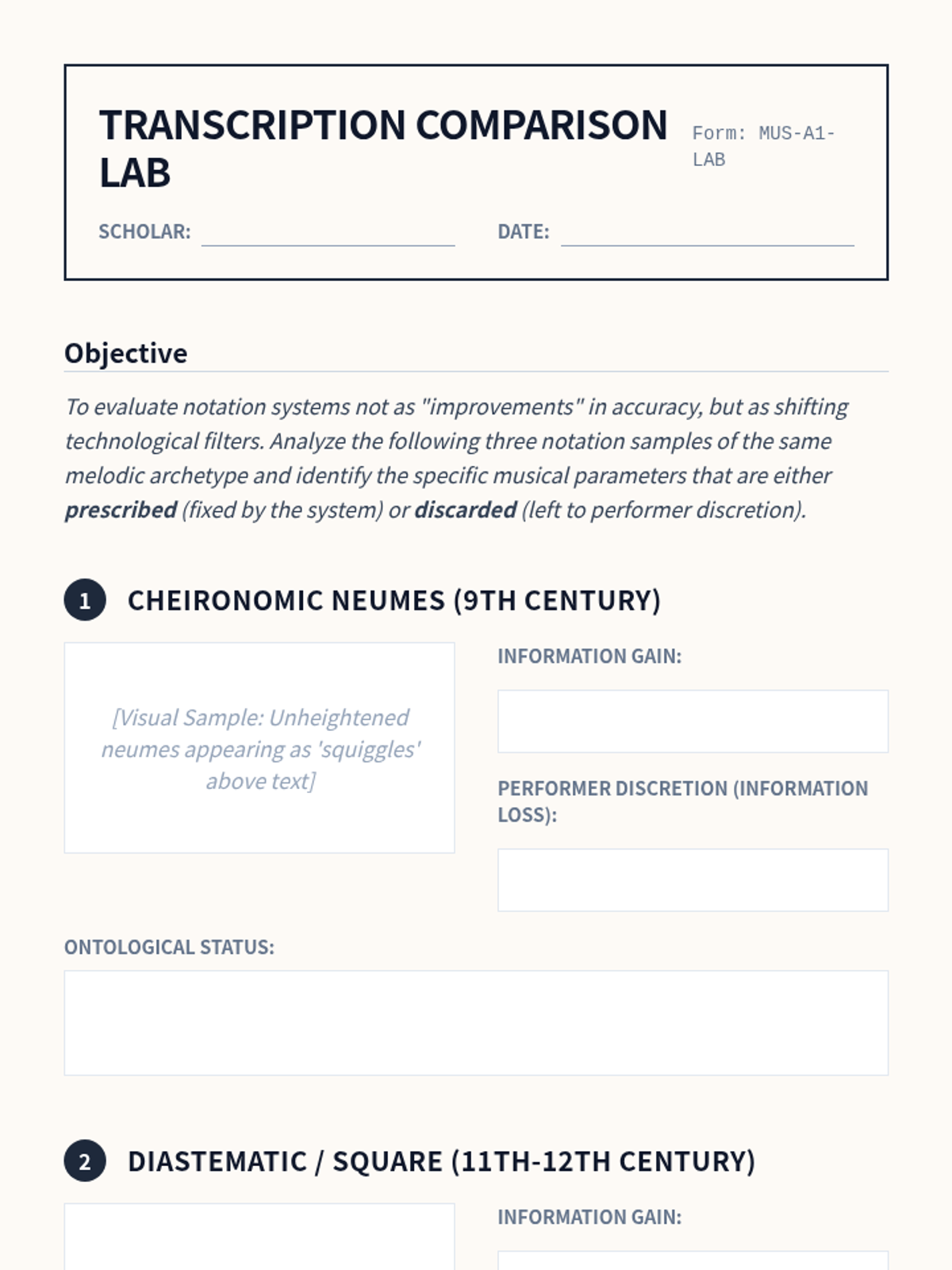
A graduate-level exploration of how technological advancement (from notation to algorithms) acts as a primary driver of musical aesthetics and evolution. Students analyze the reciprocal relationship between material culture and musical expression using media theory and organology.
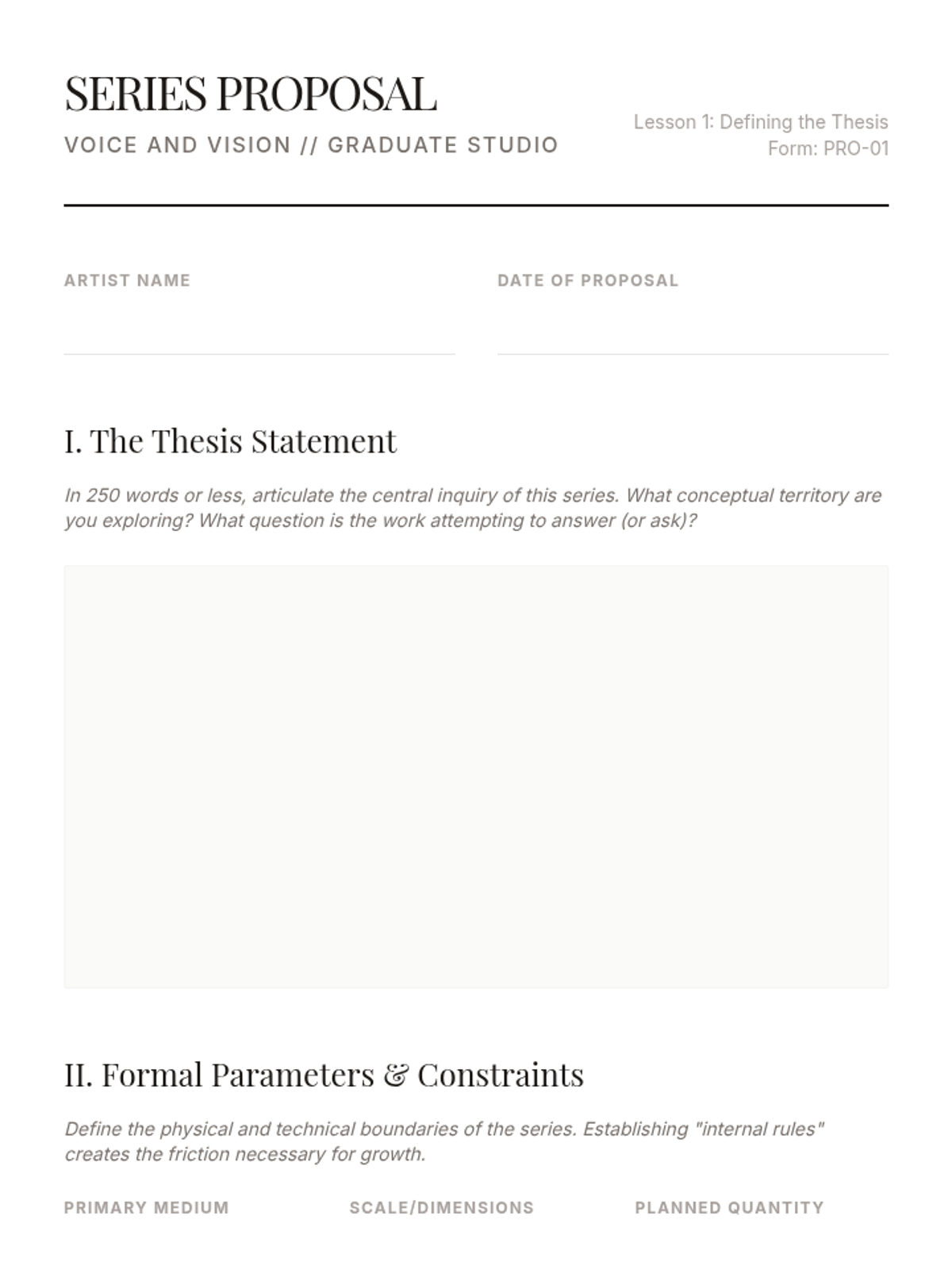
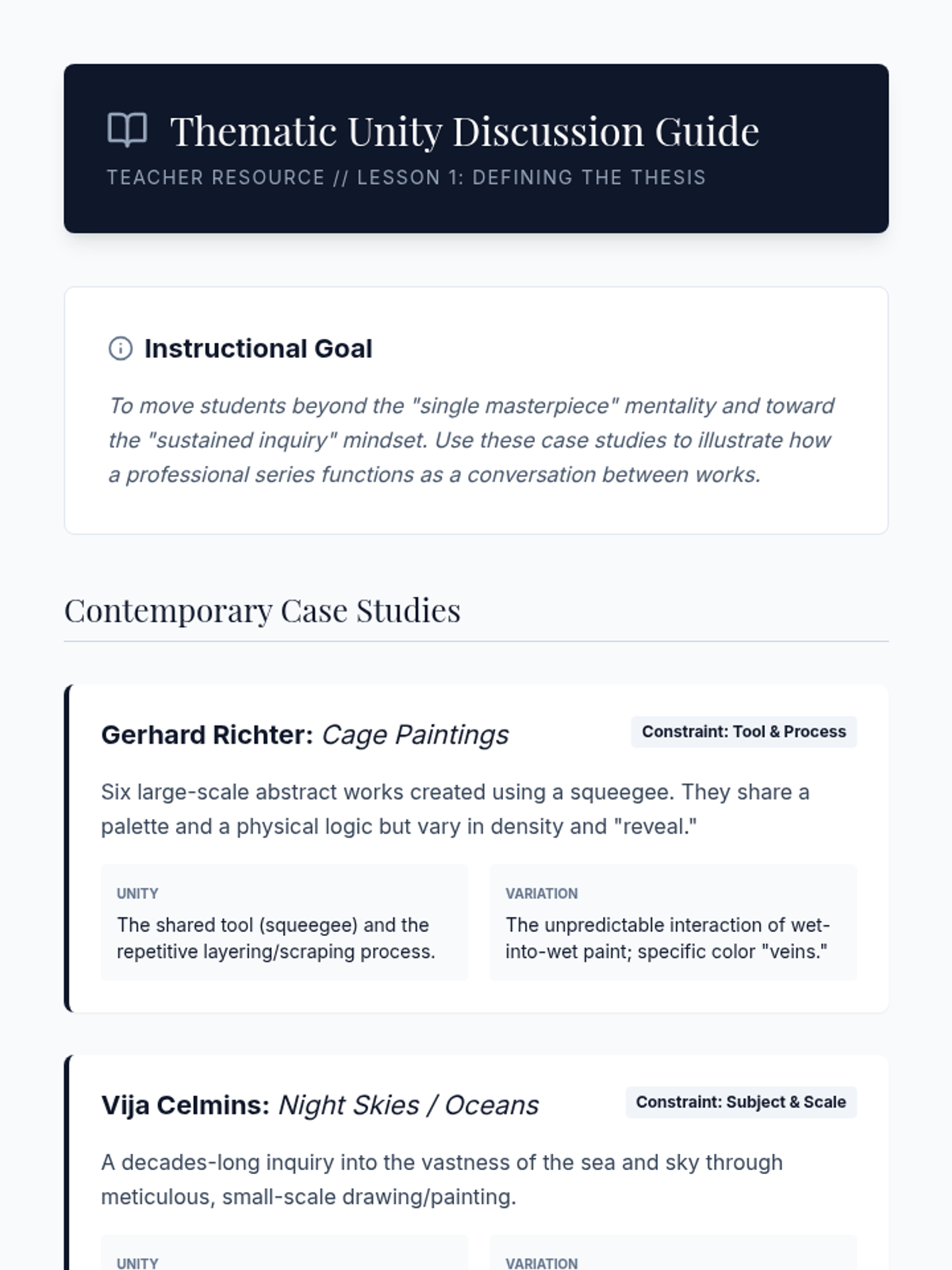
A graduate-level studio sequence focused on the transition from technical exercises to a cohesive, professional body of work. Students develop a thematic series, tackle the challenges of large-scale execution, engage in rigorous formal critiques, and curate a final presentation.
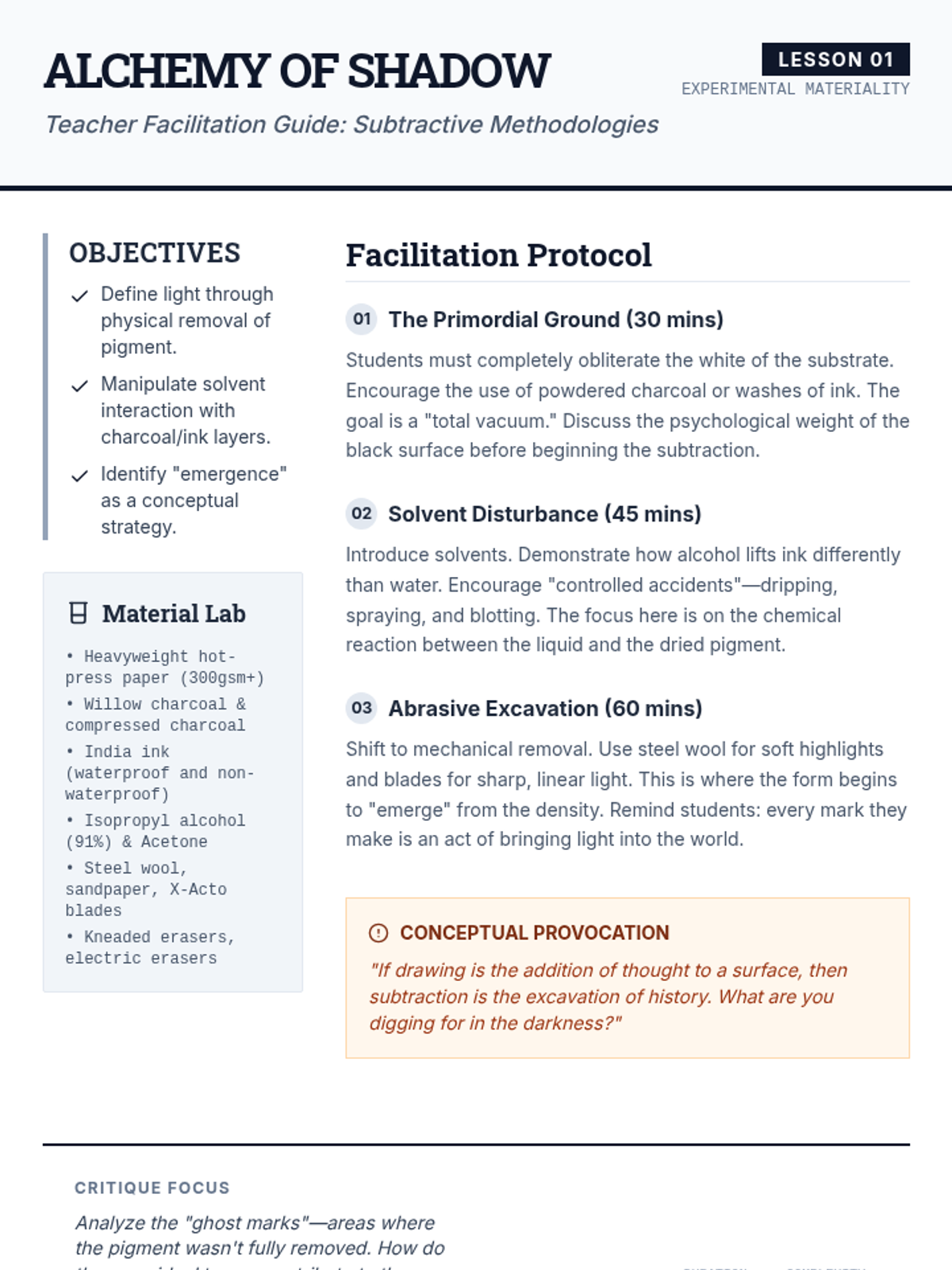
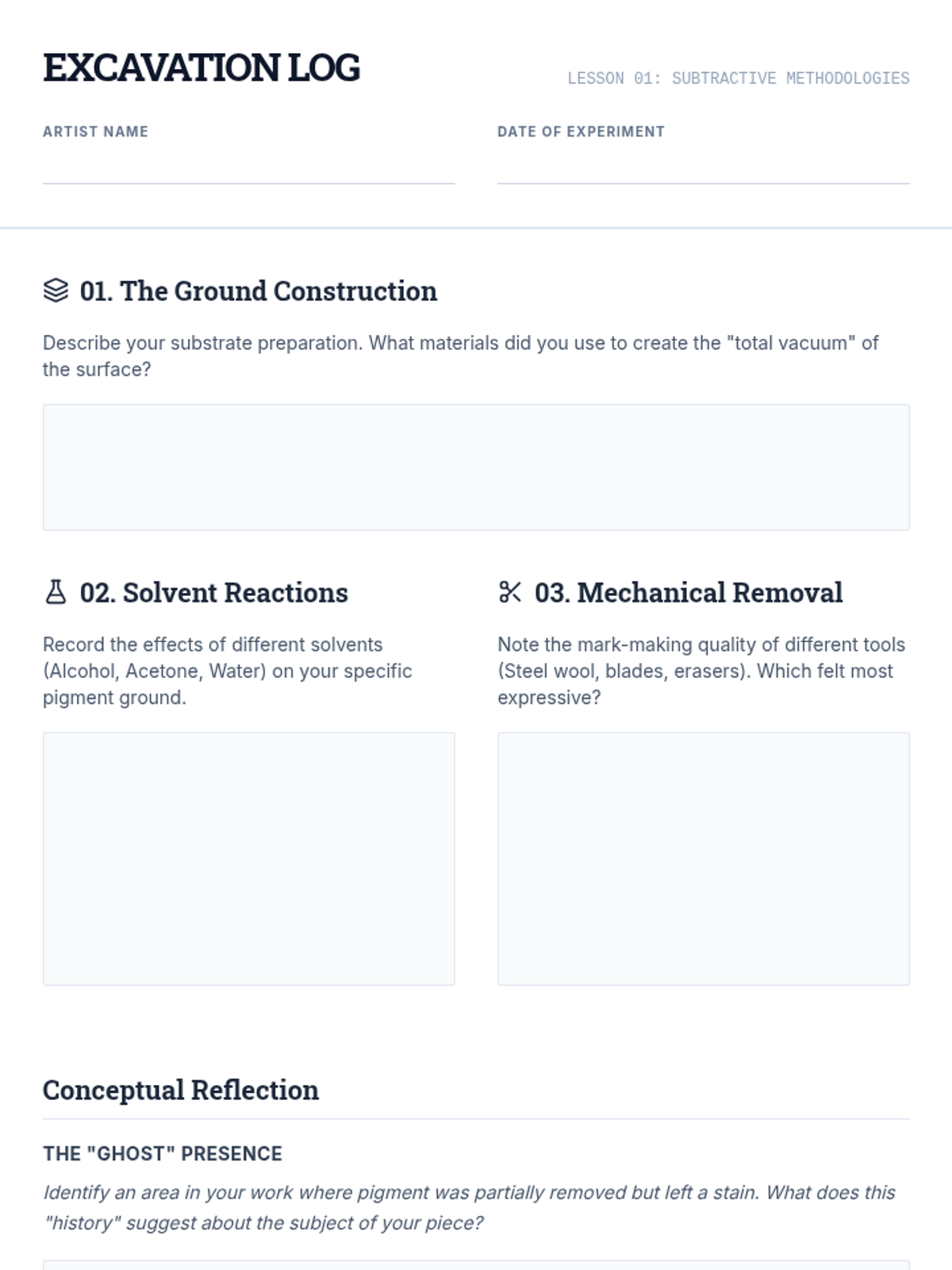
A graduate-level exploration of the intersection between medium and meaning. Students innovate with traditional materials, exploring chemical interactions, substrate manipulation, and mixed-media synthesis to develop a unique 'mark-making' vocabulary where physical texture contributes to conceptual depth.
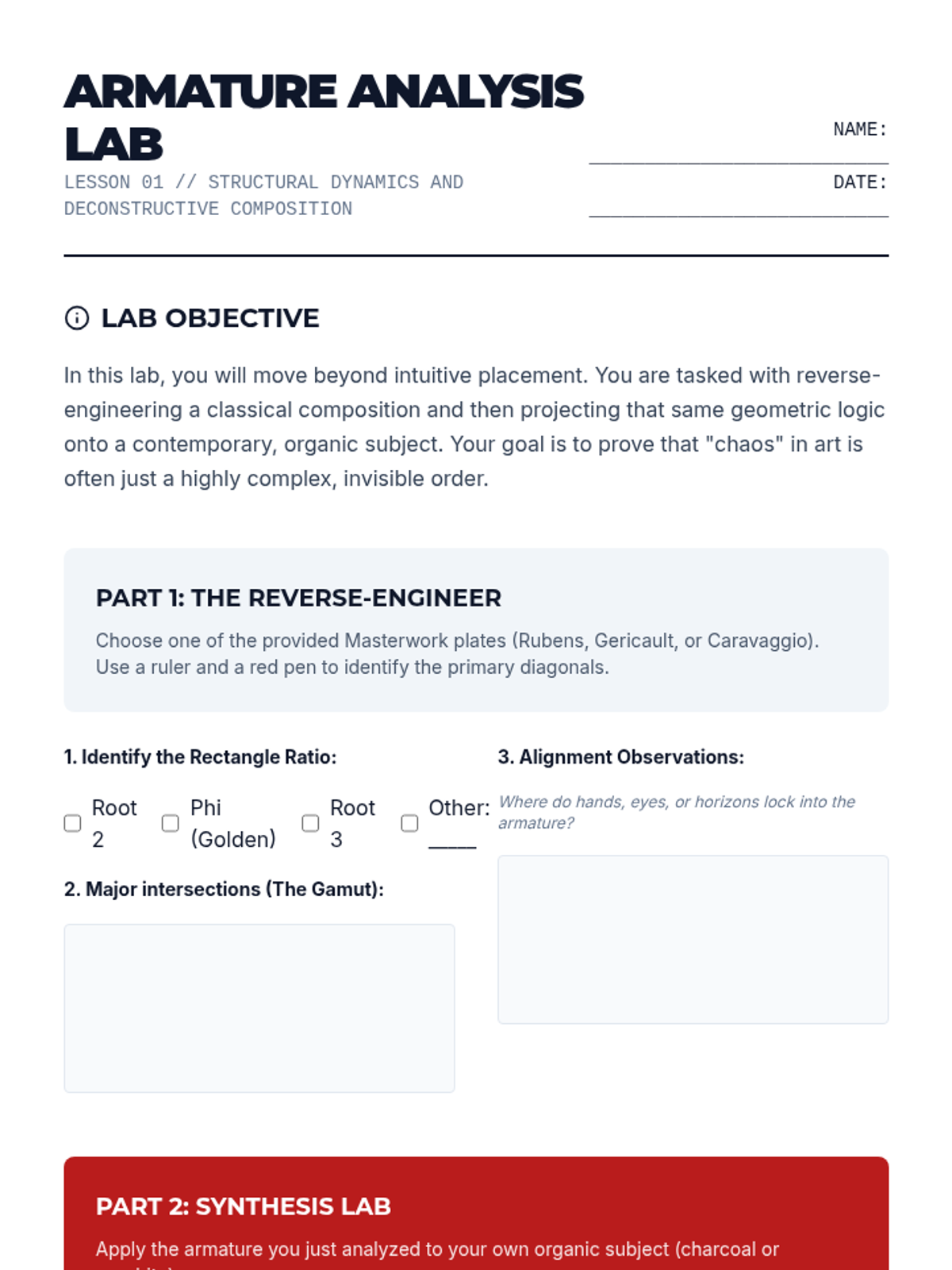
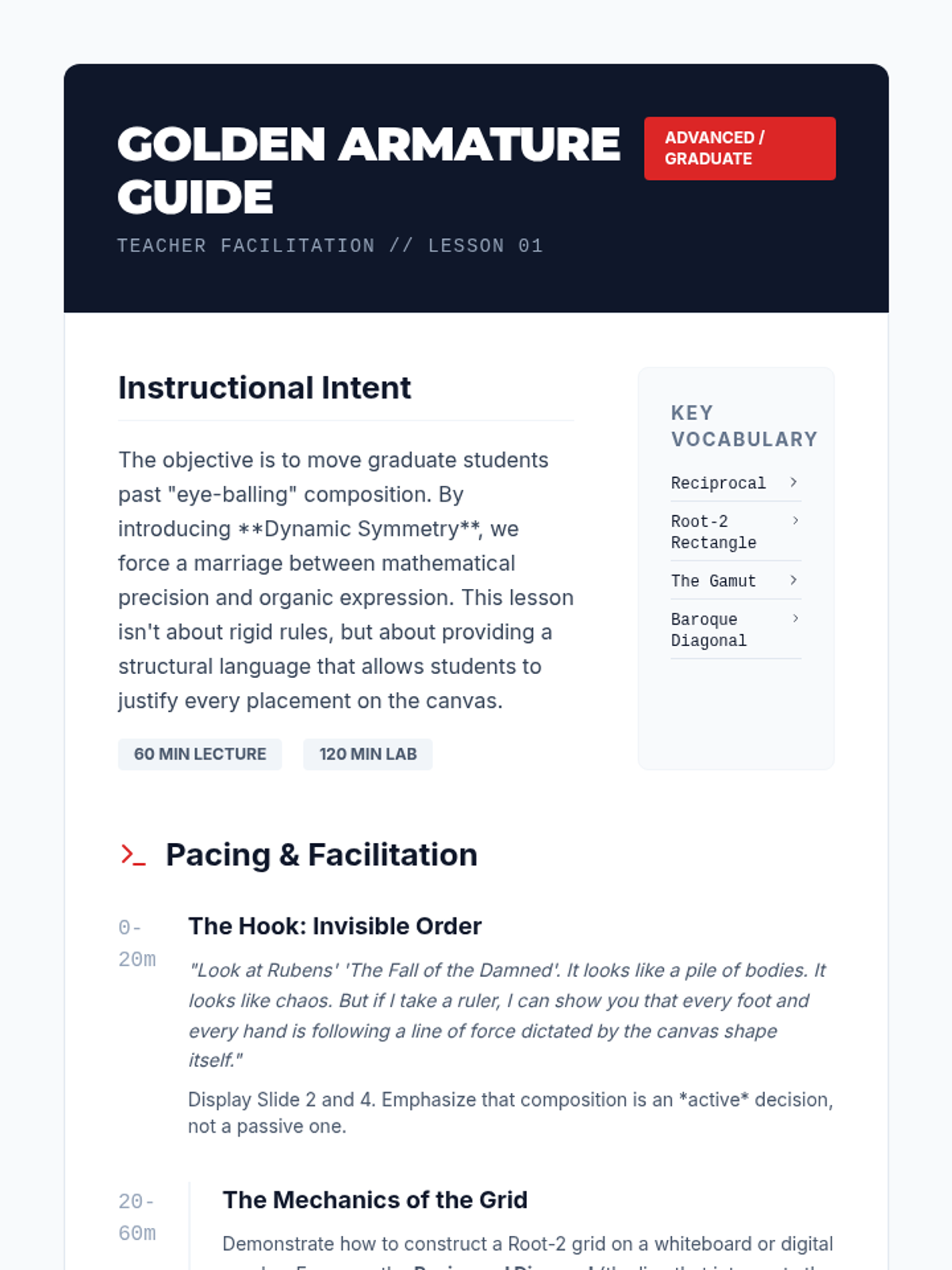
This advanced sequence for graduate students explores the deconstruction of classical composition through dynamic symmetry, edge tension, non-Euclidean perspective, and visual hierarchy. Students will move from rigid geometric analysis to 'anti-compositional' strategies to create contemporary, tension-filled imagery.
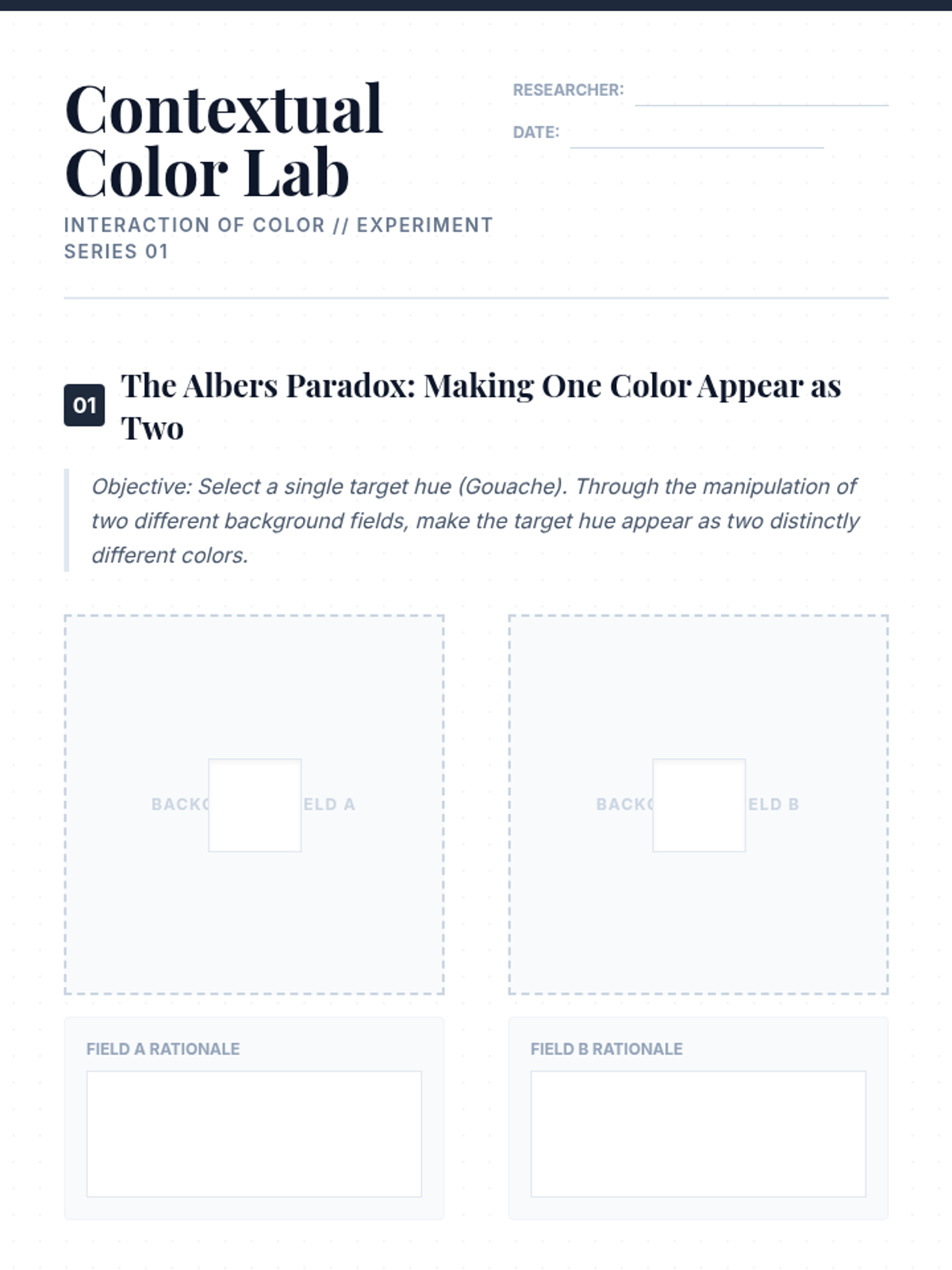
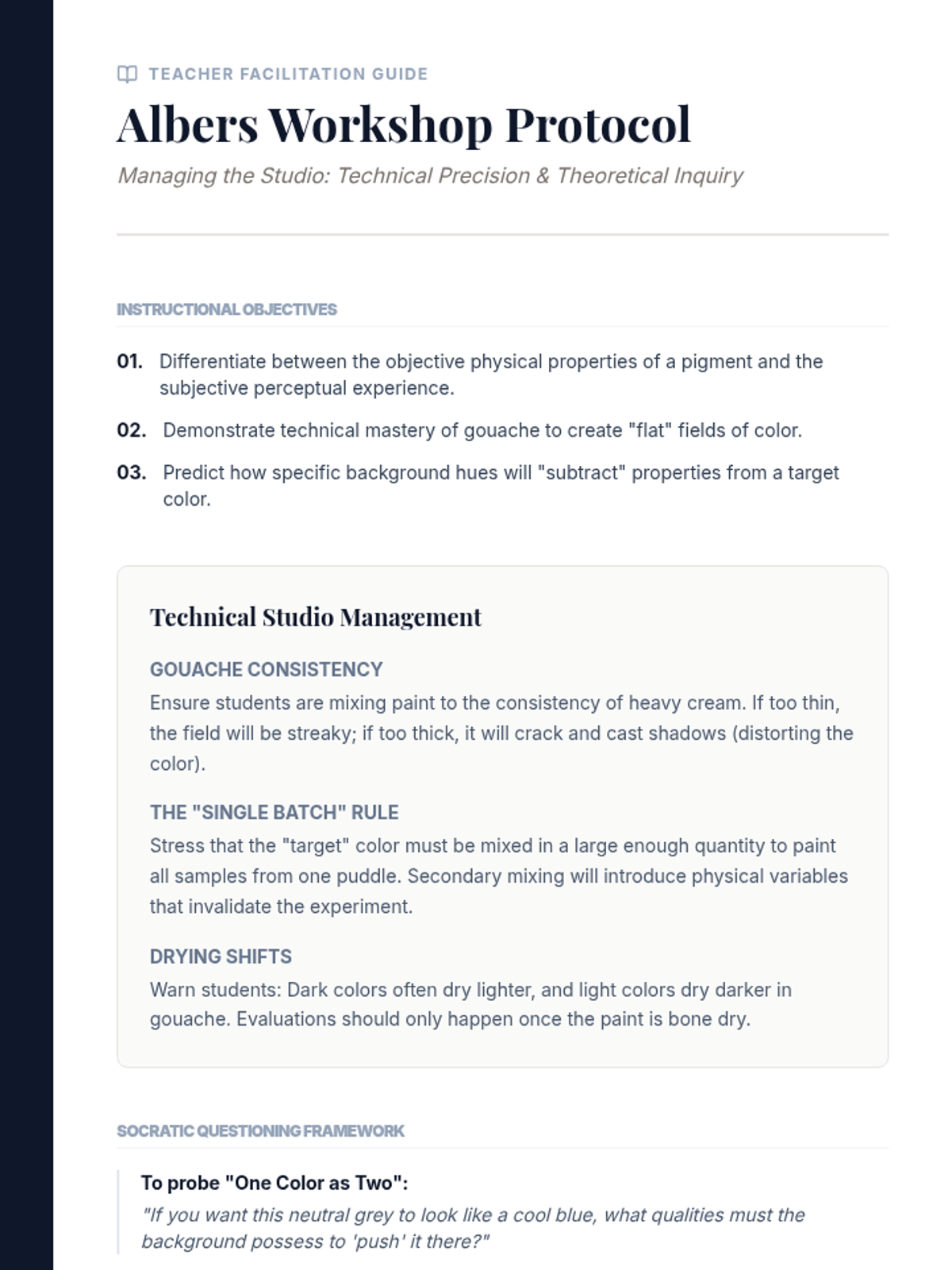
An intensive graduate-level investigation into the physics, psychology, and application of color in fine art, focusing on relativity, semiotics, and narrative.
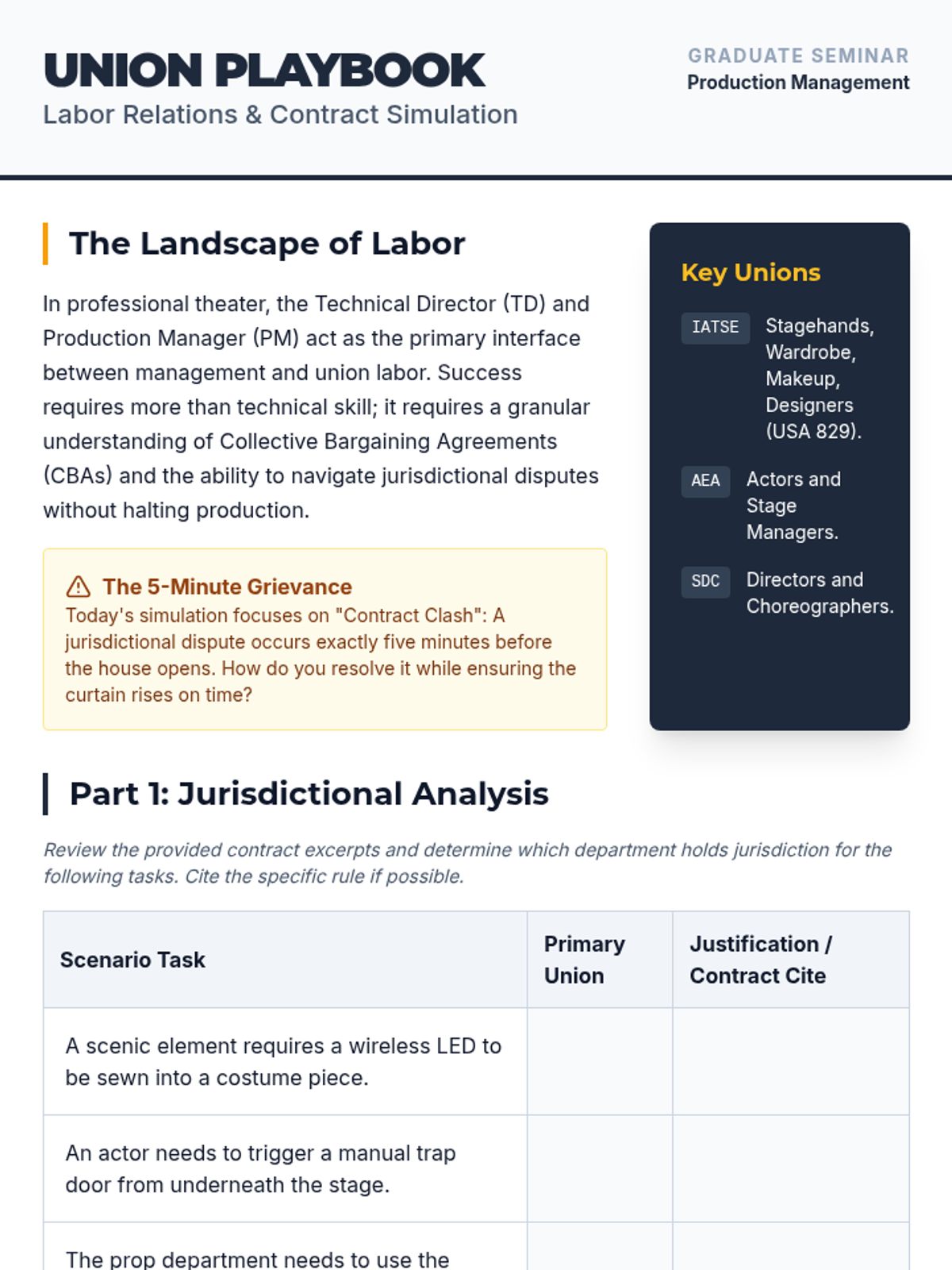
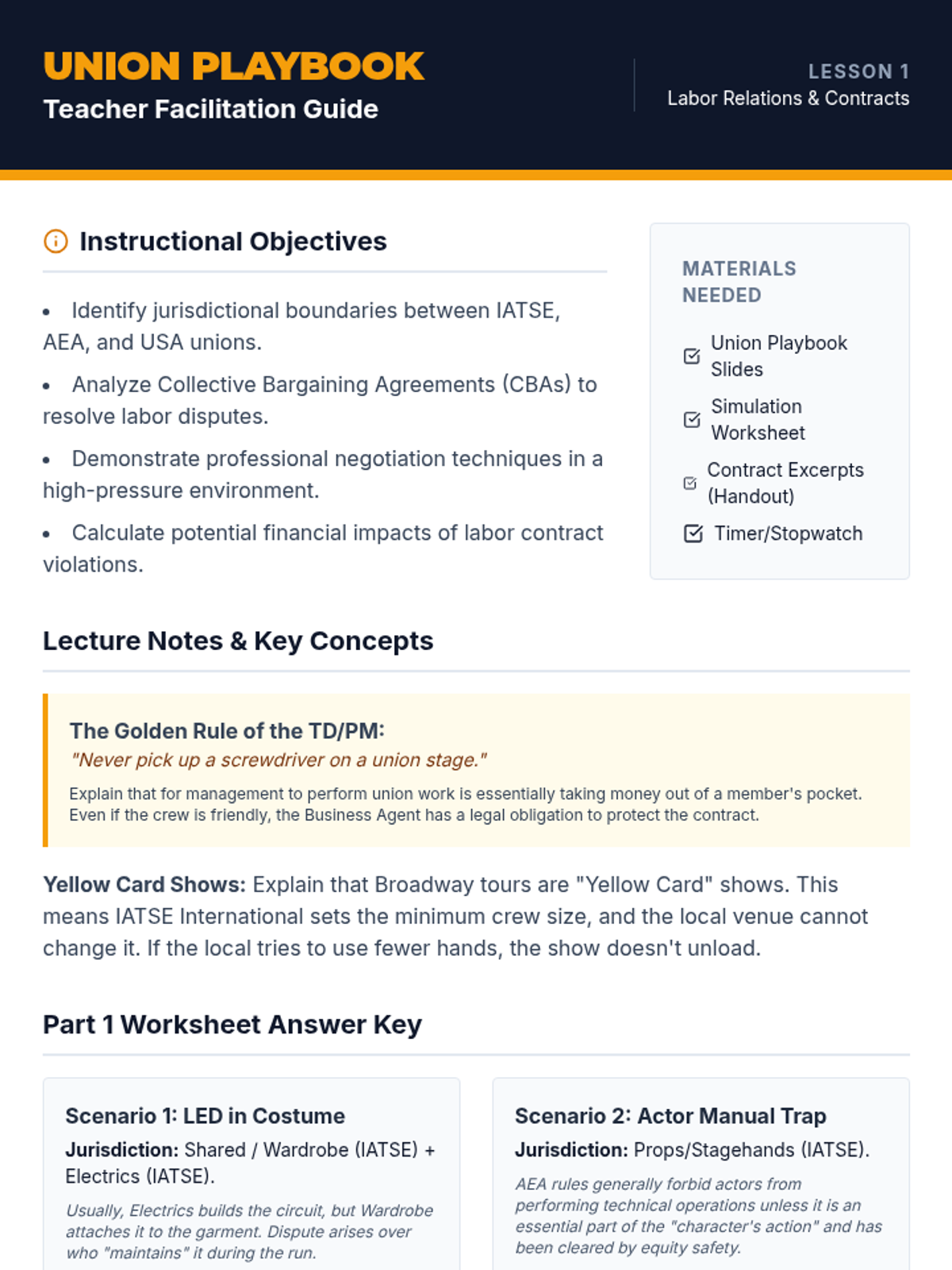
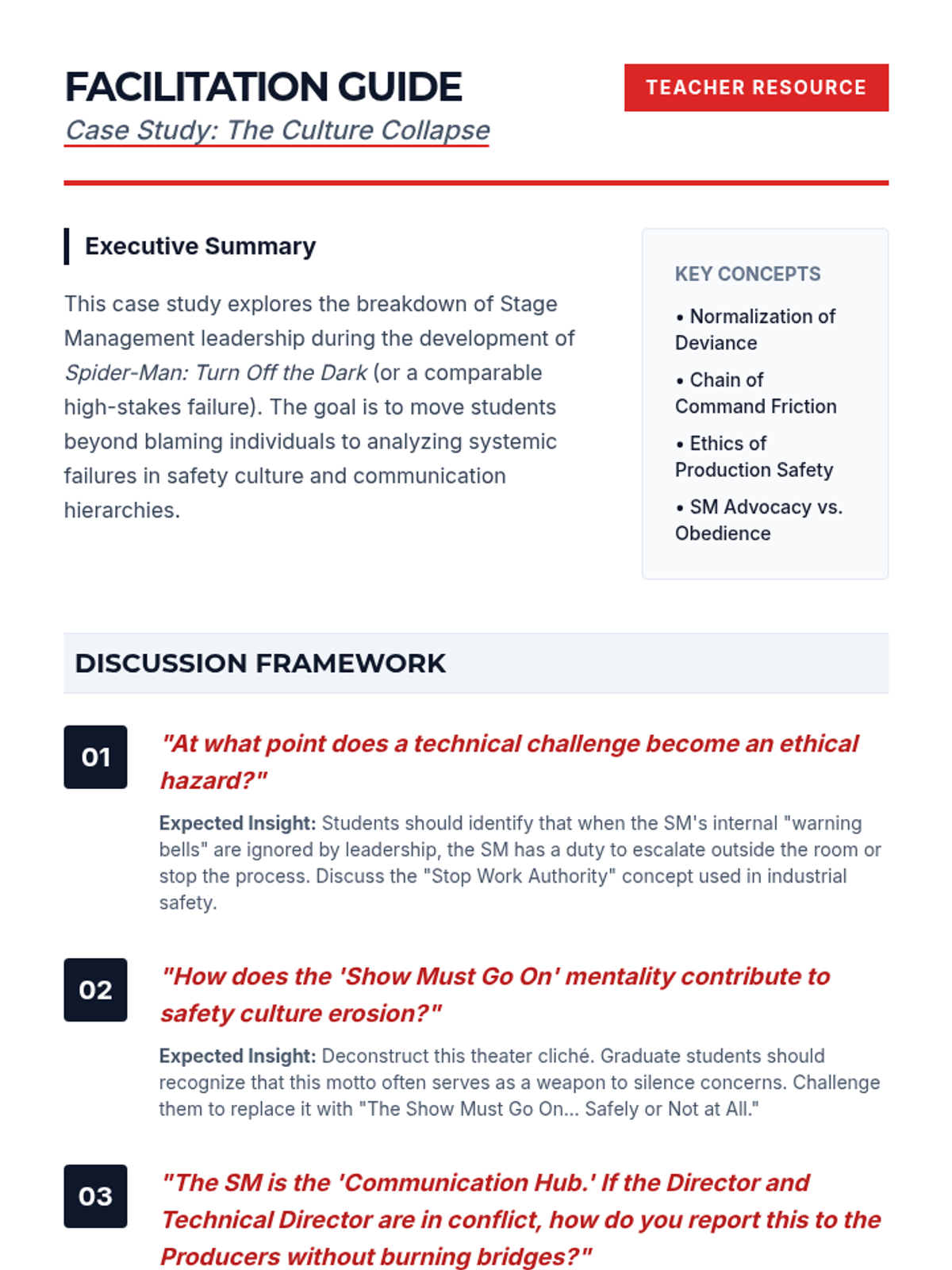
This graduate-level sequence explores the intersection of labor law, fiscal strategy, safety protocols, and crisis management within professional theater production. Students develop the leadership skills necessary to navigate union environments and high-stakes technical environments.
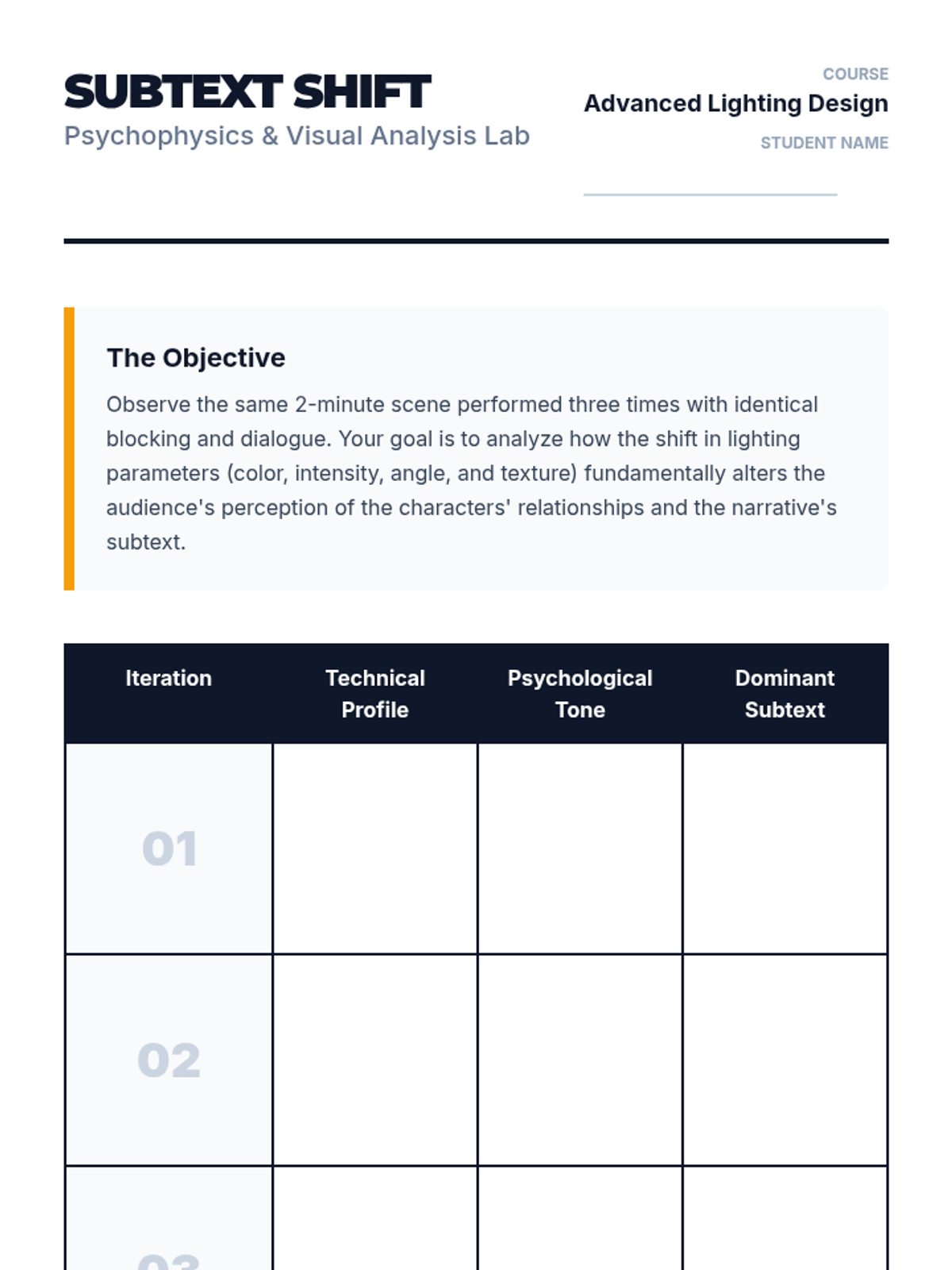
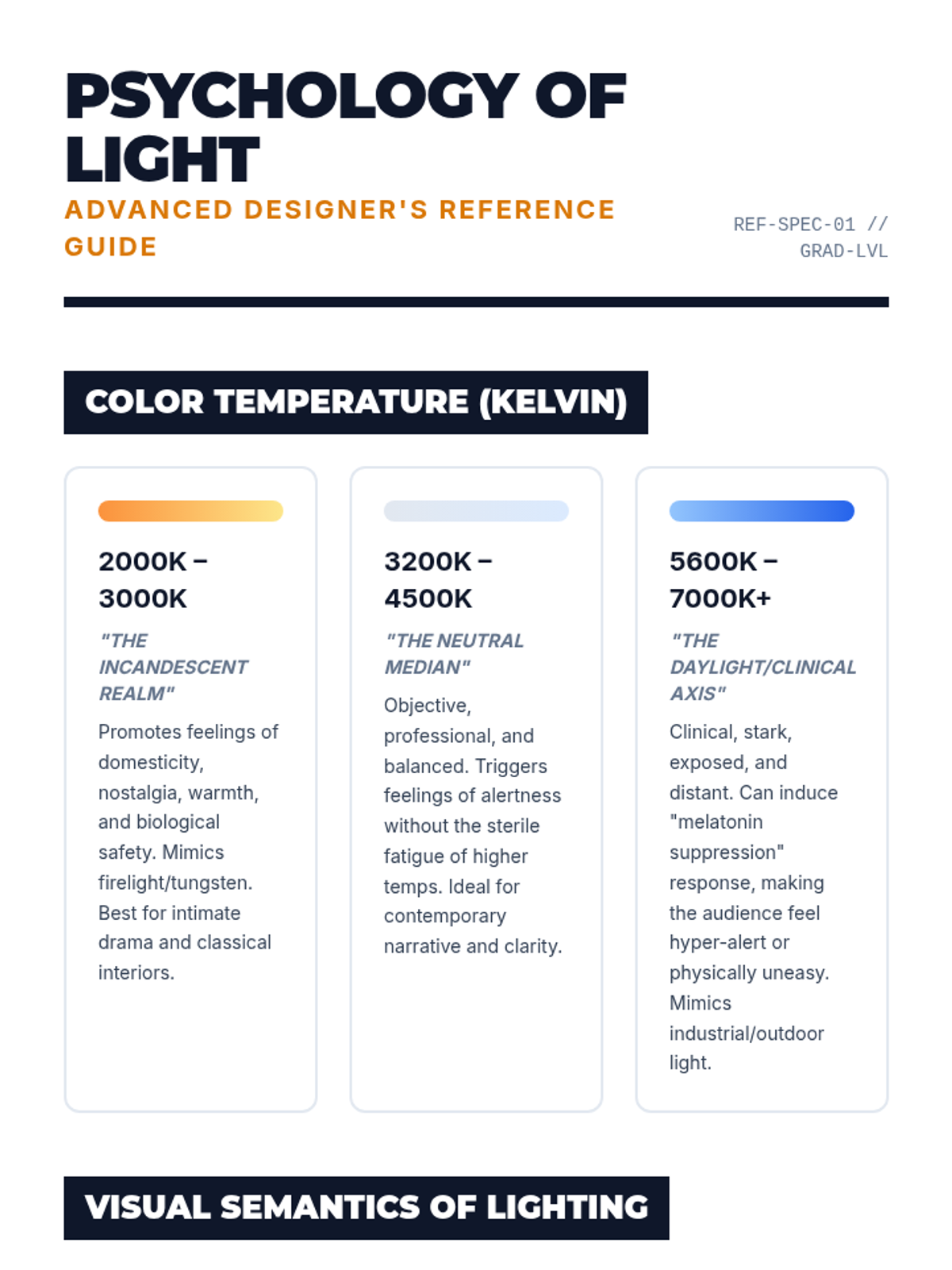
An advanced technical theater sequence for graduate students exploring the intersection of light physics, human perception, and visual storytelling. Students move from the biological mechanics of the eye to high-level system integration and dramaturgy.
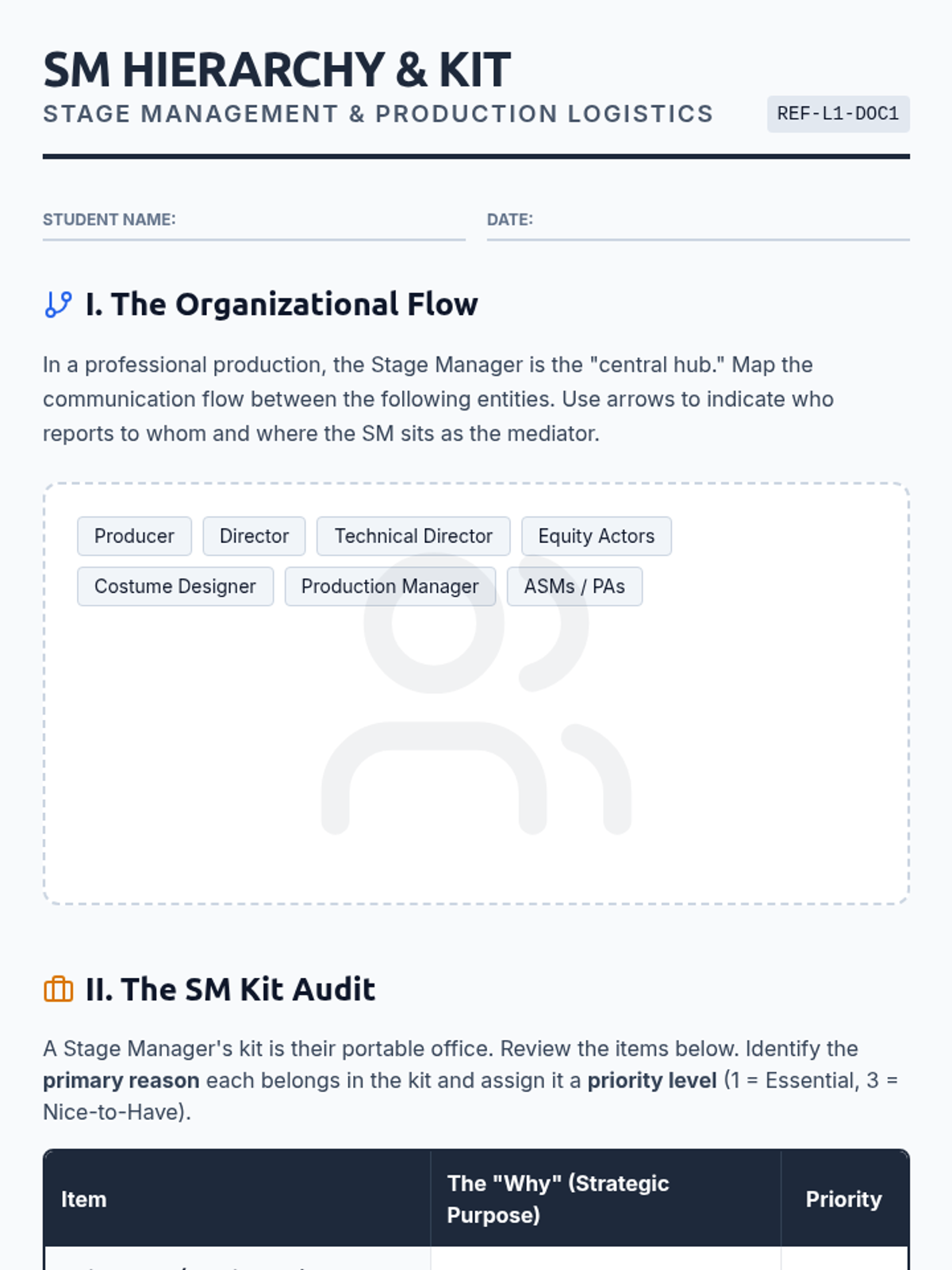
A comprehensive exploration of stage management for undergraduate students, covering organizational hierarchy, documentation, rehearsal management, and technical execution. Students transition from understanding the SM role to mastery of the prompt book and cue calling.
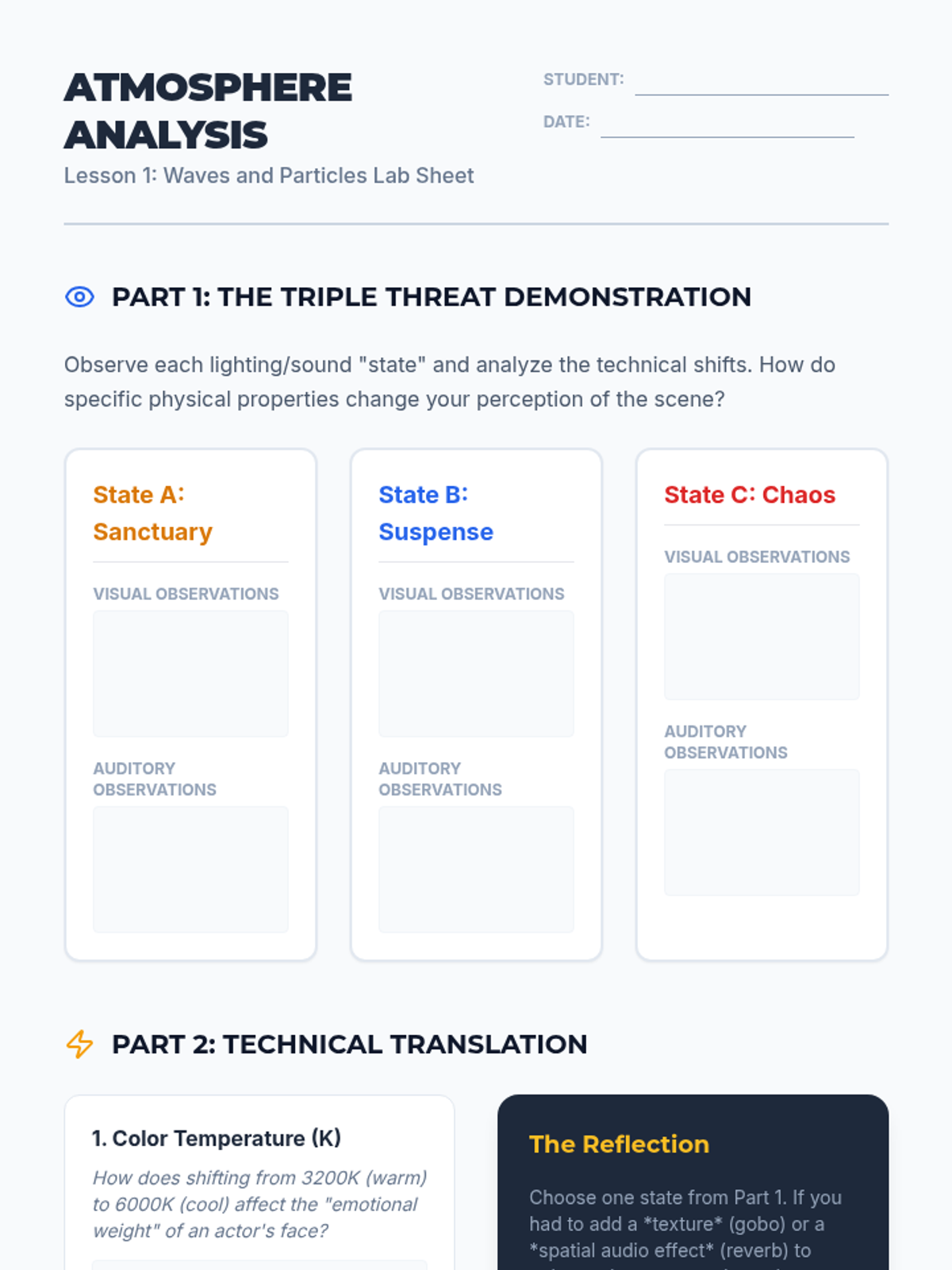
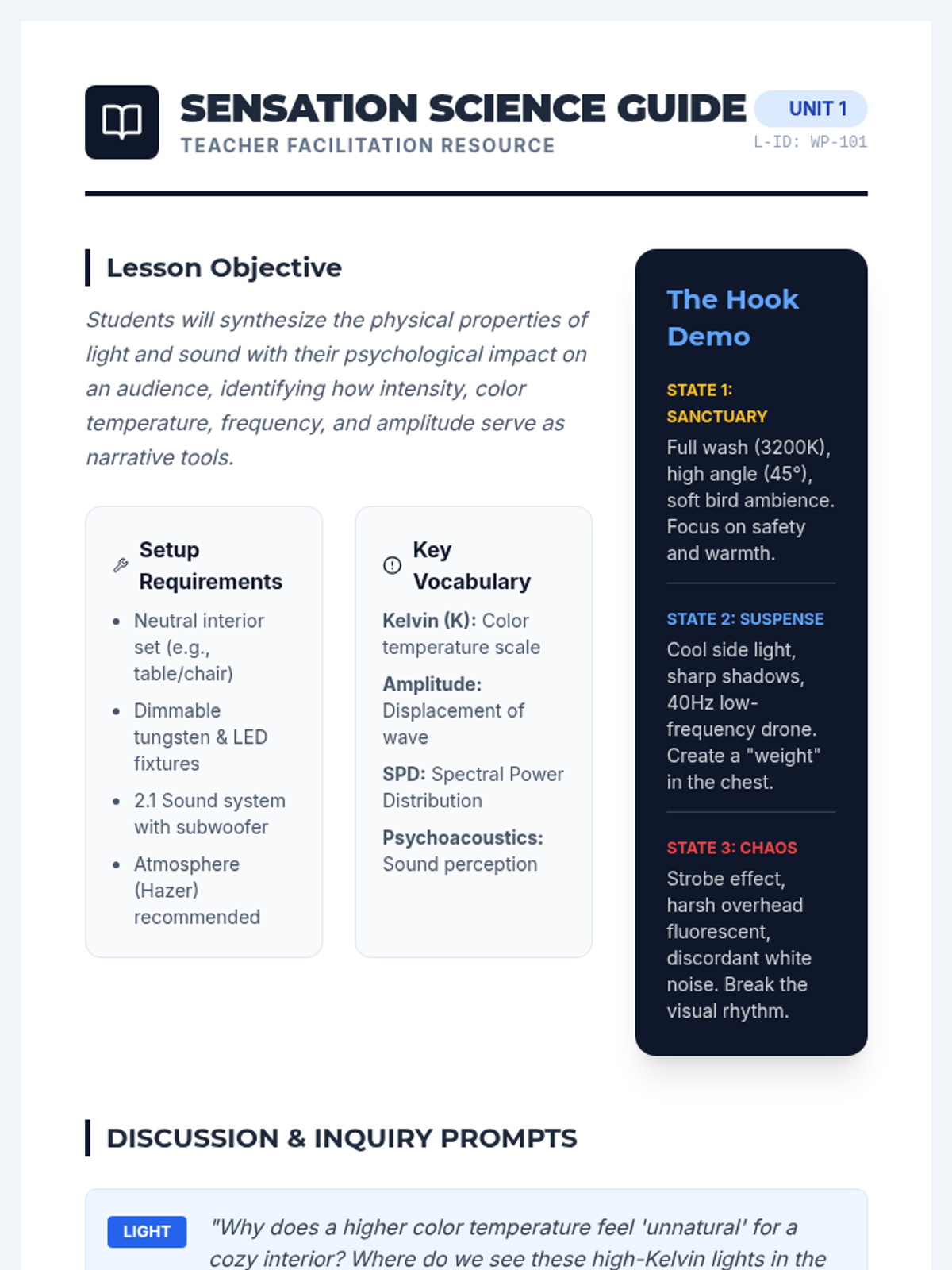
An undergraduate-level introduction to the technical systems of theater, focusing on the physics, hardware, and creative implementation of lighting and sound design. Students progress from fundamental science to professional drafting and real-time cue execution.
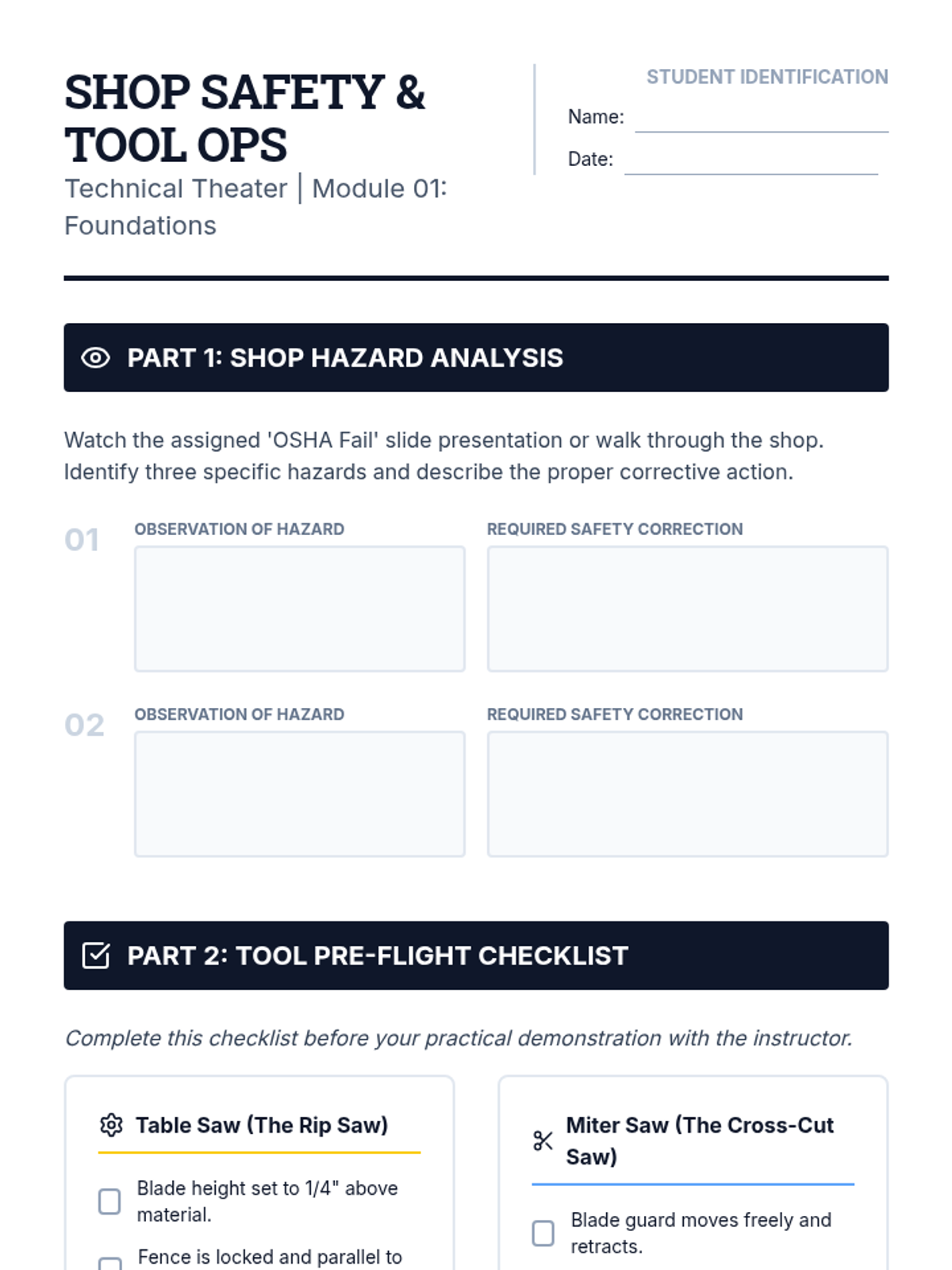
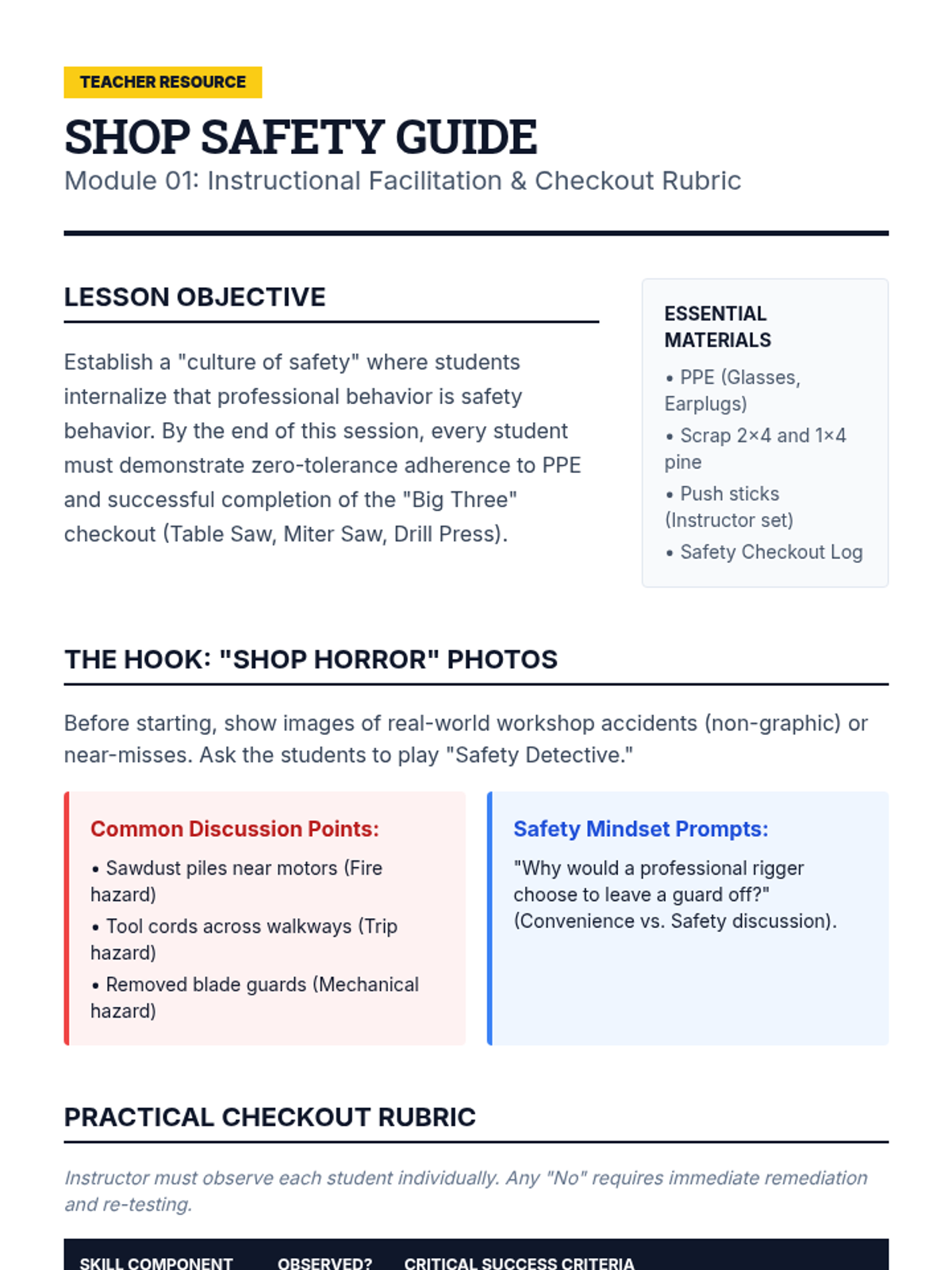
A comprehensive undergraduate-level sequence on the fundamentals of theatrical scenery construction and rigging. Students progress from safety certification to constructing flats and platforms, culminating in rigging mechanics and installation/strike protocols.
A comprehensive graduate-level course on the professional development of a new play, focusing on revision strategies, collaborative feedback, and industry-standard submission practices. Students transition from draft to a polished, professional-grade script and submission package.
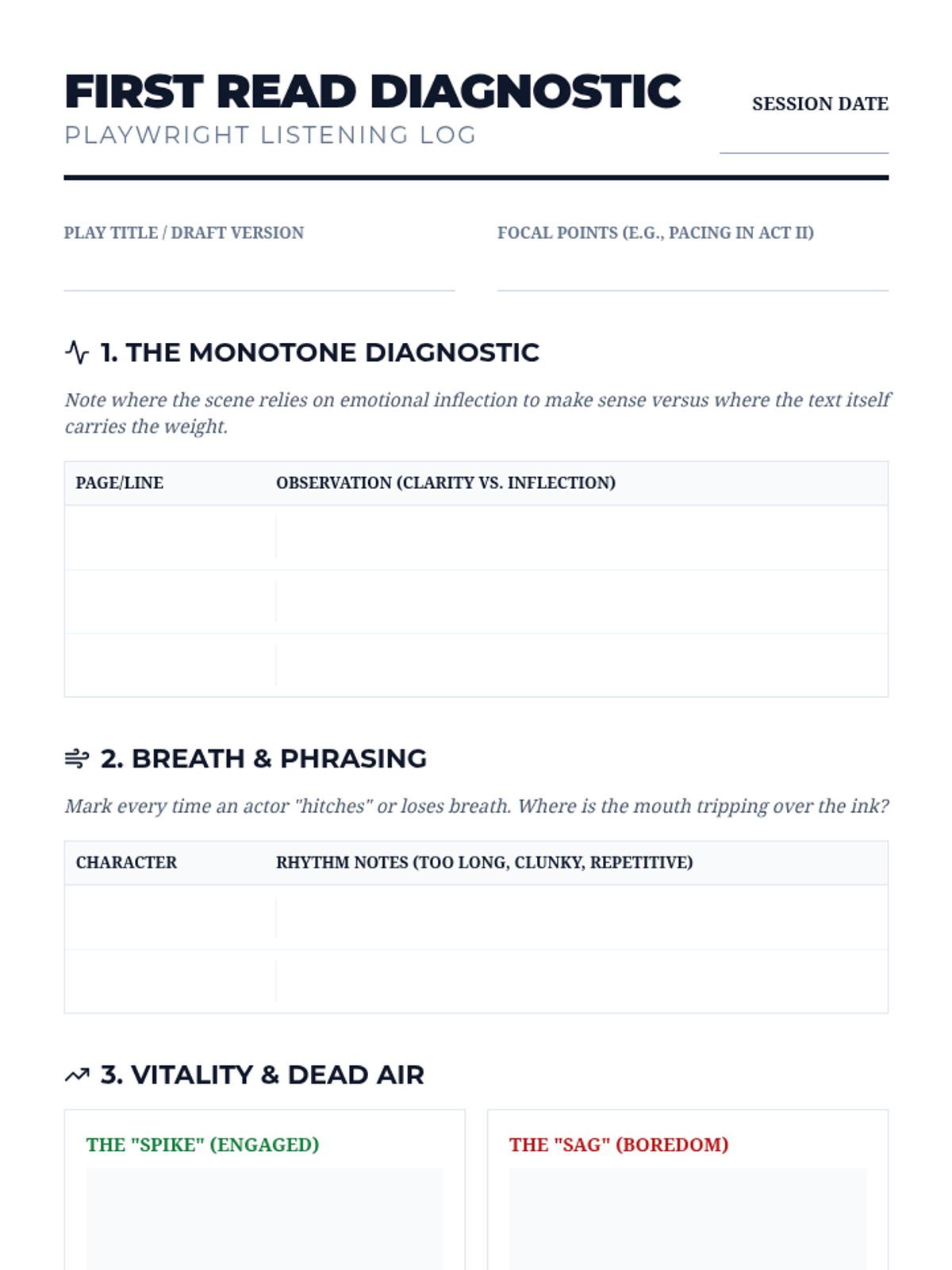
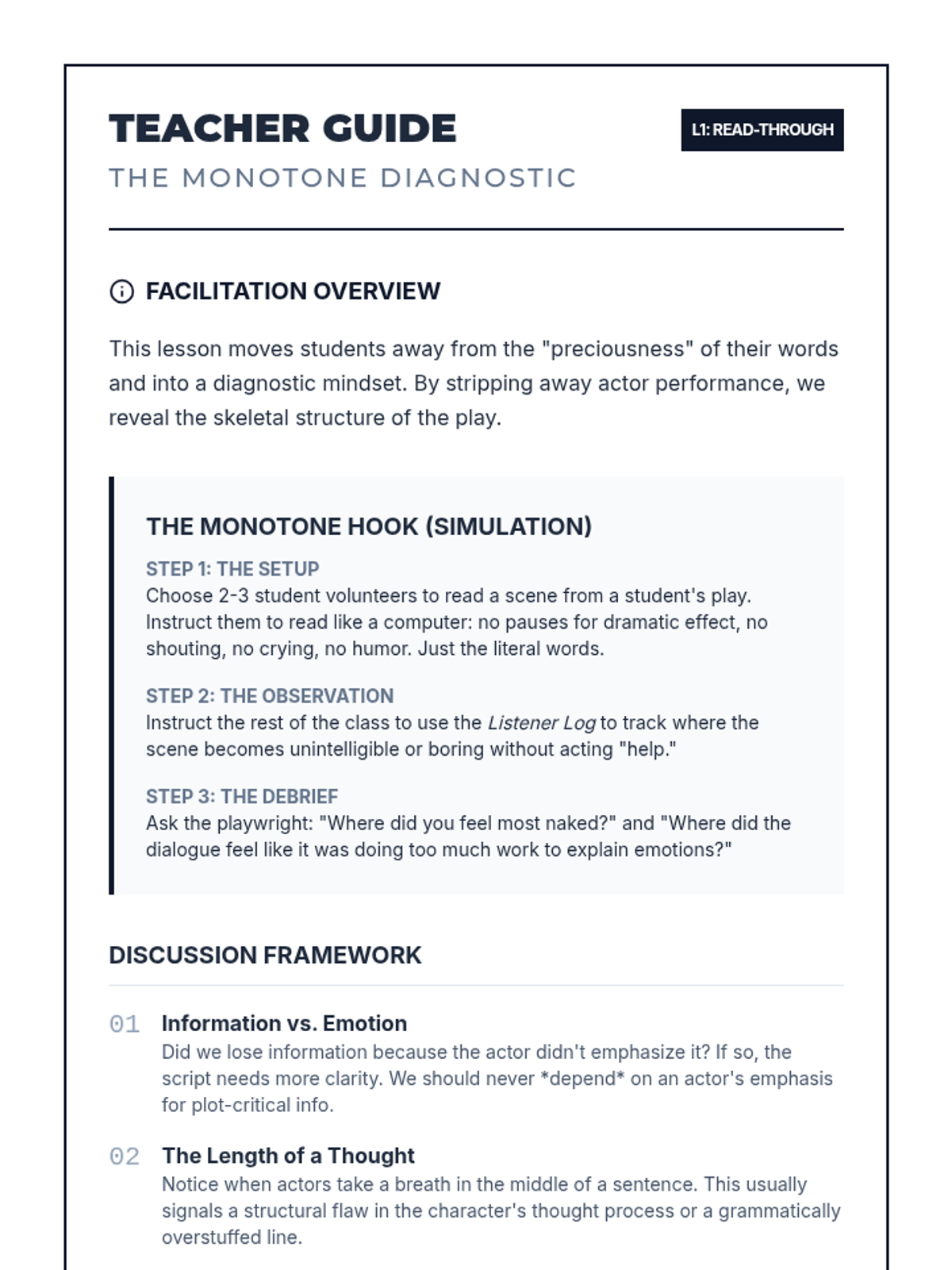
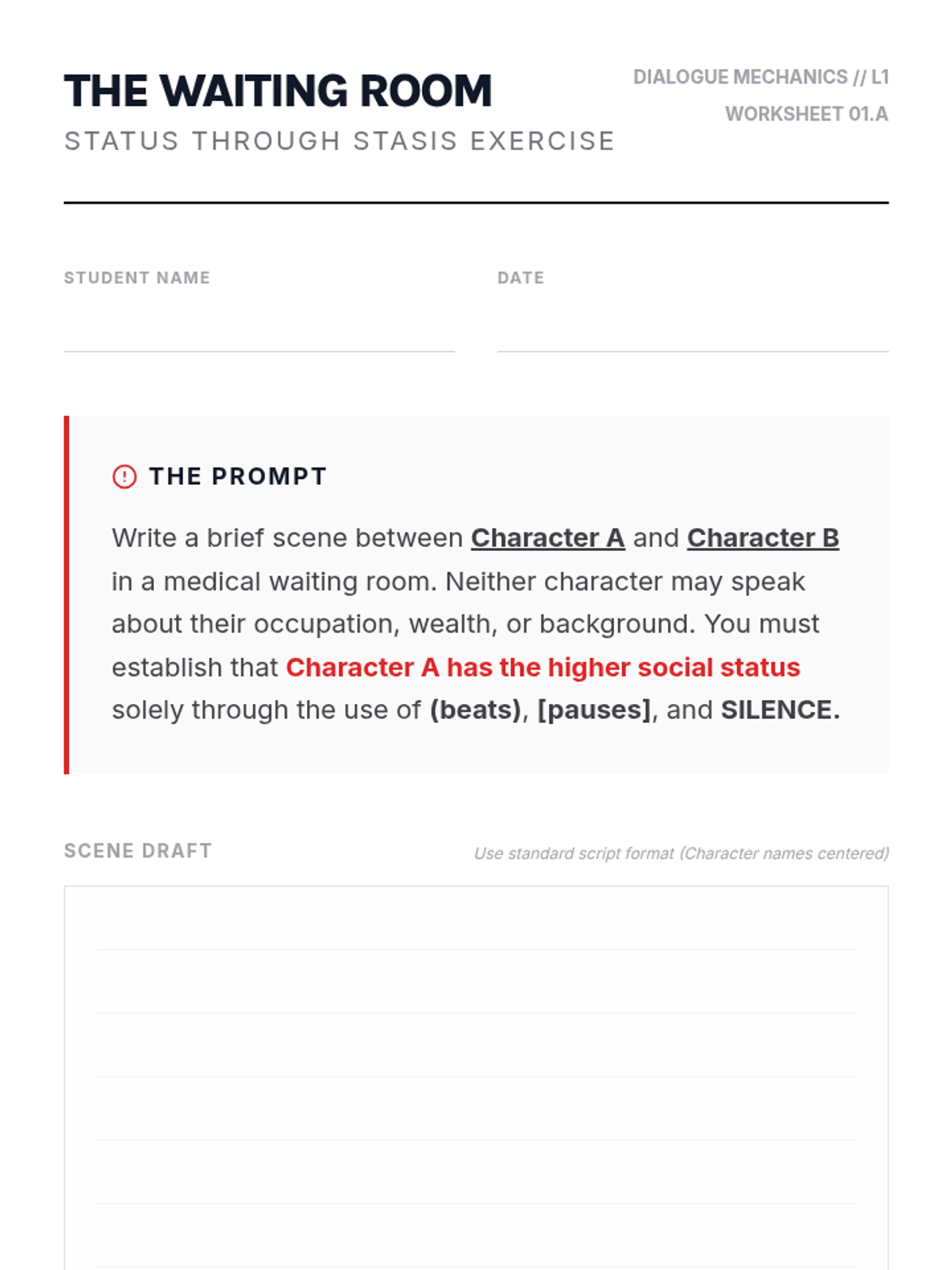
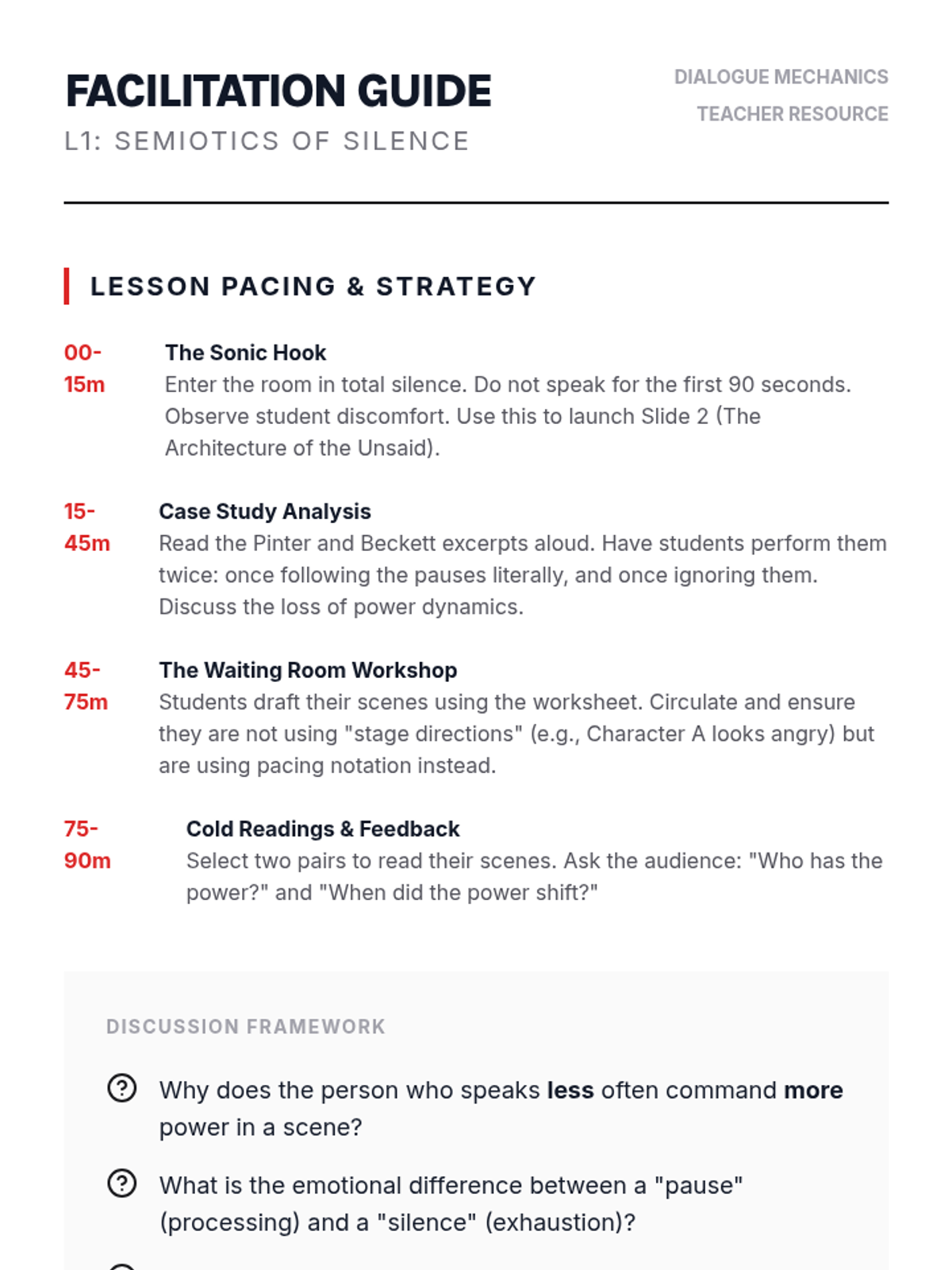
An advanced playwriting sequence for graduate students focusing on the technical mechanics of dialogue. It treats dramatic text as musical notation, exploring how rhythm, syntax, and silence construct power dynamics and atmosphere.
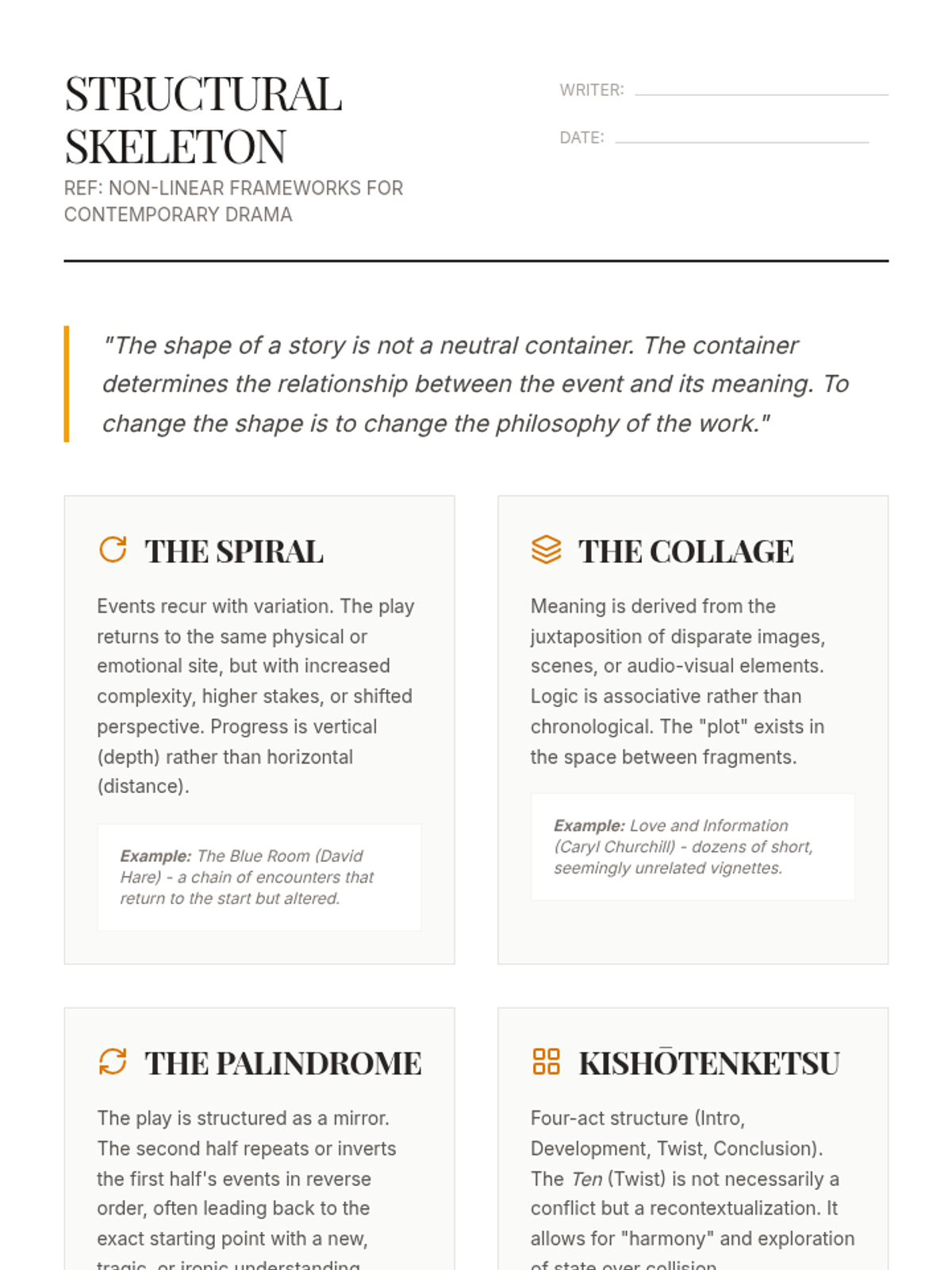
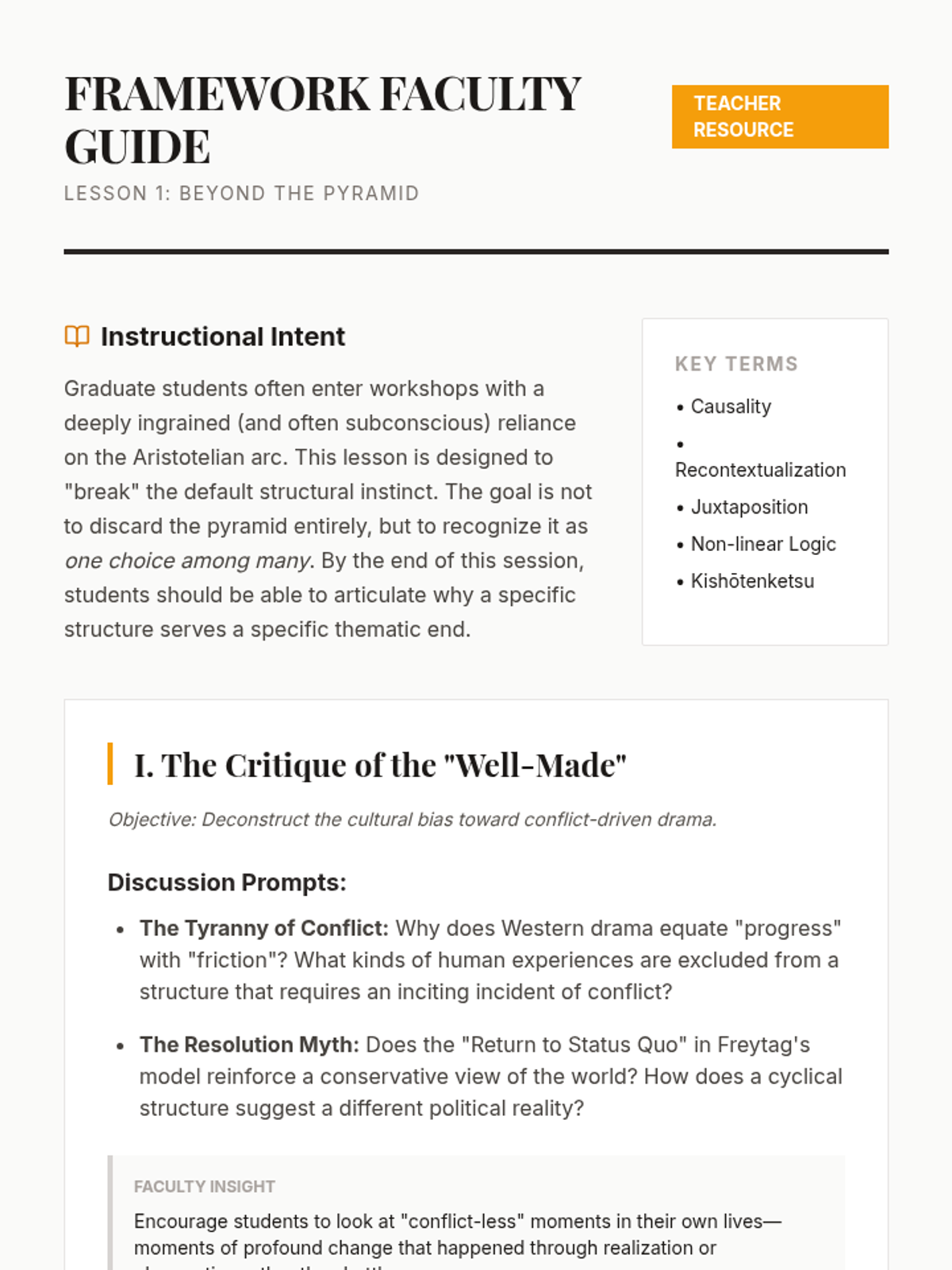
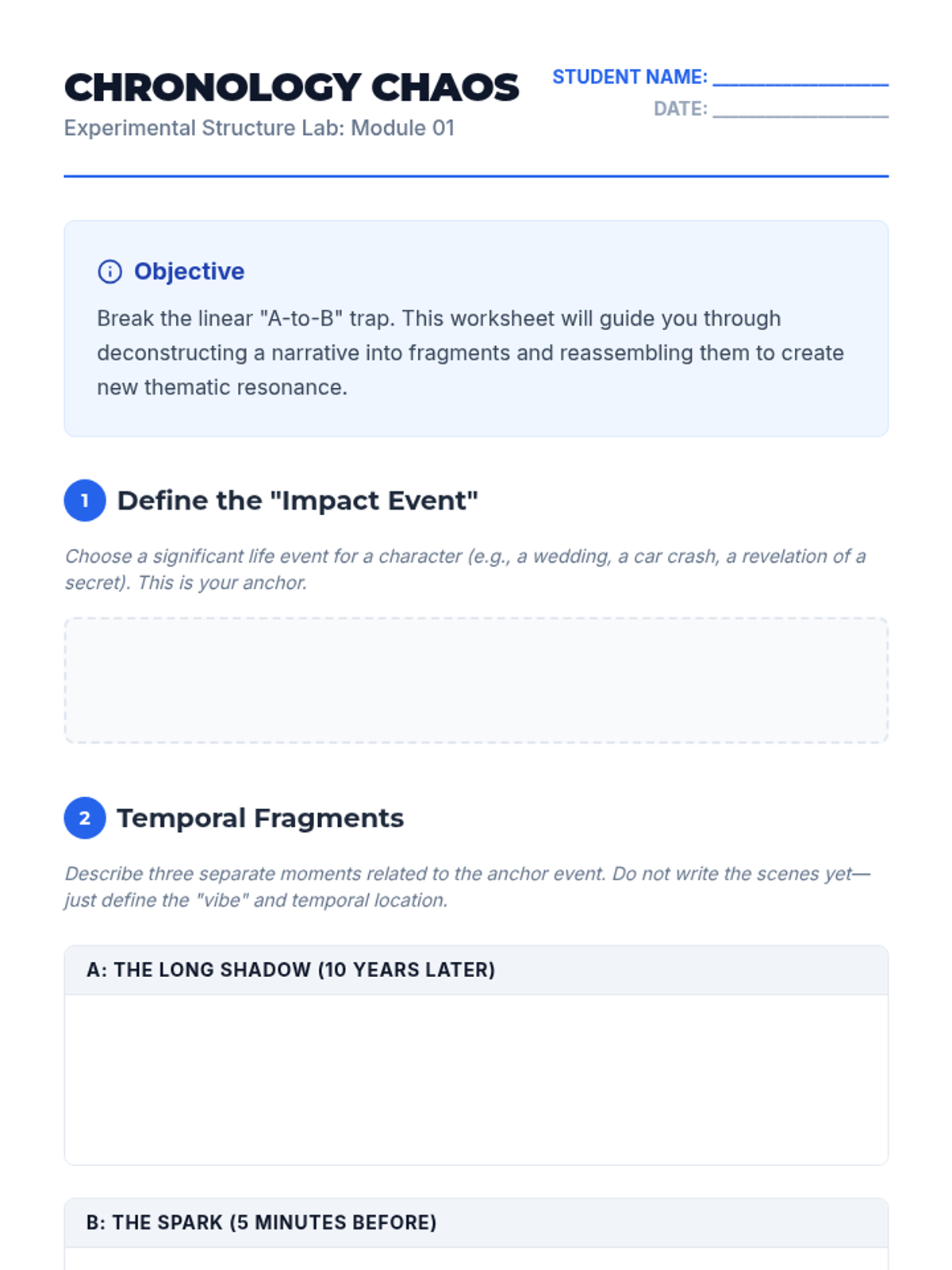
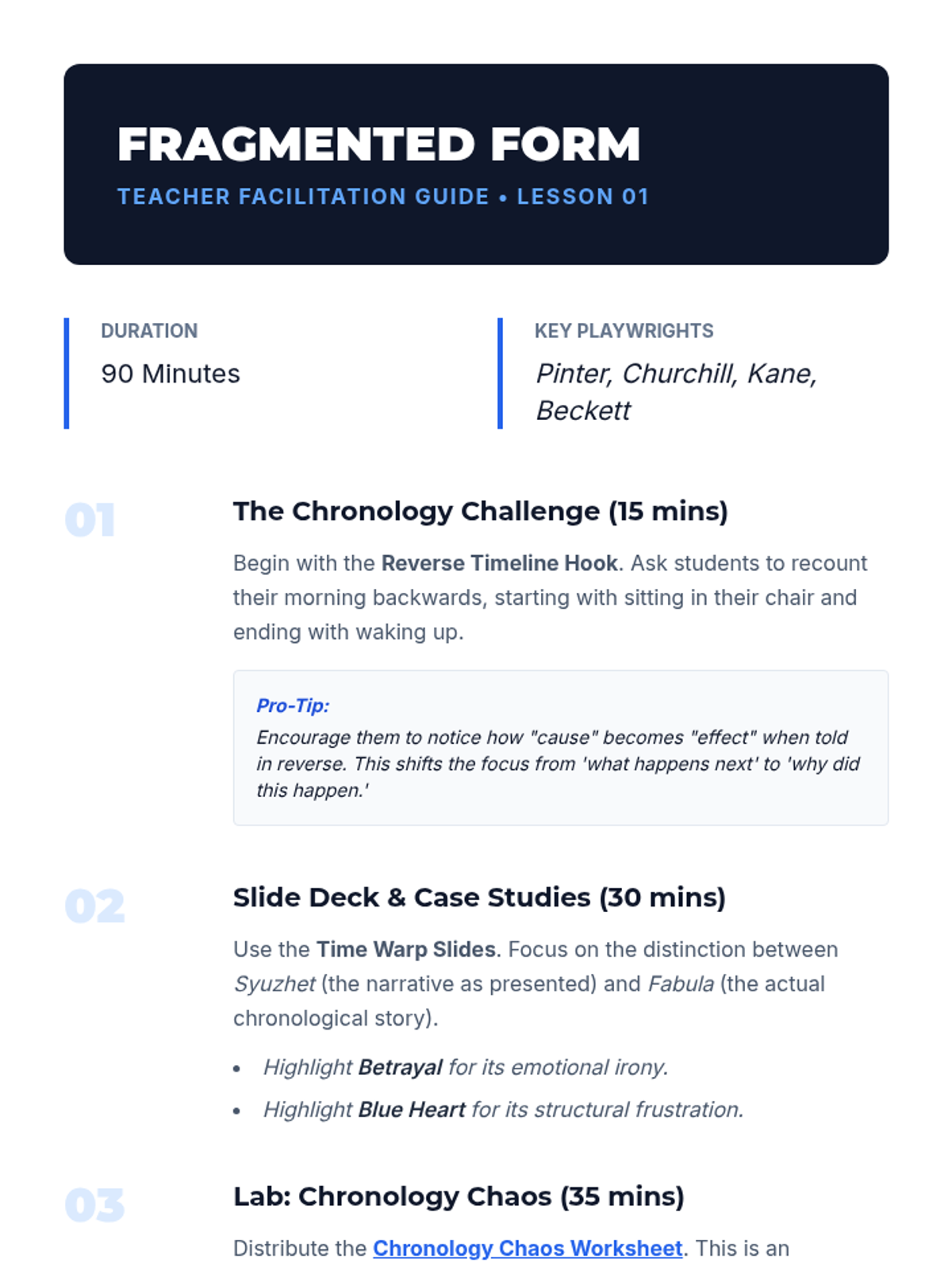
An advanced playwriting module for graduate students focusing on non-linear, fragmented, and experimental dramatic structures. Students interrogate traditional narrative shapes and develop a comprehensive structural blueprint for a full-length experimental work.
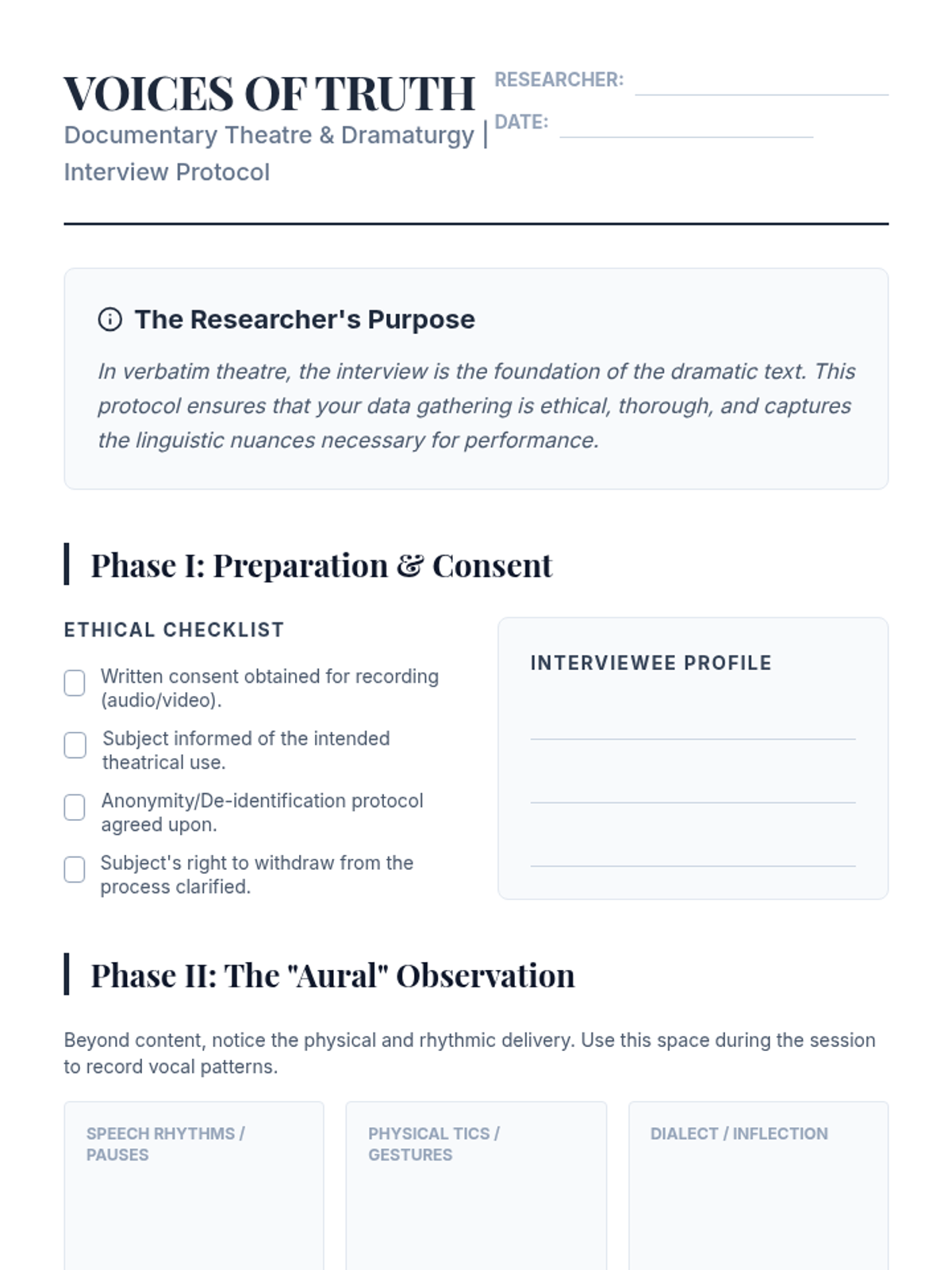
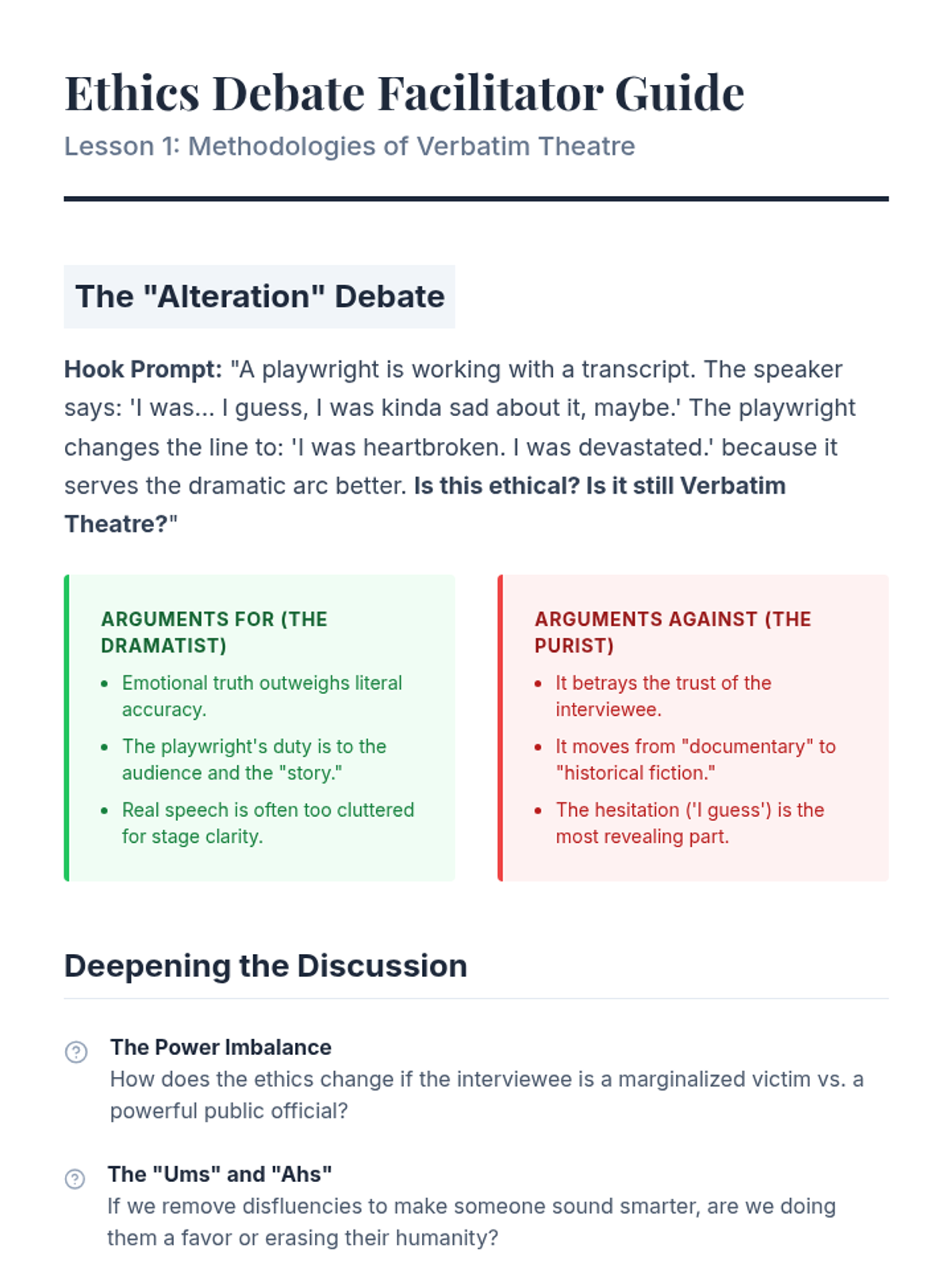
A comprehensive graduate-level exploration of Documentary and Verbatim Theatre, covering ethical research, archival mining, speech editing, character synthesis, and theatrical staging. Students transition from researchers to dramatists, producing original documentary works based on real-world testimony and historical records.
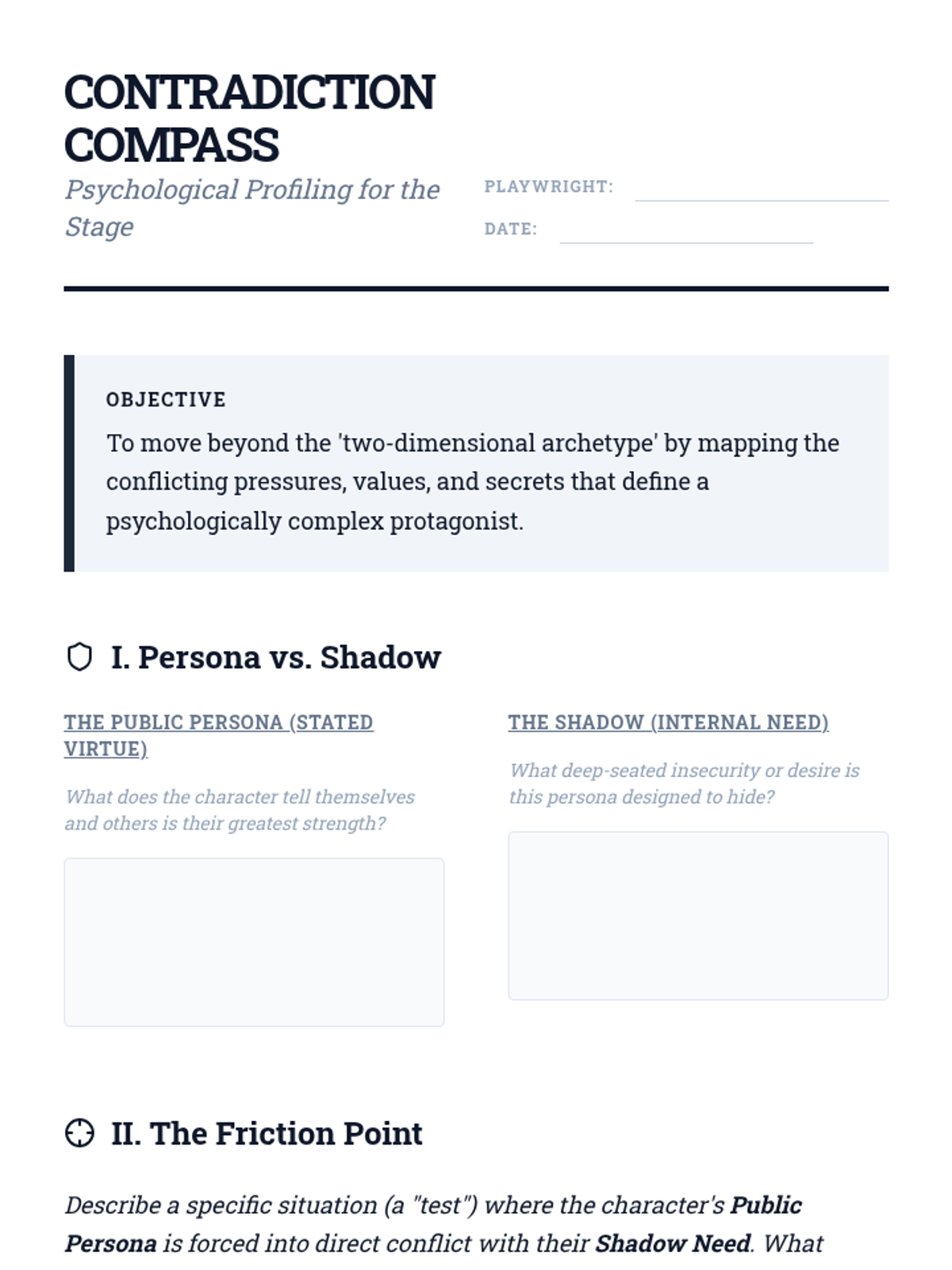
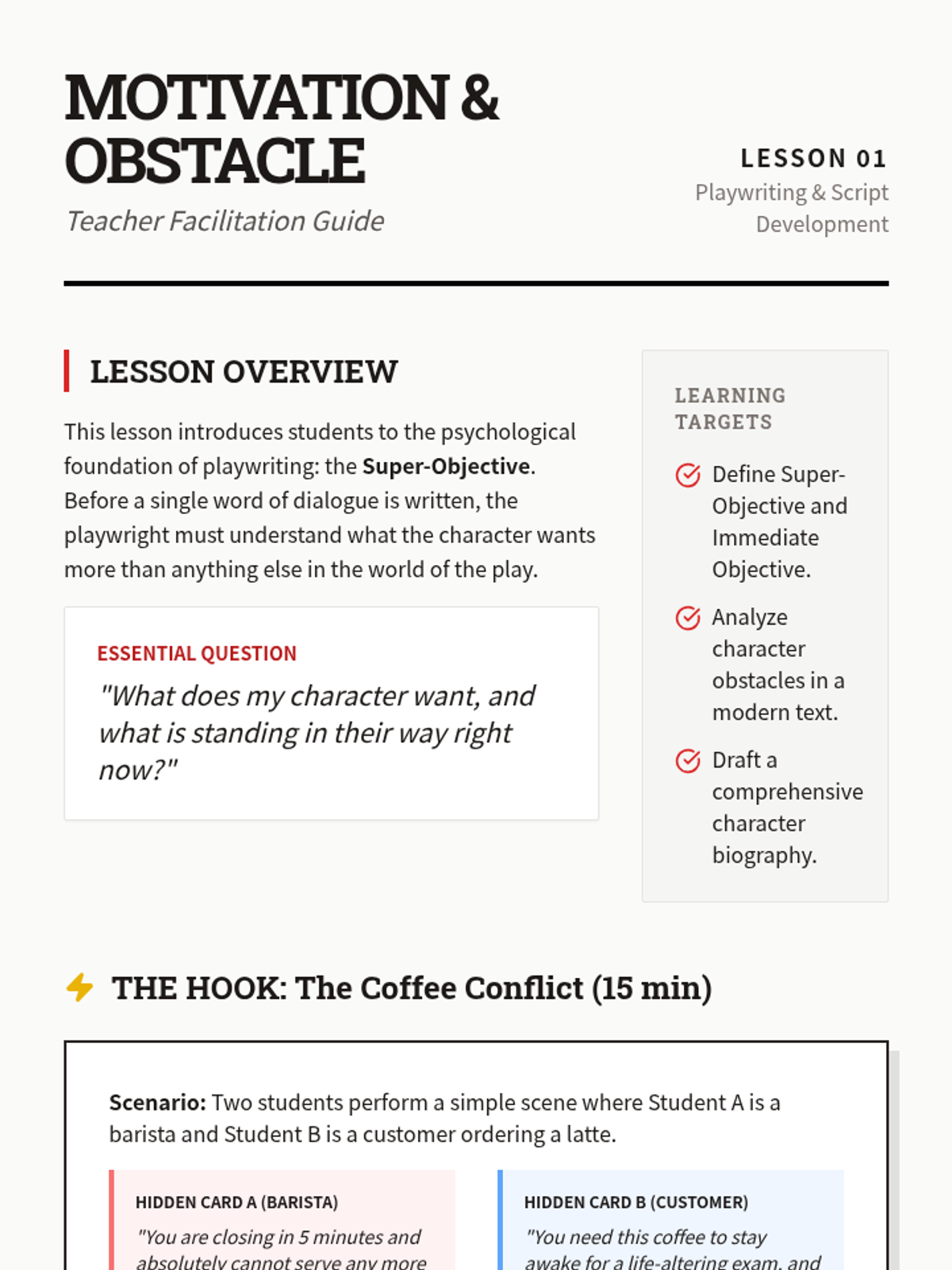
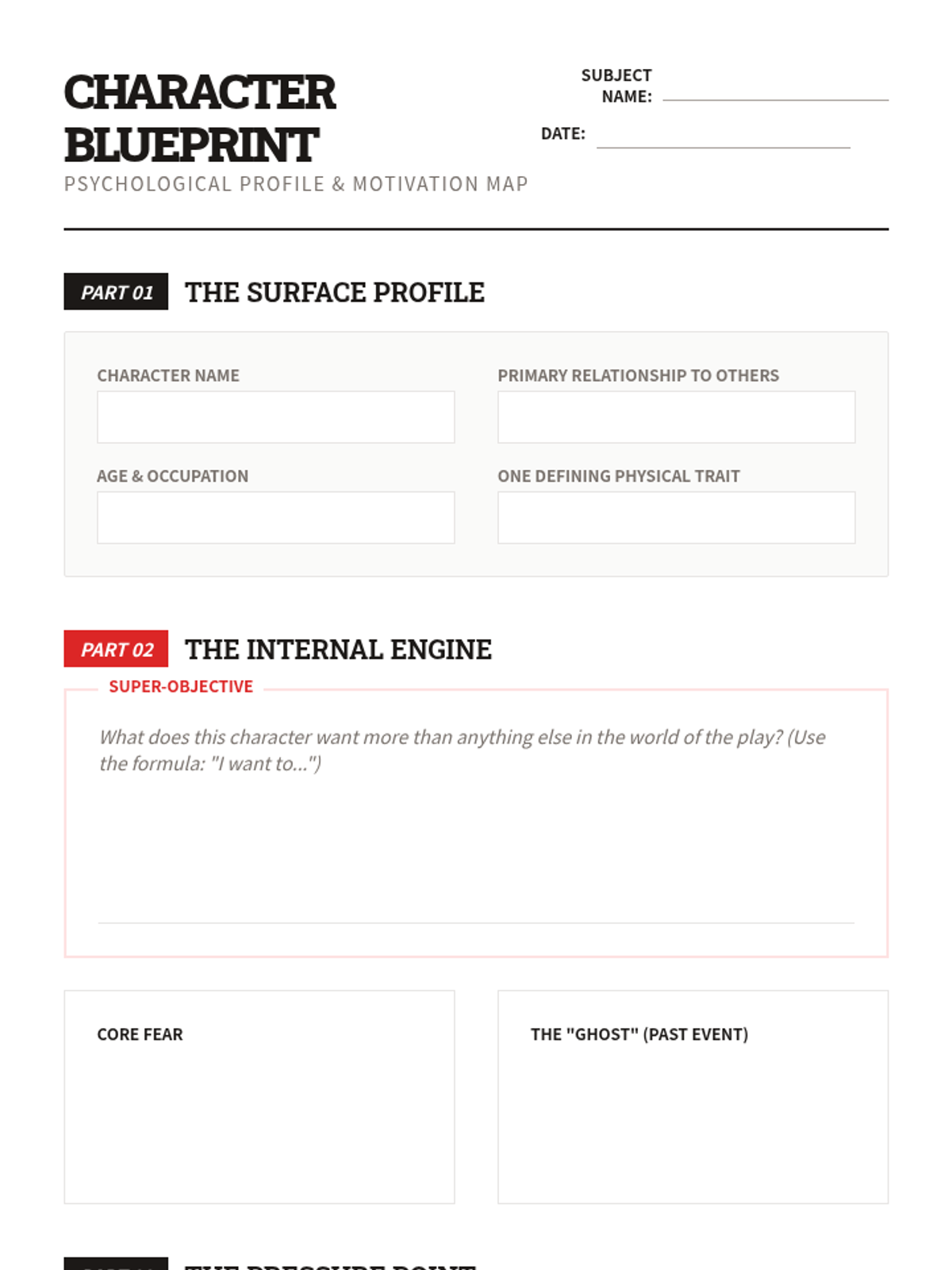
An advanced playwriting sequence for graduate students focusing on the psychological architecture of dramatic characters, subtextual dialogue, and character-driven narrative structures. Students progress from deconstructing archetypes to writing a one-act draft grounded in behavioral truth and internal contradiction.
An advanced playwriting sequence for undergraduate students focusing on non-traditional structures, including non-linear time, verbatim theater, absurdism, meta-theatricality, and multimedia integration. Students will move from theoretical analysis of experimental playwrights to creating their own rule-breaking scripts.
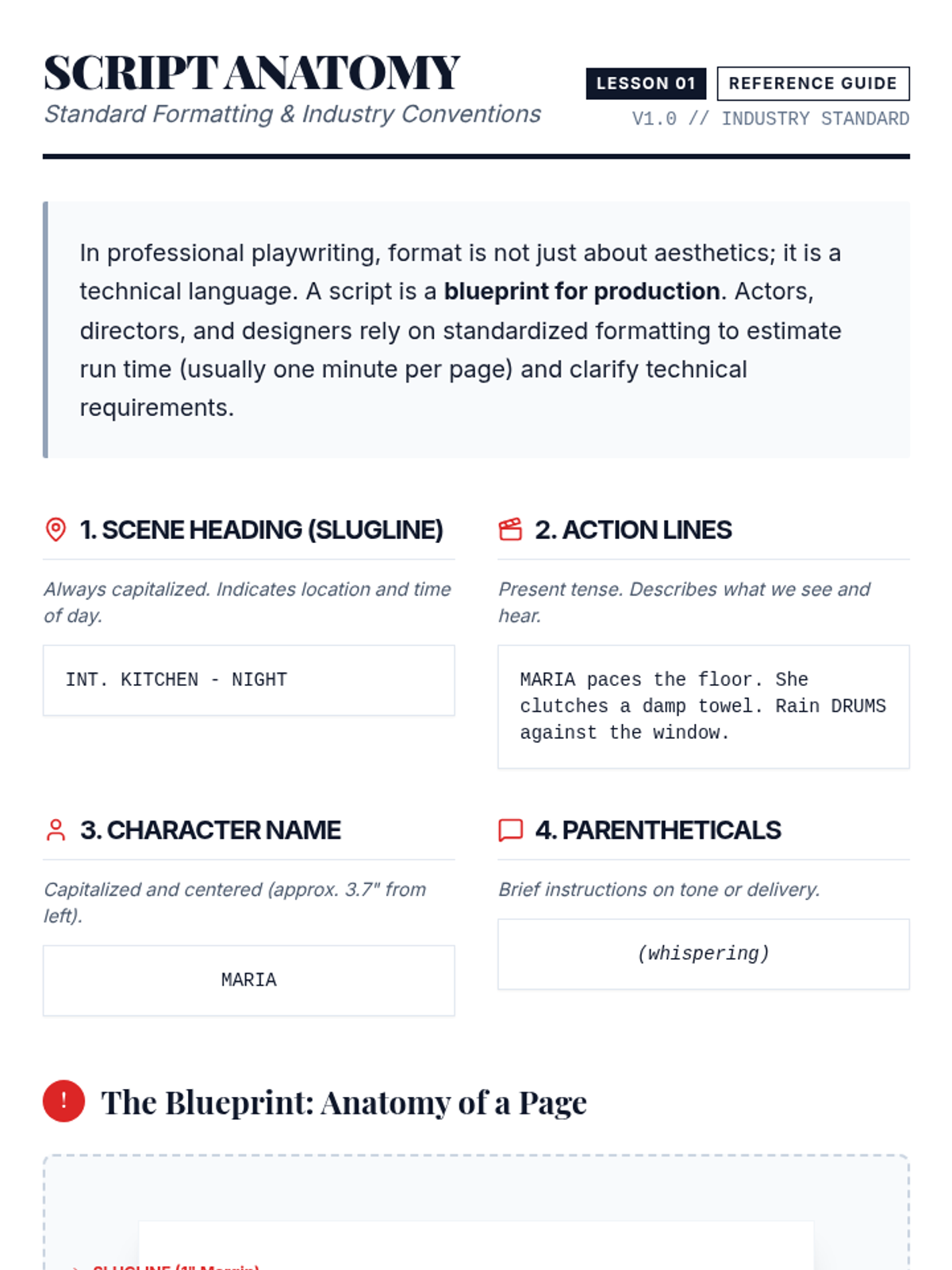
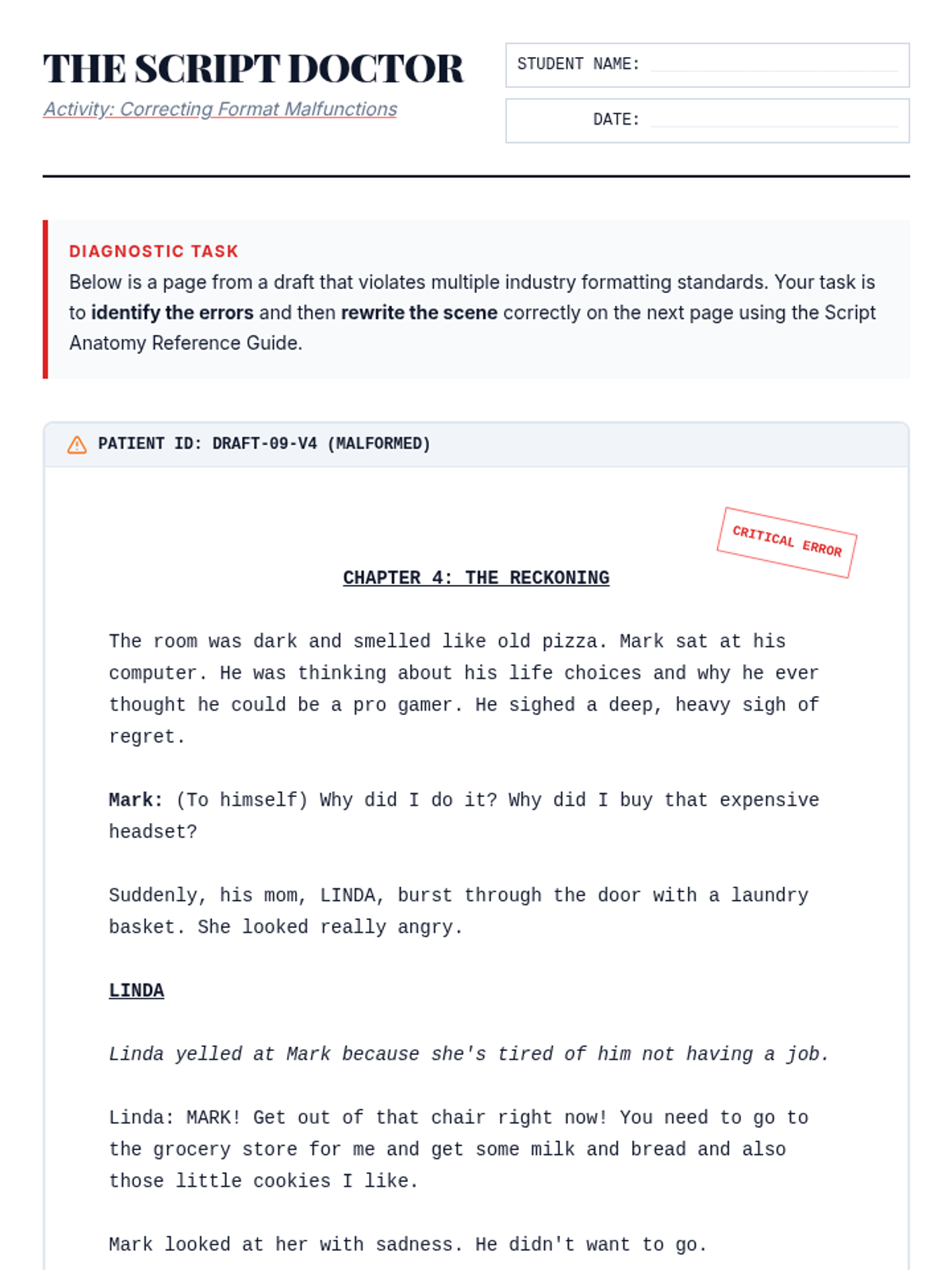
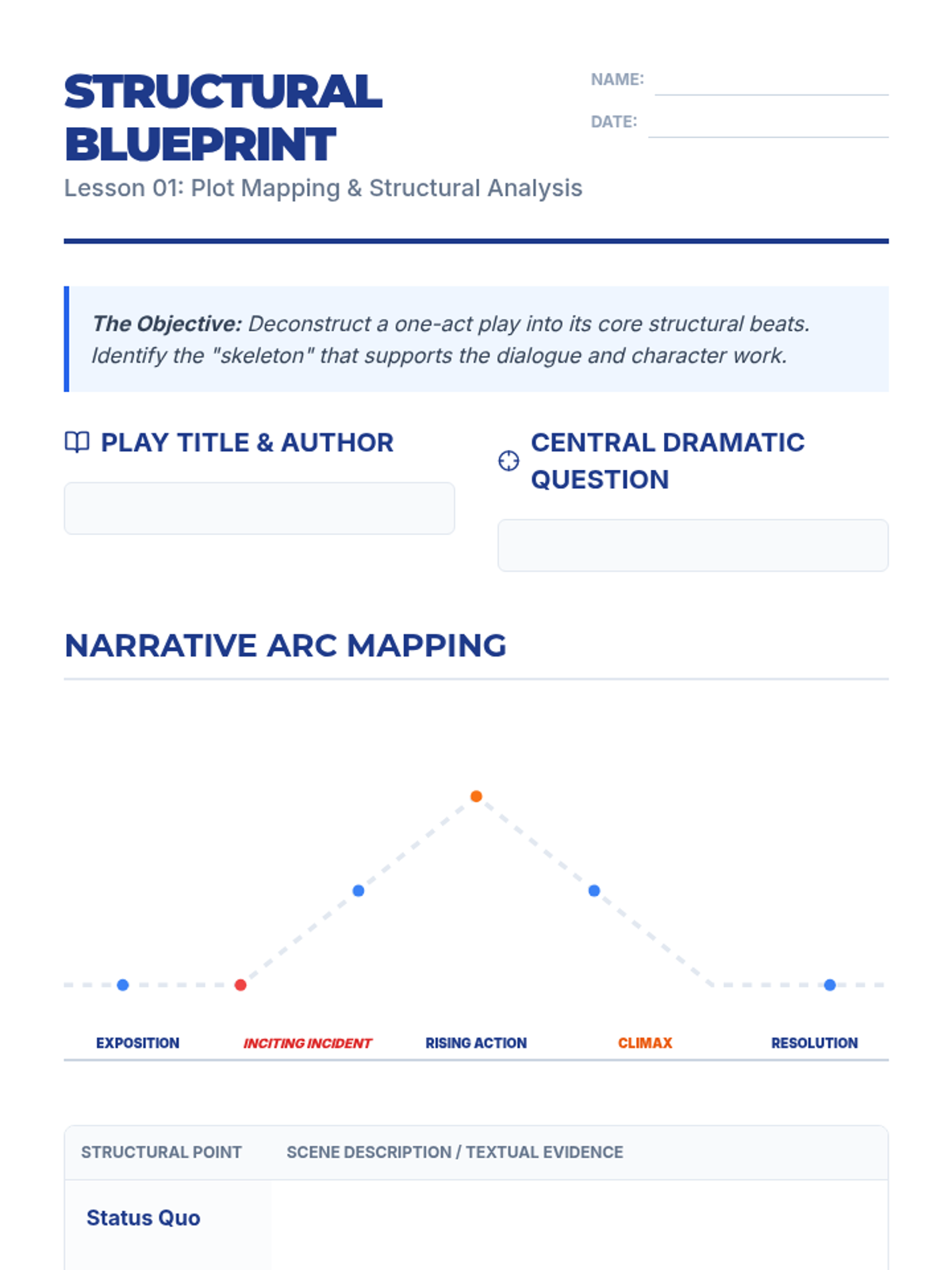
This sequence establishes the technical and structural foundations required for professional playwriting. Students master industry-standard formatting and deconstruct theatrical architecture using classic and contemporary models to understand how structure dictates pacing and dramatic tension.
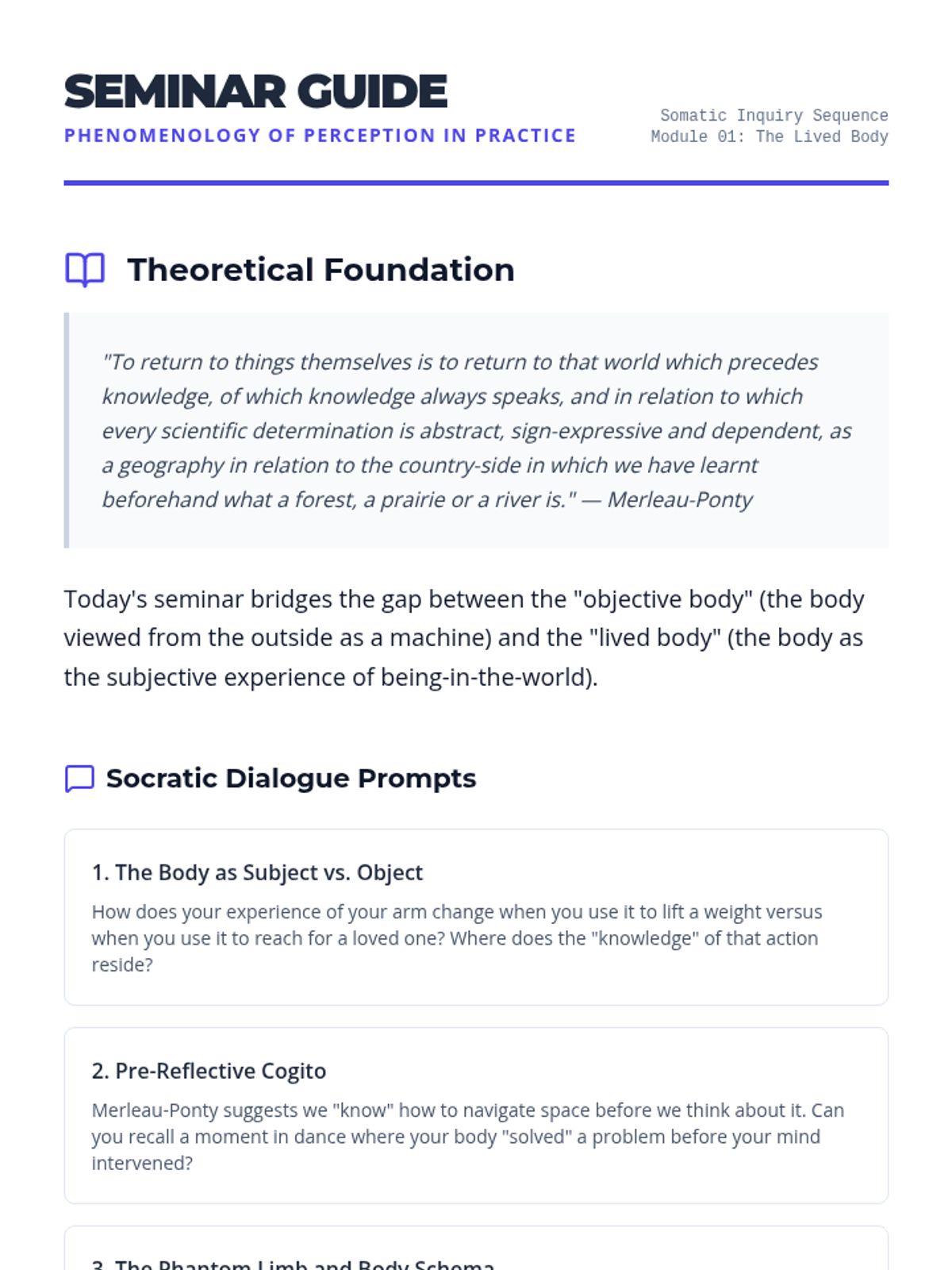
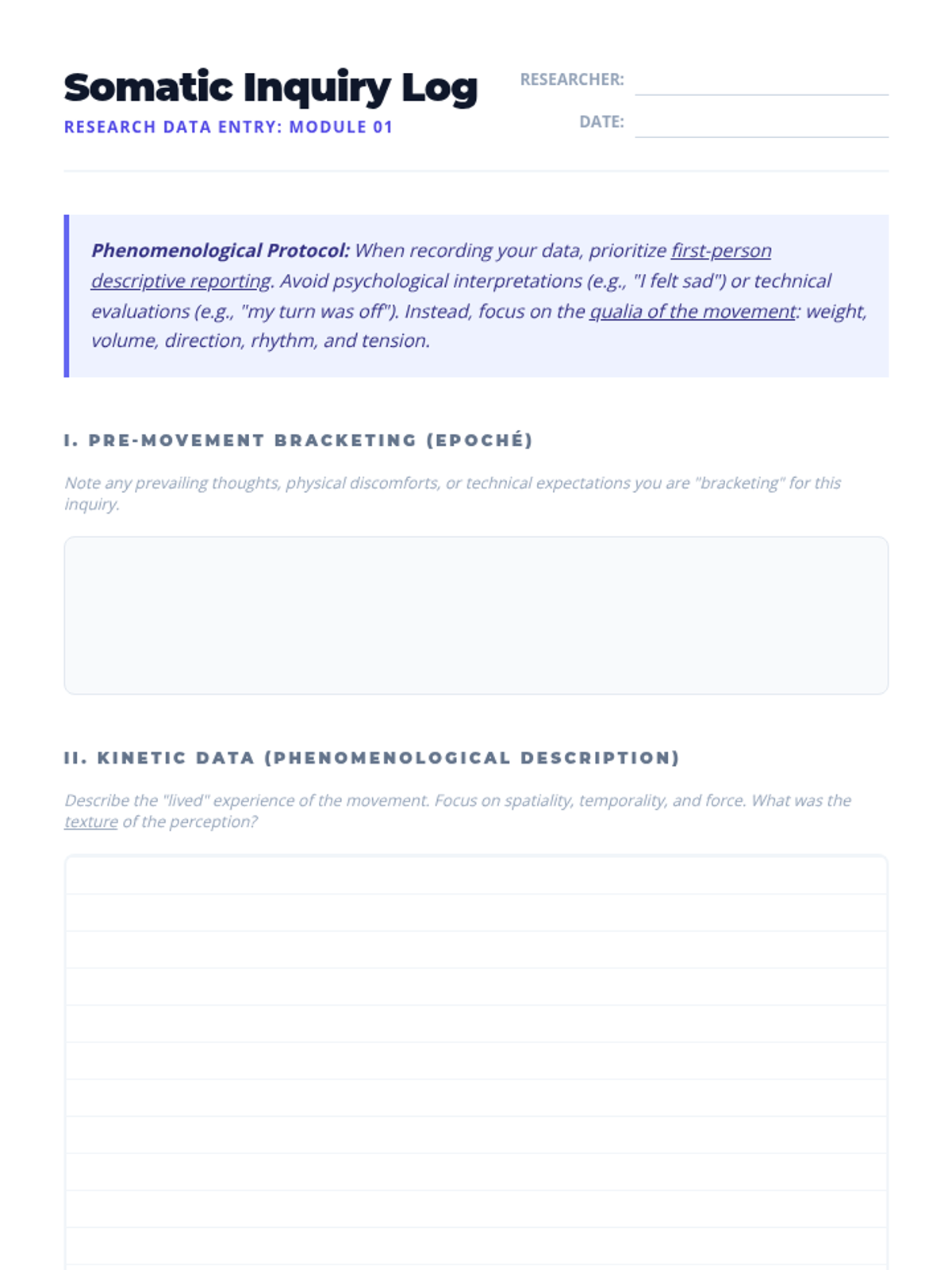
A graduate-level sequence exploring creative movement as a rigorous Practice-as-Research (PaR) methodology. It bridges phenomenological philosophy and somatic practice to investigate academic questions through the body.
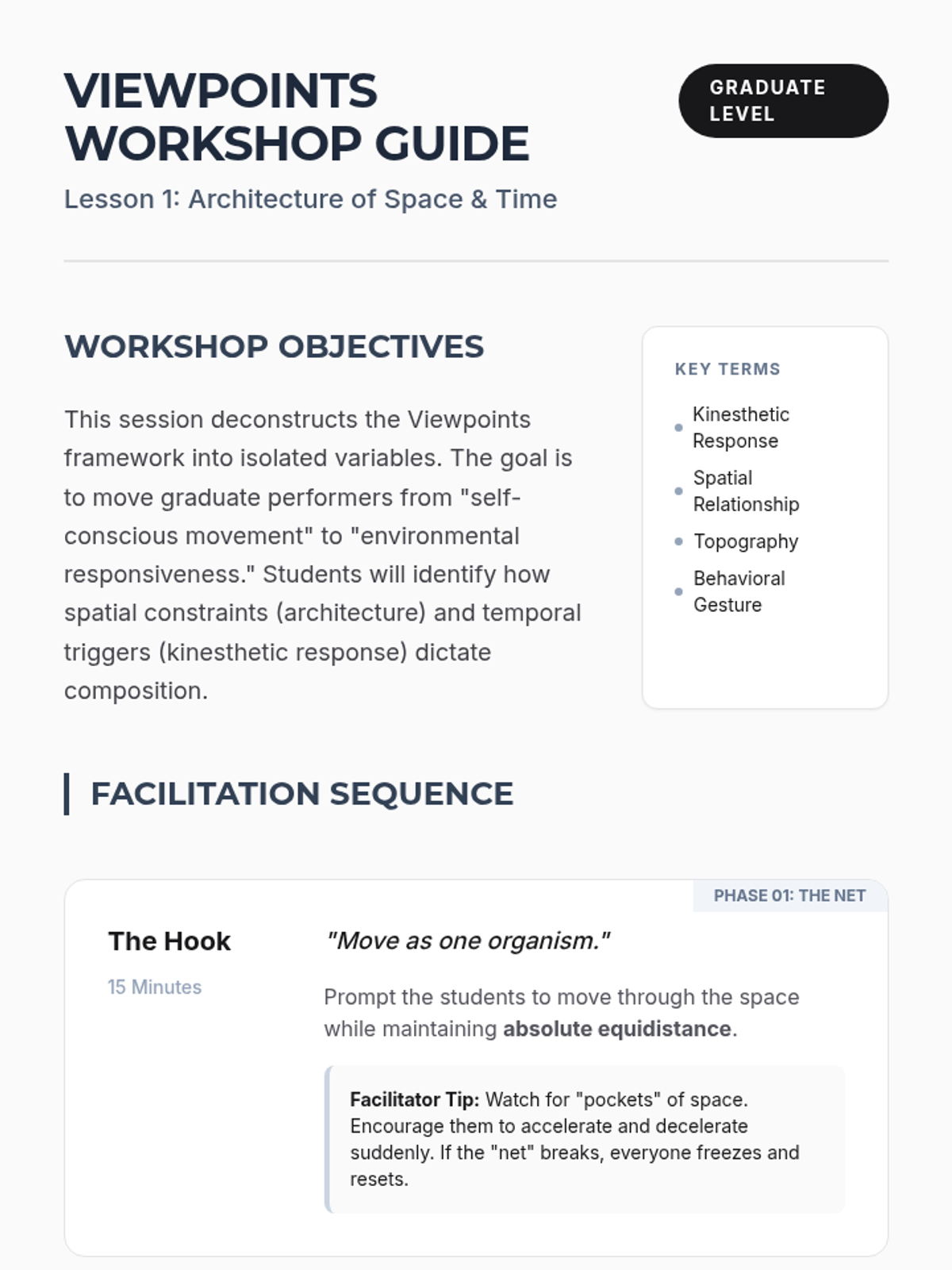
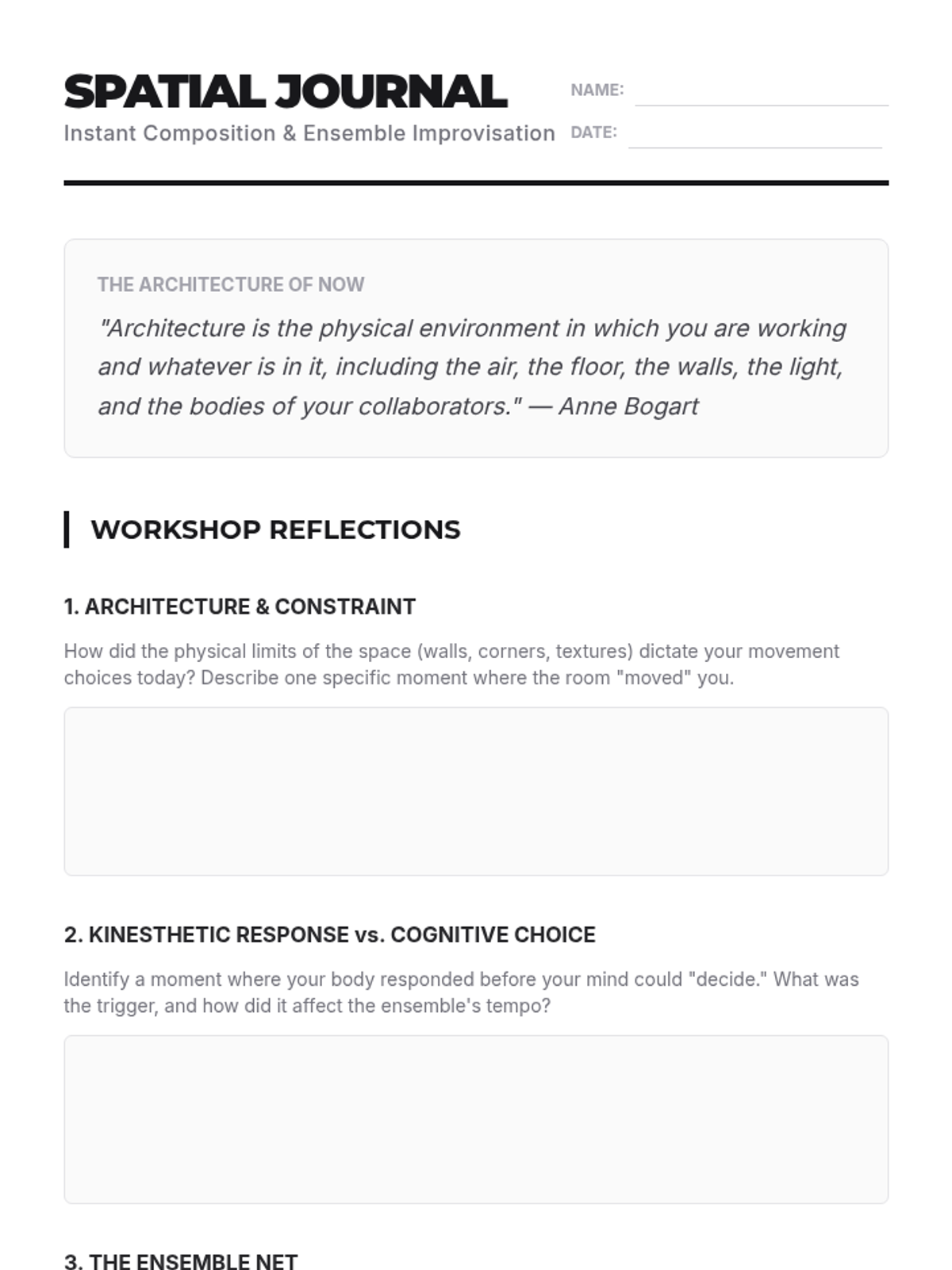
A high-level graduate sequence exploring the transition from solo improvisation to complex ensemble instant composition, utilizing Viewpoints, Contact Improvisation, and indeterminate scoring.
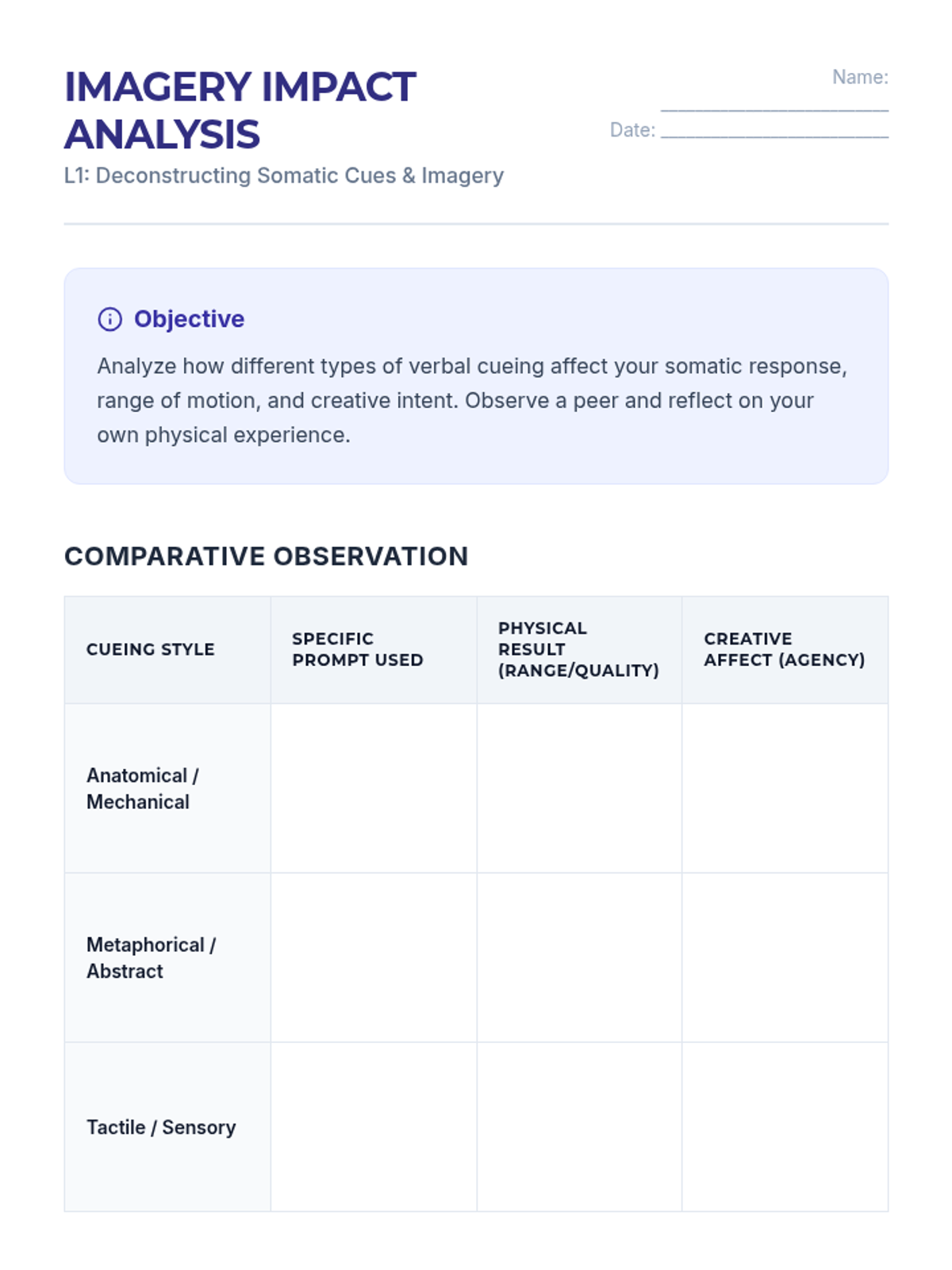
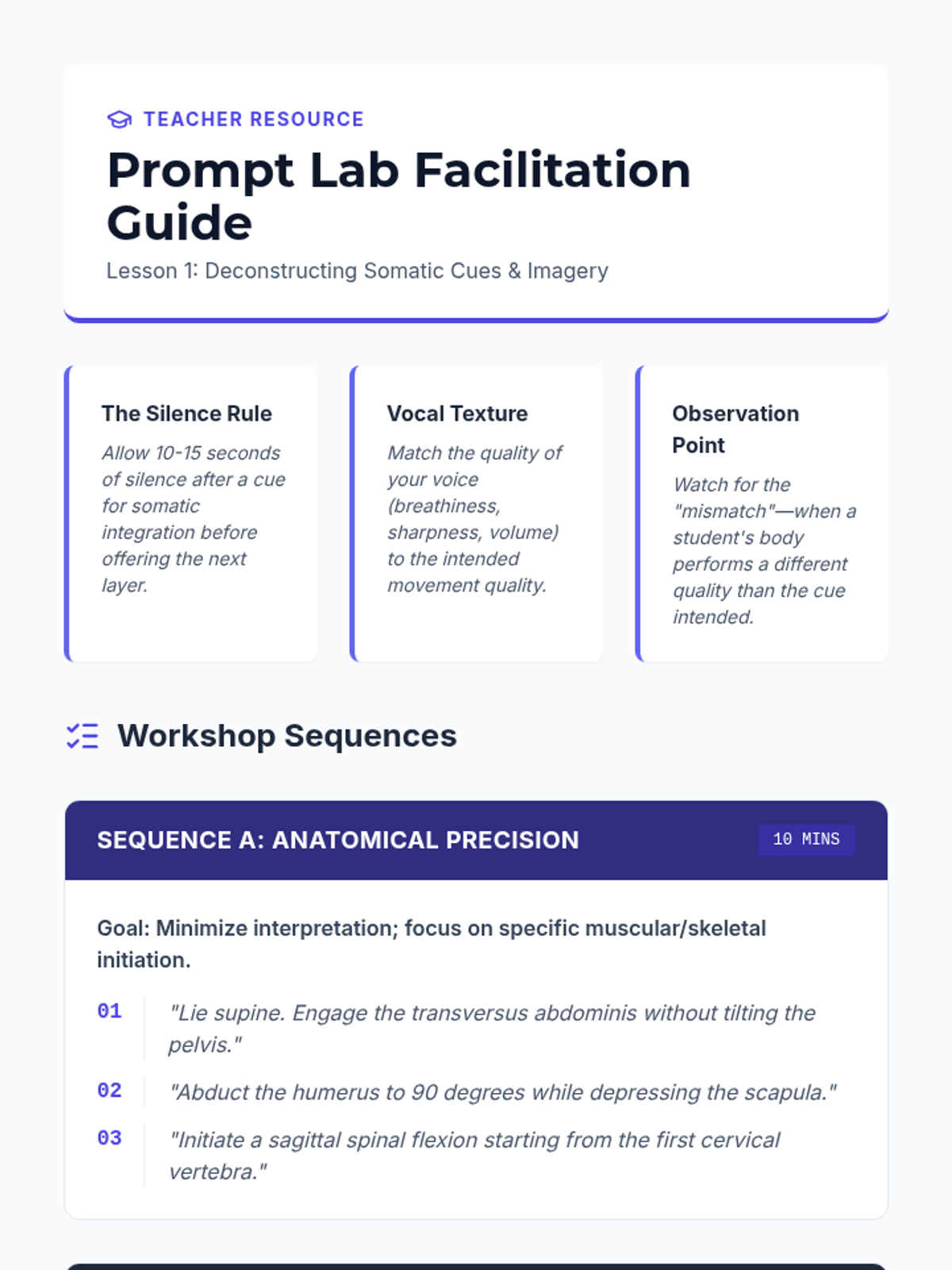
A graduate-level sequence exploring advanced pedagogical frameworks for creative movement facilitation. Students deconstruct somatic cues, developmental patterns, trauma-informed practices, and neurodiverse scaffolding to design inclusive and effective movement workshops.
A project-based sequence for 11th-grade students focusing on the macro-level engineering of a one-act play. Students transition from deconstructing dramatic structures to drafting a complete narrative treatment, emphasizing conflict, stakes, and structural integrity.
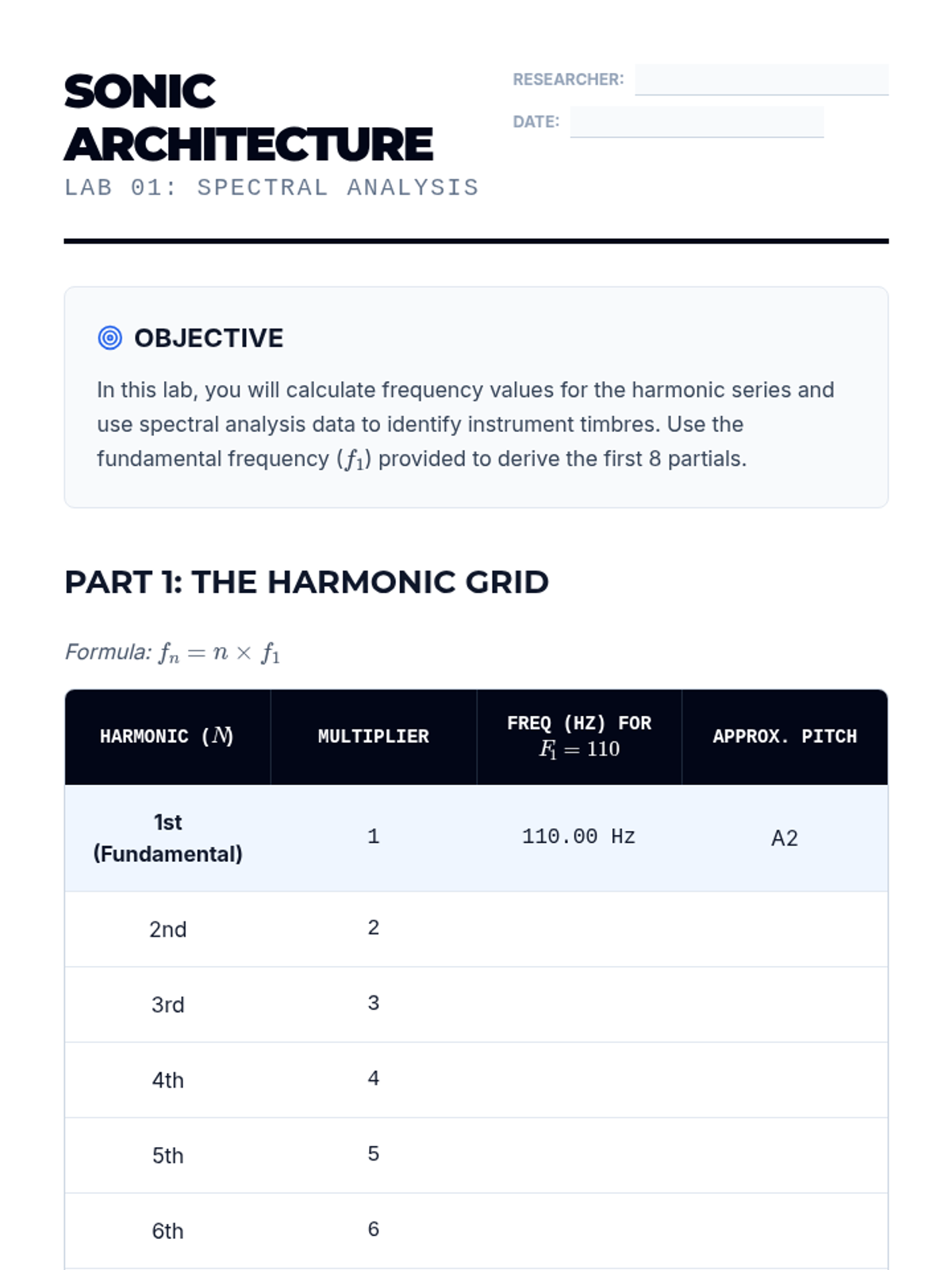
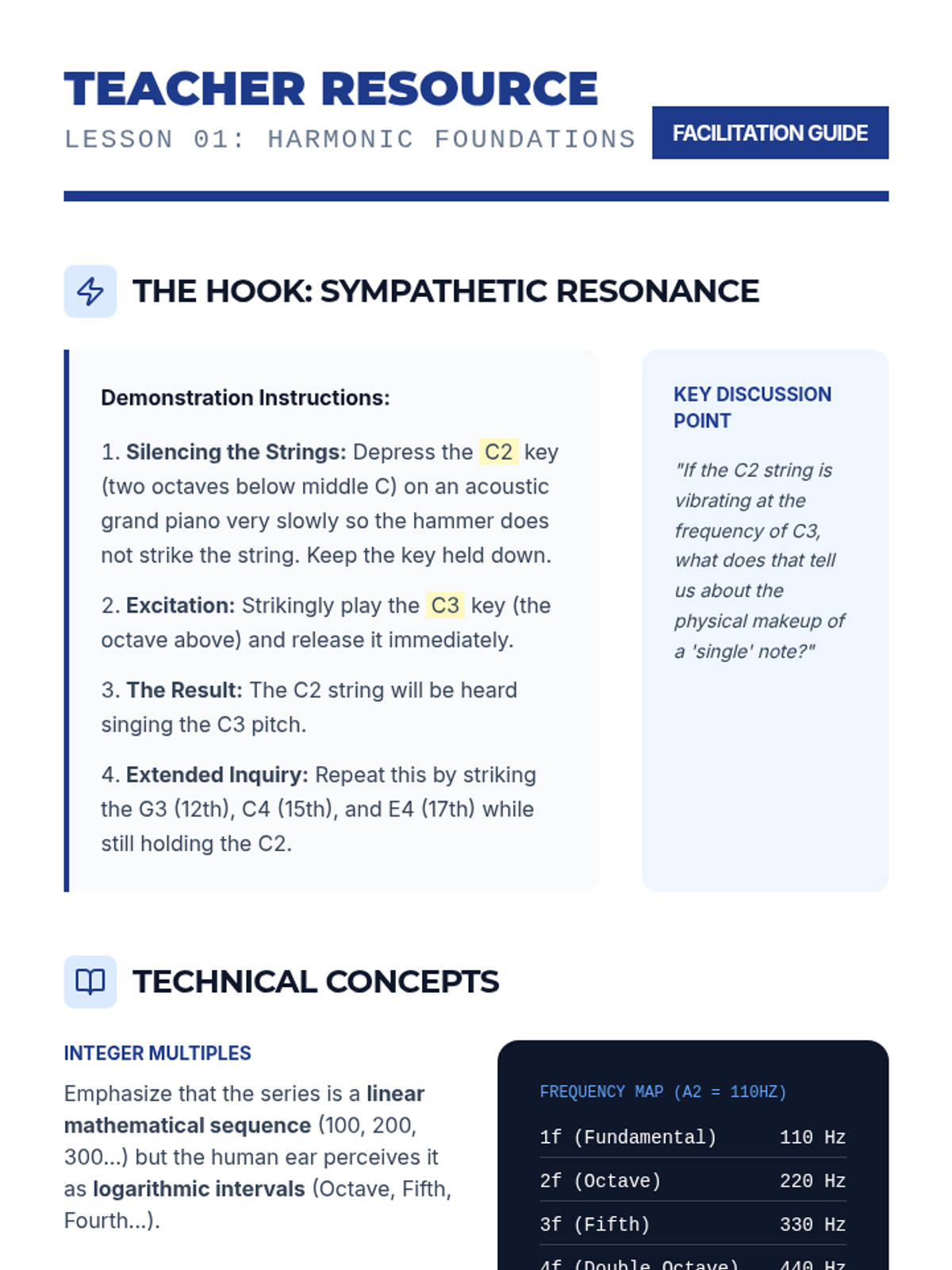
A graduate-level exploration of music fundamentals through the lens of acoustics, psychoacoustics, and tuning systems. Students investigate the physics of sound, frequency ratios, and the historical evolution of scales from Pythagorean to Equal Temperament.
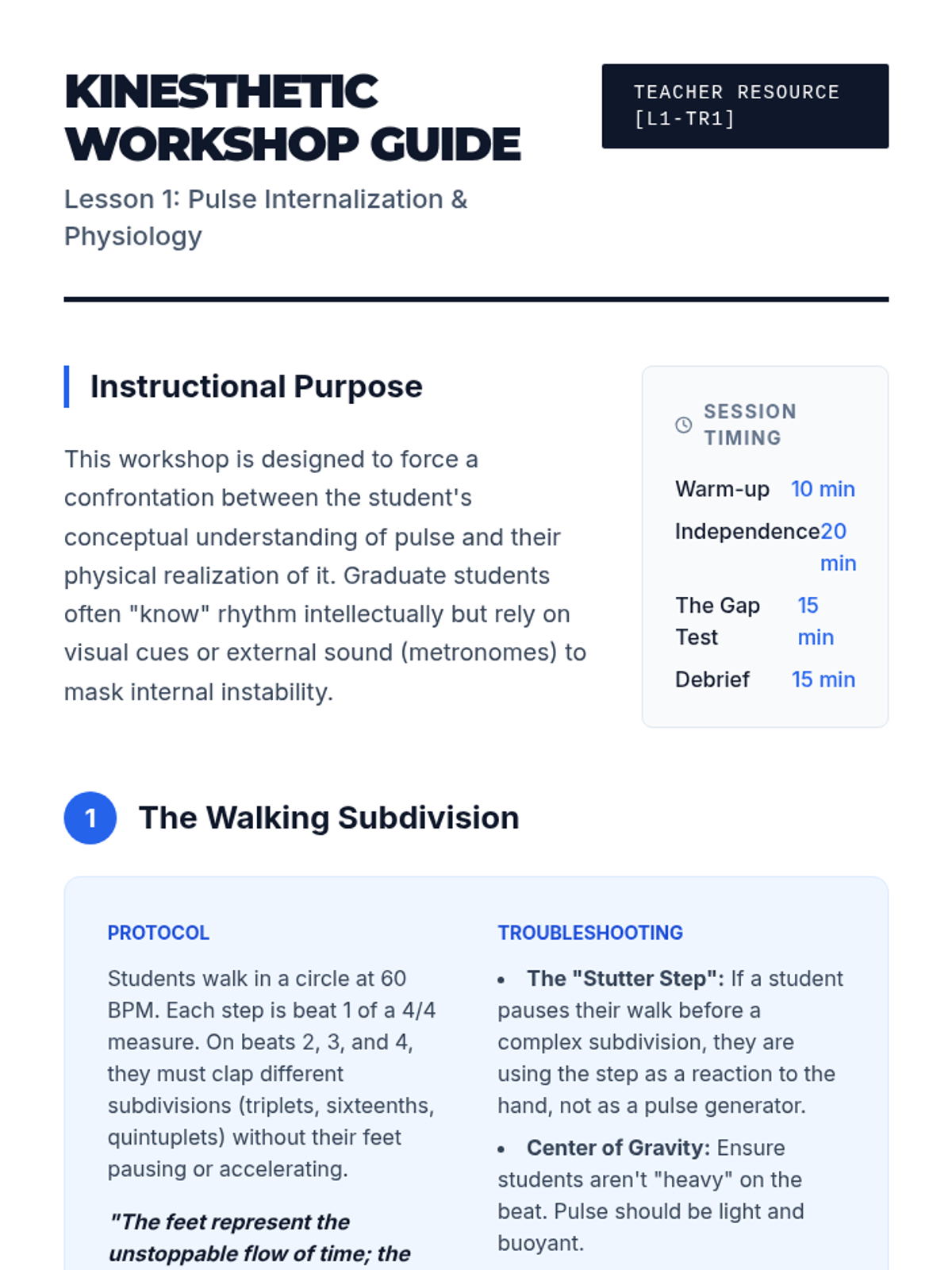
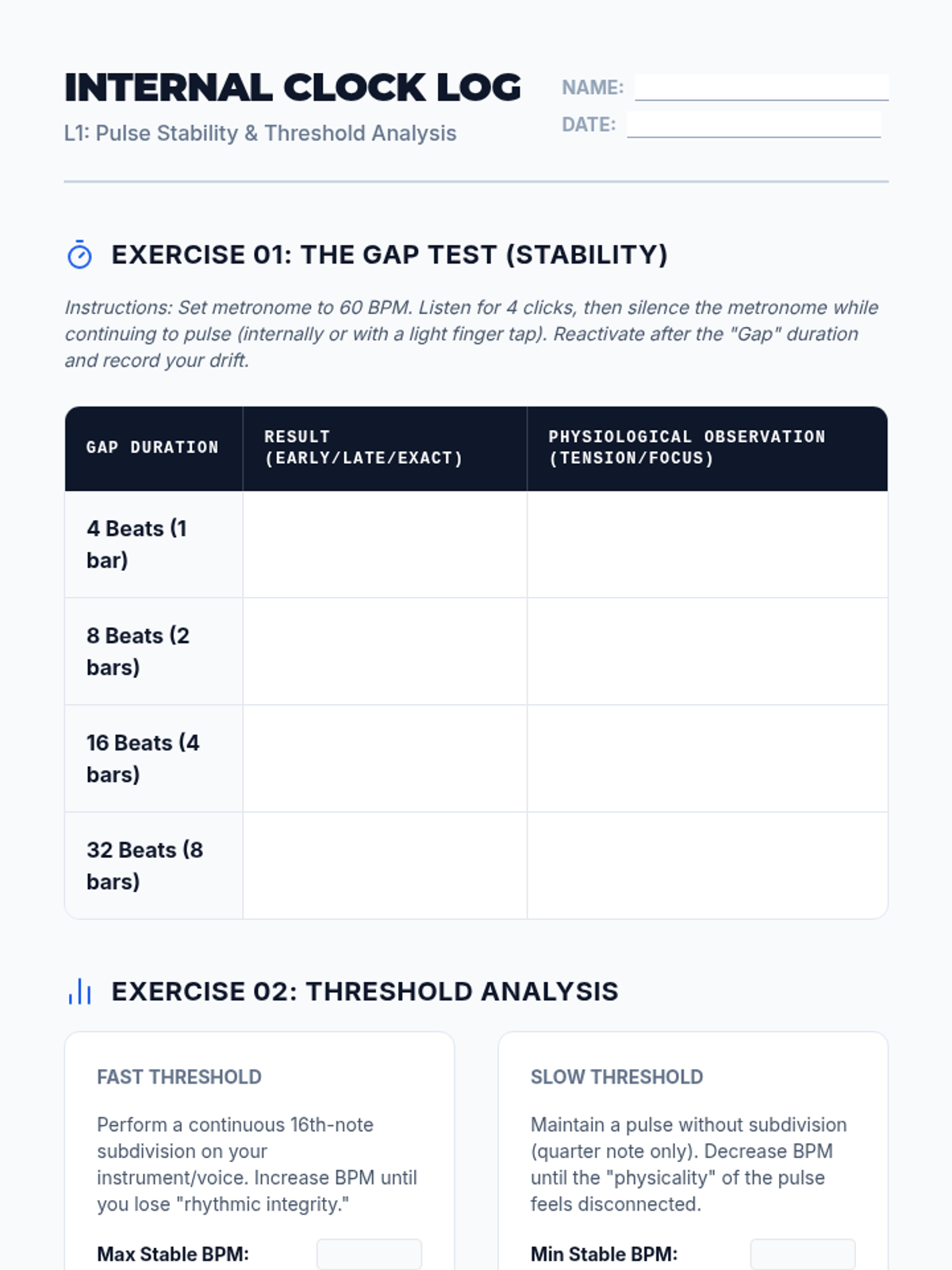
A rigorous workshop-based sequence for graduate music students exploring advanced rhythmic perception, meter architecture, asymmetrical rhythms, polyrhythms, and metric modulation. The course emphasizes both the mathematical calculation and the physical internalization of complex temporal structures.
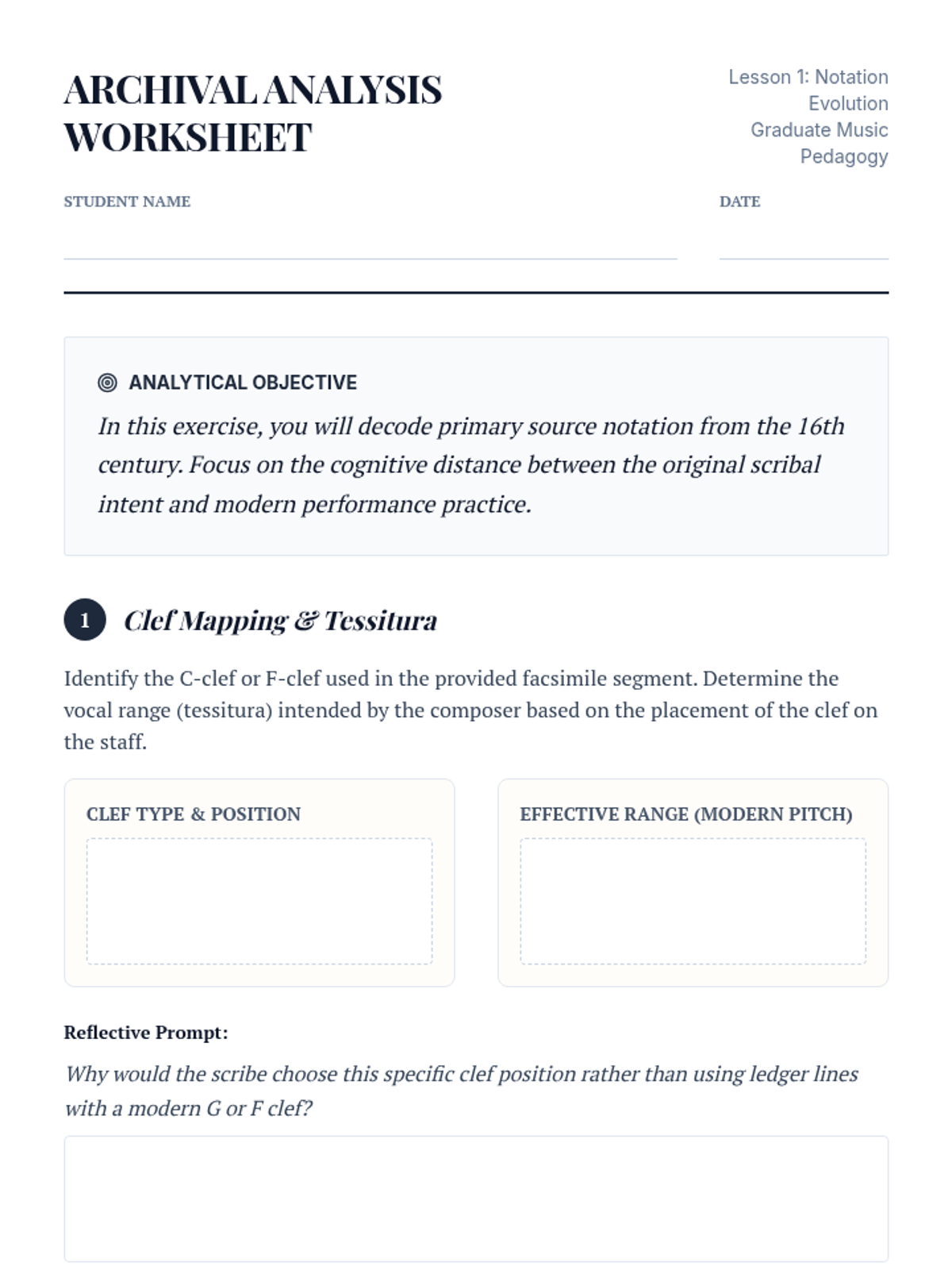
This sequence examines the evolution and cognitive mechanics of Western musical notation, designed for graduate students focusing on music education or musicology. Students will analyze the historical development of the staff, clefs, and accidentals, while simultaneously evaluating various pedagogical methodologies used to teach music literacy.
A high-level playwriting sequence for 12th-grade students focused on building complex characters and writing dialogue that drives action through subtext and vocal distinctiveness.
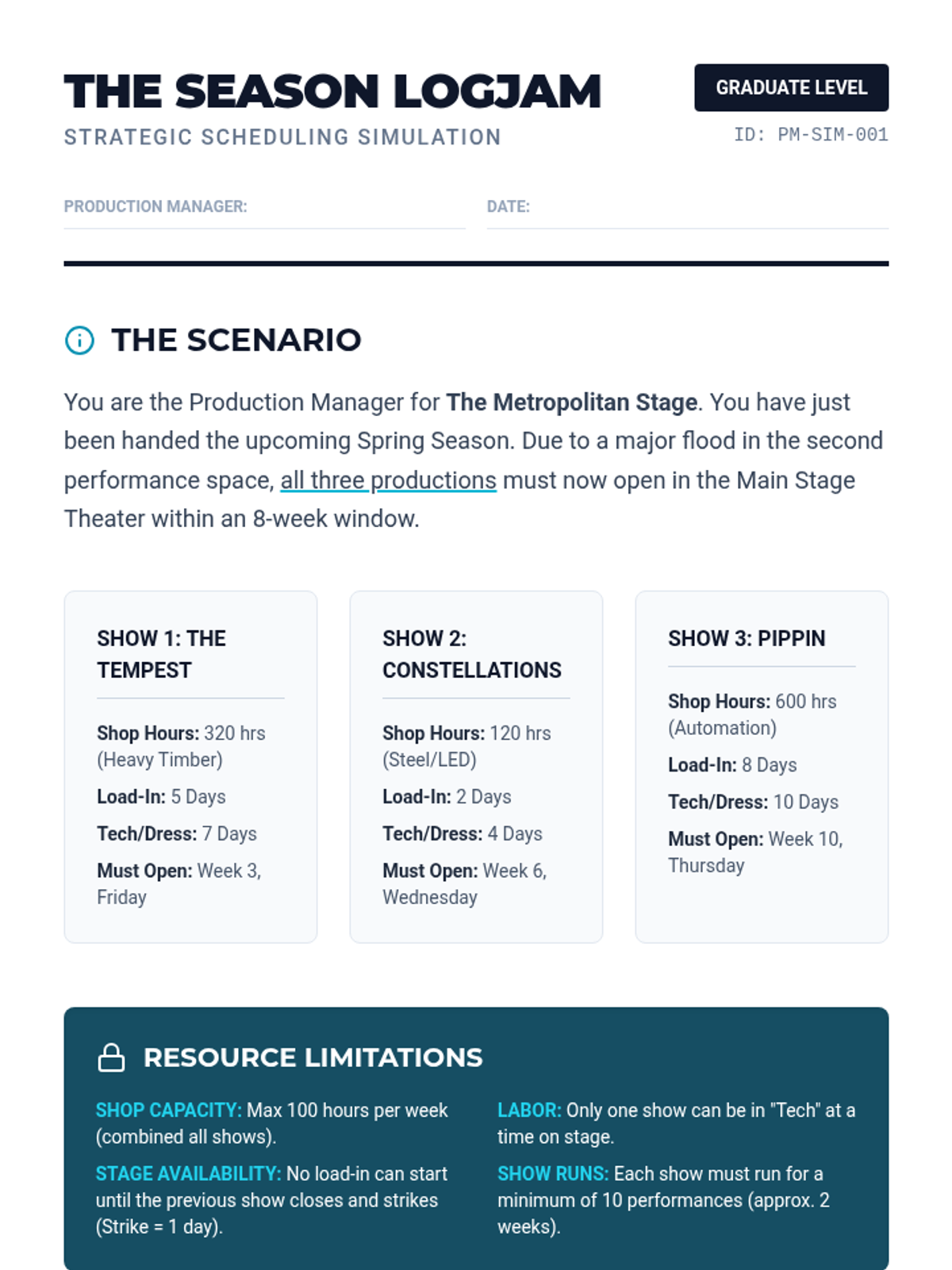
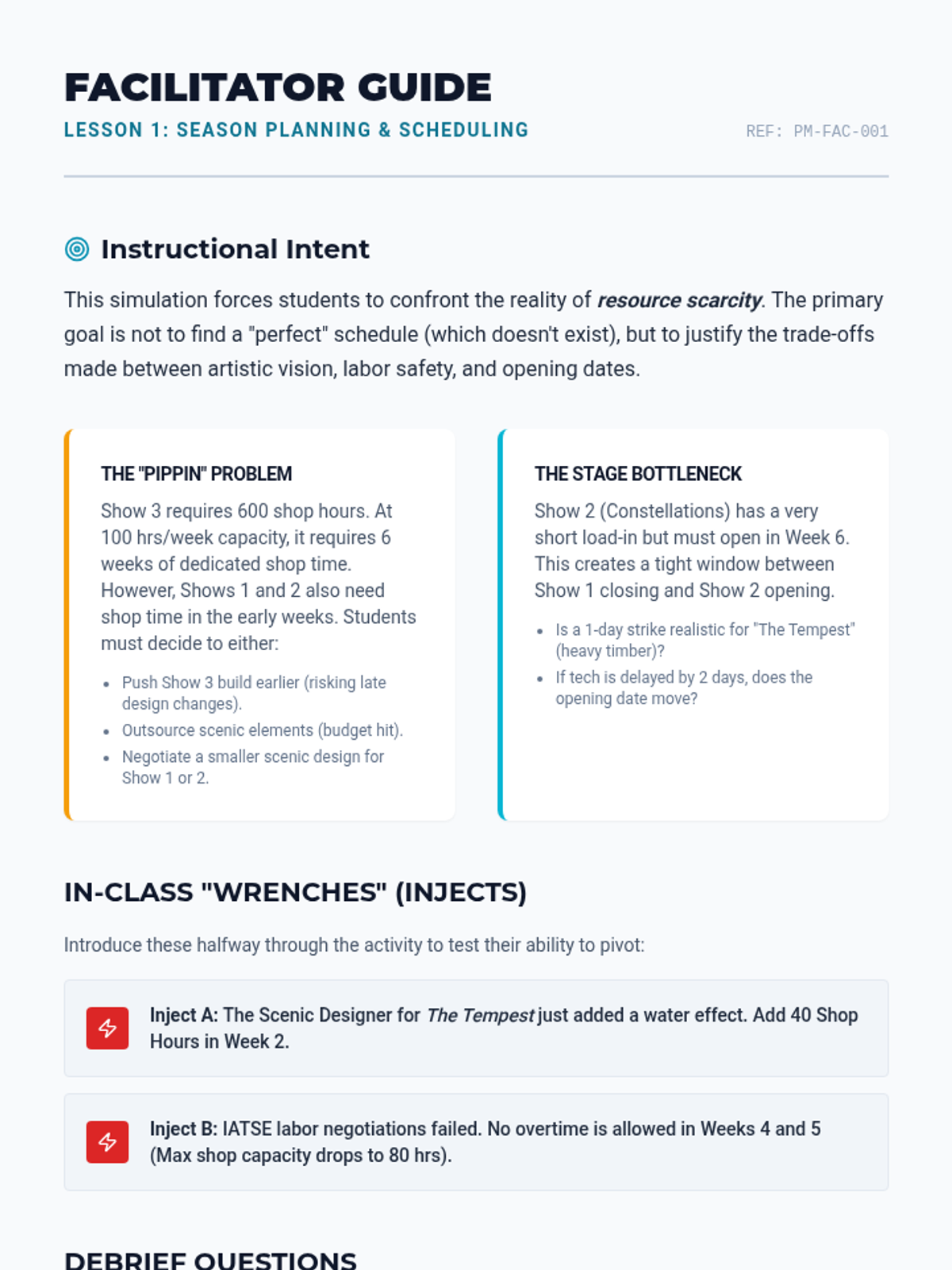
A graduate-level exploration of the macro-level logistics of theatrical production management, focusing on strategic planning, financial oversight, human resources, and facility management to balance artistic vision with finite resources.
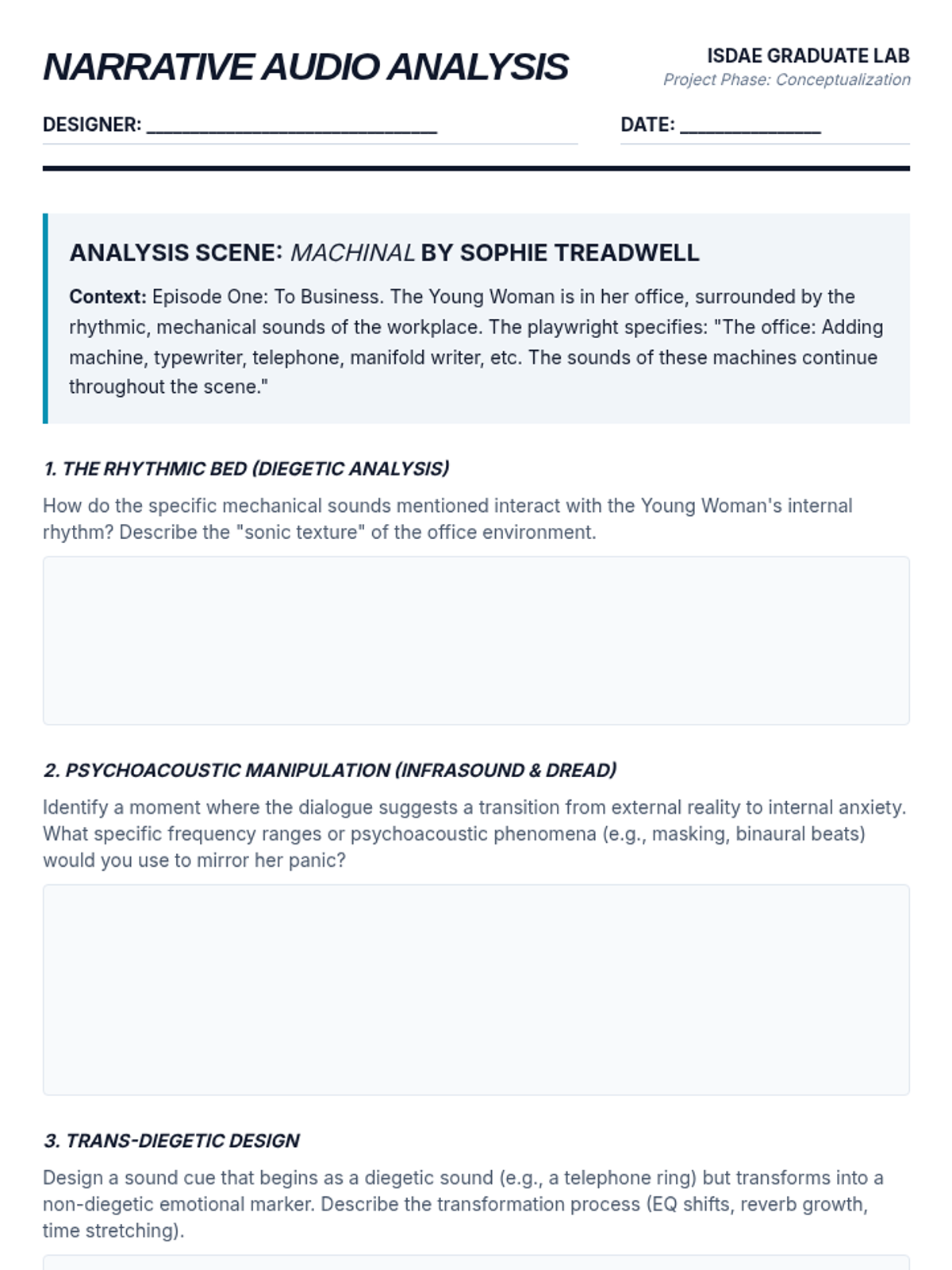
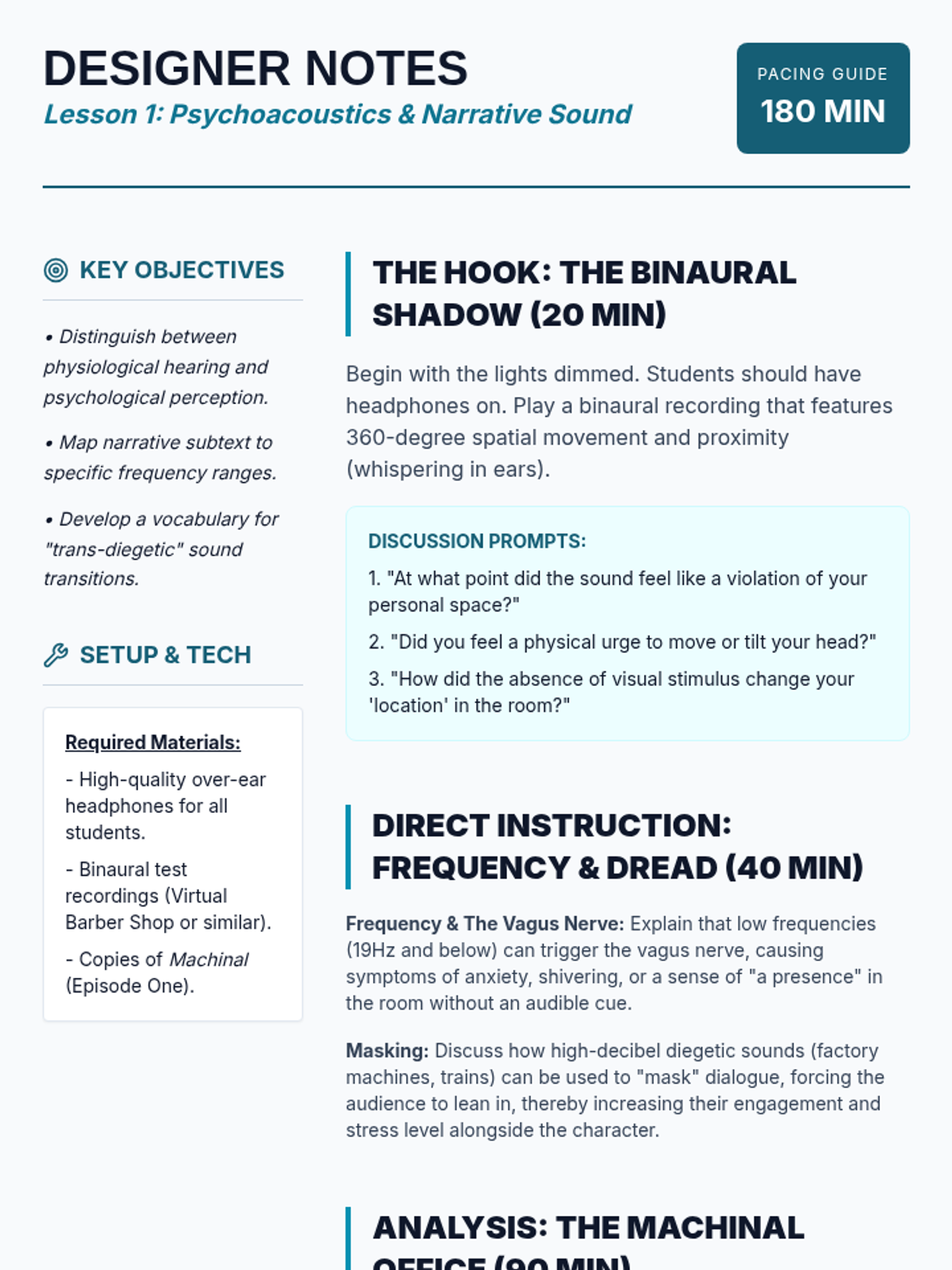
A graduate-level exploration of sound design as a primary narrative tool, covering psychoacoustics, technical system engineering, advanced show control with QLab, spatial audio mixing, and live reinforcement for musical theater.
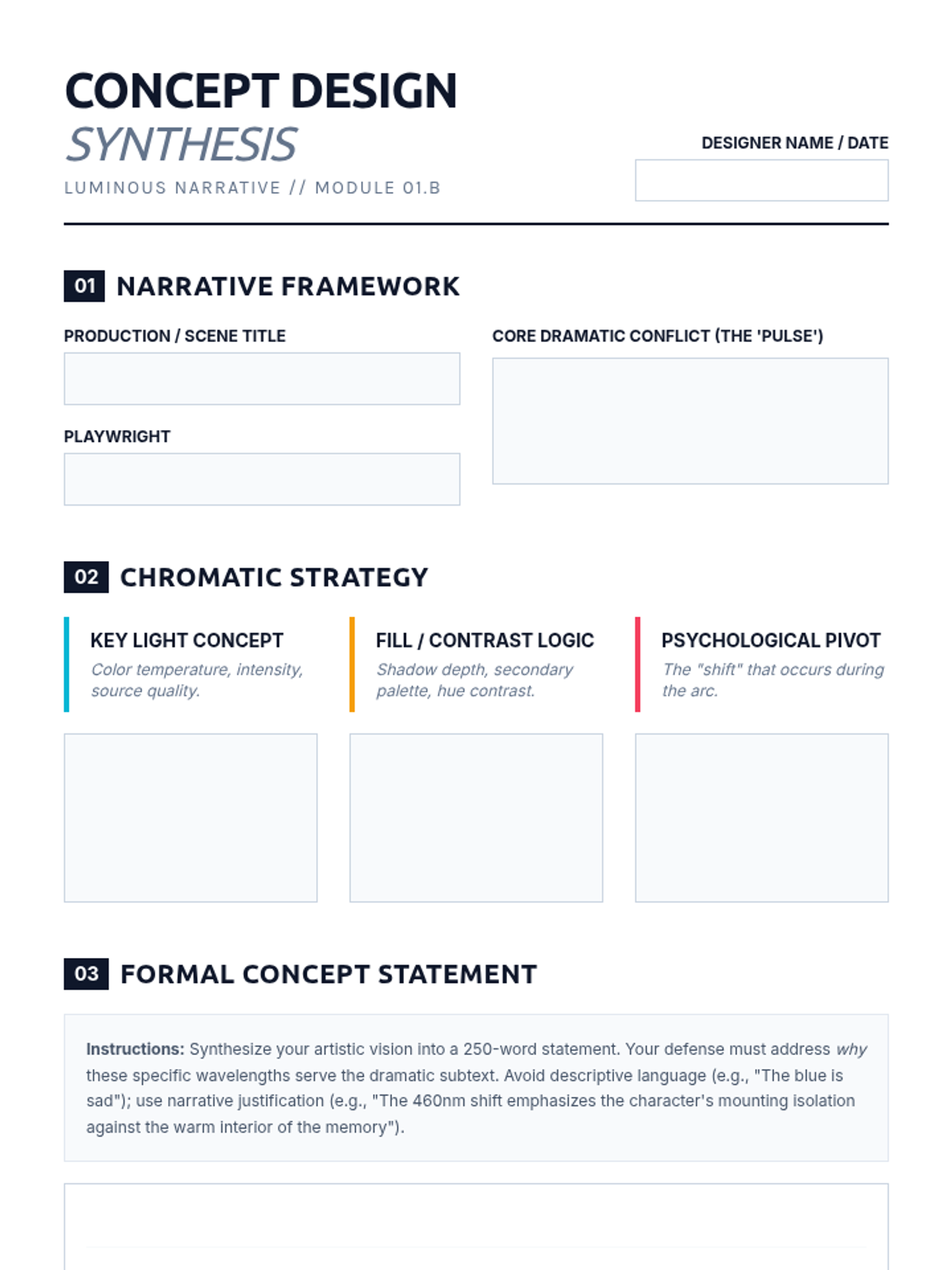
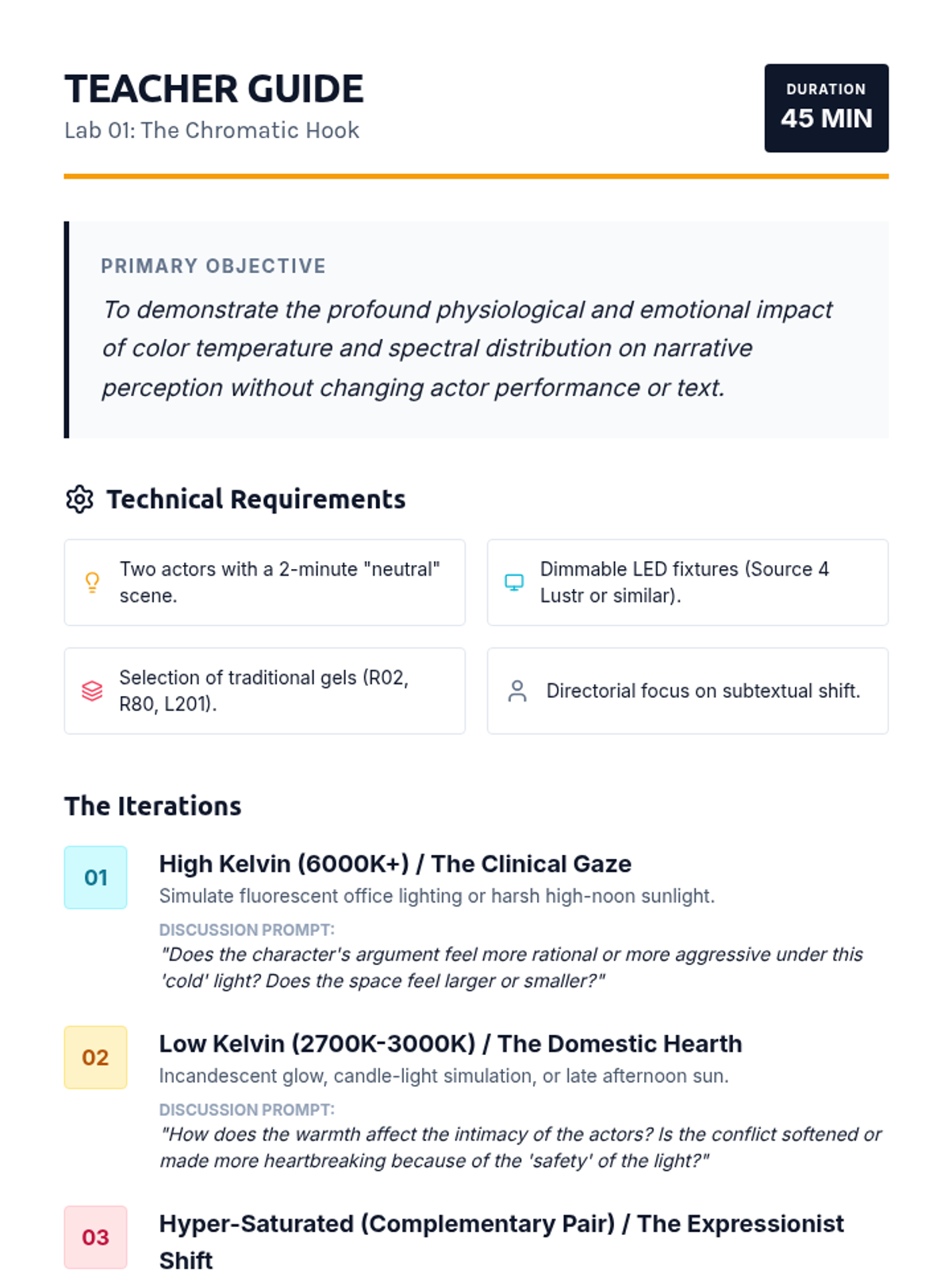
A graduate-level sequence exploring lighting design through color theory, photometrics, intelligent systems, and narrative cueing. Students synthesize technical mastery with artistic justification to create immersive visual environments.
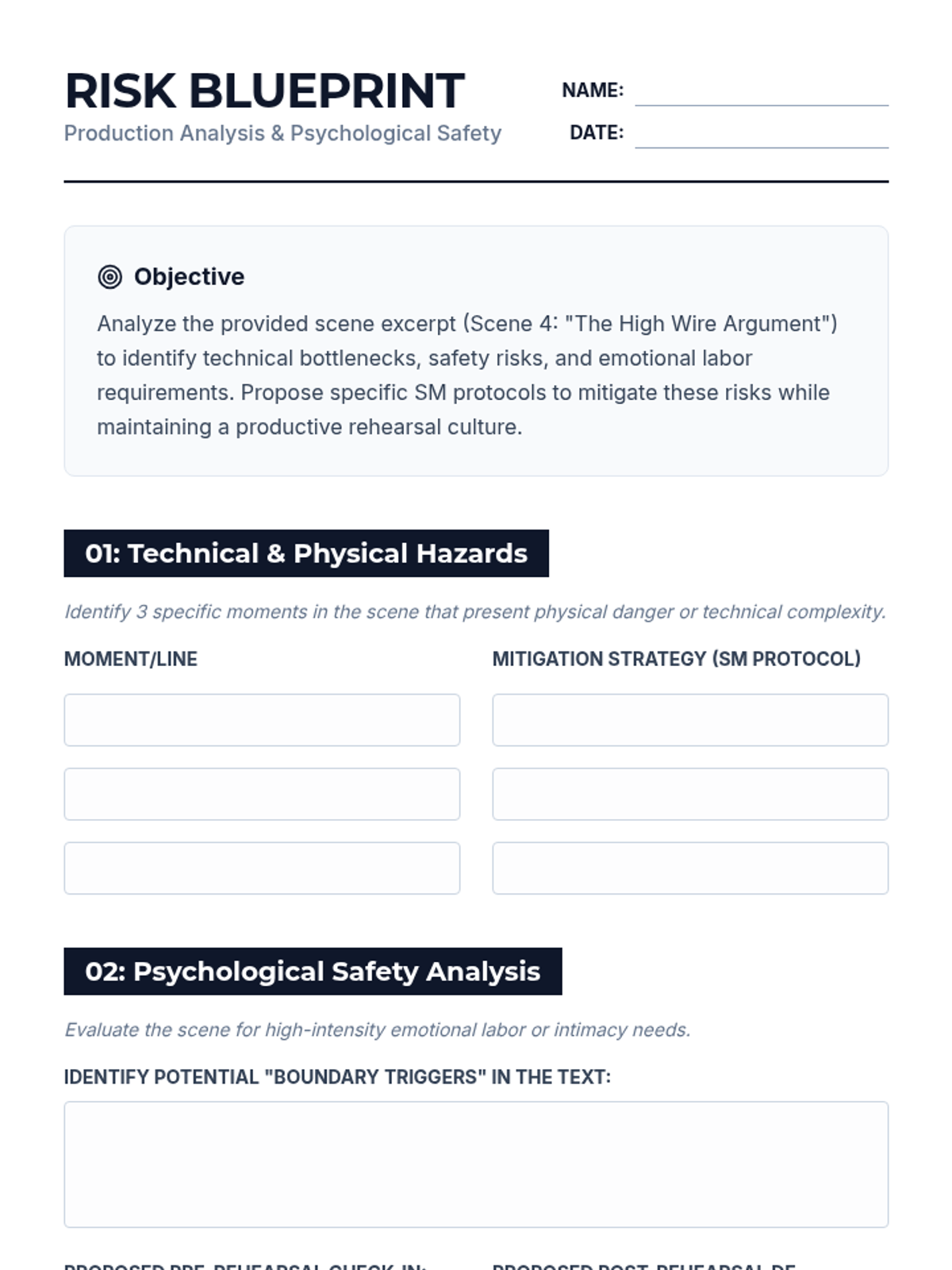
An advanced course for graduate students focusing on the intersection of leadership, psychology, and complex logistics in professional theater production. Students master the art of stage management from script analysis to long-run performance maintenance.
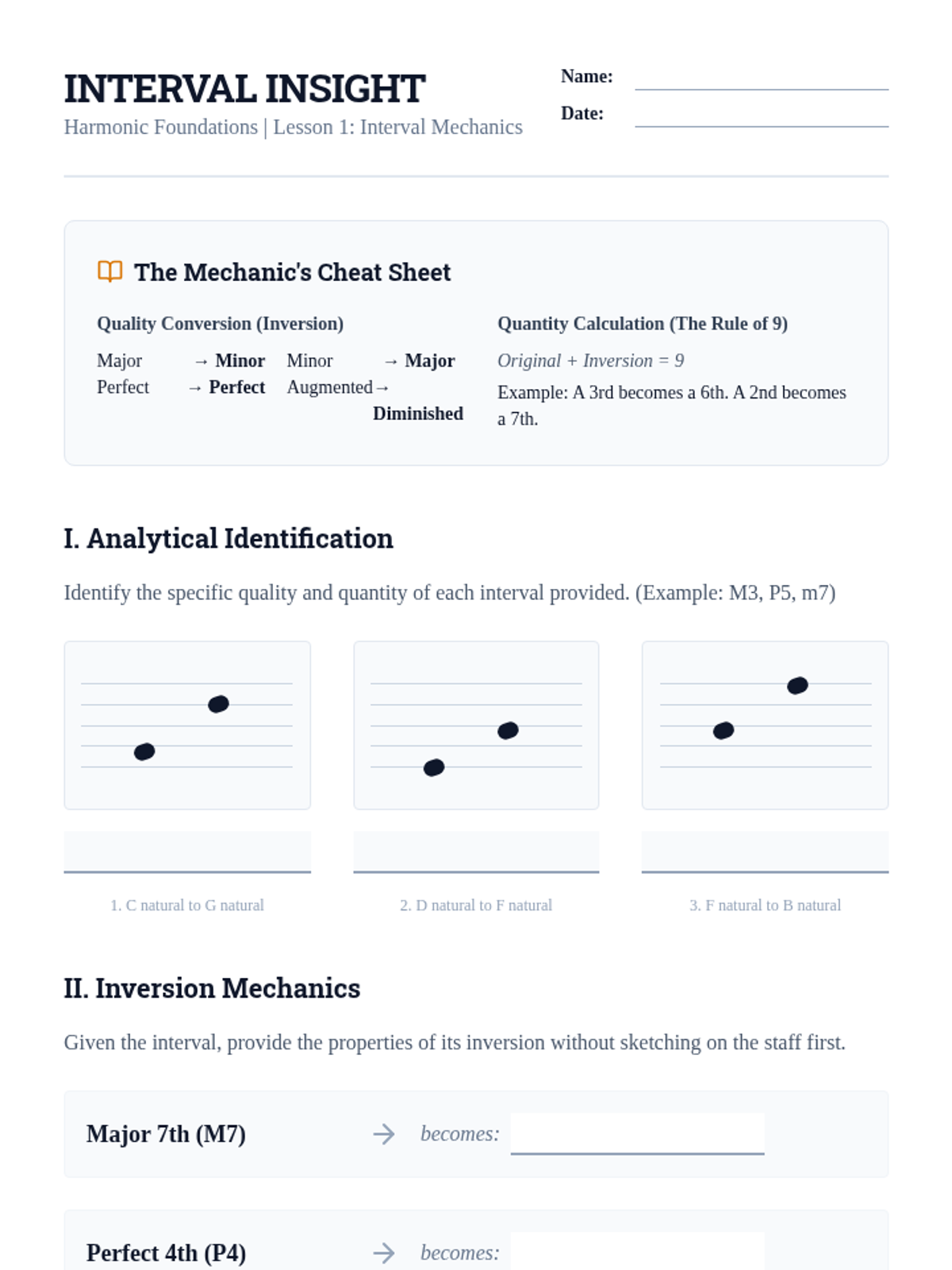
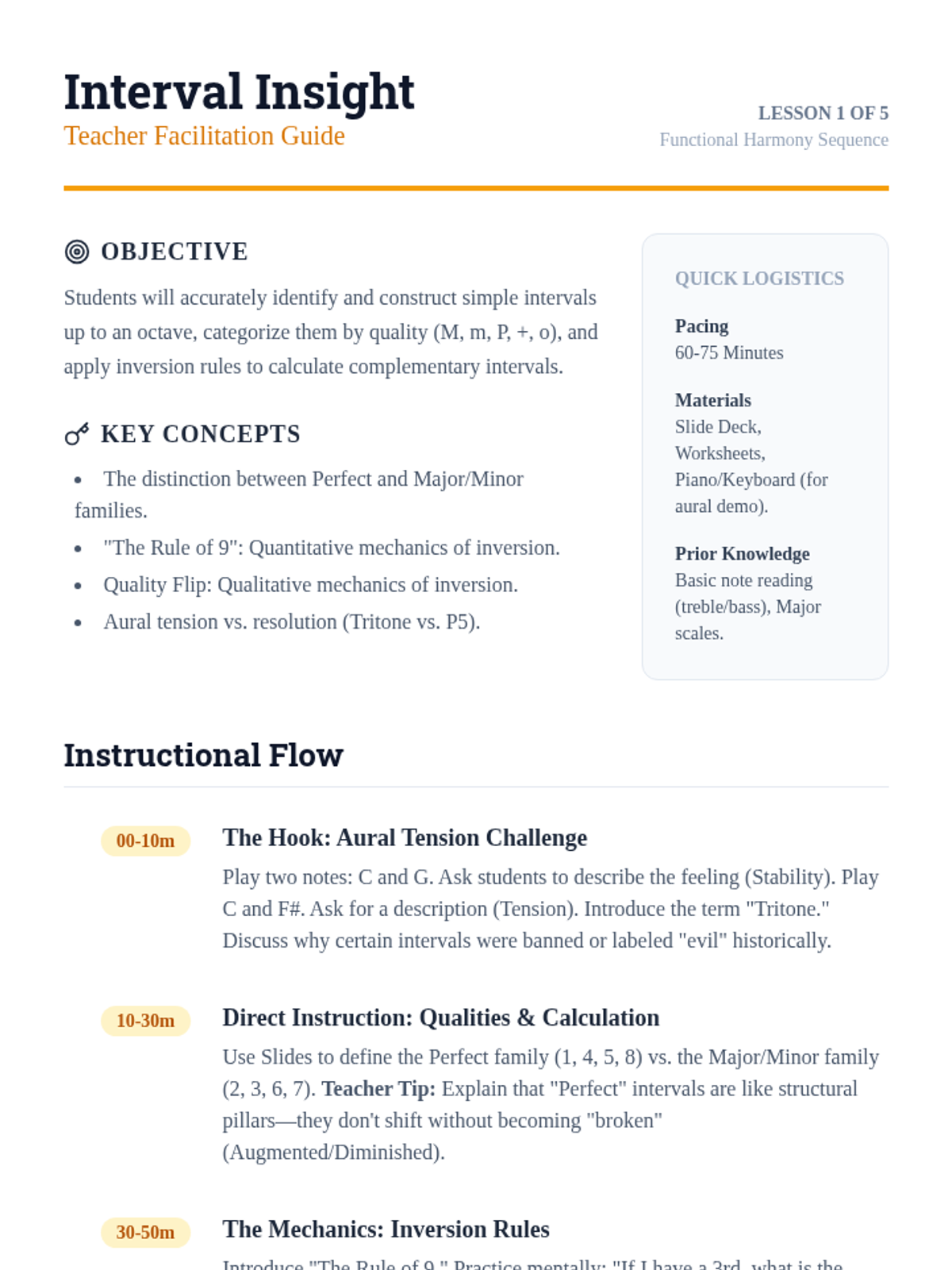
A rigorous sequence on music theory, covering intervals, triads, seventh chords, Roman numeral analysis, and four-part voice leading for 12th-grade students.
A rigorous undergraduate music theory sequence covering the construction and analysis of scales, intervals, and triads, concluding with a synthesis of these elements in score analysis.
This graduate-level sequence explores strategic communication for arts advocacy, focusing on cognitive framing, digital mobilization, crisis management, and media relations. Students develop a comprehensive campaign plan to influence public opinion and policy.
A graduate-level sequence exploring how arts leaders can build powerful, equitable cross-sector coalitions to sustain cultural ecosystems. Students move from systems mapping to governance design and grassroots organizing, culminating in a collective impact proposal.