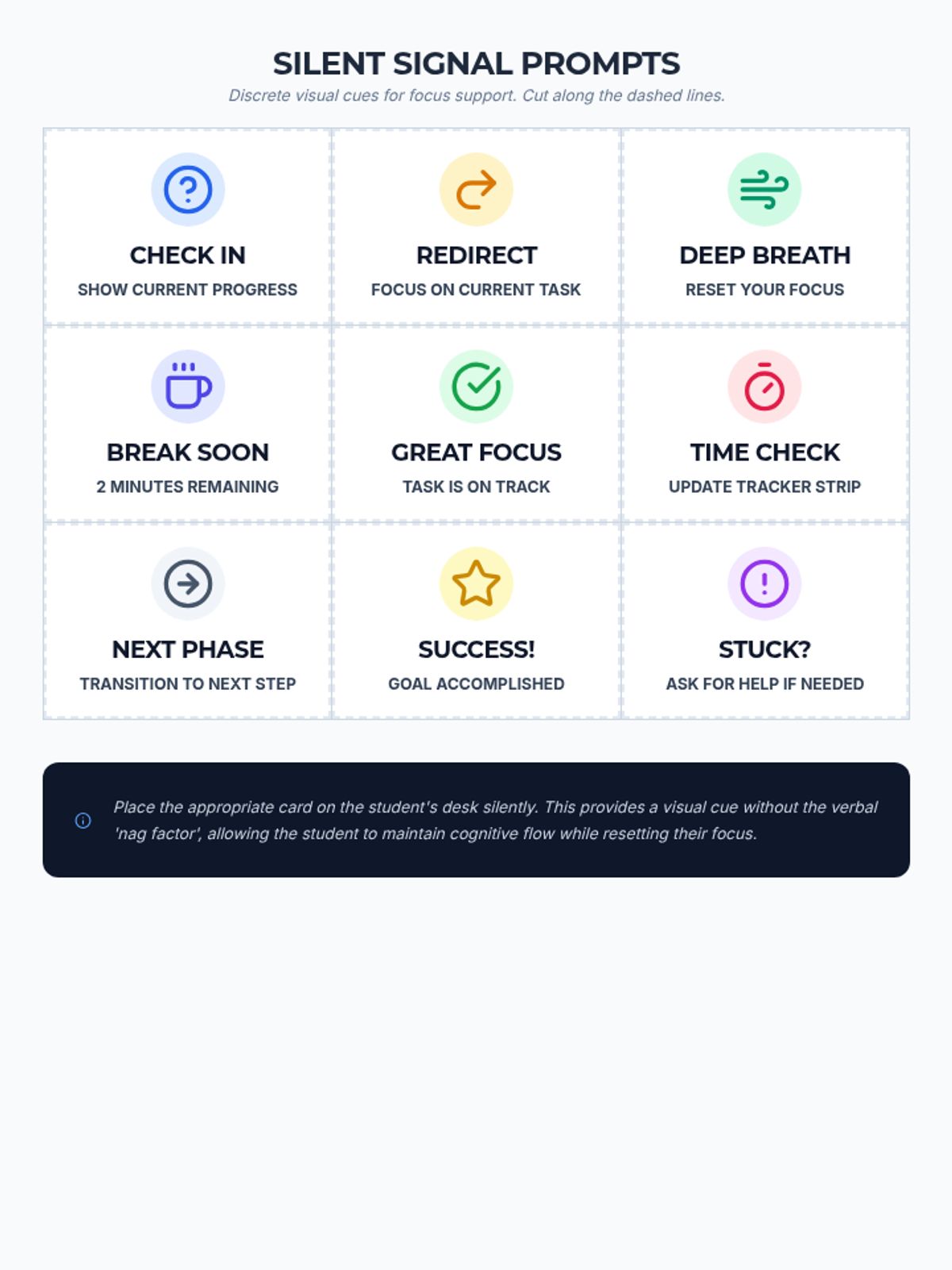
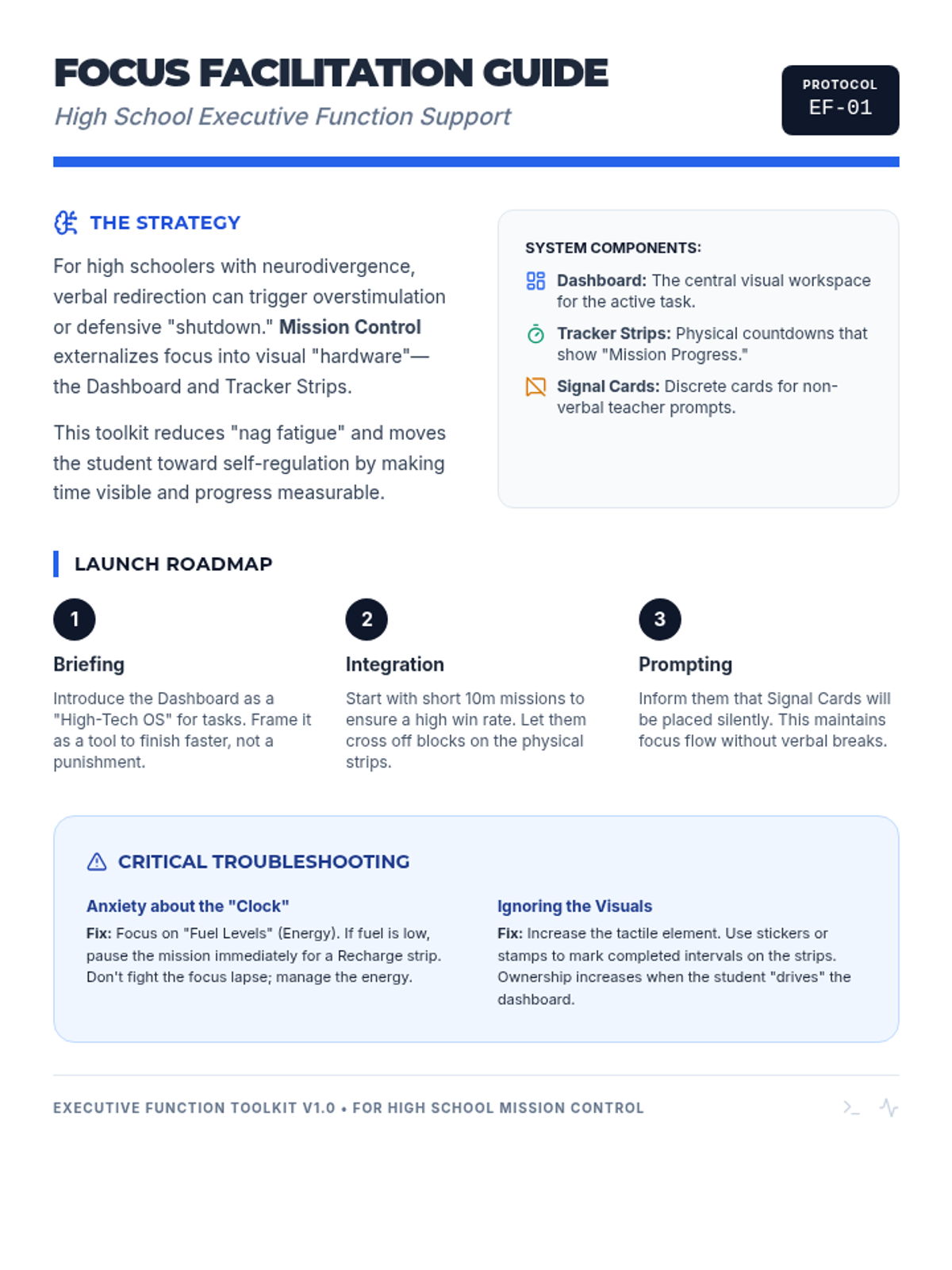
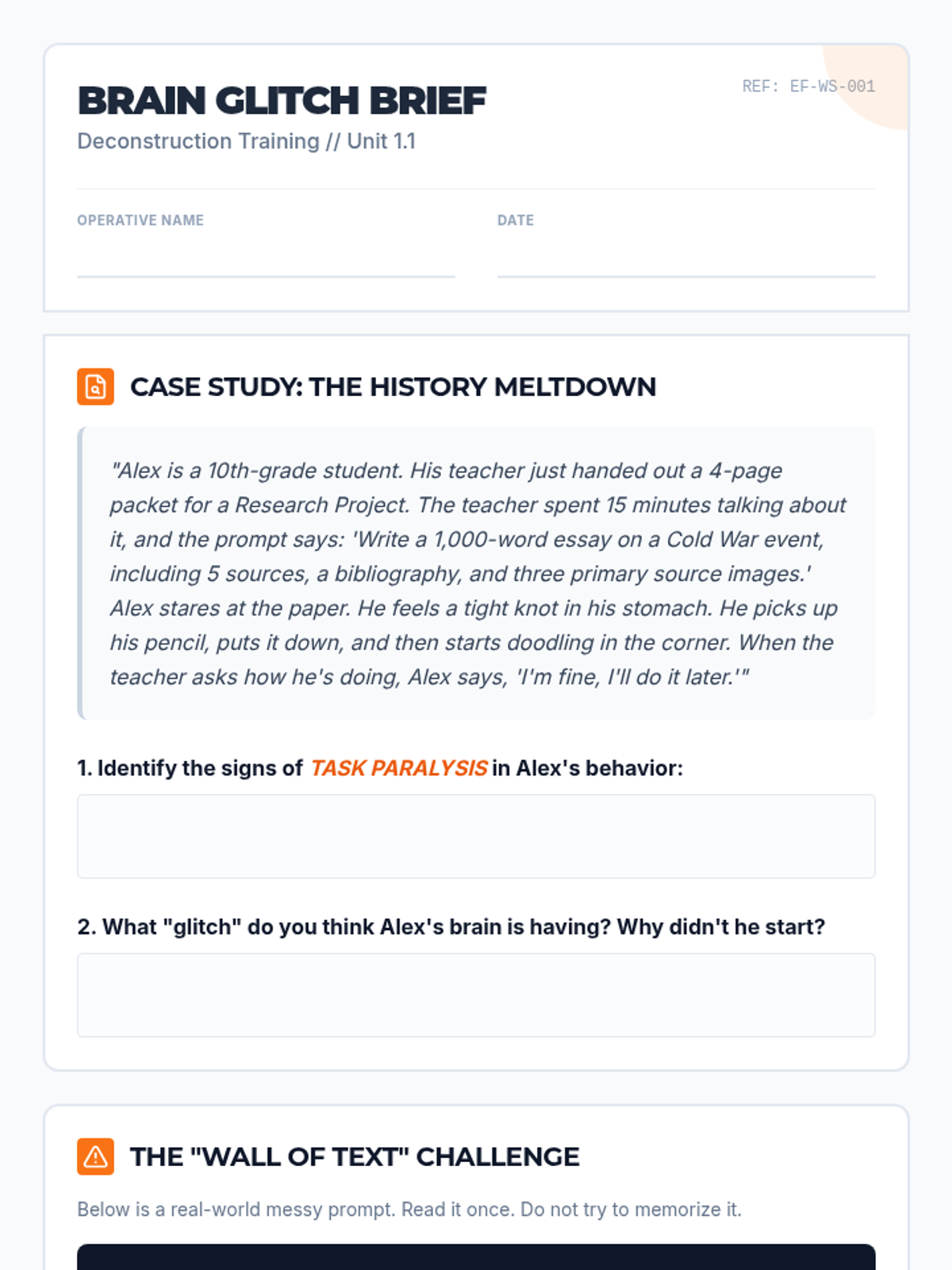
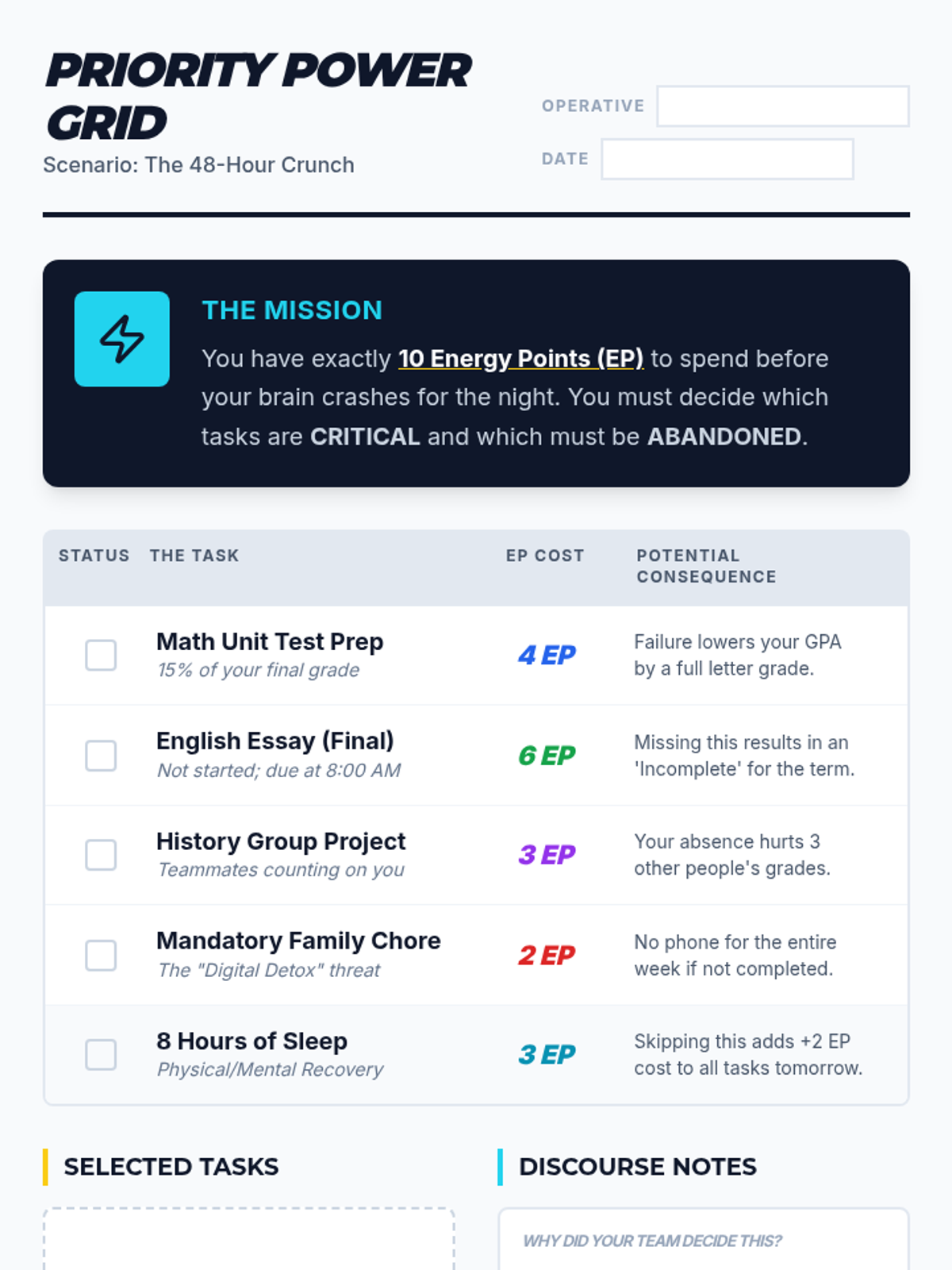
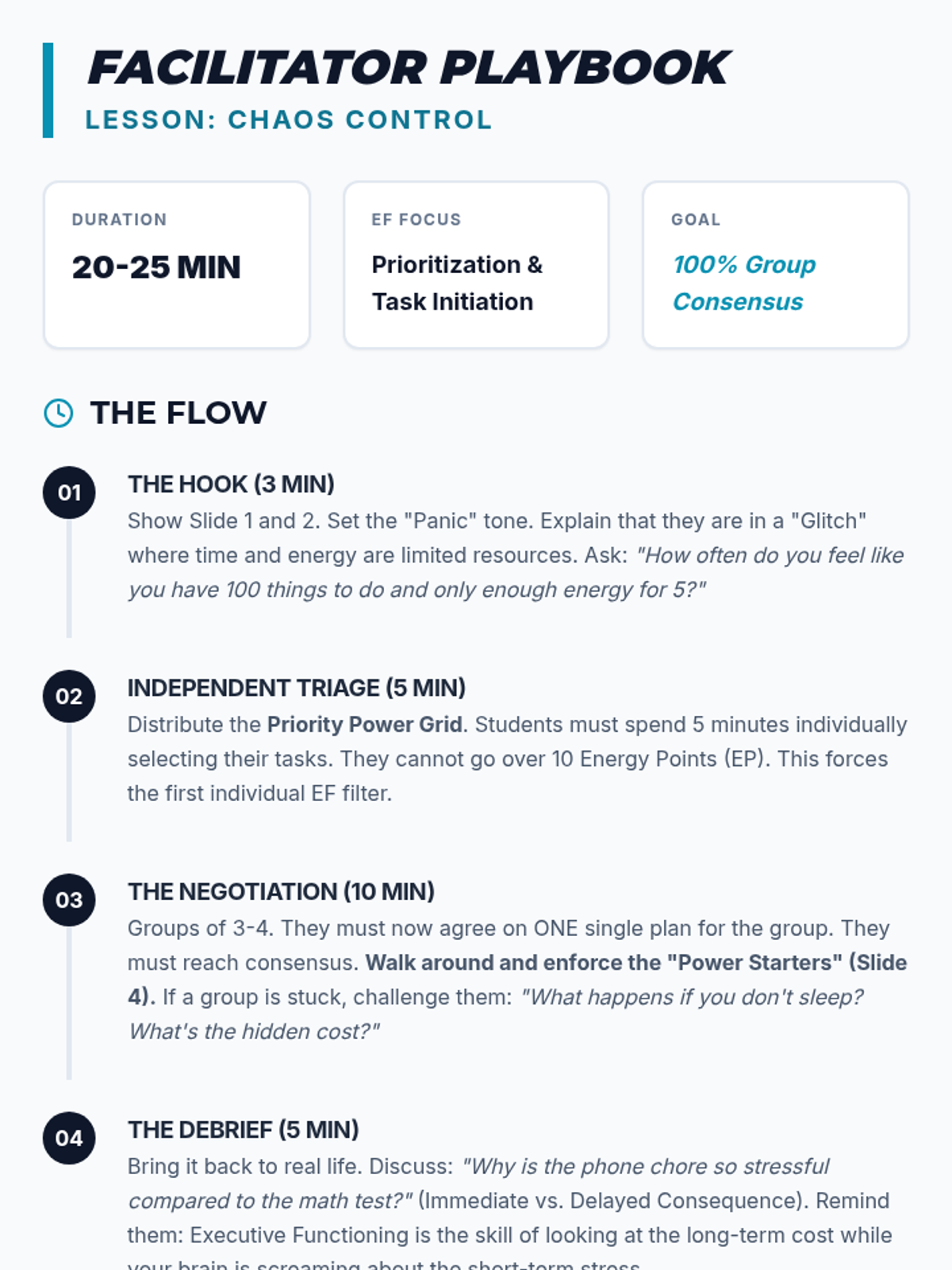
Techniques for task initiation, strategic break management, and navigating transitions through minimal prompting and self-talk strategies. Addresses multi-day project completion, adaptive planning, and problem-solving when facing obstacles.
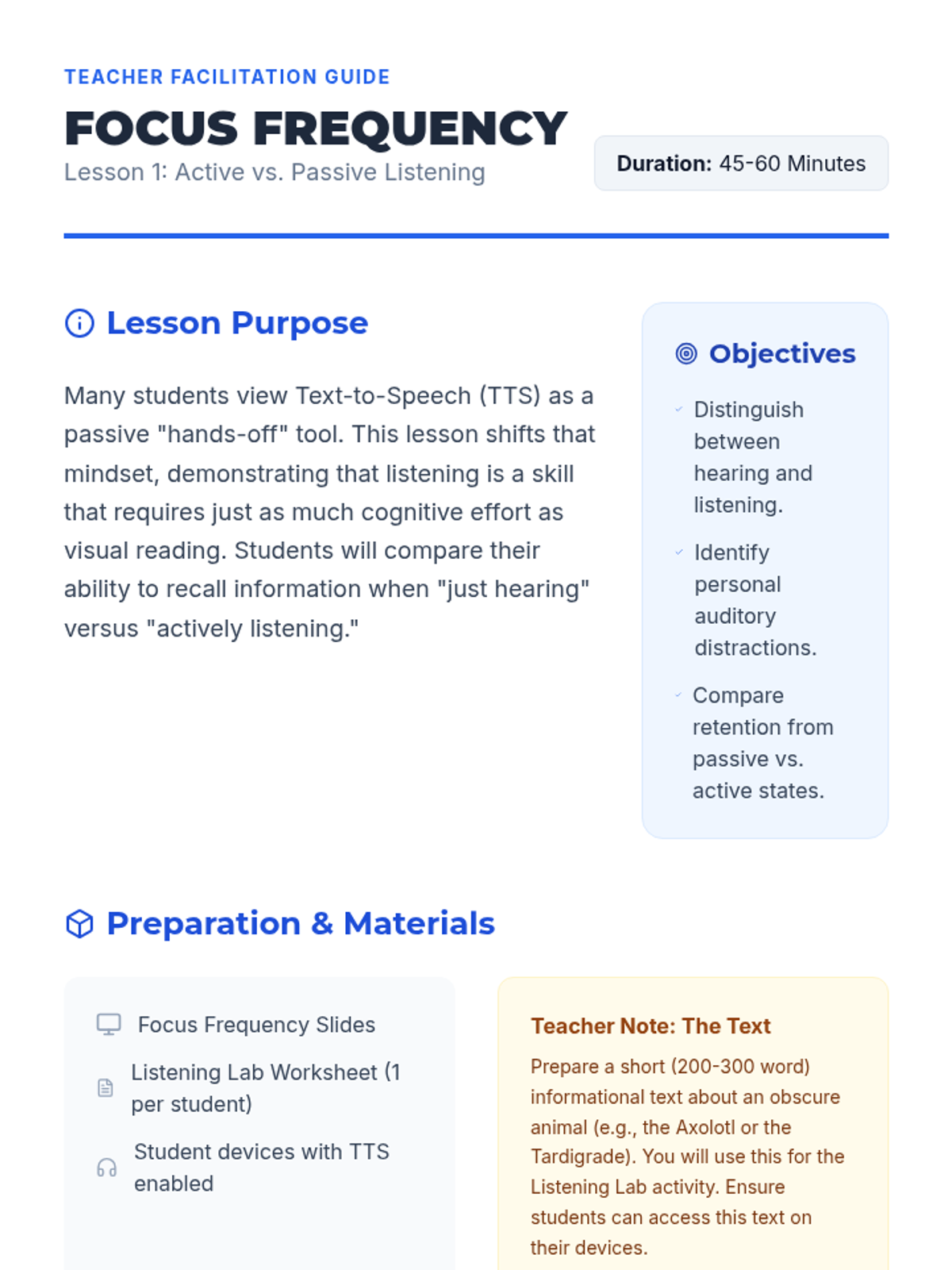
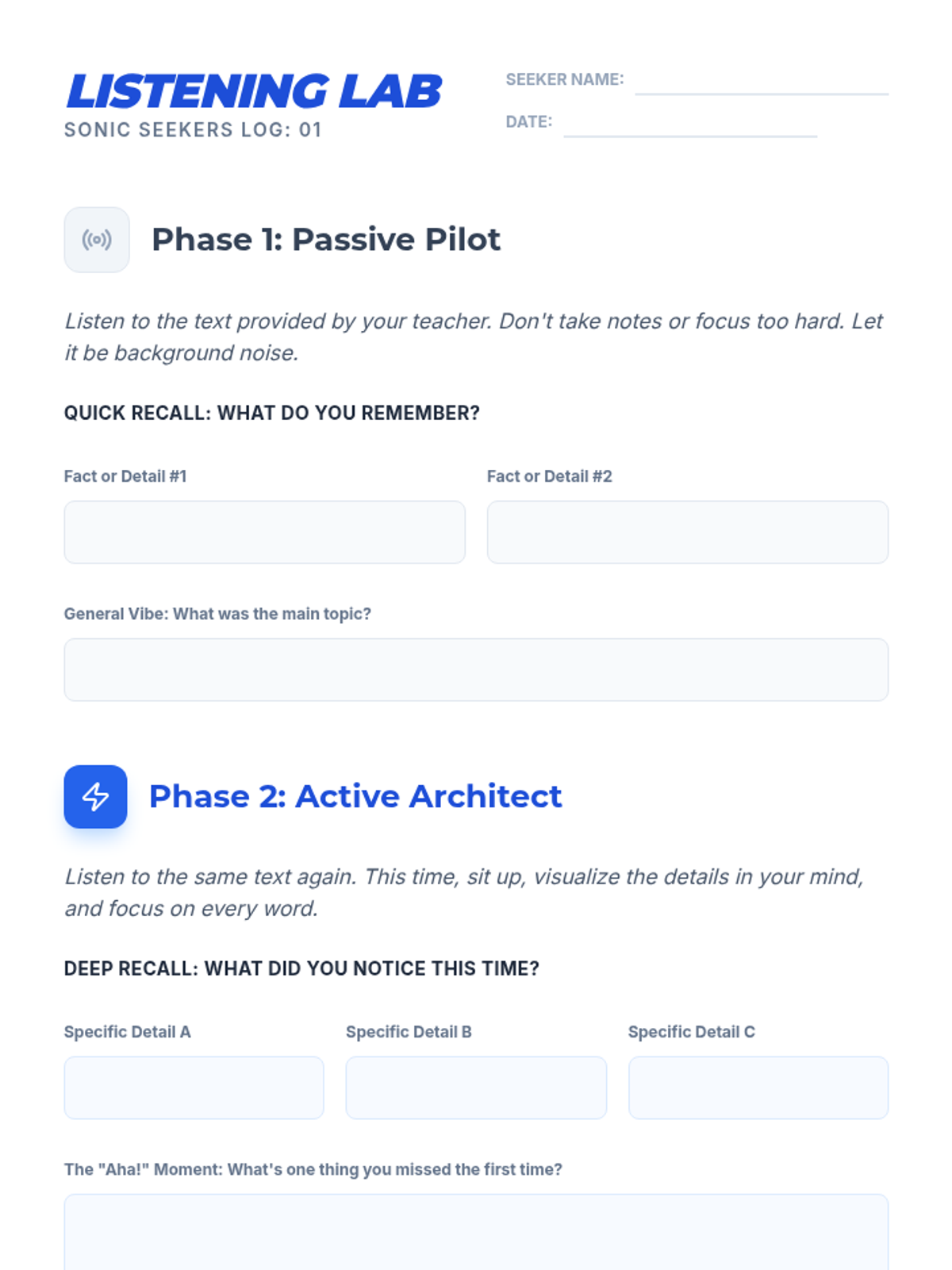
This sequence shifts the focus from assistive technology to the cognitive strategies required for auditory learning. Students engage in inquiry-based activities to distinguish between passive hearing and active listening, applying specific comprehension strategies while using text-to-speech (TTS) to access grade-level texts.
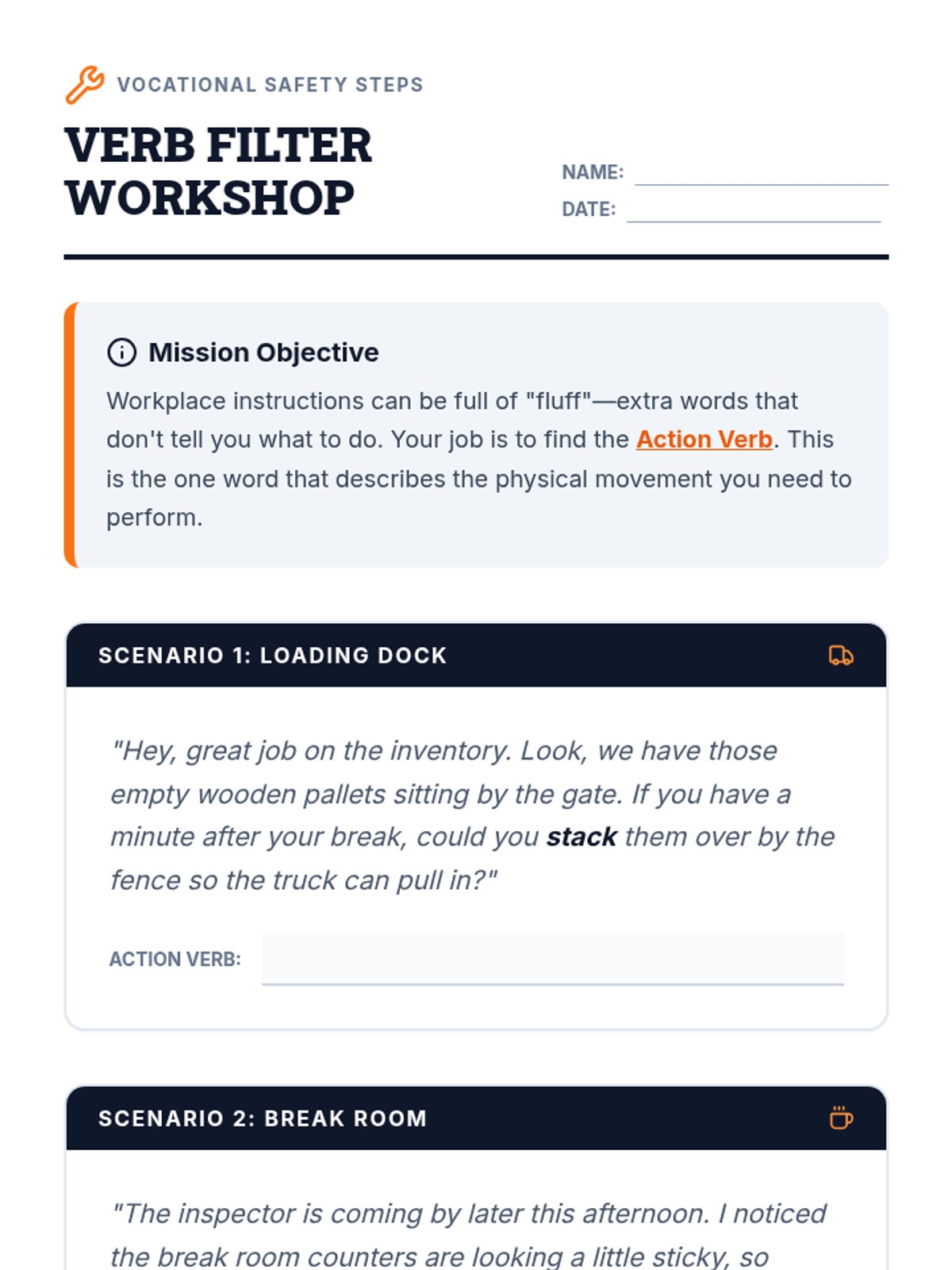
This sequence focuses on teaching 12th-grade students with working memory needs how to isolate, rehearse, and verify single-step verbal and visual instructions in a vocational setting. Through simulations and skill-building activities, students learn to filter extraneous information and prioritize safety and accuracy over speed.
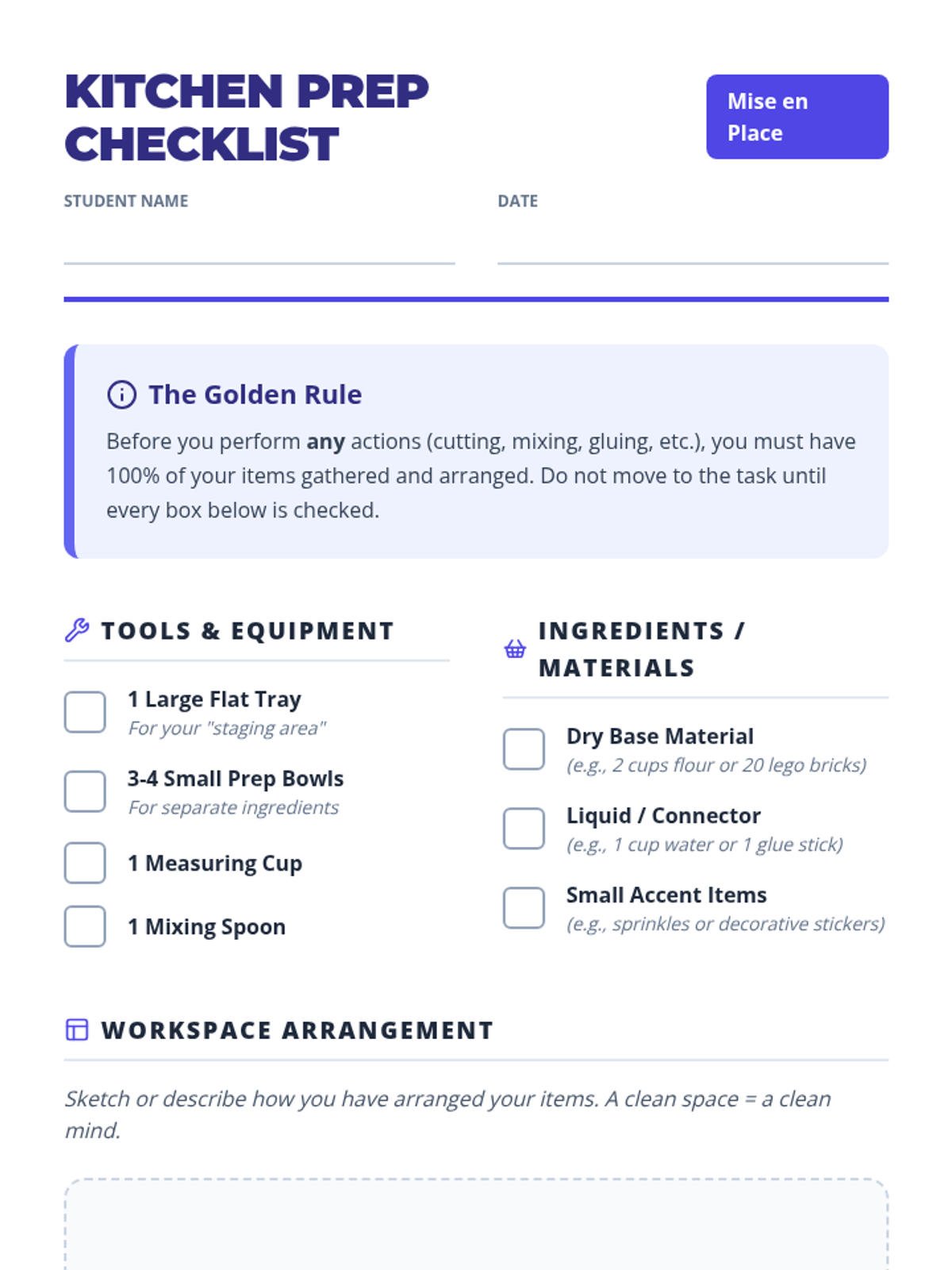
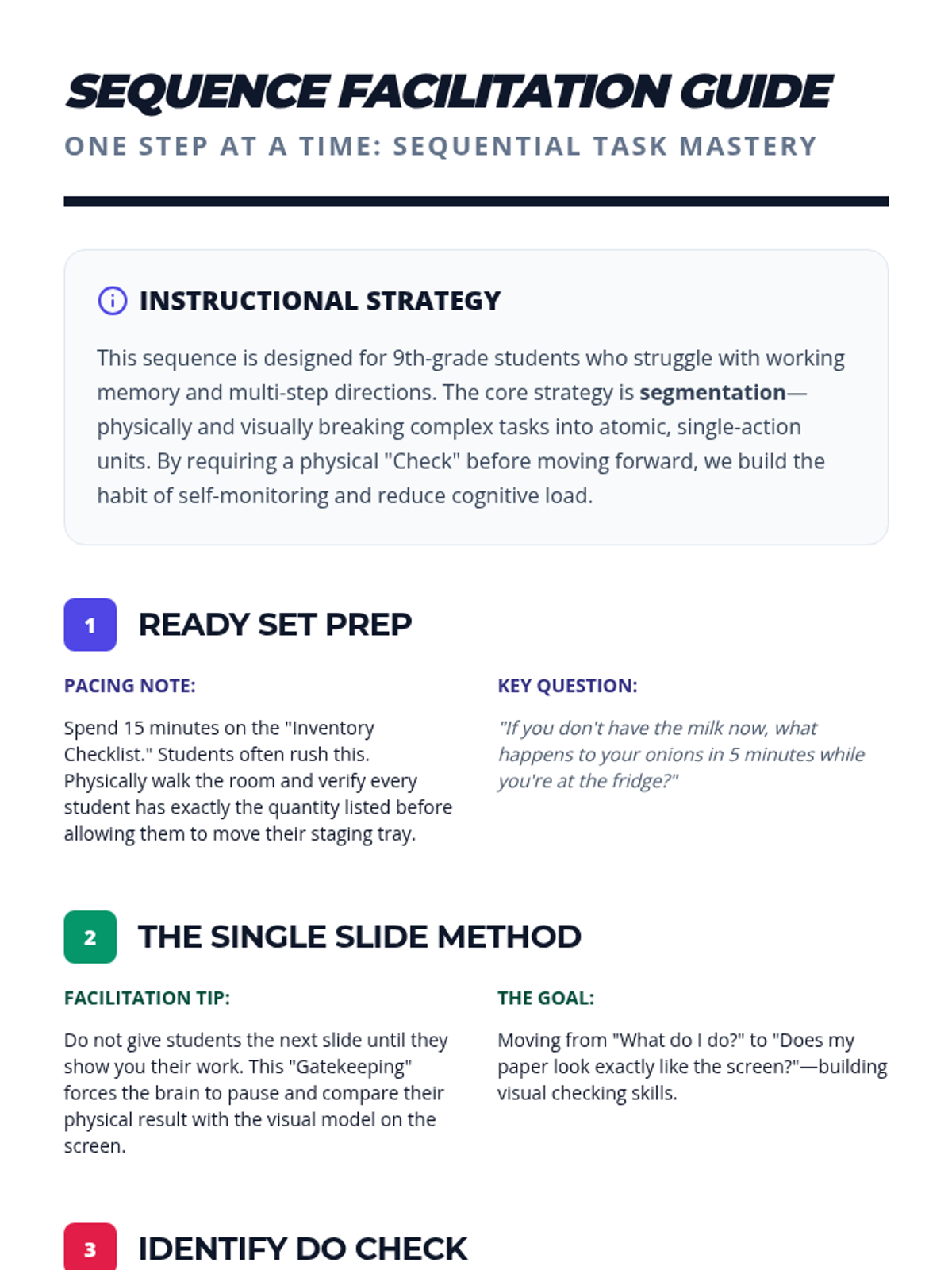
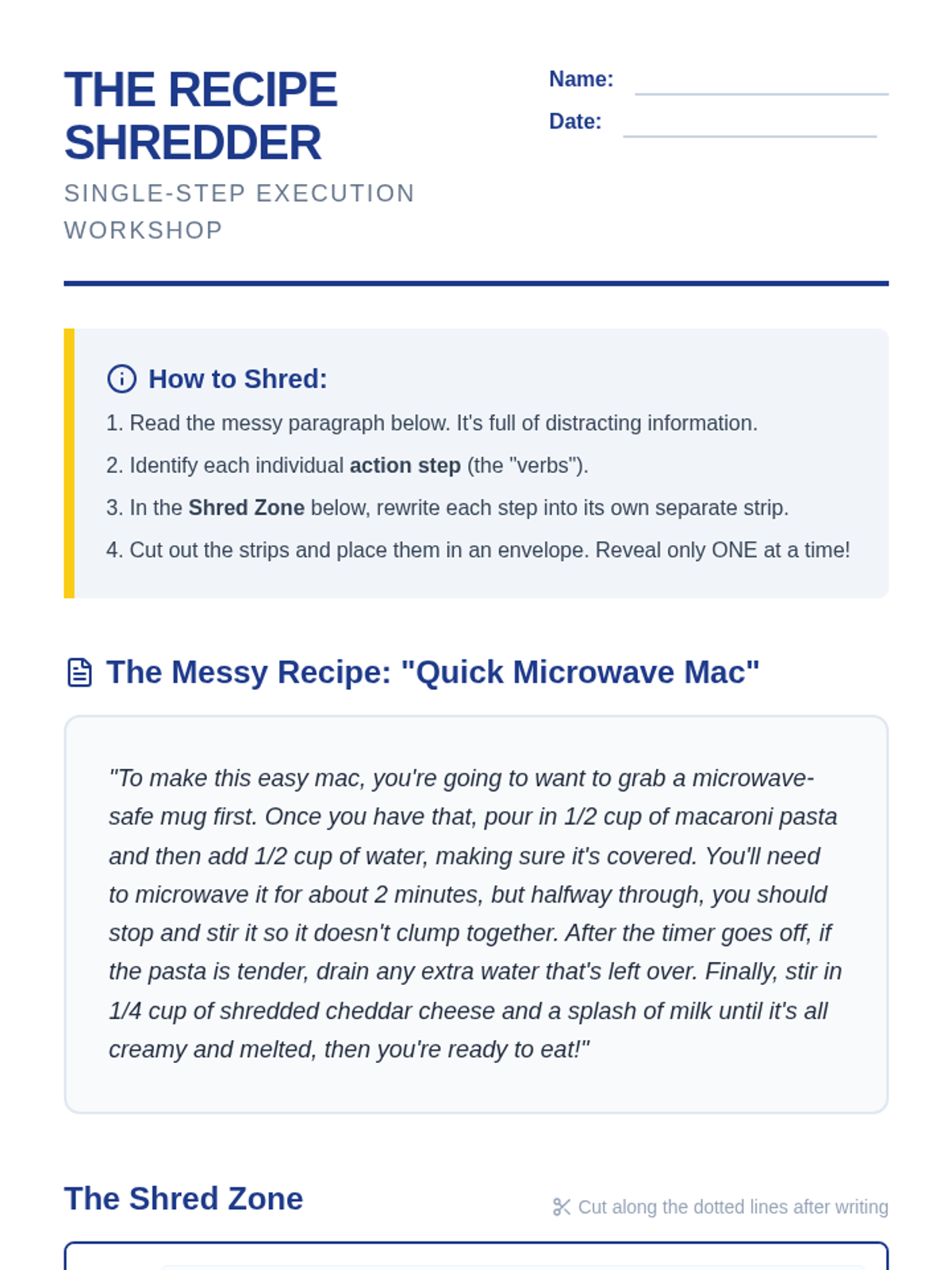
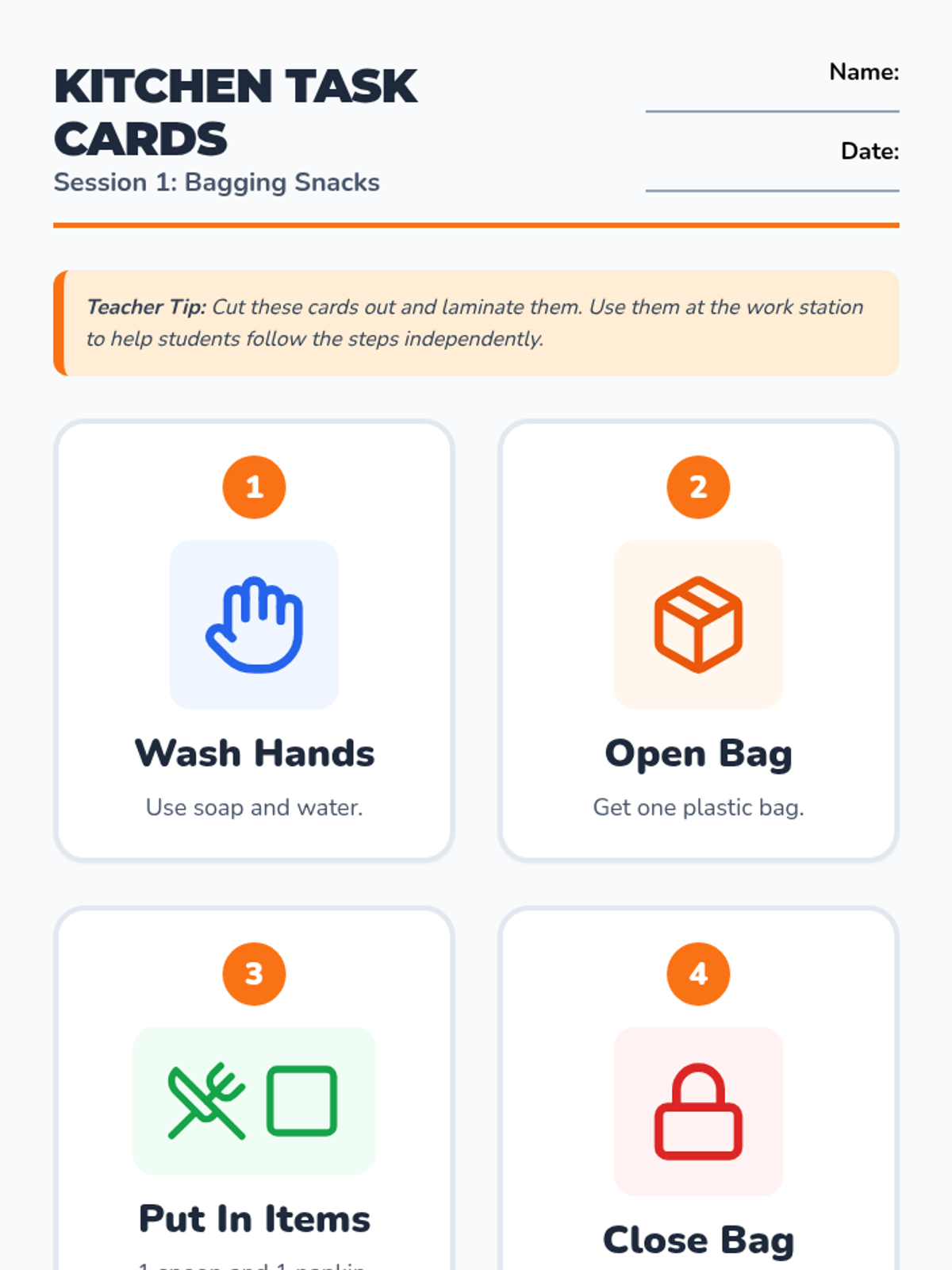
A 5-lesson sequence for 9th-grade students focusing on working memory through sequential task completion. Students learn to manage complex tasks by breaking them into single, manageable steps using culinary and assembly-based projects.
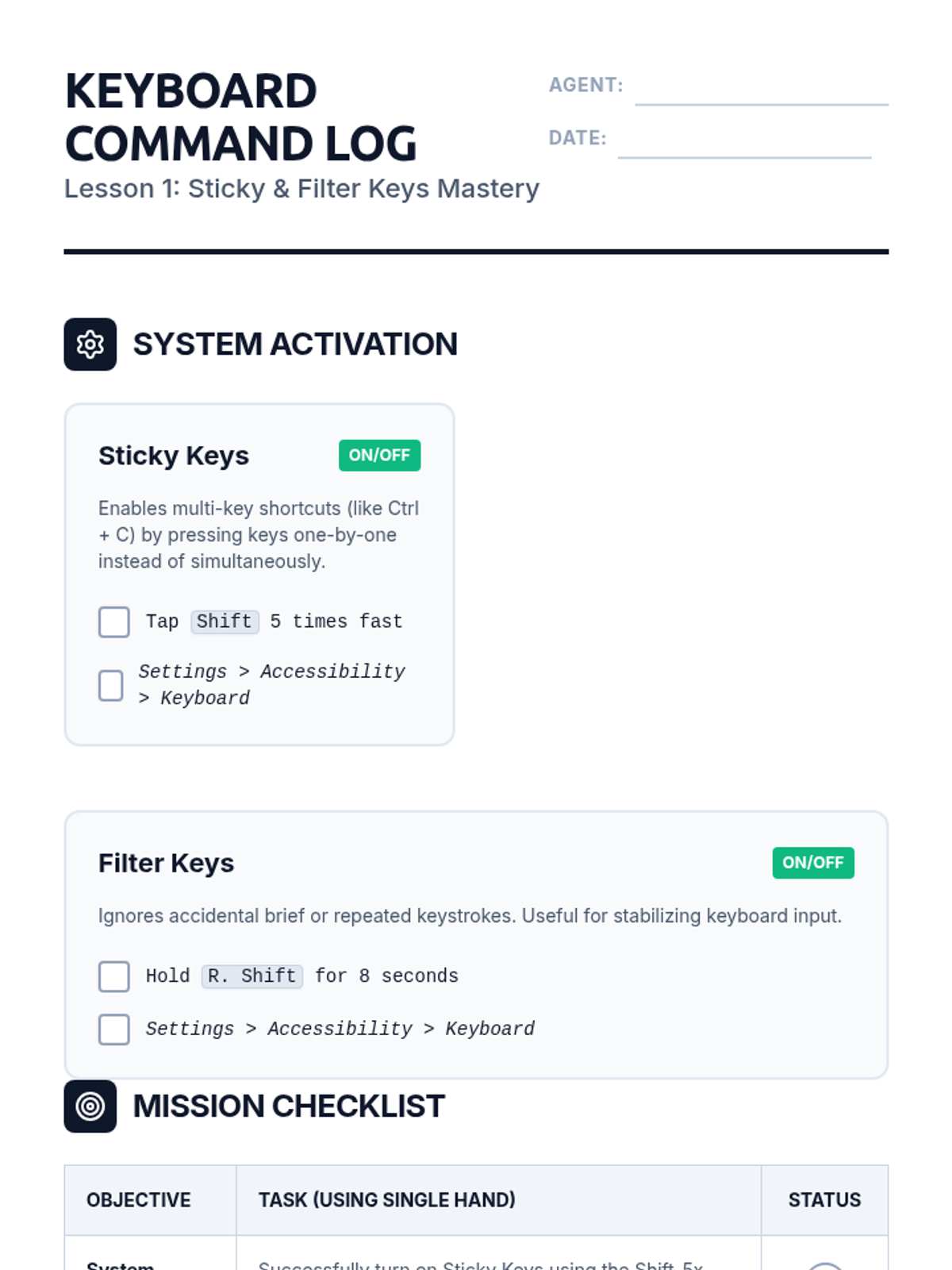
An advanced 8th-grade sequence focusing on assistive technology, specifically keyboard accessibility features, shortcut customization, troubleshooting, and mouse-free workflow mastery. Students progress from basic accessibility settings to full independent digital navigation without a mouse.
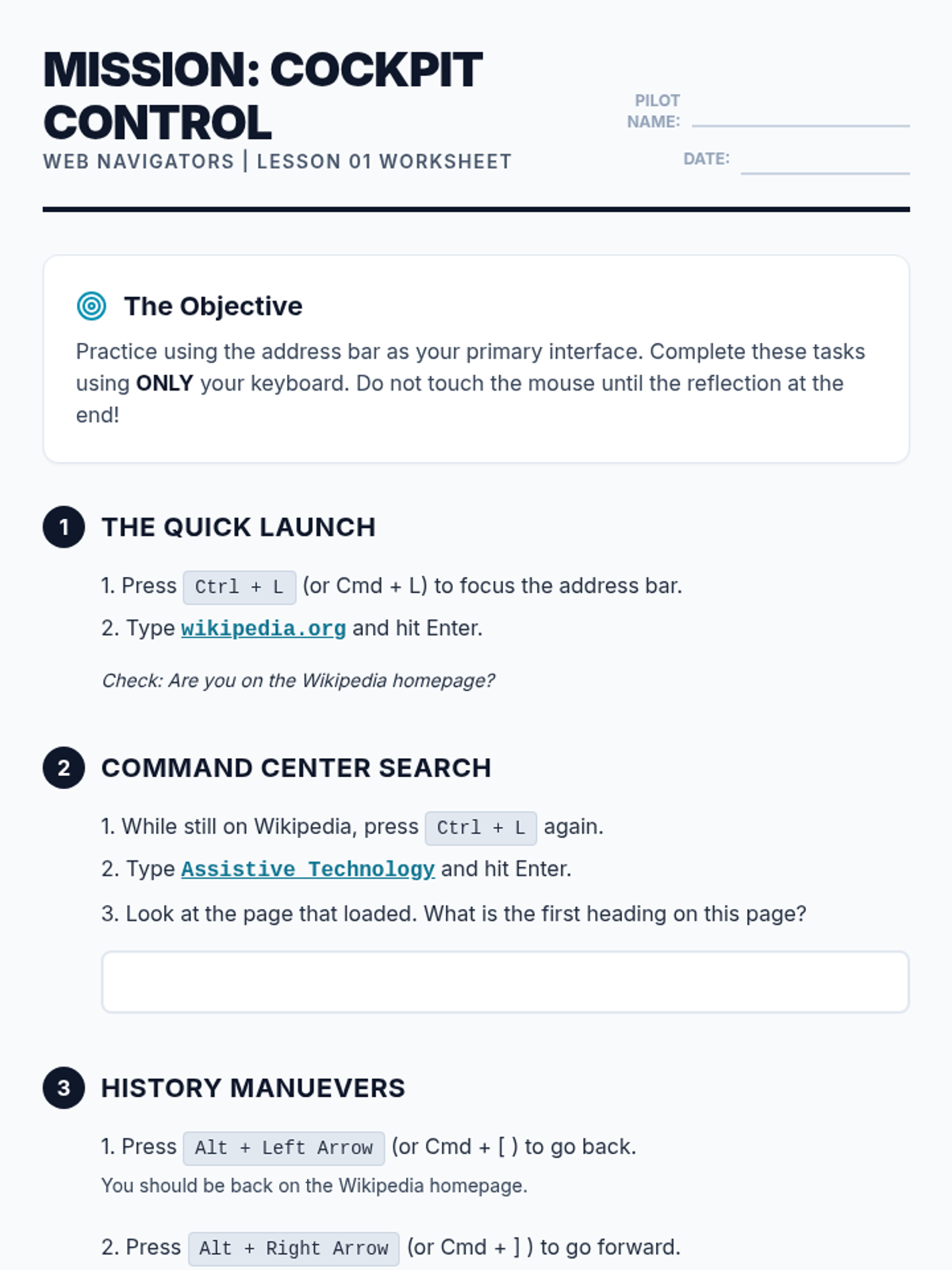
A comprehensive sequence for 12th-grade students on mastering web browser navigation using keyboard shortcuts. This unit covers address bar manipulation, tab management, link navigation, form interaction, and integrated research workflows to build independence and efficiency in digital environments.
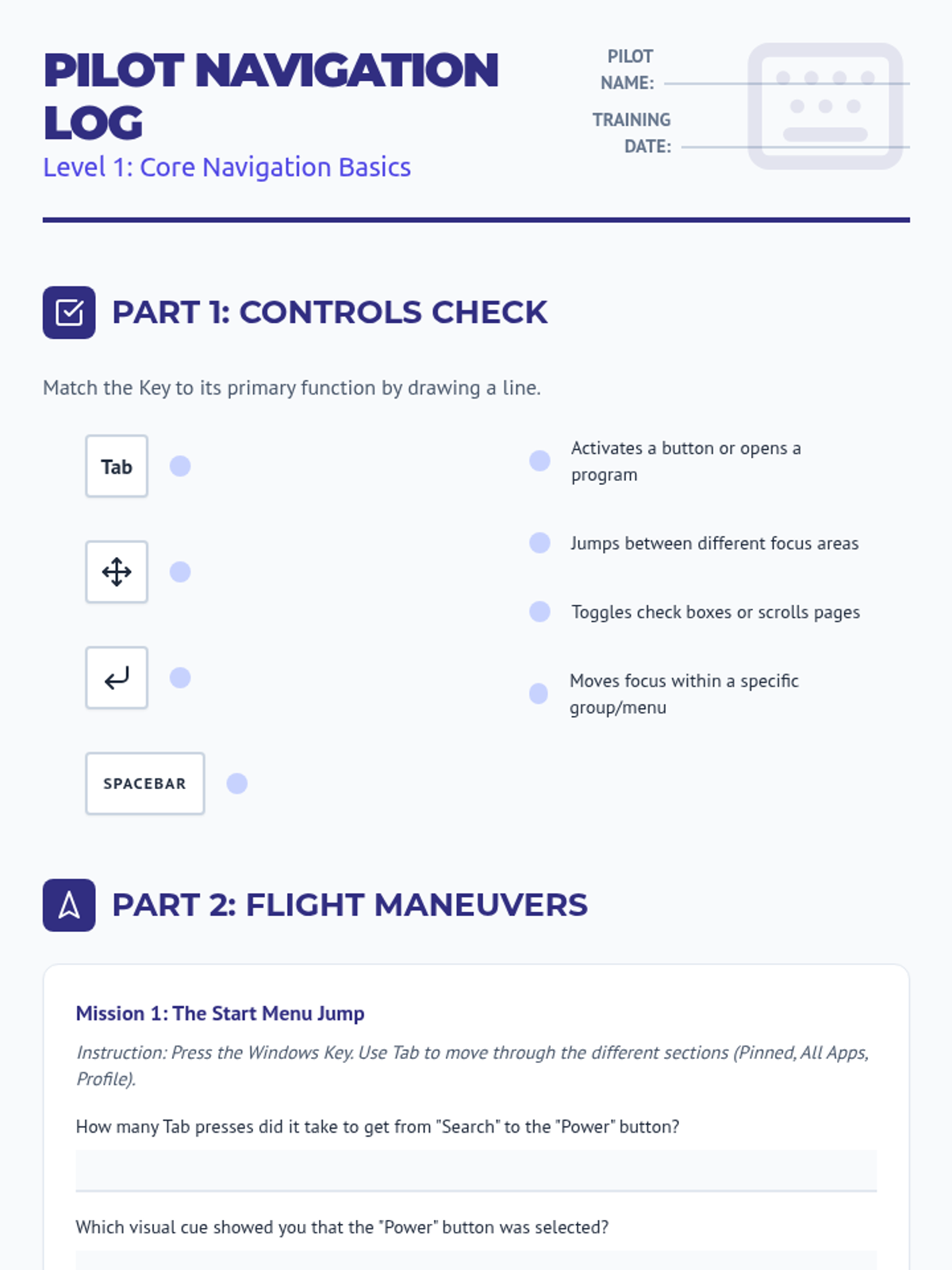
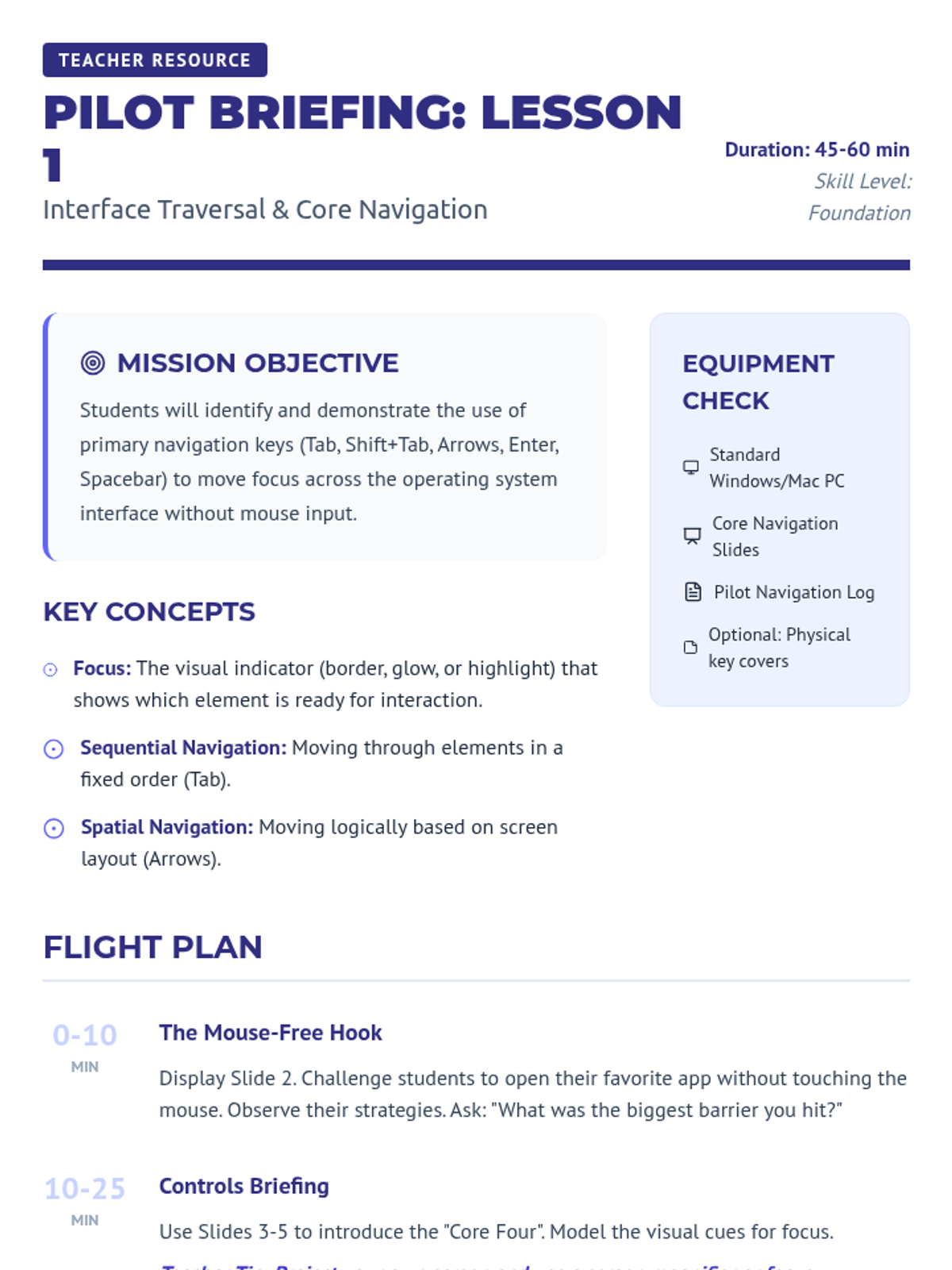
This sequence equips students with the essential keyboard skills to navigate an operating system independently, fostering digital accessibility and efficiency for learners who benefit from mouse-free computer interaction.
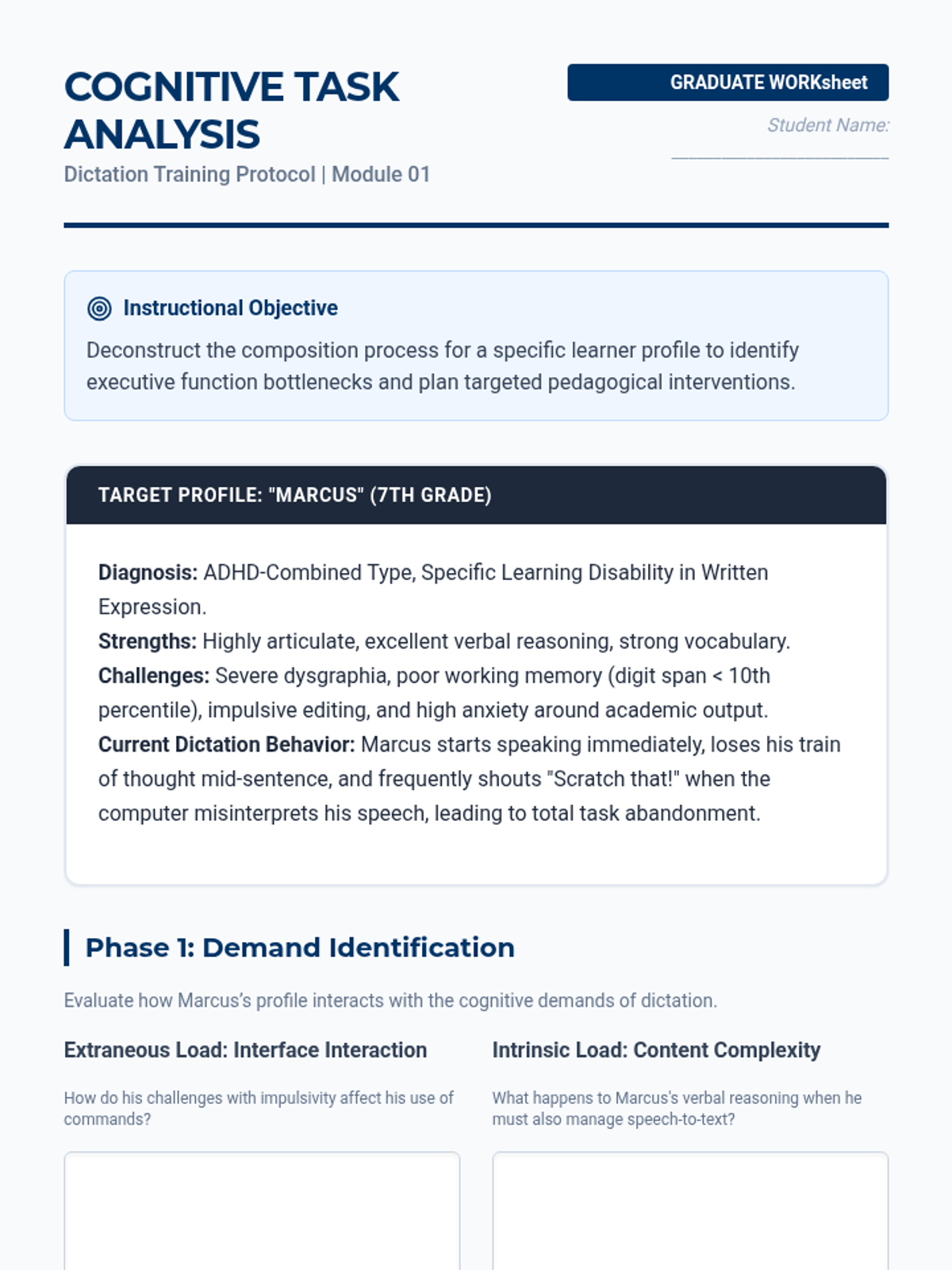
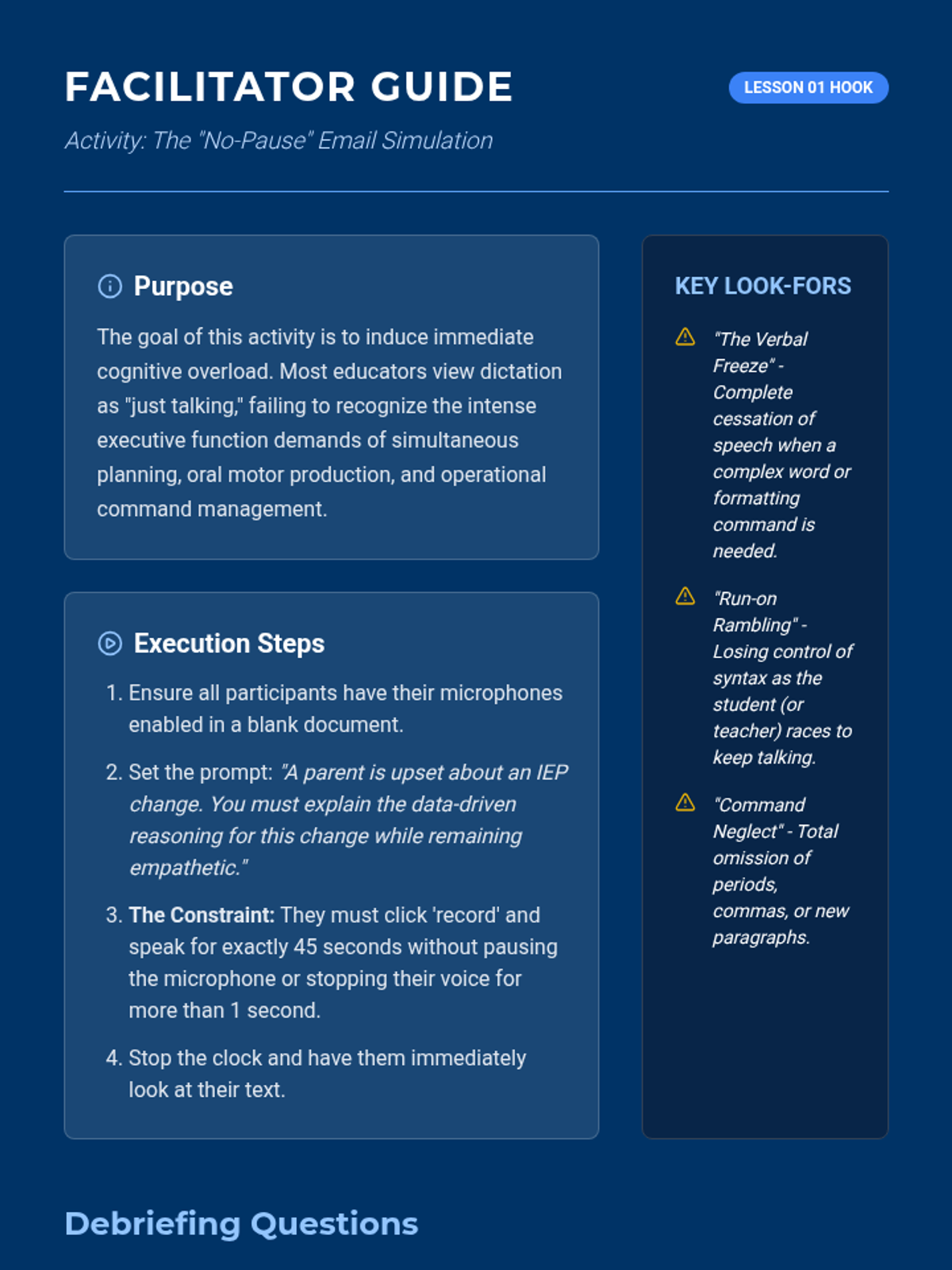
A graduate-level sequence focused on the pedagogy of speech recognition. Students shift from learning the technology to designing instructional protocols that address the cognitive demands of oral composition, specifically for K-12 learners with executive function challenges.
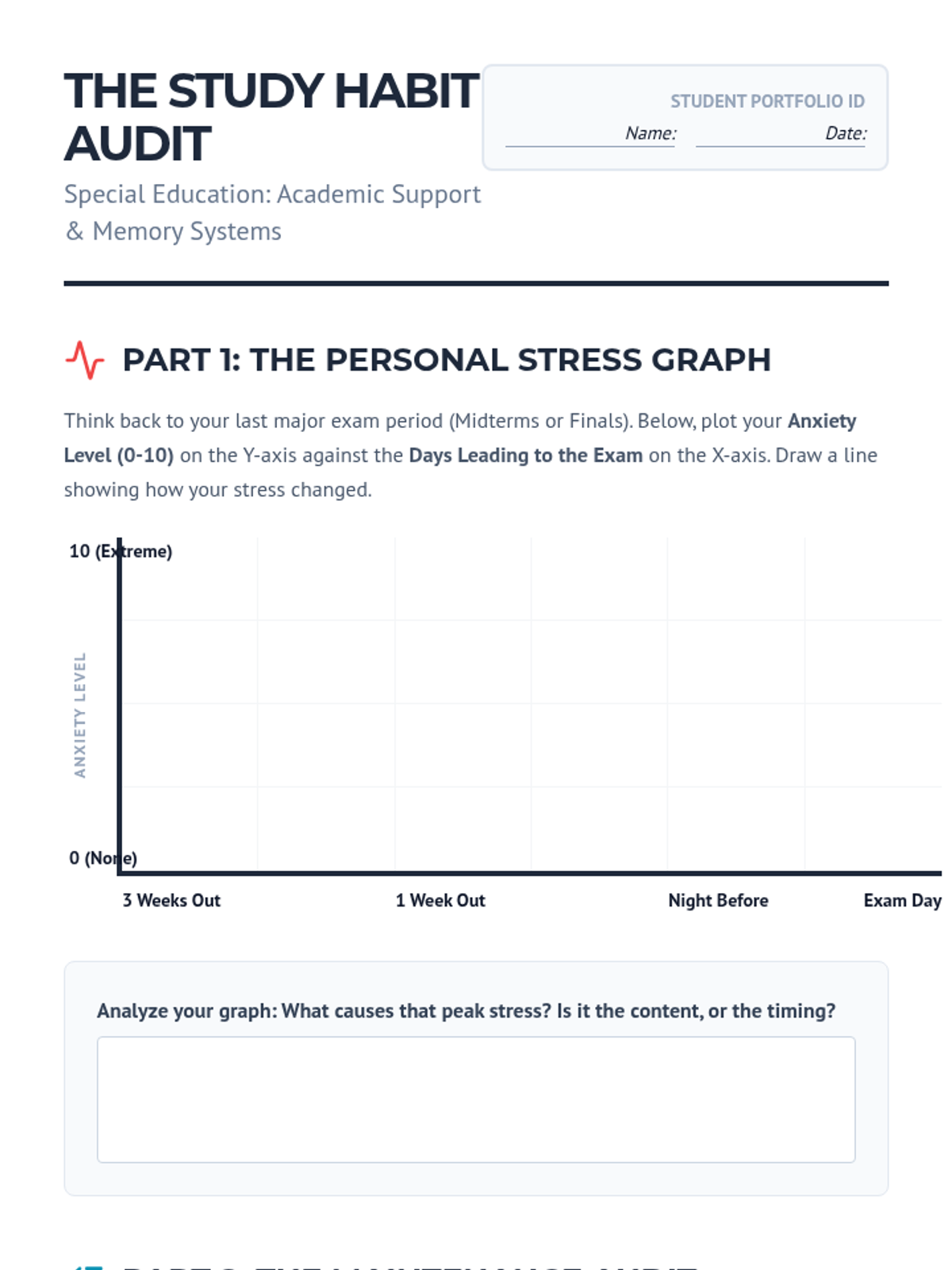
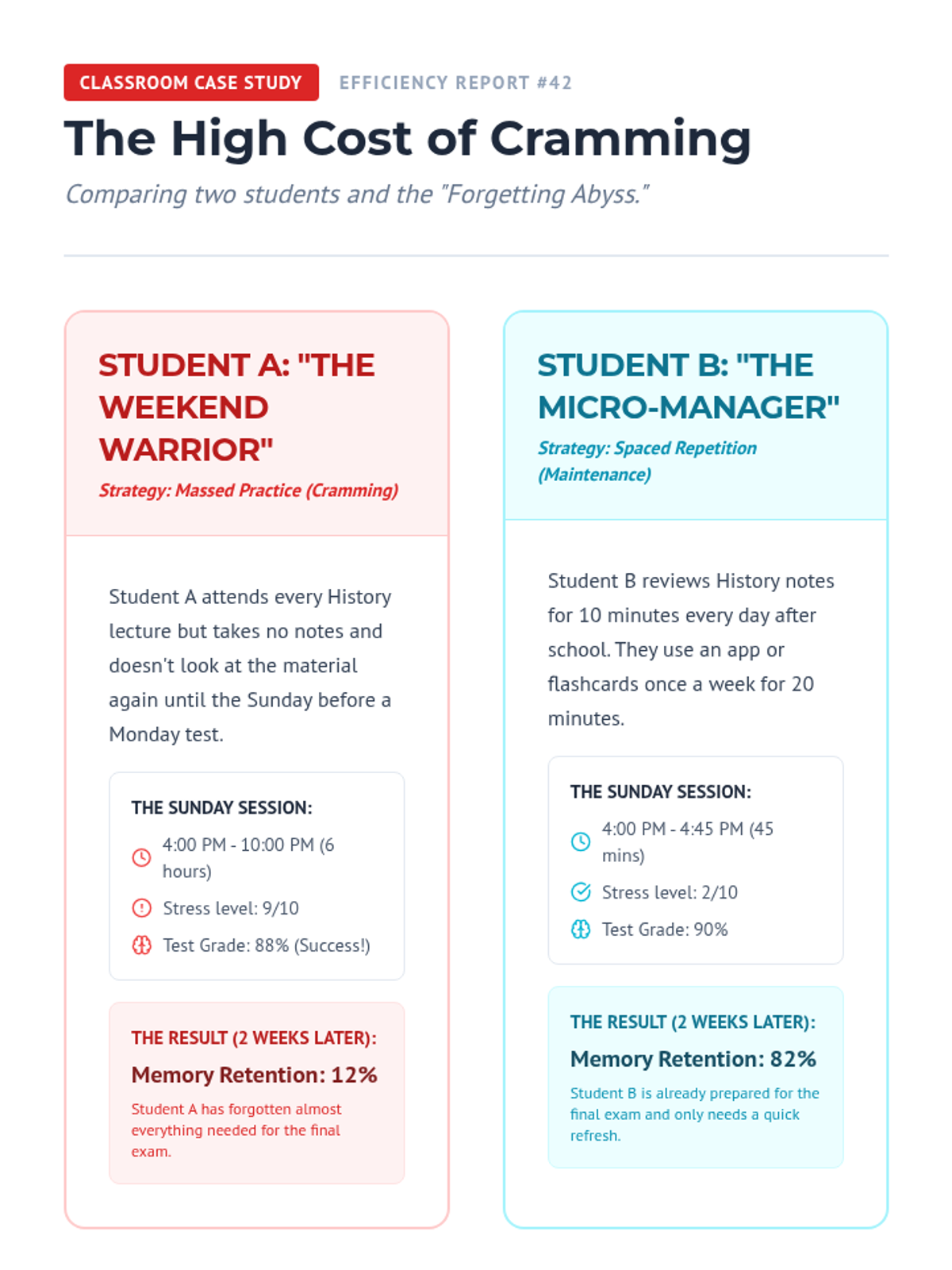
This mastery-based sequence focuses on the executive functioning required to sustain spaced repetition for academic success. Students move from auditing habits to designing a self-regulated 'Spaced Retrieval Calendar' integrated with their curriculum.
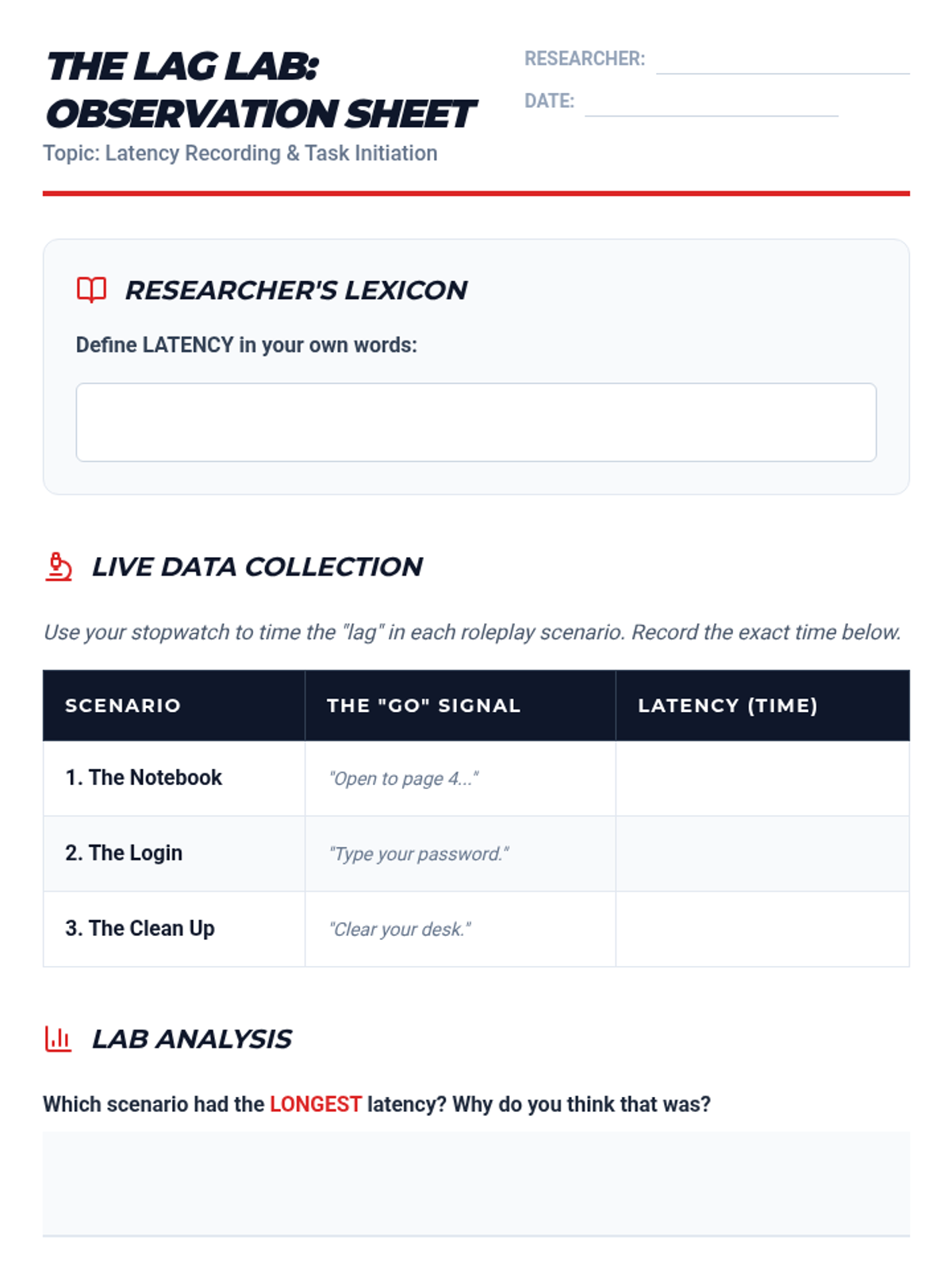
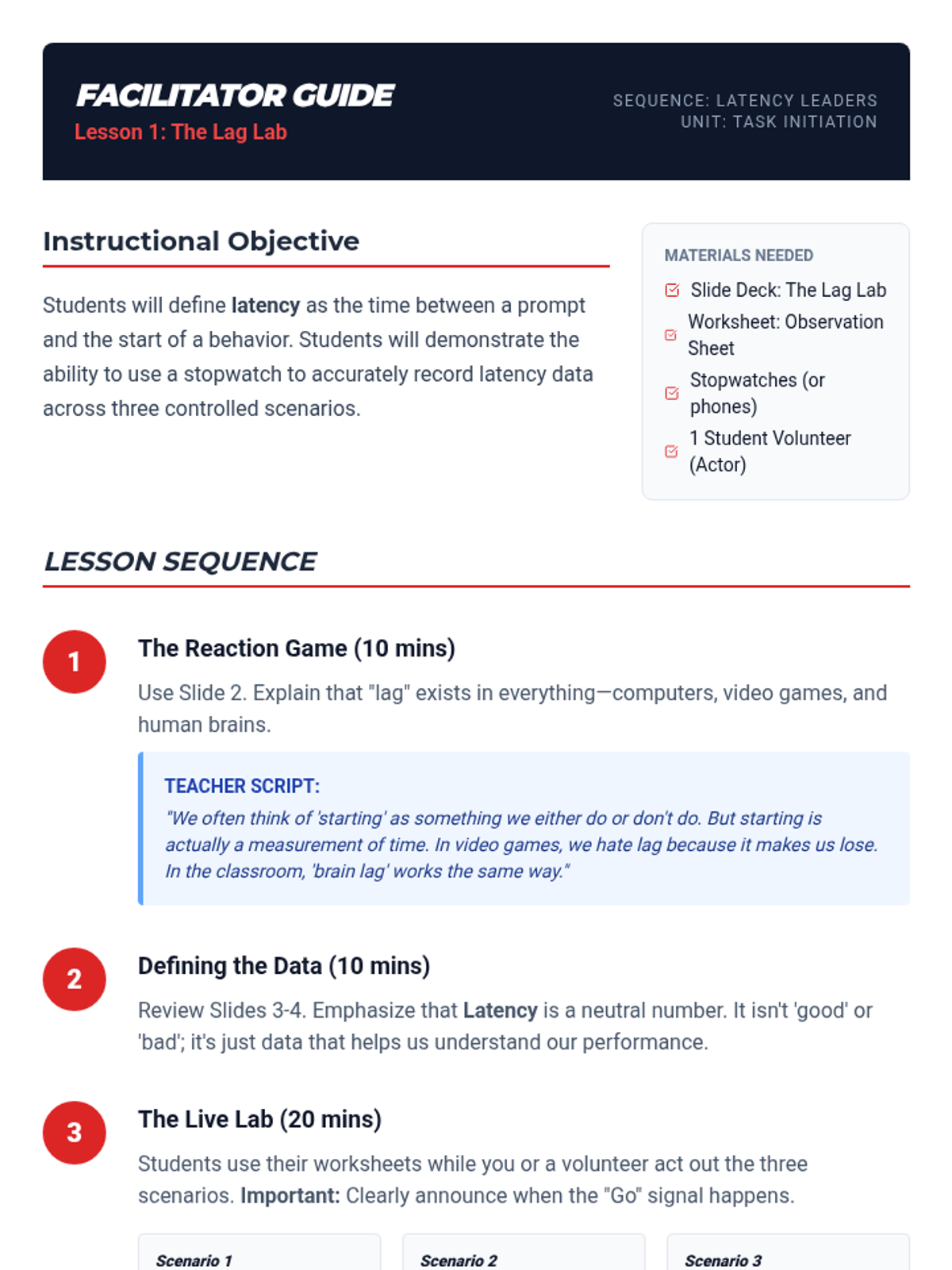
A data-driven executive function sequence where students learn to measure, monitor, and reduce 'latency' (the time between a request and action) using timers and cognitive strategies. Students move from passive resistance to active self-regulation by turning task initiation into a personal performance challenge.
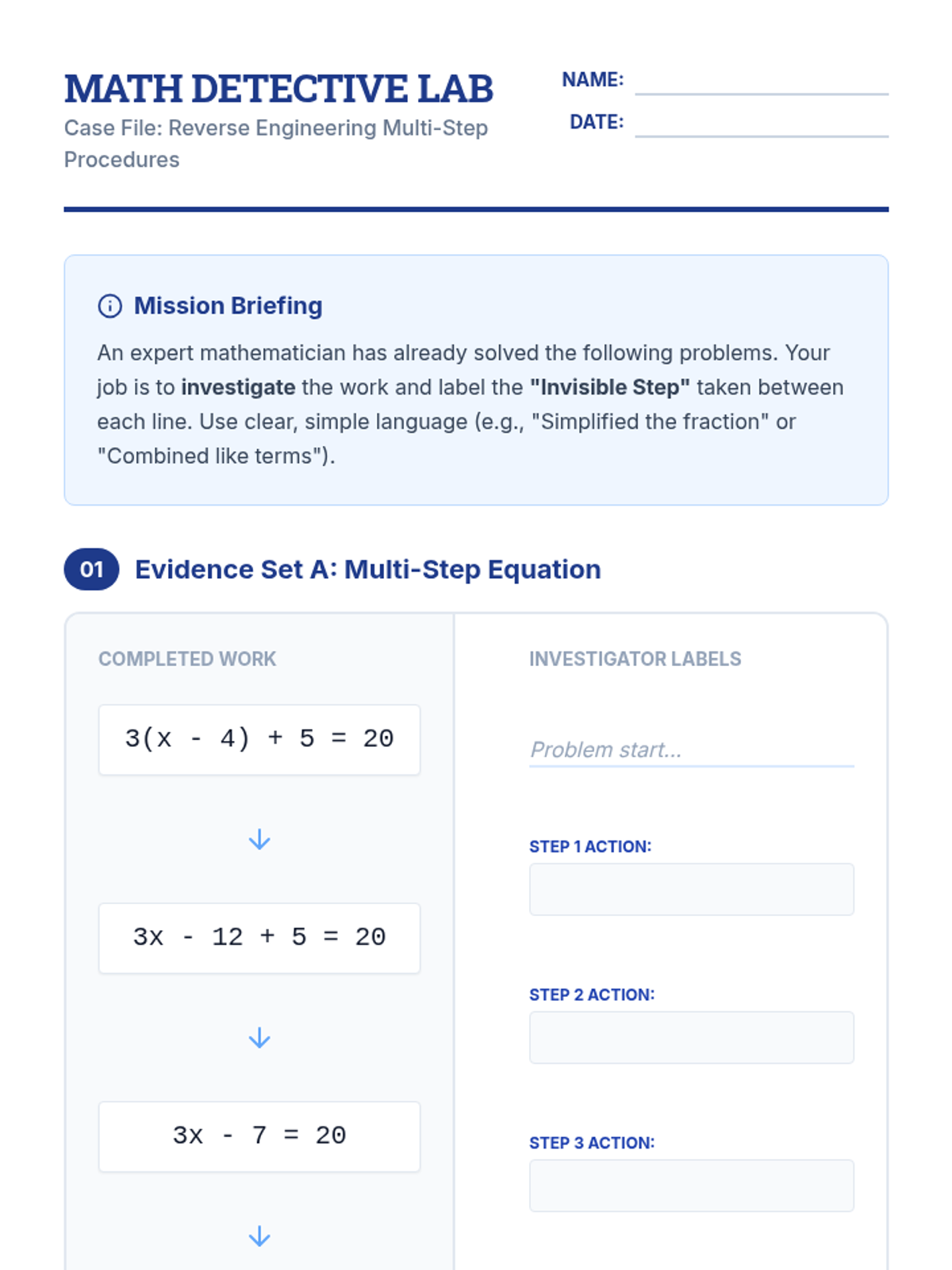
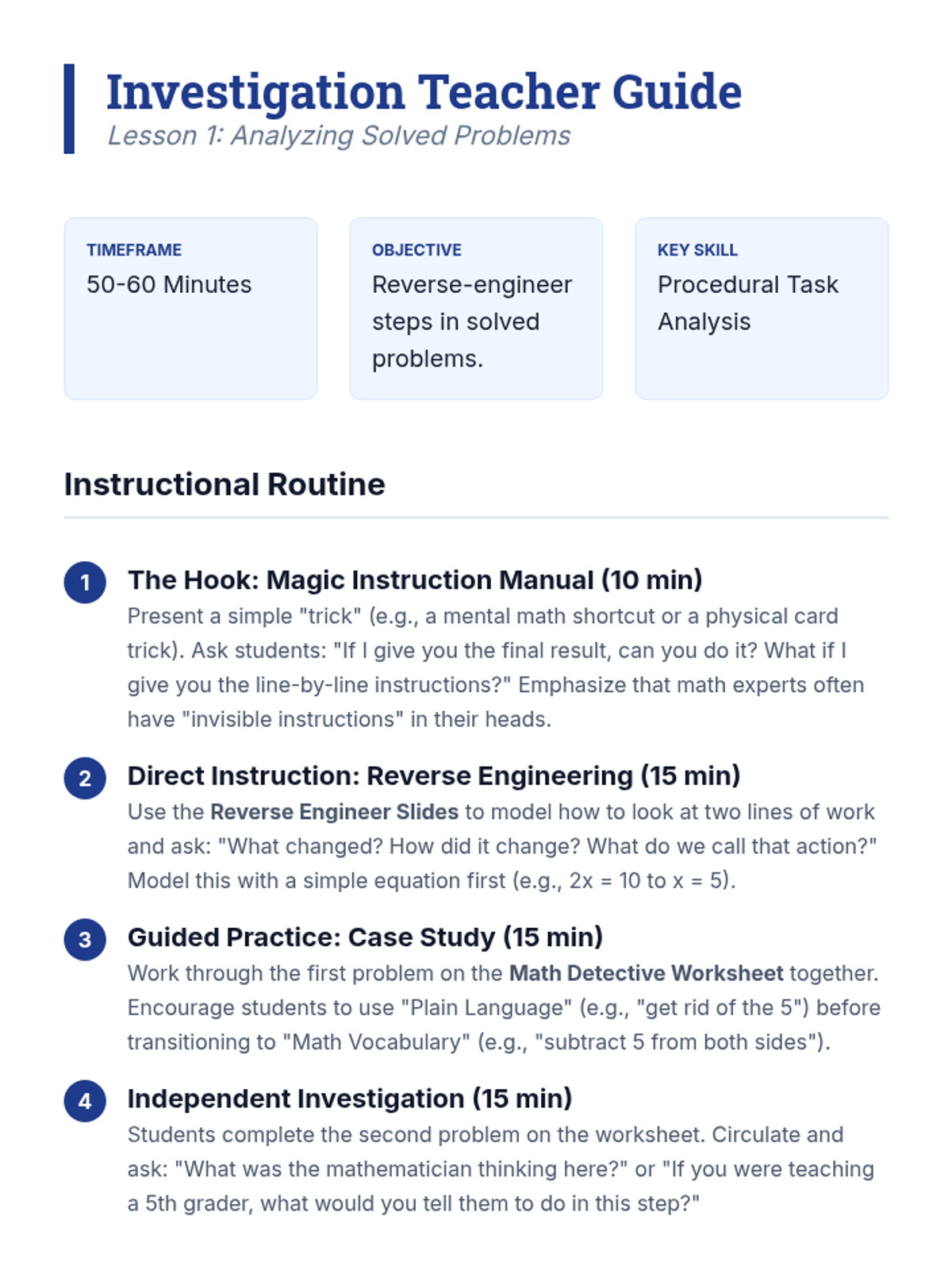
This sequence empowers students to create personalized, metacognitive checklists for multi-step math problems. Students move from reverse-engineering solved problems to drafting, testing, and digitizing their own 'cheat sheets' to overcome executive function barriers.
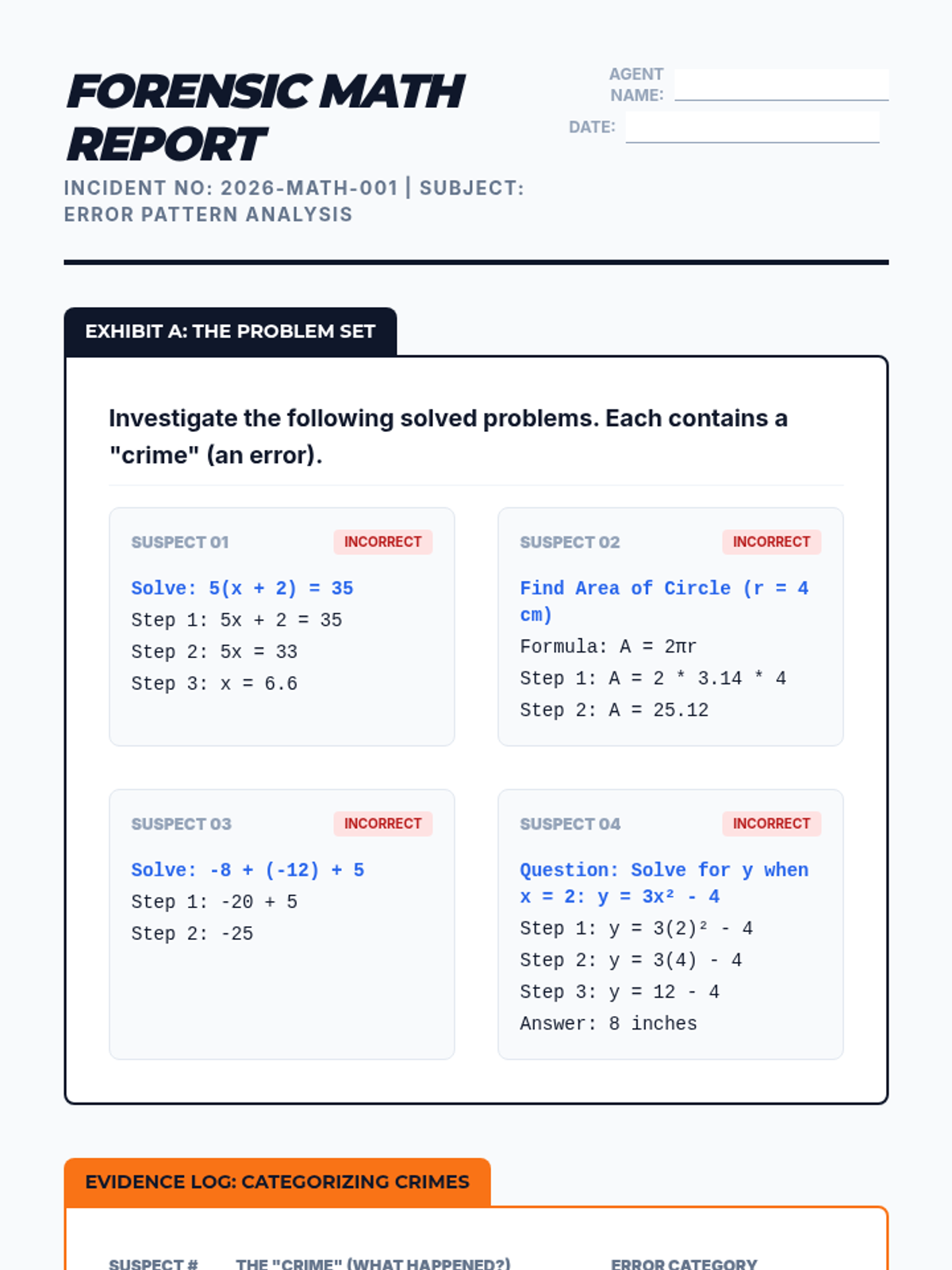
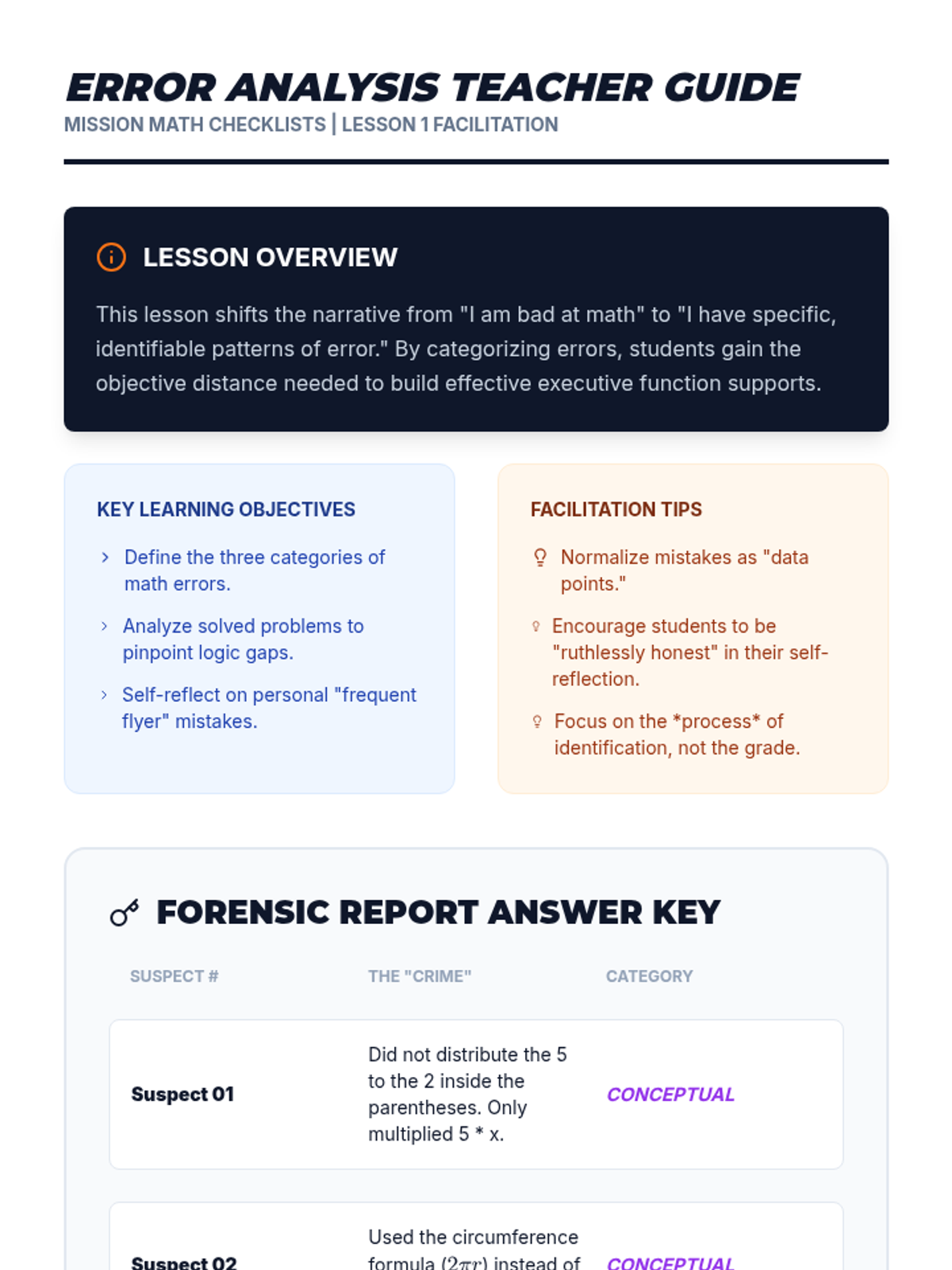
A specialized 12th-grade sequence focused on building executive function skills through math problem-solving. Students move from identifying personal error patterns to creating and internalizing 'Pre-Flight' and 'Landing' checklists to improve accuracy and independence in complex math tasks.
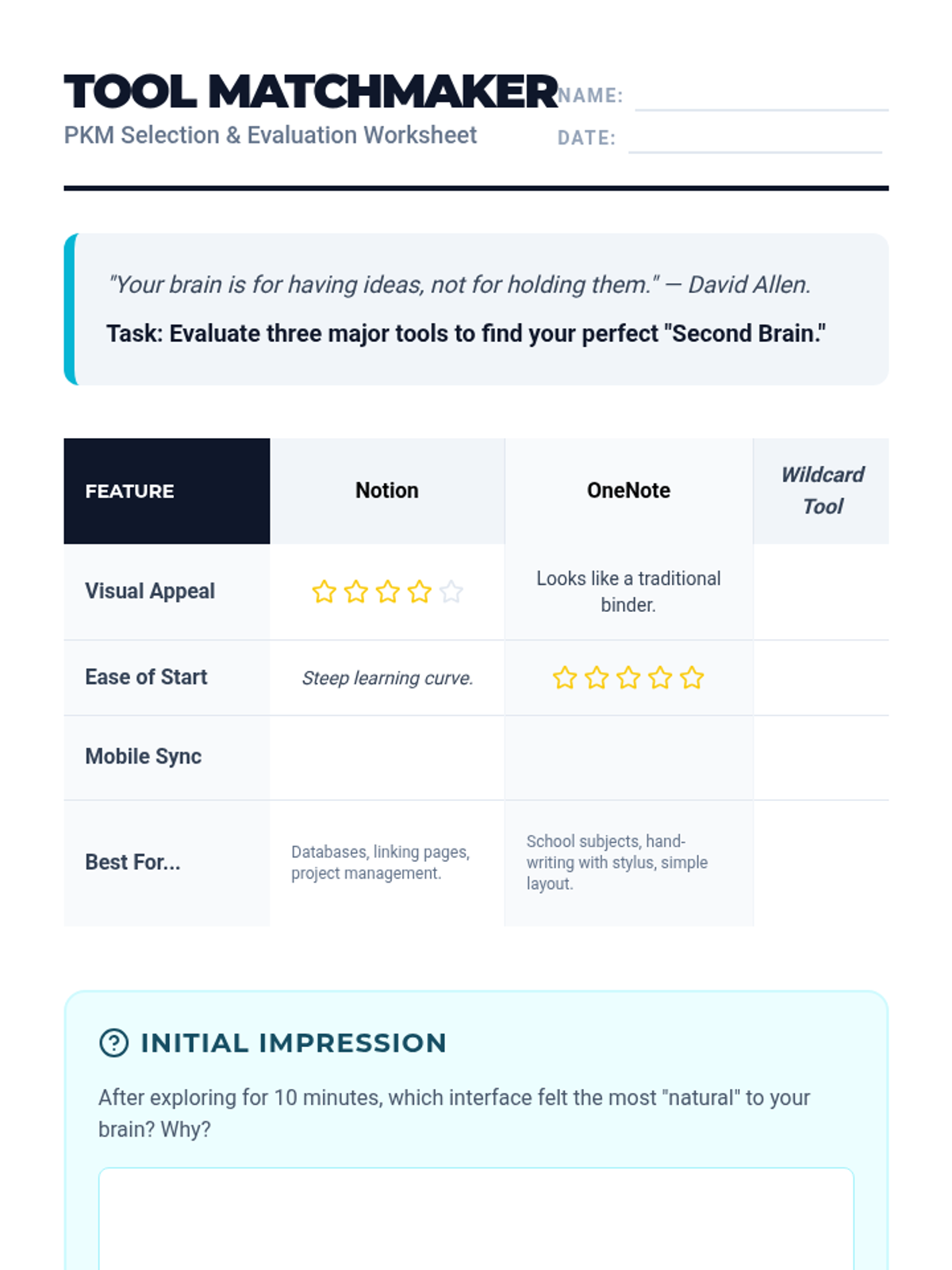
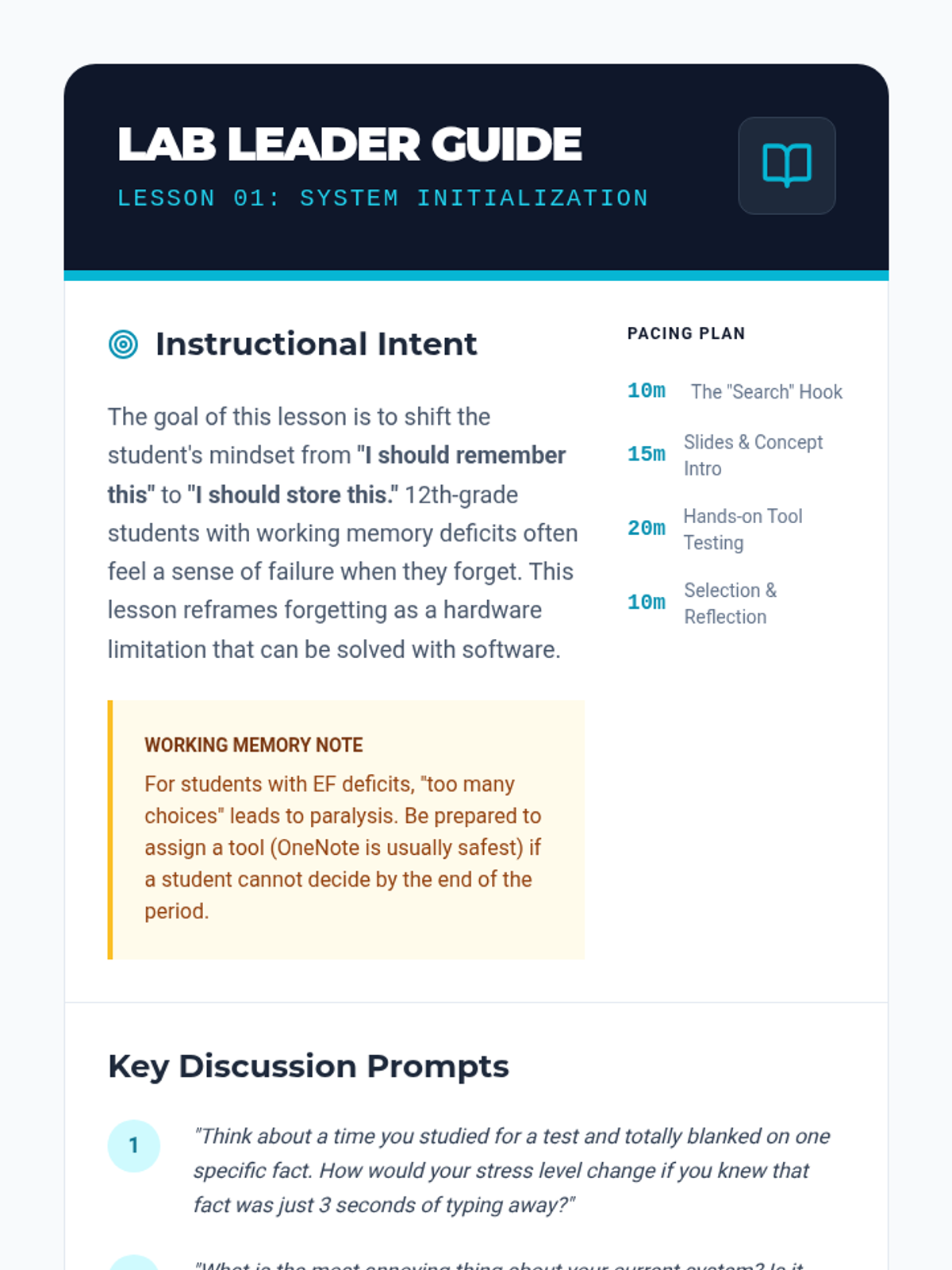
A 12th-grade Special Education sequence focused on leveraging technology to support working memory through Personal Knowledge Management (PKM). Students learn to build a 'second brain' by creating automated, searchable, and multimedia-rich digital systems for note organization and review.
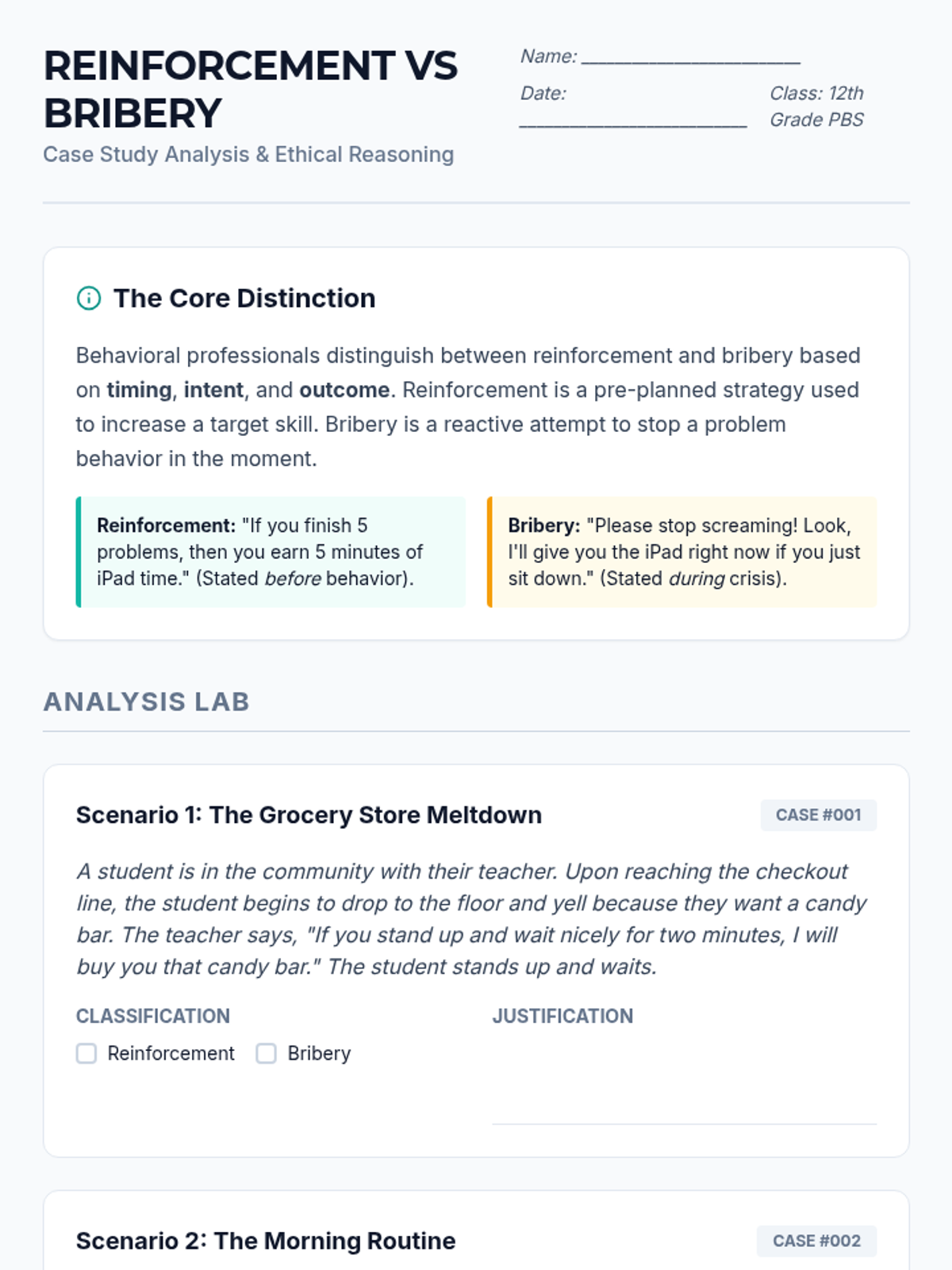
This advanced 12th-grade sequence explores the ethical transition from extrinsic reinforcement to intrinsic motivation and independence. Students learn professional behavioral strategies including prompt fading, conditioning secondary reinforcers, and designing self-management systems to ensure long-term behavioral generalization and maintenance.
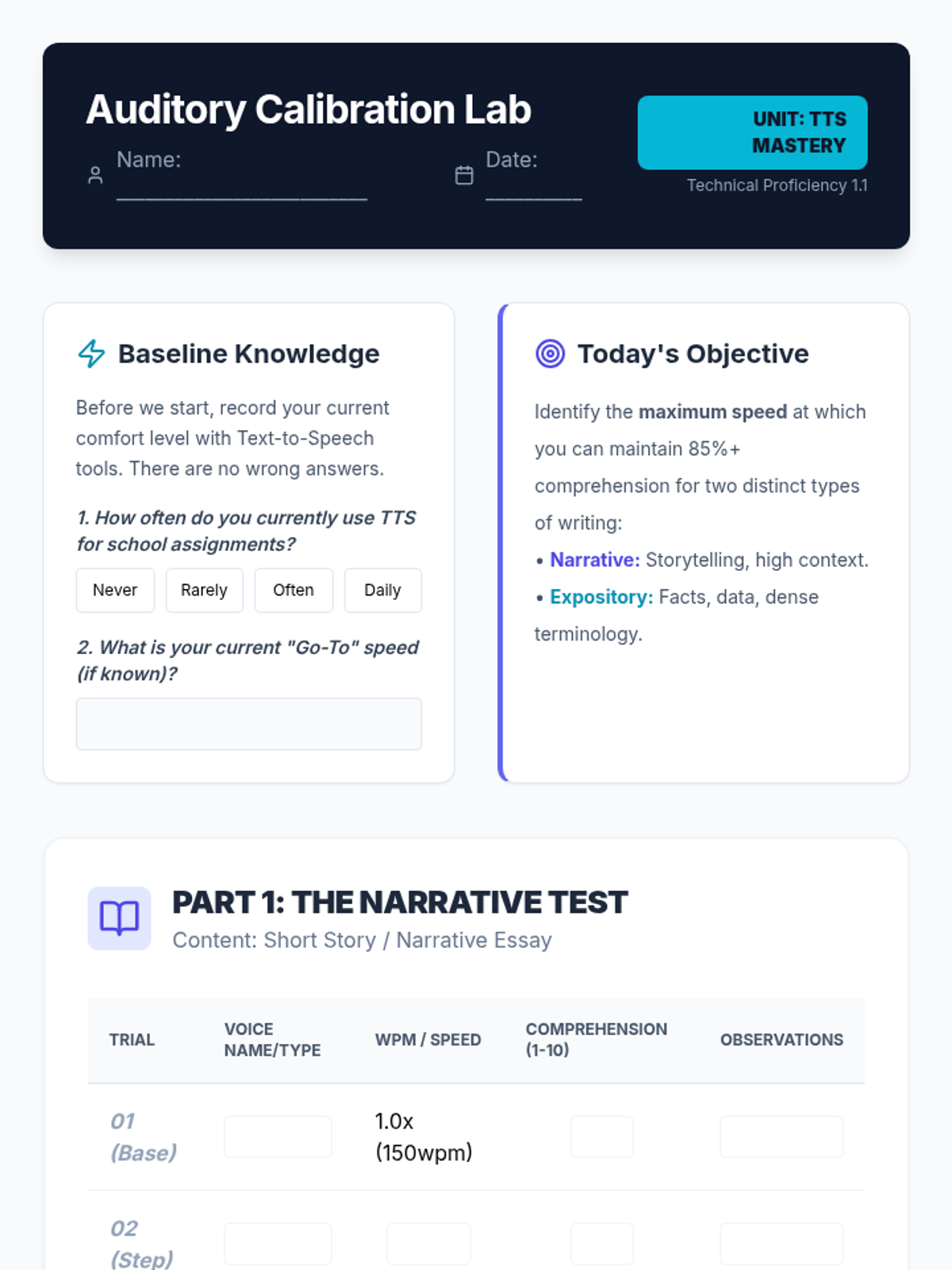
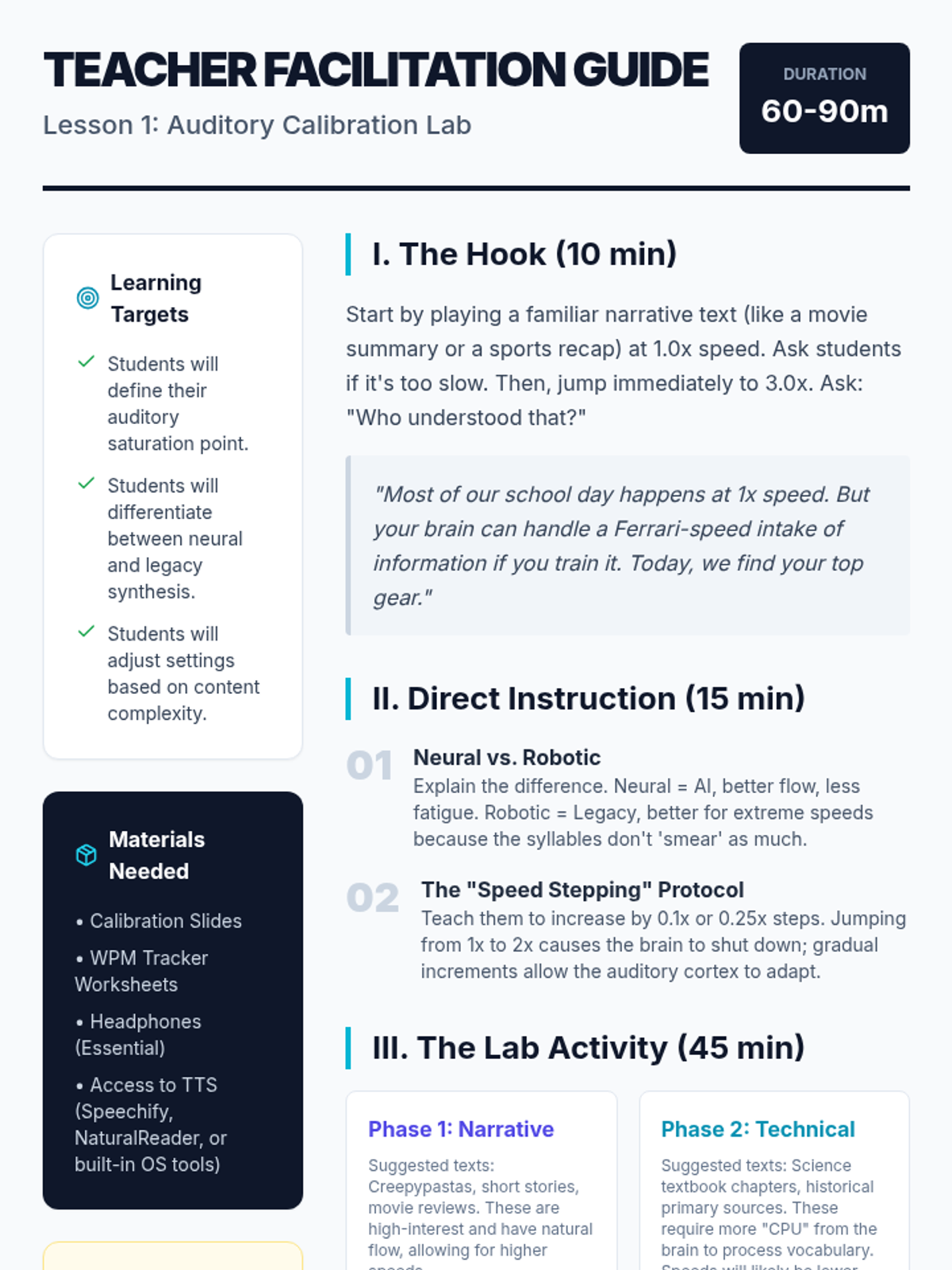
This sequence equips 12th-grade students with advanced technical skills in Text-to-Speech (TTS) technology. It moves beyond basic tool usage to professional-grade workflows, including auditory calibration, OCR conversion, immersion reading, mobile synchronization, and technical troubleshooting, preparing students for the heavy reading demands of post-secondary environments.
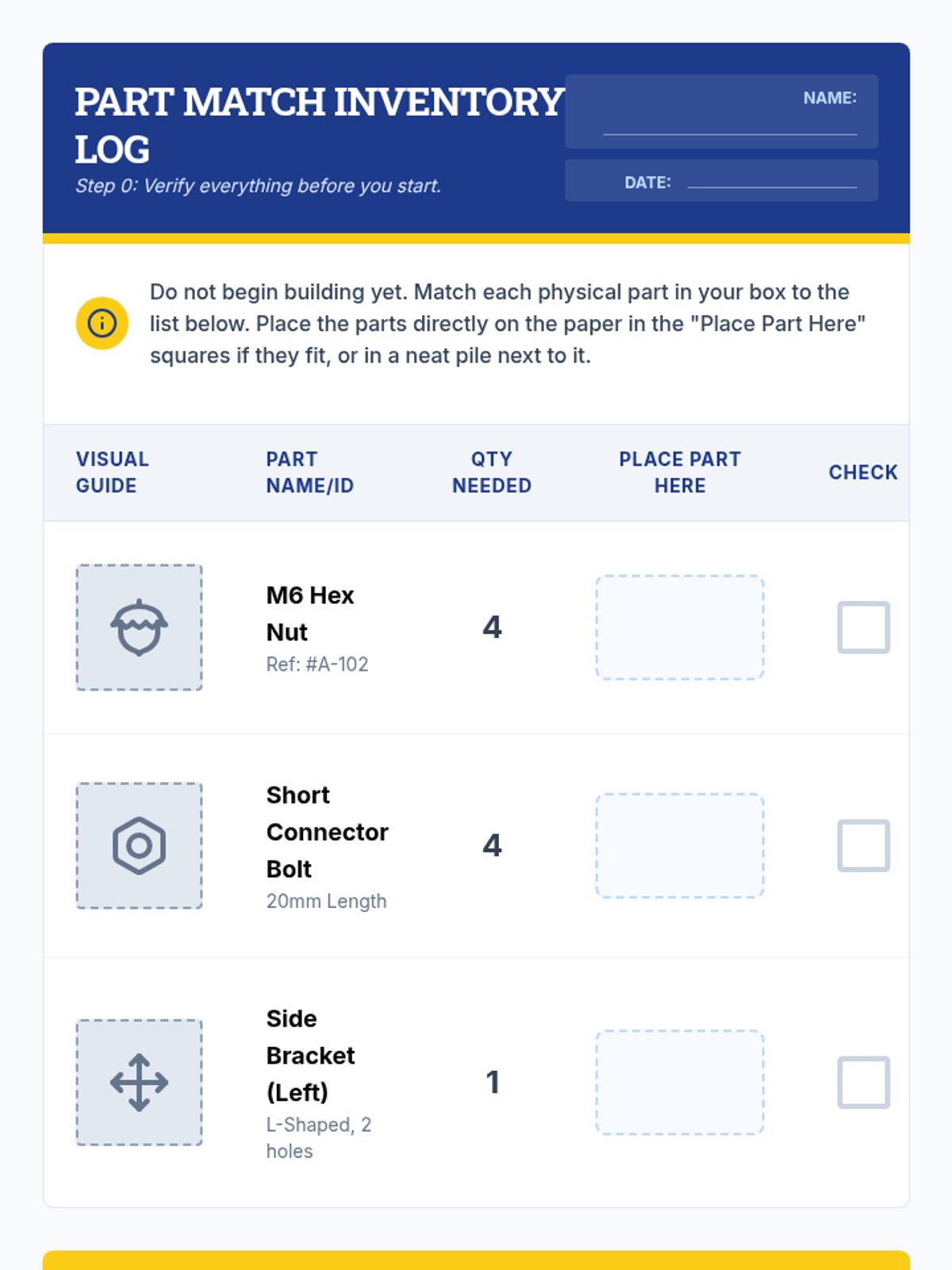
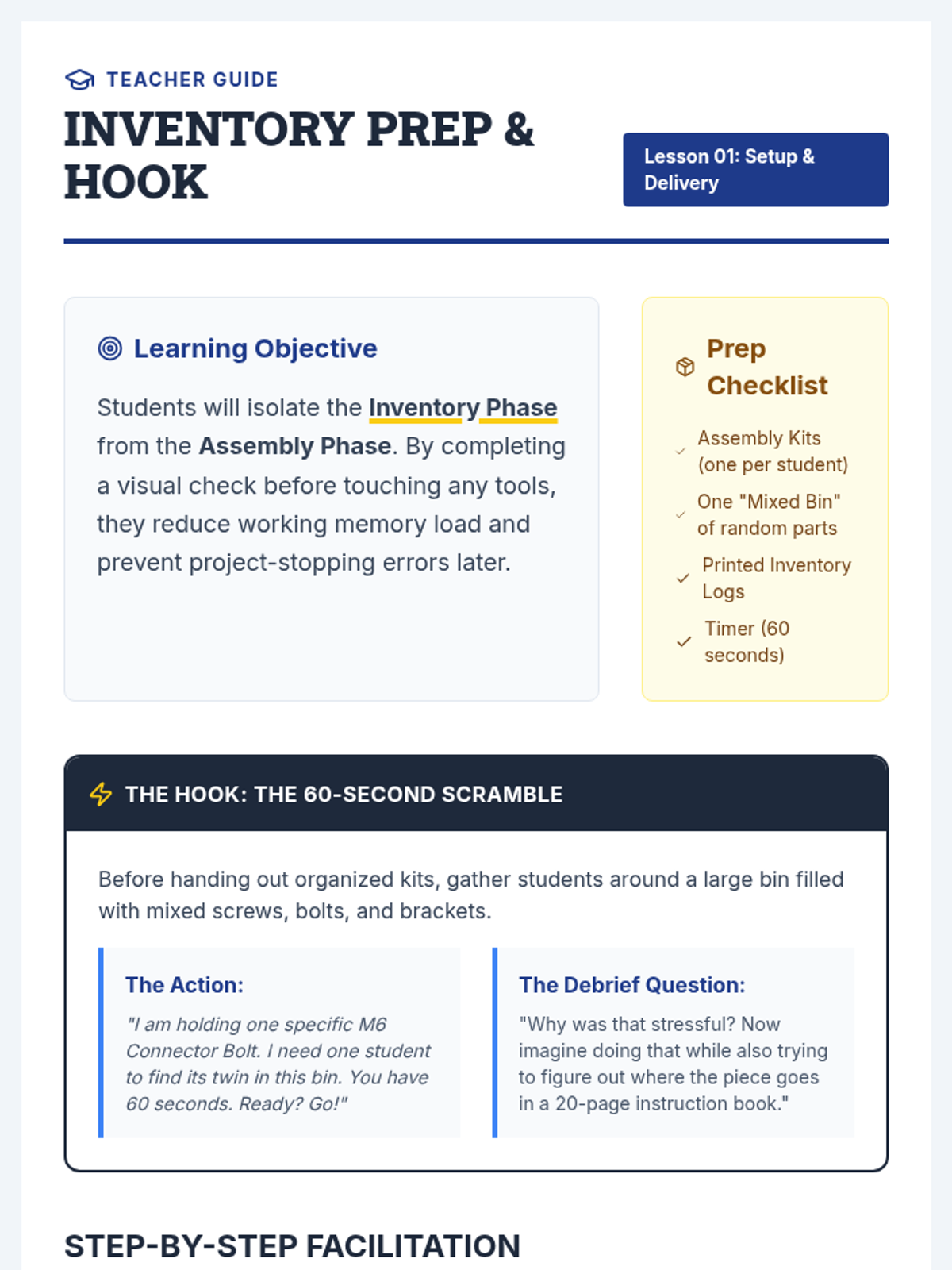
A vocational and life skills sequence focusing on procedural assembly for 12th-grade students with working memory needs. Students practice strict single-step adherence through inventory, fastening, partner systems, and spatial orientation tasks to ensure structural success.
A specialized instructional unit for 12th-grade students focusing on overcoming working memory challenges through single-step task execution. This sequence teaches students to use 'masking', task deconstruction, and binary decision-making to master complex home maintenance and independent living tasks.
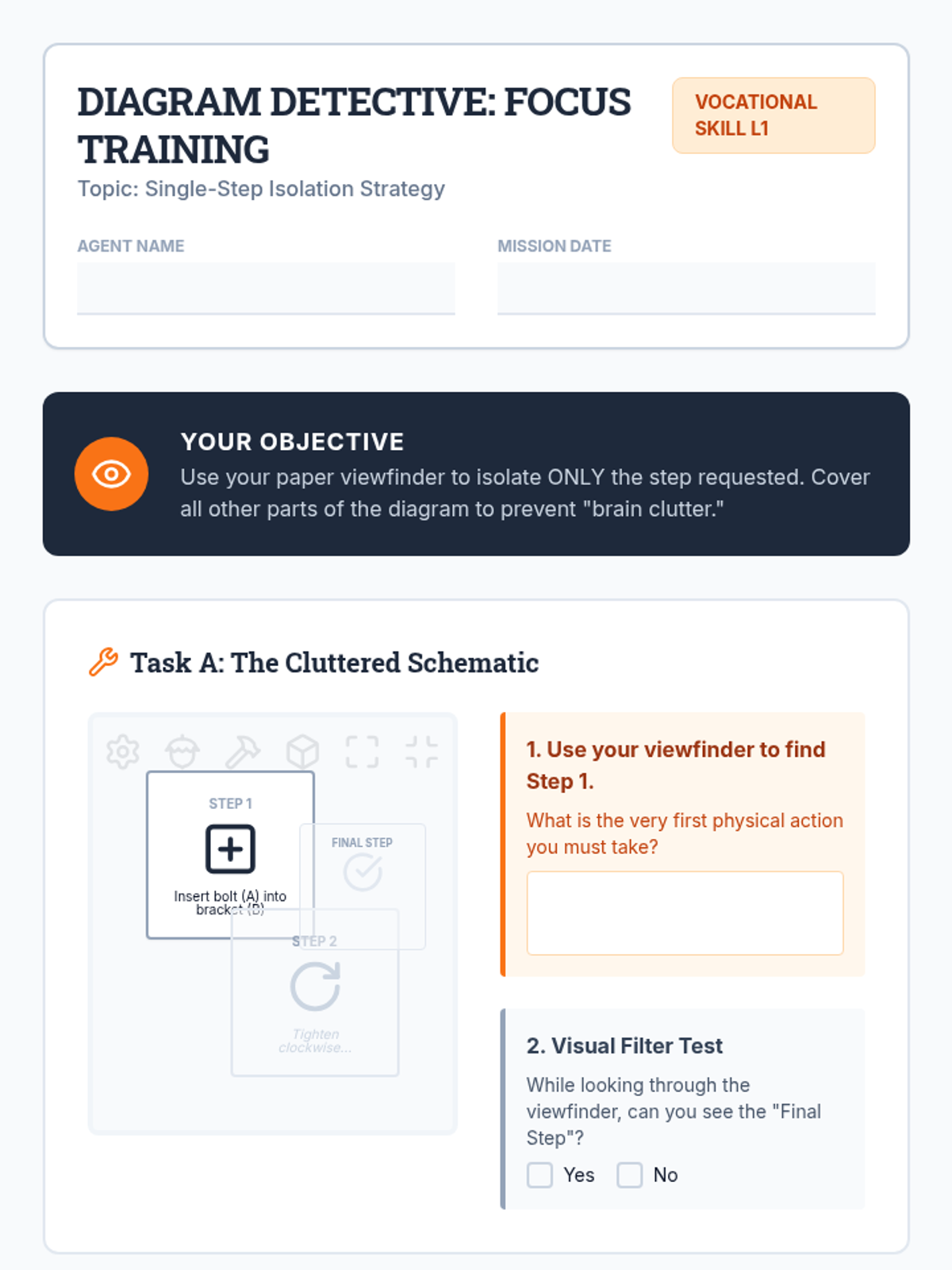
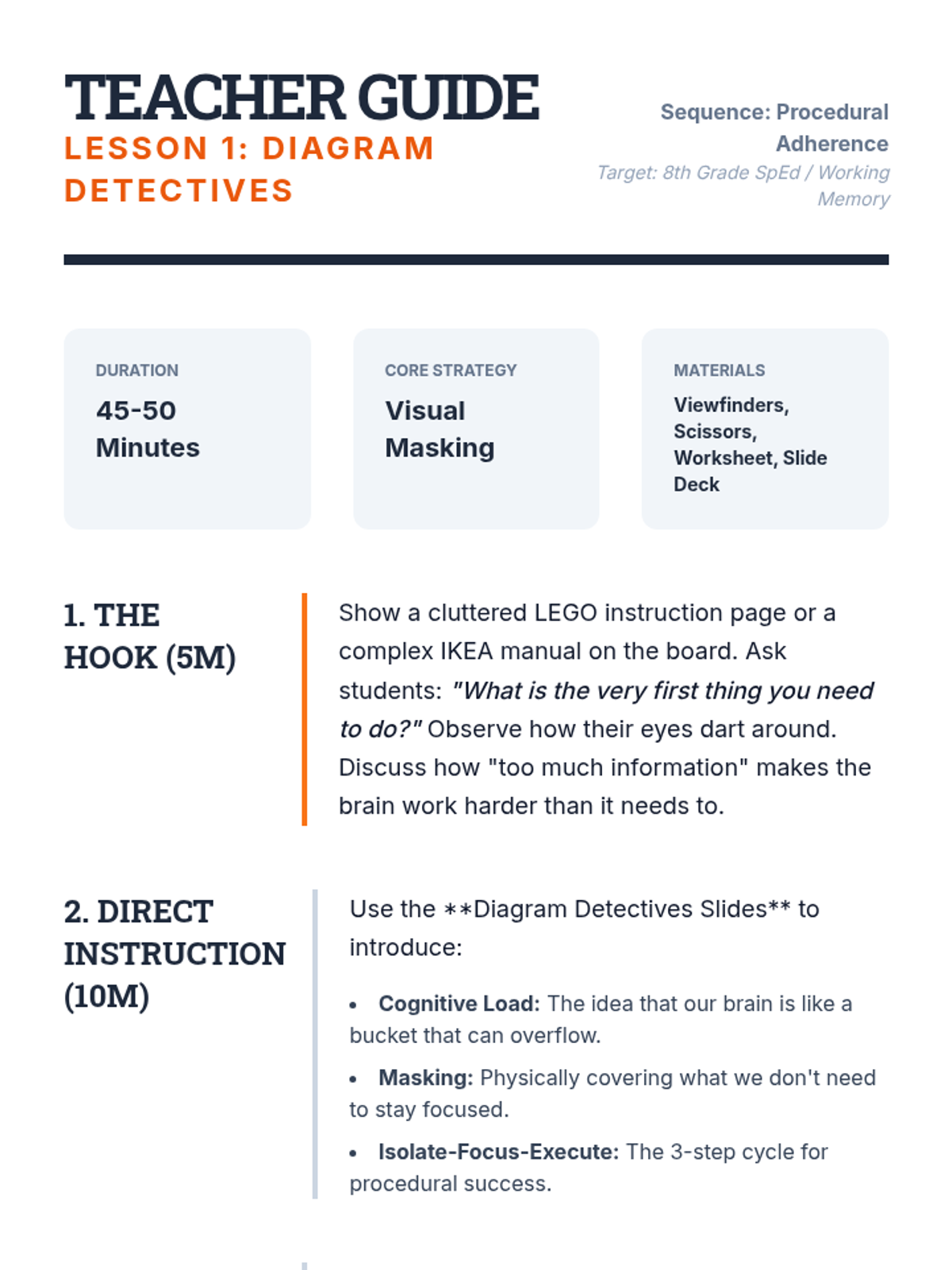
This sequence focuses on vocational and life skills, applying single-step direction following to physical assembly and procedural tasks. Students learn to navigate technical diagrams and standard operating procedures by isolating one action at a time to support working memory.
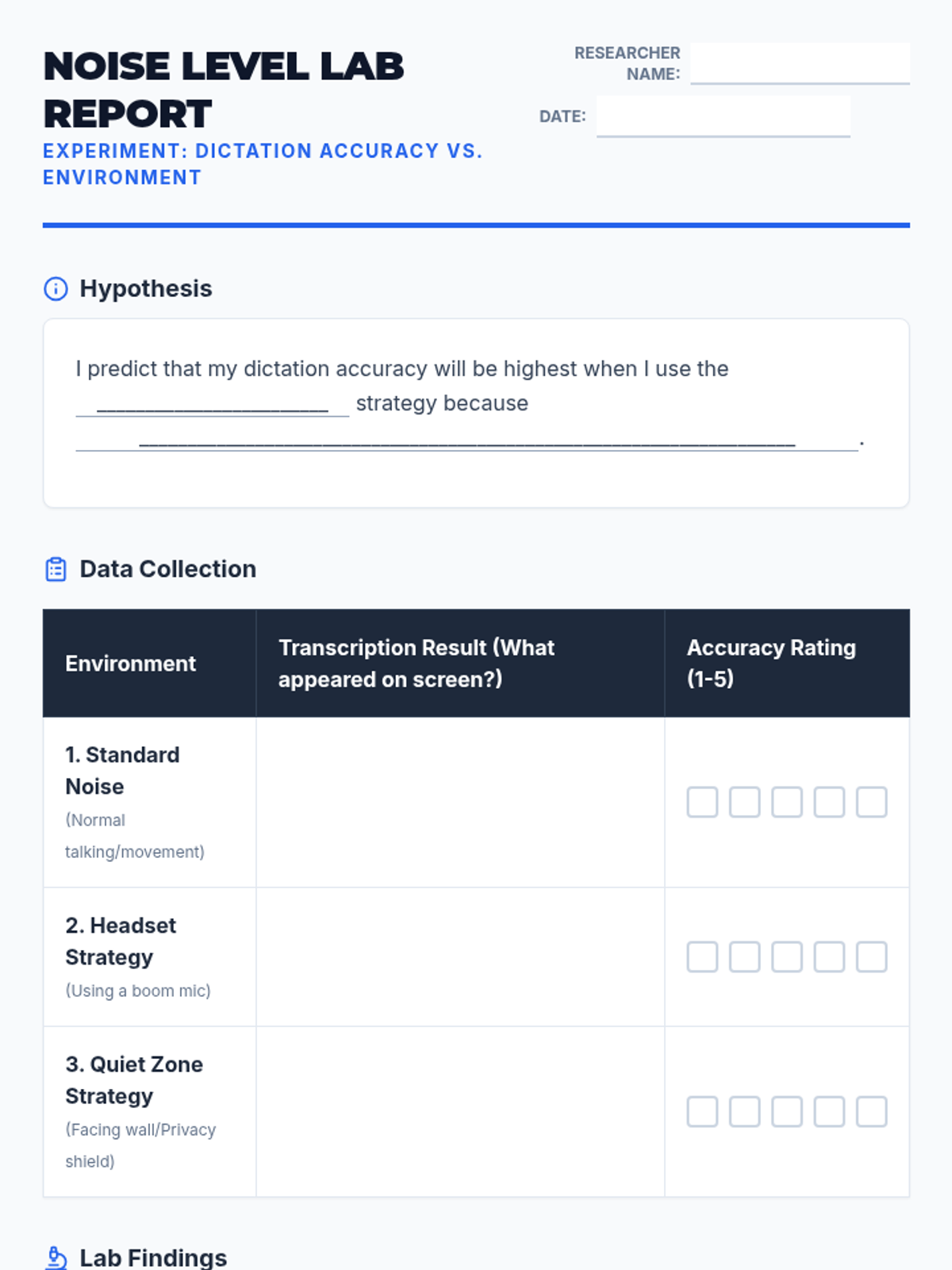
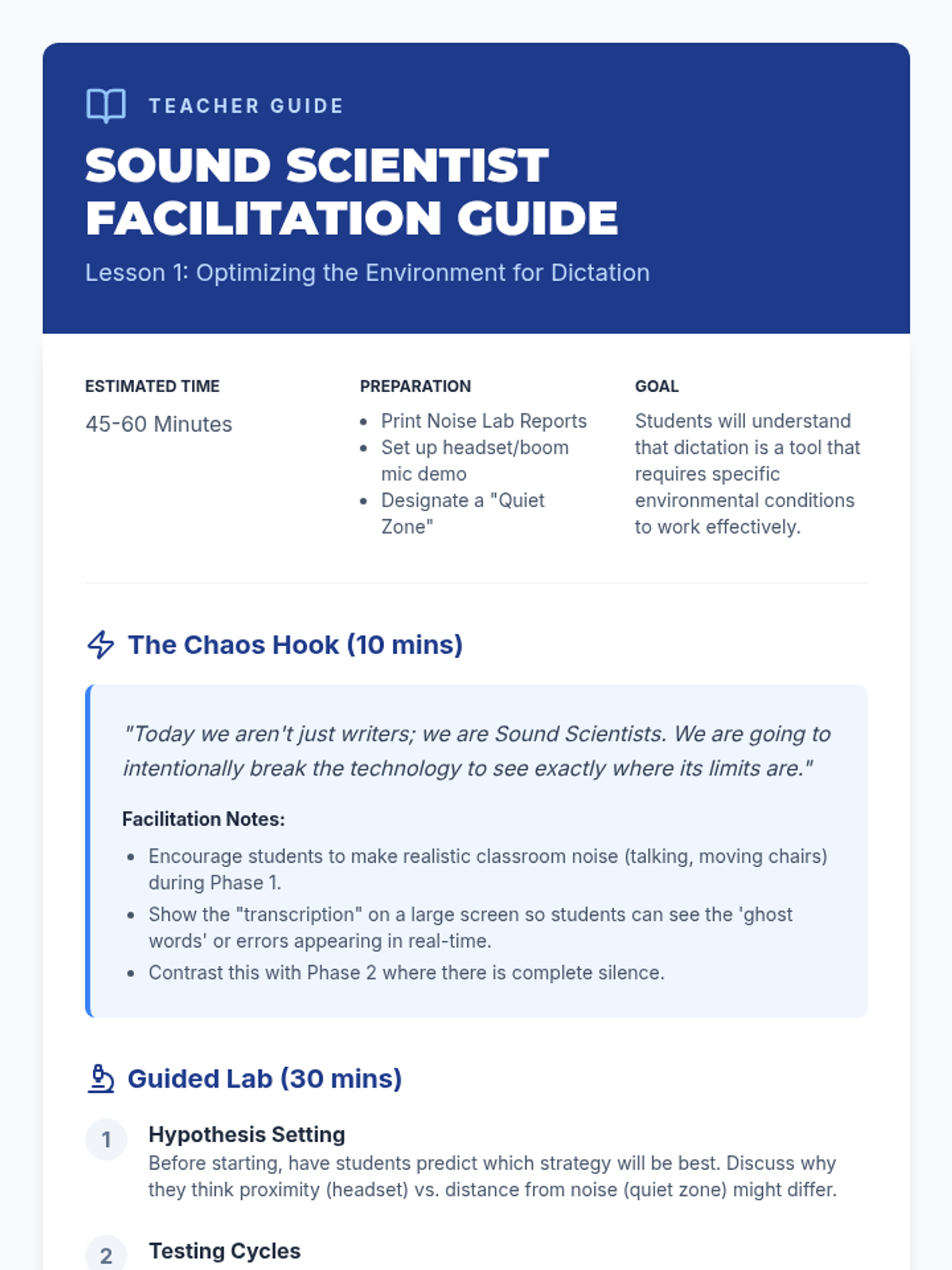
This sequence develops independence and troubleshooting skills for students using dictation software. Students learn to optimize their environment, solve technical glitches, handle complex vocabulary, and internalize a complete independent workflow.
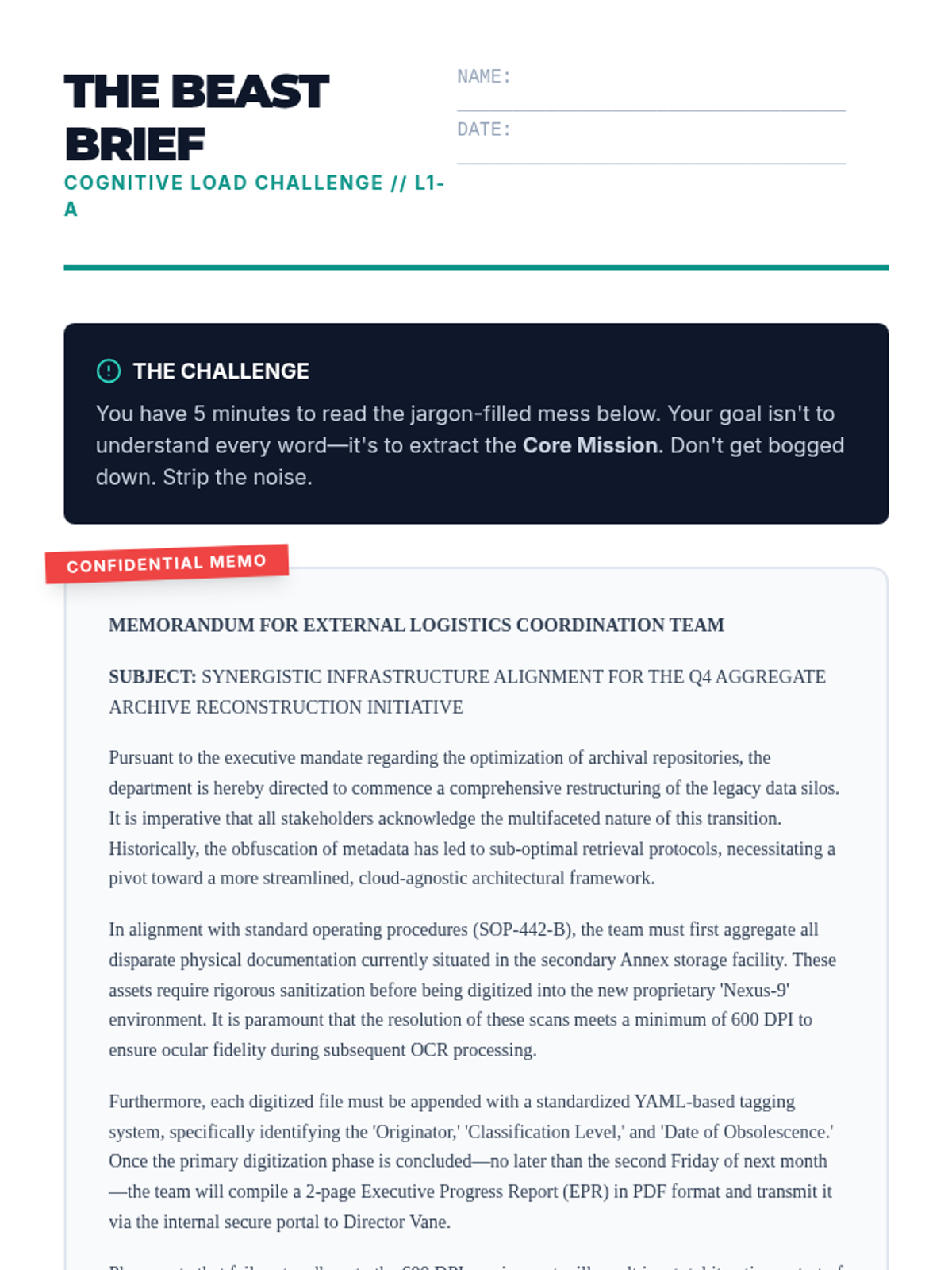
This sequence prepares 12th-grade students with working memory challenges for post-secondary life by teaching them how to deconstruct complex projects, externalize their executive functions, and monitor their own cognitive fatigue. Students progress from task analysis to a full independent workflow simulation, building a toolkit of strategies for sustained attention.
A 9th-grade sequence focused on using digital tools and external aids to compensate for working memory limitations. Students learn to offload cognitive load using transcription, sequential reminders, logic-based planning, and strategic tutorial navigation to build a personalized 'external brain'.
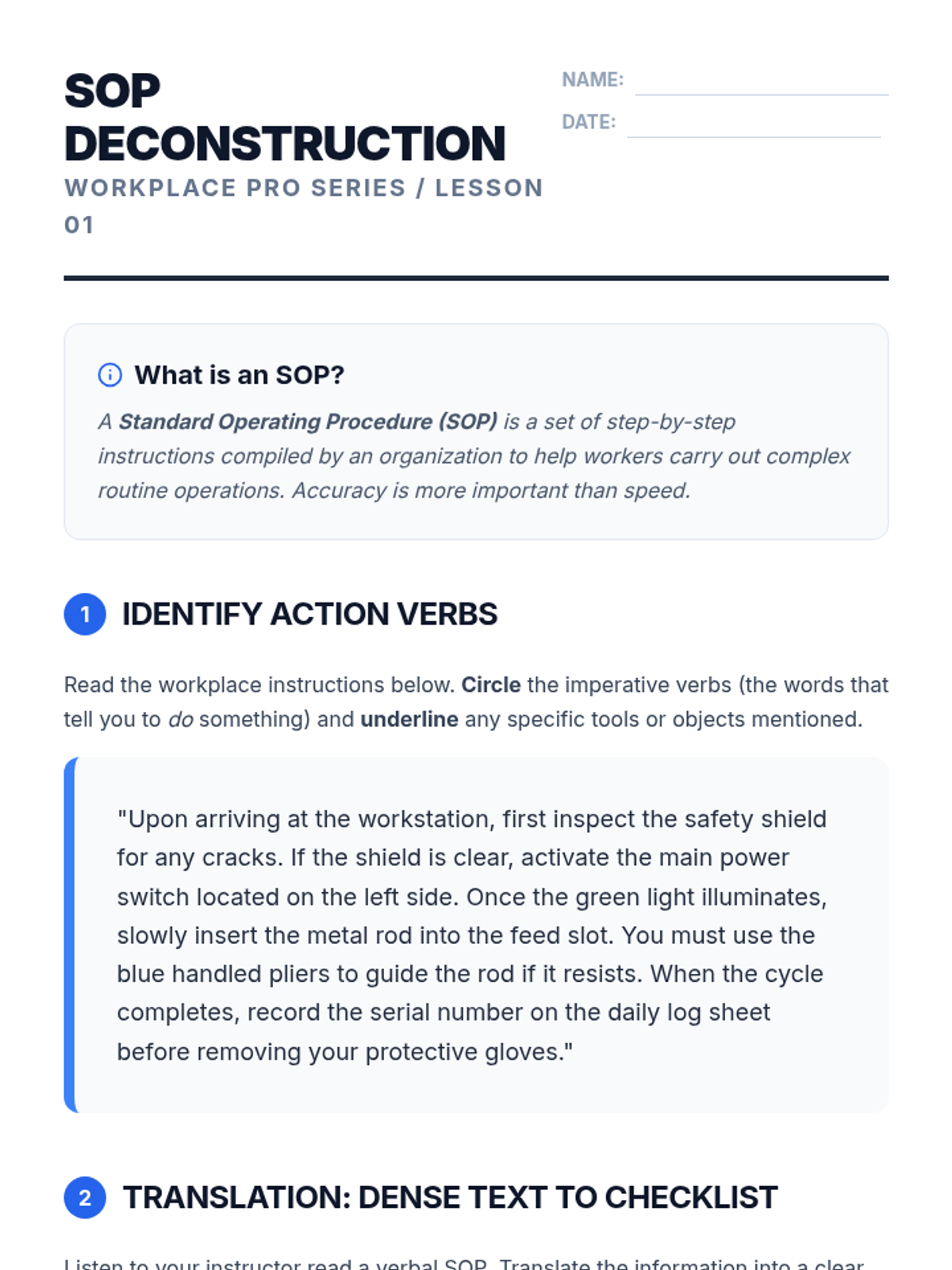
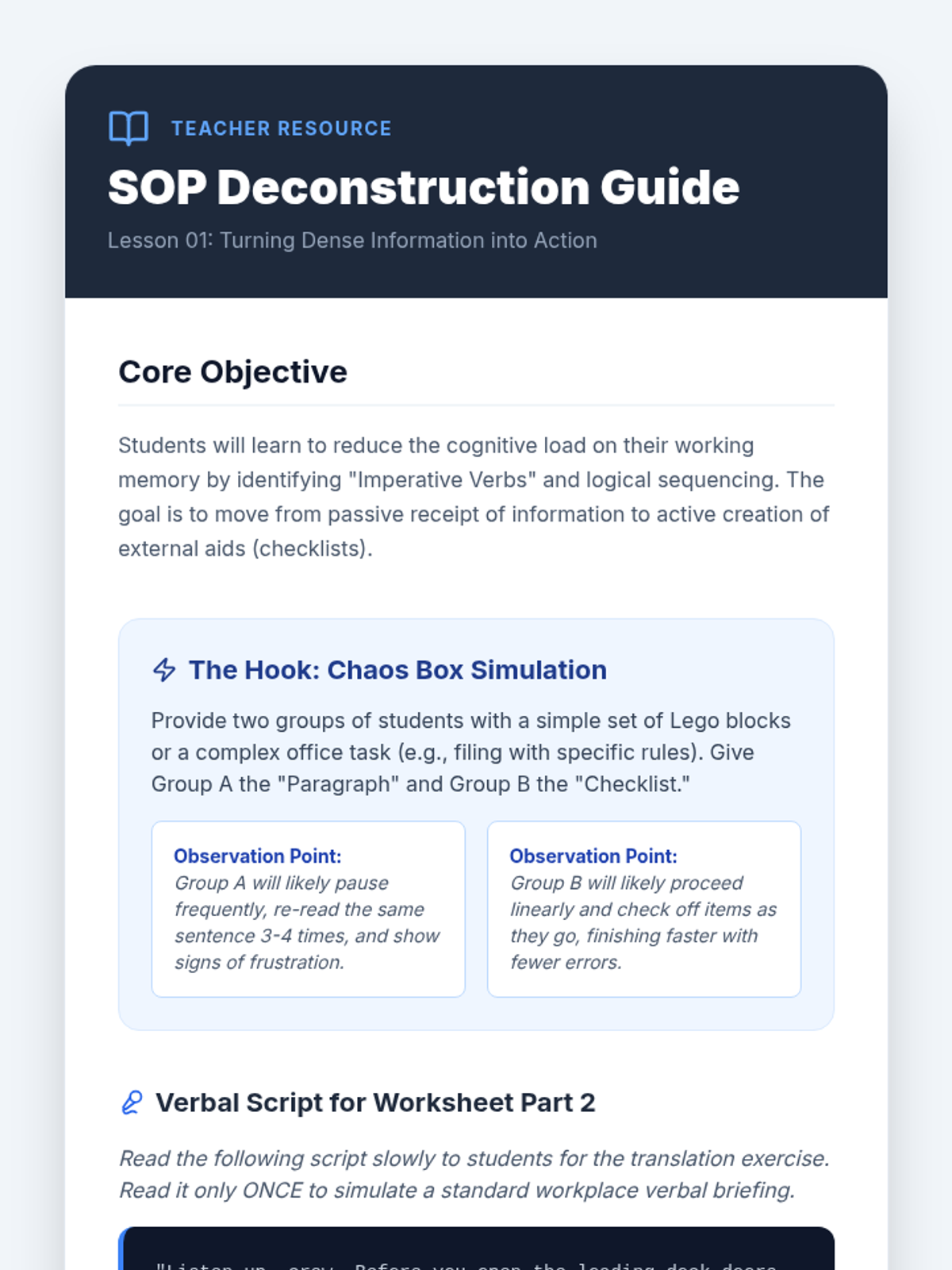
A comprehensive 5-lesson sequence designed for 12th-grade special education students to master workplace procedural accuracy. Students learn to deconstruct SOPs, use communication loops, chunk auditory information, visualize workflows, and manage multi-step tasks in high-pressure simulations.
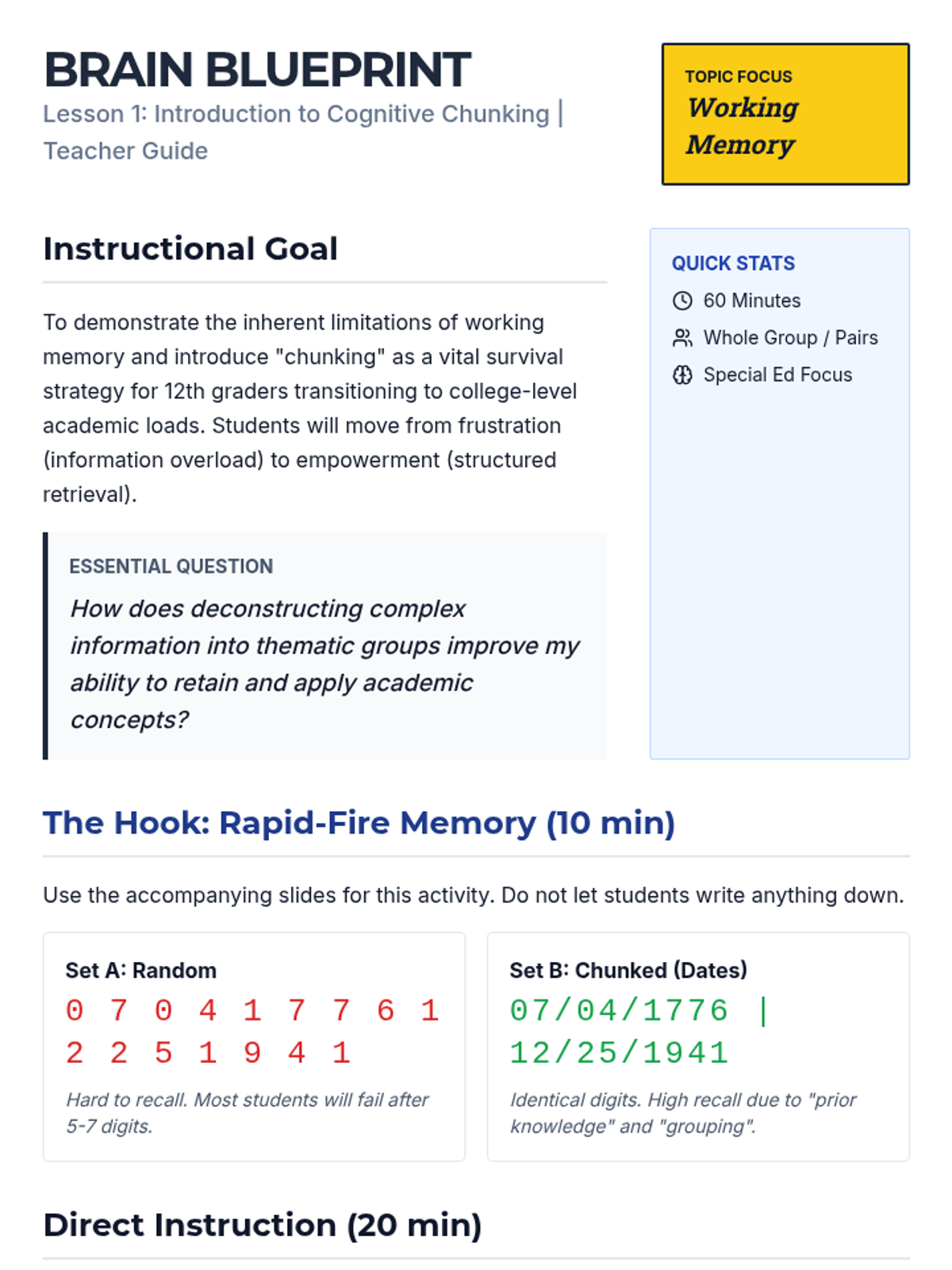
A specialized sequence for 12th-grade students to master cognitive chunking strategies, preparing them for the rigors of college-level reading and lectures by improving working memory efficiency.
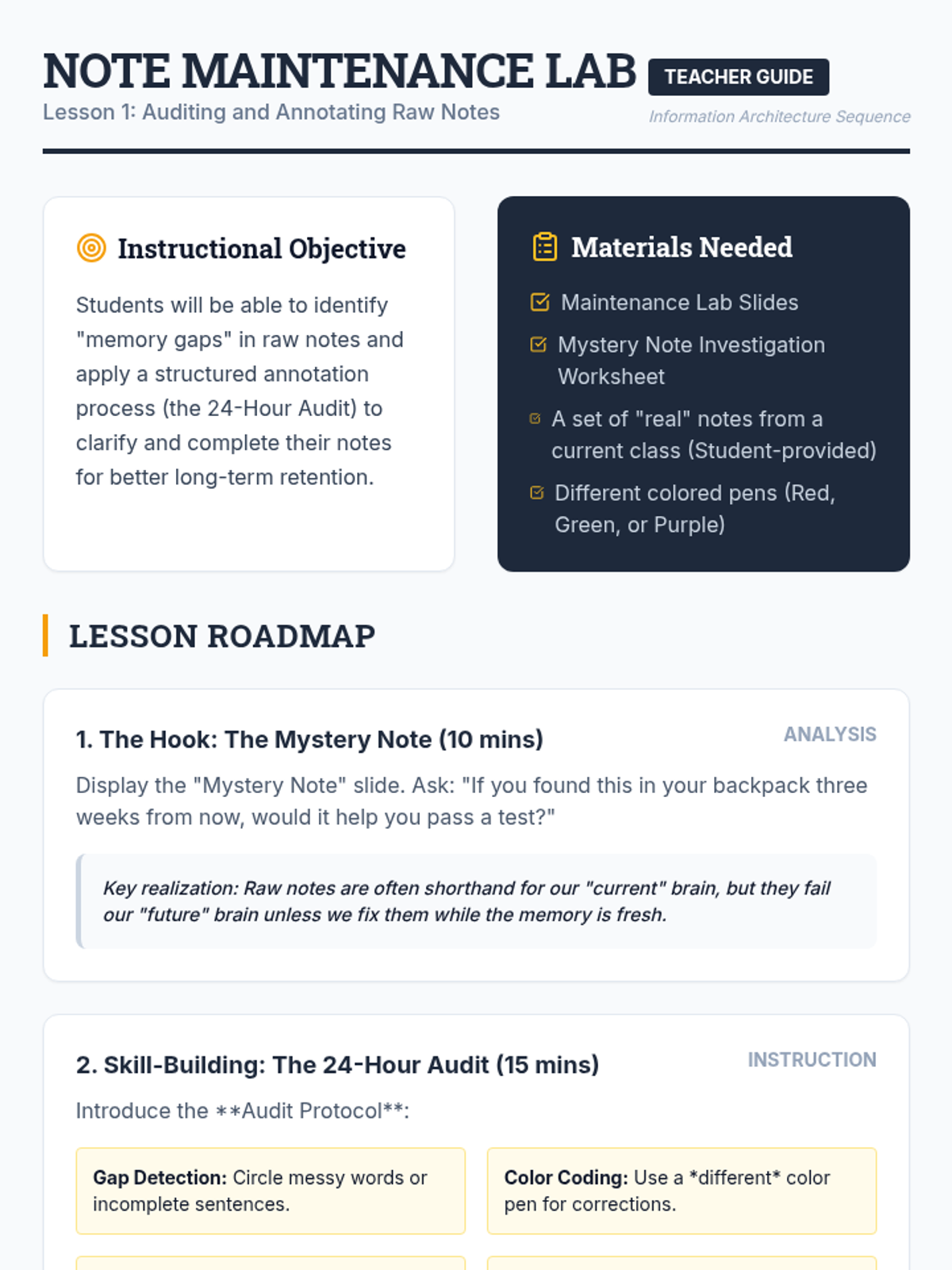
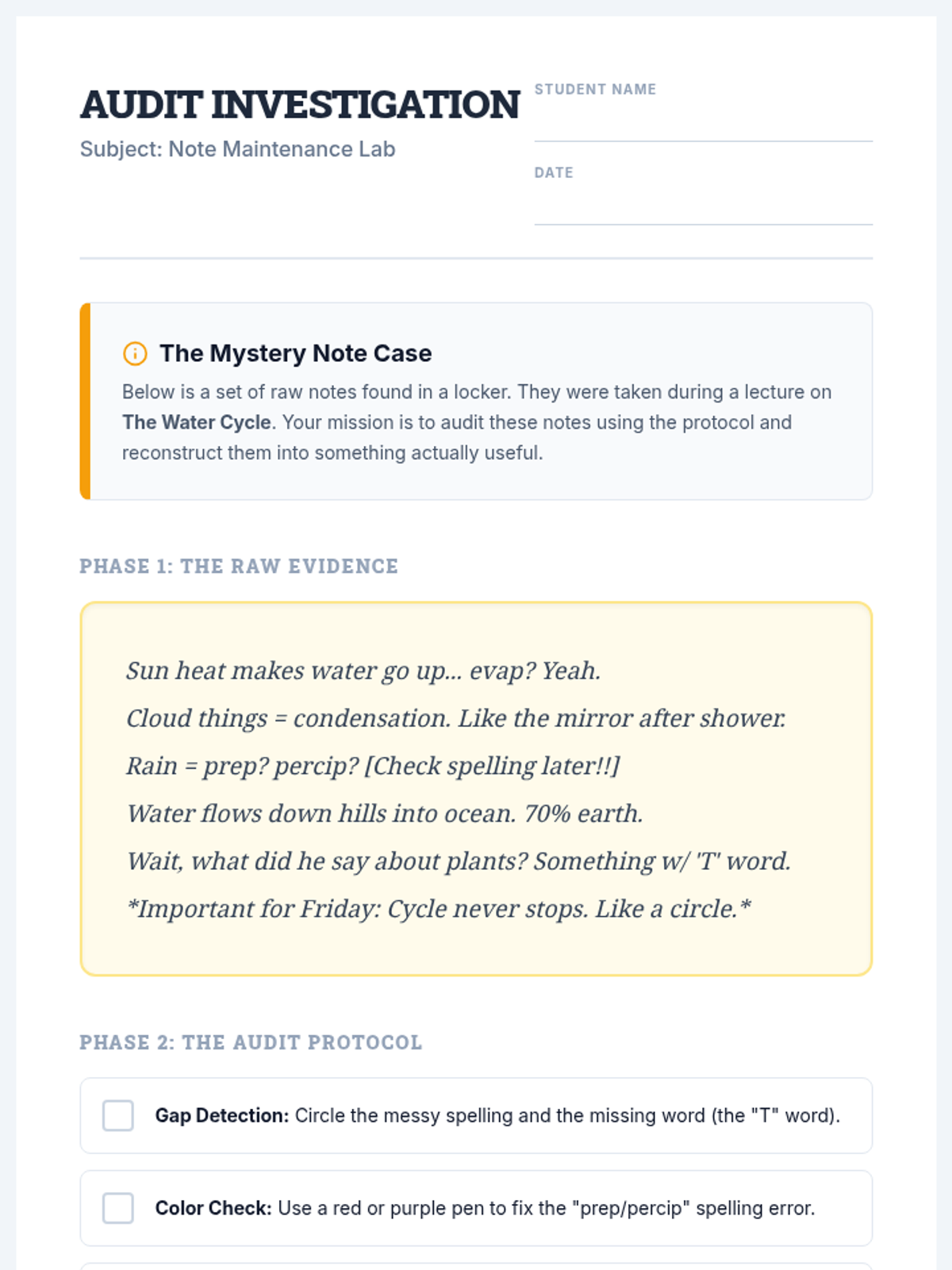
A 5-lesson sequence designed for 9th-grade students focusing on working memory support through note synthesis. Students progress from auditing raw notes to creating visual maps and condensed 'cheat sheets' to enhance retention and understanding.
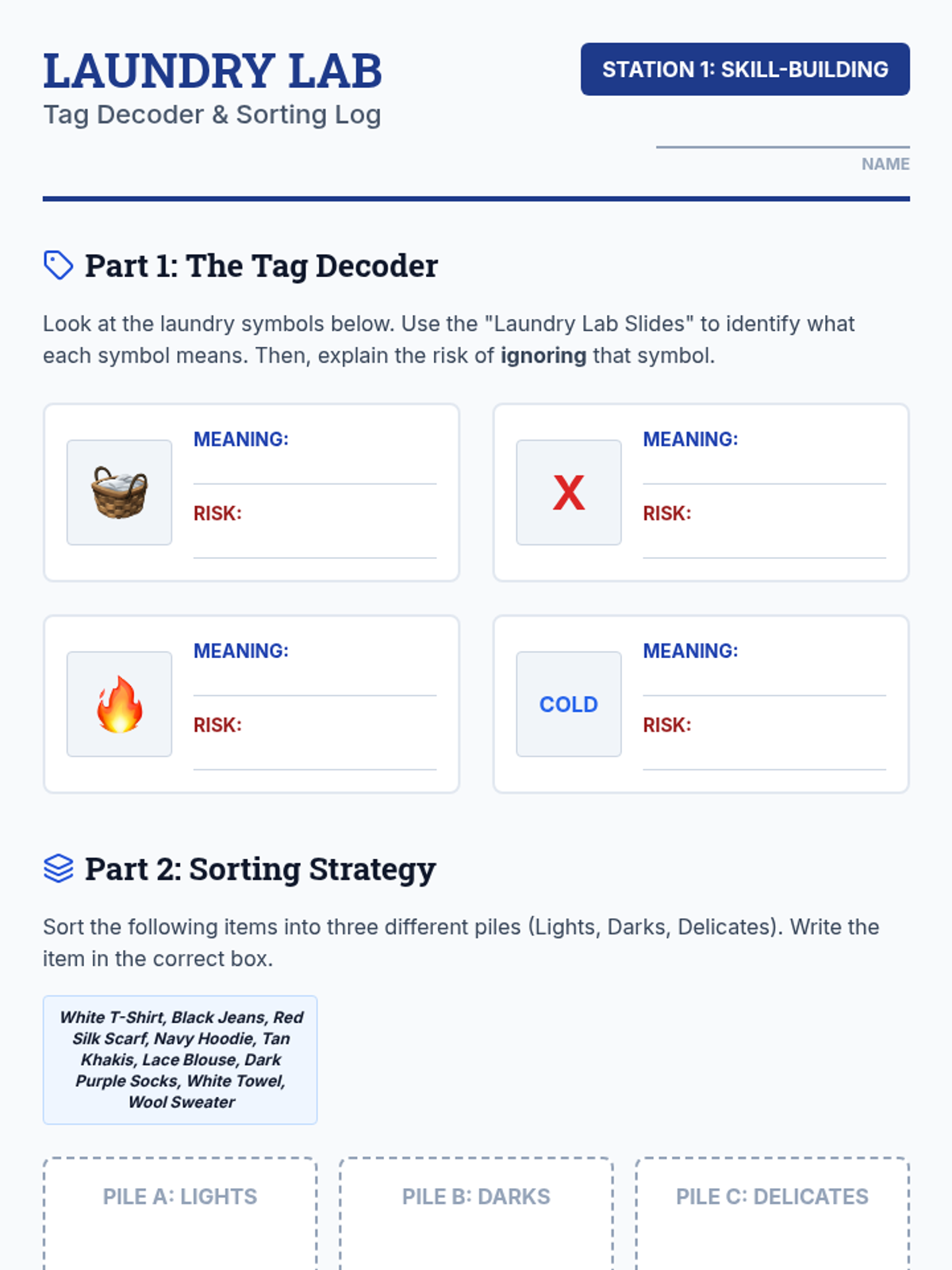
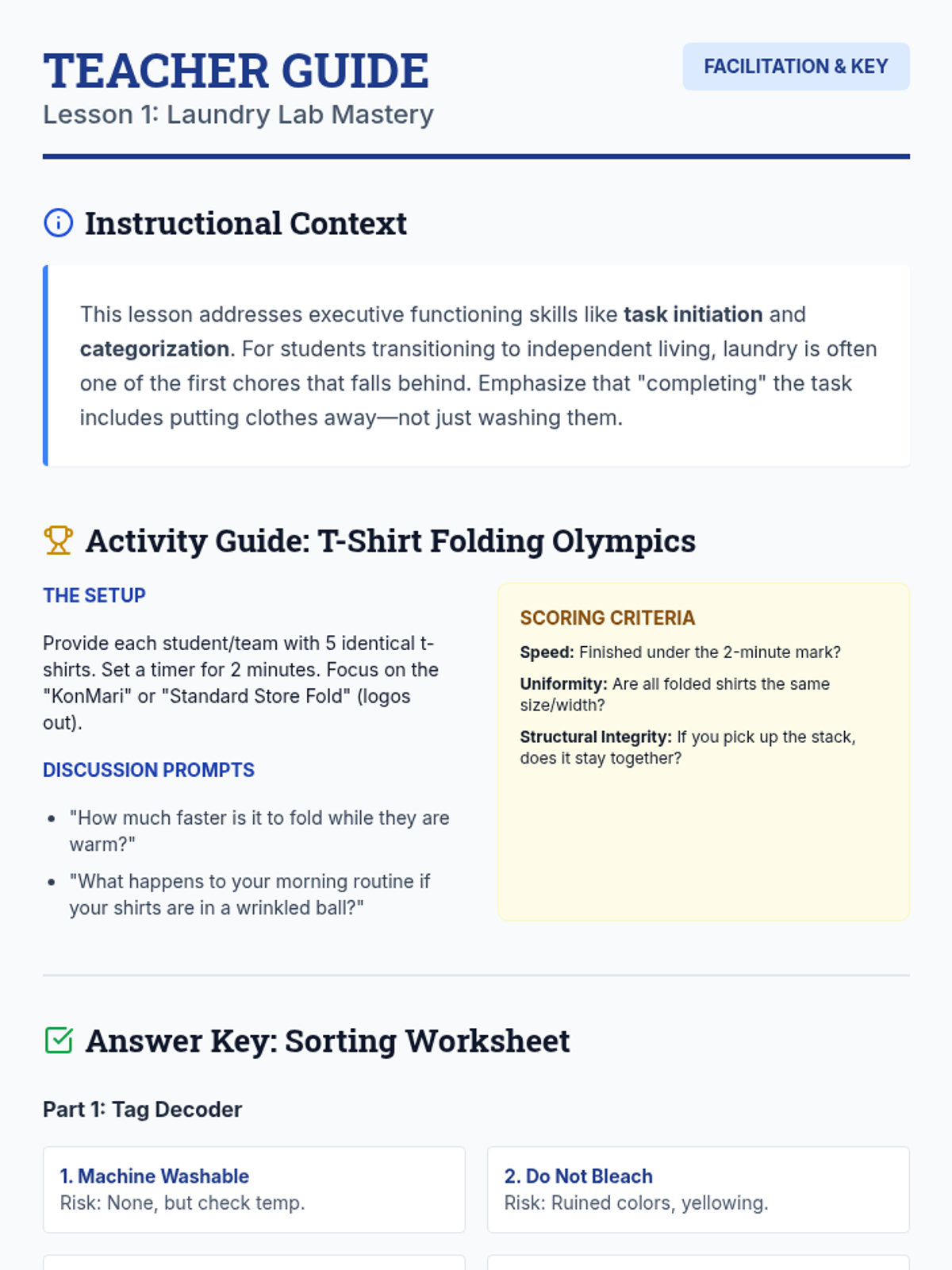
A mastery-based sequence focusing on the executive functioning required to run a household and manage daily logistics. Students engage in gamified challenges to master cleaning routines, laundry, transportation planning, and time management to build lifelong habits for independence.
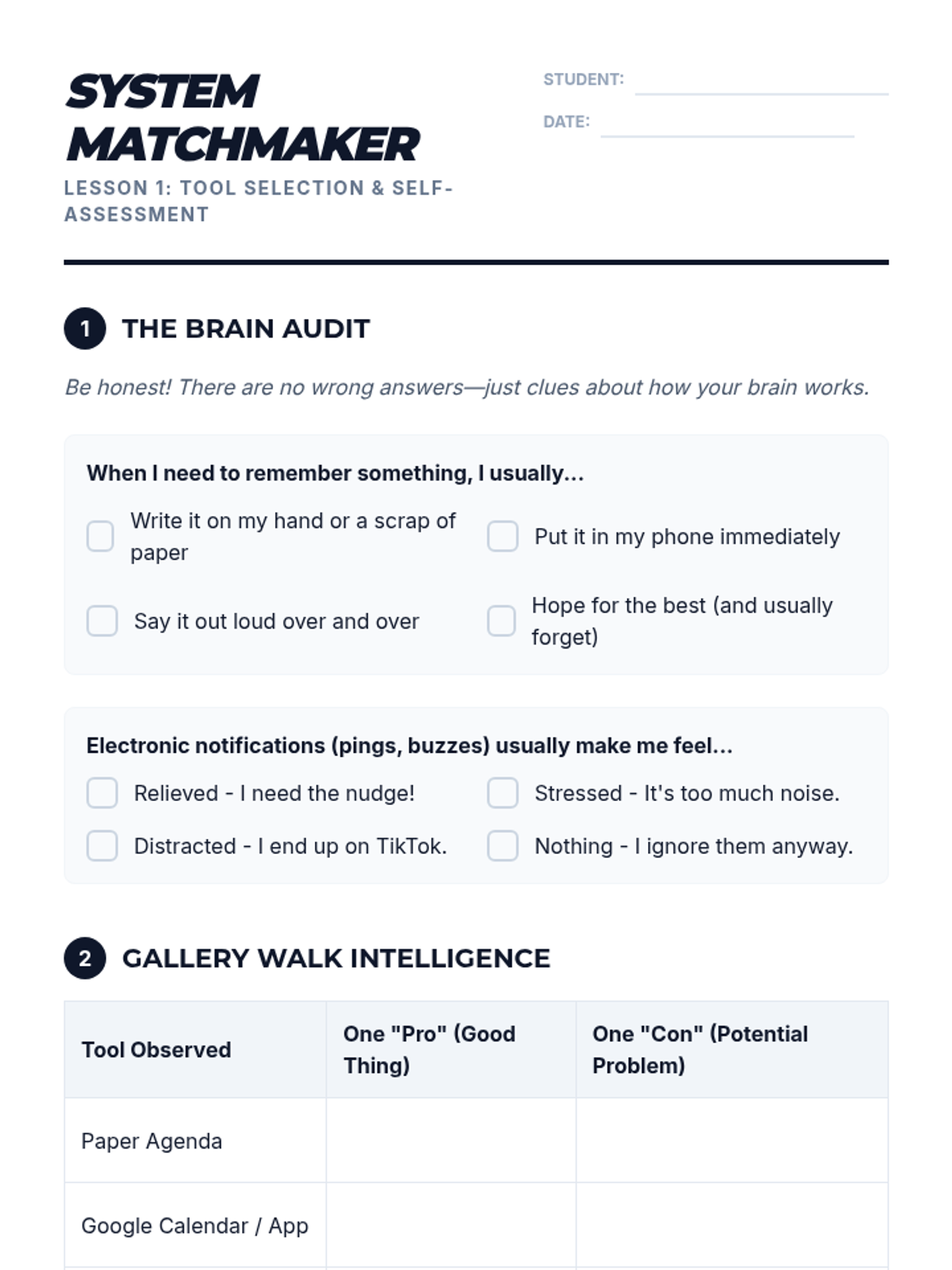
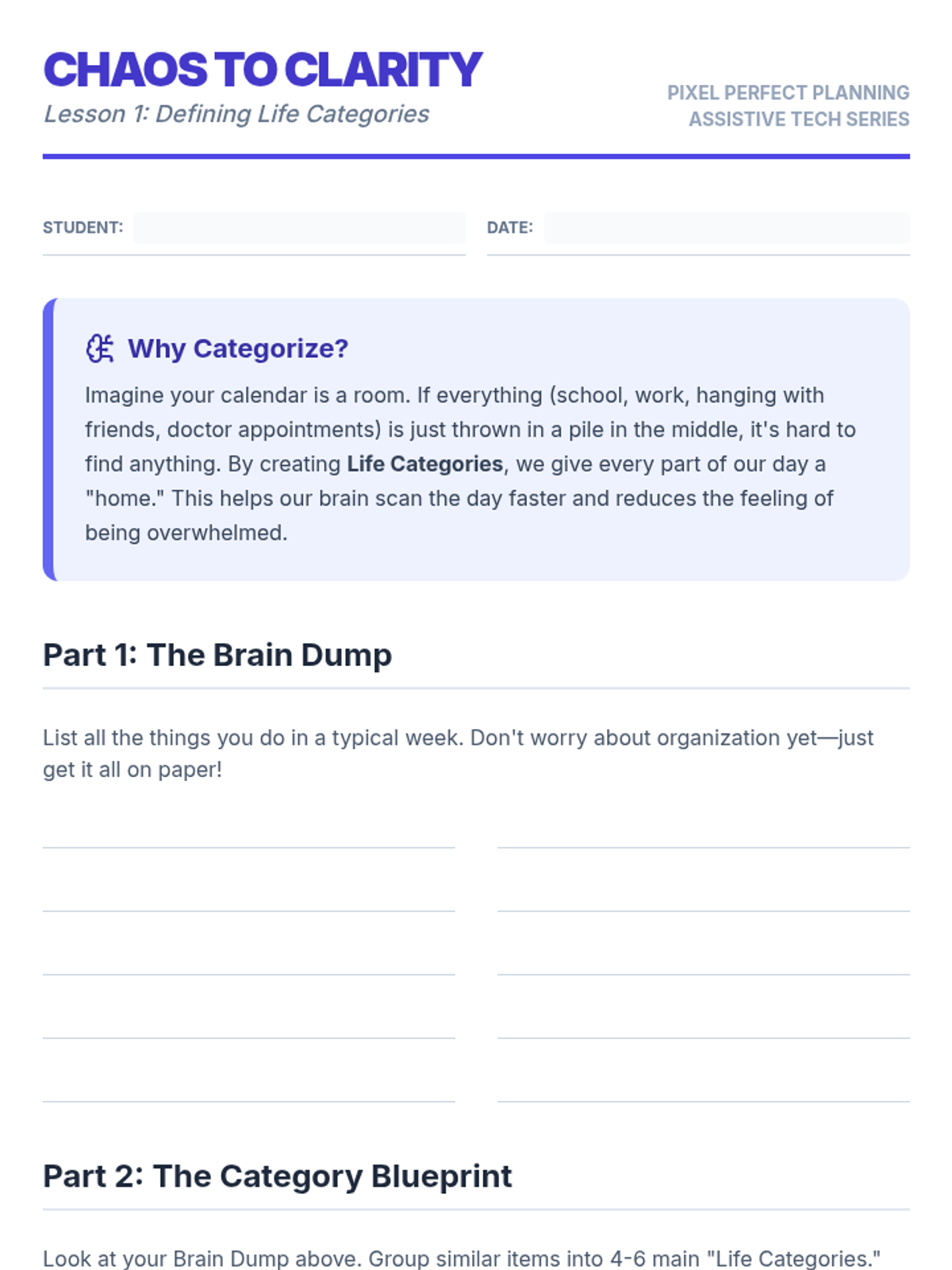
A comprehensive sequence designed to help 9th-grade students with executive function challenges develop, implement, and test personalized organizational systems. Students explore analog and digital tools, master calendar management, organize digital and physical spaces, and simulate real-world 'stress tests' to refine their chosen frameworks.
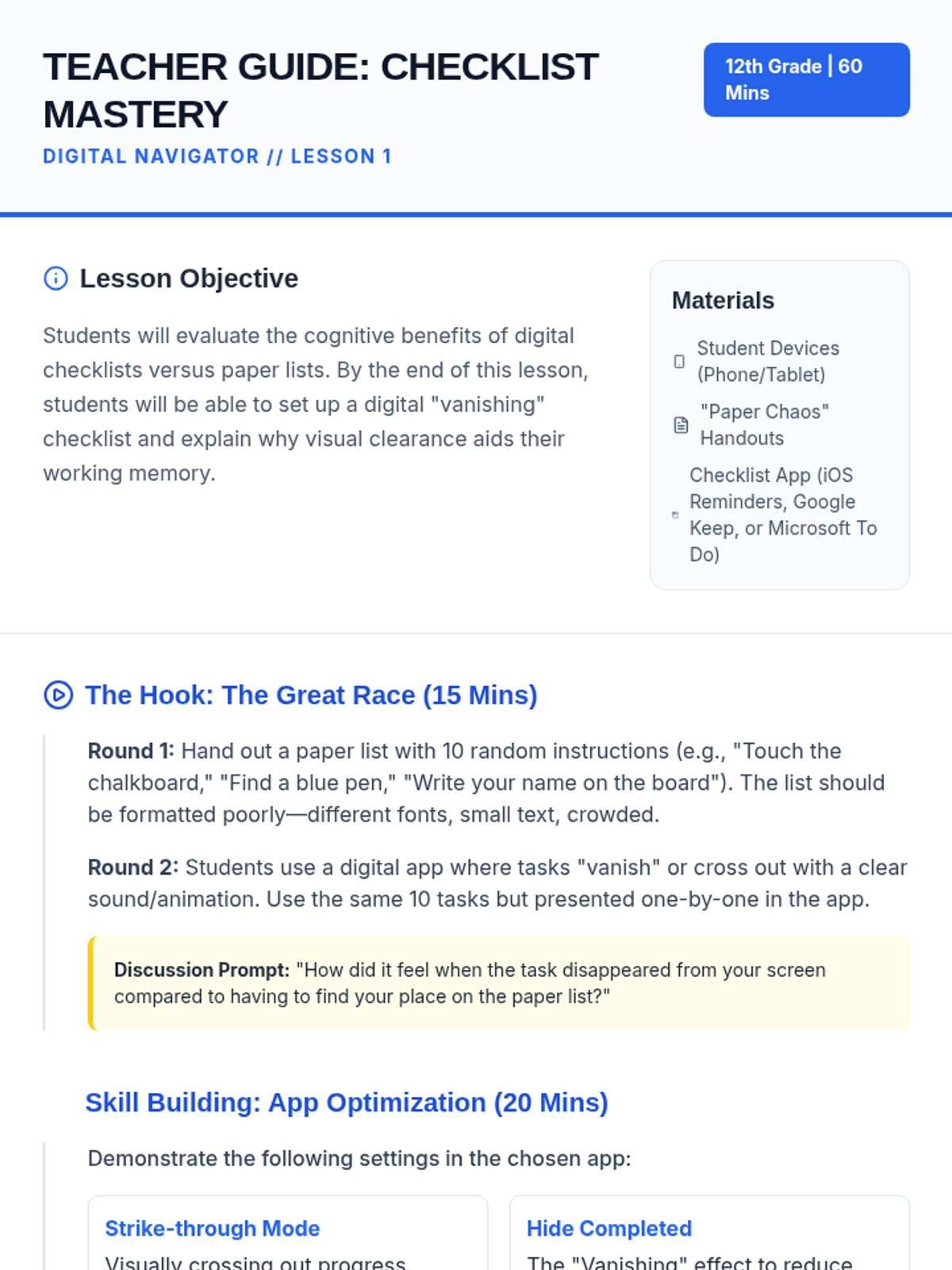
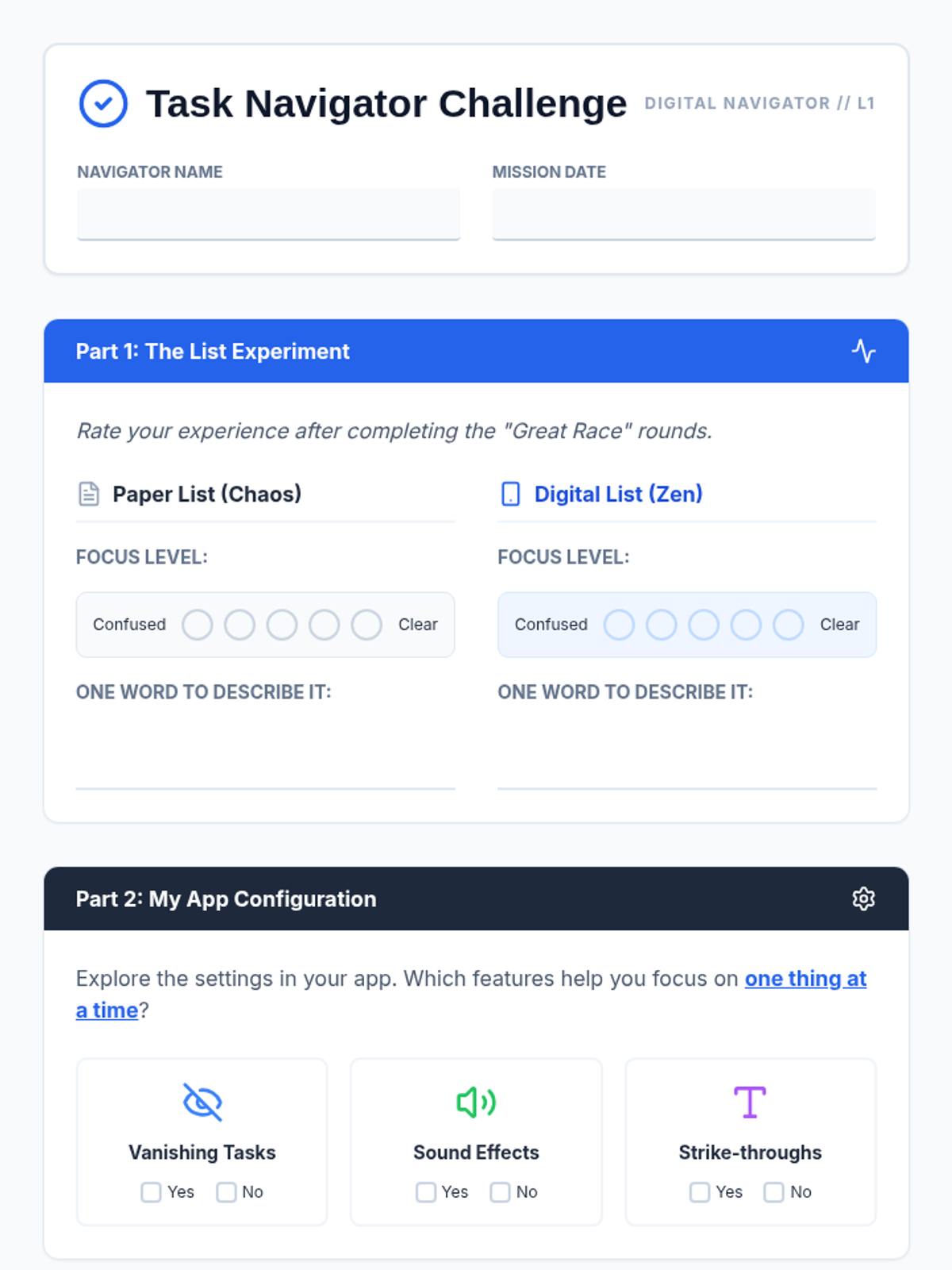
A 5-lesson sequence for 12th-grade students with working memory challenges, focusing on using assistive technology to break down complex tasks into manageable single-step directions. Students explore checklists, voice assistants, photo-based instructions, and QR codes to build independence through digital literacy.
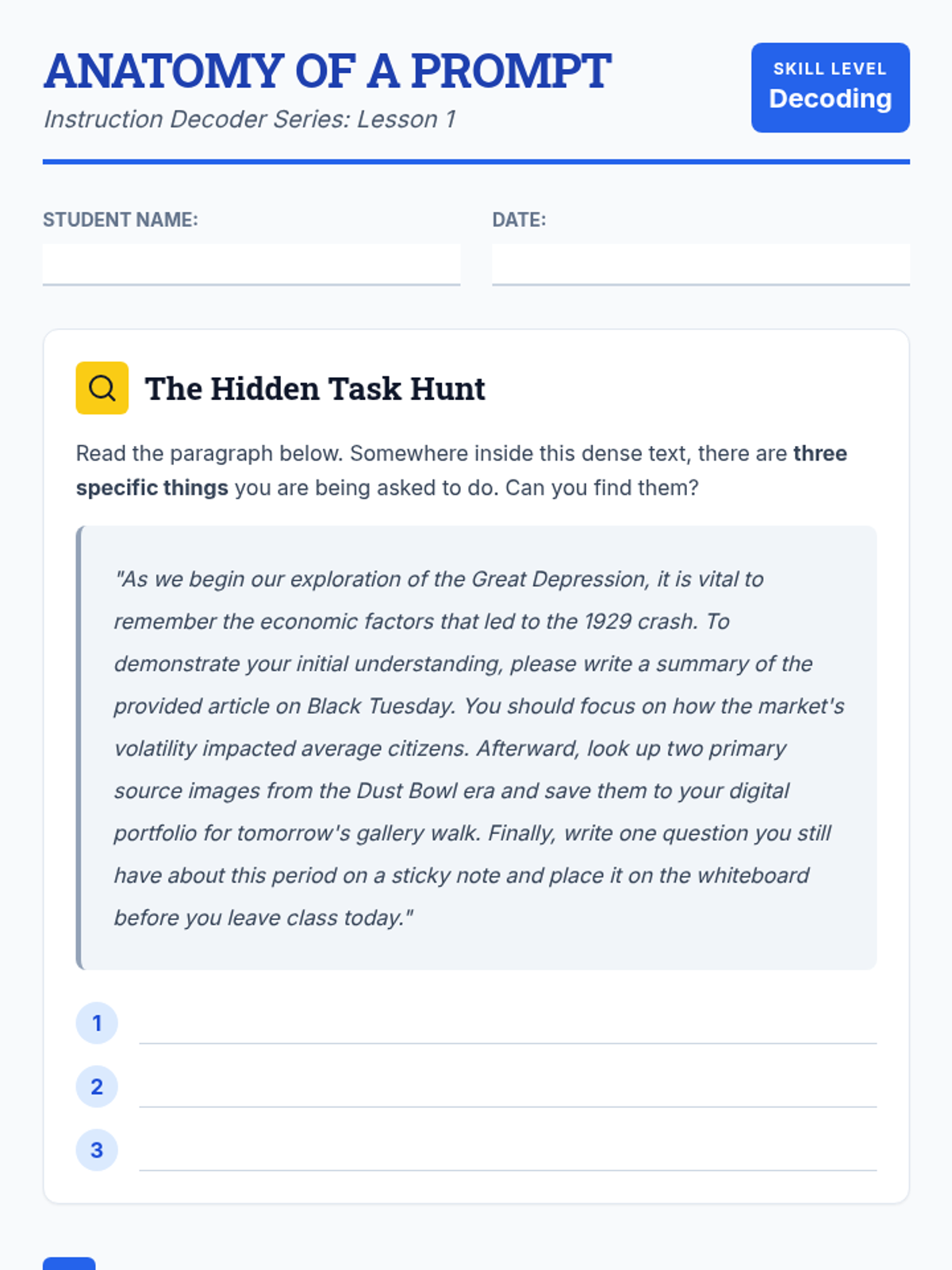
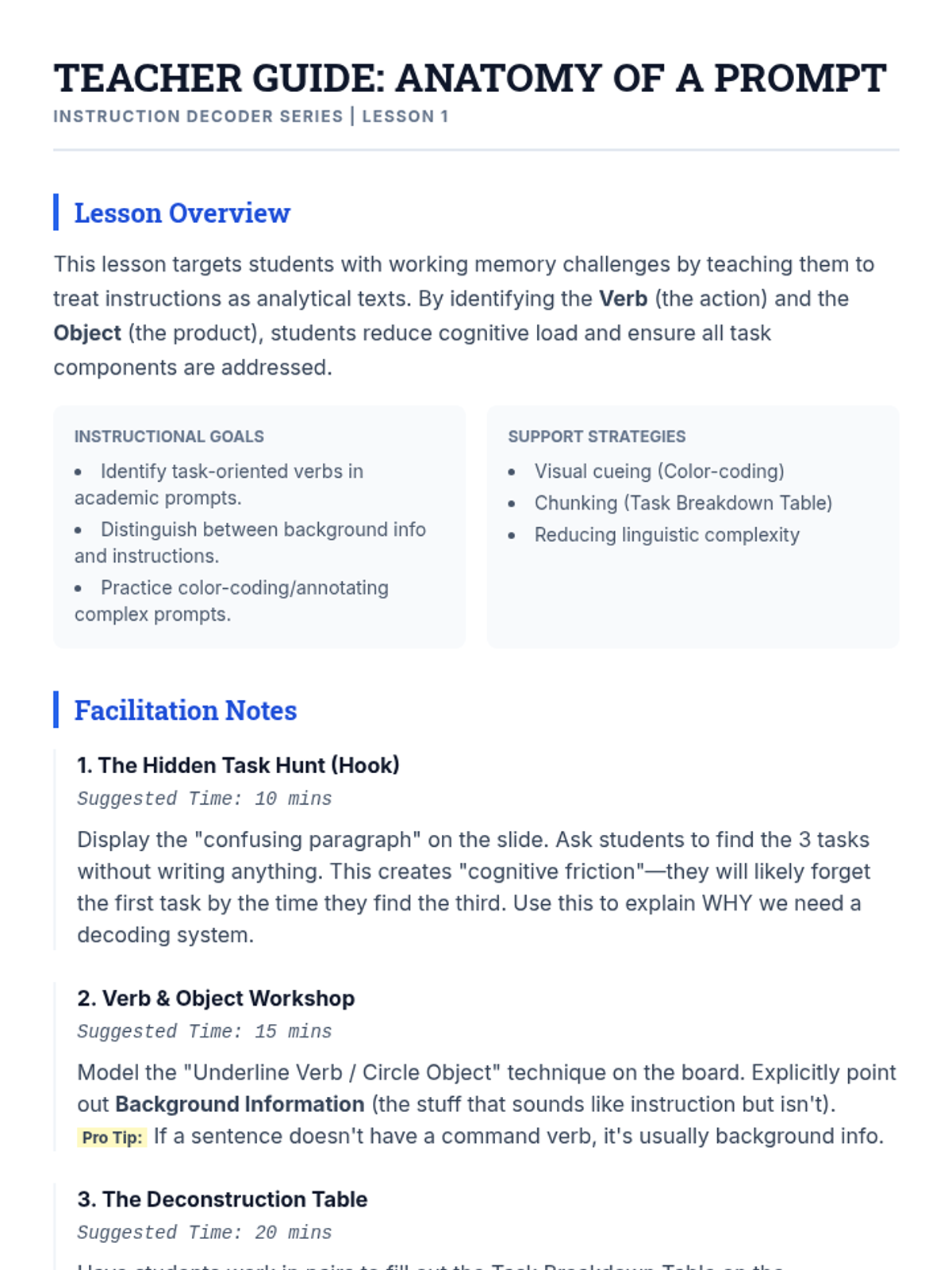
A specialized sequence for 9th-grade students focusing on decoding complex multi-step academic directions. Students learn to treat instructions as analytical texts, breaking them down into manageable, actionable steps to support working memory and executive function.
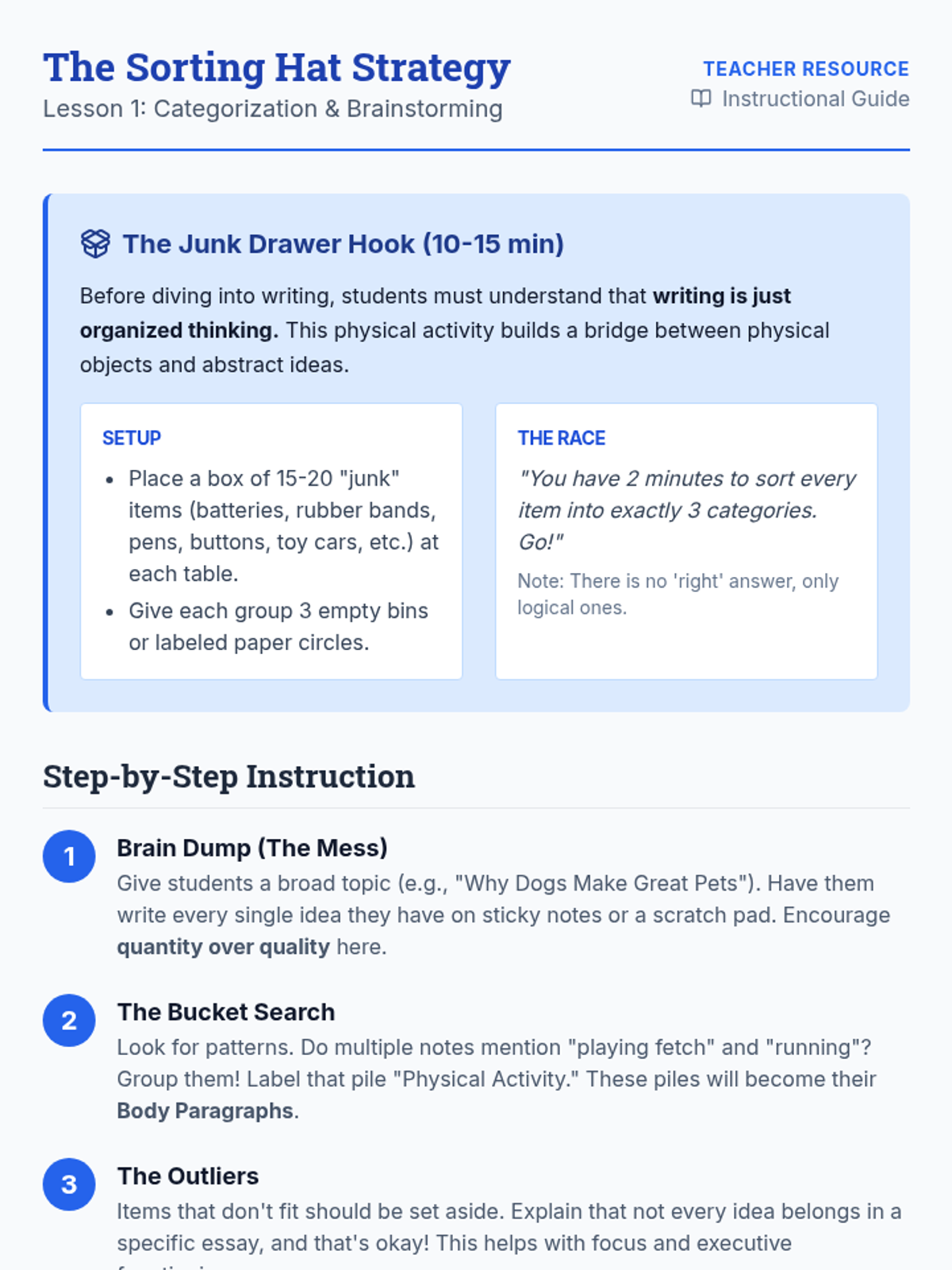
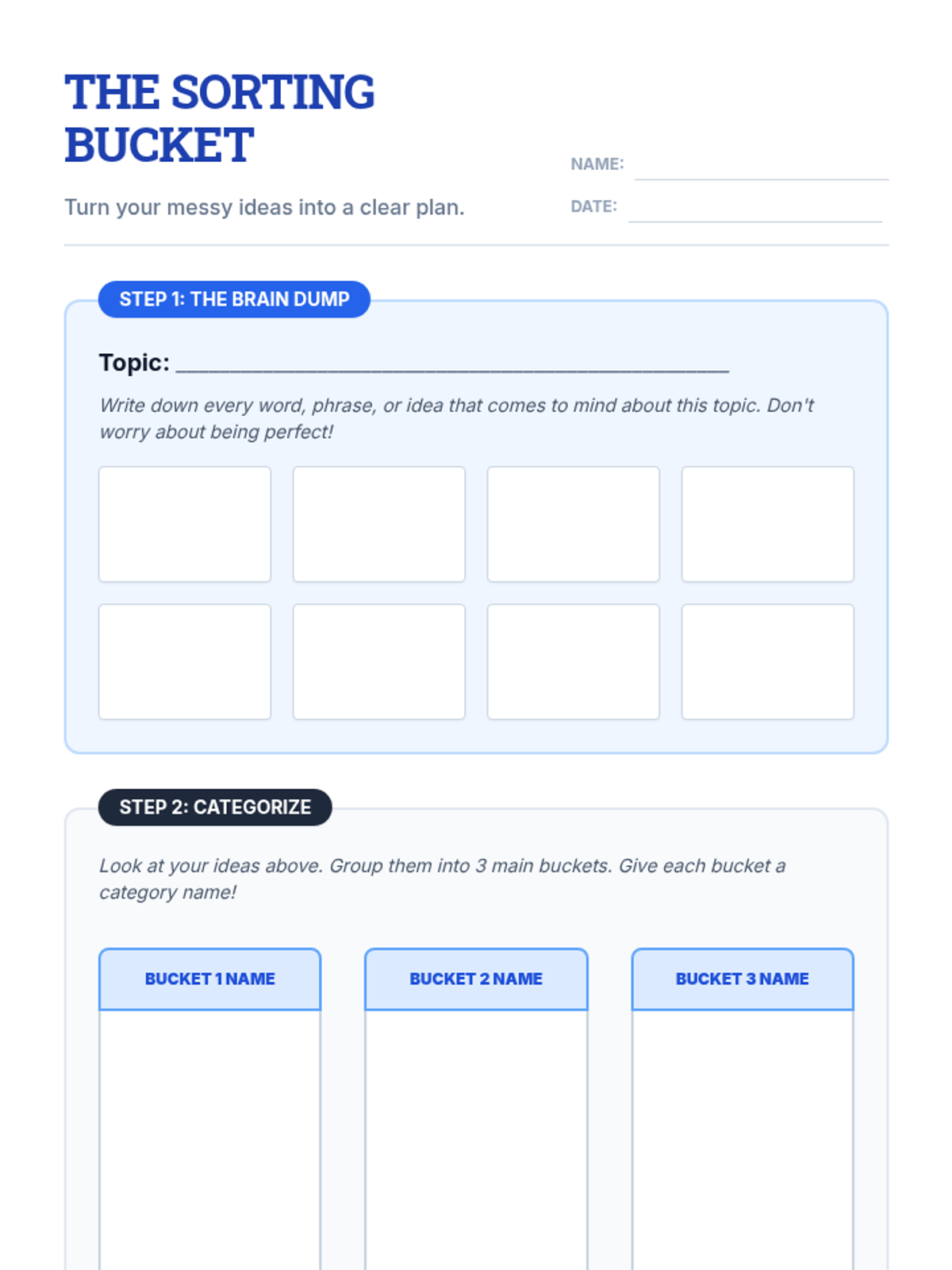
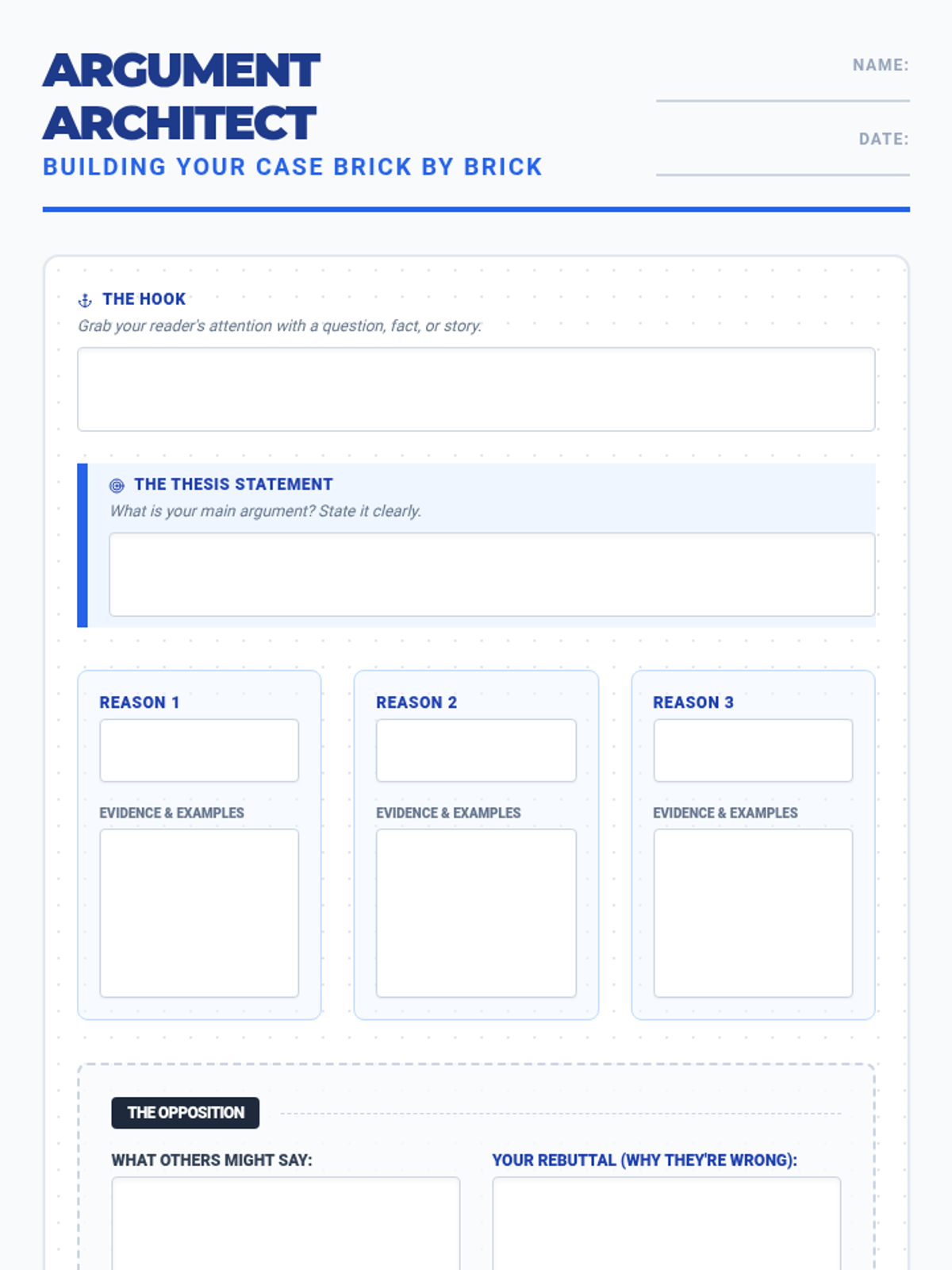
This writing sequence helps 9th-grade students with executive functioning challenges master expository structure through visual graphic organizers. Students progress from categorizing ideas to building thesis statements, aligning evidence, and drafting a cohesive essay.
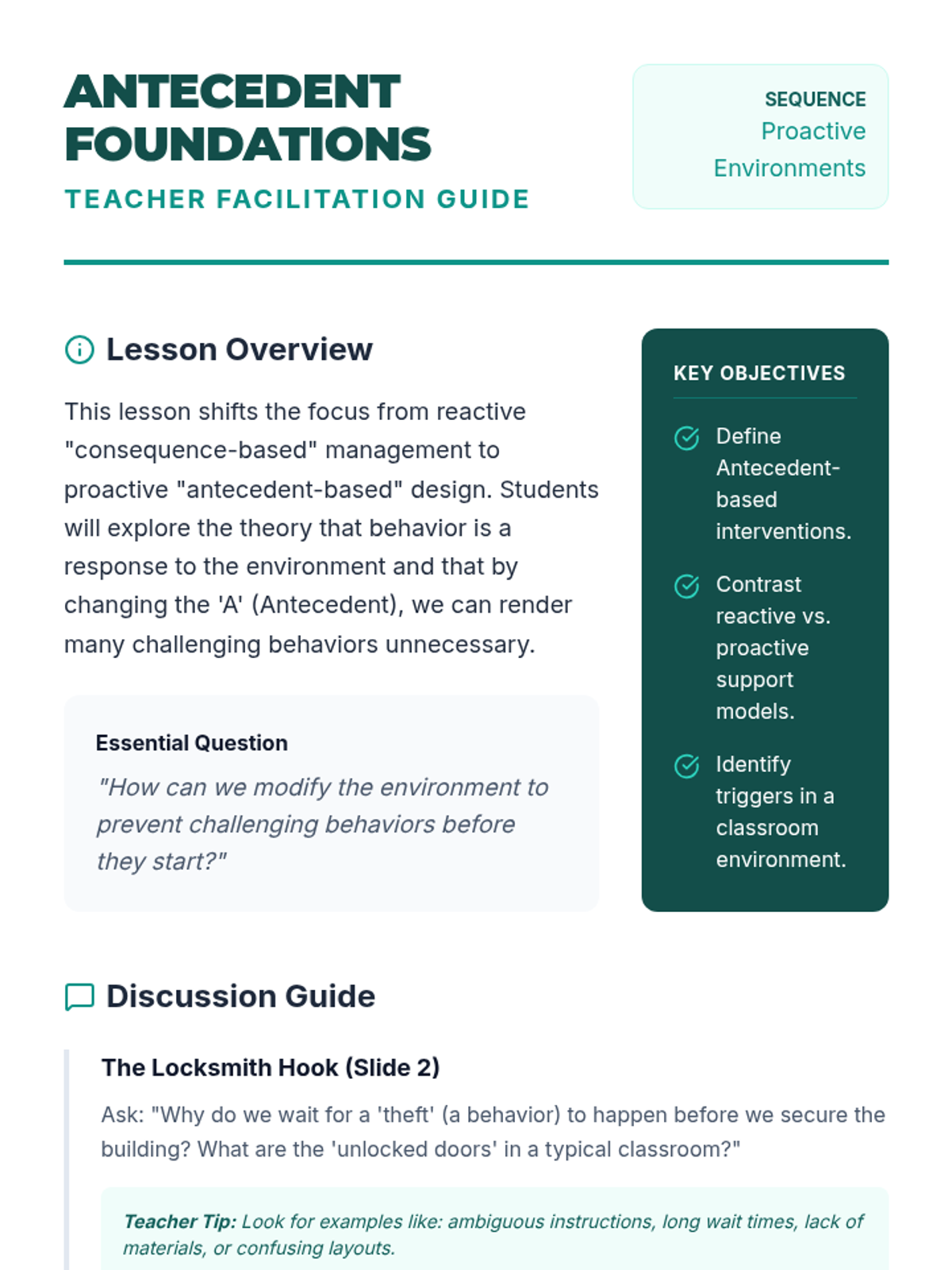
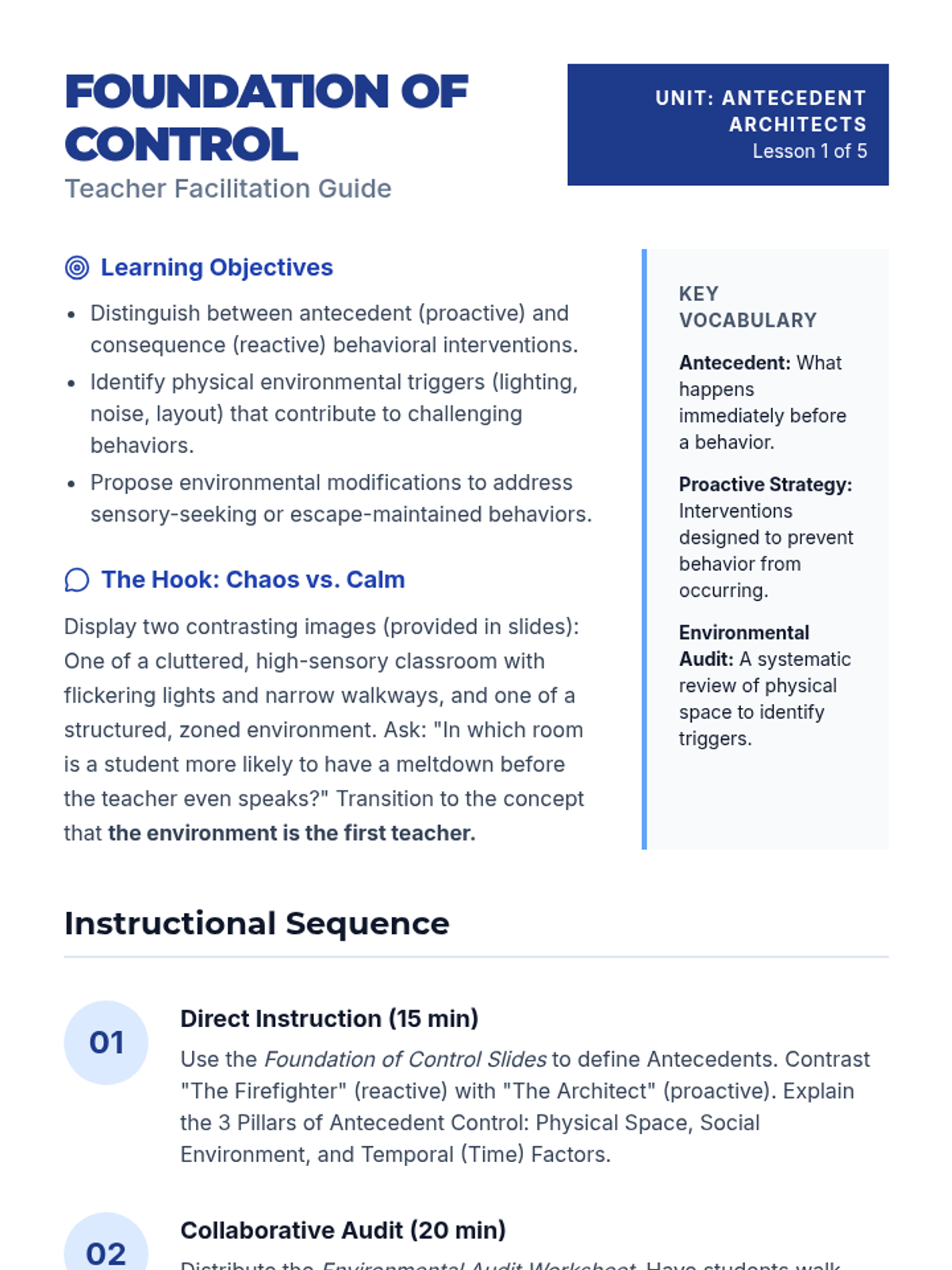
A comprehensive sequence for 12th-grade students exploring proactive environmental strategies in behavioral support. The sequence covers antecedent interventions, visual supports, task modifications, non-contingent reinforcement, and culminates in a final design project for a proactive classroom environment.
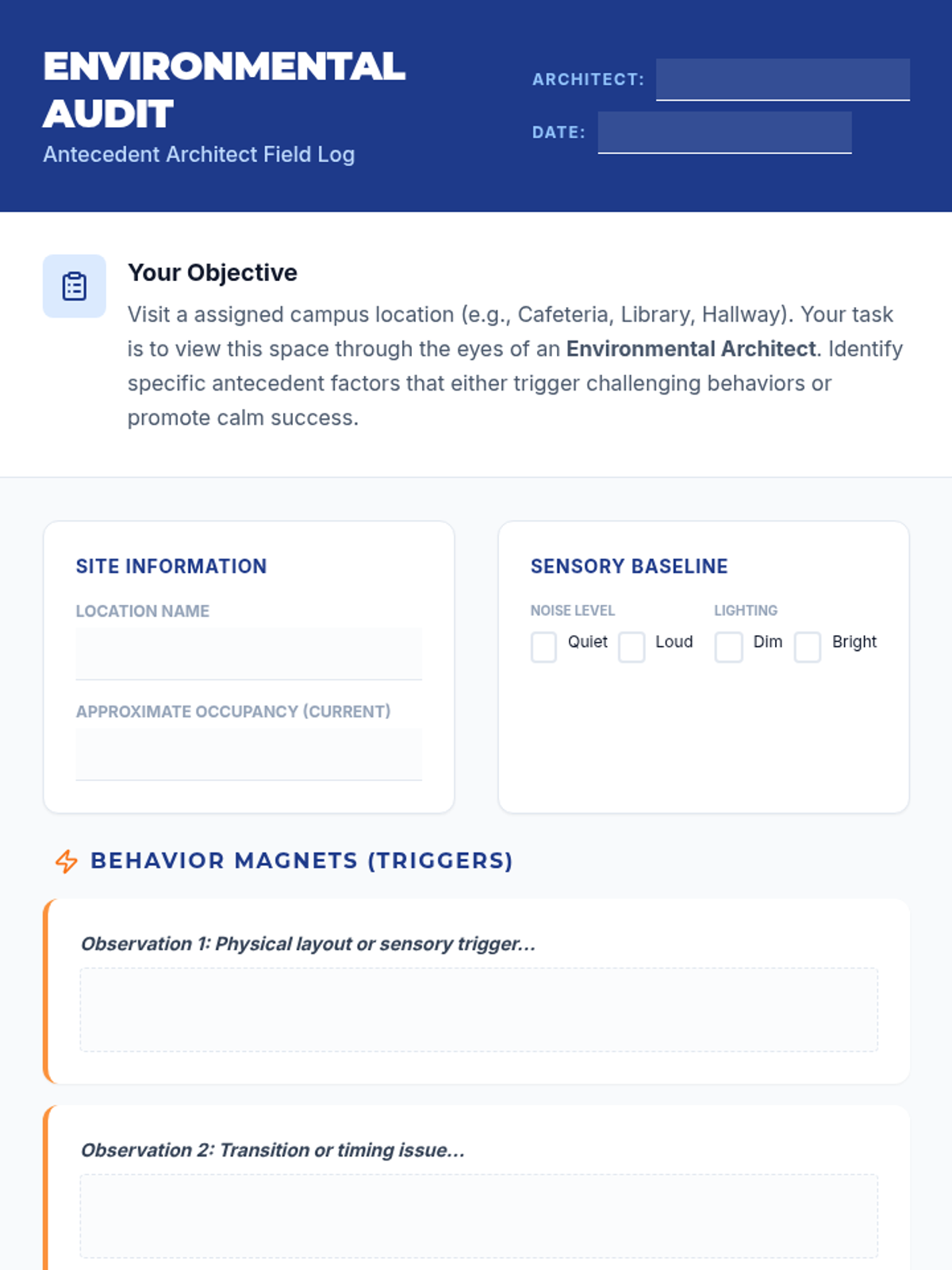
A project-based unit for 12th-grade students focused on designing proactive environments and antecedent-based interventions to prevent challenging behaviors. Students act as 'Environmental Architects' to audit spaces, create visual supports, and modify tasks to support behavioral success.
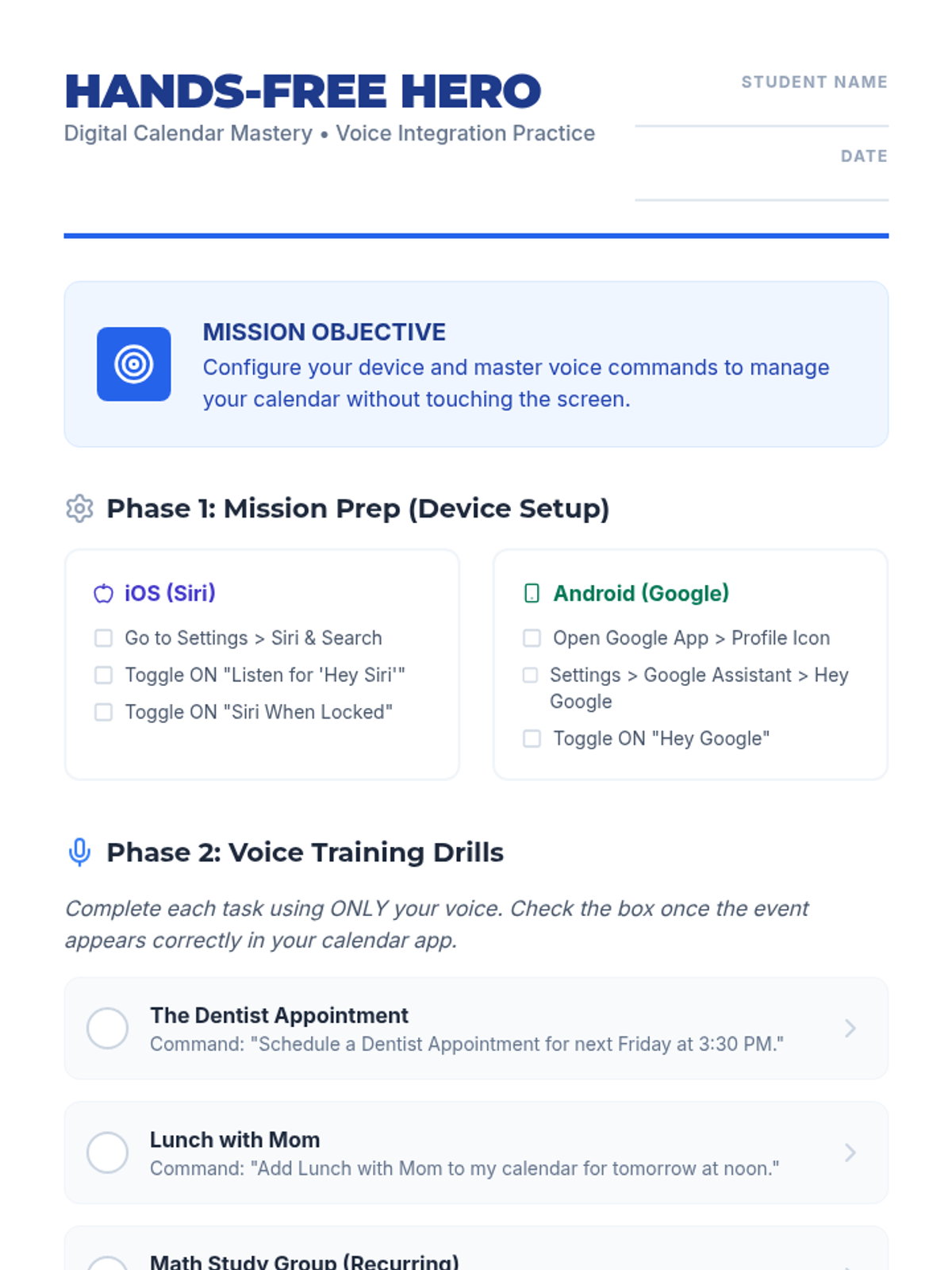
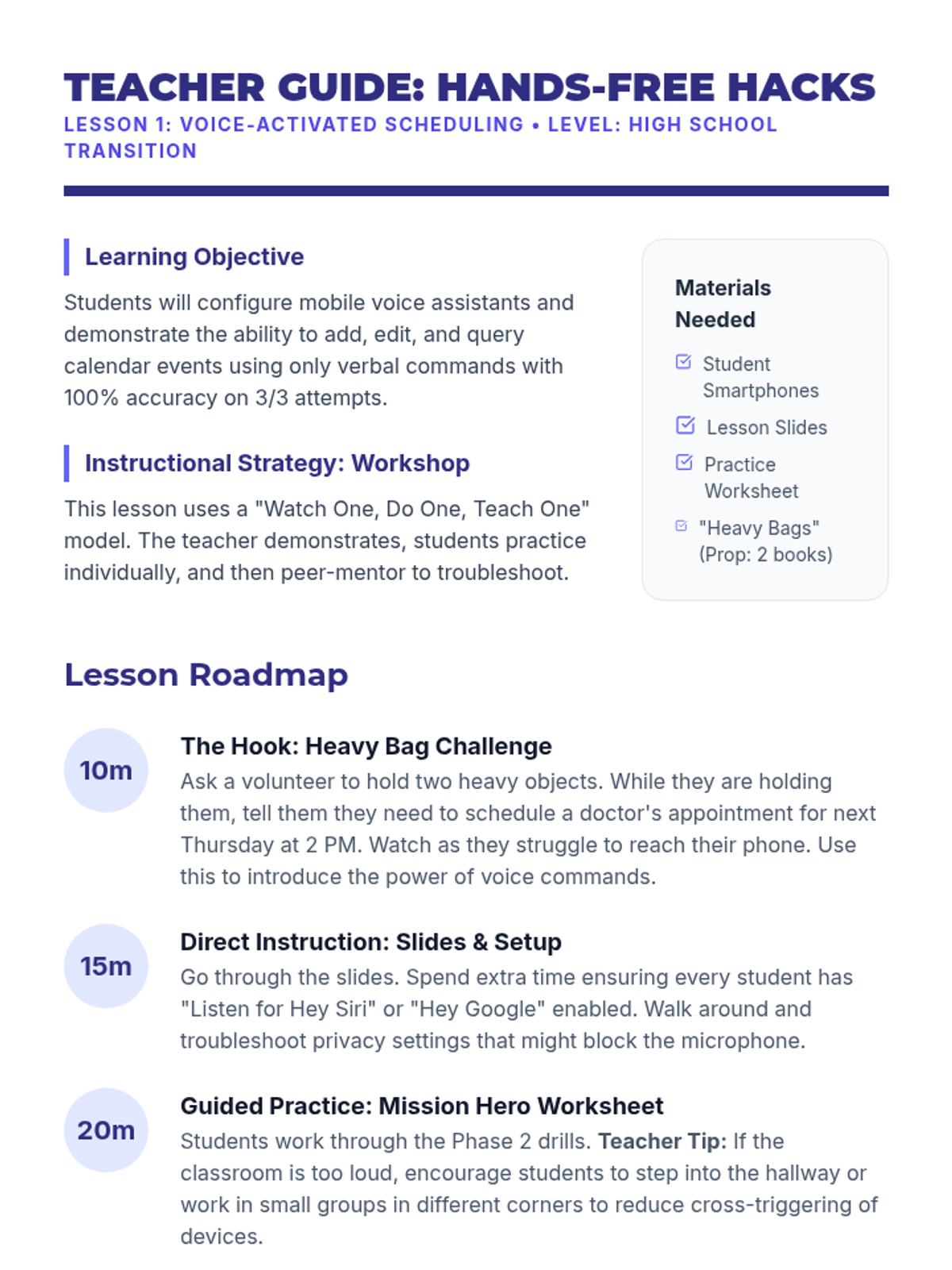
A comprehensive sequence for 12th-grade students focusing on utilizing mobile assistive technology for calendar management, transitioning from basic voice input to complex real-world navigation and troubleshooting.
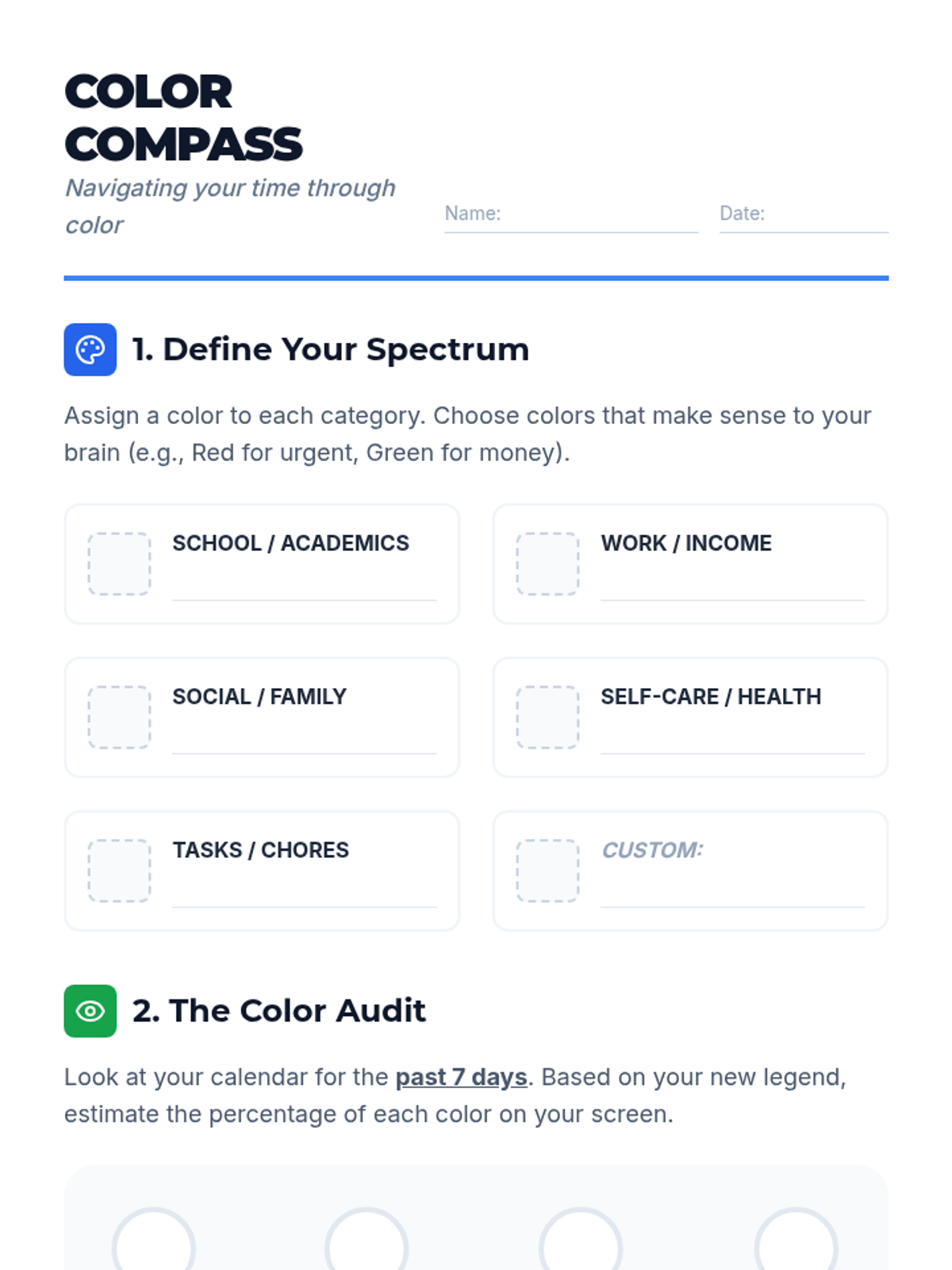
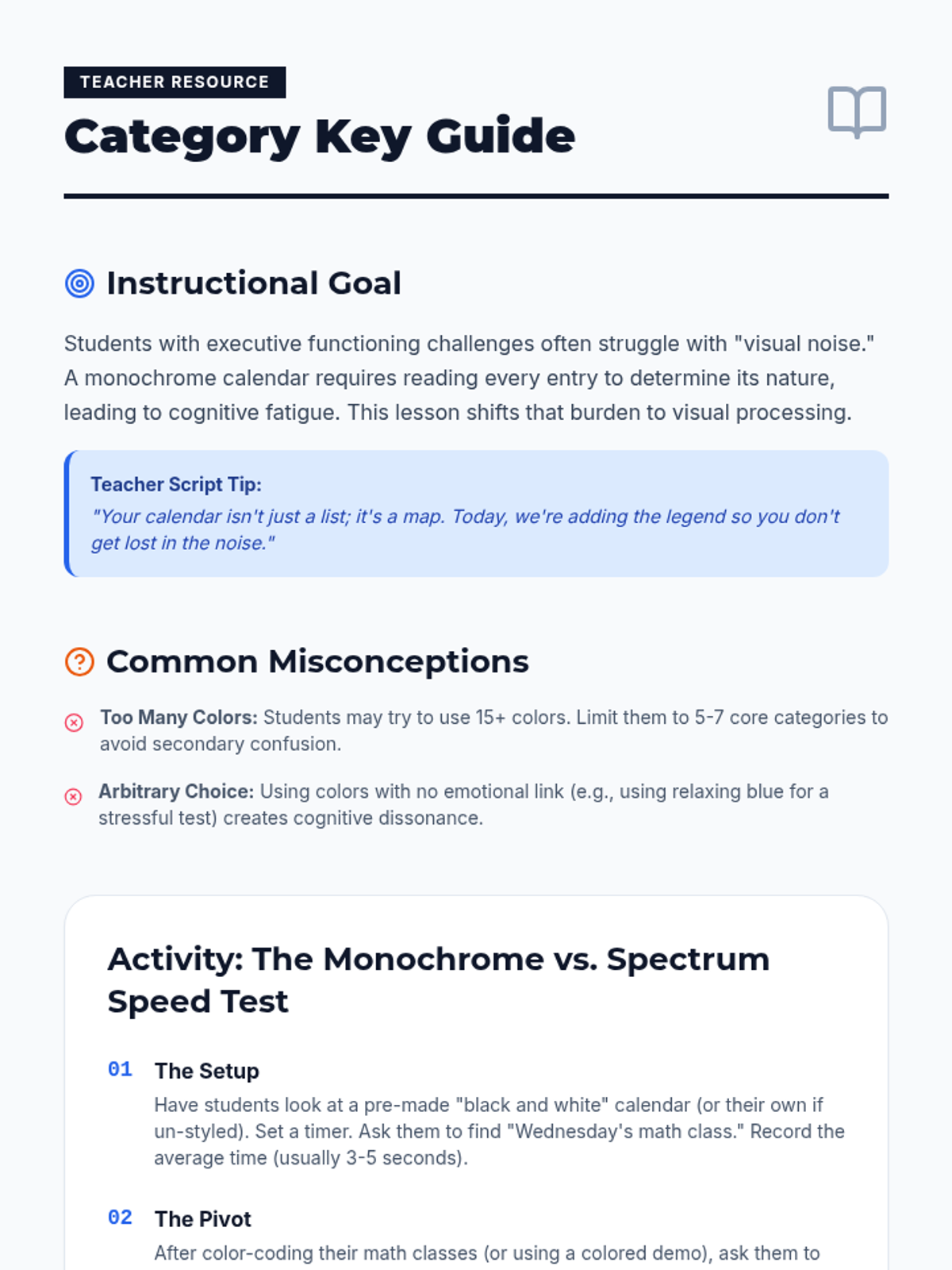
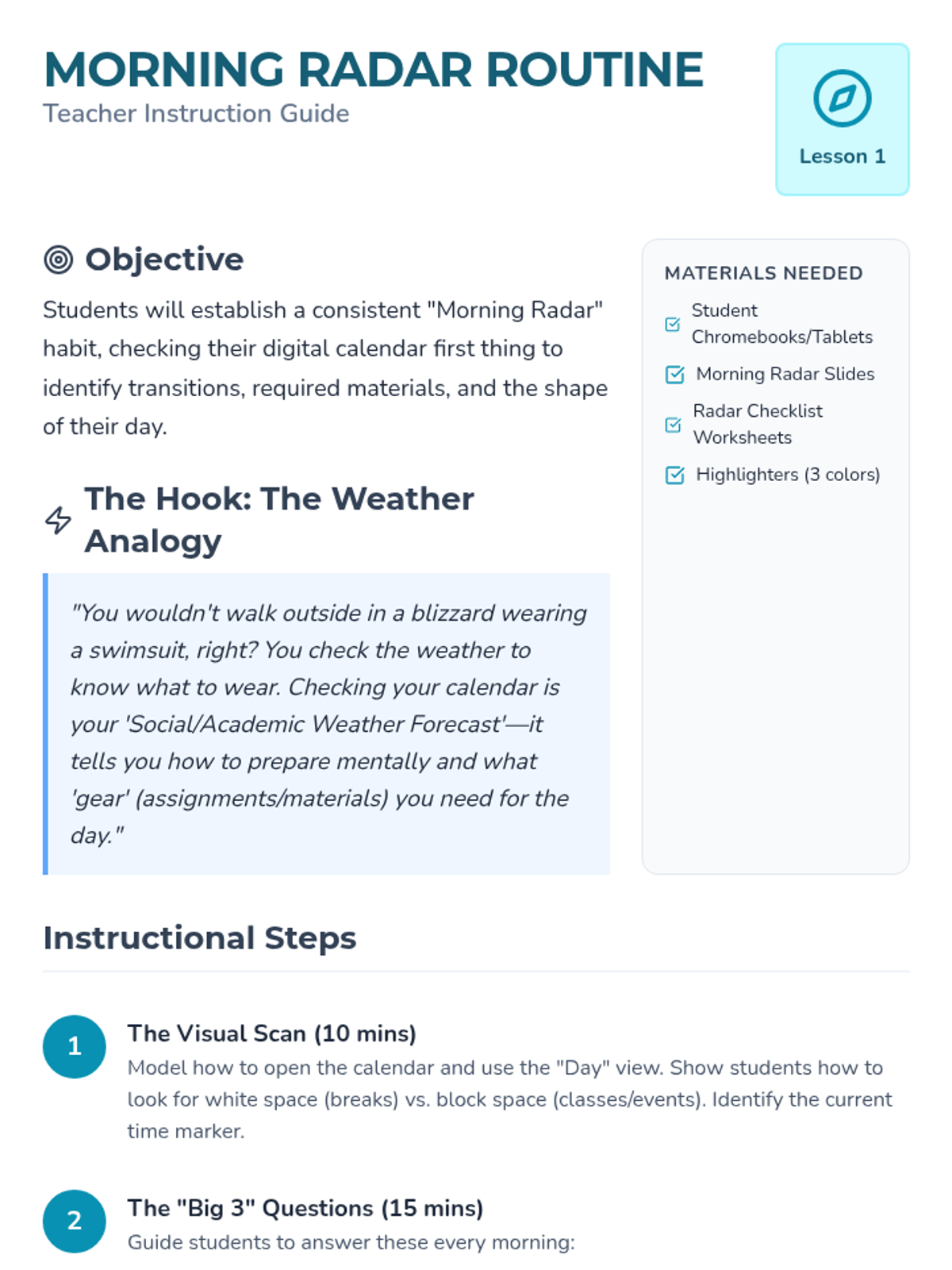
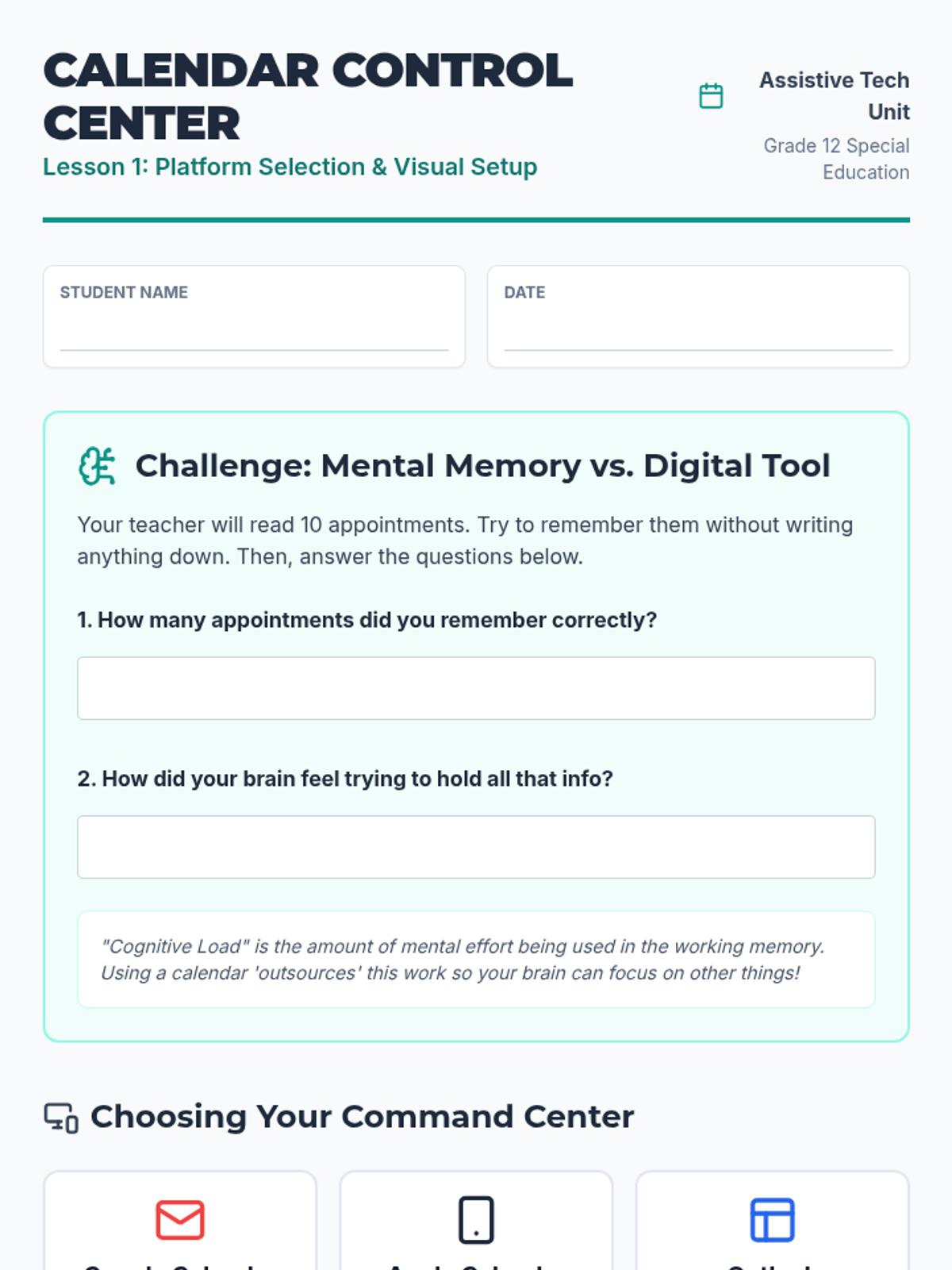
This sequence teaches 12th-grade students with executive functioning needs how to leverage digital calendar features as assistive technology. Students progress from visual organization through color-coding to advanced notification strategies, time blocking, and transition management, culminating in a personalized 'Alert Protocol' for self-regulation and independence.
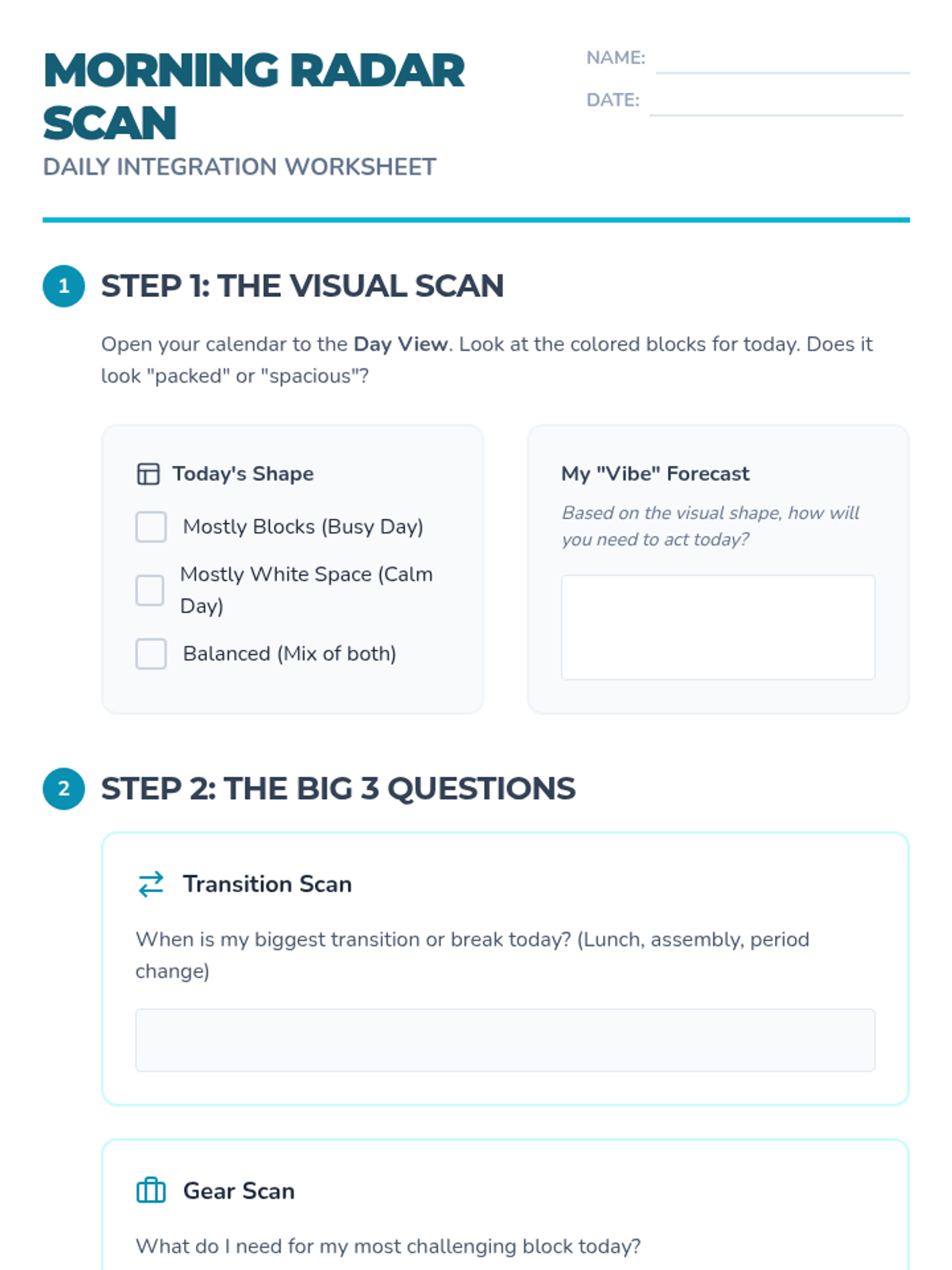
This sequence focuses on habit formation, maintenance, and the social aspects of calendar use for students with assistive technology needs. Students explore daily routines, syncing, troubleshooting, and sharing schedules to build independence and self-advocacy.
A metacognitive sequence helping students understand the executive functions behind organization through case studies, environmental analysis, digital management, and routine formation.
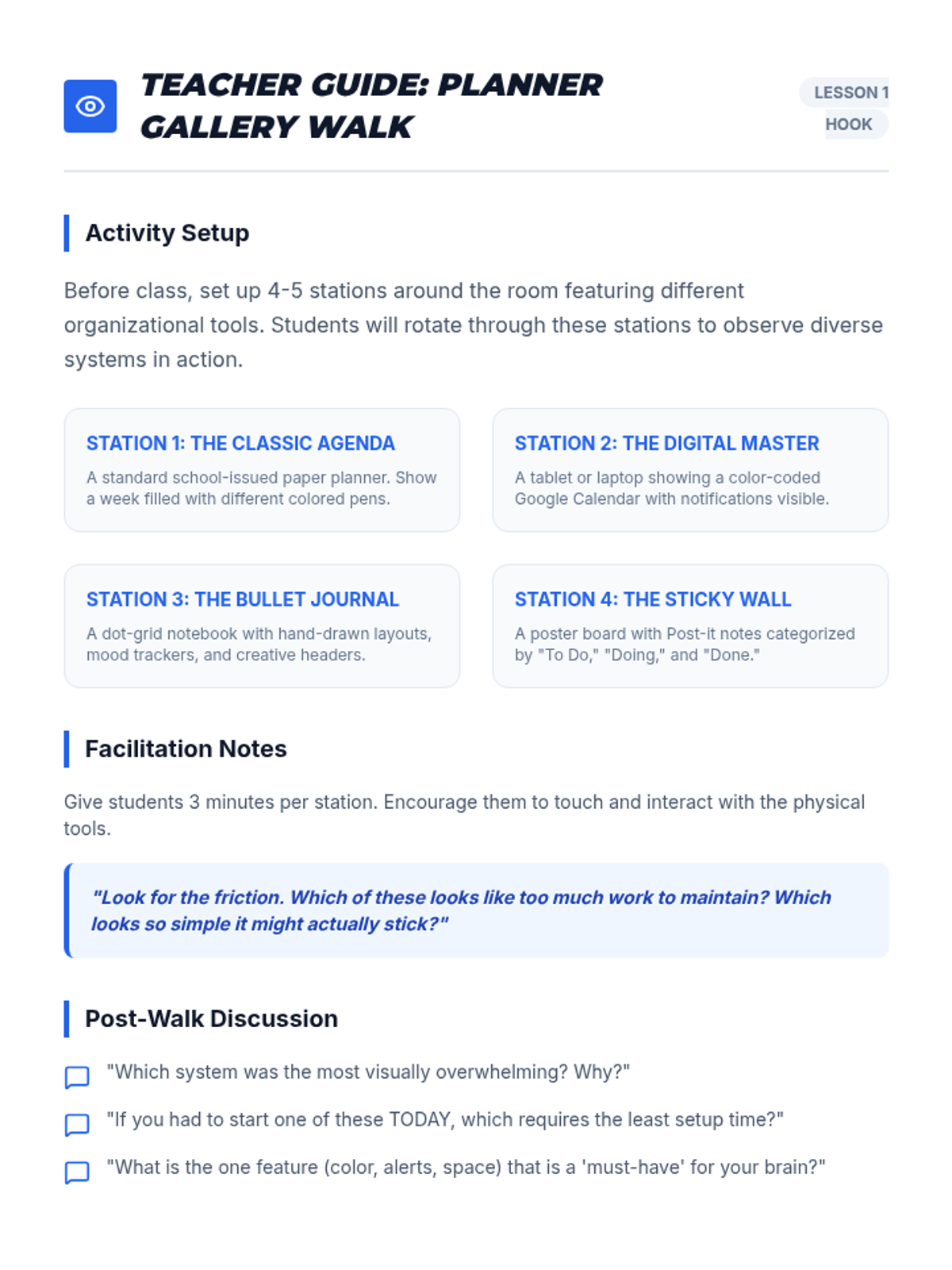
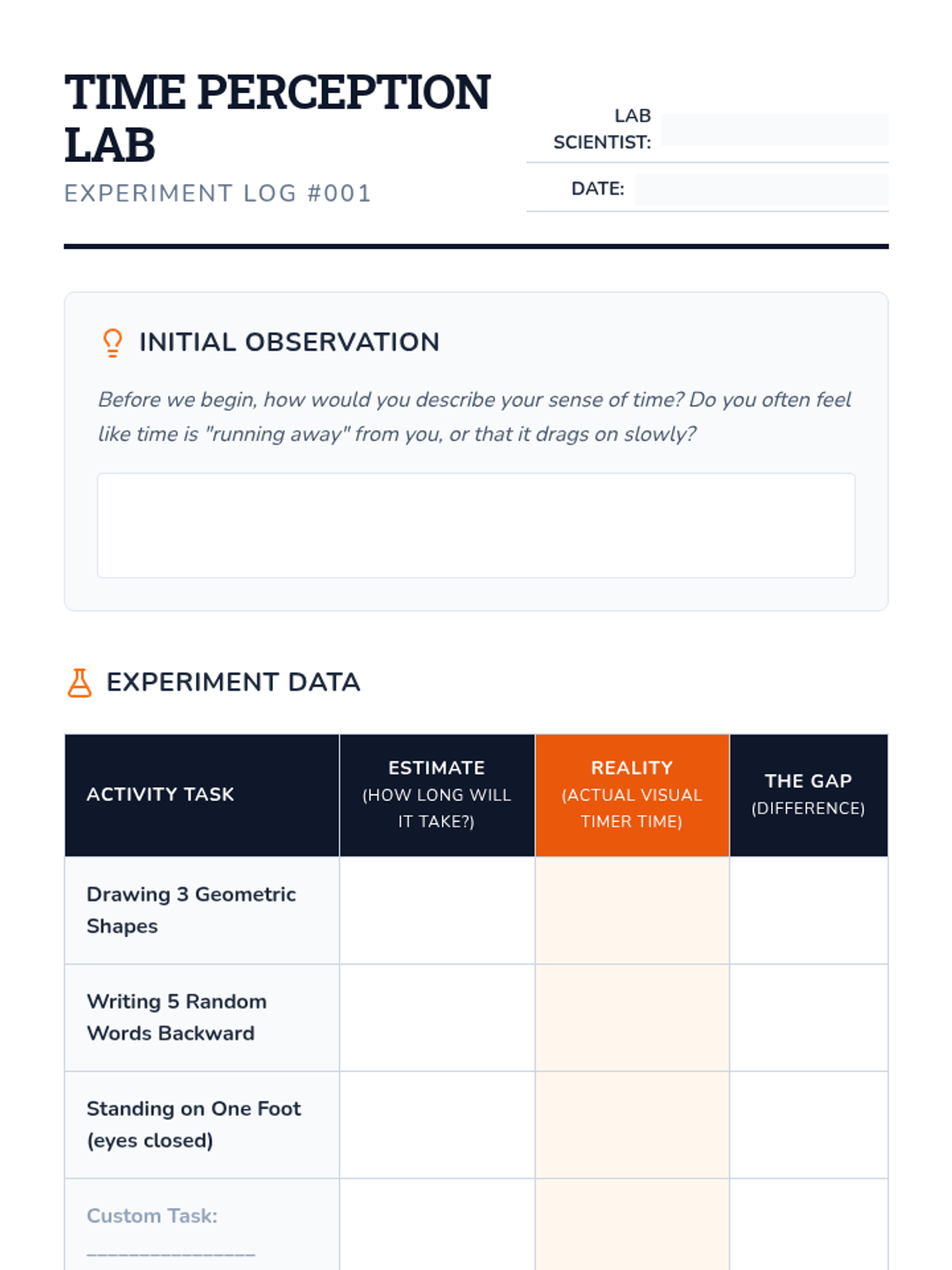
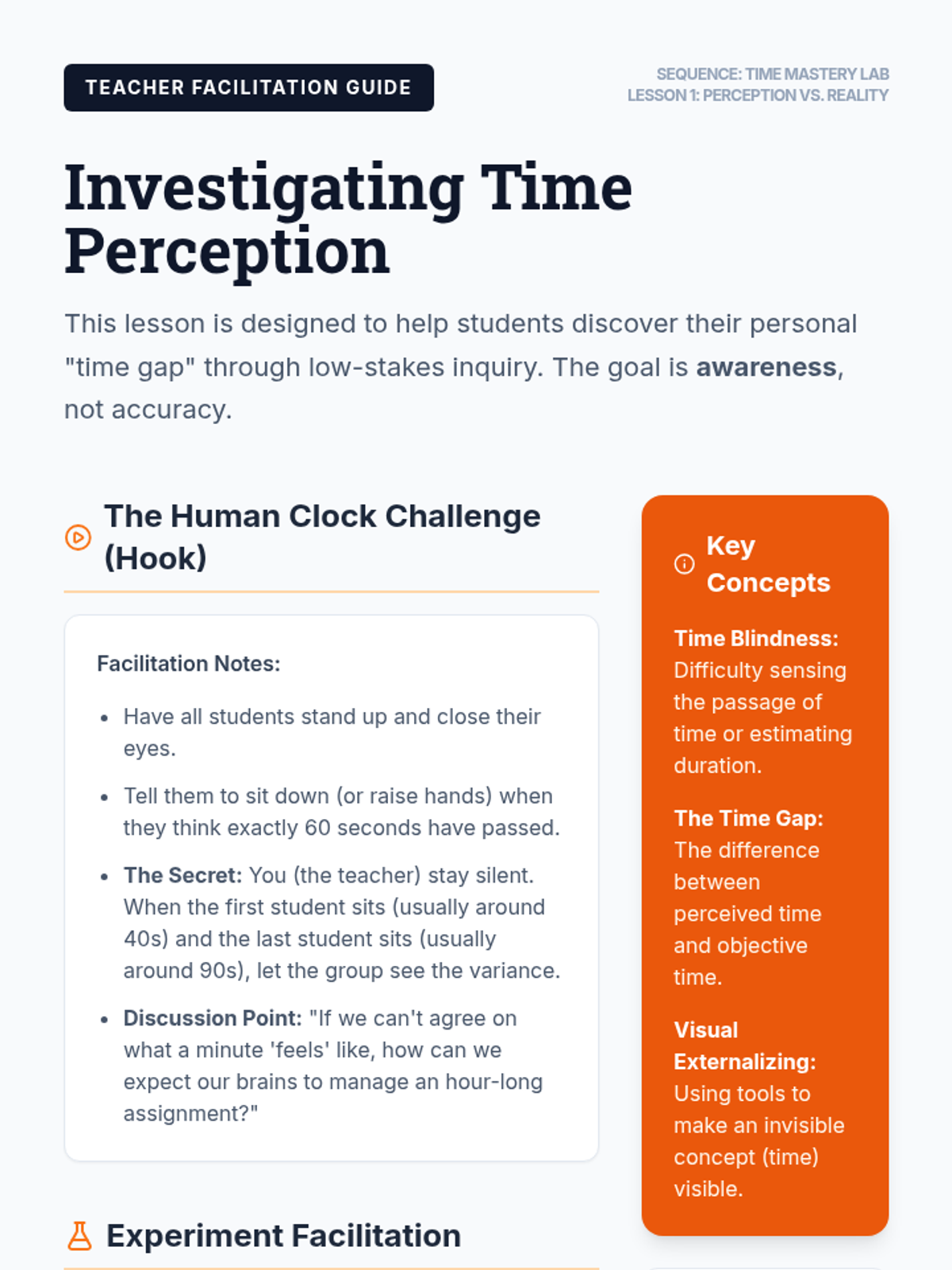
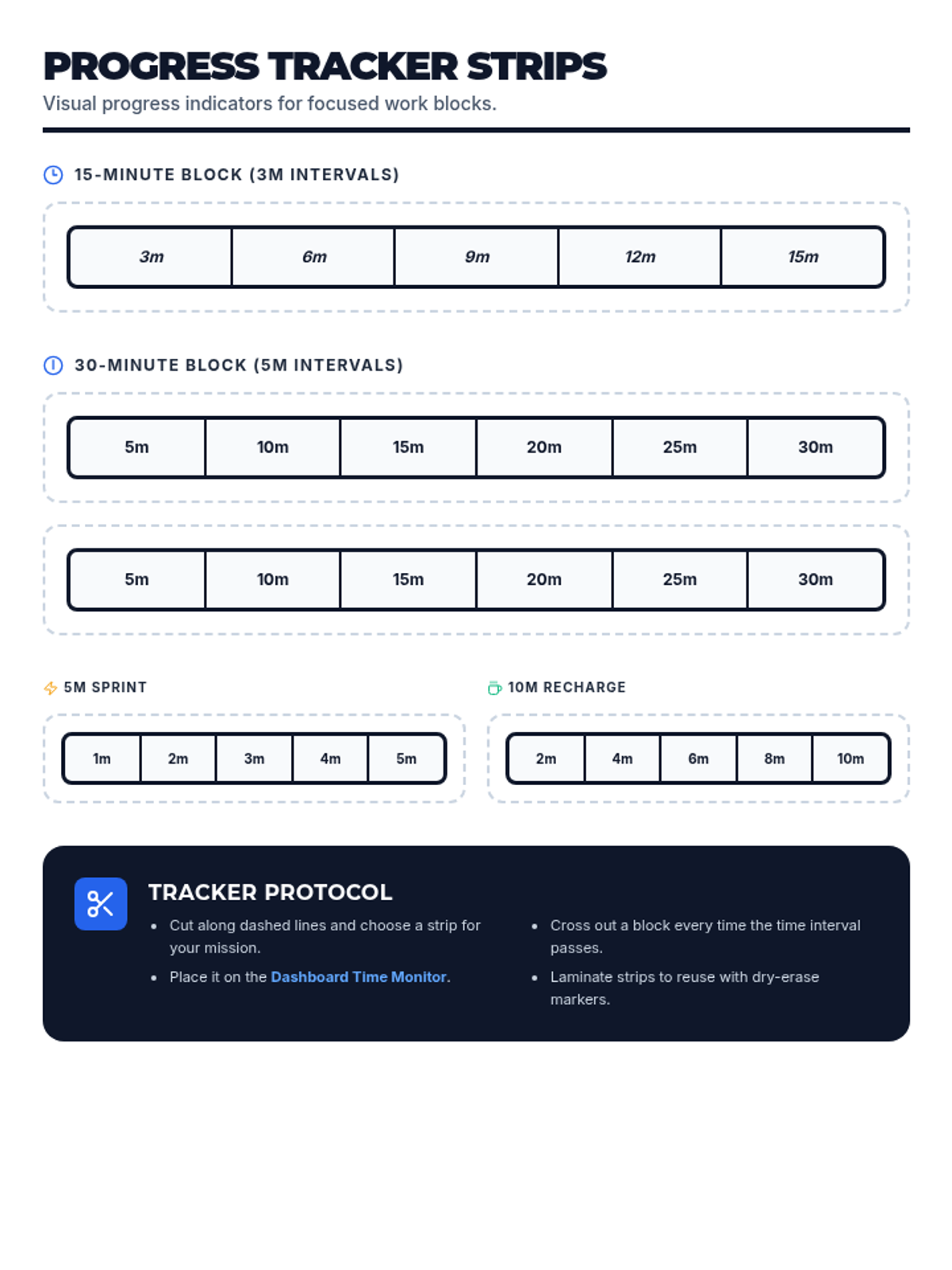
This sequence helps neurodivergent students address 'time blindness' by using visual timers. Students progress from investigating their own time perception to mastering transition strategies and managing multi-step tasks using analog and digital countdown tools.
A comprehensive 12th-grade sequence focused on executive function and emotional regulation during schedule transitions. Students move from understanding the cognitive load of switching tasks to building a personalized toolkit of visual timers, schedules, and recovery protocols for unexpected changes.
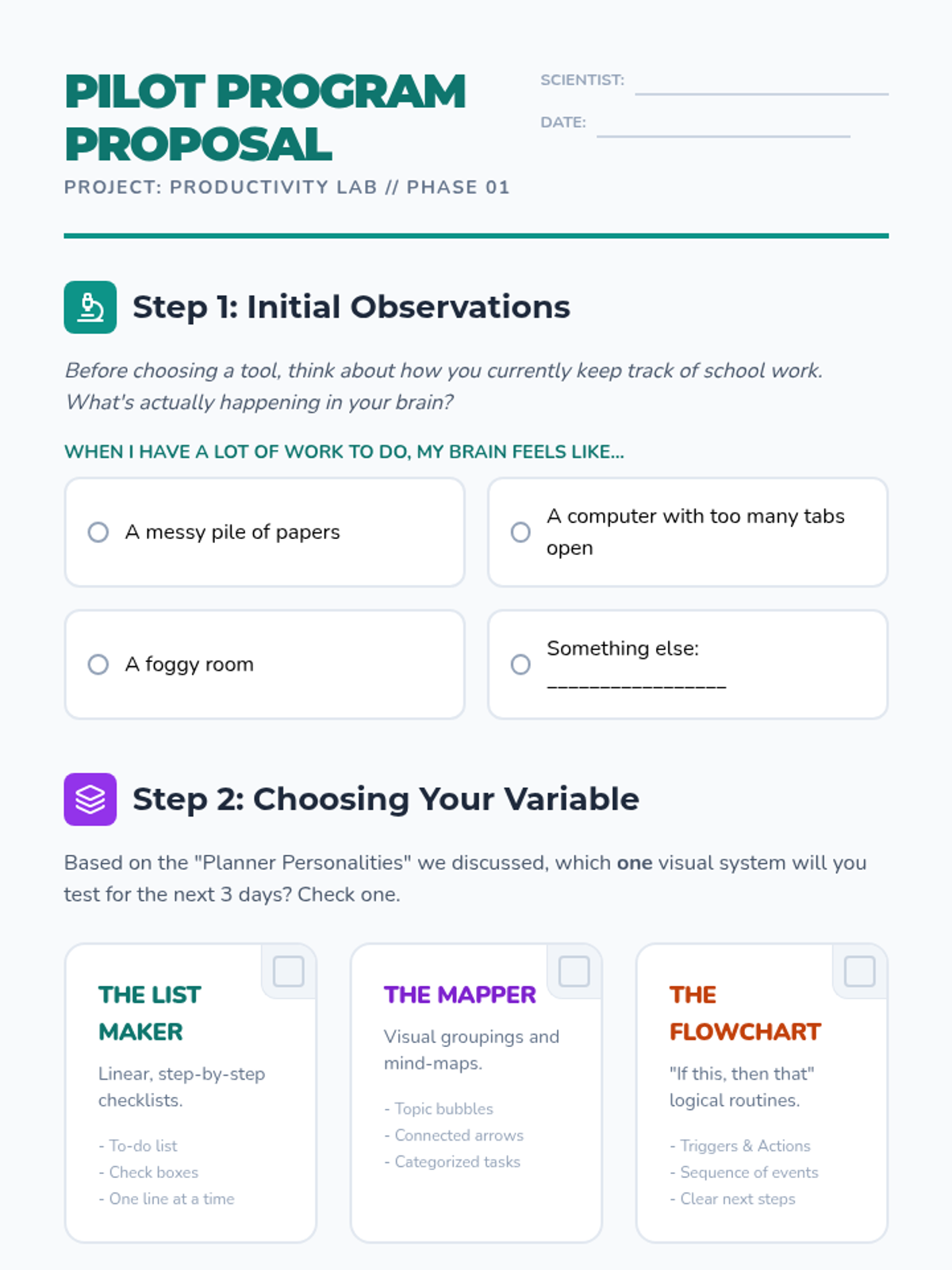
A metacognitive inquiry into personal organizational tools, where 7th-grade students act as 'productivity scientists' to test, analyze, and advocate for the visual scheduling strategies that work best for their unique brains.
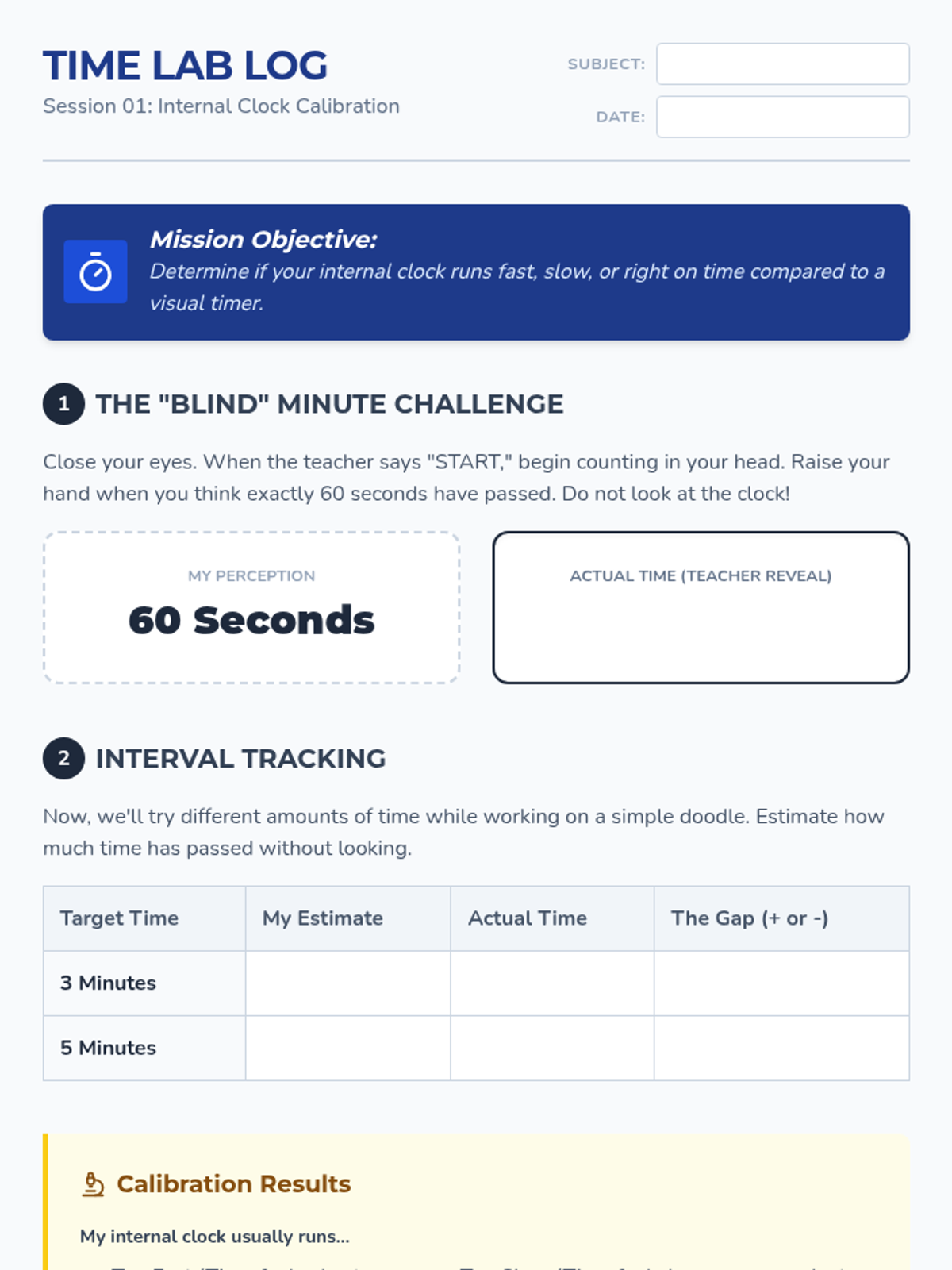
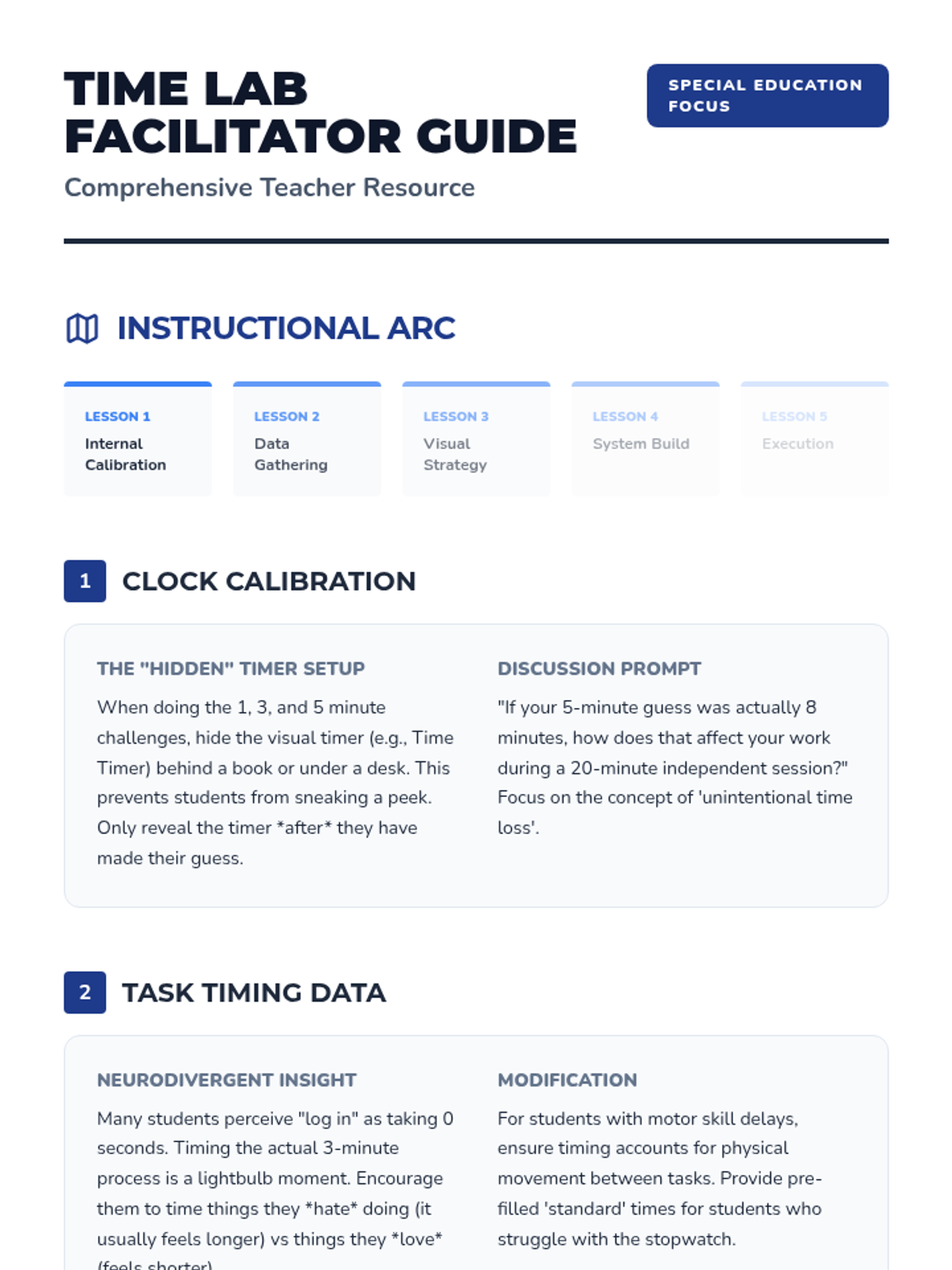
A sequence designed to help neurodivergent learners overcome 'time blindness' by calibrating their internal clocks. Students move from basic time estimation to creating and following realistic time-blocked visual schedules using visual timers.
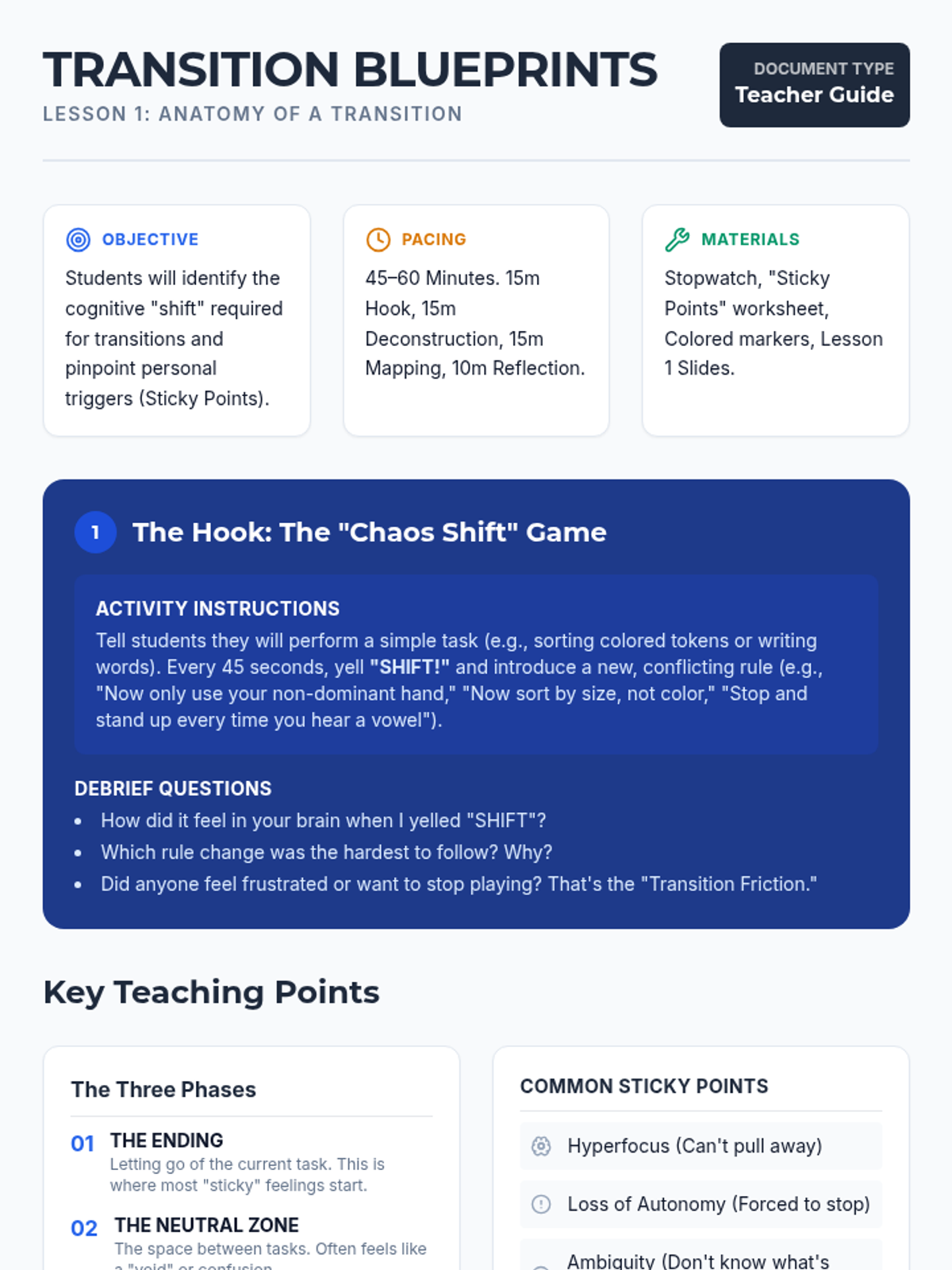
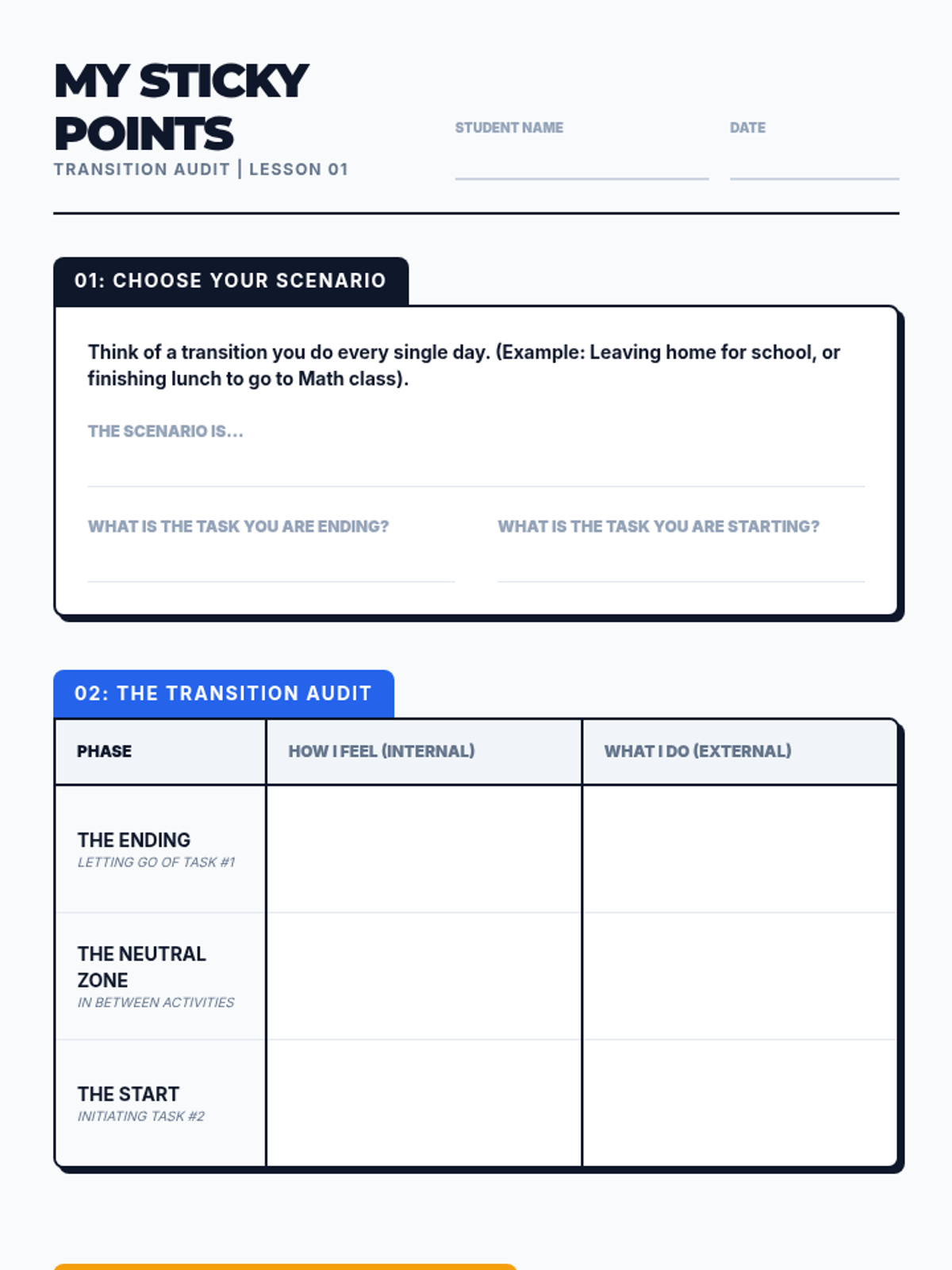
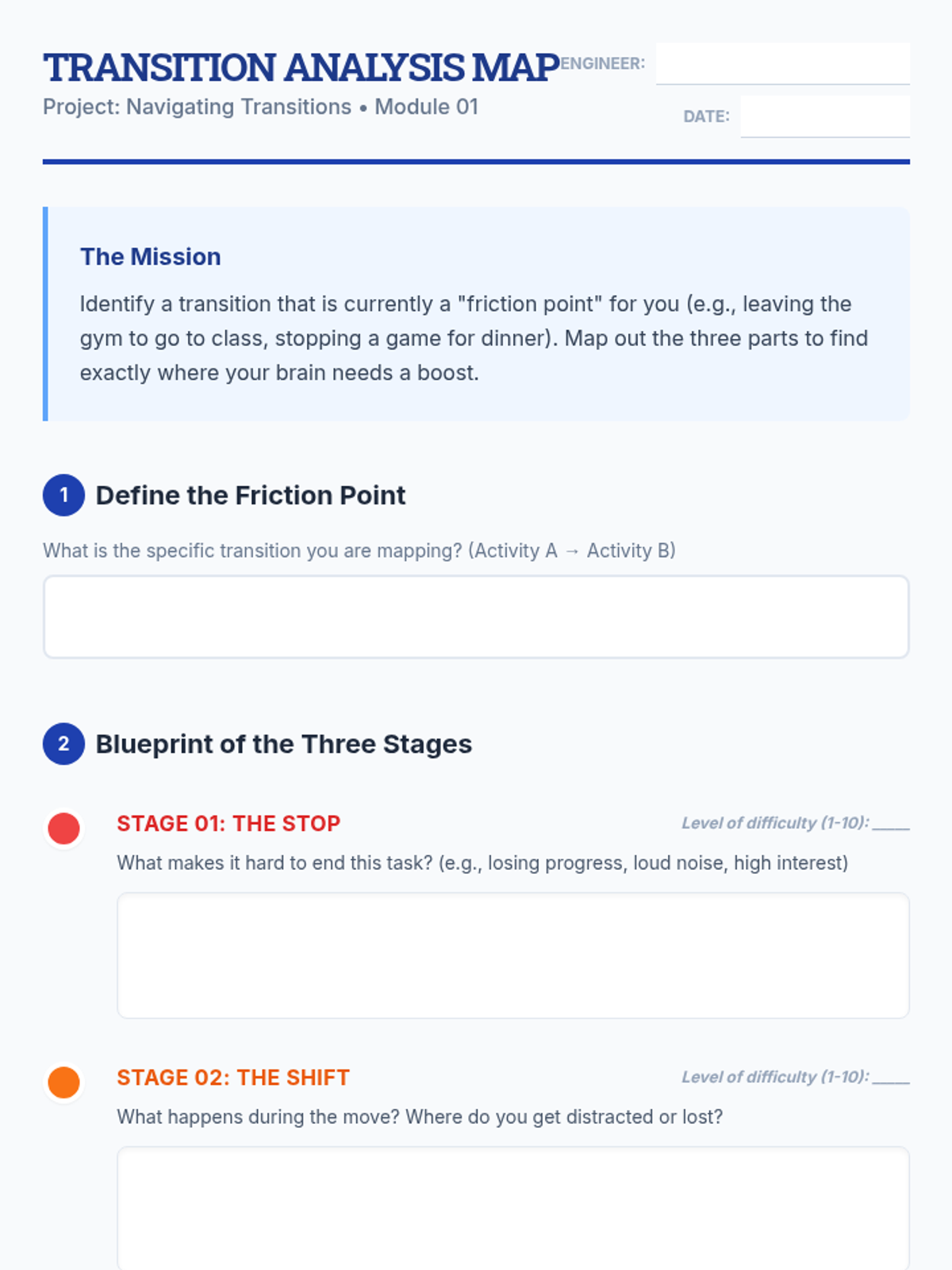
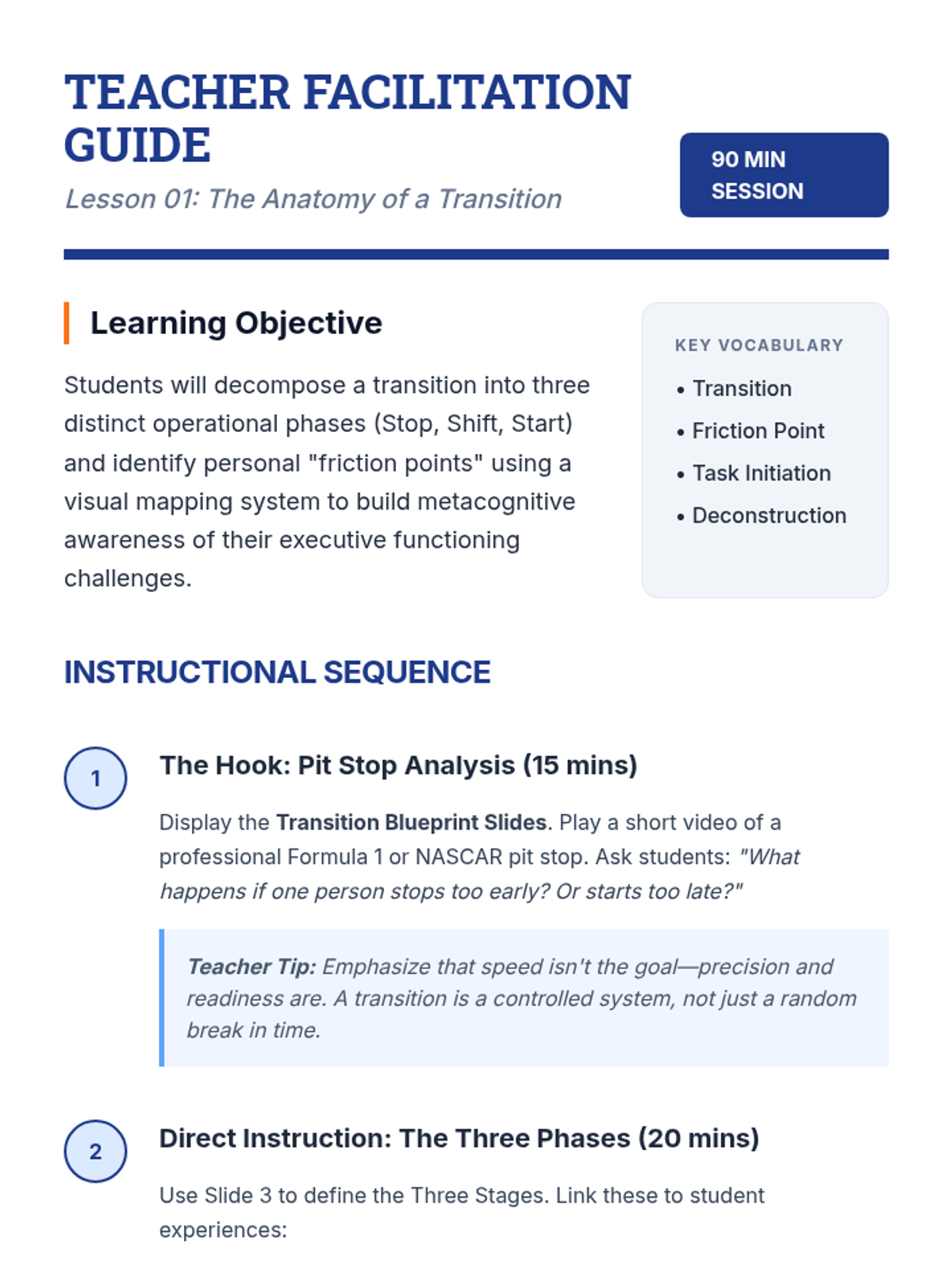
A specialized sequence for high school students focused on mastering task transitions using visual timers and organizational strategies. Students learn to analyze the mechanics of moving between tasks, use buffer zones to reduce anxiety, and develop cognitive flexibility for unexpected schedule changes.
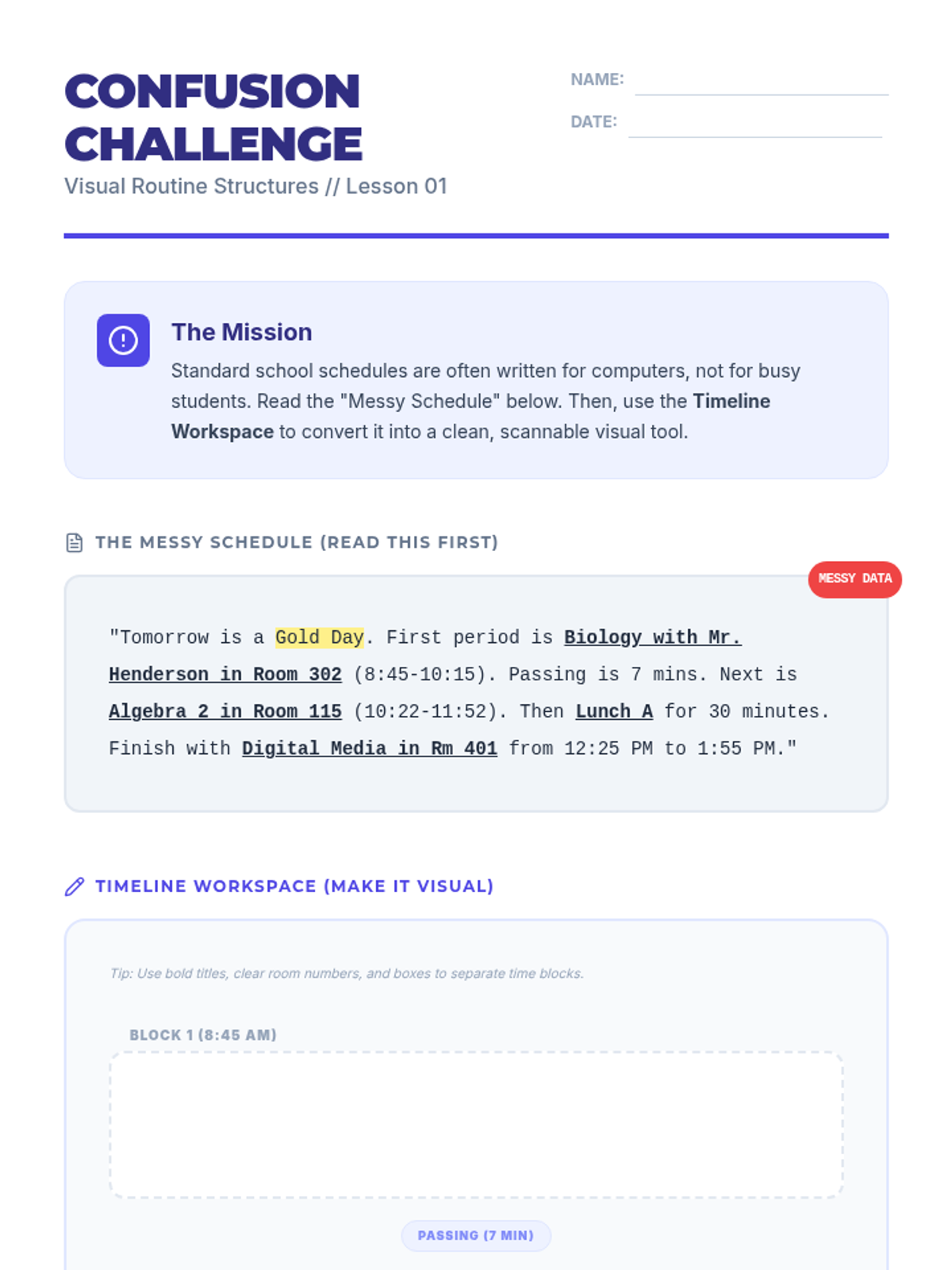
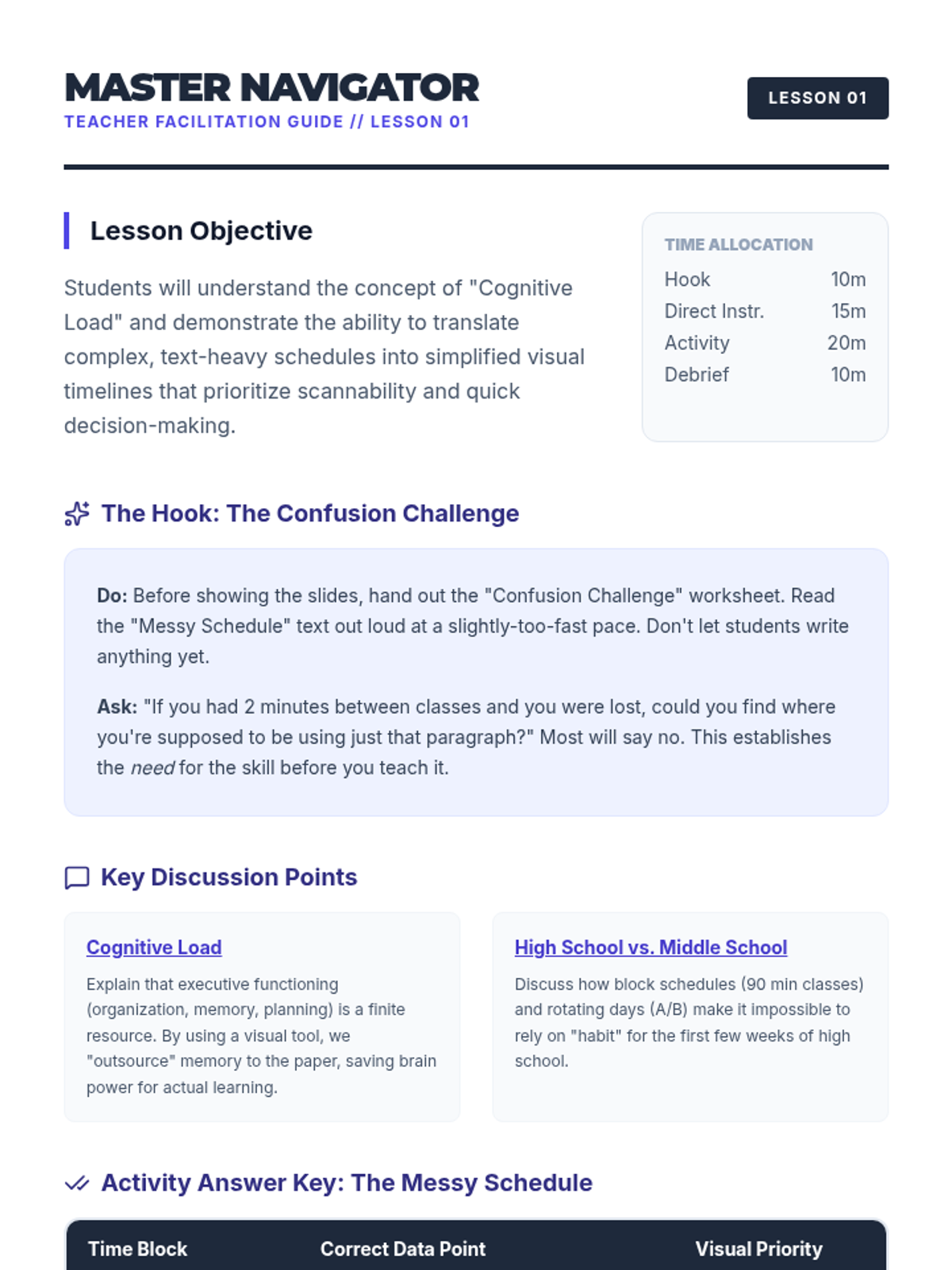
This sequence establishes the foundational skills for using visual schedules within a high school context. Students begin by analyzing the specific demands of a 9th-grade block schedule and identifying personal organizational pain points, culminating in the creation of a reliable daily anchor schedule.
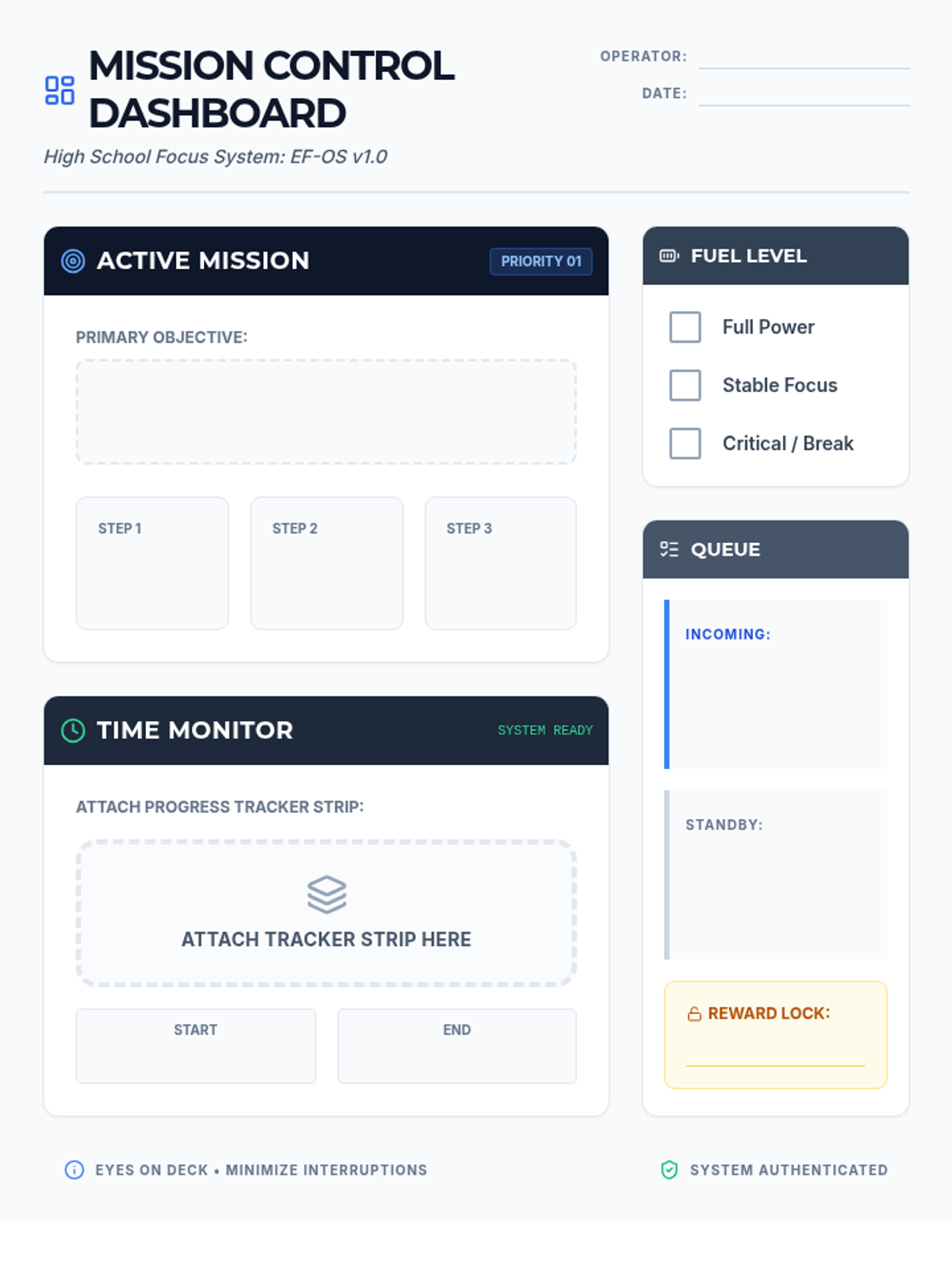
A series of executive functioning supports and instructional strategies aimed at improving focus and task completion for neurodivergent high school students.
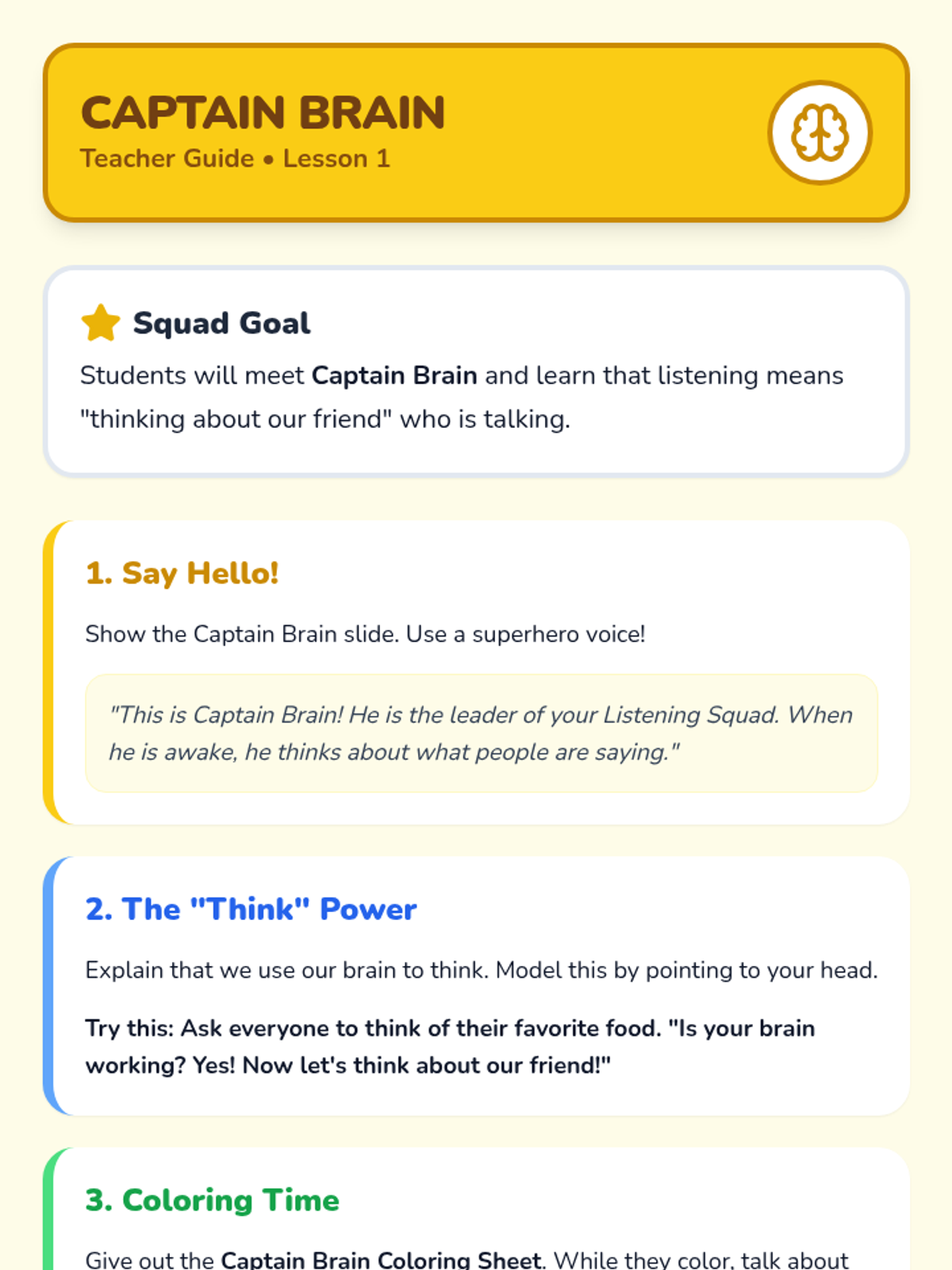
A 5-lesson sequence for high school students with severe intellectual disabilities, using a 'Super Listening Squad' theme. Each lesson focuses on a 'Body Friend' that helps students listen and regulate through simplified visual supports and repetitive routines.
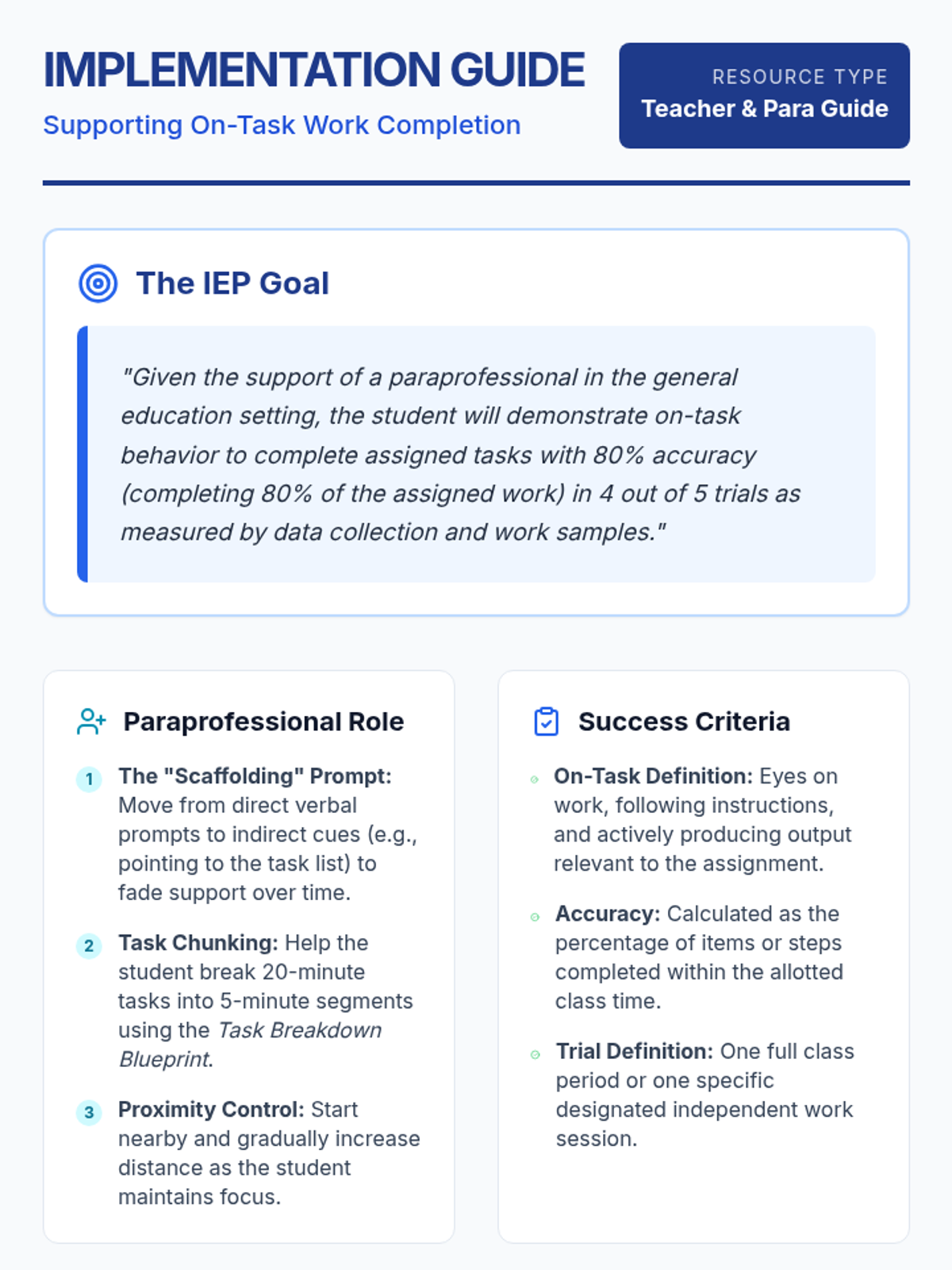
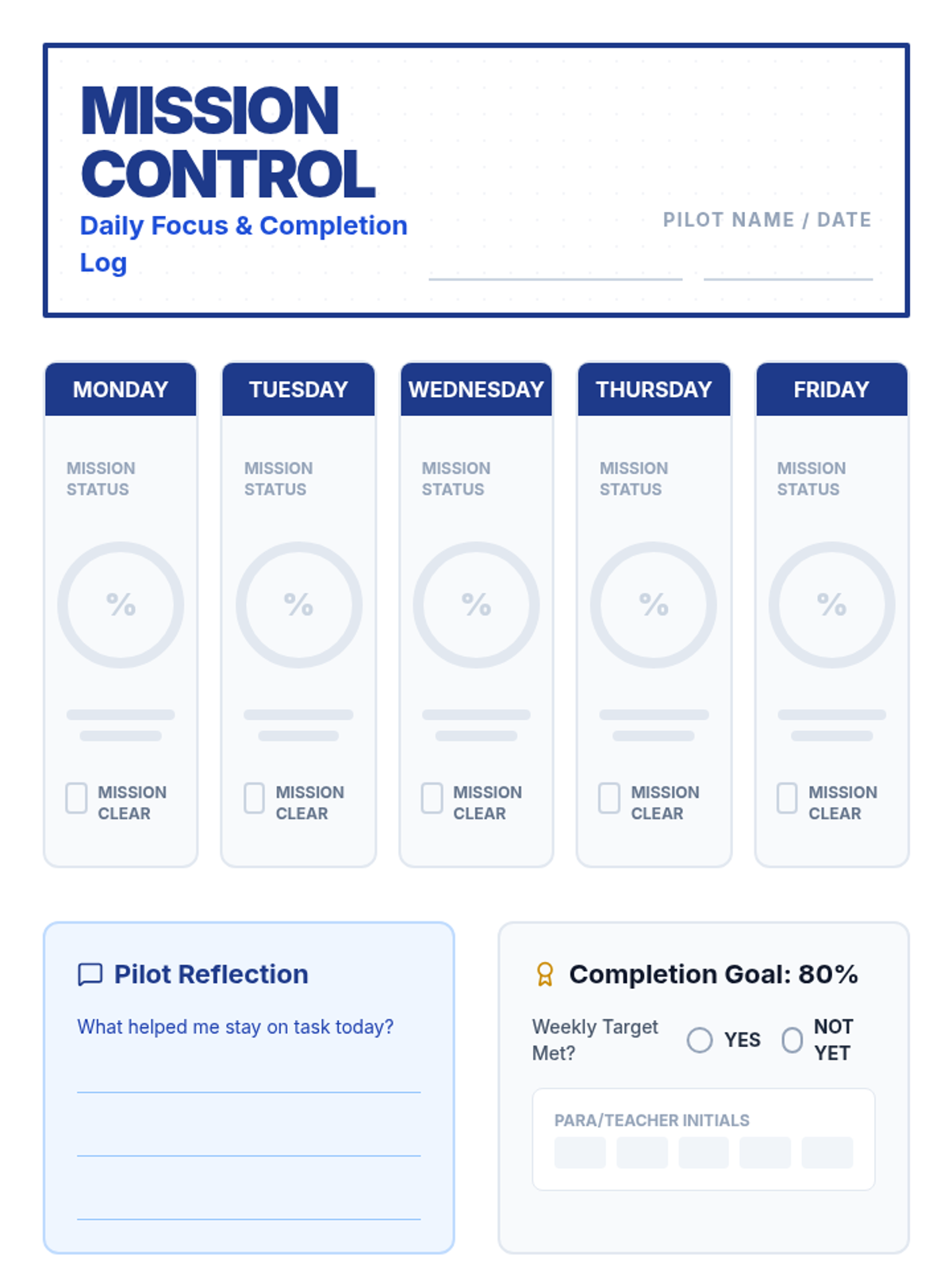
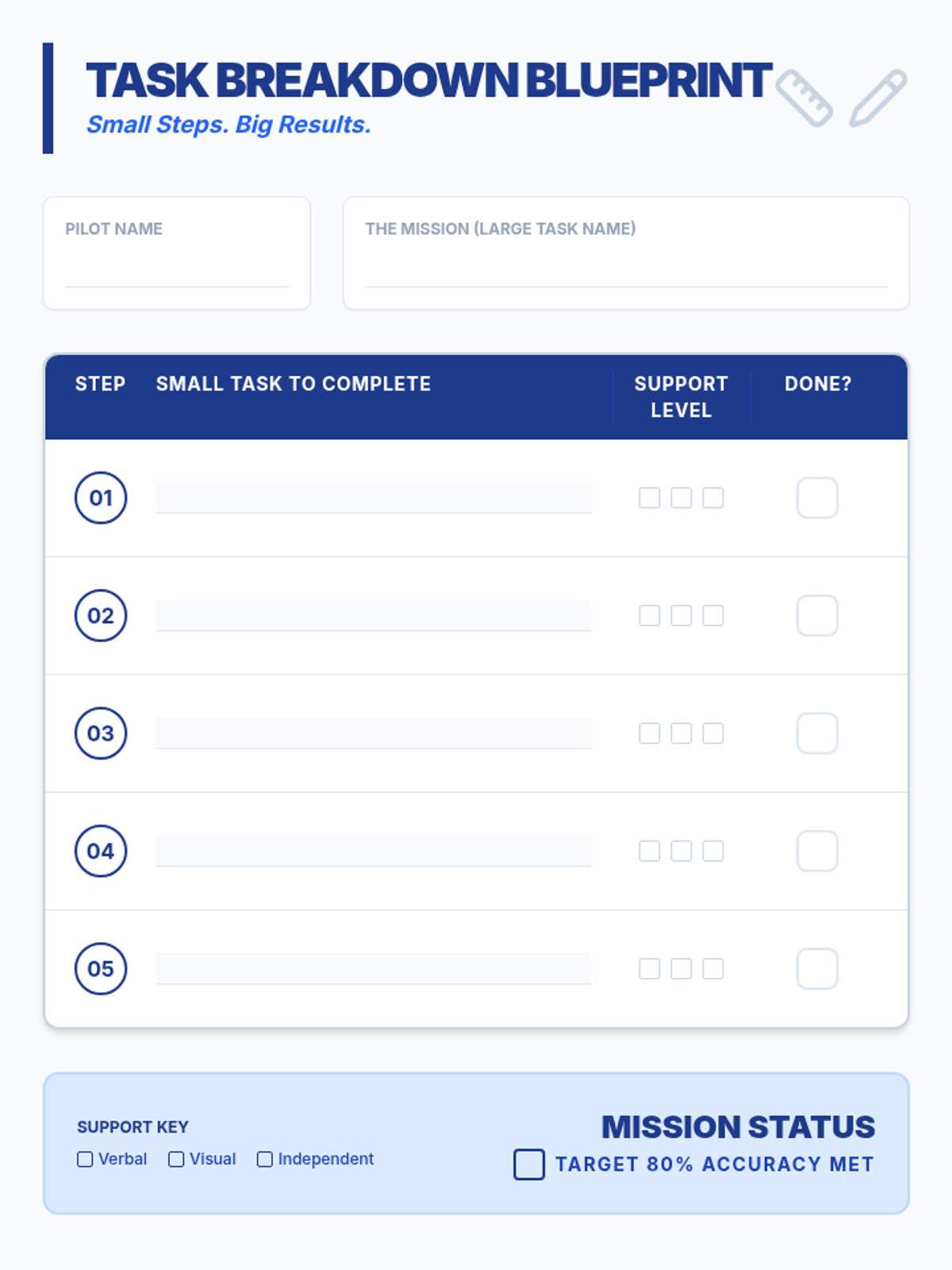
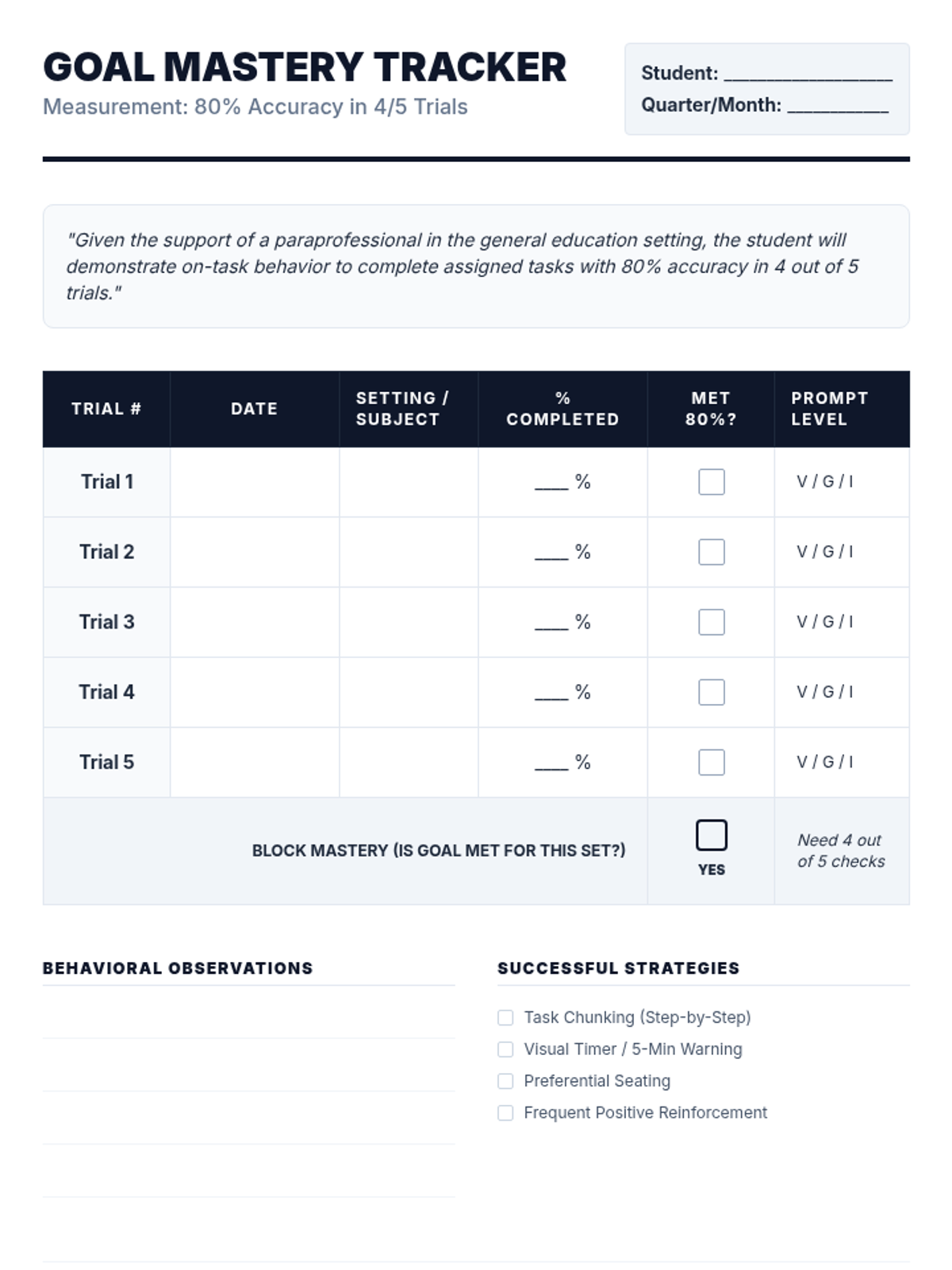
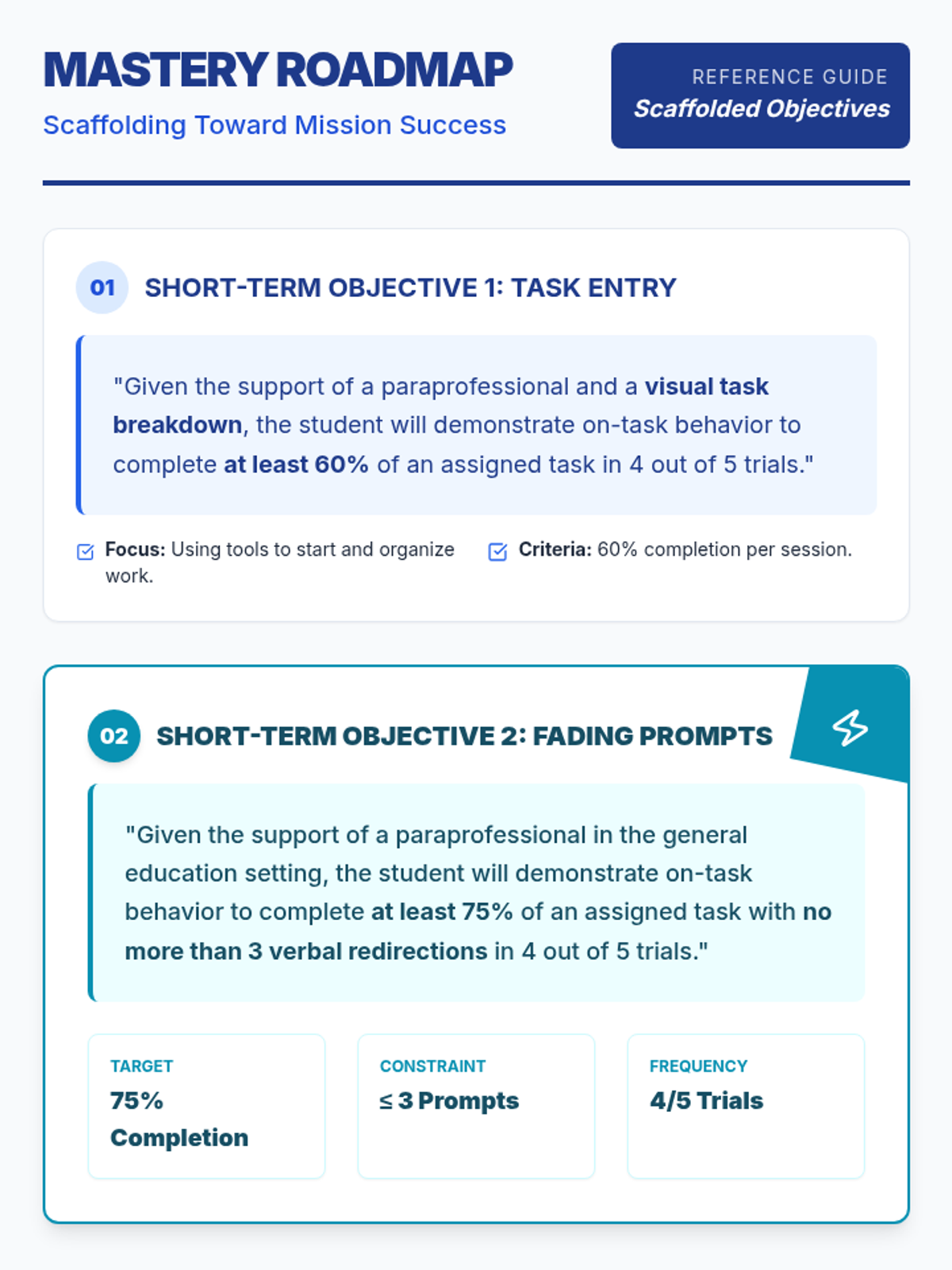
A comprehensive program for students receiving paraprofessional support to build independence through work completion strategies and academic organizational habits.
A full-month curriculum focused on developing independence through real-world simulations, role-playing, and practical application of functional life skills.
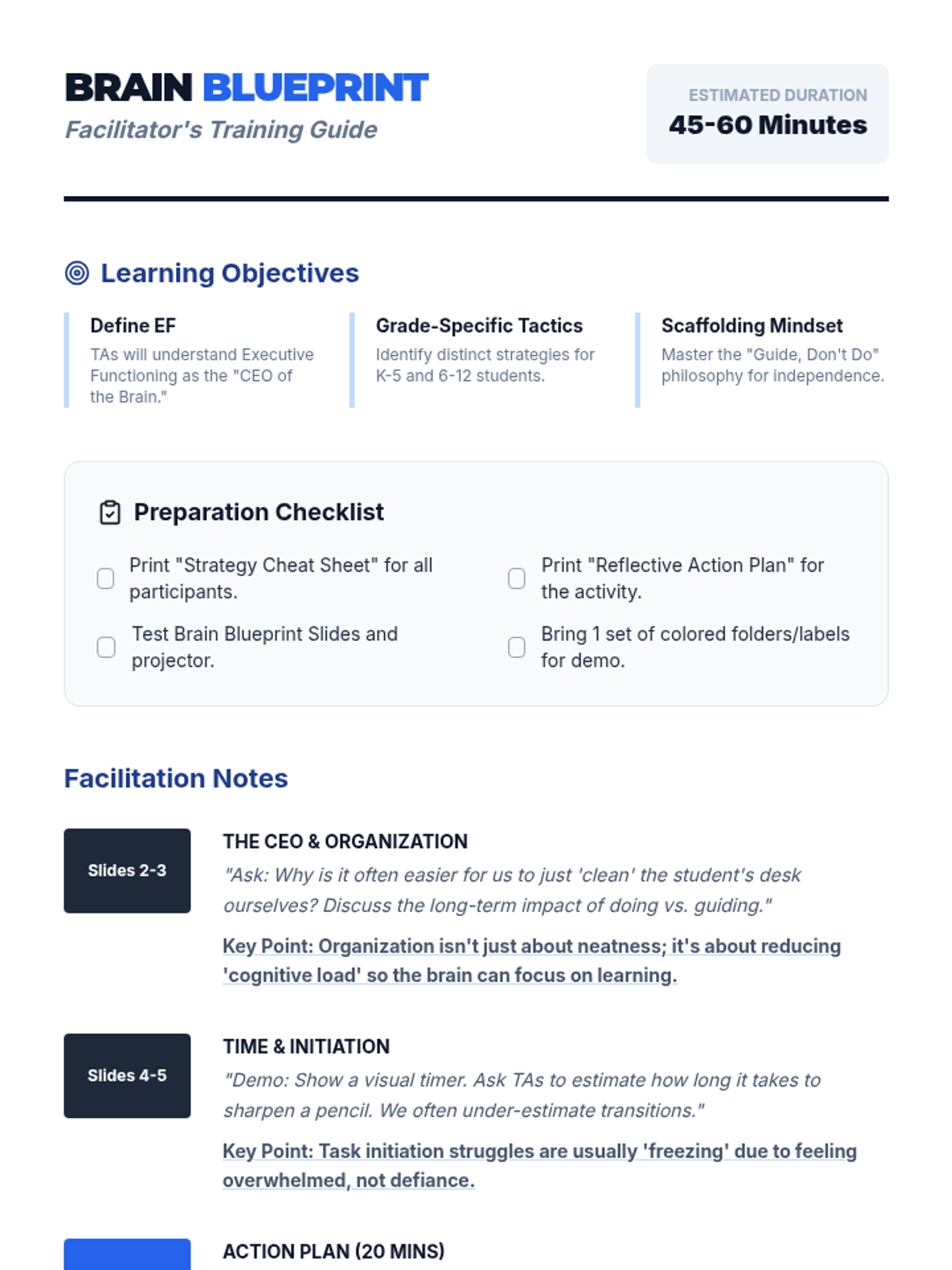
A professional development series designed to equip educational support staff with practical, grade-appropriate strategies for improving student independence and executive skills.
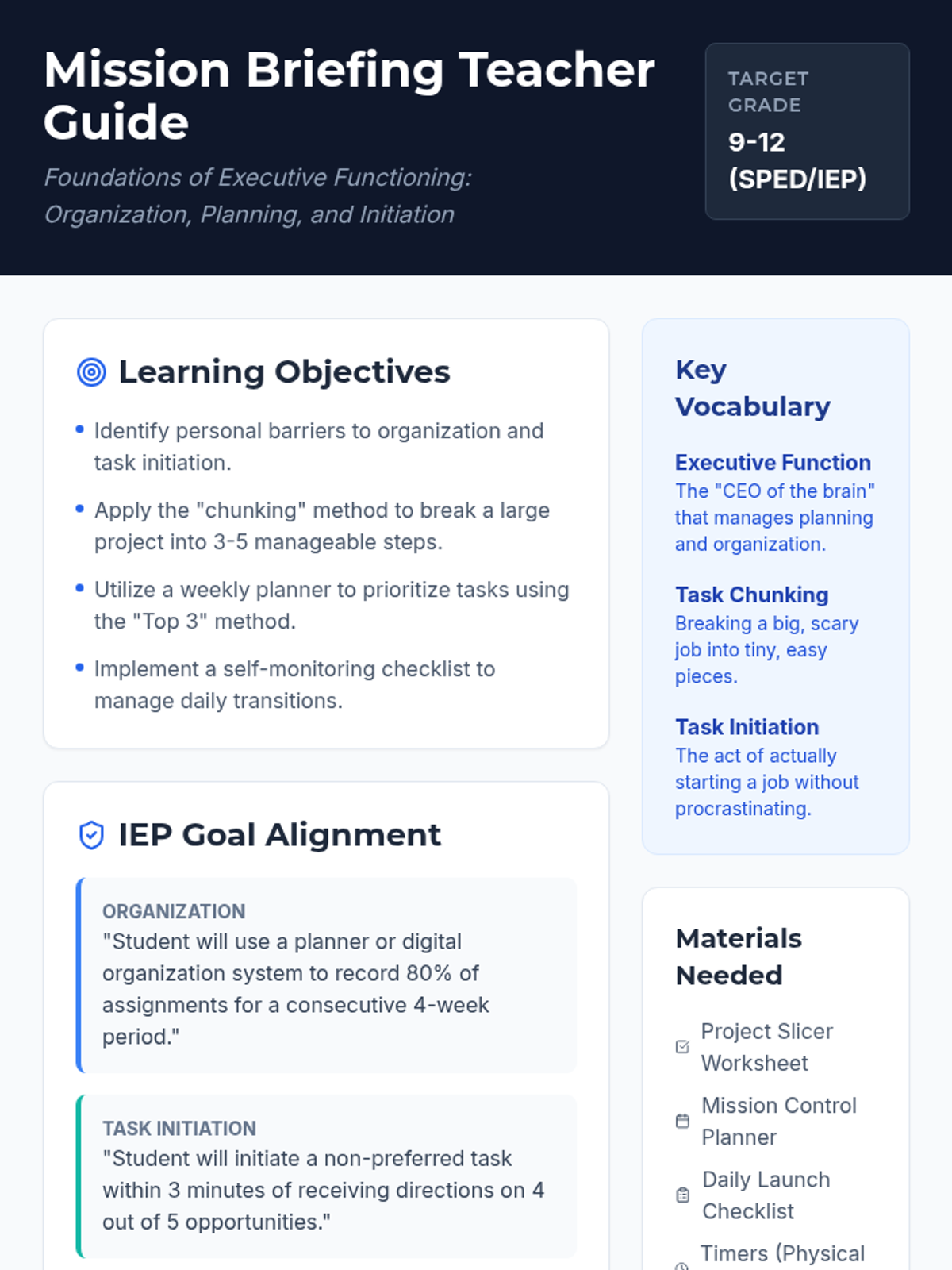
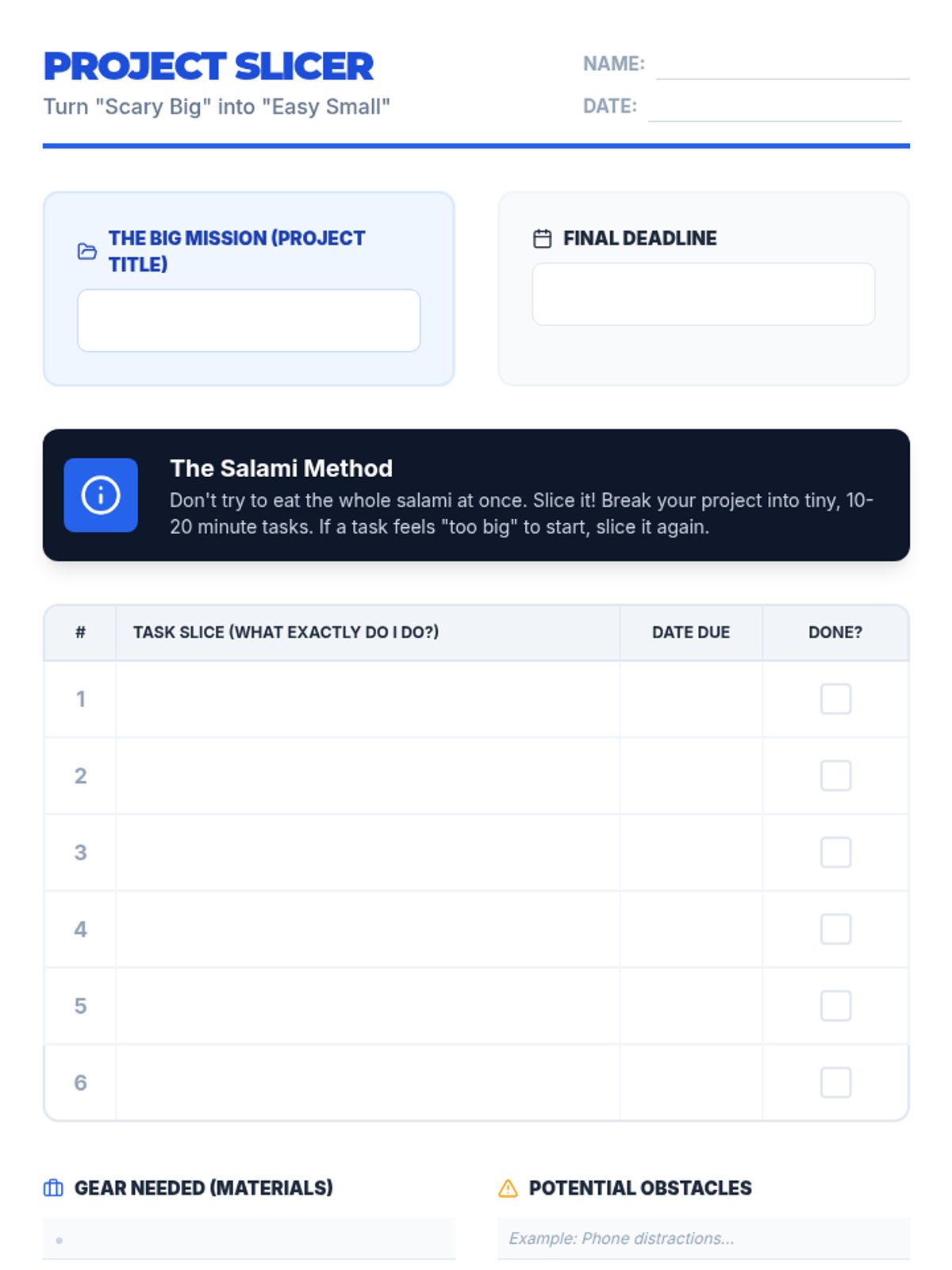
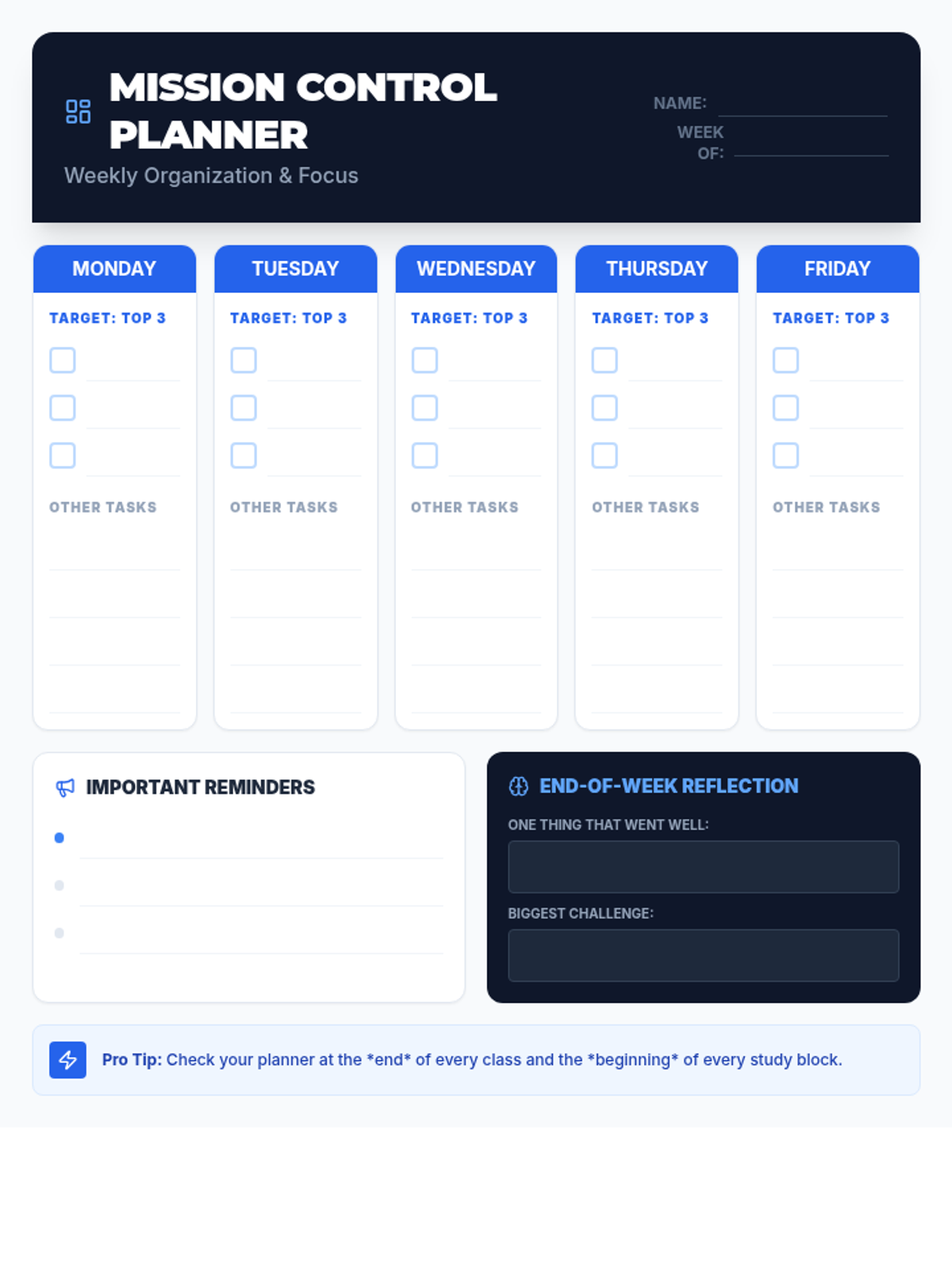
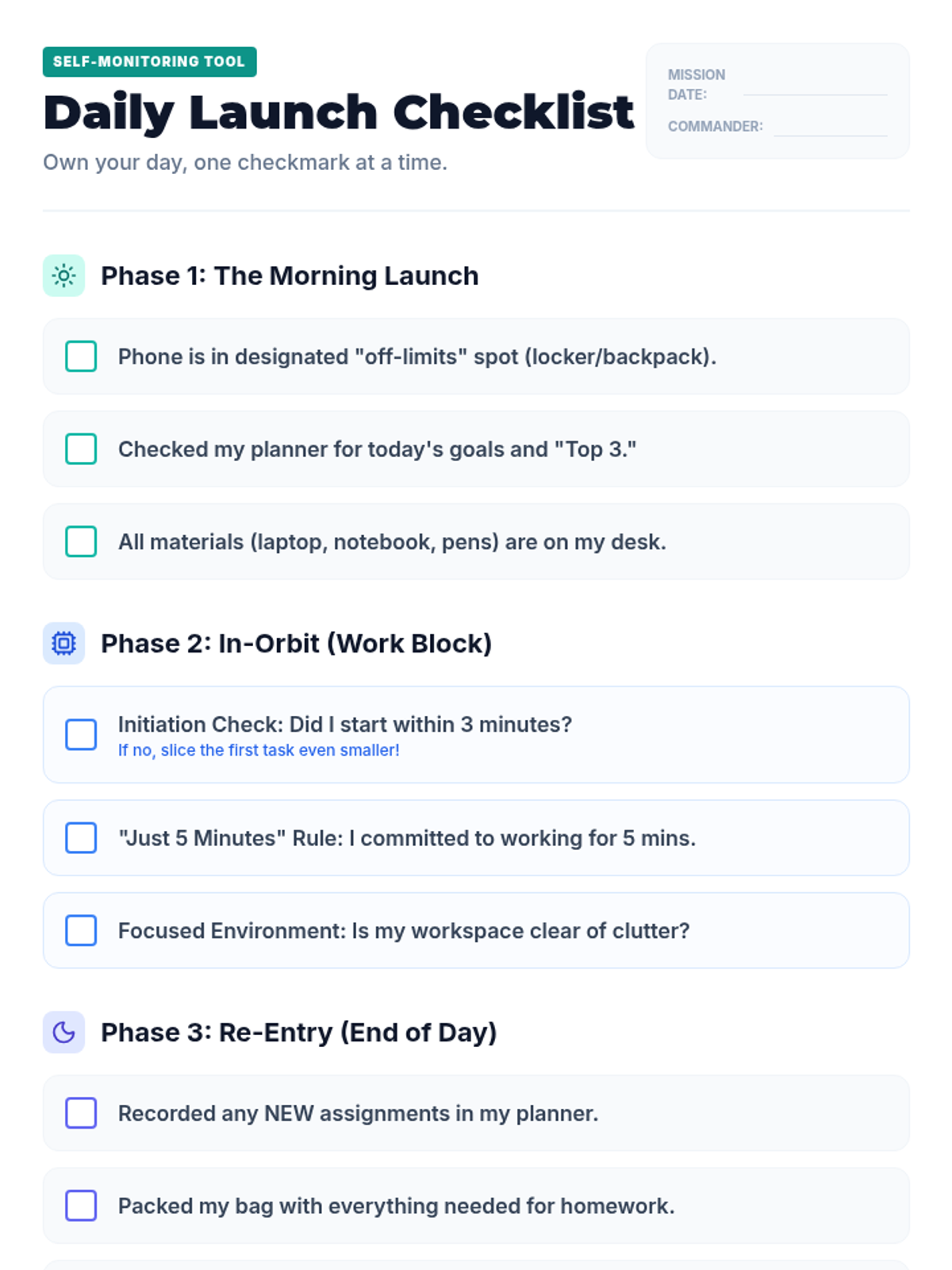
A comprehensive sequence designed to build executive functioning skills in high school students, focusing on organization, planning, and task initiation through practical tools and self-monitoring strategies.
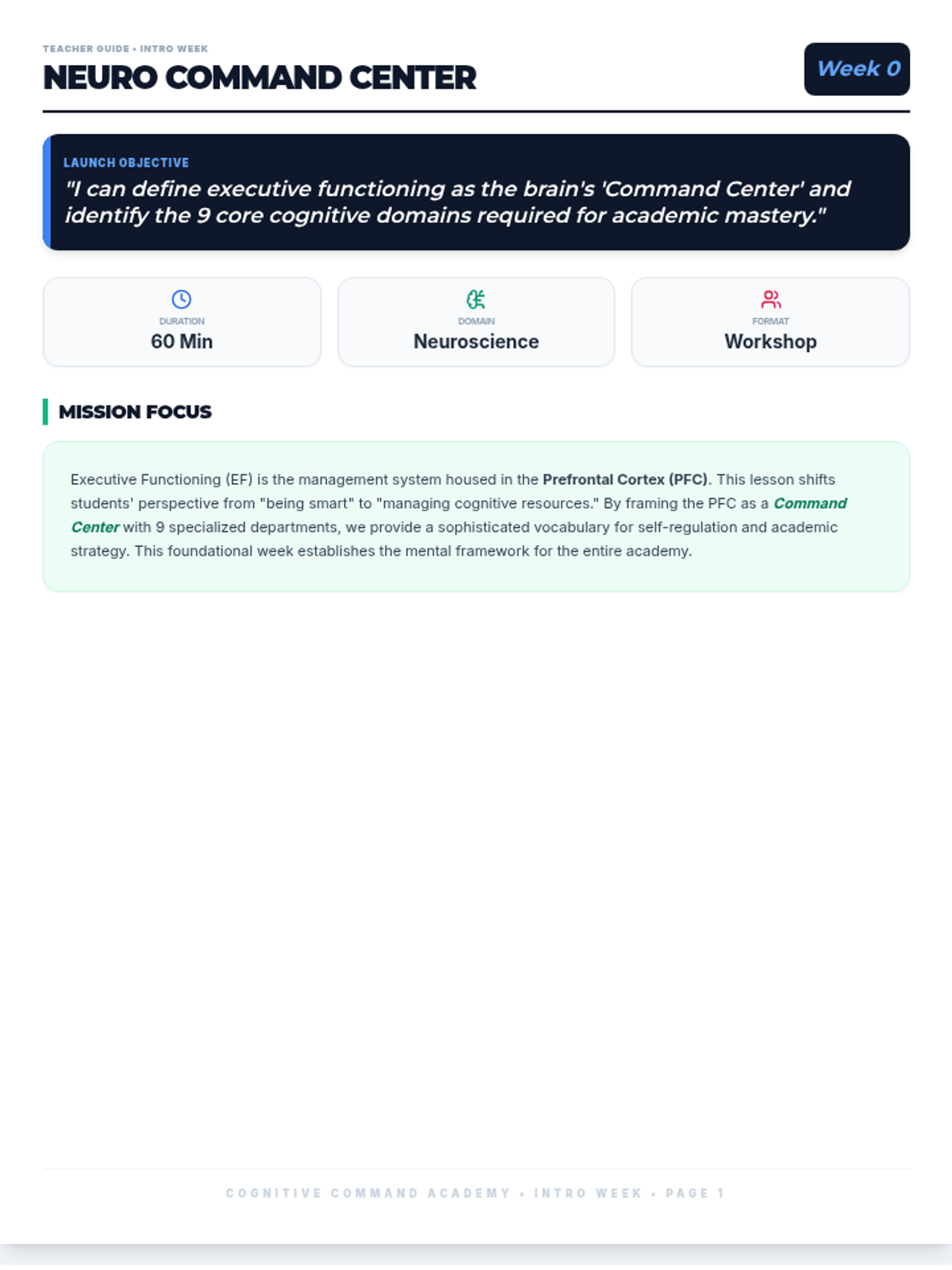
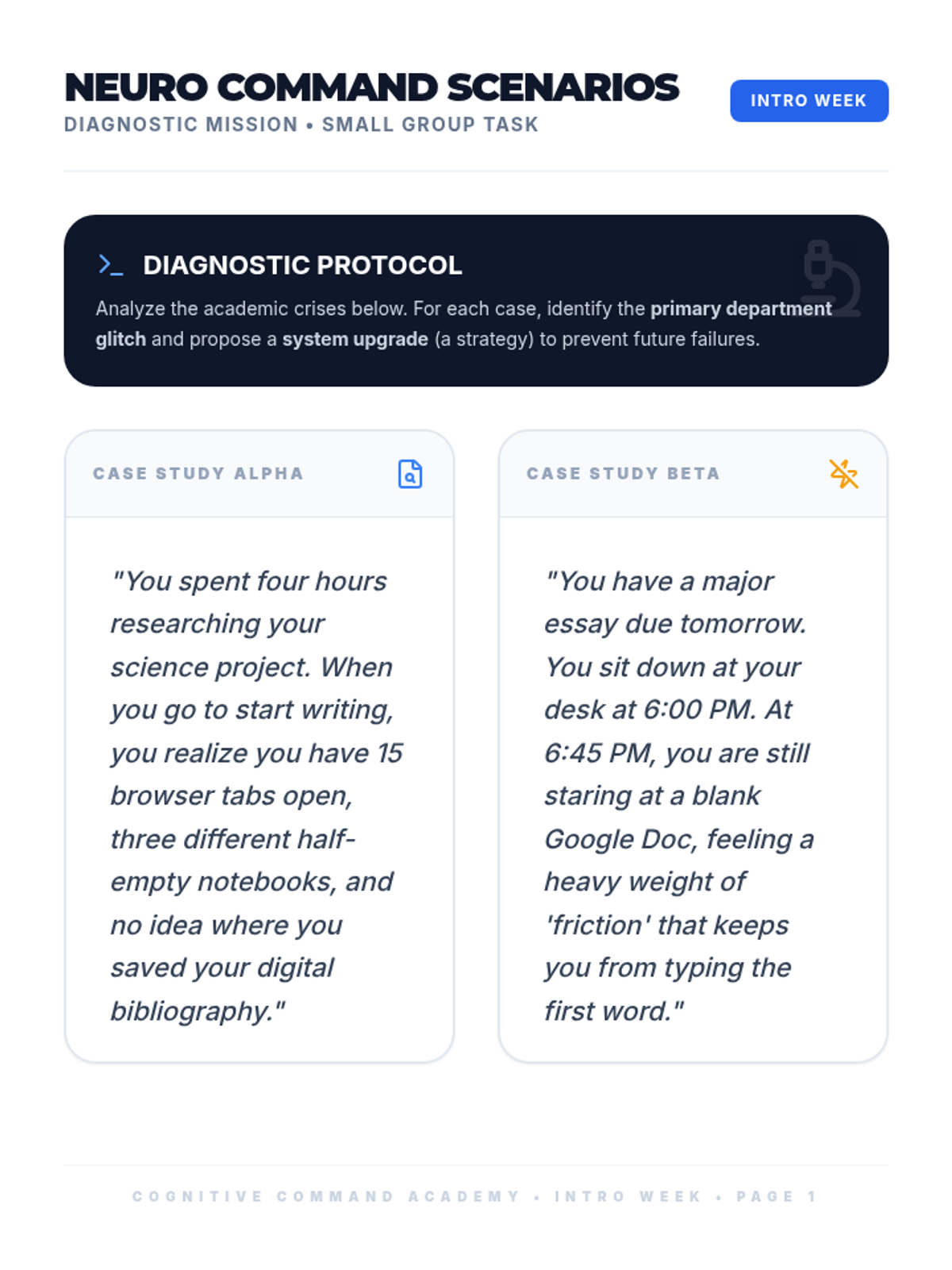
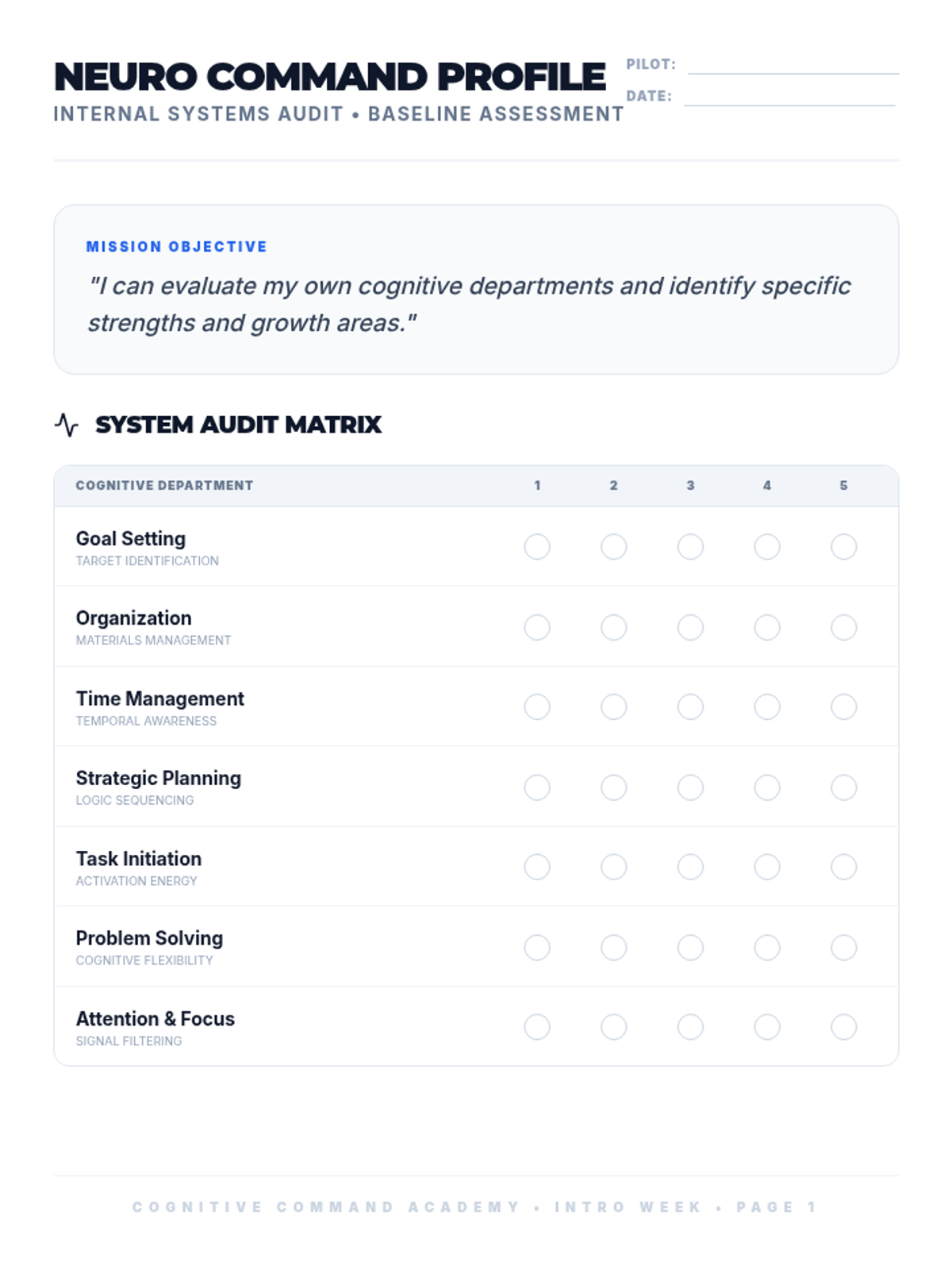
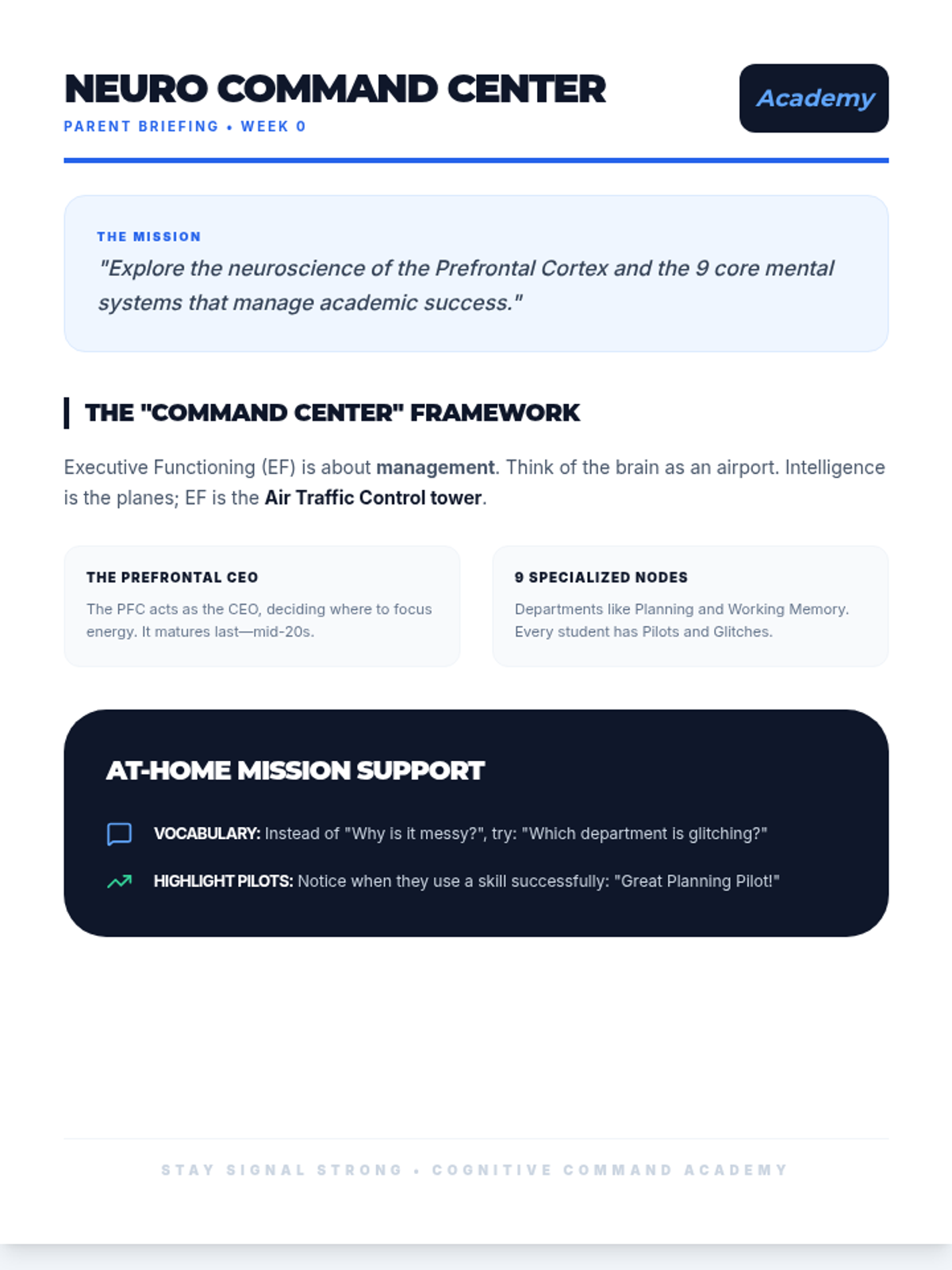
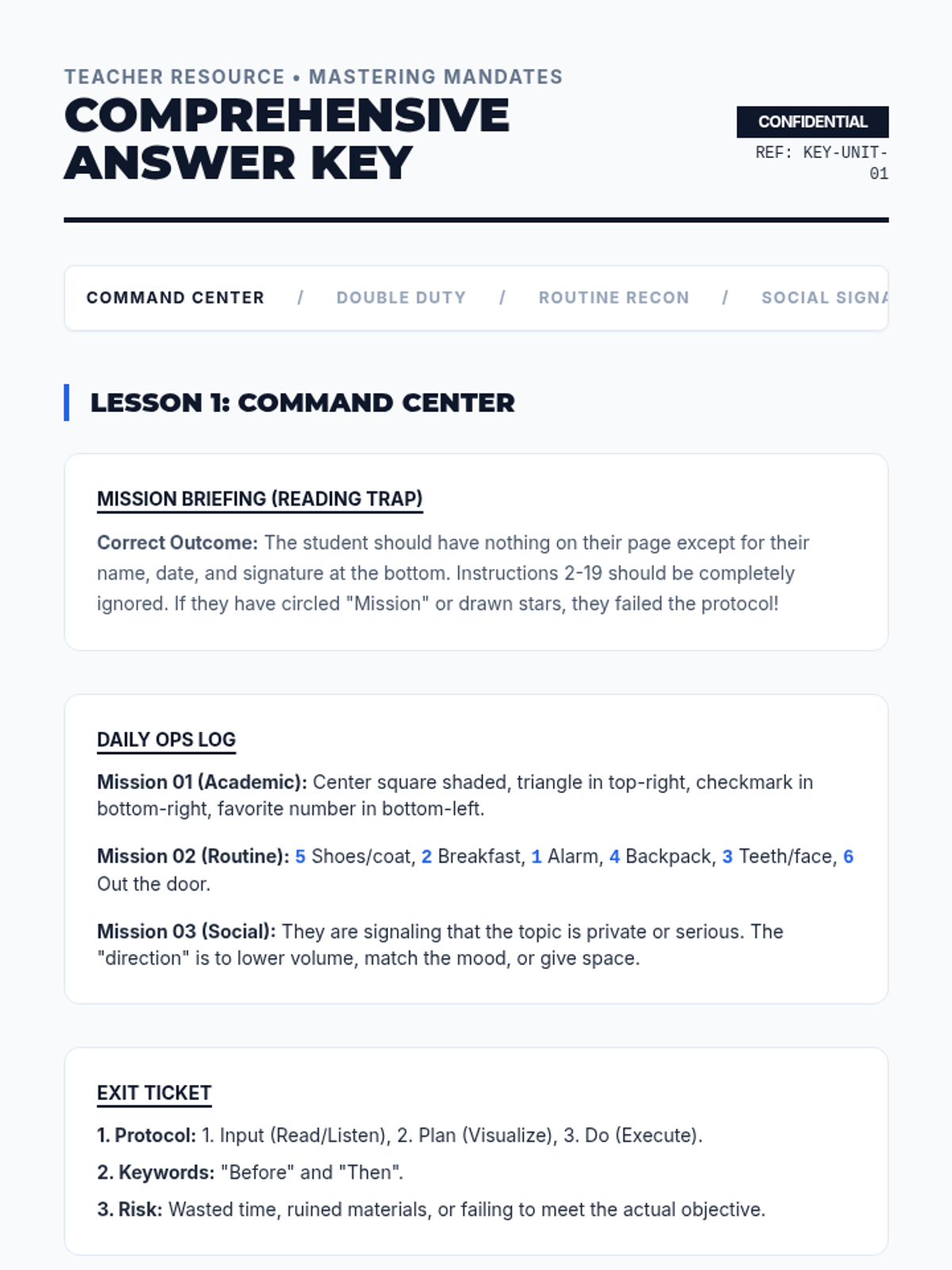
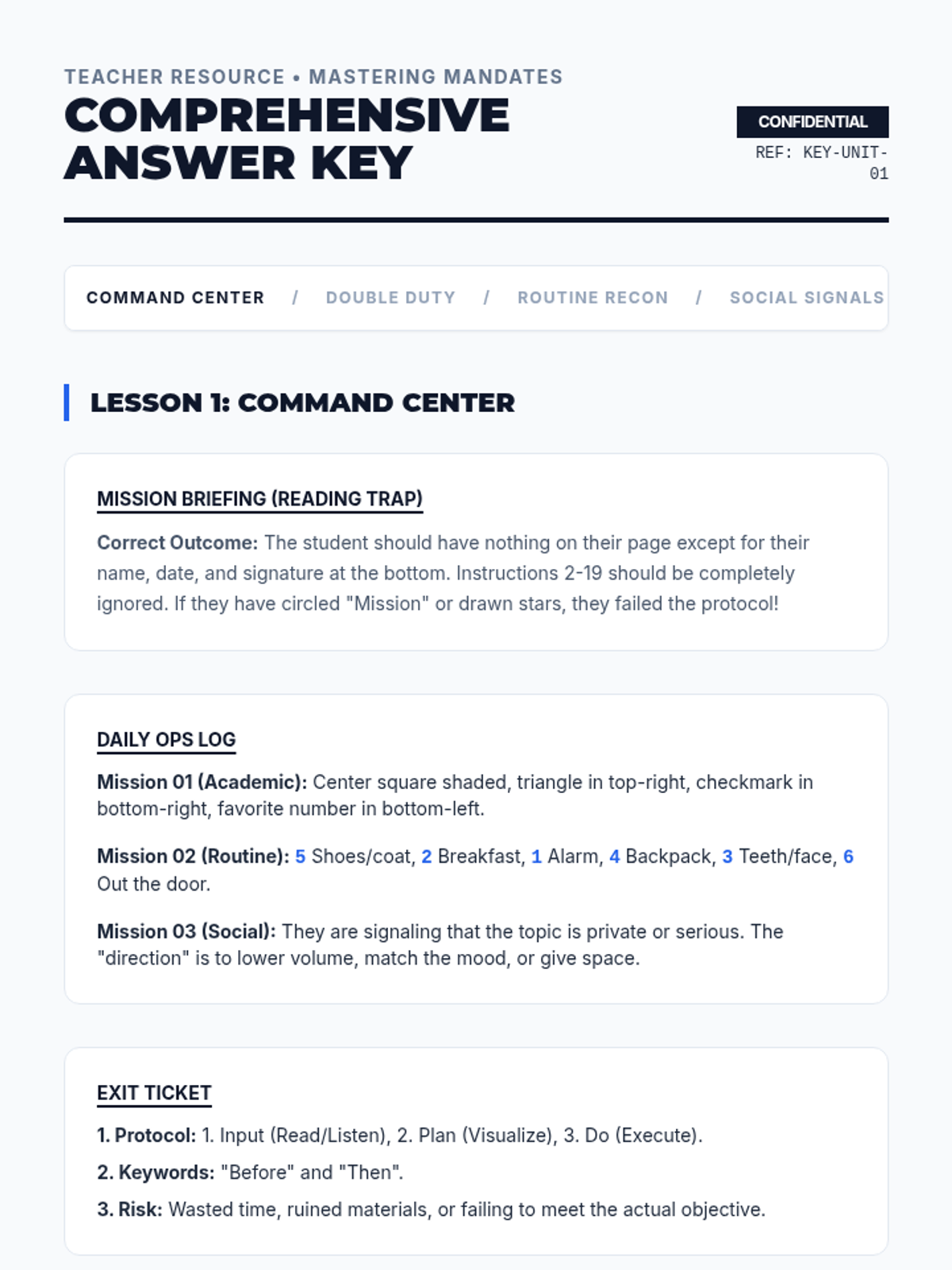
A comprehensive 11-lesson module (Intro, 9 skill weeks, and Review) designed for 6th-12th grade students to master executive functioning skills through a neuroscience-informed, "Command Center" framework. Each lesson balances theoretical understanding of the prefrontal cortex with practical, high-level strategies for academic and personal success.
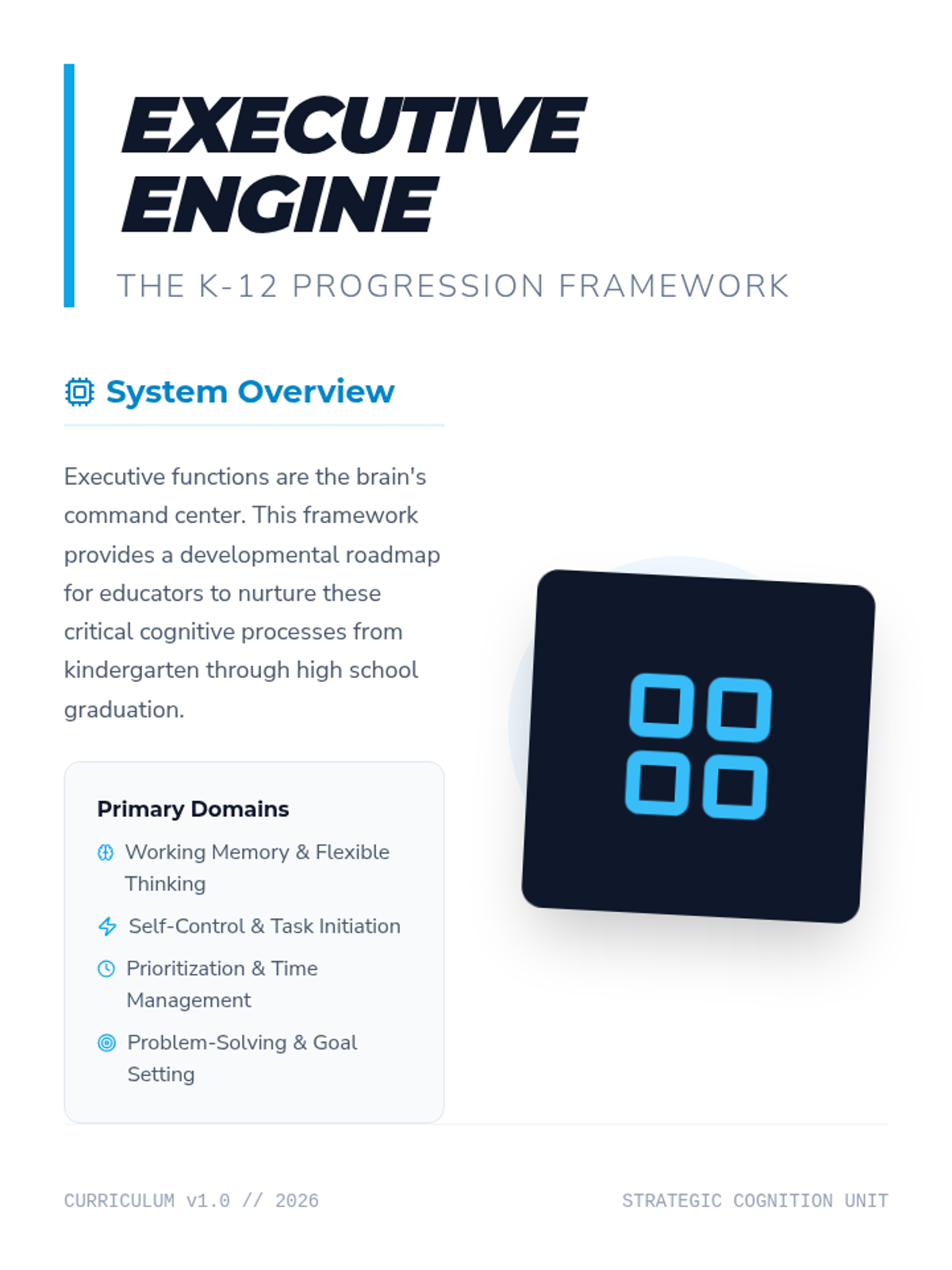
A comprehensive K-12 curriculum focused on core executive functioning skills, providing a roadmap for skill development from early childhood through graduation. Includes frameworks, activity guides, and assessment tools.
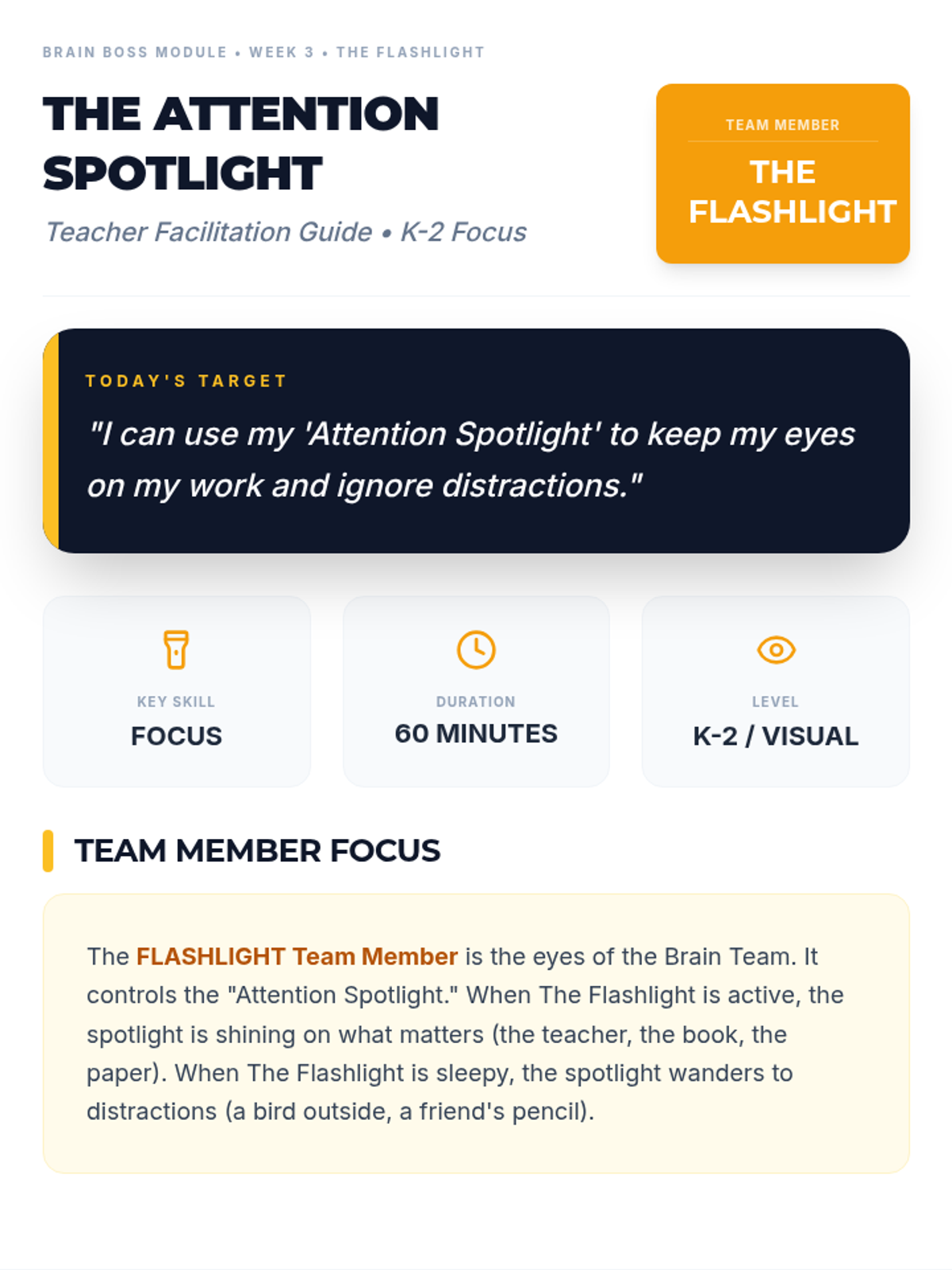
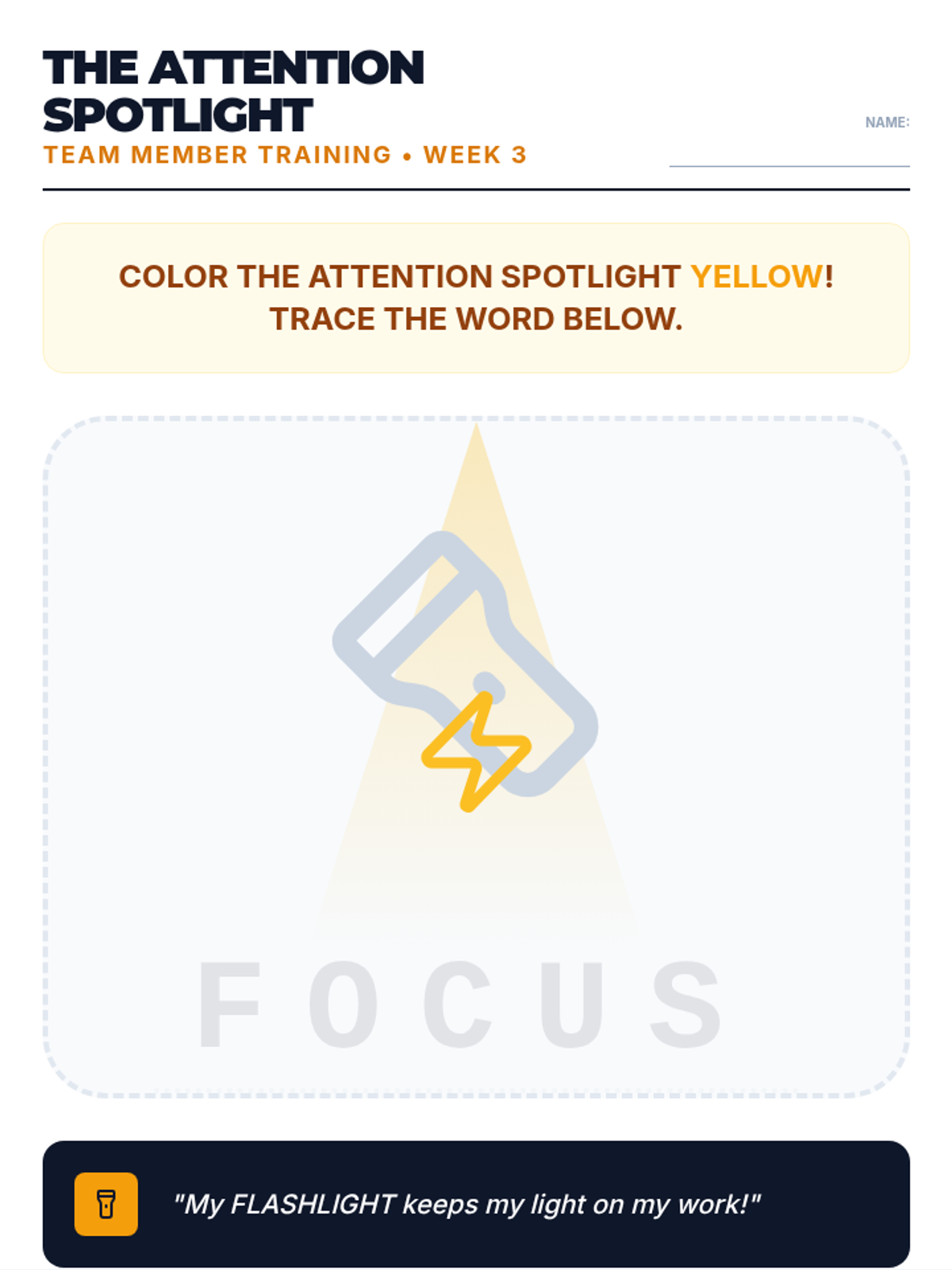
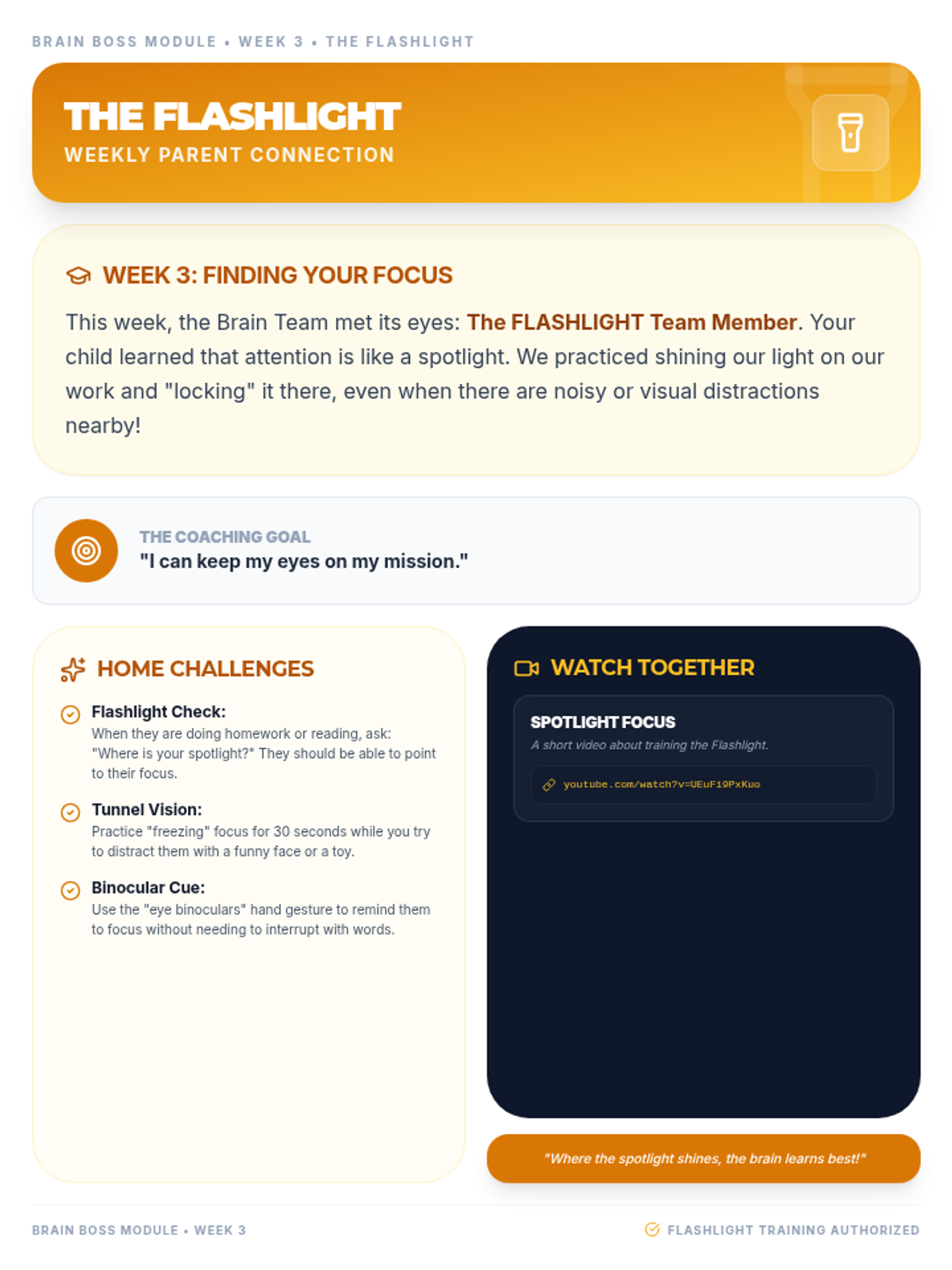
A dedicated training module focusing on executive function skills for K-2 students. Includes lessons on Focus (The Flashlight), Inhibition (The Stop Signal), Initiation (The Start Engine), Working Memory (The Recorder), Planning (The Mapmaker), Flexibility (The Play-Doh), and Emotional Control (The Volume Remote).
A comprehensive 10-week instructional module designed to build and refine 9 core executive functioning skills including goal setting, organization, and self-regulation.
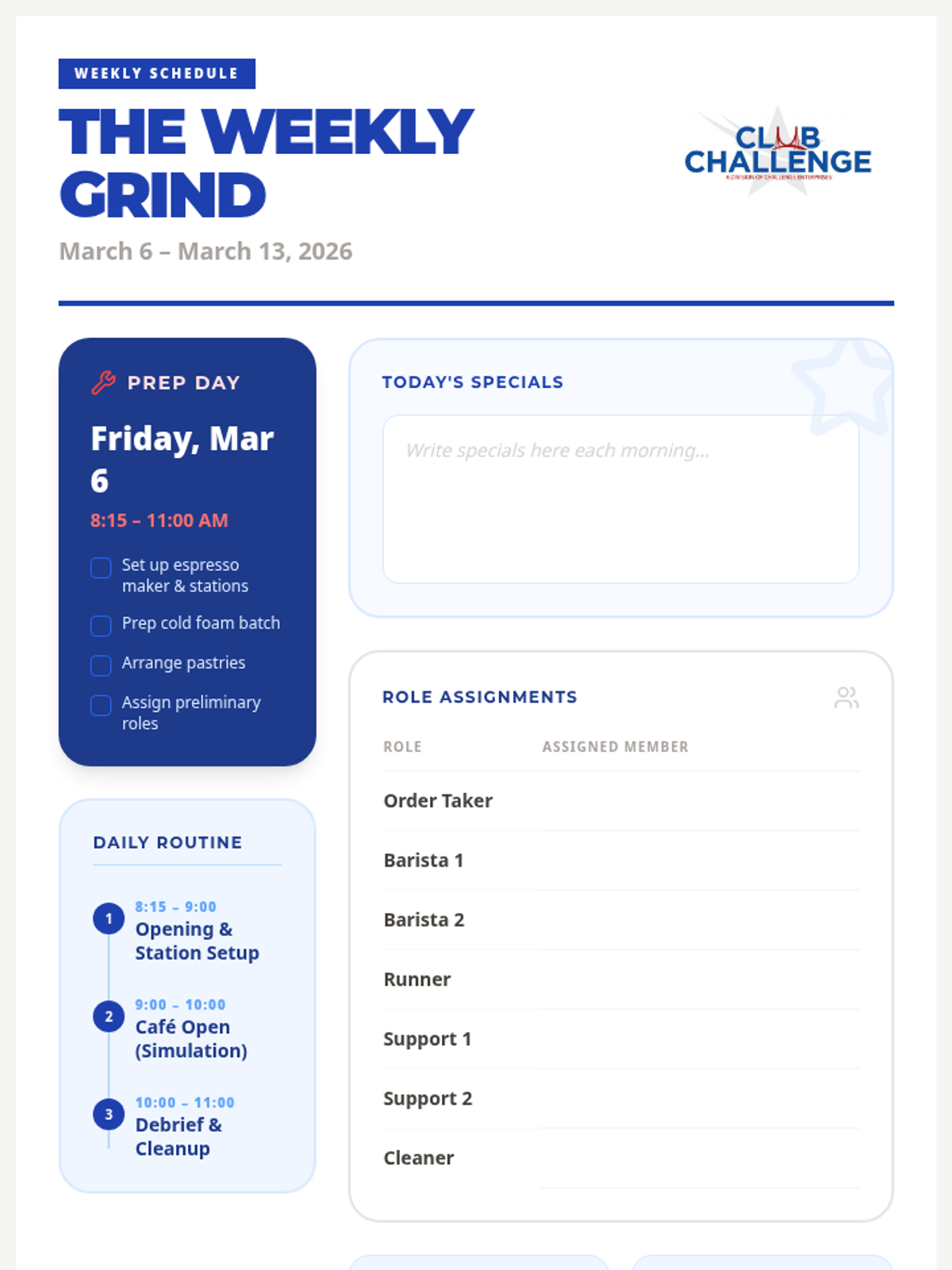
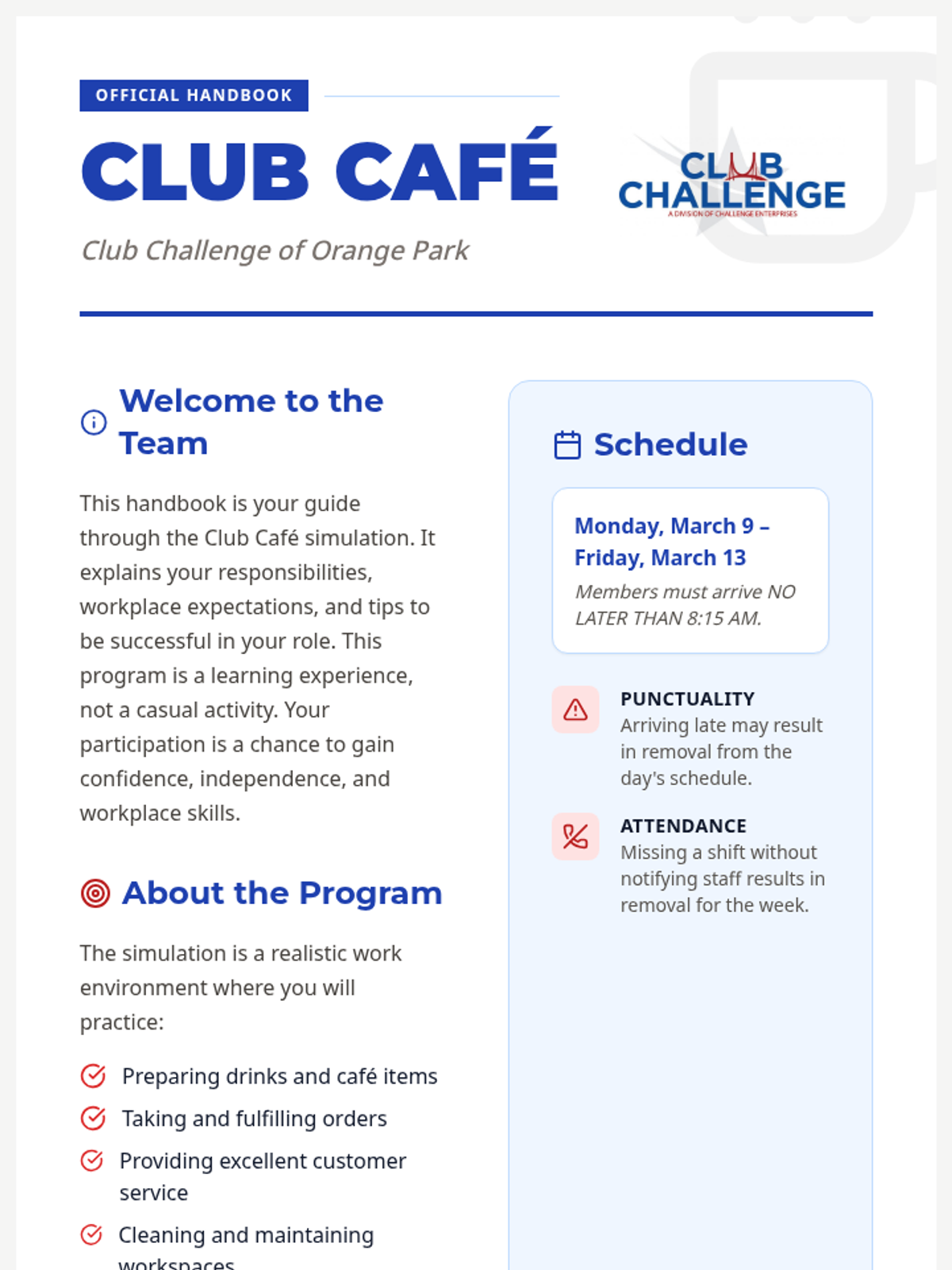
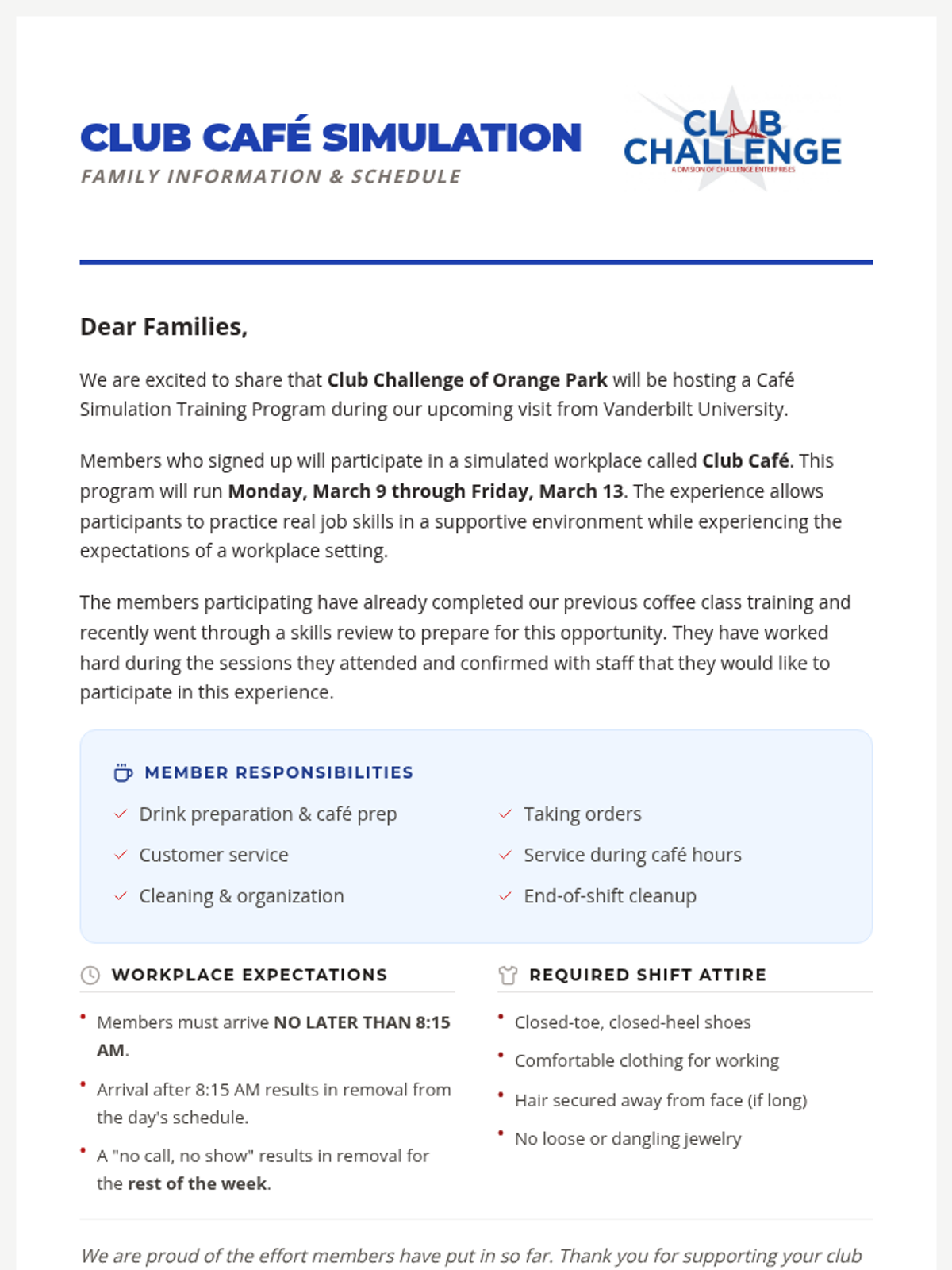
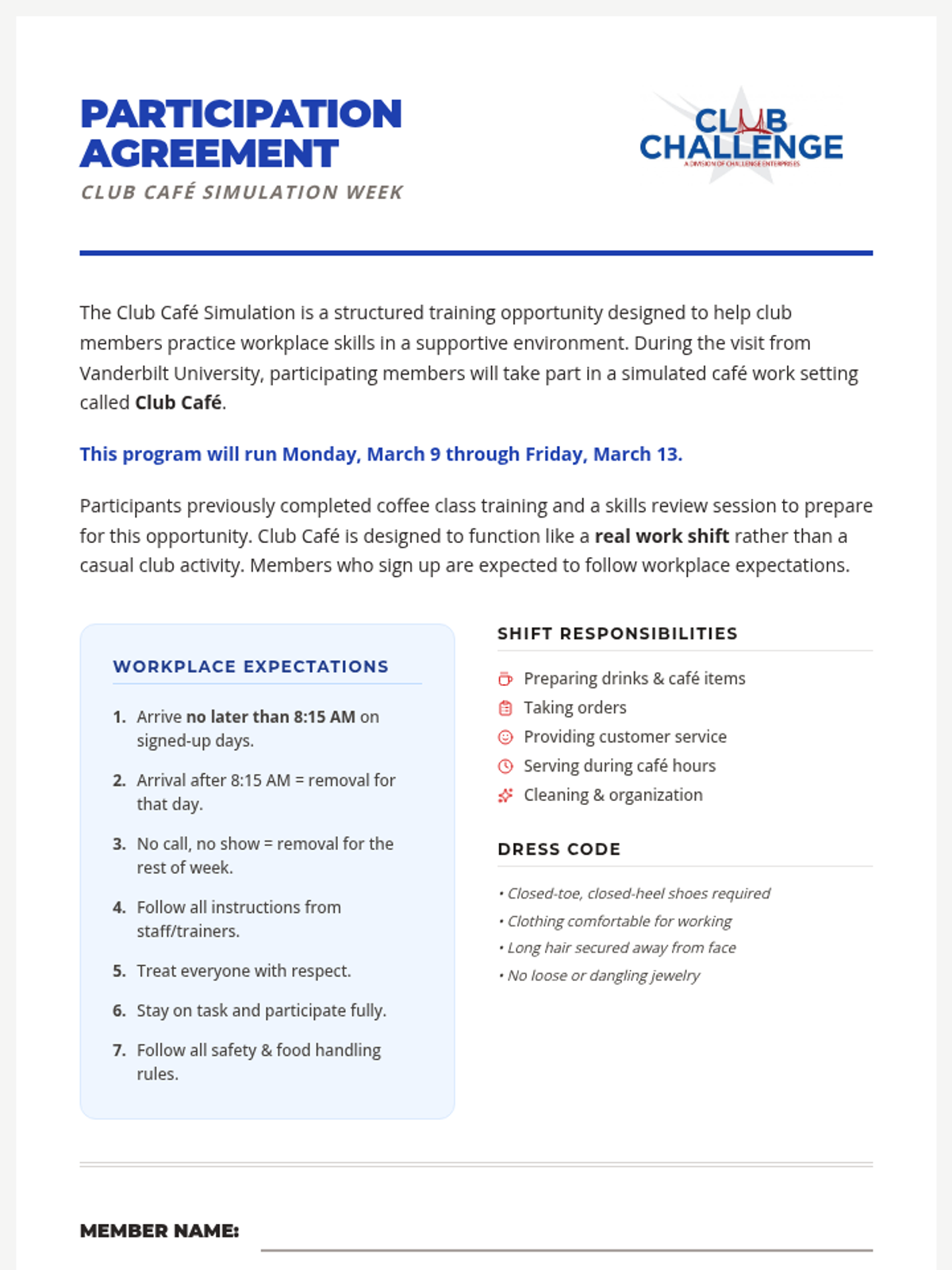
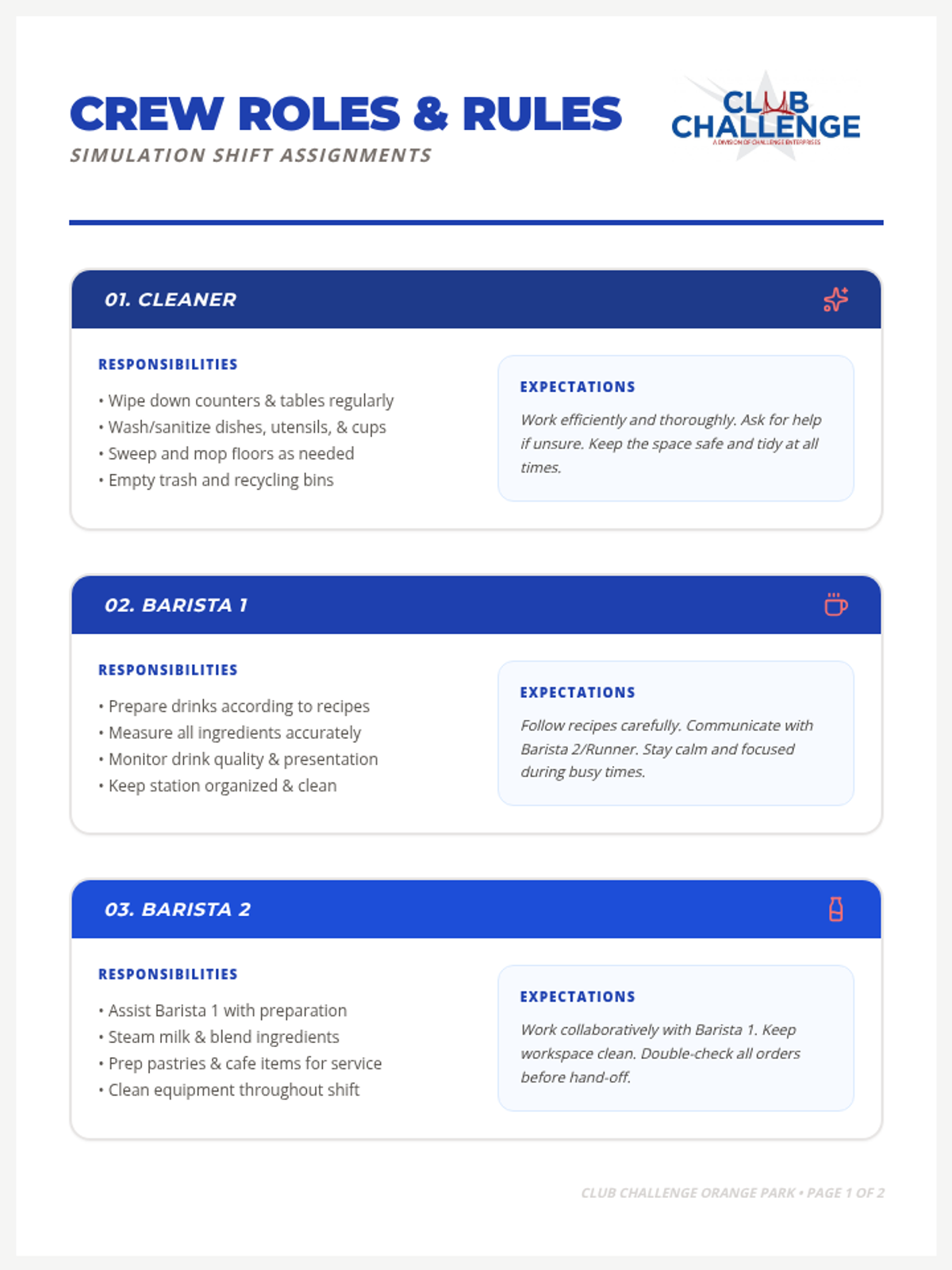
A comprehensive workplace simulation program for Club Challenge of Orange Park, designed to teach vocational skills through a realistic café environment. The sequence includes orientation materials, operational tools for students, and tracking resources for staff.
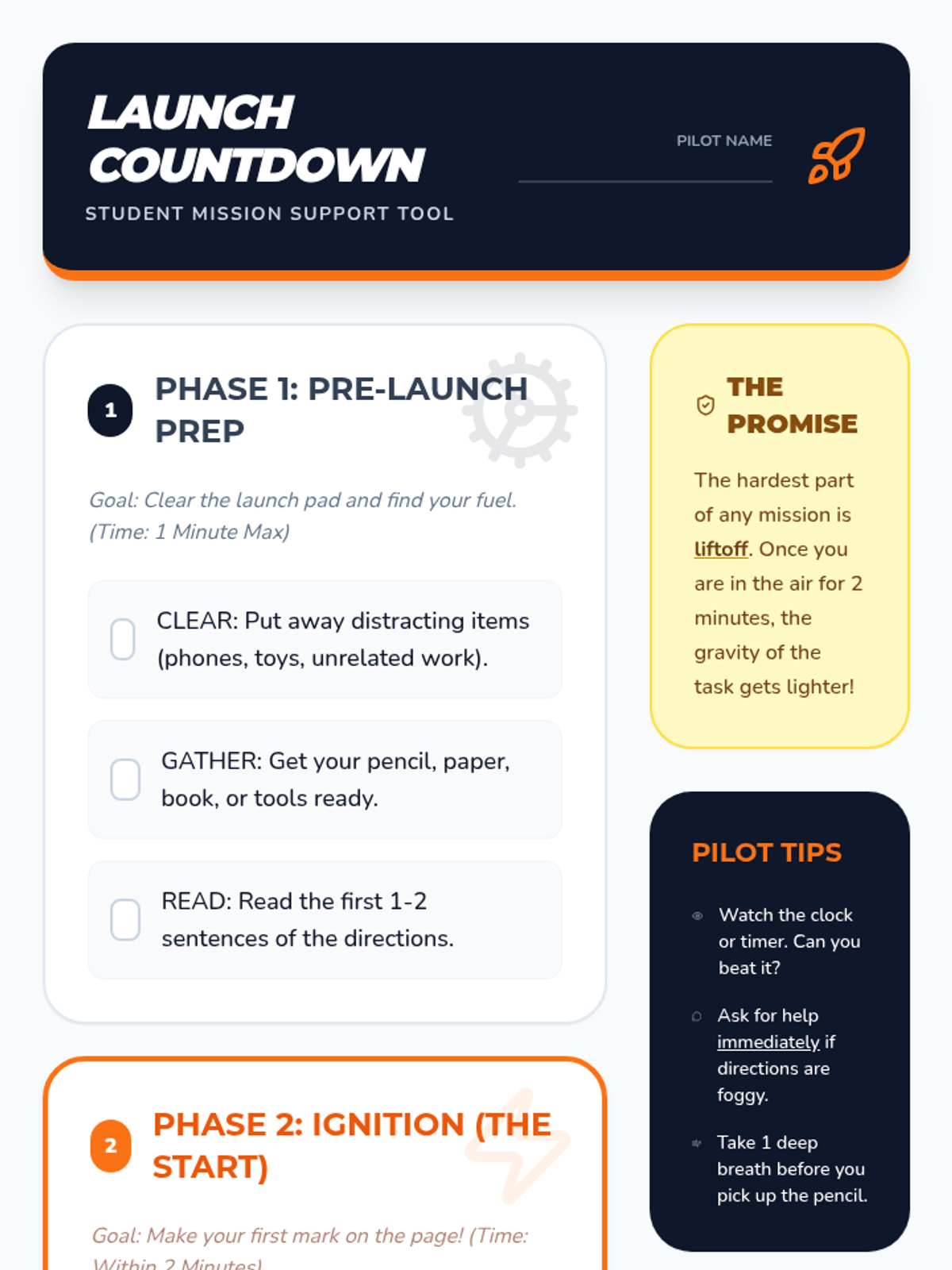
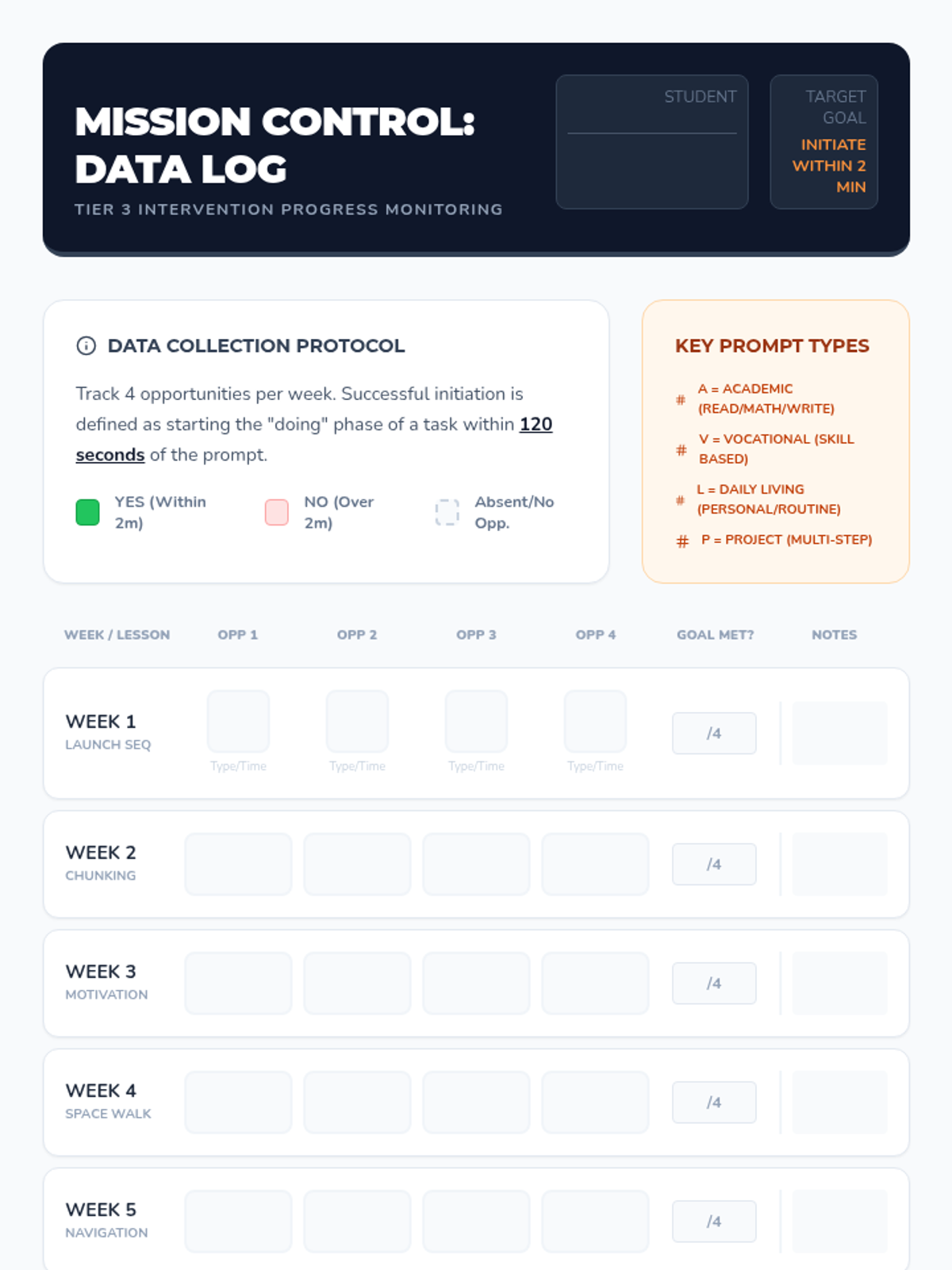
A 6-week Tier 3 intensive intervention program focused on improving task initiation skills for students struggling to start academic, vocational, and daily living tasks. The program uses a "Launch Pad" space theme to frame the concept of starting tasks as 'launching' a mission.
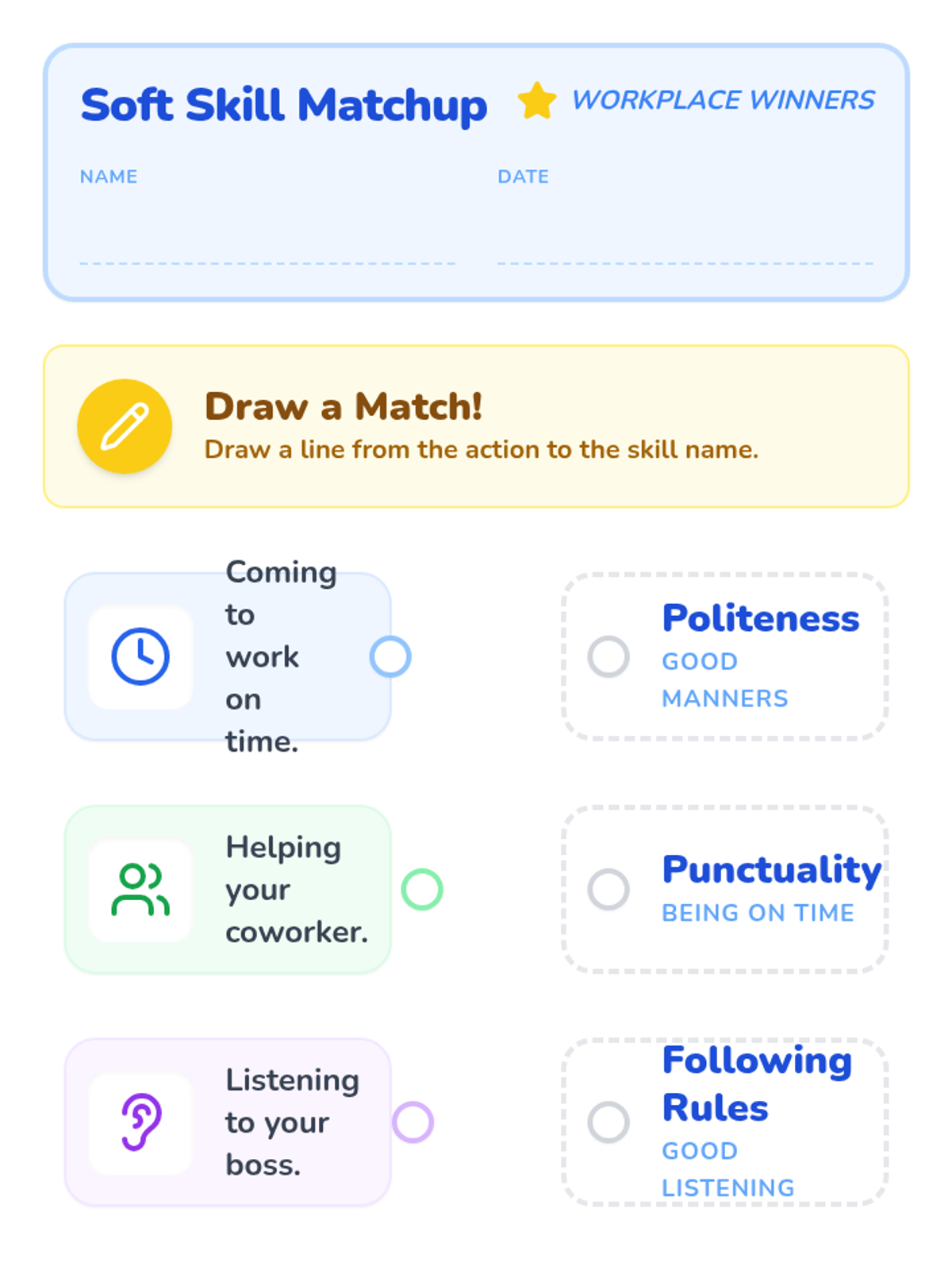
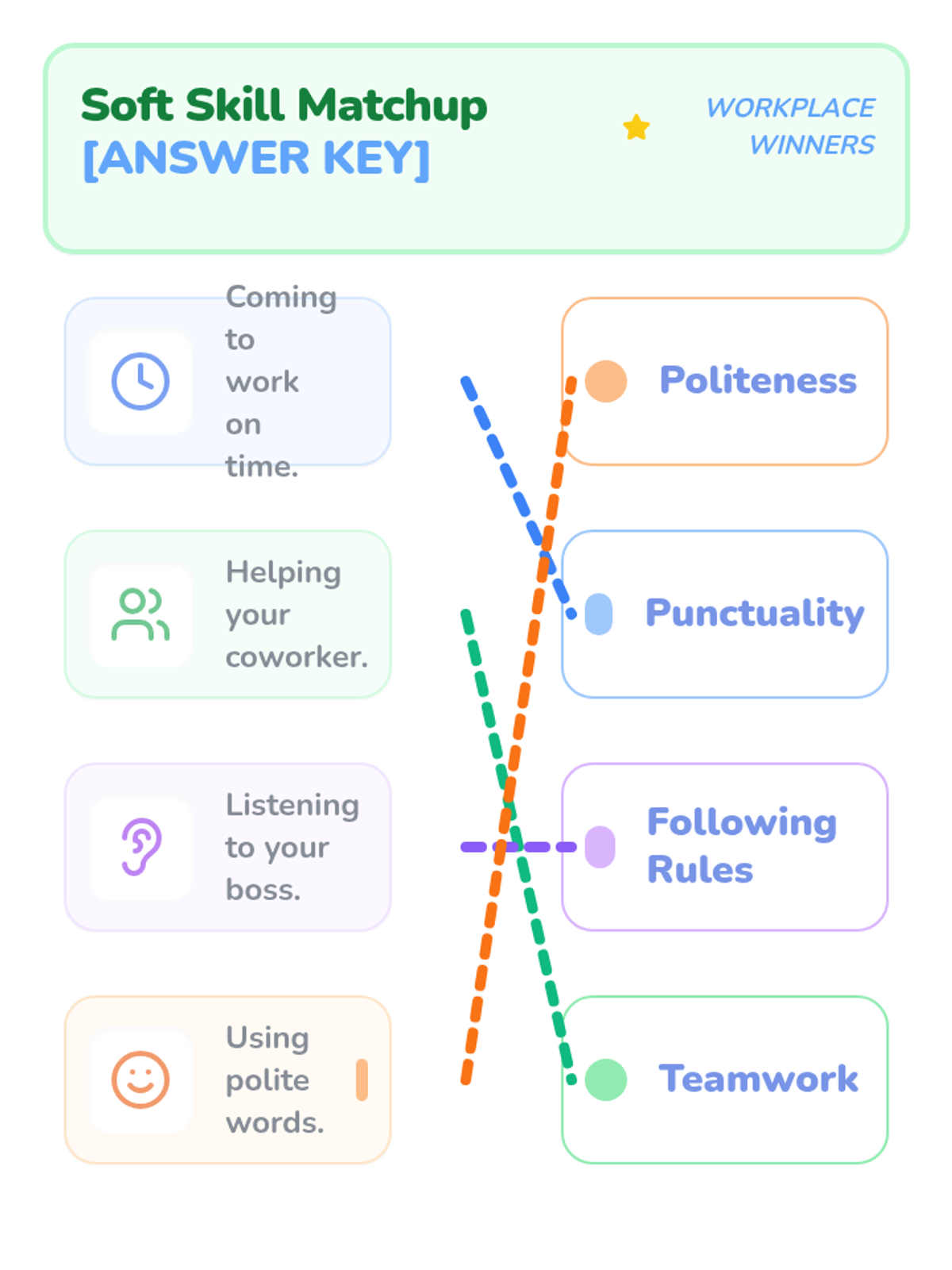
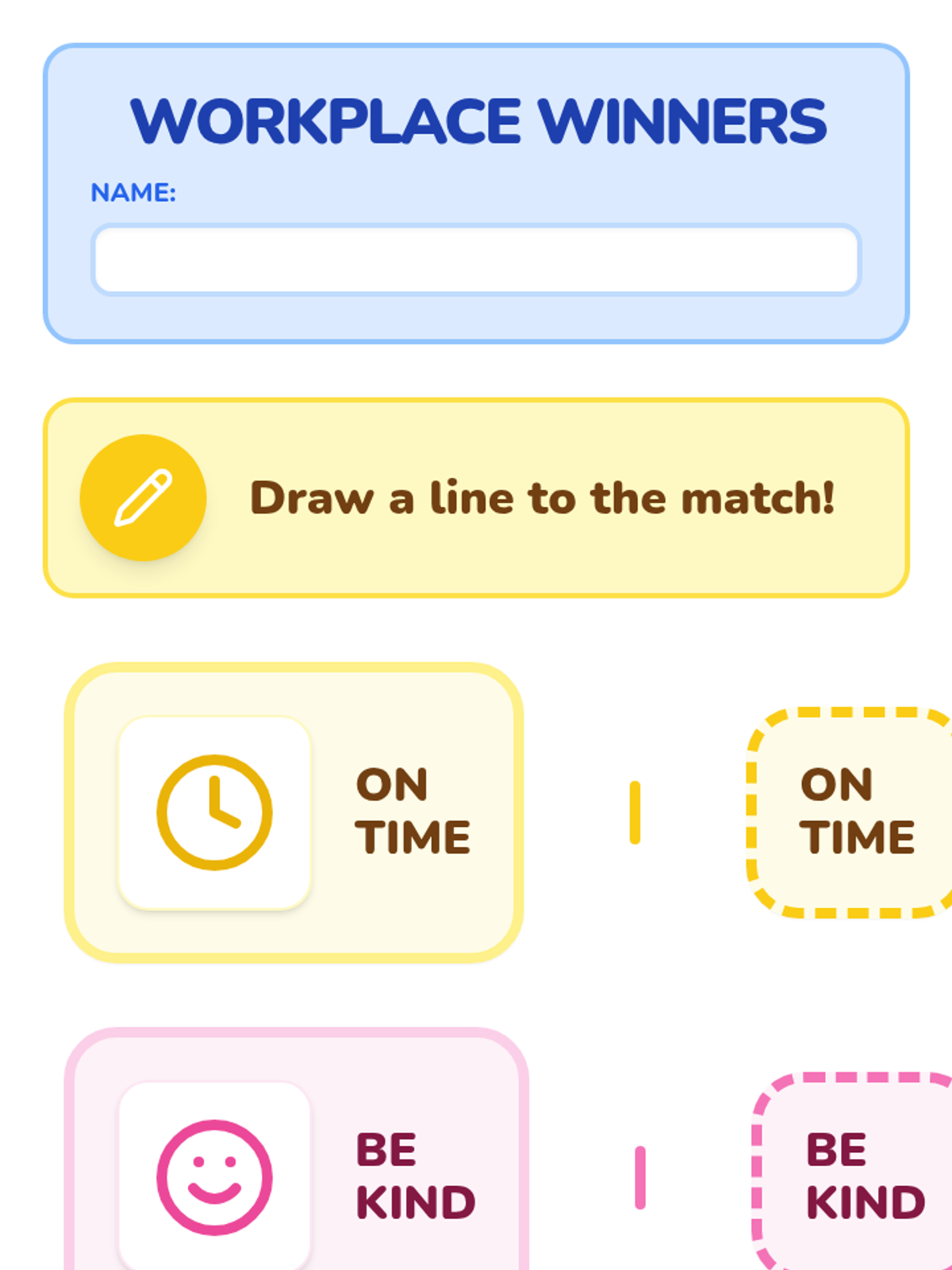
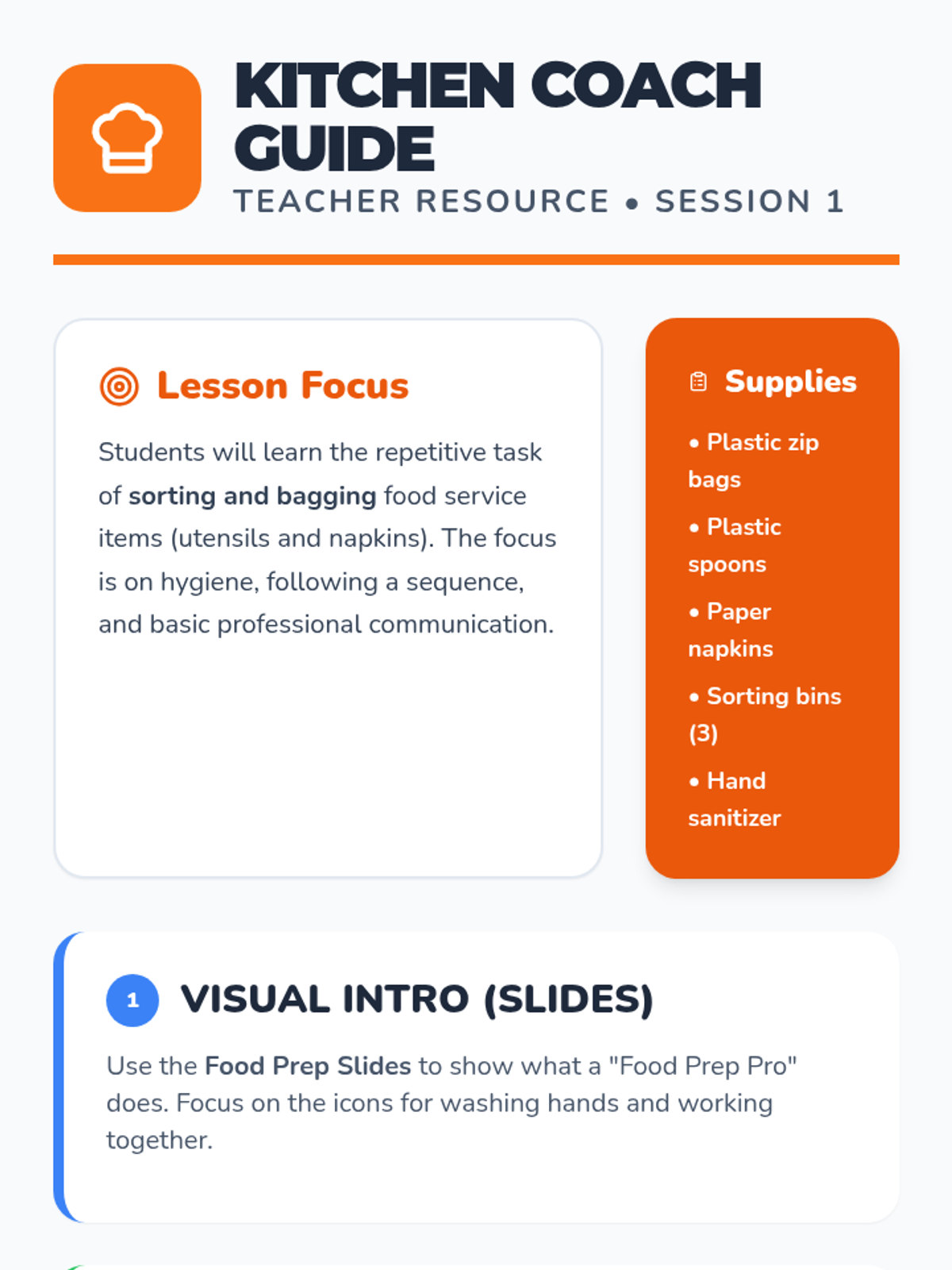
A series of lessons focused on essential life and vocational skills for students with cognitive disabilities. The sequence covers workplace etiquette, personal hygiene, social communication, and task management.
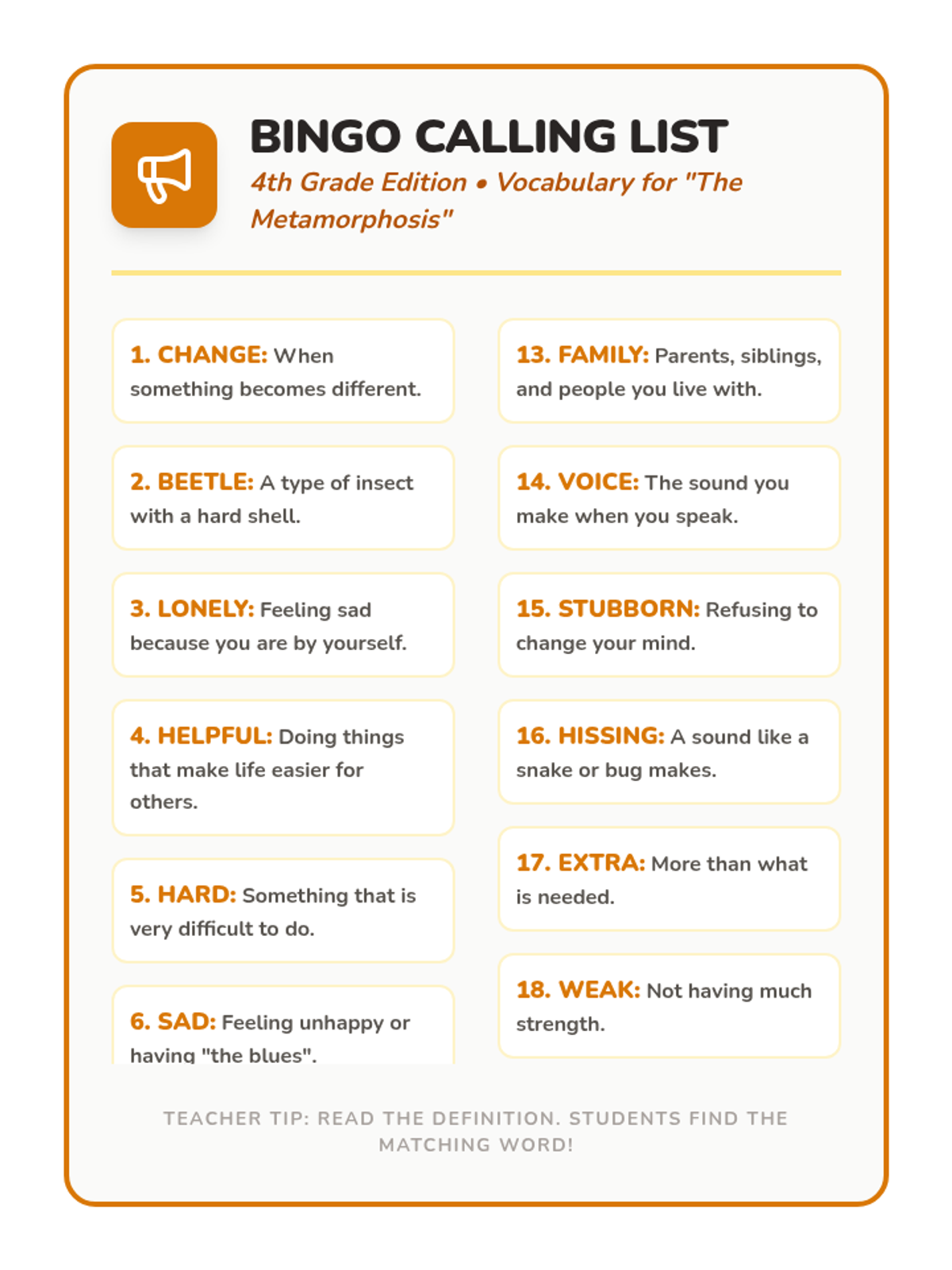
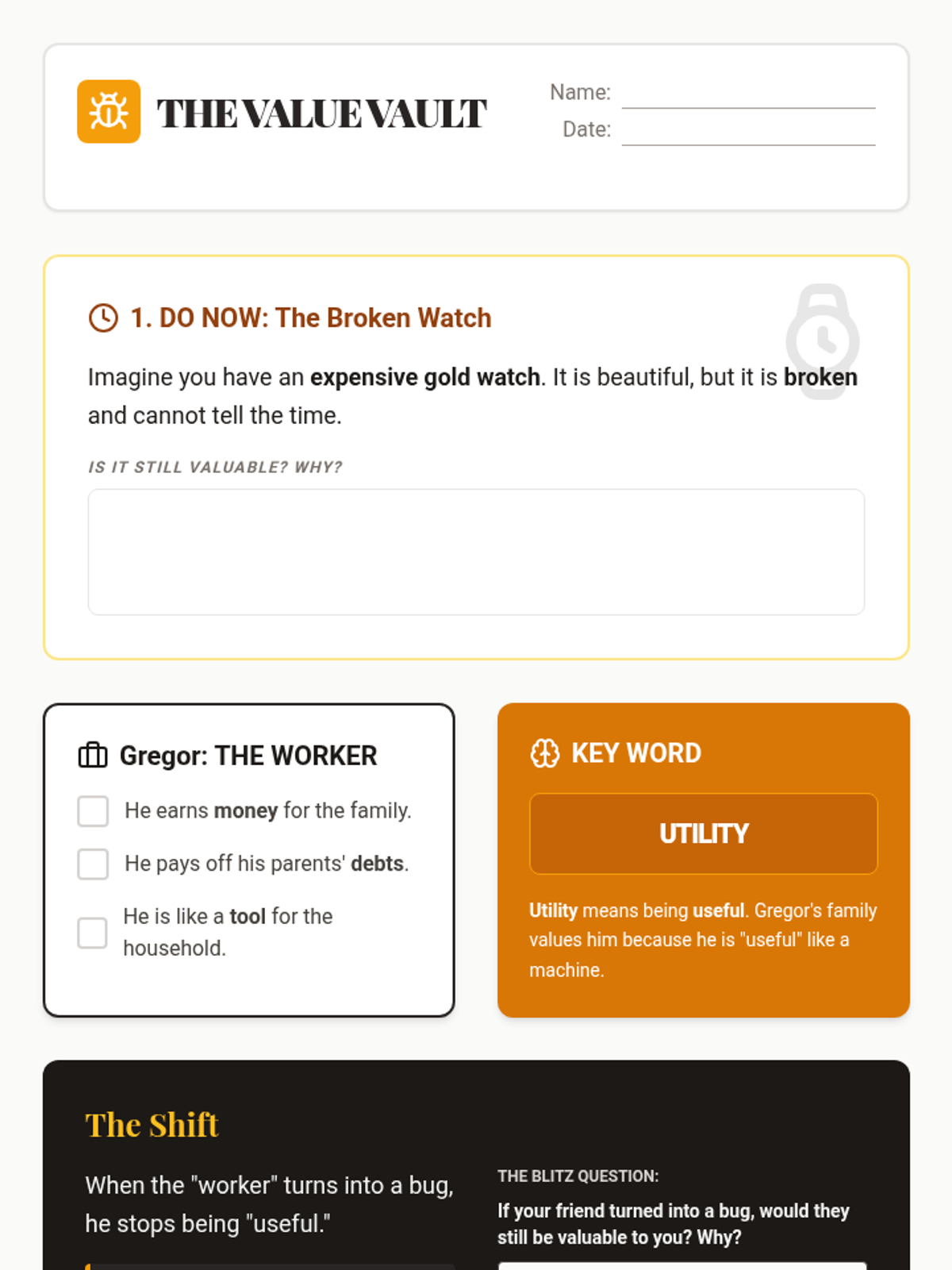
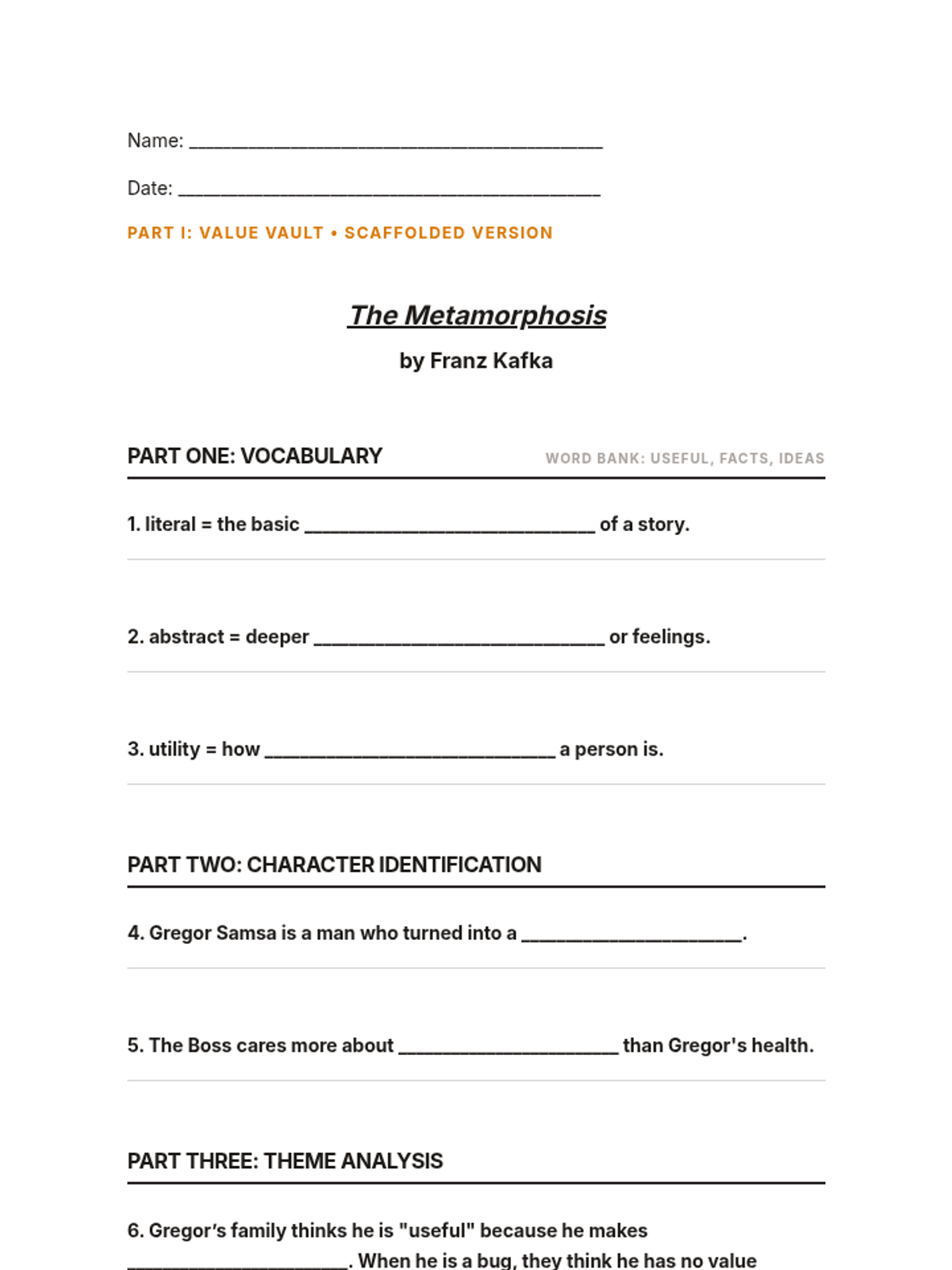
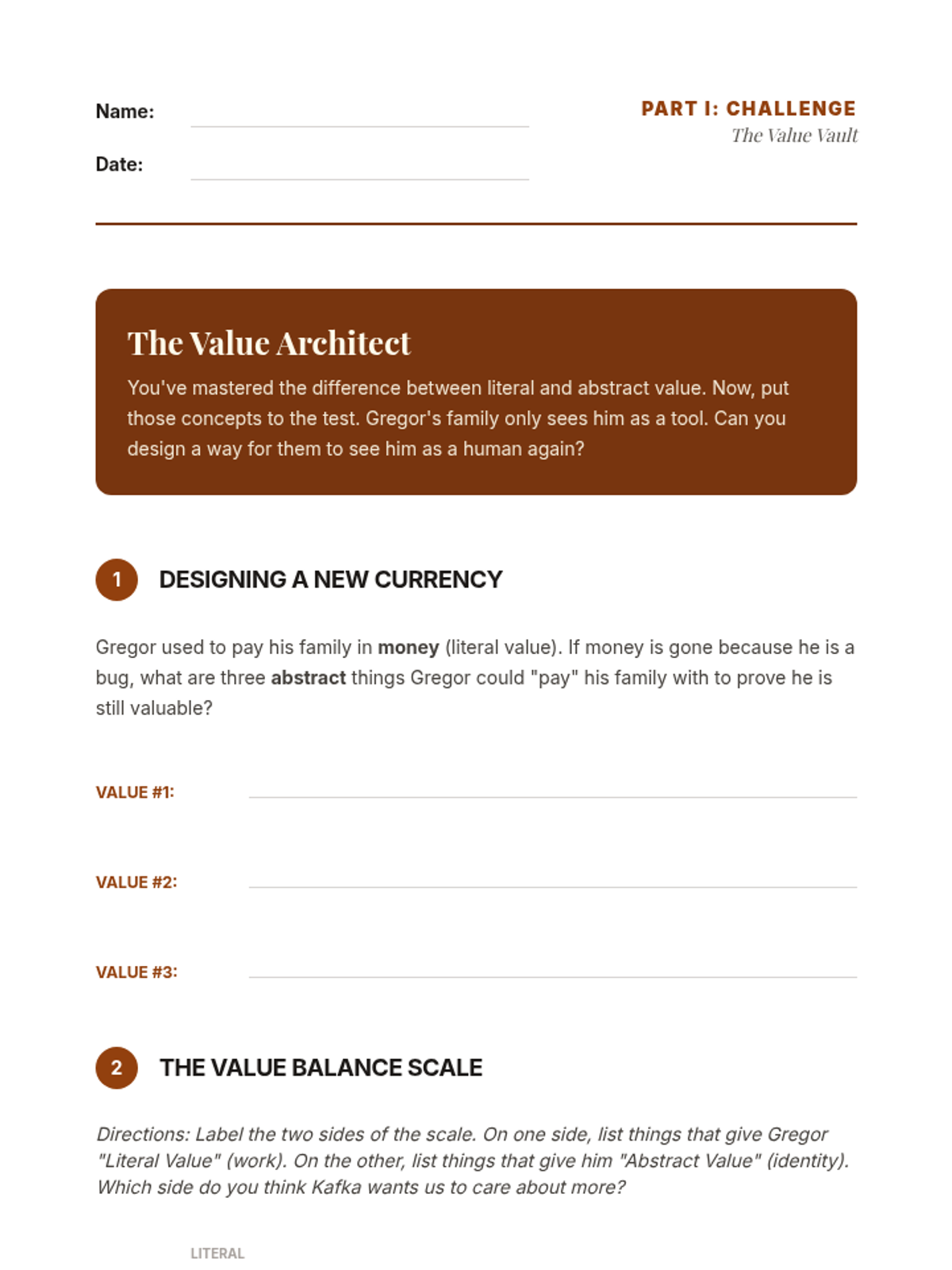
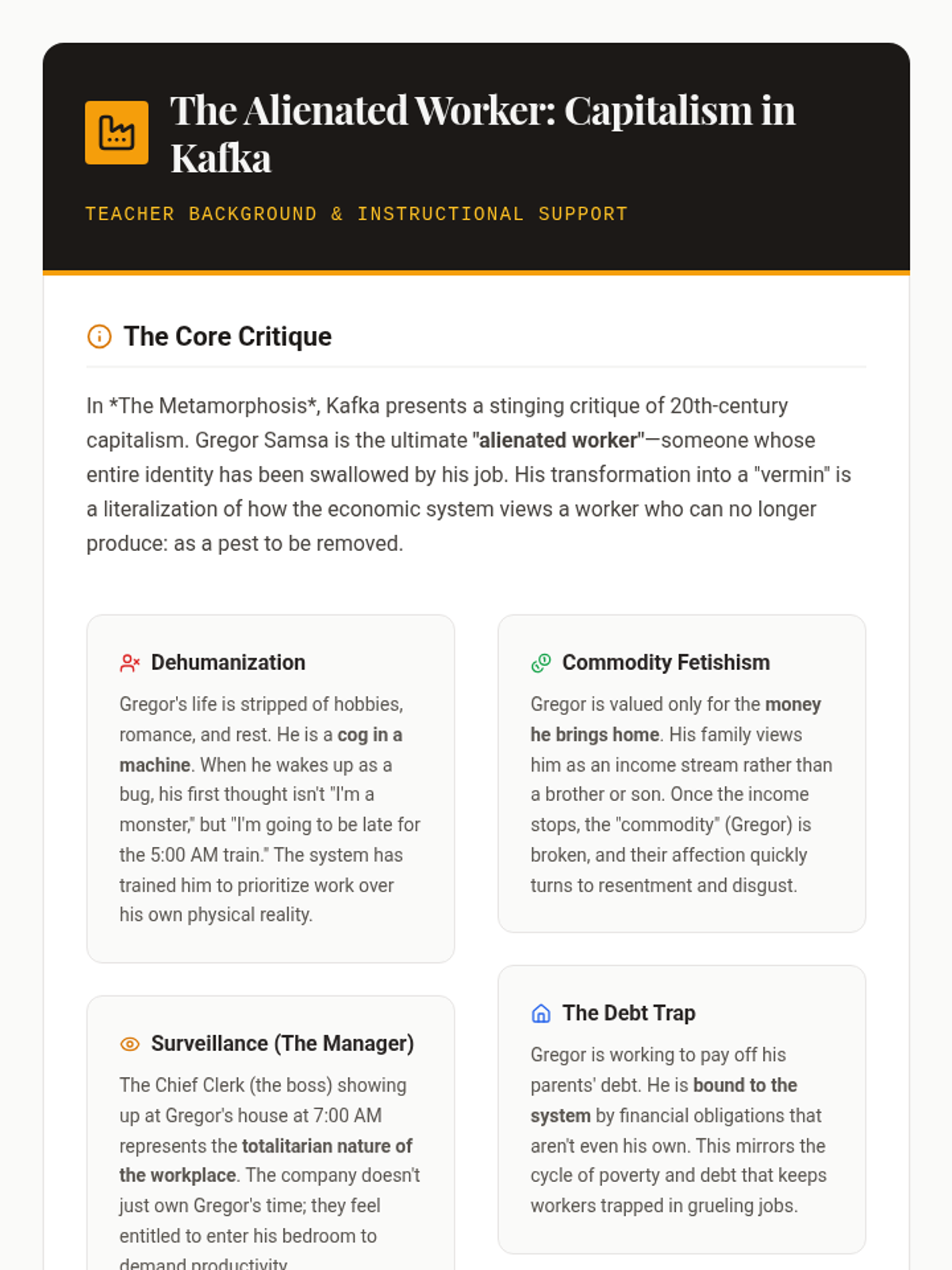
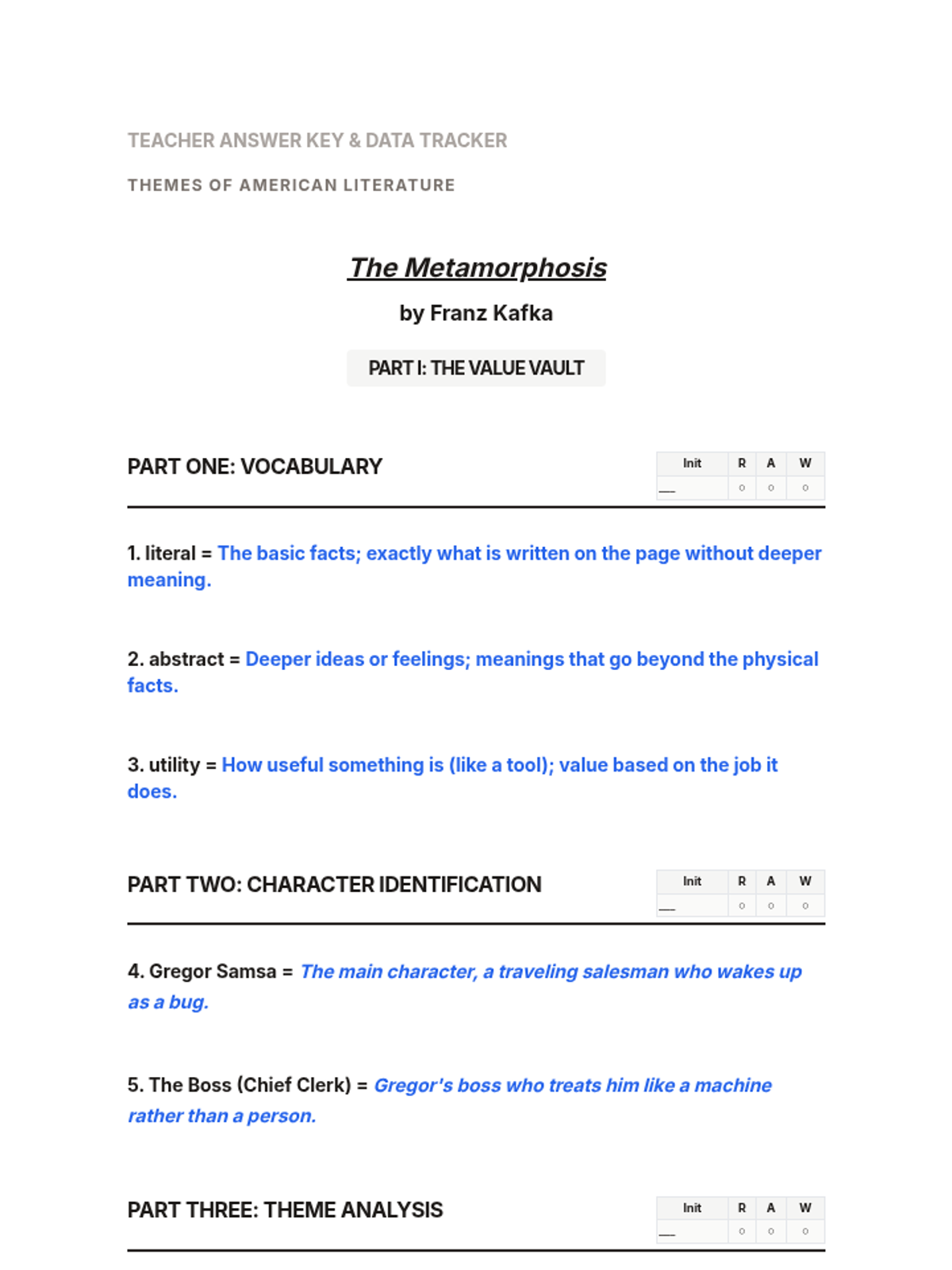
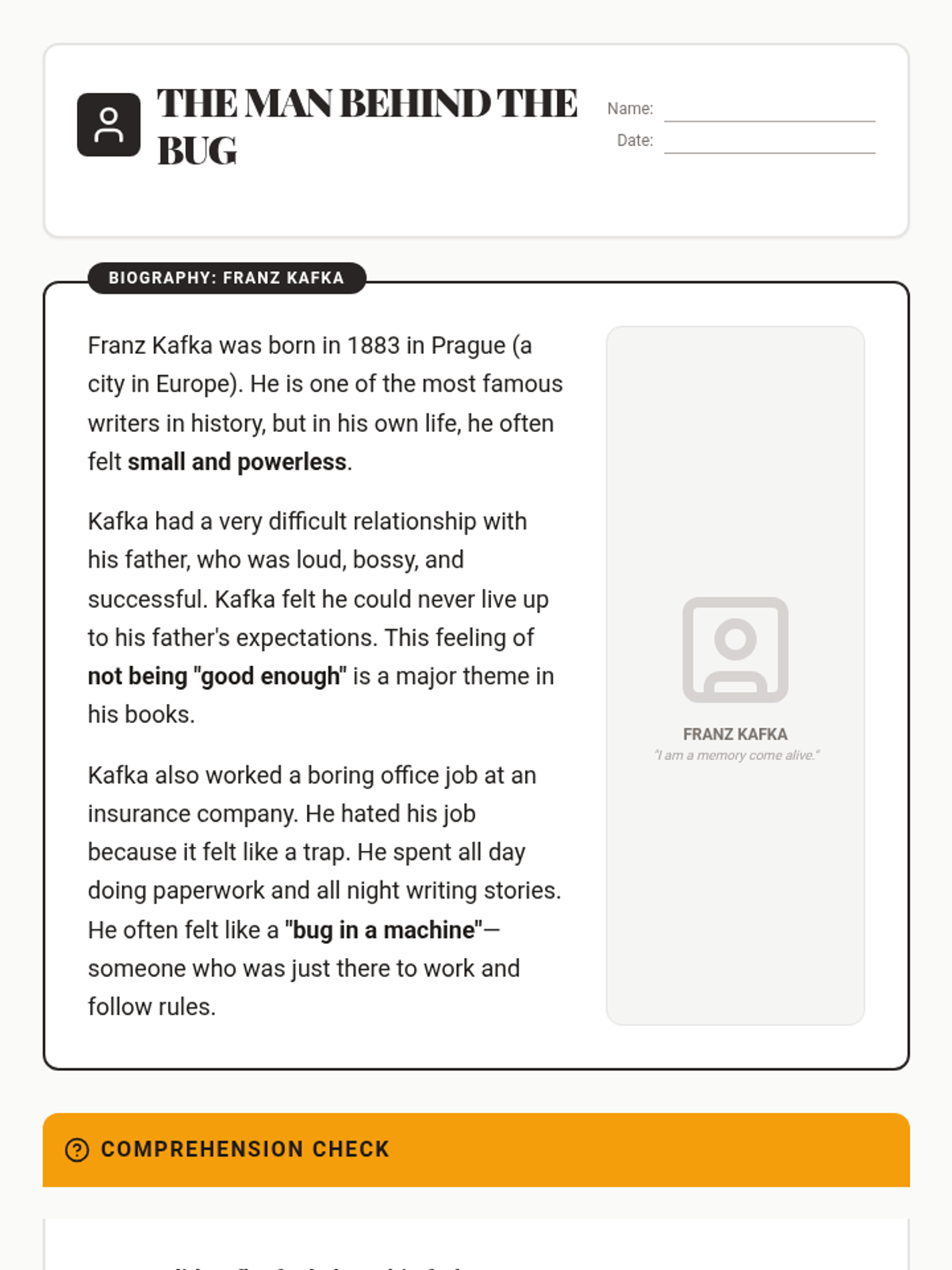
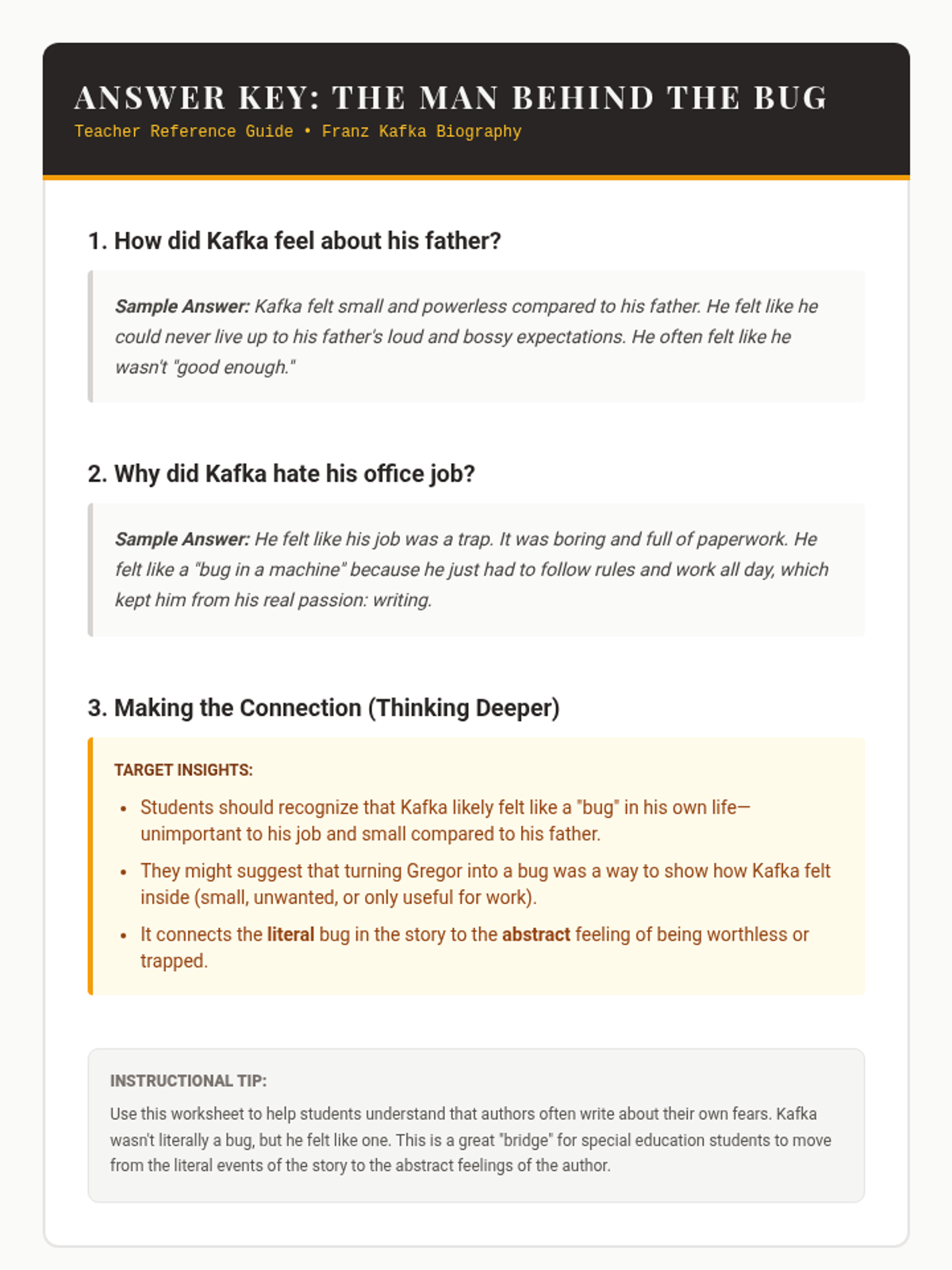
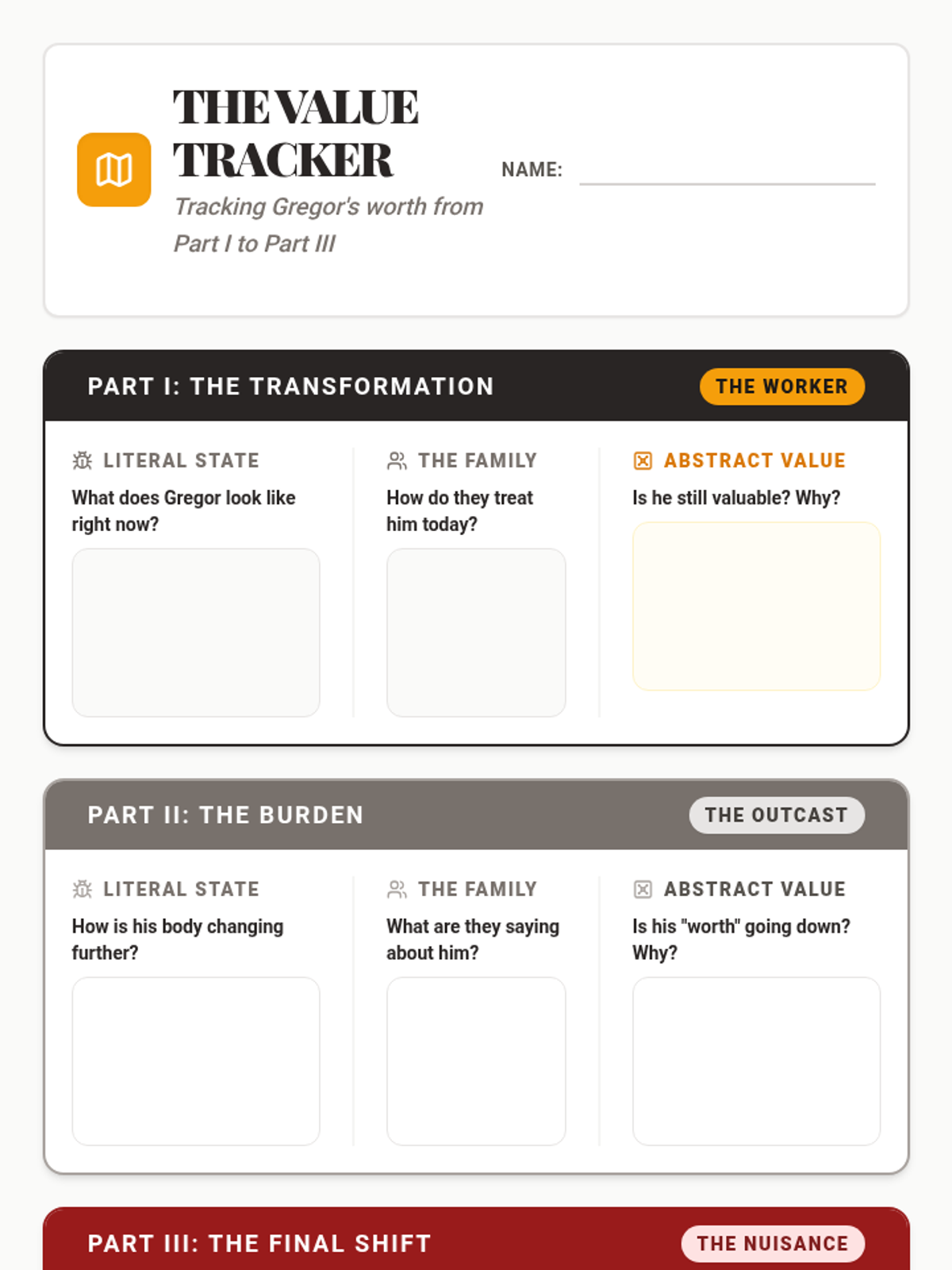
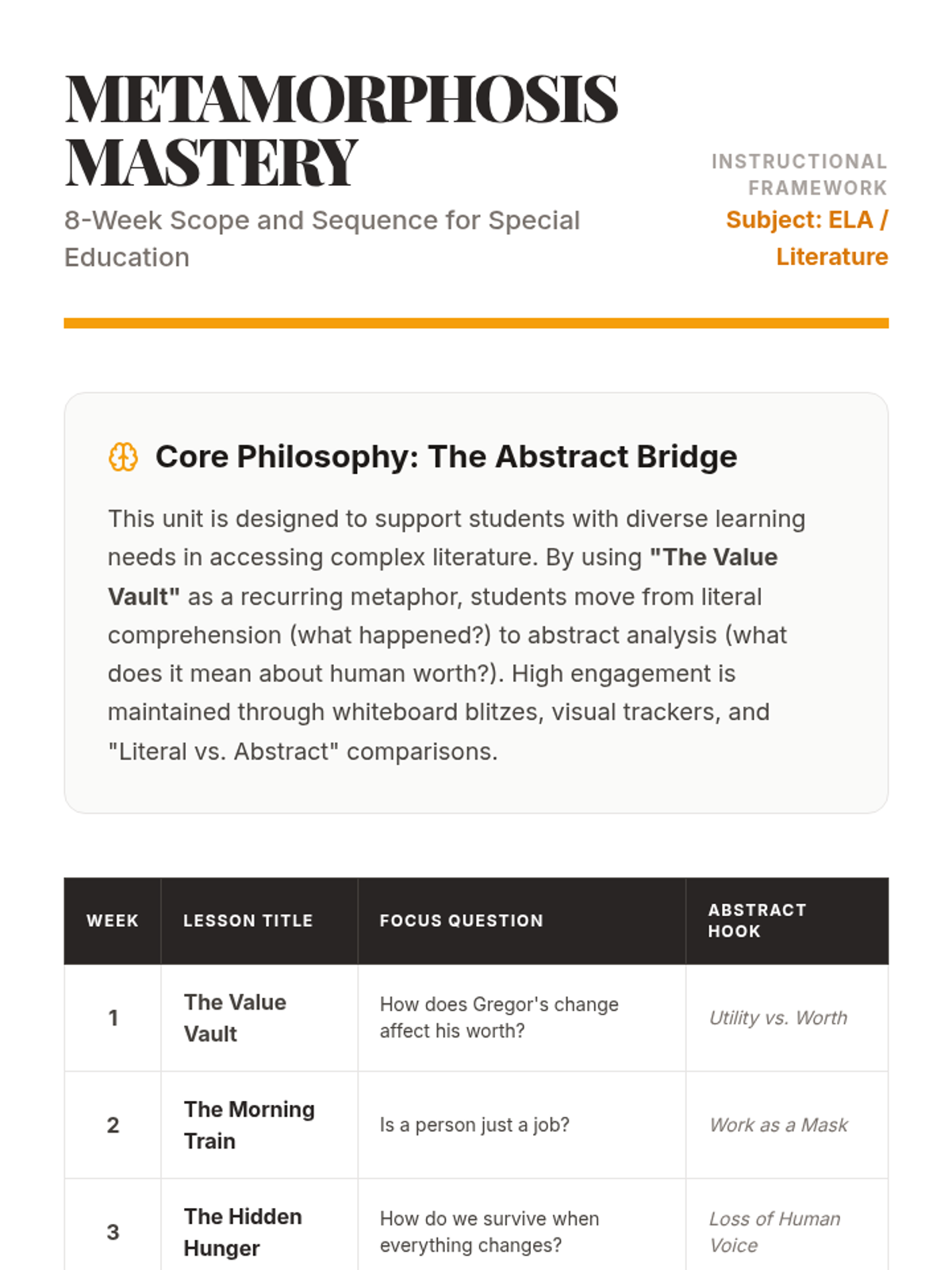
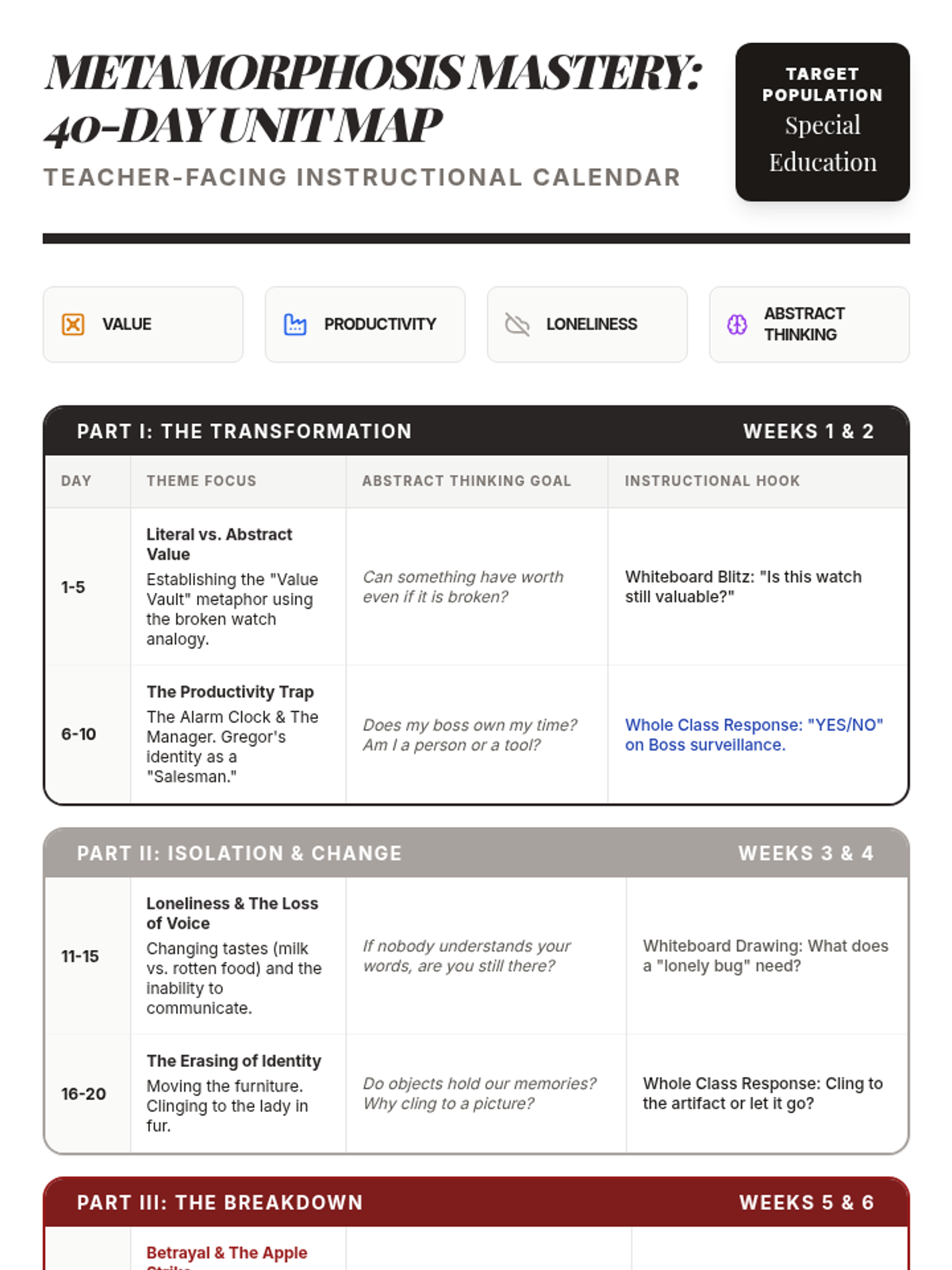
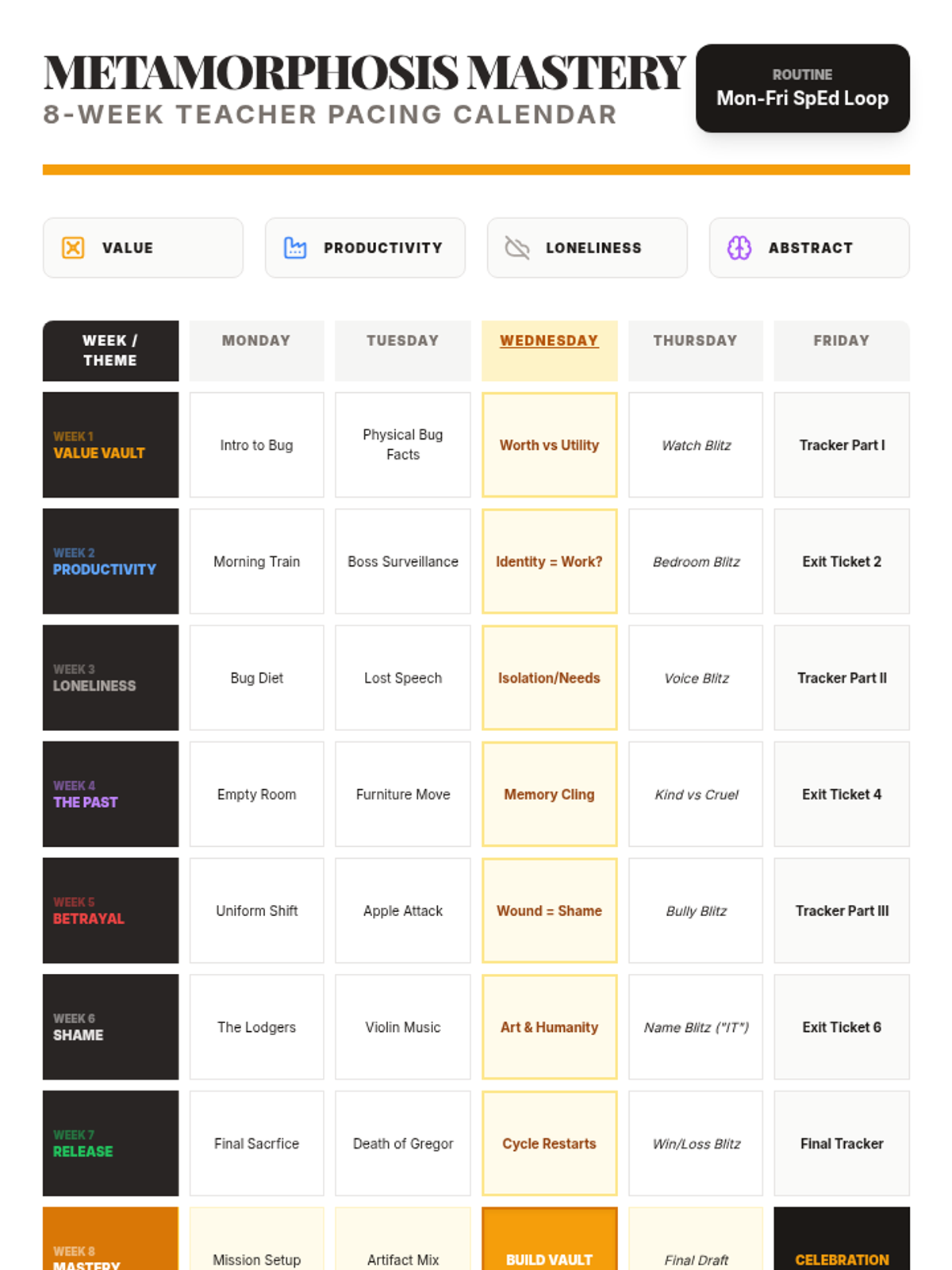
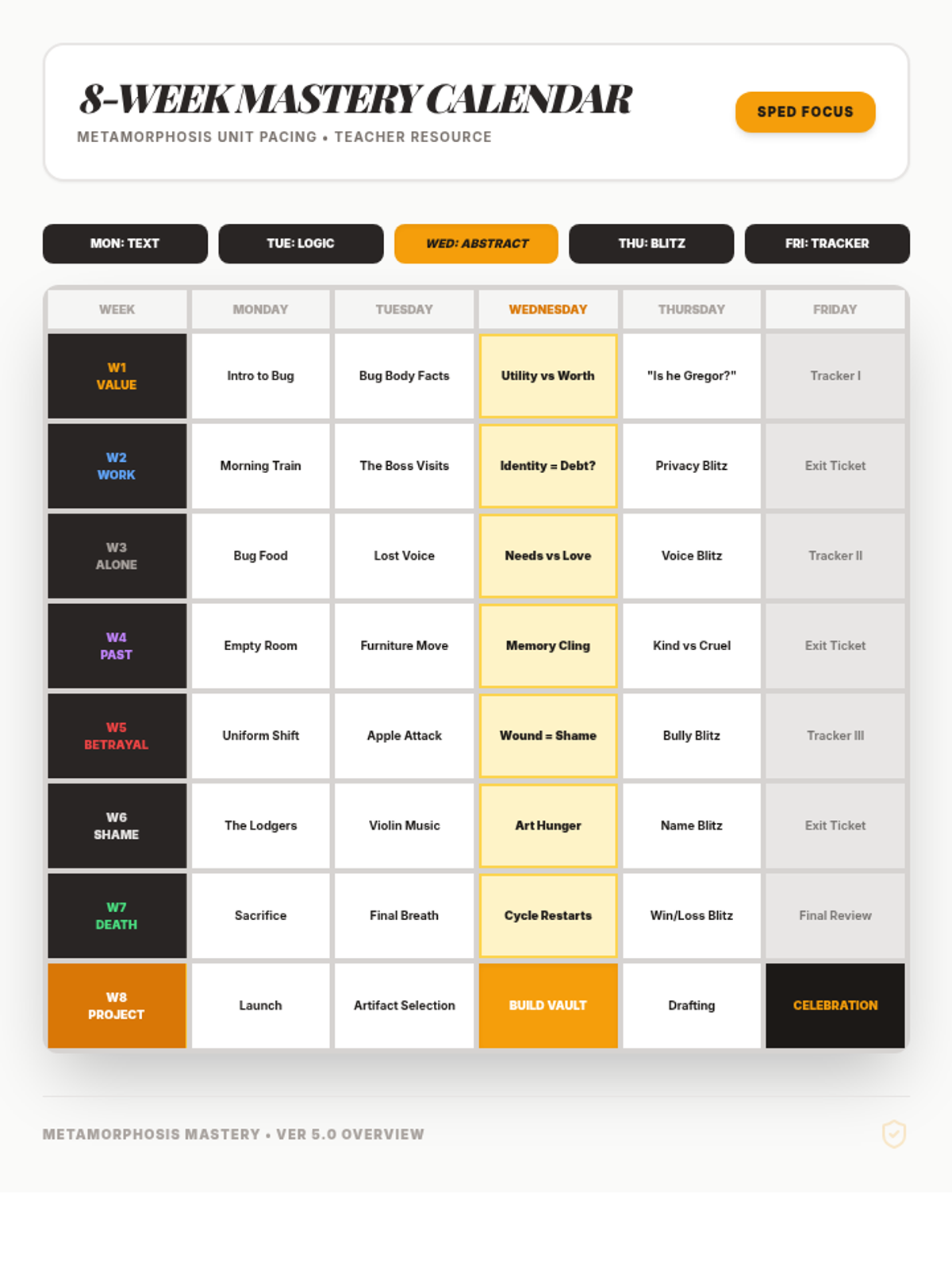
An 8-week deep dive into Kafka's Metamorphosis for special education students, focusing on abstract thinking, social value, and the human condition through high-engagement activities and visual organizers.
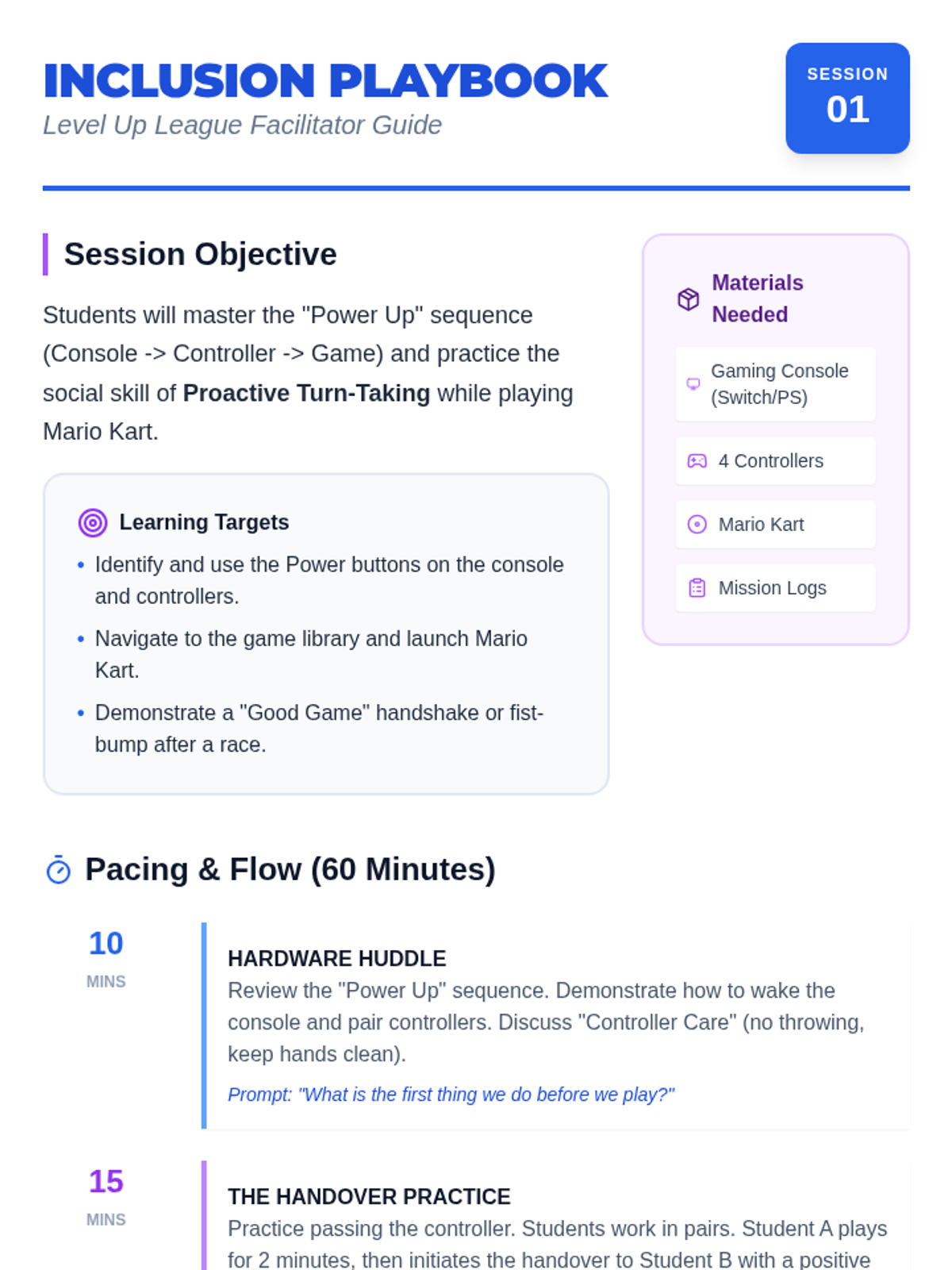
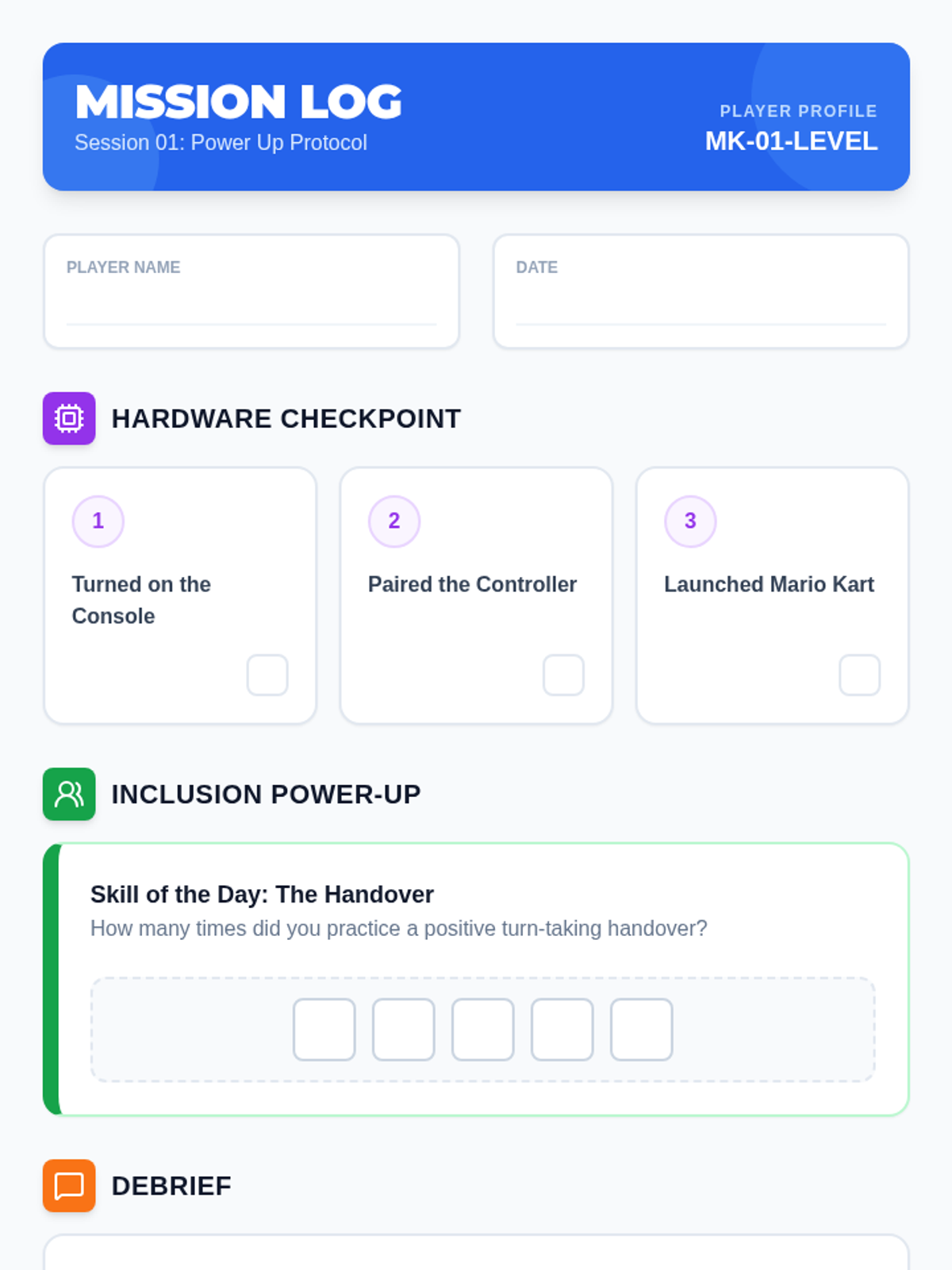
A 4-session program designed to teach students with diverse needs the technical basics and social inclusion skills required for collaborative gaming. Students learn hardware management, sportsmanship, and teamwork through Mario Kart and Rocket League.
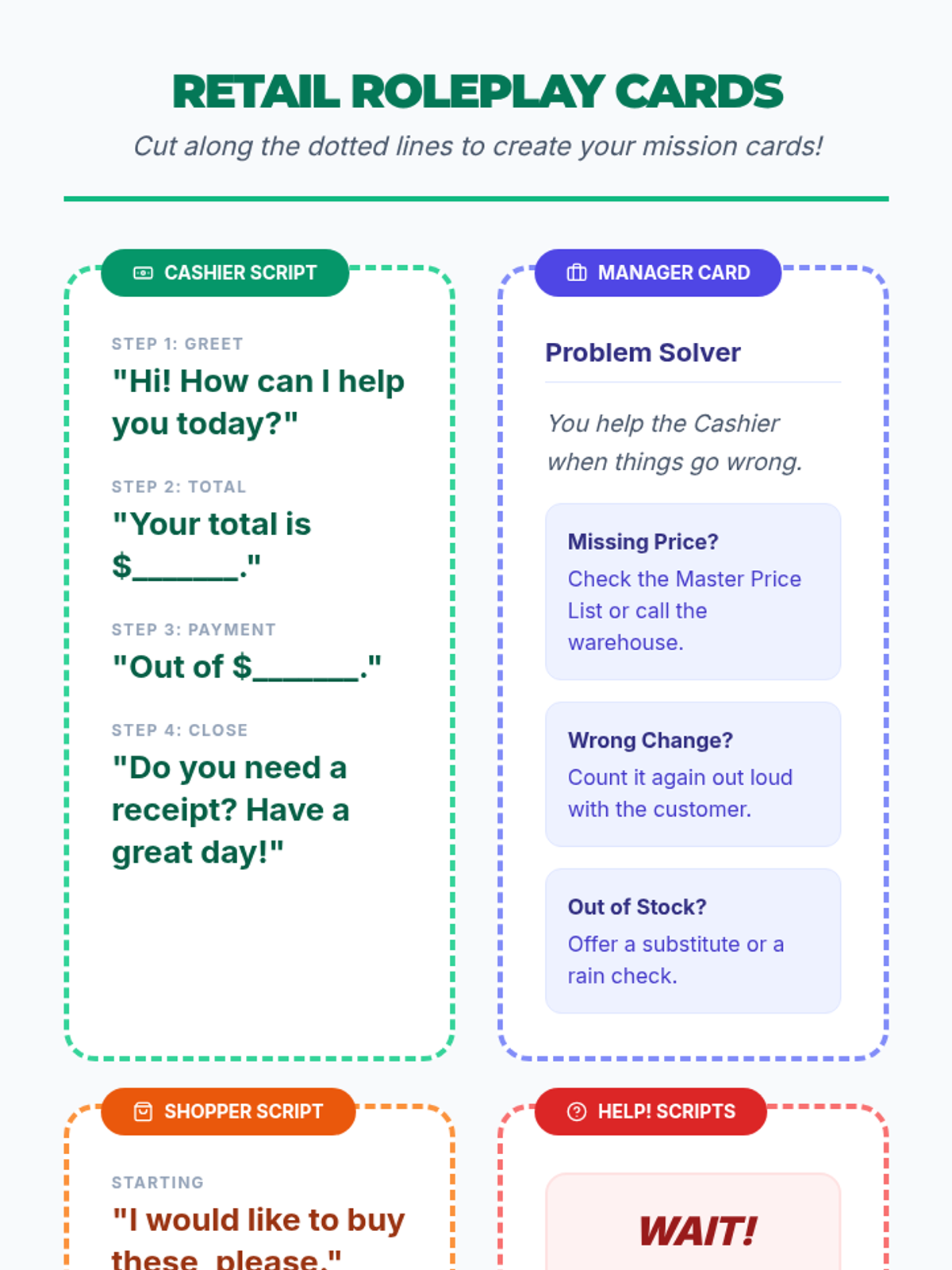
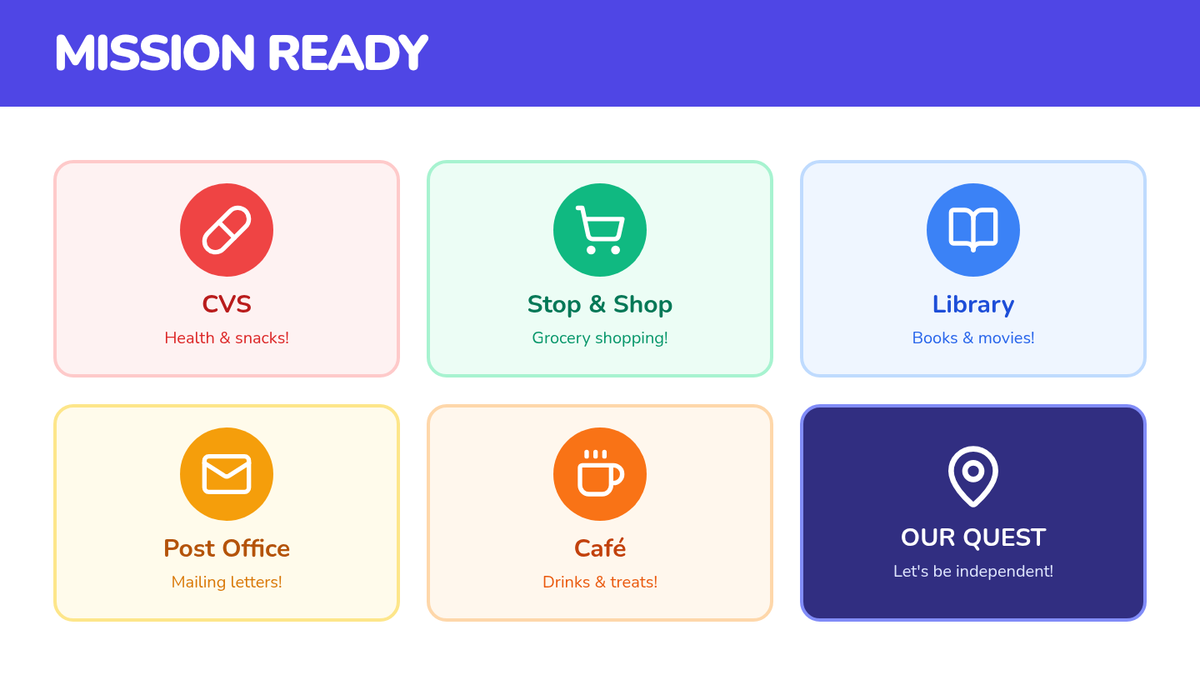
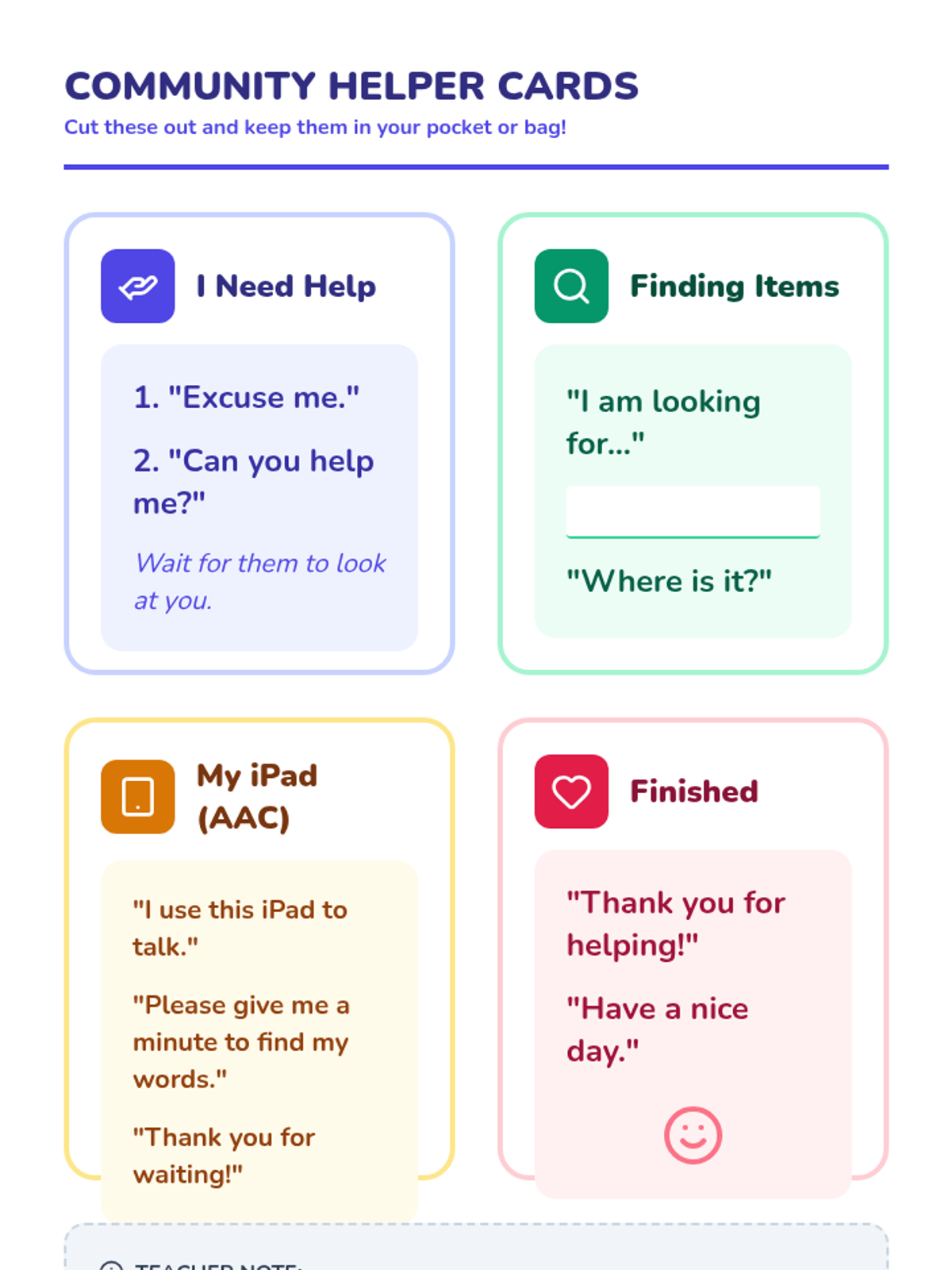
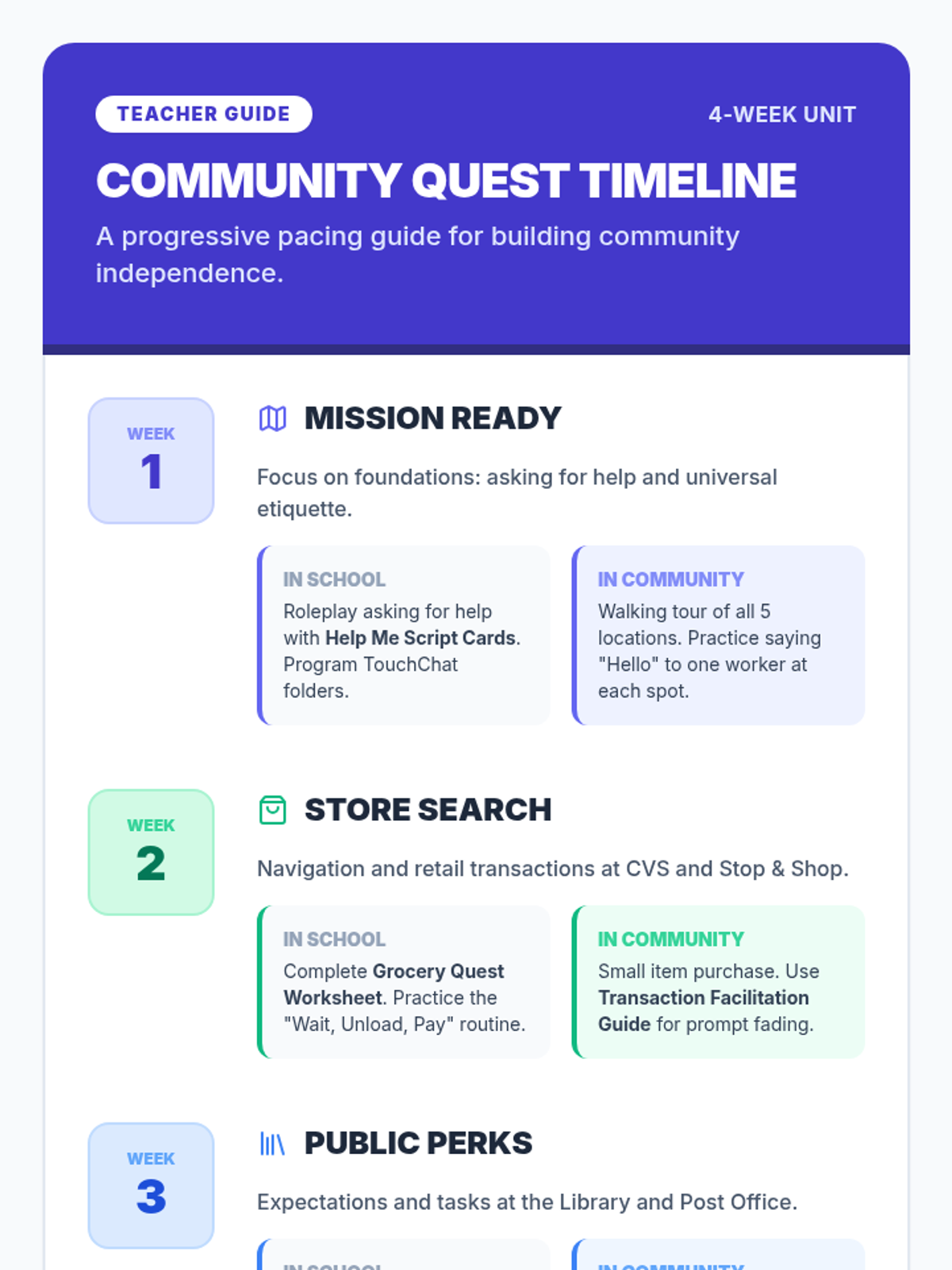
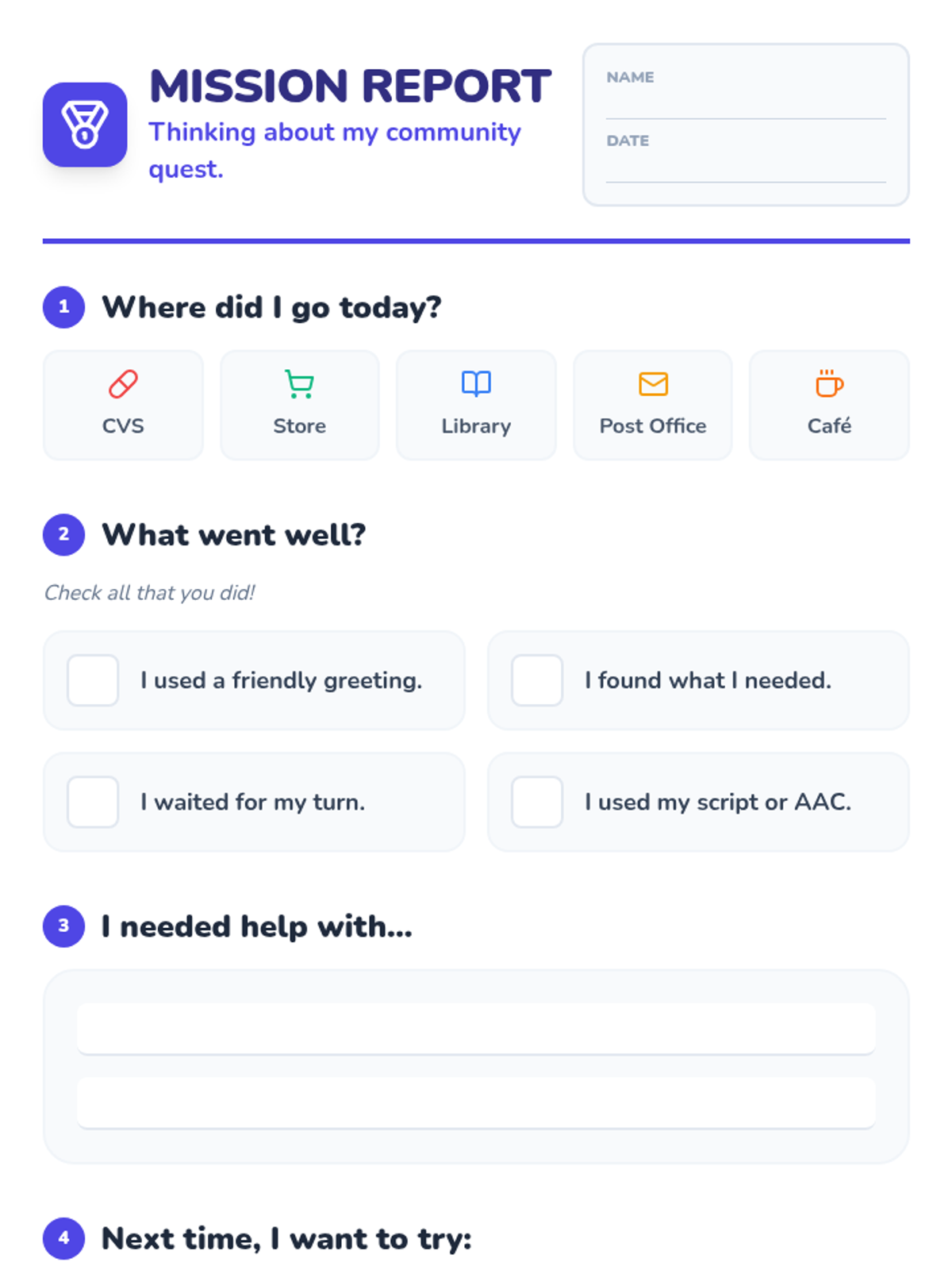
A comprehensive series of lessons designed to build community independence for students with intellectual disabilities, focusing on navigation, social interaction, and transactions in local spaces like CVS, the library, and cafes.
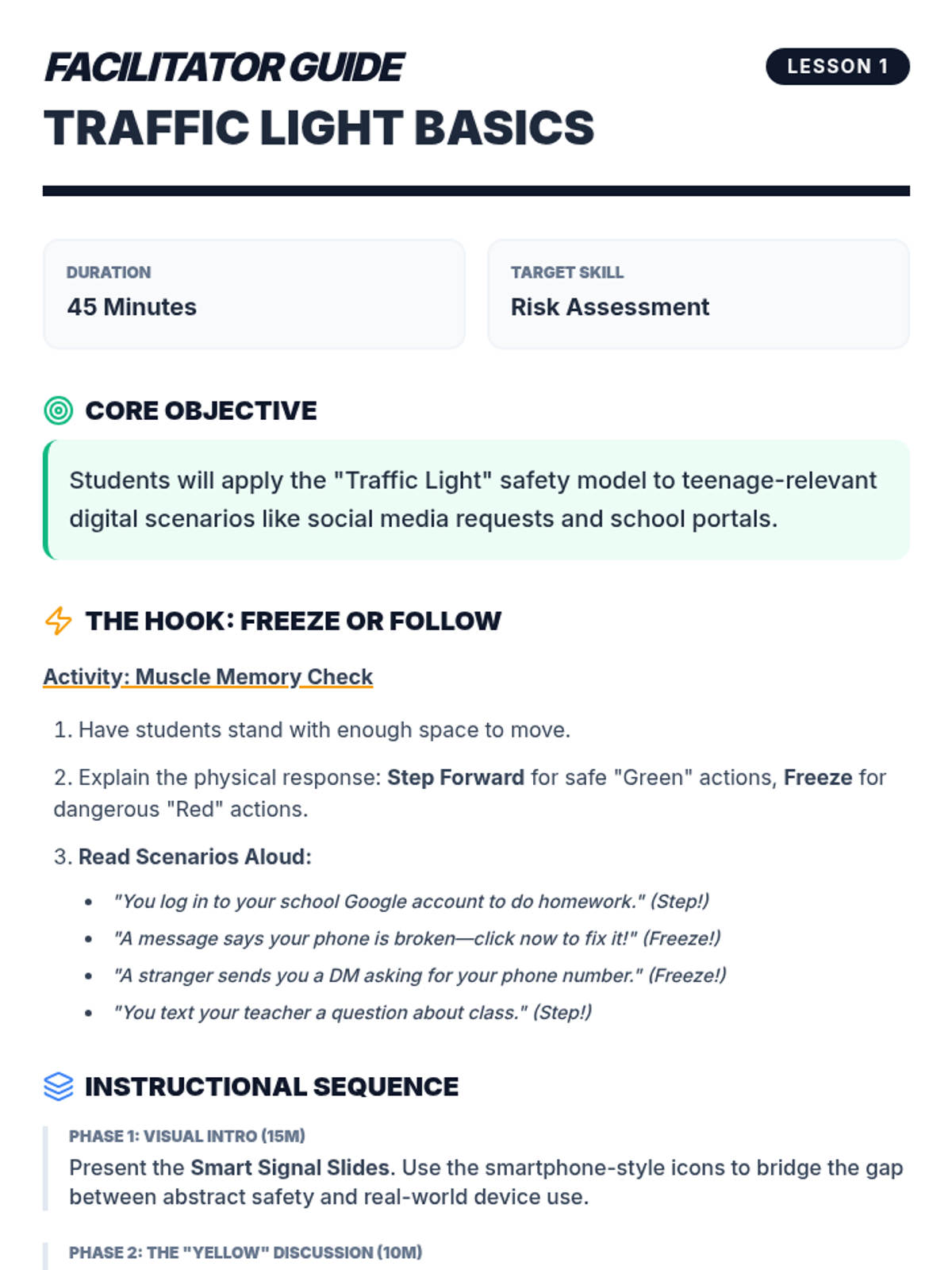
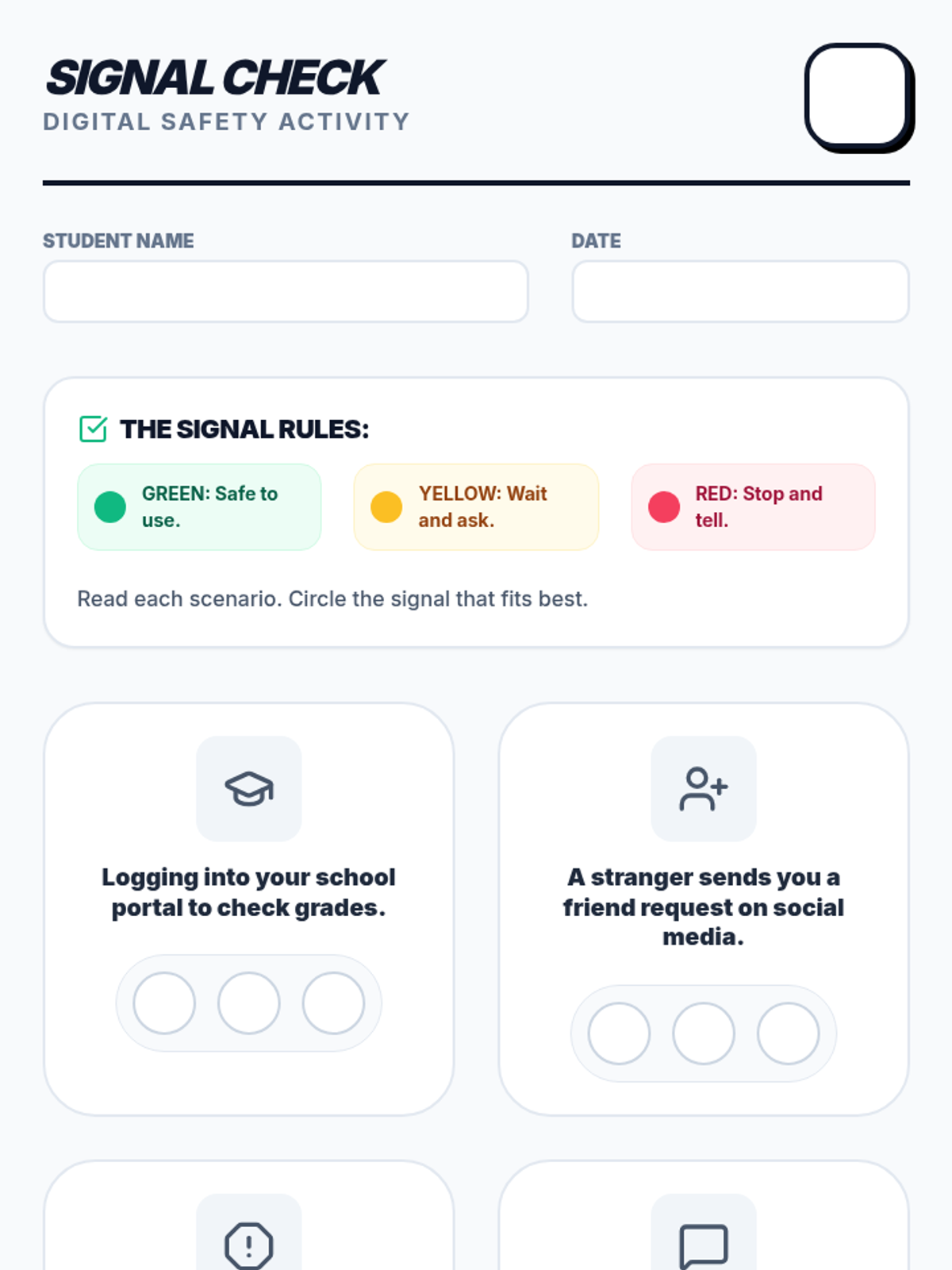
This life skills sequence for high schoolers with low cognitive abilities uses a traffic light model (Green, Yellow, Red) to teach digital safety. Students learn to navigate teen-relevant scenarios like social media requests, online shopping ads, and interacting with strangers in gaming or apps, focusing on the 'Pause and Ask' reflex.
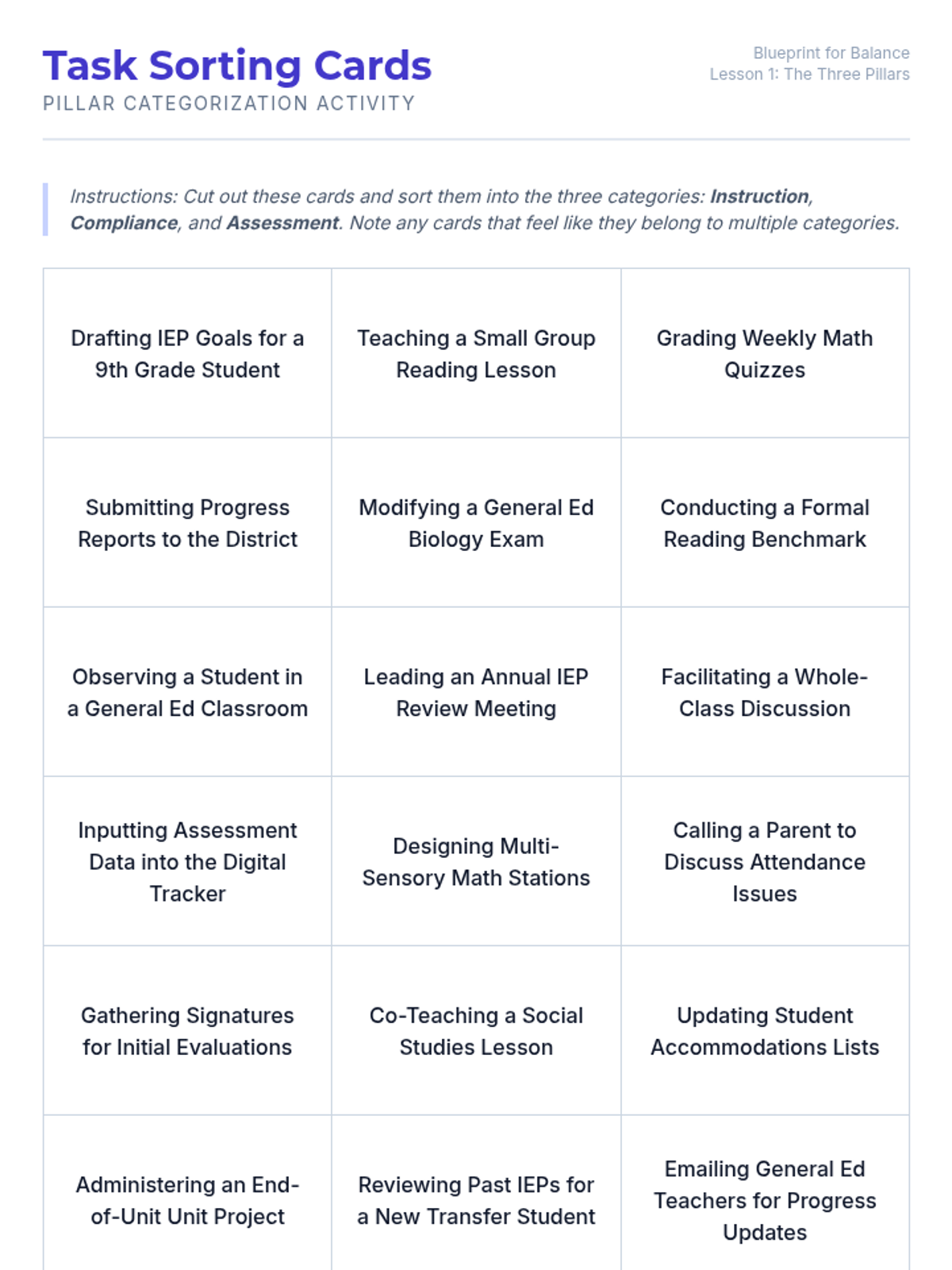
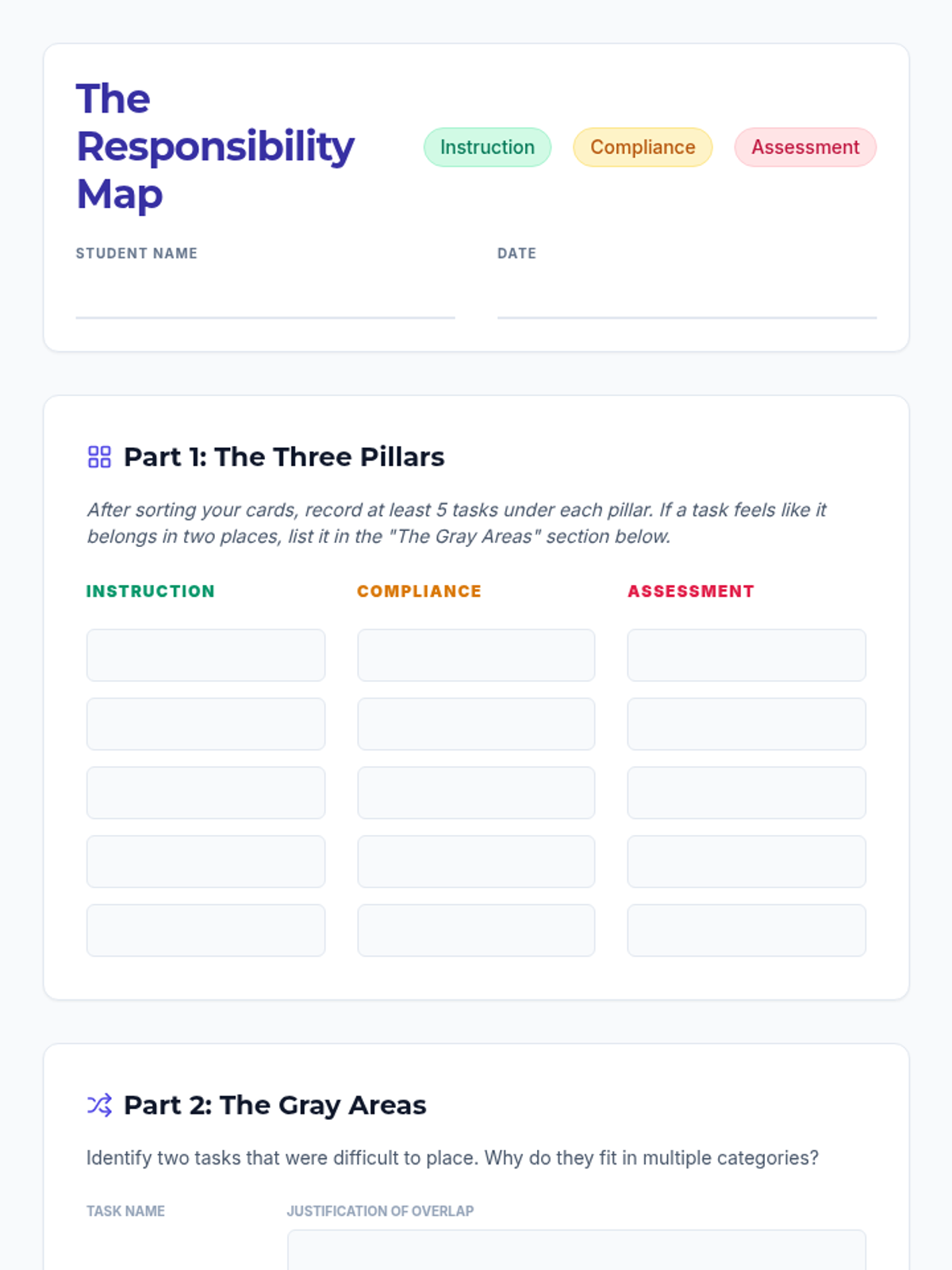
This sequence introduces 12th-grade students to the complex workload management required in Special Education. Students will learn to categorize tasks into instruction, compliance, and assessment pillars, improve their time estimation skills, and apply productivity strategies like time-blocking and task-batching to create a functional weekly schedule.
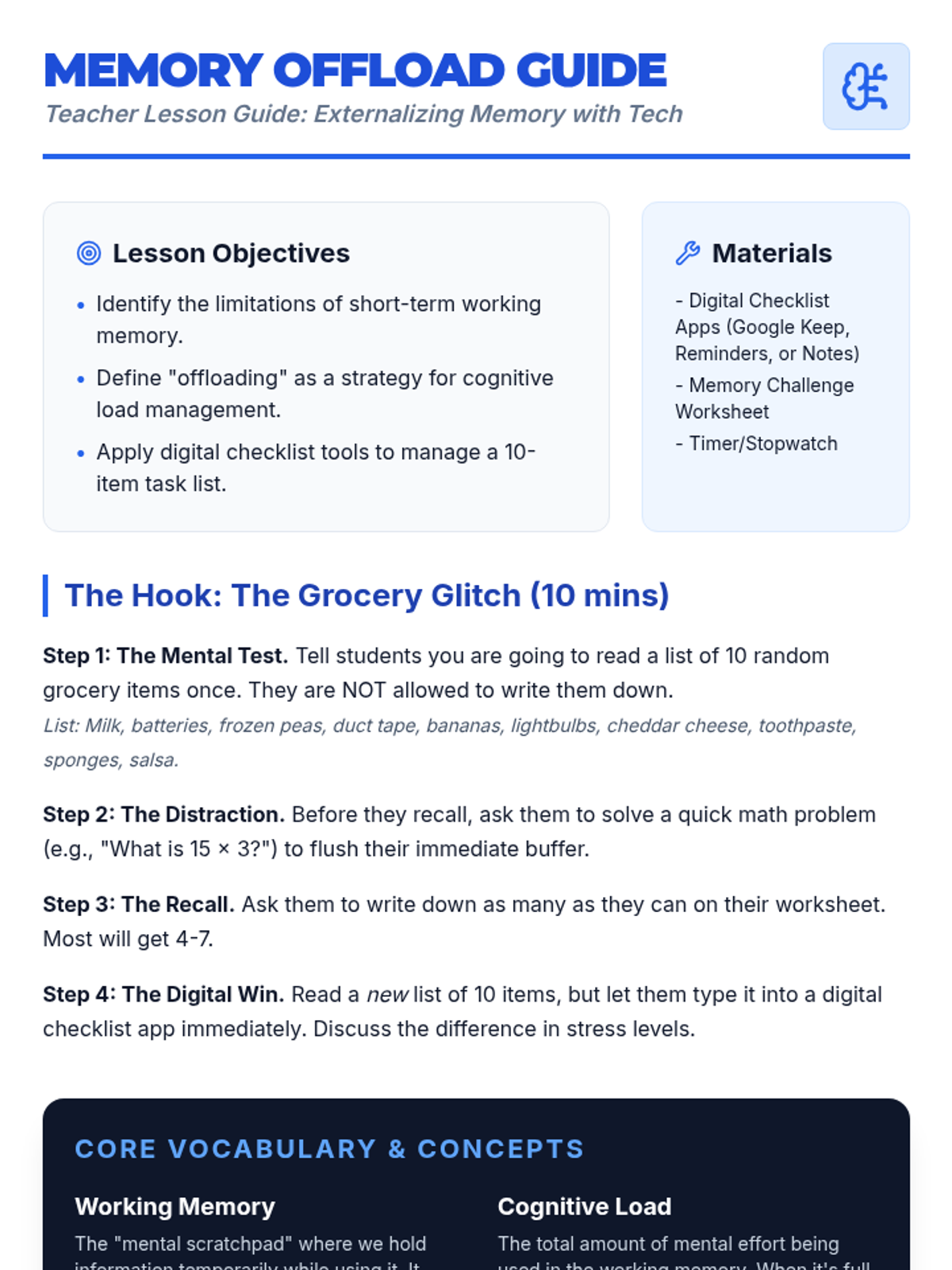
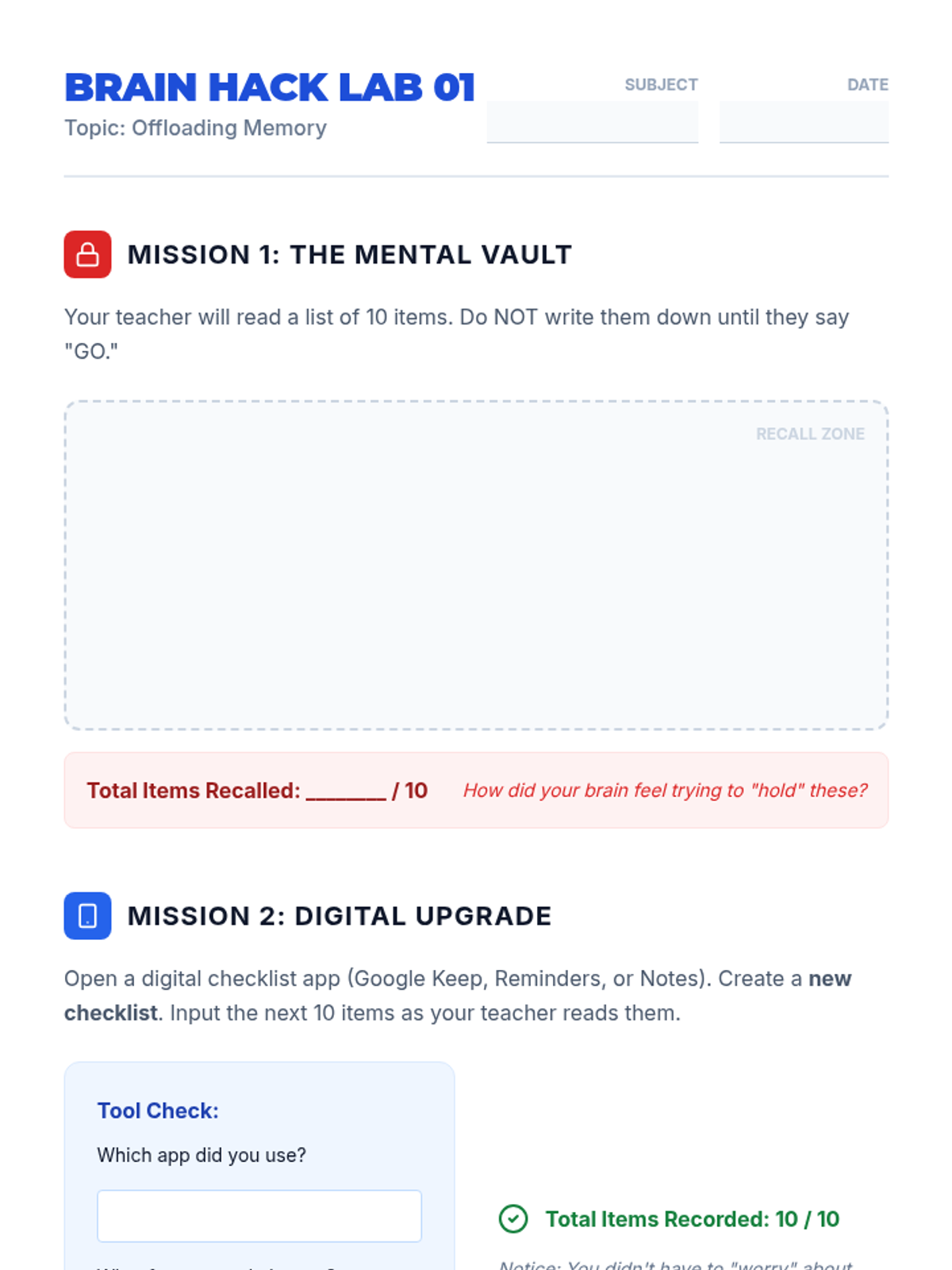
A 5-lesson unit for 8th-grade students focusing on using digital tools to offload working memory and manage cognitive load. Students learn to use task managers, focus modes, sequential reminders, and assistive speech technologies to create a personalized digital workflow for school success.
This sequence teaches 9th-grade students with executive function needs how to use digital calendars for backwards planning. Students learn to deconstruct large projects, estimate time accurately, and block out dedicated work sessions to manage their workload effectively.
This sequence teaches 11th-grade students how to use digital calendars as assistive technology by implementing visual organization, color-coding, and filtering strategies to reduce cognitive load and improve time management.
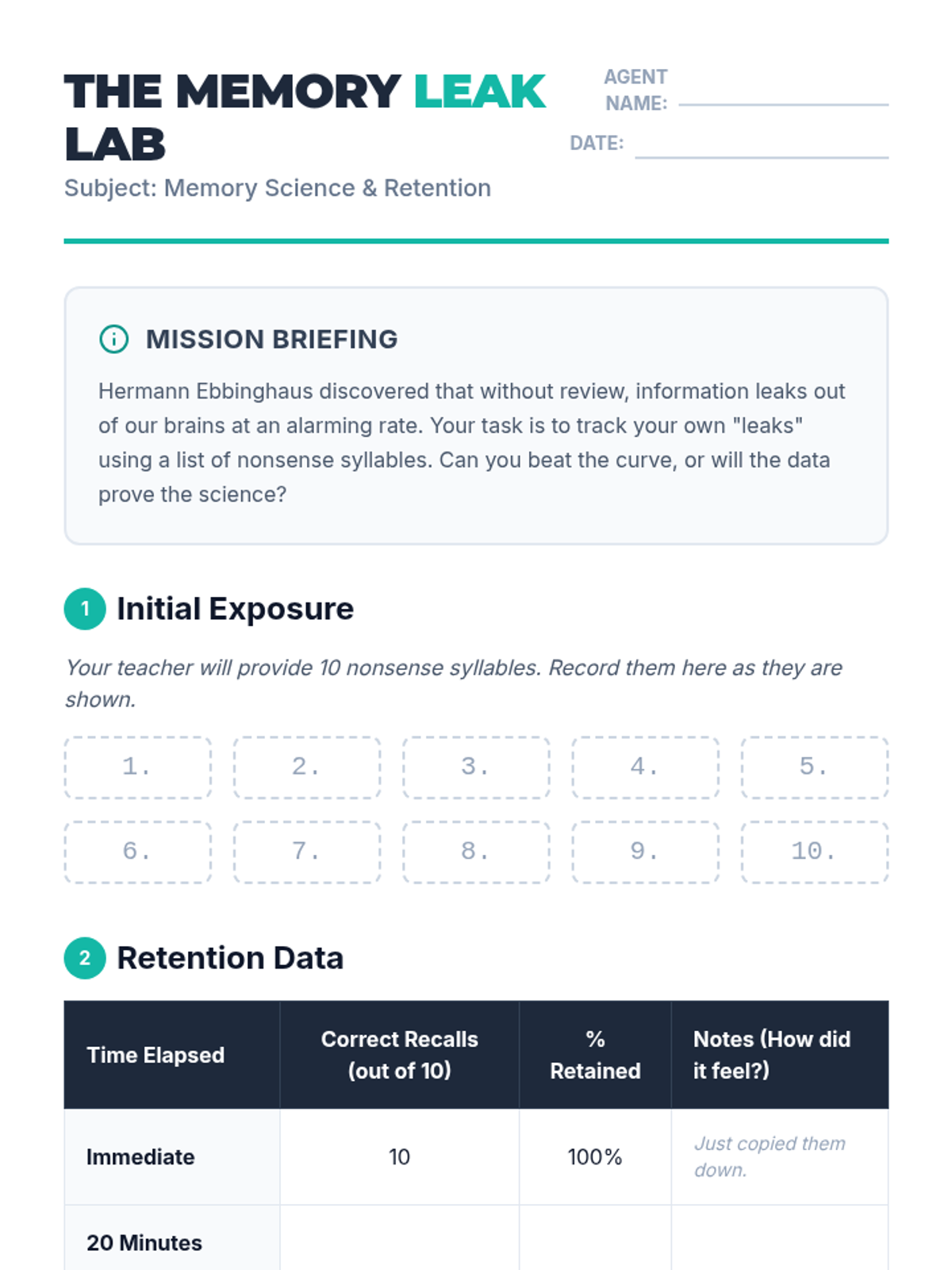
A comprehensive sequence designed for 9th-grade students to master long-term retention through spaced repetition and active recall. Students explore the science of memory, develop retrieval cues, implement the Leitner Box system, and leverage digital tools to optimize their working memory and study efficiency.
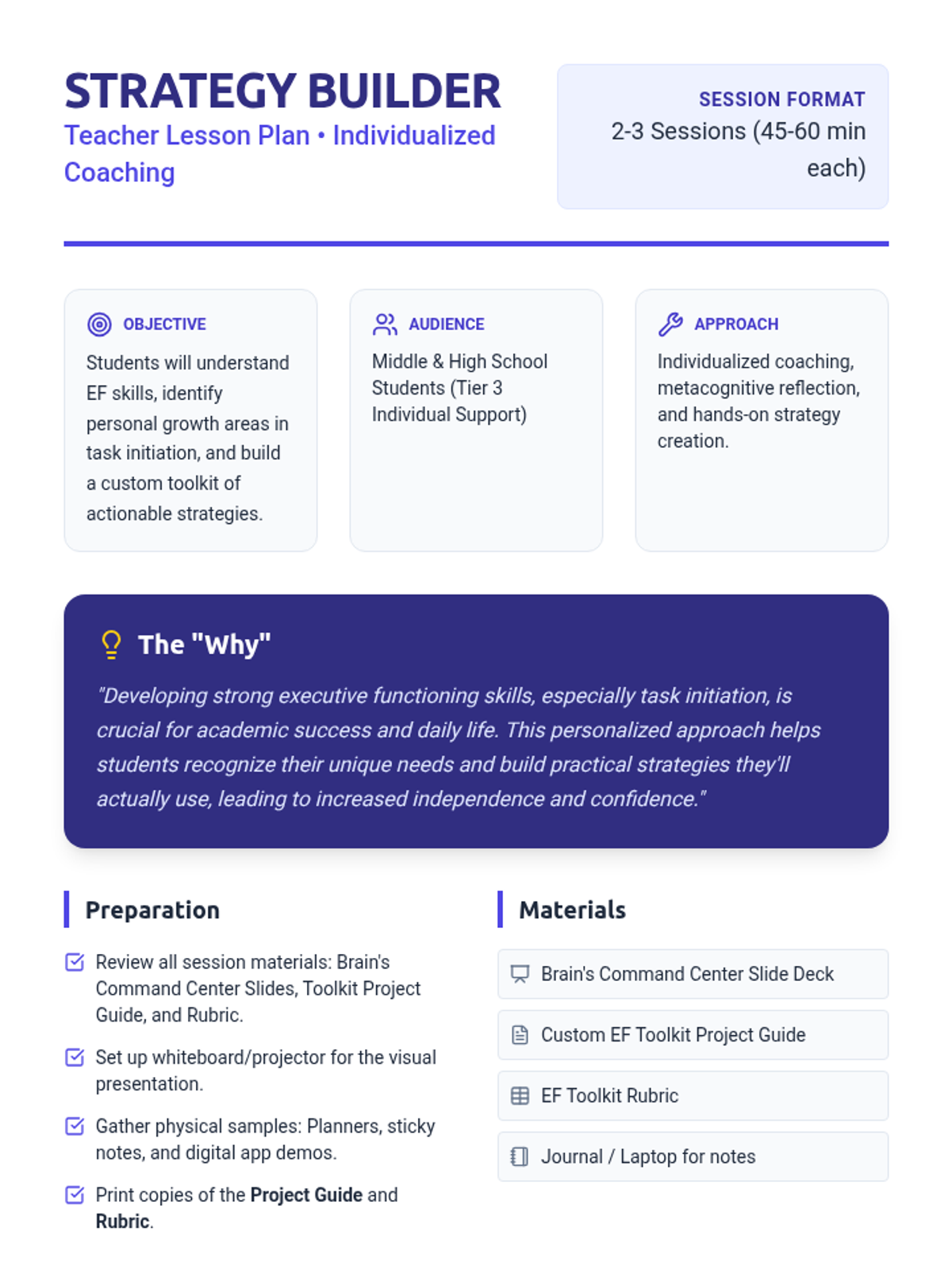
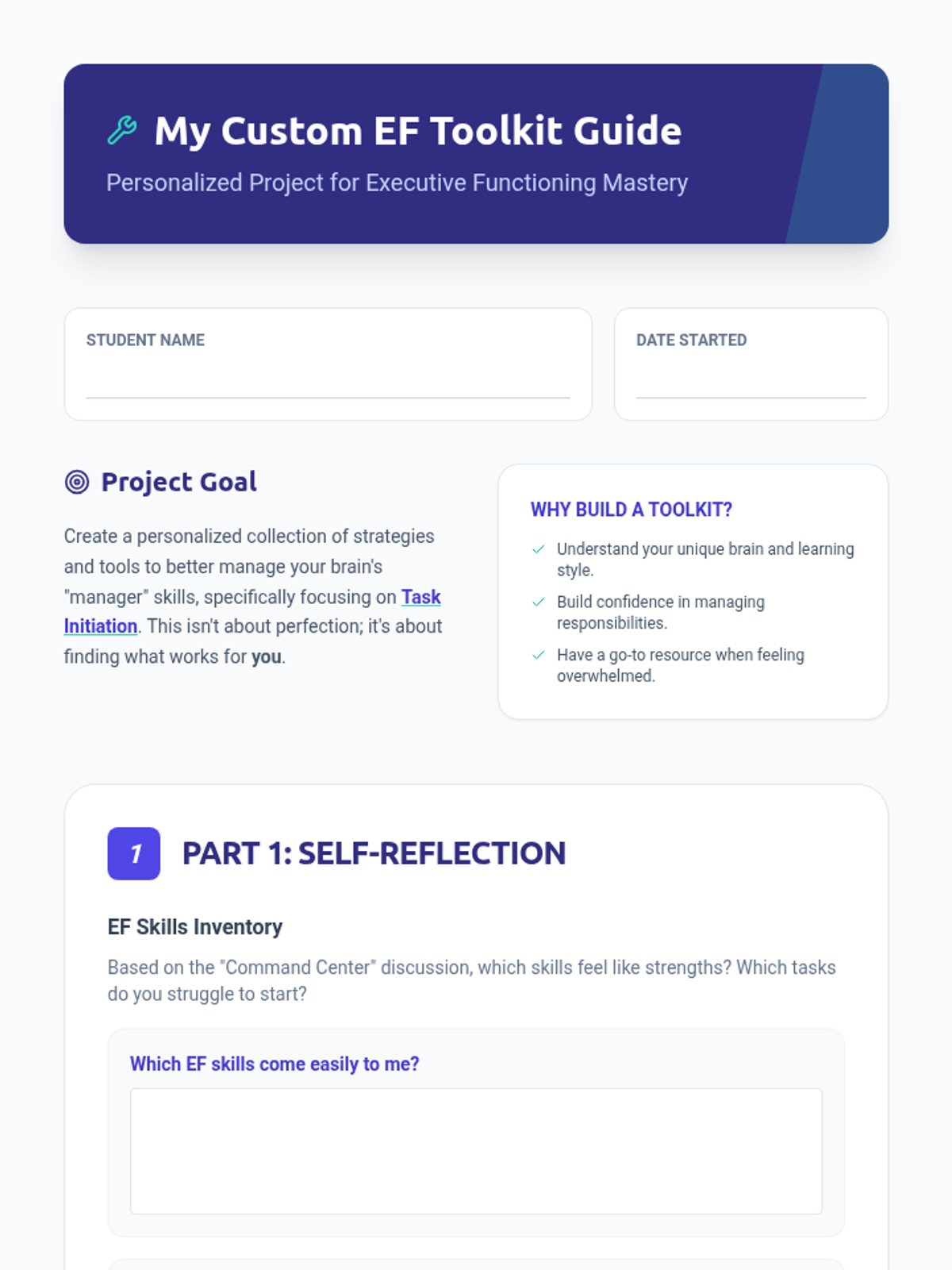
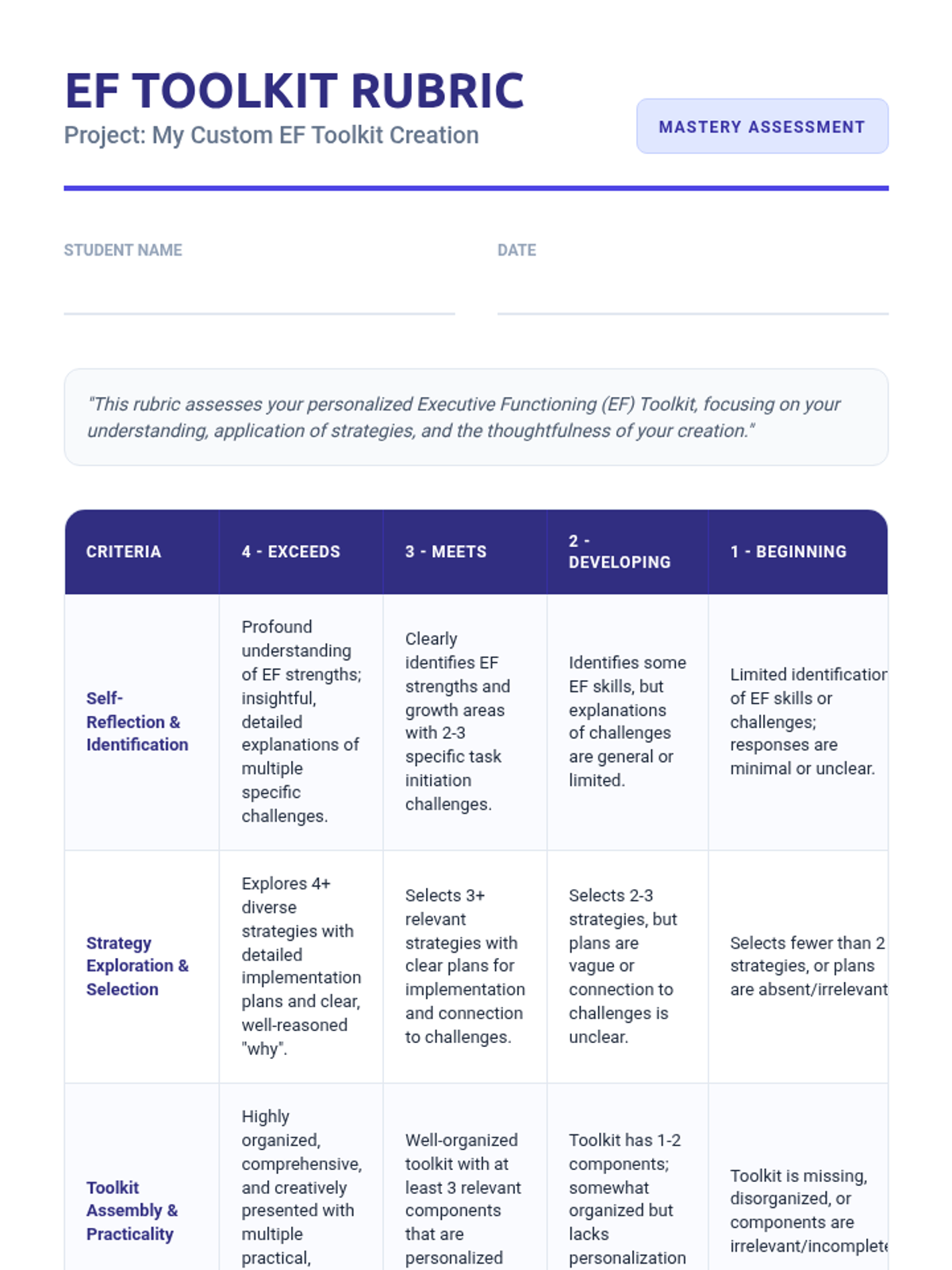
A multi-session, personalized coaching program designed to empower students with executive functioning strategies. Students explore their unique brain functions and build a custom toolkit to tackle task initiation and organization challenges.
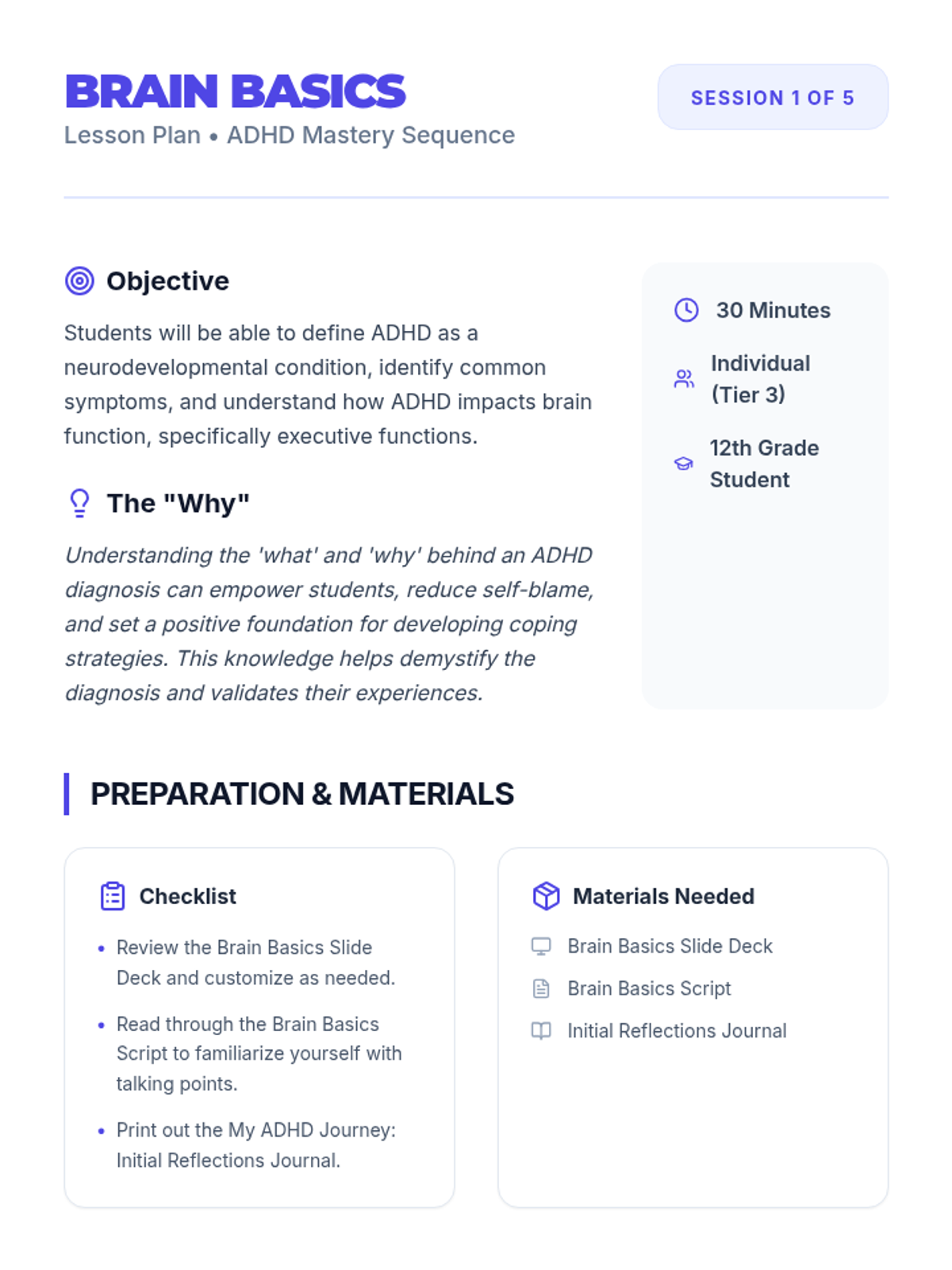
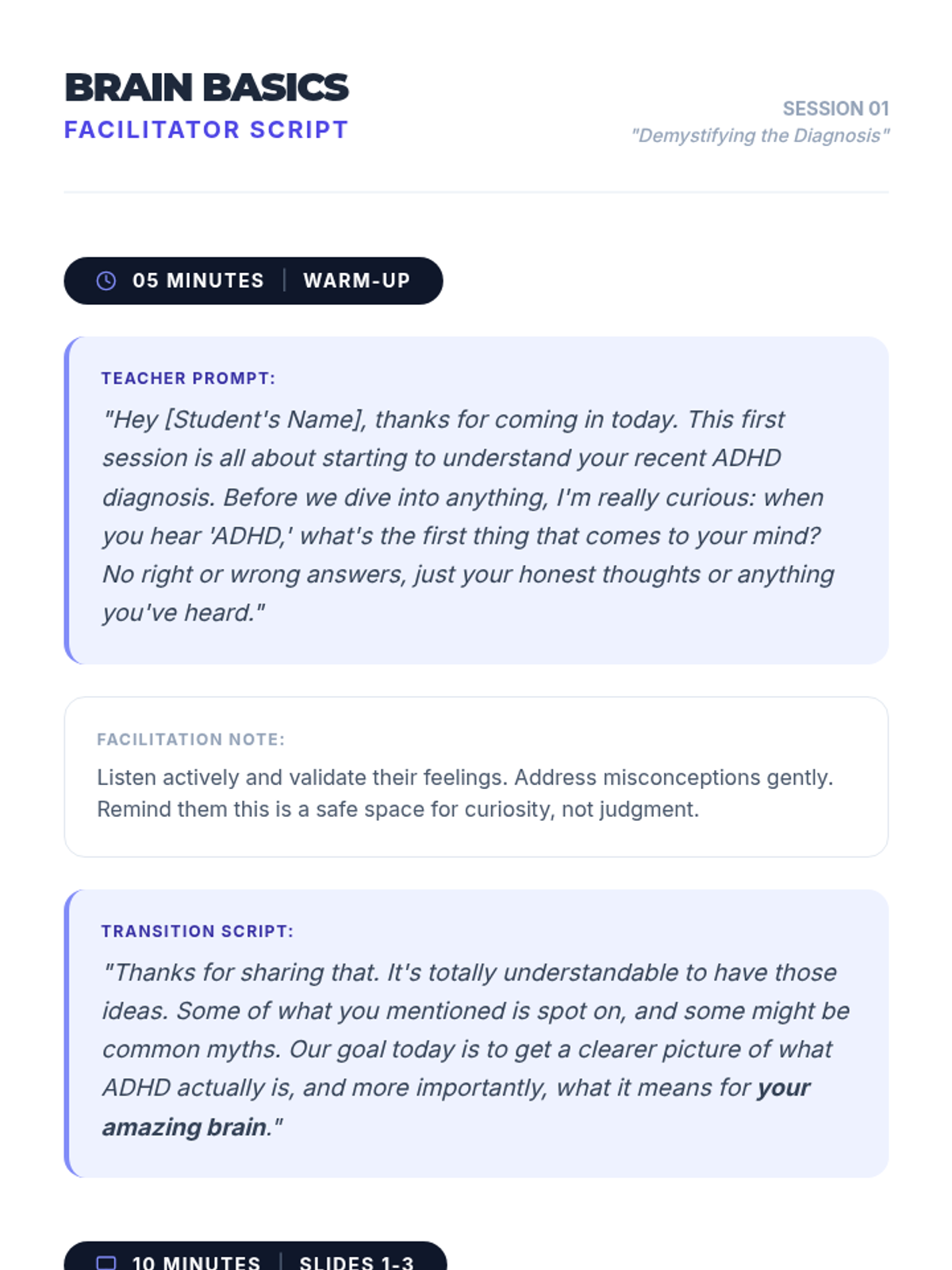
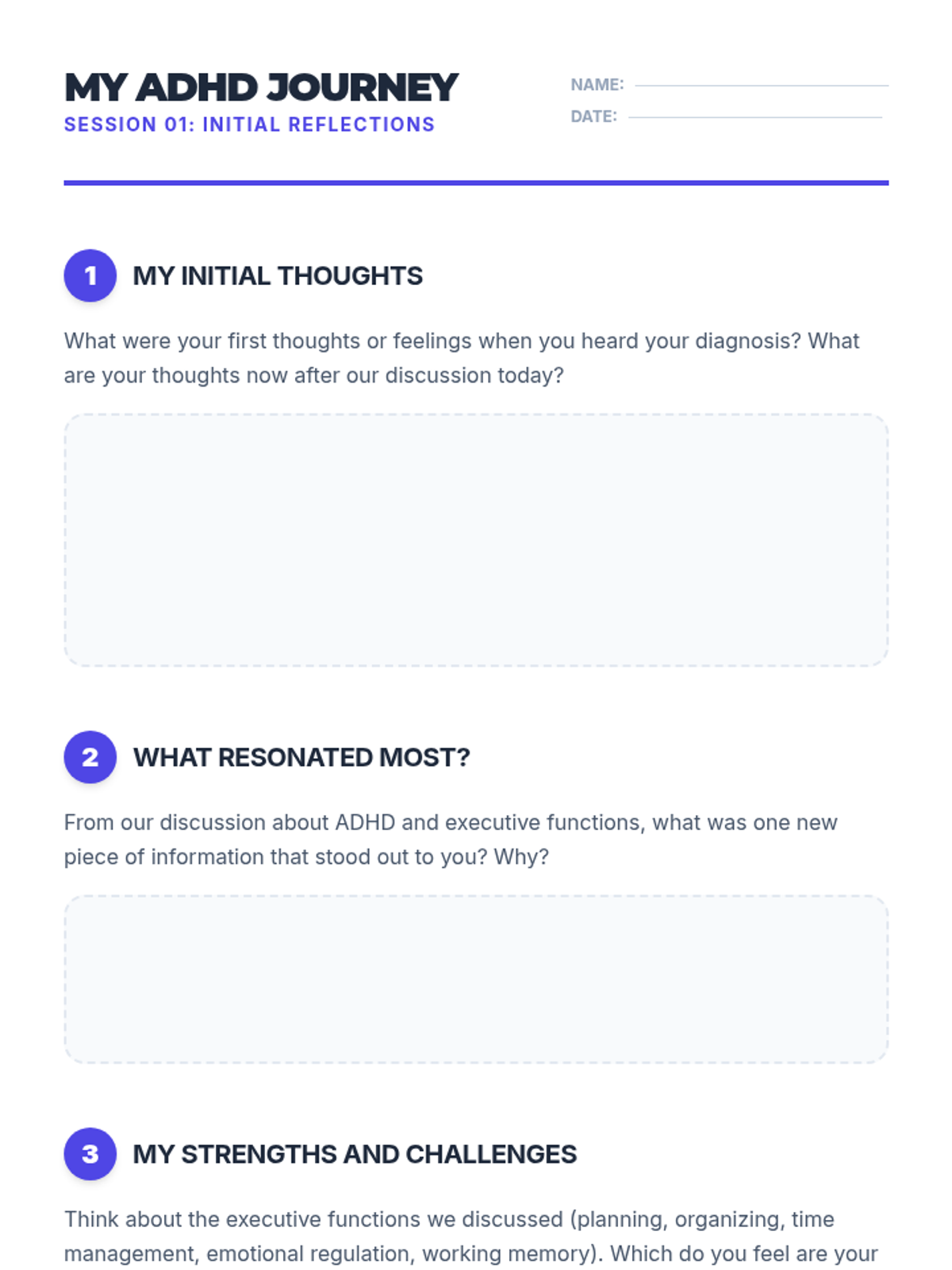
A comprehensive 5-session sequence designed for 12th-grade students to understand their ADHD diagnosis, identify personal impacts, build a toolkit of strategies, and embrace their unique strengths.
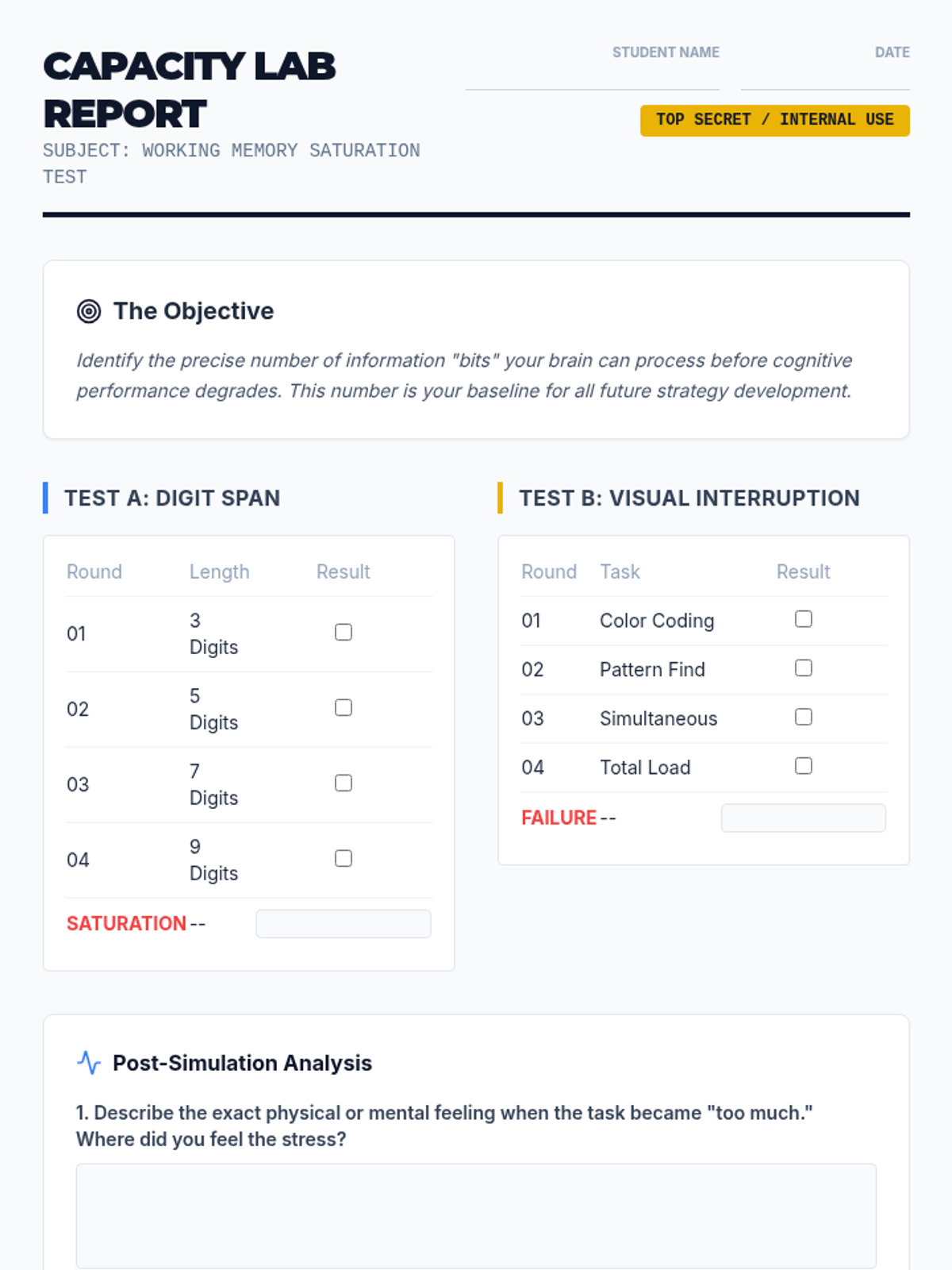
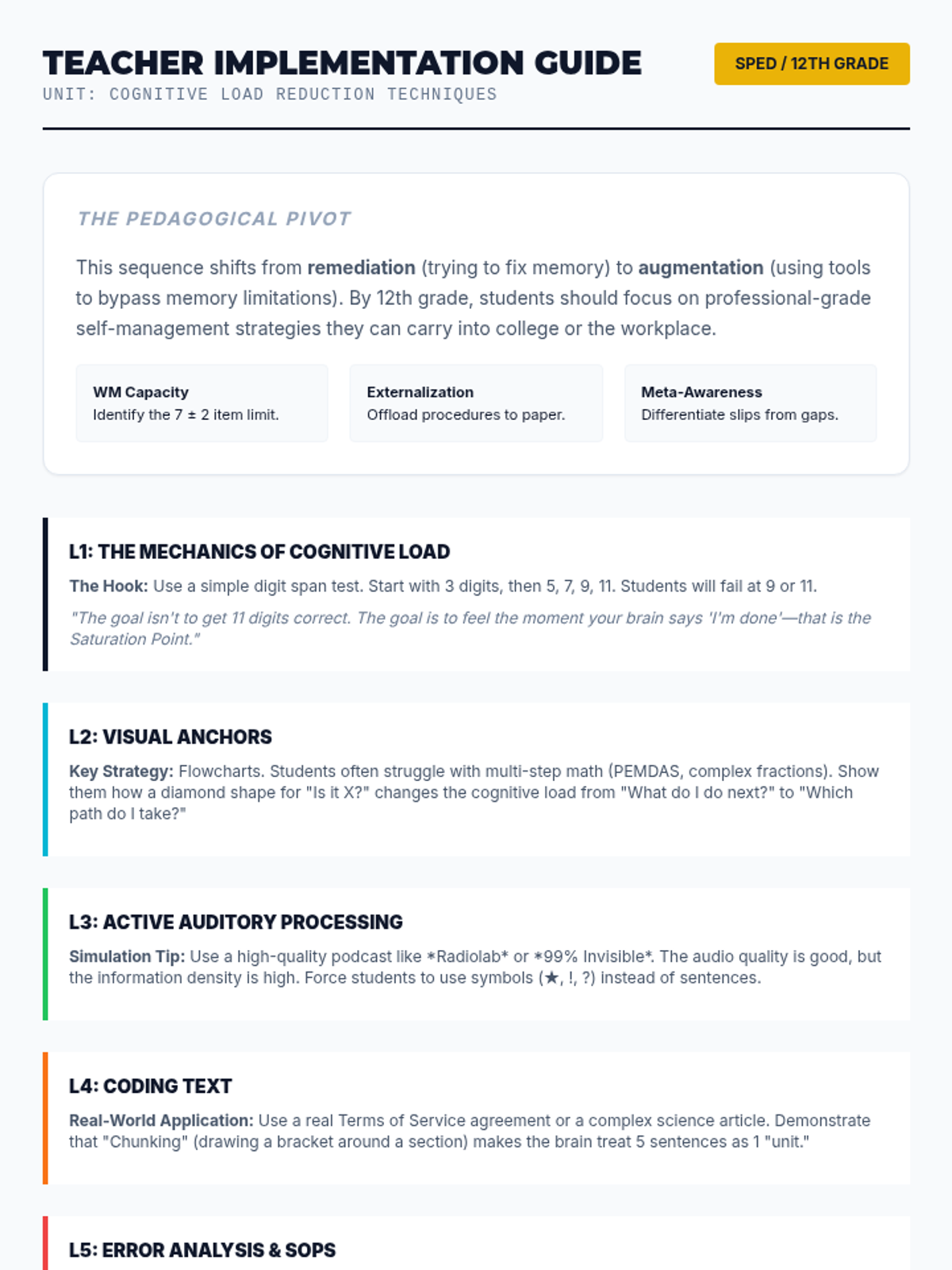
A metacognitive workshop for 12th-grade students to master cognitive load theory and develop personal 'Standard Operating Procedures' for complex academic tasks. The sequence focuses on externalizing working memory demands through visual anchors, active processing, and self-correction protocols.
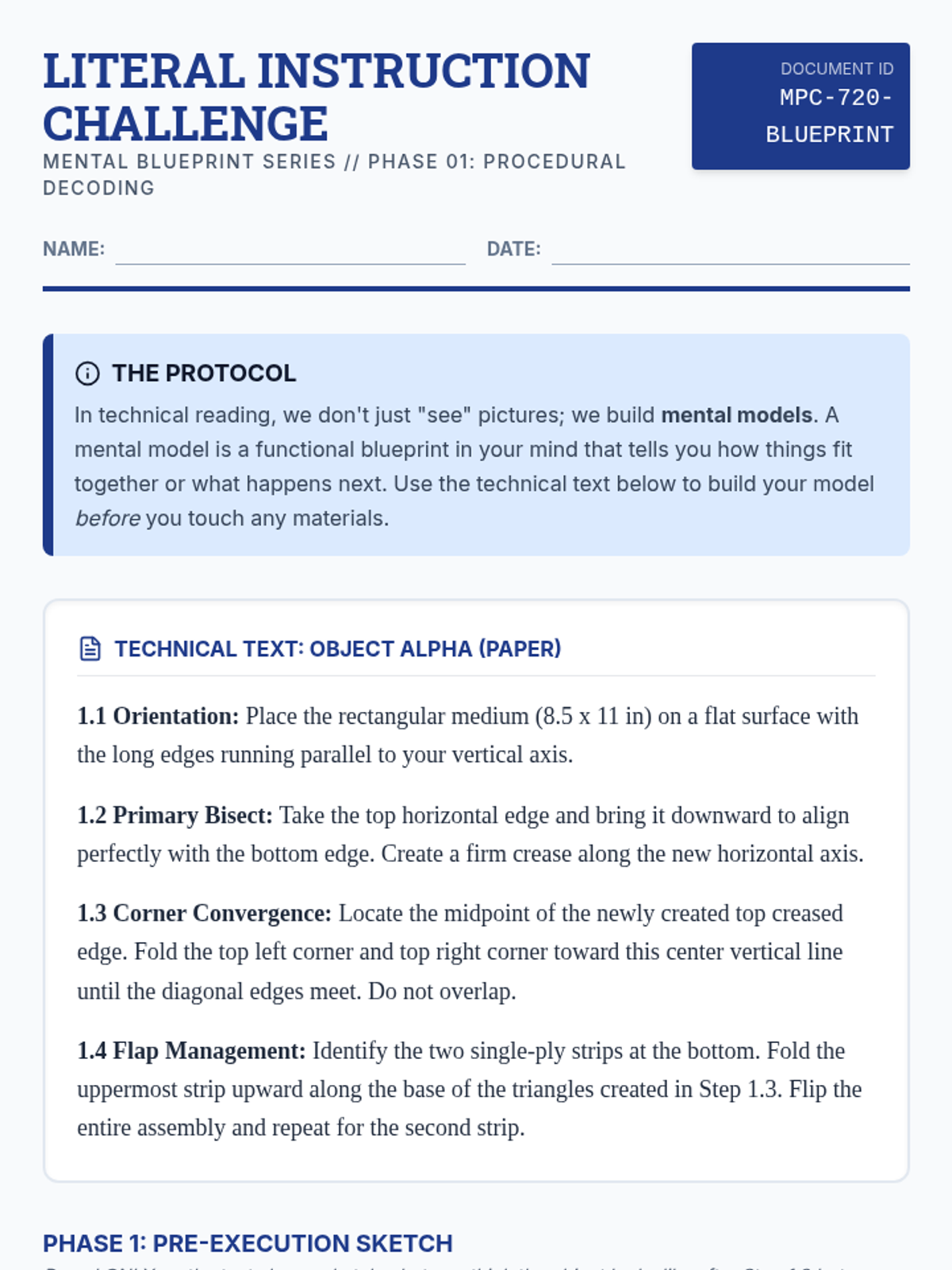
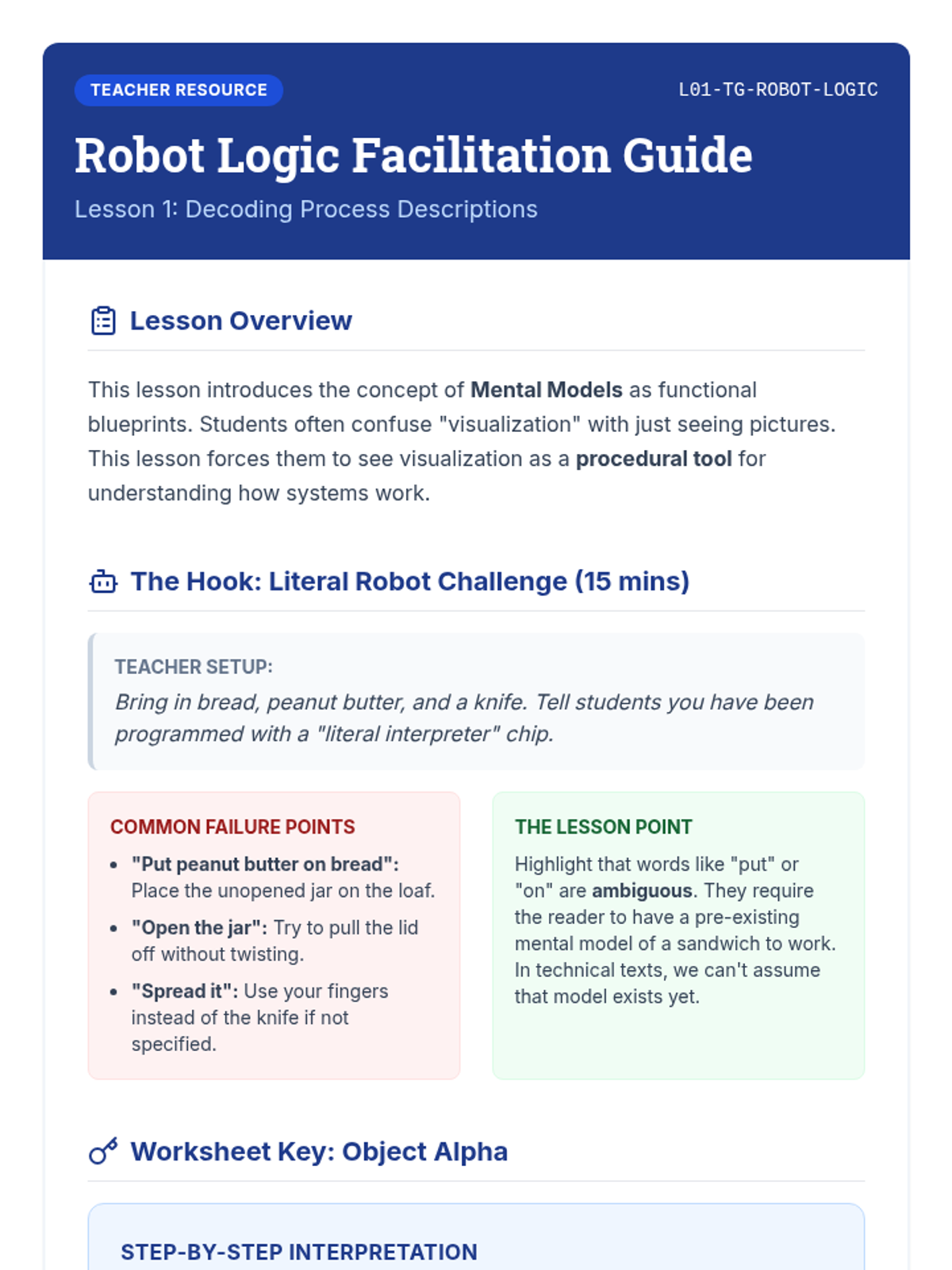
A sequence for 12th-grade students focused on building mental models of technical and informational texts to support post-secondary academic and functional success. Students move from simple procedural visualization to complex system mapping and error detection.
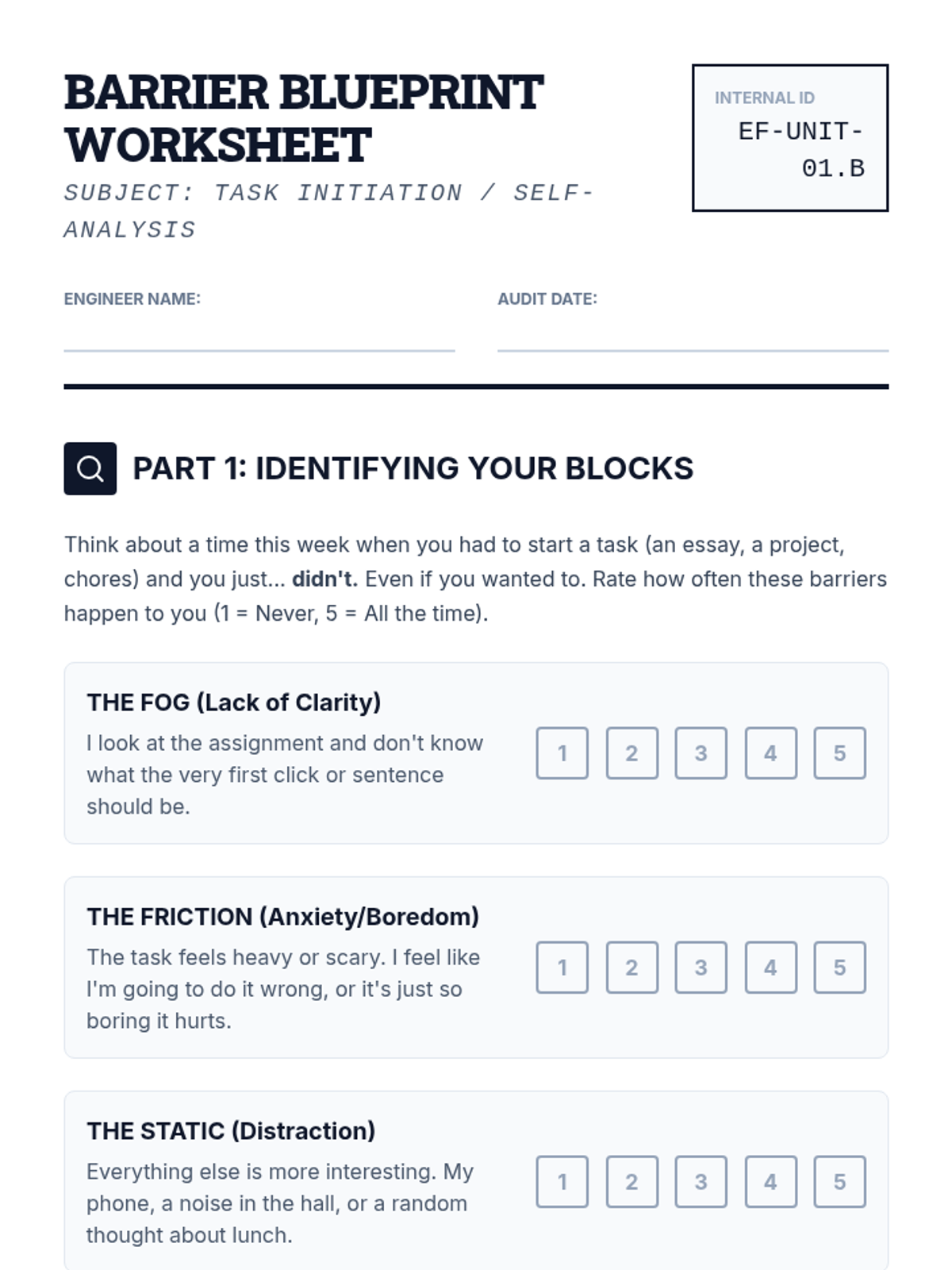
A metacognitive, project-based sequence where students investigate personal task initiation barriers and engineer custom 'Start Systems' to foster independence and reduce reliance on external prompting.
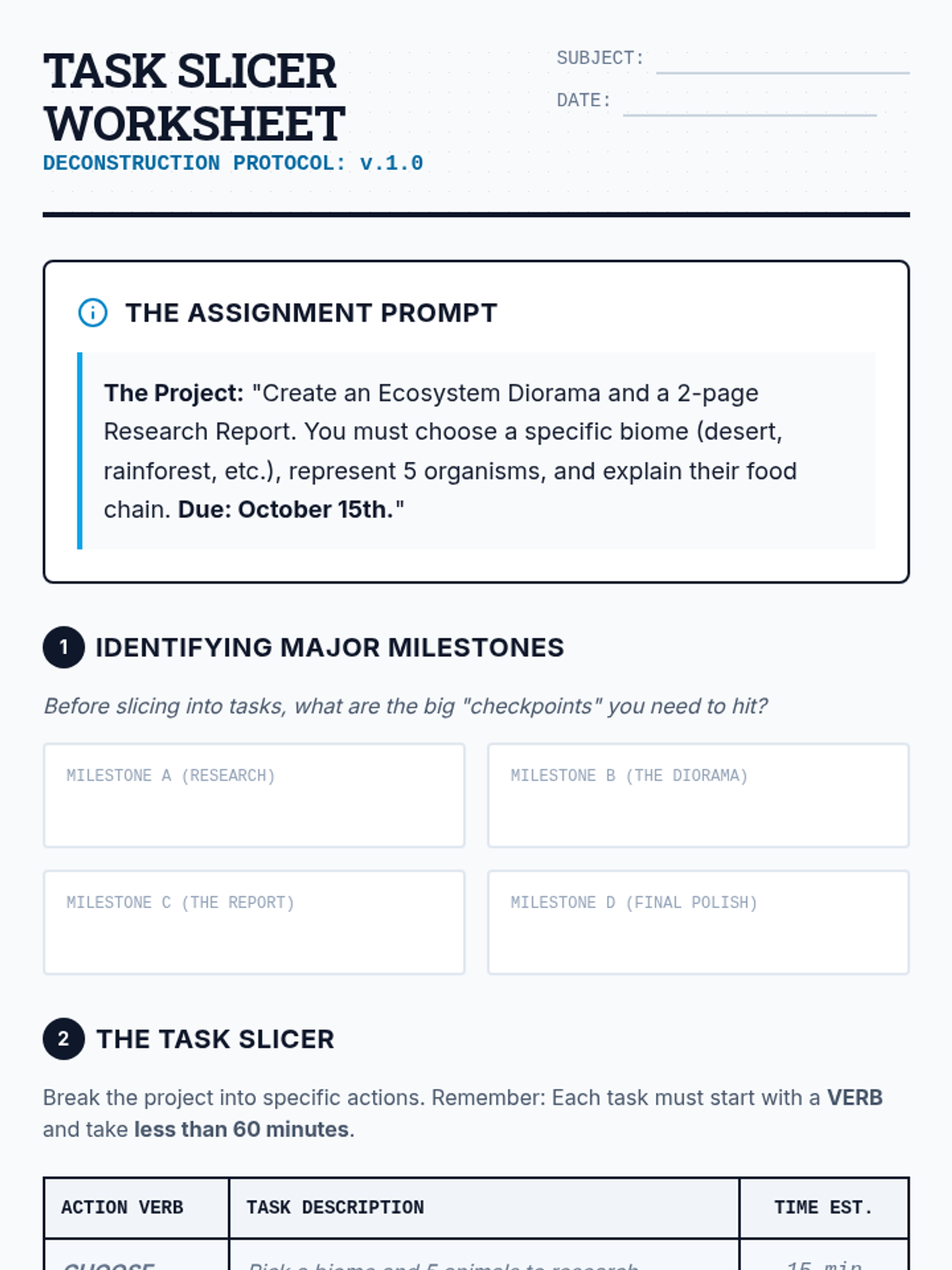
A sequence designed to support students with working memory challenges by teaching systematic task decomposition. Students move from identifying cognitive overwhelm to creating personalized workflow systems for complex assignments.
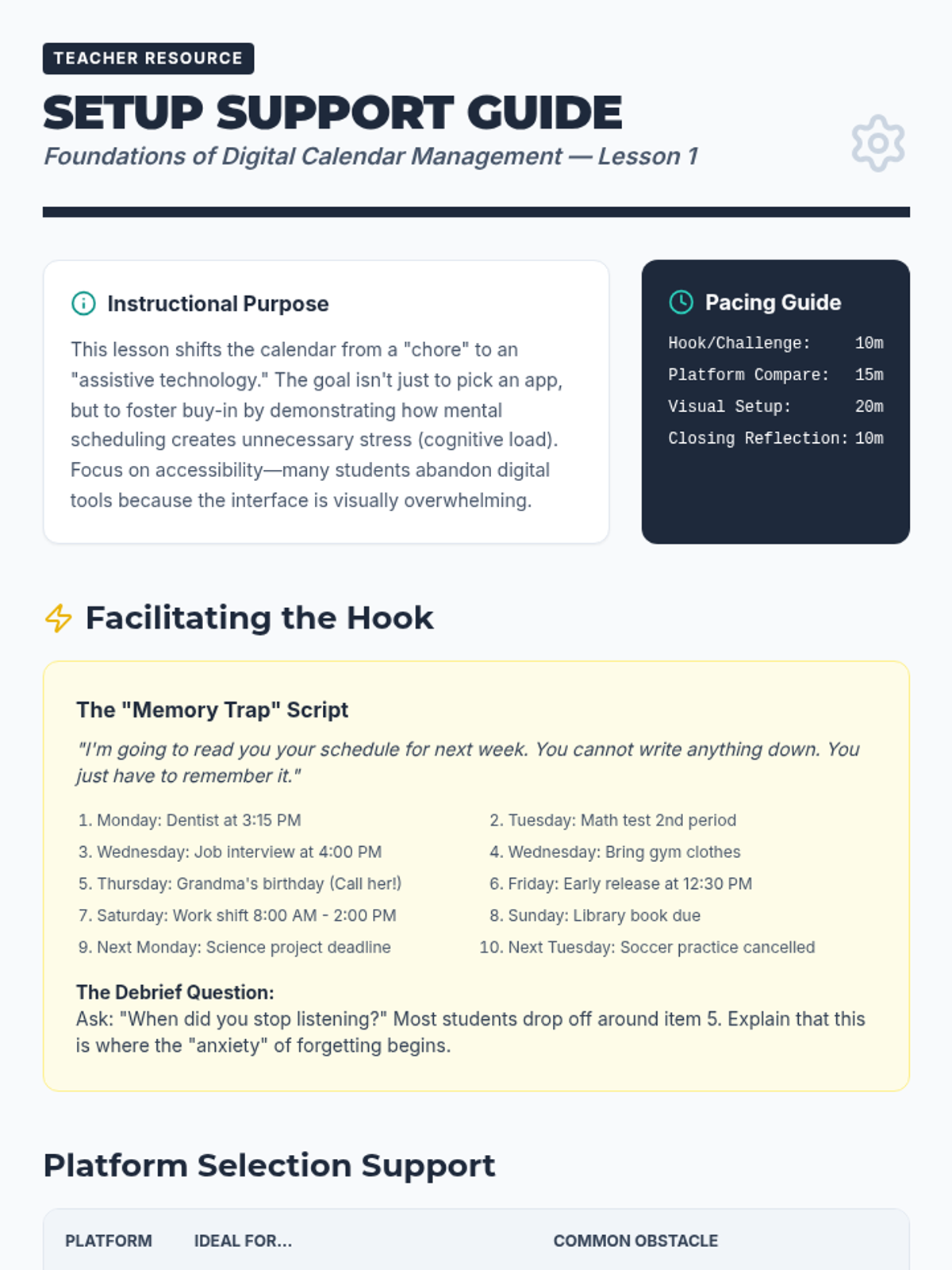
A foundational sequence for 12th-grade students to master digital calendar management as an assistive technology tool, focusing on reducing cognitive load and increasing independence.
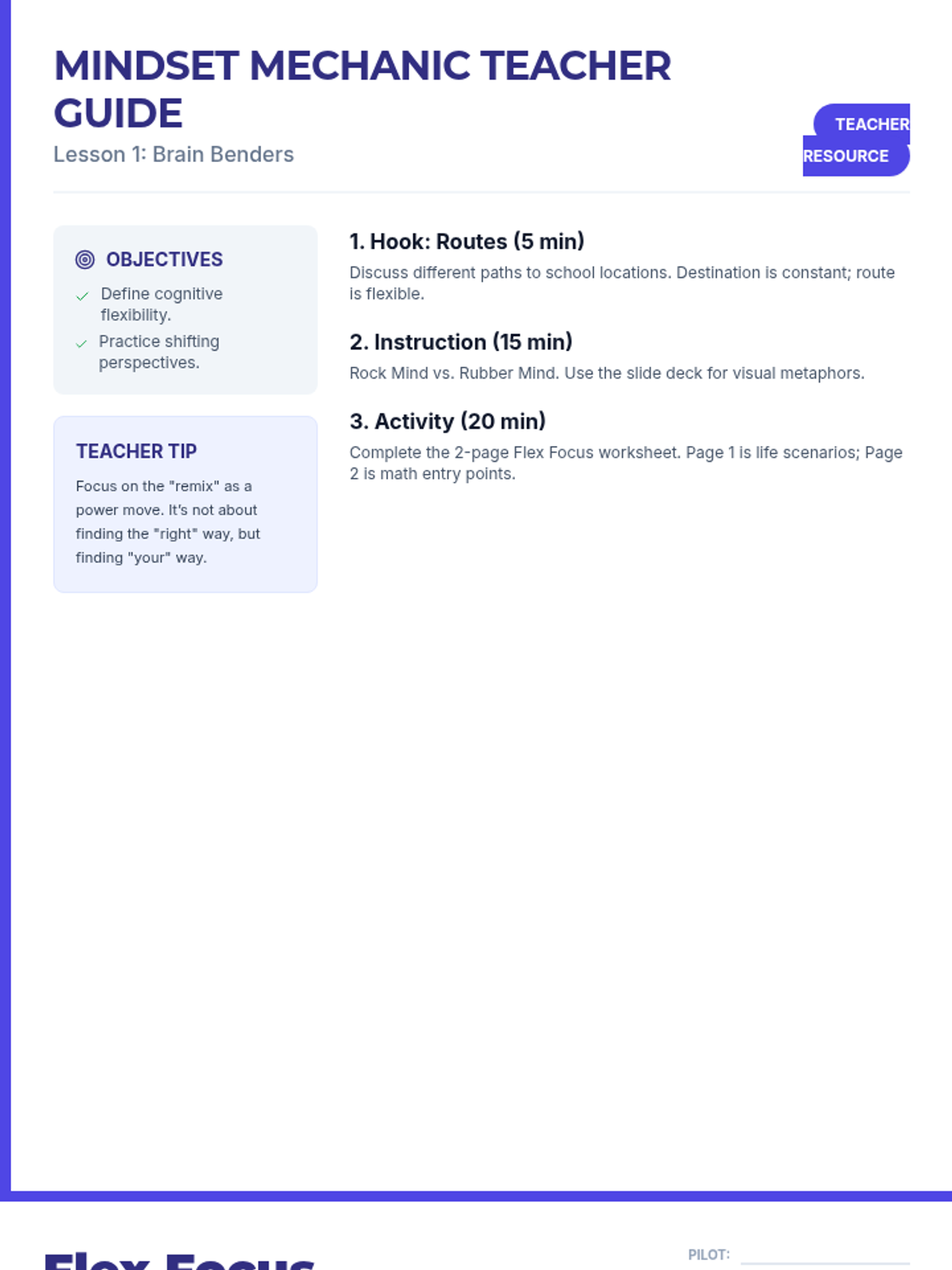
A high-school level sequence designed to build cognitive flexibility in algebra for students with ASD. The unit focuses on moving from a rigid 'one-way' mindset to exploring multiple valid problem-solving pathways to reduce resistance and increase engagement.
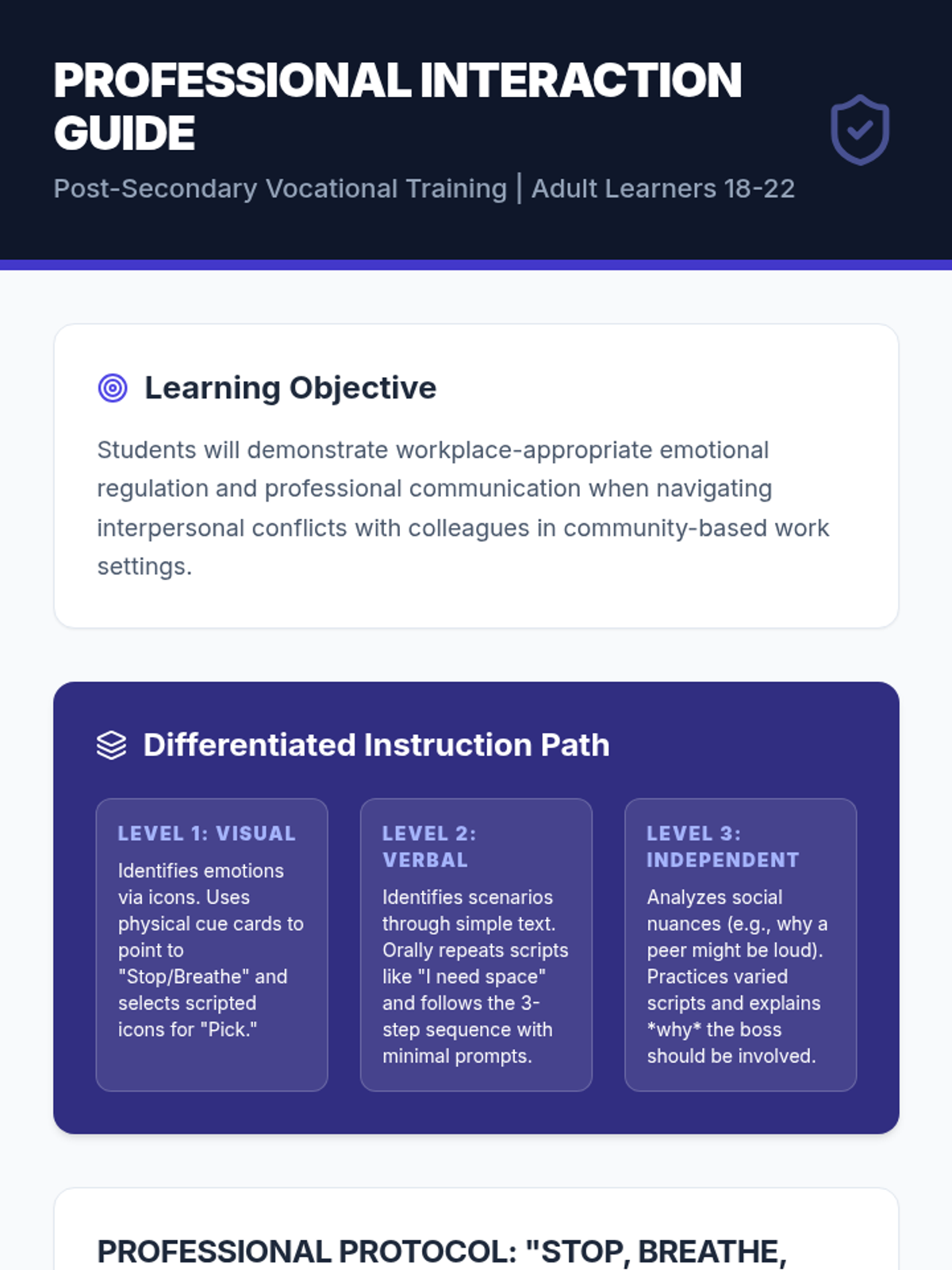
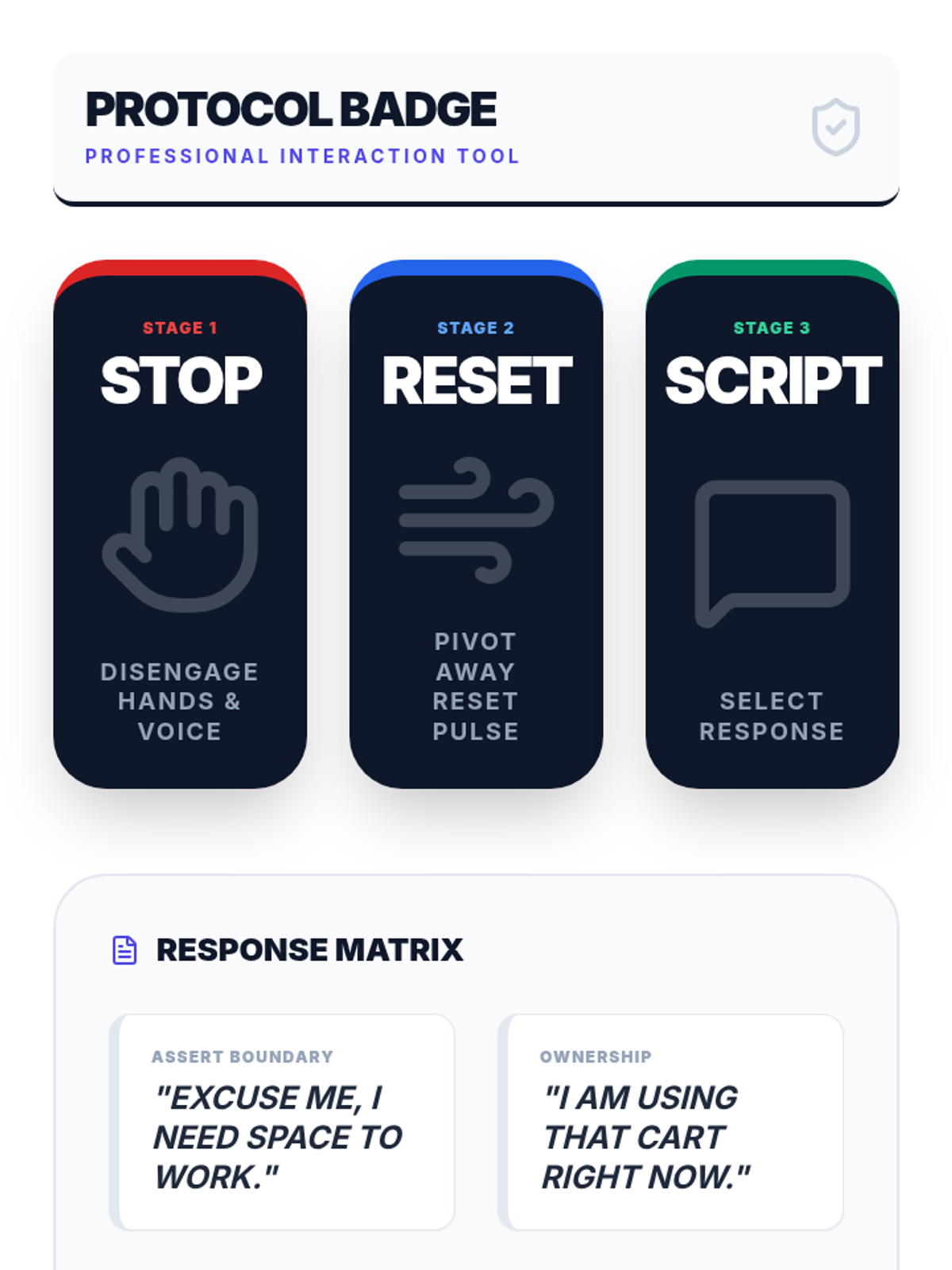
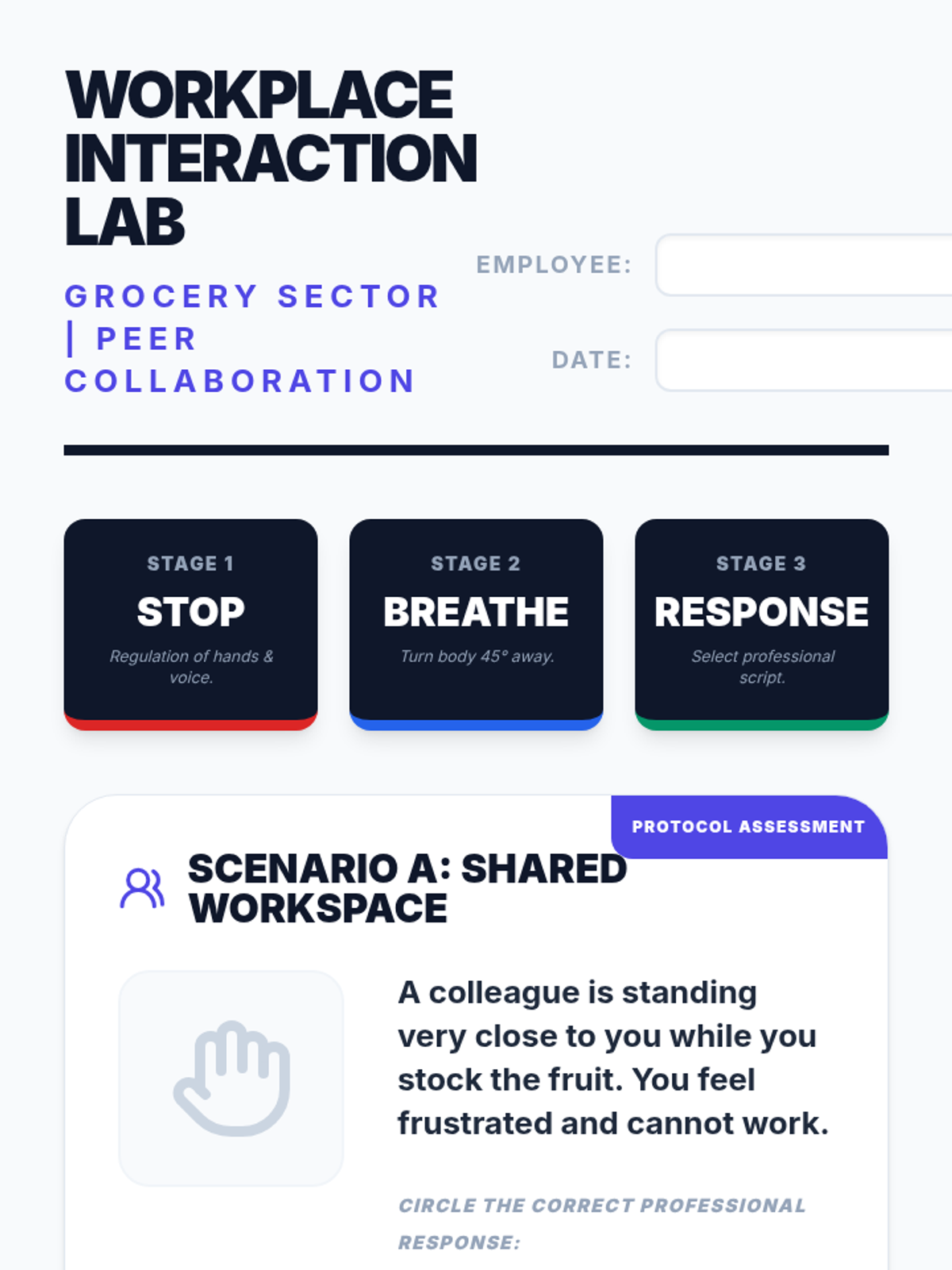
A vocational skills sequence for students with severe special needs (ages 18-22) focusing on conflict resolution in community-based work settings using simple visual cues.
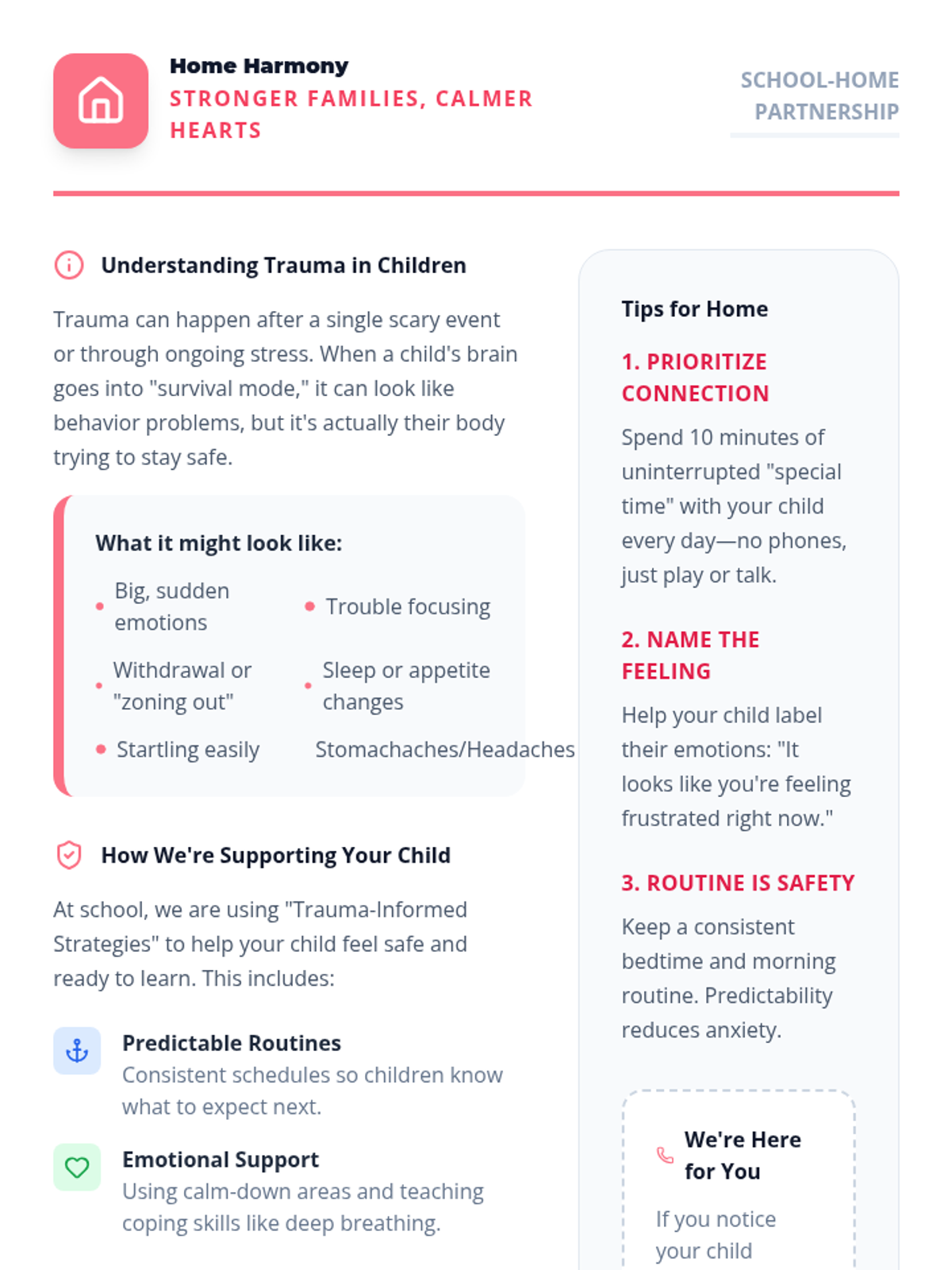
A comprehensive collection of resources for K-12 educators and staff focusing on trauma-informed care, social-emotional learning, neurodiversity, and crisis intervention. Includes training slides, student worksheets, clinical templates, and parent guides.
A comprehensive unit designed for functional life skills, focusing on persuasive communication, reading environmental print, and navigating social transitions with confidence.
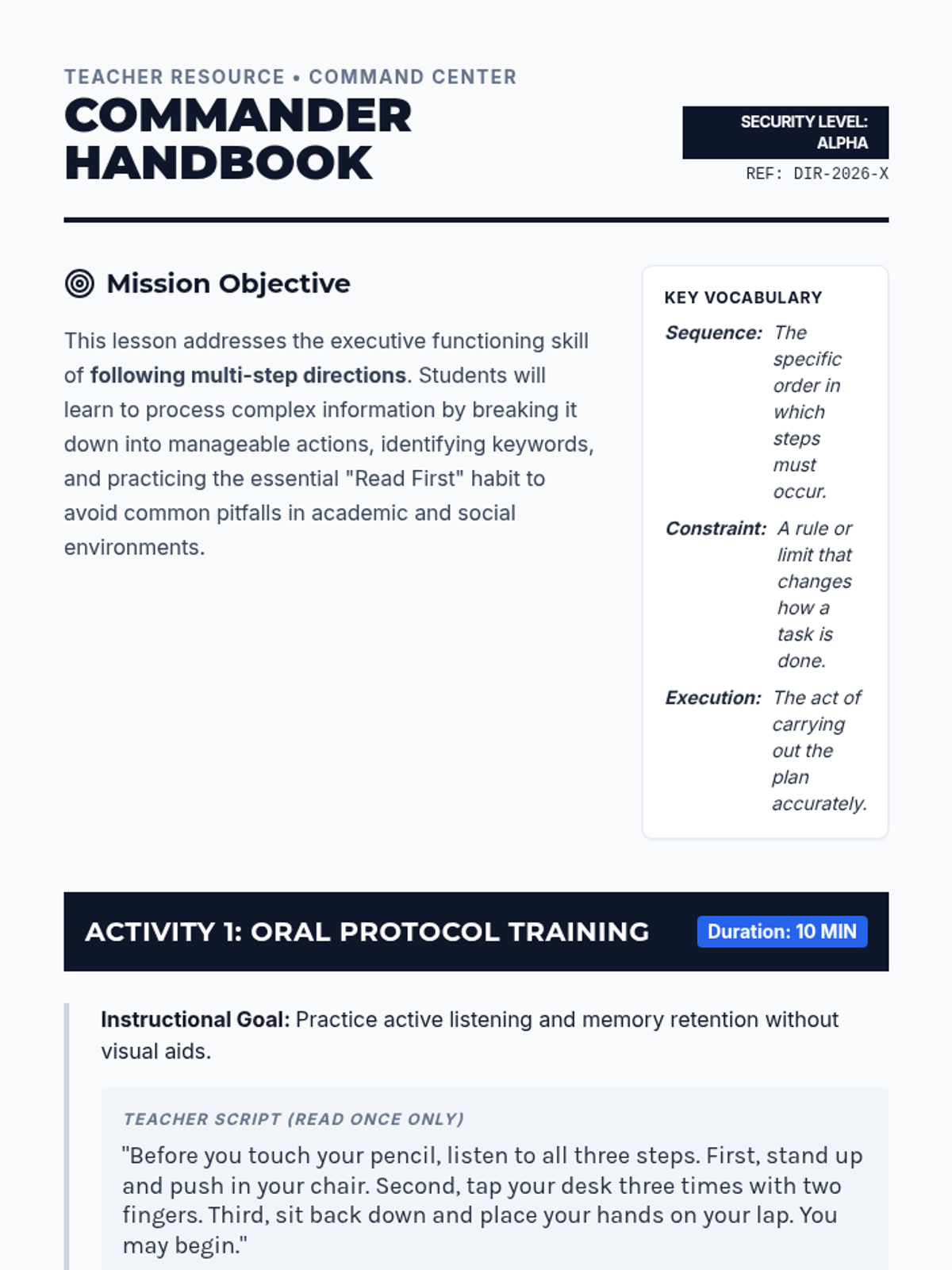
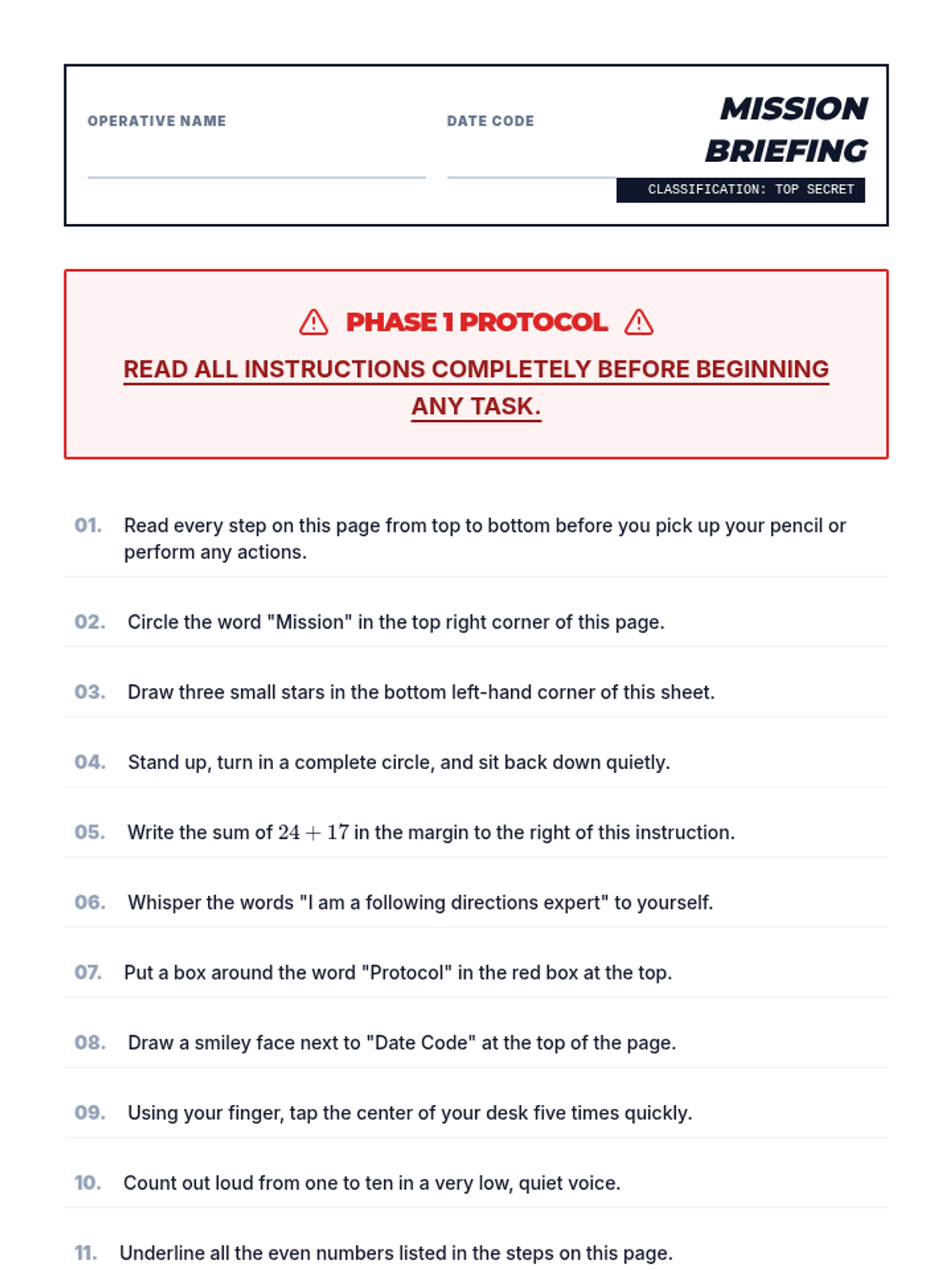
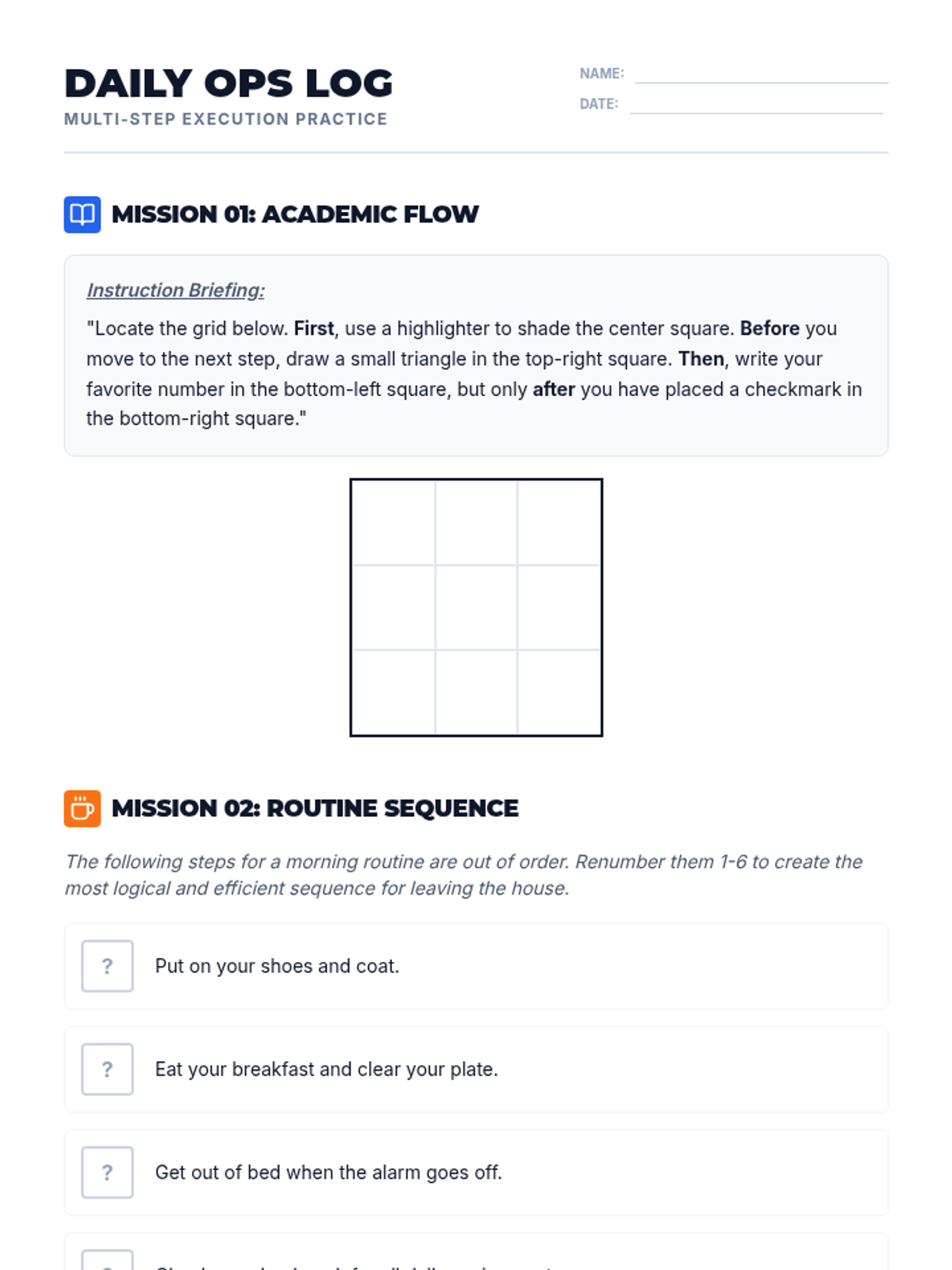
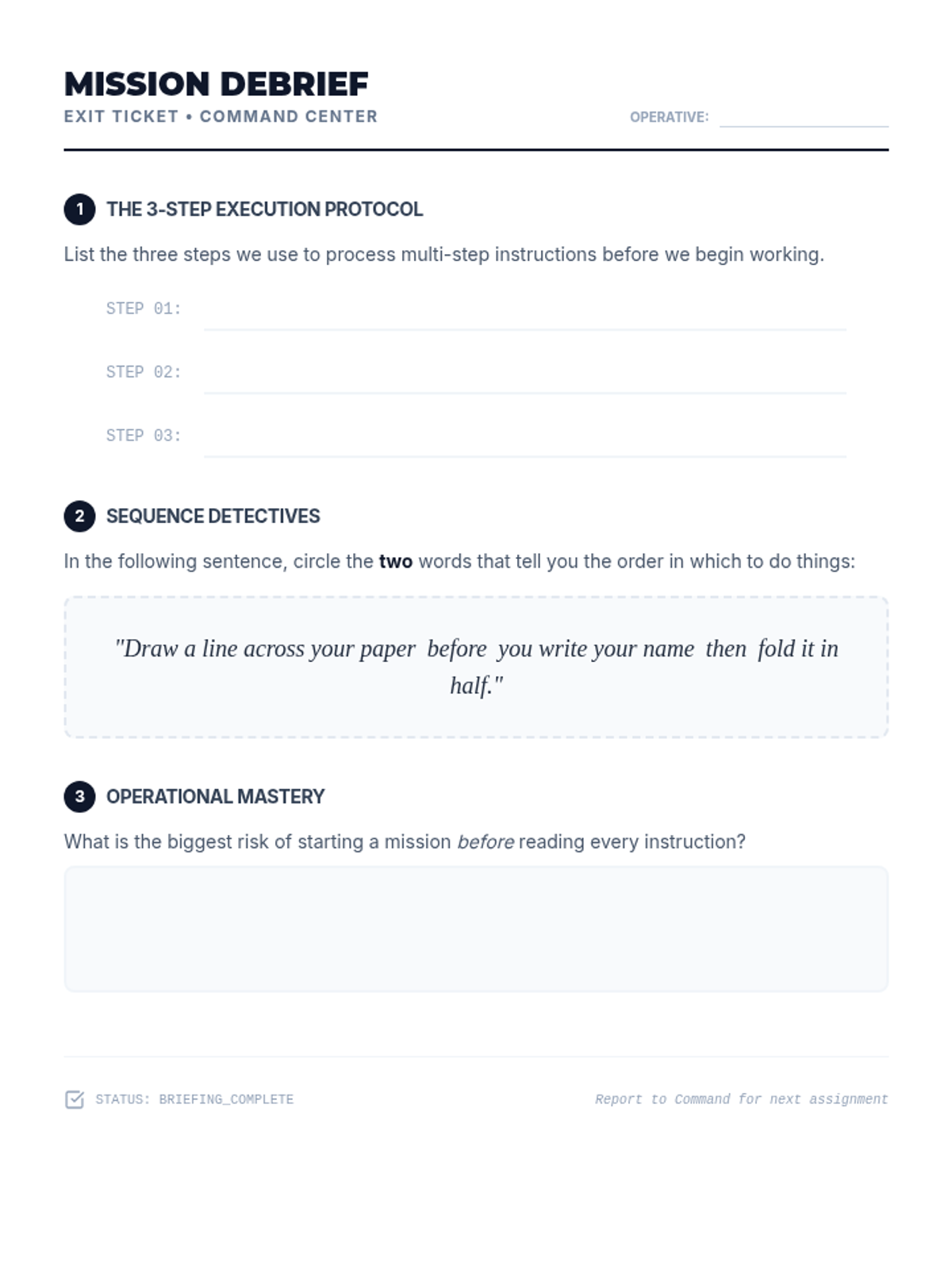
A comprehensive unit on executive functioning skills, focusing on active listening, reading comprehension for instructions, and sequence execution across academic and social settings.
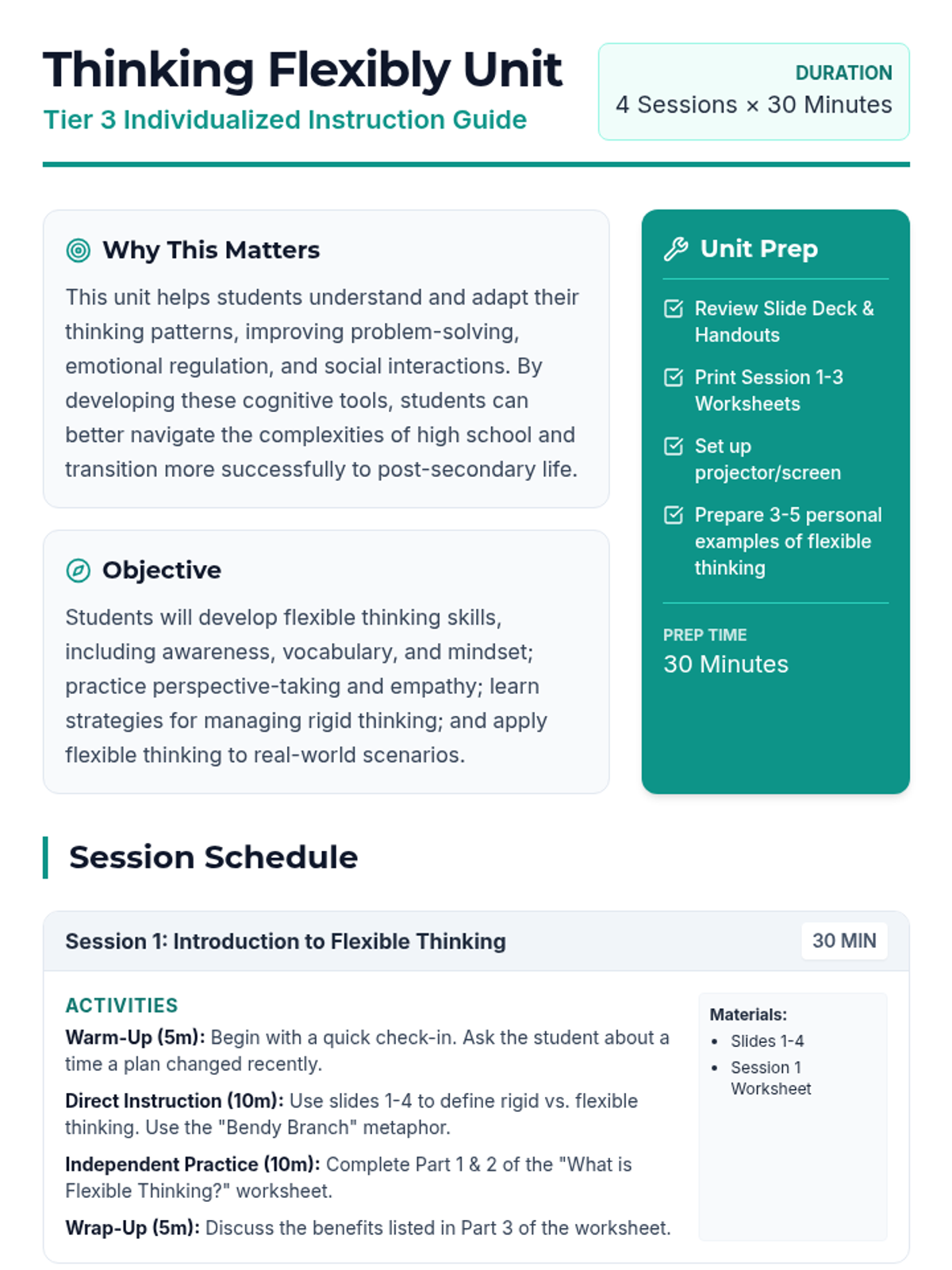
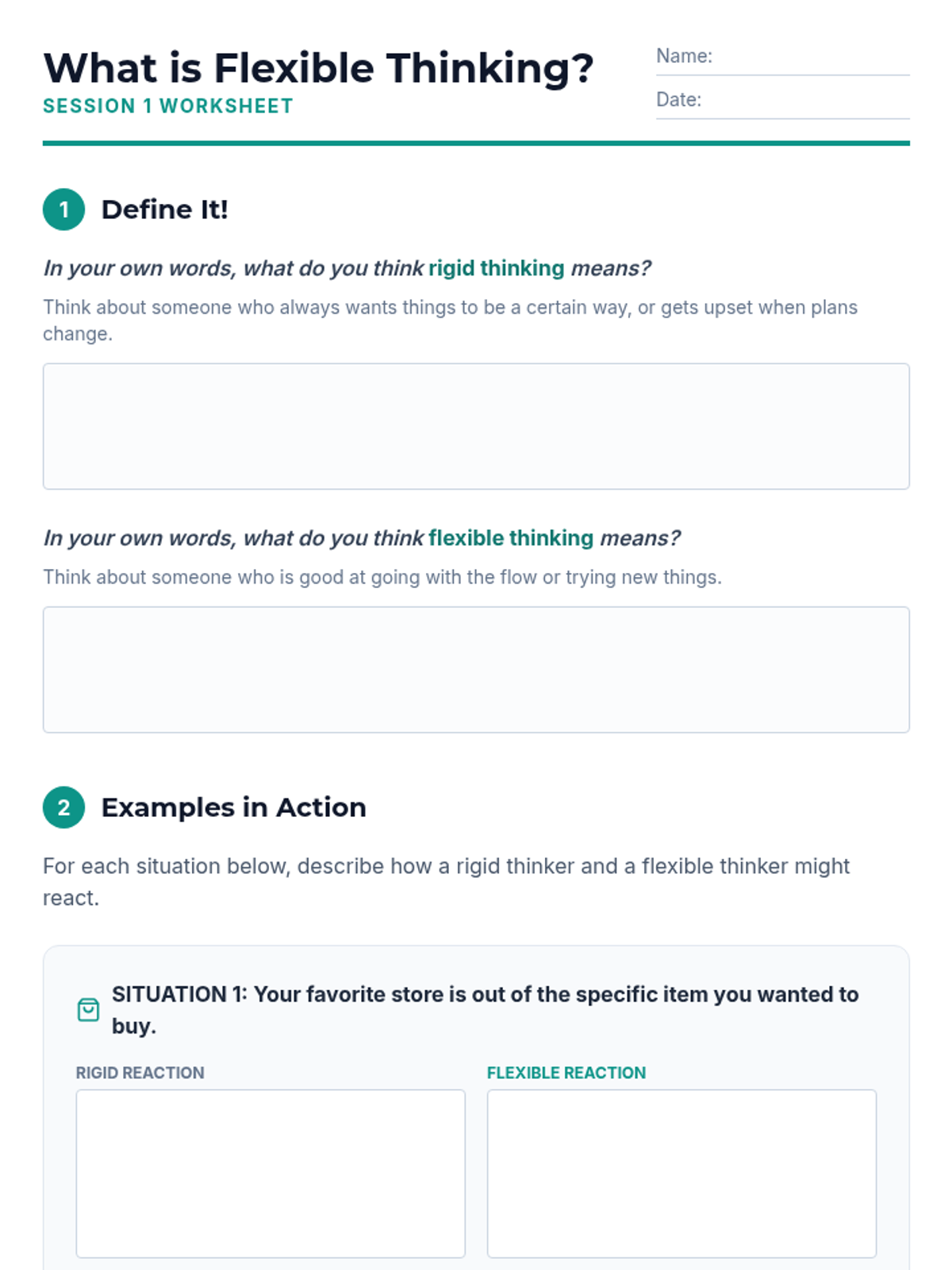
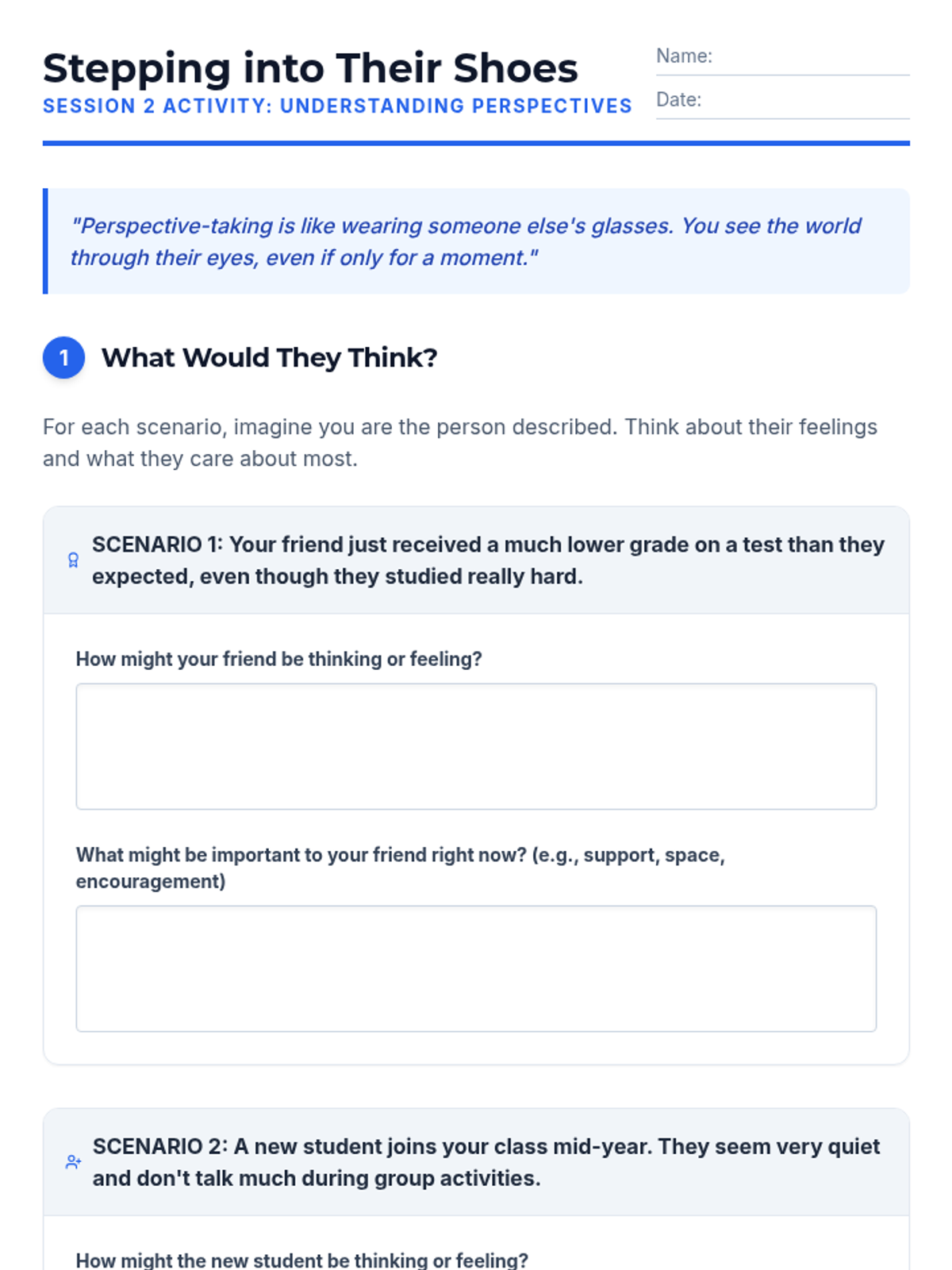
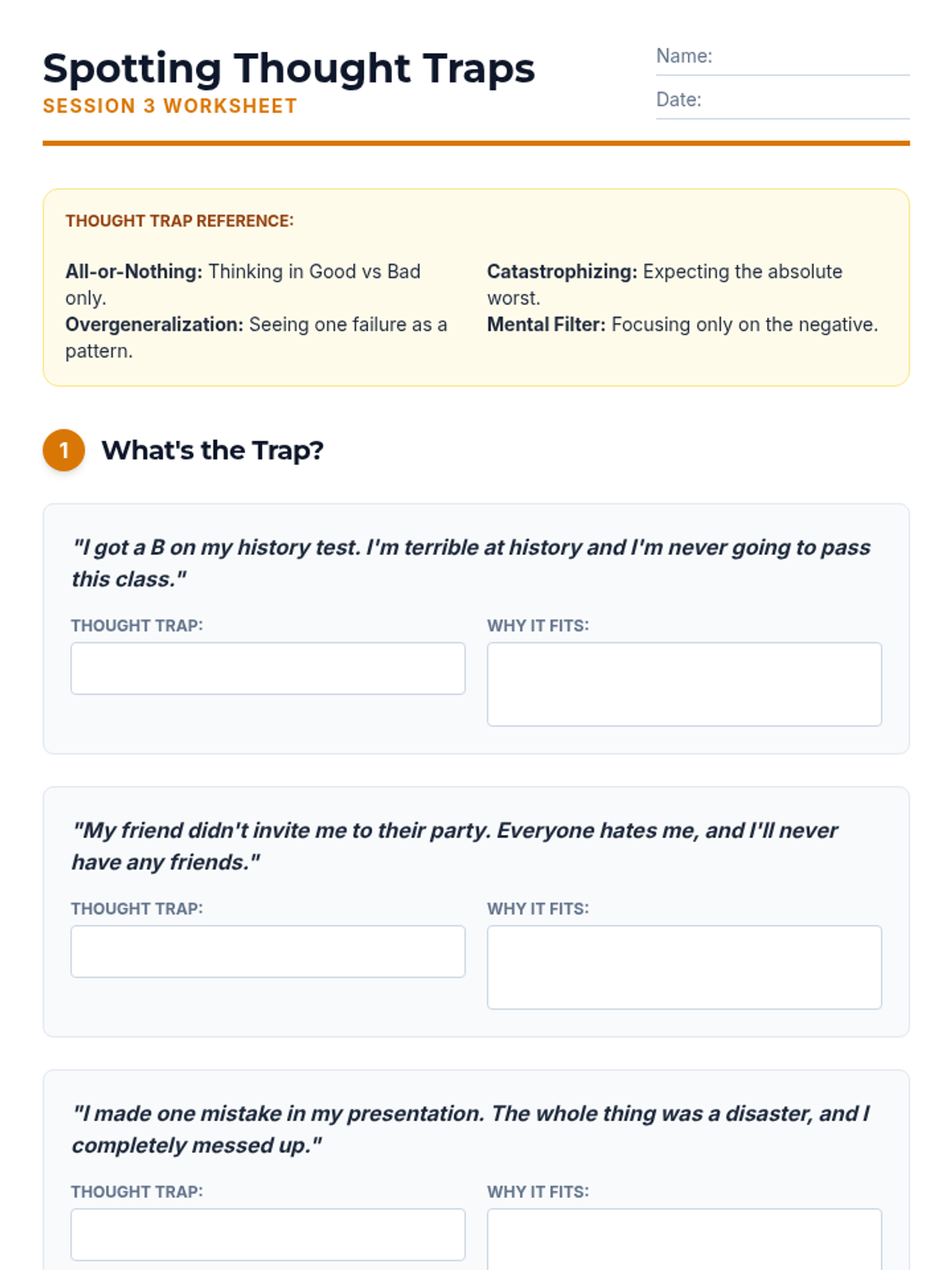
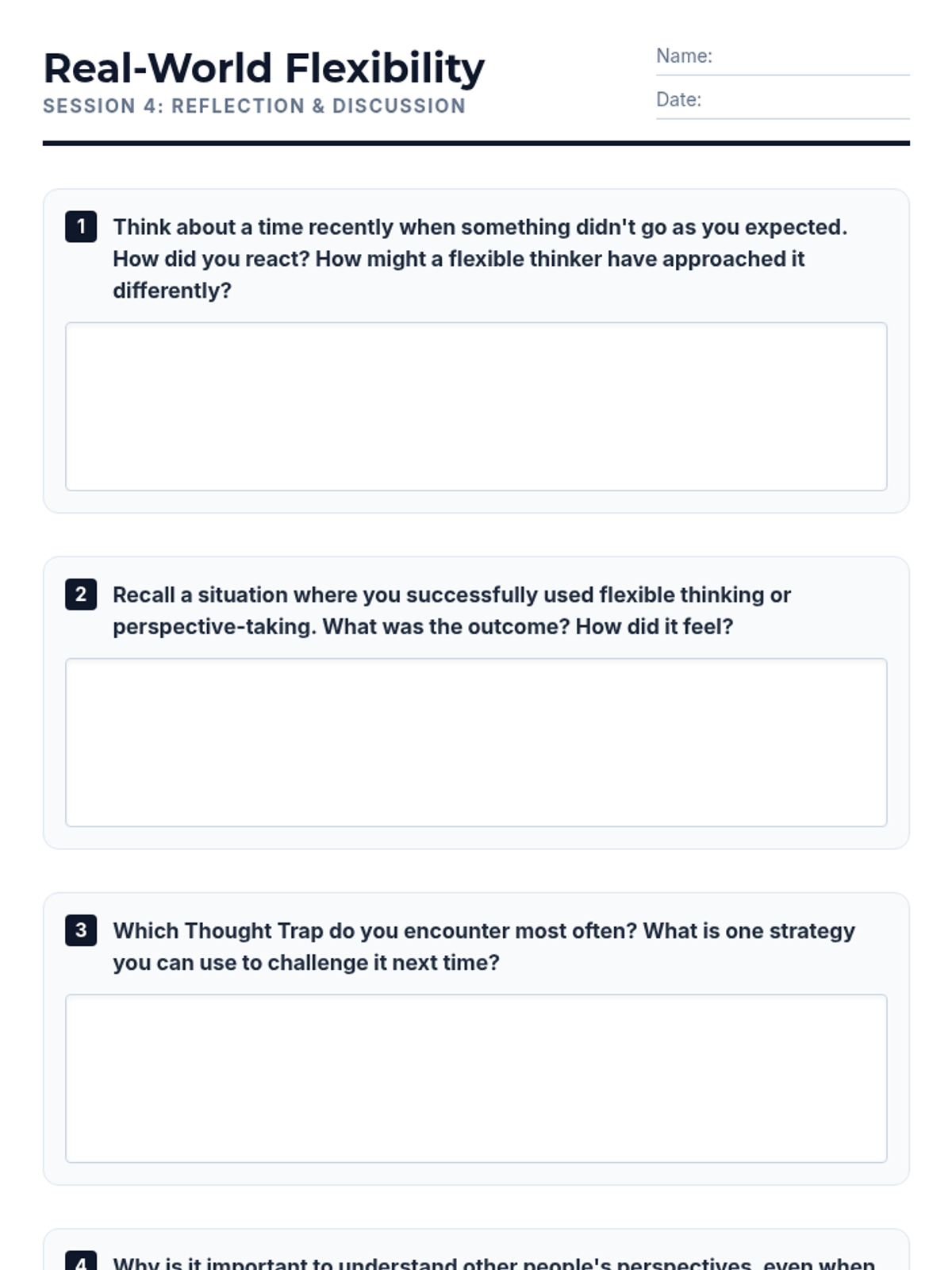
A multi-session unit for high school students with IEPs focused on developing cognitive flexibility, perspective-taking, and managing rigid thought patterns through direct instruction and real-world application.
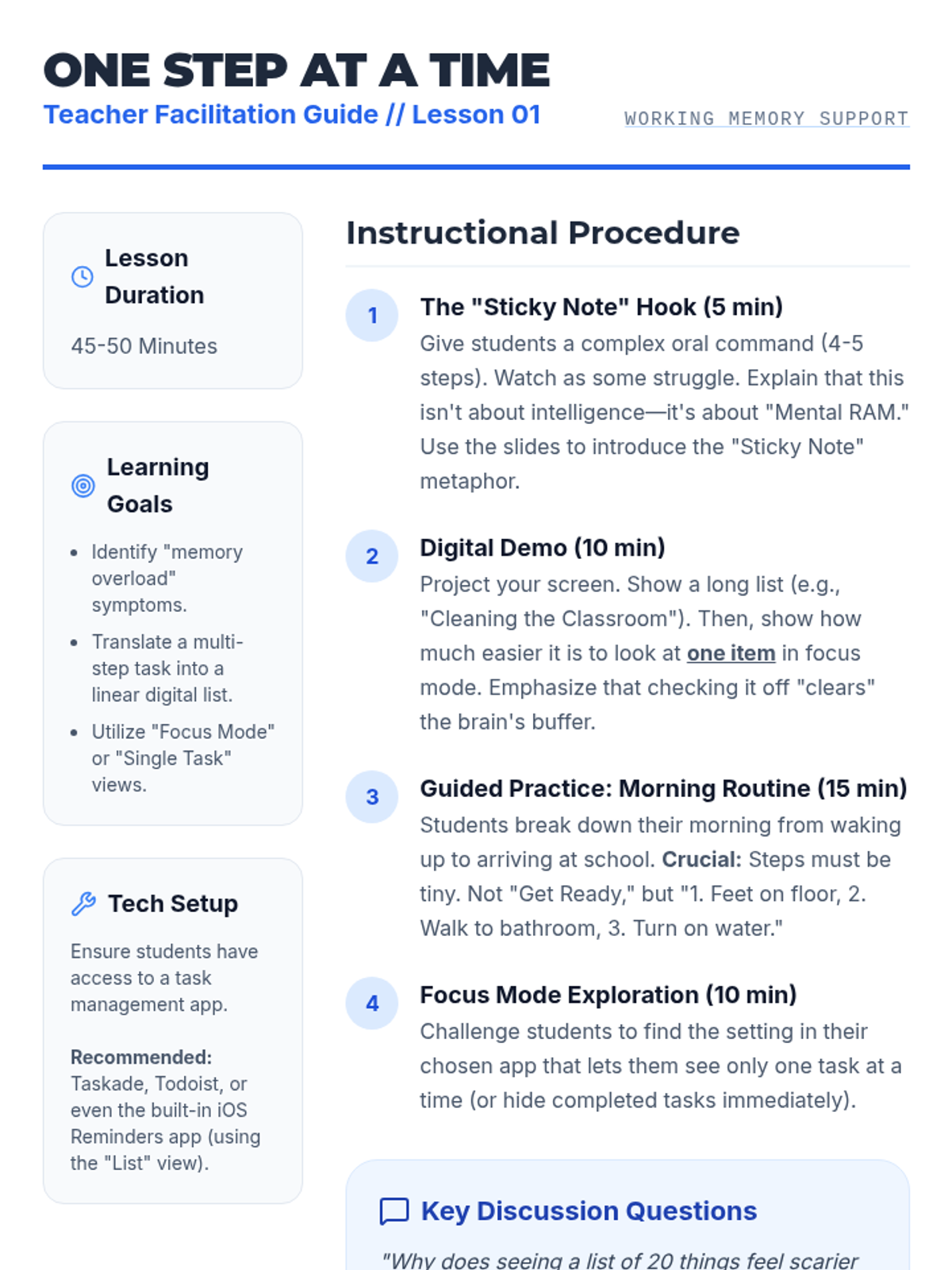
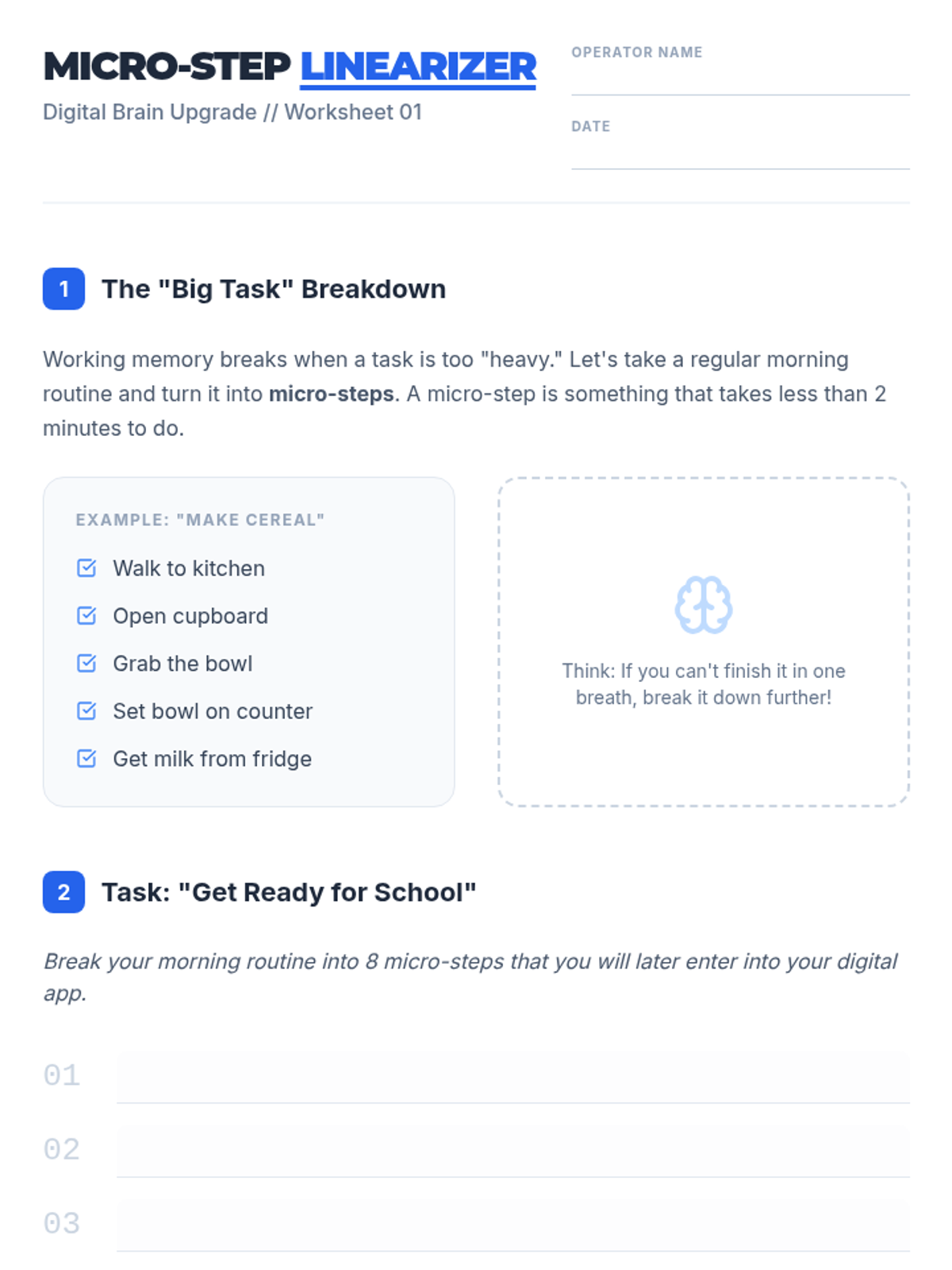
This sequence empowers students with working memory challenges to use digital tools to linearize tasks. Students learn to offload cognitive burden by using task managers, voice assistants, QR codes, and accessibility features to focus on one step at a time.
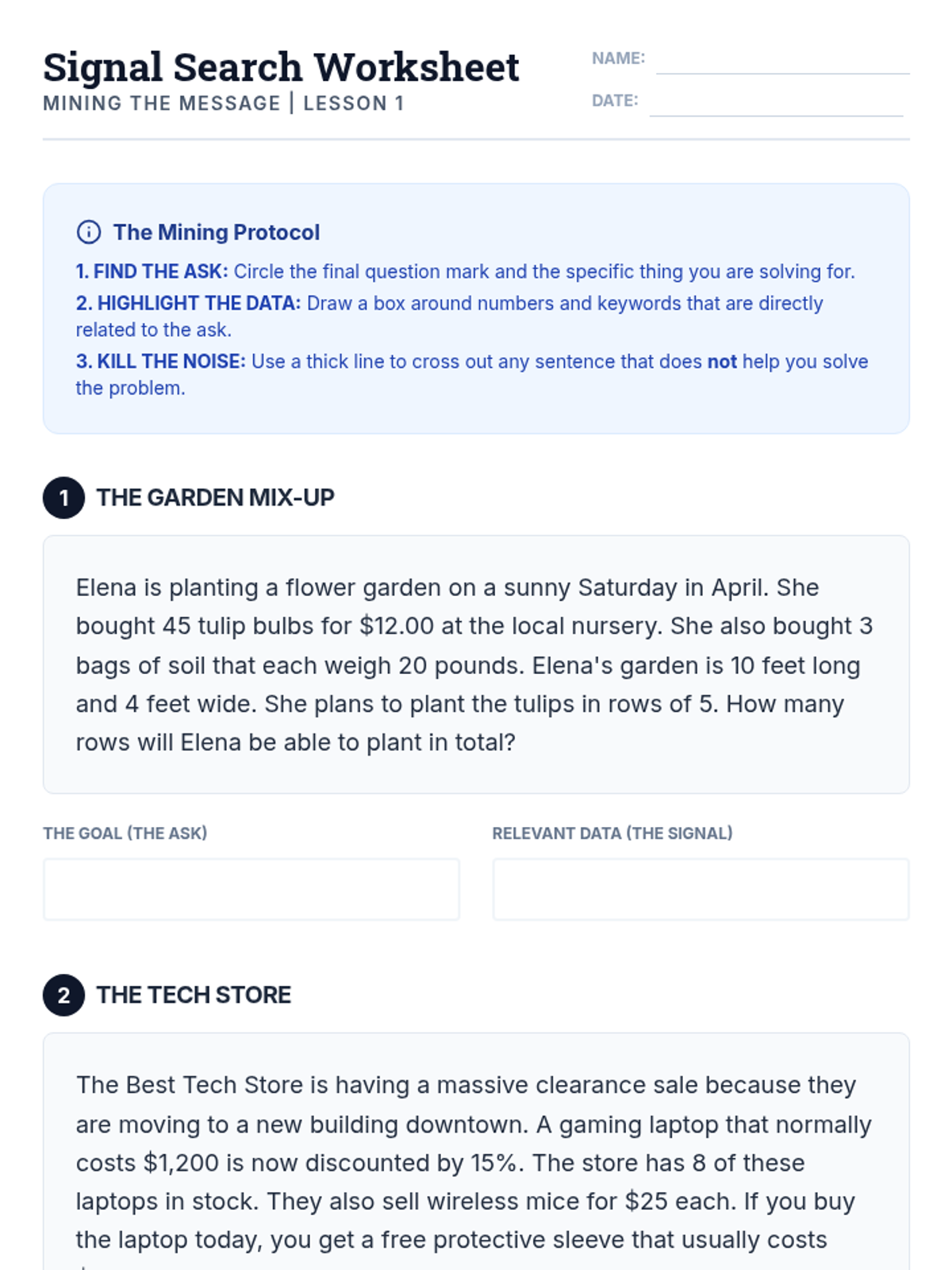
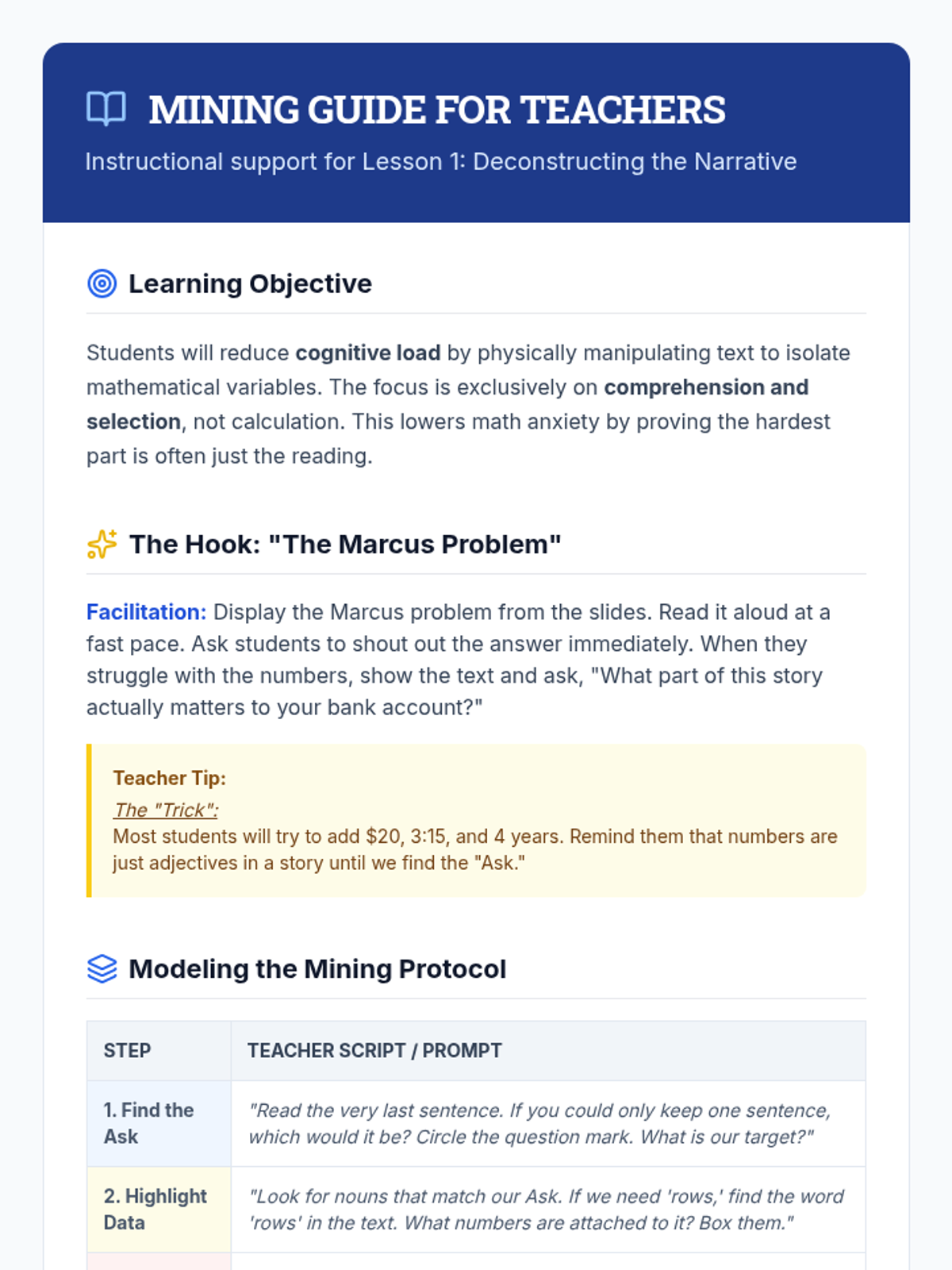
A specialized sequence for 12th-grade students with learning disabilities, focusing on breaking down complex math word problems through linguistic translation, executive planning, and systematic execution. Students learn to strip away narrative noise and build logical blueprints before calculating.
A comprehensive curriculum designed for high school students to develop cognitive flexibility in mathematics, specifically addressing the transition from intuitive problem-solving to structured algebraic methods.
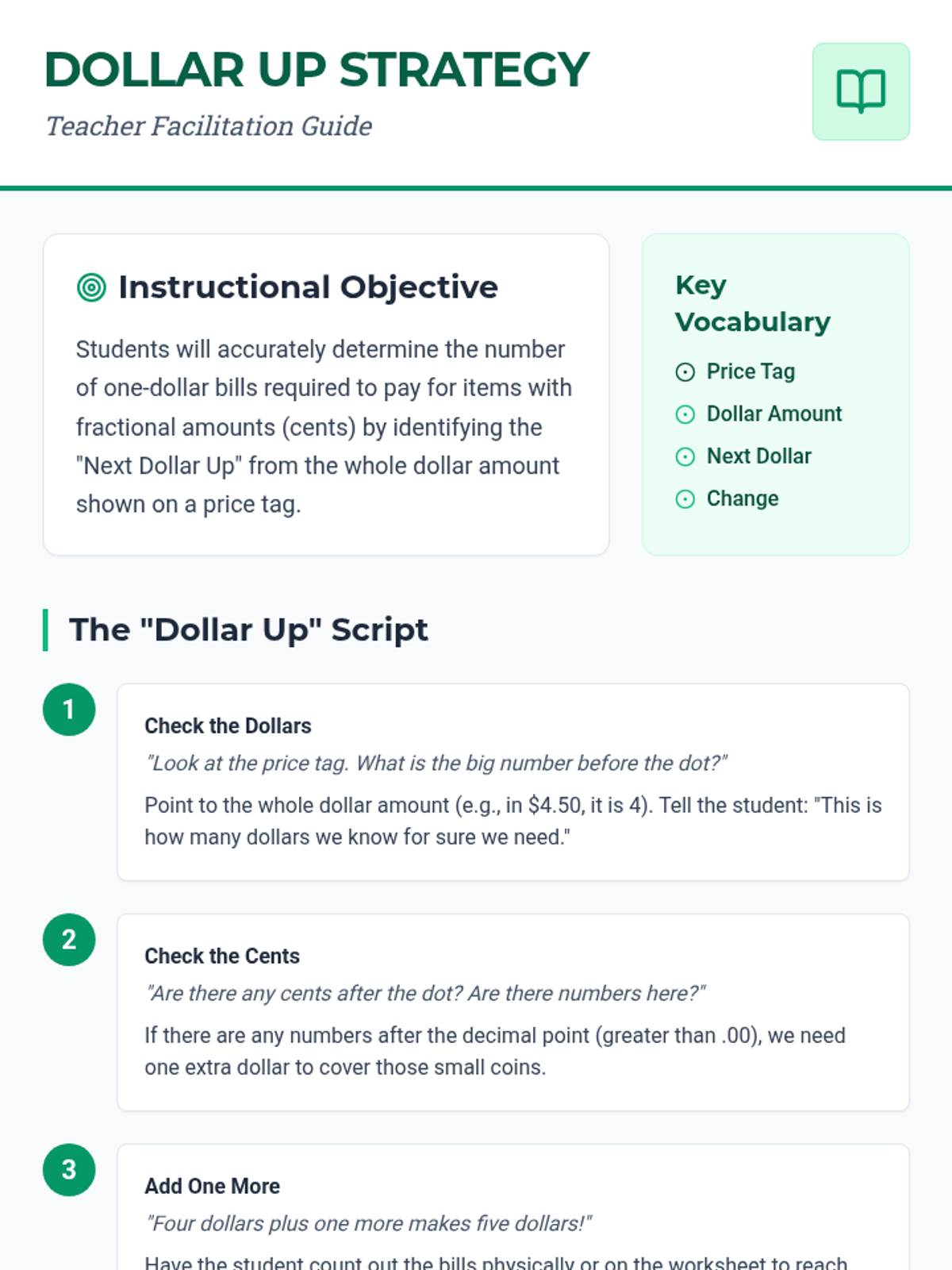
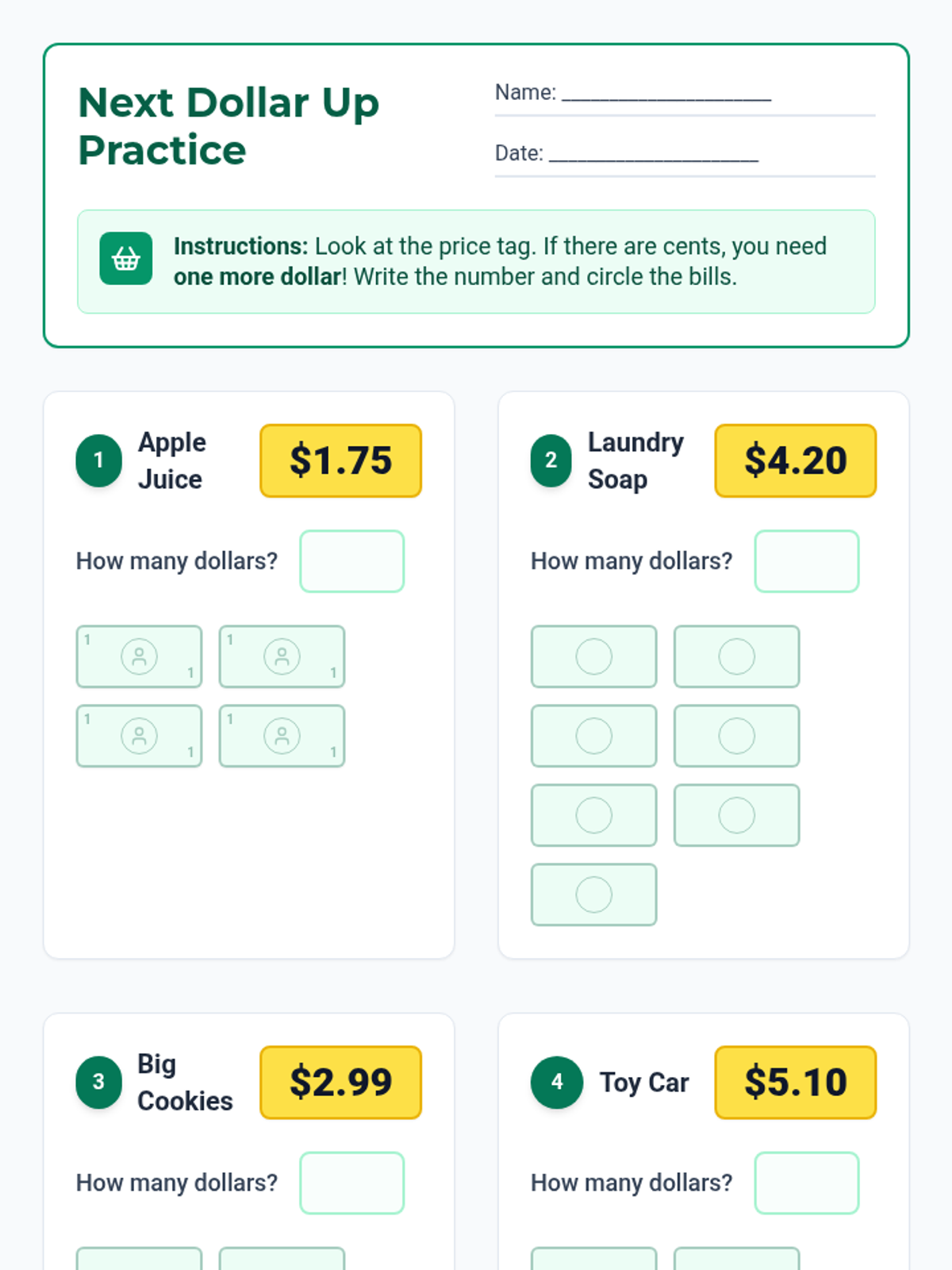
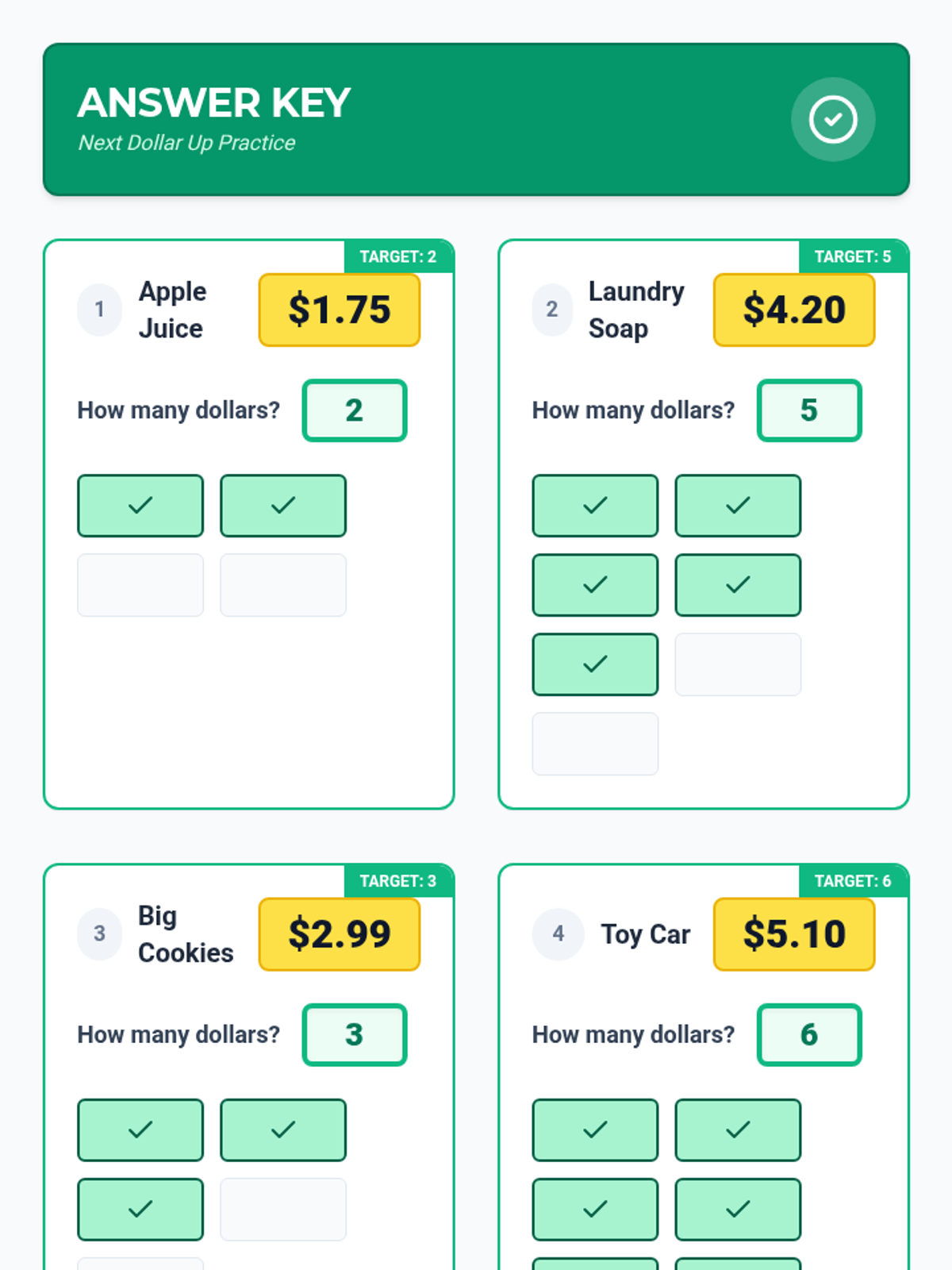
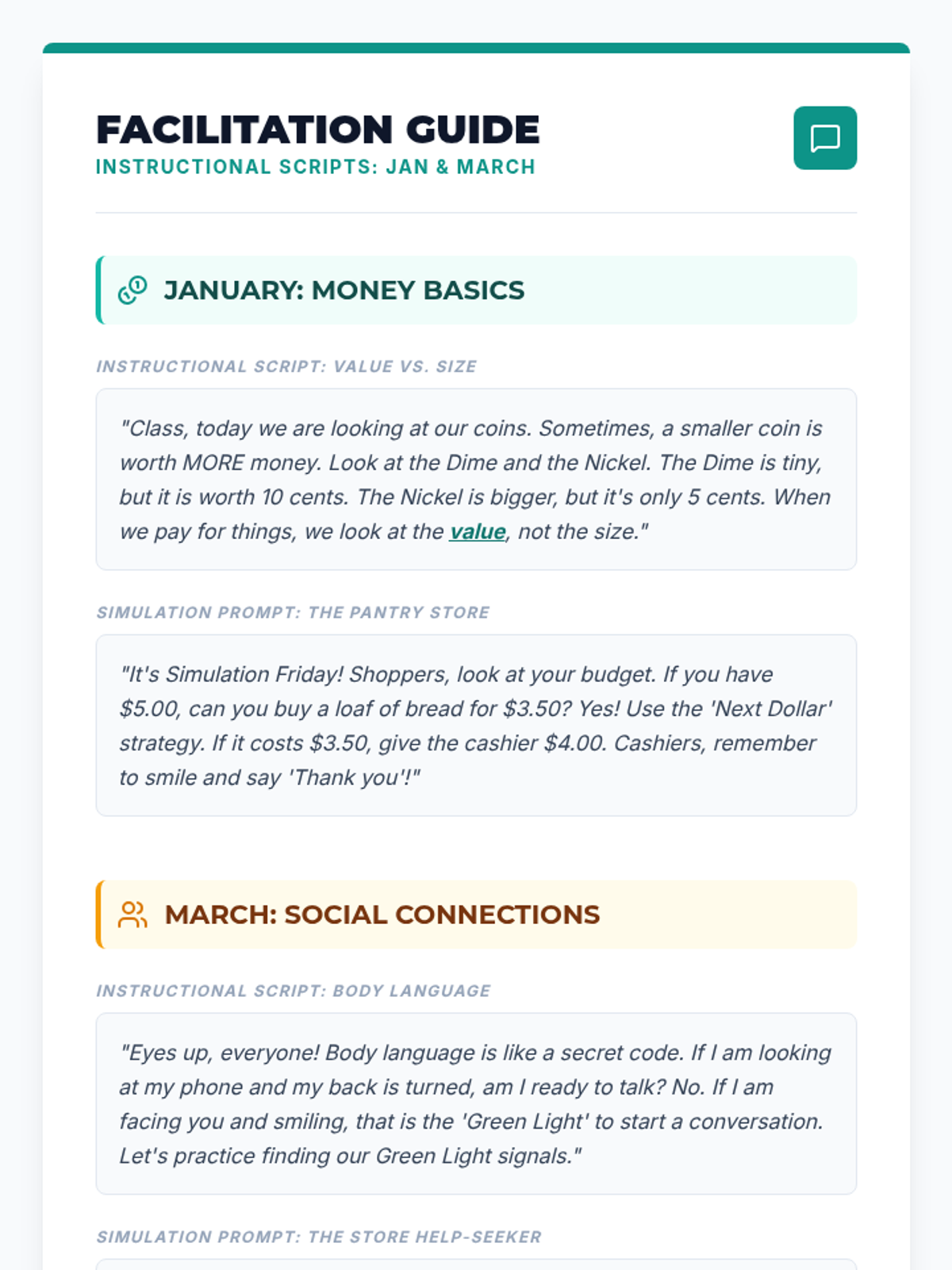
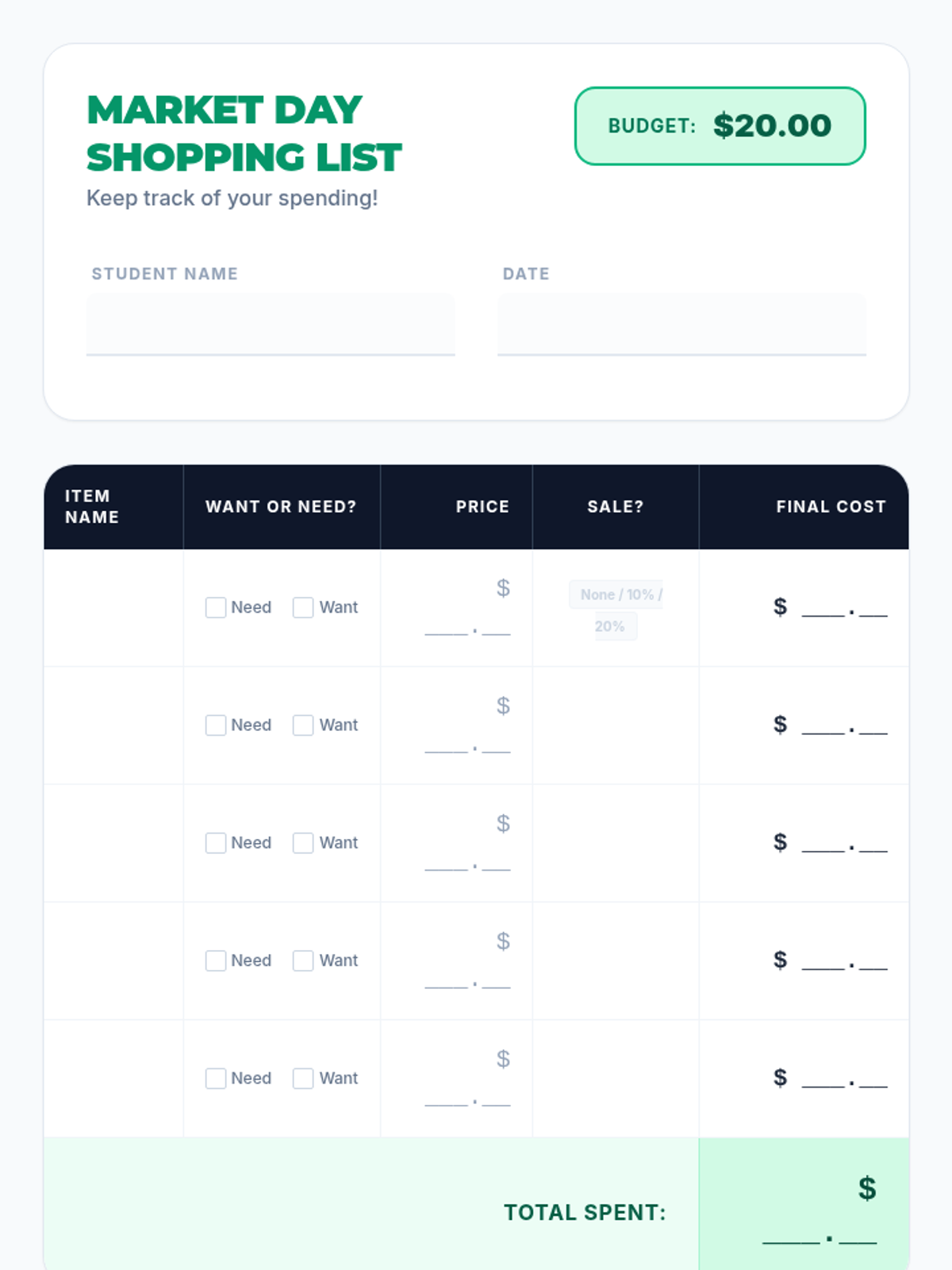
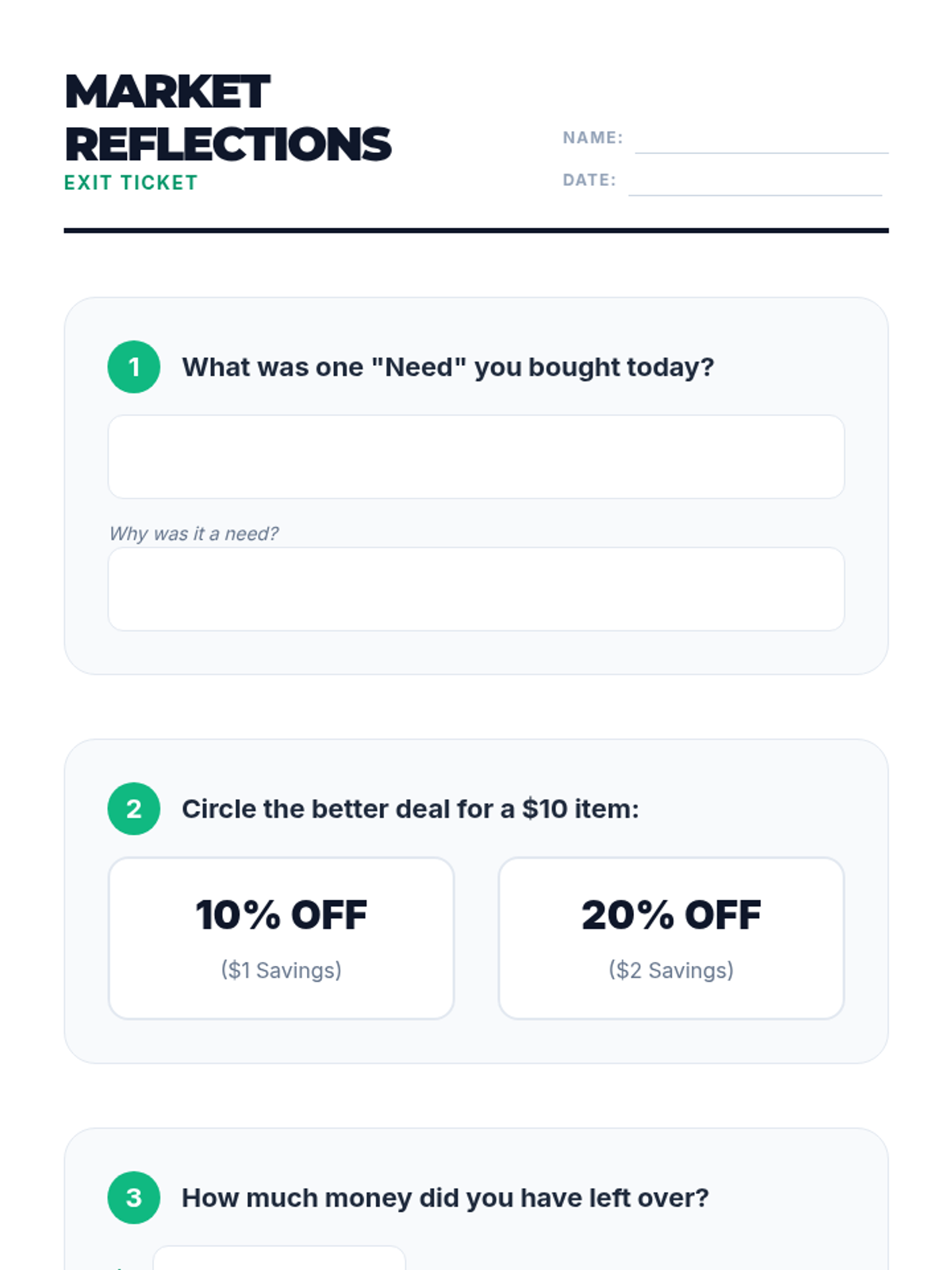
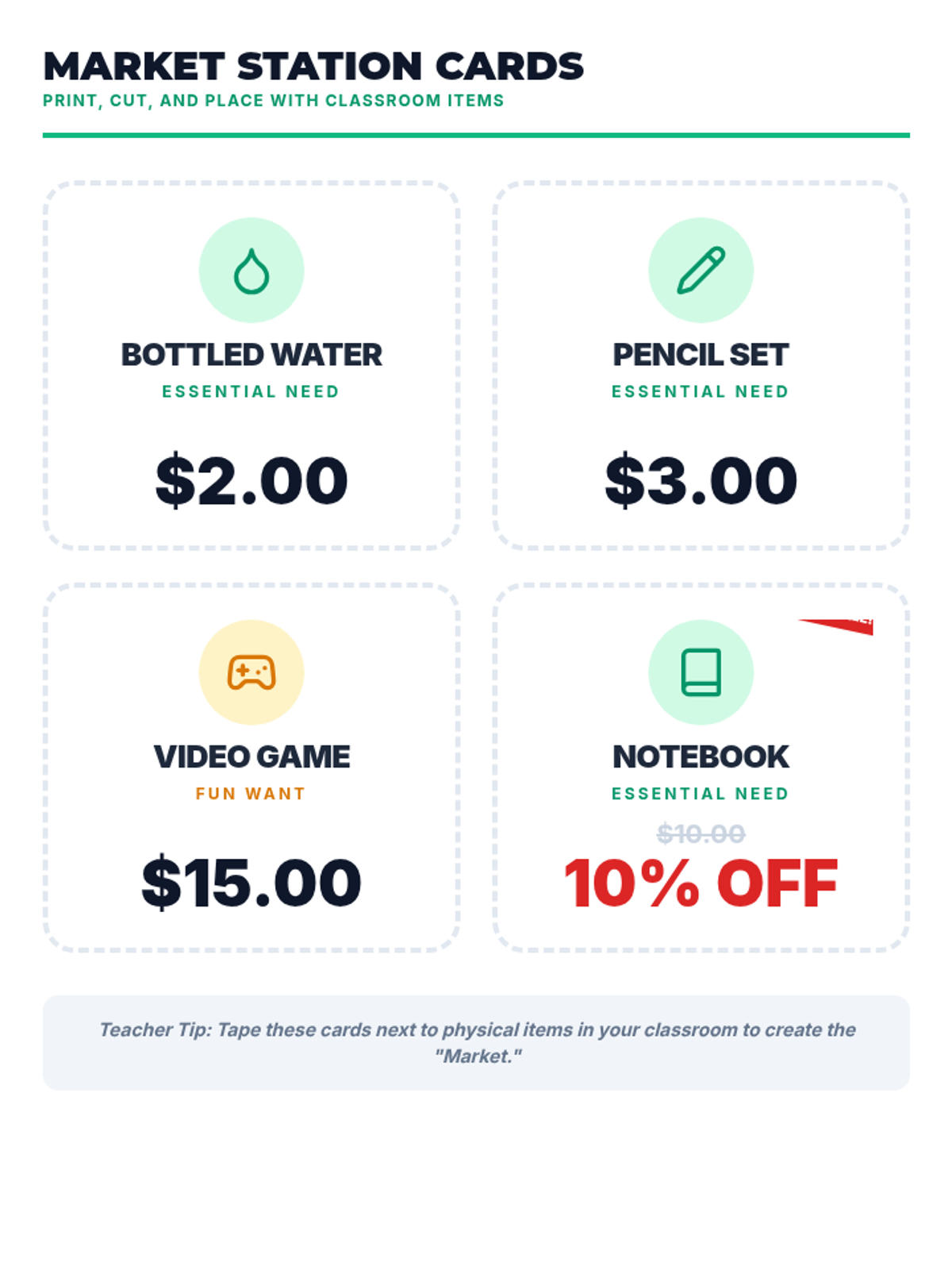
A series of functional math lessons focusing on essential life skills for independent living, starting with the Next Dollar Up method for purchasing items.
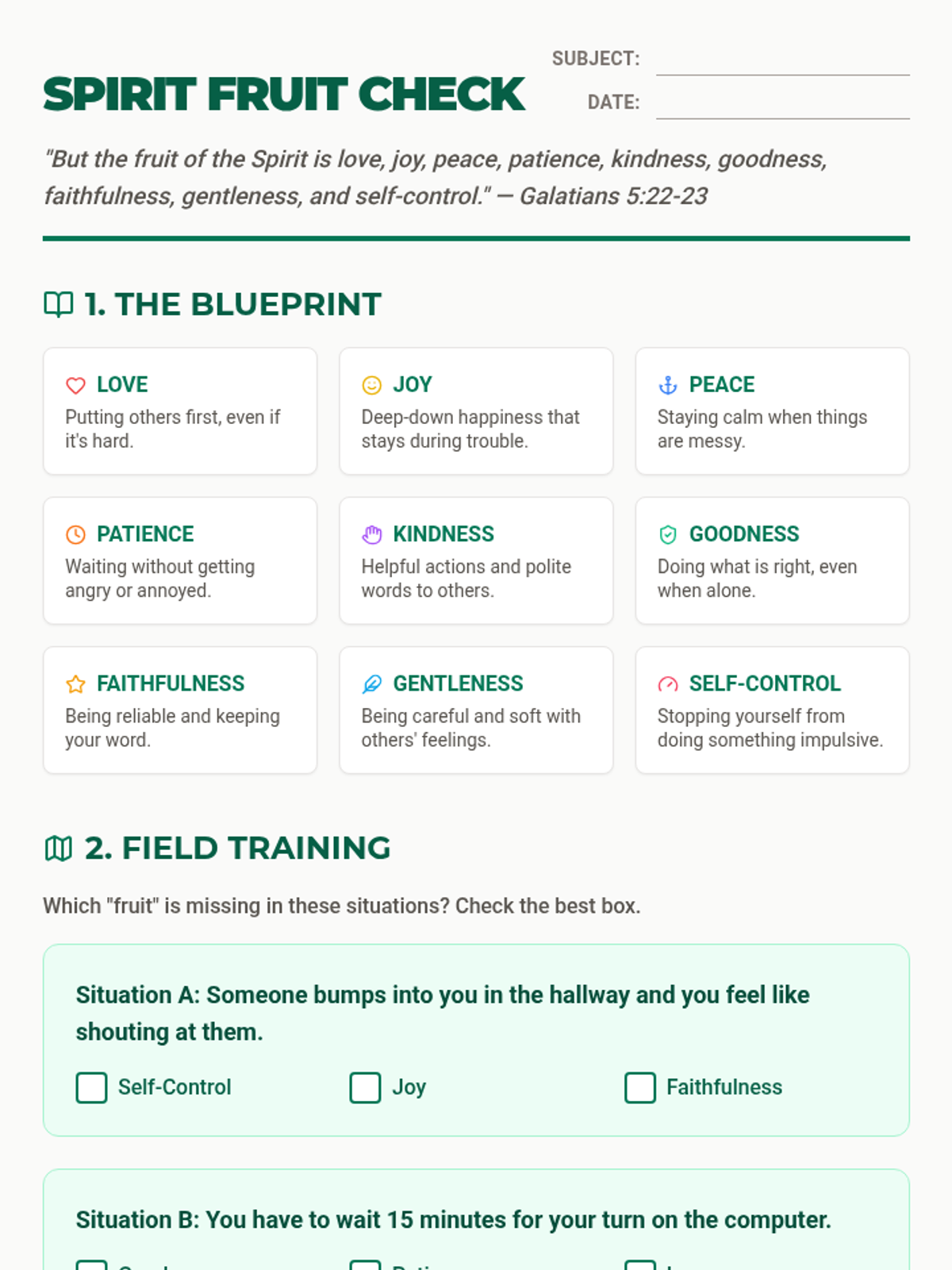
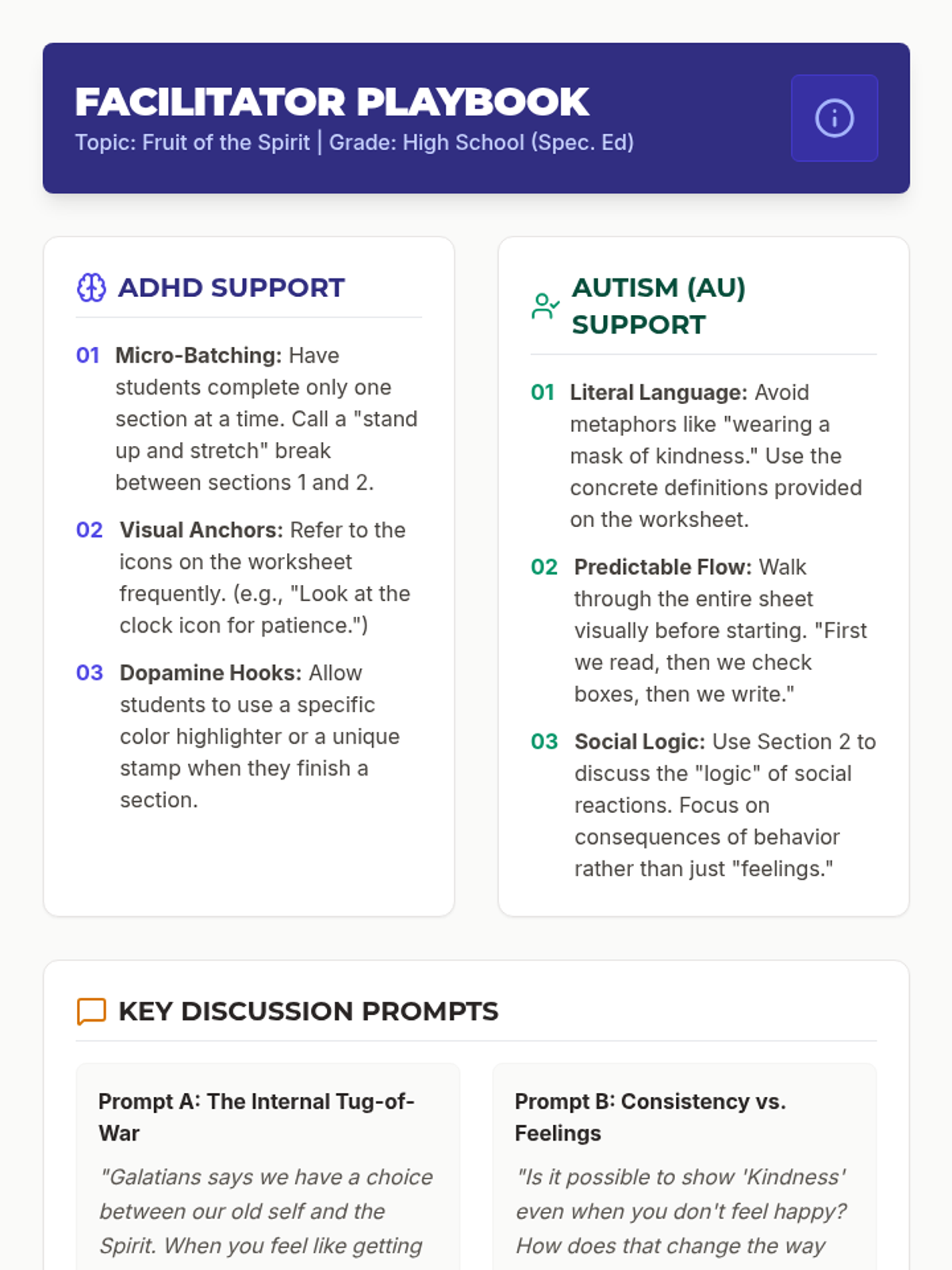
A study of the Book of Galatians tailored for high school boys with ADHD and Autism, focusing on practical application of spiritual growth and Christian freedom through concrete, literal teaching.
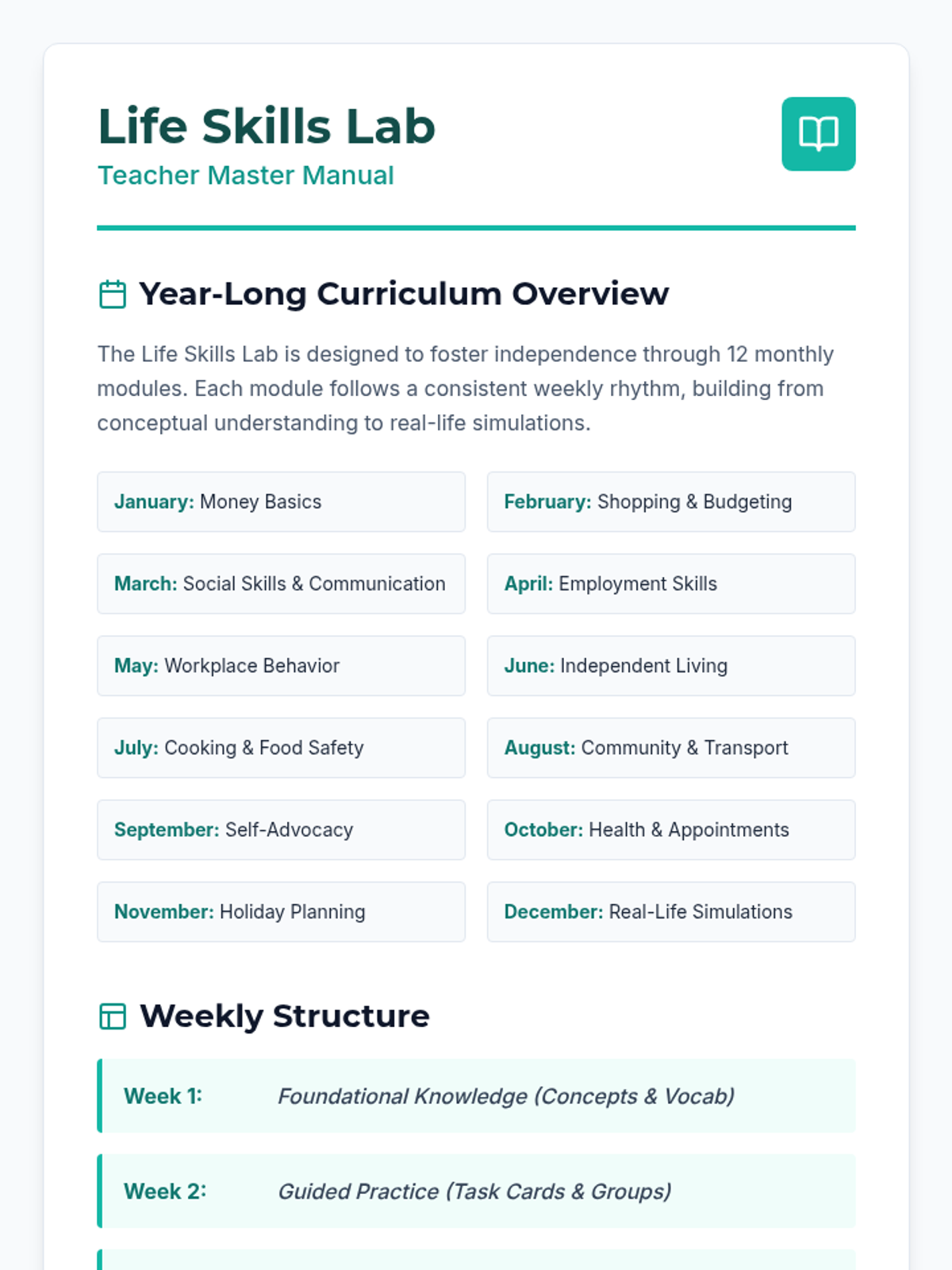
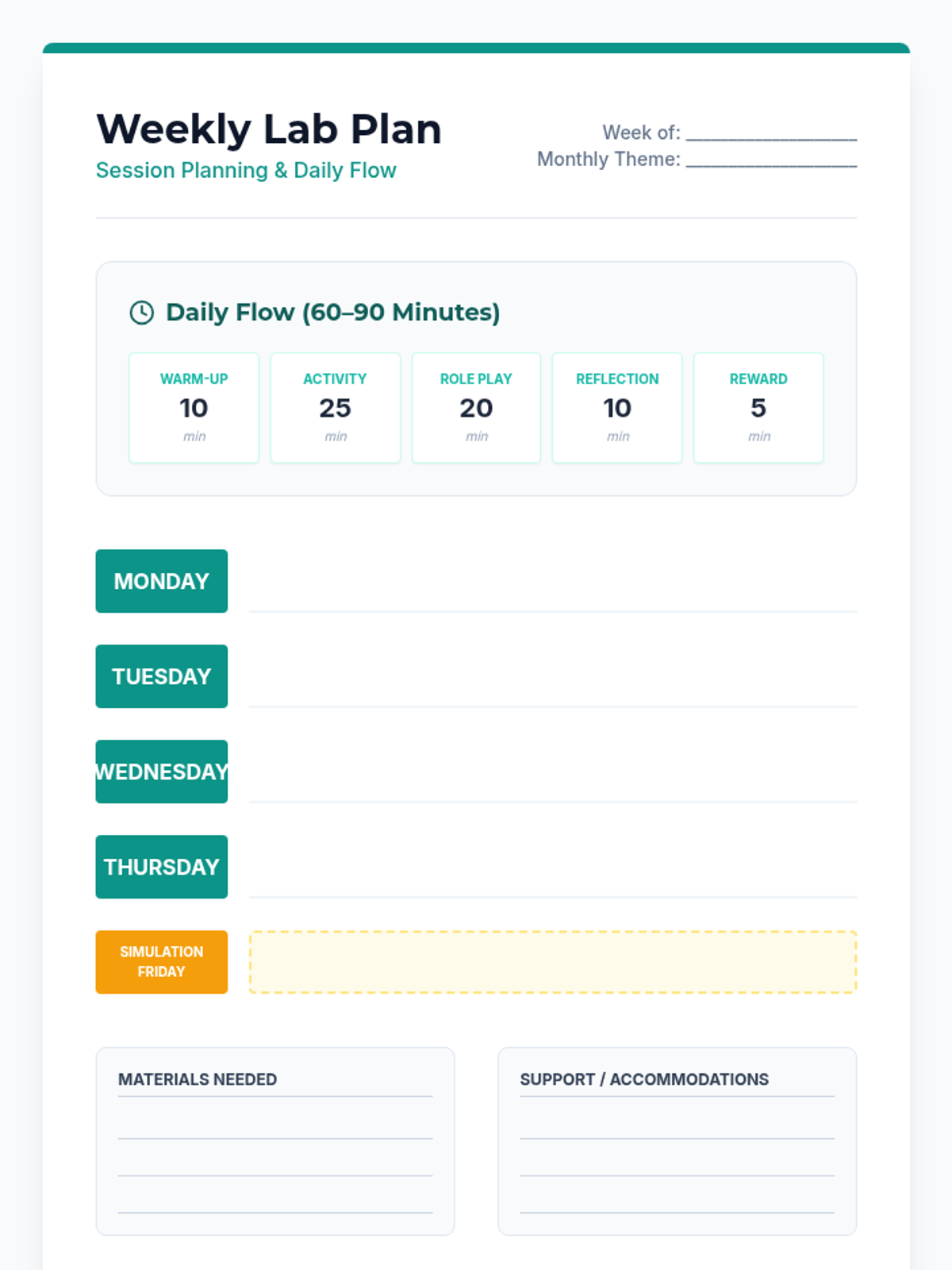
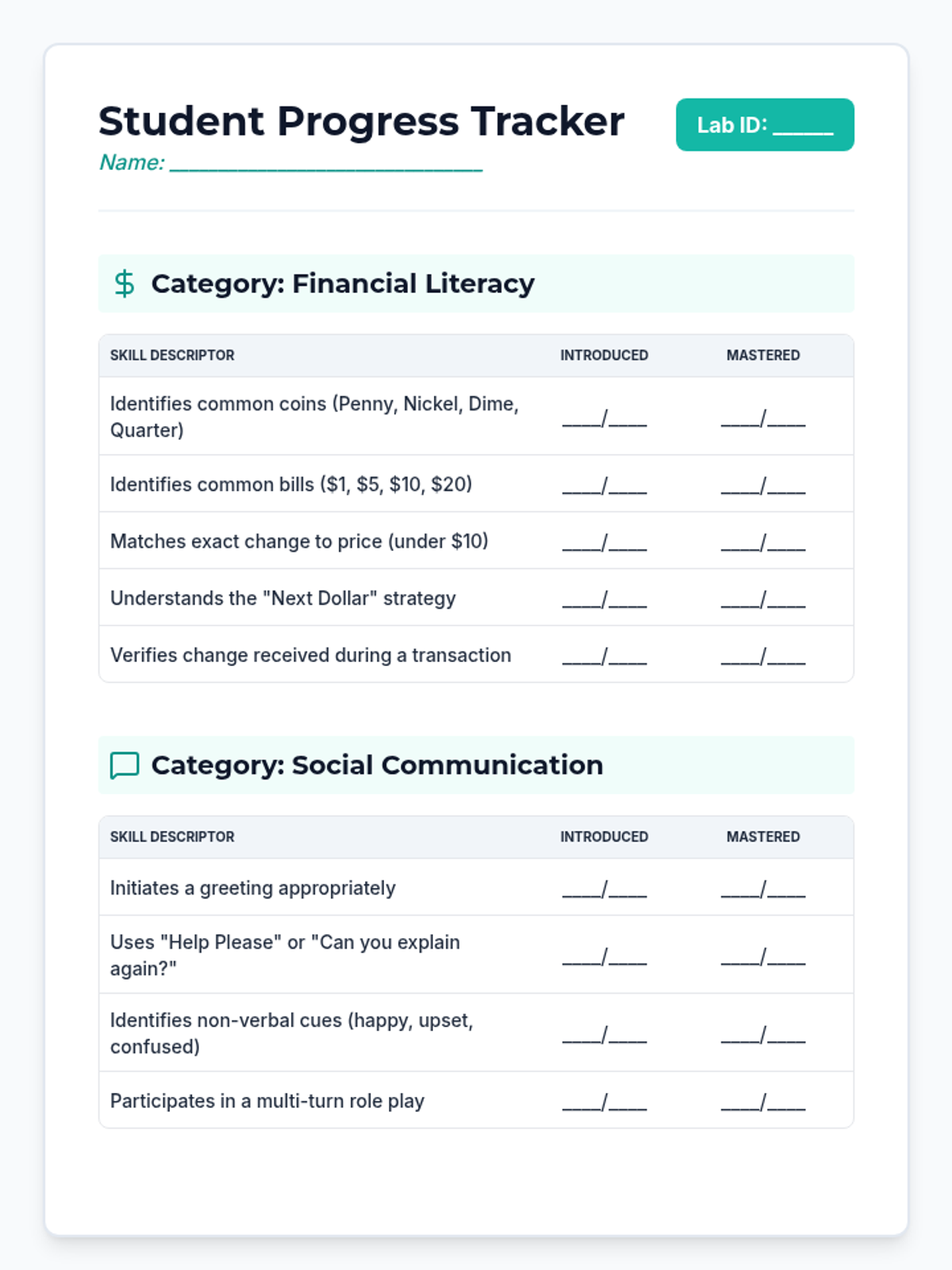
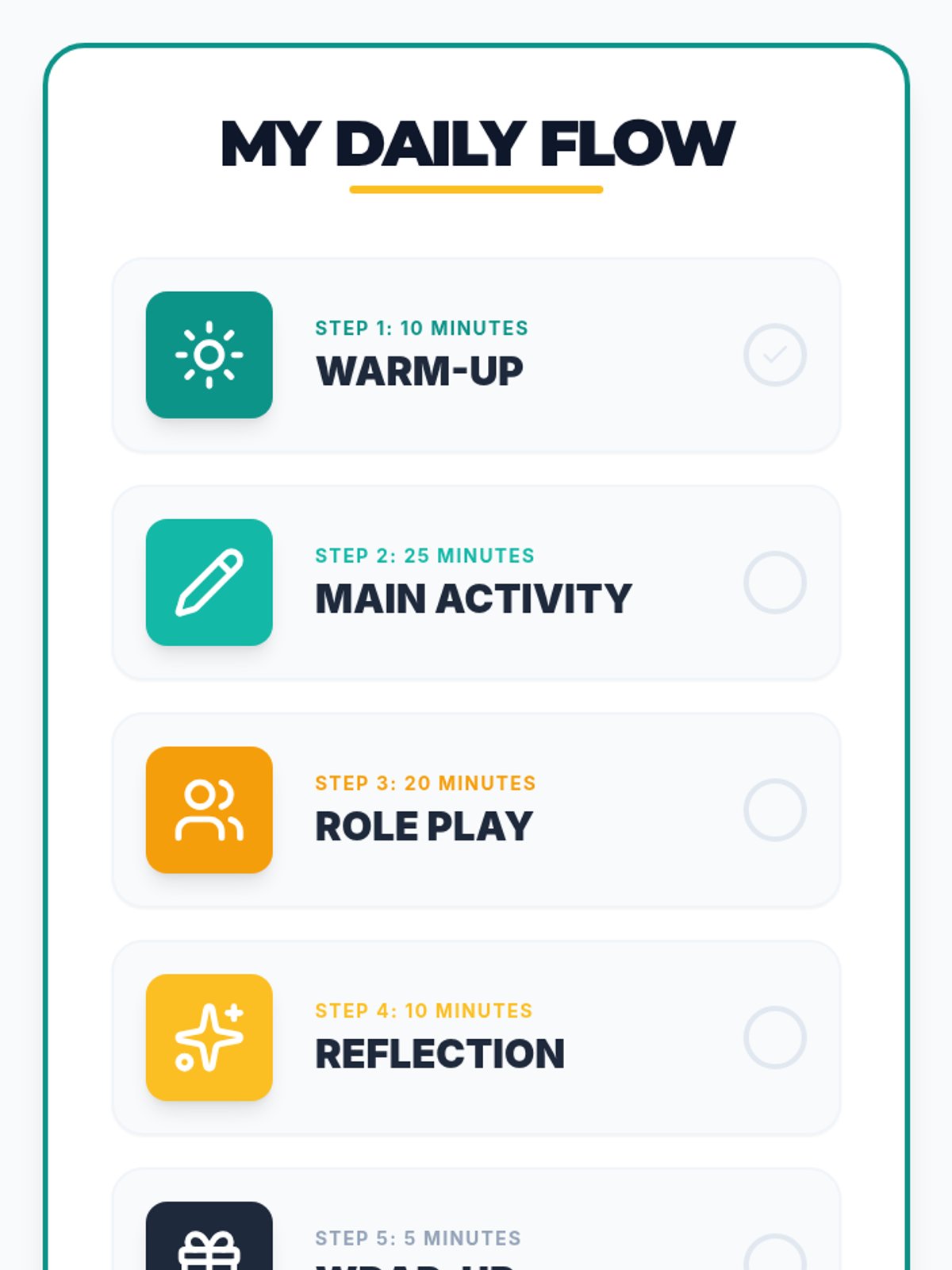
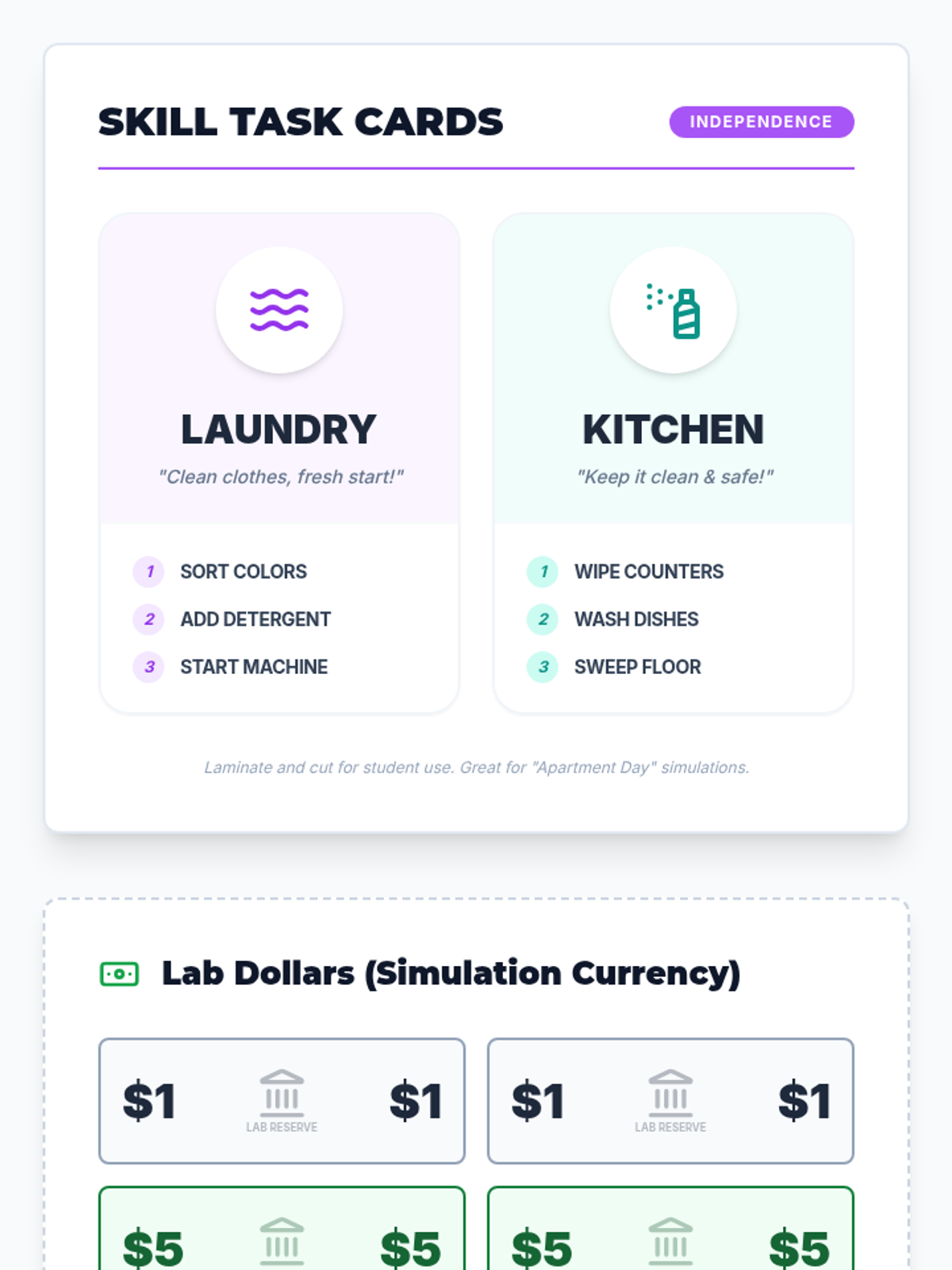
A comprehensive year-long curriculum designed to empower students with essential life skills for independence, focusing on financial literacy, social communication, and real-world simulations.
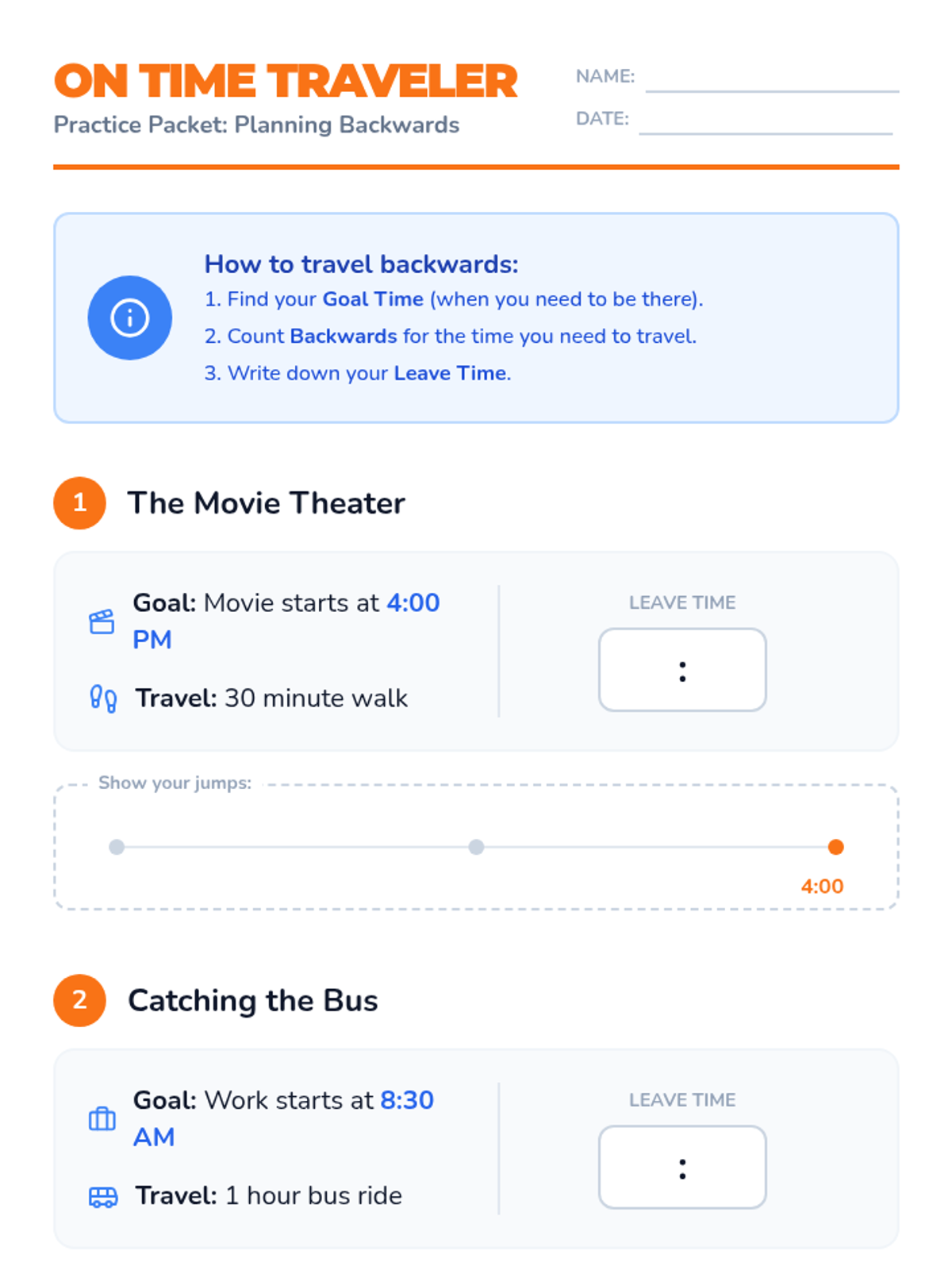
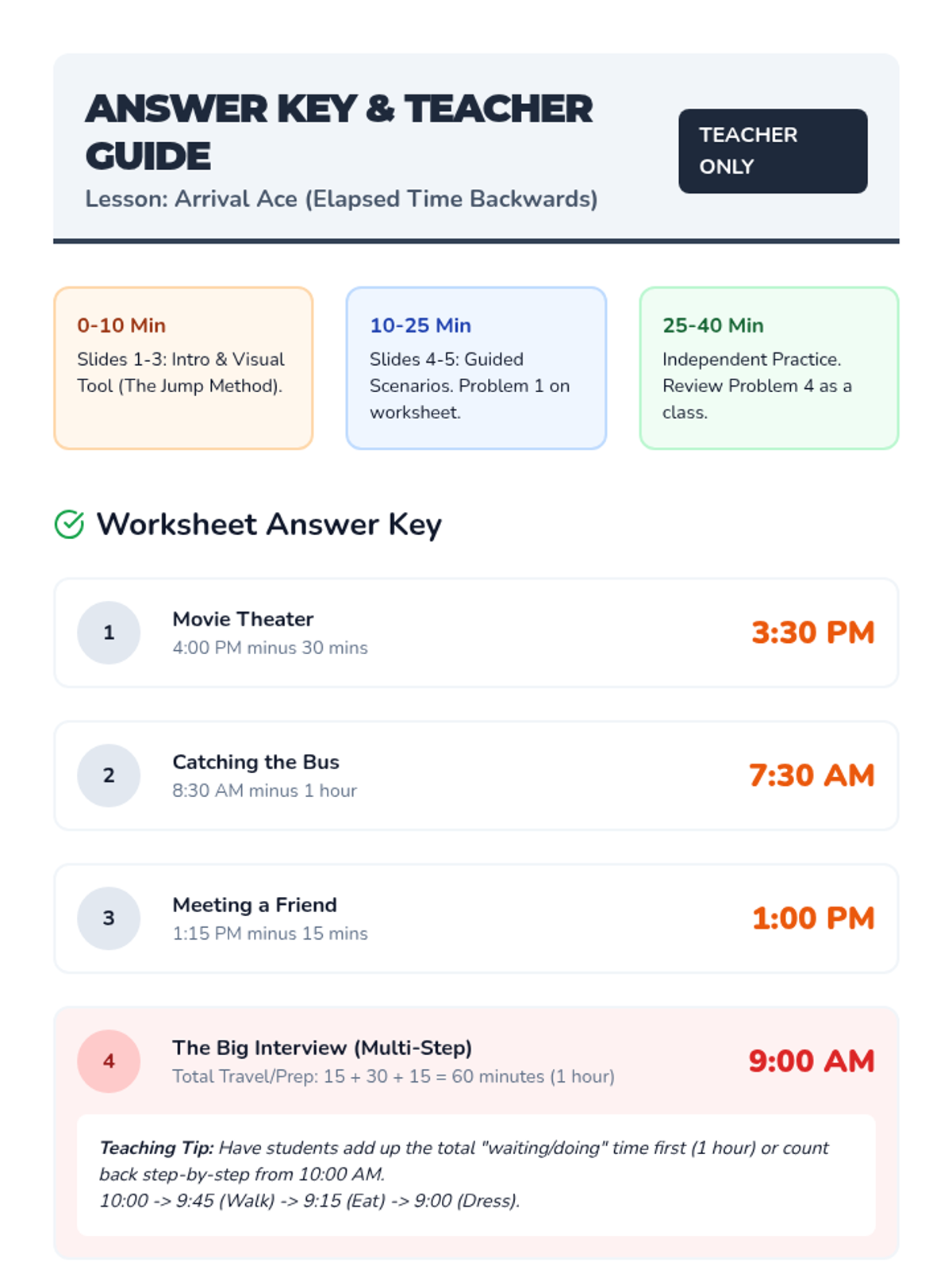
A sequence of lessons teaching students with intellectual disabilities how to master elapsed time by working backwards. Starting with 30/60 minute chunks and progressing to exact minute calculations for real-world independence.
A 4-session career exploration program designed for high school students with significantly low cognitive profiles, focusing on hands-on, repetitive vocational skills through visual aids and role-playing.
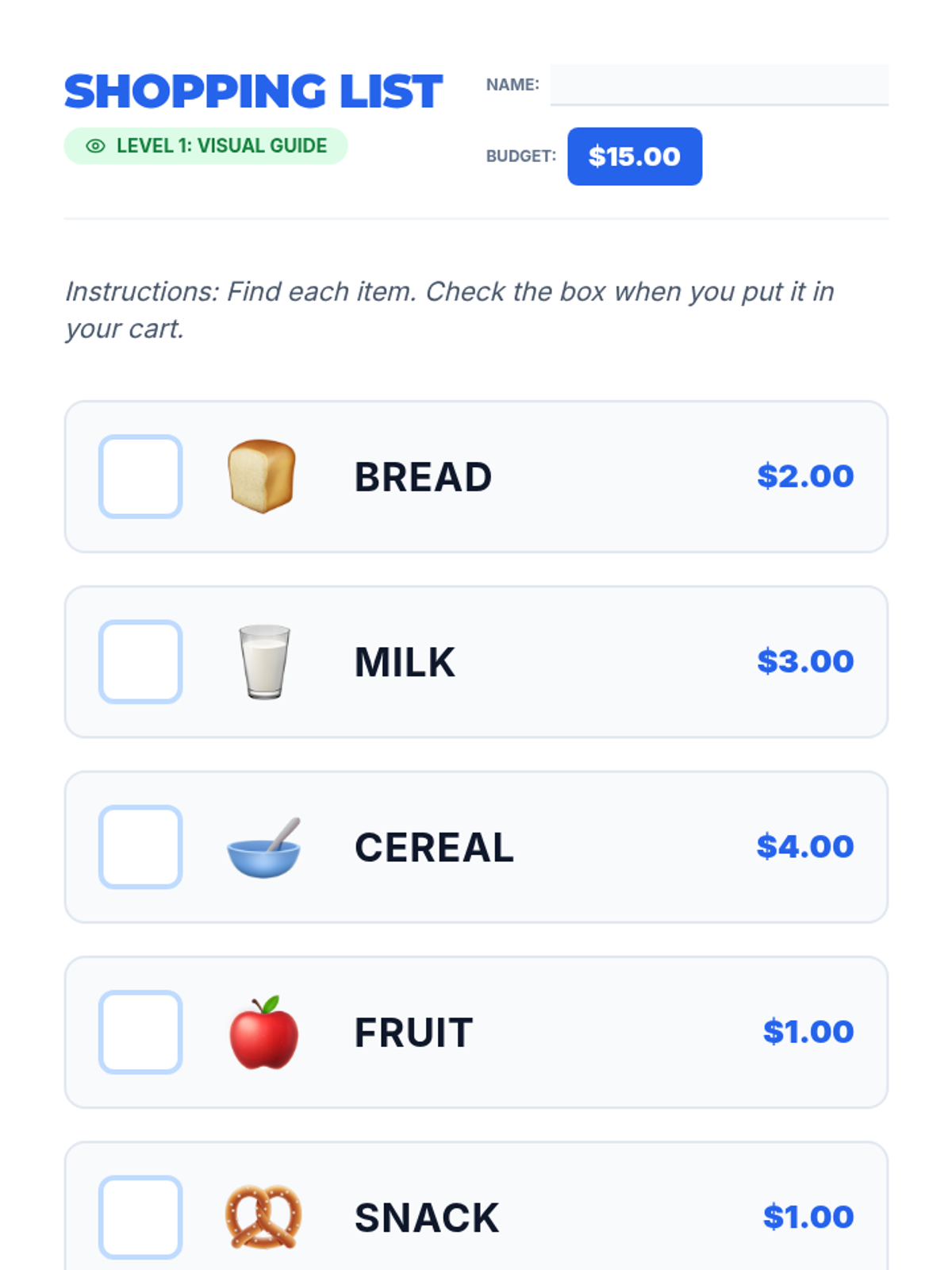
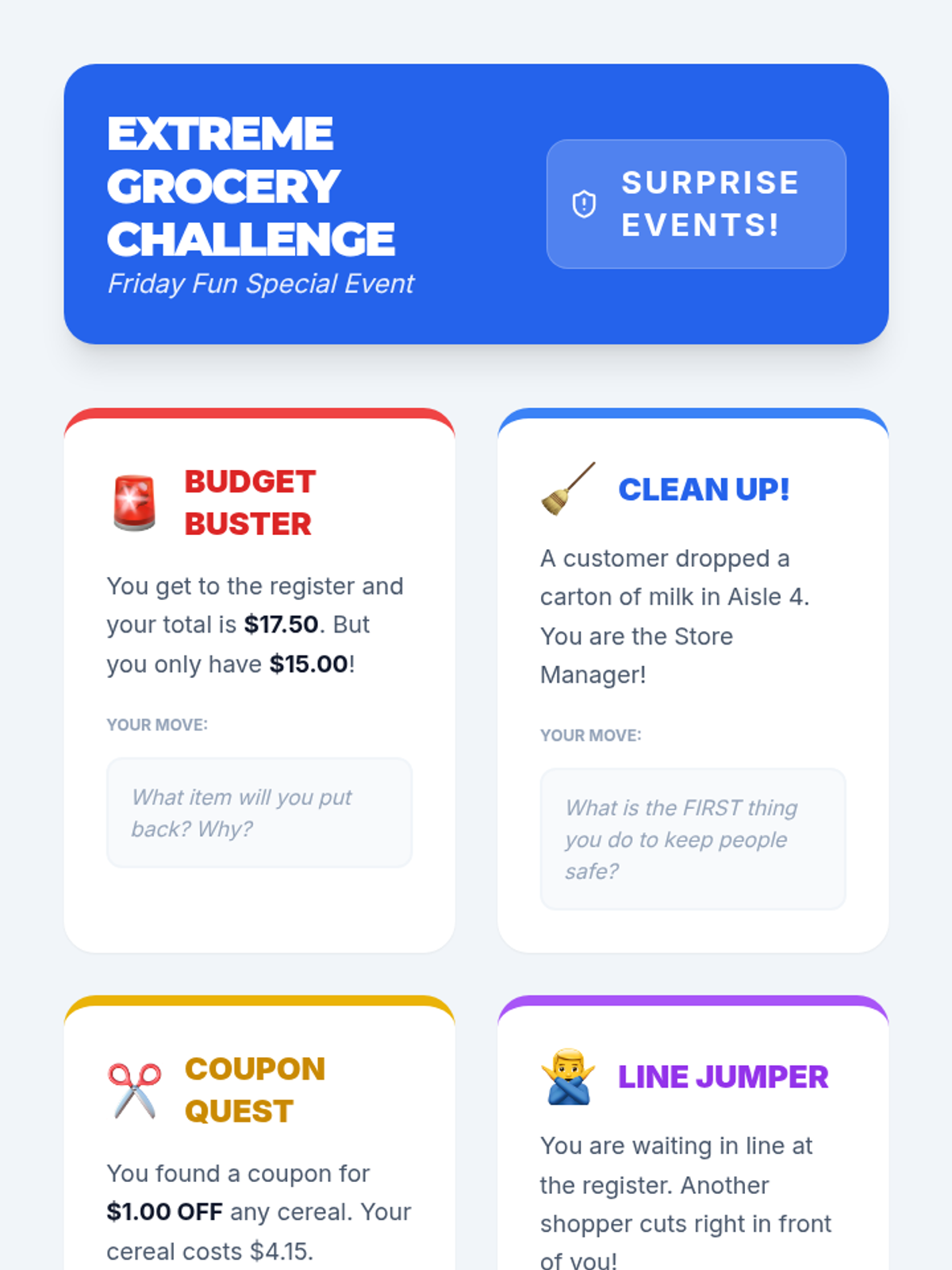
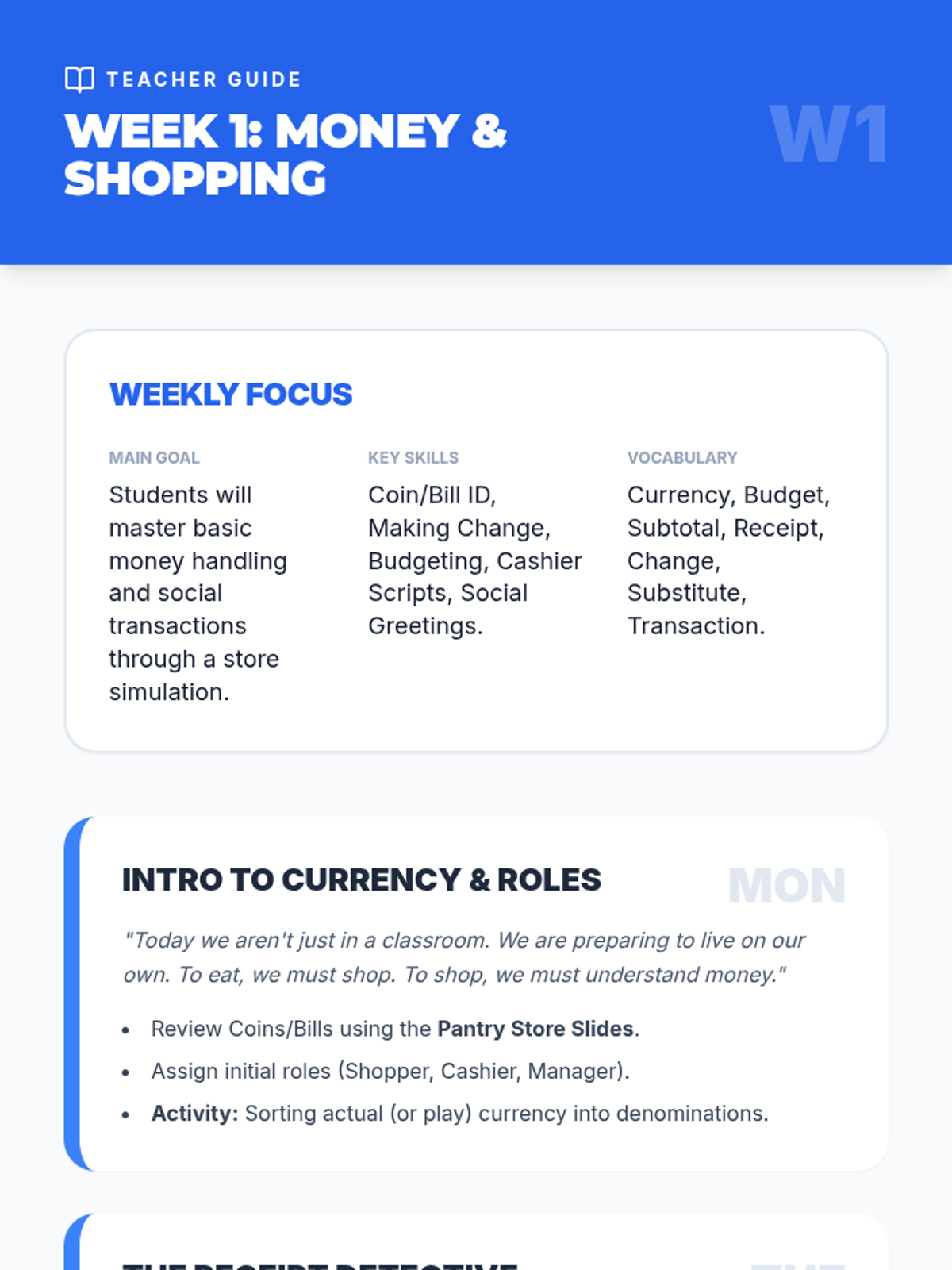
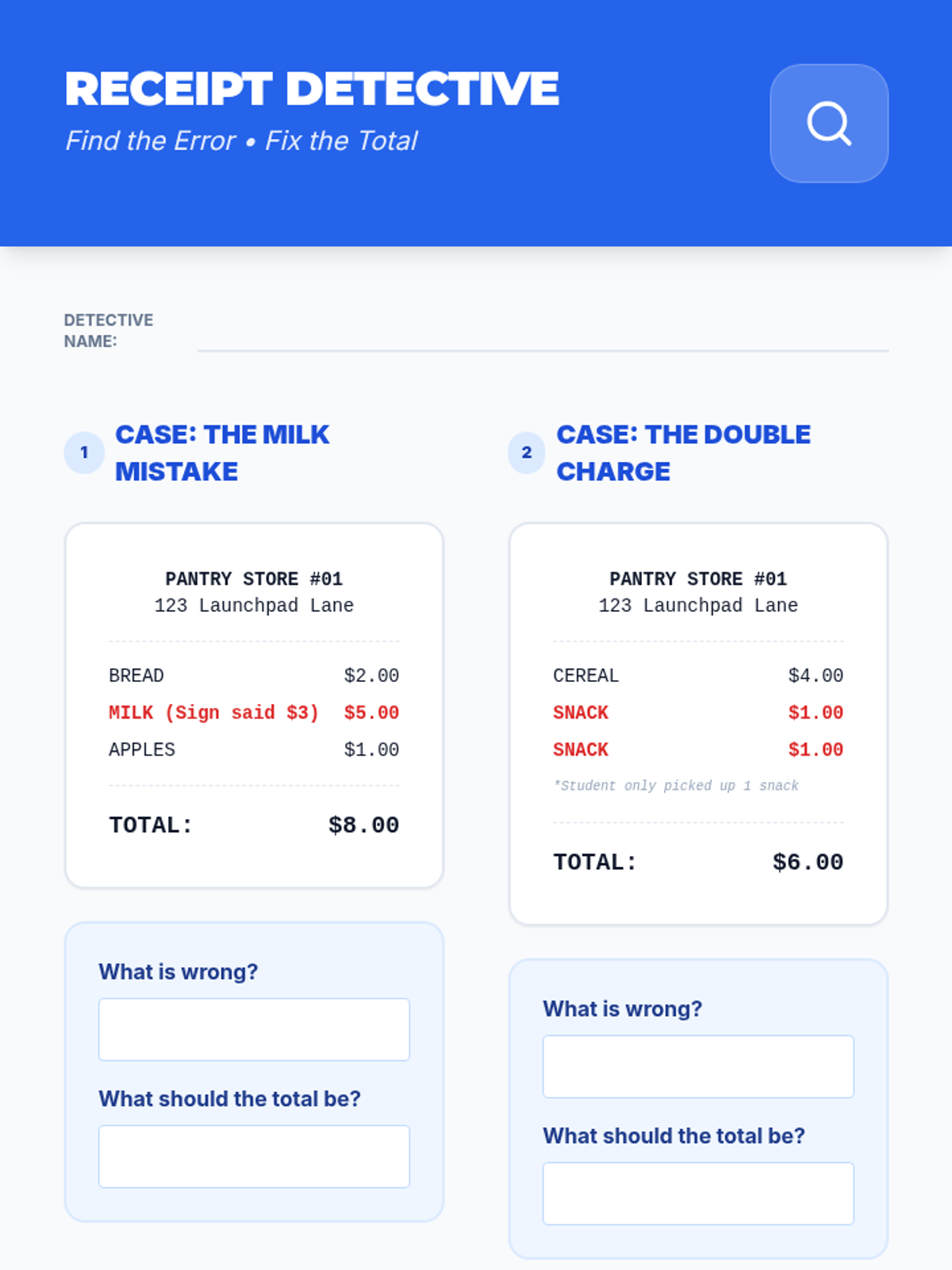
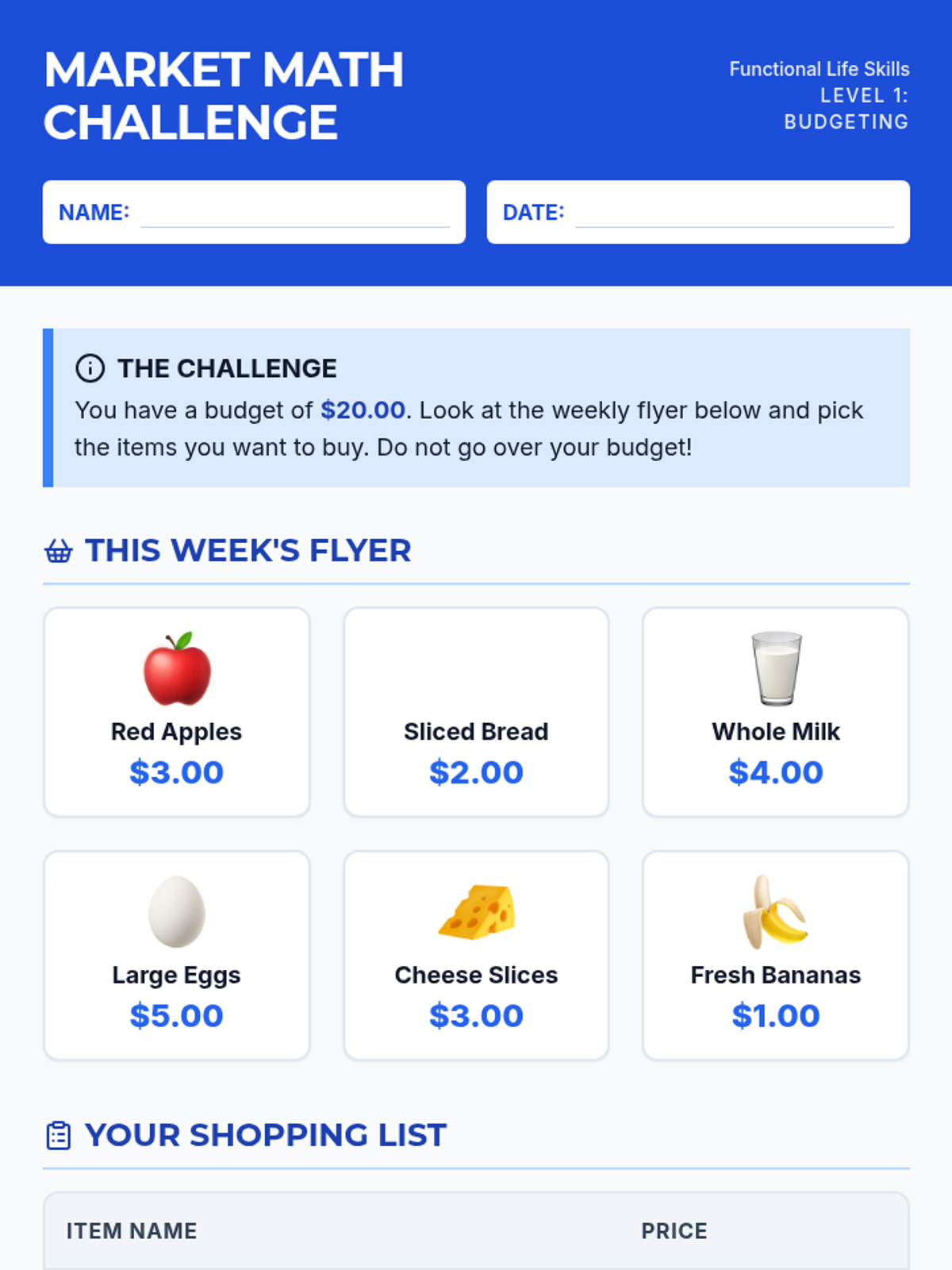
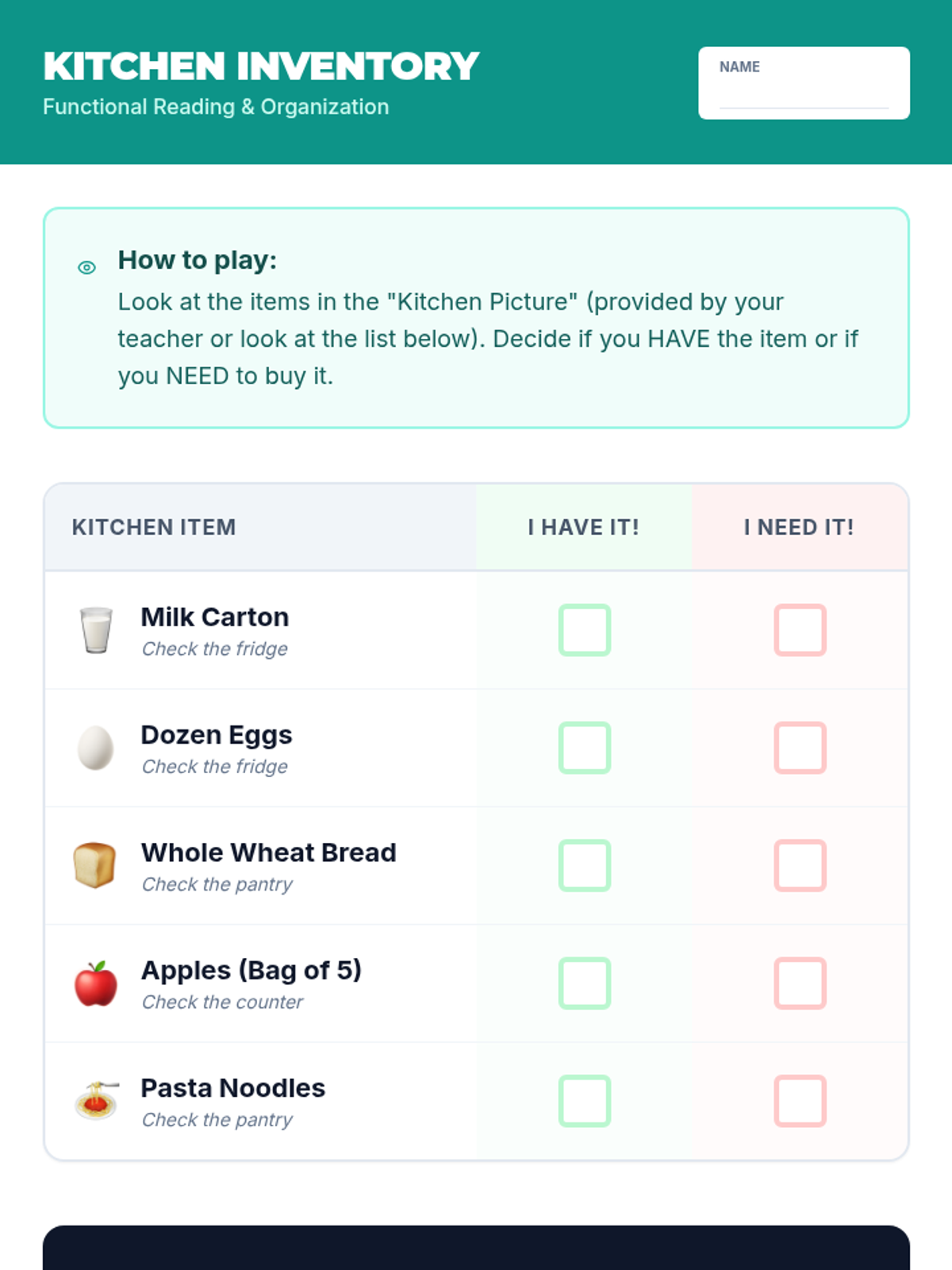
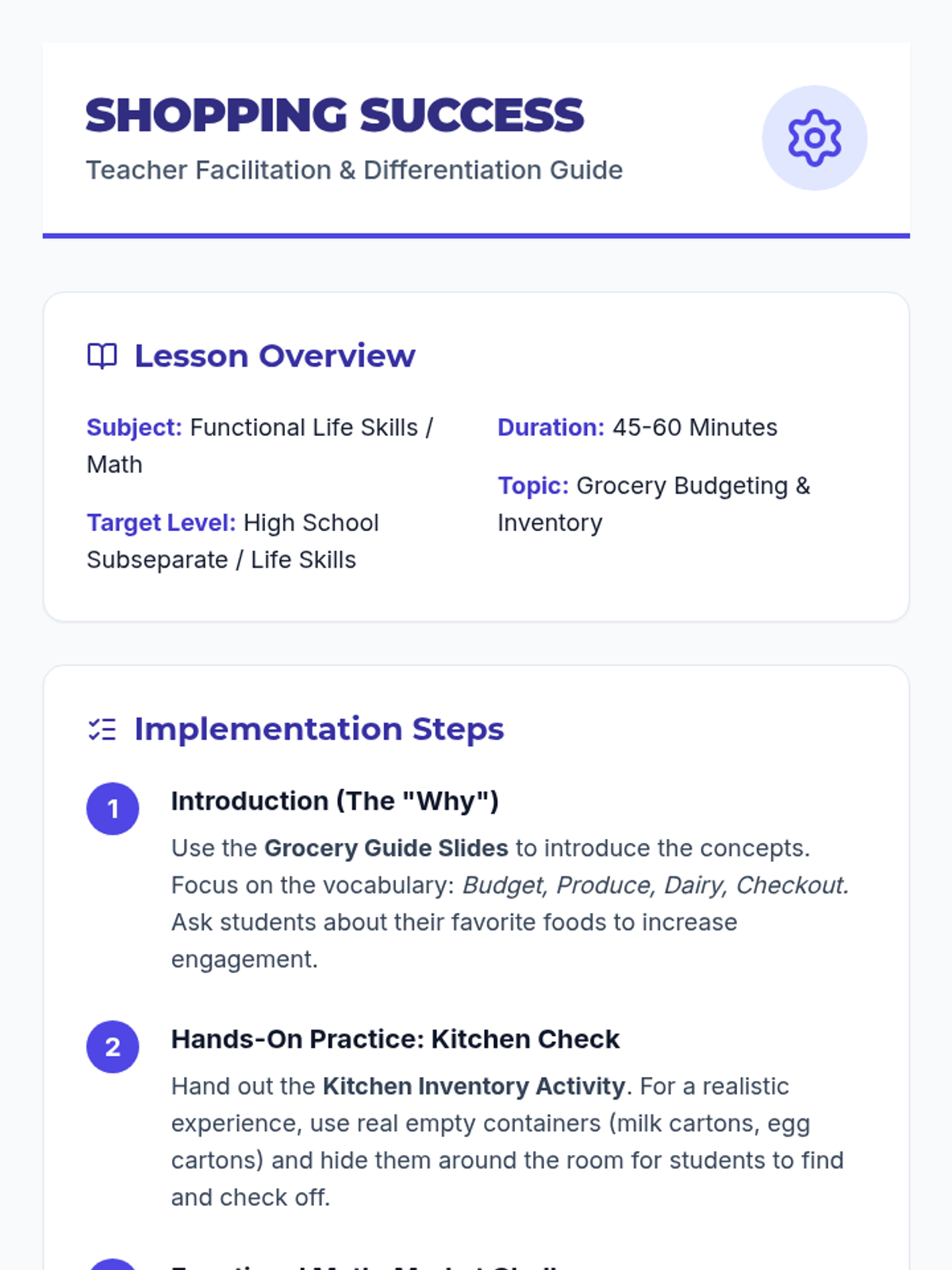
A comprehensive life skills unit focused on functional math and reading through the lens of grocery shopping, budgeting, and kitchen management. Designed specifically for high school special education students to build independence.
A series of bite-sized mini-lessons designed for High School Academic Support students, focusing on strengthening executive functioning through high-engagement discourse and real-world scenarios.
A comprehensive unit on functional math and financial literacy designed for special education students, focusing on real-world money management and life skills.