Learners investigate vowel teams (ea, ee, oa) found in words like 'clean', 'keep out', and 'road'. The lesson involves sorting photographs of public spaces based on the vowel sounds found in their labels.
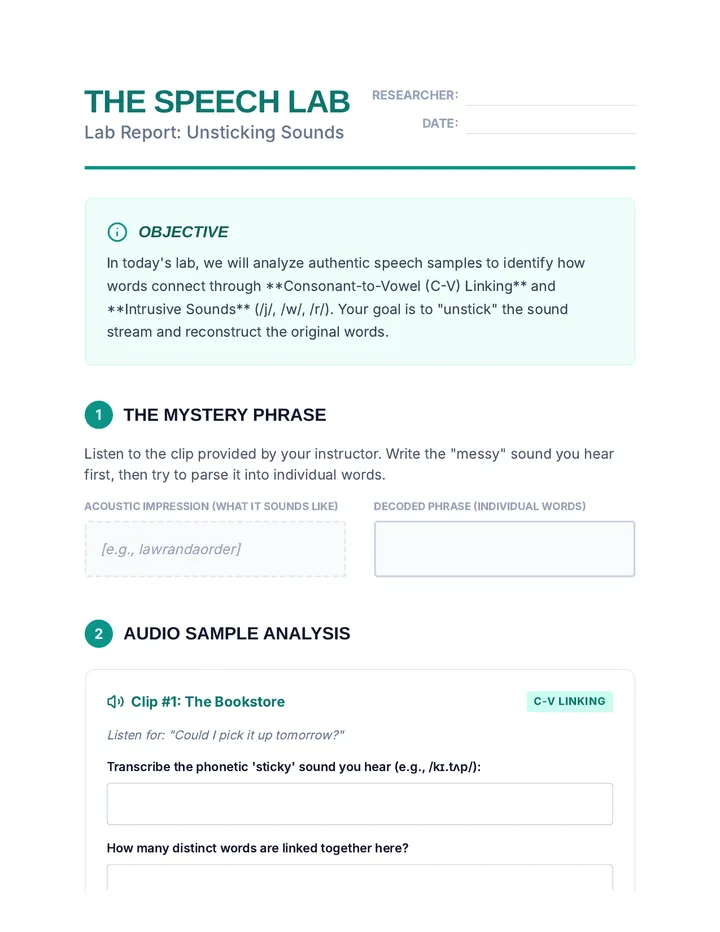
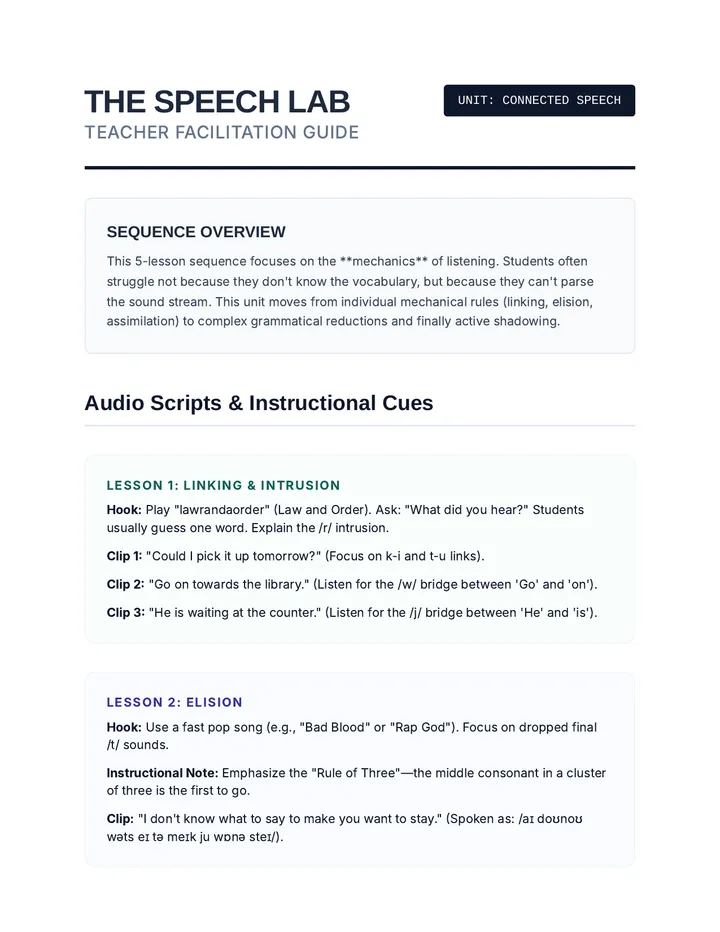
This sequence targets the mechanical difficulties of understanding natural, fast-paced English. Students explore phonological rules like linking, elision, and assimilation to decode authentic, fluid speech patterns found in campus social life.
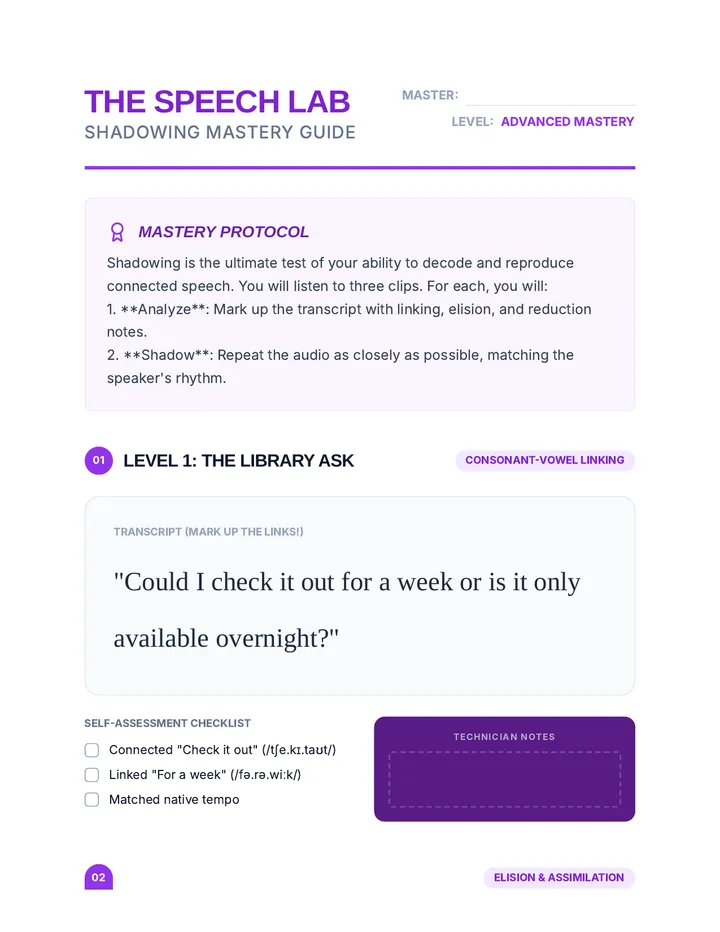
Students engage in a 'shadowing' technique, repeating audio immediately after hearing it to internalize the rhythm and flow of connected speech. This active processing reinforces their ability to predict and process sound streams.
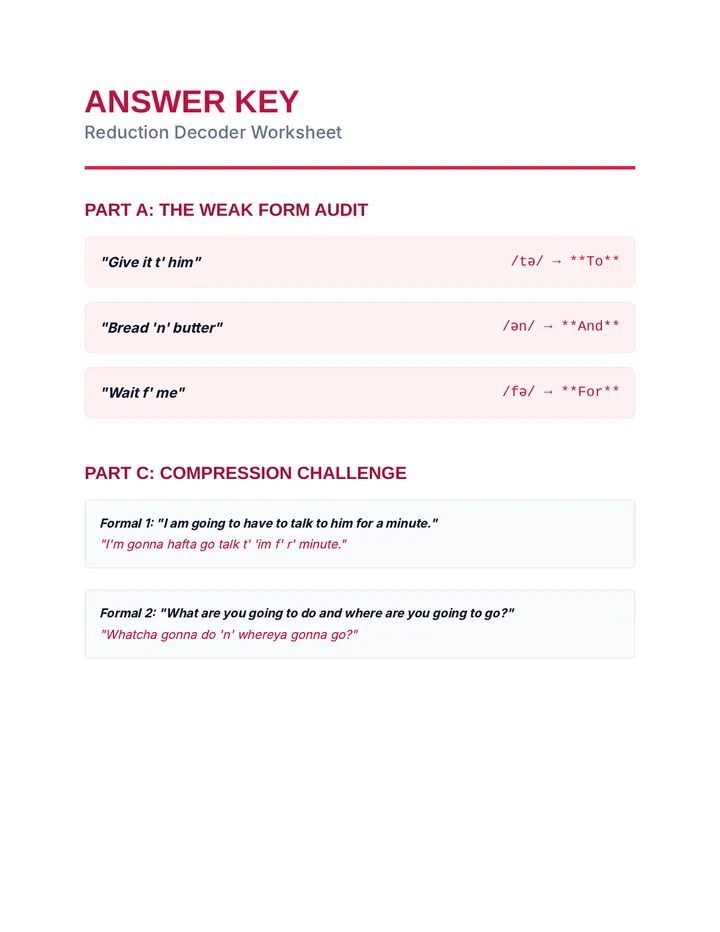
Answer key for the Lesson 4 worksheet on grammatical reductions.
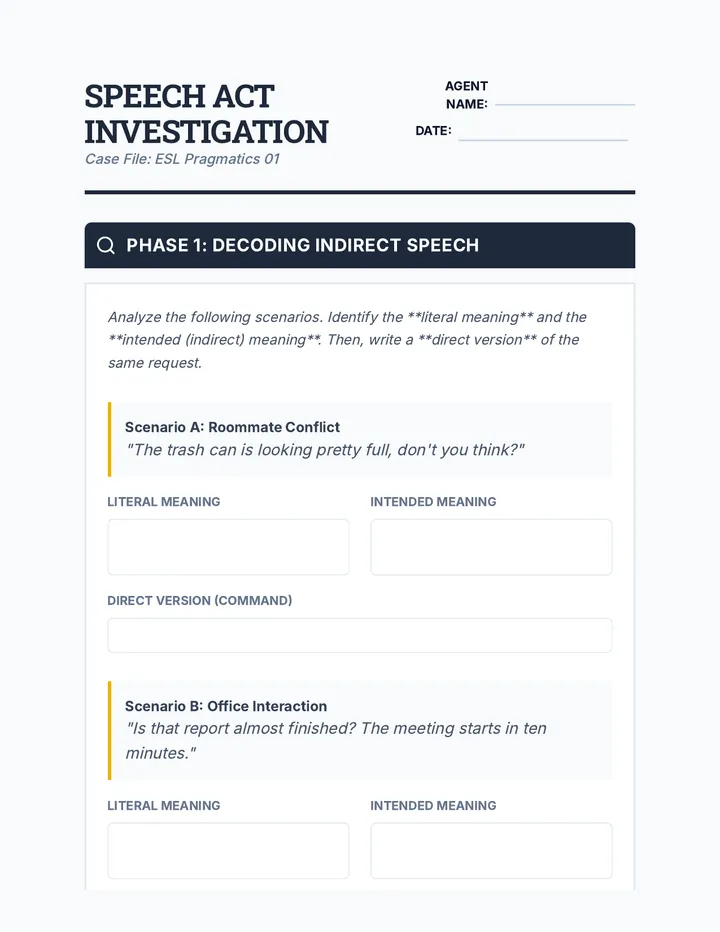
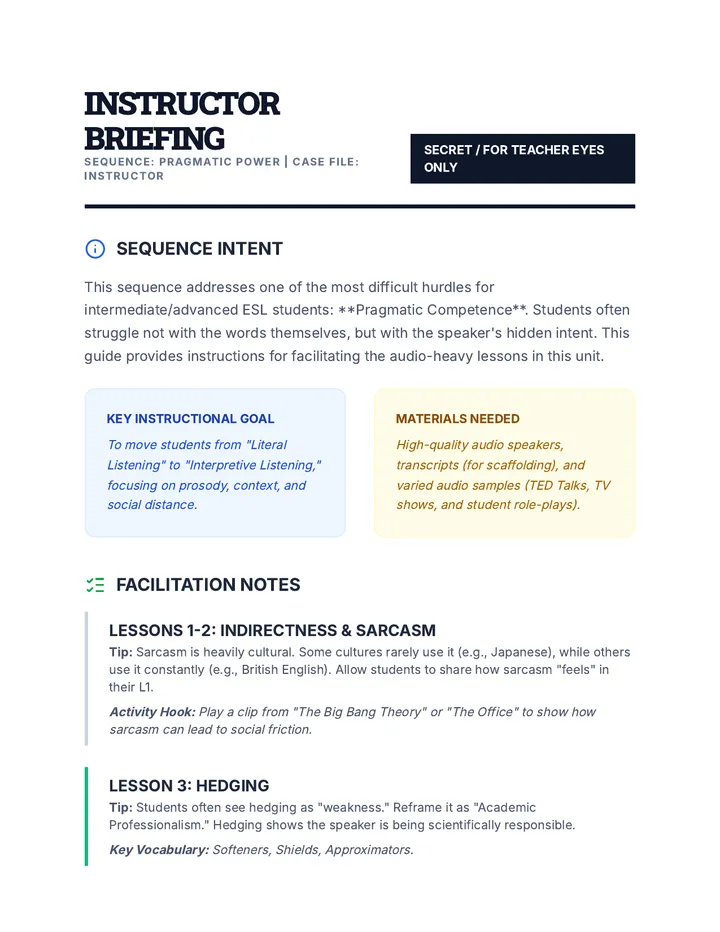
This sequence guides intermediate ESL students through the nuances of pragmatic meaning in English. Students will learn to decode indirect speech, sarcasm, hedging language, and emotional undertones in academic and social contexts to improve their listening comprehension and communicative competence.
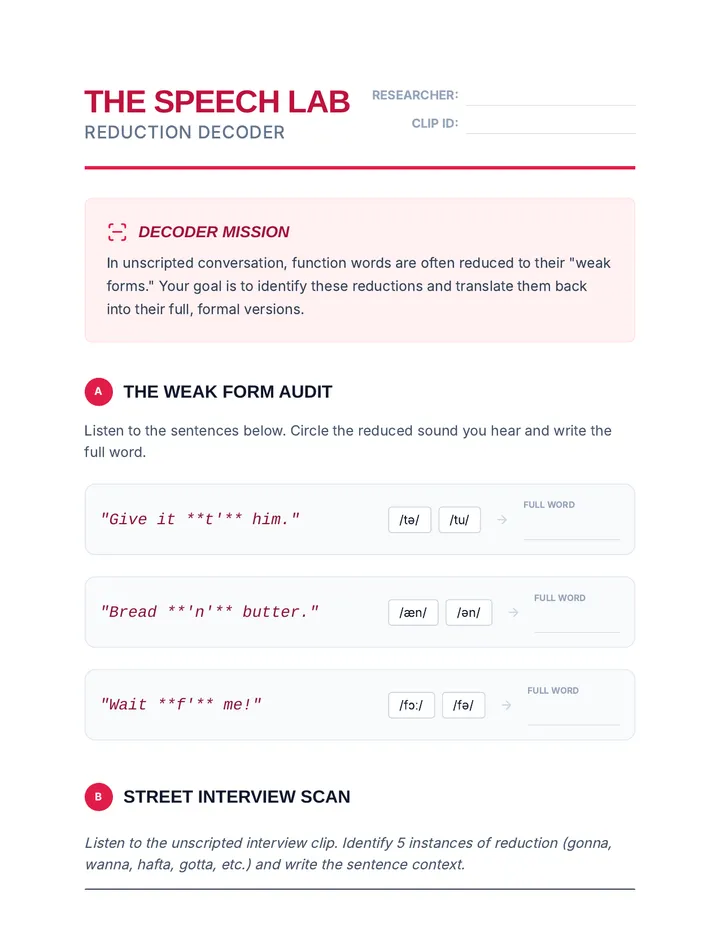
Focusing on function words, this lesson tackles common reductions like 'gonna,' 'wanna,' and weak forms of auxiliary verbs. Students analyze unscripted interviews to catch these reductions in context.
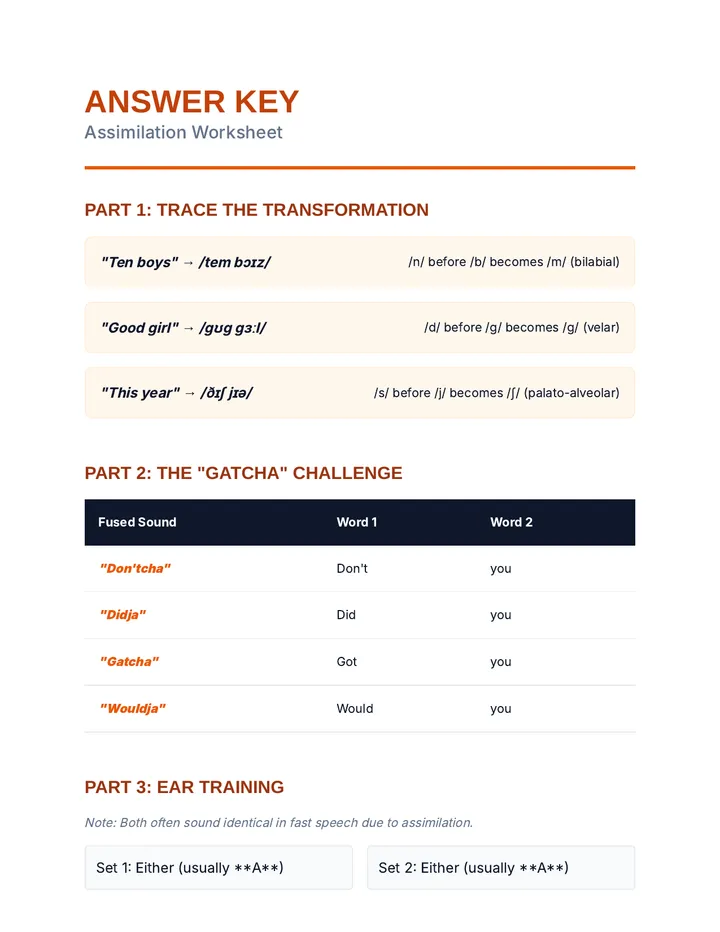
Answer key for the Lesson 3 worksheet on assimilation.
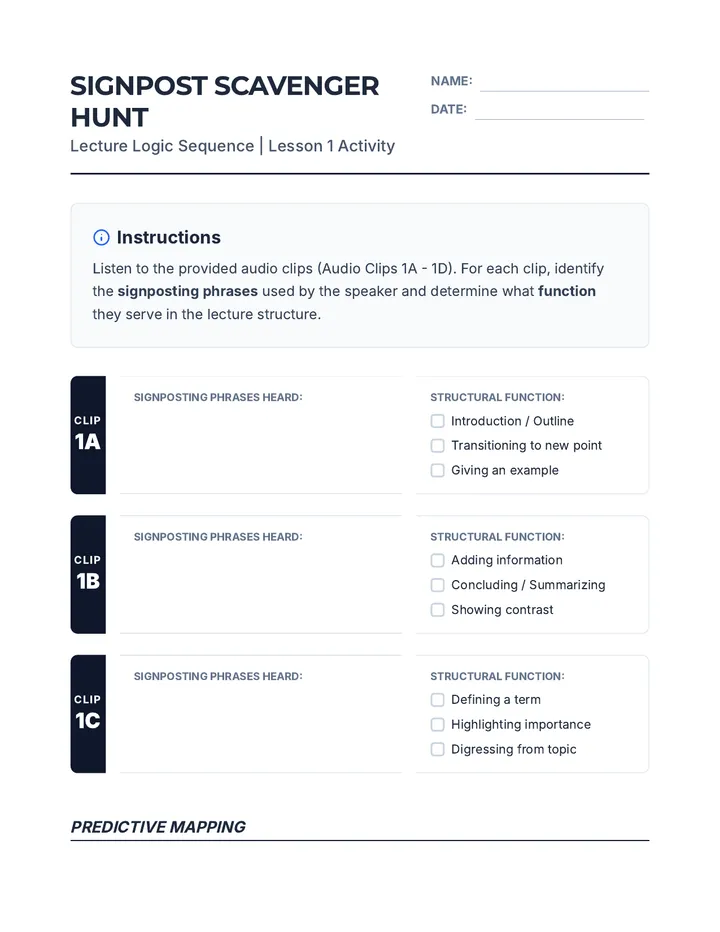
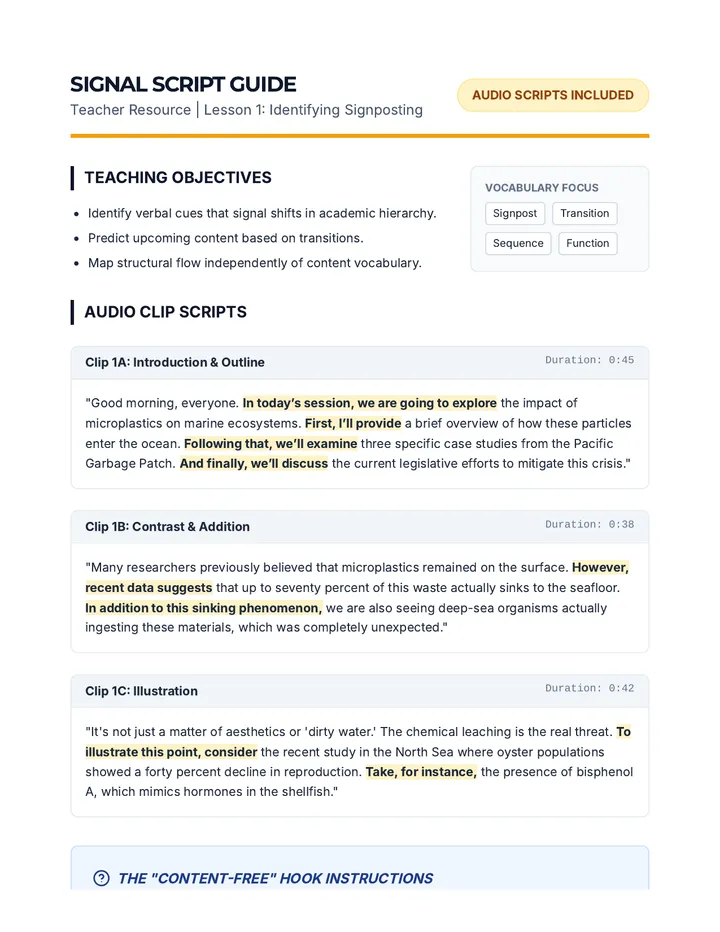
This sequence equips intermediate ESL students with the linguistic and cognitive tools needed to navigate university lectures. It covers discourse markers, hierarchy of information, identifying tangents, note-taking systems, and synthesizing long-form academic speech.
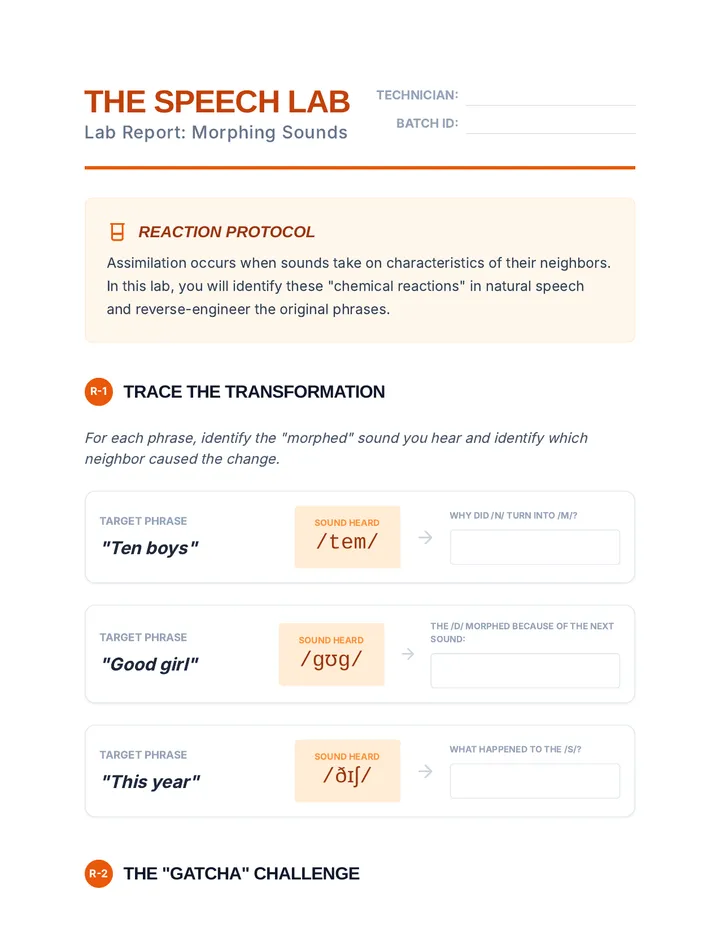
Students learn how sounds influence their neighbors (e.g., 'hand bag' becoming 'hambag'). The lesson uses minimal pair discrimination and dictation exercises to train ears to recognize words despite phonological changes.
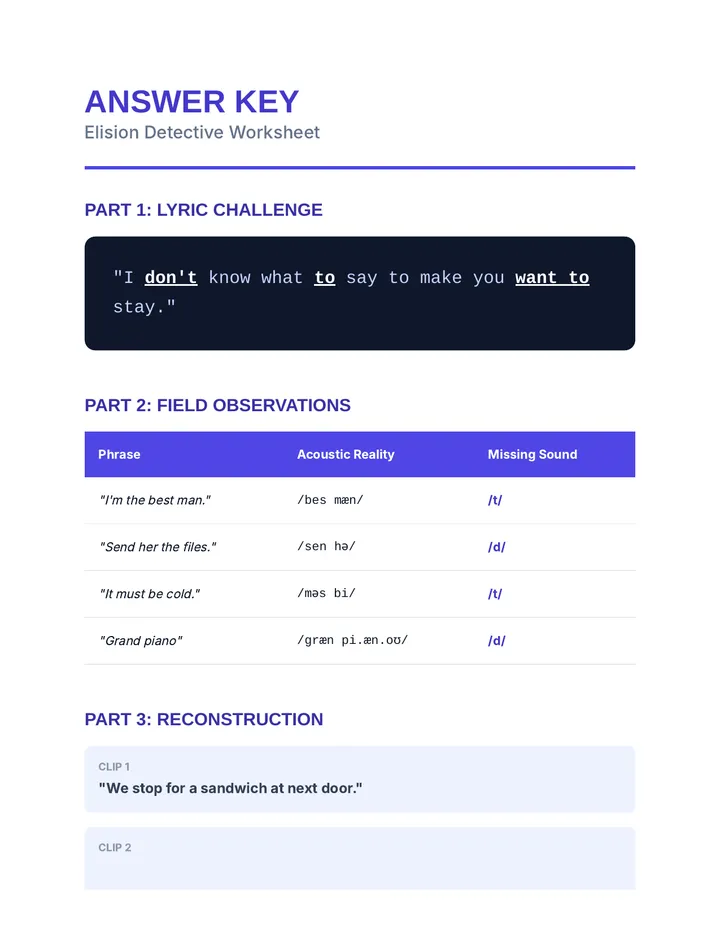
Answer key for the Lesson 2 worksheet on elision.
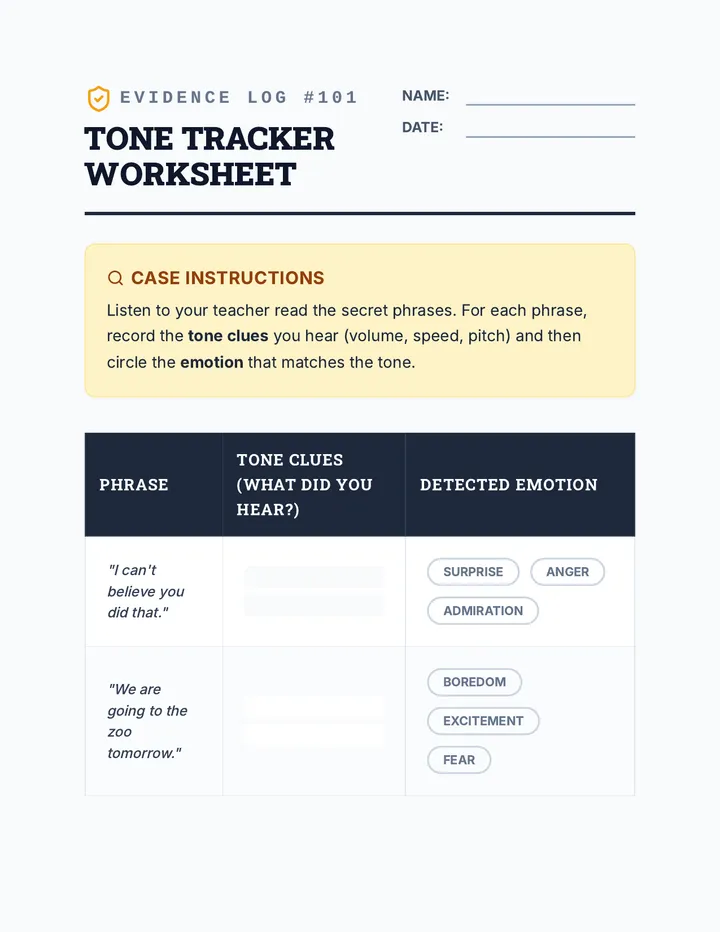
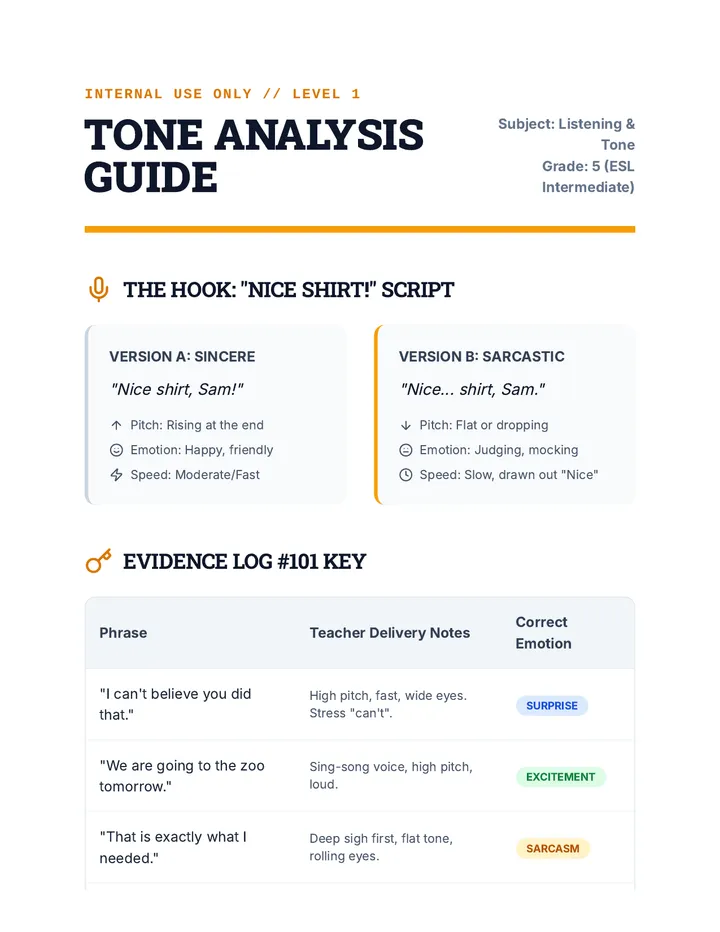
An intermediate ESL sequence where students act as 'communication detectives' to analyze tone, idioms, exaggeration, and speaker intent in spoken English. The sequence culminates in a mystery simulation requiring students to synthesize all listening skills to solve a case.
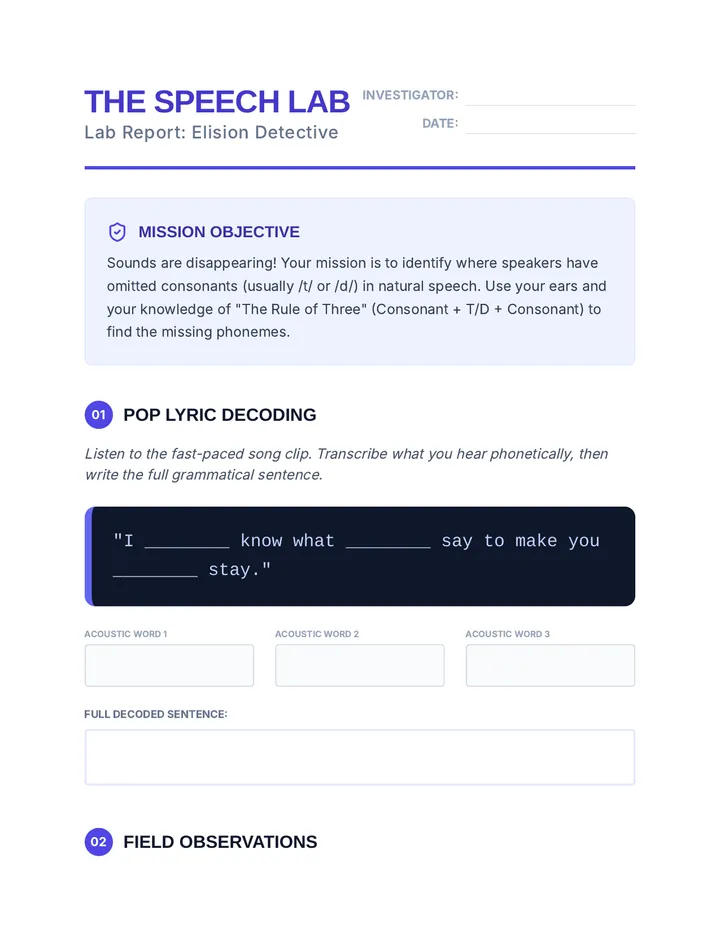
This lesson covers the phenomenon of elision, where sounds (particularly /t/ and /d/) disappear in rapid speech. Students practice listening to high-speed dialogues to identify words that have been 'swallowed' by the speaker.
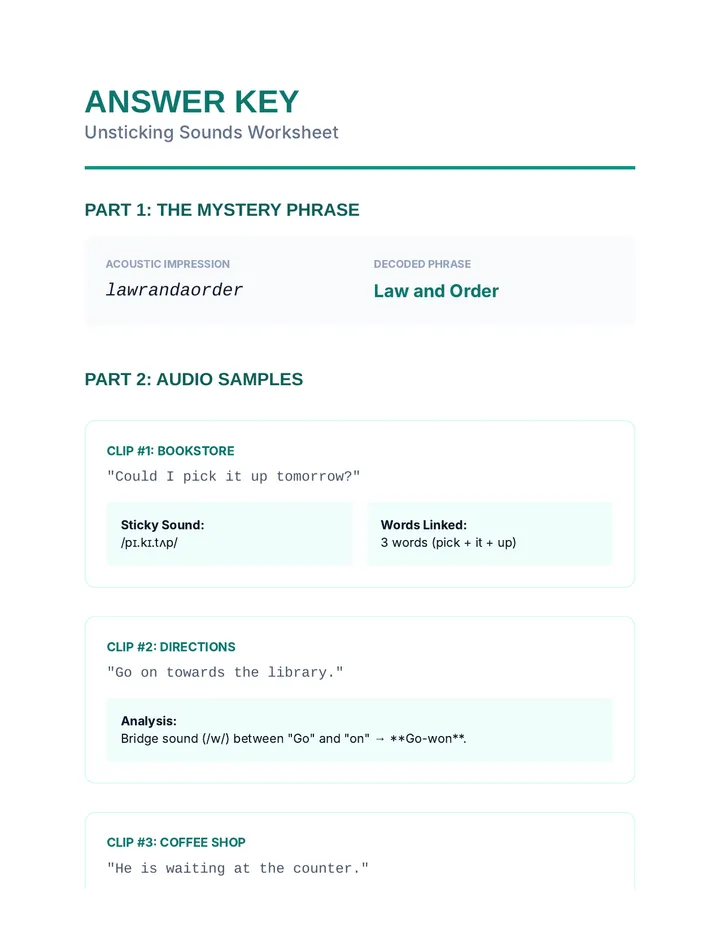
Answer key for the Lesson 1 worksheet on linking and intrusion.