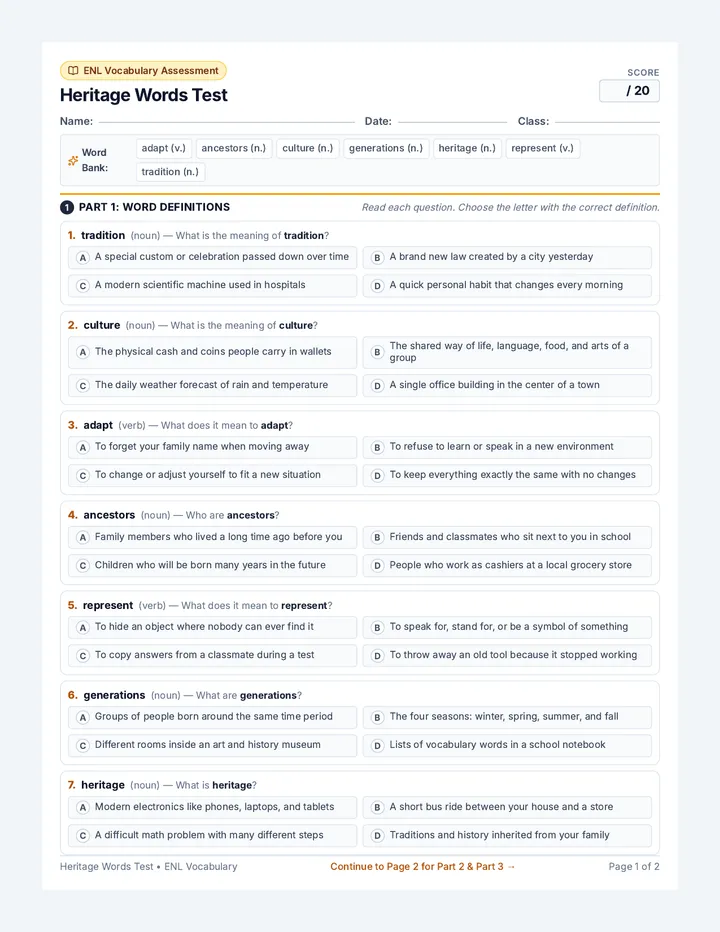
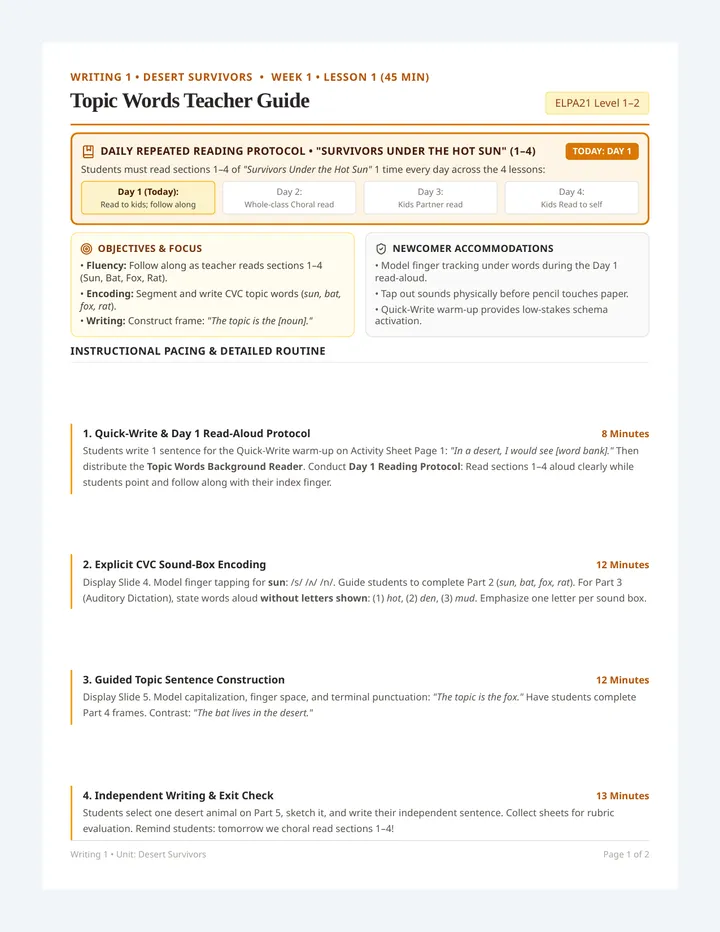
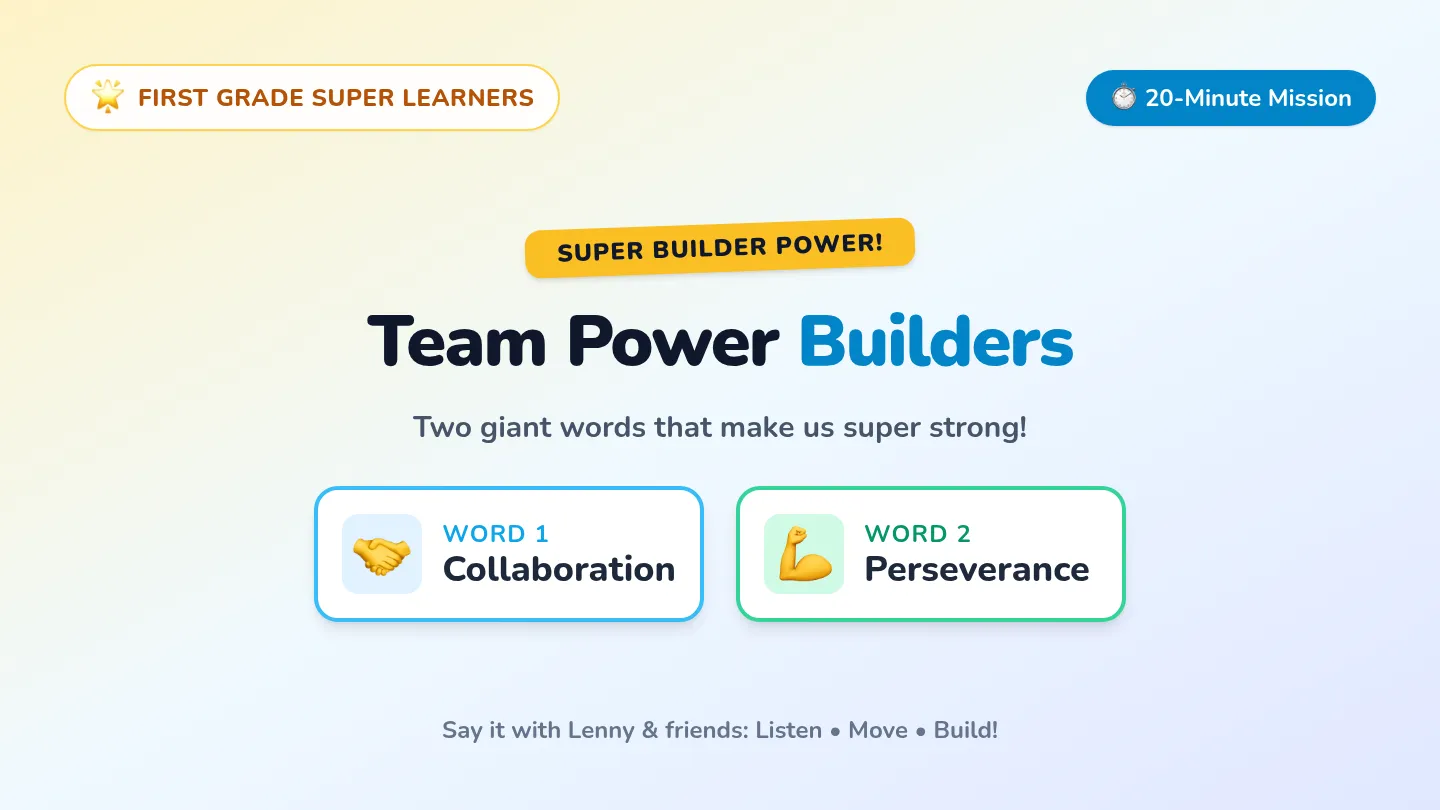
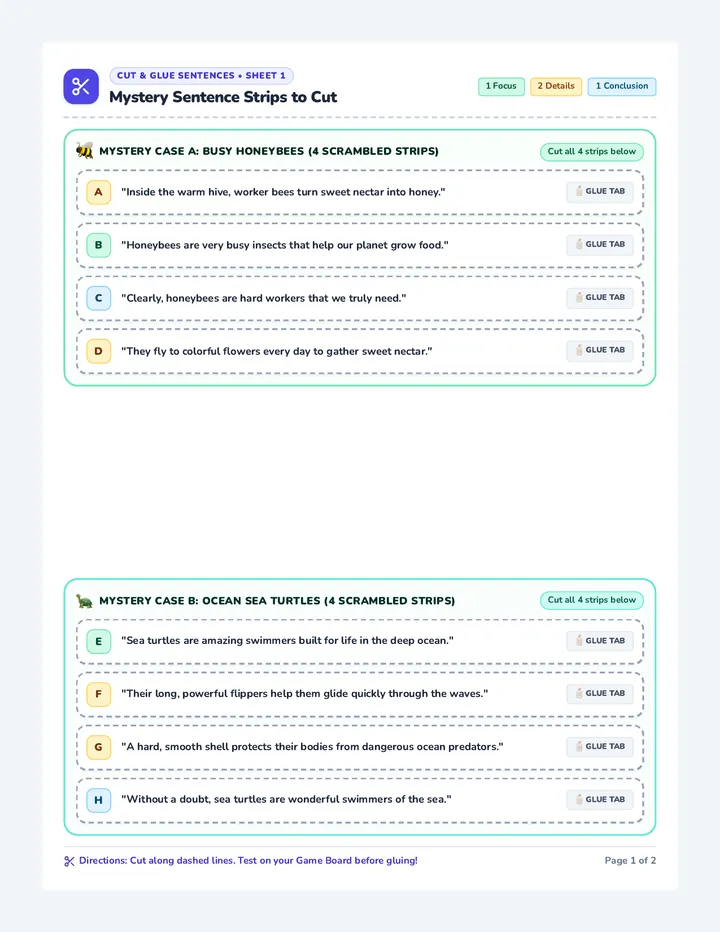
Step Stories Lesson Plan ESL Lesson Plan • Grade 4 • Procedural Writing
Step Stories Lesson Plan
Mastering chronological signal words: First, Next, Last with academic detail.
Duration: 40–45 min
Genre: Informational / Process
CCSS: W.4.2 & W.4.3.c
Content & Language Objectives
Students will write a 3-part sequential procedural text explaining how to prepare a healthy snack using chronological signal words (First, Next, Last ), precise action verbs, and prepositional phrases.
Grade 4 ESL Scaffolds
Provide mentor text deconstruction, an academic Tier 2 verb bank (rinse, portion, assemble ), punctuation emphasis (commas after introductory transitions), and collaborative oral rehearsal.
Chronological Signal Flow:
1. First, [action + detail] 2. Next, [action + detail] 3. Last, [action + detail]
4th Grade Lesson Delivery (40–45 Min)
1 Mentor Text Deconstruction (8 min) Analyze
Display a short procedural mentor paragraph about preparing a fruit and granola snack. Students highlight the transition words (First, Next, Last ) and discuss: "Why are transitional words vital for culinary instructions?" Highlight the comma after each transition word.
2 Culinary Vocabulary & Co-Constructed Modeling (10 min) I Do / We Do
Introduce Tier 2 action verbs: rinse, slice, portion, assemble . Model expanding a basic sentence: change "Next, cut fruit" to "Next, carefully slice the fresh strawberries on a clean cutting board." Students orally rehearse step 3 with an elbow partner.
3 Independent Procedural Writing Practice (17 min) You Do
Distribute the Sequence Steps Student Worksheet . Students outline and draft 3 complete procedural sentences for preparing a healthy snack, utilizing the culinary word bank and 4th-grade writer's checklist.
4 Peer Feedback Protocol & Home Extension (7 min) Bridge
Partners swap drafts and run the "Can I Follow Your Recipe?" peer check. Introduce the Family Helpers Guide for students to interview a family member at home about a favorite recipe or cooking procedure.
Emerging ESL Writers
Provide sentence starters with pre-filled transition phrases and commas.
Allow bilingual dictionaries or translation tools for specialized ingredients.
Partner with a bilingual peer to verbally sequence steps first.
Advanced / Expanding Writers
Incorporate complex transitions: Prior to that, Simultaneously, Finally .
Add explanatory subordinate clauses: "...in order to keep the fruit crisp."
Combine all 3 sentences into a cohesive procedural paragraph.
Grade 4 Focus: Elevate simple recipe steps into academic procedural explanations with precision!
Bundle Component 1 of 3
Sequence Steps Student Worksheet Sequence Steps Student Worksheet
Grade 4 ESL • Procedural Writing
Topic: How to Prepare a Healthy Snack • Write 3 detailed steps using First, Next, Last.
Name:
Date:
Culinary Vocabulary Toolbox Grammar Tip: Always include a comma after introductory transition words (First, Next, Last, ).
Signal Connectors
First, • Next, • Last, (Alt: Initially, Finally,)
Precise Action Verbs
rinse • slice • spread • assemble • portion • garnish
Ingredients & Tools
fresh fruit • cutting board • yogurt • granola • clean bowl
Step 1 Transition: First,
Action: Wash hands, rinse fresh produce, and gather supplies
Step 2 Transition: Next,
Action: Carefully slice ingredients and combine/layer them
Step 3 Transition: Last,
Action: Garnish with toppings, serve on a clean plate, and enjoy
4th Grade Writer's Checklist:
Transition + Comma (e.g. First, ) Precise Tier 2 Action Verb Prepositional / Detail Phrase Capital & End Punctuation
Family Helpers Guide Family Partnership • Grade 4 ESL • Academic Writing
Family Helpers Guide
Supporting procedural writing with transition words: First, Next, Last / Finally
Academic Growth
Upper-Elementary Writing Skills
Dear 4th Grade Families: In fourth grade, students write detailed informational and procedural texts across science, social studies, and math. Using chronological signal words (First, Next, Last ) helps your child explain multi-step tasks logically and clearly.
3 Ways to Help with Procedural Homework at Home
1
Ask “Why” & “How”
Before they write, ask: “Why does Step 1 happen before Step 2? What would happen if we skipped this step?”
Deepens cause-and-effect reasoning
2
Push for Precise Verbs
Upgrade common verbs! Instead of writing “put dirt” , coach them to write “measure and layer the soil.”
Tier 2 Verbs: assemble, measure, secure
3
Check the Transition Comma
Remind them that 4th grade writers always put a comma after introductory transition words: First, Next, Last, .
Essential for state writing assessments
Grade 4 Homework Reference Card Procedural Paragraph Model
Phase 1 First,
“First, gather all required materials and carefully measure the base layer.”
Alternatives: Initially, • To begin,
Phase 2 Next,
“Next, add the fertile soil layer and plant the seeds one inch apart.”
Alternatives: After that, • Then,
Phase 3 Last,
“Last, lightly moisten the soil and place the jar in direct sunlight.”
Alternatives: Finally, • Ultimately,
Great Real-Life Topics to Discuss at Home
Family Recipe How-To:
Explain how to make a family dish step-by-step with exact ingredients.
Fixing or Assembling Something:
Describe fixing a bicycle tire or putting together a shelf or Lego kit.
Multi-Step Math Problems:
Ask your child to explain the sequence they used to solve a word problem.
Sports / Game Strategy:
Explain the procedural rules of soccer, basketball, or chess.
Bilingual Advantage: Developing Academic Thinking
Discussing complex procedural steps in your home language builds Cognitive Academic Language Proficiency (CALP) . When fourth graders understand the logical relationship between steps in their primary language, translating those concepts into precise English academic writing becomes significantly easier.