An introduction to basic pedestrian safety and safe play for students in grades K-2, emphasizing sidewalk rules and supervised walking.
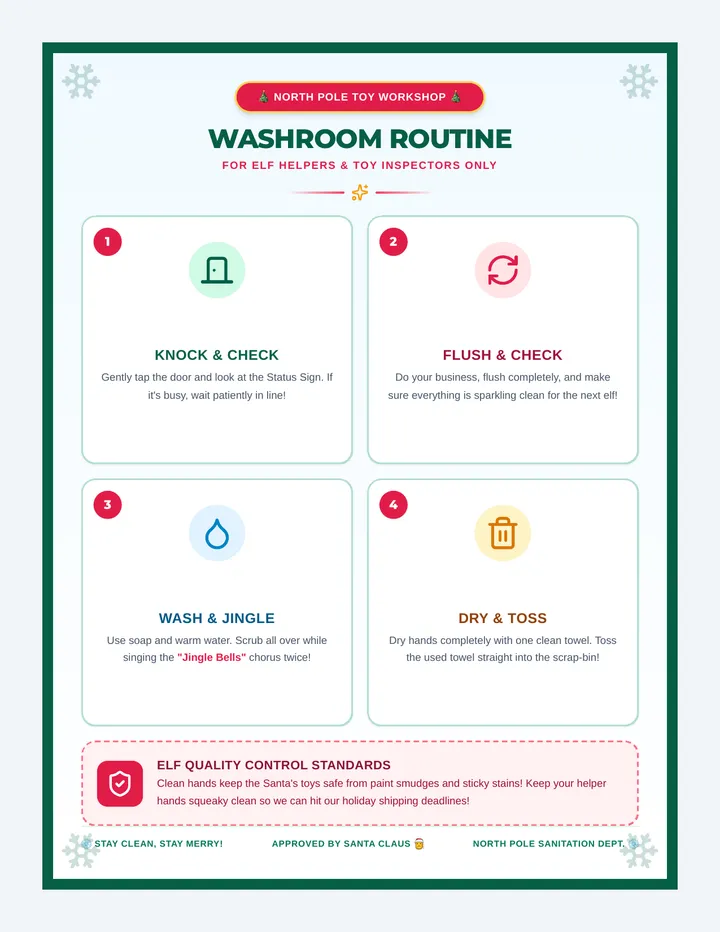
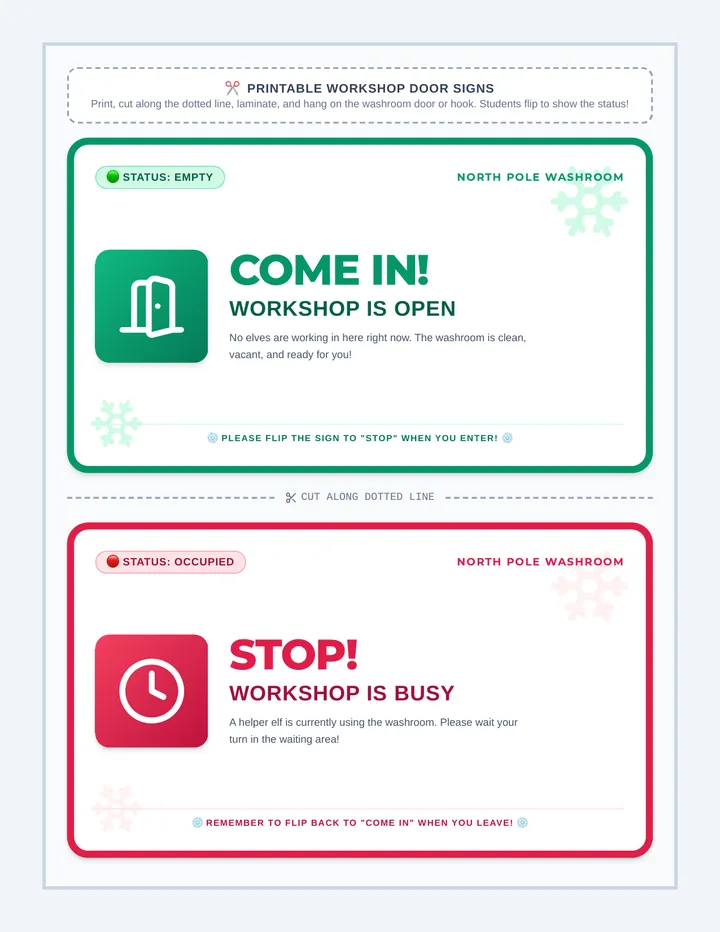
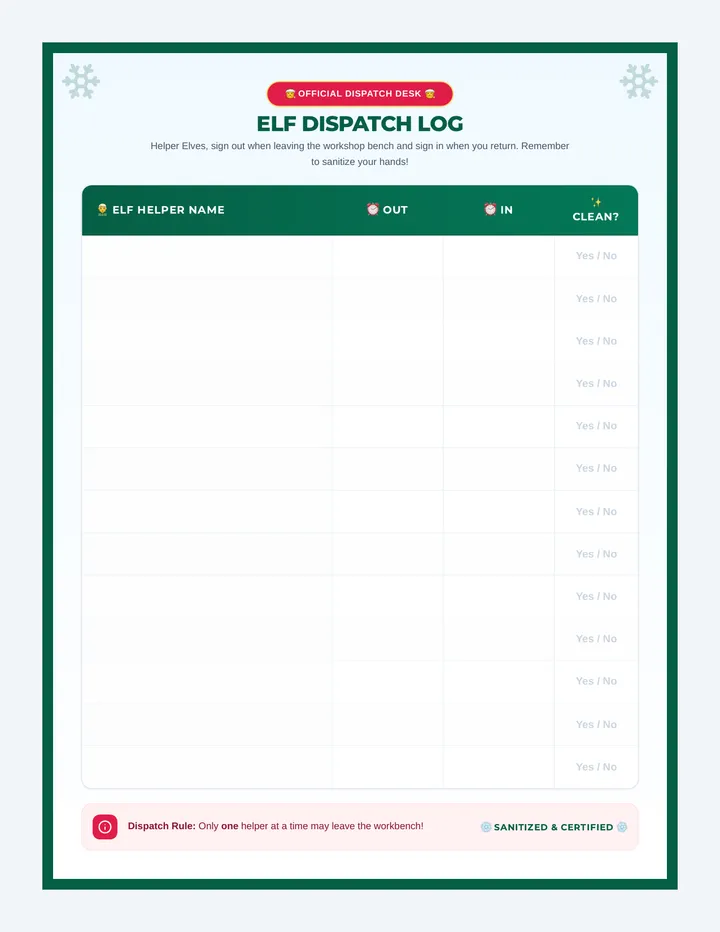
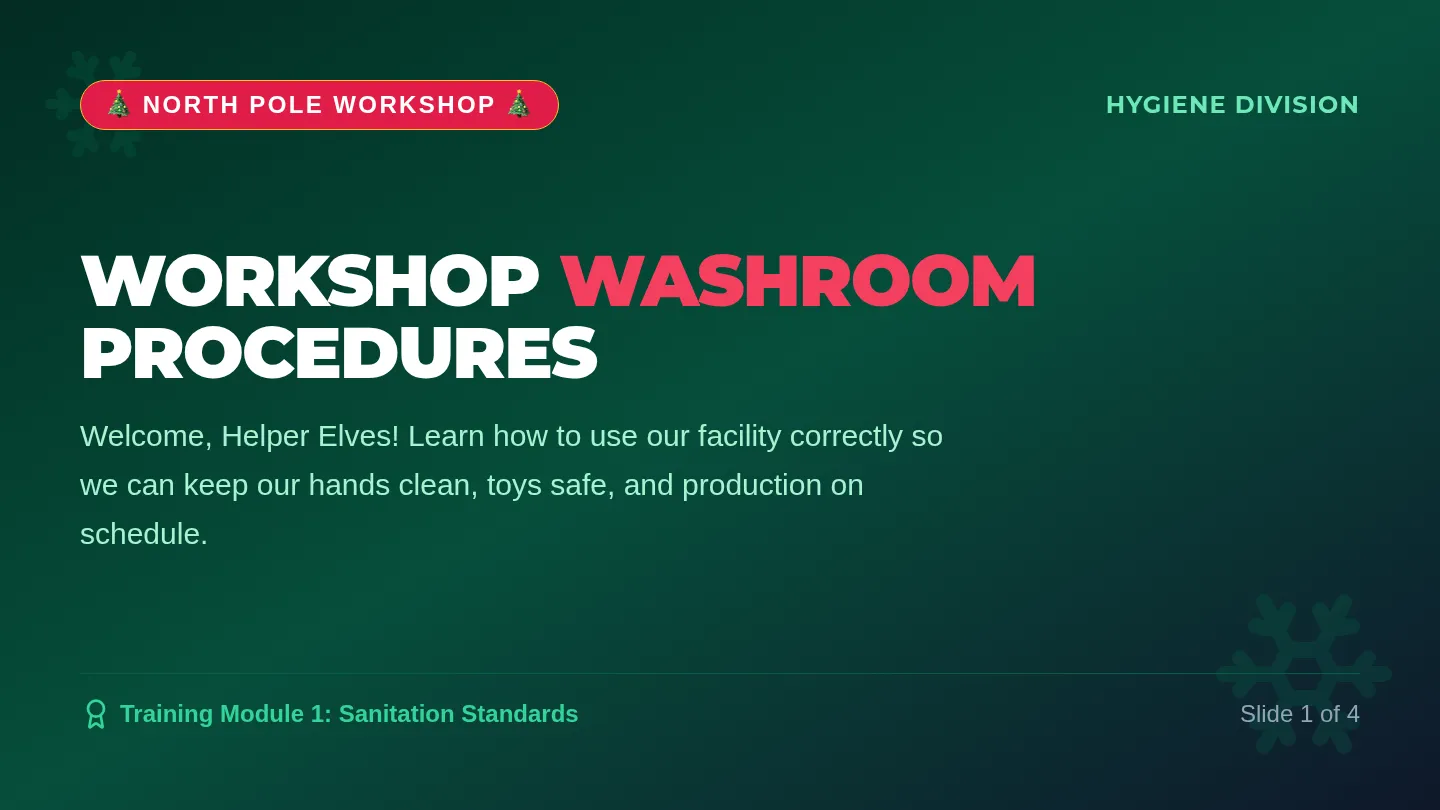
A festive, North Pole Workshop-themed bathroom management and hygiene kit for primary classrooms. Includes visual step-by-step posters, a sign-out tracker, door status signs, and an instructional slide deck to teach expectations.
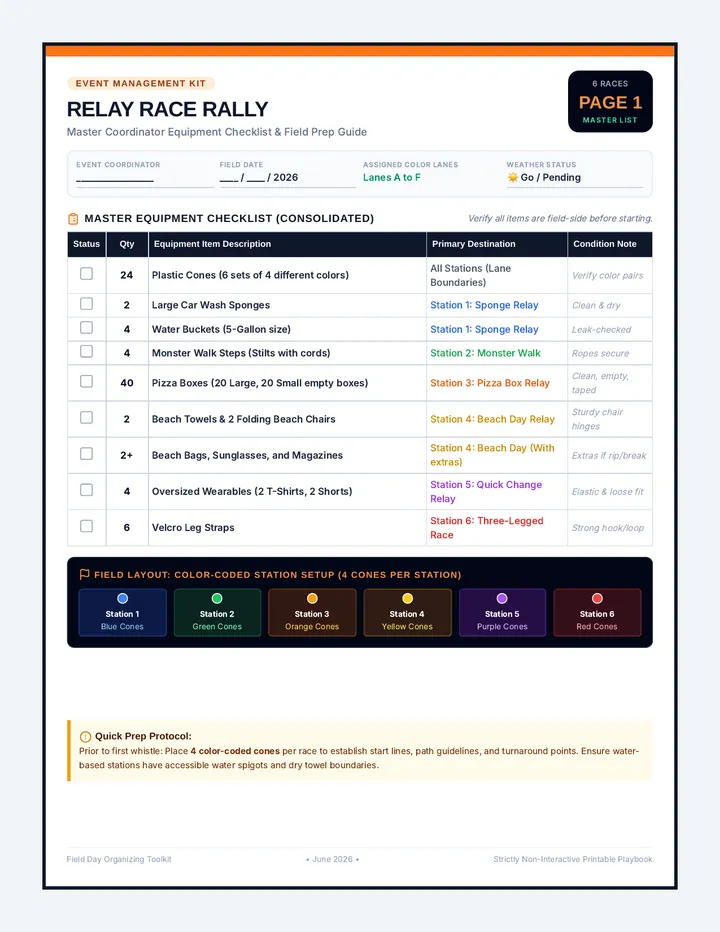
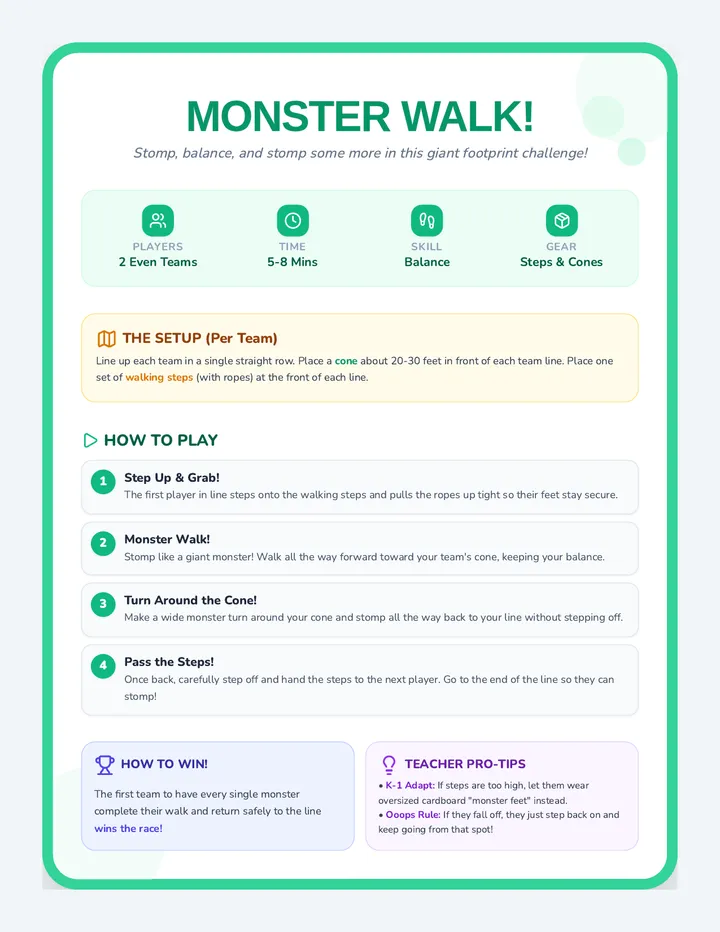
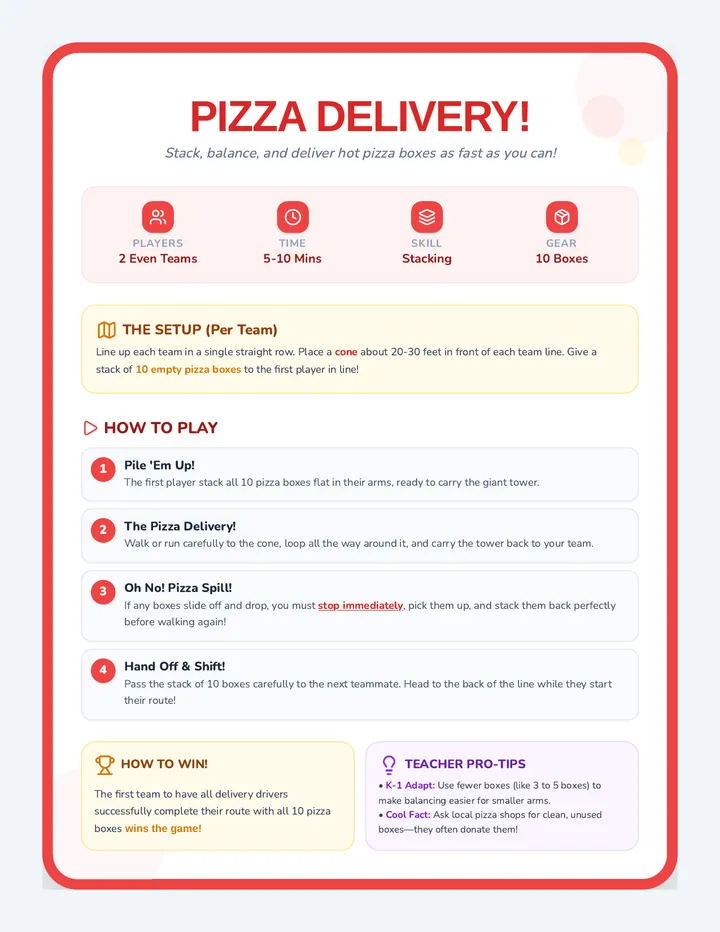
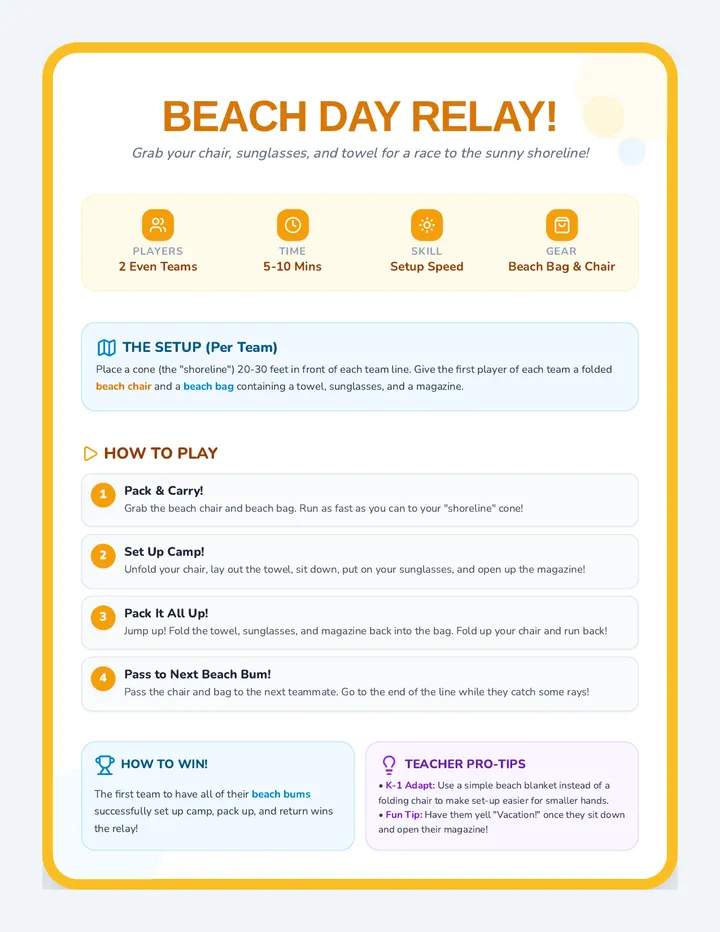
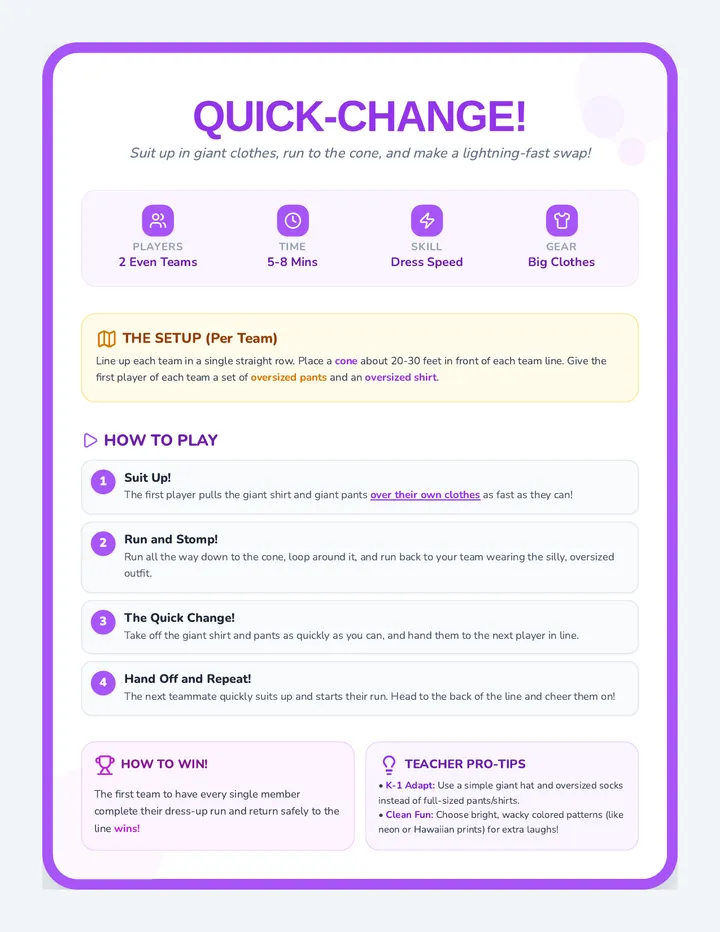
A comprehensive coordination and volunteer guide for organizing six classic Field Day relay races. This resource provides parent volunteers with clear setup diagrams, simplified rules, and a master clipboard inventory to ensure a smooth, high-energy event.
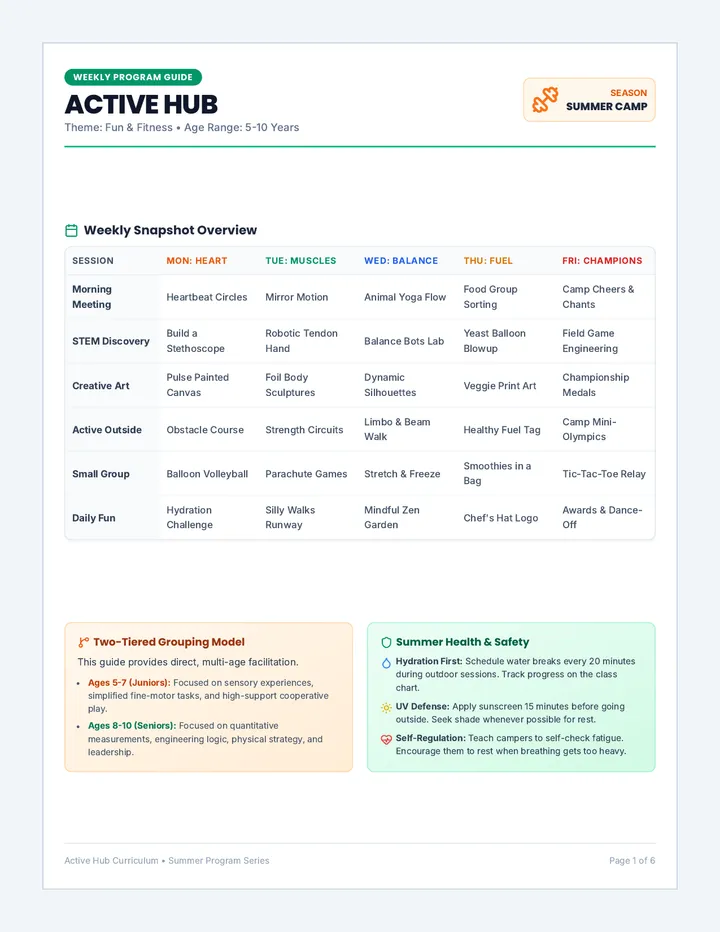
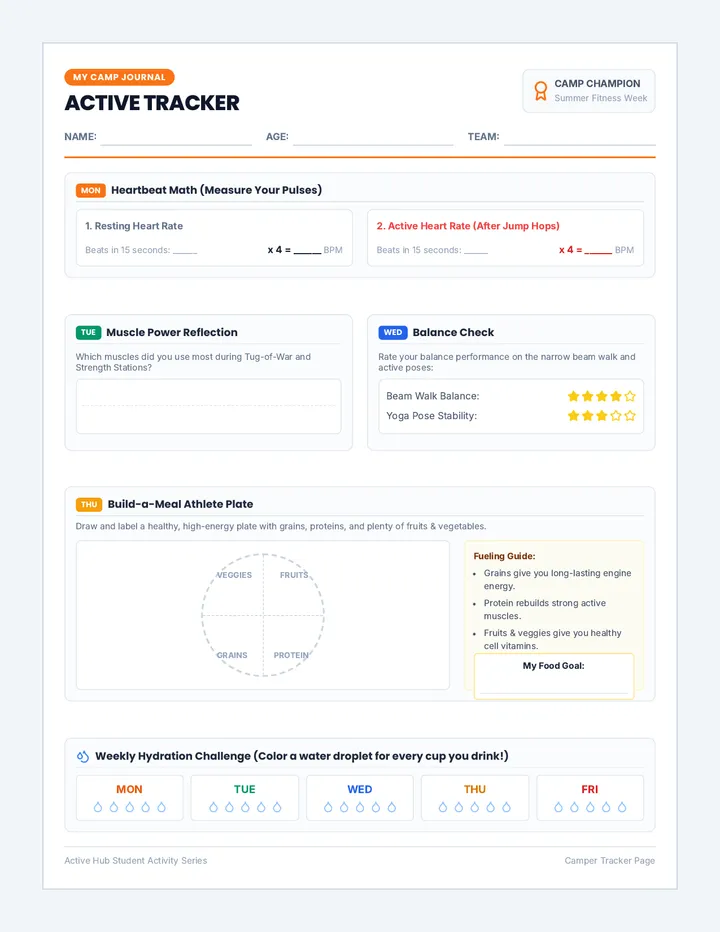
A weekly lesson plan focused on physical activity, health, nutrition, and cooperative team play designed for summer school-age campers.
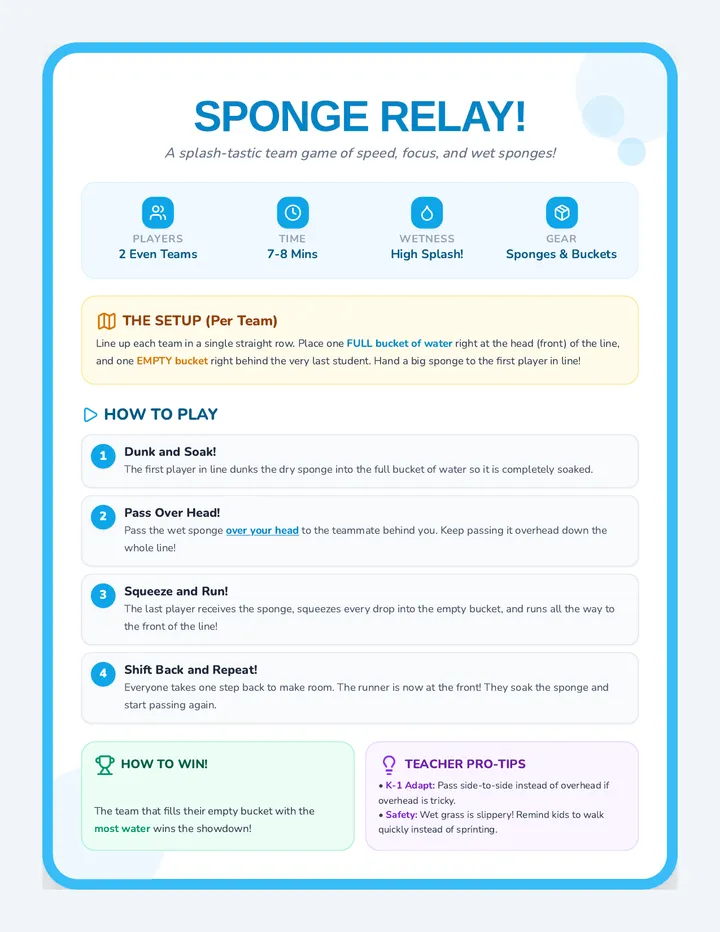
A collection of energetic, active relay races designed for physical education classes, field days, and outdoor school events.
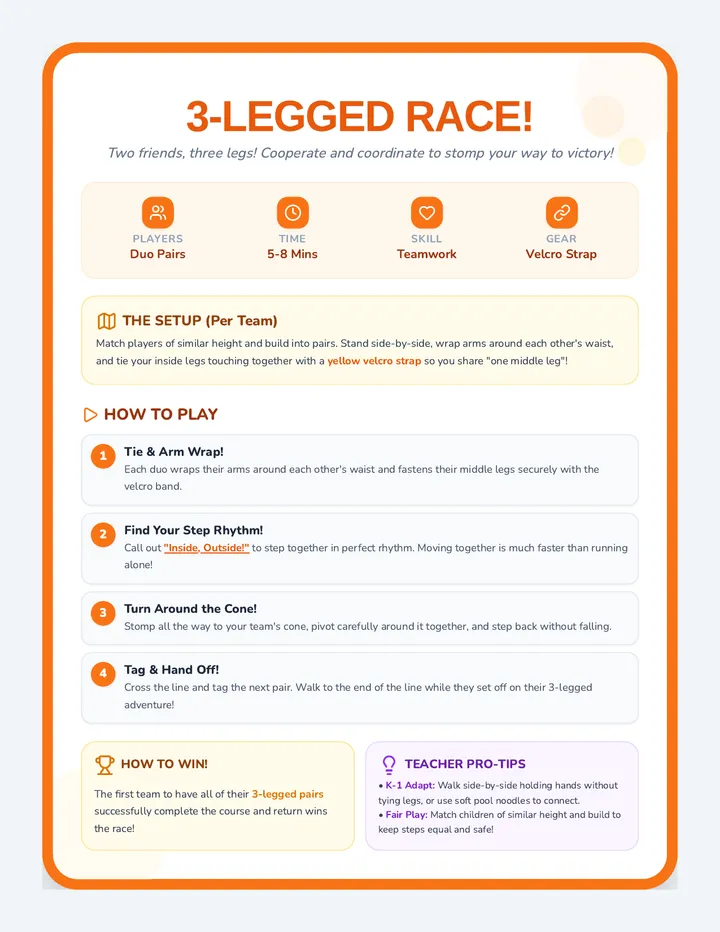
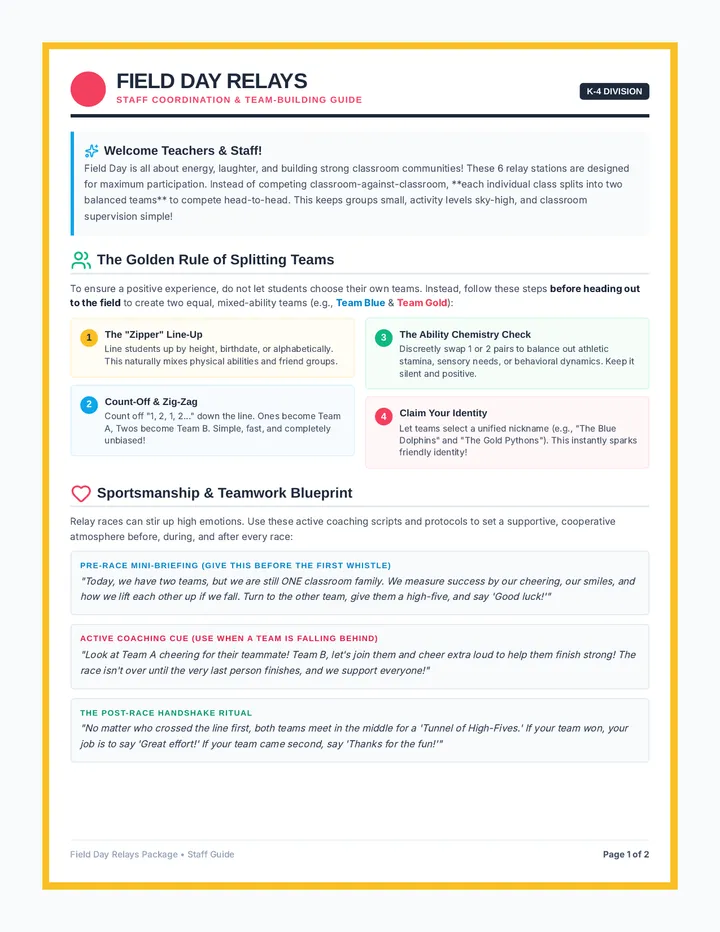
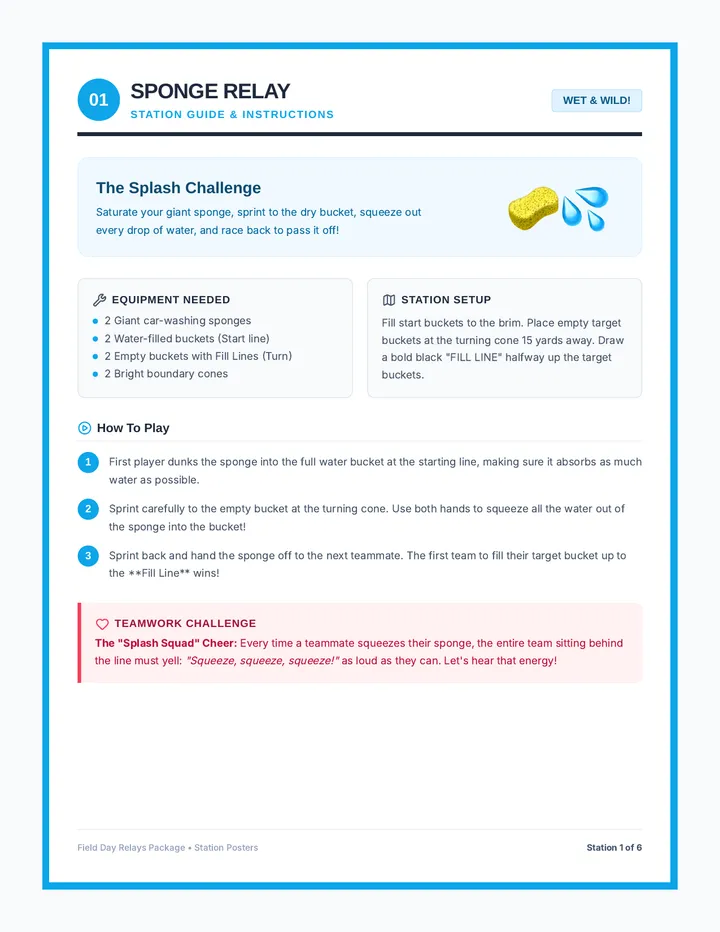
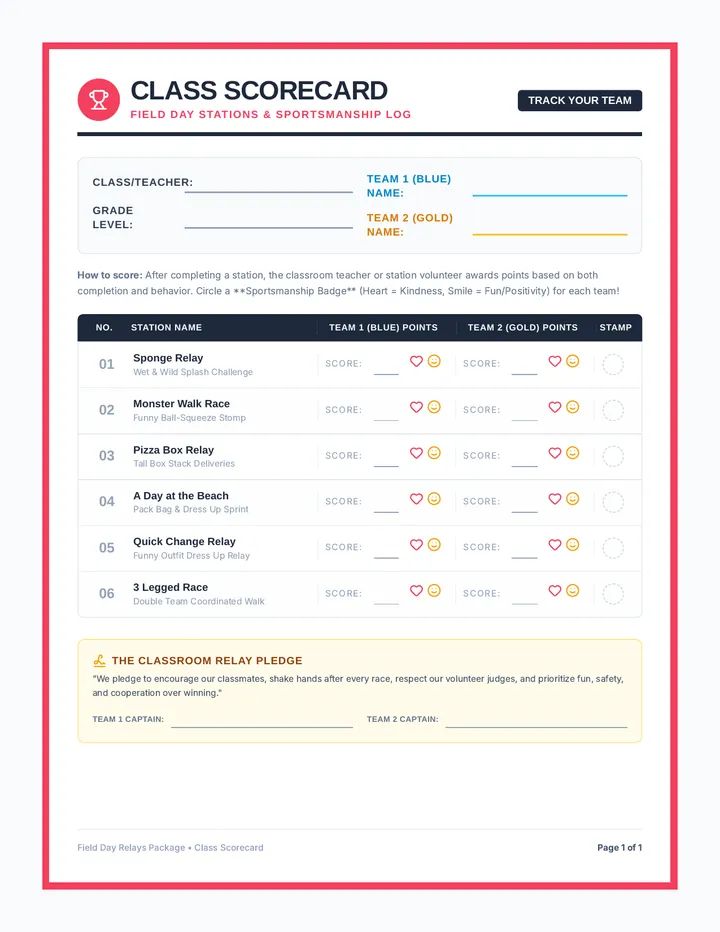
A complete package of field day relay resources including a staff guide, kid-friendly station posters, and a team scorecard, designed to facilitate a smooth, positive, and high-energy experience for K-4 classes.
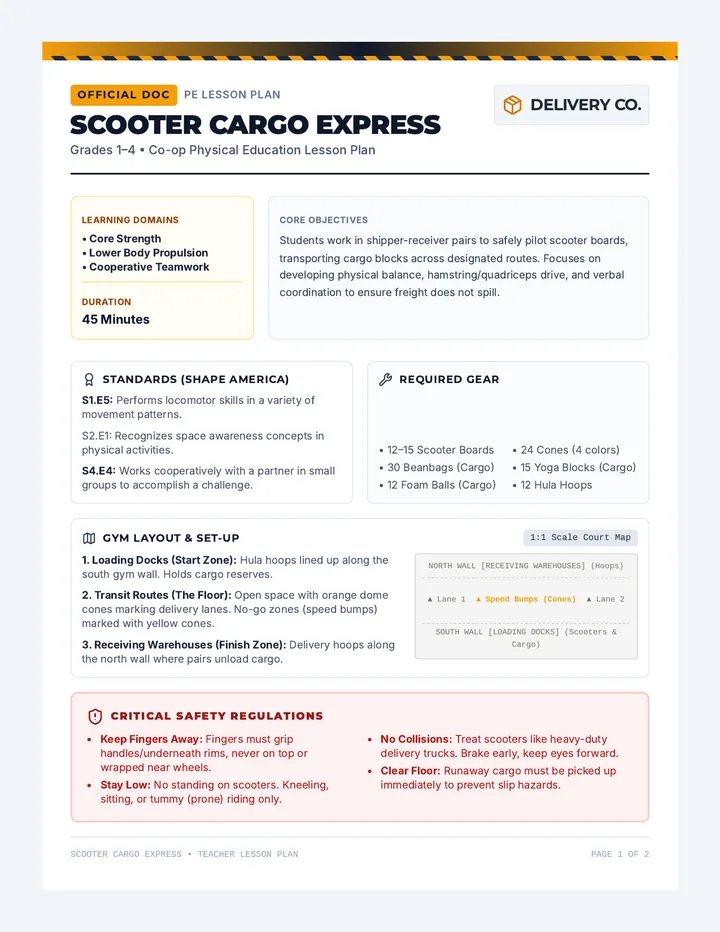
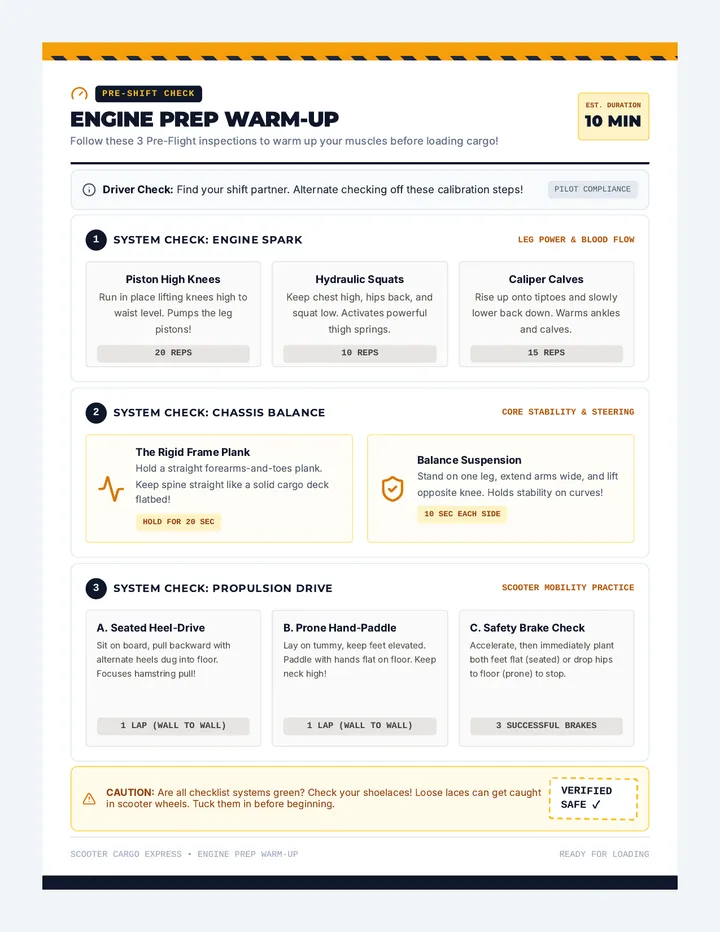
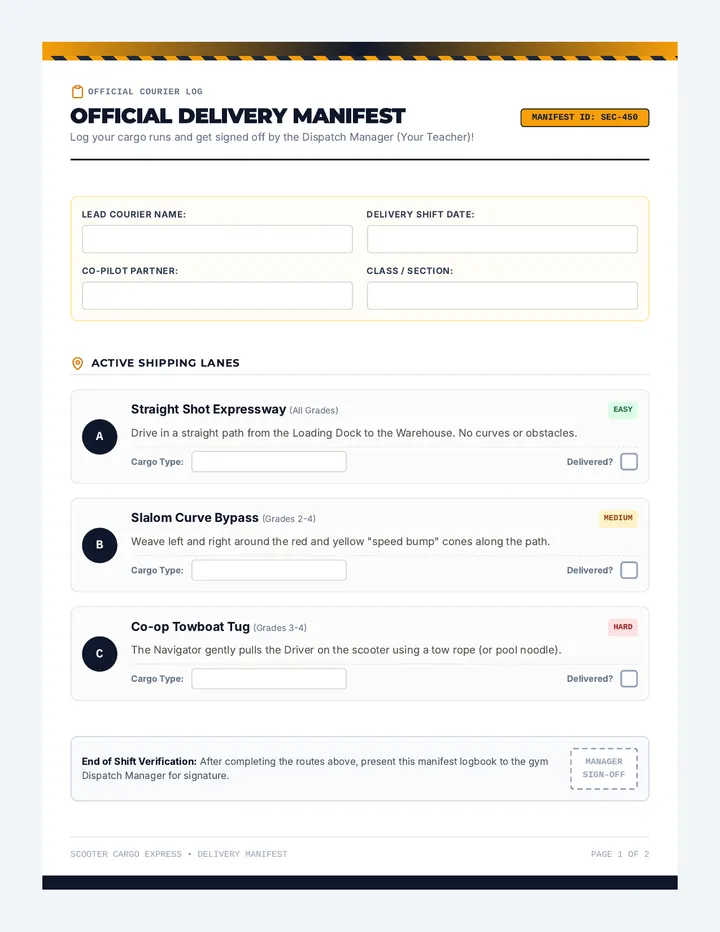
A physical education lesson where students work in pairs to transport 'cargo' safely across the gym floor on scooter boards. Focuses on core strength, lower body propulsion, safety rules, and cooperative communication for grades 1-4.
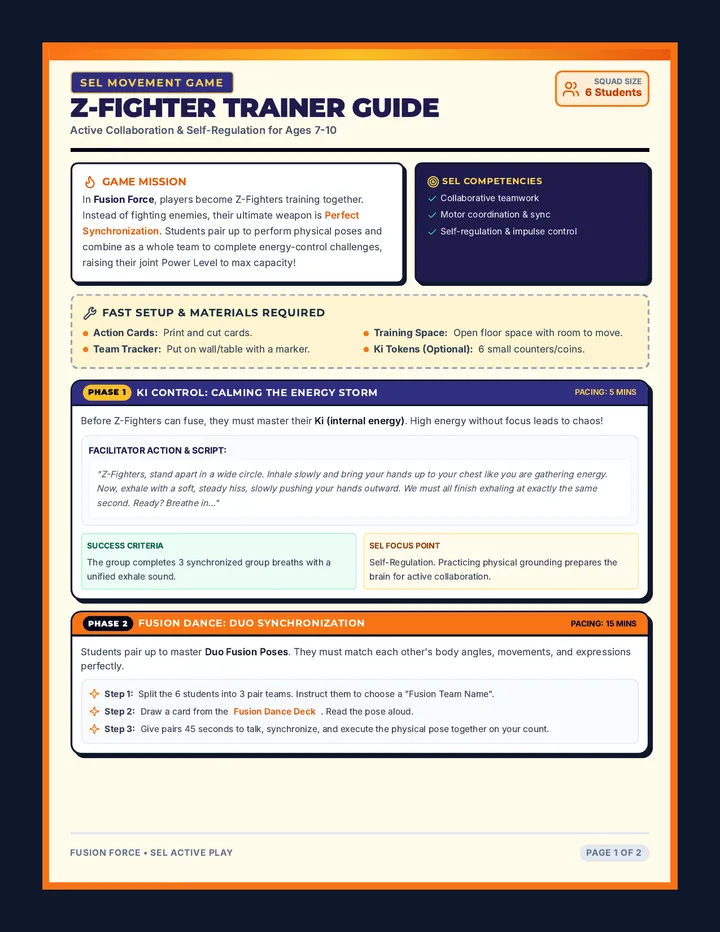
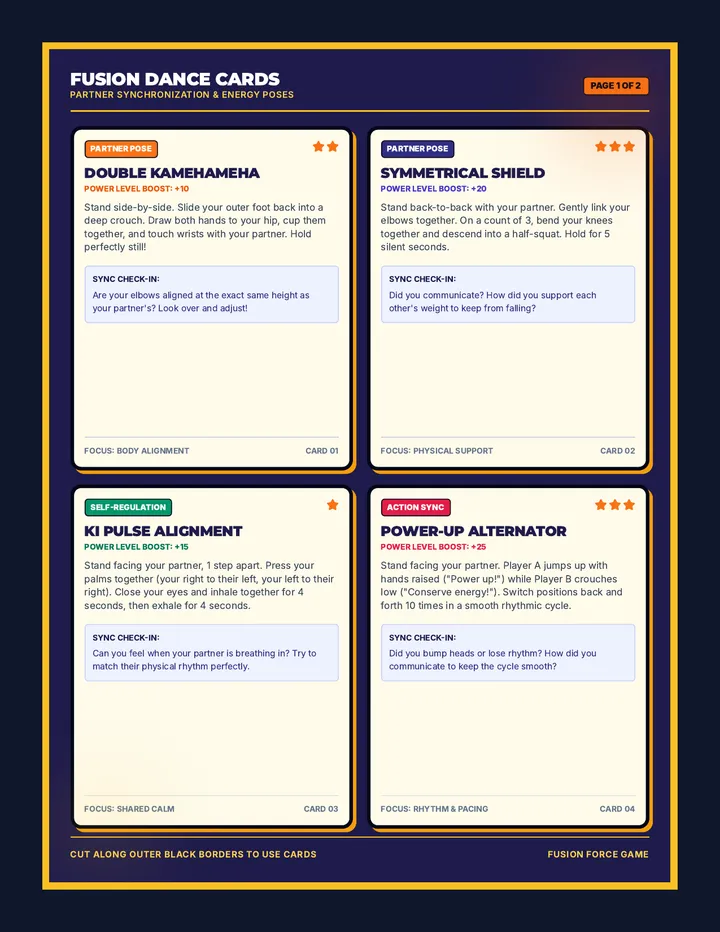
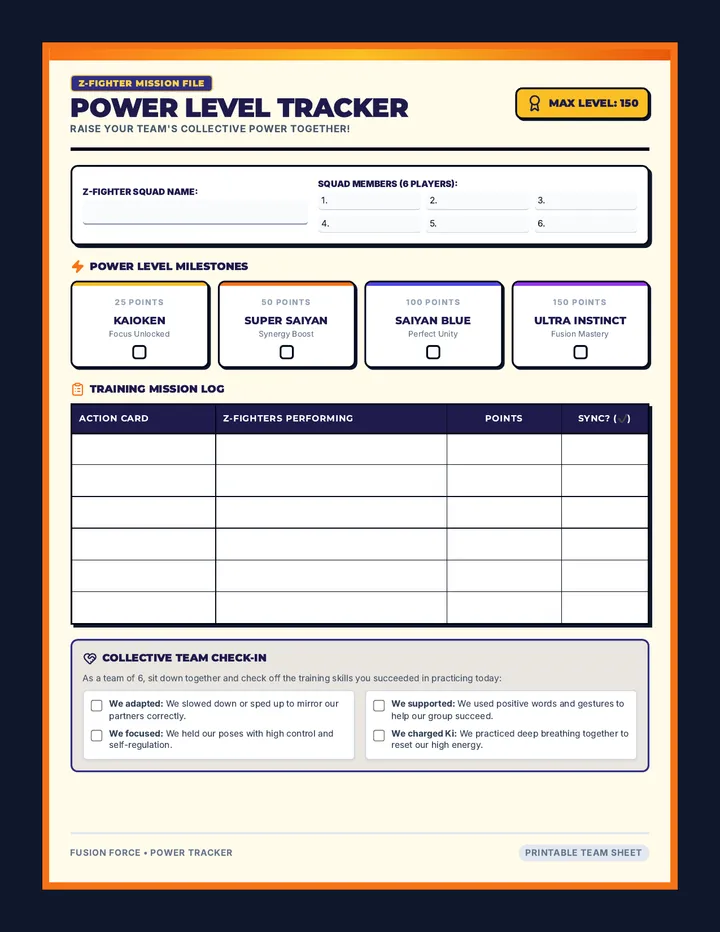
A Dragon Ball Z-themed active movement game focusing on collaboration, teamwork, and self-regulation. Students form pairs and teams to perform energy-control poses, master the Fusion Dance, and complete physical challenges together to build their collective Power Level.
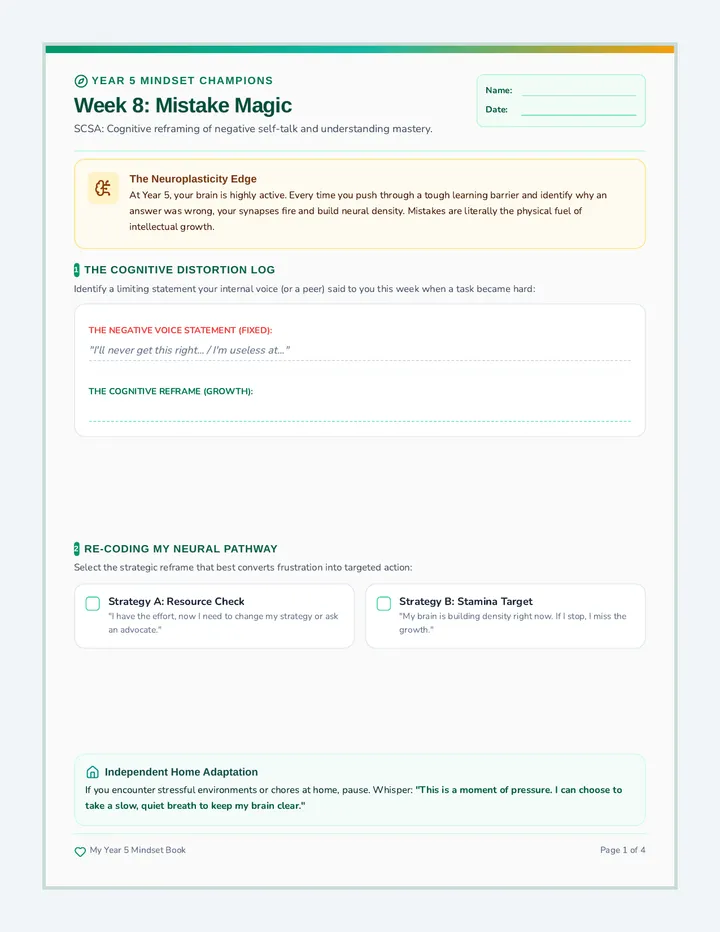
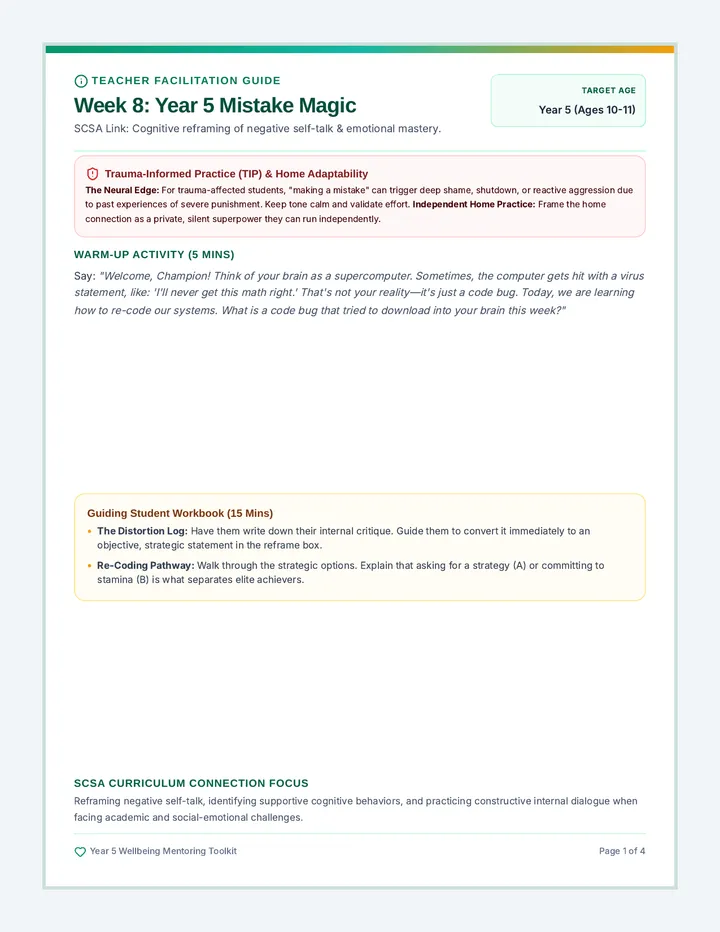
Year 5 specific 4-week check-in set. Formatted to SCSA Year 5 Health syllabus, focusing on cognitive reframing of negative self-talk, identifying supportive external coping resources, and goal-setting.
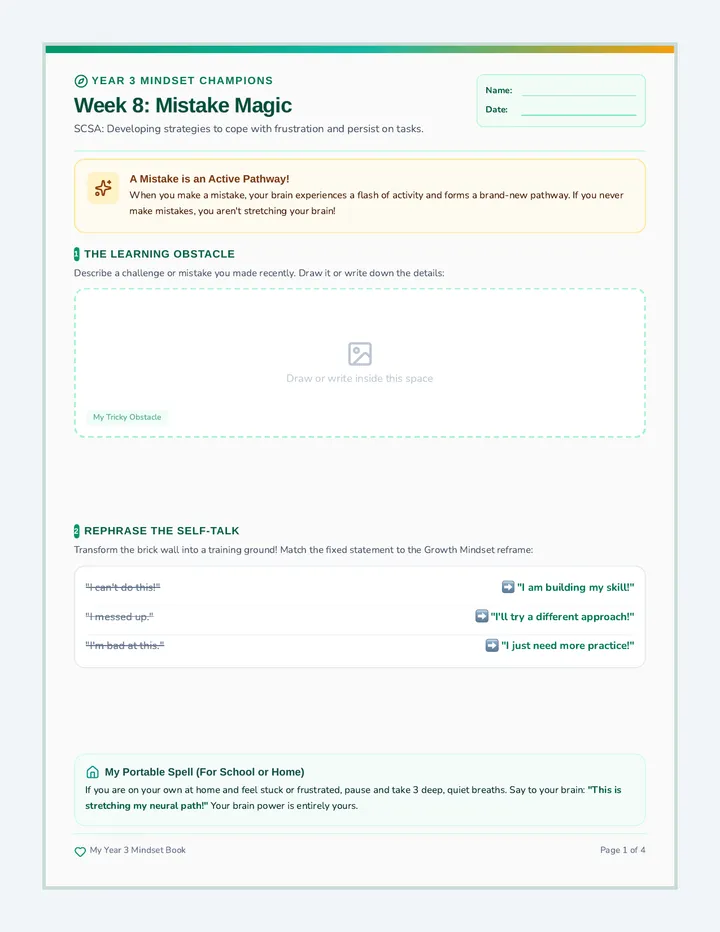
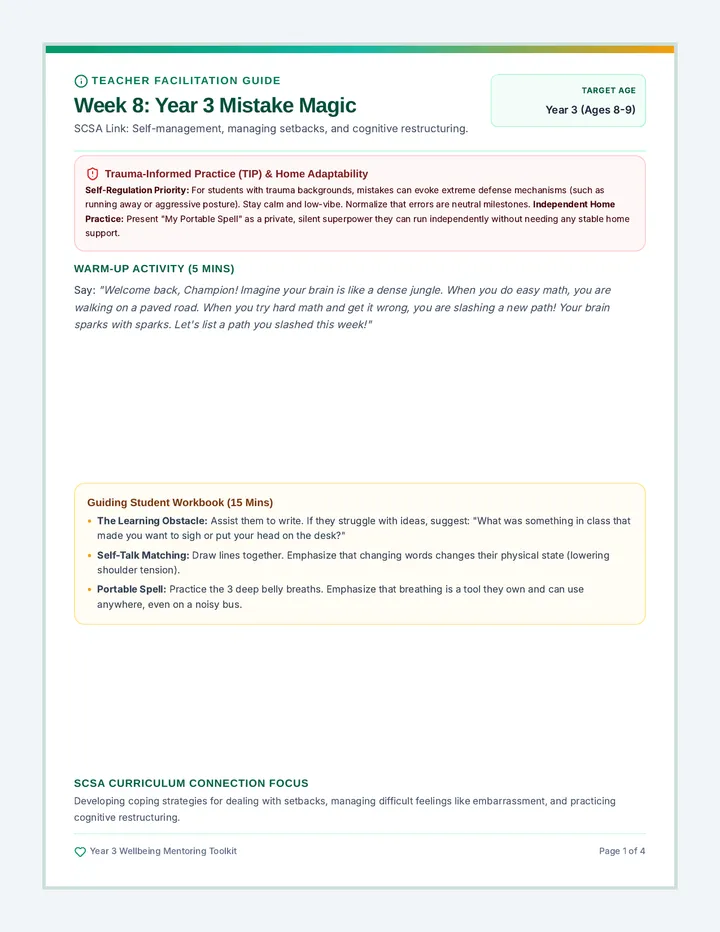
Year 3 specific 4-week check-in set. Formatted to SCSA Year 3 Health syllabus, focusing on identifying personal strengths, talking to safe helpers, and managing emerging school worries.
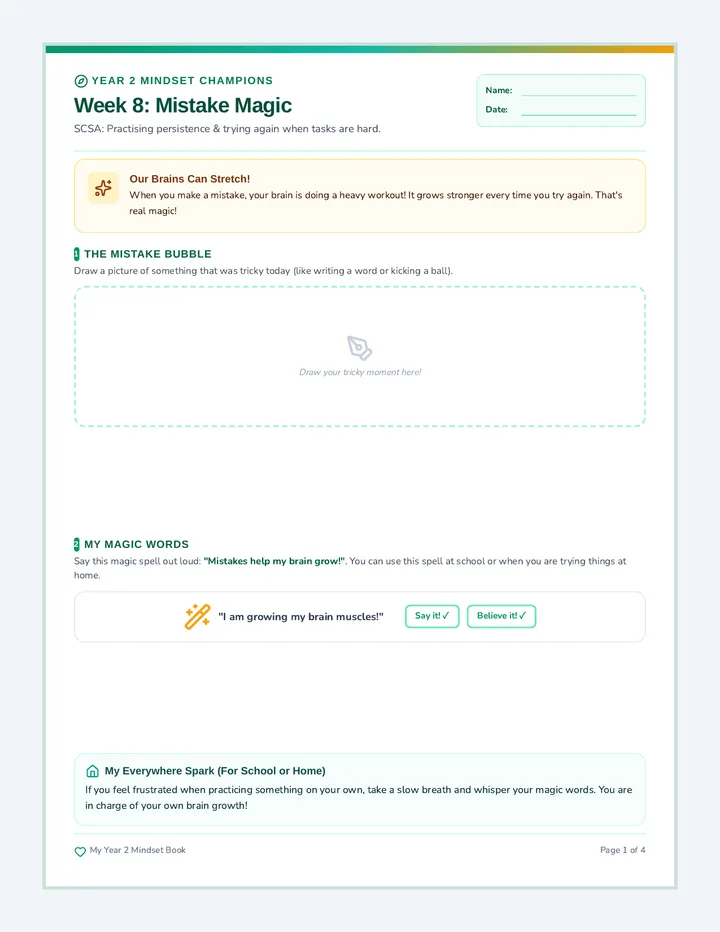
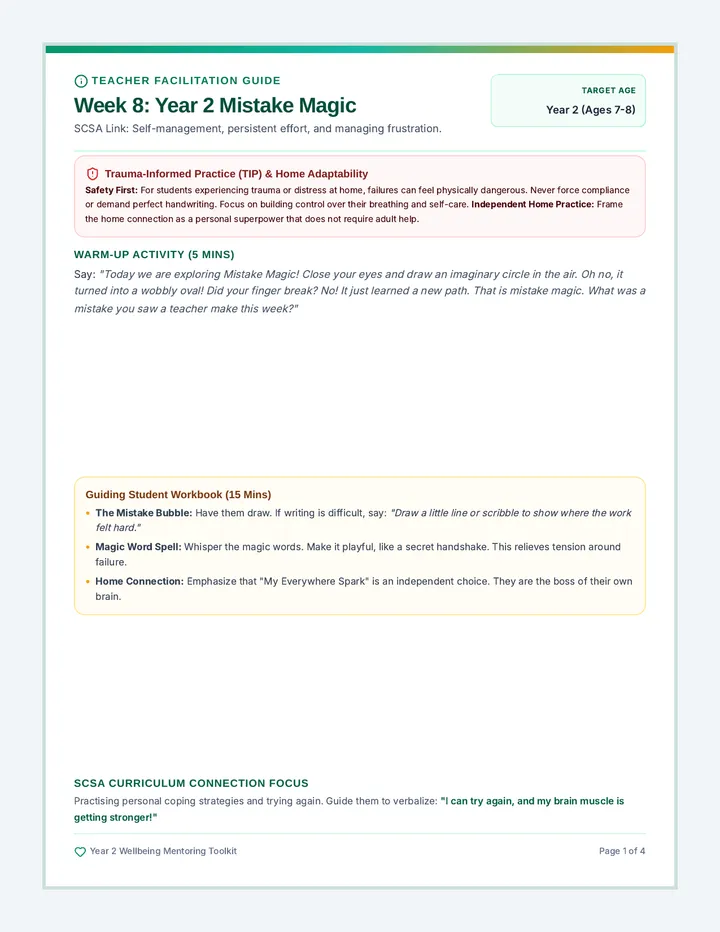
Year 2 specific 4-week check-in set. Formatted to SCSA Year 2 Health syllabus, focusing on emotional identification, safety networks, and visual/drawing prompts for growth-mindset.
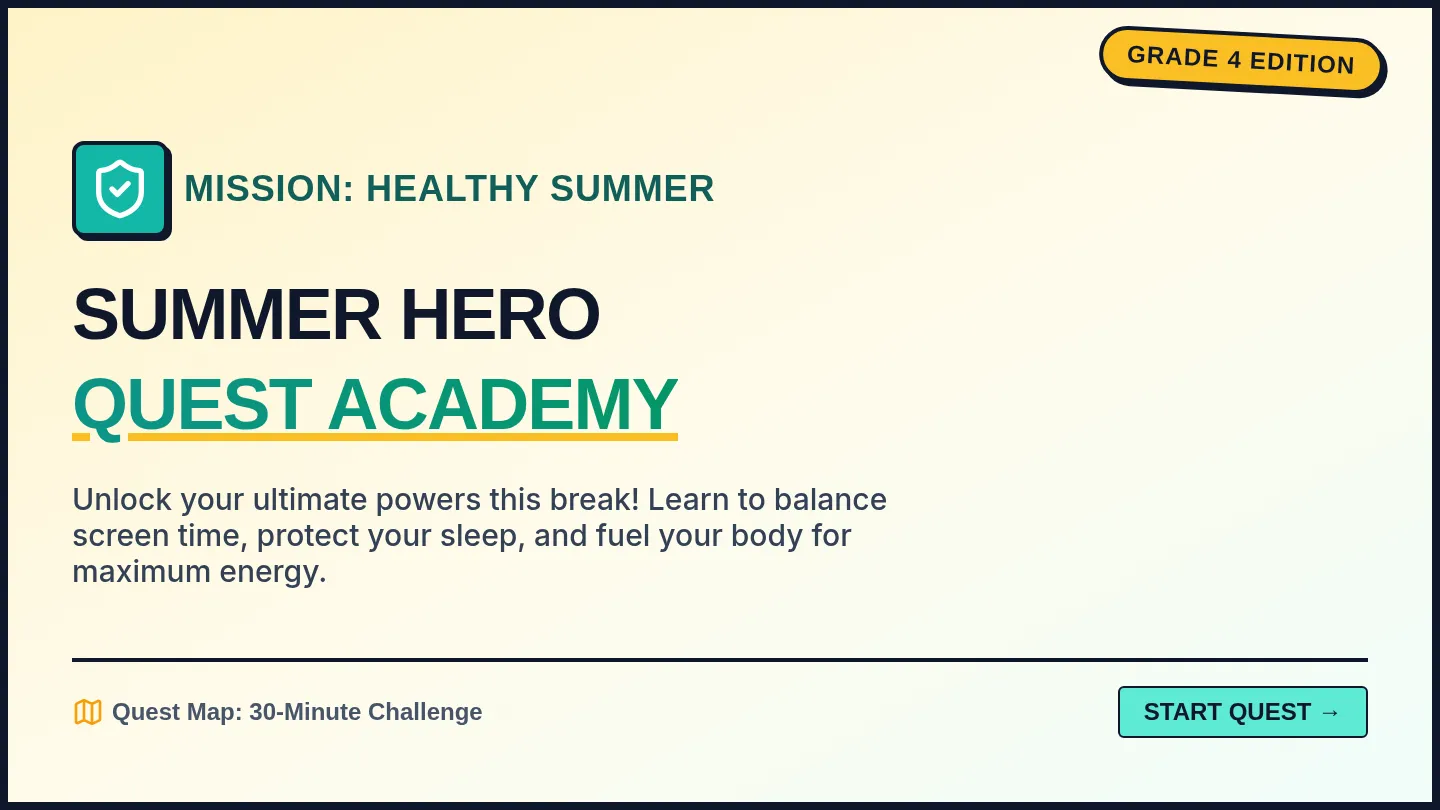
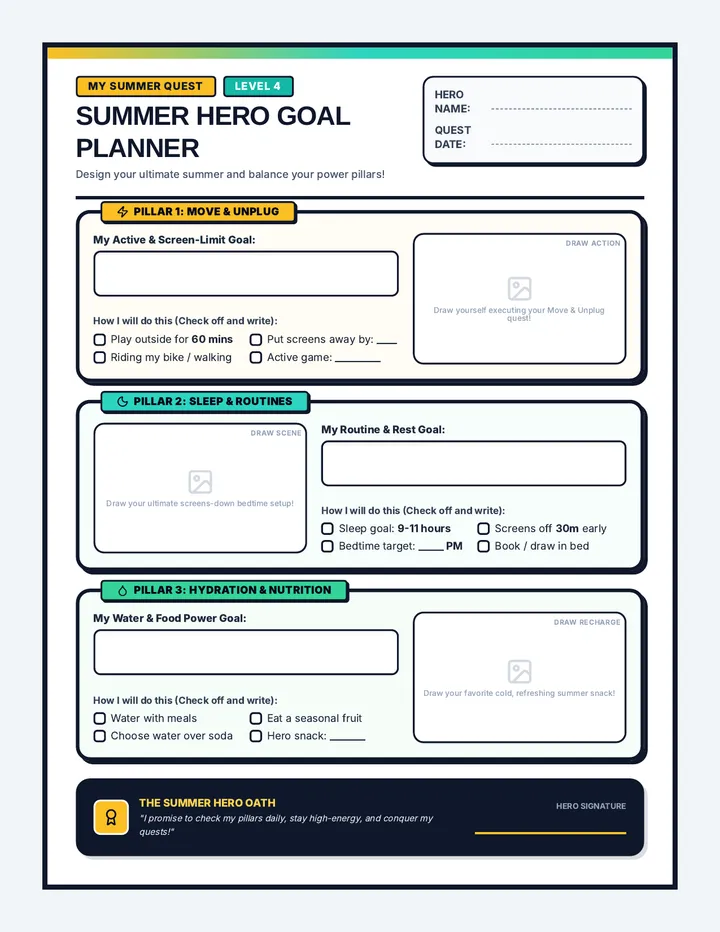
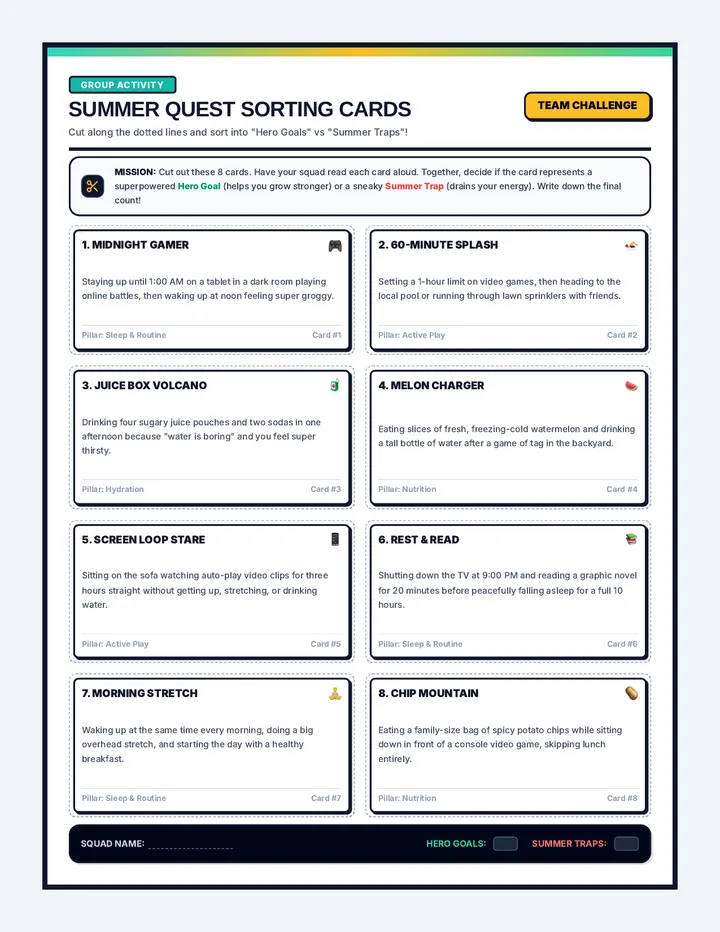
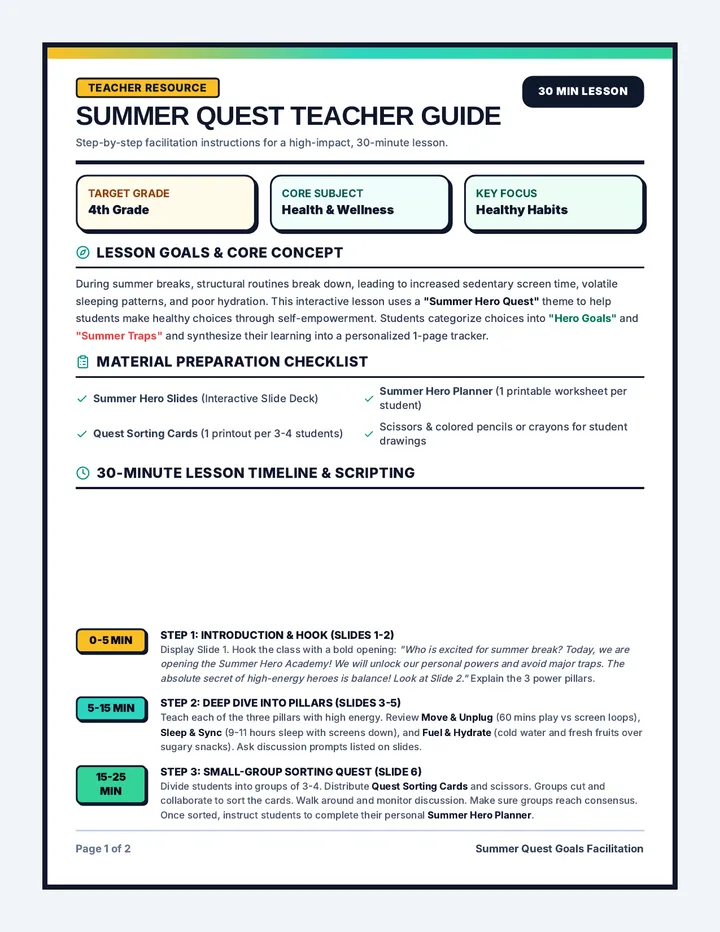
A high-energy, 30-minute interactive lesson for 4th graders to design balanced summer habits. Students learn to set achievable goals across three critical health pillars: physical activity/screen time, sleep routines, and hydration/nutrition.
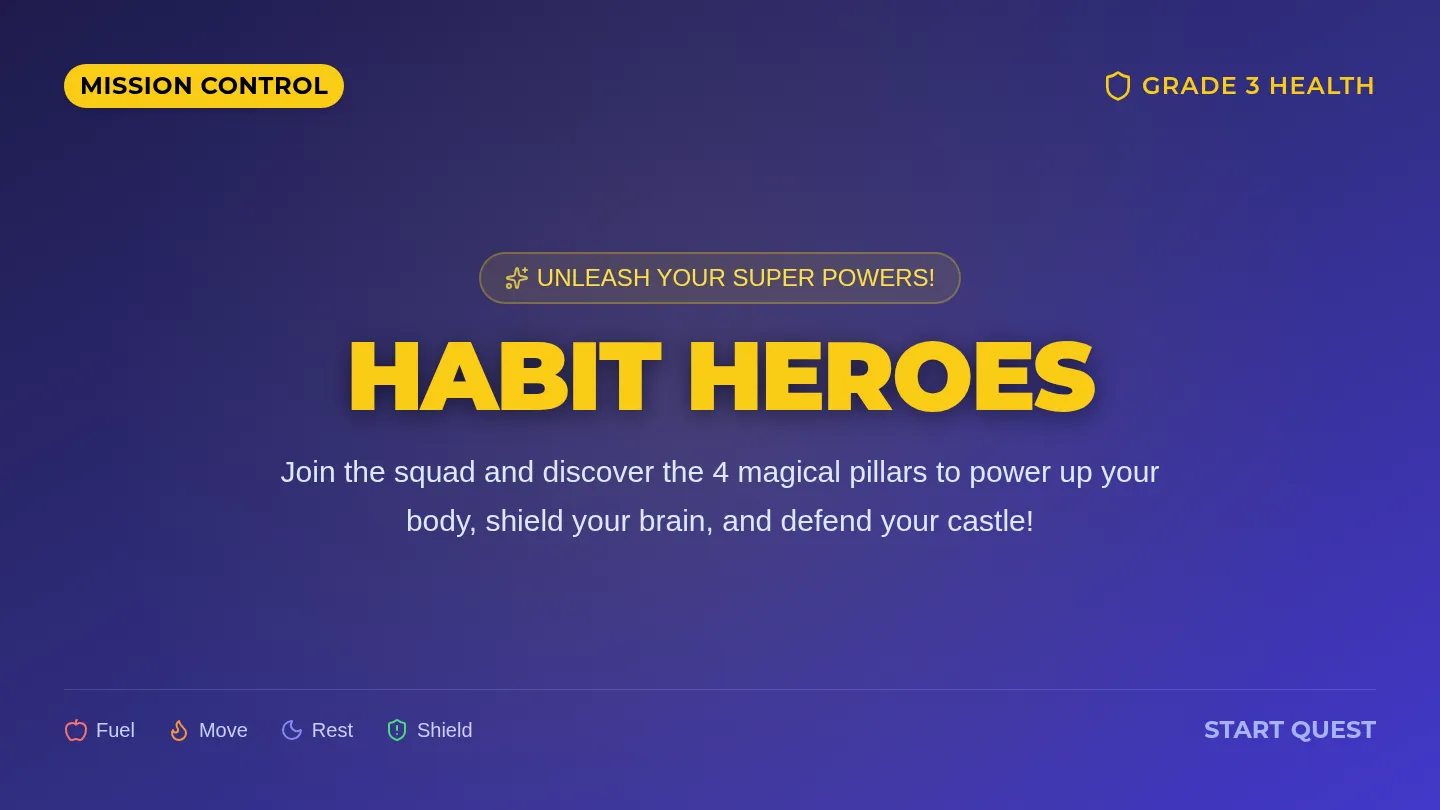
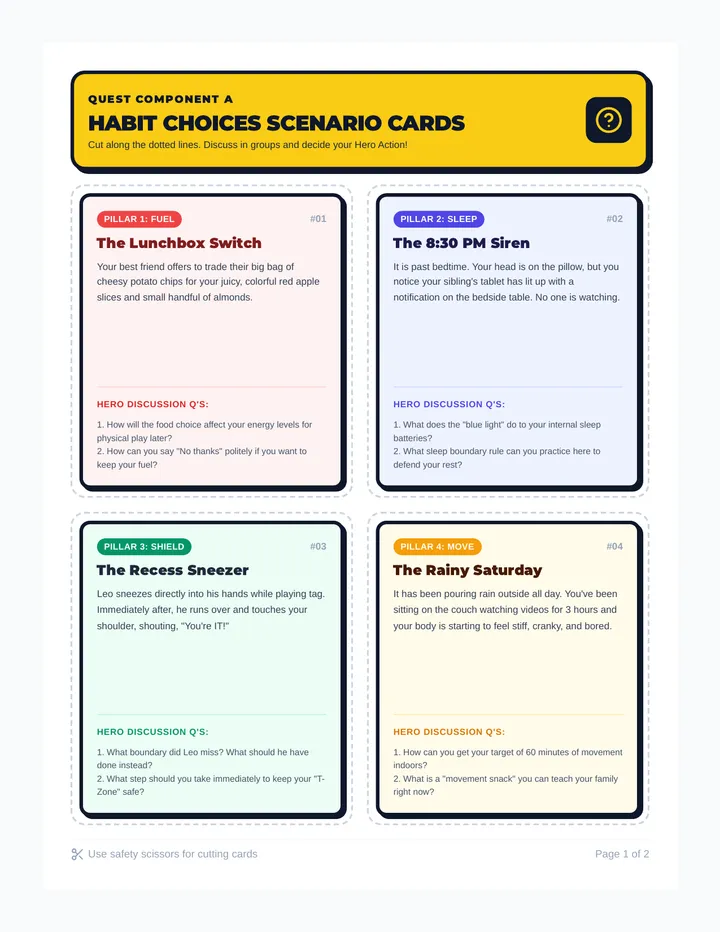
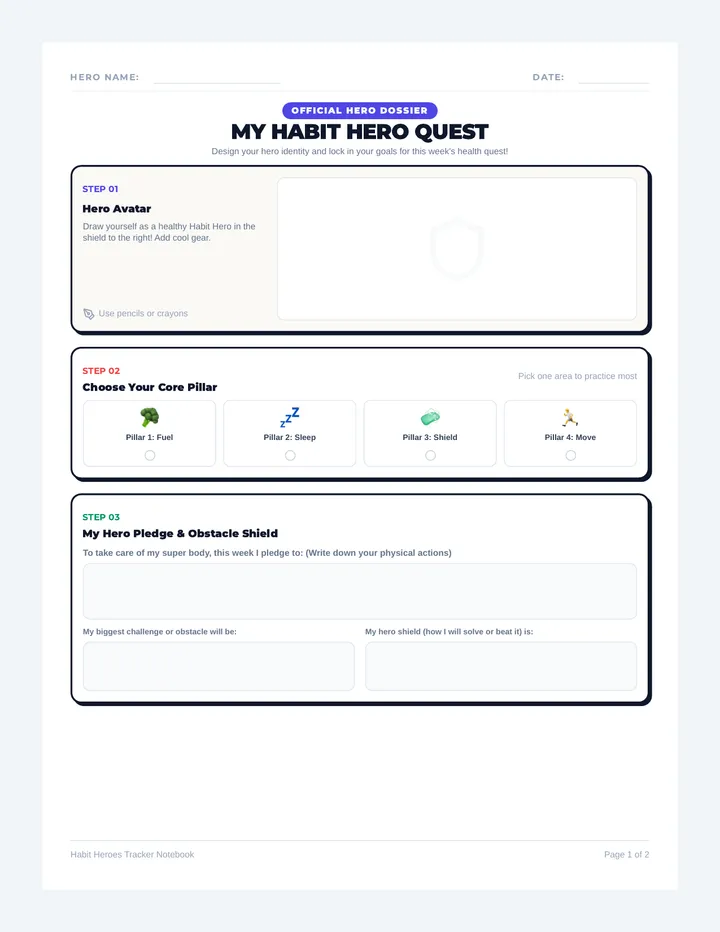
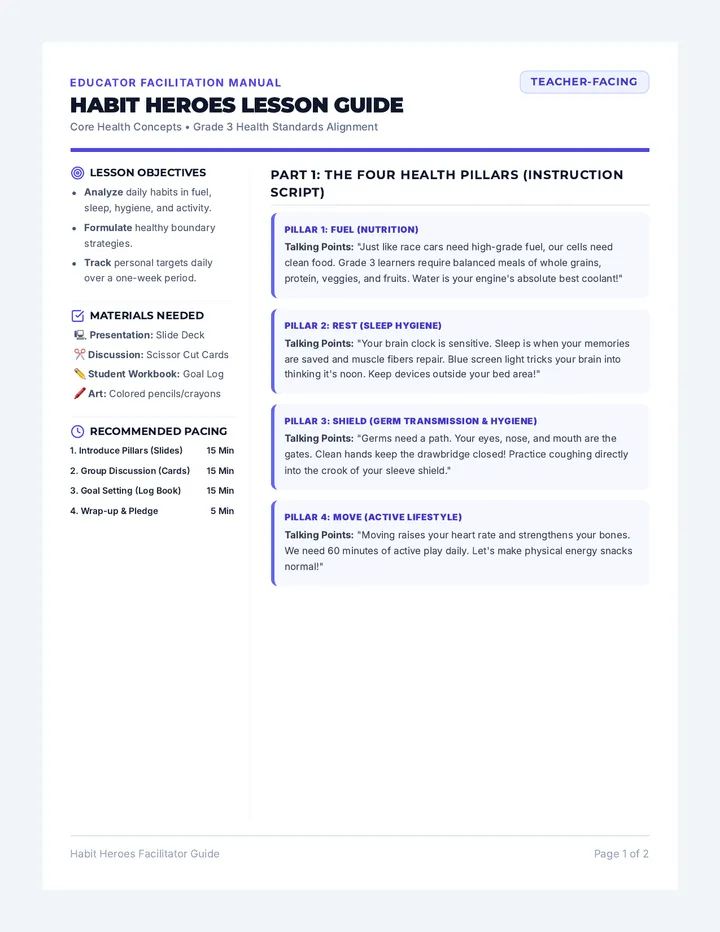
A comprehensive health lesson for 3rd graders covering the four pillars of healthy living: balanced nutrition, sleep hygiene, germ defense, and physical activity. Through interactive slides, discussion cards, and habit-tracking logs, students learn to make mindful choices and build lasting healthy boundaries.
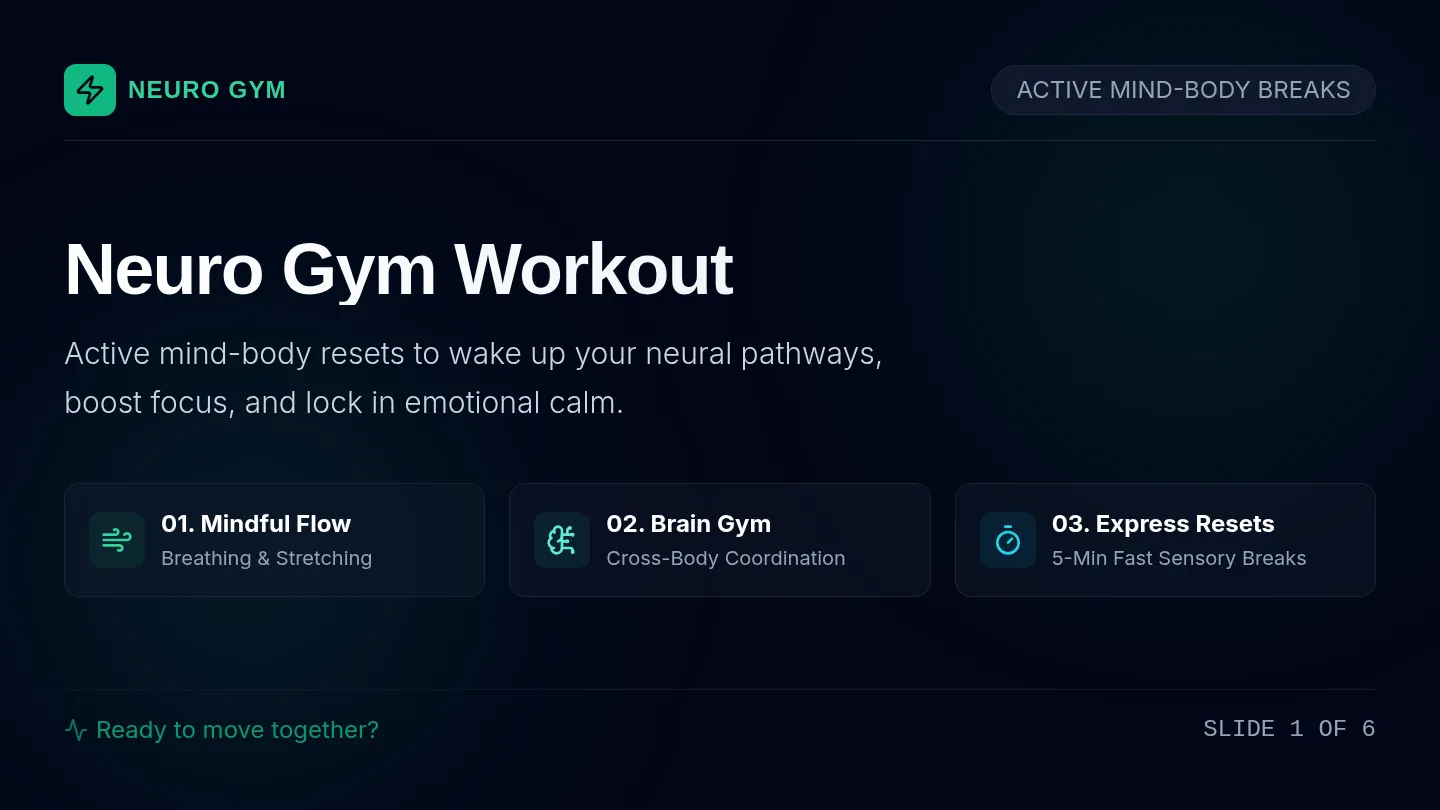
An active mindfulness and coordination lesson that combines low-impact yoga, cross-body brain gym exercises, and express sensory resets to optimize student focus and well-being.
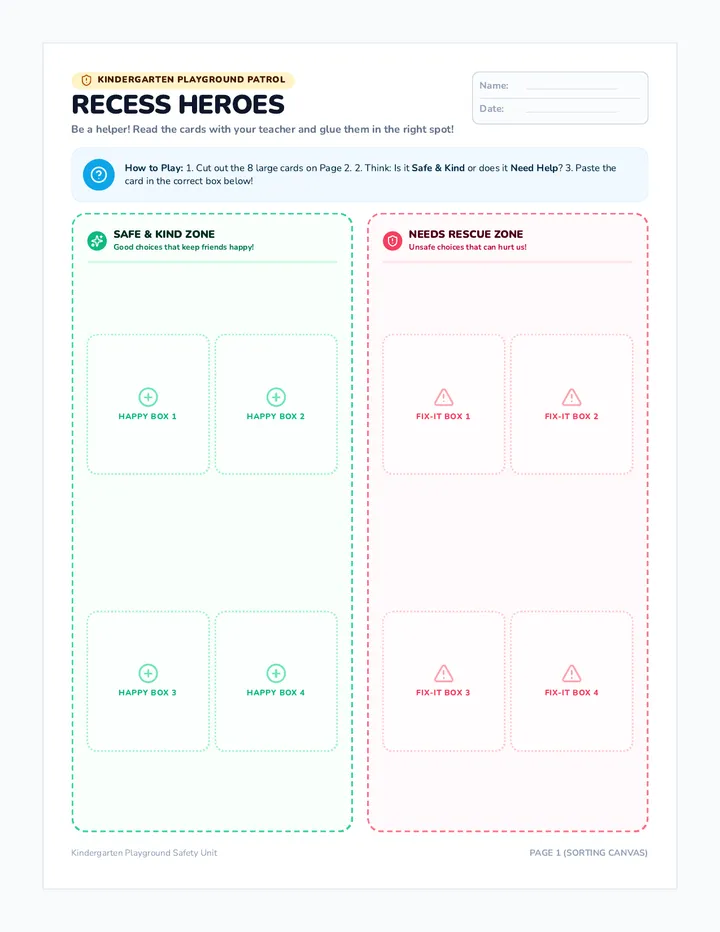
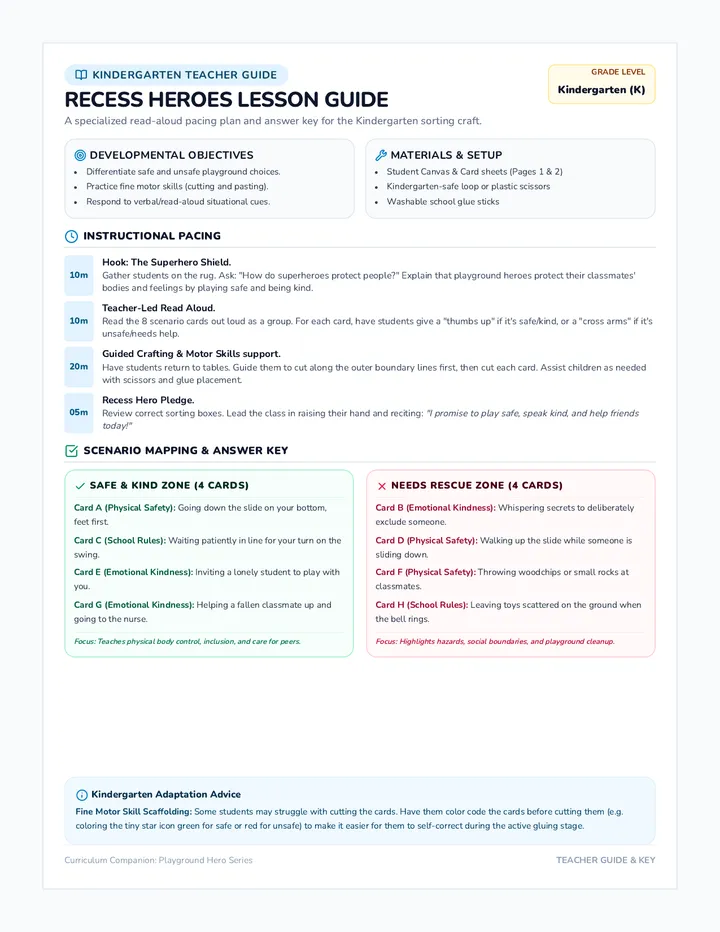
A hands-on, interactive lesson designed to teach elementary school students about safe, kind, and respectful behavior during recess. Students complete a creative cut-and-paste sorting craft that reinforces playground expectations, physical safety, and emotional kindness.
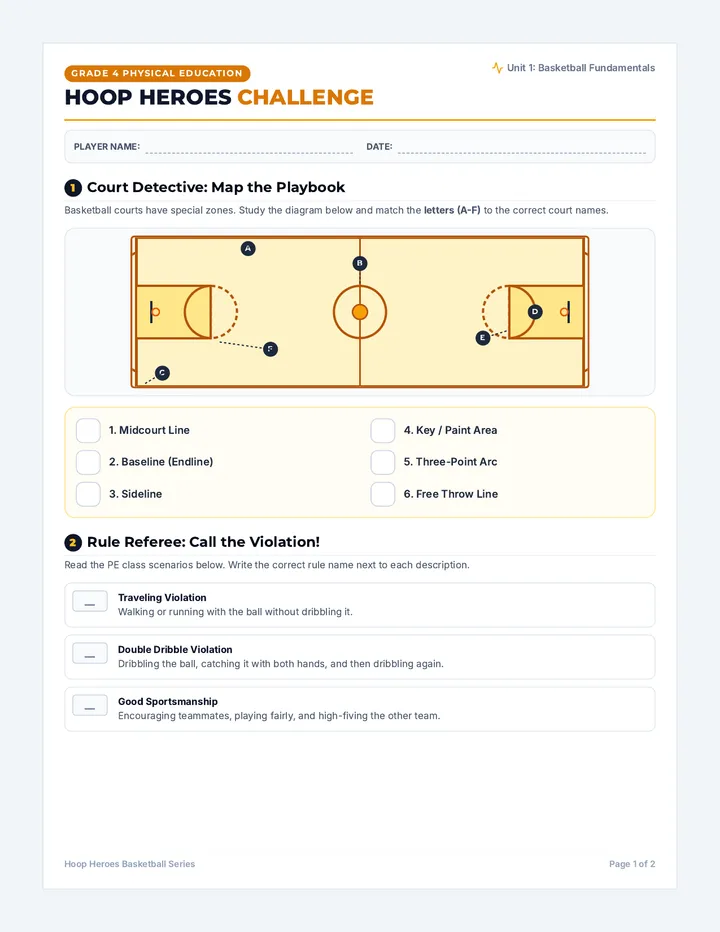
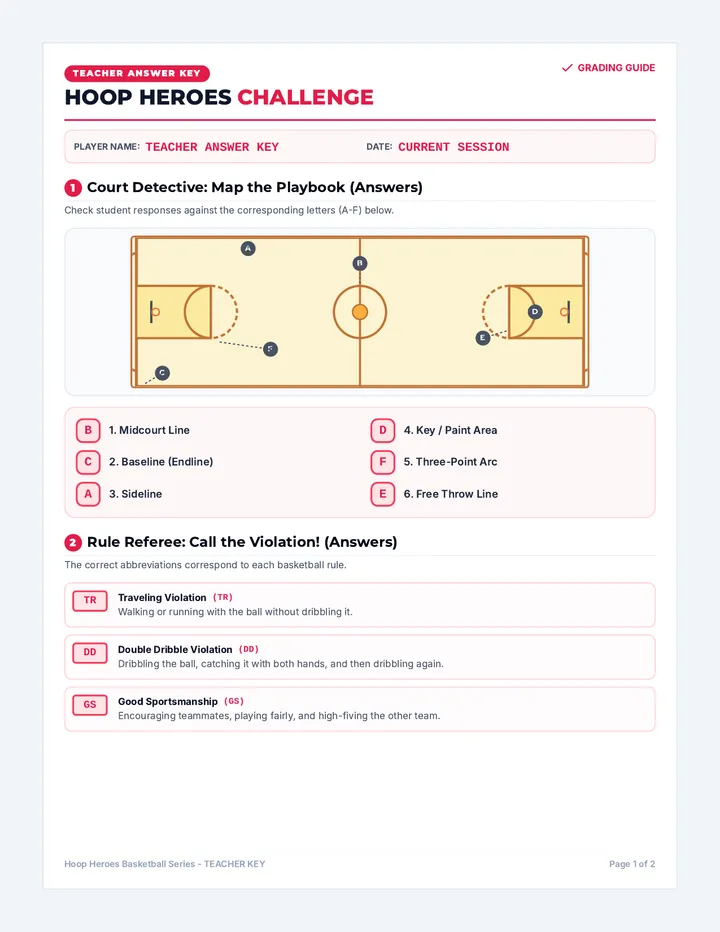
An active, visually engaging lesson introducing 4th-grade basketball fundamentals, rules, and court positions. Includes a hands-on diagram matching worksheet and a complete teacher answer key for assessment.
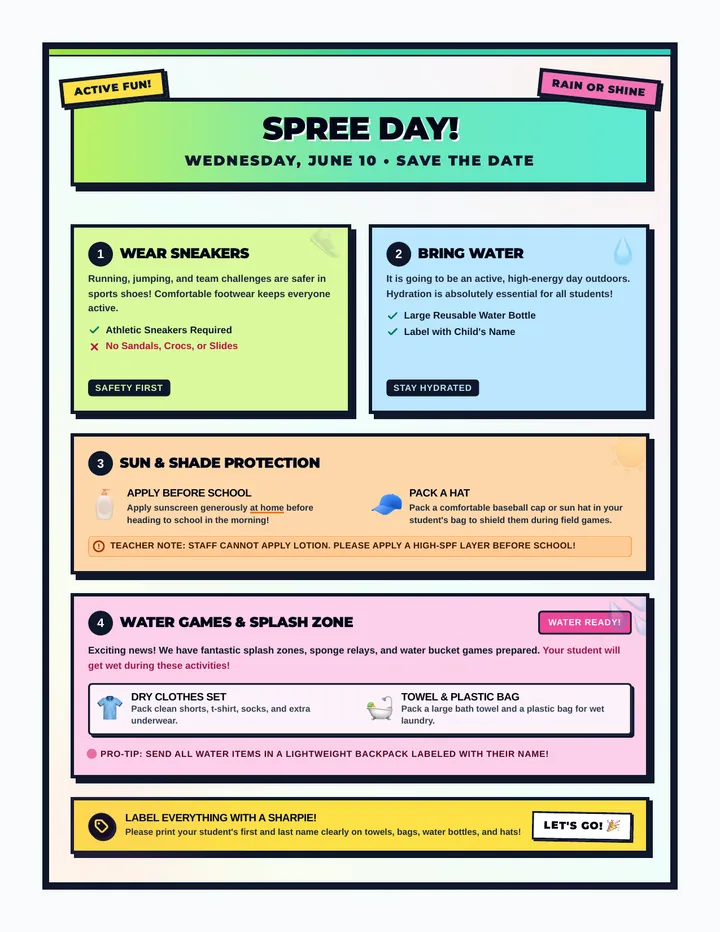
Resources and materials to help students, families, and teachers prepare for Spree Day, an energetic, outdoor, action-packed school field day.
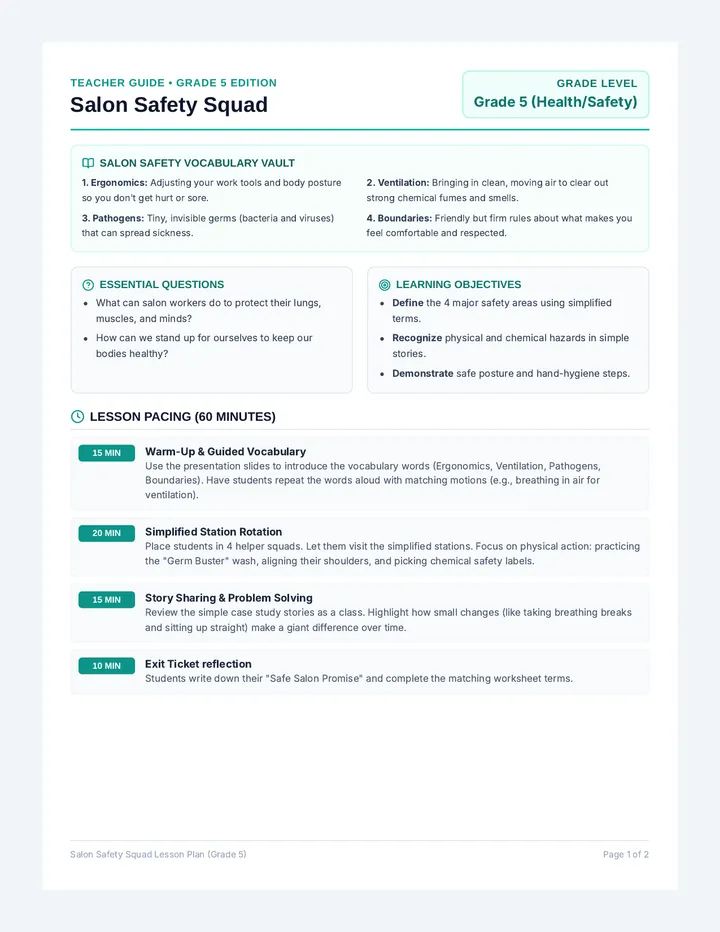
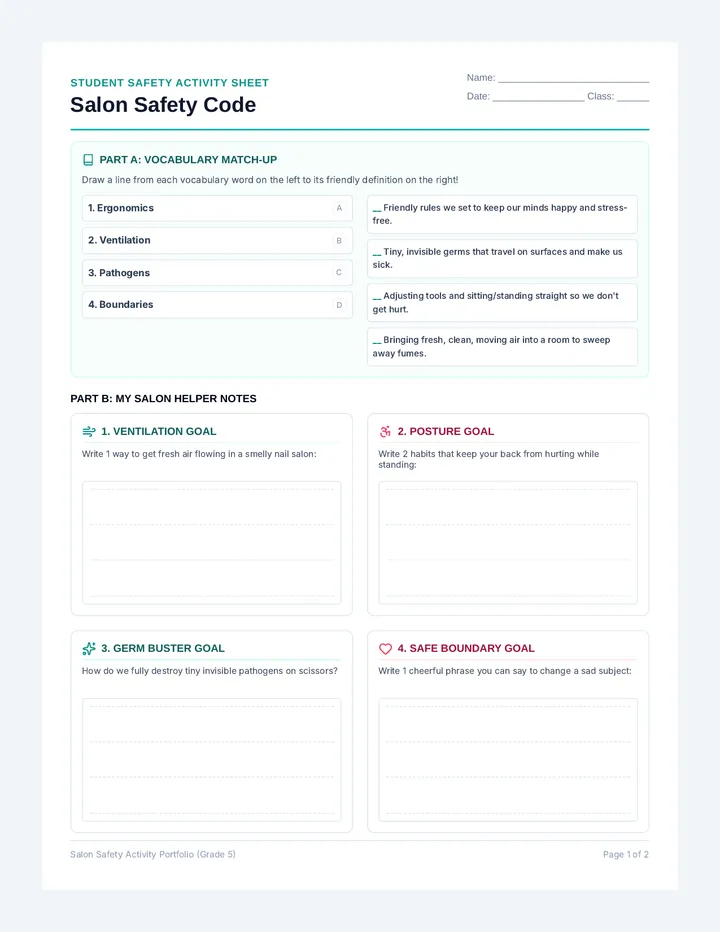
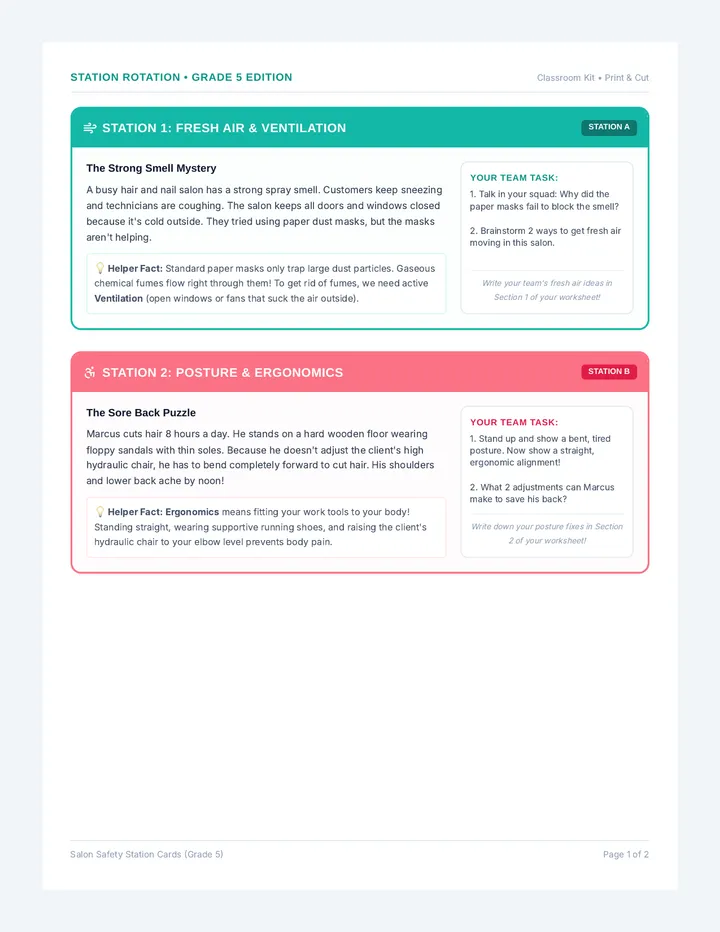
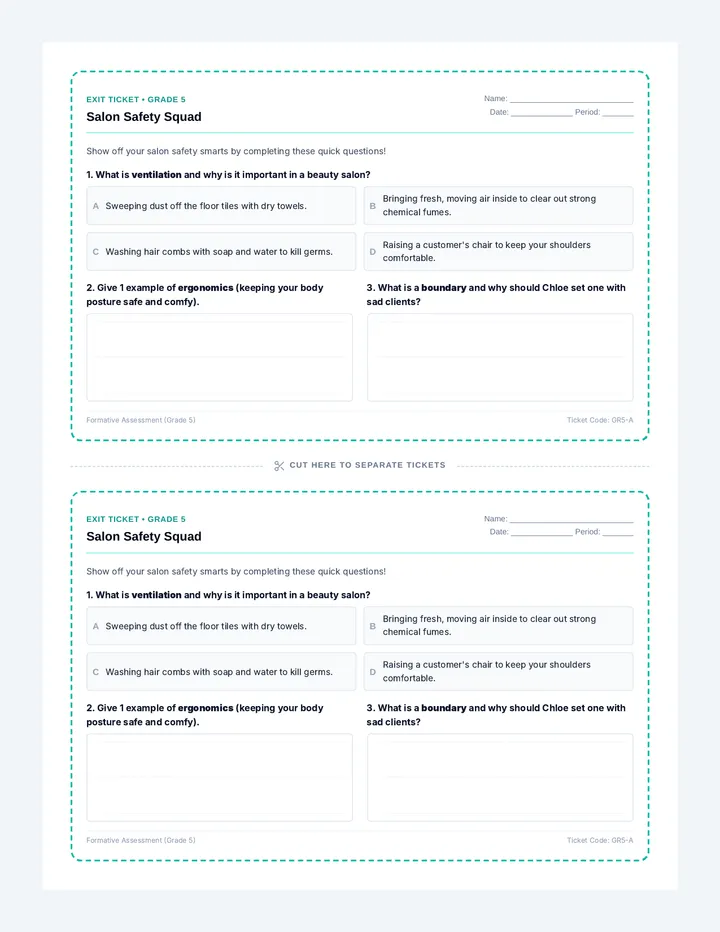
A comprehensive Grade 5 lesson focusing on physical, chemical, biological, and psychological health hazards in the cosmetology industry, equipping students with self-advocacy and prevention strategies.
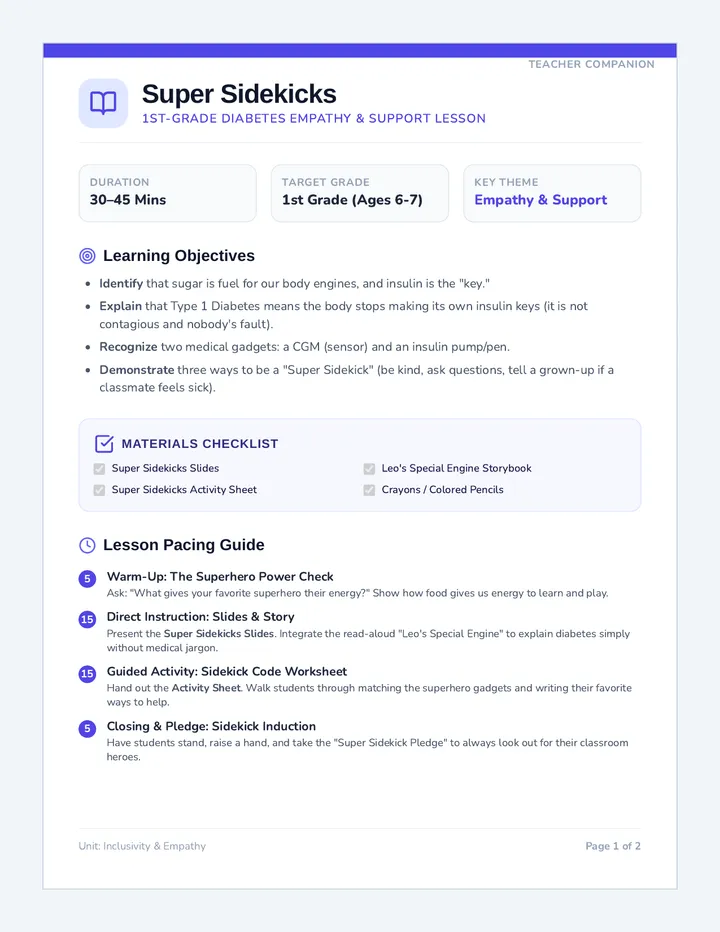
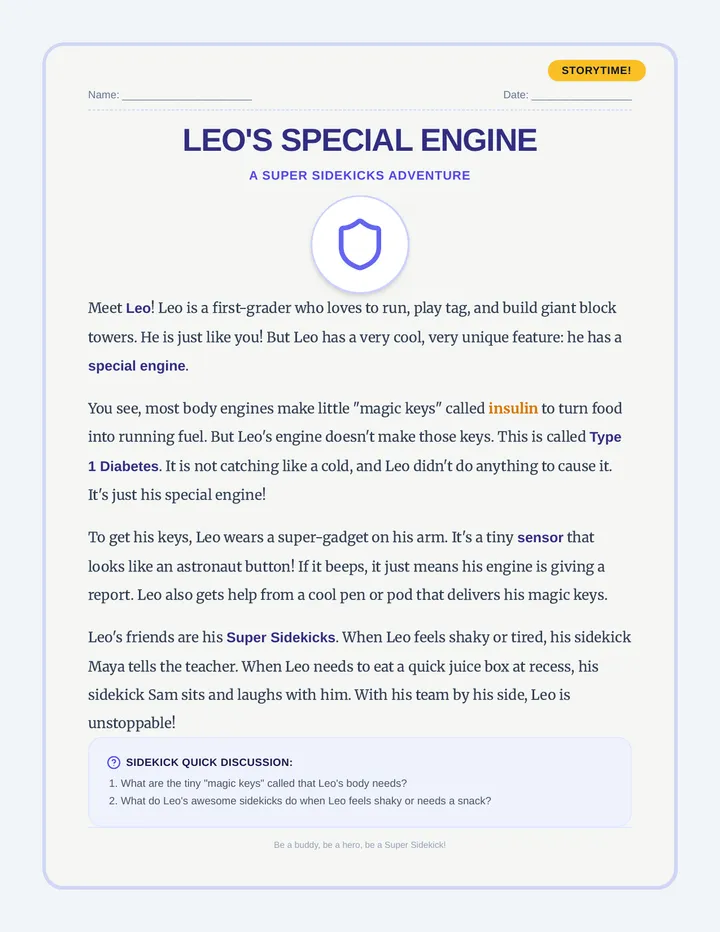
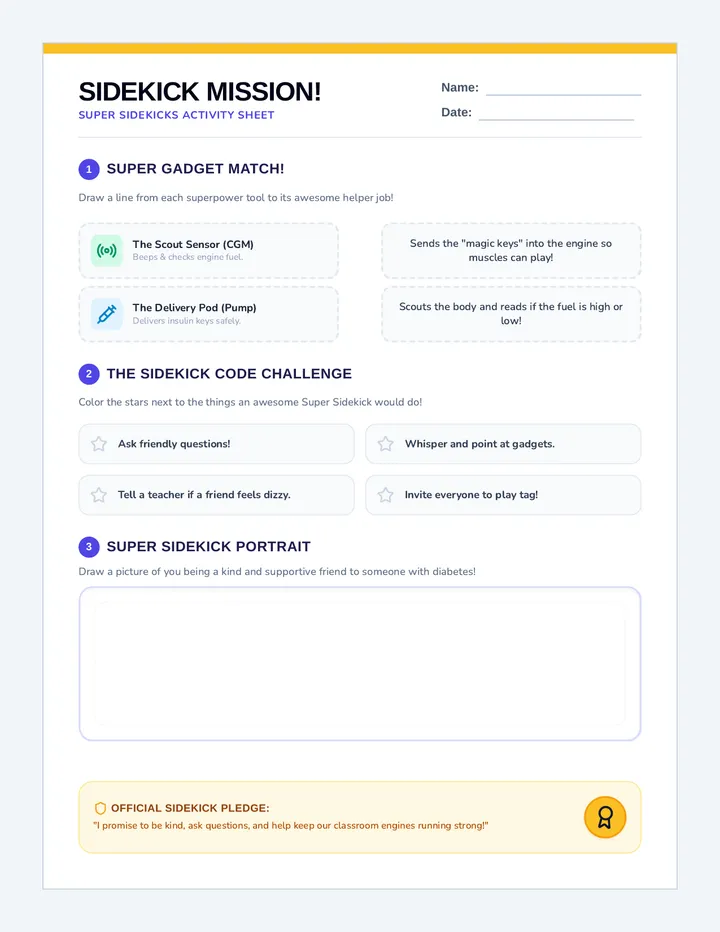
A heartwarming 1st-grade lesson designed to foster peer empathy, support, and understanding for classmates with diabetes. Through a superhero-themed story, interactive slides, and hands-on activities, students learn about diabetes gadgets as 'special superpower tools' and how to be supportive sidekicks.
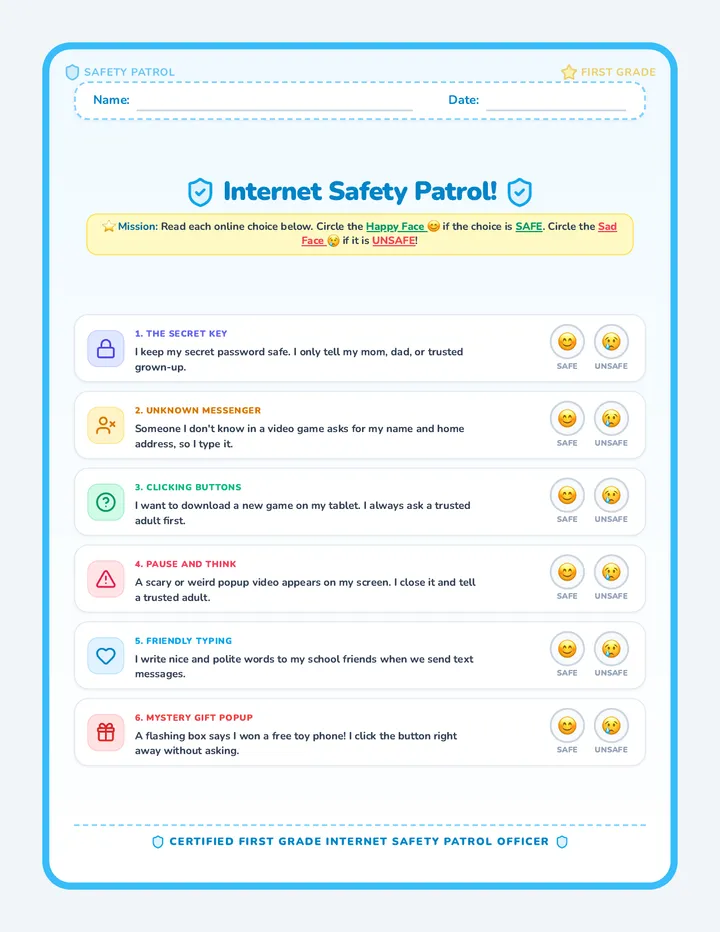
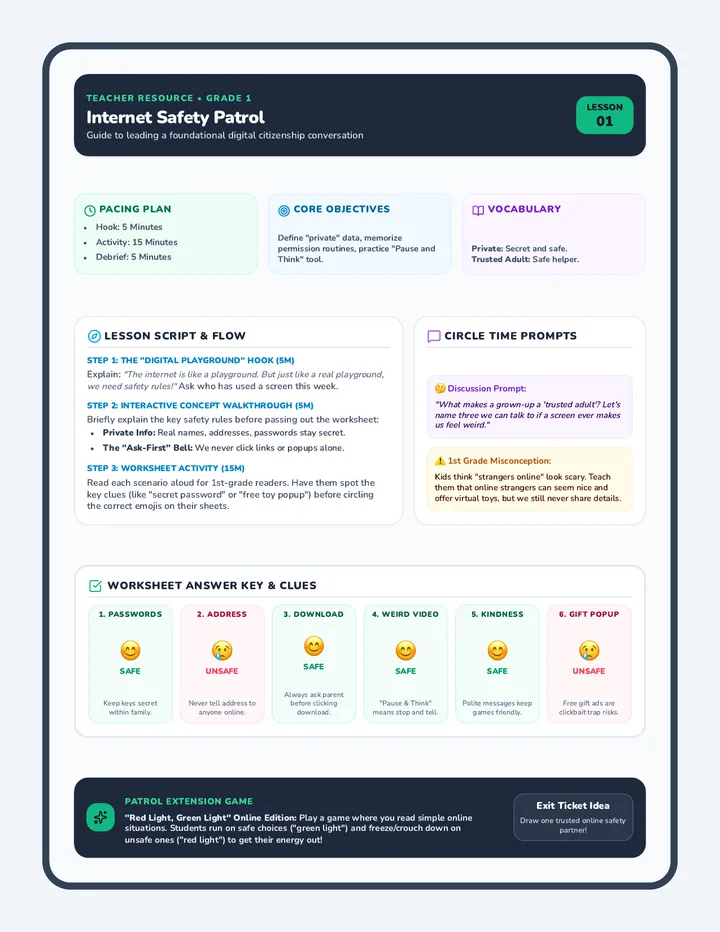
A 1st-grade interactive lesson about online safety. Includes a hands-on coloring and coding worksheet for identifying safe and unsafe digital behaviors, and a comprehensive teacher guide with discussion prompts and lesson walkthroughs.
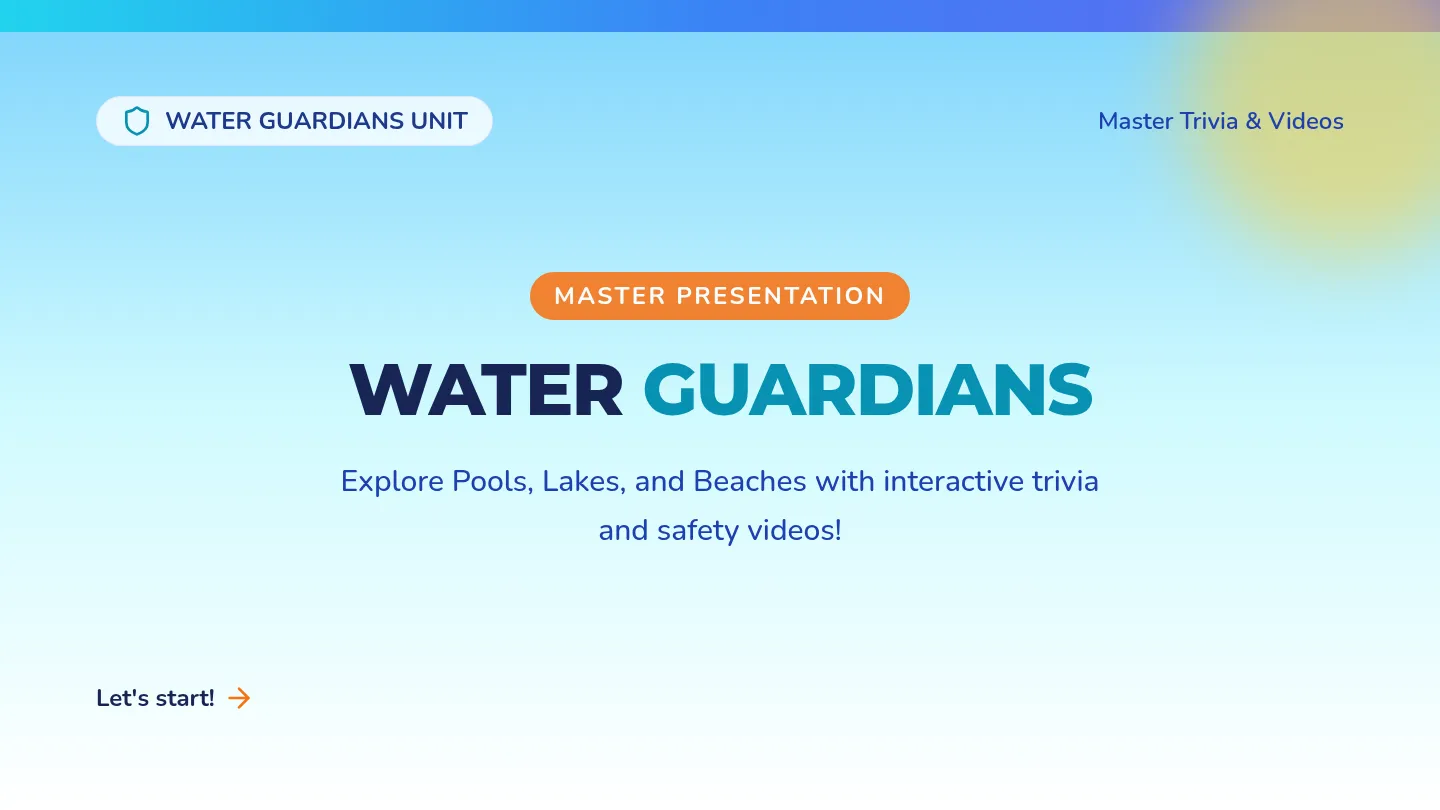
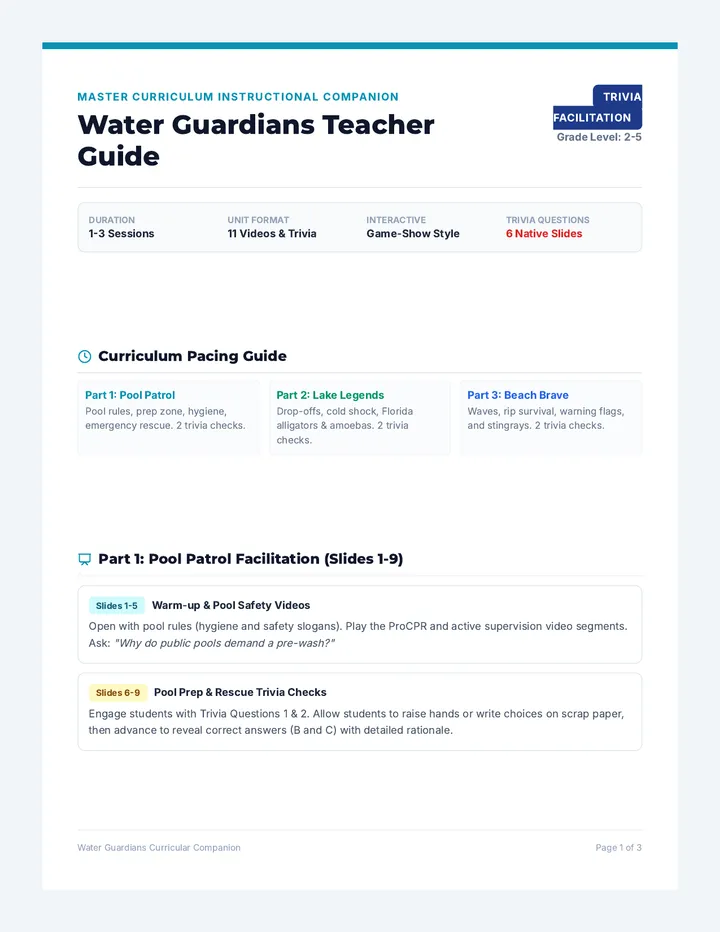
A comprehensive water safety master lesson covering pool protocols, open water lake dangers, and ocean beach safety practices. Designed to fit visual presentations, student practice sheets, and teacher scripting guides.
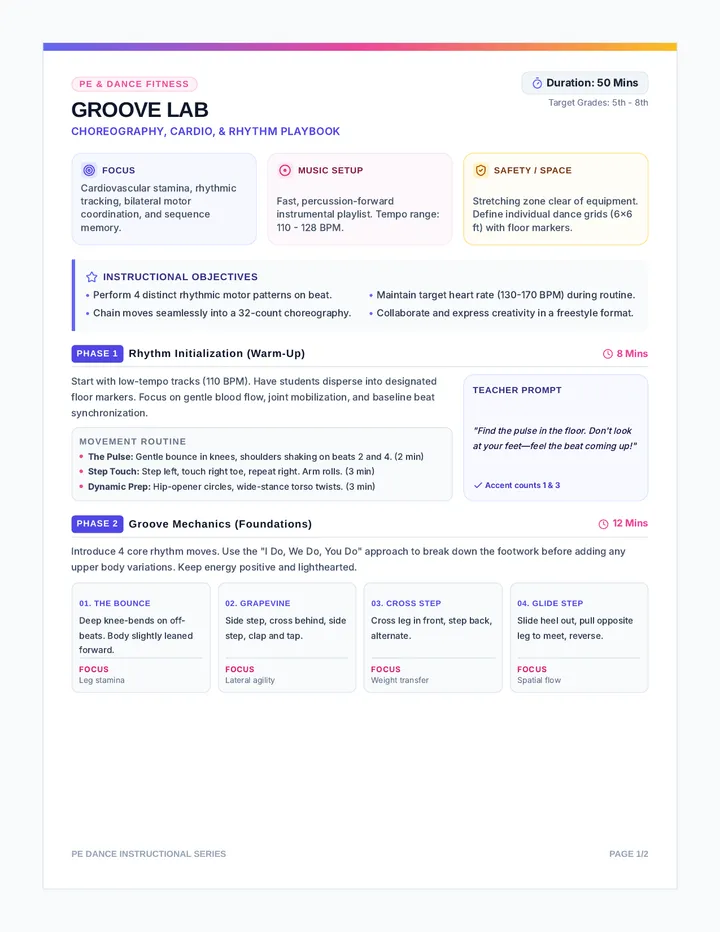
An energetic, dance-infused physical education lesson plan focusing on cardiovascular endurance, rhythm tracking, and motor coordination through structured choreography and creative movement.
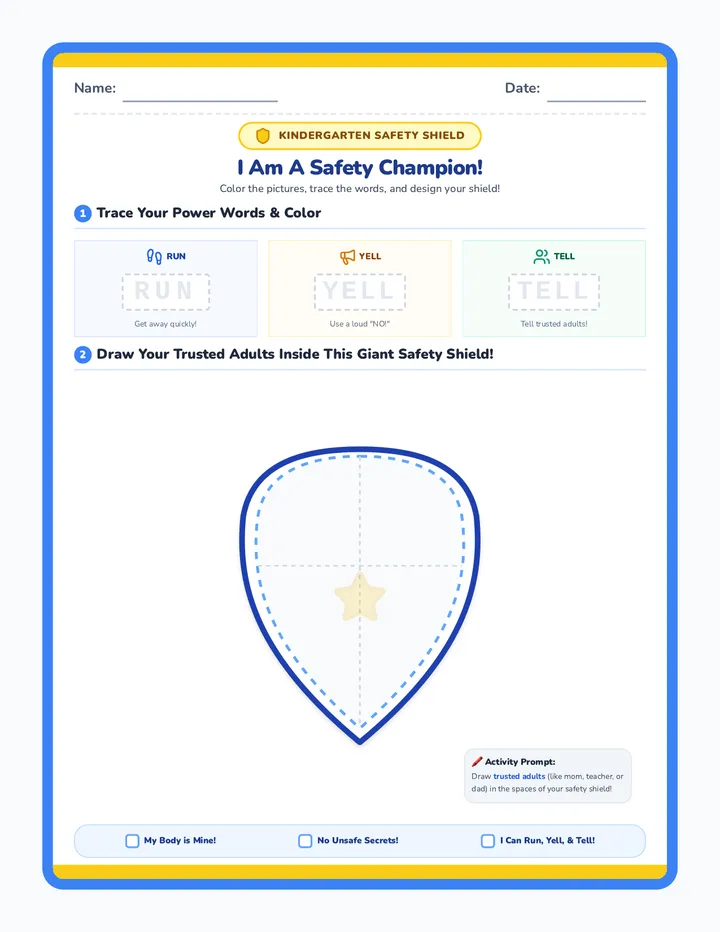
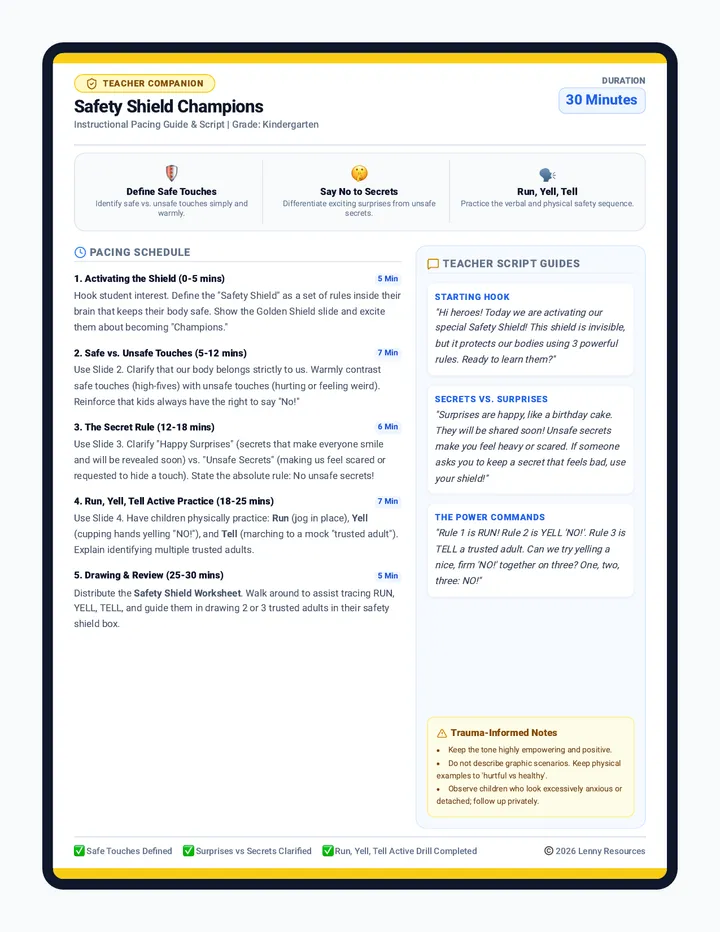
An empowering 30-minute personal safety lesson for kindergarteners using the 'Safety Shield' framework (Run, Yell, Tell, and Safe Touches) to teach them how to identify unsafe secrets and take action.
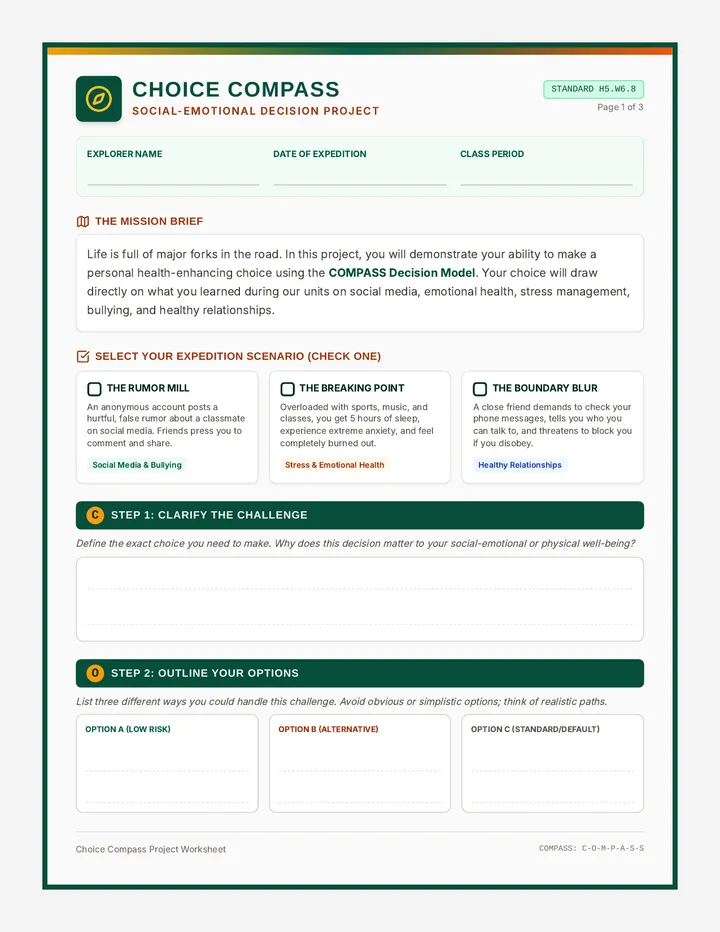
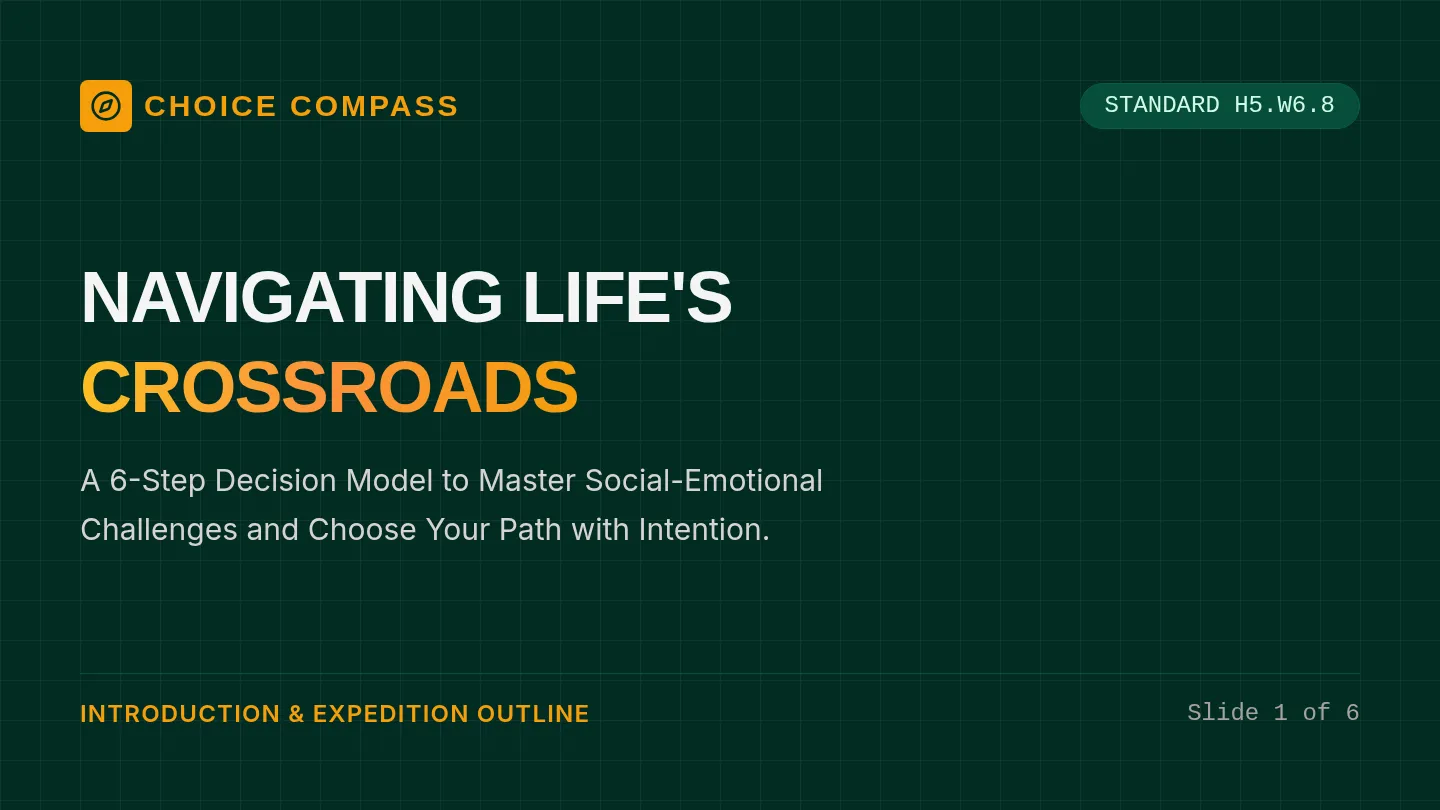
A health-focused project where students master a 6-step decision-making model to navigate high-stakes social-emotional challenges like peer pressure, digital boundaries, and stress management.
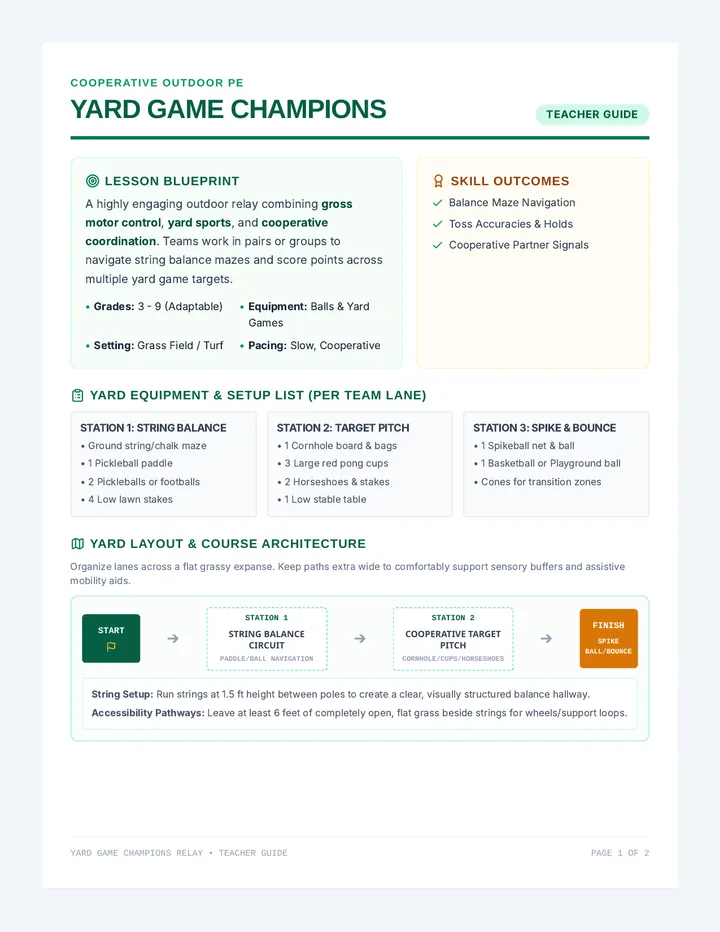
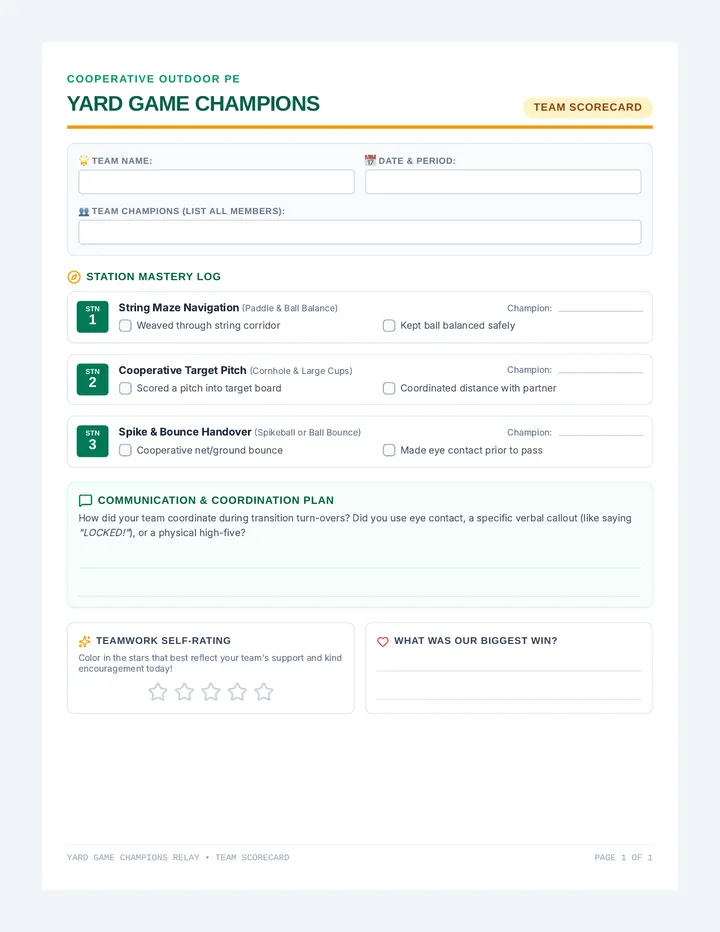
An outdoor cooperative relay race utilizing yard games, balls, and string balance circuits, designed with low-impact adaptations to ensure full class inclusion.
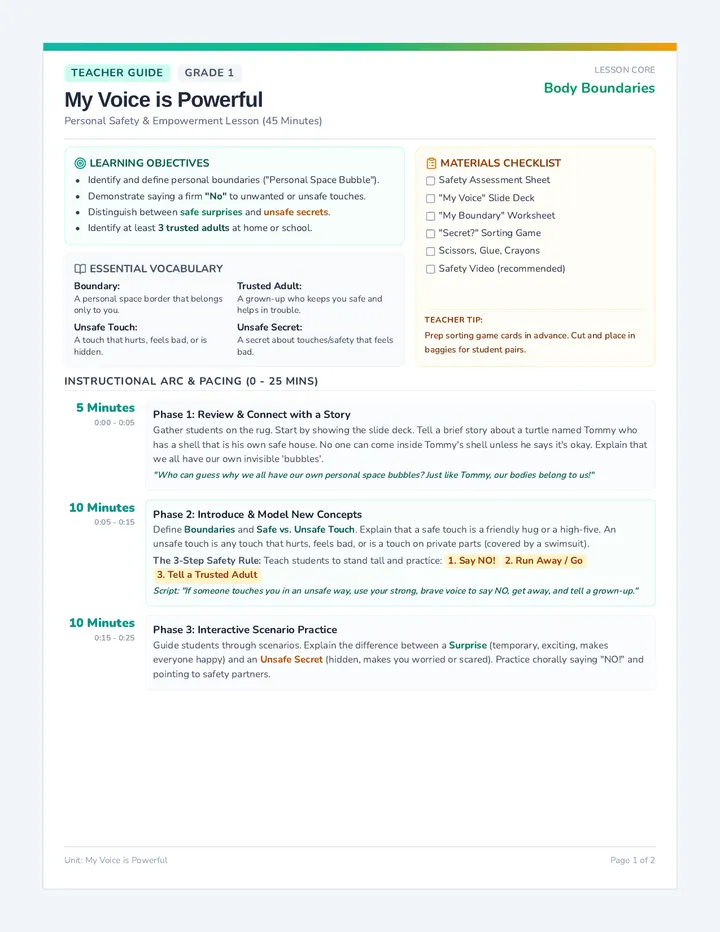
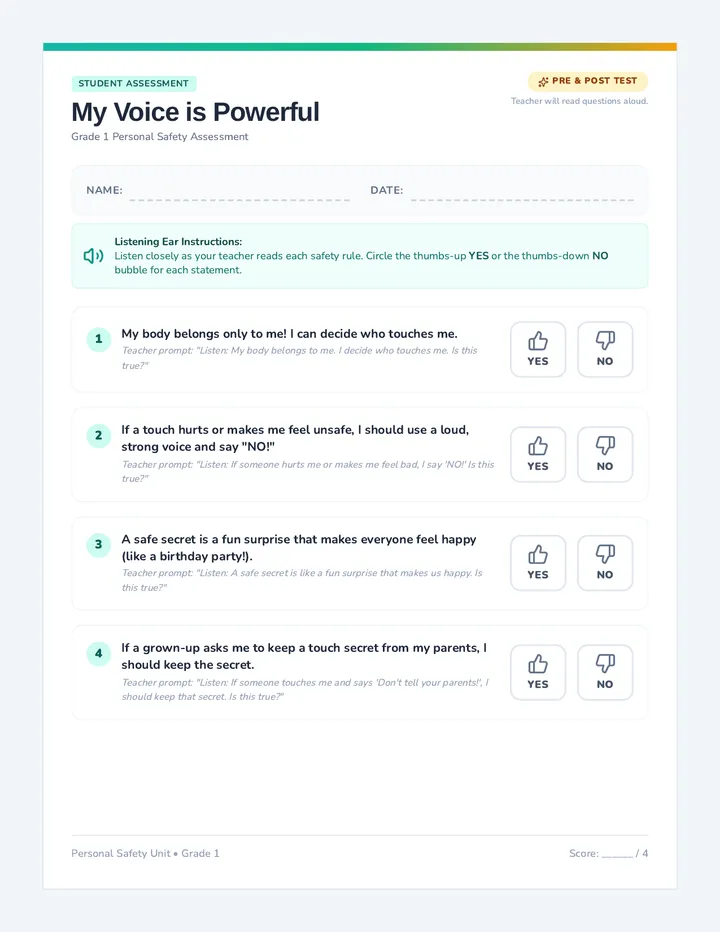
A comprehensive 45-minute personal safety lesson for 1st-grade students. It focuses on empowering children to understand their personal boundaries, confidently say 'no' to unsafe touches, distinguish between safe and unsafe secrets, and identify trusted adults.
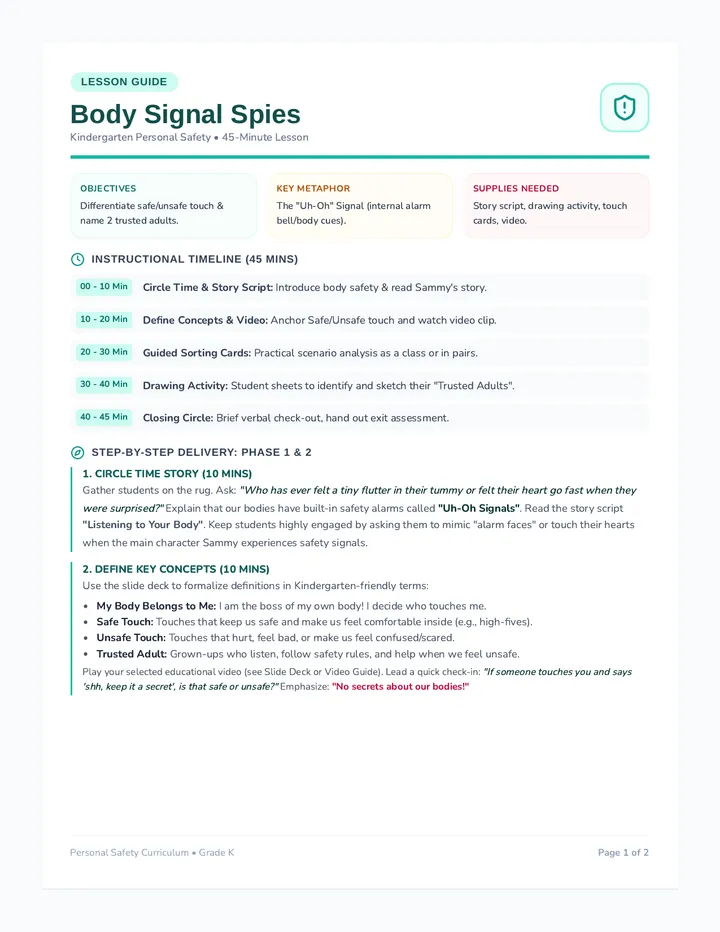
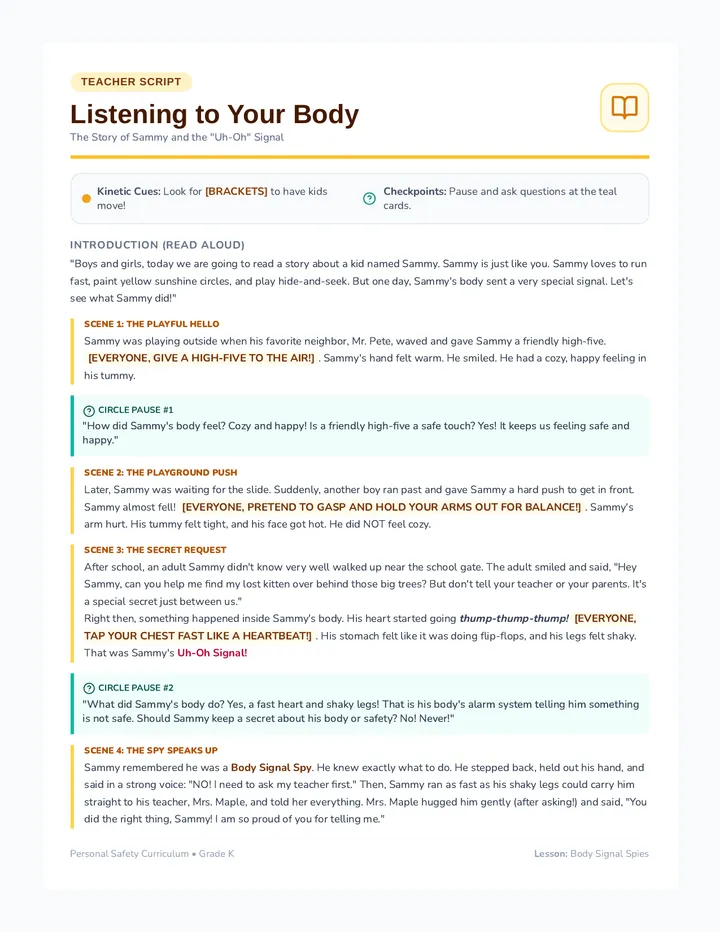
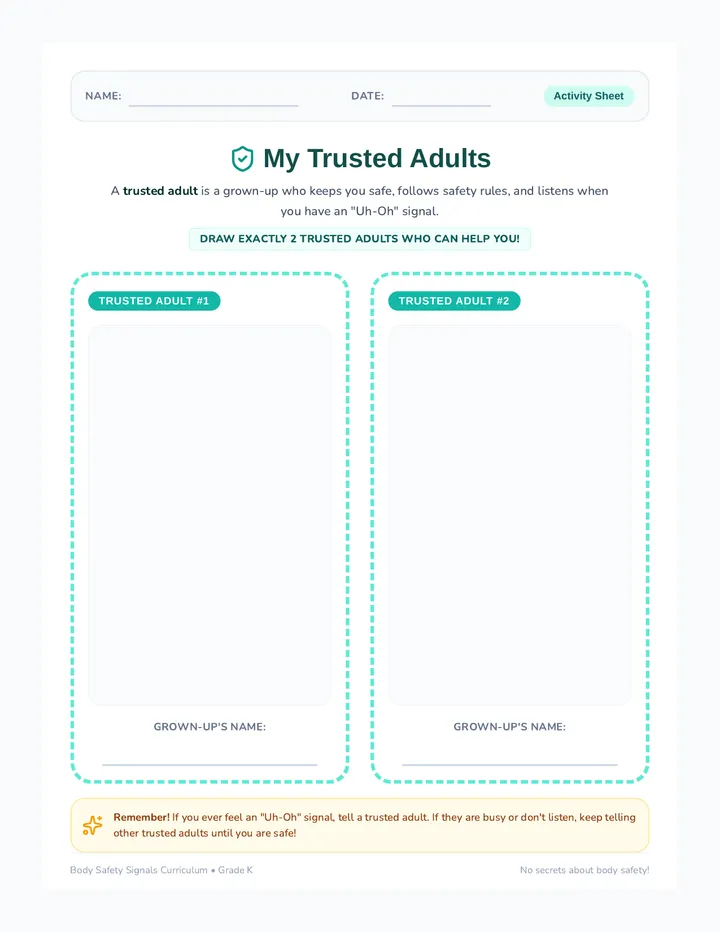
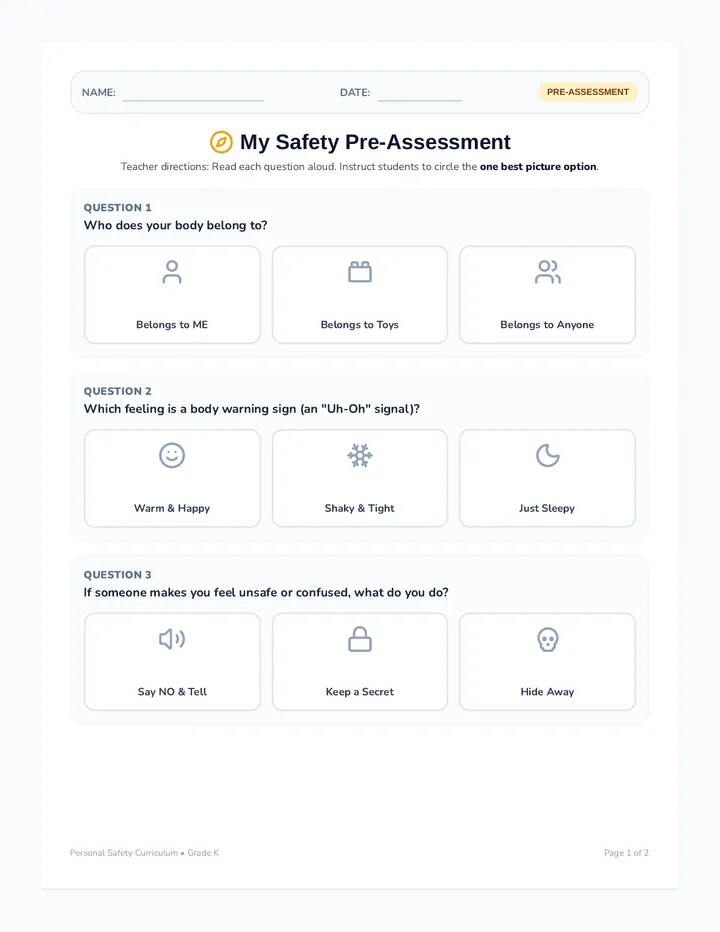
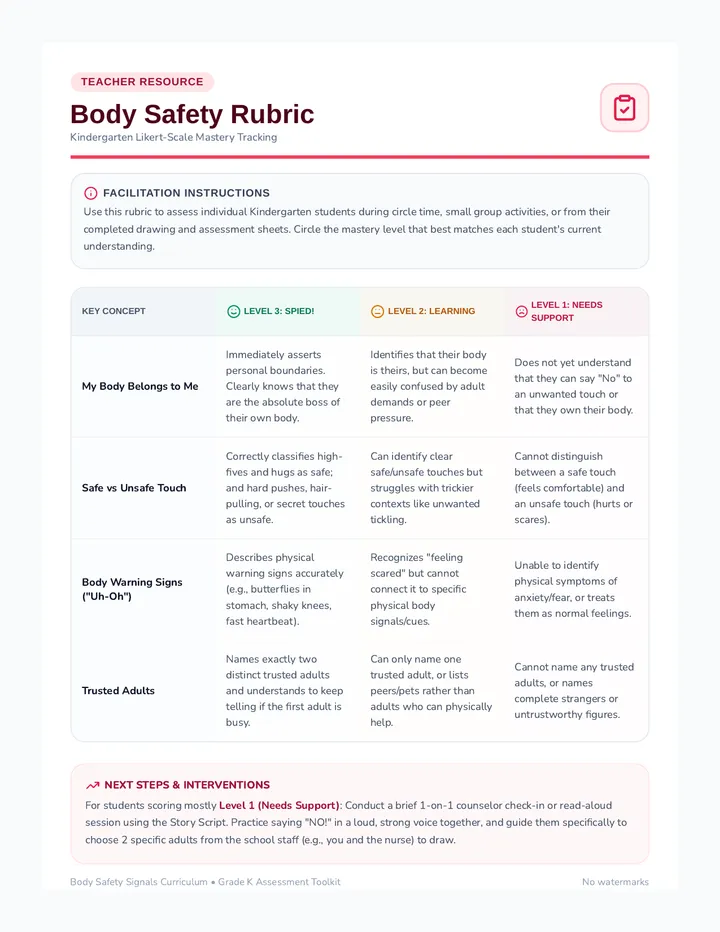
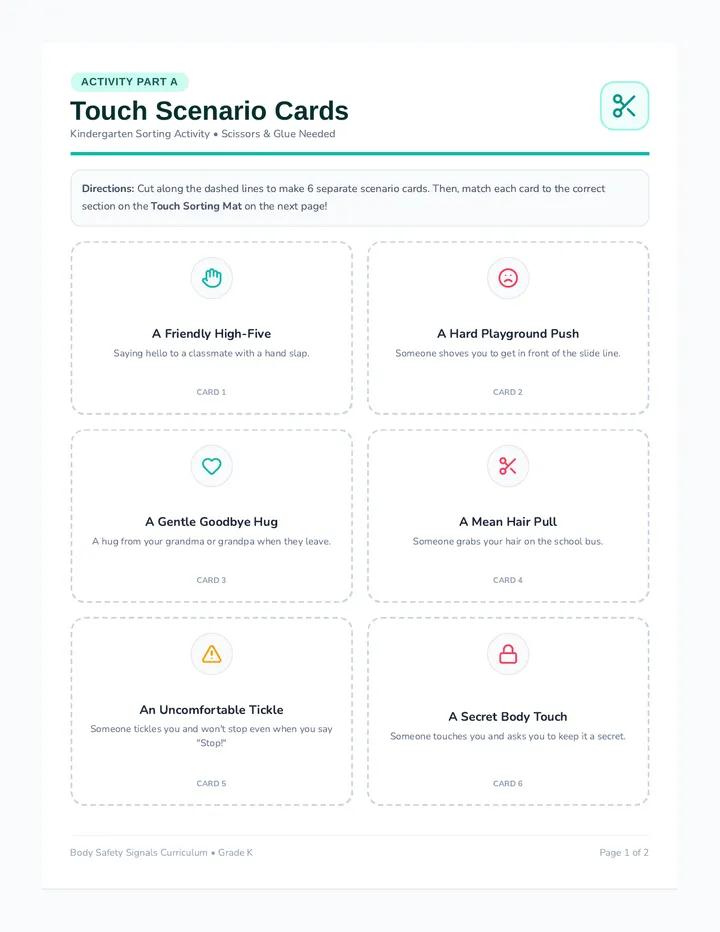
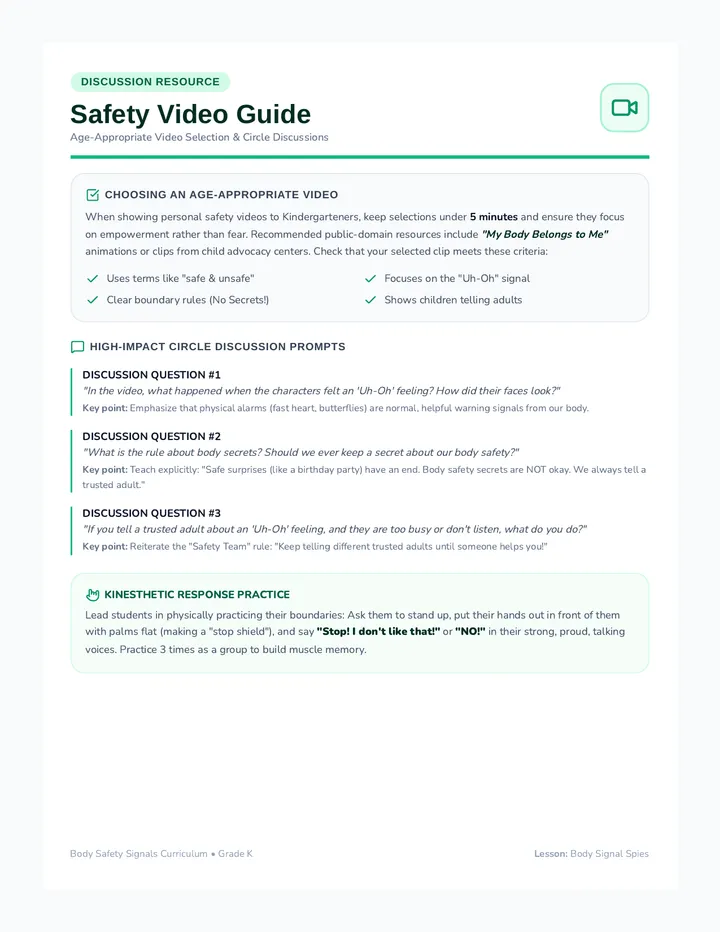
A comprehensive Kindergarten body safety lesson that teaches students to recognize physical warning signs ('uh-oh' feelings), differentiate between safe and unsafe touch, and identify trusted adults.
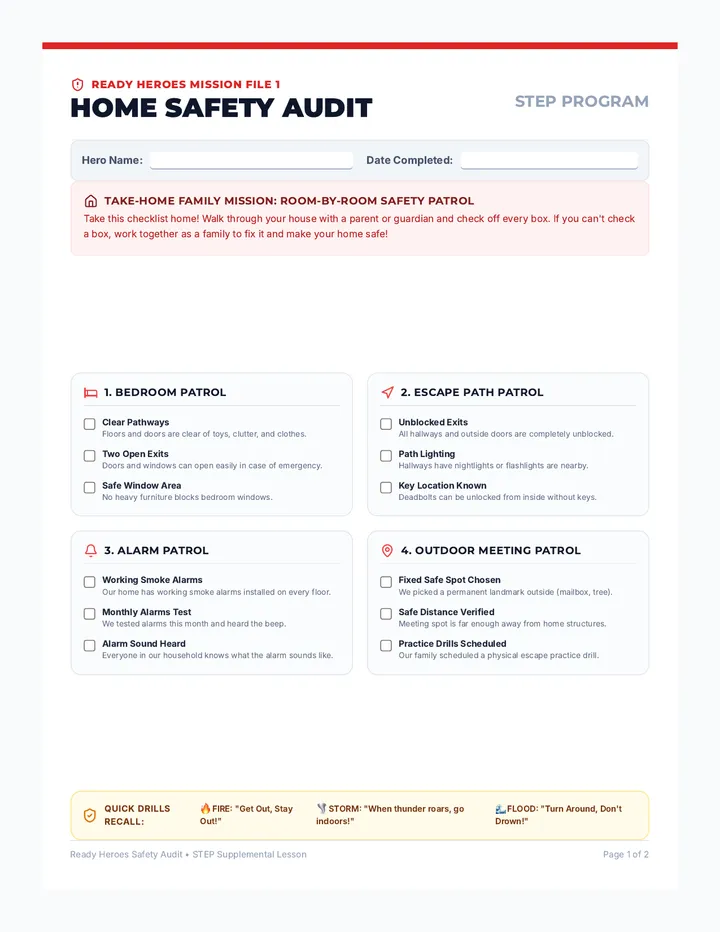
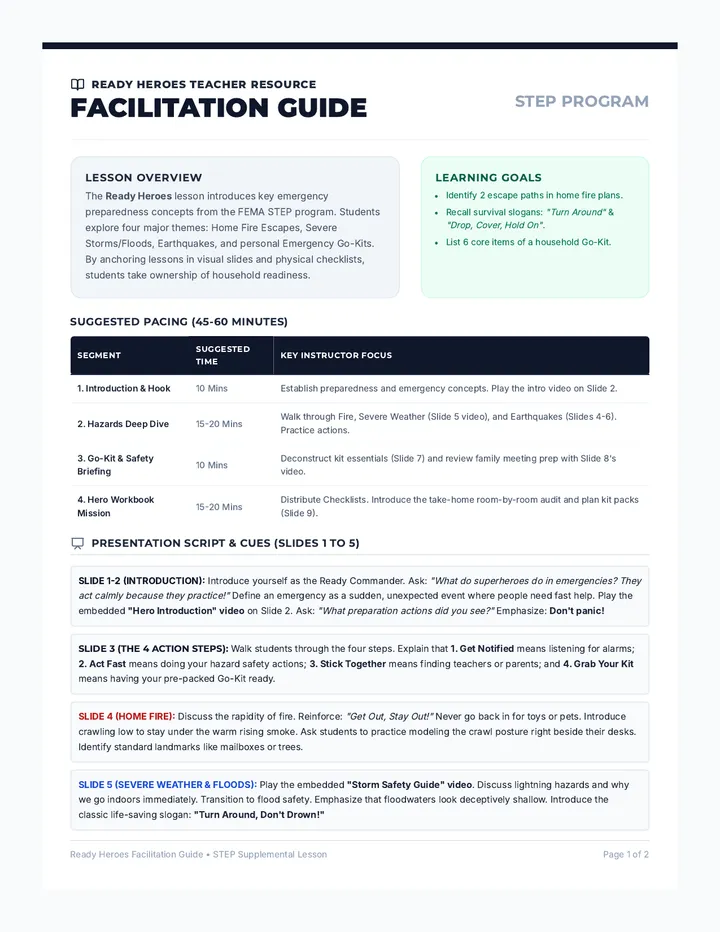
A highly visual, action-oriented emergency preparedness lesson teaching students how to stay safe during fires, severe weather, floods, and earthquakes. Includes hands-on planning for emergency go-kits and home escape plans.
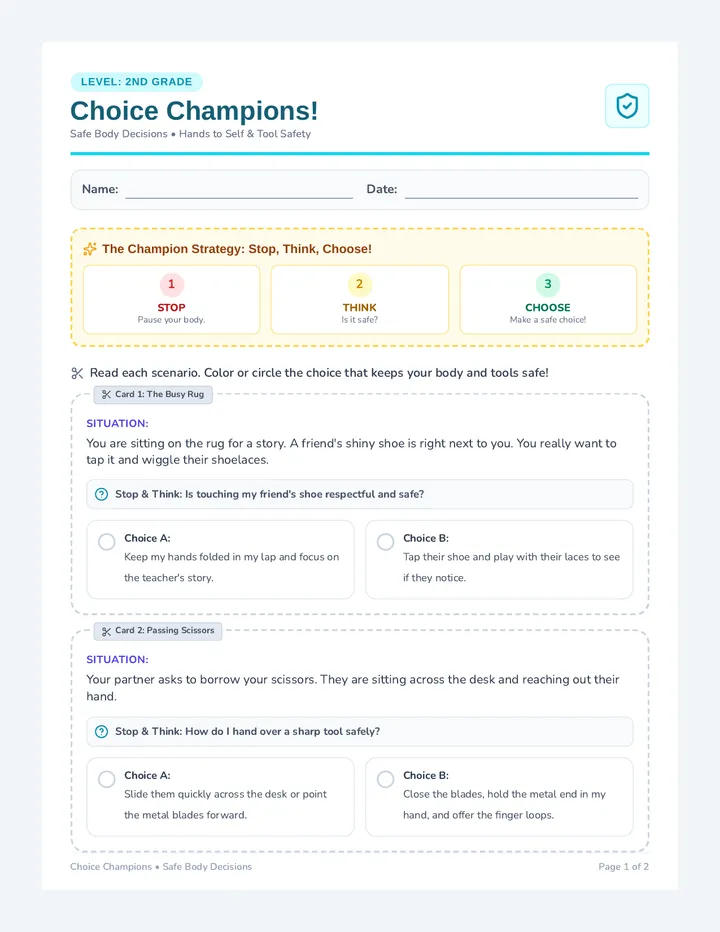
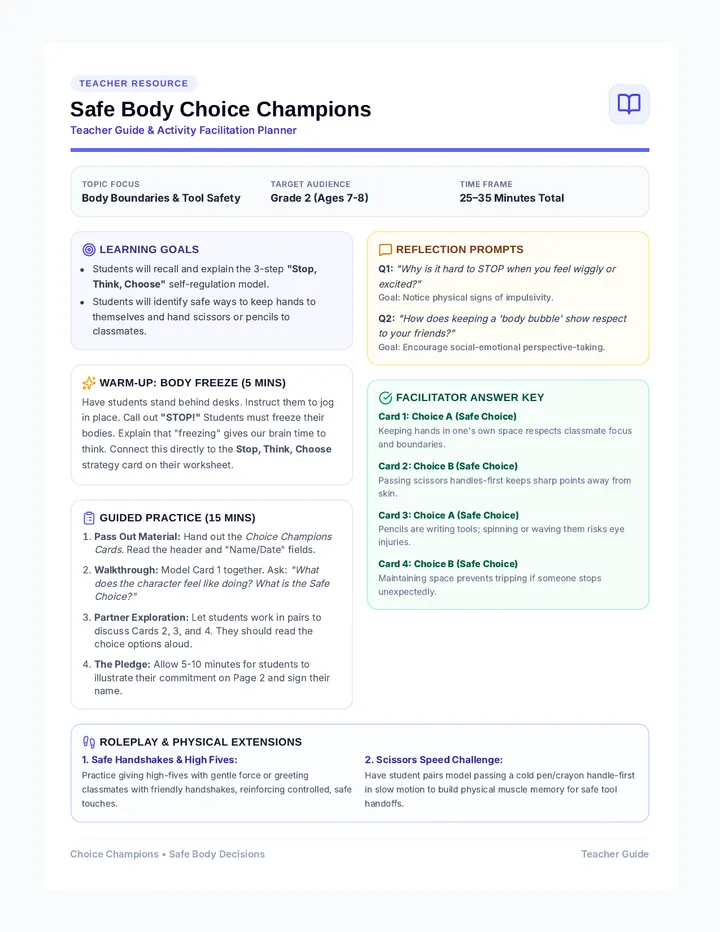
A lesson for 2nd graders to learn and practice making safer choices in the classroom using interactive 'Stop, Think, Choose' cards. It teaches students to keep their hands to themselves and use classroom tools safely.
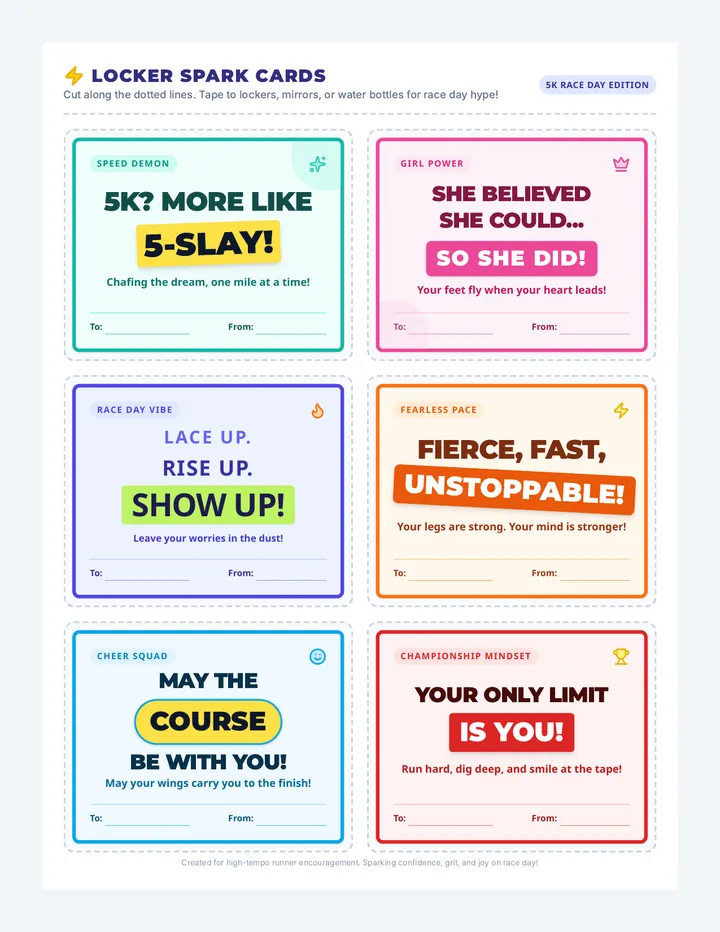
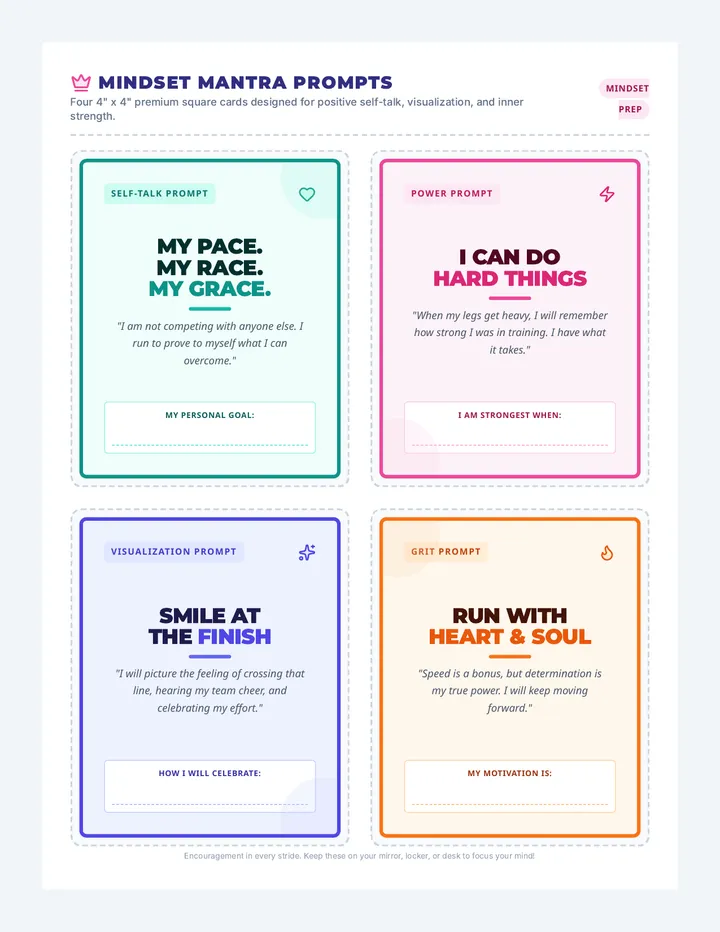
A short lesson focused on boosting runner morale and building community hype for the upcoming 5k race through personalized, high-energy motivation.
An interactive, visually rich lesson preparing Florida students for severe storms and hurricanes. Covers emergency kit building, weather alerts, home action plans, and sensory coping strategies to reduce storm anxiety.