This sequence explores the relationship between articles and noun countability. Students distinguish between count and non-count nouns and learn the rules for using 'a', 'an', 'some', or no article, culminating in a market simulation.
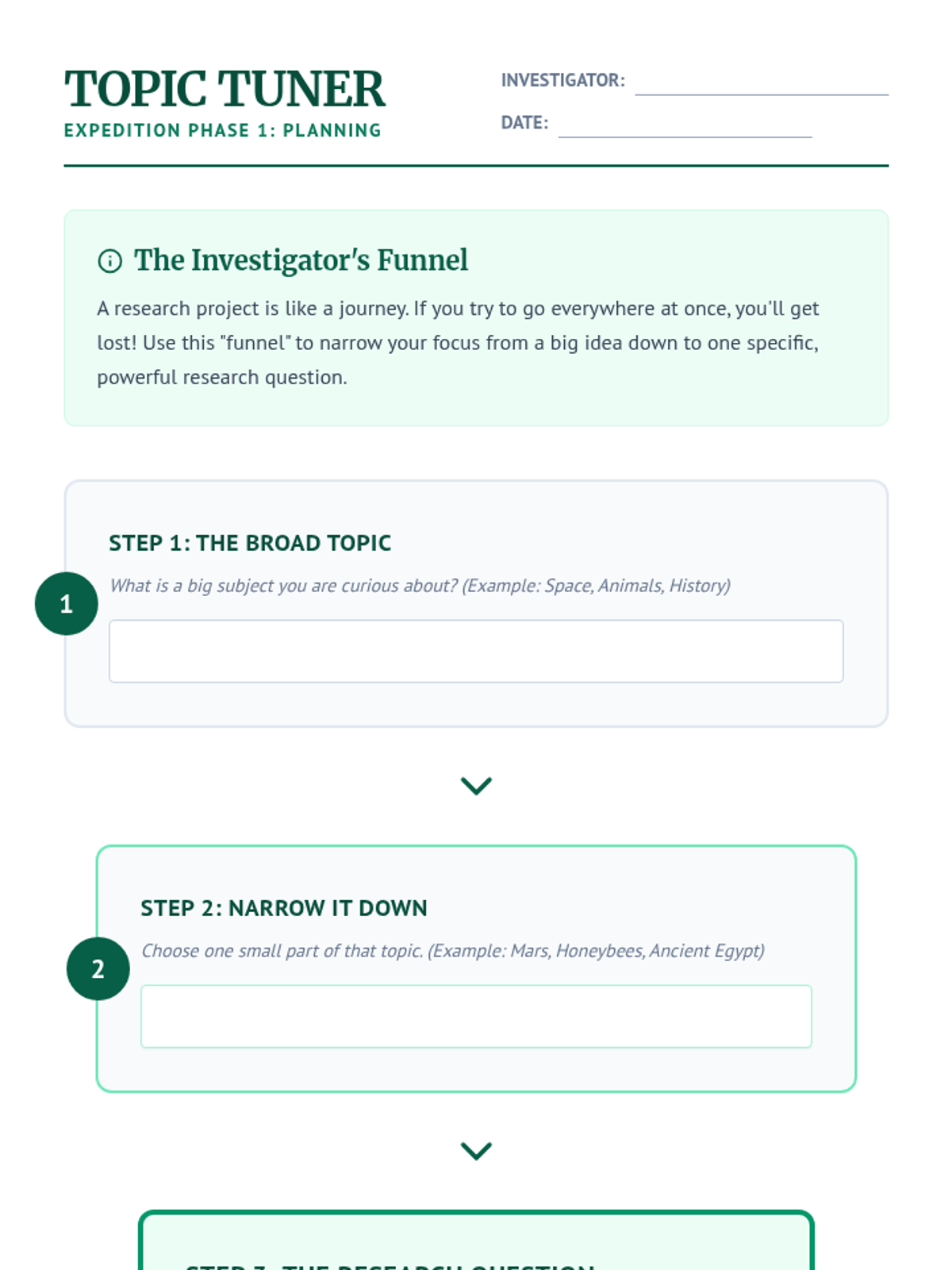
A comprehensive 5-lesson project-based sequence for 5th Grade ESL students to master the research cycle, from questioning to final publication. Students develop academic English skills through searching, evaluating, and synthesizing information on a chosen topic.
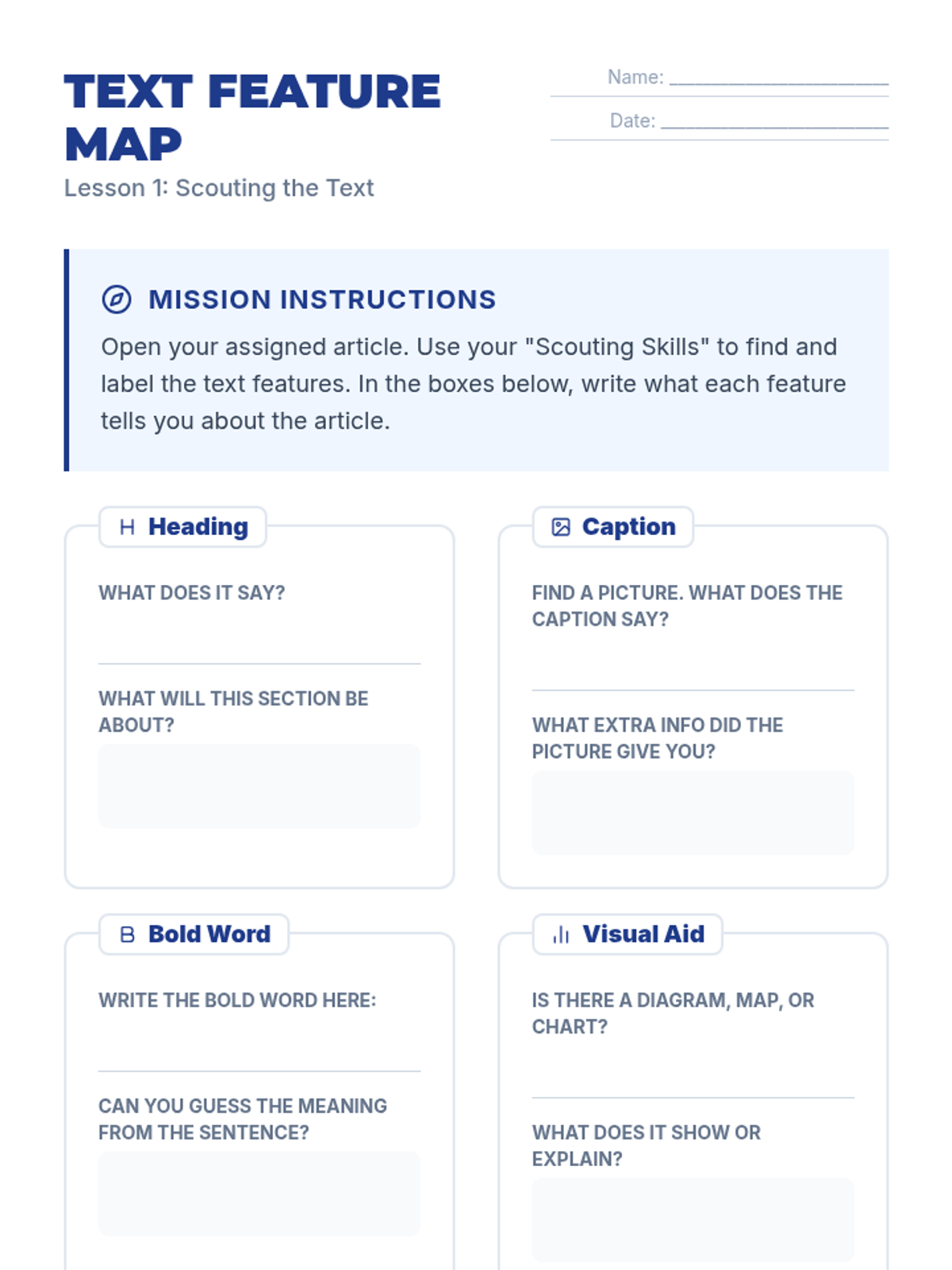
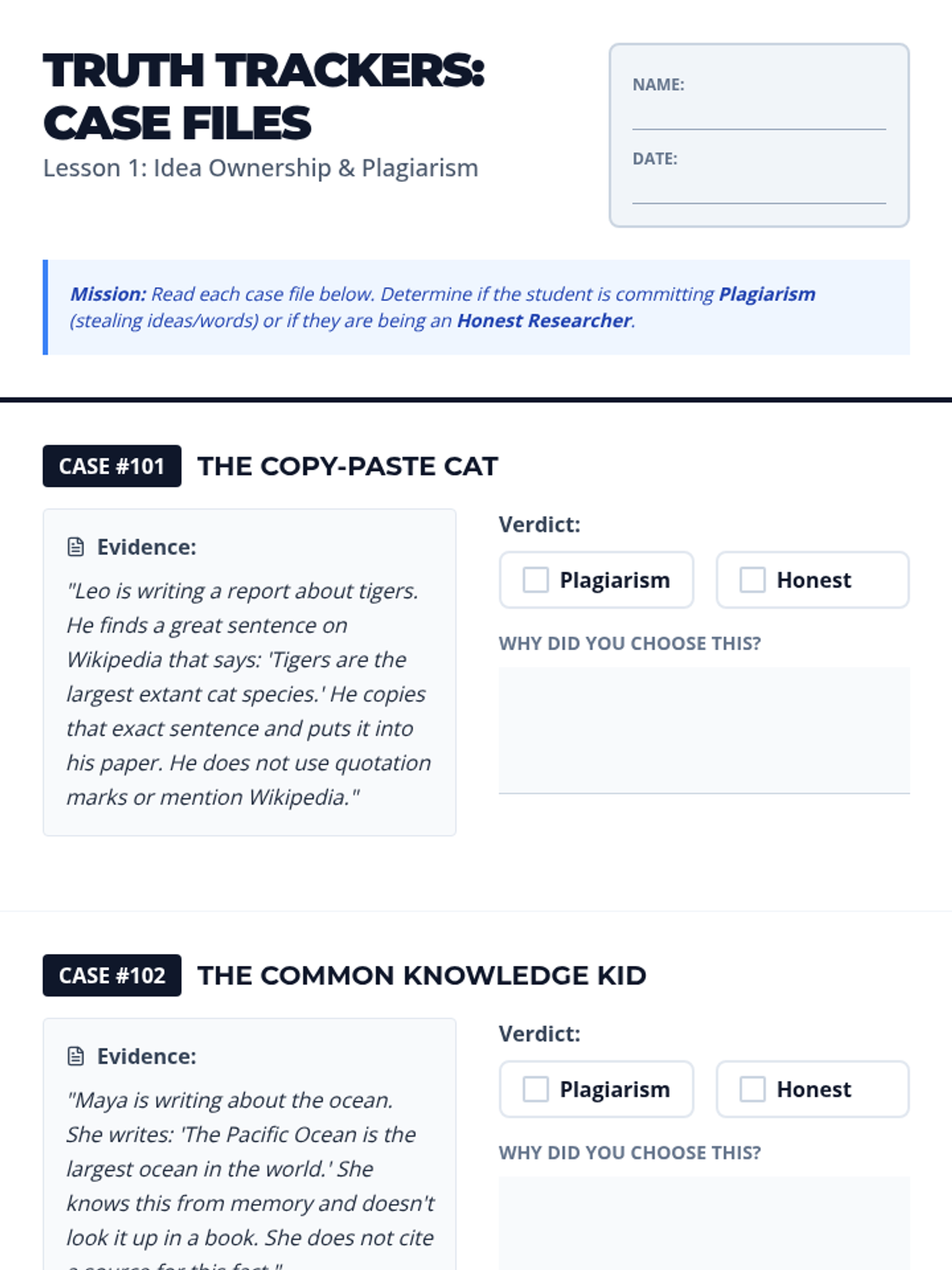
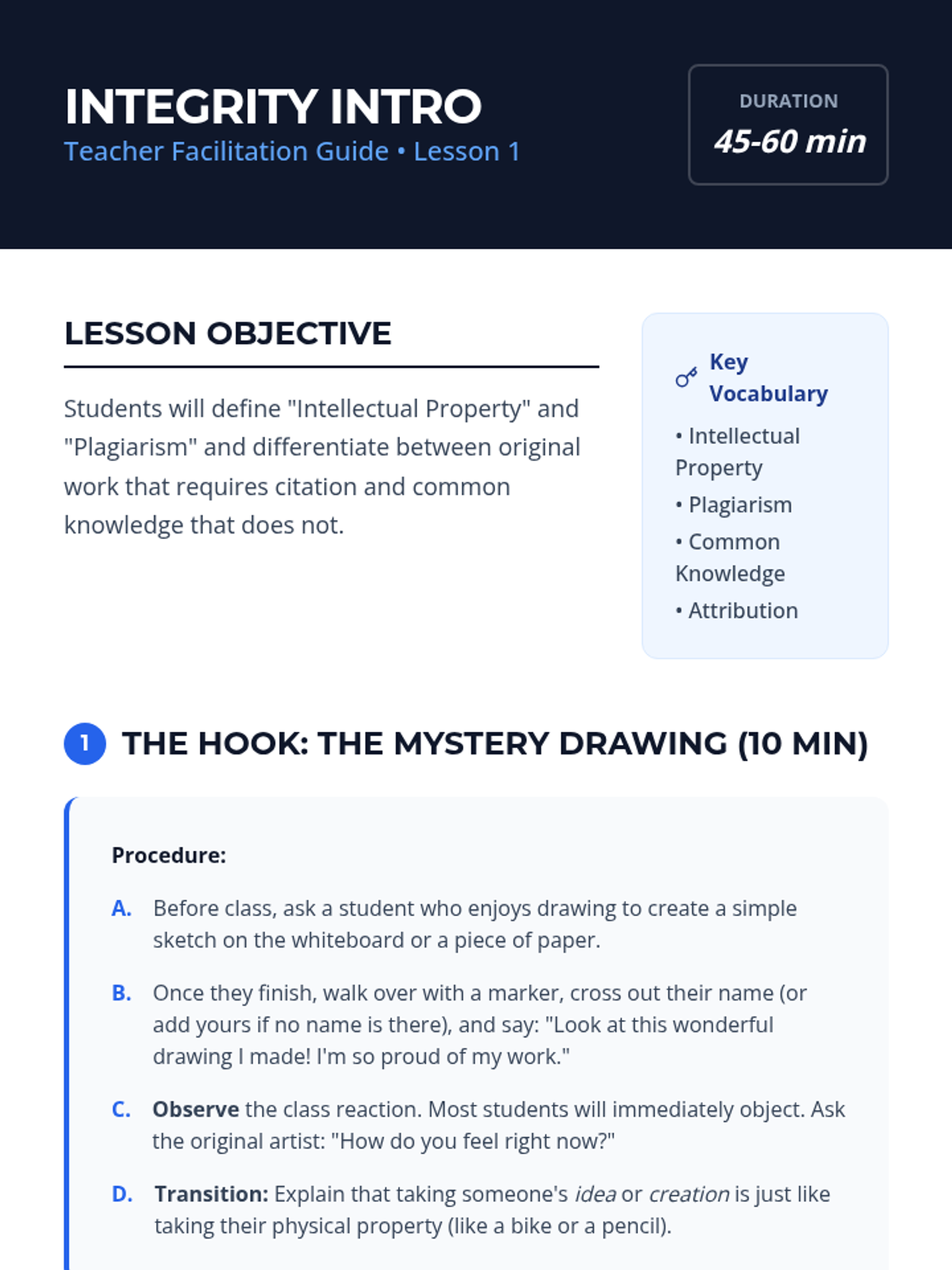
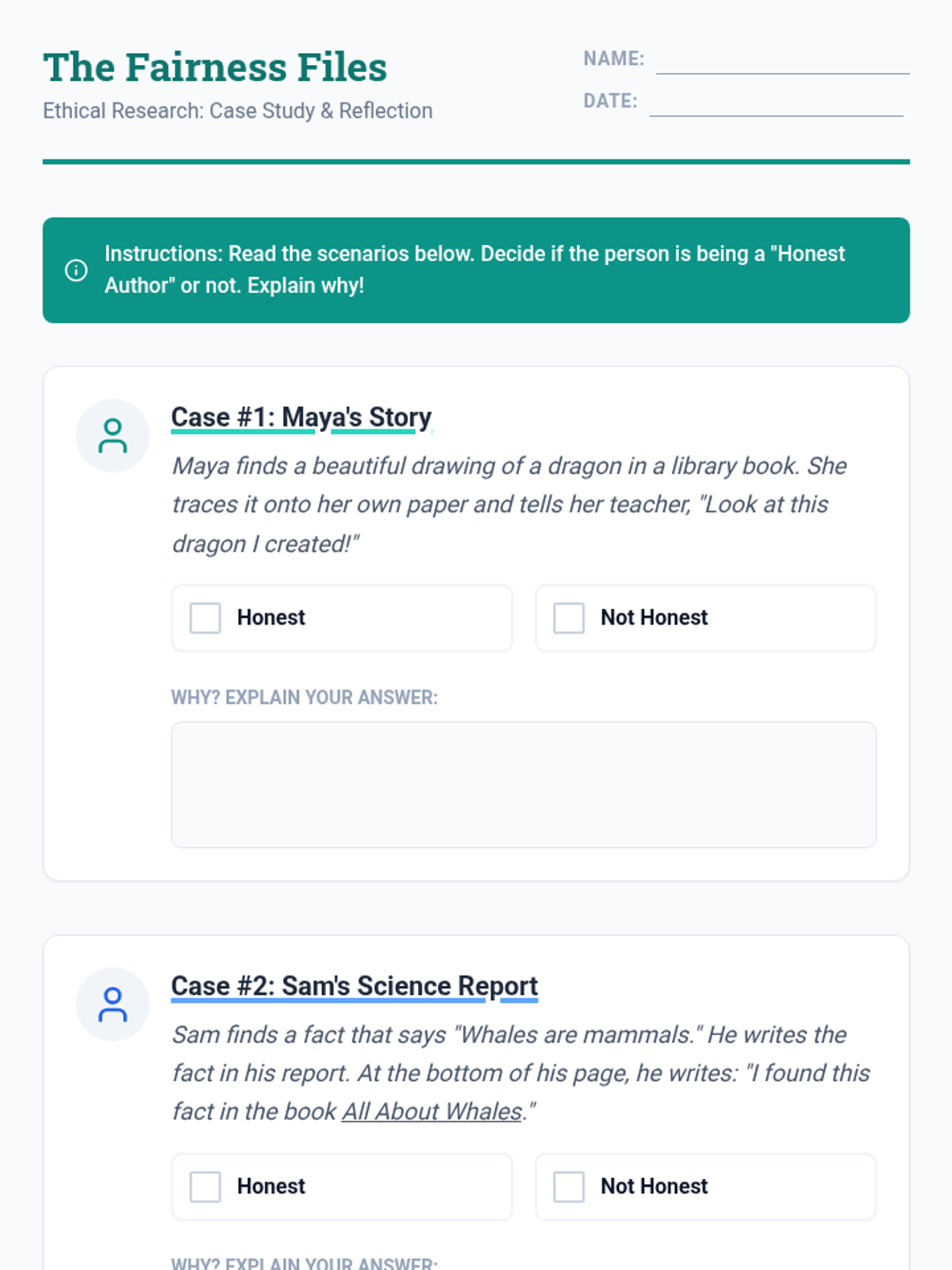
A 5-lesson sequence for 5th-grade ESL students focused on the ethics and mechanics of academic research. Students learn to distinguish between intellectual property and common knowledge, master the art of quoting and paraphrasing, and create simplified citations and bibliographies to maintain academic integrity.
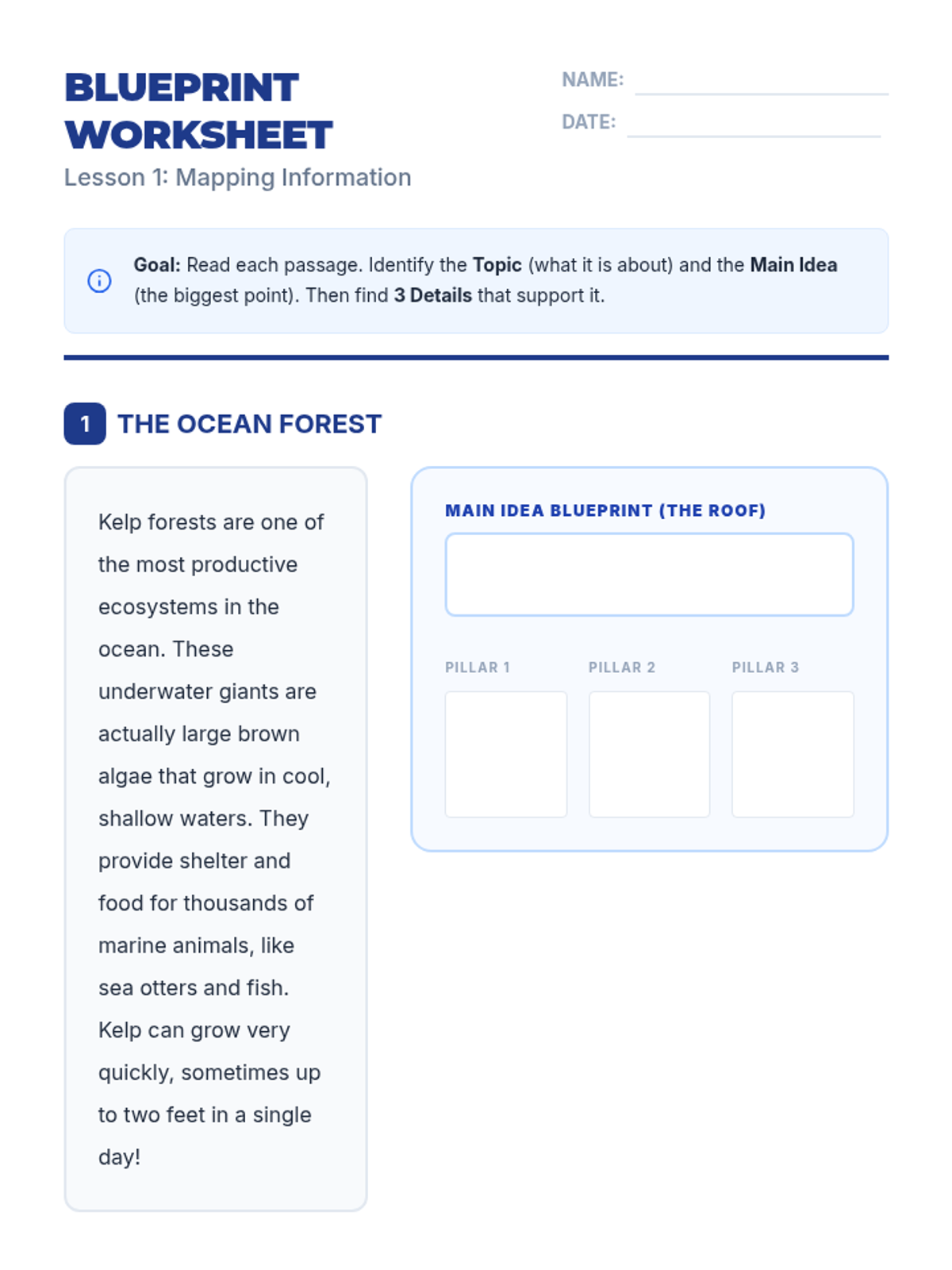
A 5-lesson sequence for 5th Grade ESL students focused on developing academic English skills through paraphrasing and synthesizing information. Students progress from identifying main ideas to drafting complete summary reports using multiple sources and formal attribution.
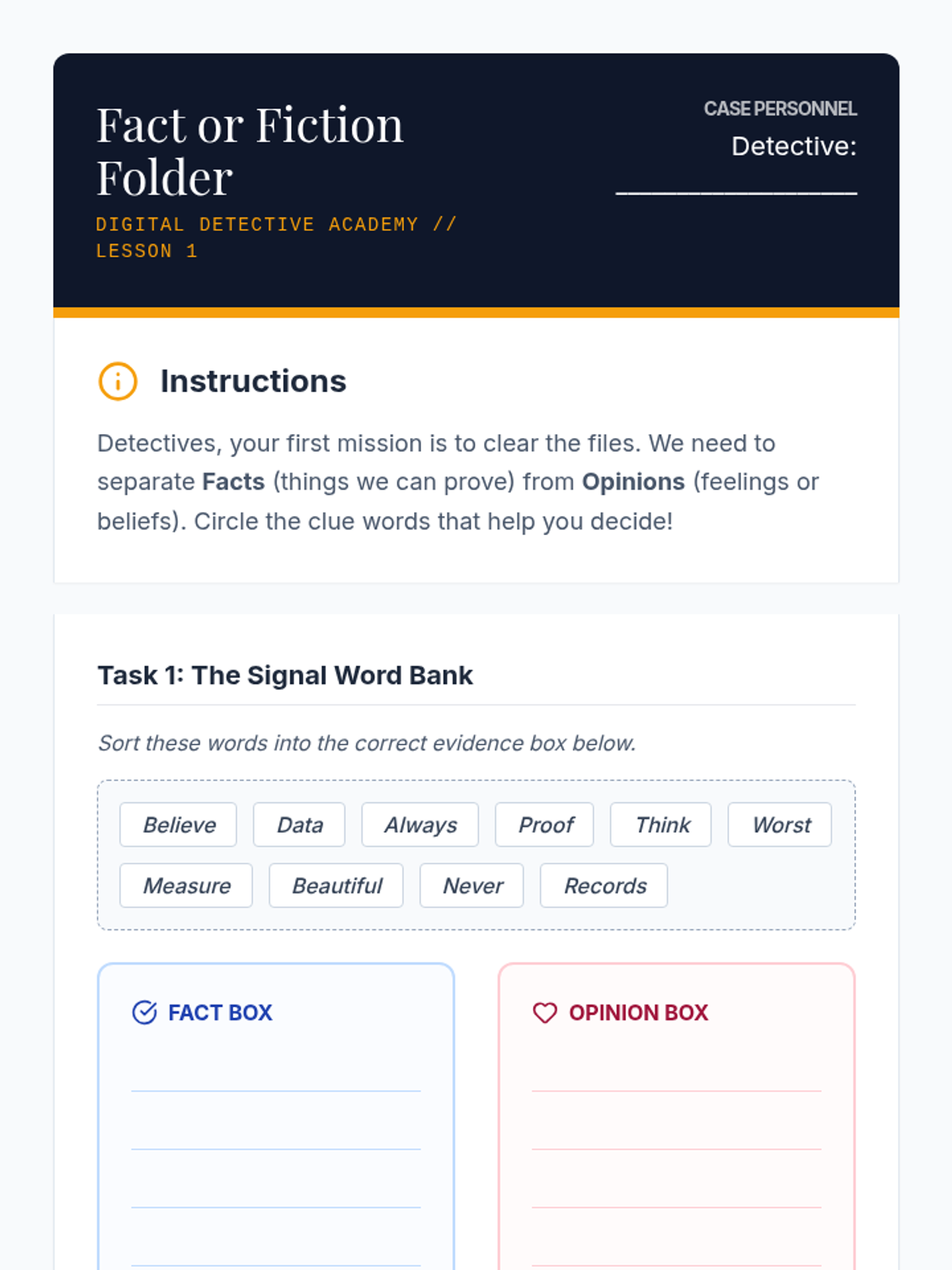
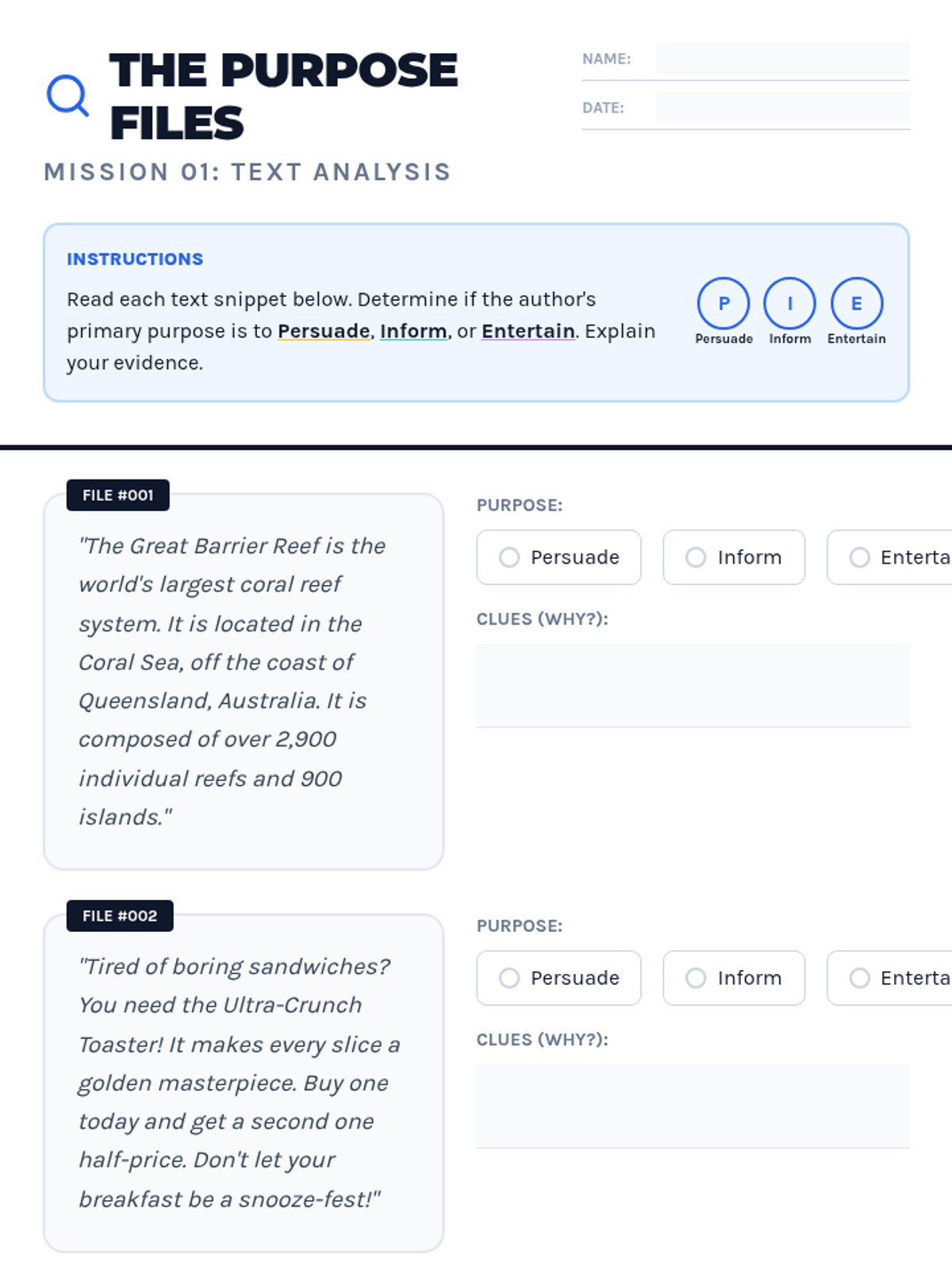
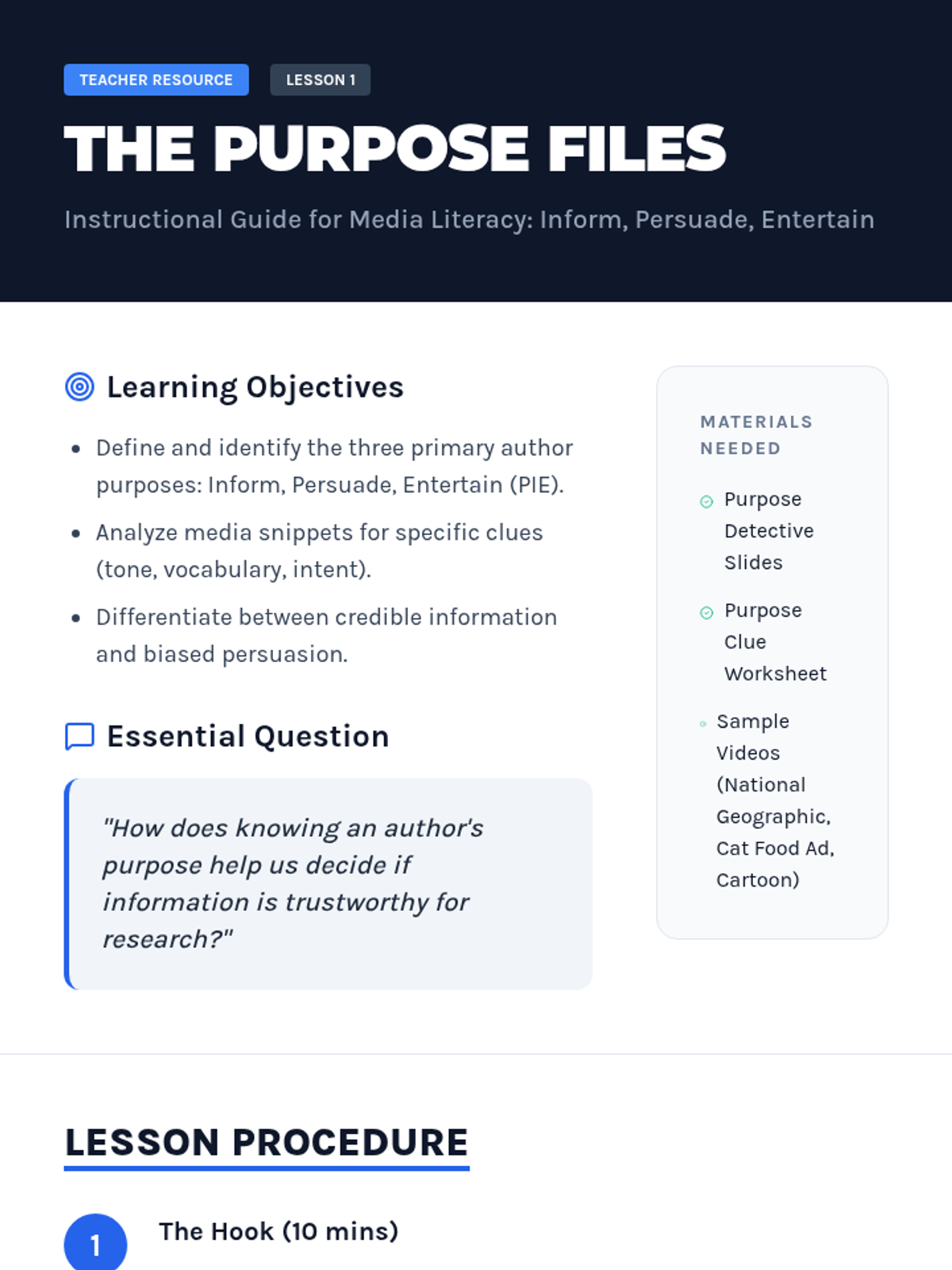
A 5-lesson sequence for 5th-grade ESL students to develop media literacy and research skills. Students learn to distinguish author purpose, evaluate website credibility using the 5 W's, identify bias, and corroborate information across multiple sources.
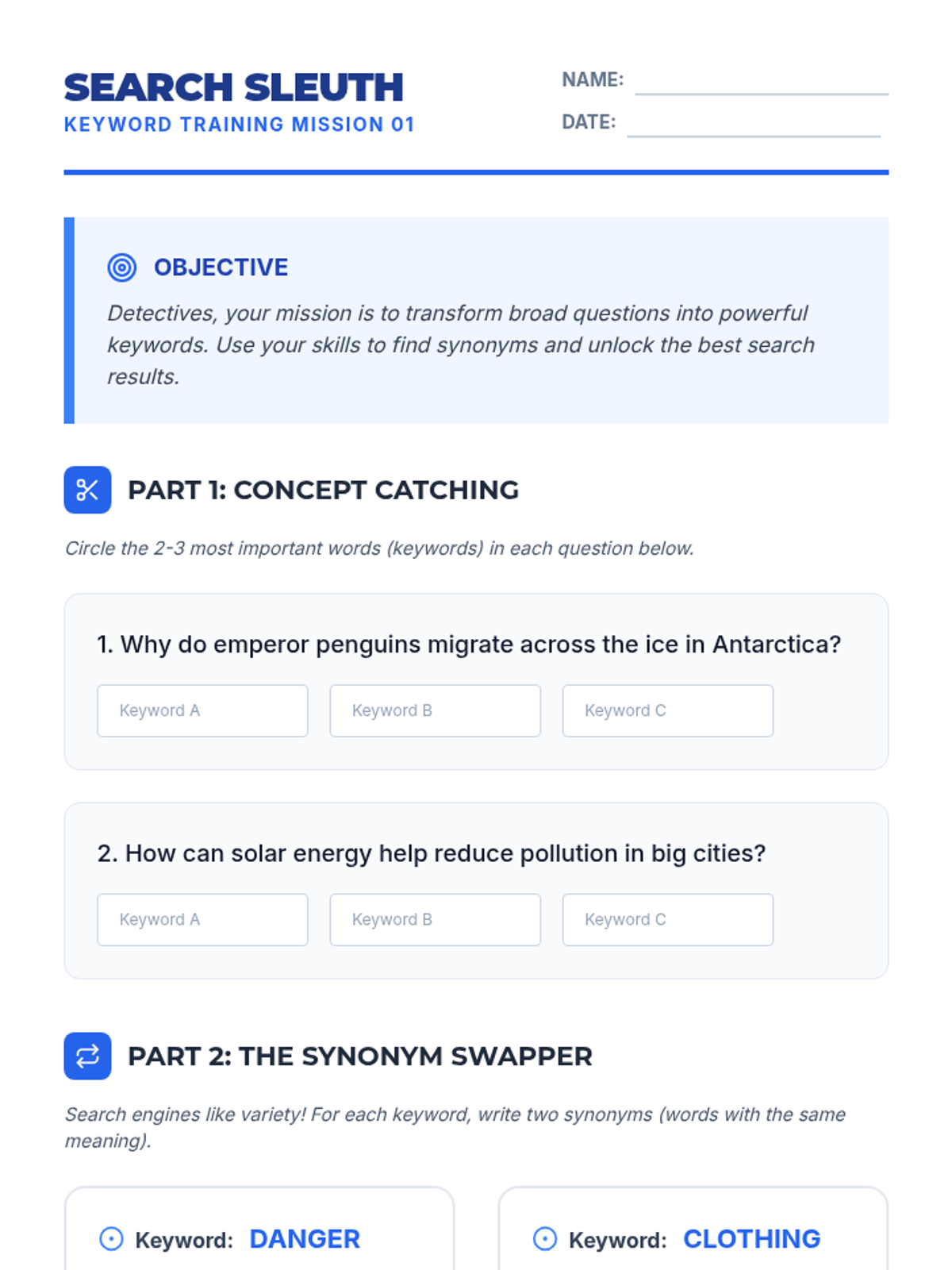
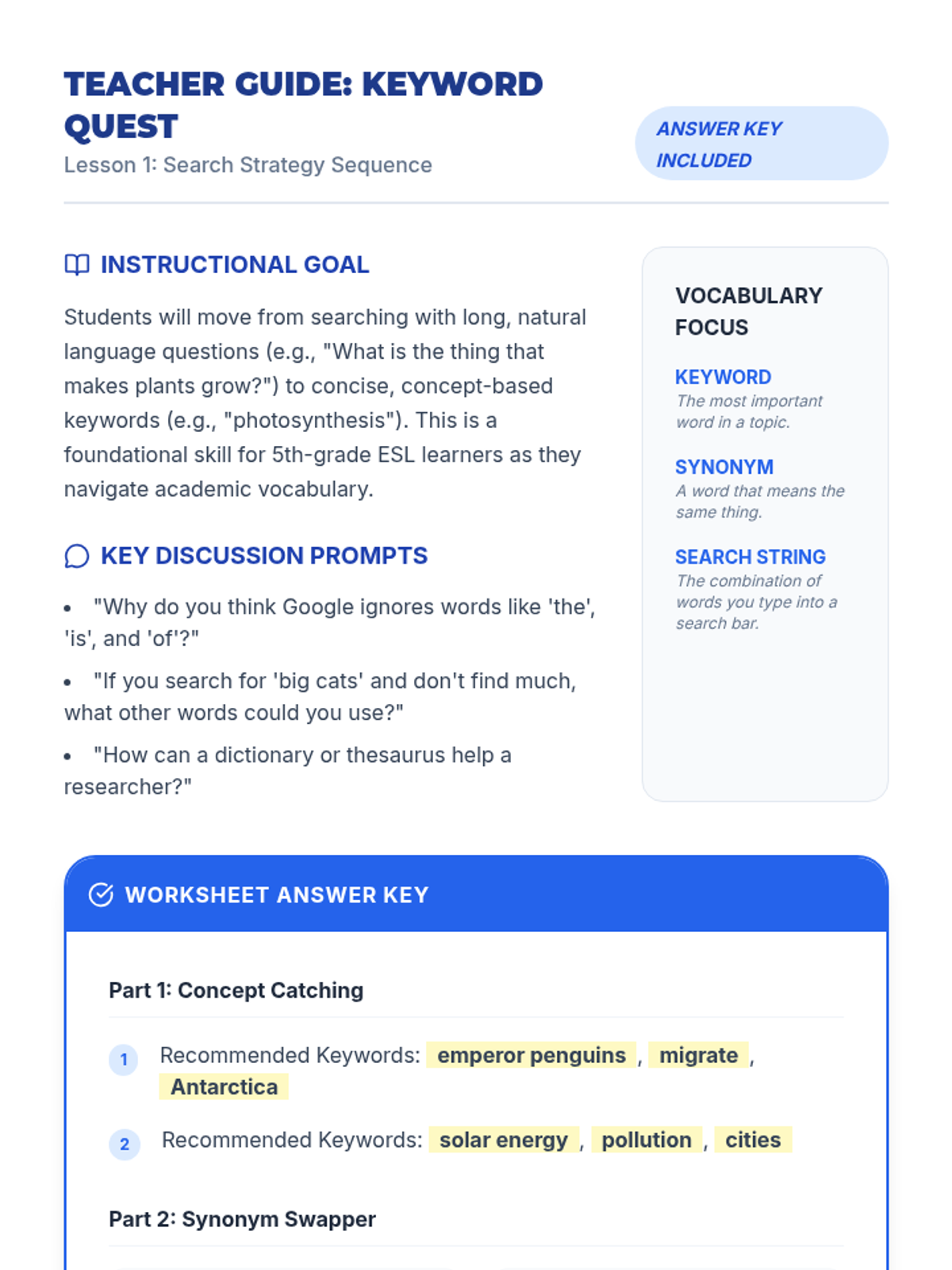
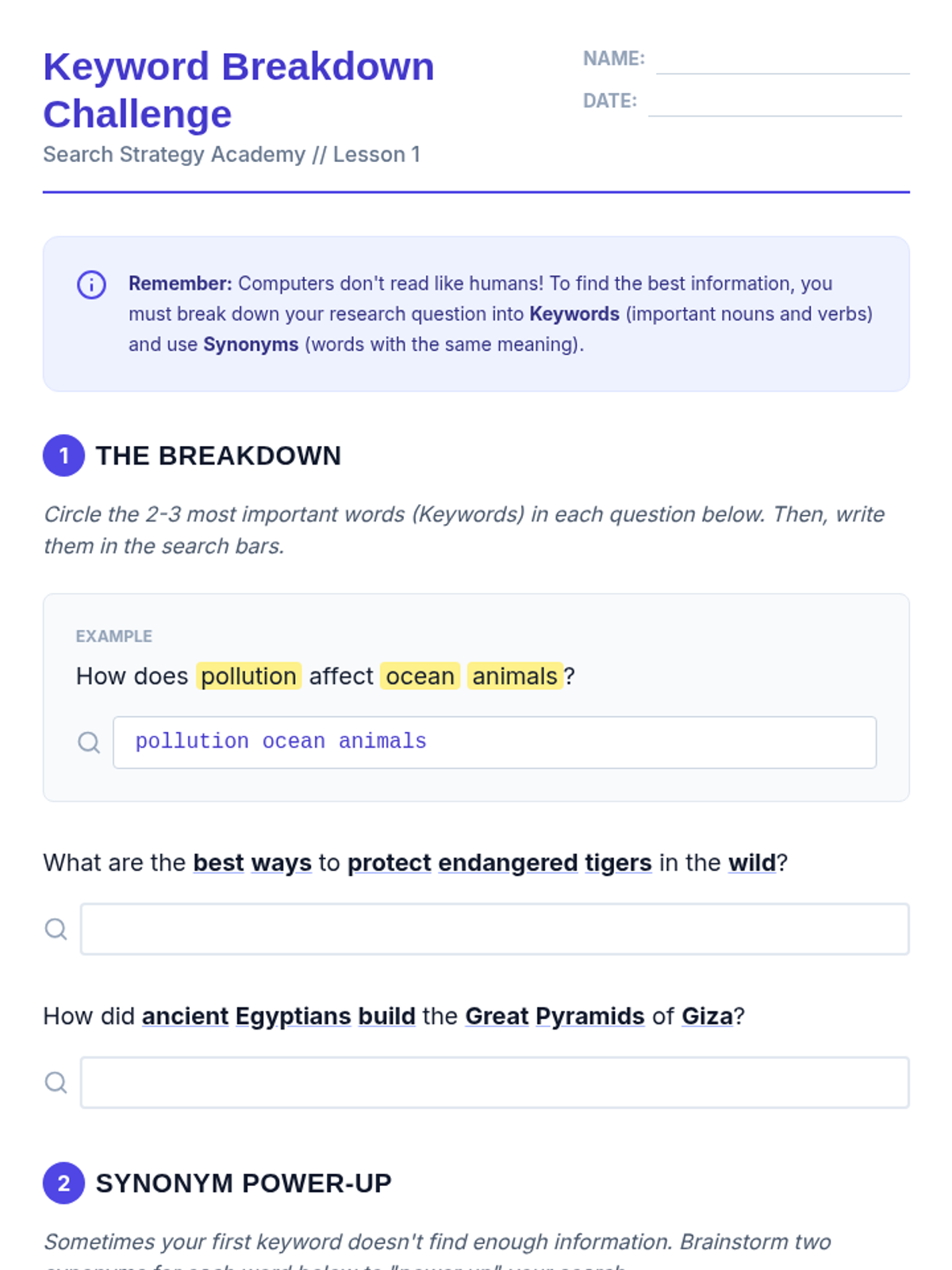
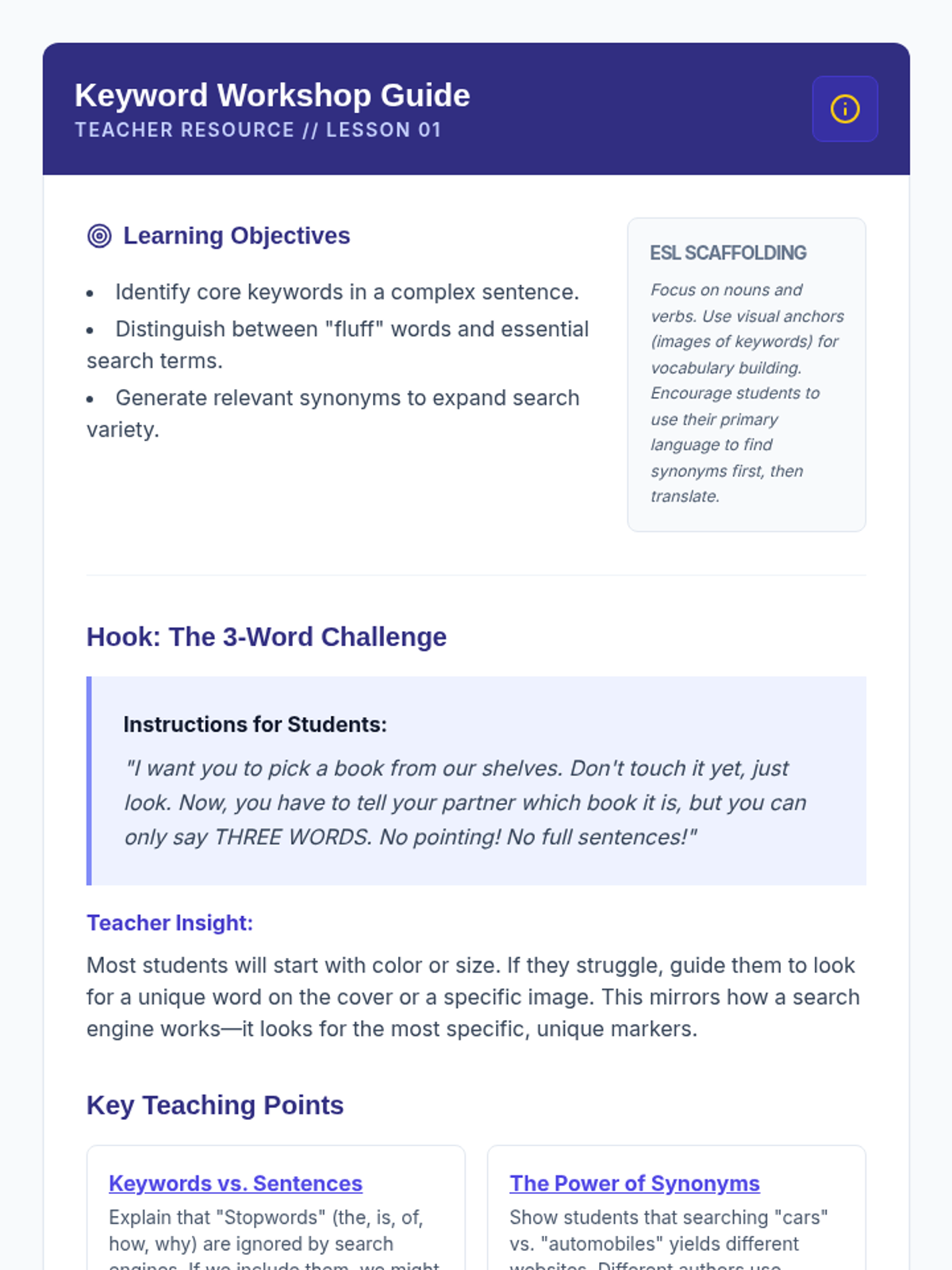
A 5-lesson sequence for 5th Grade ESL students focused on the mechanics of finding information. Students move from basic keyword generation to using Boolean operators, navigating text features, utilizing academic databases, and refining failed searches to become efficient digital researchers.
A 5-lesson unit for 6th-grade ESL students focused on transforming search habits from natural language questions to strategic keyword and Boolean operator techniques. Students move from basic vocabulary brainstorming to navigating academic databases and skimming snippets for relevance.
This 3rd-grade ESL sequence teaches students the foundations of academic integrity, focusing on why and how to give credit to authors. Students learn to locate bibliographic information, format simple citations, and synthesize research notes into a final product with a proper source list.
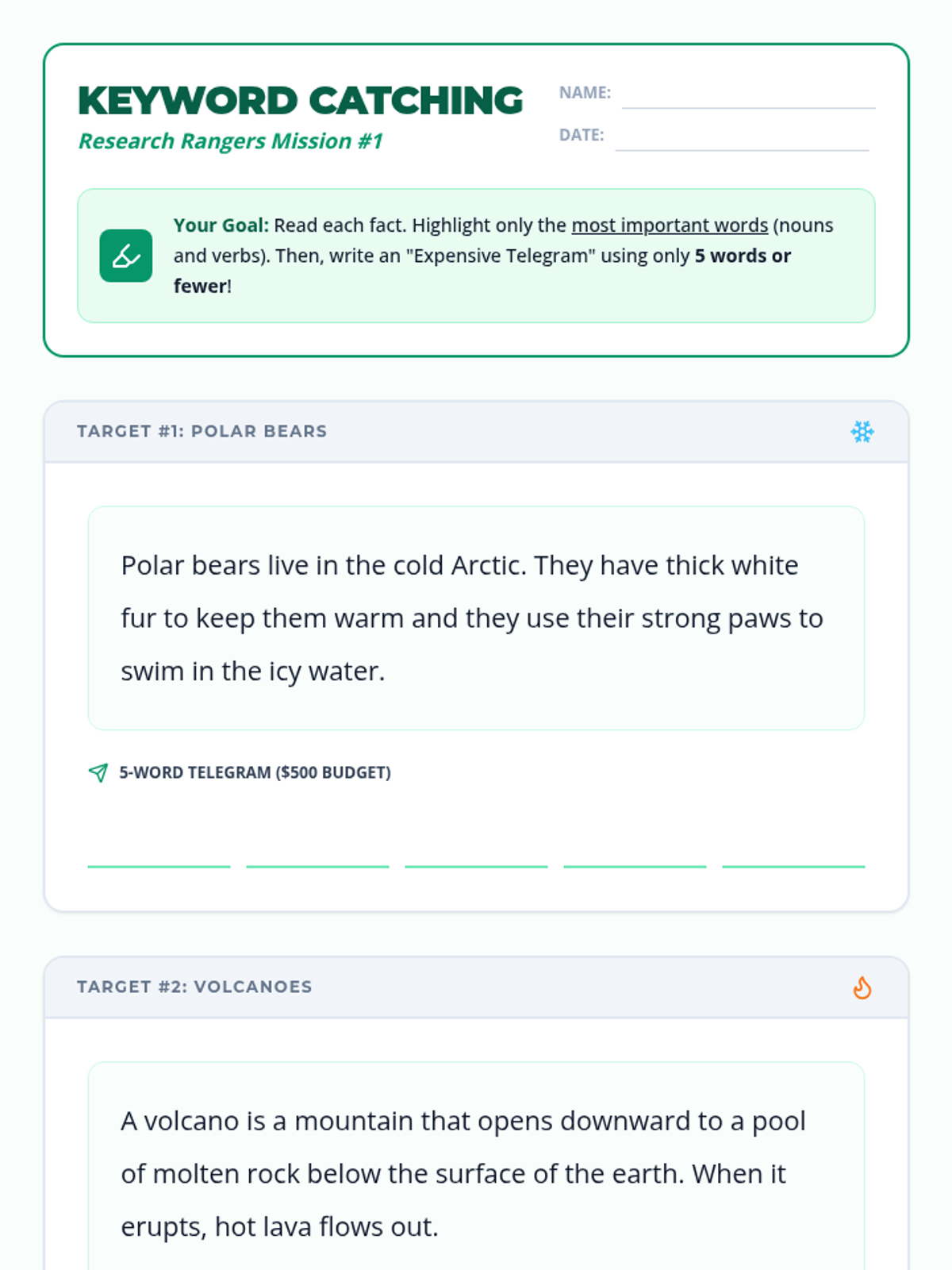
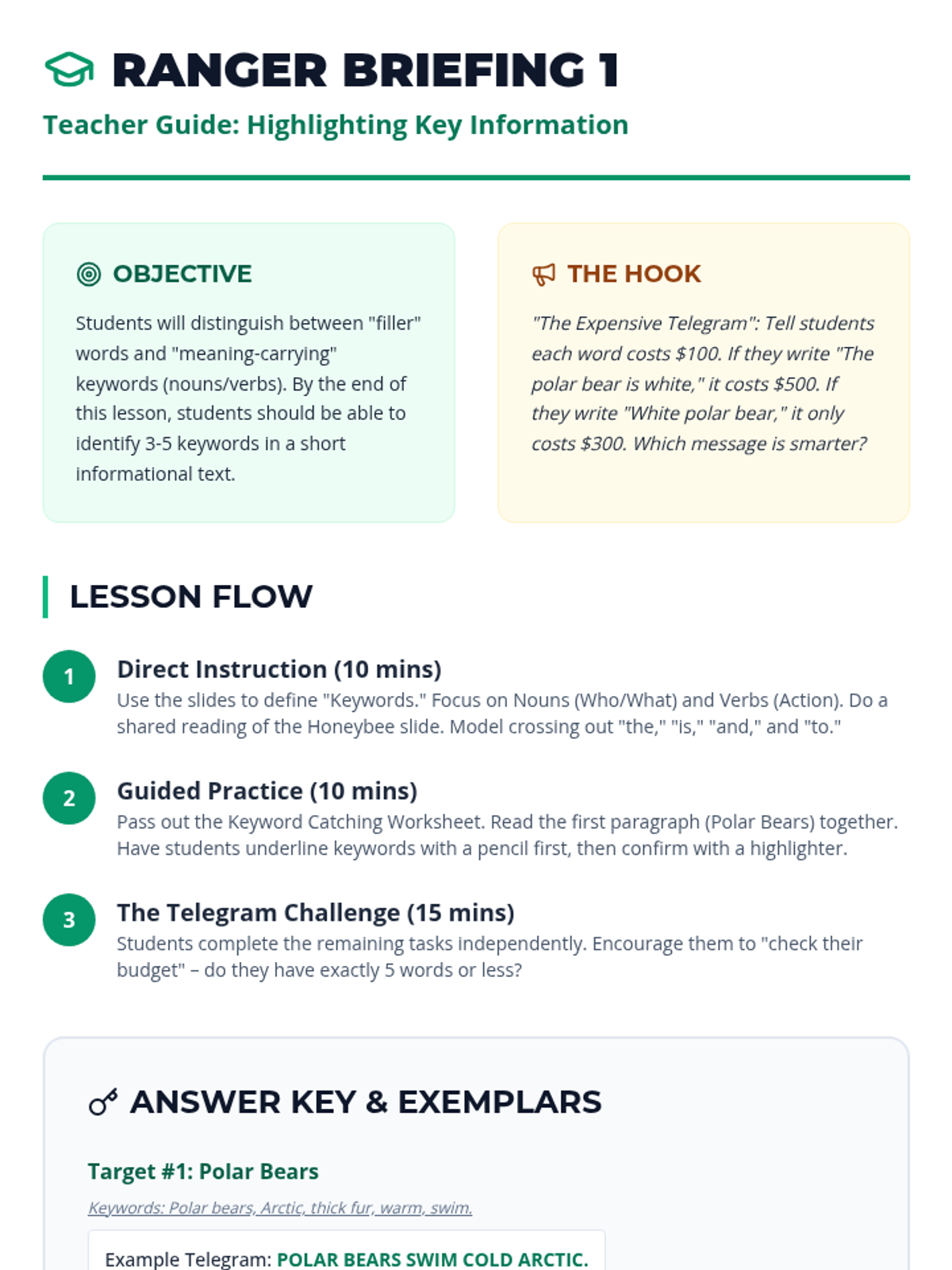
A workshop-style workshop sequence for 3rd grade ESL students focusing on note-taking and paraphrasing. Students learn to extract information without plagiarizing using strategies like keyword highlighting, visual sketching, and the 'Read-Cover-Write' method.
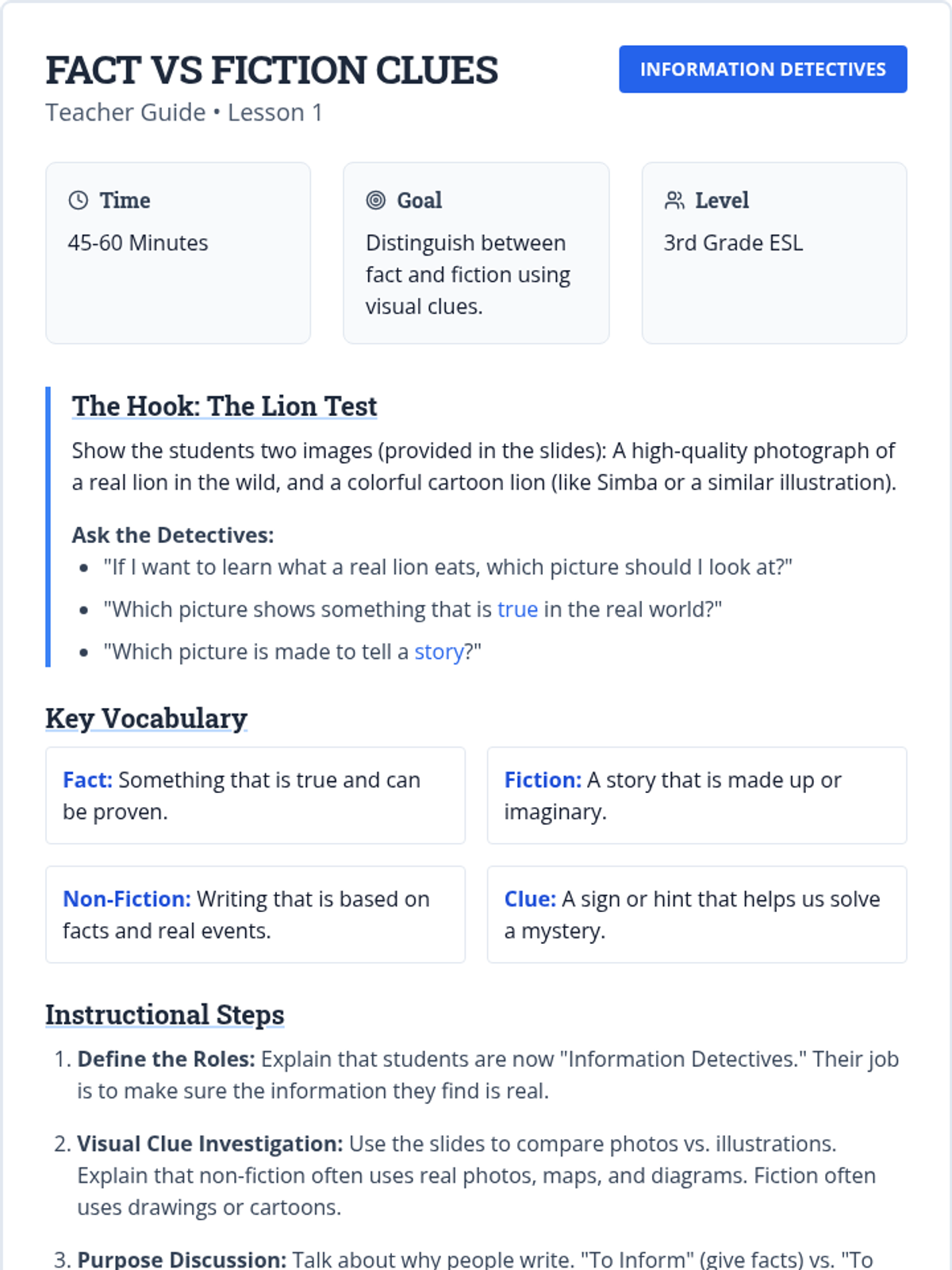
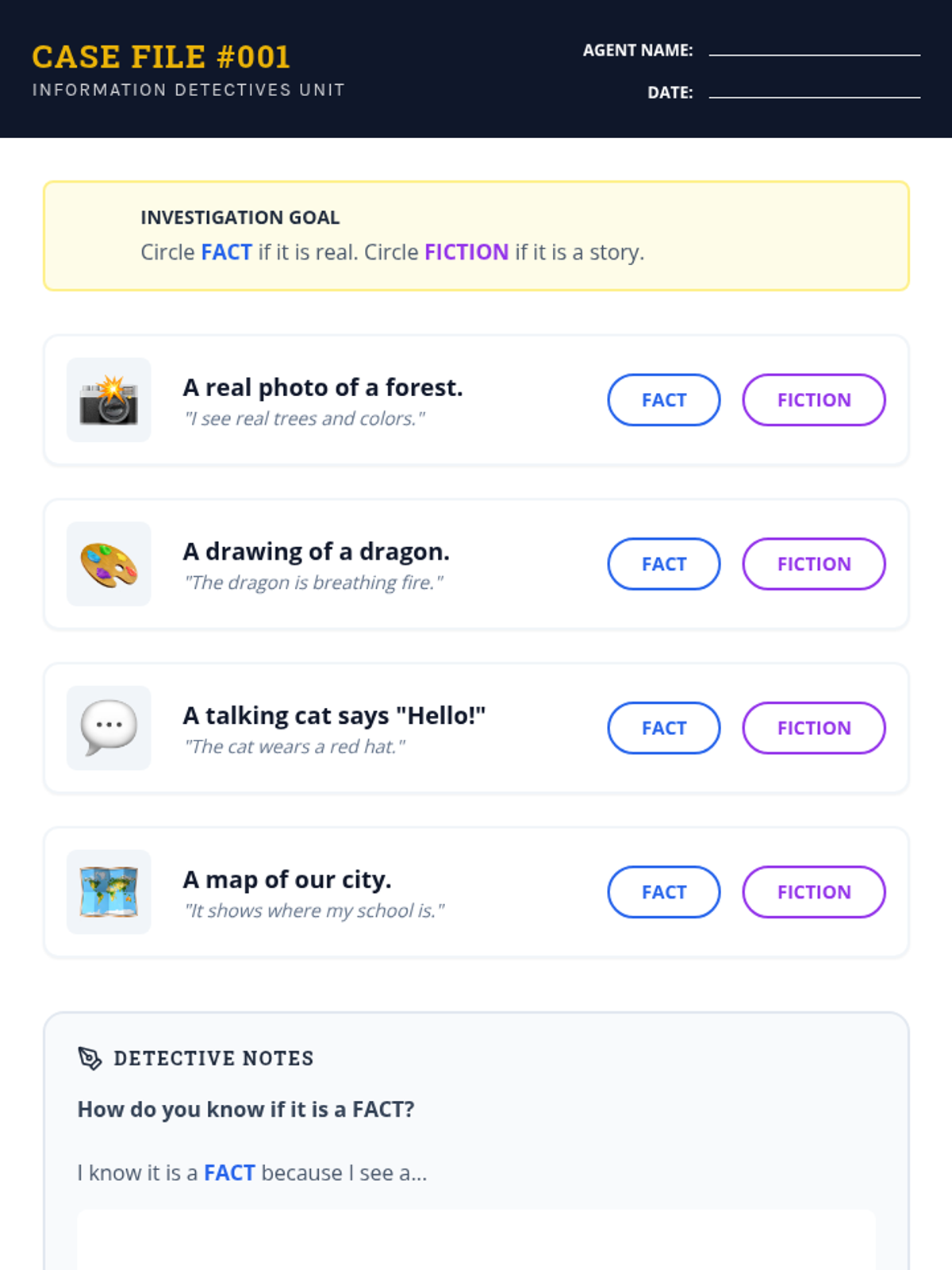
A 5-lesson sequence for 3rd-grade ESL students to learn the basics of source credibility and fact-checking through the lens of 'Information Detectives'. Students learn to distinguish fact from fiction, identify authors, recognize advertisements, and cross-check information.
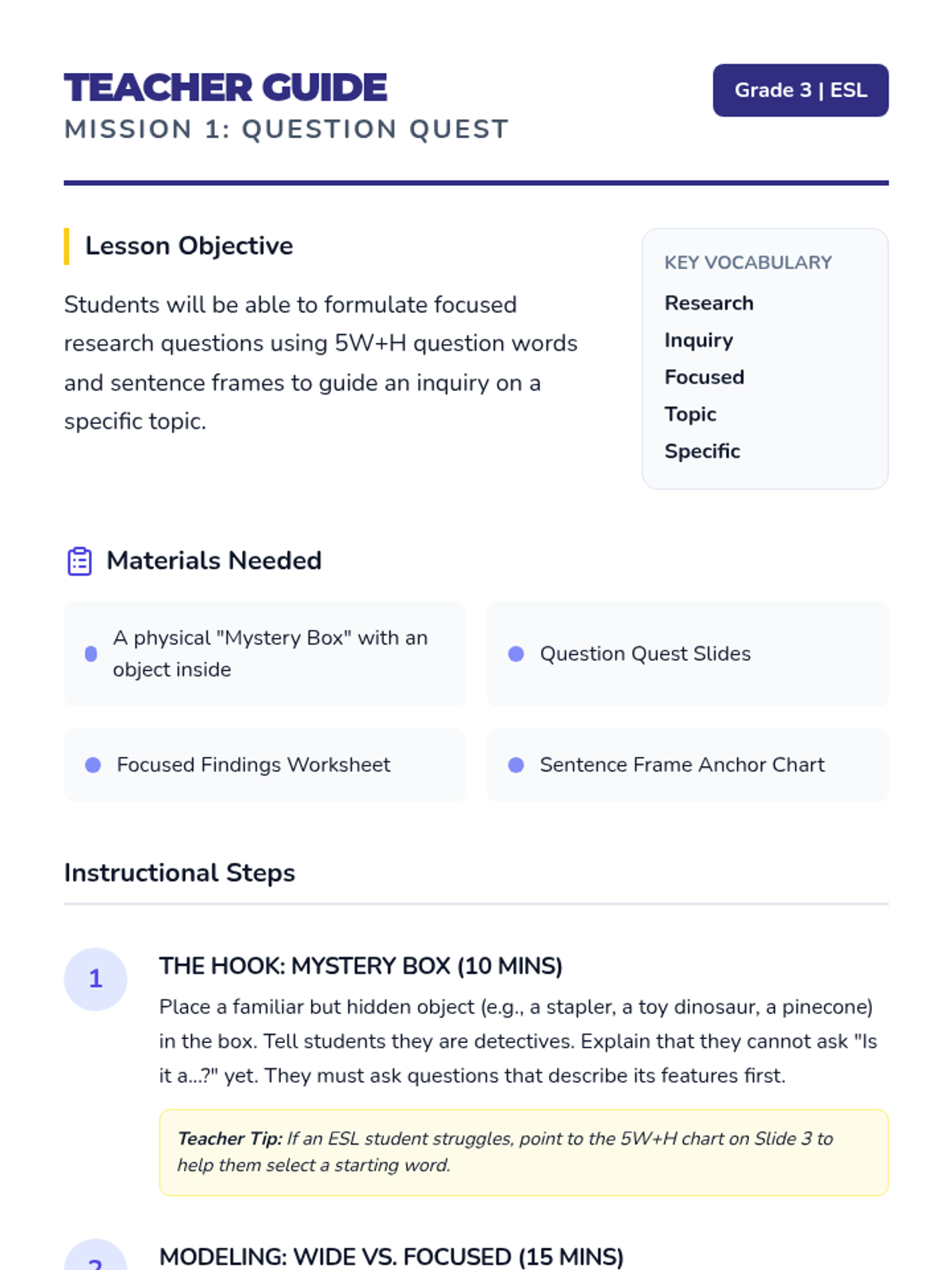
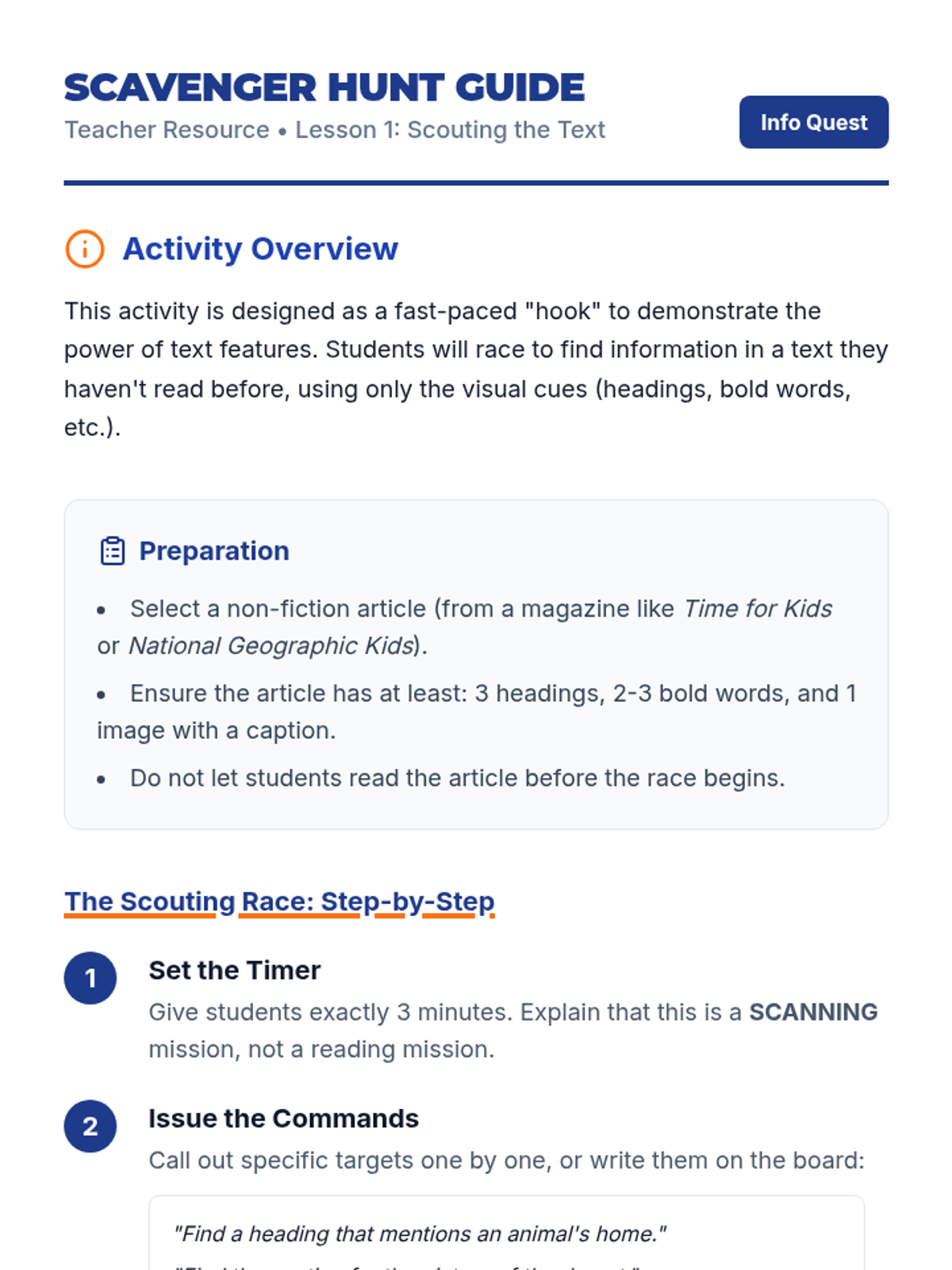
A 5-lesson unit for 3rd grade ESL students on foundational research skills, focusing on formulating questions, using keywords, navigating text features, and evaluating source relevance.
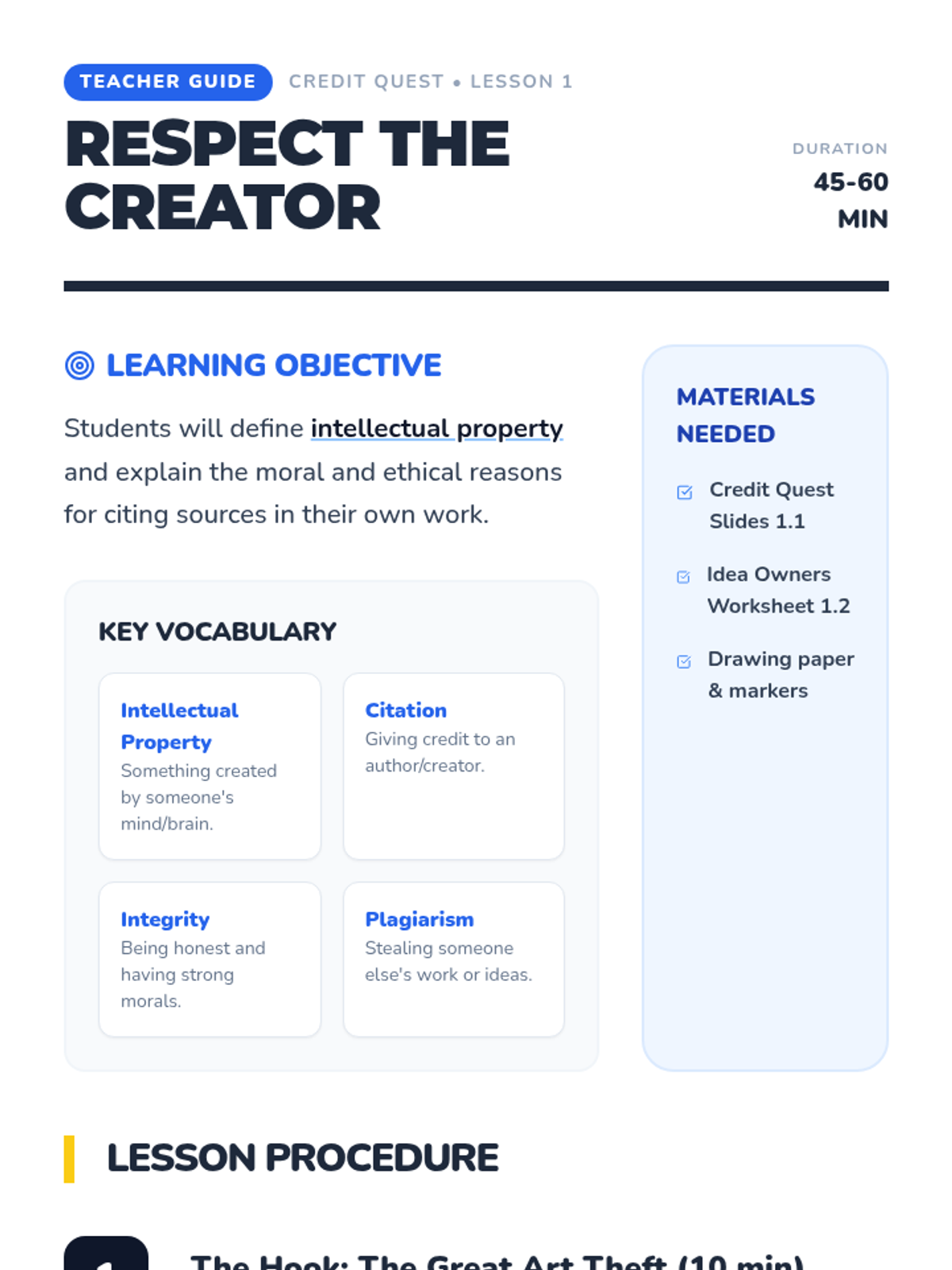
A comprehensive 4th-grade ESL project-based sequence on academic integrity and citation standards. Students transition from understanding the ethics of intellectual property to mastering the technical skills of citing books and websites, culminating in a mini-research project.
A comprehensive workshop-style sequence for 4th Grade ESL students to master academic research skills. Students progress from navigating text features to note-taking, paraphrasing, summarizing, and ultimately synthesizing information from multiple sources while avoiding plagiarism.
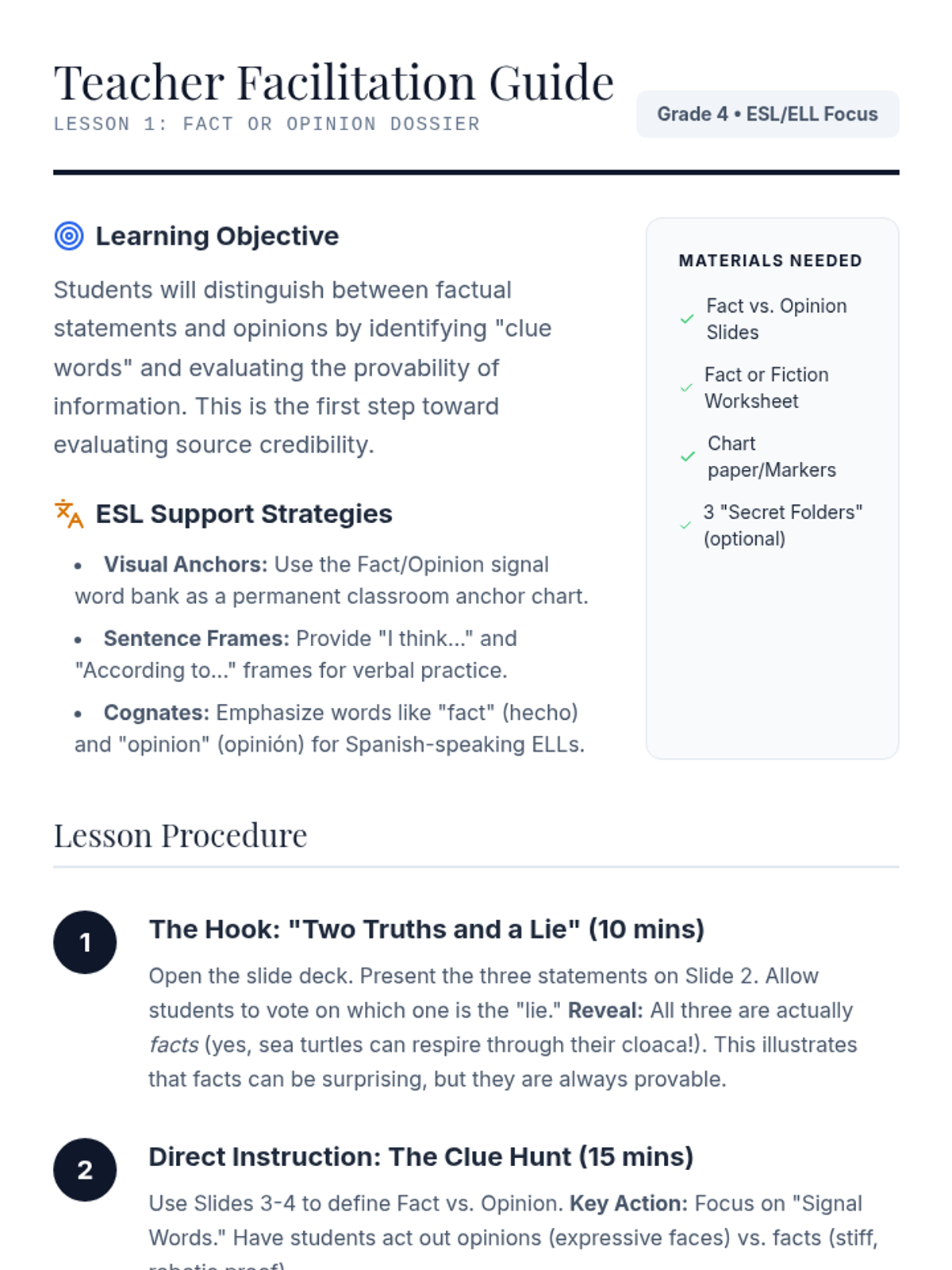
A comprehensive digital literacy unit for 4th Grade ESL students, framing research skills as 'Digital Detective' training. Students learn to distinguish fact from opinion, master keyword searching, evaluate website credibility, and verify information through cross-referencing.
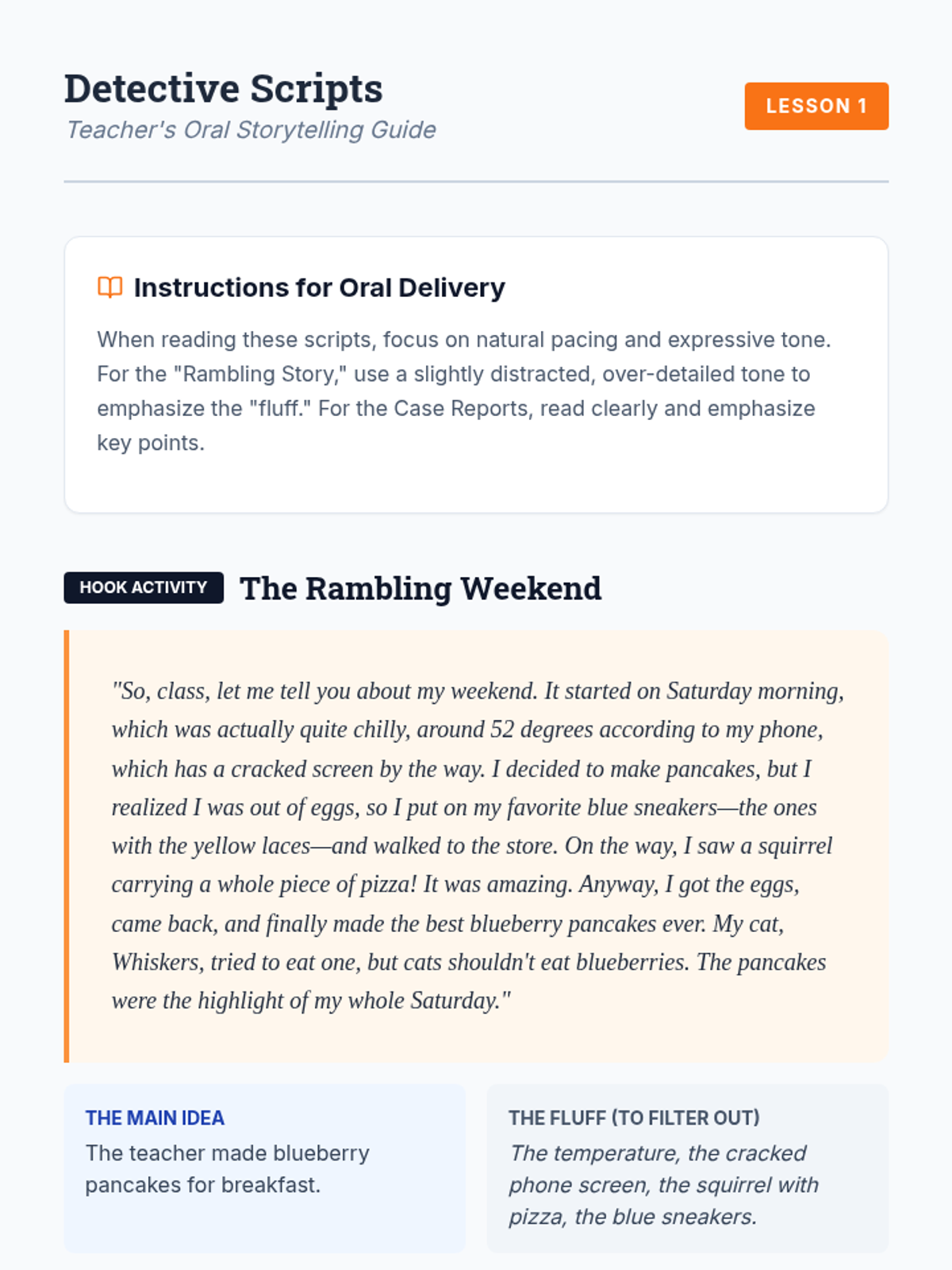
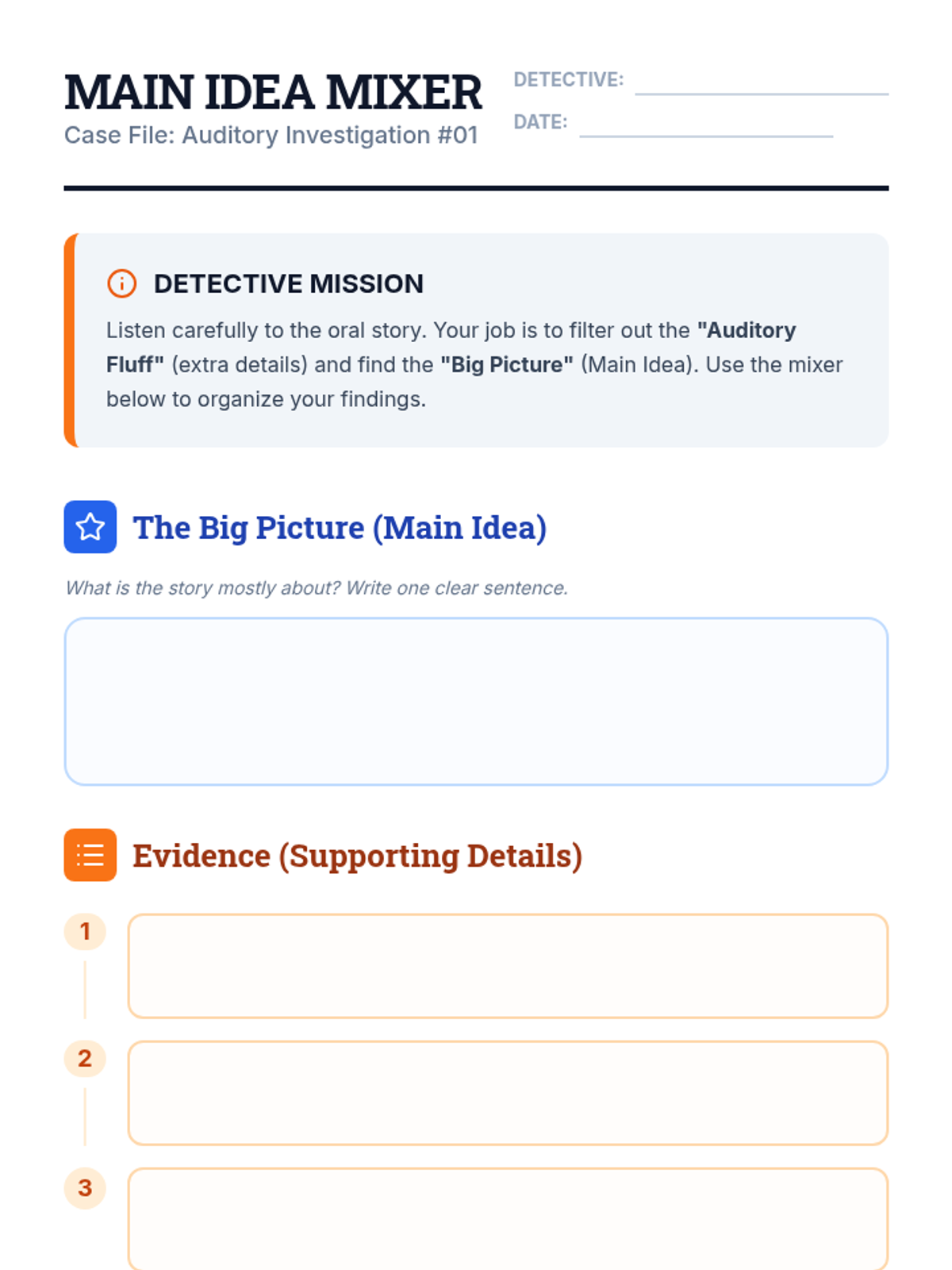
A 4th-grade ESL listening sequence that transforms students into 'Sound Detectives' to master narrative elements. Students learn to filter 'auditory fluff' for main ideas, analyze character traits through vocal cues, track plot sequences using signal words, and predict endings using foreshadowing.
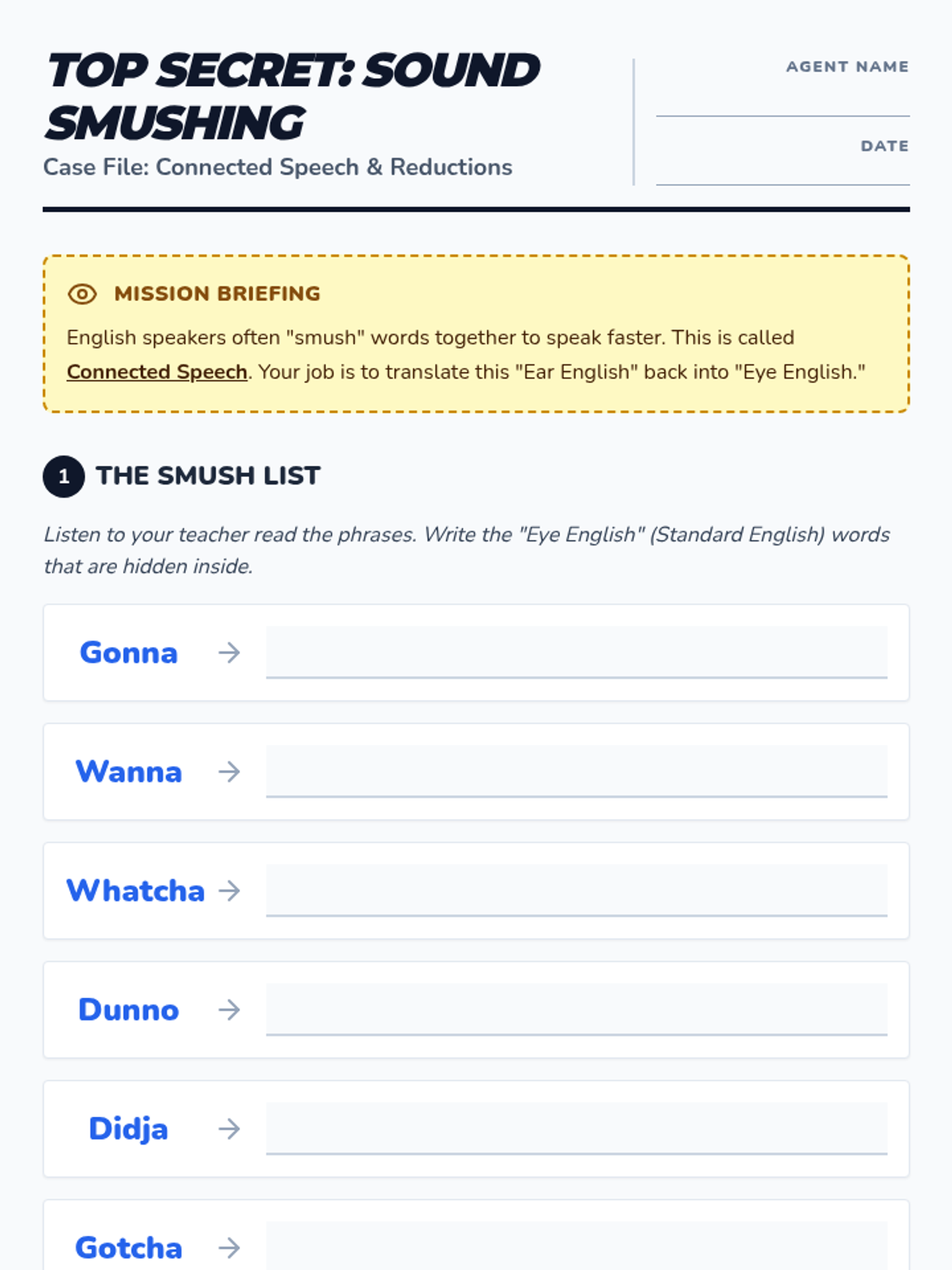
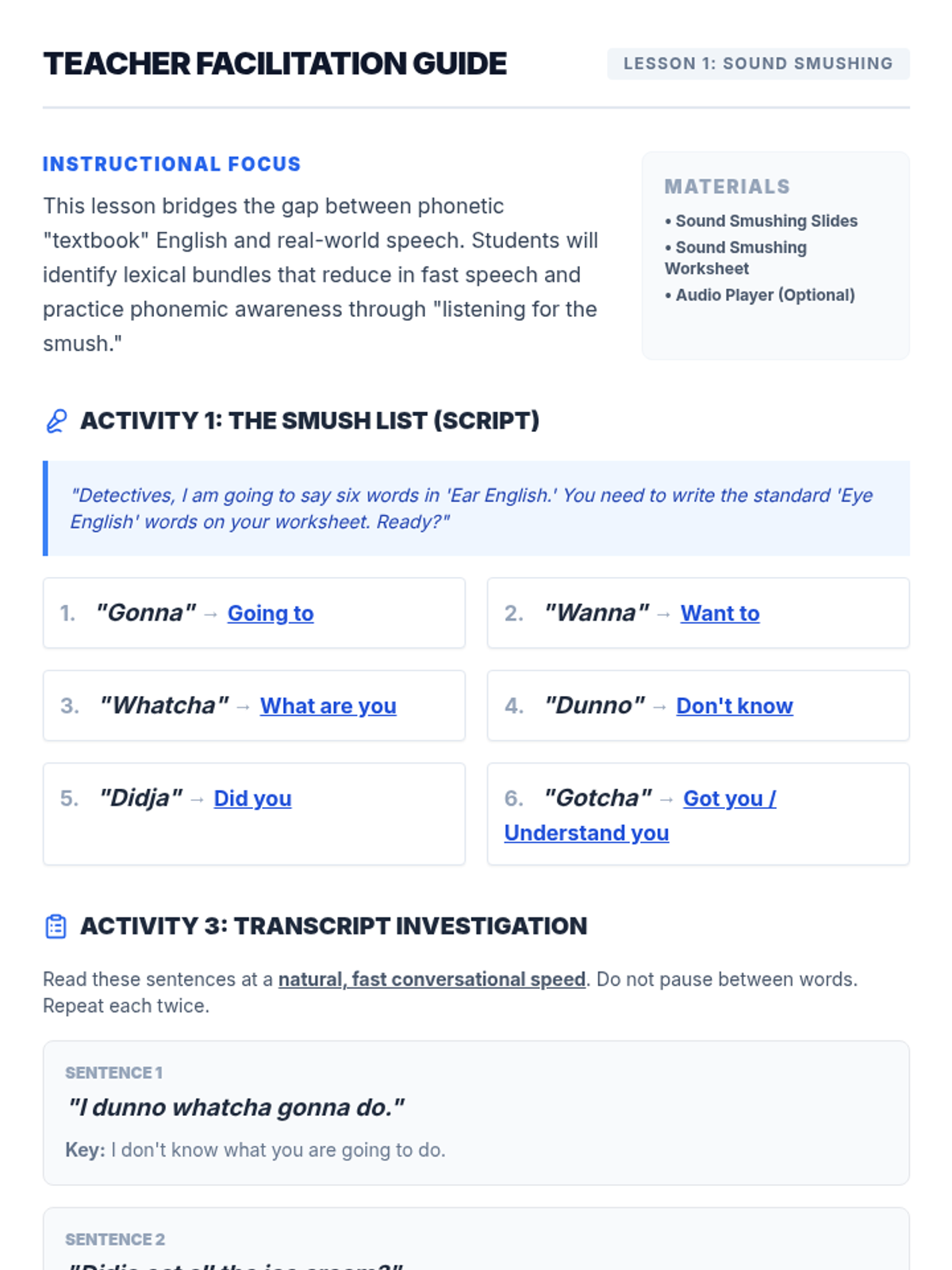
A comprehensive ESL listening sequence for 4th graders focusing on natural speech patterns, emotional tone, idioms, and social registers. Students act as 'Ear Detectives' to decode the hidden meanings in how English is actually spoken vs. how it is written.
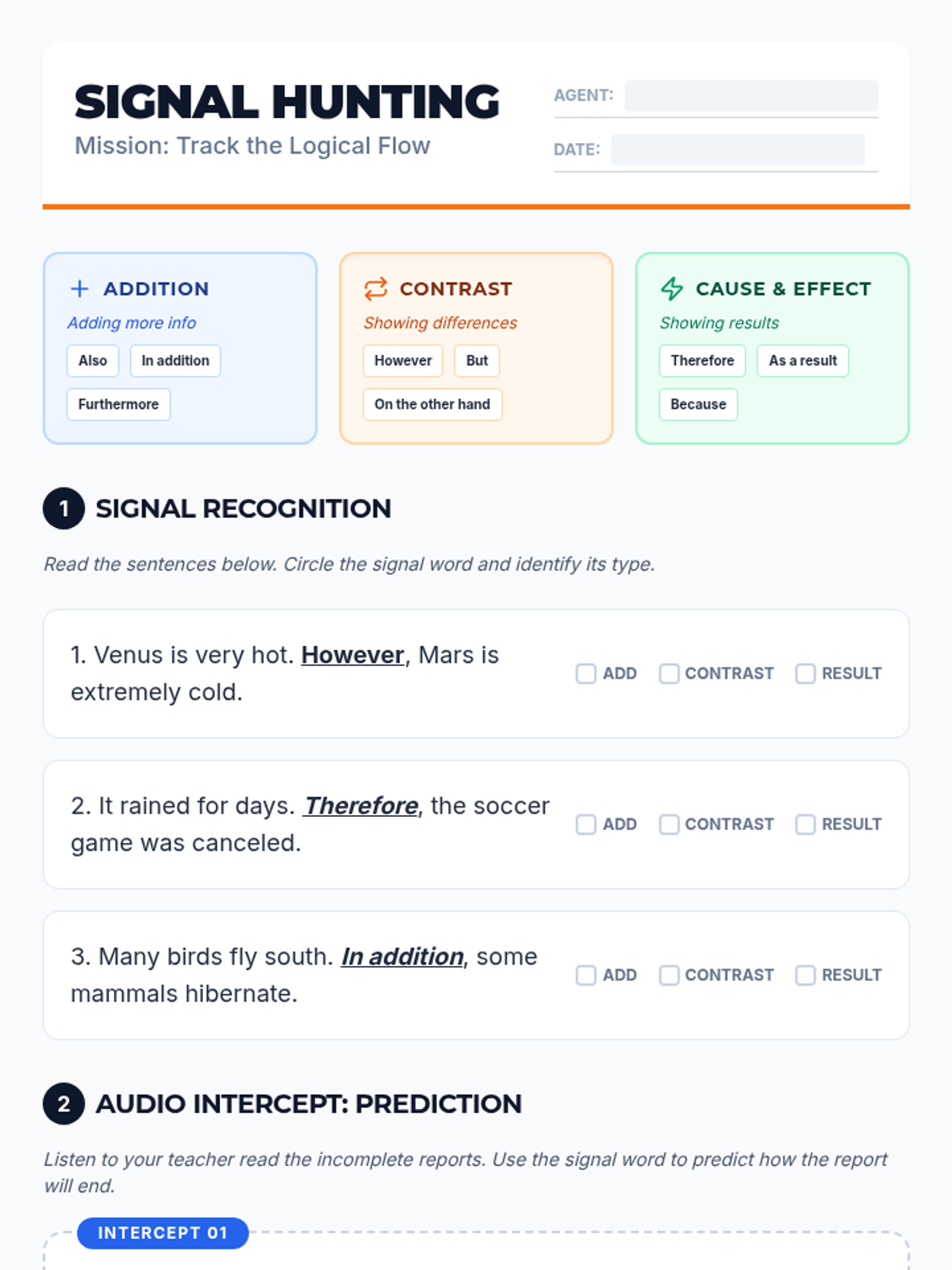
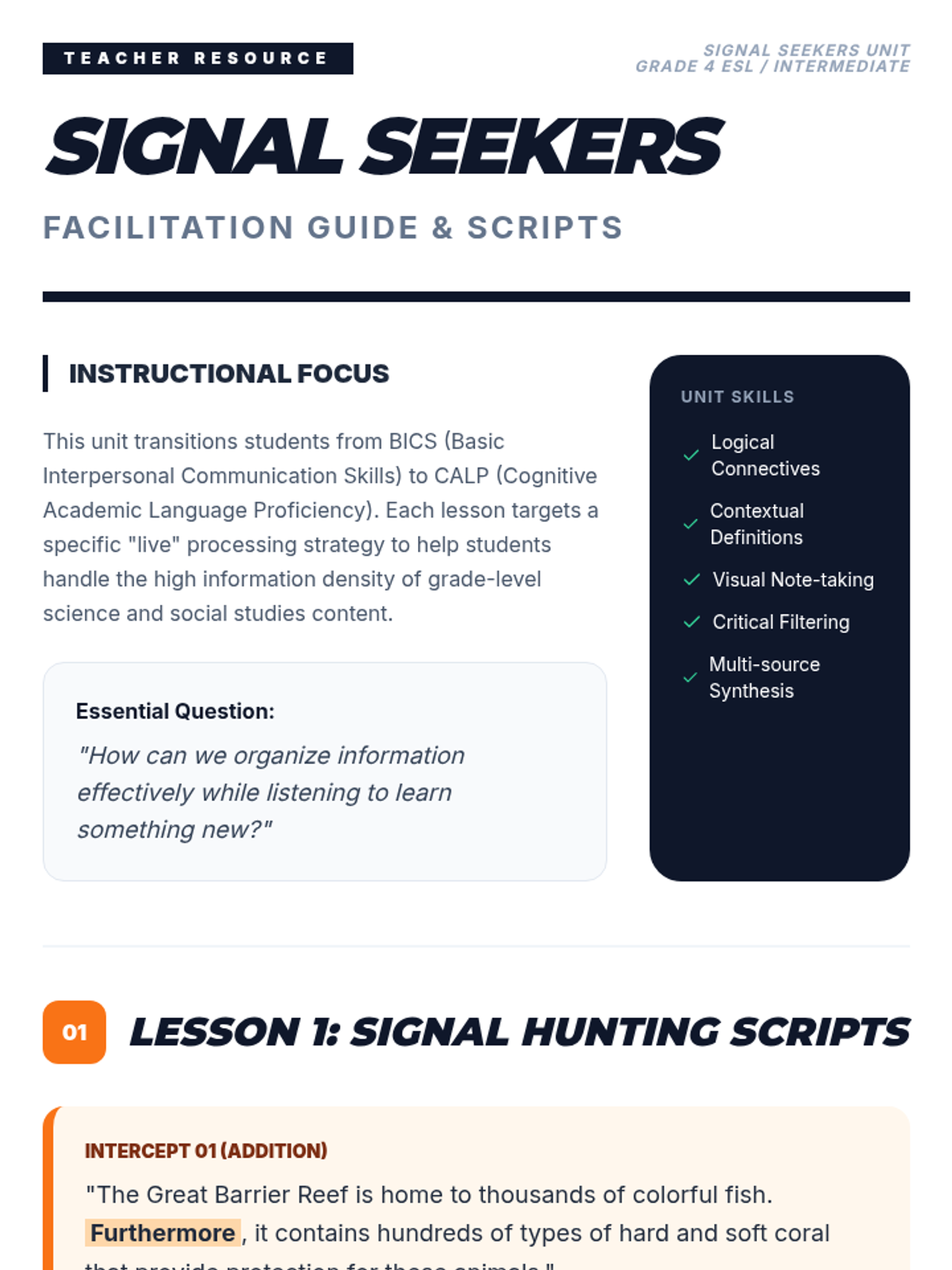
A comprehensive unit for 4th Grade ESL learners to master academic listening. Students transition from social conversation to processing informational texts by identifying signal words, capturing vocabulary definitions in context, using graphic organizers, and distinguishing fact from opinion to synthesize complex information.
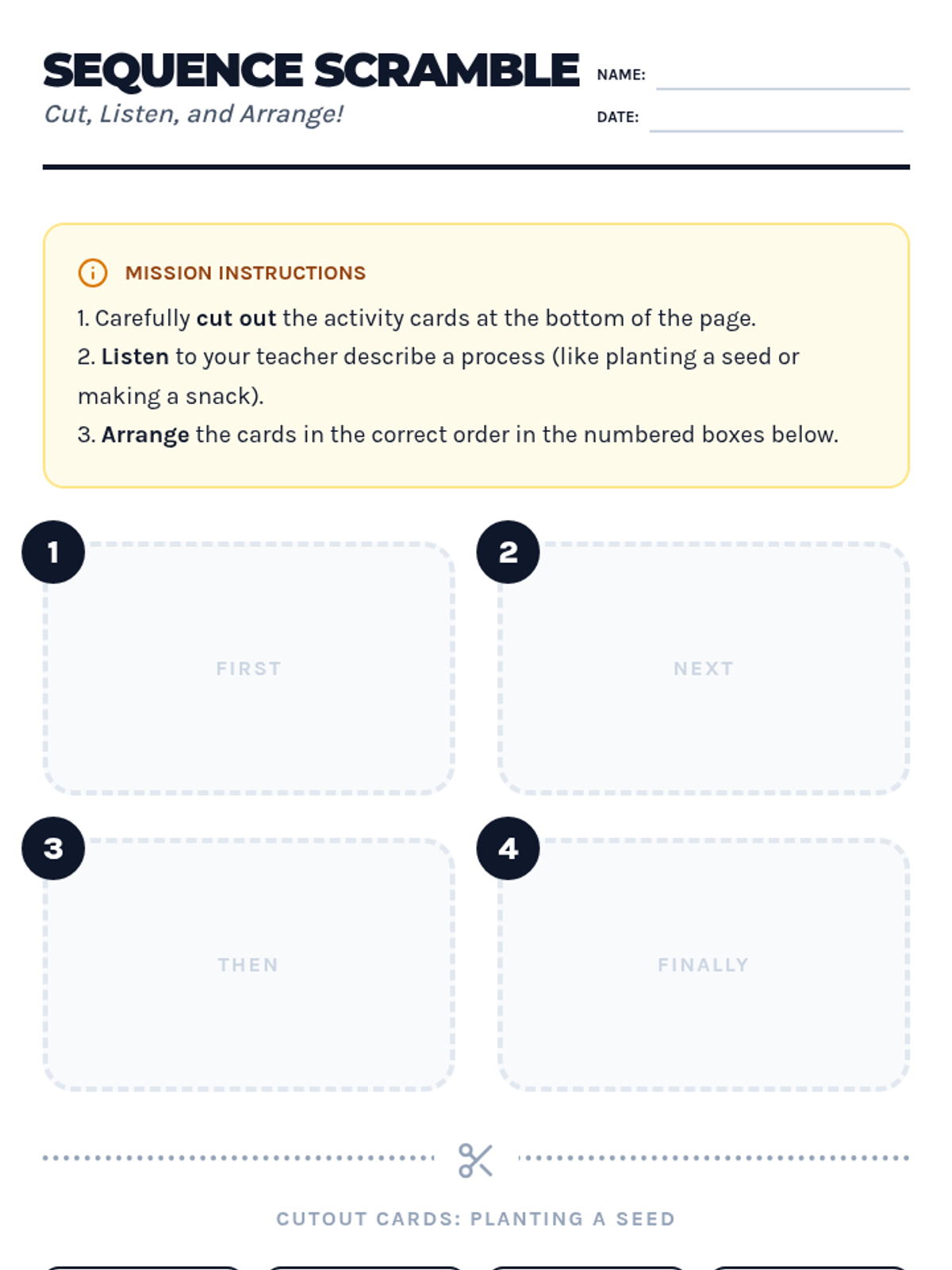
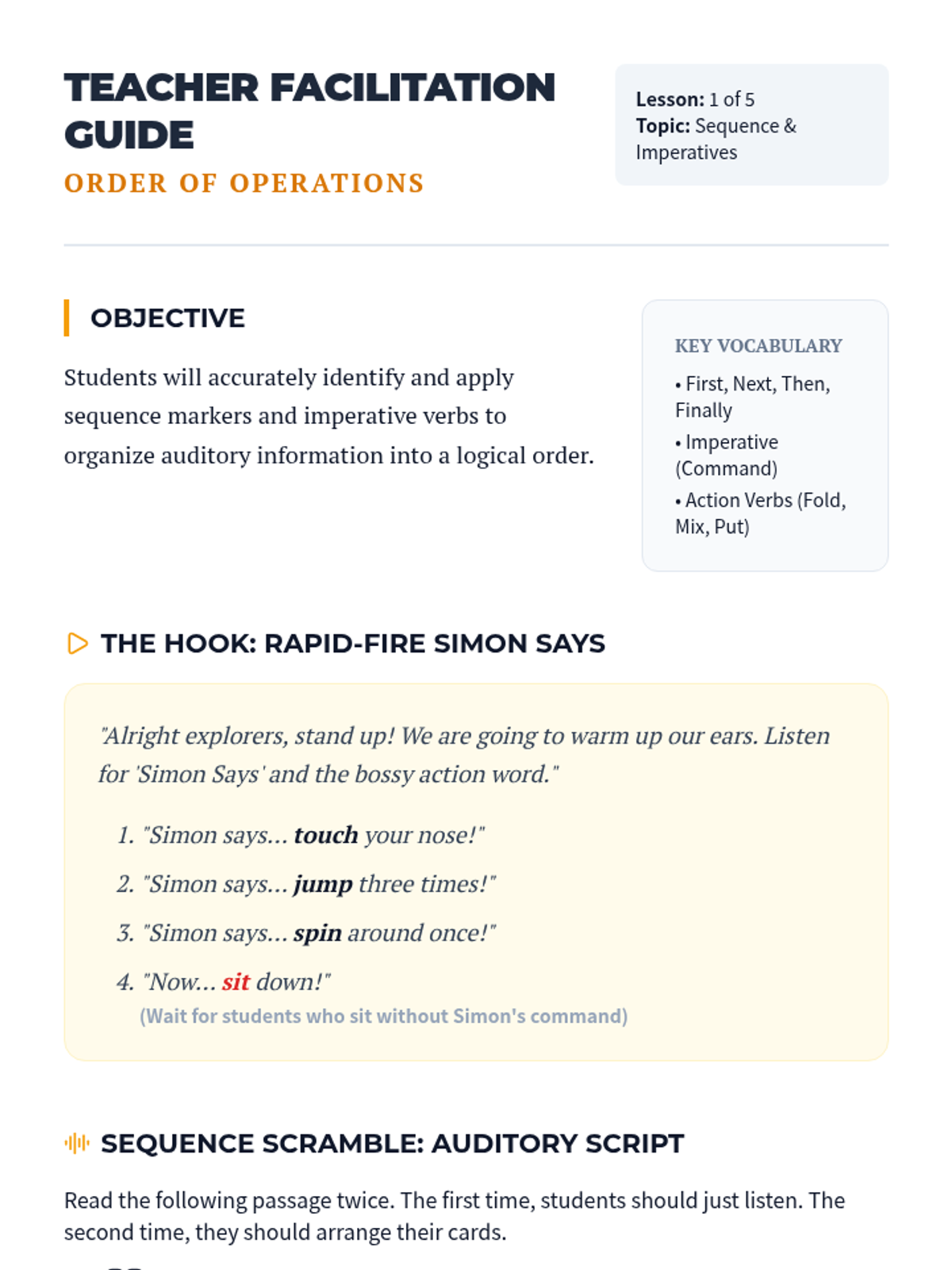
This sequence helps 4th Grade ESL students master listening skills by focusing on multi-step directions, sequence markers, spatial prepositions, and clarification strategies. Students progress from identifying simple transition words to navigating complex maps and completing an auditory scavenger hunt.