Complex verb tenses, conditional structures, and passive voice for nuanced communication. Strengthens sentence construction using relative clauses, reported speech, and modal verbs of deduction.
A sequence designed for 7th-grade ESL students to master the art of inferring unknown academic vocabulary through context clues, morphology, syntax, and tone analysis. This unit transforms vocabulary gaps from roadblocks into solvable puzzles using a "Word Detective" theme.
A grammar-focused ESL unit where students act as investigators to solve a classroom mystery. They master passive voice, modals of deduction, reported speech, and past perfect to write an objective case report.
A comprehensive 7th-grade ESL sequence focusing on the ethics of academic integrity, the mechanics of paraphrasing and summarizing, and the technical accuracy of MLA citations. Students transition from understanding intellectual property to performing independent 'plagiarism audits' on research samples.
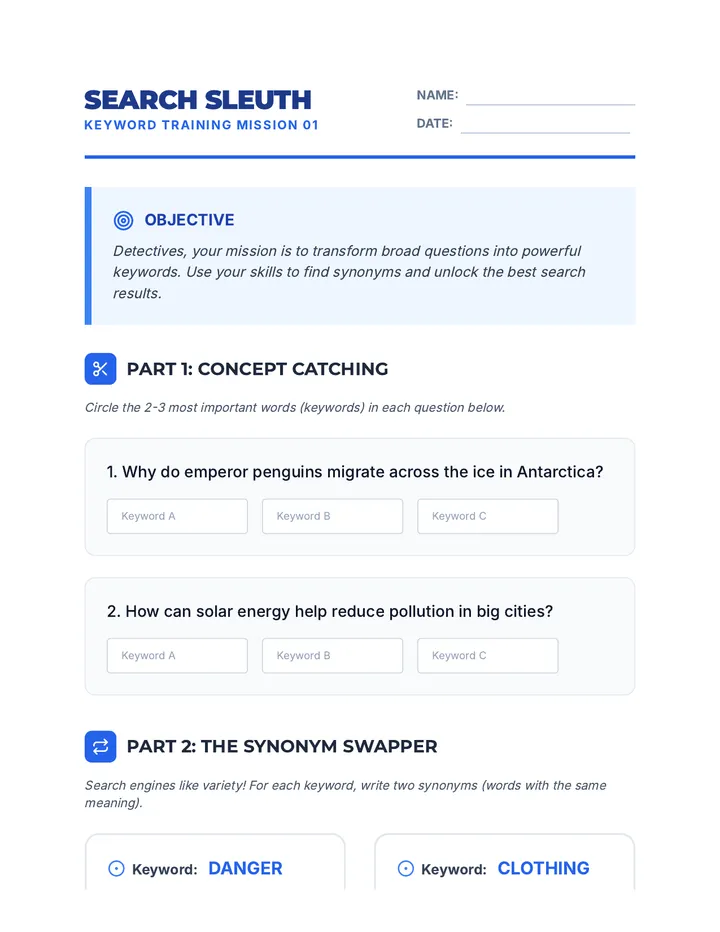
A 5-lesson sequence for 5th Grade ESL students focused on the mechanics of finding information. Students move from basic keyword generation to using Boolean operators, navigating text features, utilizing academic databases, and refining failed searches to become efficient digital researchers.
A comprehensive ESL sequence for 3rd graders focused on the language of comparative analysis. Students move from identifying attributes to constructing complex sentences and writing full comparative reports using content from science and social studies.
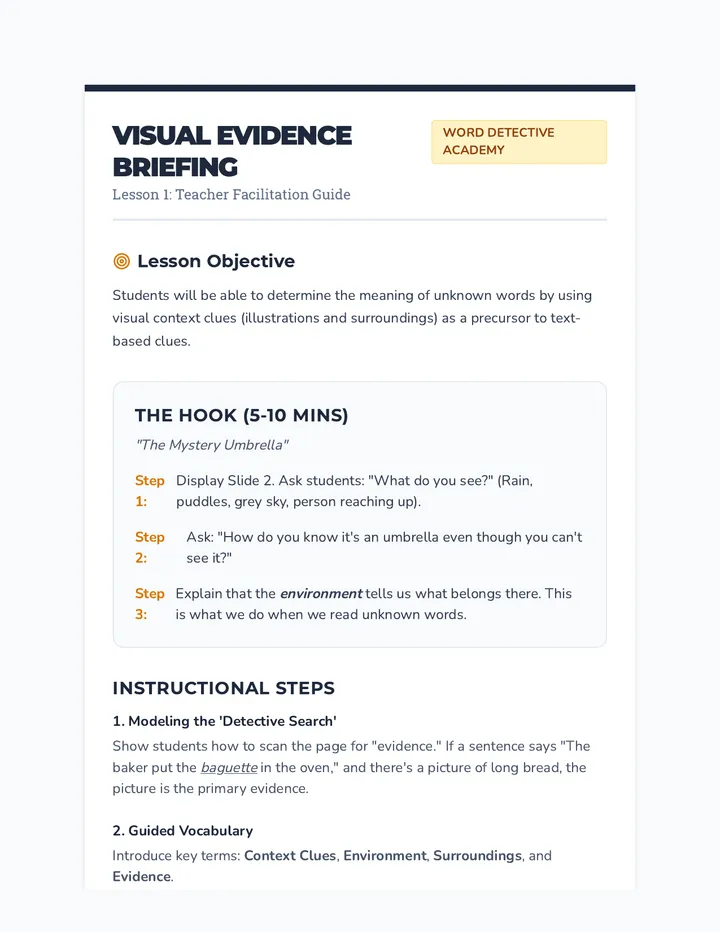
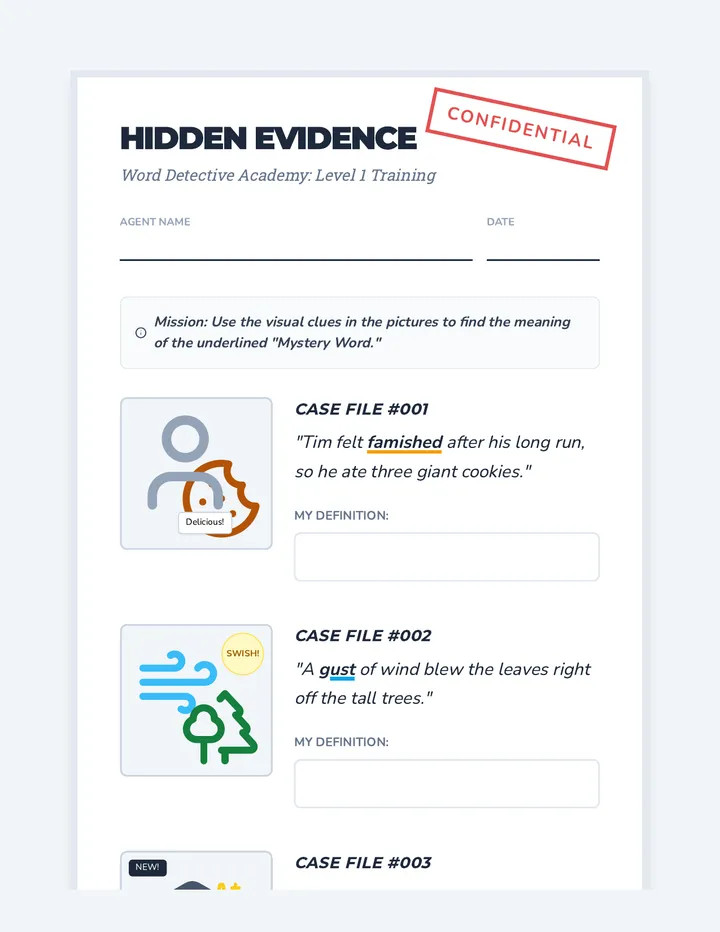
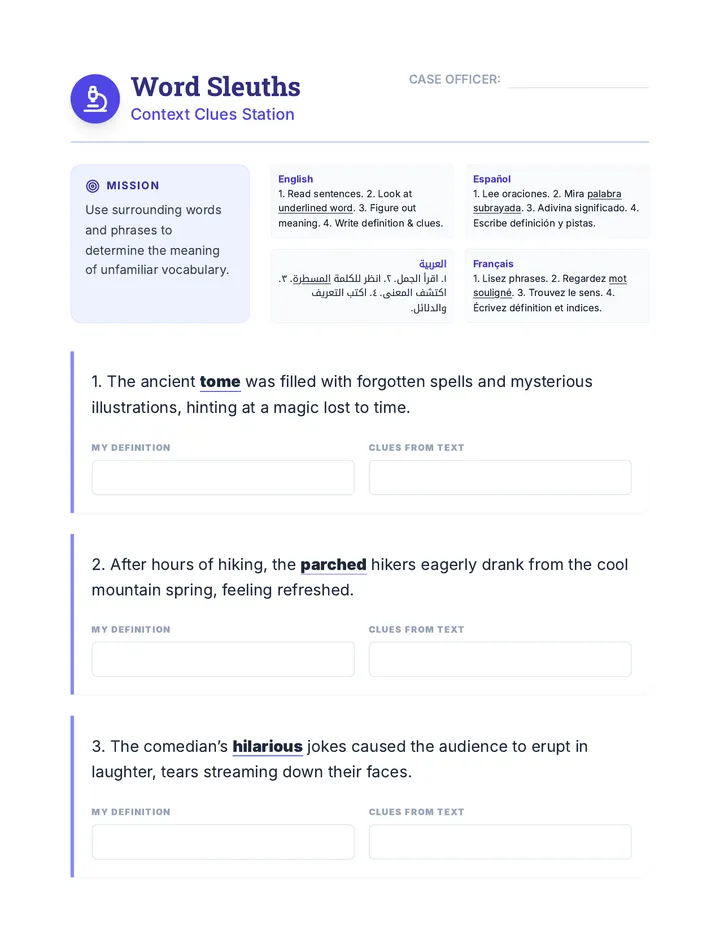
A comprehensive 3rd-grade English Language Learning sequence that uses a 'Word Detective' theme to teach students how to determine word meanings through context clues, including visual, synonym, antonym, definition, and example clues.
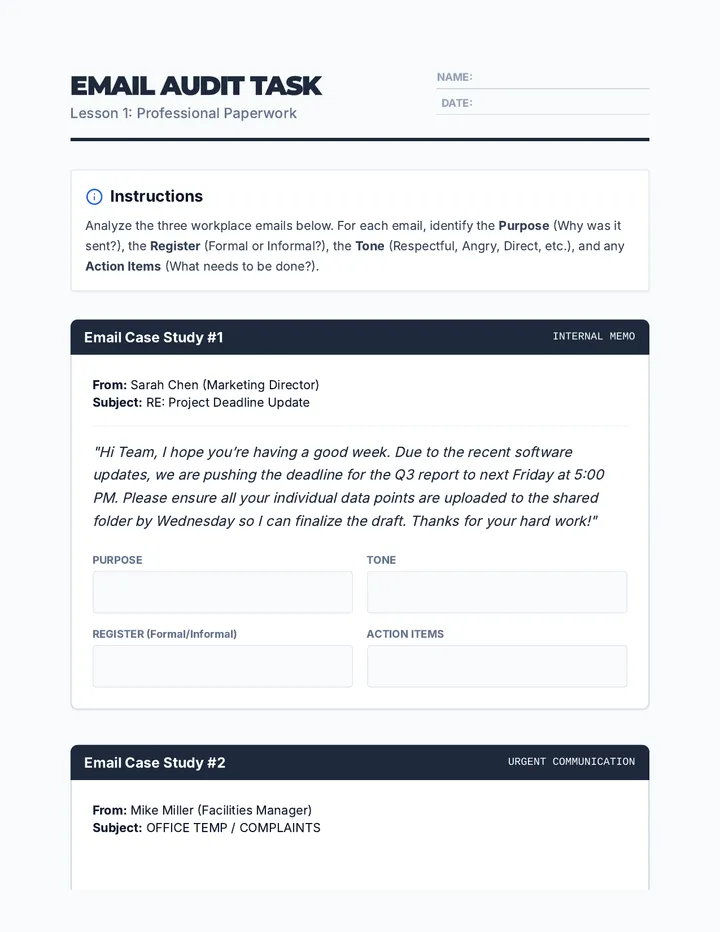
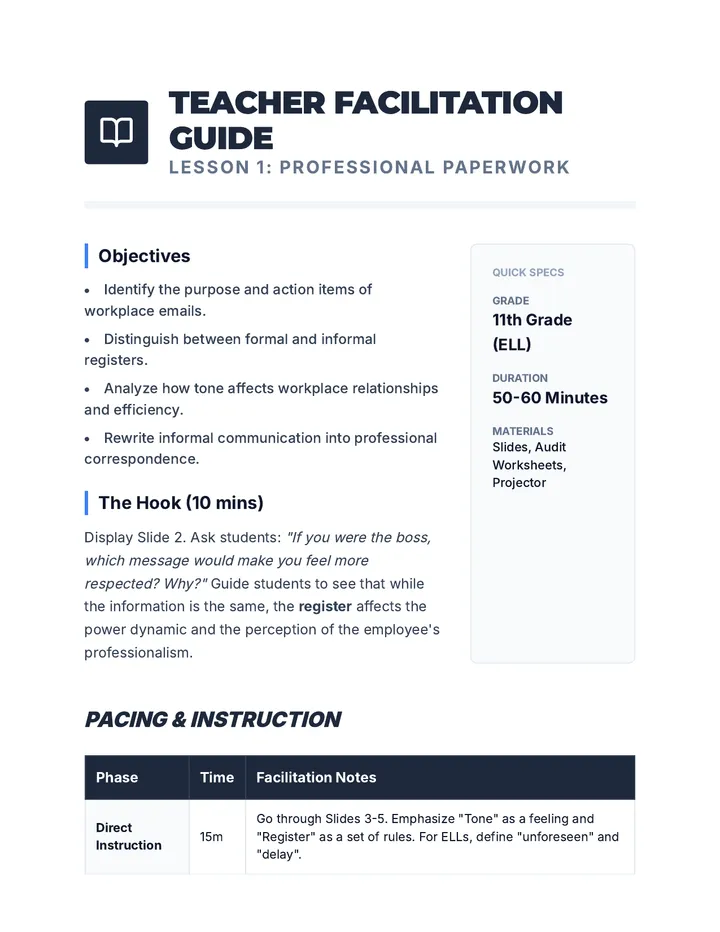
A comprehensive unit for 11th grade intermediate ELL students focused on navigating and interpreting workplace documents, including emails, SOPs, manuals, job descriptions, and integrated scenarios.
A 5-lesson unit for 7th Grade intermediate ELLs focusing on identifying tone, bias, and perspective in persuasive writing through the lens of a media investigator.
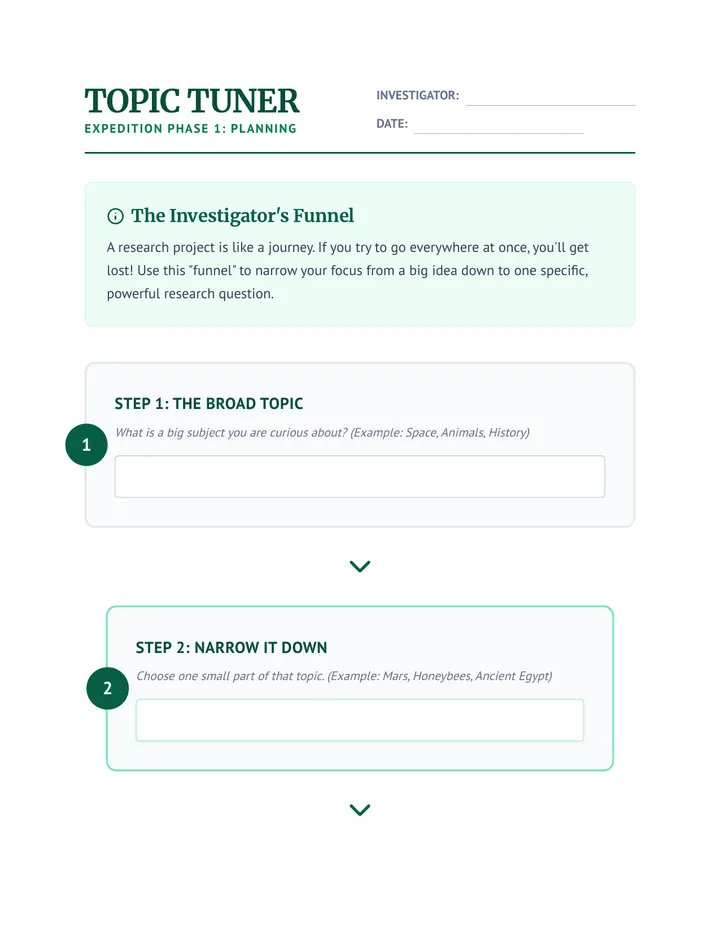
A comprehensive 5-lesson project-based sequence for 5th Grade ESL students to master the research cycle, from questioning to final publication. Students develop academic English skills through searching, evaluating, and synthesizing information on a chosen topic.
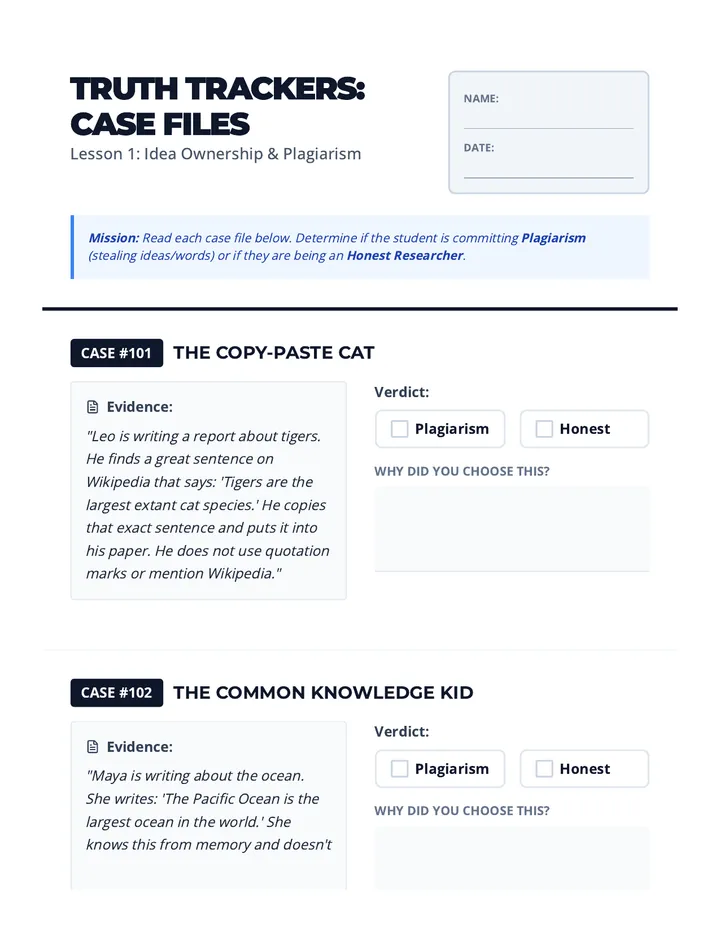
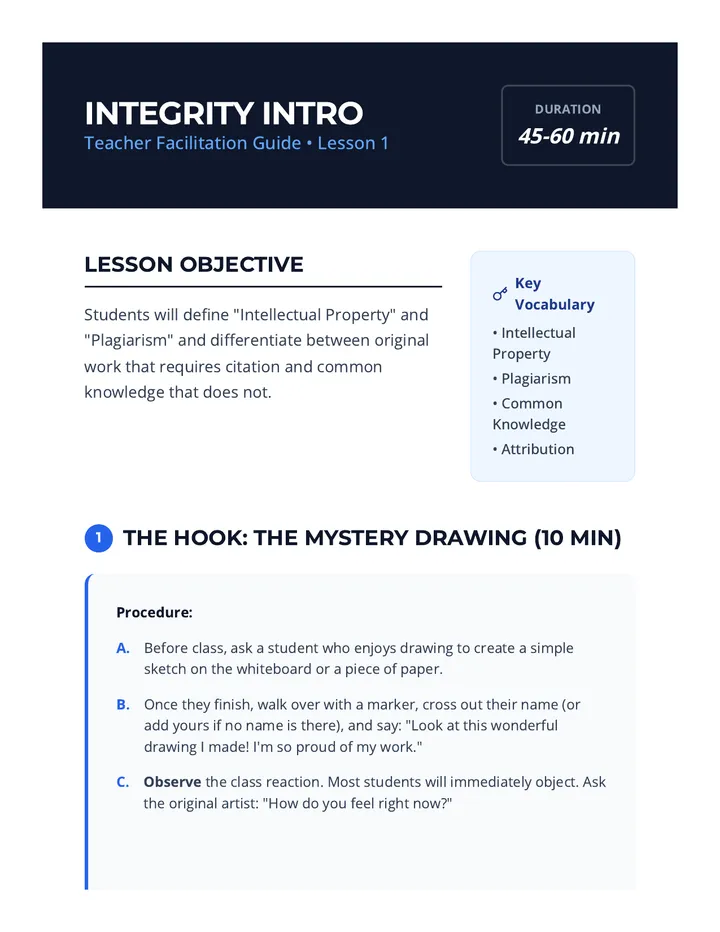
A 5-lesson sequence for 5th-grade ESL students focused on the ethics and mechanics of academic research. Students learn to distinguish between intellectual property and common knowledge, master the art of quoting and paraphrasing, and create simplified citations and bibliographies to maintain academic integrity.
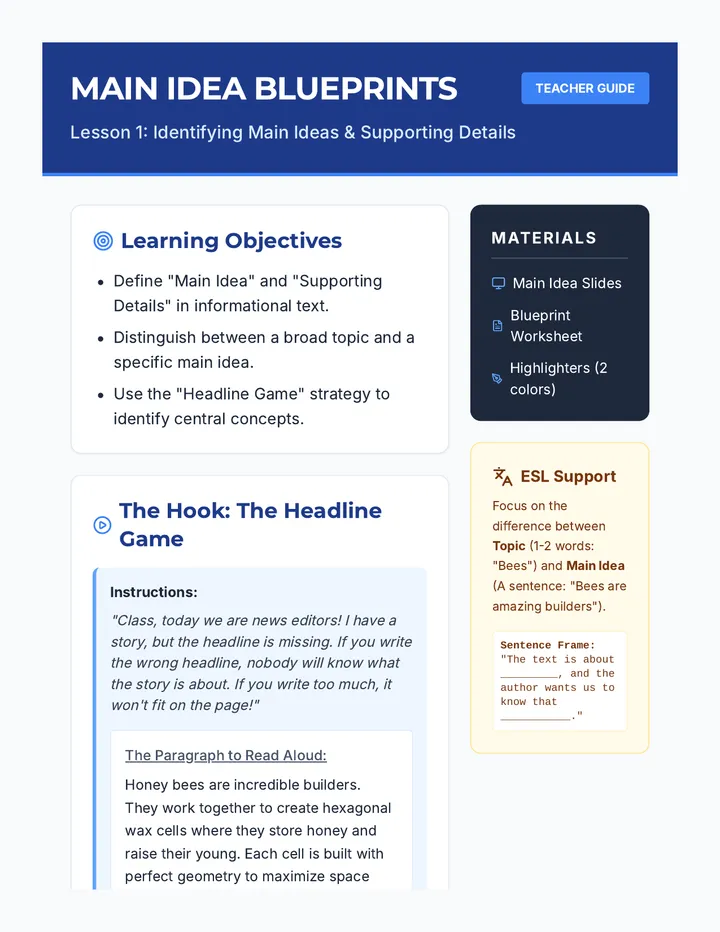
A 5-lesson sequence for 5th Grade ESL students focused on developing academic English skills through paraphrasing and synthesizing information. Students progress from identifying main ideas to drafting complete summary reports using multiple sources and formal attribution.
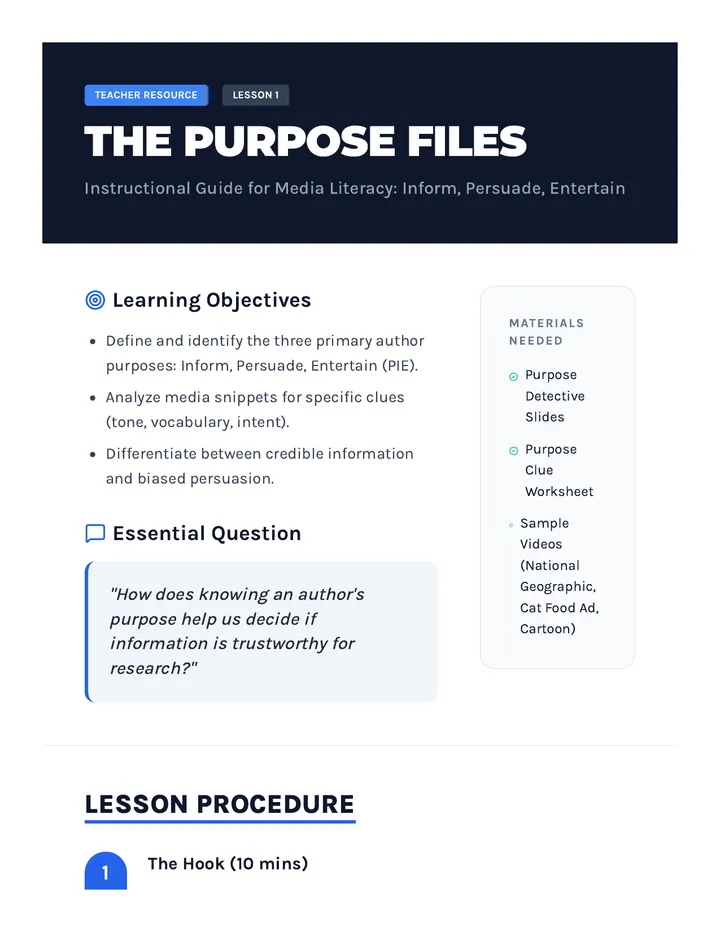
A 5-lesson sequence for 5th-grade ESL students to develop media literacy and research skills. Students learn to distinguish author purpose, evaluate website credibility using the 5 W's, identify bias, and corroborate information across multiple sources.
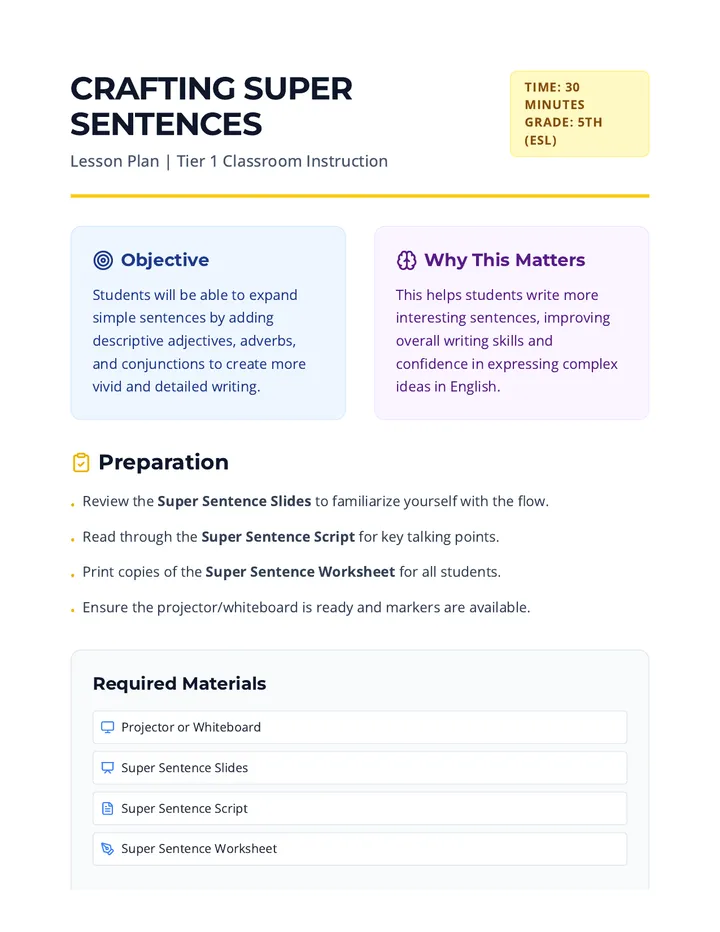
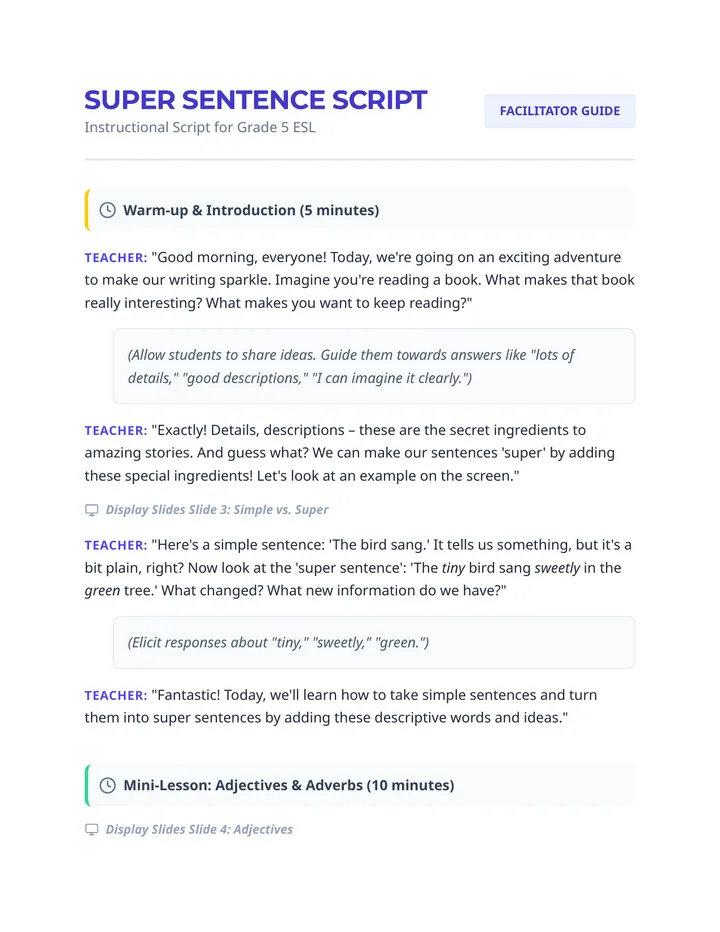
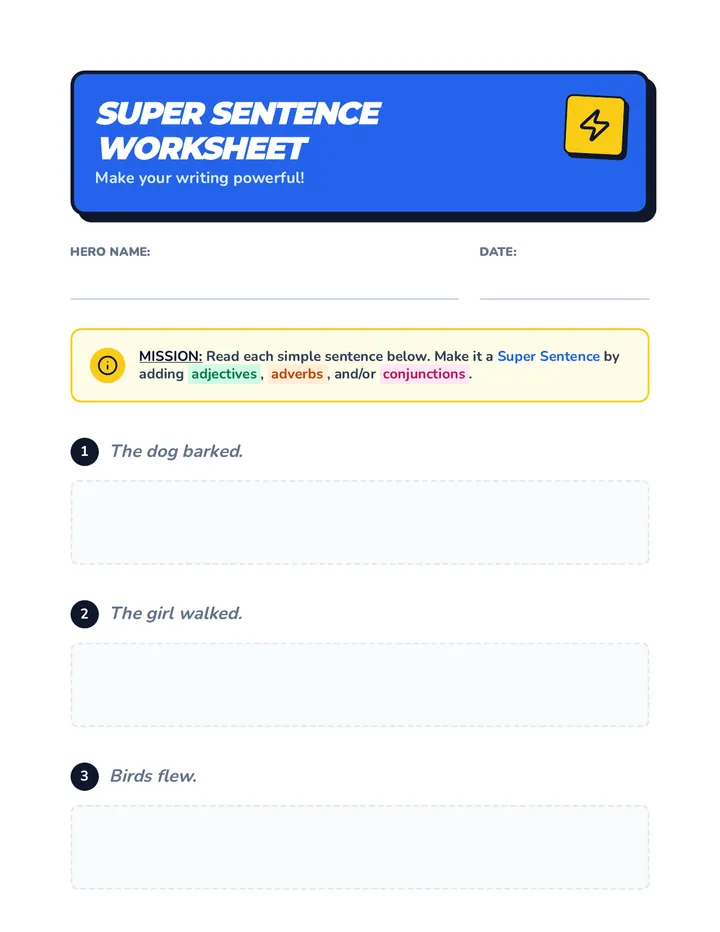
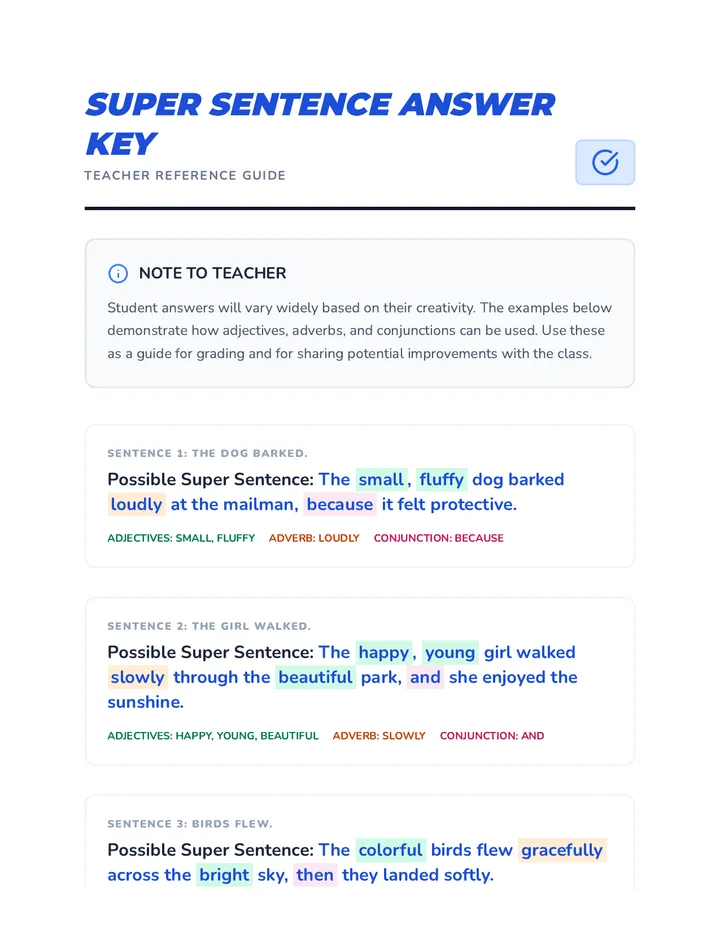
A 30-minute interactive lesson for 5th-grade ESL students focused on expanding simple sentences using adjectives, adverbs, and conjunctions to create more descriptive and engaging writing.
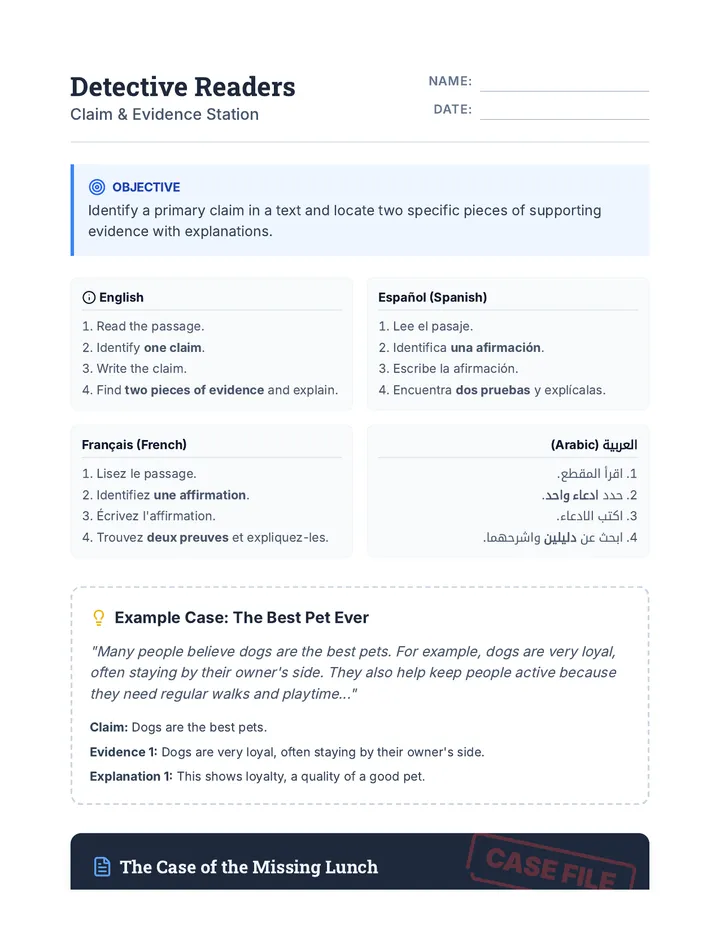
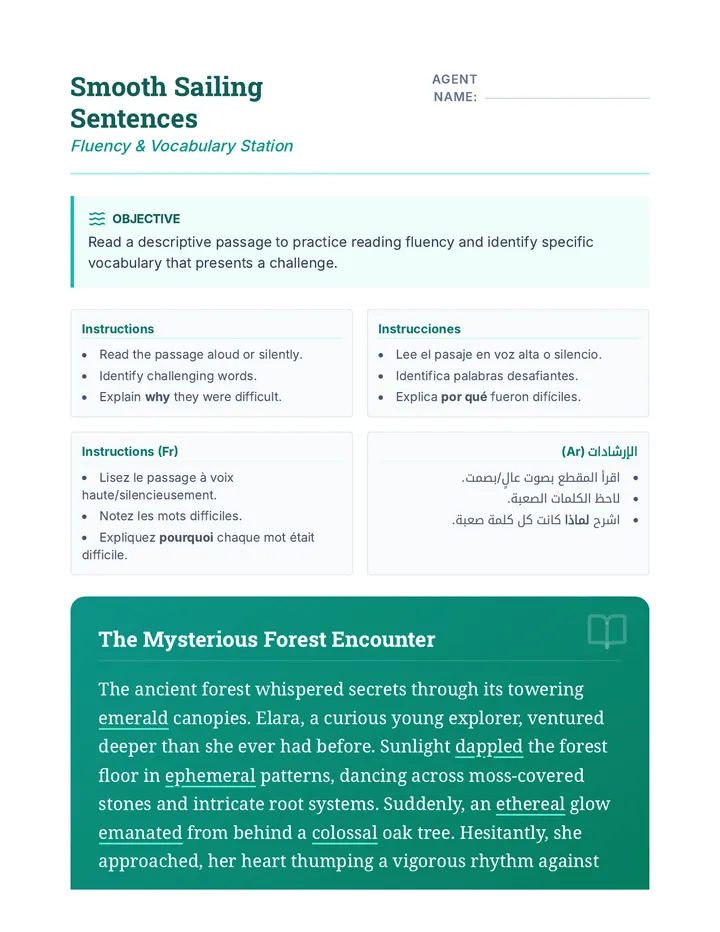
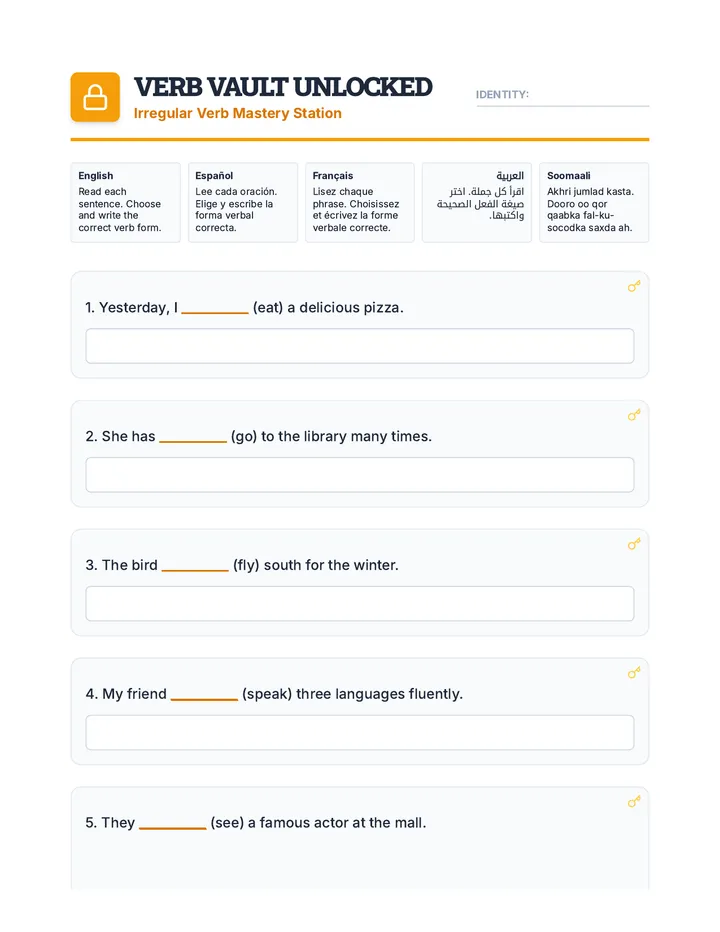
A station-based lesson for 9th-grade ESL students focusing on core language skills: claim and evidence, reading fluency, irregular verbs, context clues, and morphology. Students rotate through five 12-minute stations designed for targeted practice and engagement.
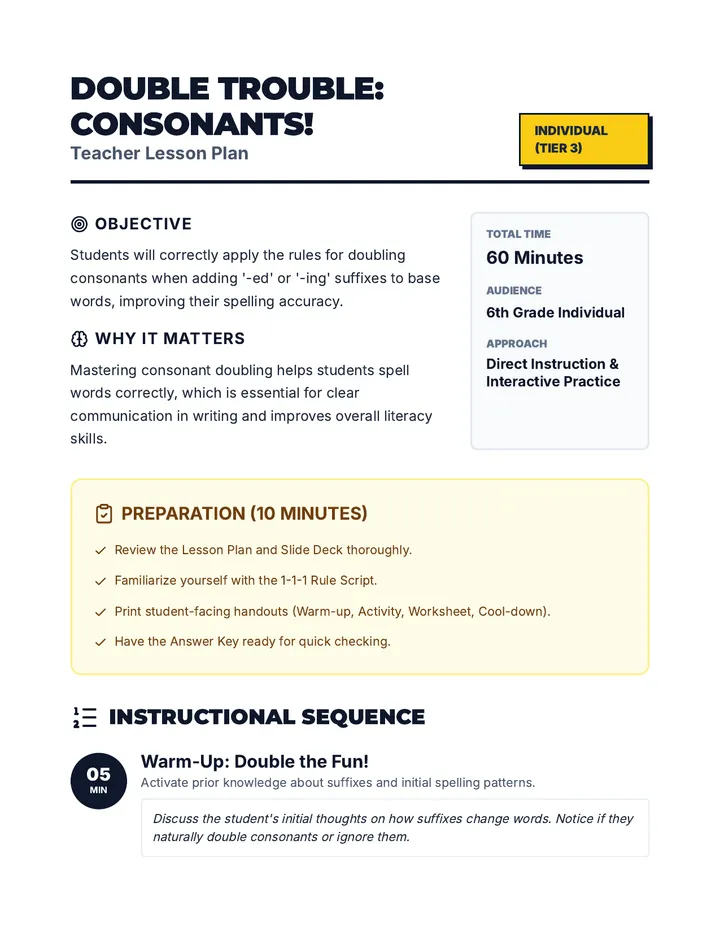
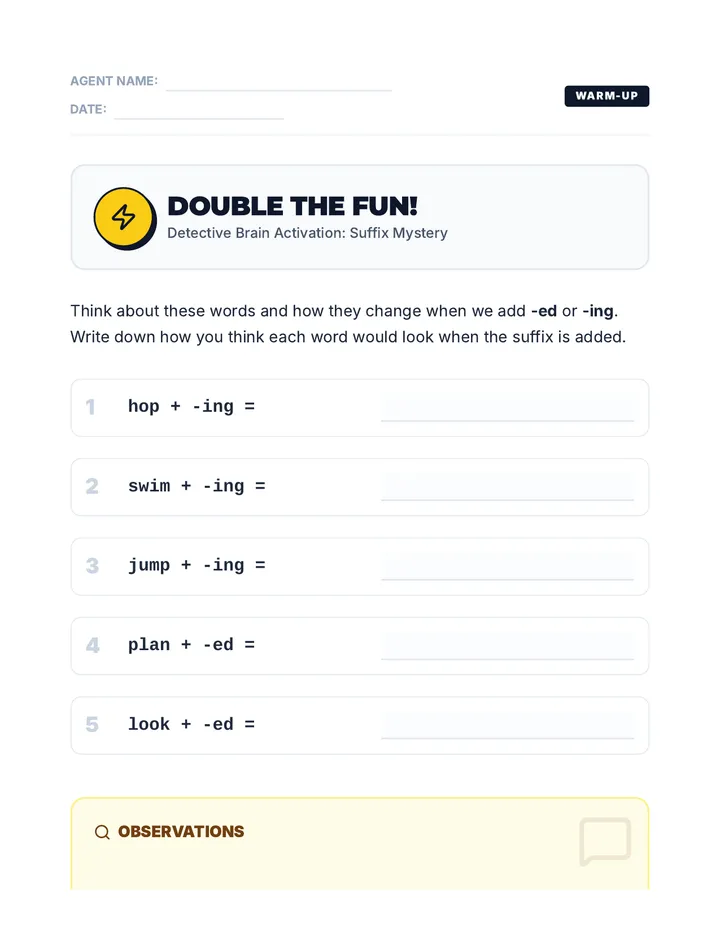
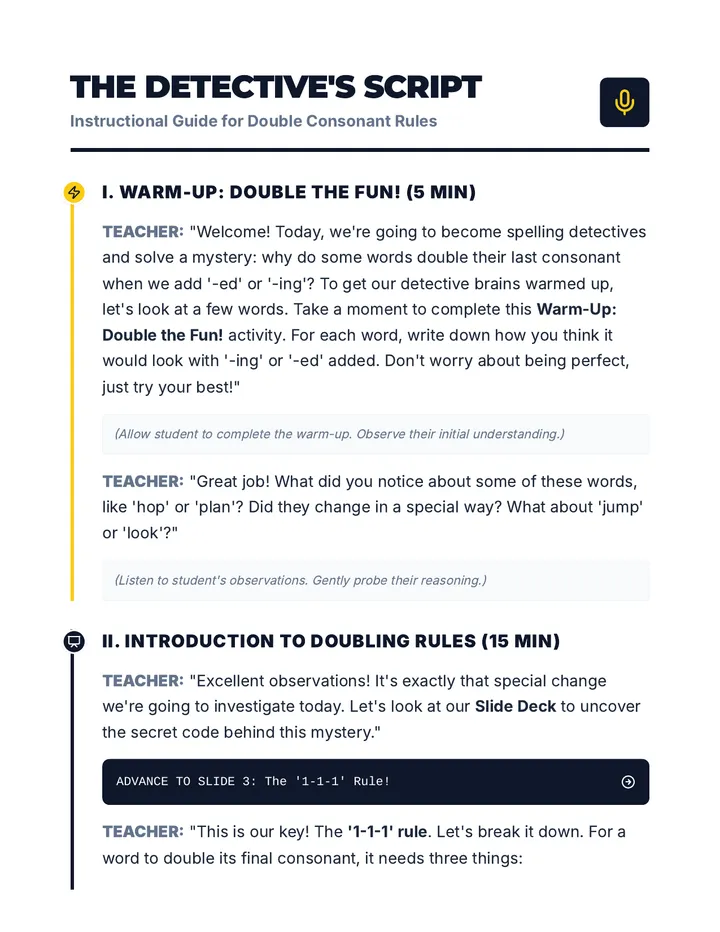
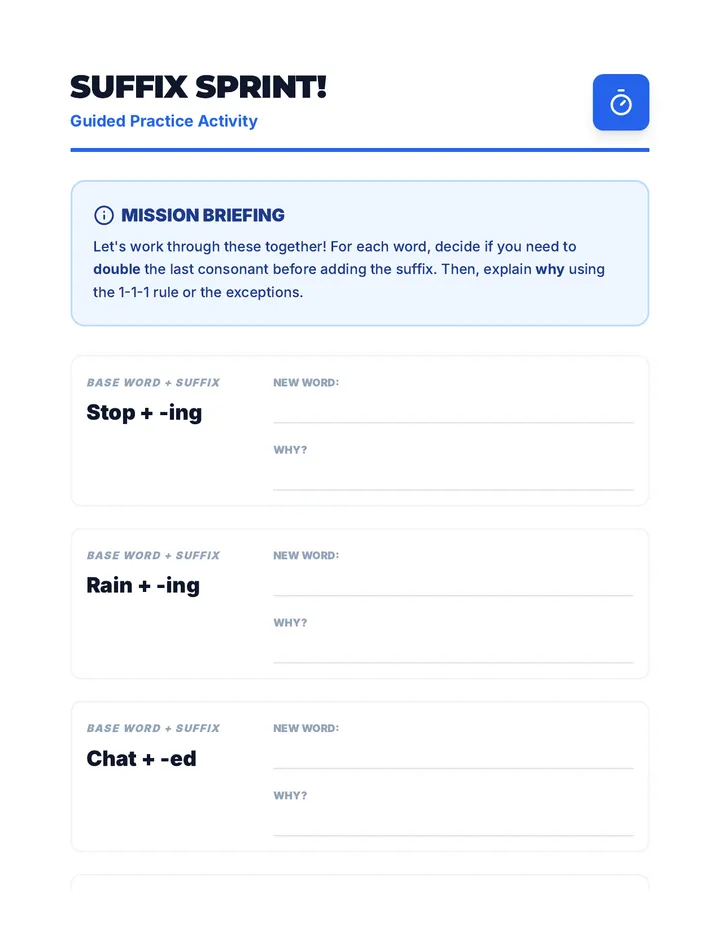
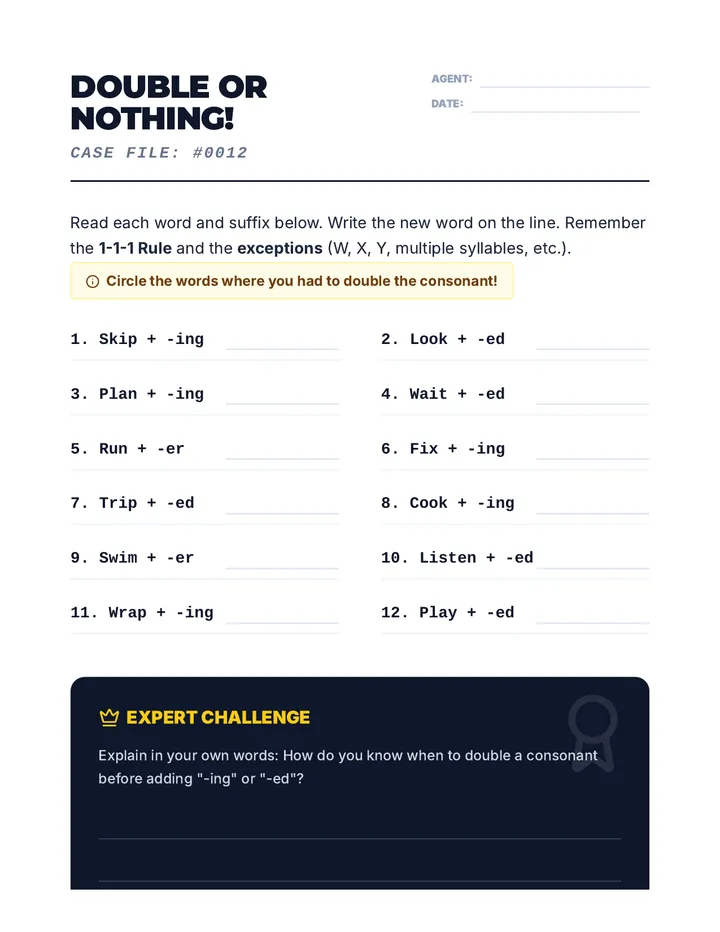
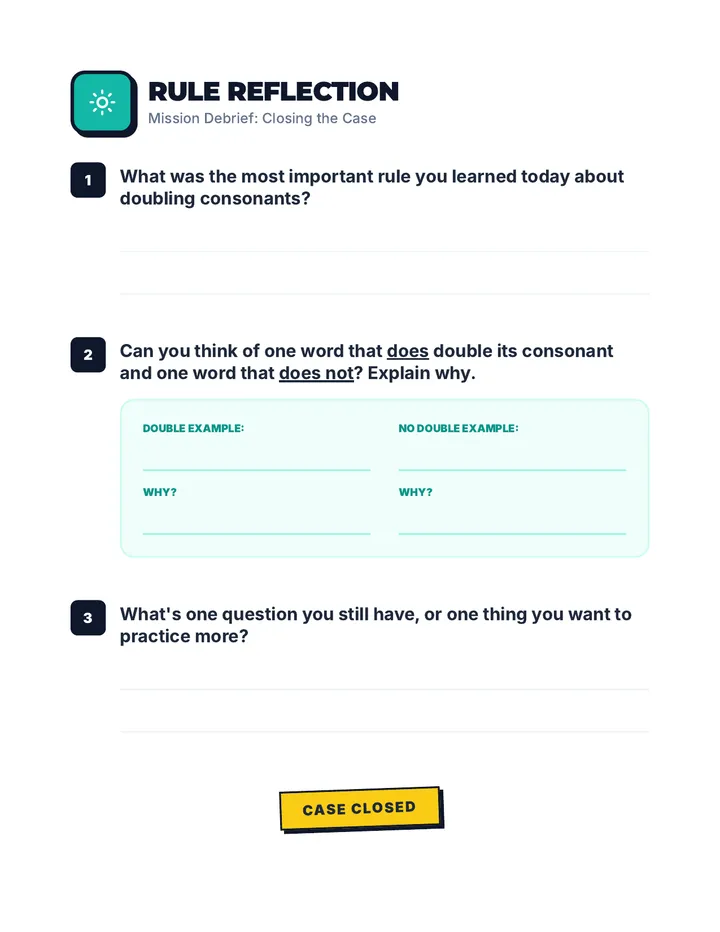
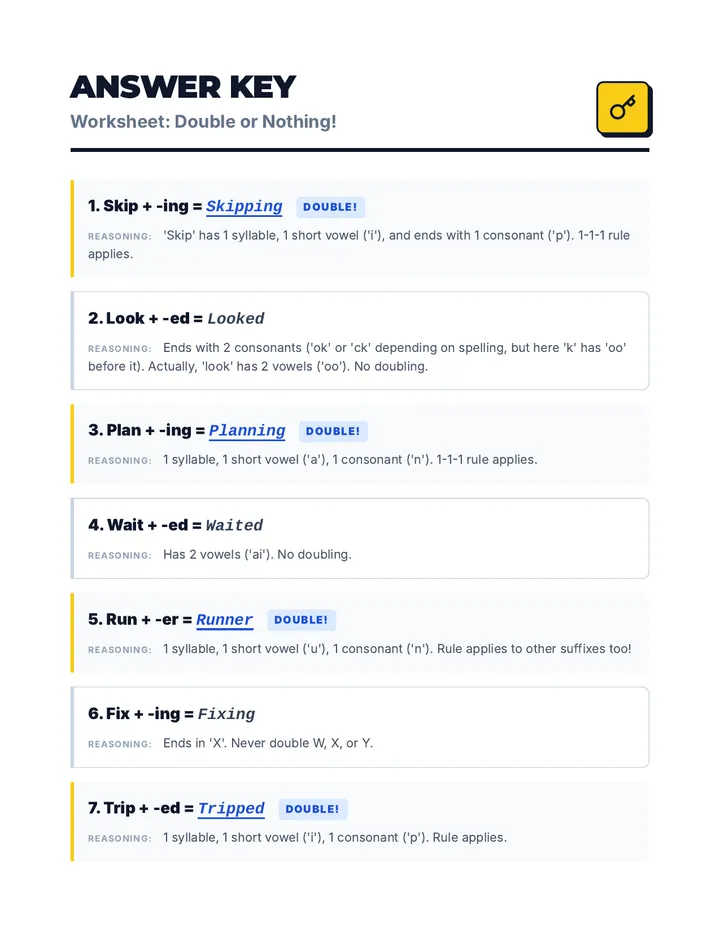
A targeted 60-minute individual tutoring session for a 6th-grade student focusing on the rules for doubling consonants before adding '-ed' or '-ing' suffixes. This lesson helps students master the 1-1-1 spelling rule through detective-themed activities and direct instruction.
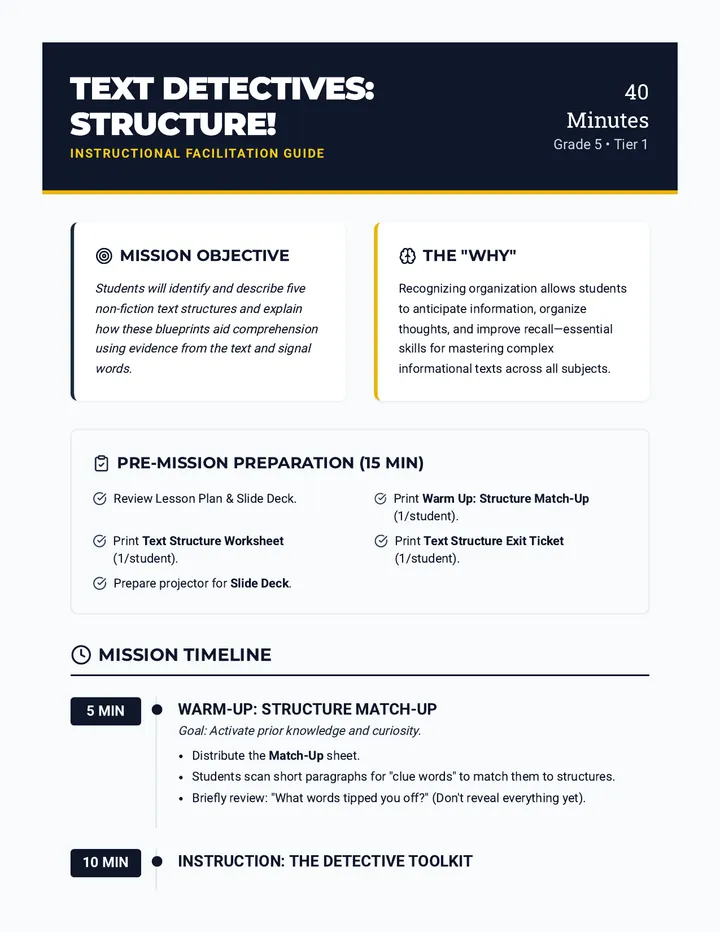
A 40-minute lesson where 5th-grade 'Text Detectives' learn to identify five common non-fiction text structures: description, sequence, compare/contrast, cause/effect, and problem/solution. Students use signal words and organizational clues to improve their reading comprehension.
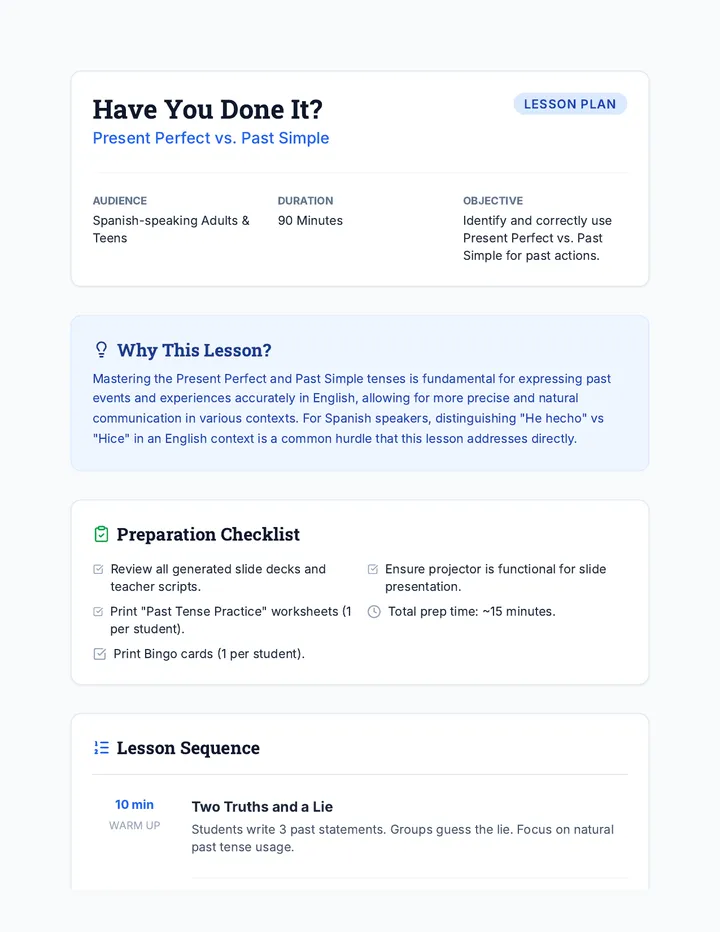
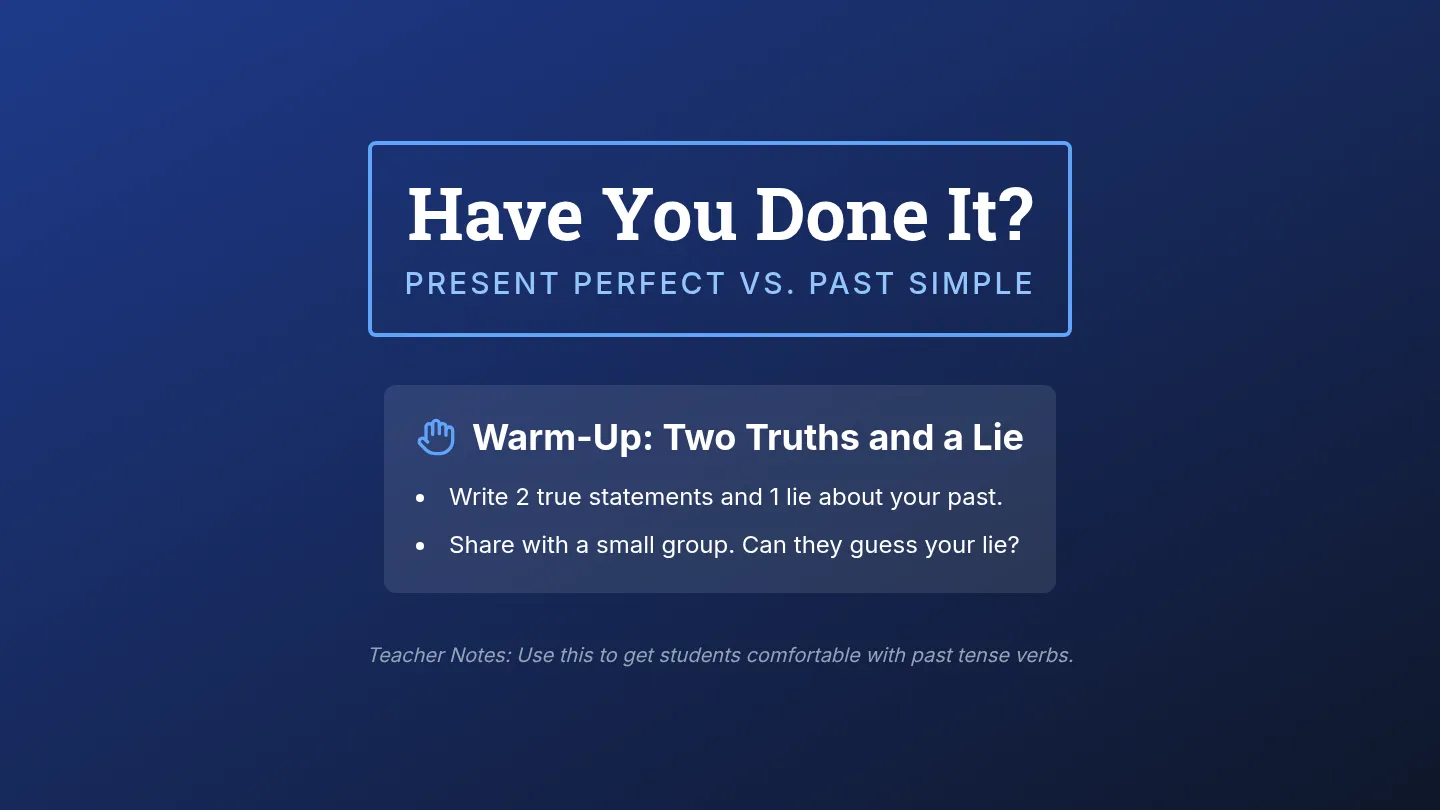
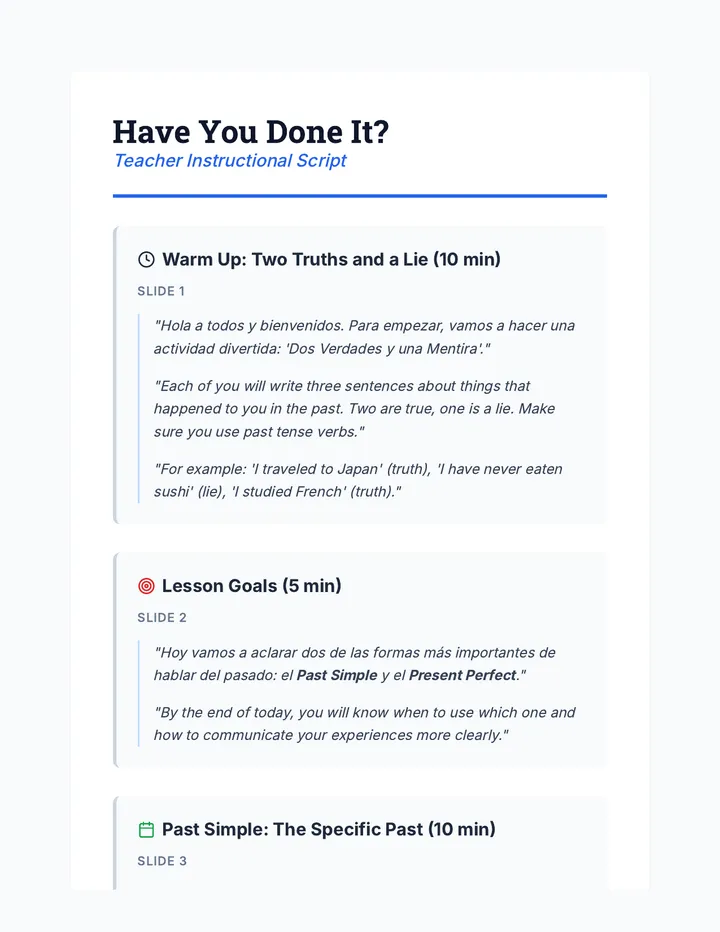
A comprehensive 90-minute ESL lesson for adults and teens focusing on the functional differences between Past Simple and Present Perfect tenses through the lens of life experiences and specific events.
A 5th-grade lesson on morphology where students learn to decode unfamiliar vocabulary by identifying and defining prefixes, suffixes, and roots. Students act as 'word detectives' to solve linguistic puzzles through interactive slides, a collaborative workshop, and independent practice.
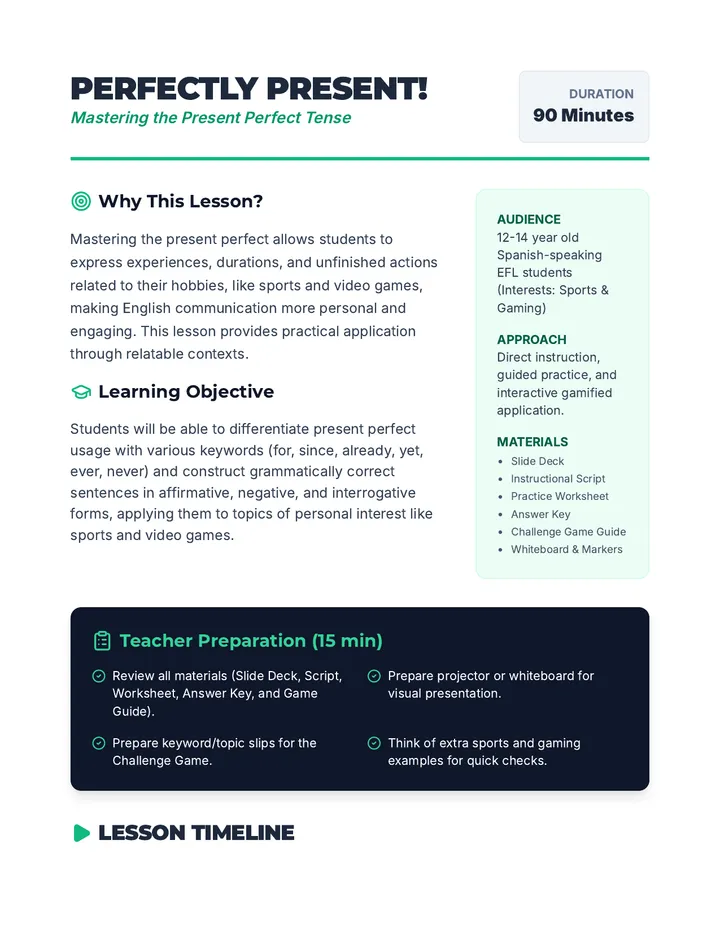
A 90-minute ESL lesson for 12-14 year olds focusing on the present perfect tense through the lens of sports and video games. Students will master keywords like 'for', 'since', 'already', 'yet', 'ever', and 'never' through interactive slides, a practice worksheet, and a team-based challenge game.
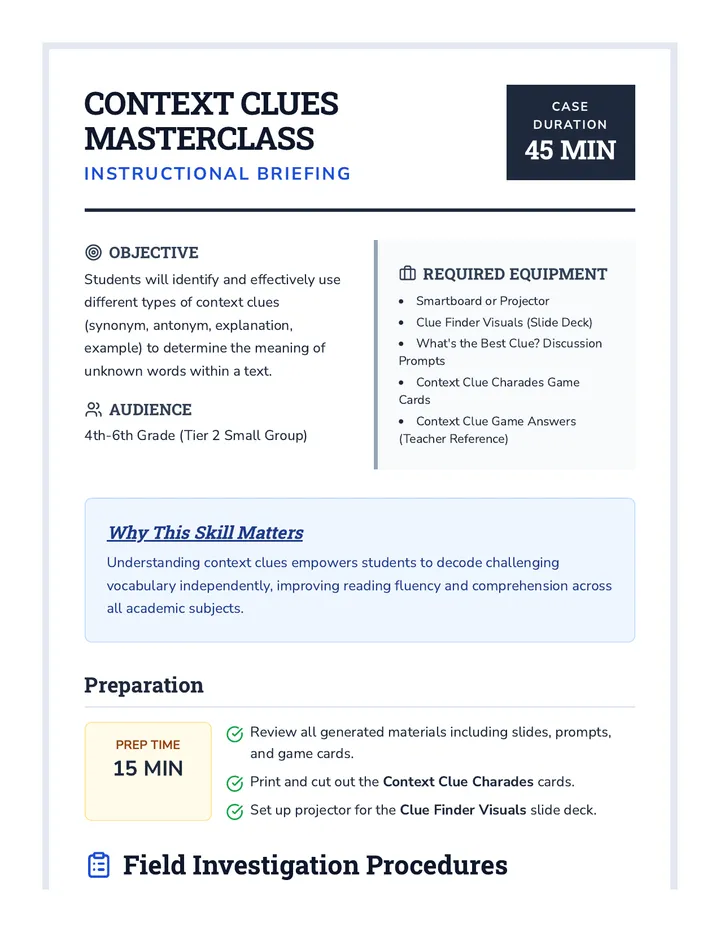
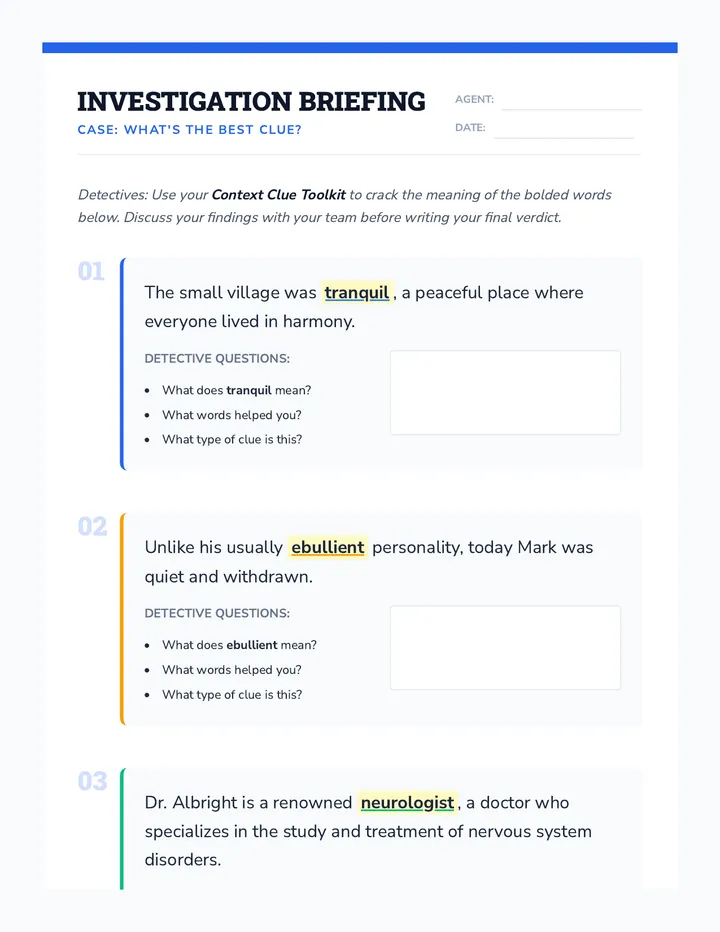
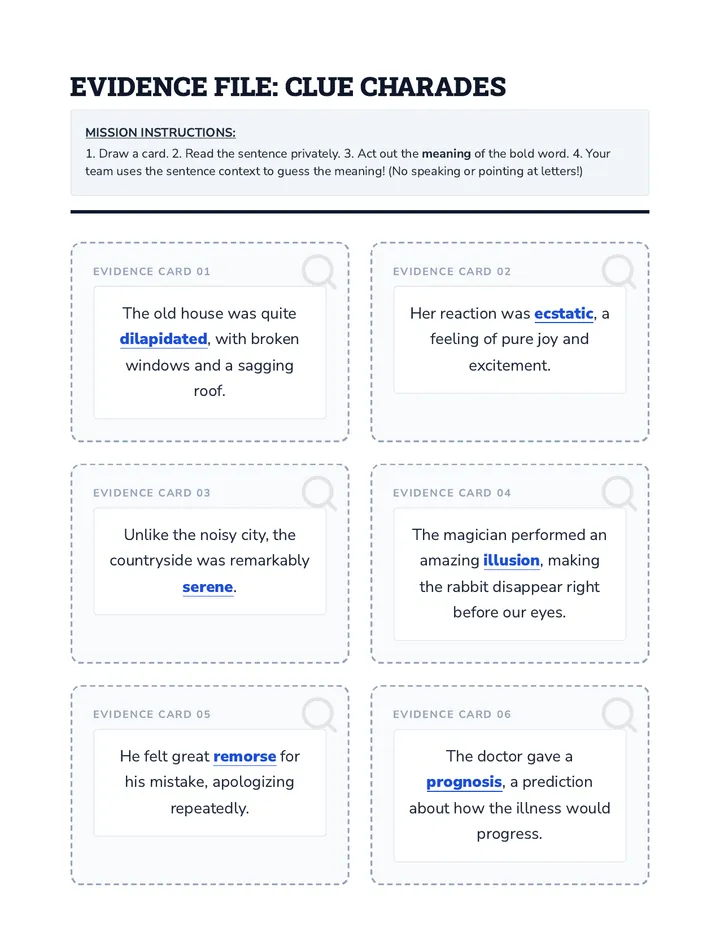
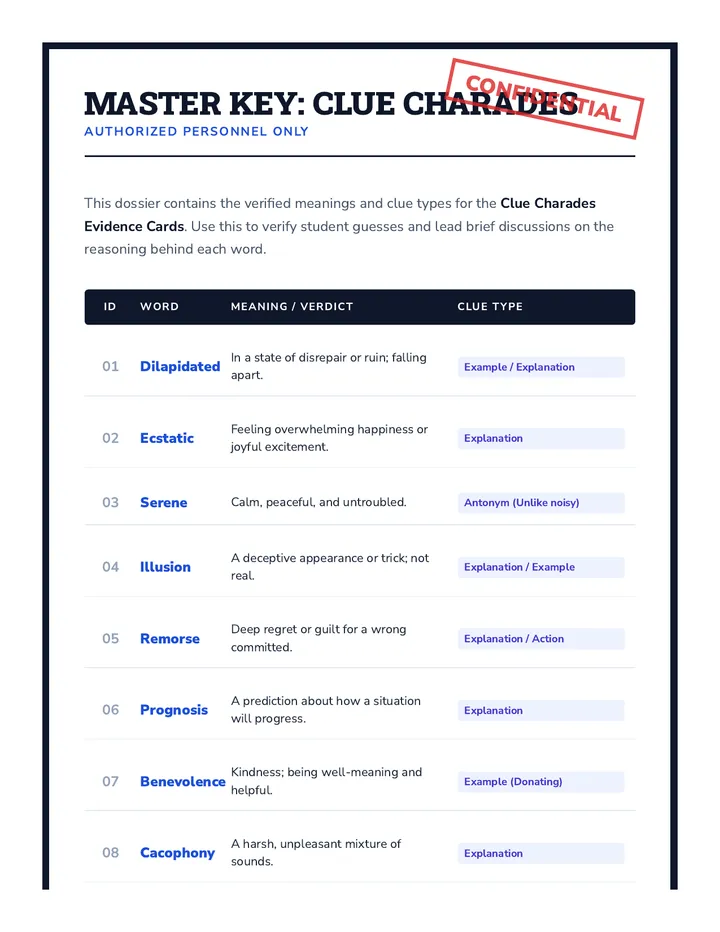
A targeted 45-minute lesson for 4th-6th grade students focused on mastering the four types of context clues (synonym, antonym, explanation, example) through a detective-themed investigation and interactive game.
A targeted 30-minute Tier 2 small group lesson for 5th graders focused on decoding multisyllabic words using phonics, syllabication patterns, and morphology. Students learn to be 'Word Detectives' by breaking down complex words into manageable parts.
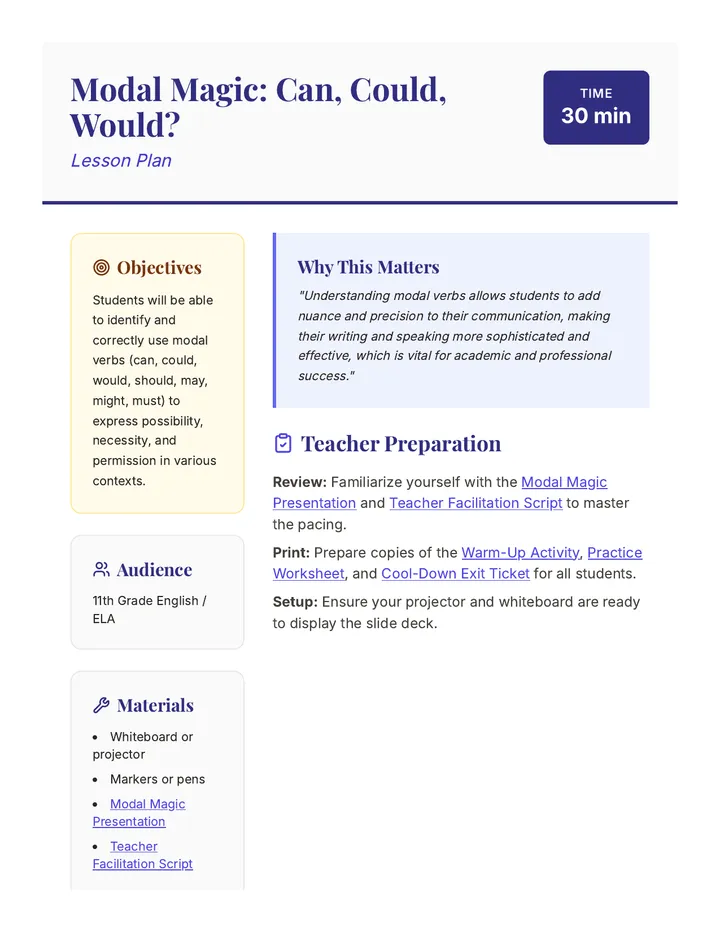
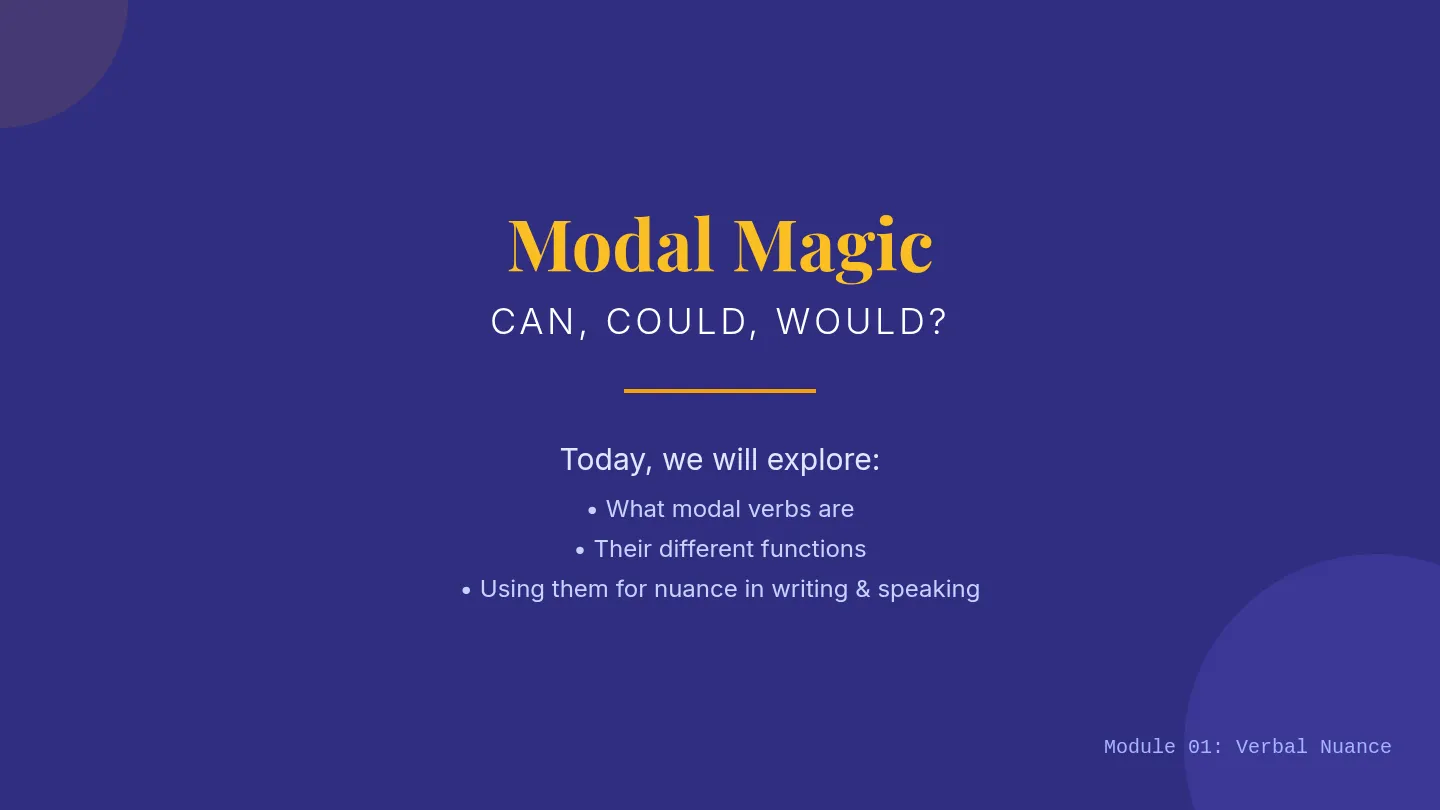
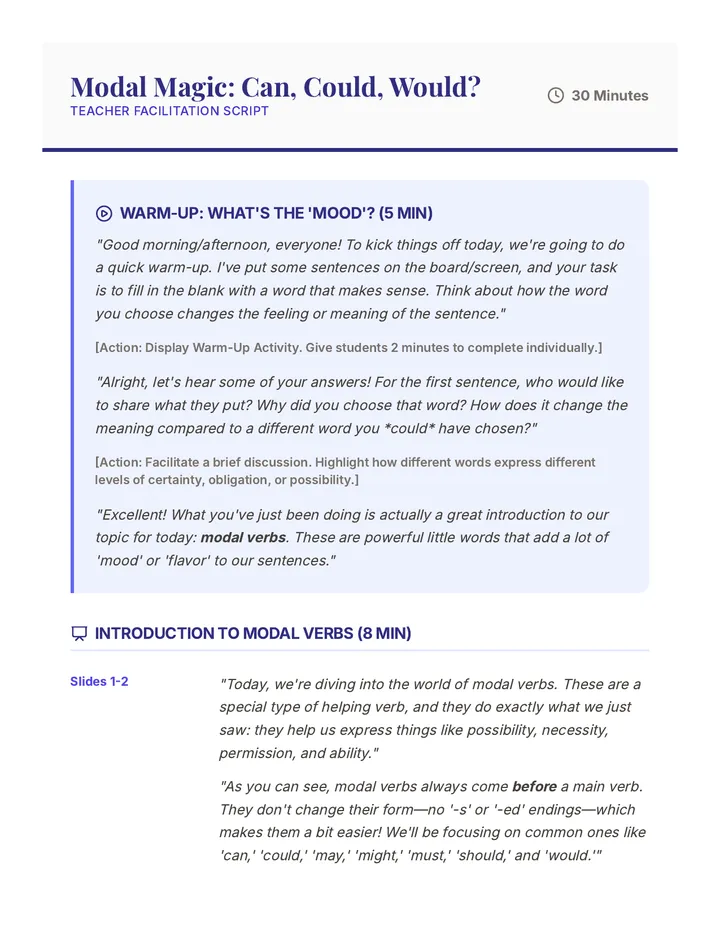
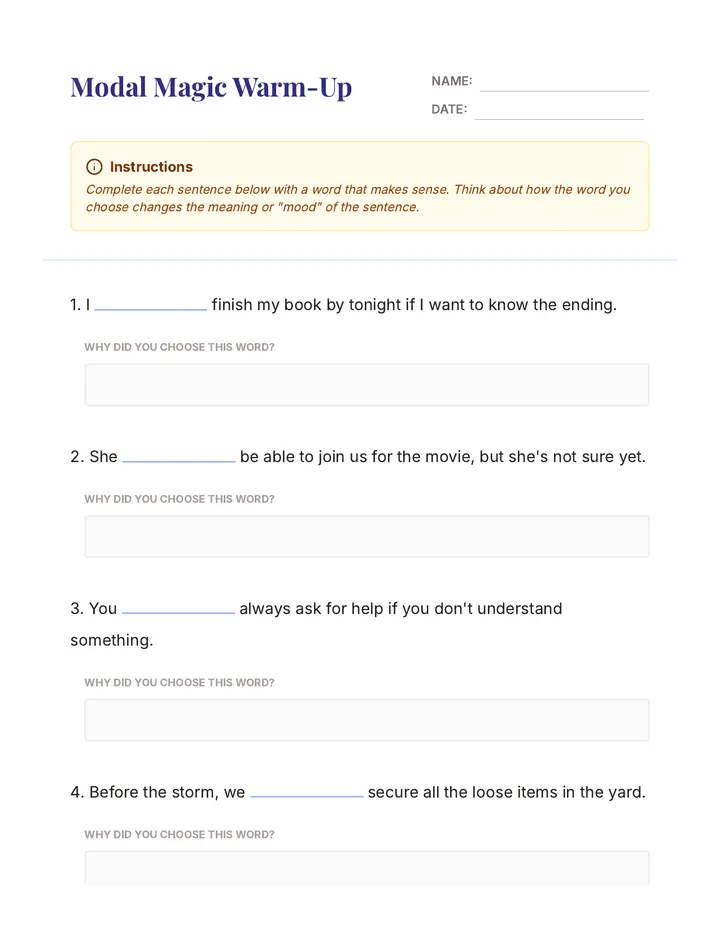
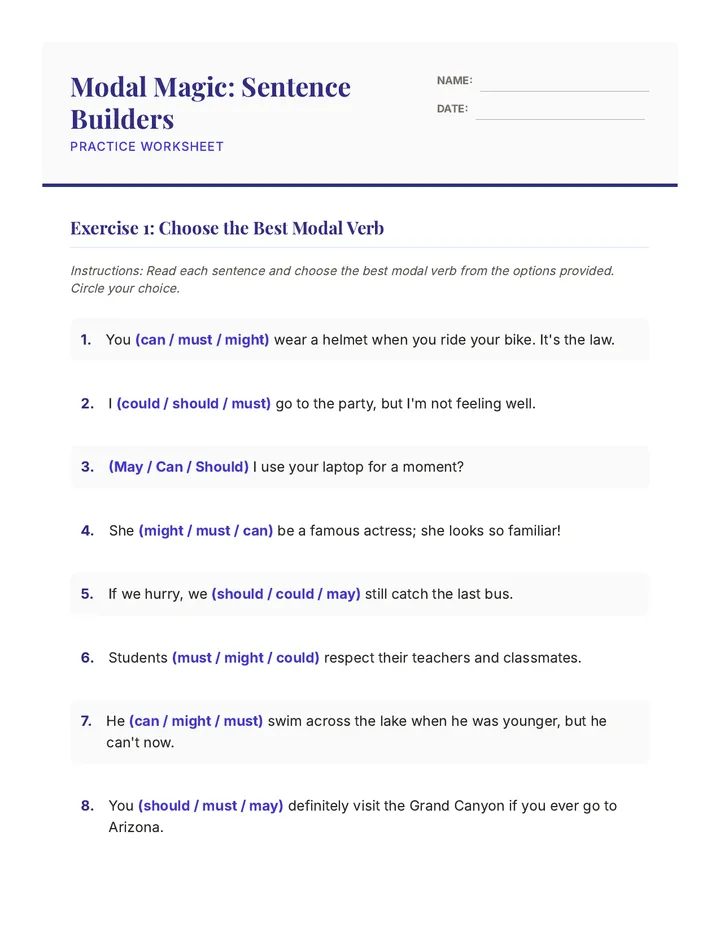
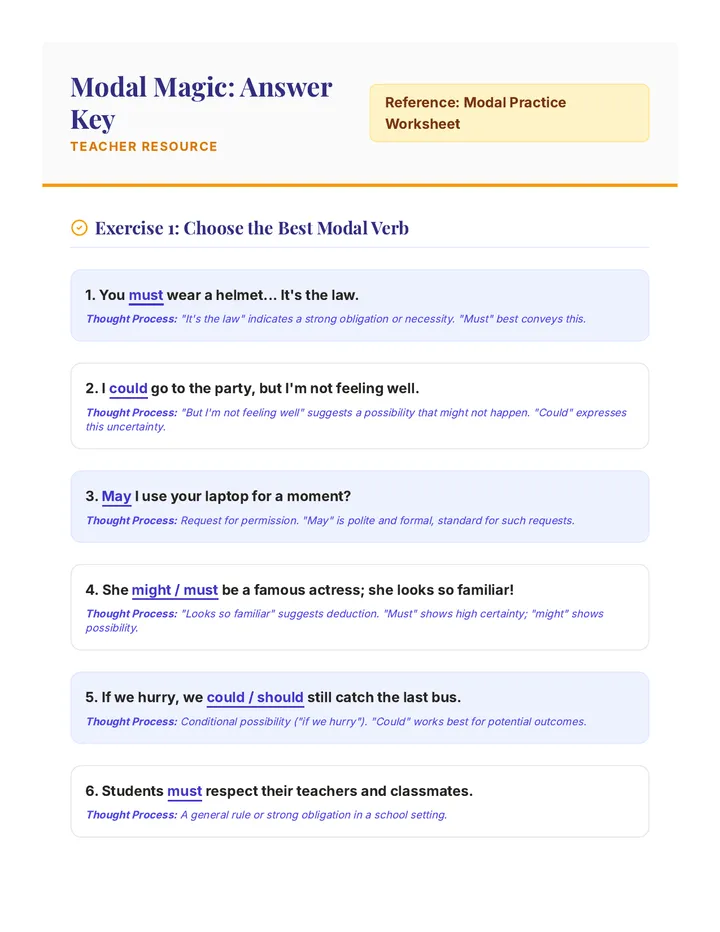
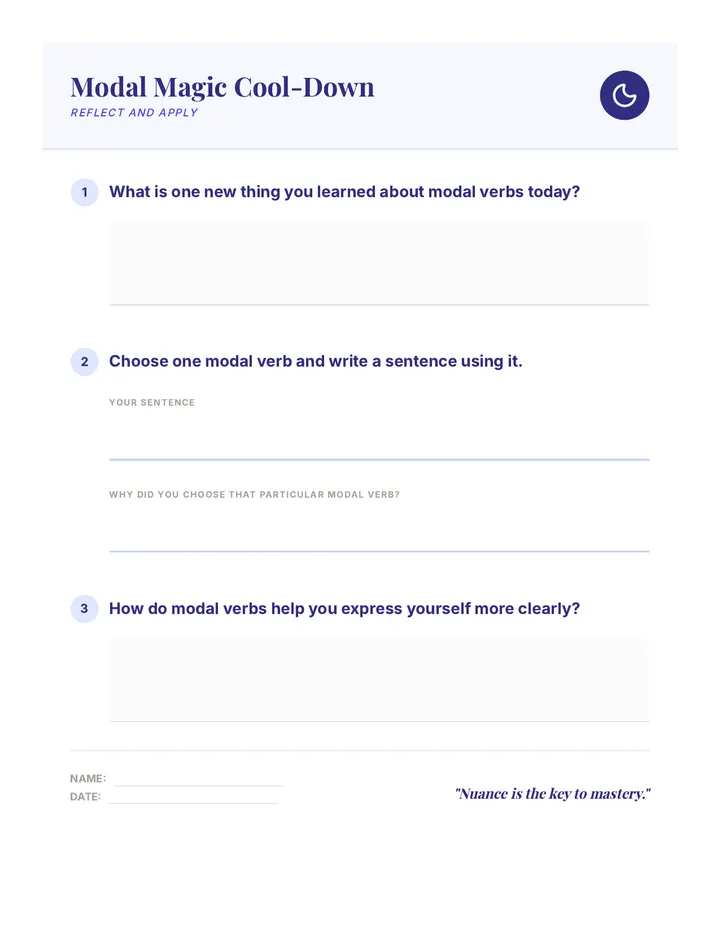
A 30-minute lesson for 11th-grade students to master the use of modal verbs for expressing possibility, necessity, and permission. Students explore how these 'helping verbs' add nuance and precision to their communication.
A comprehensive 60-minute Tier 3 lesson for adult ESL students on mastering first conditionals to discuss future possibilities and outcomes.
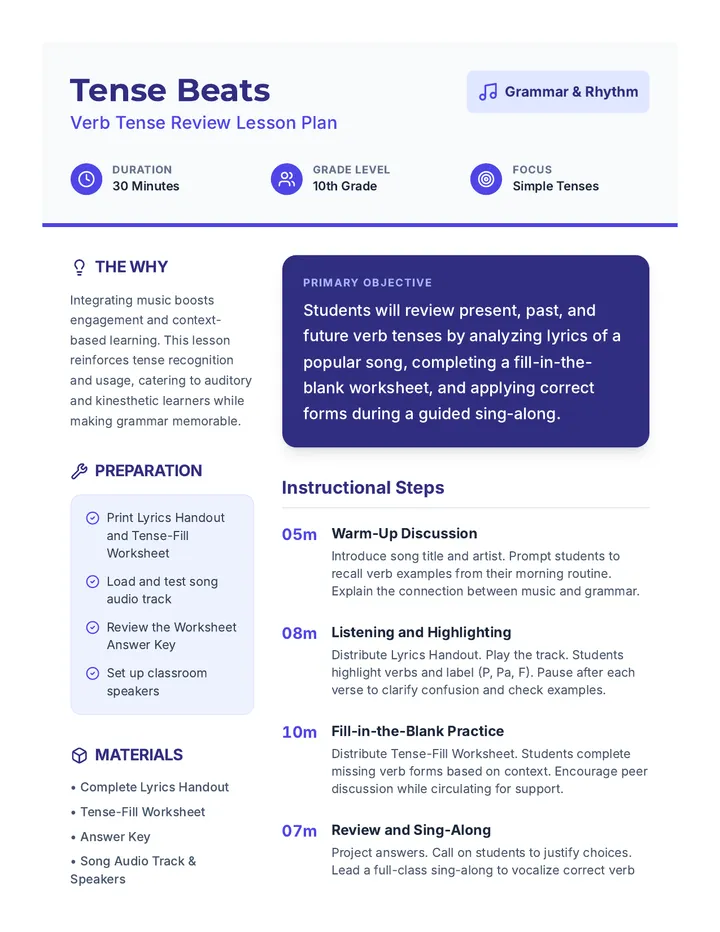
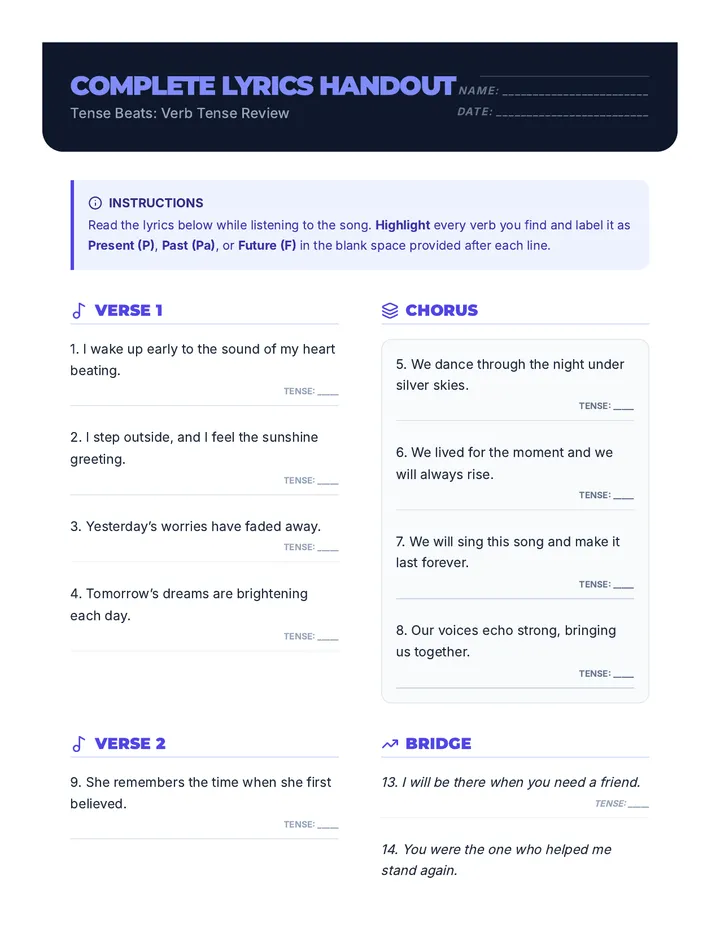
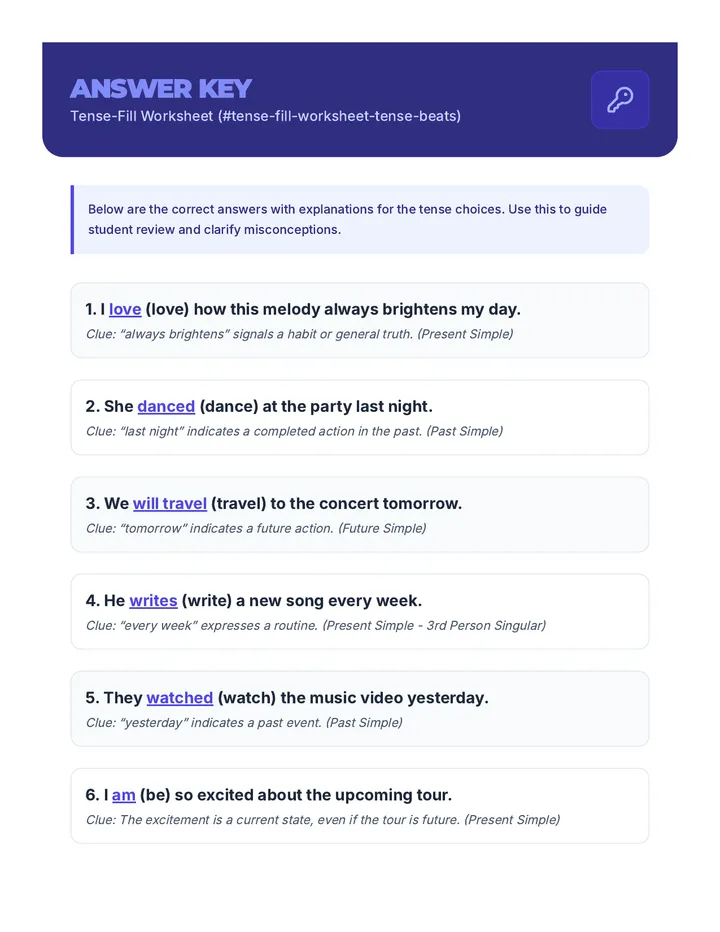
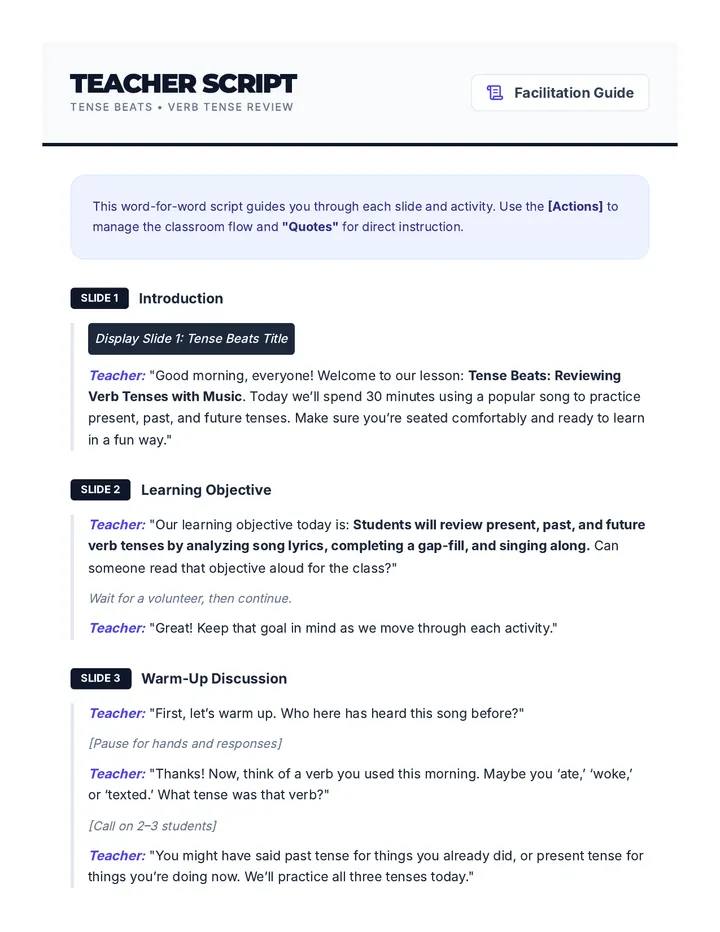
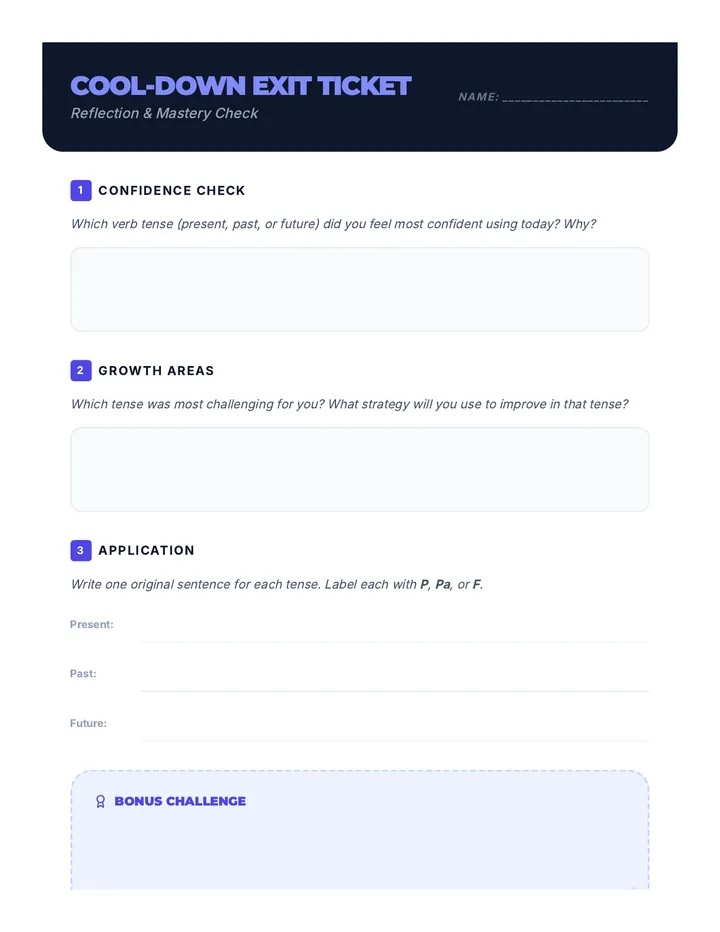
A 30-minute 10th-grade grammar lesson that uses song lyrics to review and practice present, past, and future verb tenses in a highly engaging, musical context.