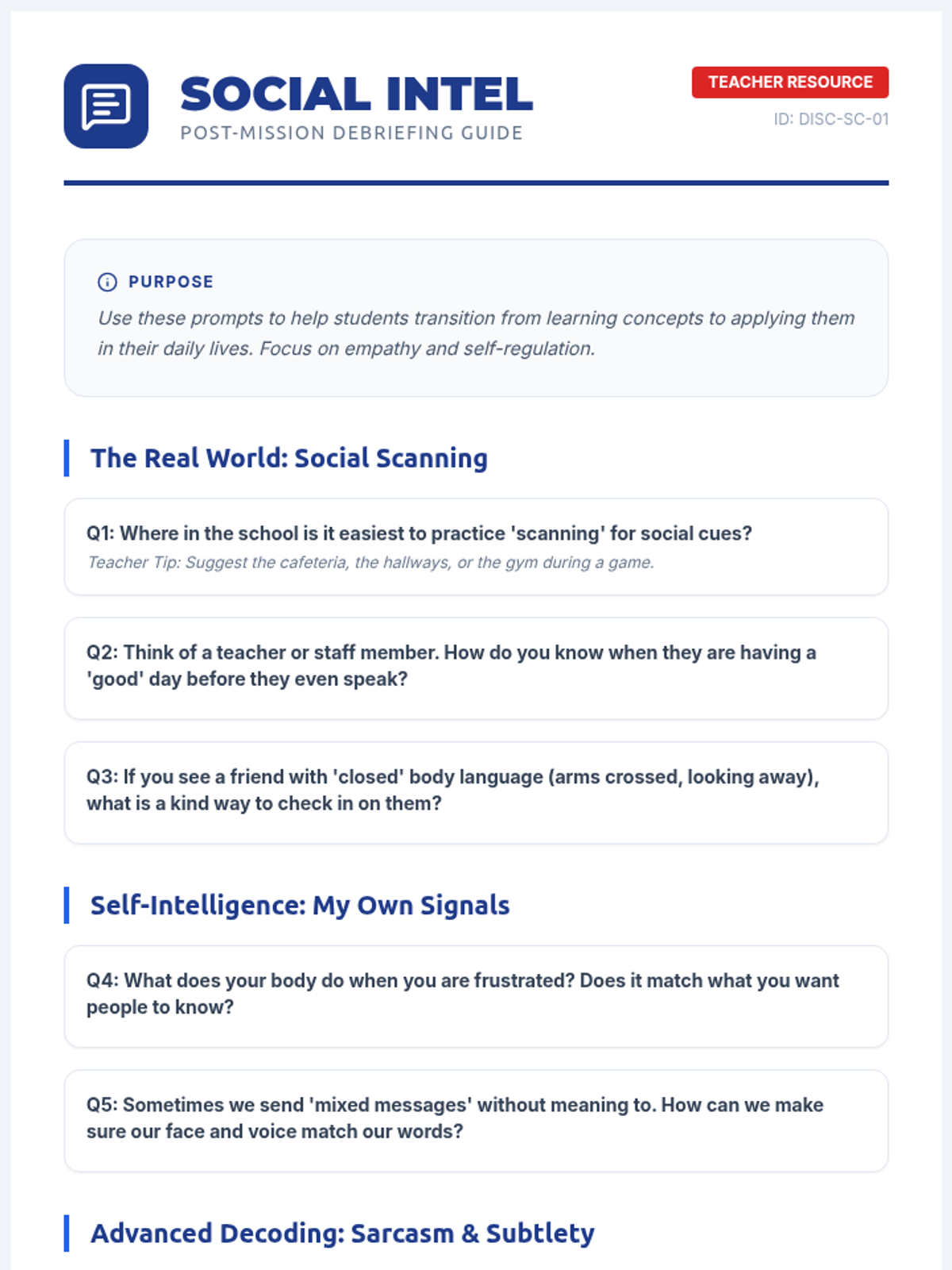
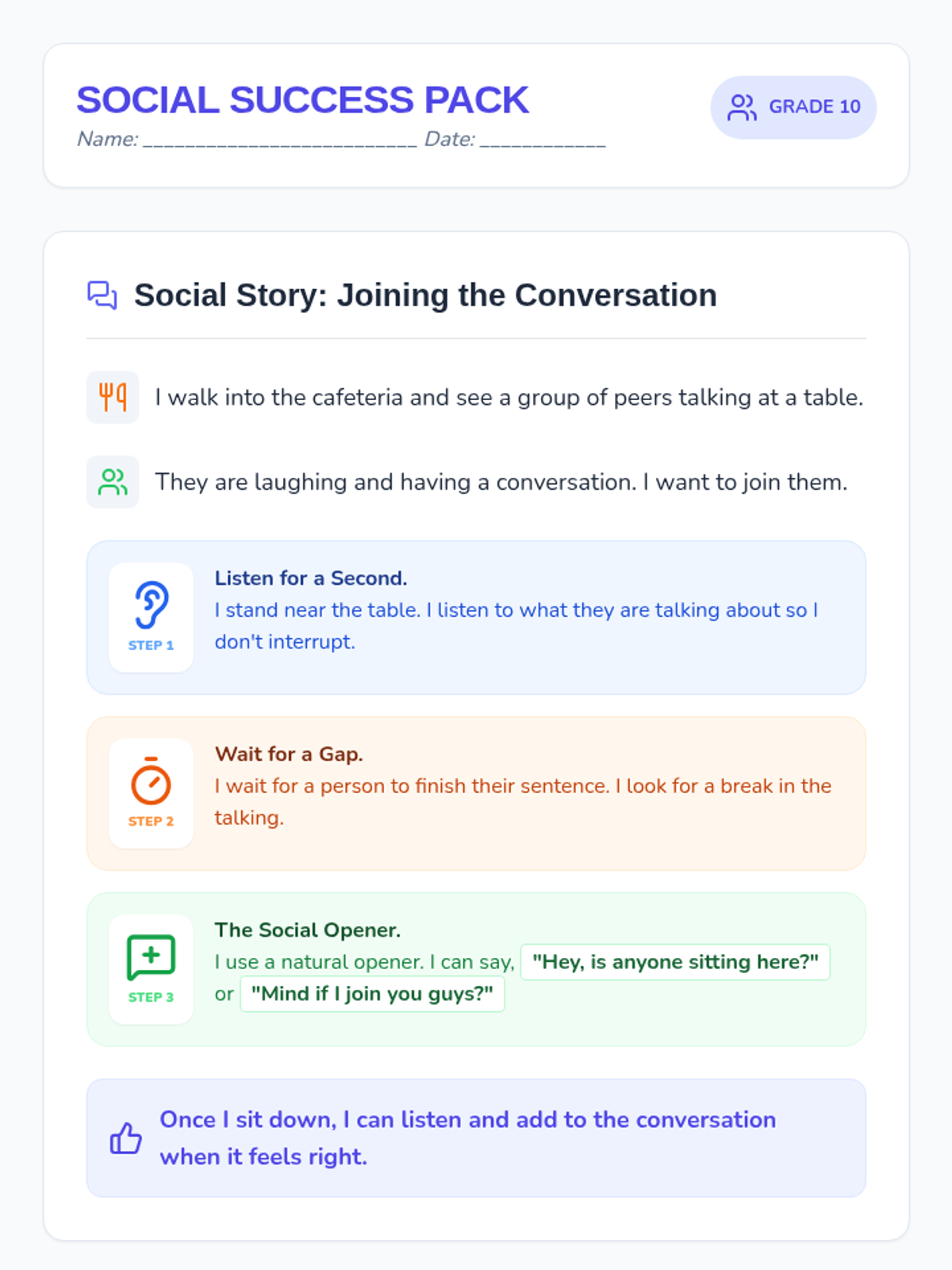
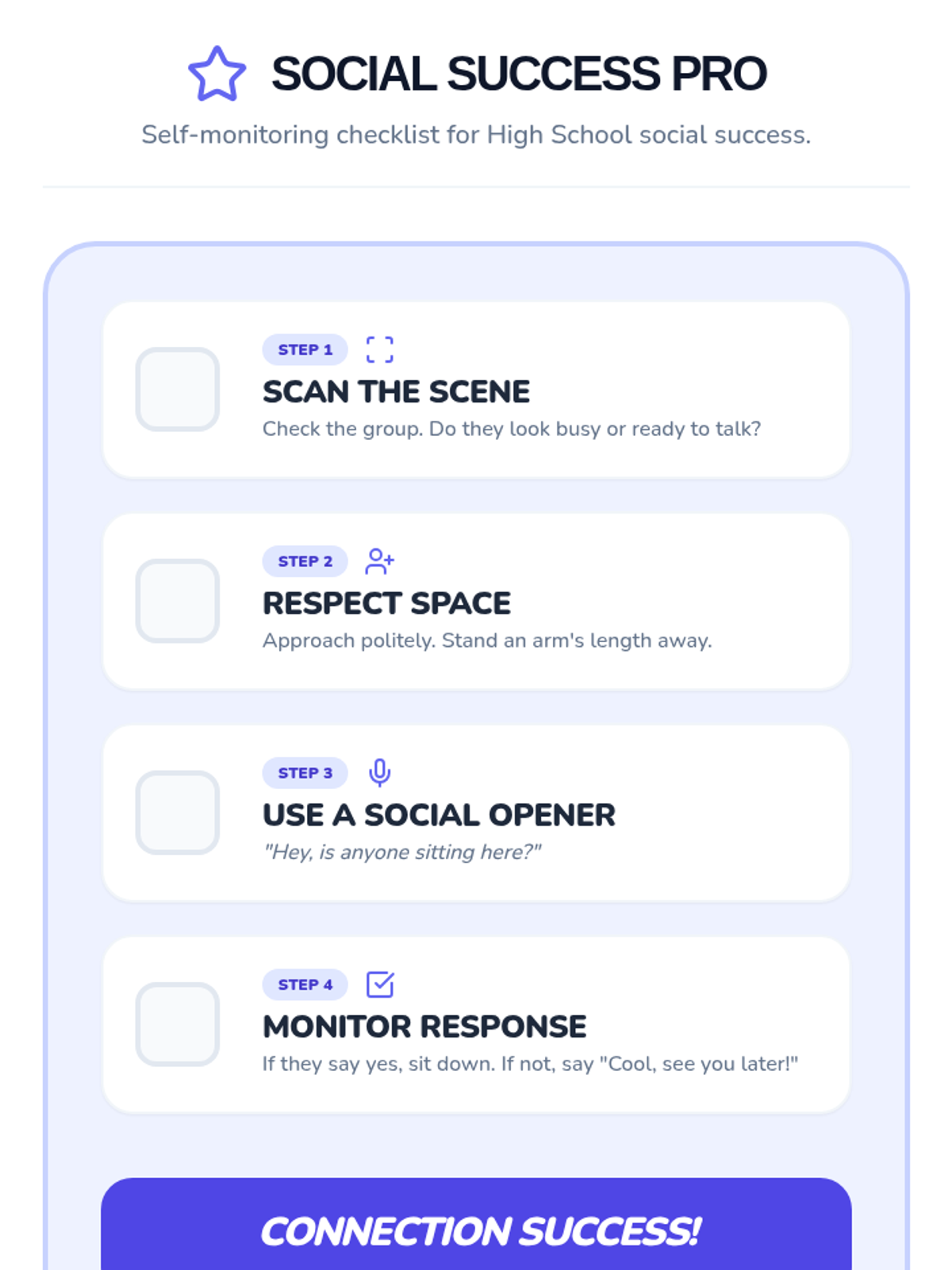
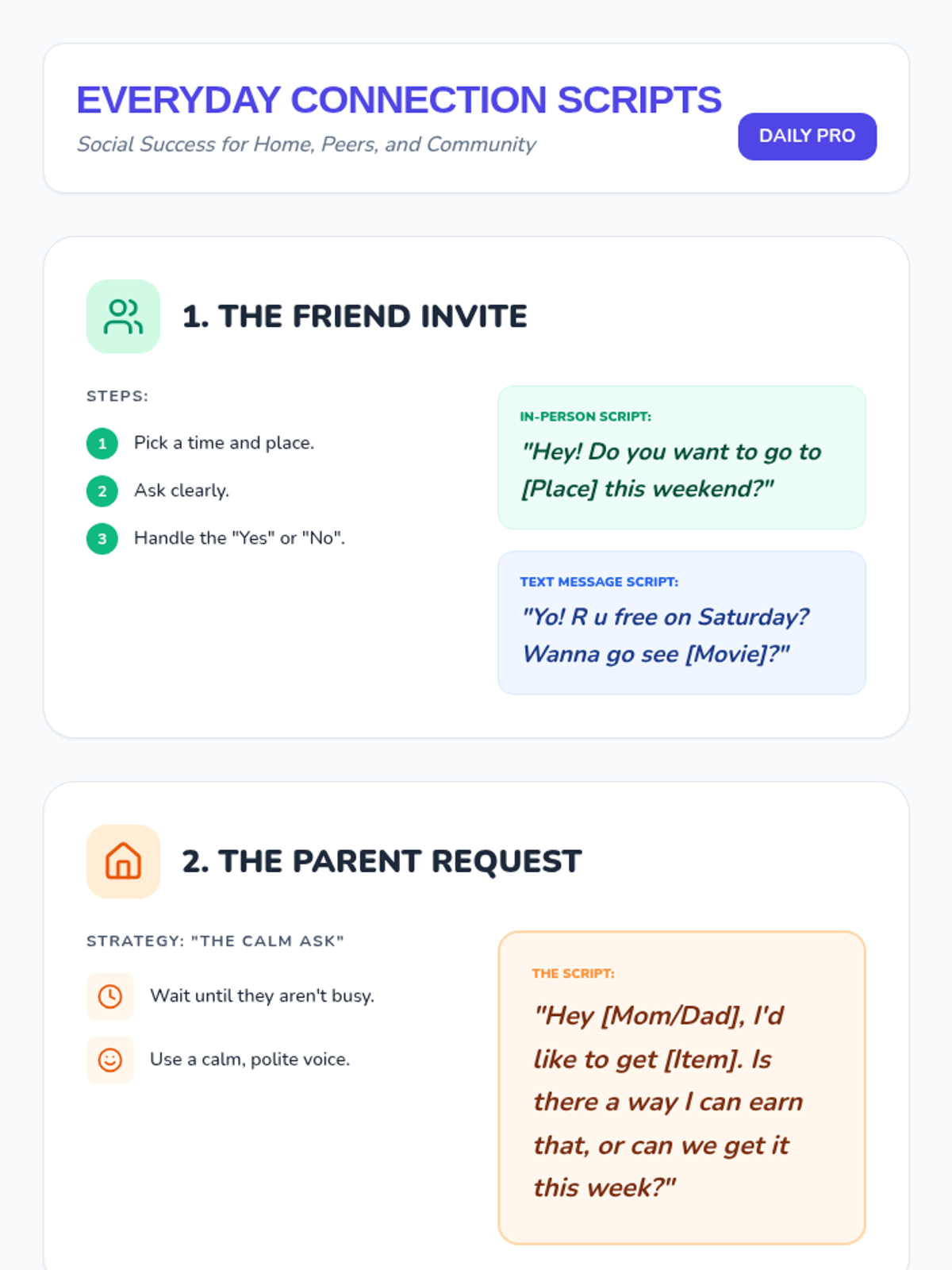
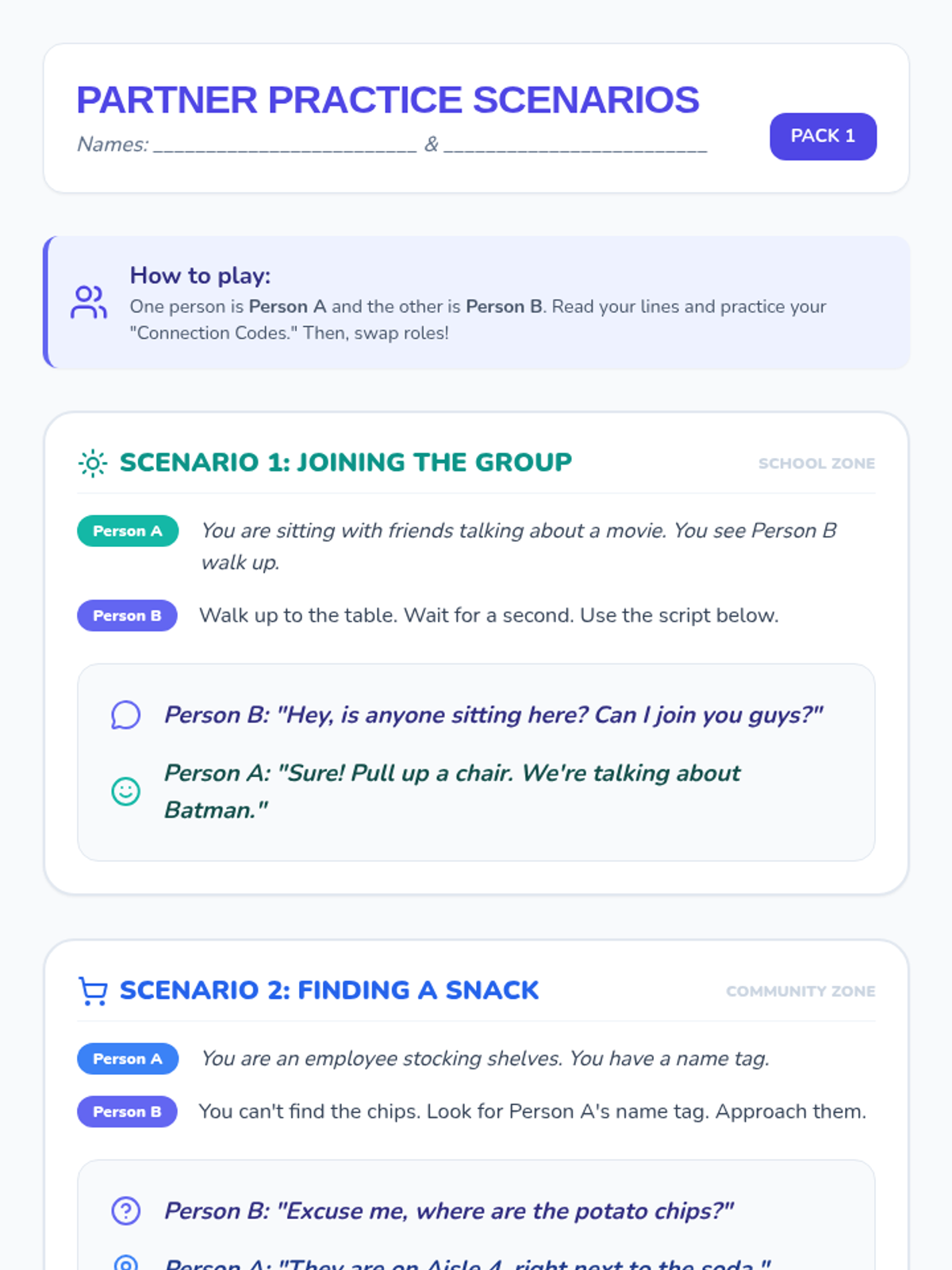
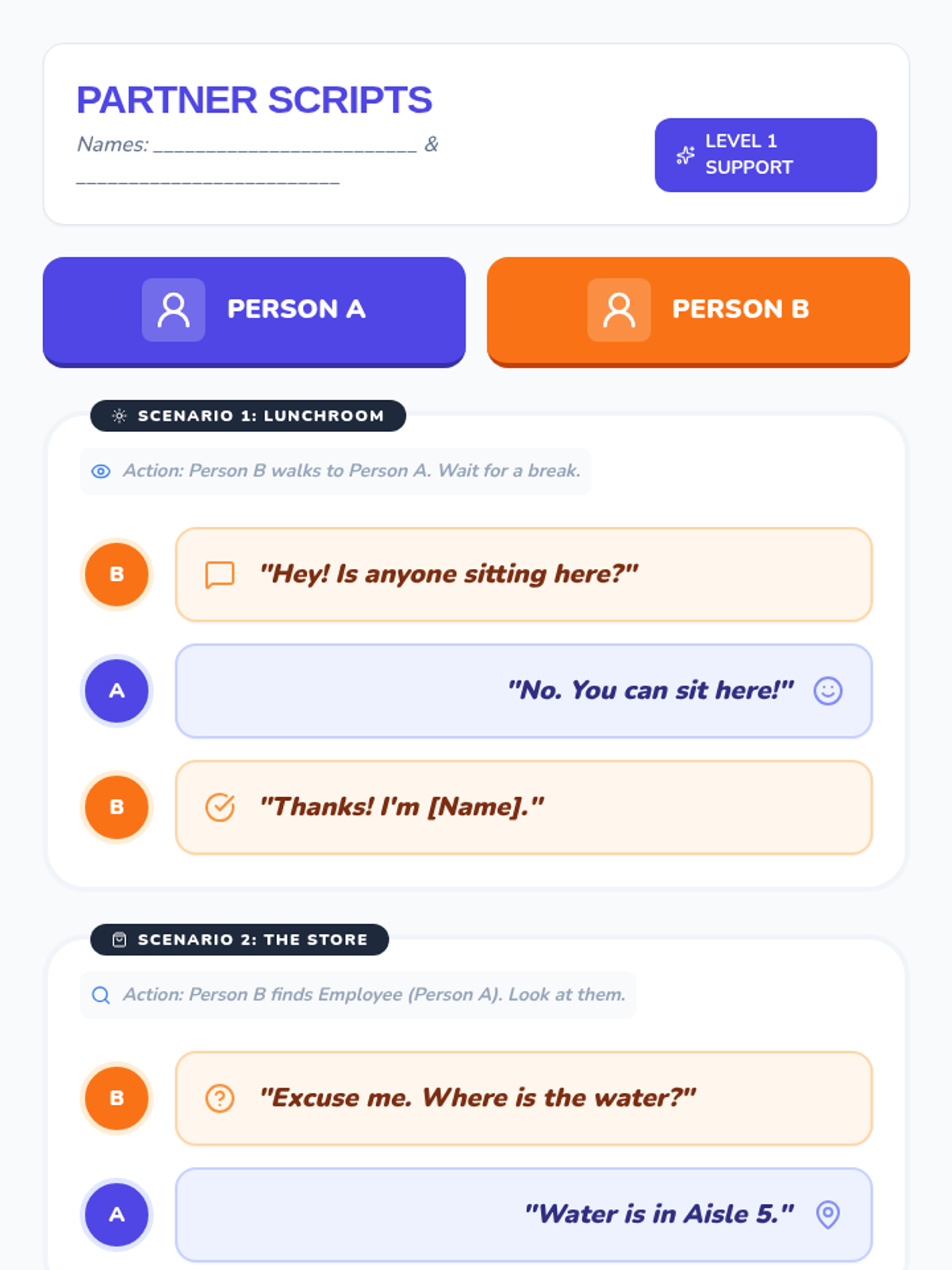
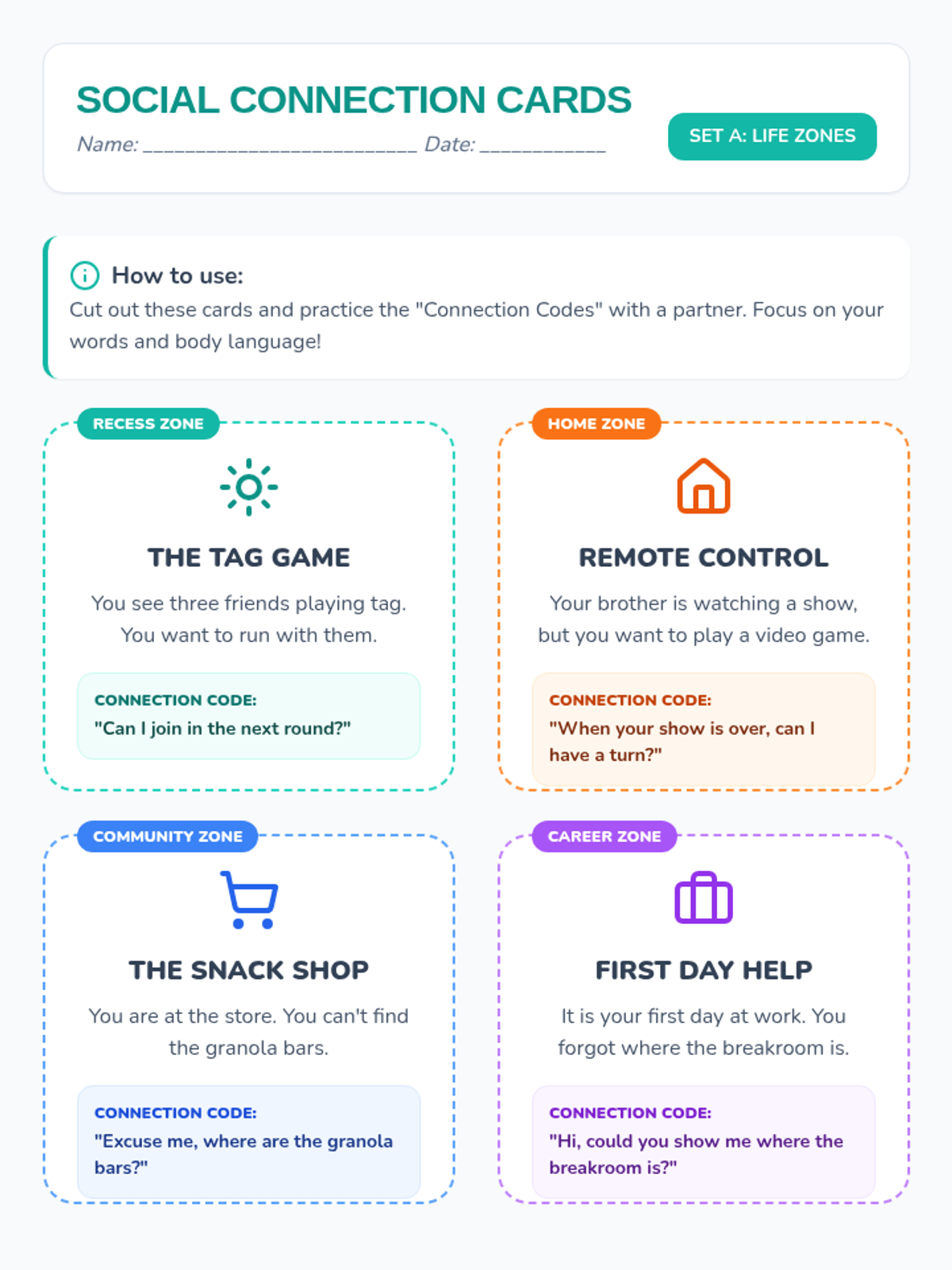
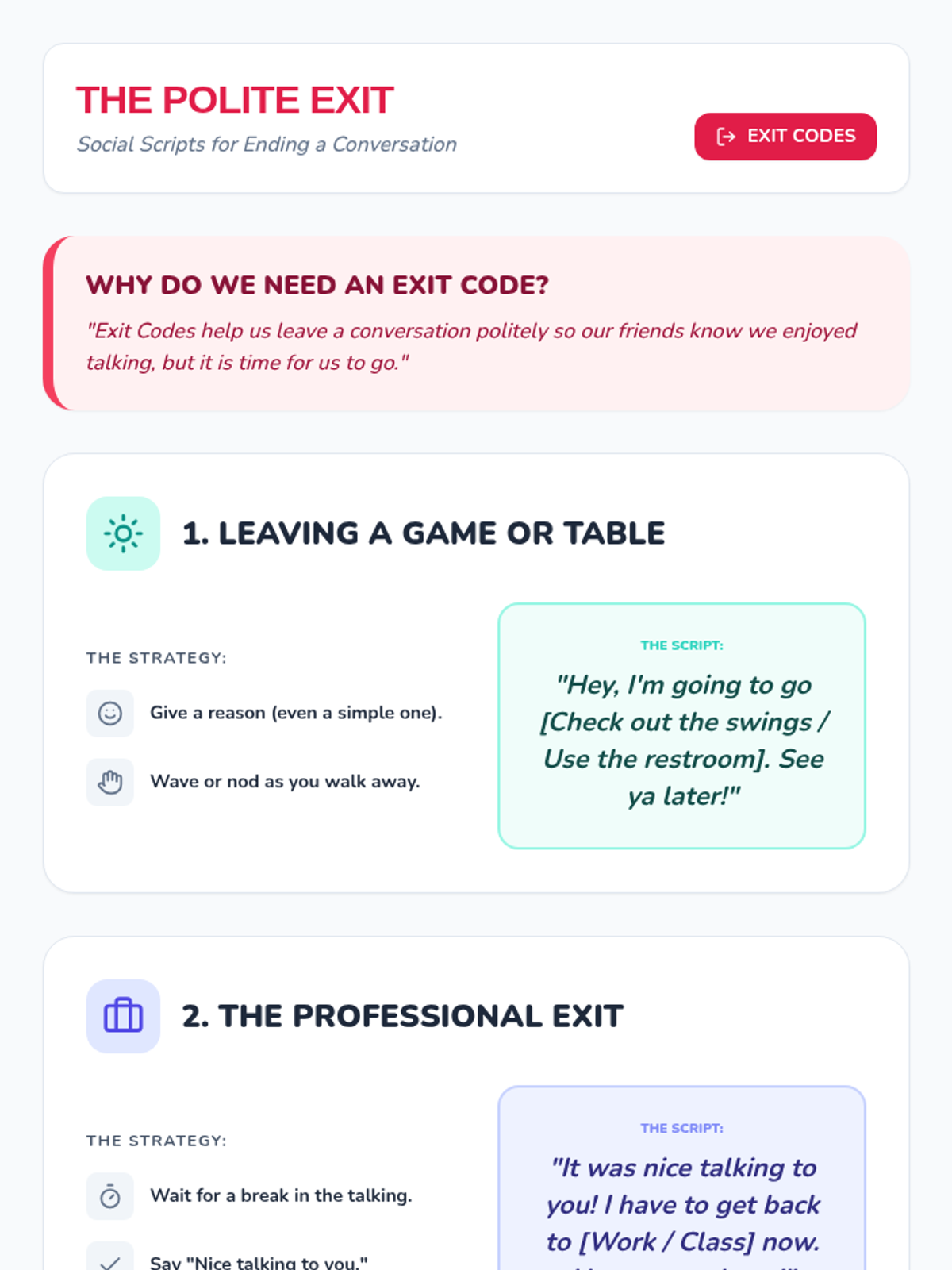
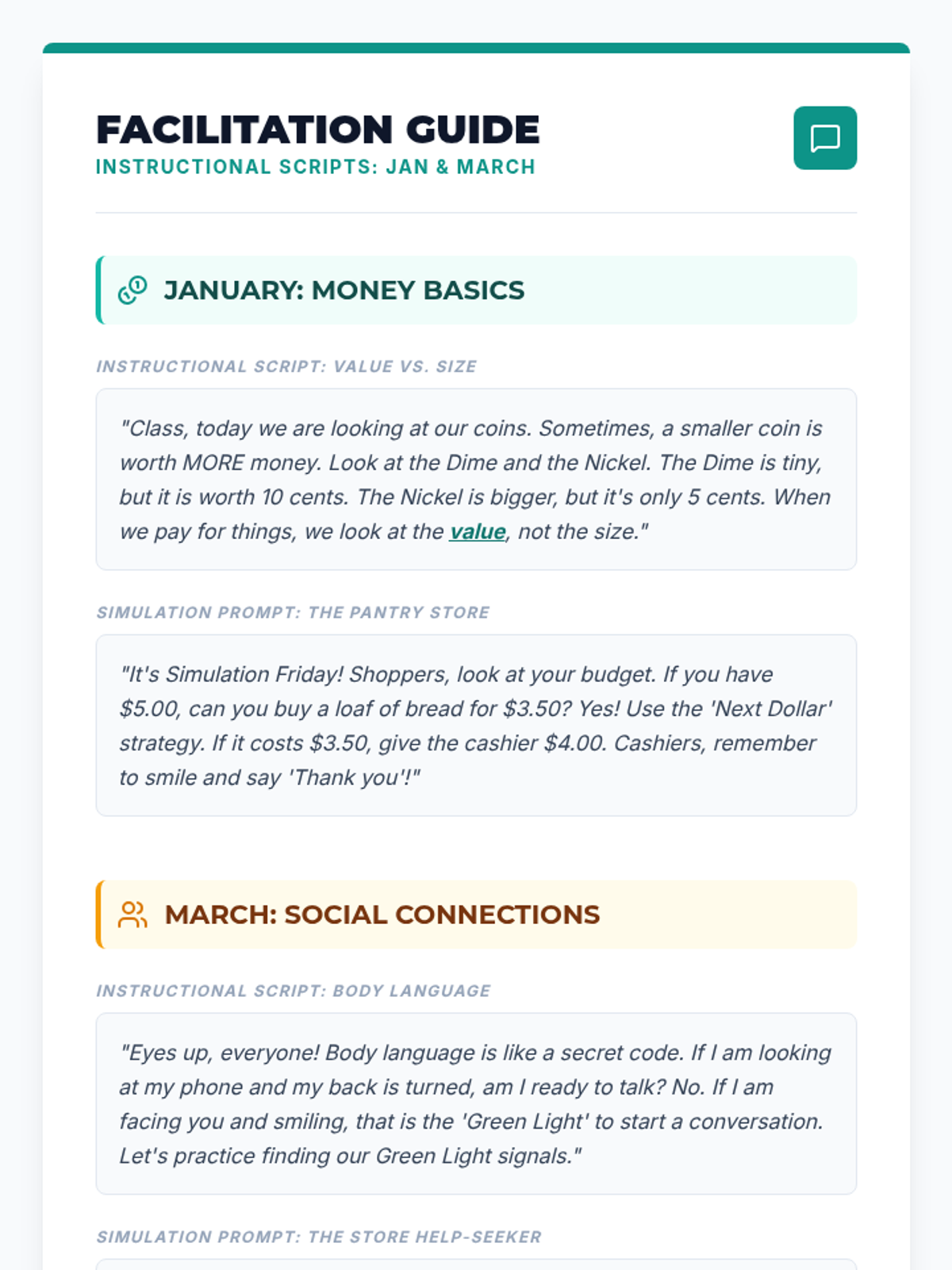
Verbal modulation, body language interpretation, and turn-taking strategies for effective social interaction. Addresses social problem identification, help-seeking, and the comprehension of figurative language across varied contexts.
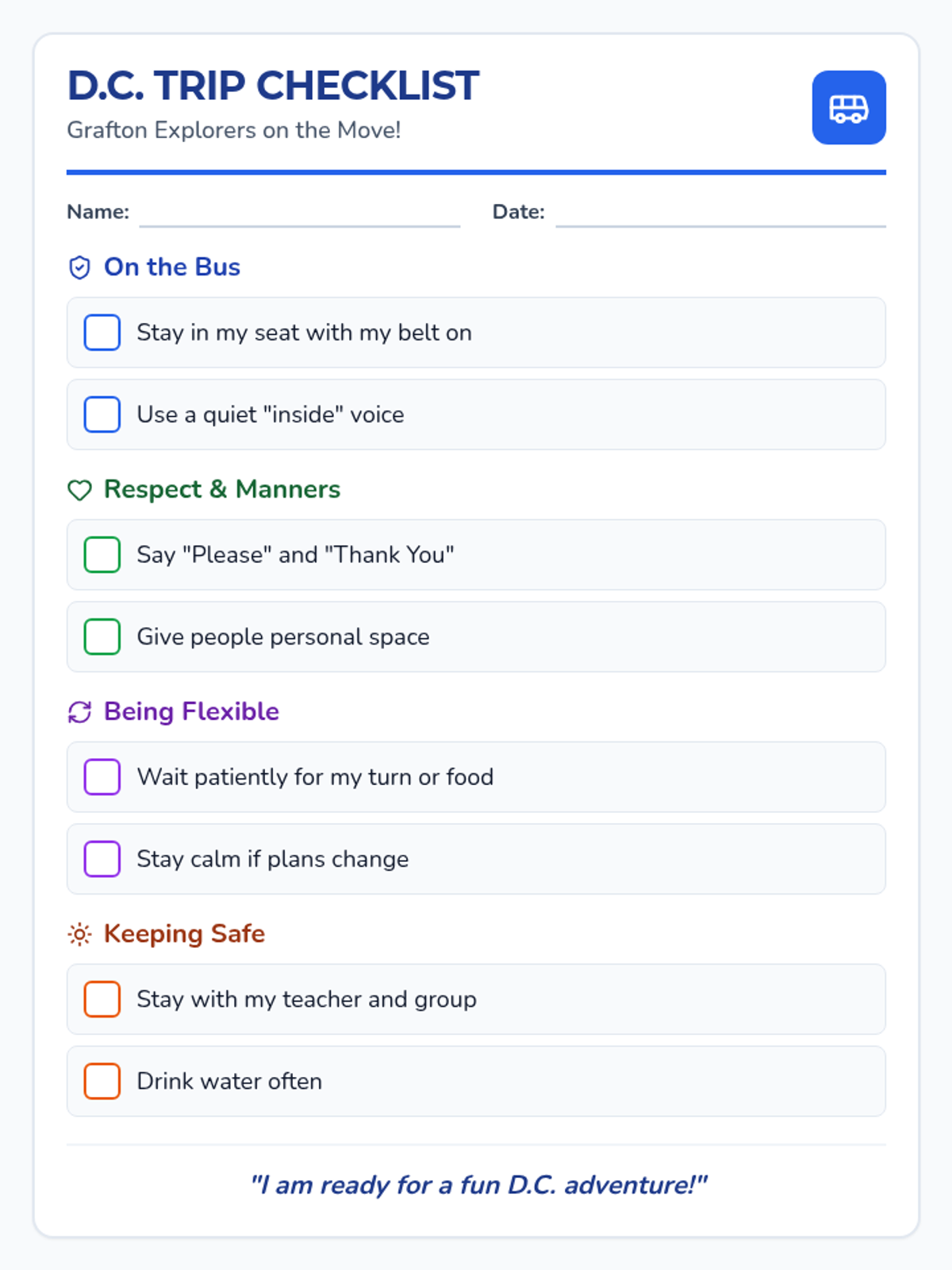
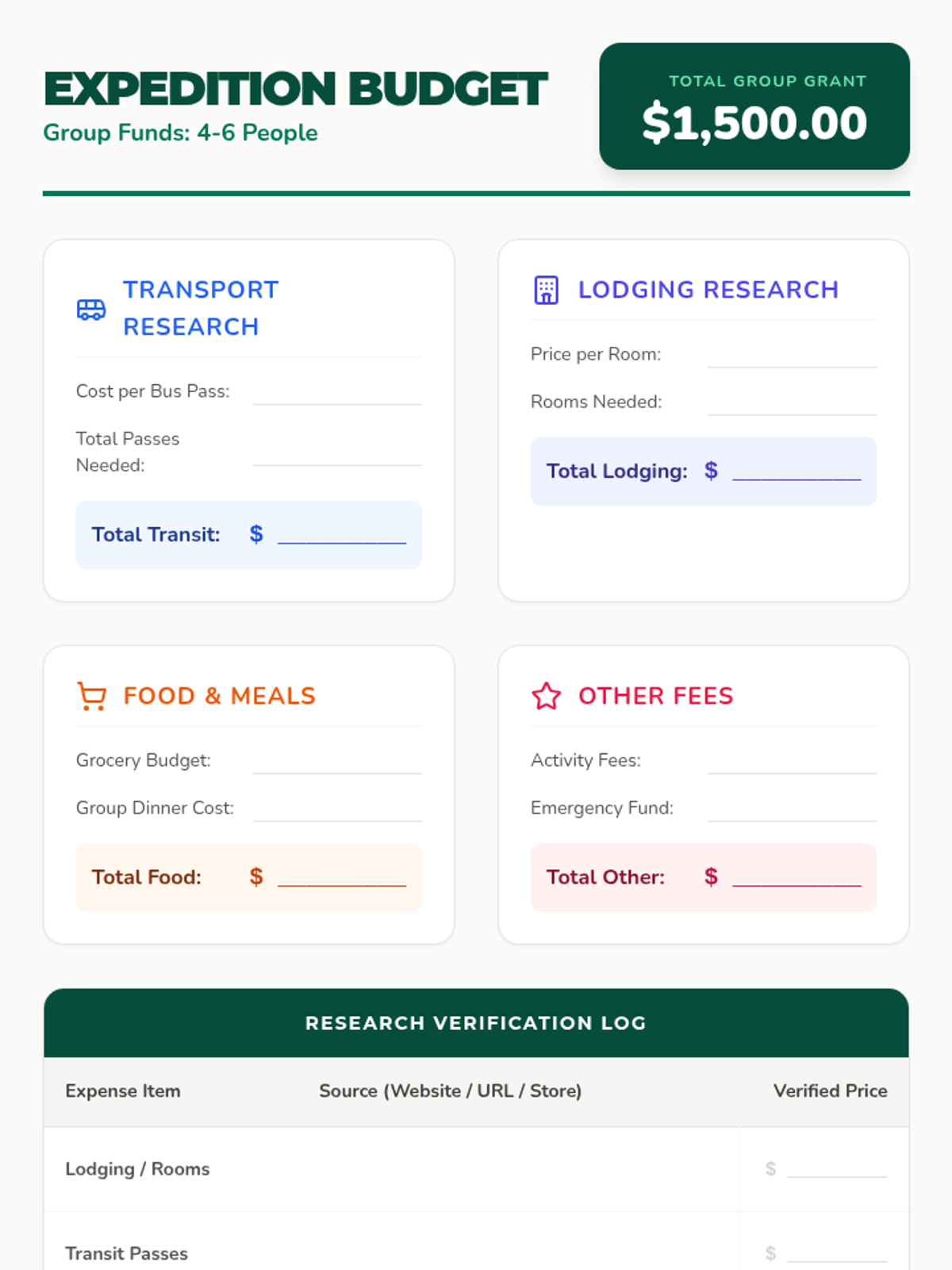
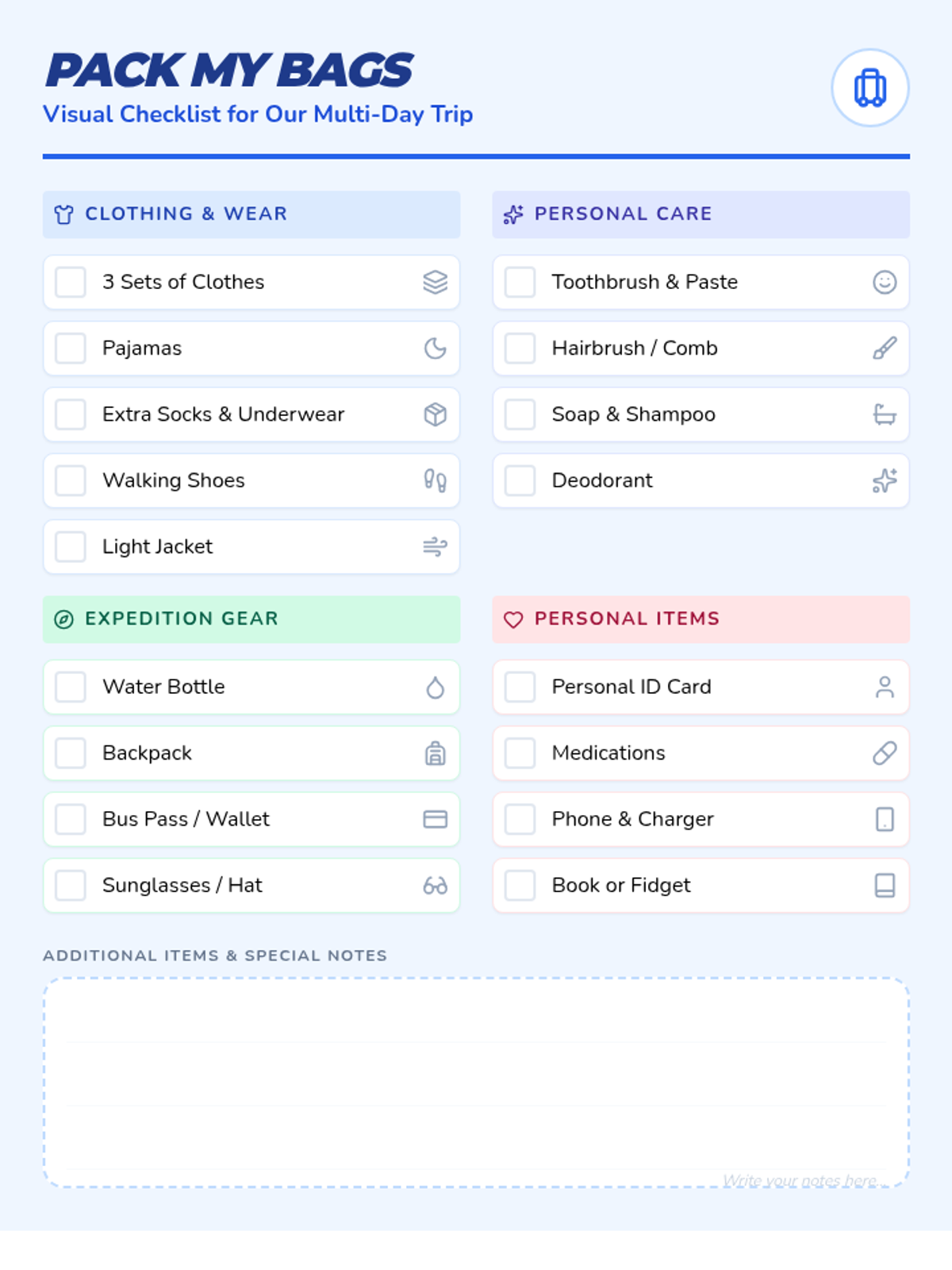
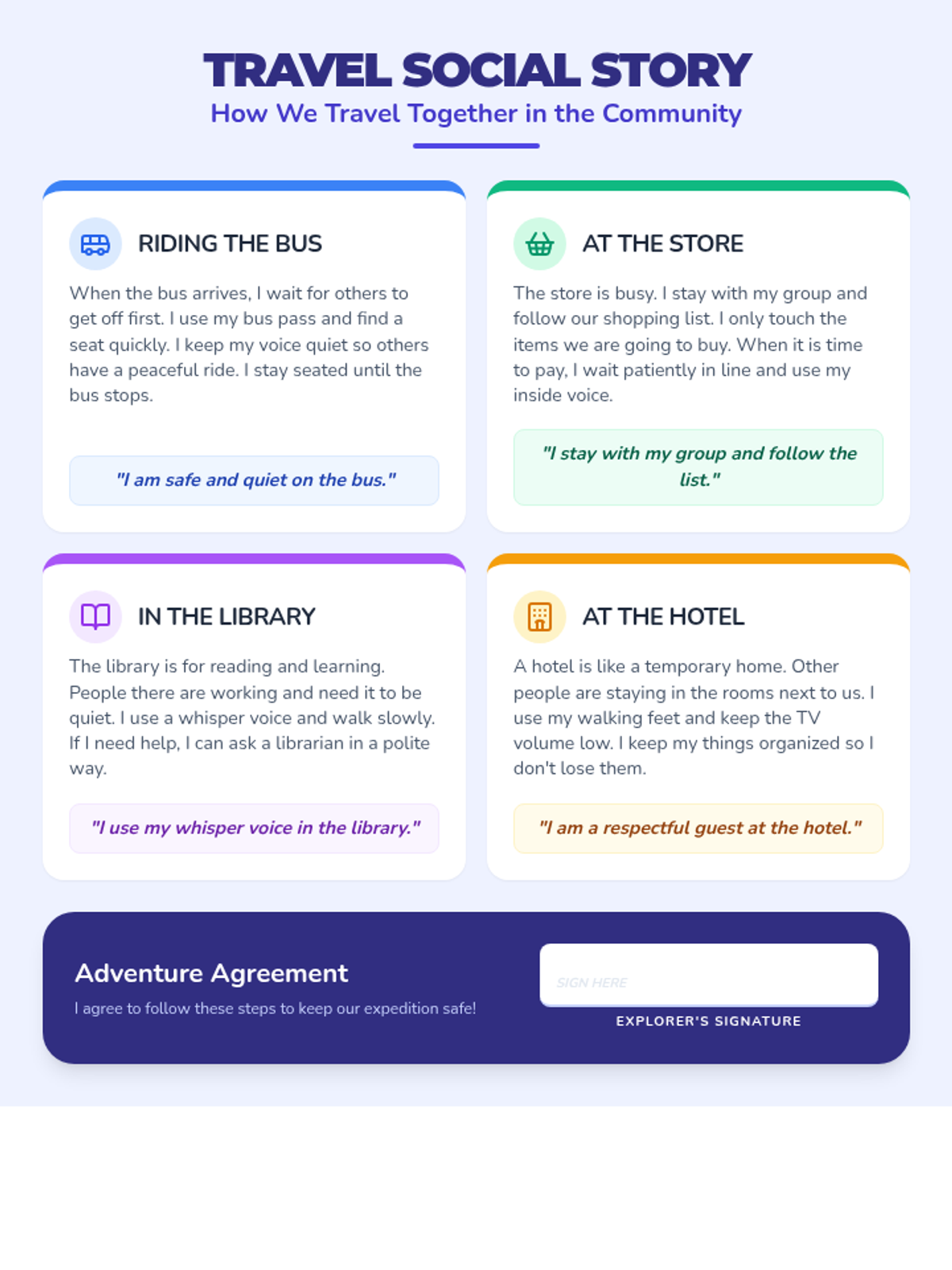
A set of social stories and visual aids to prepare students with Down Syndrome and Autism for a school field trip from Grafton, MA to Washington, D.C., focusing on patience, endurance, and manners.
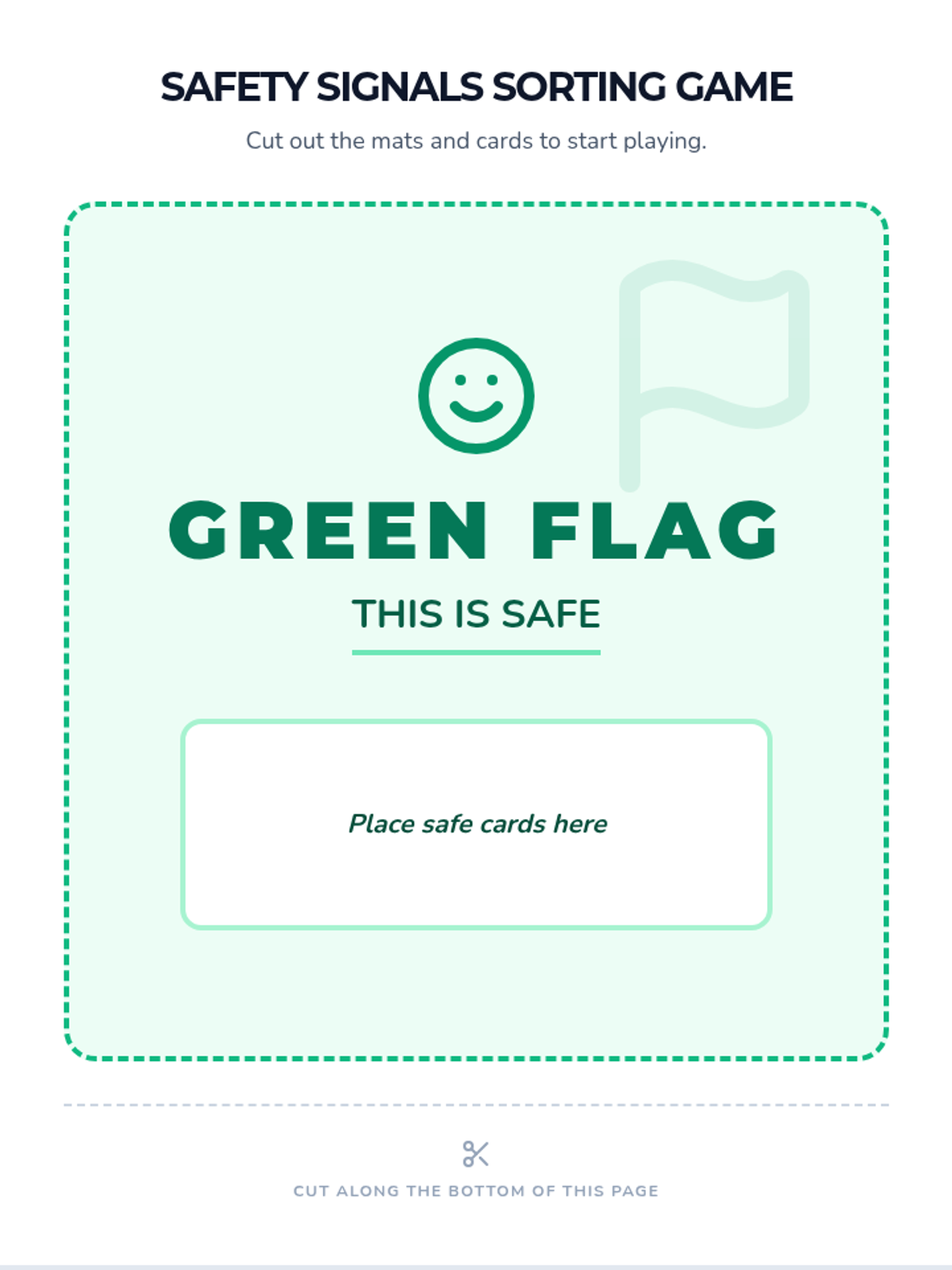
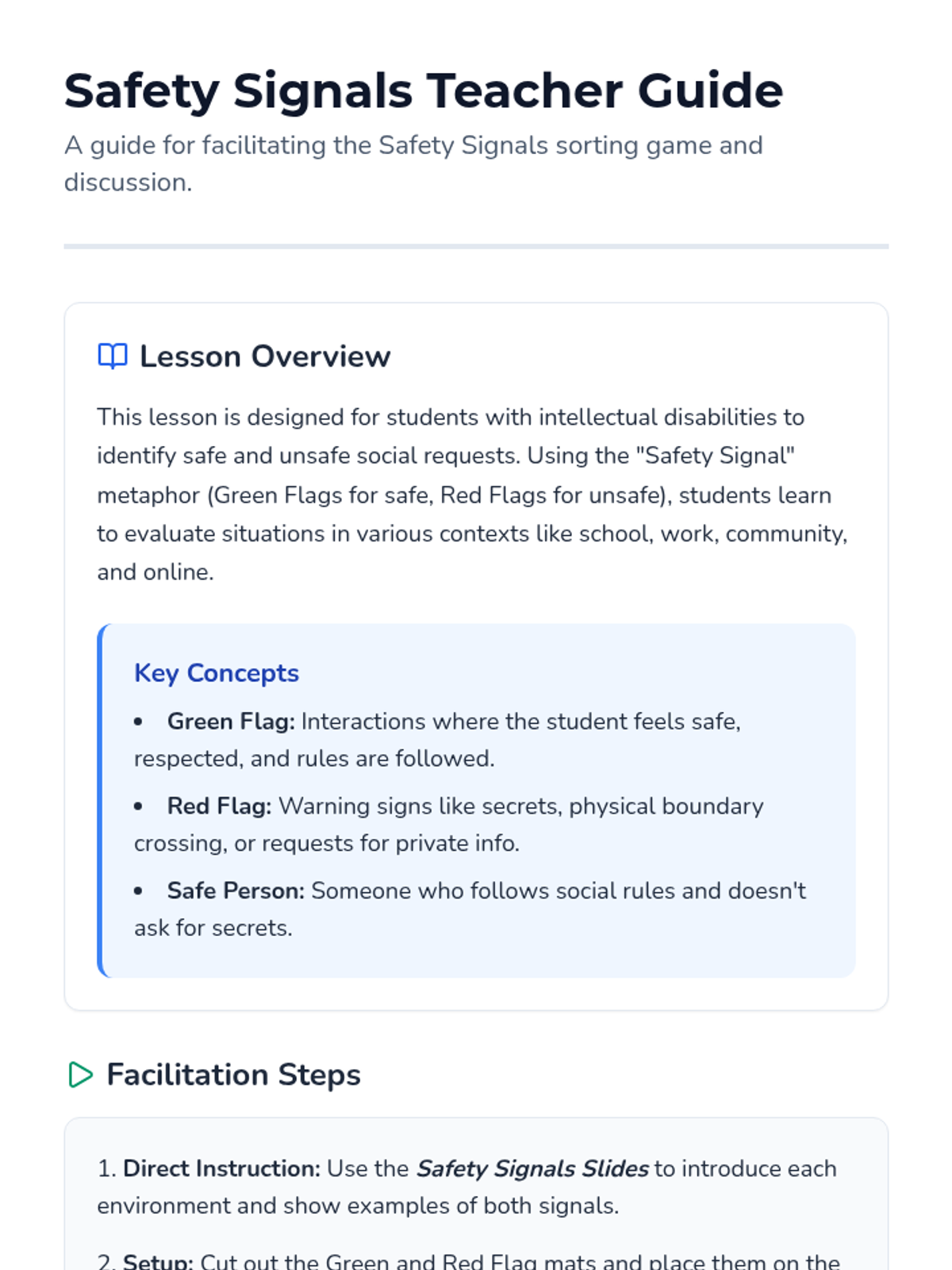
A lesson designed to help students with intellectual disabilities identify safe and unsafe social interactions across various environments using a 'Safety Signals' metaphor.
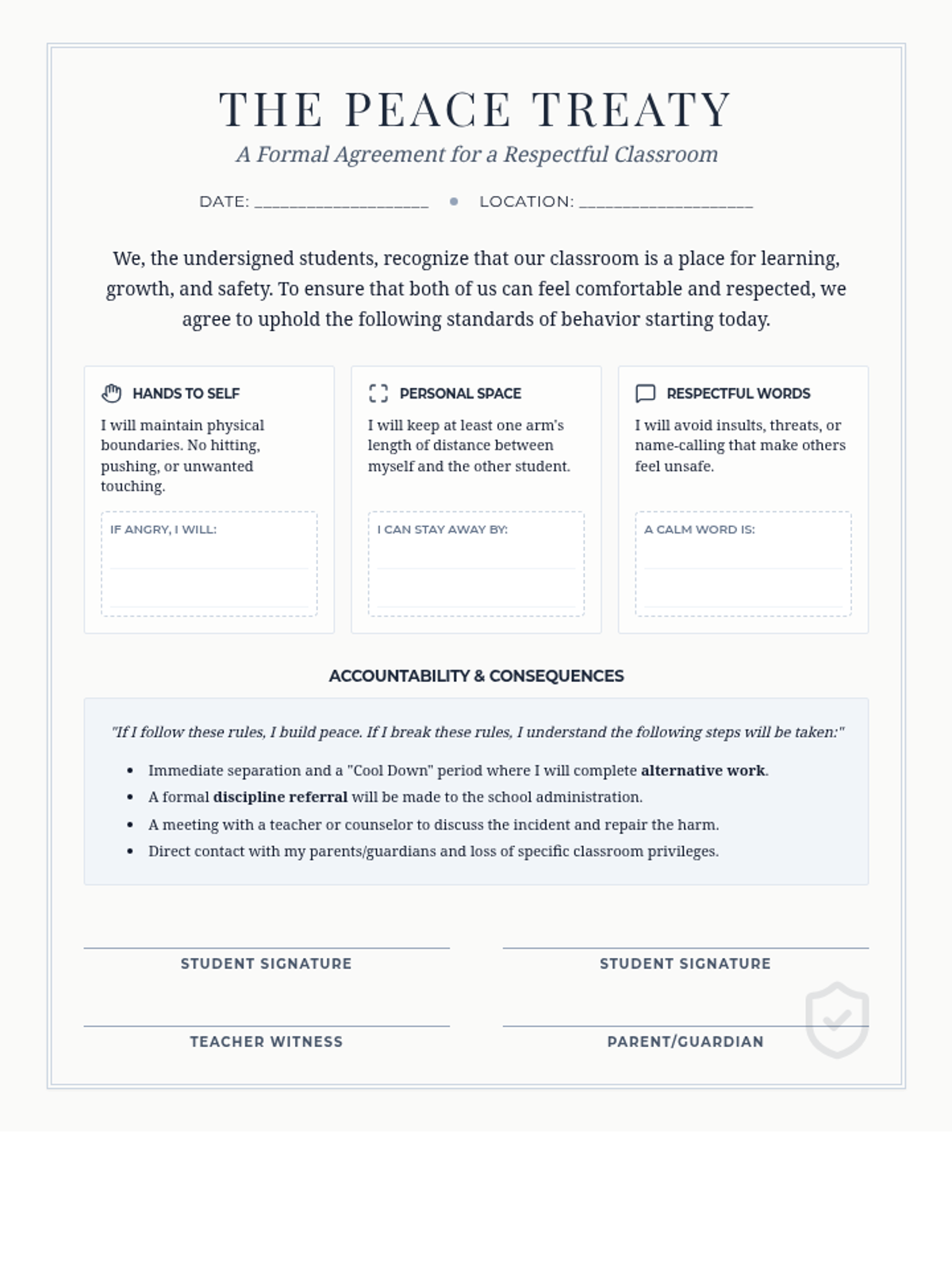
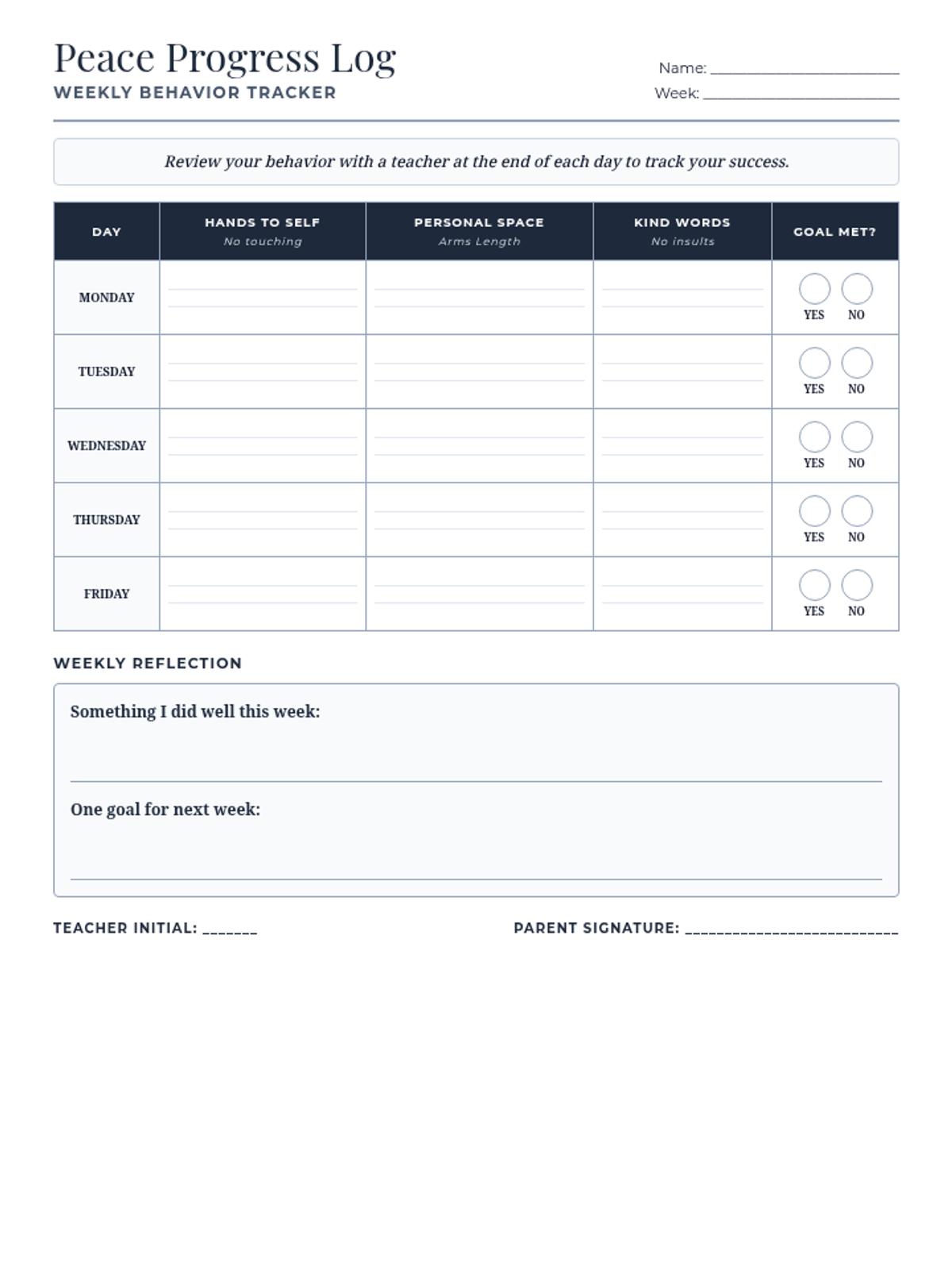
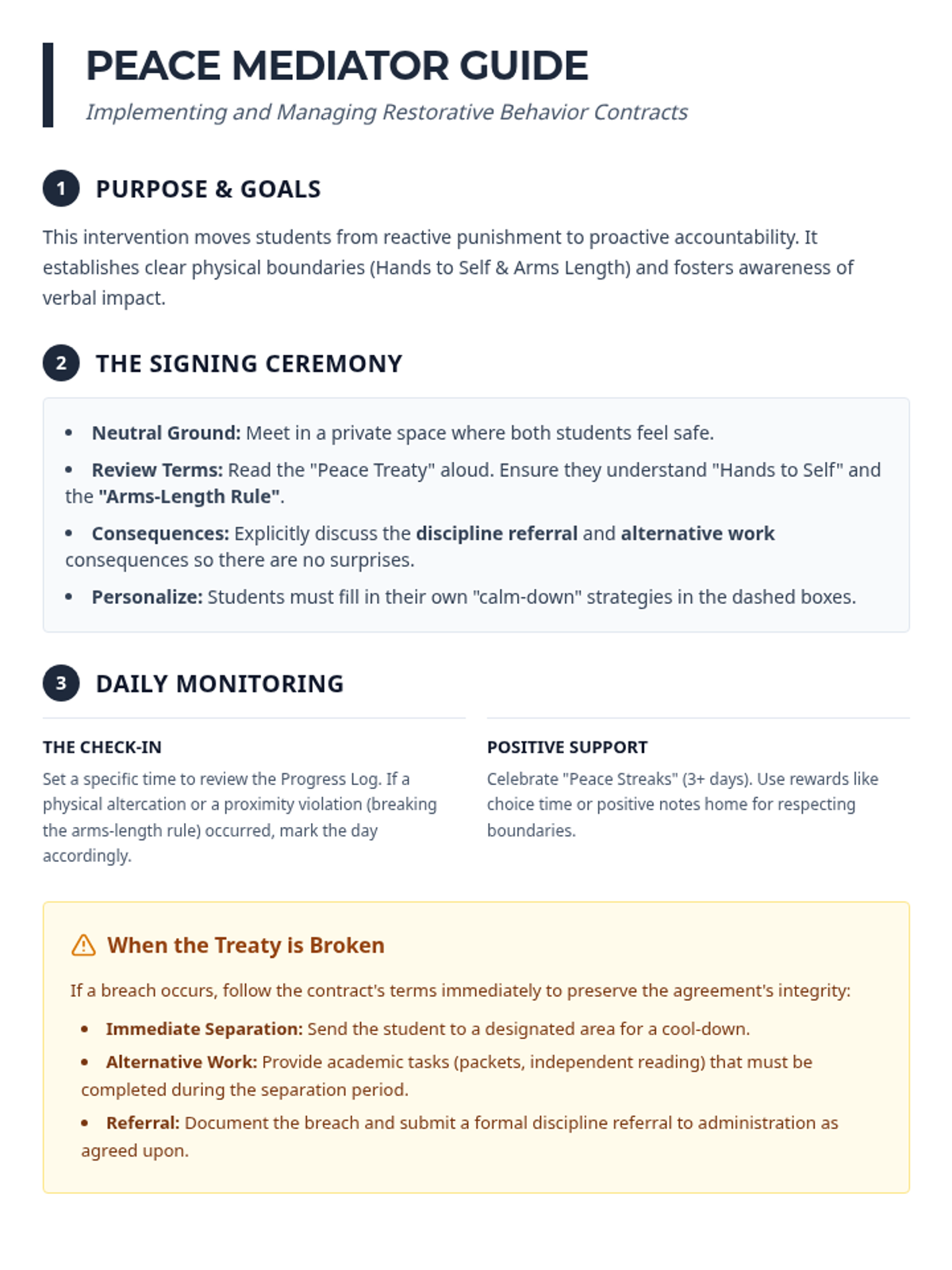
A restorative behavioral intervention focused on resolving physical conflict and verbal aggression through a formal behavior contract and daily progress tracking.
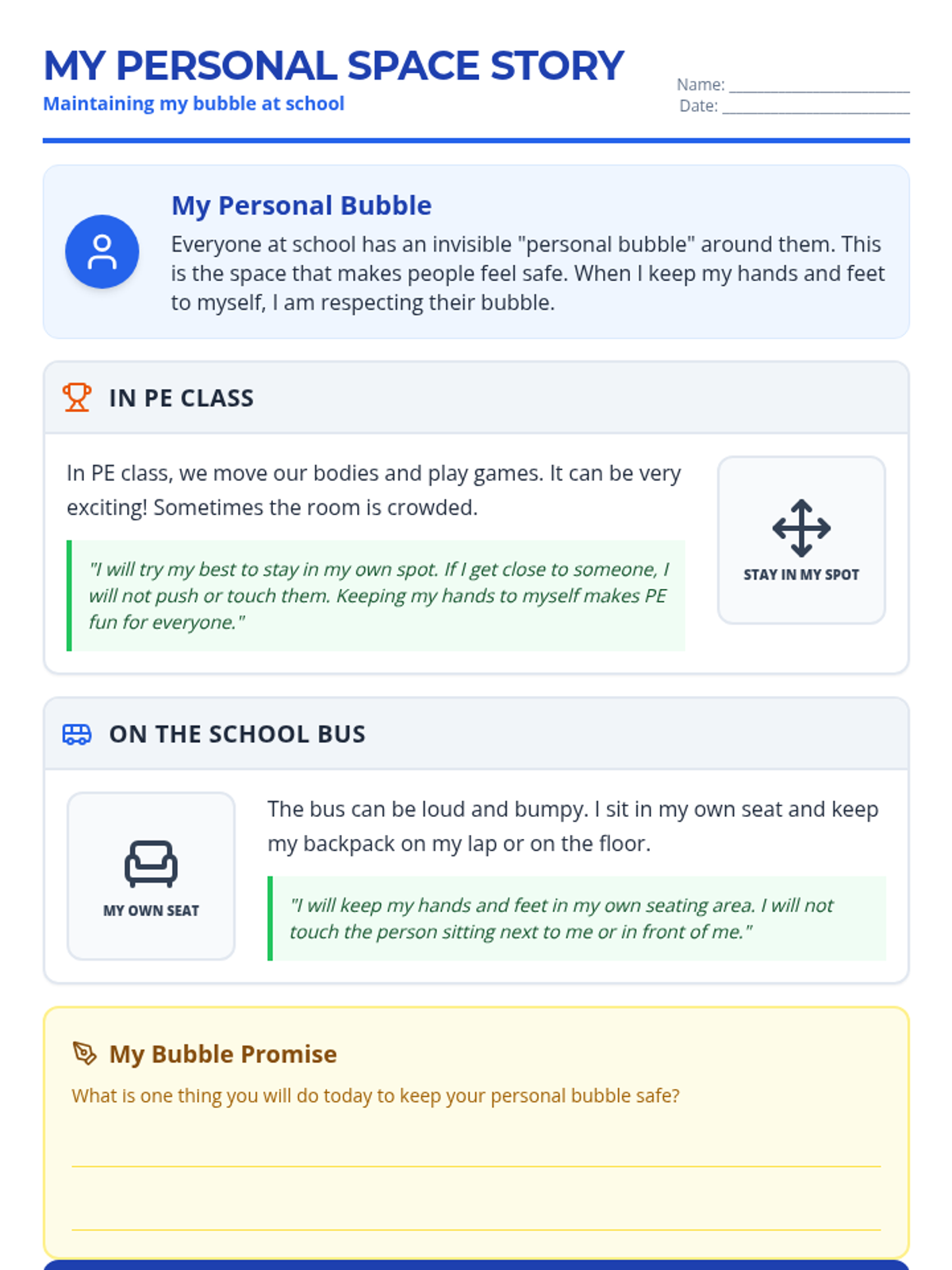
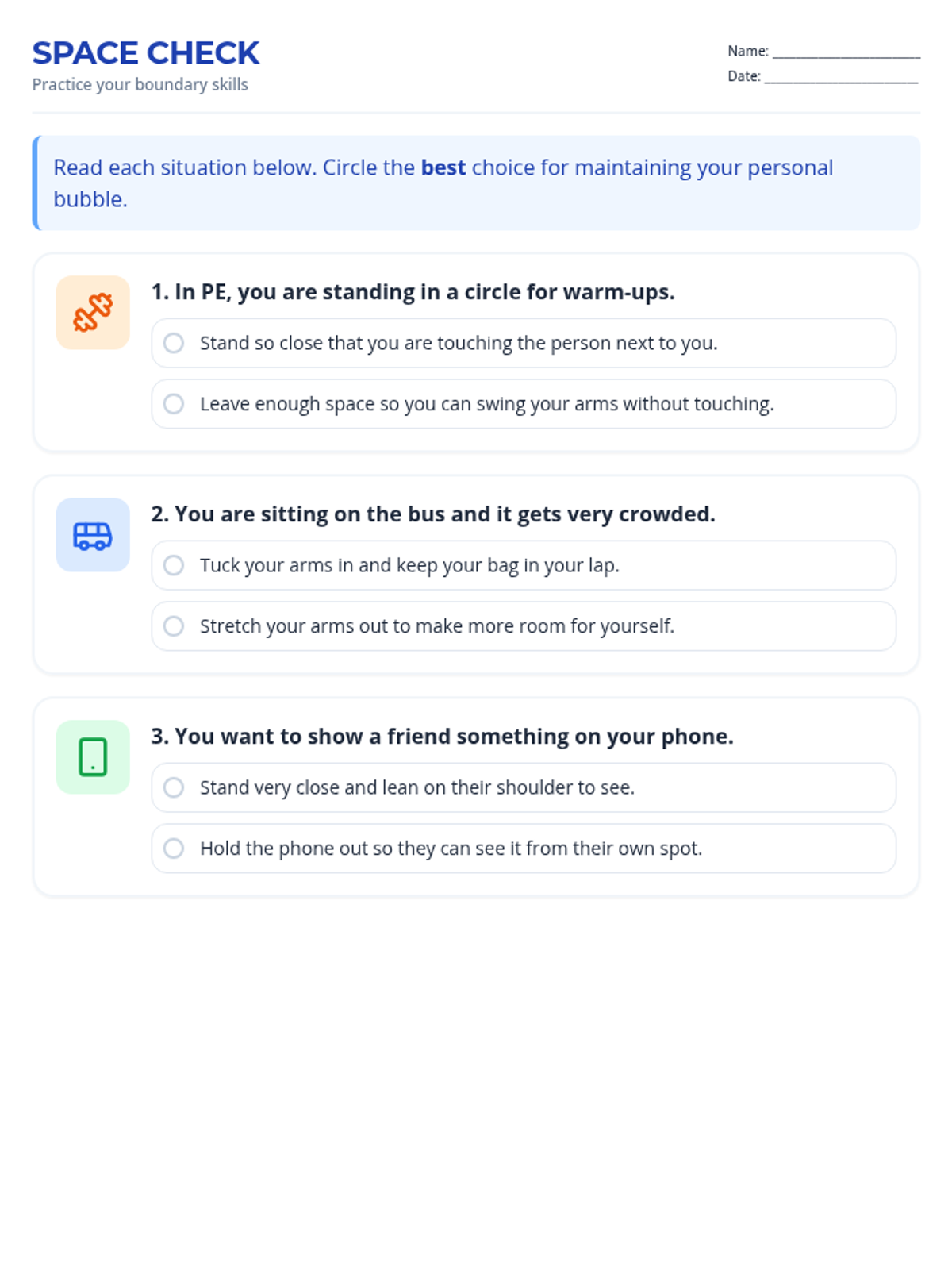
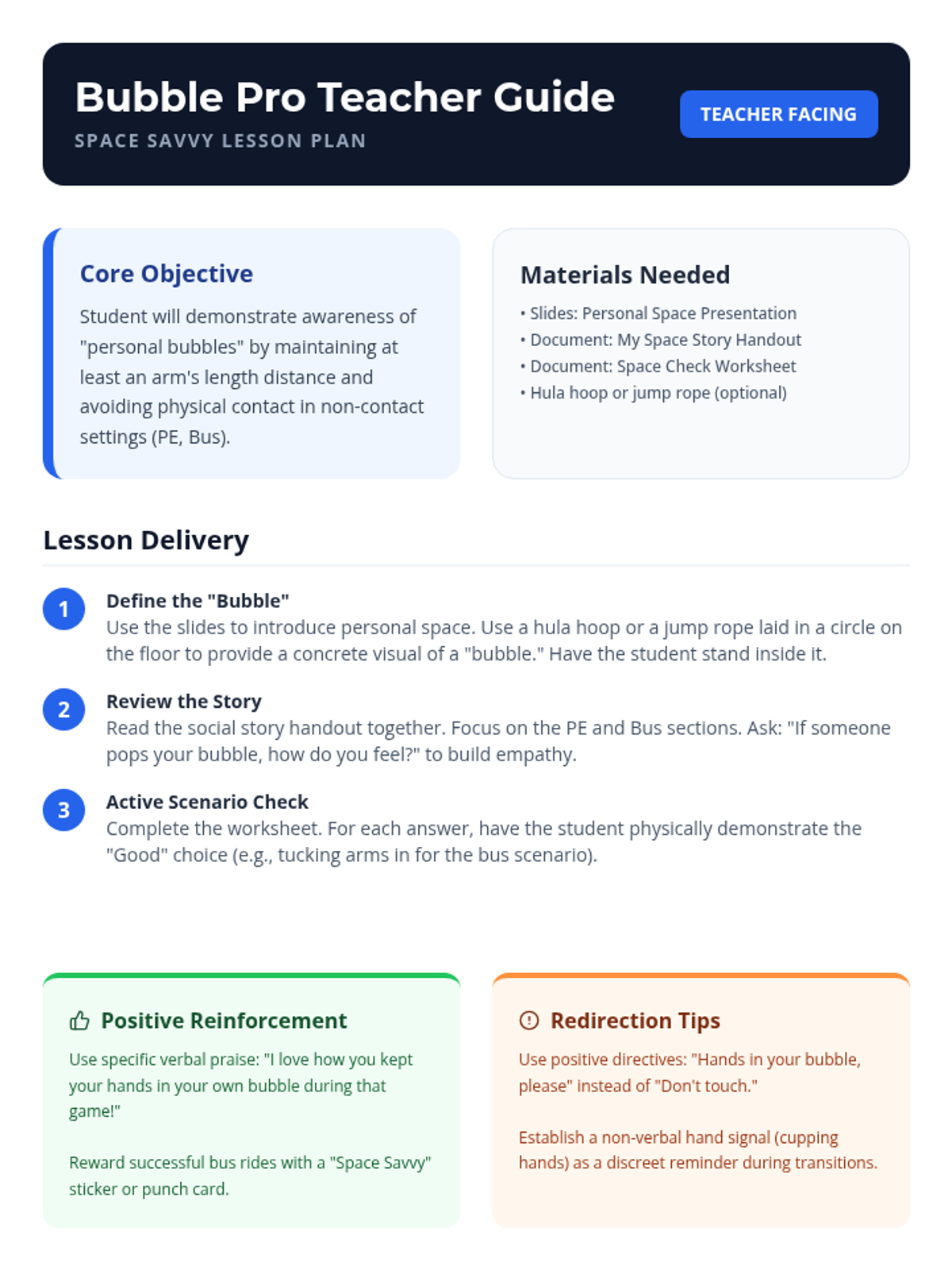
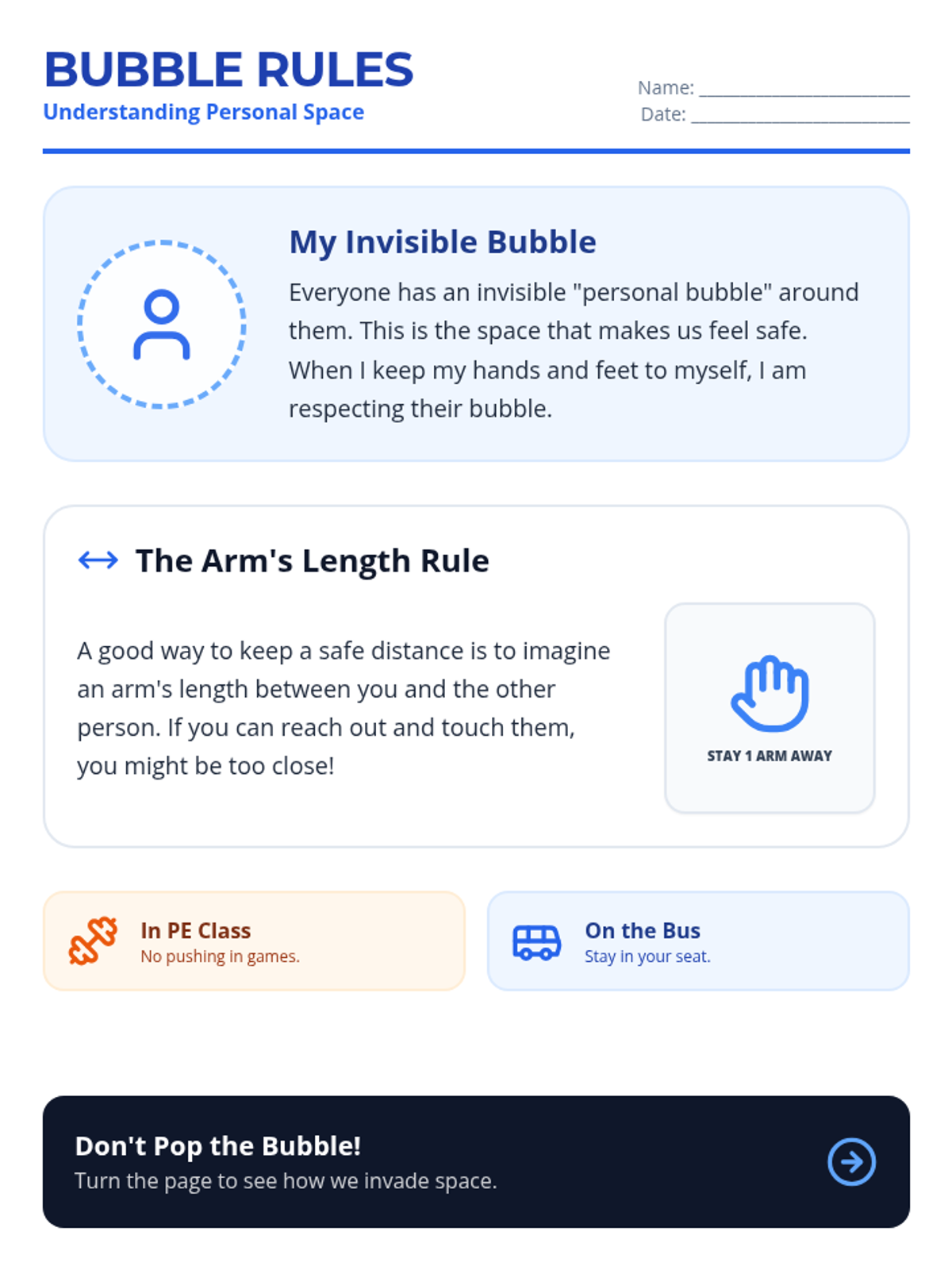
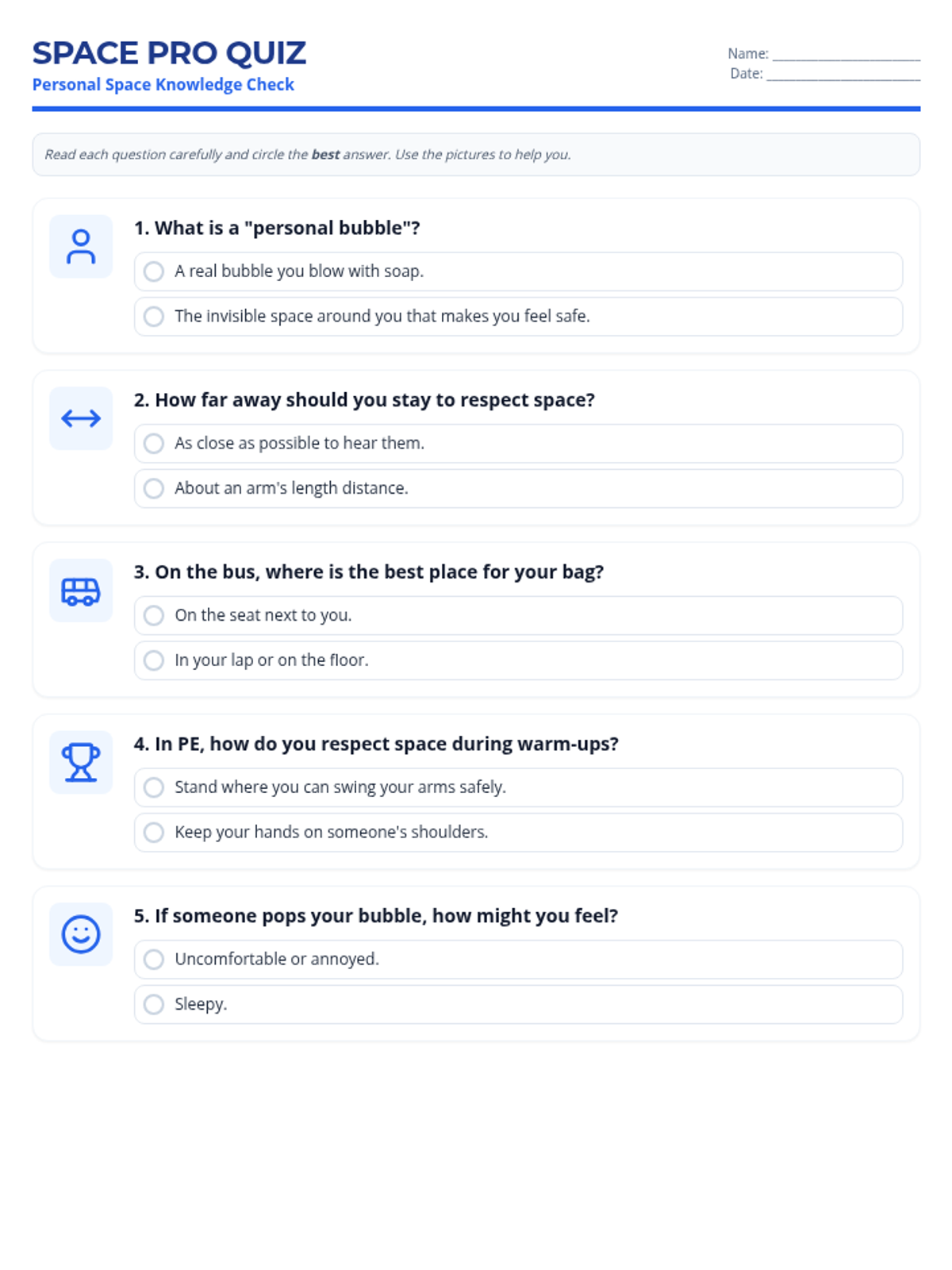
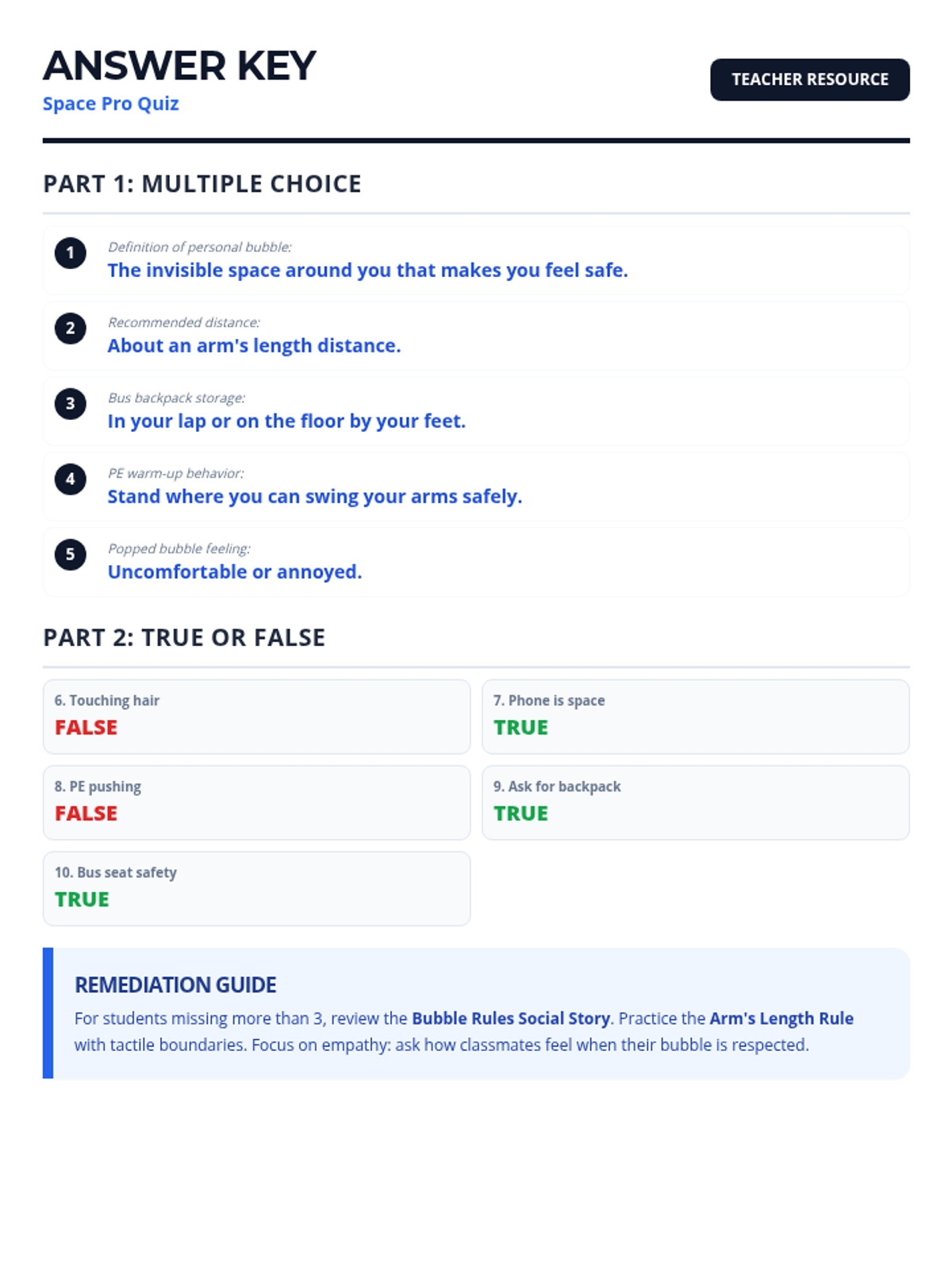
A lesson focused on helping high school students understand and maintain personal space in specific school environments like PE class and the bus.
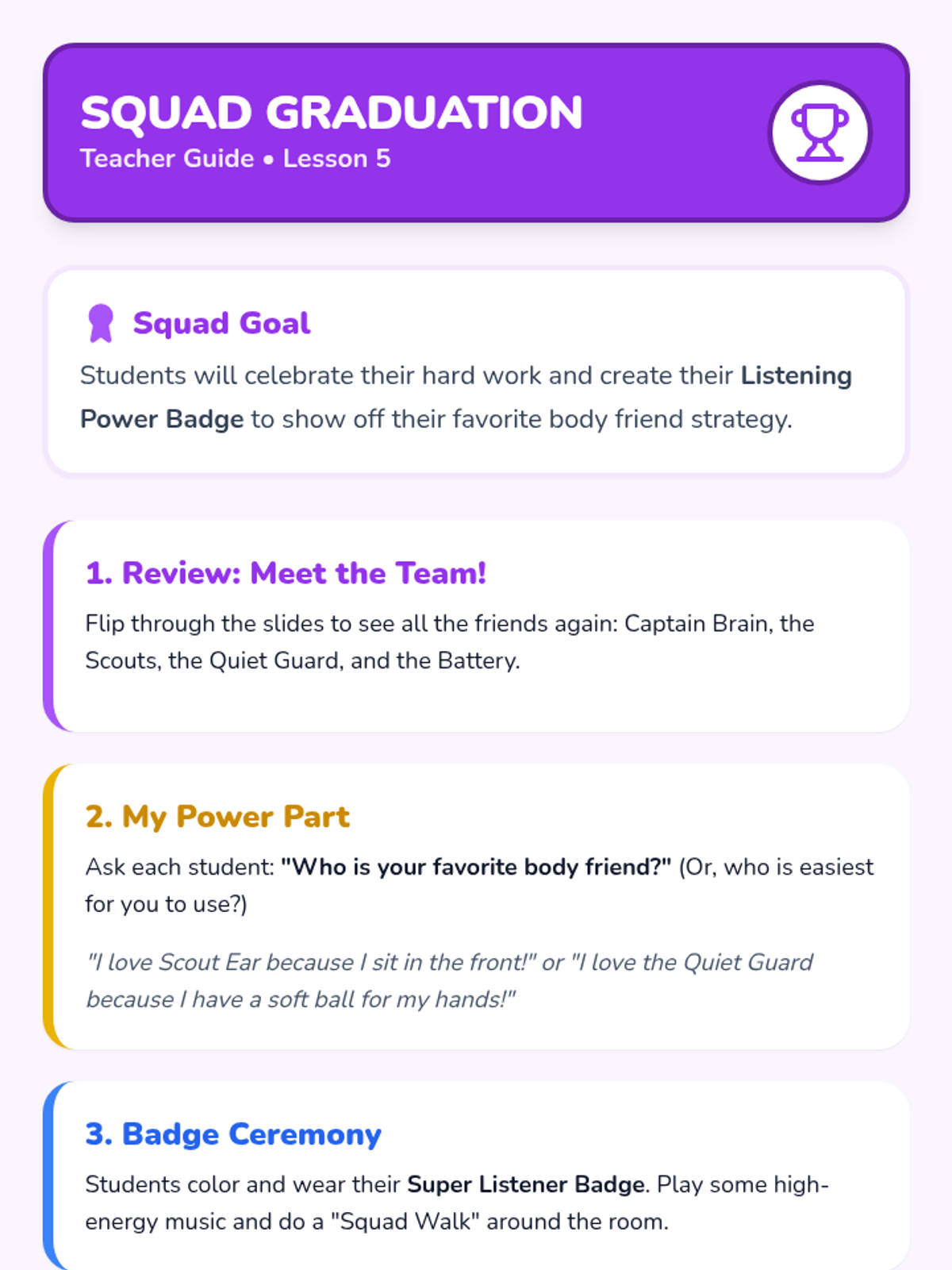
Final Squad Graduation! Students create their 'Power Badge' showing which Body Friend they use best. Celebration of being a Super Listener.
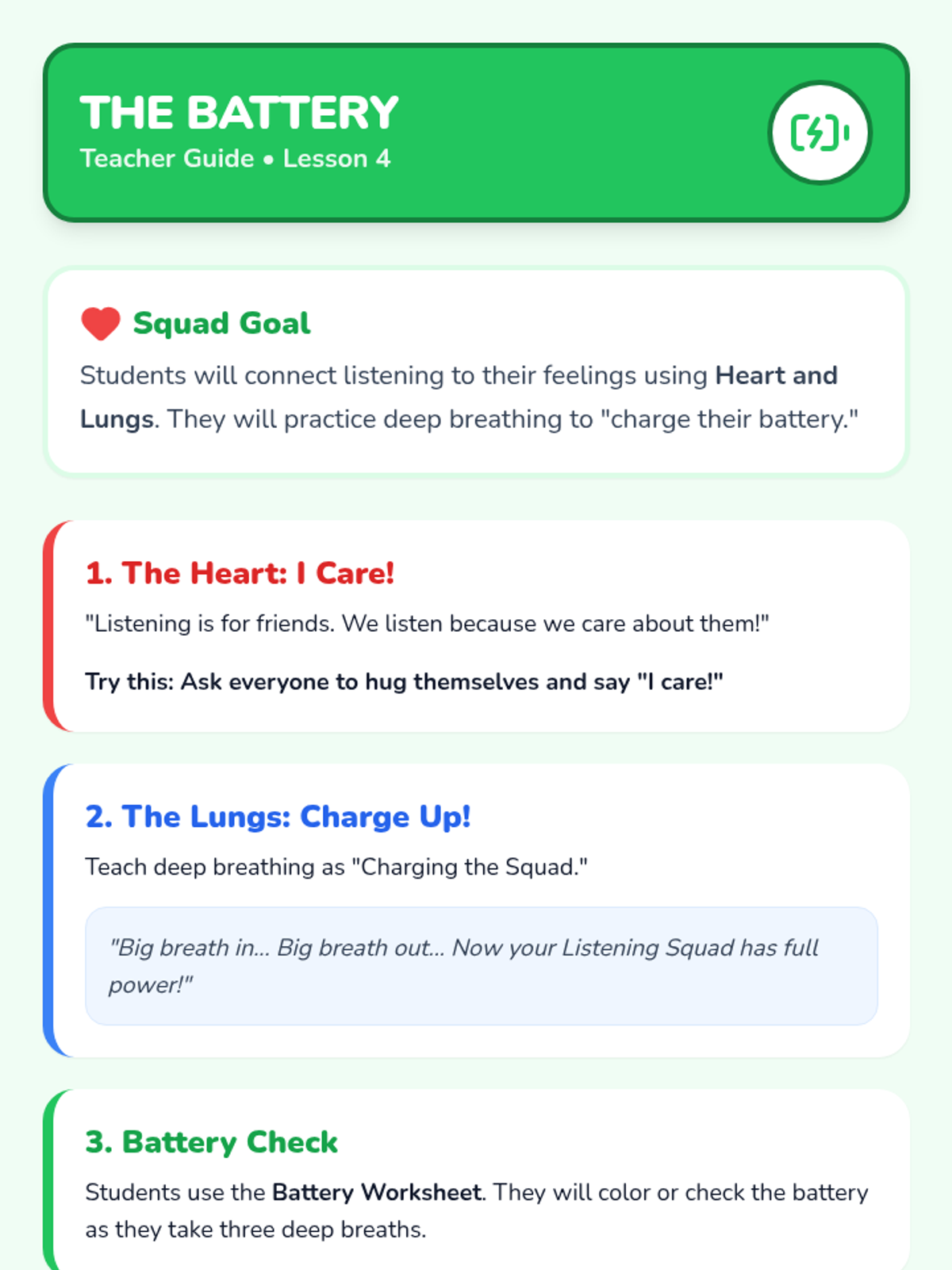
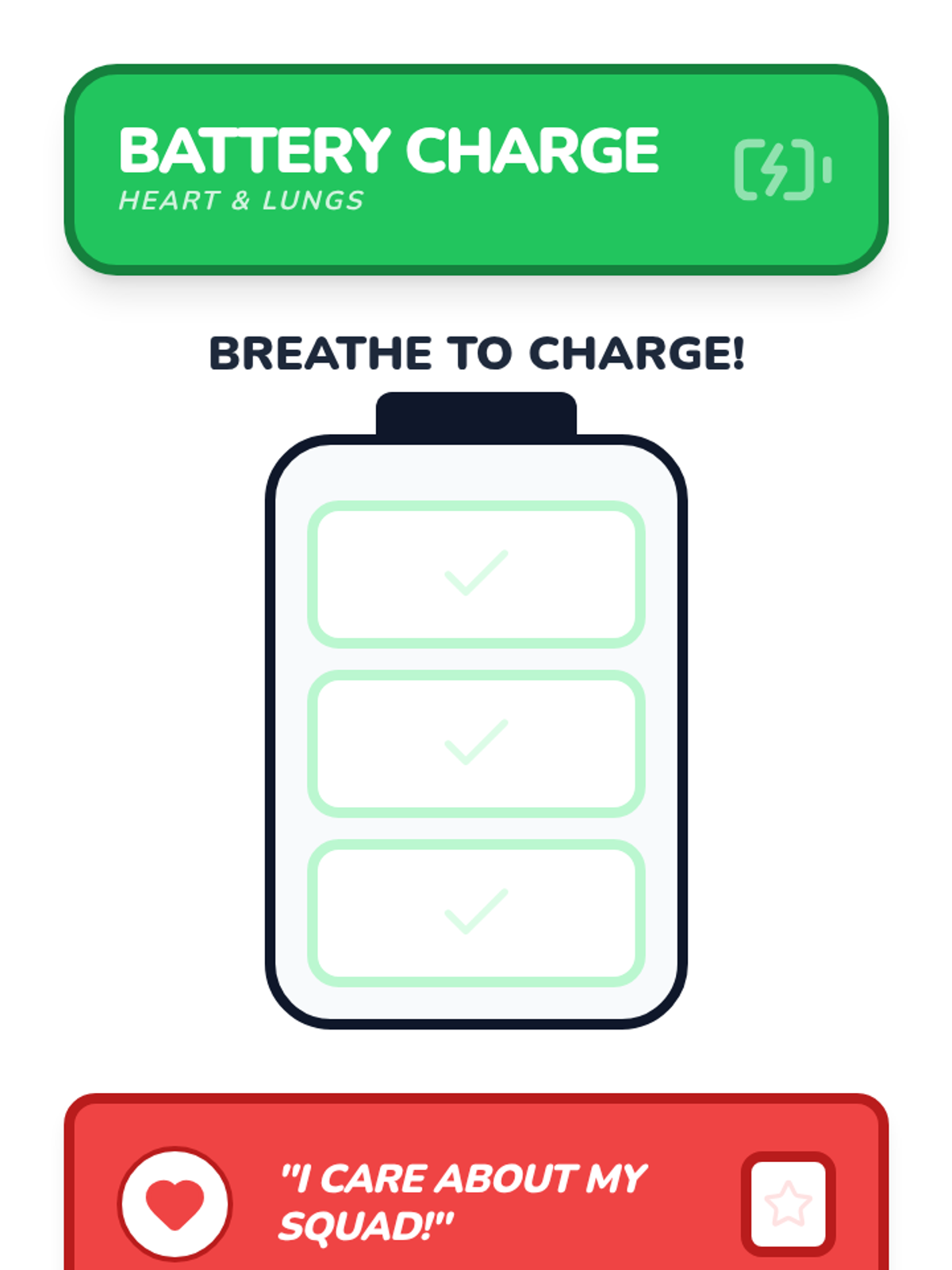
Meet Heart and Lungs! The Battery helps the squad stay powered up. Focuses on breathing and 'caring' about our friends to stay happy while listening.
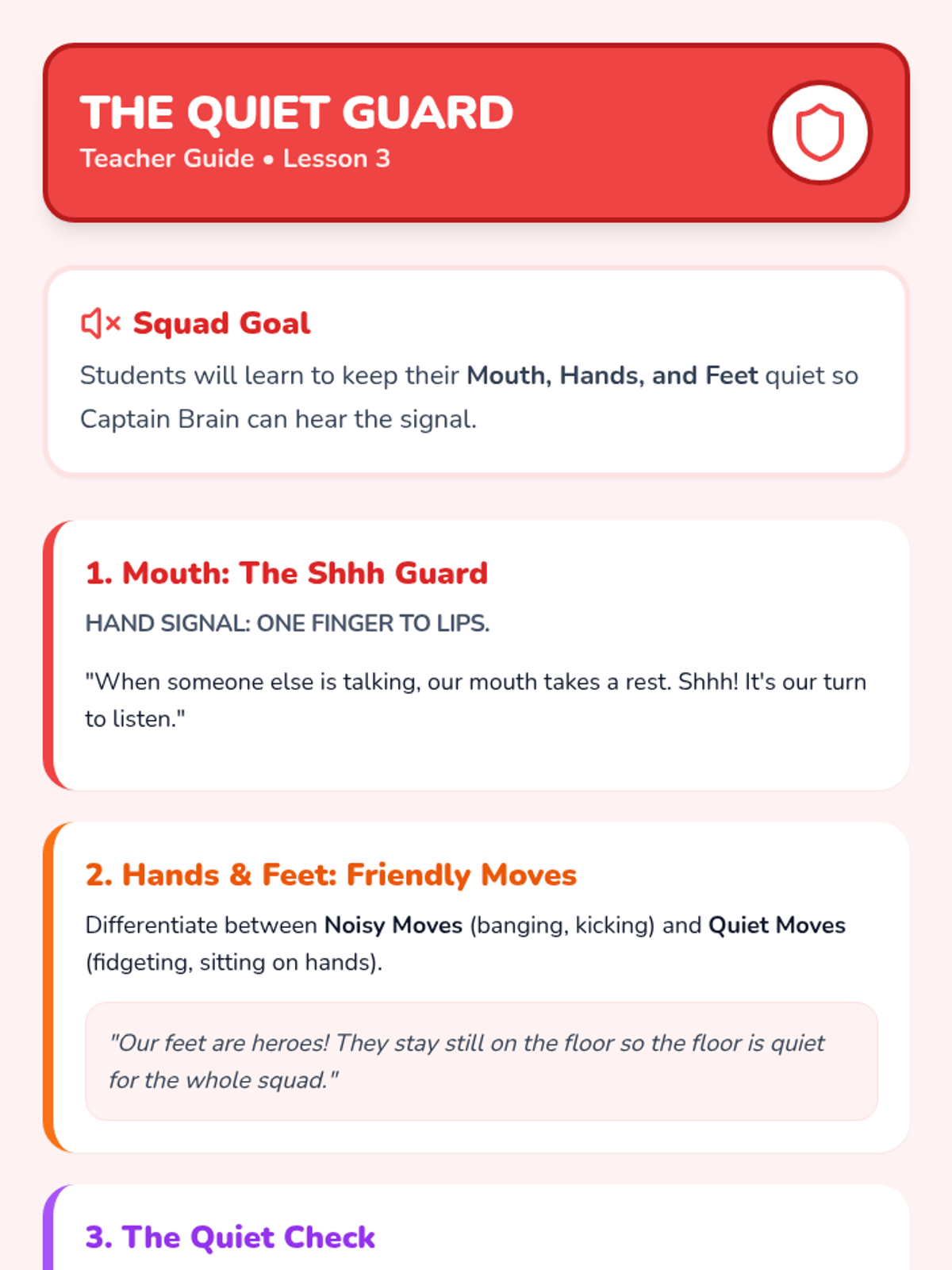
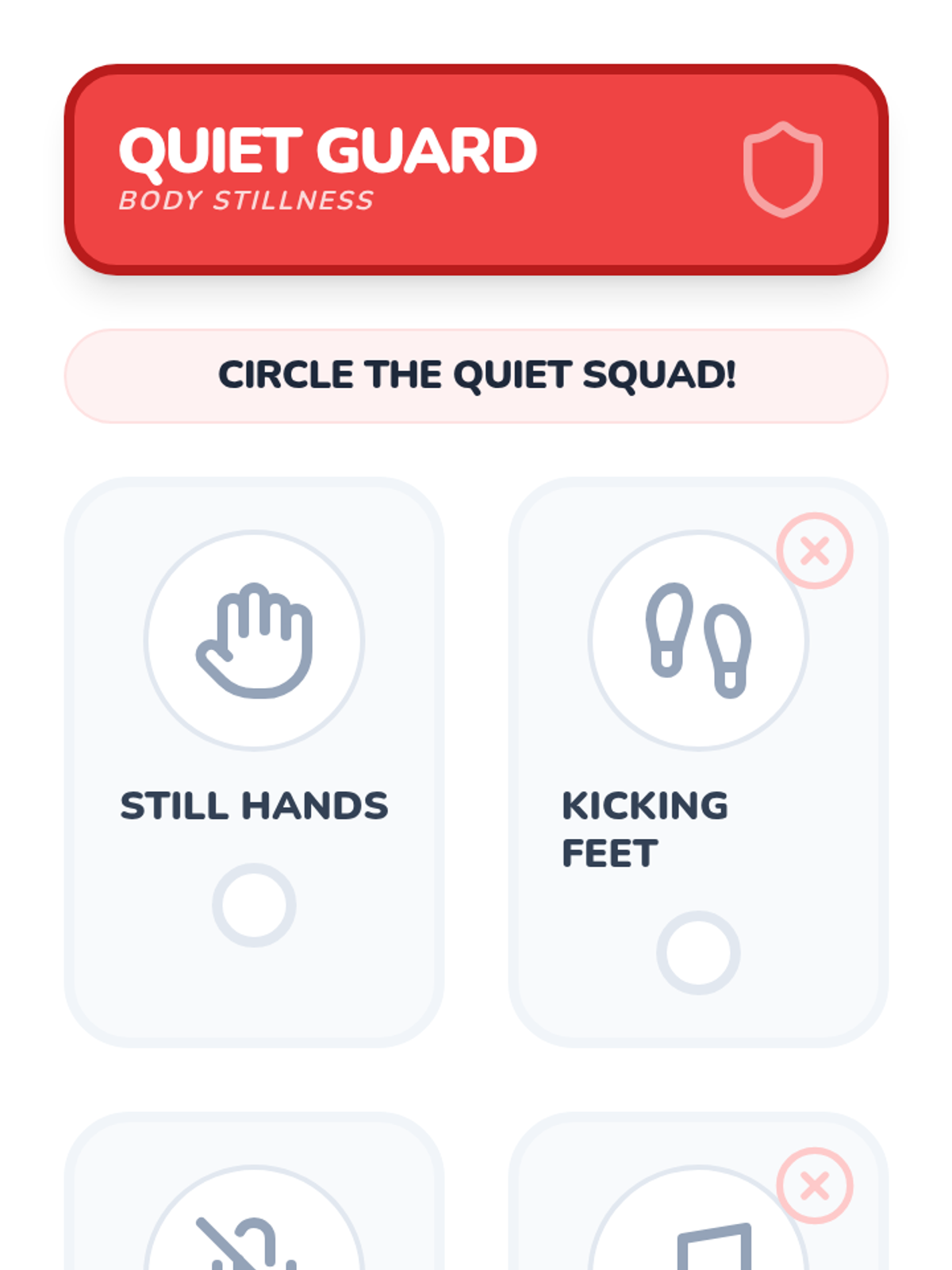
Meet the Quiet Guard! Addresses physical stillness in a friendly way. Mouth, Hands, and Feet learn to be quiet so the Captain can hear.
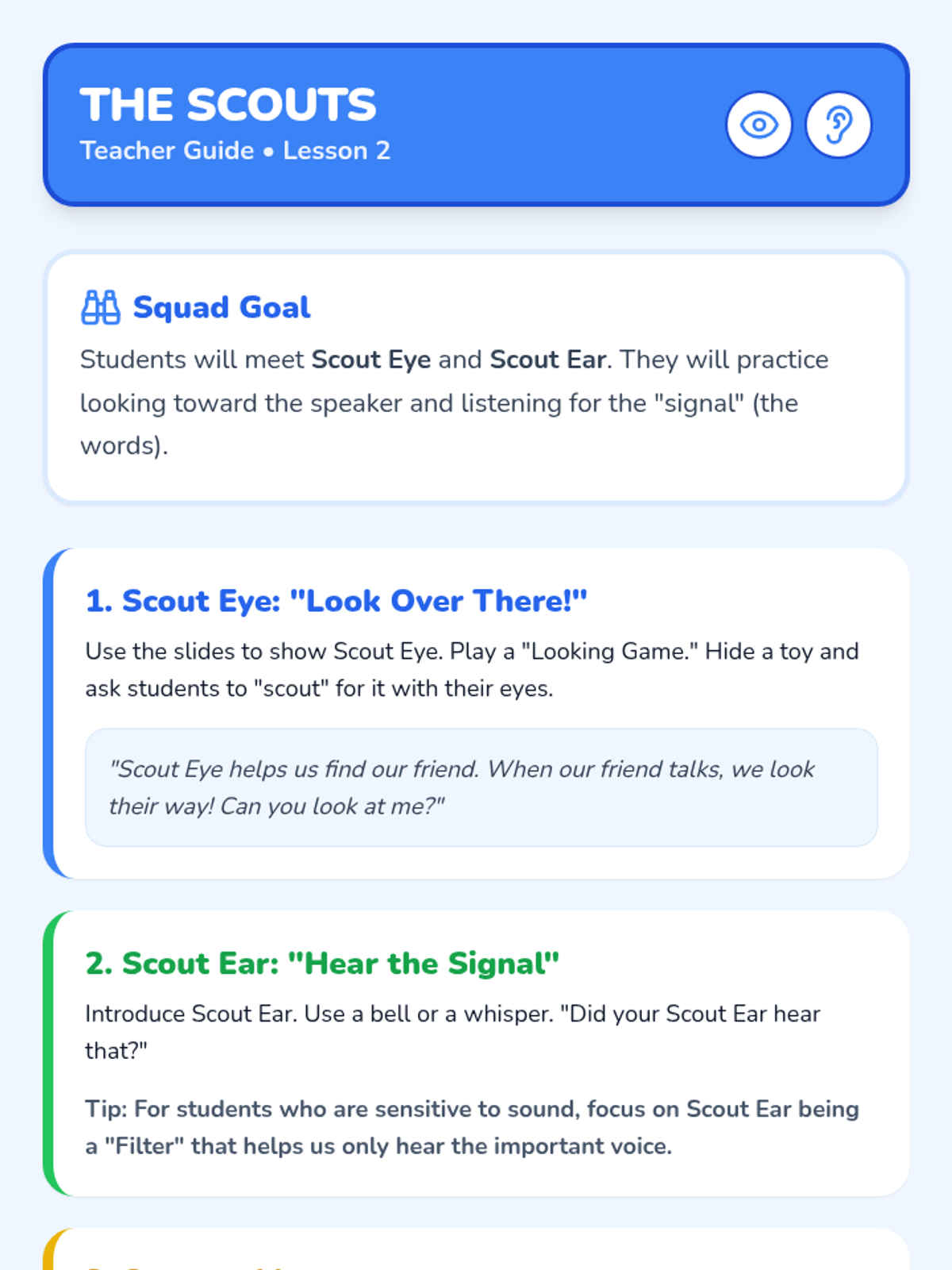
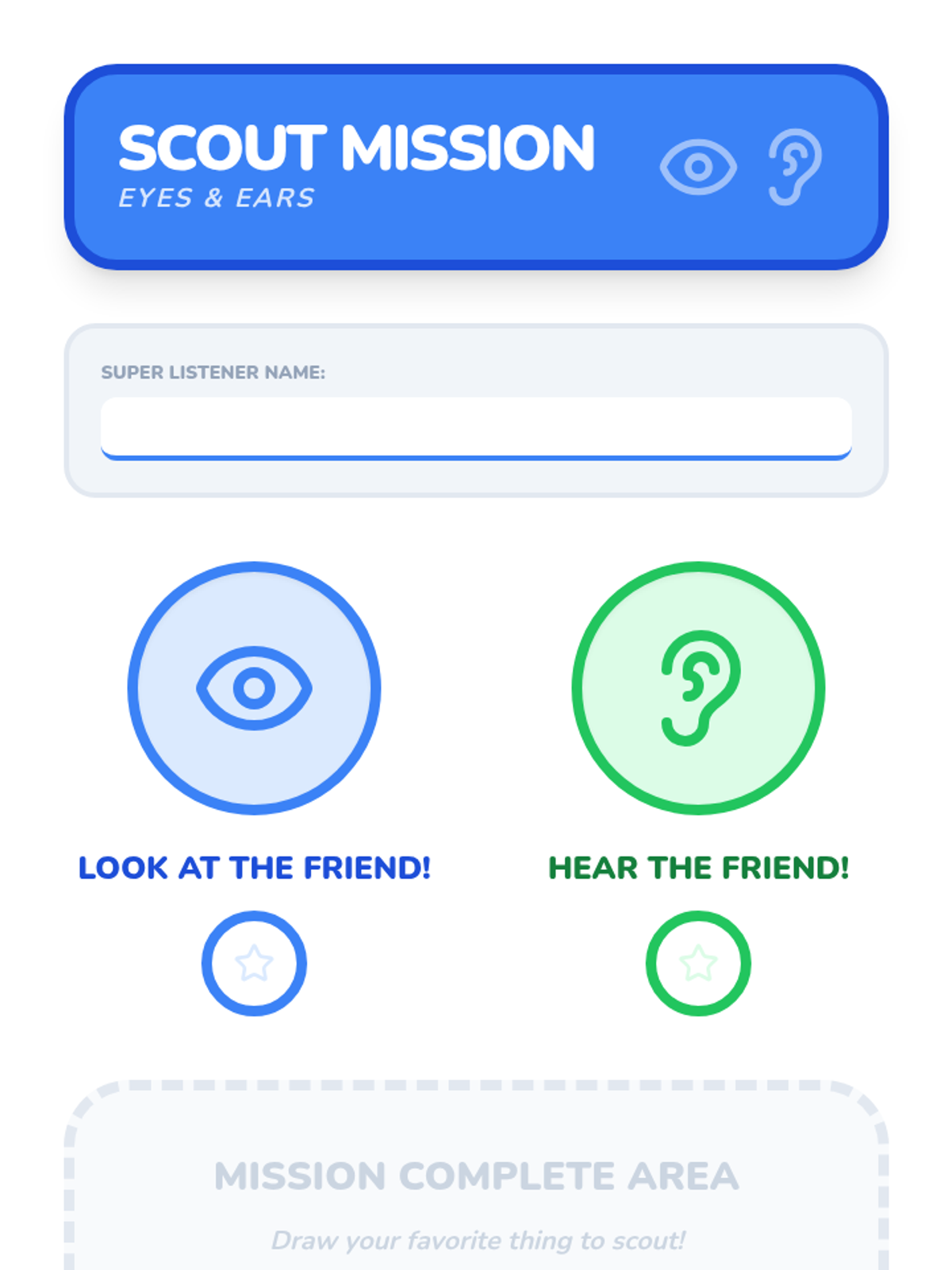
Meet Scout Eye and Scout Ear! These body friends help us find the signal. Focuses on looking at the person and letting the words in.
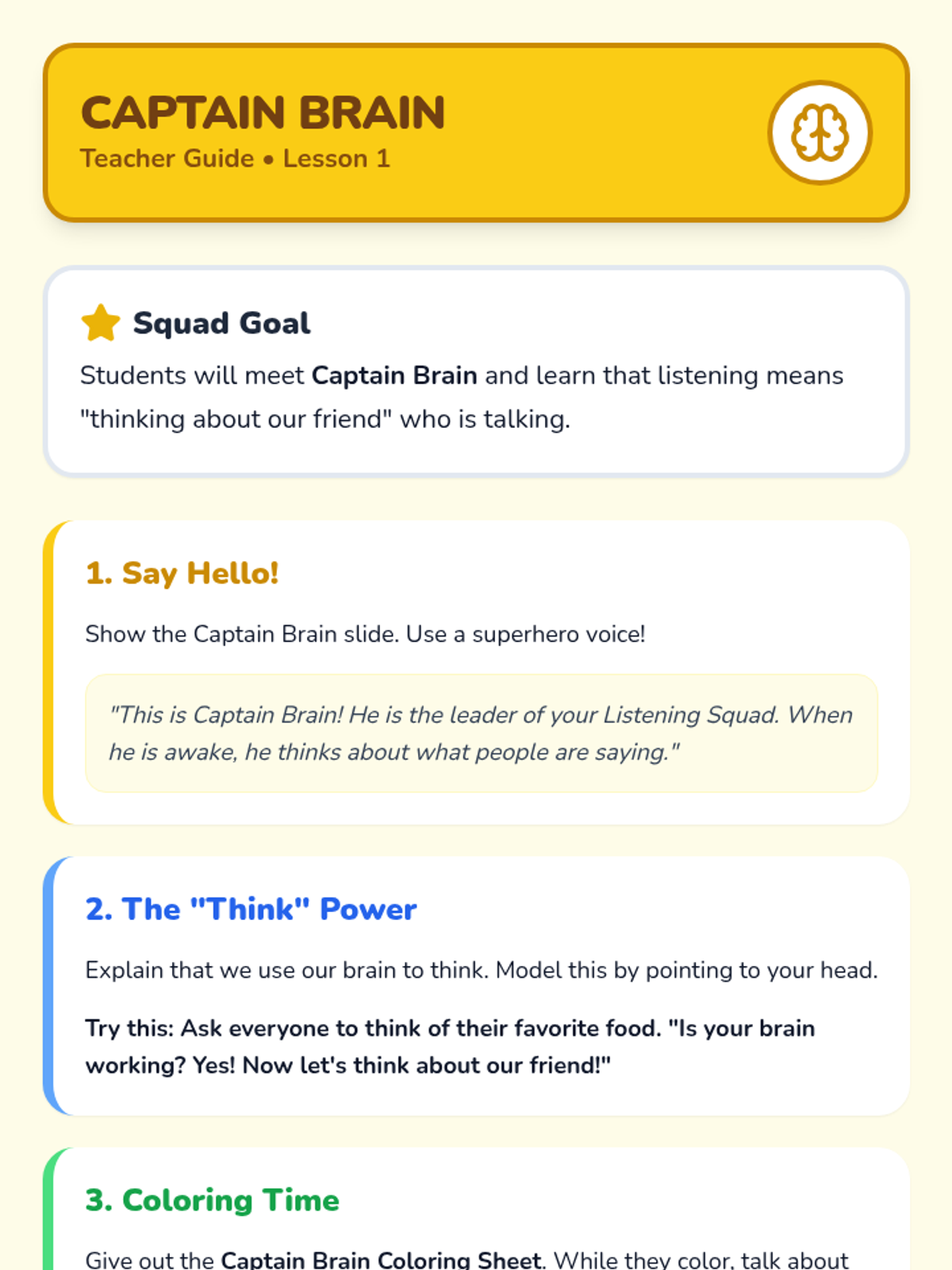
Meet Captain Brain! Introduces the brain as the leader of the squad. Focuses on 'thinking about the friend' as the first step to listening.
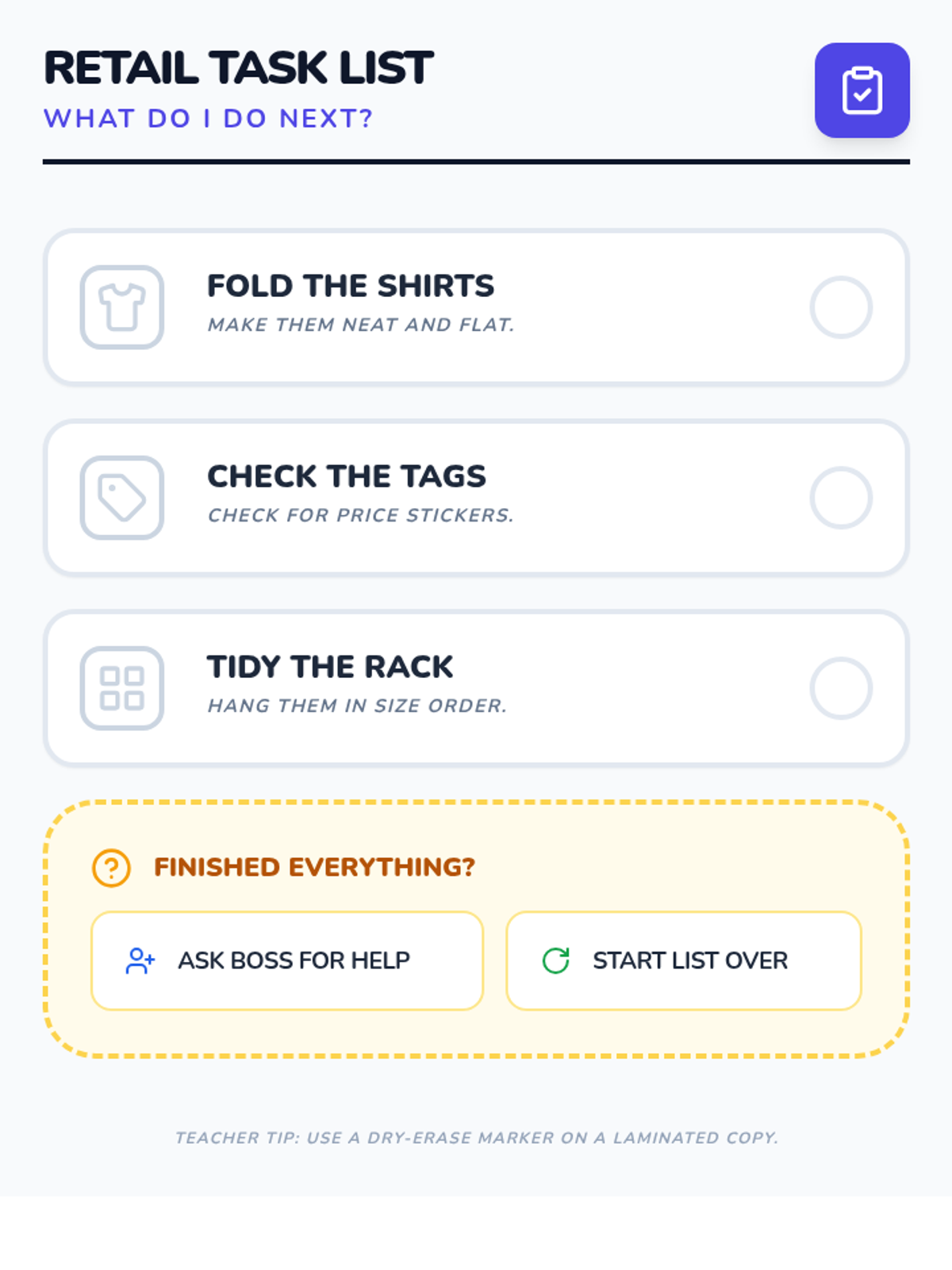
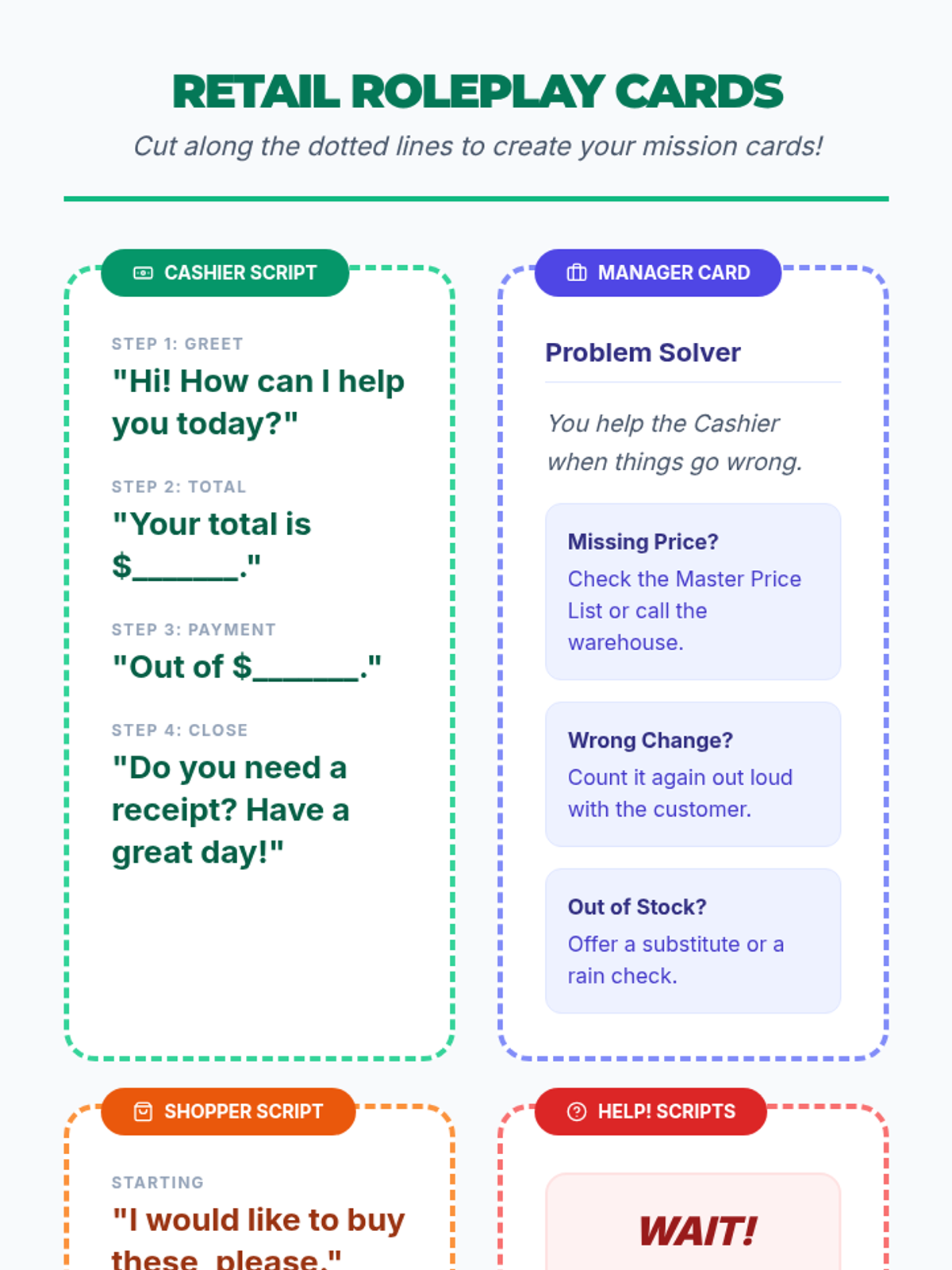
Focuses on managing customer-facing conflicts and changes in tasks within a department store setting.
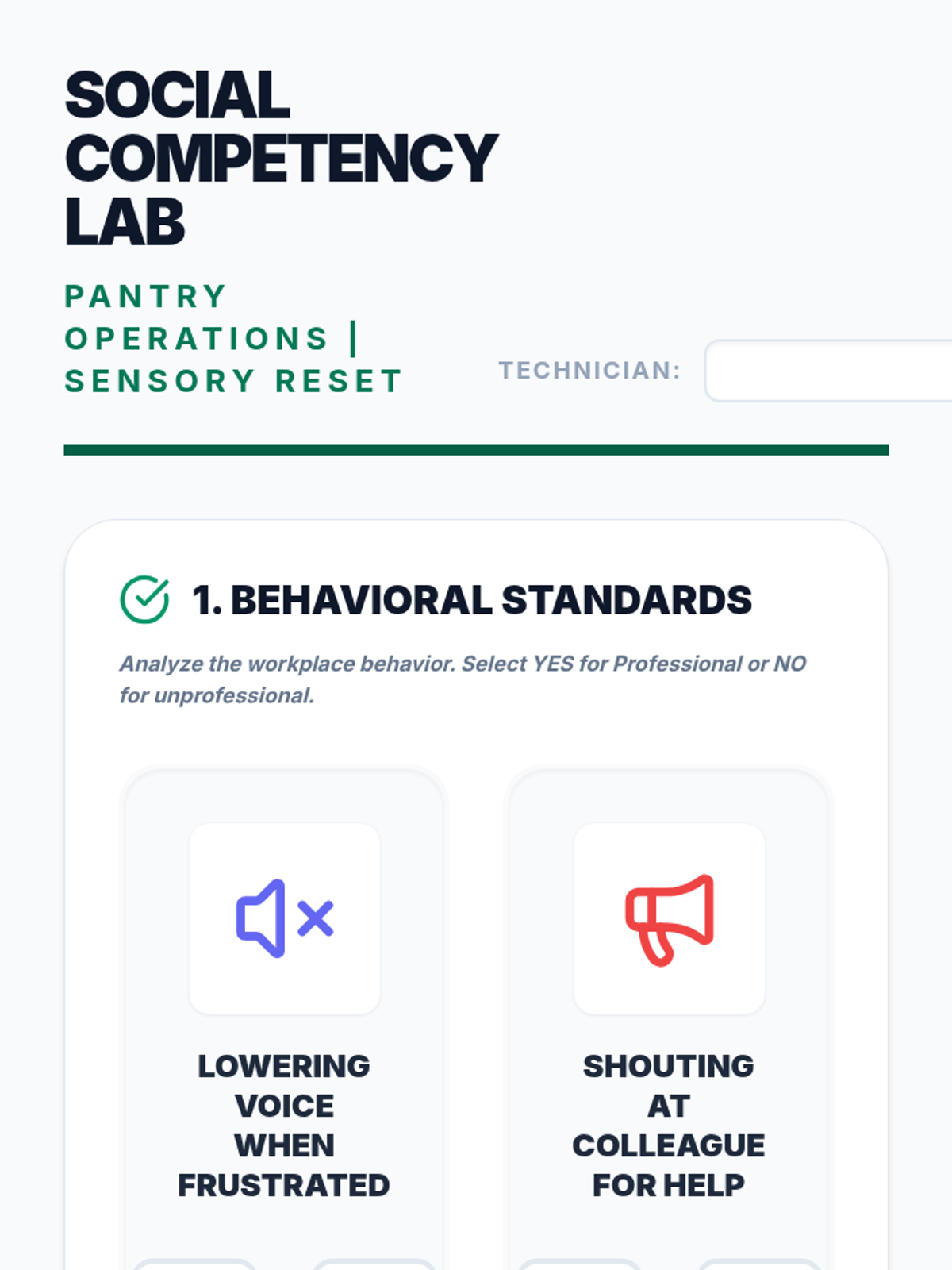
Focuses on navigating interpersonal and task-based conflicts in a food pantry environment using visual support scripts.
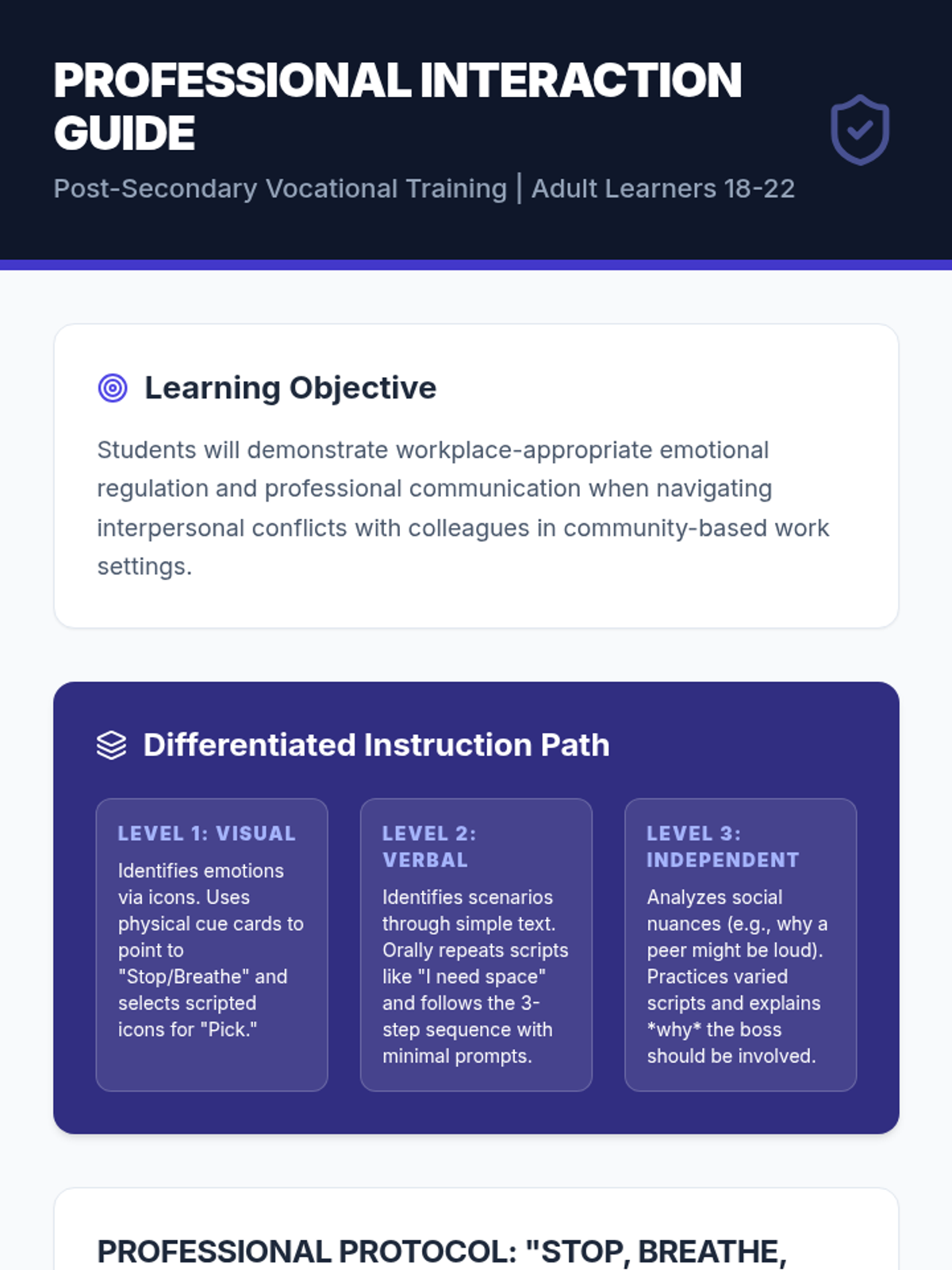
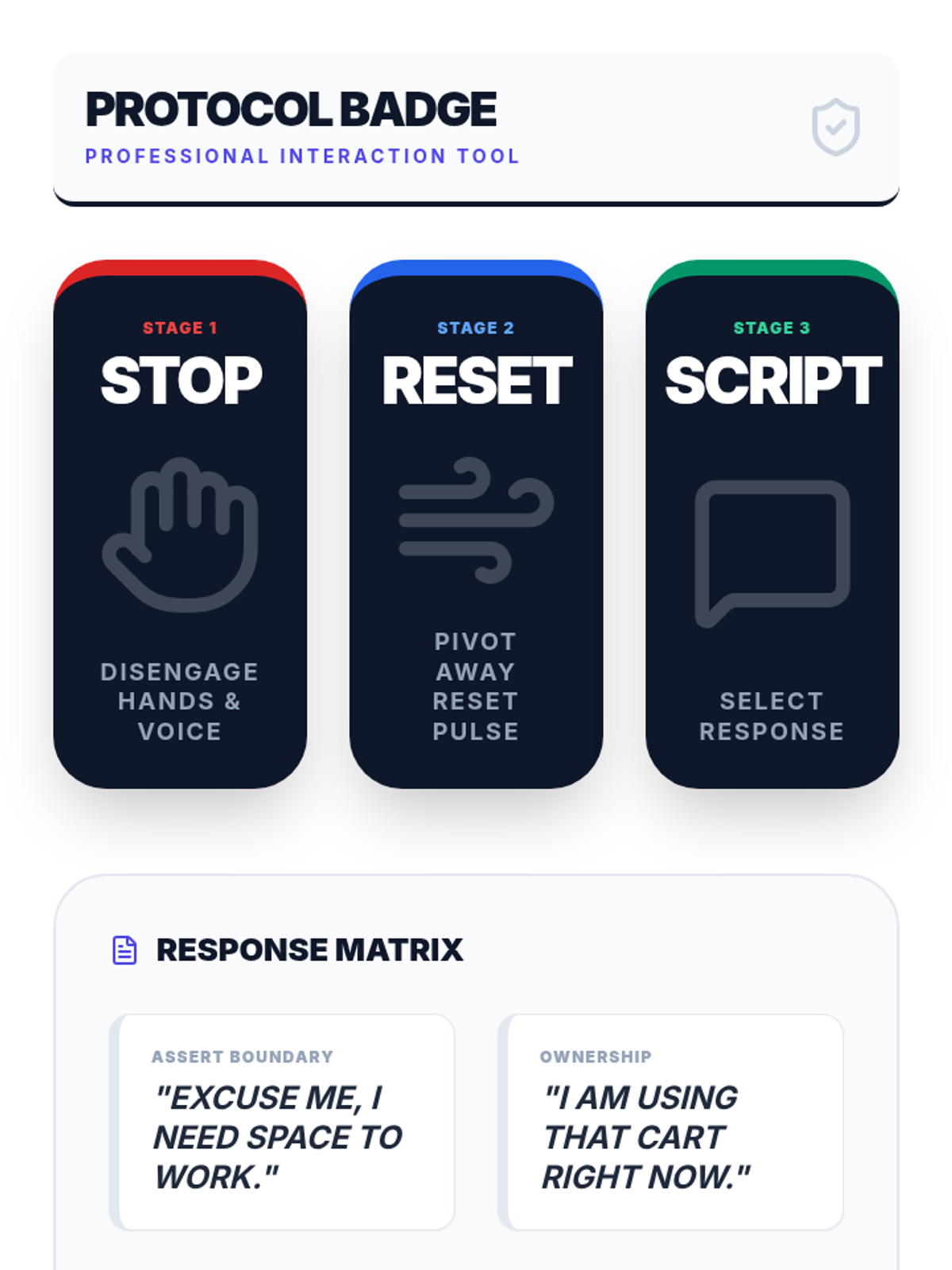
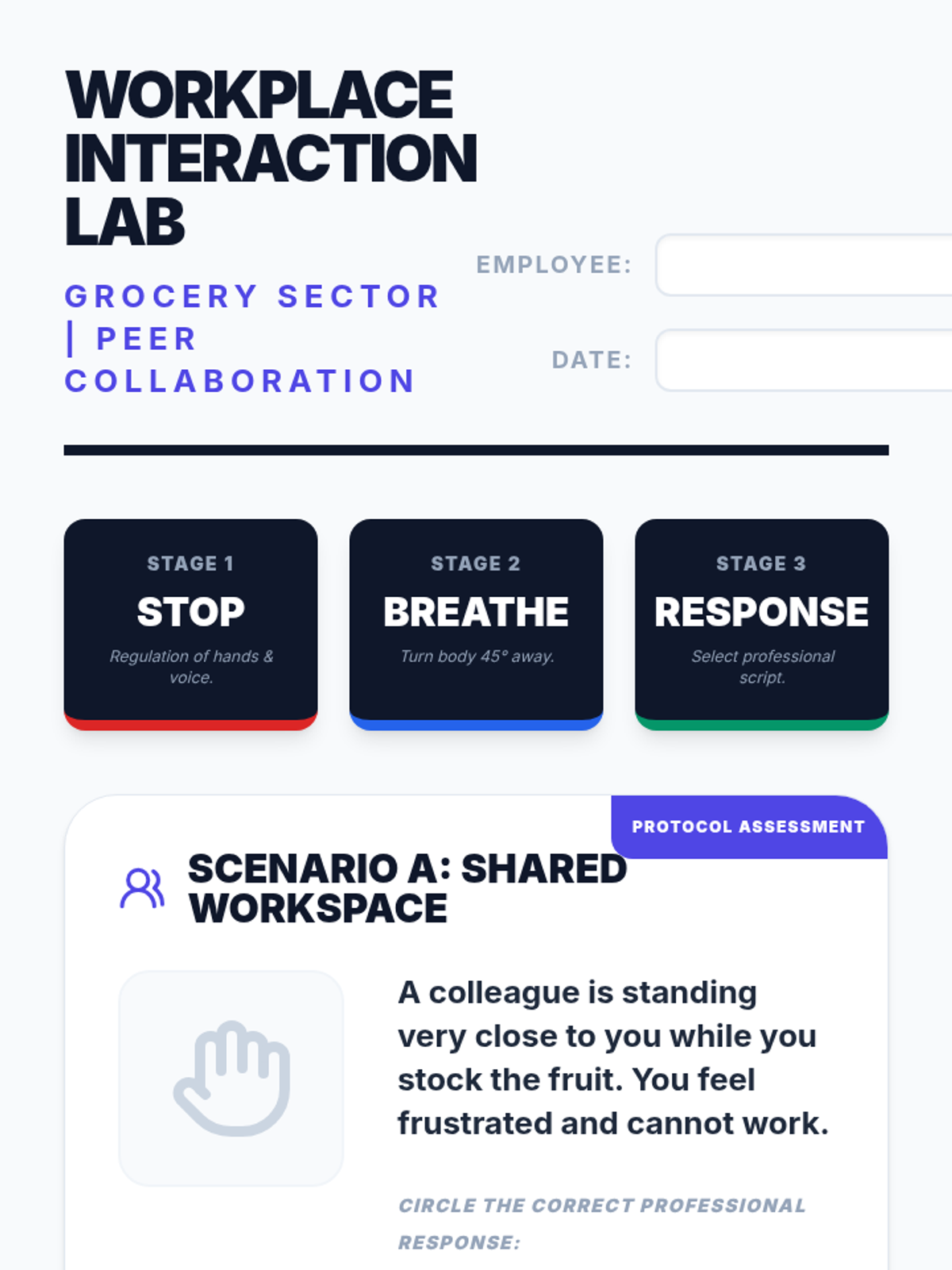
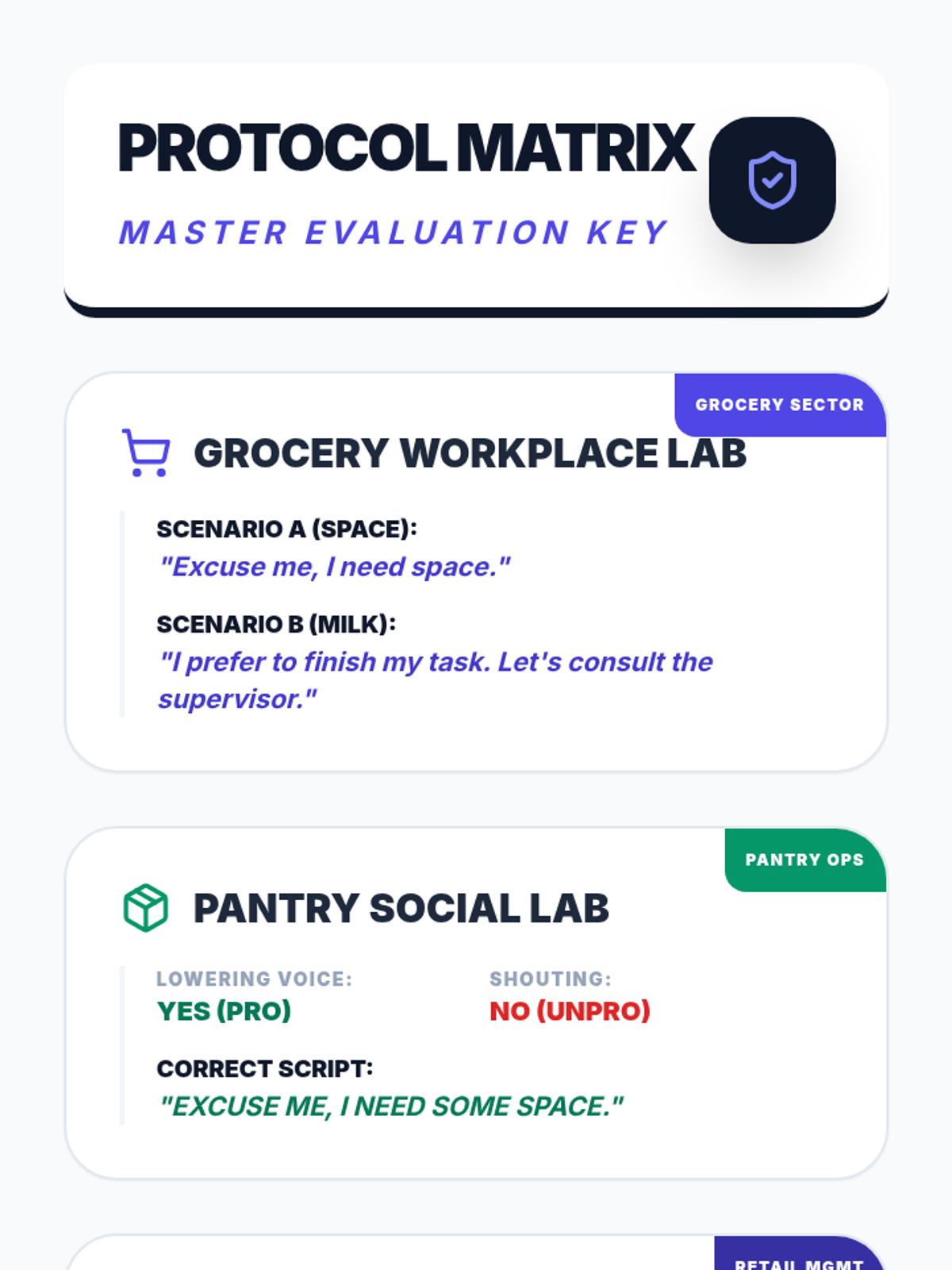
Focuses on identifying workplace conflicts in a grocery store setting and introducing the 'Stop, Breathe, Pick' visual strategy.
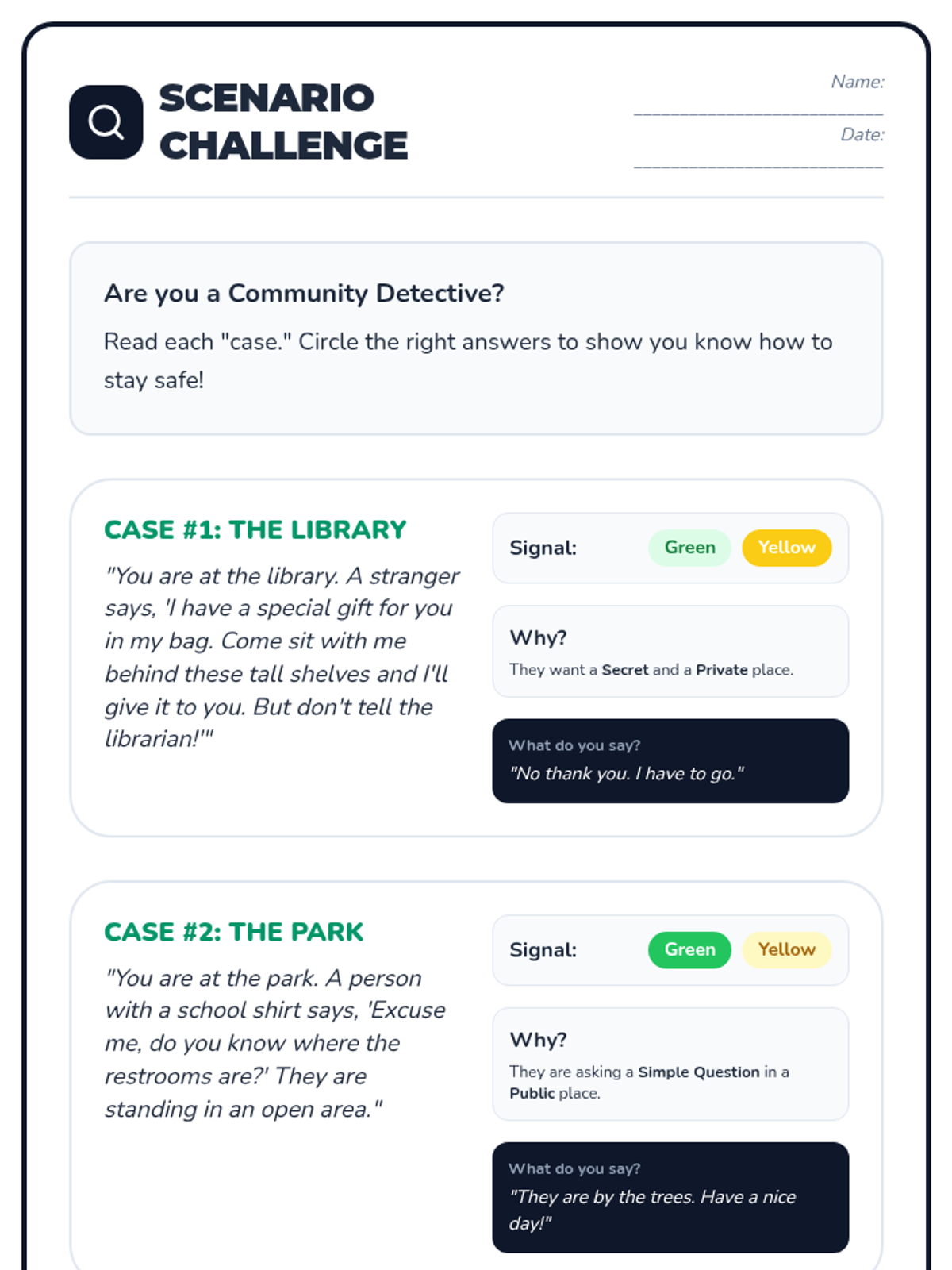
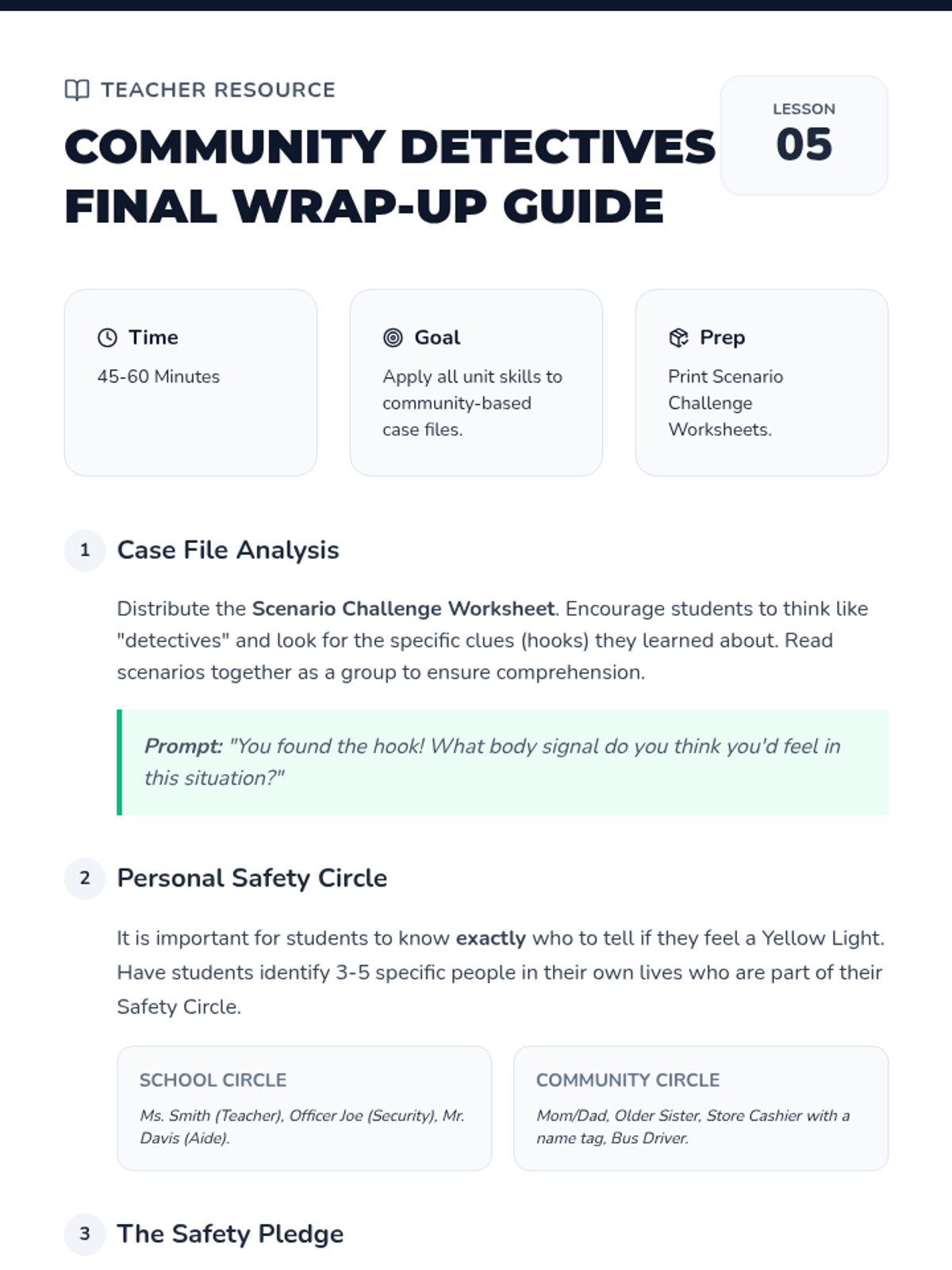
A cumulative review using community-based scenarios where students apply all previous skills to determine the safest course of action.
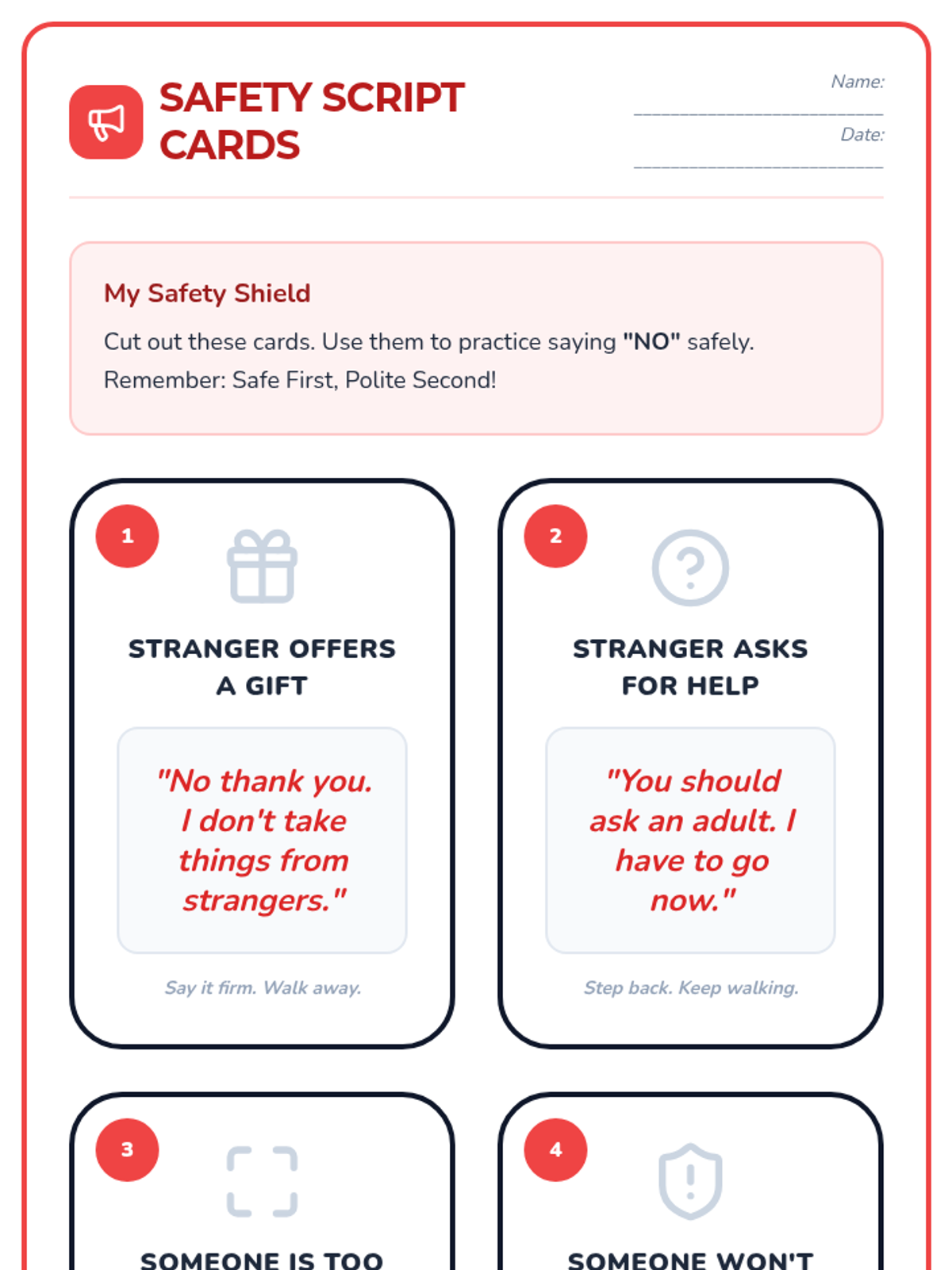
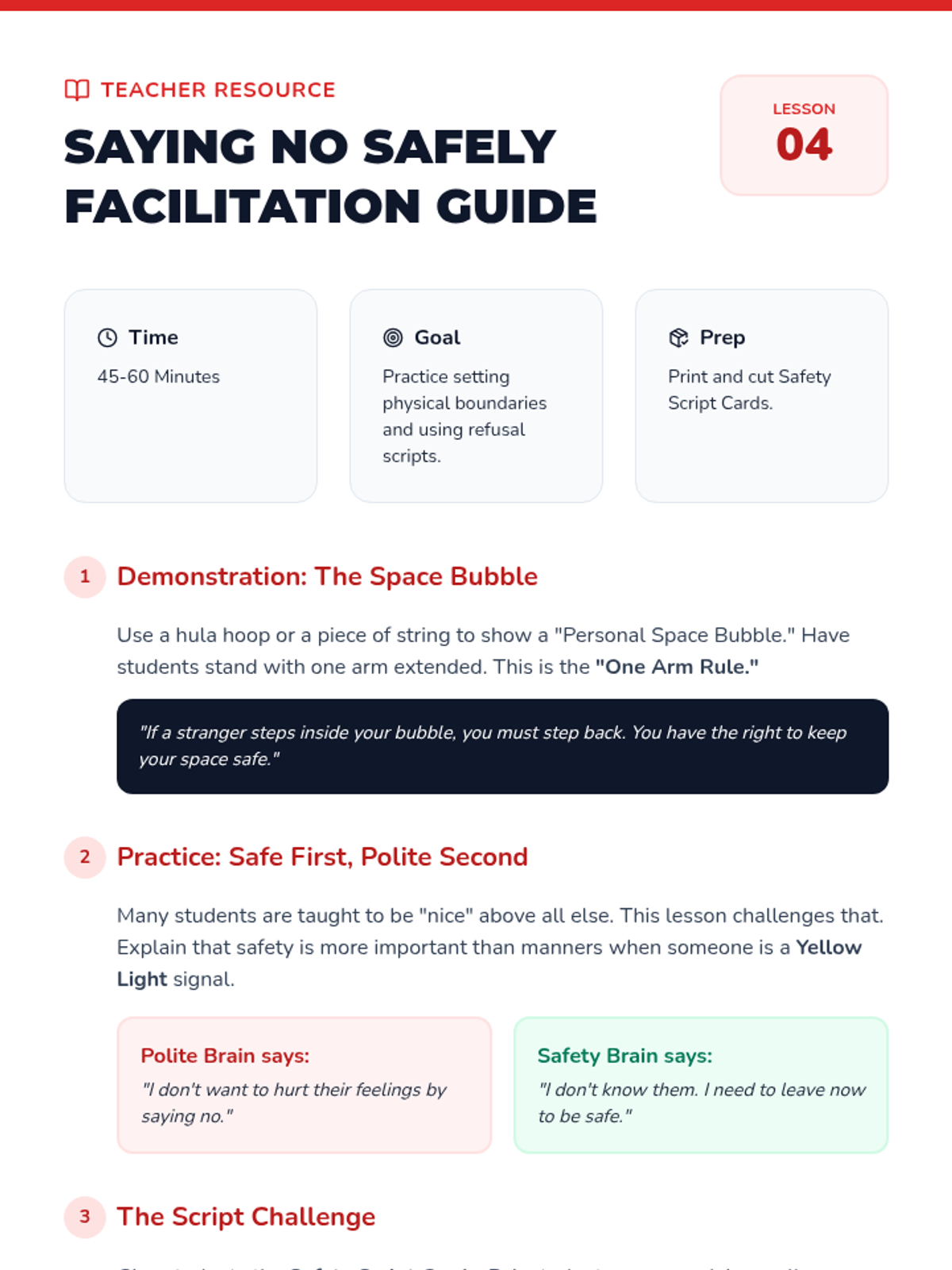
Provides concrete scripts and strategies for setting boundaries, saying 'no', and exiting uncomfortable situations safely in the community.
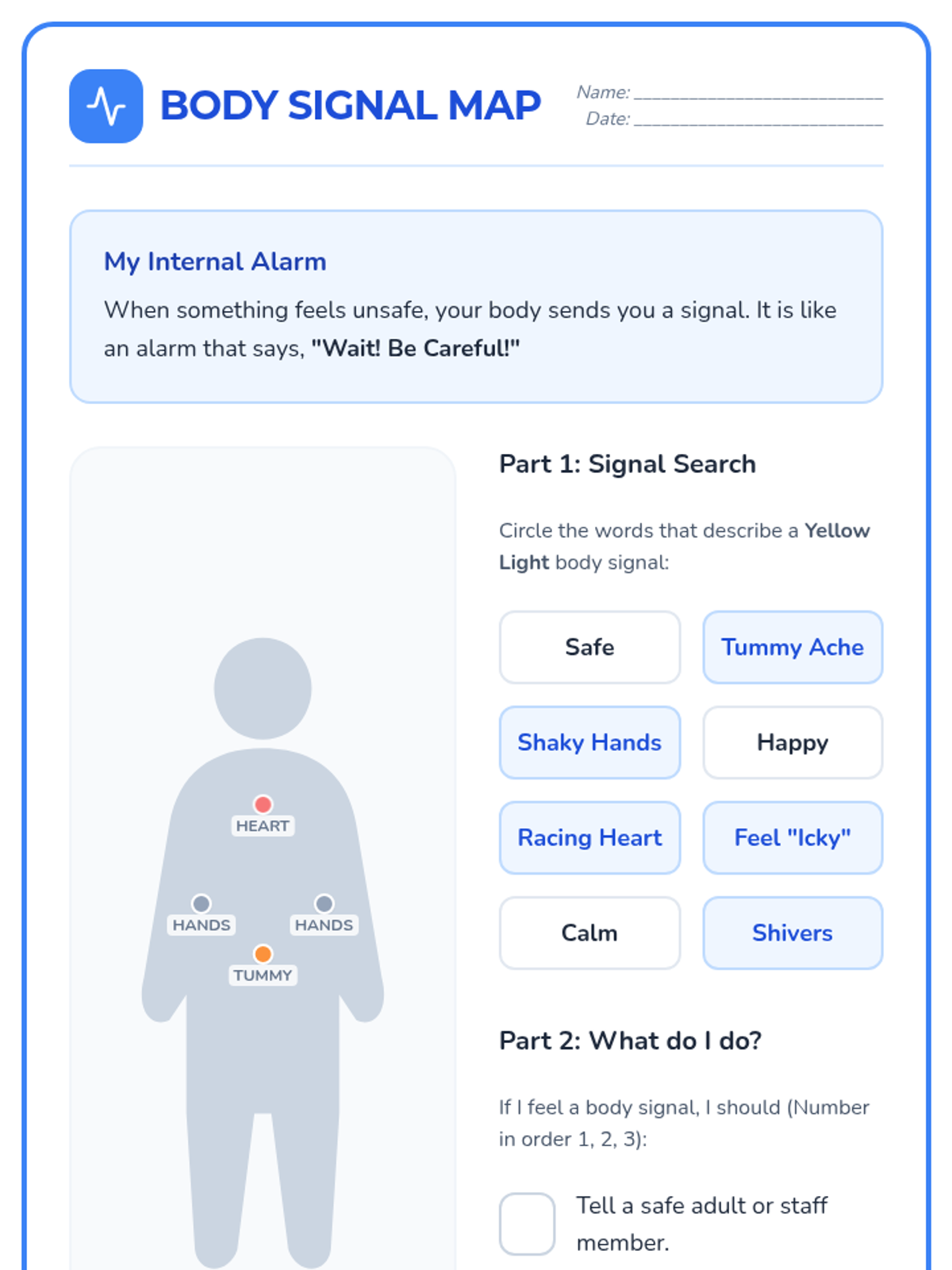
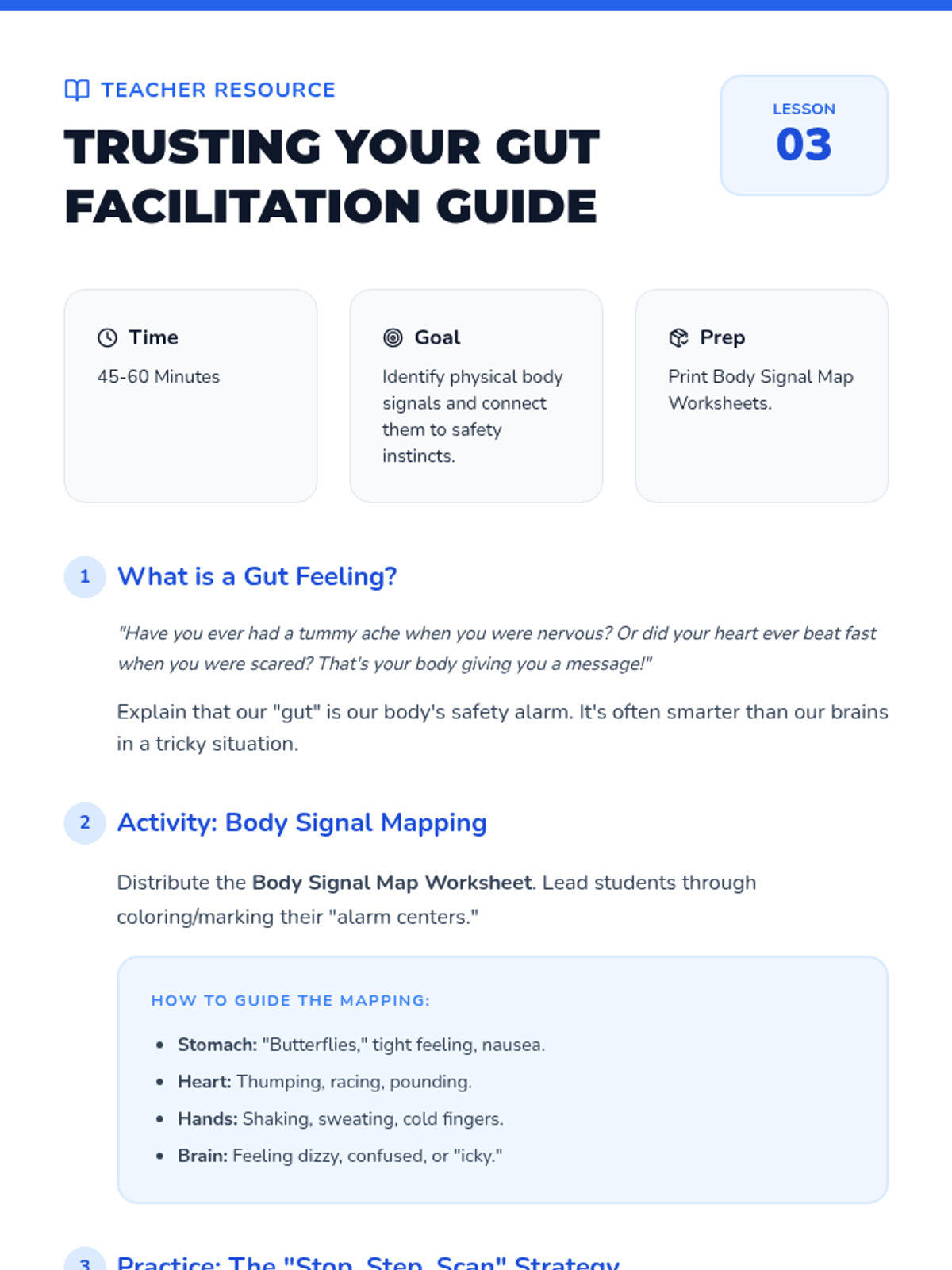
Teaches students to recognize physical 'gut feelings' or body signals that occur when something feels wrong, emphasizing trust in one's own instincts.
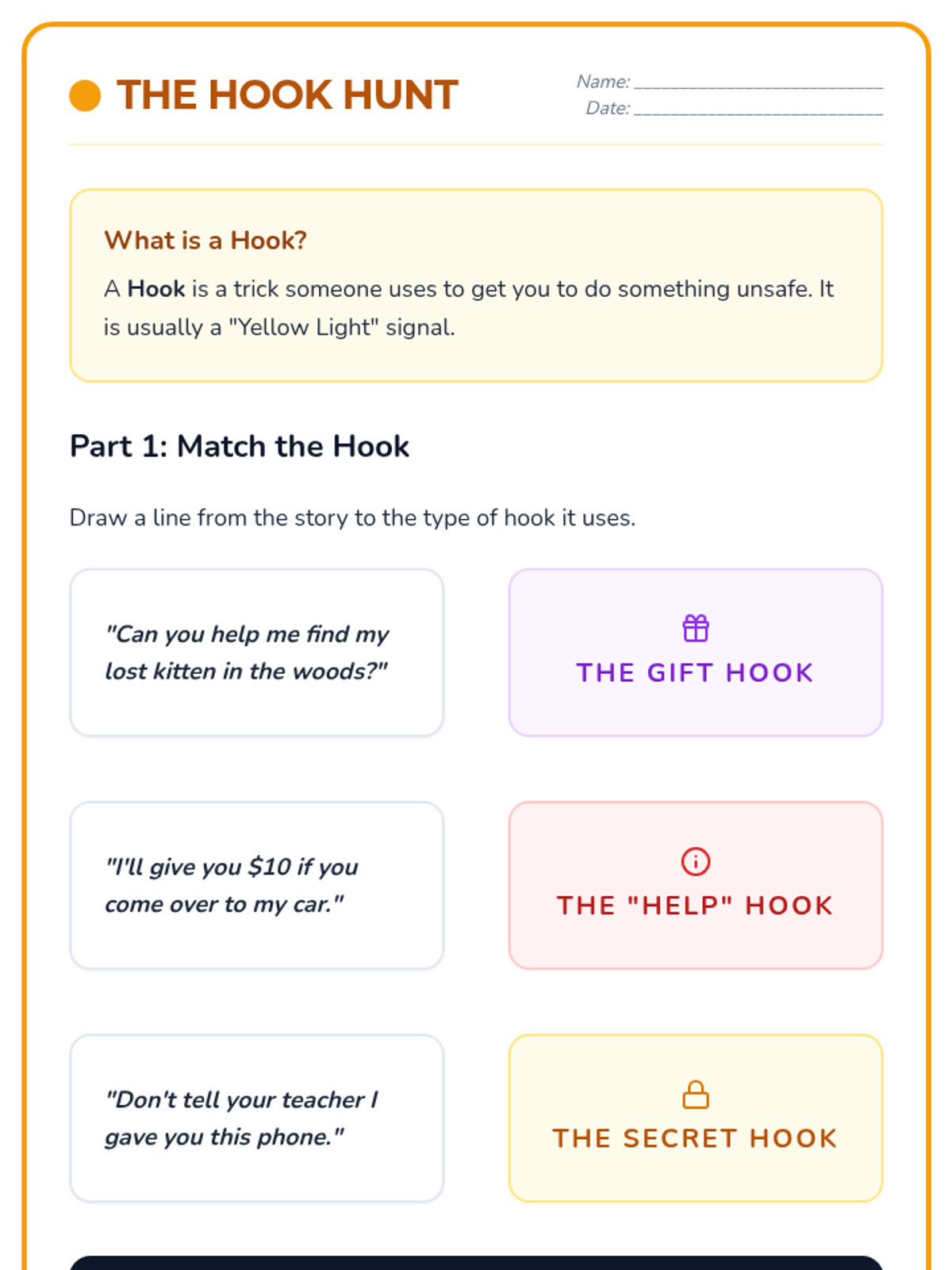
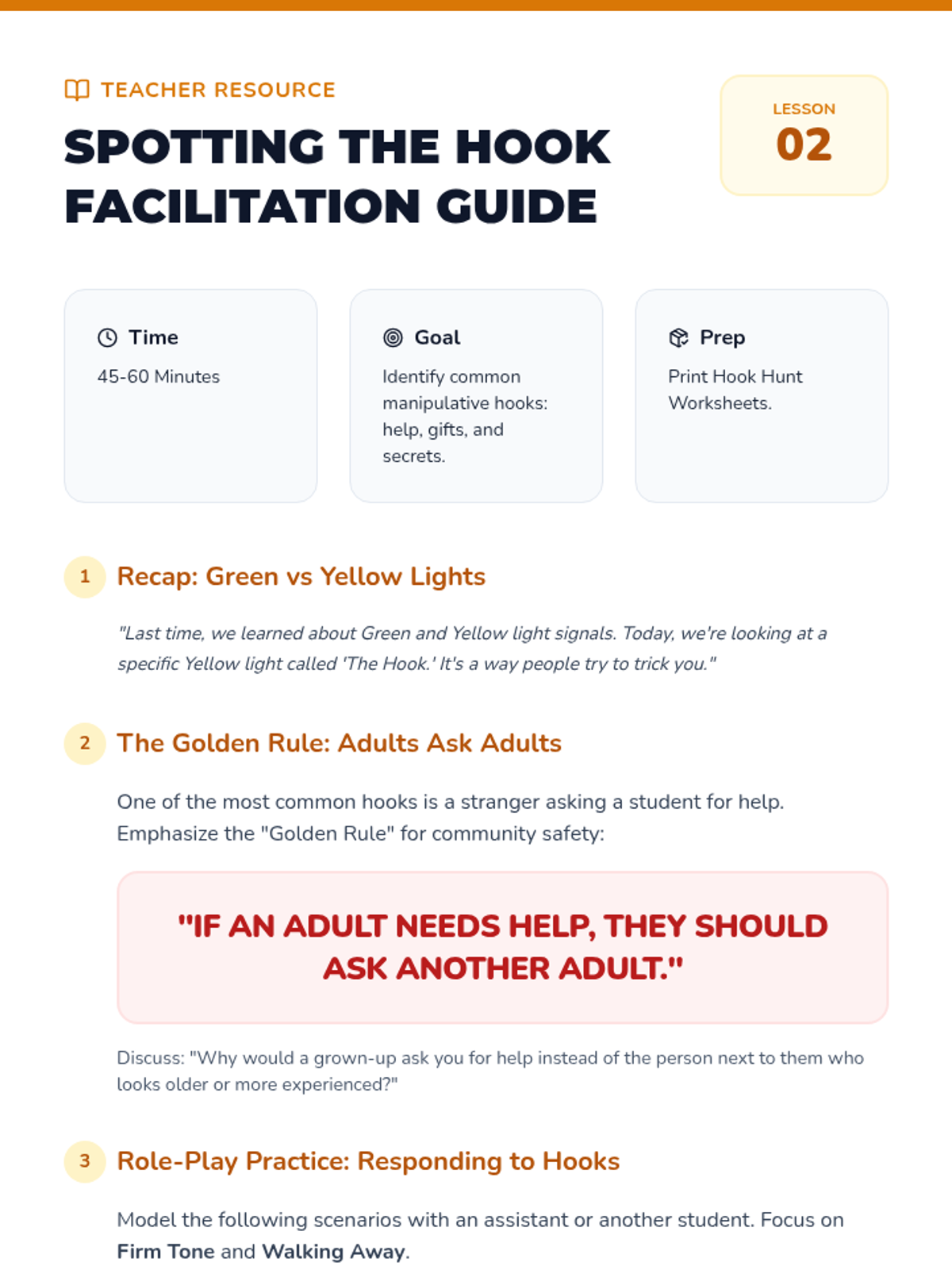
Focuses on identifying common 'hooks' or tactics used in manipulation, such as asking for unnecessary help, offering unexpected gifts, or requesting secrets.
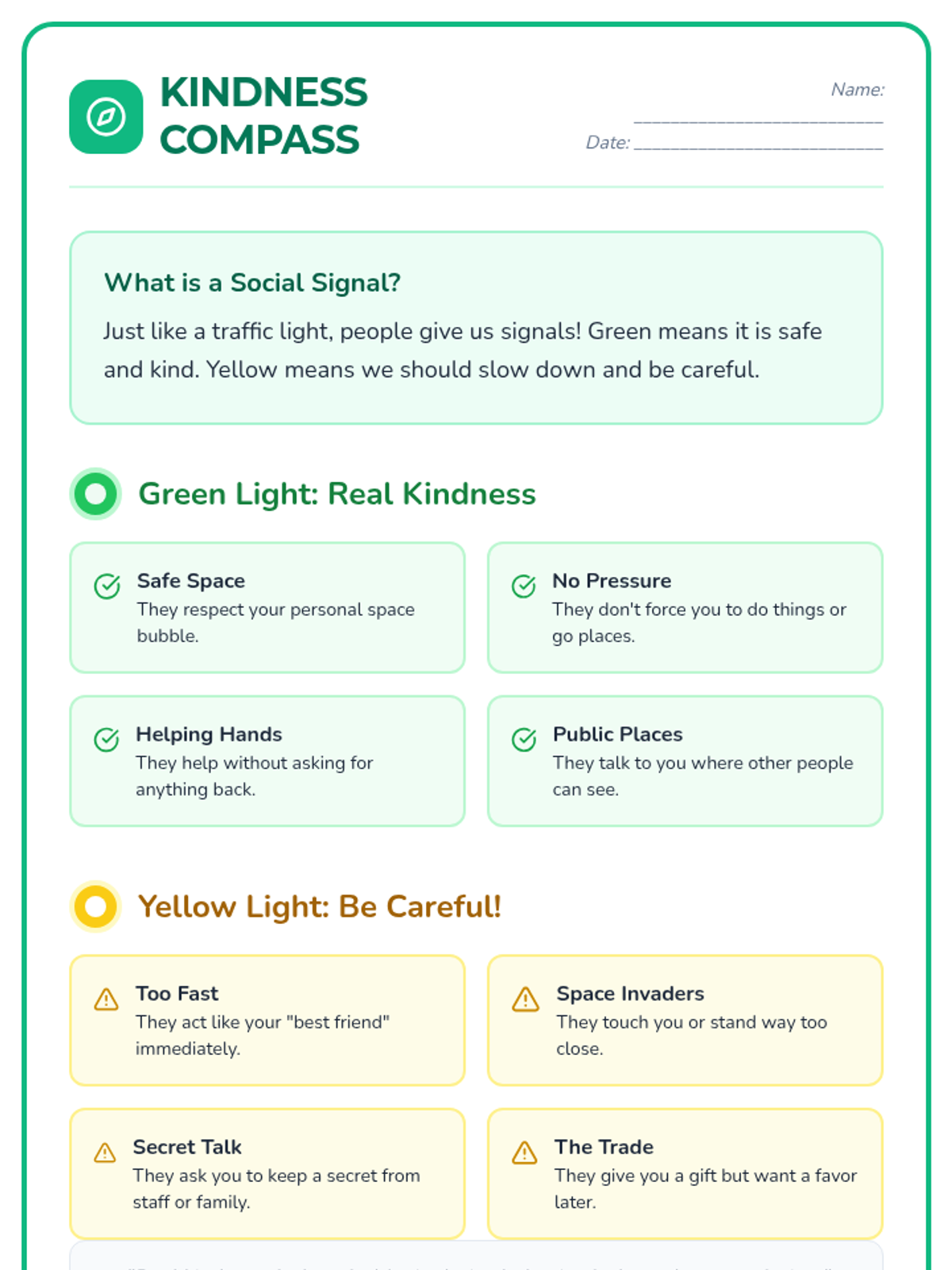
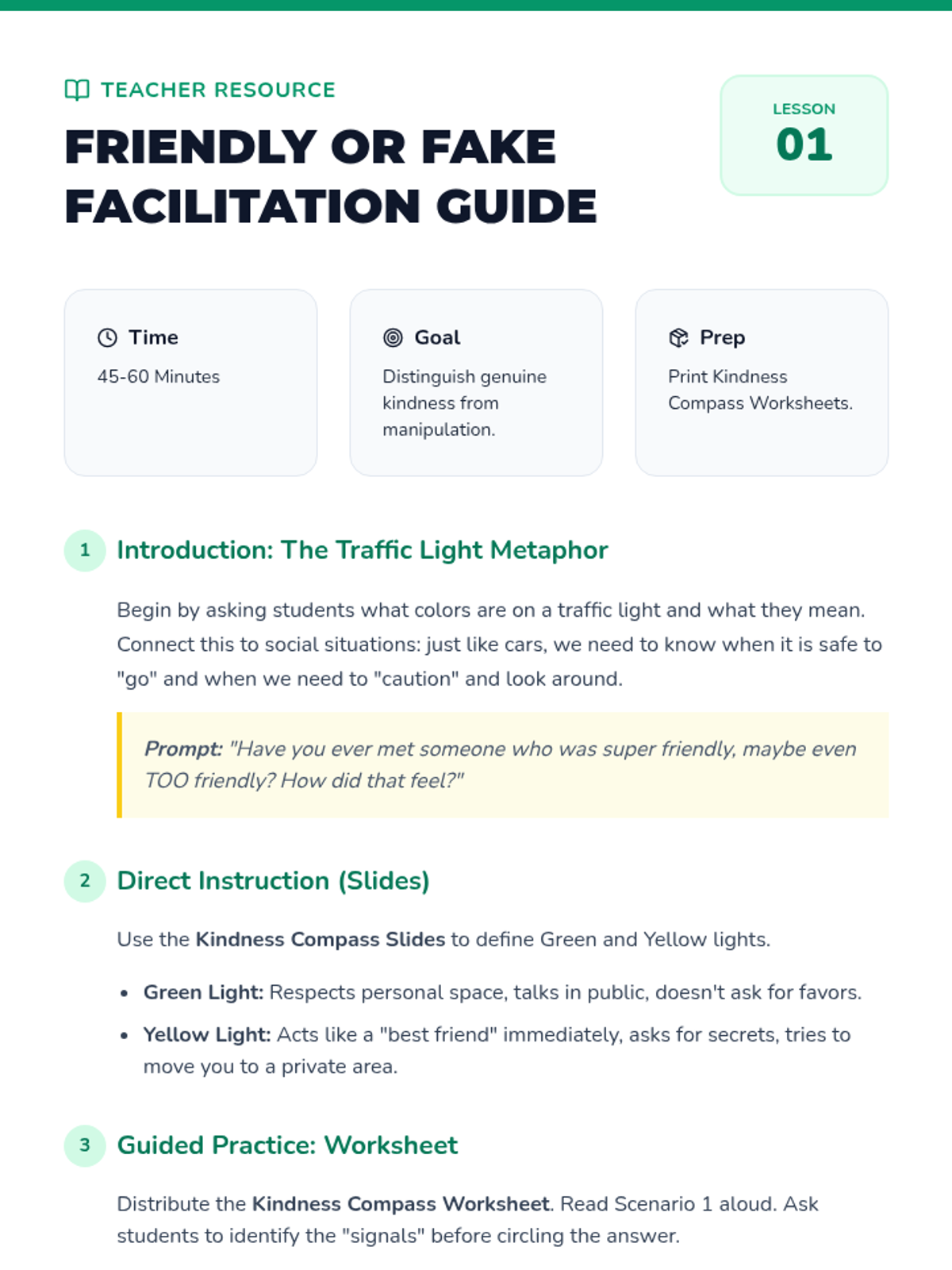
Introduces the difference between 'Green Light' (genuinely kind) and 'Yellow Light' (suspicious or overly friendly) behaviors using concrete examples and visual aids.
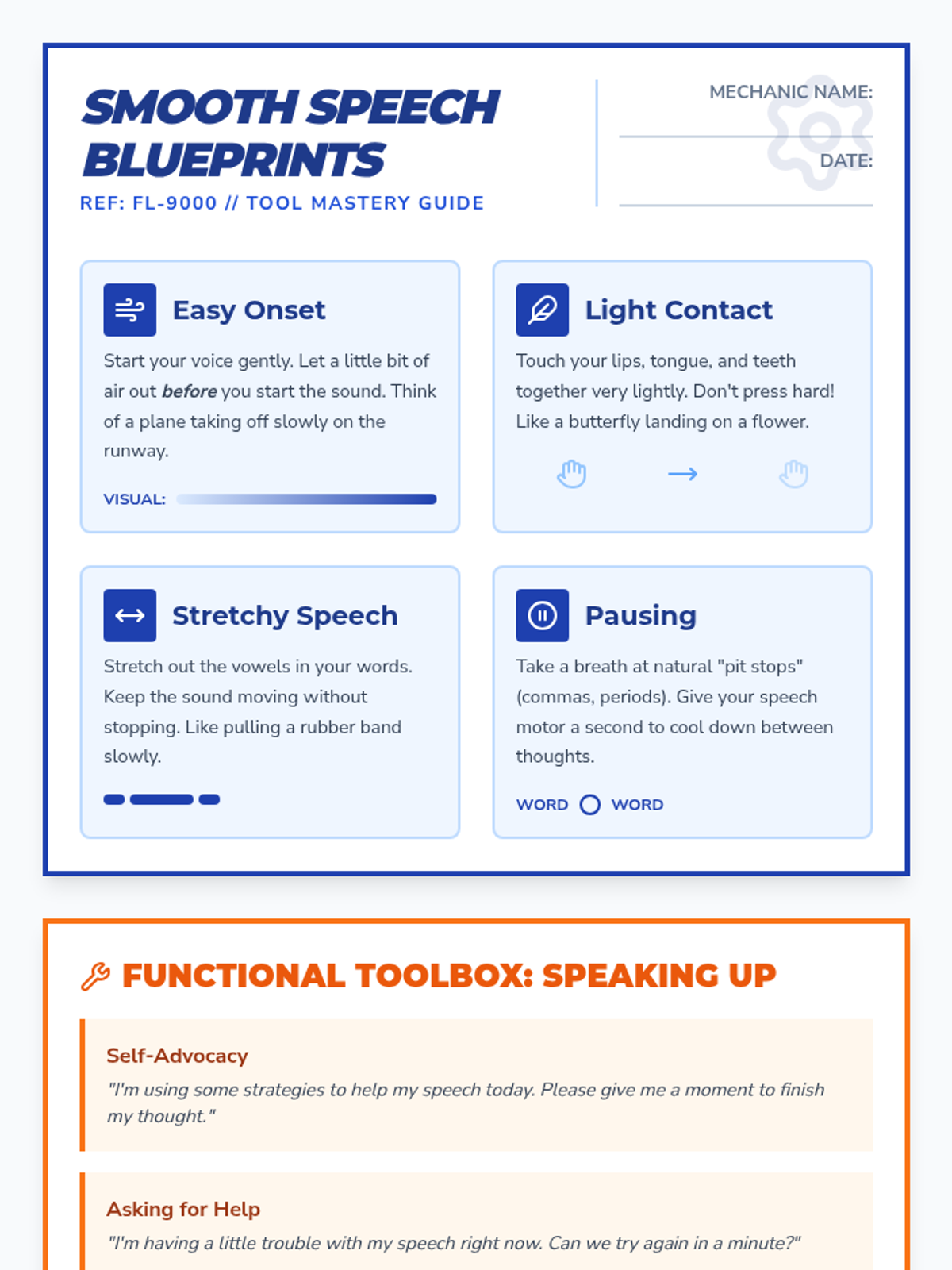
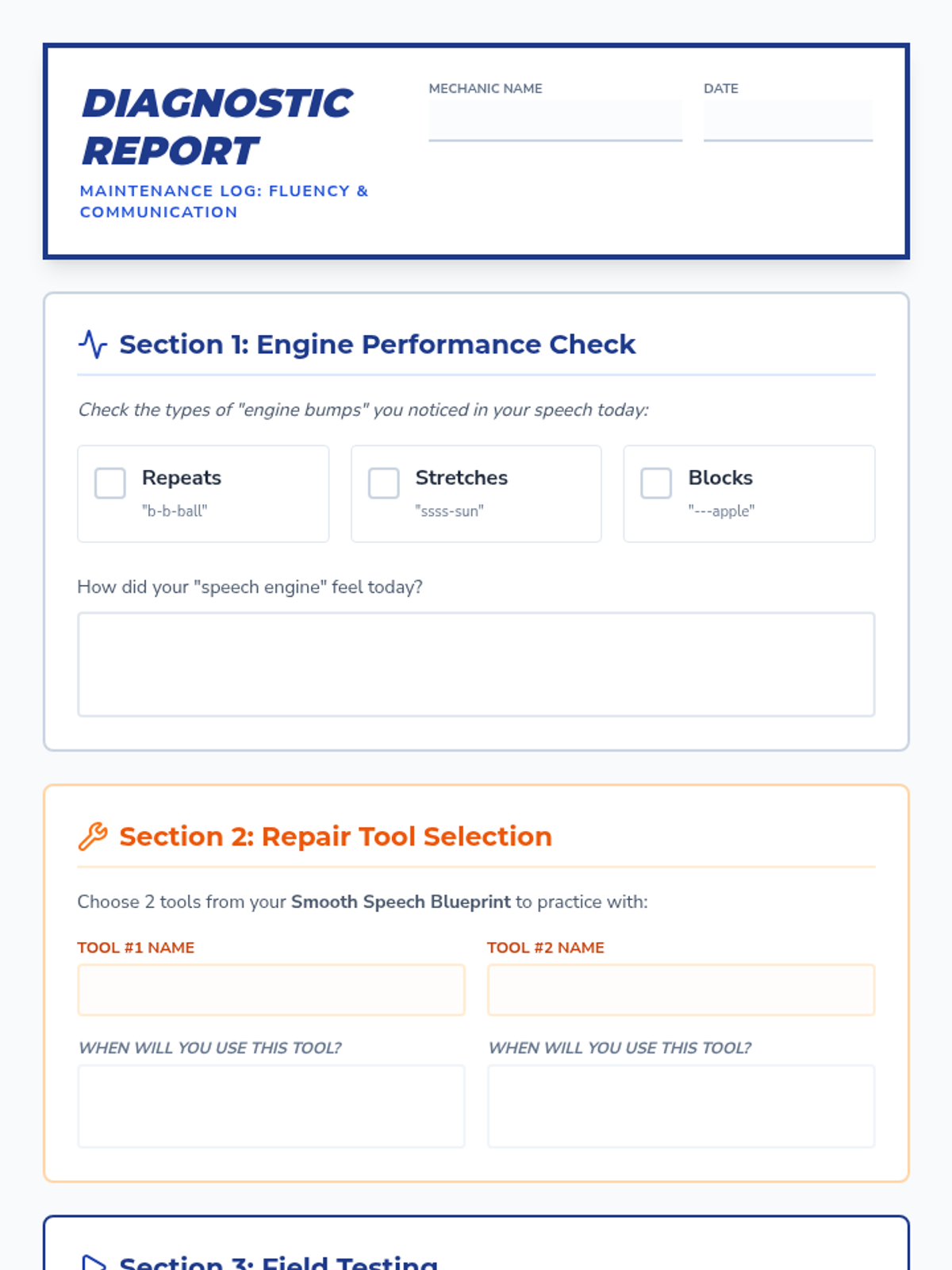
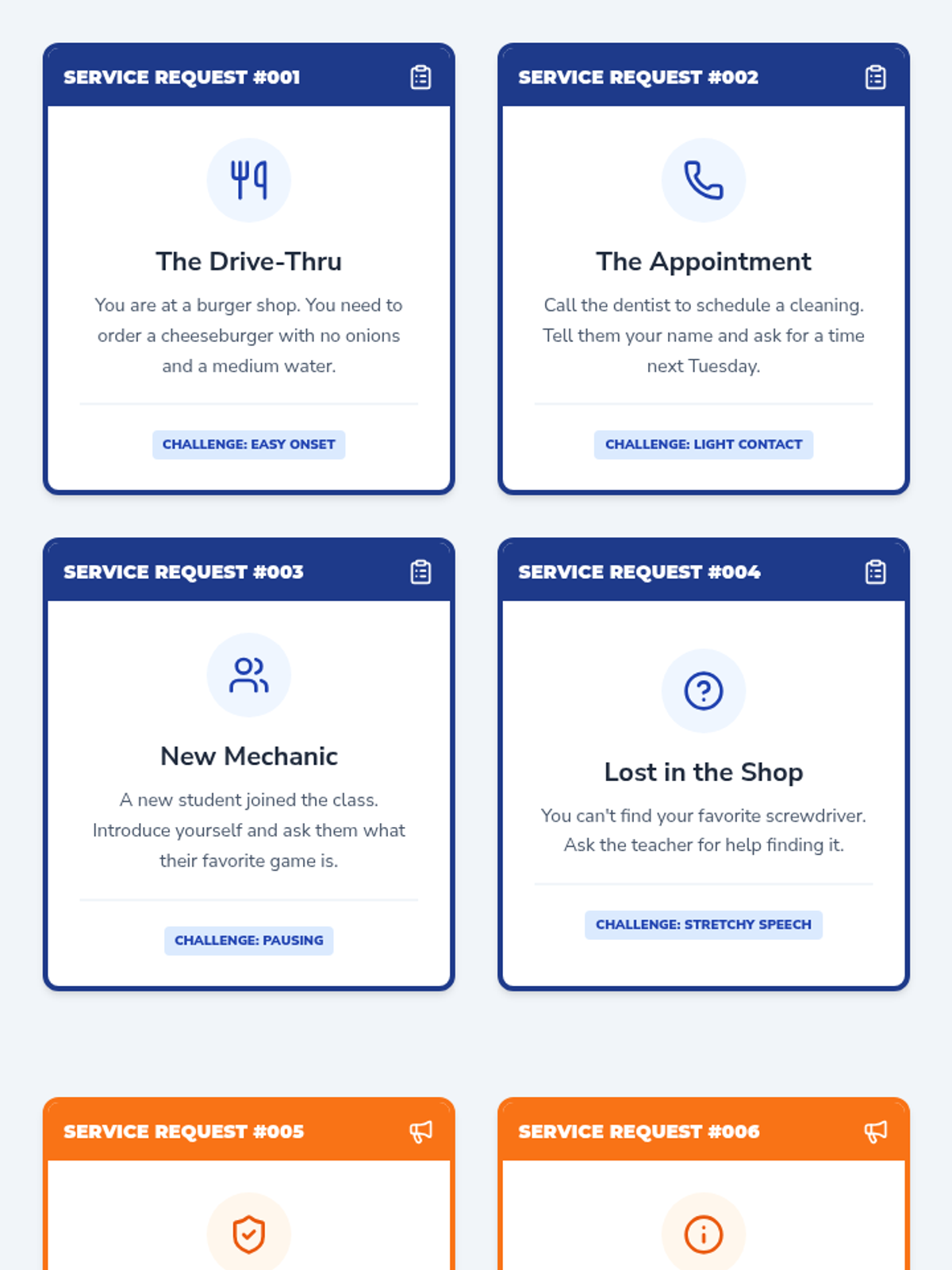
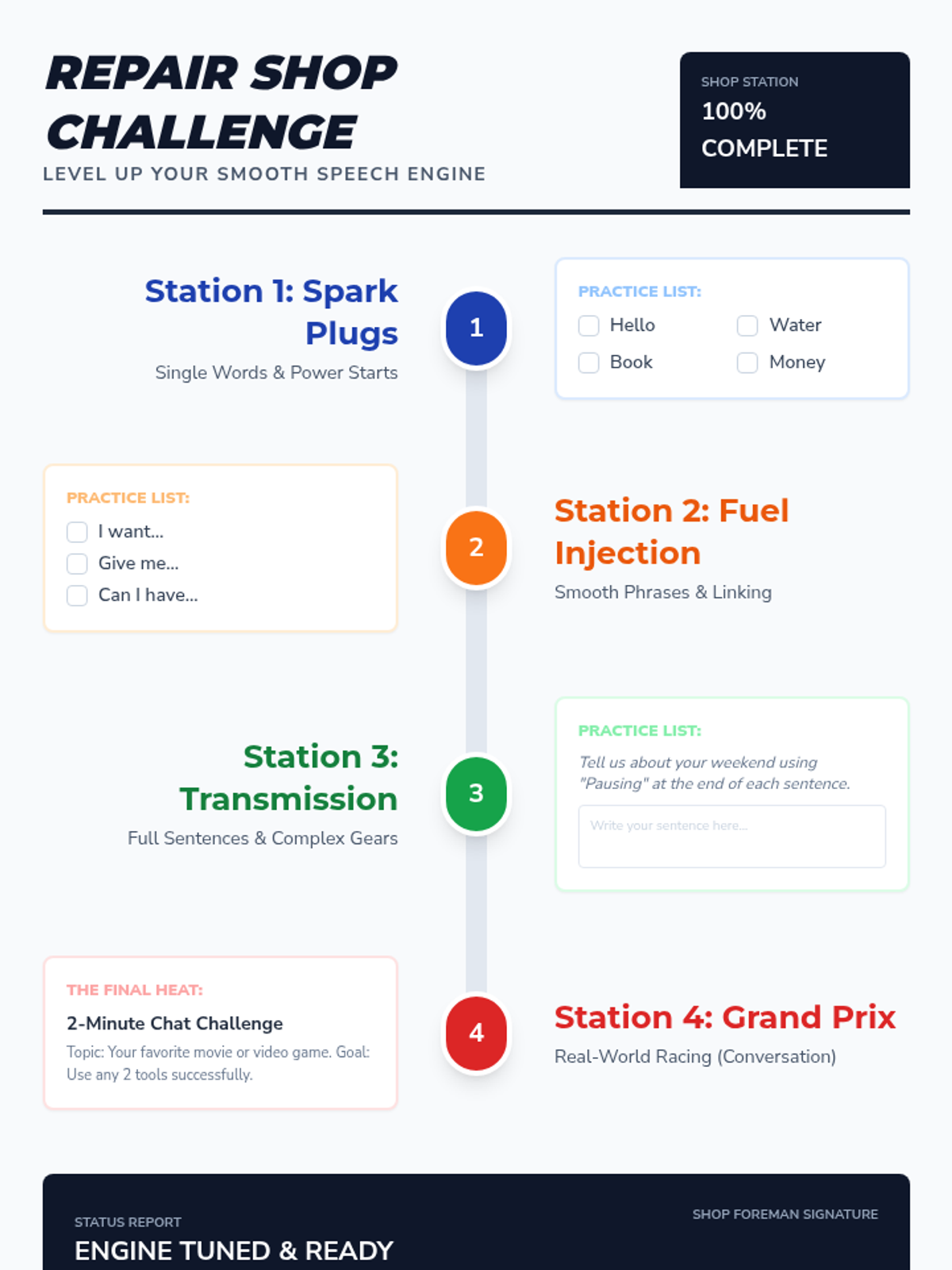
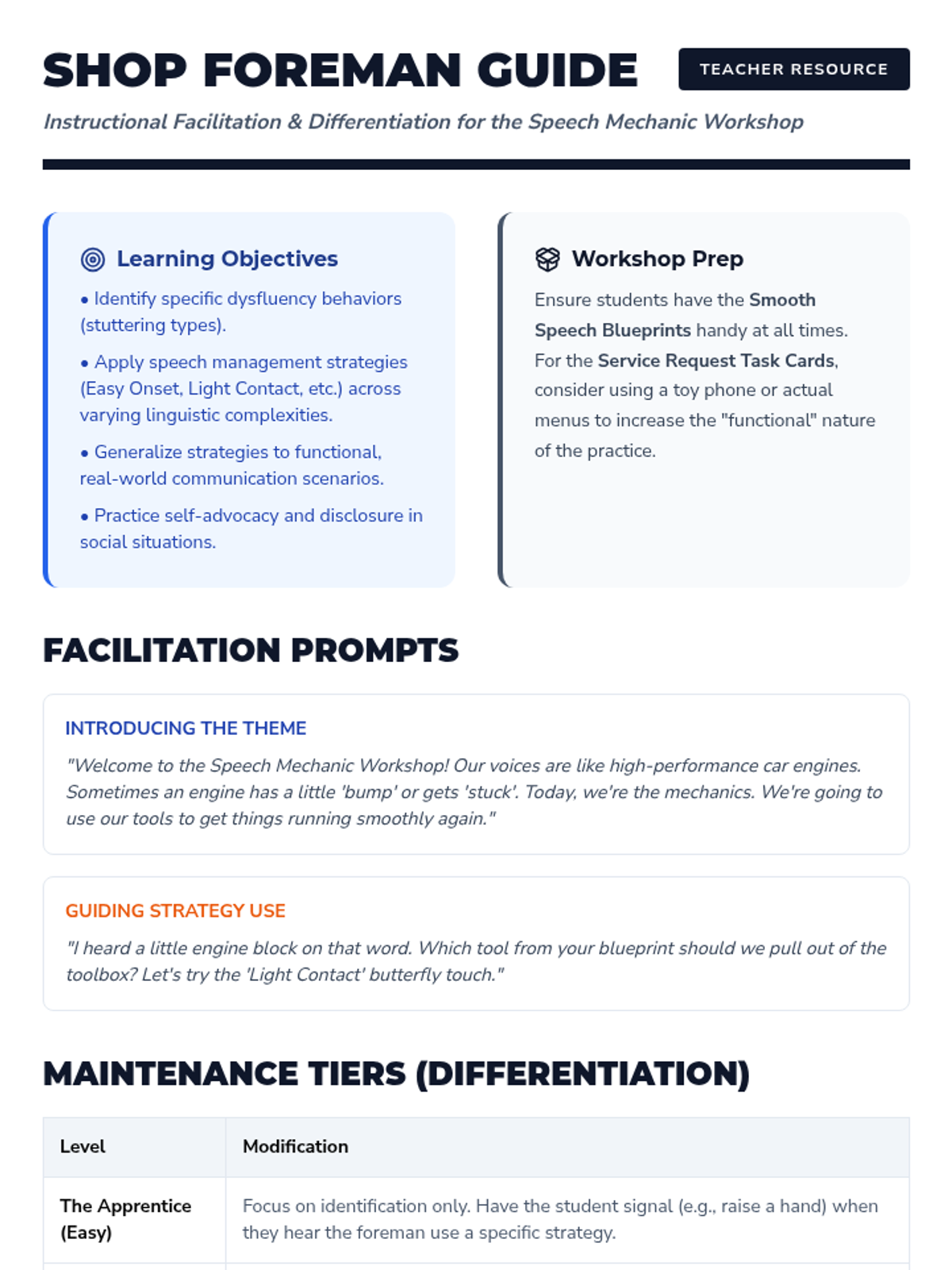
A comprehensive set of activities for students to master functional communication and fluency strategies through a mechanical workshop theme. Students learn to use 'tools' for smooth speech and navigate real-world communication scenarios.
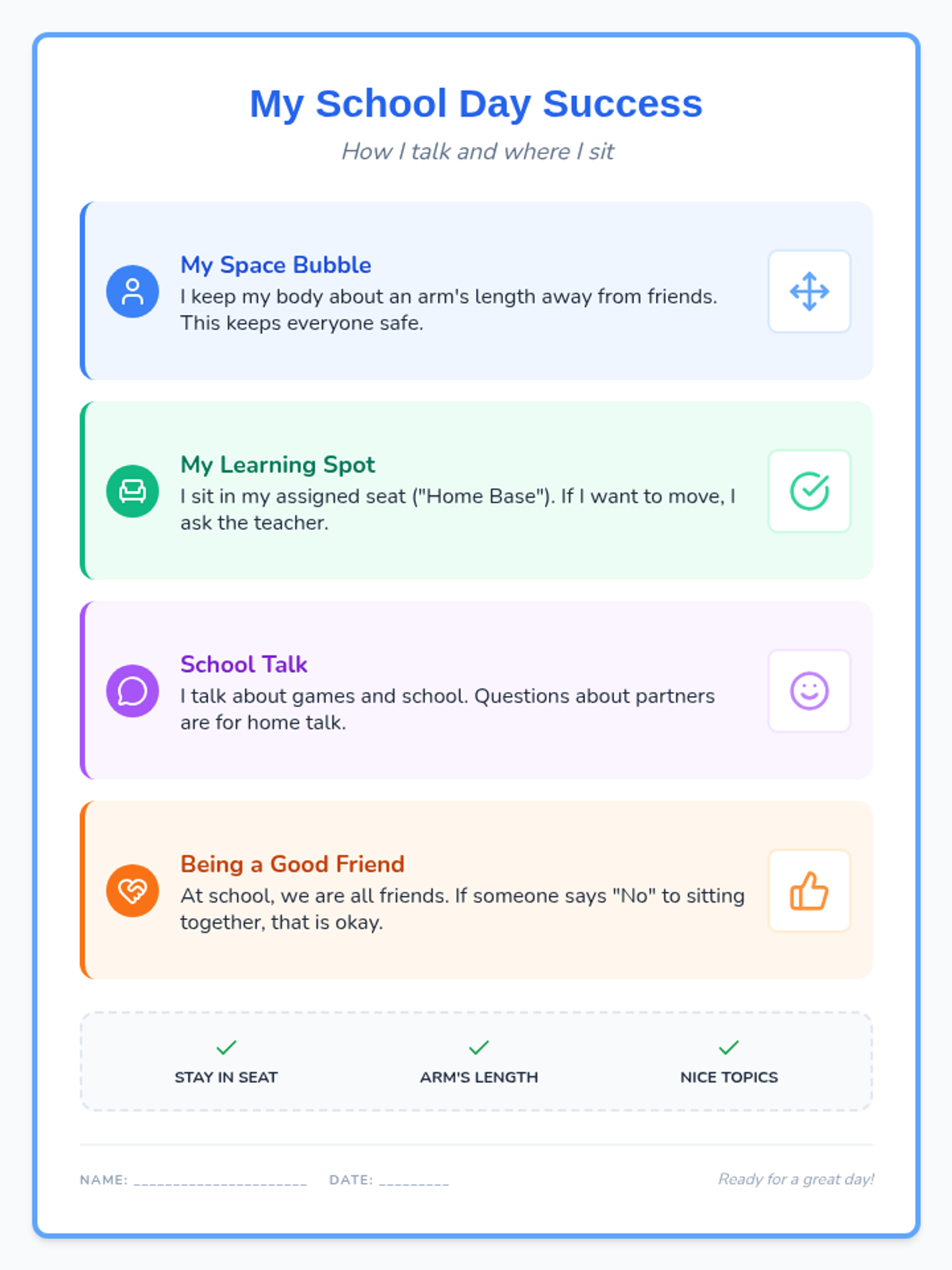
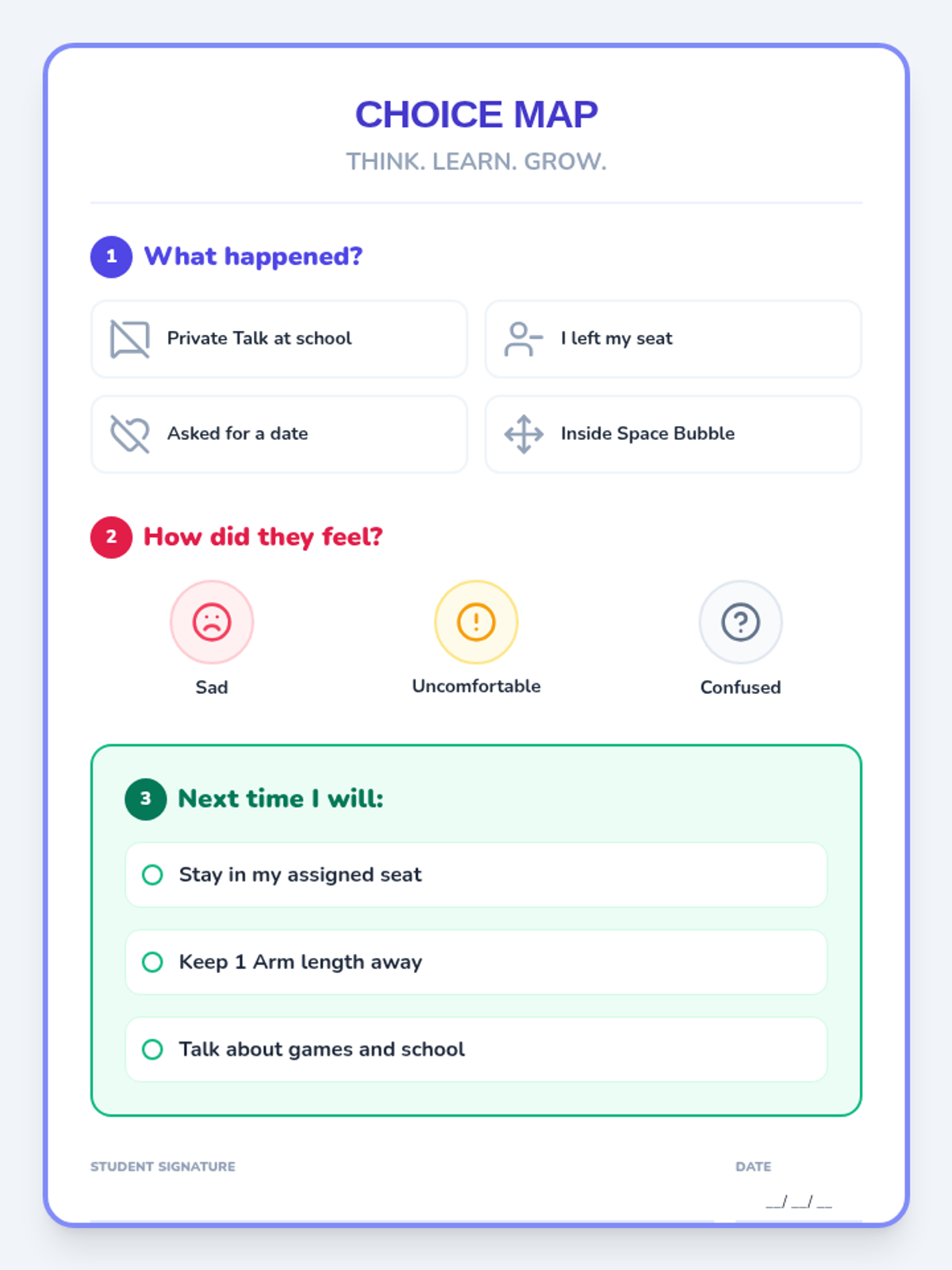
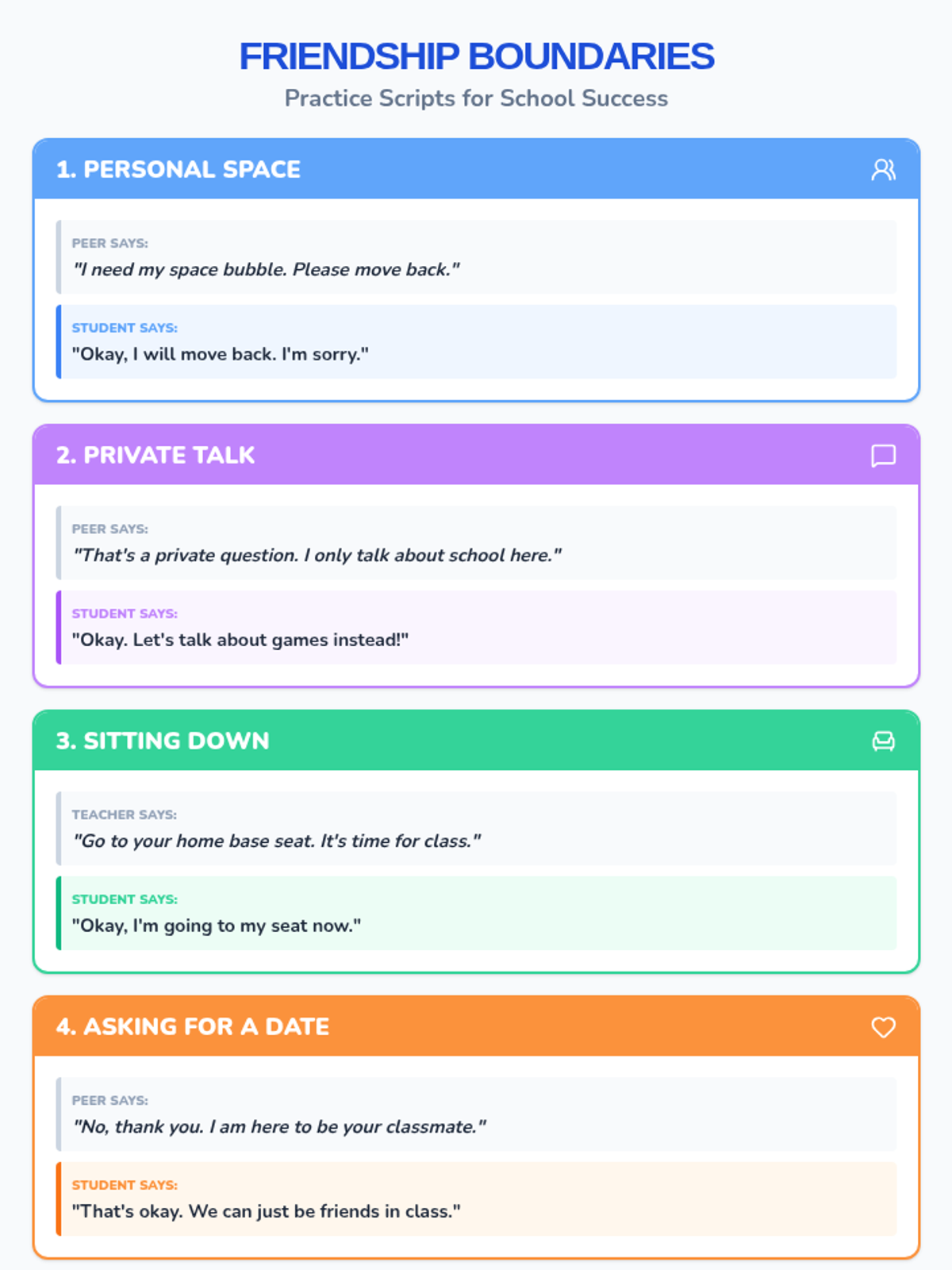
A collection of visual and interactive resources designed to help students with moderate intellectual disabilities understand personal boundaries, appropriate school conversation, and social consent.
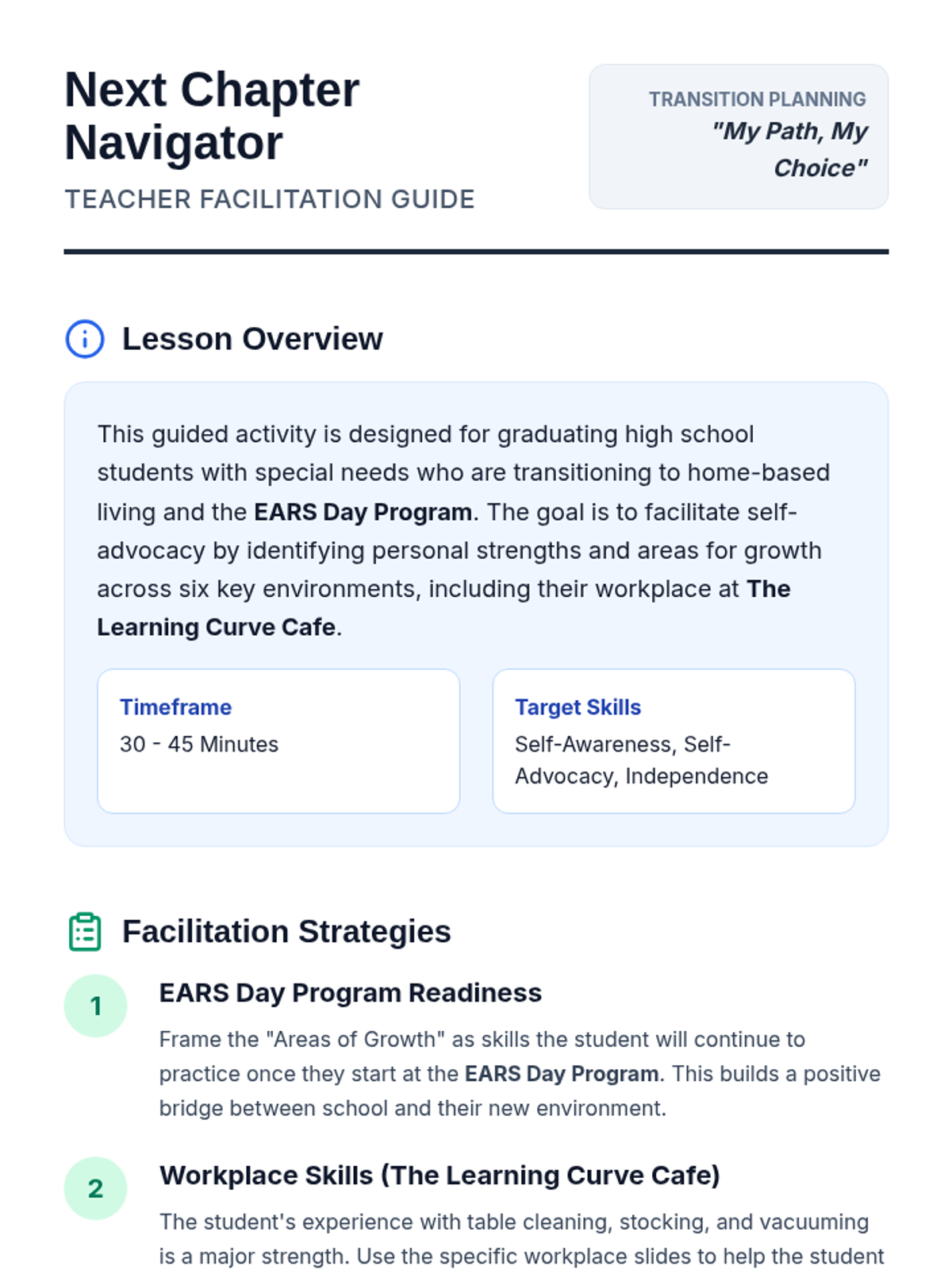
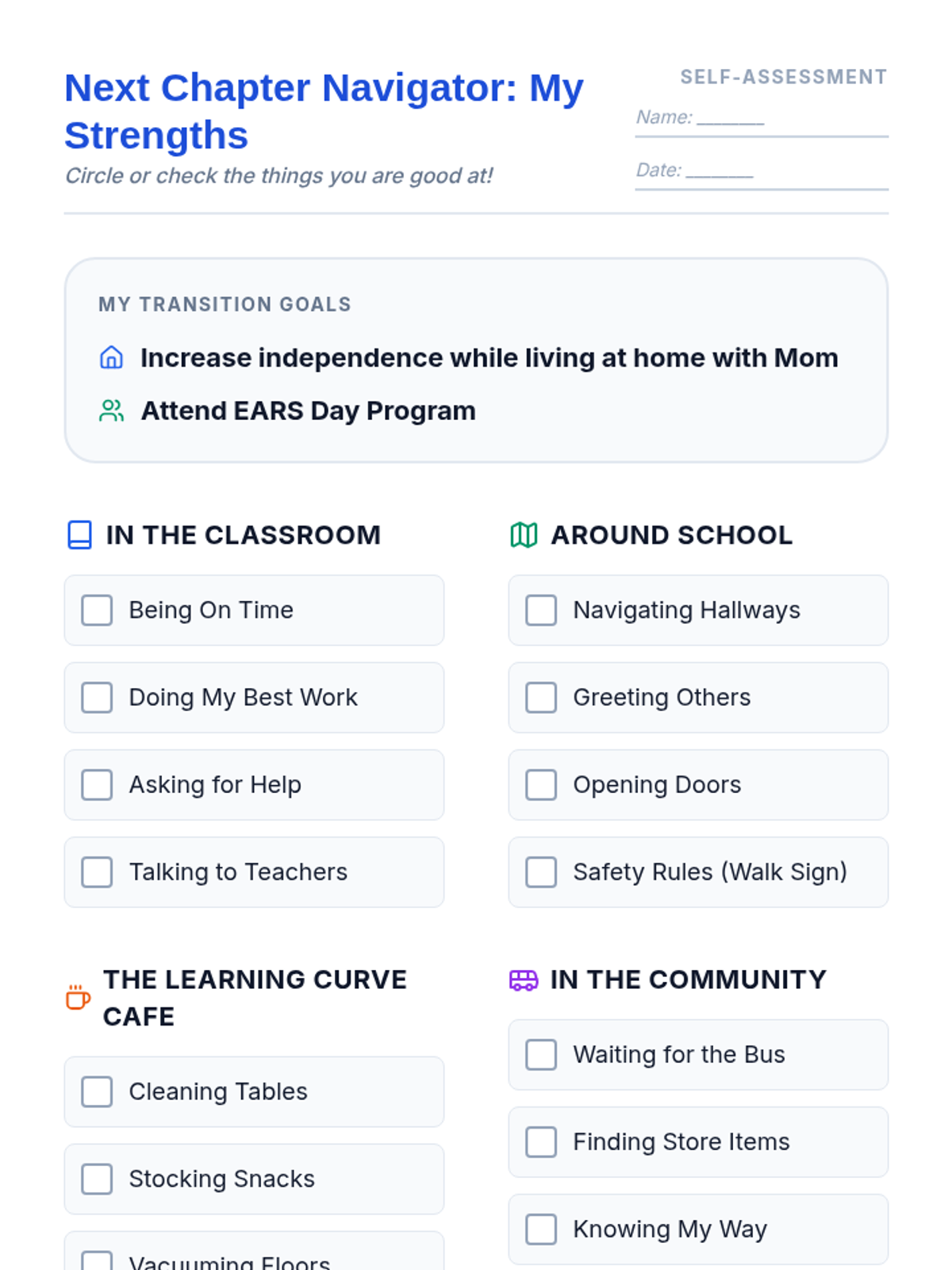
A guided transition planning lesson for graduating students to identify their personal strengths and areas for growth across different environments as they prepare for life at home and in a day program.
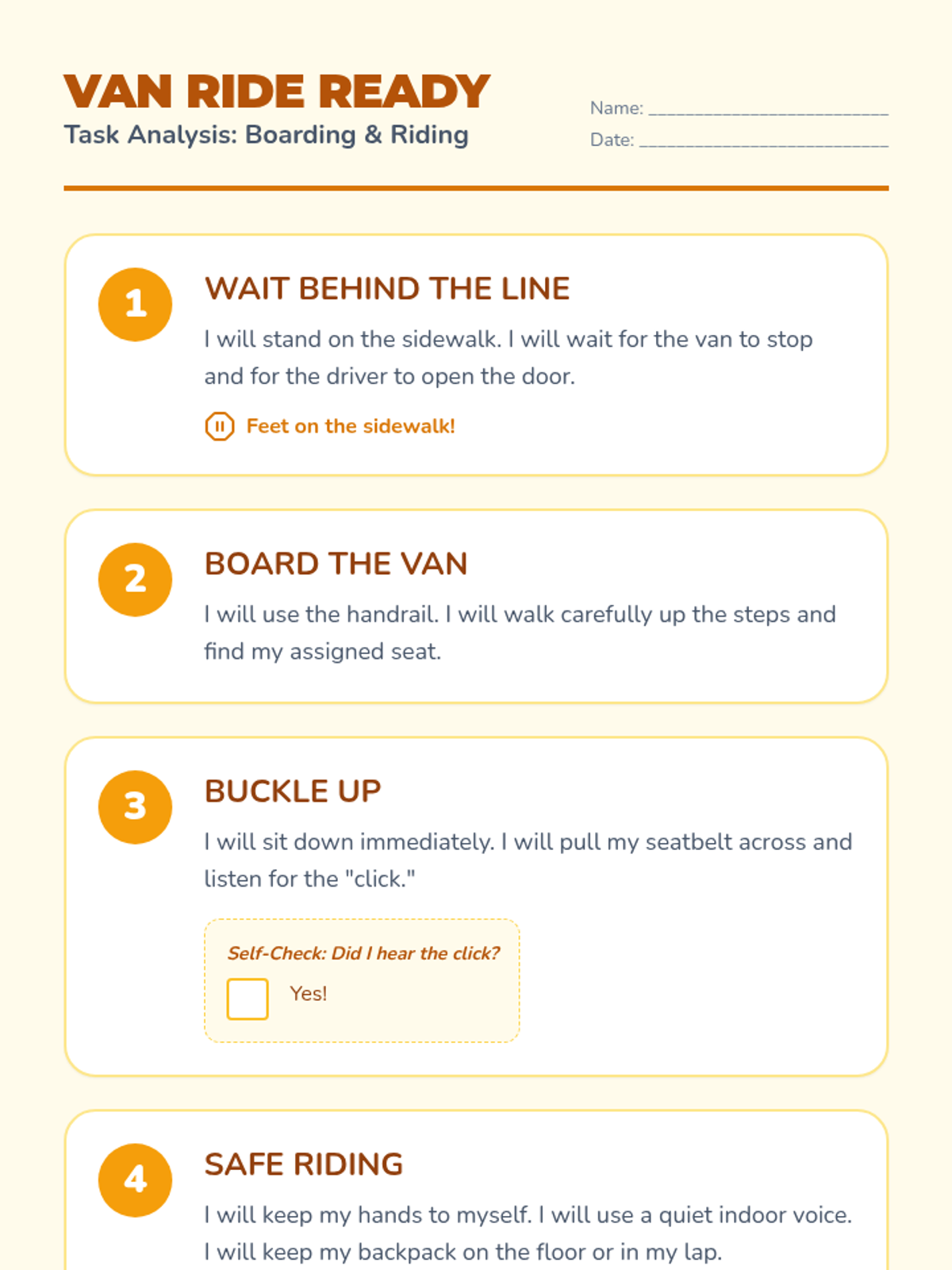
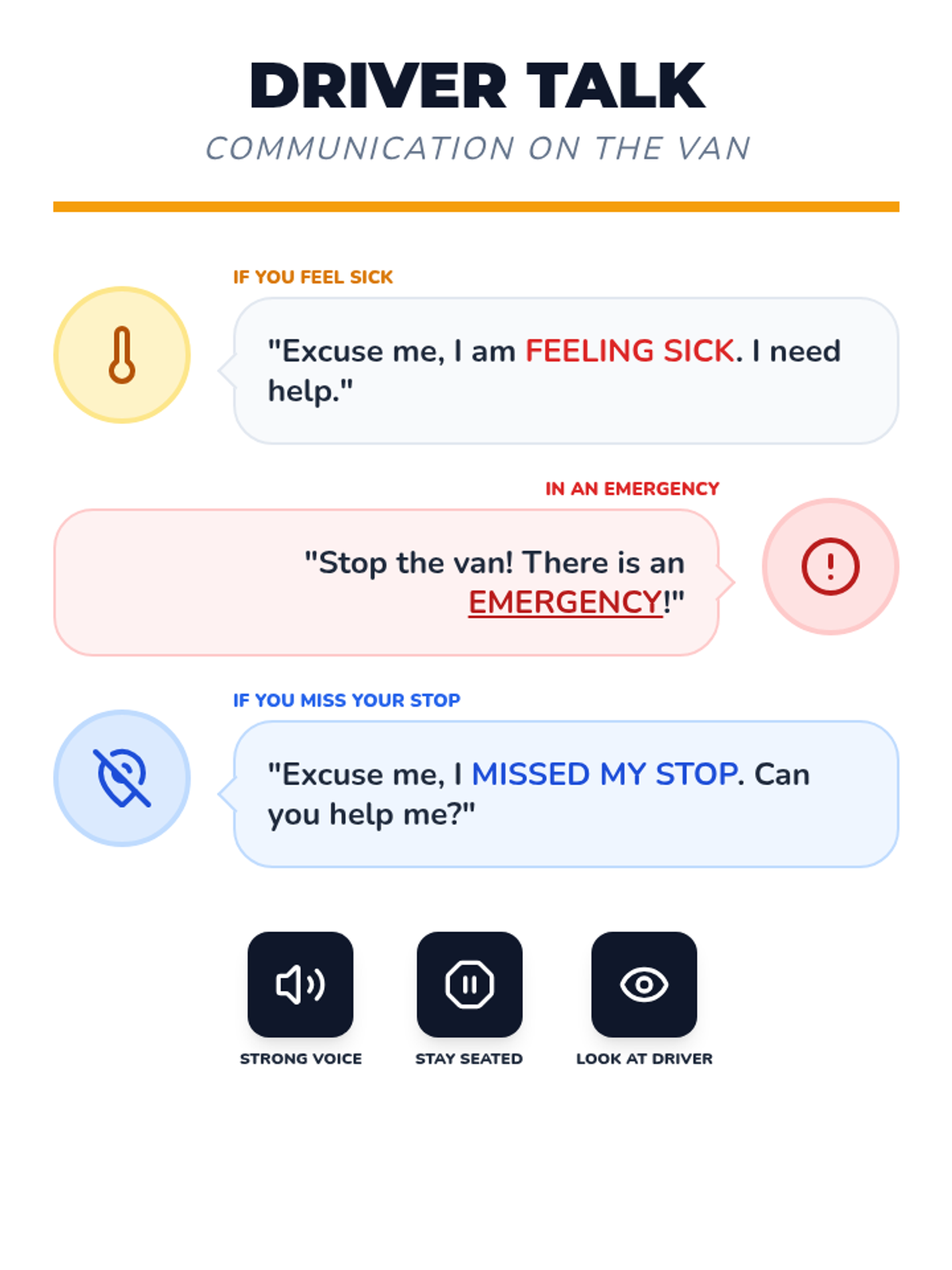
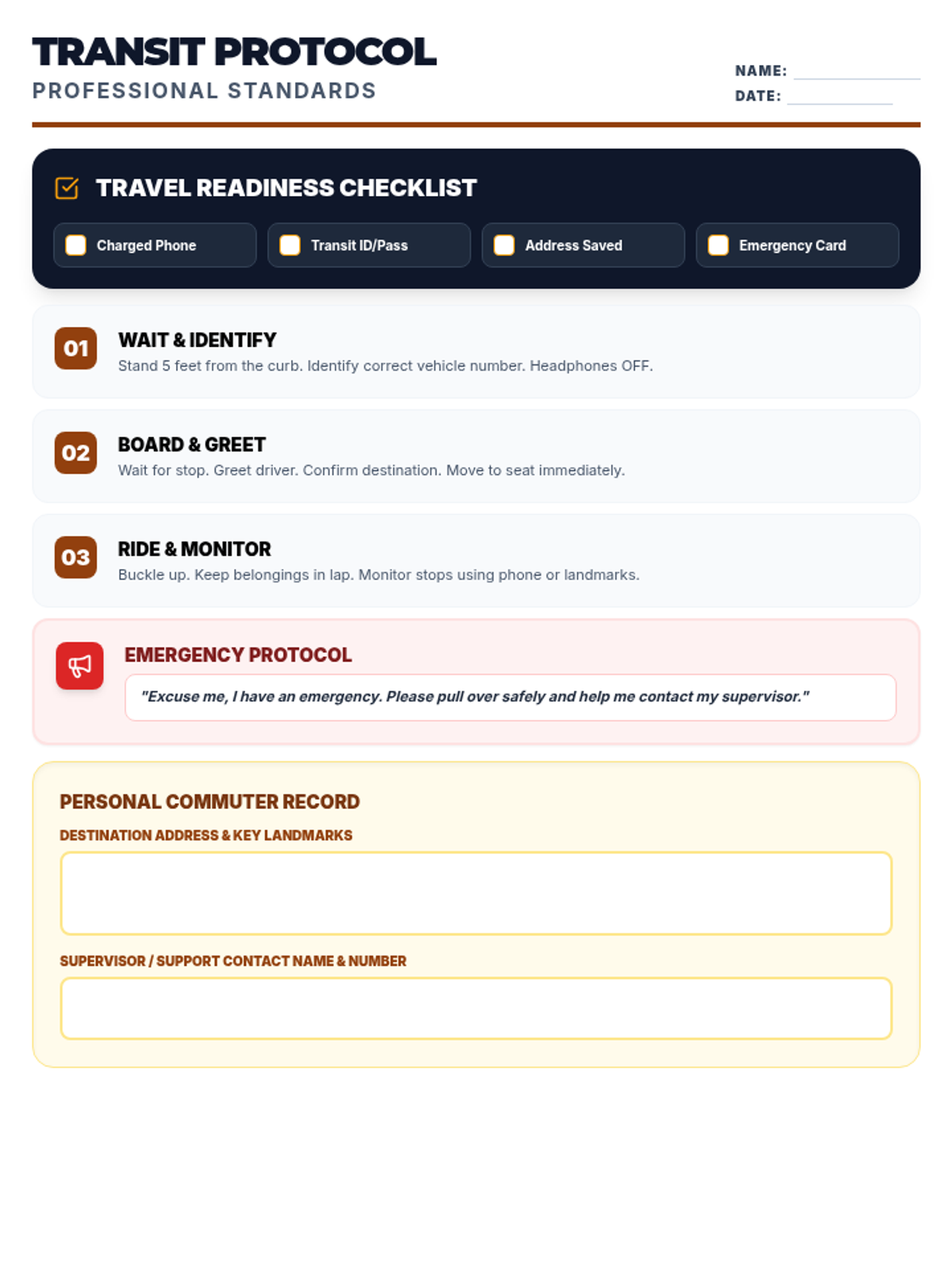
Covers safety protocols for independent travel, including effective communication with drivers and responding to transit delays or emergencies.
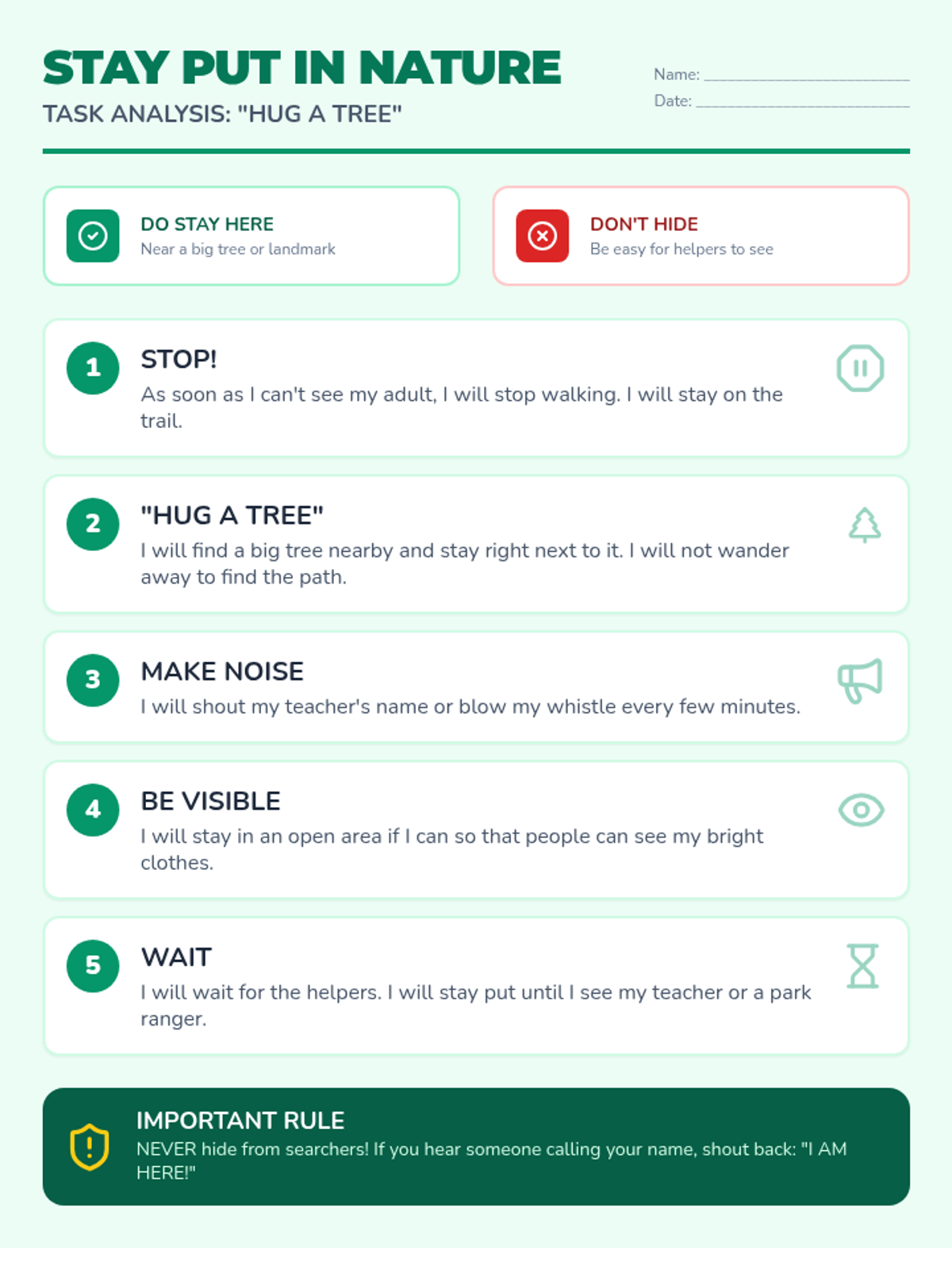
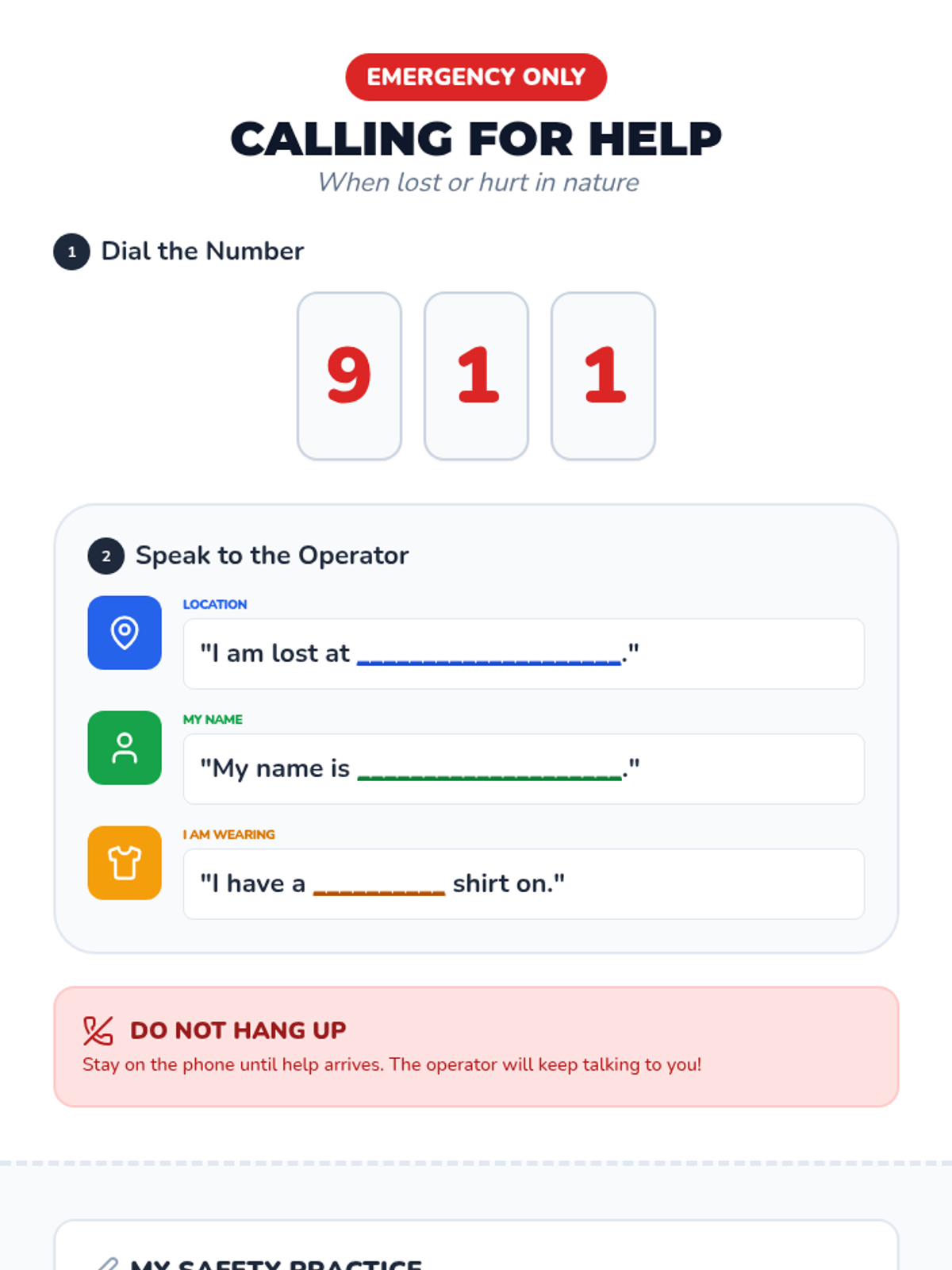
Teaches young adults how to stay safe while exercising or exploring outdoor trails, emphasizing the S.T.O.P. rule and signaling for help.
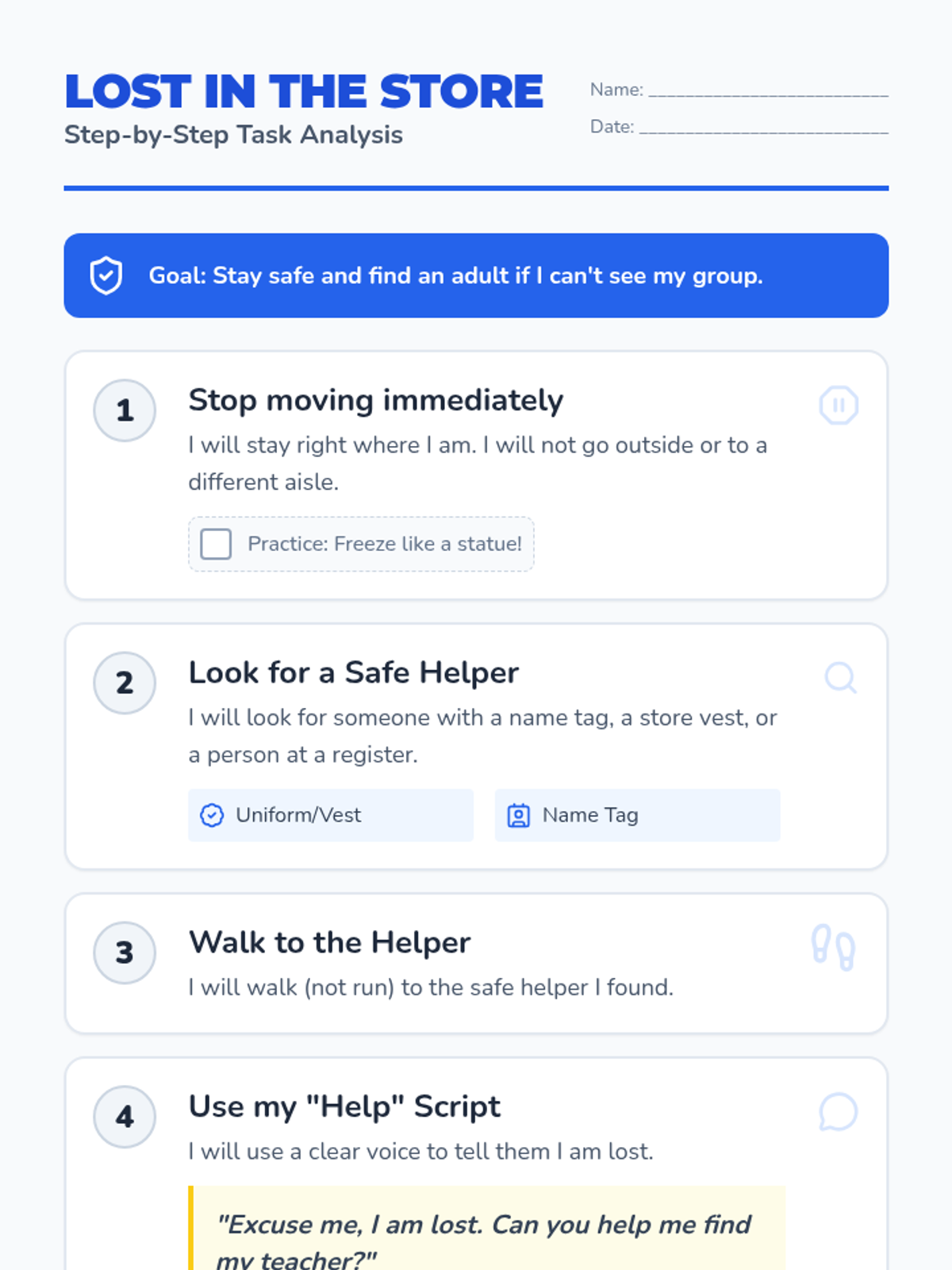
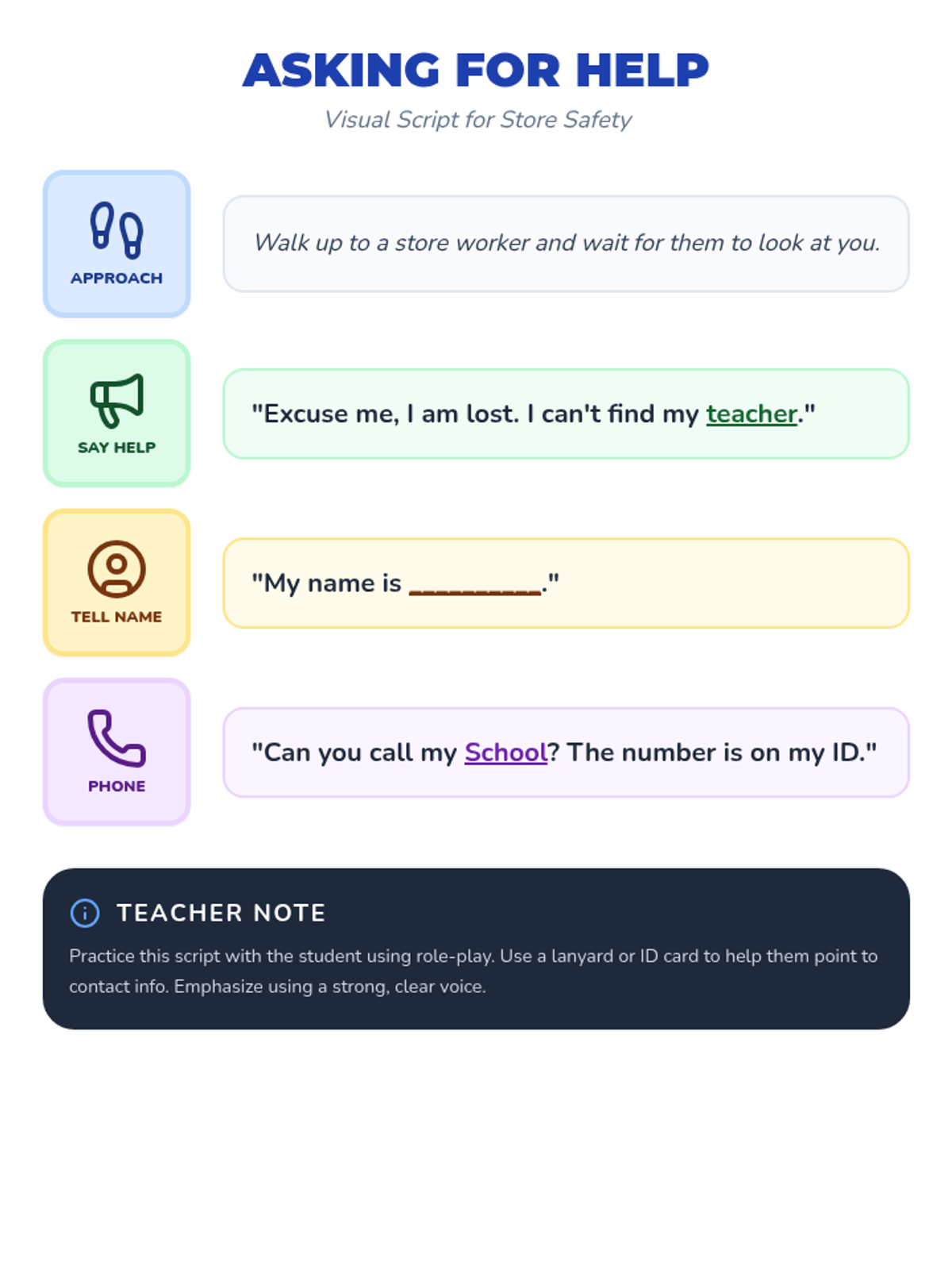
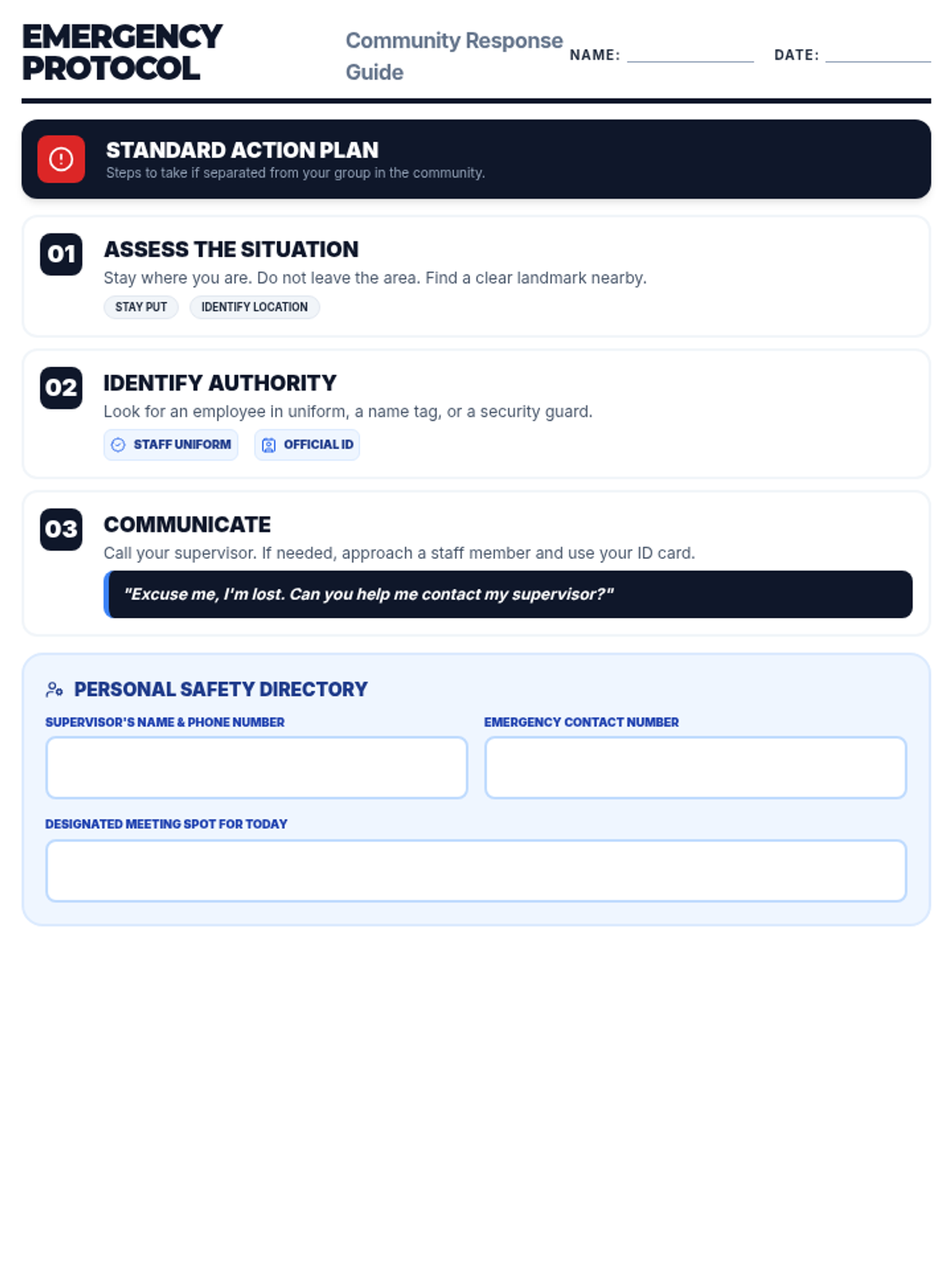
Focuses on independent navigation in retail settings, including identifying store security, using customer service, and responding to being separated from a group.
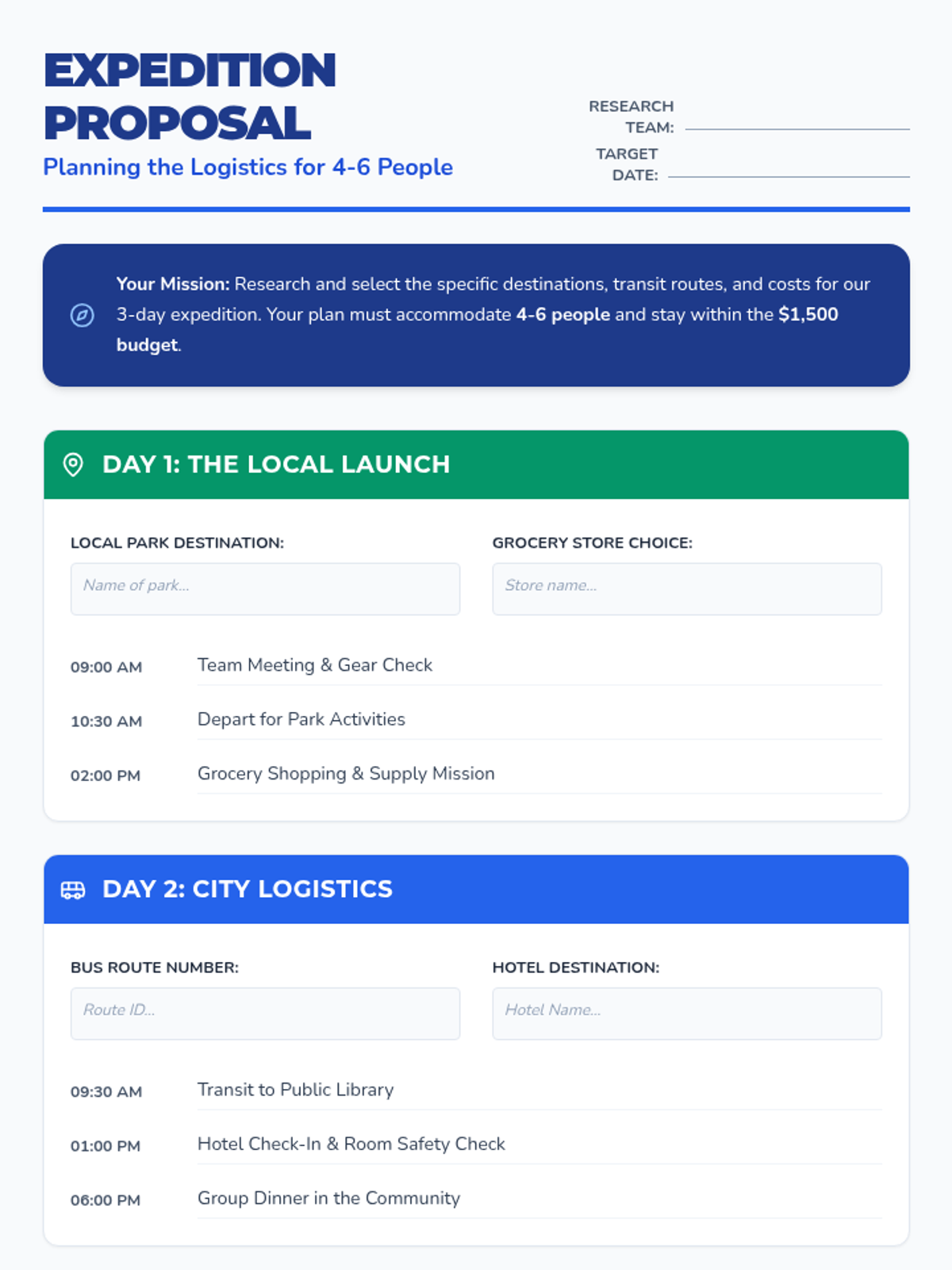
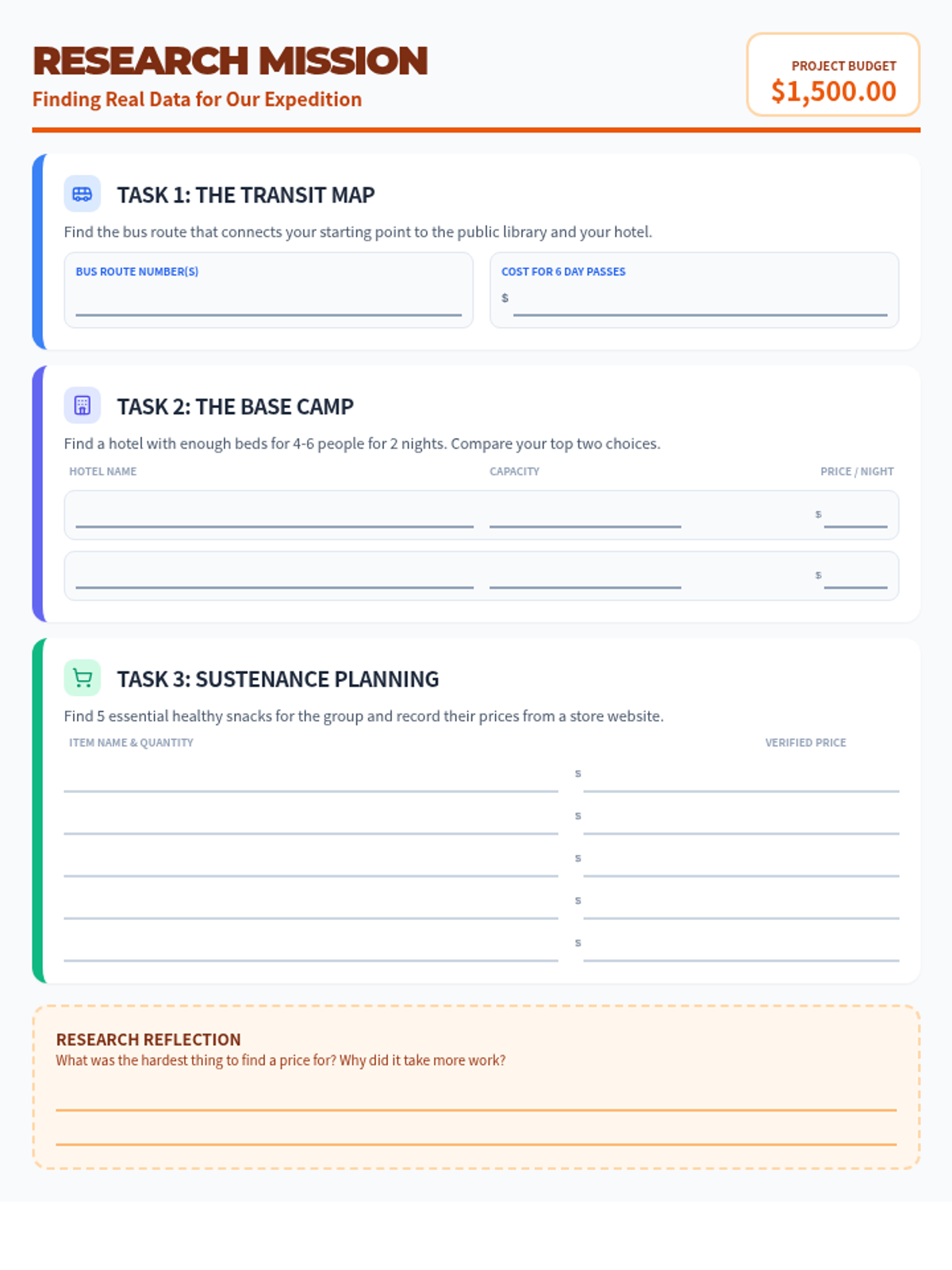
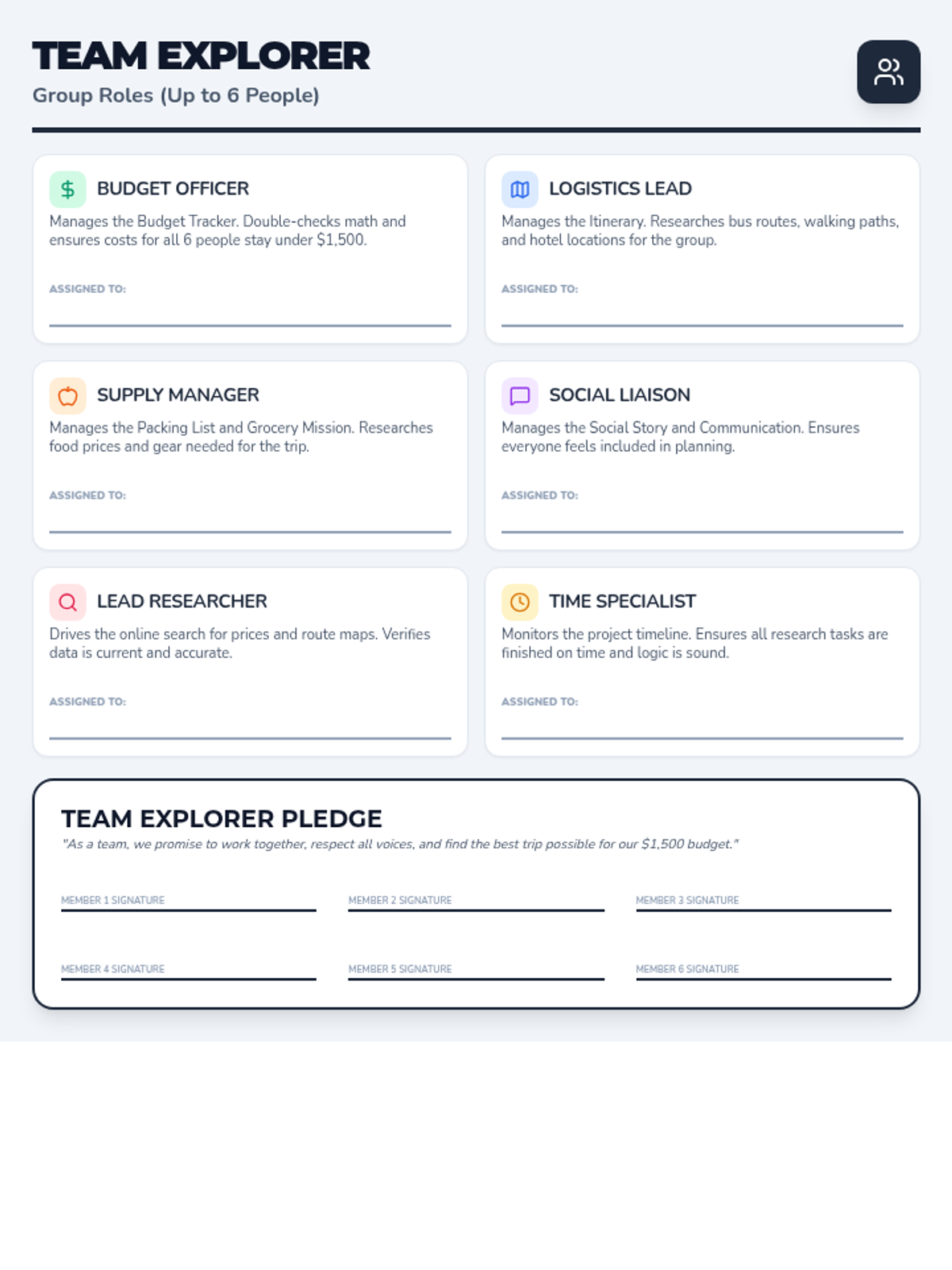
A comprehensive set of tools for planning and executing a multi-destination community trip, focusing on life skills, budgeting, and social expectations.
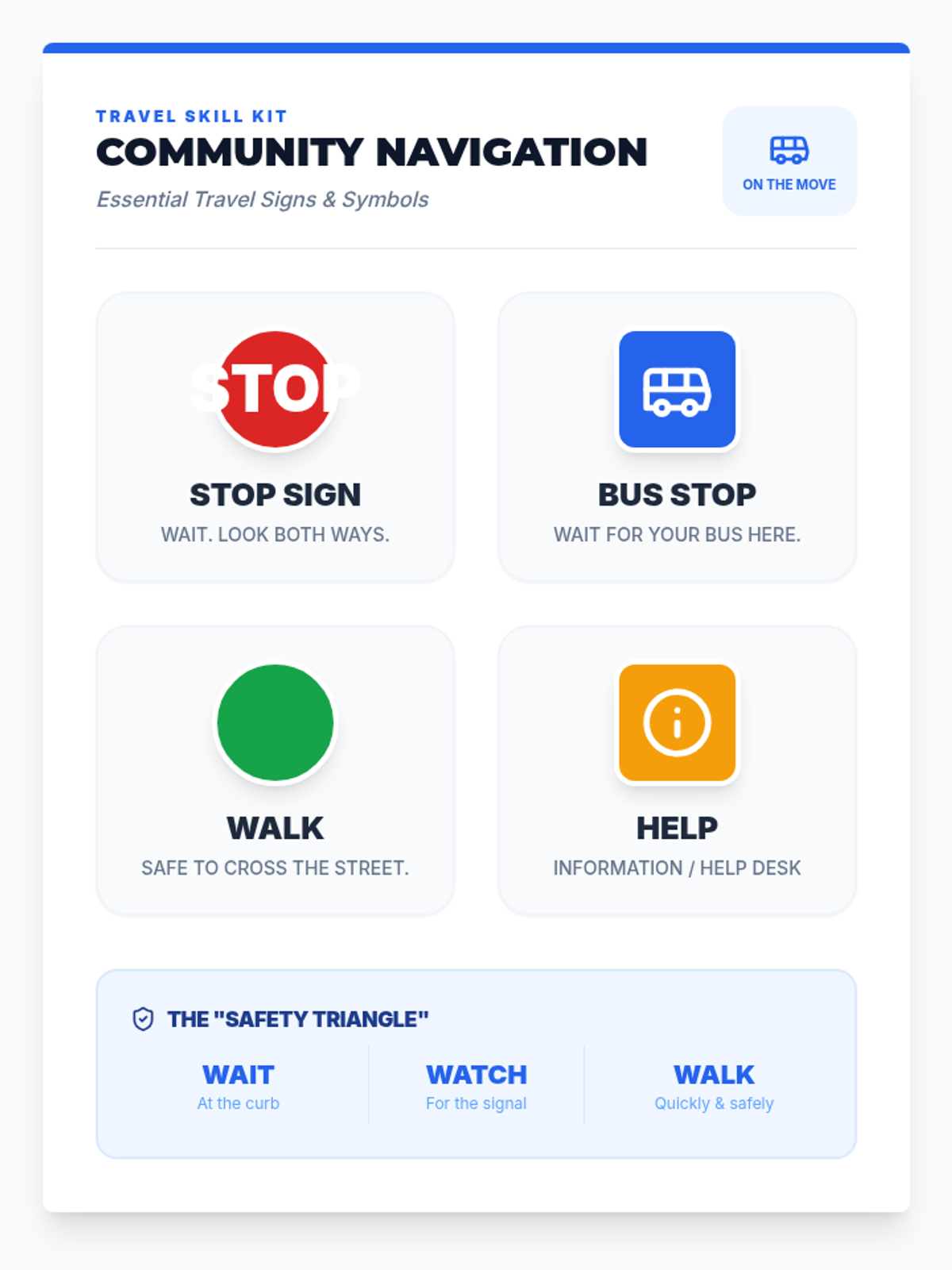
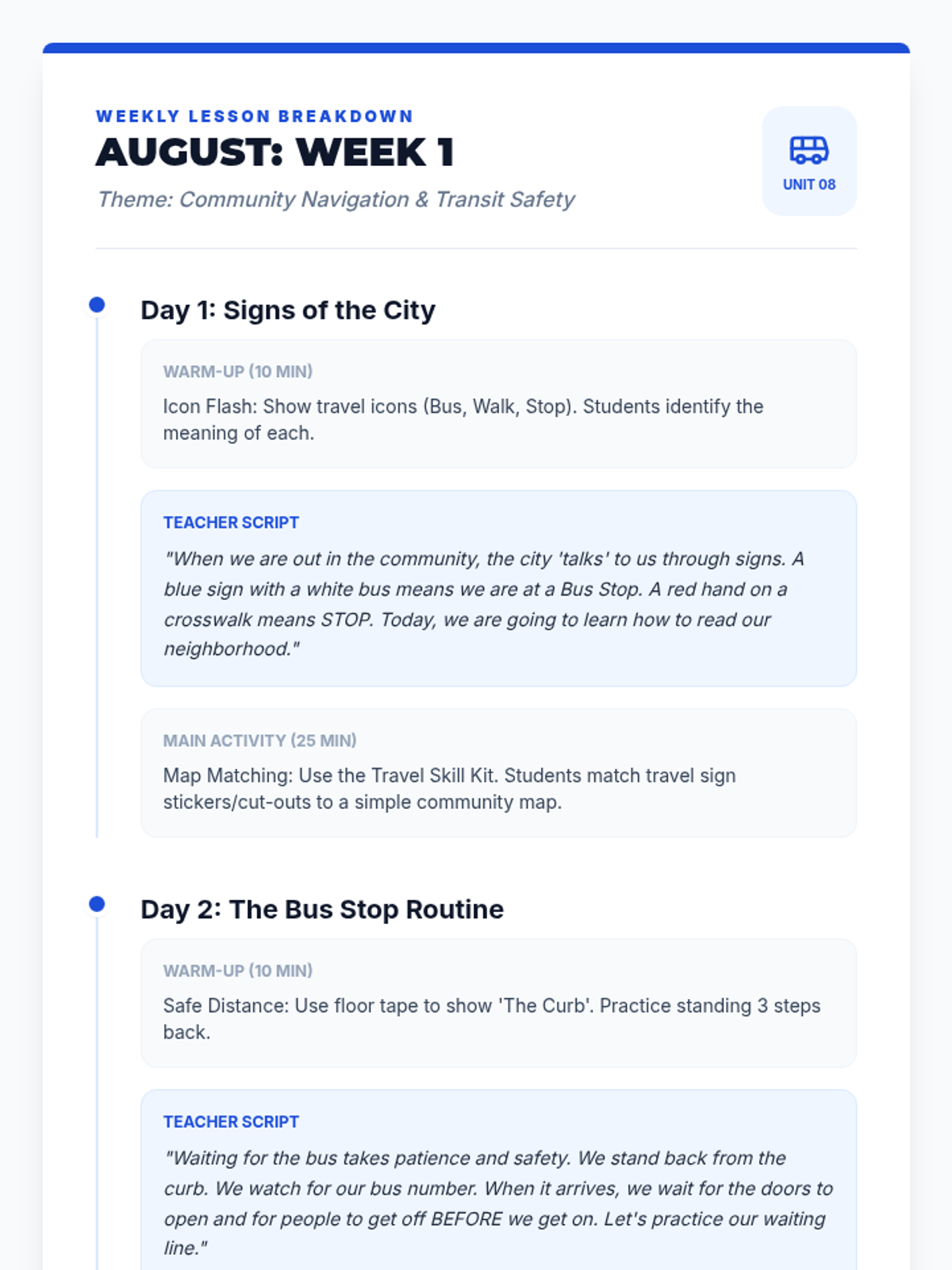
Navigating the community using public transportation, reading schedules, and practicing safety and social etiquette while traveling.
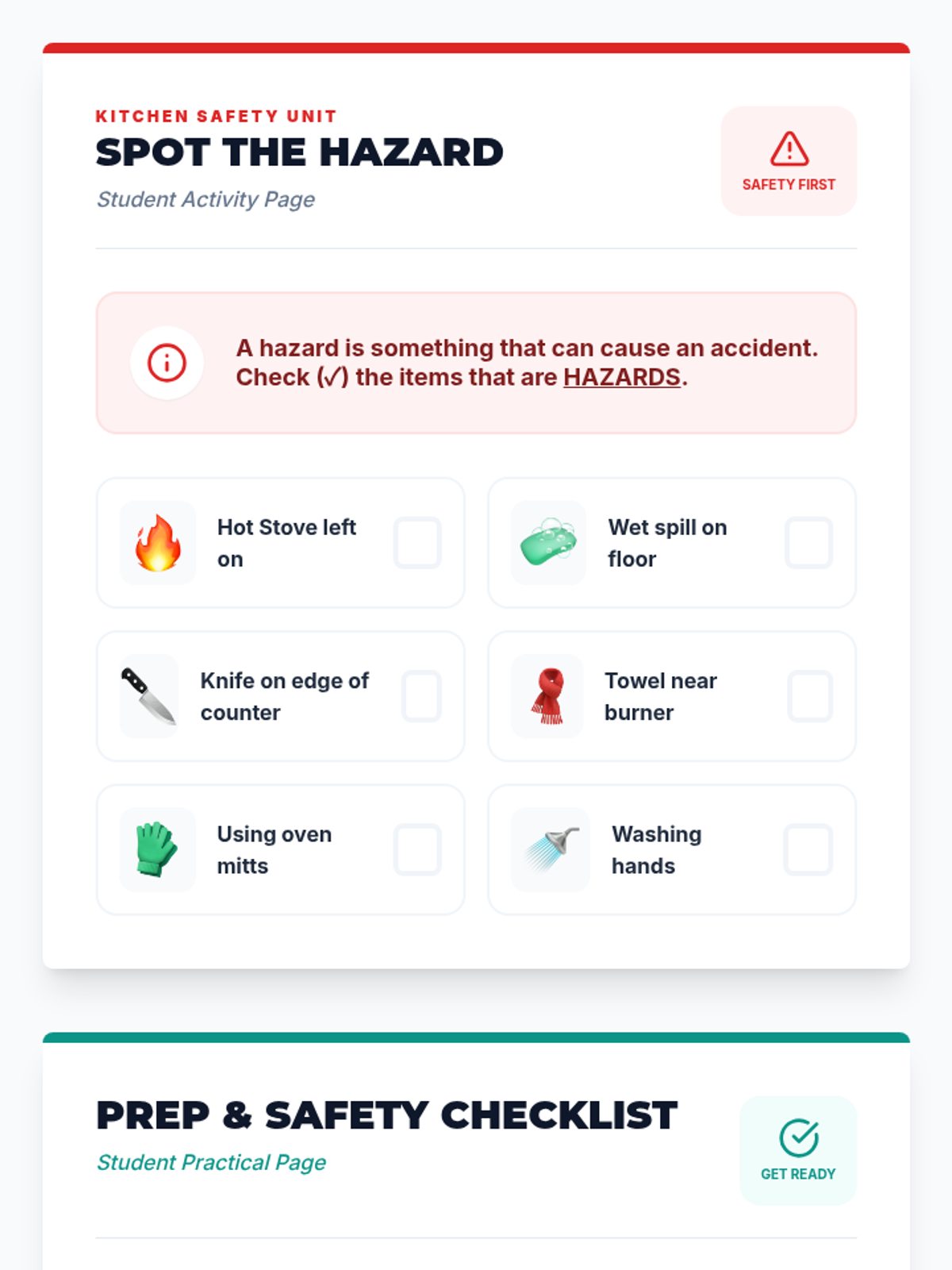
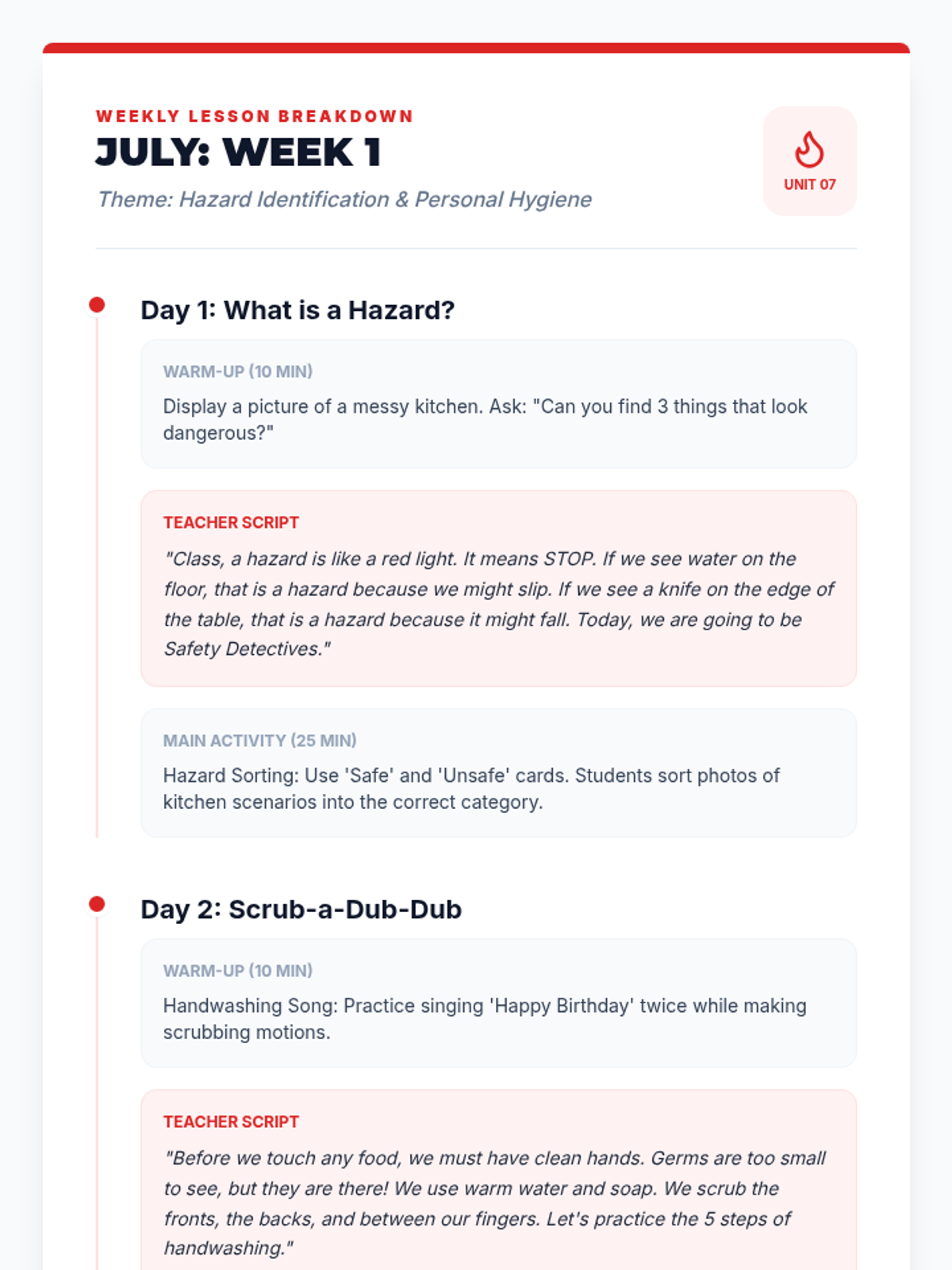
Essential knowledge for identifying hazards, handling tools safely, and maintaining a hygienic cooking environment through visual checklists and simulations.
Foundational materials for the Life Skills Launchpad, including binder covers, dividers, and sequence-wide tracking systems.
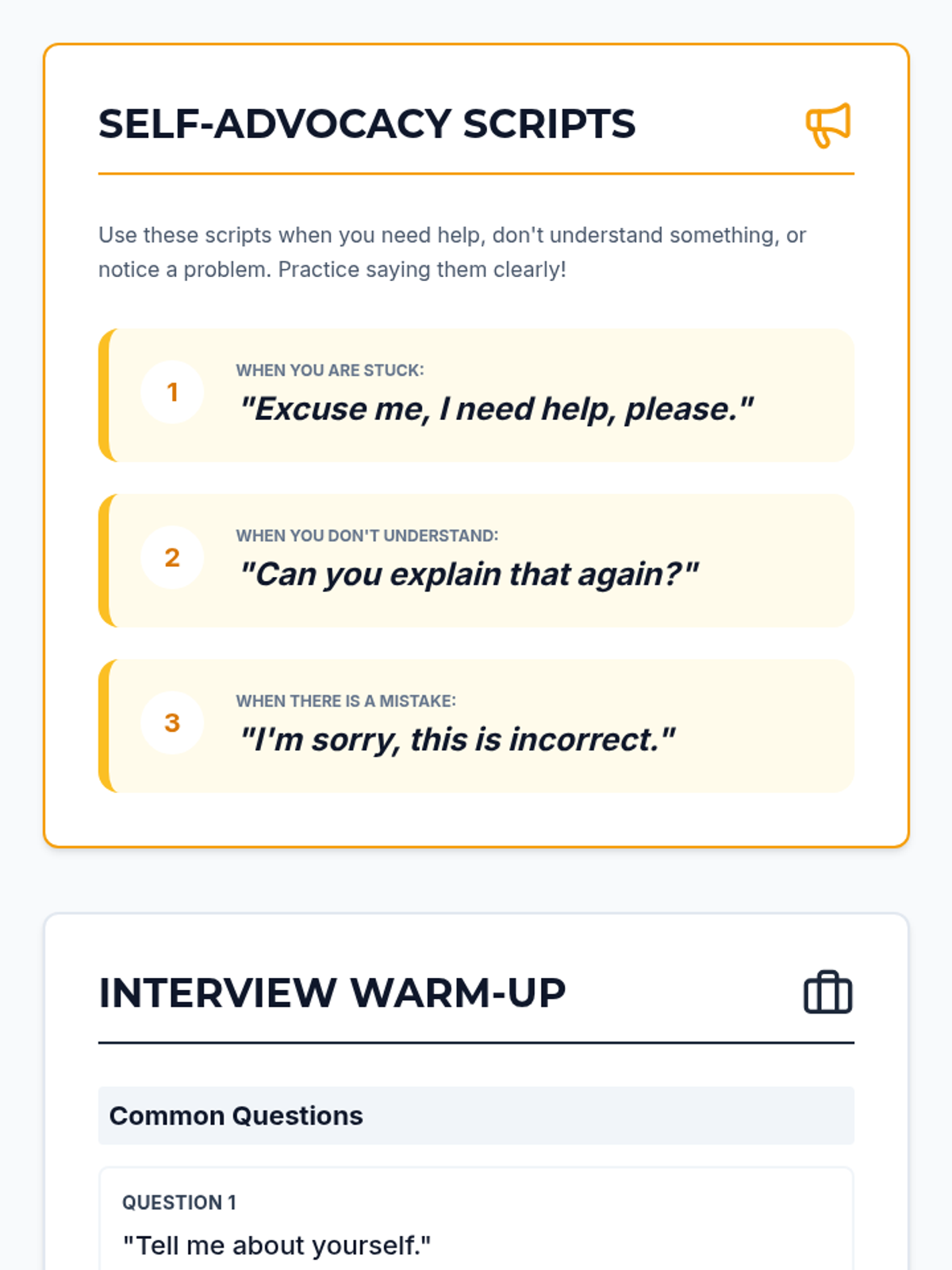
Building essential social cues, conversational scripts, and self-advocacy skills for various community and professional settings.
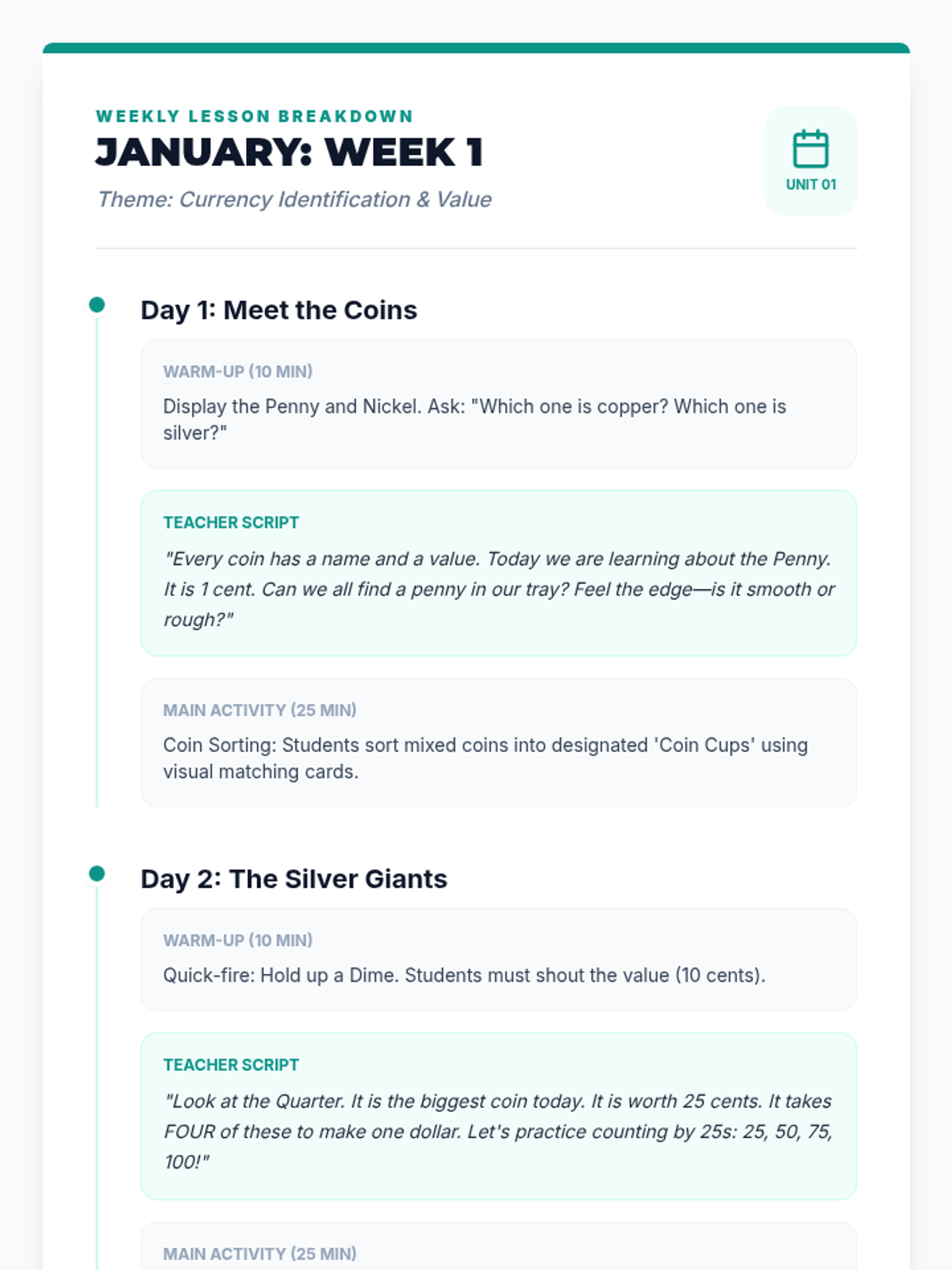
A deep dive into identifying currency, understanding value, and managing basic transactions through visual supports and hands-on practice.
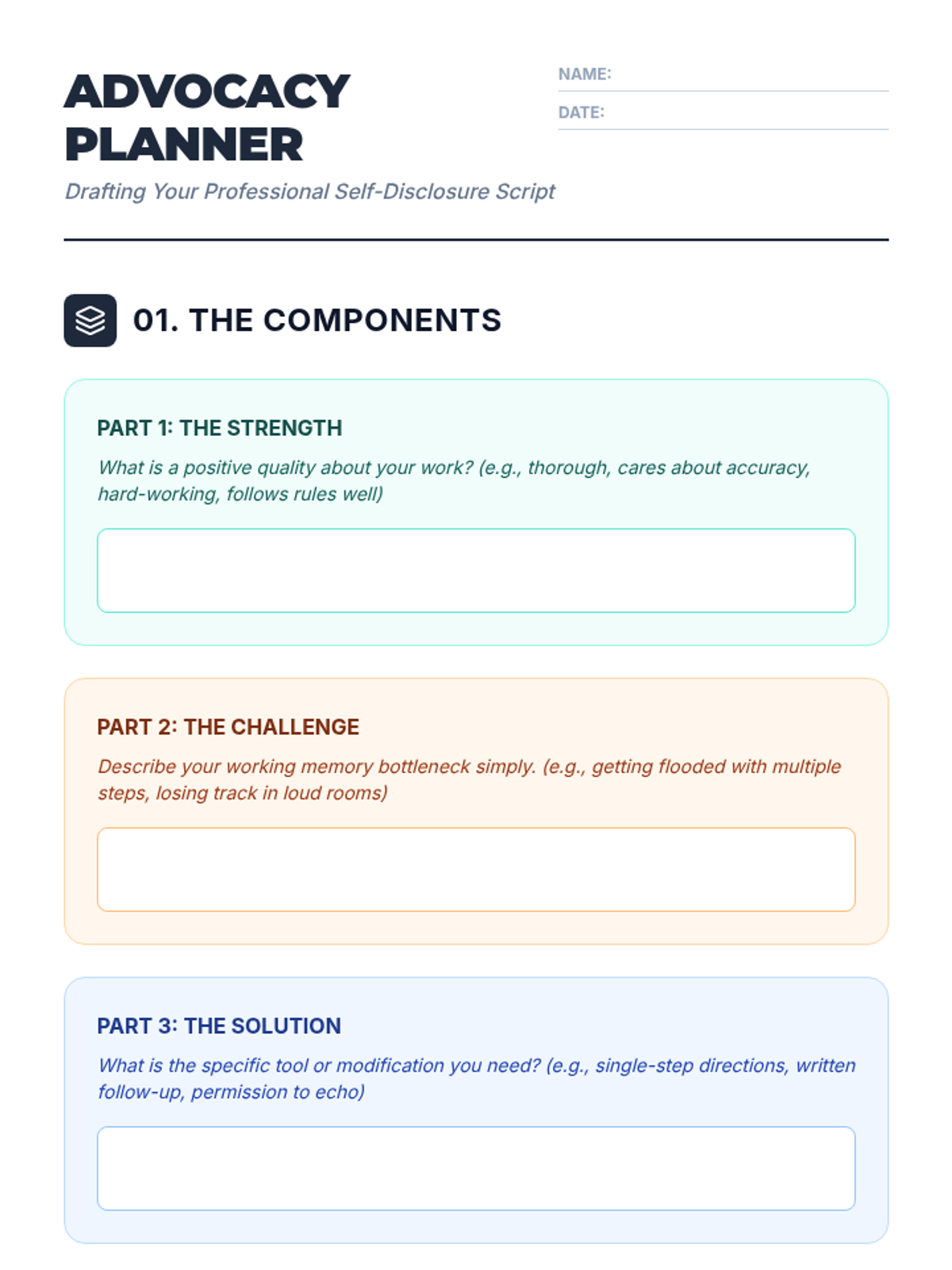
Students synthesize their skills into a personal disclosure script for use in interviews, IEP meetings, or workplace settings.
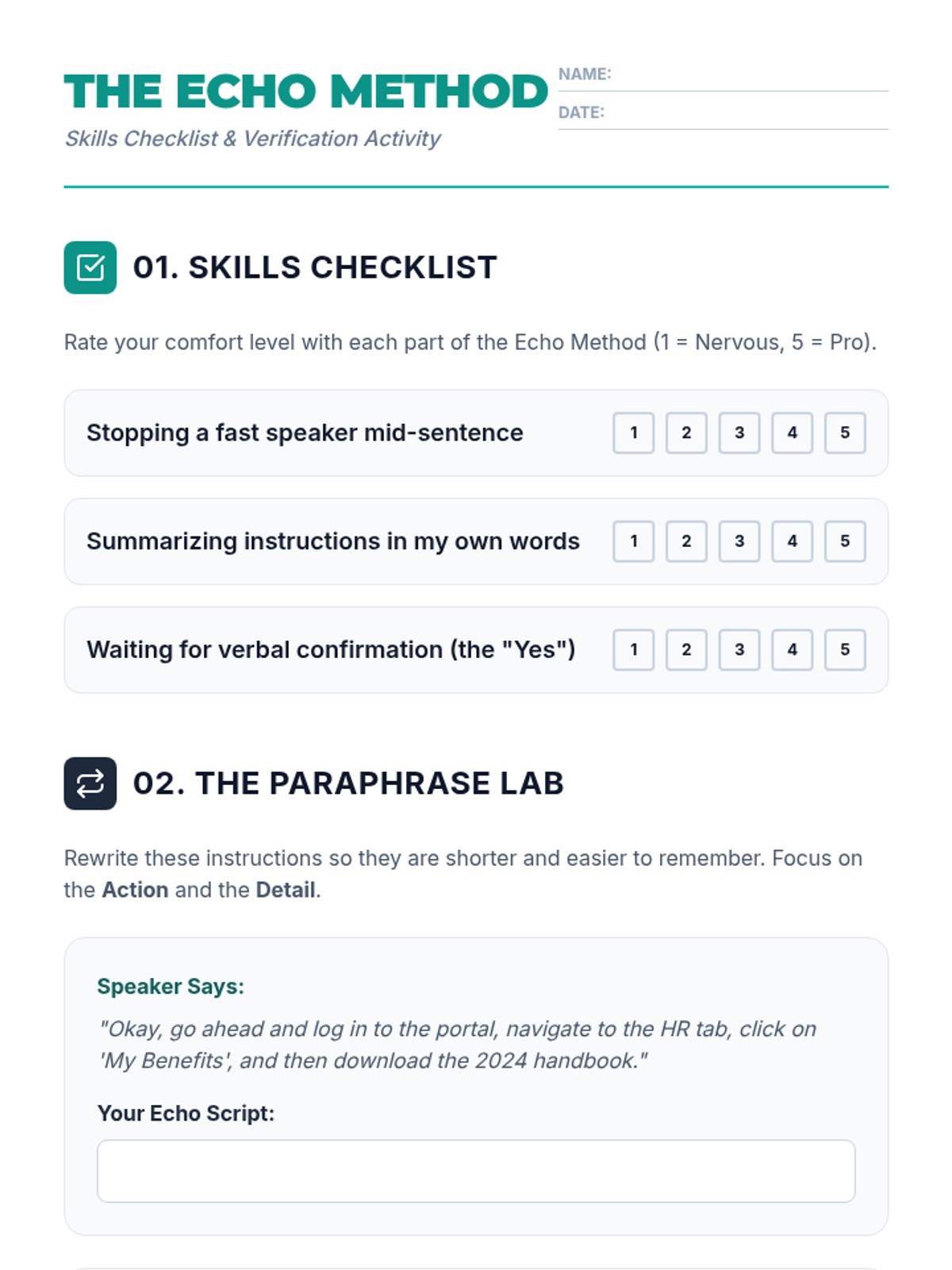
Students master the 'read-back' method to verify instructions and slow down information delivery.
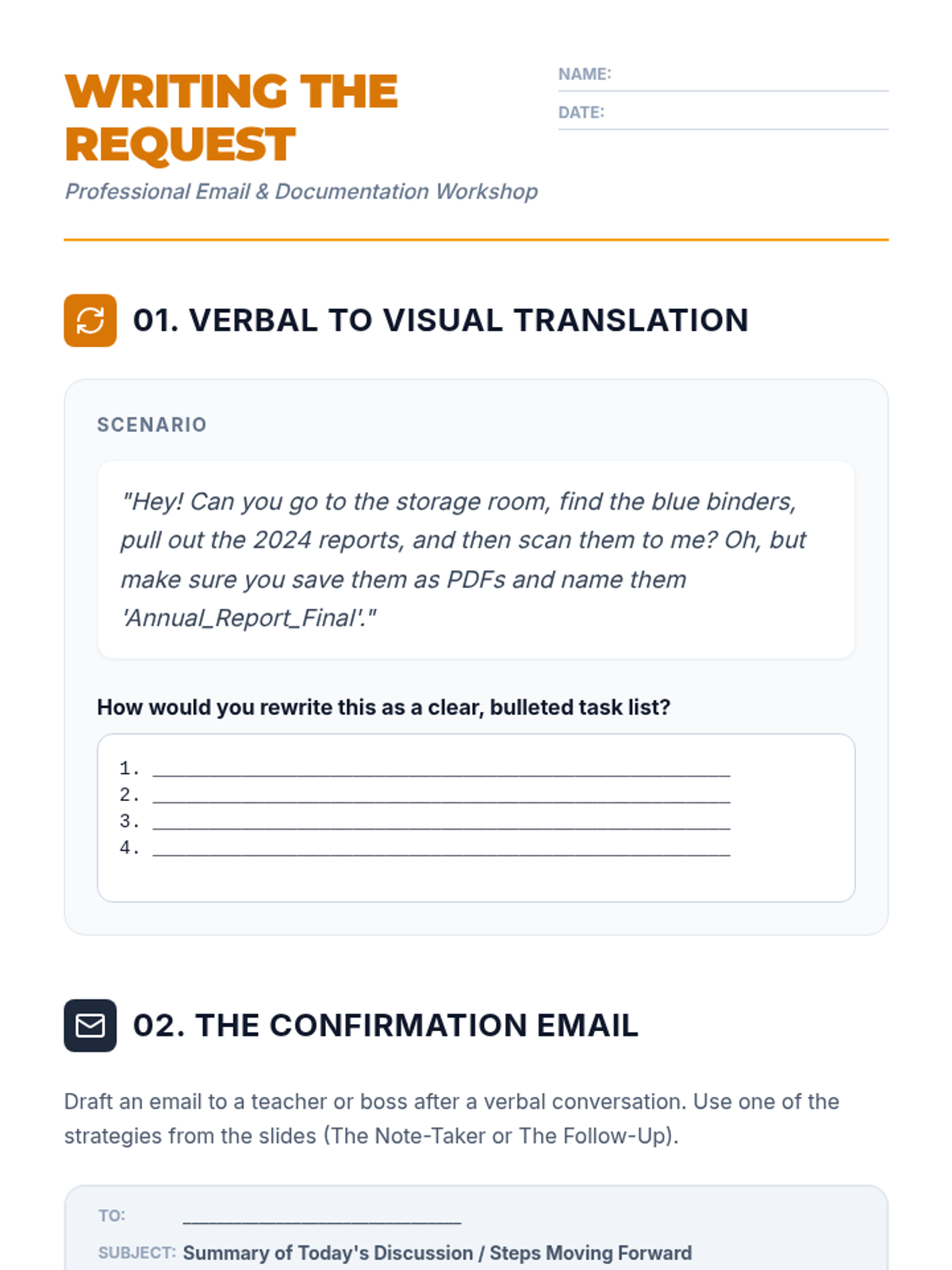
Students practice converting verbal instructions into written documentation through email templates and professional requests.
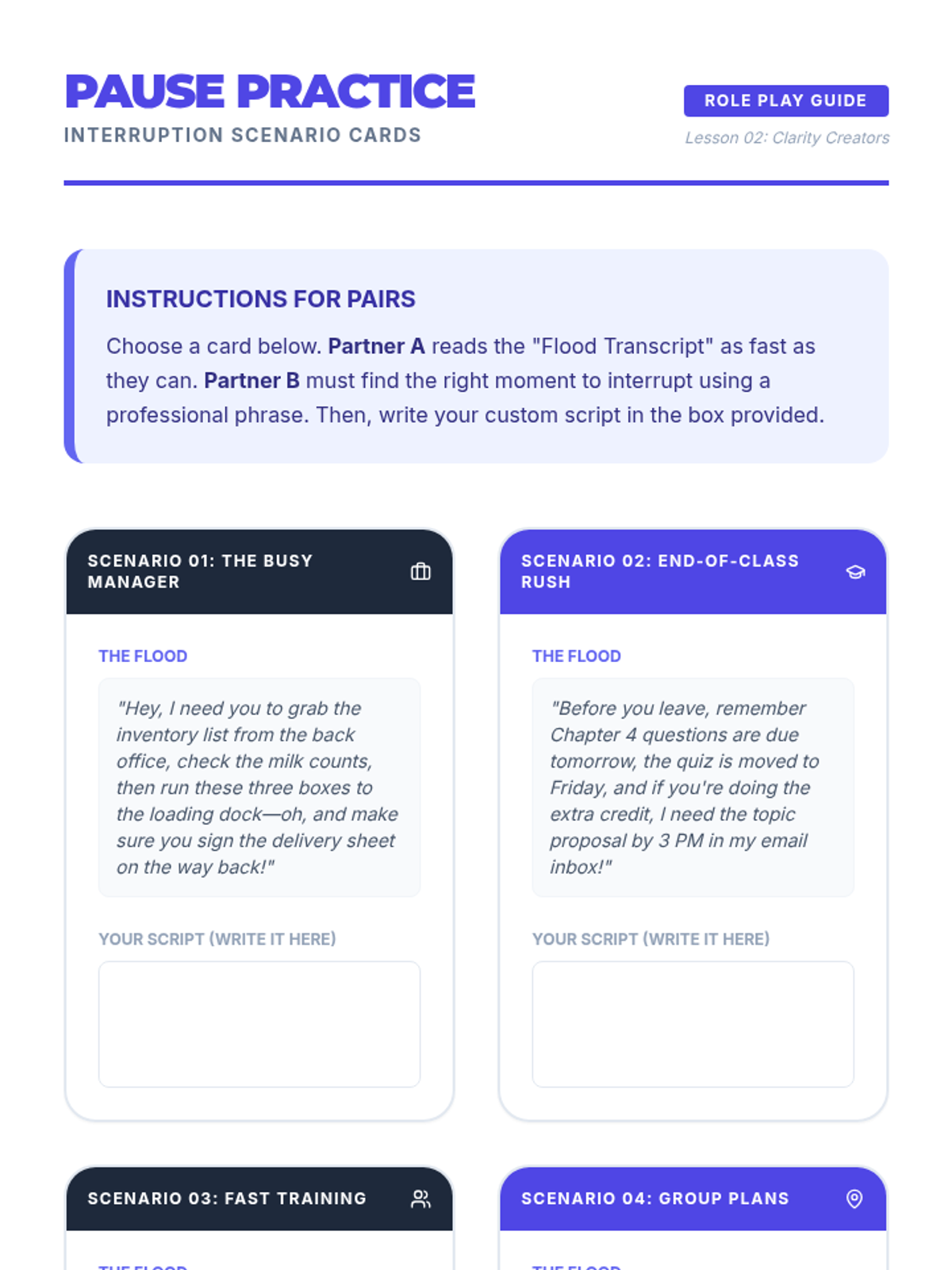
Students learn and practice professional interruption techniques to pause speakers and gain control over the flow of information.
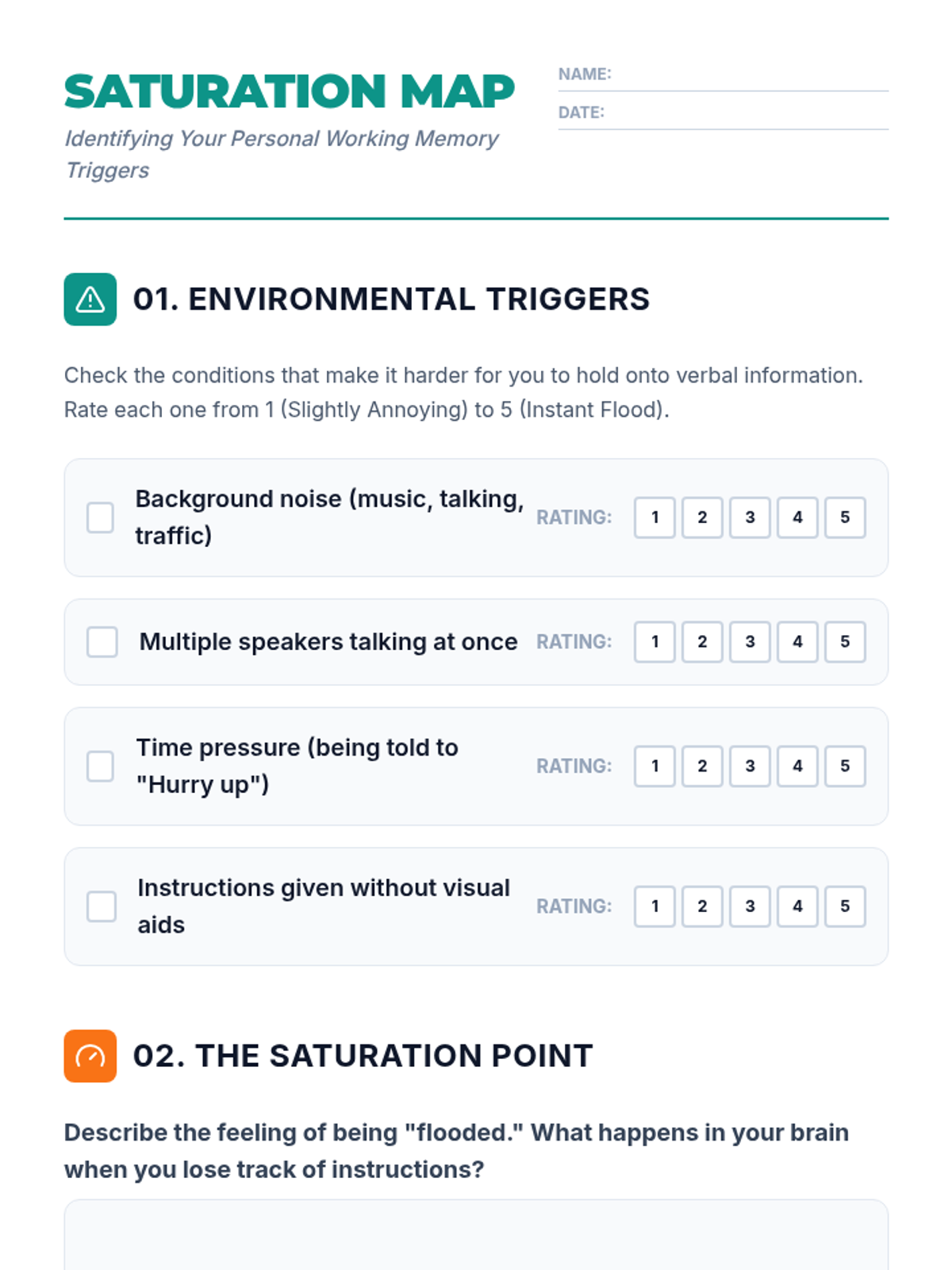
Students analyze high-pressure environments to identify working memory saturation and map their personal 'flooding' triggers.
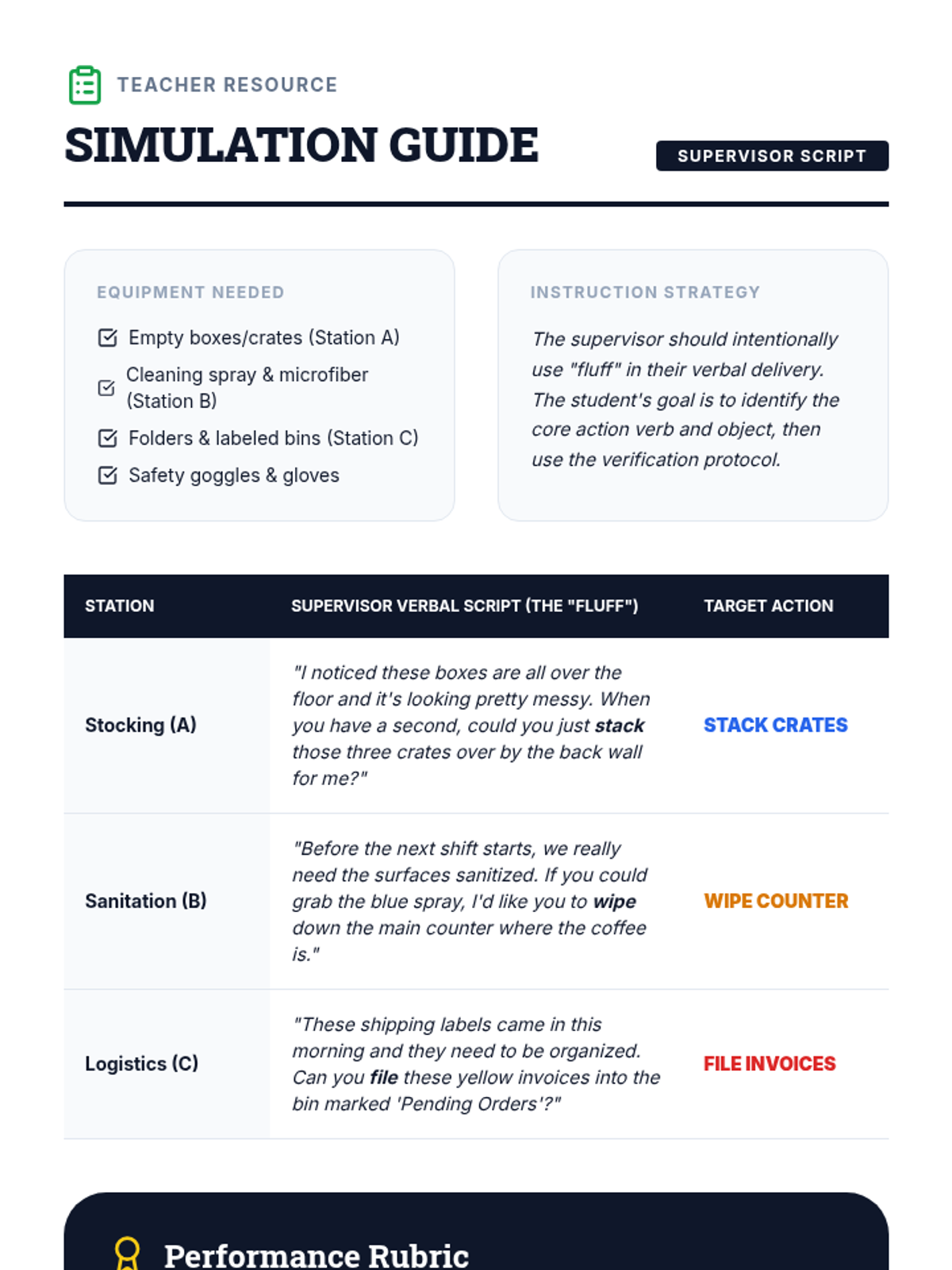
A culminating simulation where students rotate through work stations and follow single-step live instructions.
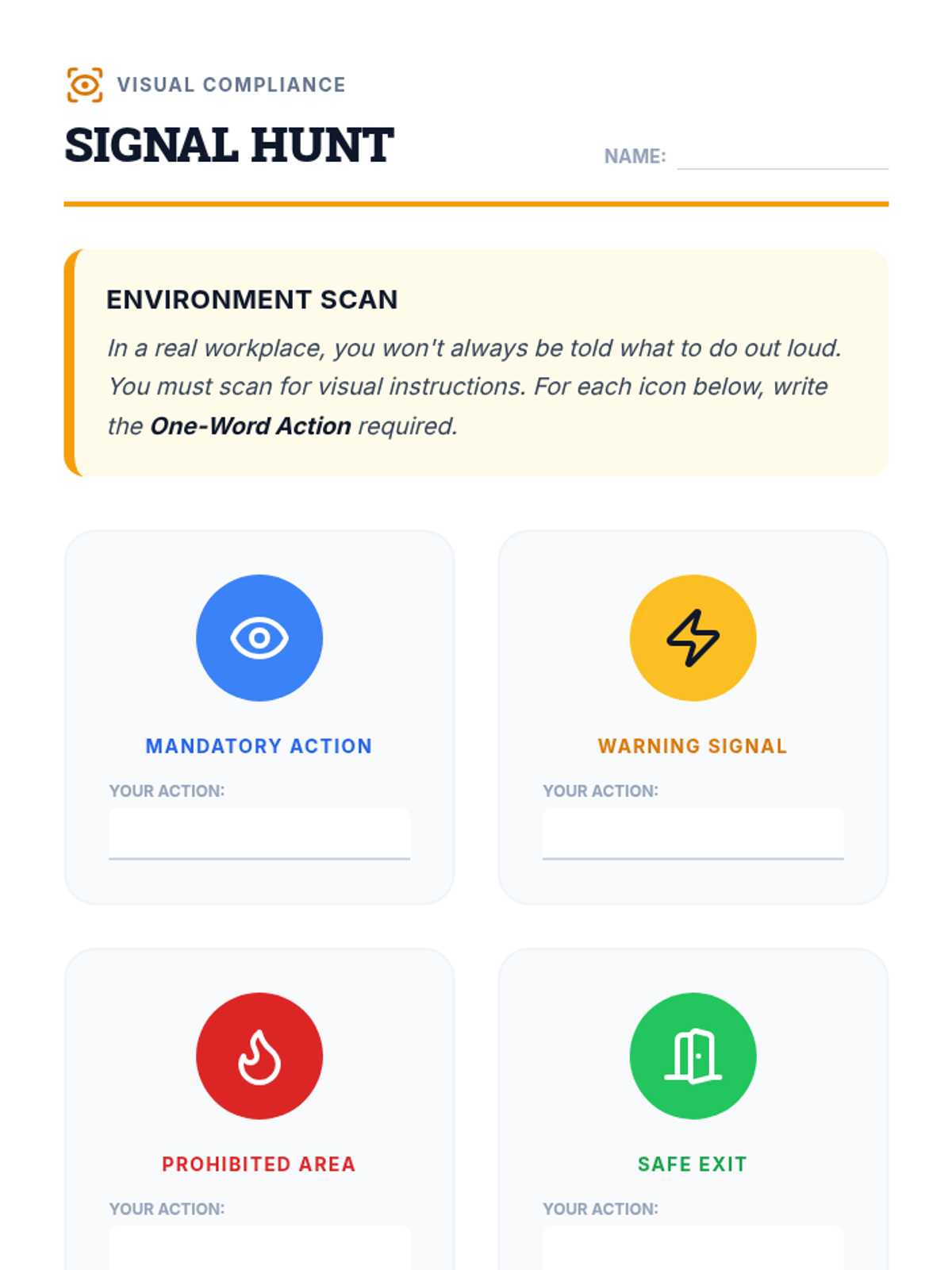
Focuses on identifying and responding to single-step visual safety cues and workplace signage.
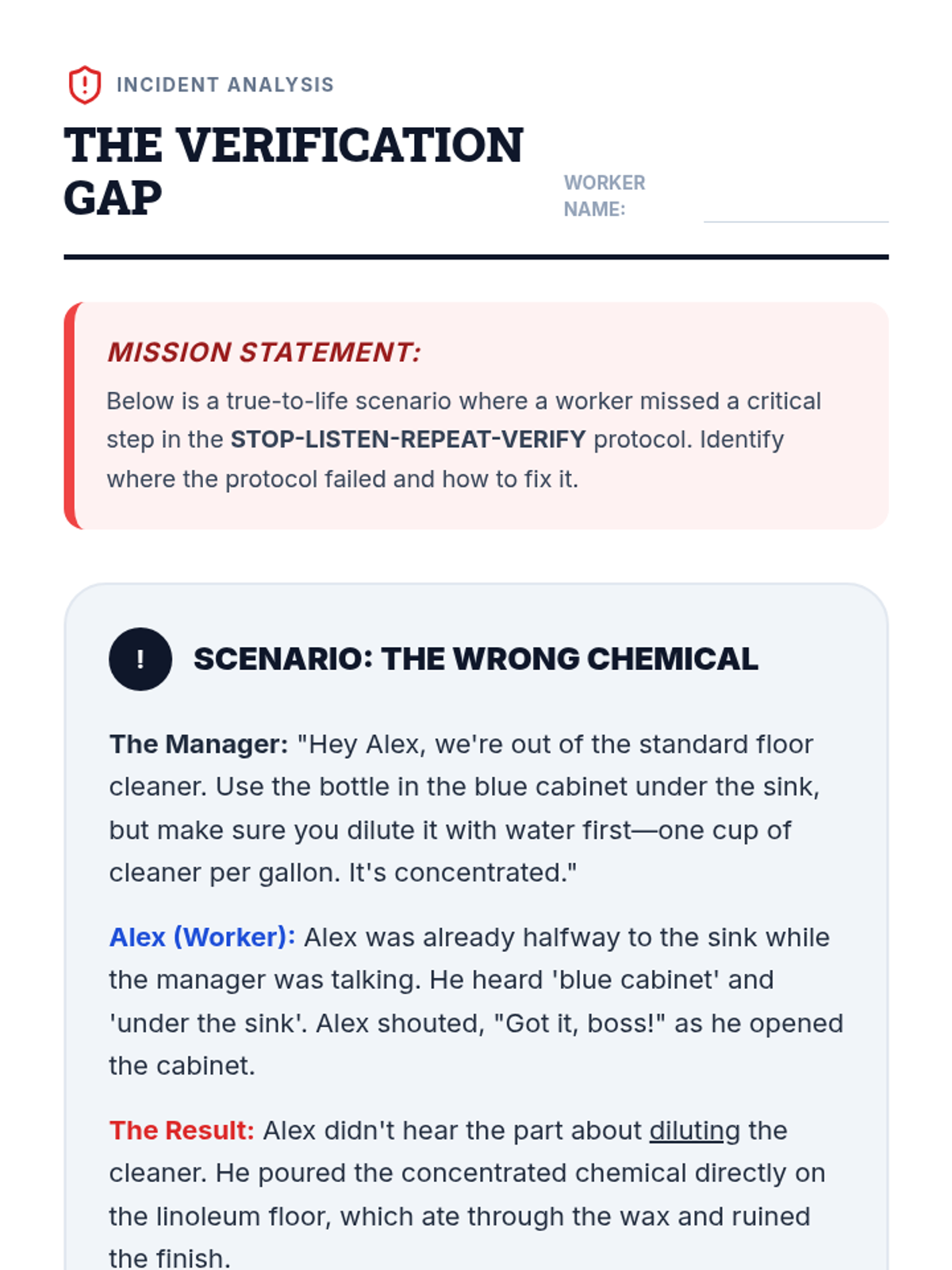
Students practice a formal communication protocol (Stop, Listen, Repeat, Verify) to ensure accuracy in high-stakes environments.
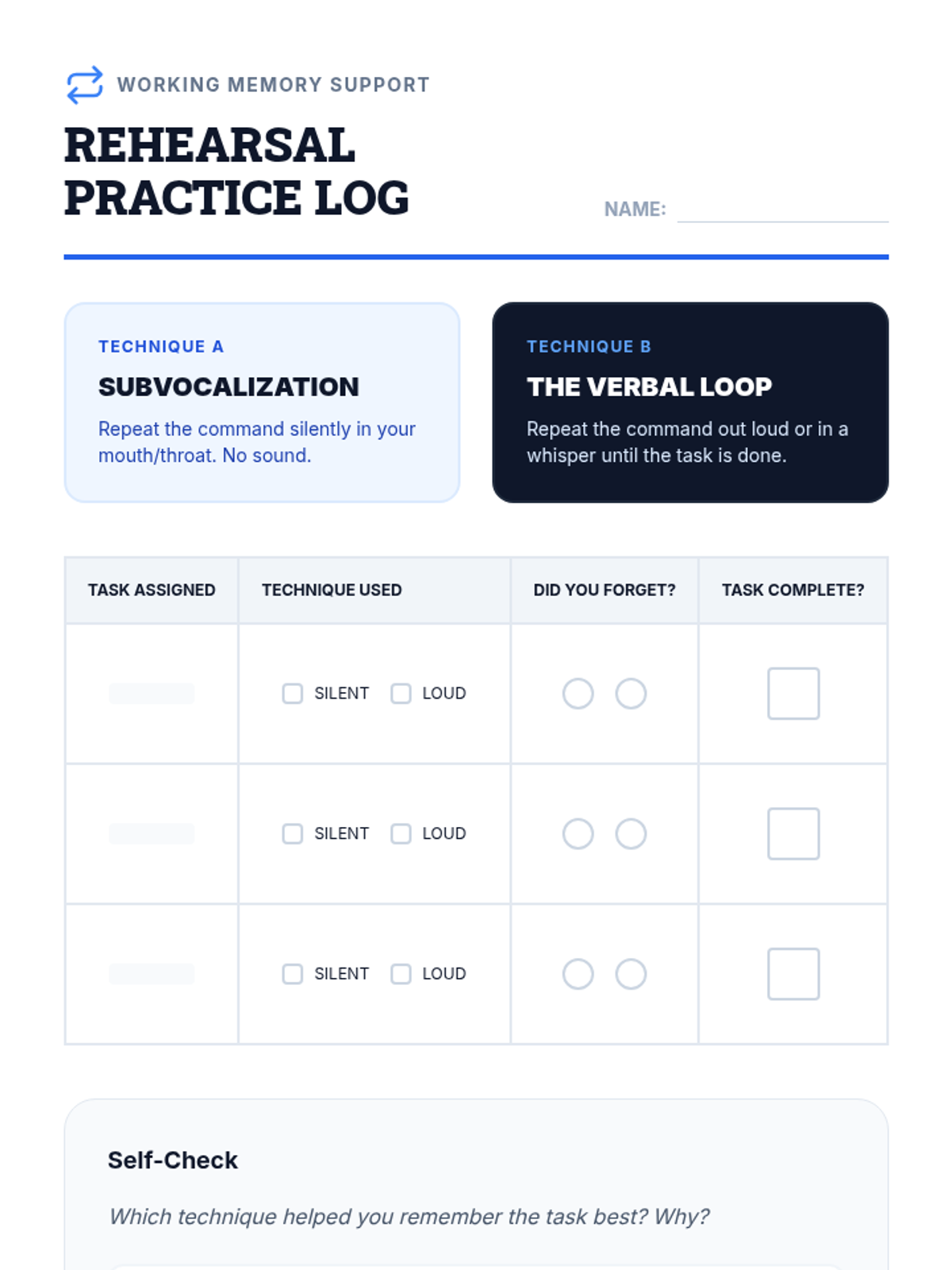
Introduces subvocalization and self-talk strategies to maintain a single instruction in working memory during task execution.
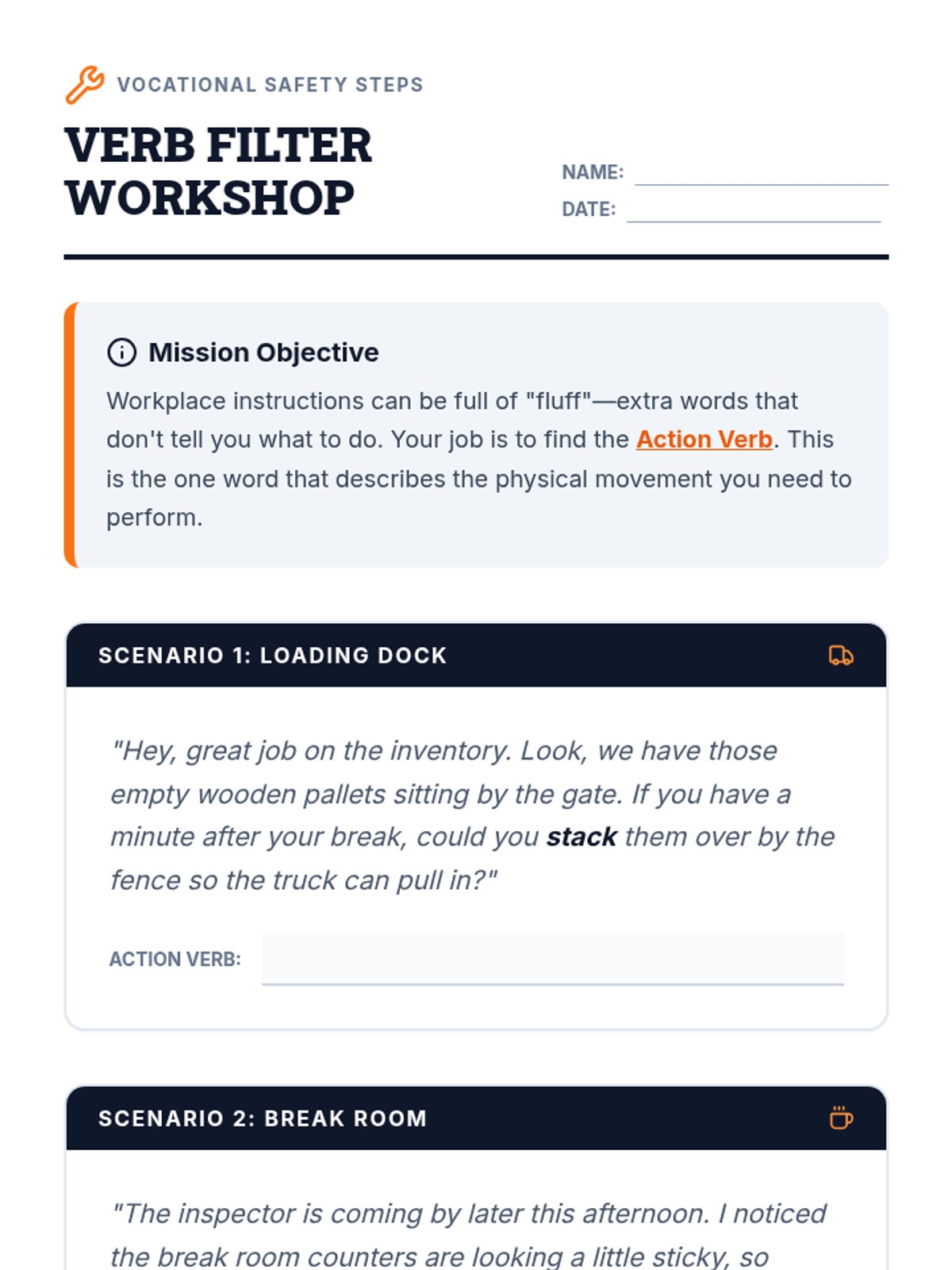
Students learn to filter out 'fluff' in verbal communication to identify the core action verb required in a workplace instruction.
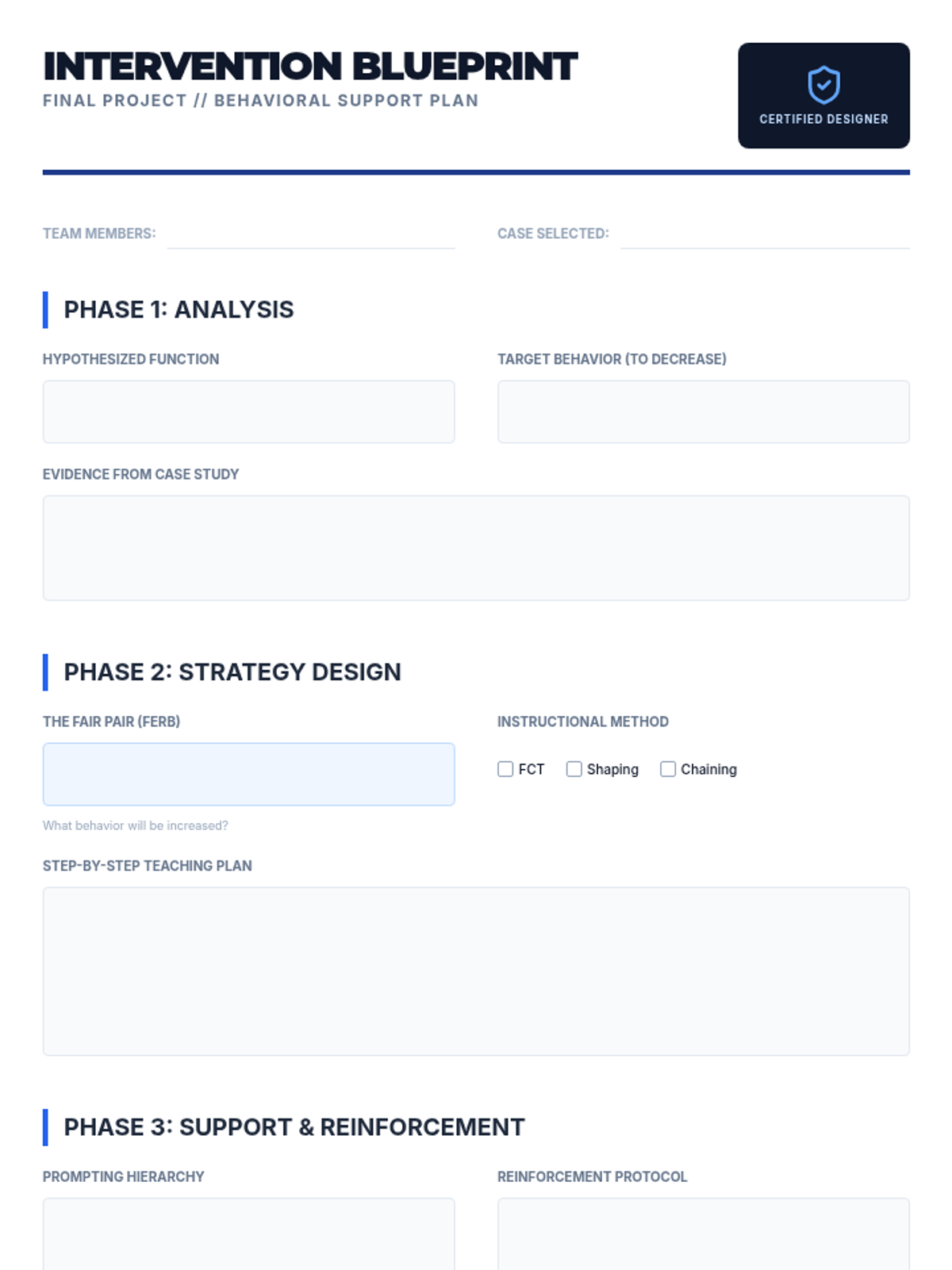
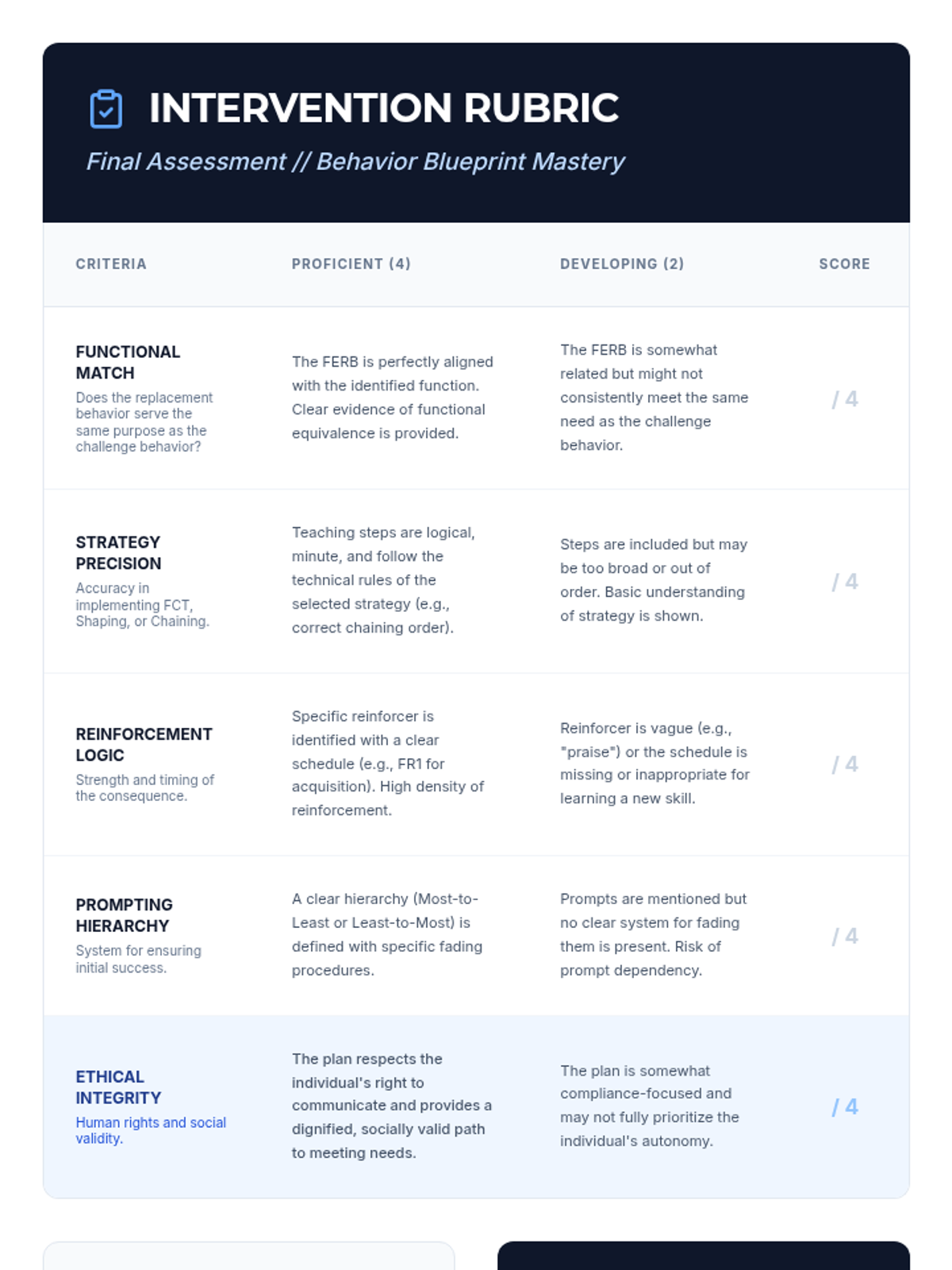
A culminating workshop where students synthesize their learning to create a full teaching plan for a replacement behavior, including prompts and reinforcement schedules.
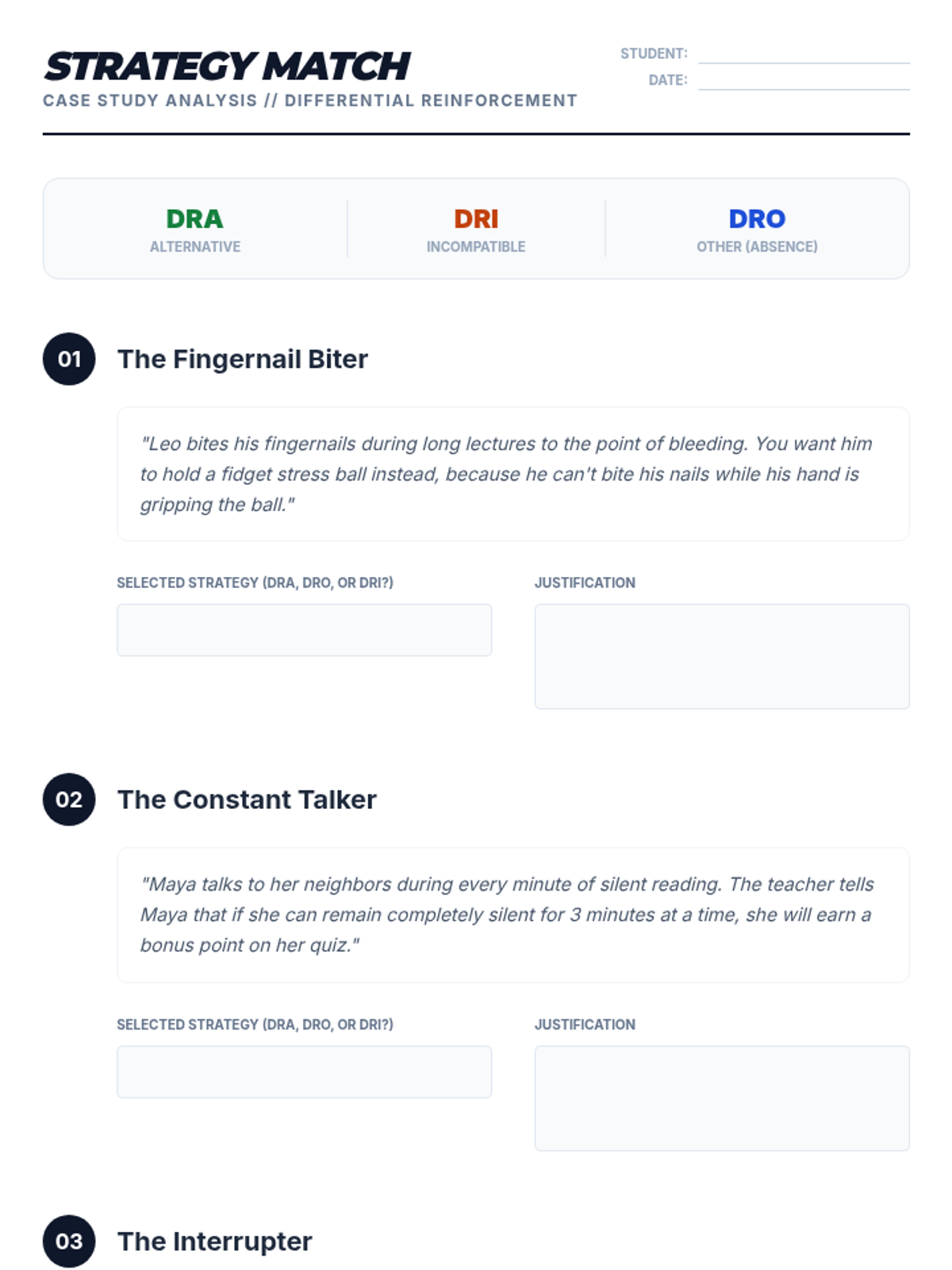
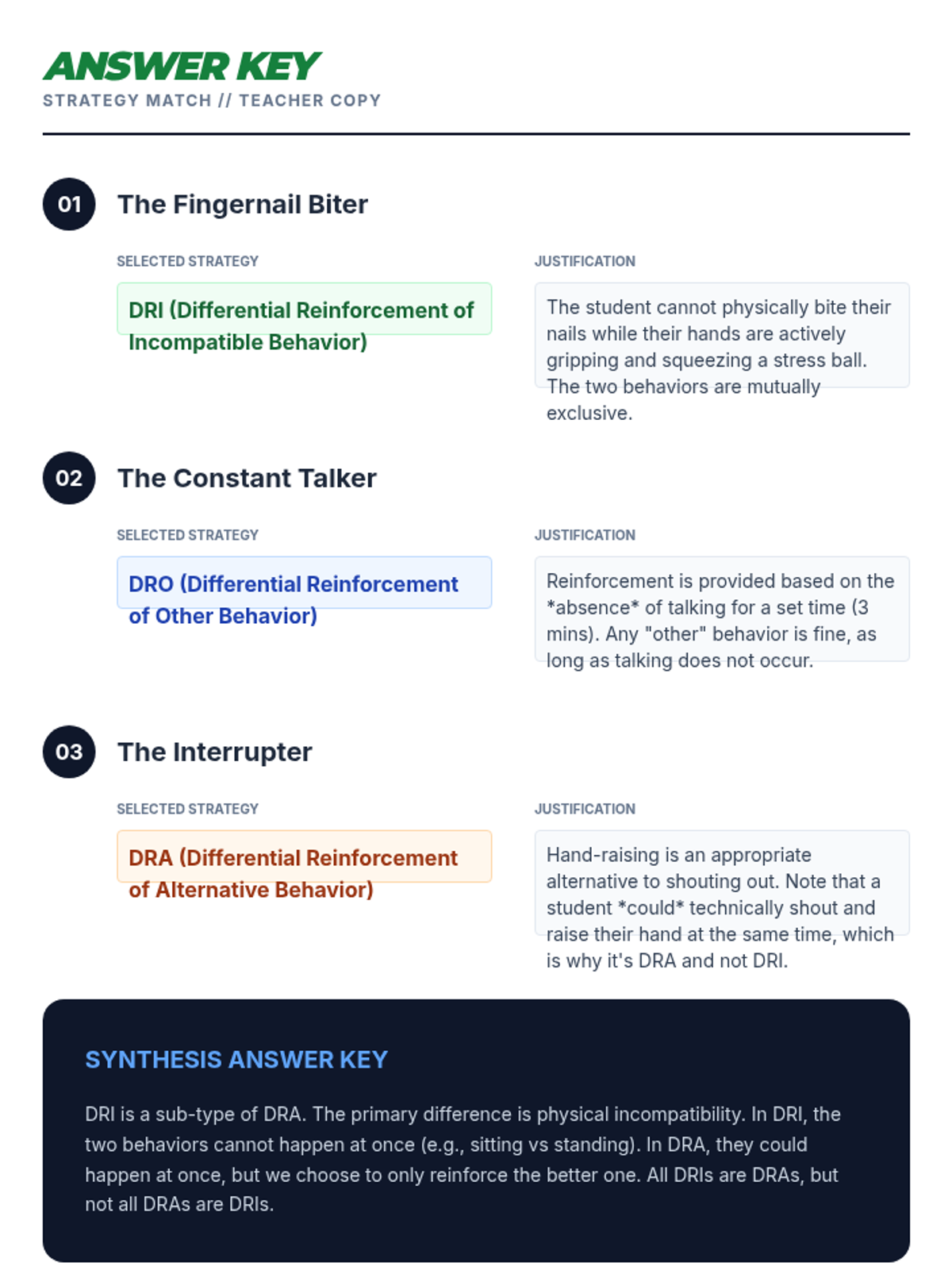
Comparative analysis of DRA, DRO, and DRI reinforcement strategies. Students learn to select the most effective strategy based on the topography and function of behavior.
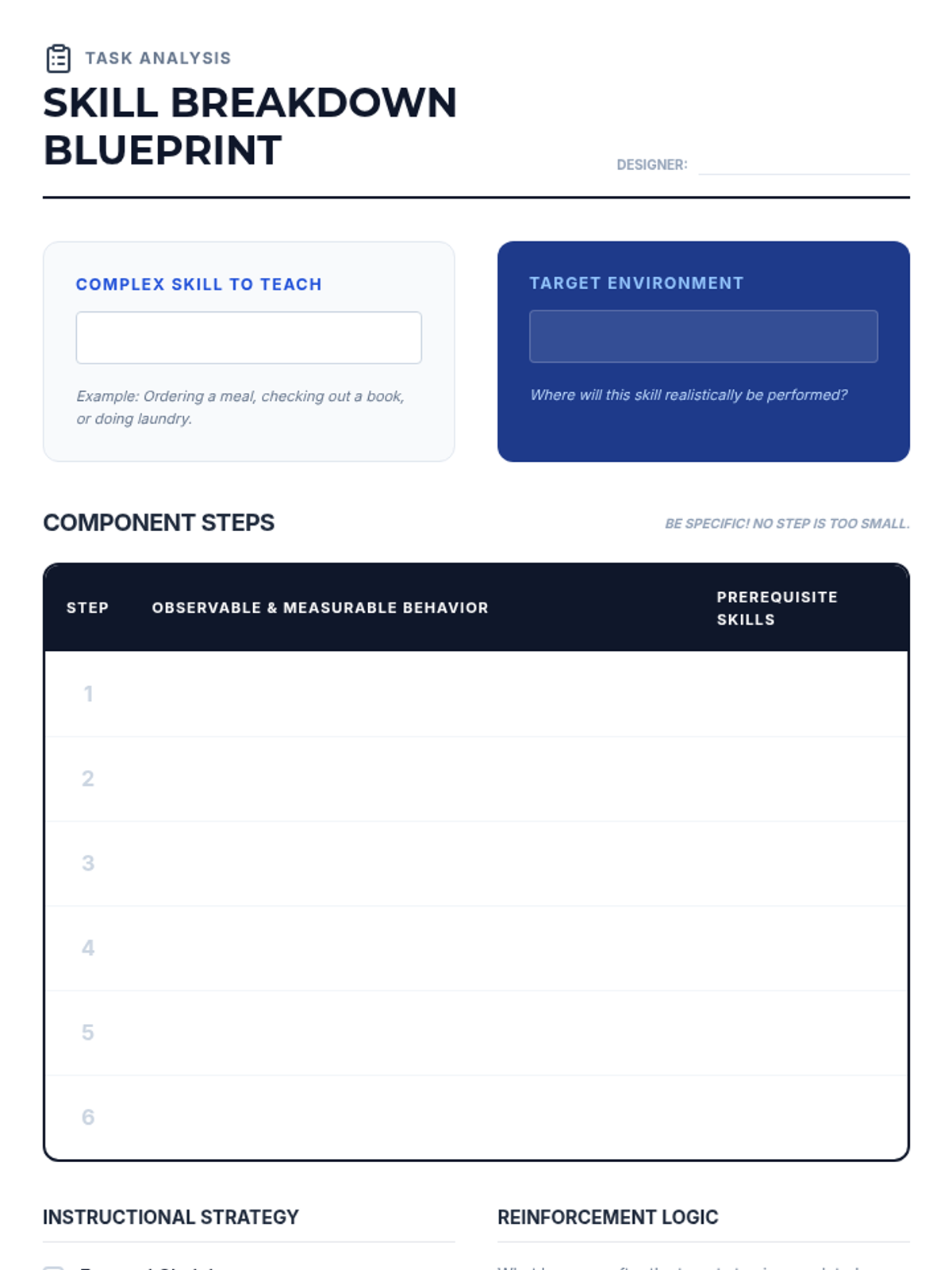
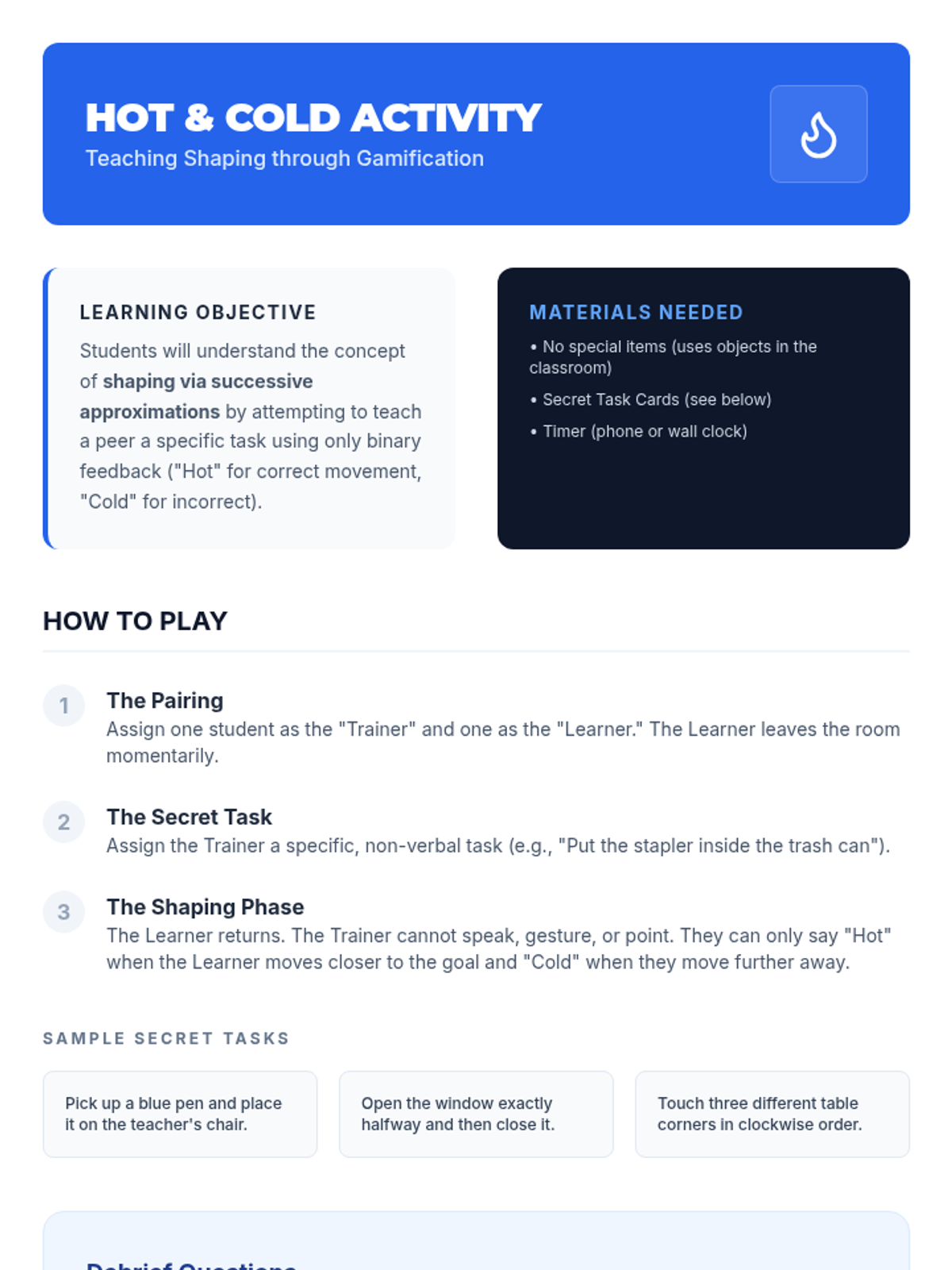
Detailed instruction on how to teach complex behaviors through task analysis, chaining, and the use of shaping to reinforce successive approximations.
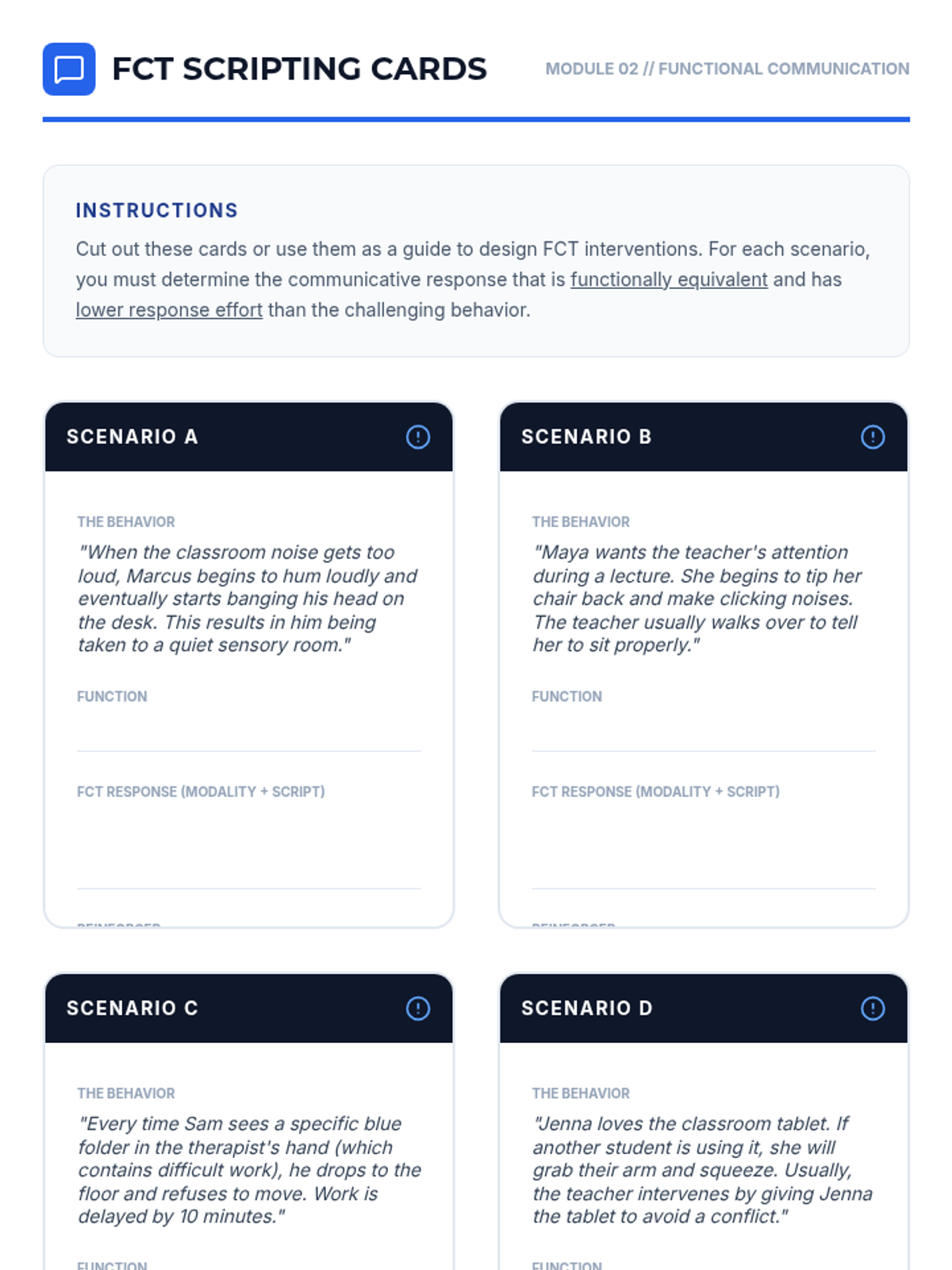
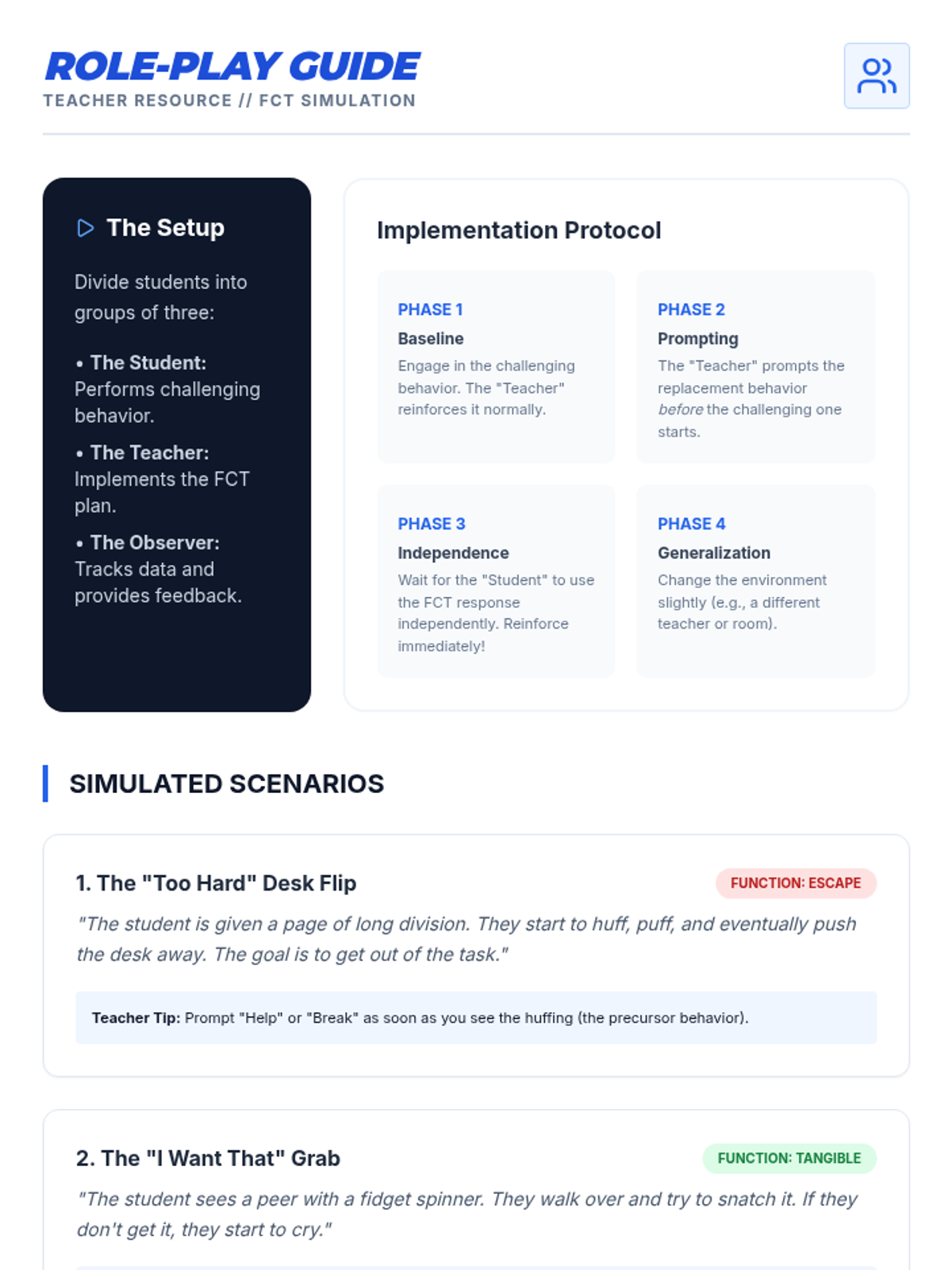
Exploration of Functional Communication Training (FCT) as a primary replacement strategy. Students learn to identify communicative functions and script appropriate responses.
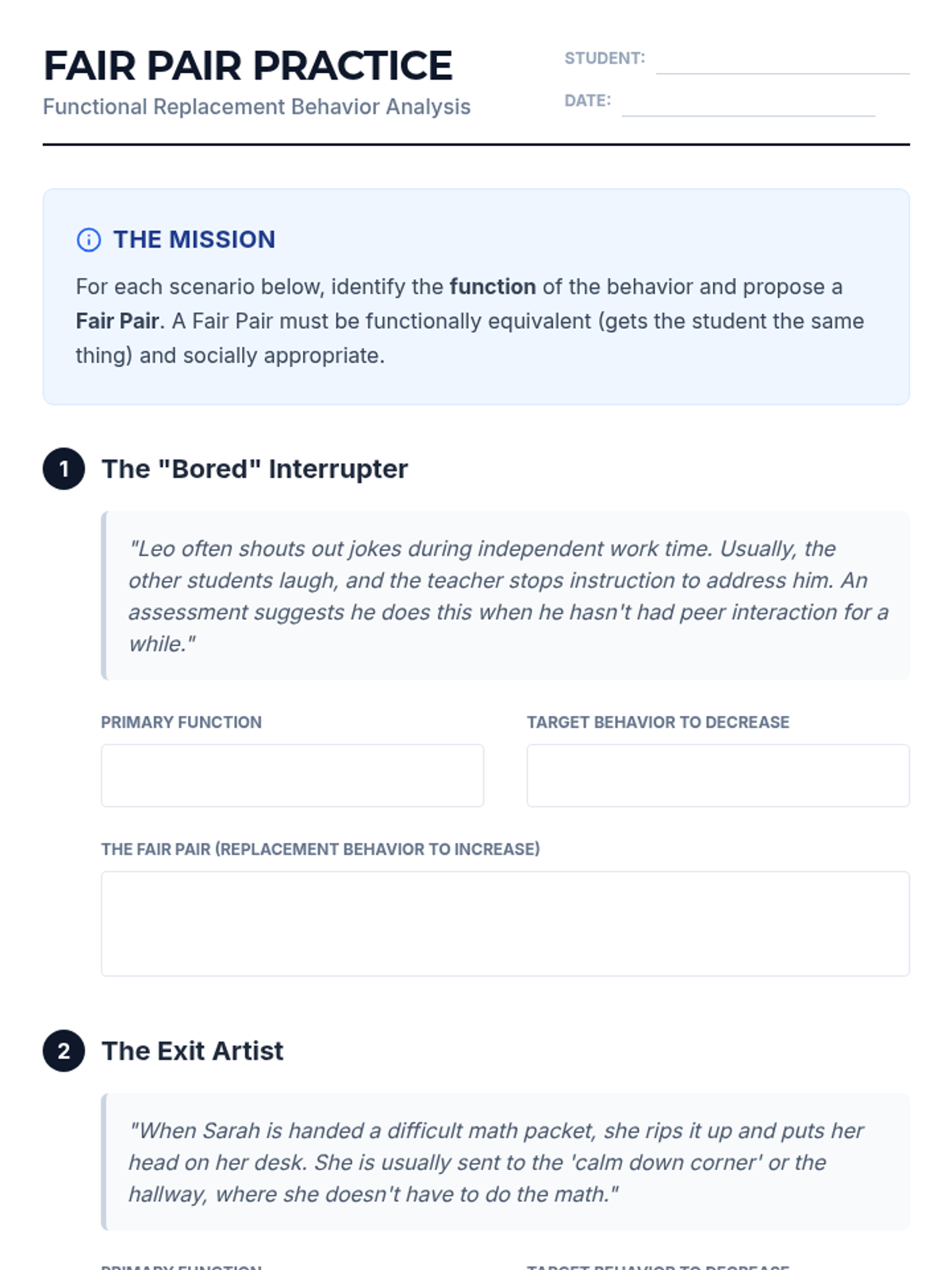
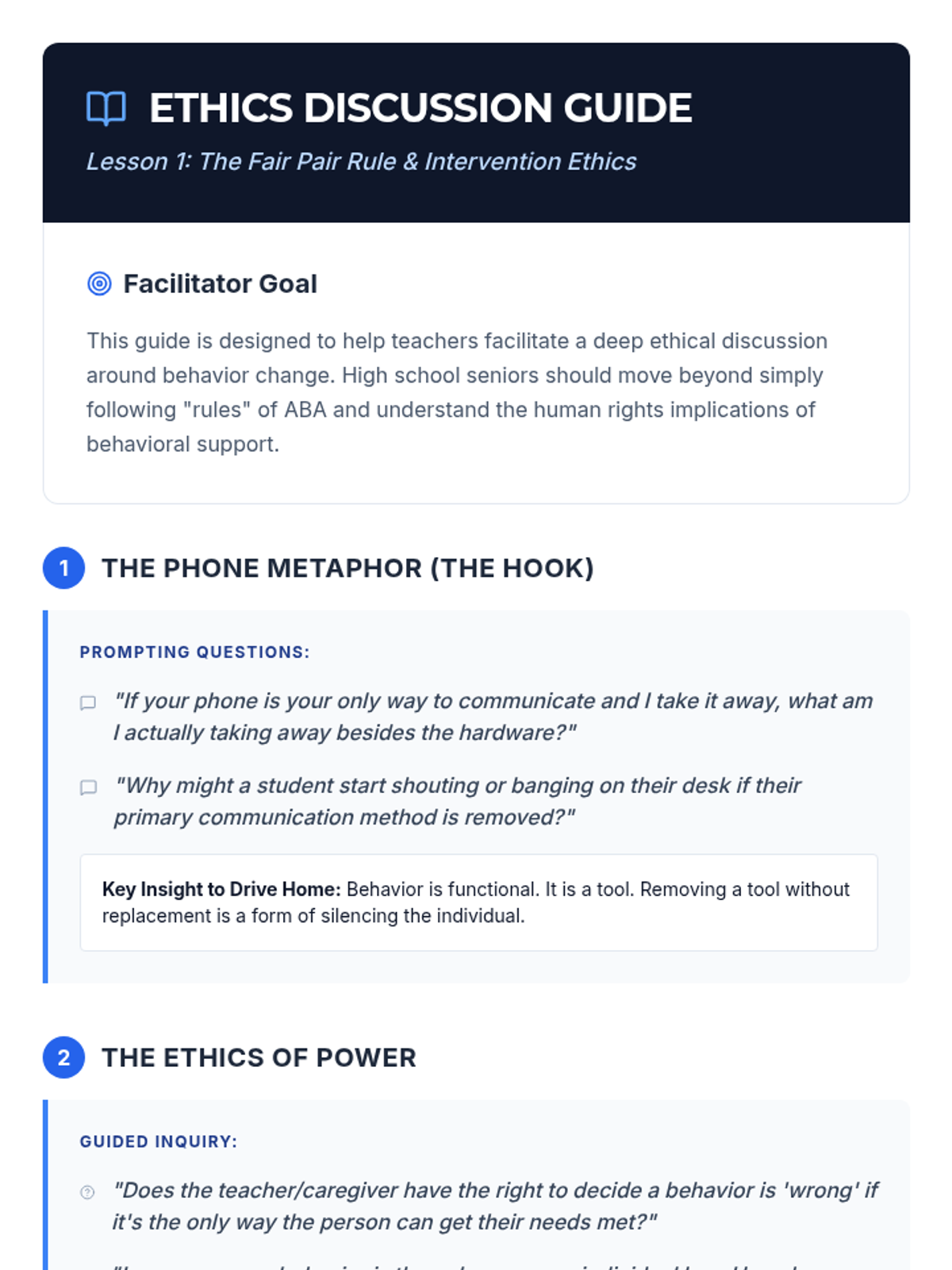
Introduction to the Fair Pair Rule and the ethics of behavior replacement. Students learn that reducing a behavior requires increasing a functionally equivalent alternative.
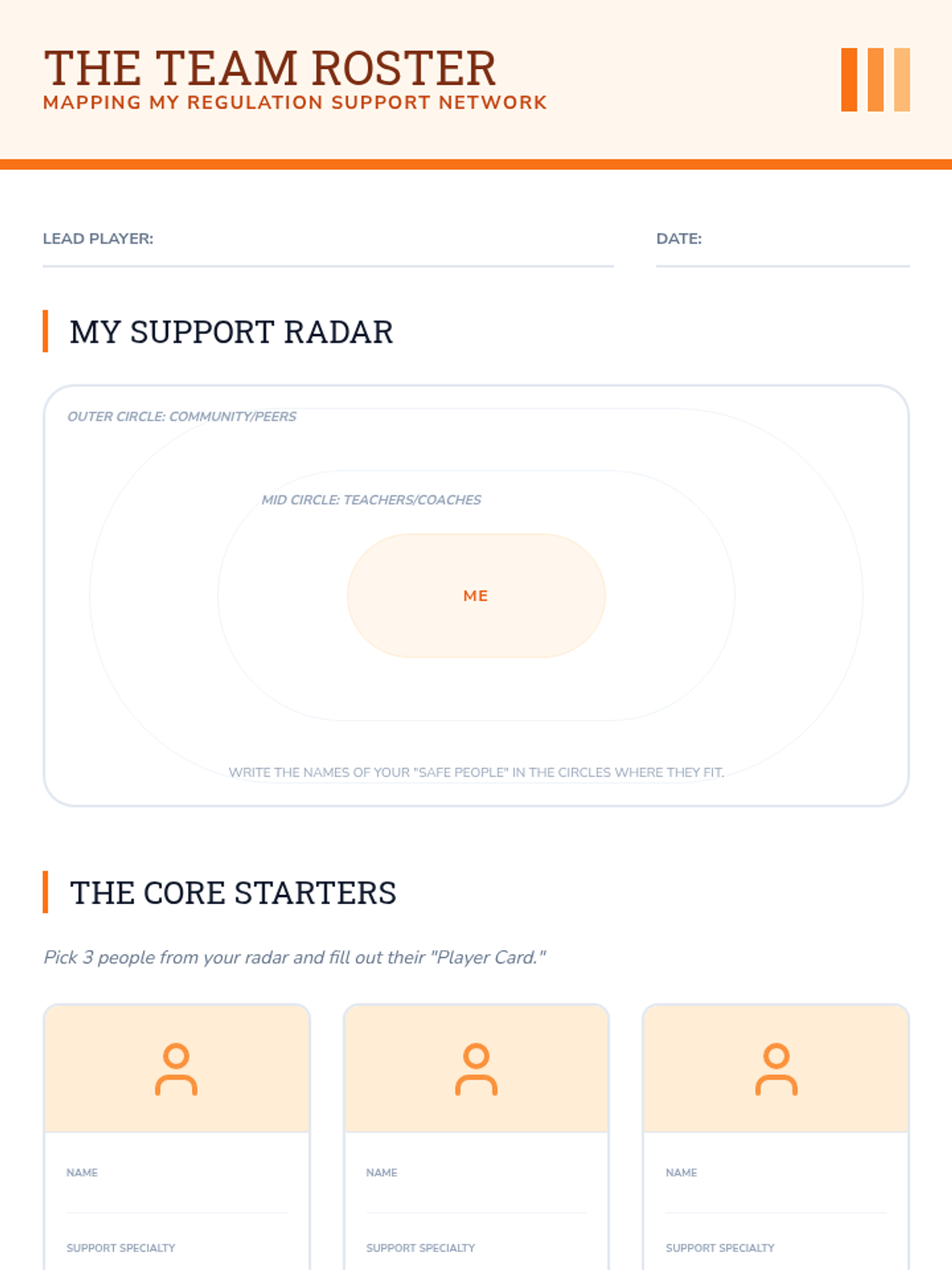
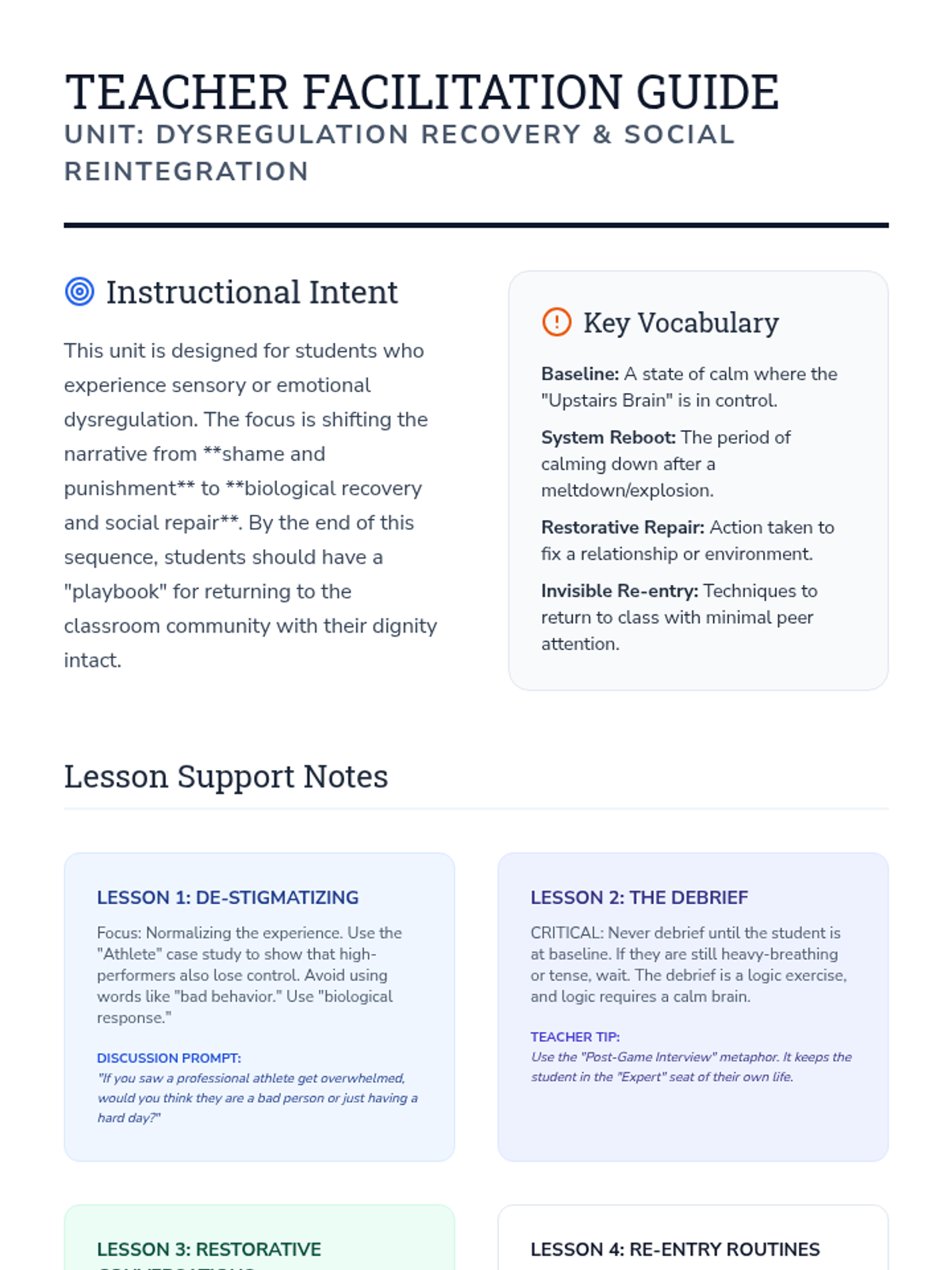
Students identify the 'safe people' in their lives and school who can help them reflect and improve over time. They create a map of their support system and draft an agreement for how to check in after difficult days.
Students develop a subtle, low-profile routine for walking back into class after an incident. They practice techniques for ignoring peer attention and getting back on task to minimize disruption and anxiety.
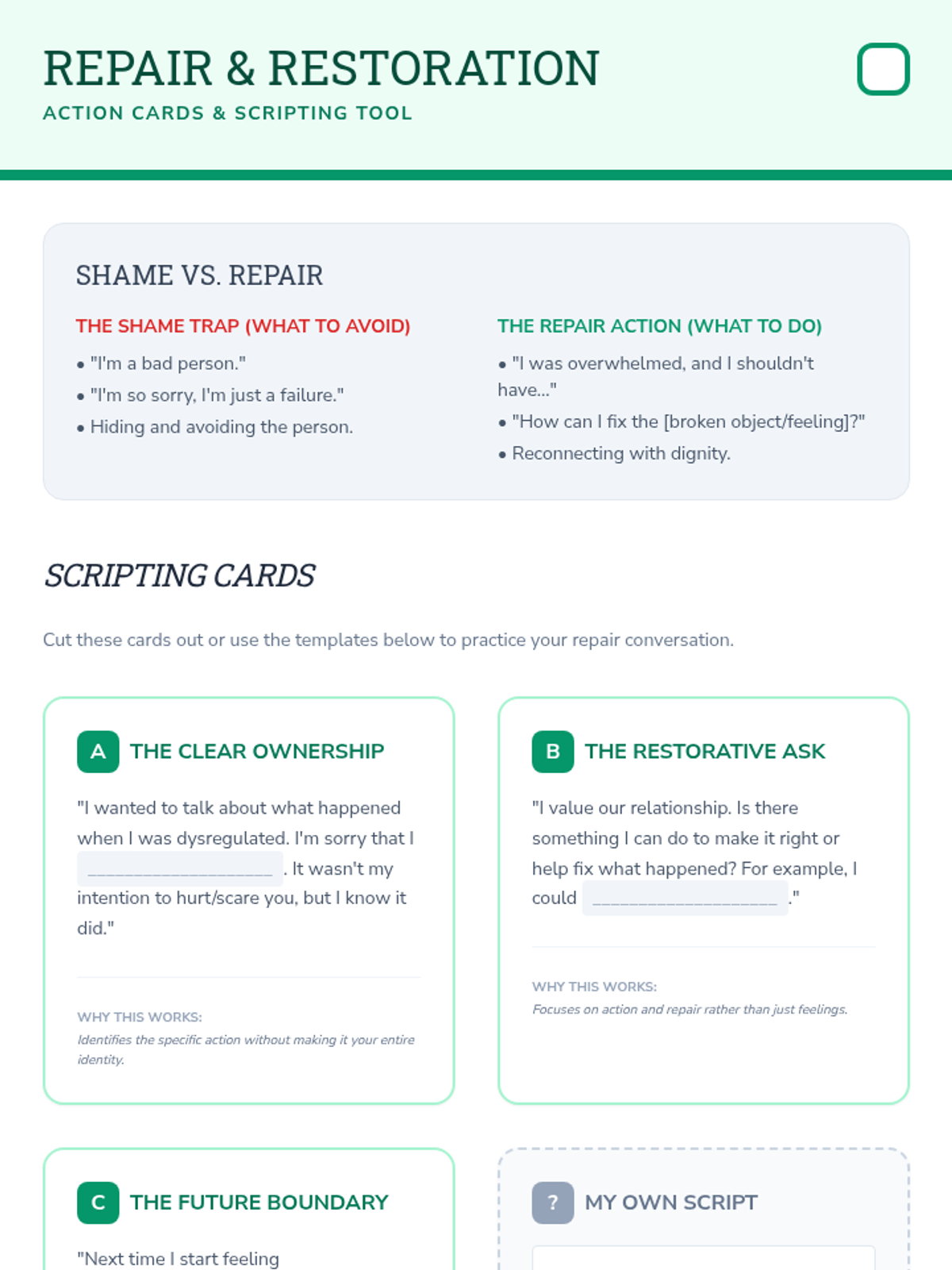
This lesson distinguishes between shame-based apologies and restorative actions. Students practice scripting authentic apologies if their dysregulation impacted others, focusing on repairing the relationship rather than just saying 'sorry'.
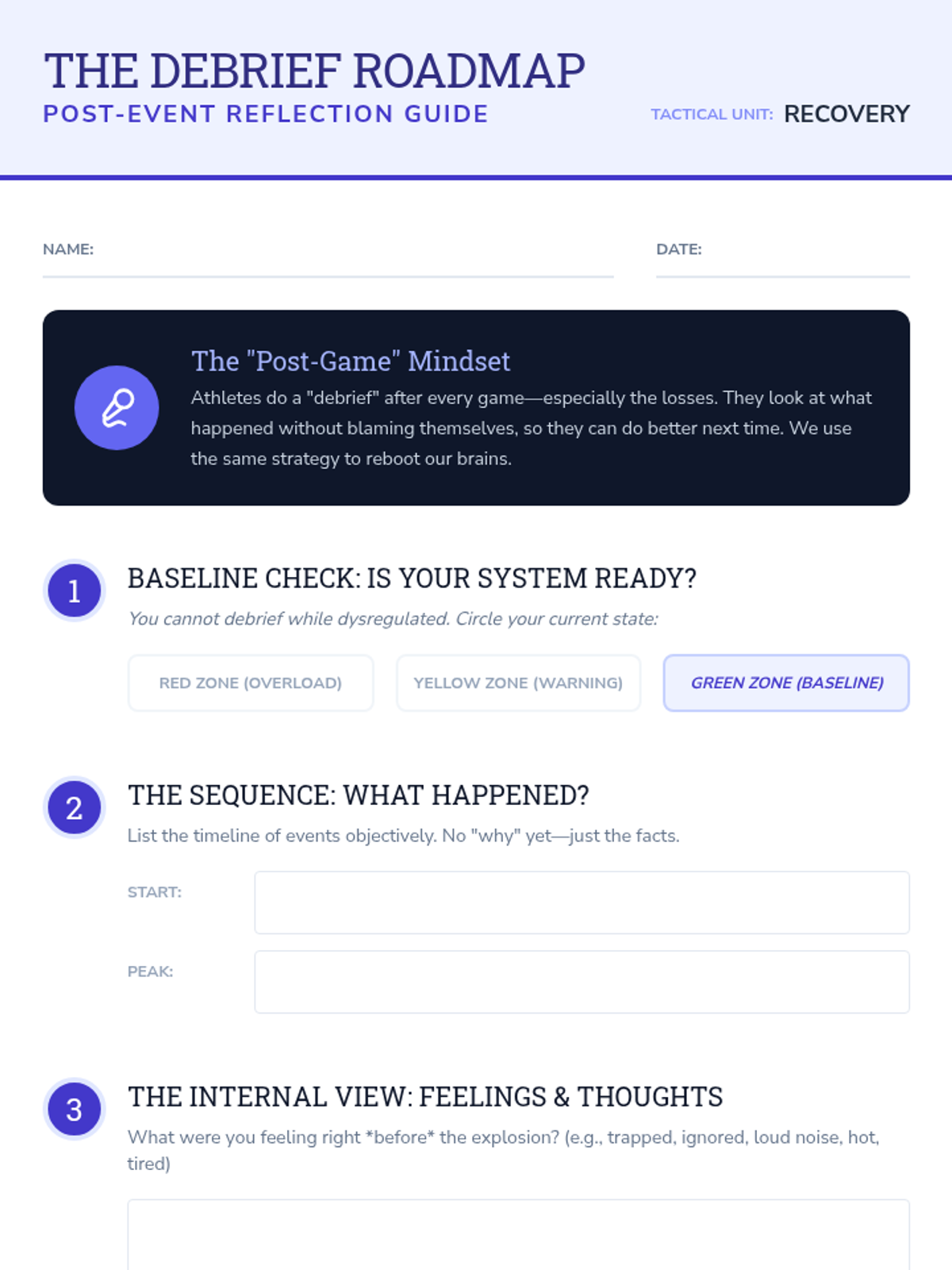
Students learn the structure of a restorative debriefing session: What happened? What was I thinking/feeling? What do I need to do differently? They practice answering these questions only after they have returned to baseline.
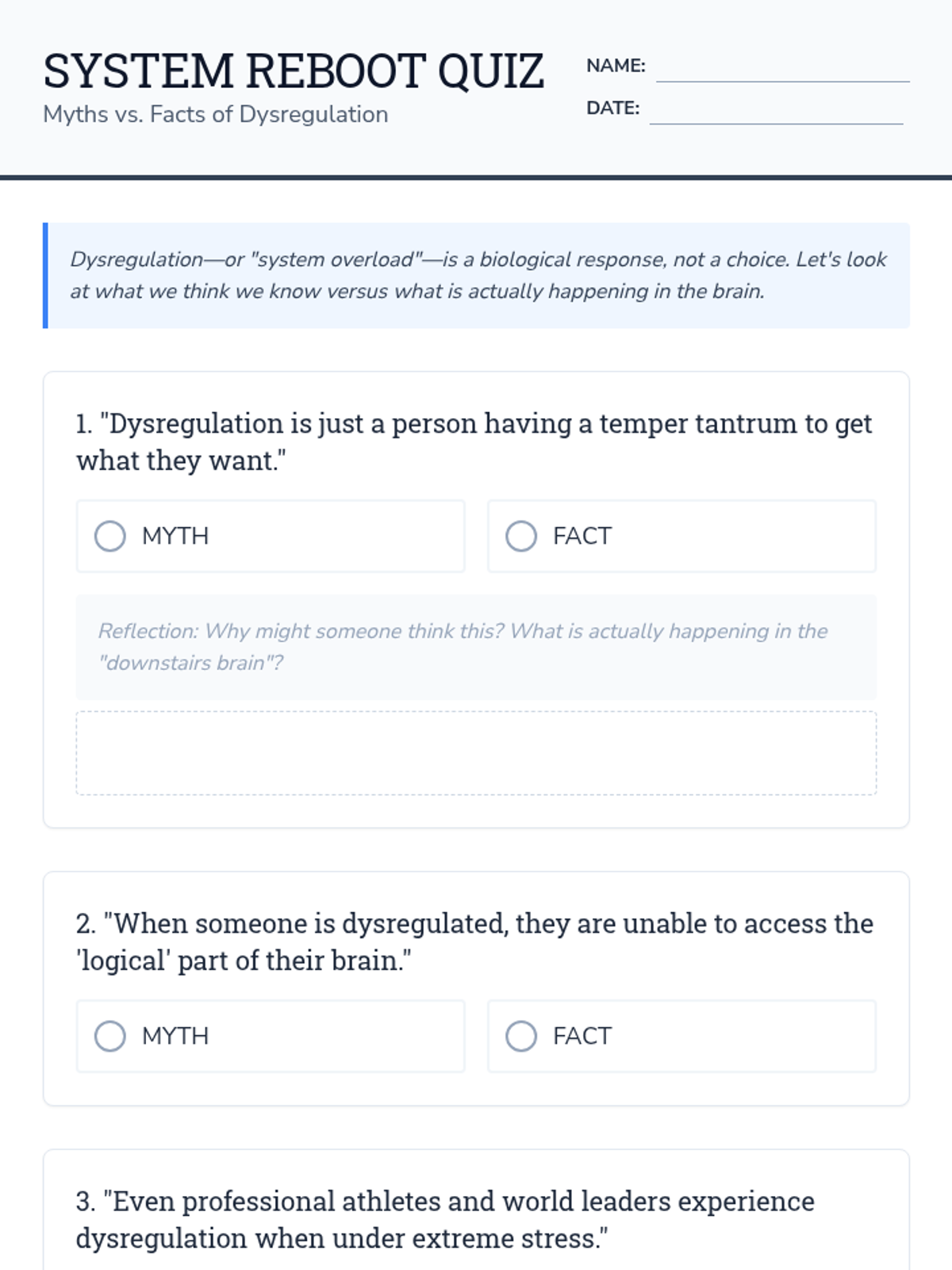
Students discuss the concept of neurodiversity and the idea that everyone loses control sometimes. They analyze famous figures or fictional characters who struggle with regulation to normalize the experience and reduce shame.
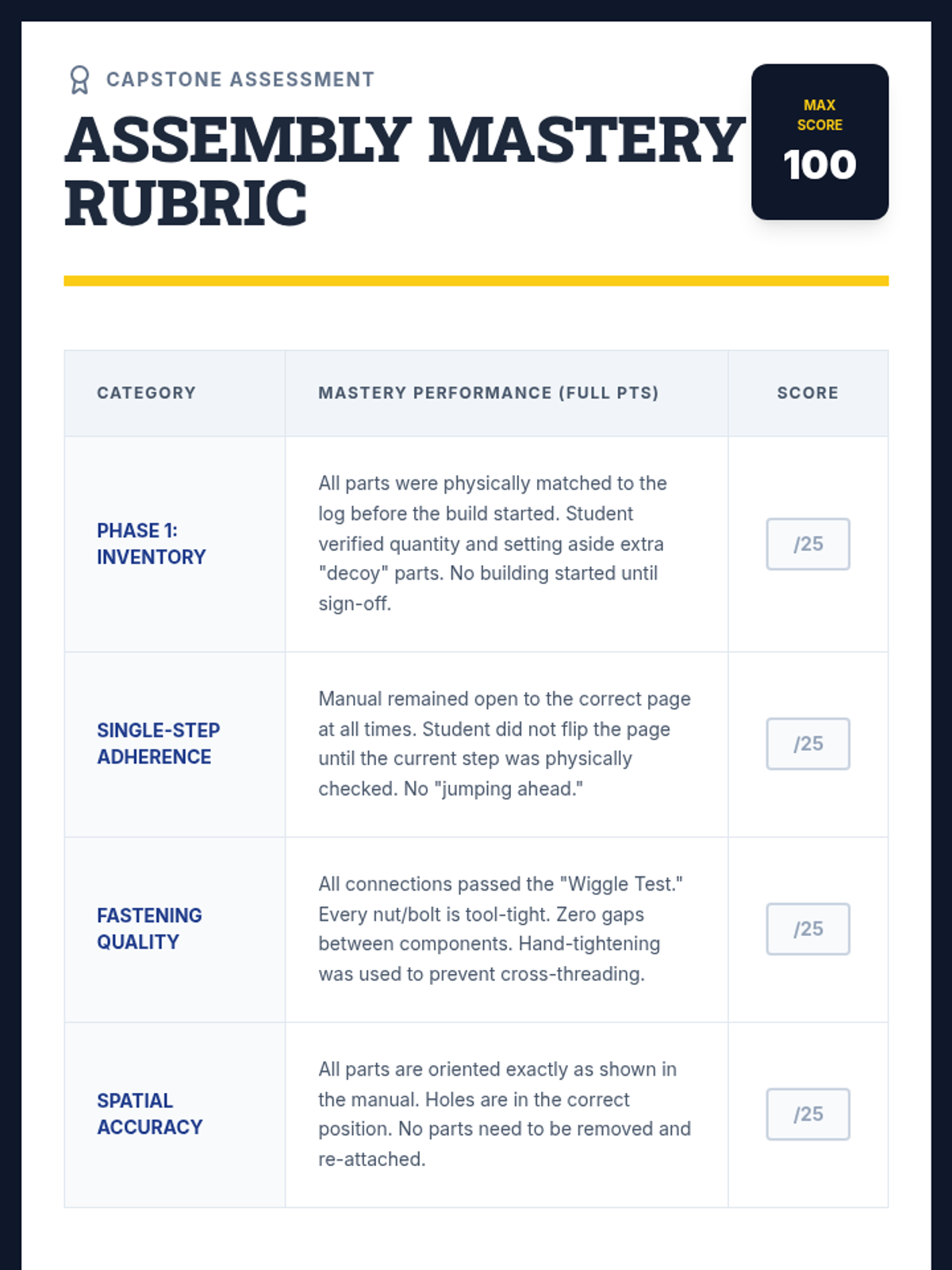
The capstone assembly challenge where students build a complex item using single-step instructions to demonstrate mastery of process adherence.
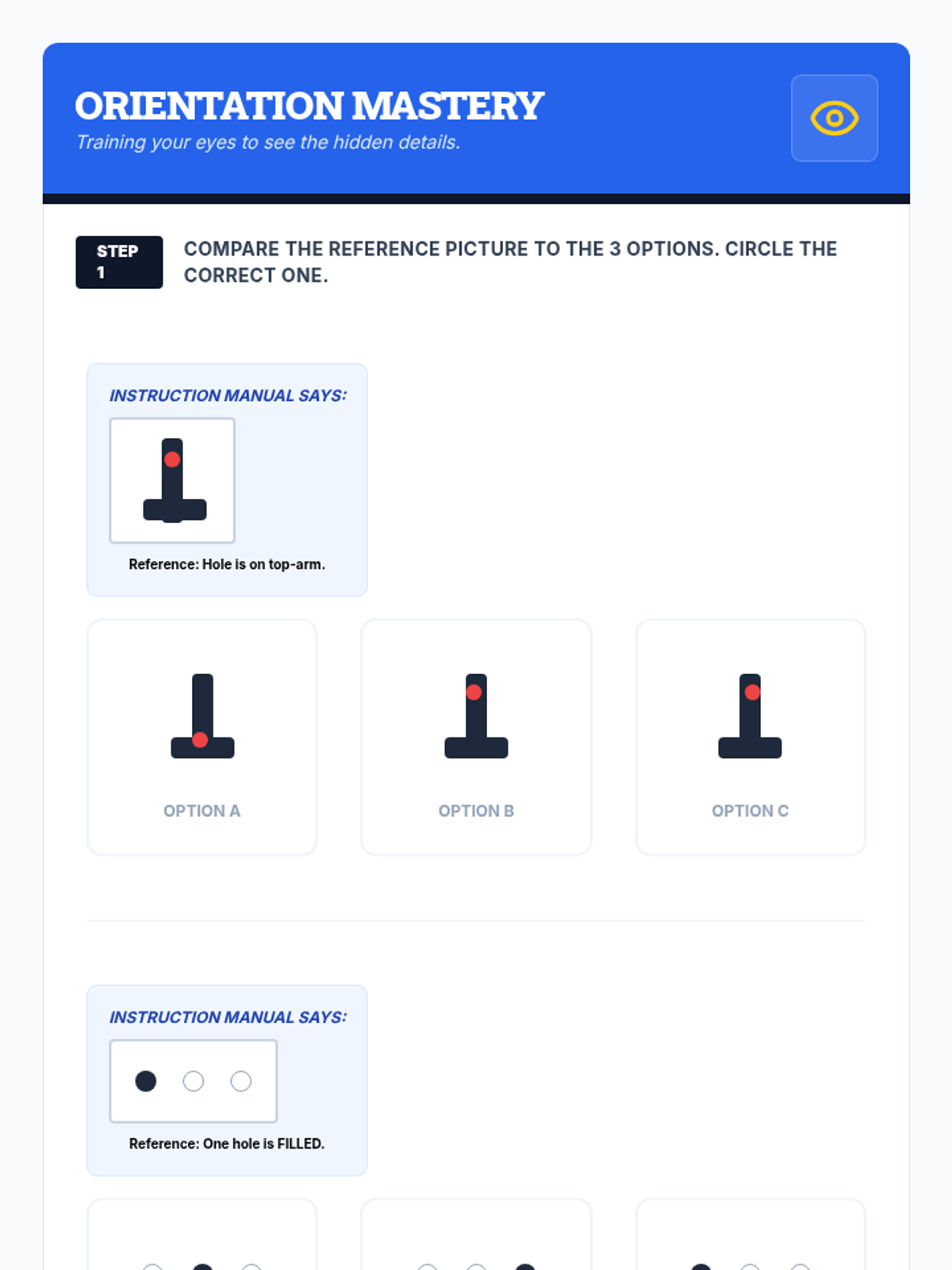
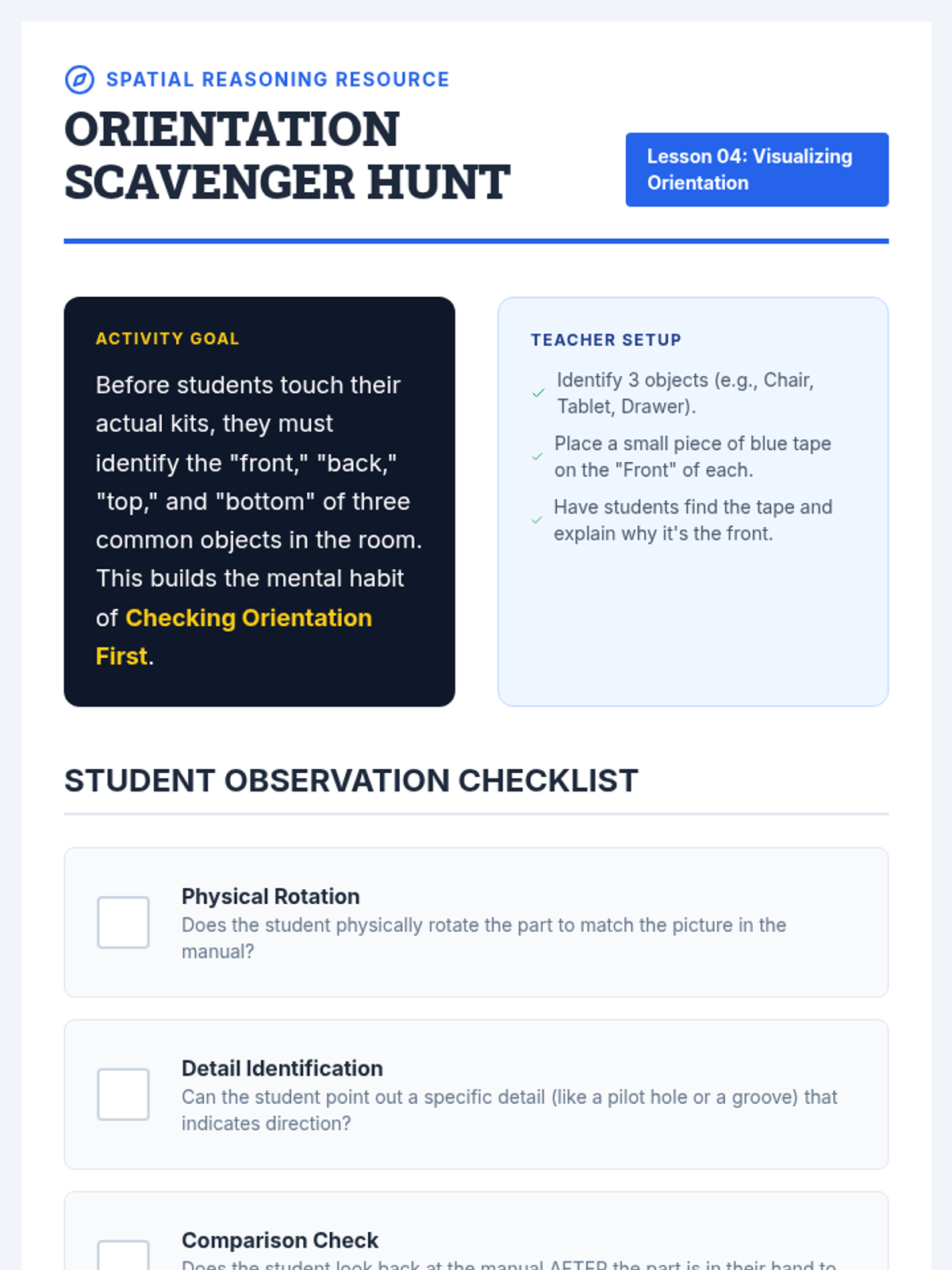
Emphasis on spatial reasoning and detail orientation, specifically focusing on the correct orientation of parts before attachment.
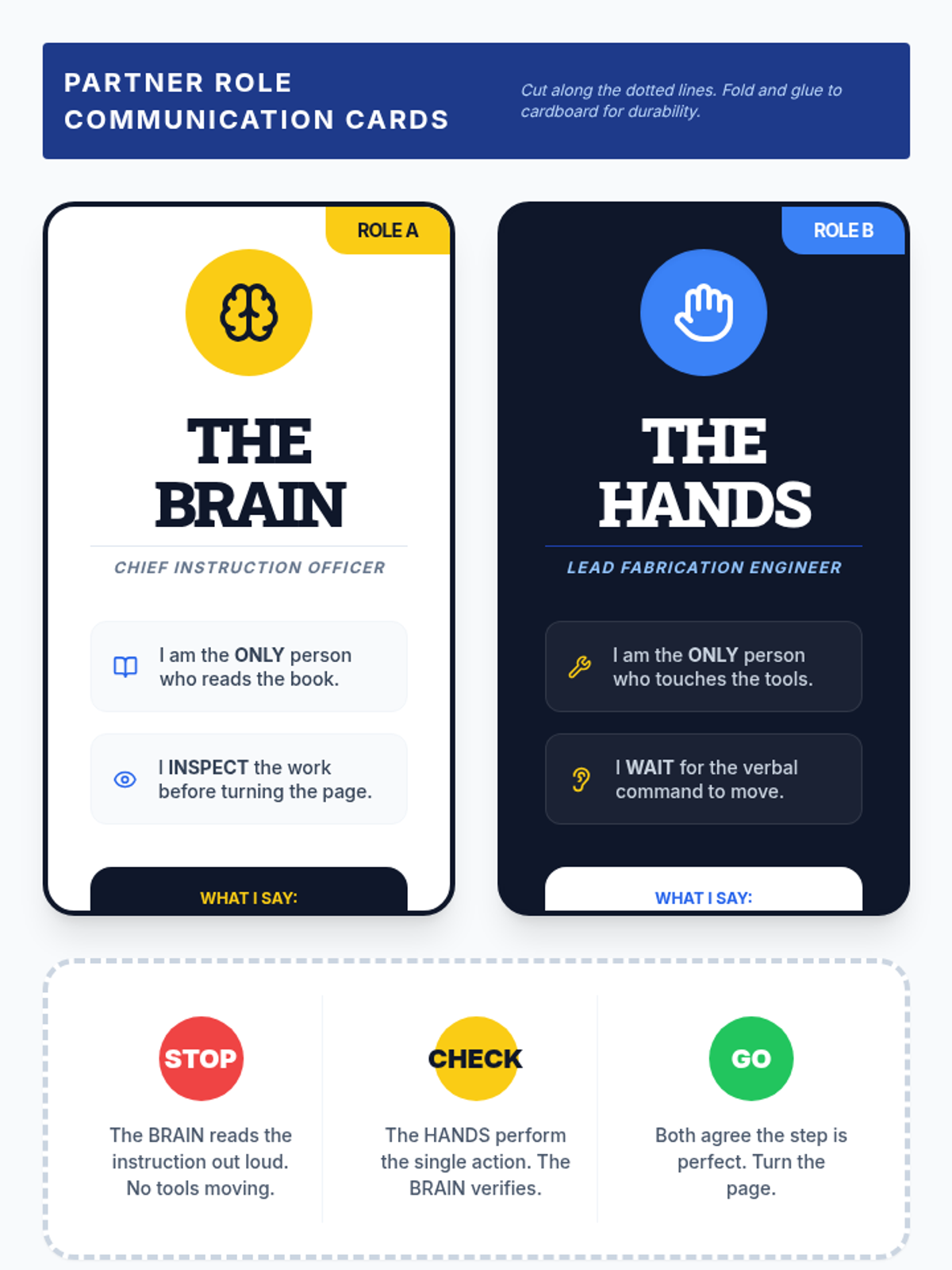
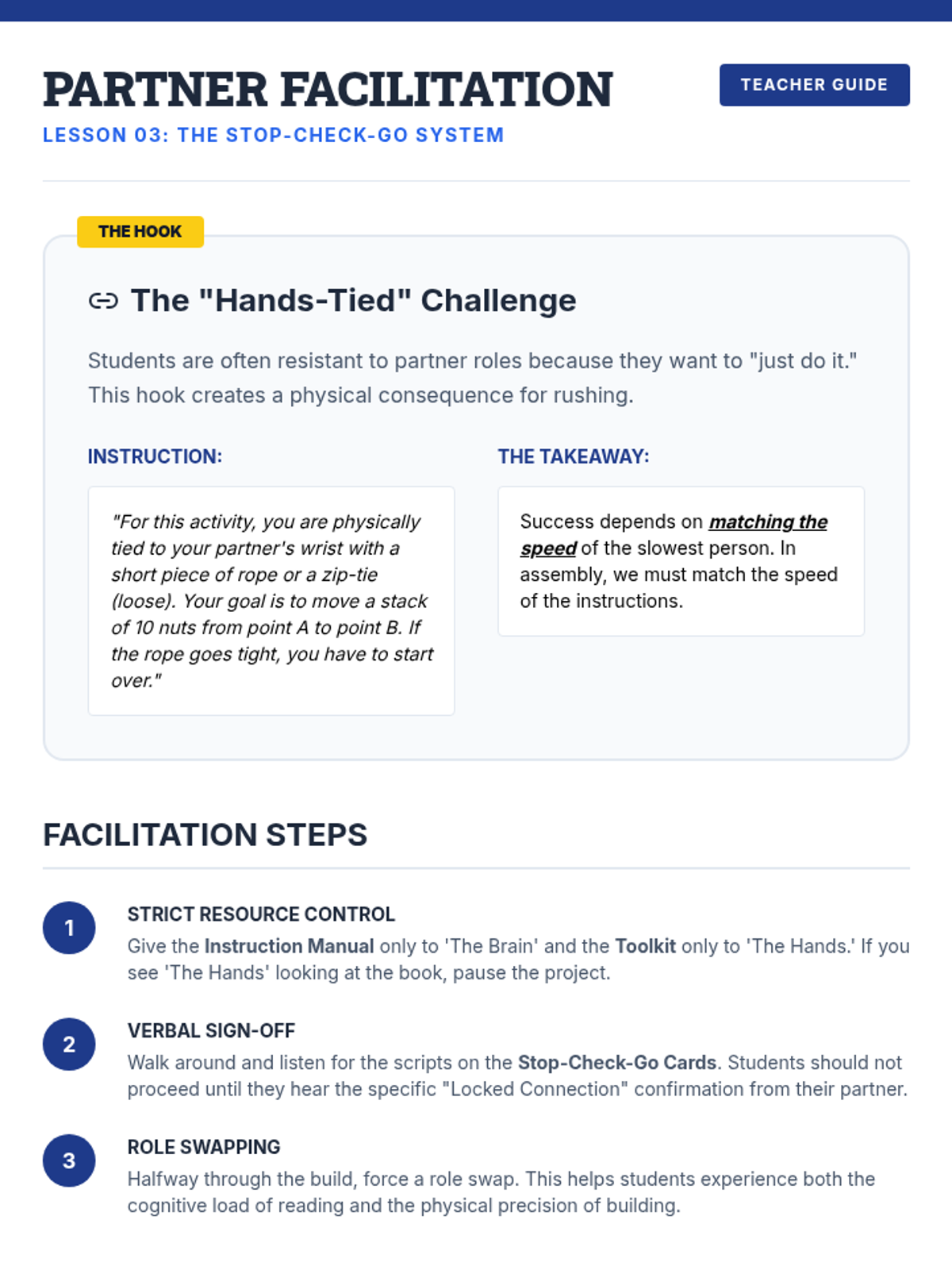
A collaborative build system where partners use verbal confirmation to ensure each step is completed perfectly before proceeding.
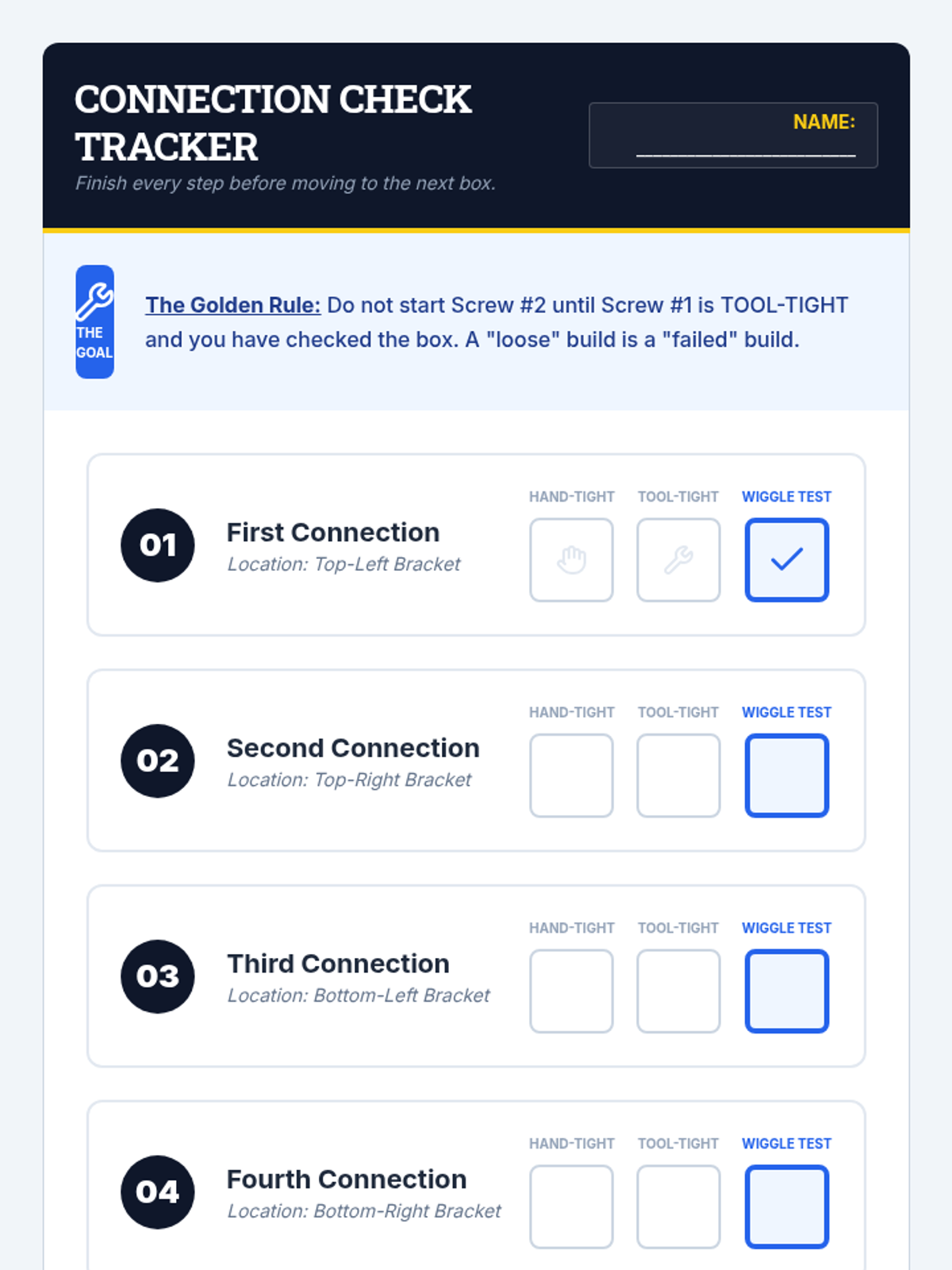
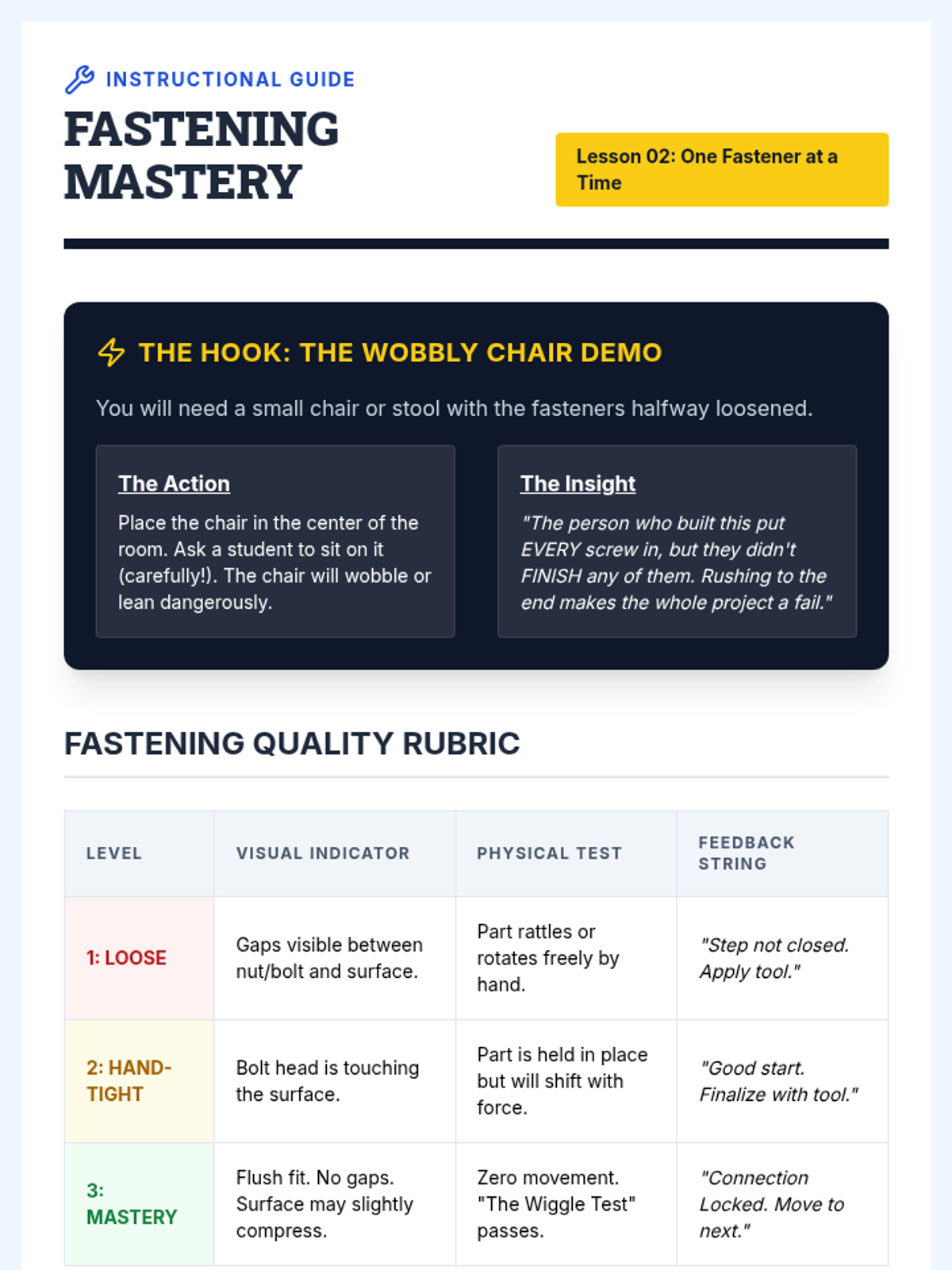
Focuses on the fine motor and cognitive discipline of fully securing one connection before moving to the next, preventing 'wobbly' structural failures.
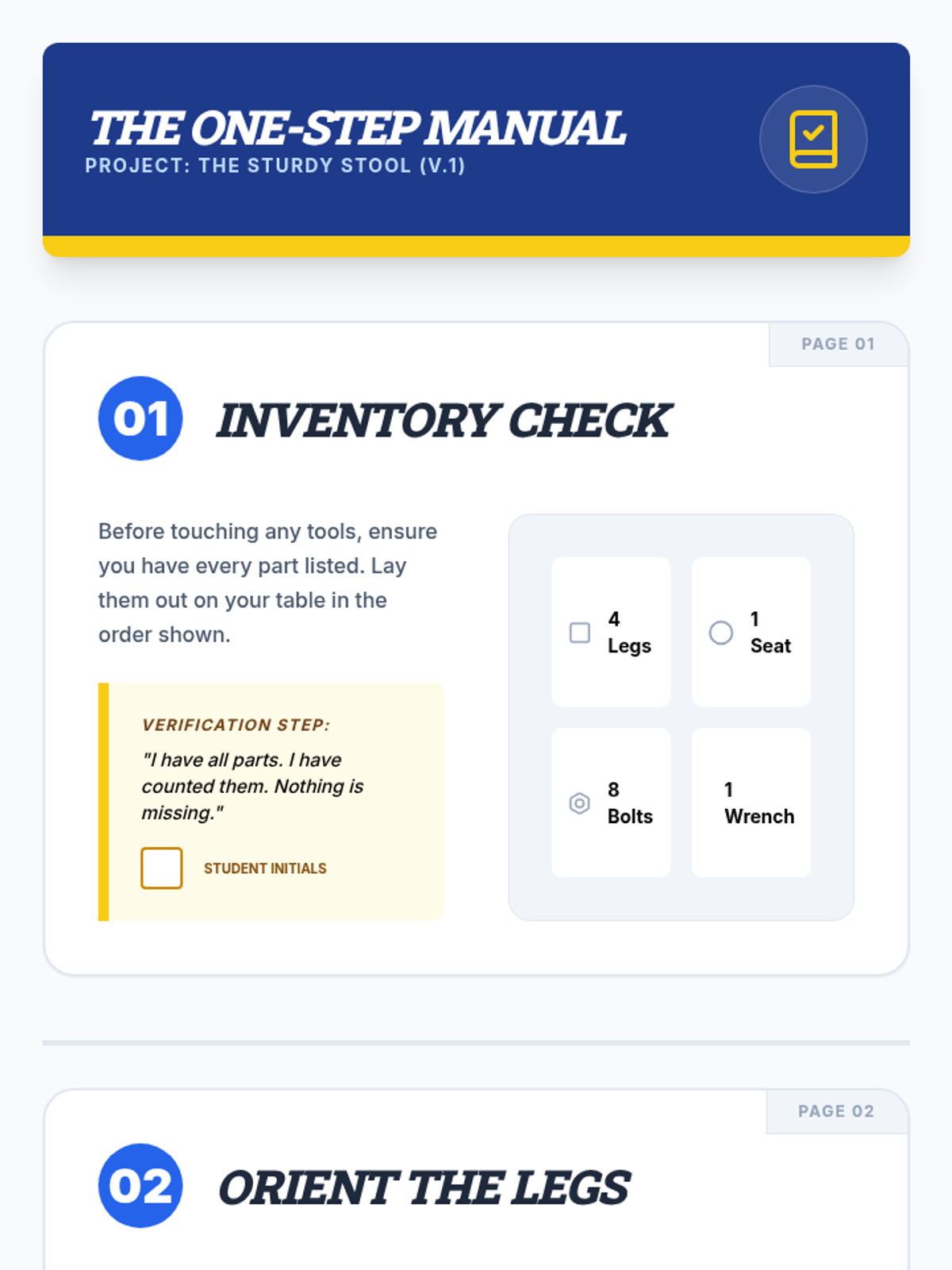
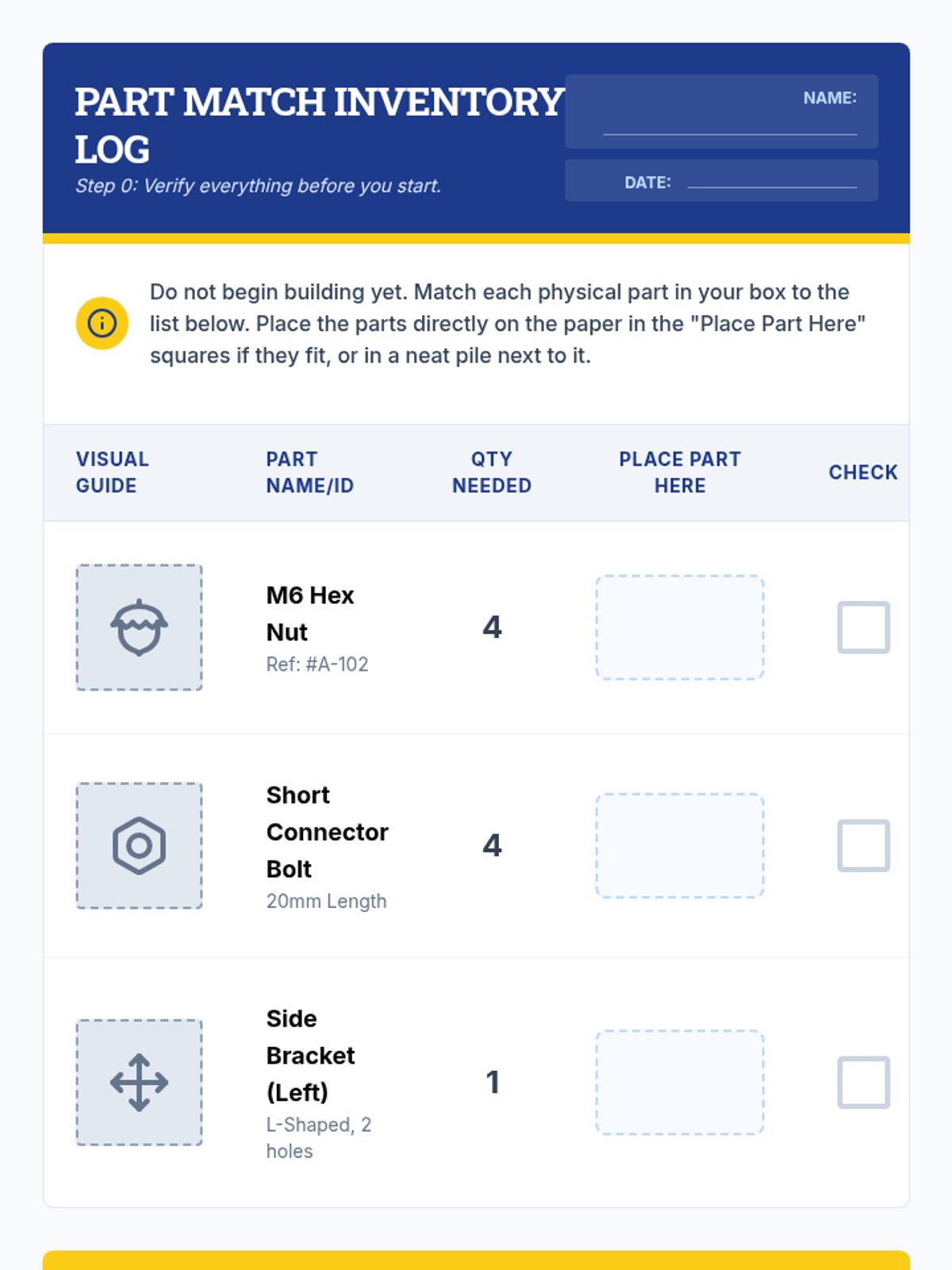
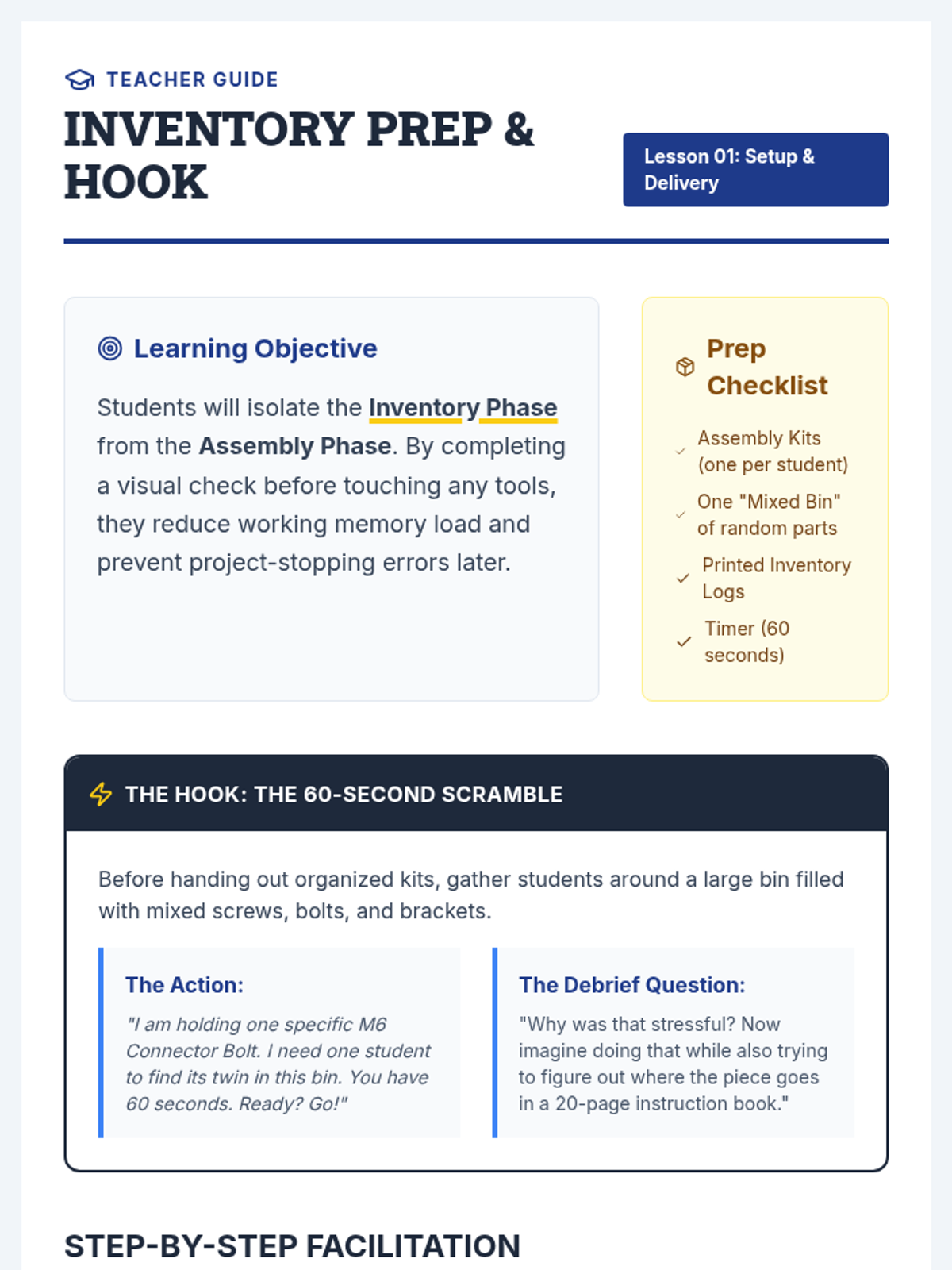
Students learn that the first single step of any build is an inventory check, matching parts to a visual list to prevent cognitive overload during assembly.
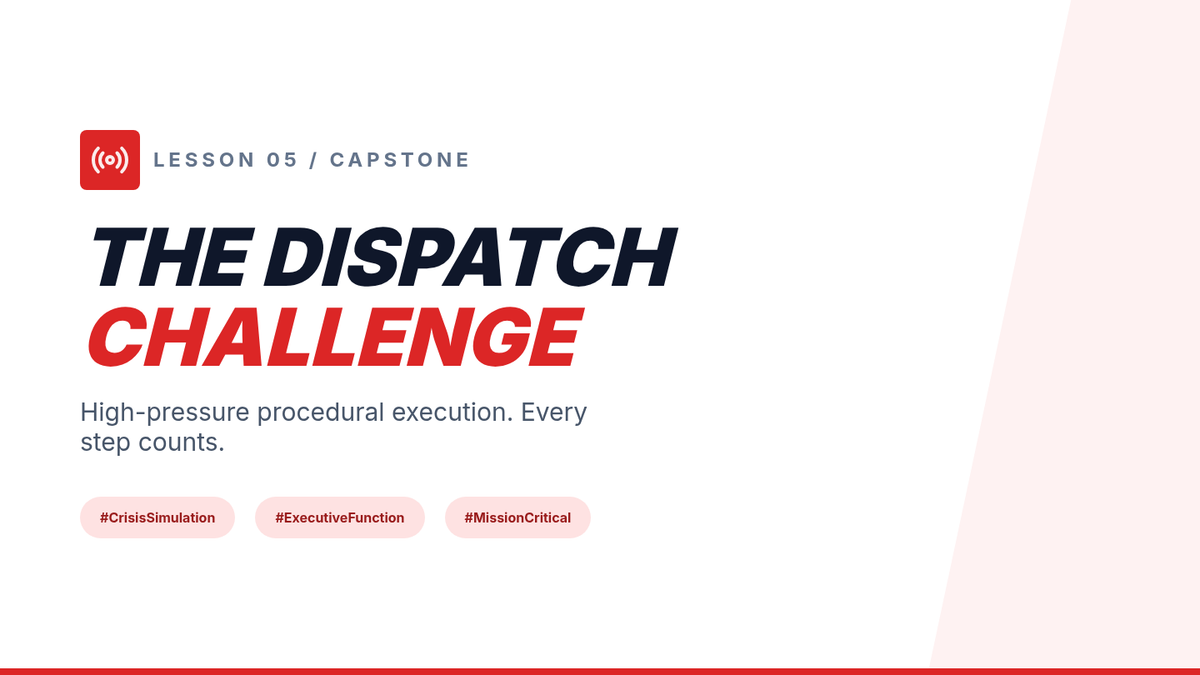
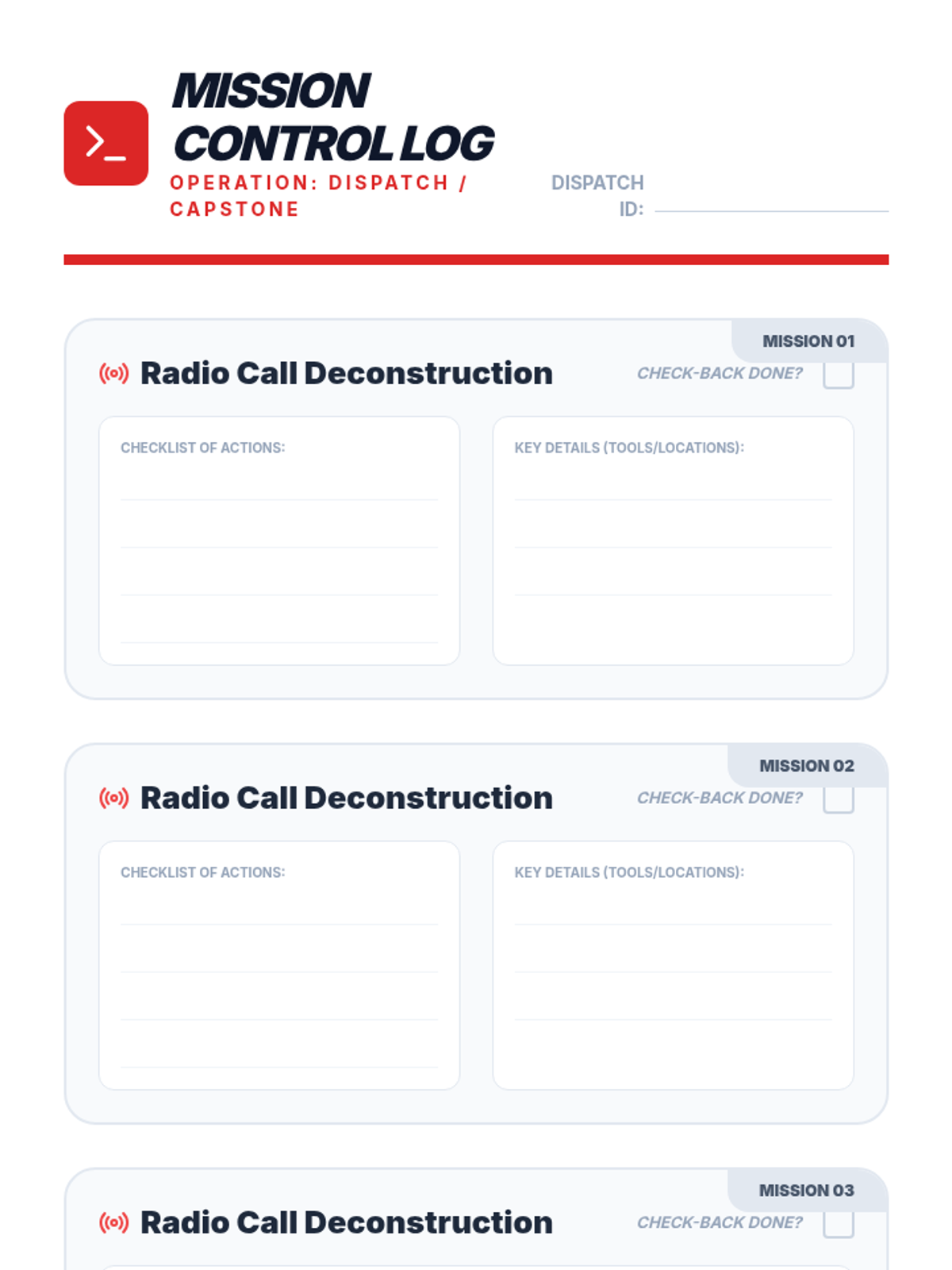
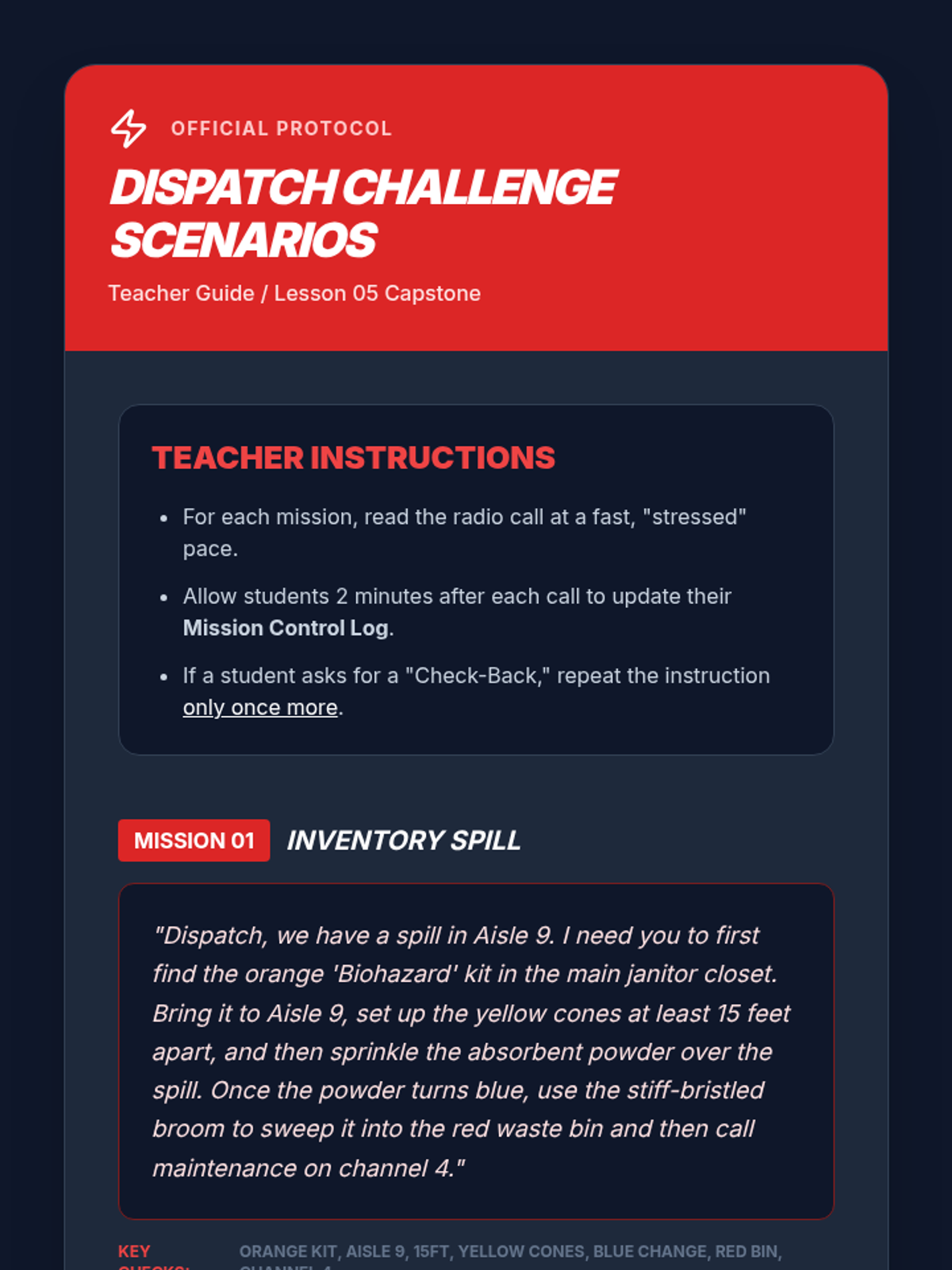
A culminating high-pressure simulation where students manage a 'dispatch center' environment using all learned strategies.
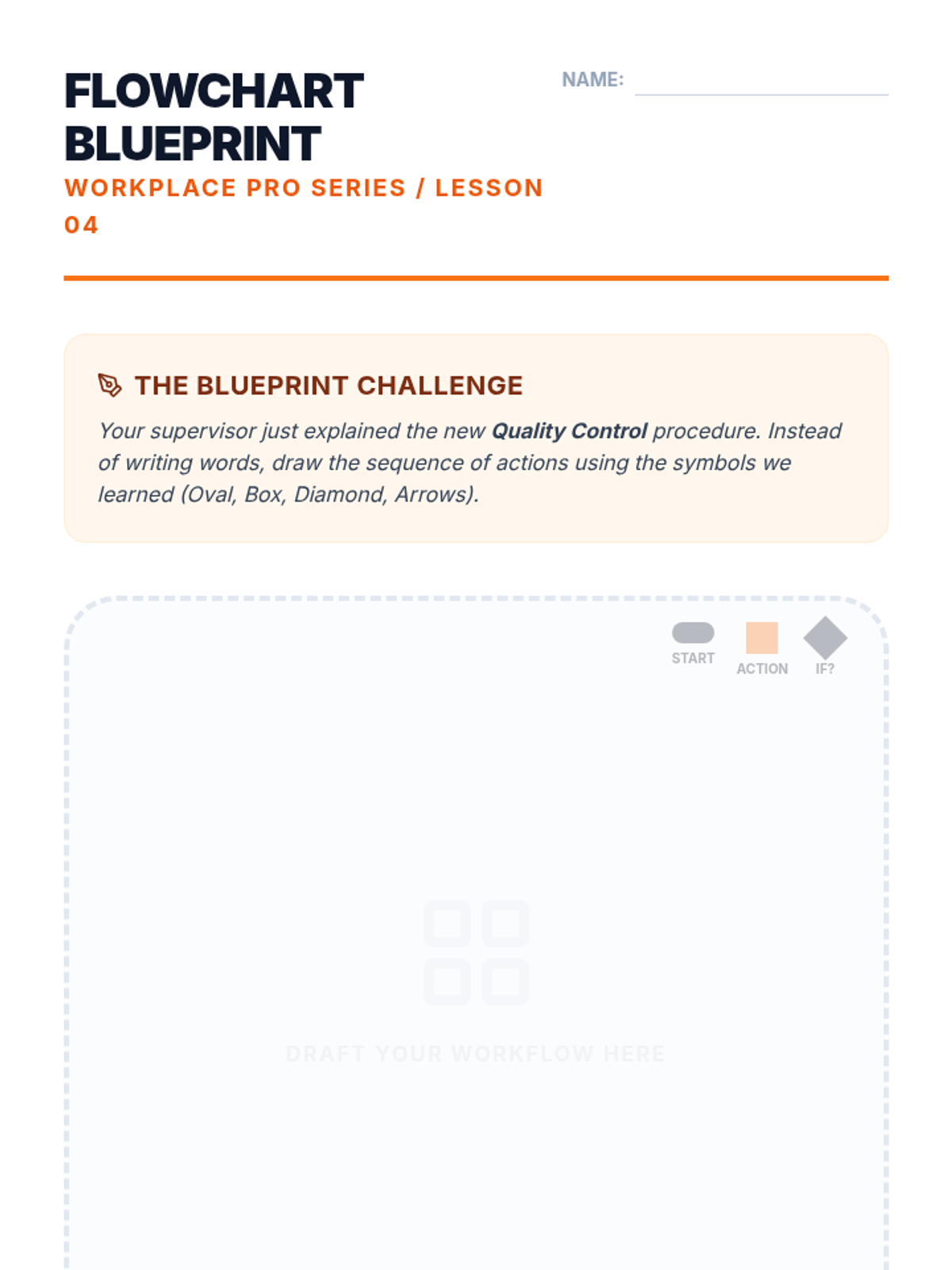
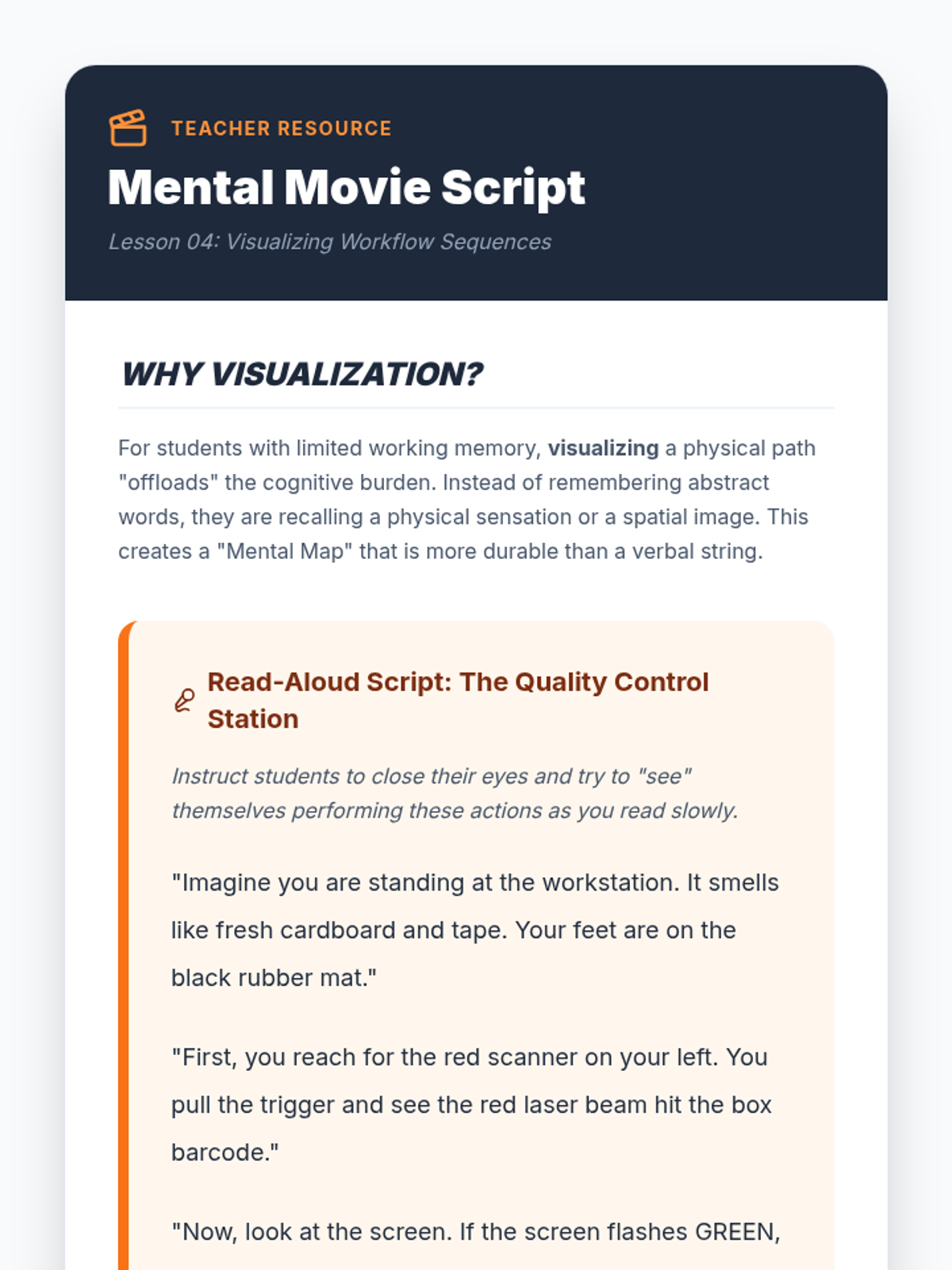
Focuses on mental visualization and flowcharting techniques to predict physical actions required for complex tasks.
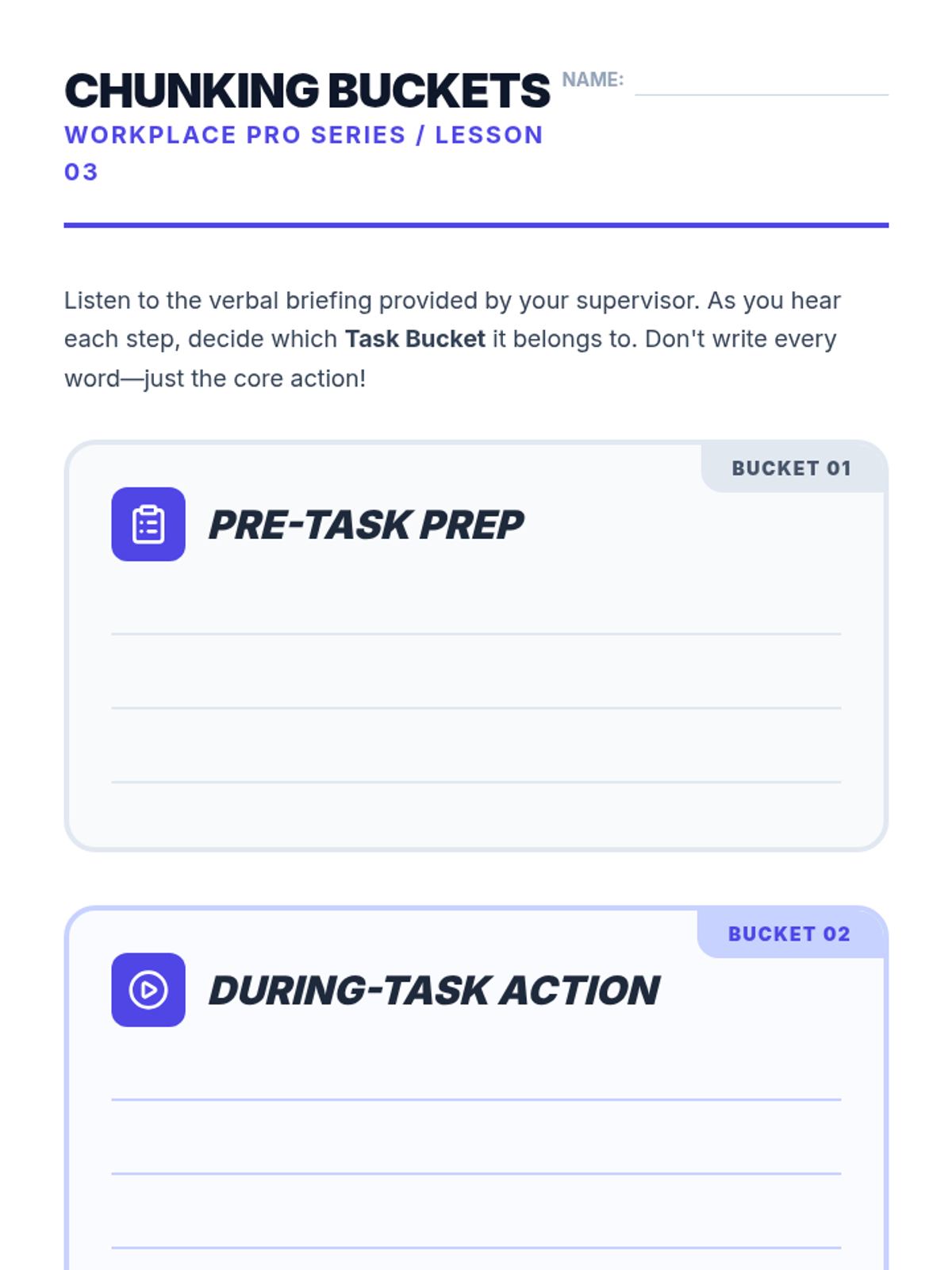
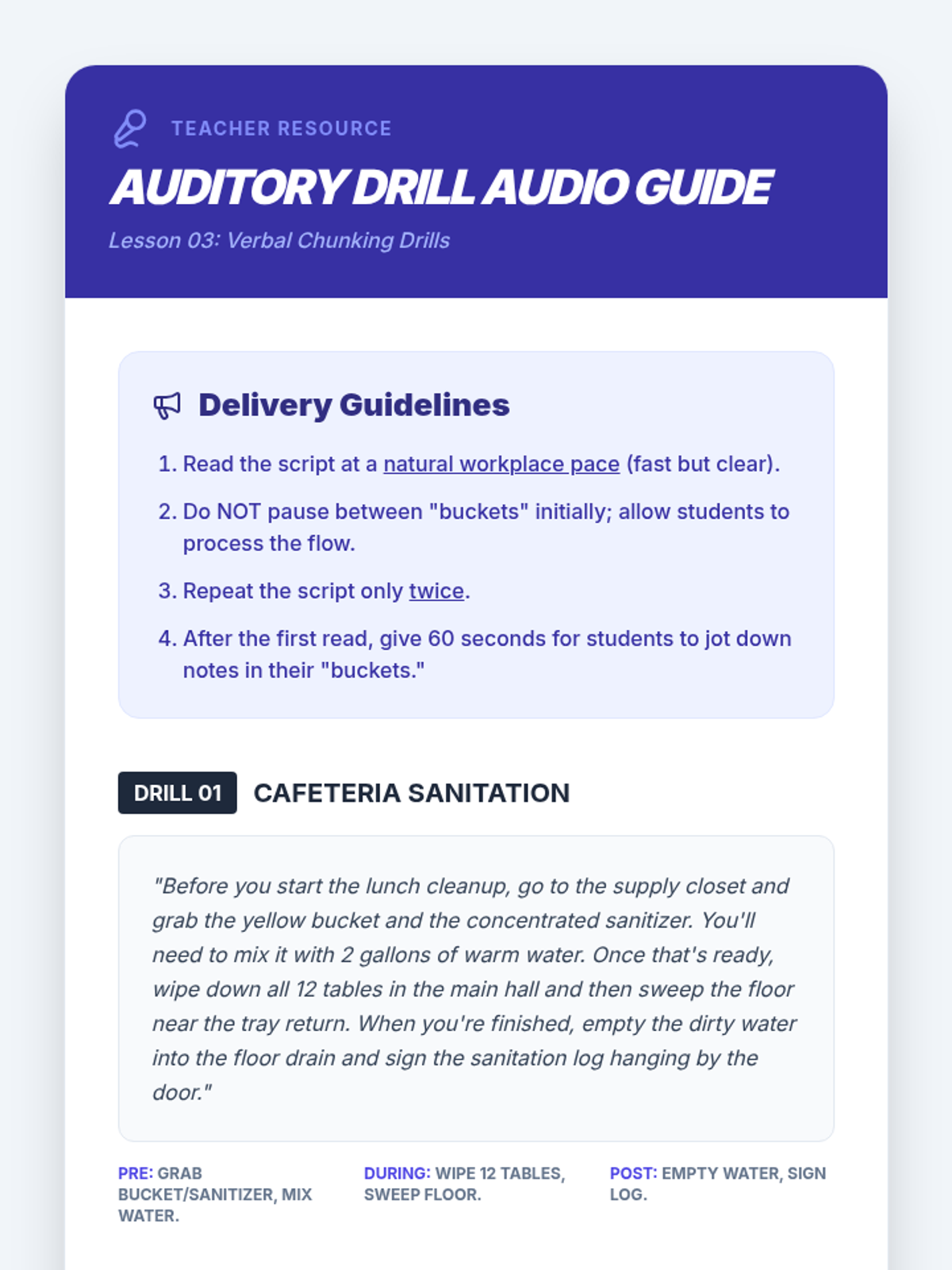
Teaches students to group auditory information into 'Pre-task', 'During-task', and 'Post-task' buckets to reduce cognitive load.
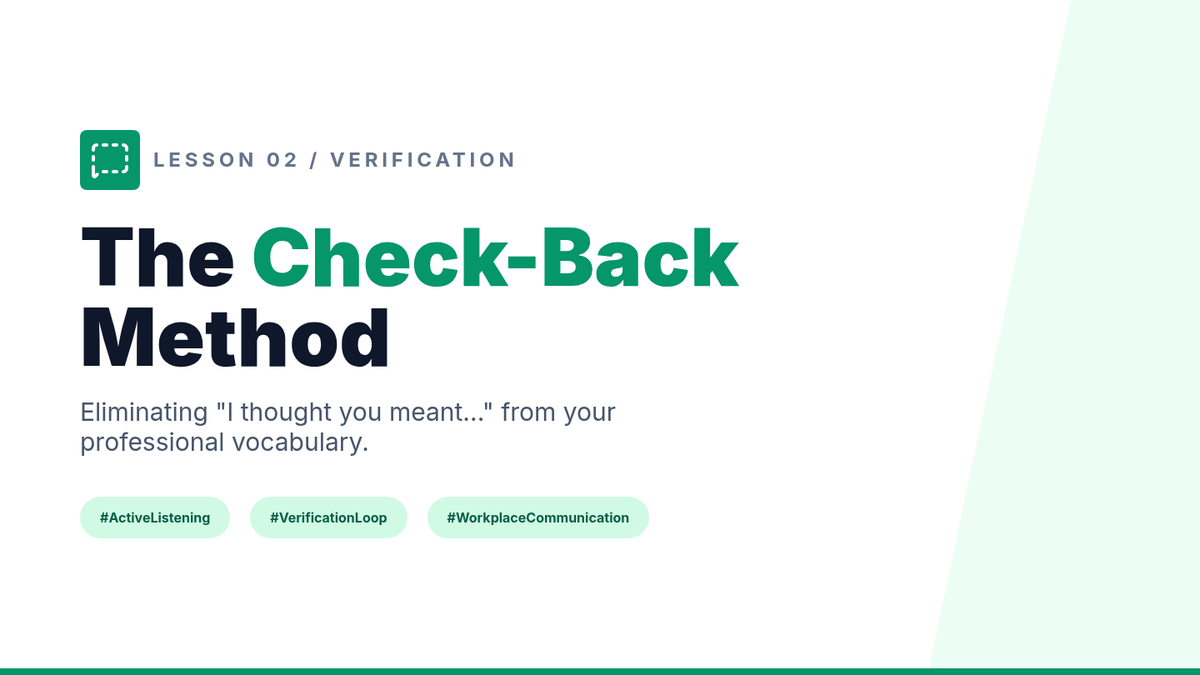
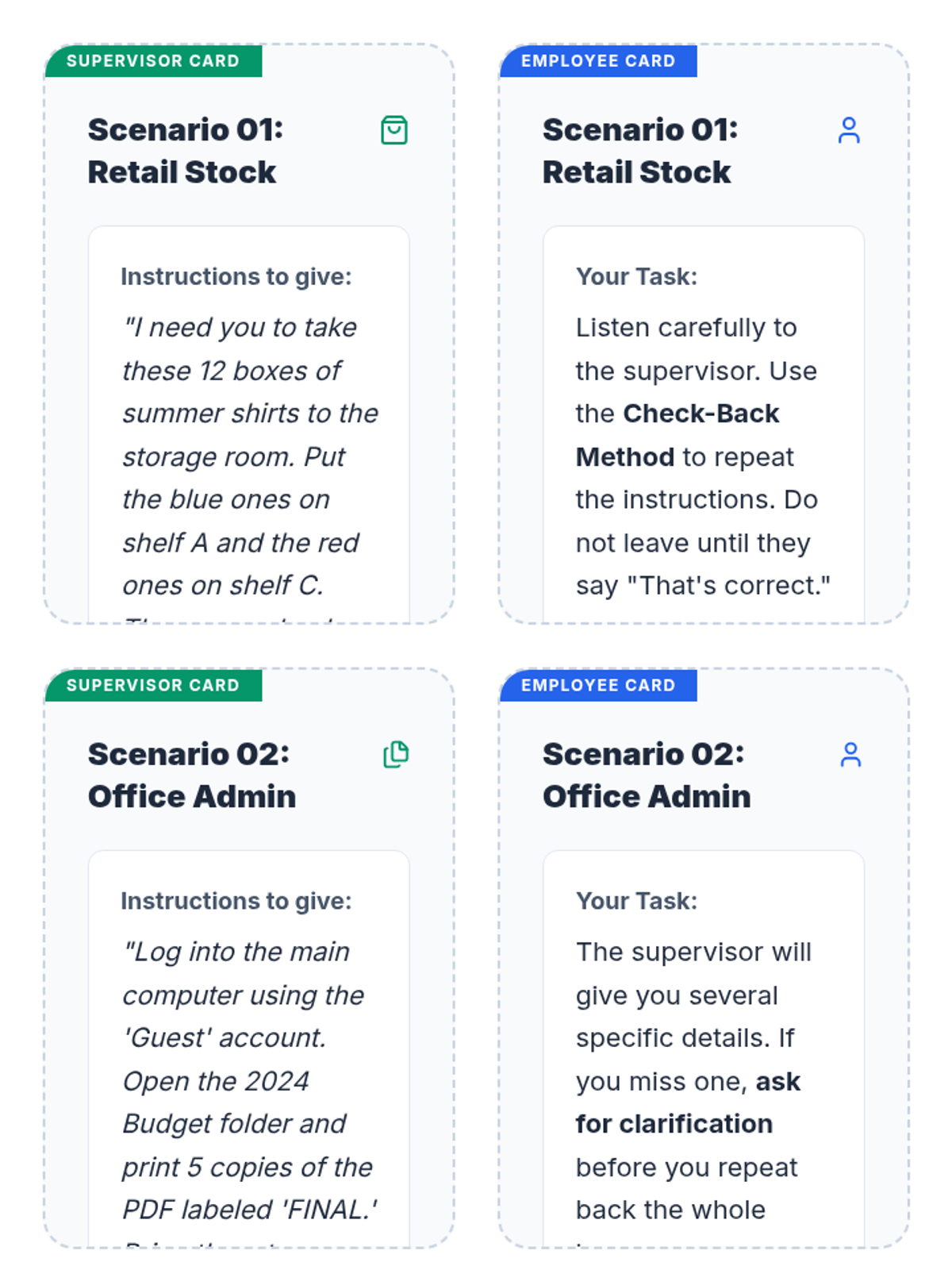
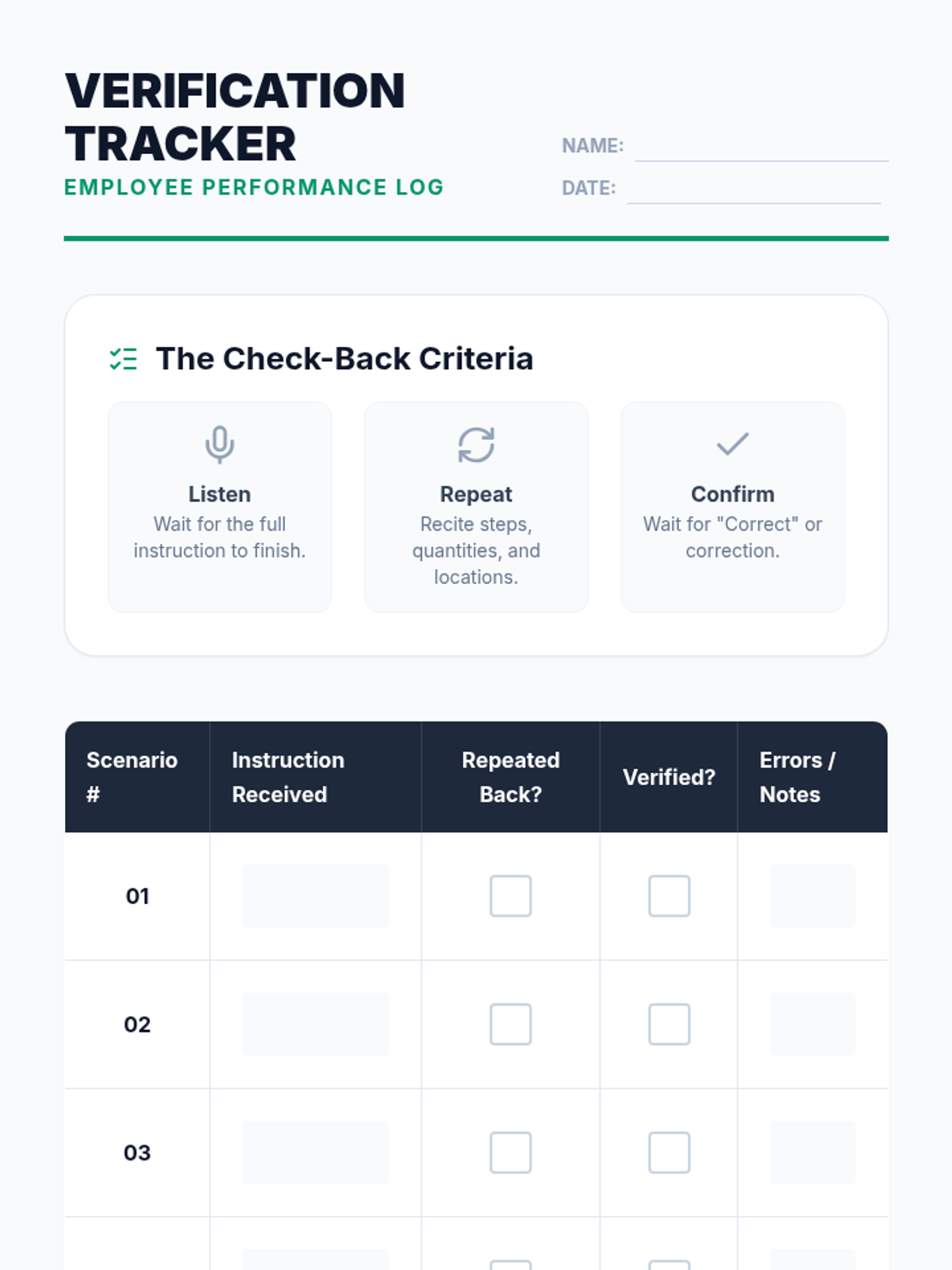
Focuses on the professional 'check-back' communication standard to verify auditory instructions and reduce errors in workplace scenarios.
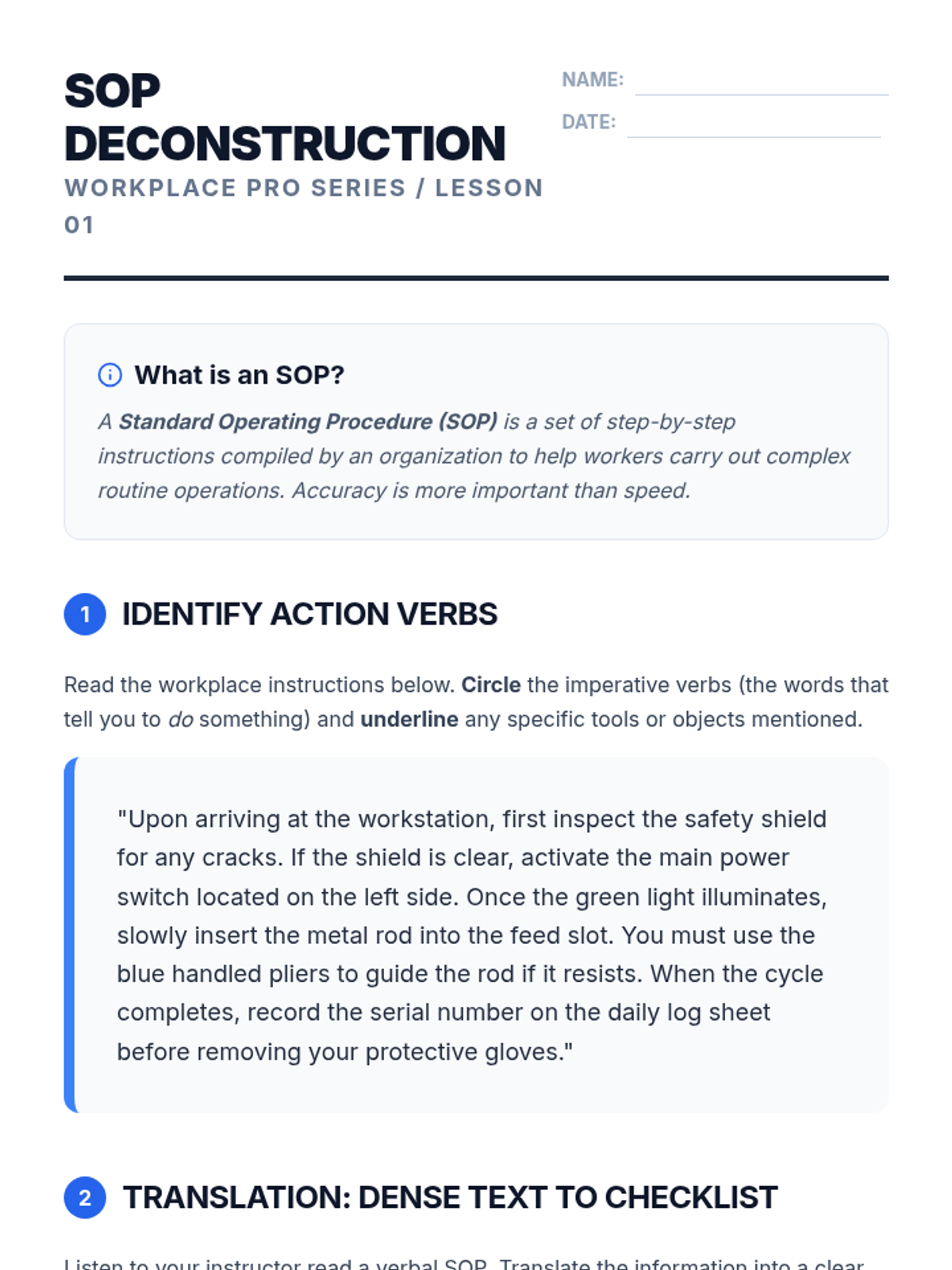
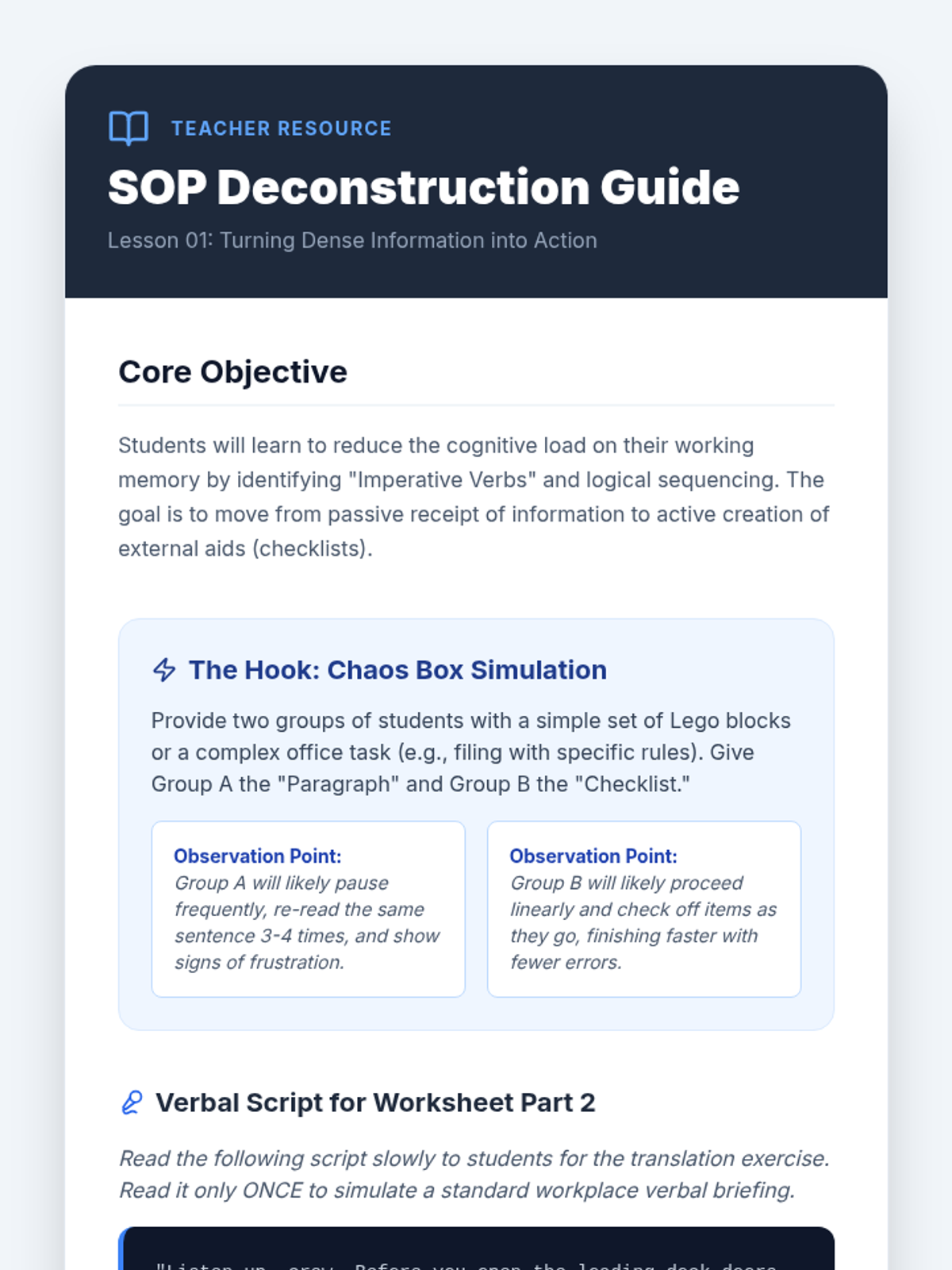
Students analyze written and verbal SOPs to identify imperative verbs and logical sequencing, practicing the transition from dense text to actionable checklists.
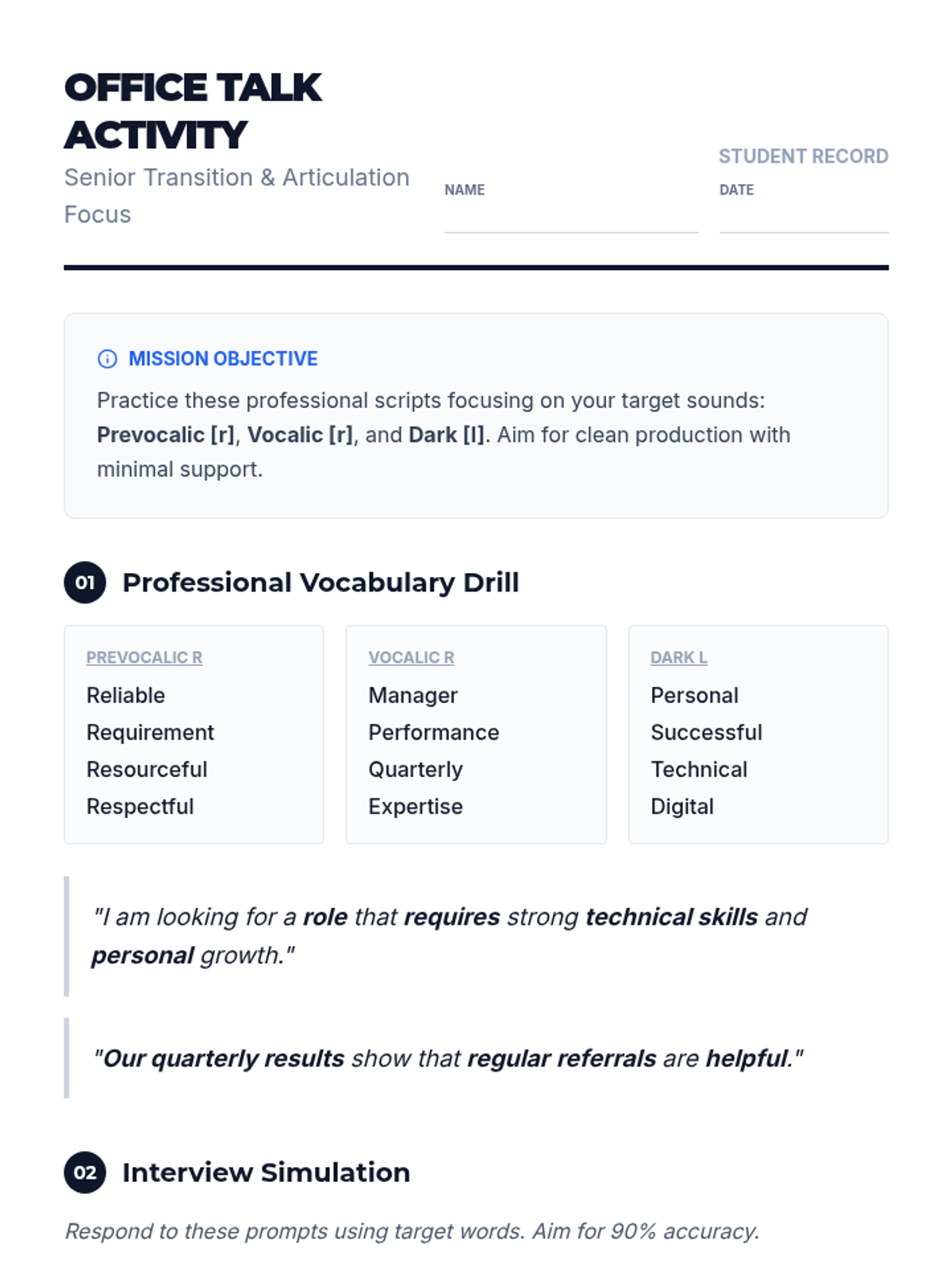
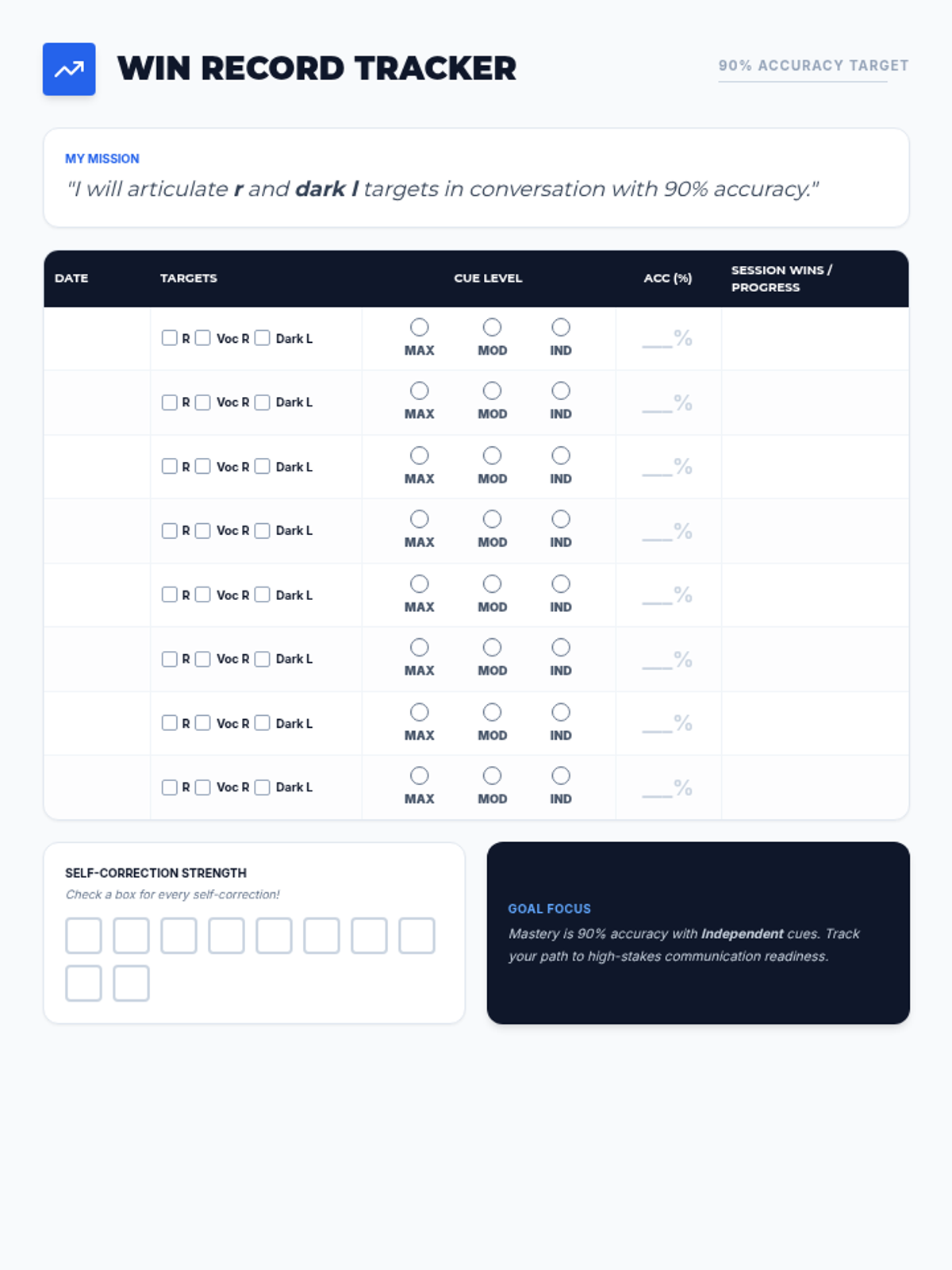
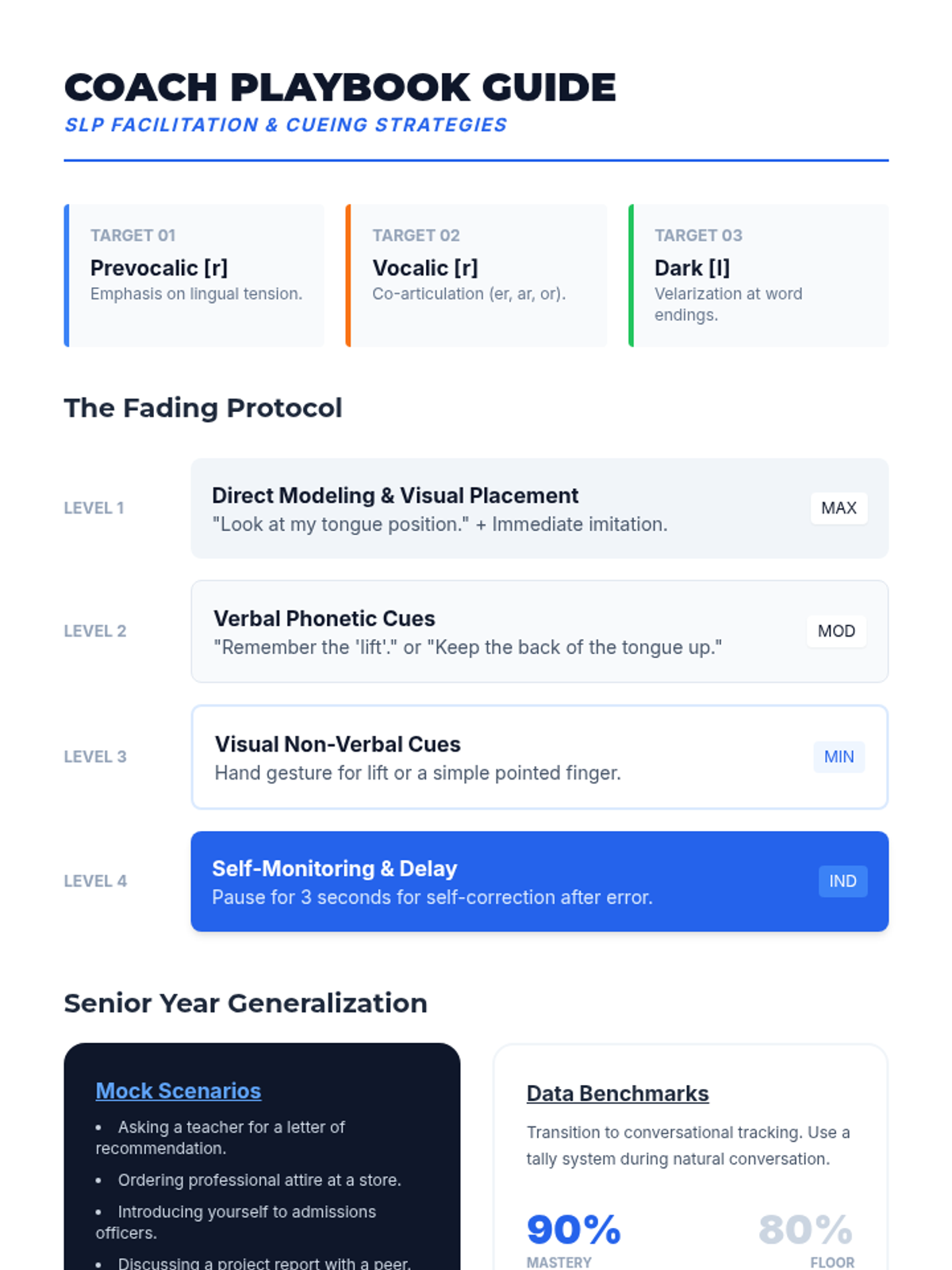
A comprehensive lesson designed for high school seniors to master difficult articulation targets ('r' and 'dark l') within professional and real-world contexts. The materials focus on transition-readiness, interview skills, and self-monitoring to achieve 90% accuracy.
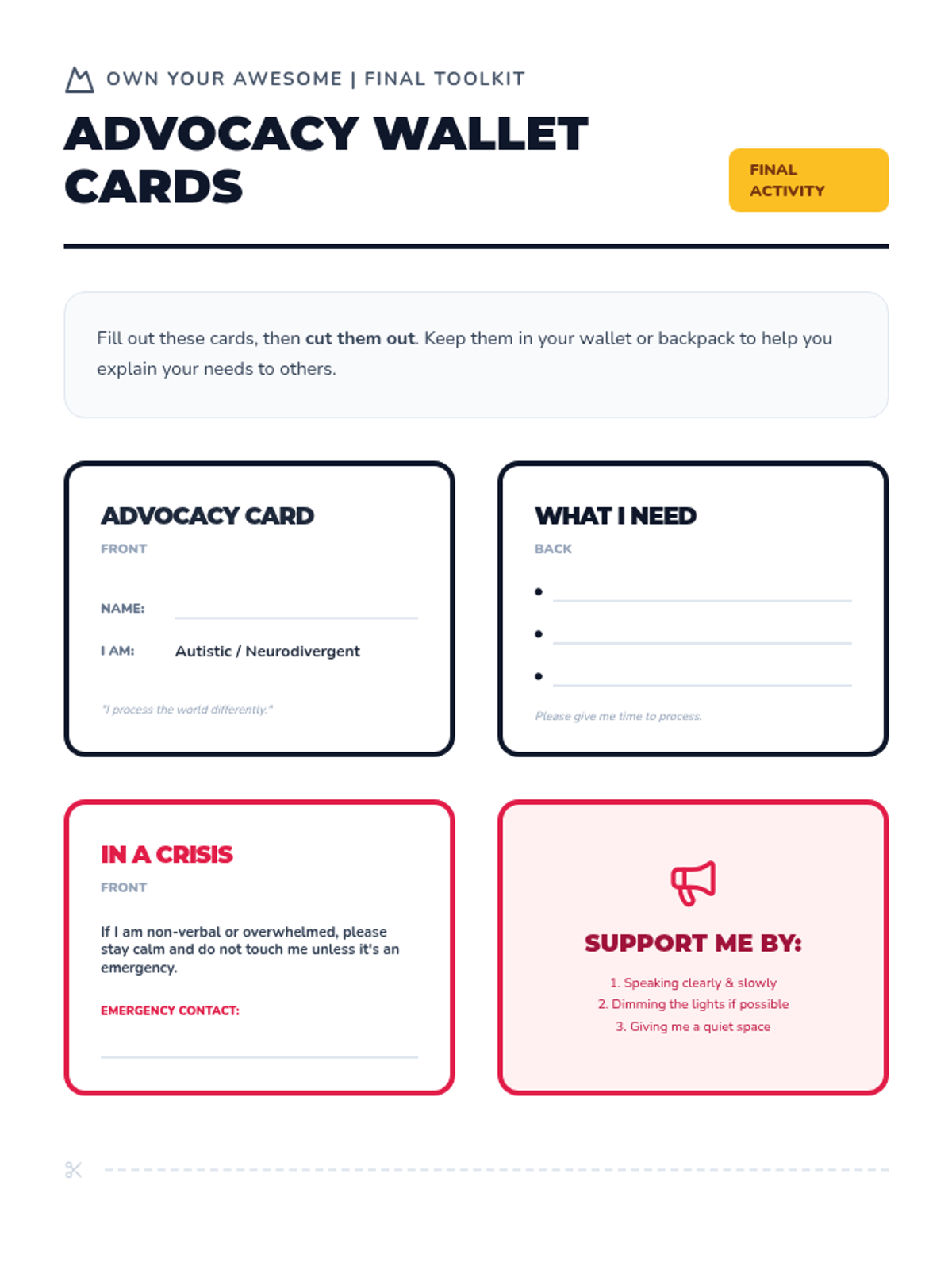
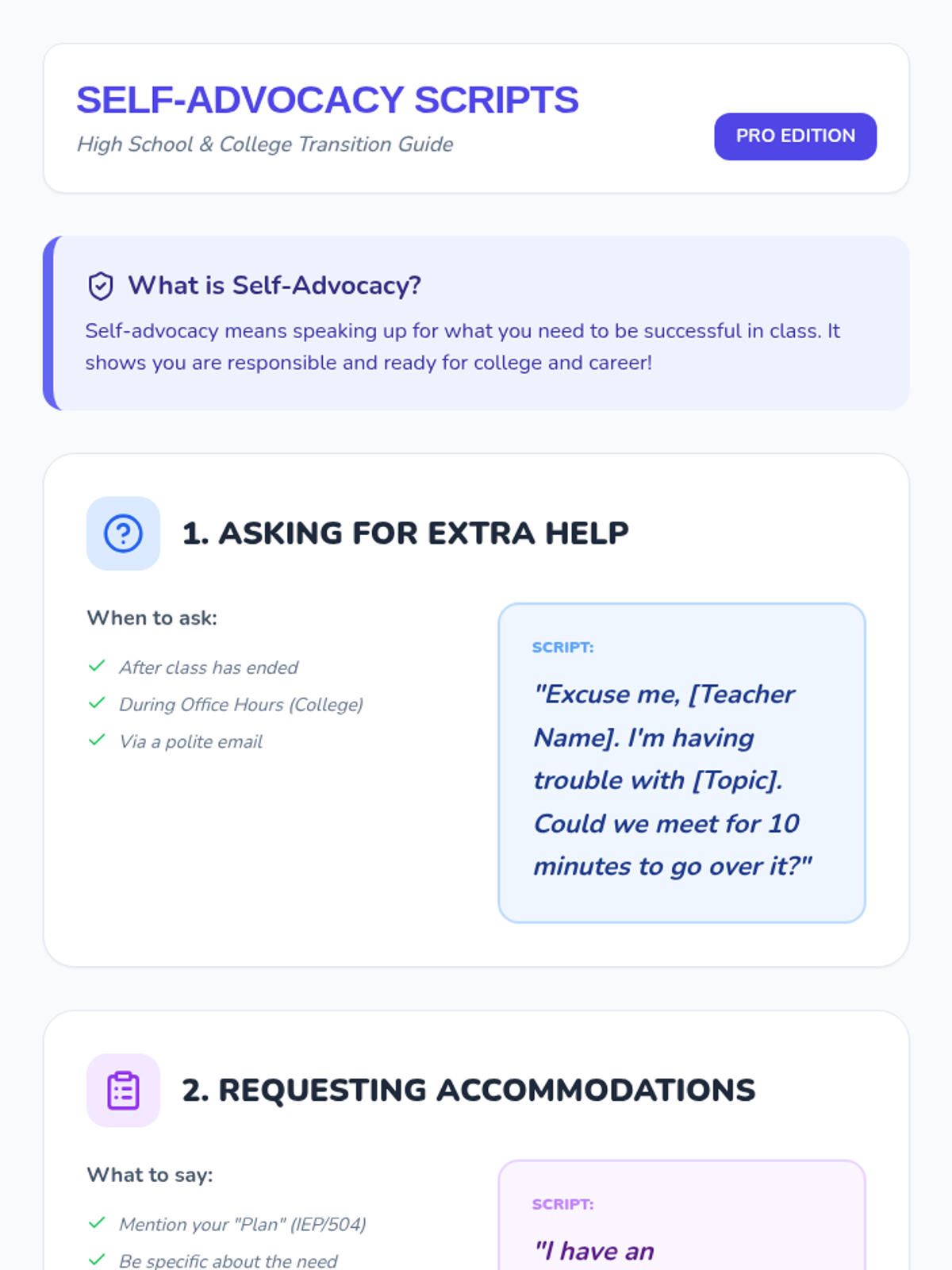
Creating a personalized self-advocacy toolkit and wallet cards for daily use in various environments.
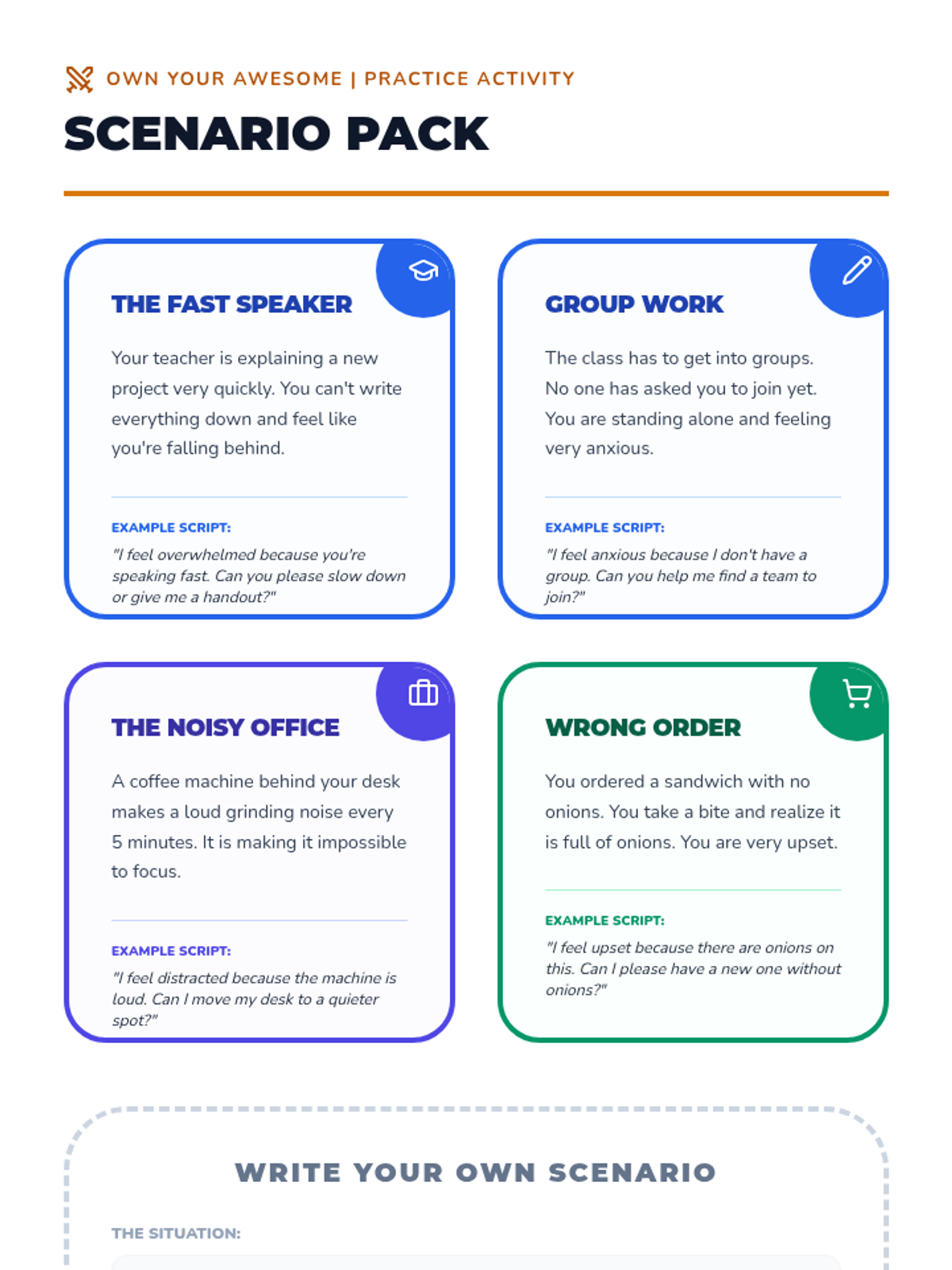
Active practice session with diverse role-play scenarios covering school, work, and community environments.
Navigating public spaces like stores, transit, and libraries with confidence and clear scripts.
Applying advocacy skills to workplace settings, including professional communication and disclosure decisions.
Practicing self-advocacy in the classroom, including asking for accommodations and clarifying instructions.
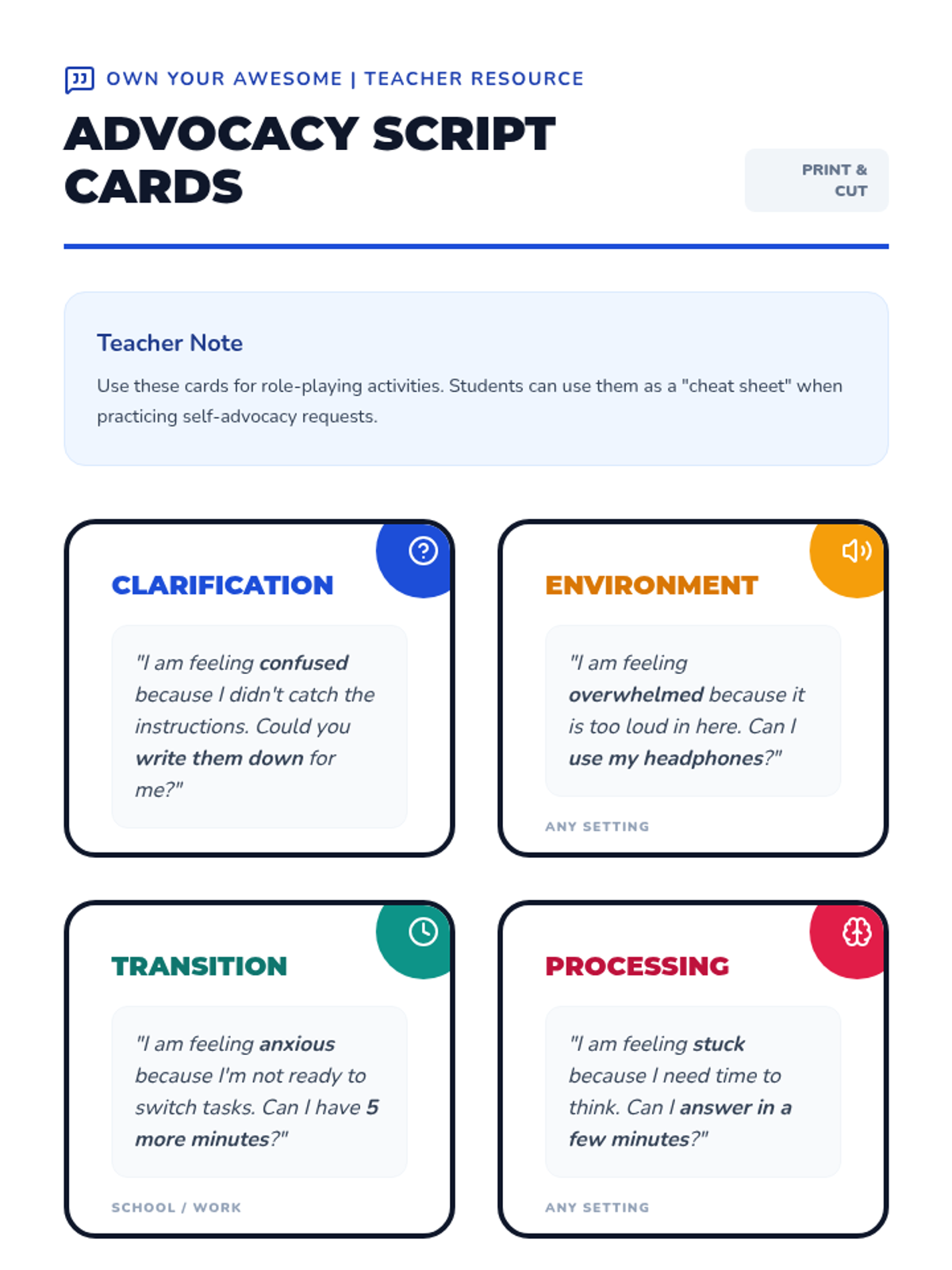
Mastering the structure of a self-advocacy request using clear scripts and communication strategies.
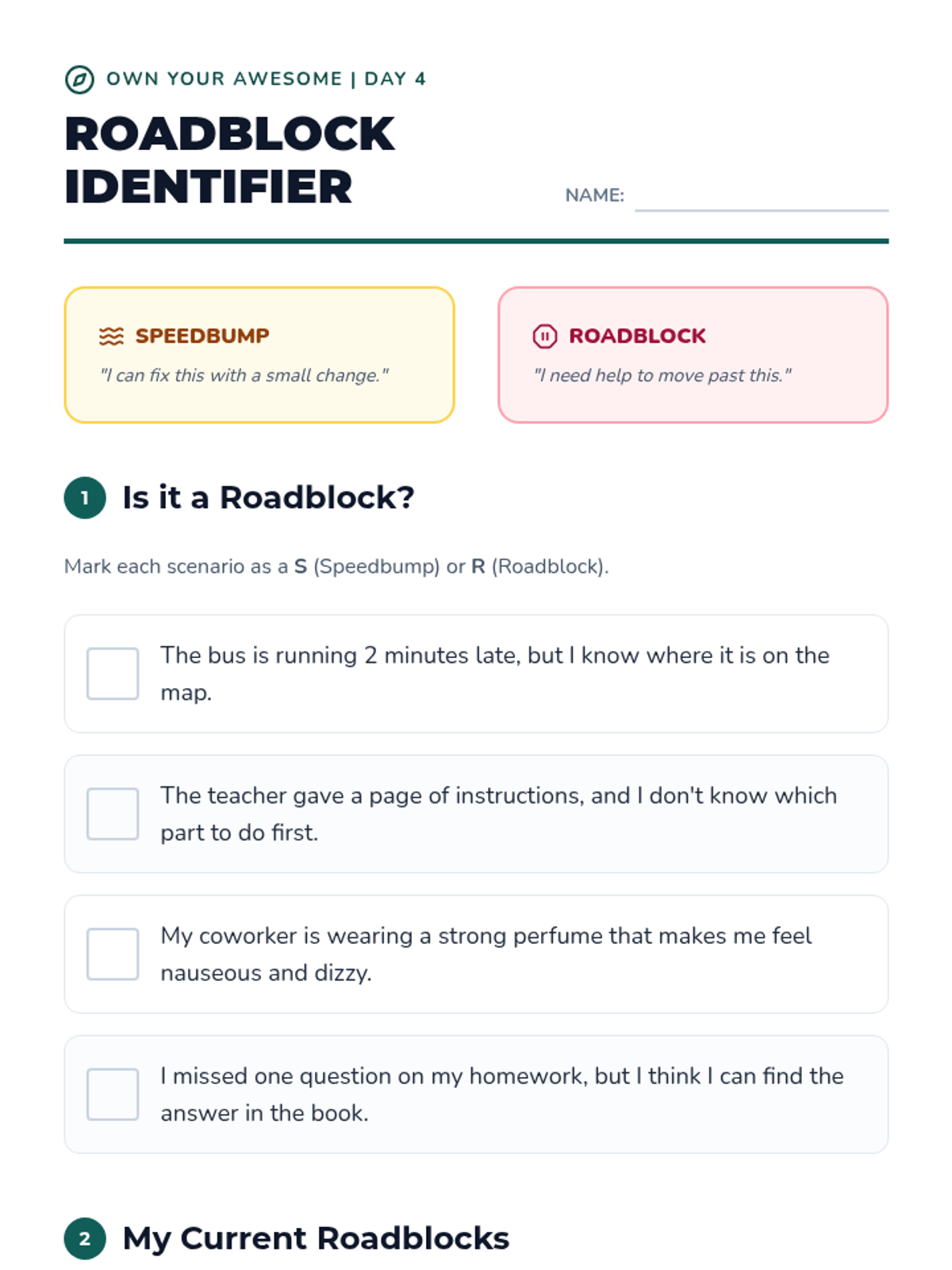
Learning to identify specific roadblocks in real-time and determining what kind of support is required.
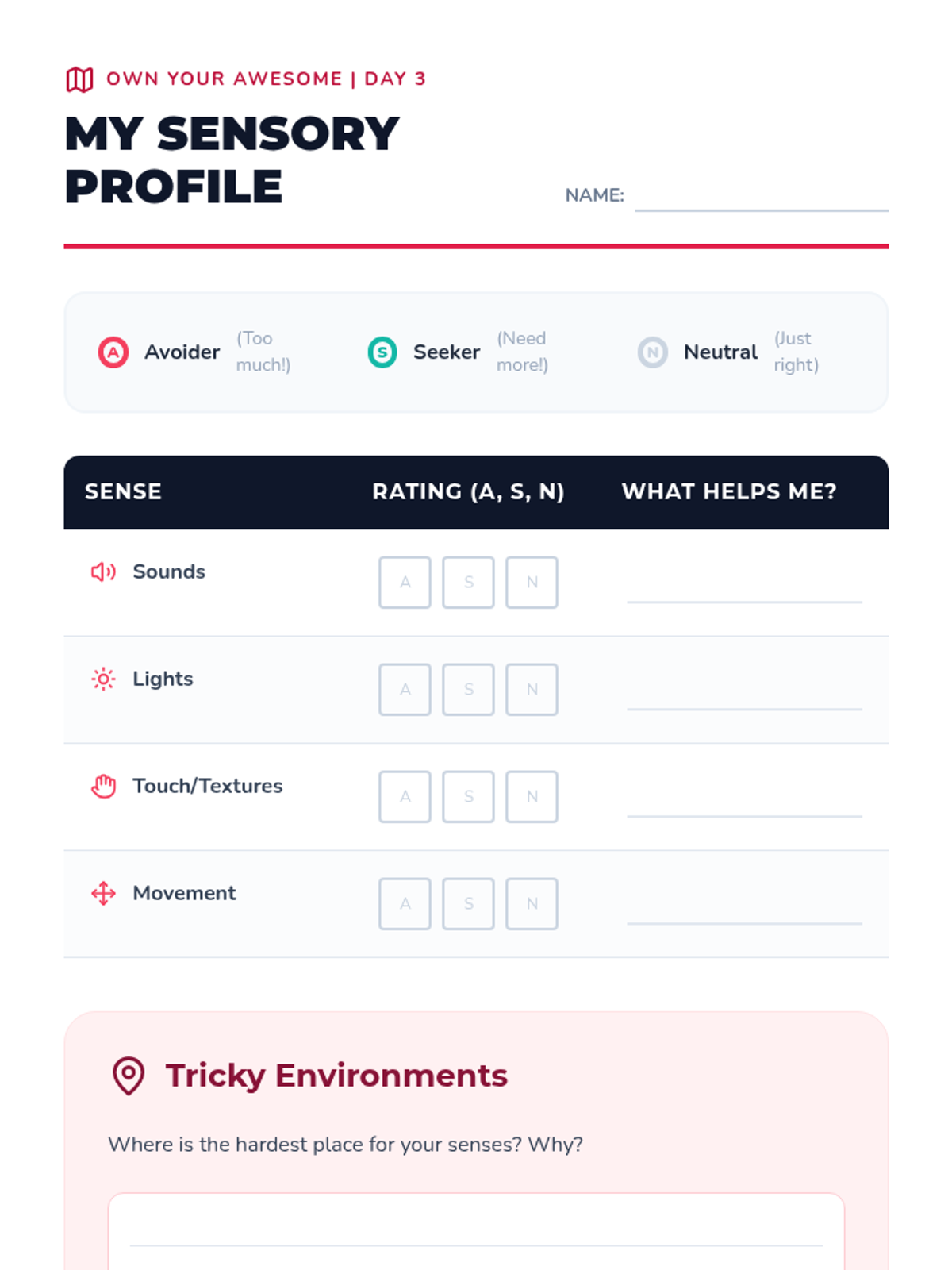
Mapping personal sensory profiles to identify environmental triggers and supportive tools across different settings.
A 30-minute lesson introducing autism through a neurodiversity-affirming lens, focusing on unique processing styles and personal identity.
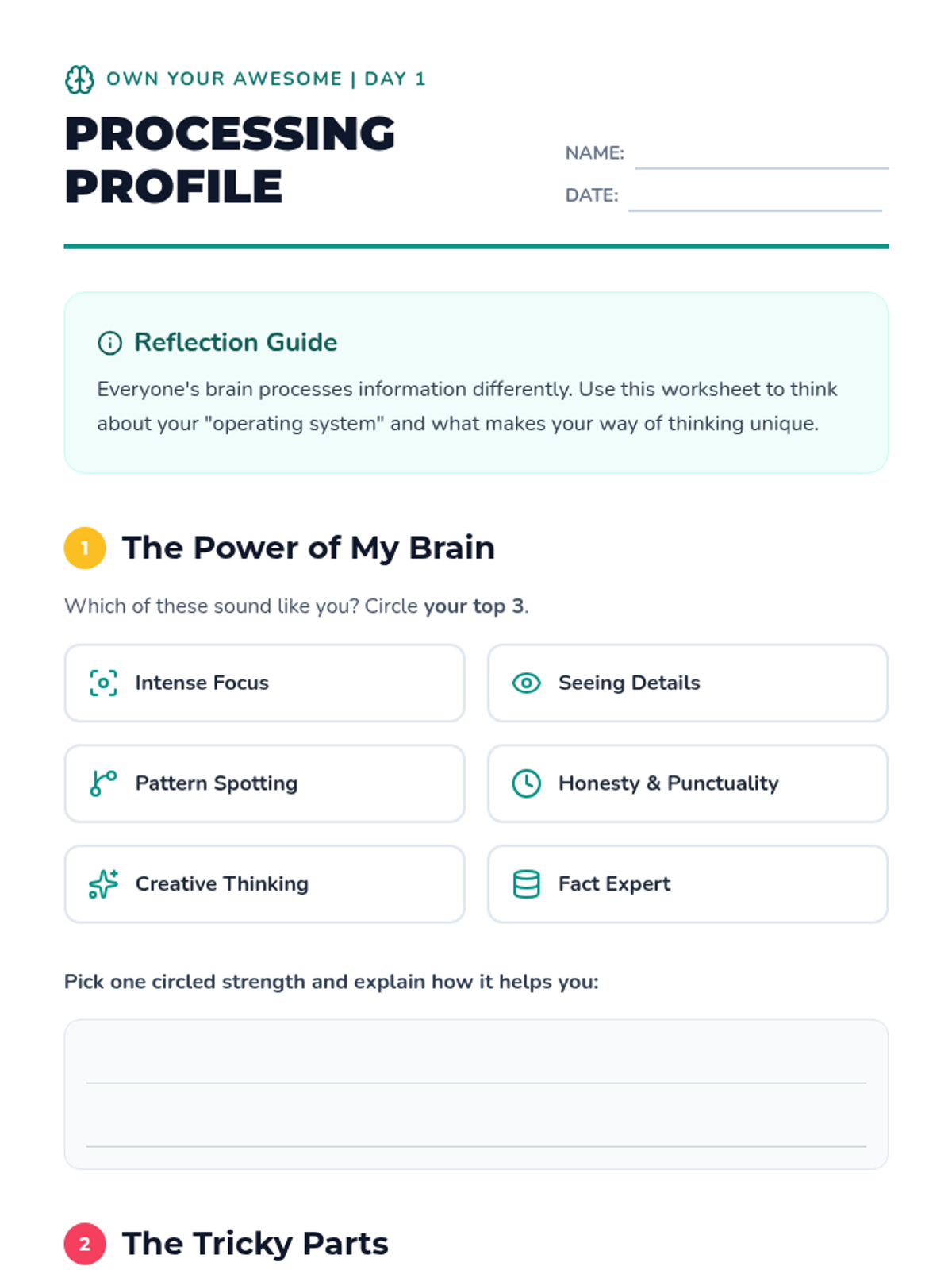
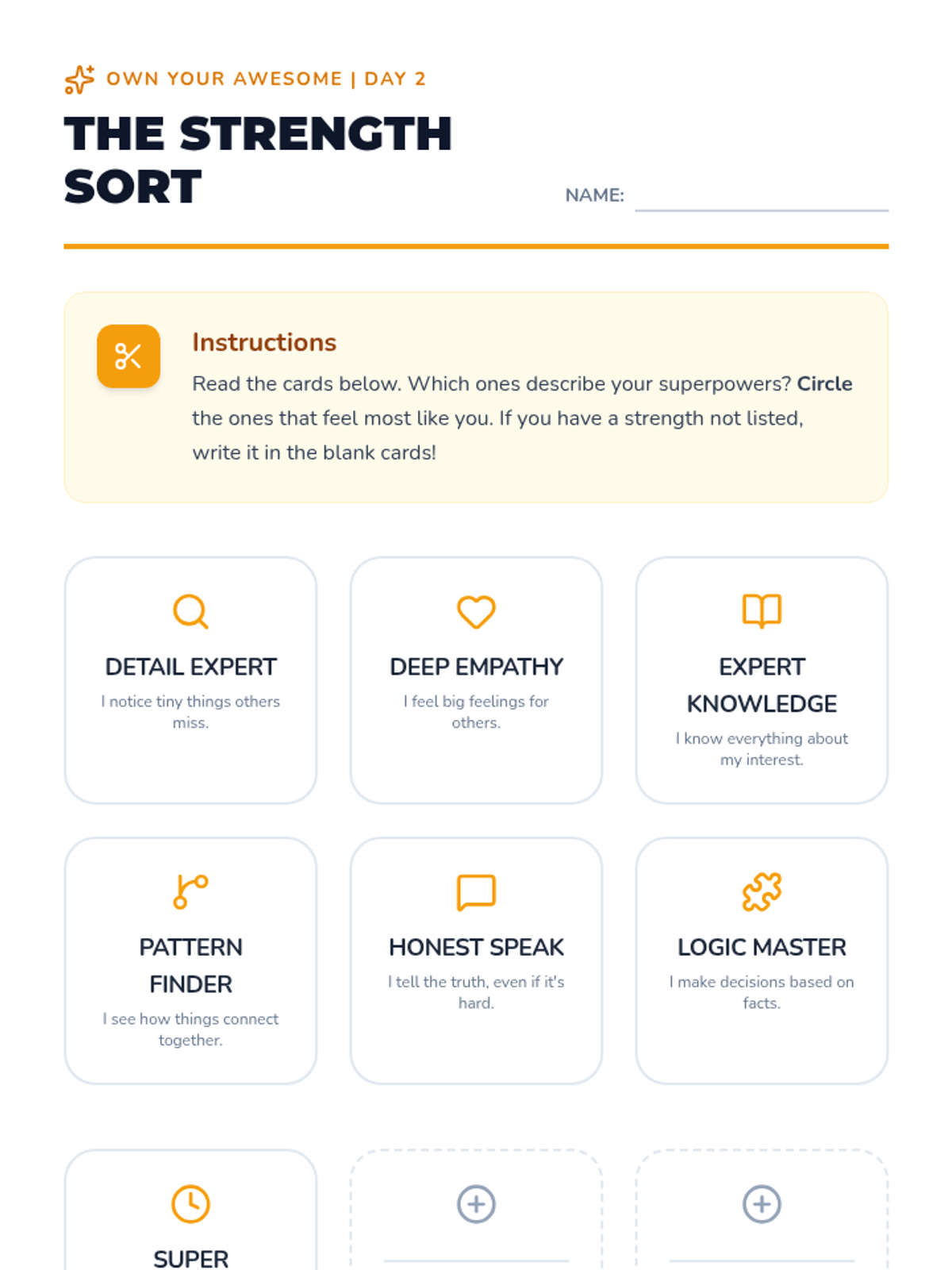
Exploring cognitive and social strengths, moving from a deficit model to a talent-focused understanding of the self.
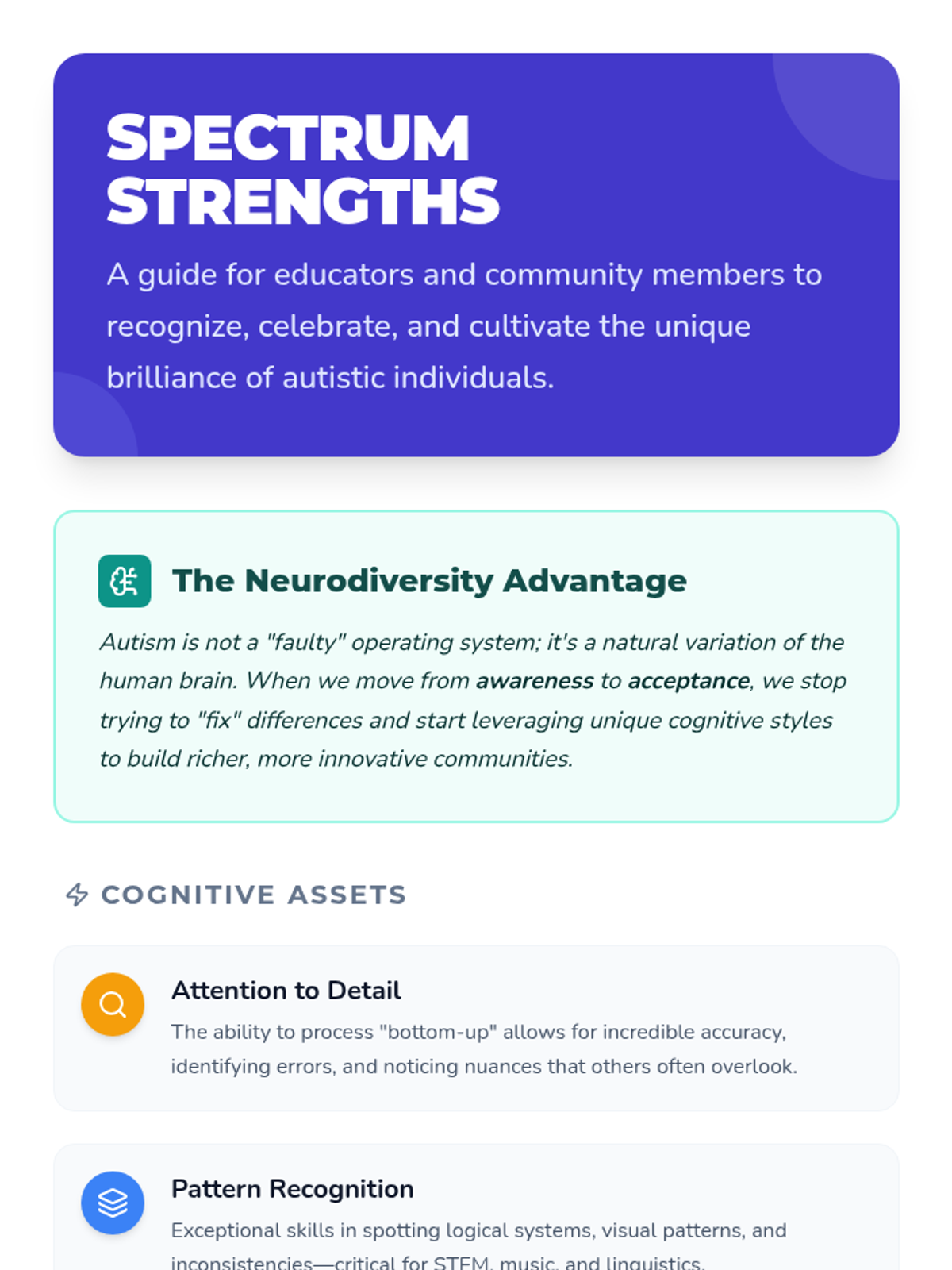
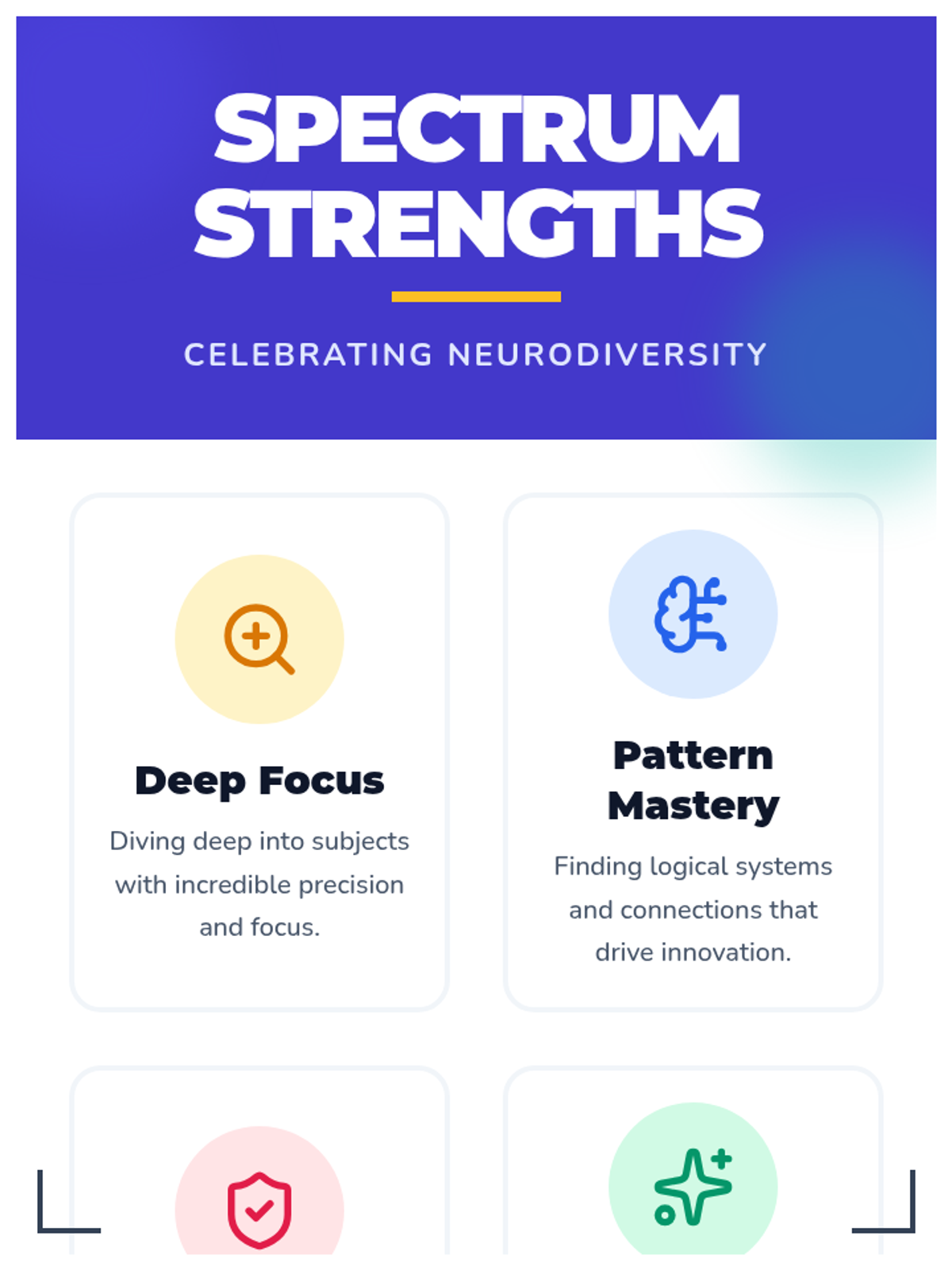
A lesson focused on shifting the narrative from autism awareness to acceptance by celebrating cognitive and personal strengths. Includes teacher resources and student-facing materials for classrooms and community spaces.
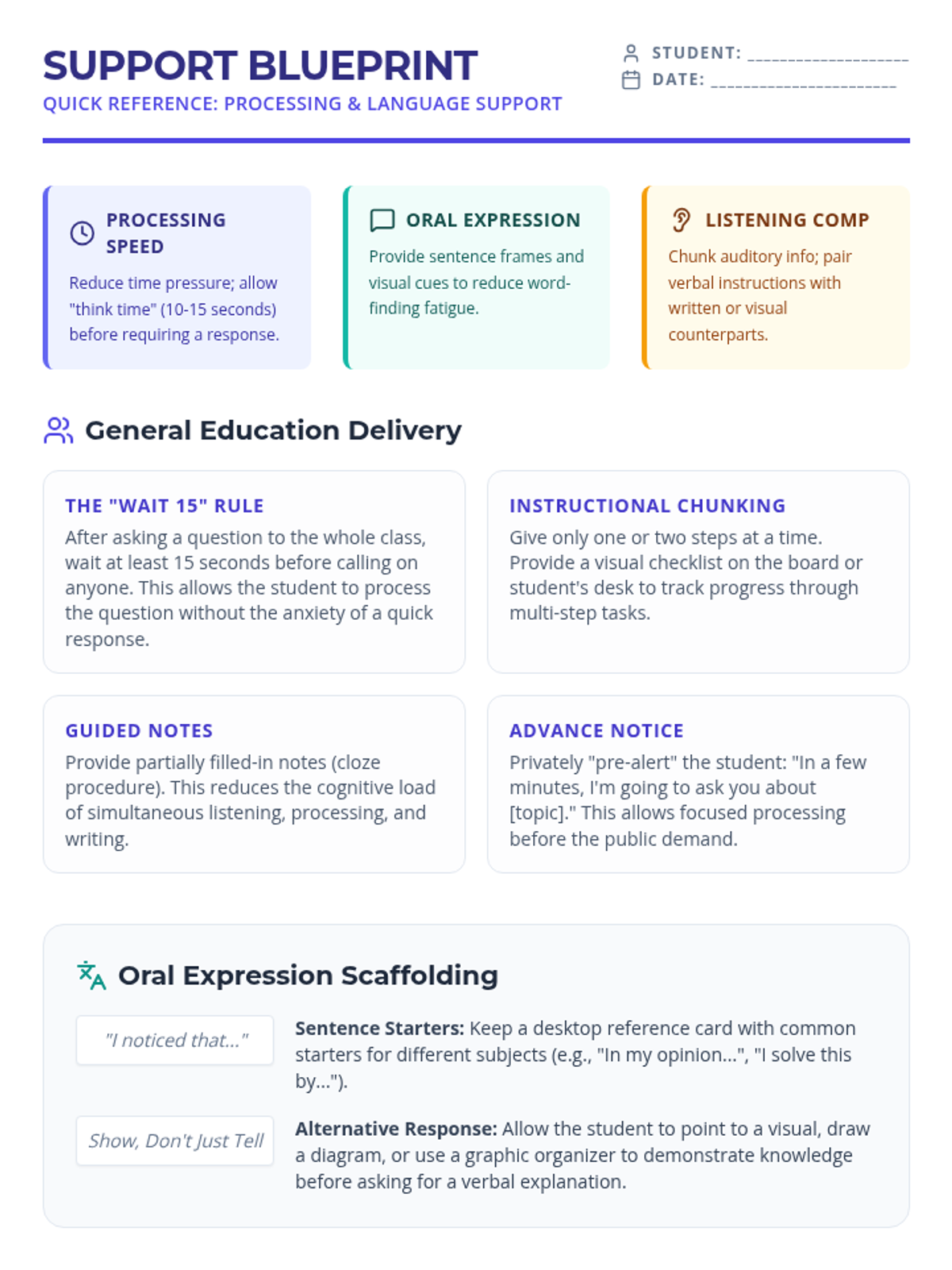
A comprehensive set of quick-reference strategies and monitoring tools for supporting students with low processing speed and oral language challenges in general education and small group settings.
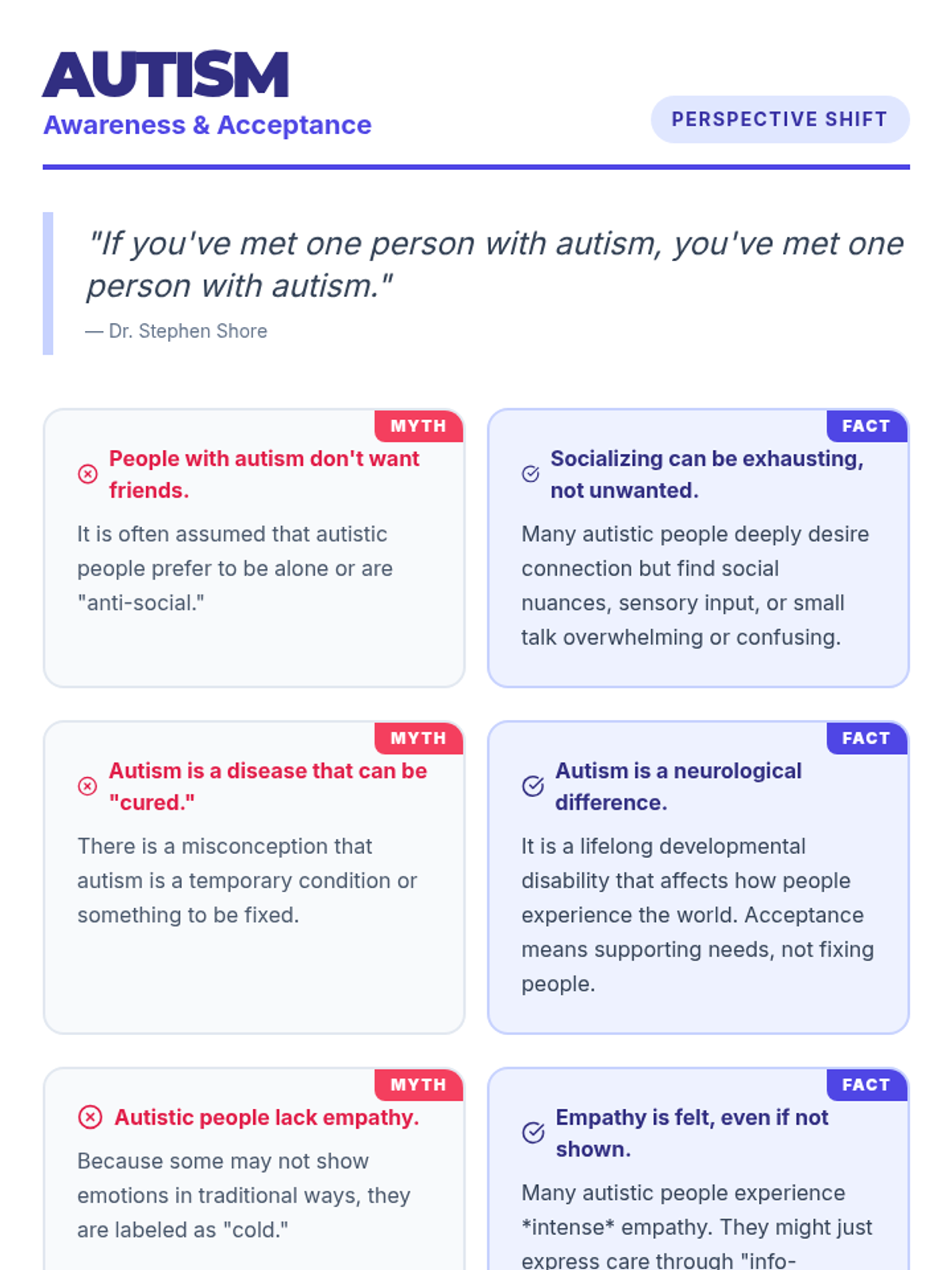
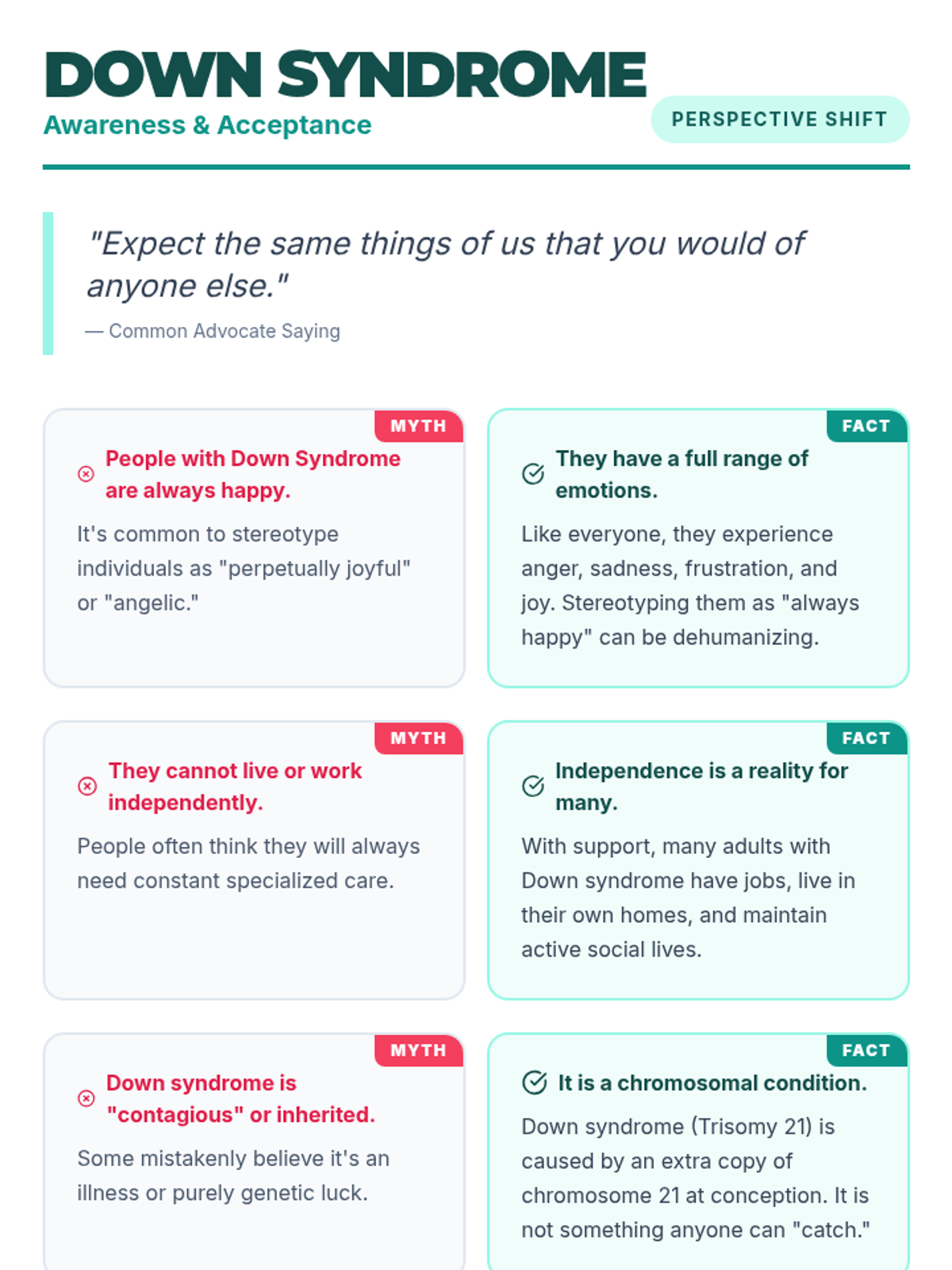
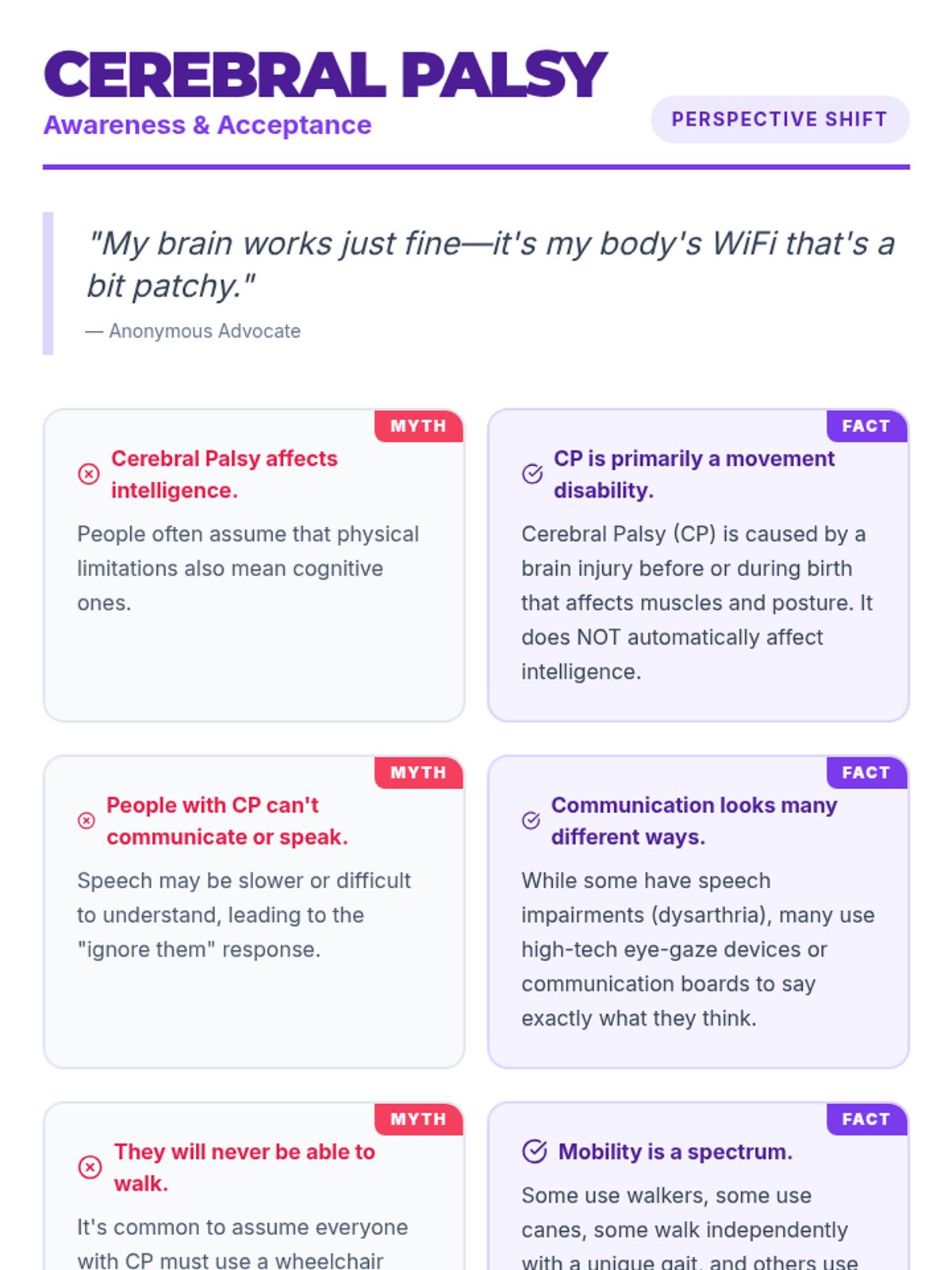
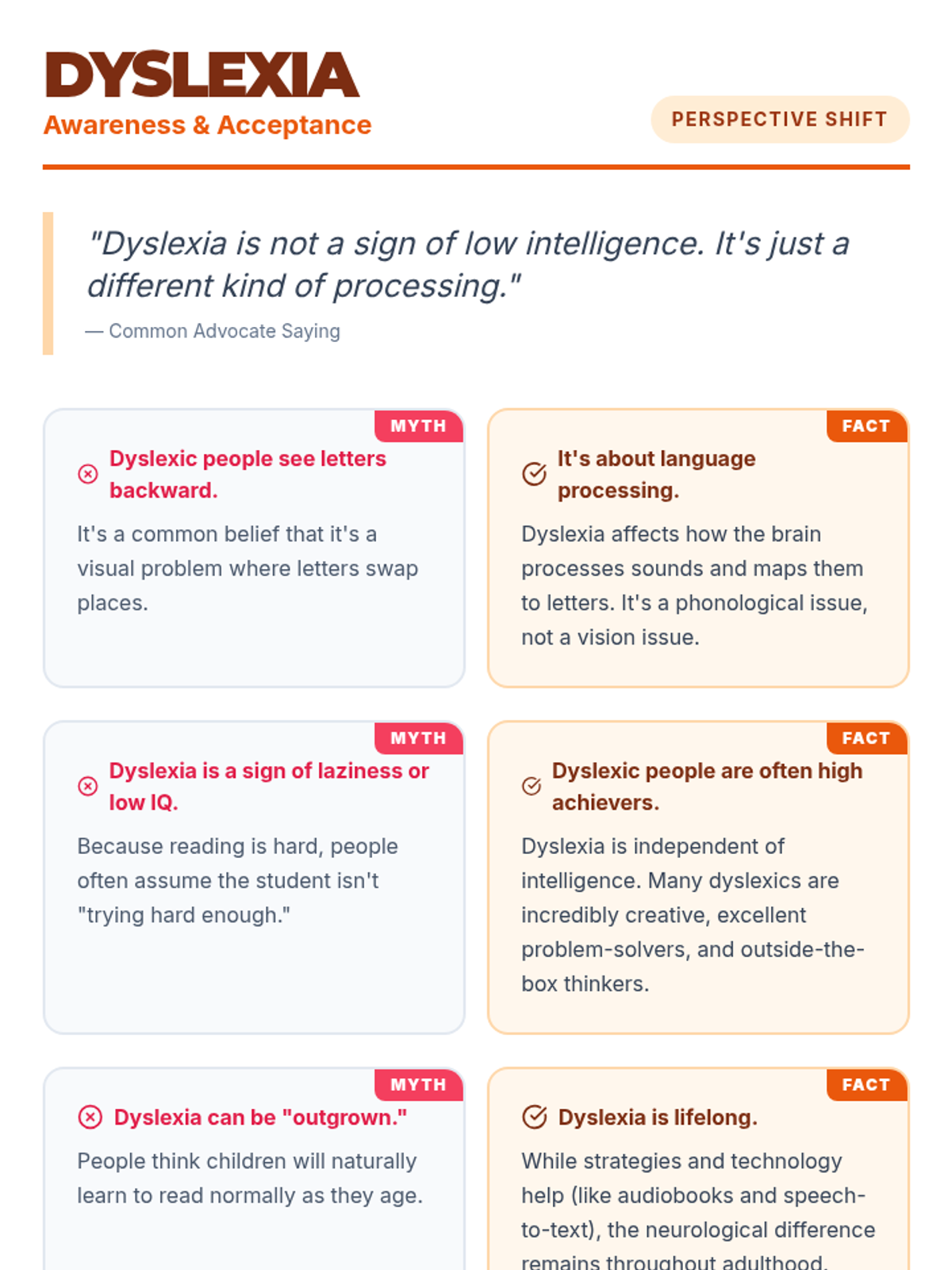
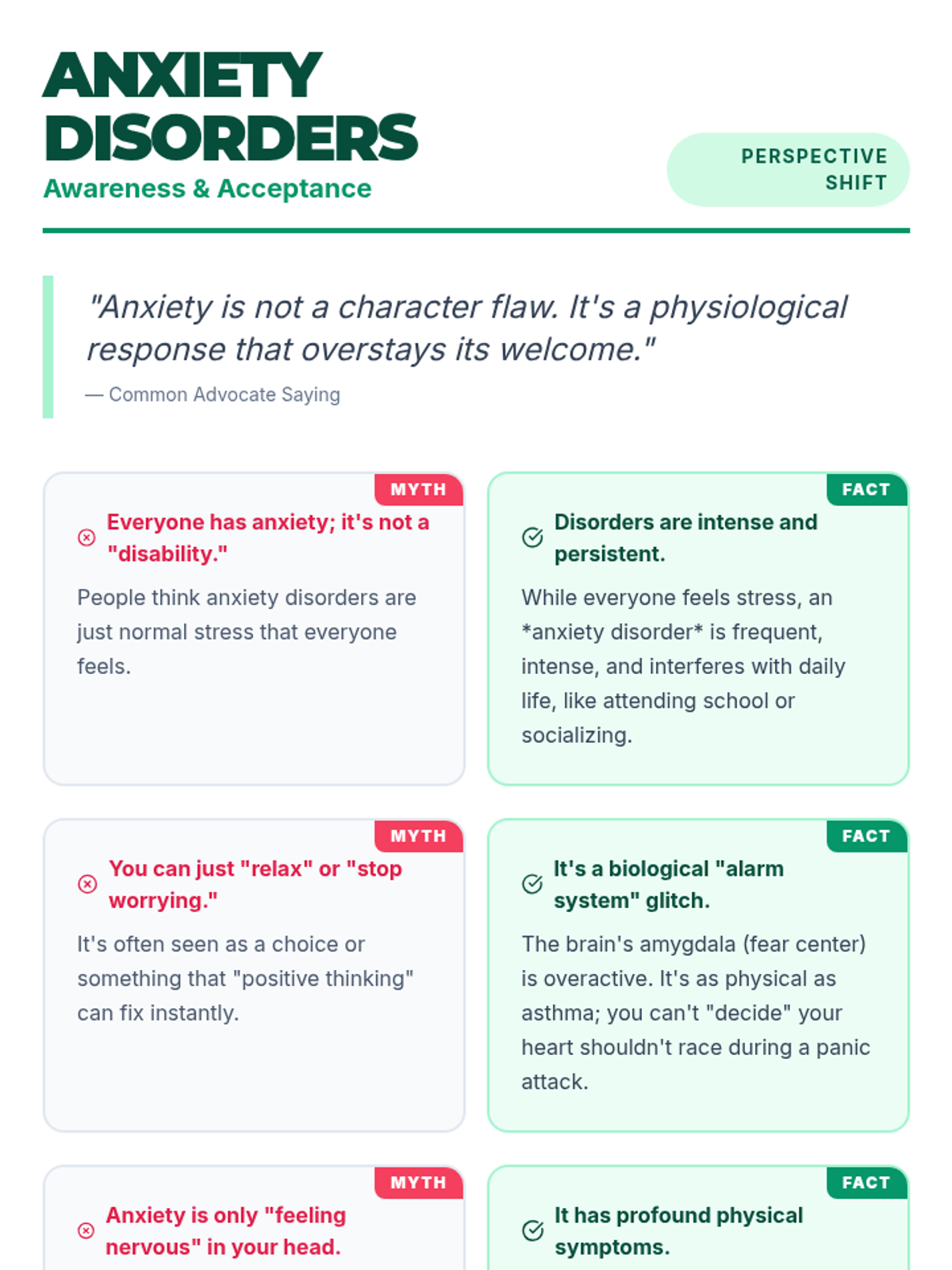
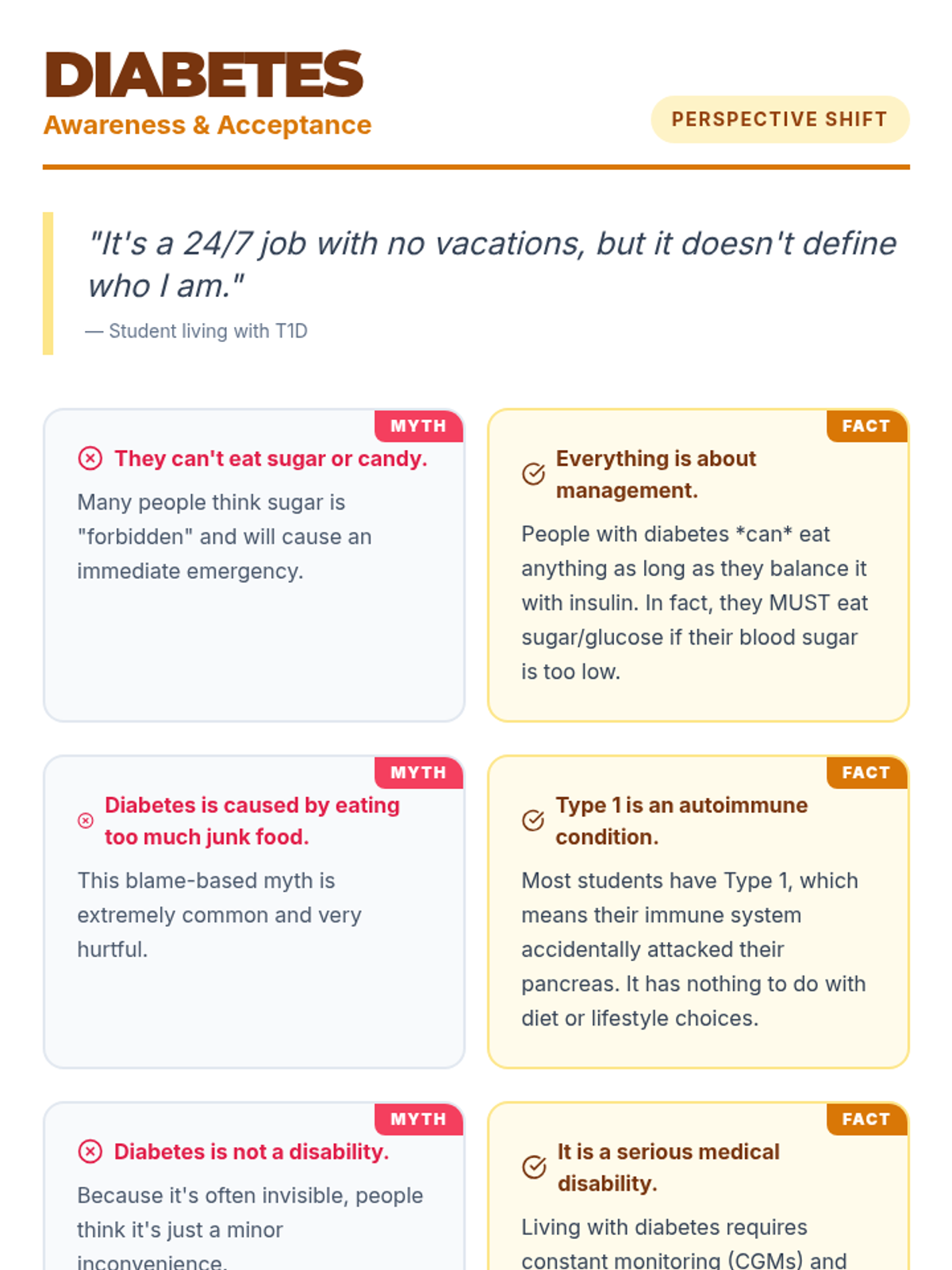
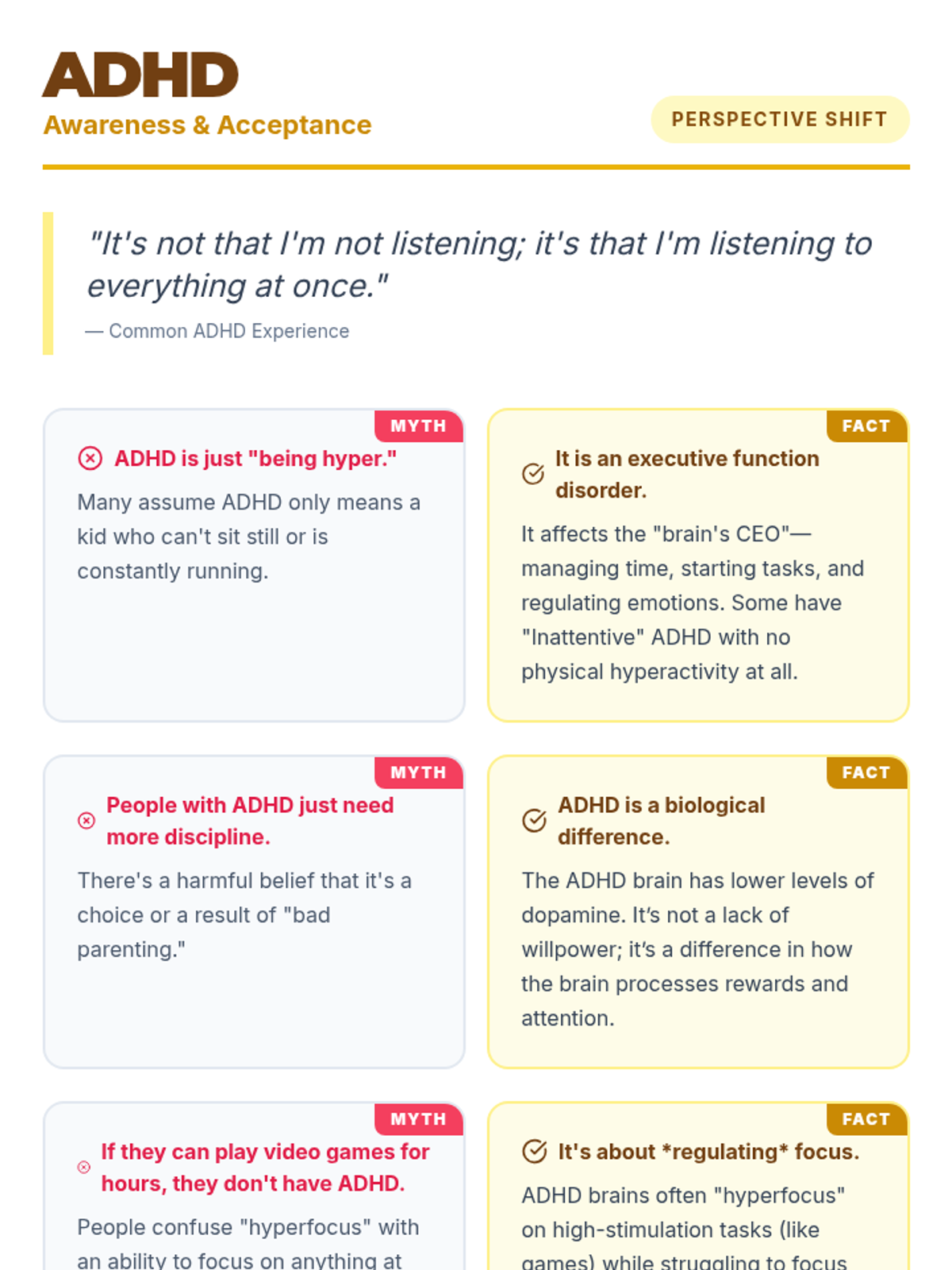
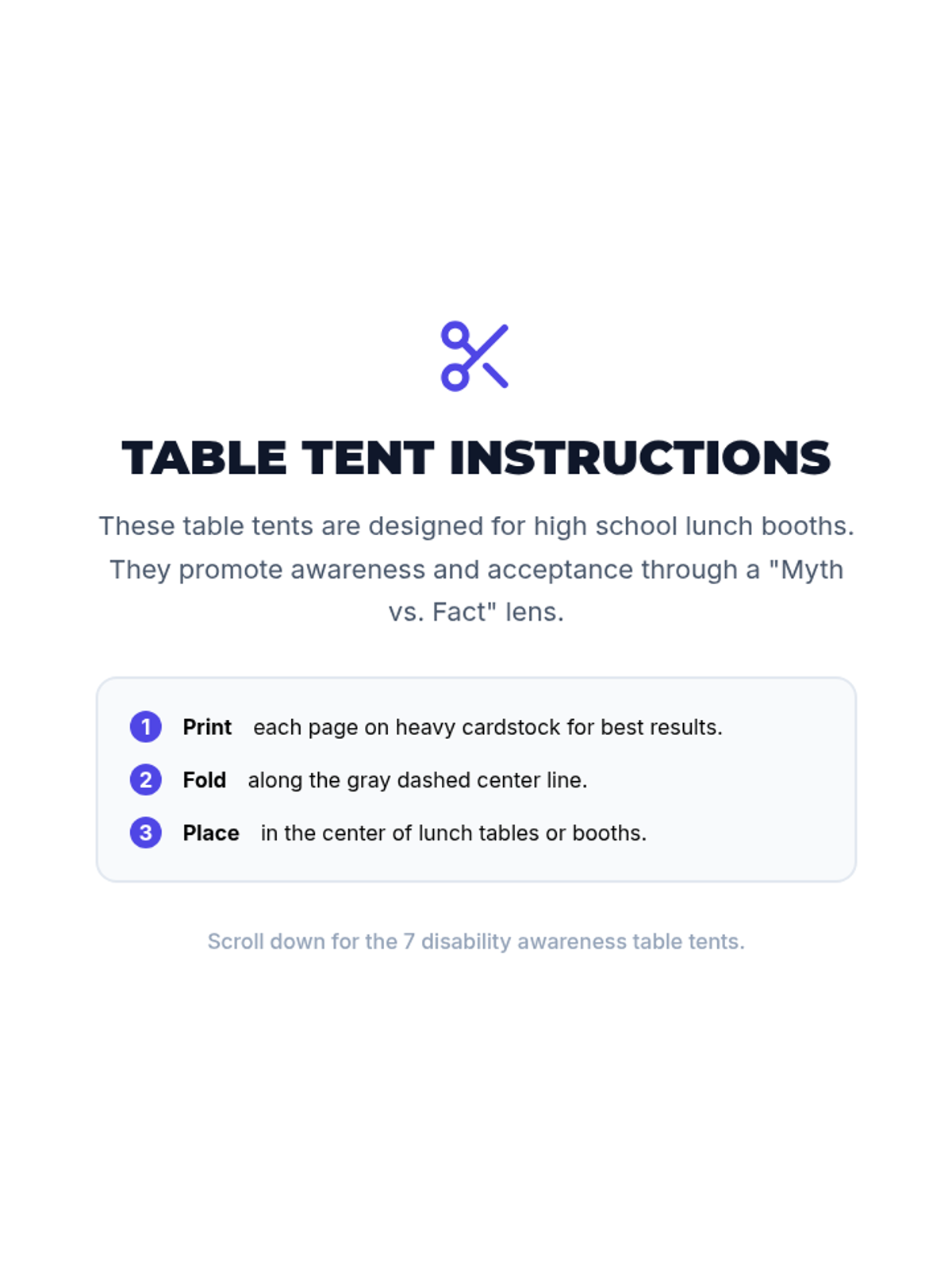
A series of high-impact infographic handouts designed for high school lunch table booths to promote disability awareness and acceptance through myth-busting.
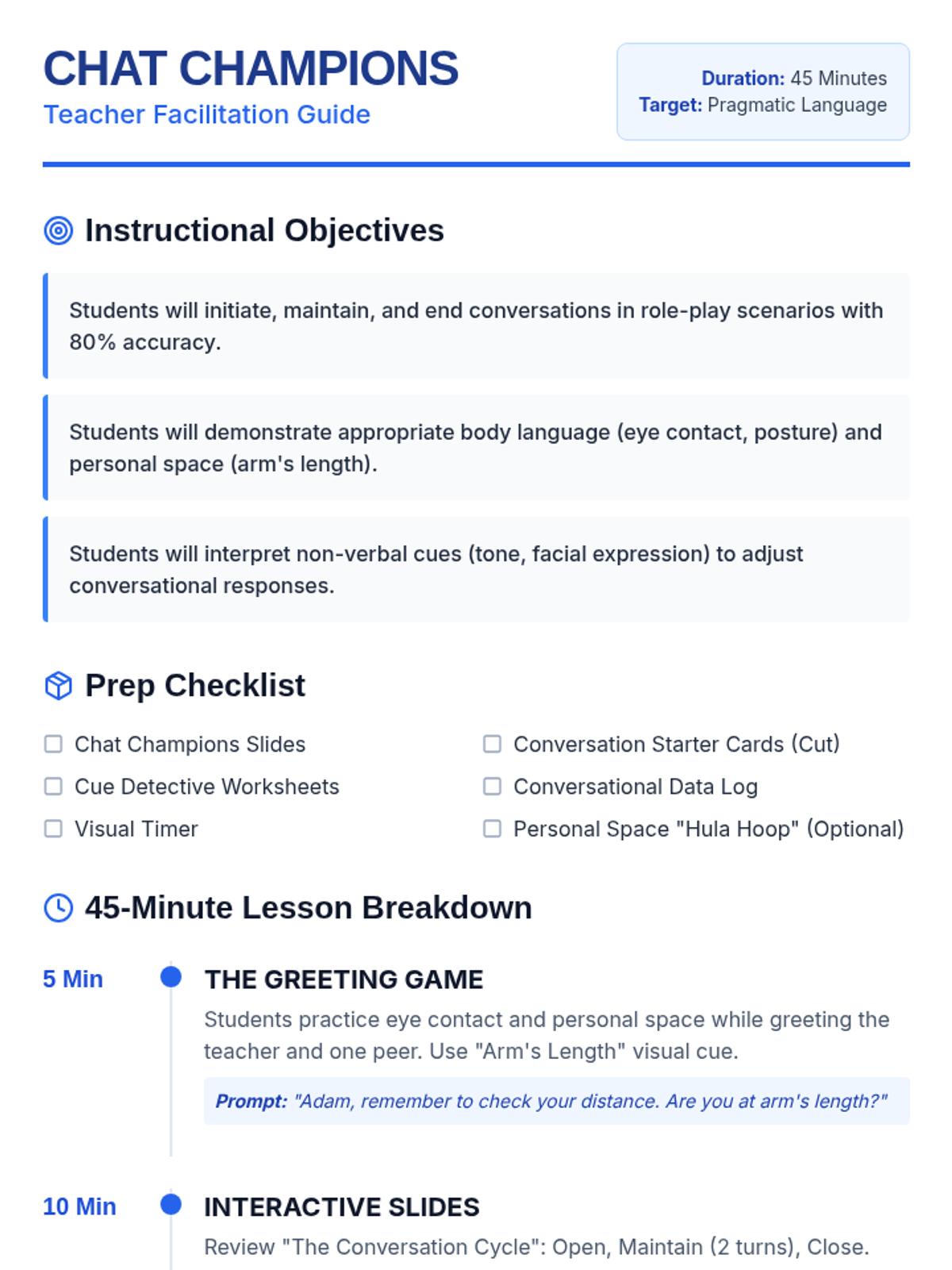
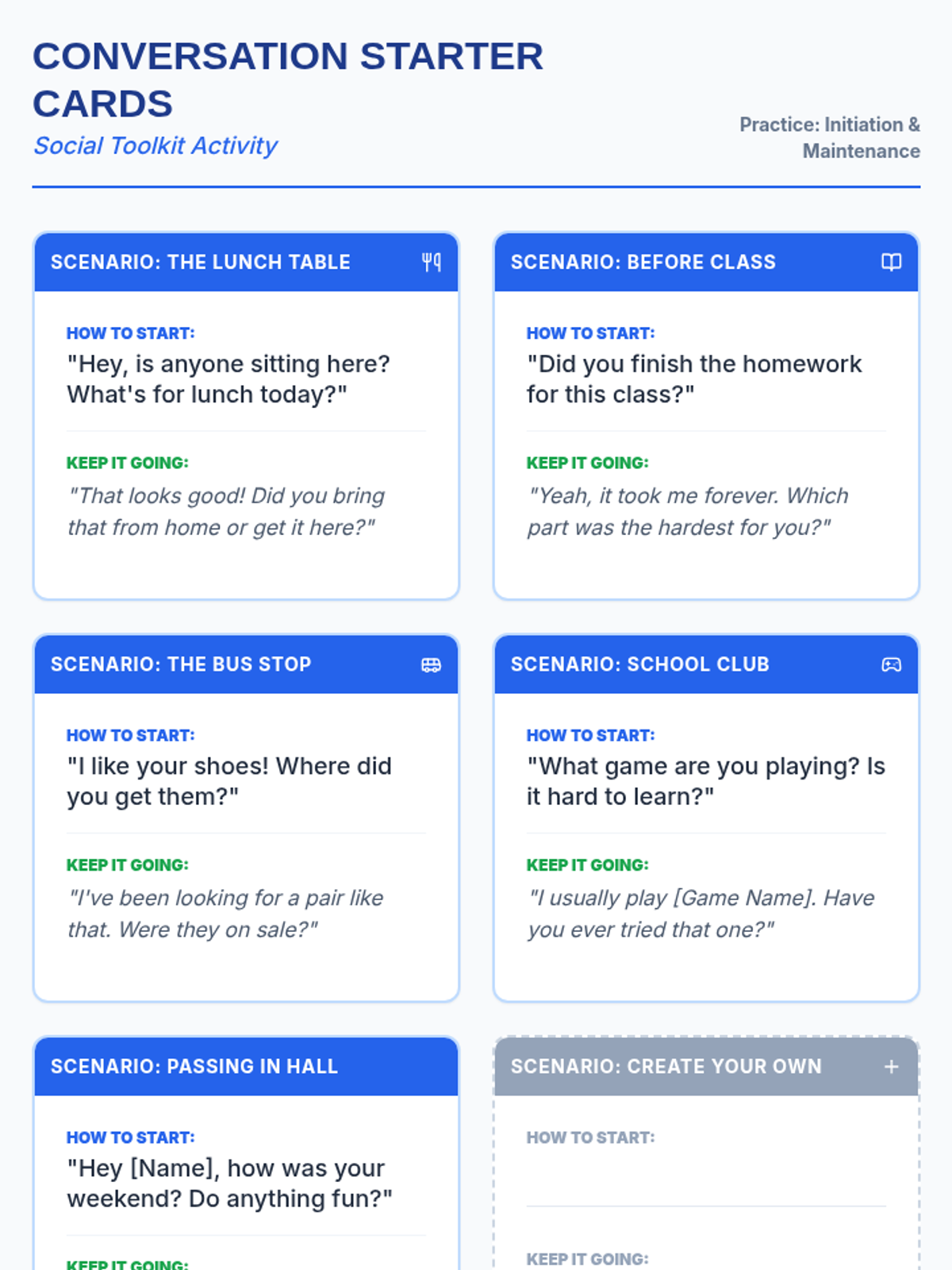
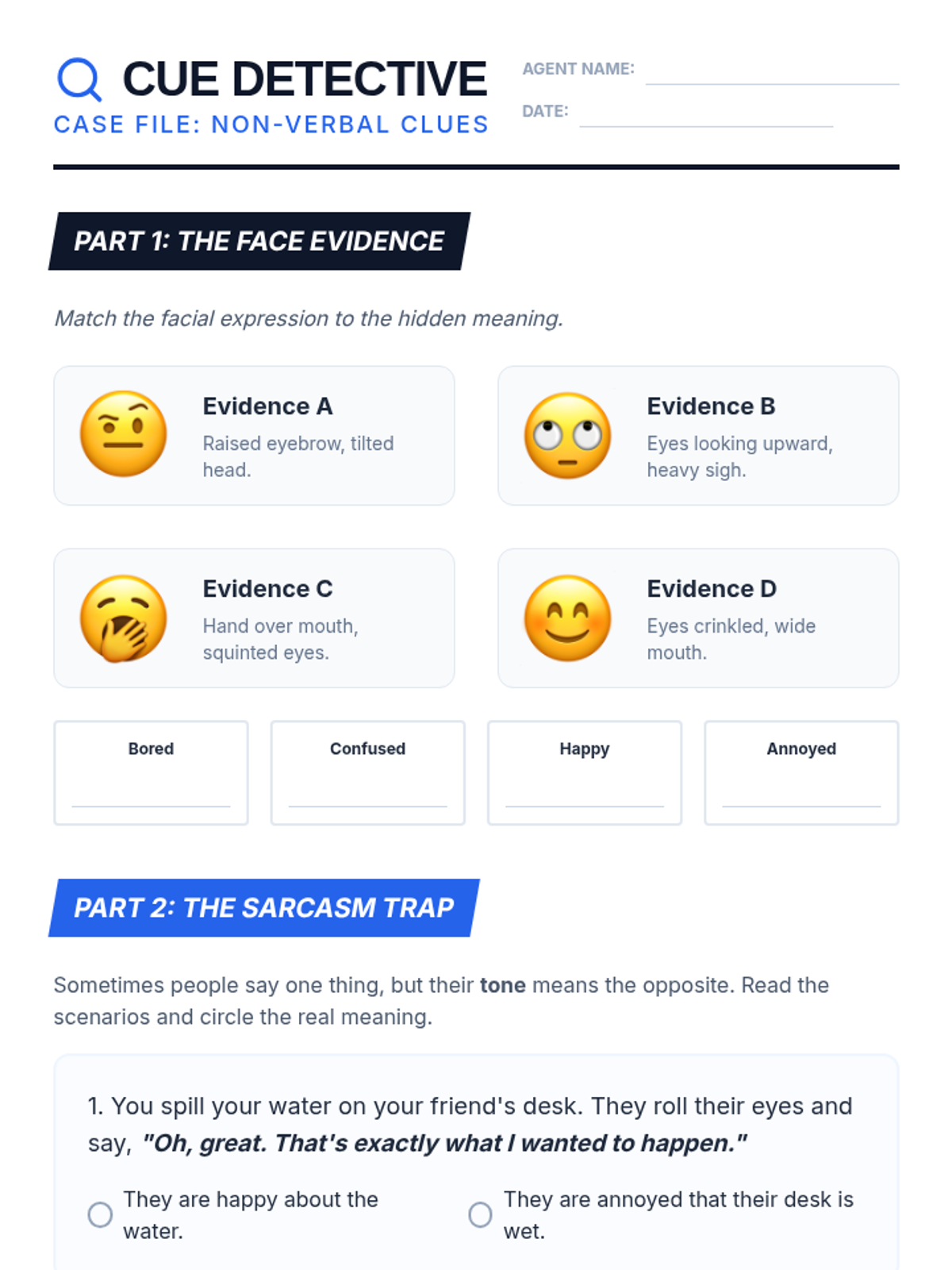
A 45-minute targeted lesson focusing on the mechanics of conversation: starting, maintaining, and ending interactions, along with body language and non-verbal cues.
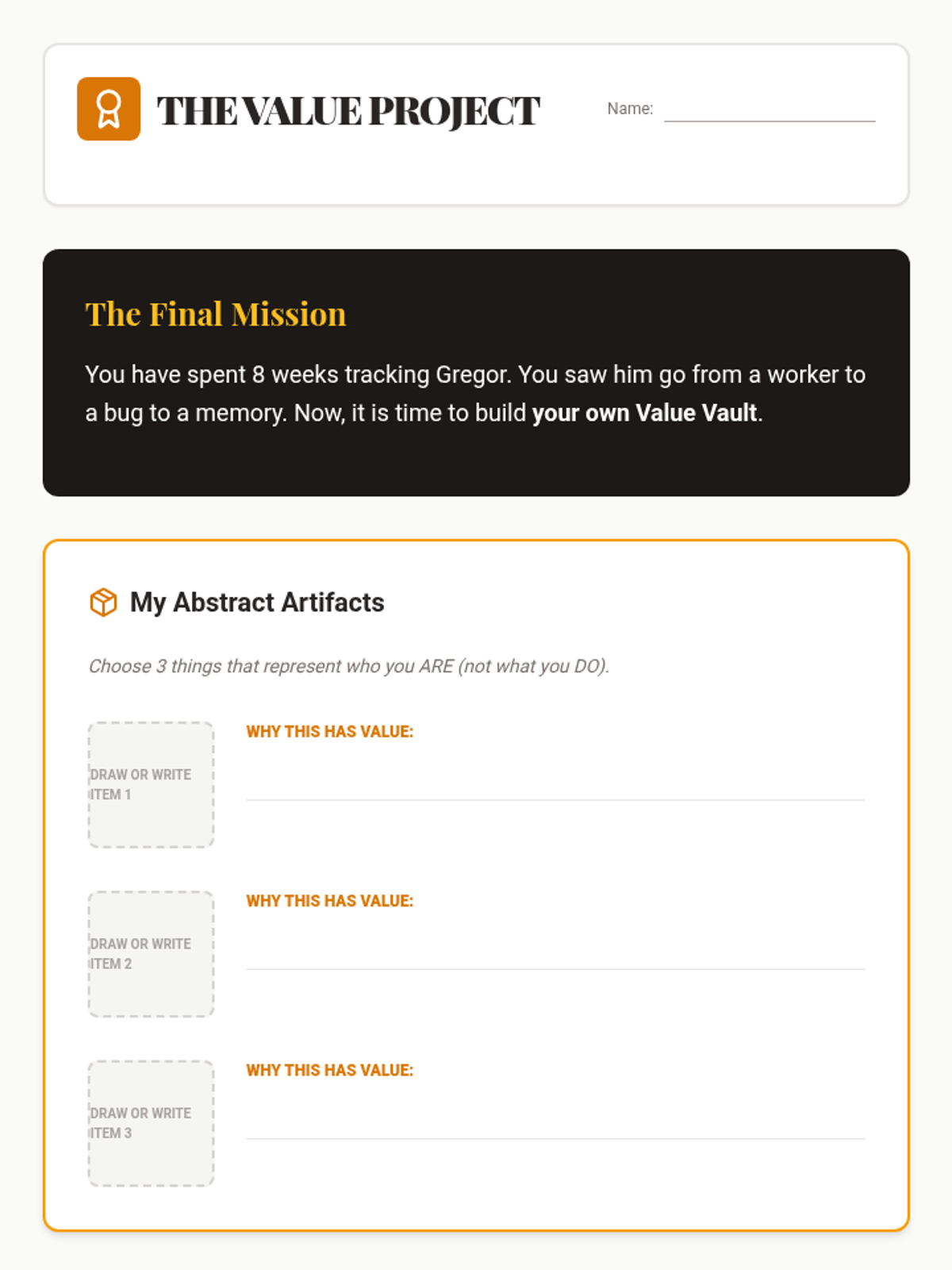
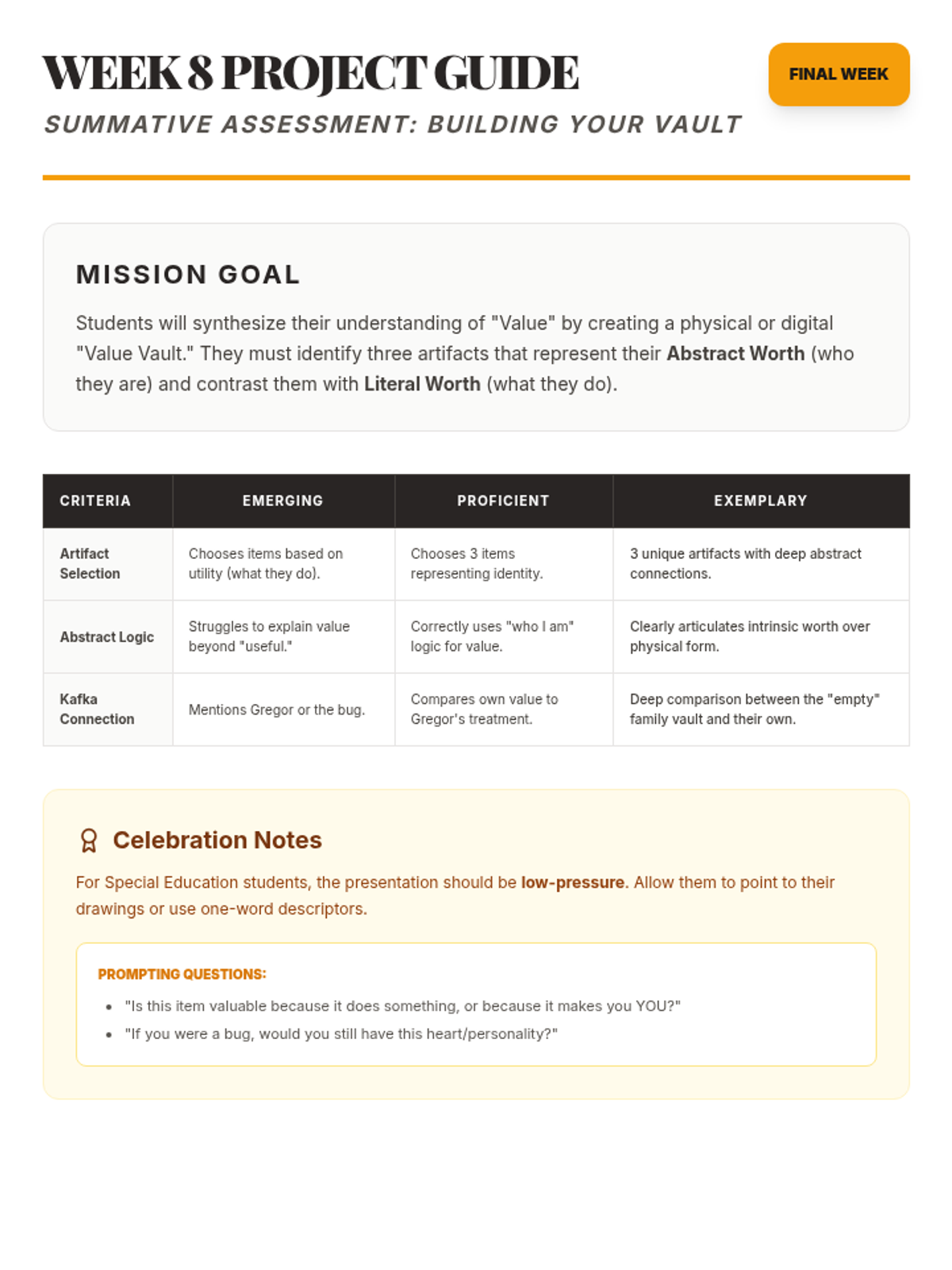
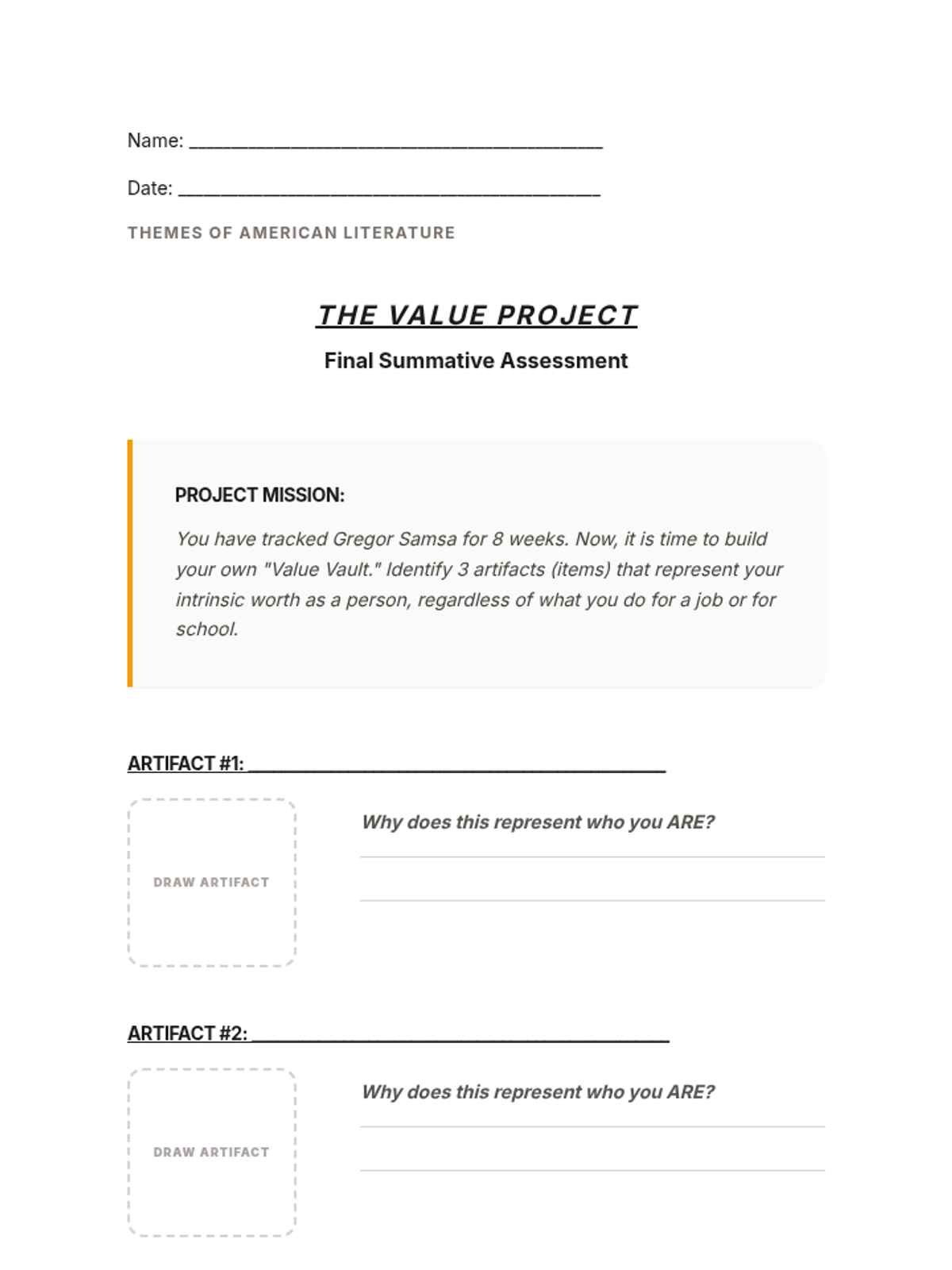
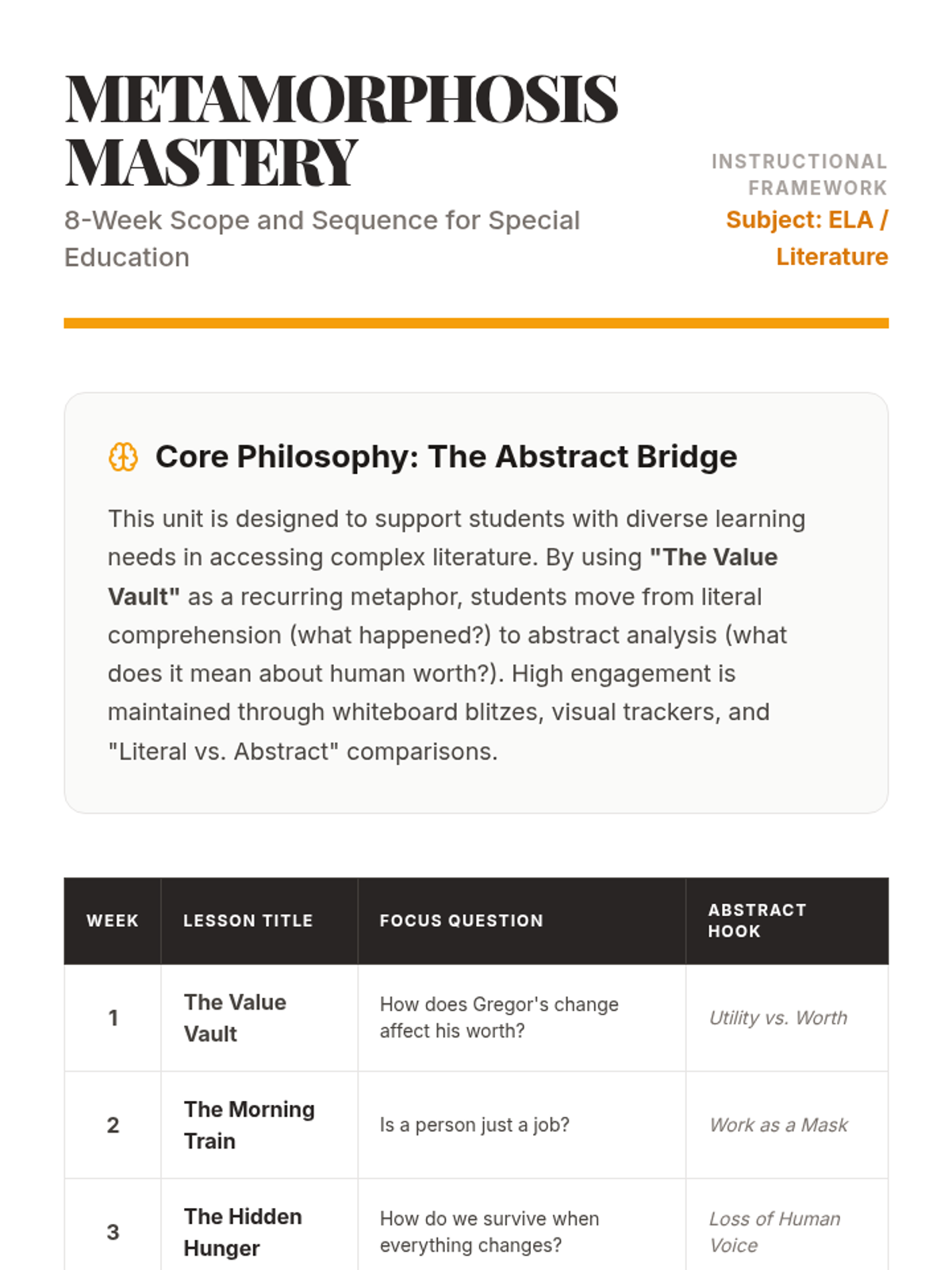
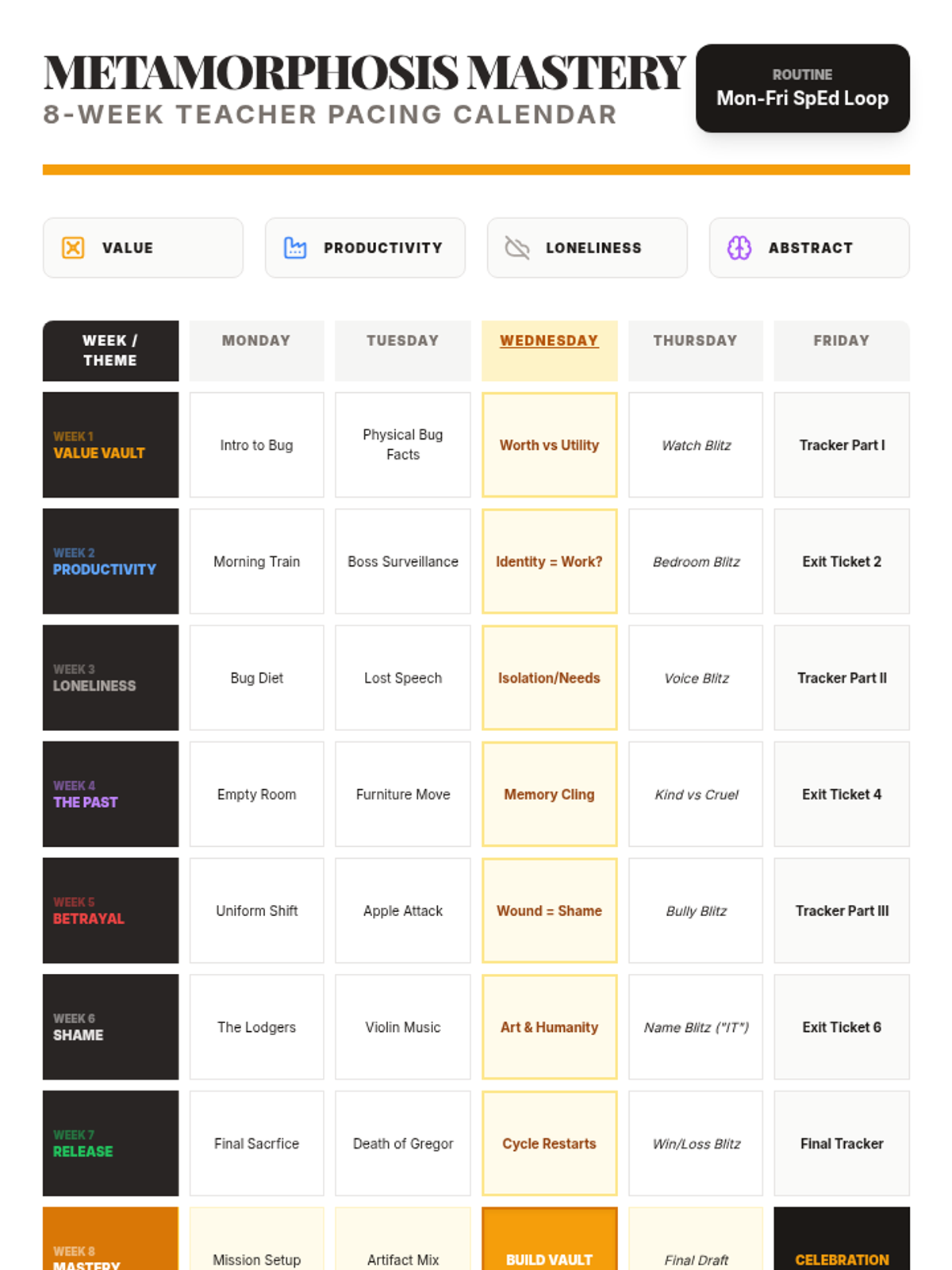
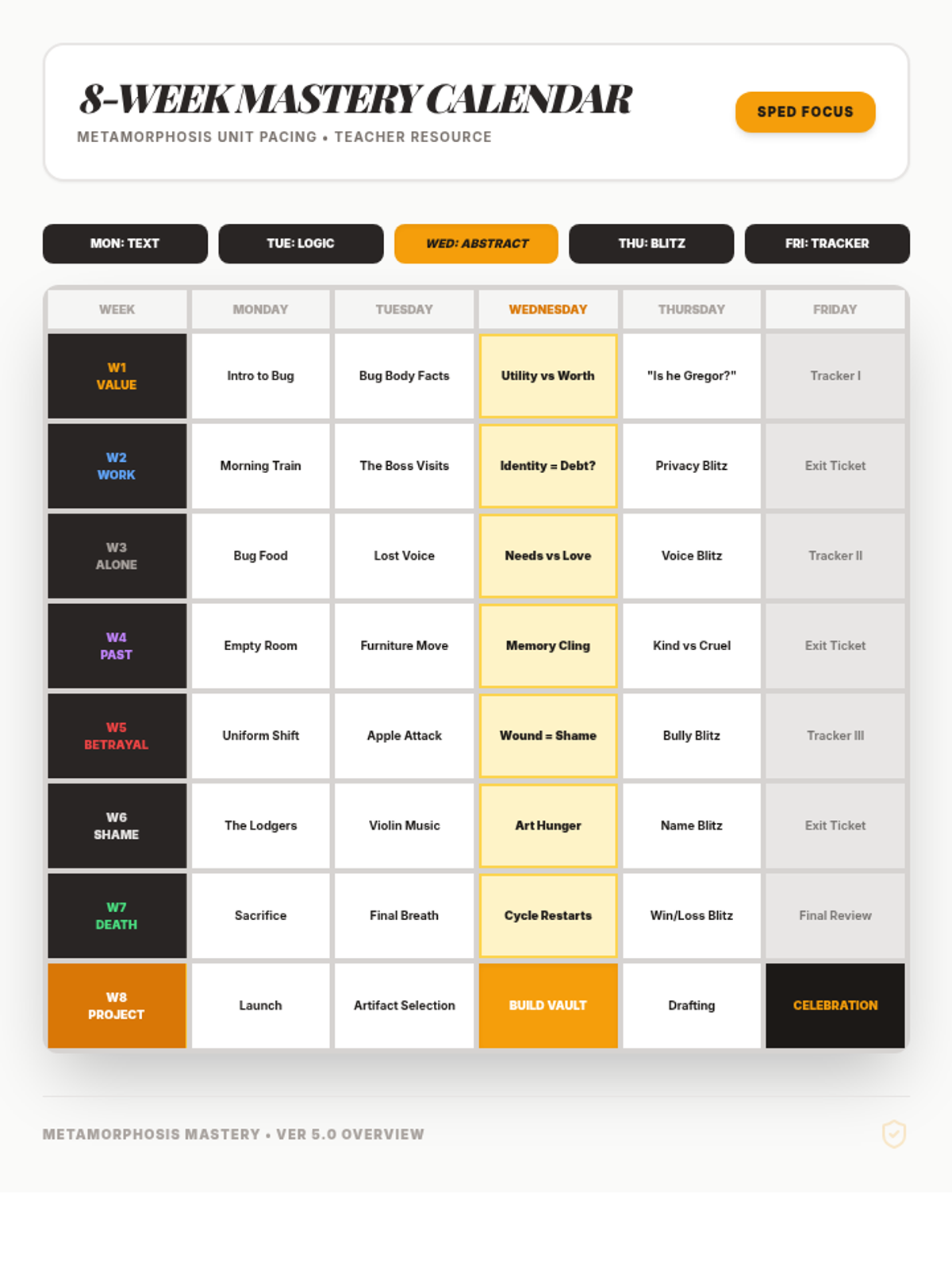
A culminating project where students reflect on the 8-week journey and create a 'Value Vault' for themselves or Gregor.
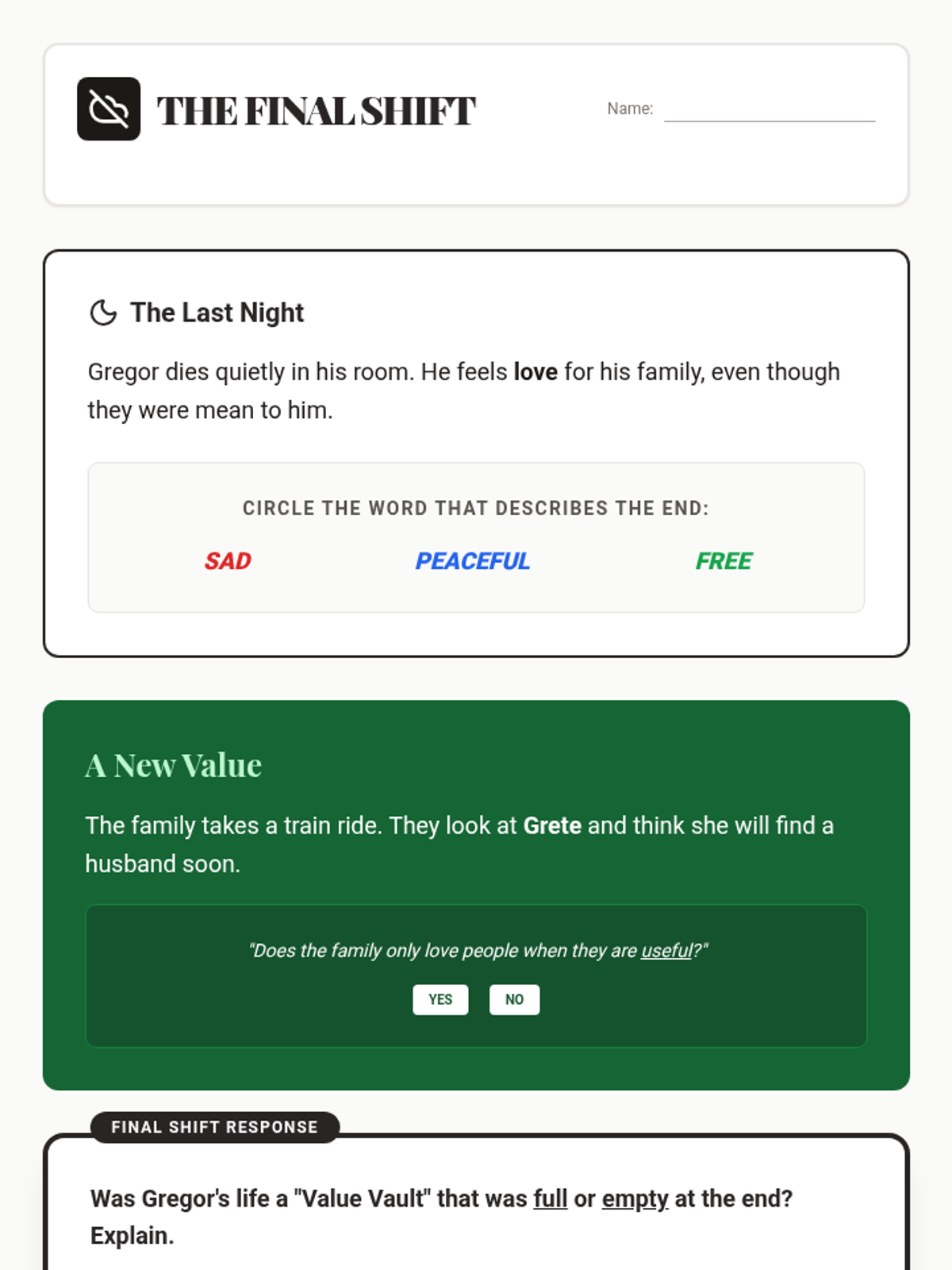
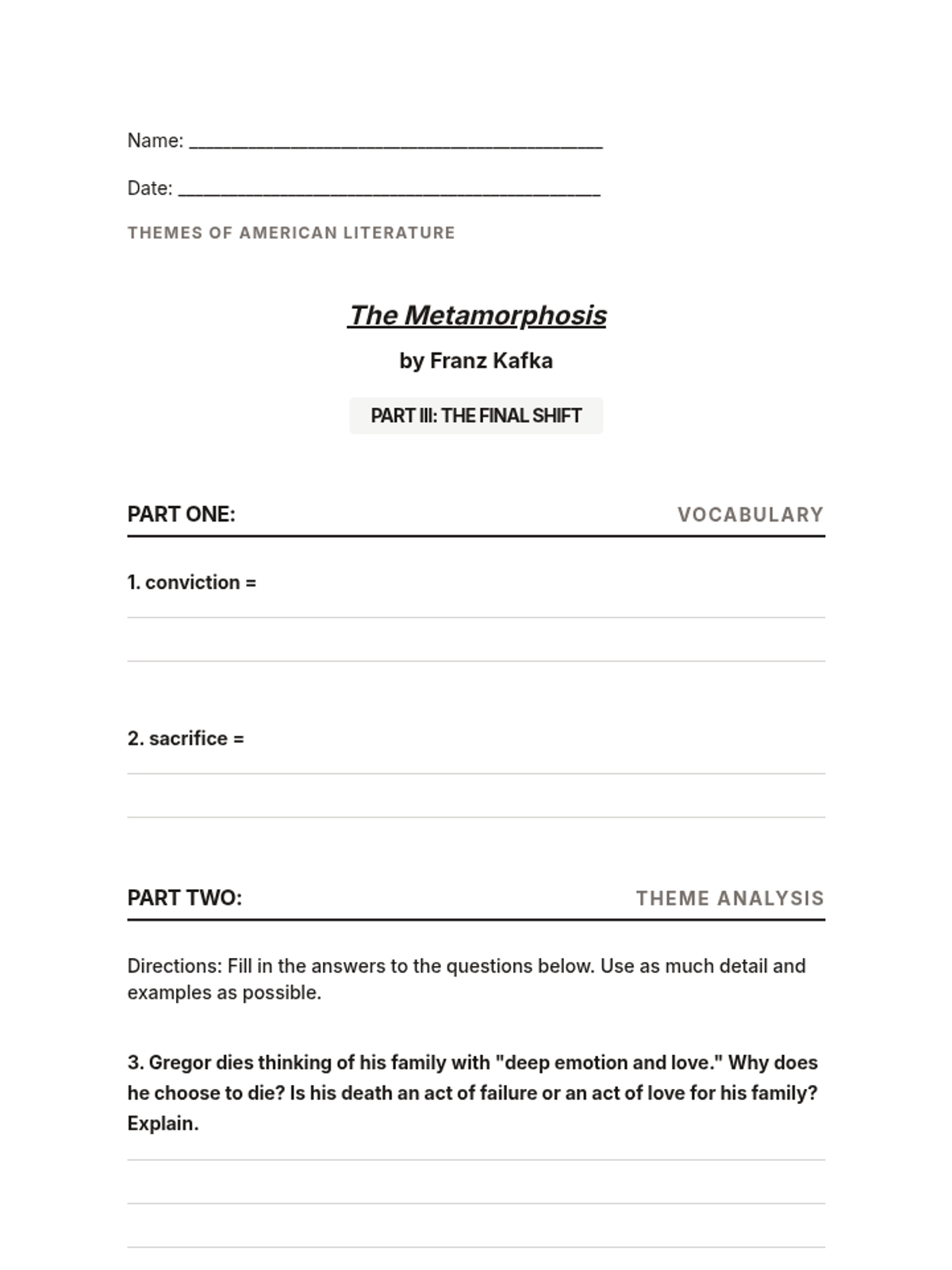
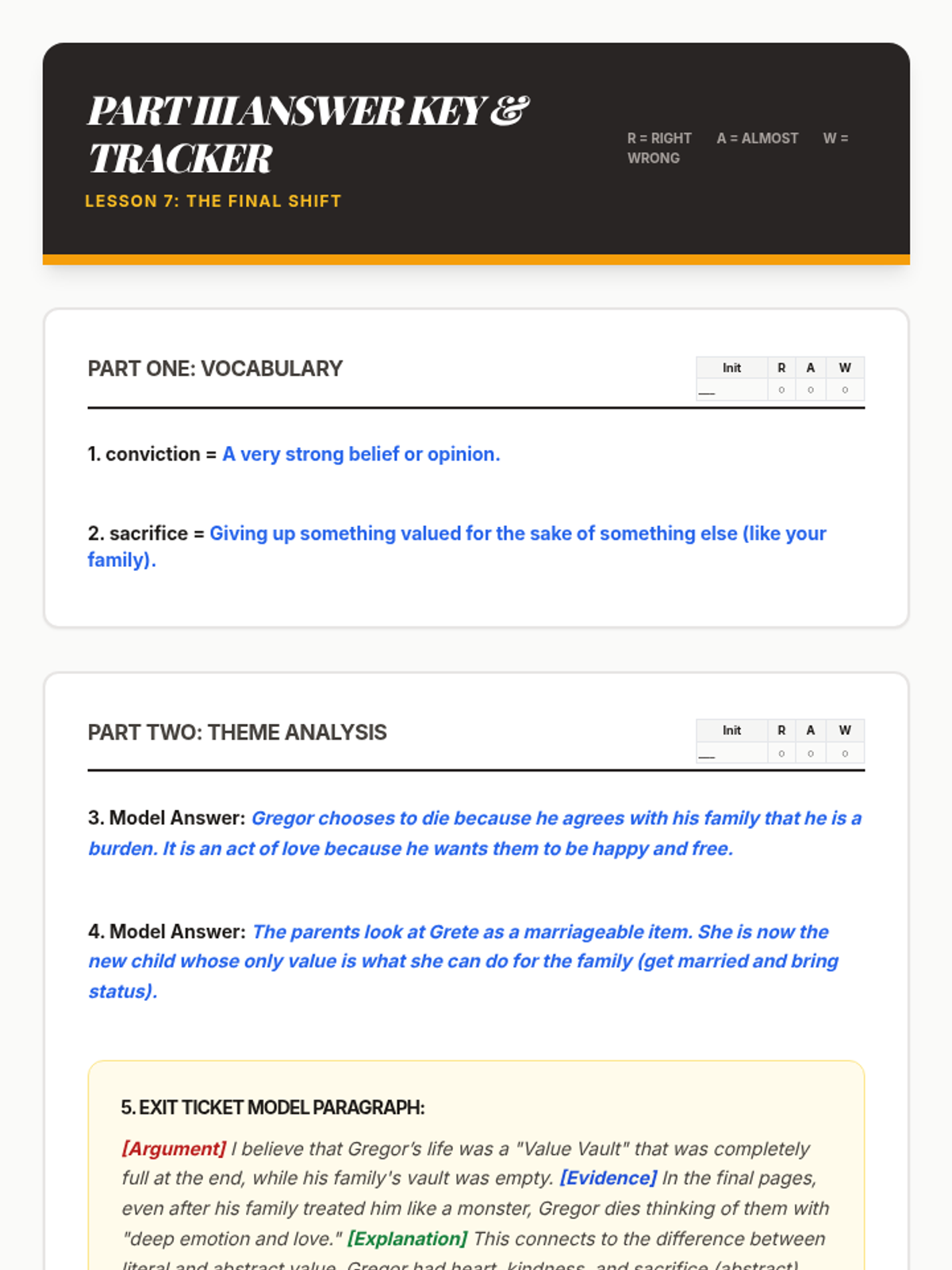
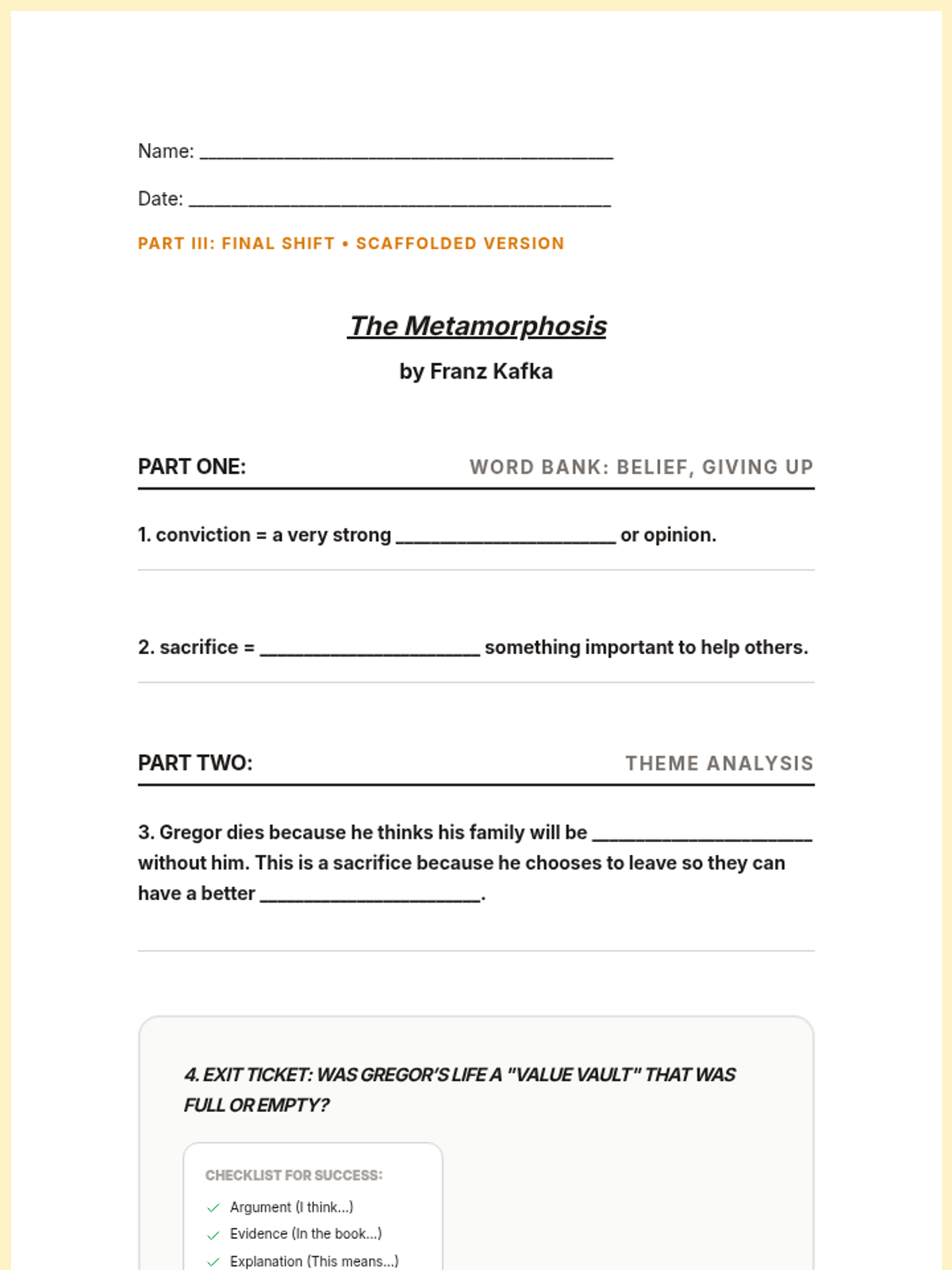
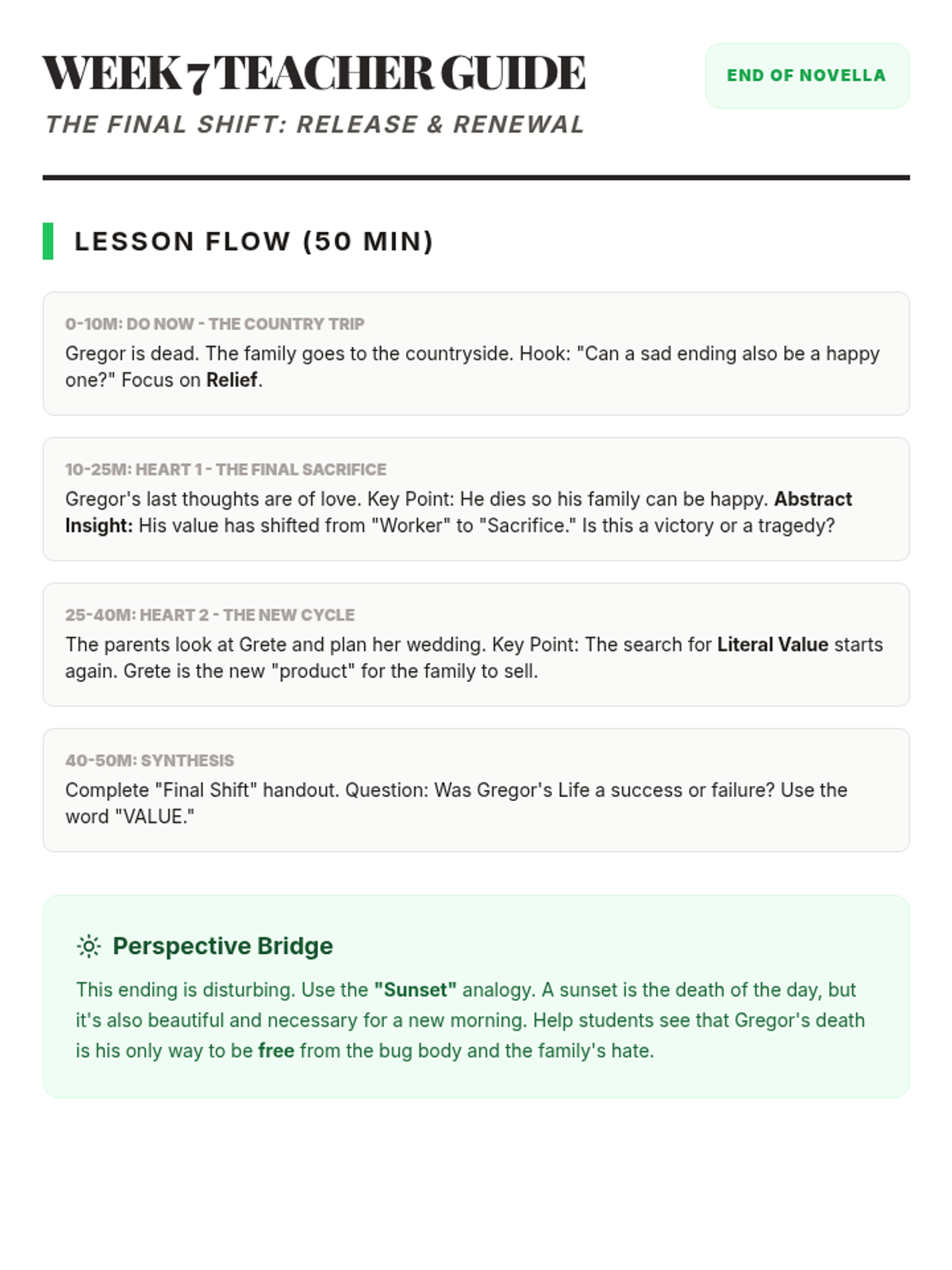
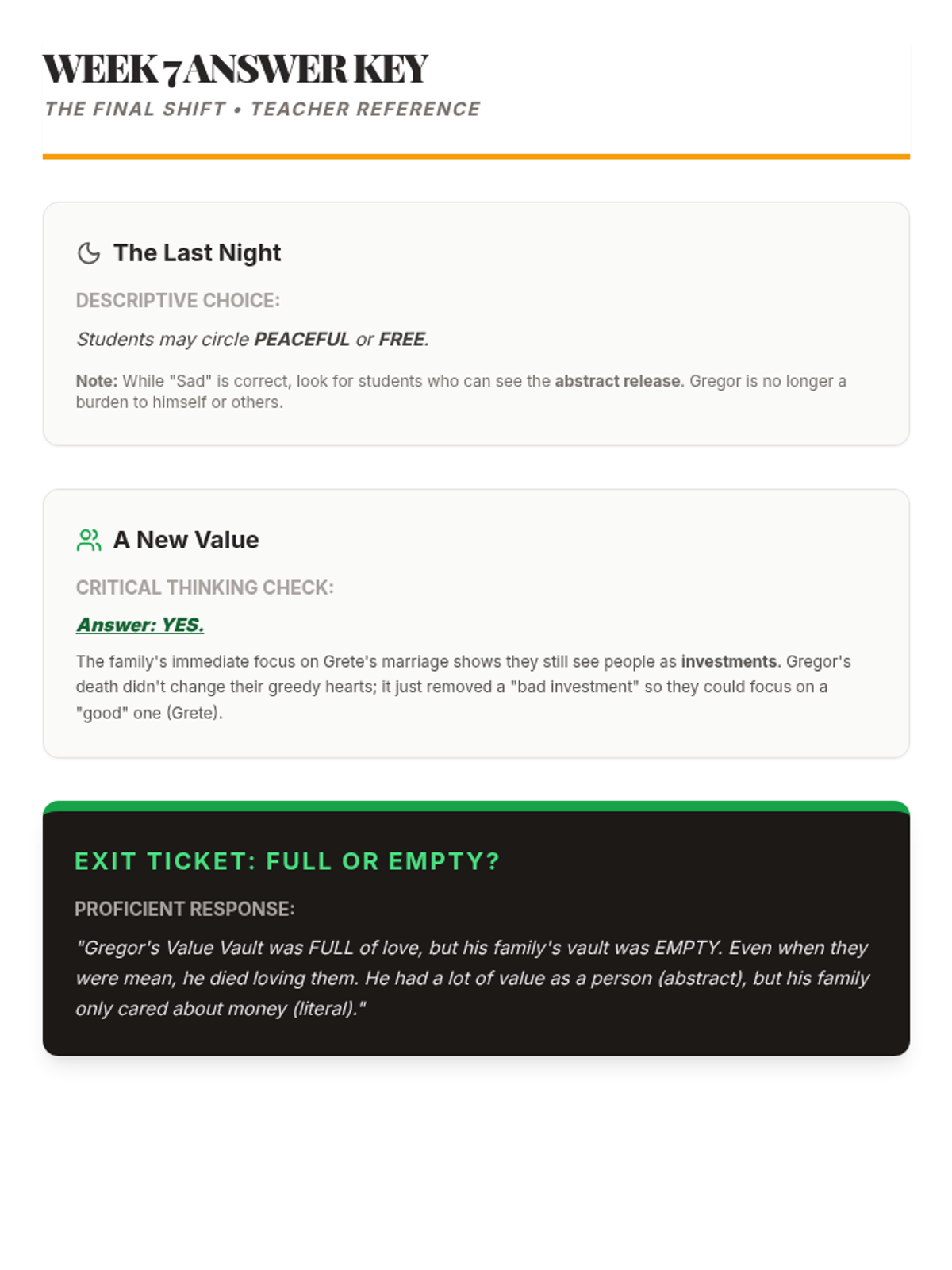
Analyzes the end of the novella, Gregor's death, and the family's disturbing relief and new-found 'value'.
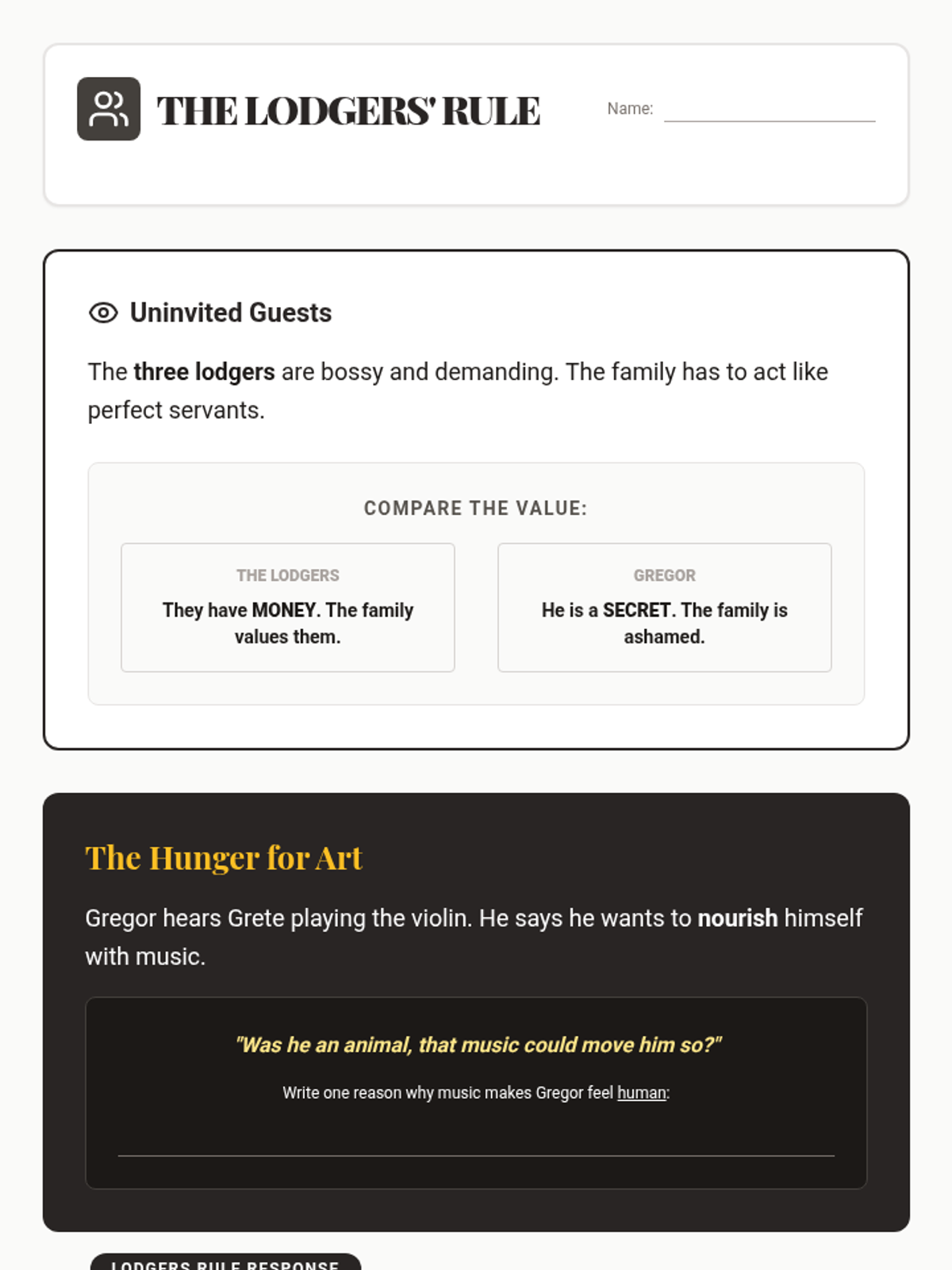
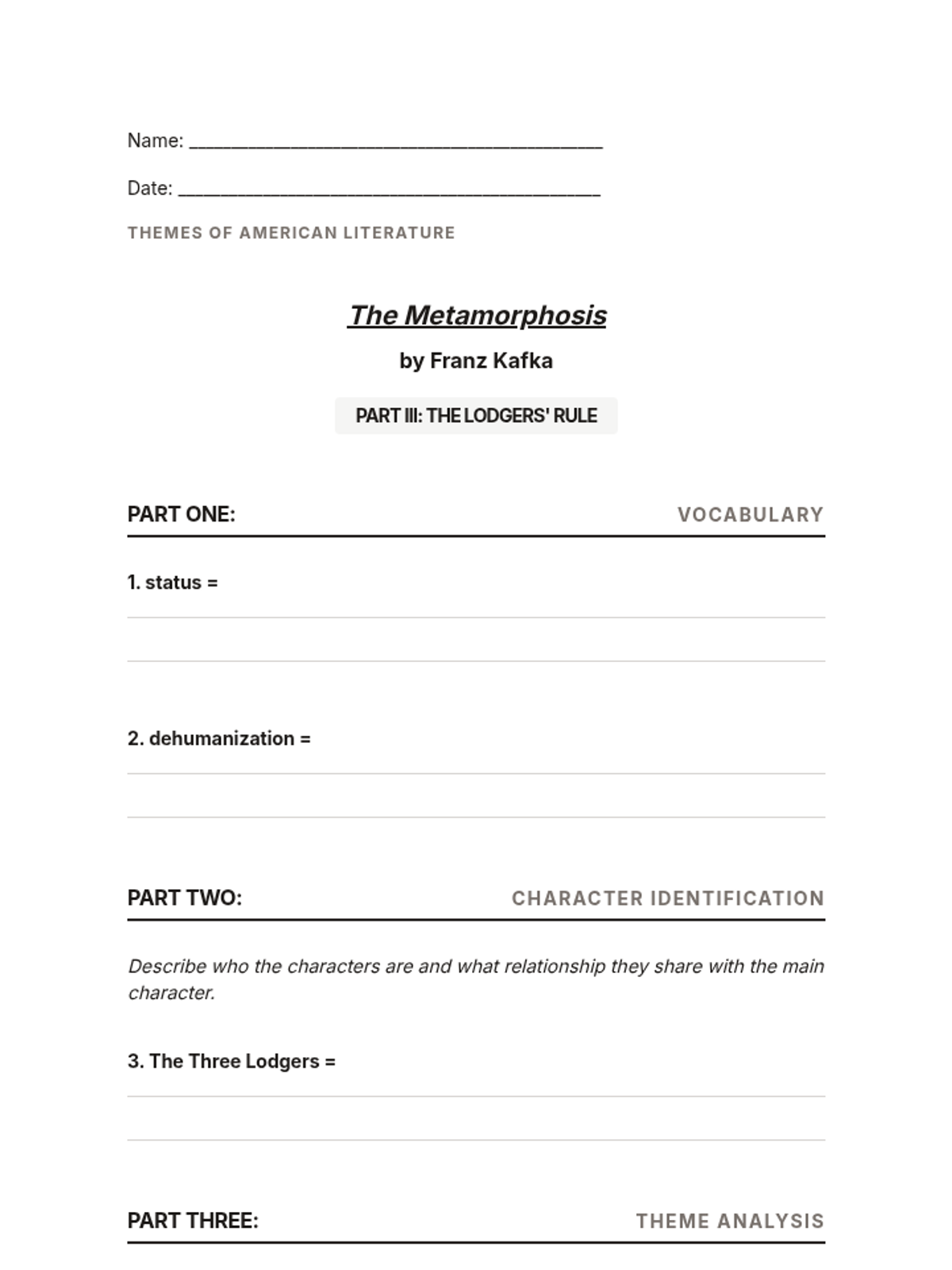
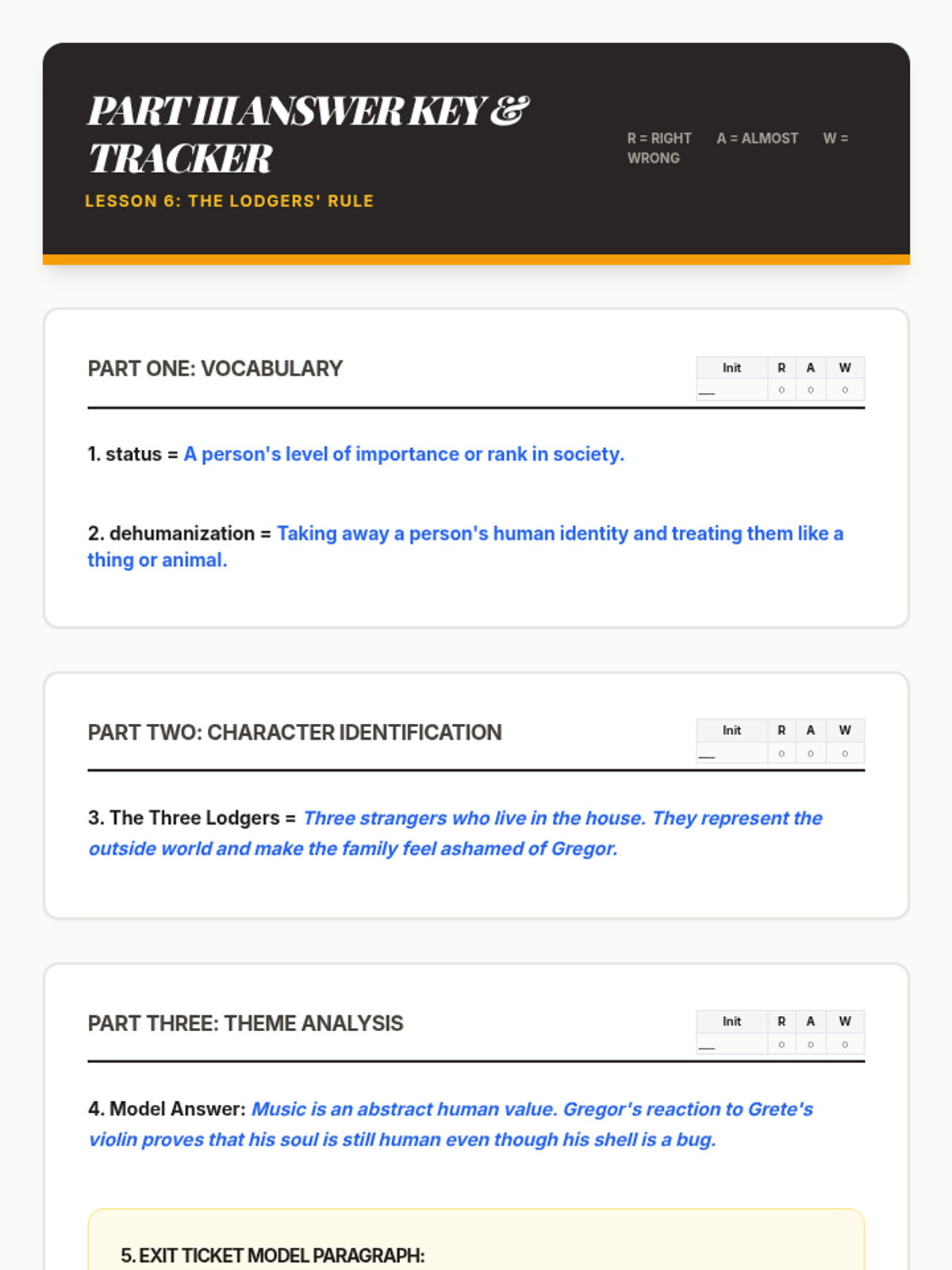
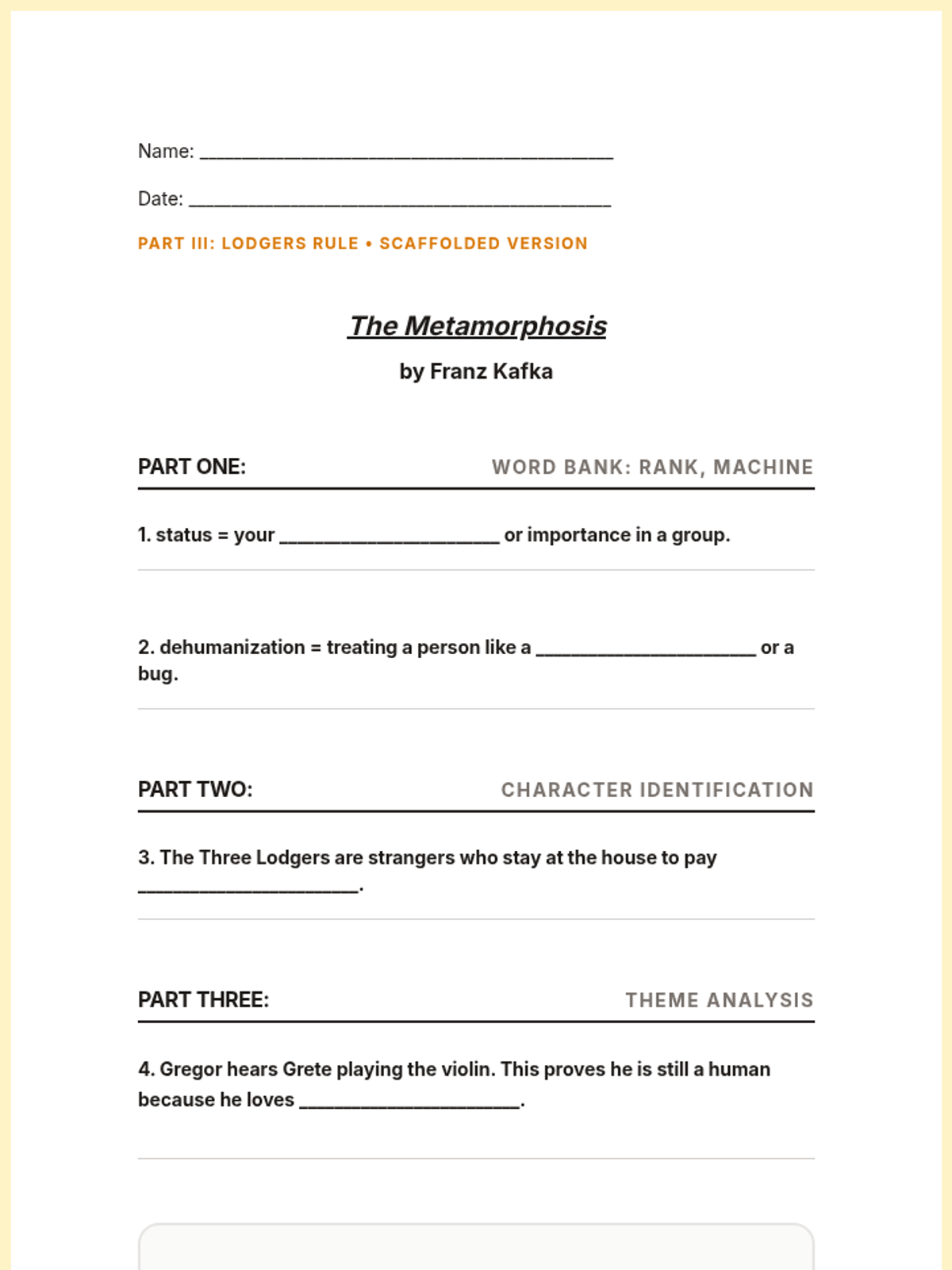
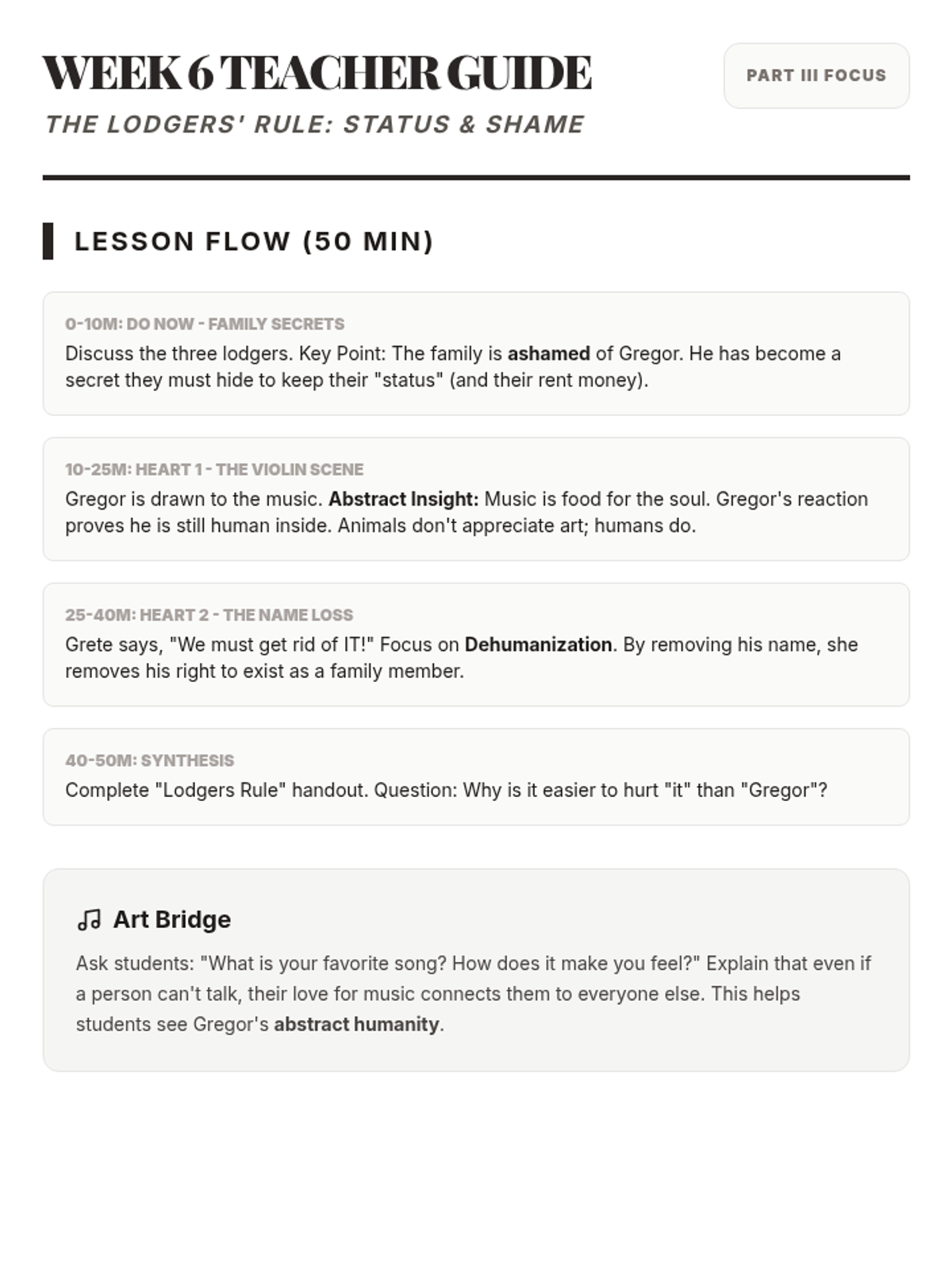
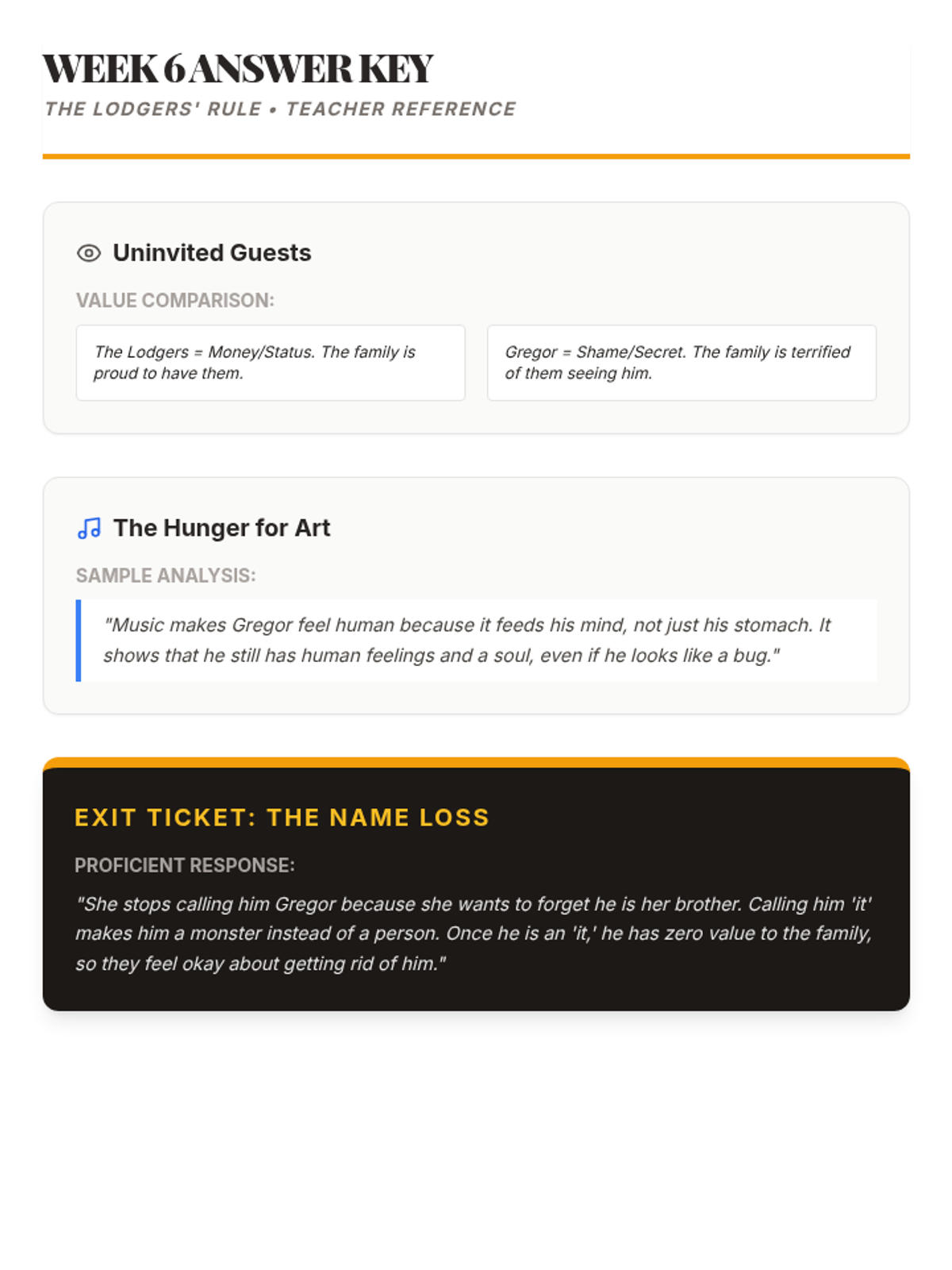
Focuses on Part III, the arrival of the boarders, and Gregor becoming a 'nuisance' in his own home.
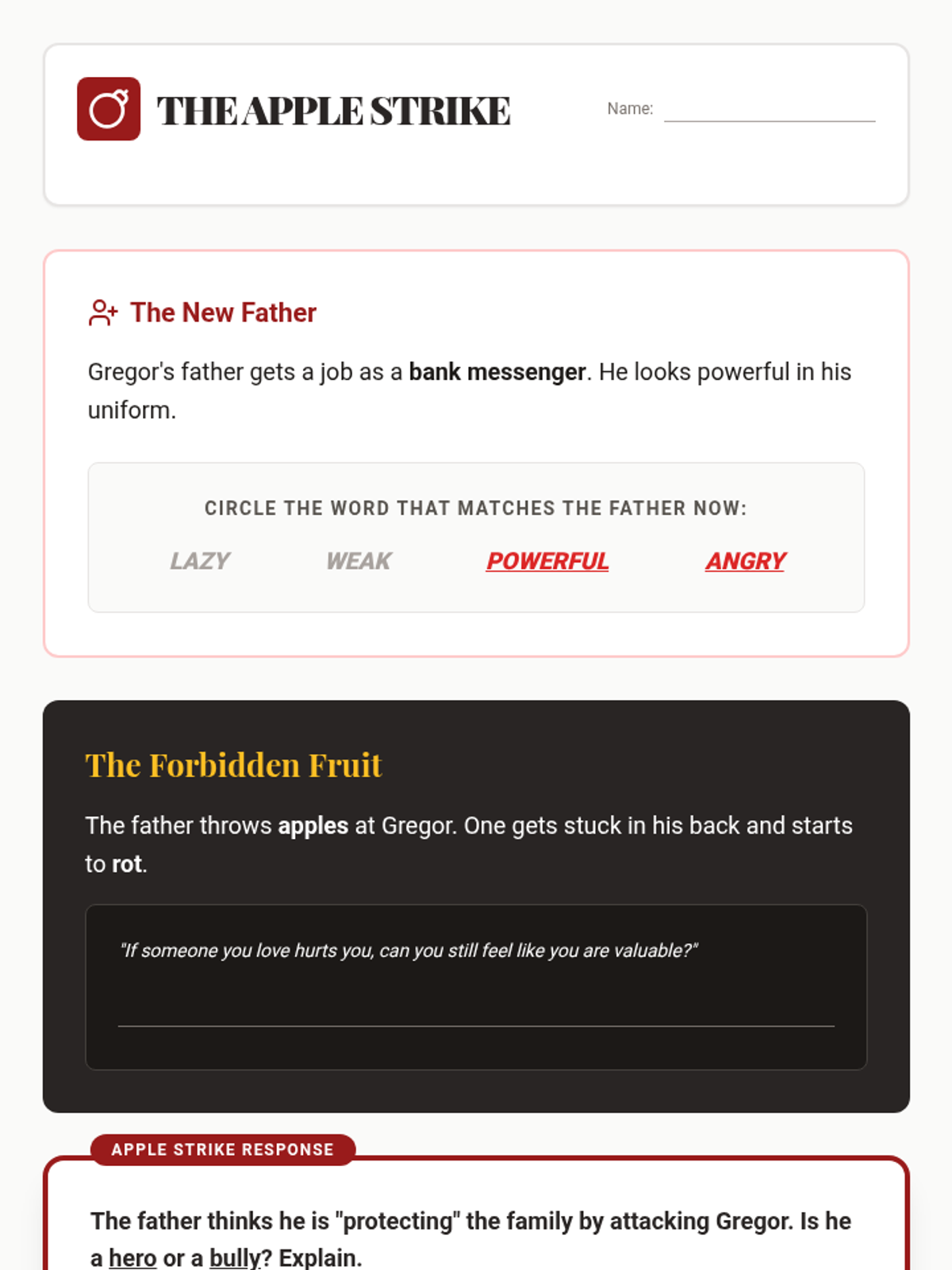
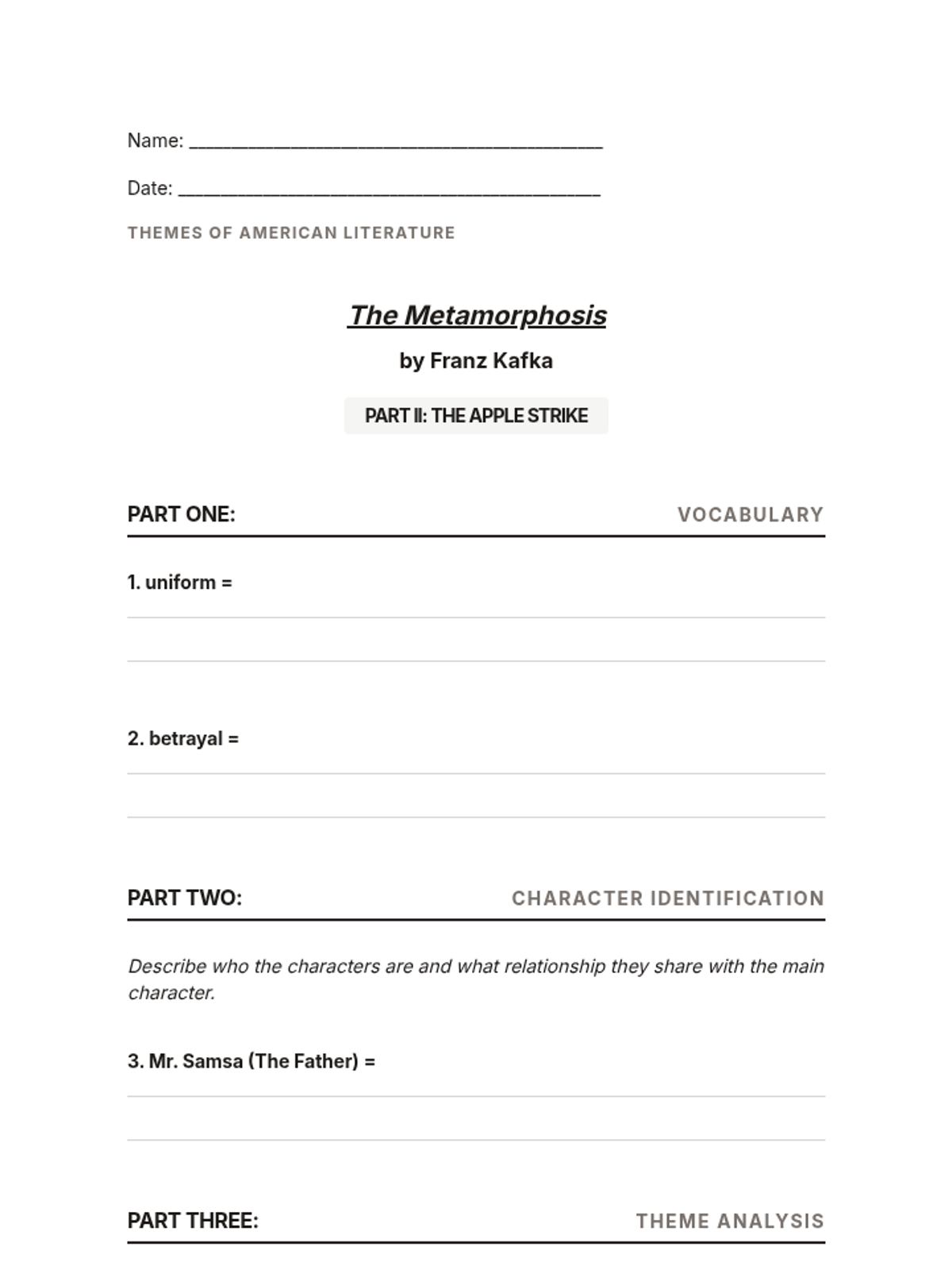
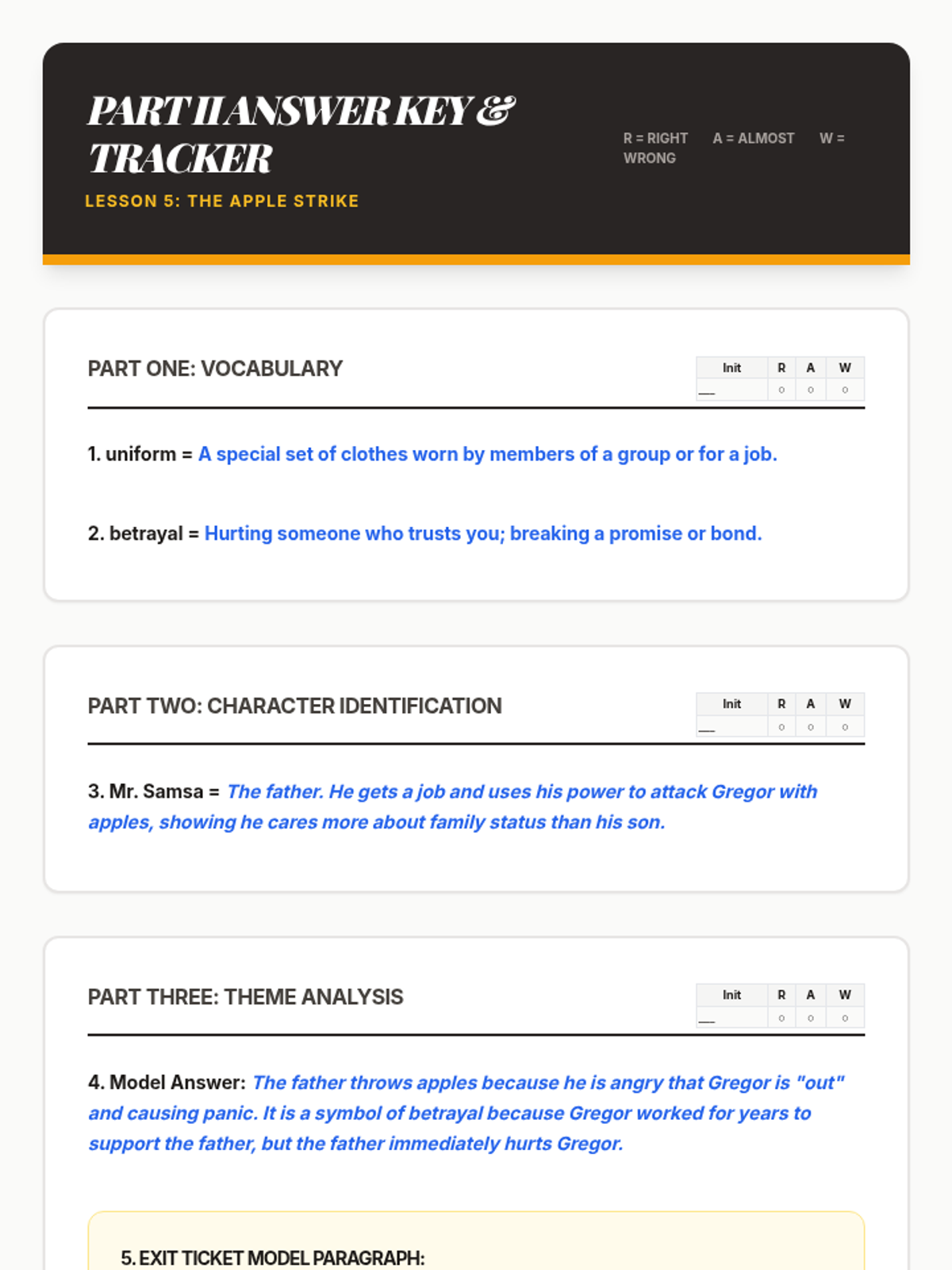
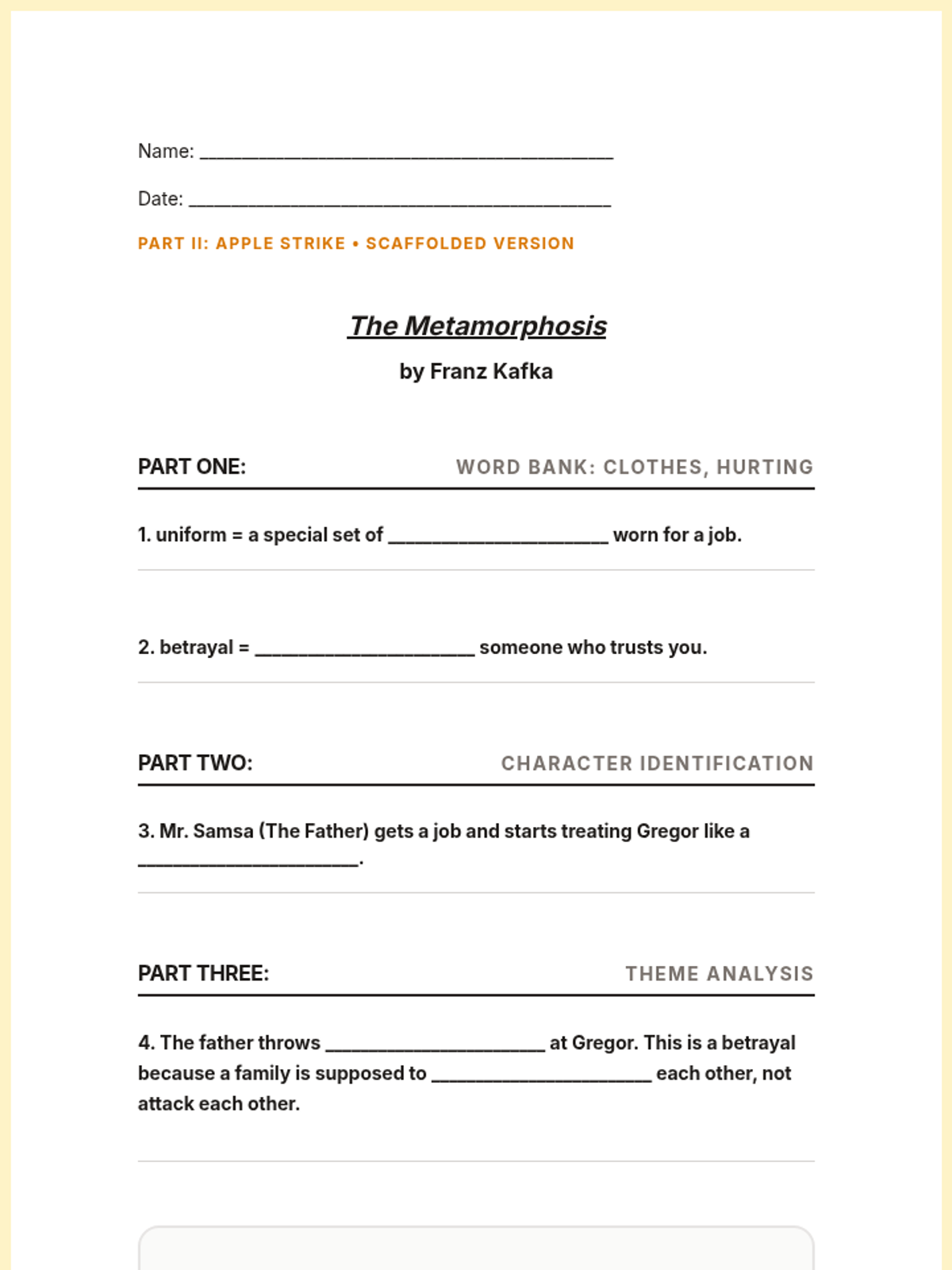
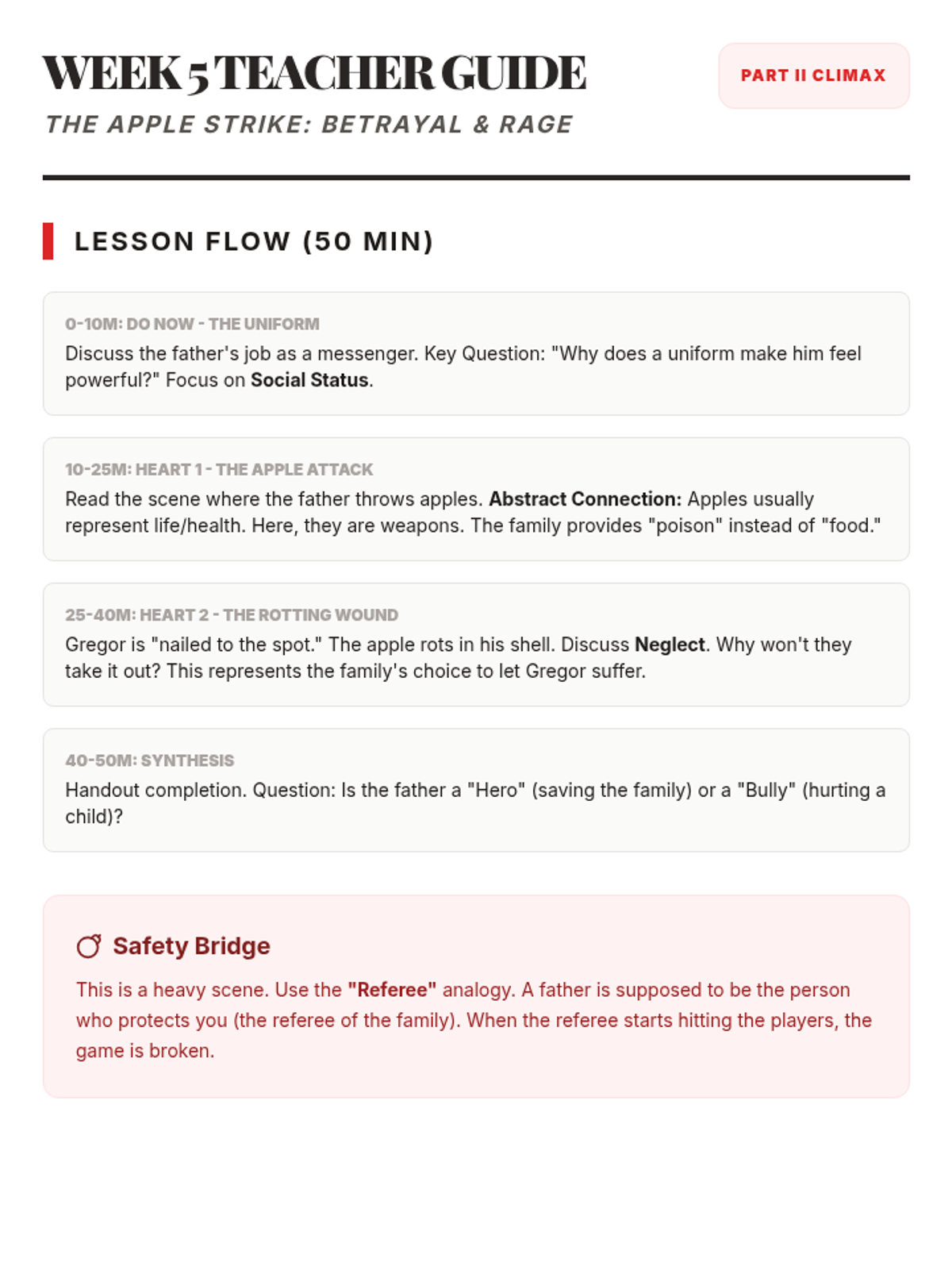
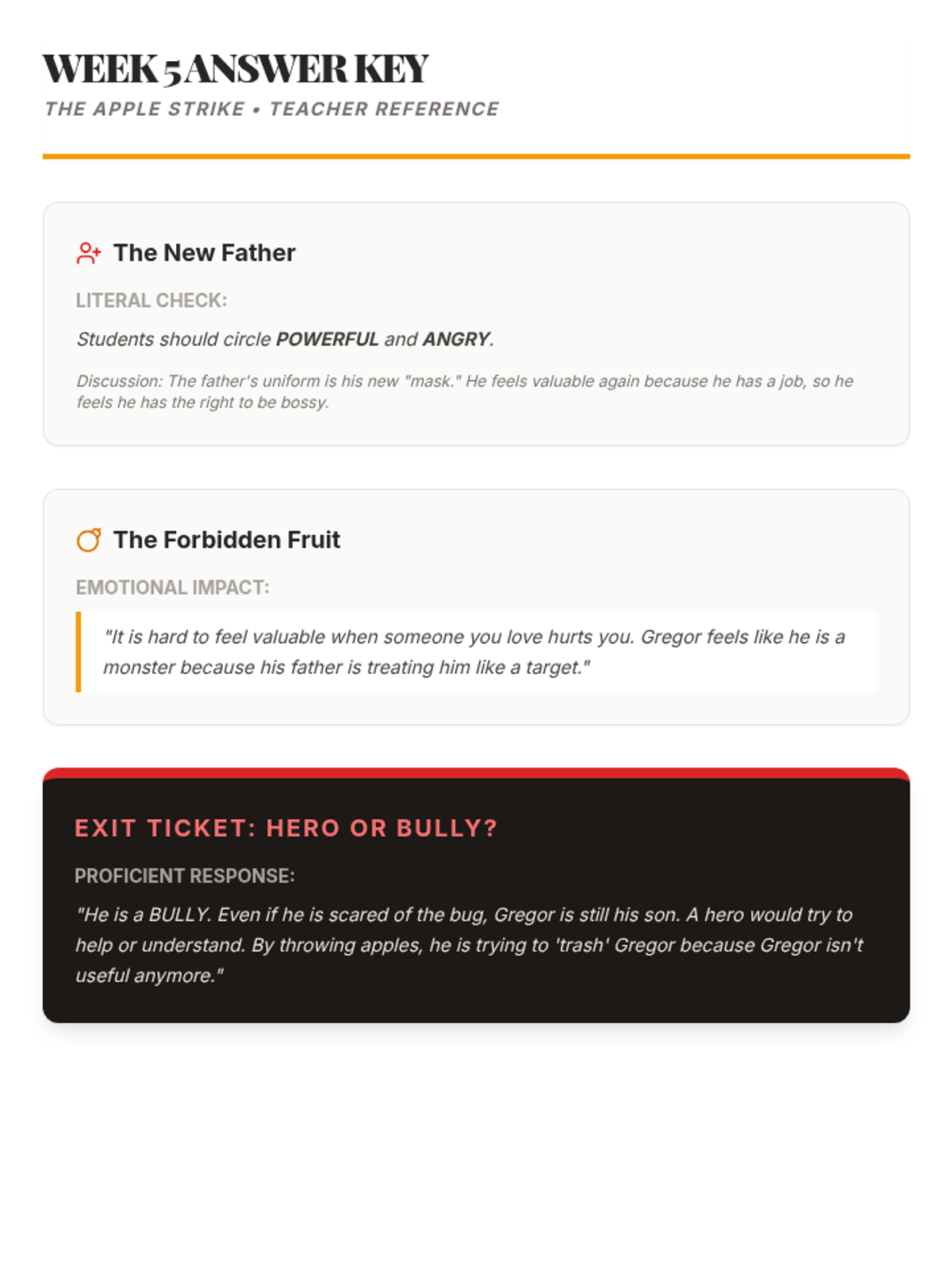
Analyzes the climax of Part II, the father's return to work, and the symbolic 'apple' attack on Gregor.
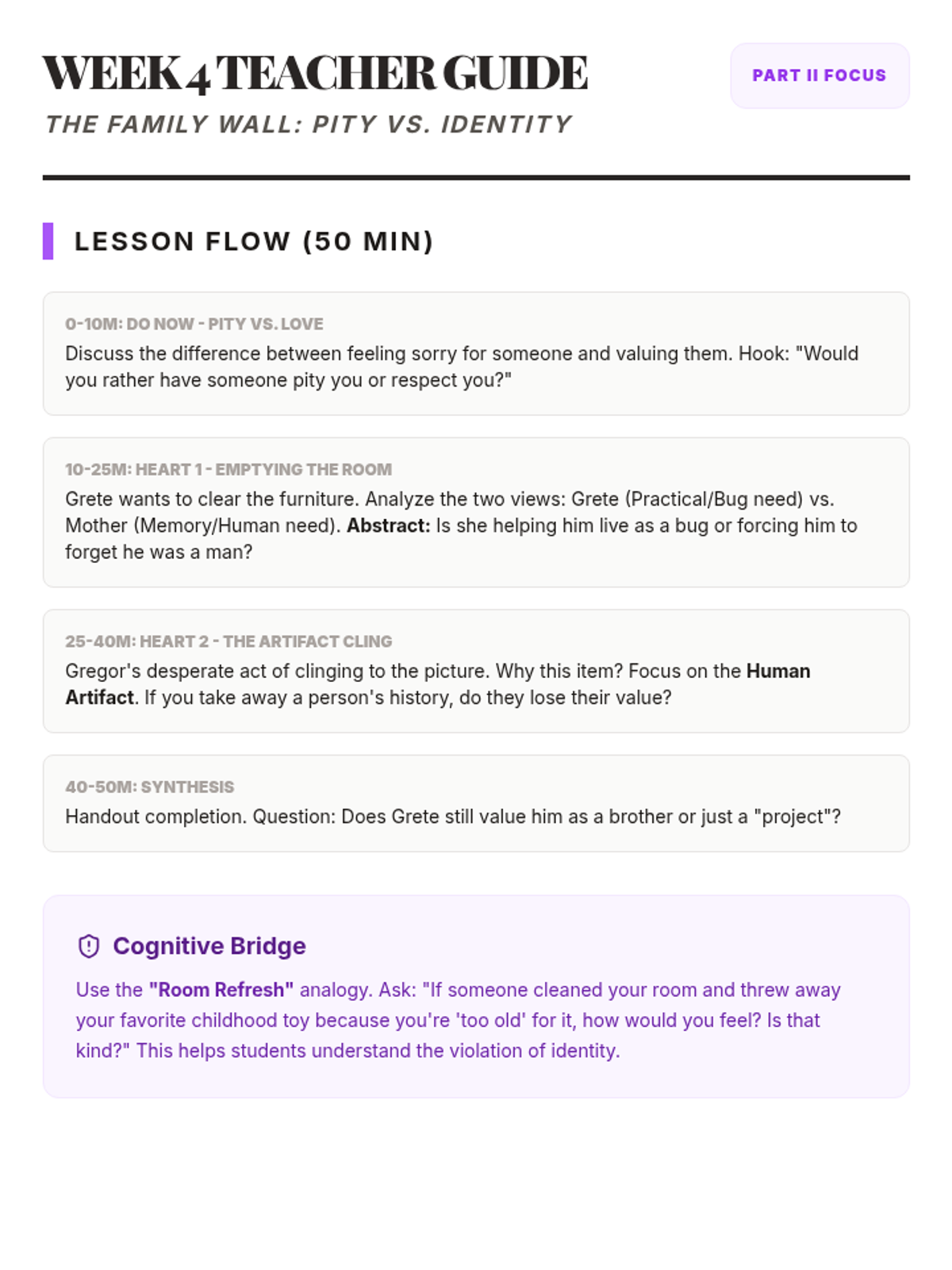
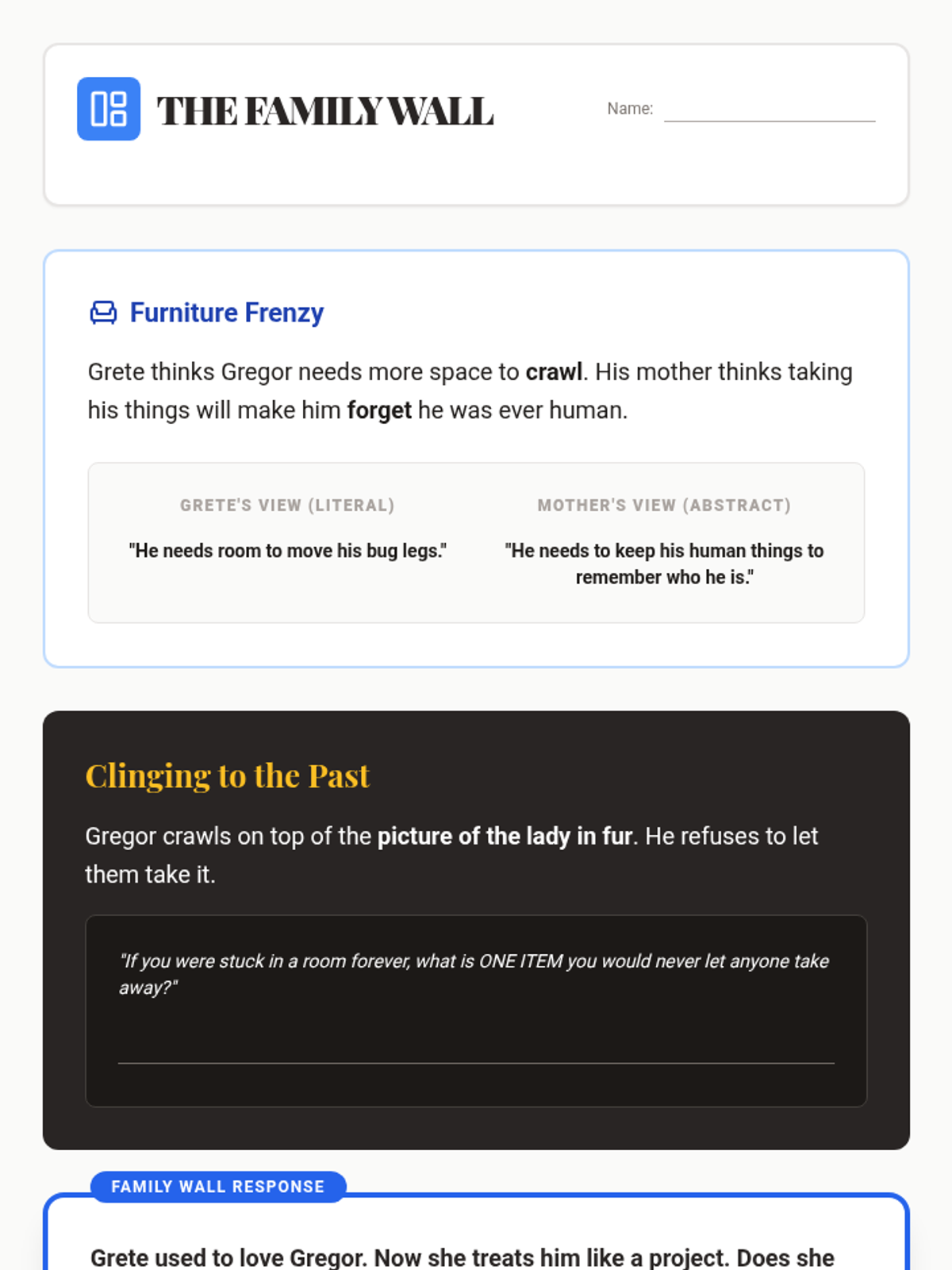
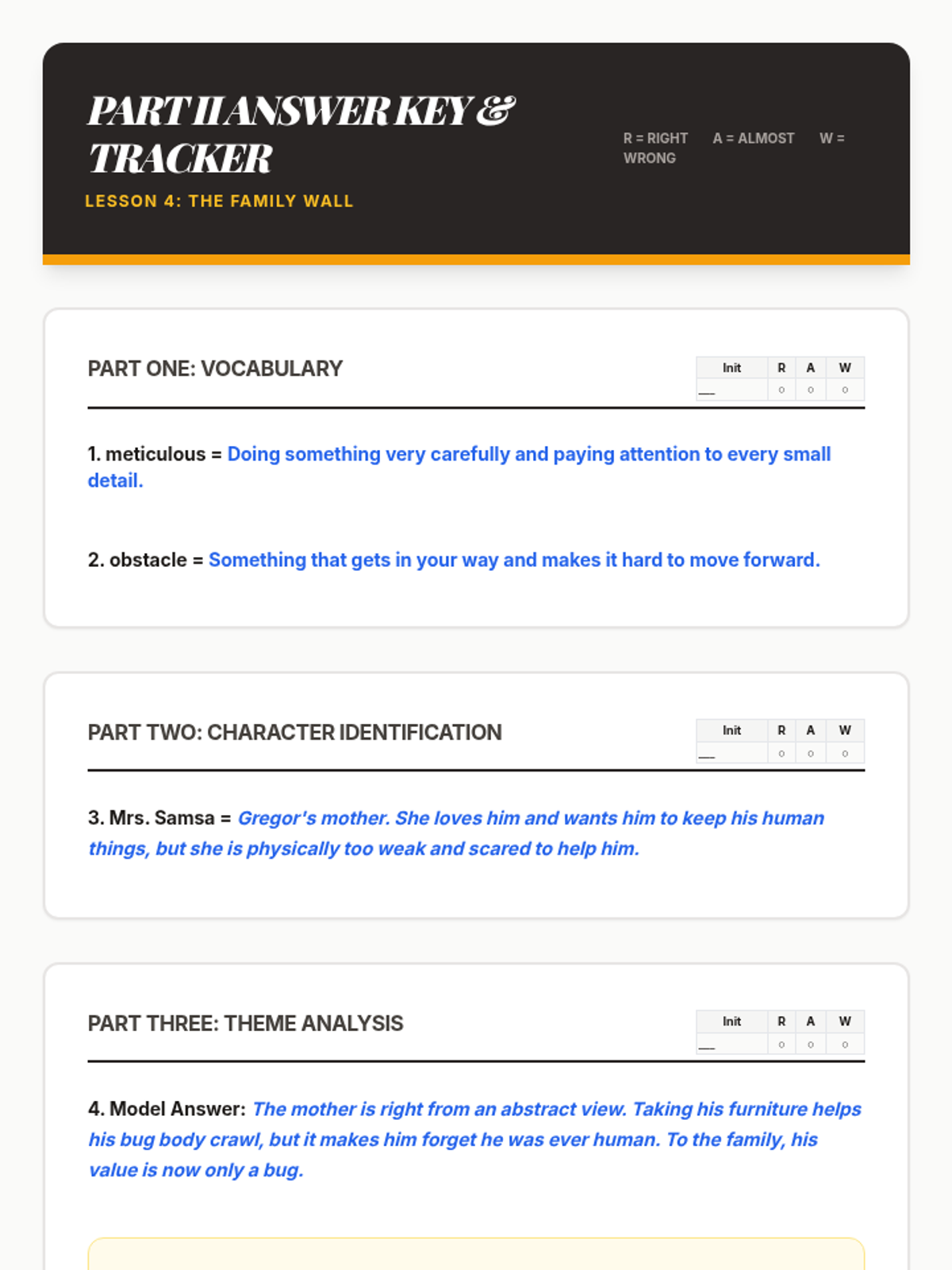
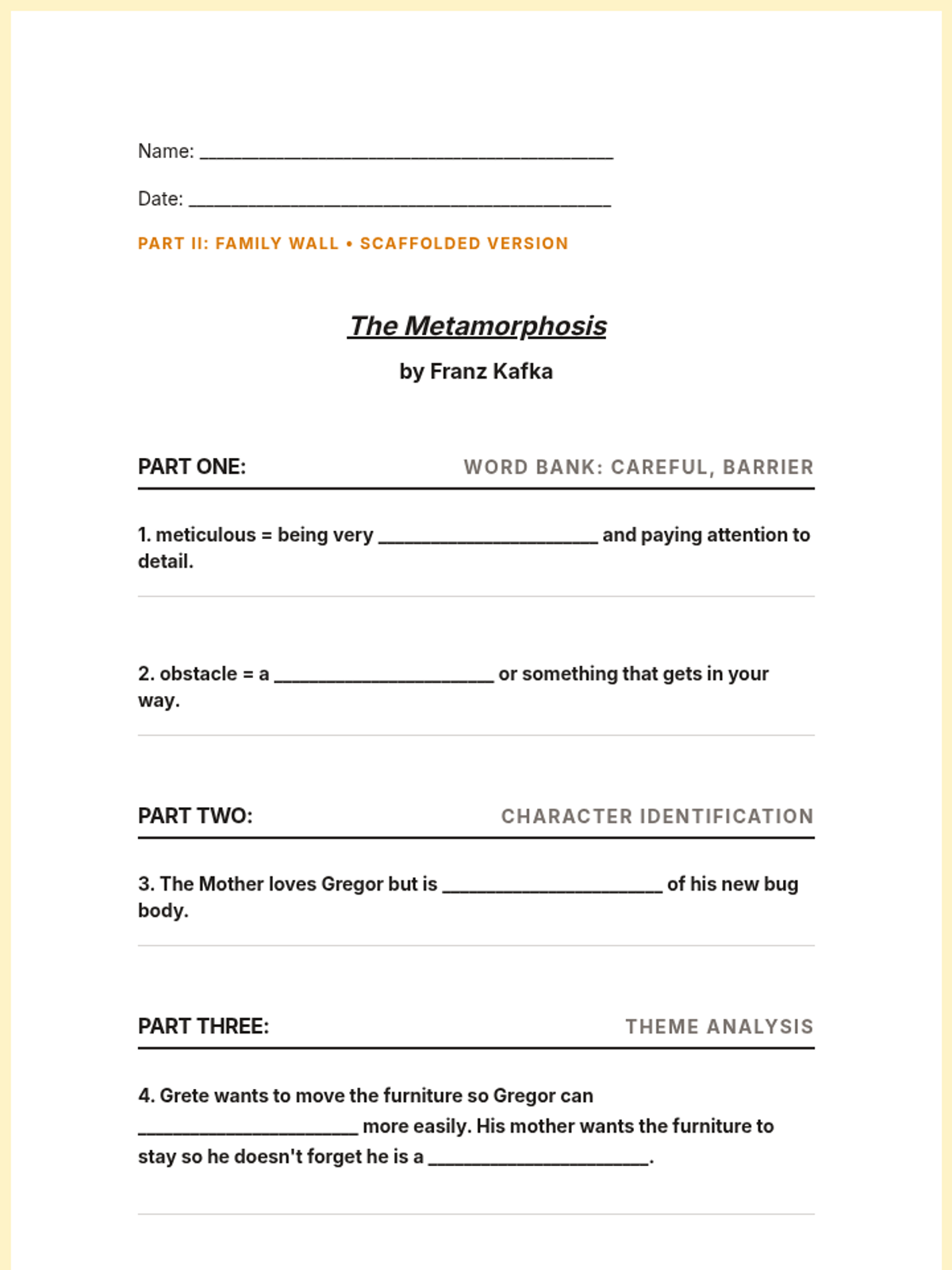
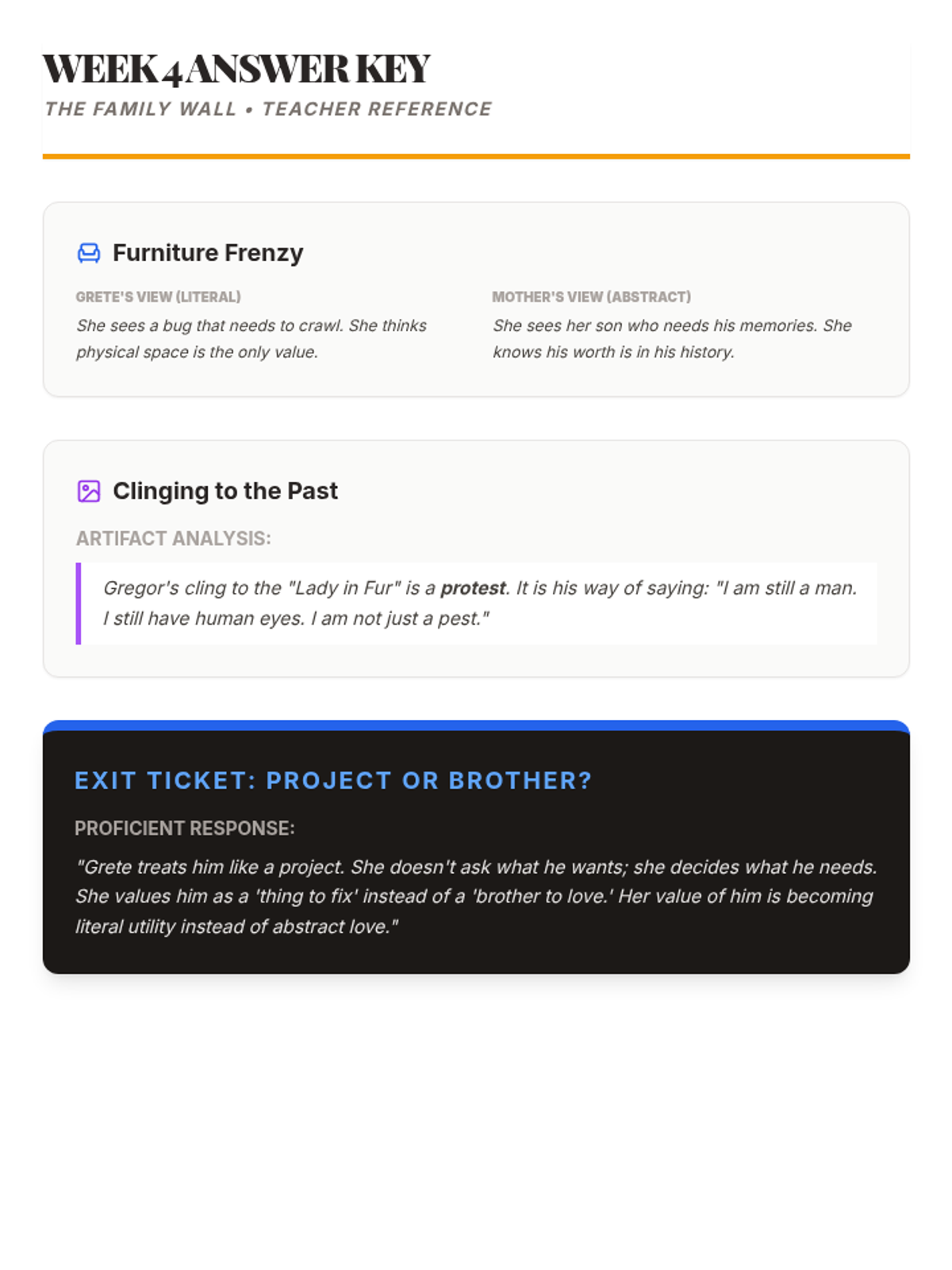
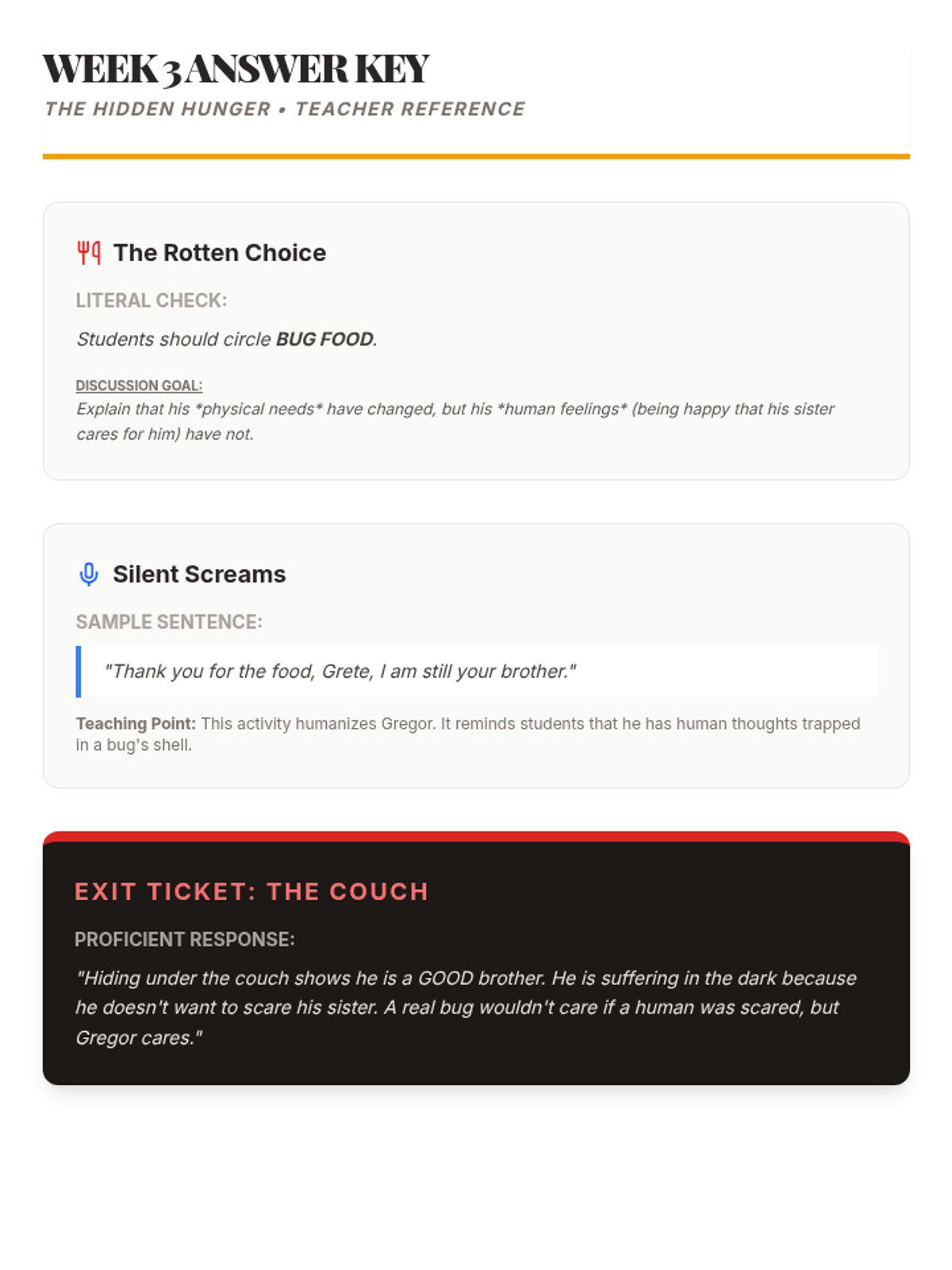
Explores the changing relationship between Gregor and Grete, the moving of the furniture, and the concept of 'pity' vs 'value'.
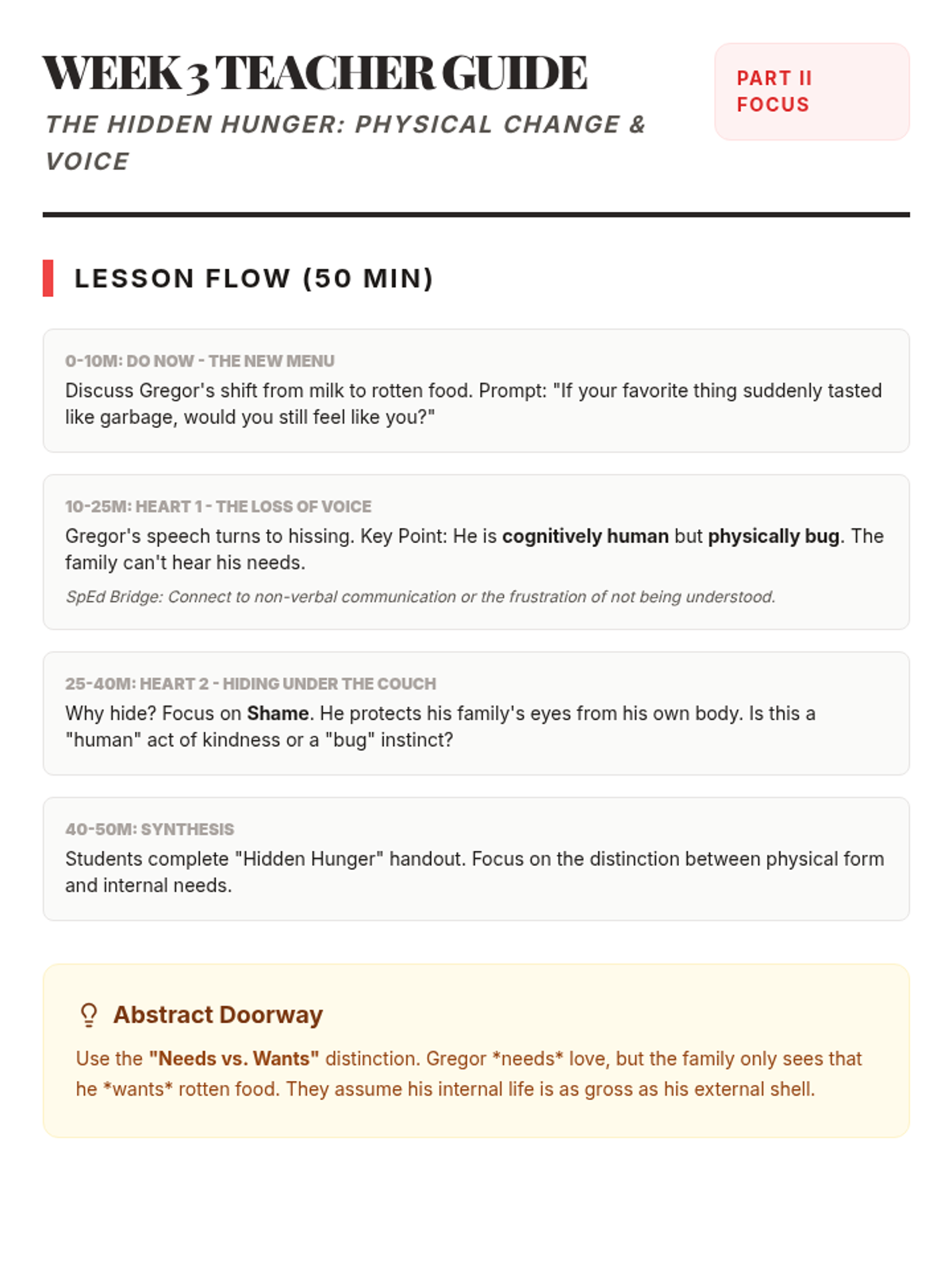
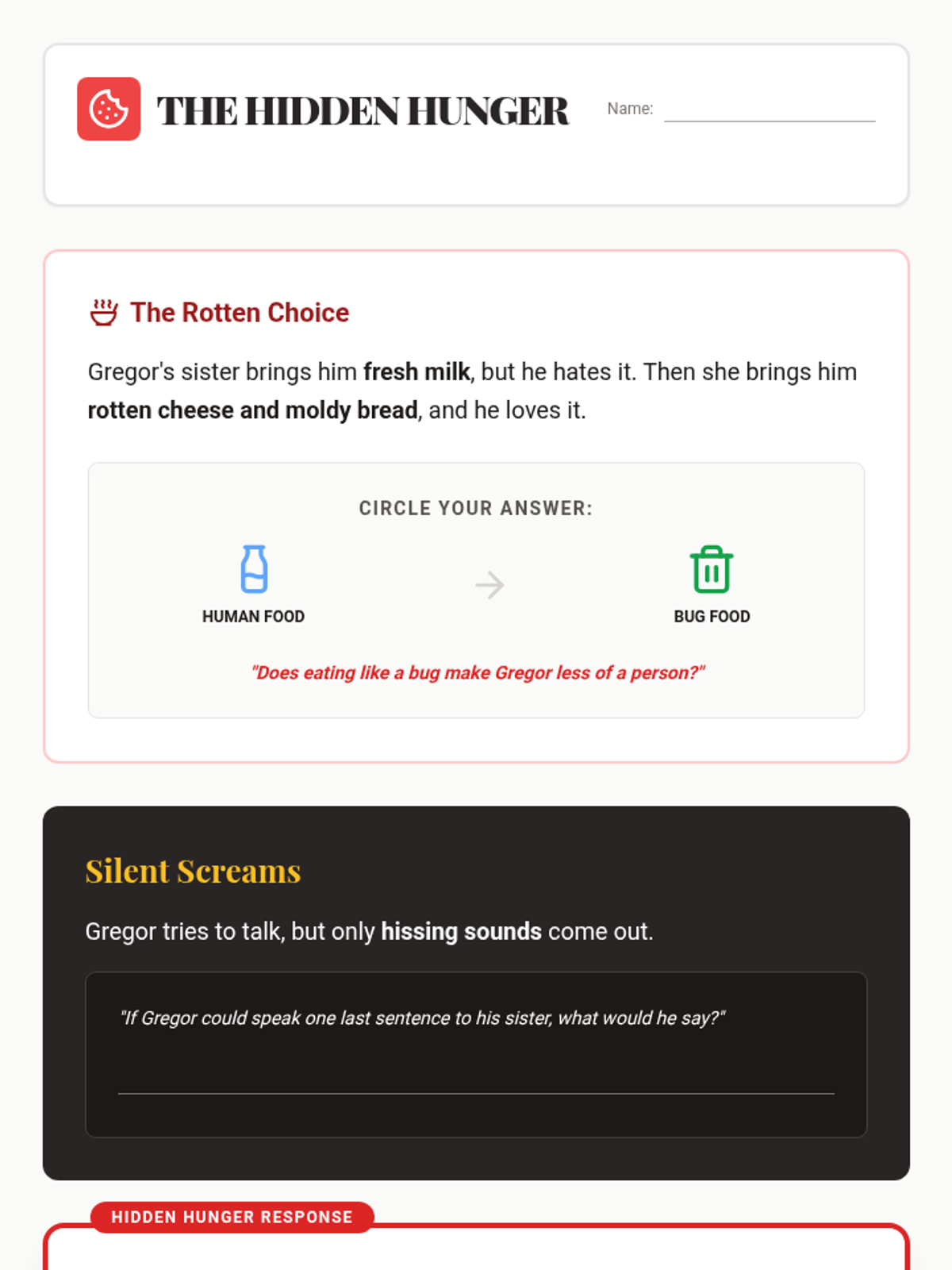
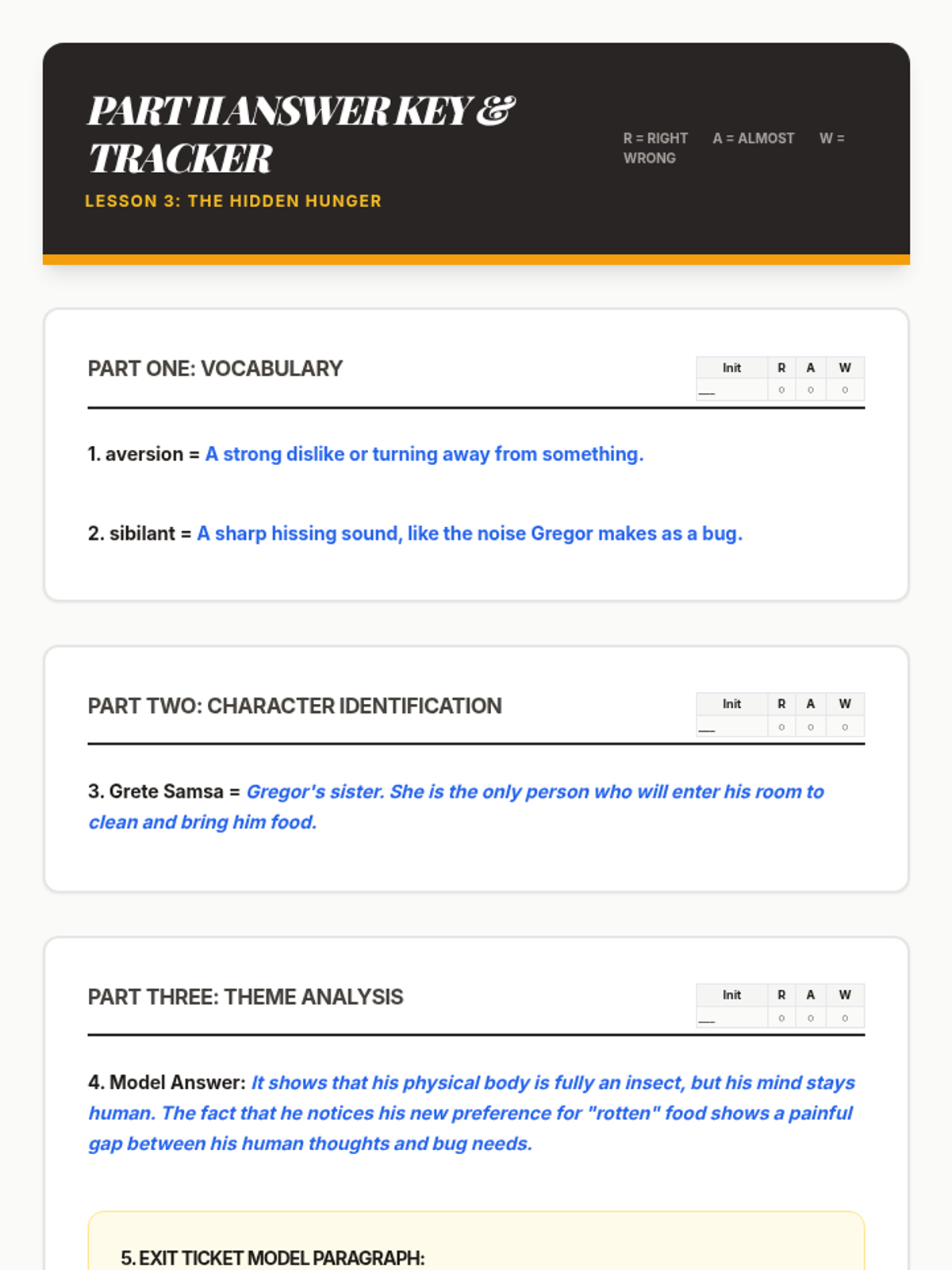
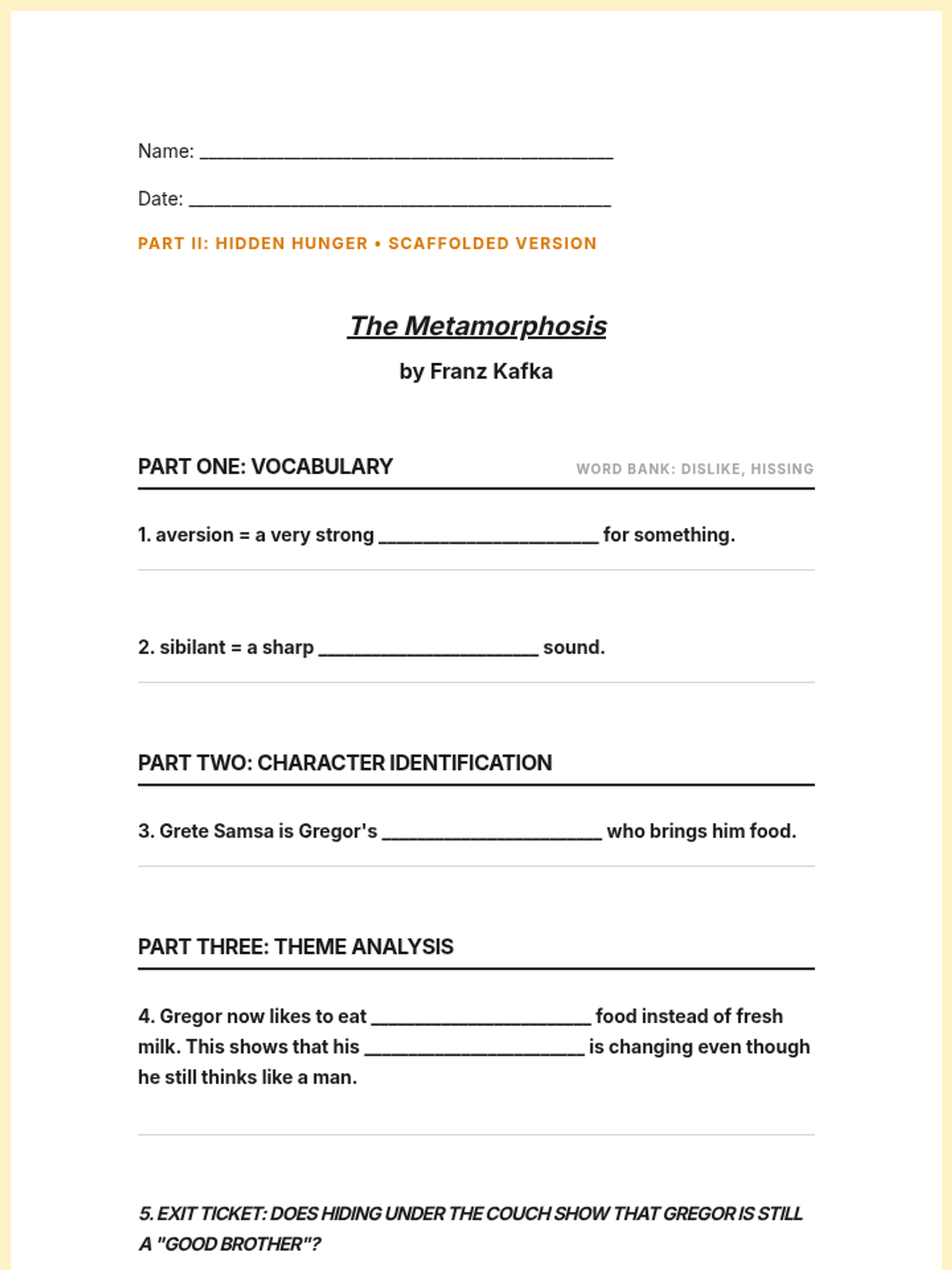
Covers the transition to Part II, focusing on Gregor's physical changes, his new diet, and the loss of his human voice.
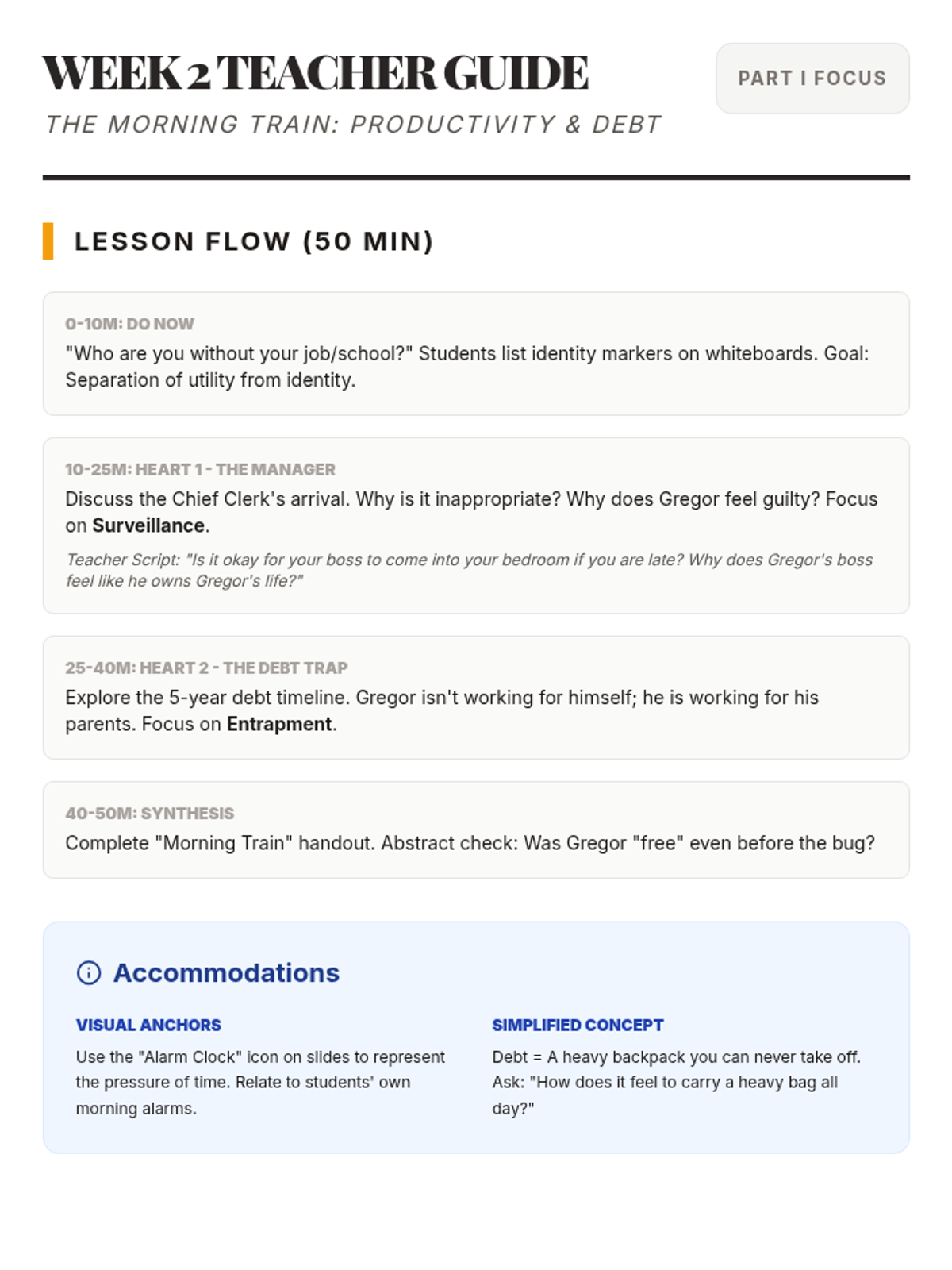
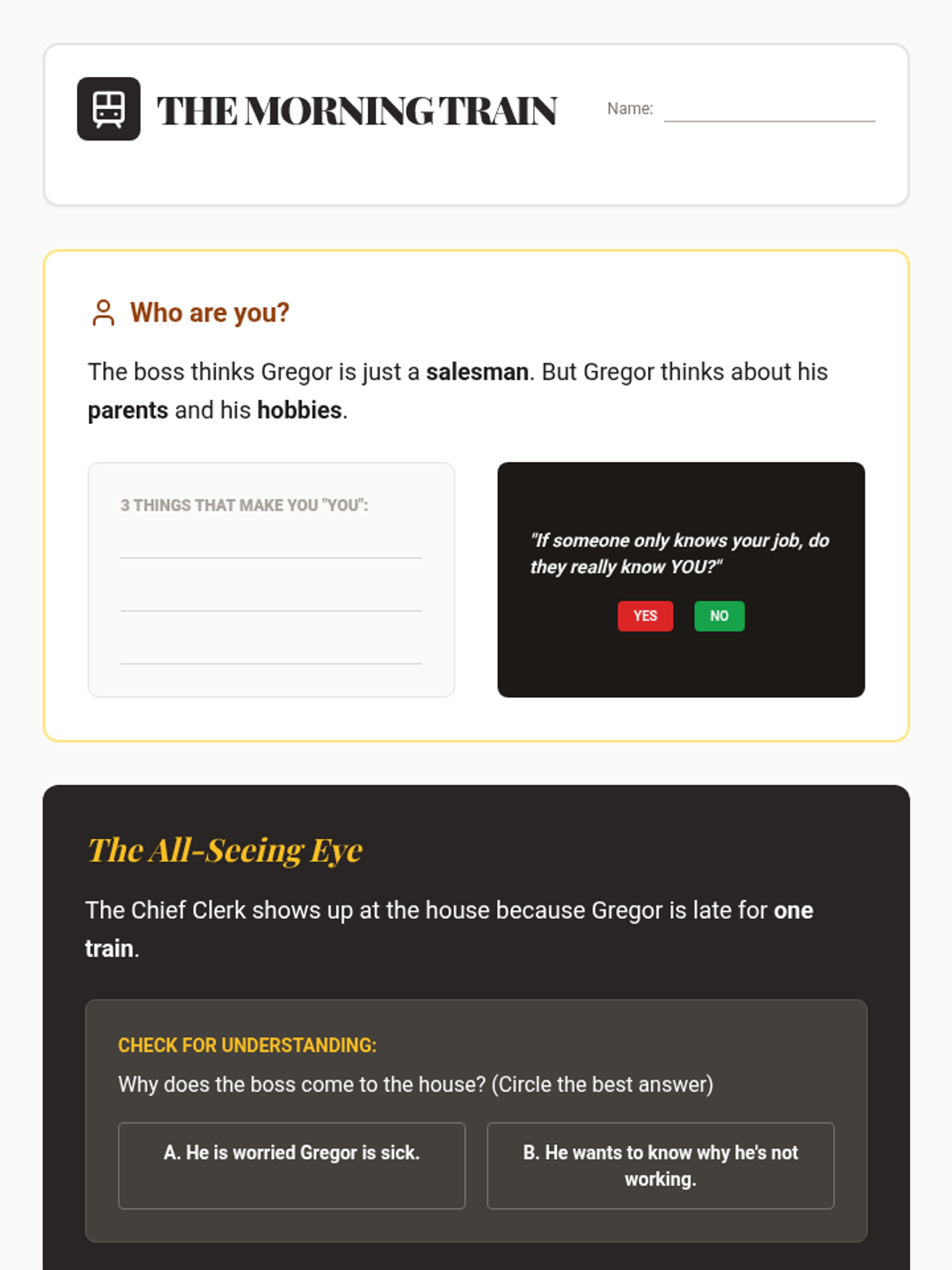
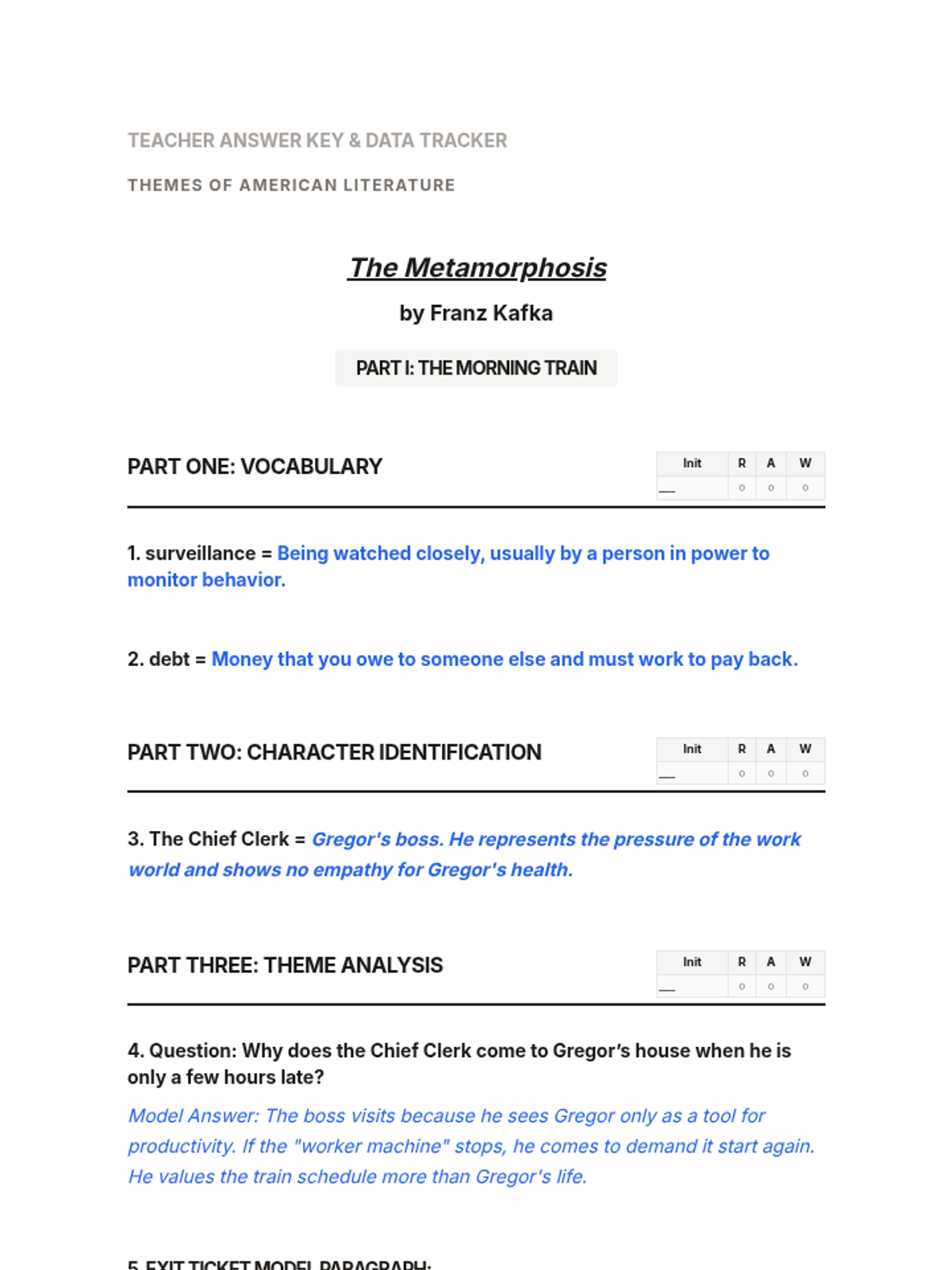
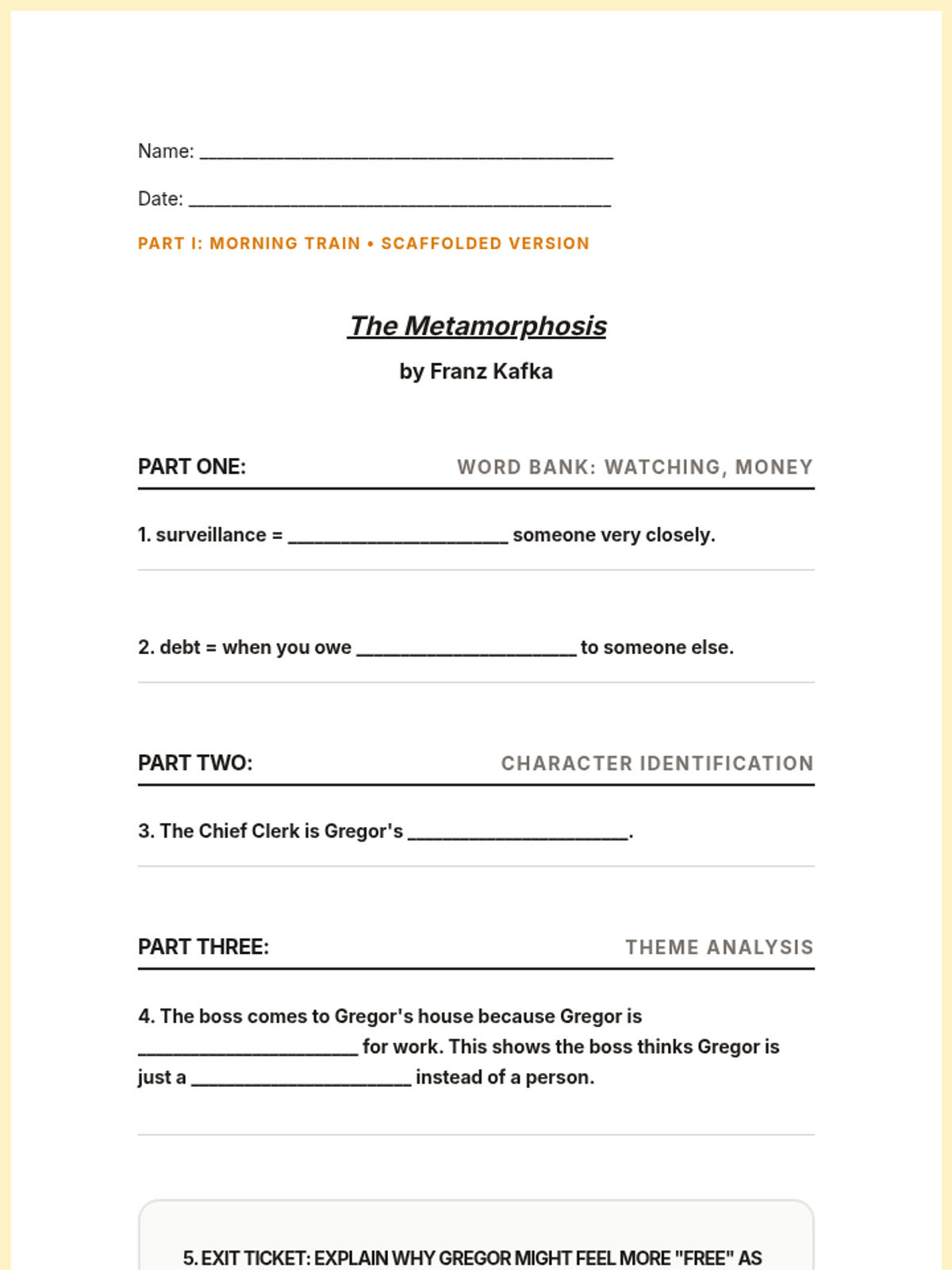
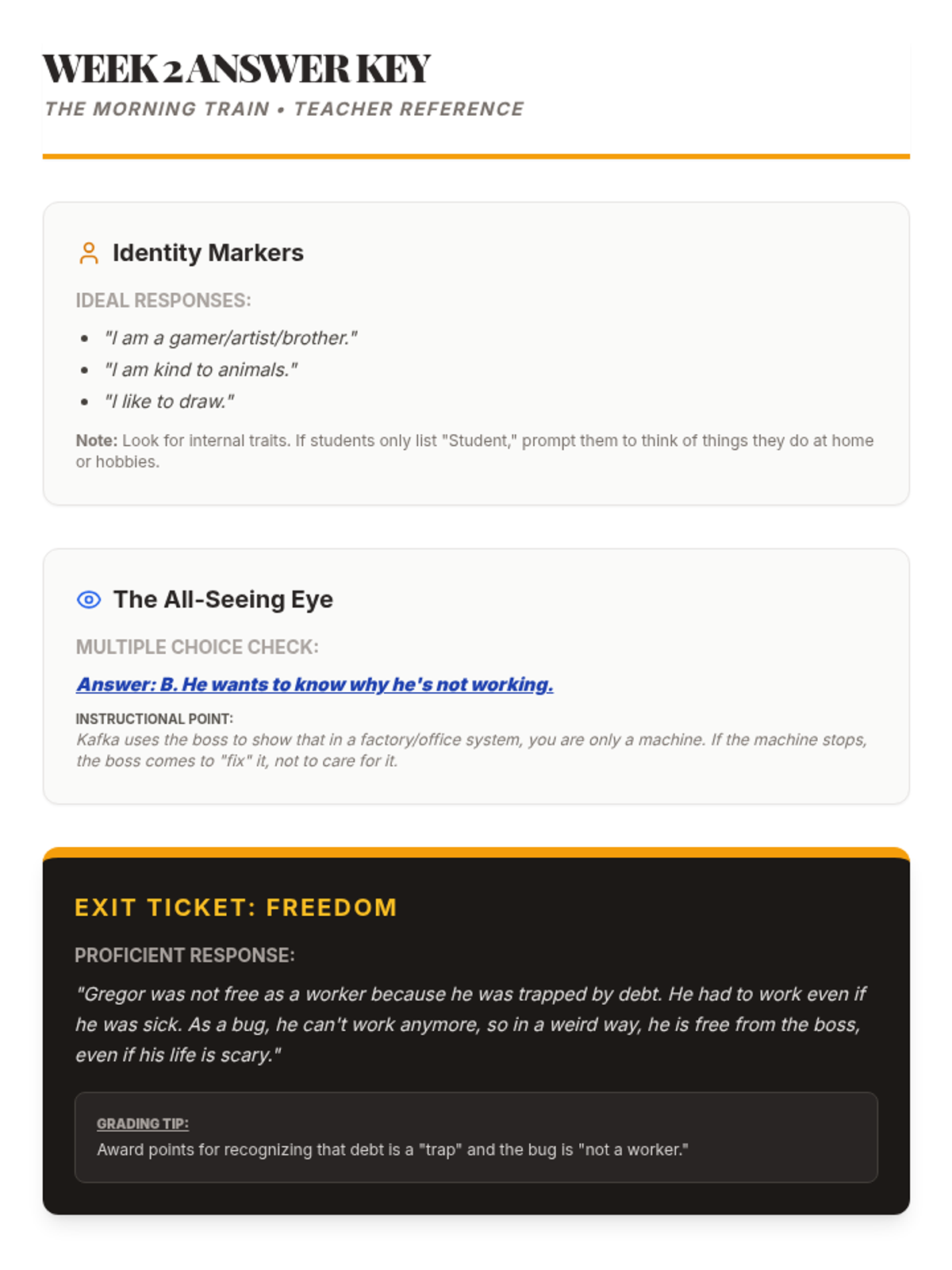
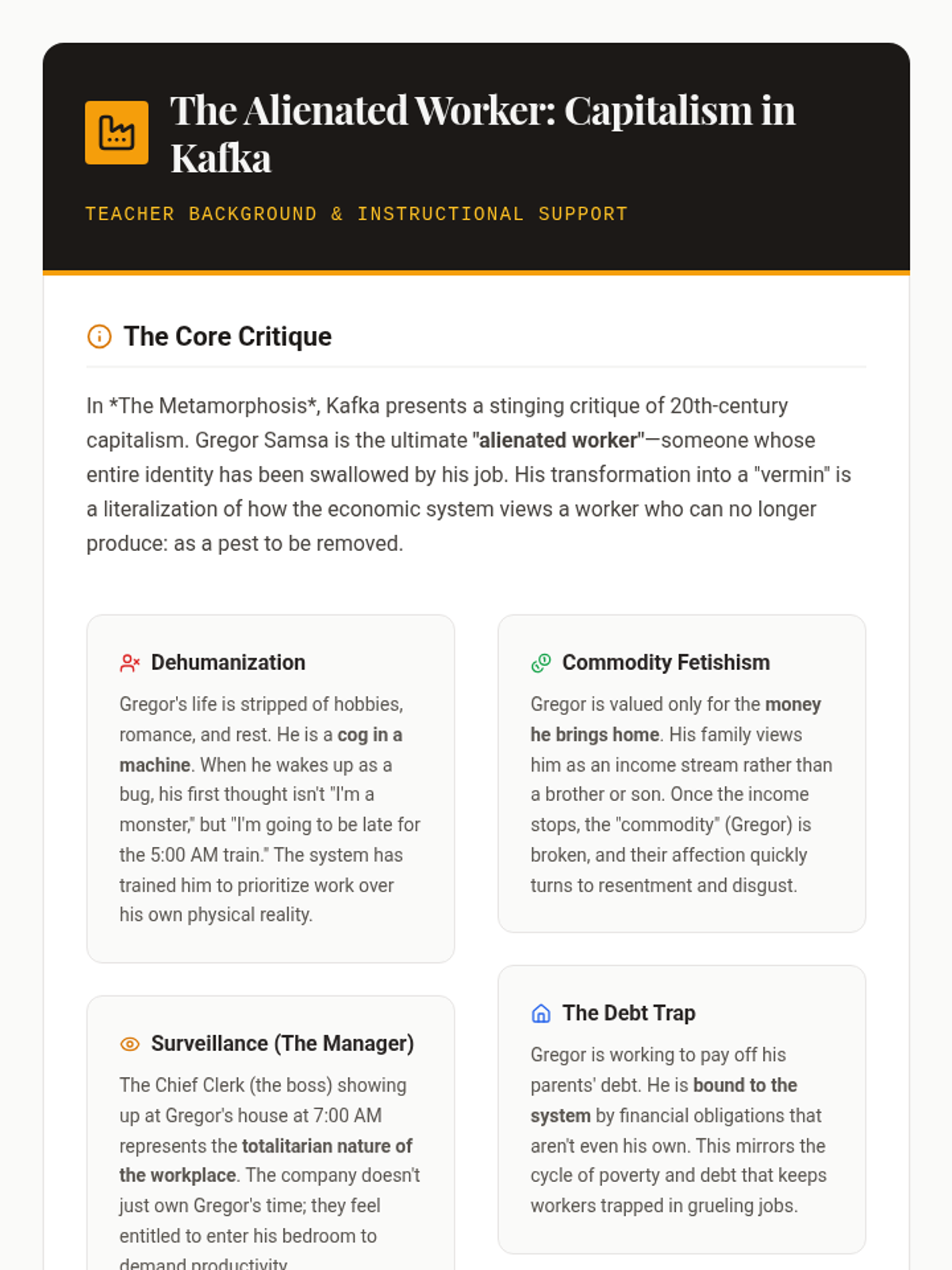
A focus on Part I of the novella, exploring the theme of work as identity and the manager's visit as a symbol of surveillance.
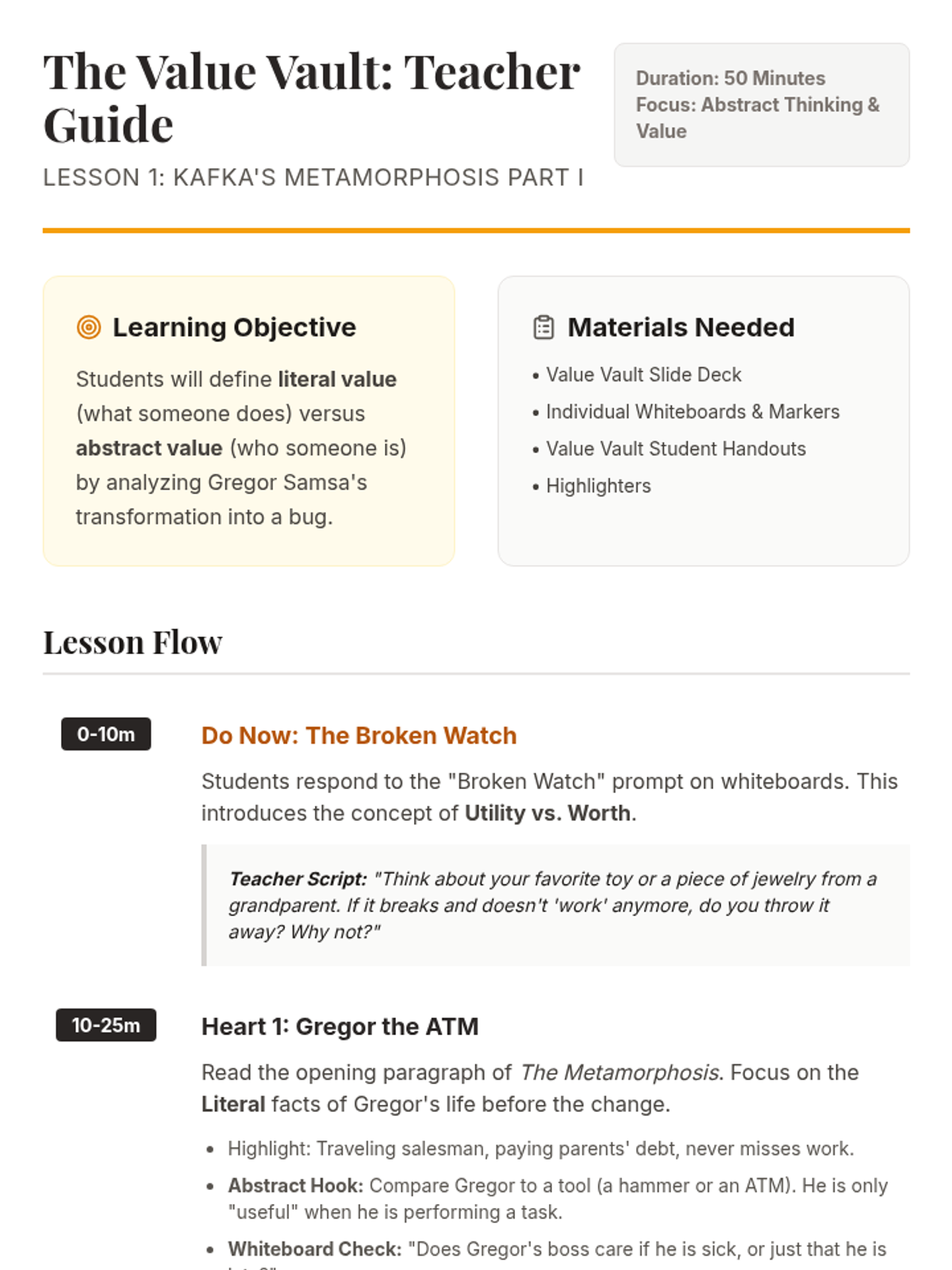
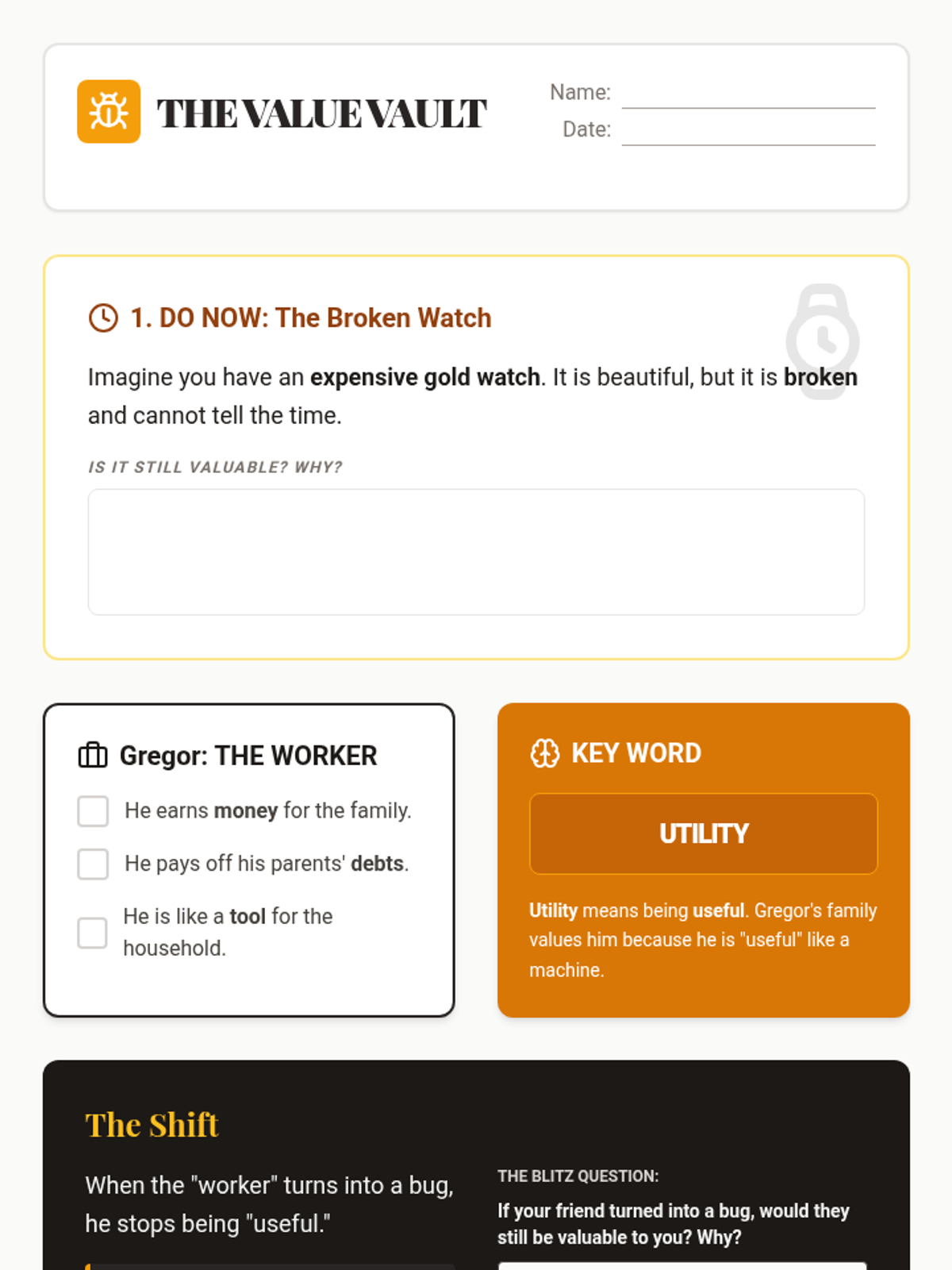
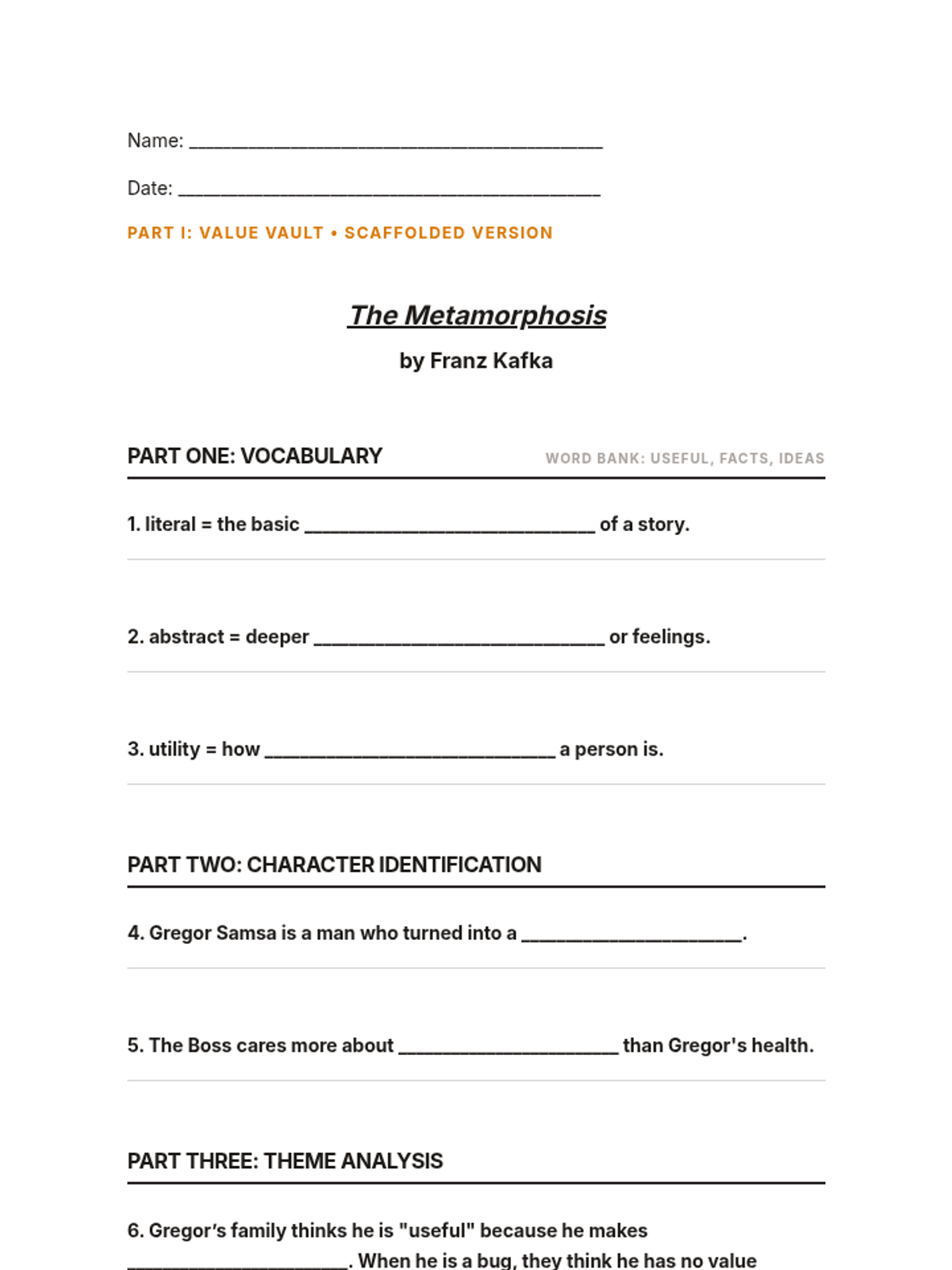
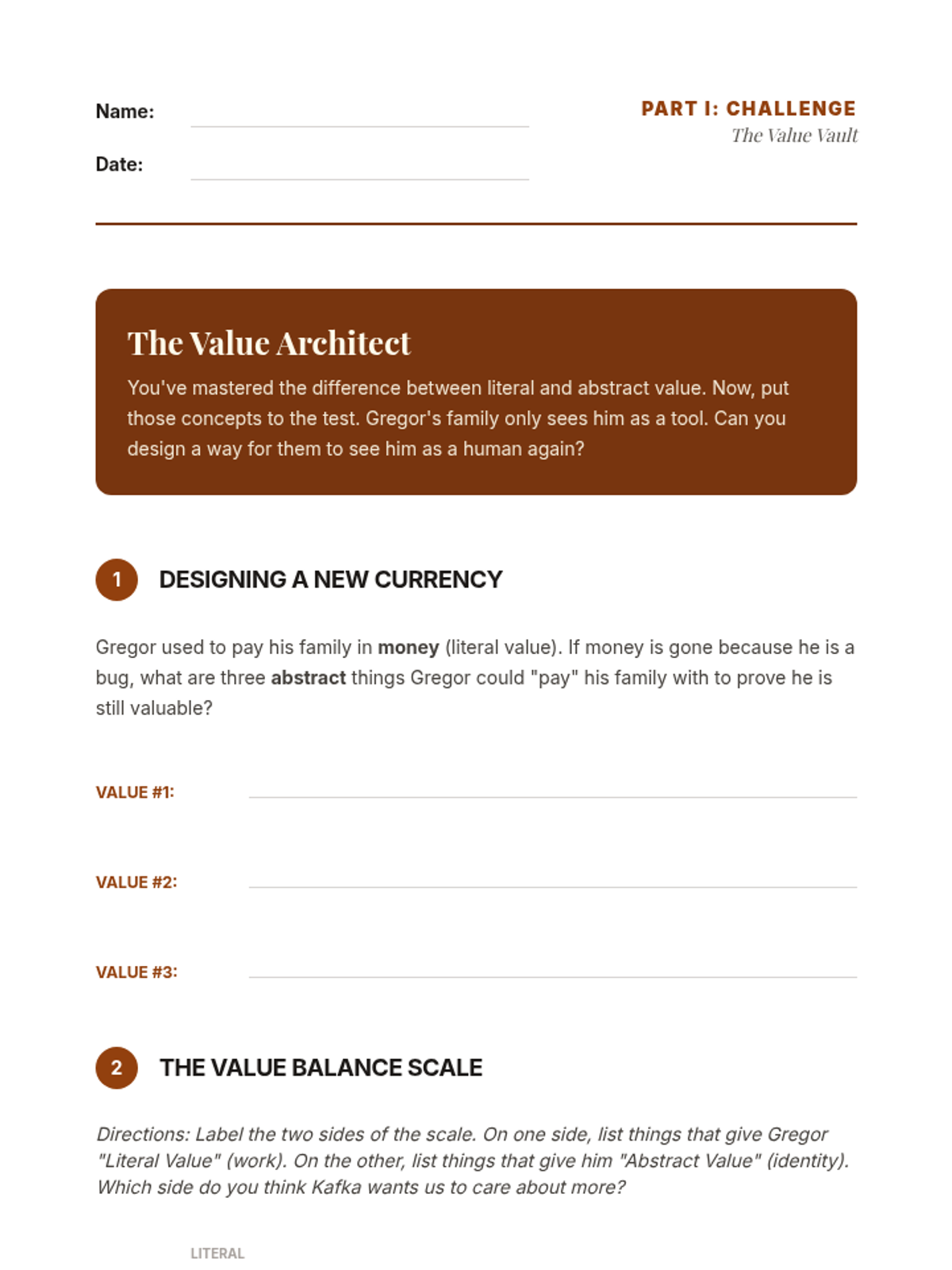
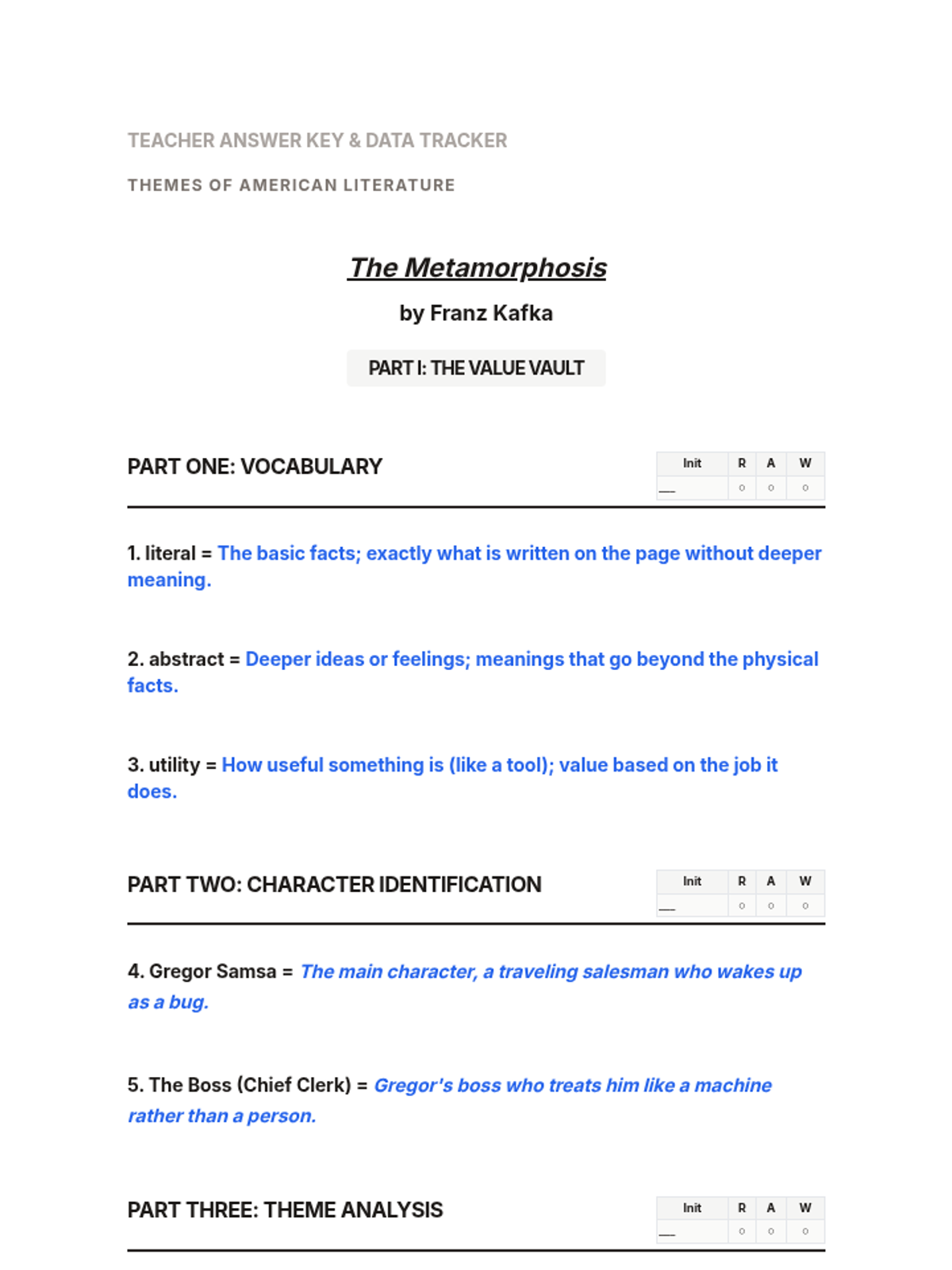
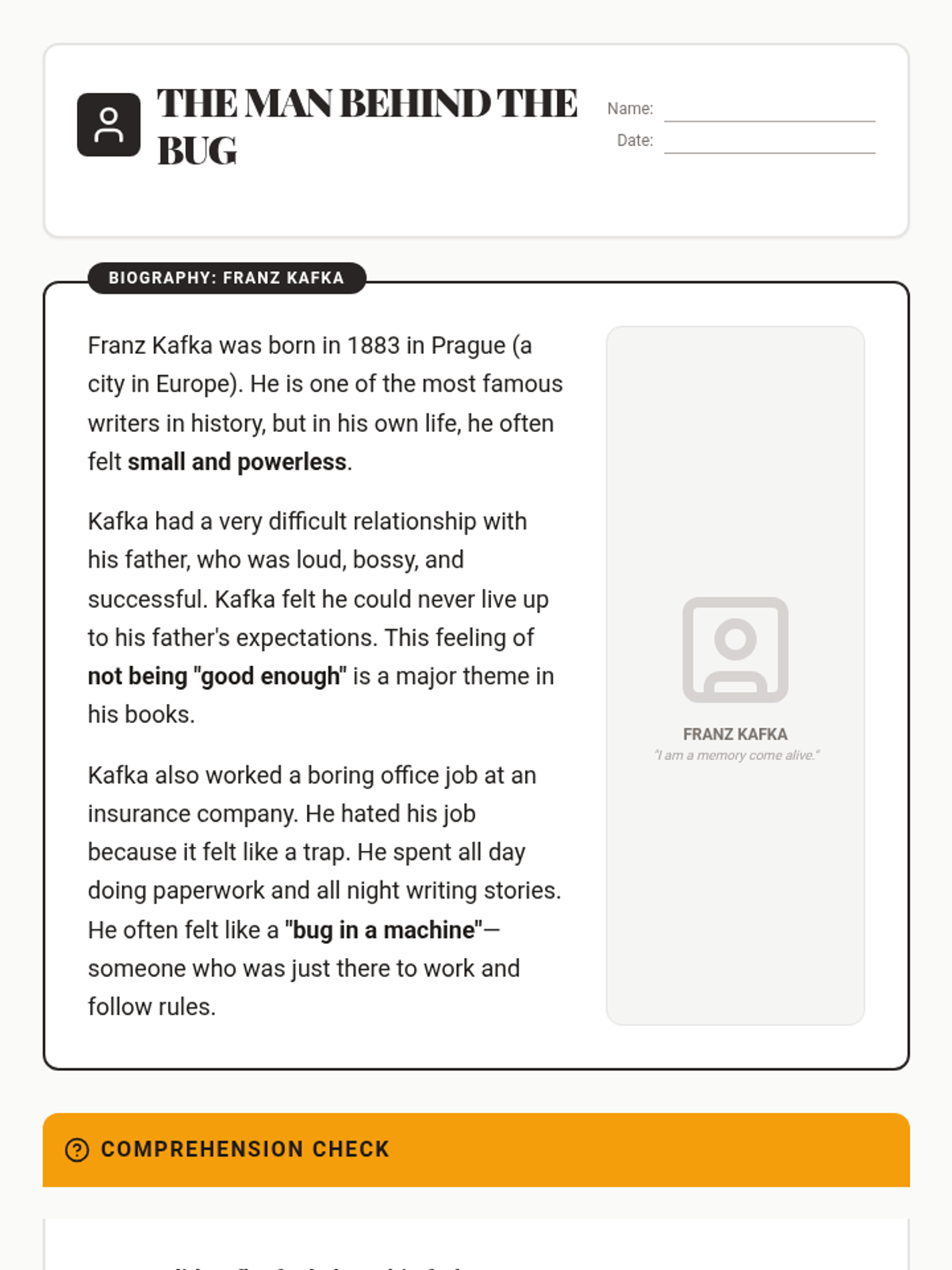
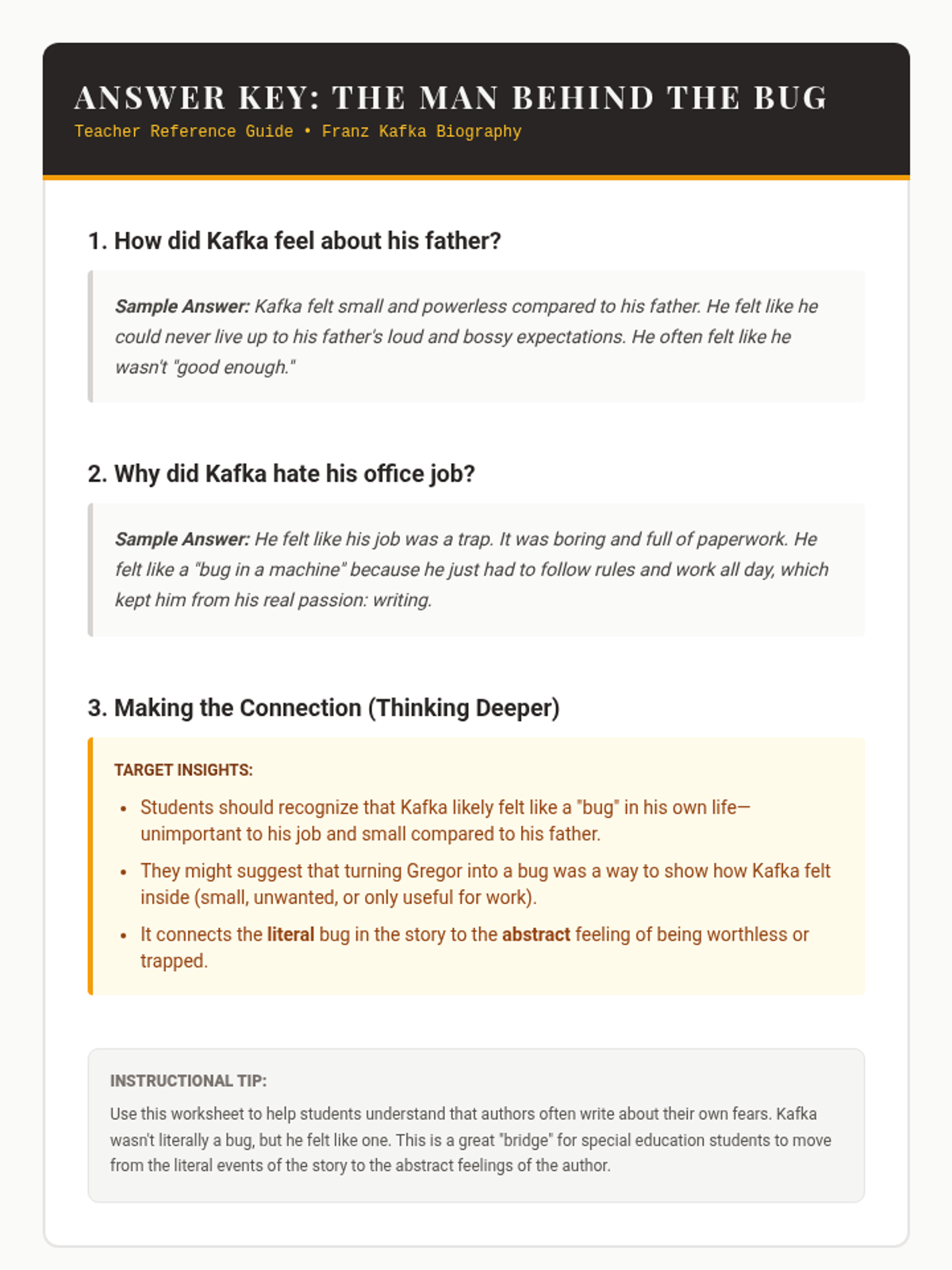
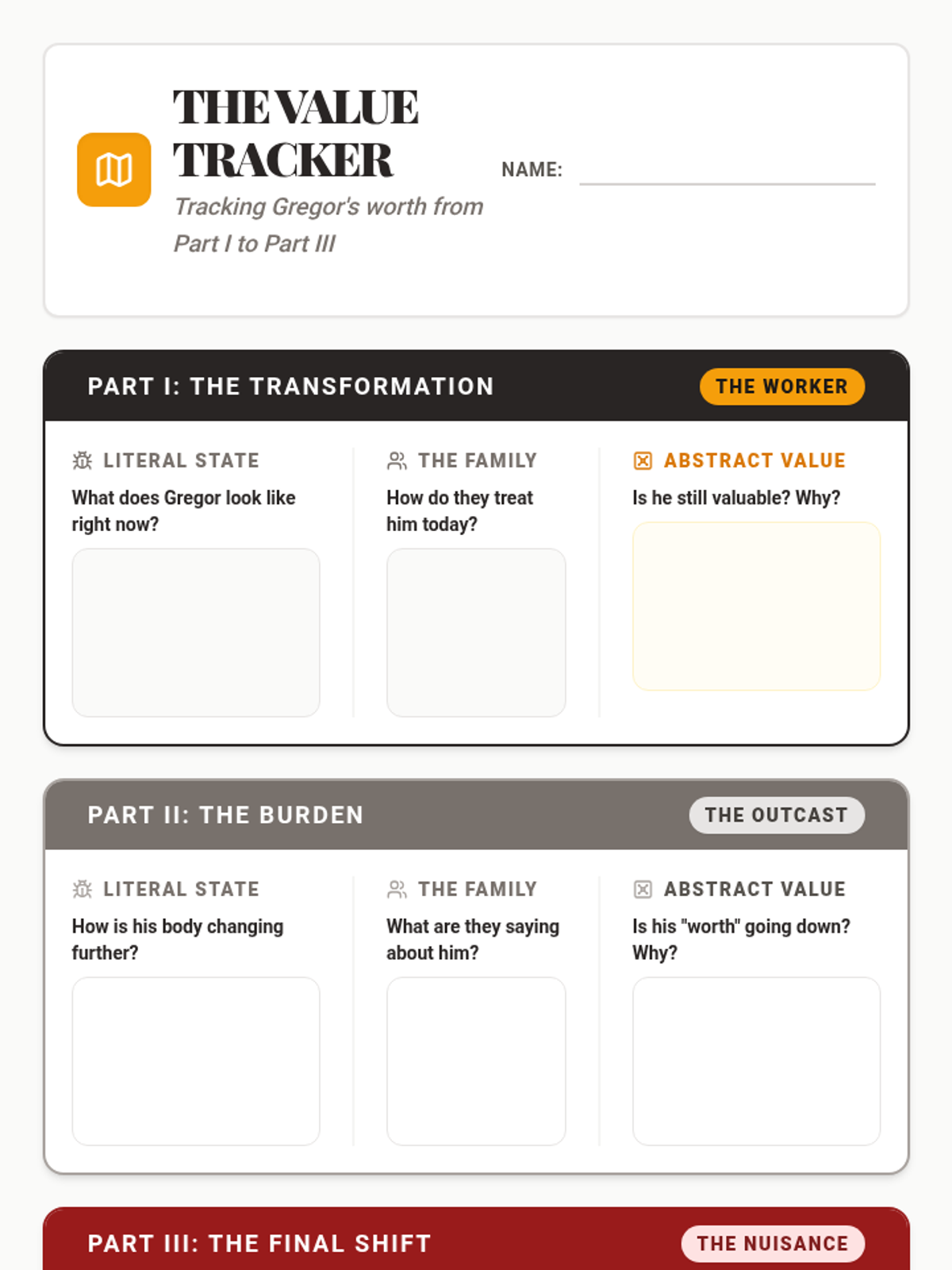
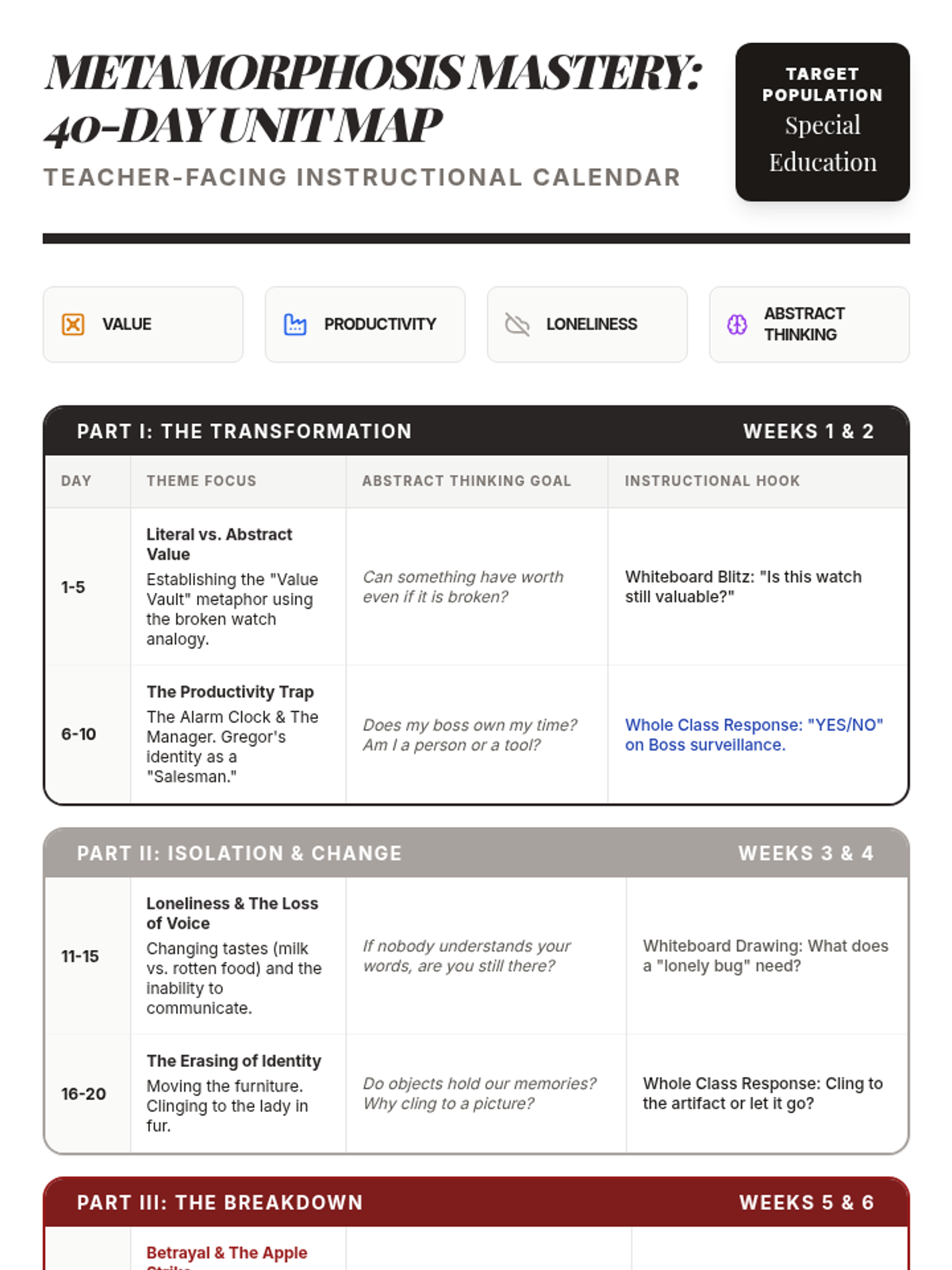
A 50-minute introductory lesson on Kafka's Metamorphosis, focusing on the shift from literal to abstract value through the lens of Gregor's transformation. Designed for special education students with high-engagement whiteboard activities.
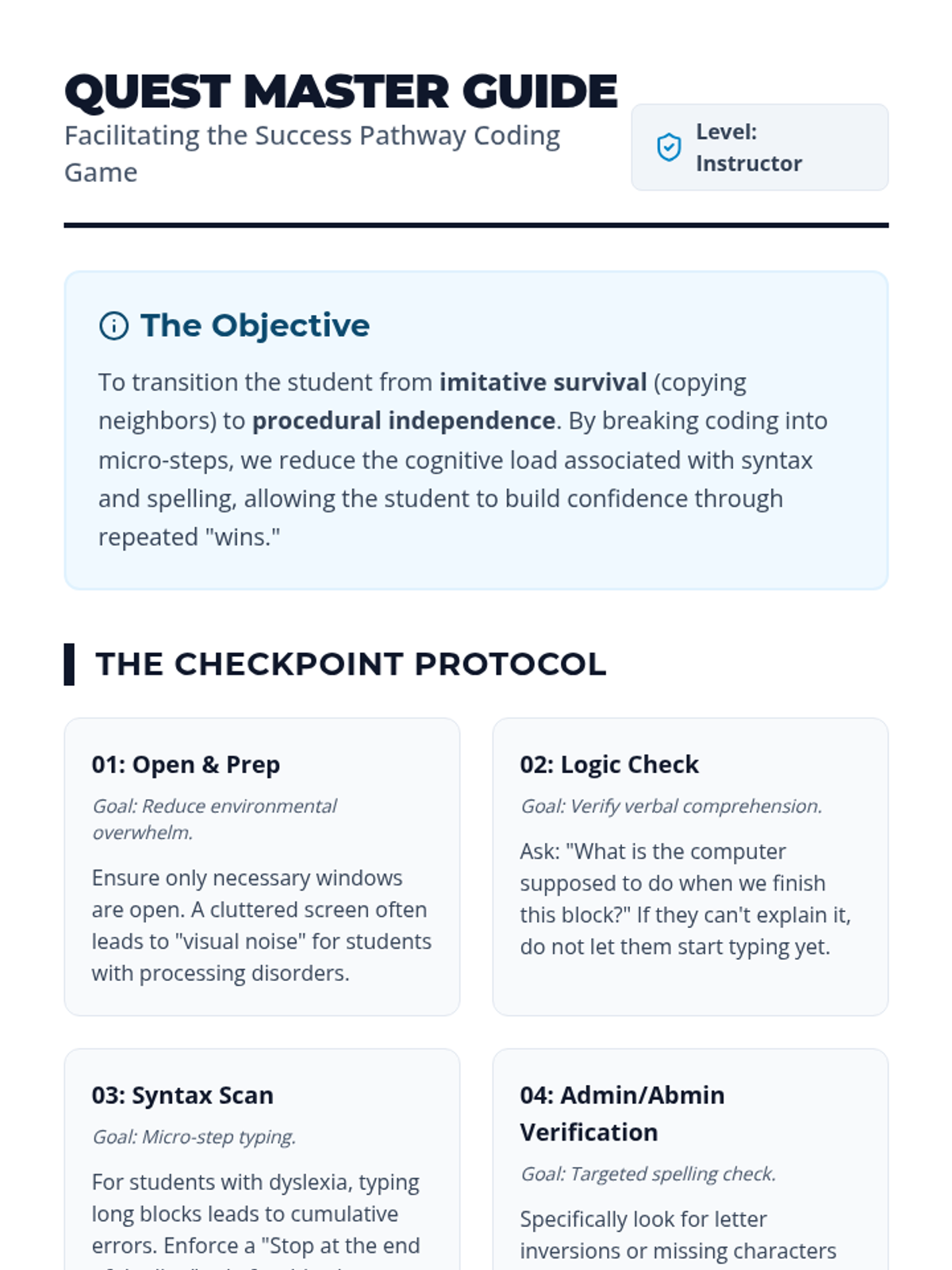
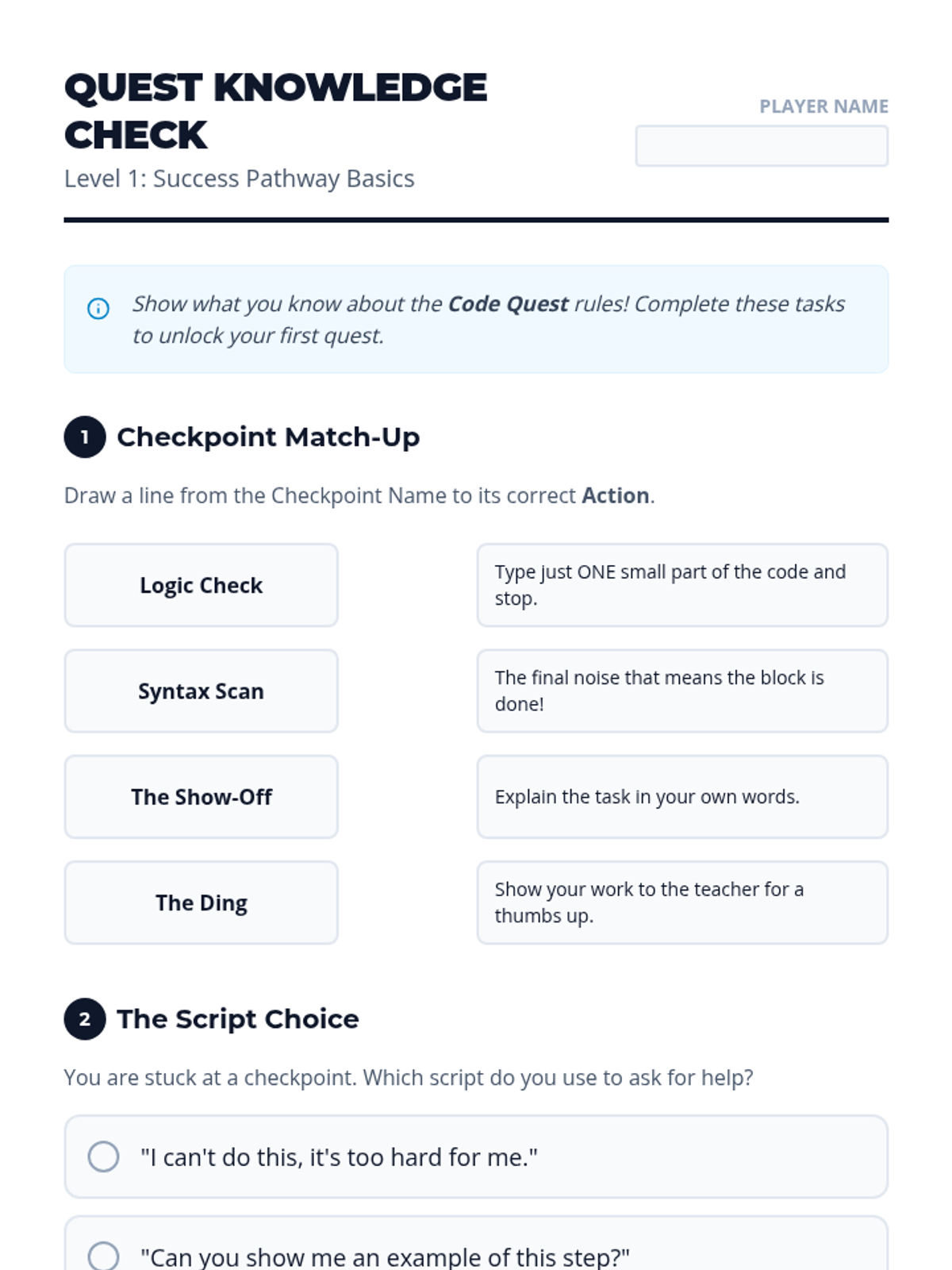
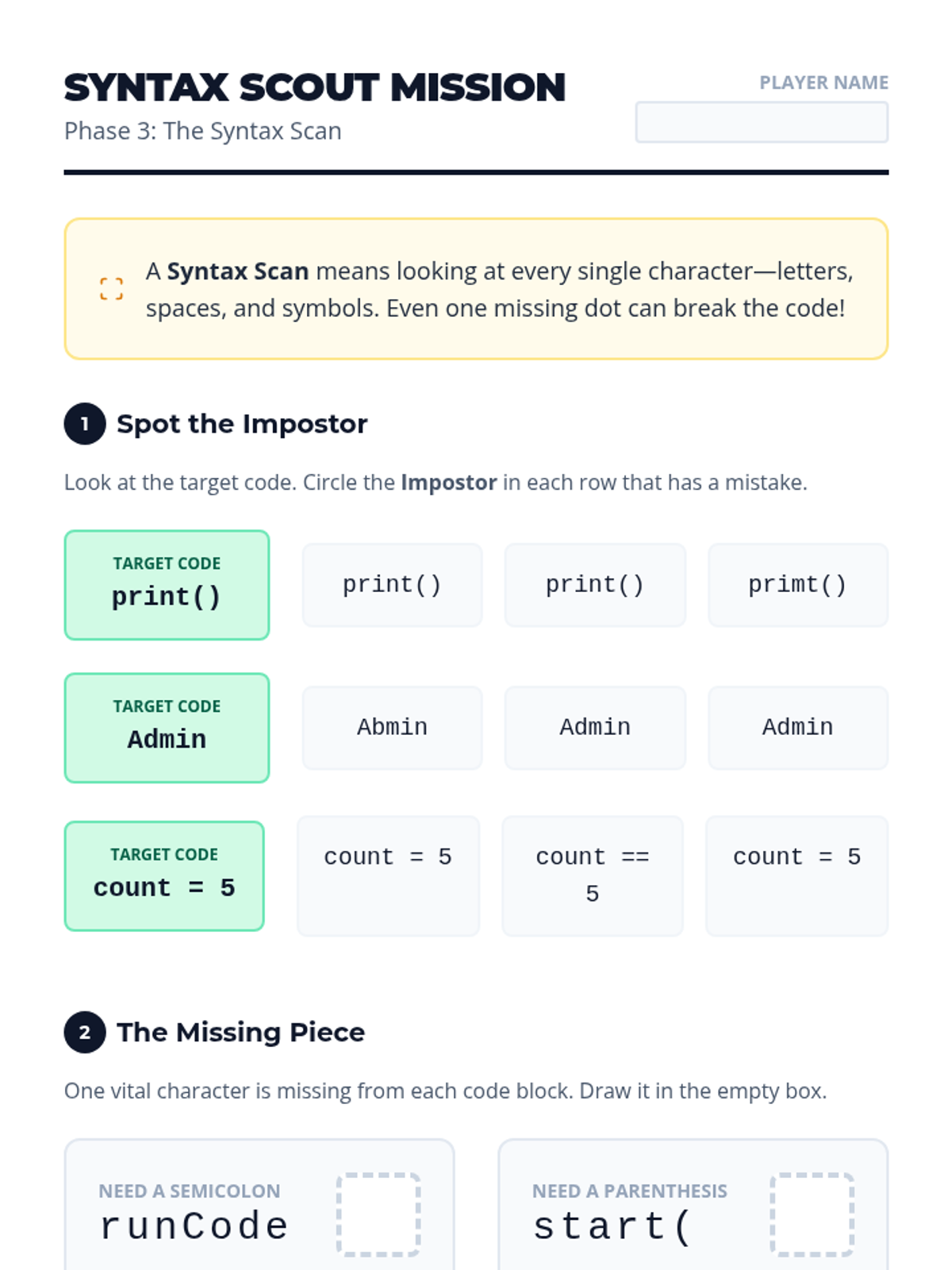
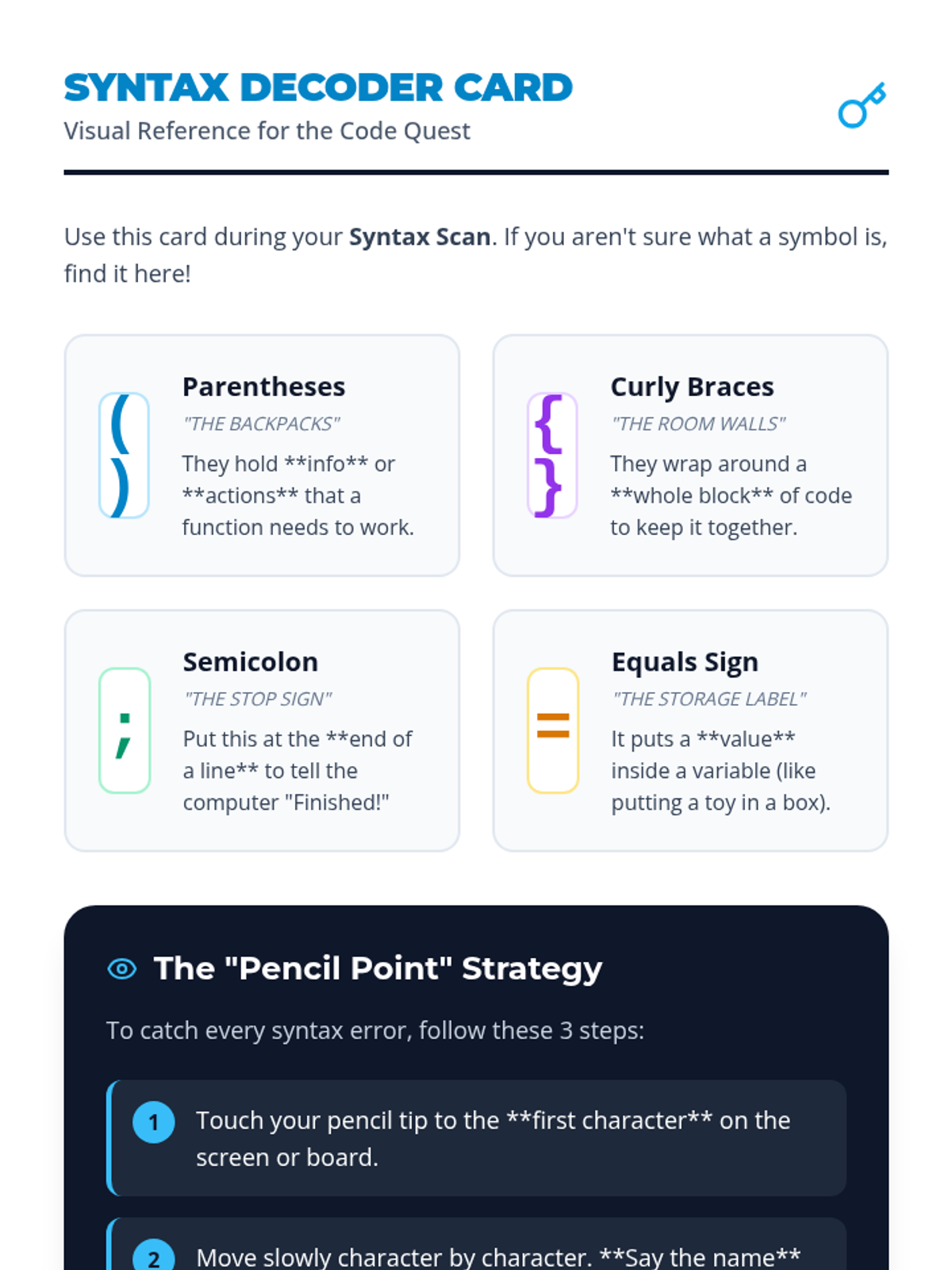
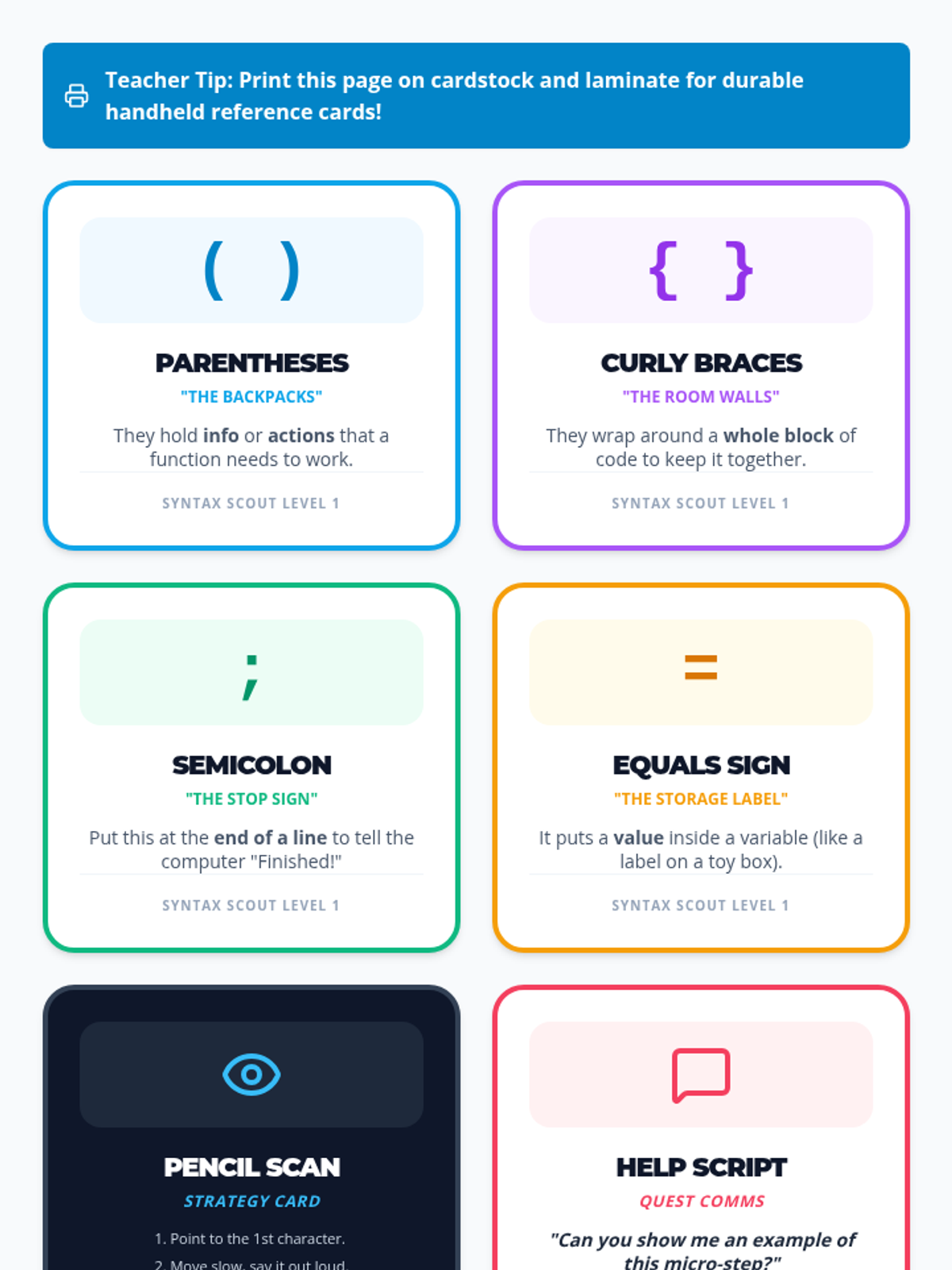
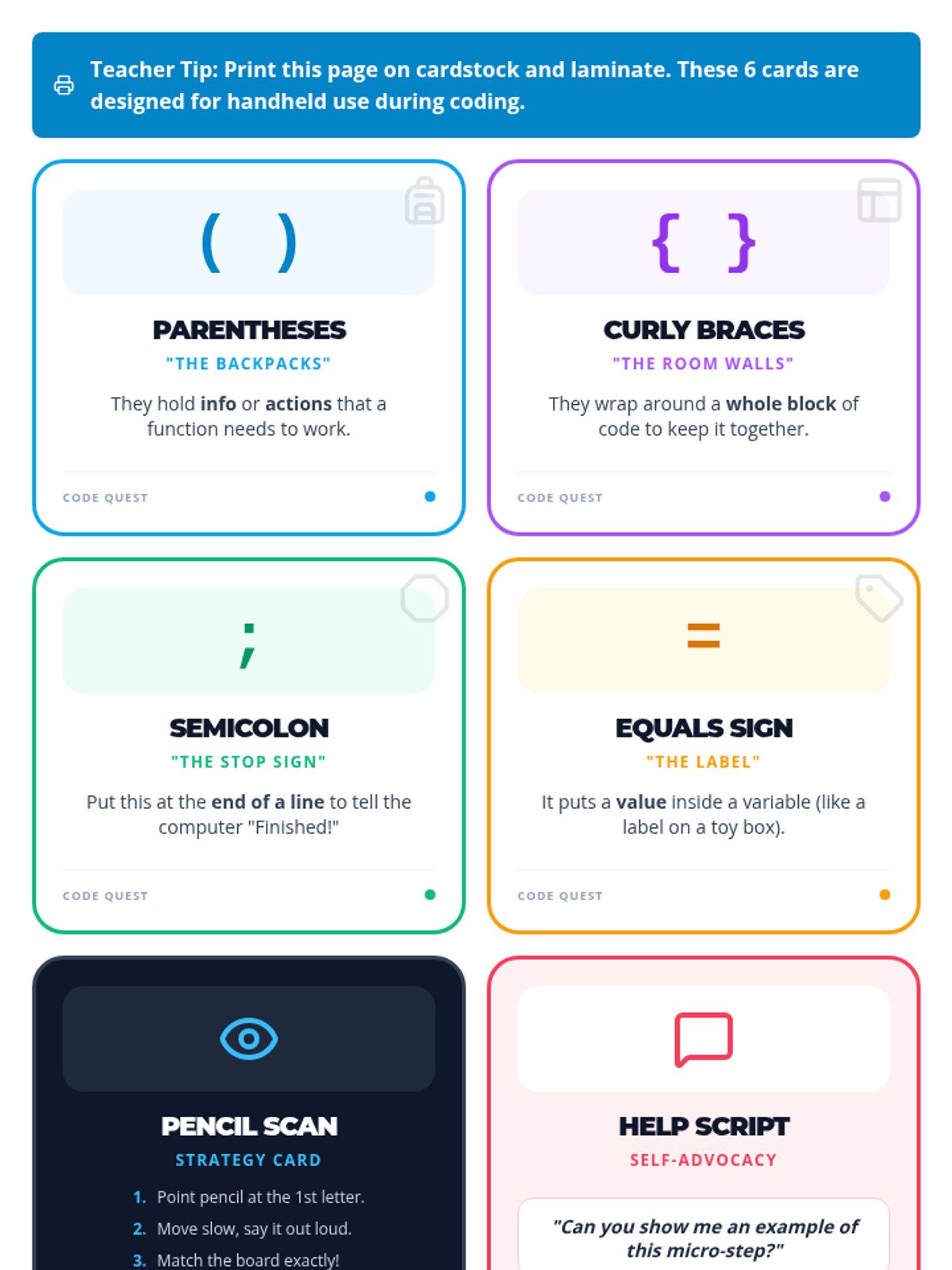
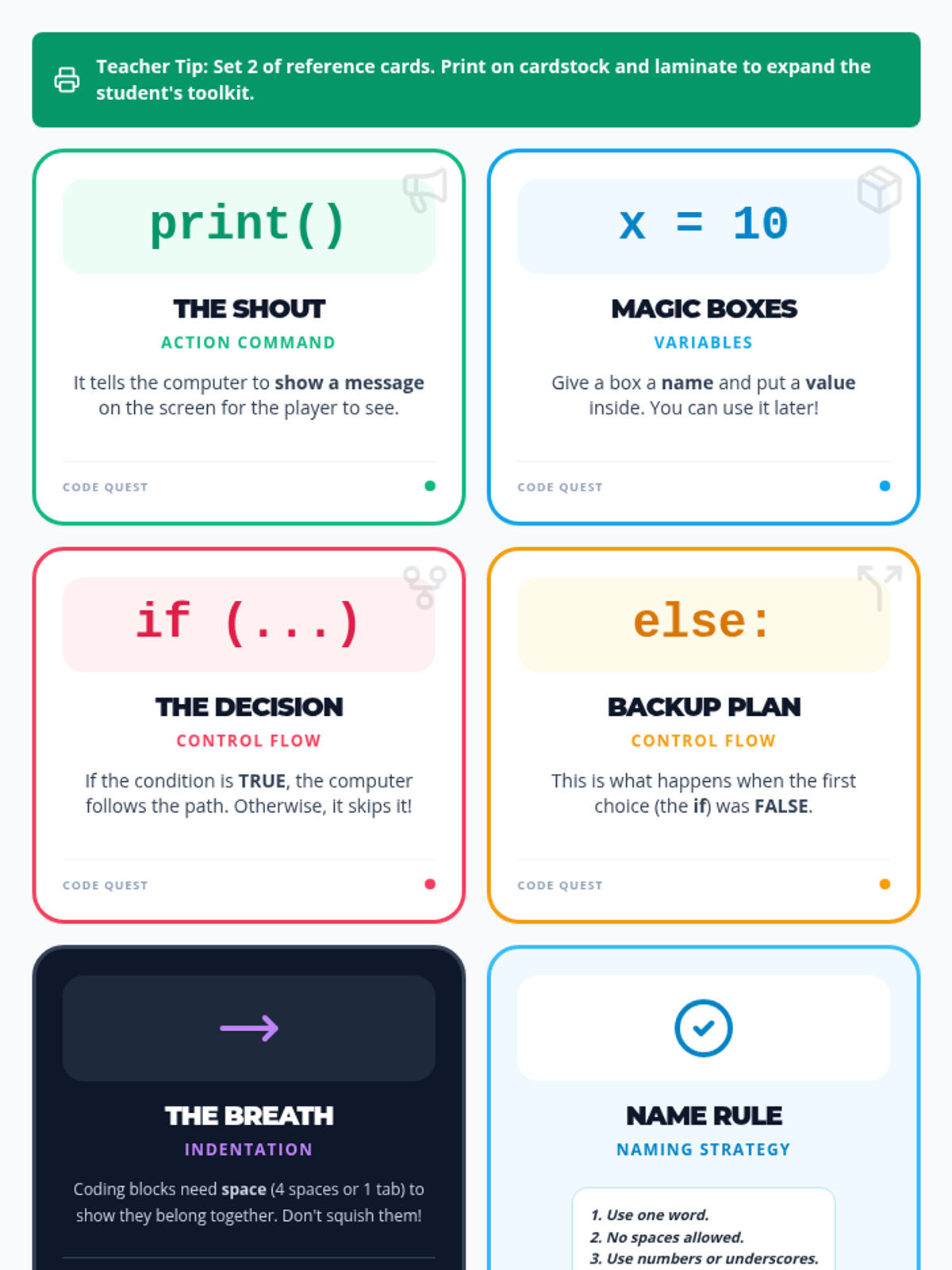
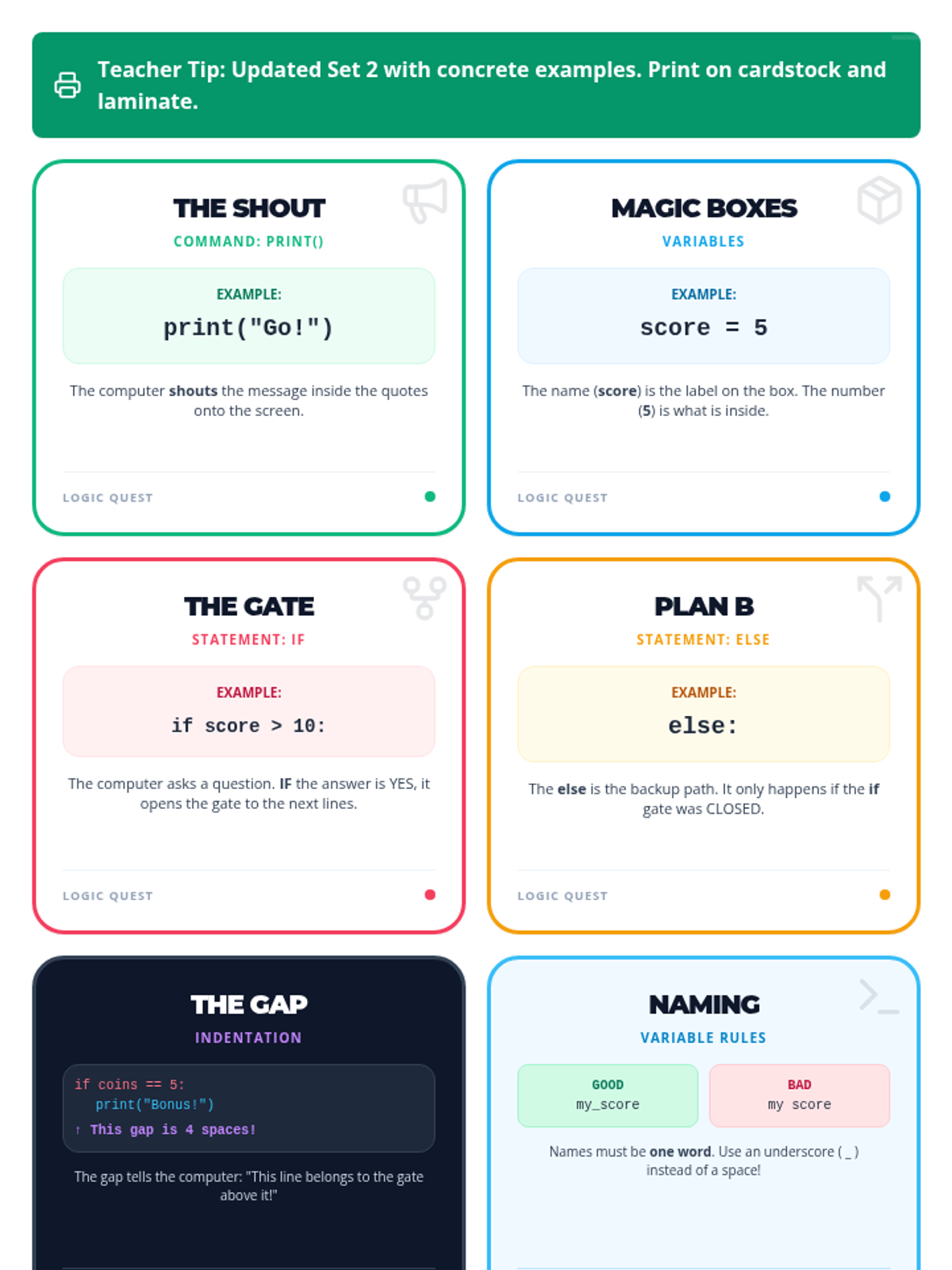
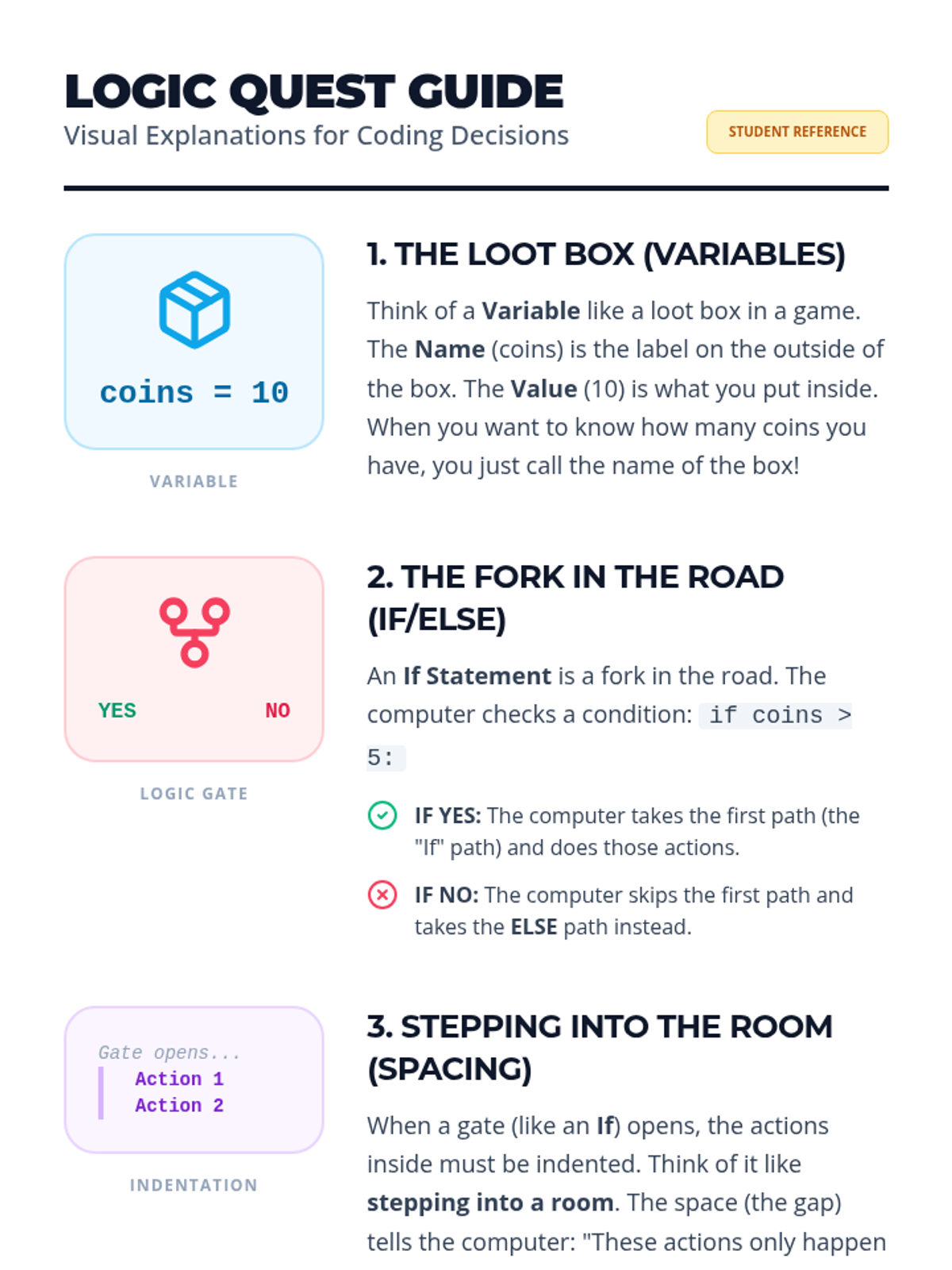
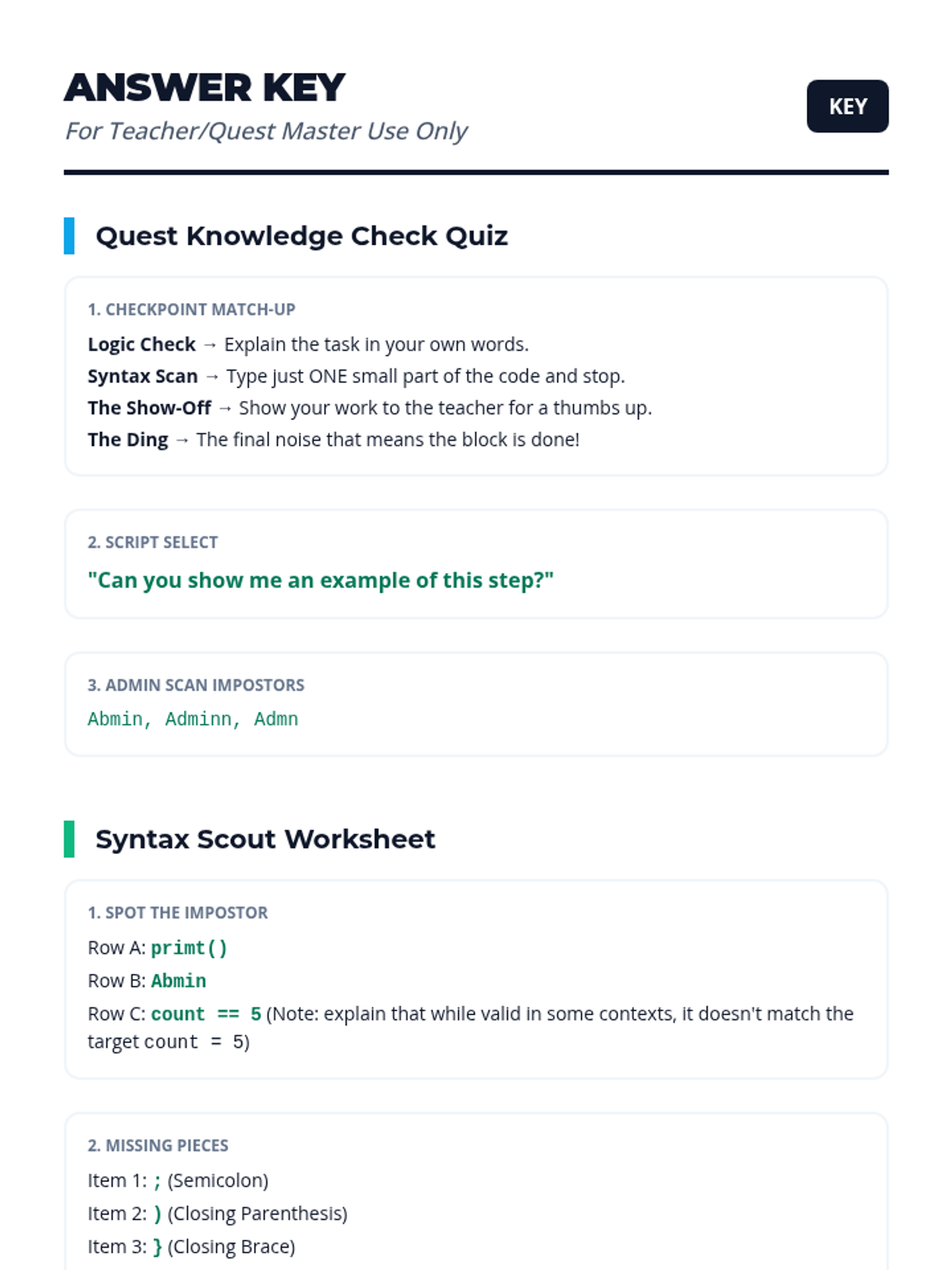
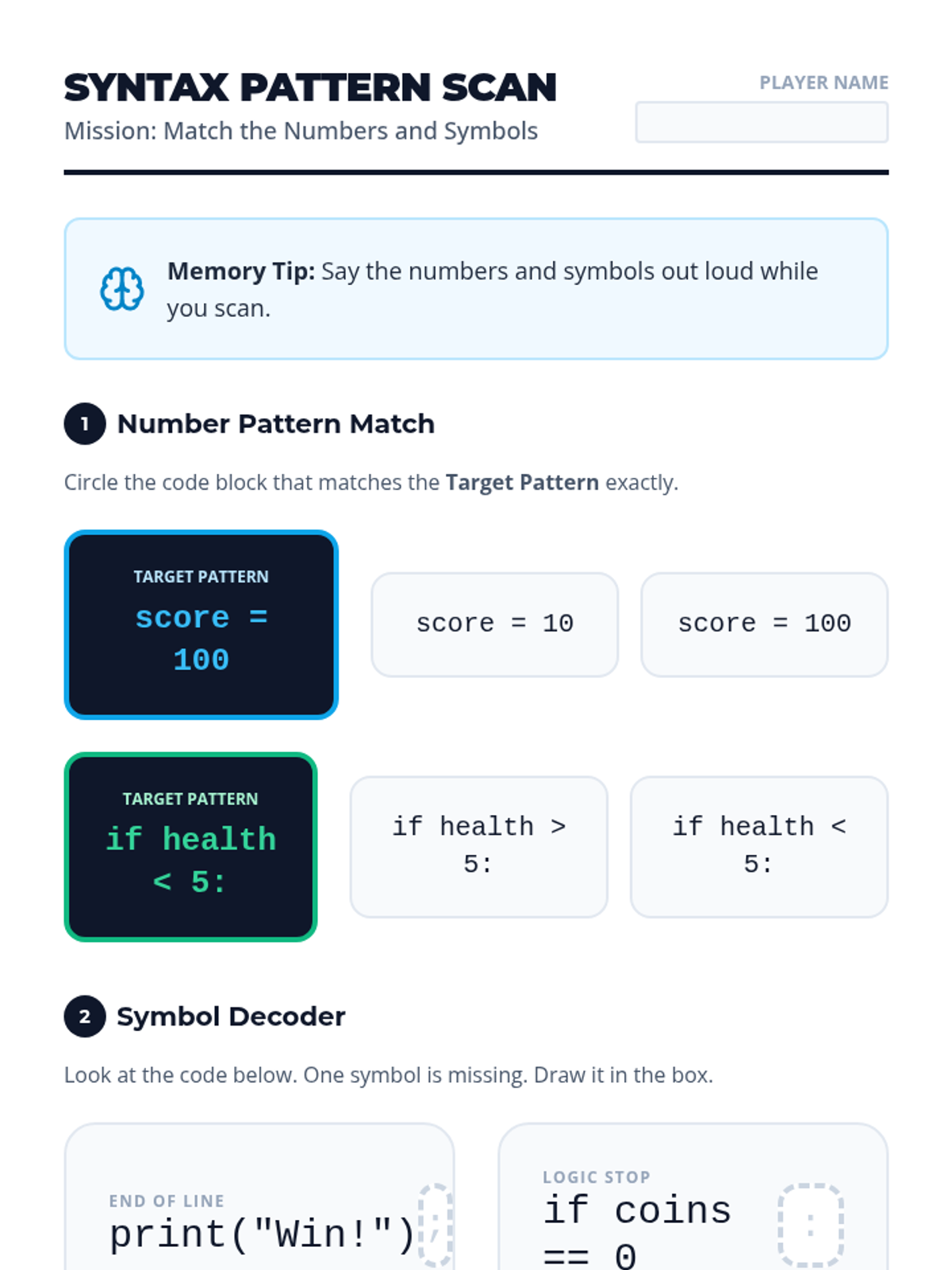
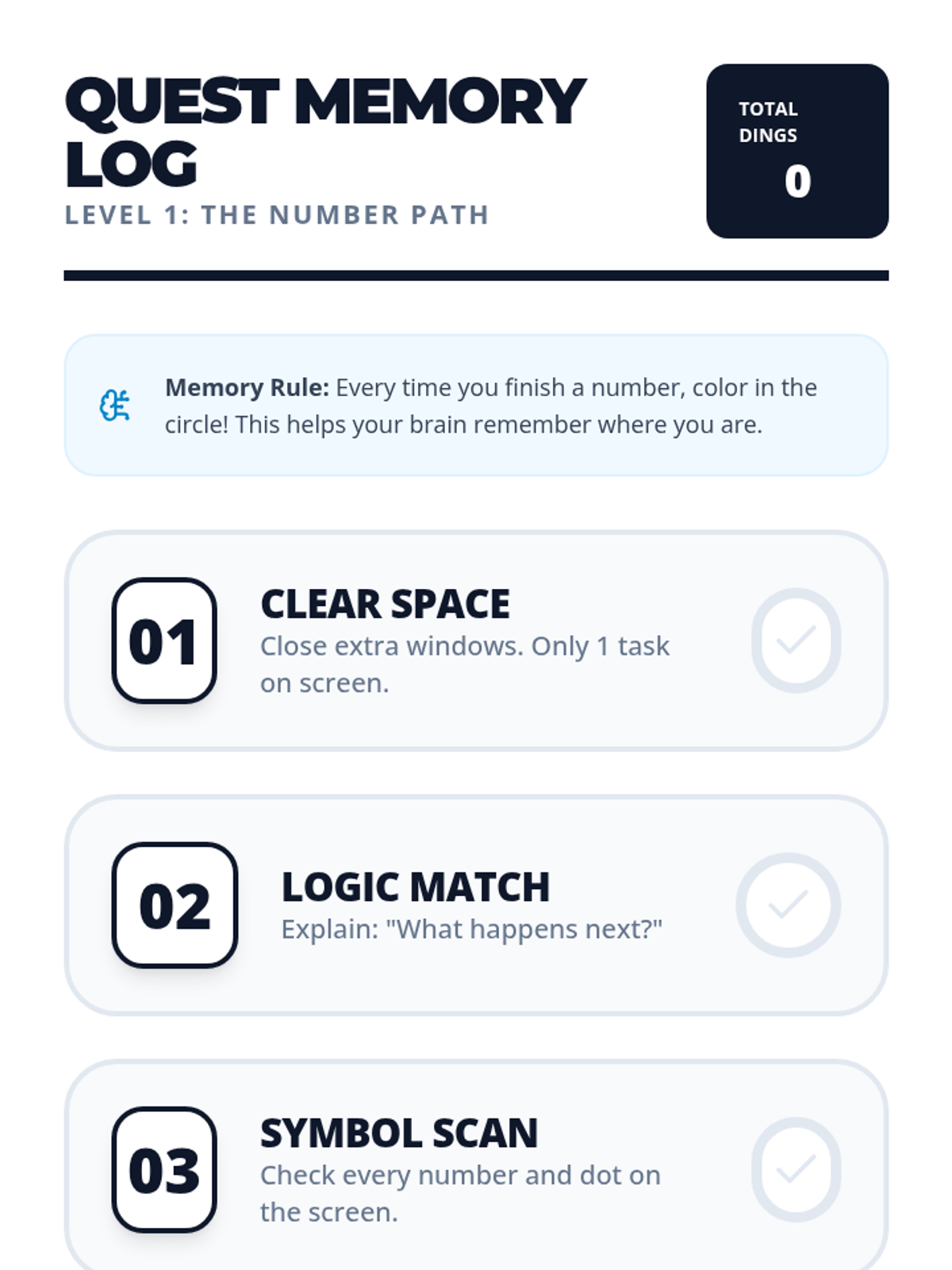
A specialized instructional framework for students with ASD and language processing challenges. This lesson uses a micro-step 'Success Pathway' game to build coding independence by leveraging numerical strengths and providing visual memory anchors to support memory retention.
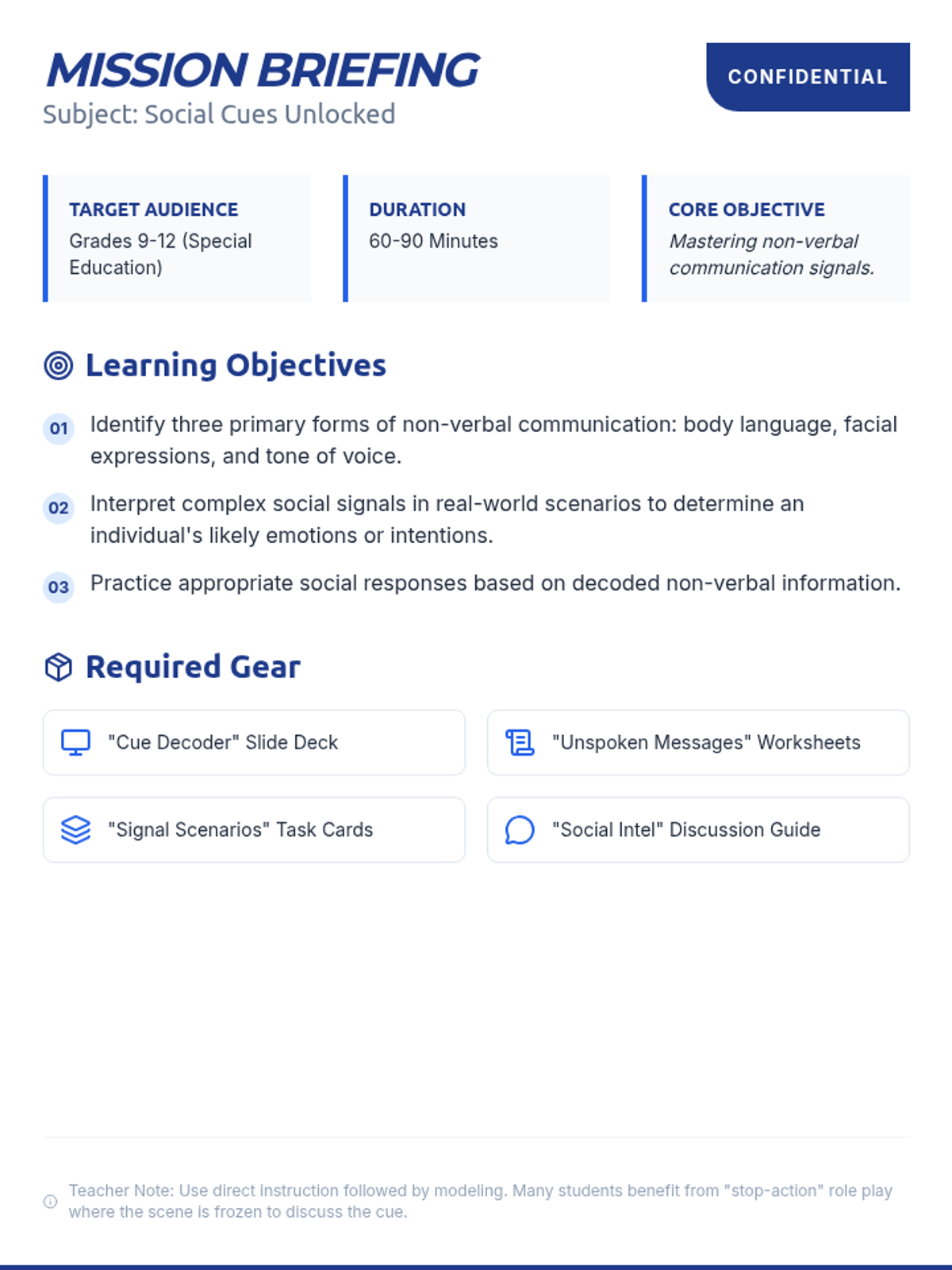
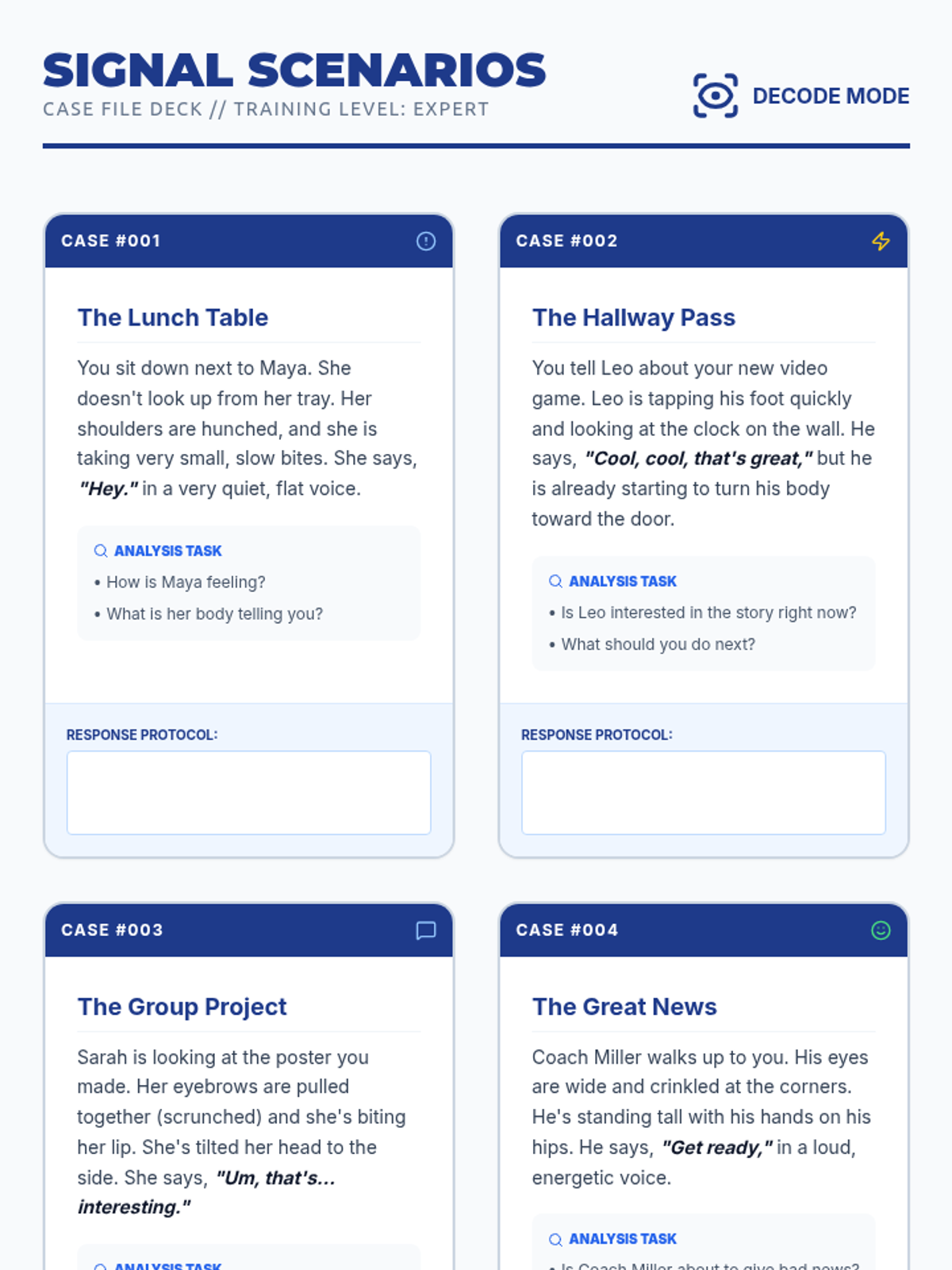
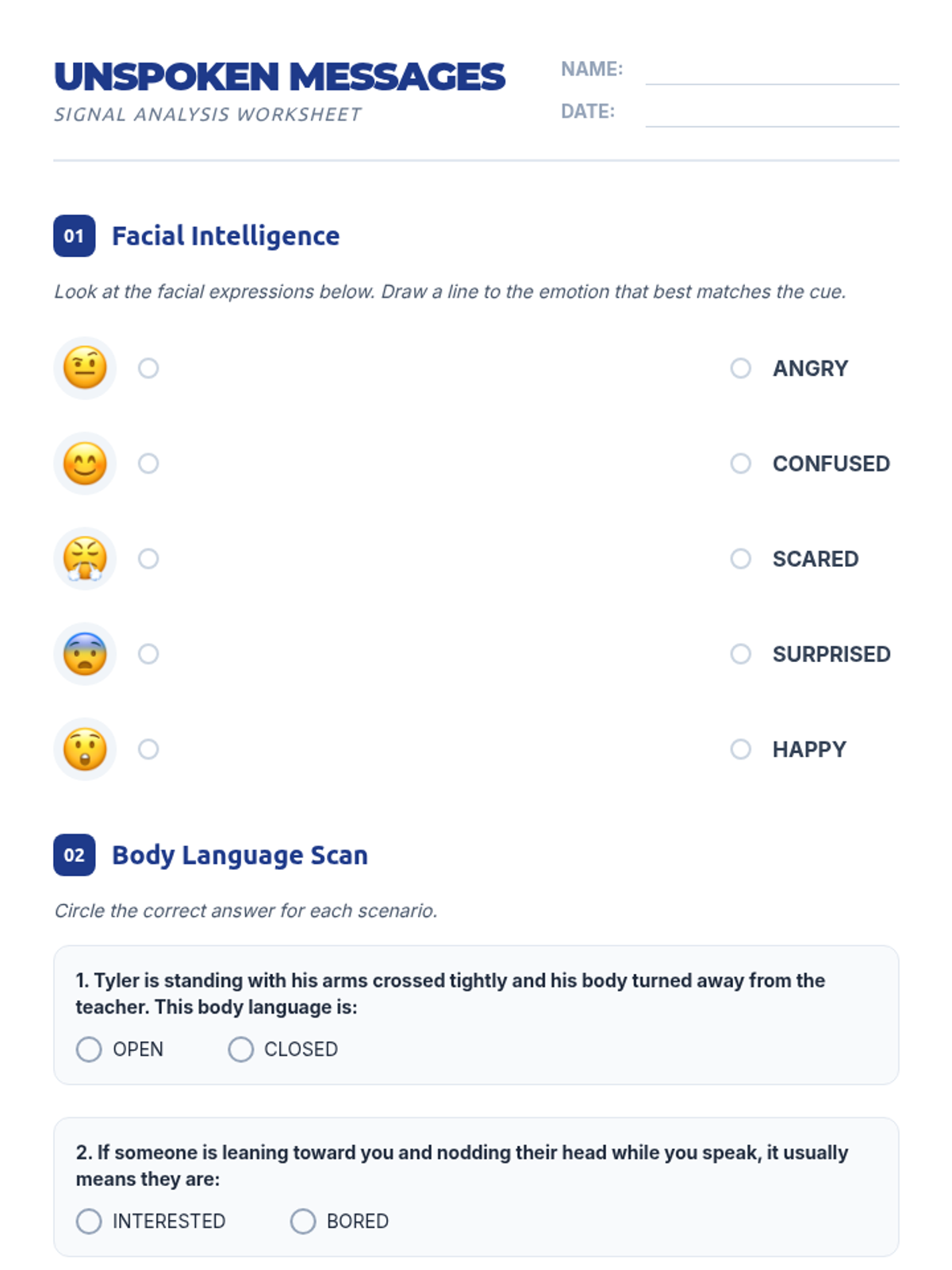
A comprehensive lesson designed for high school special education students to master the art of interpreting non-verbal communication, including body language, facial expressions, and tone of voice.
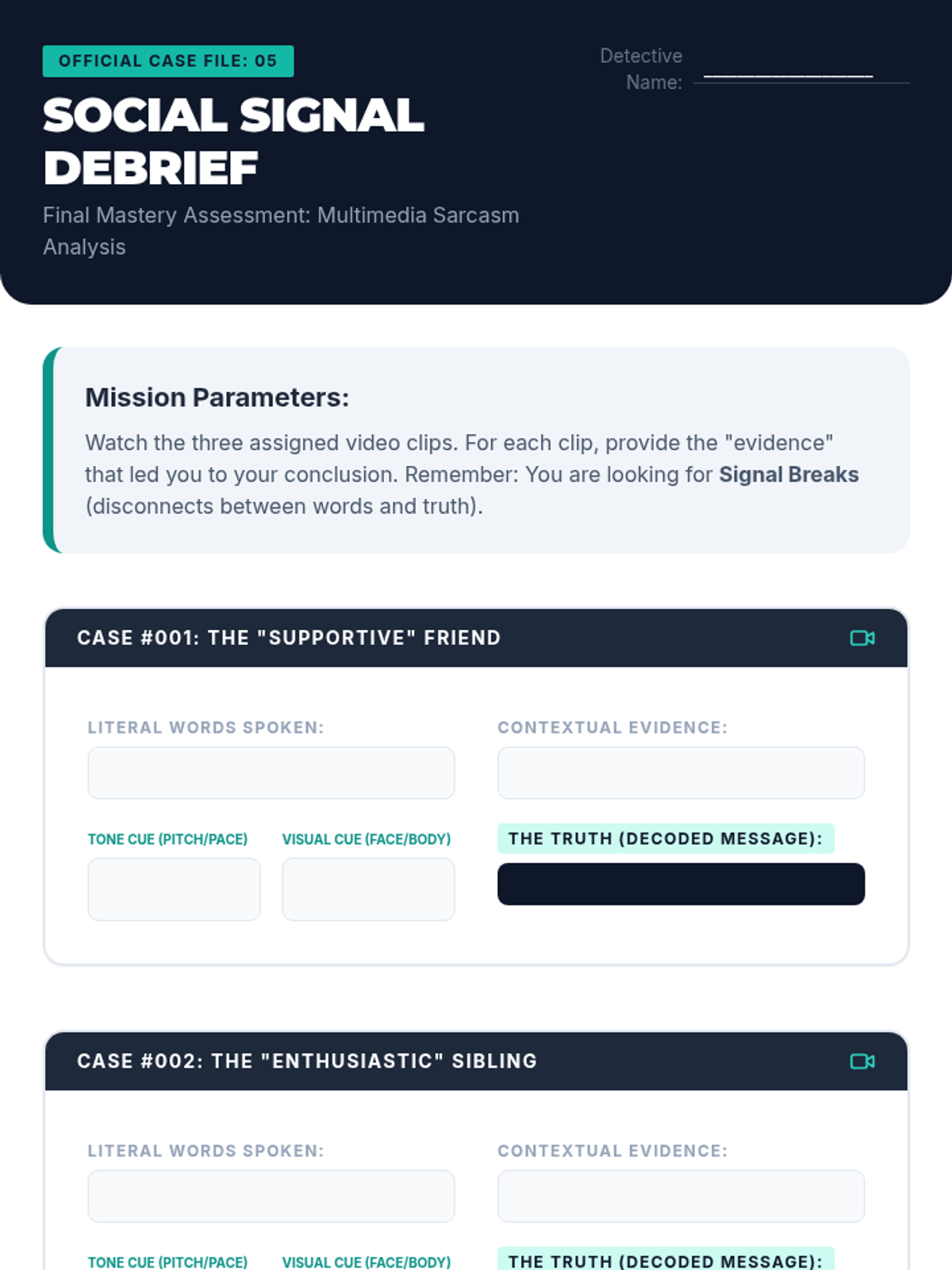
A mastery-based application lesson where students synthesize tone, face, and context to analyze complex social interactions in media.
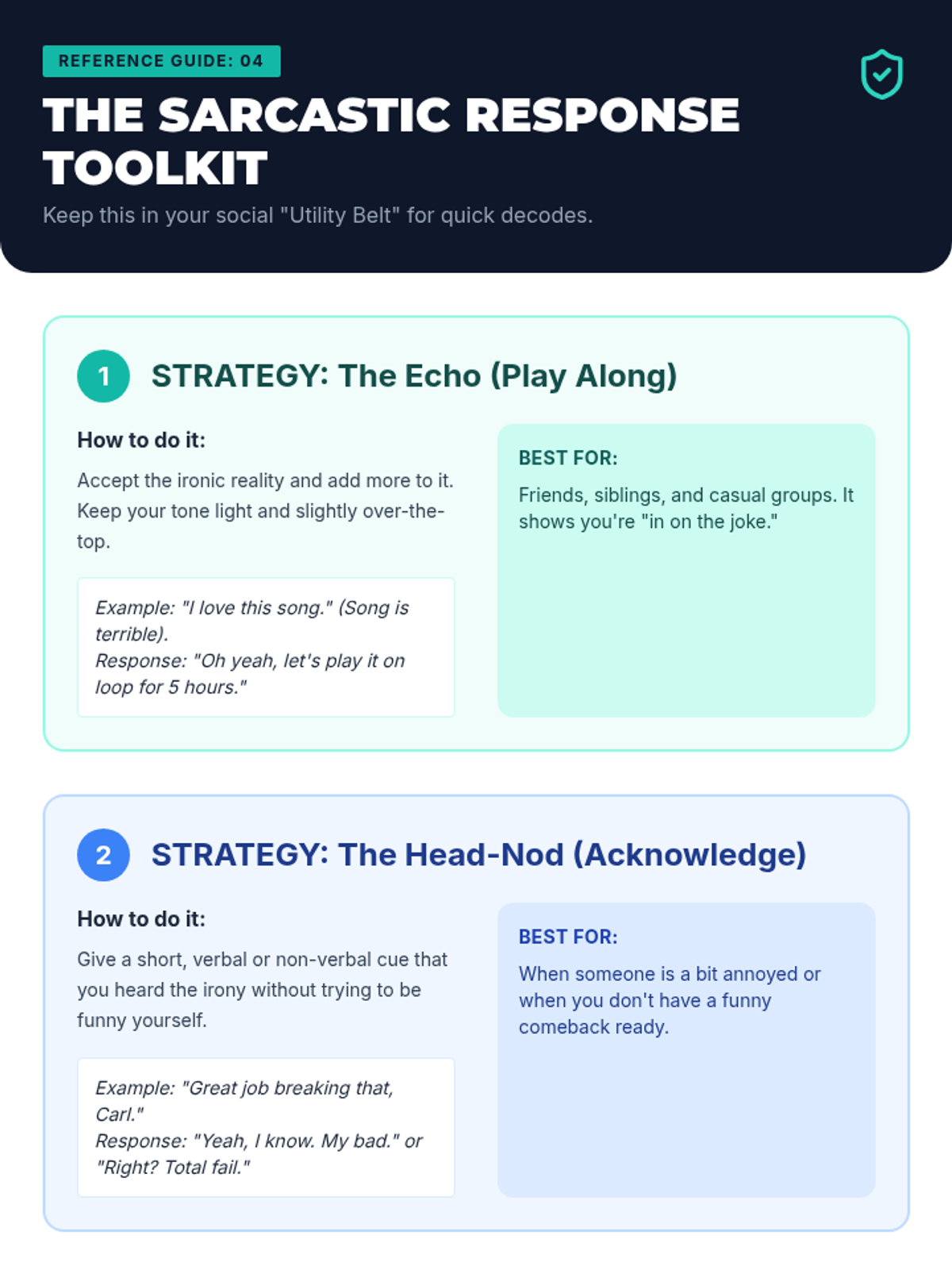
Provides students with practical strategies for responding to sarcastic remarks in various social settings.
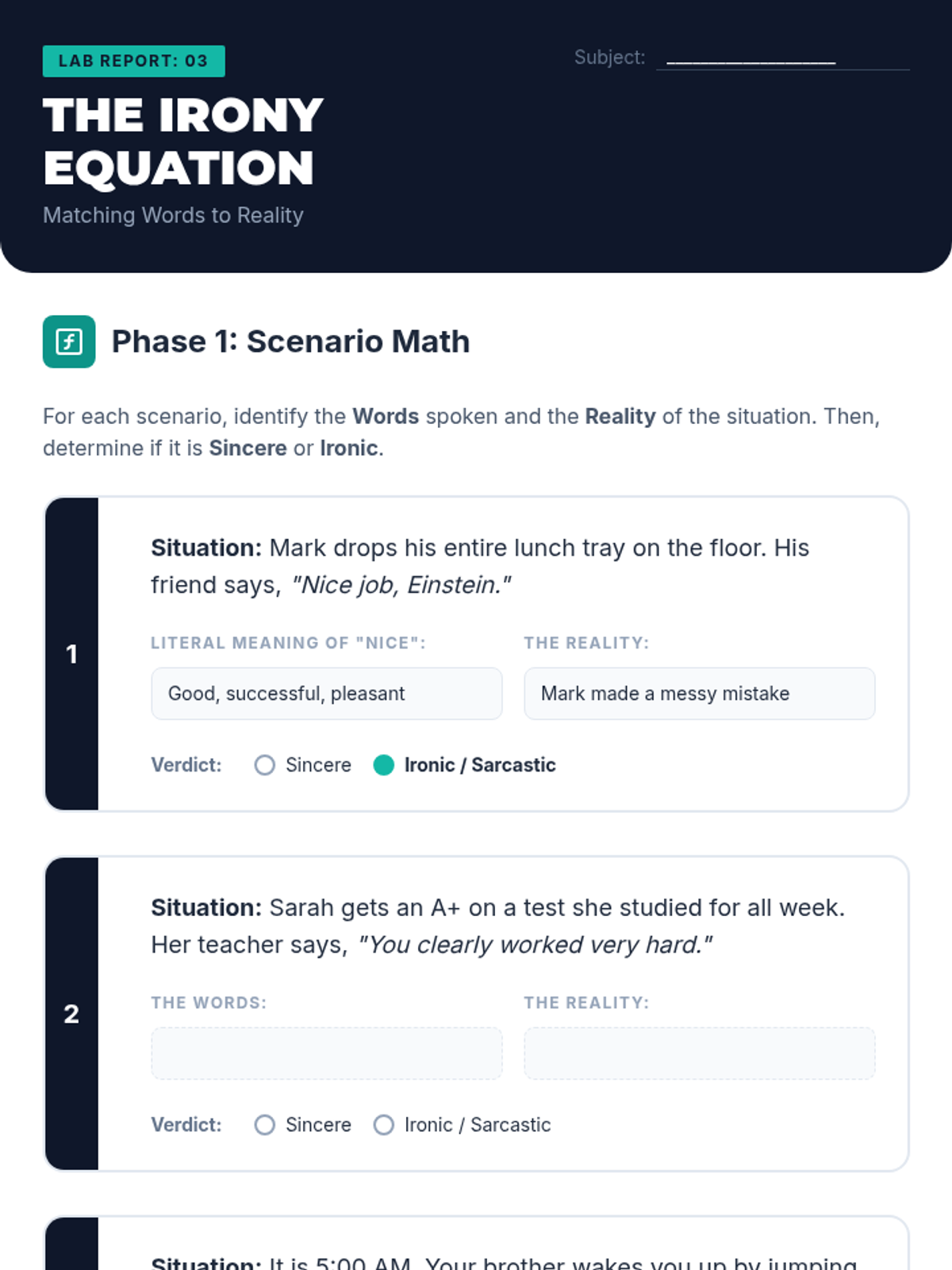
Teaches students to compare the literal meaning of words against the physical environment or social situation to detect irony.
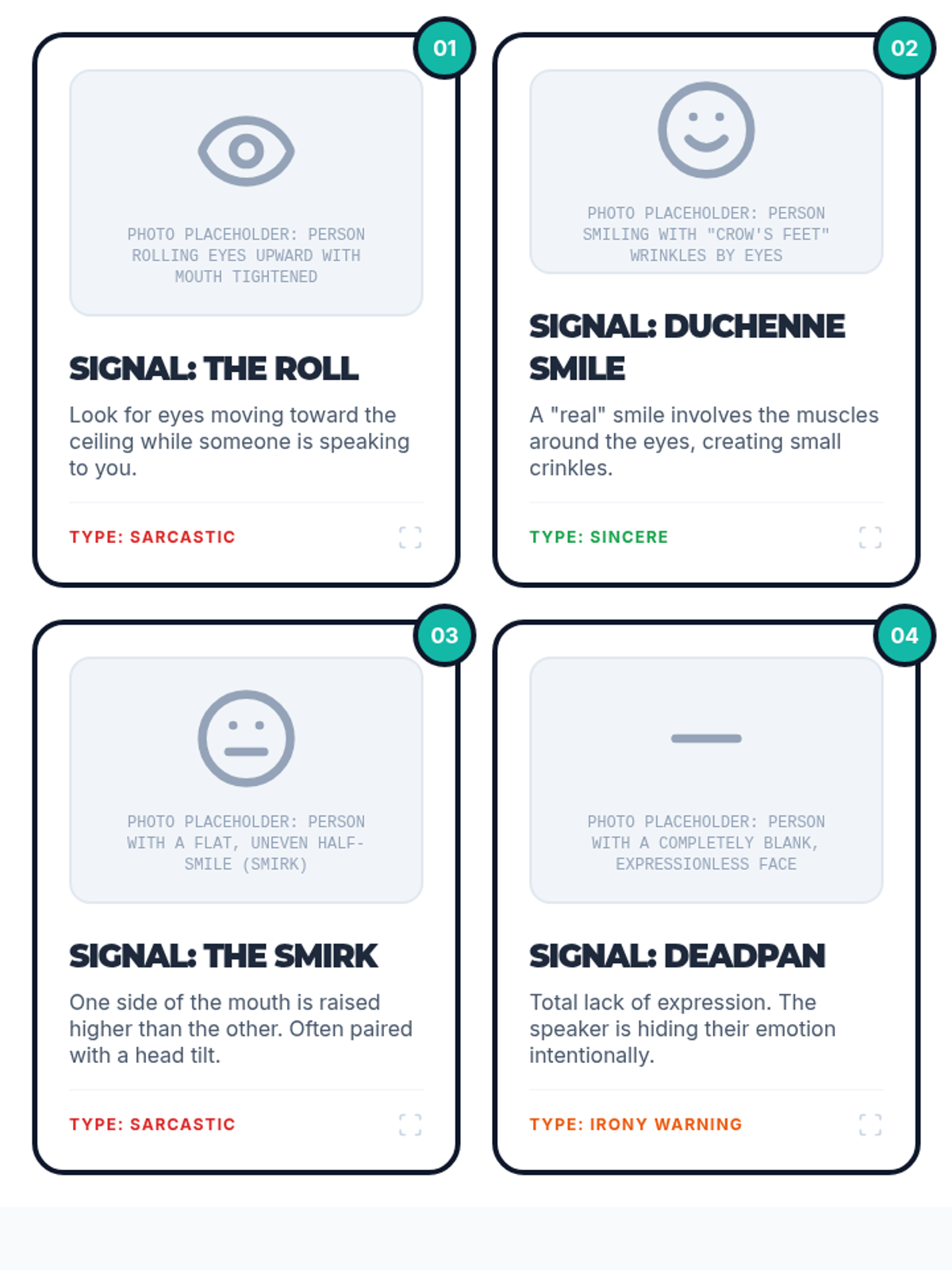
Focuses on the visual non-verbal cues that signal sarcasm, such as eye contact, facial tension, and body language.
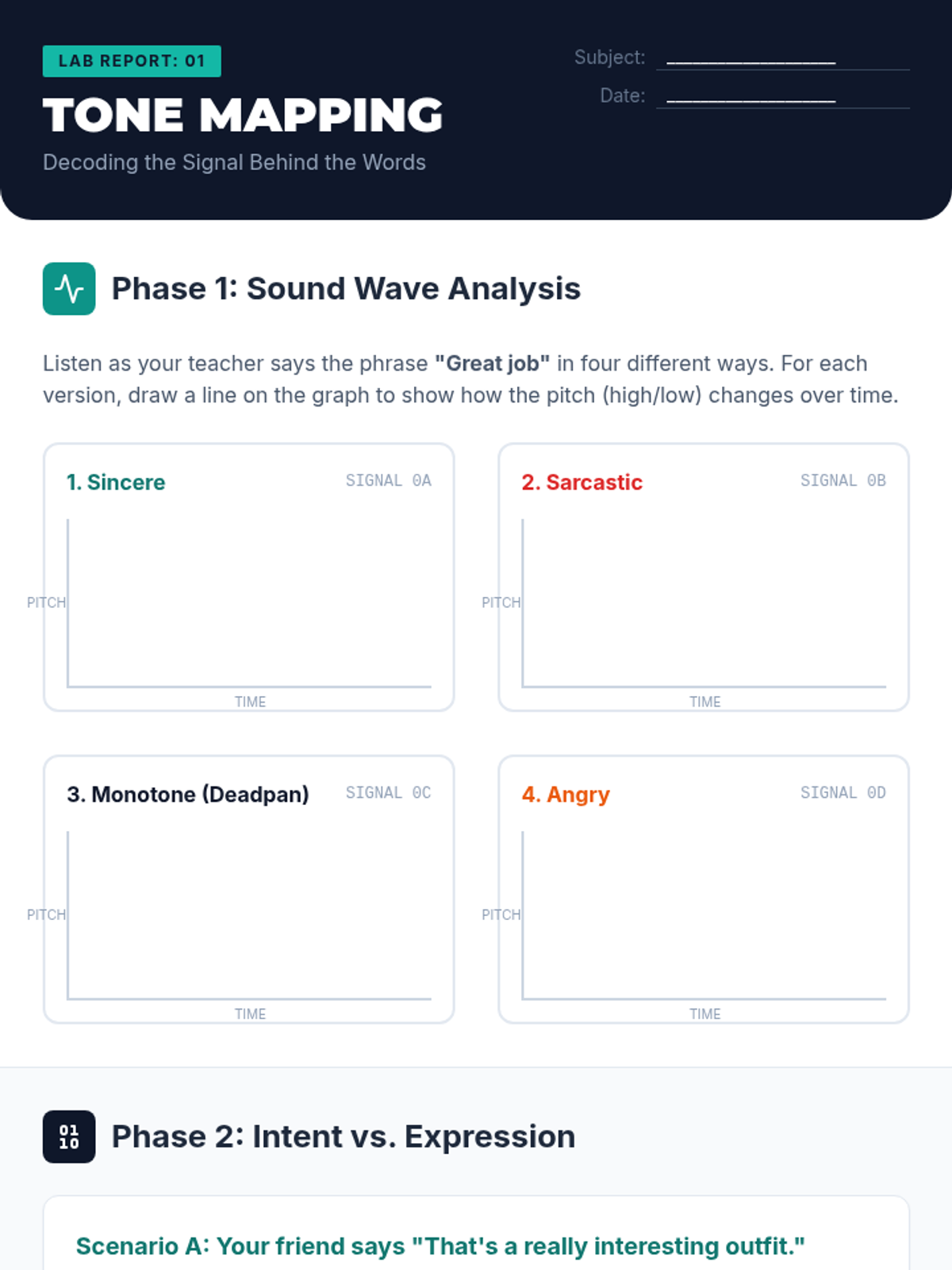
Students explore the concept of verbal irony by analyzing how tone of voice changes the meaning of identical phrases.
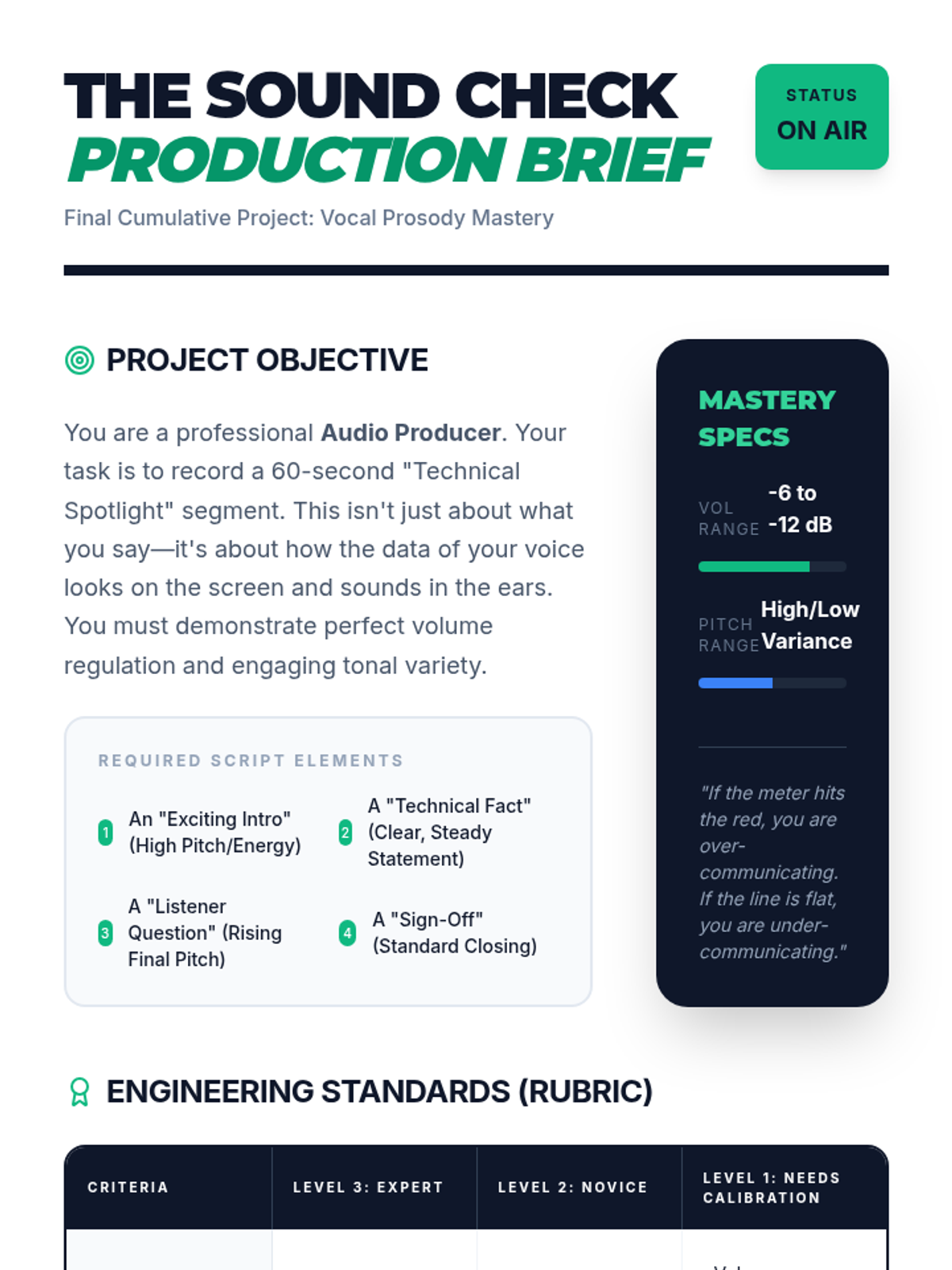
A cumulative project where students produce a high-quality audio segment, demonstrating control over volume leveling and tonal variety.
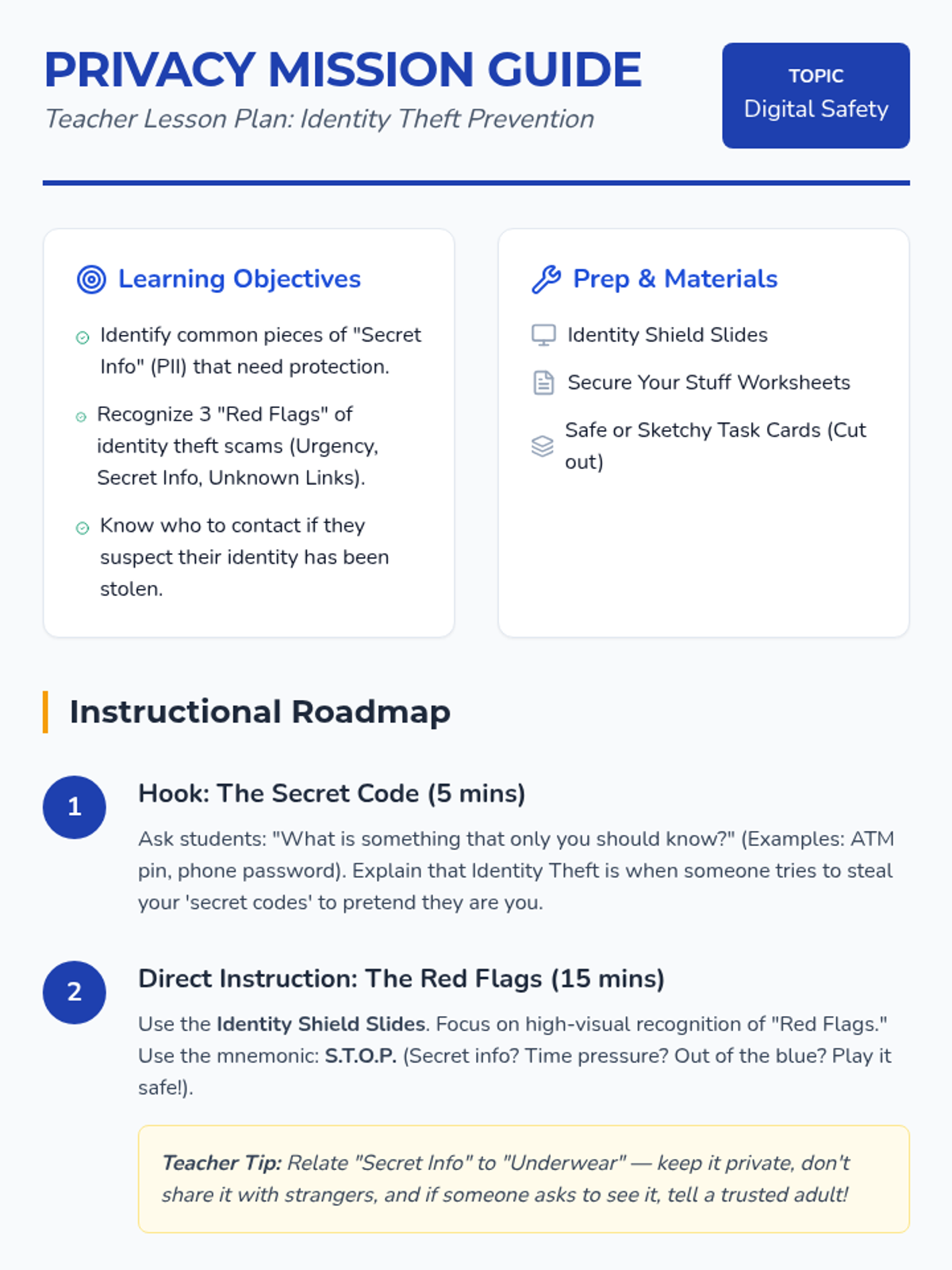
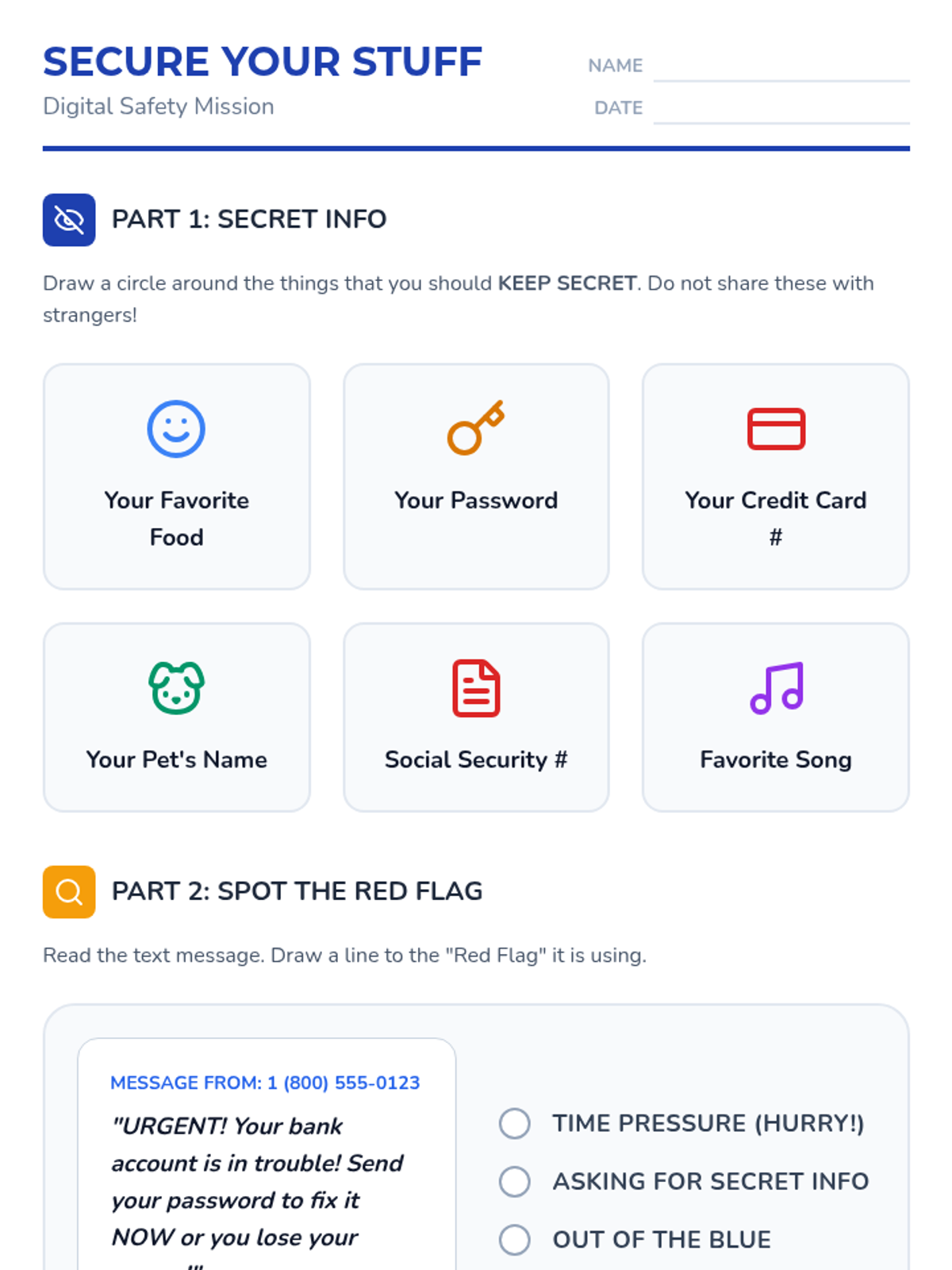
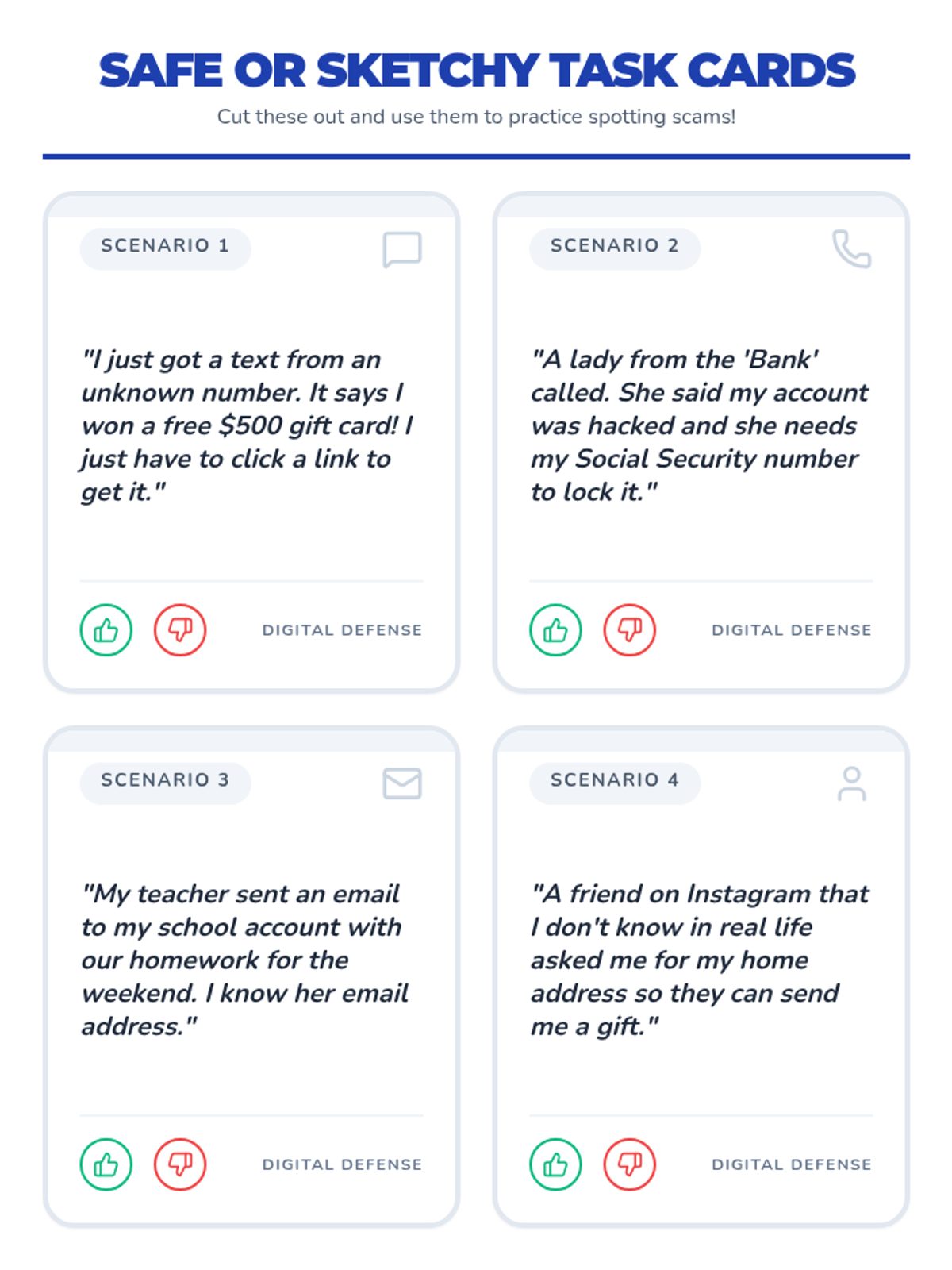
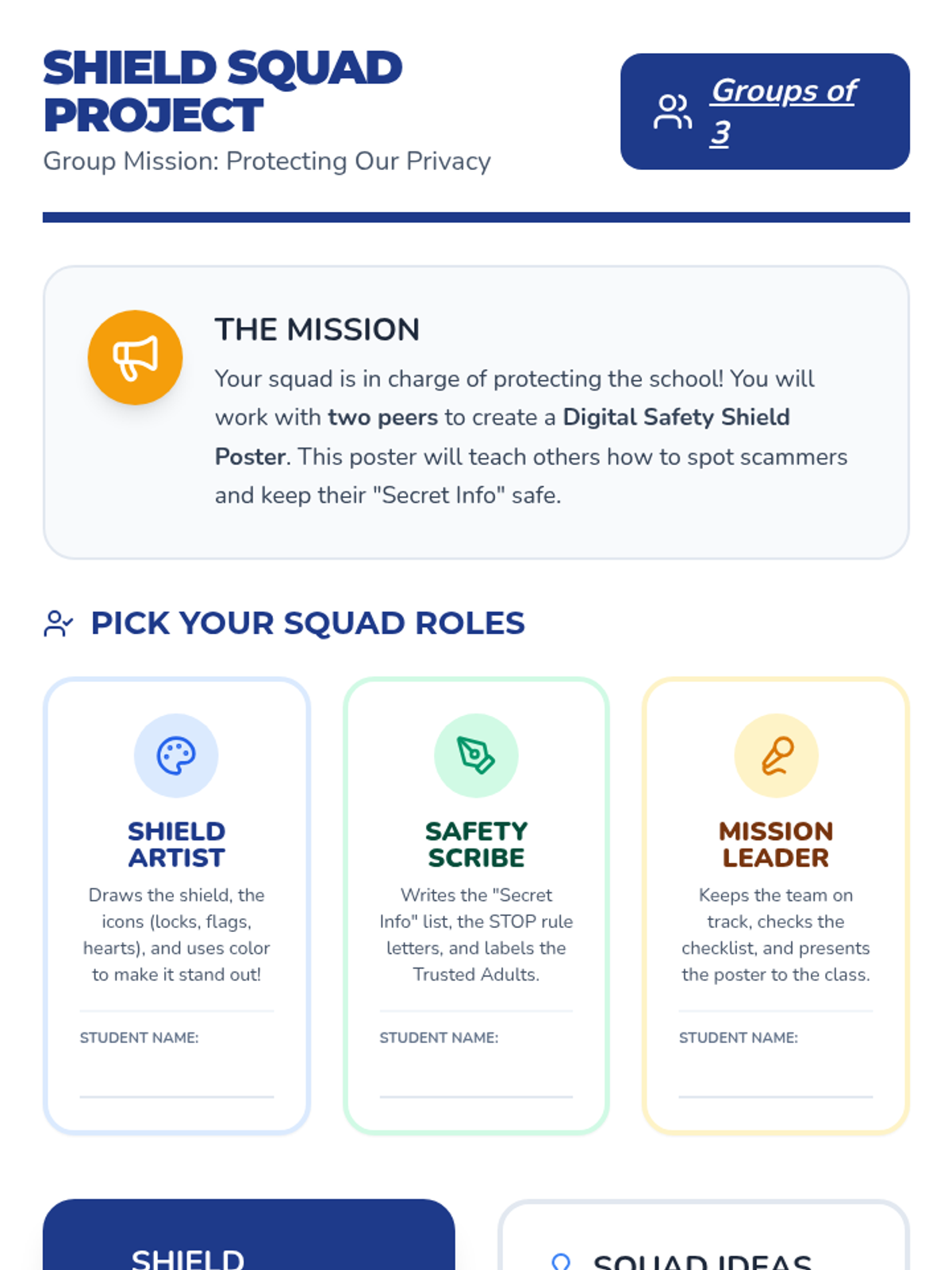
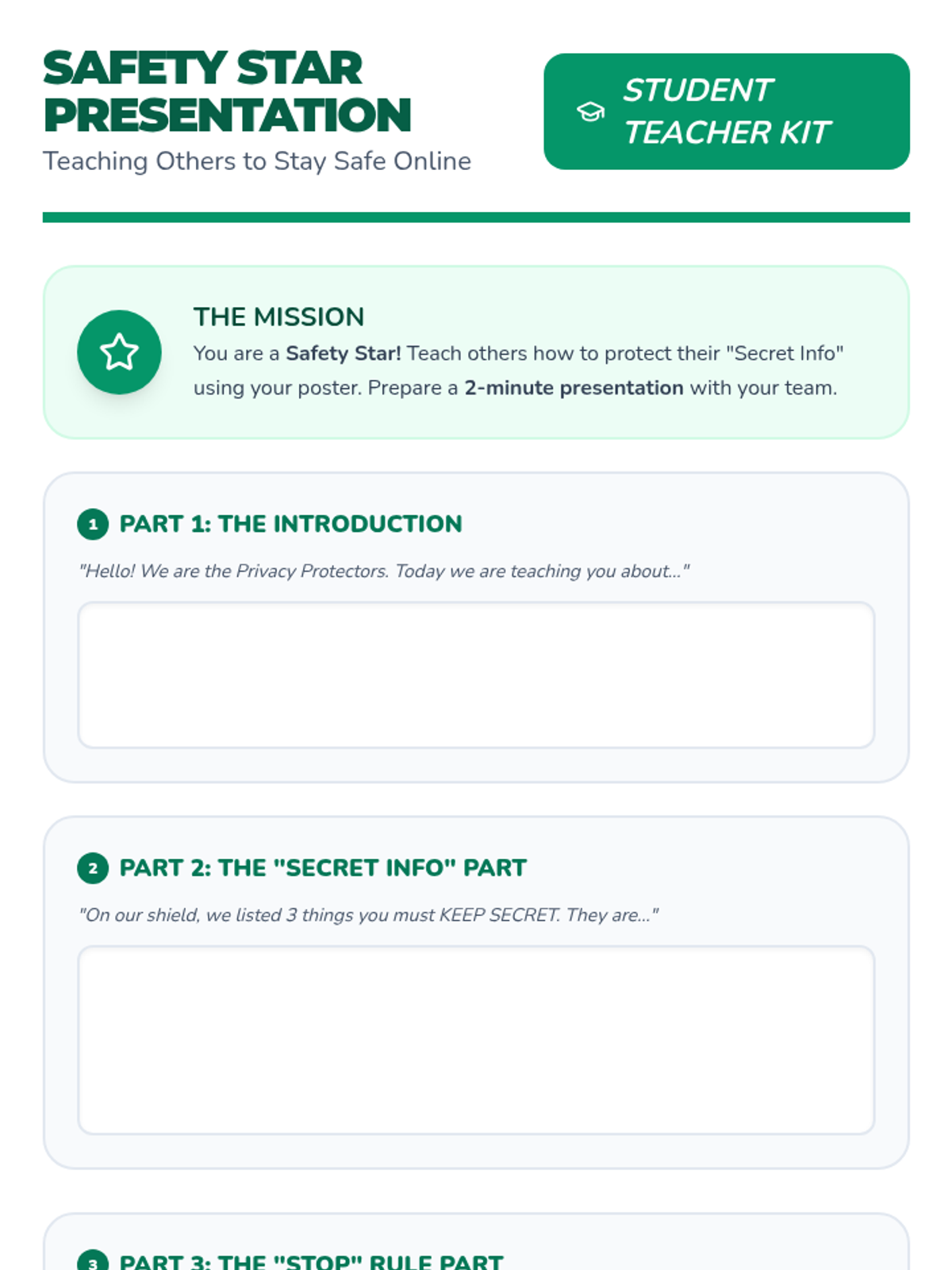
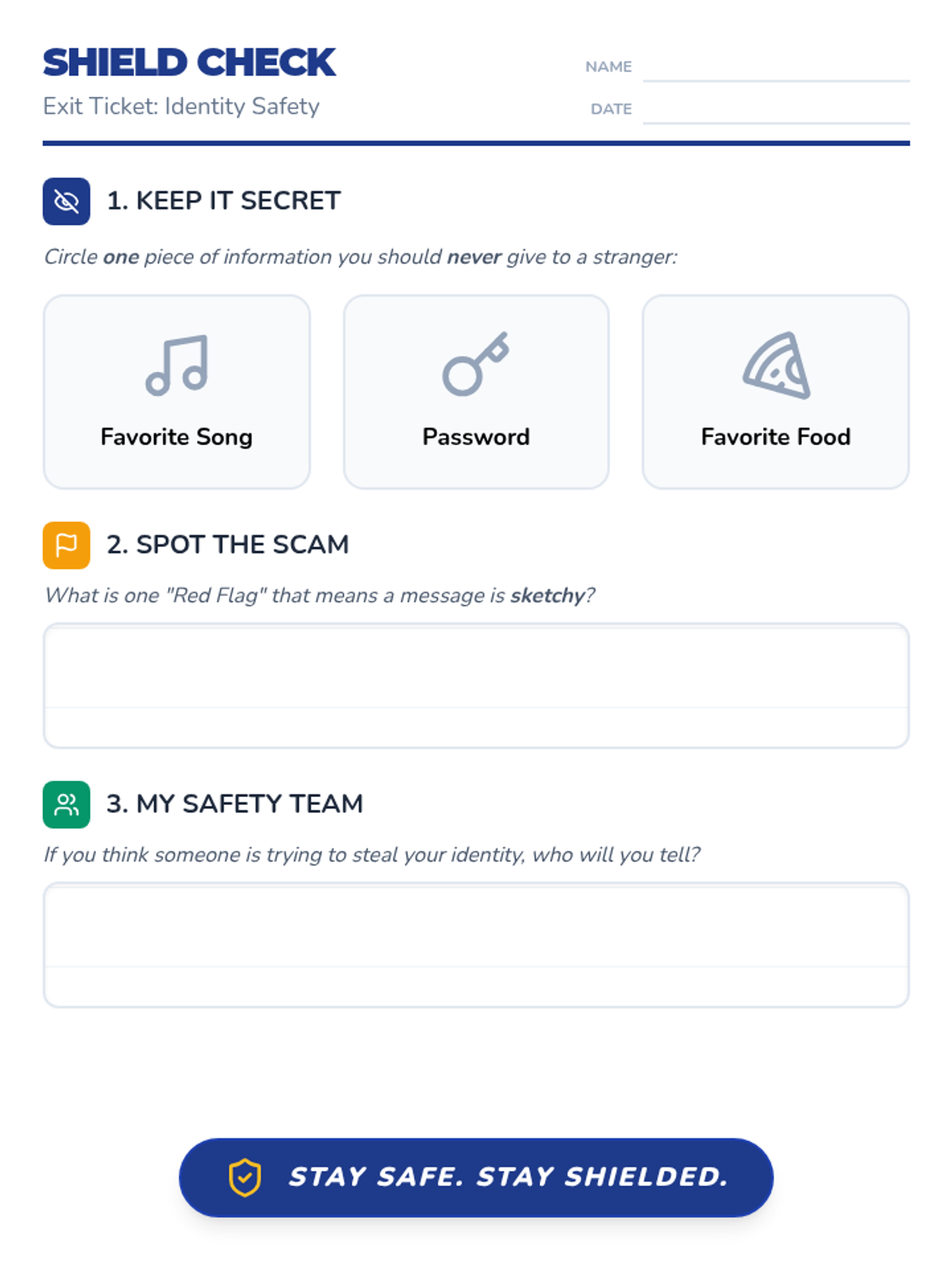
A comprehensive lesson on identity theft designed for high school special education students, focusing on recognizing red flags and protecting personal information through practical scenarios and visual aids.
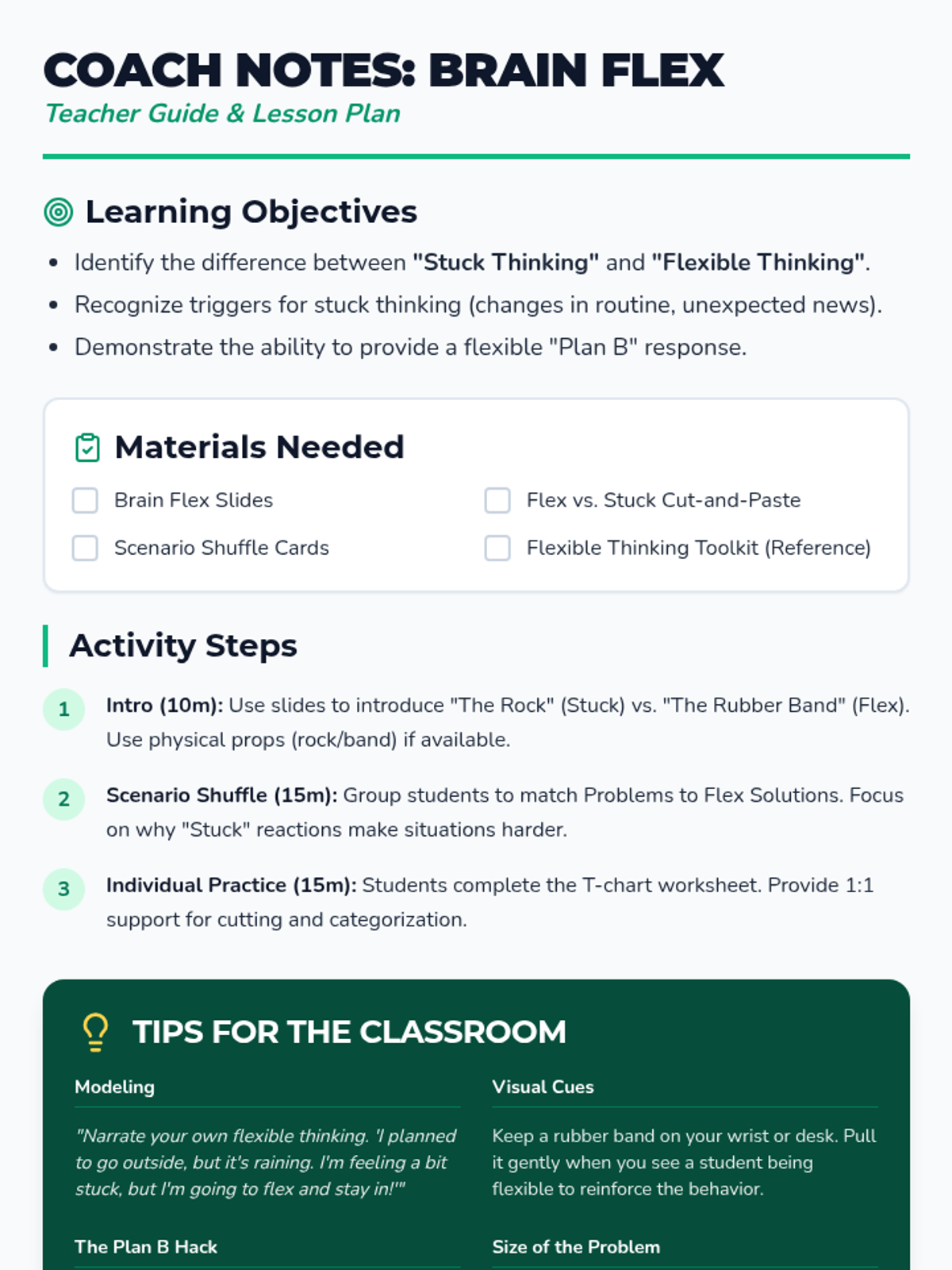
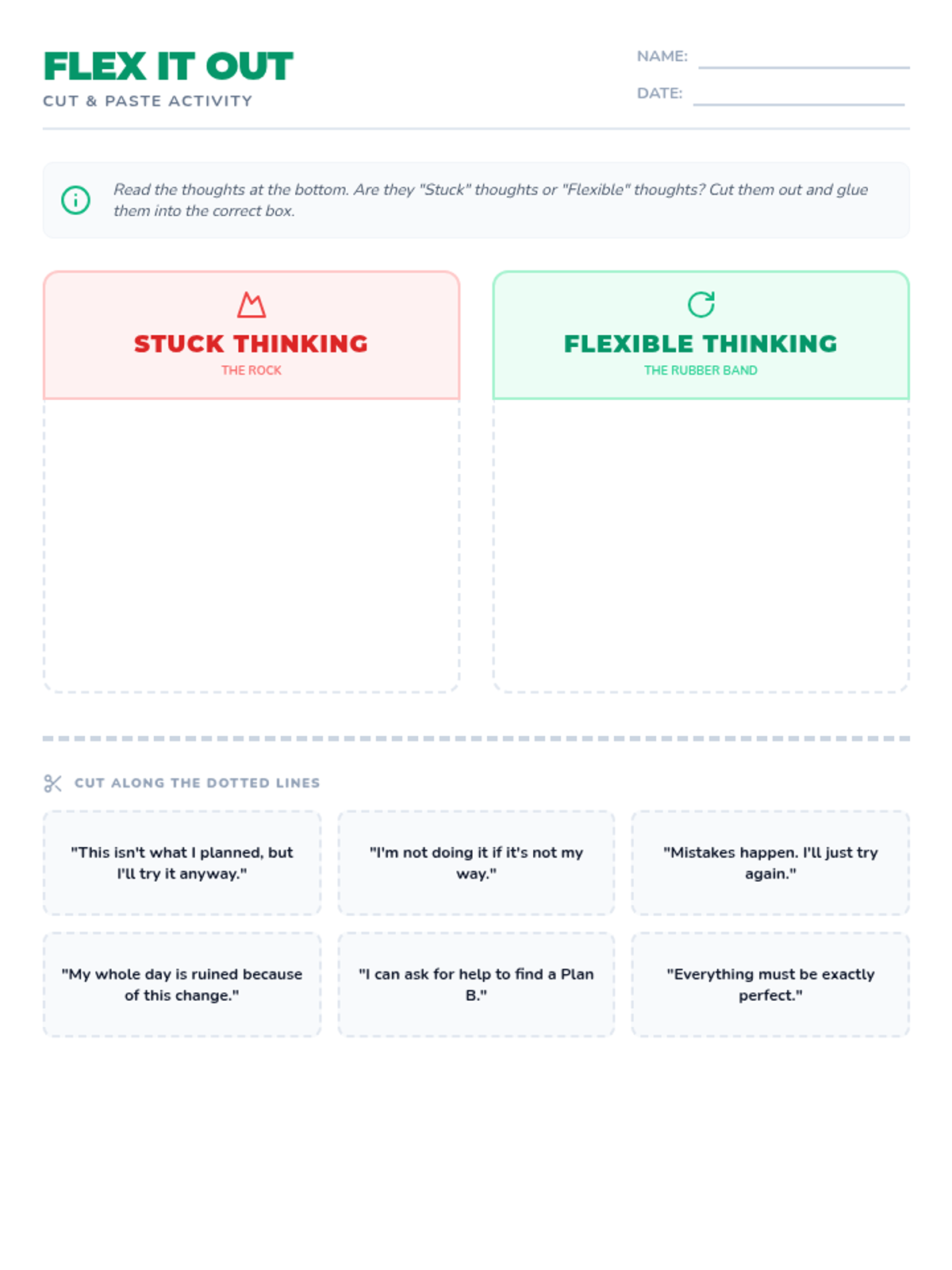
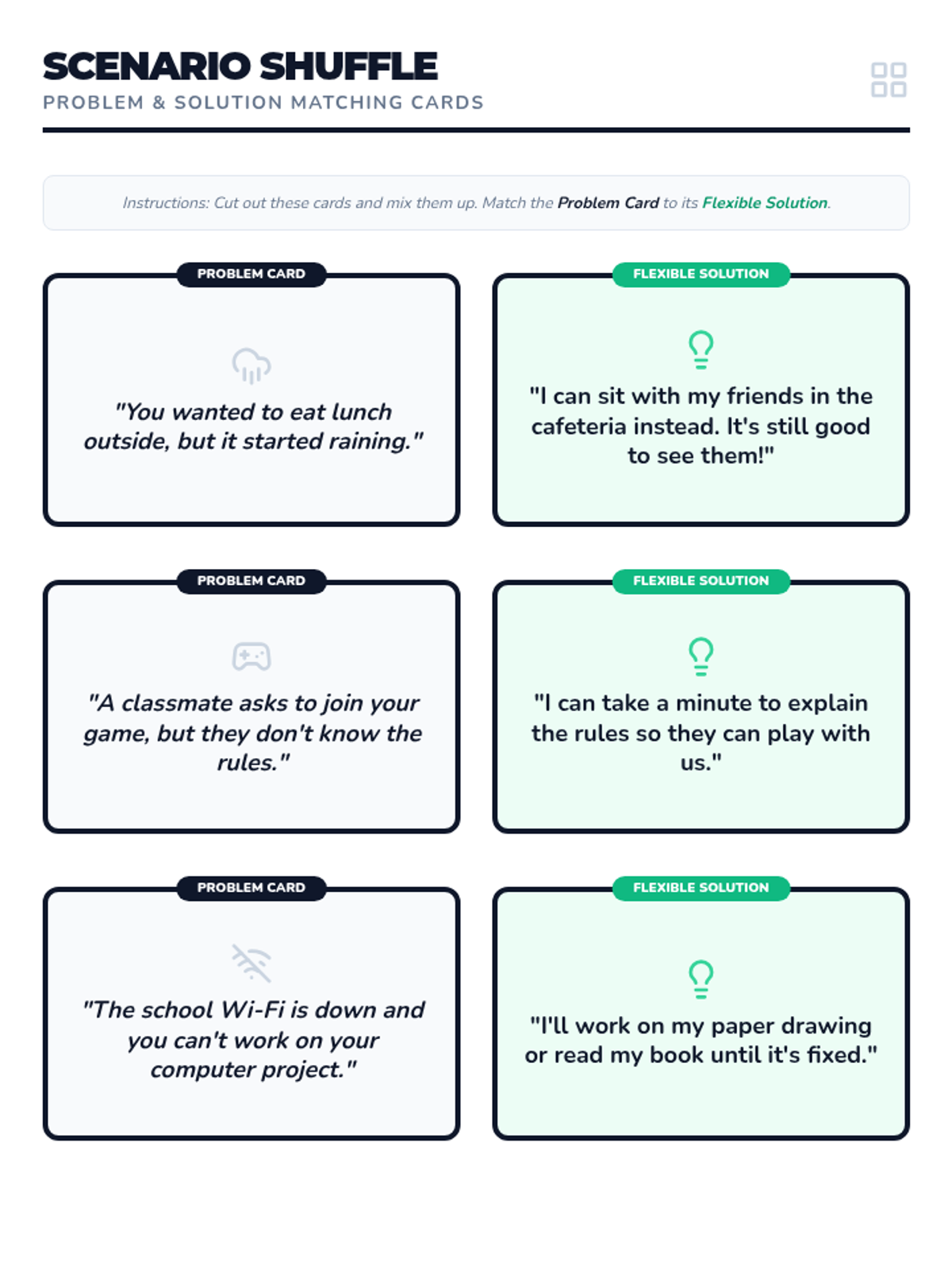
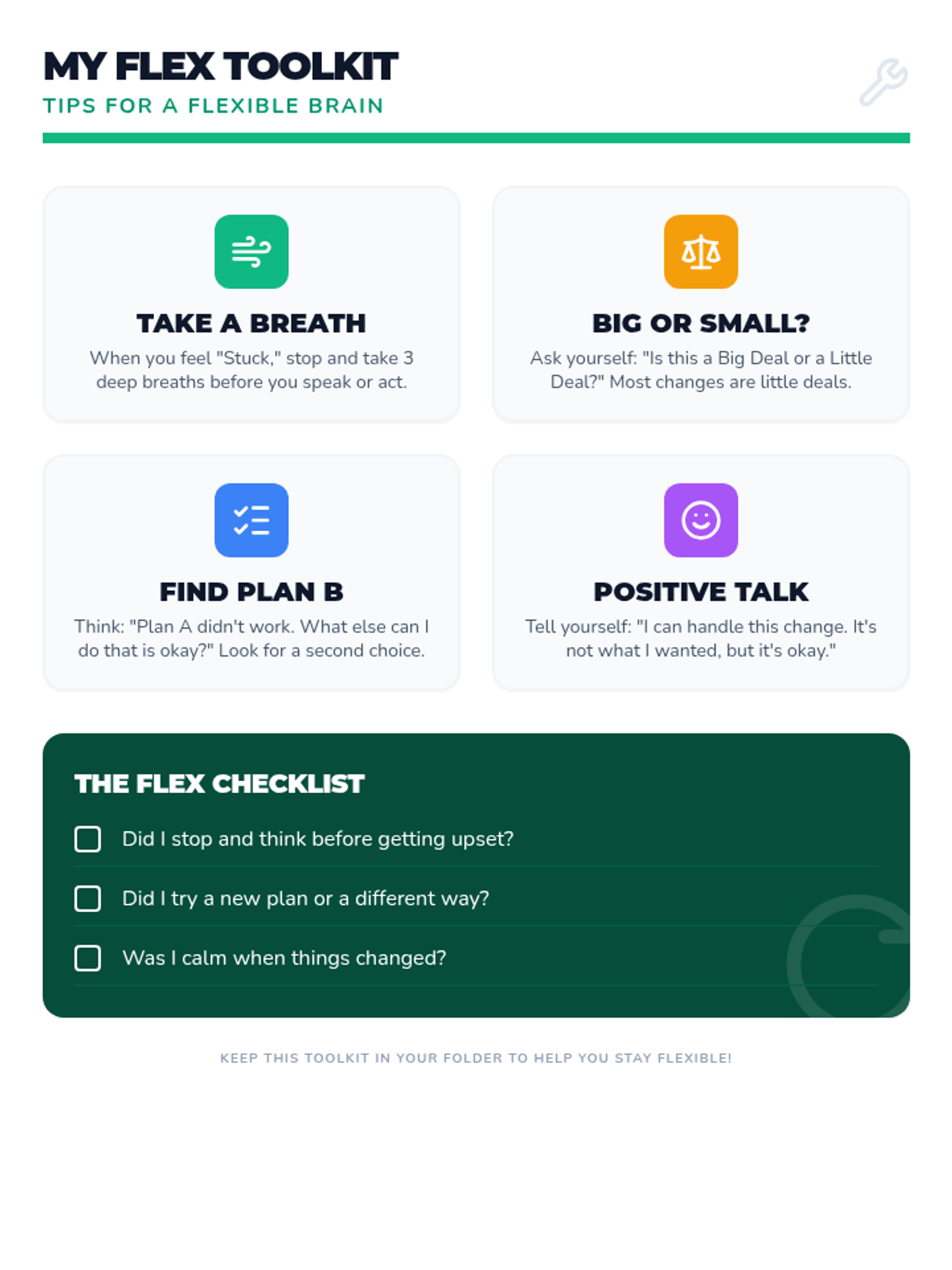
A lesson designed for high school special education students to distinguish between 'stuck' and 'flexible' thinking patterns. Students will learn strategies to adapt to changes and social challenges through interactive slides and hands-on sorting activities.
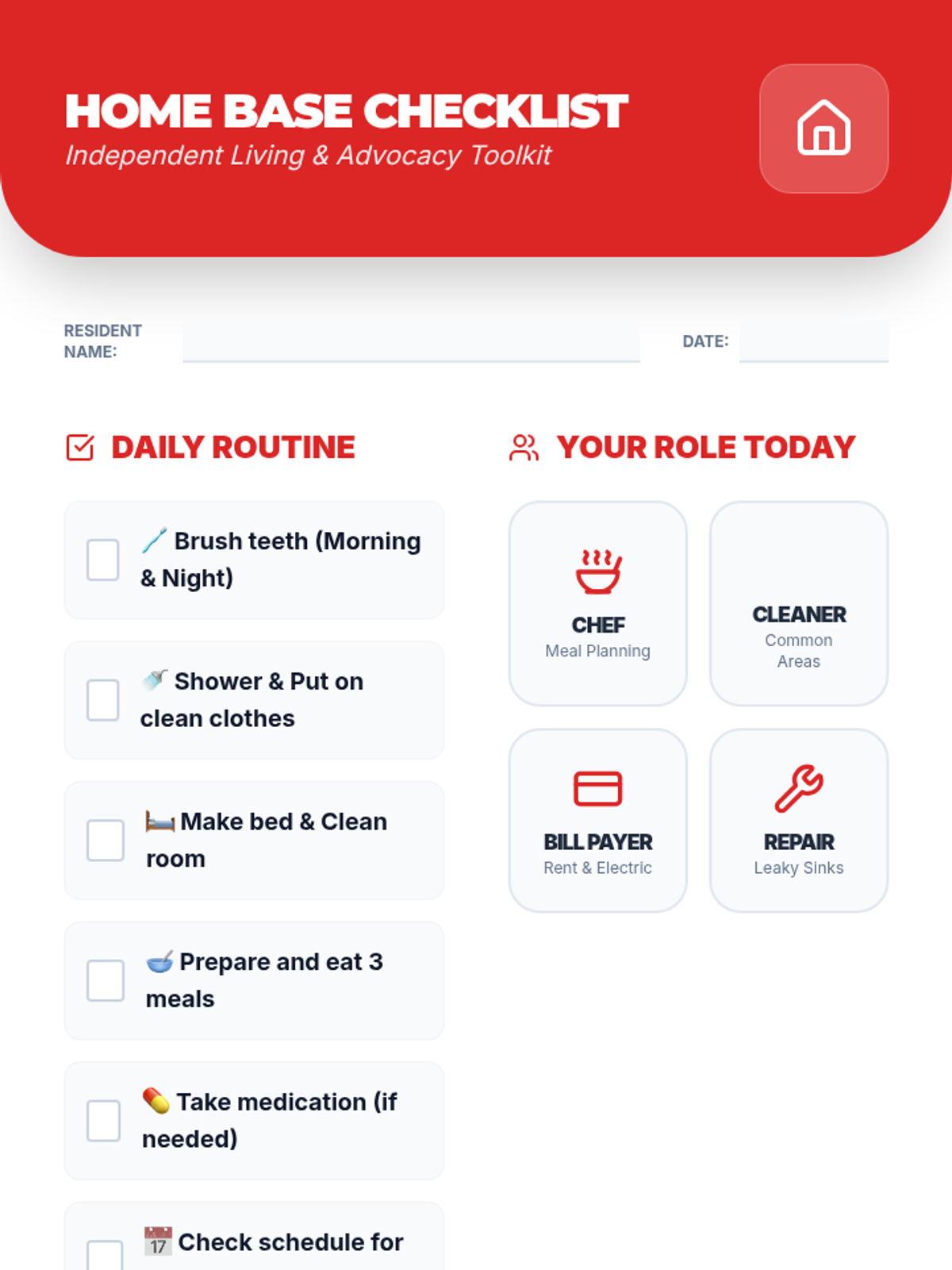
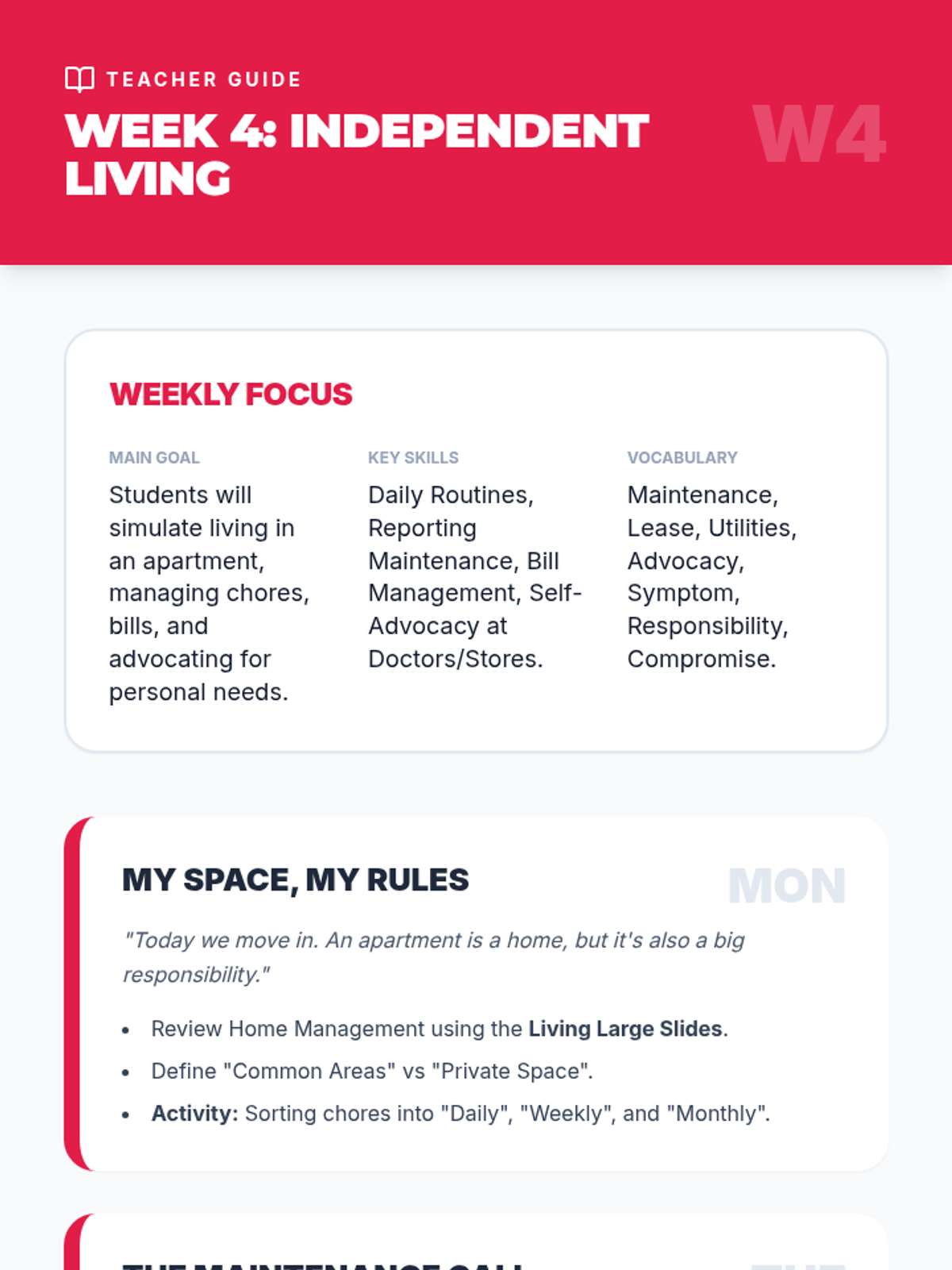
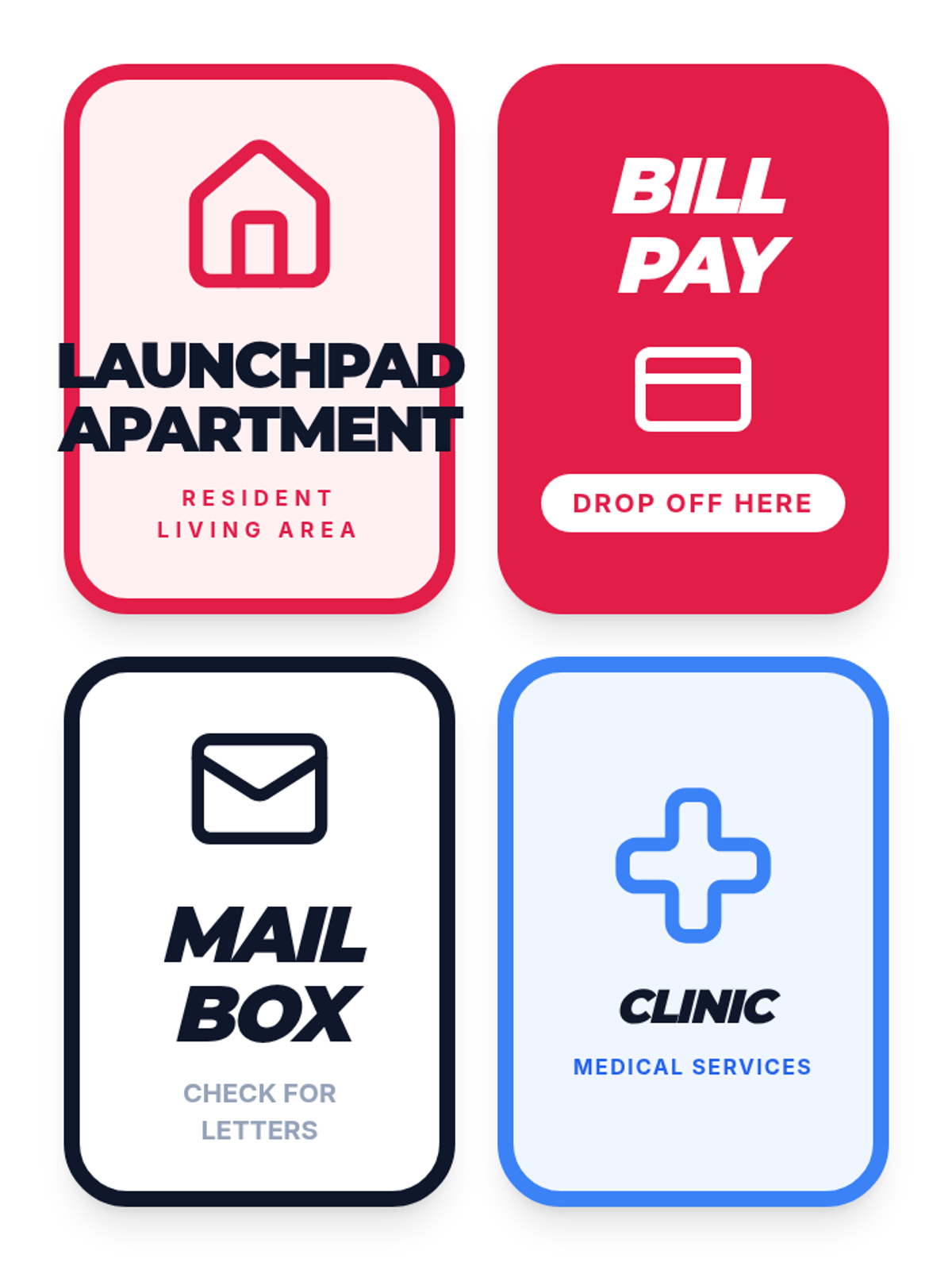
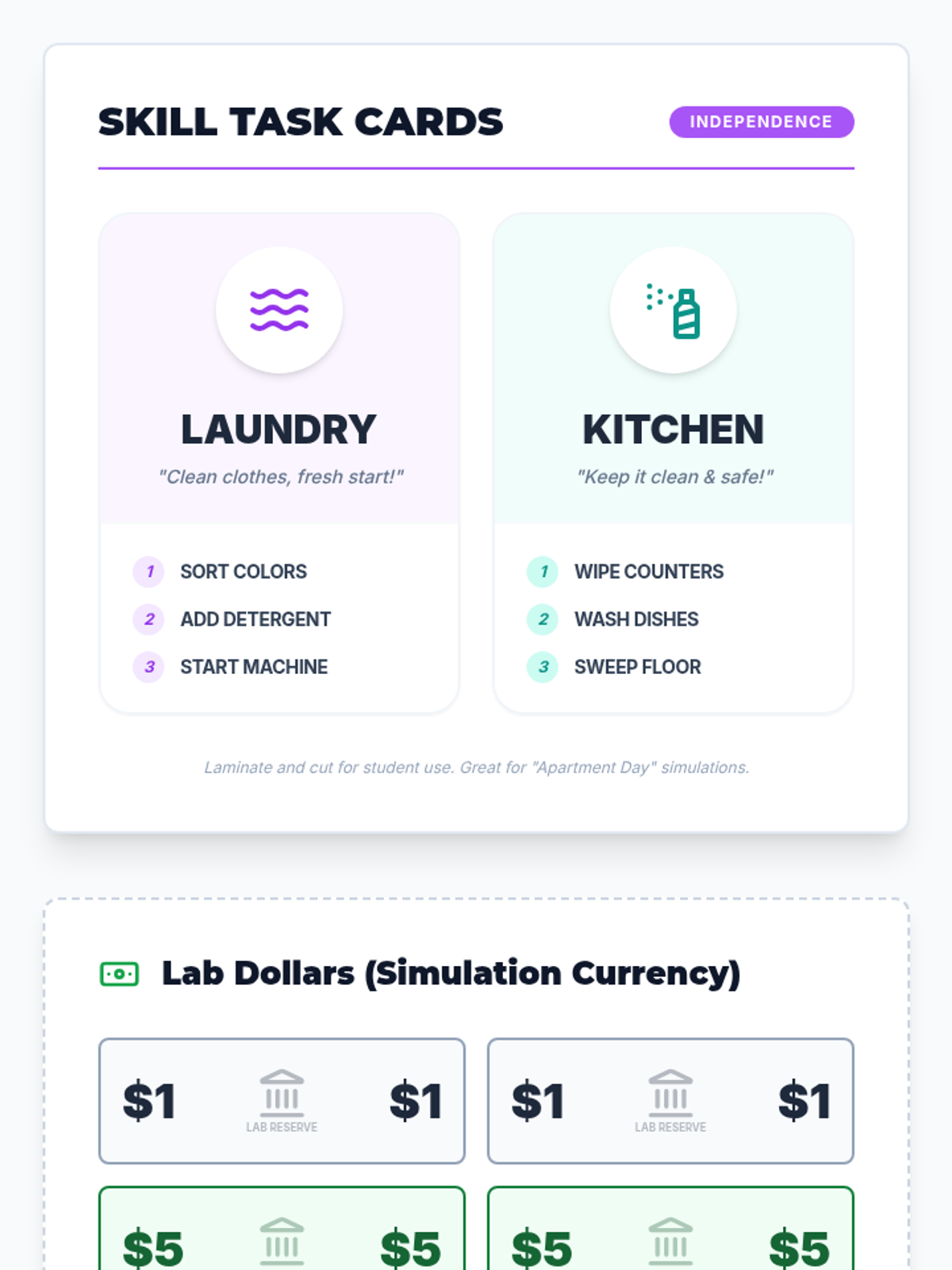
Practicing the core skills of independent living, including home maintenance, personal advocacy, and daily scheduling.
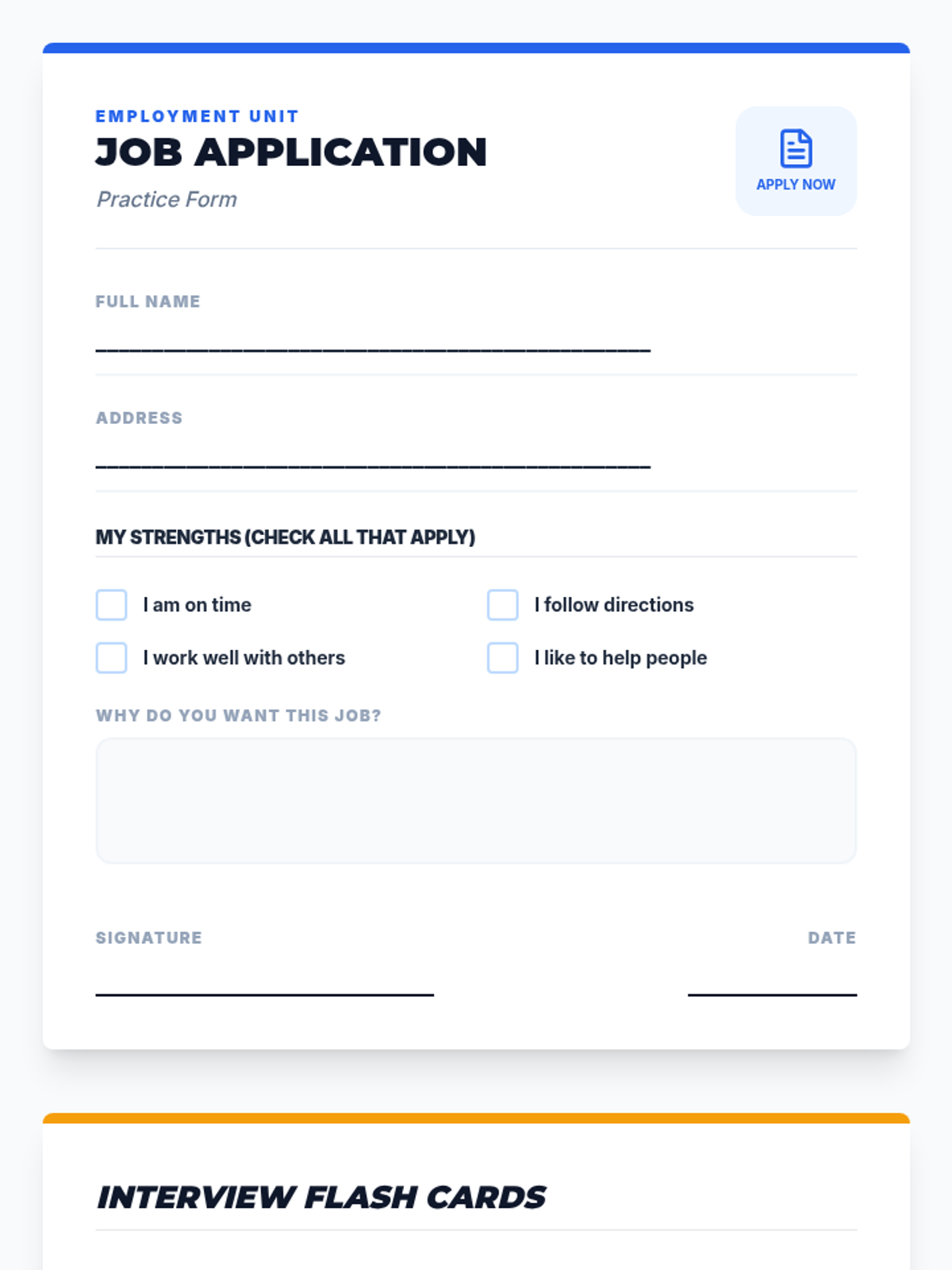
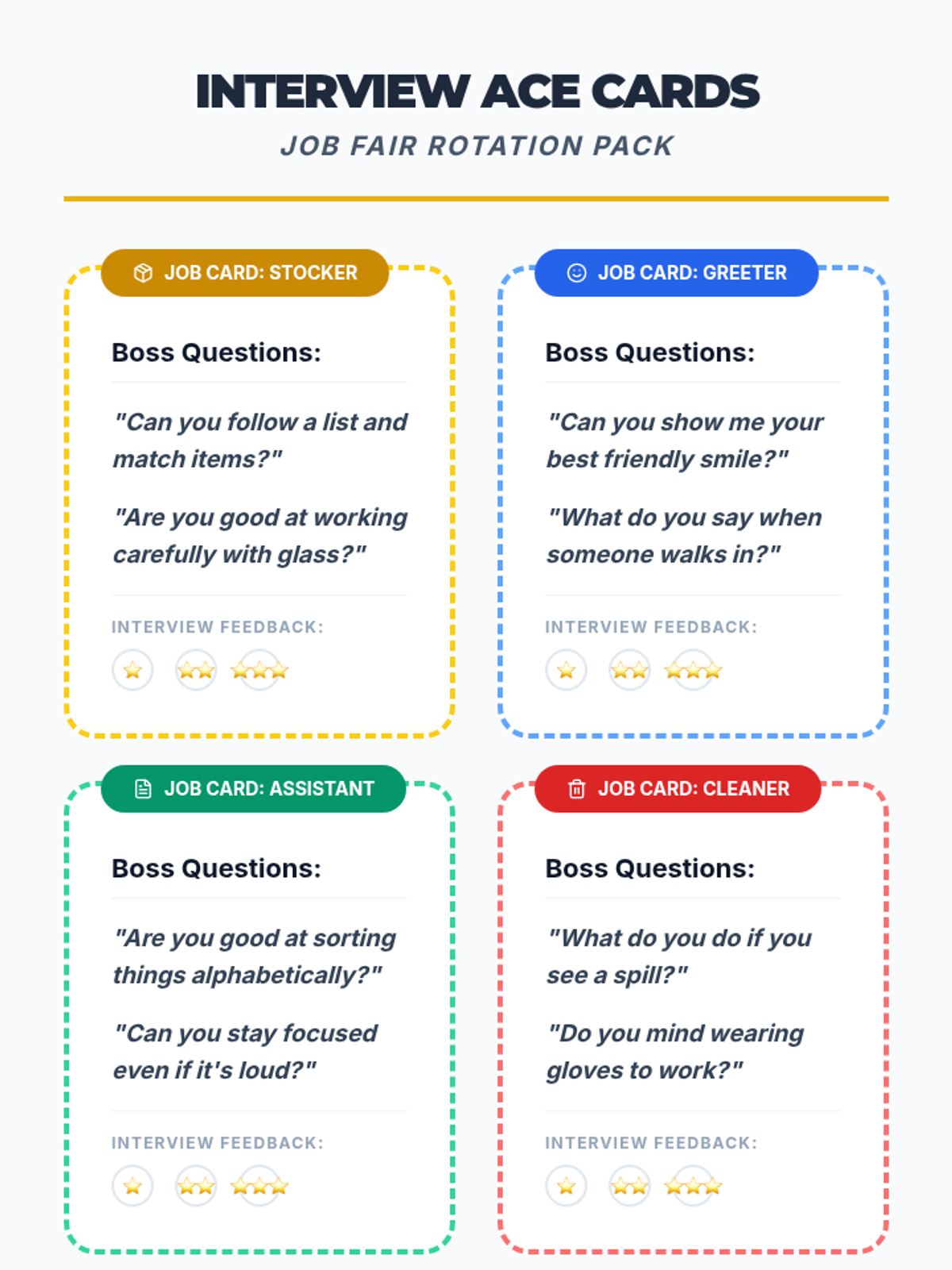
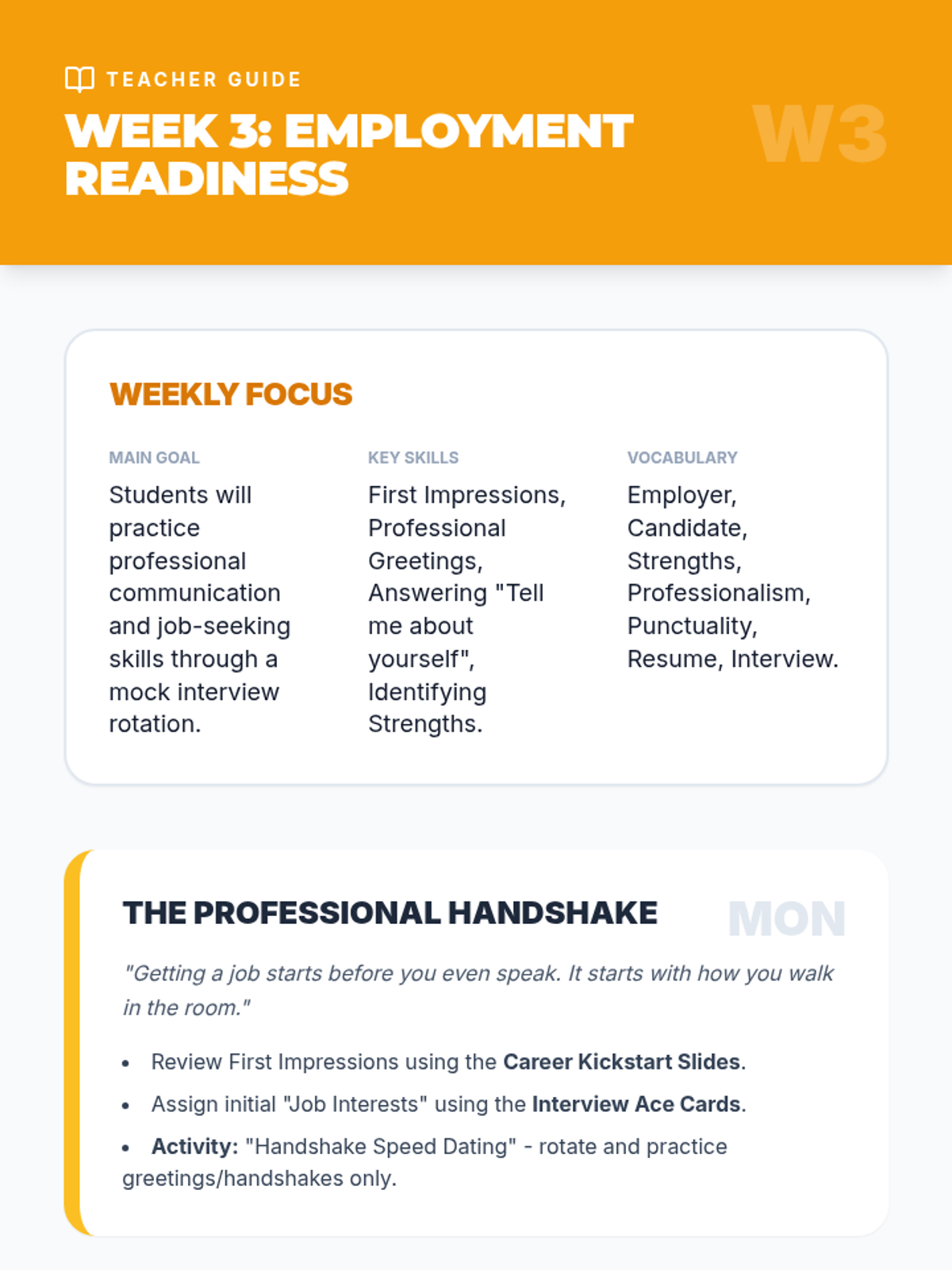
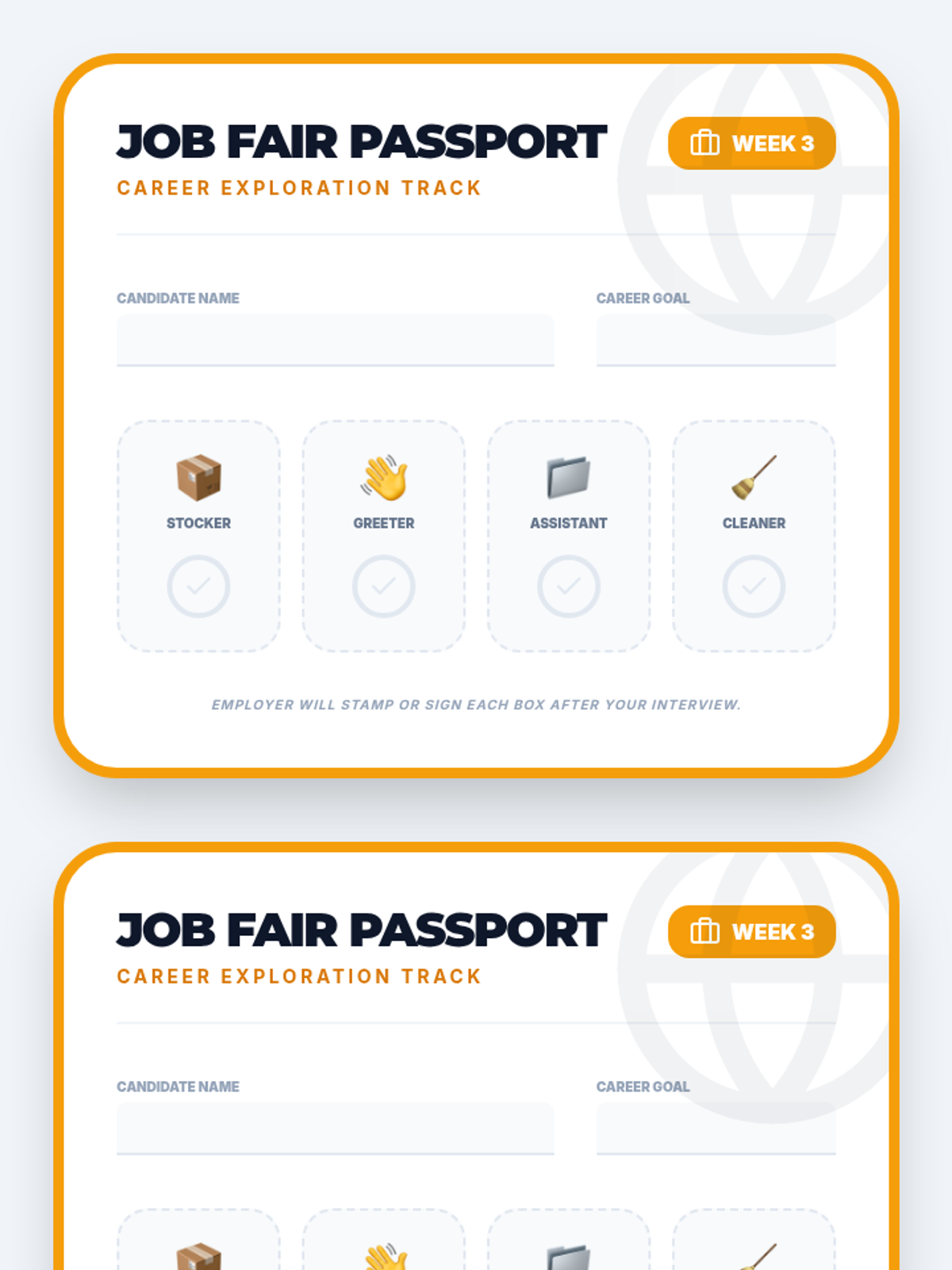
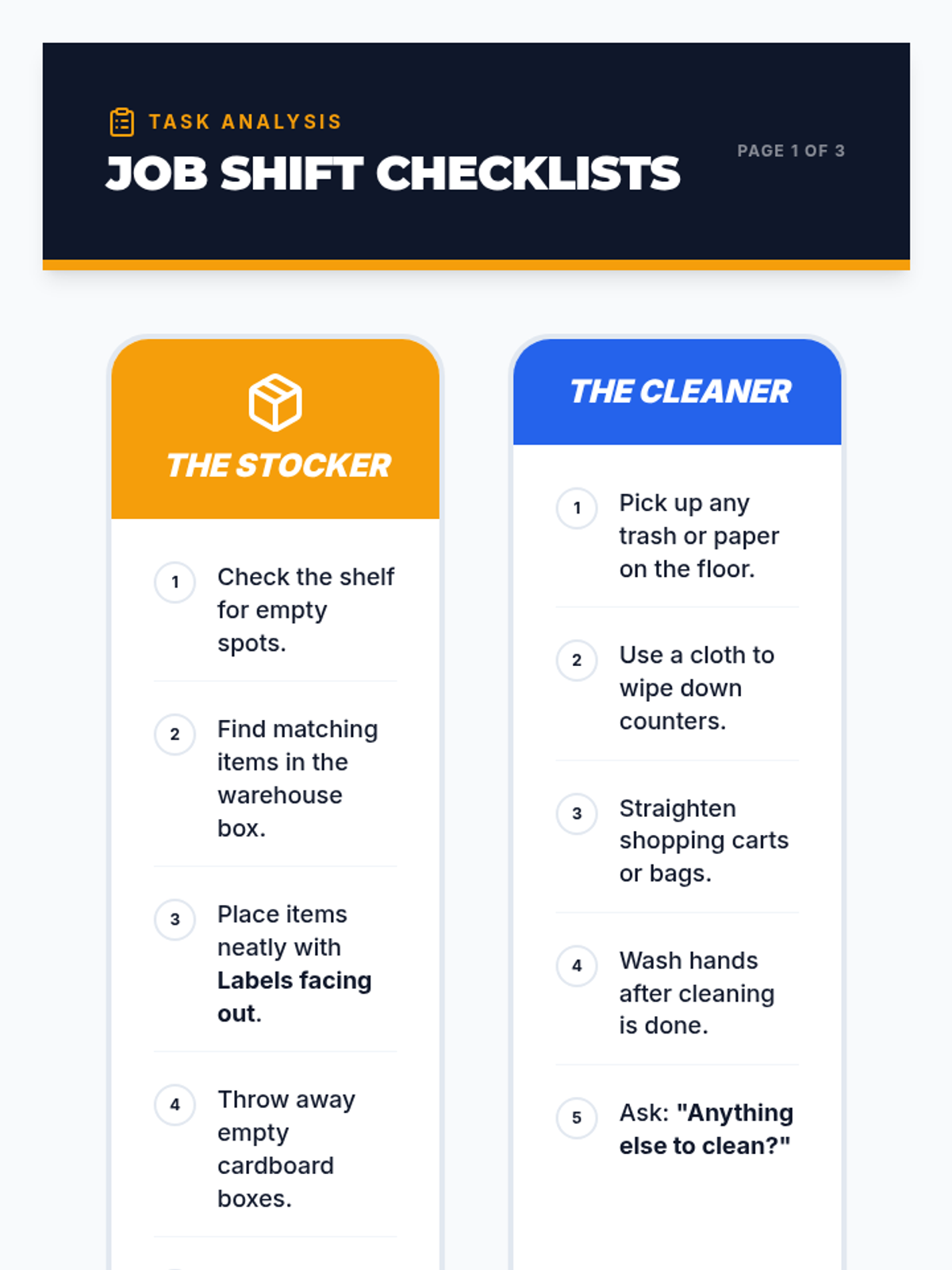
Preparing for the workforce with mock interviews, professional communication practice, and on-the-job simulations.
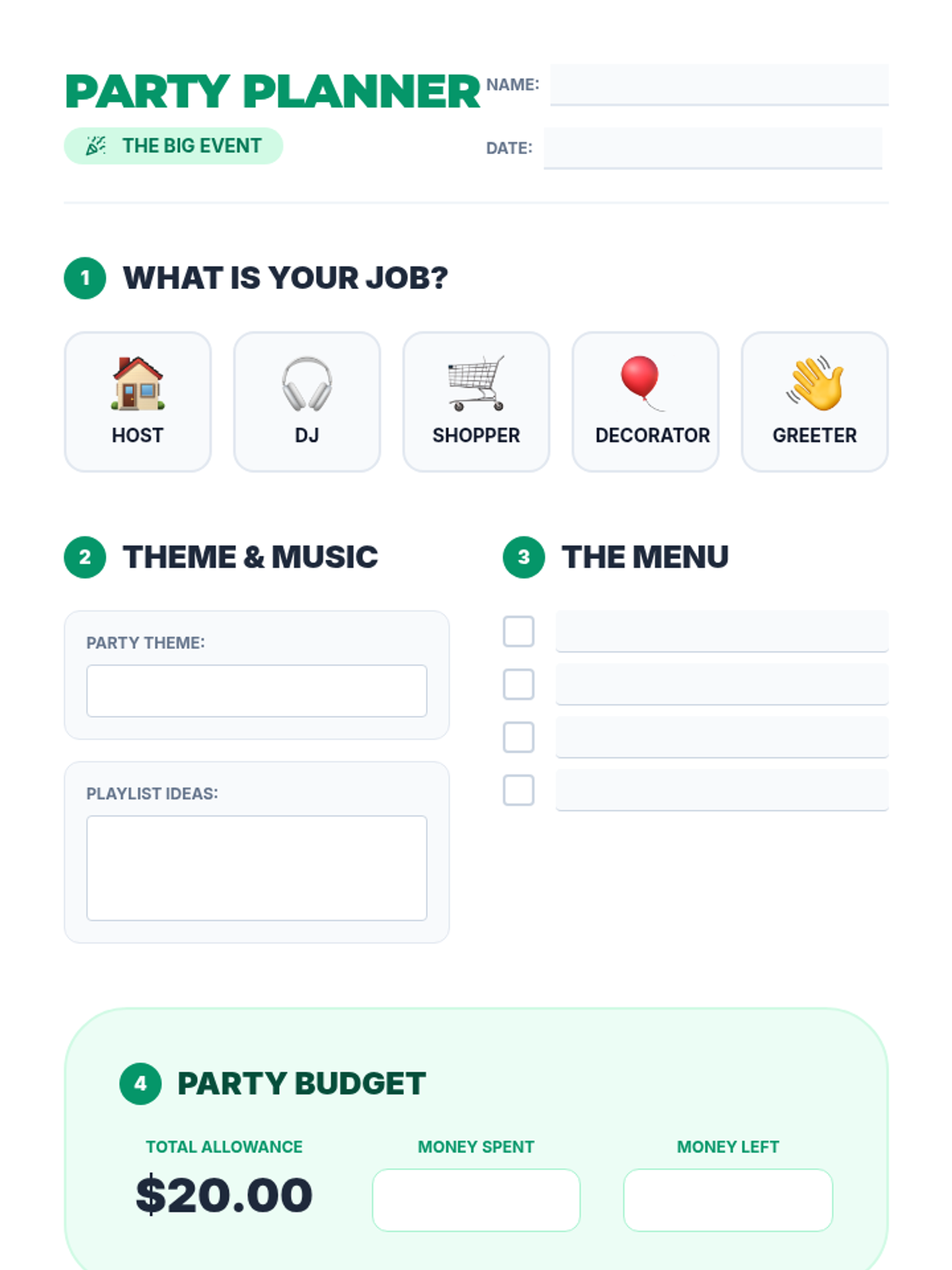
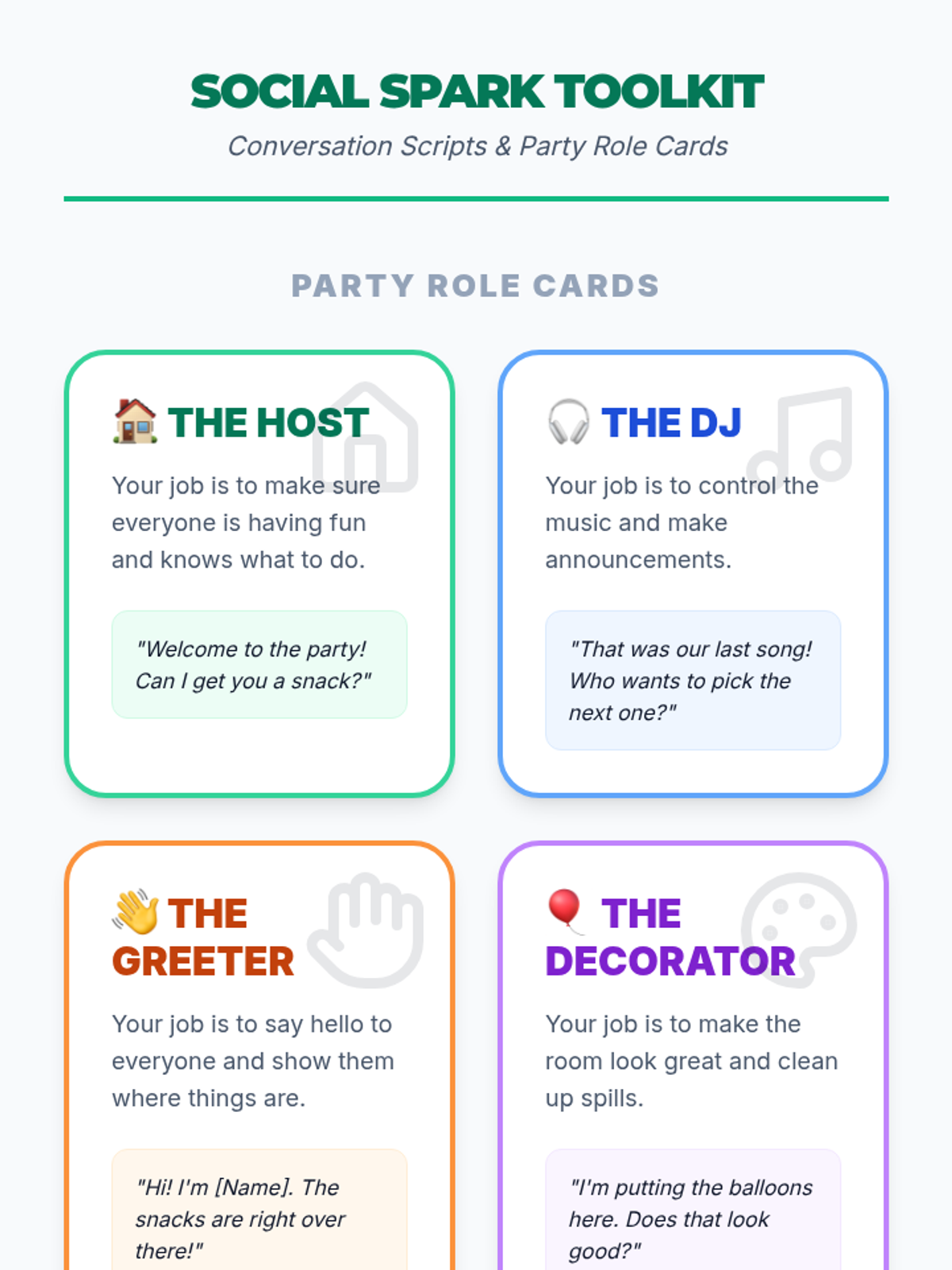
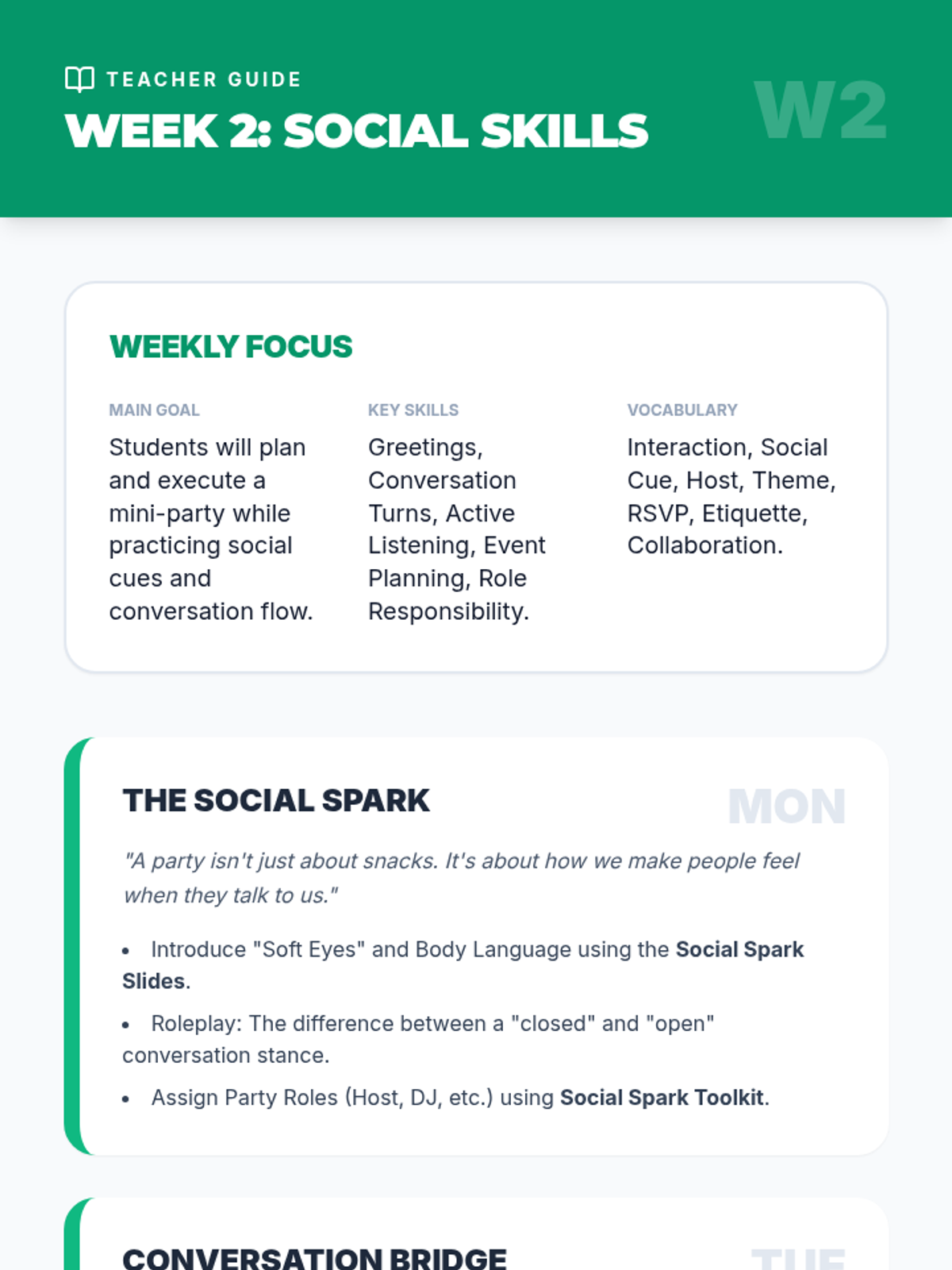
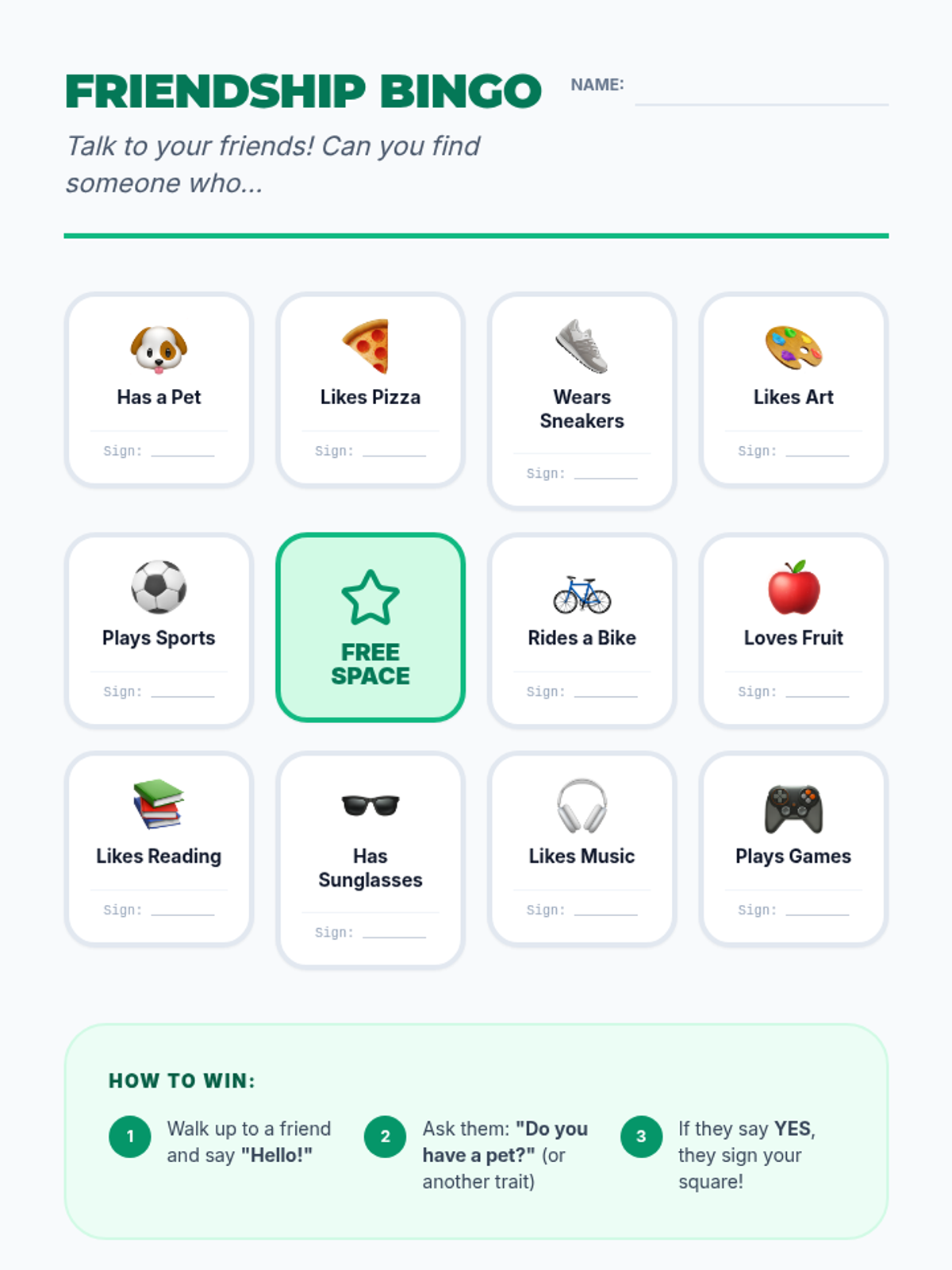
Developing social-emotional awareness through event planning, role-play conversations, and meaningful peer interactions.
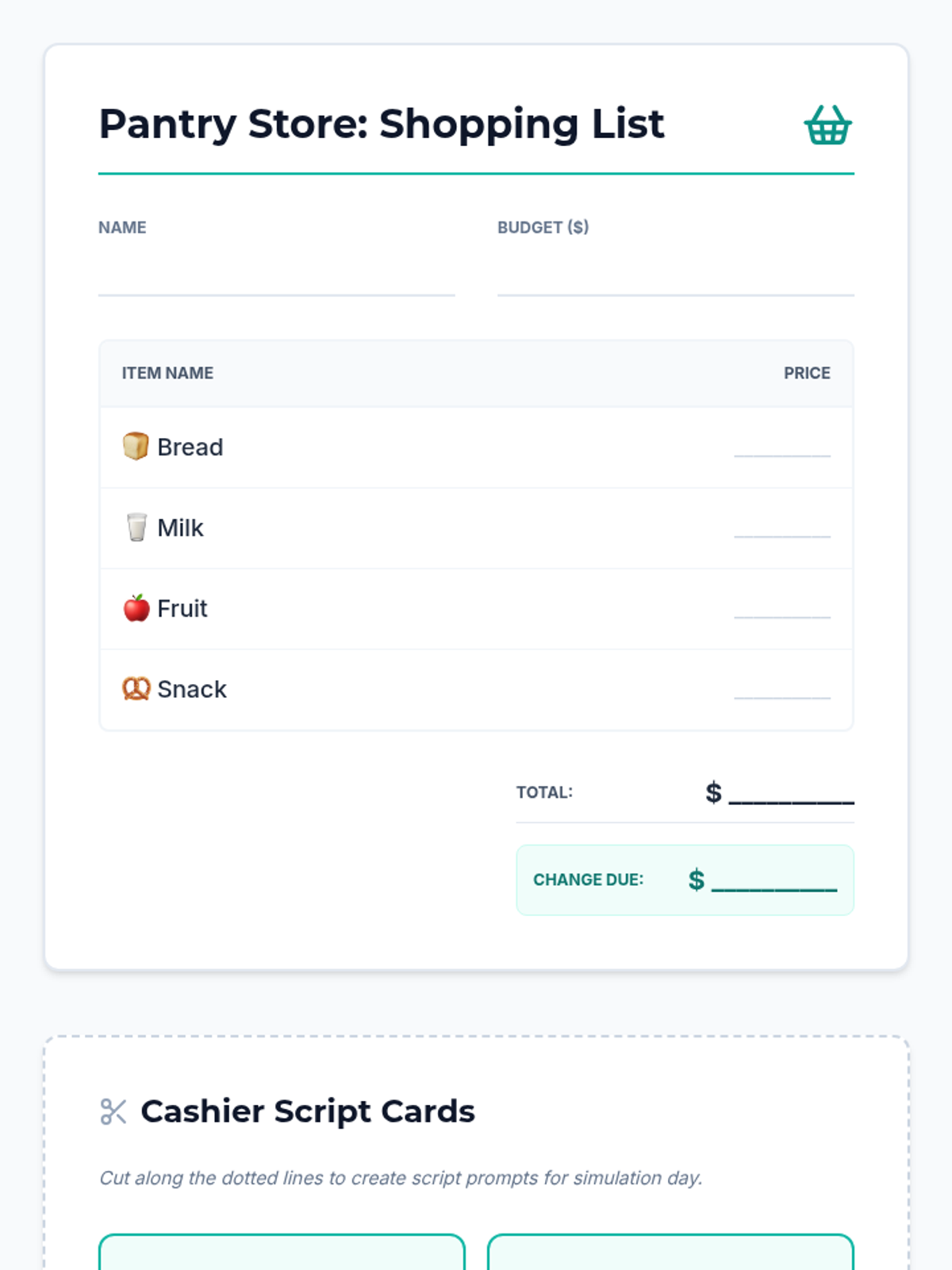
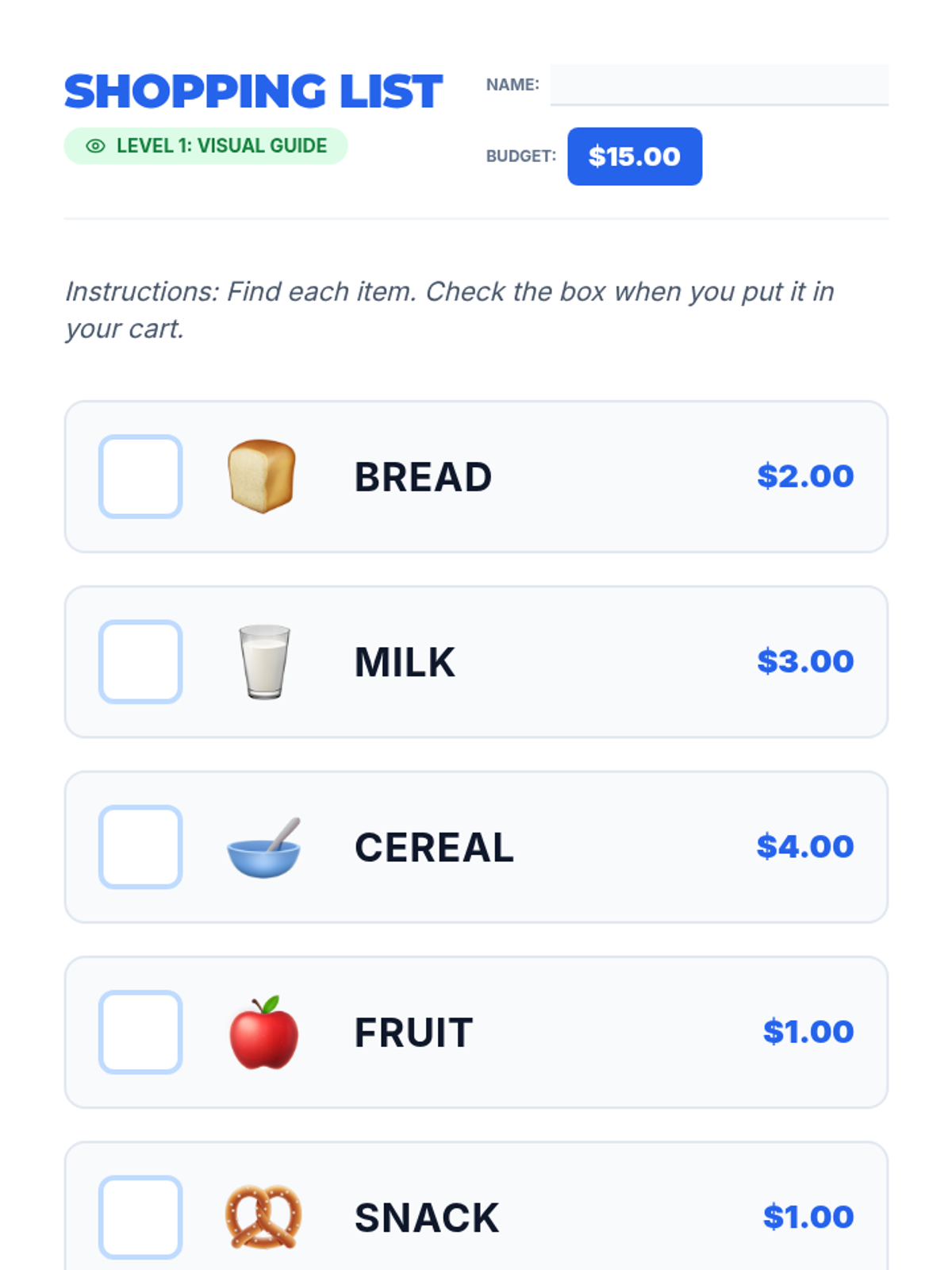
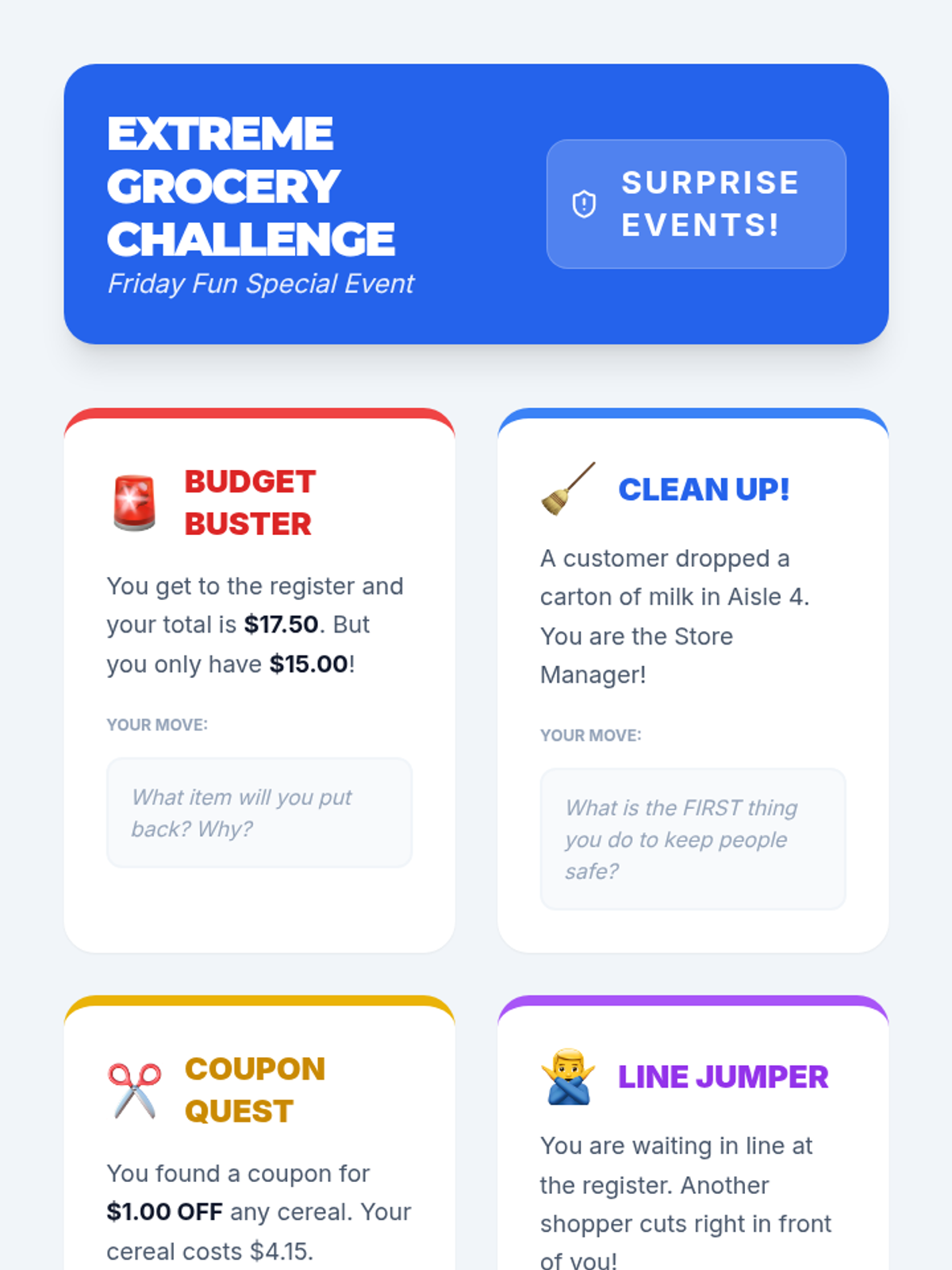
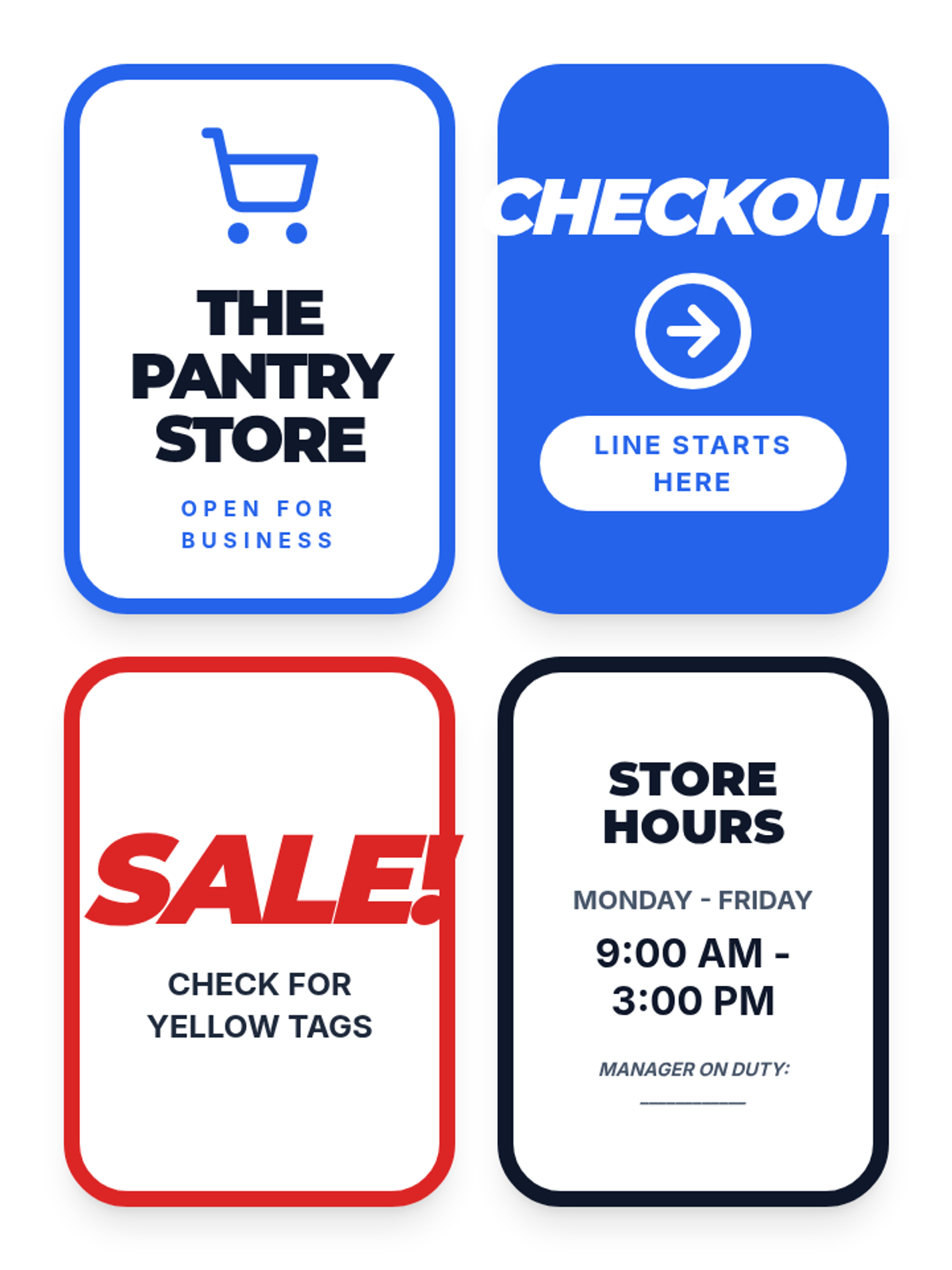
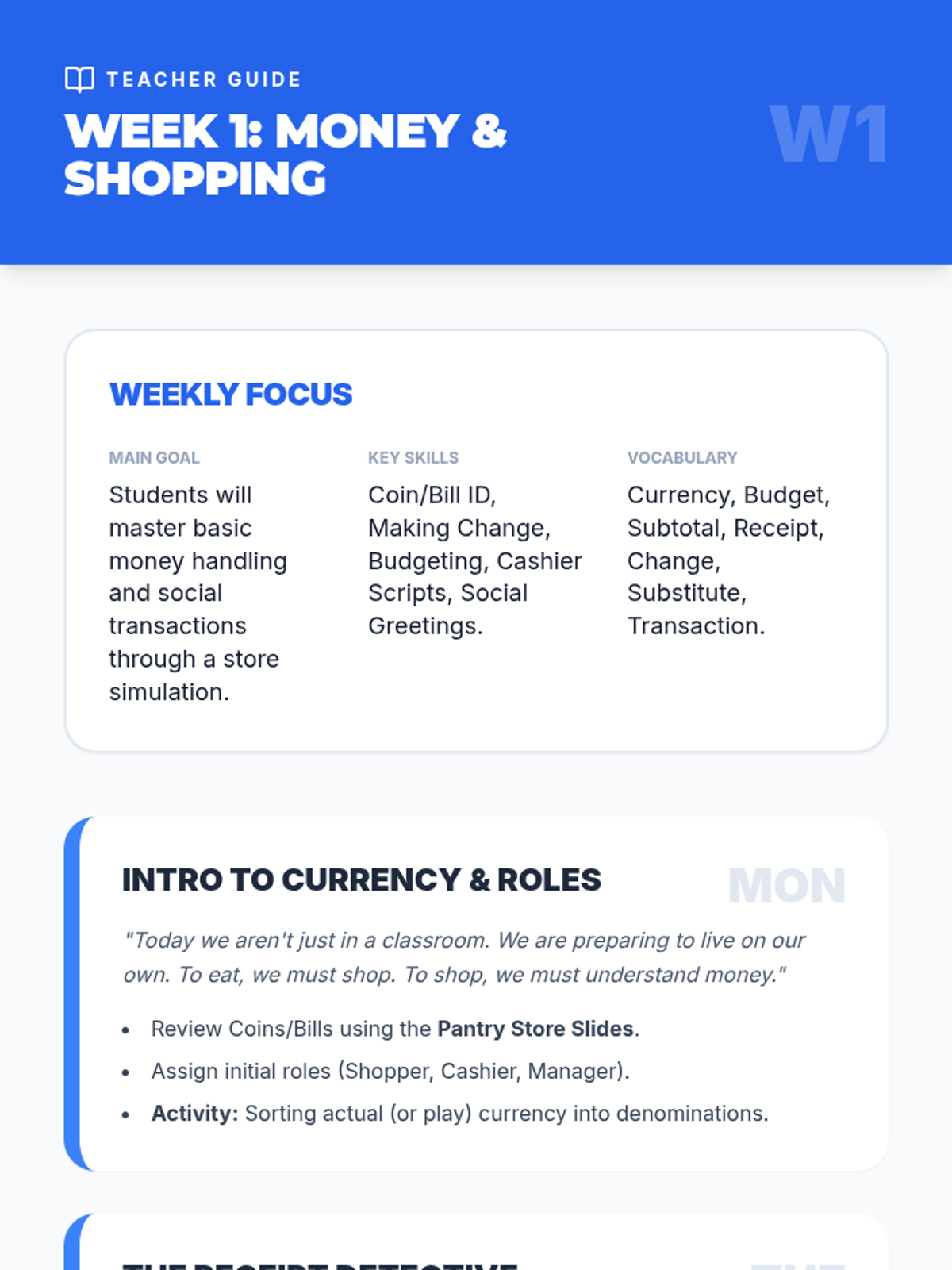
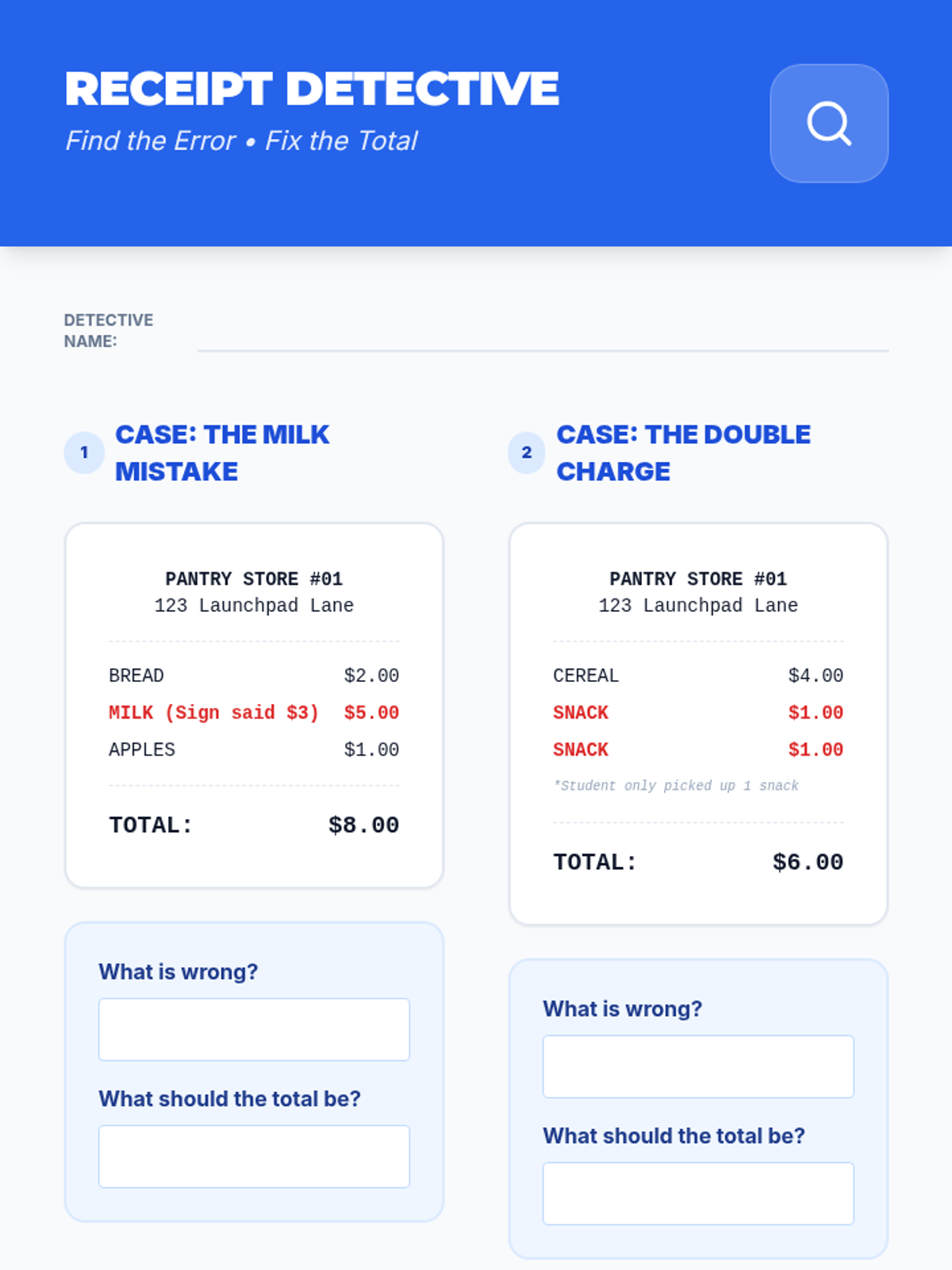
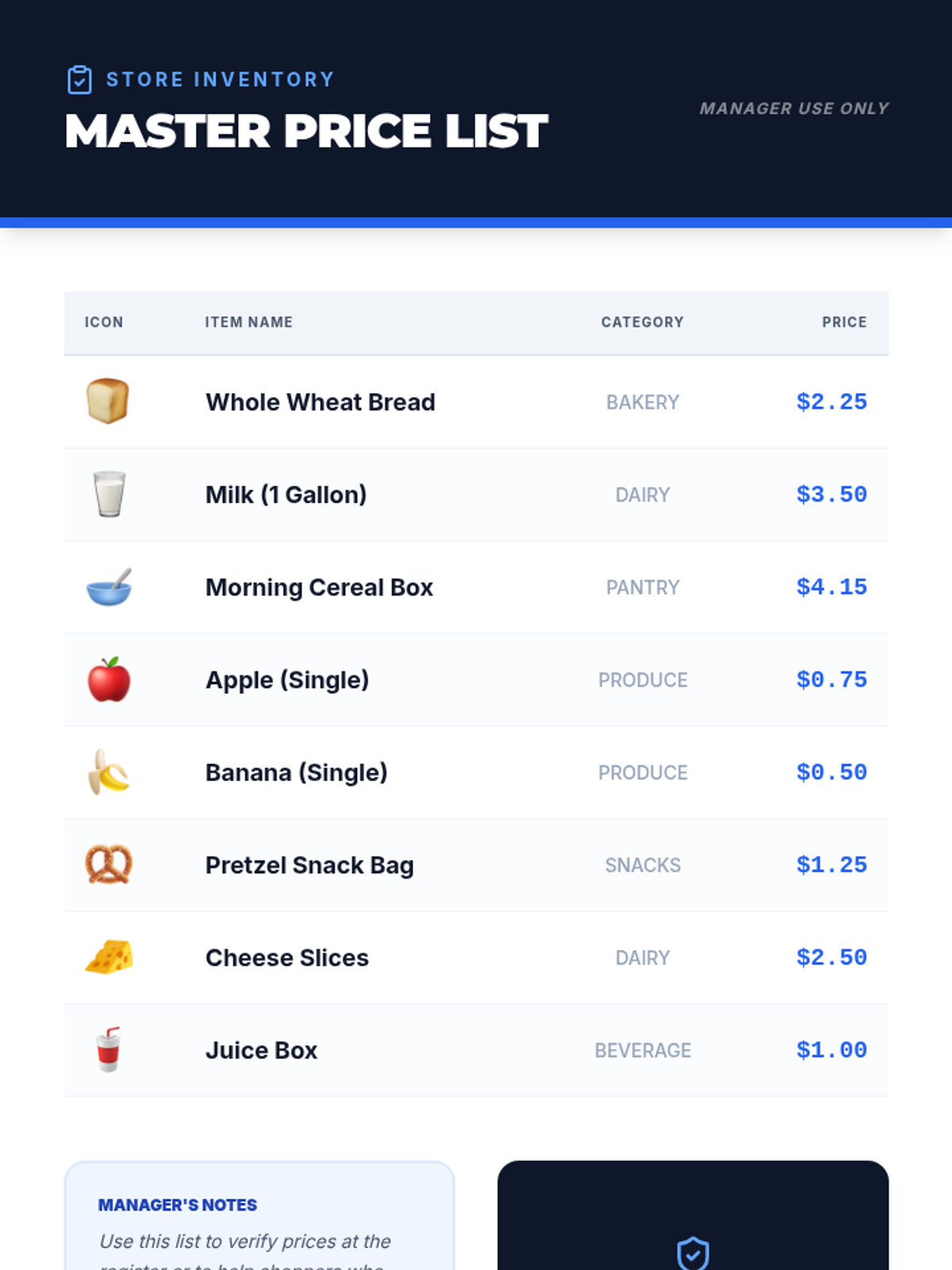
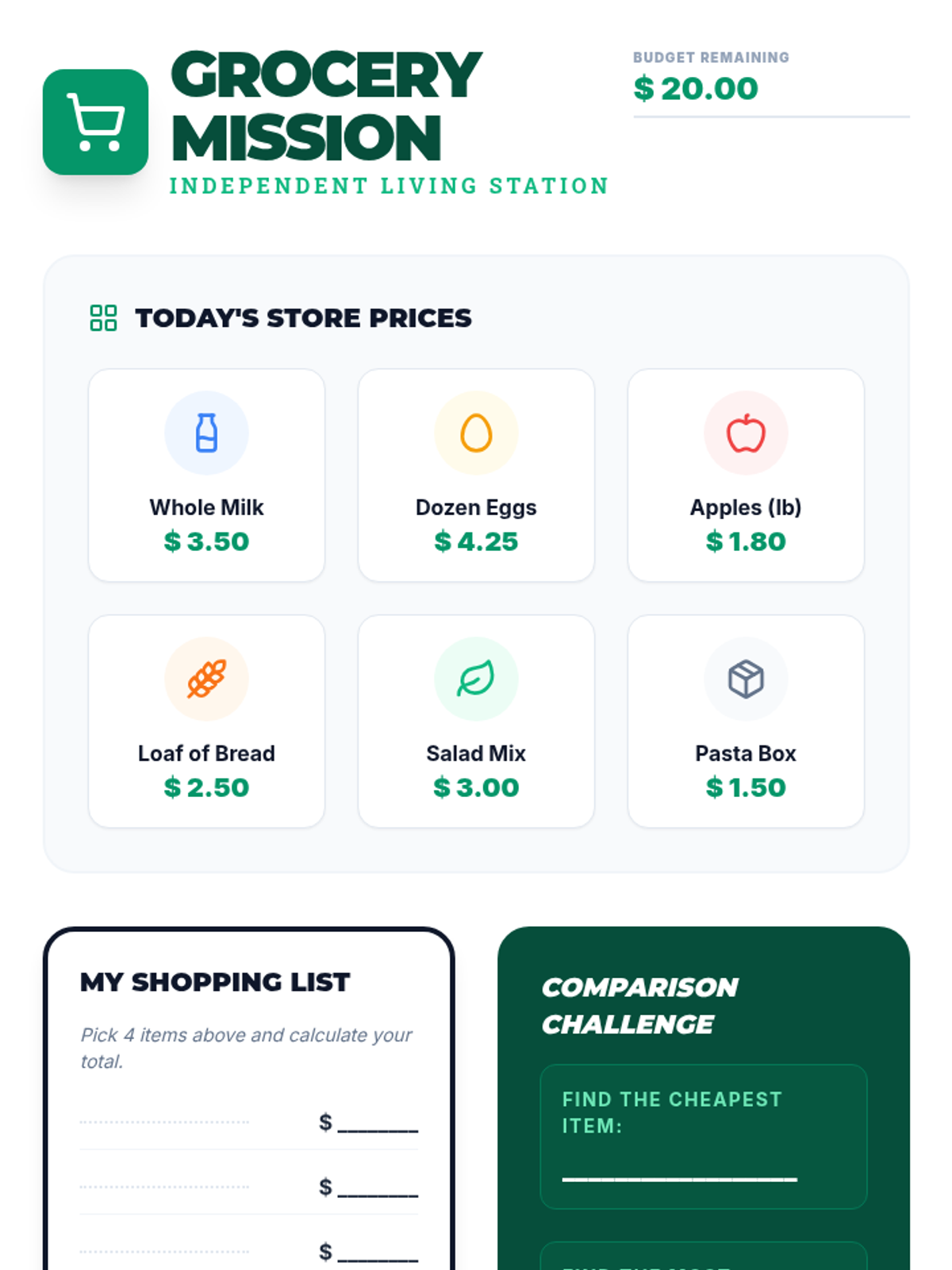
Mastering money identification, budgeting, and the mechanics of shopping through a pantry store simulation and real-world problem-solving.
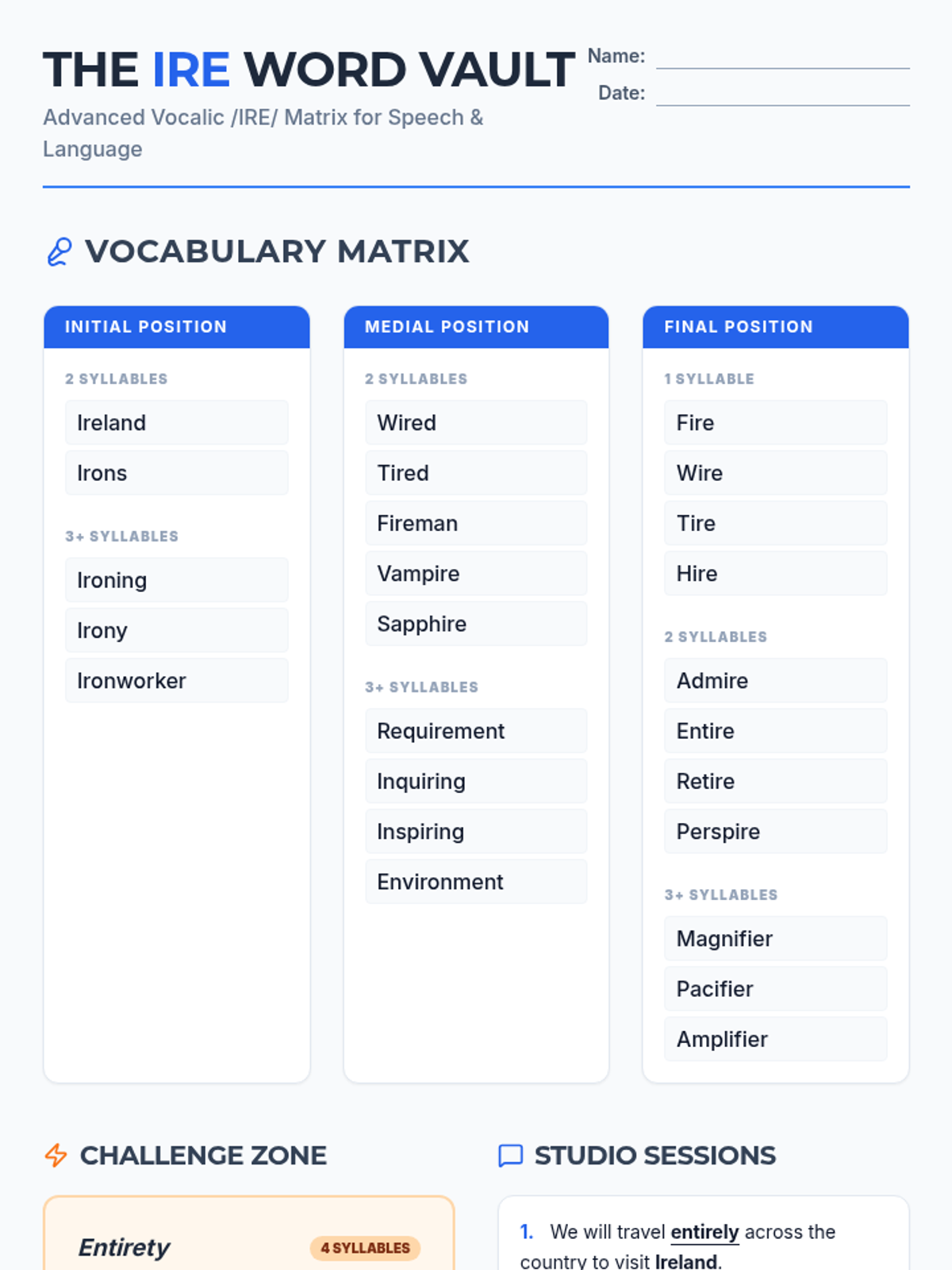
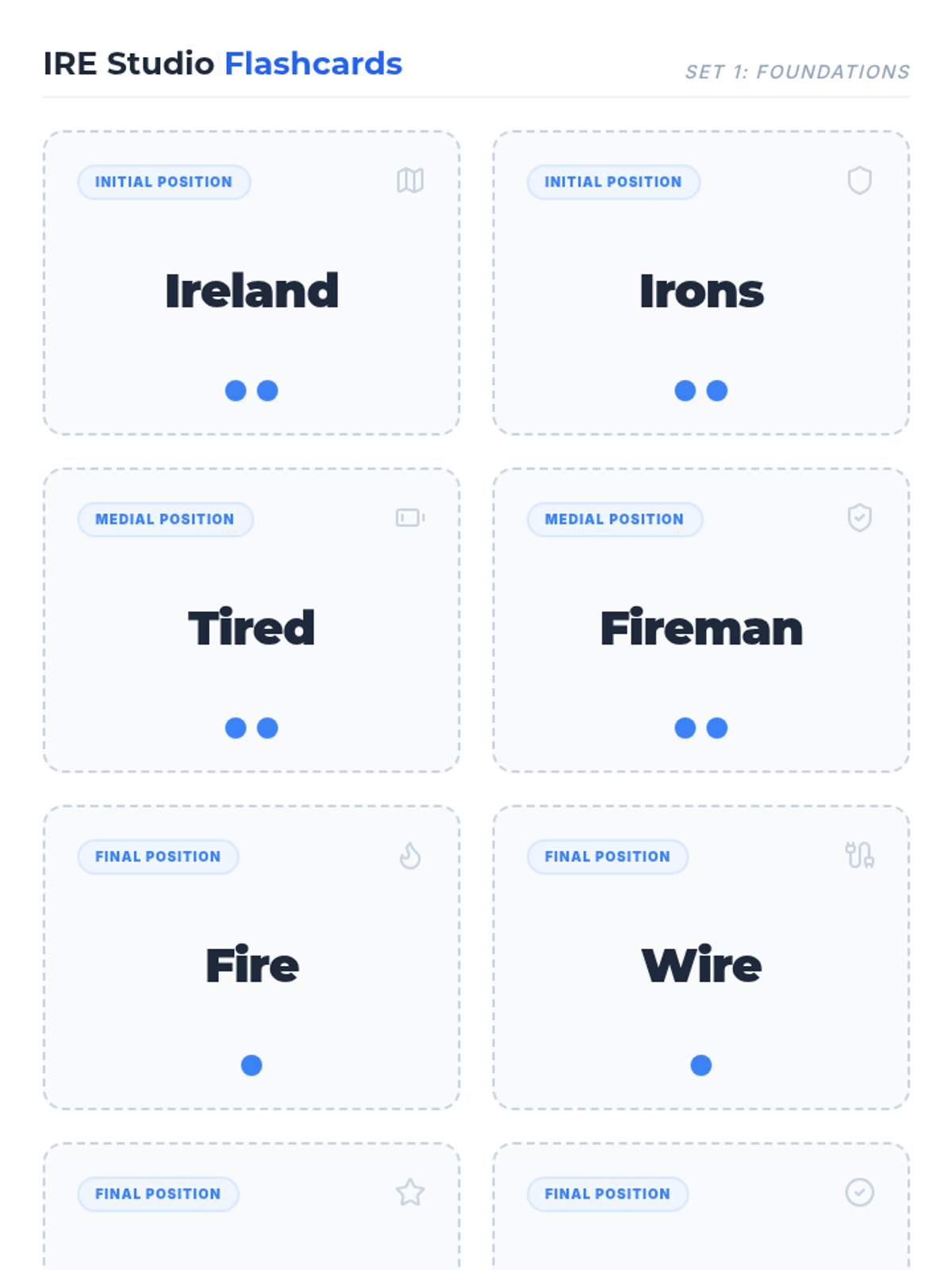
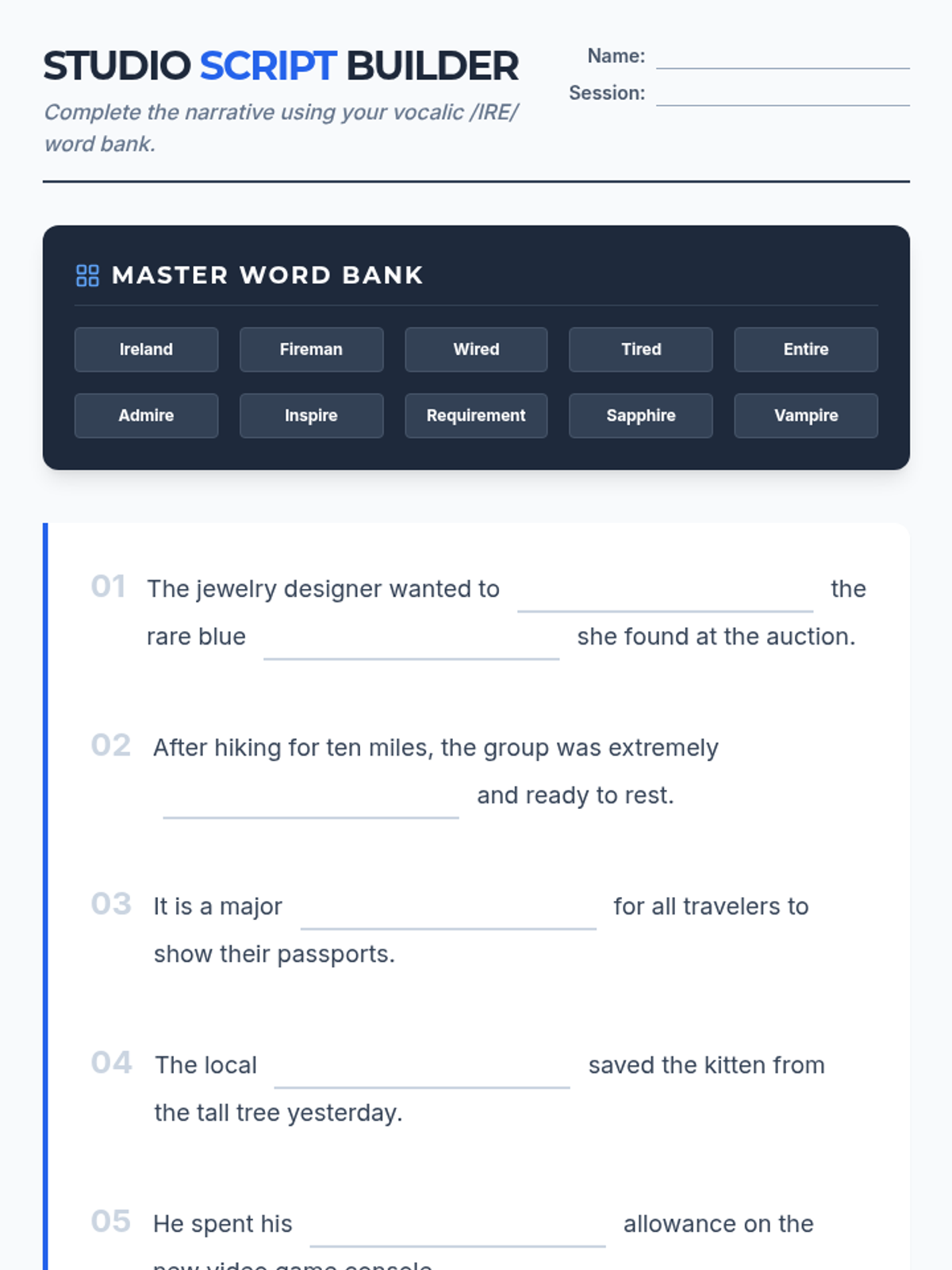
A comprehensive set of resources for middle school students to master the vocalic /IRE/ sound in all word positions and syllable lengths, featuring a word vault, flashcards, and interactive discussion prompts.
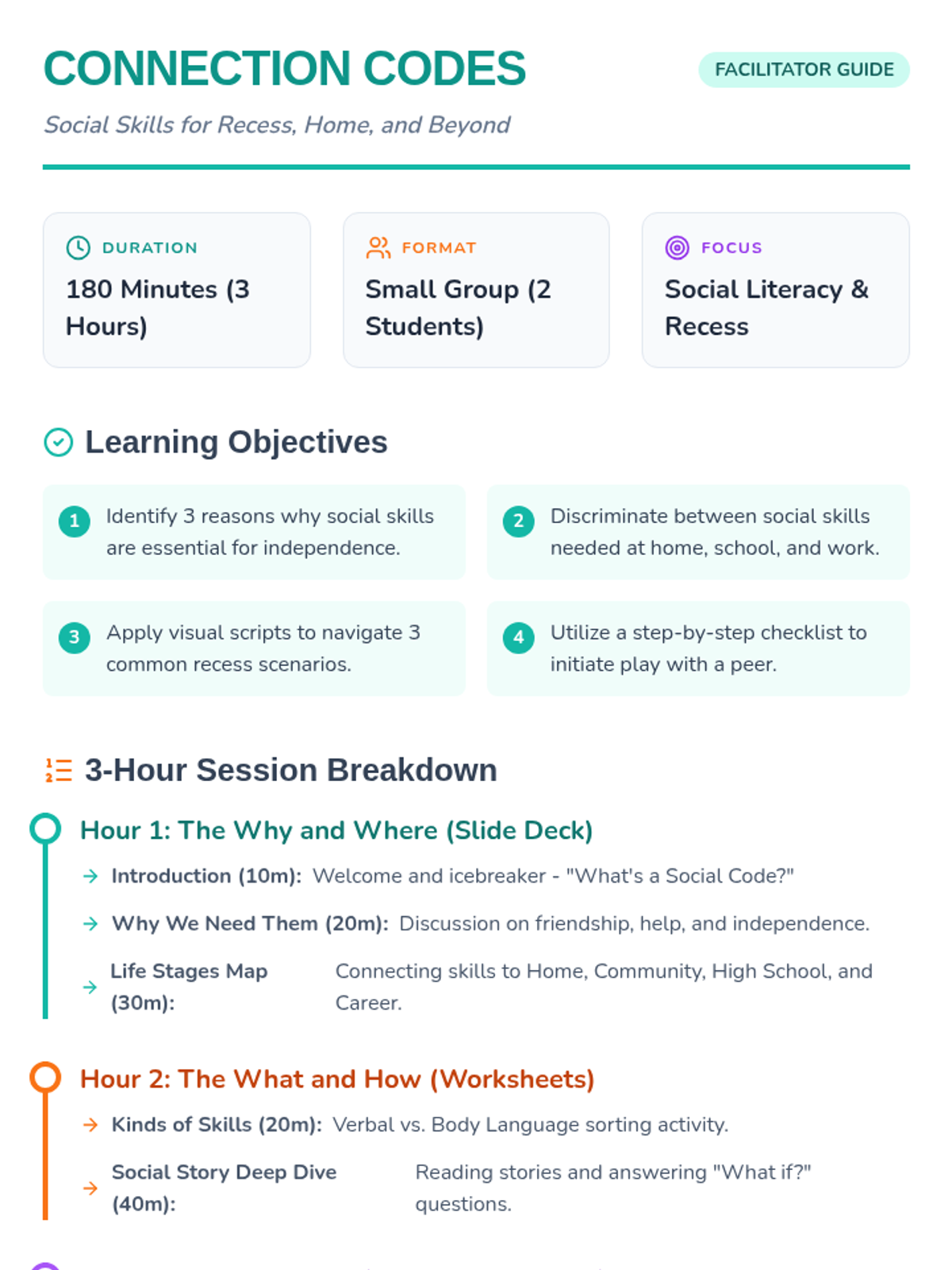
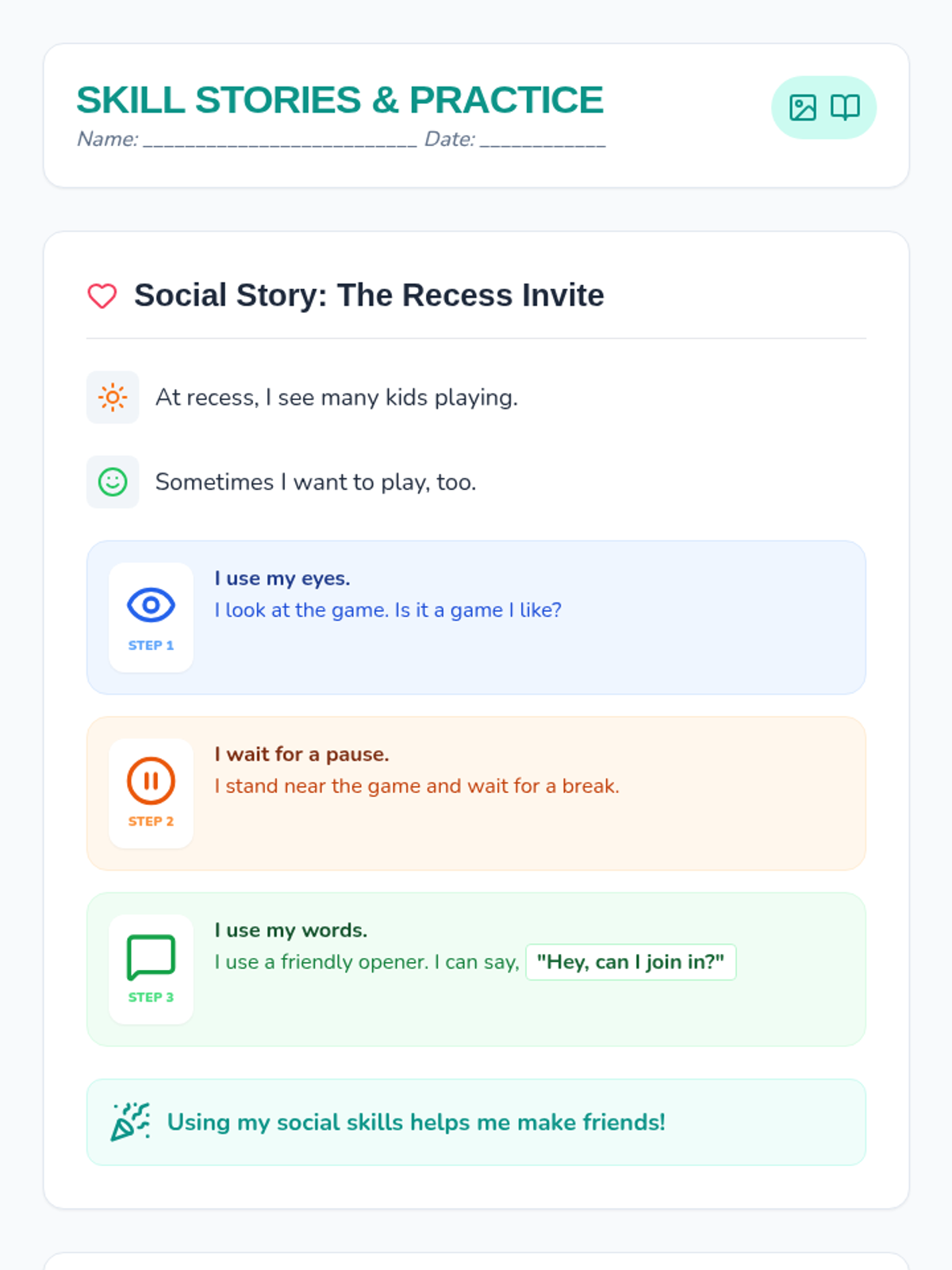
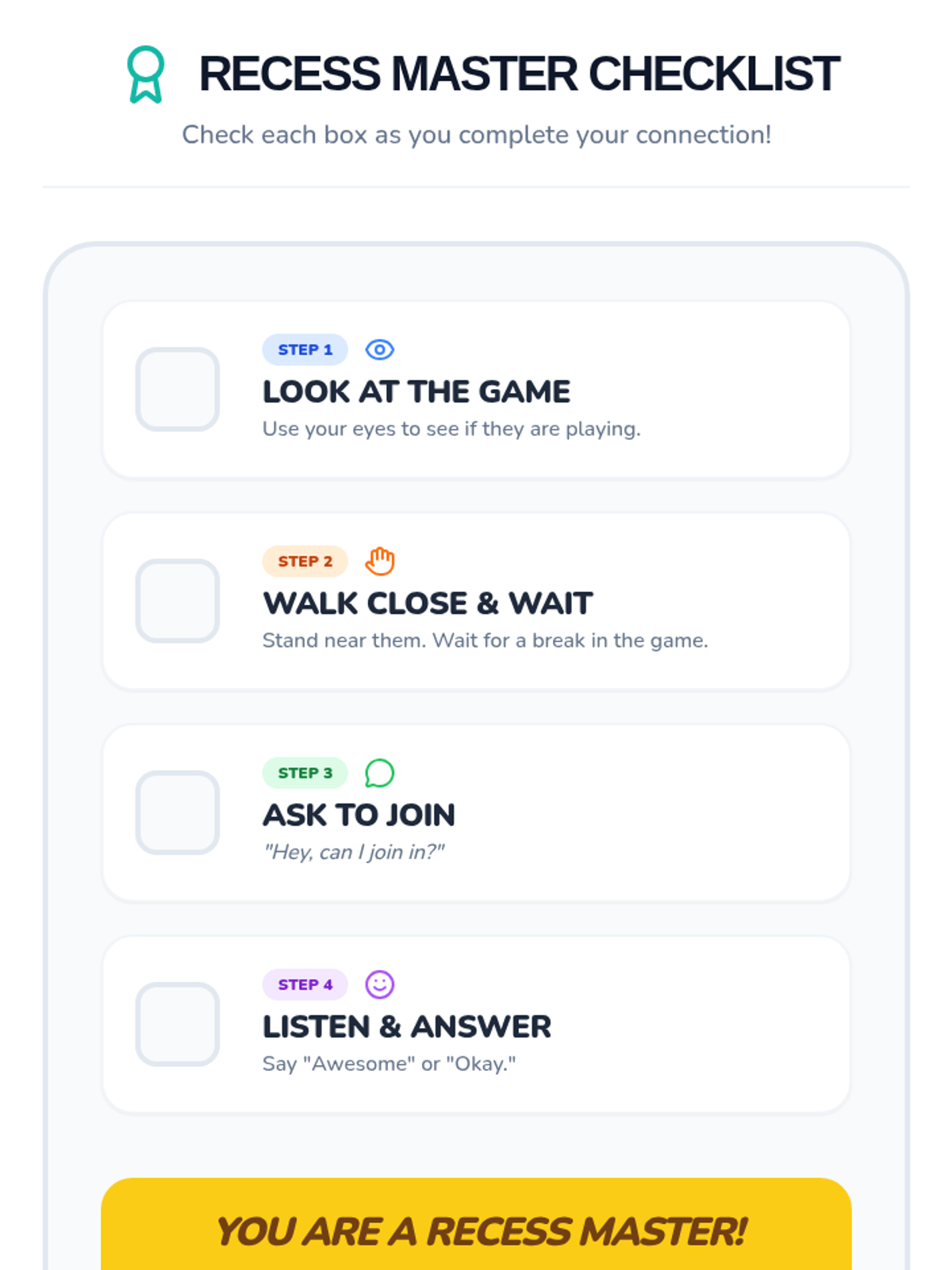
A comprehensive 3-hour lesson designed for students with autism to understand the importance of social skills across various life stages, culminating in practical scripts for recess success.
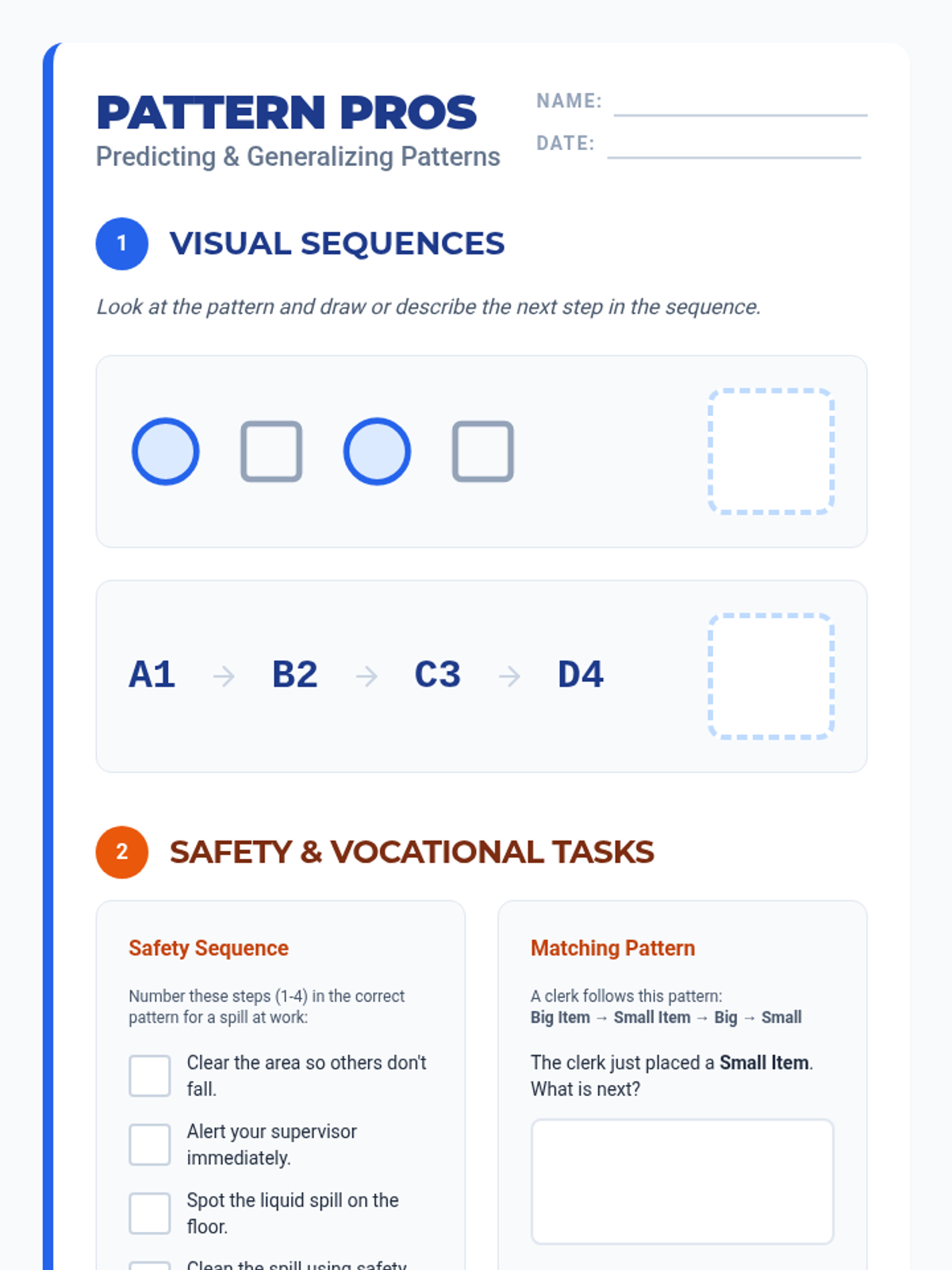
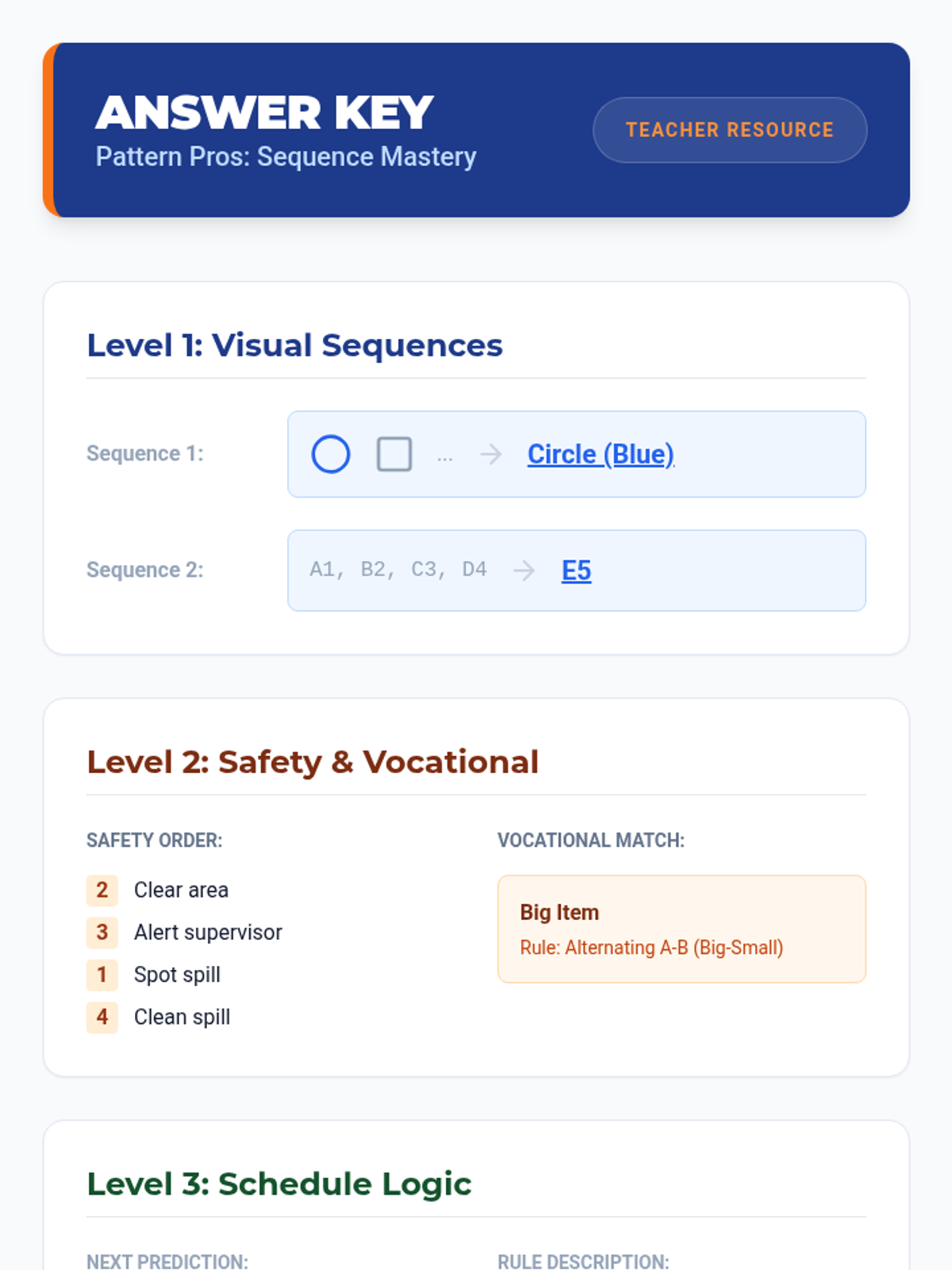
A comprehensive lesson on identifying and predicting patterns across visual, vocational, and social contexts to build critical thinking and life skills.
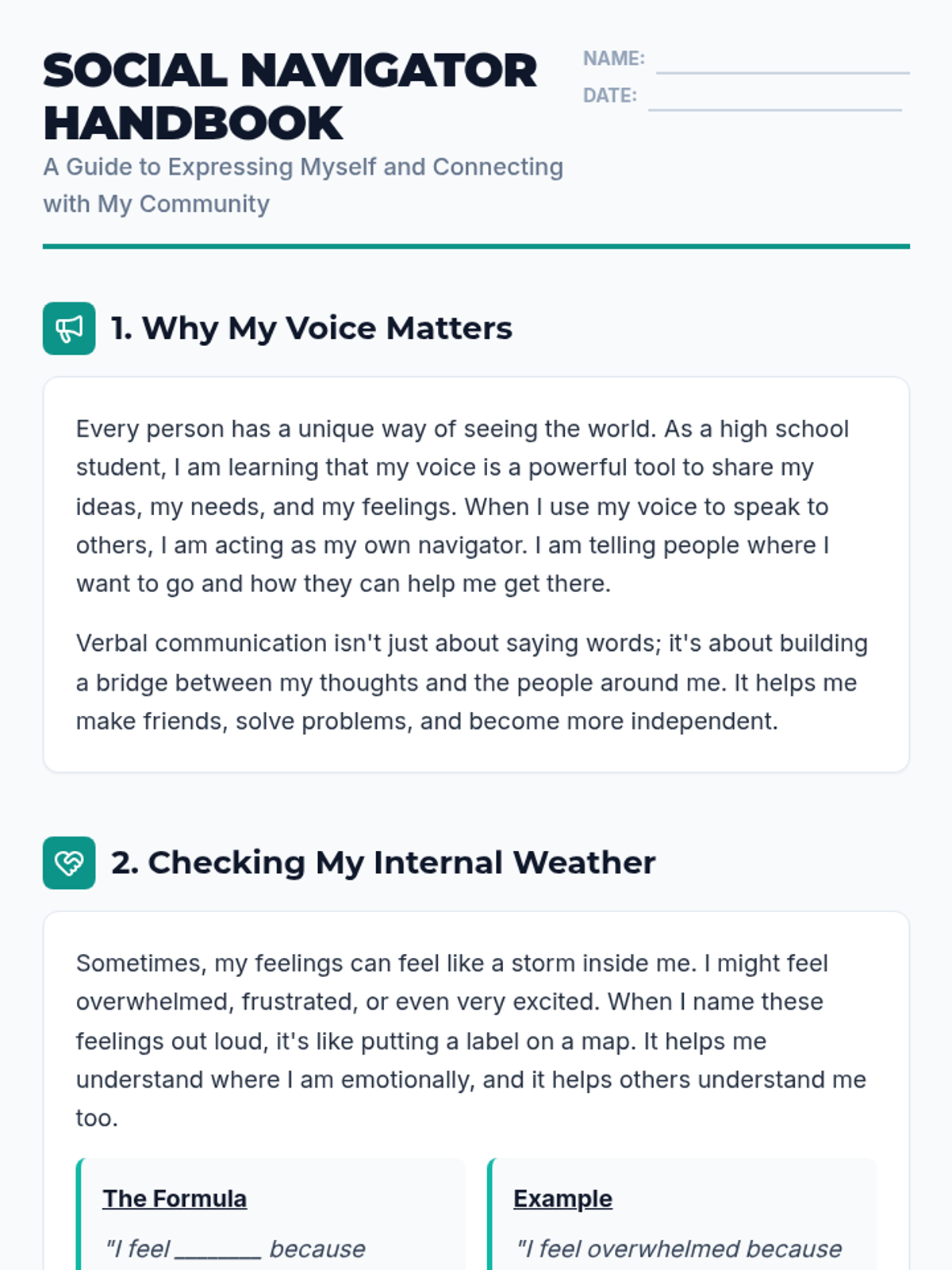
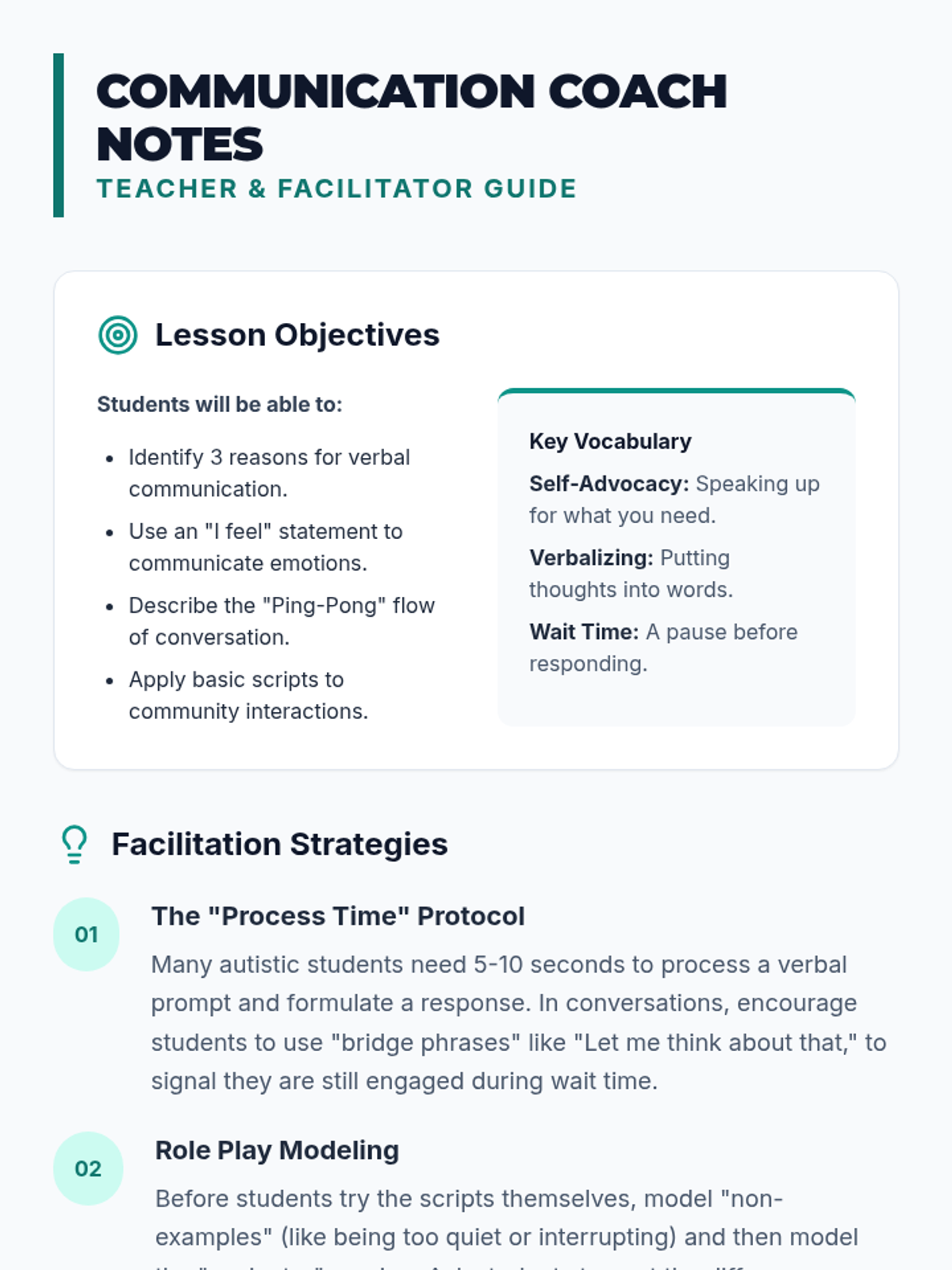
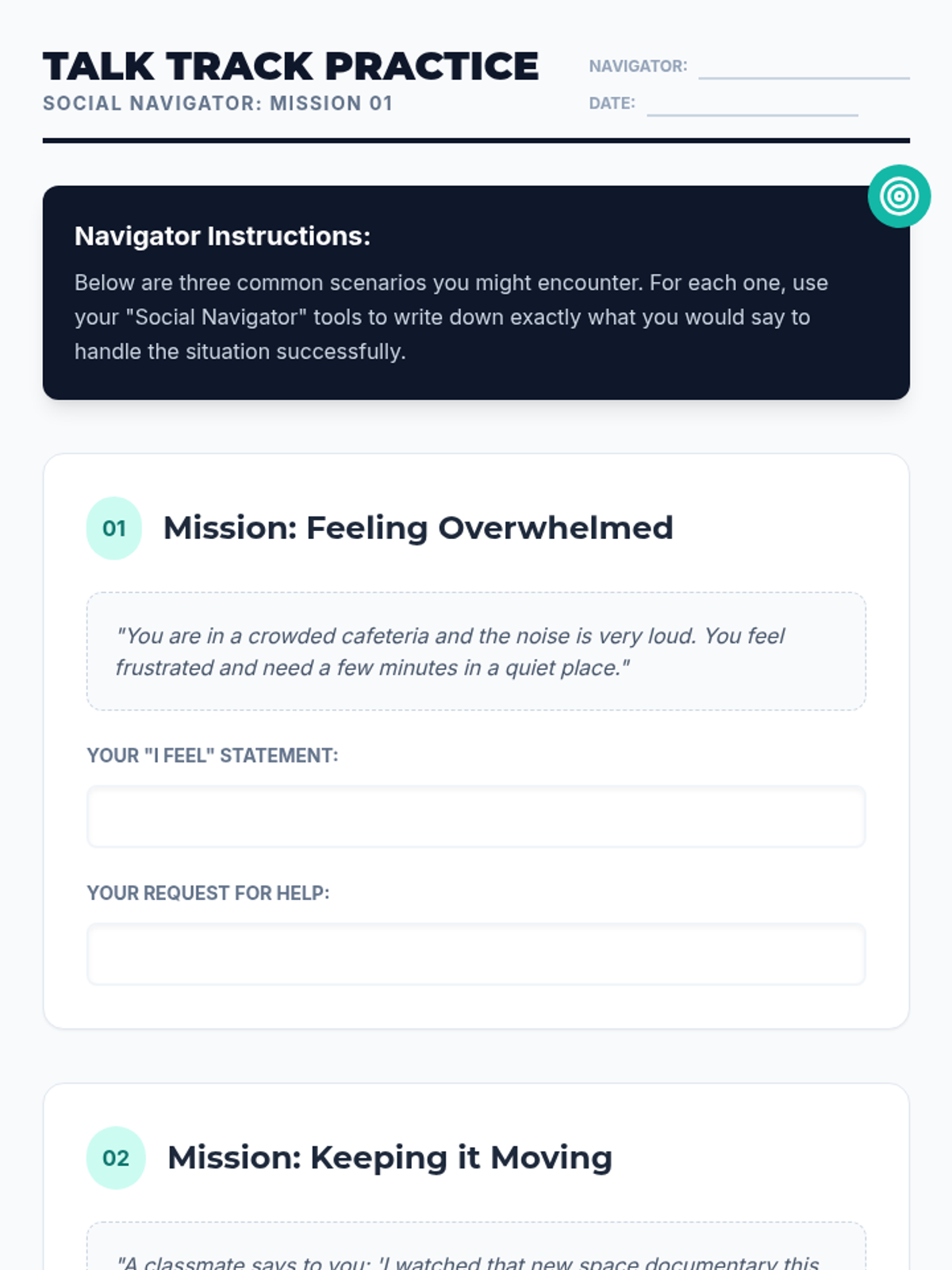
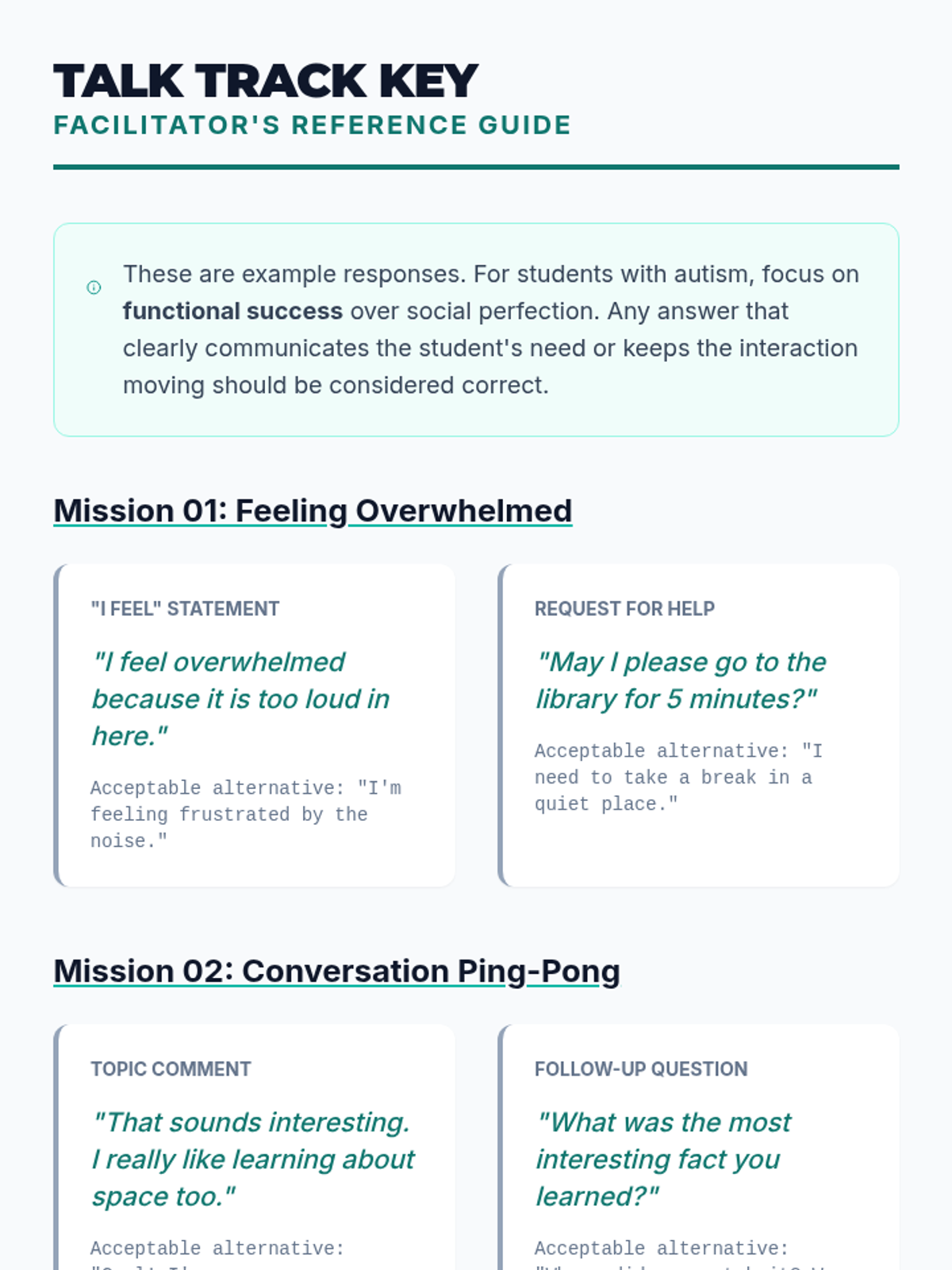
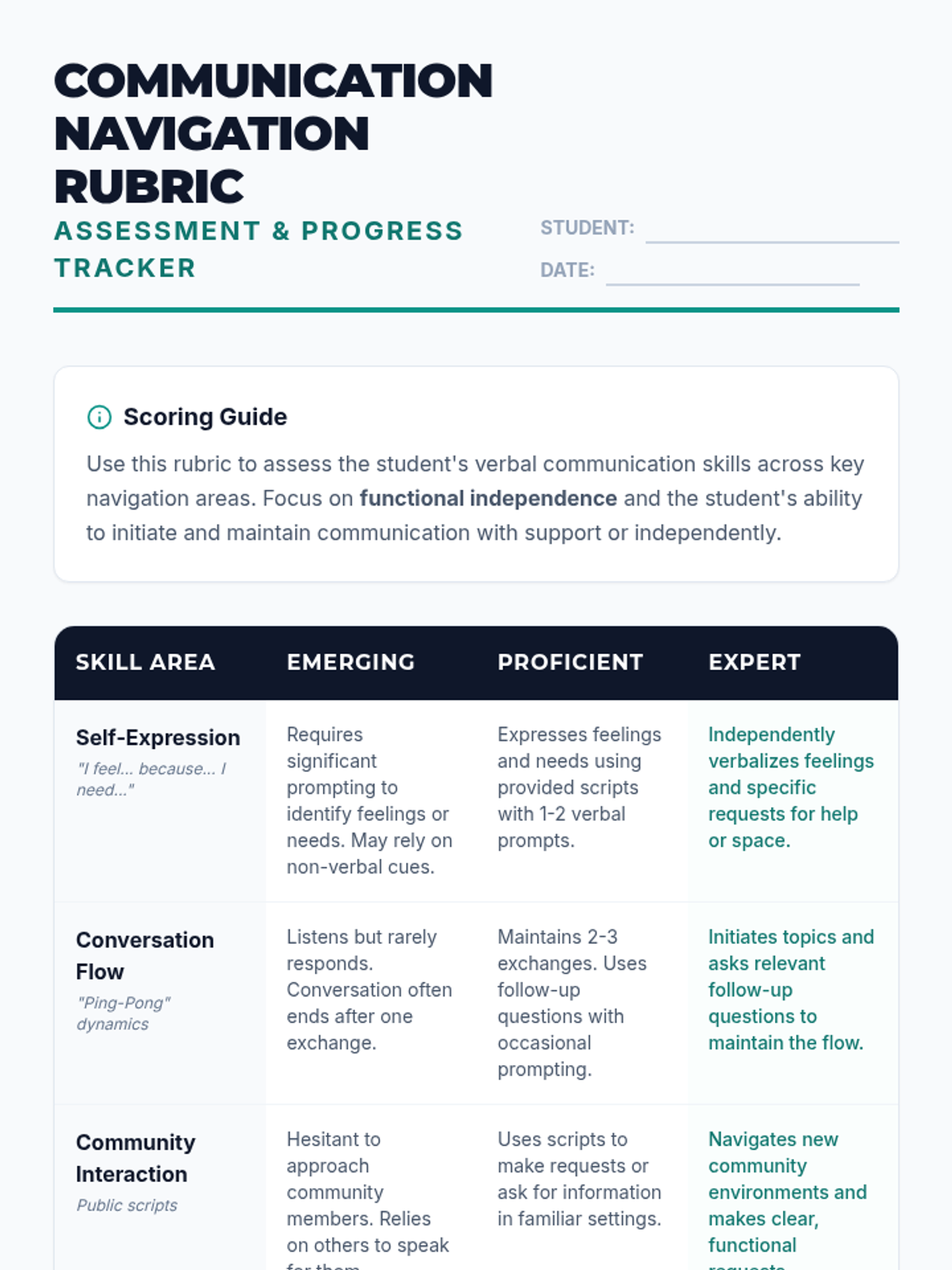
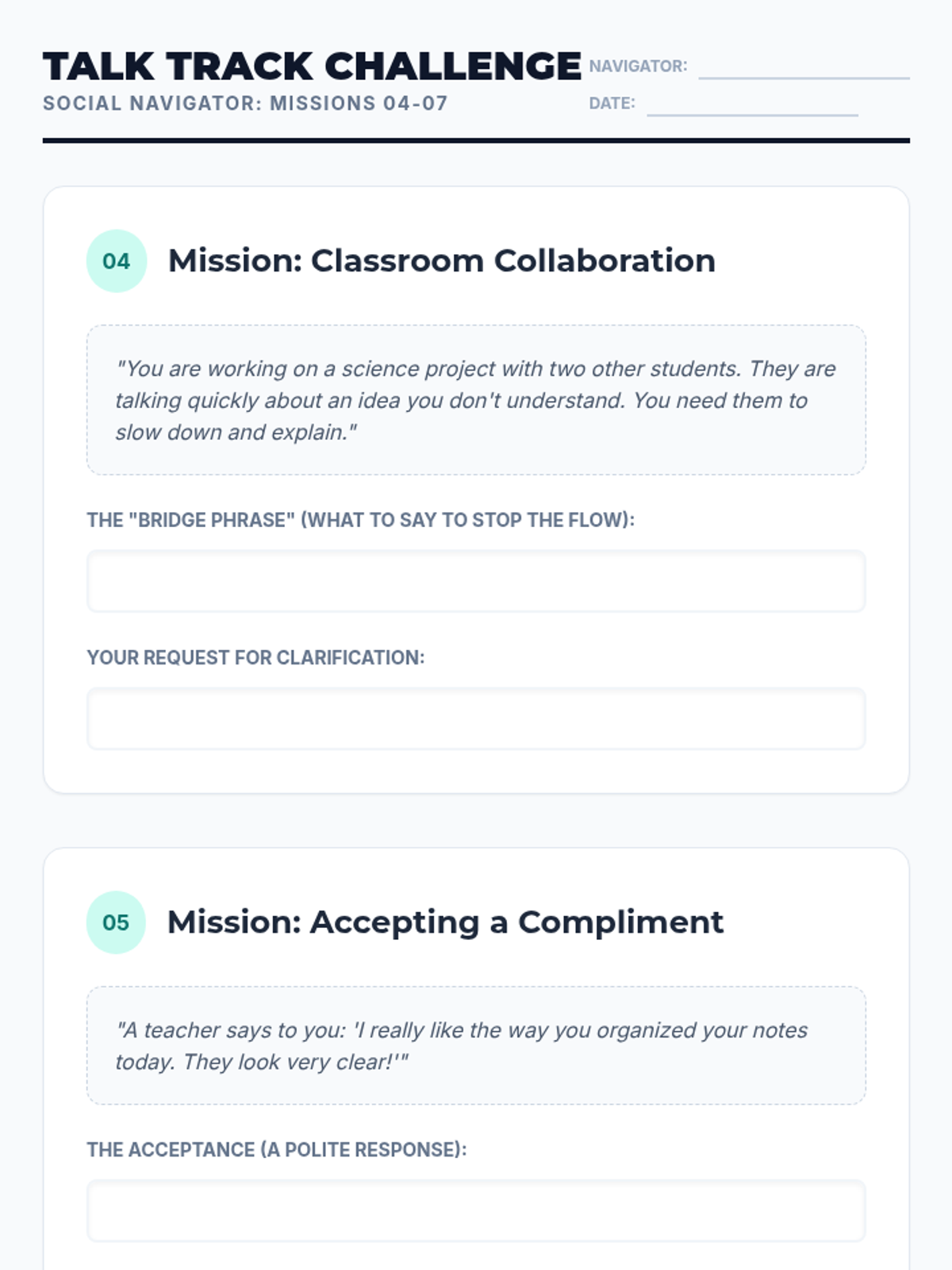
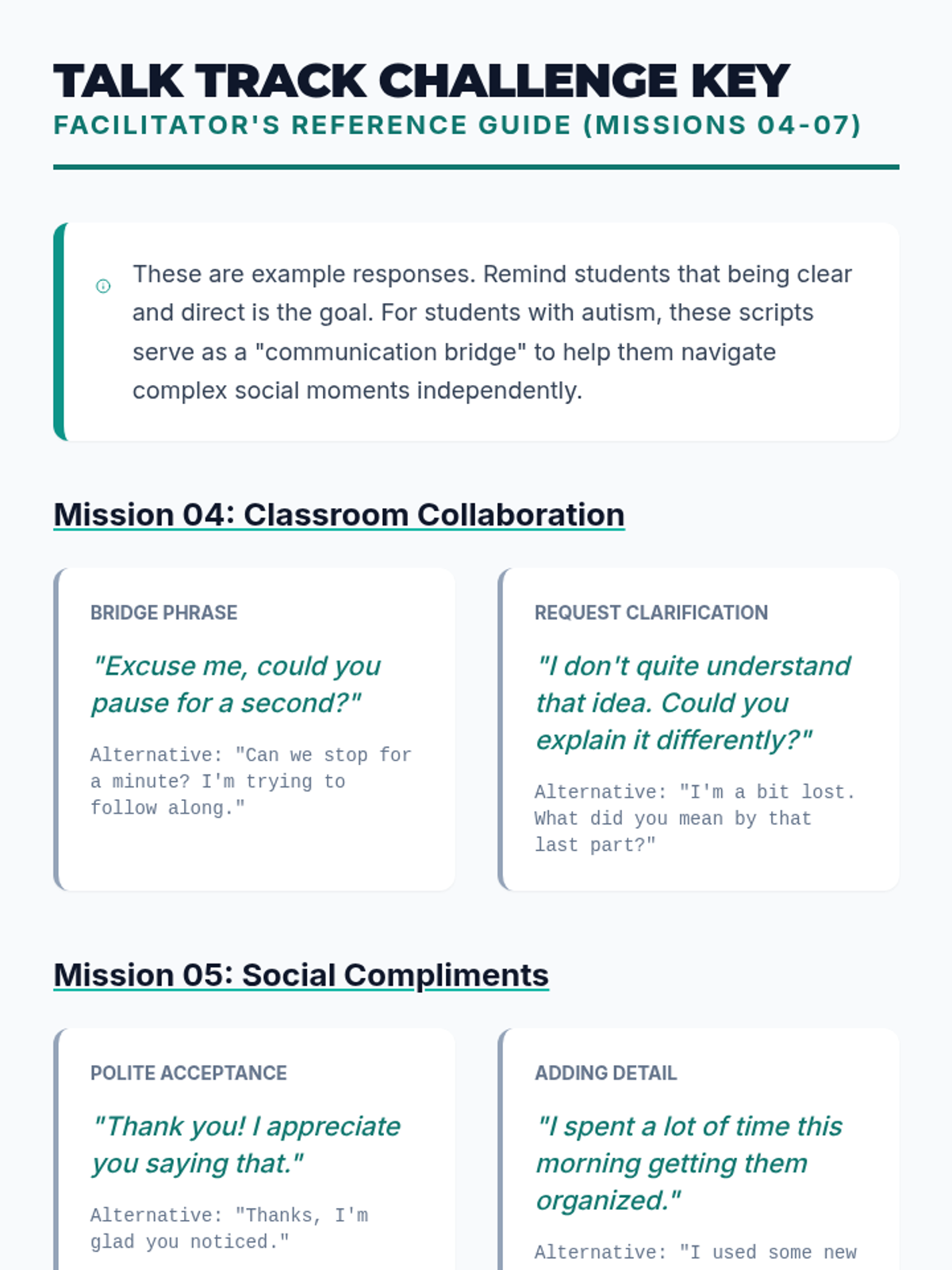
A comprehensive lesson for high school students with autism on navigating verbal communication in social, emotional, and community contexts. Focuses on 'Social Navigator' strategies for self-expression and interaction.
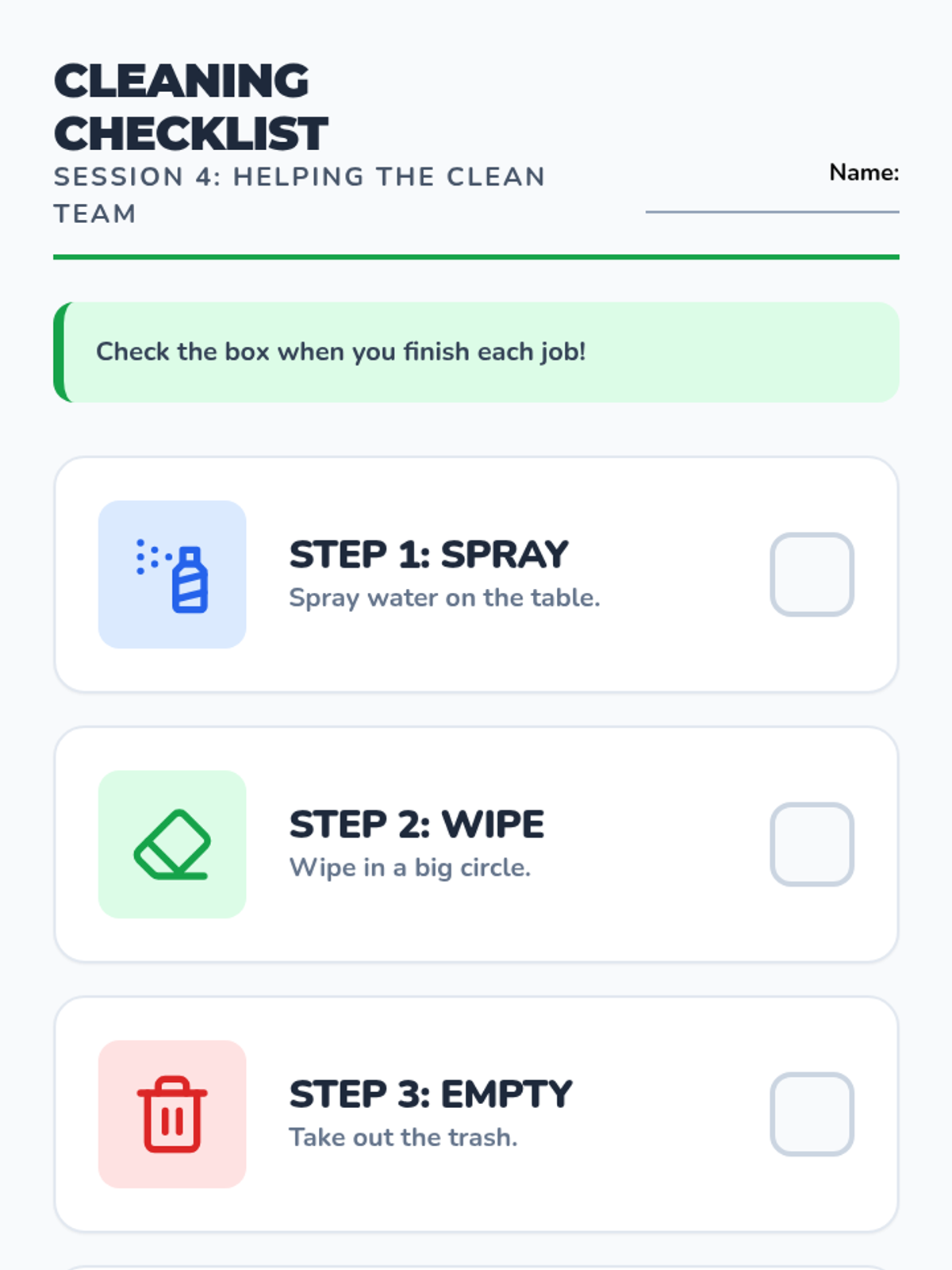
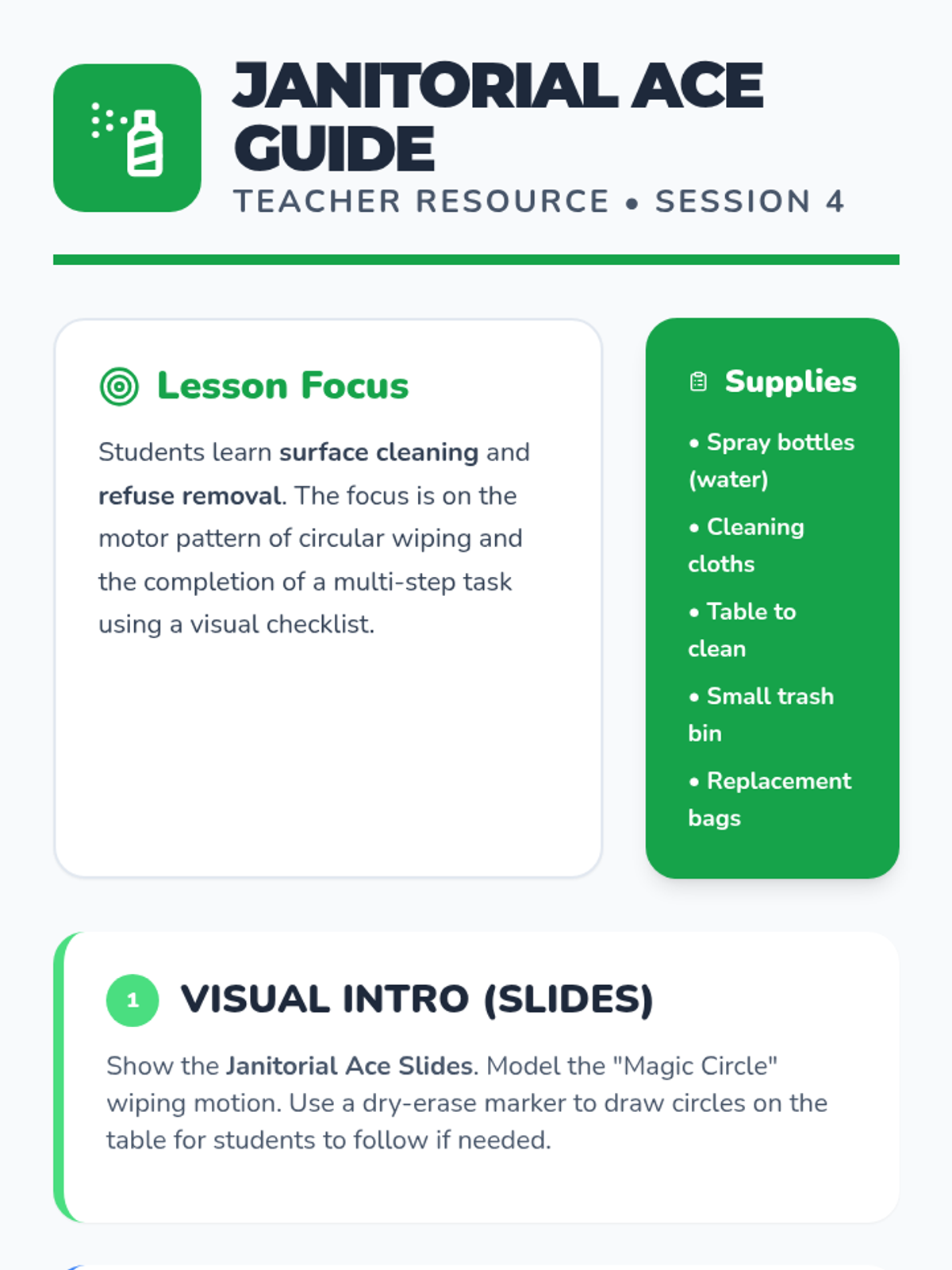
Introduces essential cleaning and maintenance tasks with a focus on follow-through and completion.
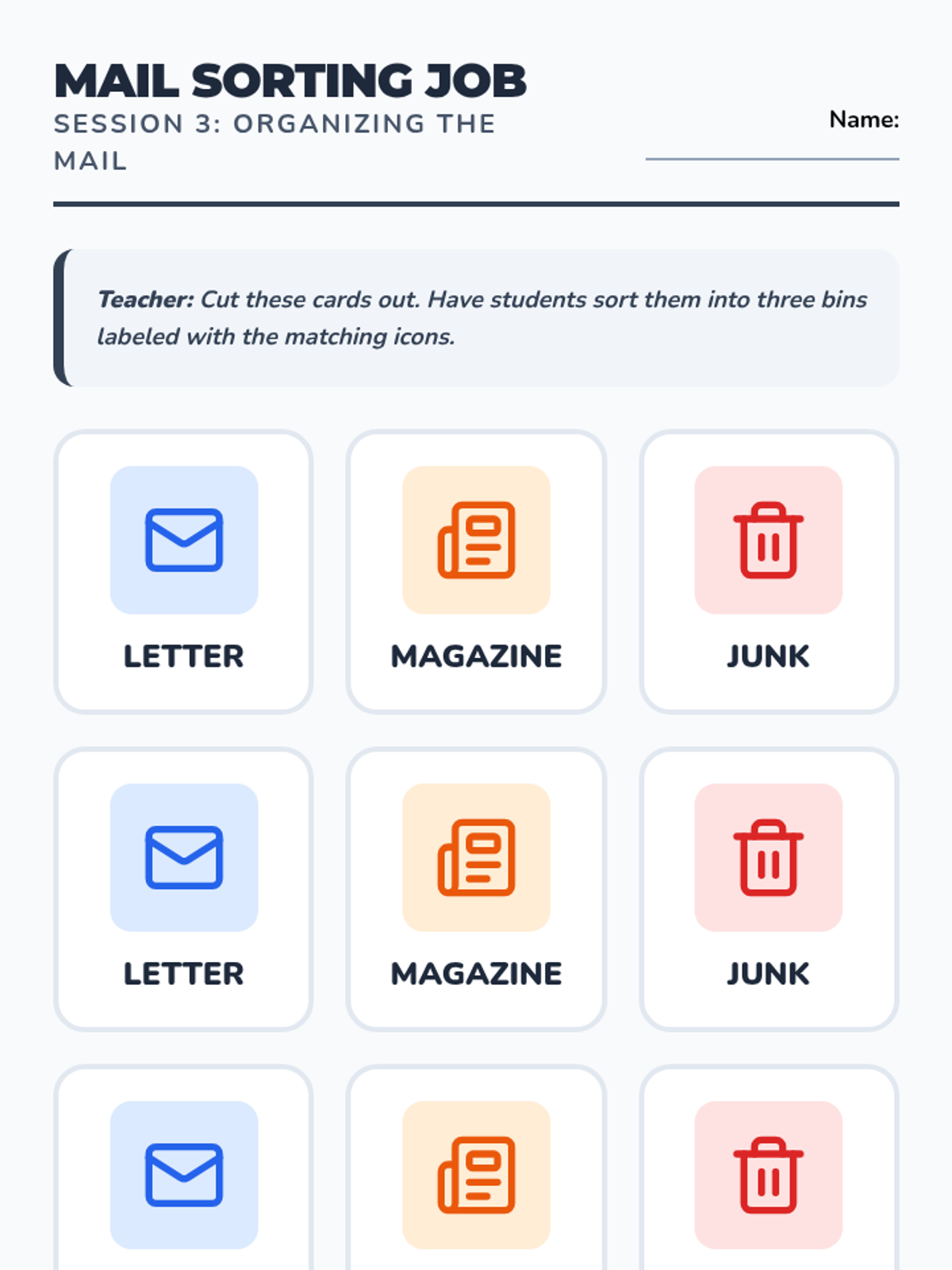
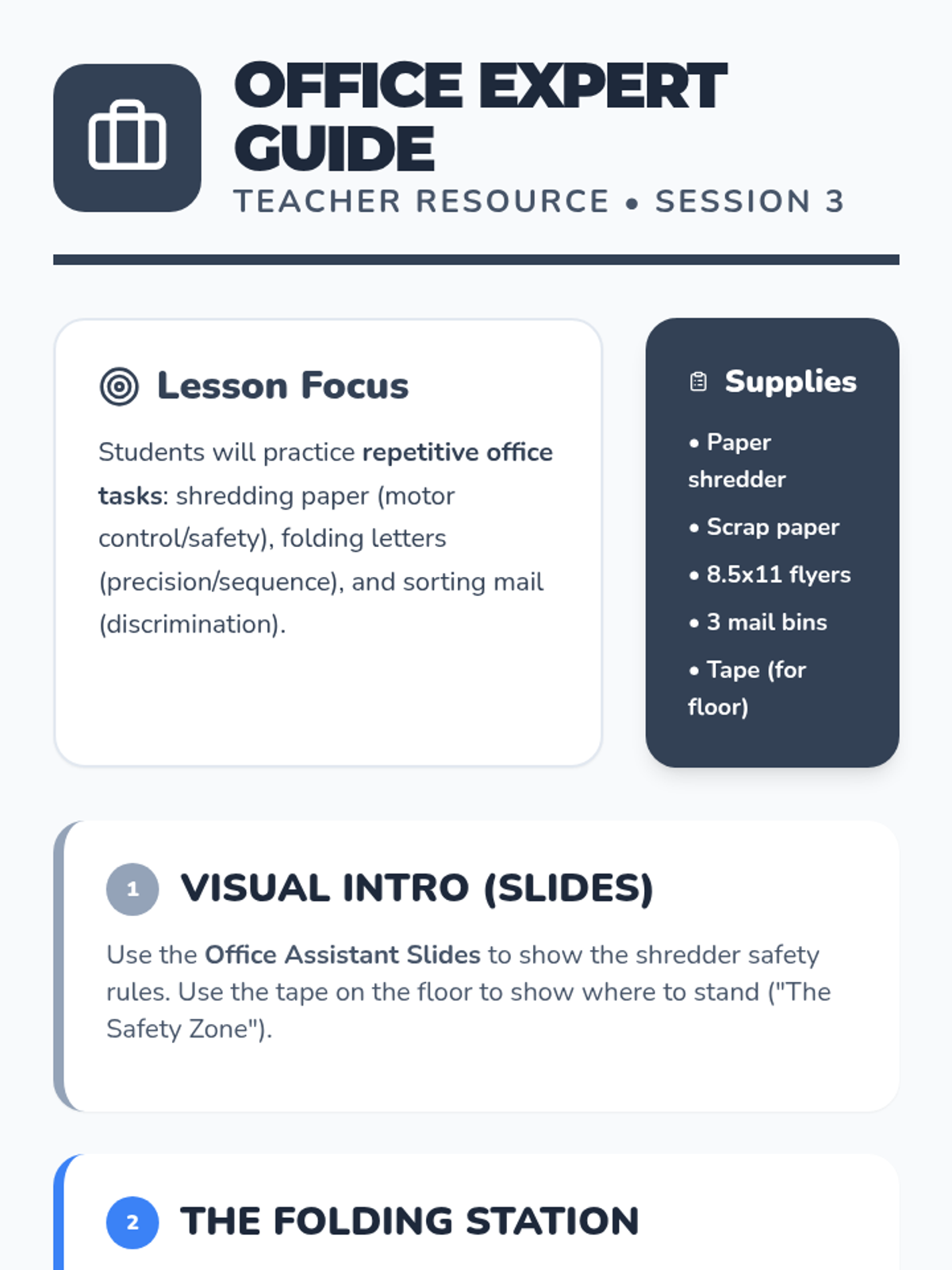
Explores office-based tasks including paper shredding, folding flyers, and simple mail sorting.
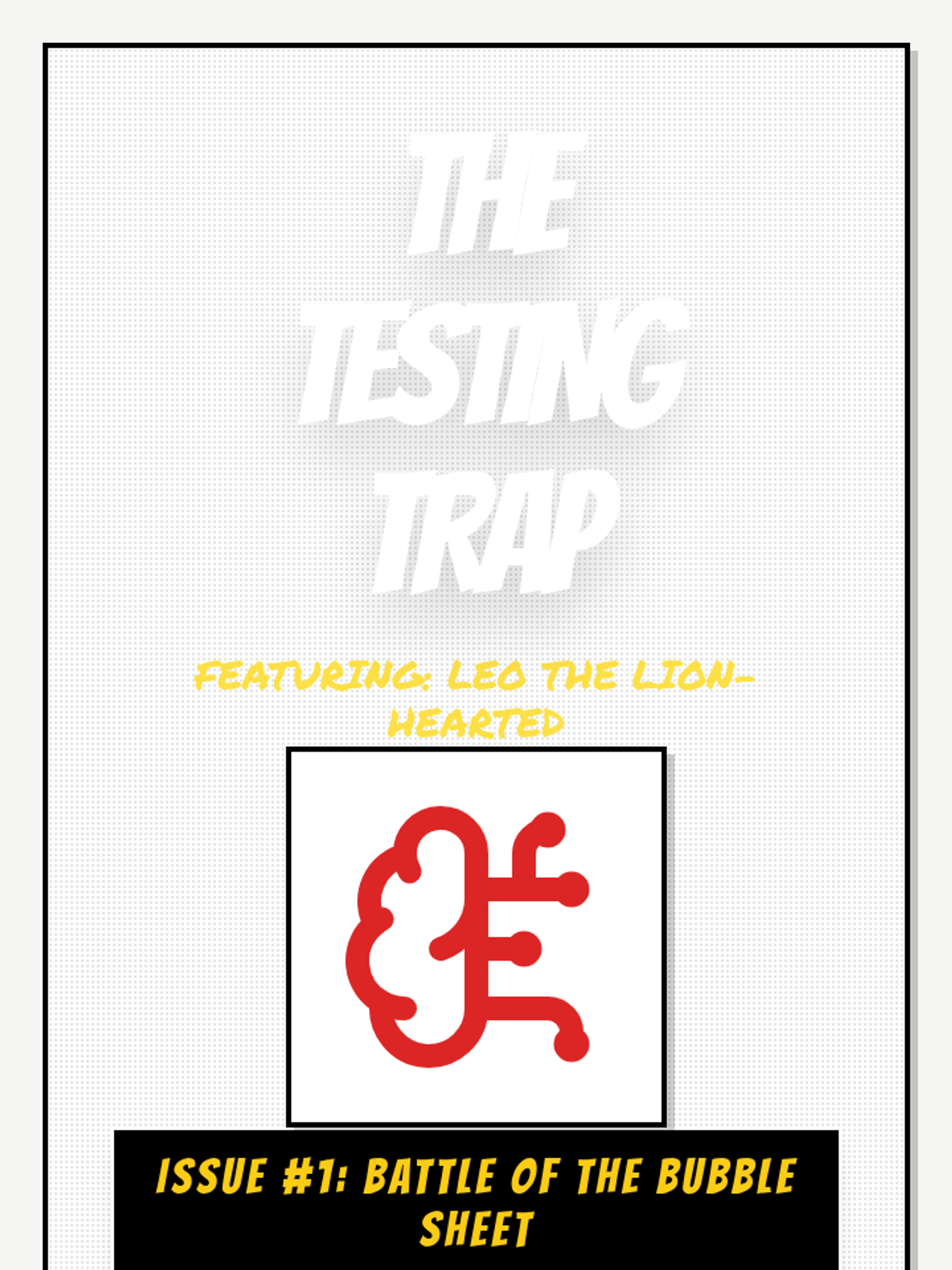
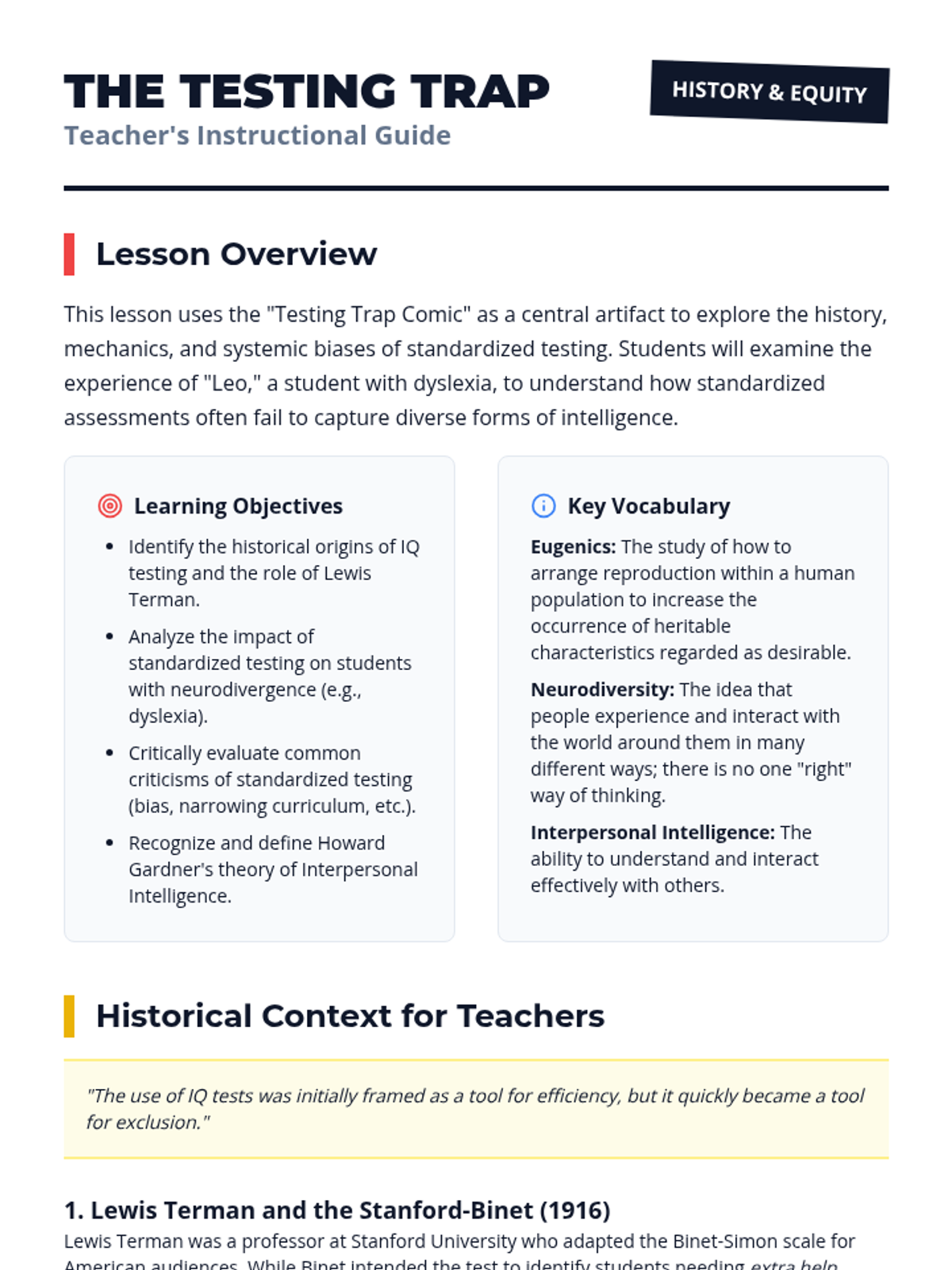
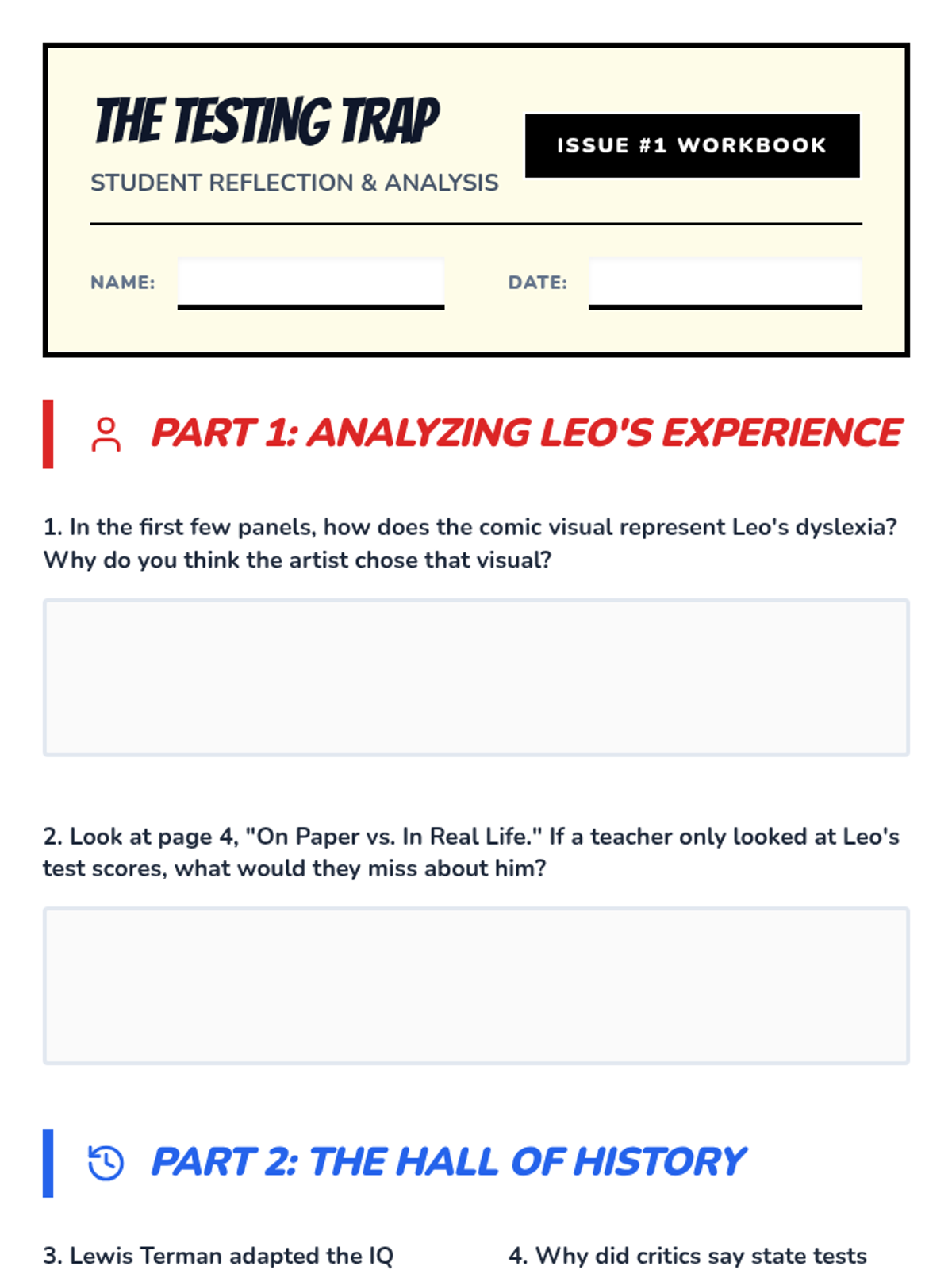
An exploration of the history, mechanics, and fairness of standardized testing through the lens of a neurodivergent student's experience. This lesson uses a retro-style comic to illustrate the disconnect between traditional testing and real-world intelligence.
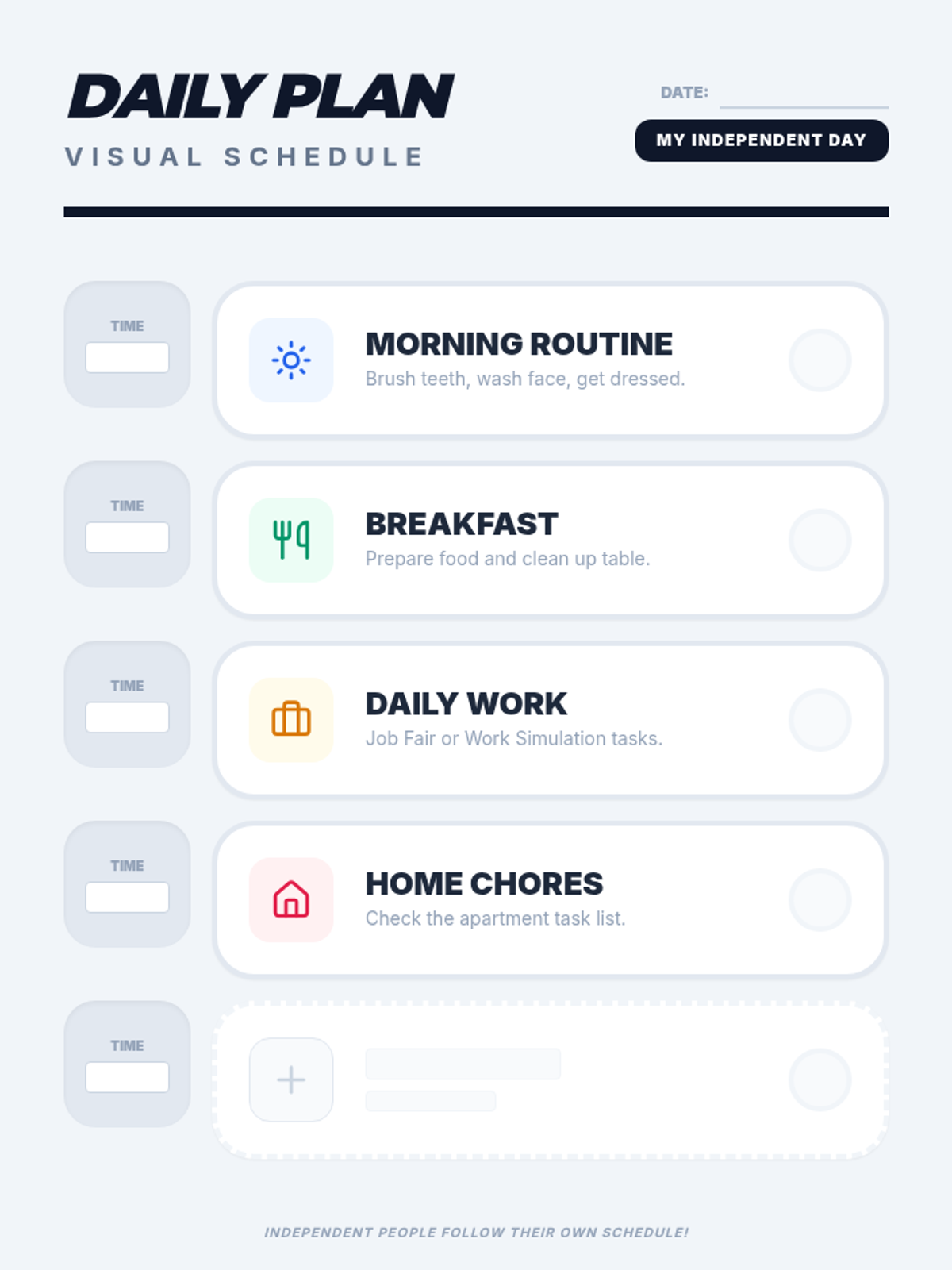
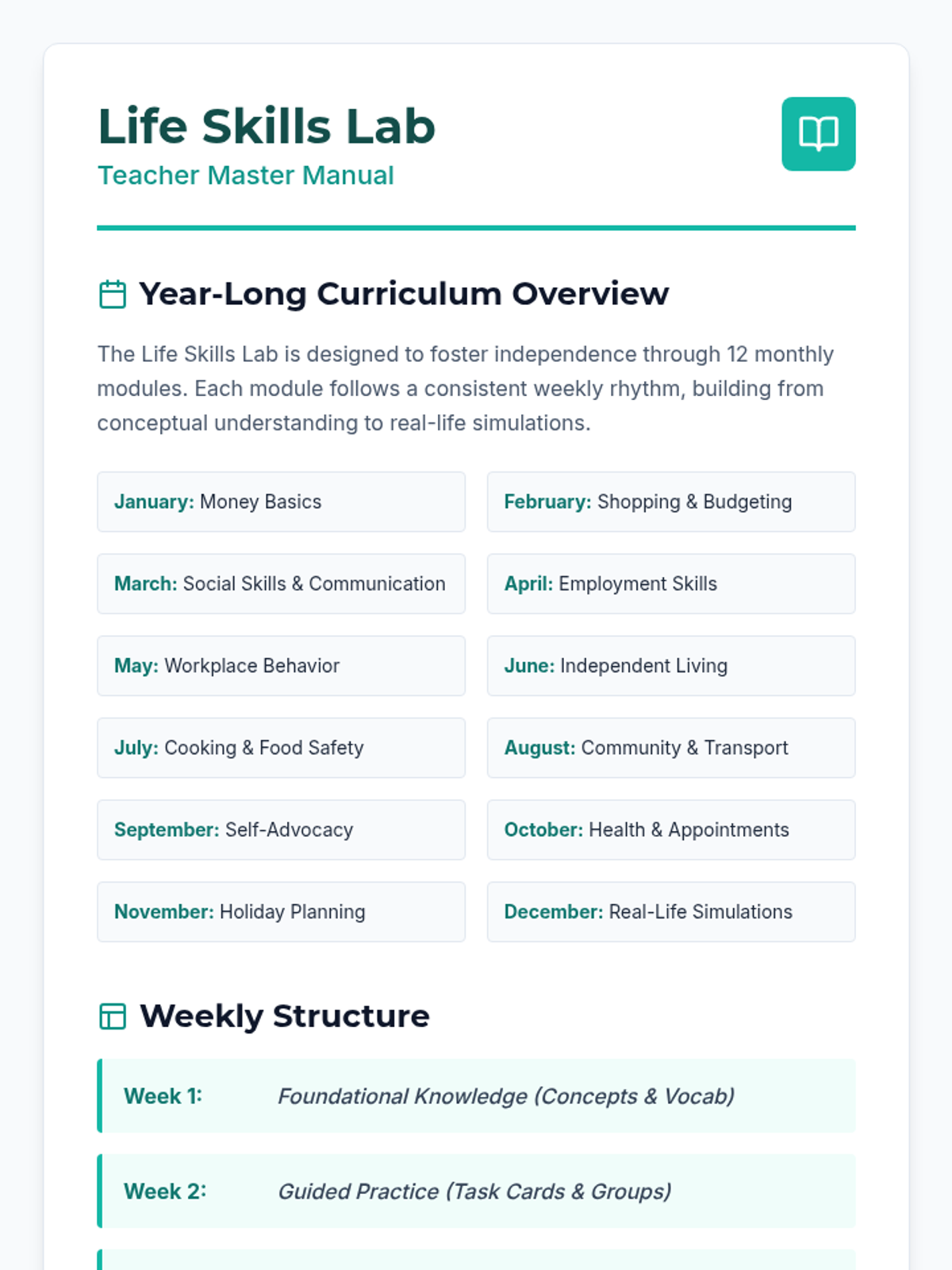
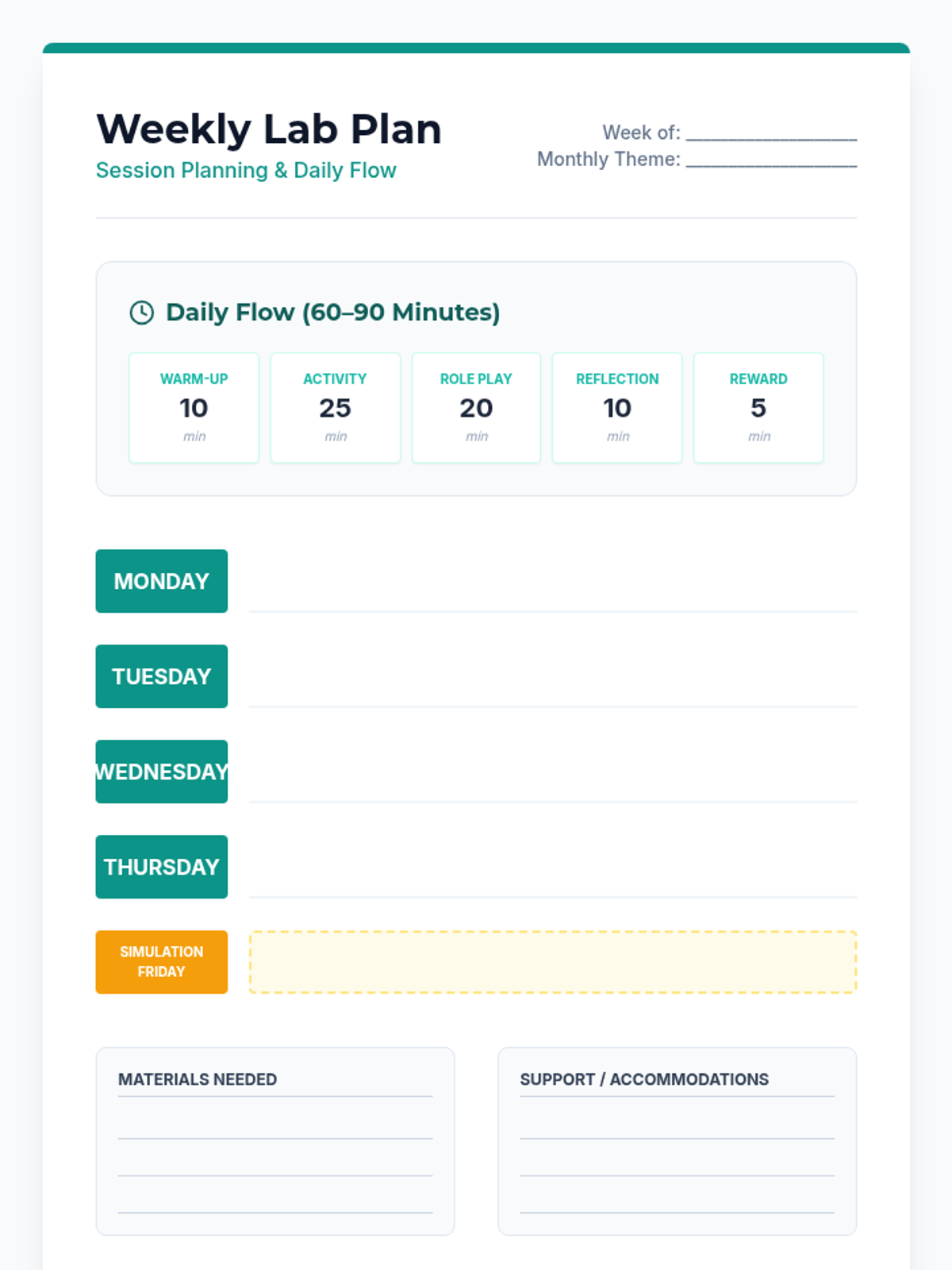
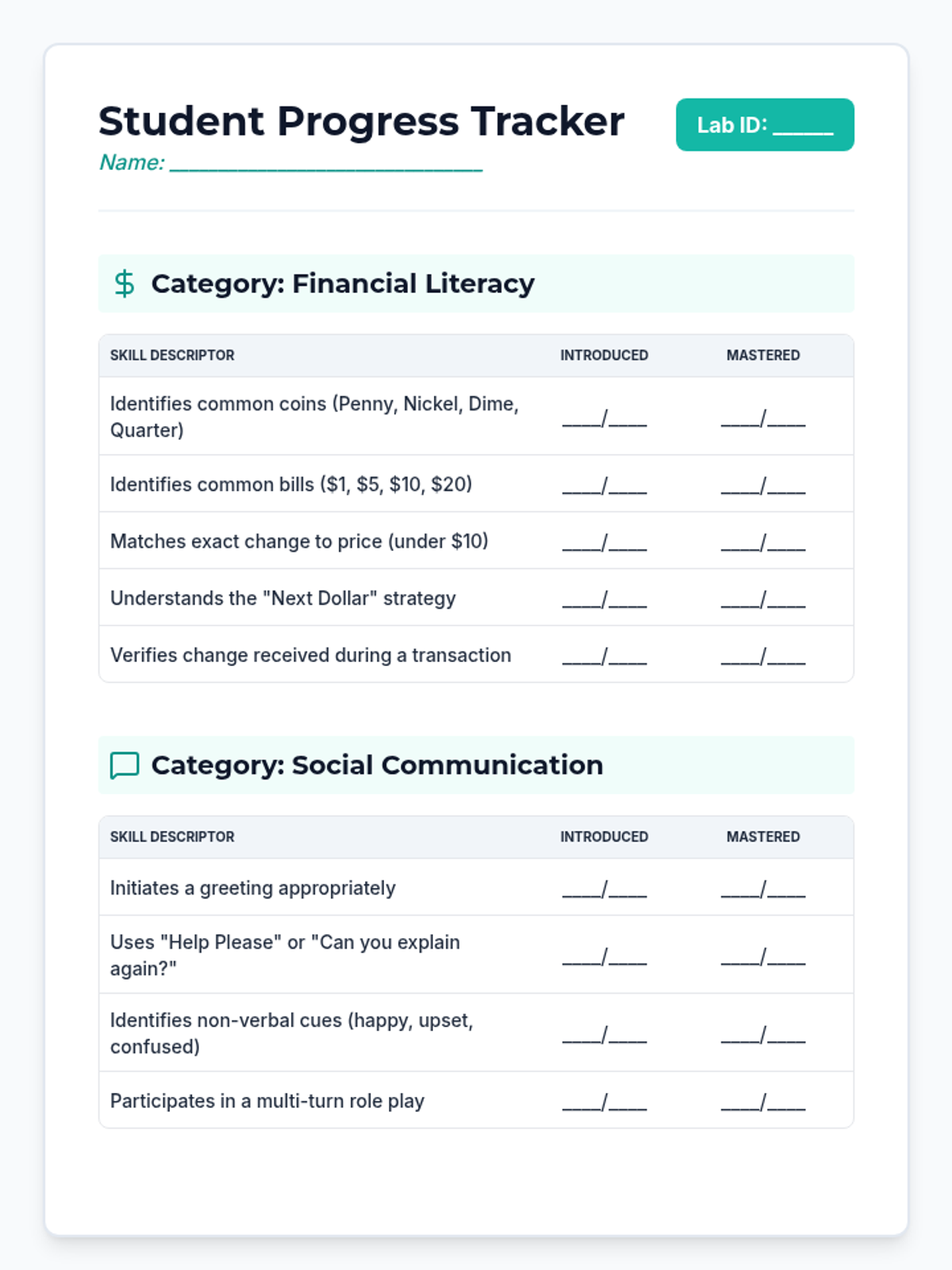
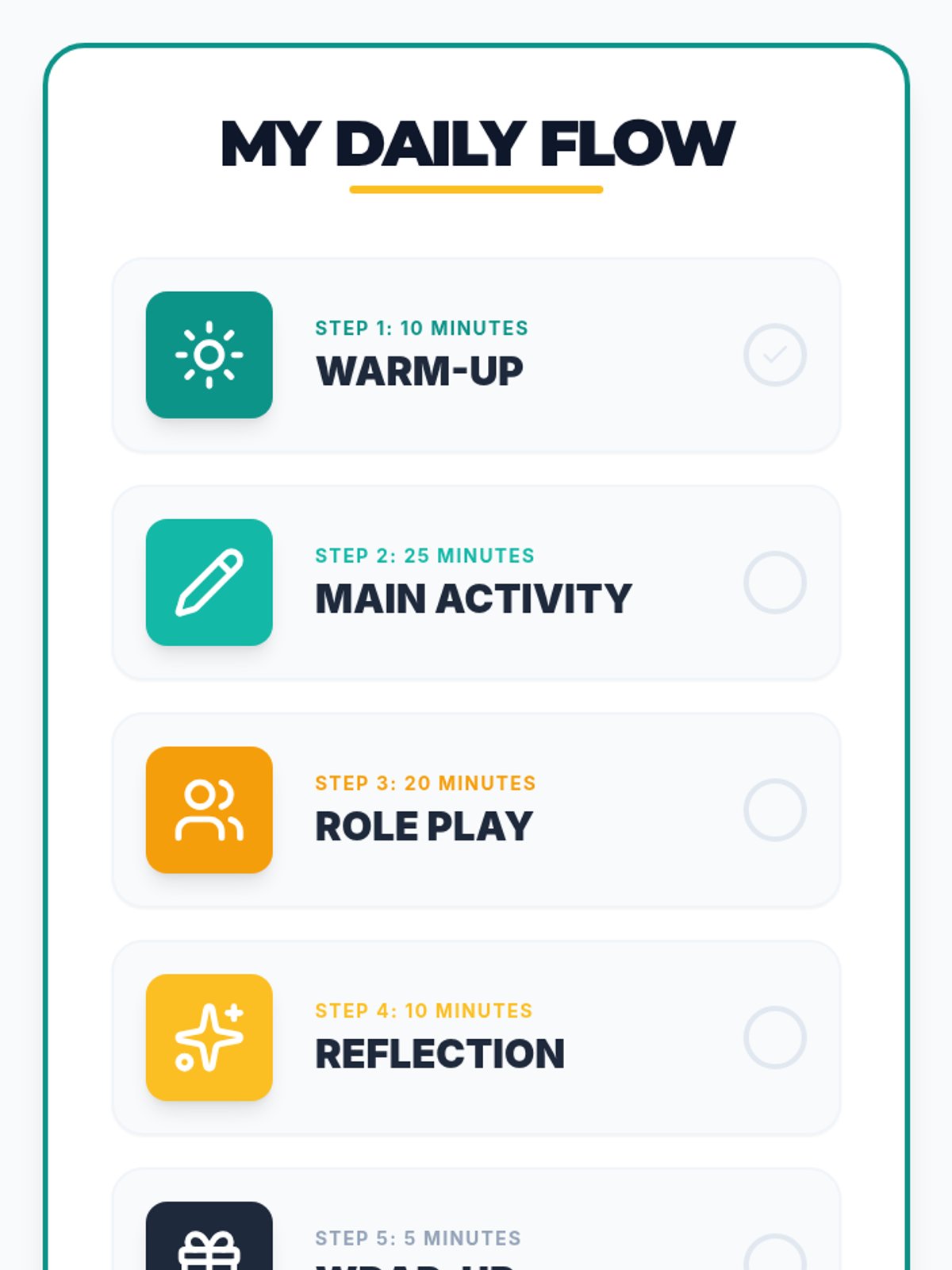
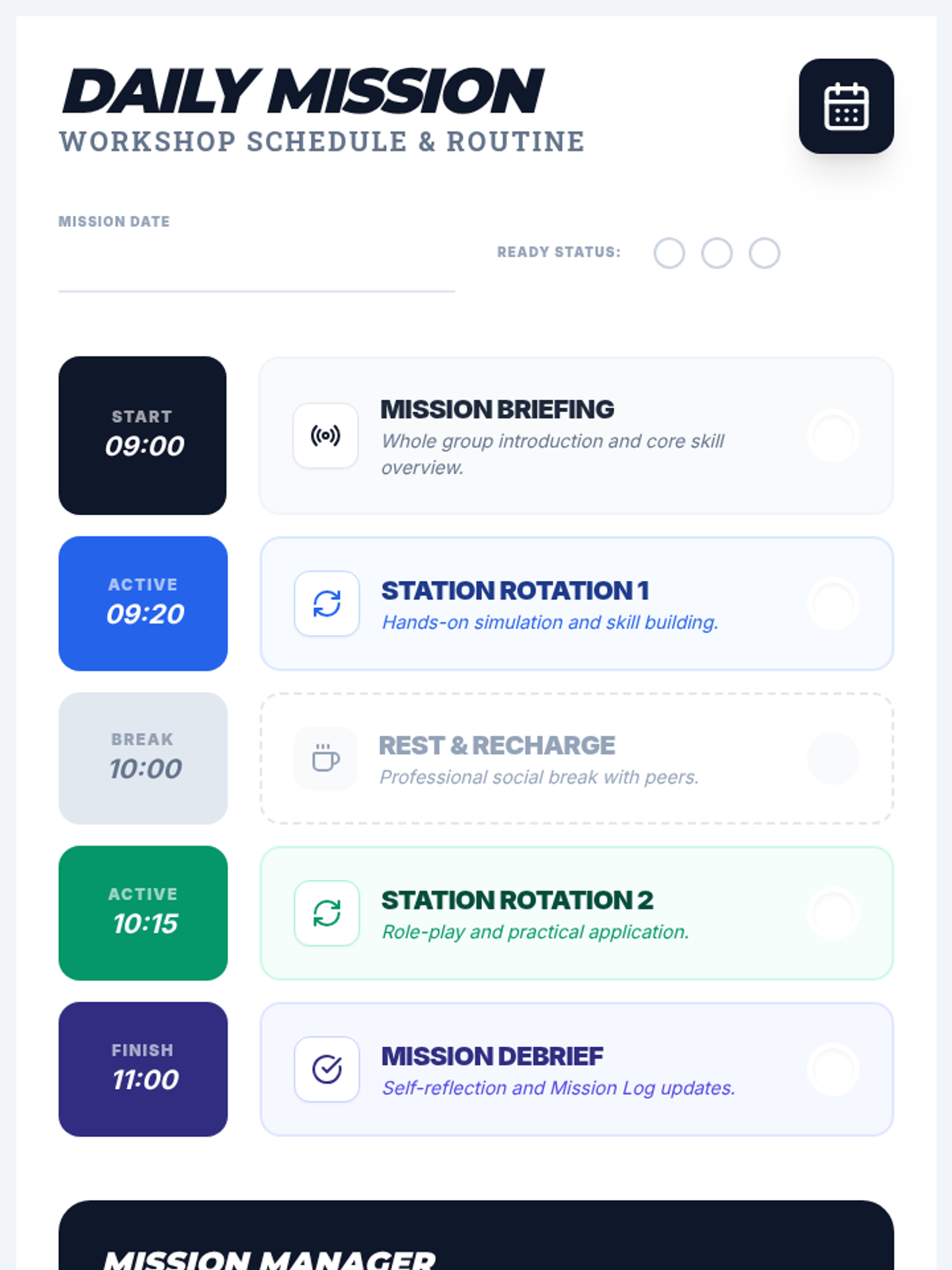
Essential templates, tracking sheets, and the overall framework for the Life Skills program to ensure consistent daily structure and progress monitoring.
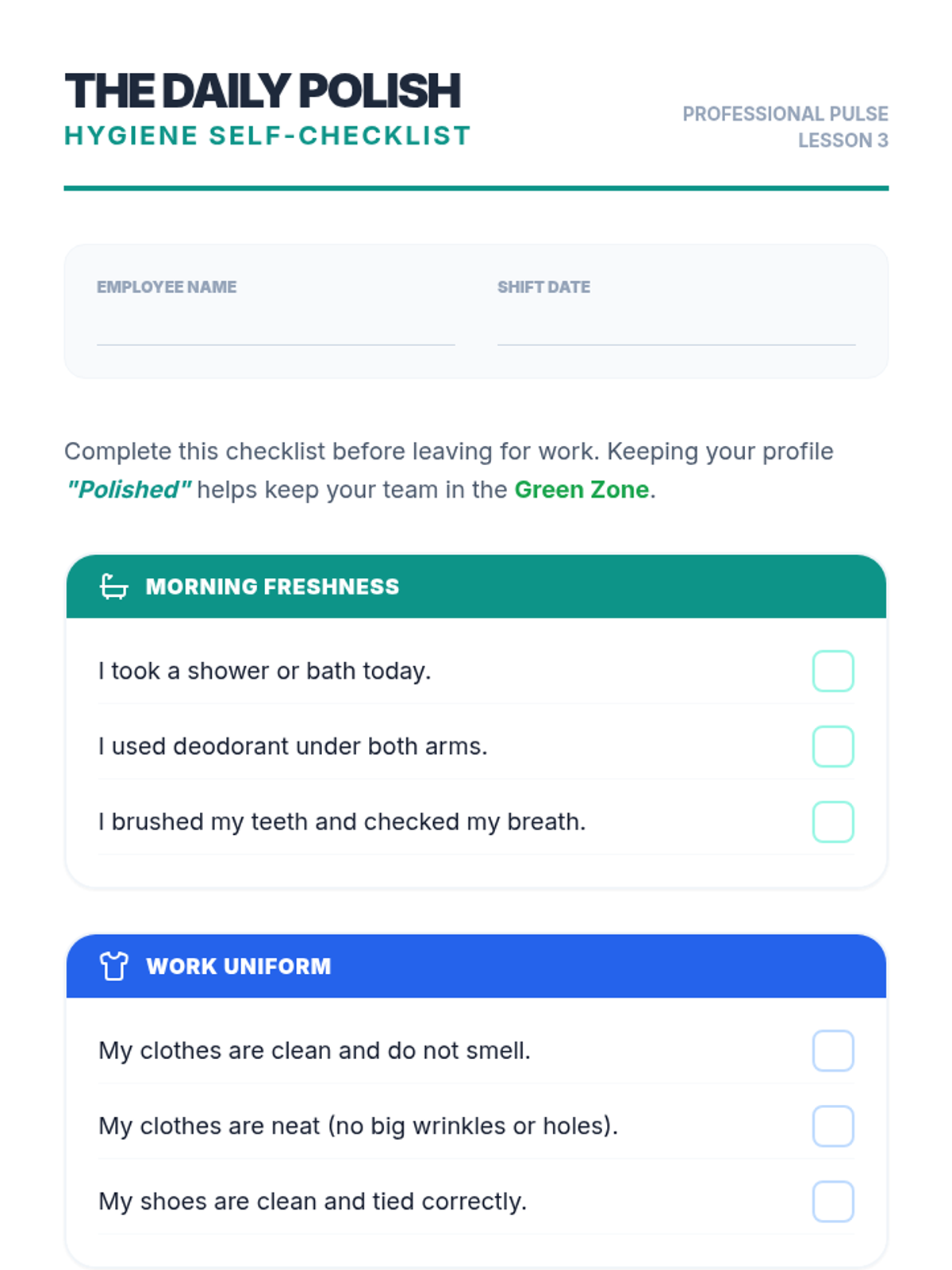
Students explore how personal hygiene and grooming habits impact the 'Zones' of their coworkers and supervisors in a professional environment.
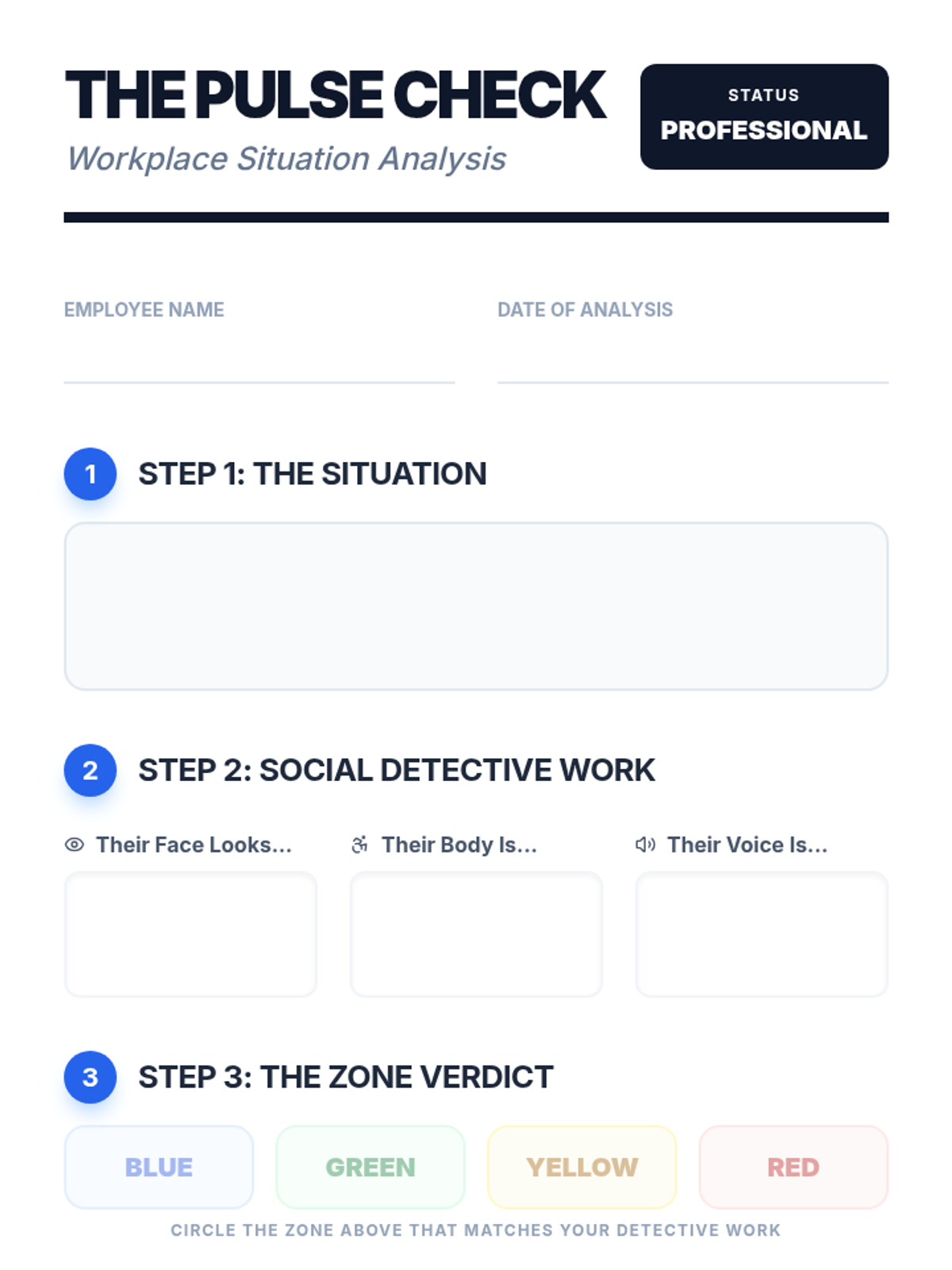
A focused activity using a graphic organizer to break down complex social interactions and plan professional reactions.
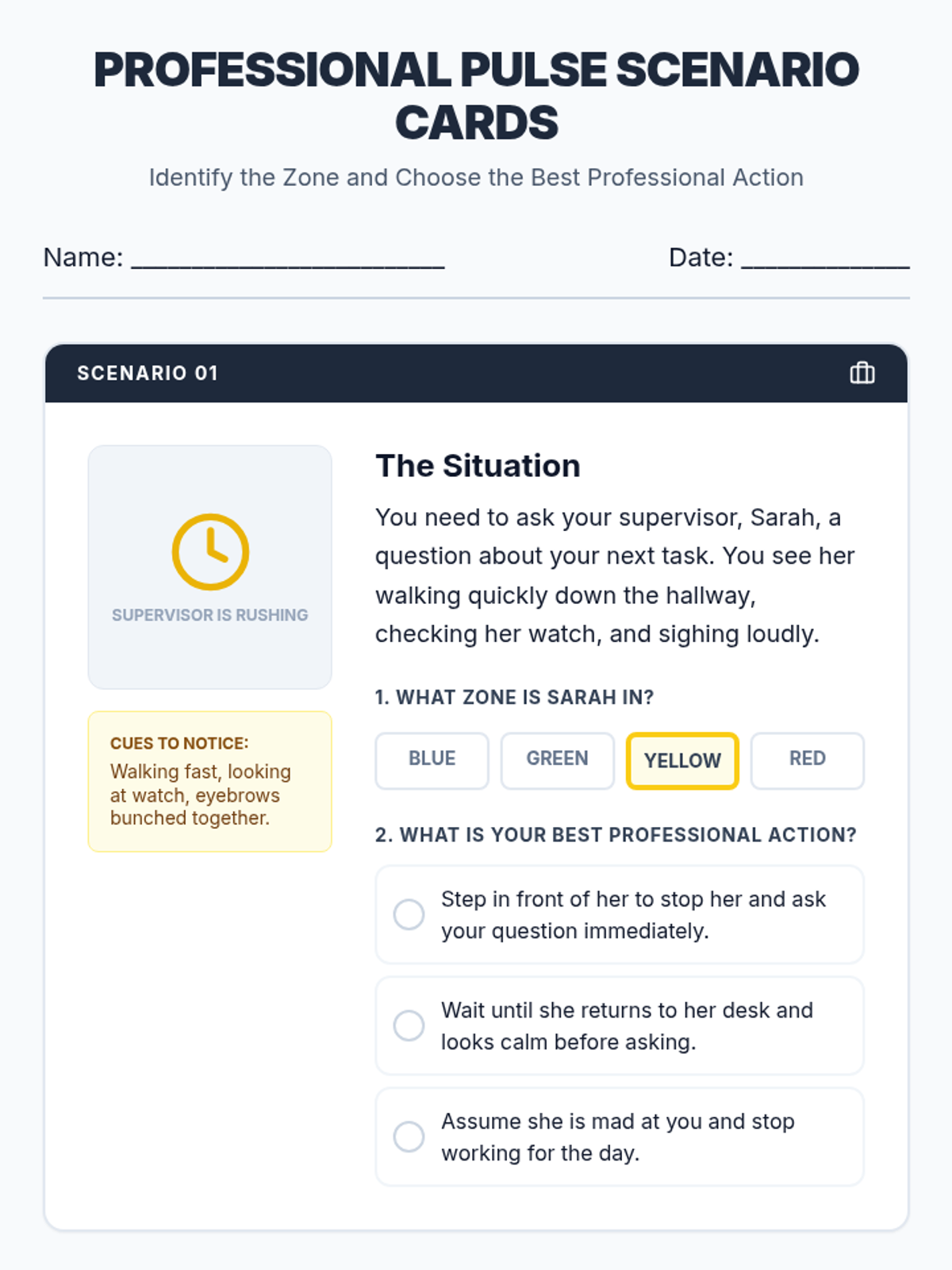
Practical application of identifying emotions and choosing professional responses through illustrated workplace scenarios.
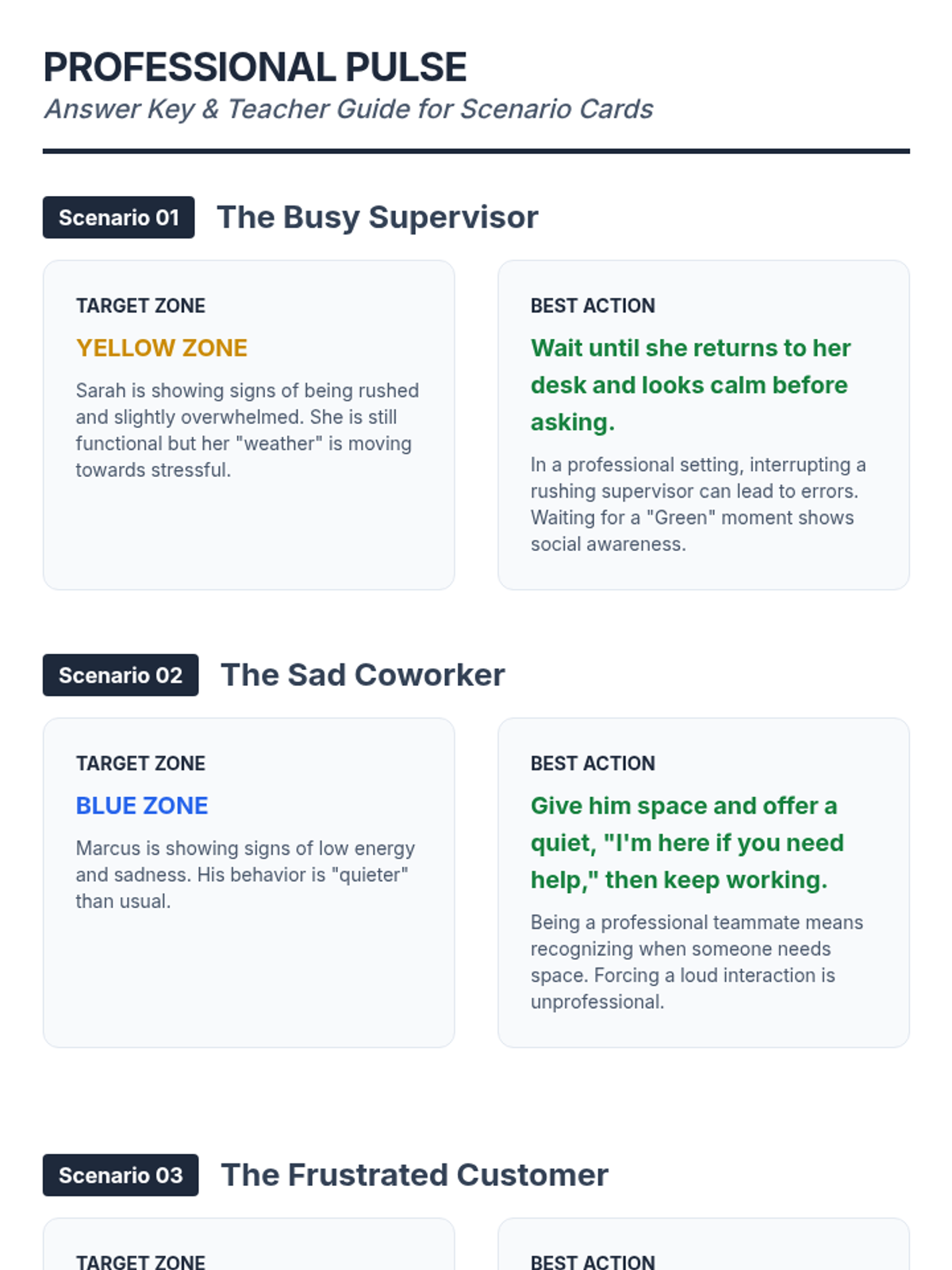
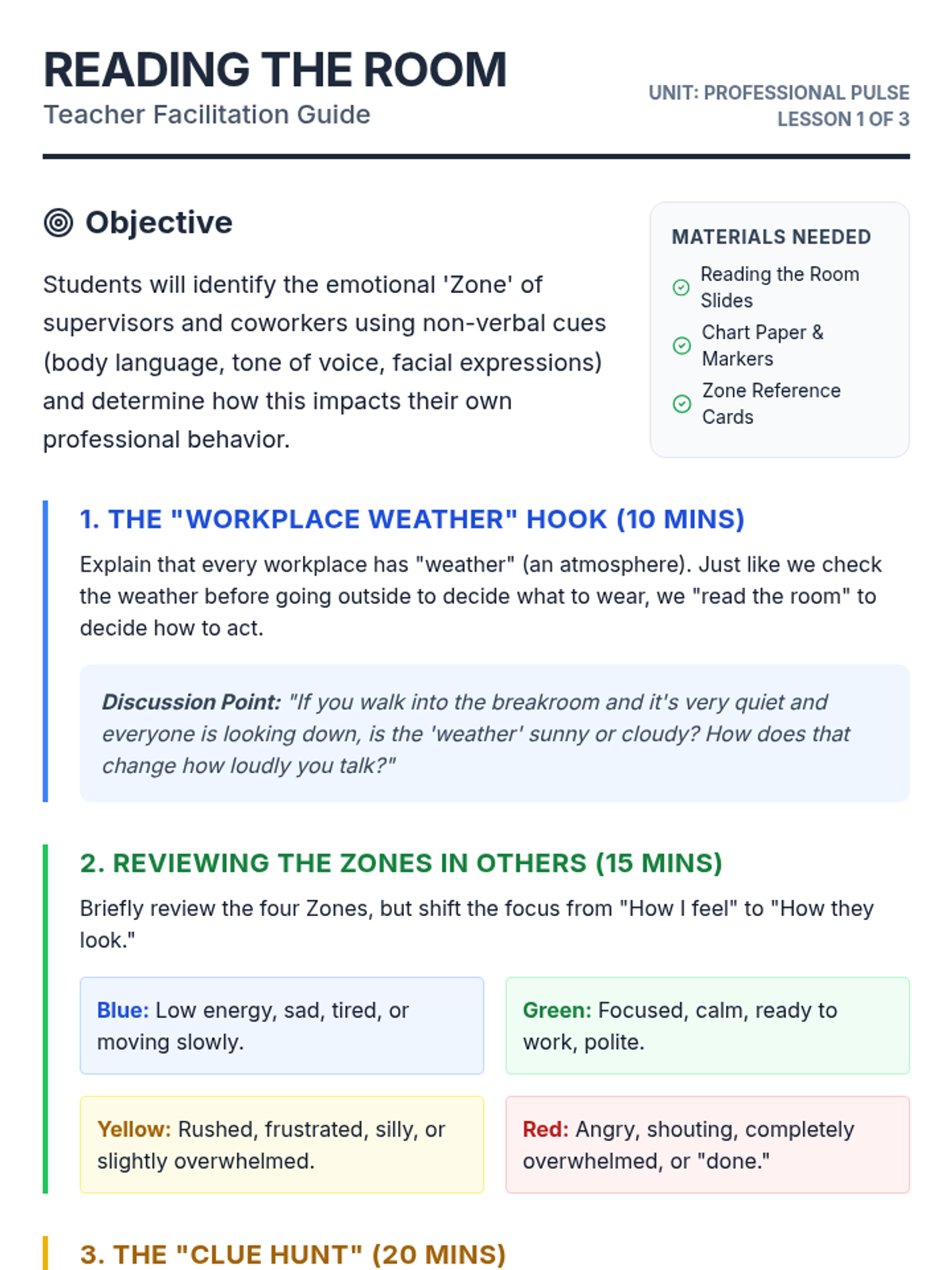
Students learn to observe non-verbal cues and environmental signals to identify which 'Zone' a supervisor or coworker might be in.
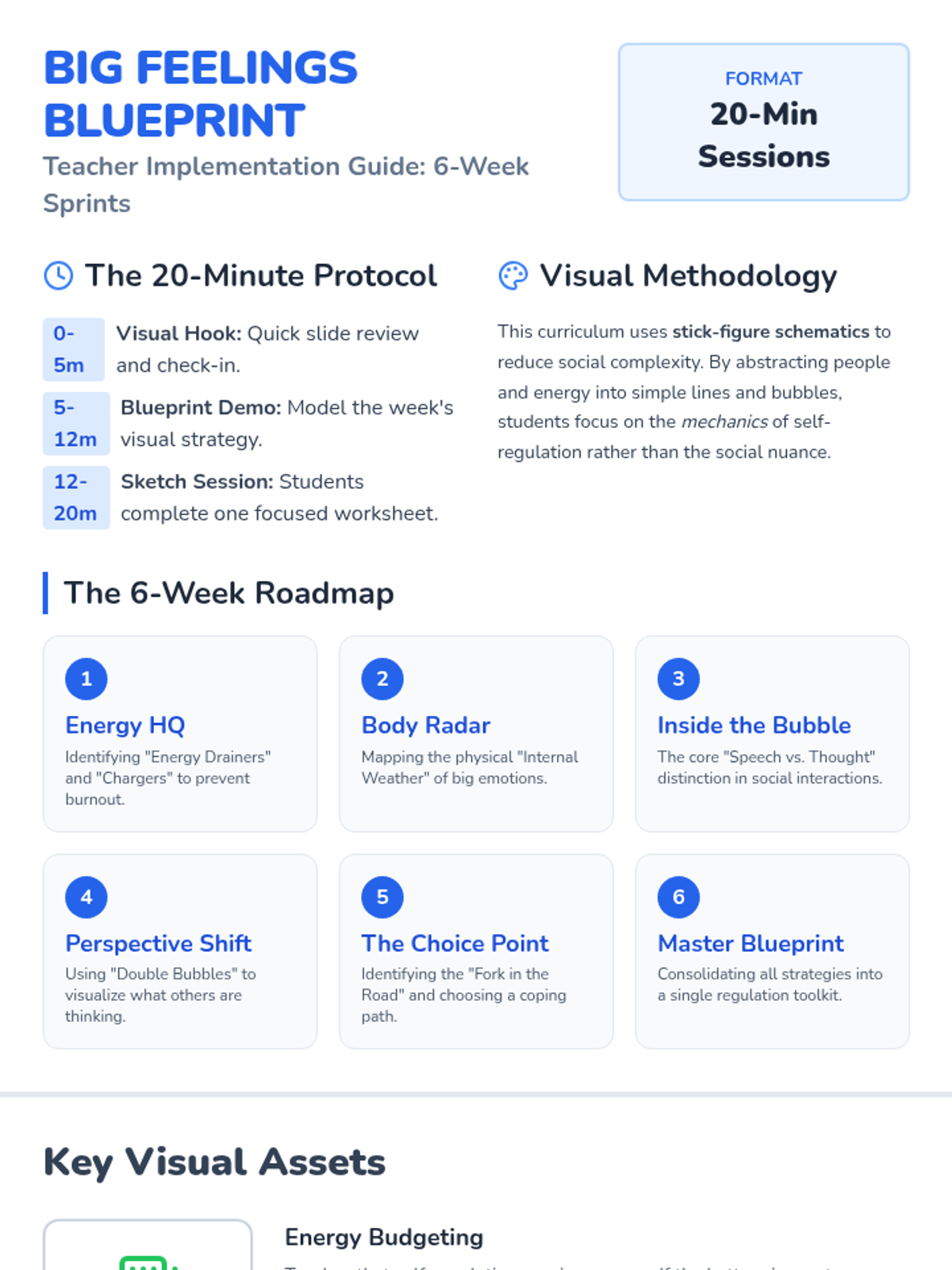
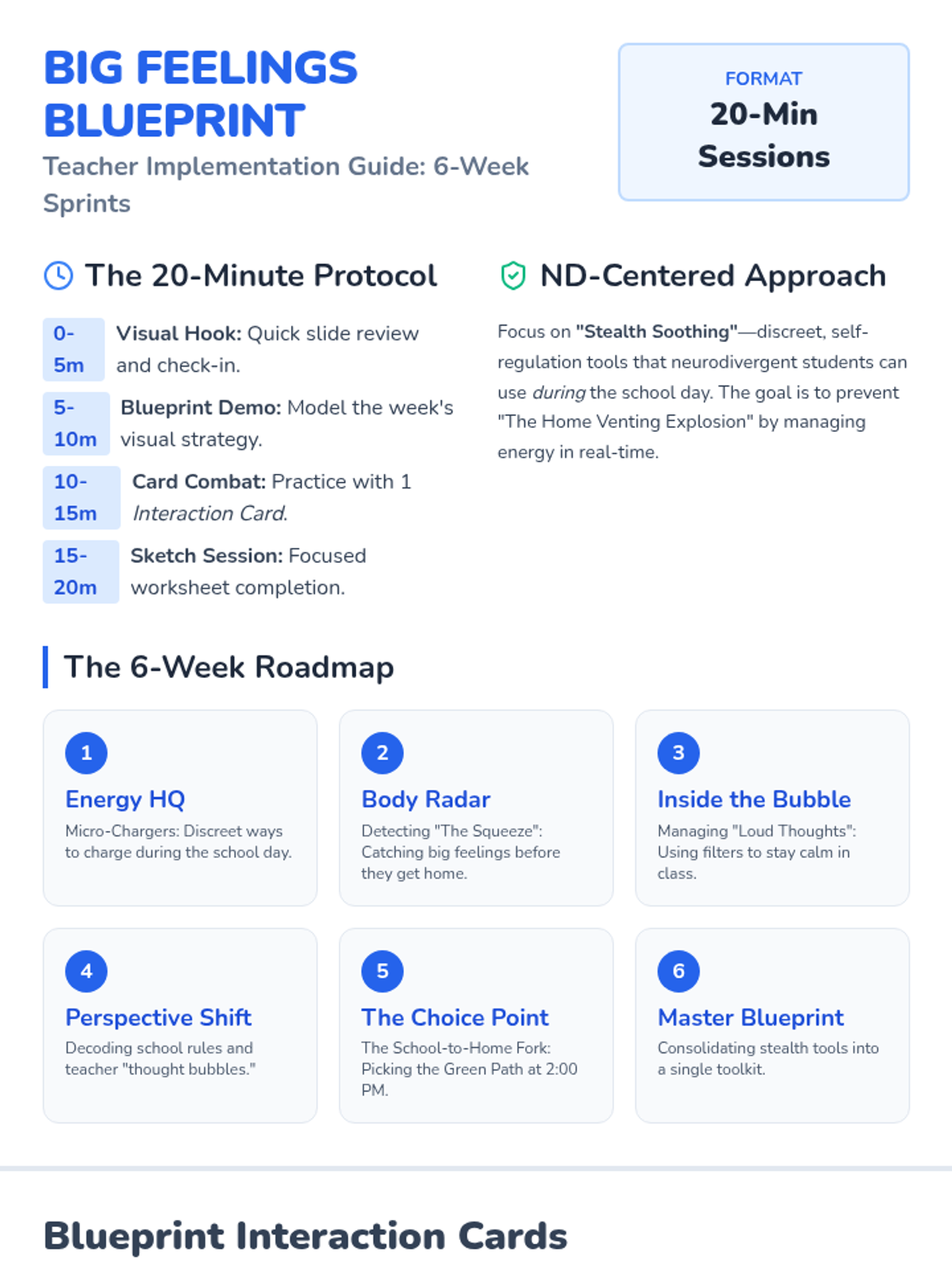
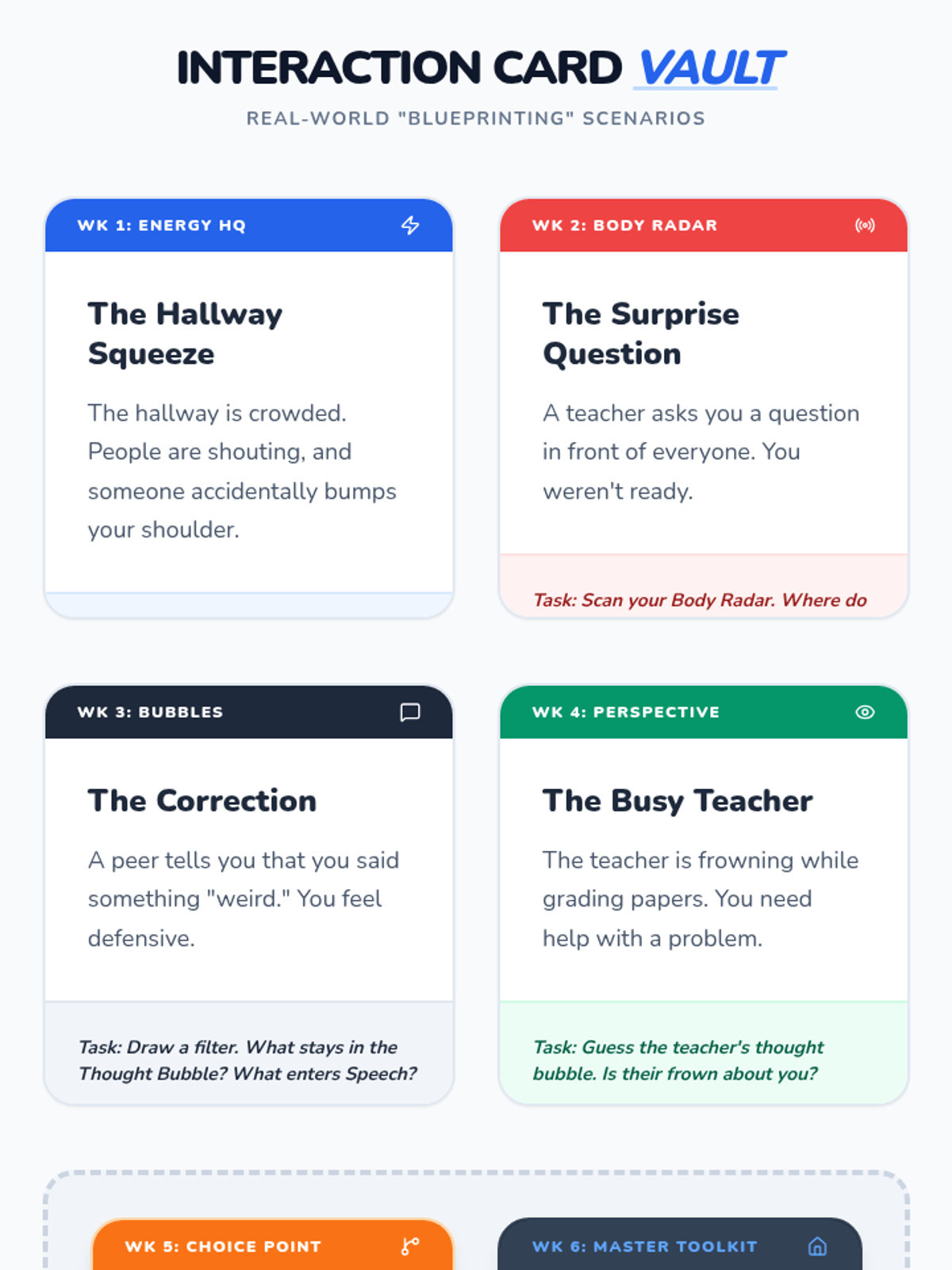
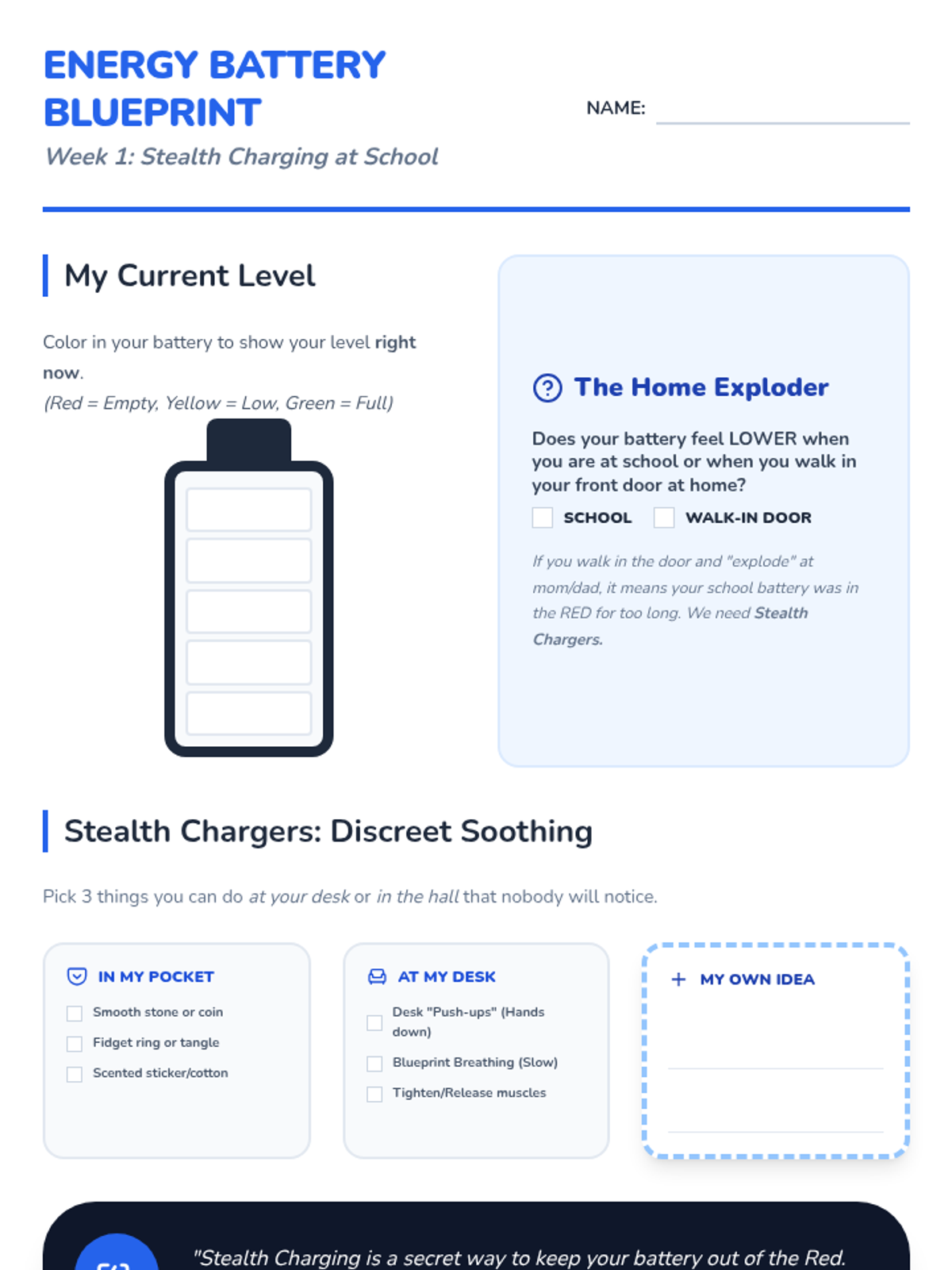
Understanding energy levels, the battery concept, and basic accounting for withdrawals and deposits to prevent burnout.
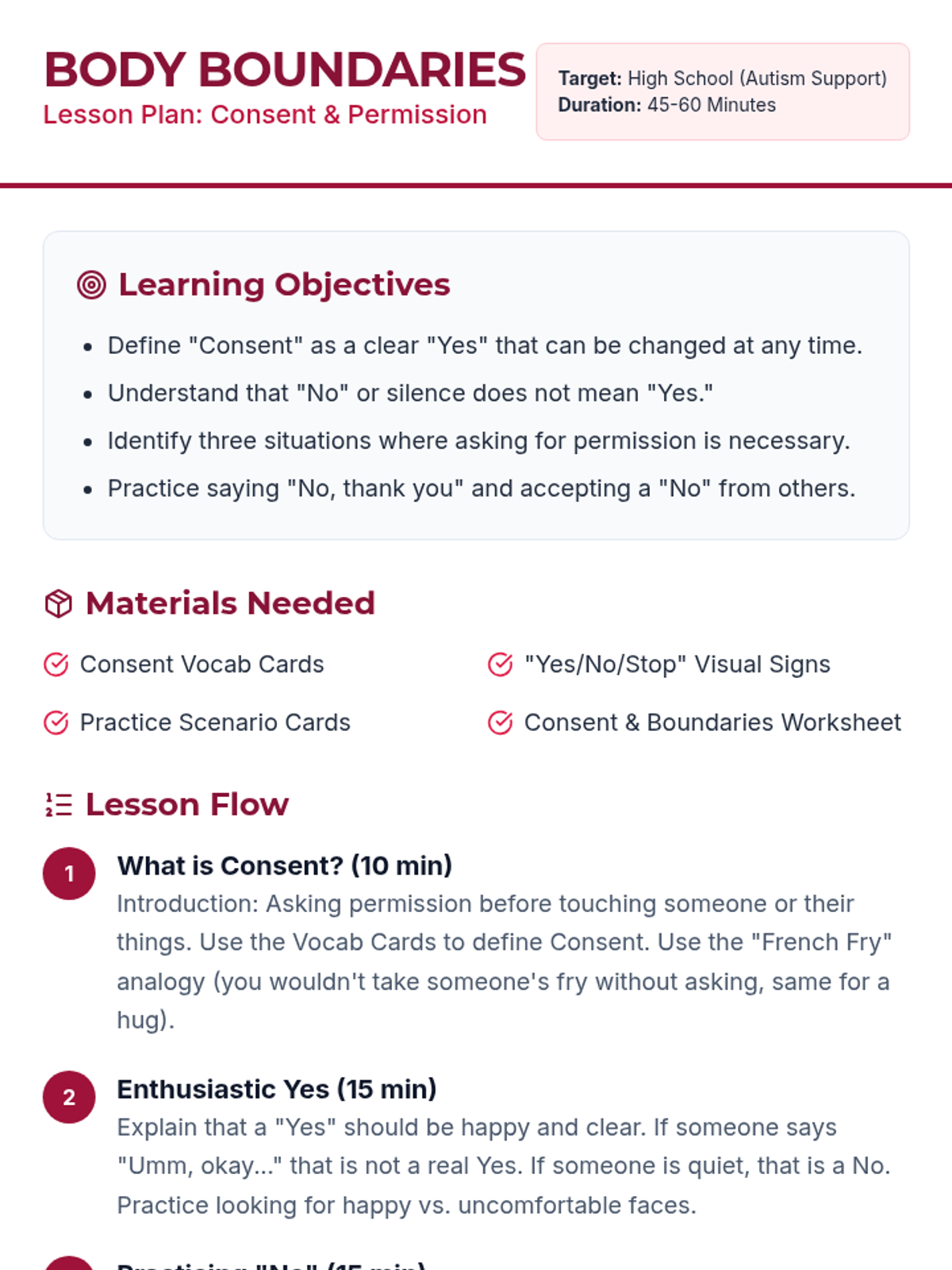
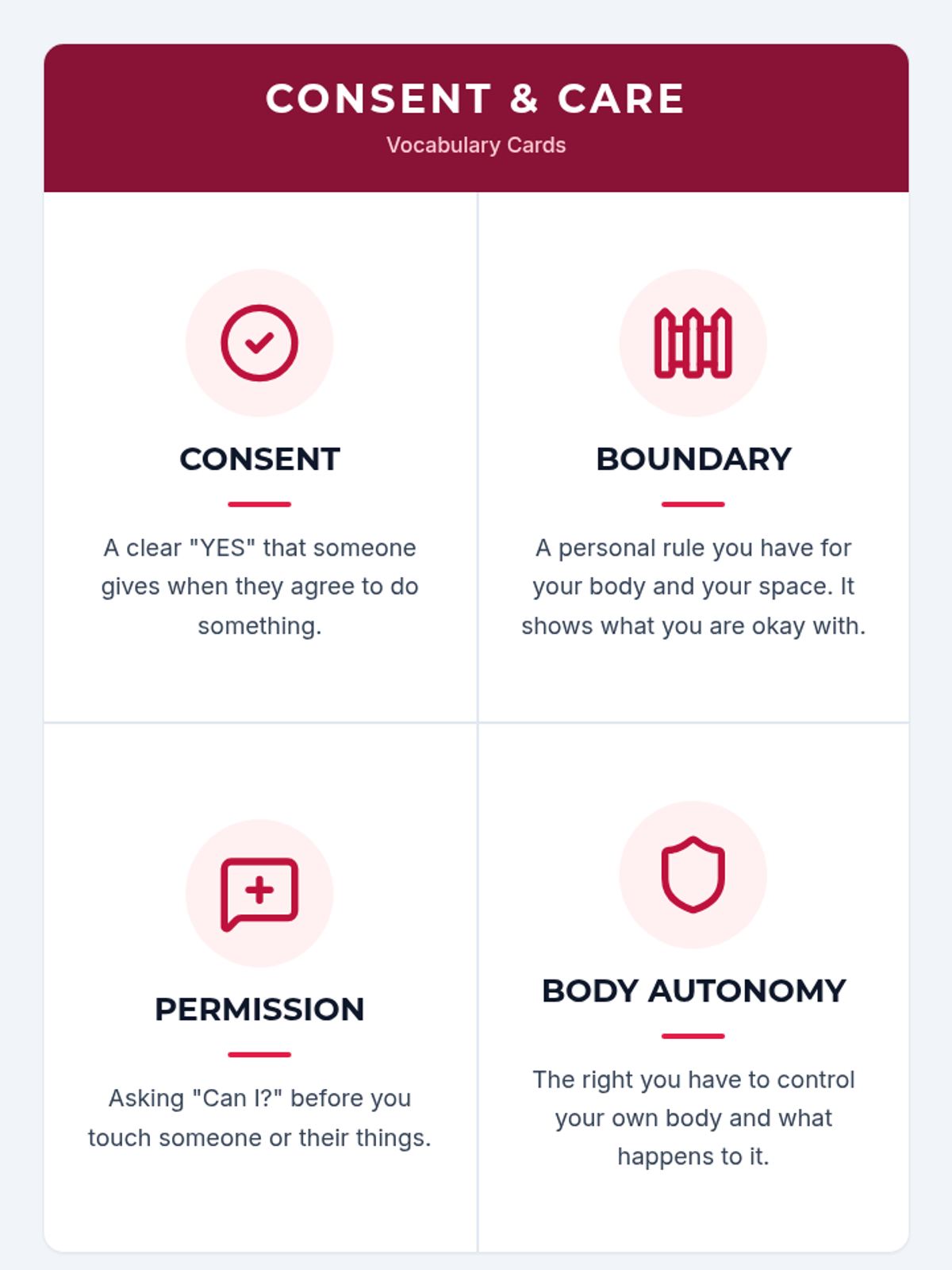
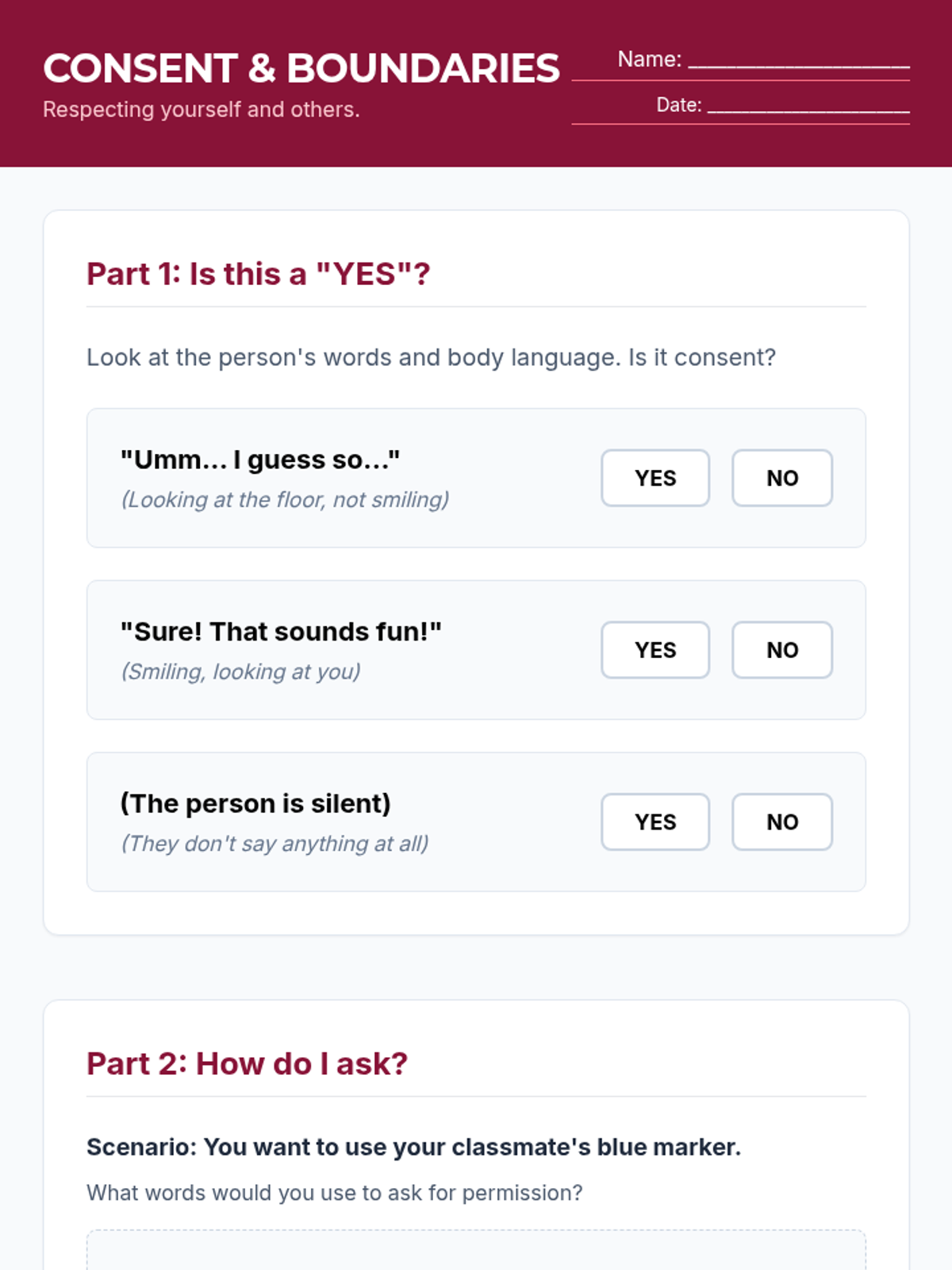
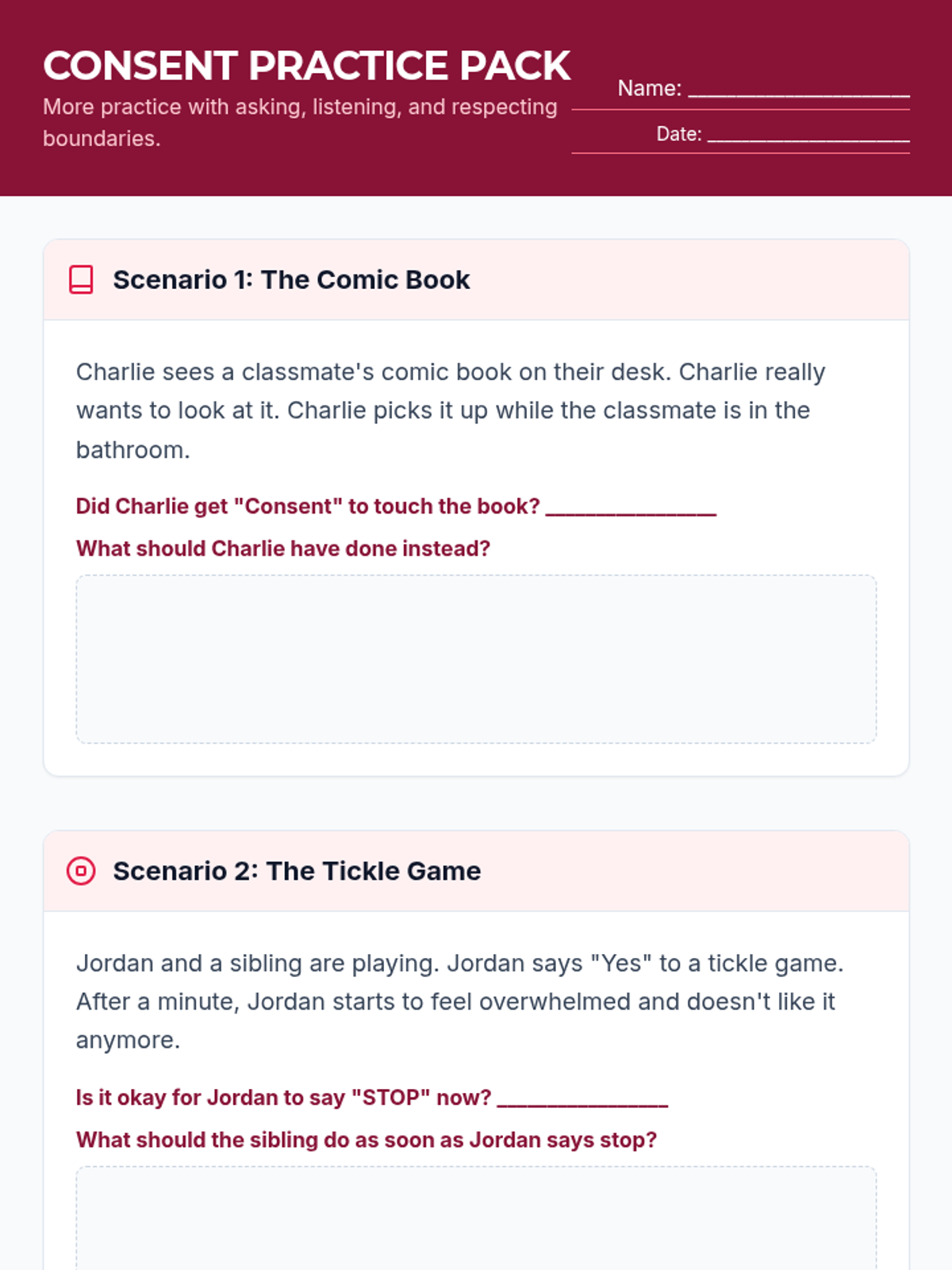
Introduces the concepts of personal boundaries and the importance of clear, enthusiastic consent.
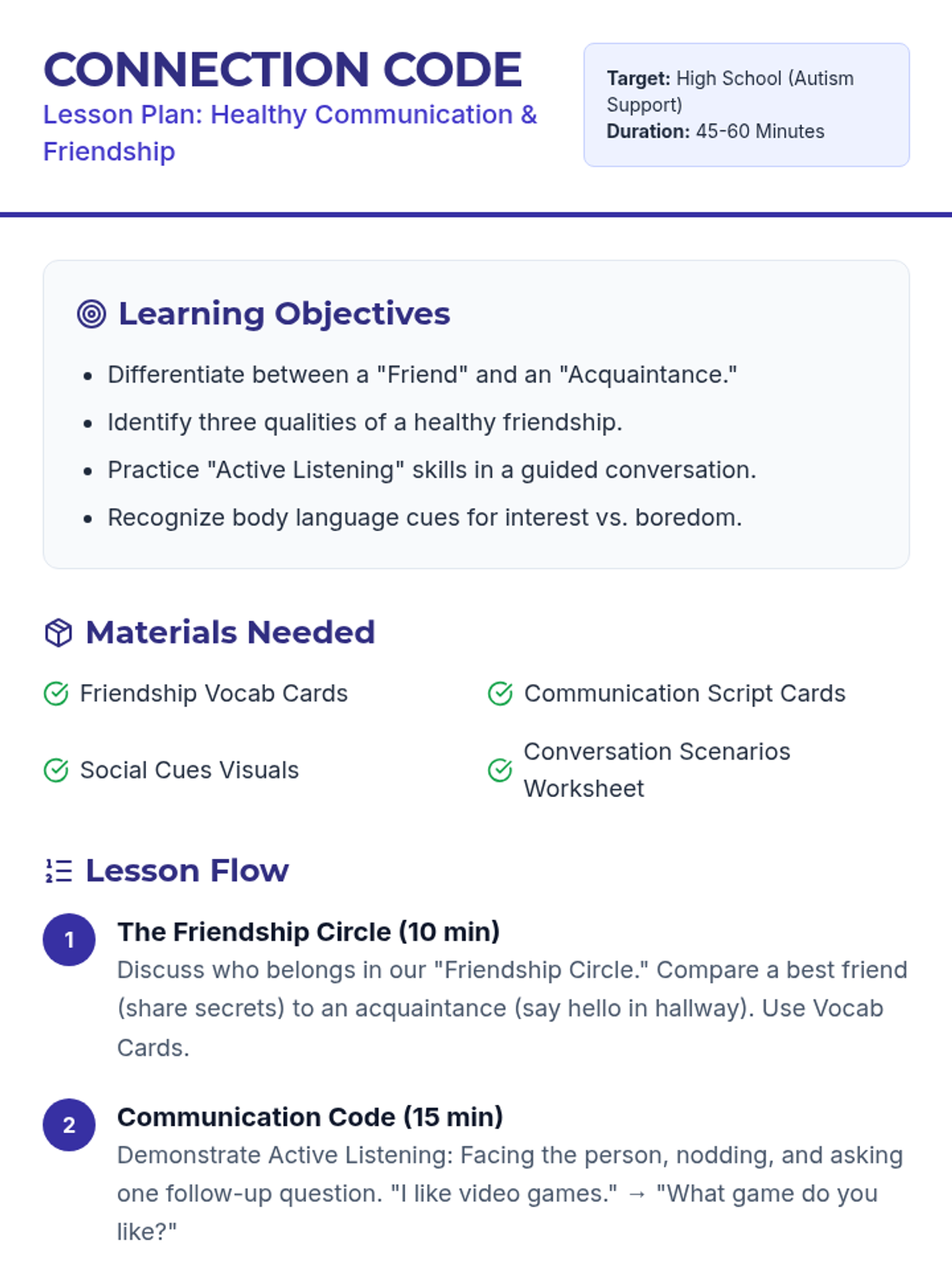
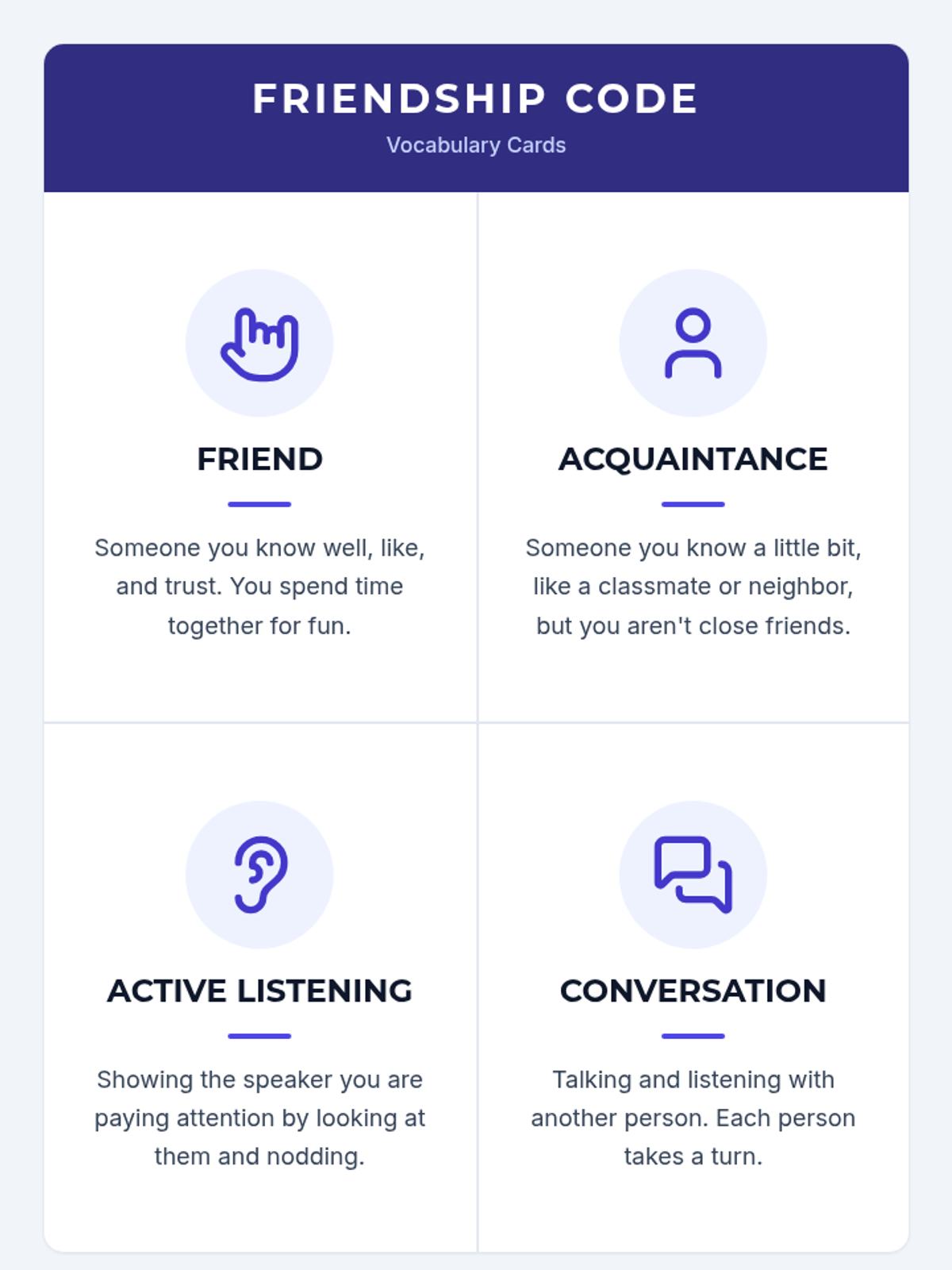
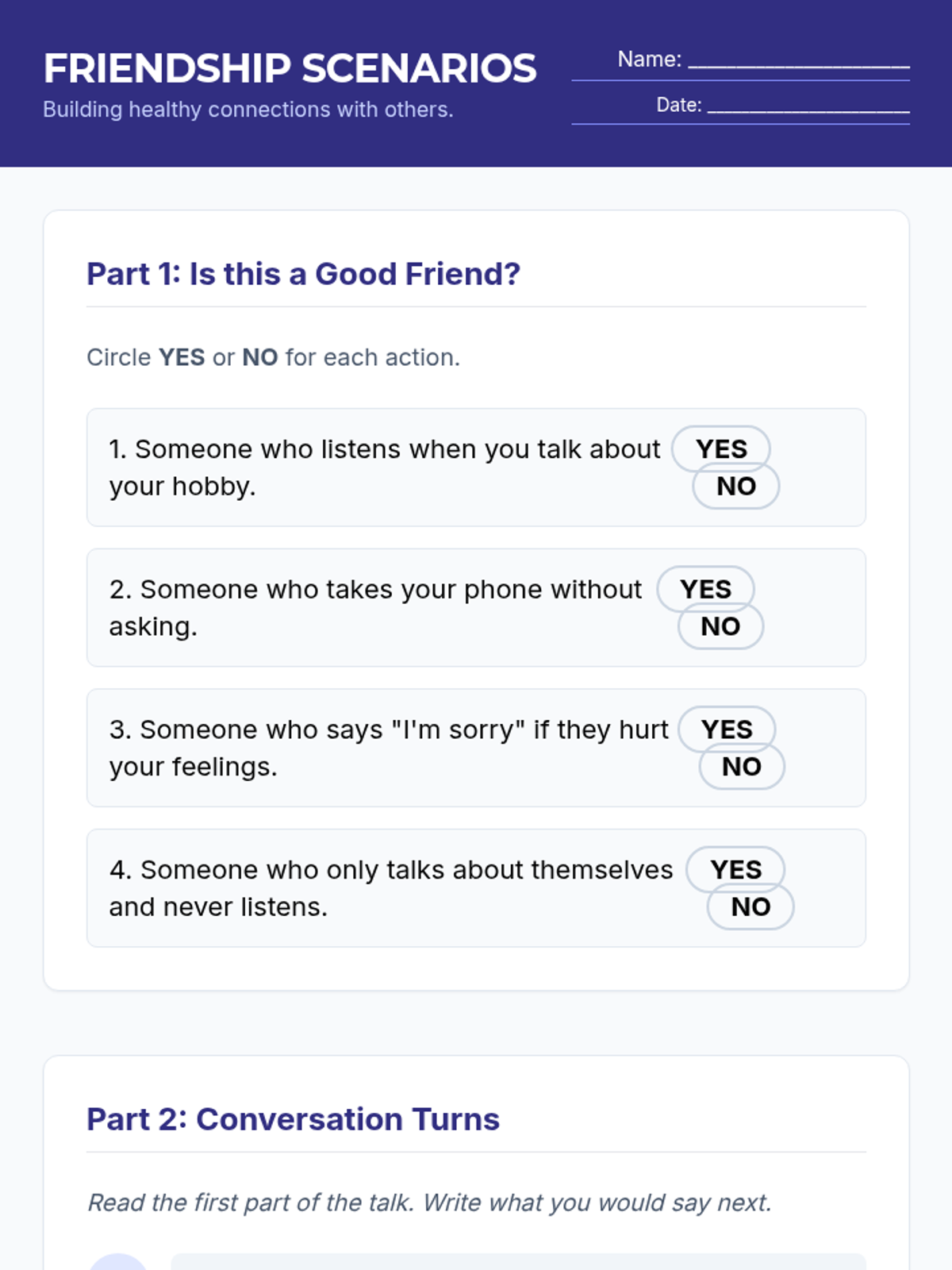
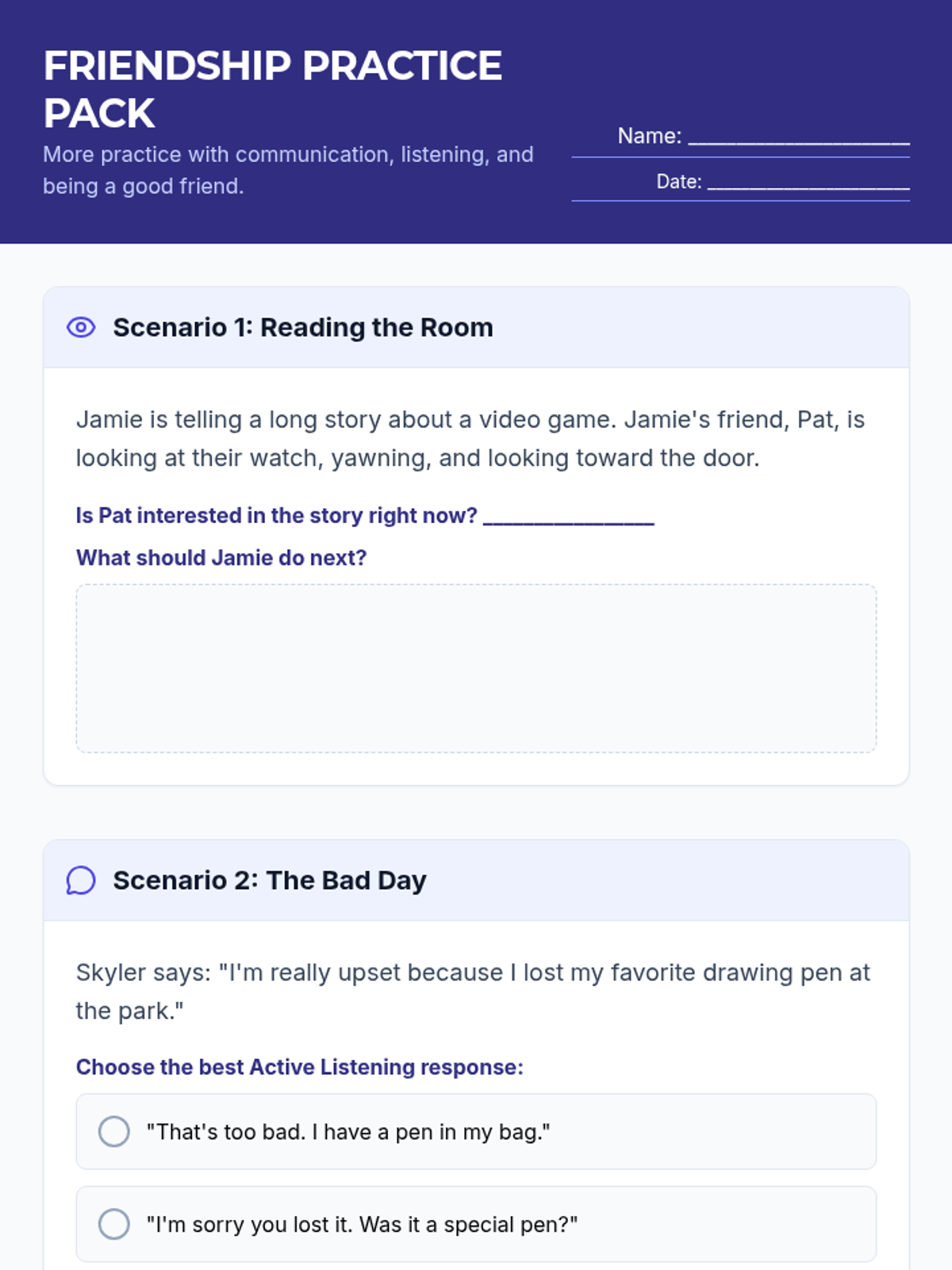
Teaches the components of healthy friendships and effective communication strategies.
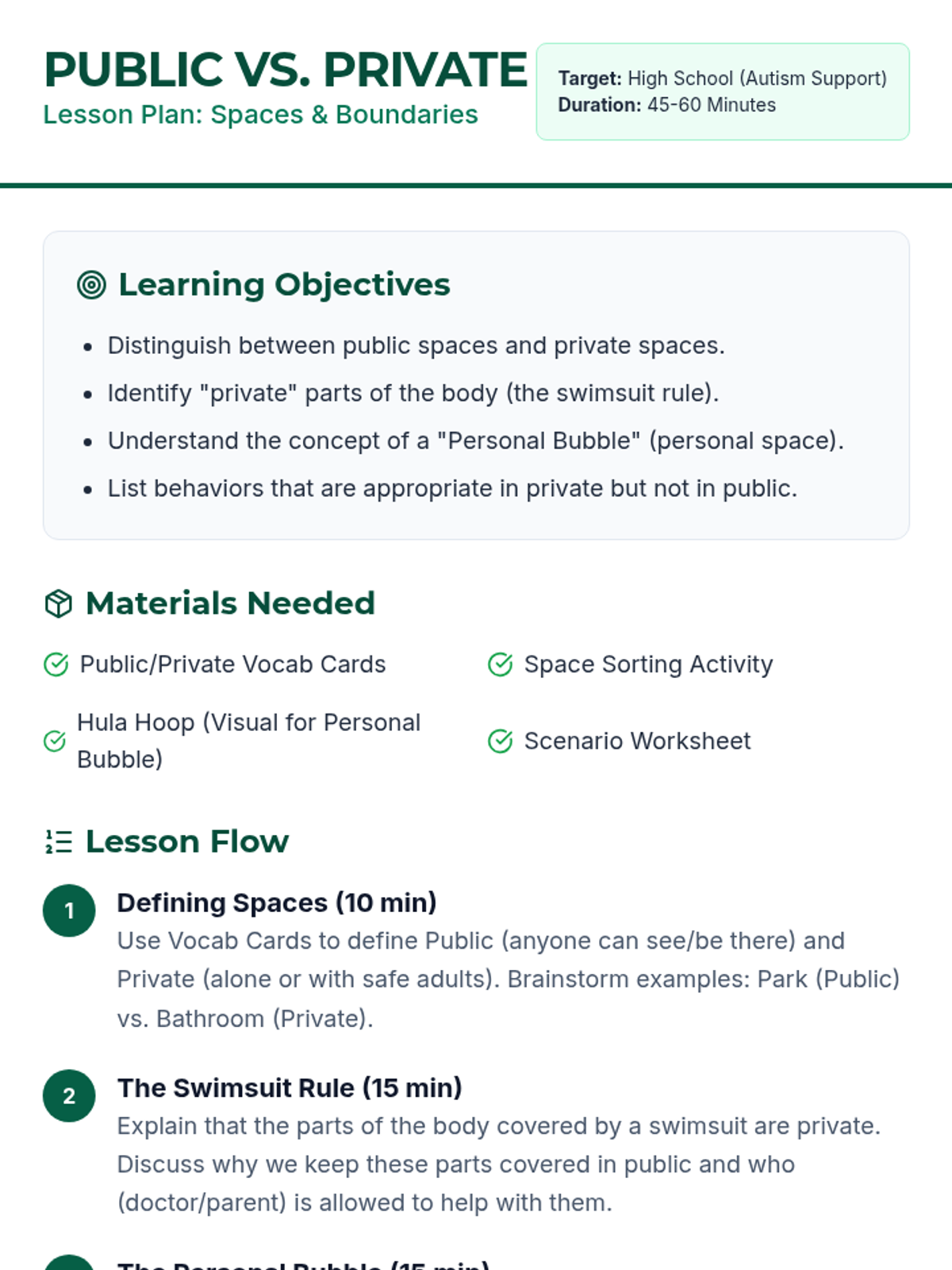
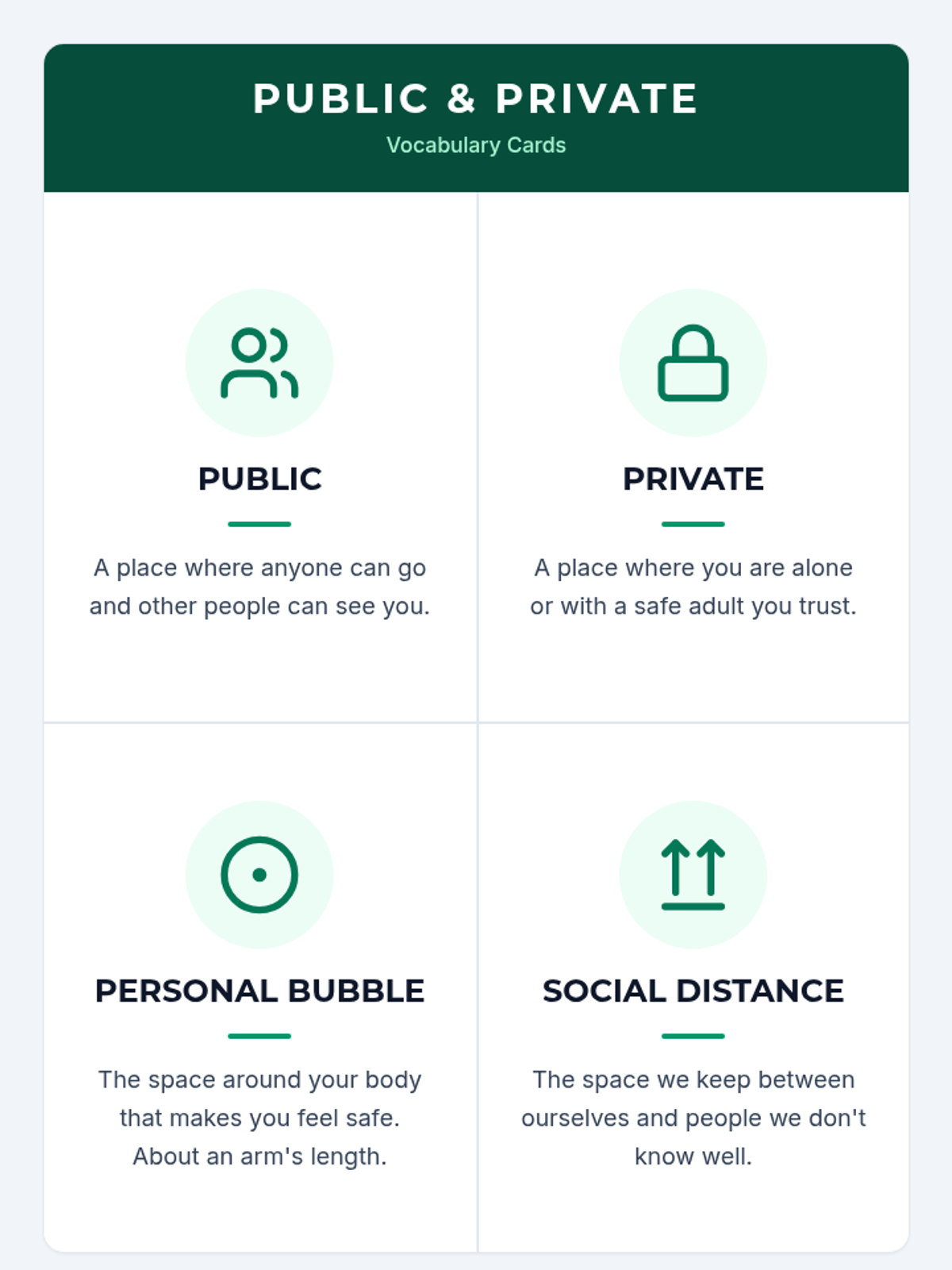
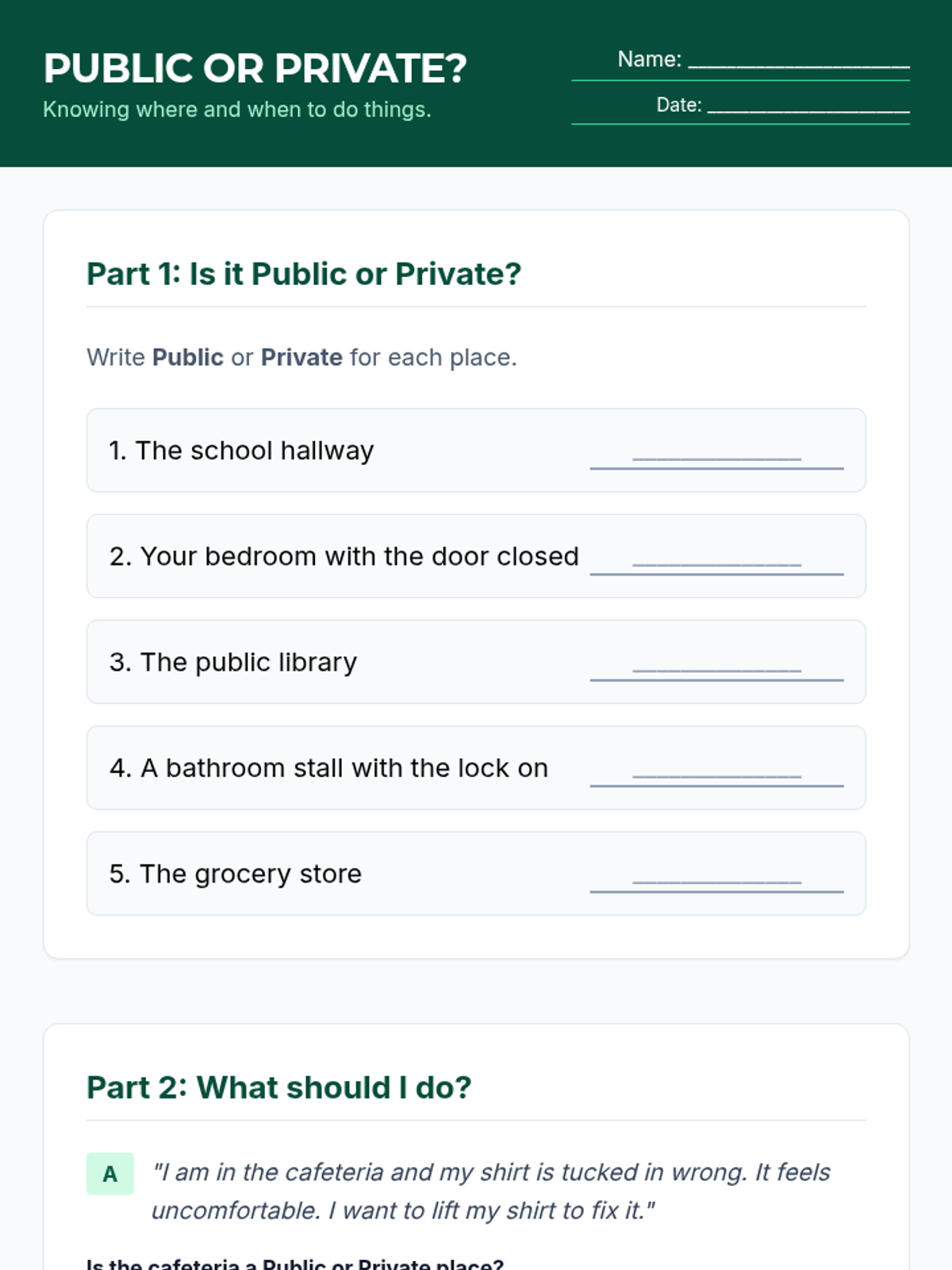
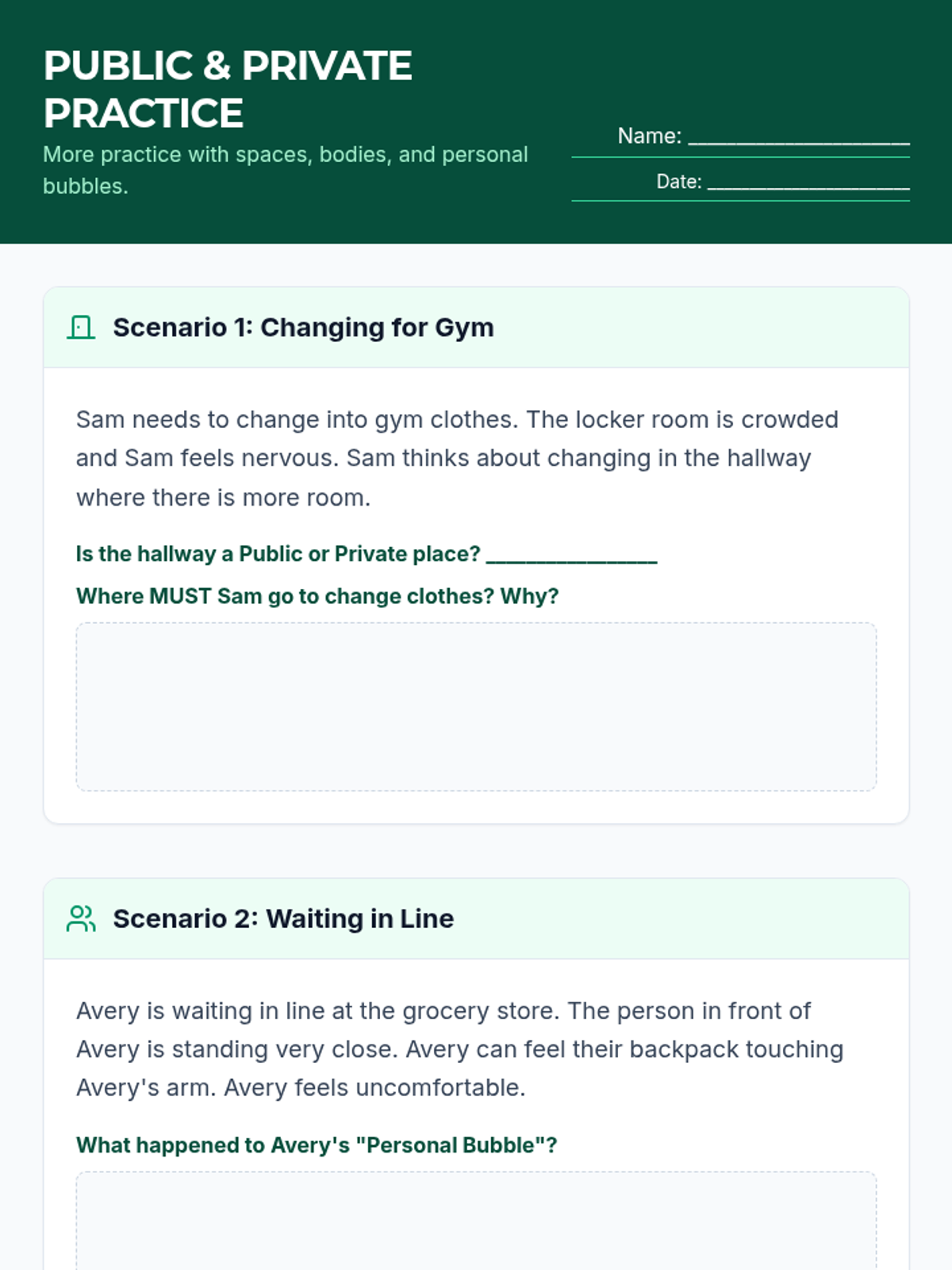
Explores the distinction between public and private spaces and behaviors, emphasizing personal space (the 'bubble').
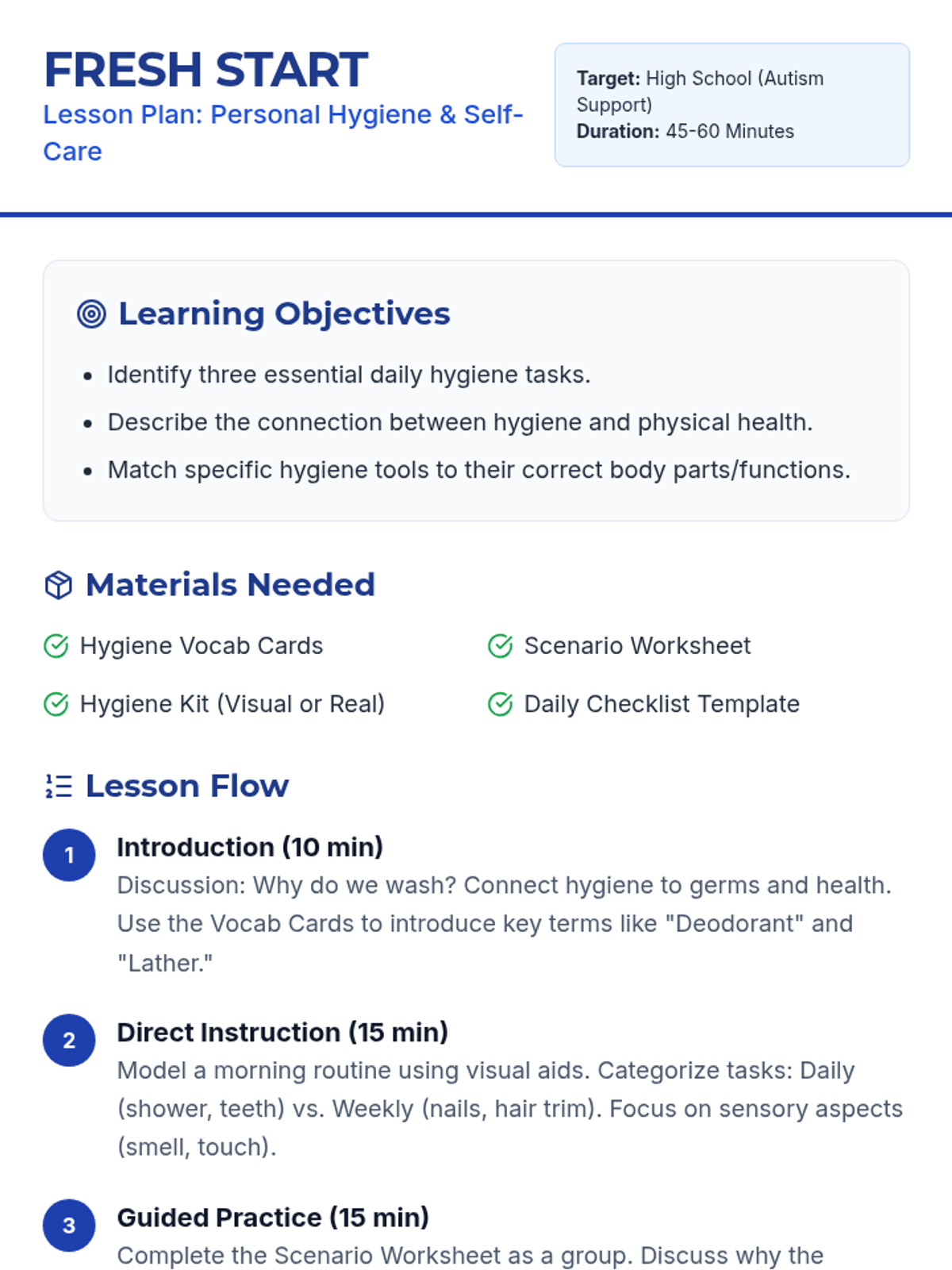
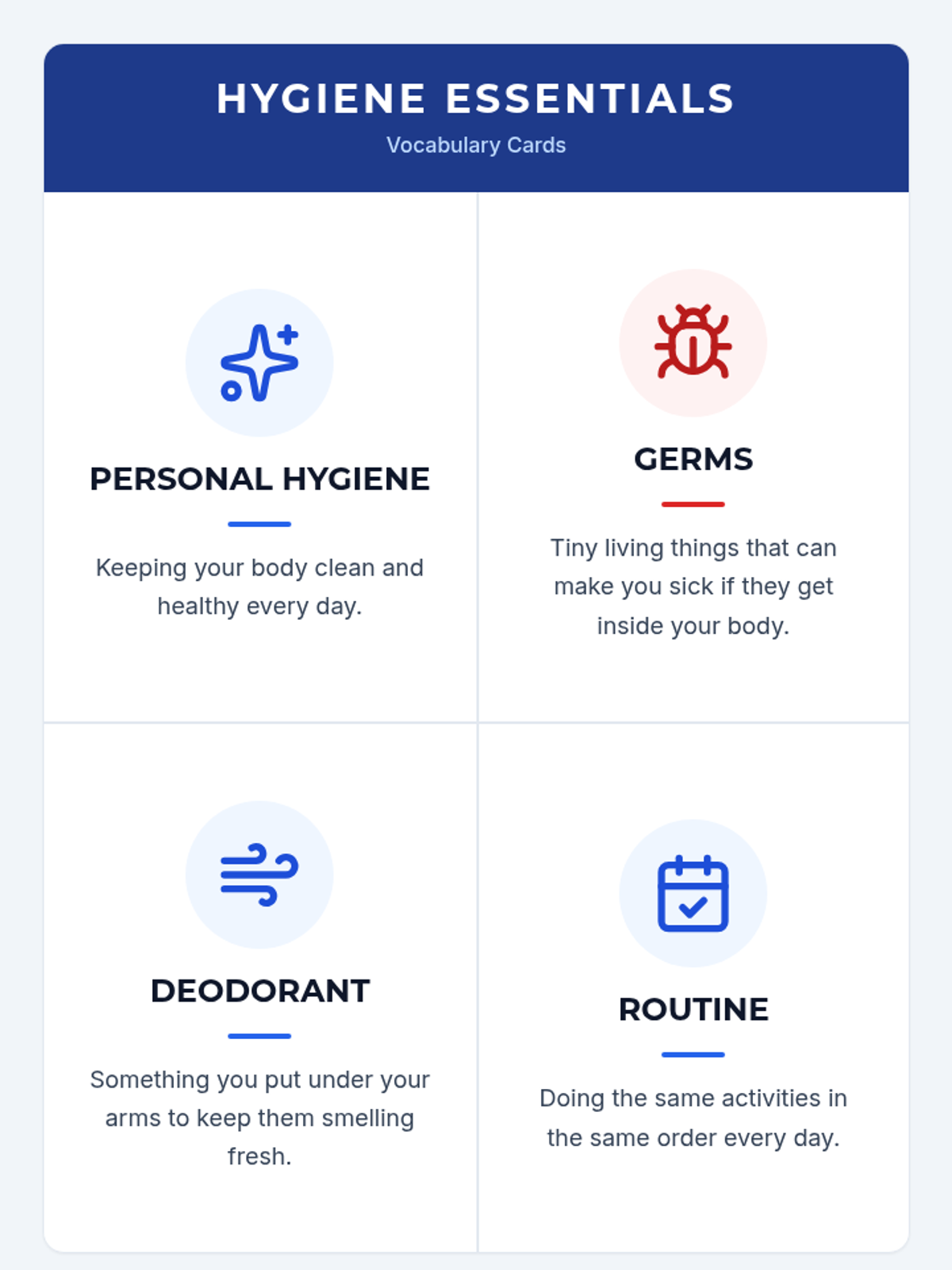
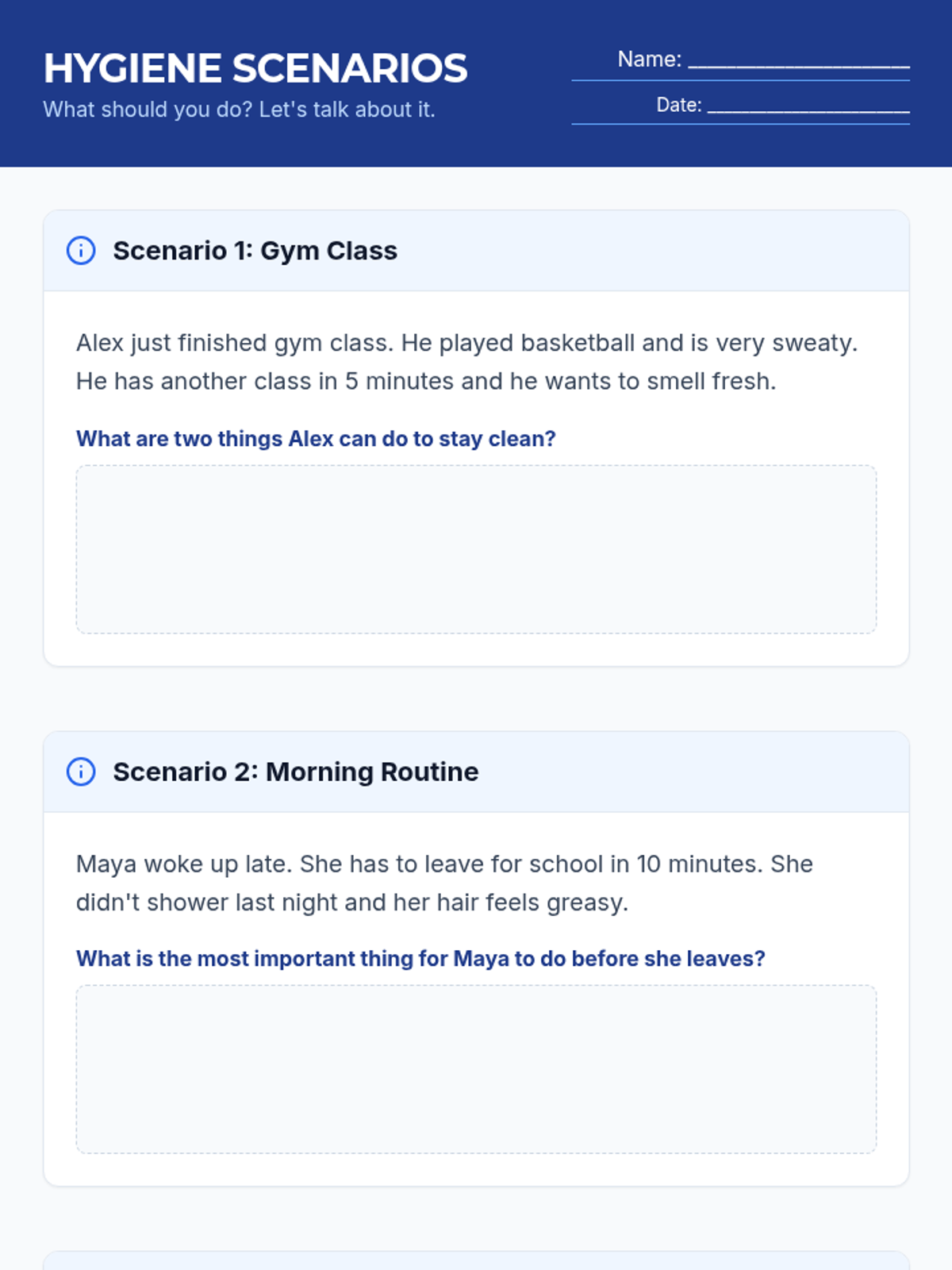
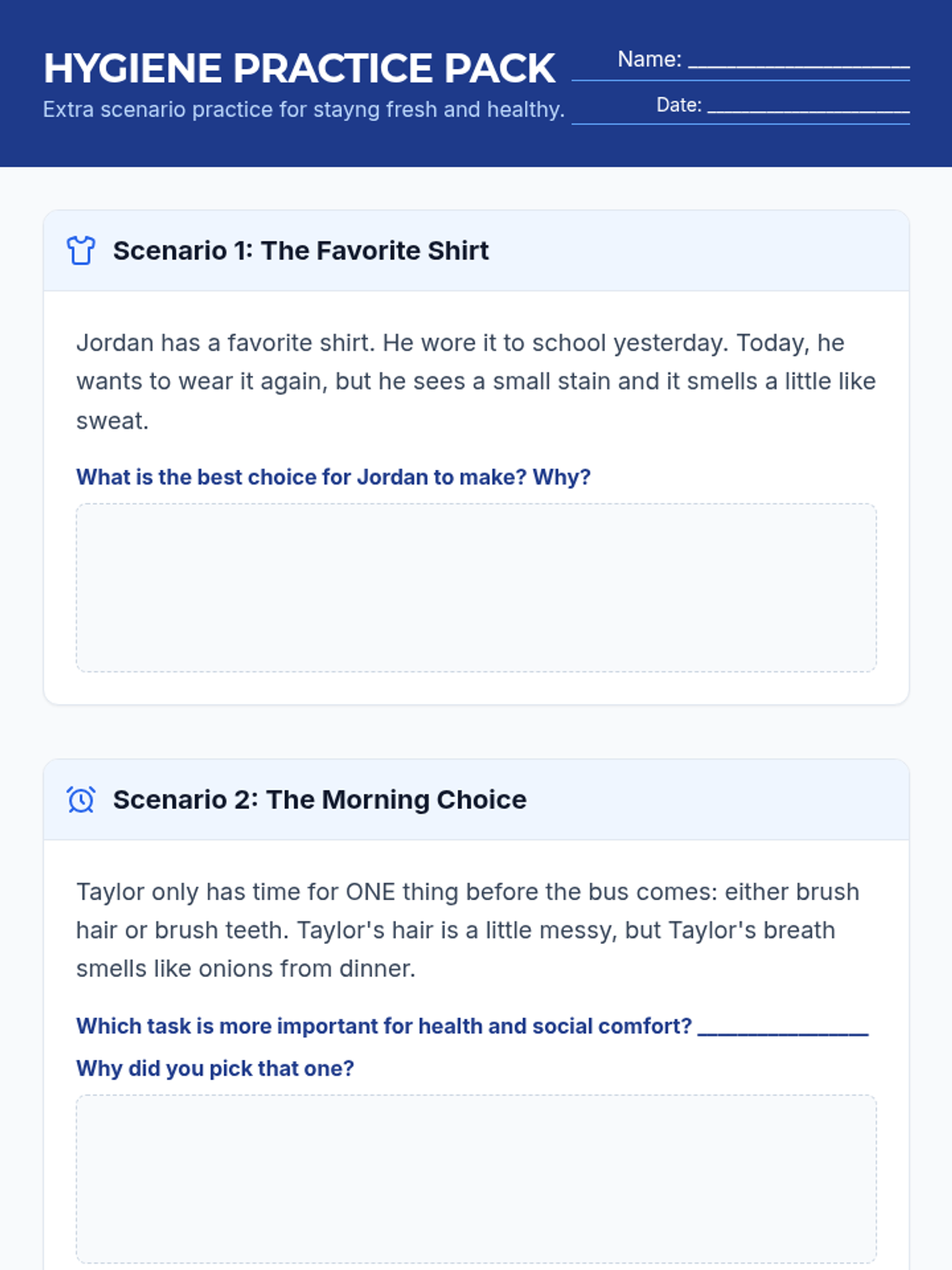
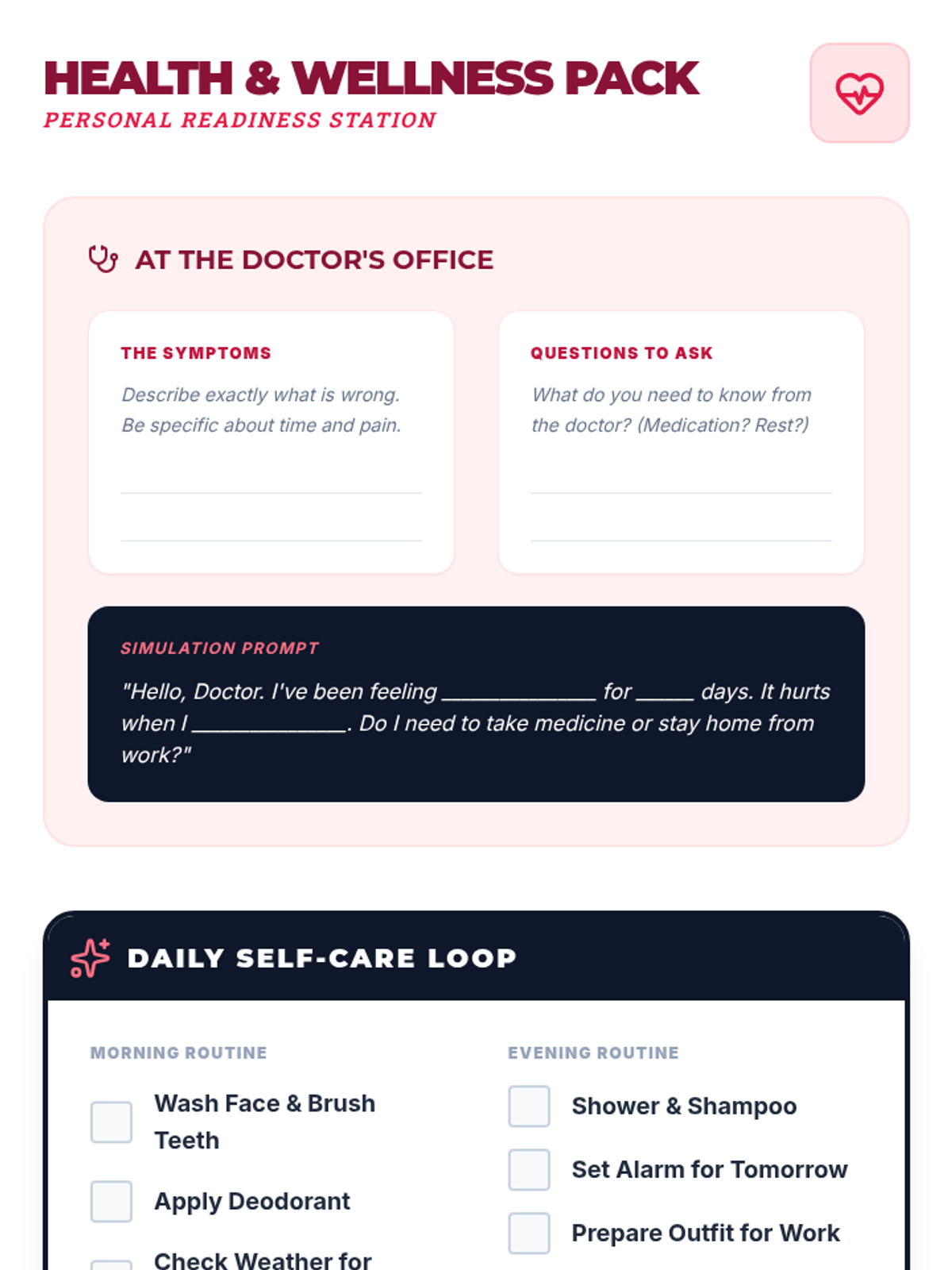
Focuses on the importance of personal hygiene and daily self-care routines for health and social confidence.
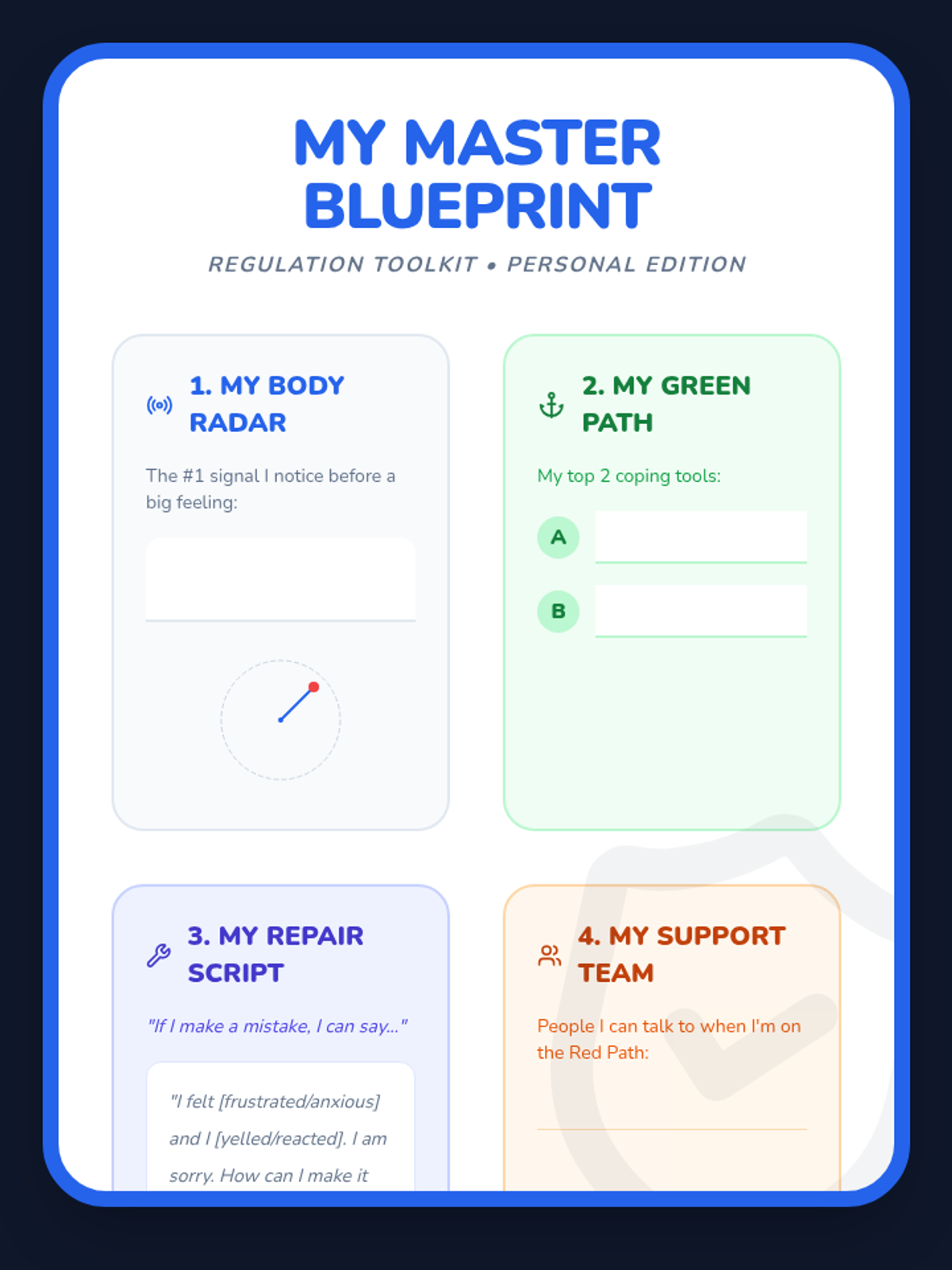
Compiling all learned strategies into a personalized, visual regulation plan for long-term success.
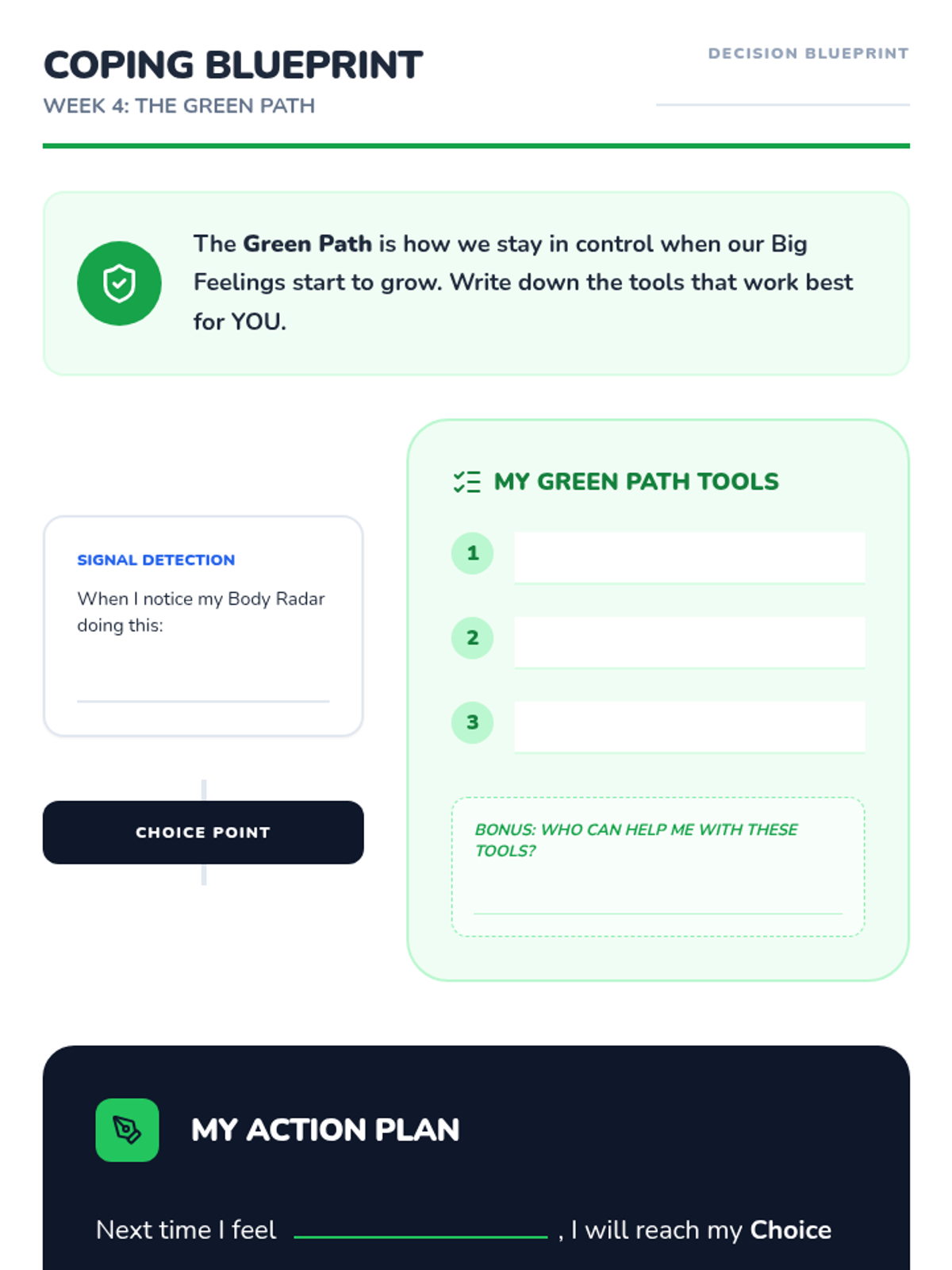
Identifying the 'fork in the road' when feelings get big and selecting specific coping strategies to manage frustration and anger.
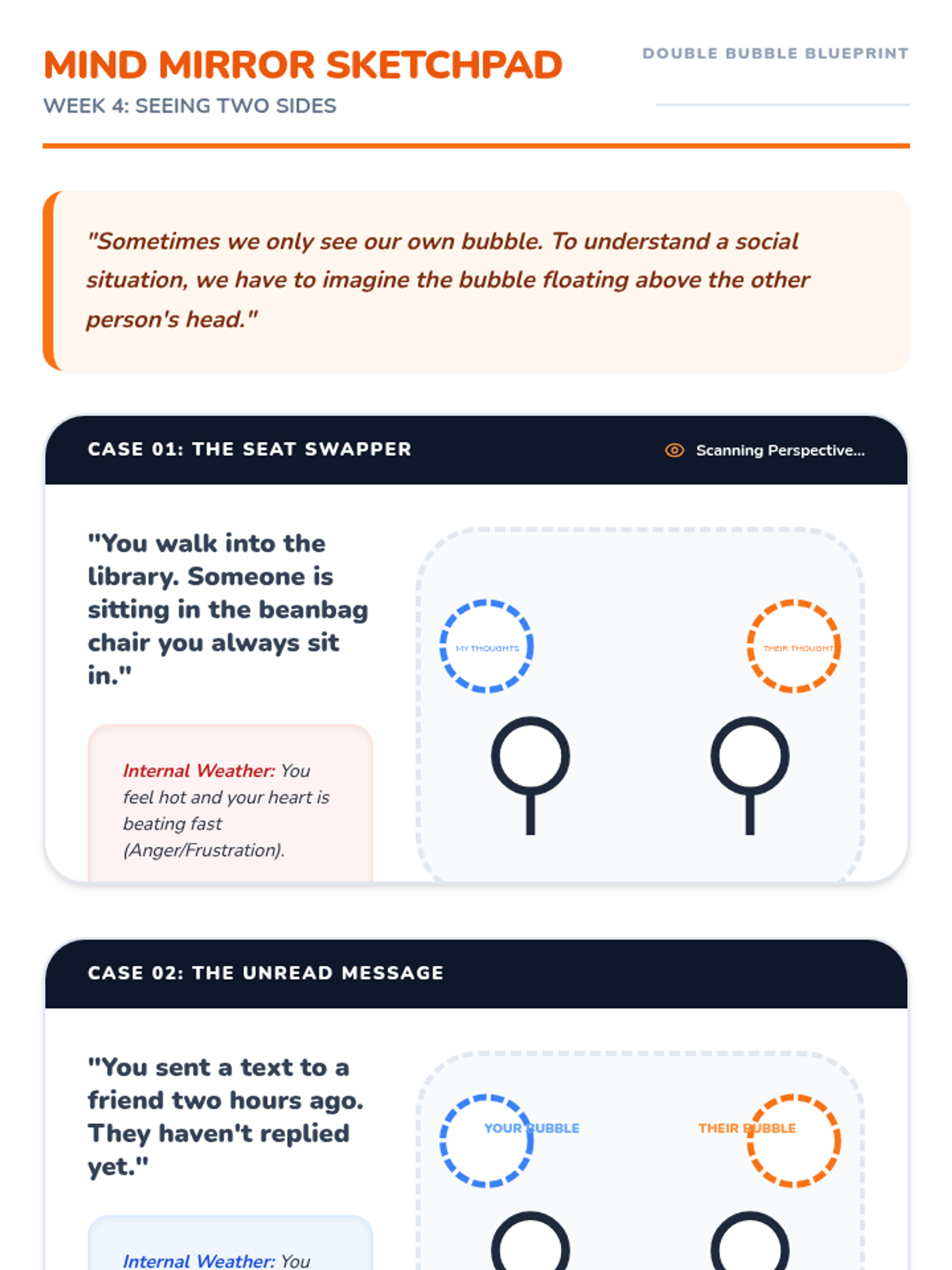
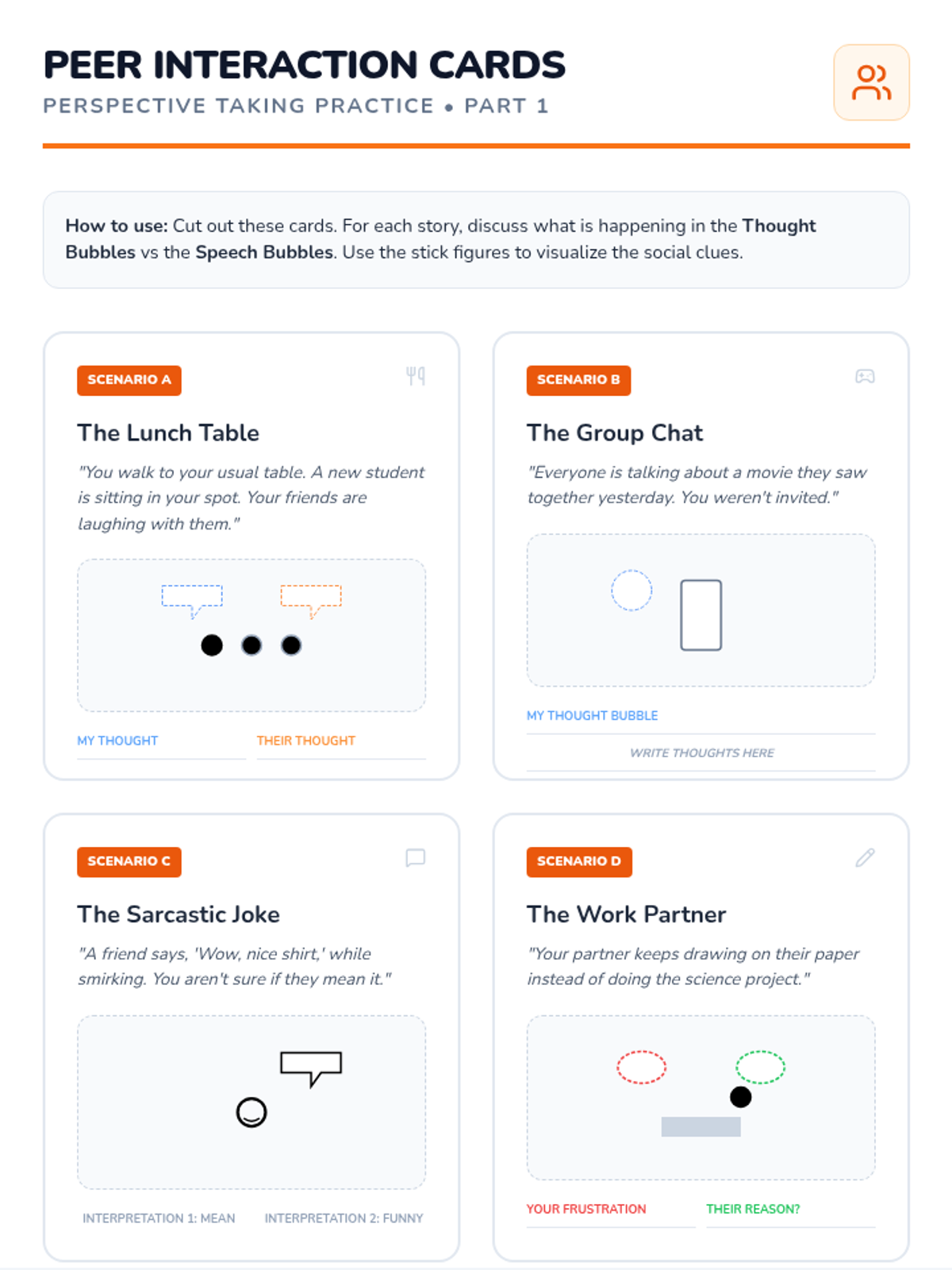
Using stick-figure mapping to visualize the thoughts and feelings of others during social interactions to build perspective-taking skills.
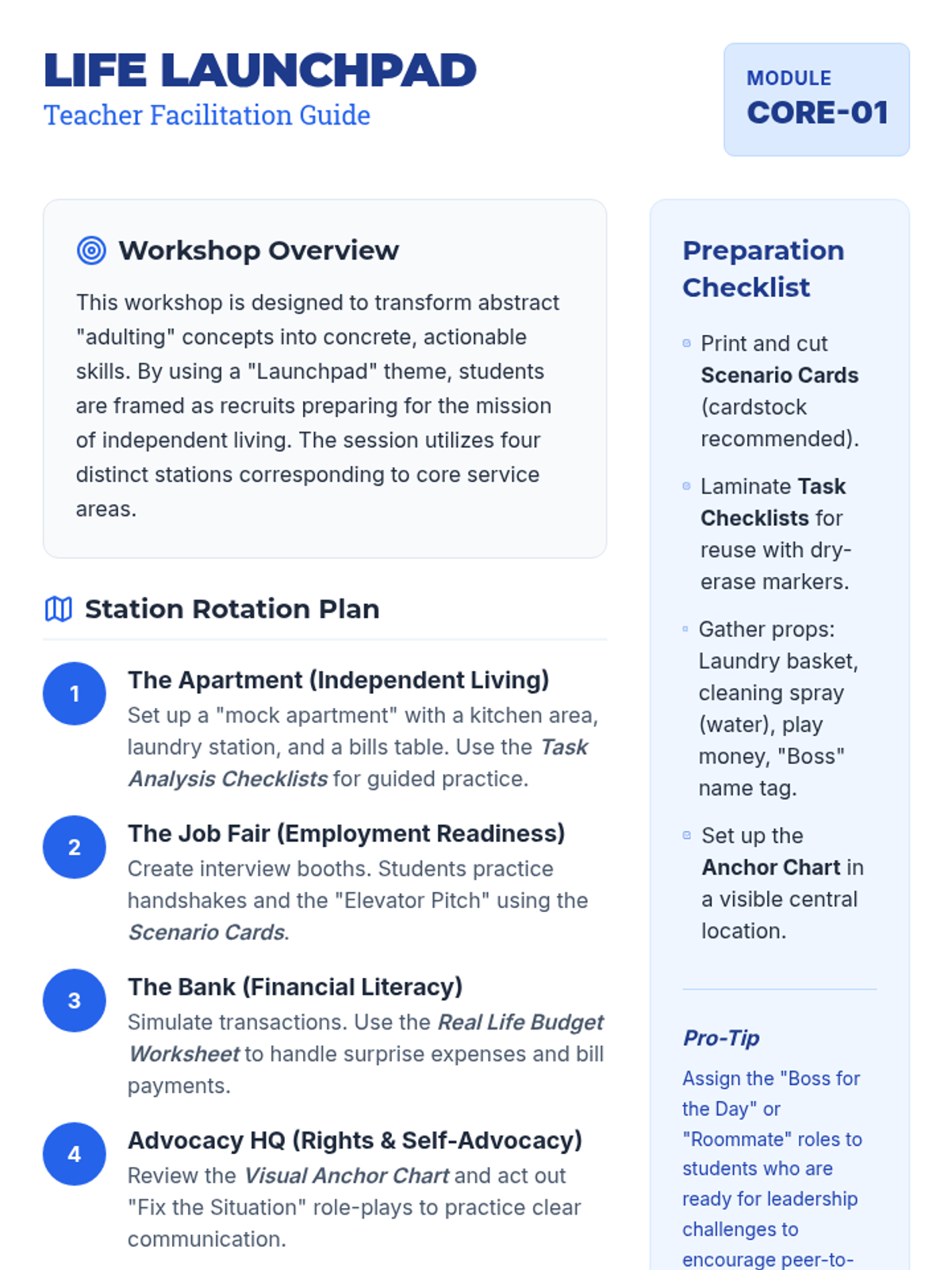
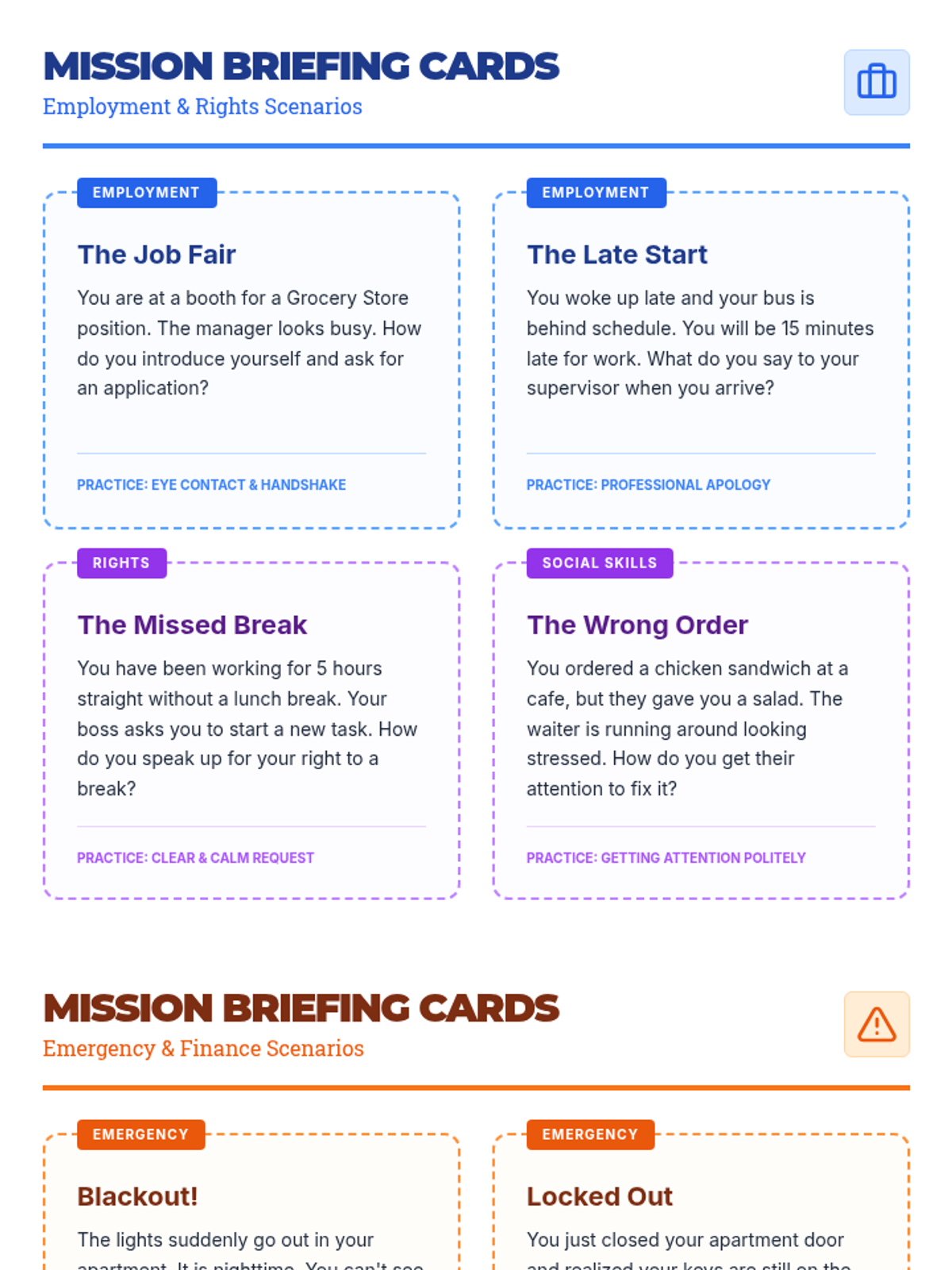
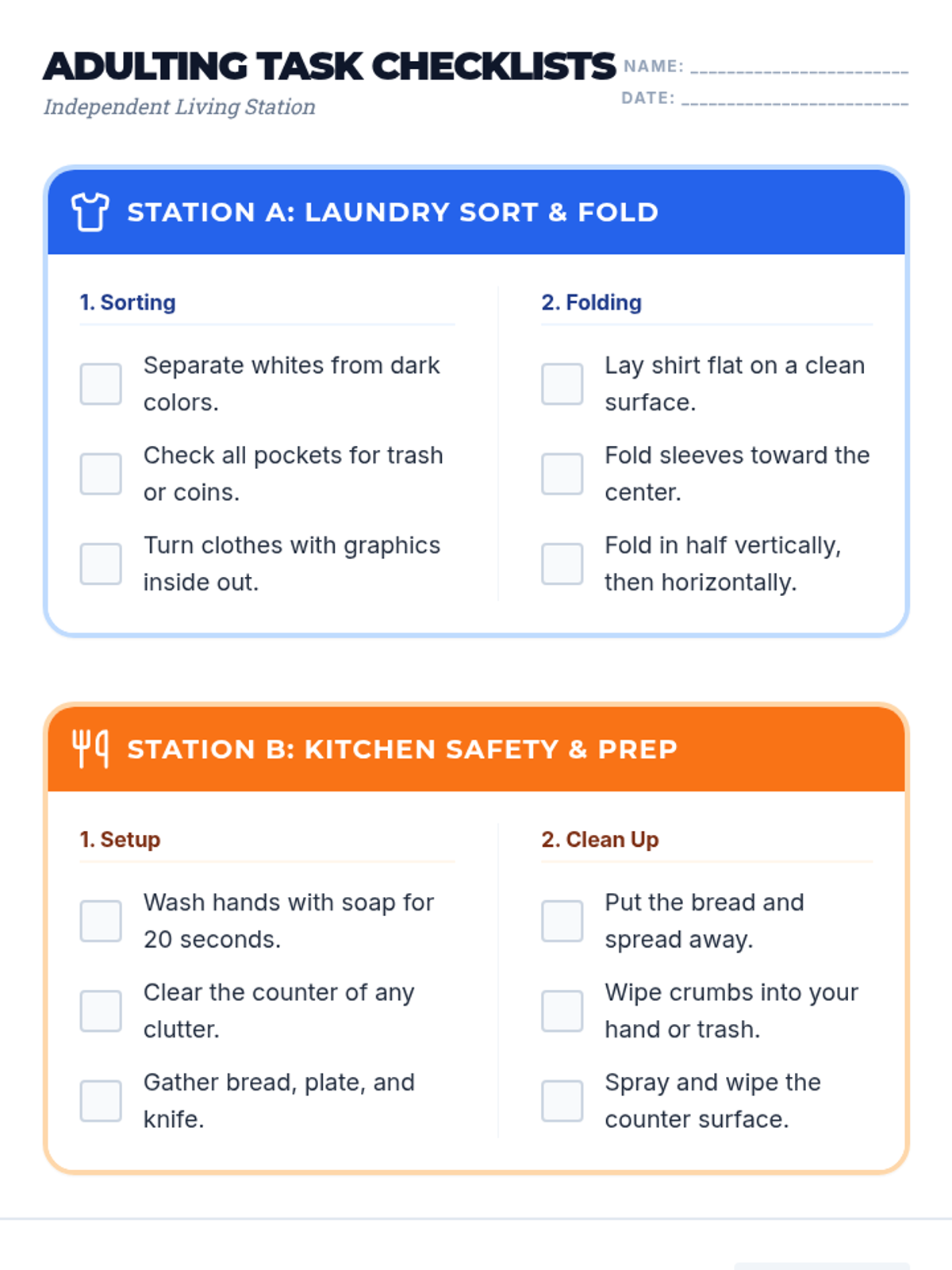
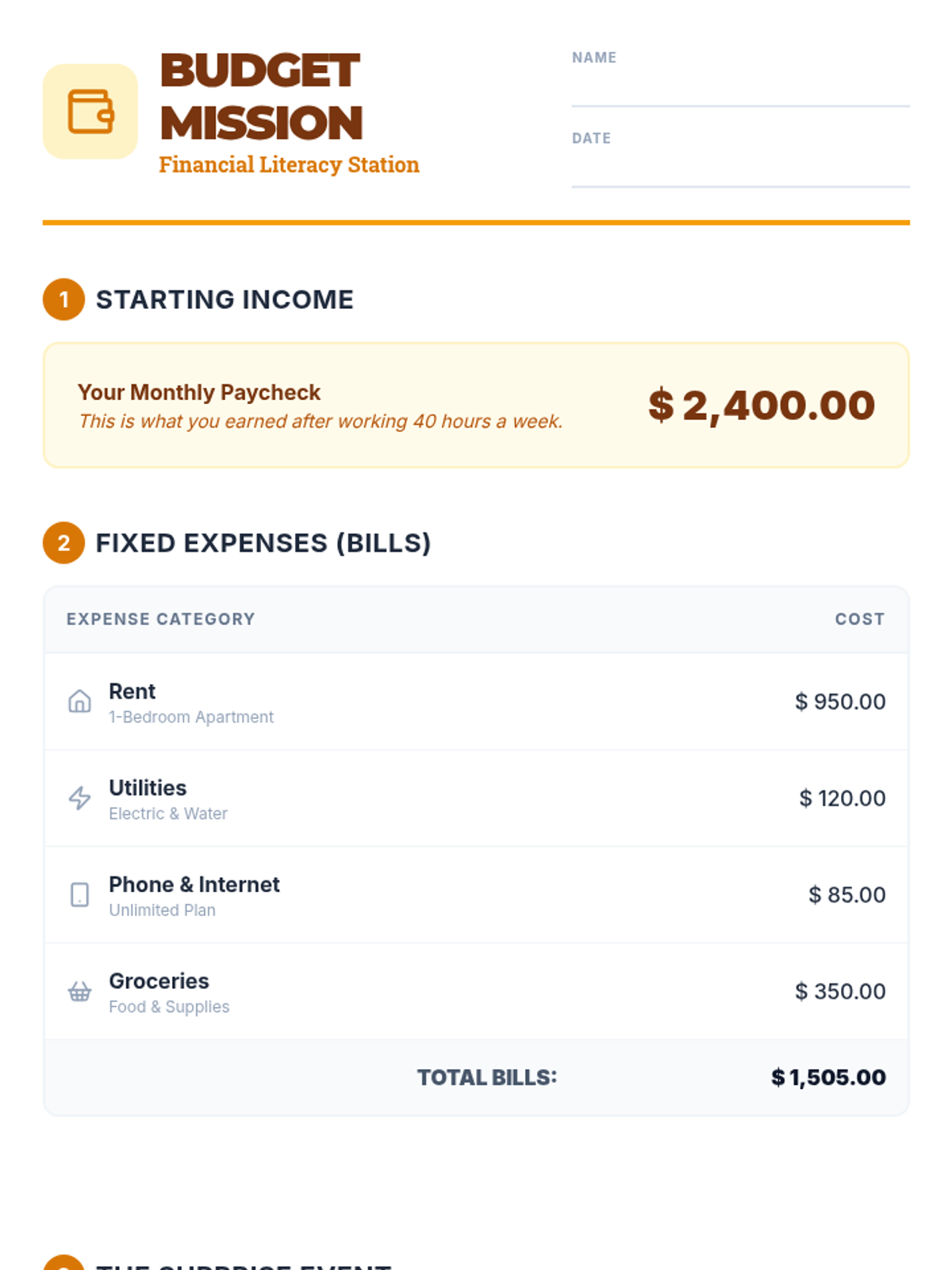
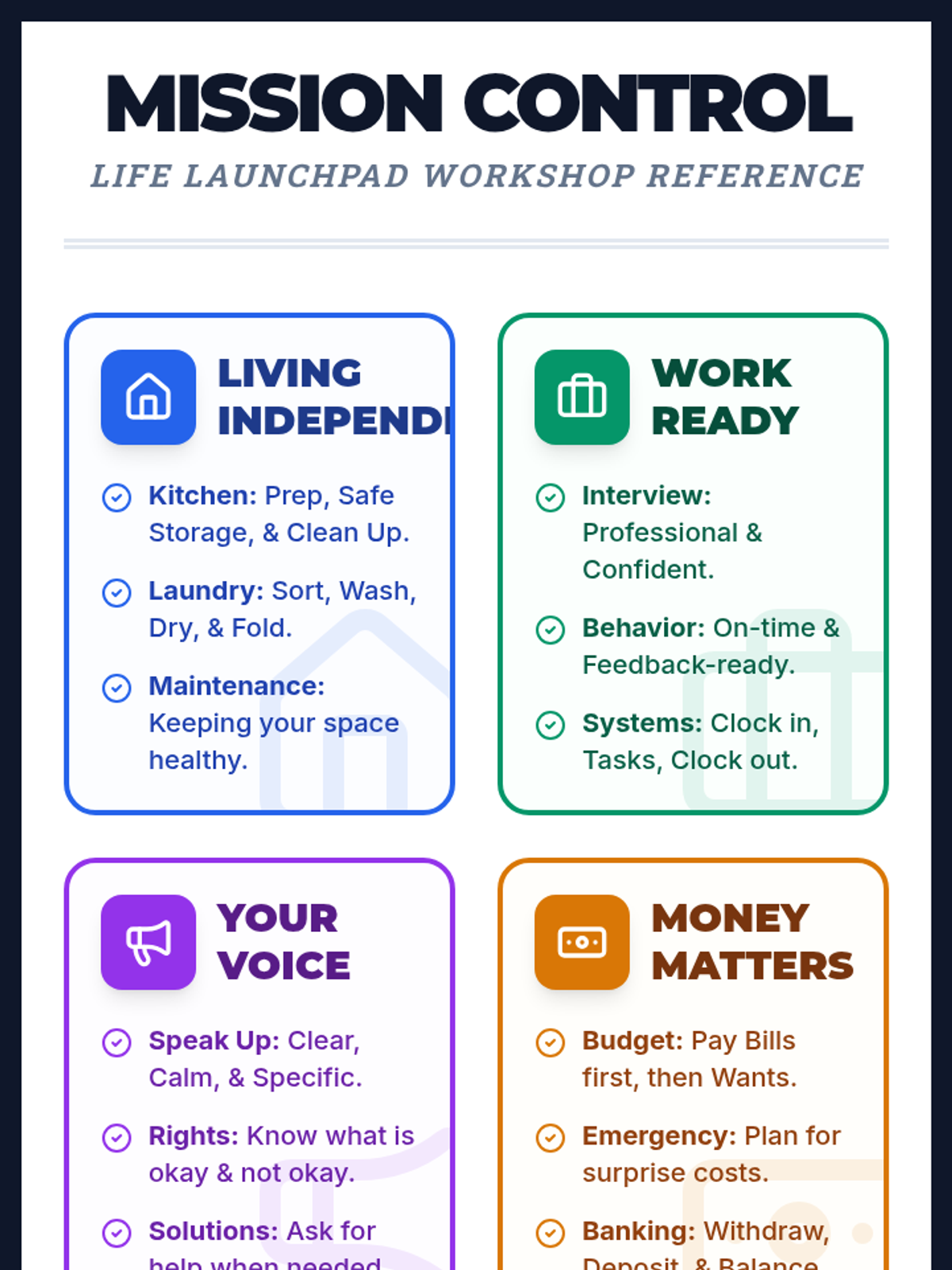
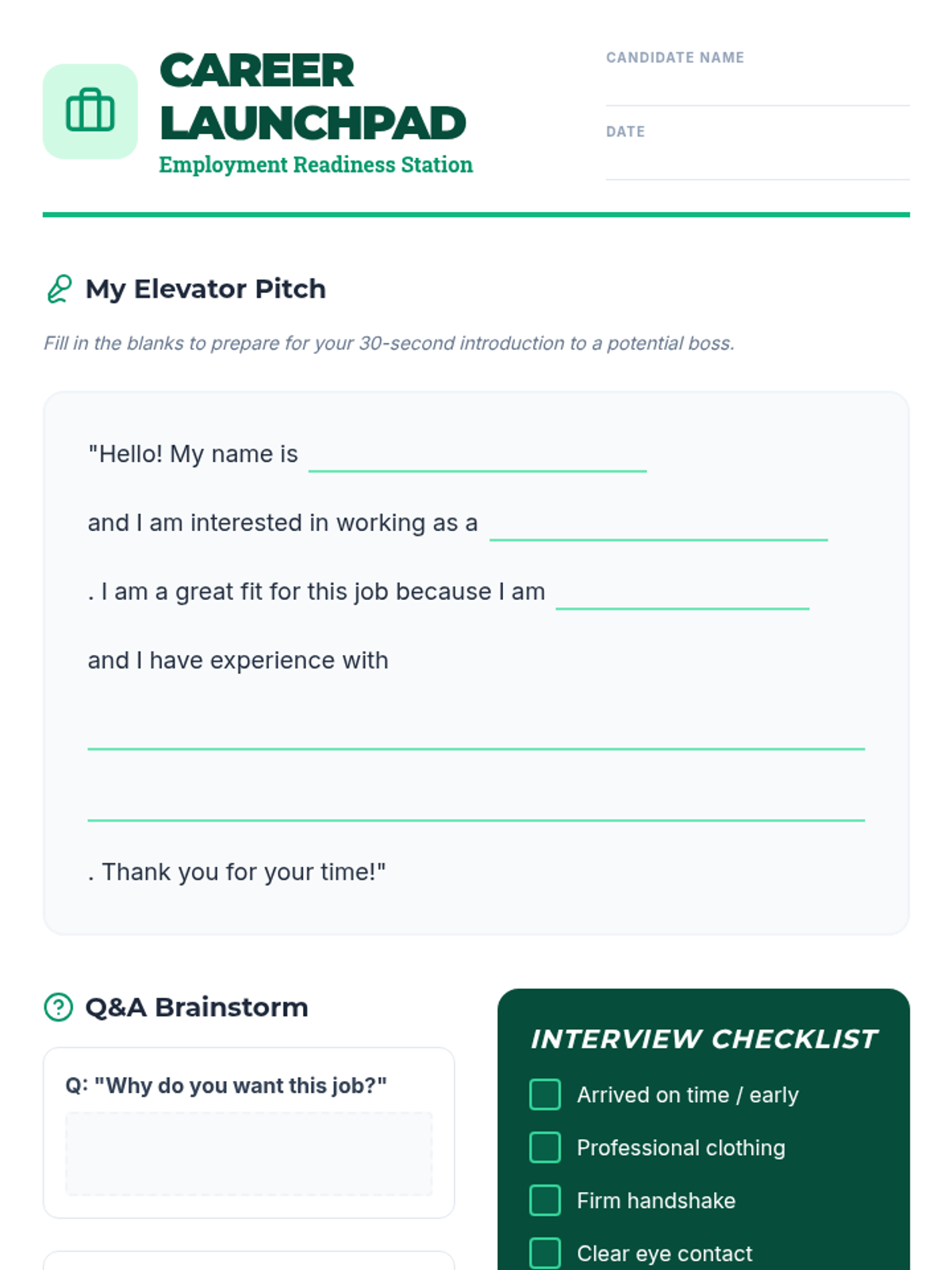
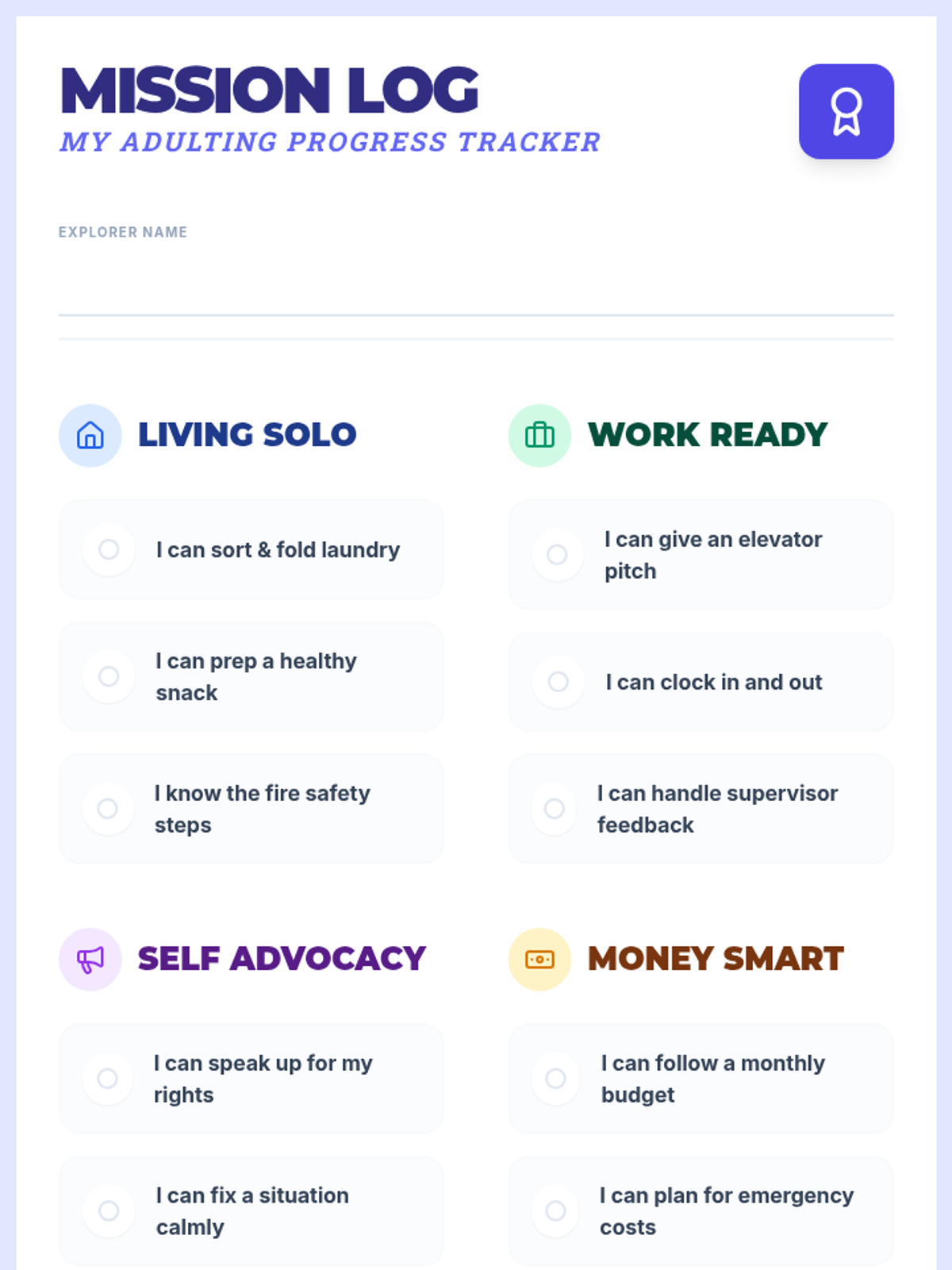
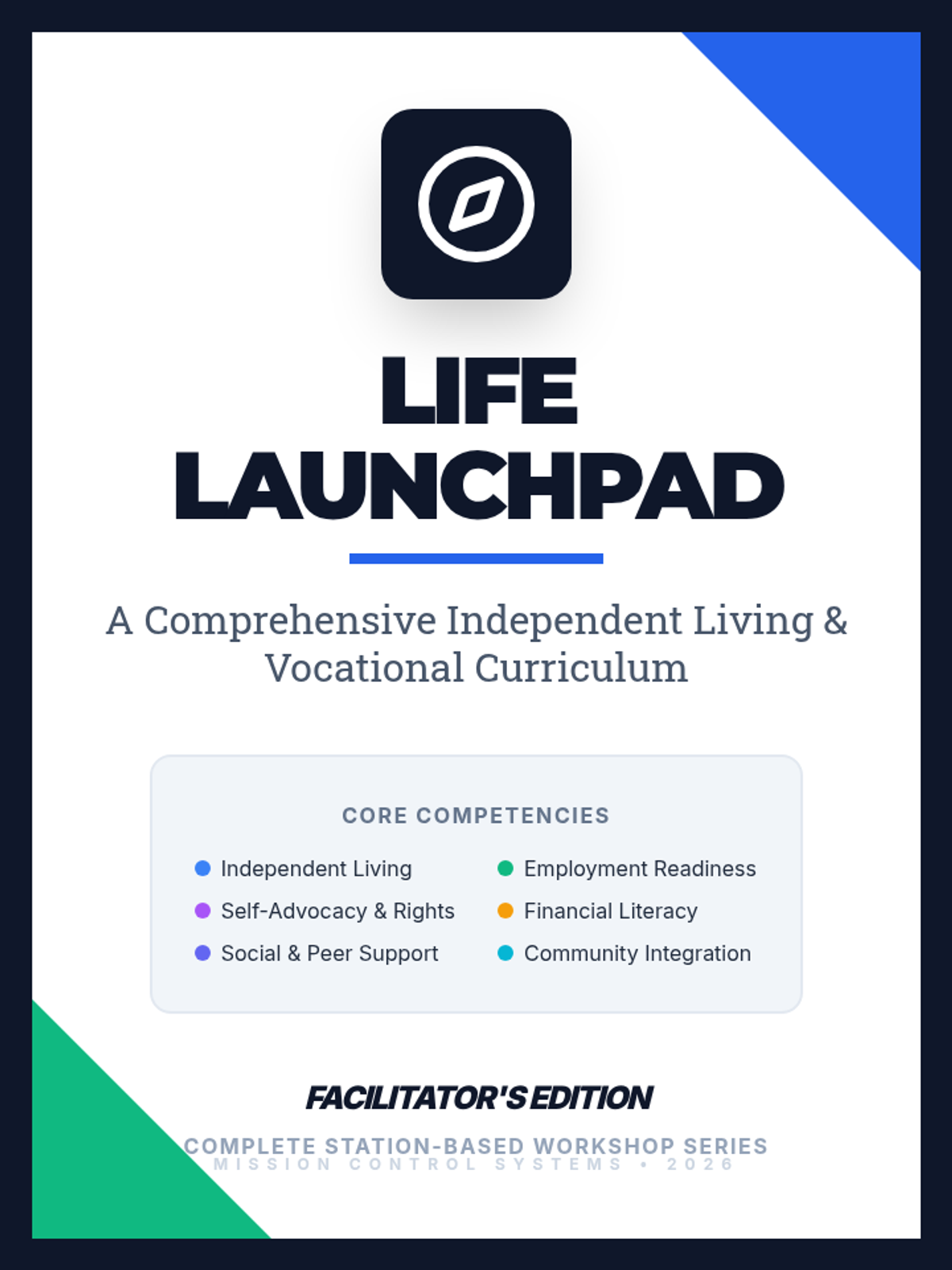
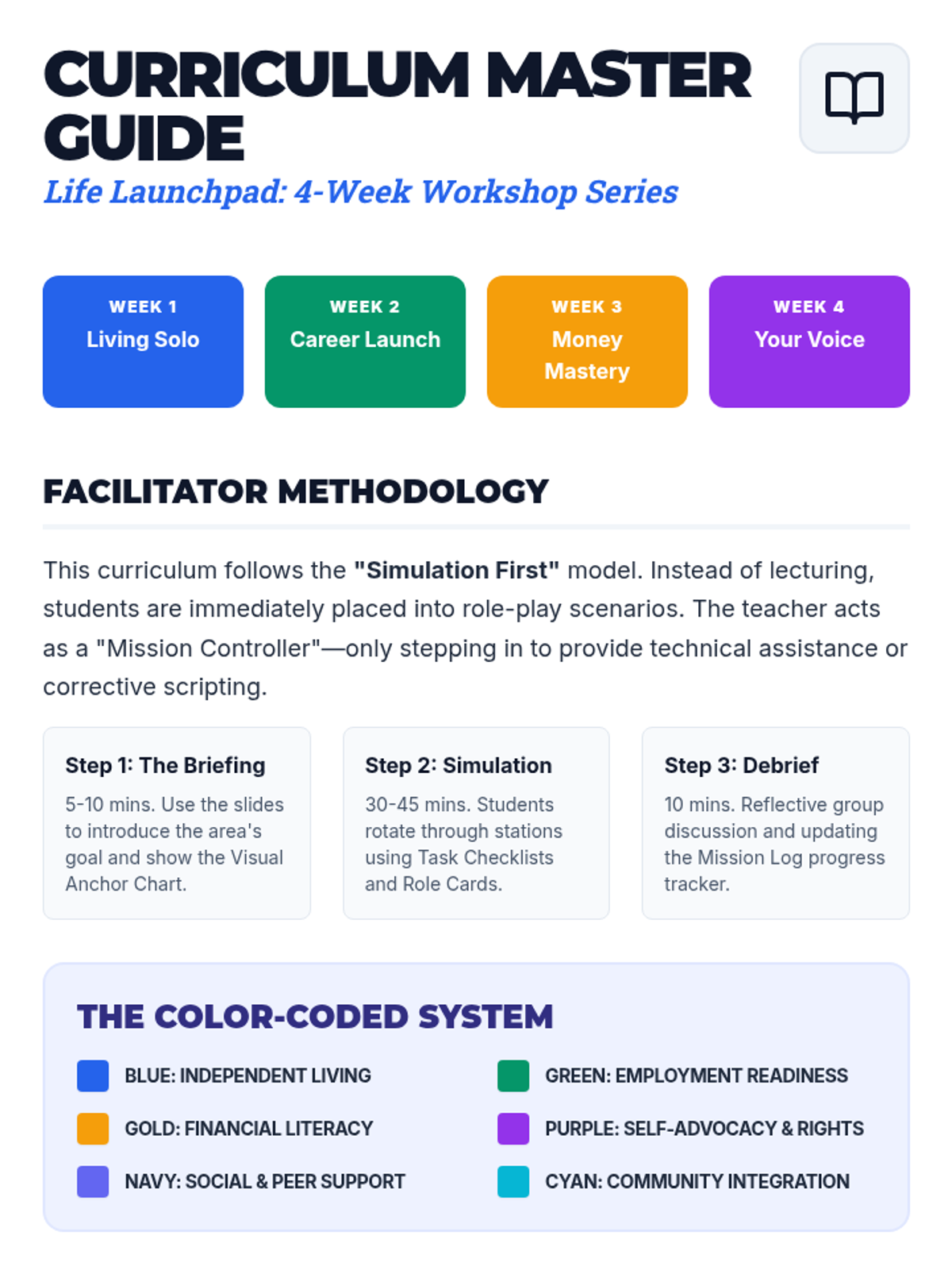
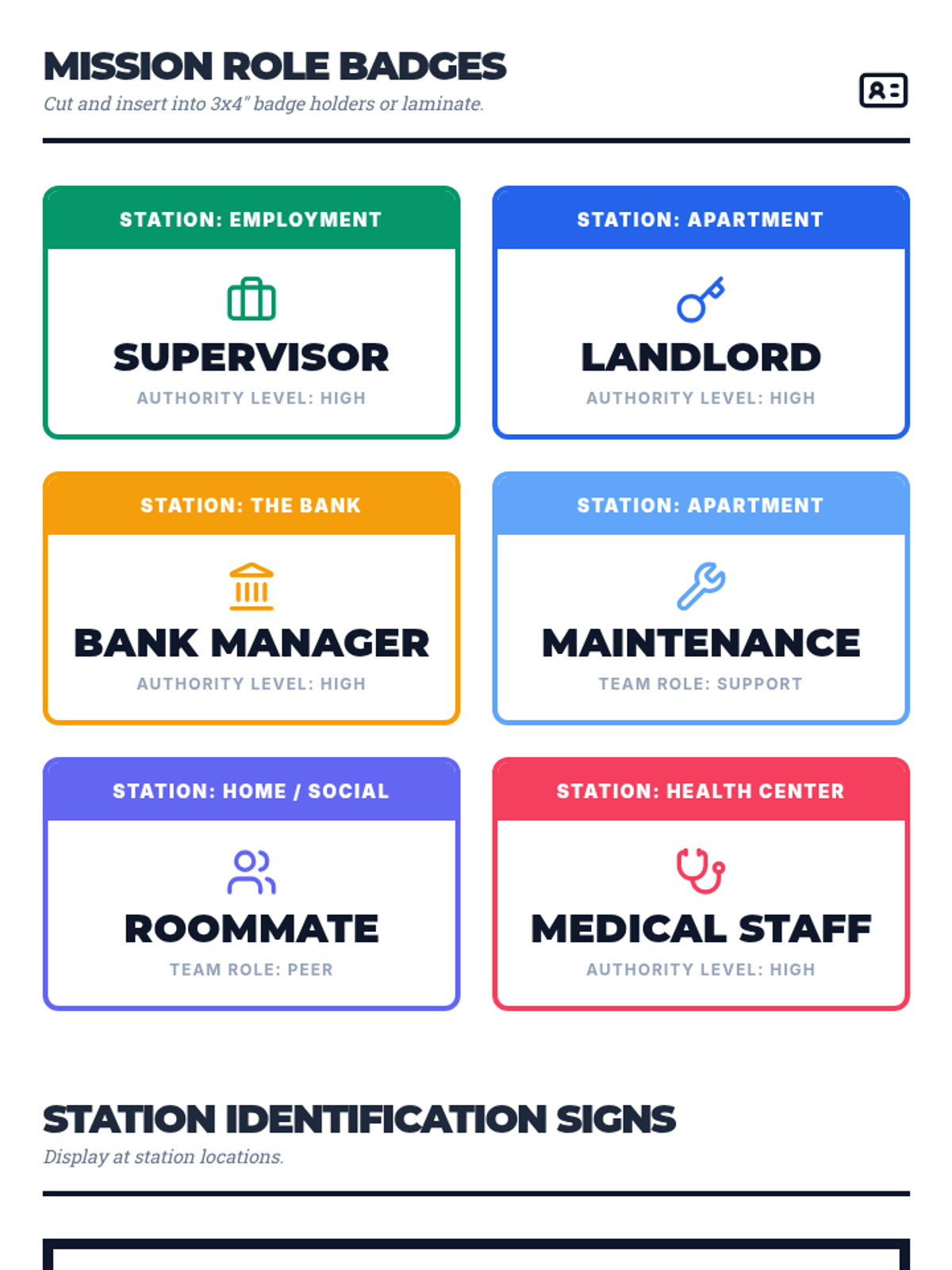
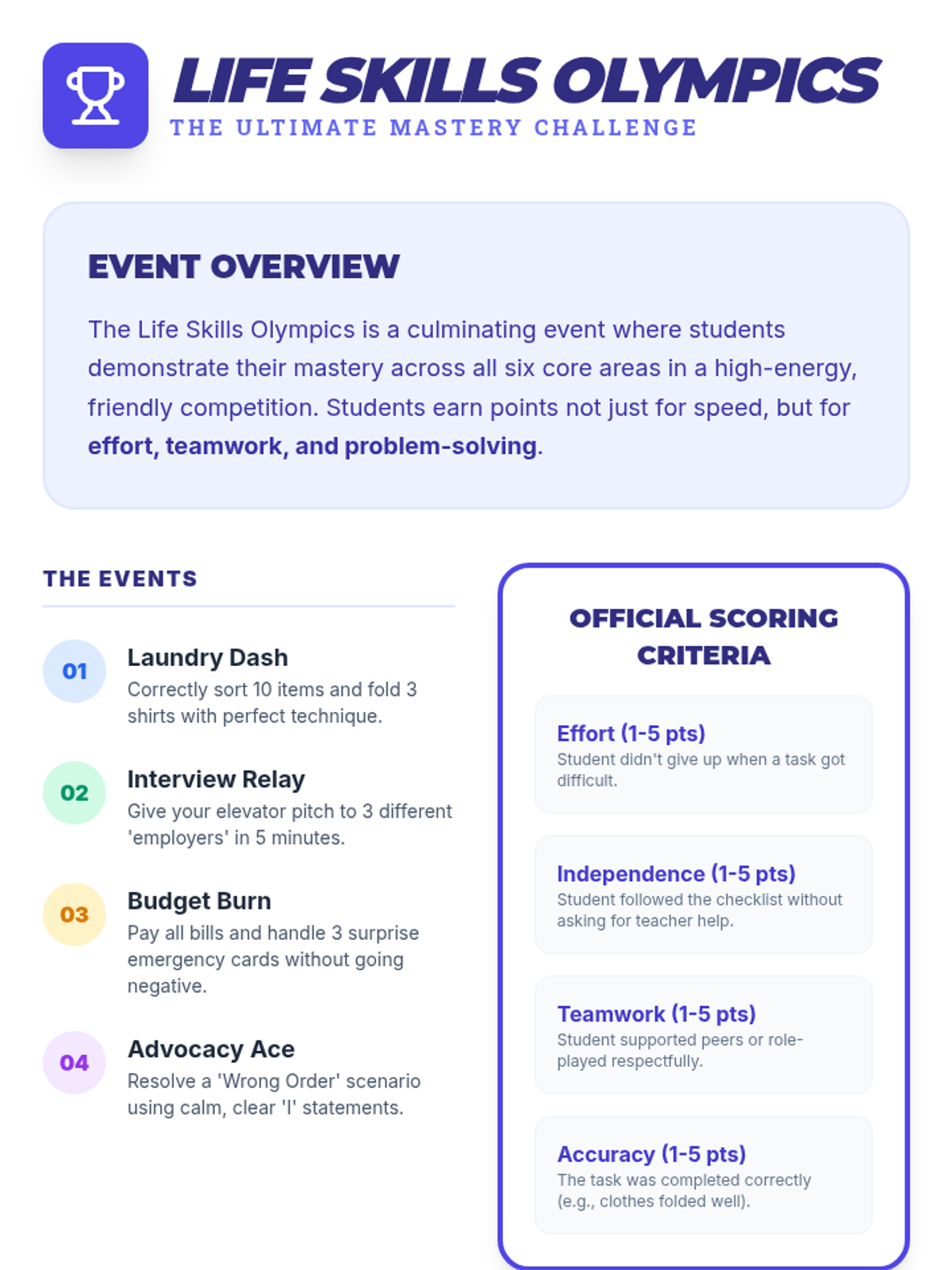
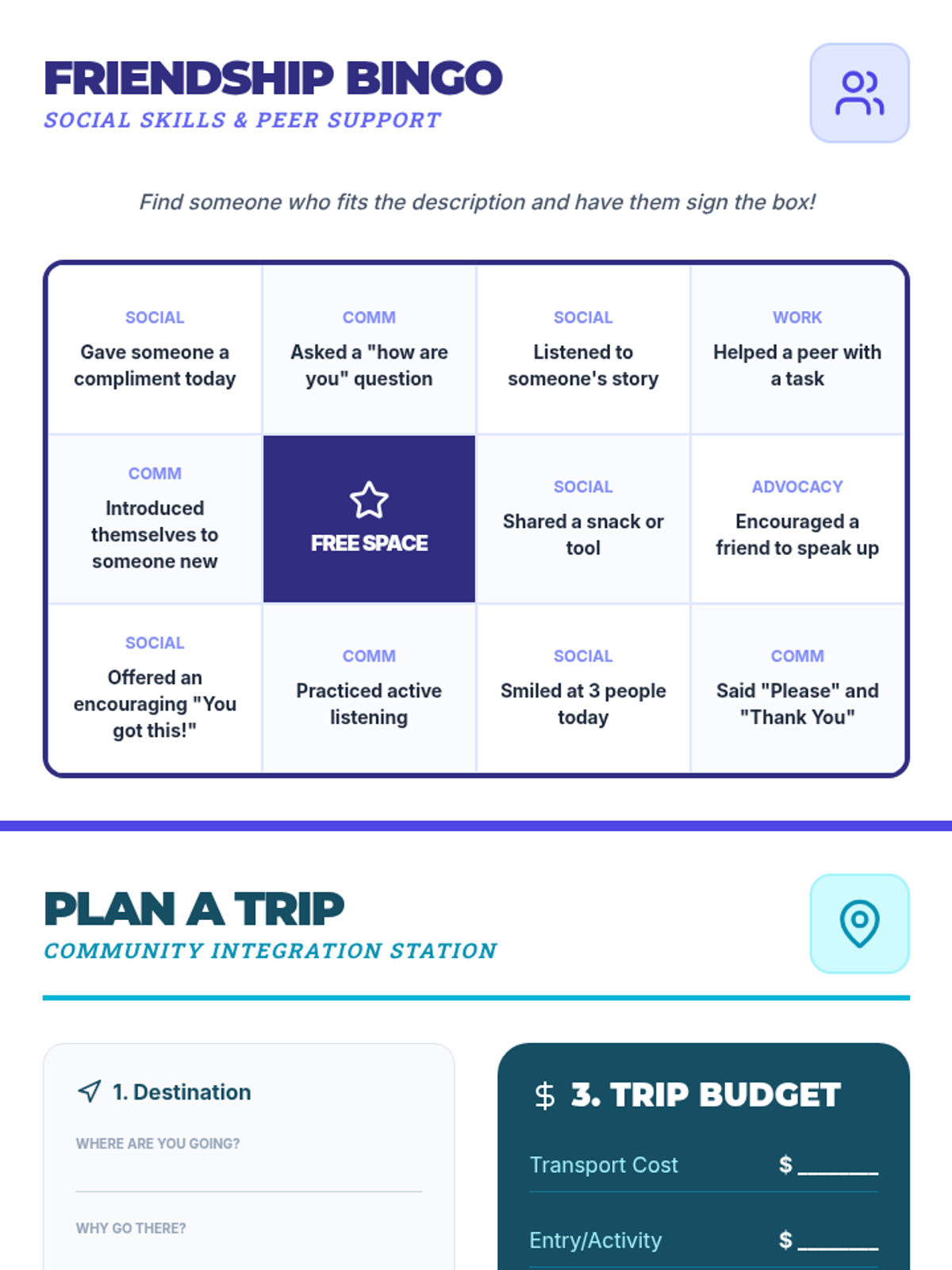
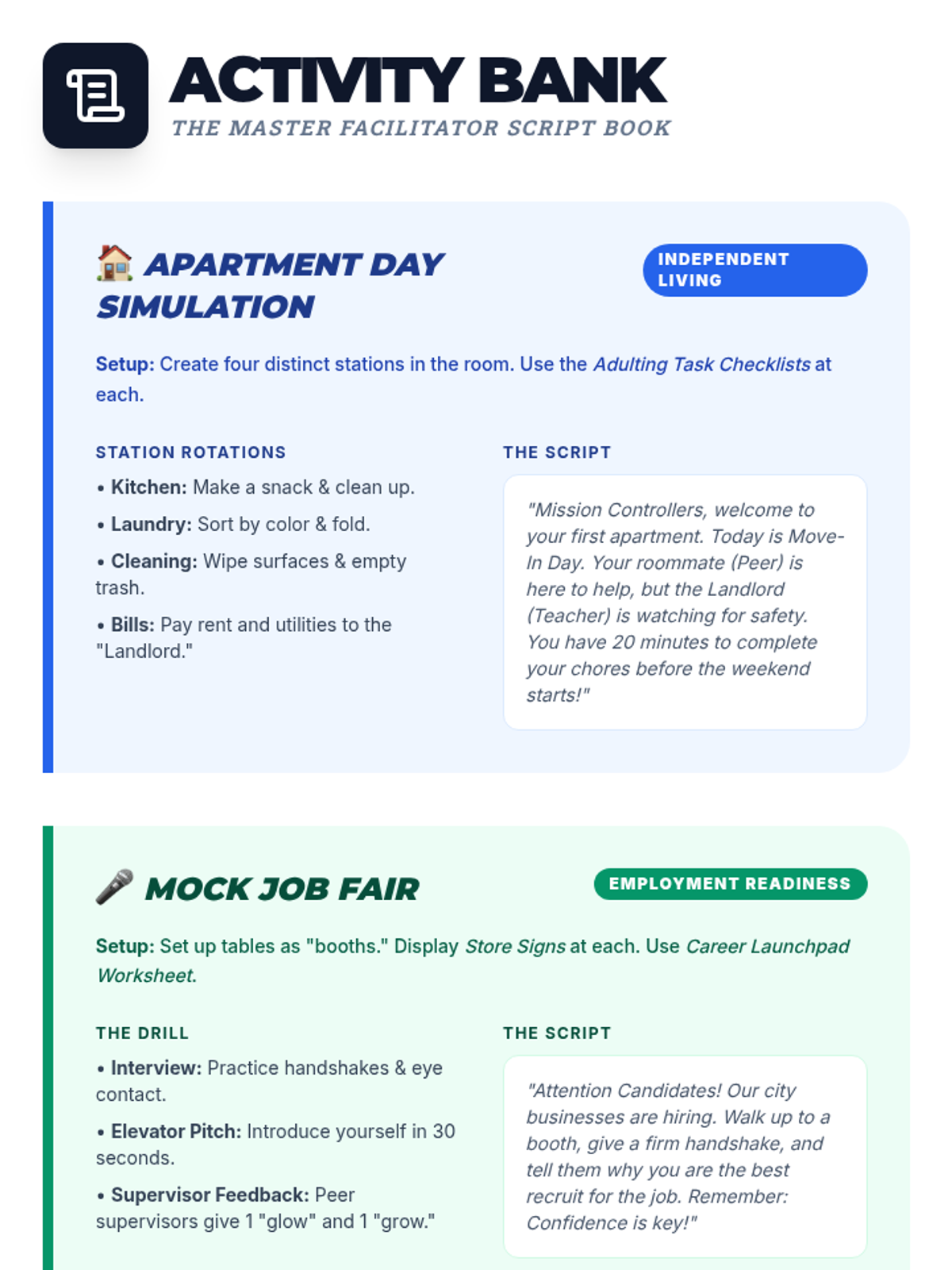
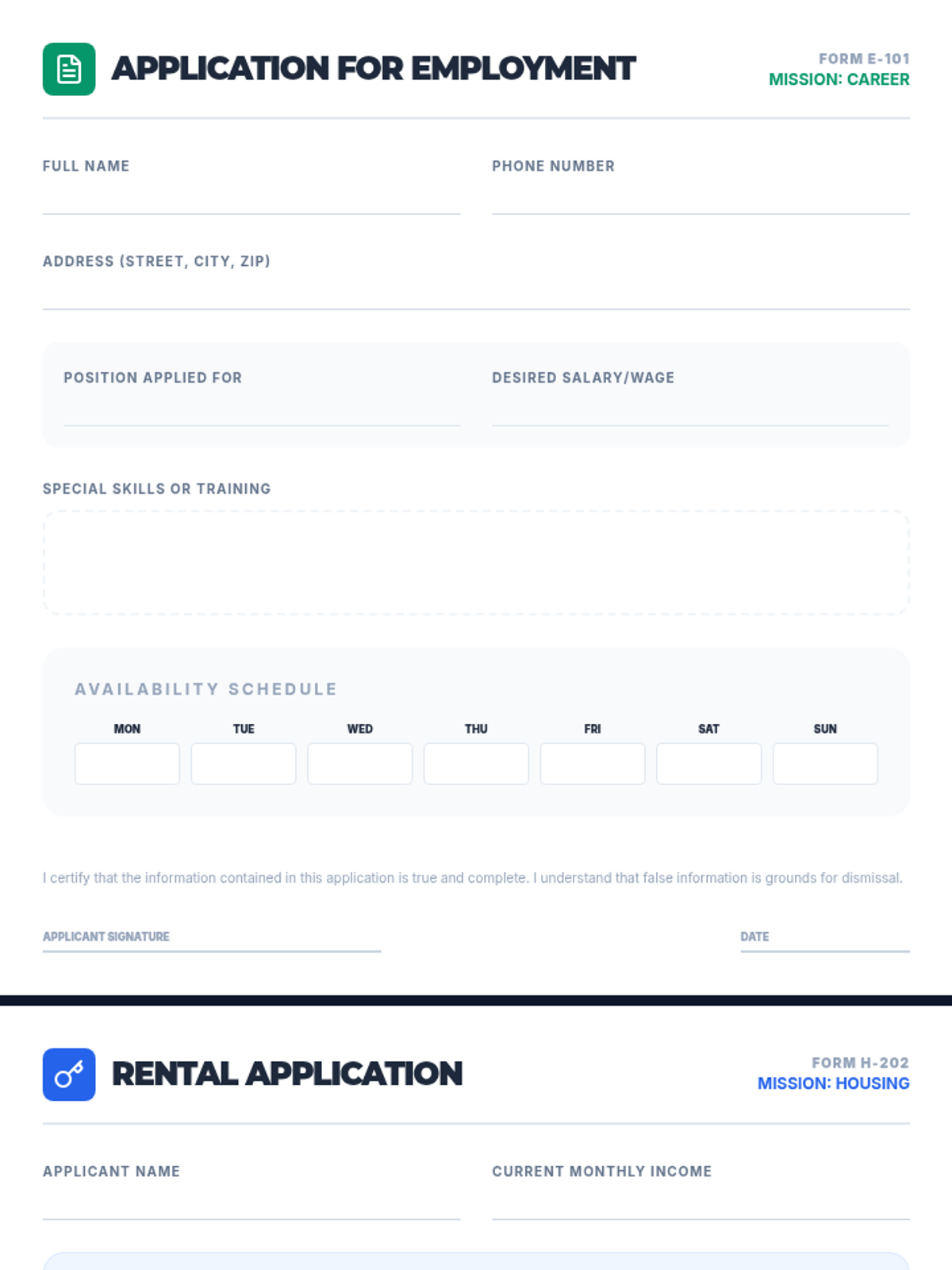
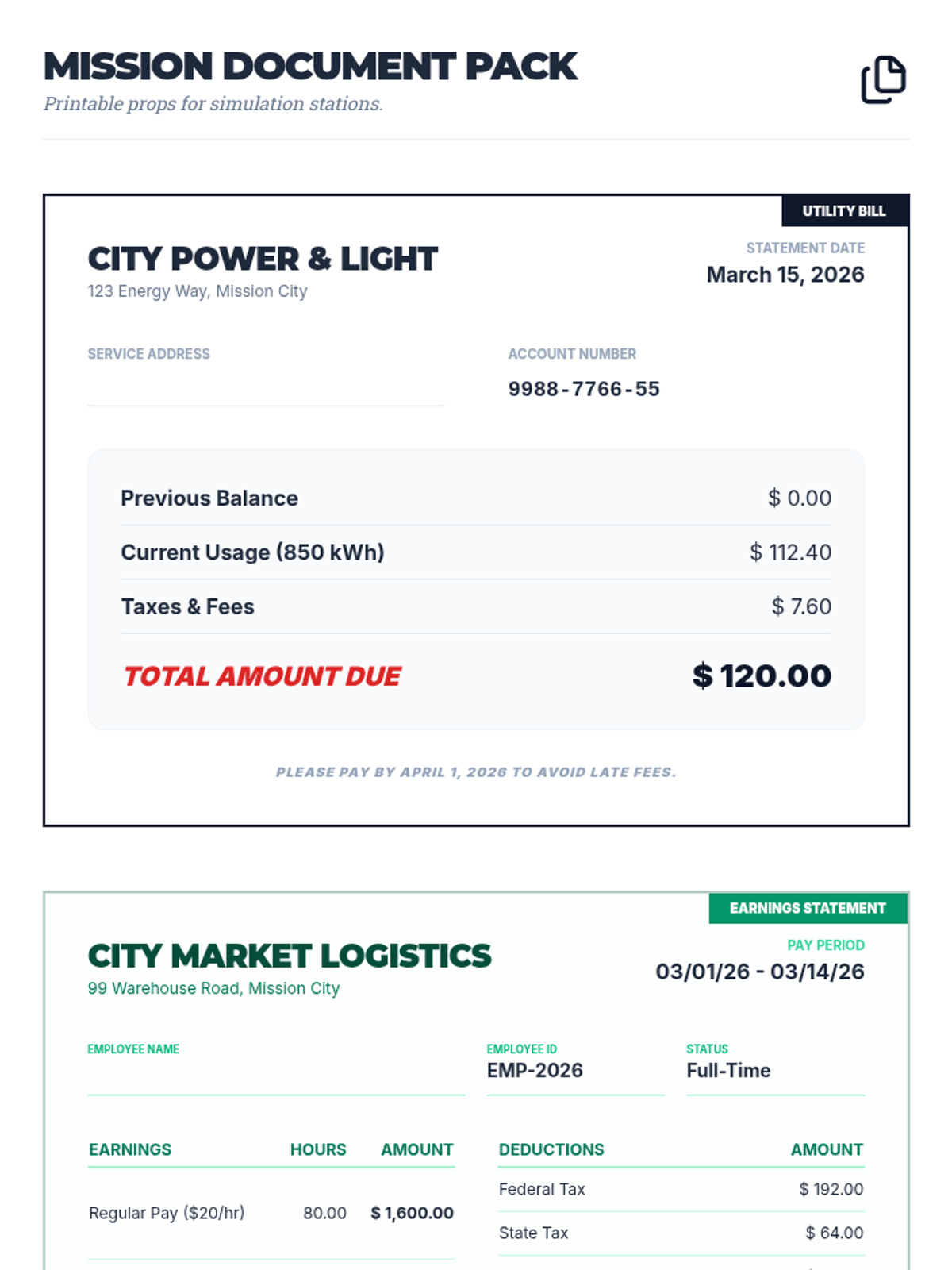
A comprehensive workshop focusing on essential adulting skills through immersive role-play, task simulations, and practical financial planning. This lesson covers Independent Living, Employment Readiness, Self-Advocacy, and Financial Literacy.
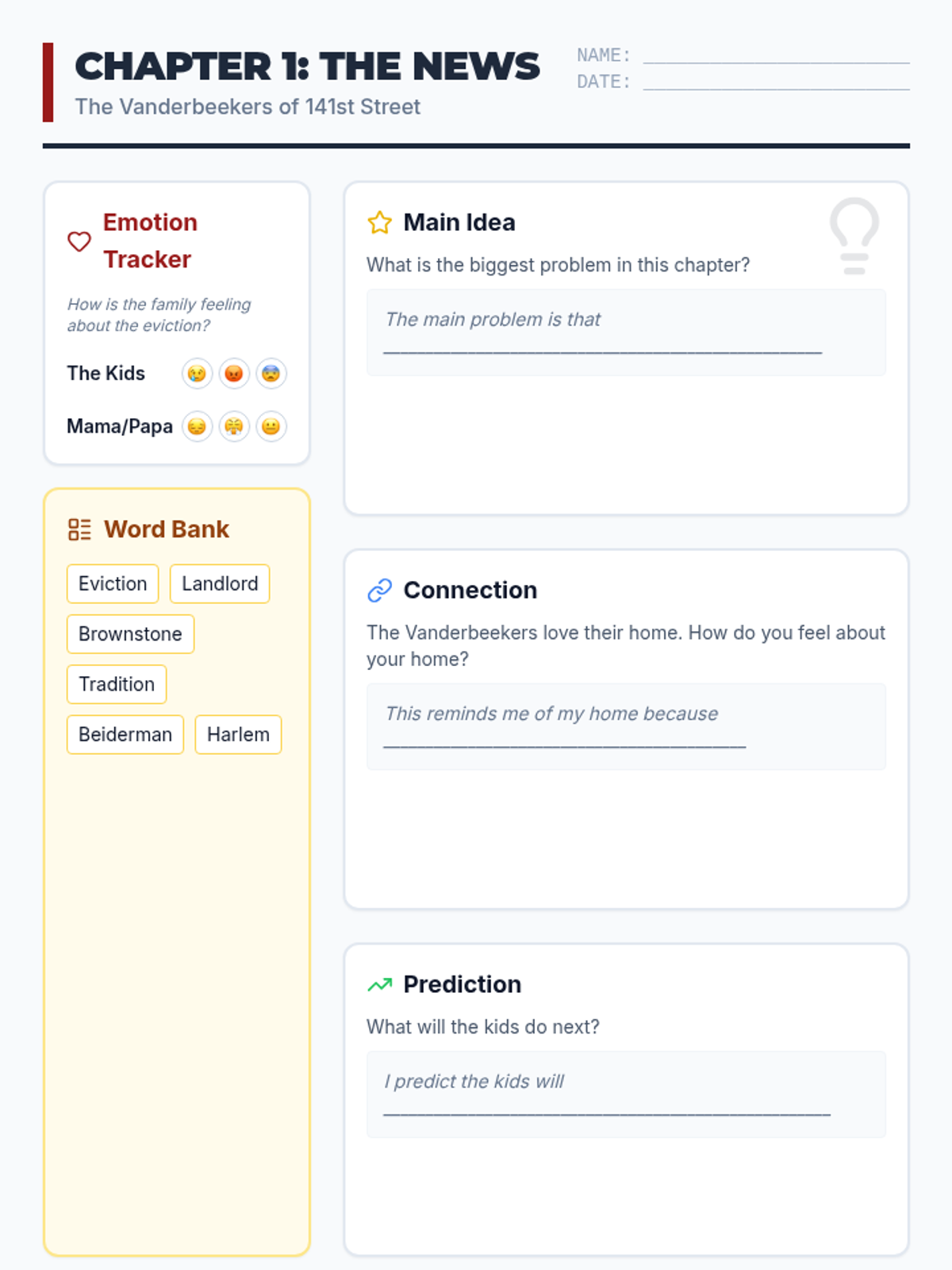
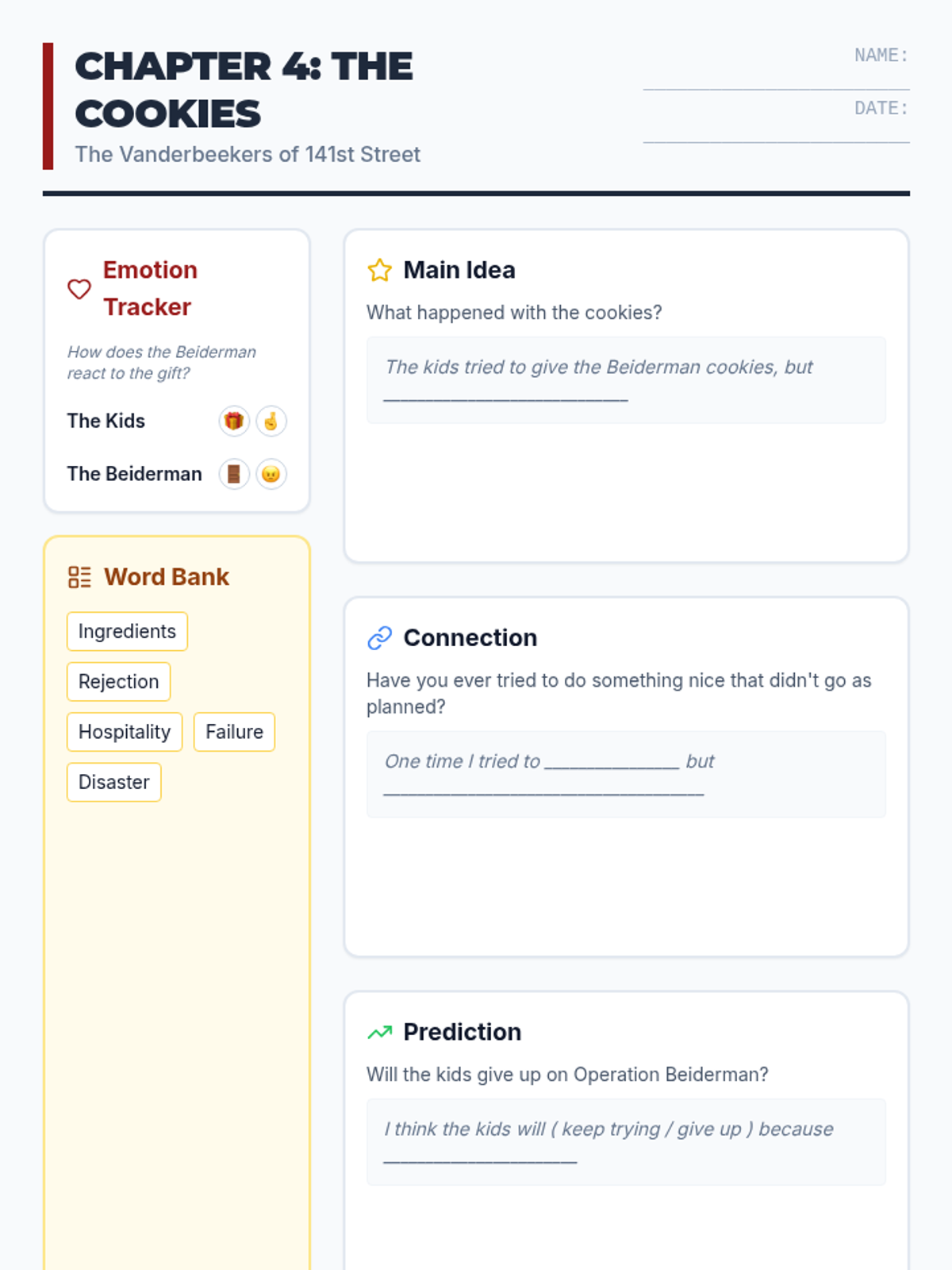
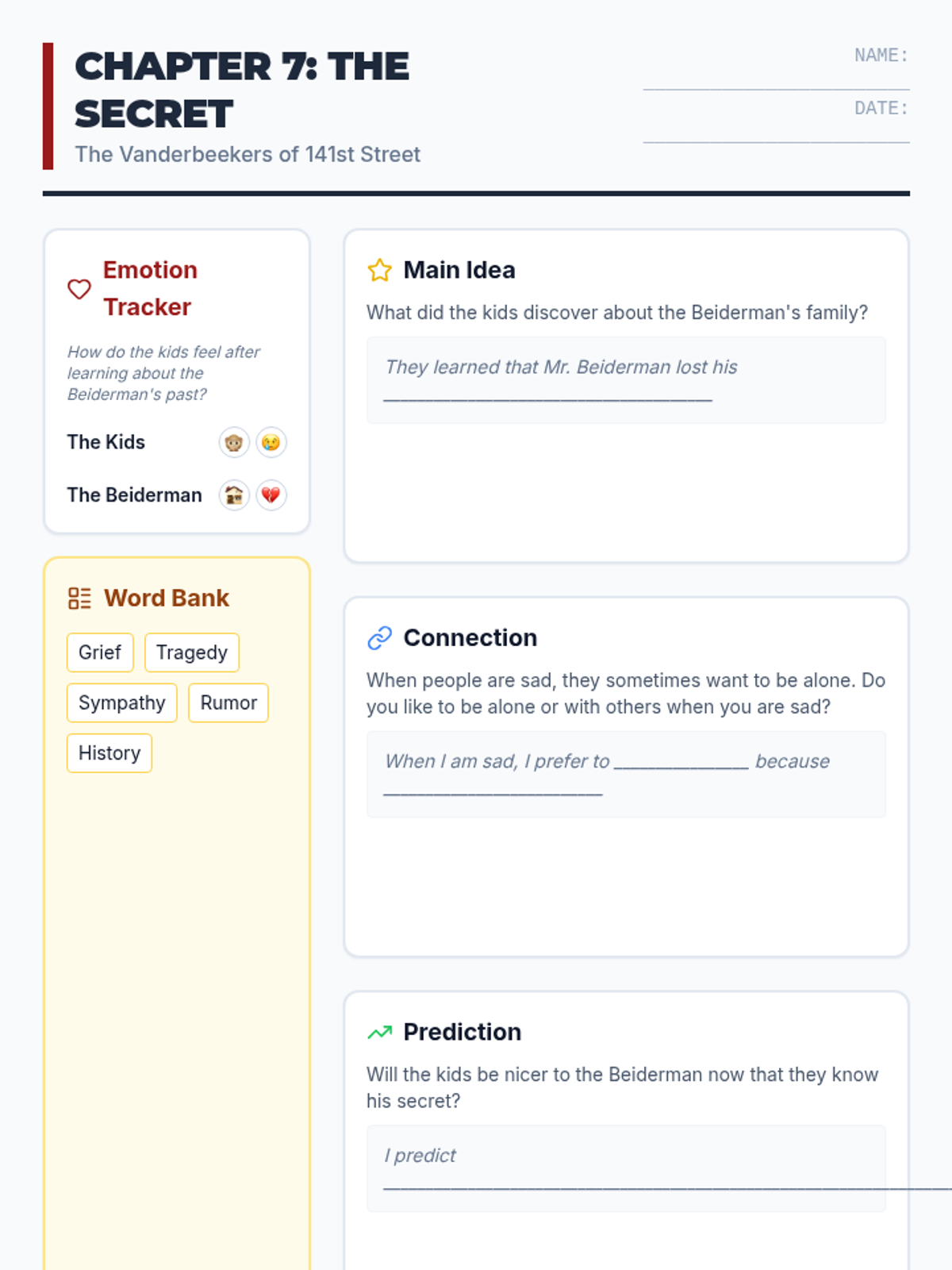
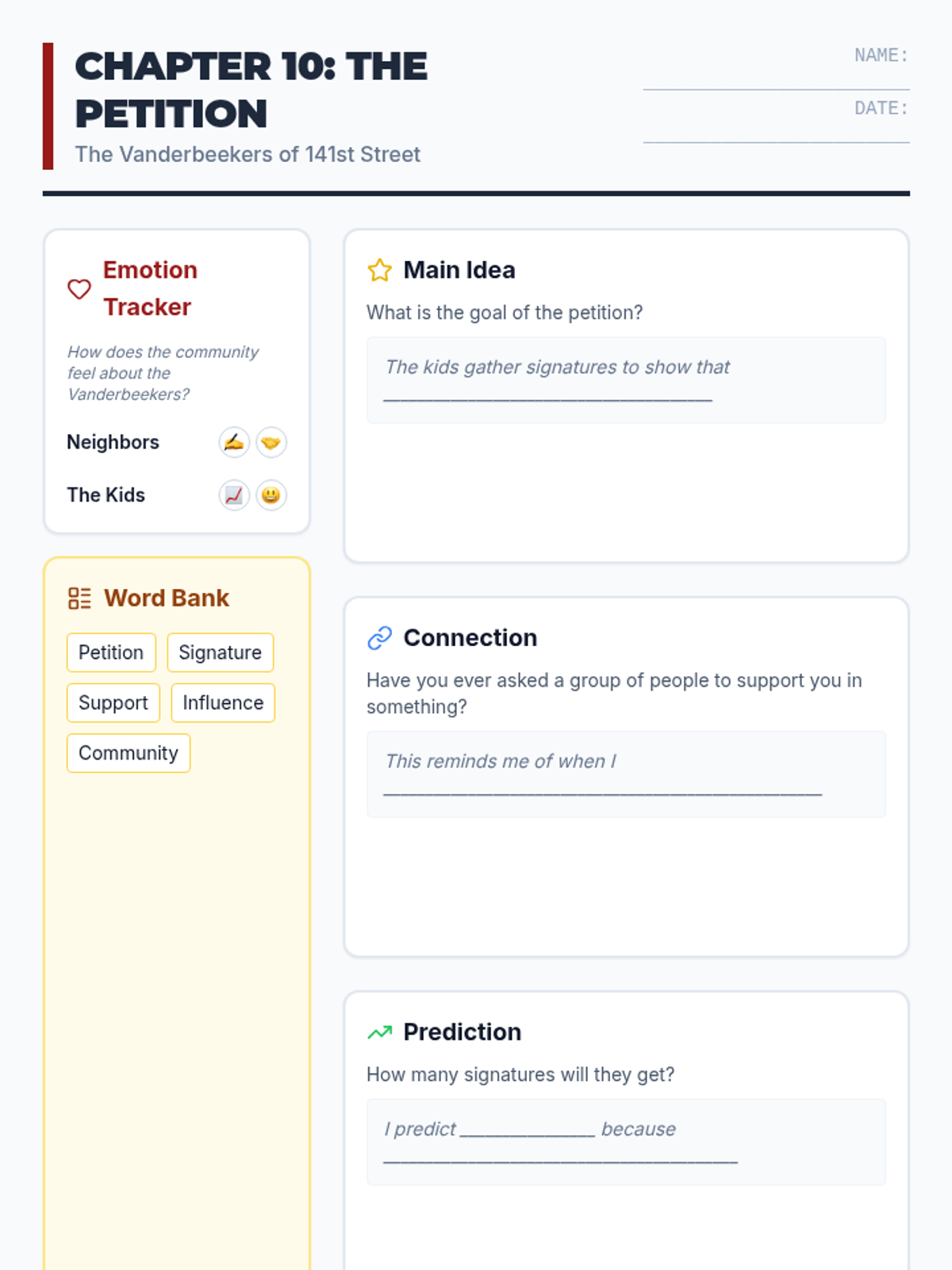
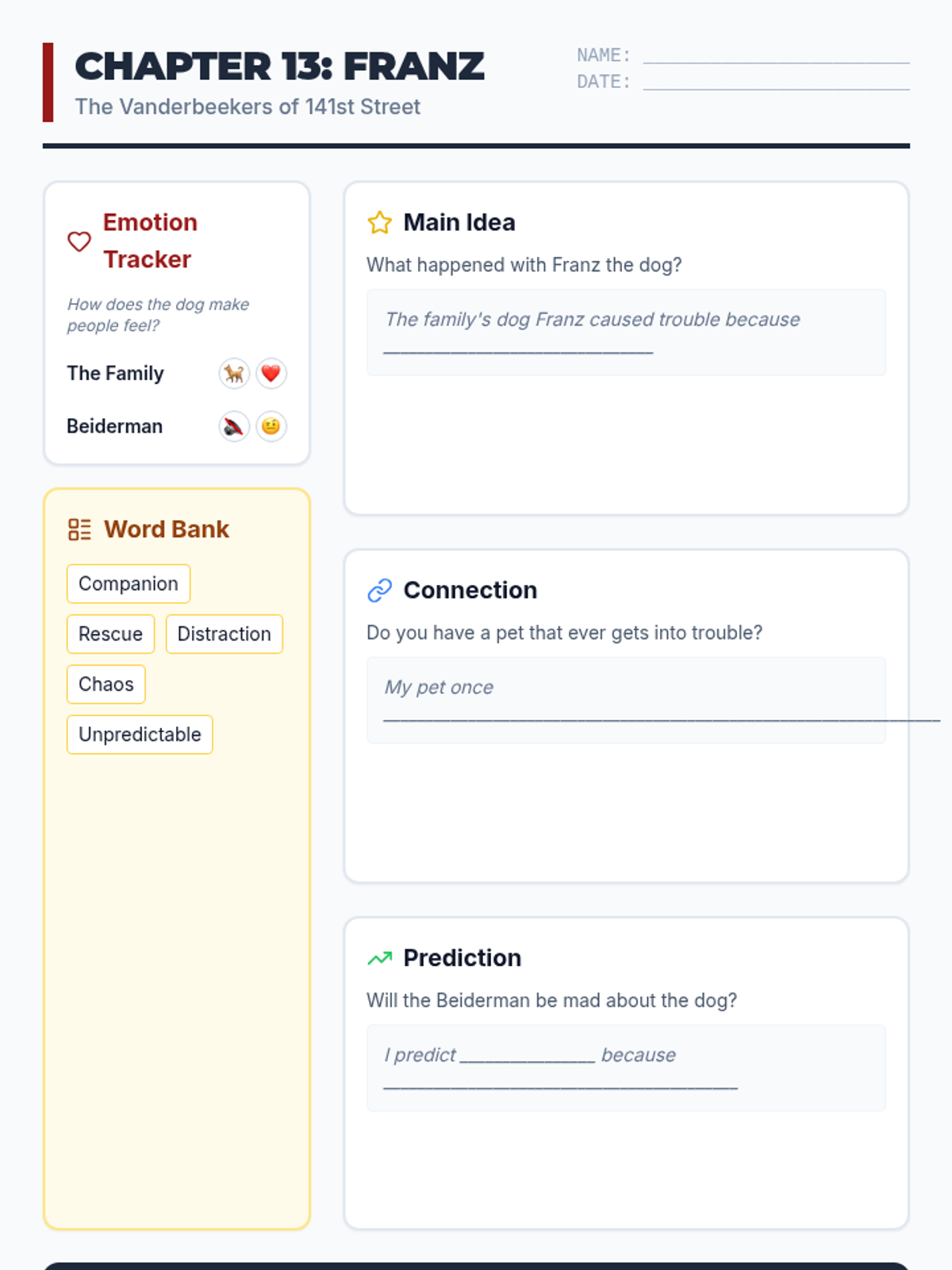
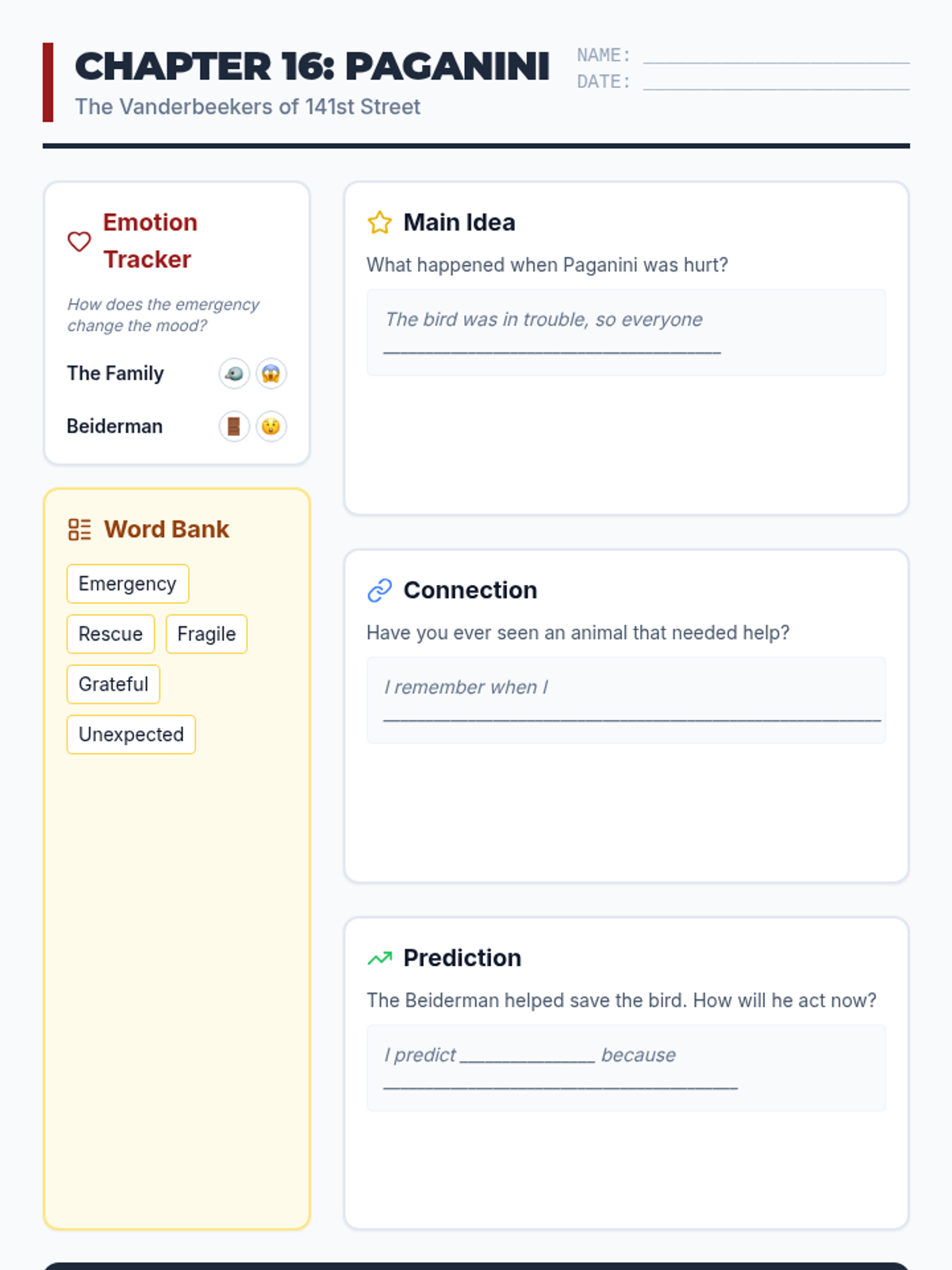
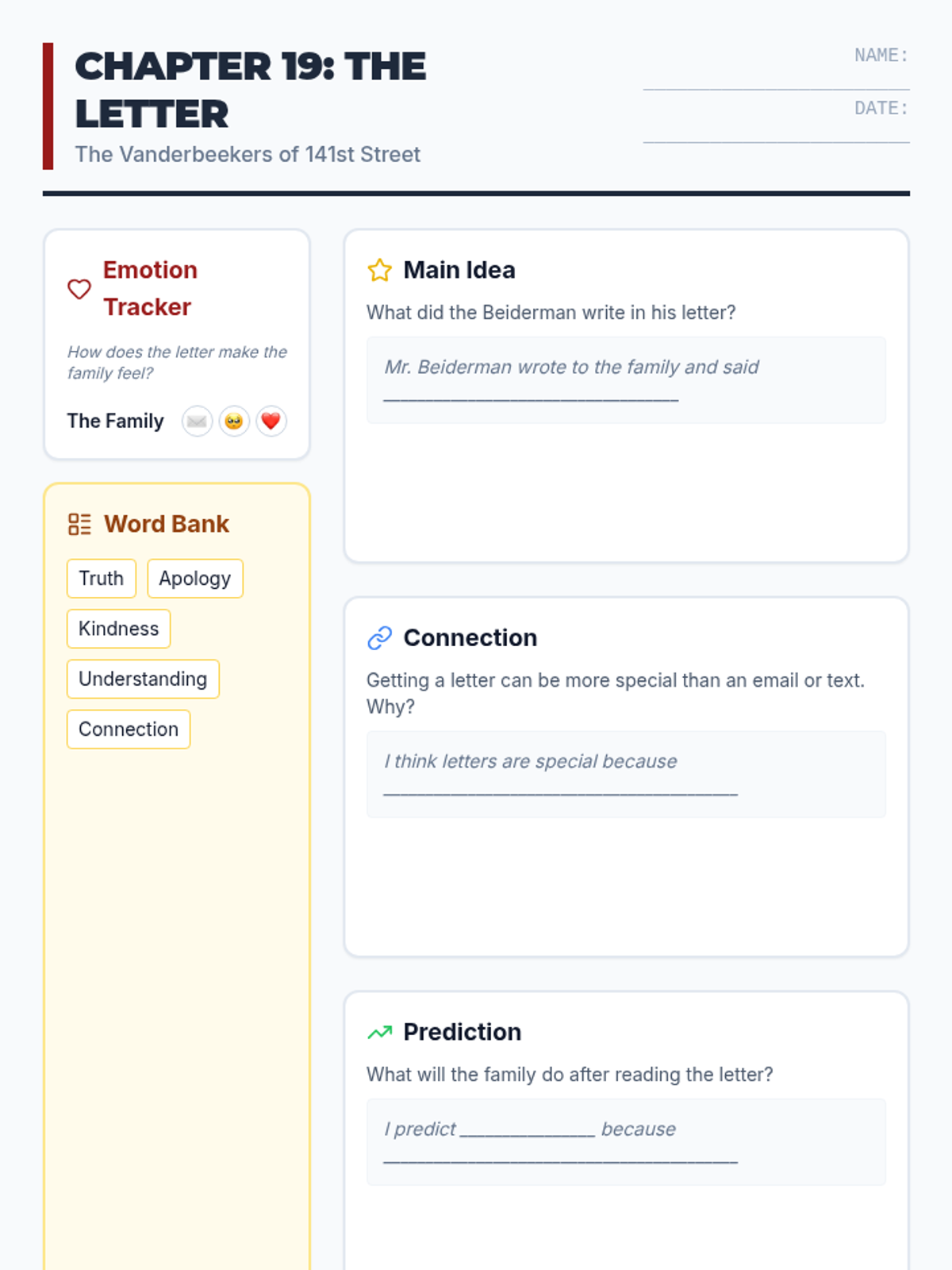
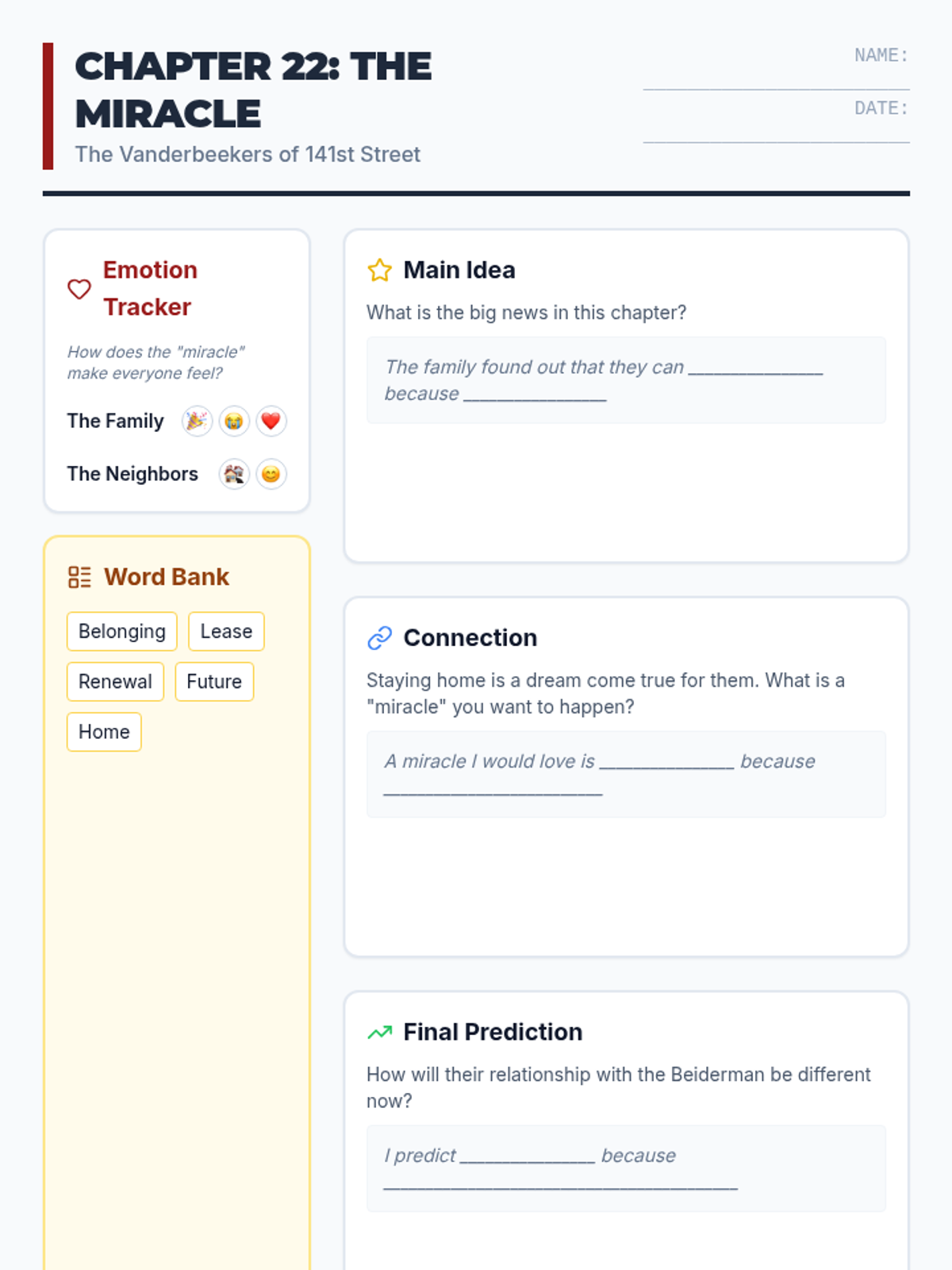
A collection of structured graphic organizers for every chapter of the novel, featuring visual supports, word banks, and framed writing prompts.
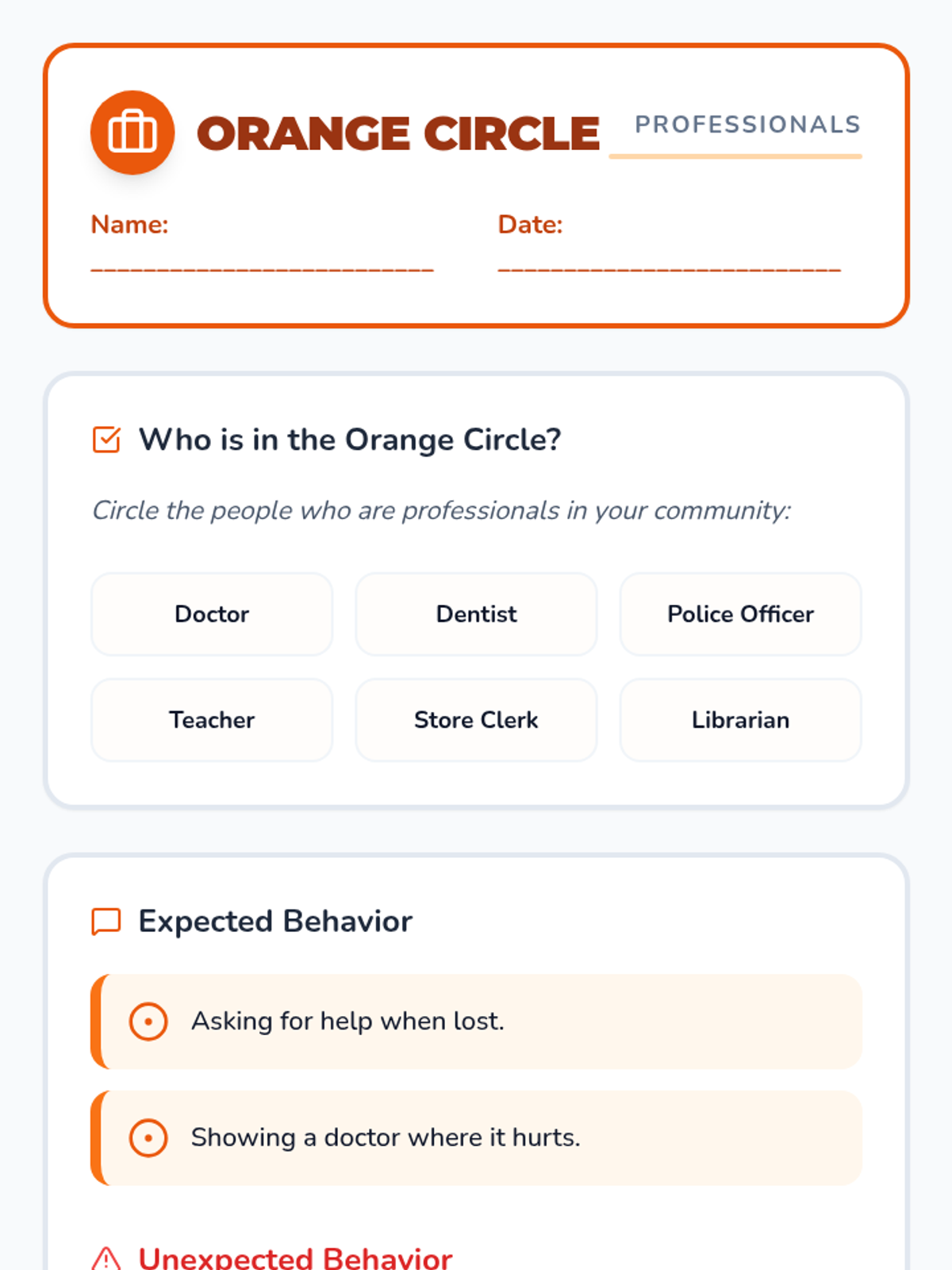
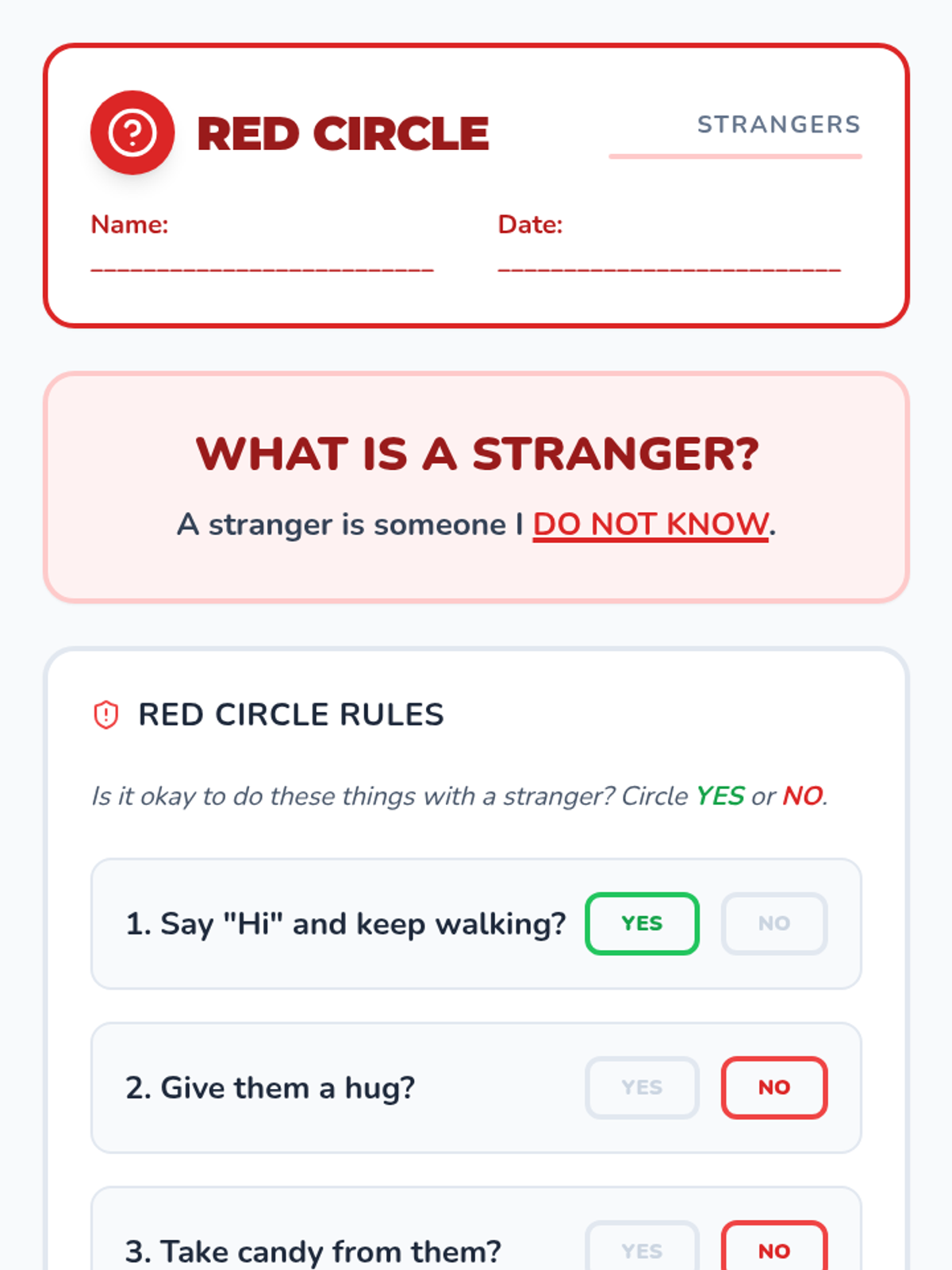
Explores the Orange (Community/Professional) and Red (Stranger) circles, emphasizing safety, professional boundaries, and interacting with people in the community.
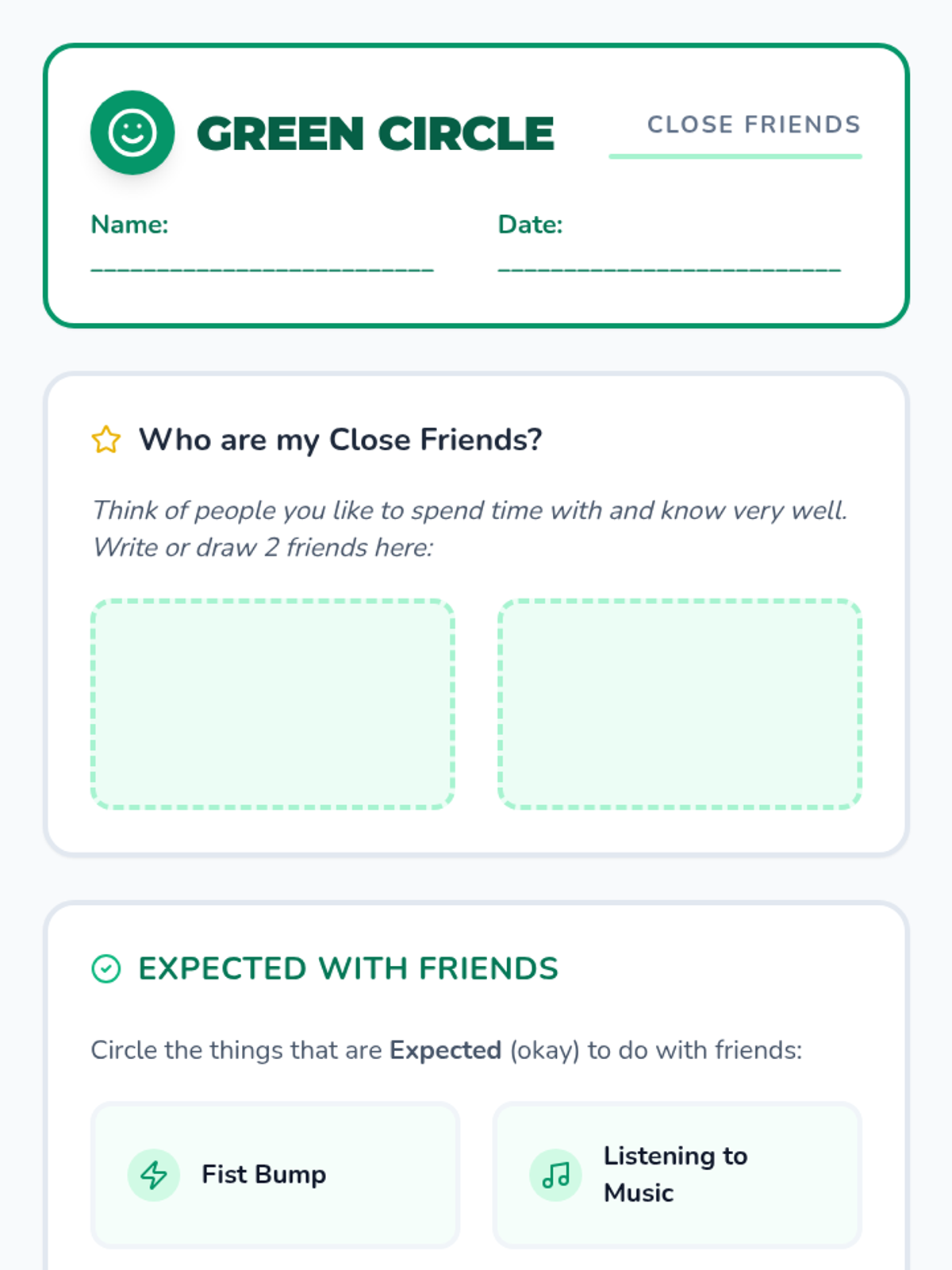
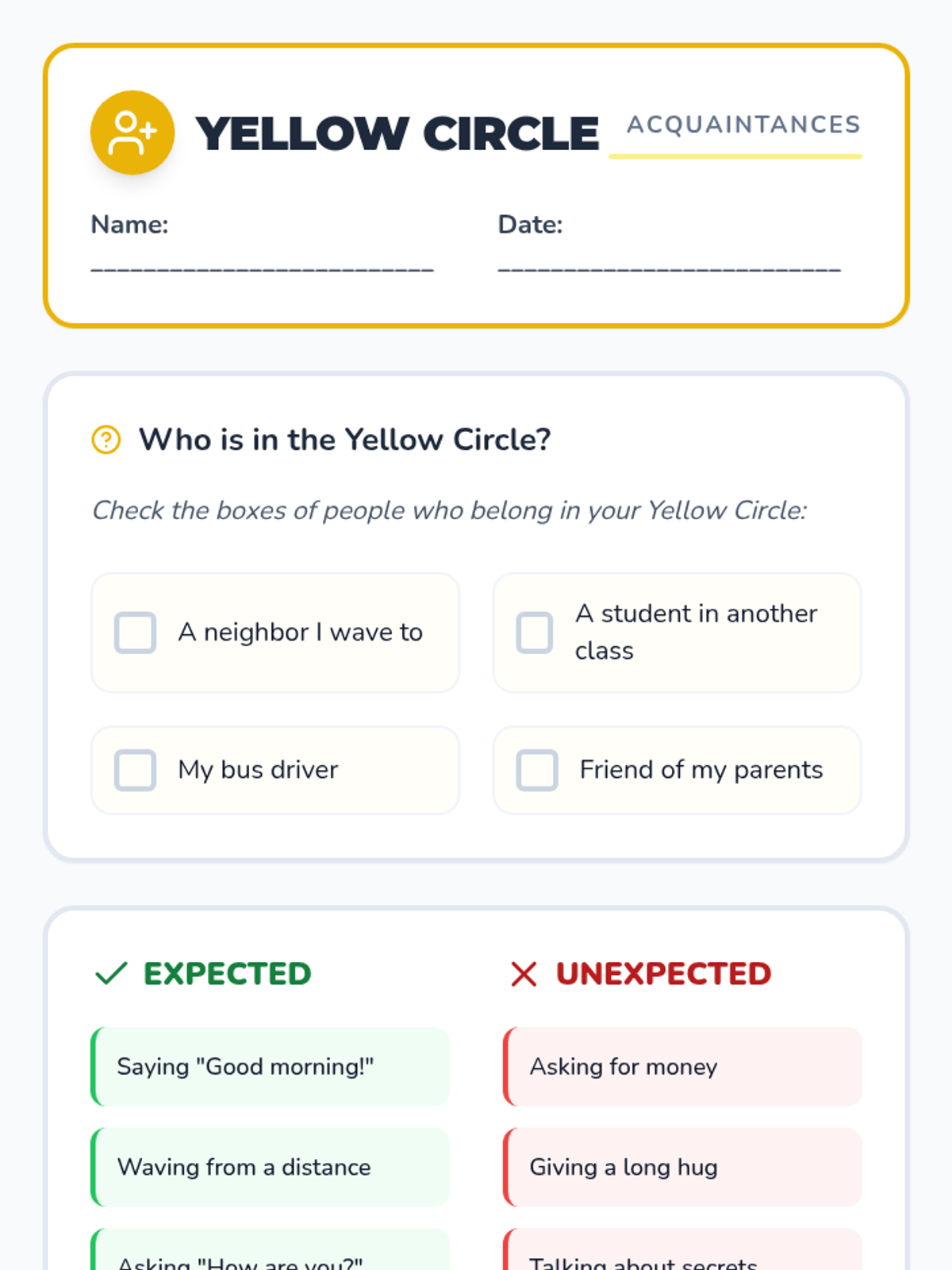
Covers the Green (Friends) and Yellow (Acquaintances) circles, teaching the difference between close friendship and casual social connections.
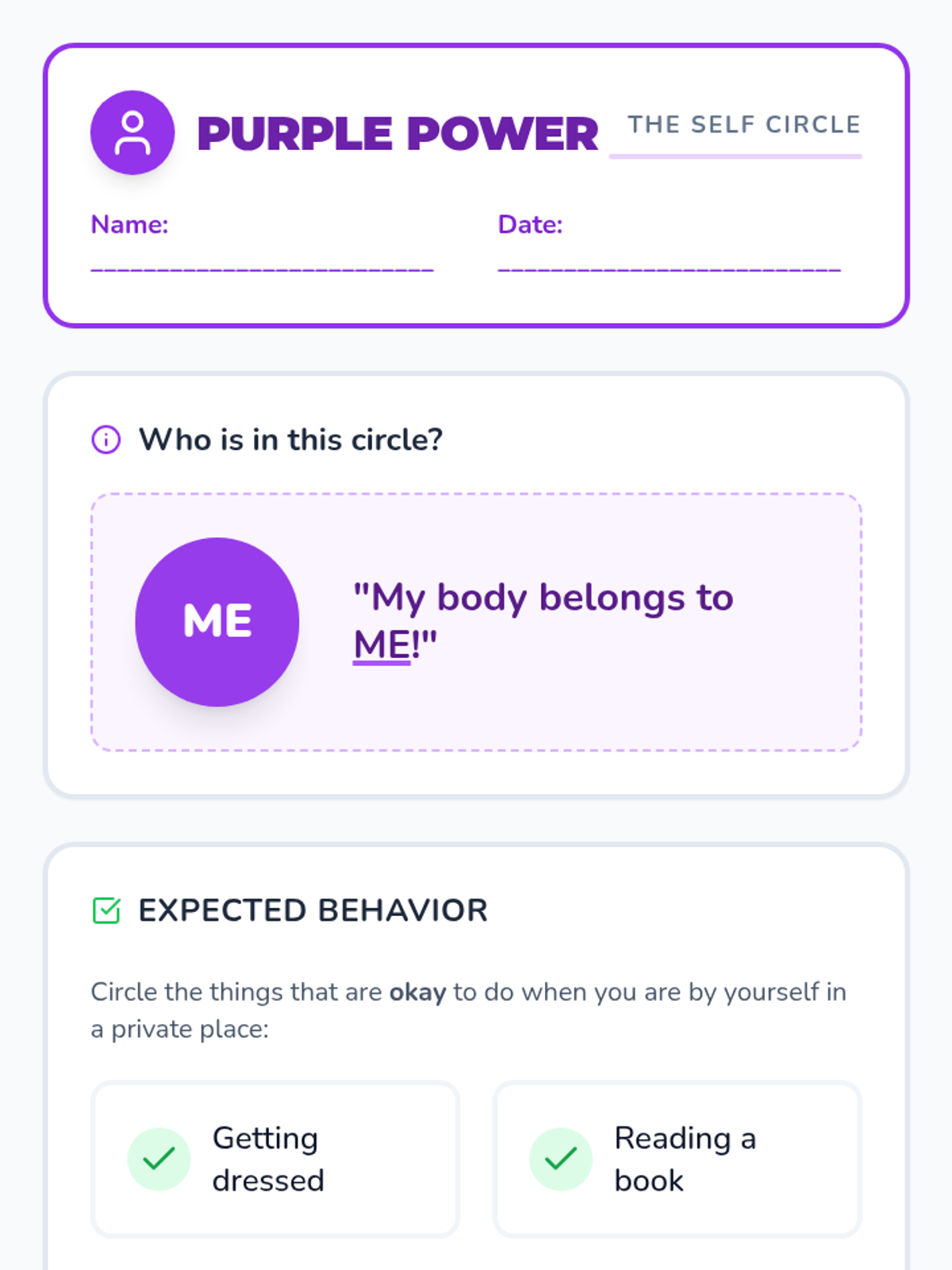
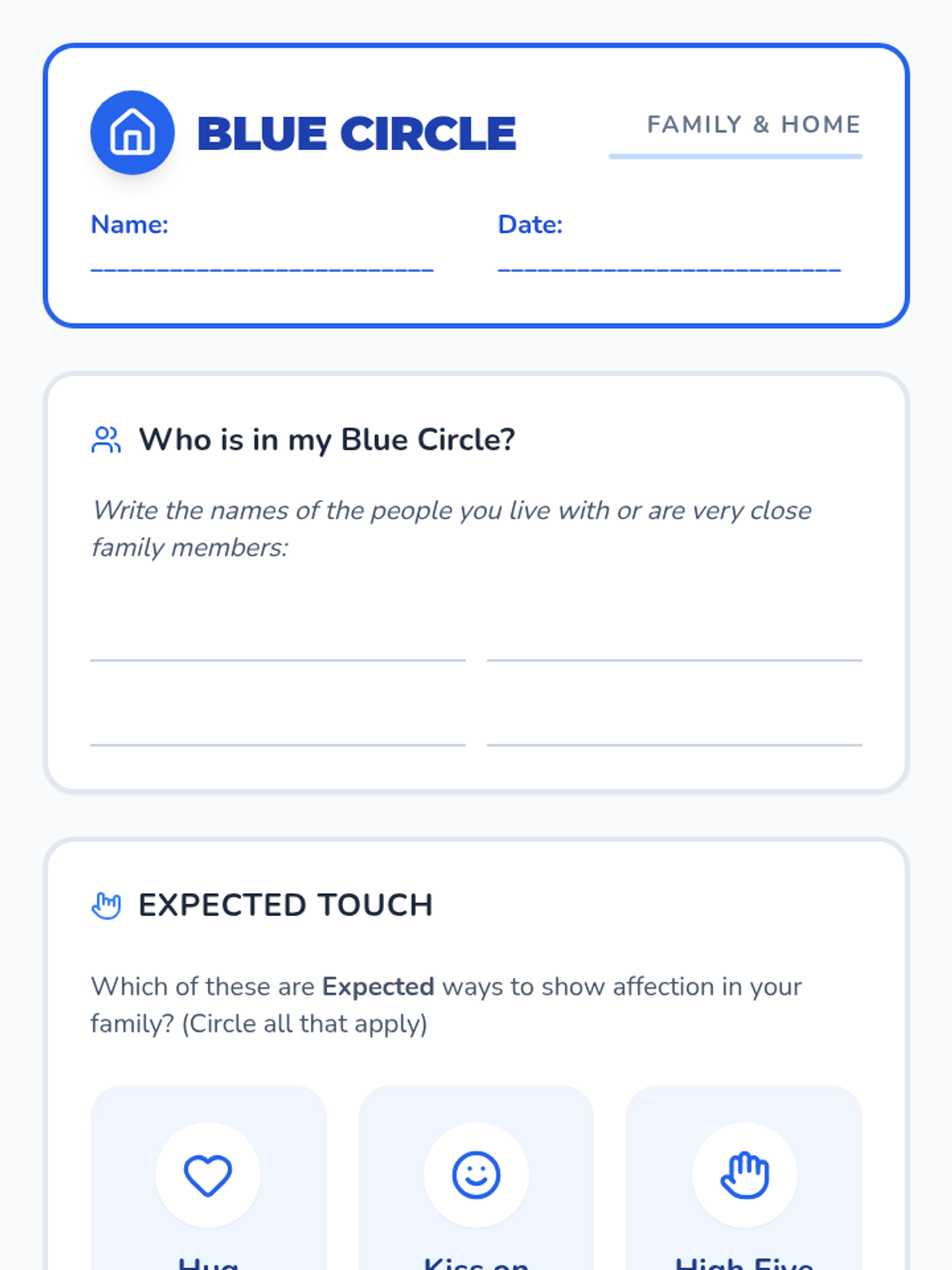
Introduces the Purple (Self) and Blue (Private/Family) circles, focusing on personal space, body autonomy, and the closest intimate relationships.