Strategies for identifying specific learning needs and articulating accommodation requests to educators. Equips students with communication skills to advocate for necessary environmental, academic, and social supports.
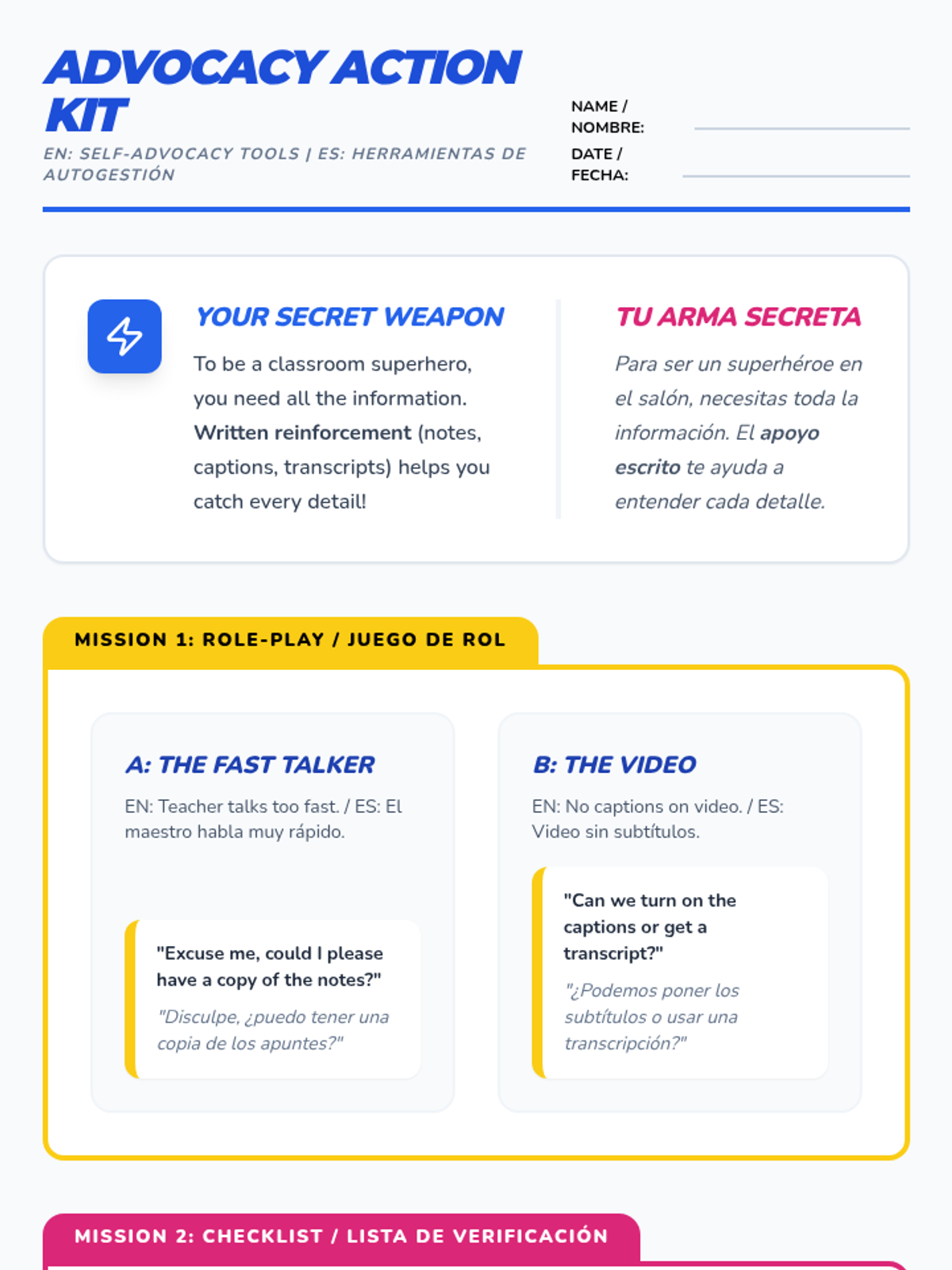
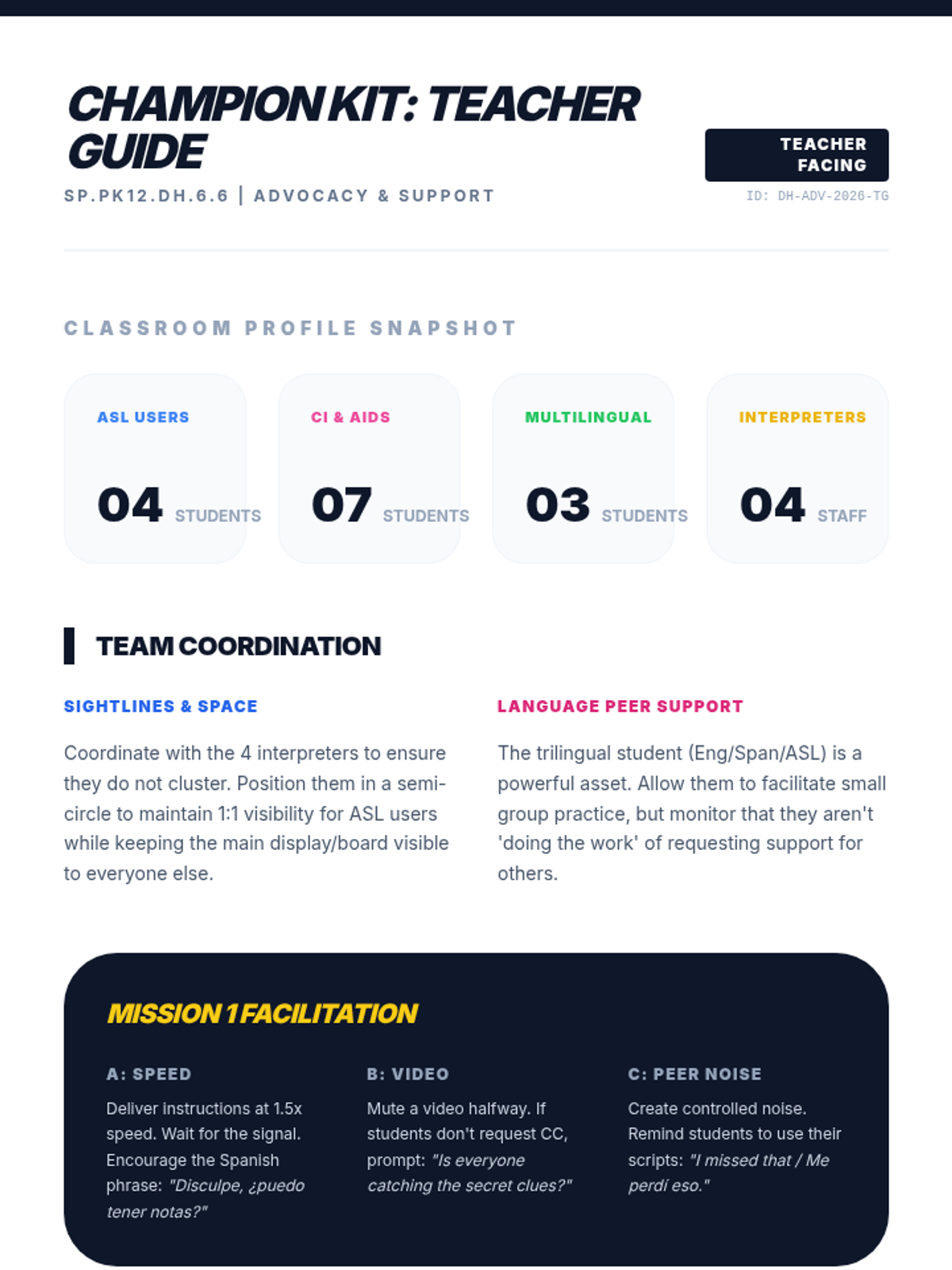
A lesson focused on empowering students with hearing loss to self-advocate for written instructional reinforcements like transcripts and closed captions.
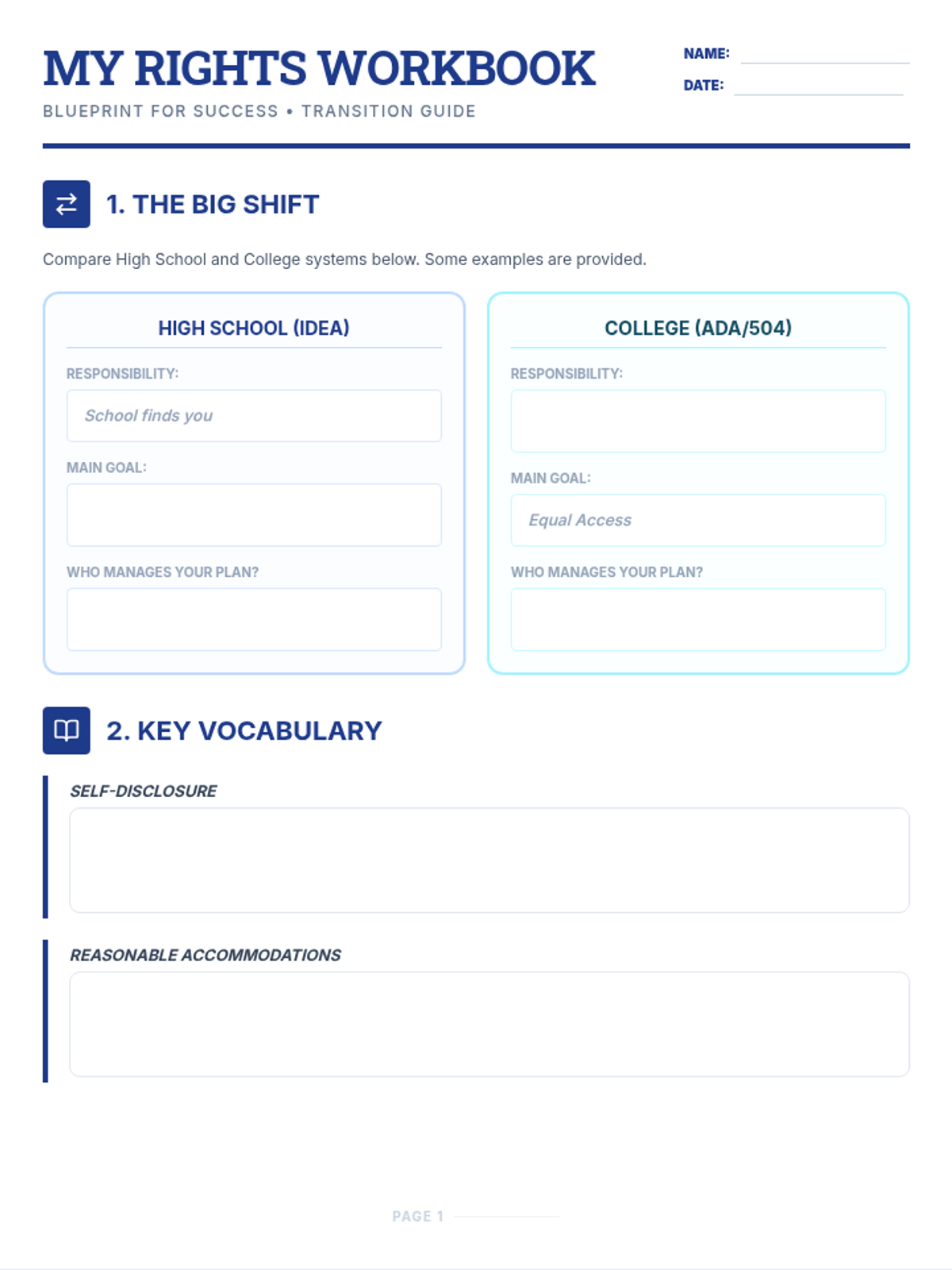
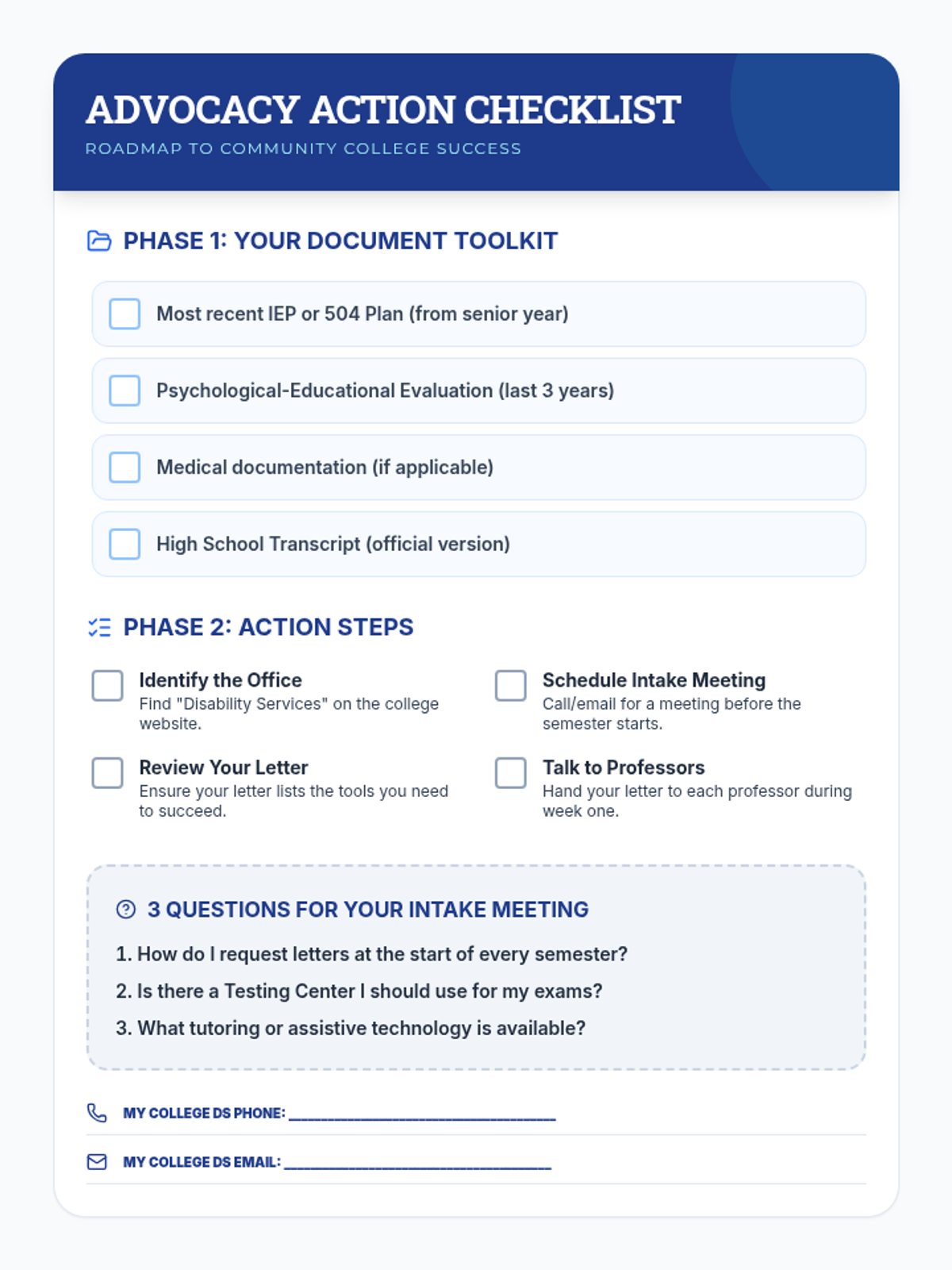
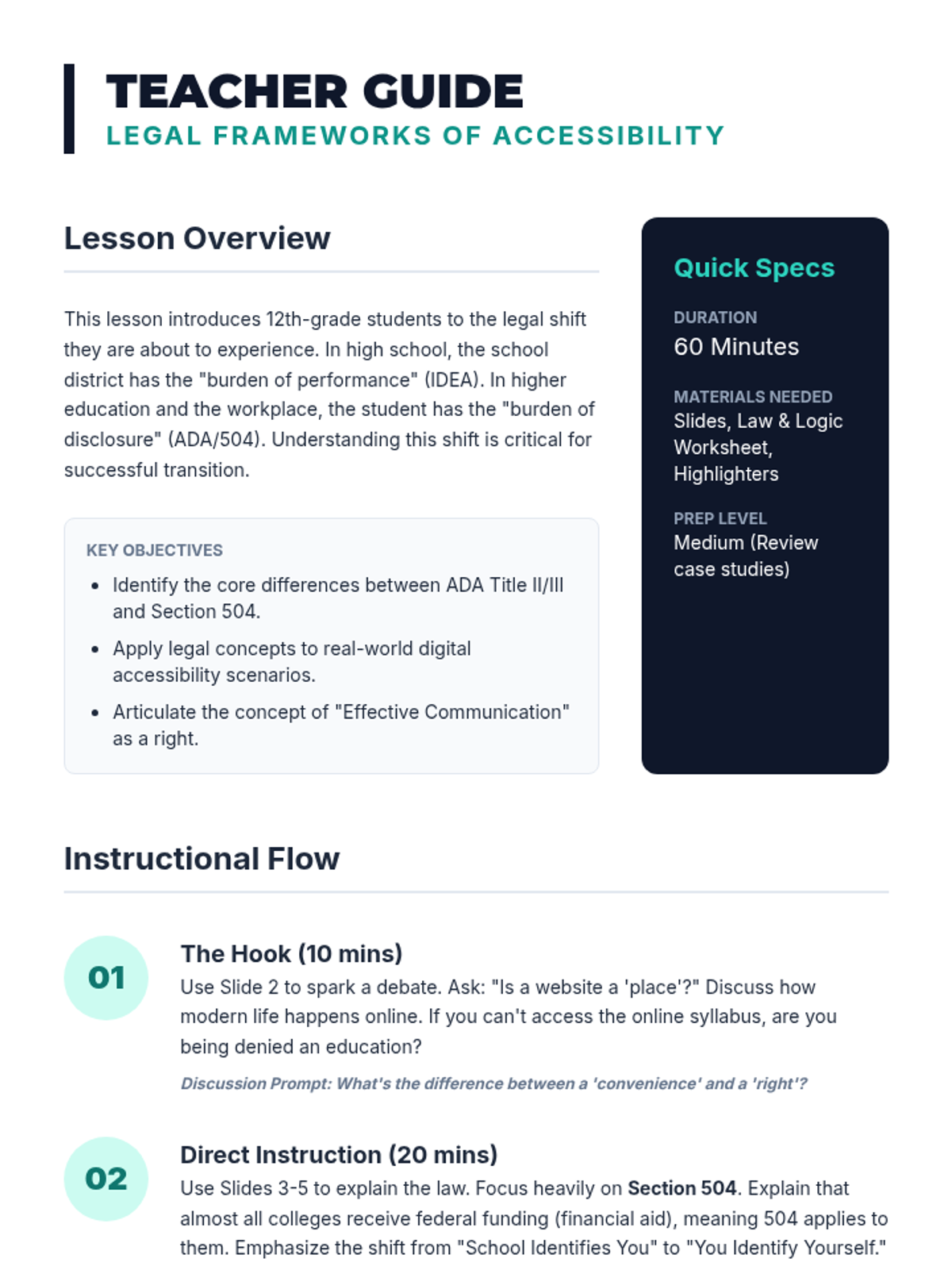
This lesson prepares 12th-grade special education students for the transition to community college by exploring the shift from IDEA to ADA/Section 504. Students will learn the accommodation process, the importance of self-disclosure, and their role as self-advocates in a post-secondary environment.
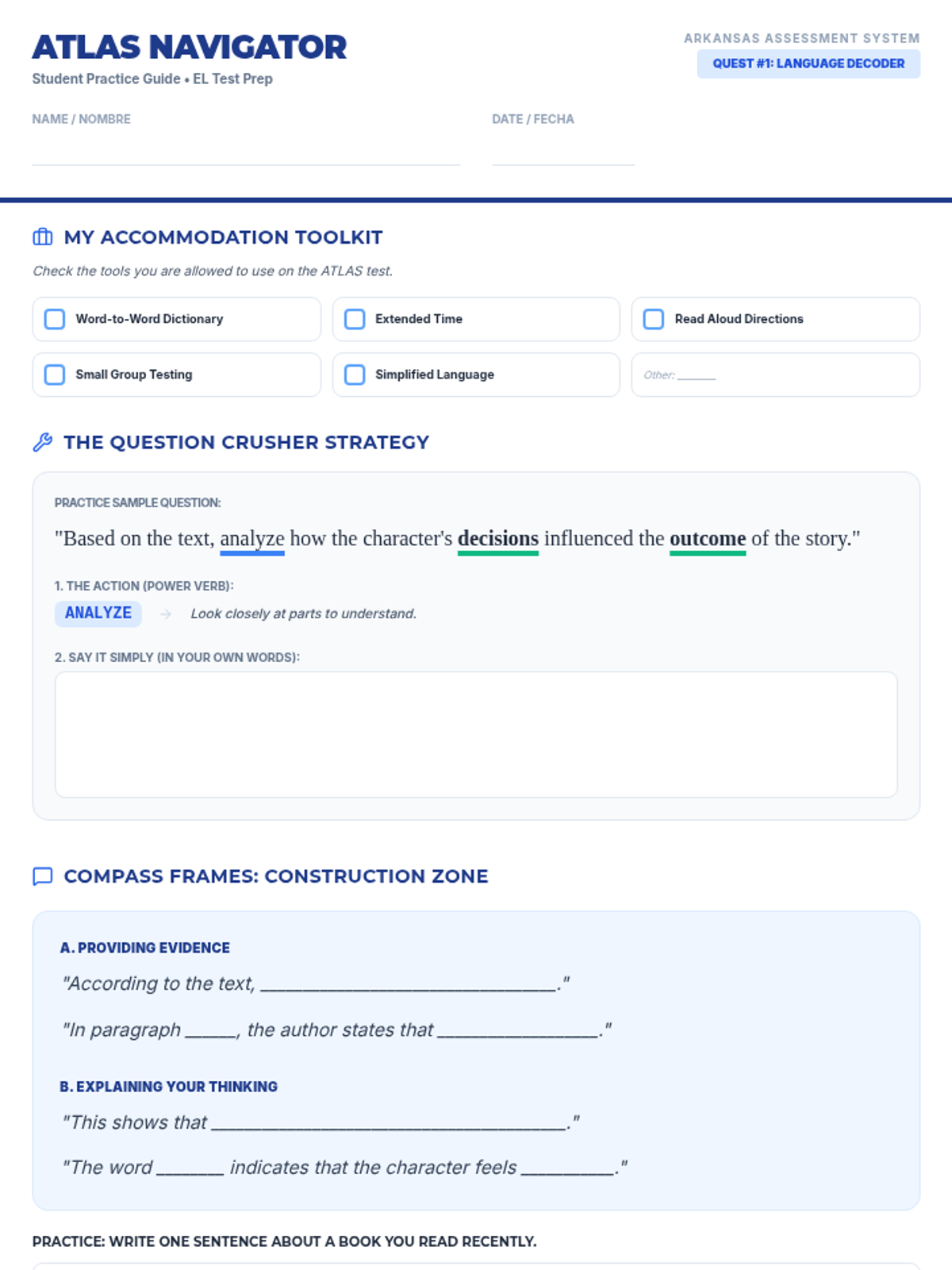
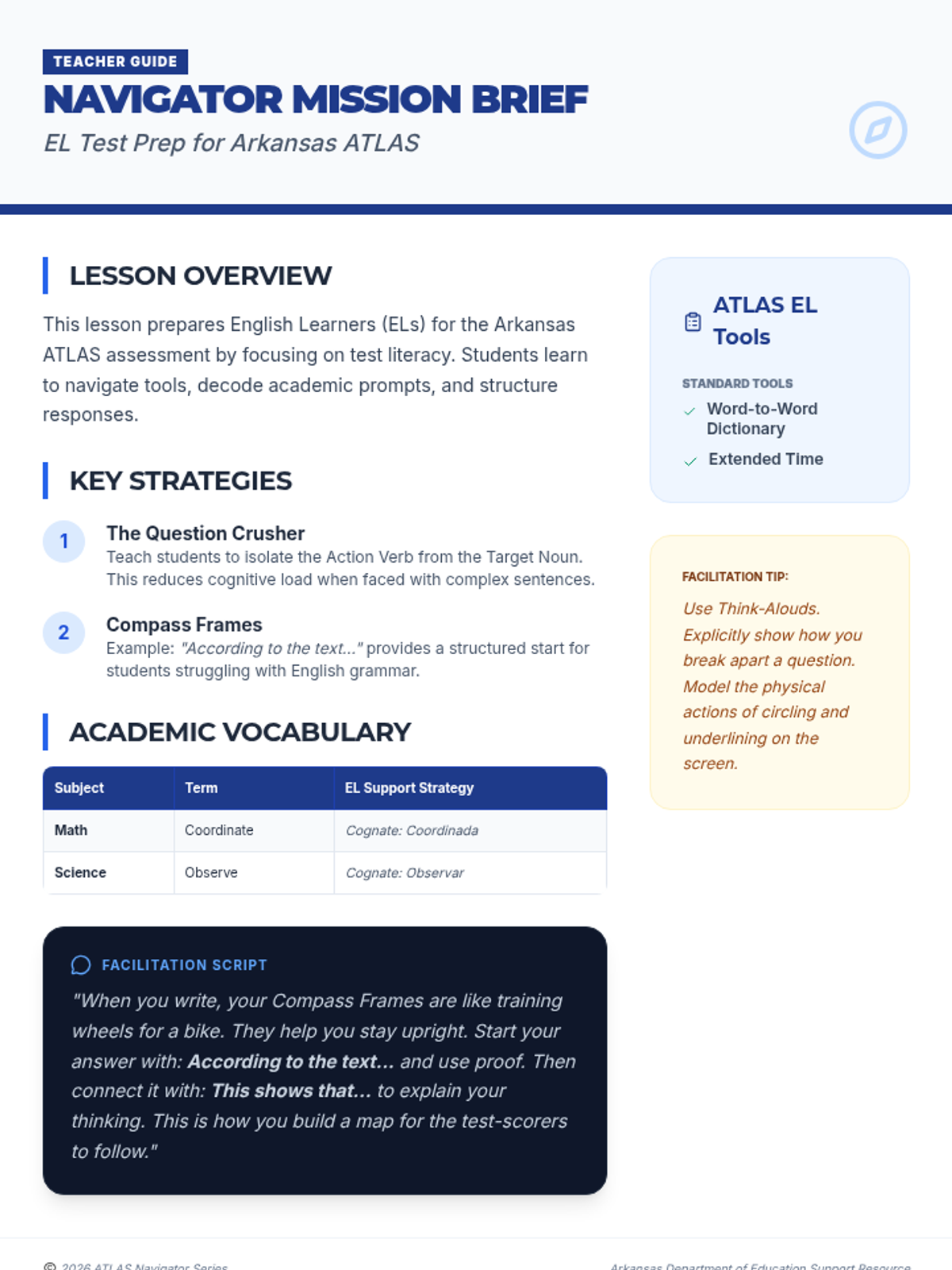
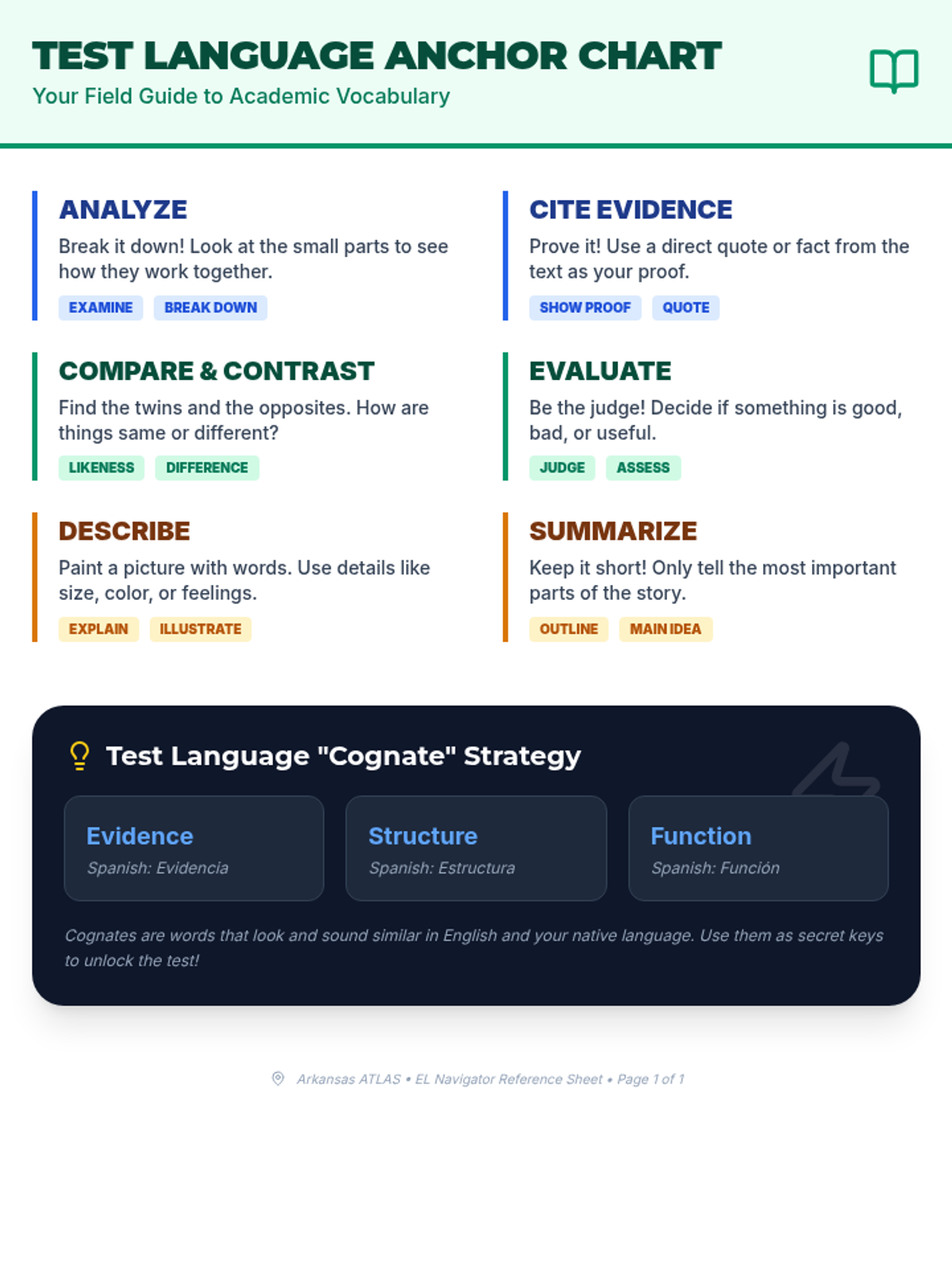
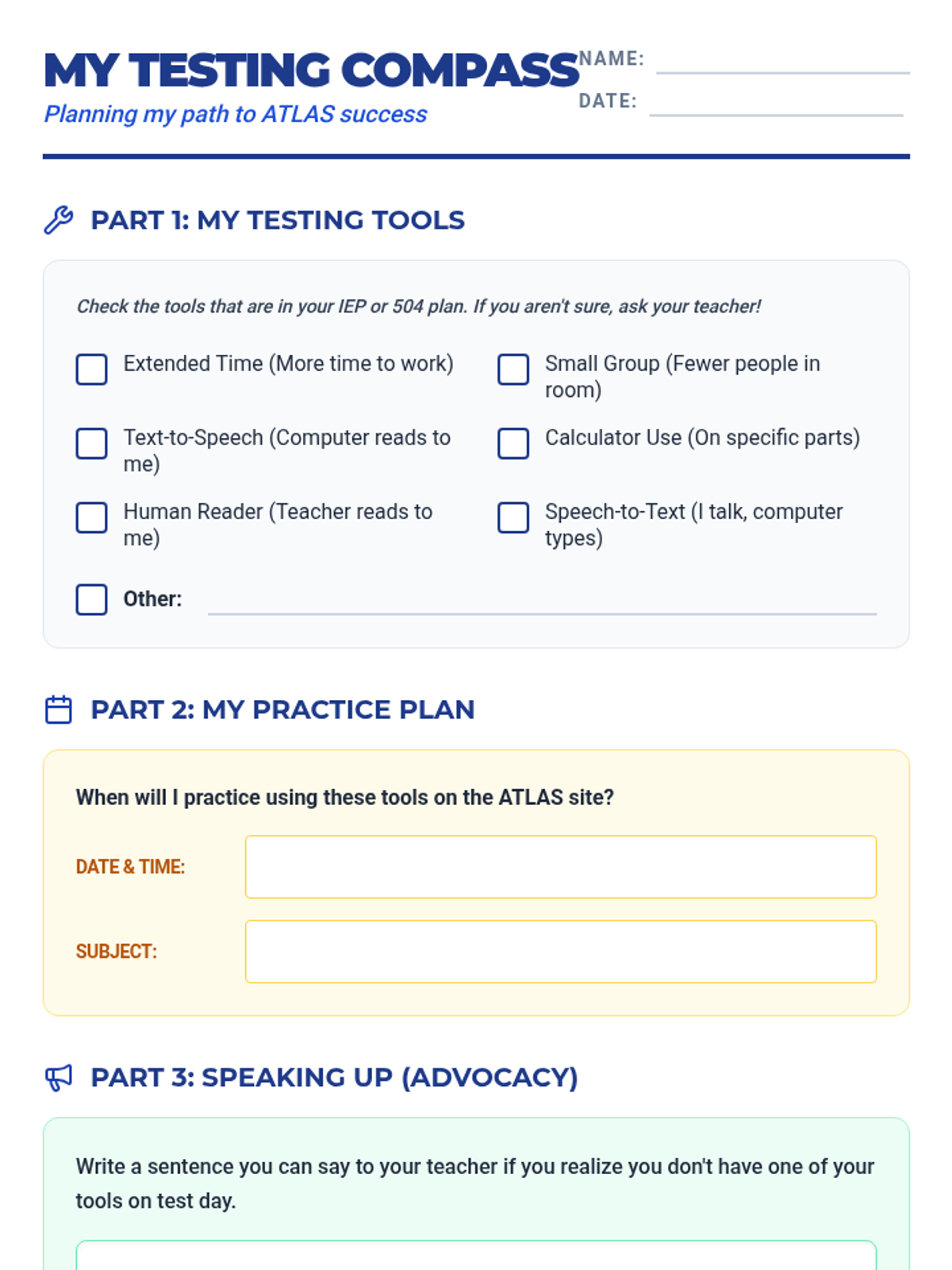
A comprehensive test prep support lesson designed specifically for Arkansas English Learners (ELs) to navigate the ATLAS assessment. The lesson covers accommodations, academic language decoding, and vocabulary strategies through a cartography-inspired theme.
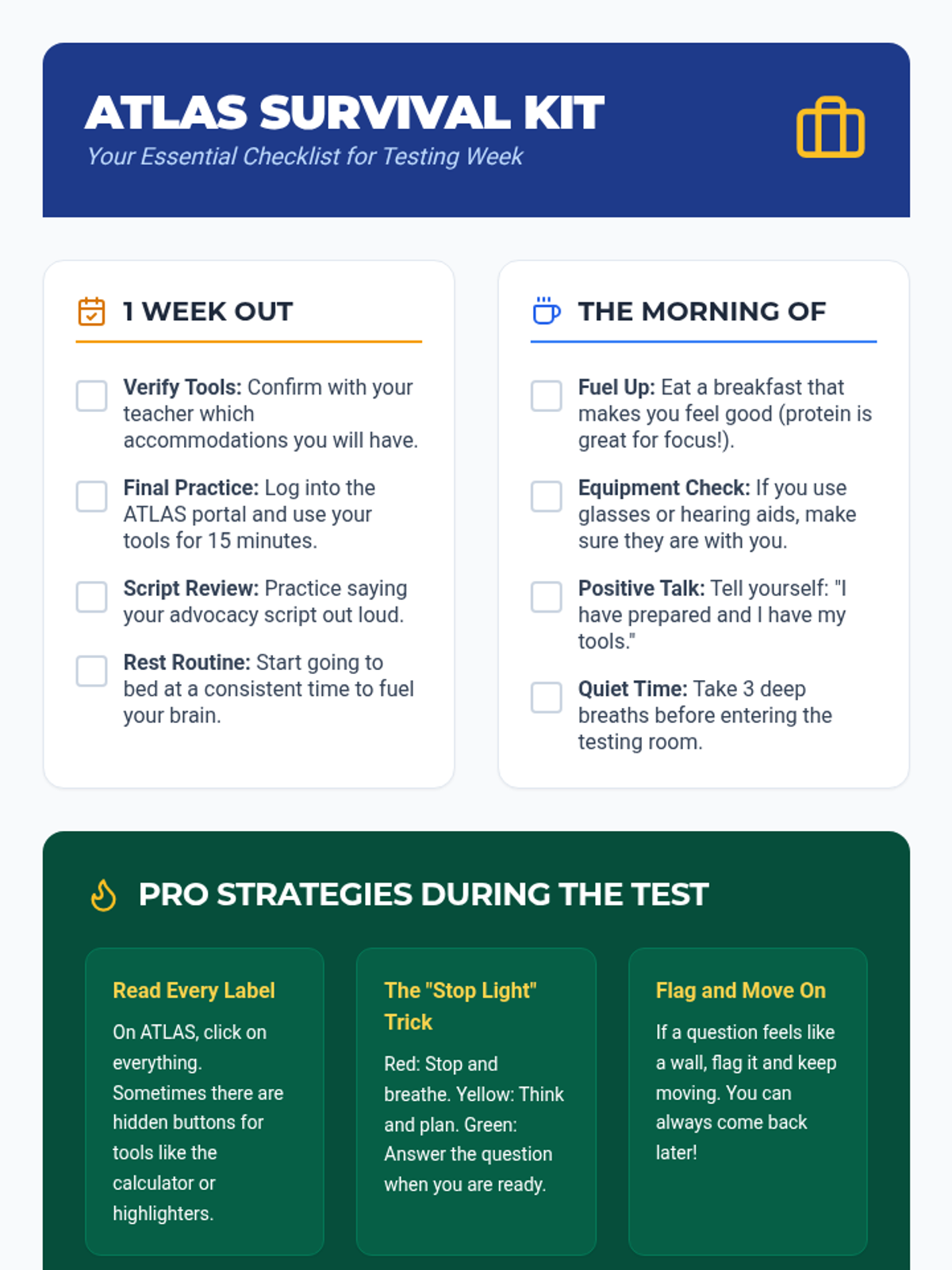
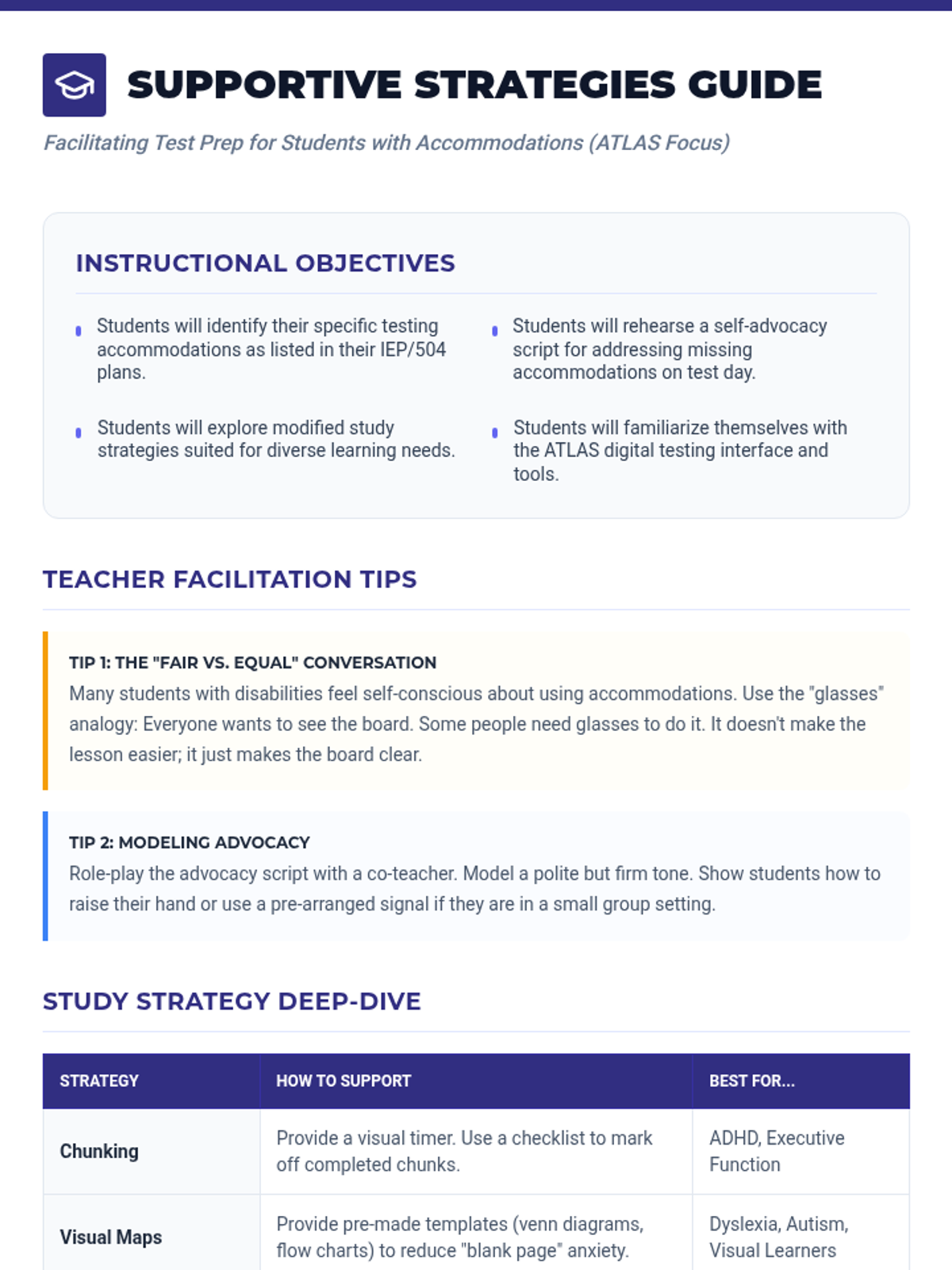
A supportive lesson designed for students with IEPs and 504 plans to navigate the Arkansas ATLAS assessments with confidence, focusing on accommodations, self-advocacy, and practical study strategies.
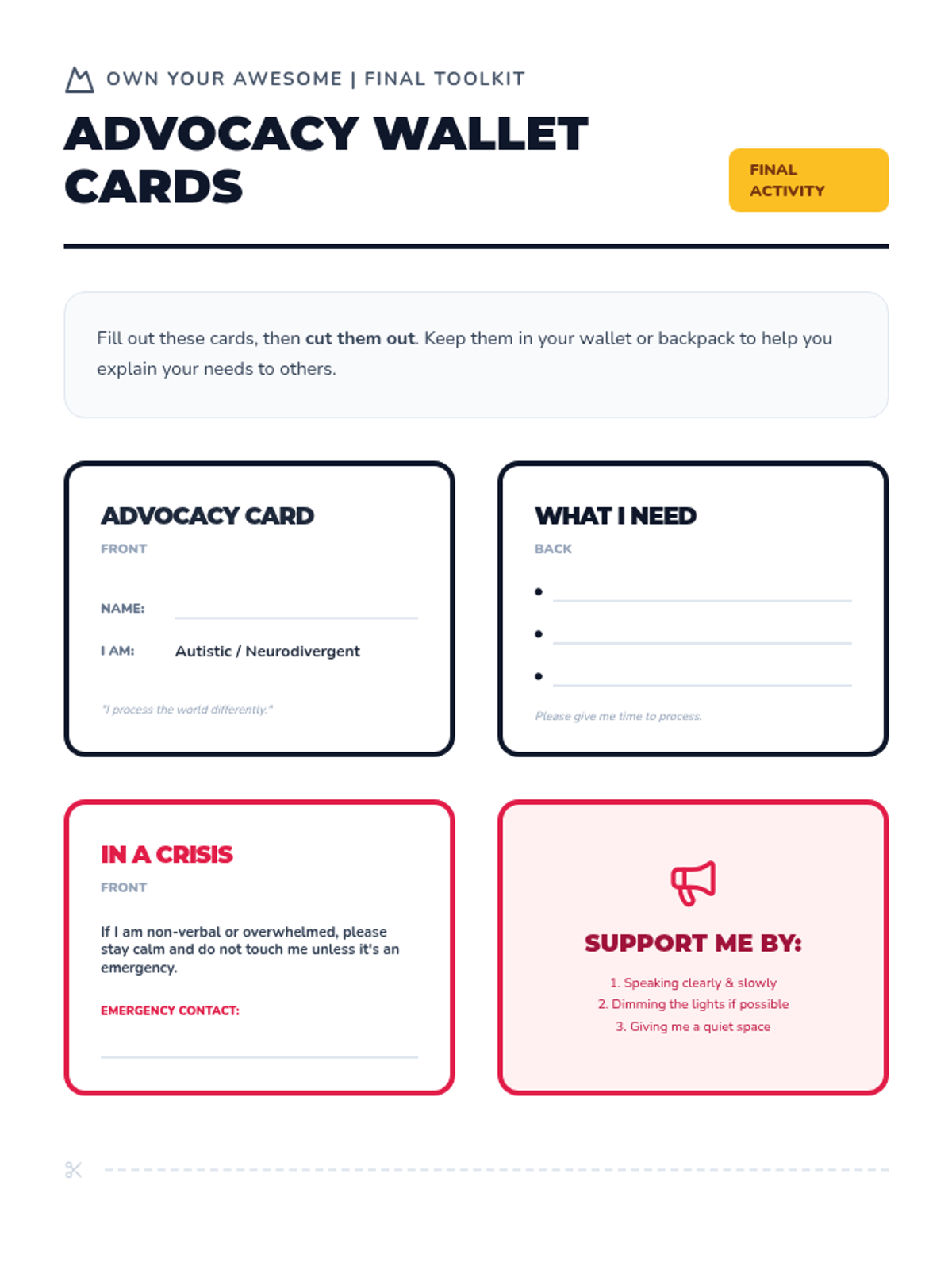
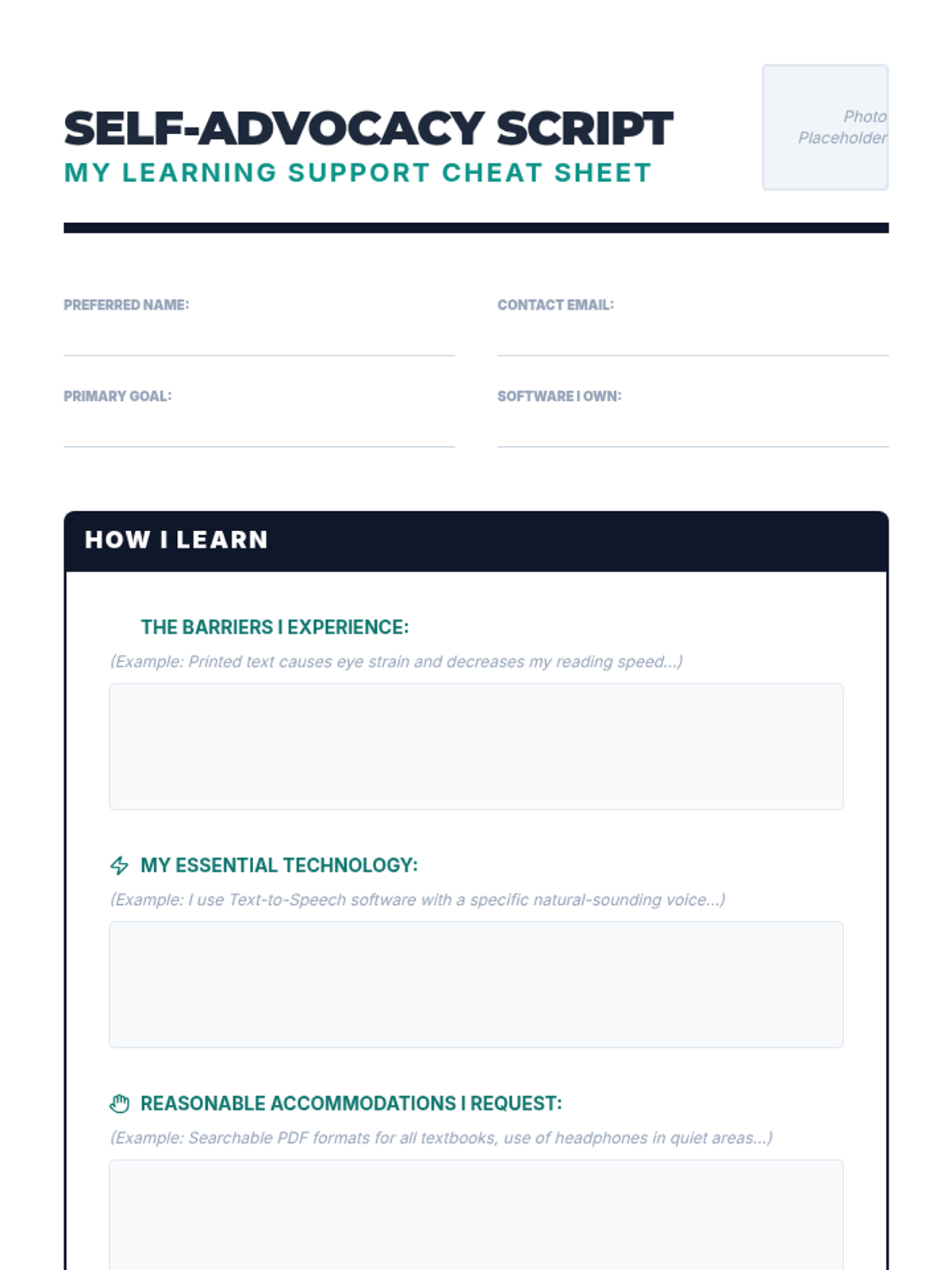
Creating a personalized self-advocacy toolkit and wallet cards for daily use in various environments.
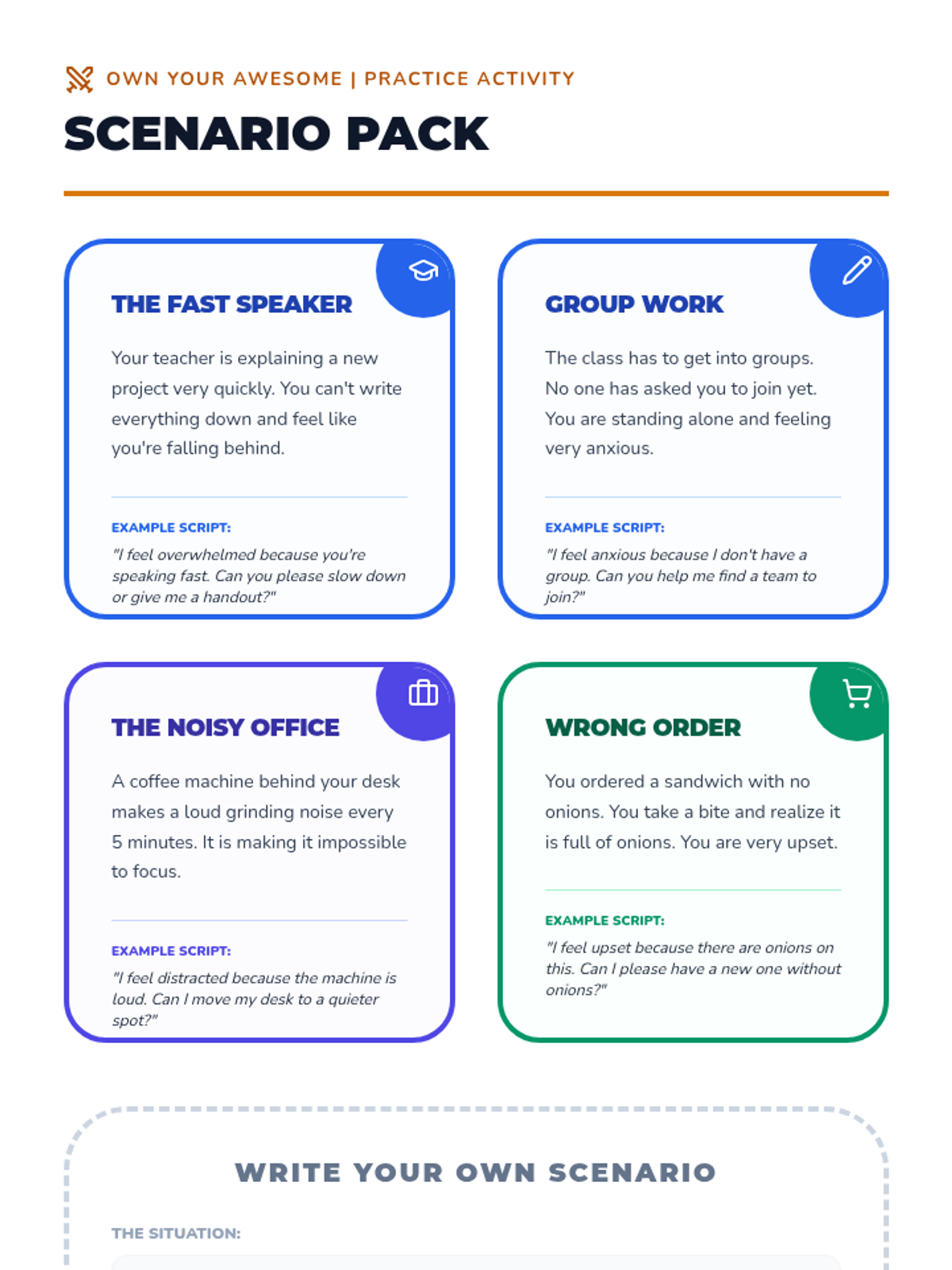
Active practice session with diverse role-play scenarios covering school, work, and community environments.
Navigating public spaces like stores, transit, and libraries with confidence and clear scripts.
Applying advocacy skills to workplace settings, including professional communication and disclosure decisions.
Practicing self-advocacy in the classroom, including asking for accommodations and clarifying instructions.
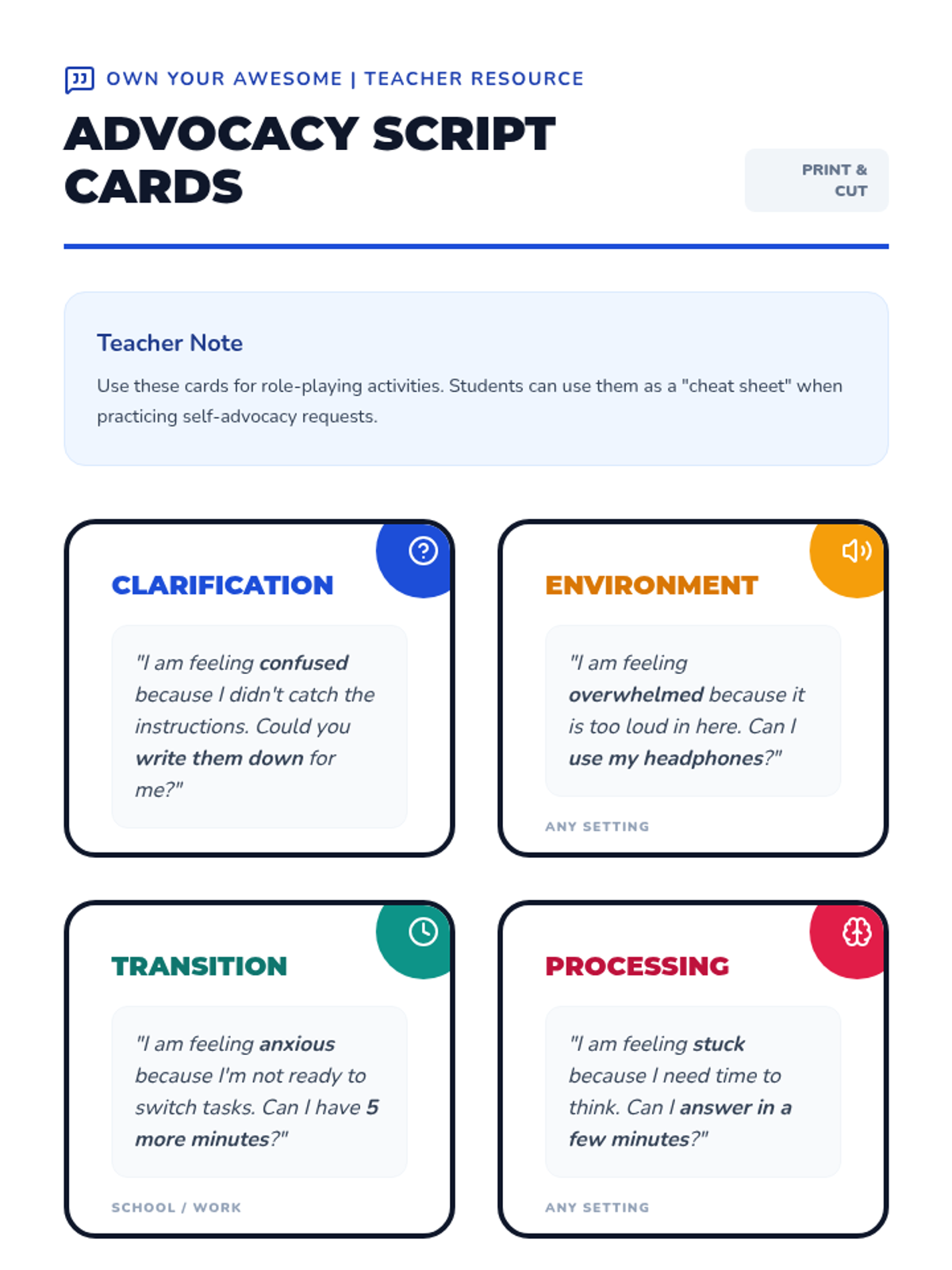
Mastering the structure of a self-advocacy request using clear scripts and communication strategies.
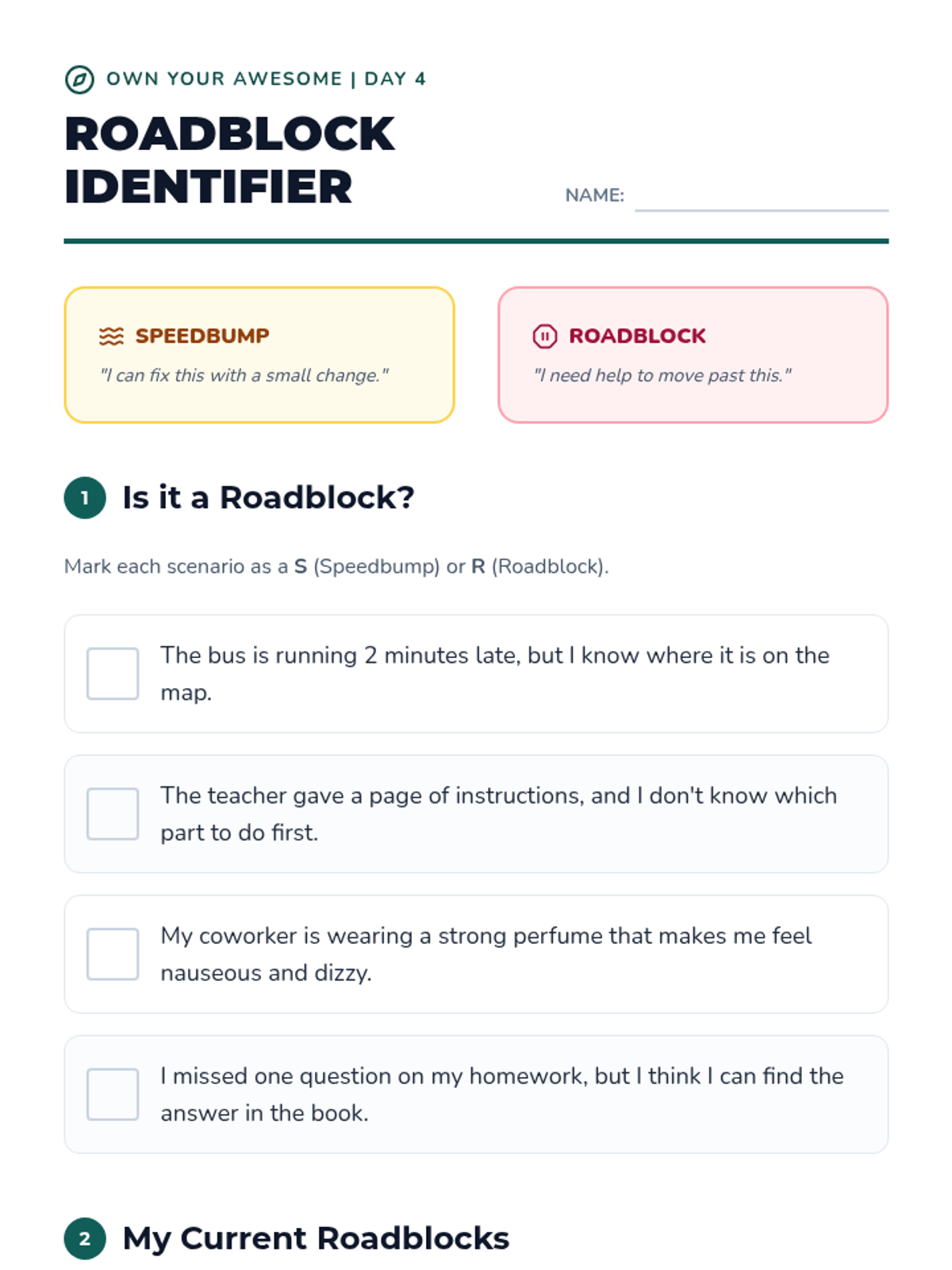
Learning to identify specific roadblocks in real-time and determining what kind of support is required.
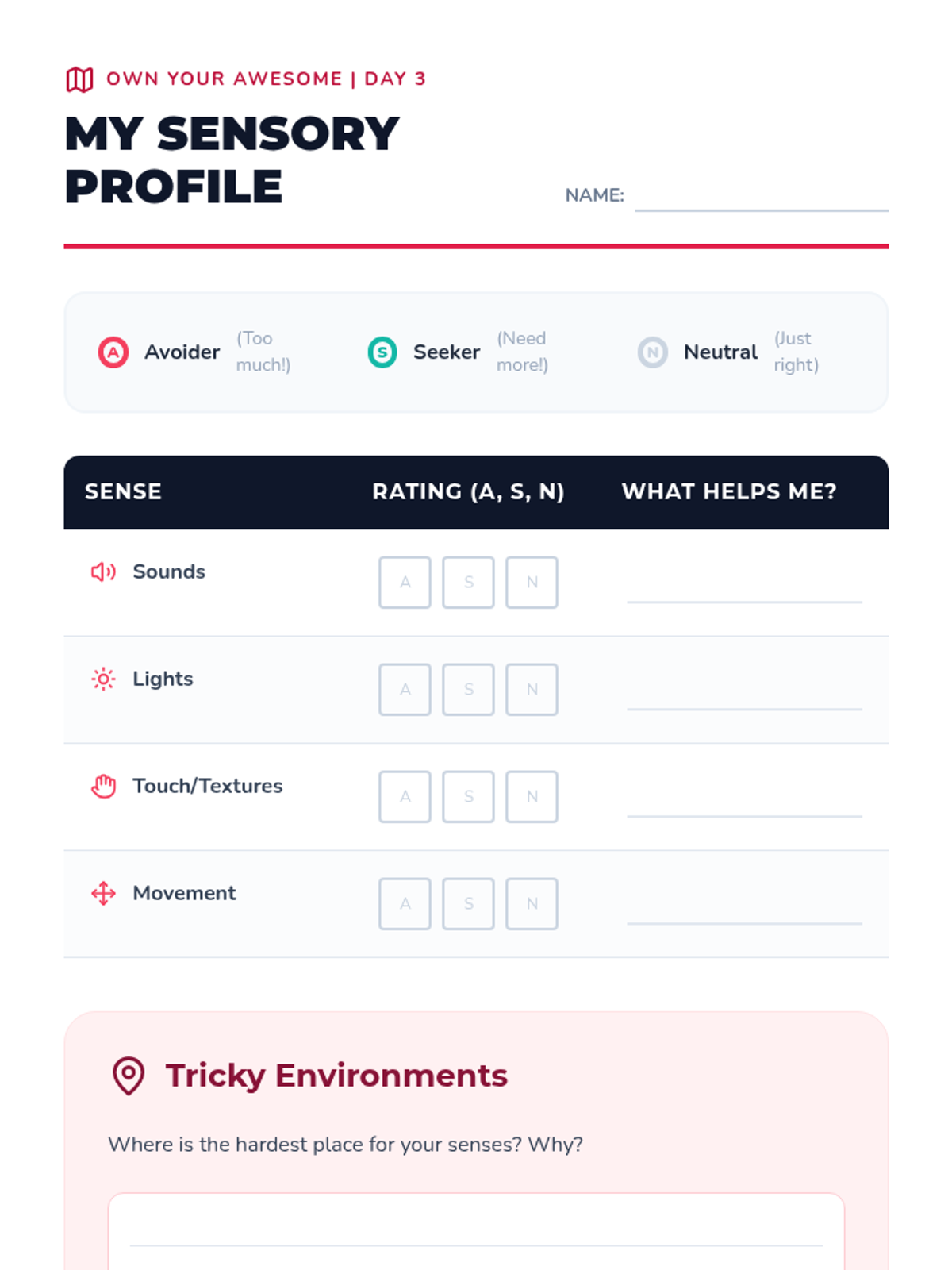
Mapping personal sensory profiles to identify environmental triggers and supportive tools across different settings.
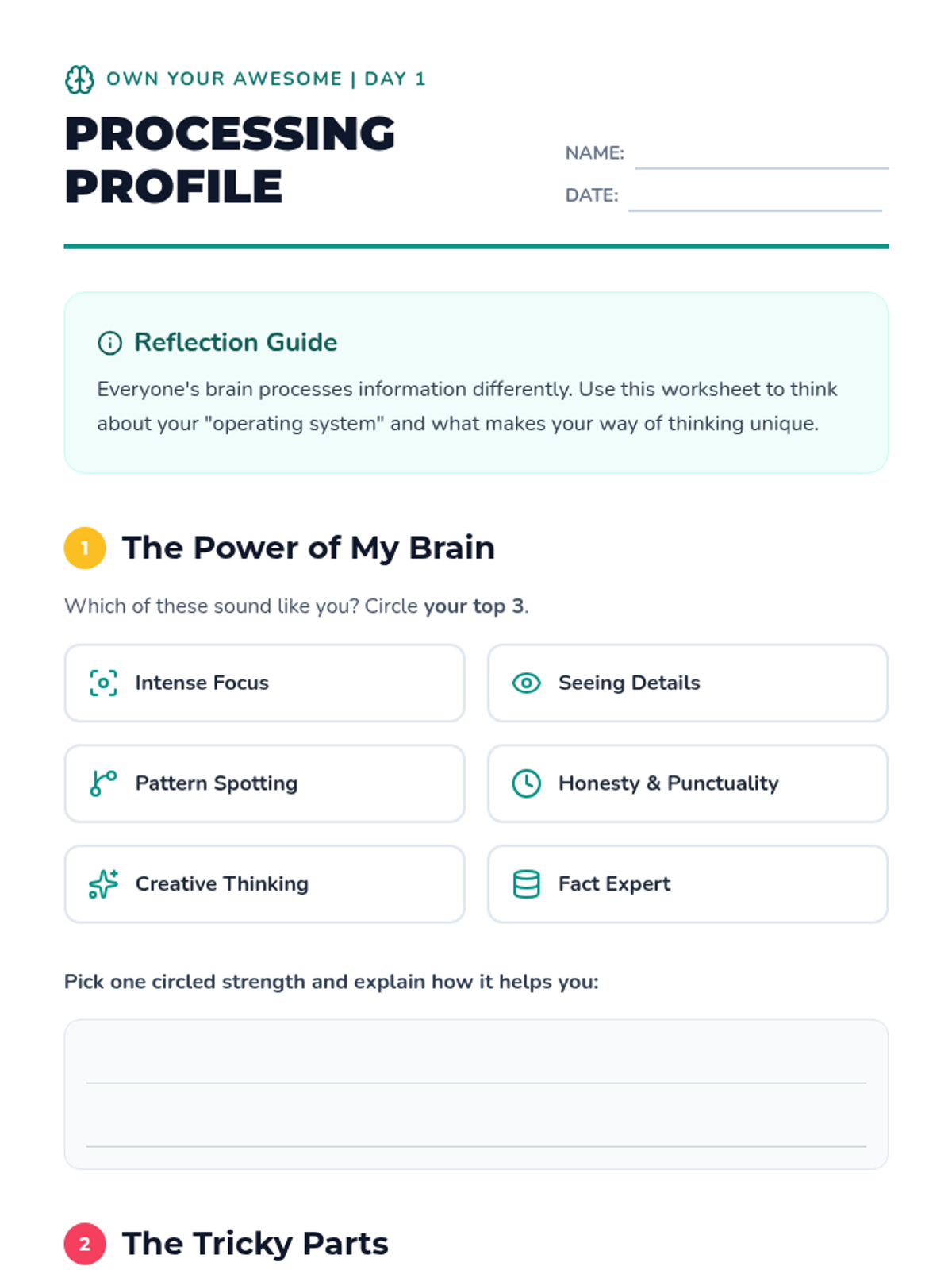
A 30-minute lesson introducing autism through a neurodiversity-affirming lens, focusing on unique processing styles and personal identity.
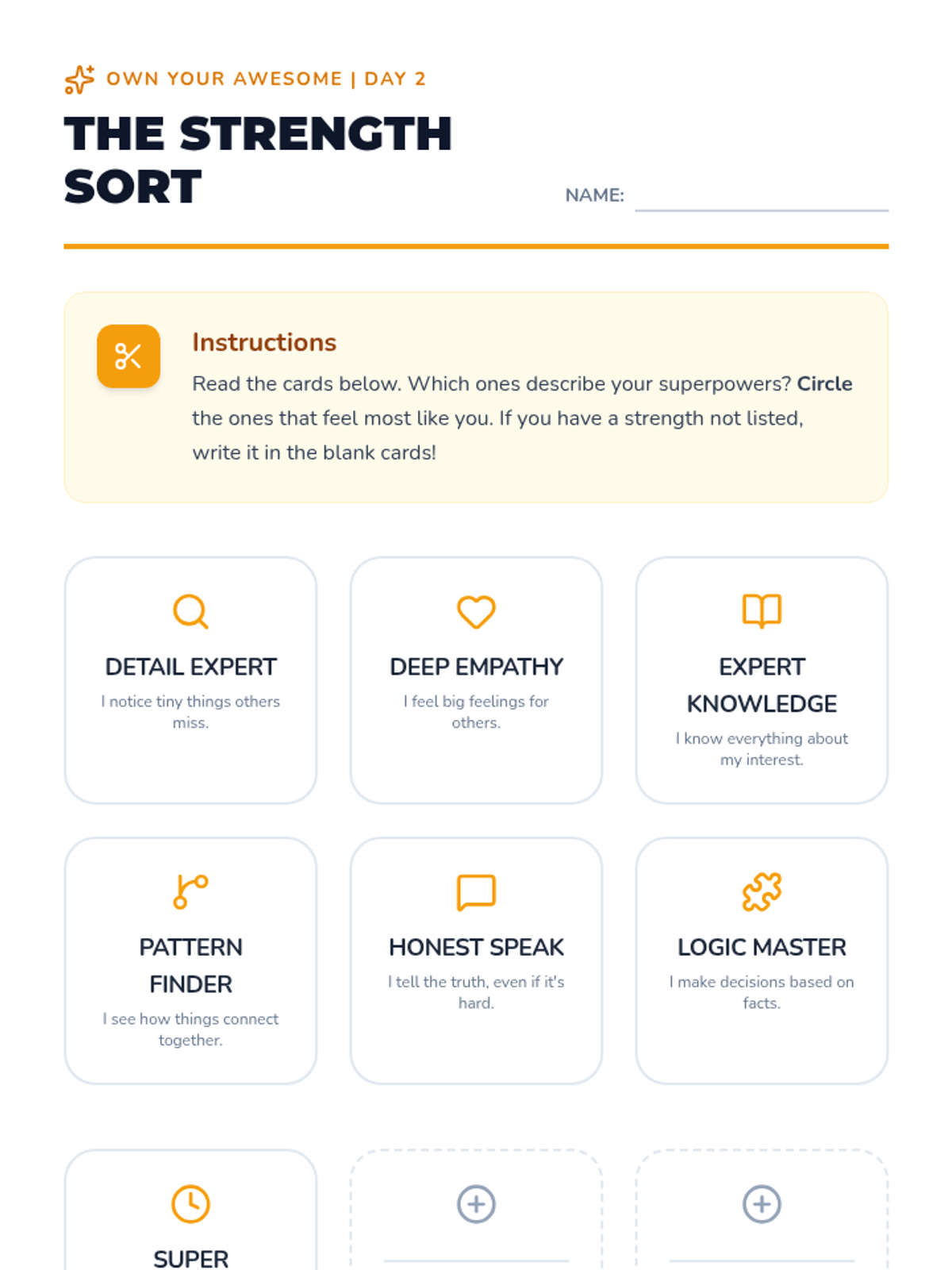
Exploring cognitive and social strengths, moving from a deficit model to a talent-focused understanding of the self.
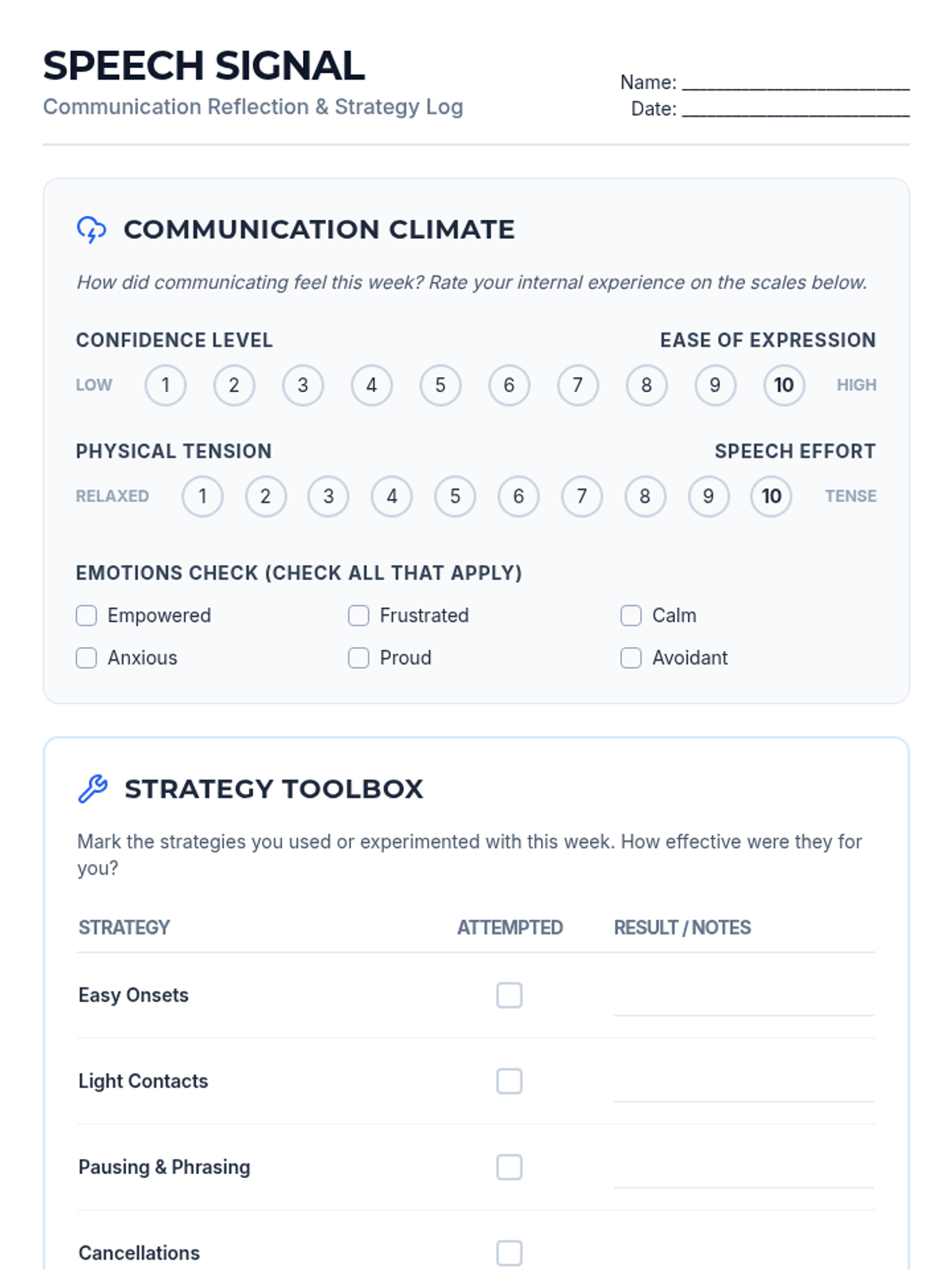
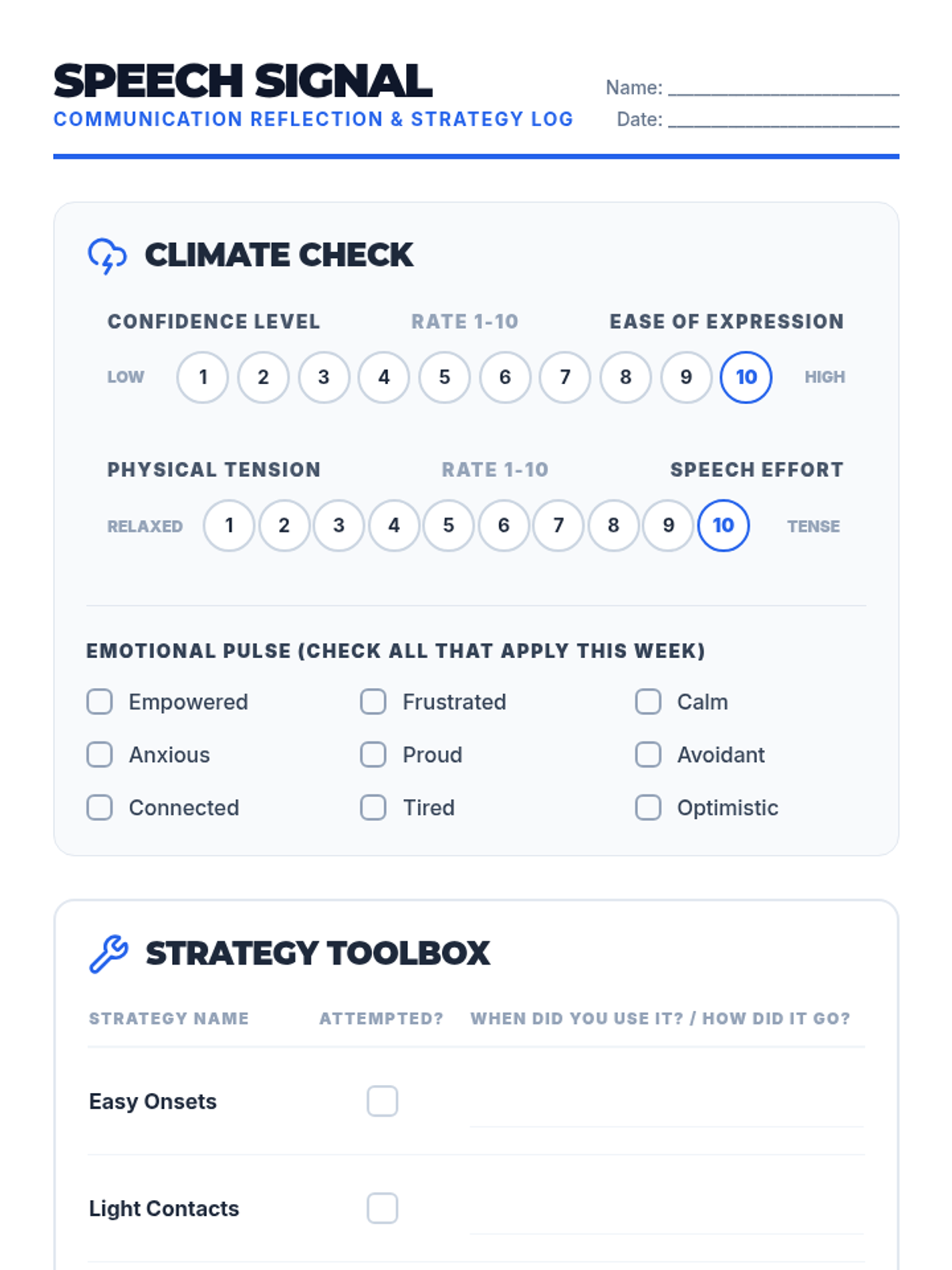
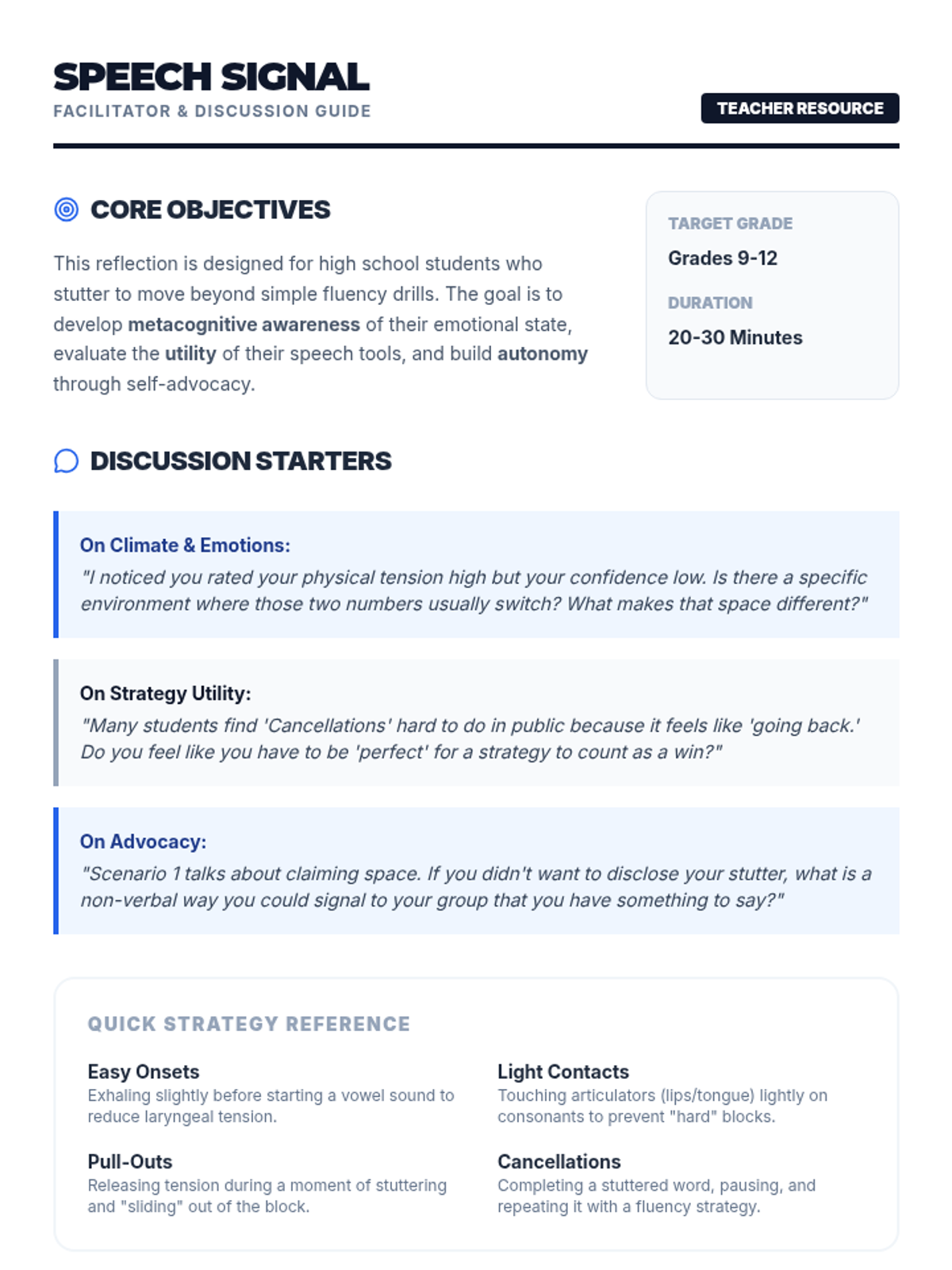
A reflective lesson for high school students who stutter to analyze their emotional connection to speech, evaluate their usage of fluency strategies, and practice self-advocacy.
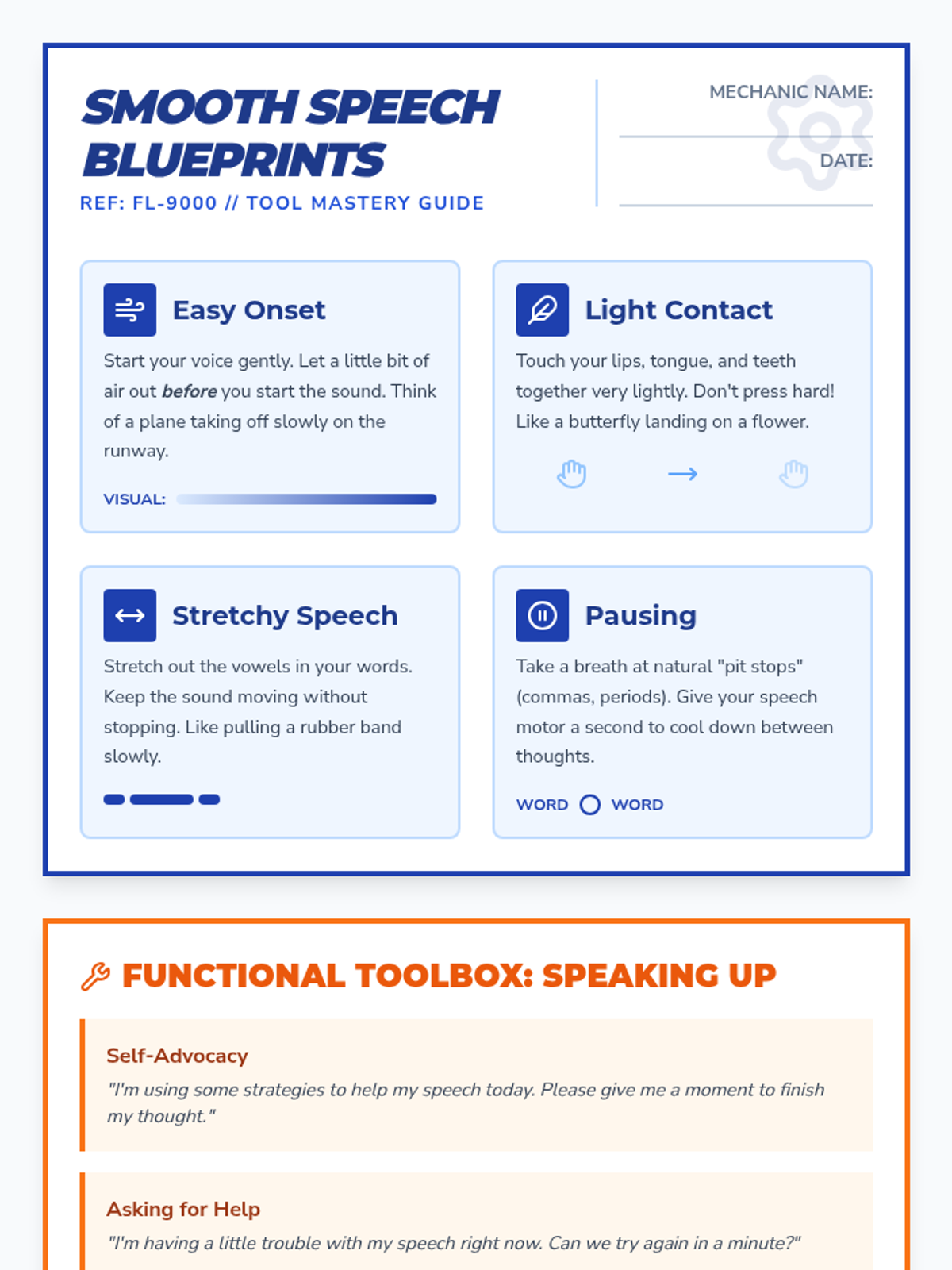
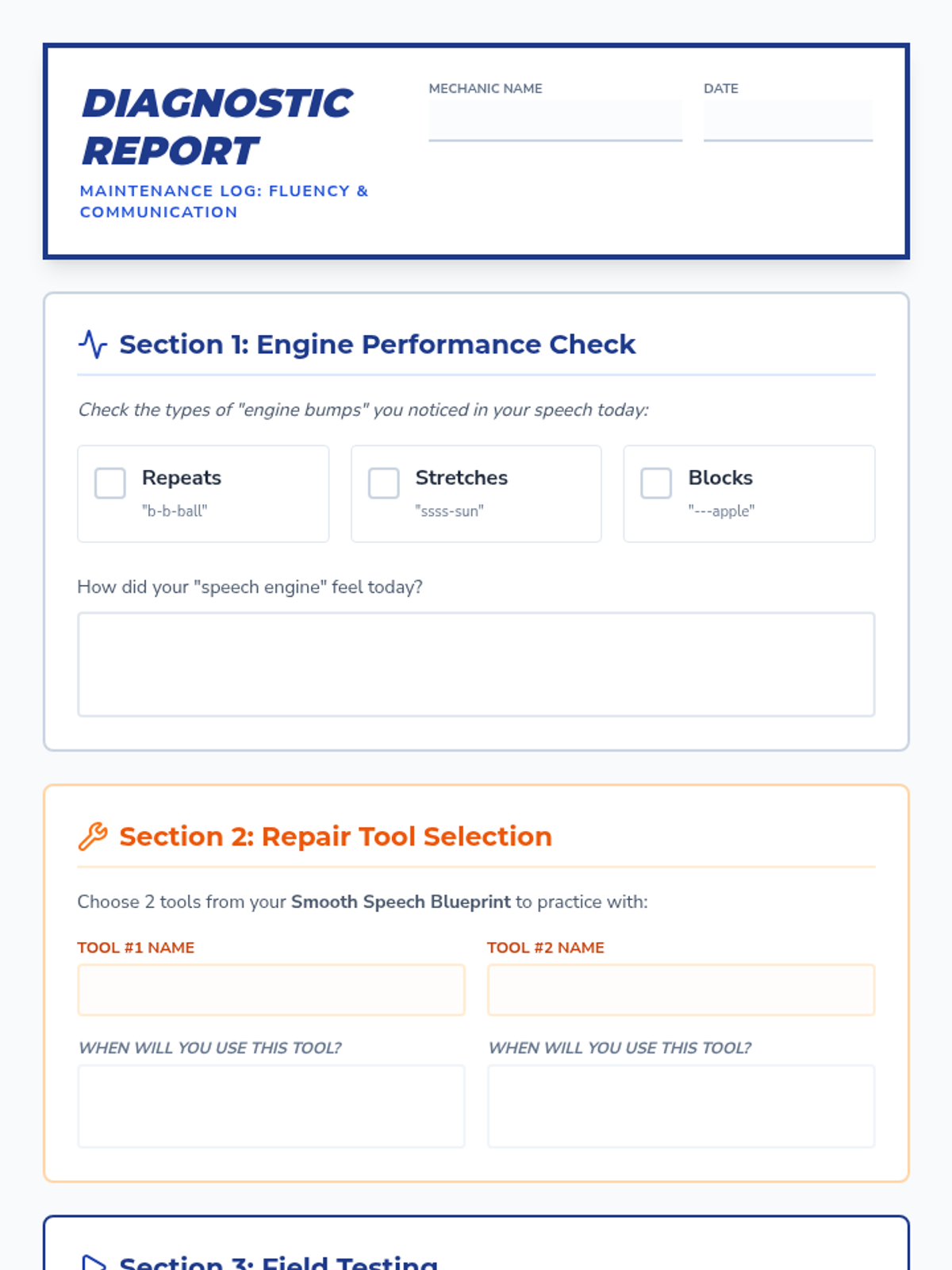
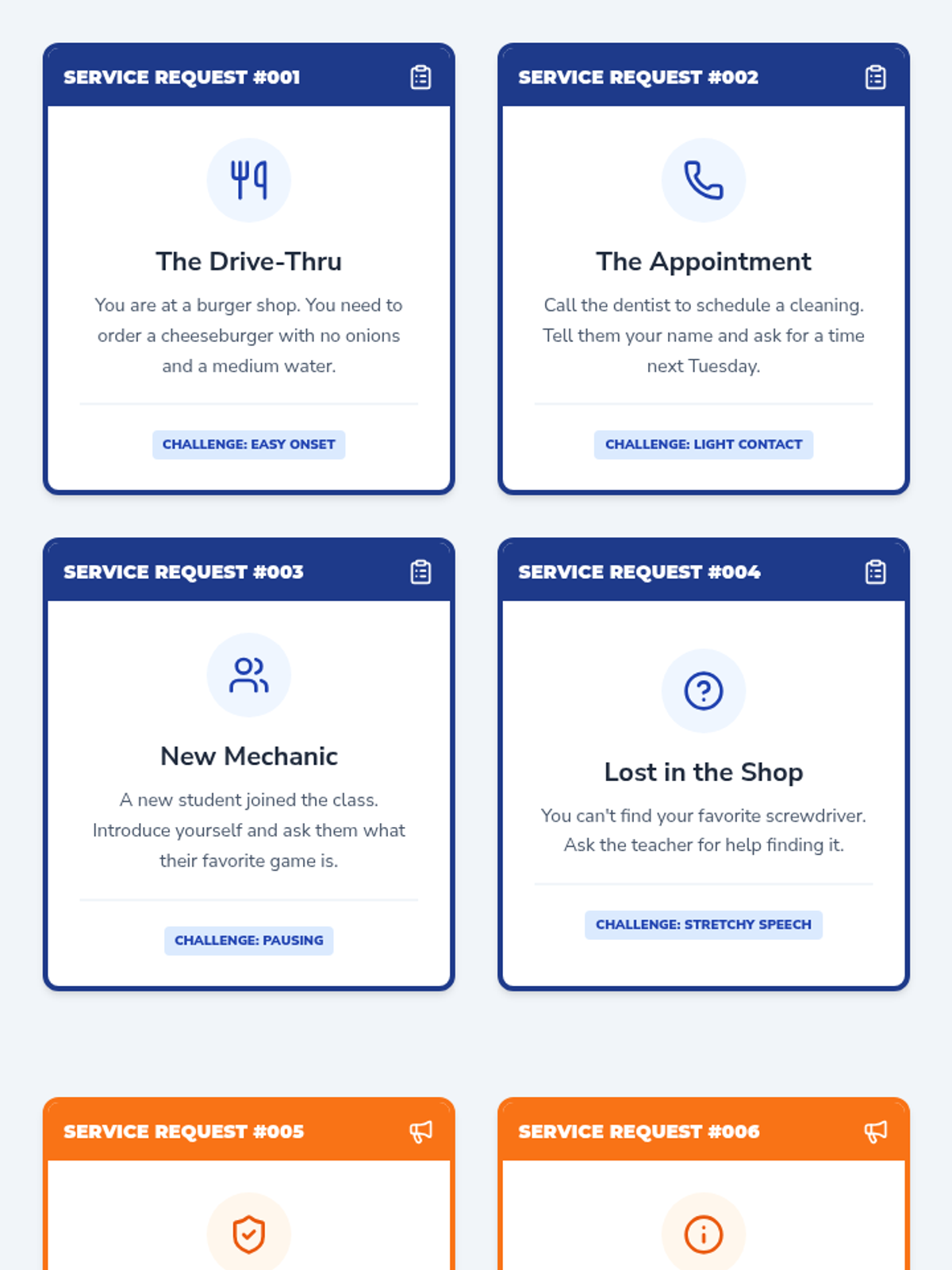
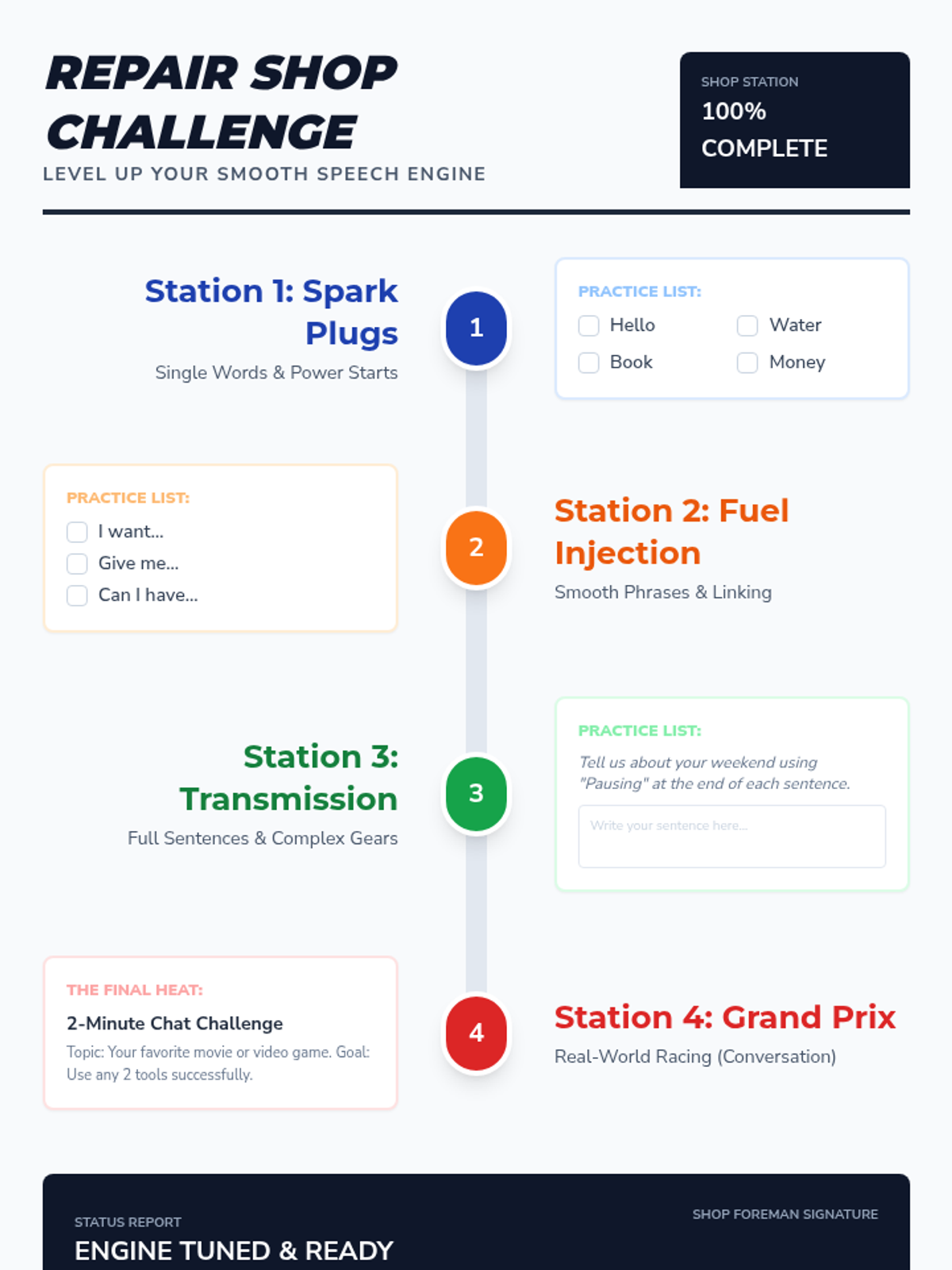
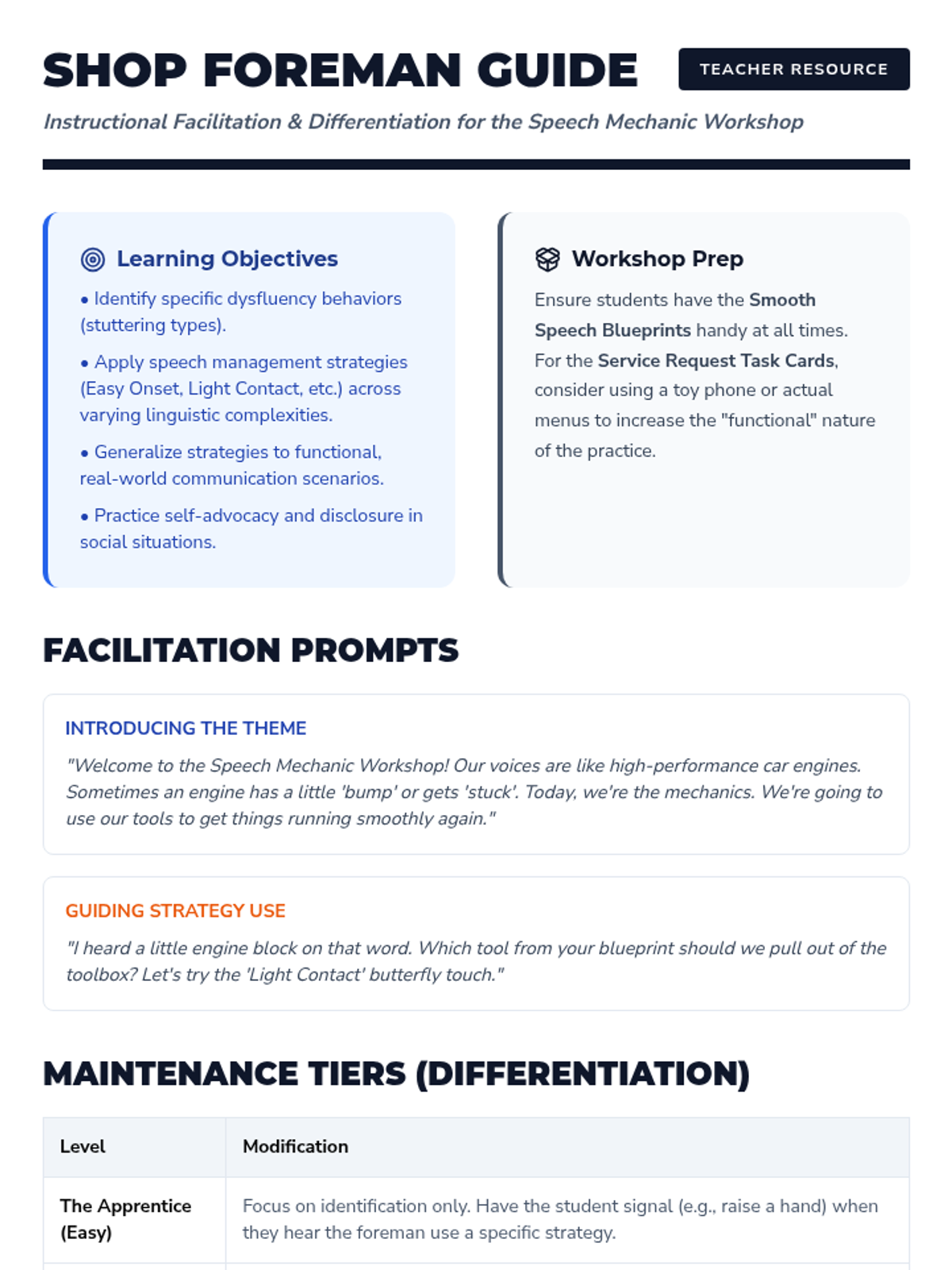
A comprehensive set of activities for students to master functional communication and fluency strategies through a mechanical workshop theme. Students learn to use 'tools' for smooth speech and navigate real-world communication scenarios.
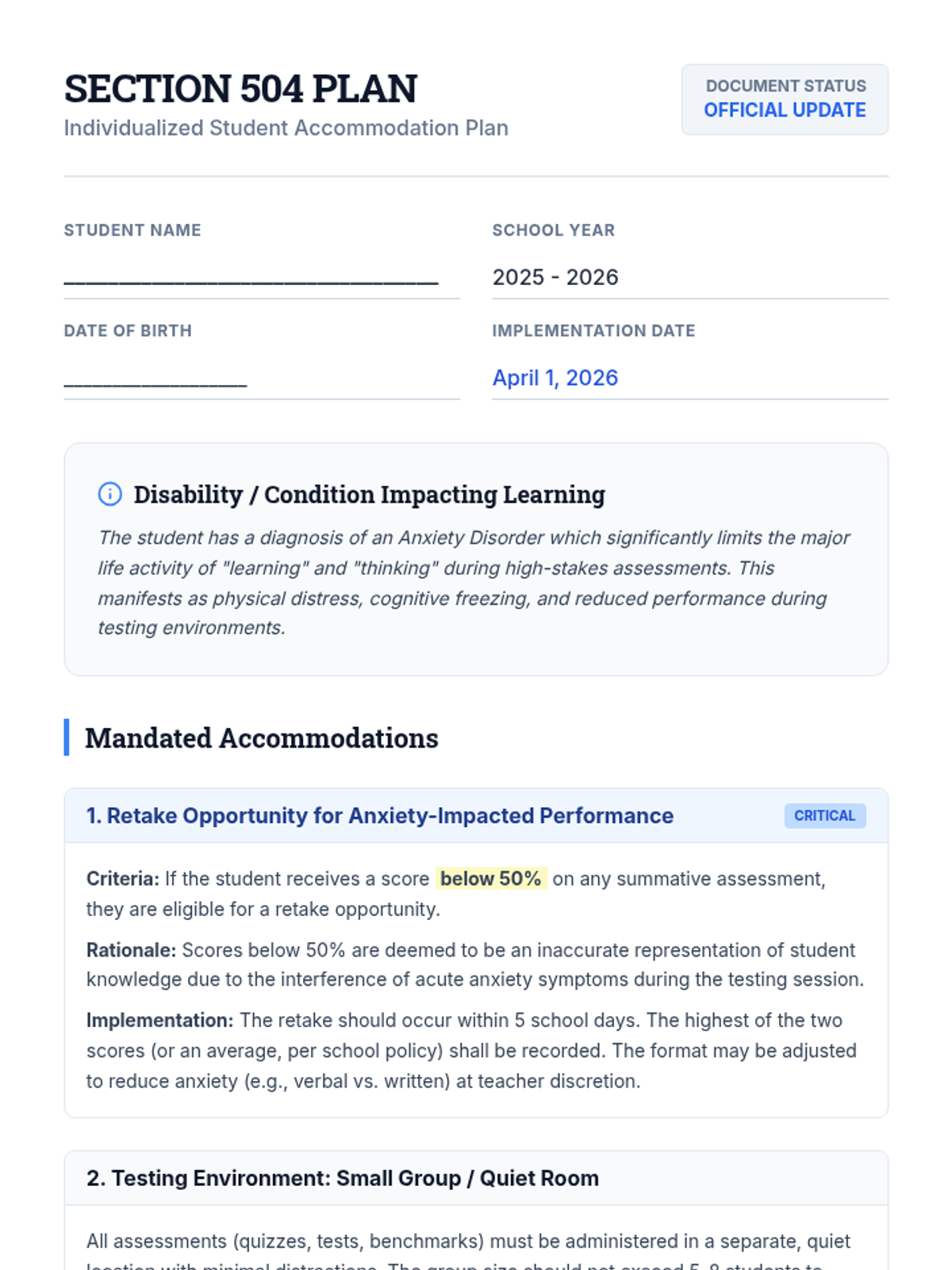
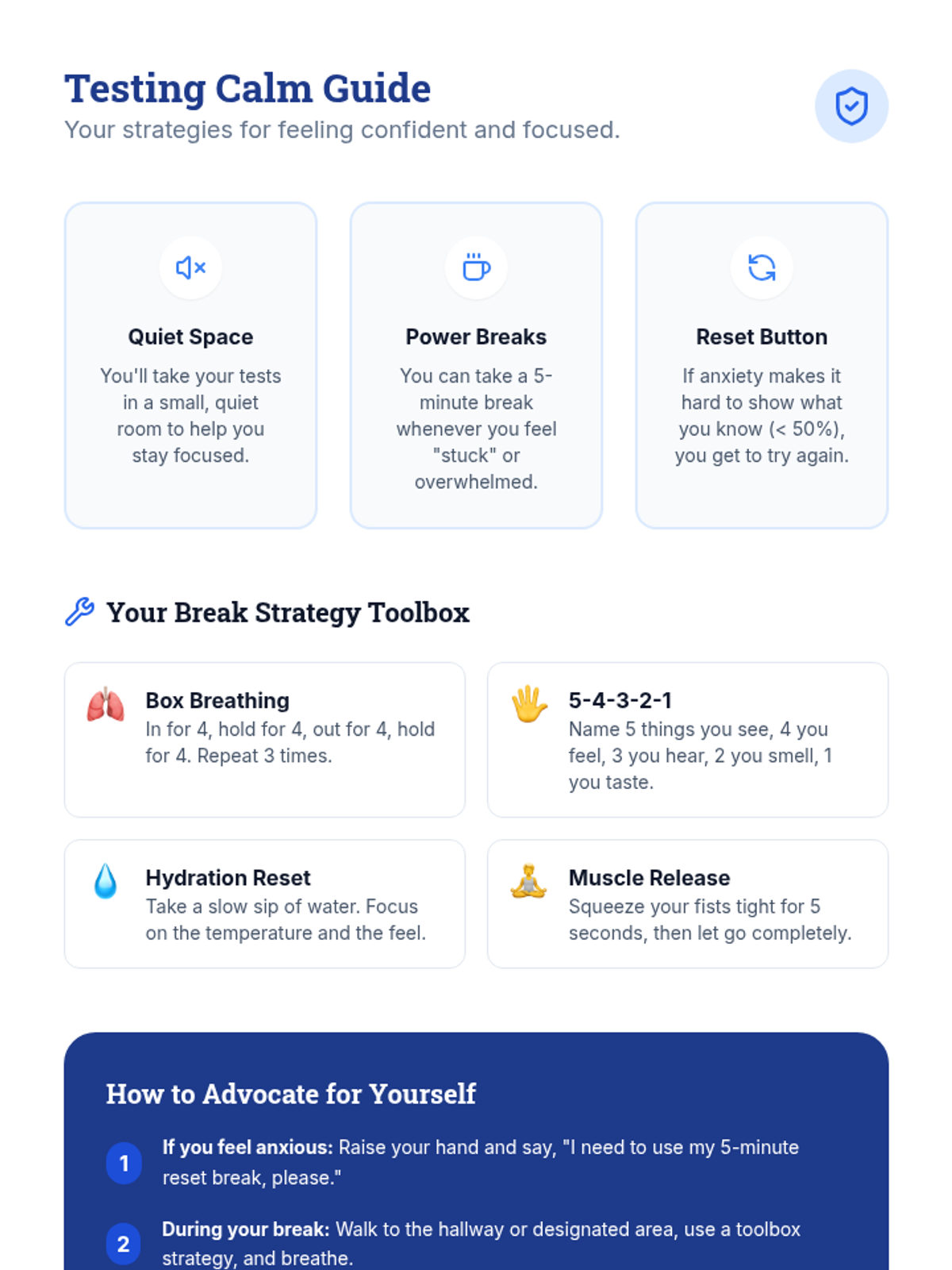
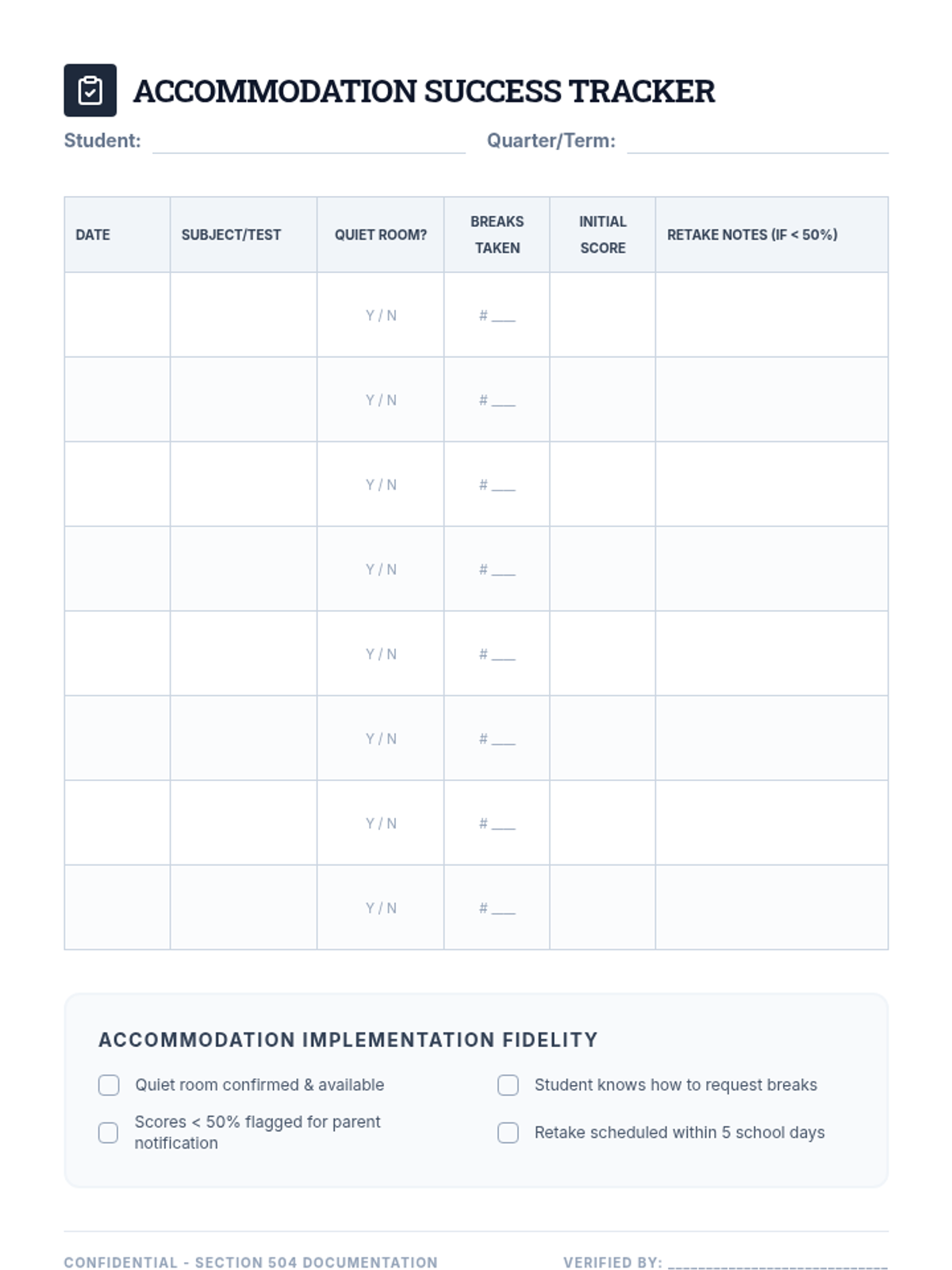
A collection of resources to support a student with test-related anxiety through Section 504 accommodations, including a formal plan, a student guide, and a teacher tracking log.
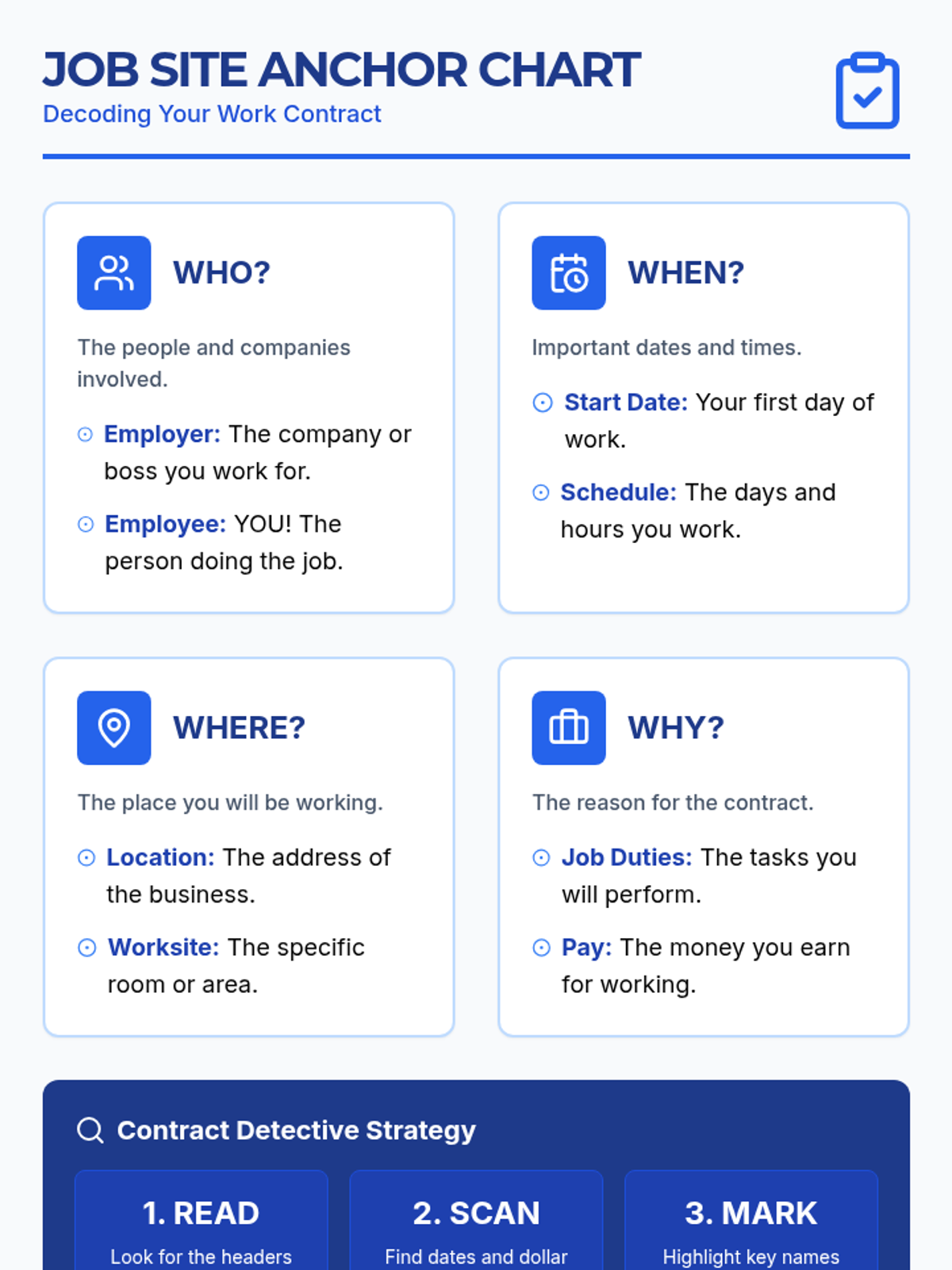
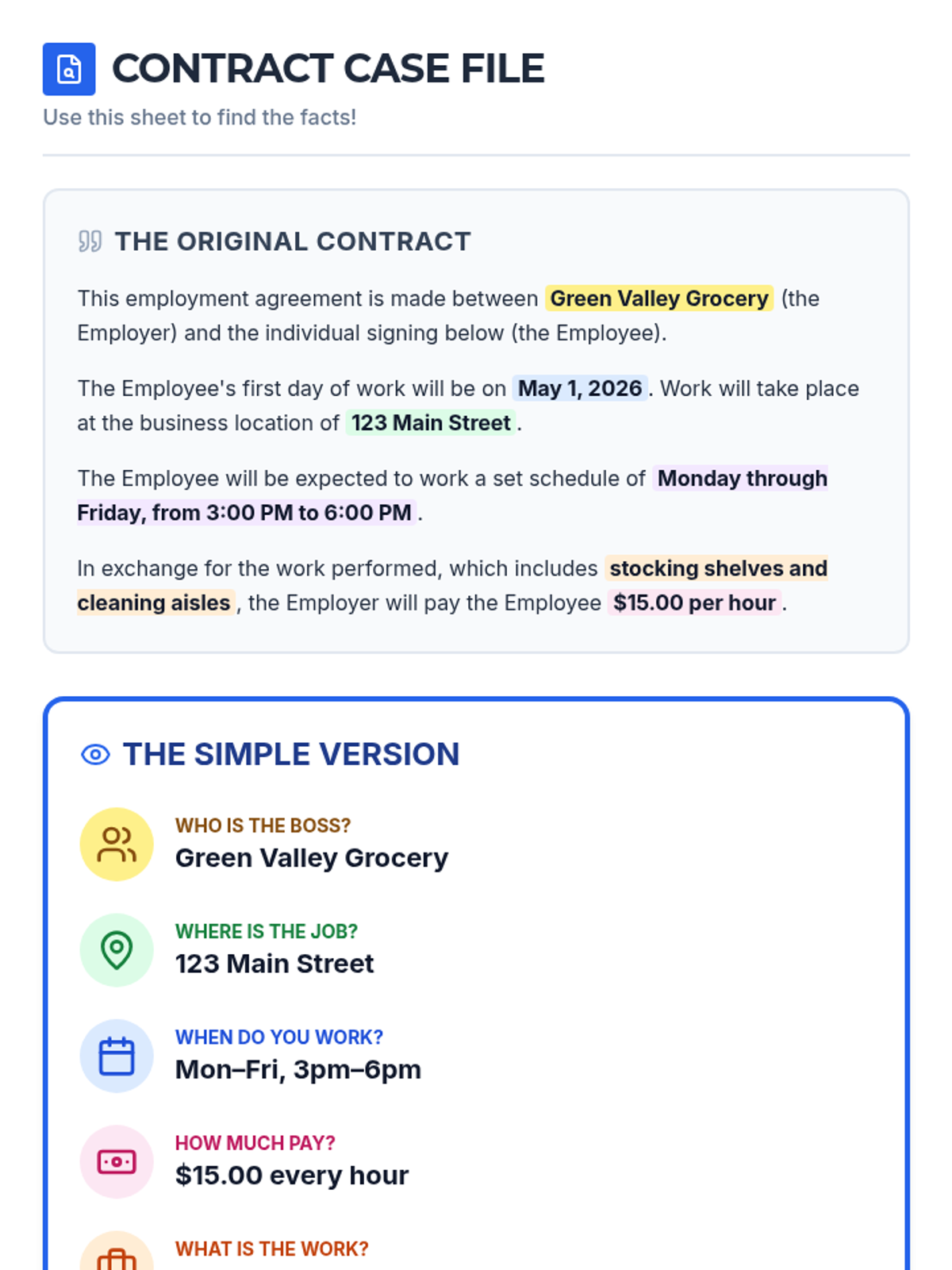
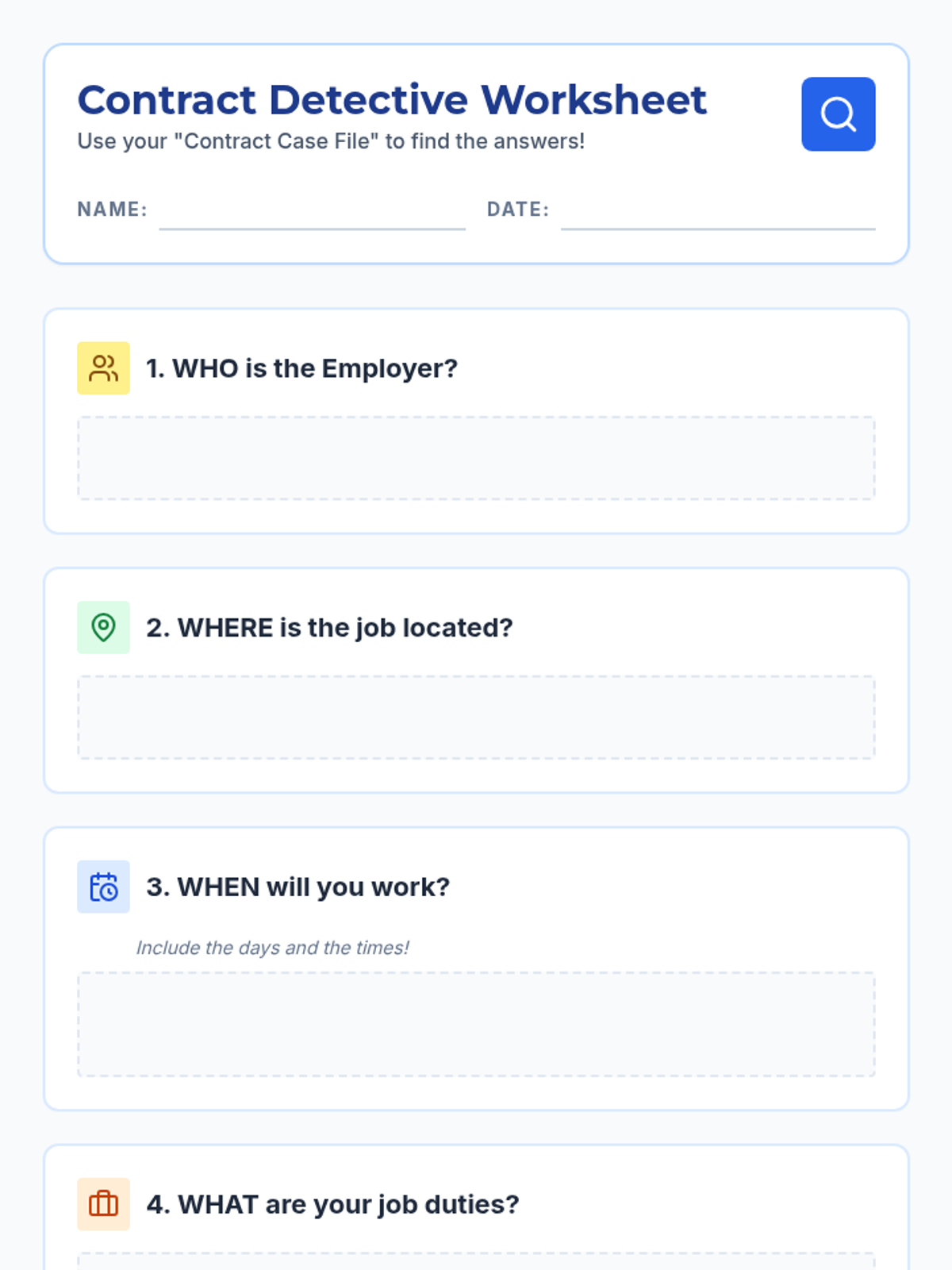
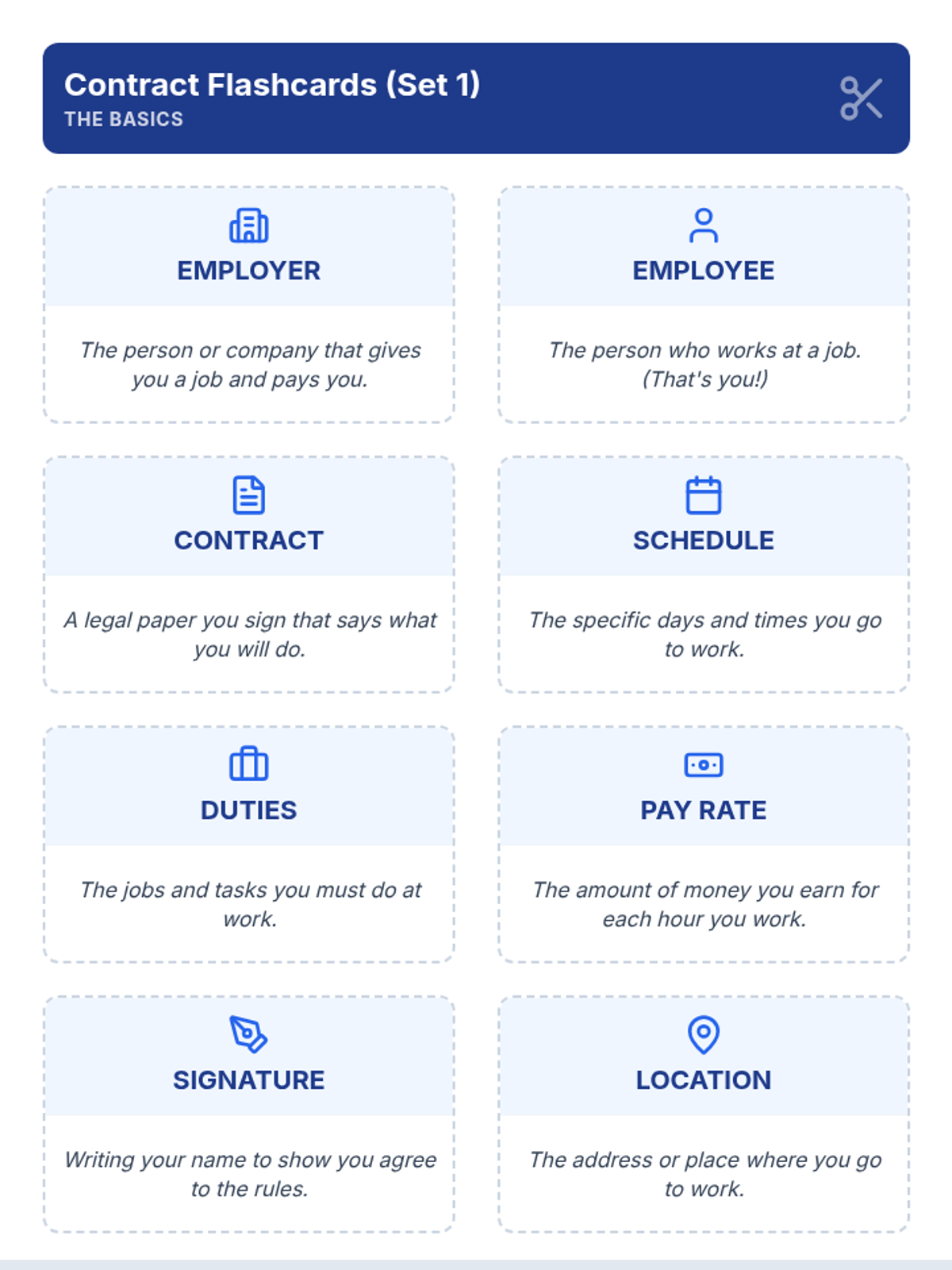
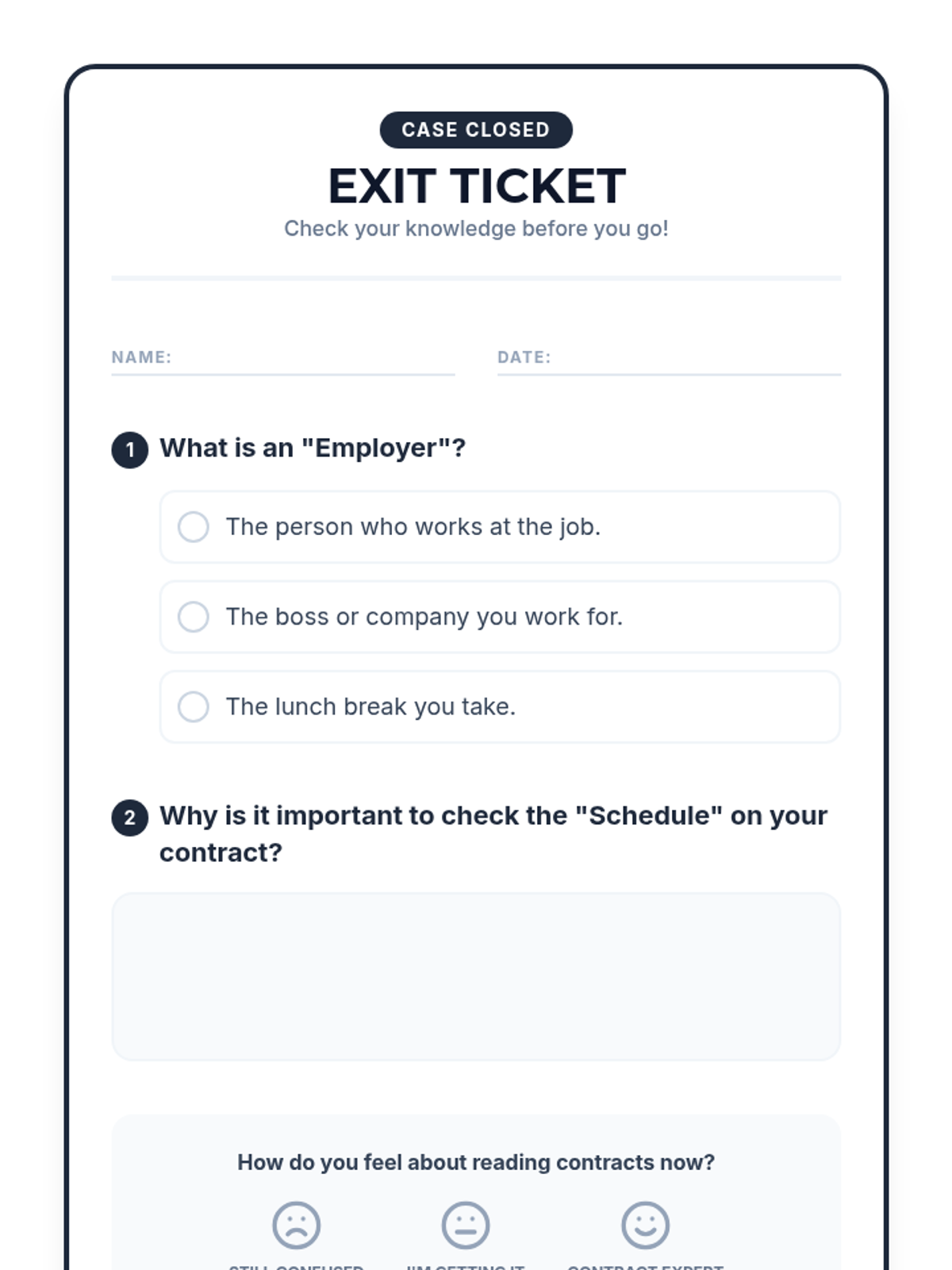
A practical reading comprehension lesson for high school students with special needs, focusing on identifying the 'Who, When, Where, and Why' of a standard work contract using visual supports and guided practice.
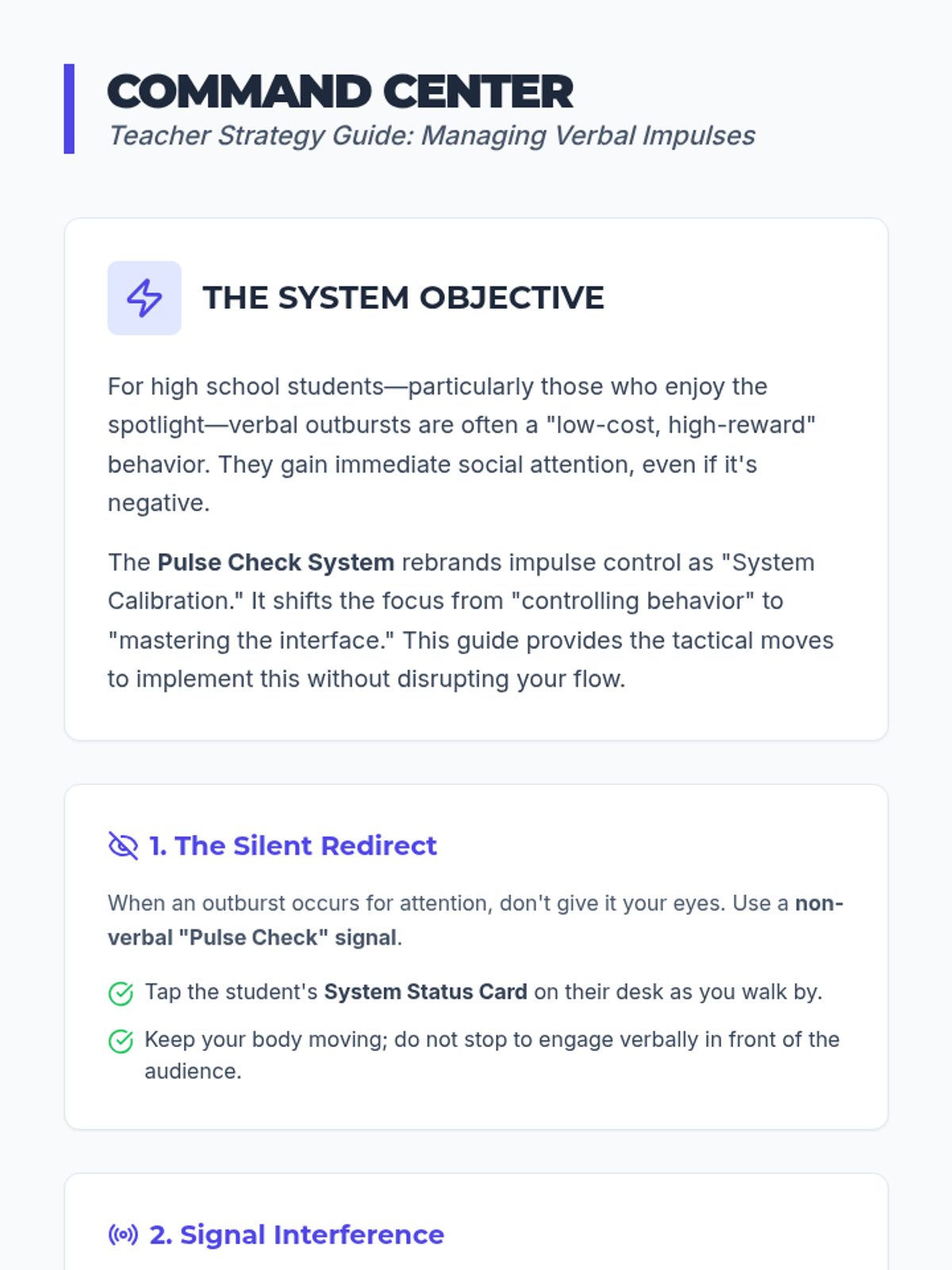
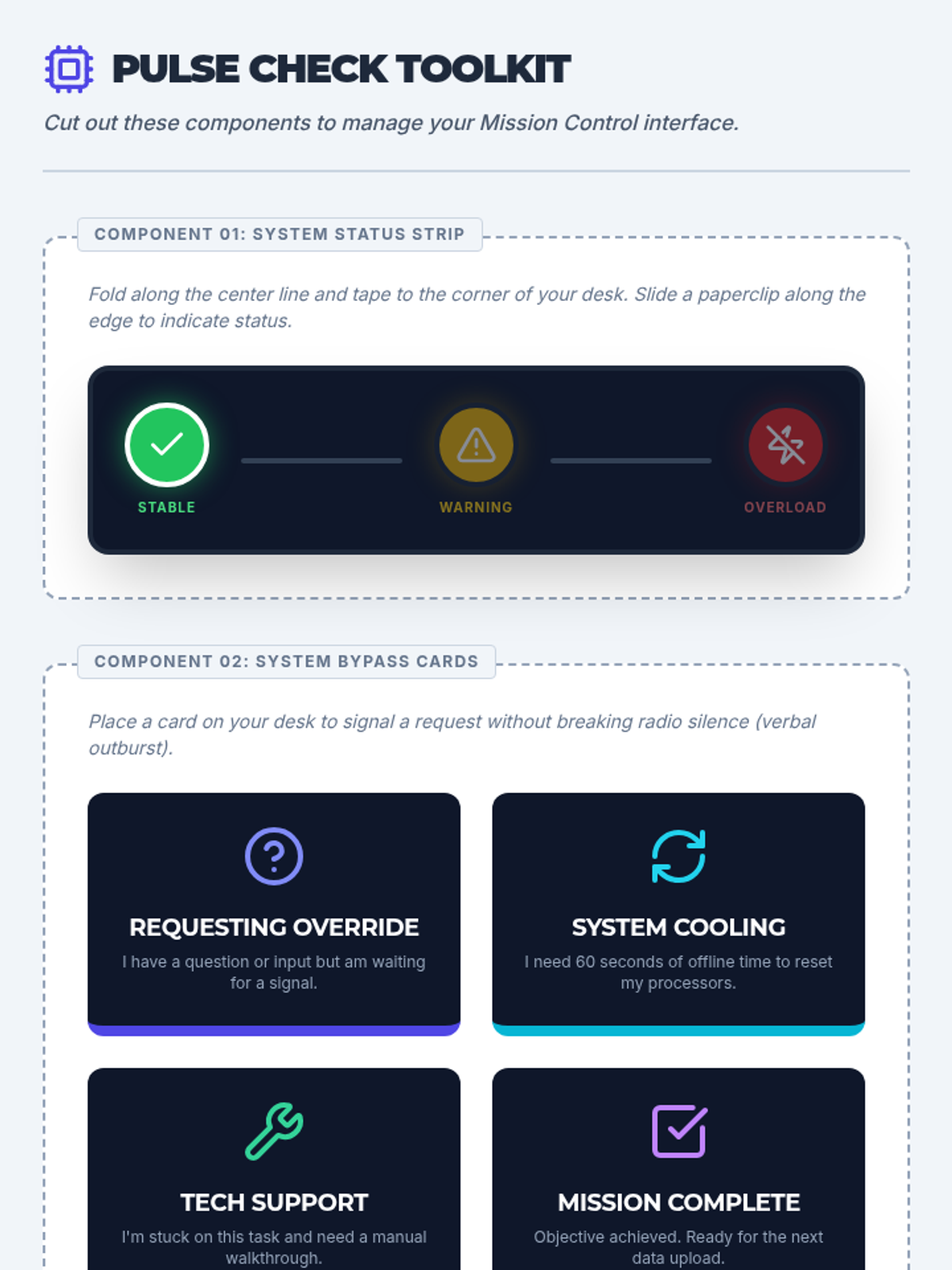
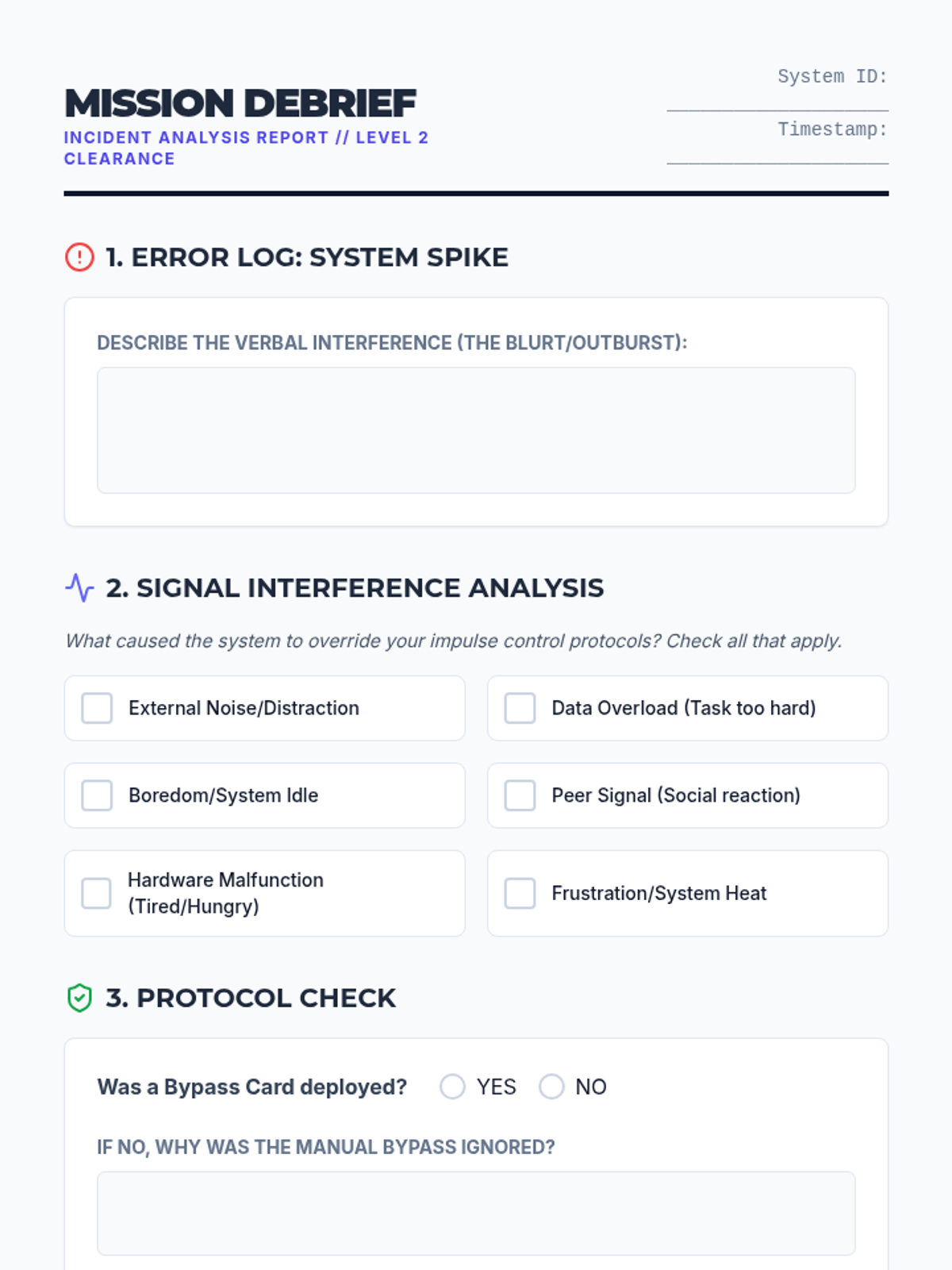
A set of high-impact, low-disruption tools for high schoolers to manage verbal impulses, framed through a 'Mission Control' tech aesthetic to engage students who seek social status/attention.
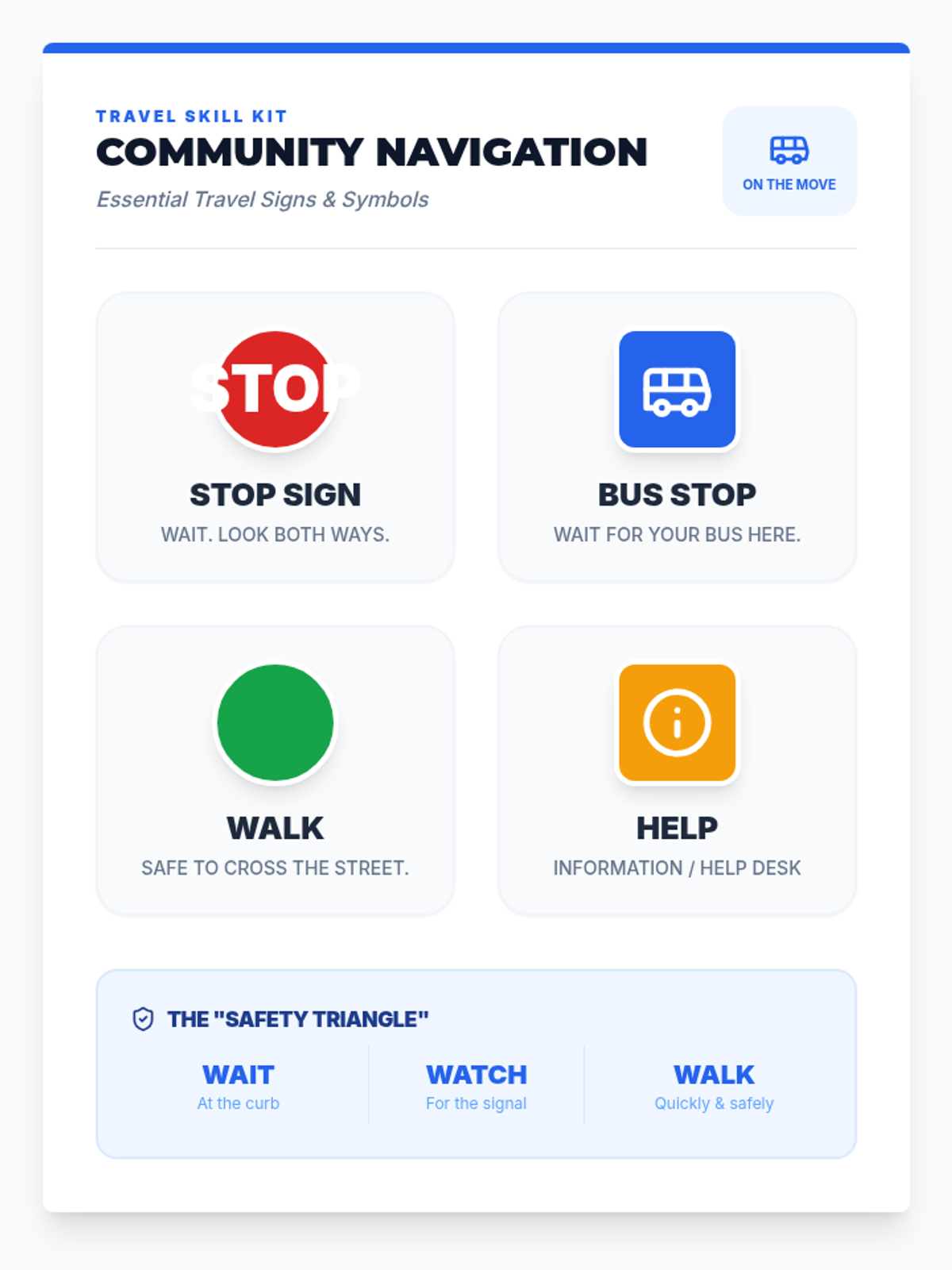
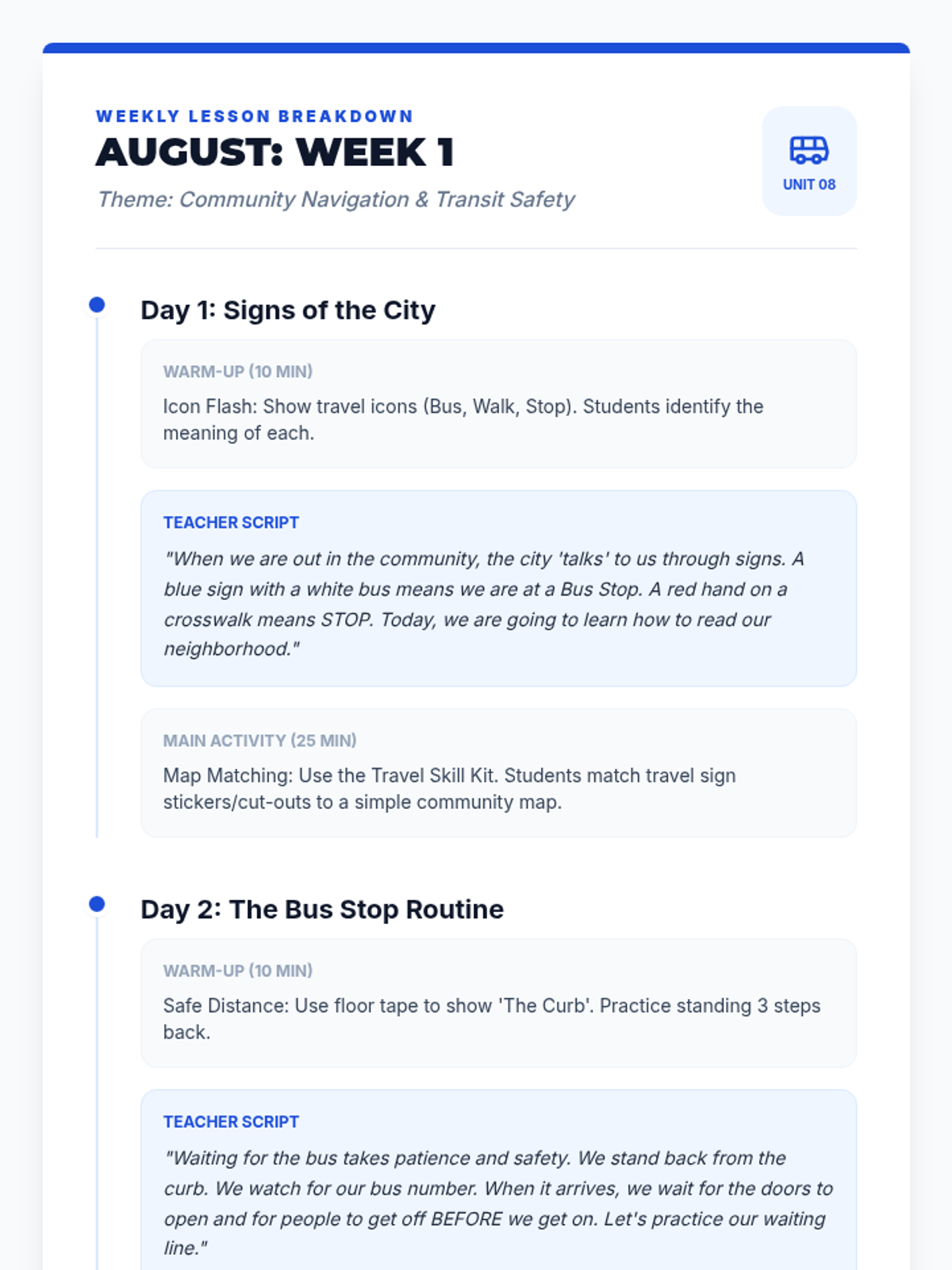
Navigating the community using public transportation, reading schedules, and practicing safety and social etiquette while traveling.
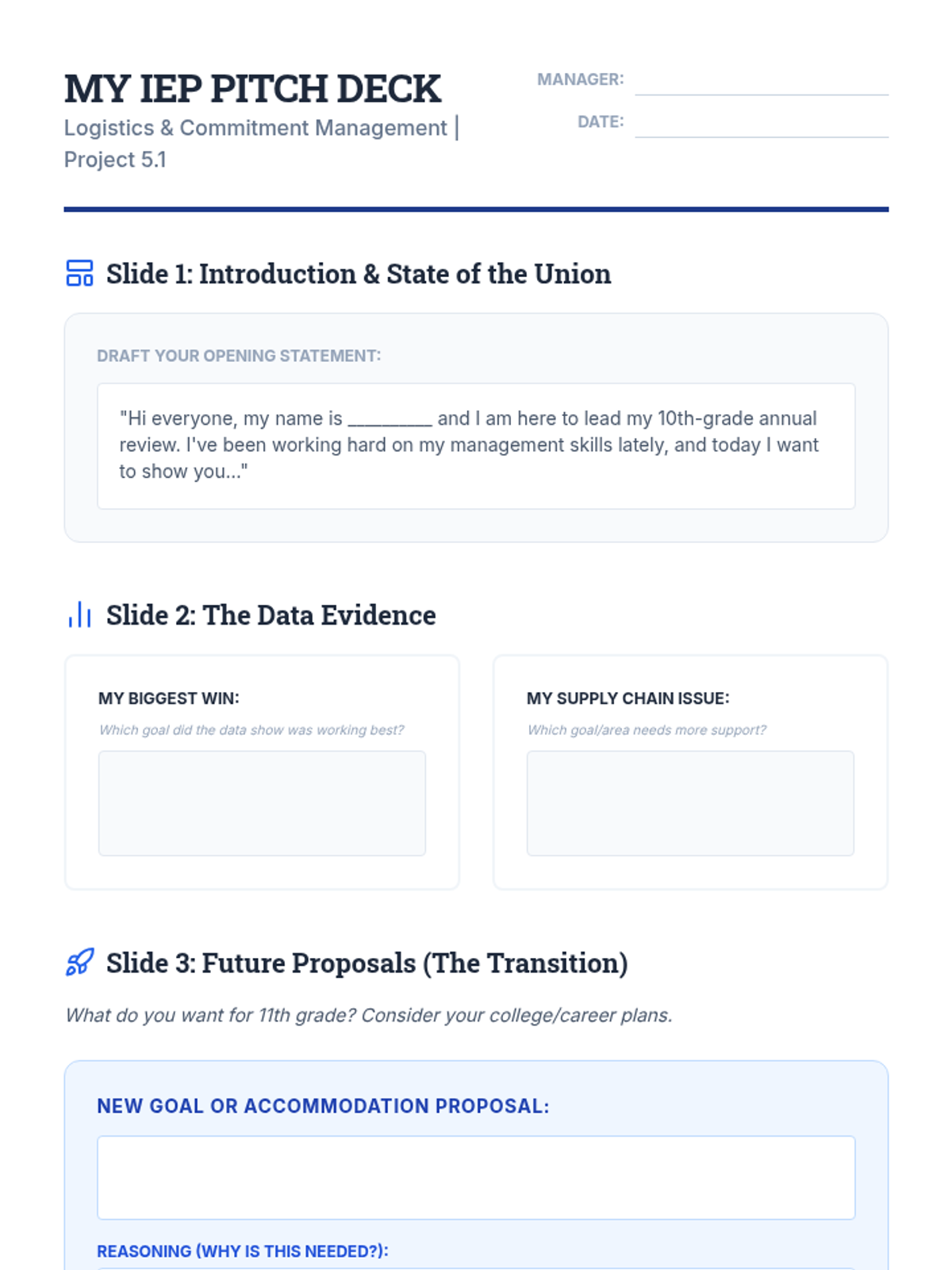
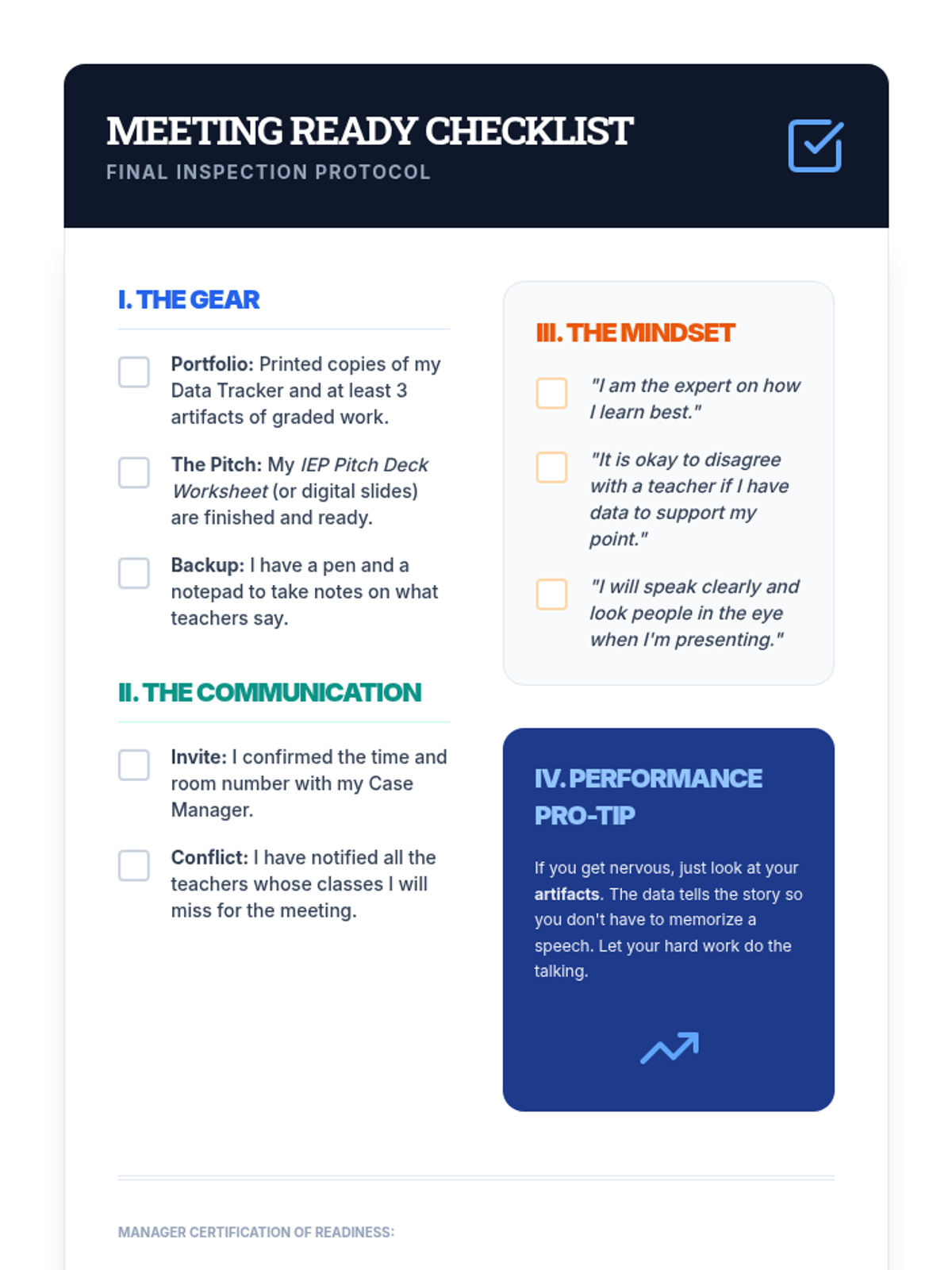
In the capstone lesson, students synthesize their scheduling, organization, and data-tracking efforts to prepare a professional presentation for their next IEP meeting. They practice leading the conversation about their own future.
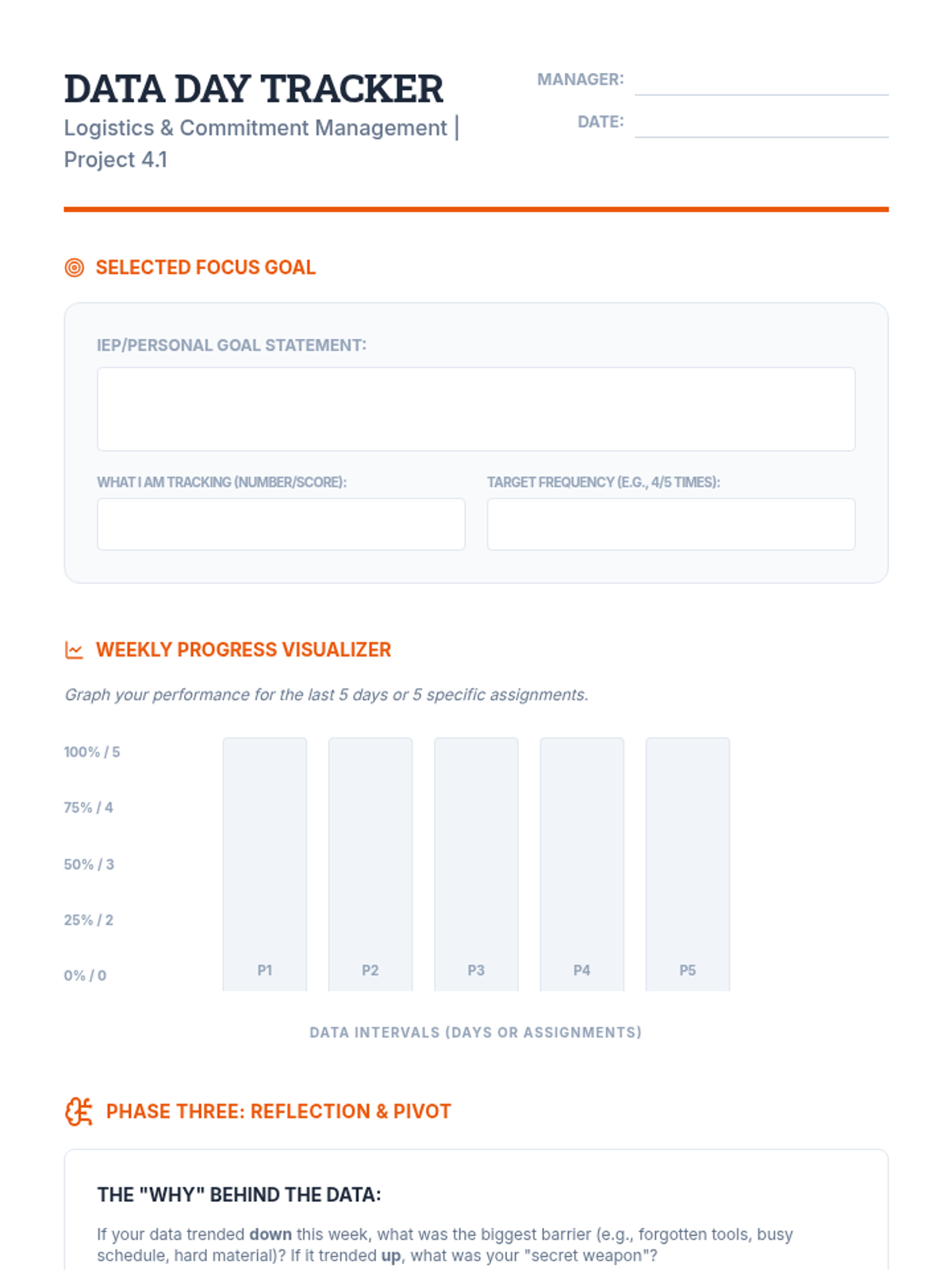
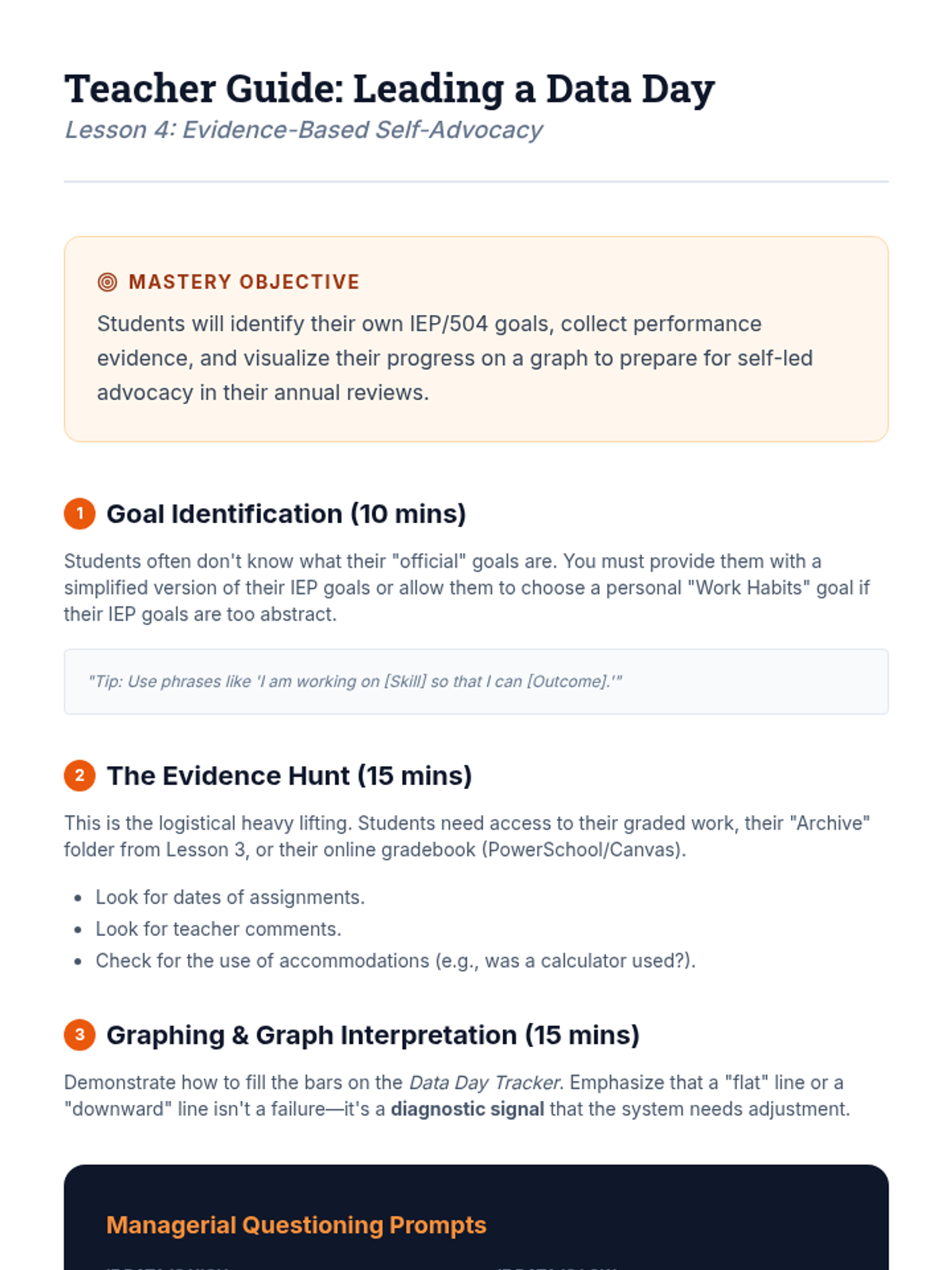
Students take charge of their own progress by learning to track data against their IEP goals. They develop a 'Data Day' routine for self-reflection and objective performance monitoring.
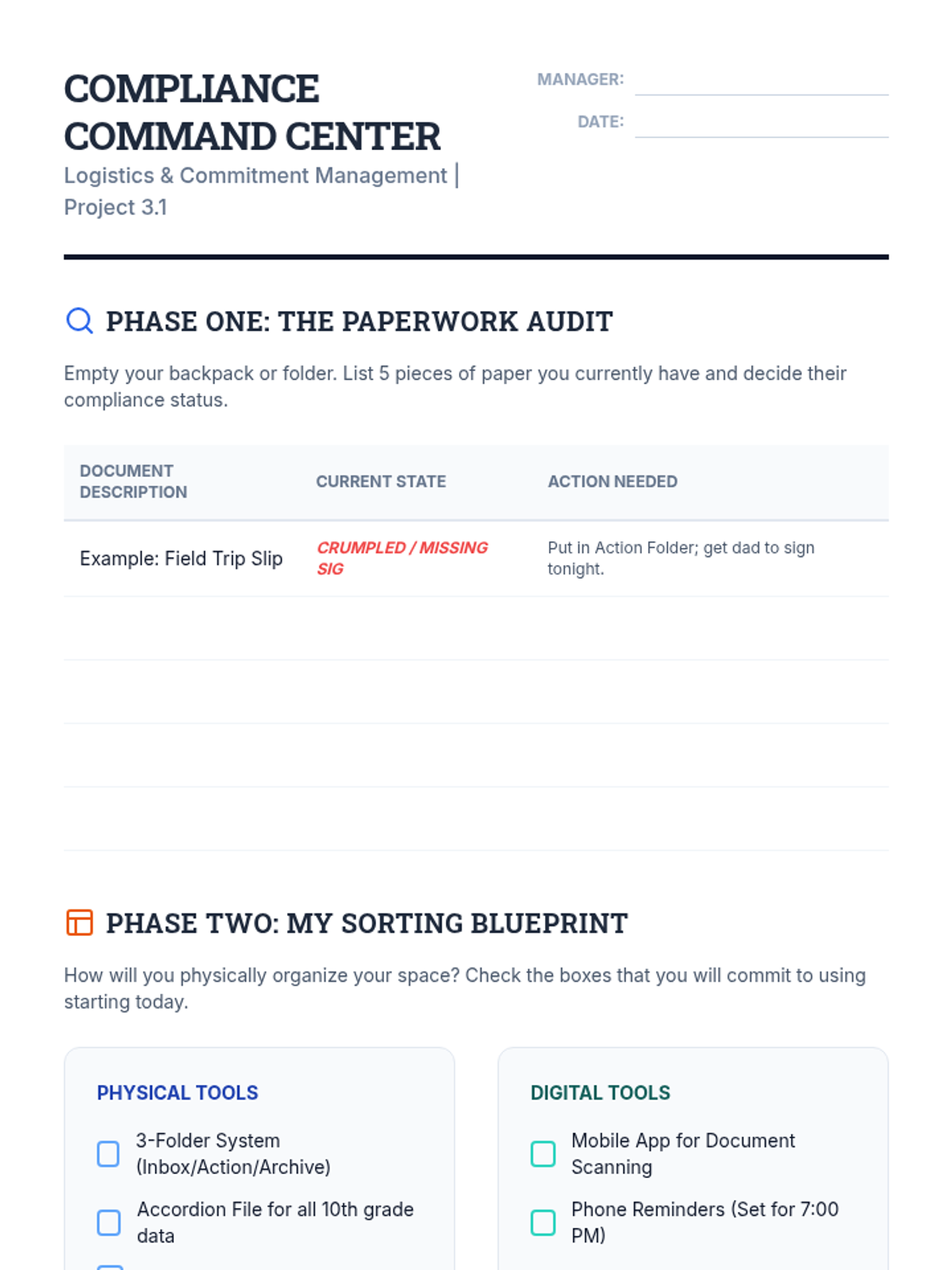
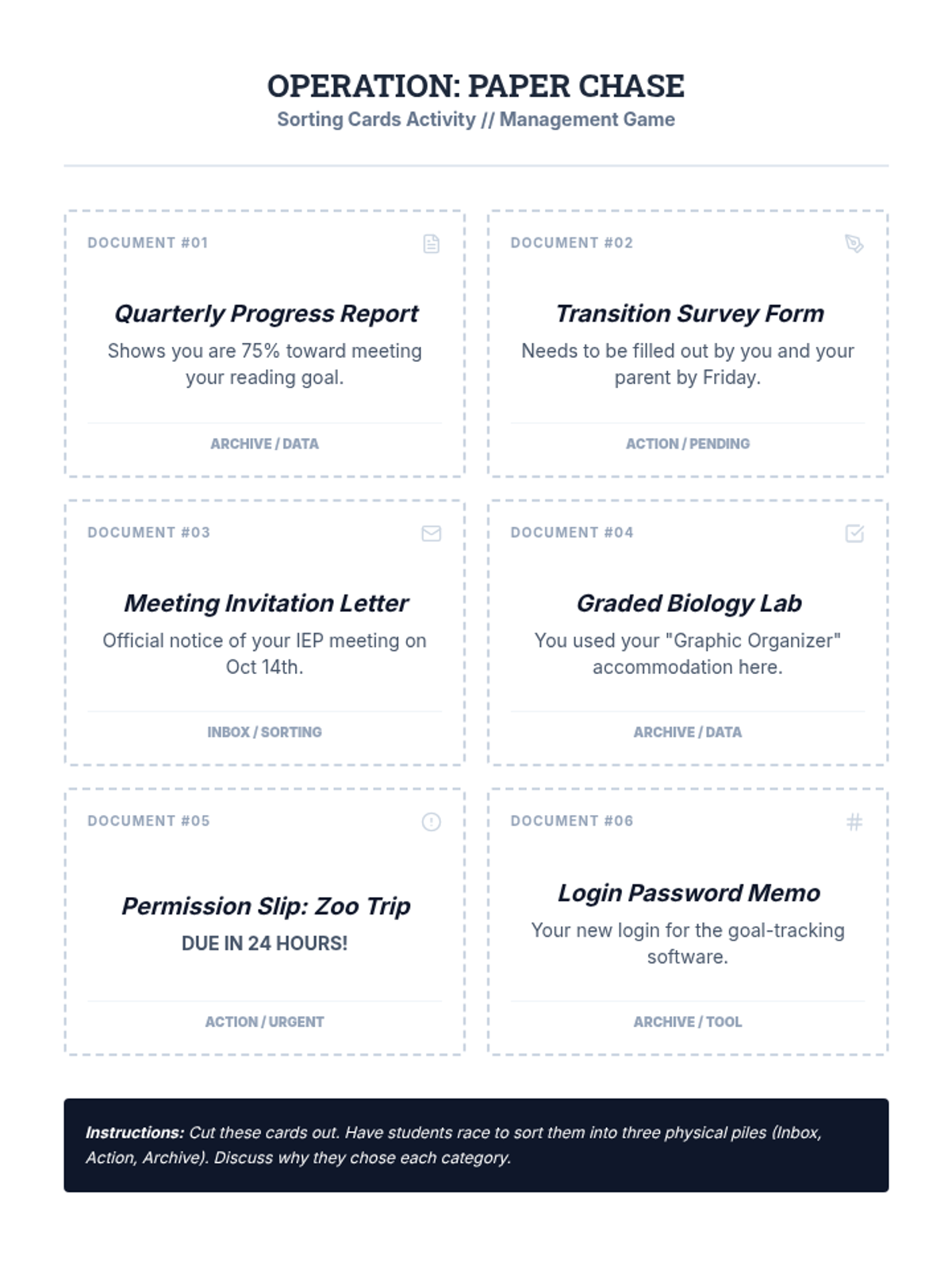
Students tackle the administrative side of education, from permission slips to agenda management. They develop a personal 'compliance system' to stay organized and responsible for their own paperwork.
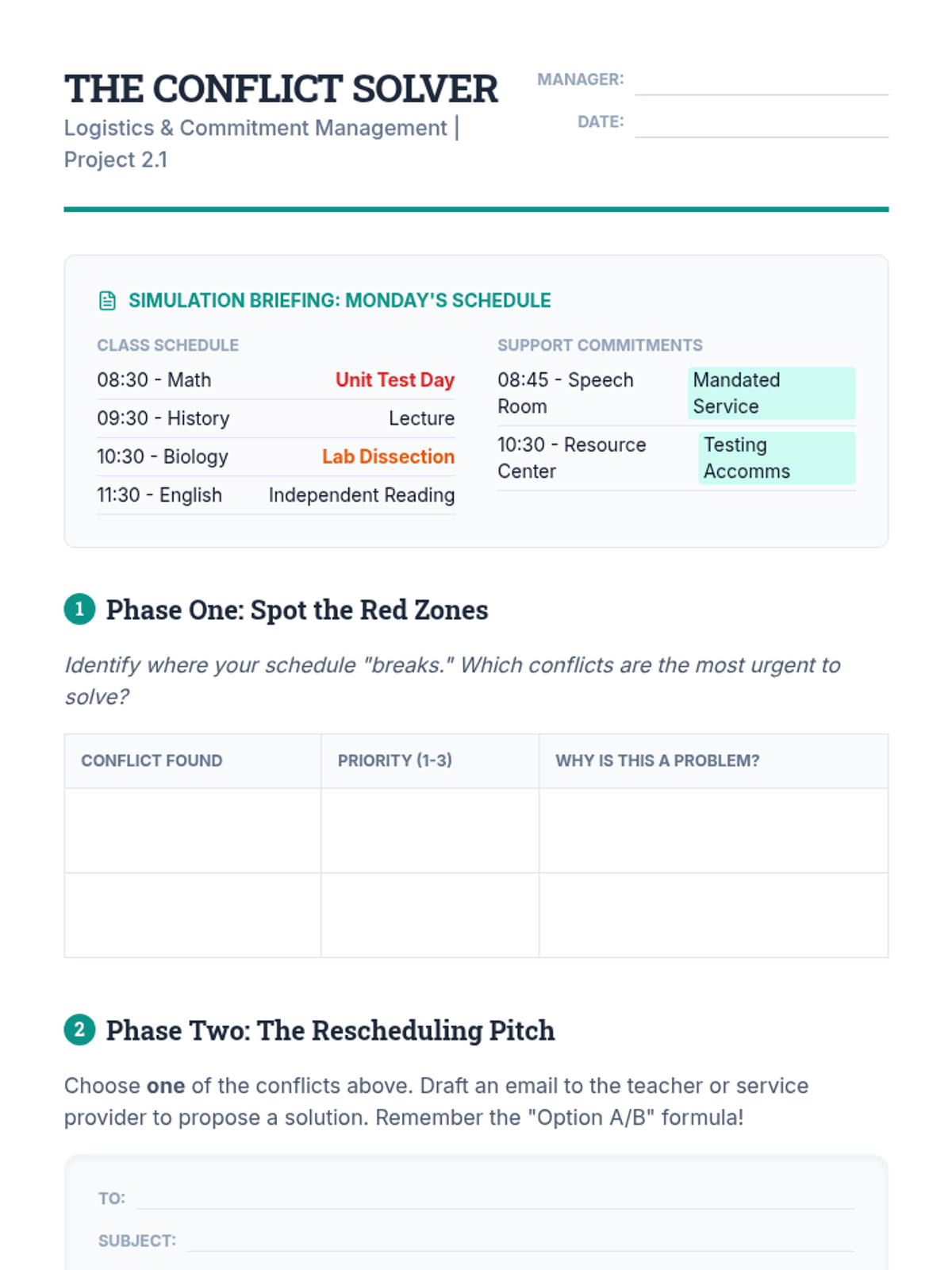
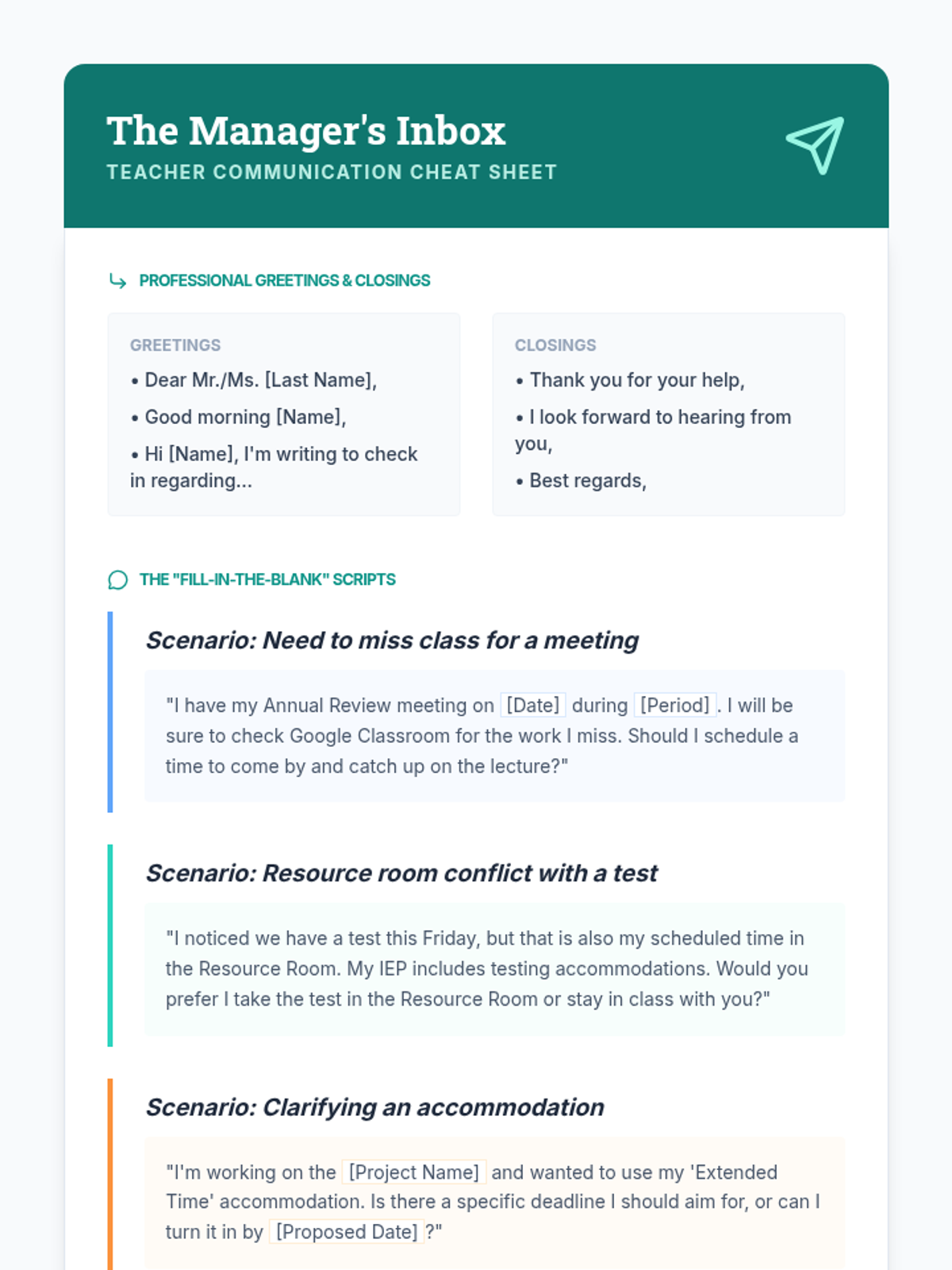
Students learn the art of coordinating conflicting schedules, focusing on the overlap between general education classes and mandated support services. They practice professional communication to resolve these conflicts.
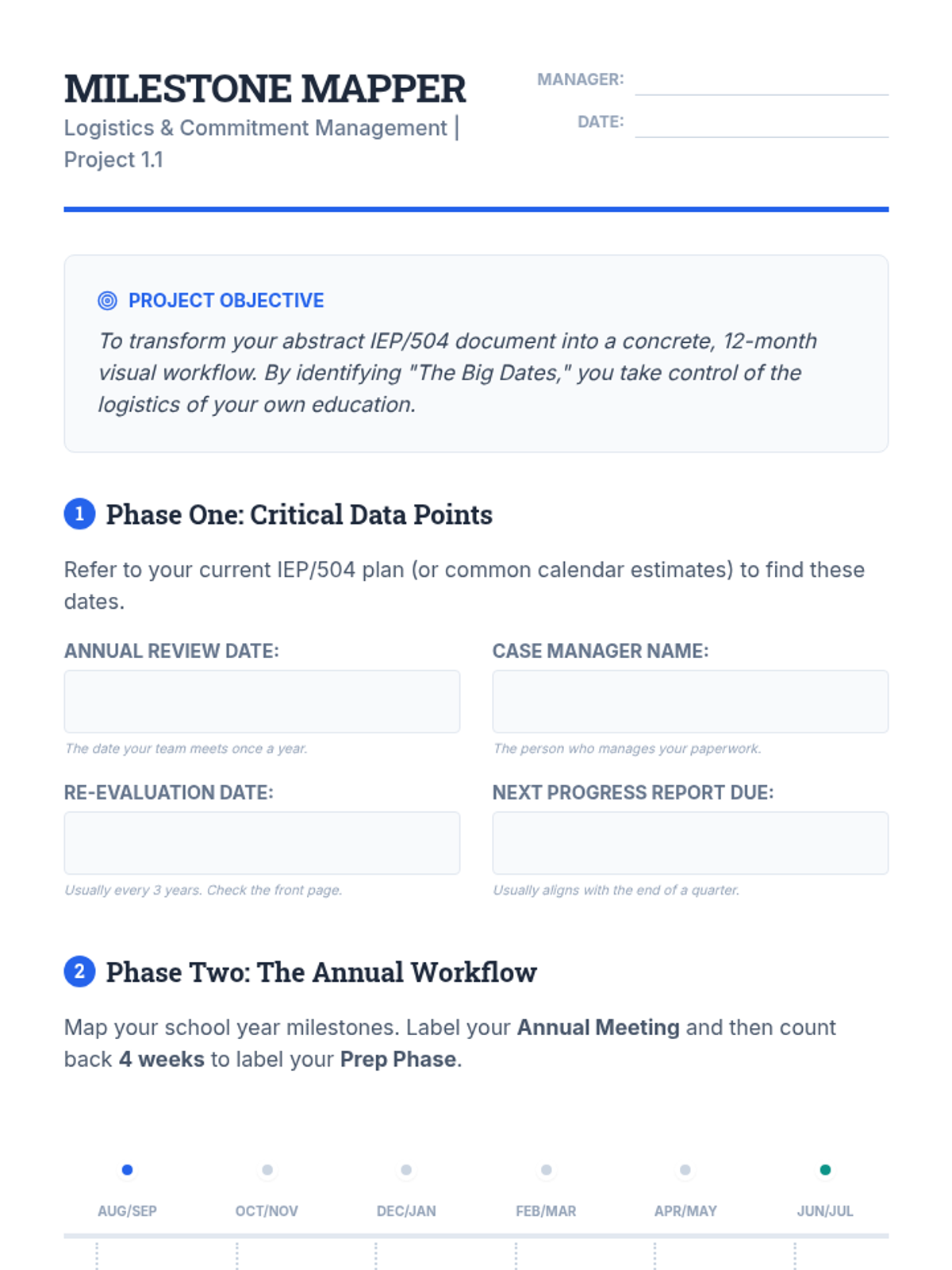
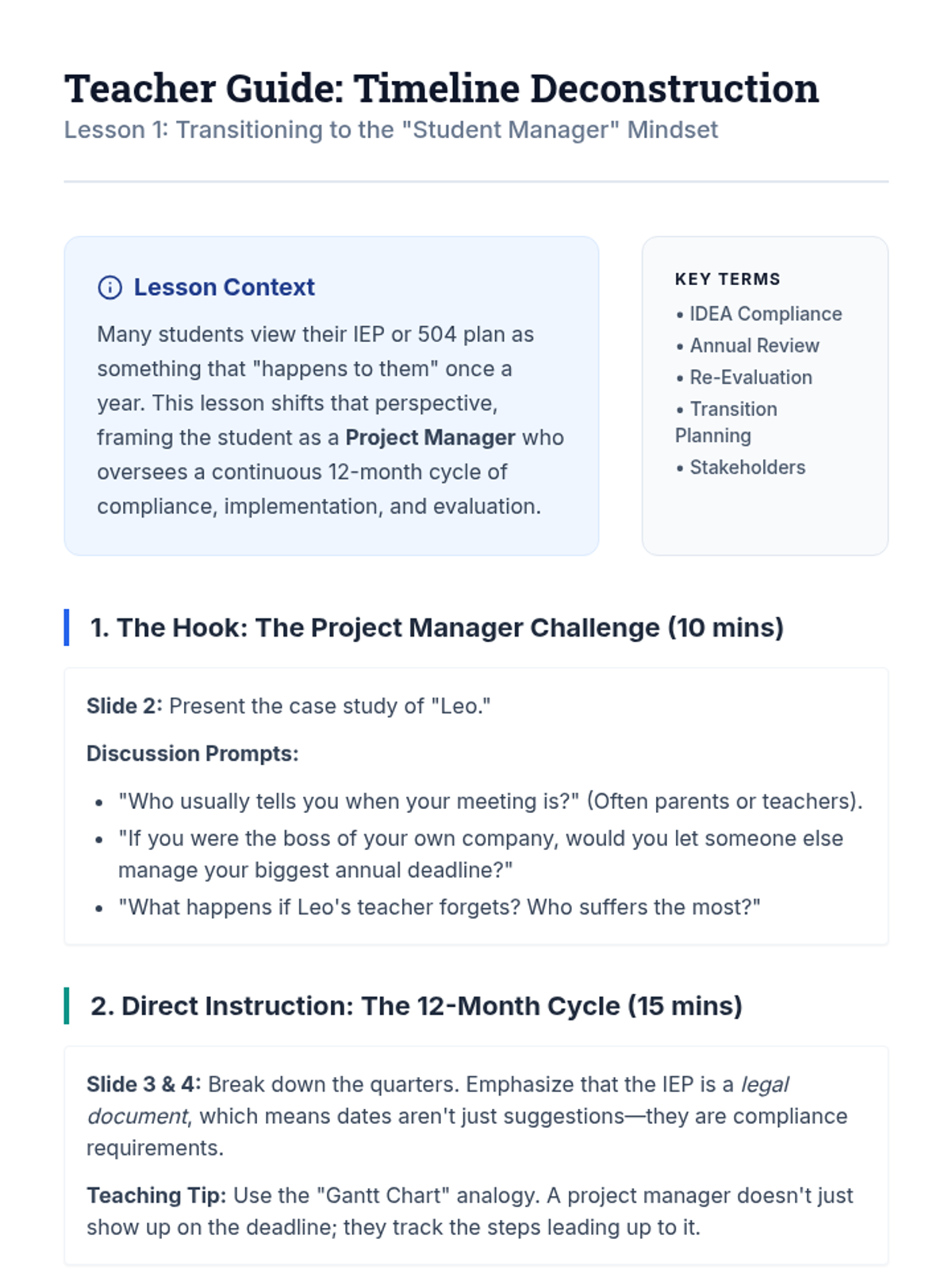
Students act as project managers to deconstruct the annual IEP/504 cycle, identifying critical deadlines and mapping out their own educational timelines.
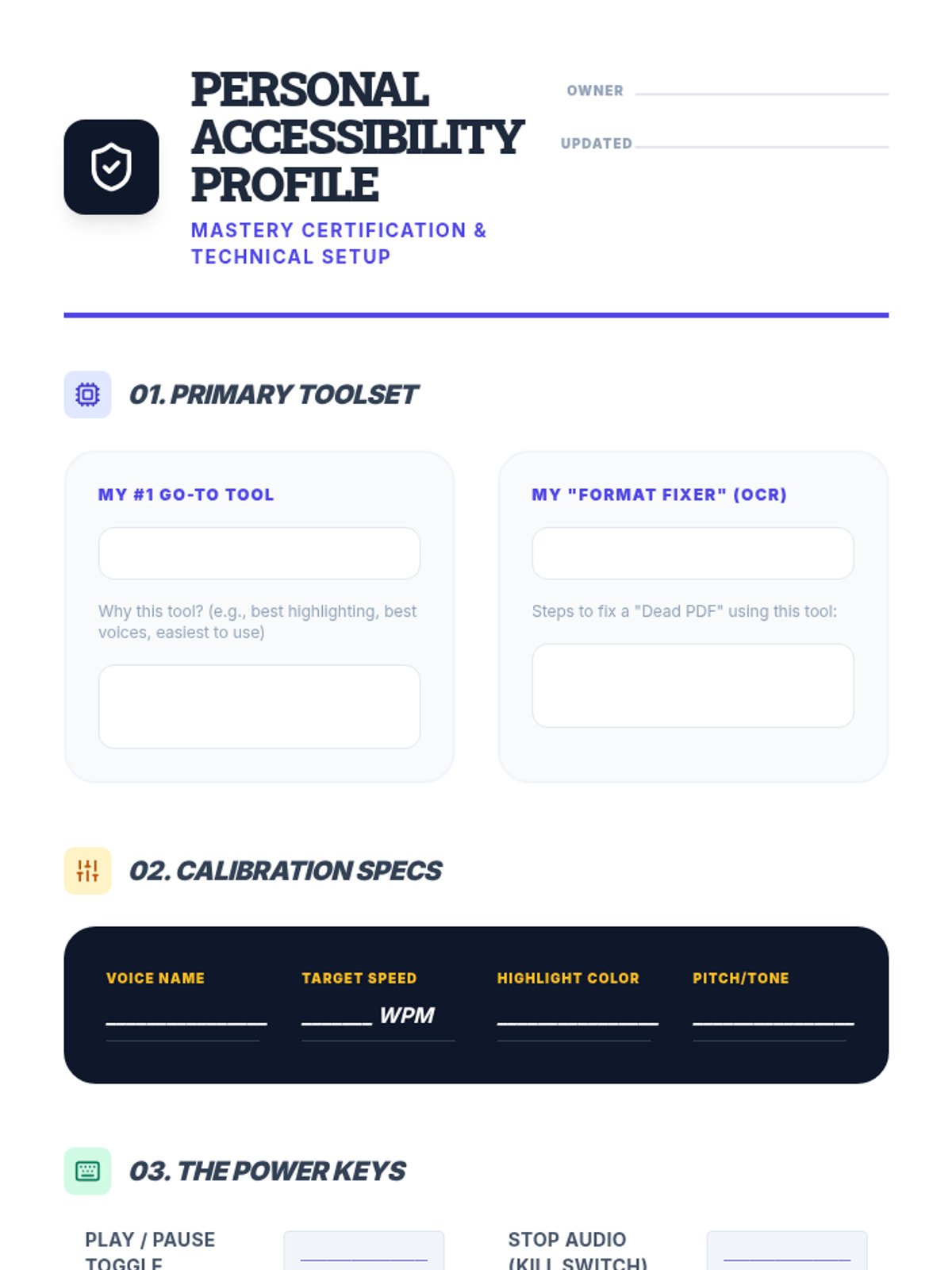
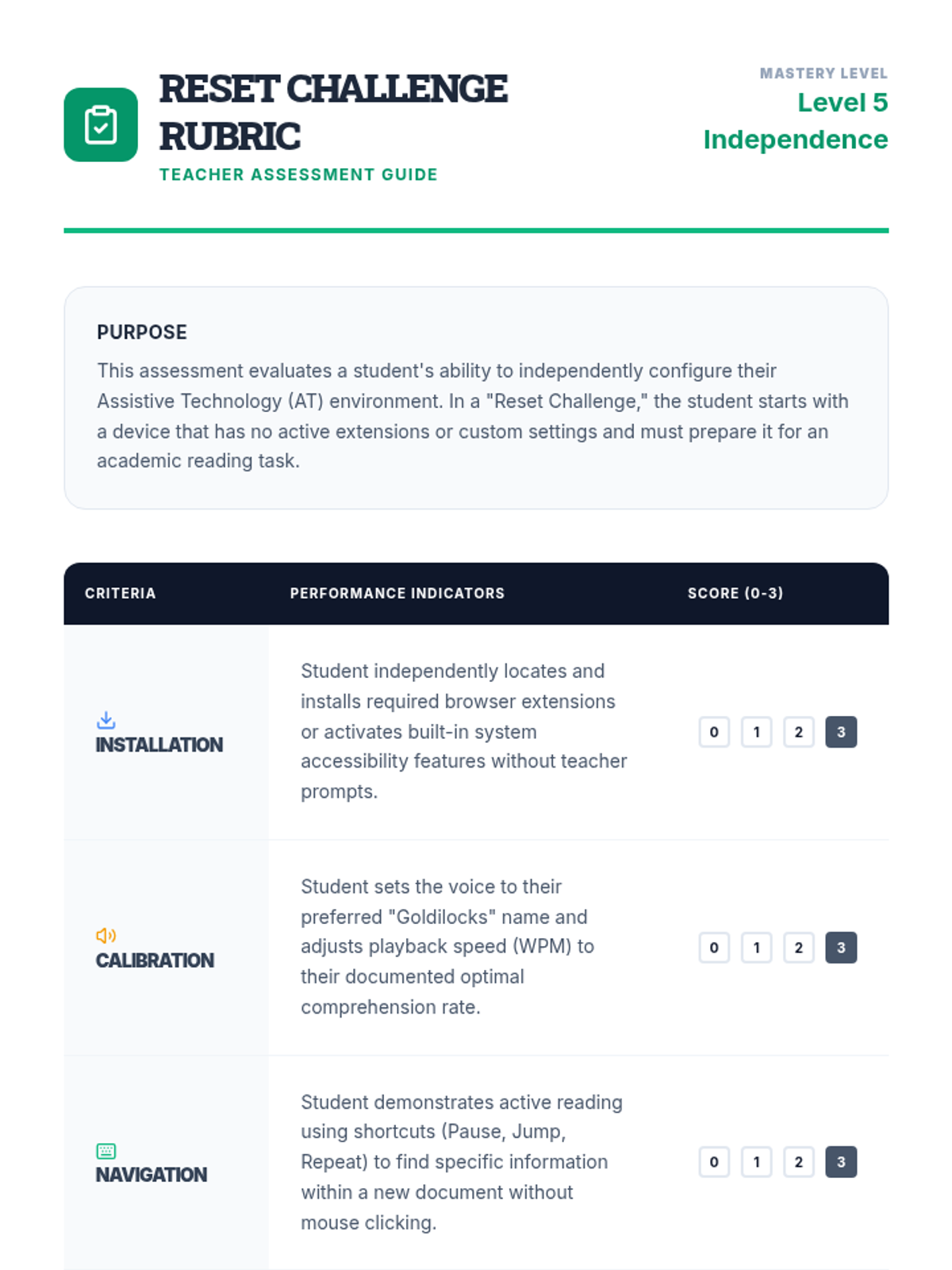
Students synthesize their preferences into a 'Personal Accessibility Profile' document that lists their preferred tools, settings, and strategies. They demonstrate mastery by configuring a 'clean' device to their specifications within a set time limit.
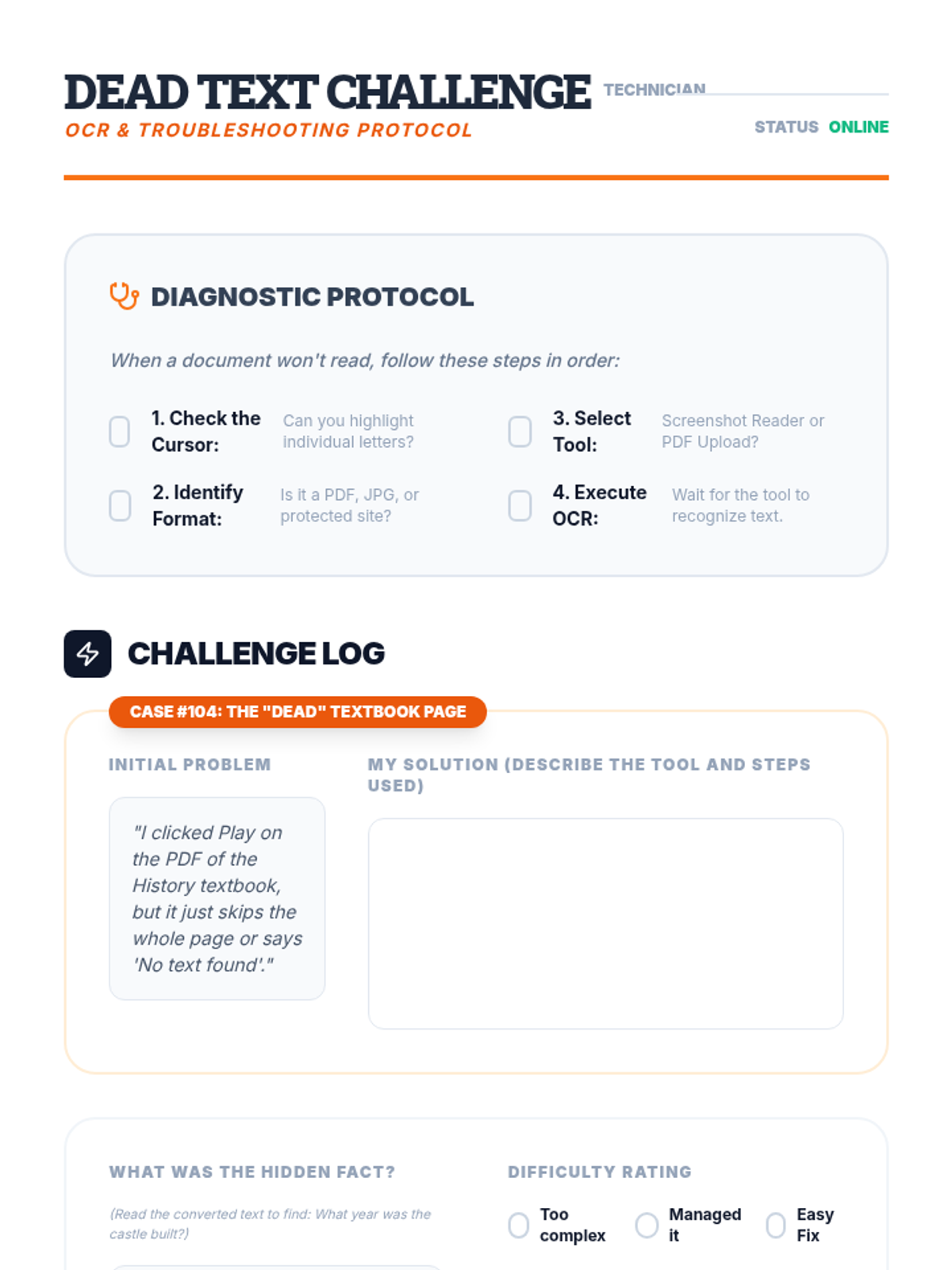
This lesson addresses common barriers, such as inaccessible PDFs or text embedded in images, by teaching students to use OCR (Optical Character Recognition) tools. Students practice converting 'dead text' into readable formats compatible with their TTS software.
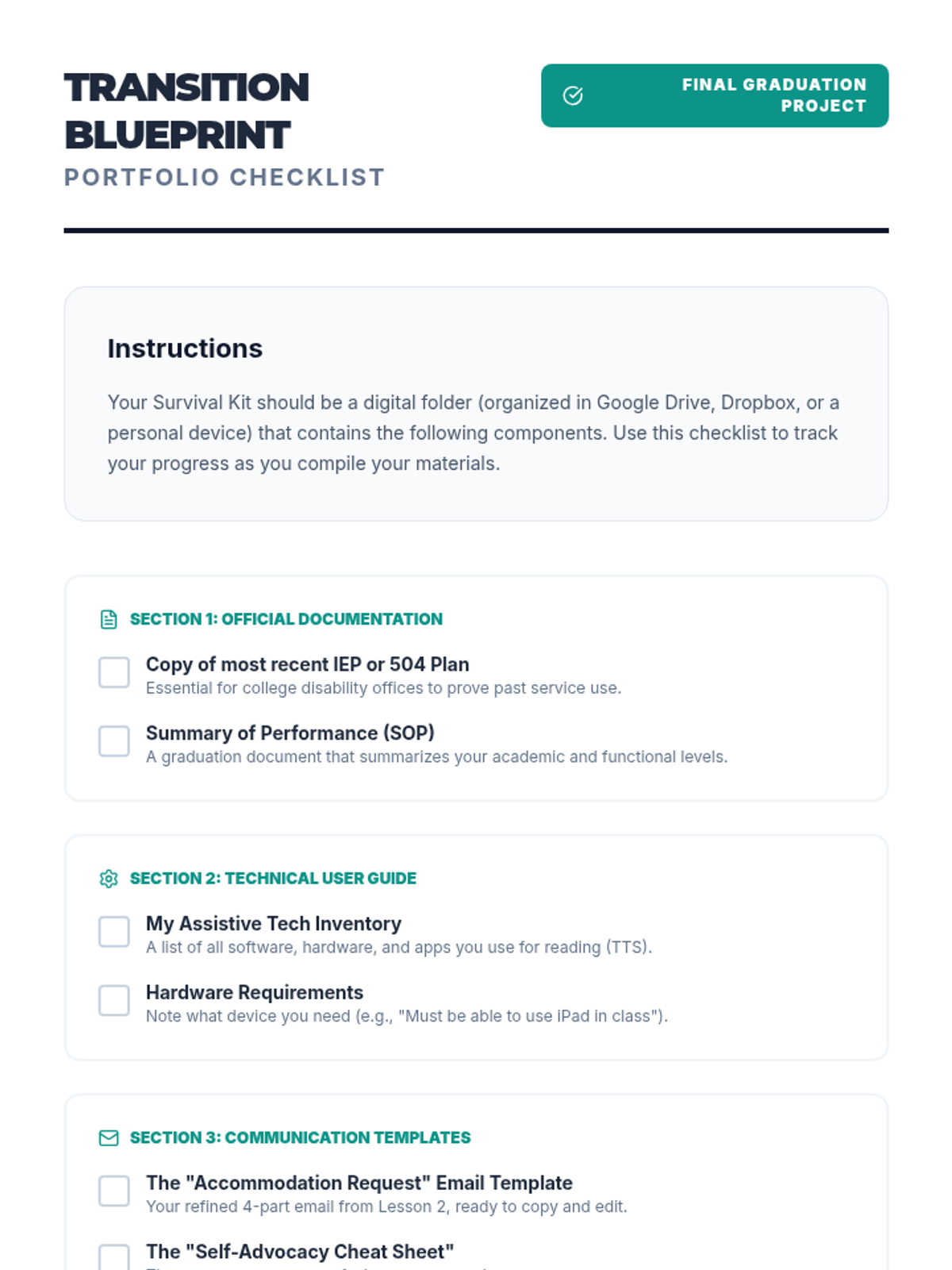
In this culminating lesson, students compile a digital portfolio listing their preferred software, proof of diagnosis/need, and templates for requesting accommodations.
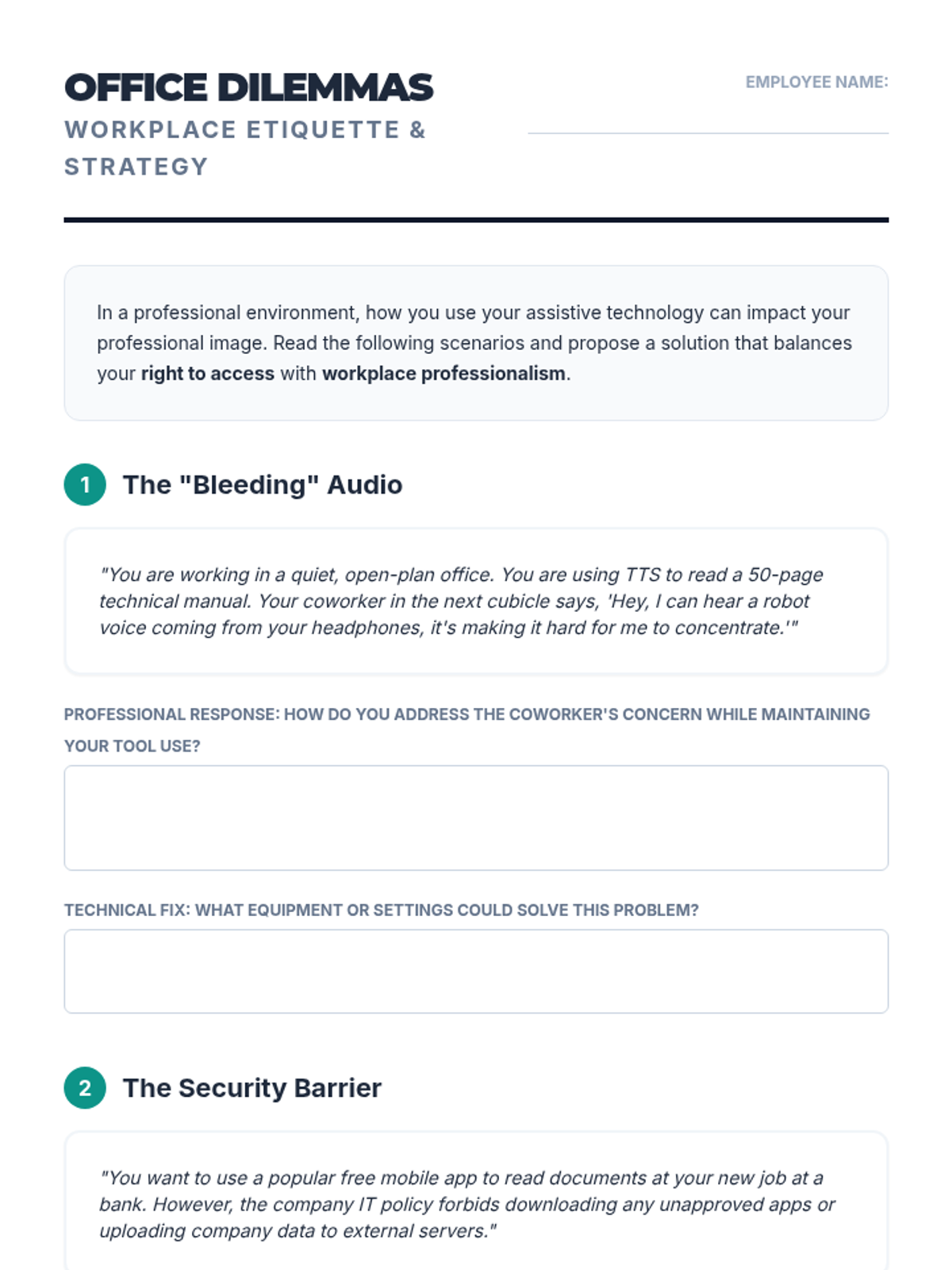
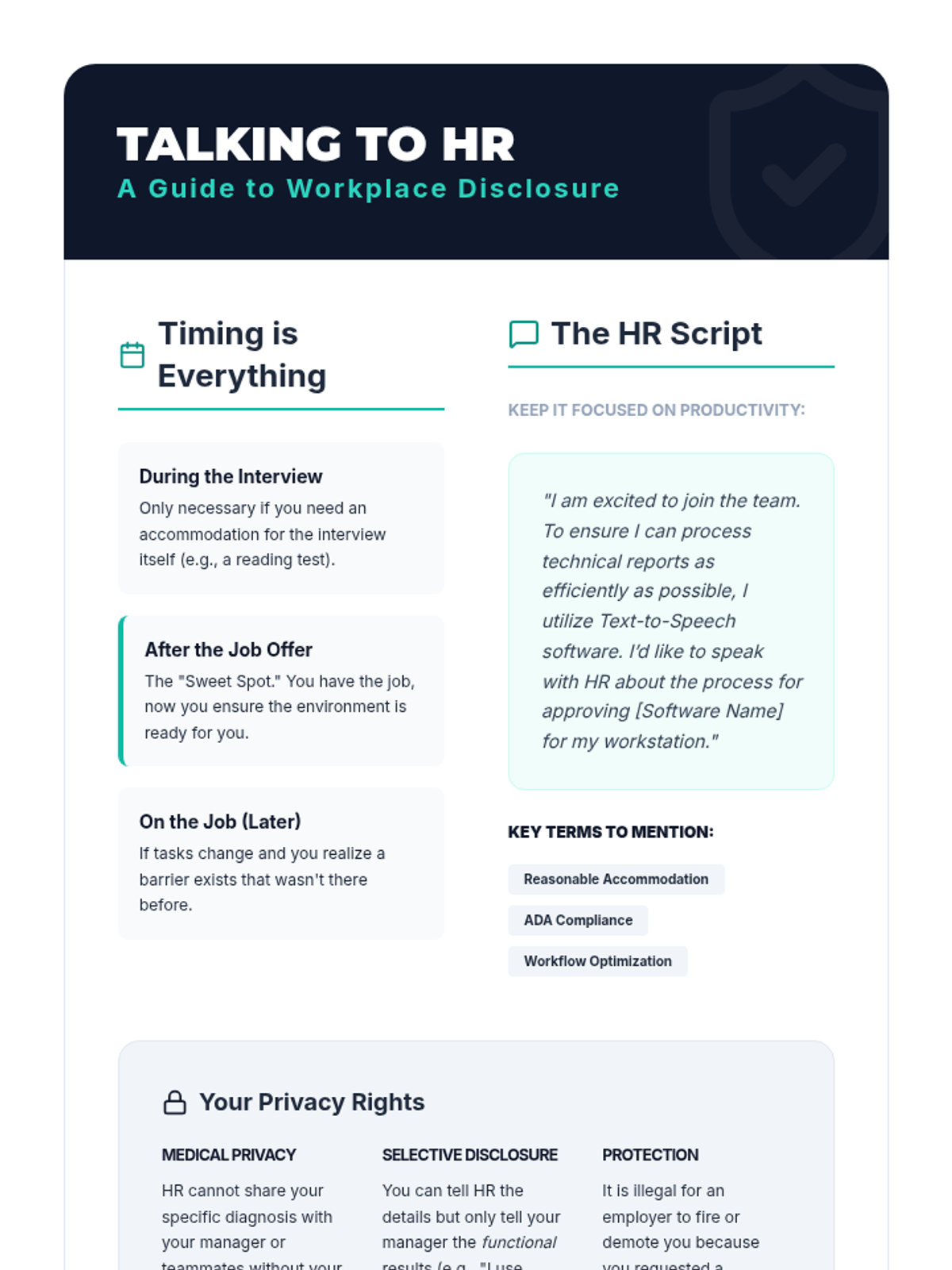
Students explore how TTS is perceived and utilized in corporate environments versus academic ones. They analyze workplace scenarios involving confidentiality, open-office etiquette, and disclosure to HR.
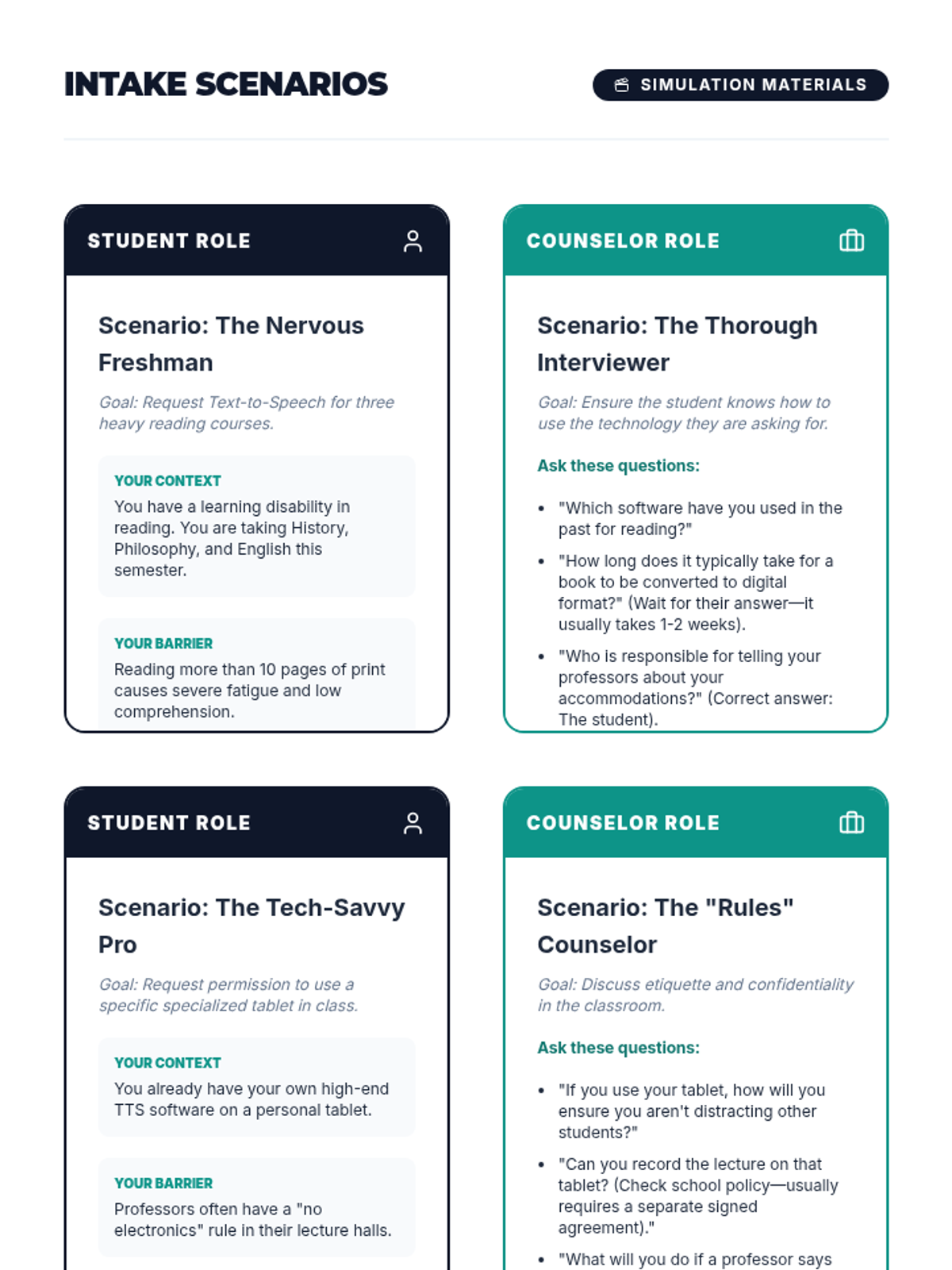
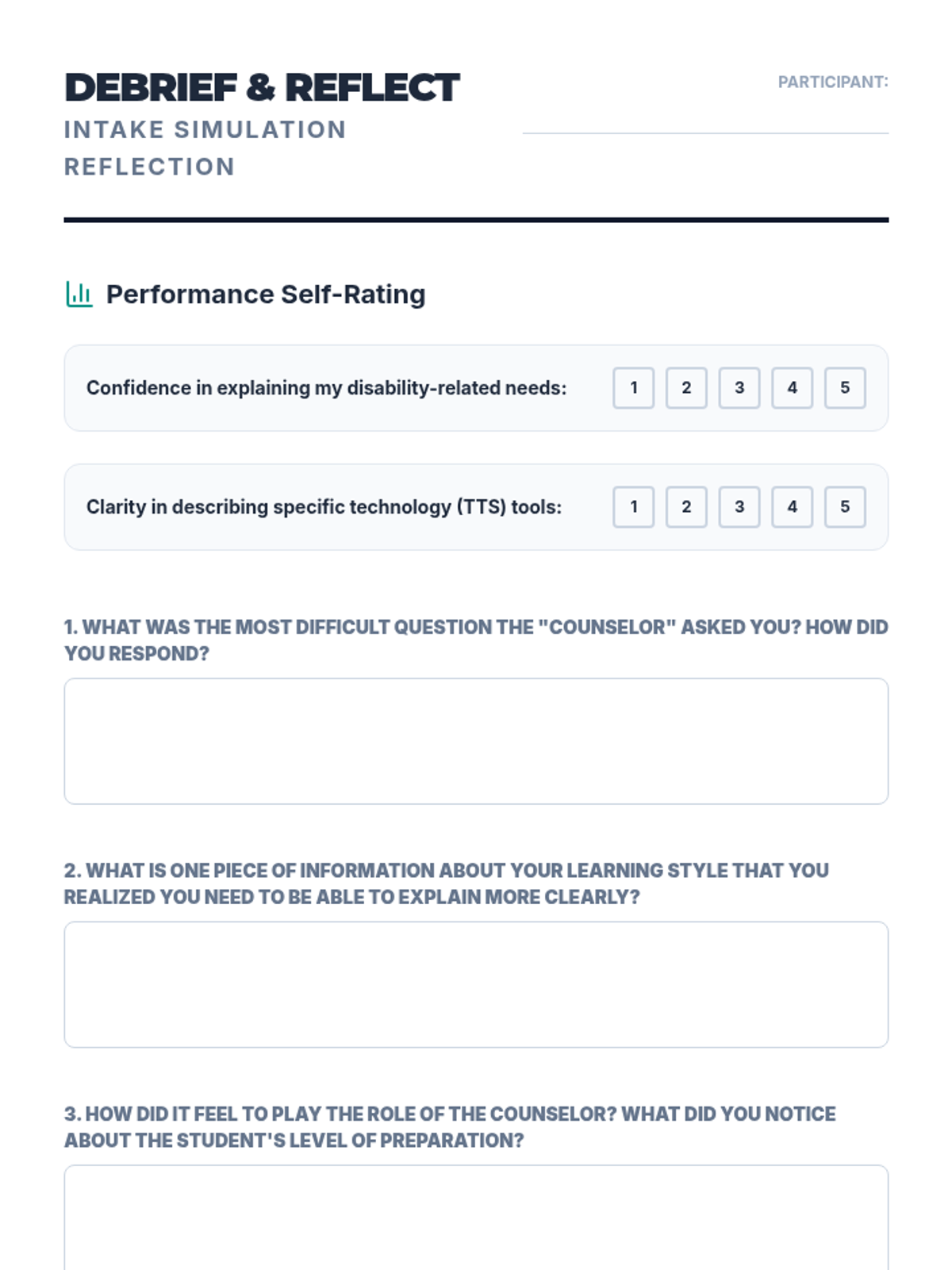
Using role-play, students practice the intake interview process common in college disability support centers. One student plays the counselor, the other the student explaining their need for TTS software and digital formats.
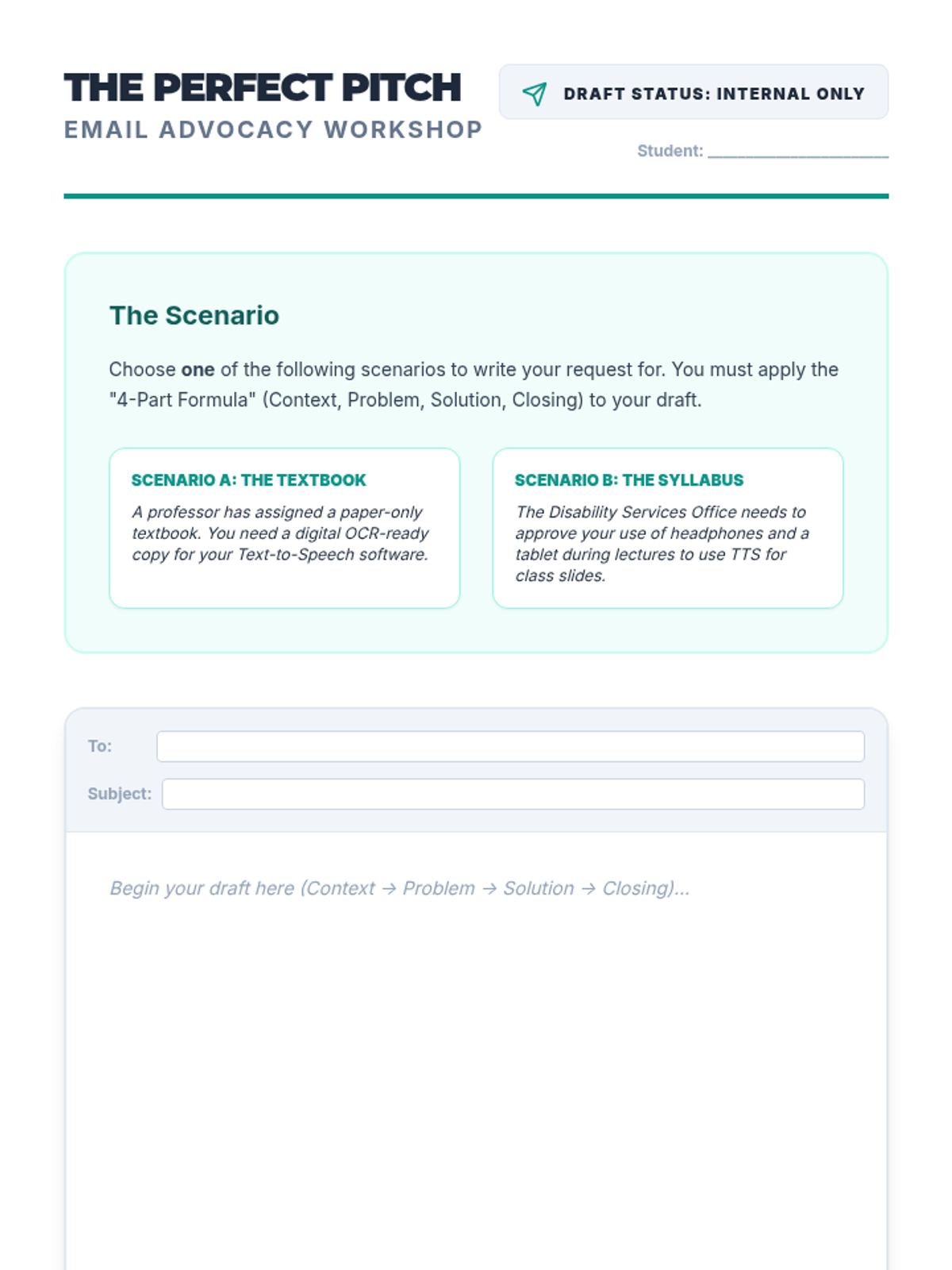
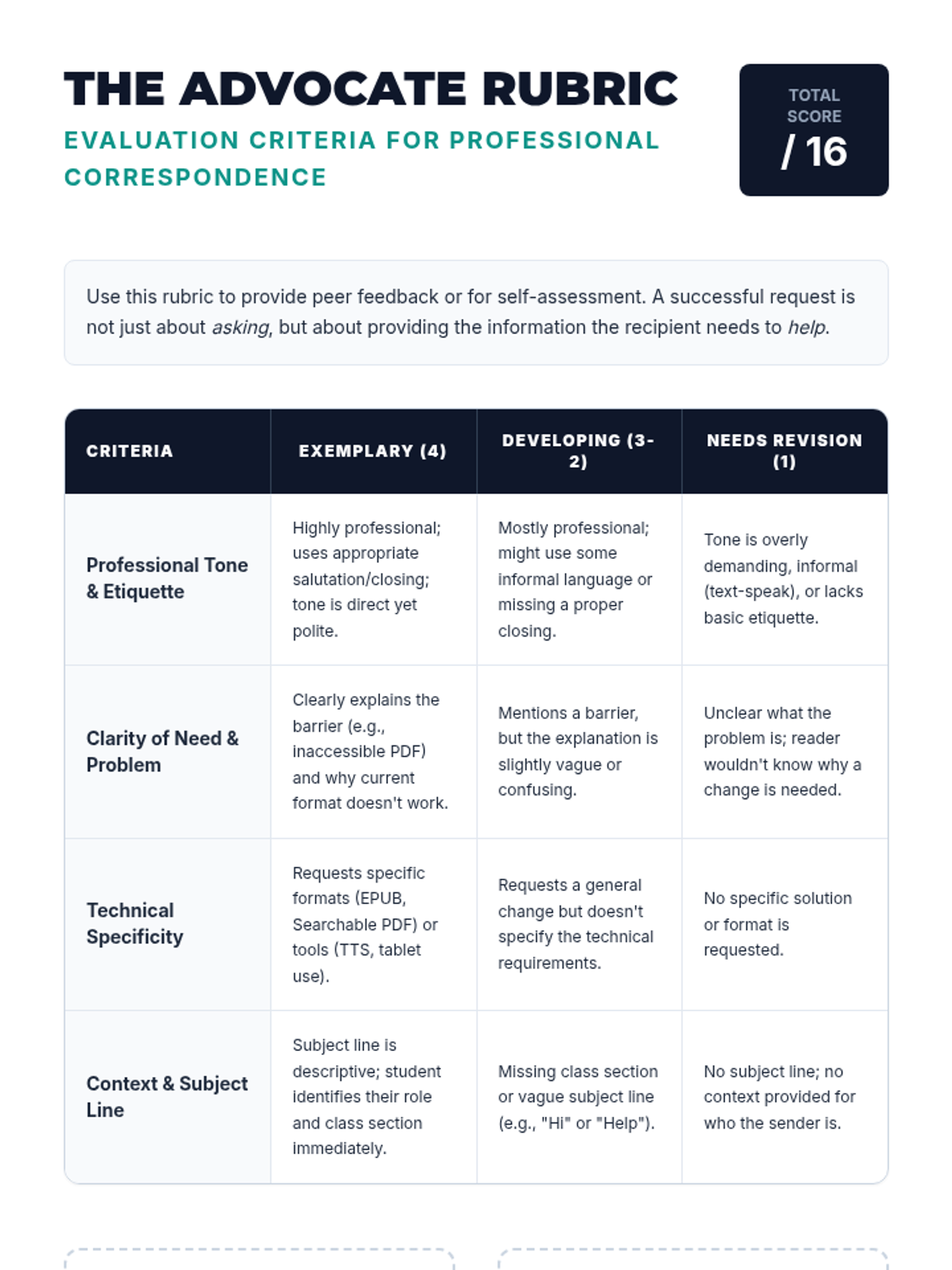
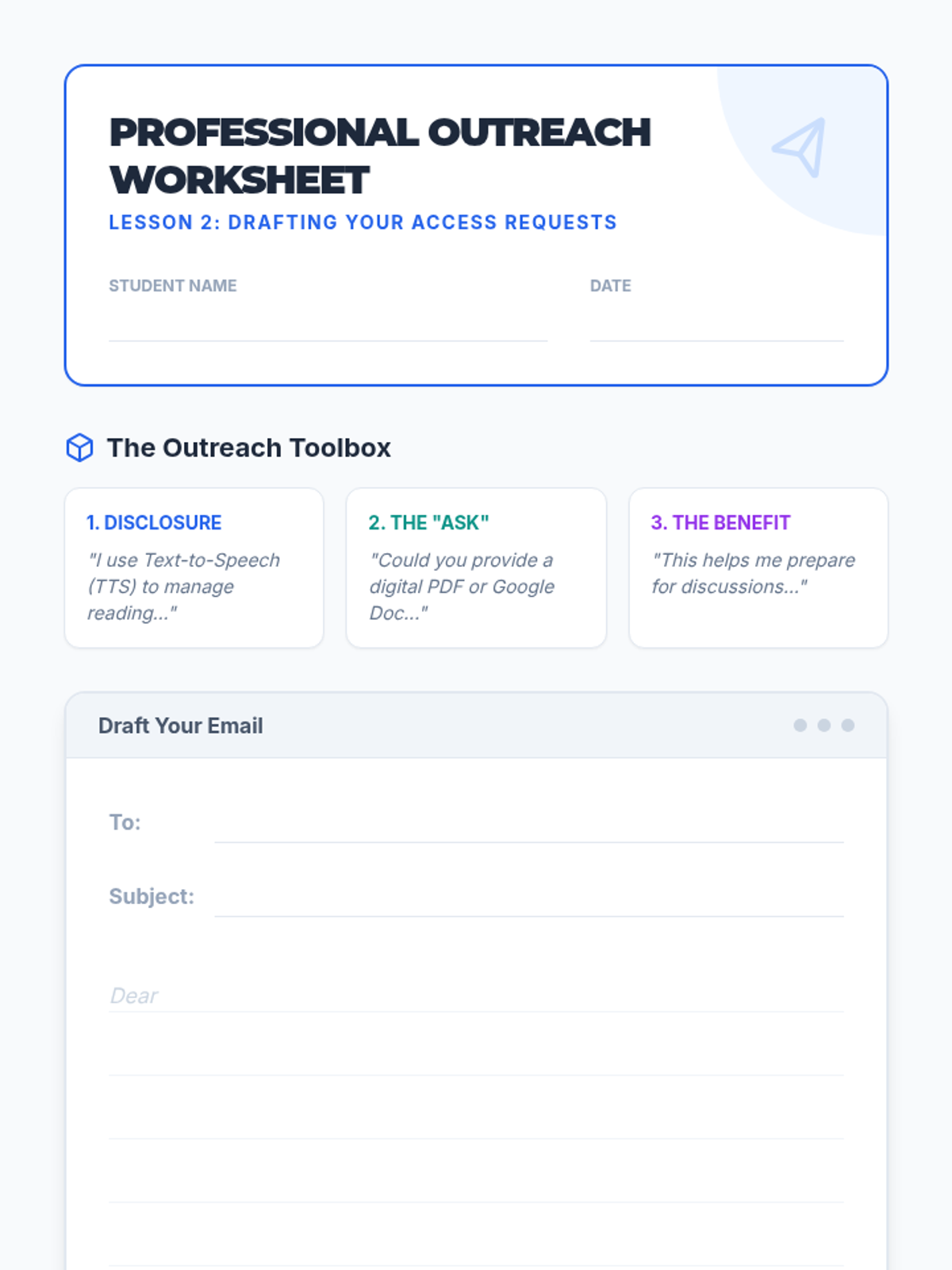
Students draft professional emails and scripts to request digital text formats from professors or disability service offices. They focus on professional tone, clarity of need, and specific technical requirements.
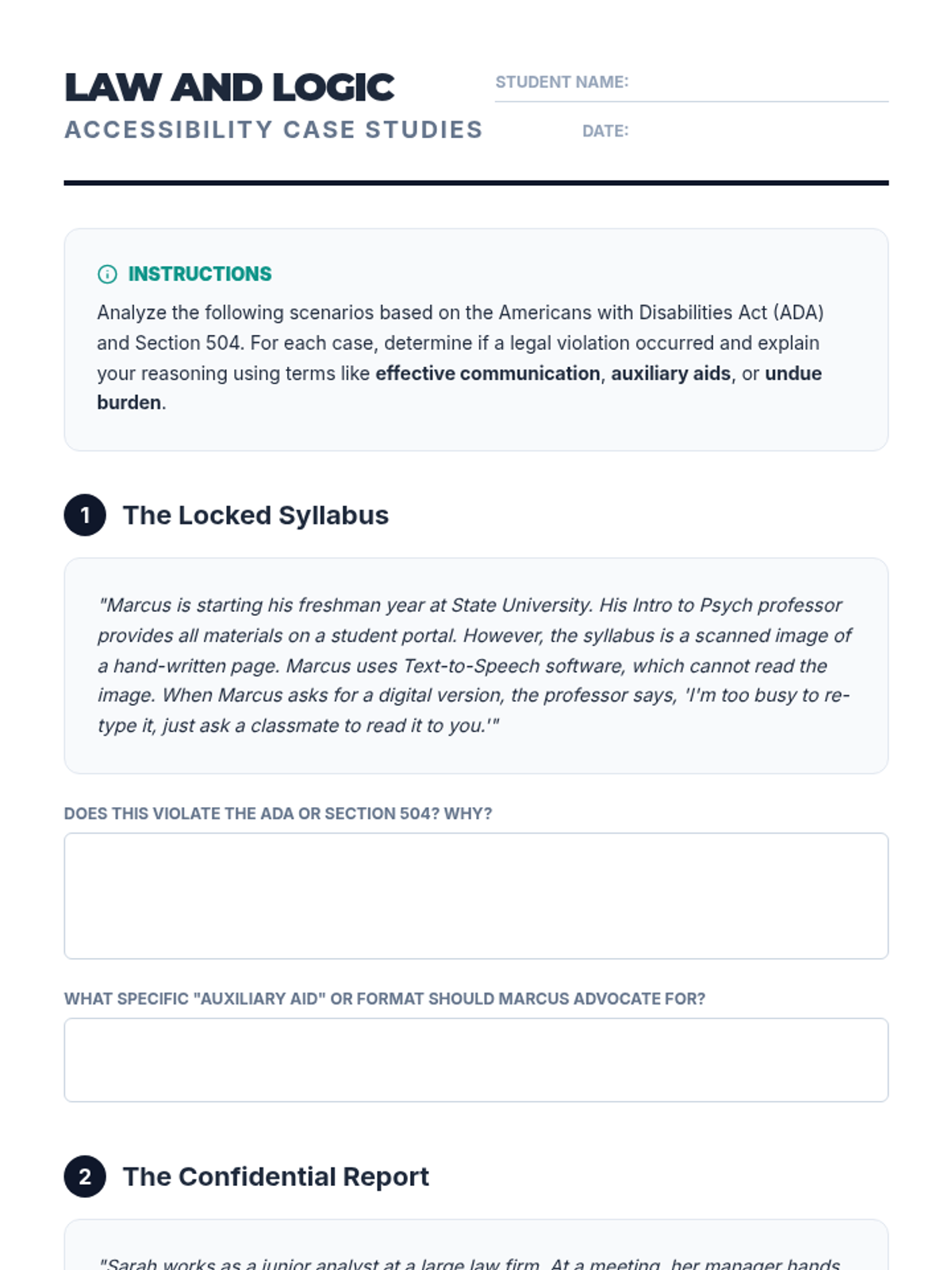
Students examine the Americans with Disabilities Act (ADA) and Section 504 to understand their legal rights regarding accessible text and assistive technology. They will analyze case studies of accessibility lawsuits to understand the legal obligation of institutions to provide digital formats.
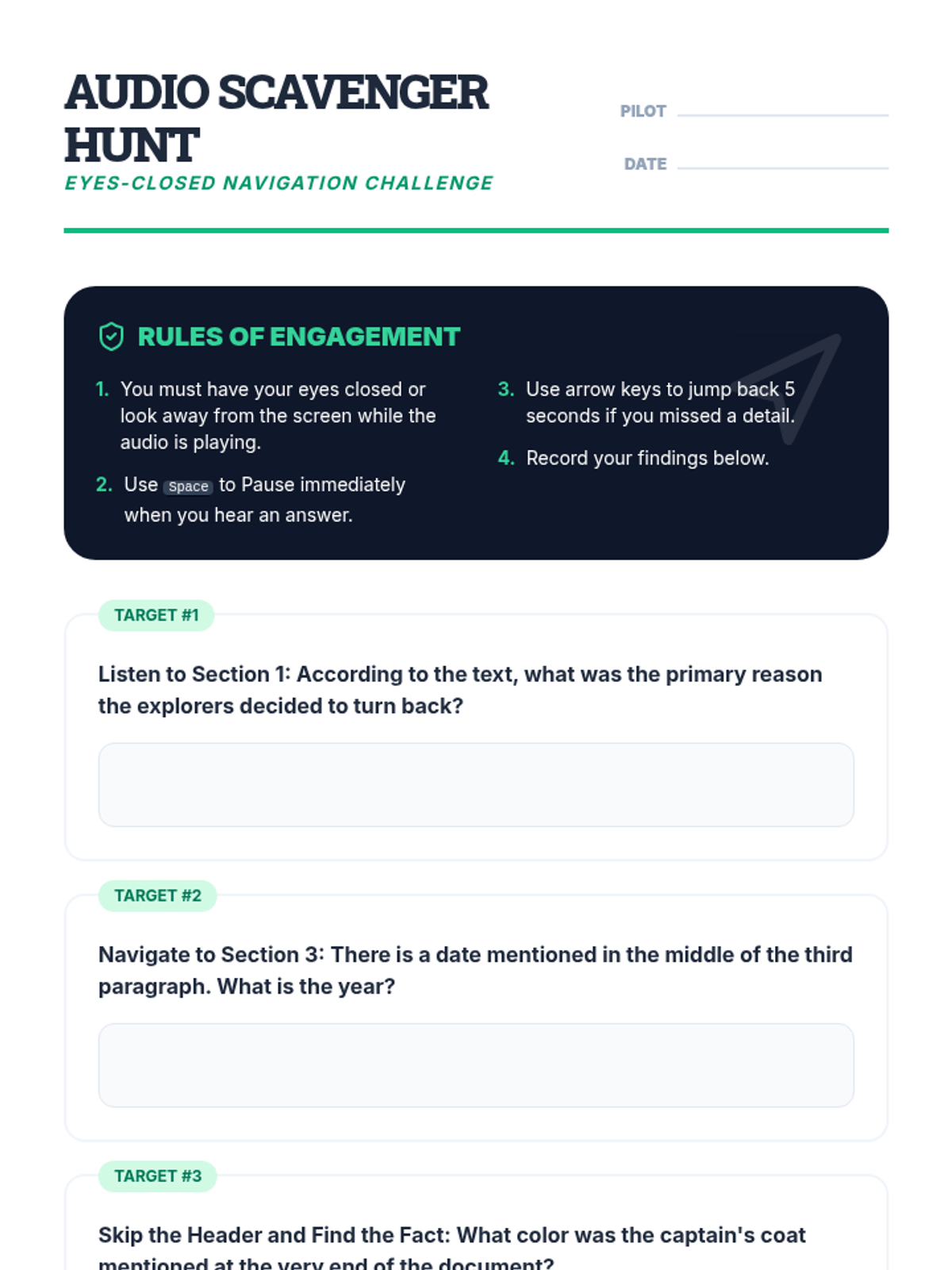
Students learn to control the flow of information by using navigation shortcuts to skip headers, repeat sentences, and jump between paragraphs. The lesson focuses on moving beyond passive listening to active navigation required for academic reading.
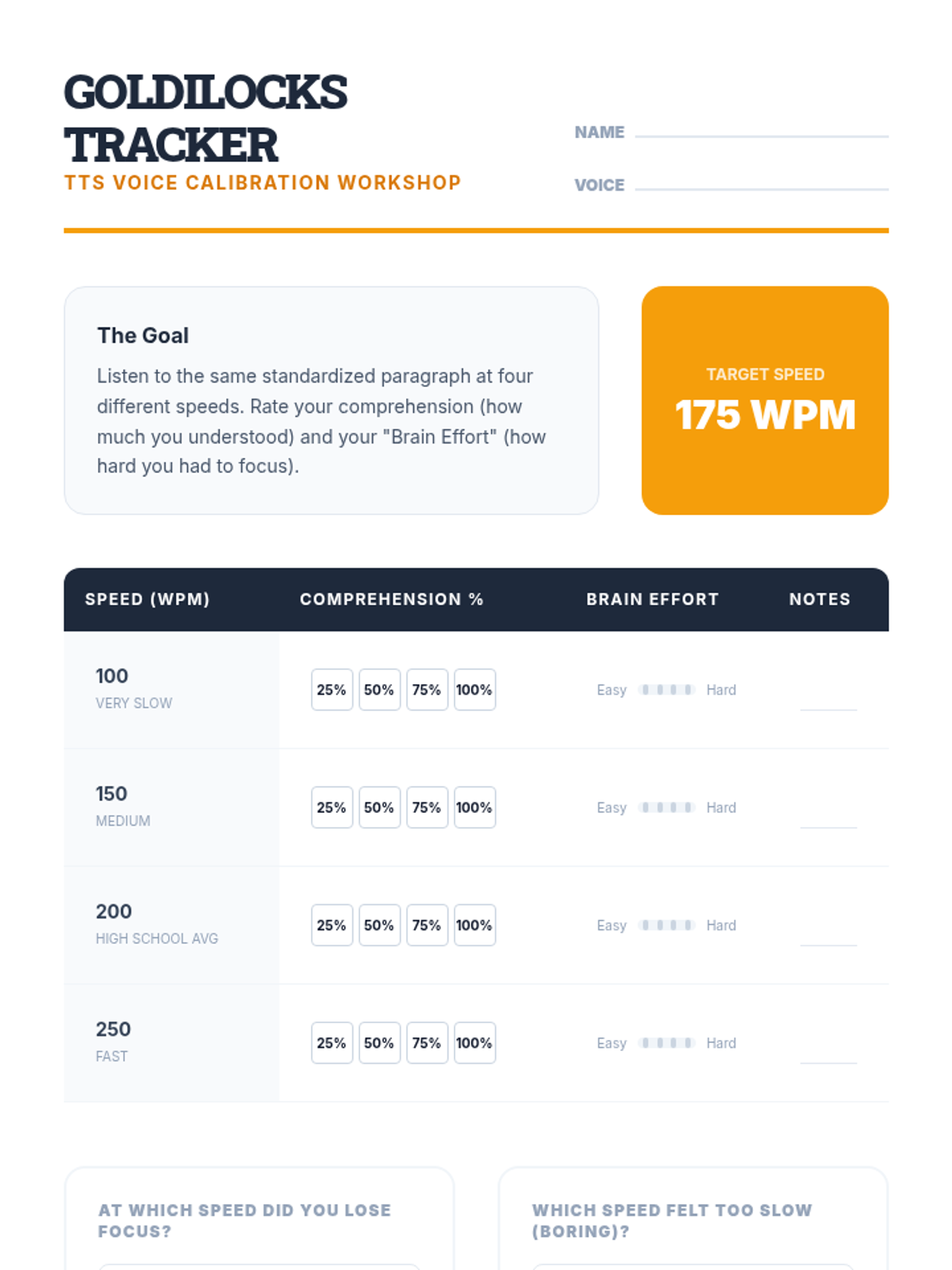
In this technical workshop, students experiment with voice synthesis options and playback rates to determine their optimal comprehension speed. Students track their understanding of a standardized text at various words-per-minute settings to find their 'Goldilocks' zone.
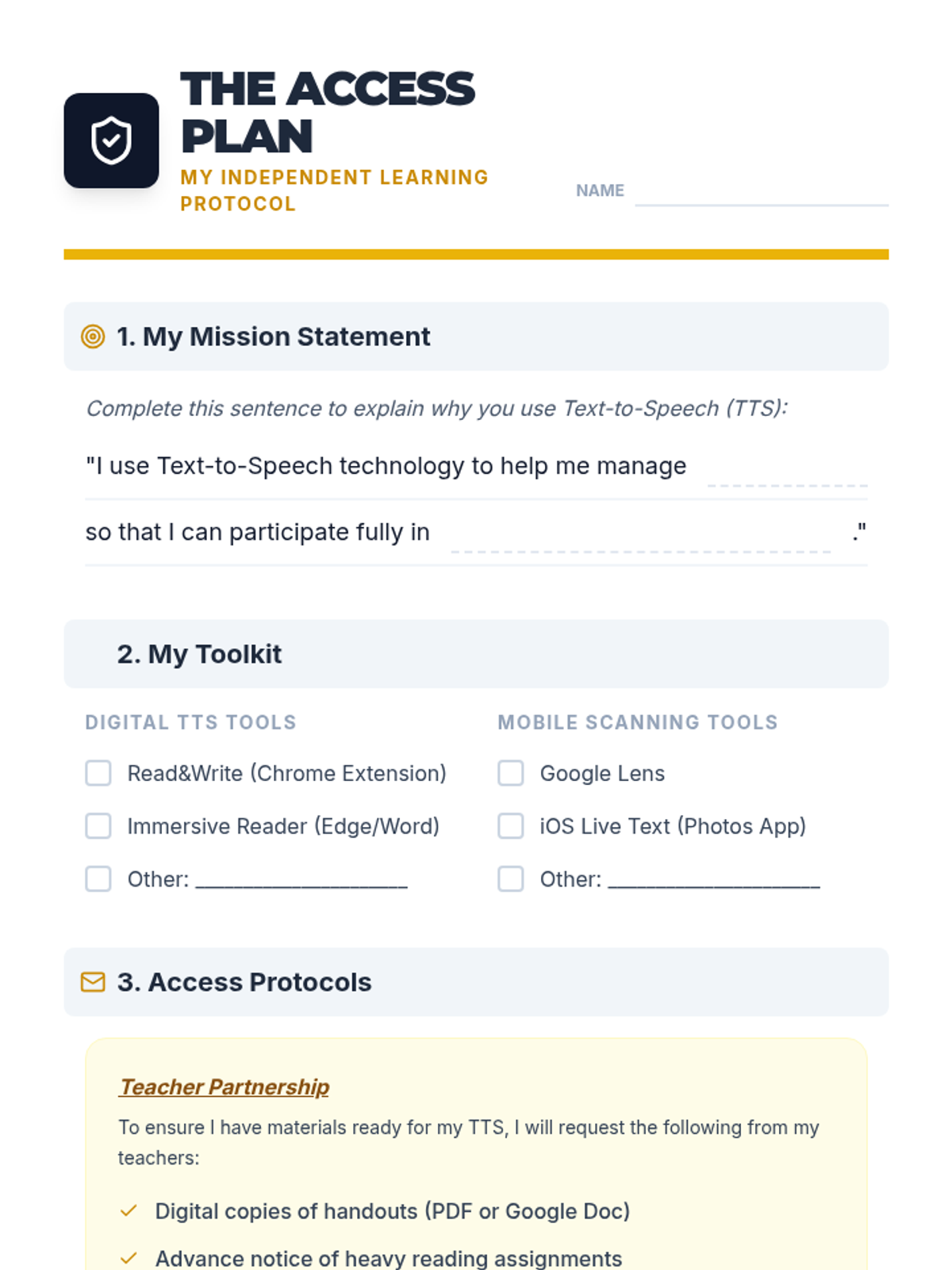
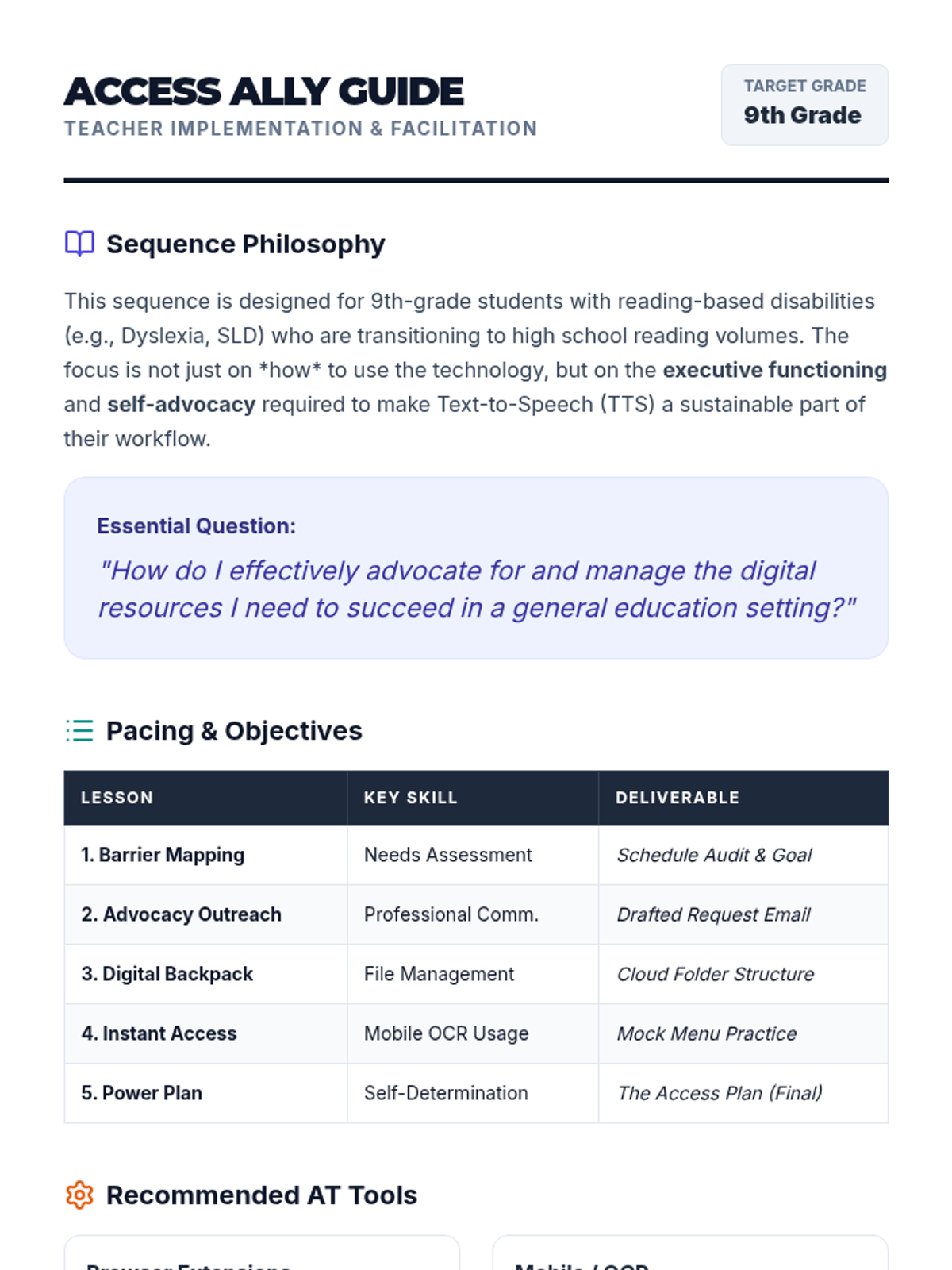
Culminating project where students synthesize their learning into a one-page 'Access Plan' and practice presenting it to teachers or IEP team members.
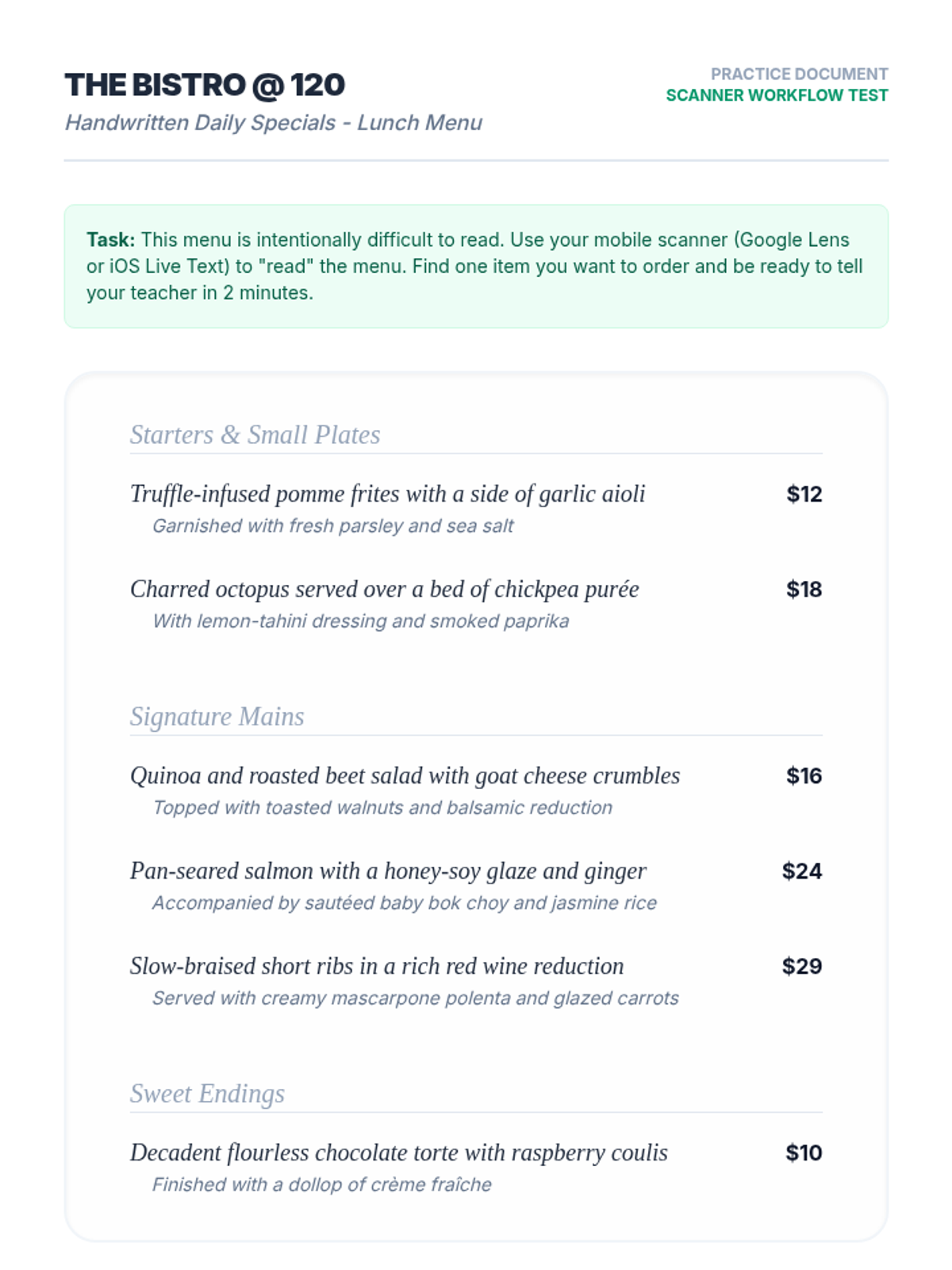
Students master the use of mobile OCR (Optical Character Recognition) apps to convert physical handouts into digital, speech-ready text on the fly.
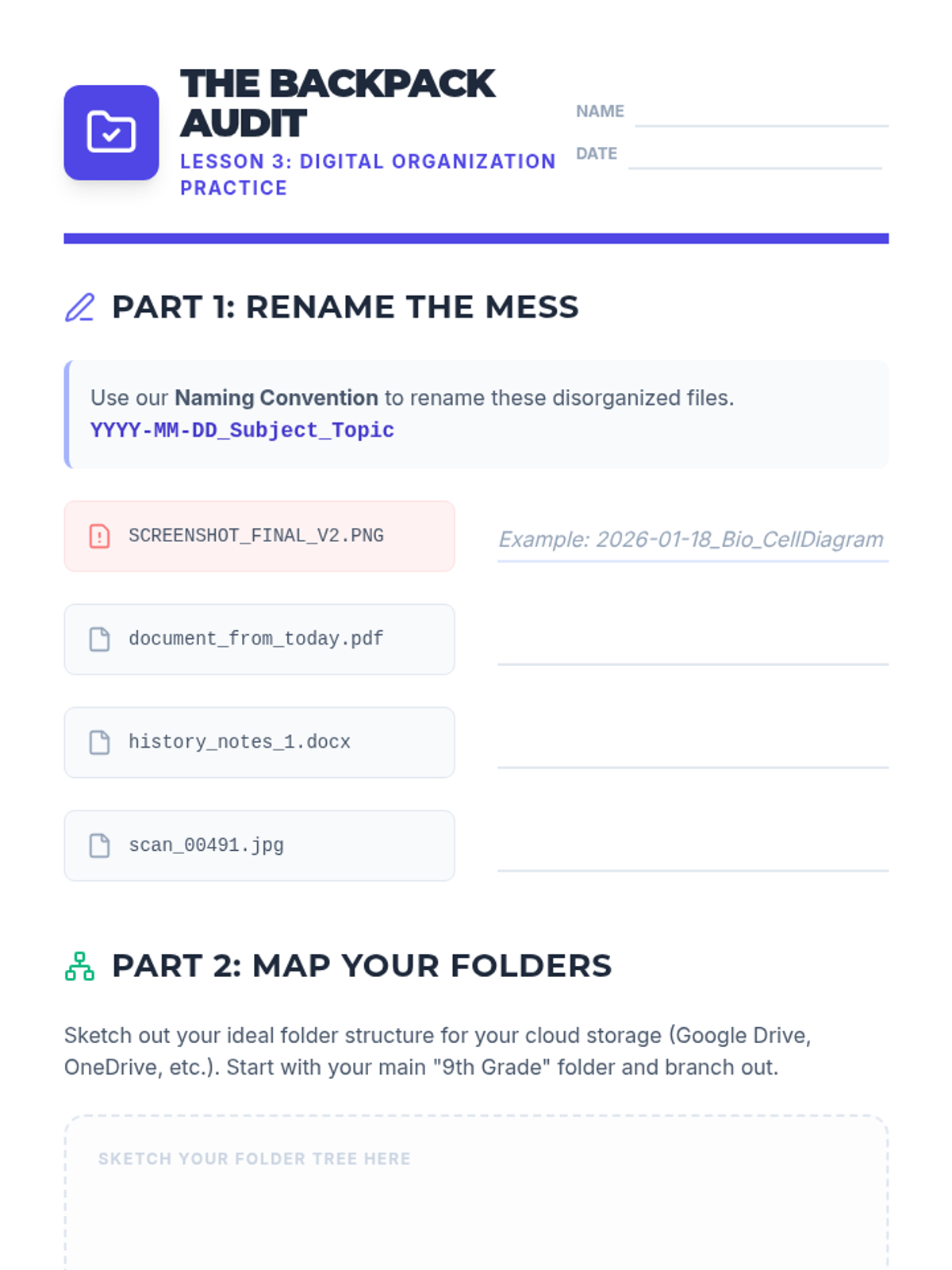
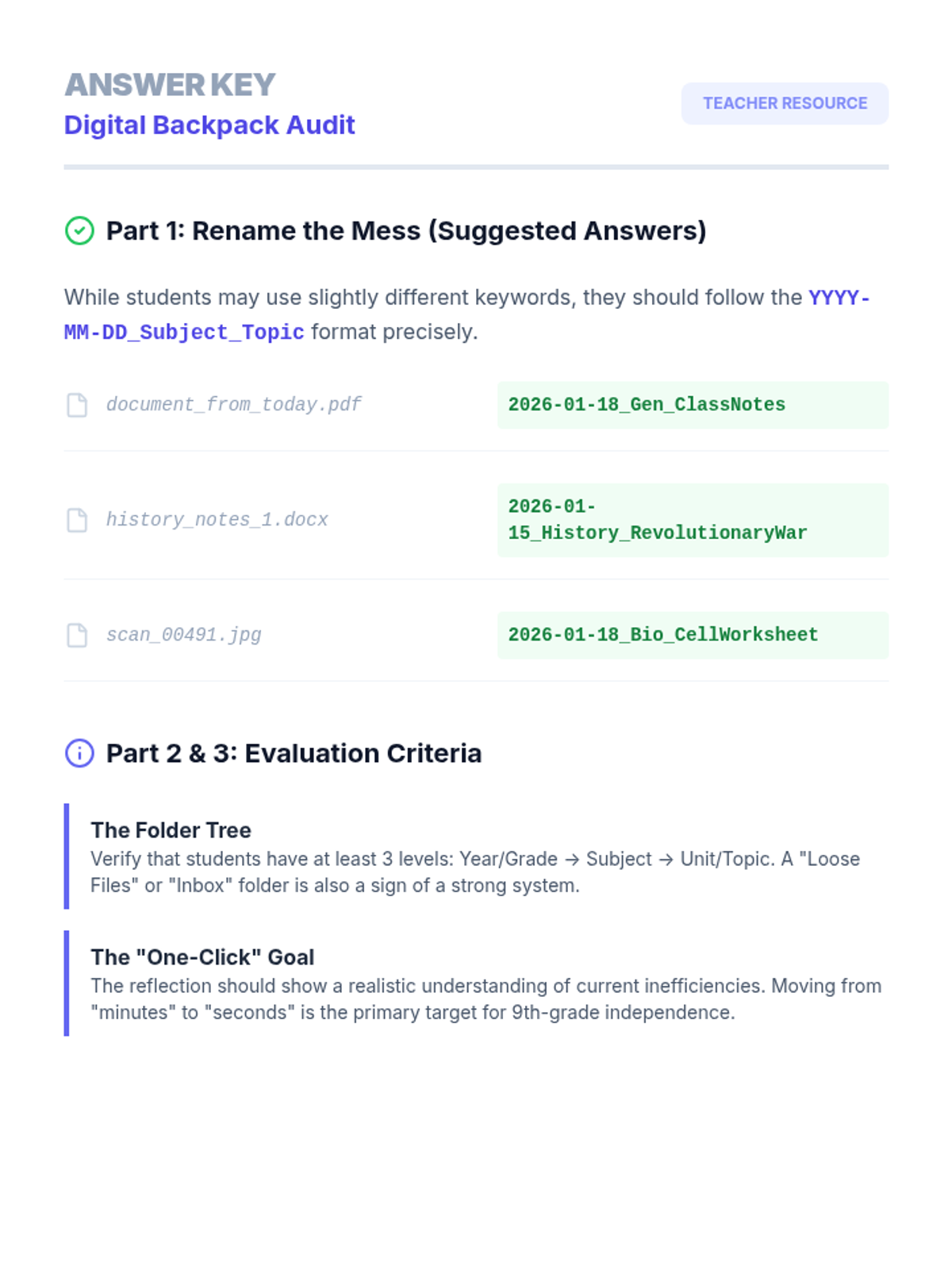
Focuses on the executive functioning skills needed to organize digital files for easy use with TTS. Students develop naming conventions and cloud storage systems to keep their 'digital backpack' accessible.
Students learn the components of professional communication to request digital versions of classroom materials. They practice drafting emails that clearly articulate their need for accessible text.
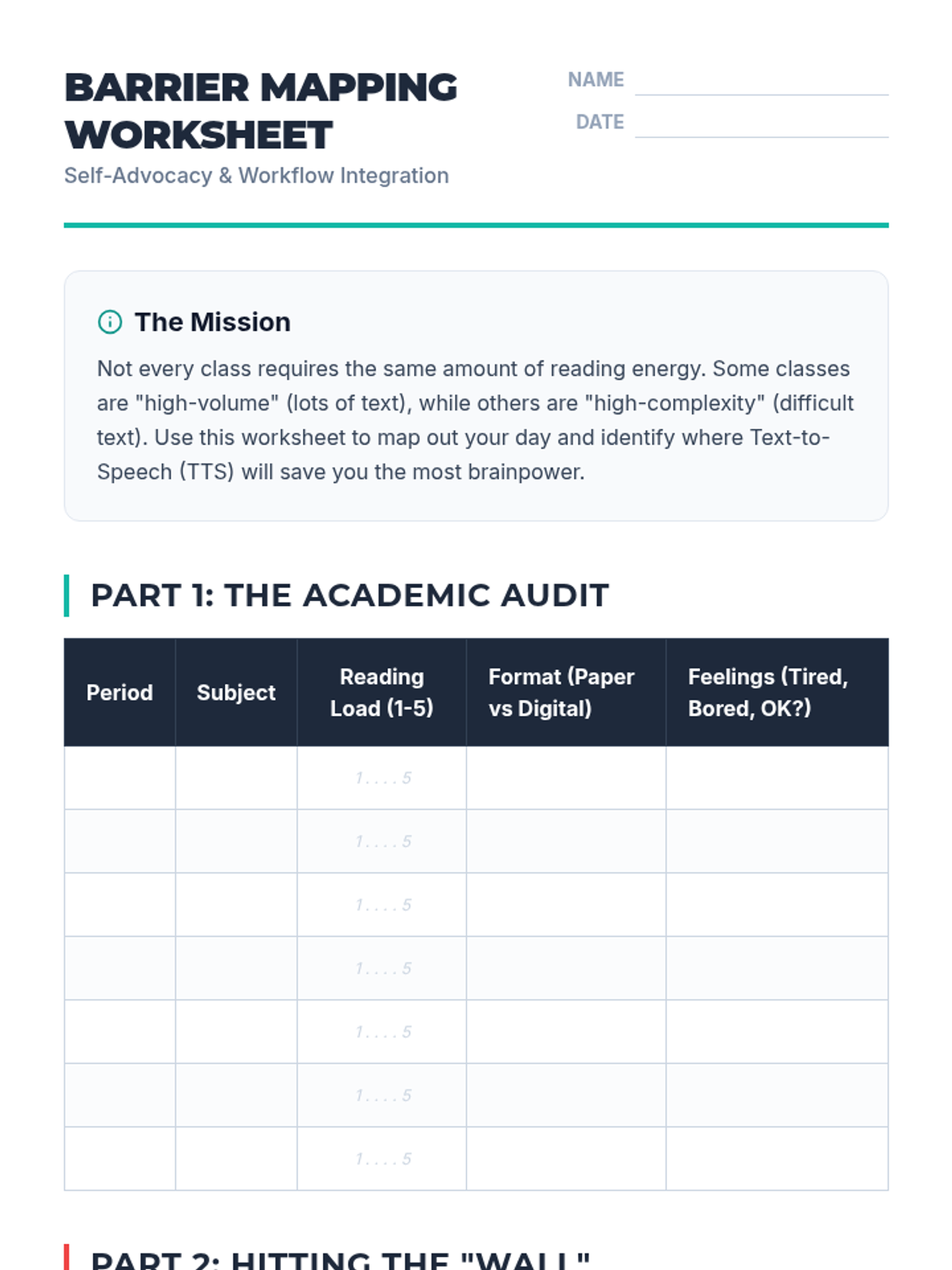
Students analyze their class schedules to identify high-volume reading tasks and pinpoint where Text-to-Speech (TTS) will provide the most benefit. They create a visual 'Barrier Map' to guide their advocacy efforts.
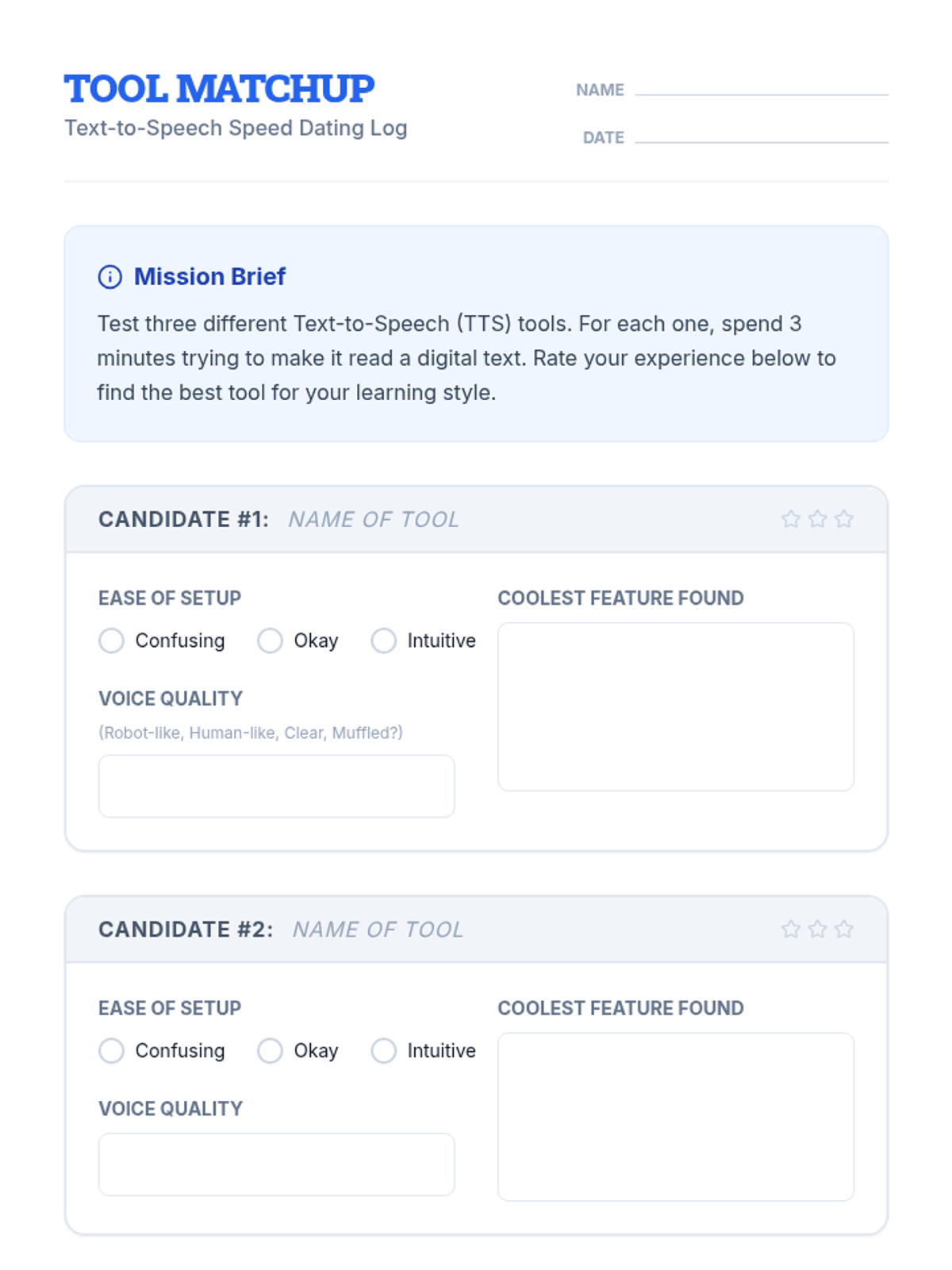
Students explore and compare various TTS tools, extensions, and built-in features to find the platform that best fits their learning style and device.
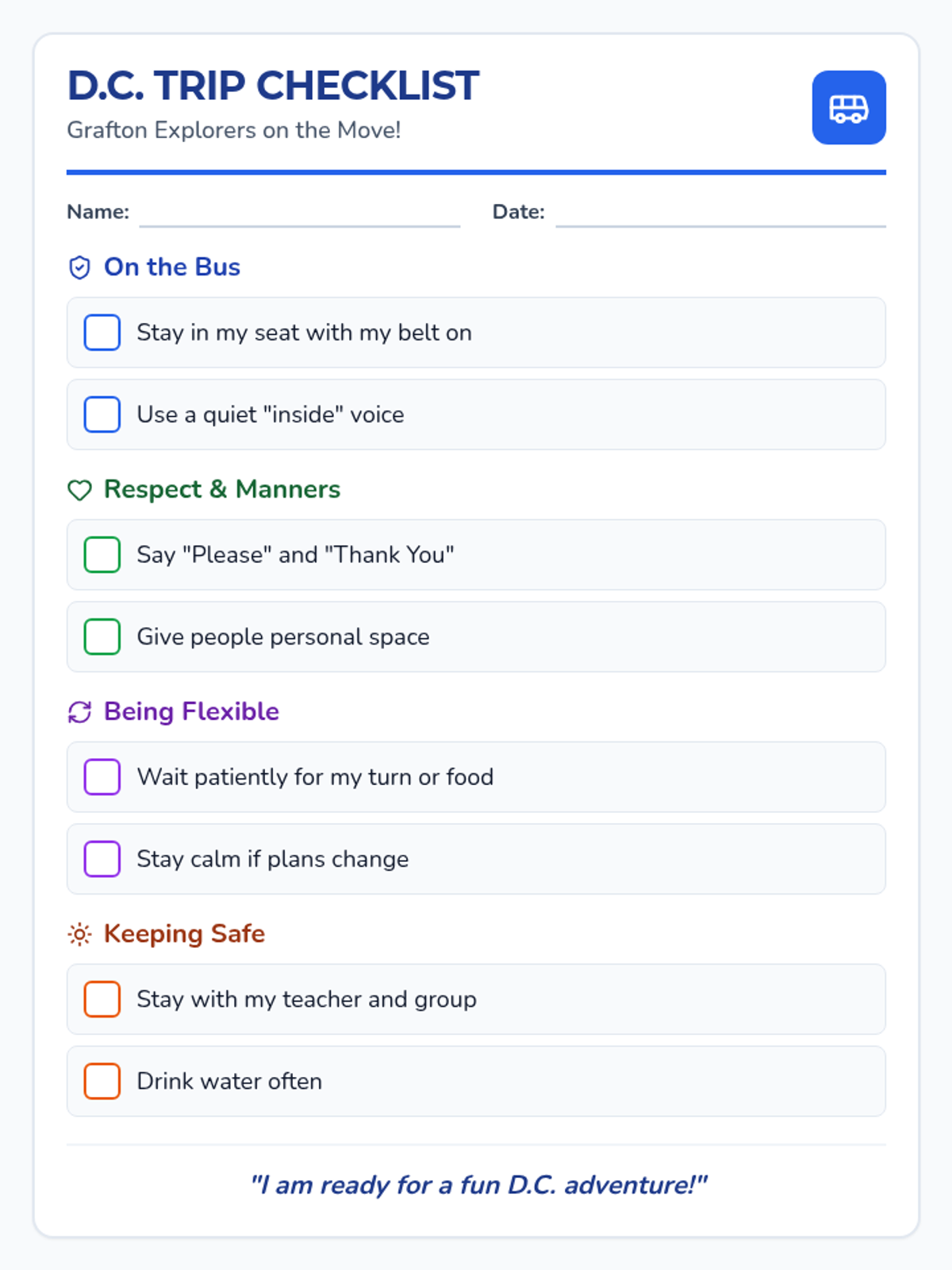
A set of social stories and visual aids to prepare students with Down Syndrome and Autism for a school field trip from Grafton, MA to Washington, D.C., focusing on patience, endurance, and manners.
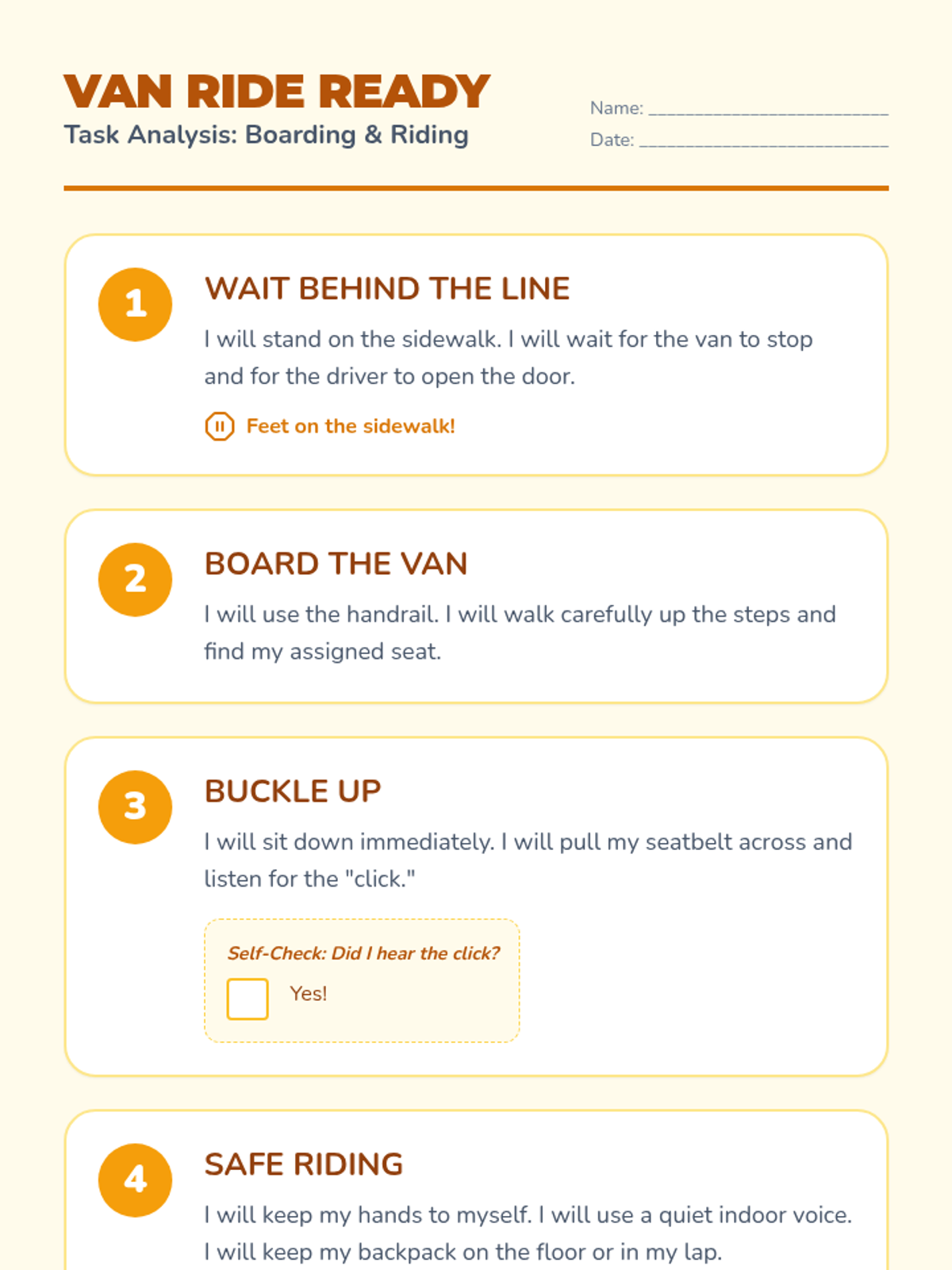
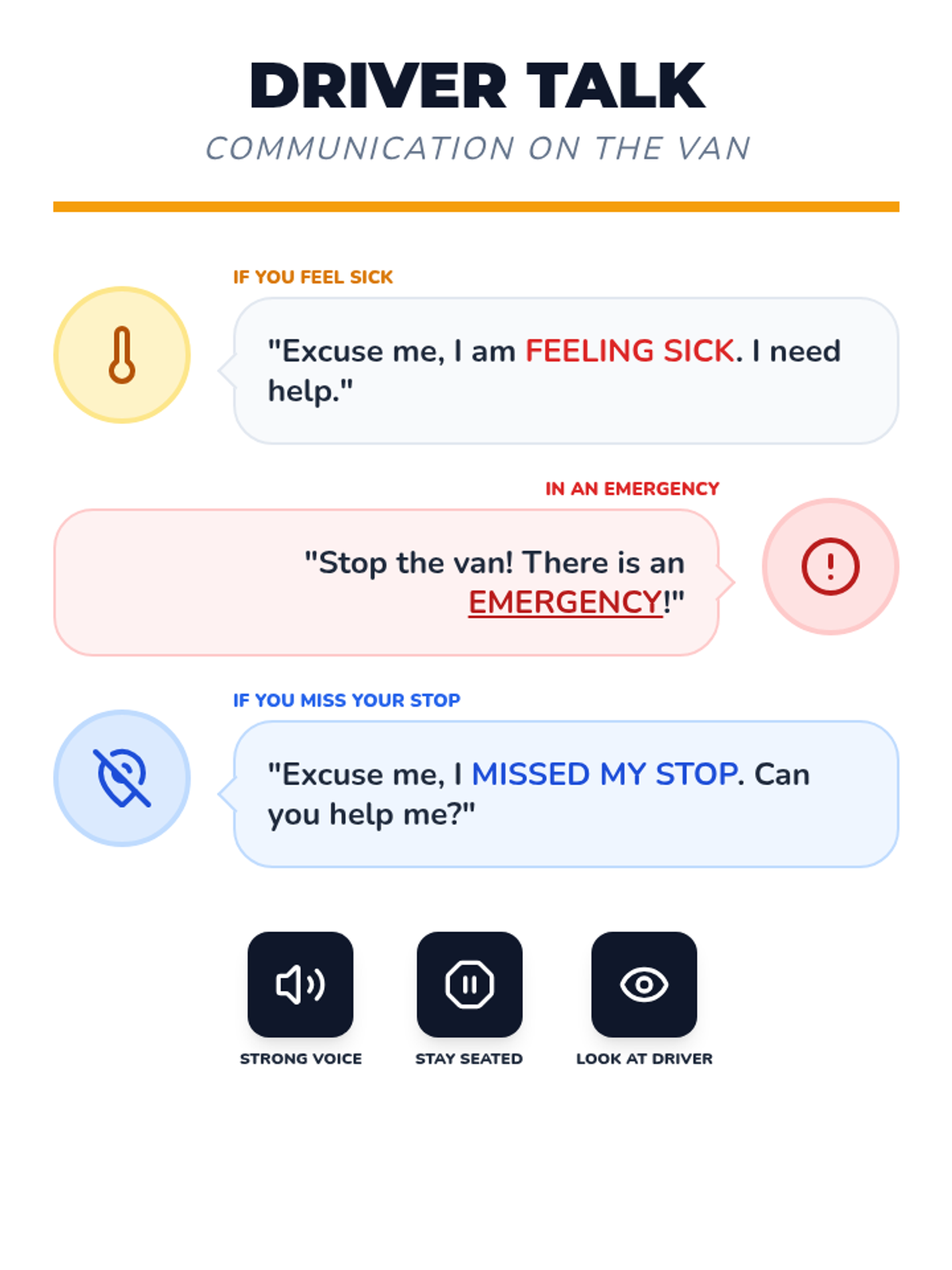
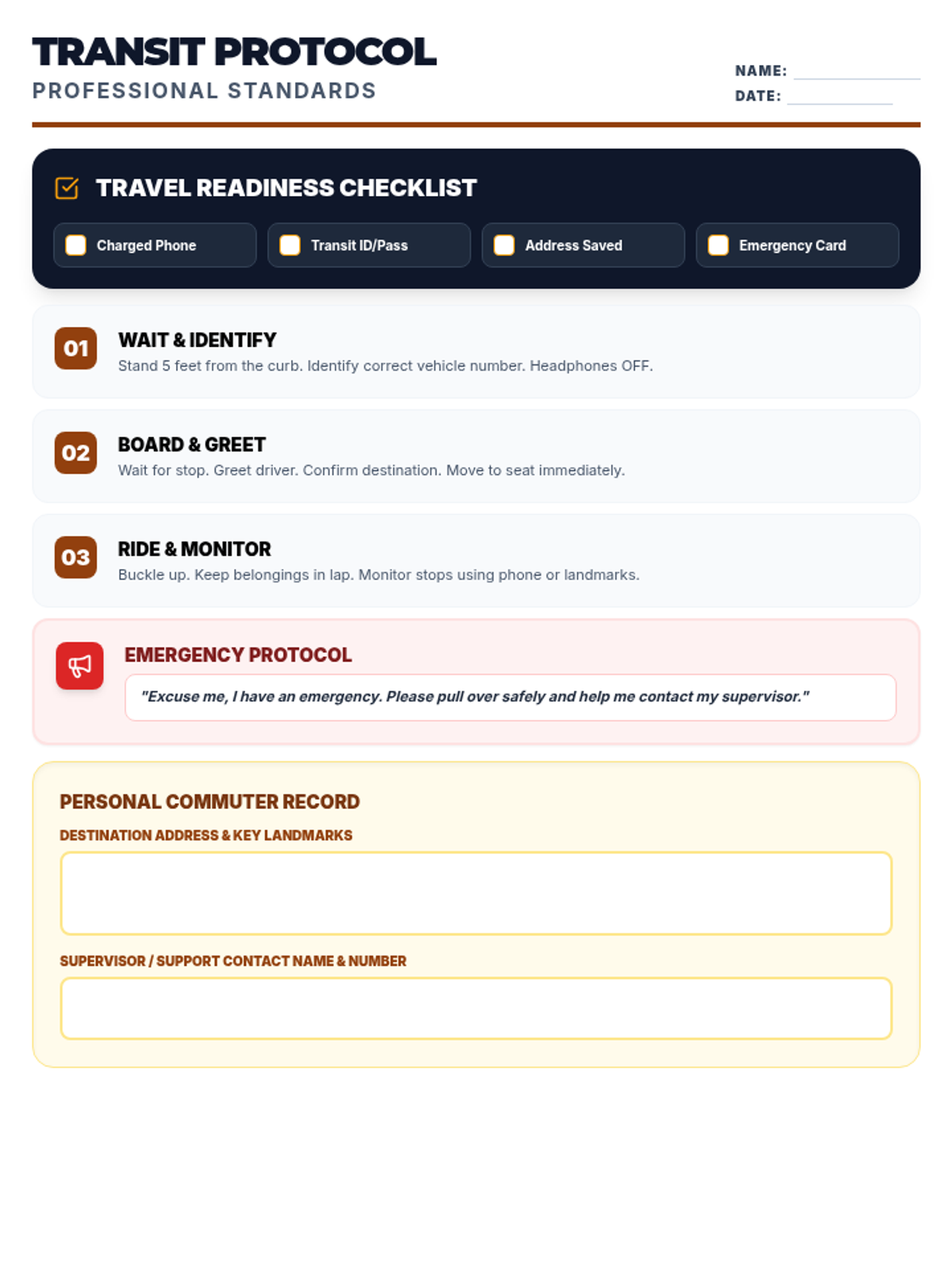
Covers safety protocols for independent travel, including effective communication with drivers and responding to transit delays or emergencies.
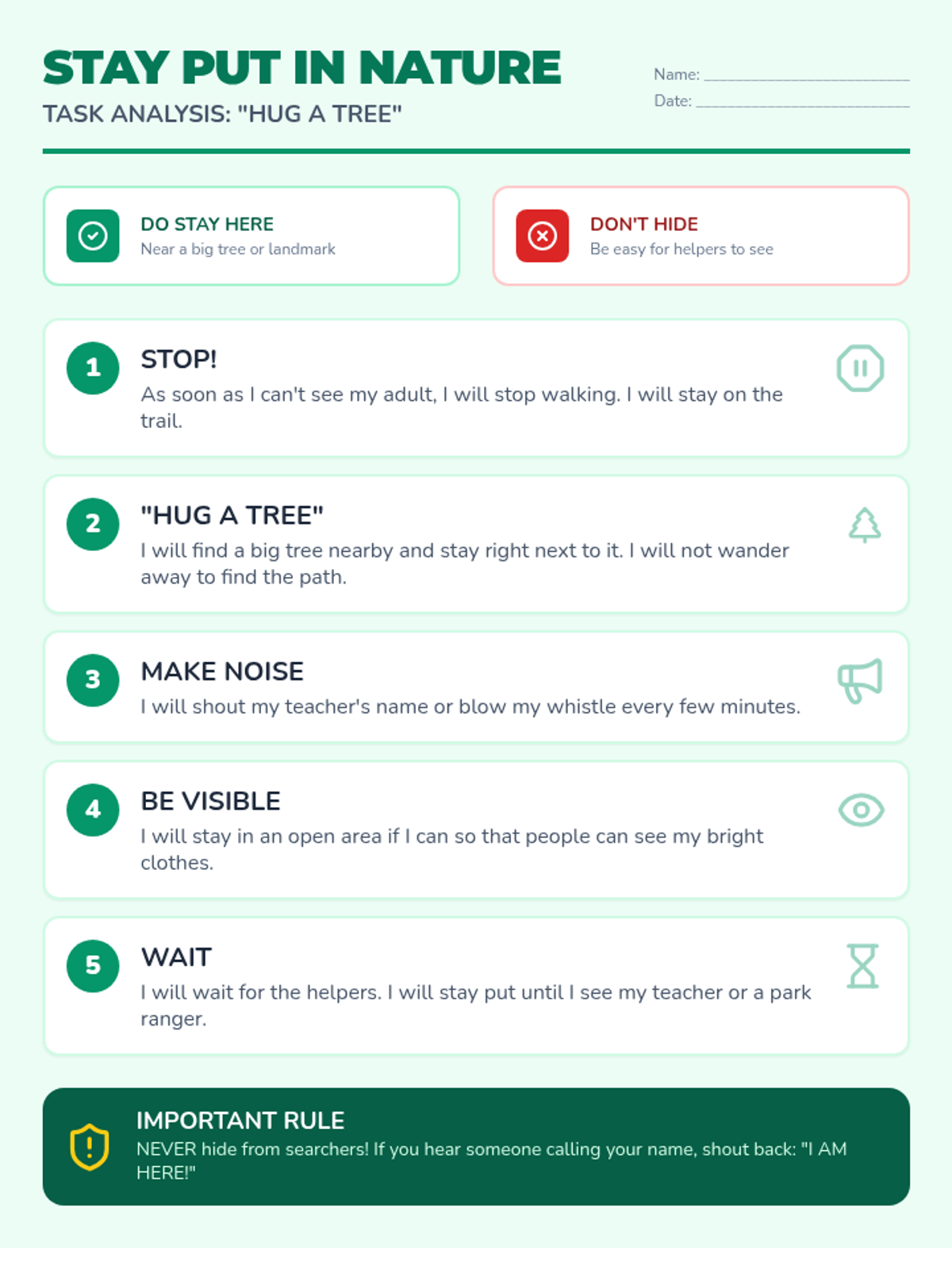
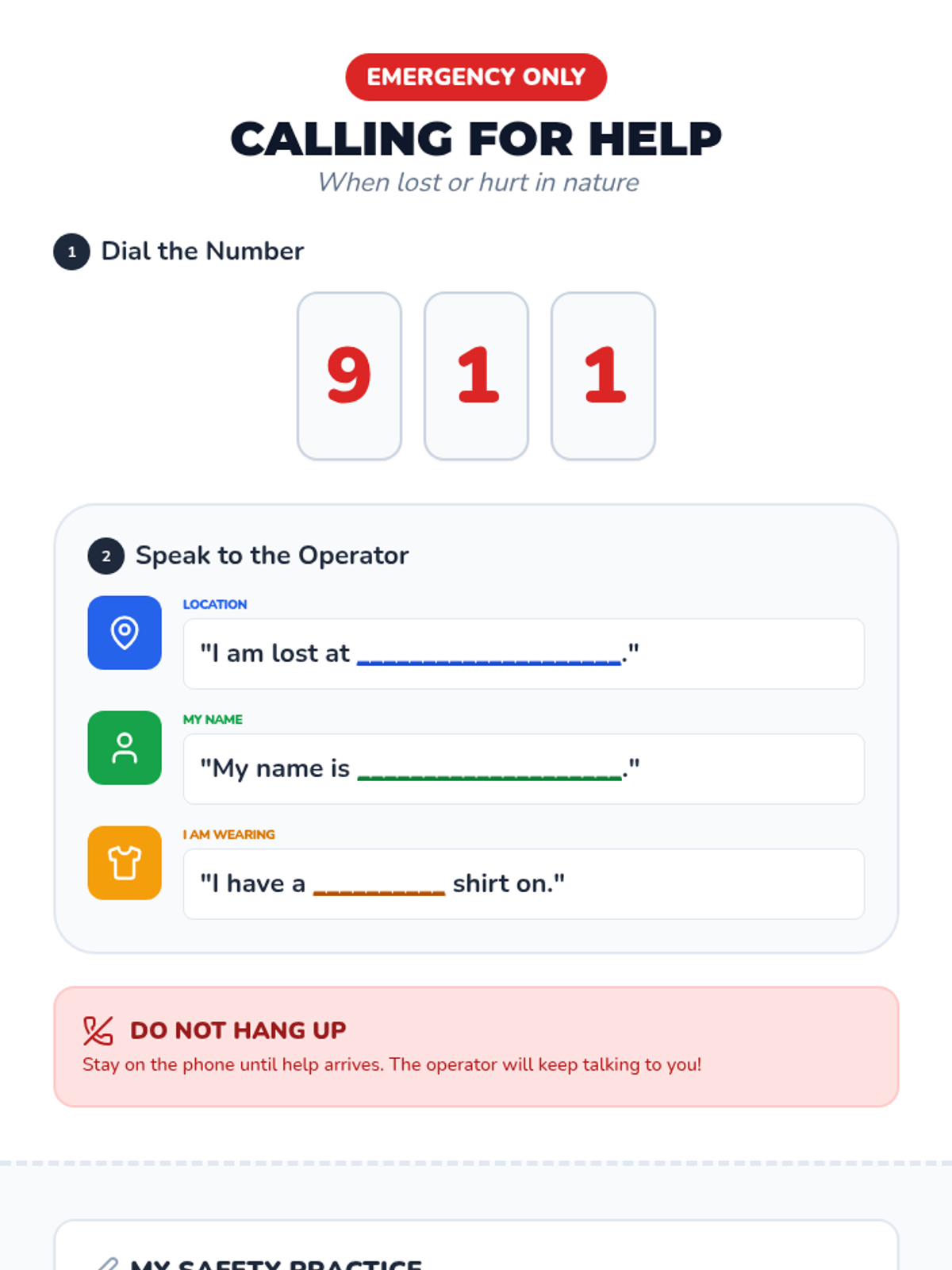
Teaches young adults how to stay safe while exercising or exploring outdoor trails, emphasizing the S.T.O.P. rule and signaling for help.
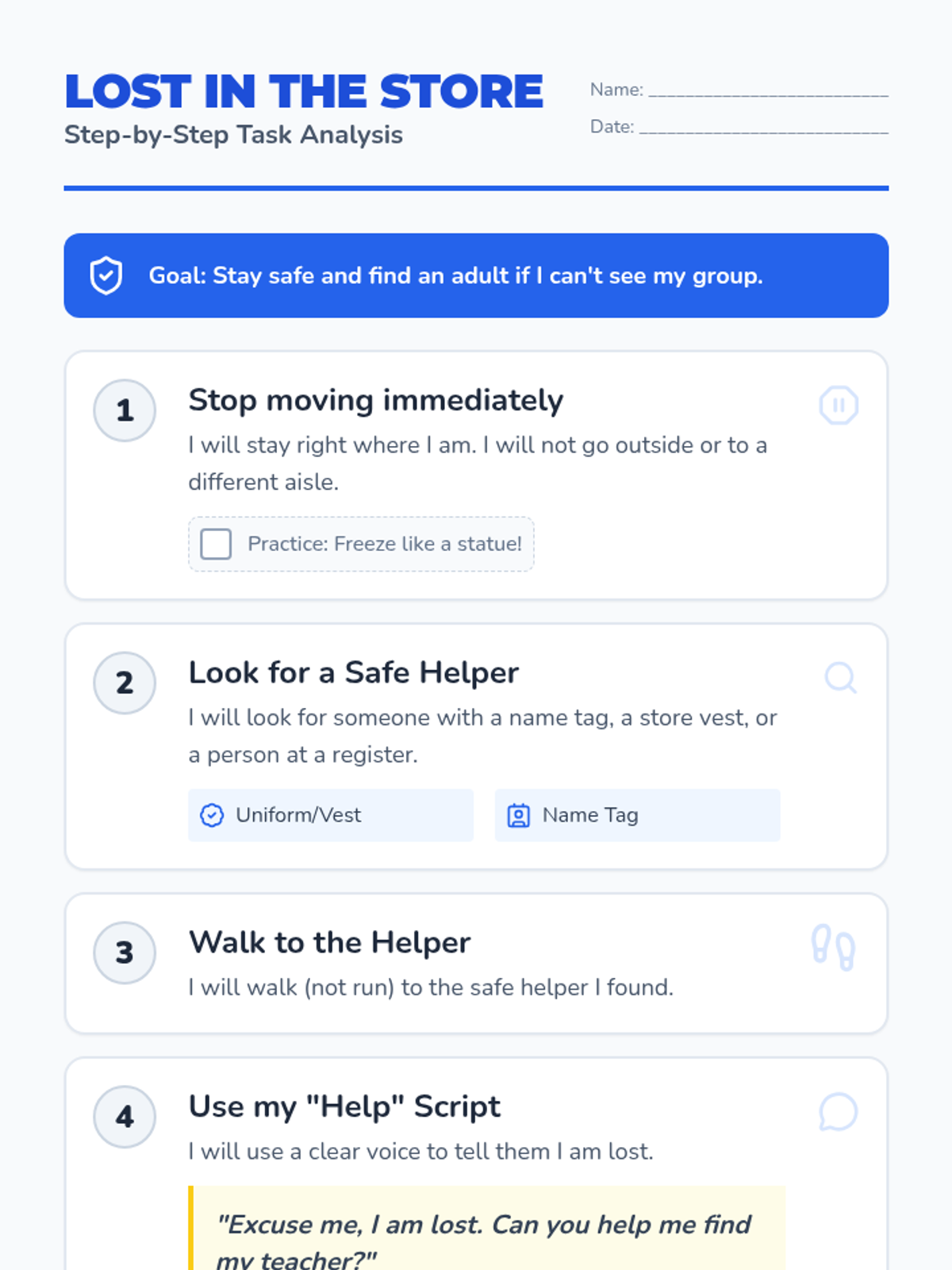
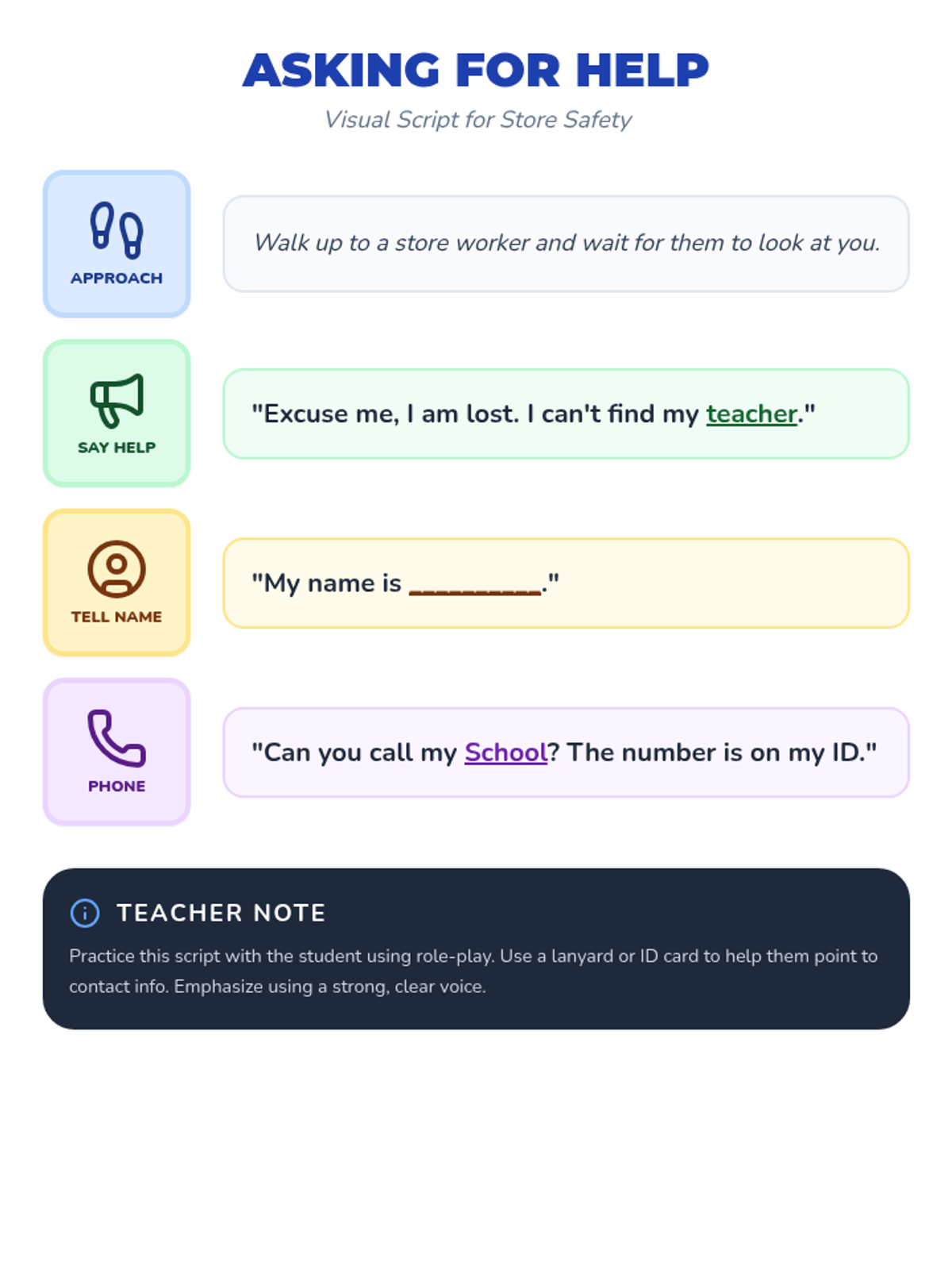
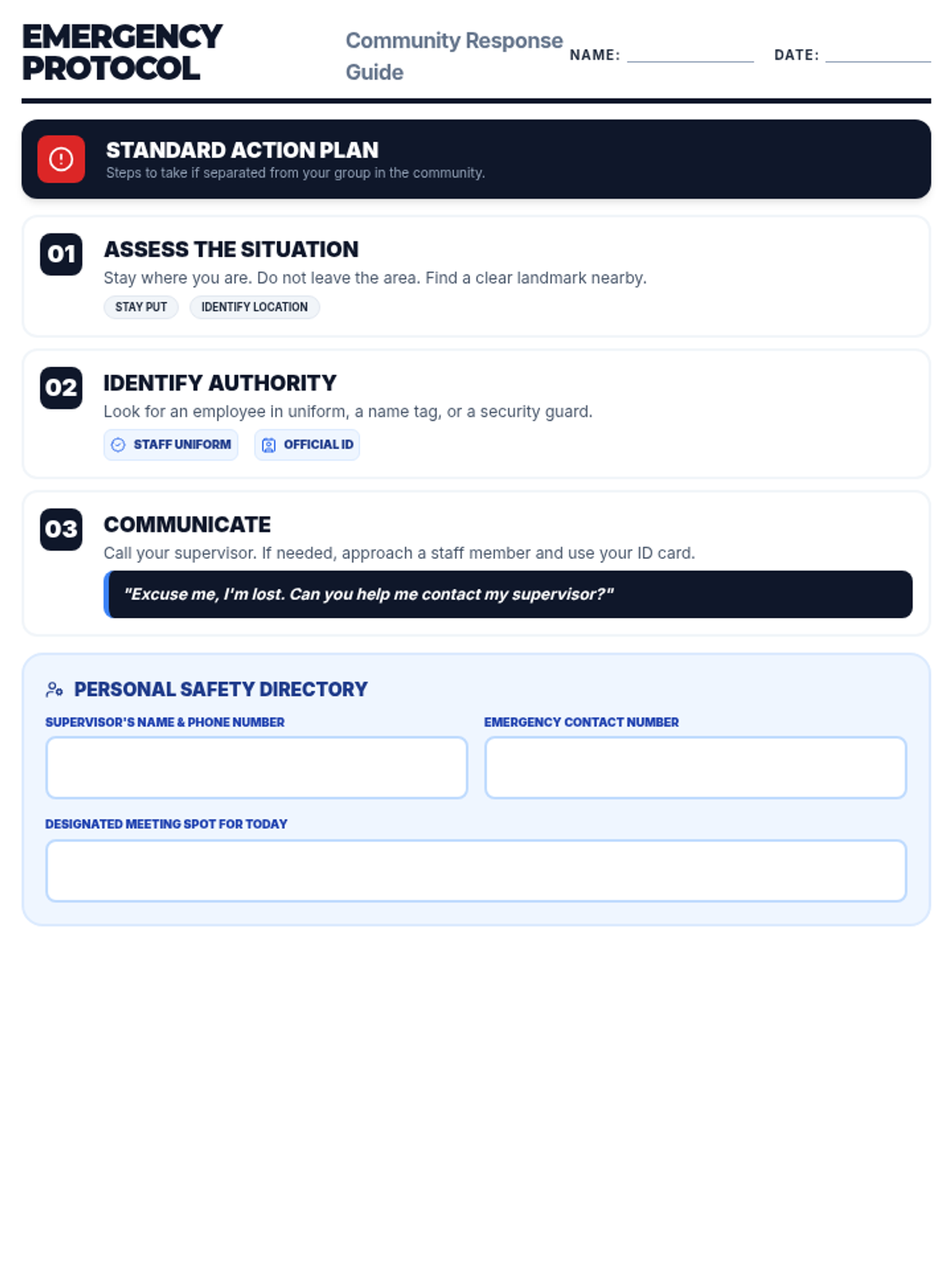
Focuses on independent navigation in retail settings, including identifying store security, using customer service, and responding to being separated from a group.
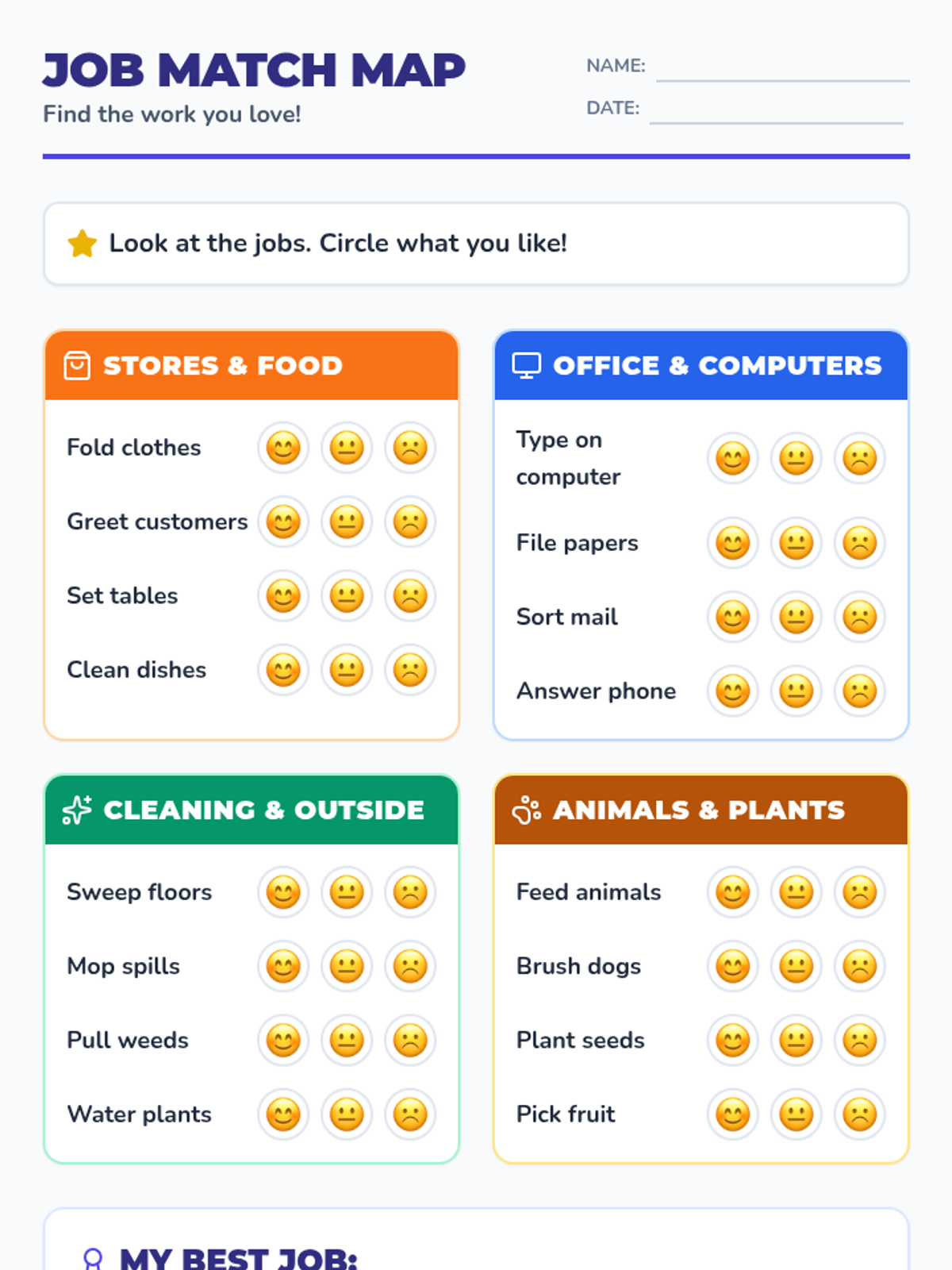
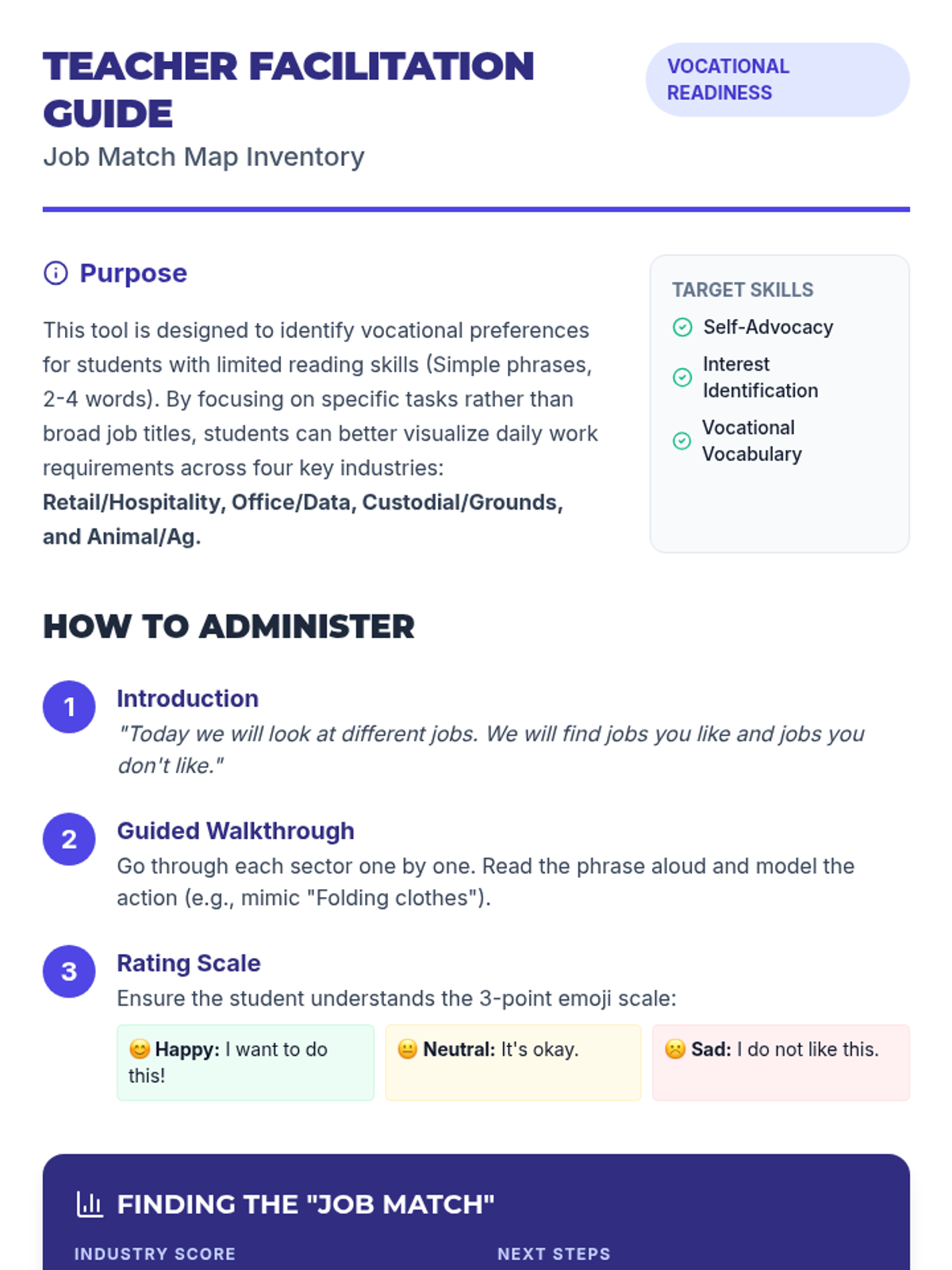
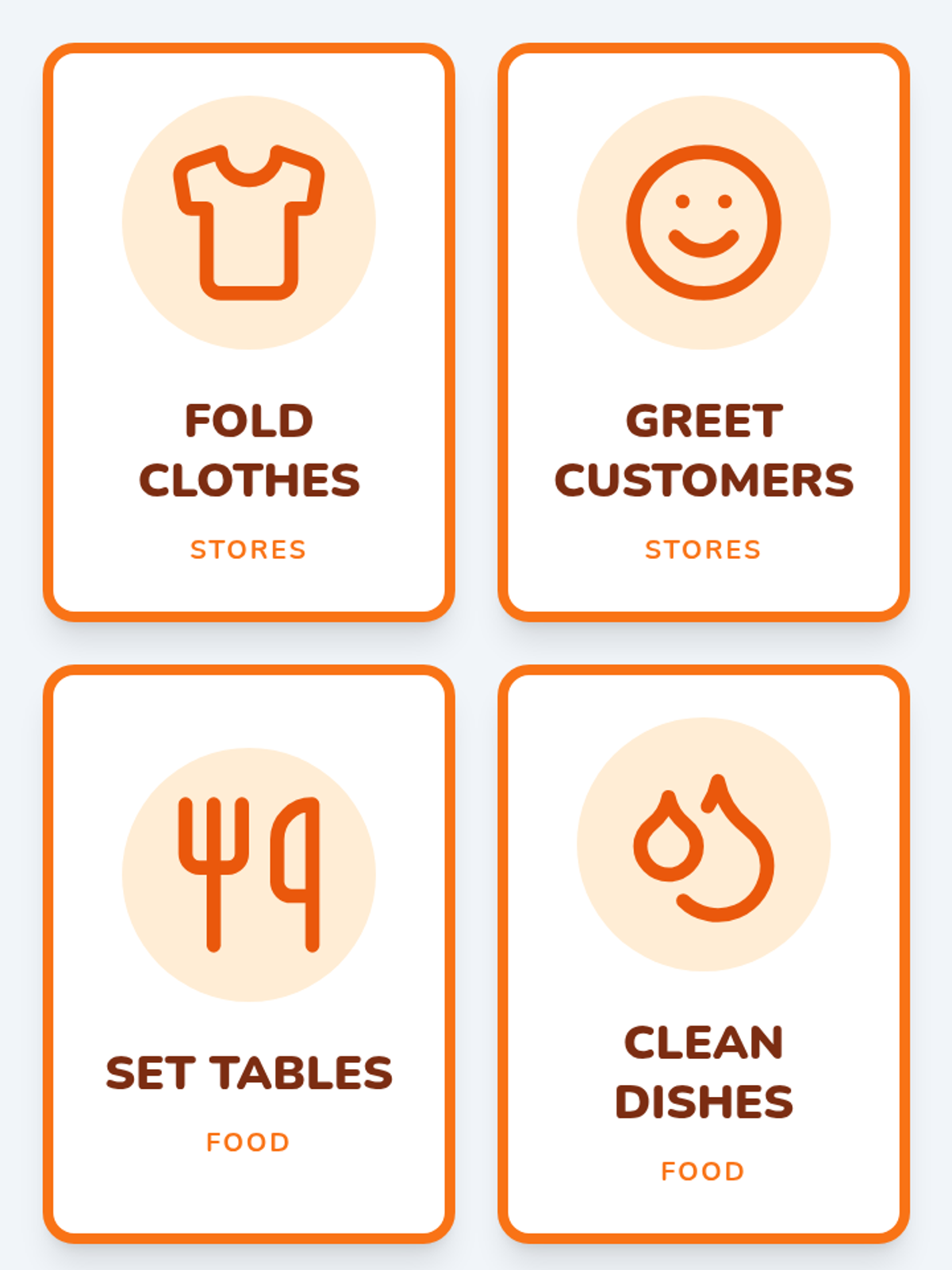
A collection of resources to help students with low reading levels identify their vocational interests across four key industries using simple language and visual cues.
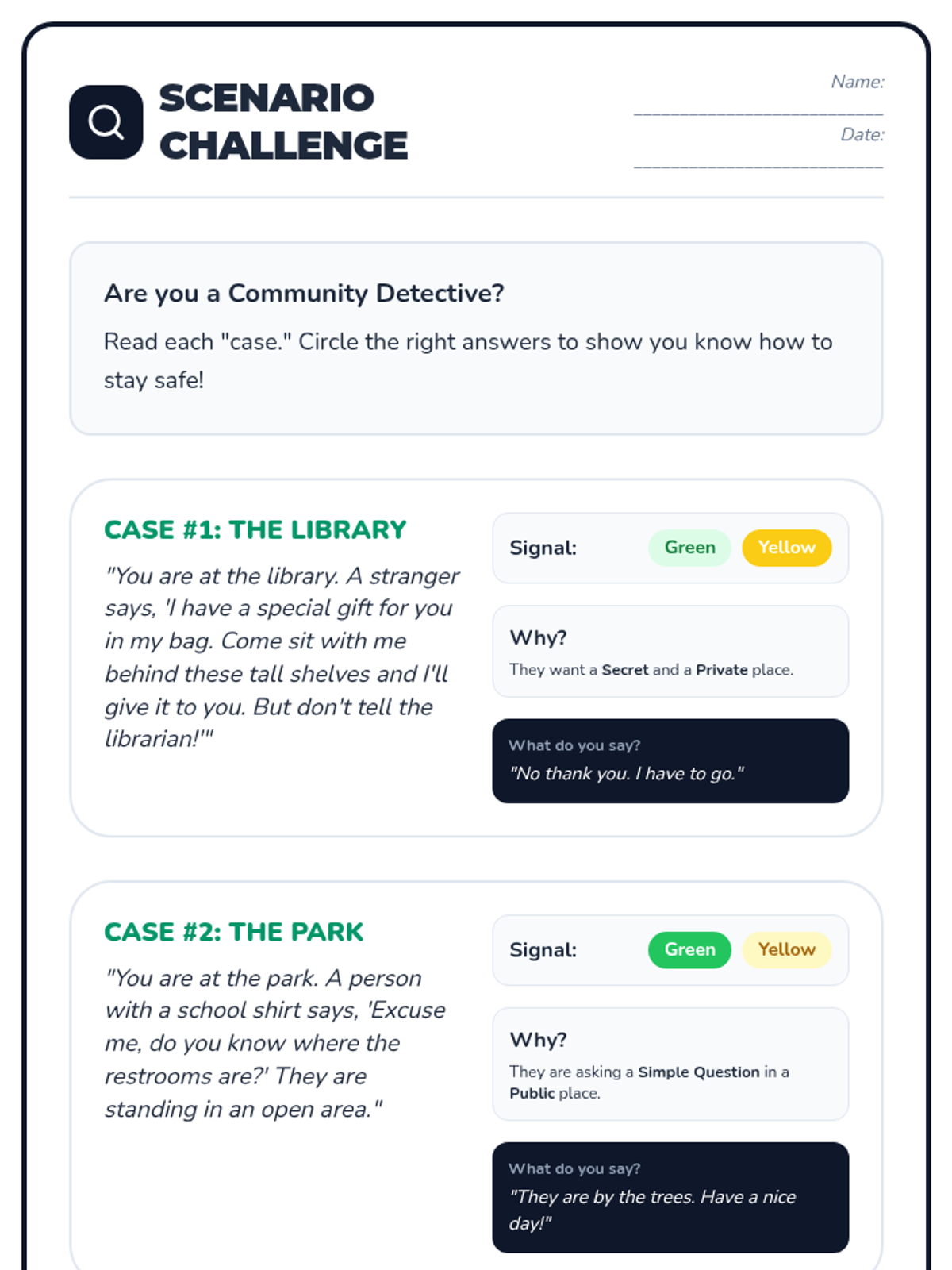
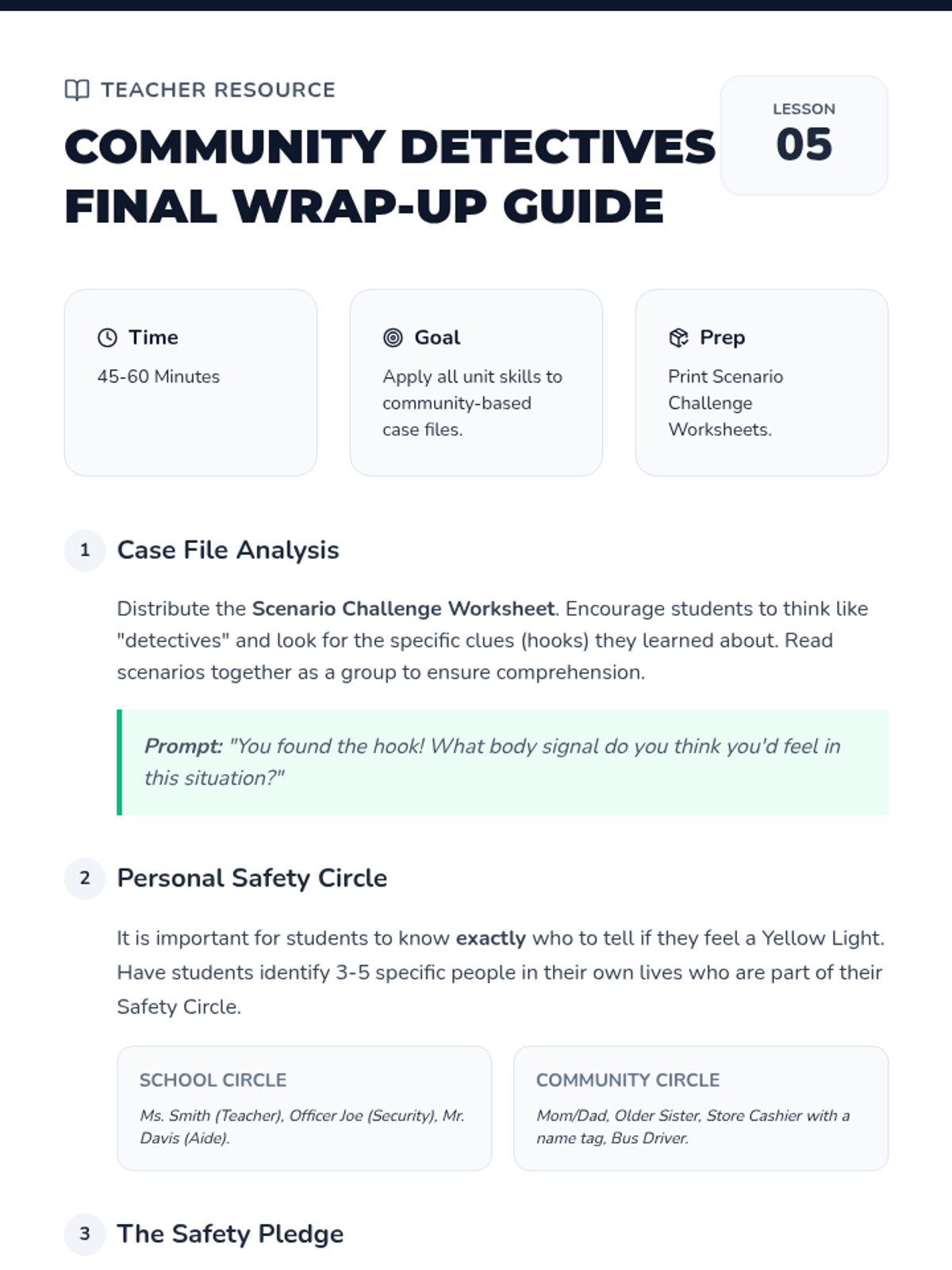
A cumulative review using community-based scenarios where students apply all previous skills to determine the safest course of action.