Verbal modulation, body language interpretation, and turn-taking strategies for effective social interaction. Addresses social problem identification, help-seeking, and the comprehension of figurative language across varied contexts.
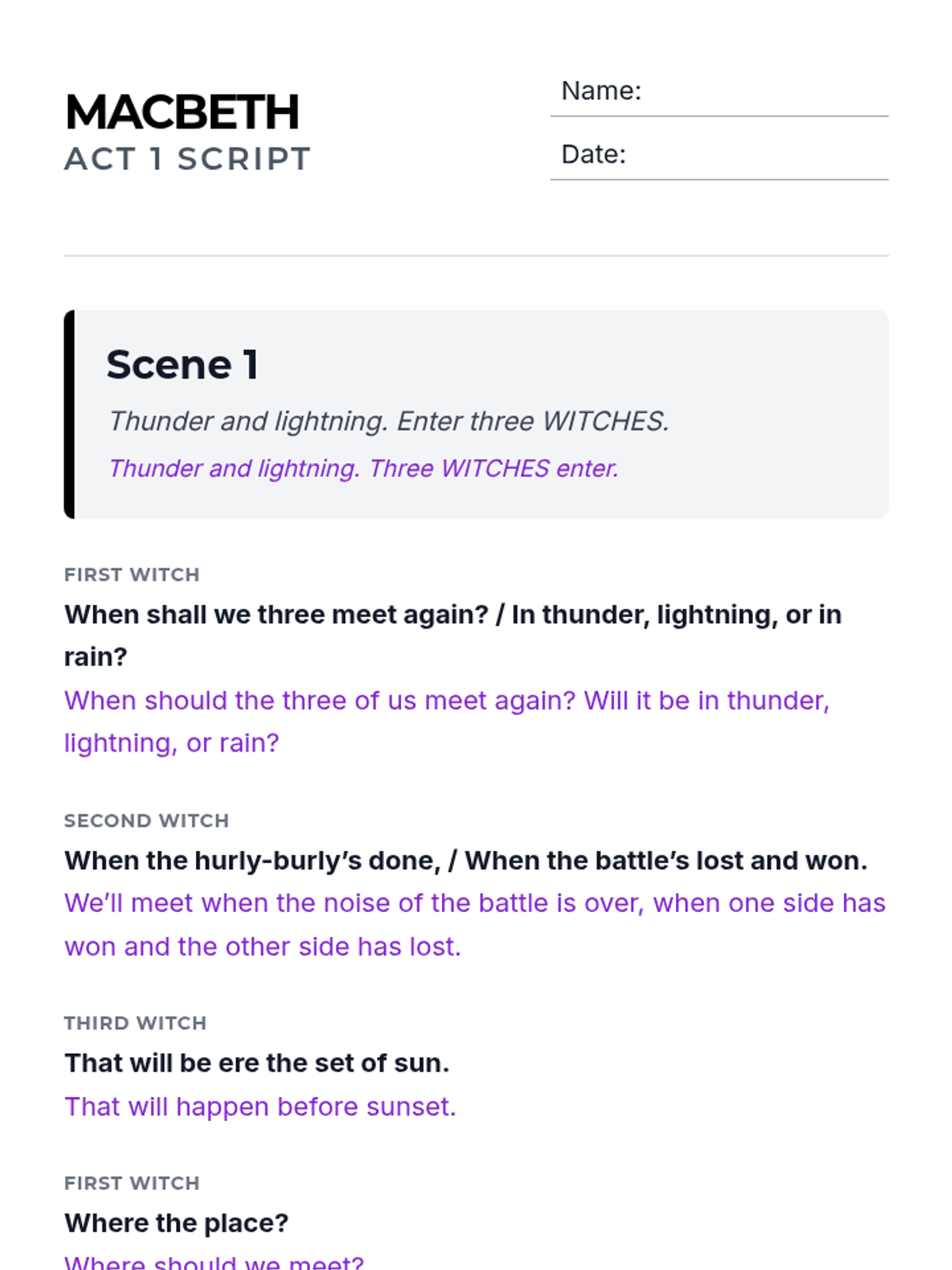
A comprehensive large-print (20pt) version of Macbeth Act 1 (Scenes 1-7). Specifically designed for accessibility, it features original Shakespearean text in bold black with modern purple translations directly beneath, maintaining line integrity for classroom use.
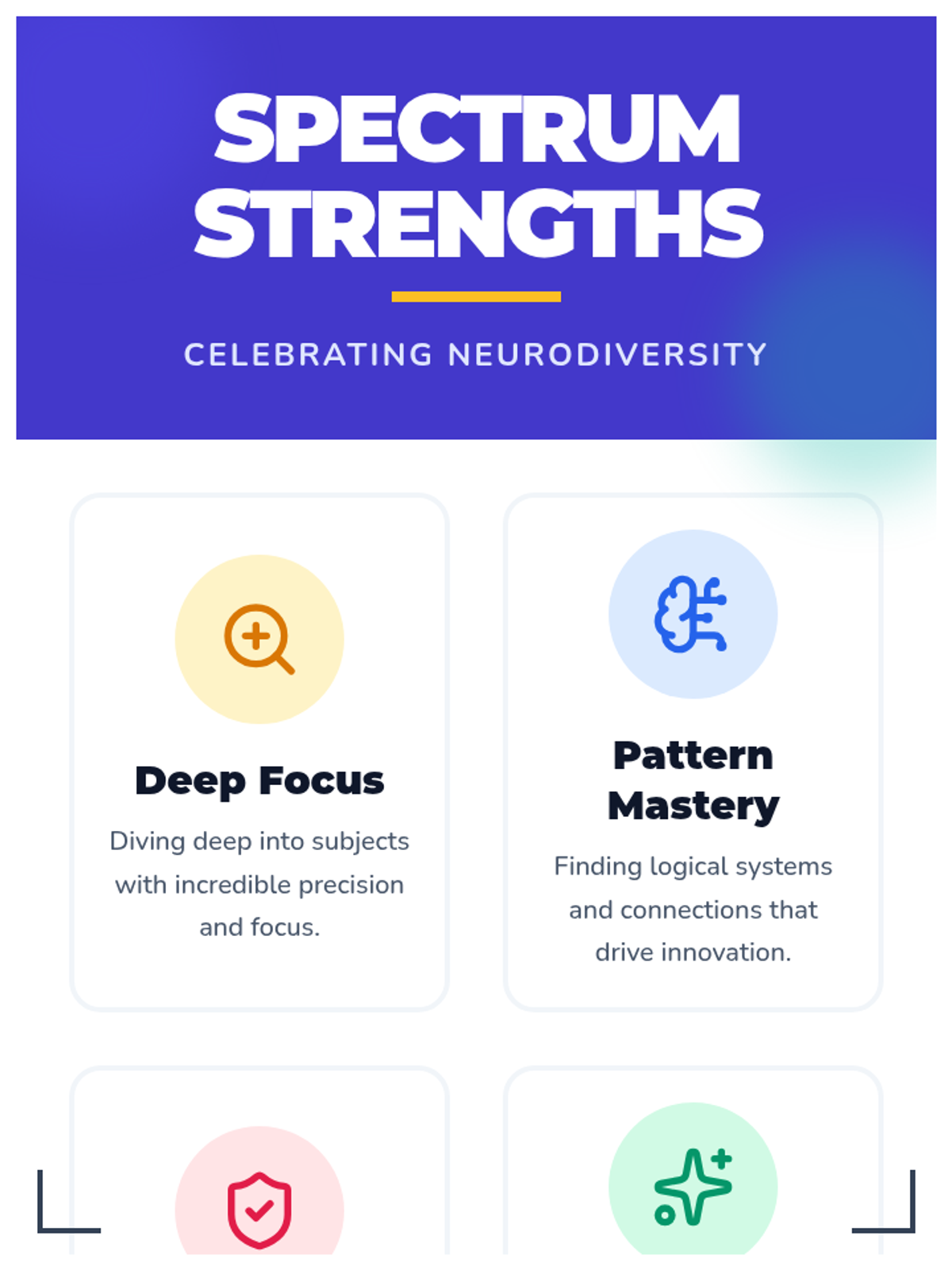
A bold and high-impact poster designed for 8.5x11 classroom or community display, highlighting four key cognitive and personal strengths of autistic individuals.
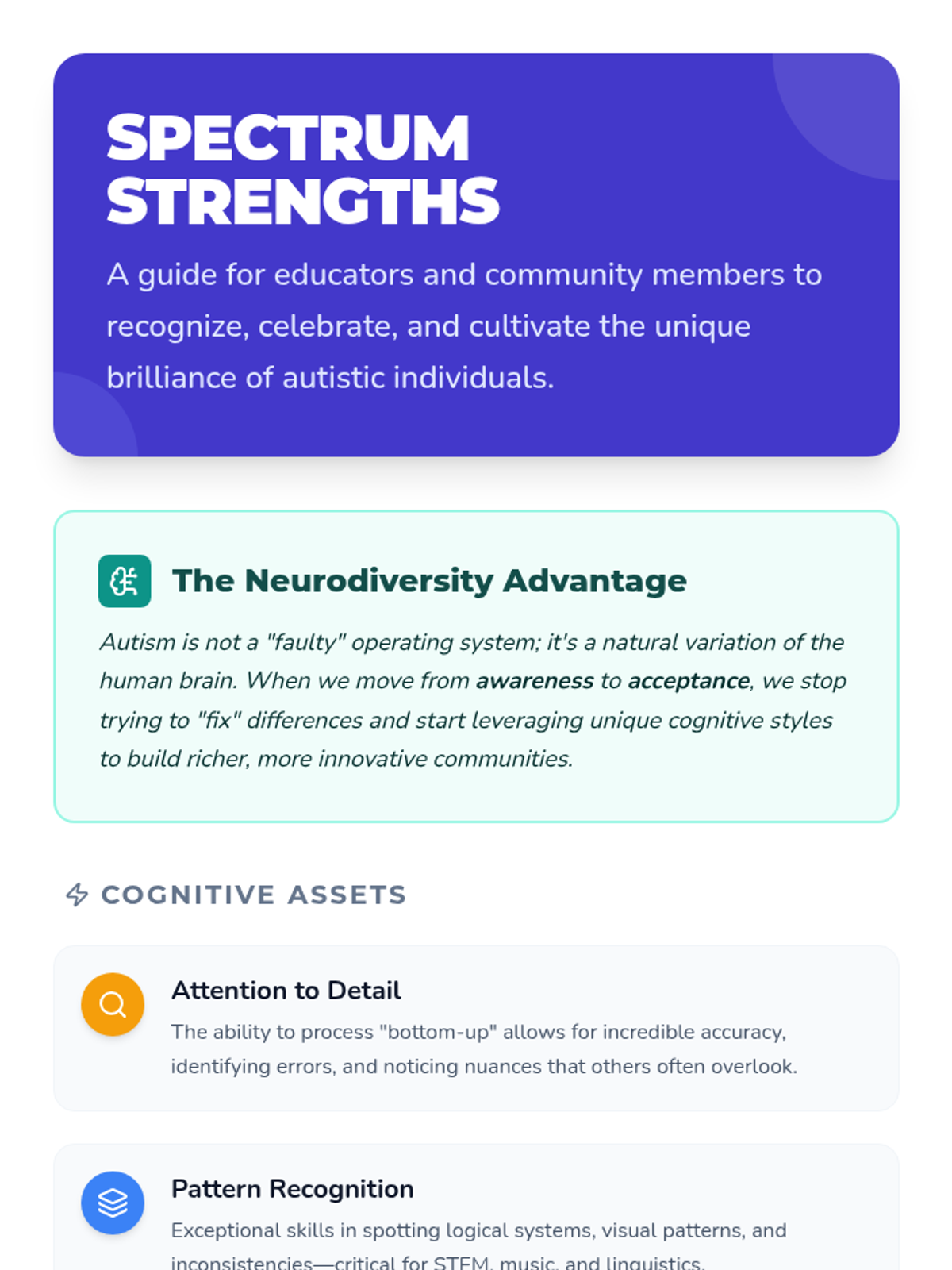
A visually engaging one-page handout for educators and community members focusing on the cognitive and personal strengths of autistic students, promoting a neurodiversity-affirming perspective.
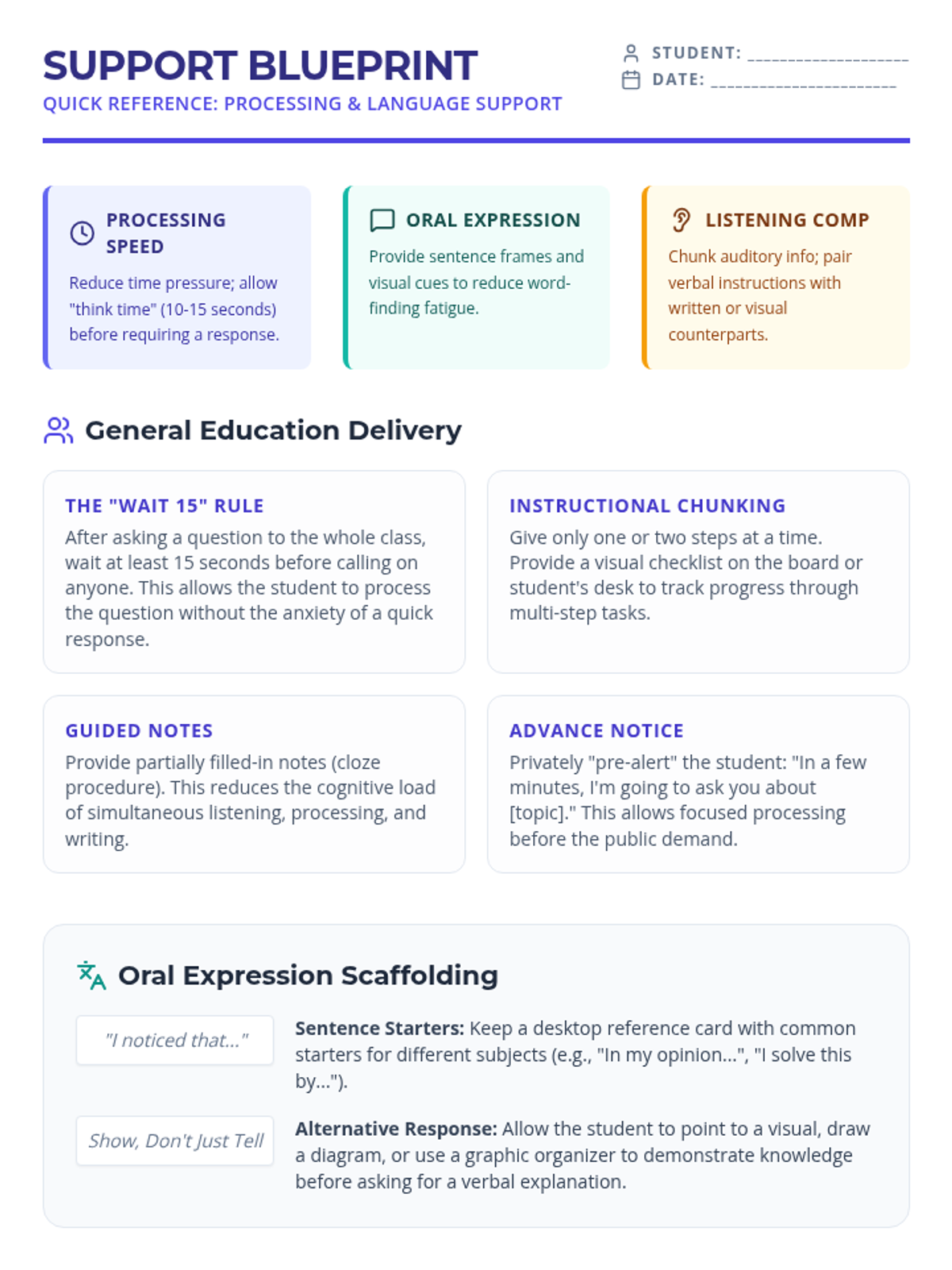
A comprehensive two-page teacher quick reference guide detailing practical strategies and modifications for students with low processing speed, low oral expression, and listening comprehension challenges in both general and small-group settings.
A set of 7 printable table tents for high school lunch booths, each focusing on a different disability with myth-busting facts and allyship tips. Designed for two-sided viewing when folded.
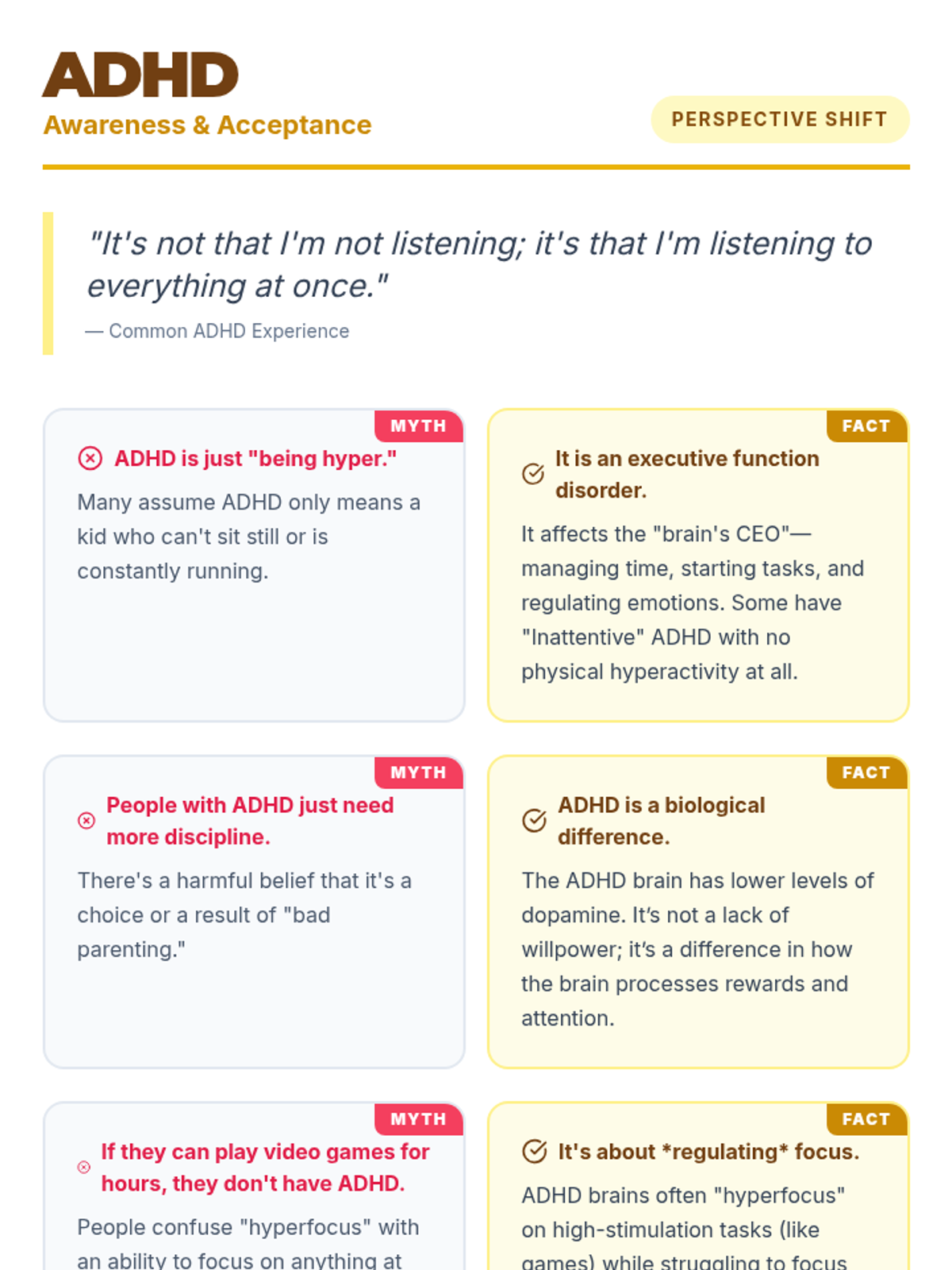
A high-impact infographic handout for high school students debunking common myths about ADHD and providing tips for being an inclusive peer.
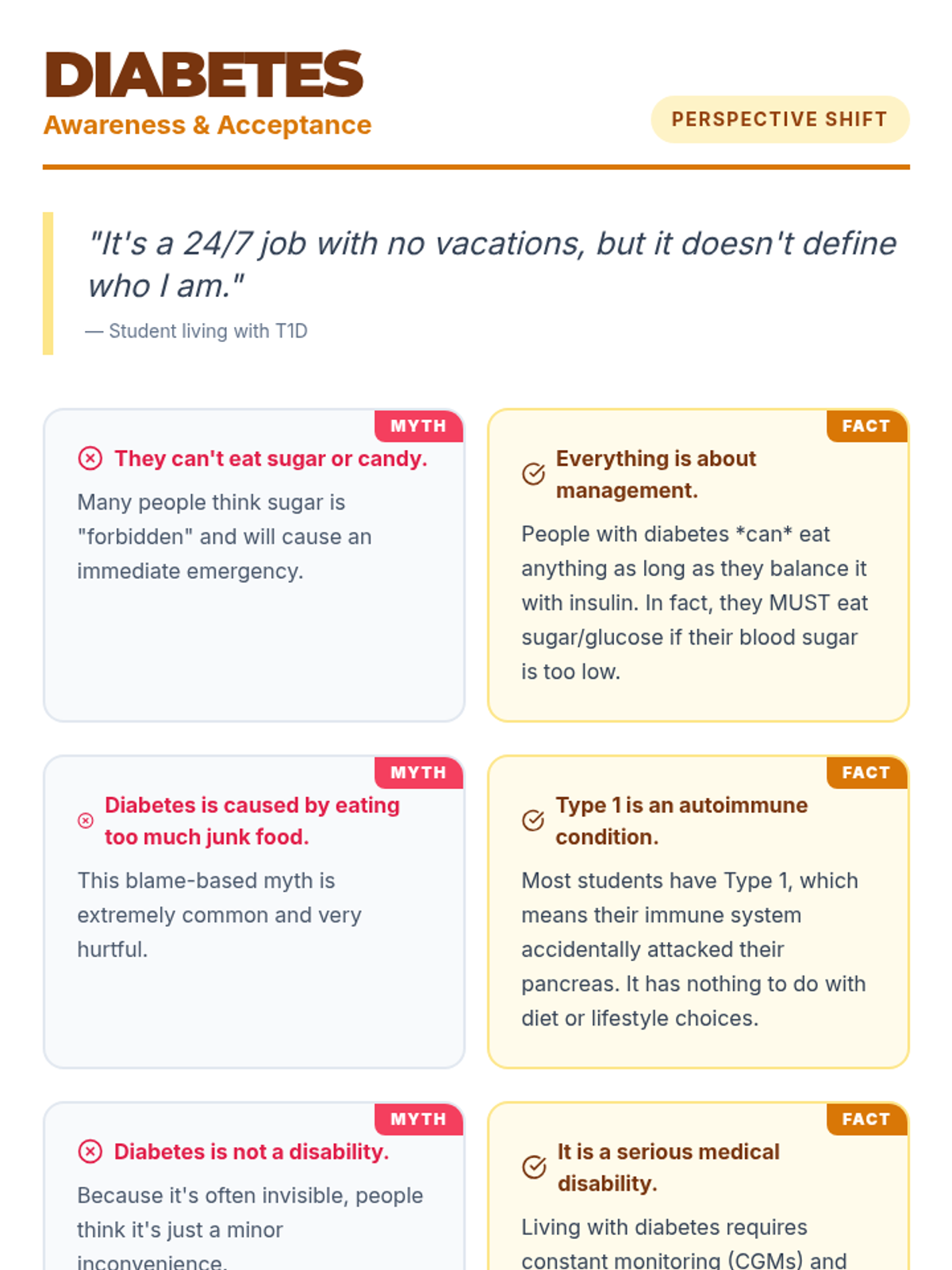
A high-impact infographic handout for high school students debunking common myths about Diabetes and providing tips for being an inclusive peer.
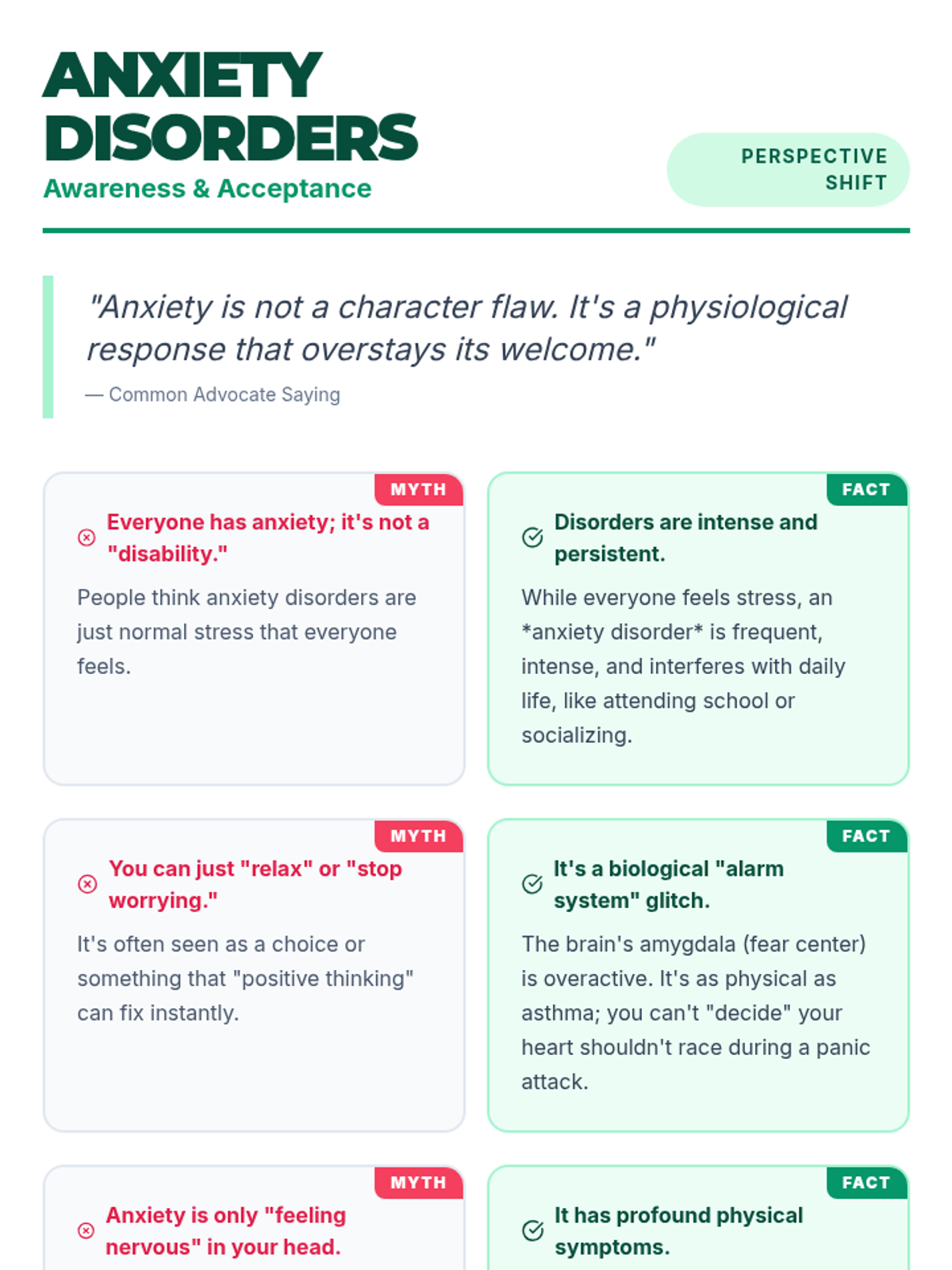
A high-impact infographic handout for high school students debunking common myths about Anxiety Disorders and providing tips for being an inclusive peer.
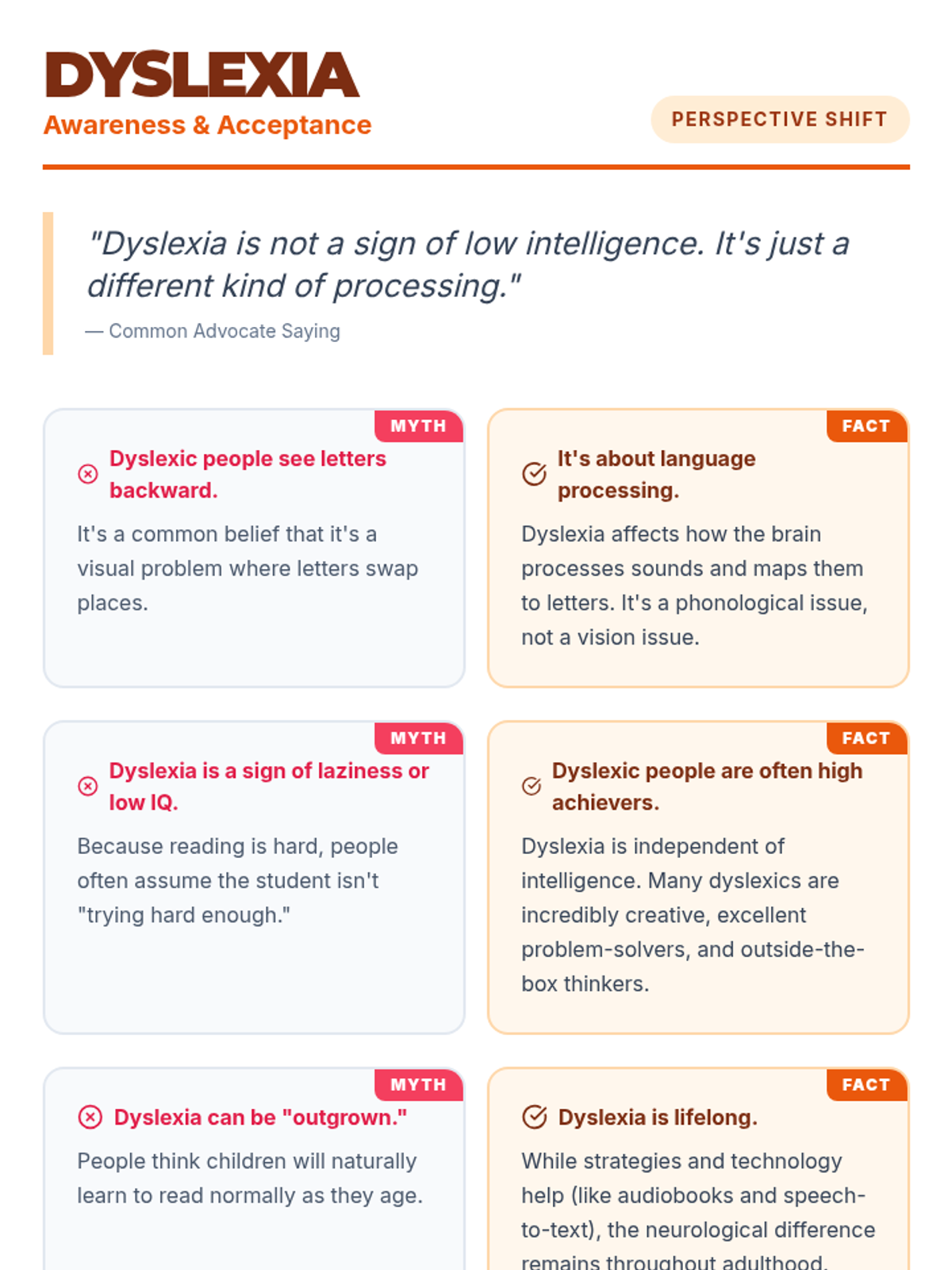
A high-impact infographic handout for high school students debunking common myths about Dyslexia and providing tips for being an inclusive peer.
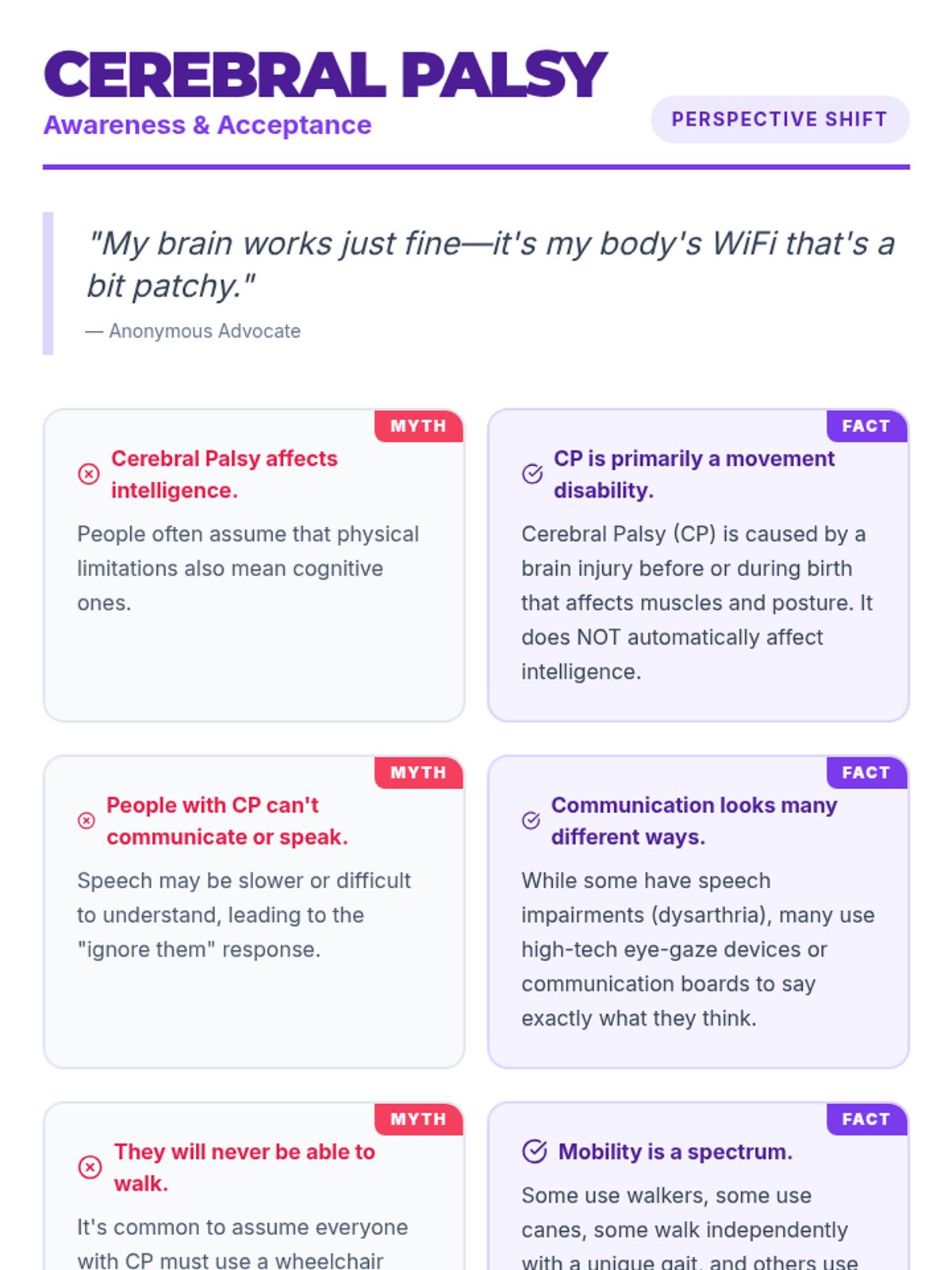
A high-impact infographic handout for high school students debunking common myths about Cerebral Palsy and providing tips for being an inclusive peer.
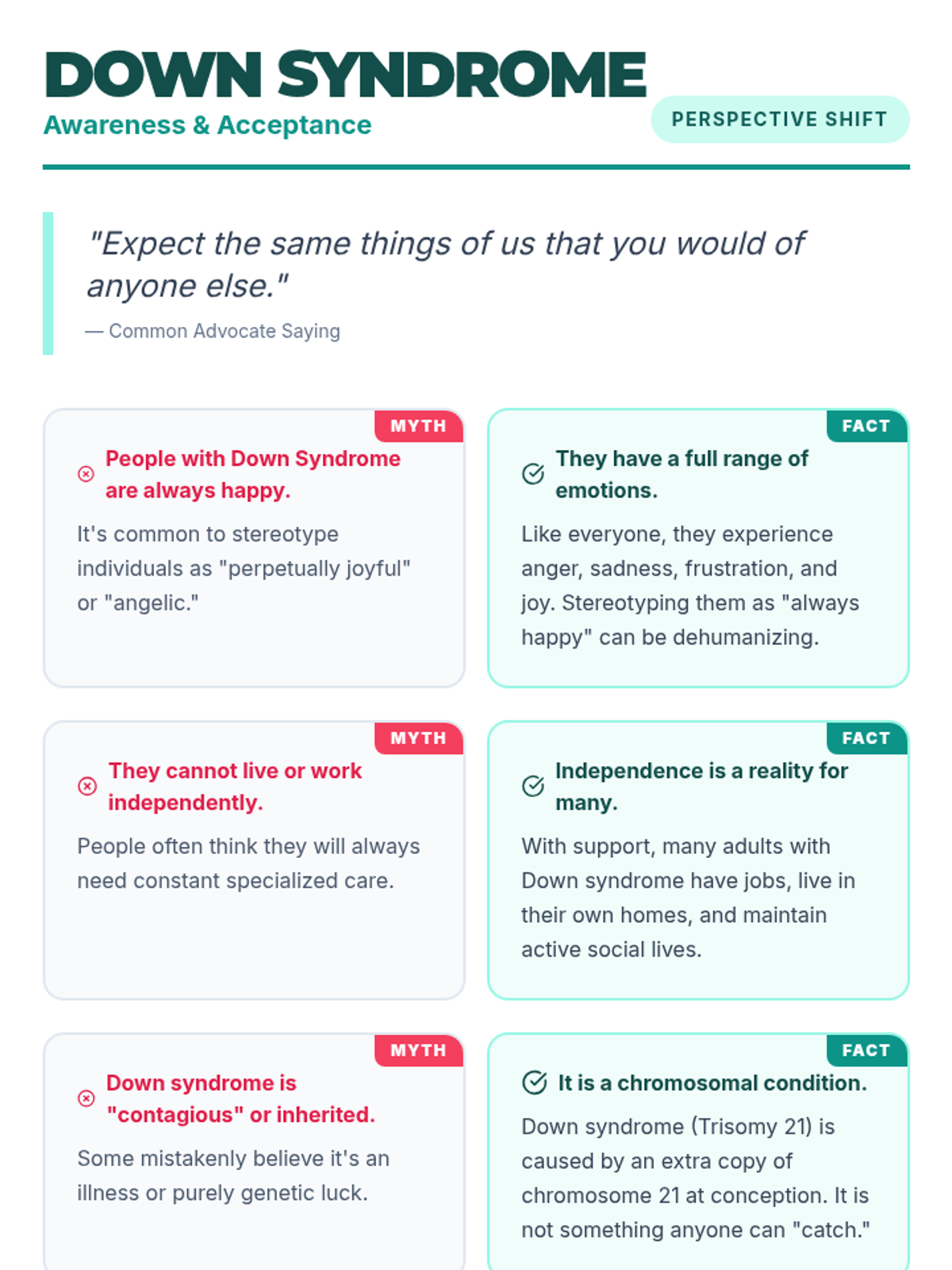
A high-impact infographic handout for high school students debunking common myths about Down Syndrome and providing tips for being an inclusive peer.
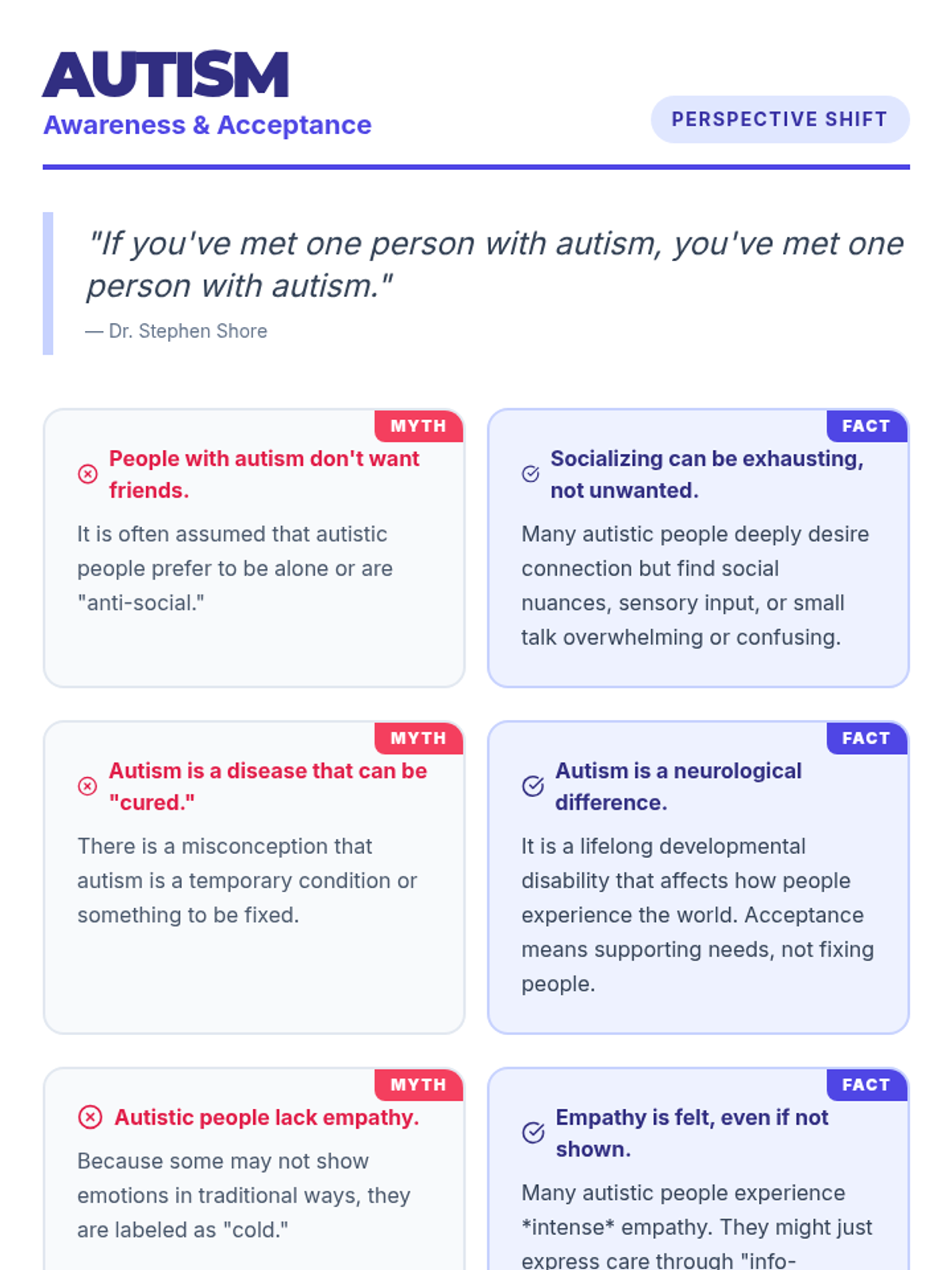
A high-impact infographic handout for high school students debunking common myths about autism and providing tips for being an inclusive peer.
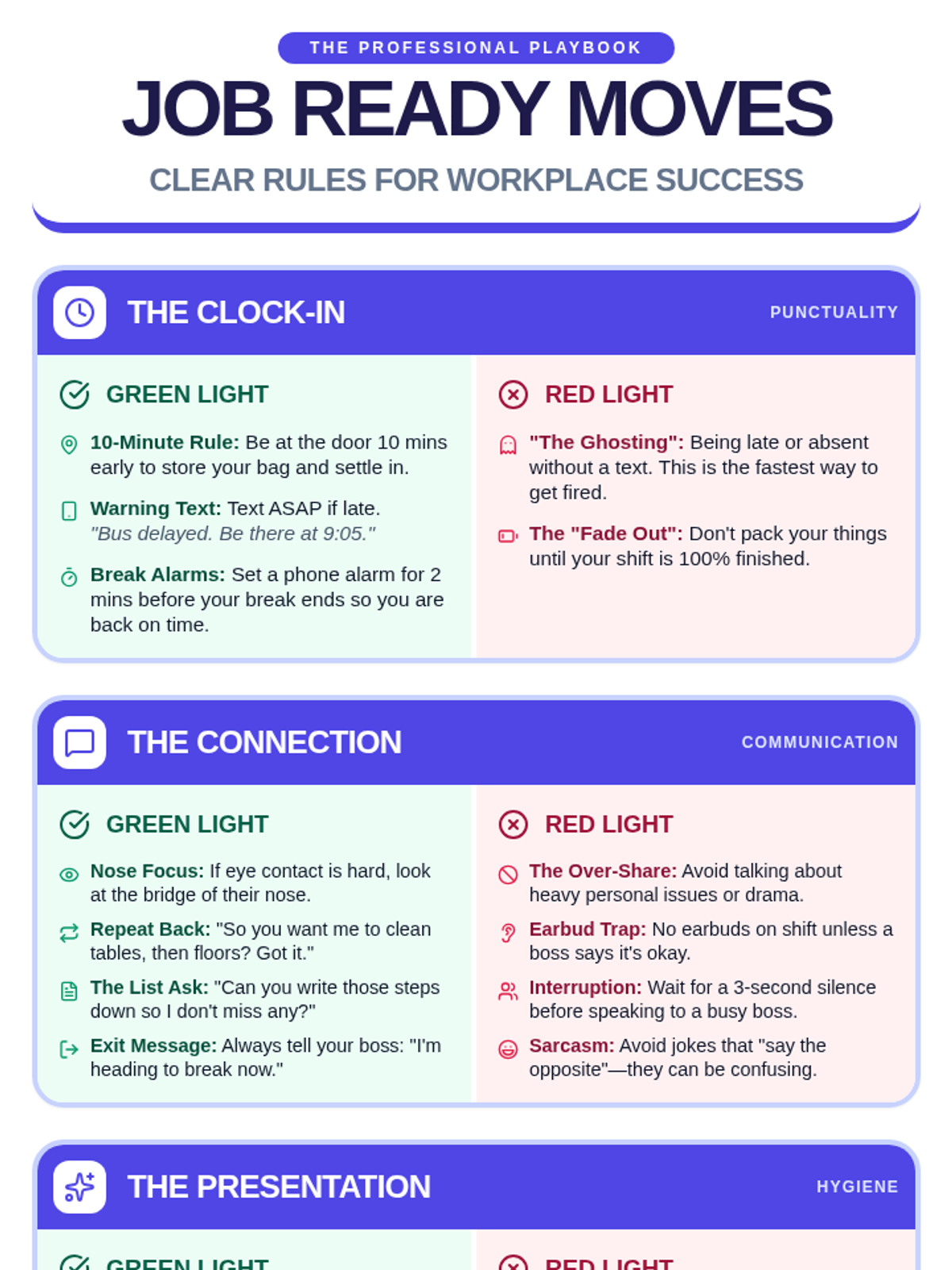
An updated version of the Job Ready Moves Poster with expanded hygiene tips, including specific advice on handwashing, hair grooming, and avoiding common hygiene pitfalls for students facing housing instability.
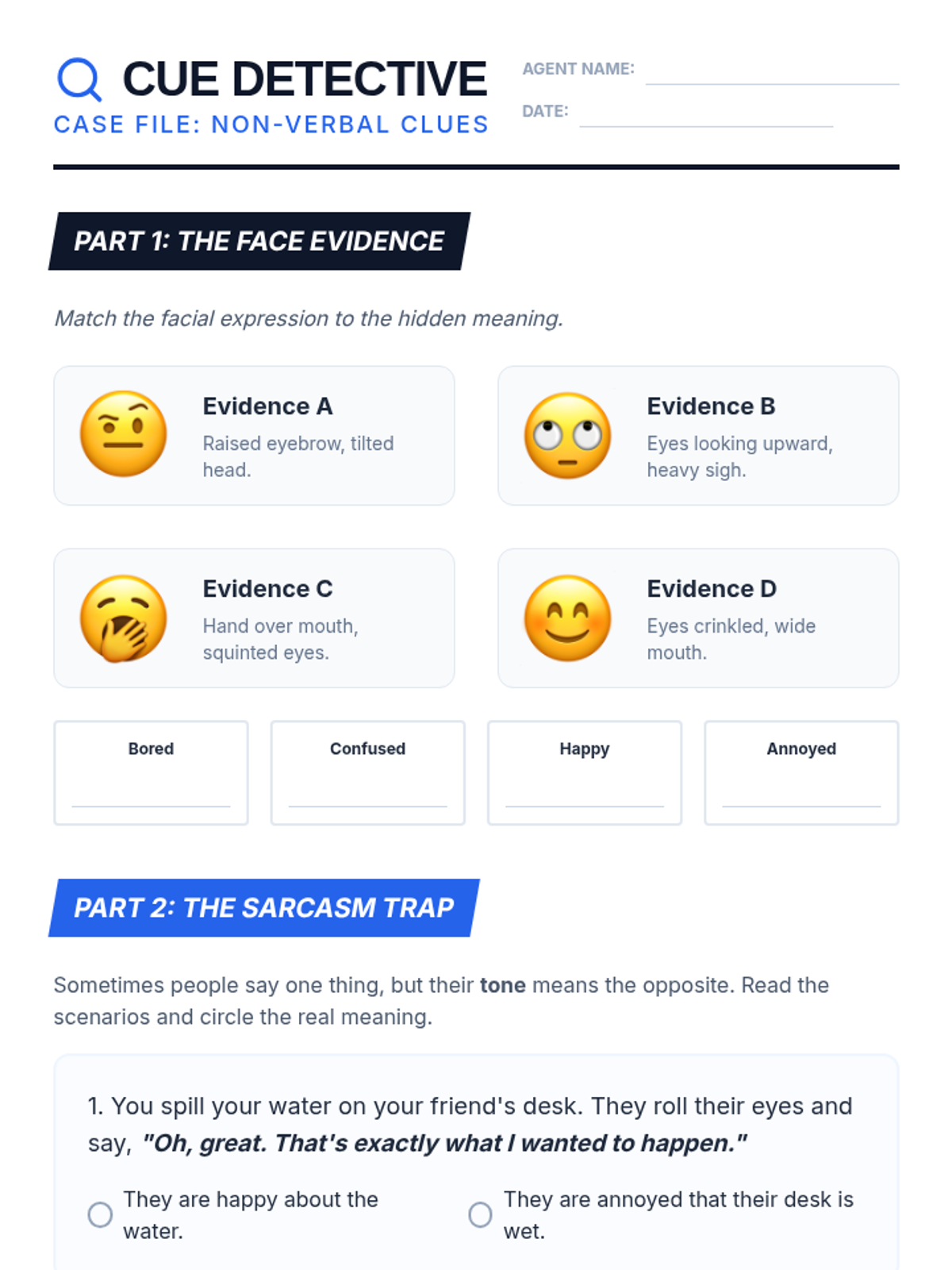
A practice sheet for students to identify facial expressions, interpret sarcasm through tone/context, and determine appropriate conversational adjustments based on non-verbal cues.
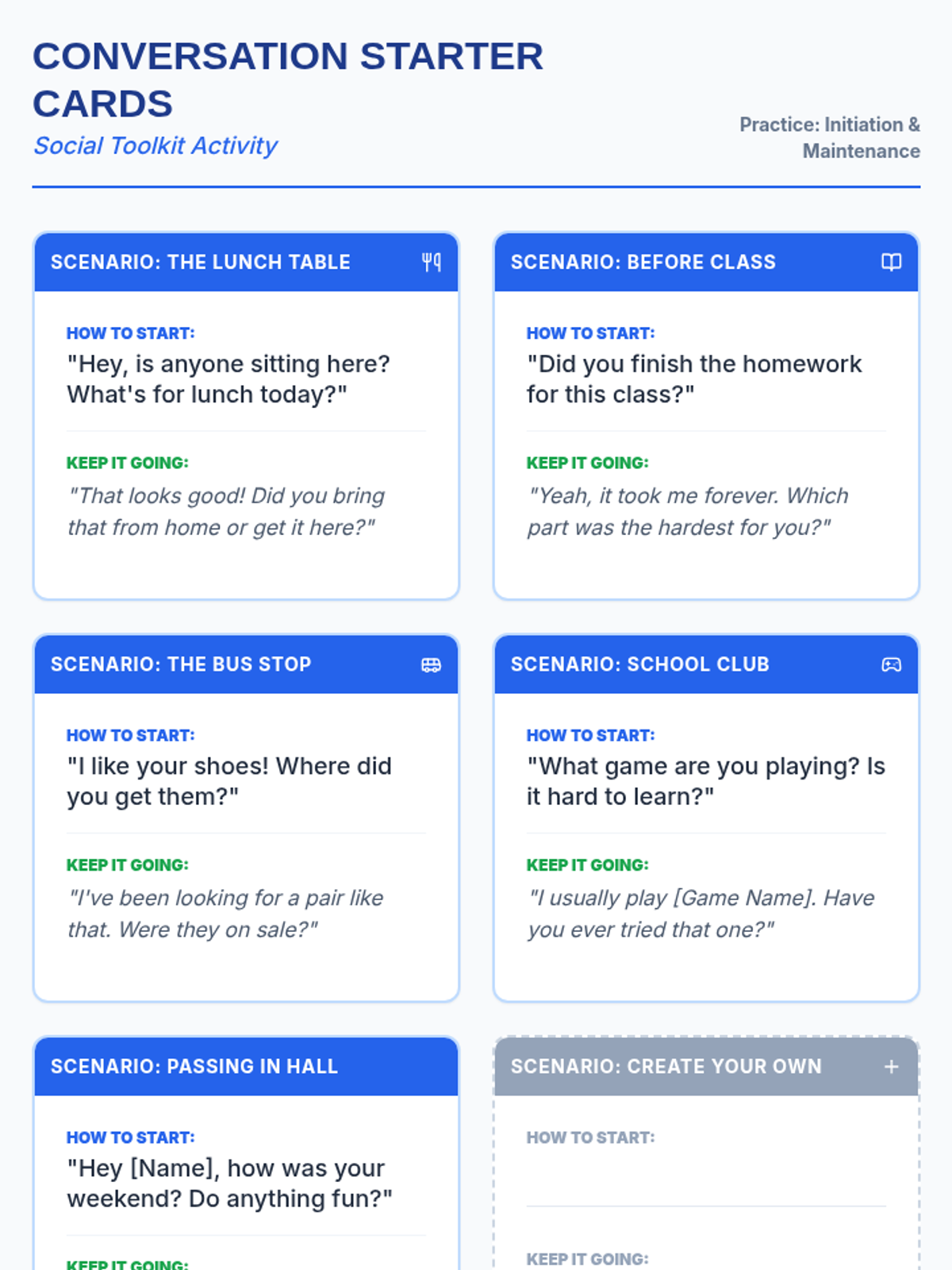
Scaffolded role-play cards for practicing conversational initiation and maintenance in common school settings, including a customizable blank card for personalized practice.
Visual presentation slides to support the Chat Champions lesson, covering the conversation cycle, ping-pong rule, body language 'Green Zone', and non-verbal red flags.
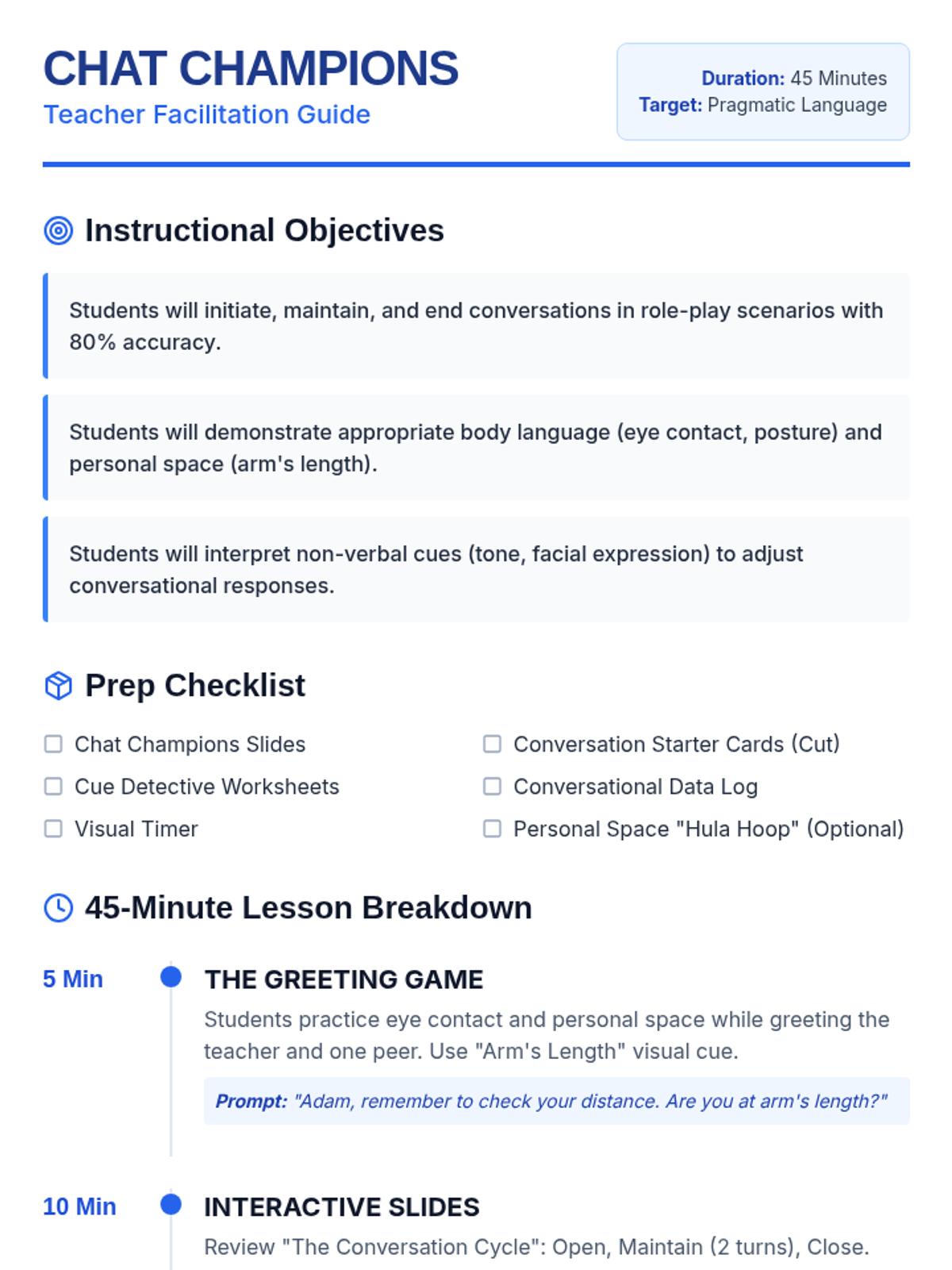
A comprehensive 45-minute teacher facilitation guide for the Chat Champions lesson, including objectives, materials, and a step-by-step instructional timeline with specific prompts for students with autism.
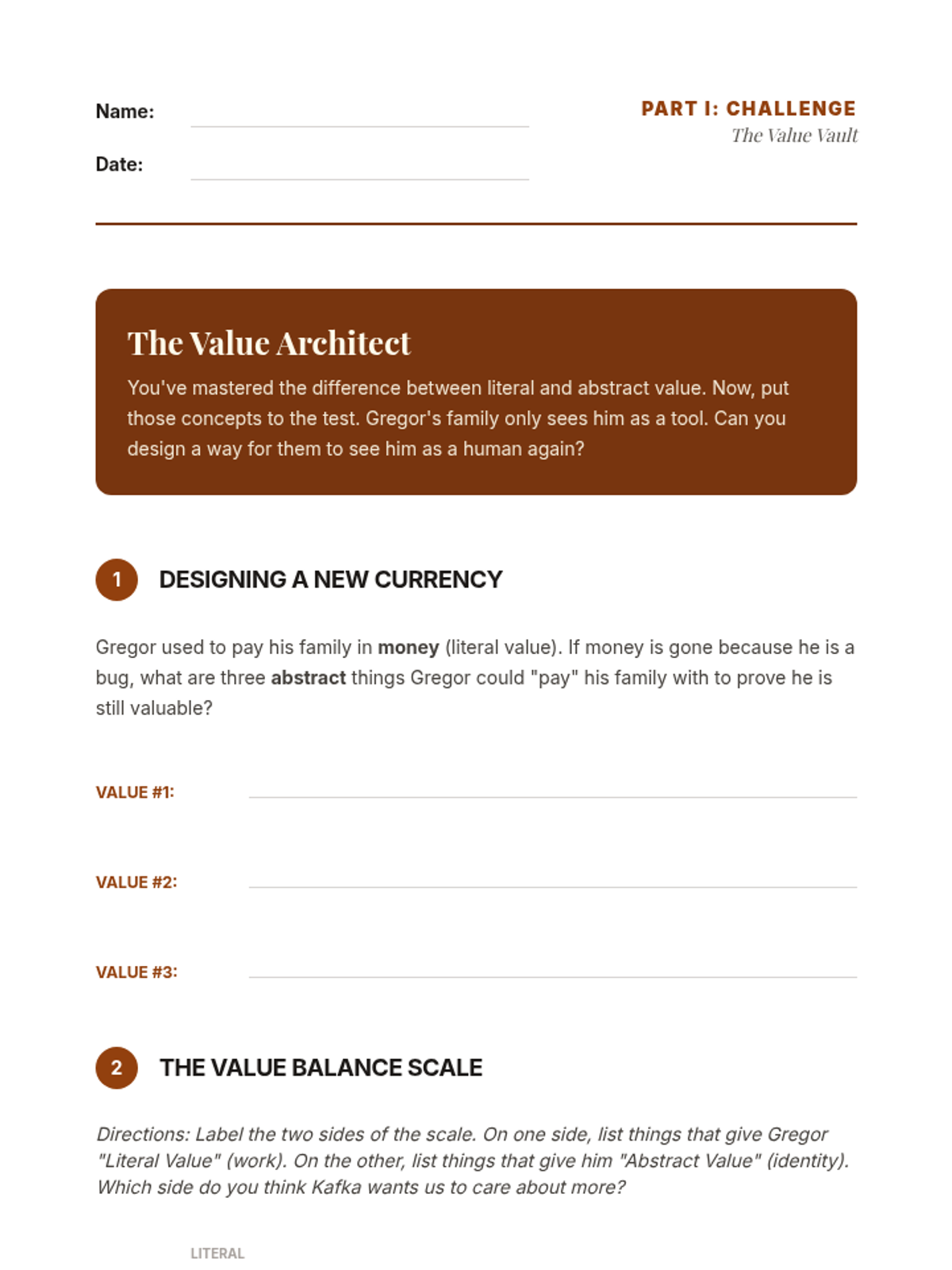
Challenge extension handout for Lesson 1, designed for students who excel. Features abstract value design, a balance scale organizer, and modern metaphorical analysis.
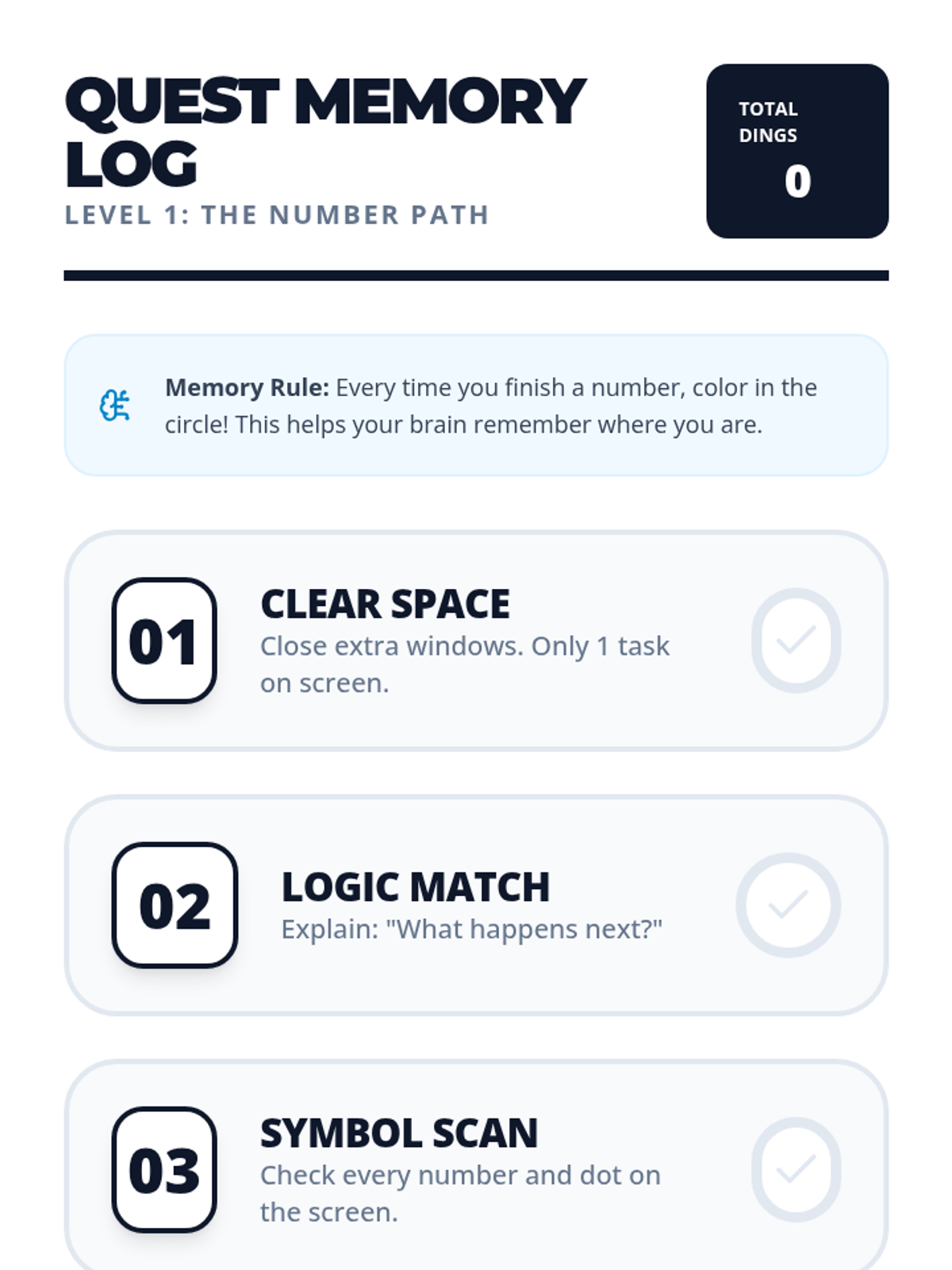
A visual memory anchor sheet for students with language processing and memory challenges. It features large numerical steps, simplified instructions, and physical check-off areas to track progress and reduce cognitive load.
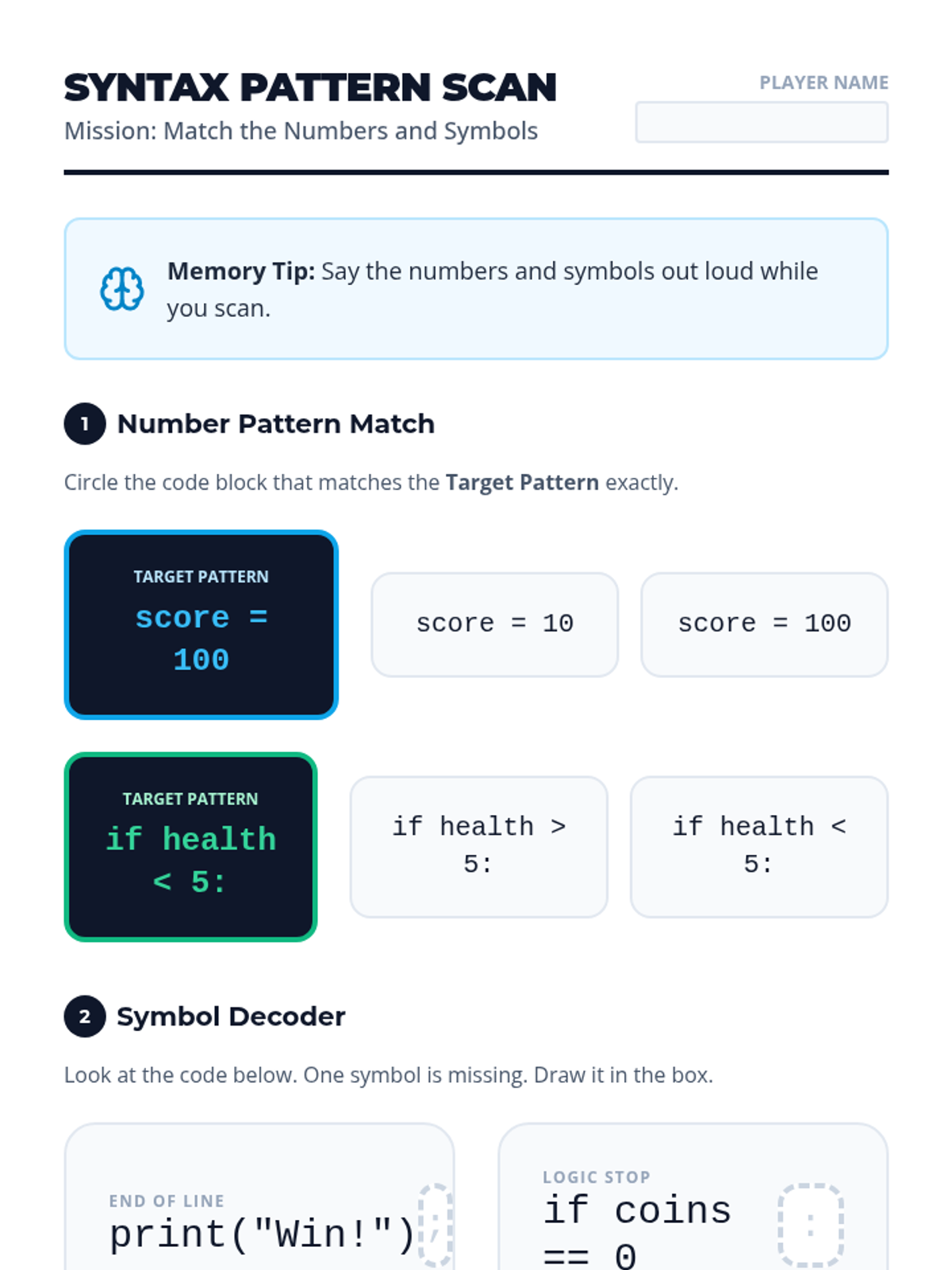
A specialized syntax discrimination worksheet focusing on pattern matching, numerical accuracy, and symbol recognition. Designed to support students with language processing challenges by using visual memory cues and numerical anchors.
A social story booklet focusing on the steps for choosing, buying, and waiting to pay for a souvenir in Washington, D.C. gift shops.
A social story booklet focusing on museum manners, including quiet voices, walking feet, looking with eyes, and staying with the group.
A social story booklet explaining safety rules, noise levels, and behavior expectations for the bus ride from Grafton to Washington, D.C.
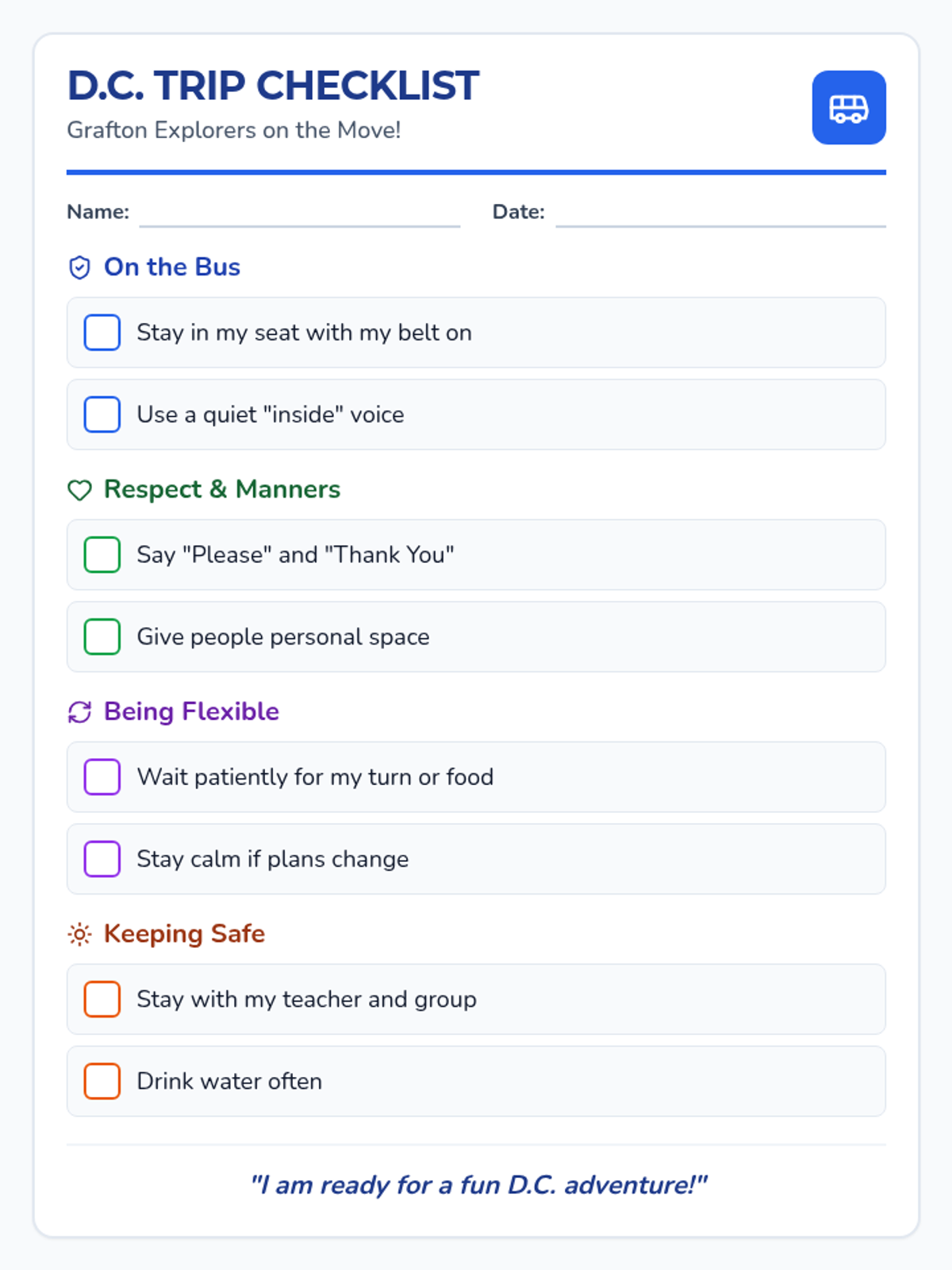
A single-page visual checklist for students to track appropriate behaviors including bus rules, manners, flexibility, and sun safety during their Washington, D.C. trip.
A social story booklet addressing walking endurance, staying hydrated, wearing sun protection, and staying with the group during the hot D.C. field trip.
A social story booklet focusing on restaurant manners, patience while waiting for tables and food, and flexibility during the D.C. field trip.
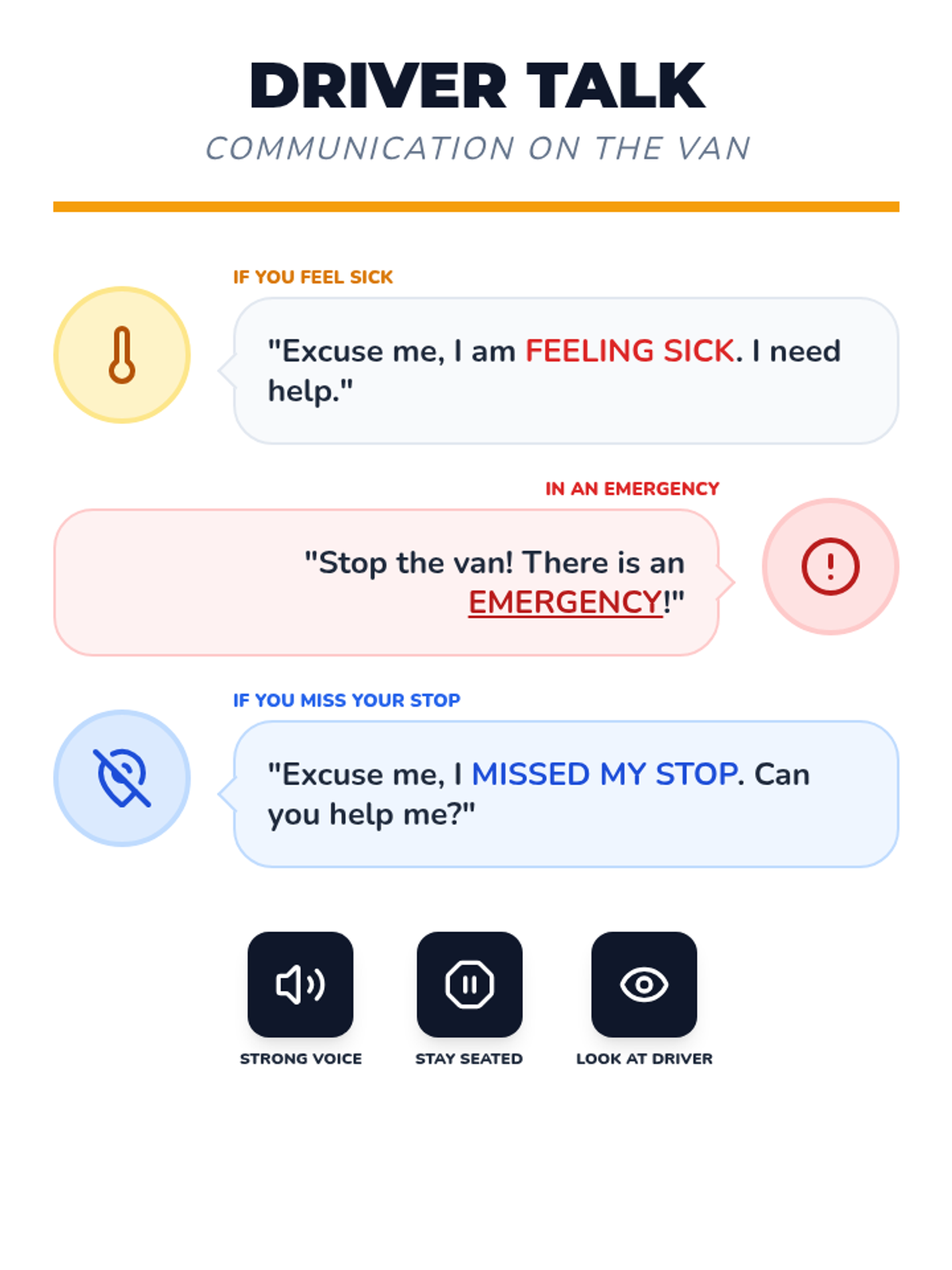
A visual communication script for interacting with van drivers in various situations. Revised to prevent page breaks and improve icon/label alignment.
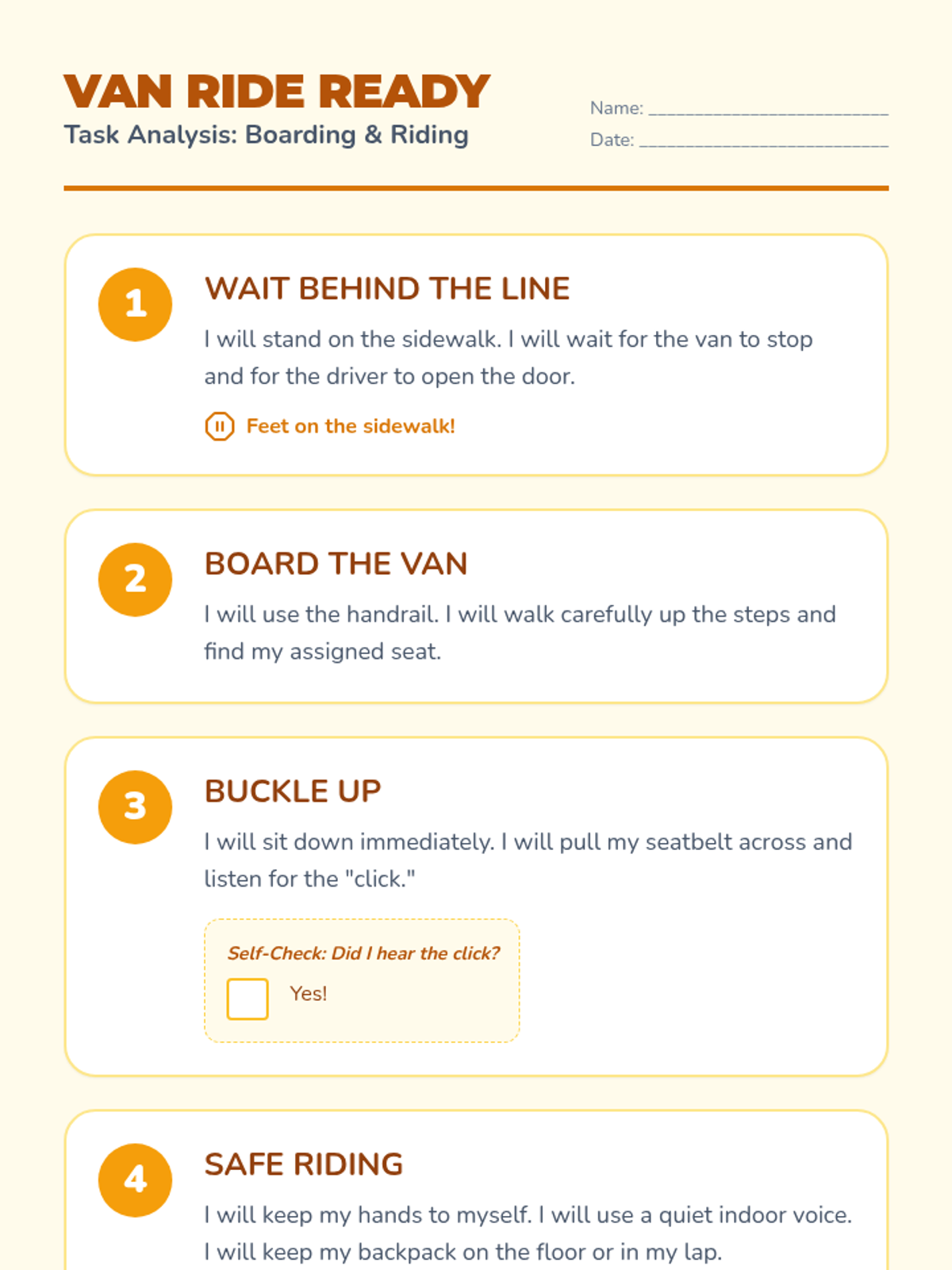
A comprehensive task analysis for van and transportation safety, covering the sequence of actions from waiting for the vehicle to exiting at the destination.
Safety presentation for riding in school vans or public transportation. Revised to fix Slide 3 rendering issues, improve contrast, and add interactive scenarios.
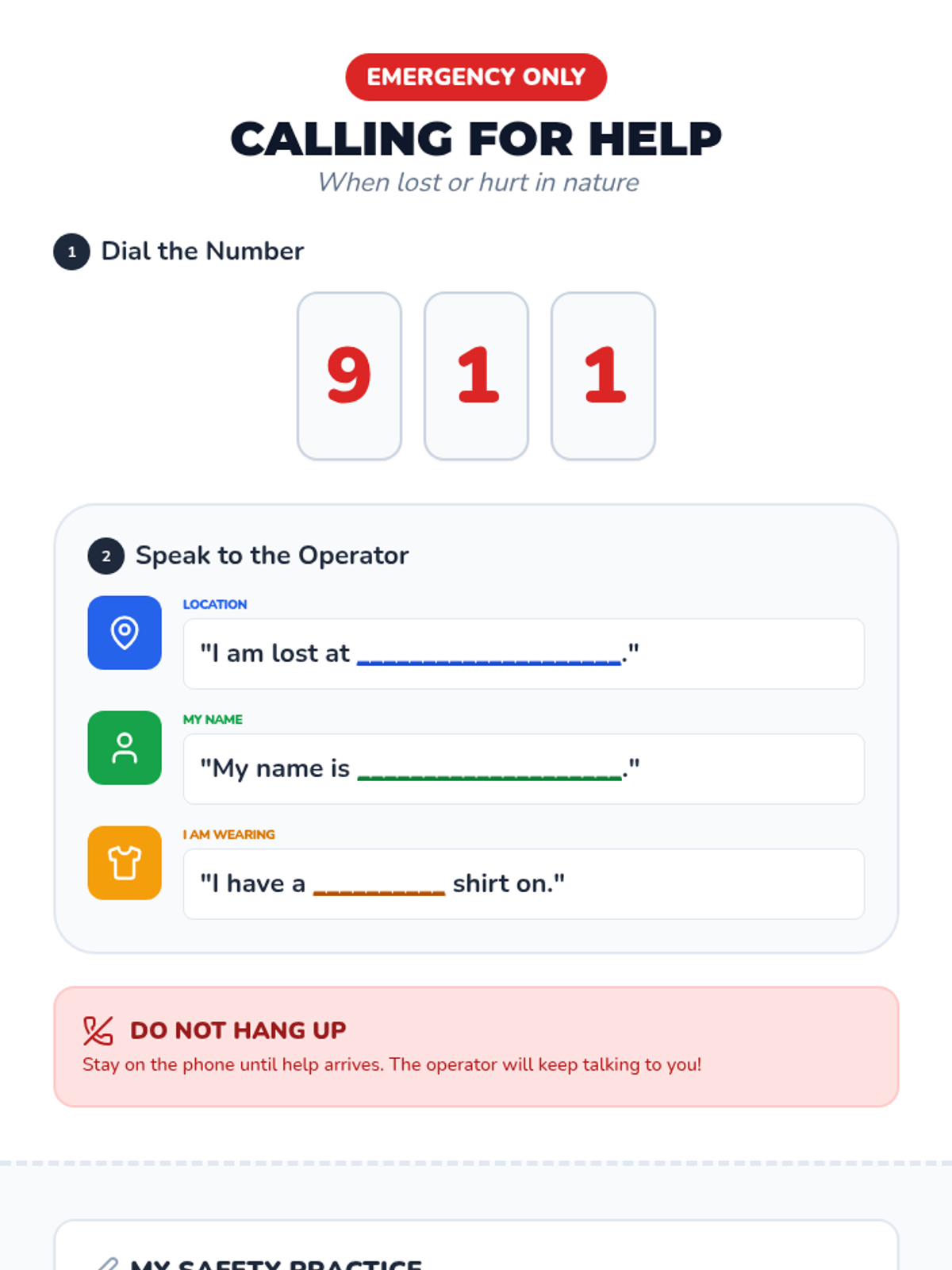
A visual emergency script for calling 911 when lost in a nature setting. Revised to fix page breaks, consolidate content onto two pages, and improve student work areas.
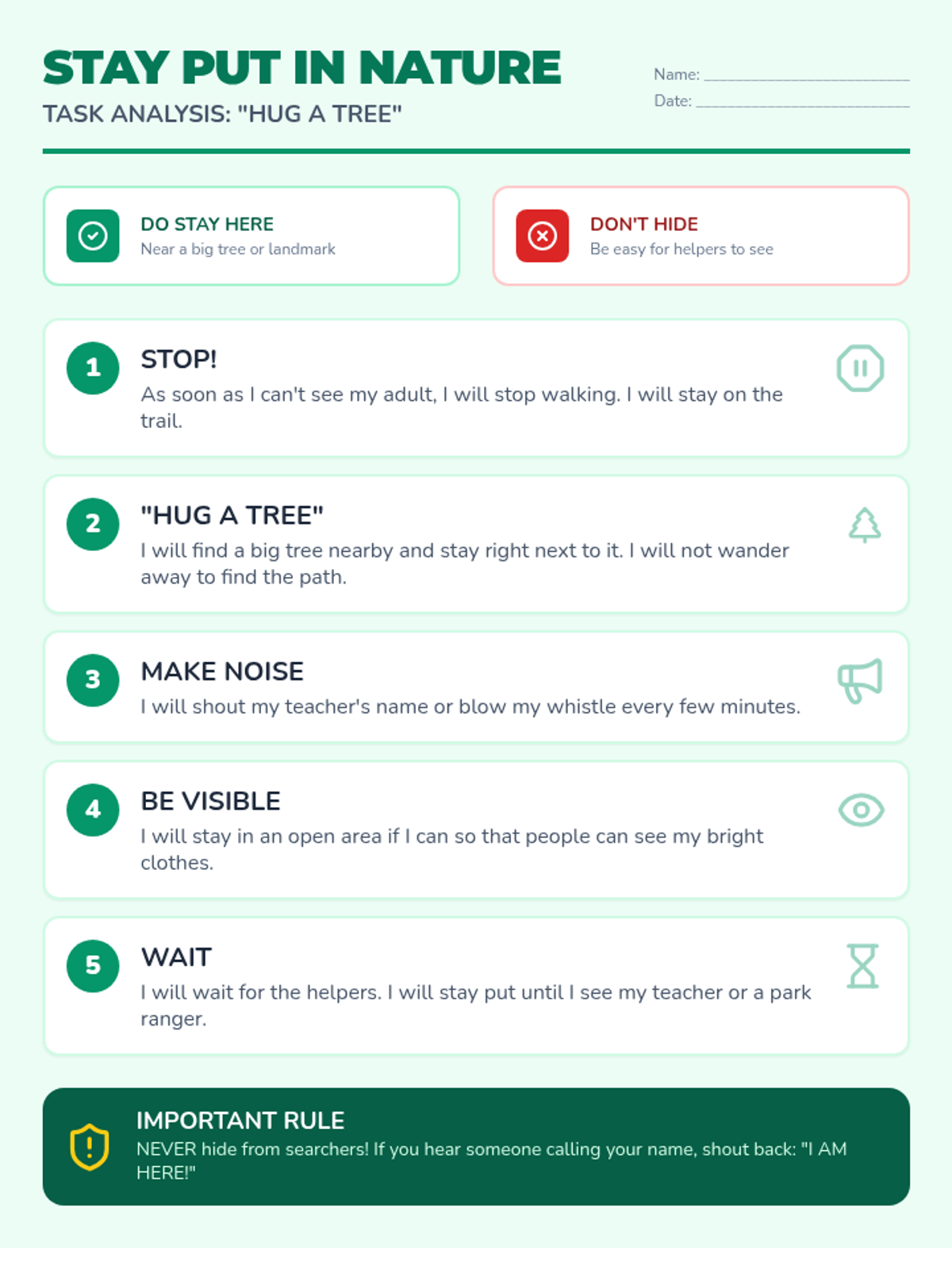
A task analysis for outdoor safety focusing on the 'Hug a Tree' strategy. Revised to fit all steps and the rule box onto a single page with improved icon visibility.
Educational slides for nature walk safety, highlighting the "Hug a Tree" rule. Revised to improve text contrast and clarify placeholder names.
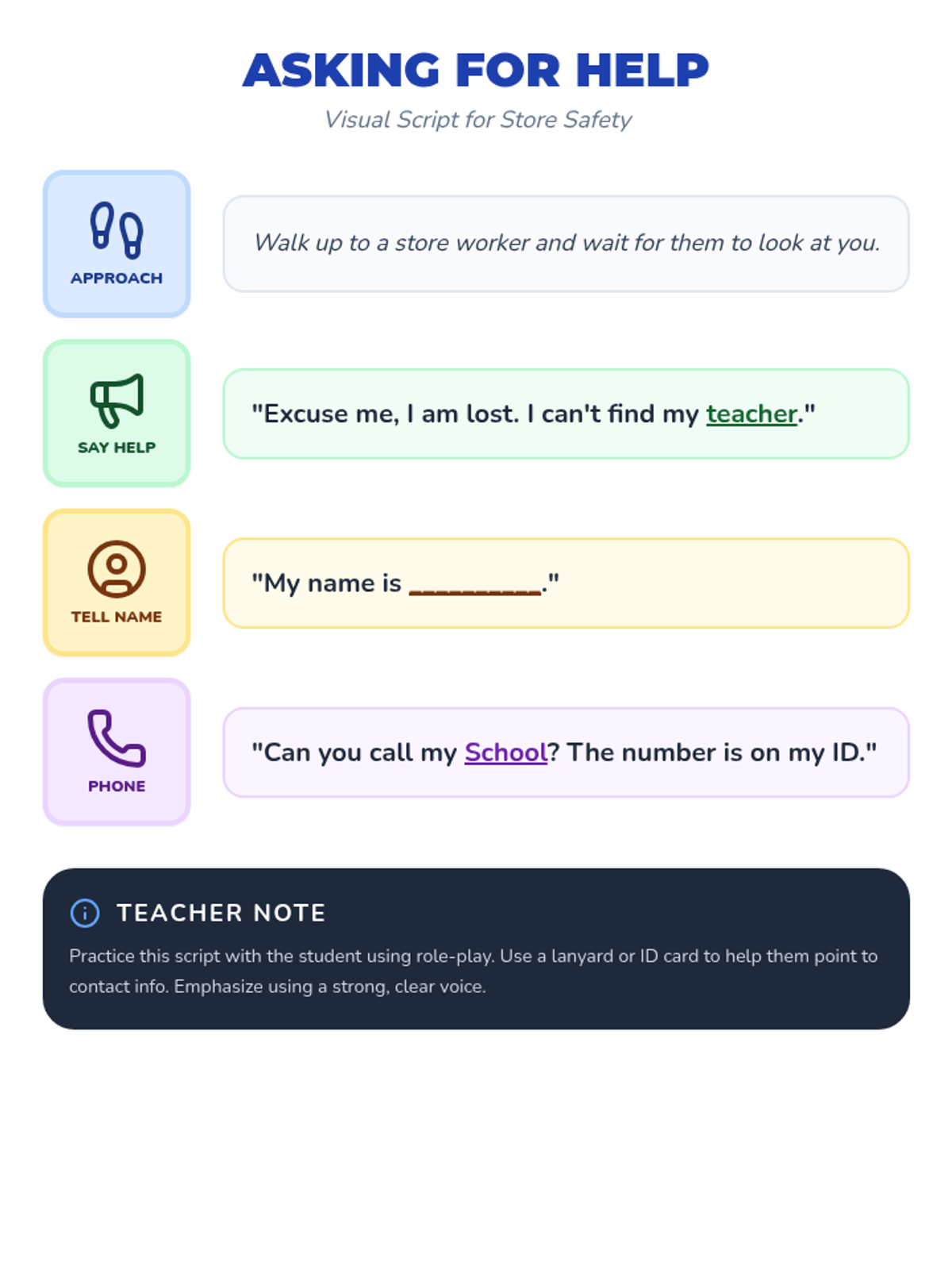
A visual social script for students to use when asking a store worker for help. Revised to fix contrast, alignment, and ensure it fits on a single page.
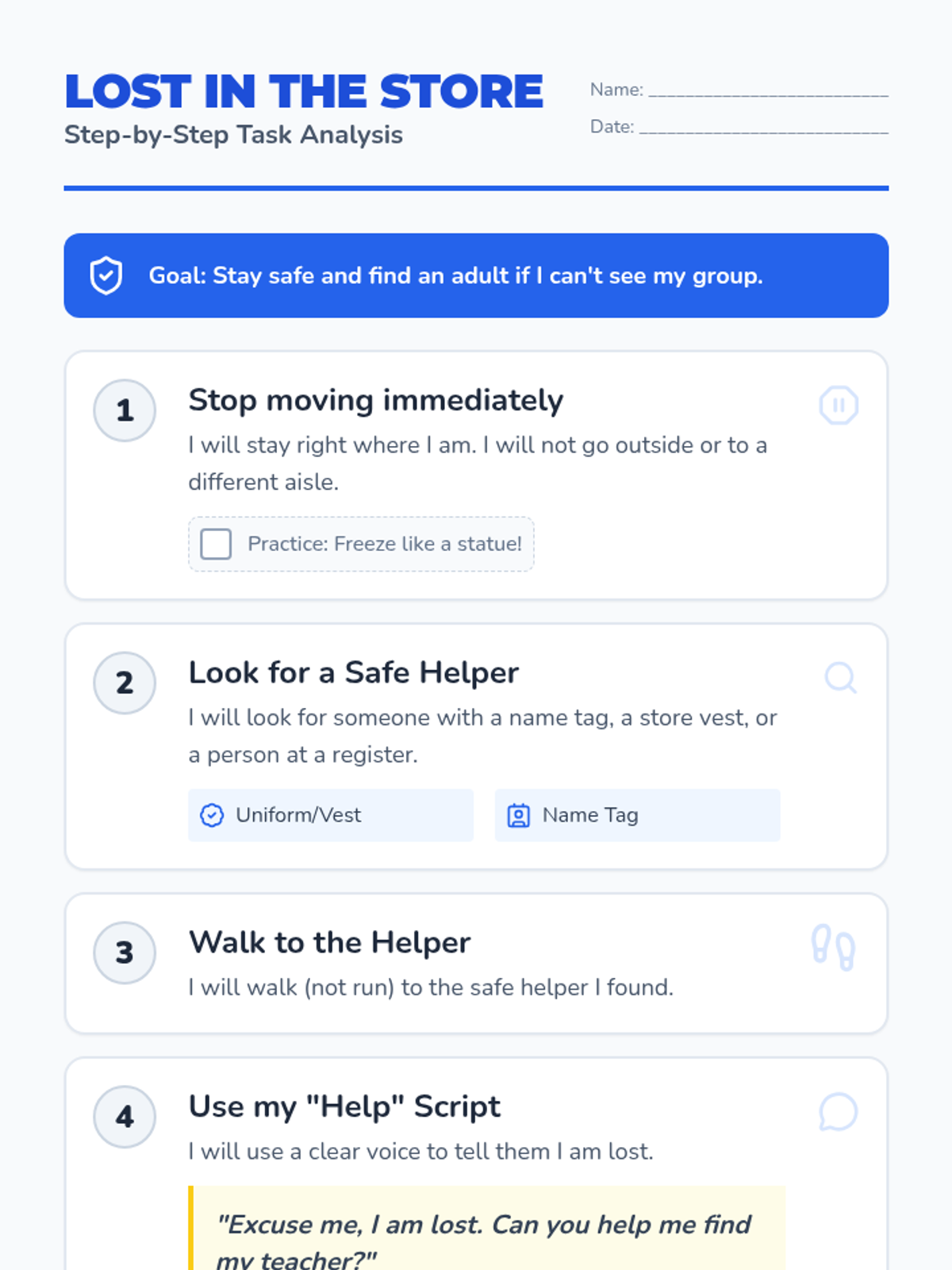
A step-by-step task analysis handout for students to follow if they become separated from their group in a store. Includes visual cues and practice prompts. Revised for better page layout.
An interactive slide deck introducing store safety concepts, specifically focused on what to do if a student gets lost in a retail environment.
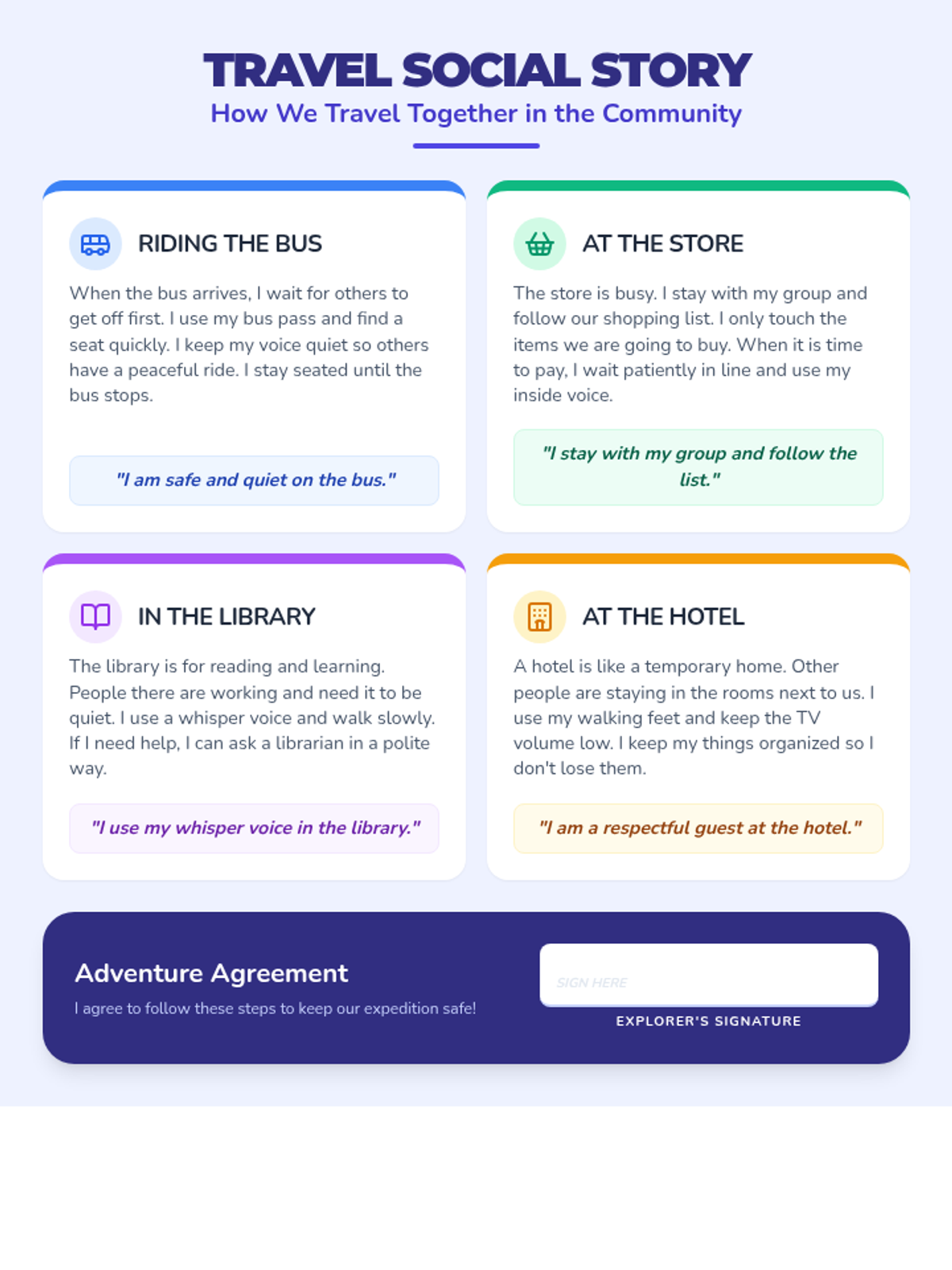
A visual social story for community travel, outlining clear social expectations and behavior protocols for buses, stores, libraries, and hotels, fitting entirely on one page.
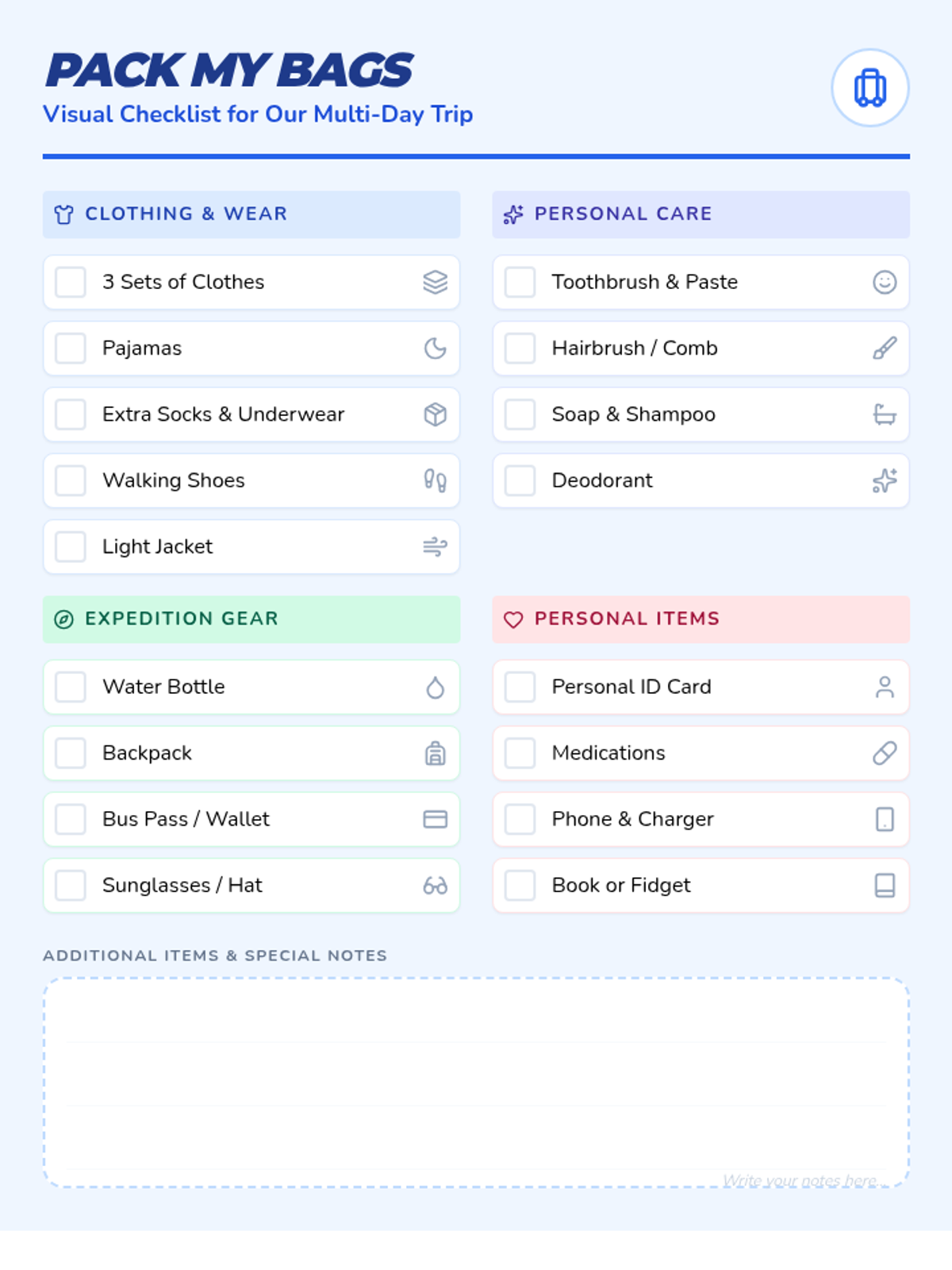
A visually-supported packing checklist designed for students, featuring categorized items with consistent Lucide icons and an expanded notes section for personal trip preparation.
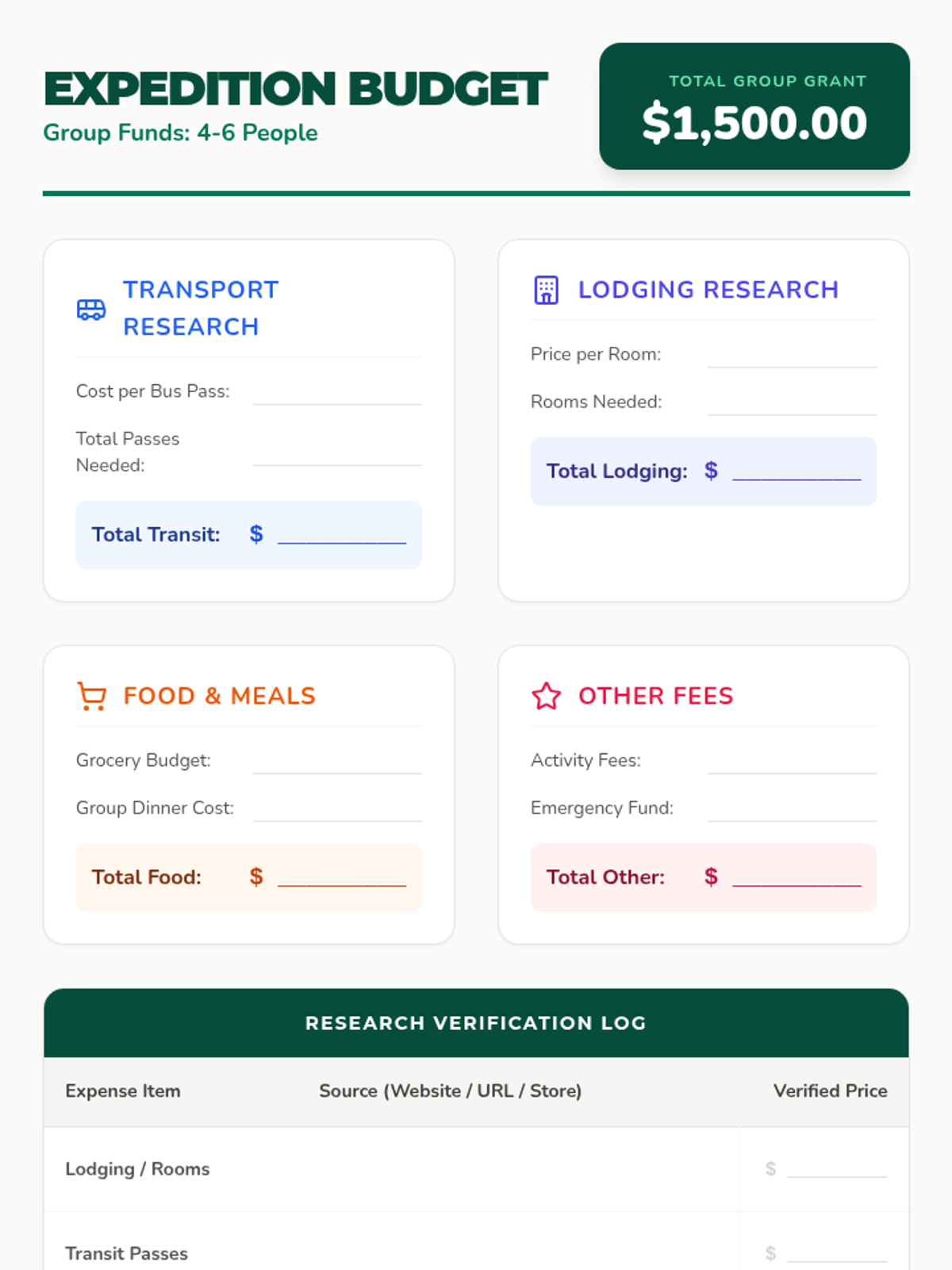
A research-based budget expense tracker for a 4-6 person community trip with a $1,500 grant, including a verification log for students to record their sources and prices. Fixes alignment and page break issues.
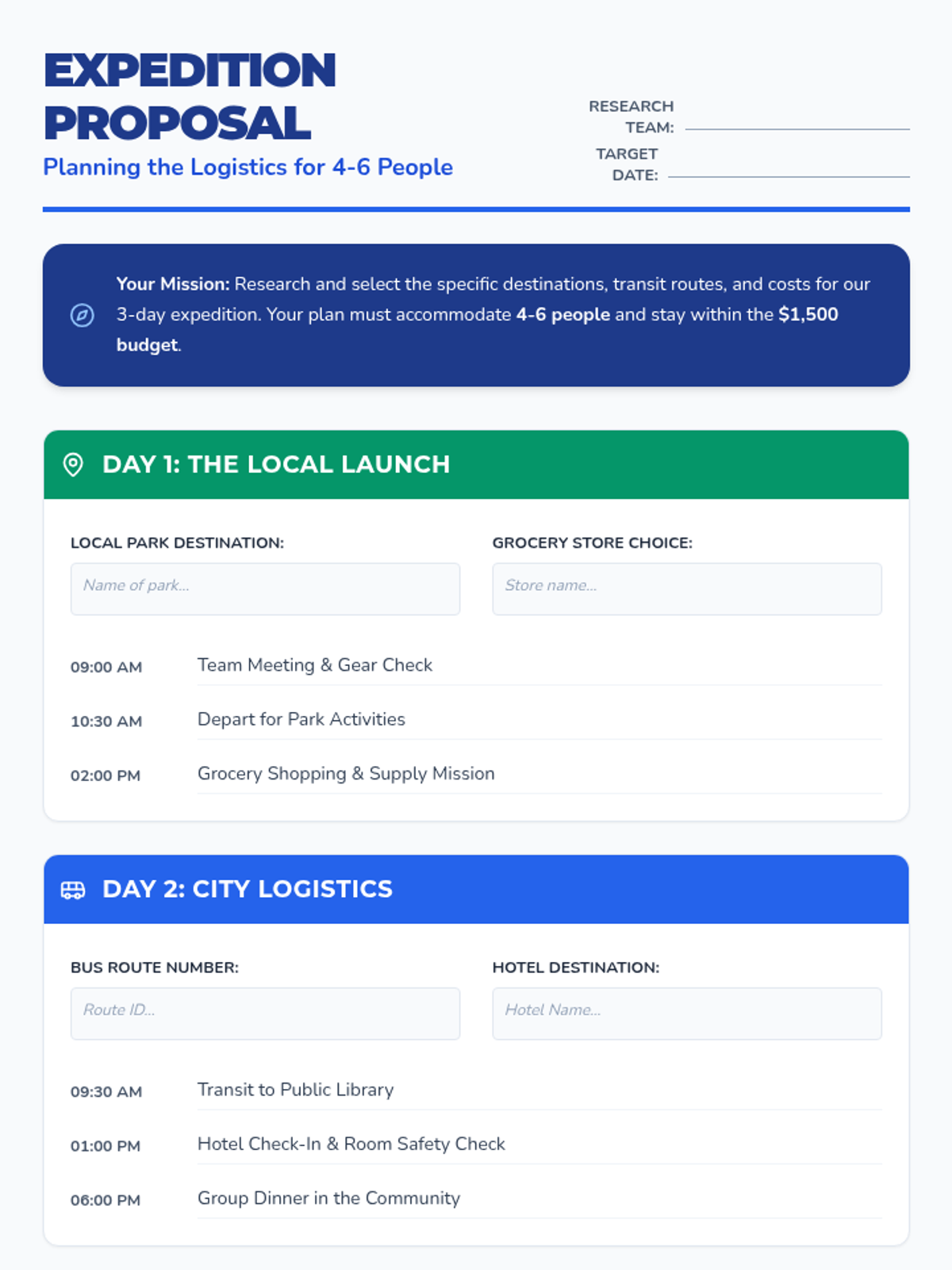
An expedition planning itinerary that requires students to research specific locations, bus routes, and hotel options for a group of 4-6 people. Includes research areas for all 3 days.
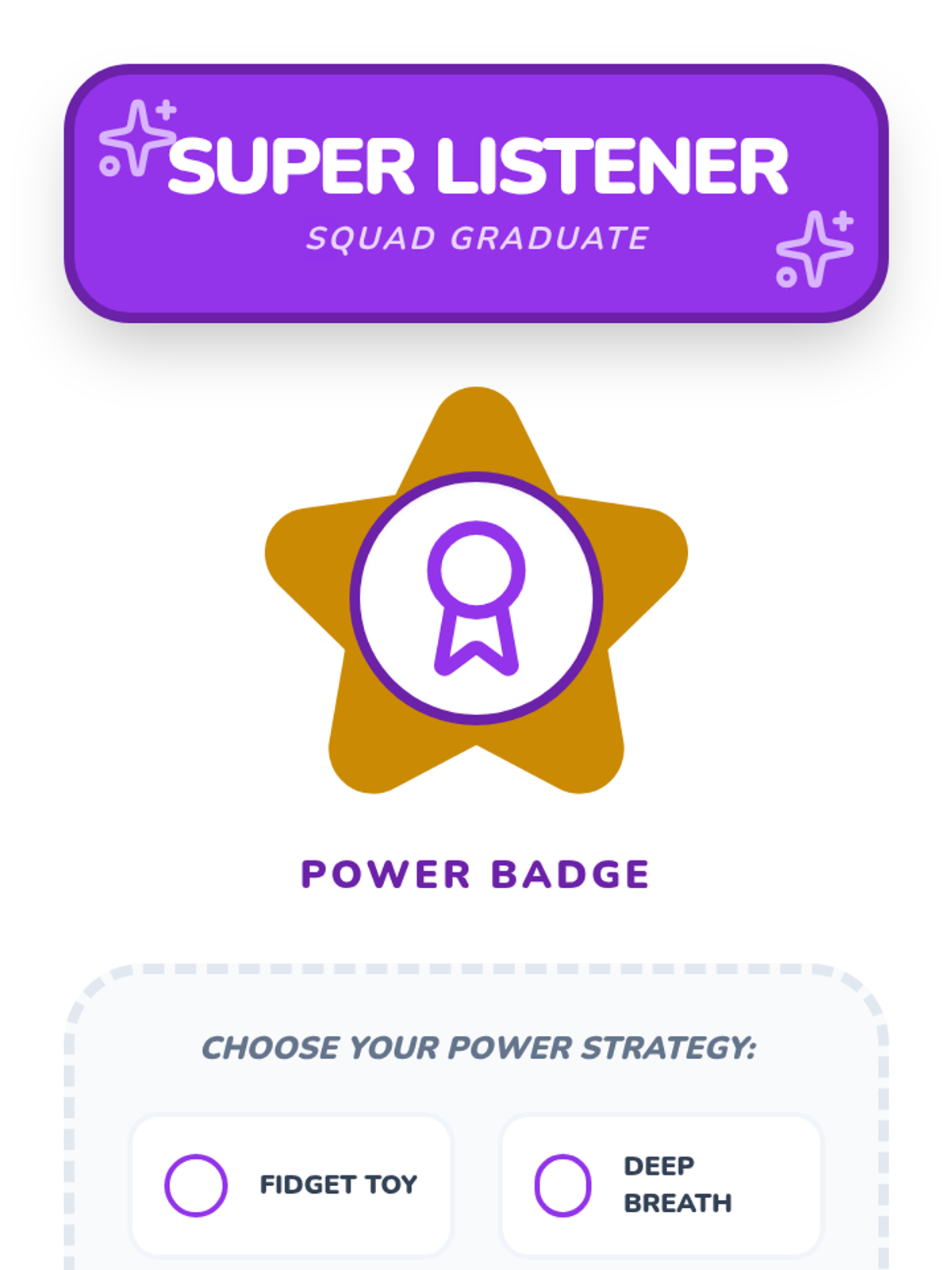
Final capstone activity. A visual 'Power Badge' and strategy selection sheet where students celebrate their graduation from the Super Listening Squad and identify their top listening tool.
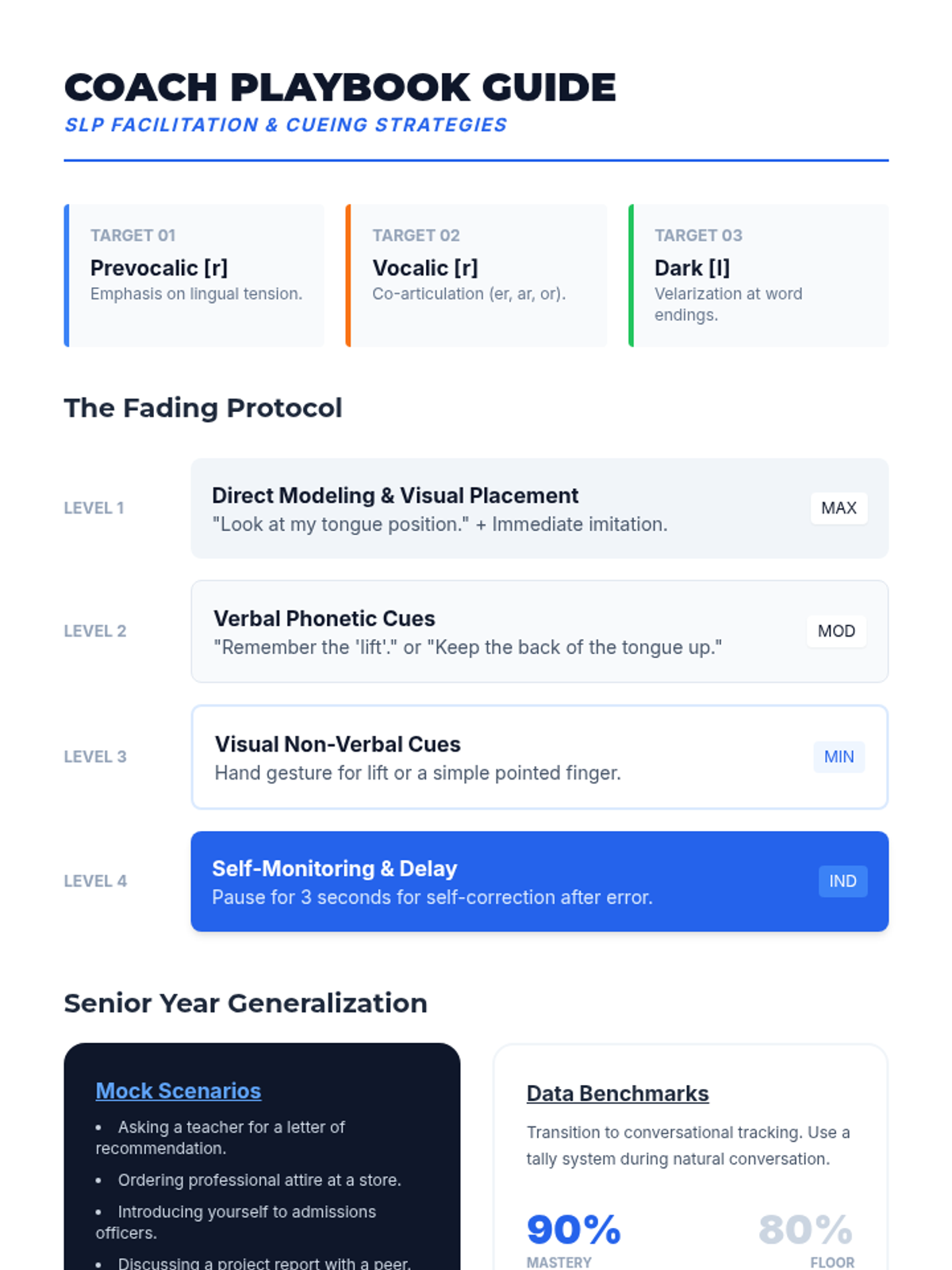
A teacher/SLP facilitation guide for working on articulation with high school seniors. It details a cueing hierarchy (fading support), professional generalization scenarios, and data-tracking benchmarks to reach the 90% accuracy goal.
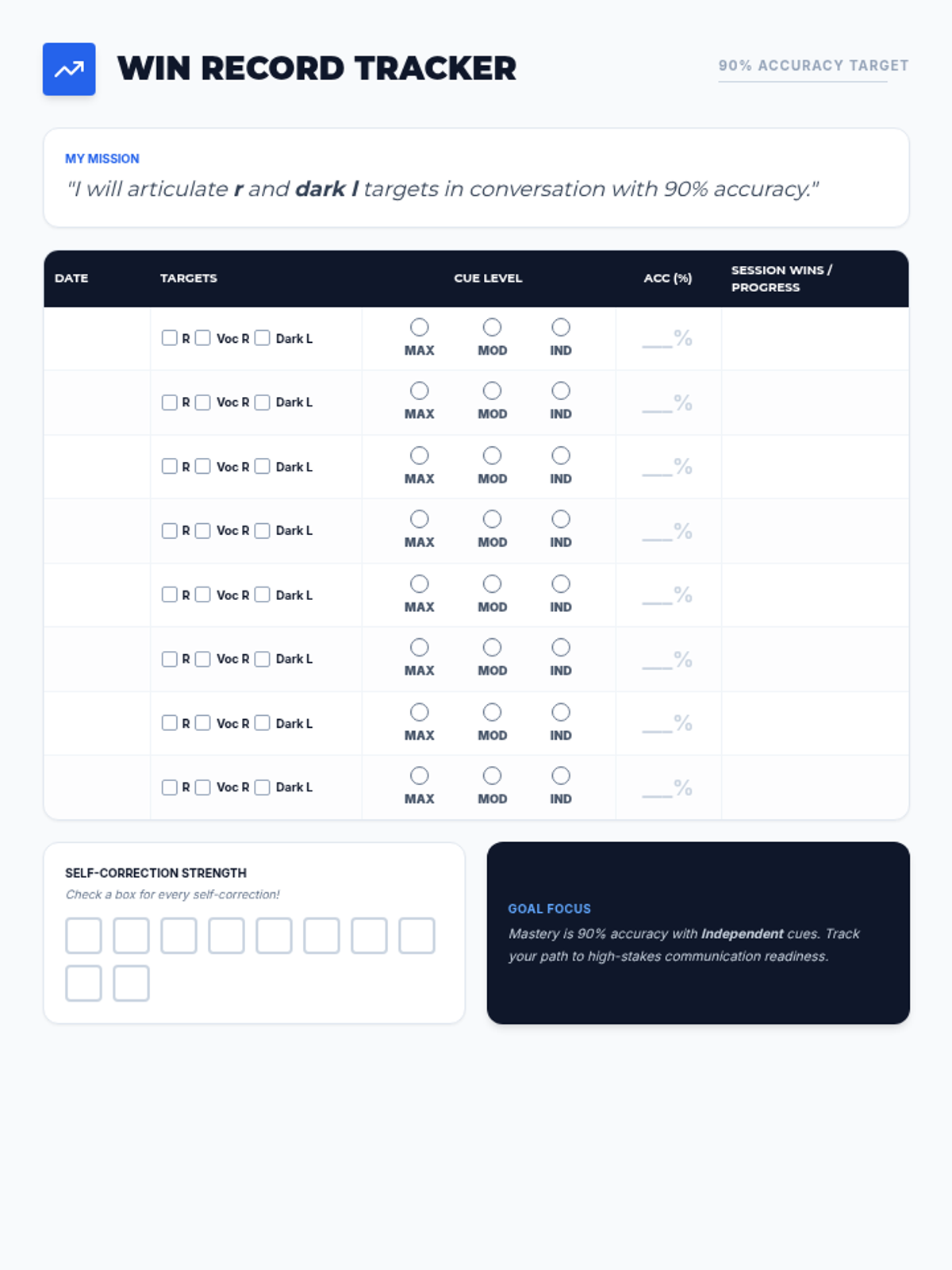
A sophisticated data-tracking log for high school seniors to monitor their articulation goals. Includes a session log for accuracy and cueing levels, as well as a self-monitoring section to track error correction.
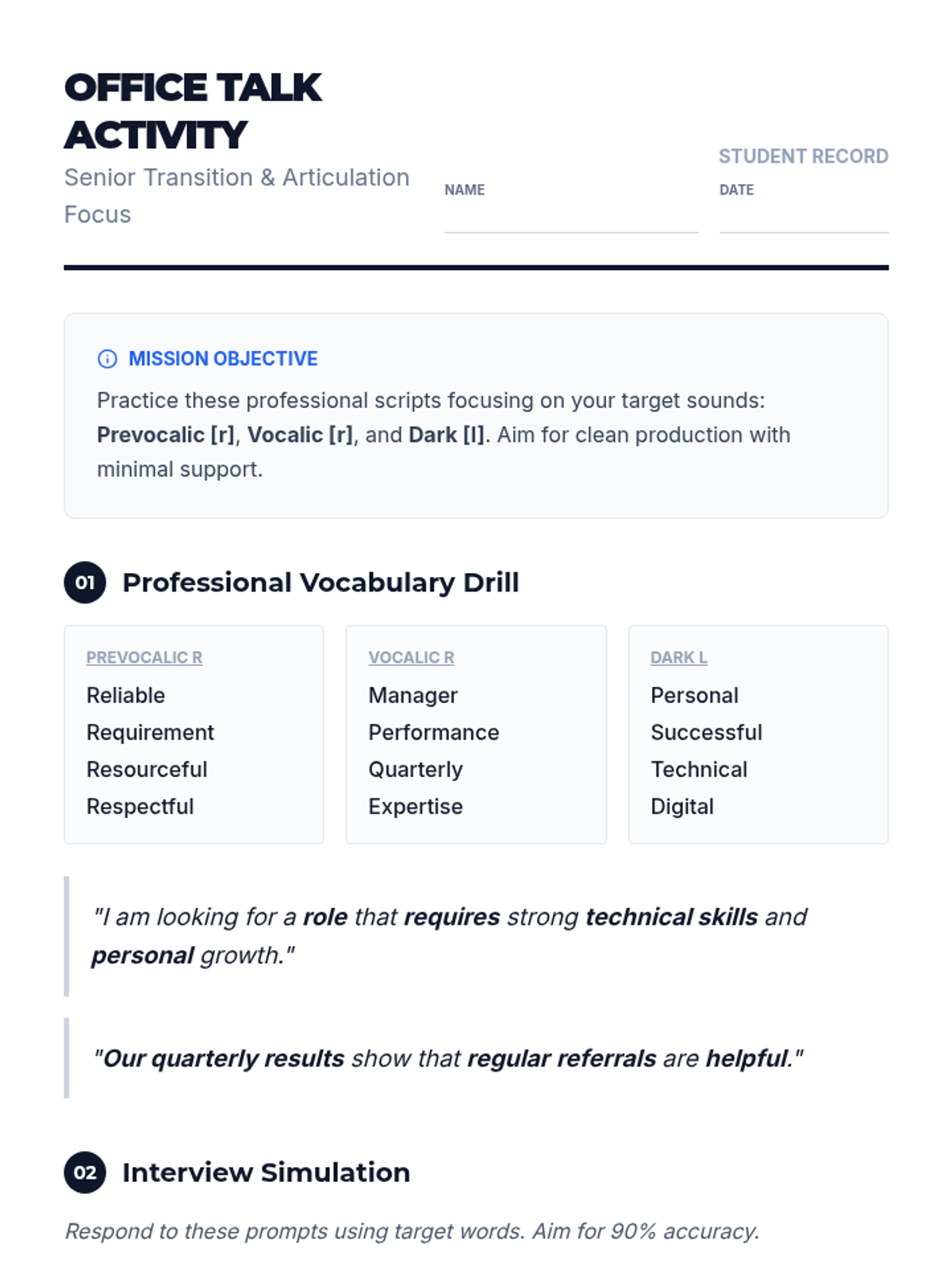
A career-readiness articulation worksheet for high school seniors. Focuses on 'r' and 'dark l' through professional vocabulary, sentence drills, and mock interview questions with spaces for self-reflection and SLP data tracking.
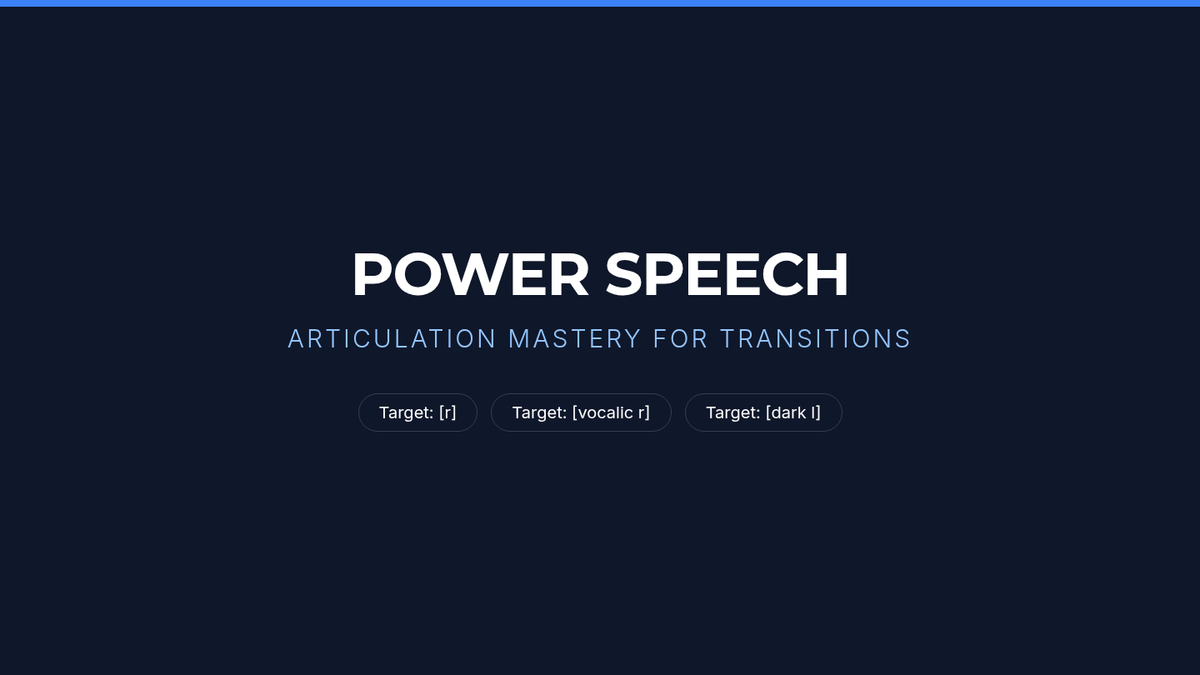
A professional 16:9 slide presentation for high school seniors focusing on articulating 'r' and 'dark l' in career-oriented contexts like interviews and workplace communication. Includes visual cues, word lists, and complex sentence challenges.
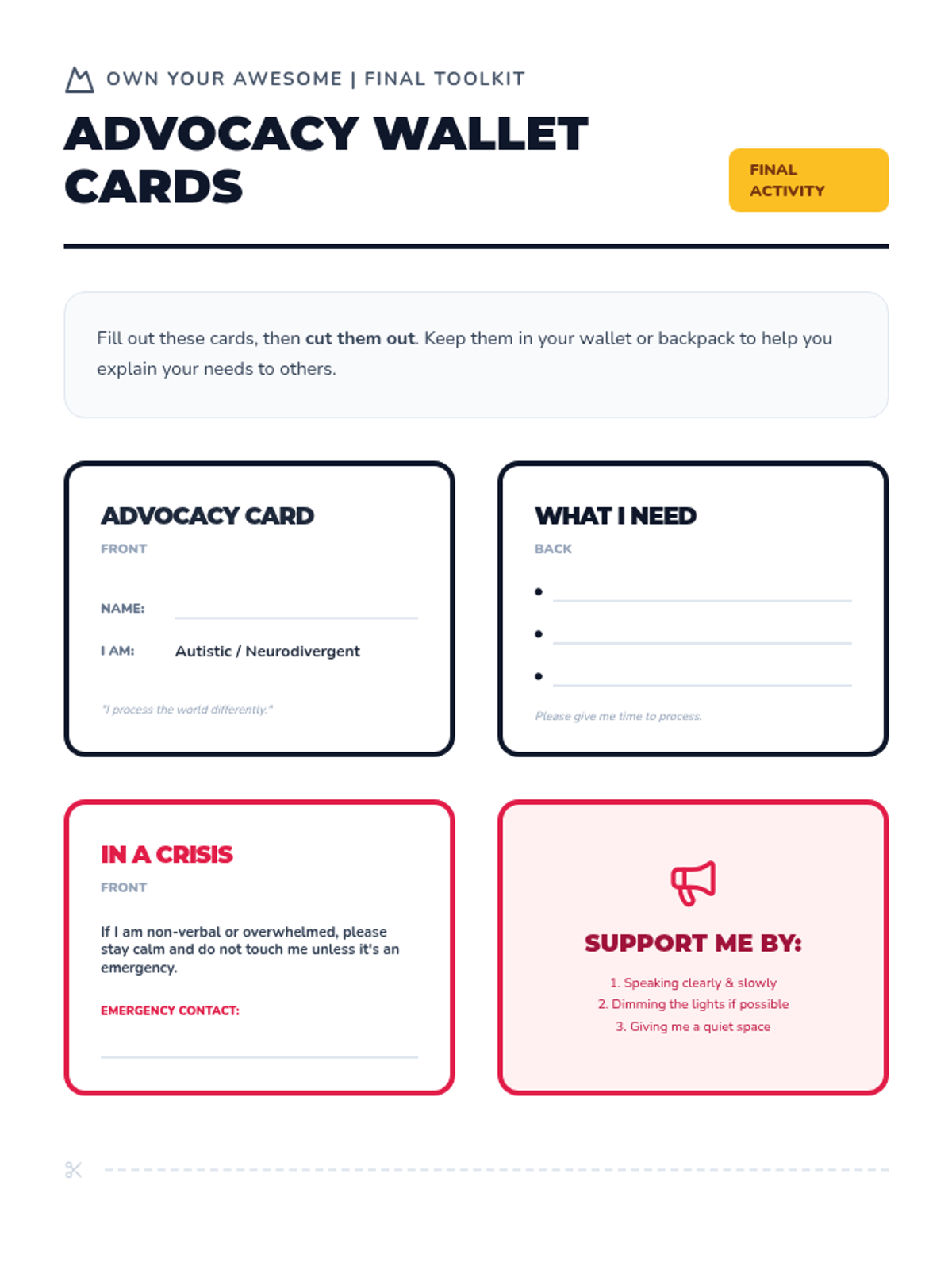
Personalized self-advocacy wallet cards for Lesson 10. Fixed card page breaks, changed dark background to light for easier writing, and expanded input lines.
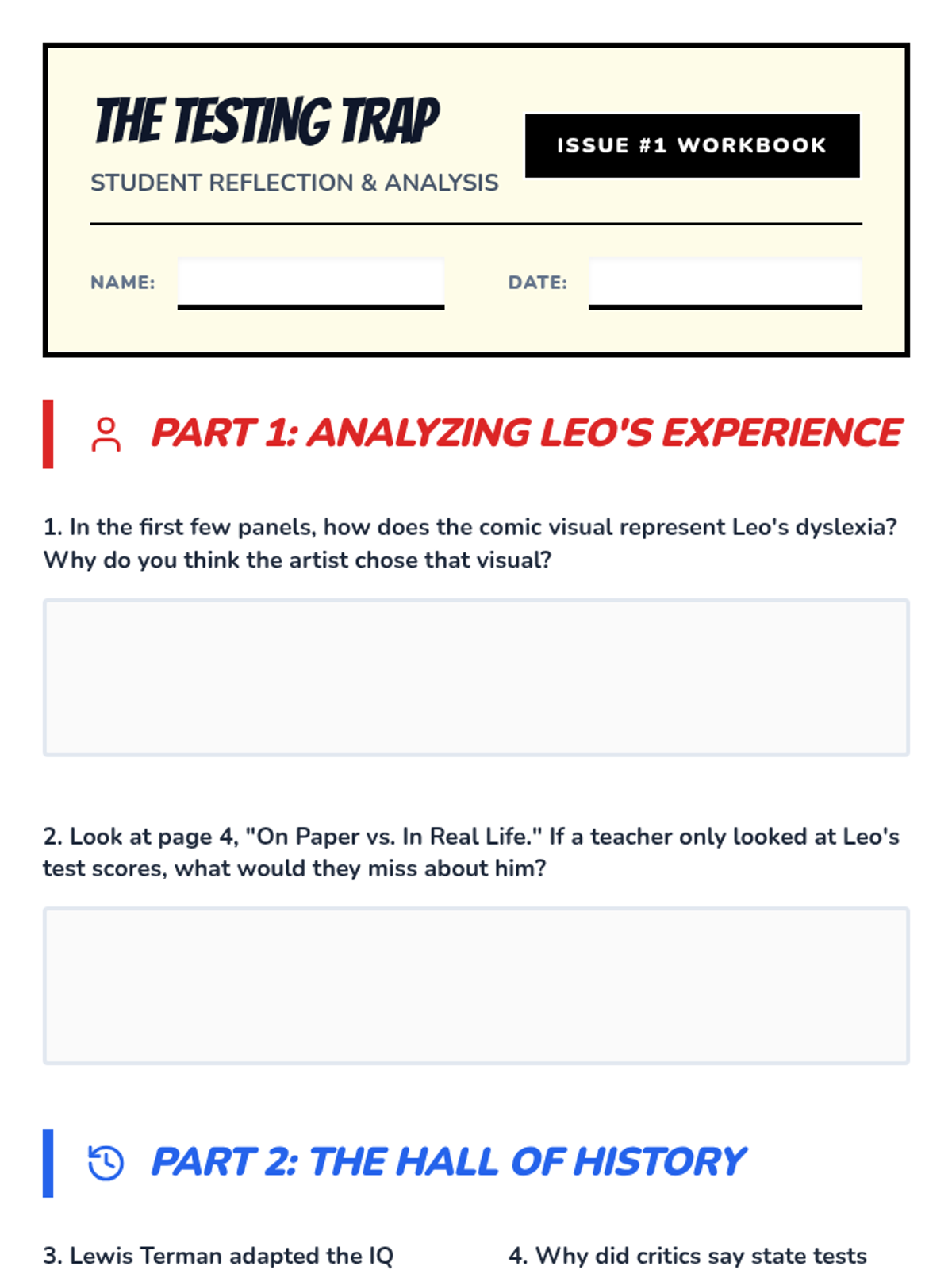
A student worksheet designed to accompany the Testing Trap Comic. It includes analysis questions about the comic's story, comprehension questions on the history of testing (Terman, bias, 1970s shifts), and a reflection section on interpersonal intelligence.
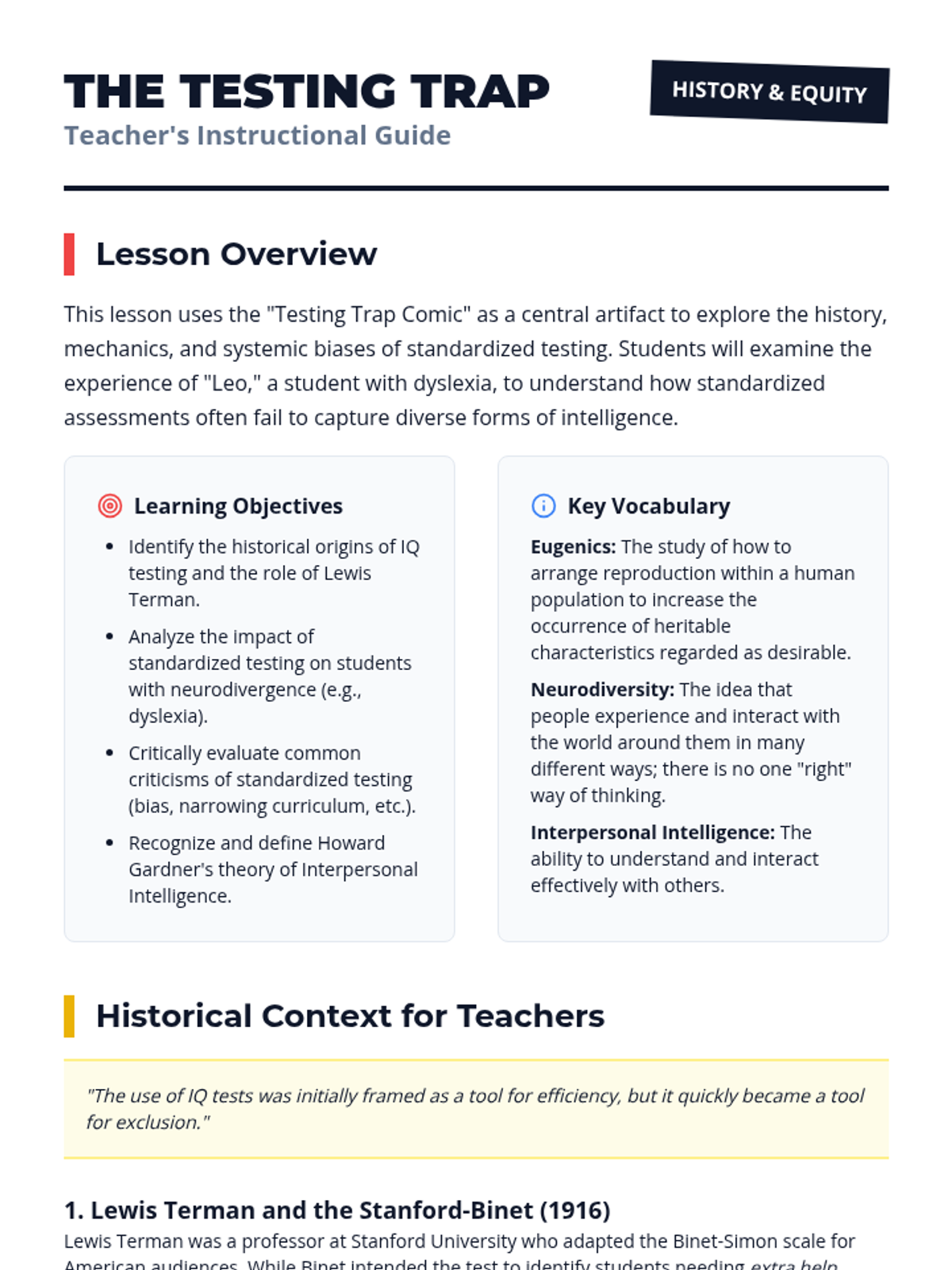
A comprehensive guide for teachers to facilitate a lesson using the Testing Trap Comic. It includes background on Lewis Terman, discussion prompts regarding neurodiversity and systemic bias, and differentiation strategies for students.
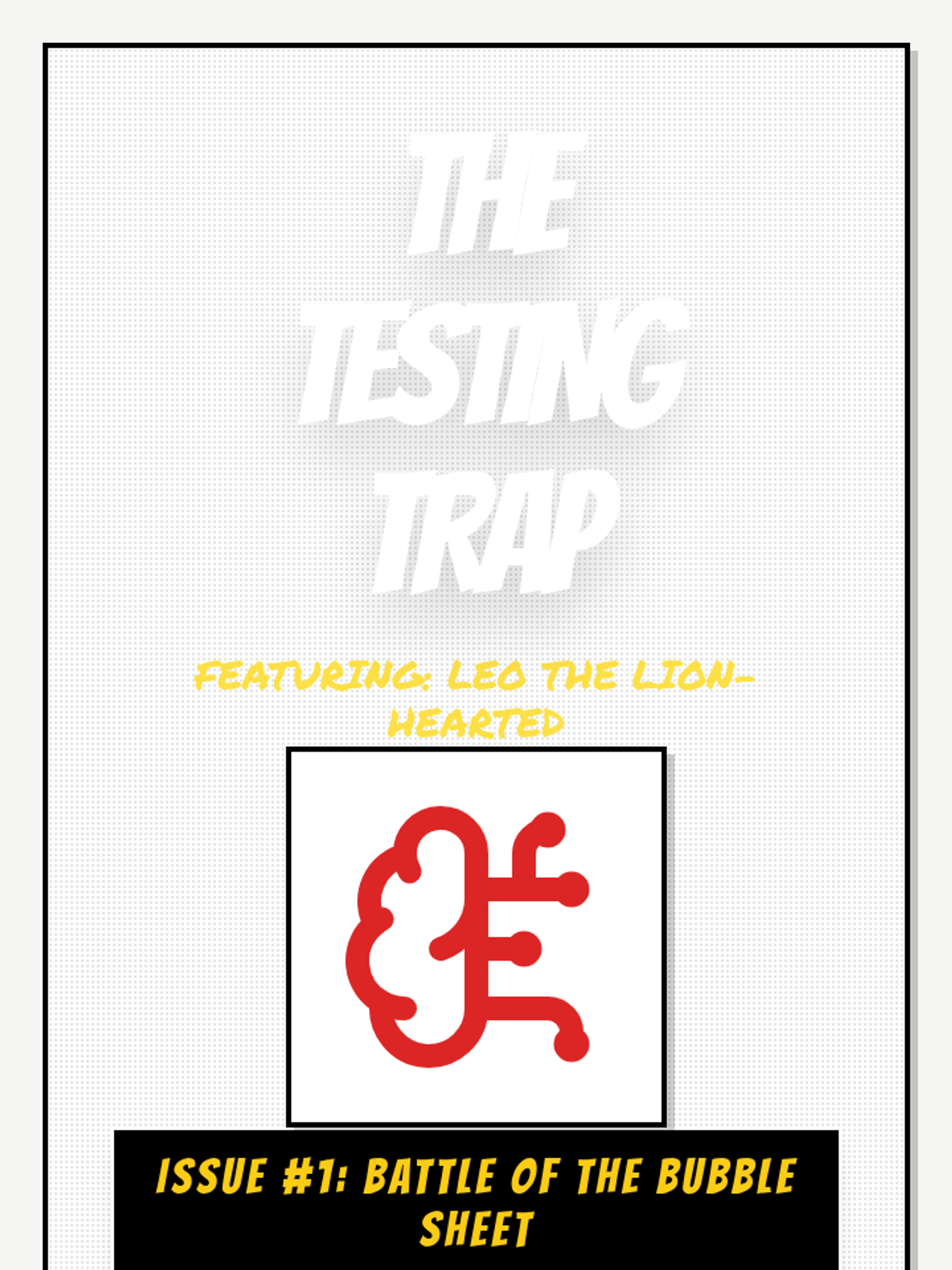
A multi-page retro-style comic book following Leo, a high-school student with dyslexia, as he navigates the high-pressure world of standardized testing. The comic integrates the history of testing (from Terman to the 1970s) and celebrates non-traditional intelligences.
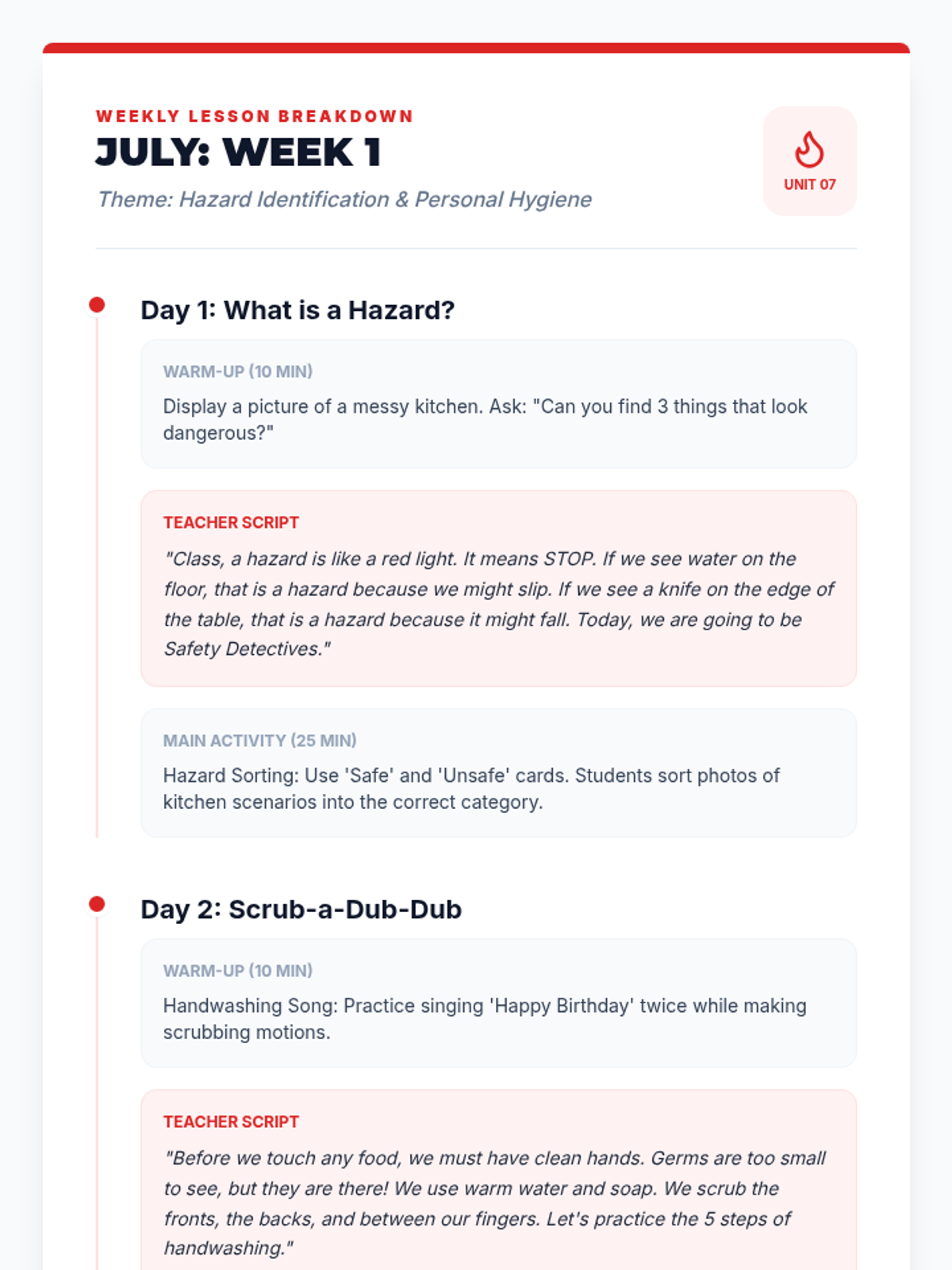
A detailed daily facilitation guide for the first week of the Kitchen Safety unit, including warm-ups, specific teacher scripts, and activity instructions.
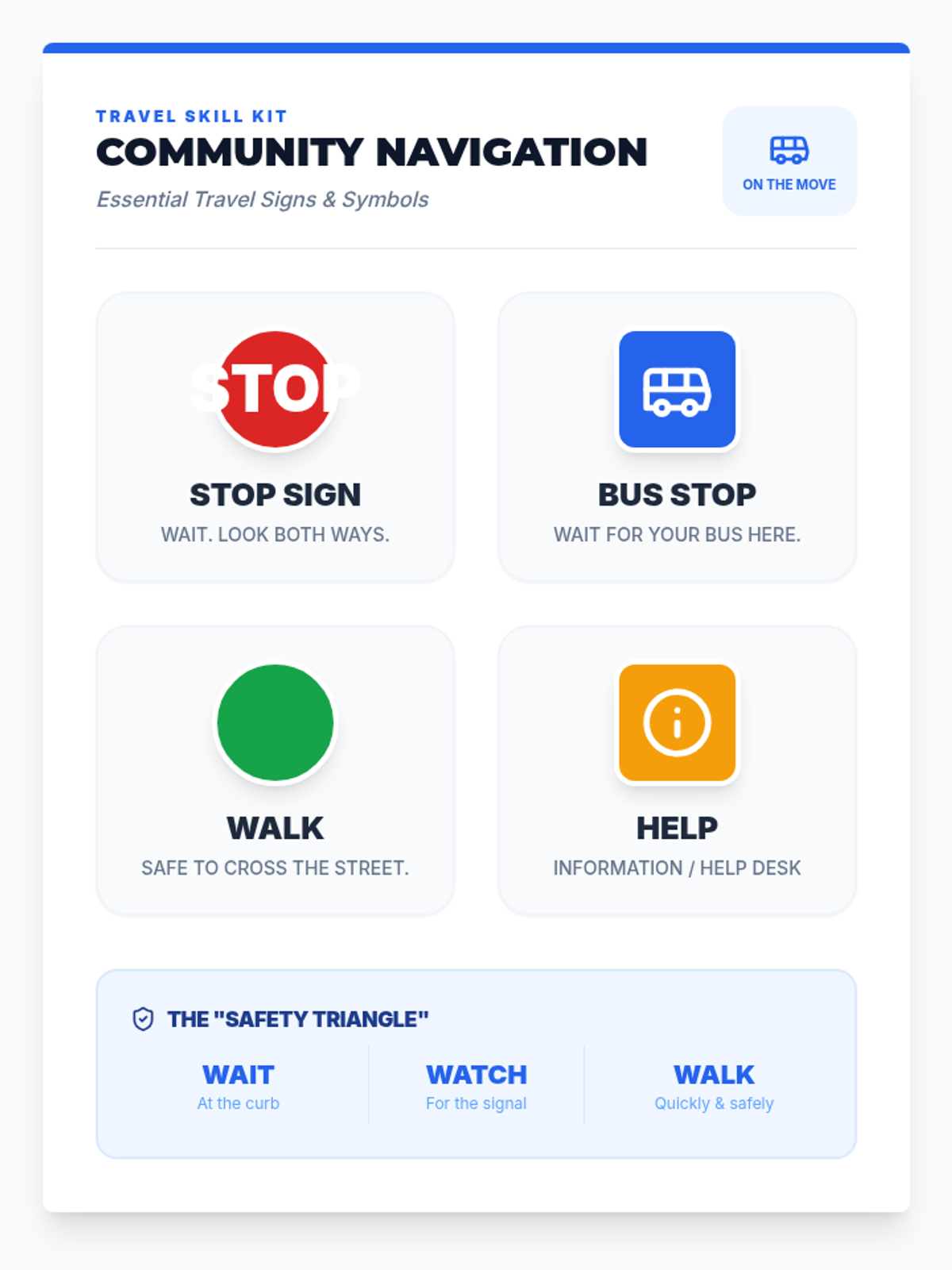
A student-facing travel skill kit featuring community navigation visuals, a trip planning worksheet, and essential social scripts for transportation.
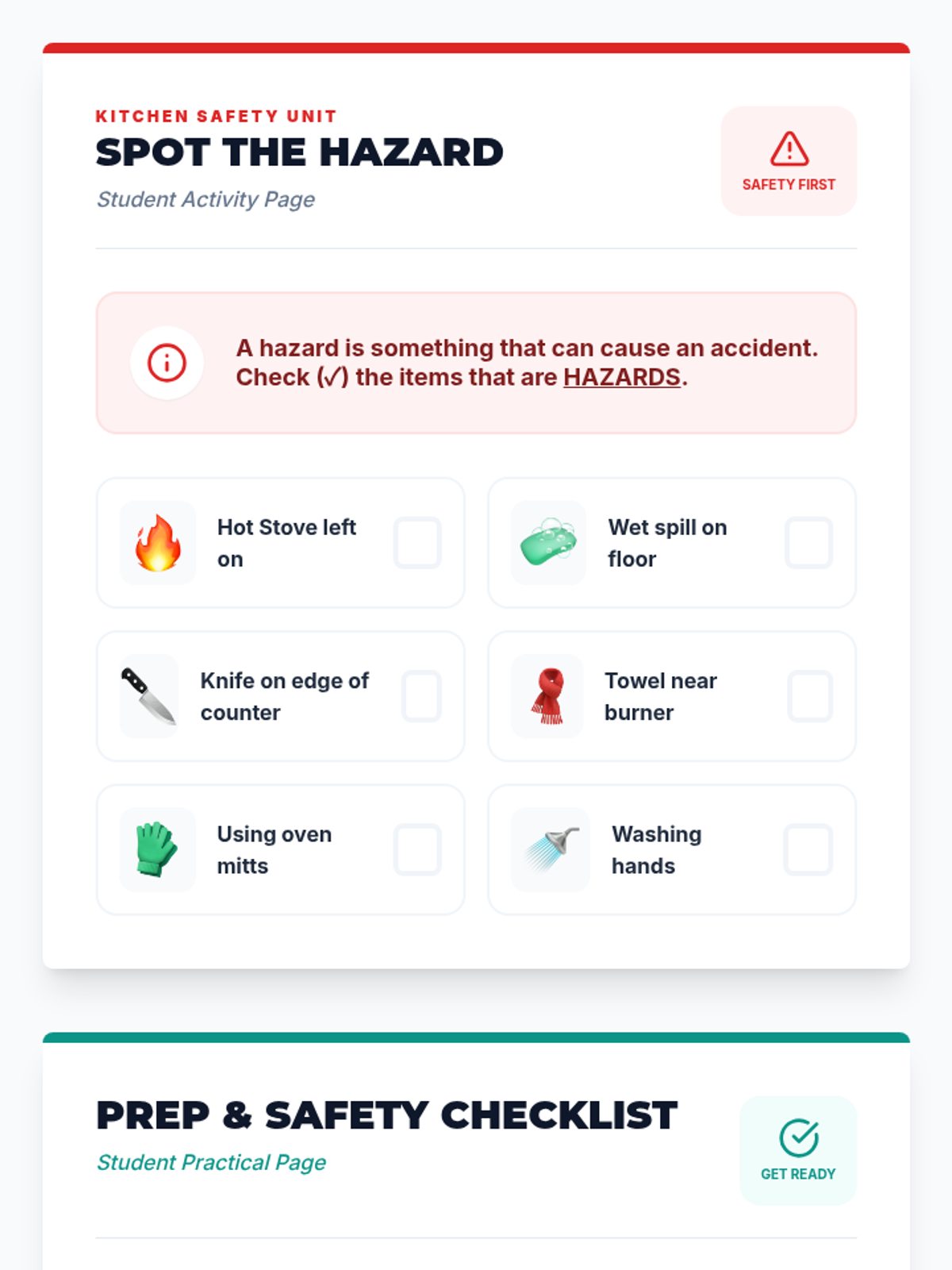
A student-facing worksheet set for kitchen safety, including a visual hazard identification activity and a hygiene/safety preparation checklist.
A visual slide deck for teaching foundational kitchen safety skills, hazard identification, and hand-washing protocols.
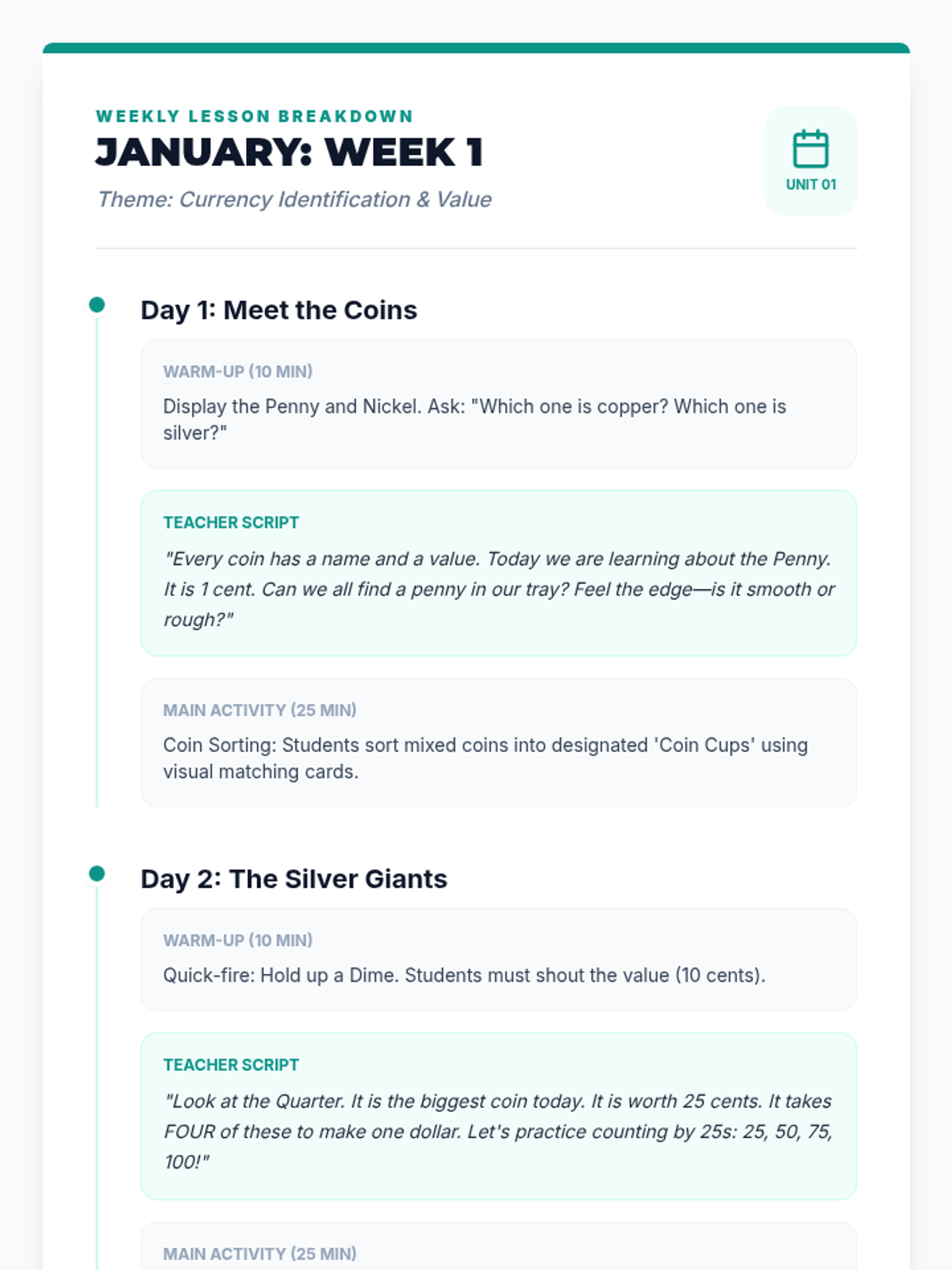
A detailed daily facilitation guide for the first week of the Money Basics unit, including warm-ups, specific teacher scripts, and activity instructions.
A visual slide deck for teaching foundational employment skills, interview etiquette, and preparing for a Mock Job Fair simulation.
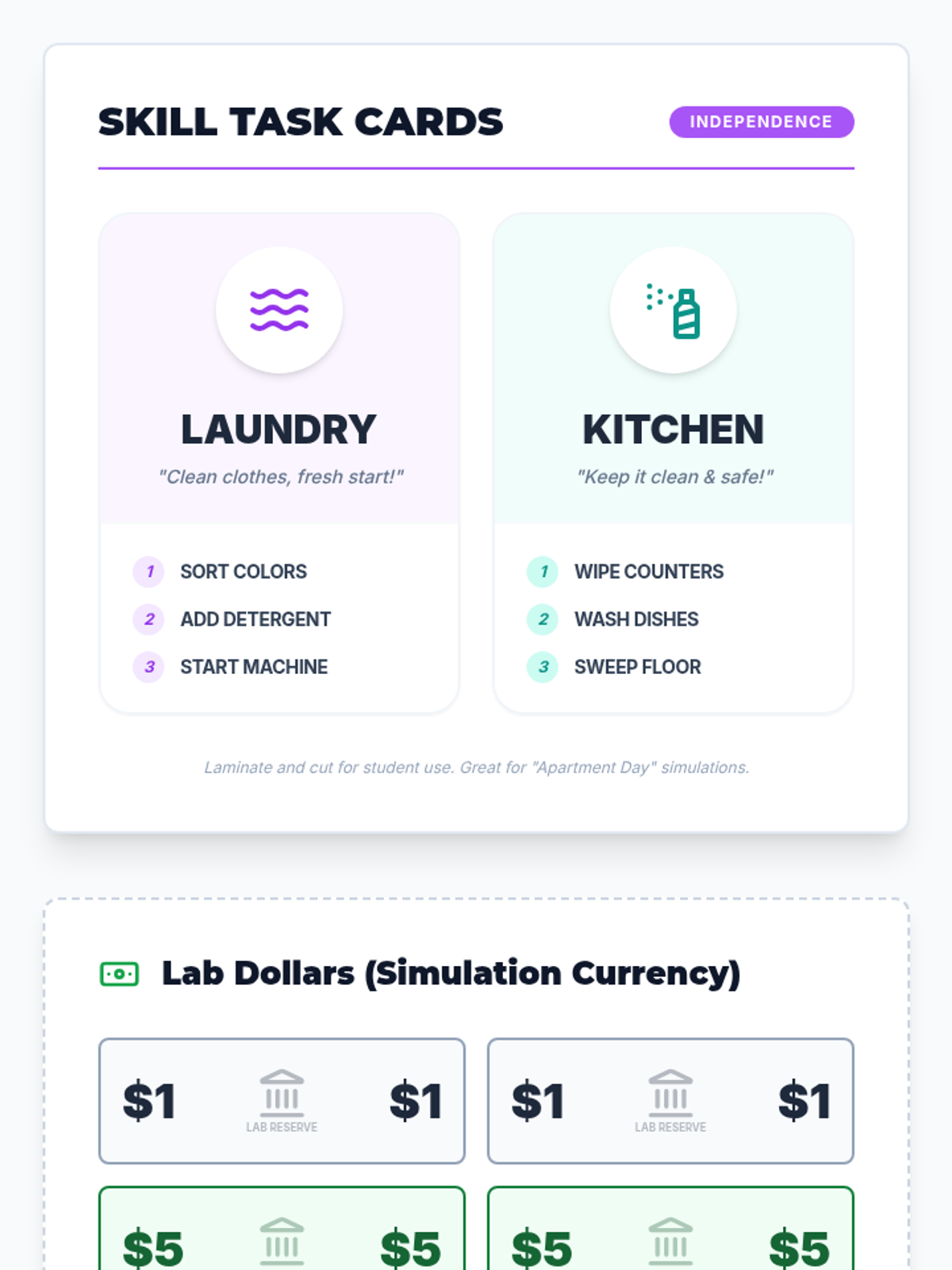
A set of laminated-style skill task cards for laundry and kitchen chores, plus a full page of printable simulation currency (Lab Dollars).
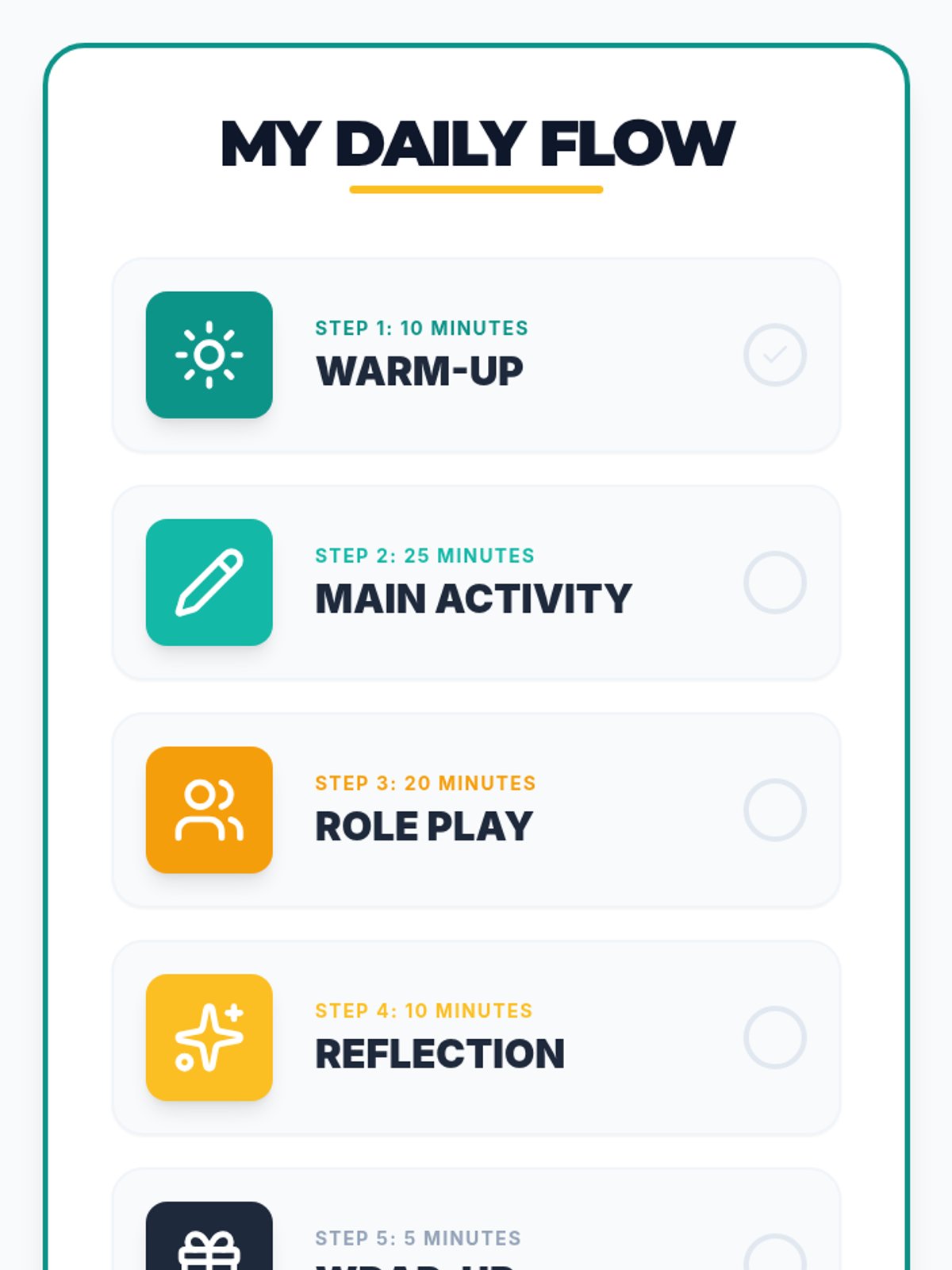
A student-facing visual schedule using high-contrast icons and large text to help students track their progress through the 60-90 minute Life Skills Lab flow.
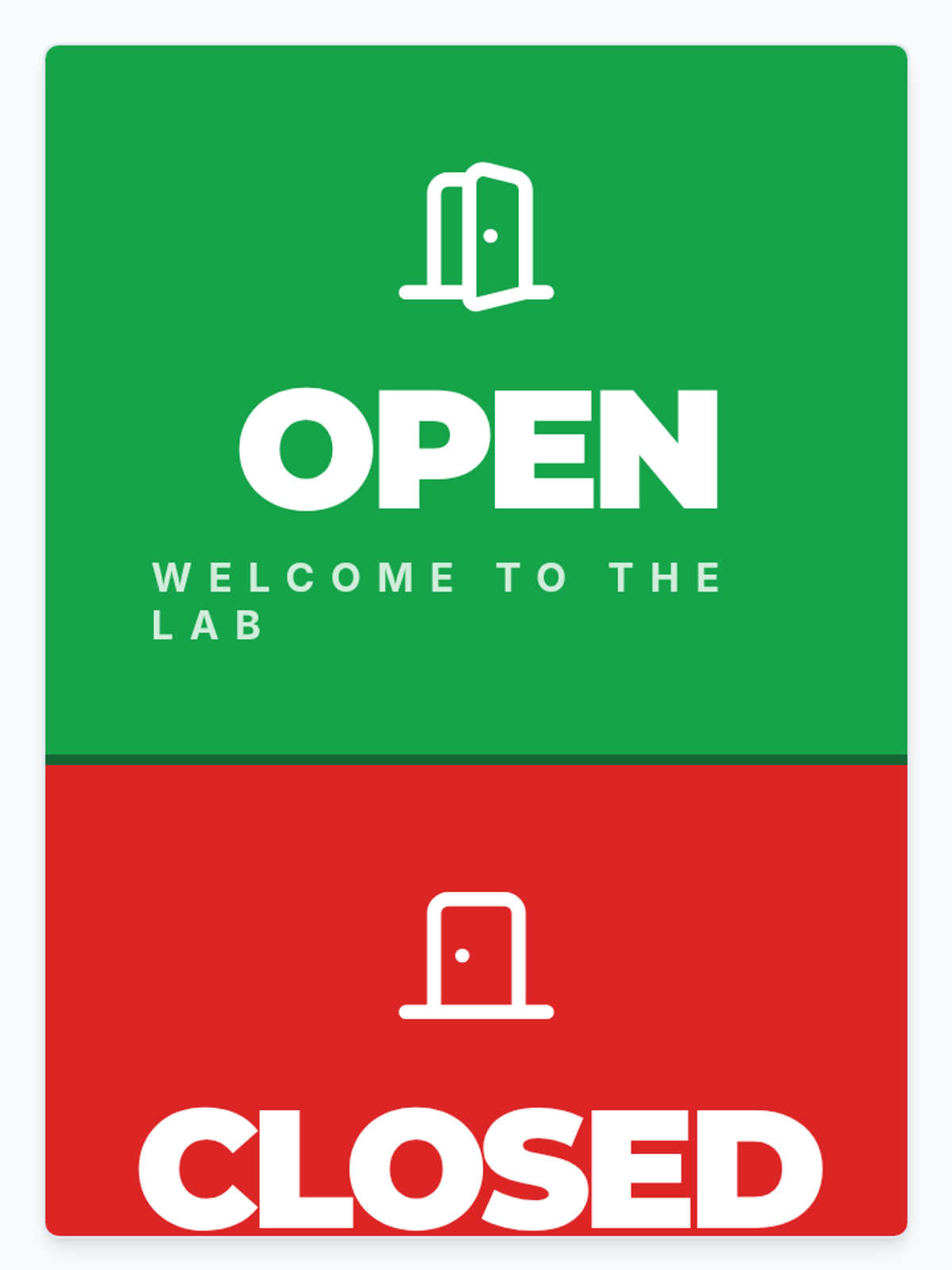
Full-page store signage (Open/Closed), cut-out role badges for simulation roles, and price tags for the Pantry Store simulation.
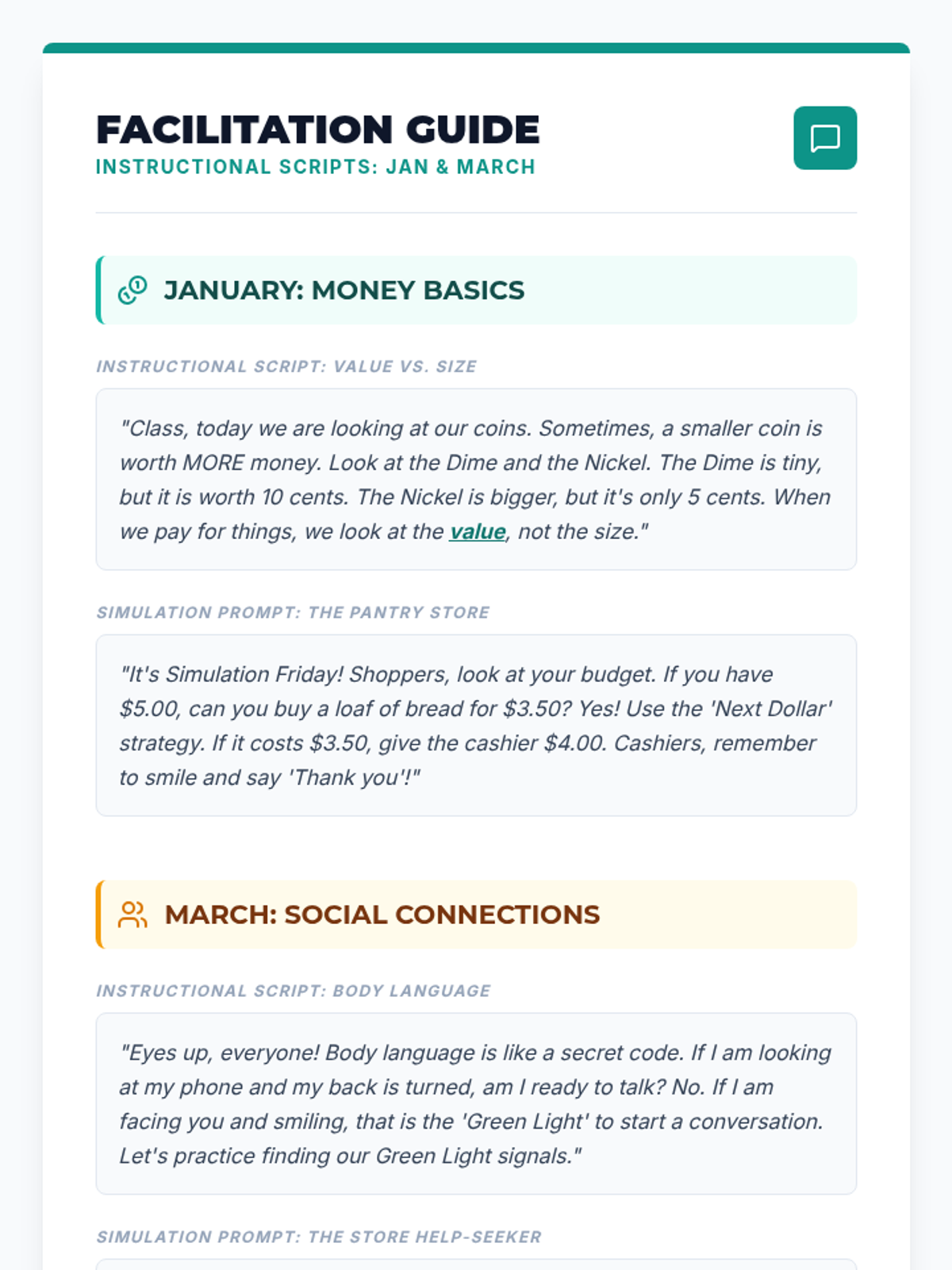
A comprehensive teacher guide with specific instructional scripts, simulation prompts, and differentiation strategies for Money Basics and Social Connections units.
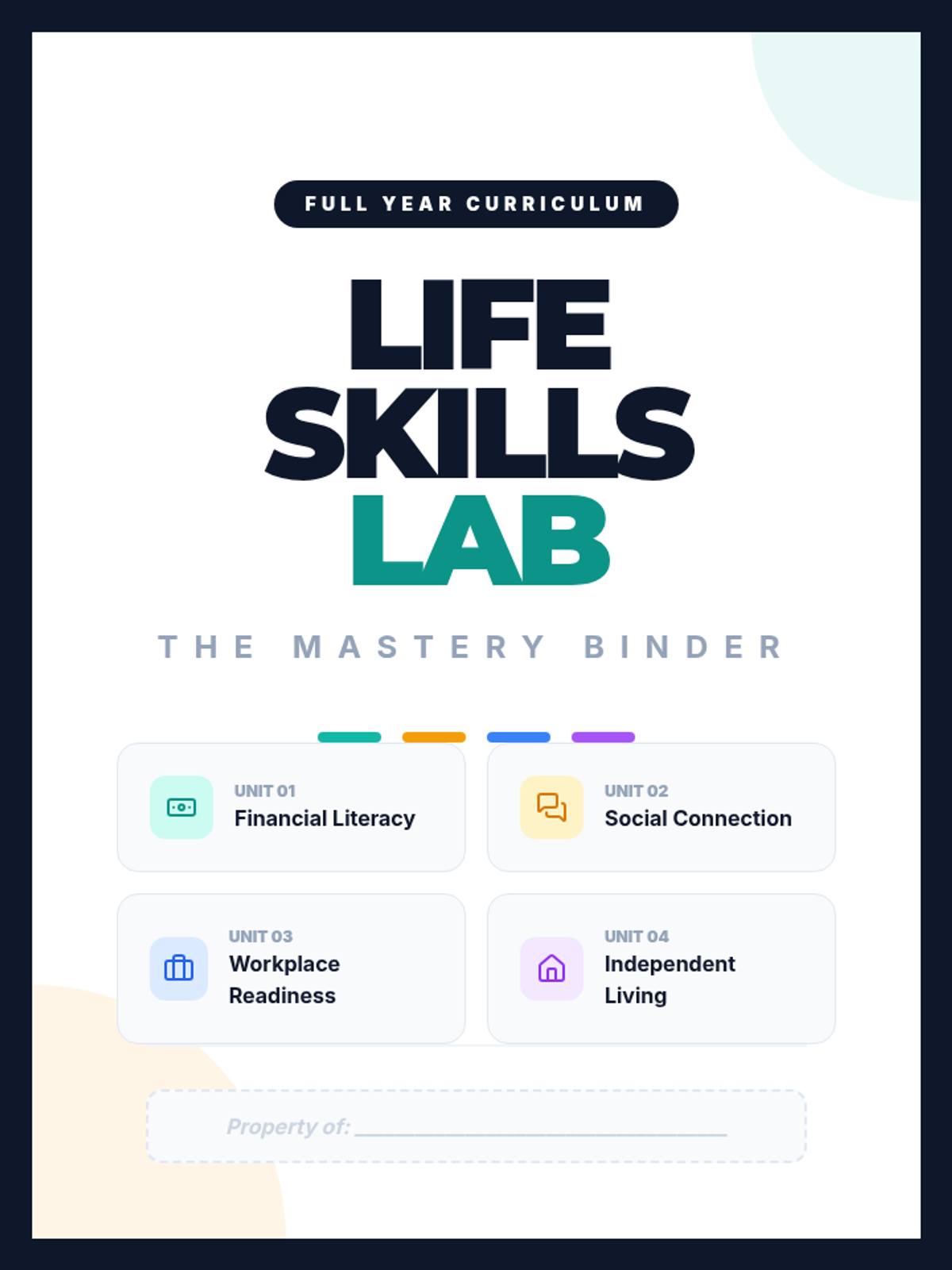
A professional binder set including a high-impact cover page and unit-specific section dividers with a cohesive color-coded design system.
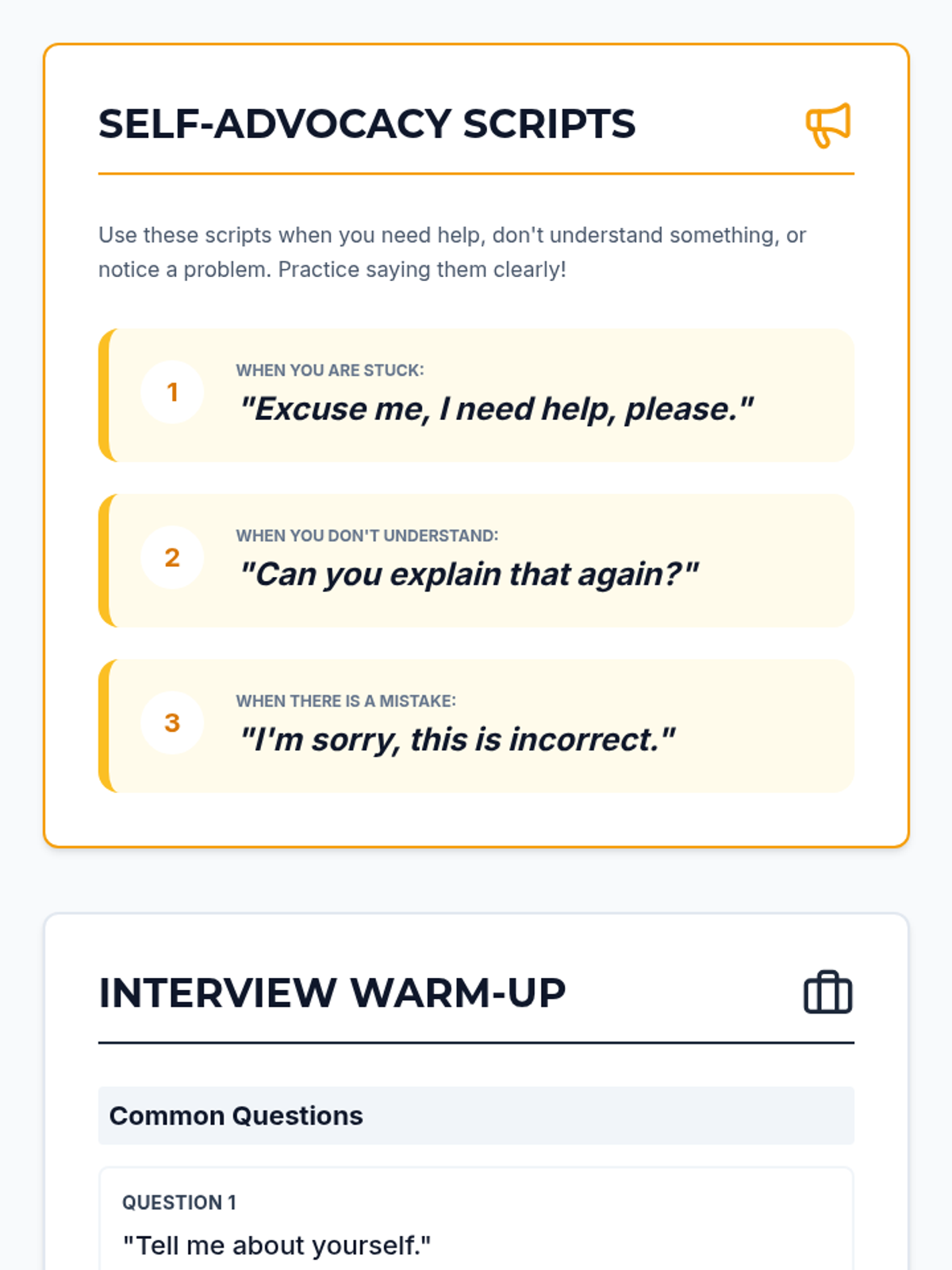
A student-facing handout featuring conversational scripts for self-advocacy and essential job interview practice questions.
A visual slide deck for teaching foundational social communication skills, body language cues, and basic self-advocacy phrases.
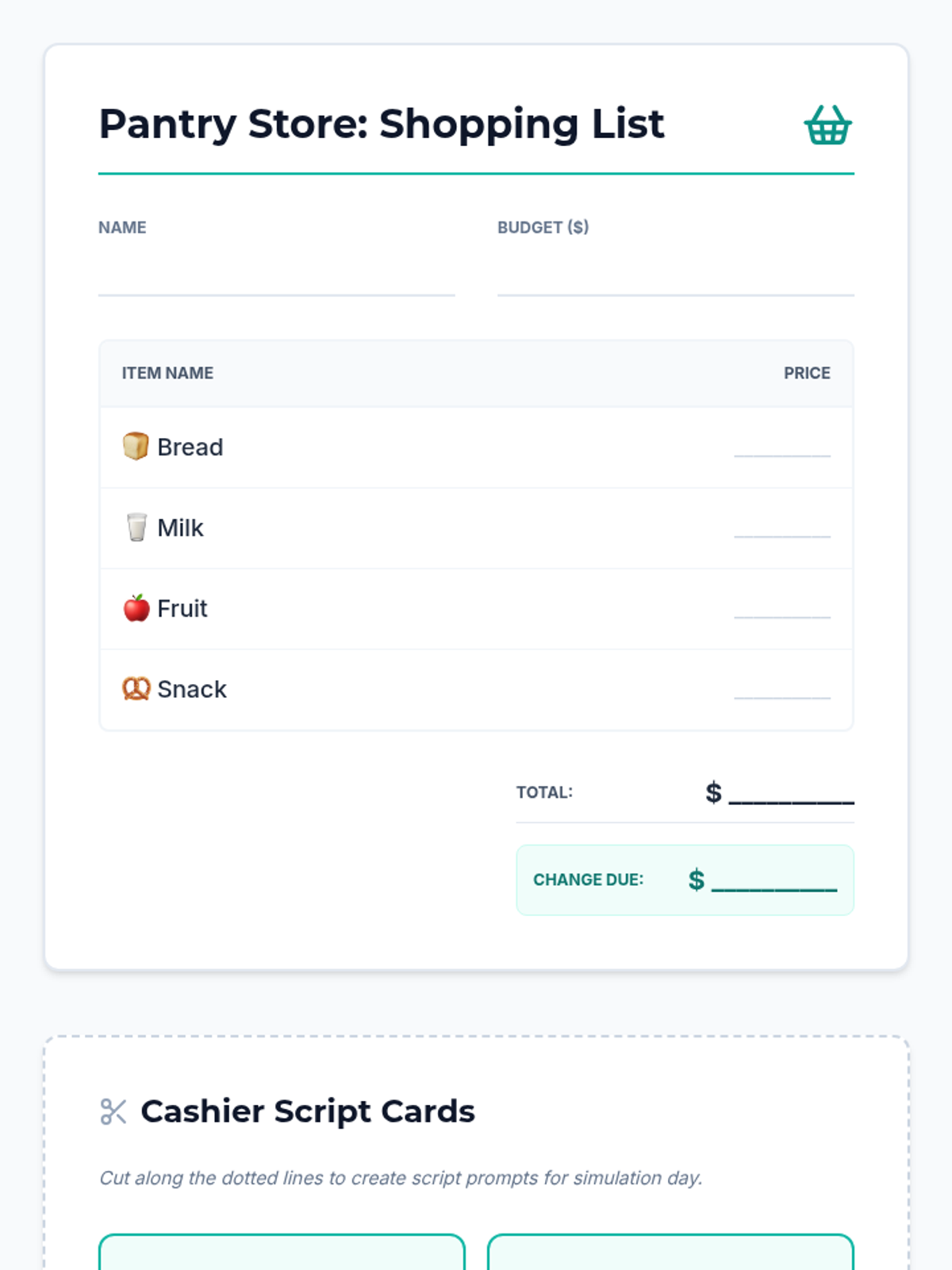
A dual-purpose material containing a fillable shopping list for the Pantry Store simulation and visual script cards for students in the cashier role.
A visual presentation for introducing currency identification, the Next Dollar strategy, and setting expectations for the Pantry Store simulation.
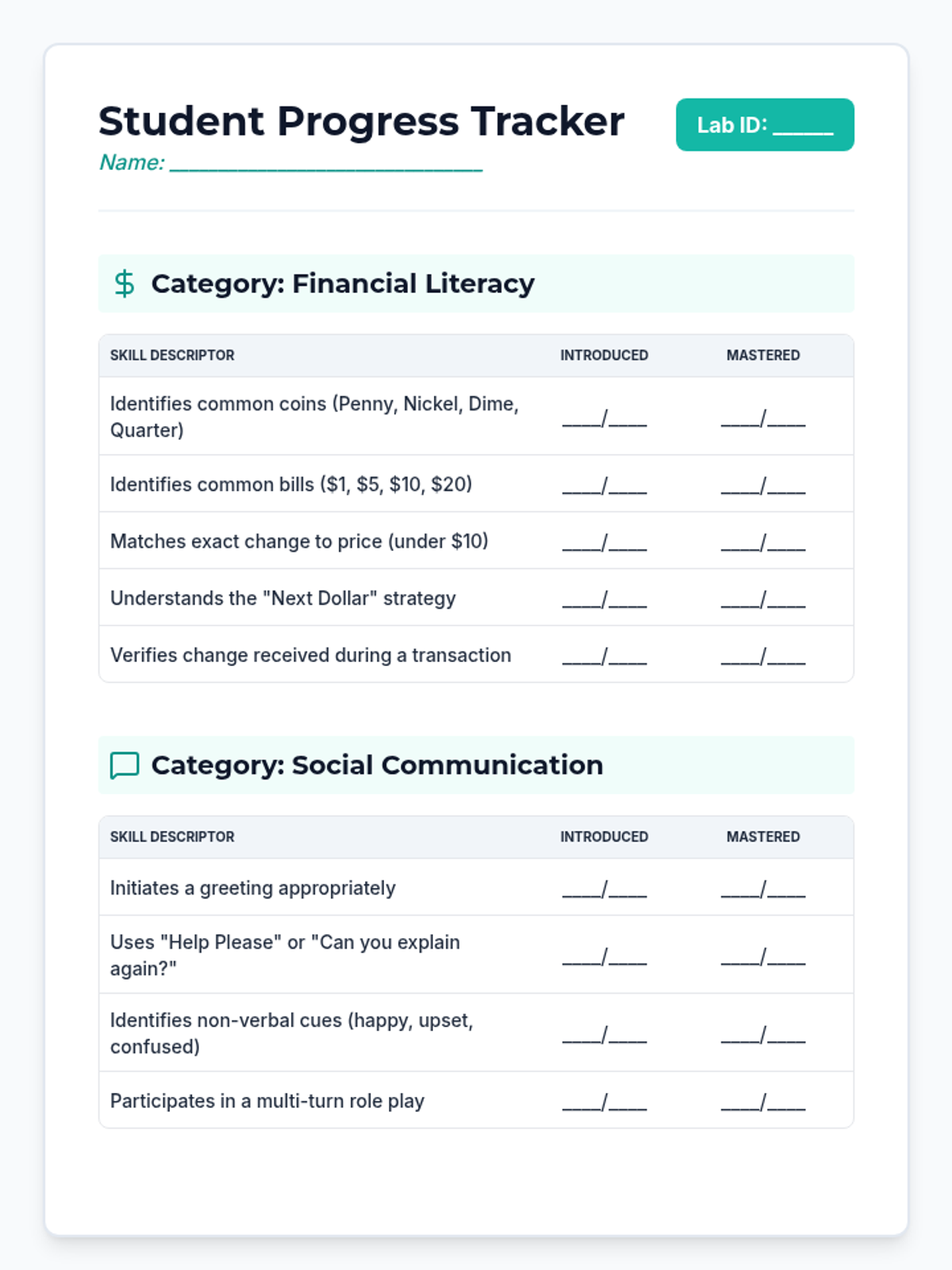
A comprehensive student progress tracking system featuring skills checklists for money, communication, and independence, including space for anecdotal observations.
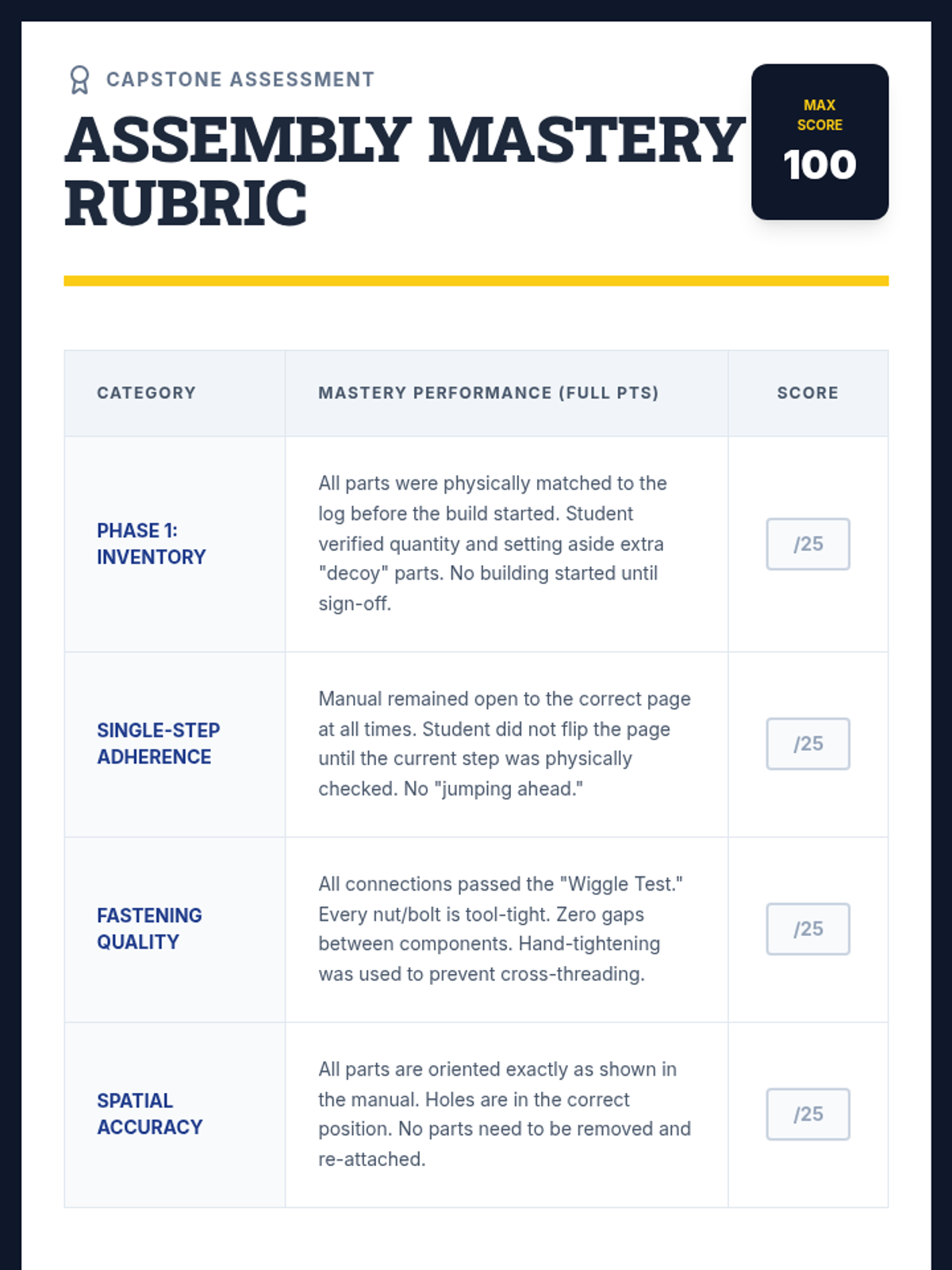
A comprehensive grading rubric for the final assembly challenge, focusing on inventory, process adherence, fastening quality, and spatial accuracy.
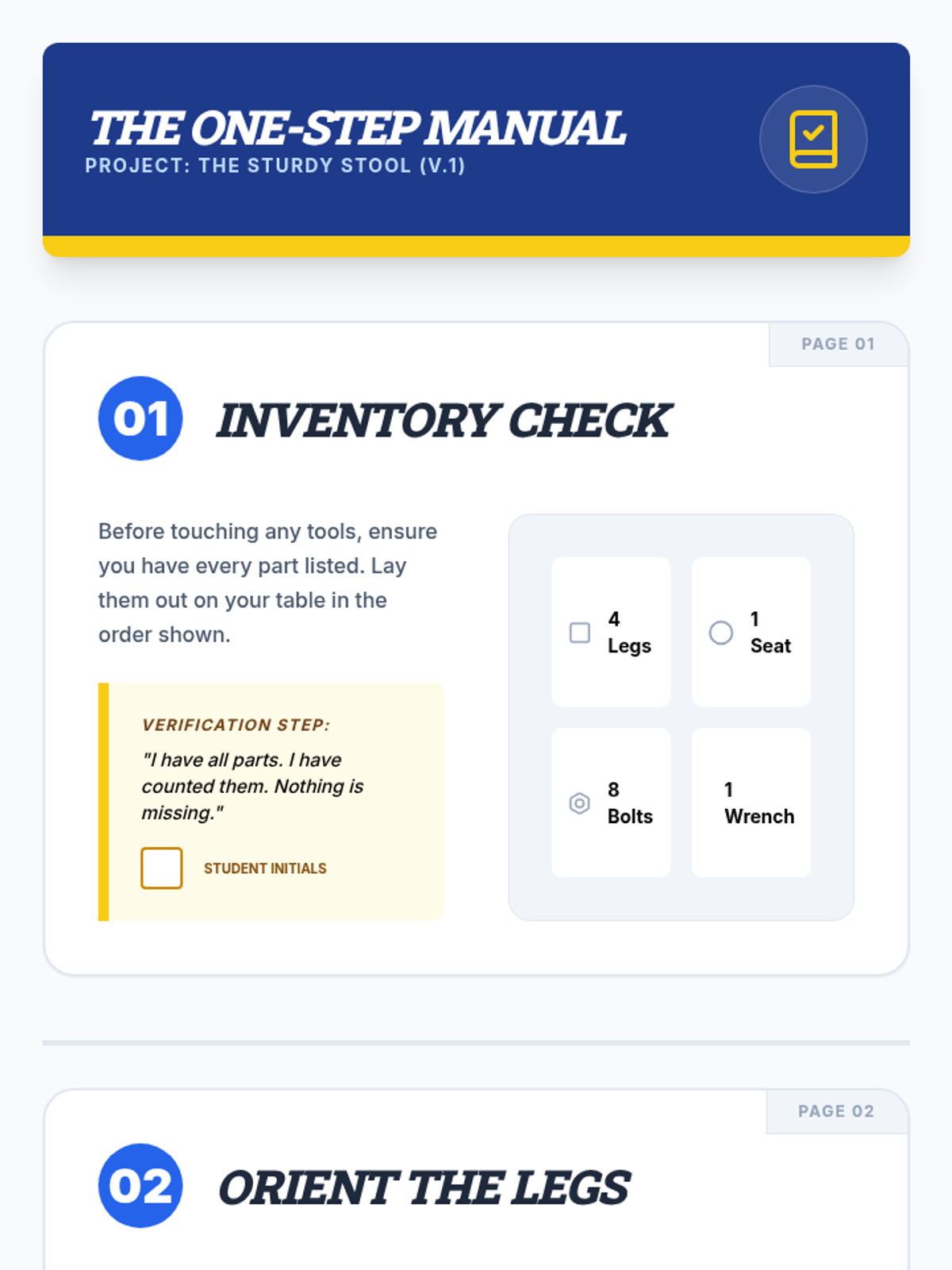
A specialized assembly manual that isolates each action onto a single page to prevent cognitive overload and reinforce process adherence.
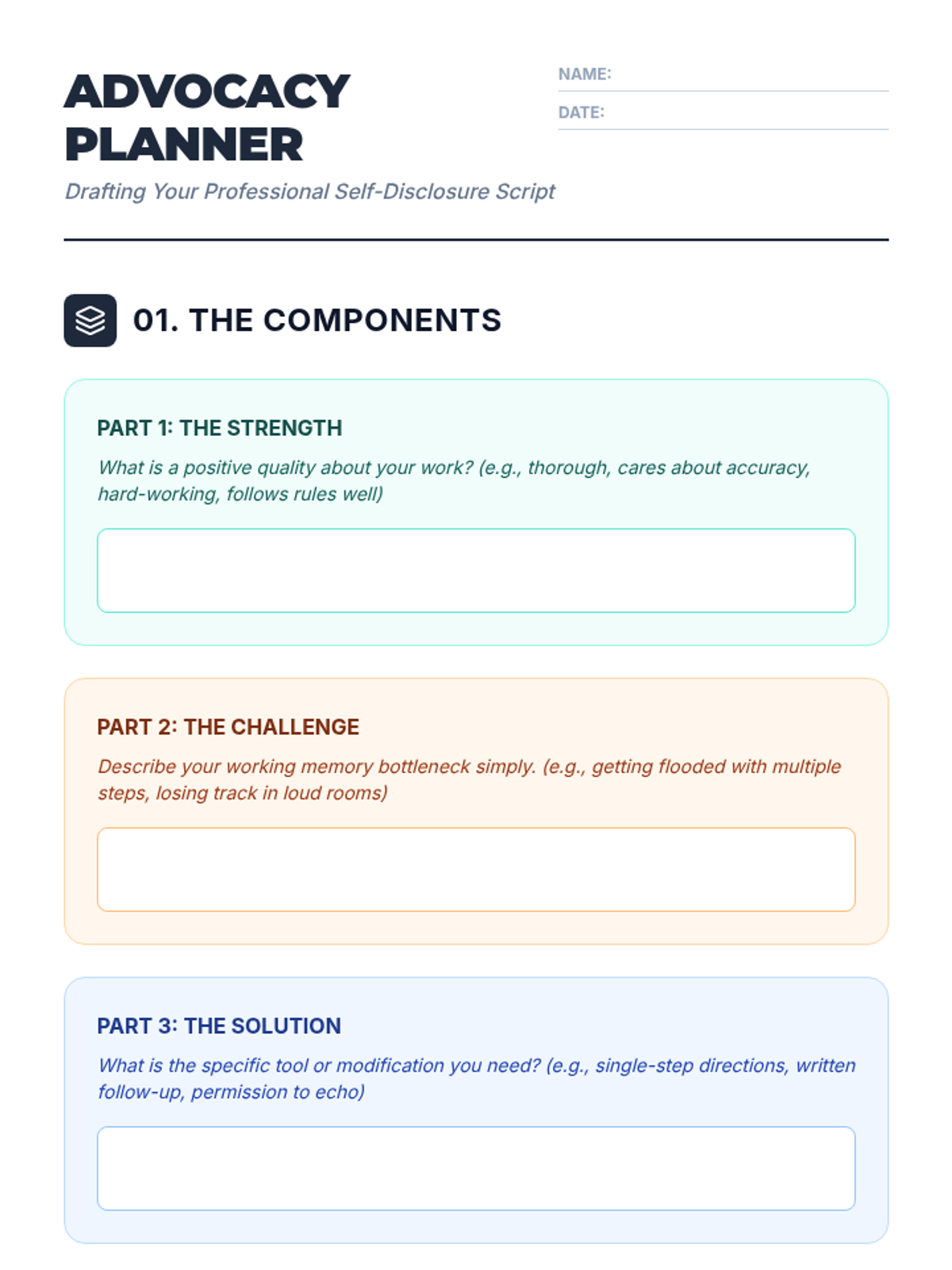
Drafting worksheet for Lesson 5, helping students synthesize their skills into a personal disclosure script for use in professional or academic settings.
The IKEA Challenge intro and project expectations slides for the final Lesson 5. Emphasizes the 'one-step' manual approach.
Instructional slides for Lesson 5 on synthesizing advocacy skills into a personal disclosure script for use in interviews, IEP meetings, or workplace settings.
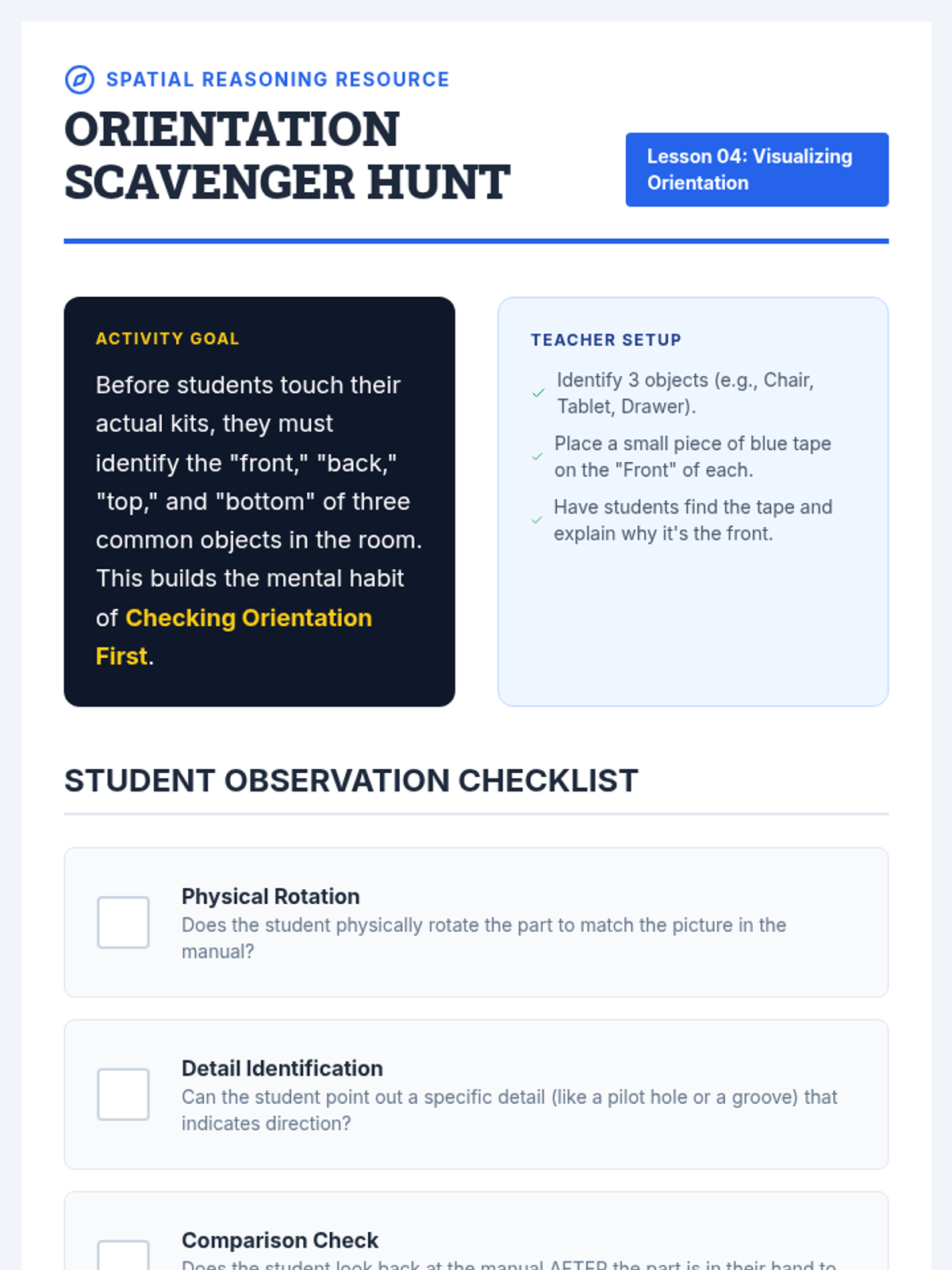
A teacher resource providing the orientation scavenger hunt activity, observational checklist, and common misconceptions for Lesson 4.
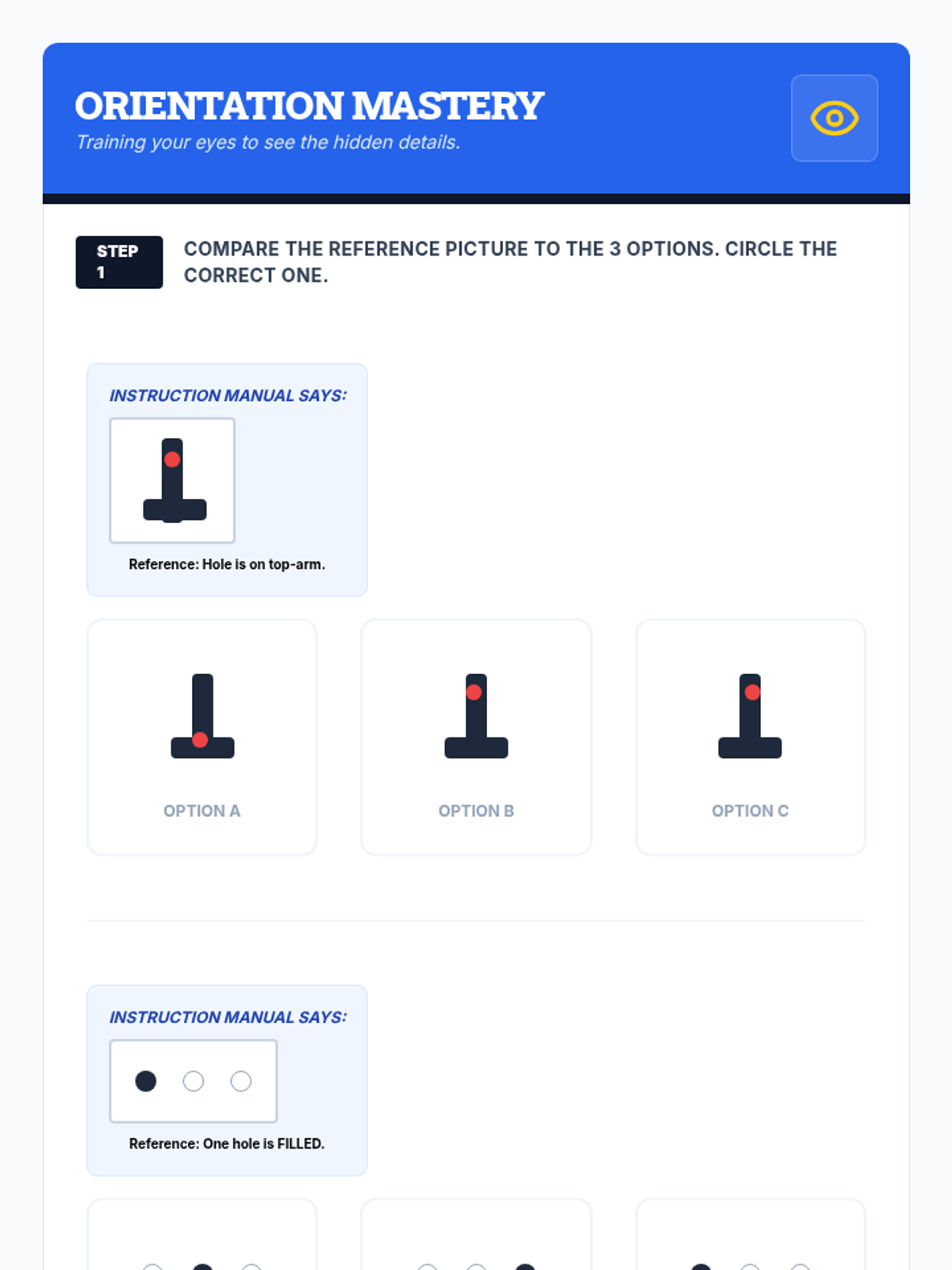
A visual orientation training sheet where students identify correctly oriented parts based on manual references, reinforcing detail orientation.
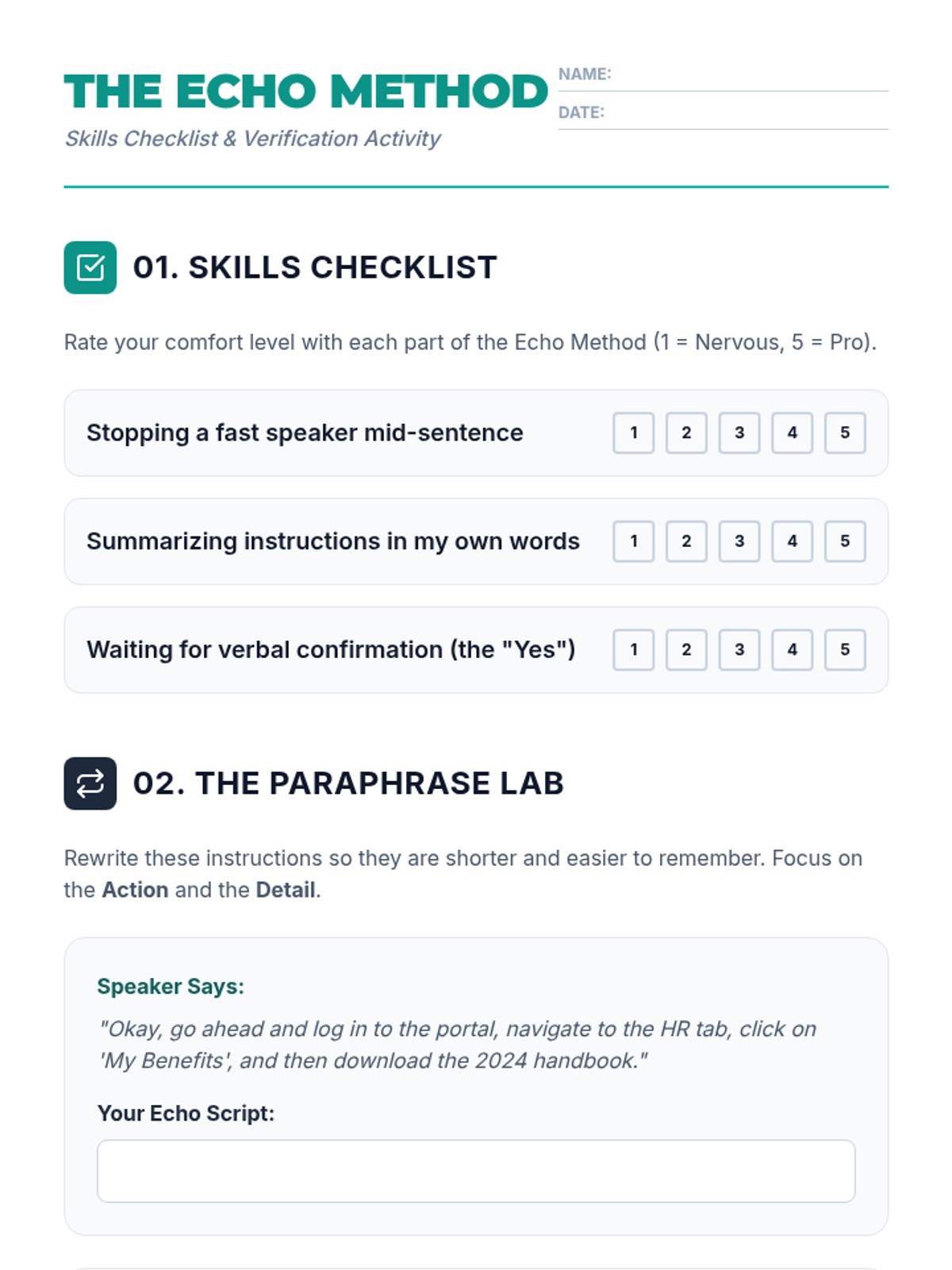
Skills checklist and paraphrase practice worksheet for Lesson 4 to help students master the 'read-back' method.
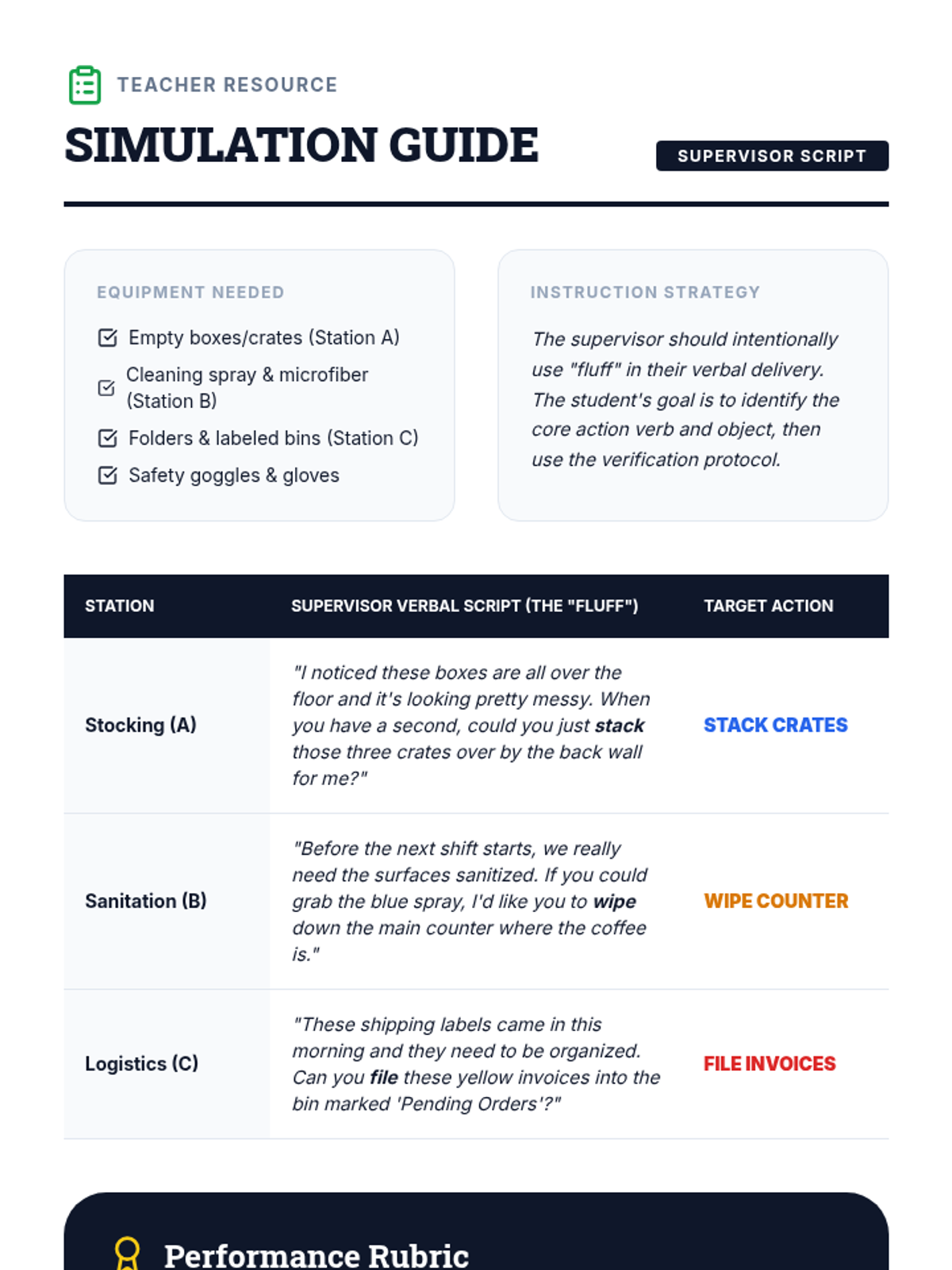
A facilitation guide for teachers/supervisors to lead the vocational simulation, including scripts, setup instructions, and a performance rubric.
Instructional slides for Lesson 4 on the 'read-back' method to verify instructions and slow down information delivery.
Orientation cues and 'Look Closer' training slides for Lesson 4, focusing on spatial reasoning and detail orientation in assembly.
A slide deck introducing the final vocational simulation, setting expectations for performance and reinforcing the learned strategies.
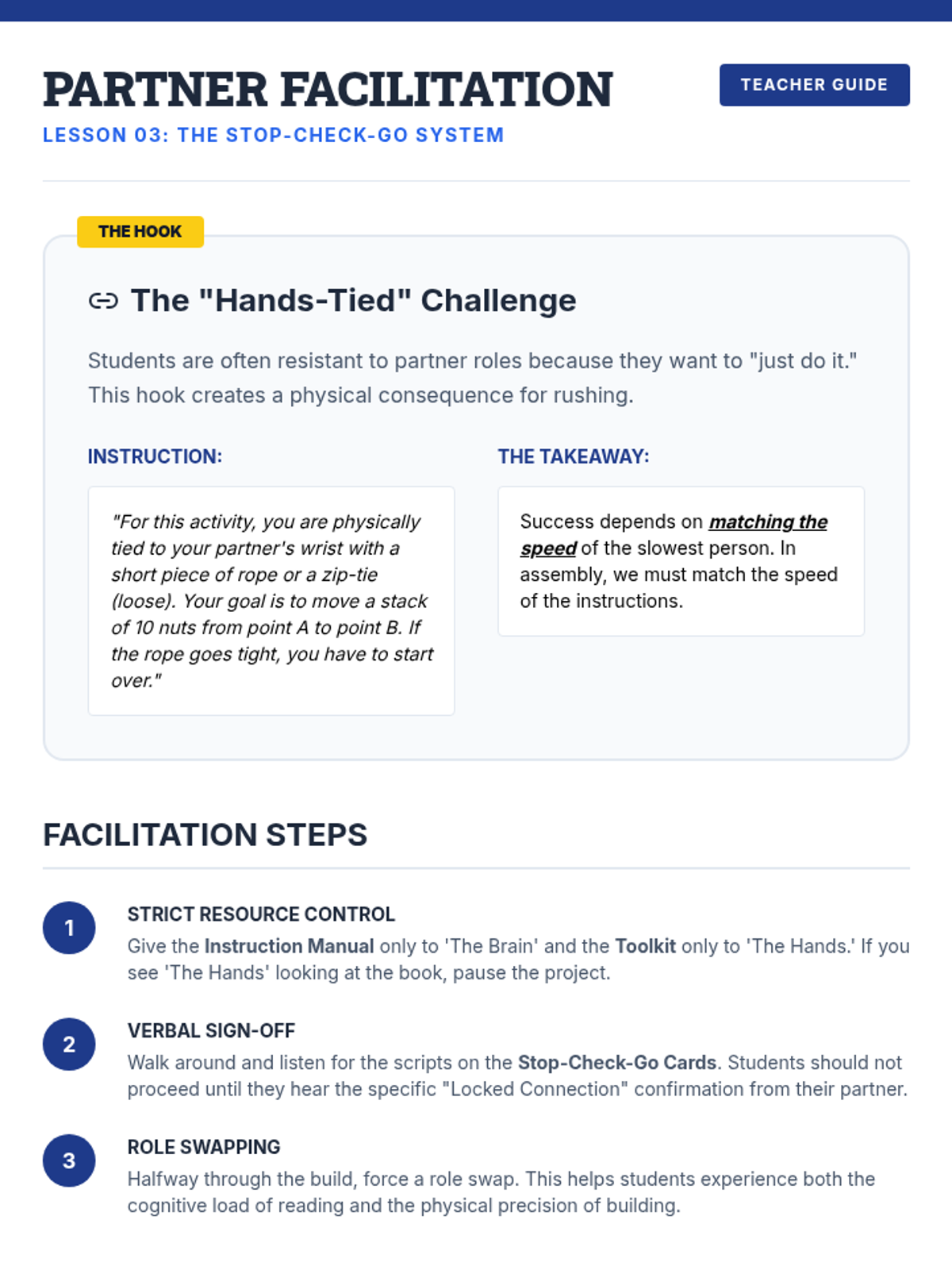
A teacher resource providing the partner facilitation plan, including the tied-hands hook, role management strategies, and reflection prompts for Lesson 3.
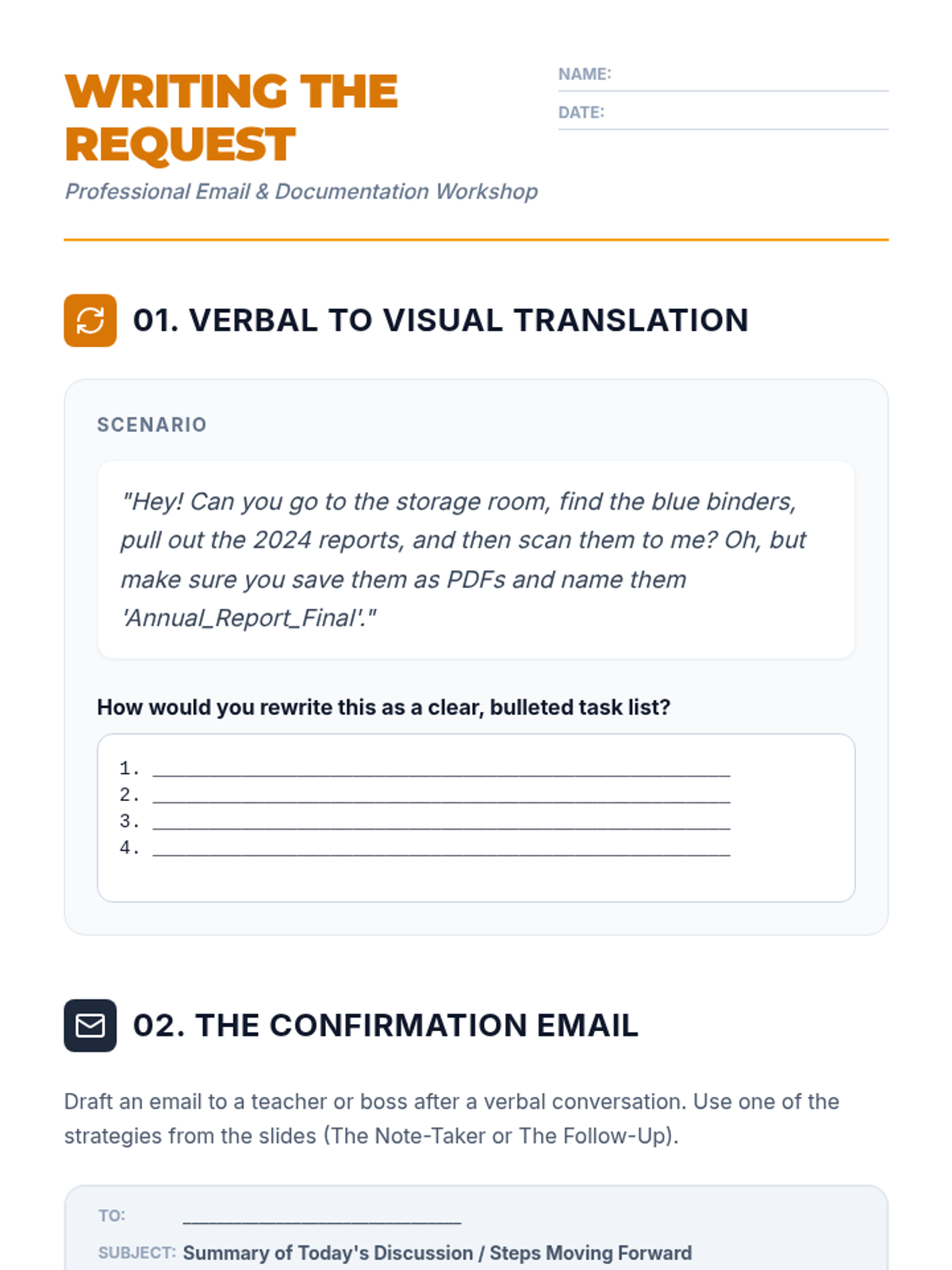
Drafting and workshop worksheet for Lesson 3, helping students convert verbal instructions into written formats and practice professional email advocacy.
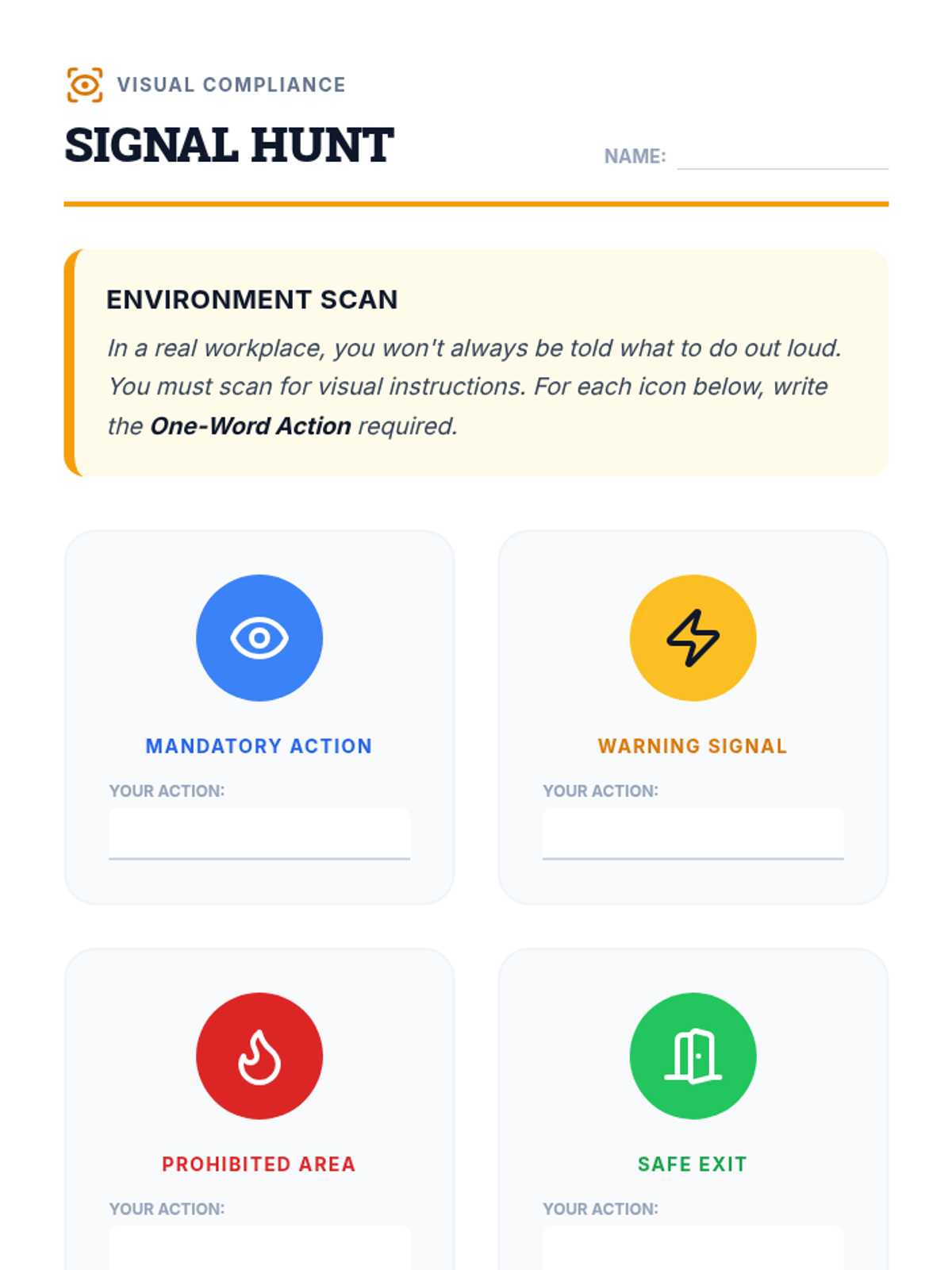
A worksheet for students to identify visual workplace cues and match them to appropriate single-step actions.
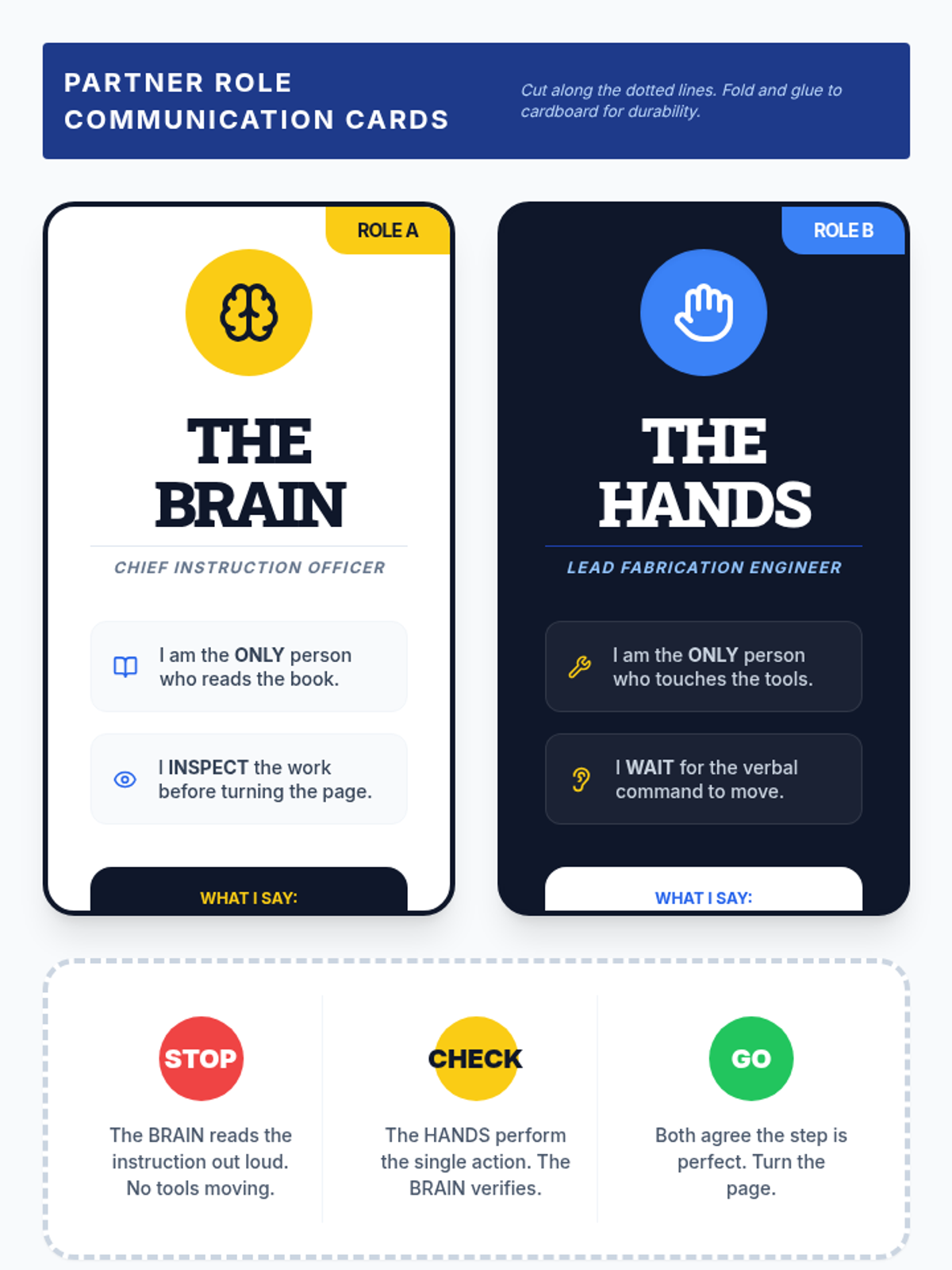
Physical communication cards for partners to hold, defining the 'Brain' and 'Hands' roles and providing scripts for verbal confirmation.
Instructional slides for Lesson 3 on converting verbal instructions into written documentation, featuring a comparison of vague voicemails vs. clear emails and request scripts.
A slide deck introducing visual workplace cues, safety icons, and the importance of scanning the environment for visual instructions.
Slides for Lesson 3 explaining the 'Brain' and 'Hands' roles in a collaborative assembly system, focusing on verbal confirmation and step isolation.
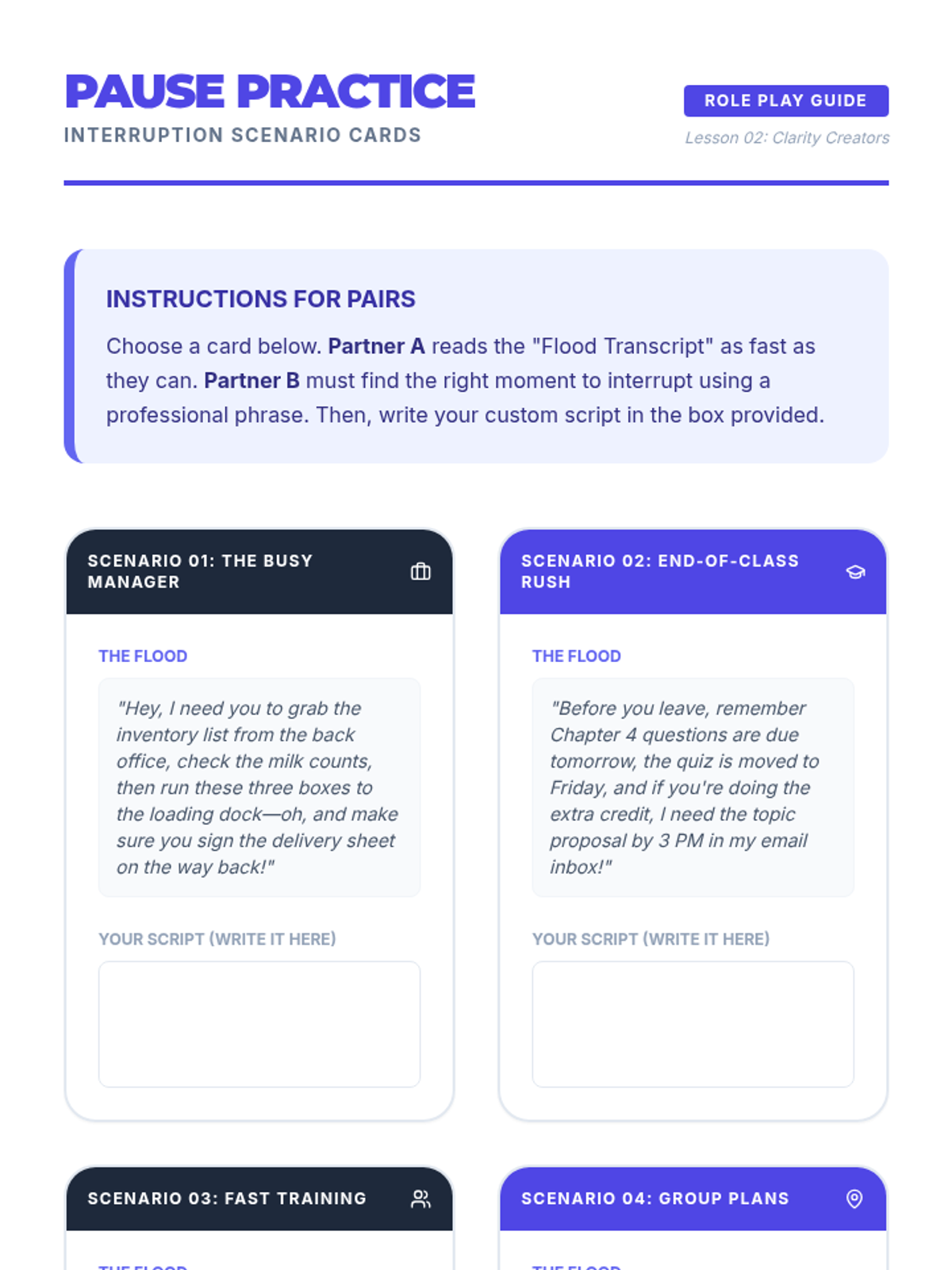
Role-play scenario cards for Lesson 2, providing specific 'information flooding' transcripts and workspace for students to draft professional interruption scripts.
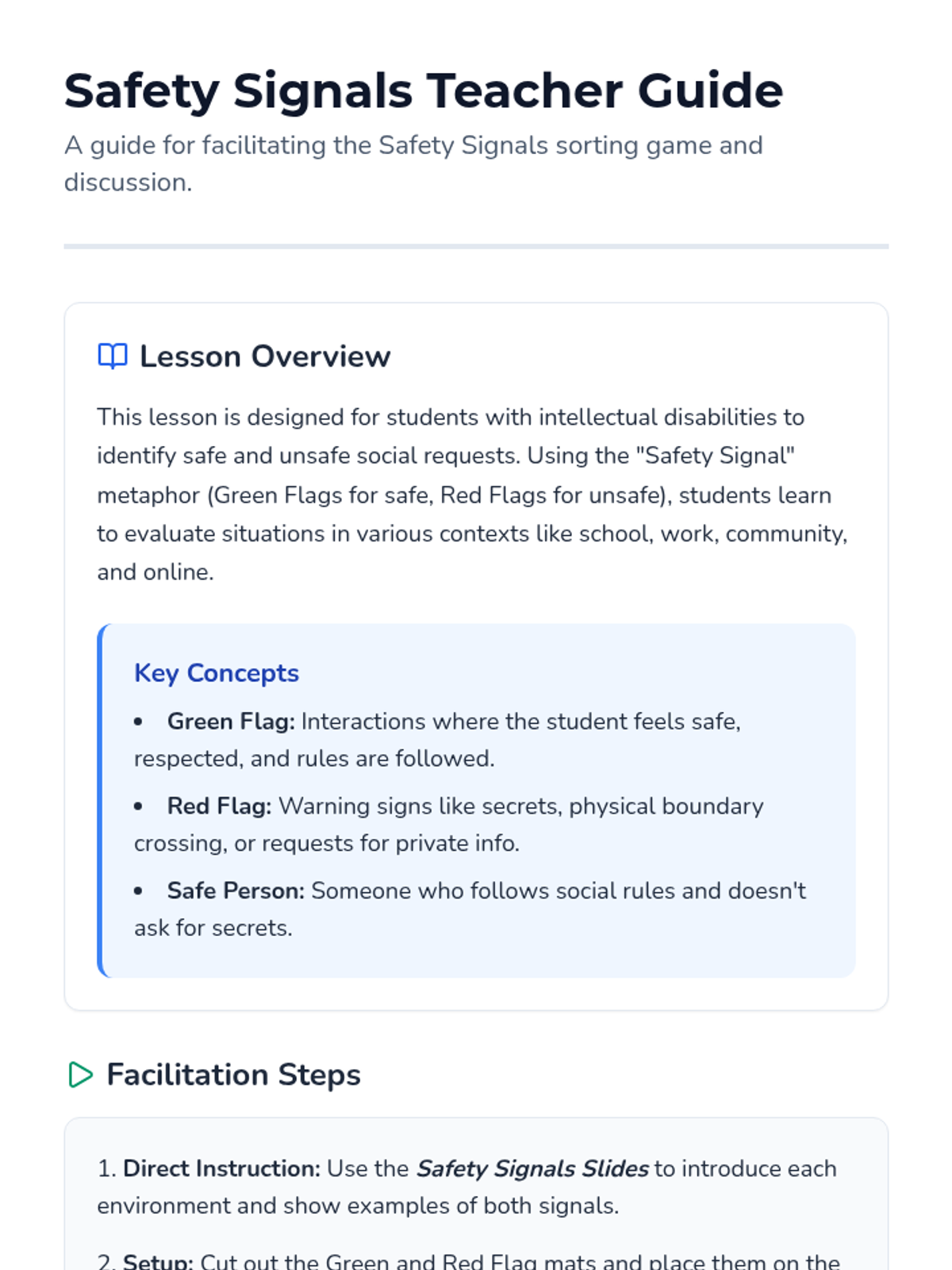
A comprehensive teacher guide for facilitating the 'Safety Signals' game, including lesson objectives, vocabulary, facilitation steps, and a detailed, multi-page answer key with discussion points.
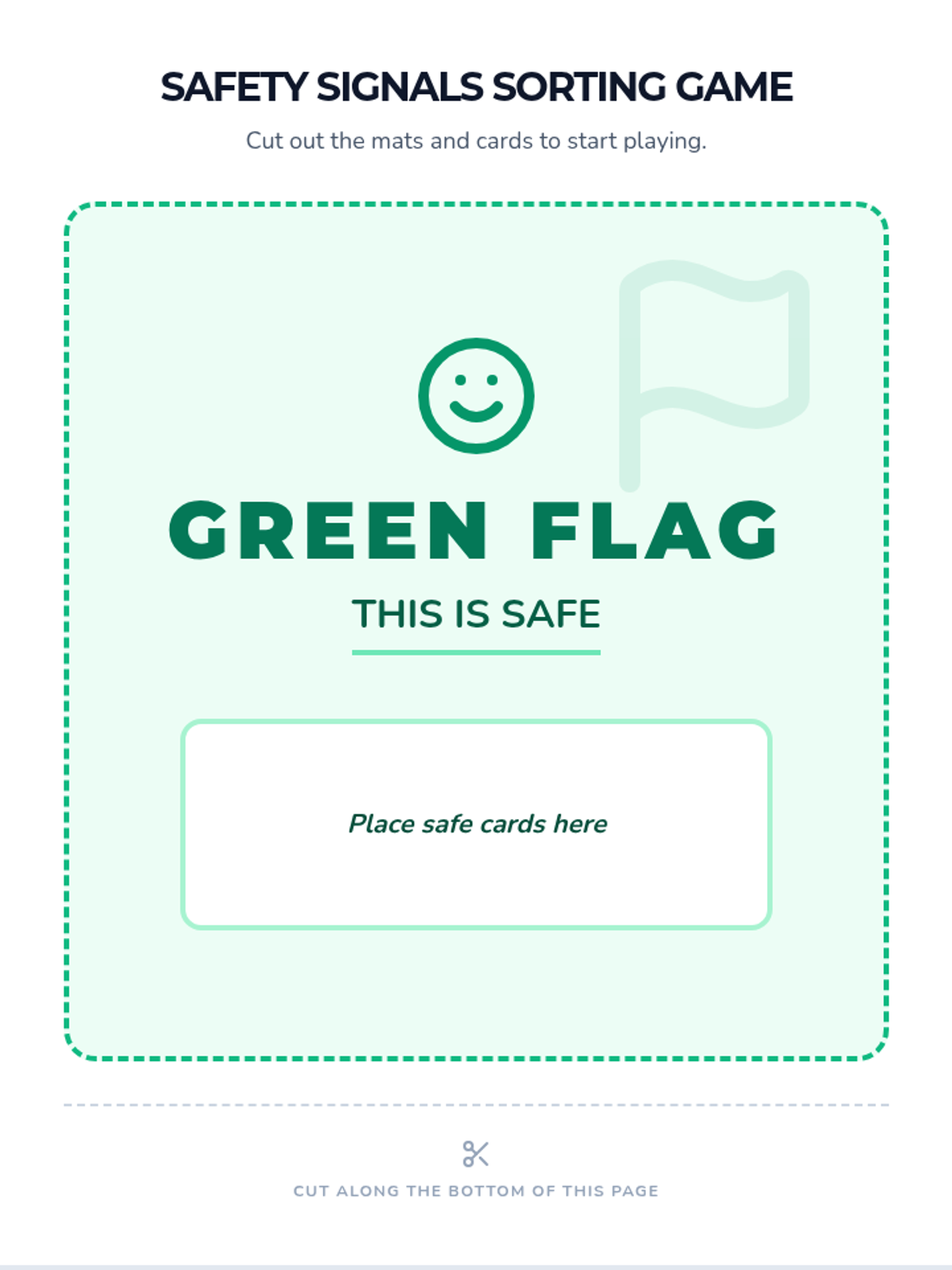
A printable sorting game featuring 'Green Flag' (Safe) and 'Red Flag' (Unsafe) sorting mats and 16 scenario cards across various environments. Each mat and card set is on its own page for clean printing.
A visual slide presentation introducing the 'Safety Signals' concept, using green and red flags to help students identify safe and unsafe social situations.
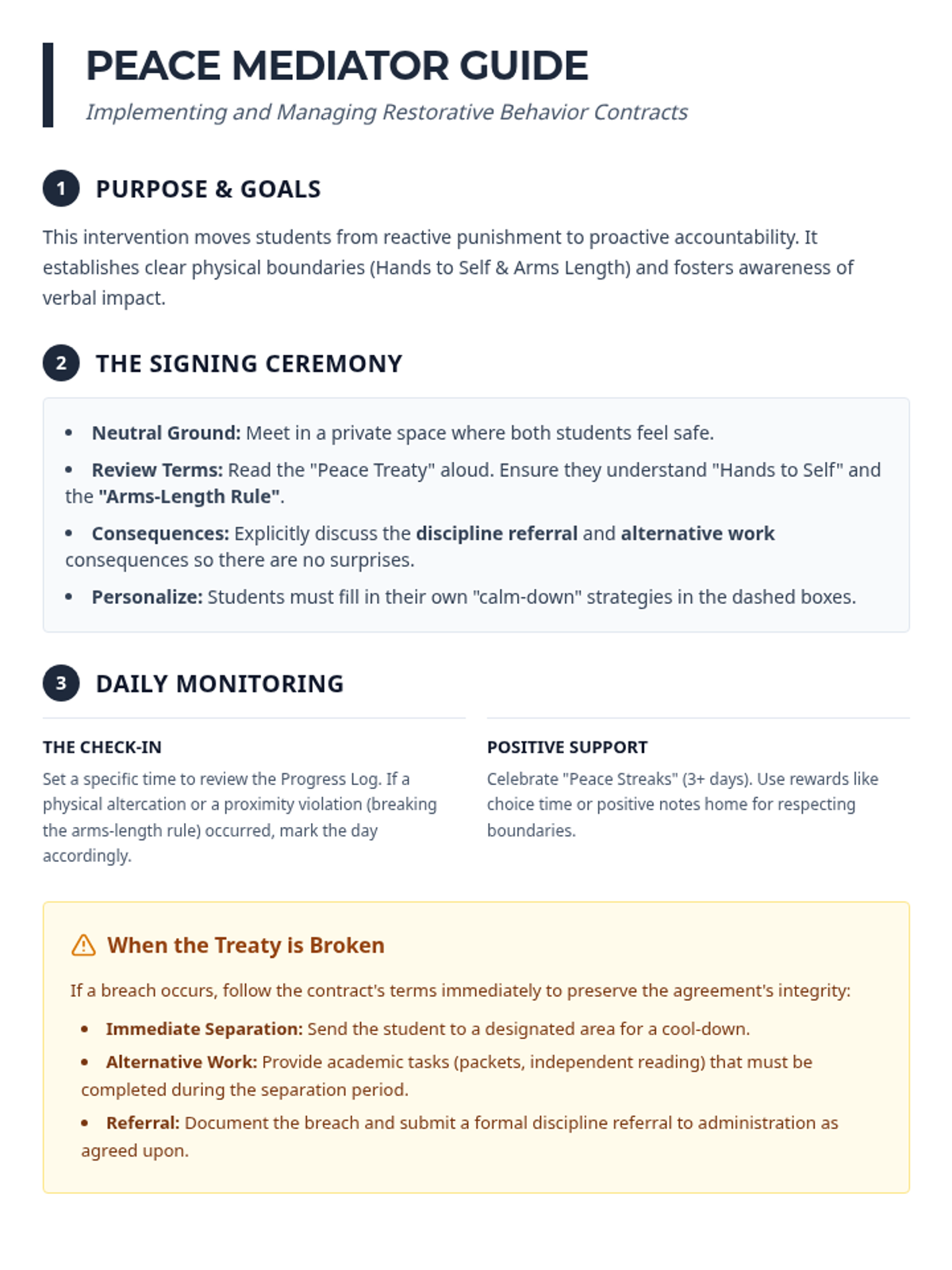
A teacher resource guide providing instructions on how to facilitate the 'Student Behavior Contract' meeting, managing consequences, and coordinating with Specials teachers.
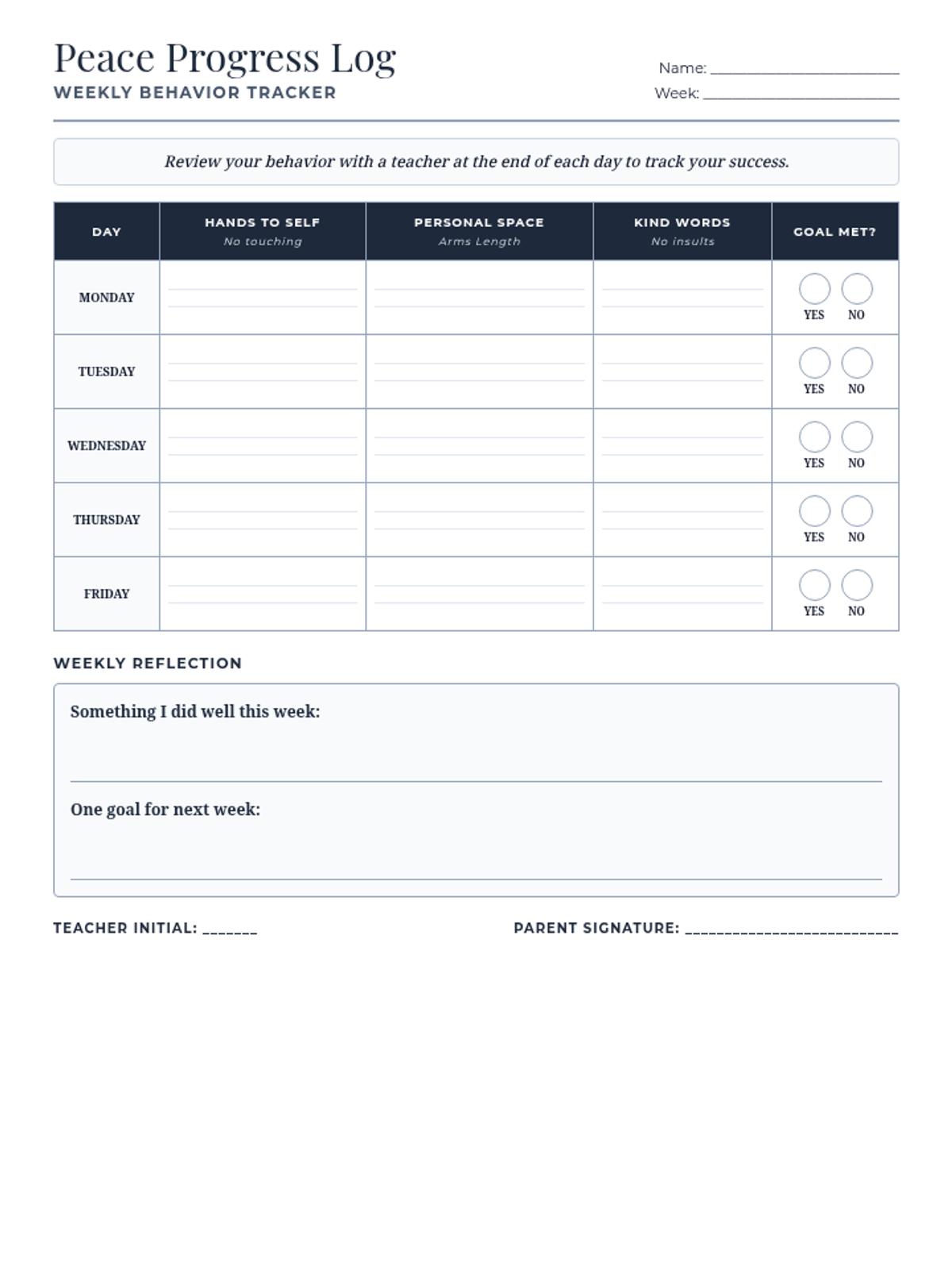
A daily behavior tracking sheet for students to monitor their adherence to the Student Behavior Contract across all learning environments. Fits on a single page.
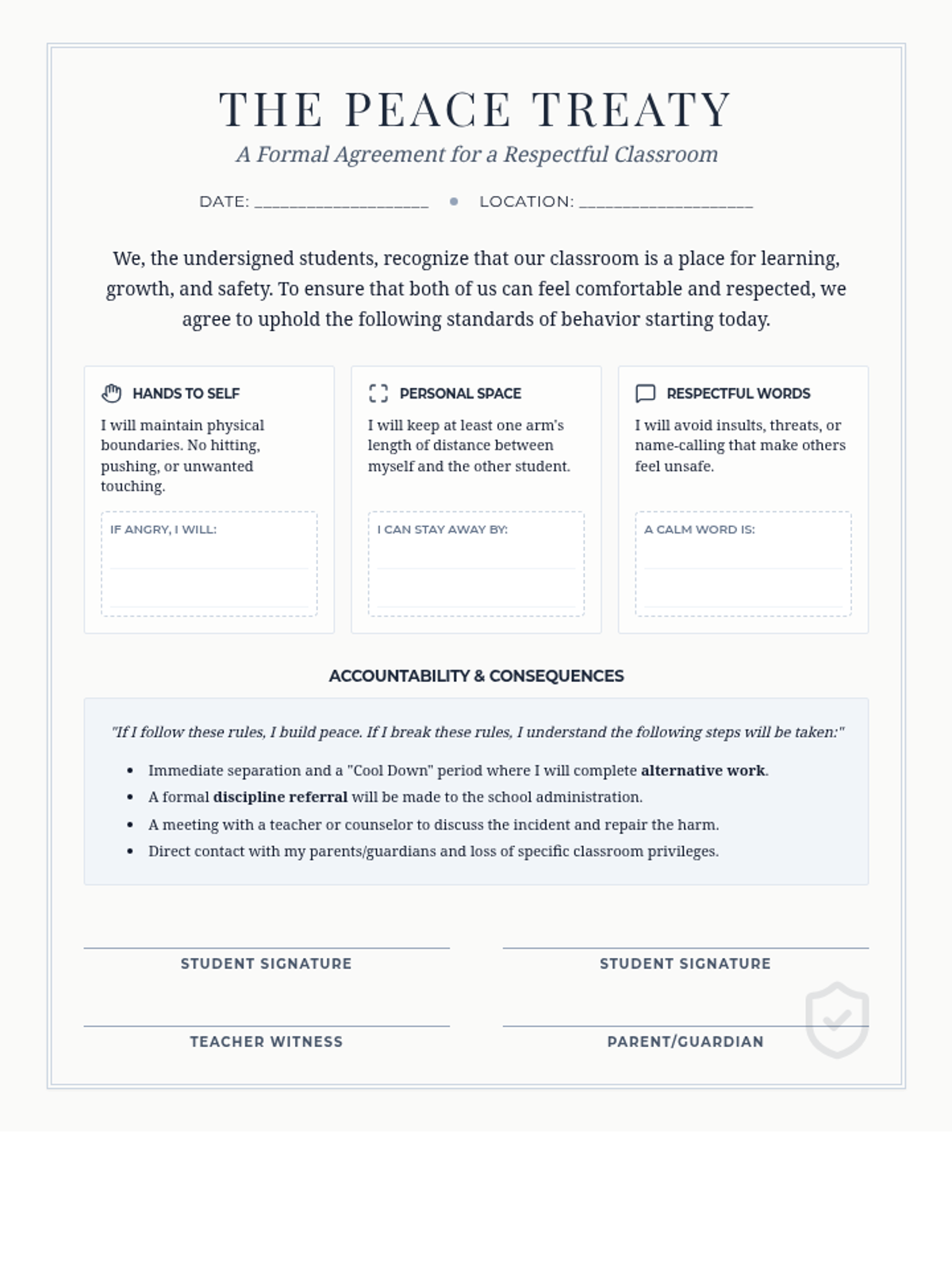
A formal student behavior contract for a student to agree on physical boundaries, arm's-length personal space, and consequences for verbal or physical aggression. Includes student initialing for each special environment. Fits on a single page.
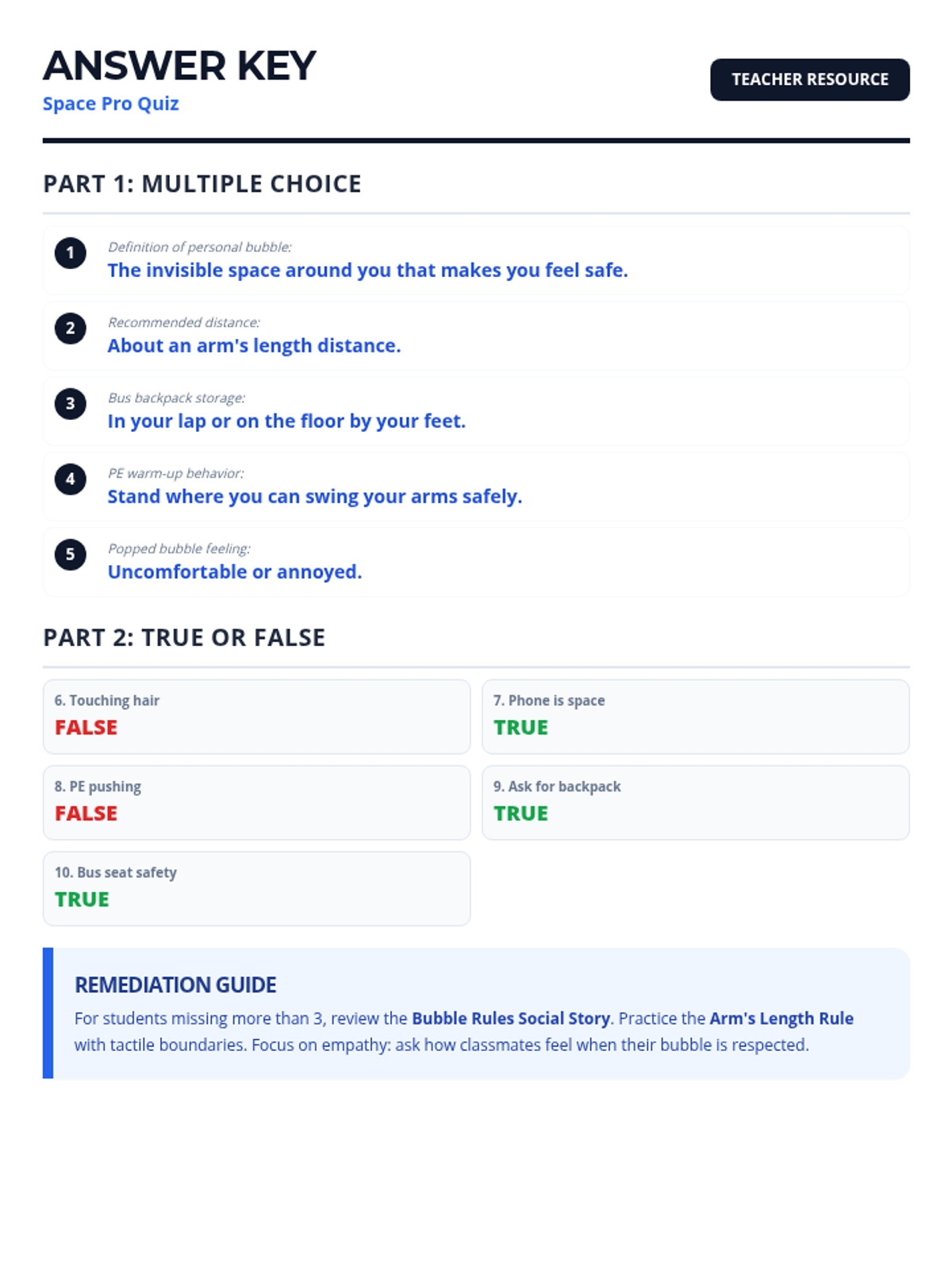
The teacher-facing answer key for the Space Pro Quiz, revised to include question summaries for easier grading. Consolidated to a single page for ease of use.
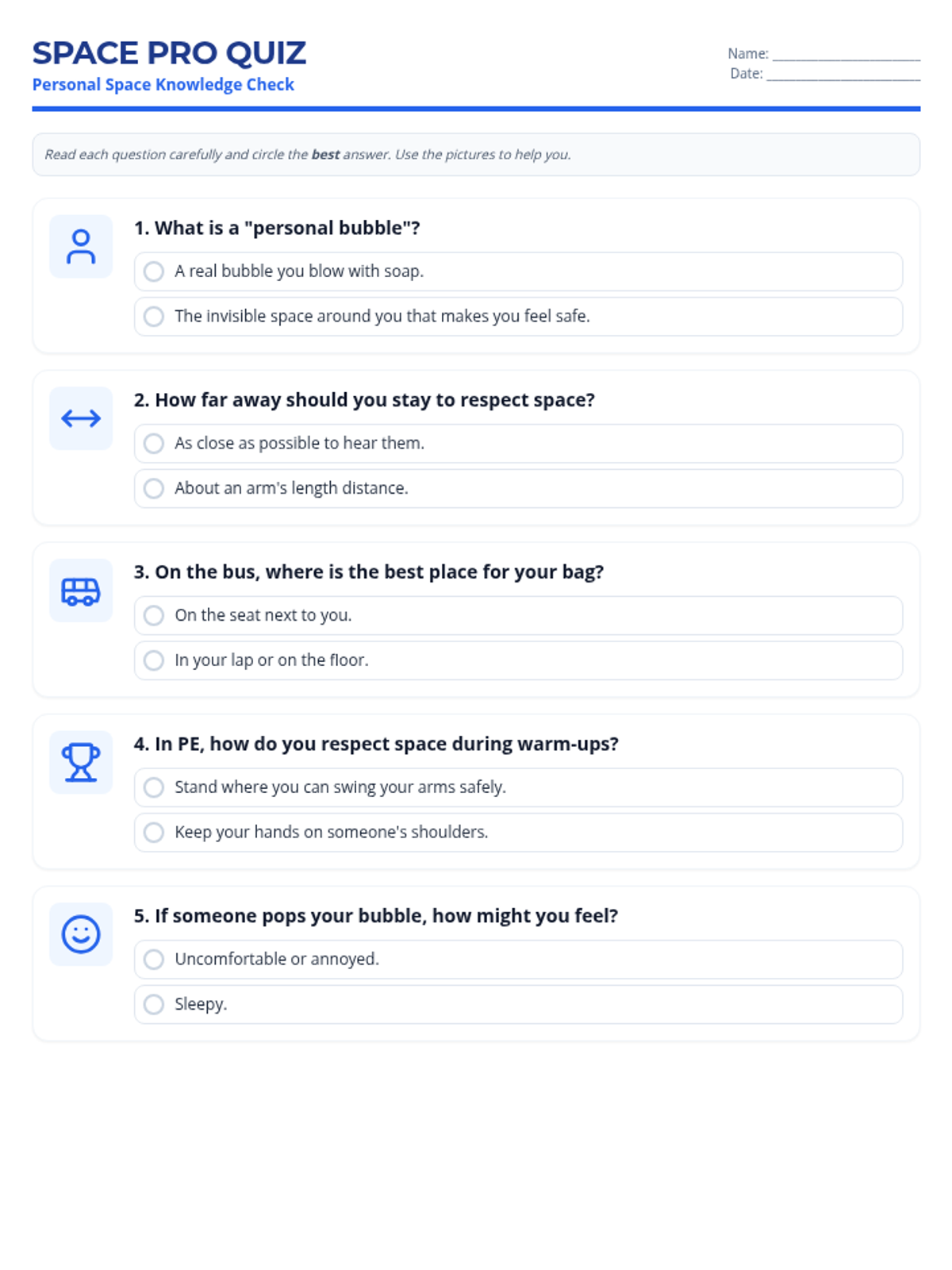
A 10-question quiz (multiple choice and true/false) evaluating student understanding of the personal bubble concept and personal space rules in school. Revised for better layout and accessibility.
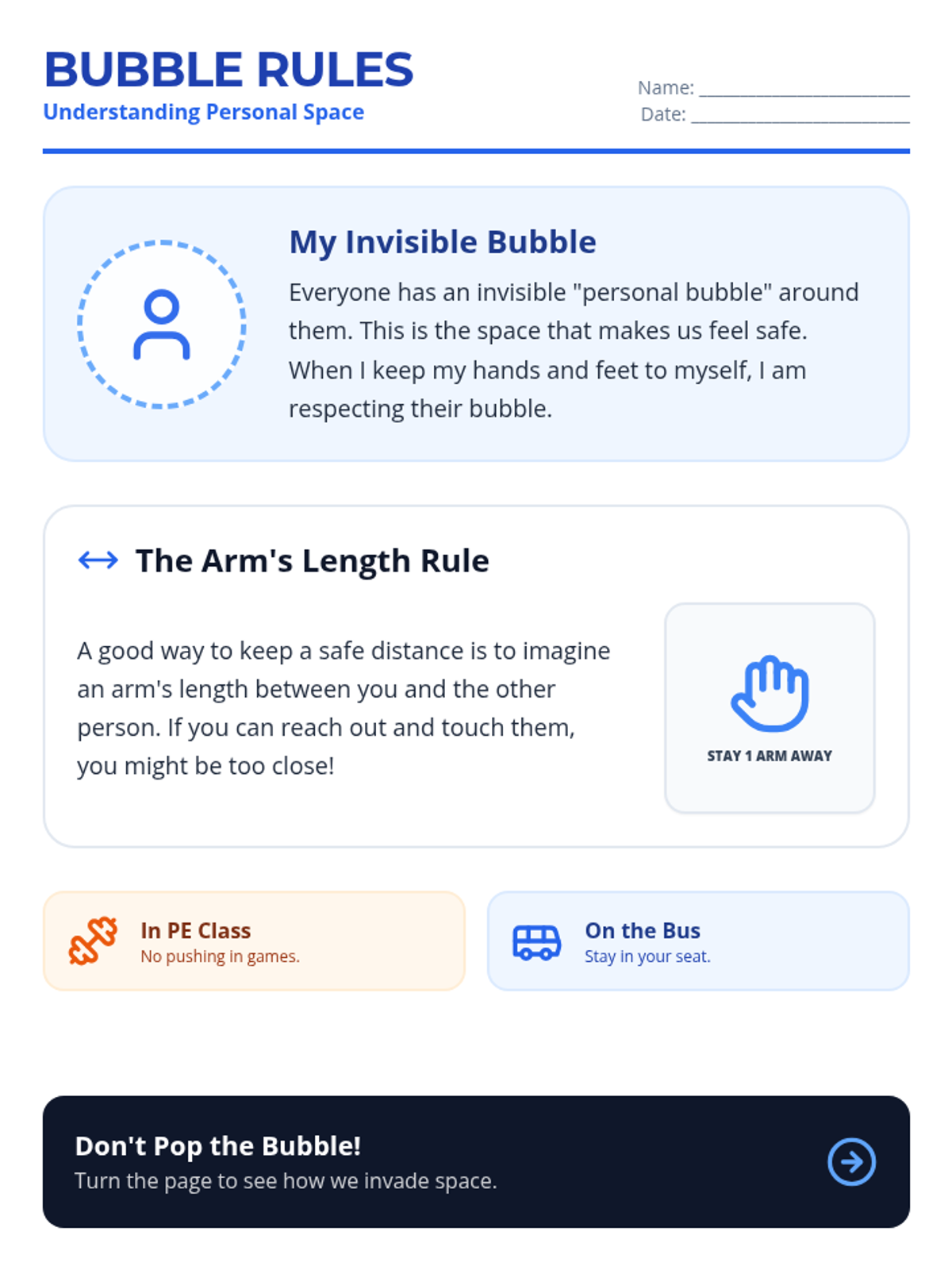
A comprehensive social story document explaining the "Personal Bubble" concept with clear visual examples of invading space (popping the bubble) and student reflection. Includes PE and Bus context.
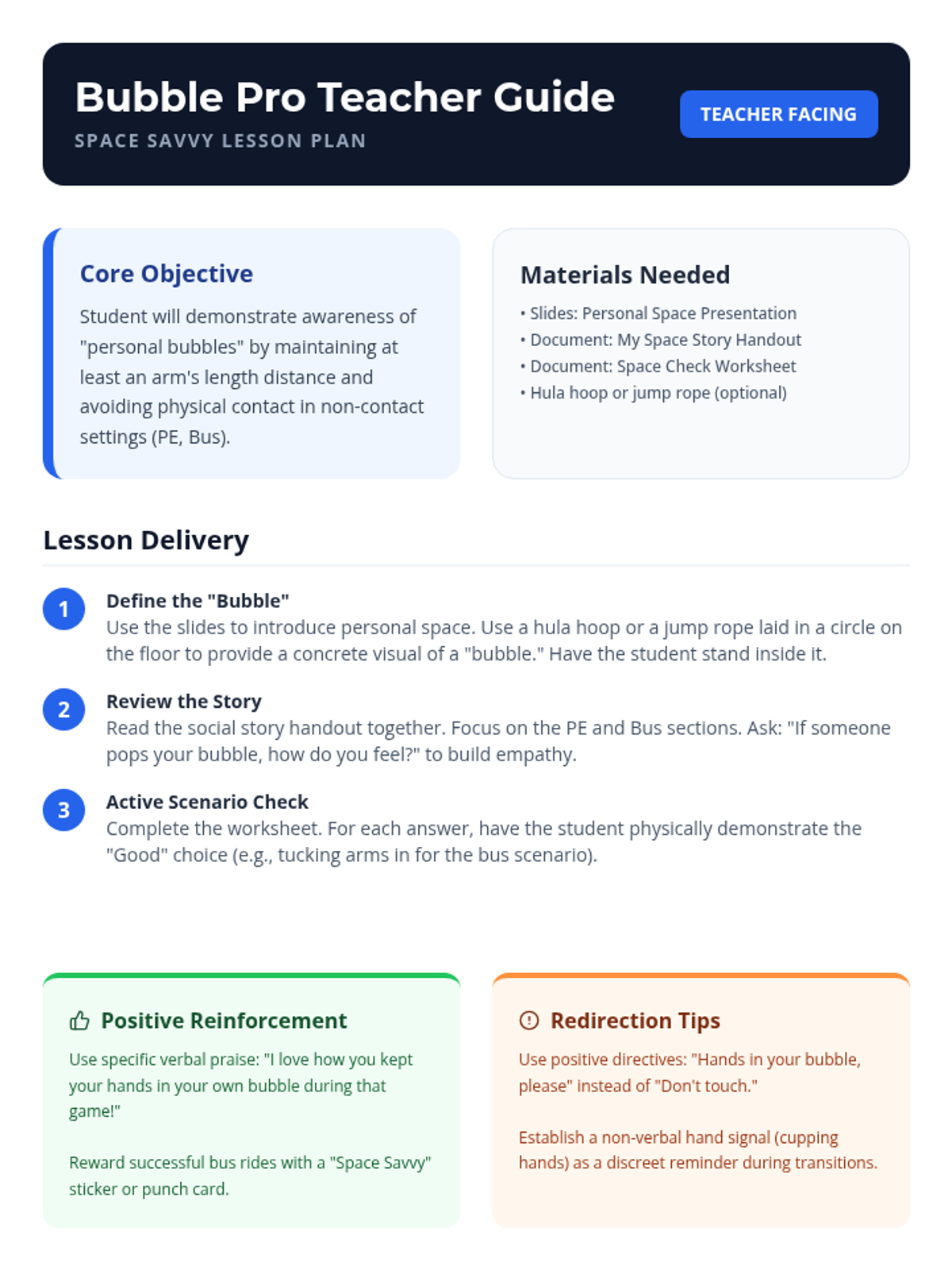
Teacher-facing notes on how to implement the "Space Savvy" lesson. Consolidated to a single page for ease of use.
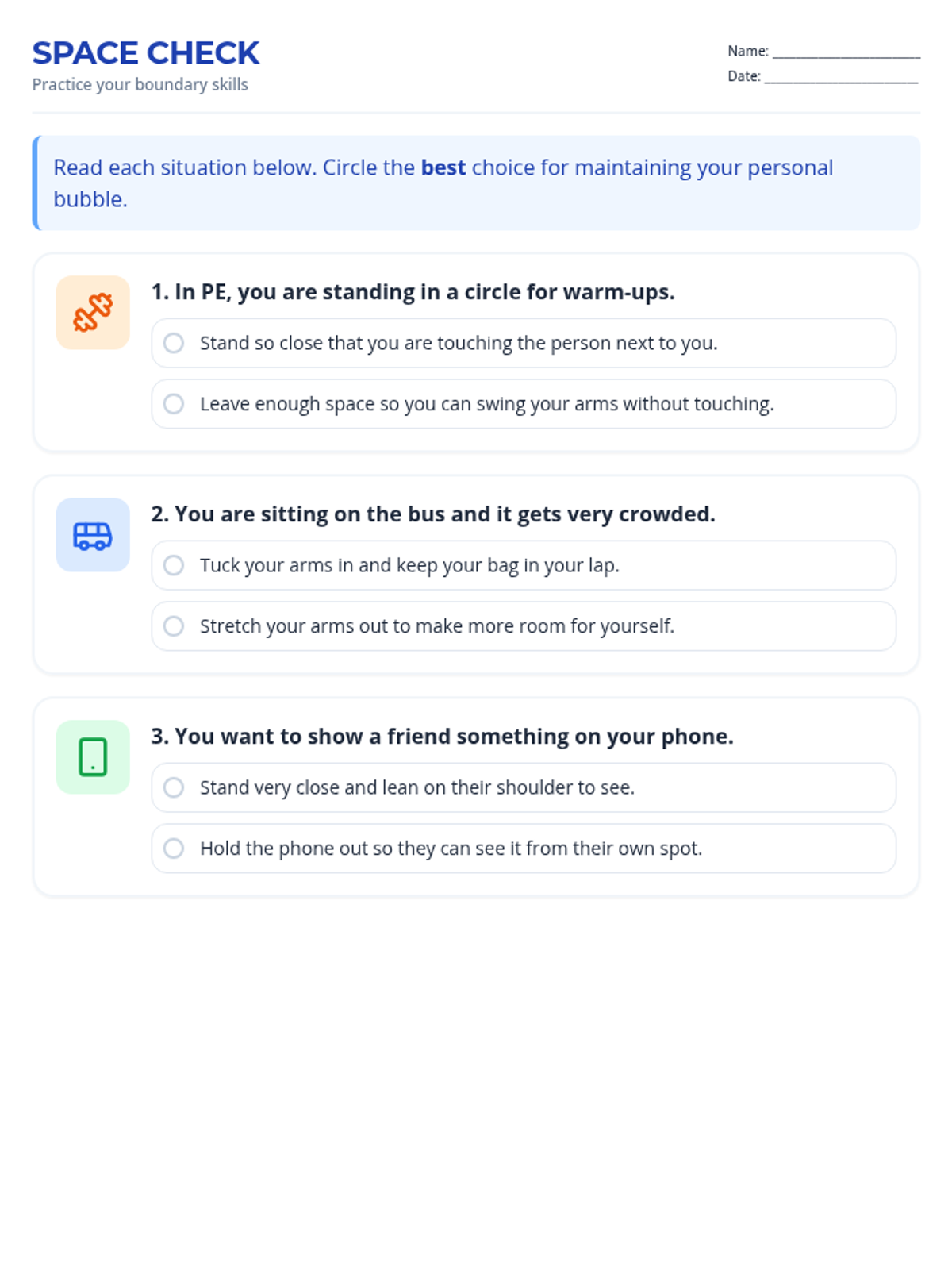
An expanded scenario-based worksheet with 6 situations for students to practice identifying appropriate personal space behaviors across various school settings. Includes visual support and structured writing lines.
Visual presentation slides to accompany the social story, providing large-scale visual aids and key discussion points about personal space.
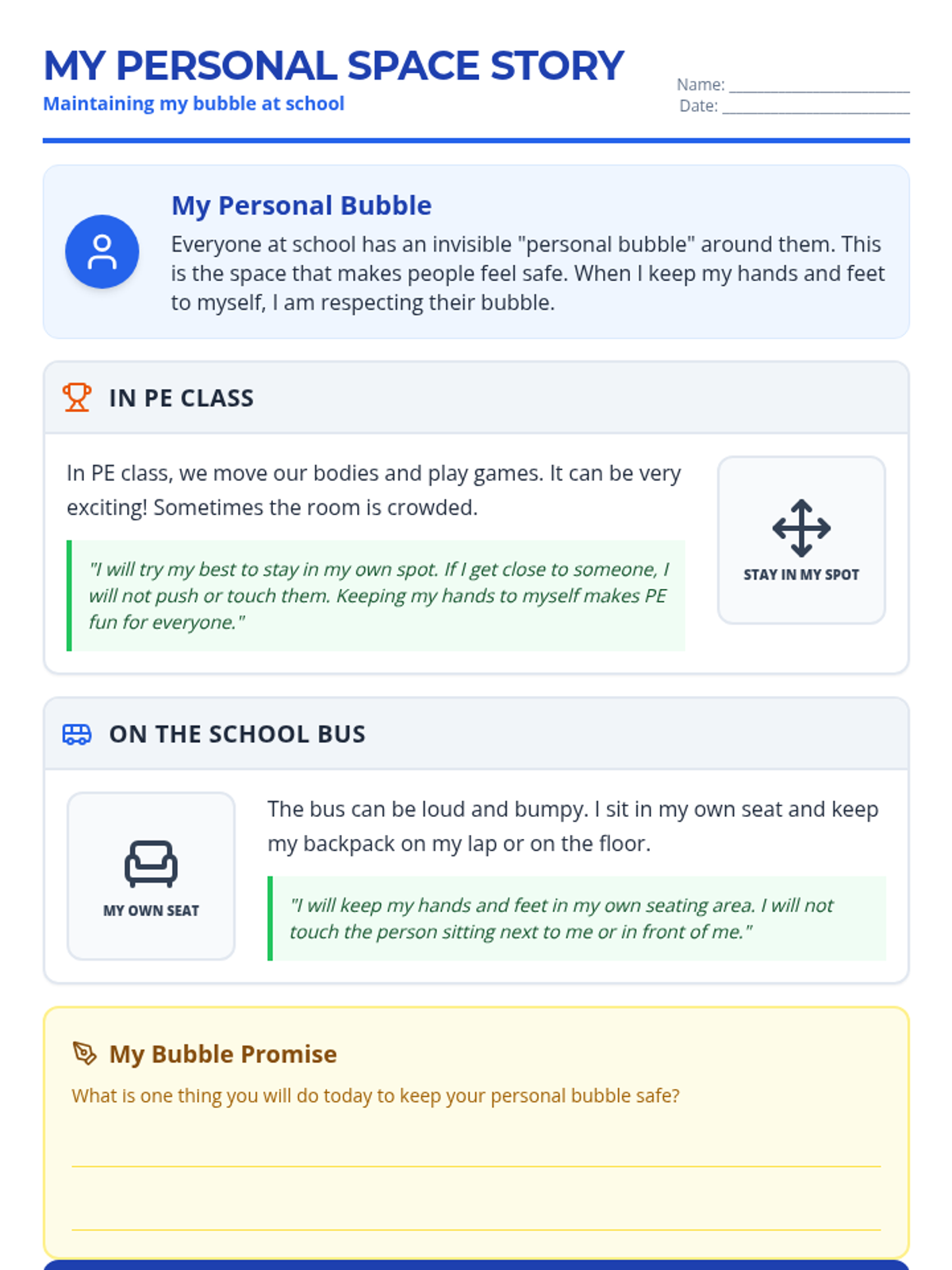
A printable social story with narrative text and visual icons, specifically designed for high school students to understand personal space in PE and on the bus. Consolidated to a single page for ease of use.
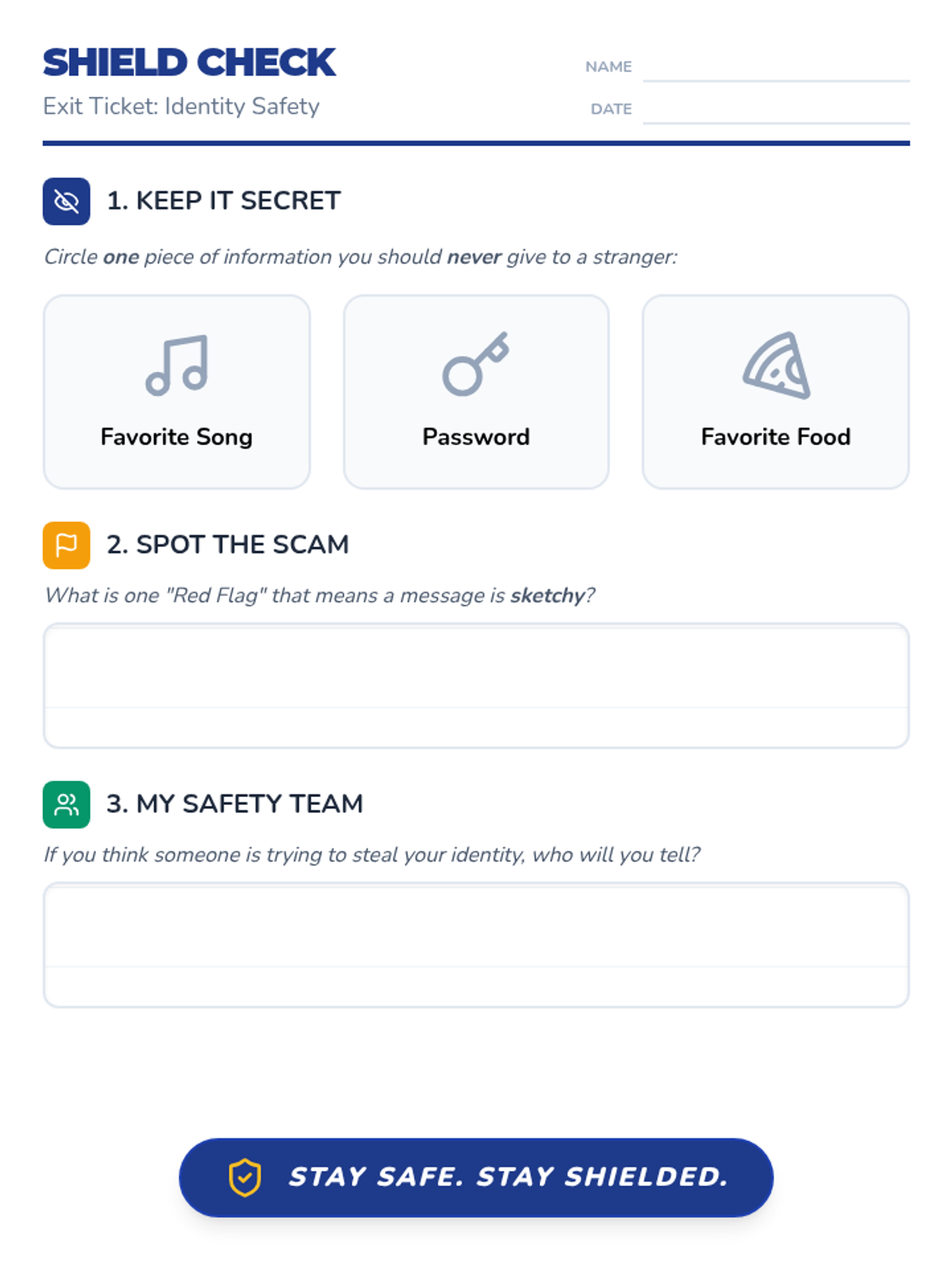
A visual exit ticket for high school special education students to assess their understanding of secret information, scam red flags, and identifying trusted adults.
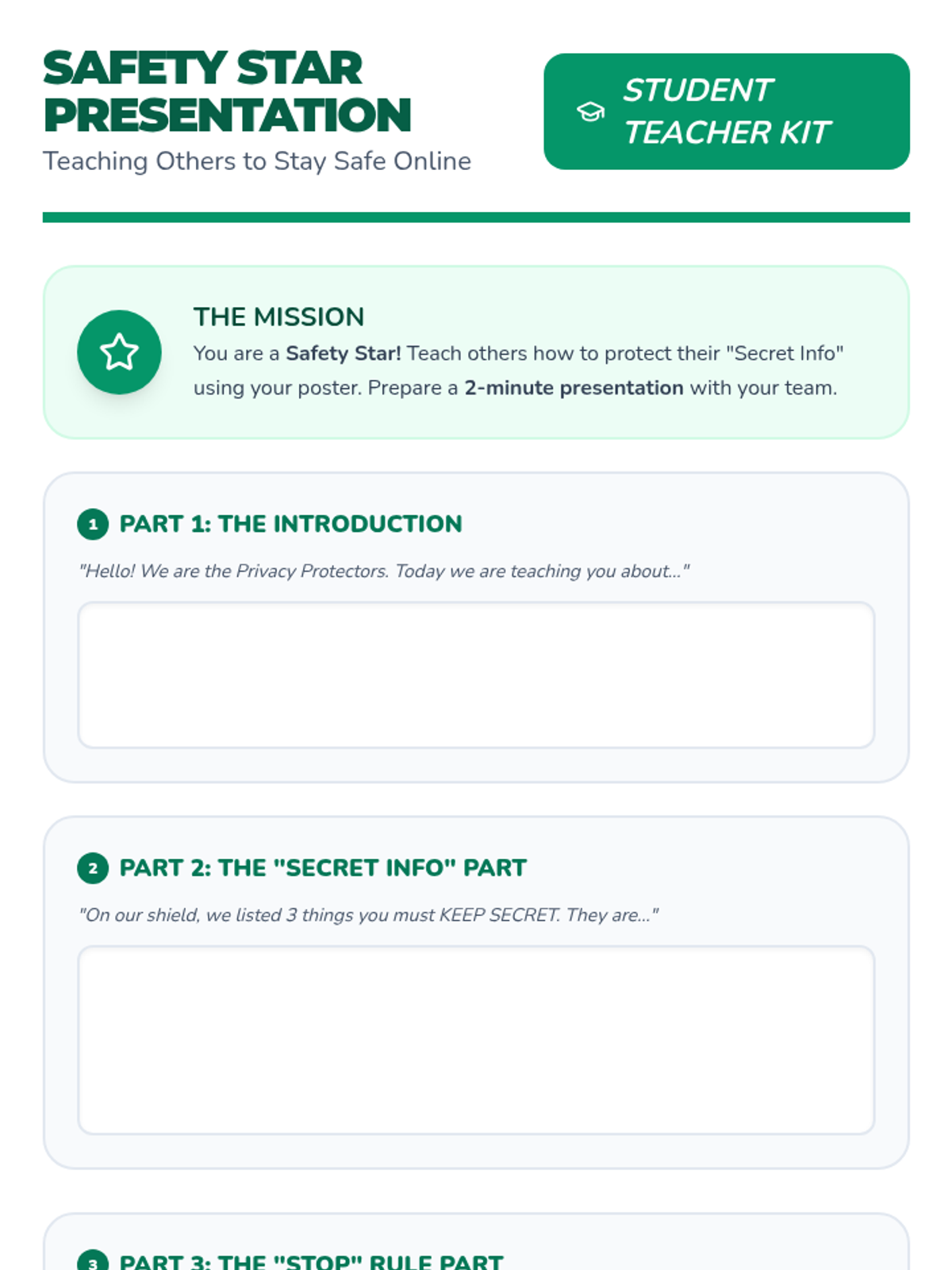
A presentation guide and script planner for high school special education students to prepare a 2-minute project teaching others about identity theft and digital safety.
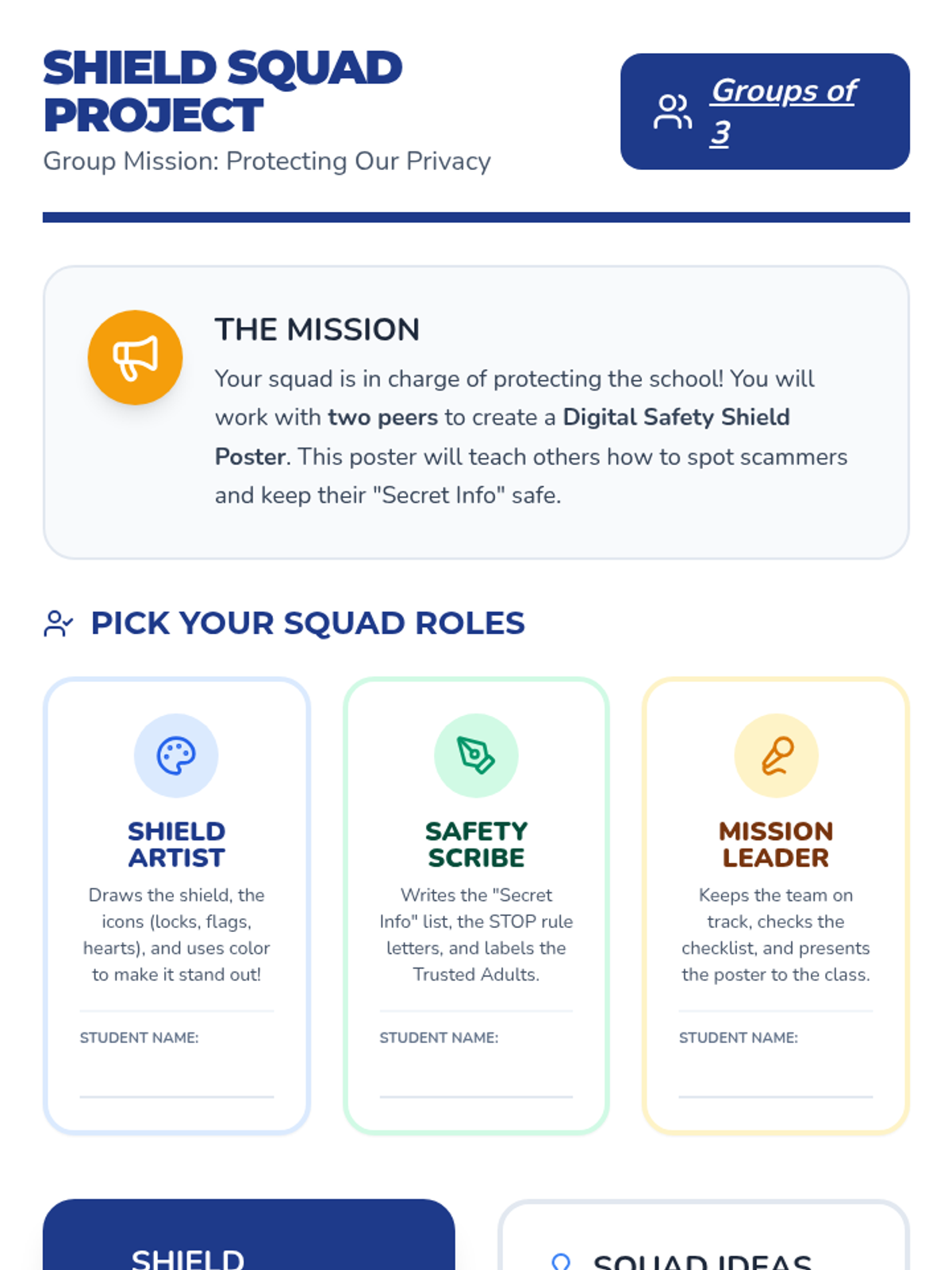
A group project guide for high school special education students to work in teams of three to create a 'Digital Safety Shield' poster, featuring defined roles and a structured checklist.
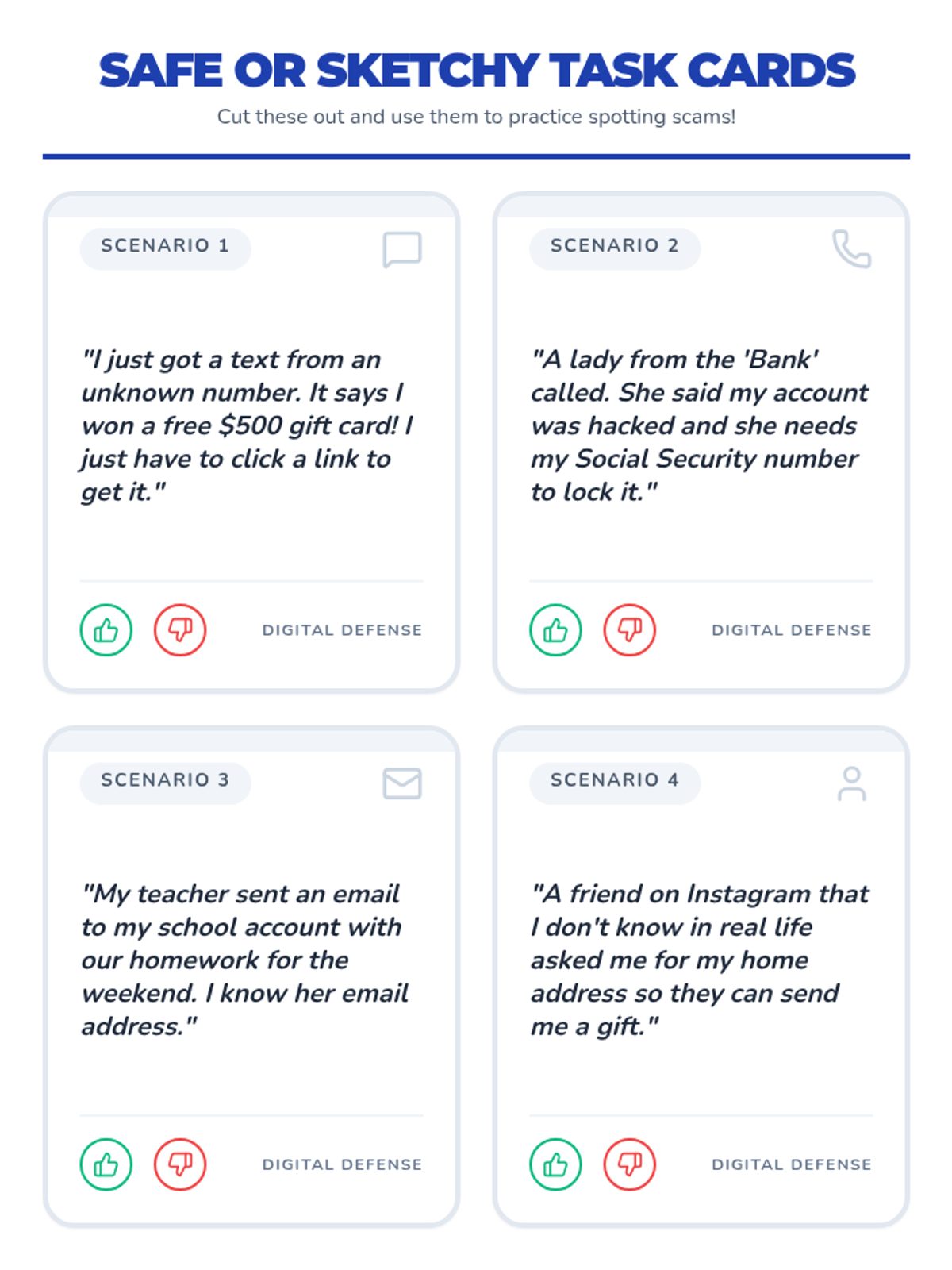
Practical task cards for a 'Safe or Sketchy' activity where students analyze different digital scenarios to practice identifying identity theft scams.
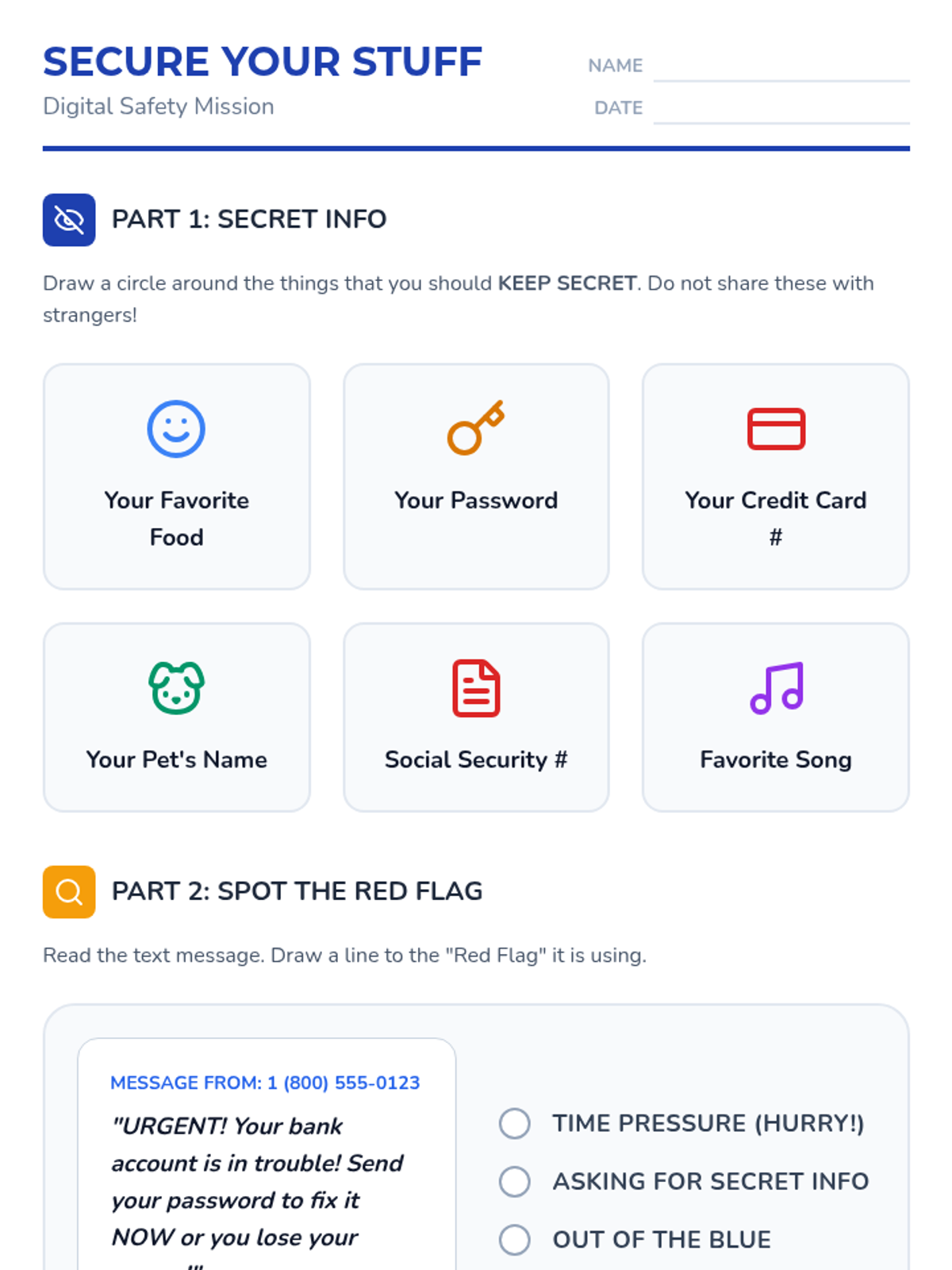
A student worksheet designed for special education high schoolers to identify personal information that should be kept secret, recognize scam red flags, and identify trusted adults for help.
A highly visual slide deck for high school special education students covering the basics of identity theft, red flags, and the 'STOP' rule for safety.
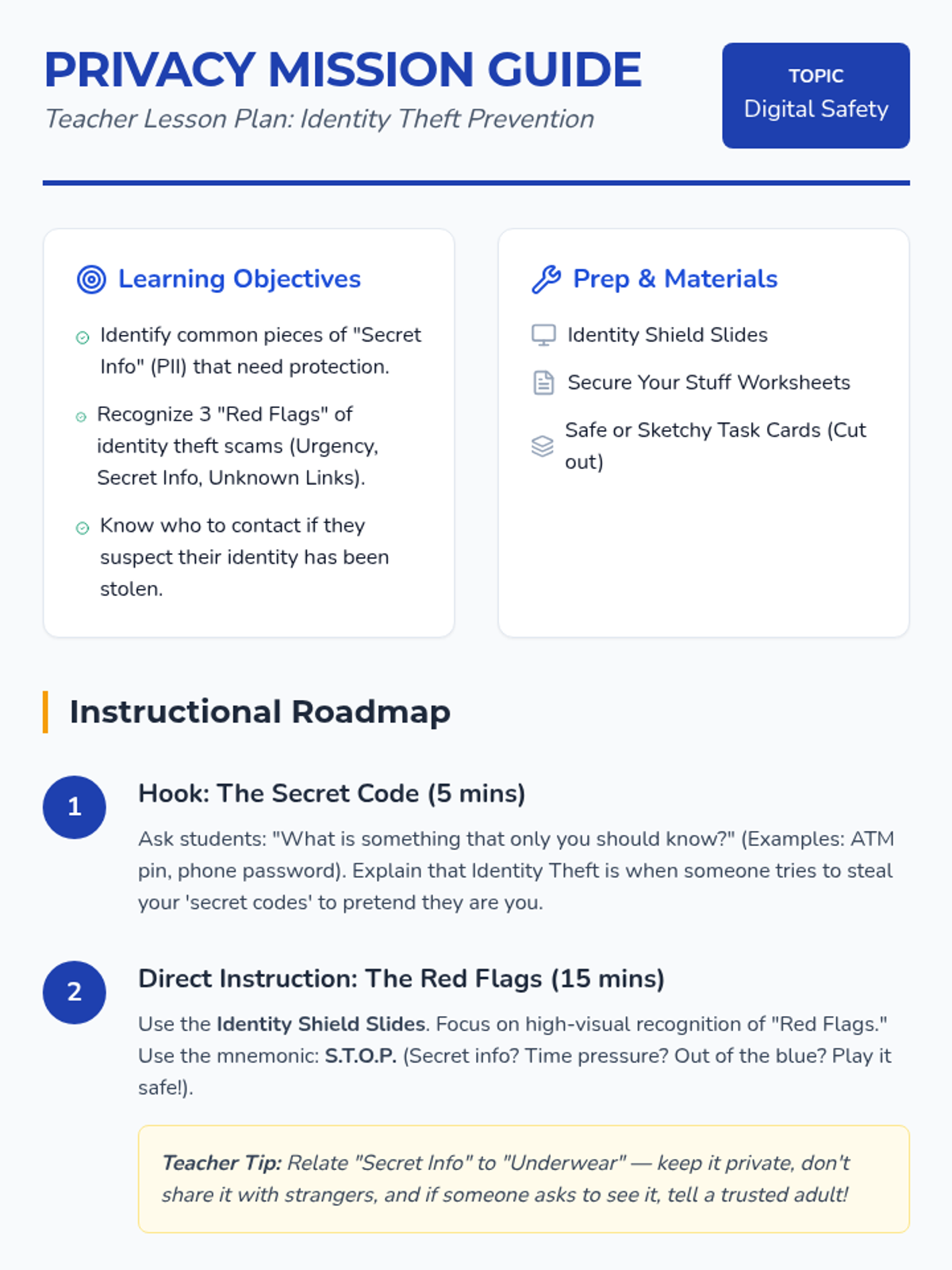
A comprehensive teacher lesson plan for high school special education, detailing instructional steps, learning objectives, and specific accommodations for teaching identity theft prevention.
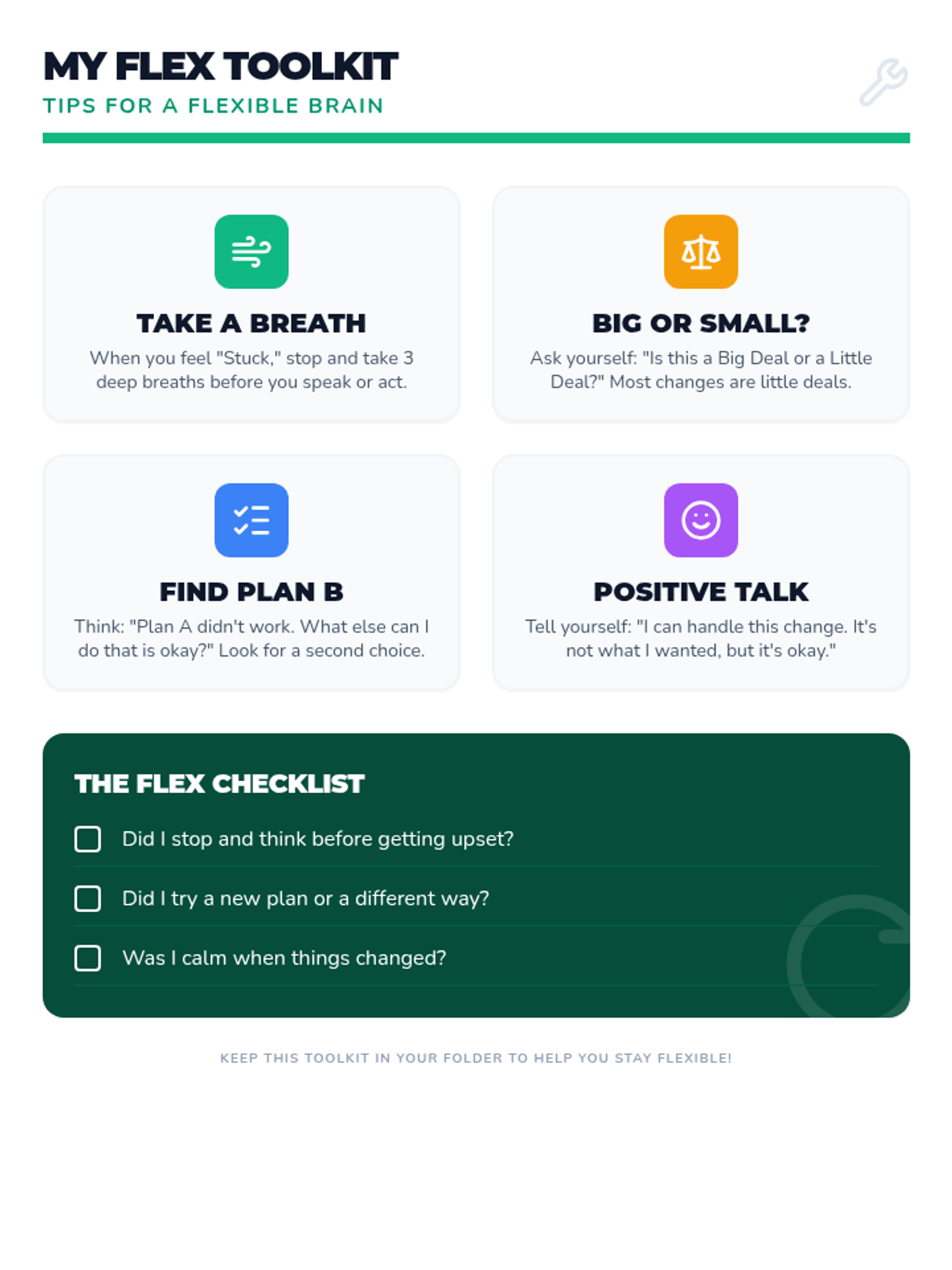
A student-facing reference guide (toolkit) with four actionable tips for improving flexible thinking in real-time, including a self-reflection checklist. Revised for single-page layout and improved contrast.
Celebratory final slides with a 'Graduation' theme. Reviews all squad characters and encourages students to feel proud of their listening skills with minimal, high-impact visuals.
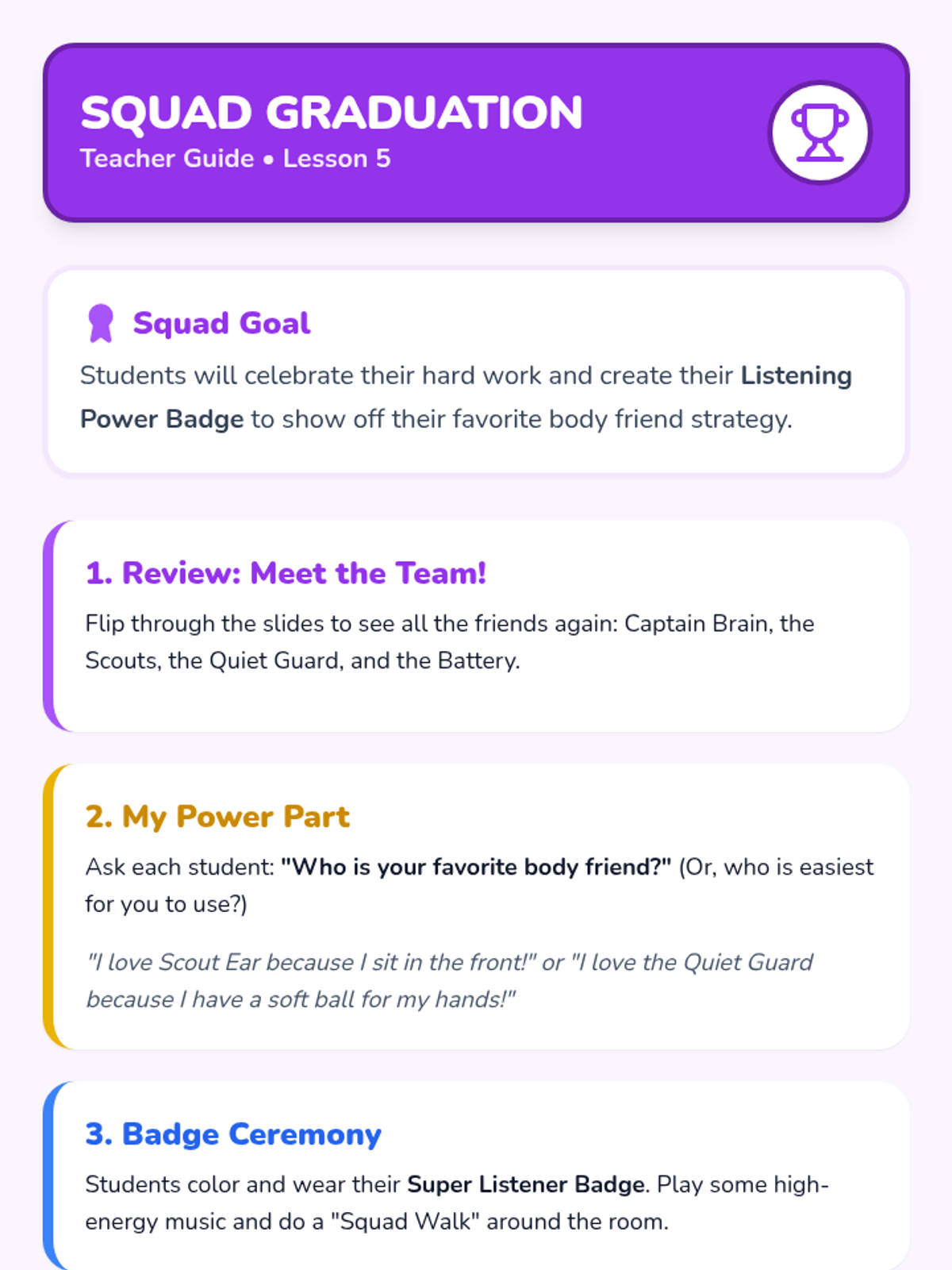
Teacher guide for the final celebration lesson. Outlines the review process and the 'Power Badge' ceremony to celebrate student growth in listening.
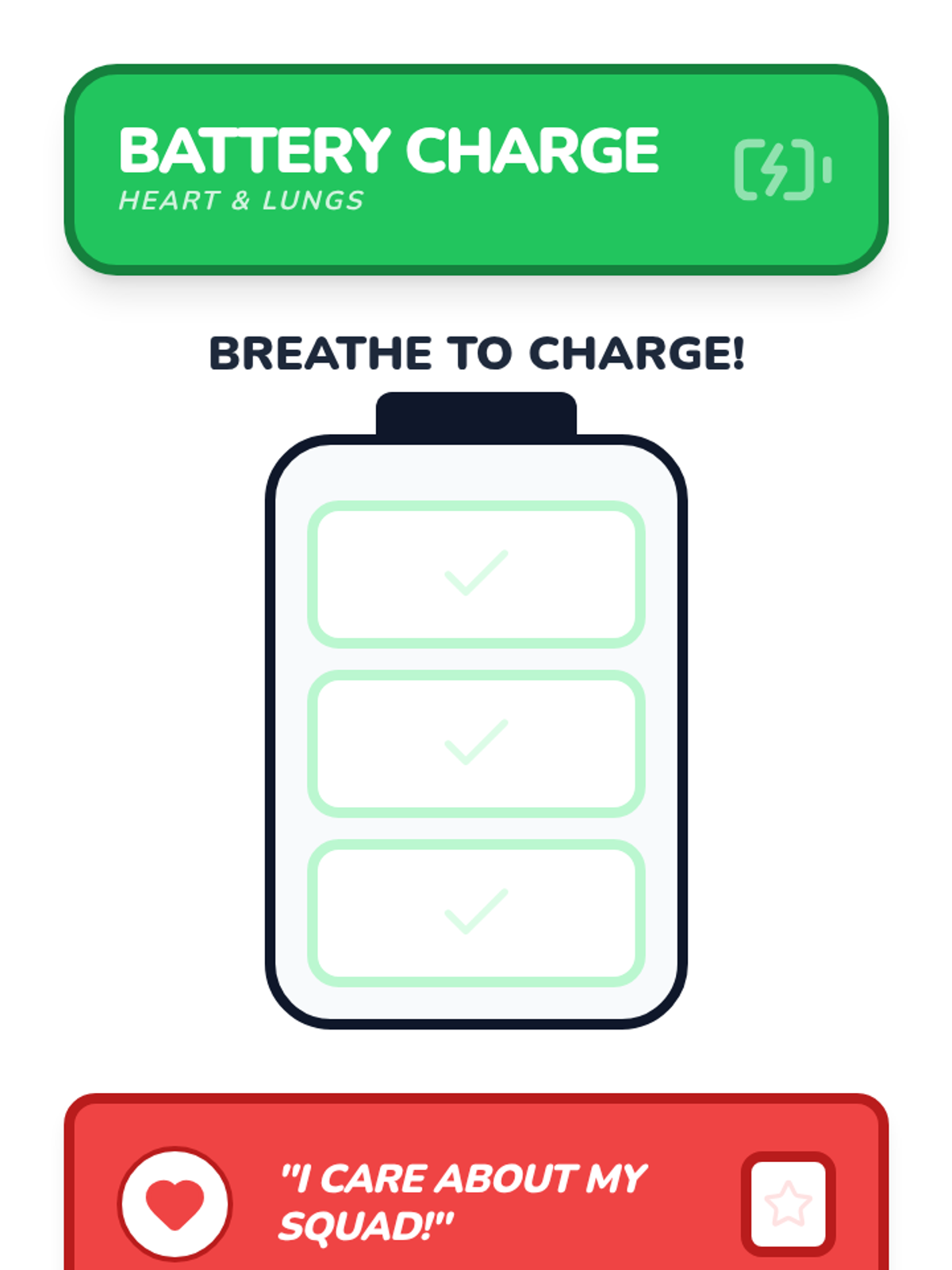
Breathing practice worksheet for Lesson 4. Students track three deep breaths to 'charge' their battery using a large visual battery graphic.
Highly visual slides for Lesson 4 using 'The Battery' theme. Focuses on emotional connection (Heart) and breathing (Lungs) with large icons and minimal text.
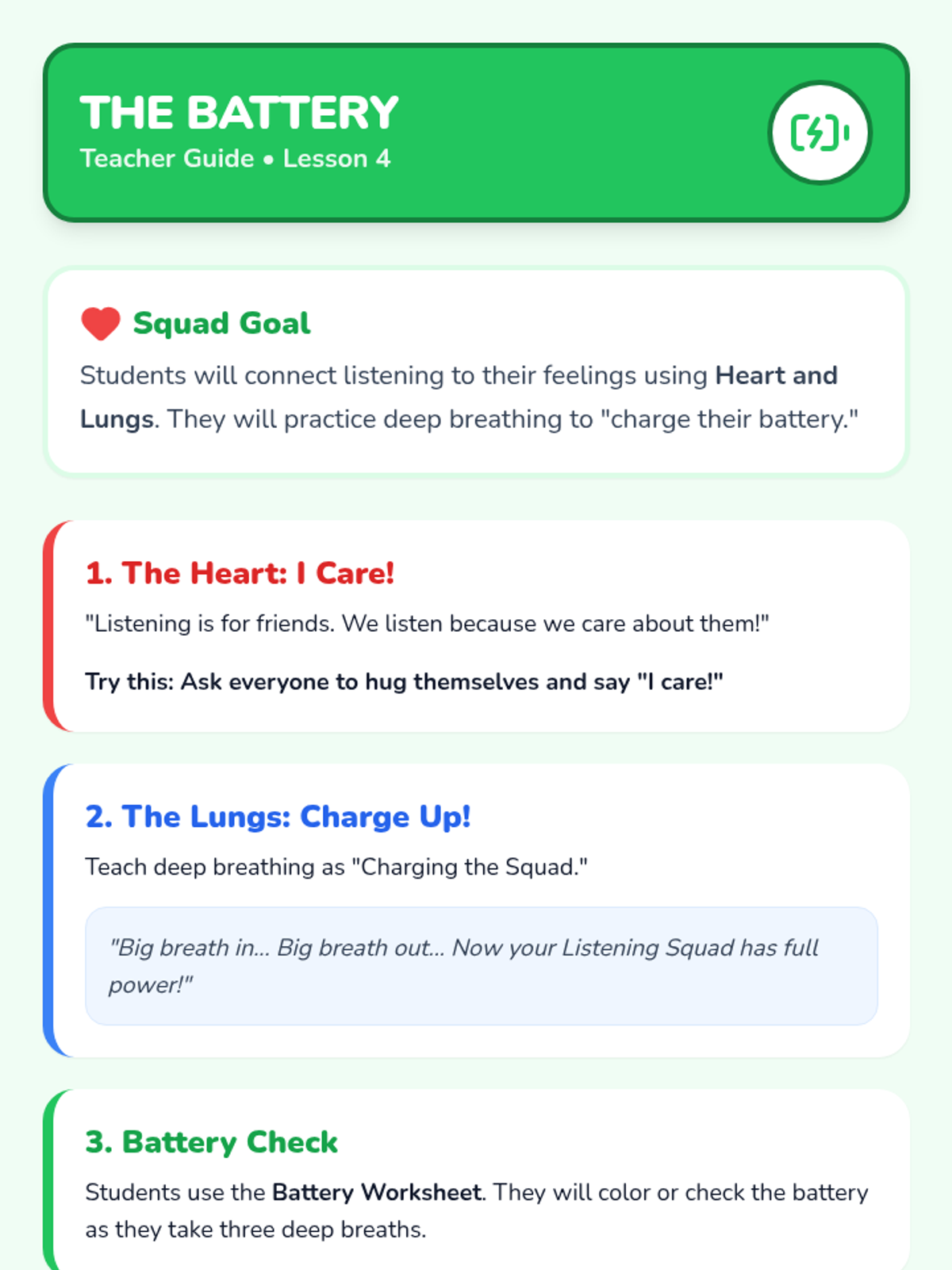
Teacher guide for Lesson 4, connecting regulation to the Heart and Lungs through 'The Battery' character. Focuses on breathing and emotional connection.
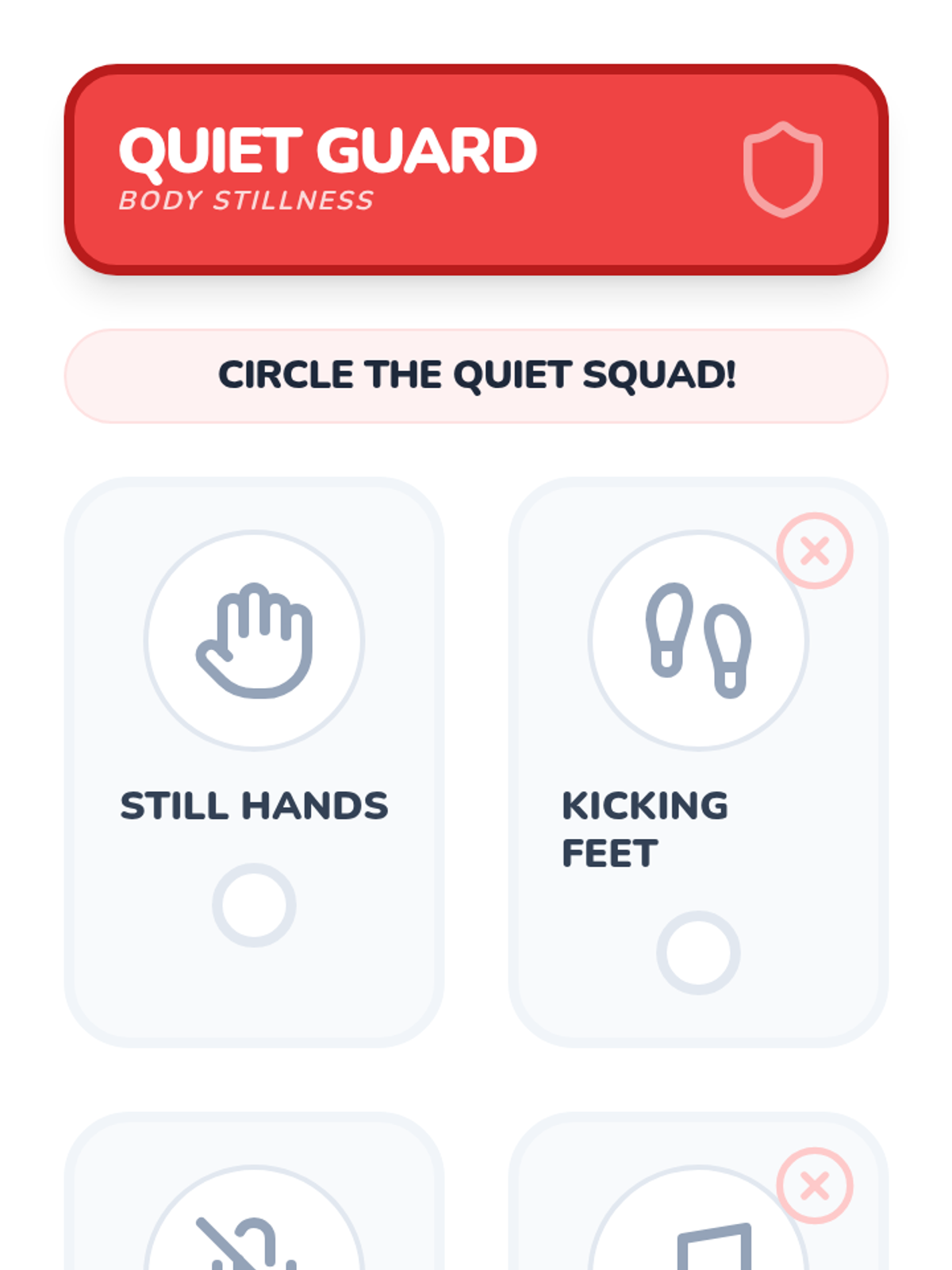
Simplified visual identification worksheet for Lesson 3. Students identify 'Quiet Guard' actions versus 'Noisy' actions using large checkboxes, ideal for high support needs.
Large-scale, colorful slides for Lesson 3 focusing on physical stillness. Uses the 'Quiet Guard' theme with minimal text and bold icons for students with severe special needs.
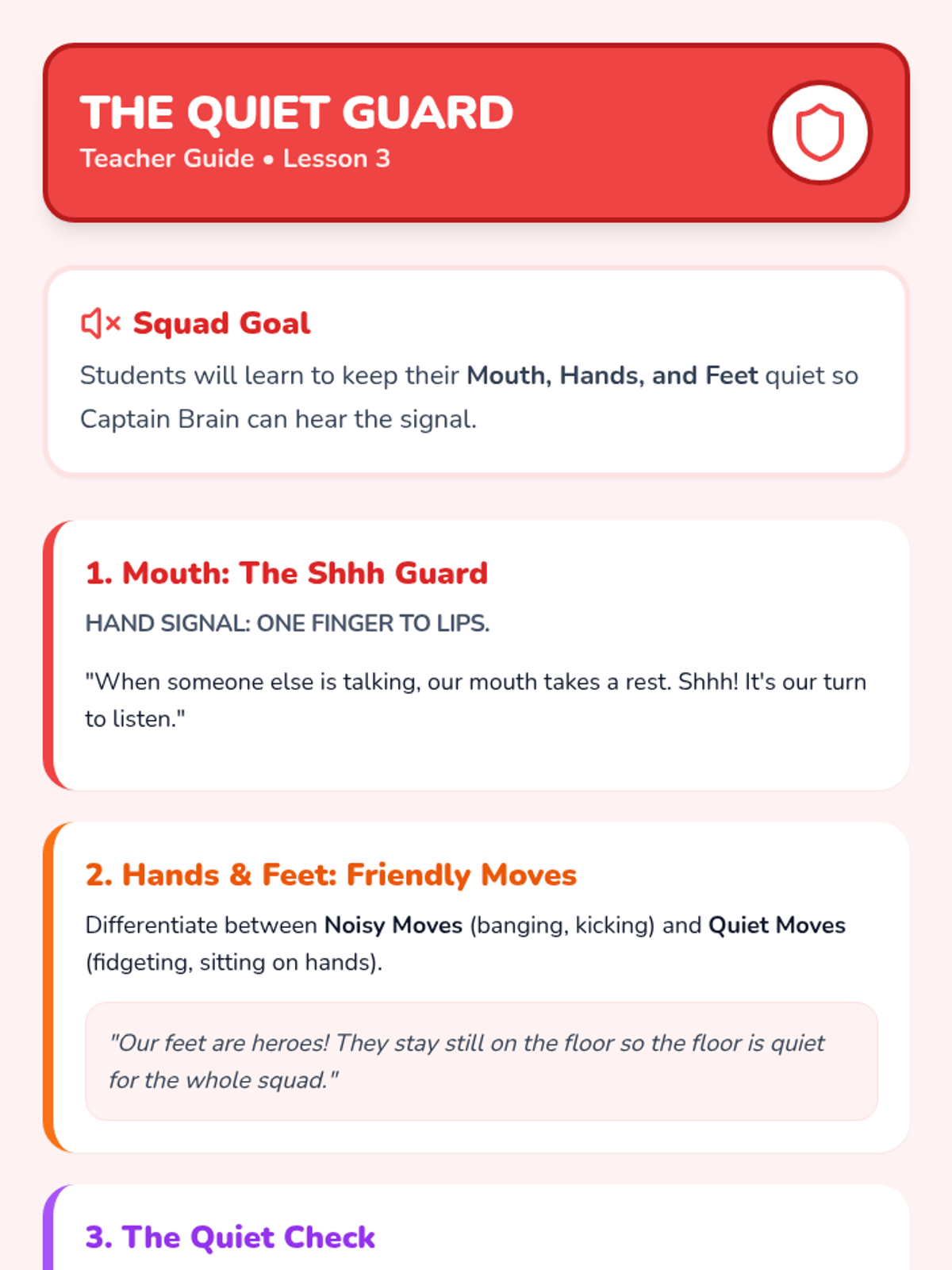
Teacher guide for Lesson 3, focusing on physical regulation using 'The Quiet Guard' character. Addresses mouth, hands, and feet in a highly concrete way for severe special needs.
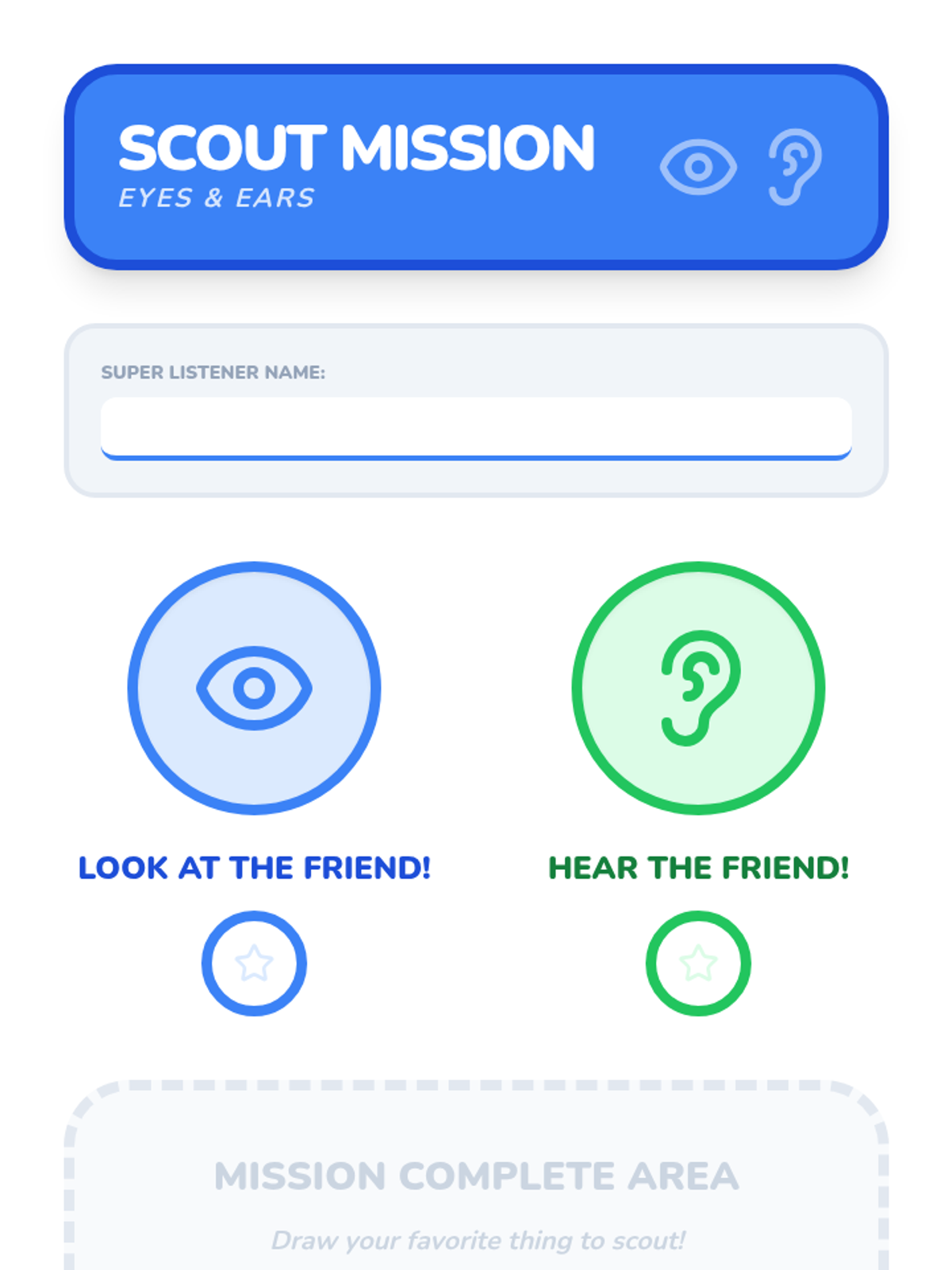
Simplified activity sheet for Lesson 2. Students track their eye and ear focus using large visual checkpoints, suitable for students with severe intellectual disabilities.
Slides for Lesson 2 focusing on eyes and ears. Uses the 'Scout' theme with high-contrast, large-scale visuals. Addresses looking and hearing in a simplified, kid-friendly way.
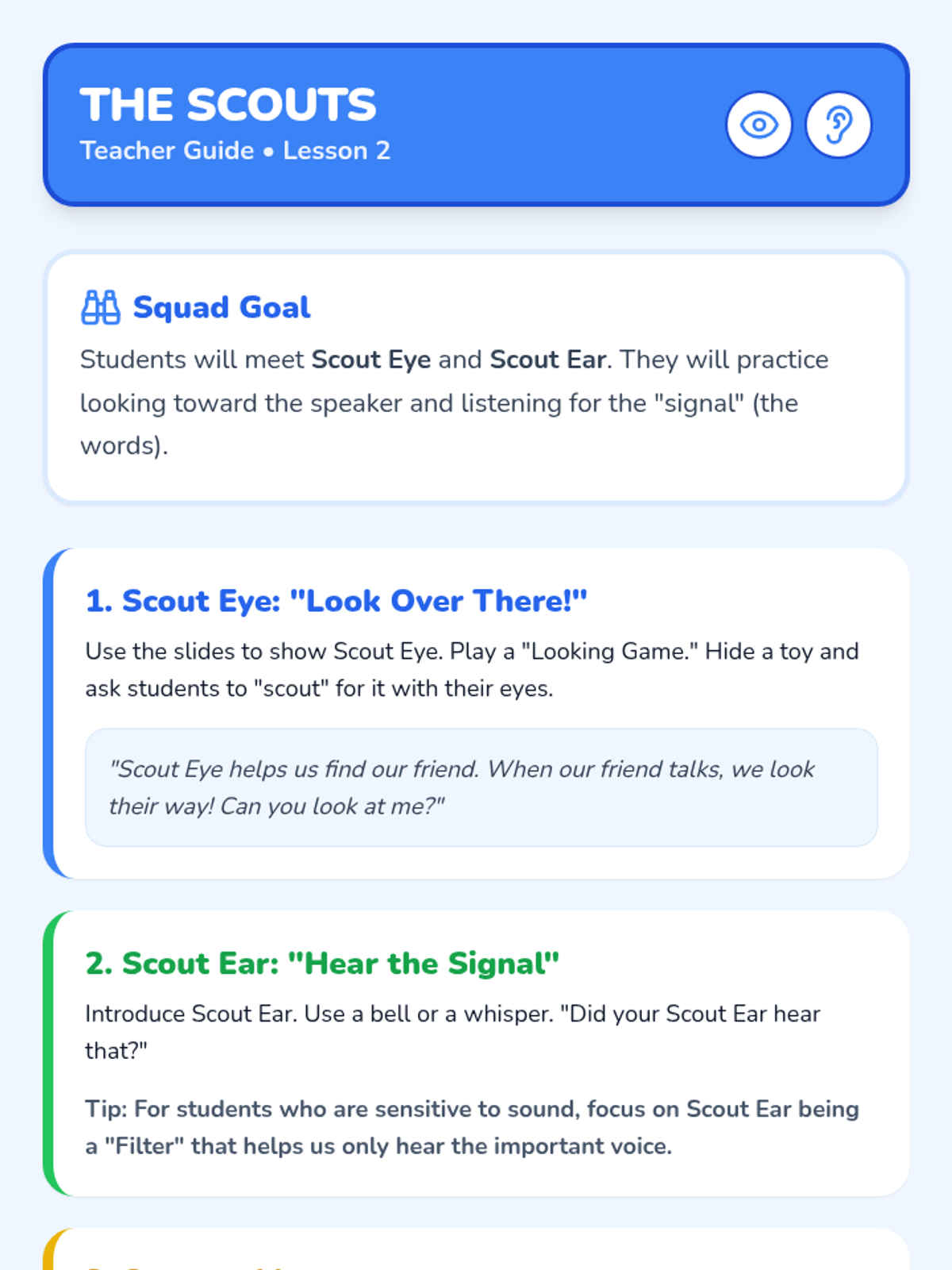
Teacher guide for Lesson 2, focusing on the sensory inputs of Eyes and Ears. Includes prompts for discussing auditory distractions and individual preferences for visual focus using the 'Scout' characters.
A simplified coloring and identification worksheet for Lesson 1. Features a large brain graphic for coloring and a simple 'ready to listen' checkbox, designed for students with severe special needs.
Vibrant, highly engaging slides for Lesson 1. Uses a 'Super Listening Squad' theme with large, friendly icons and minimal text, making it suitable for students with severe intellectual disabilities.
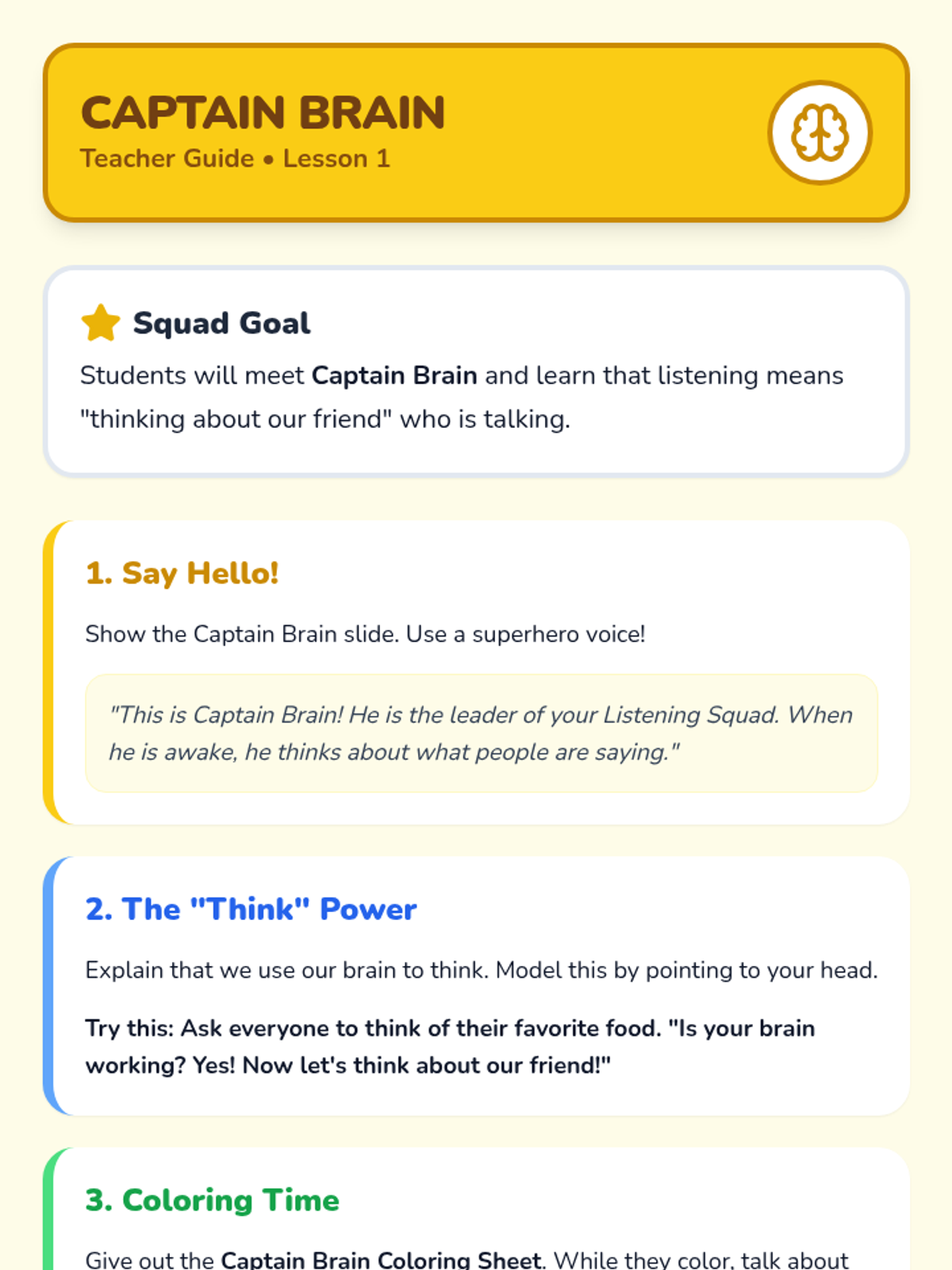
A teacher guide for the first lesson of the Super Listening Squad sequence. Focuses on the brain as the 'Captain' and introduces the concept of thinking about the speaker using simplified, energetic language and hand signals.
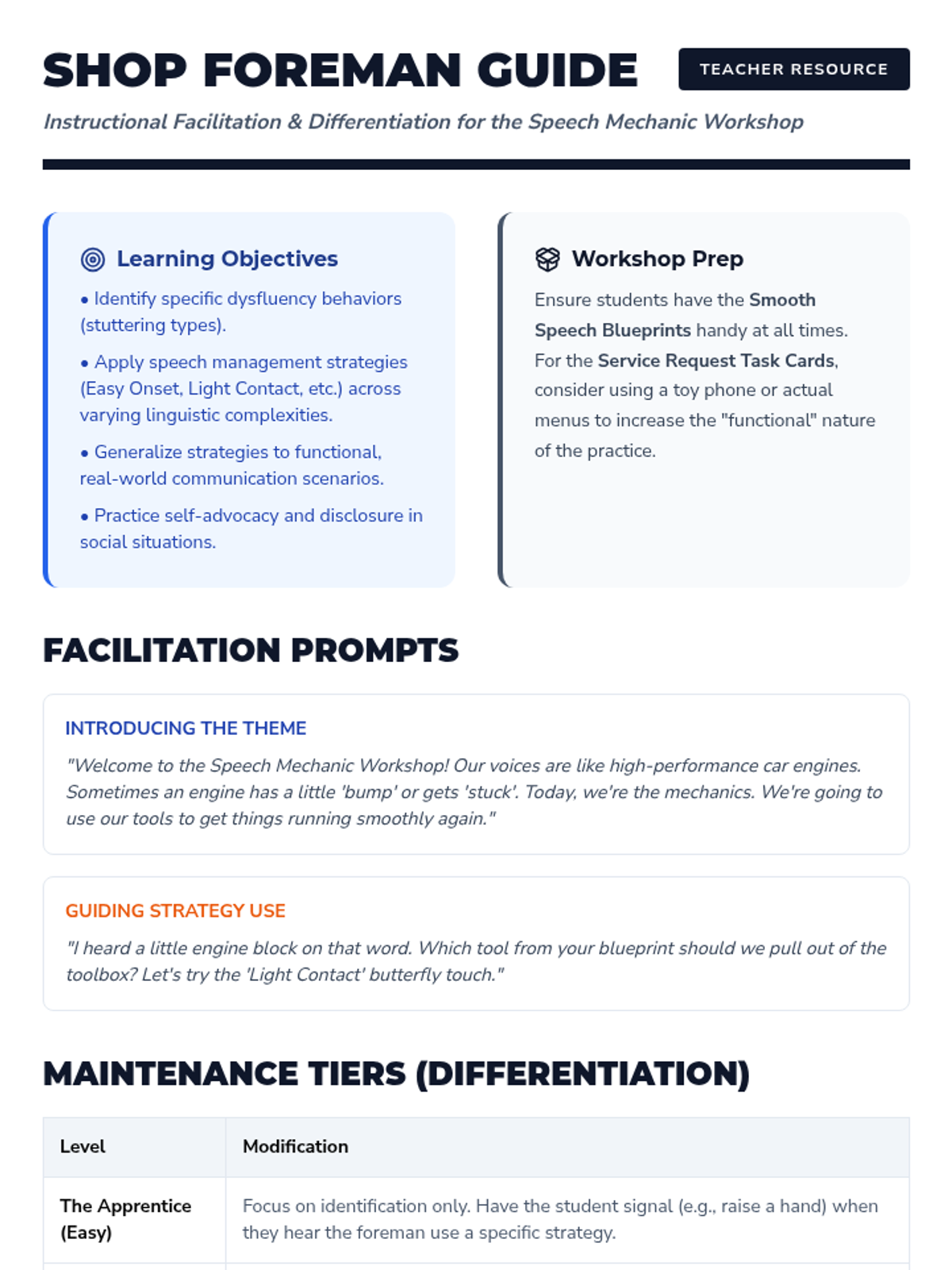
A comprehensive teacher's guide for the Speech Mechanic Workshop. Includes learning objectives, instructional scripts, differentiation strategies for three levels of learners, and troubleshooting tips for common student struggles.
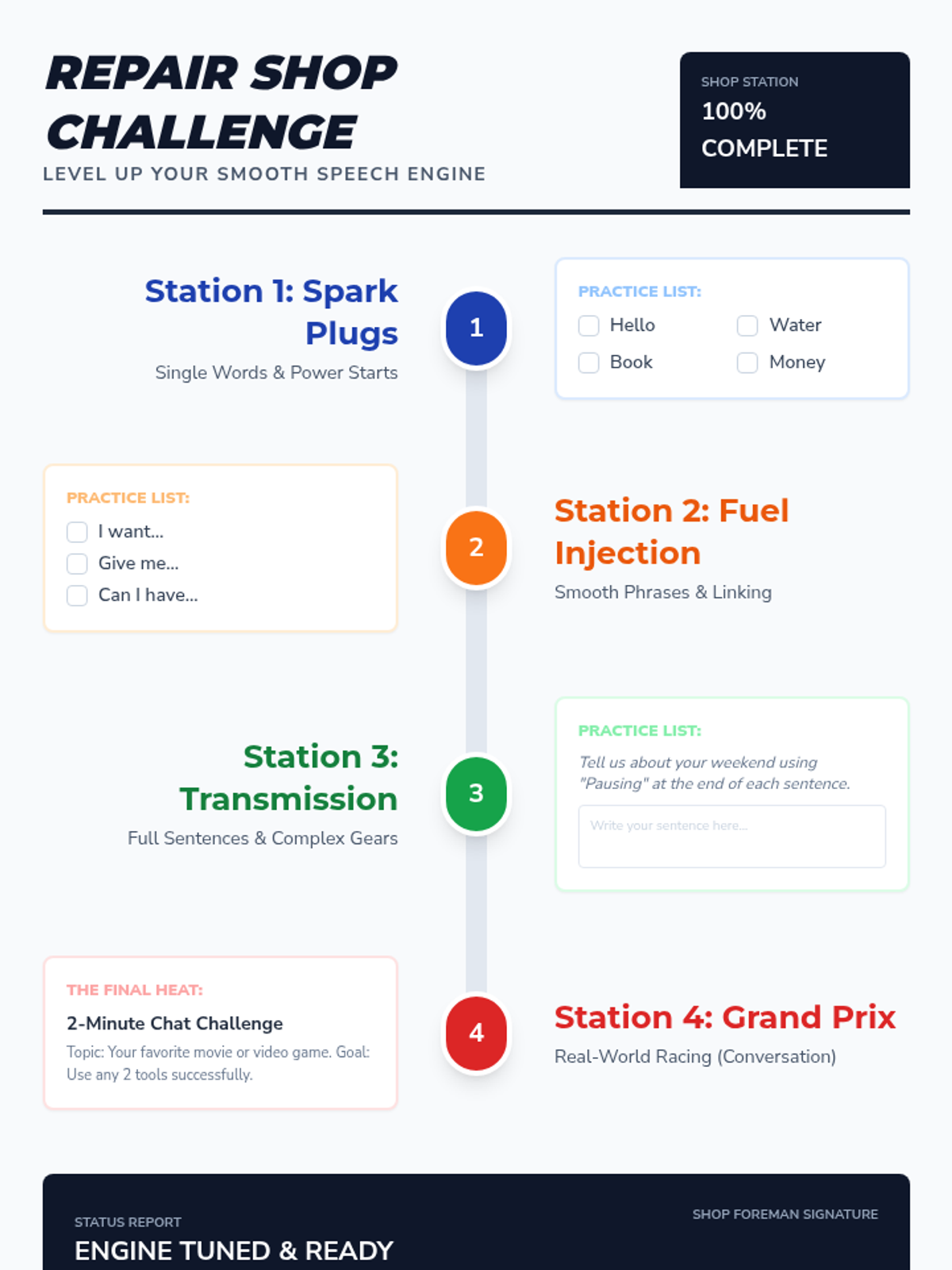
A progression-based activity sheet that guides students through four levels of speech practice: single words (Spark Plugs), phrases (Fuel Injection), sentences (Transmission), and conversation (Grand Prix).
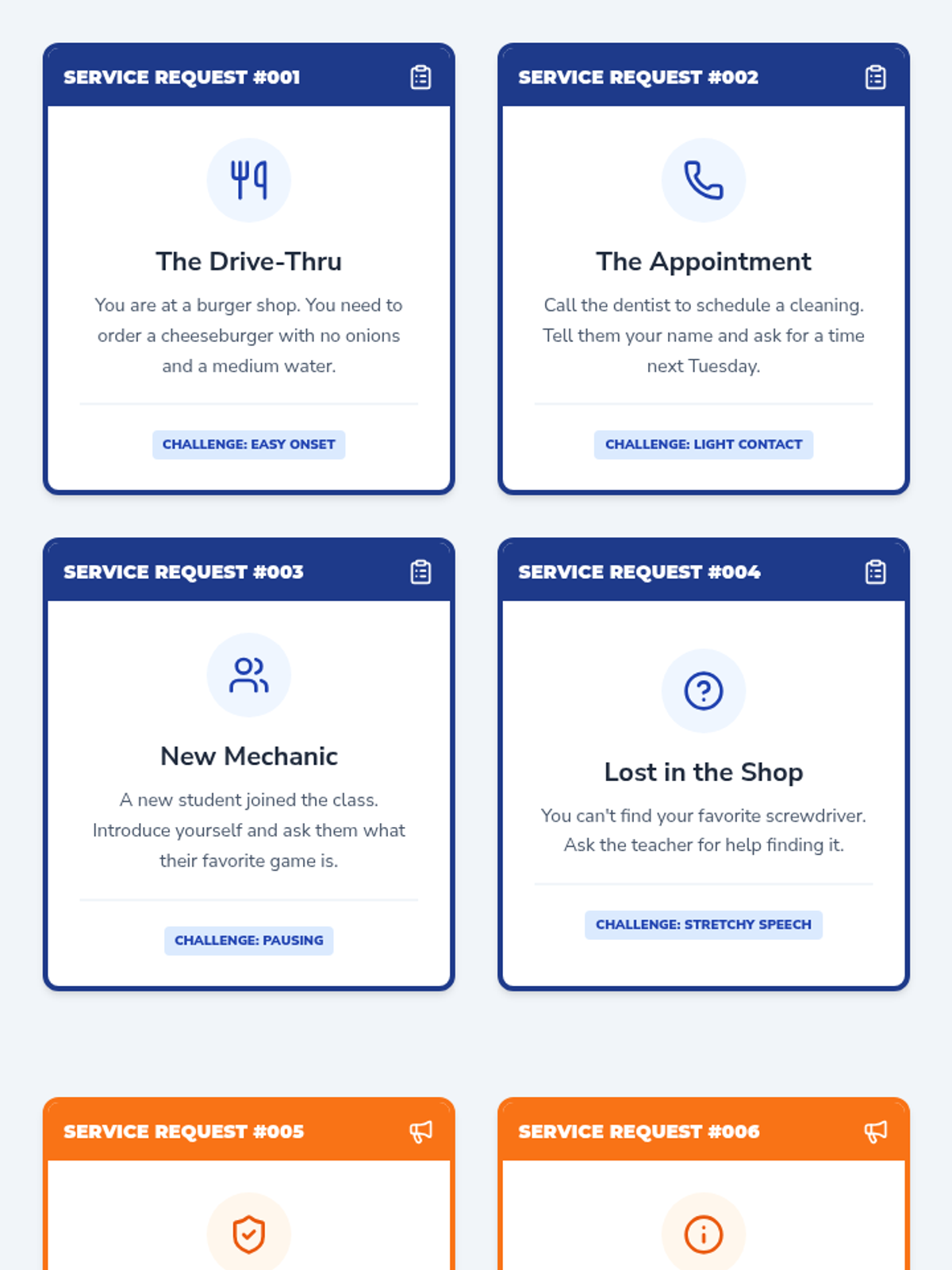
A set of 8 functional communication task cards presented as "Service Requests". Each card provides a real-world scenario (ordering food, calling a doctor, self-advocacy) and a specific fluency tool challenge.
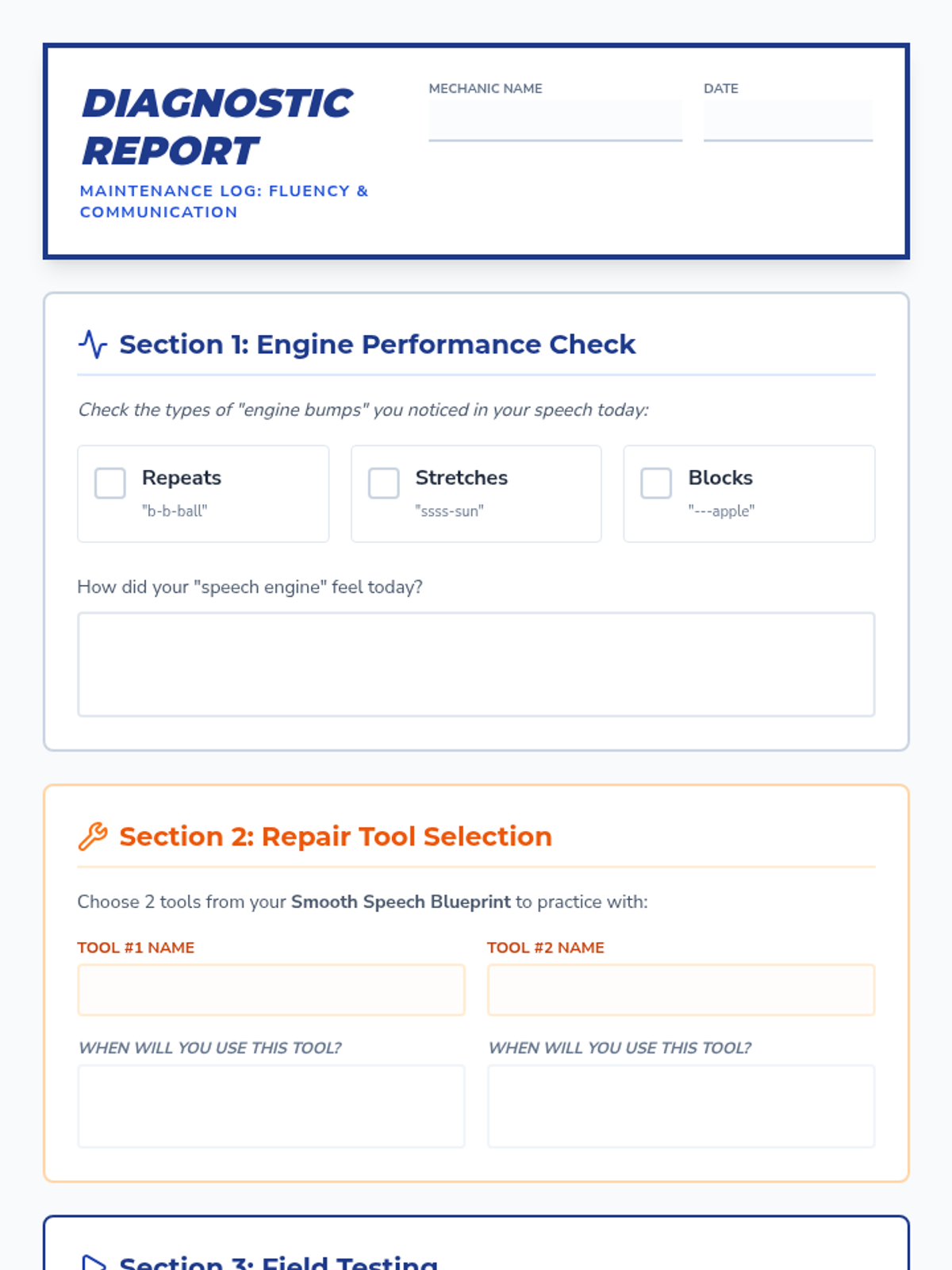
A student worksheet designed as a vehicle diagnostic report. Students identify their stuttering behaviors, select fluency tools for practice, and rate their performance on functional phrases.
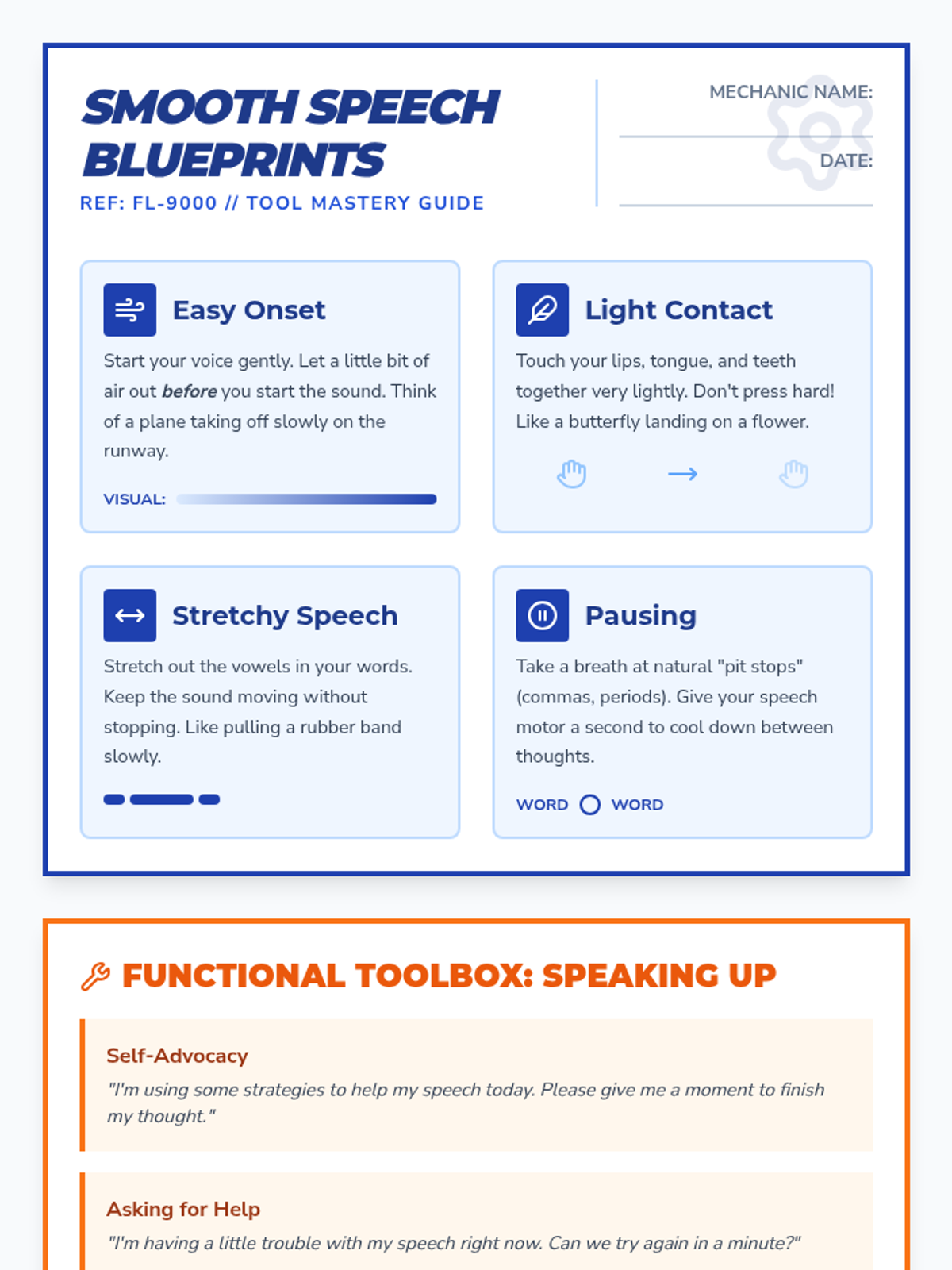
A visual anchor chart using a workshop blueprint theme to define speech fluency strategies like Easy Onset and Light Contact, along with functional self-advocacy phrases.
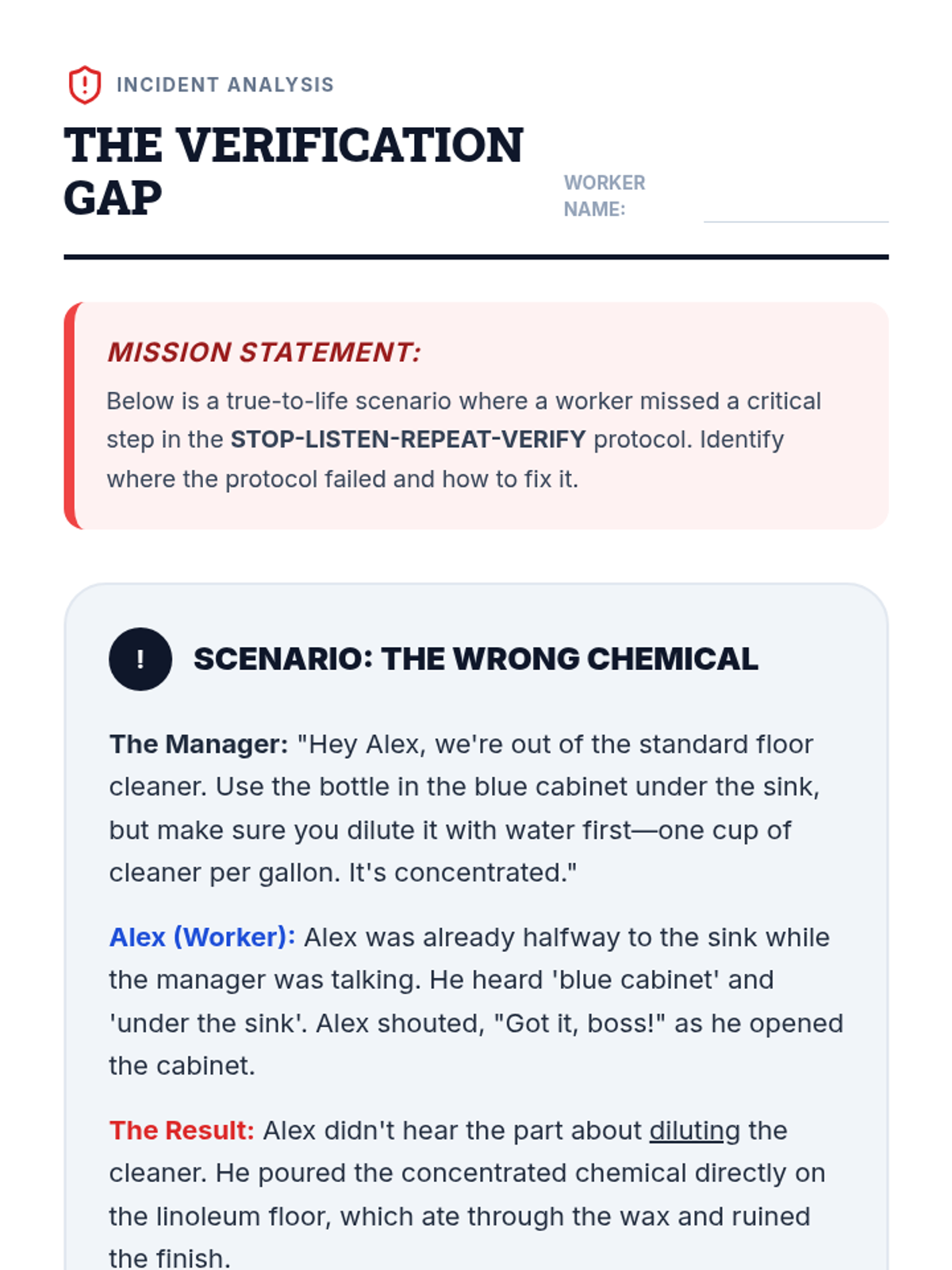
A case study worksheet where students analyze a workplace communication failure and identify where the 'Stop, Listen, Repeat, Verify' protocol was broken.
Instructional slides for Lesson 2 on professional interruption techniques, including script examples, reframing "rudeness" as accuracy, and role-play instructions.
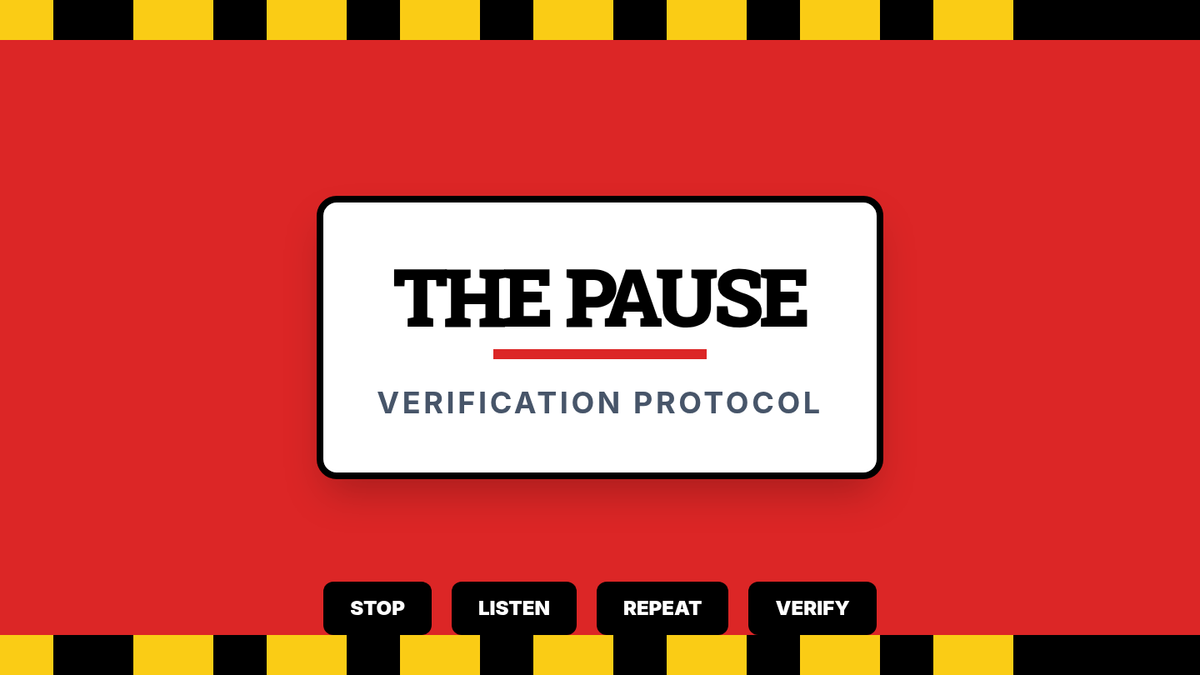
A slide deck introducing the formal 'Stop, Listen, Repeat, Verify' communication protocol for workplace safety and accuracy.
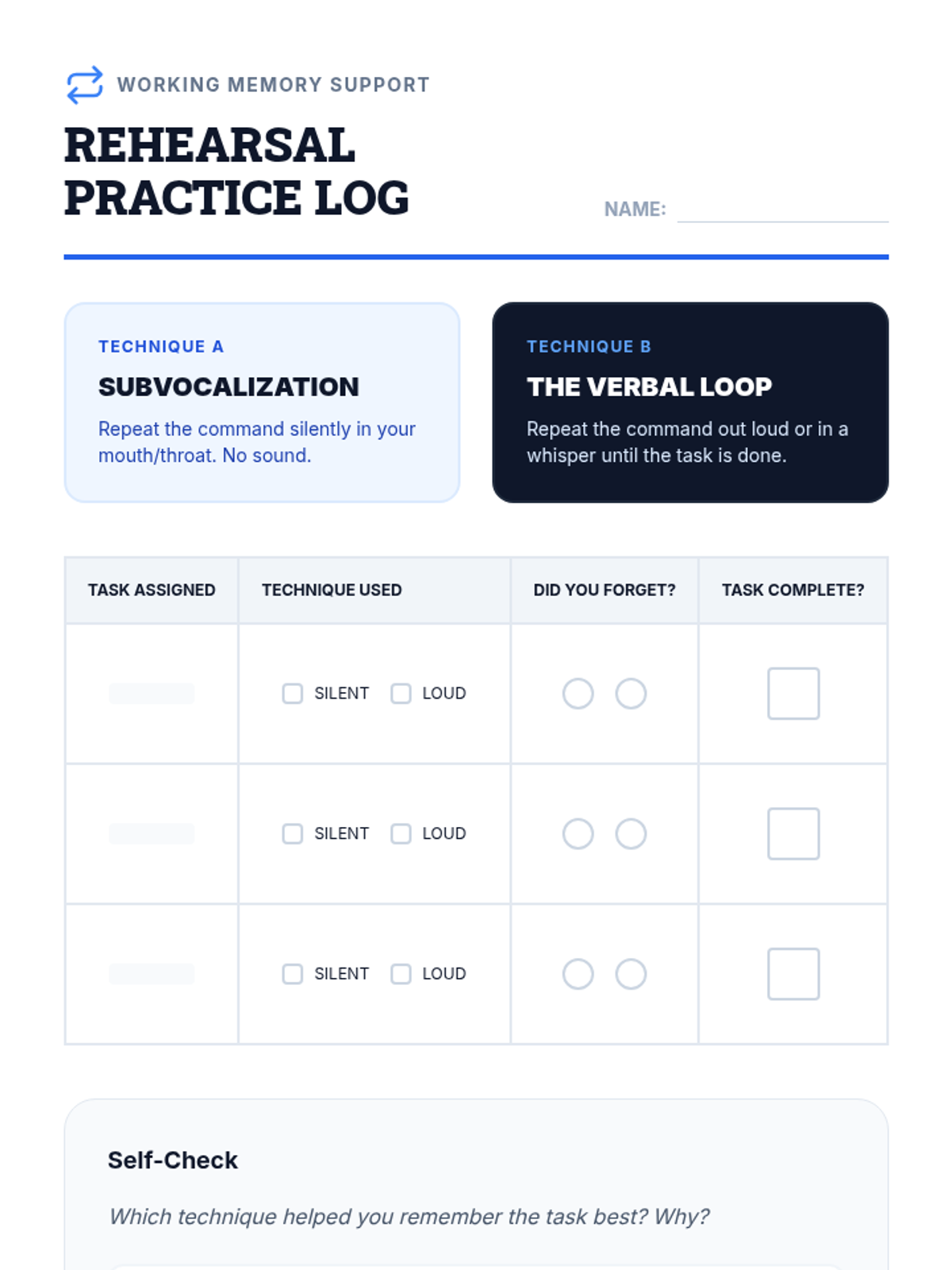
A log for students to track their use of verbal rehearsal techniques during classroom or vocational tasks.
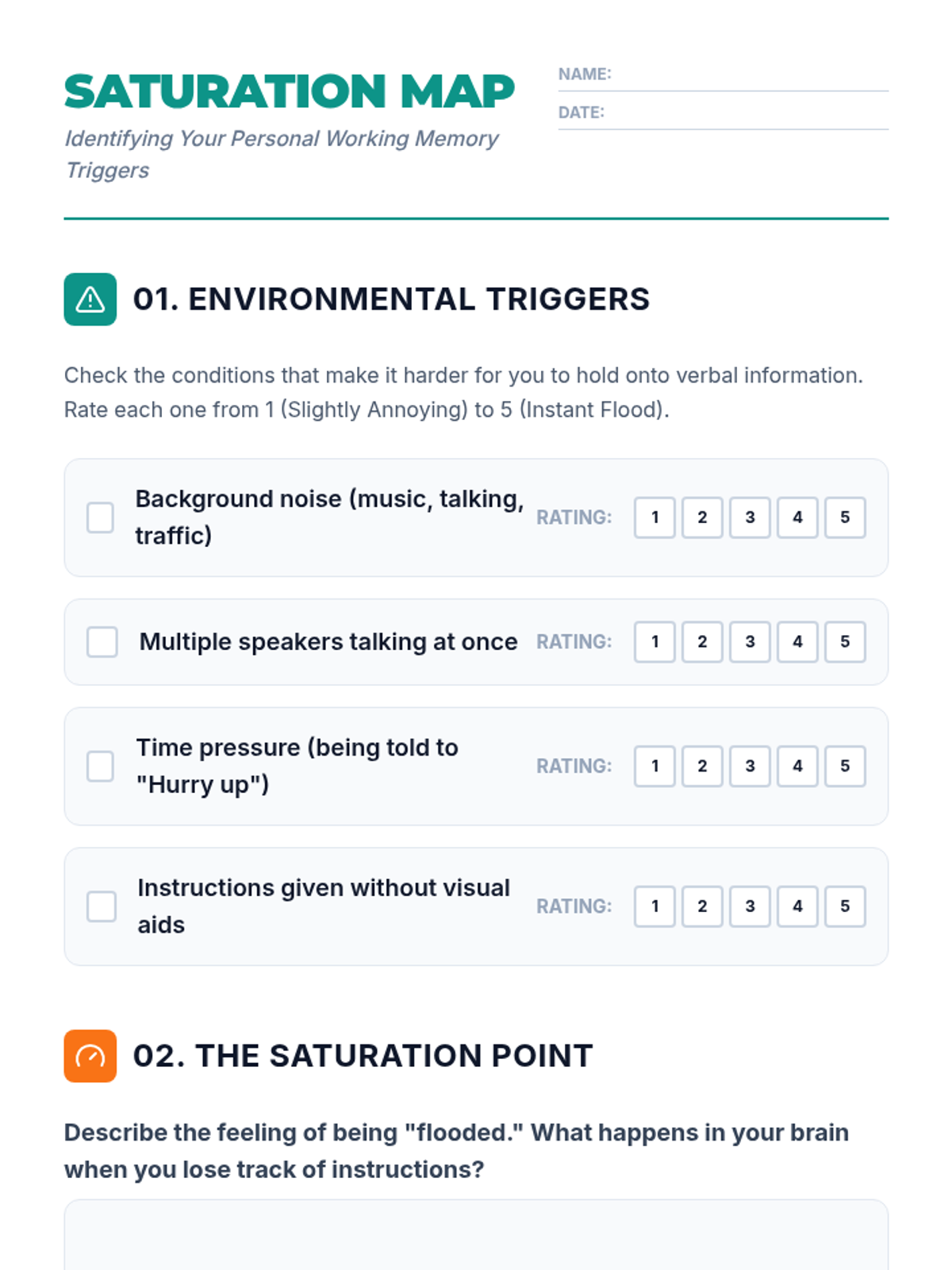
Self-reflection worksheet for Lesson 1 to help students identify their environmental triggers and personal saturation points for working memory.
A slide deck introducing verbal rehearsal strategies like subvocalization and the verbal loop to help students maintain instructions in working memory.
Introductory slide deck for Lesson 1, defining working memory saturation (information flooding) and identifying personal triggers for sensory/information overload.
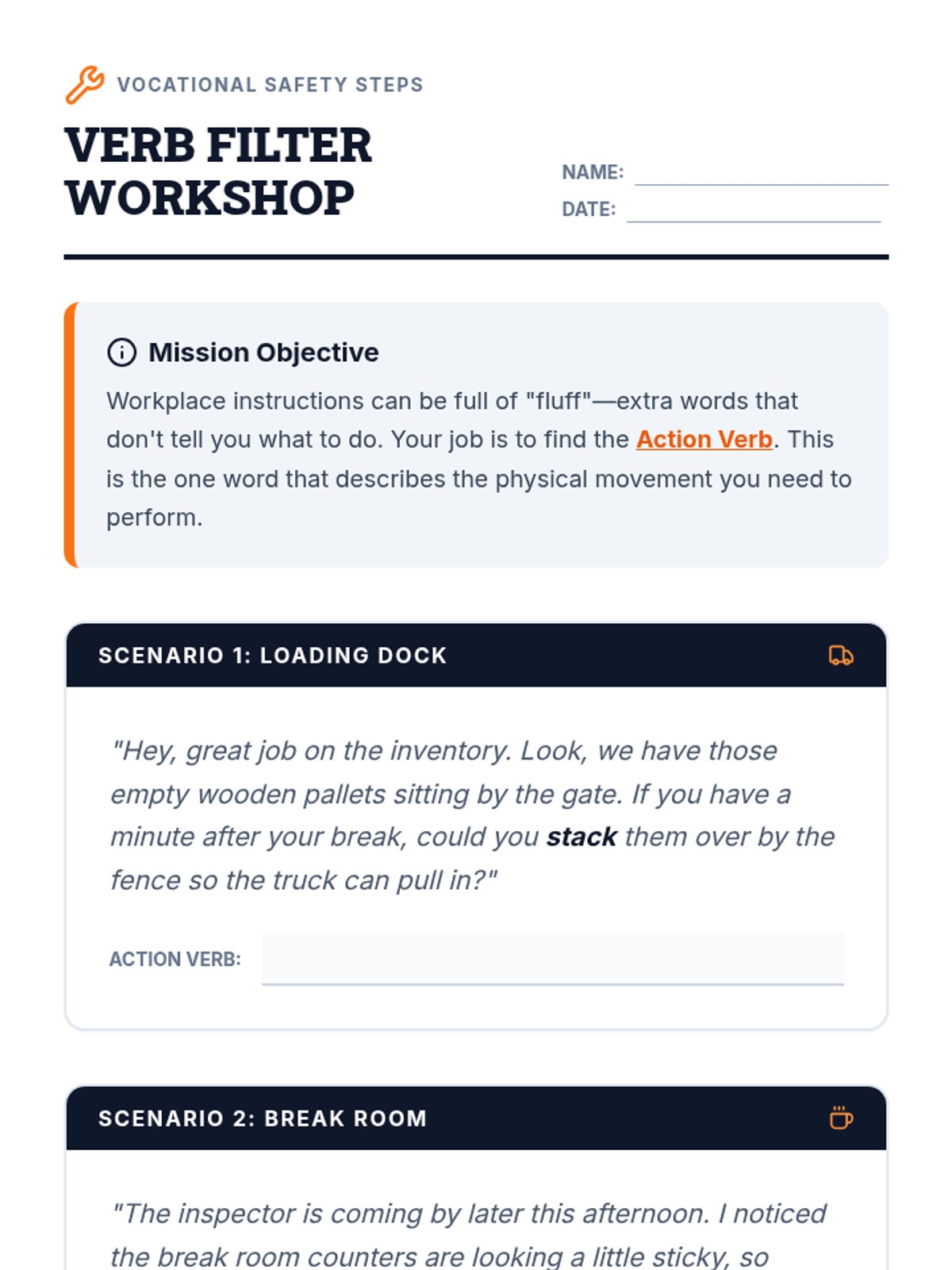
A worksheet for students to practice isolating the action verb from multi-sentence workplace instructions.
A slide deck introducing the concept of 'action verbs' in workplace instructions and how to filter out unnecessary information.
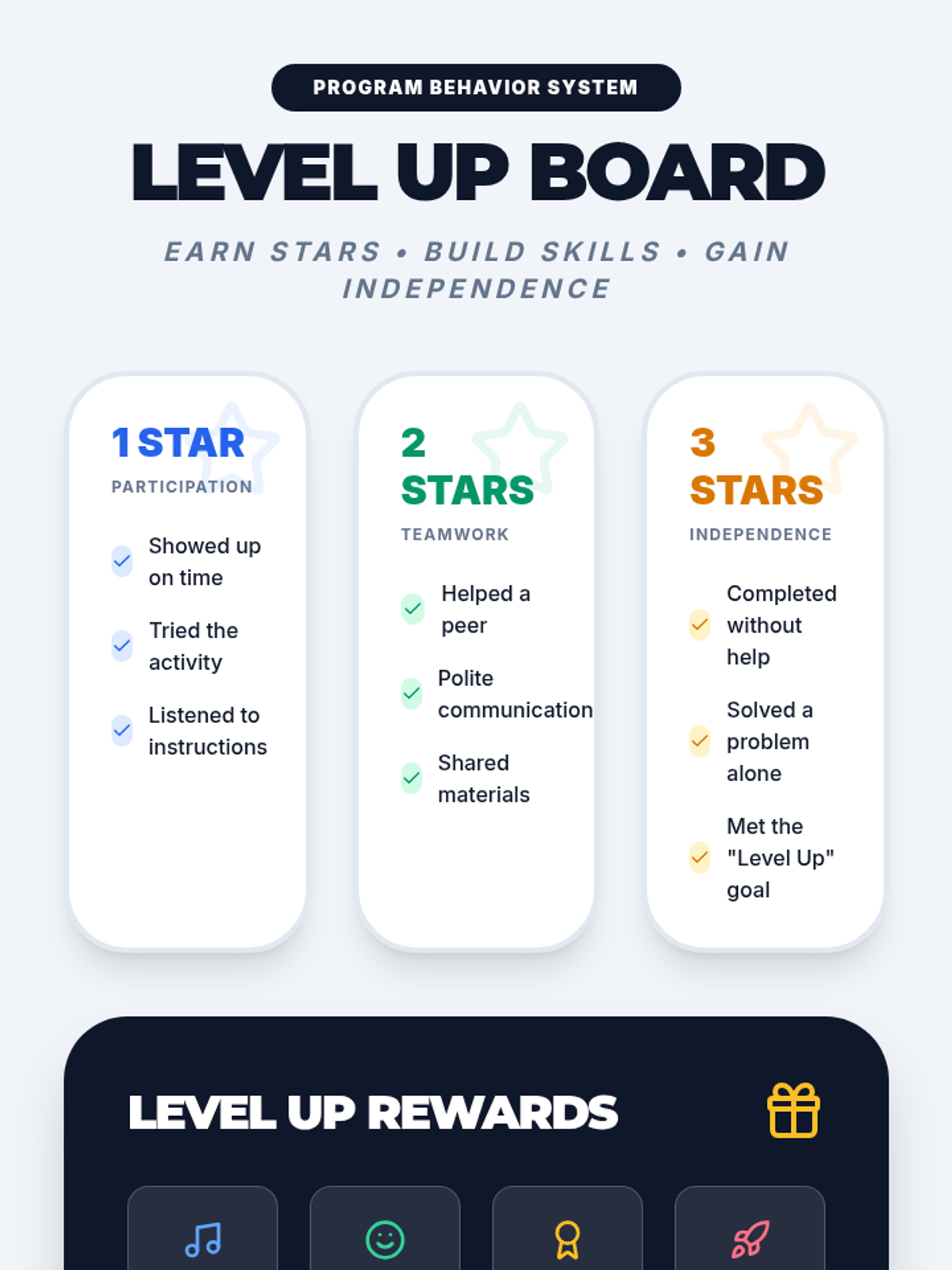
A program-wide behavior and motivation system poster featuring a tiered star reward system for participation, teamwork, and independence.
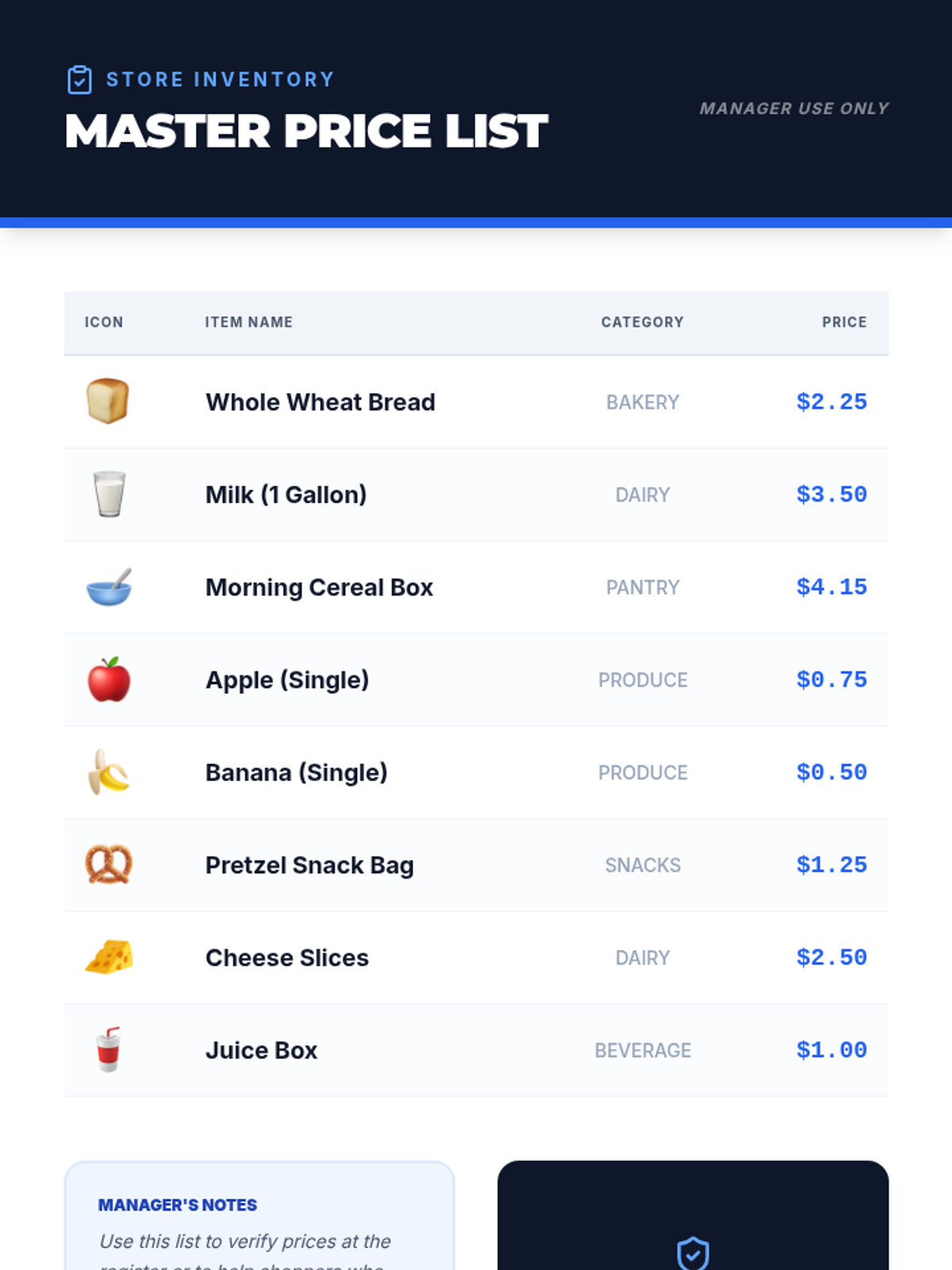
A master inventory and price list for the Pantry Store simulation, designed to help Cashiers and Managers verify pricing and category information.
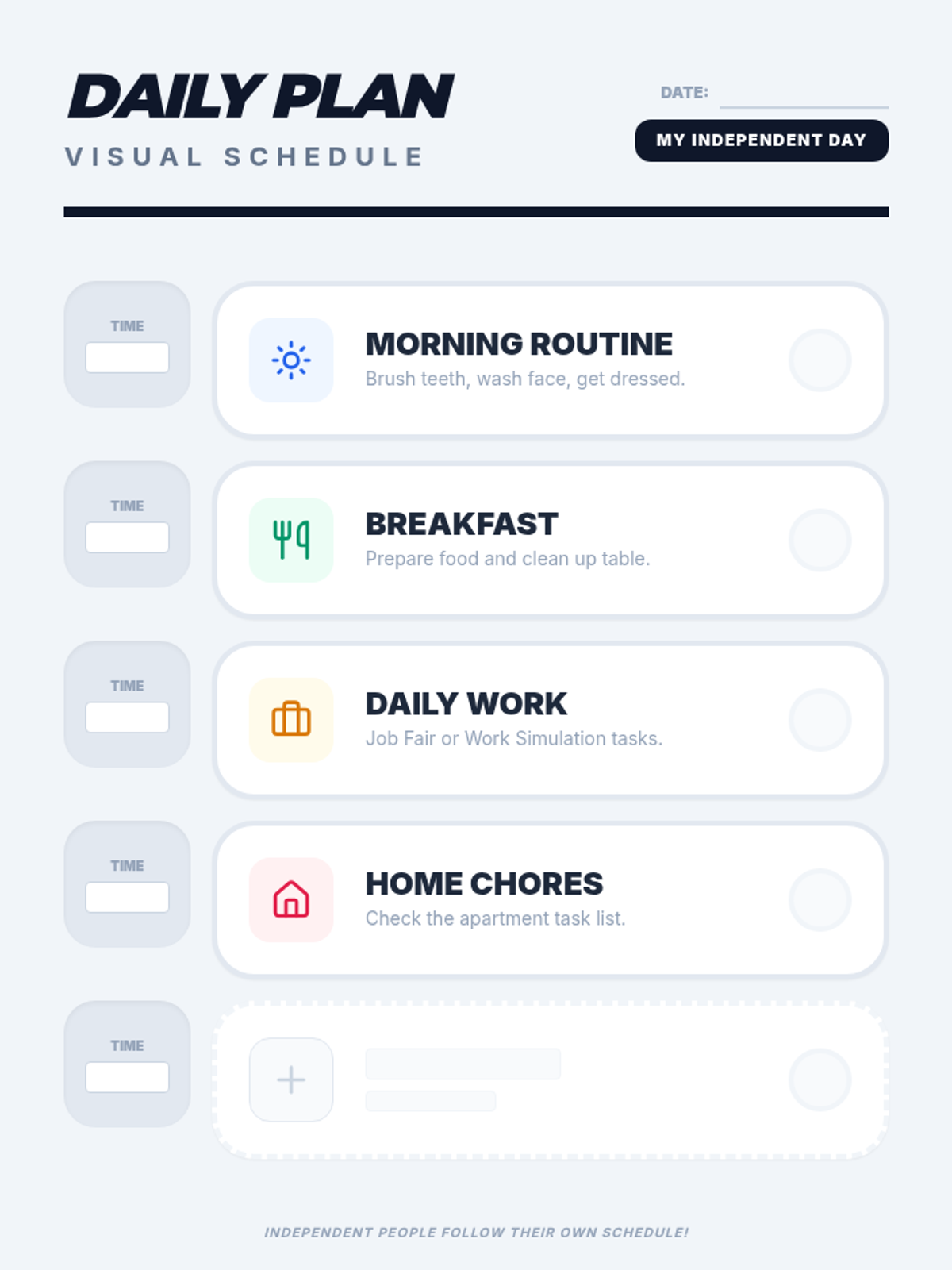
A visual daily schedule template with icons and checkboxes, helping students track their routines and simulation activities throughout the program.
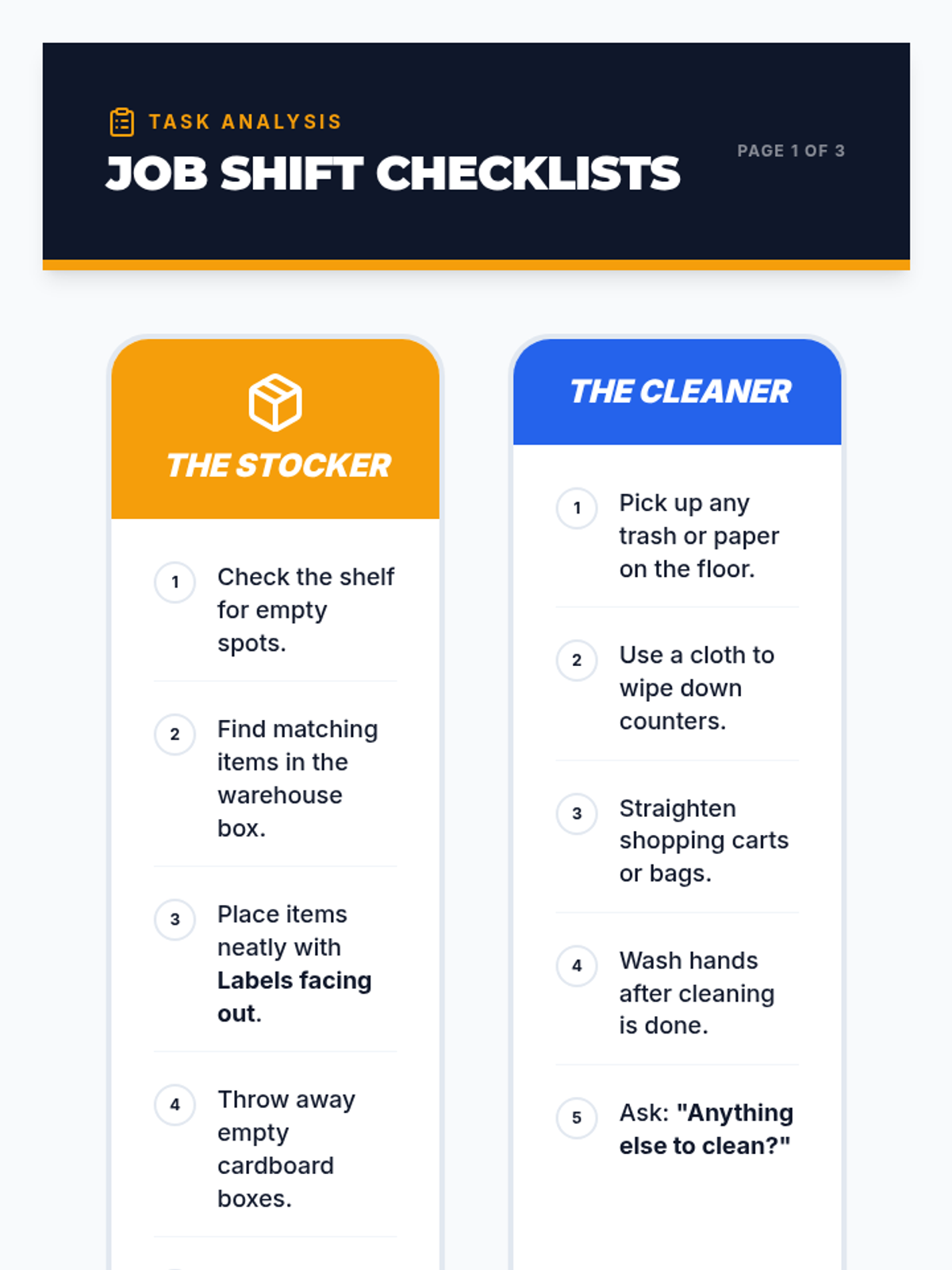
Step-by-step task analysis cards for stocking, cleaning, office assistance, bagging, table setting, and mail sorting jobs, designed to help students follow multi-step directions.
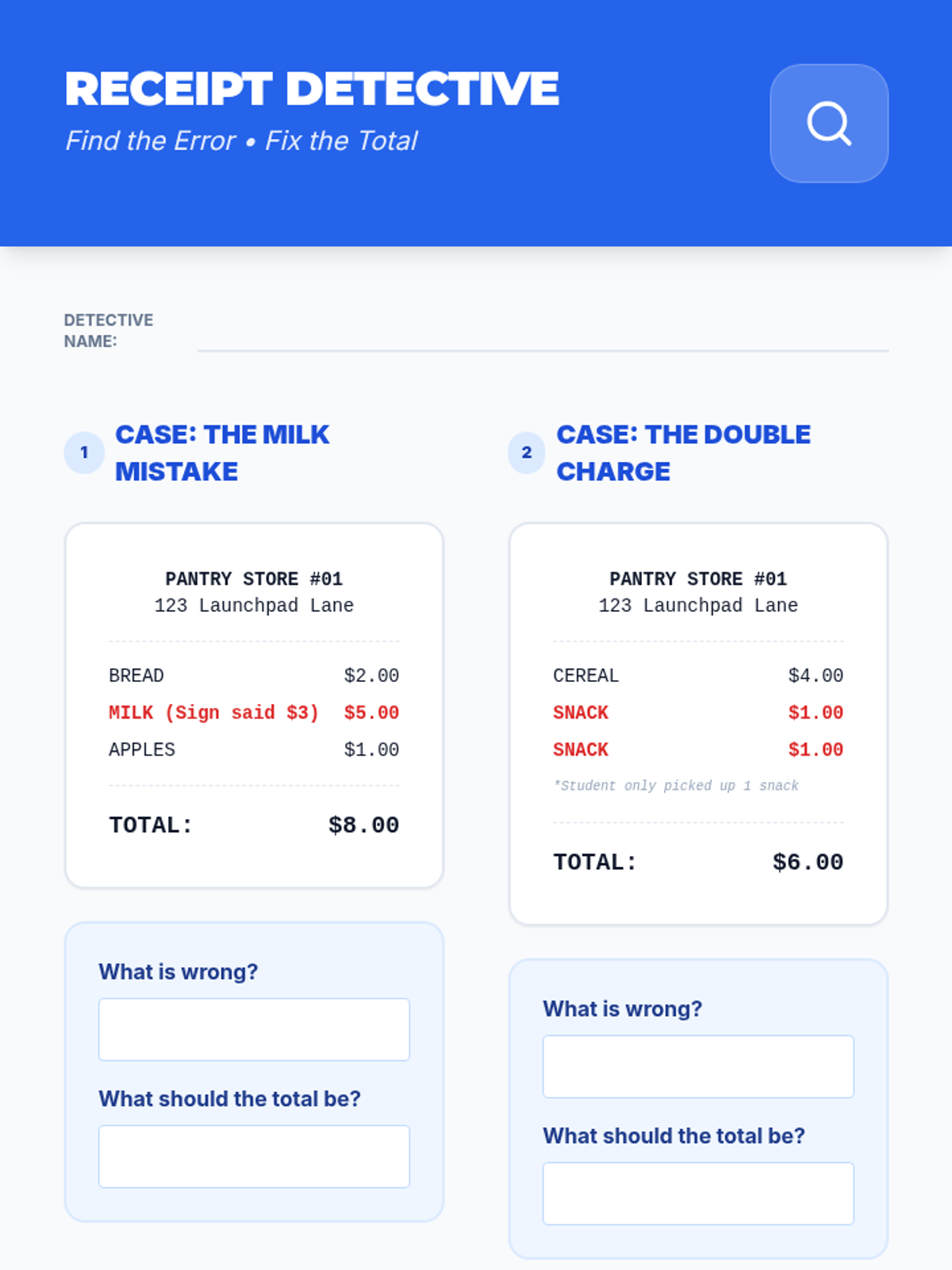
An error-analysis worksheet where students identify pricing mistakes and double charges on mock receipts, practicing both math and self-advocacy skills.
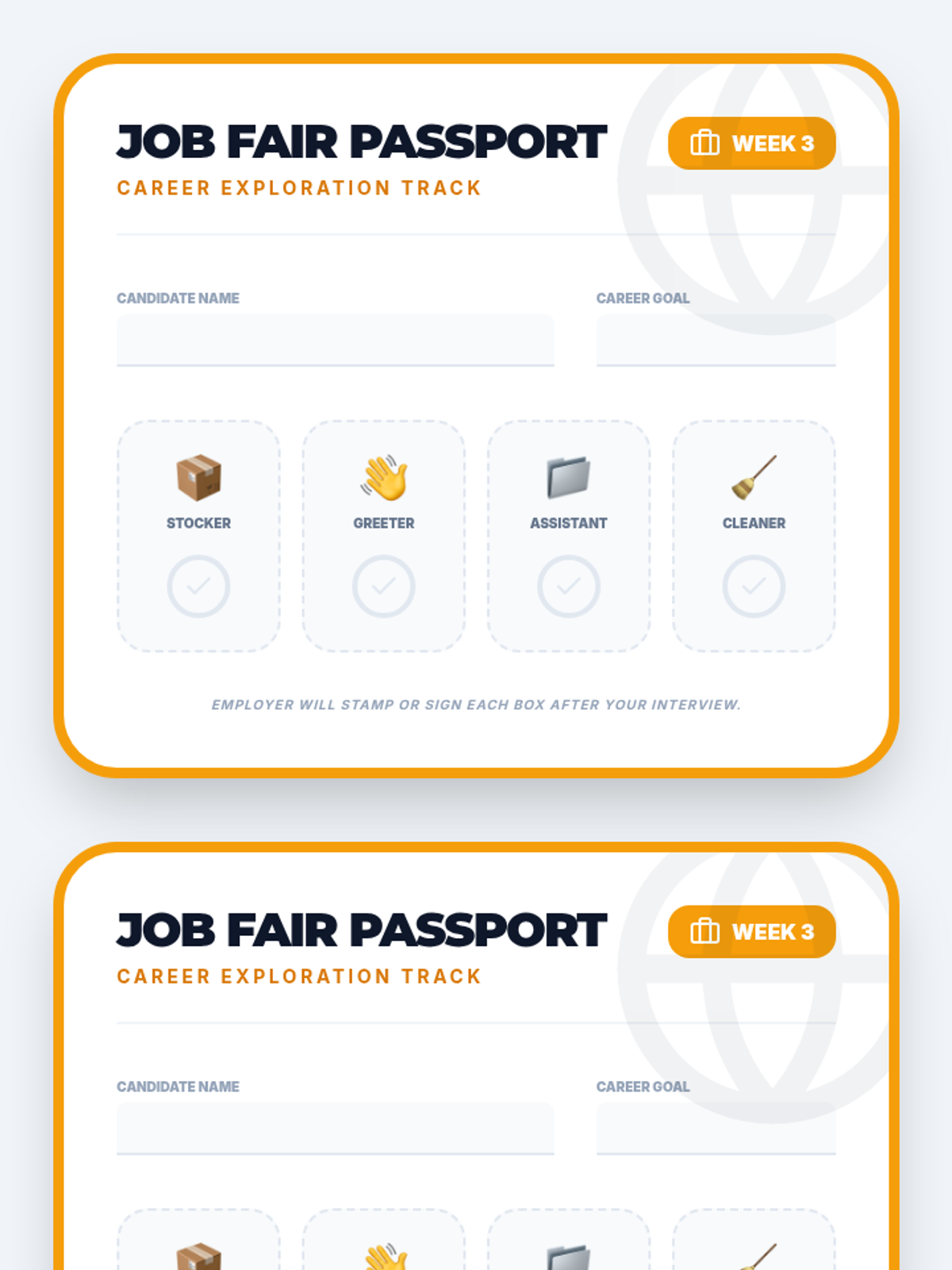
A printable passport card for the mock job fair, used by students to track their progress as they rotate through different employment stations.
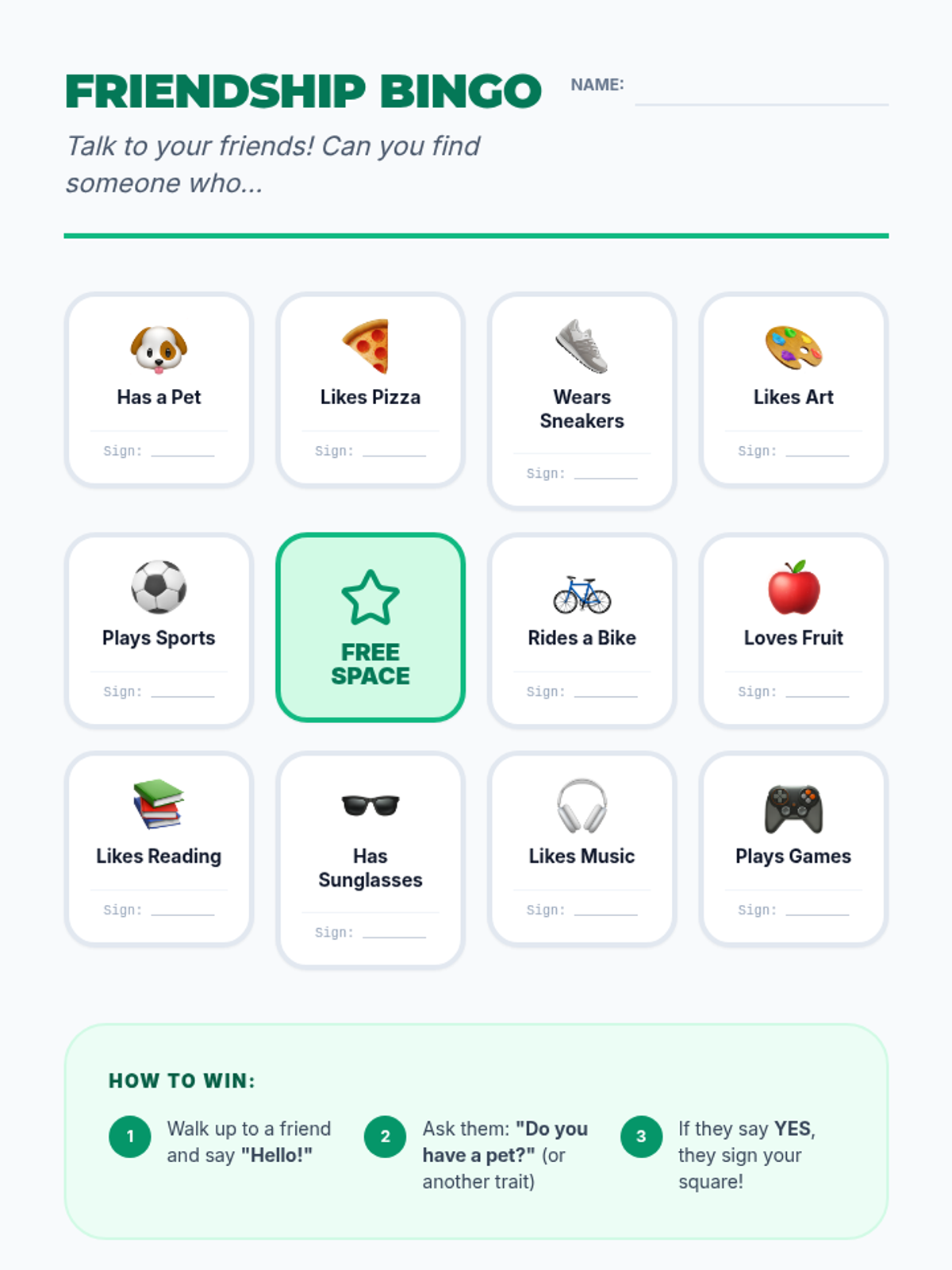
A social interaction bingo game designed to help students practice greetings and asking peer-focused questions.
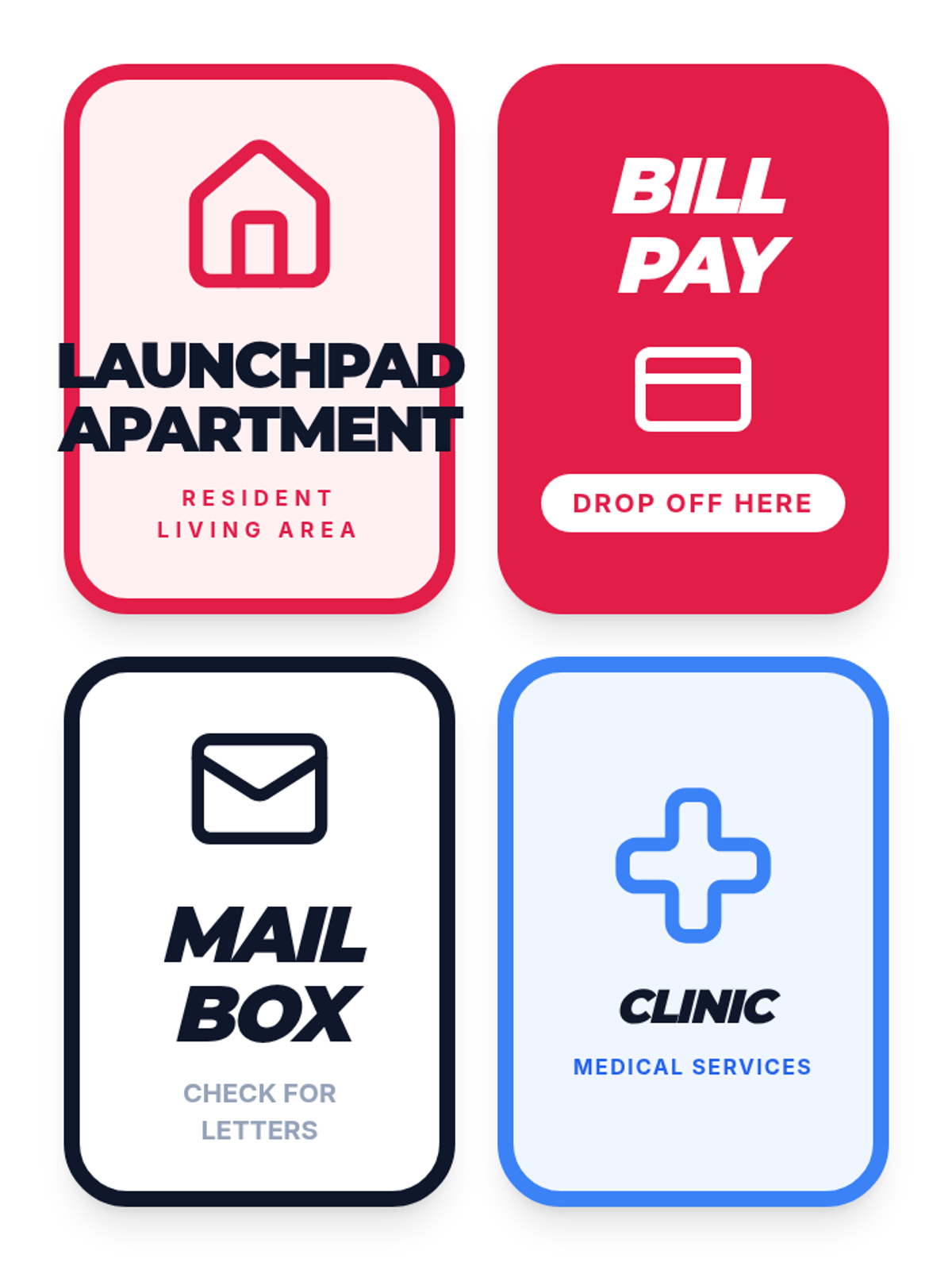
A collection of apartment simulation visuals including signs for the resident living area, bill payment center, and a formal maintenance request form.
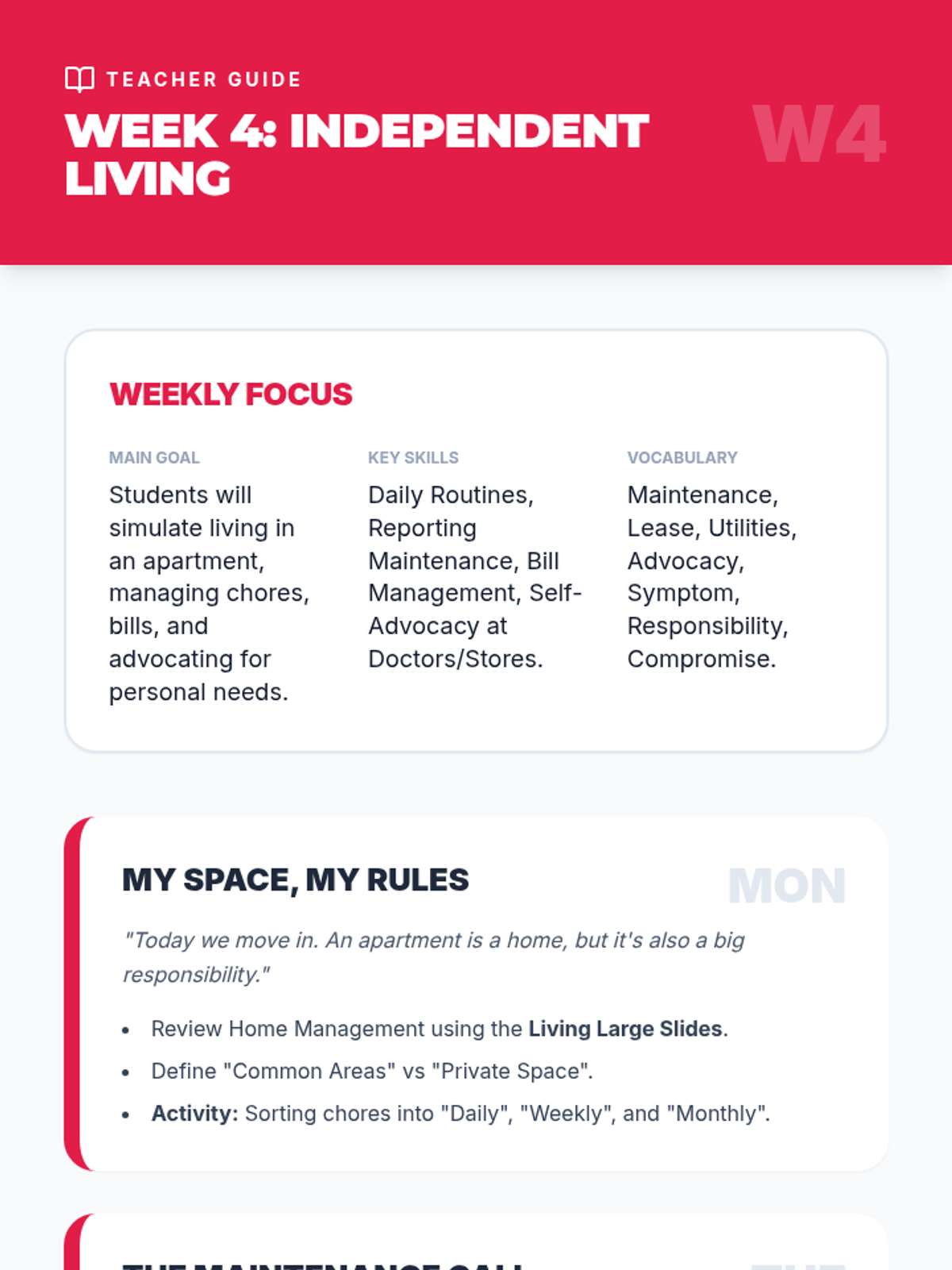
A detailed teacher-facing guide for Week 4, including daily lesson breakdowns, instructional scripts, and apartment simulation facilitation notes.
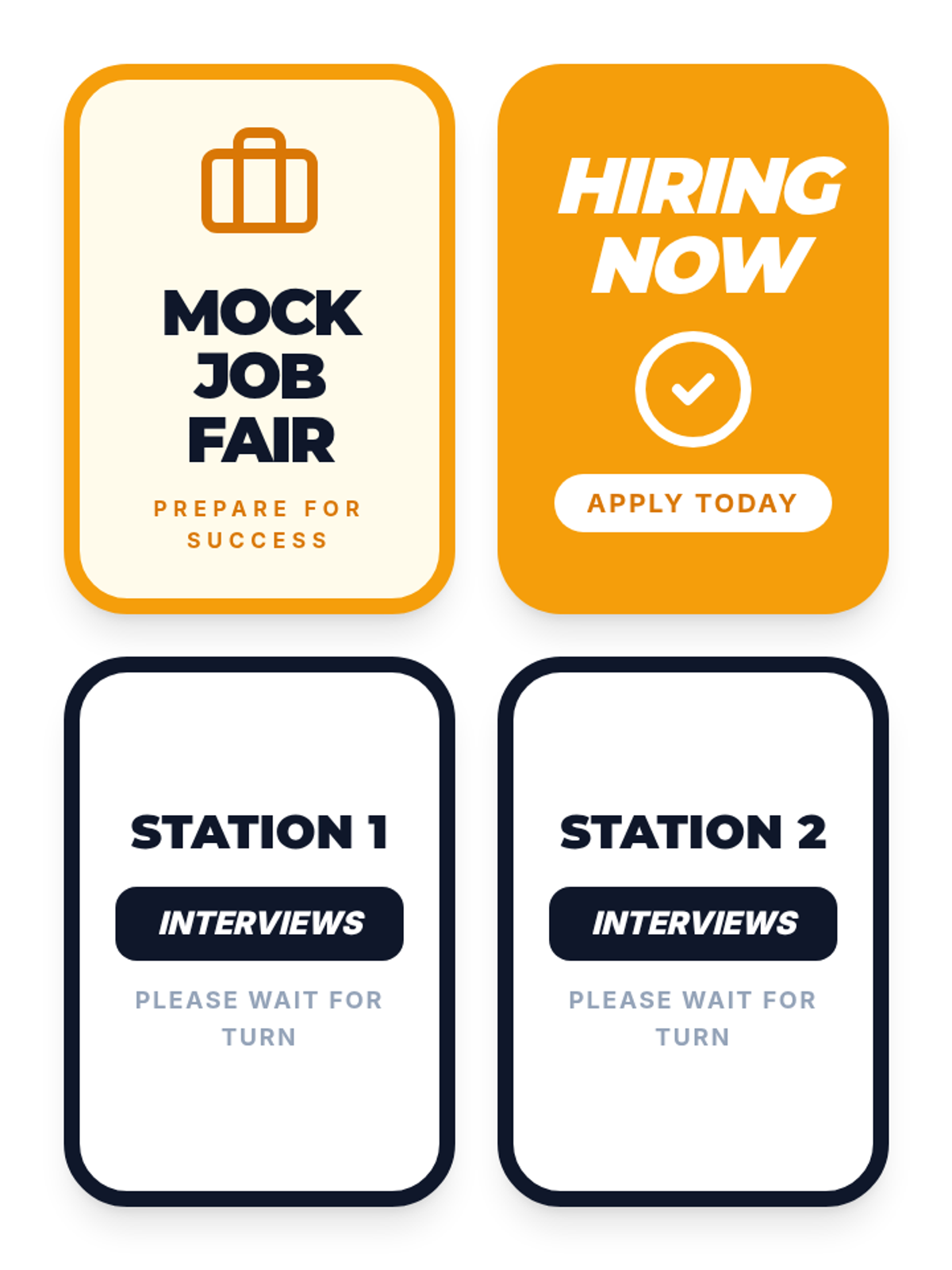
A set of job fair station signs, a "Hiring Now" poster, and an "Employee of the Month" photo frame for the mock job fair.
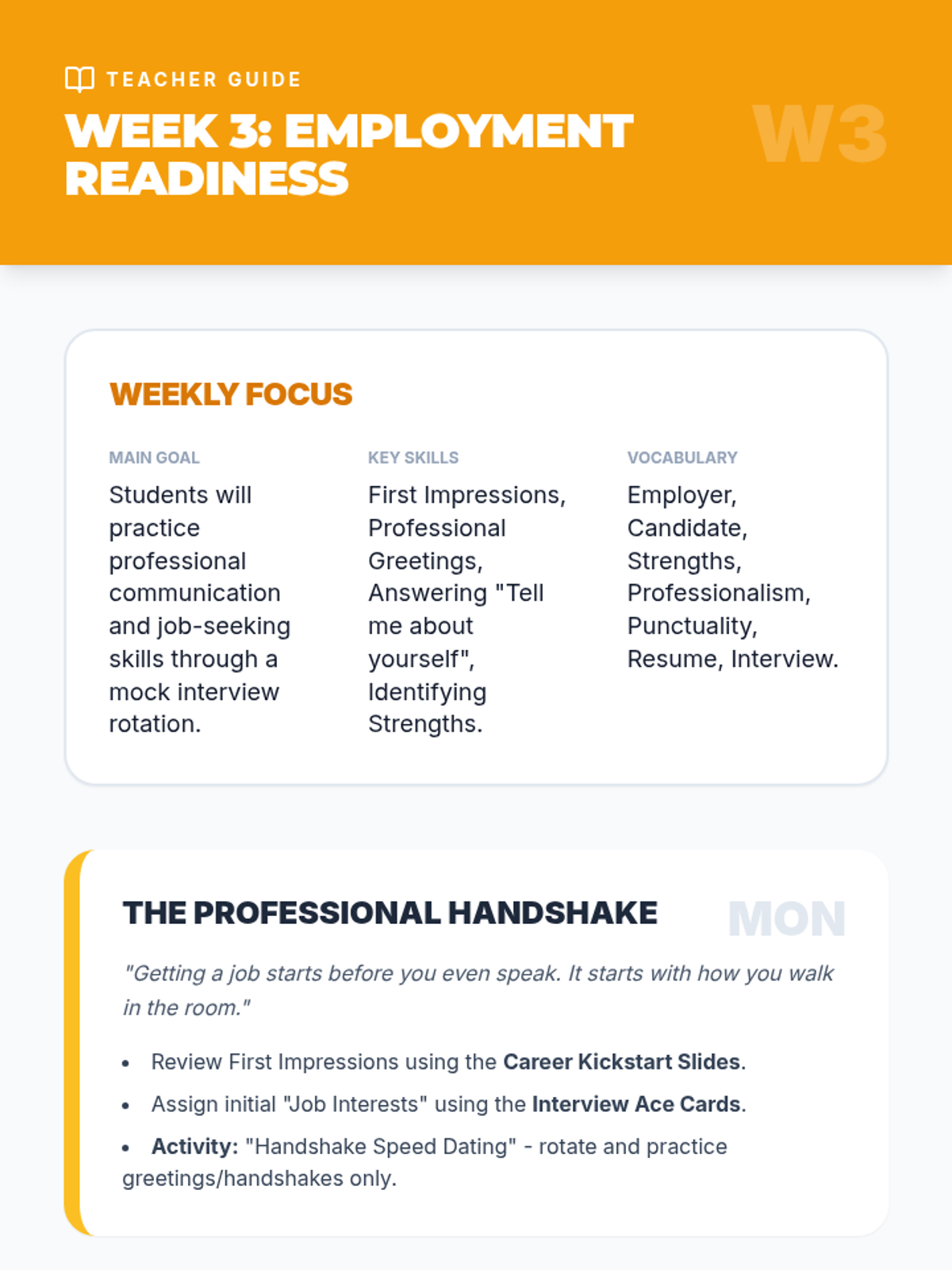
A detailed teacher-facing guide for Week 3, including daily lesson breakdowns, instructional scripts, and mock job fair facilitation notes.
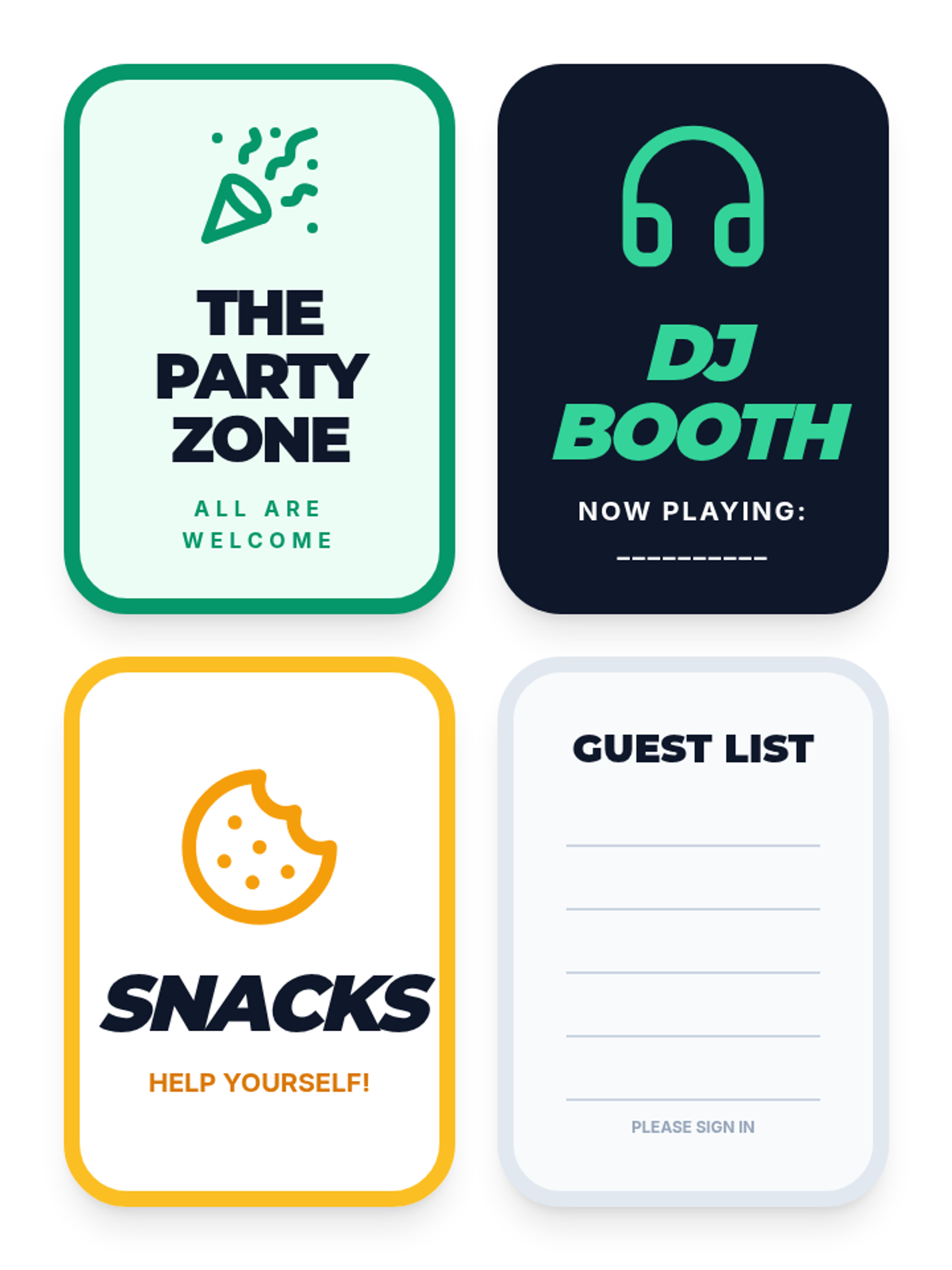
A collection of printable signs and role badges for the Week 2 Social Skills mini-party, featuring color-coded designs and clear iconography.