Legal frameworks under IDEA and Section 504 alongside essential IEP components like goals and accommodations. Equips stakeholders for collaborative advocacy and effective participation in IEP meetings.
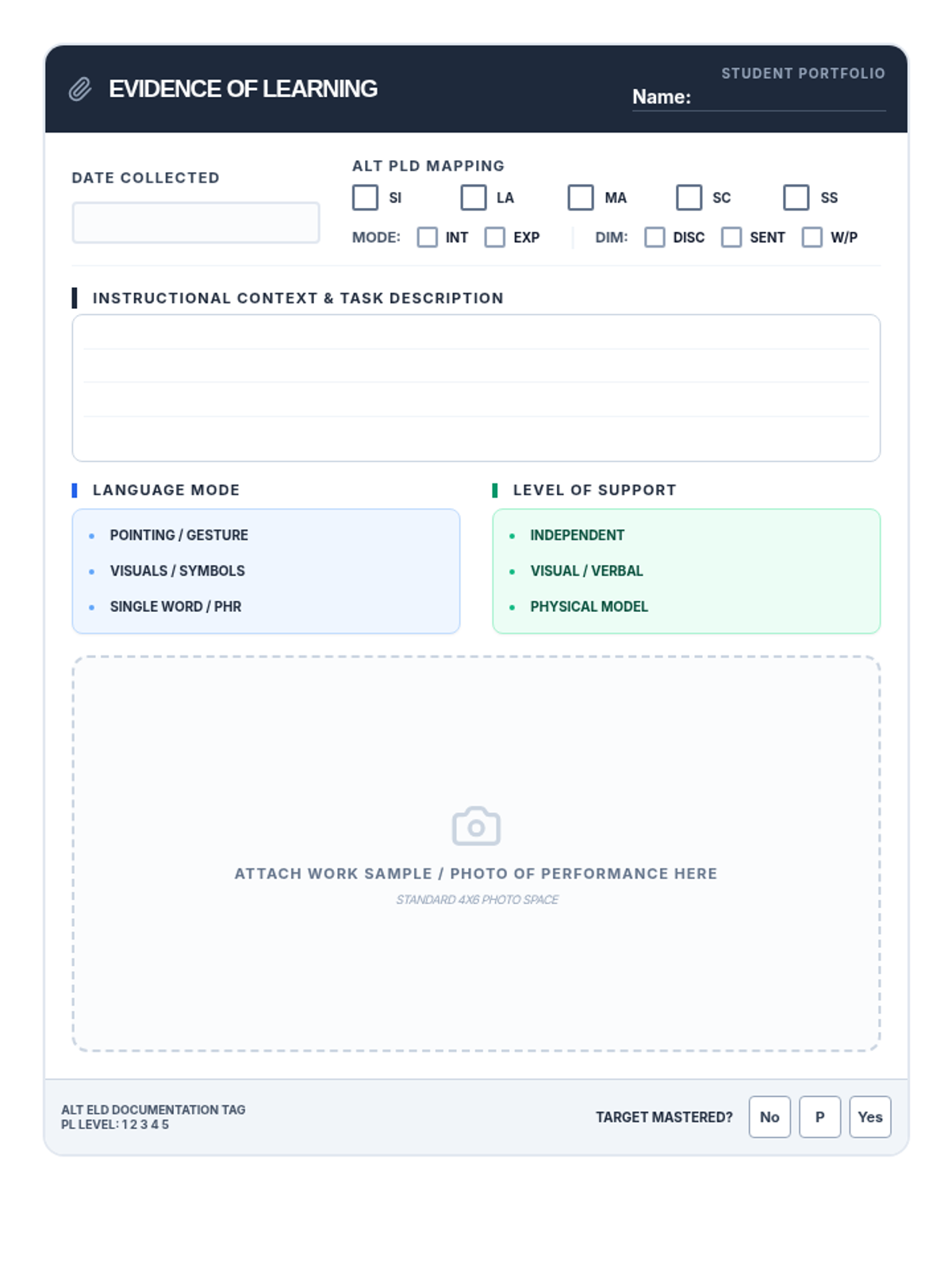
A work sample documentation tag that provides context for student work, including task descriptions, language use observations, and support level tracking. Optimized for single-page use with Sentence dimension included.
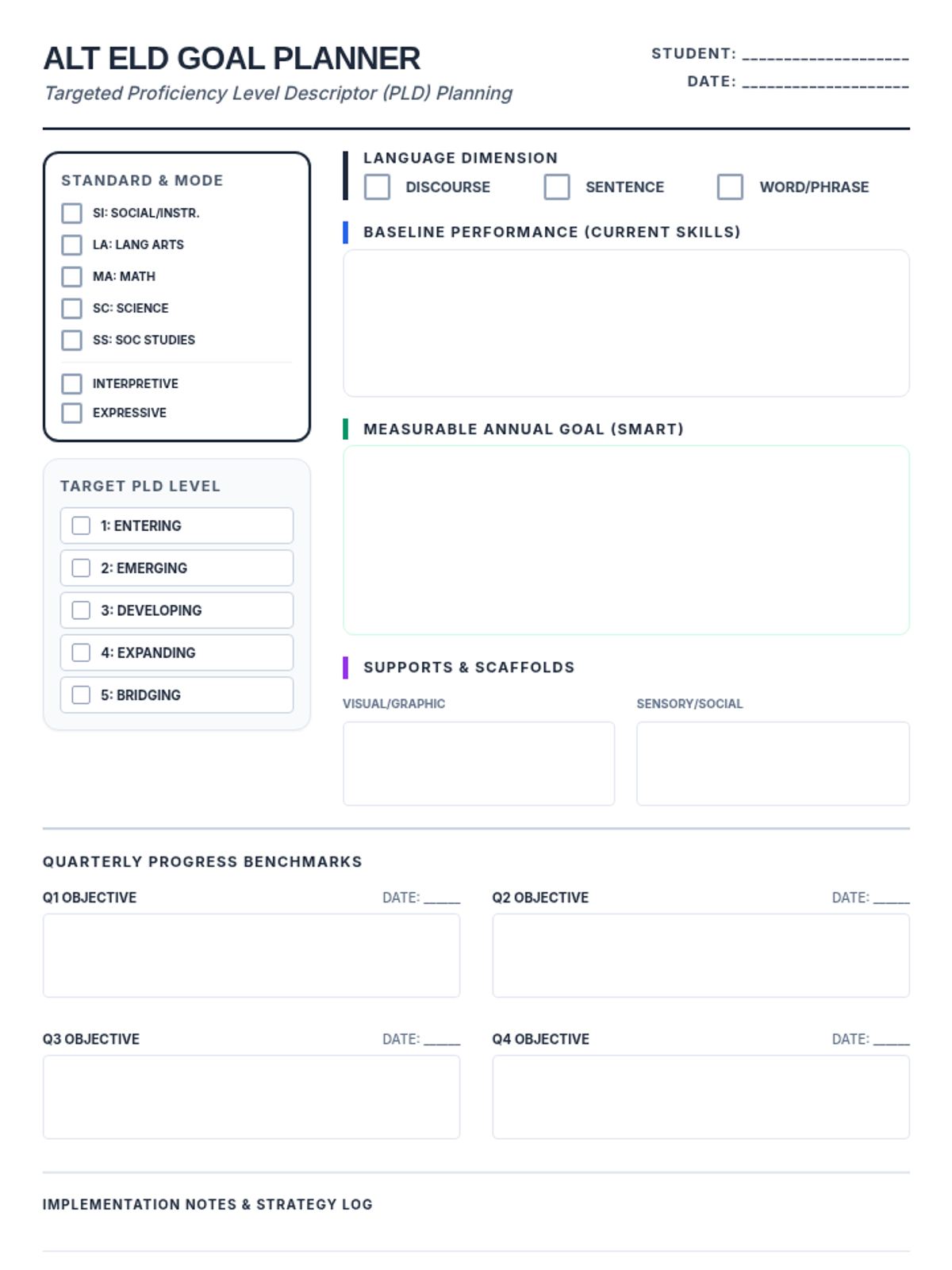
A detailed goal-setting template specifically designed for Alt ELD proficiency levels, allowing teachers to align IEP goals with WIDA standards and track quarterly benchmarks. Optimized for single-page use with expanded note space.
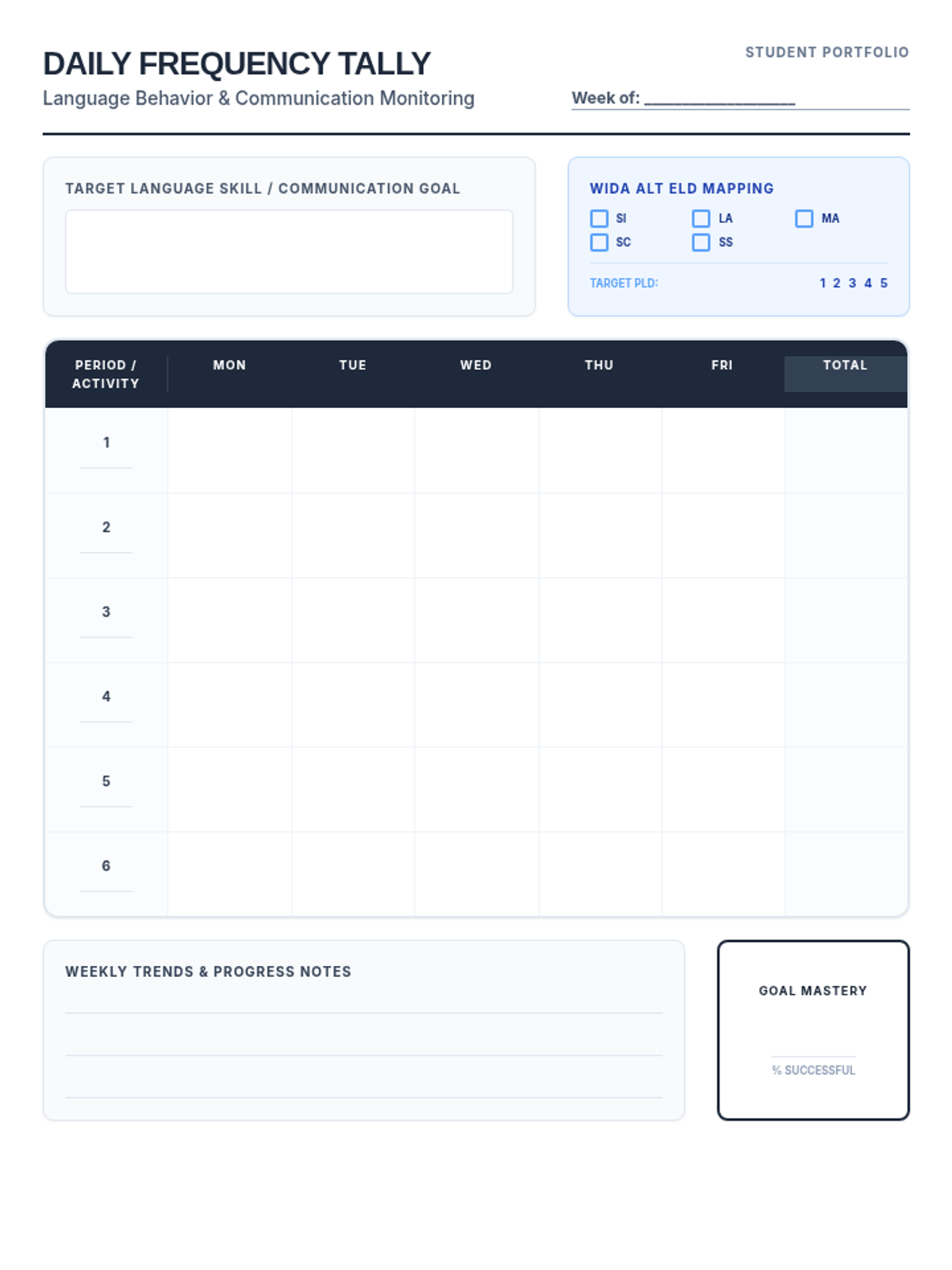
A weekly frequency tally sheet for tracking specific target language behaviors or communication goals, organized by day and period. Updated to include explicit standard selection and expanded note space.
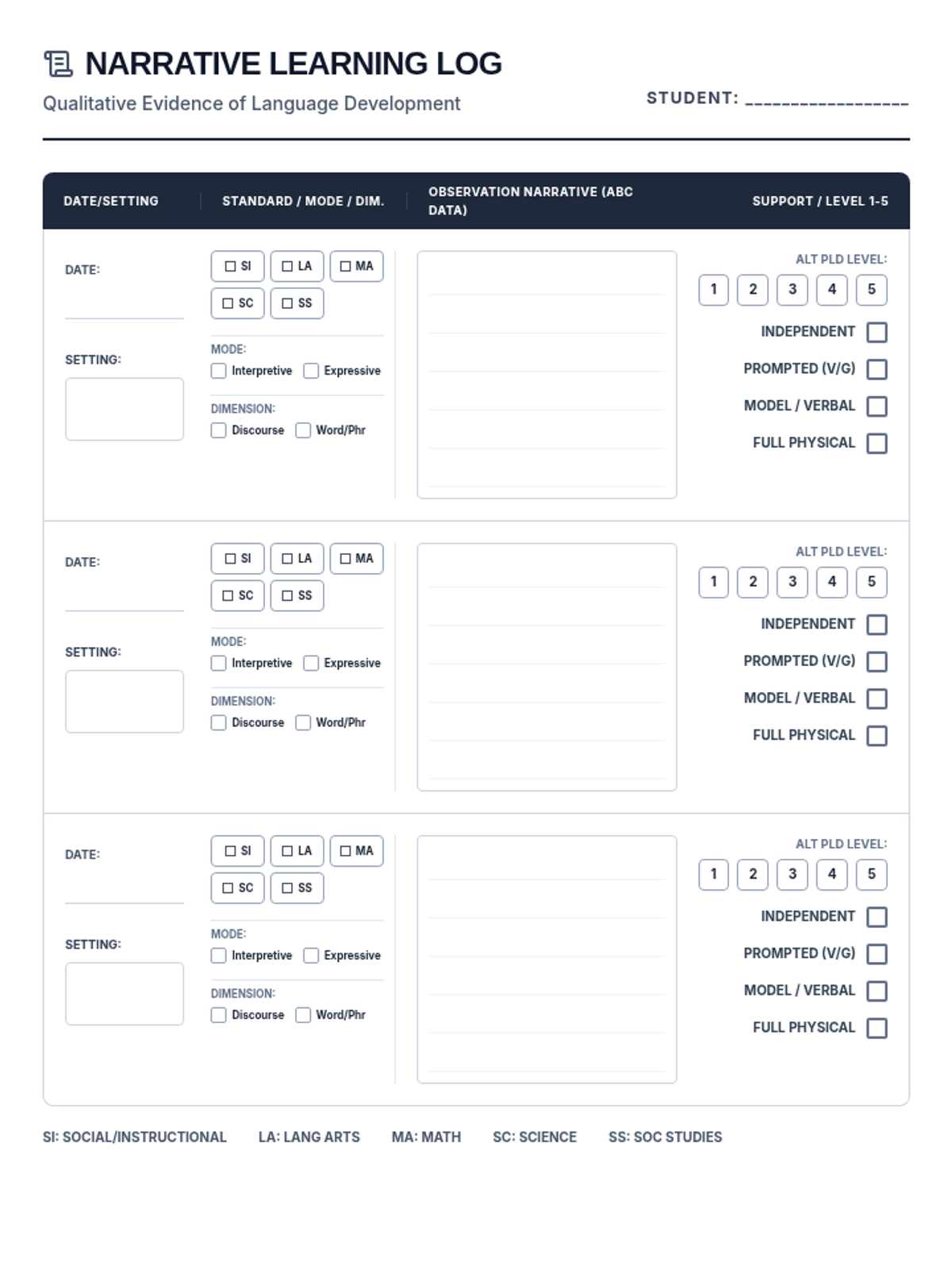
A narrative observation log designed for anecdotal evidence, featuring sections for setting, standard alignment, detailed notes, and prompt level tracking. Updated with checkboxes and level indicators.
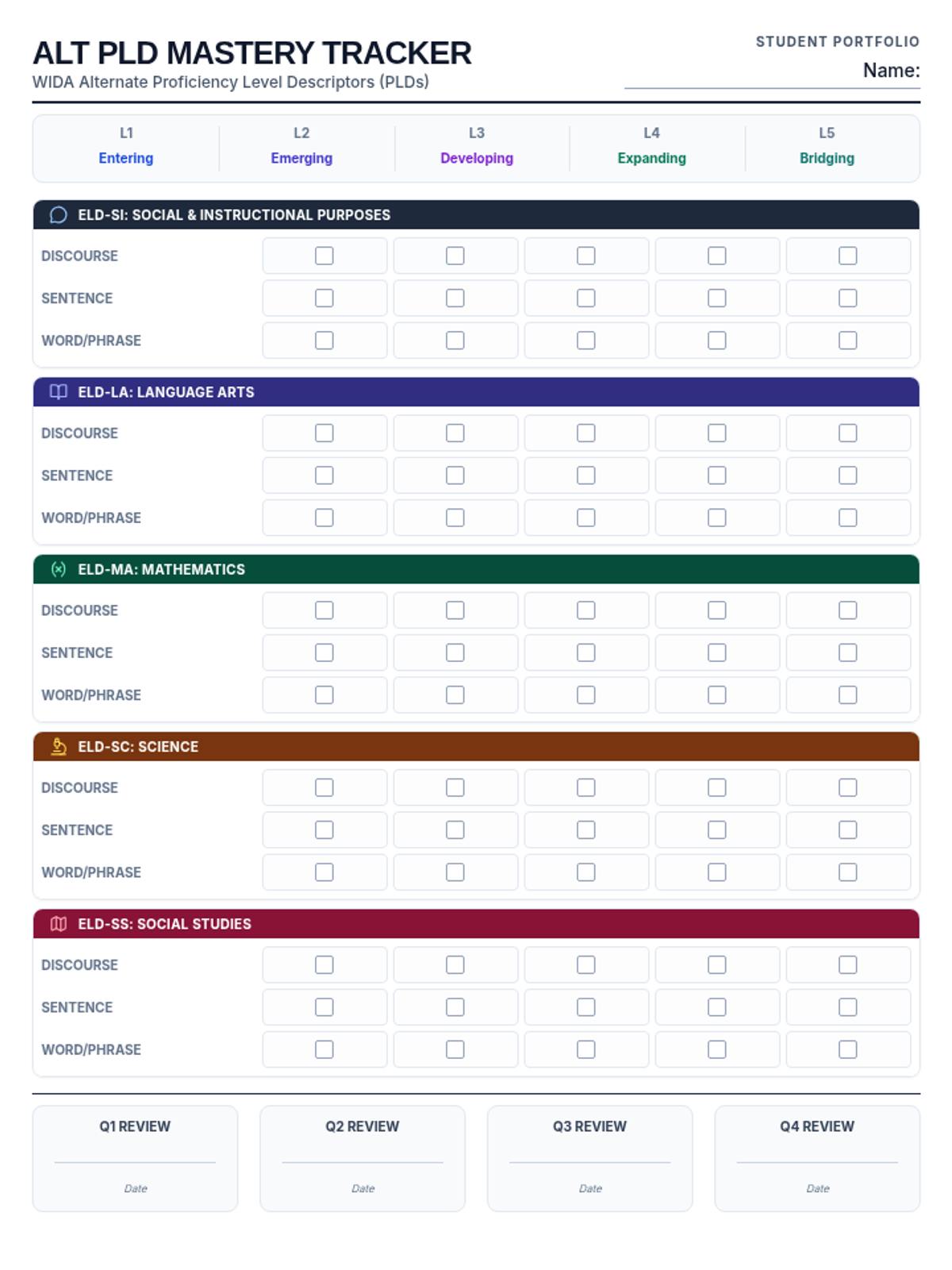
A high-level standards tracking sheet that allows educators to visualize student progress across all five WIDA Alternate ELD standards and proficiency levels in one view. Updated with Discourse, Sentence, and Word/Phrase dimensions.
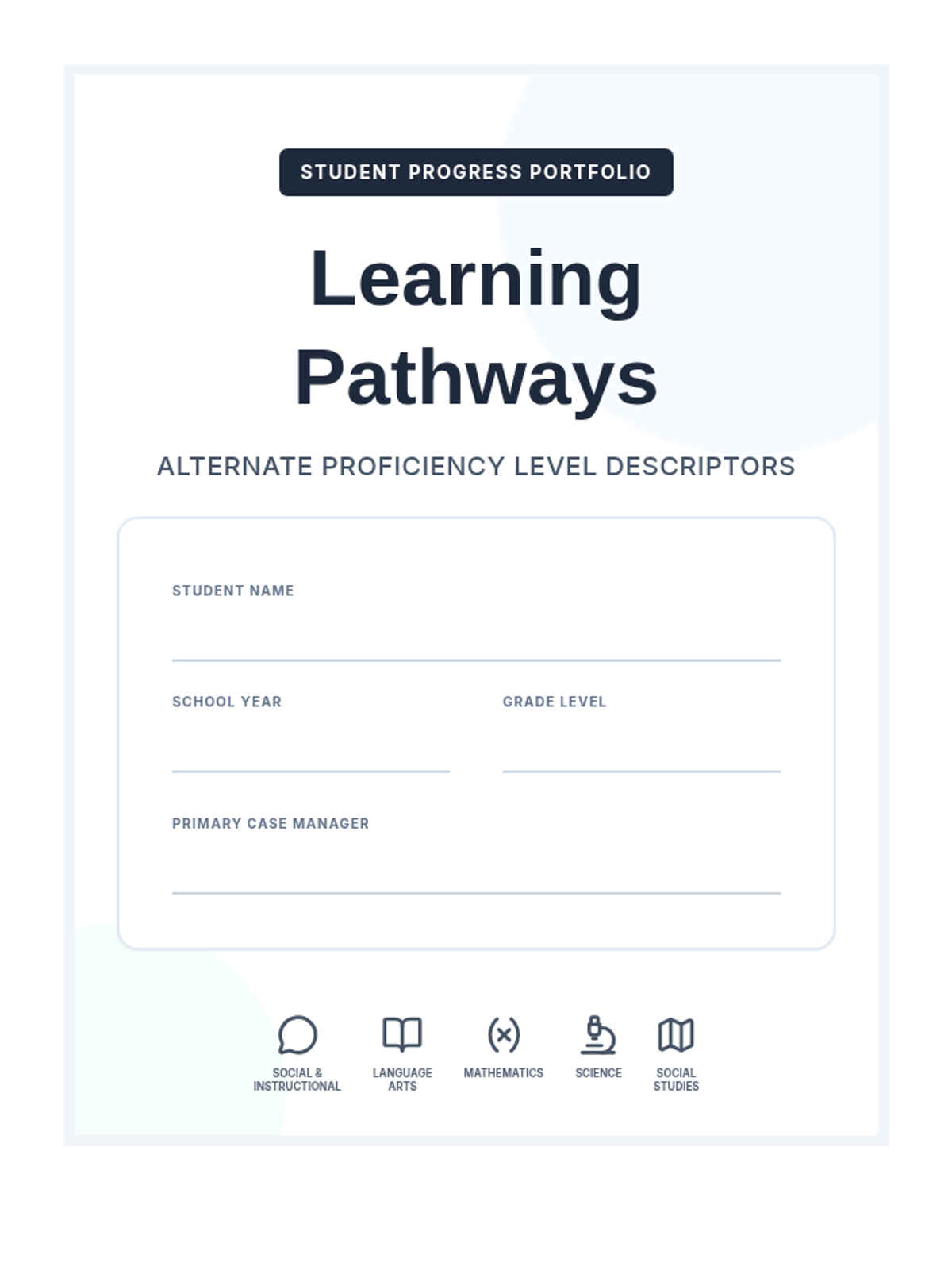
A clean and professional binder cover page for student portfolios, featuring a structured layout for identification and subtle iconography representing the five WIDA ELD standards. Updated to reflect Alternate PLDs.
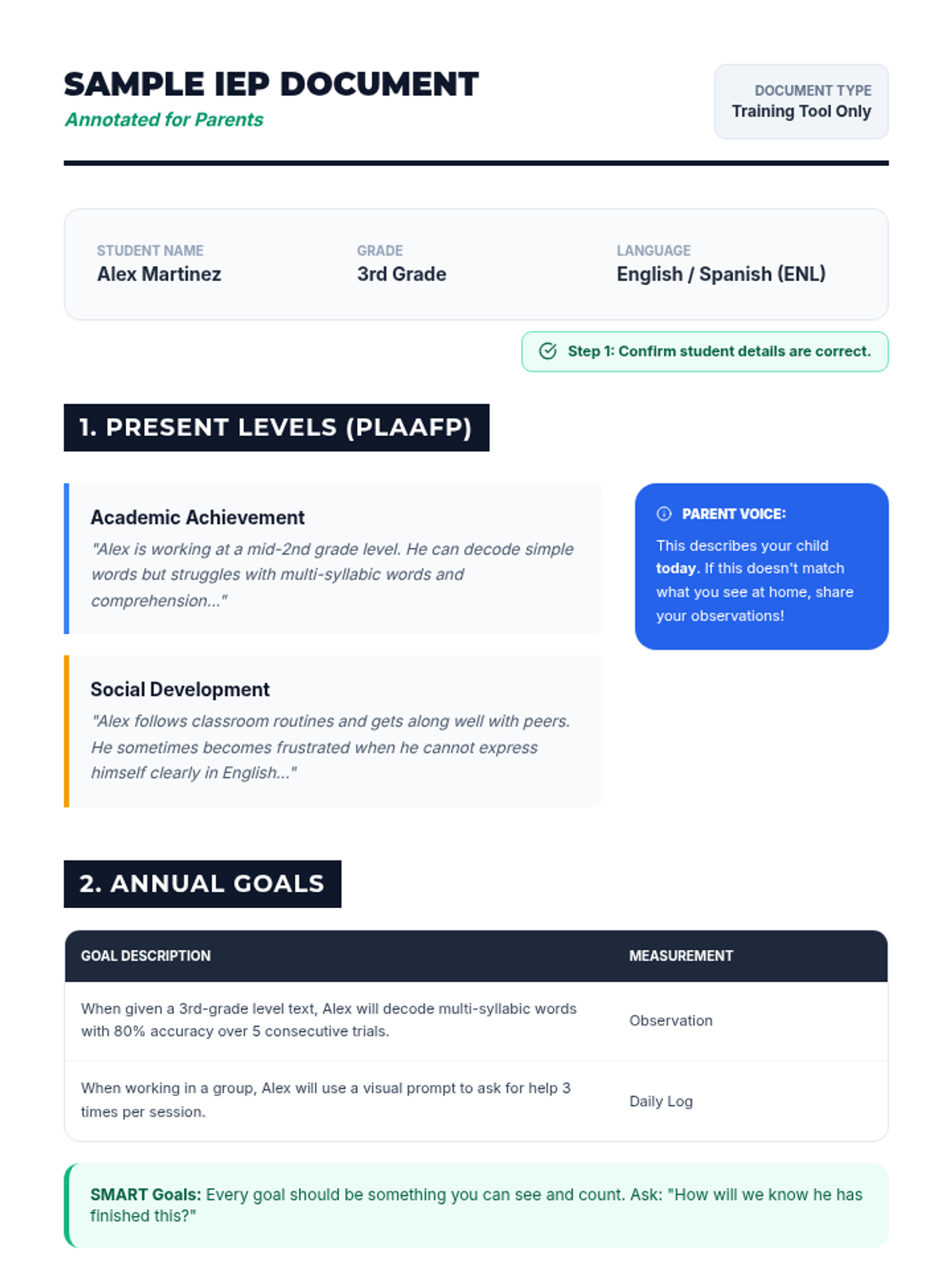
An annotated, parent-friendly sample IEP document that explains the key sections of an Individualized Education Program using a fictional student example.
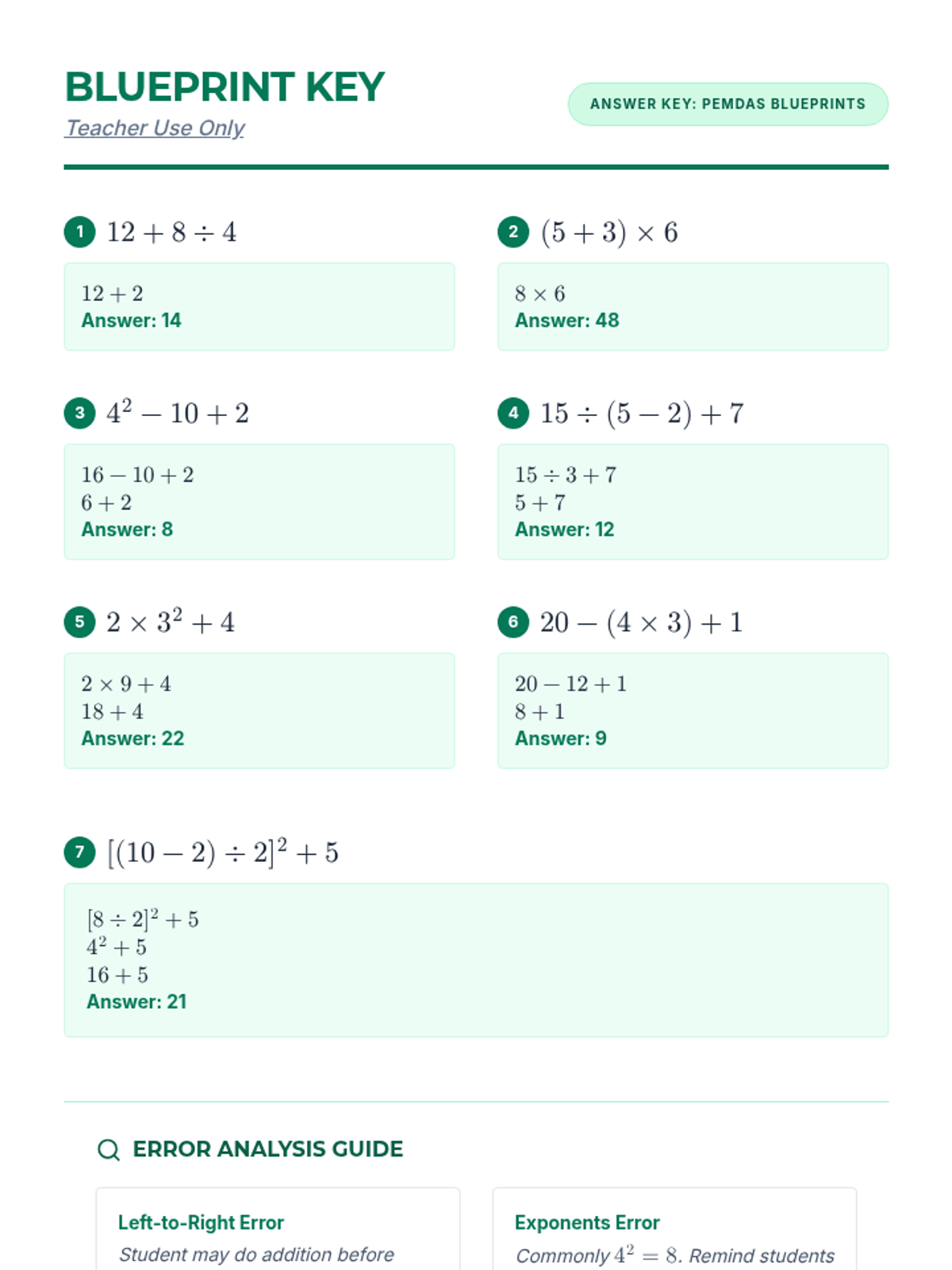
A teacher-facing answer key for the PEMDAS Blueprints worksheet, providing step-by-step solutions and a guide for common student errors.
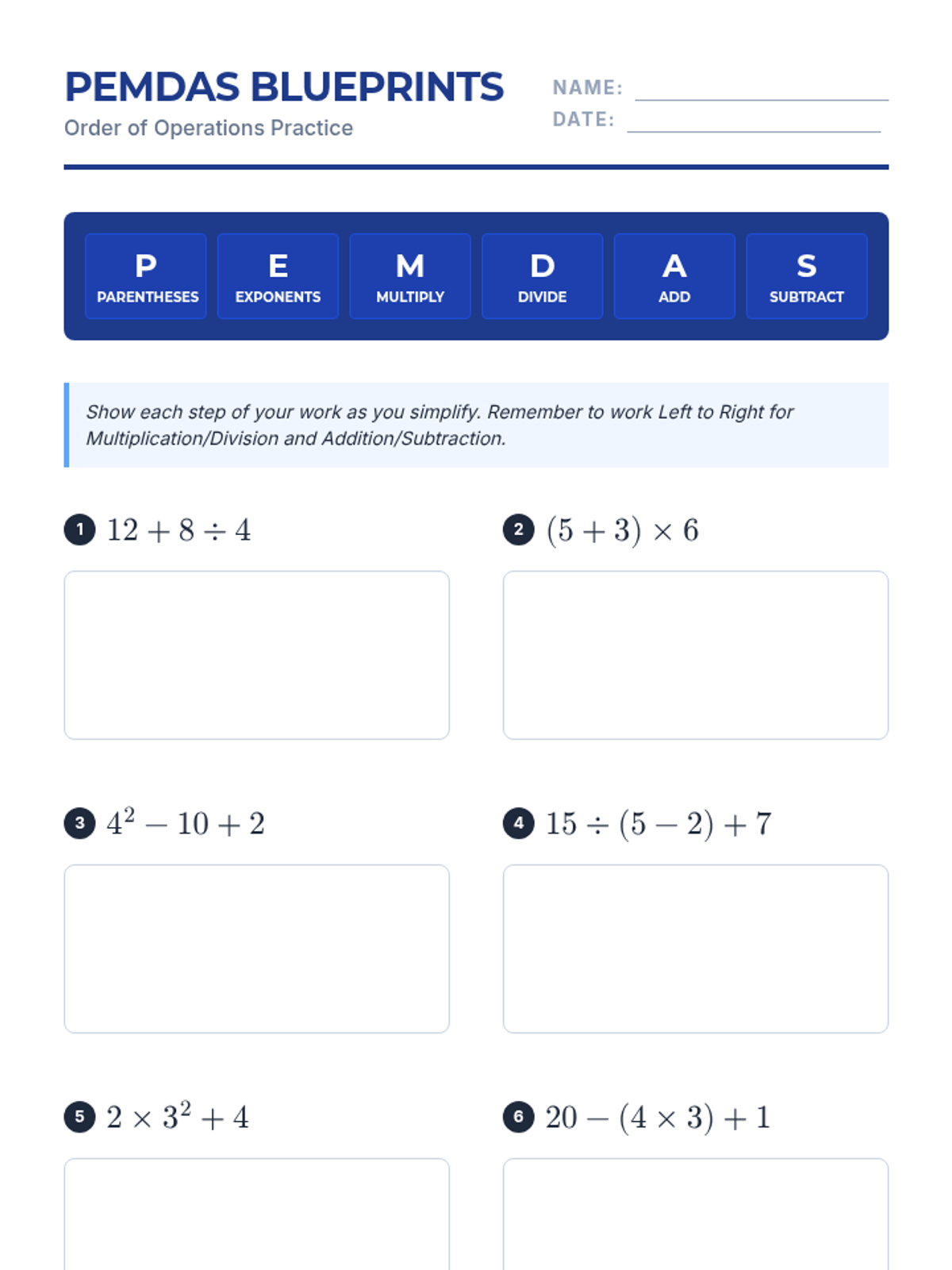
A practice worksheet for students to apply PEMDAS rules to increasingly complex expressions, featuring a clear reference header and dedicated workspaces for showing steps.
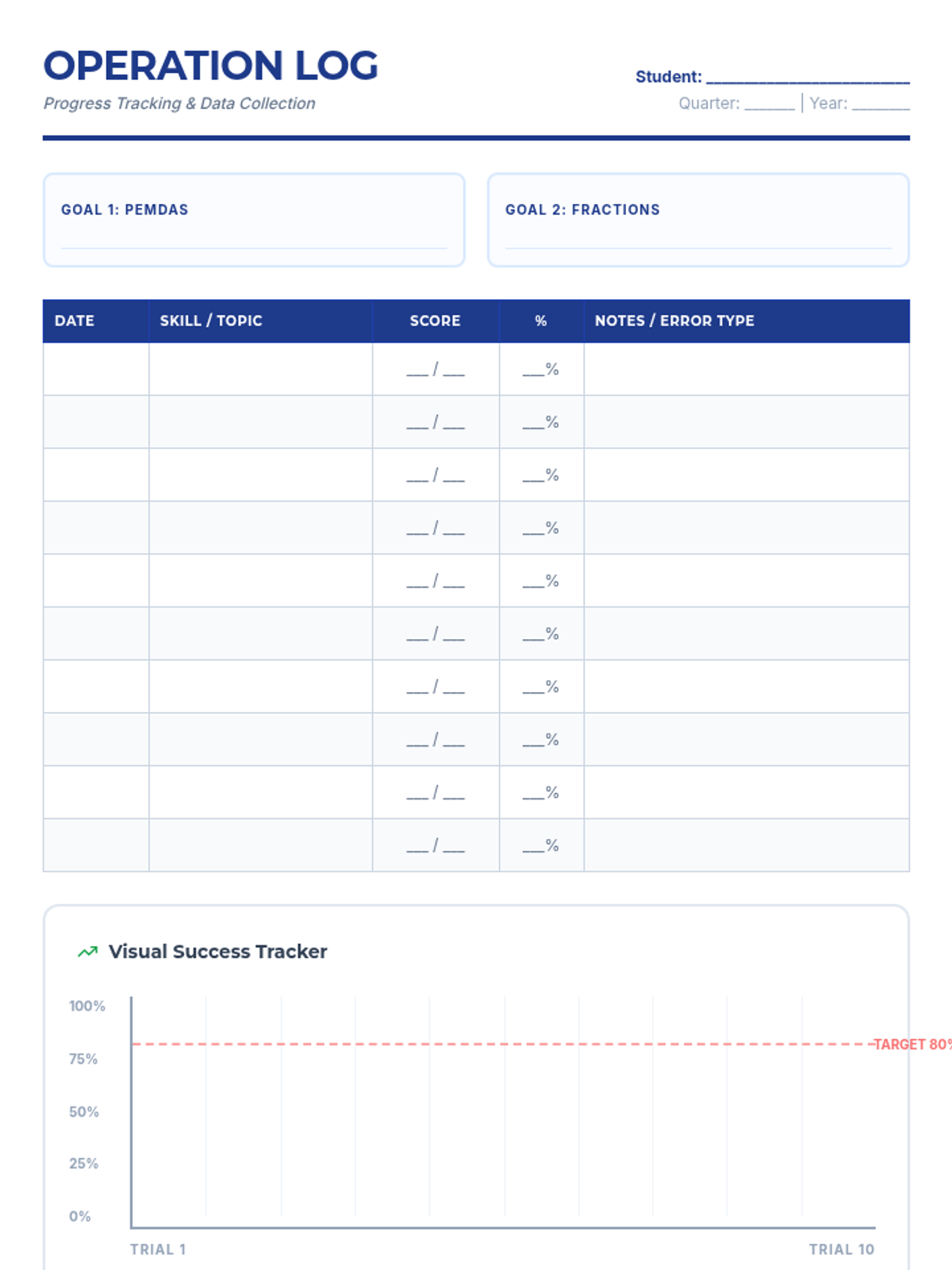
A progress tracker for monitoring student performance on IEP math goals, featuring a data collection table and a visual success chart for graphing accuracy over time.
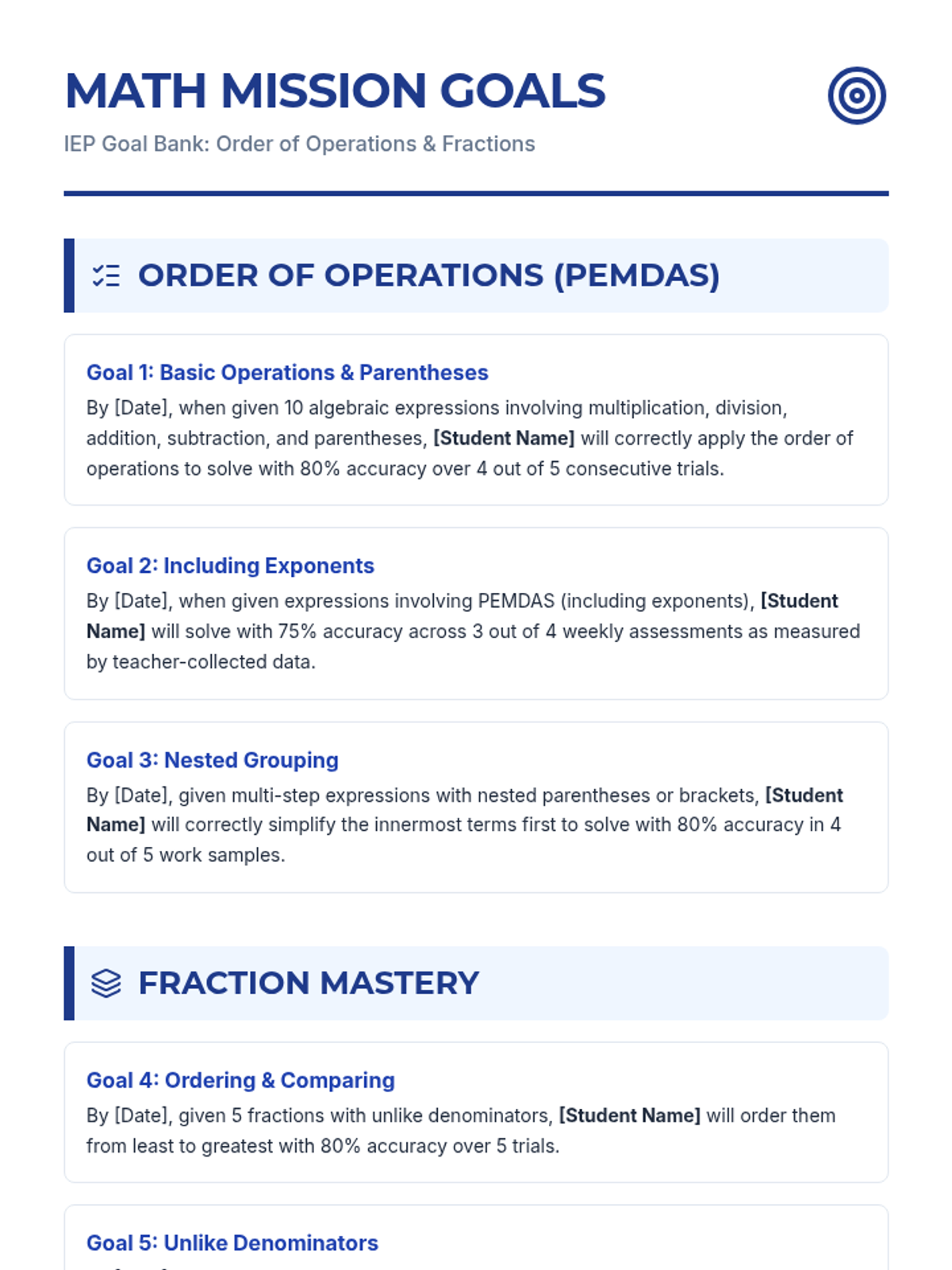
A comprehensive IEP goal bank for teachers, featuring specific, measurable goals for Order of Operations and fraction mastery, complete with instructional strategies.
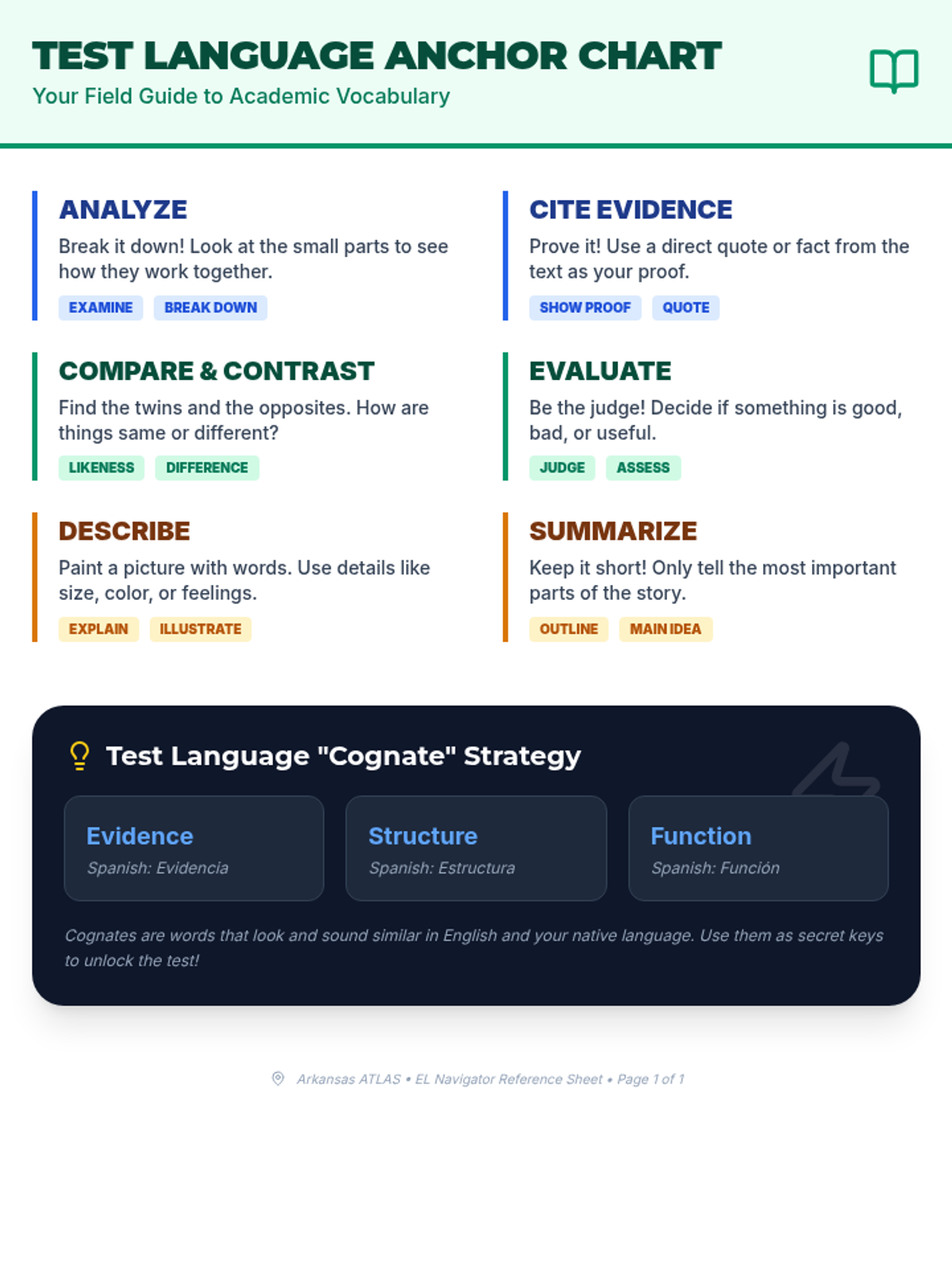
A vocabulary-building anchor chart and reference sheet for students. It defines key academic "power verbs" found in ATLAS assessments and provides synonyms and a "cognate" strategy for English Learners.
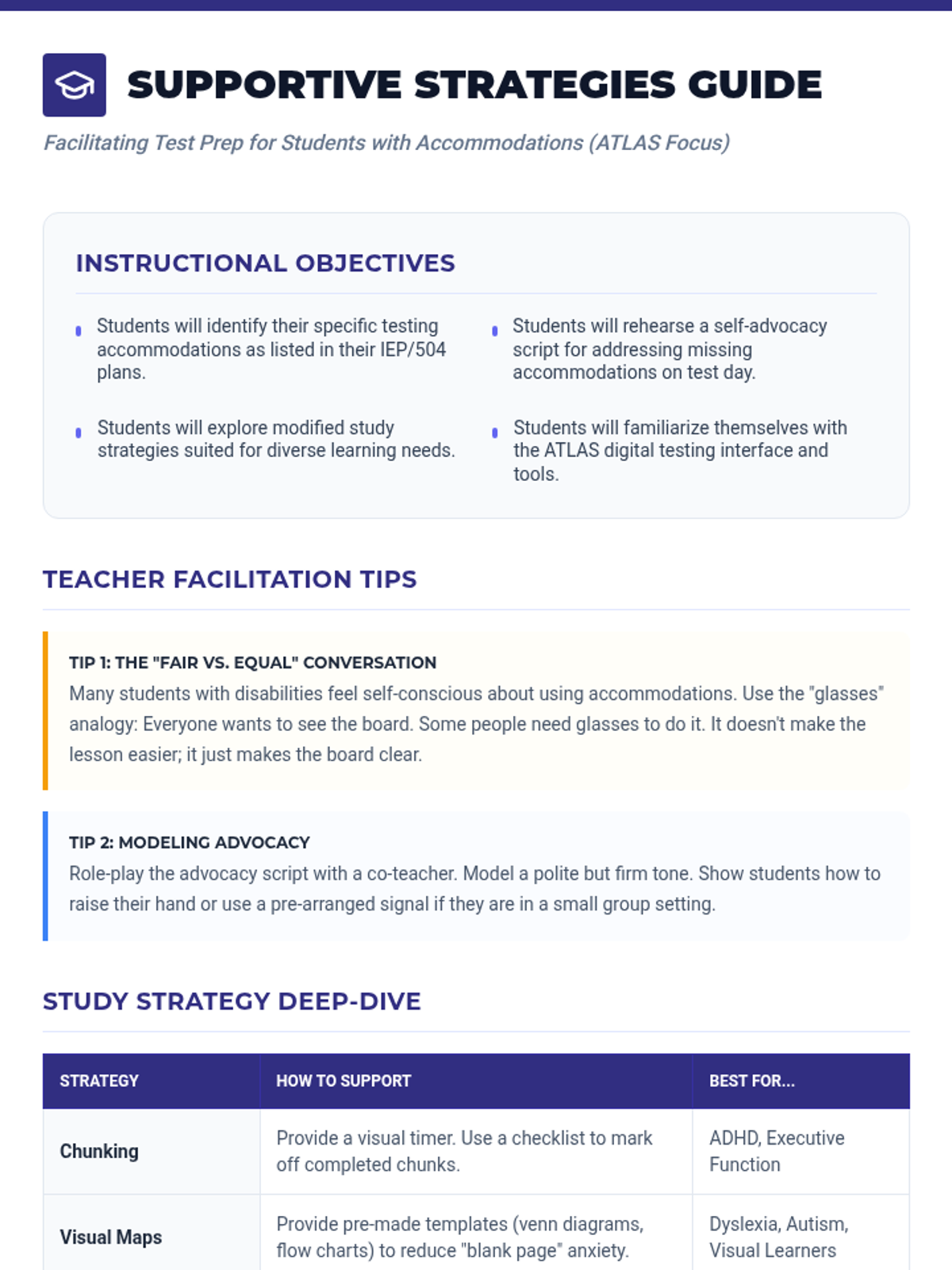
A facilitation guide for teachers to deliver the ATLAS prep lesson, including modeling tips, instructional goals, and a strategy deep-dive.
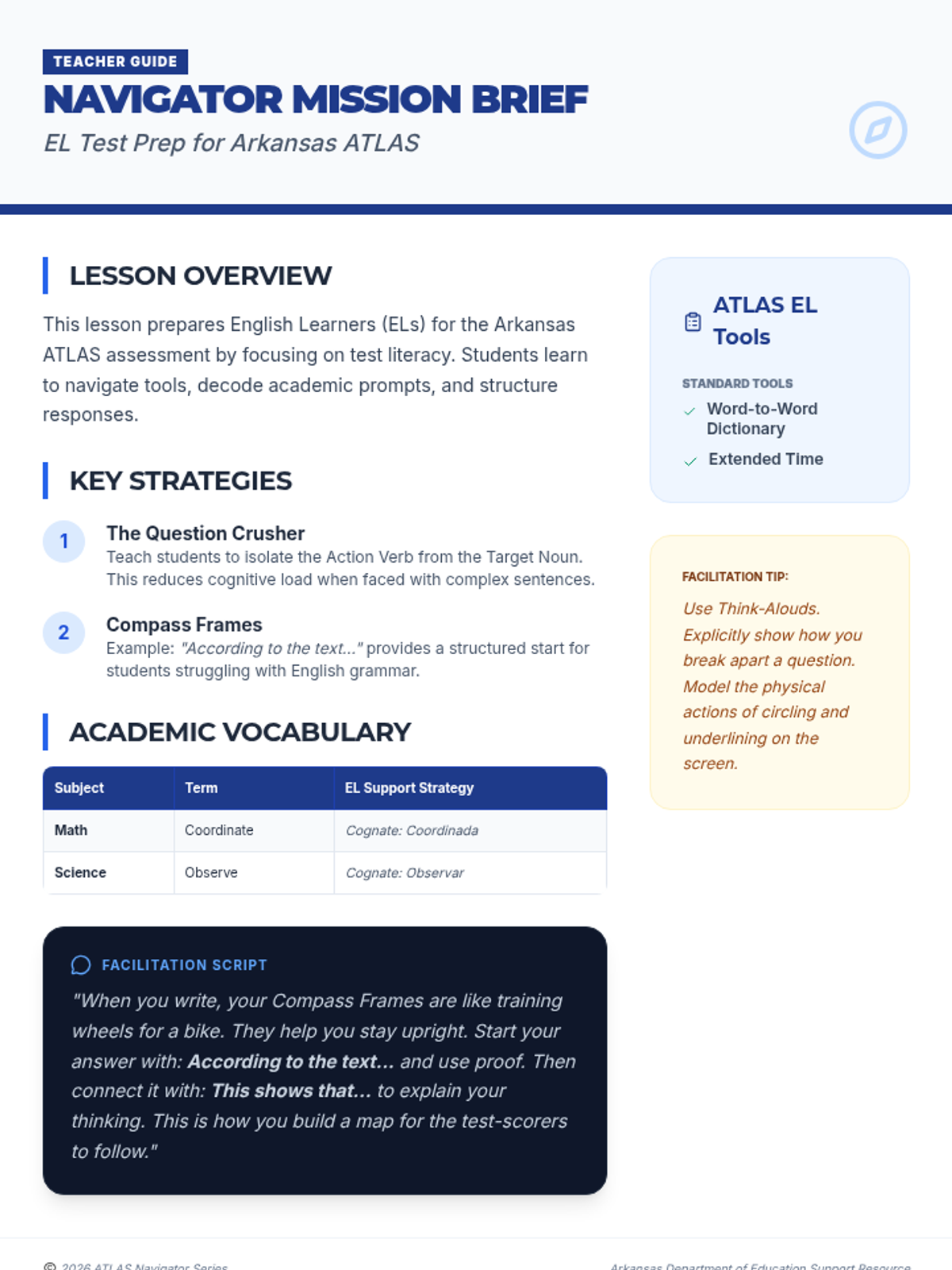
A comprehensive teacher guide providing instructional scripts, facilitation tips, and specific Arkansas ATLAS accommodation guidelines for supporting English Learners during test preparation.
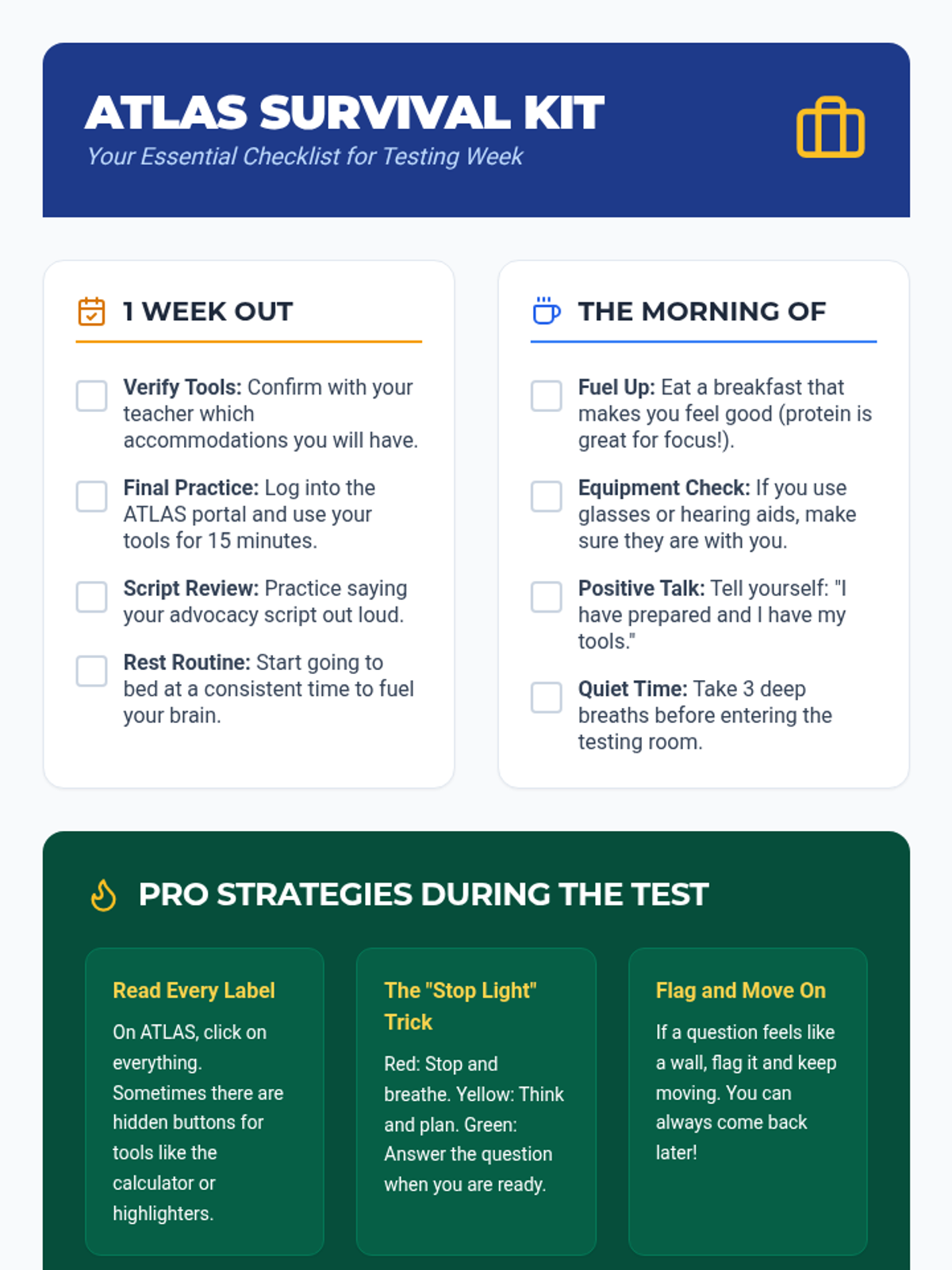
A practical checklist and reference handout for students to use during the week leading up to the ATLAS assessments.
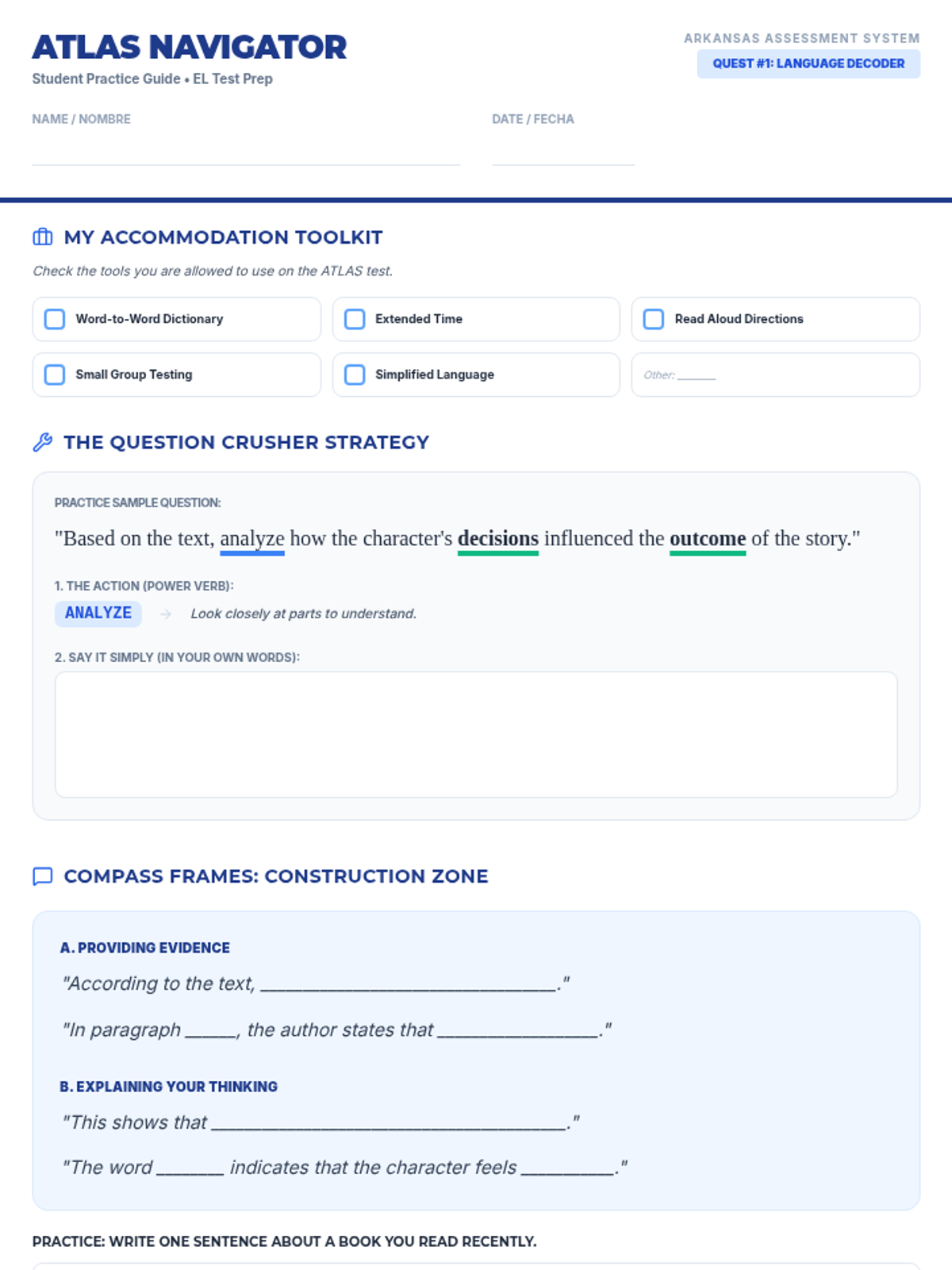
A two-page student worksheet that guides English Learners through identifying their test accommodations, practicing the "Question Crusher" decoding strategy, and using sentence frames for constructed responses. Includes a vocabulary mapping activity.
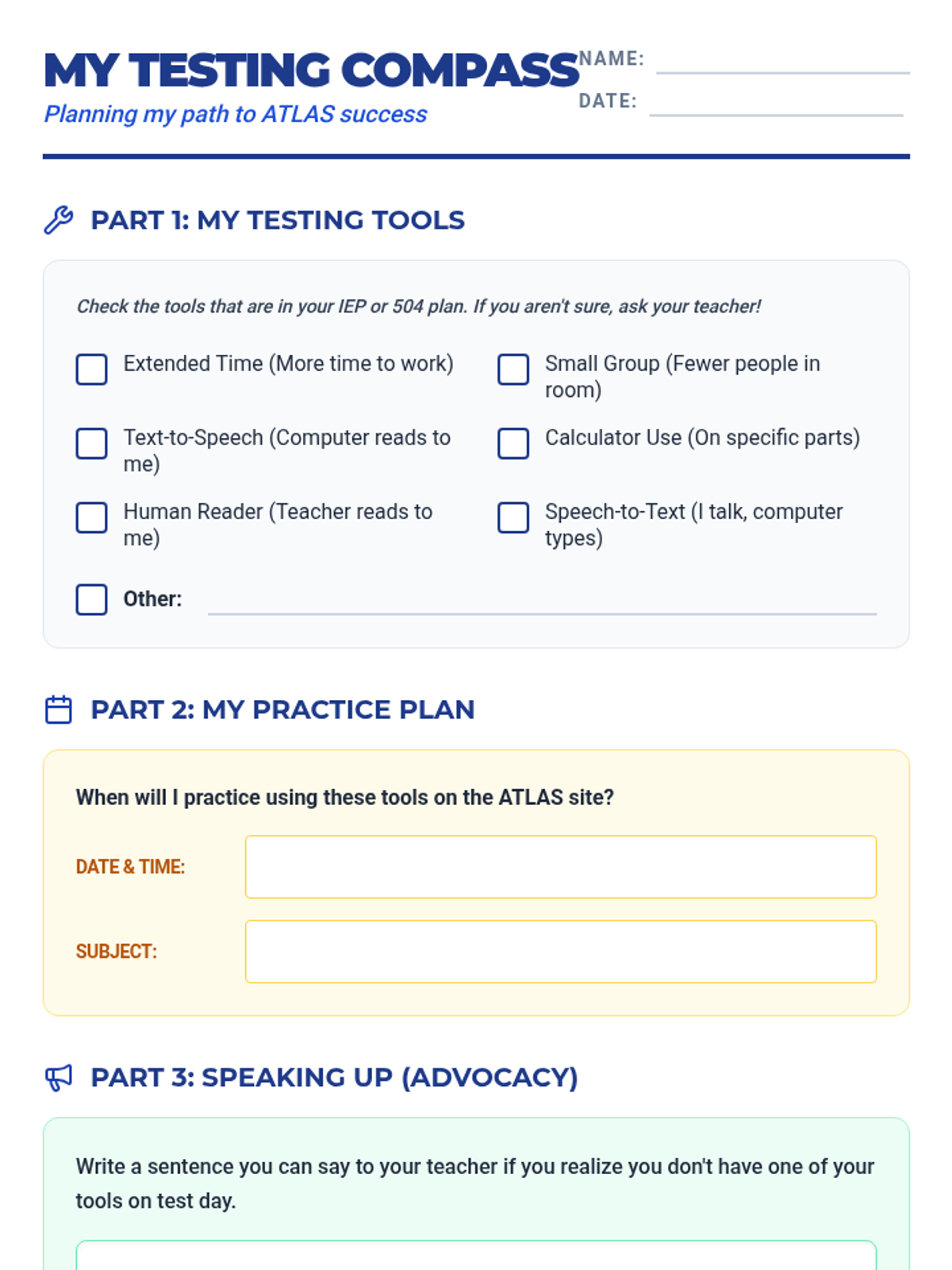
A student worksheet for identifying accommodations, planning practice sessions, and drafting self-advocacy scripts for the ATLAS assessments.
A visually engaging slide deck designed for English Learners (ELs) preparing for the Arkansas ATLAS assessment. It covers test accommodations, academic language decoding strategies, and provides sentence frames for constructed responses.
A slide deck designed to support students with IEPs and 504 plans in navigating the Arkansas ATLAS assessments, focusing on accommodations, practice, and self-advocacy.
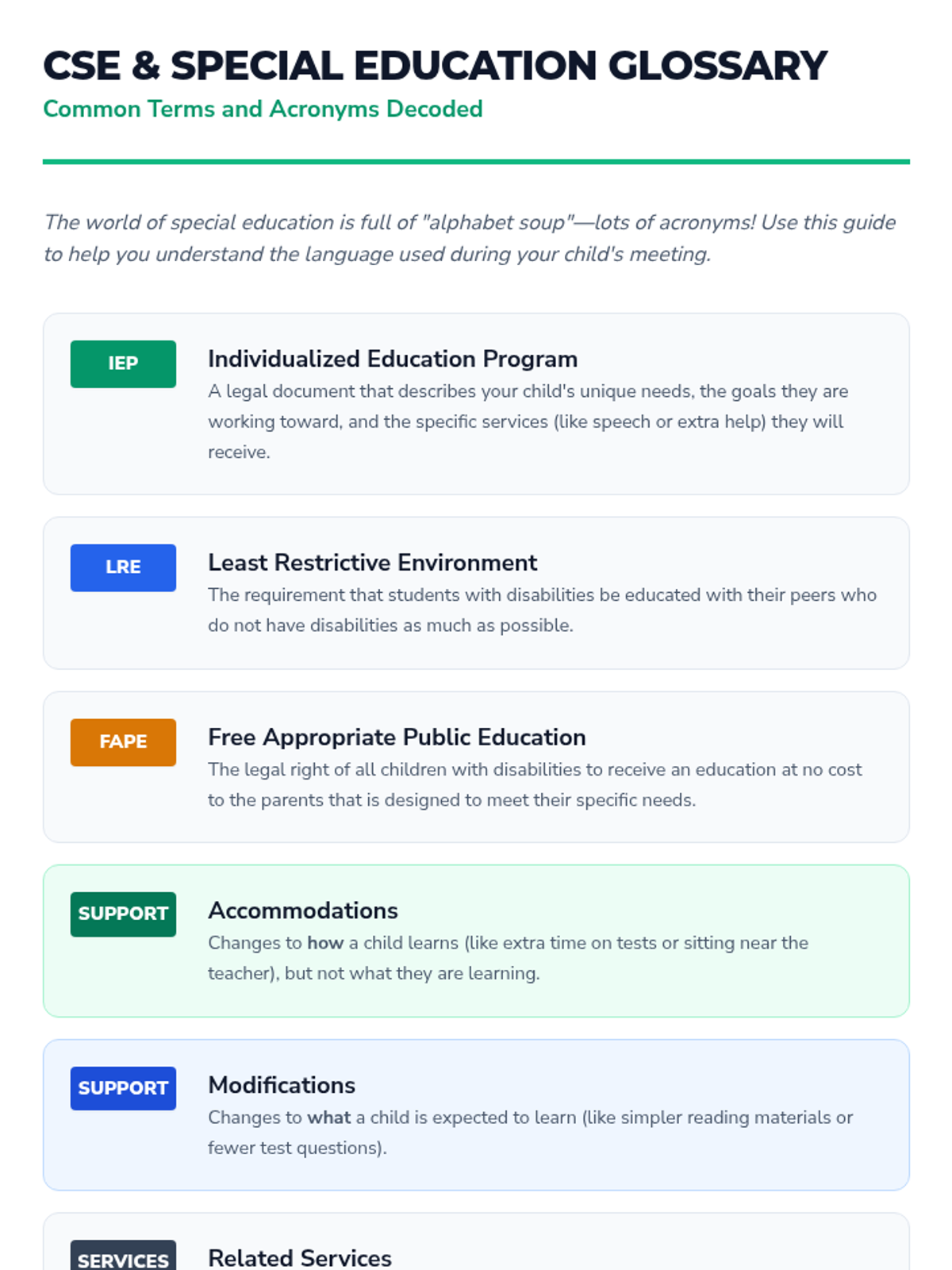
A clear, parent-friendly glossary of common special education acronyms and terms (IEP, LRE, FAPE, etc.) used during CSE meetings.
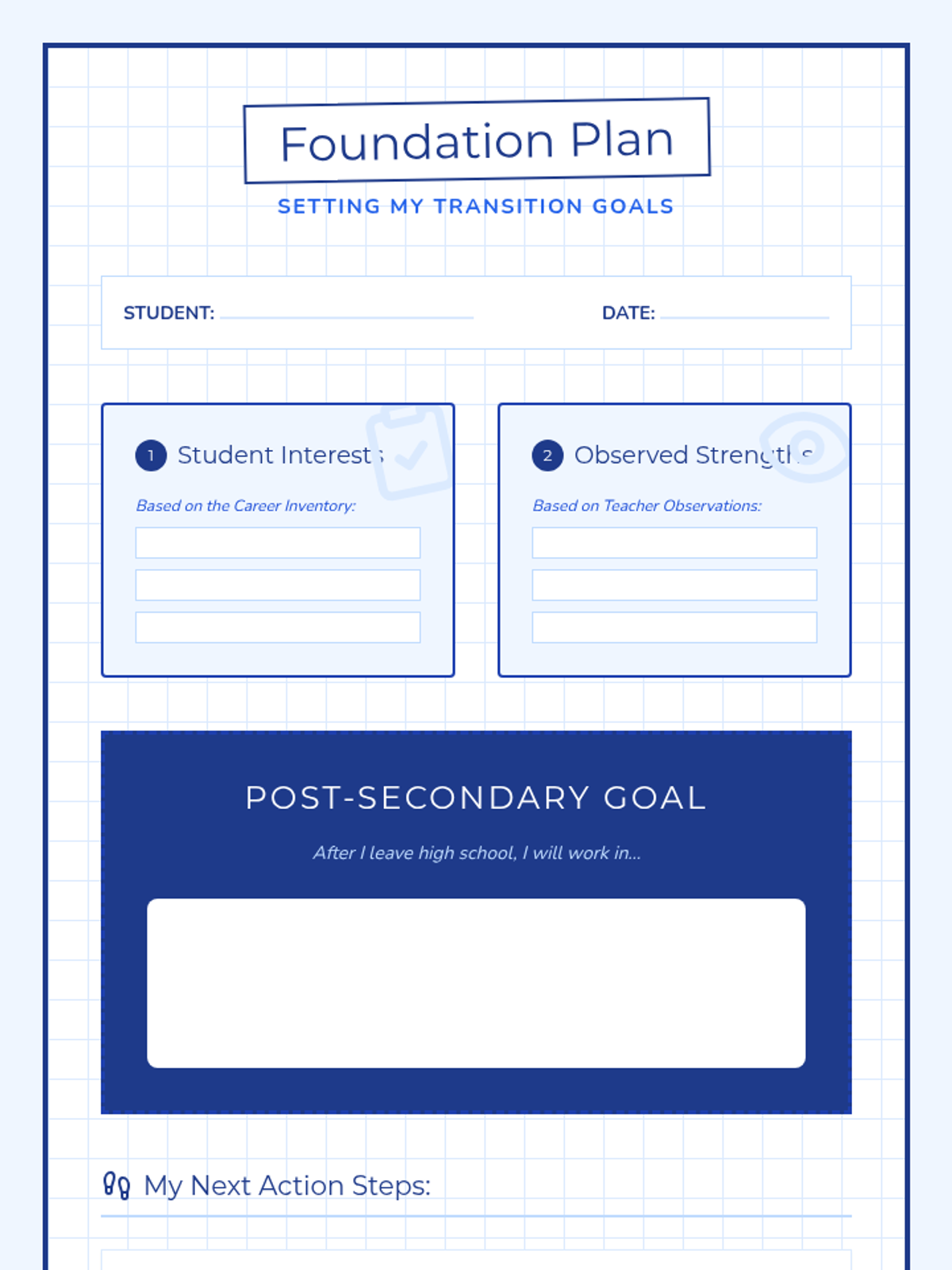
A collaborative transition planning tool used to synthesize student interests and teacher observation data into concrete post-secondary vocational goals and action steps.
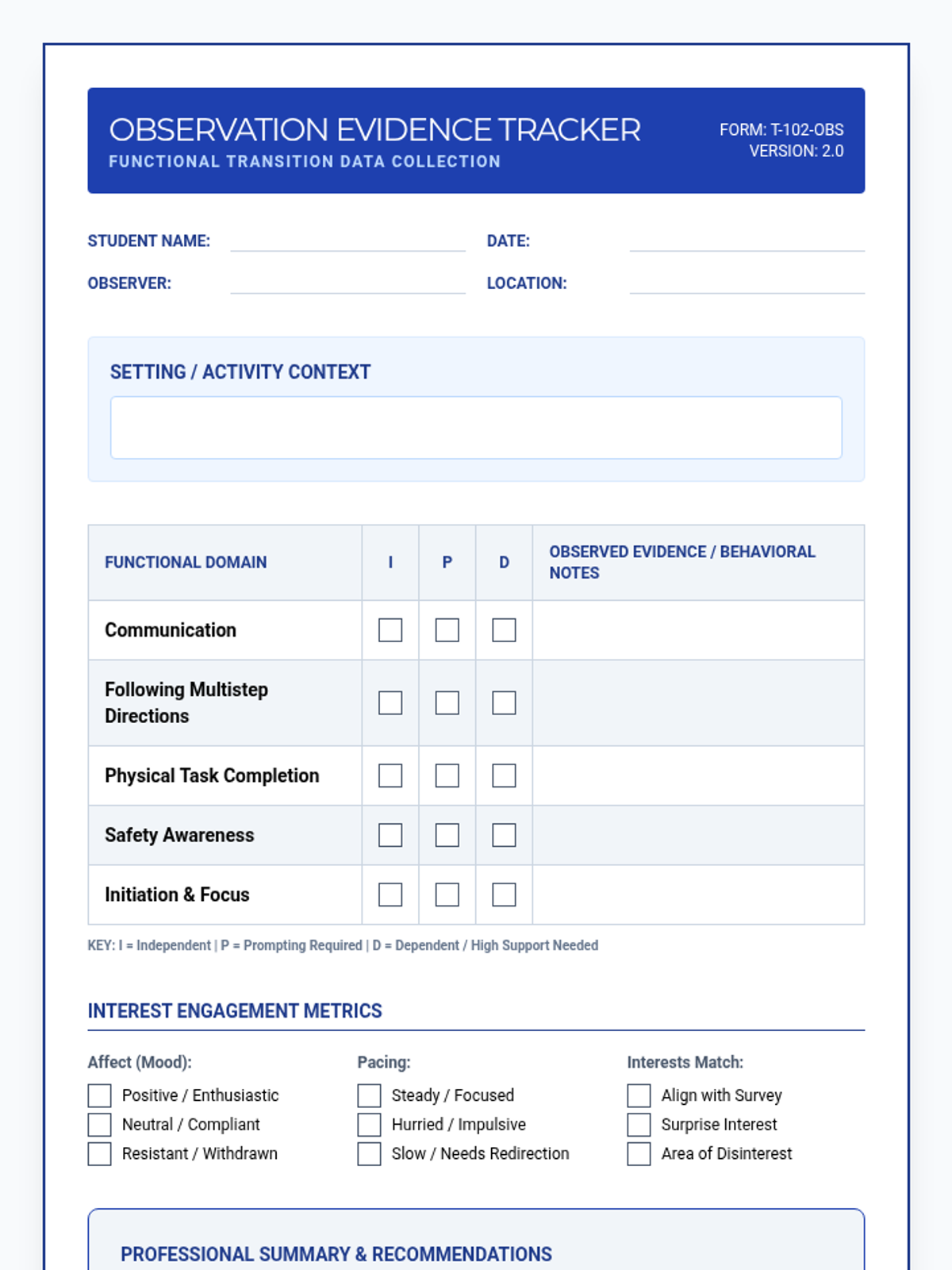
A professional teacher-facing observation tool to document behavioral evidence of student interests and functional skills during community-based or vocational activities. Features a skill level key and engagement metrics.
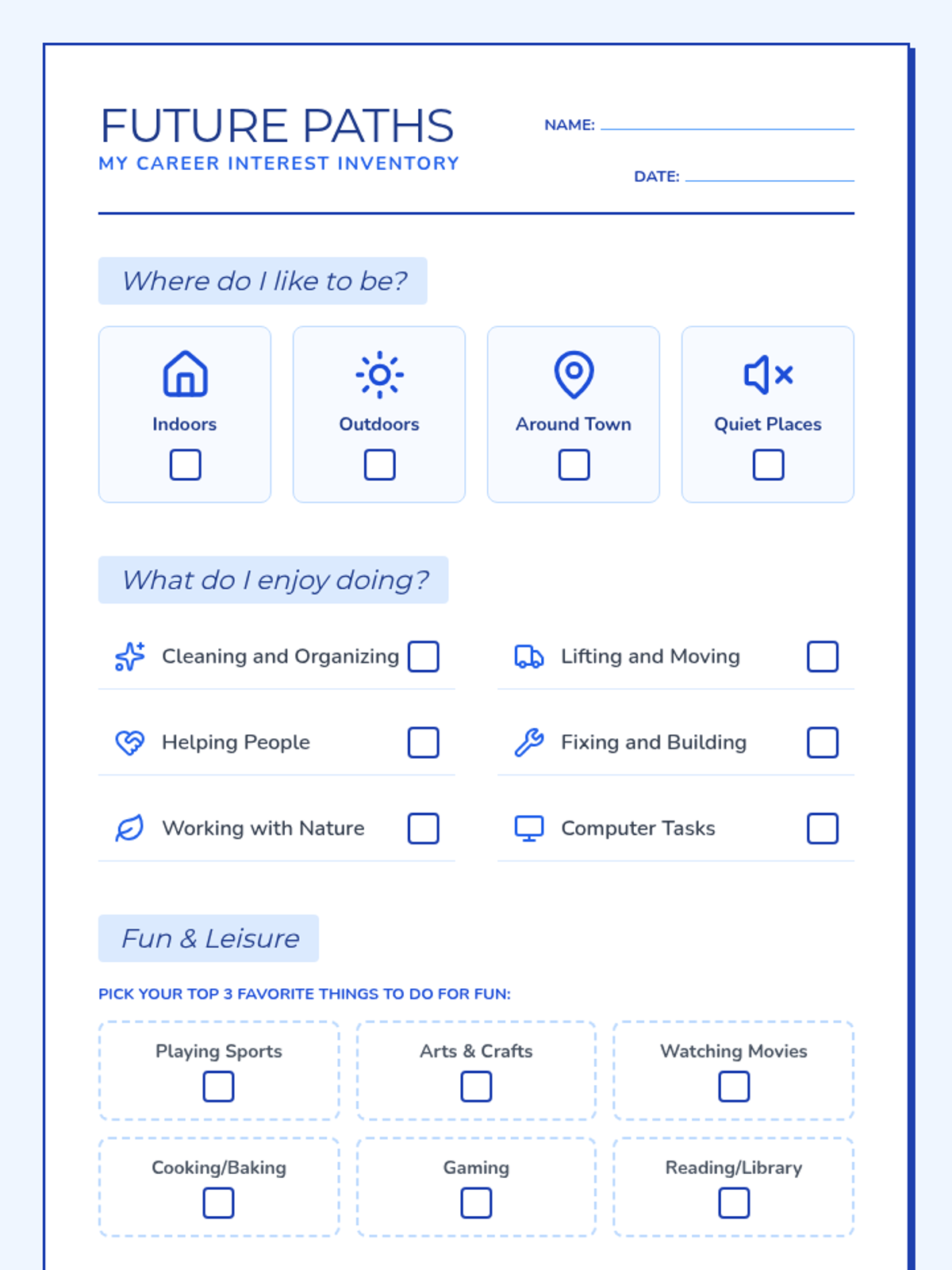
A two-page student-facing career interest inventory using a blueprint theme. It features visual icons and checklists to help students identify their preferred environments, vocational interests, and community-based career goals.
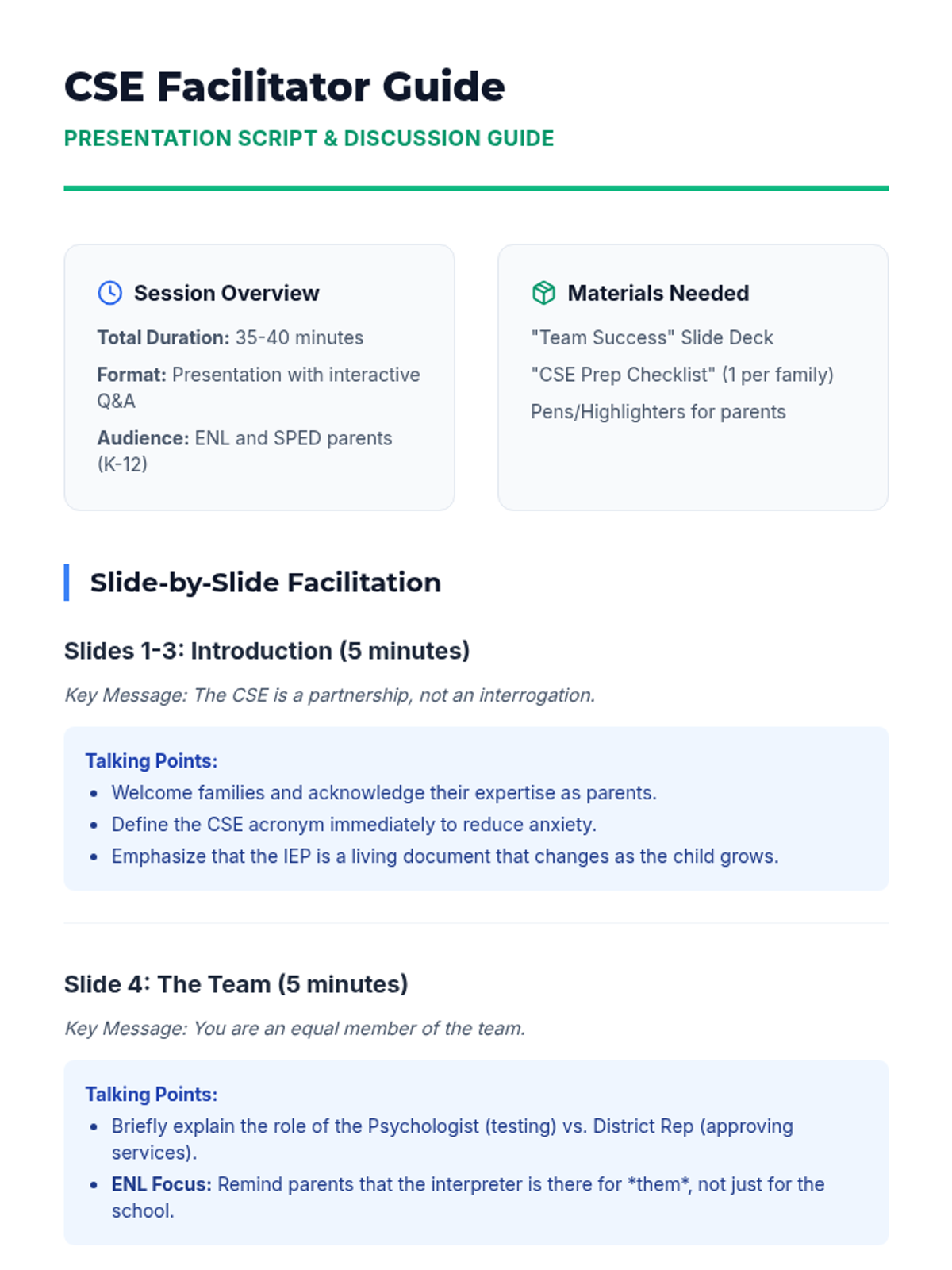
A comprehensive guide for teachers or administrators to facilitate the "Team Success" presentation, including a pacing guide, talking points, and answers to common parent questions.
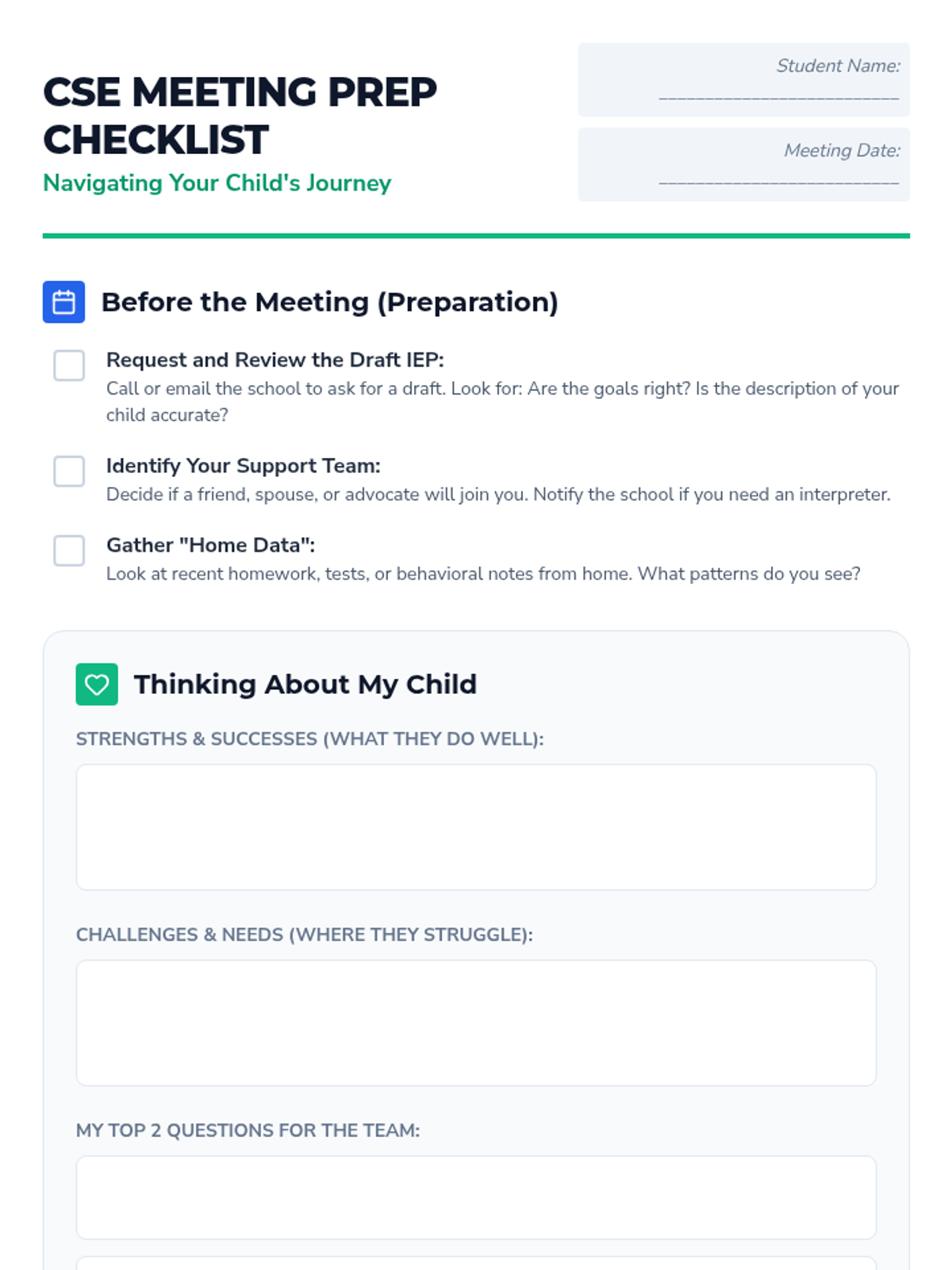
A practical one-page preparation checklist for parents to use before and during a CSE meeting, featuring sections for child strengths, questions, and next steps.
A comprehensive slide deck for parents of ENL and SPED students, providing a clear overview of the Committee on Special Education (CSE) meeting process, preparation steps, and parent rights.
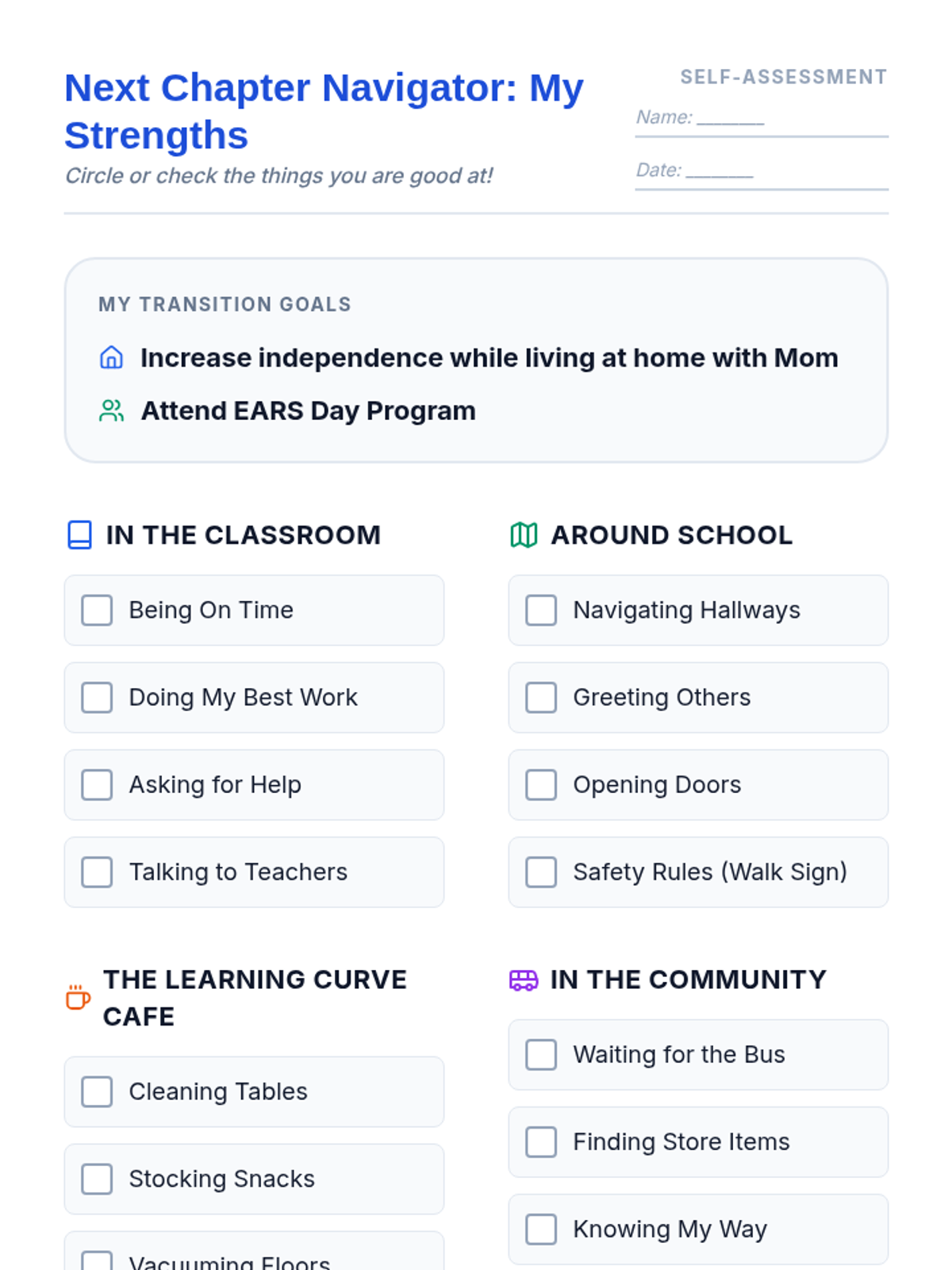
A two-page printable worksheet for students to record their strengths and areas of growth identified during the 'Future Path' presentation. Includes clear checkboxes and icons matching the slides for accessibility. Content updated for 'EARS Day Program' and 'The Learning Curve Cafe'.
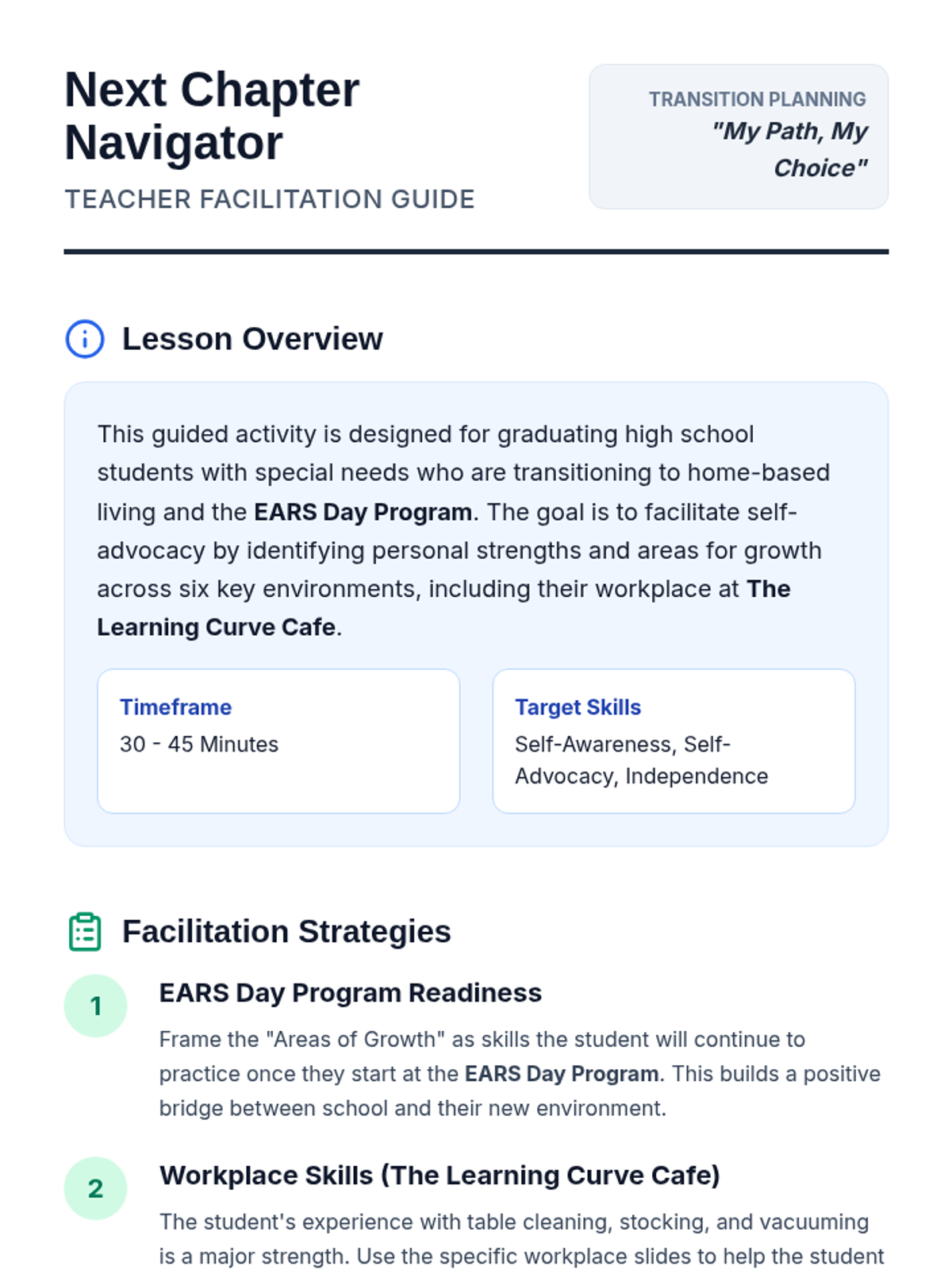
A comprehensive facilitation guide for teachers to lead the 'Next Chapter Navigator' lesson, including strategy notes, discussion prompts, and advice for integrating student responses into IEP transition plans. updated for 'EARS Day Program' and 'The Learning Curve Cafe'.
An updated 18-slide presentation with explanatory slides for strengths and growth using realistic photos. Features specific transition goals for 'Independence at Home' and 'EARS Day Program', with relevant photos of young adults. All images have been updated for relevance, including a walk sign for safety and picking out clothes for morning routine.
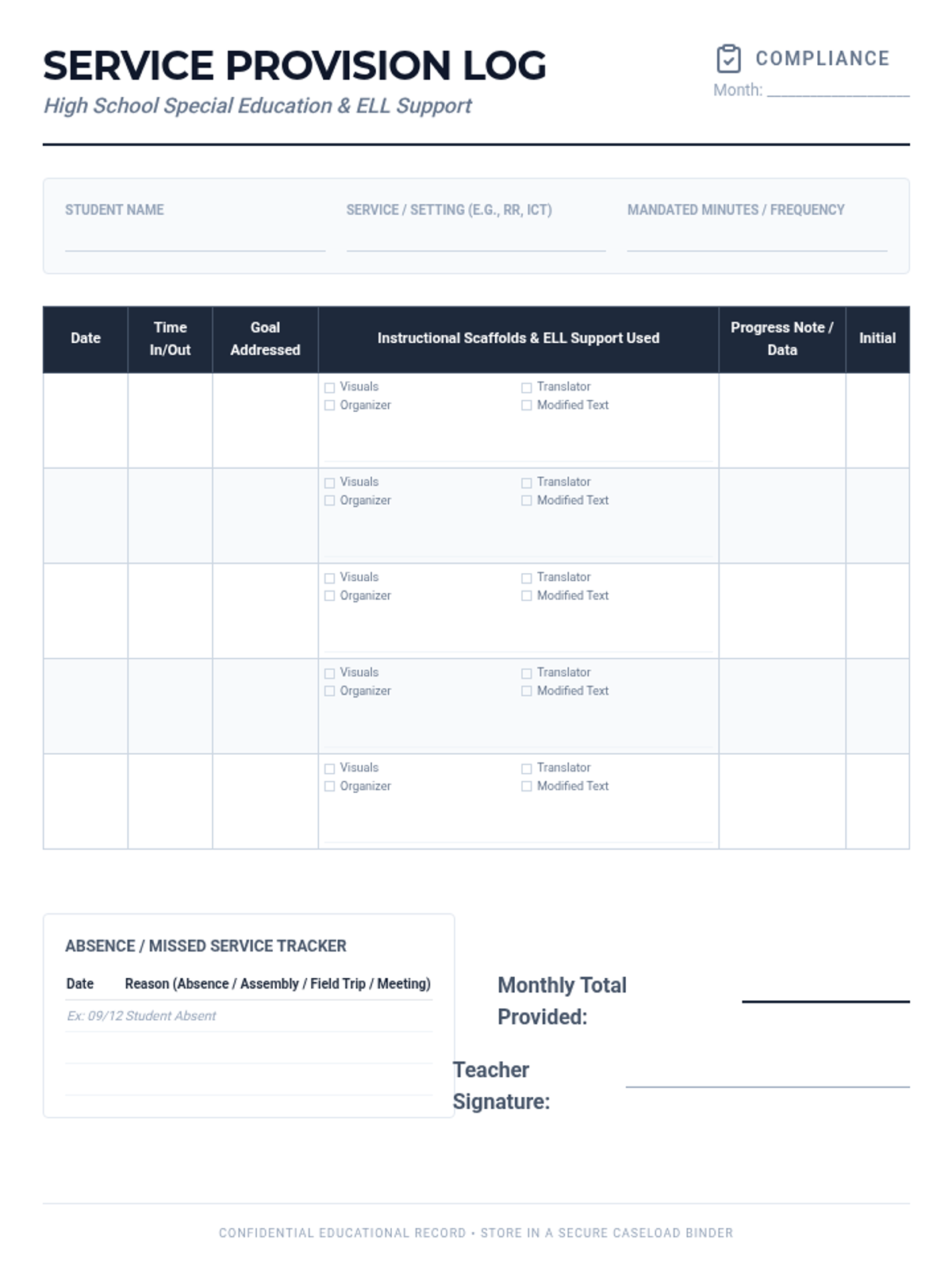
A specialized service provision log for high school special education teachers to track instructional minutes, goal progress, and specific ELL scaffolds used during sessions.
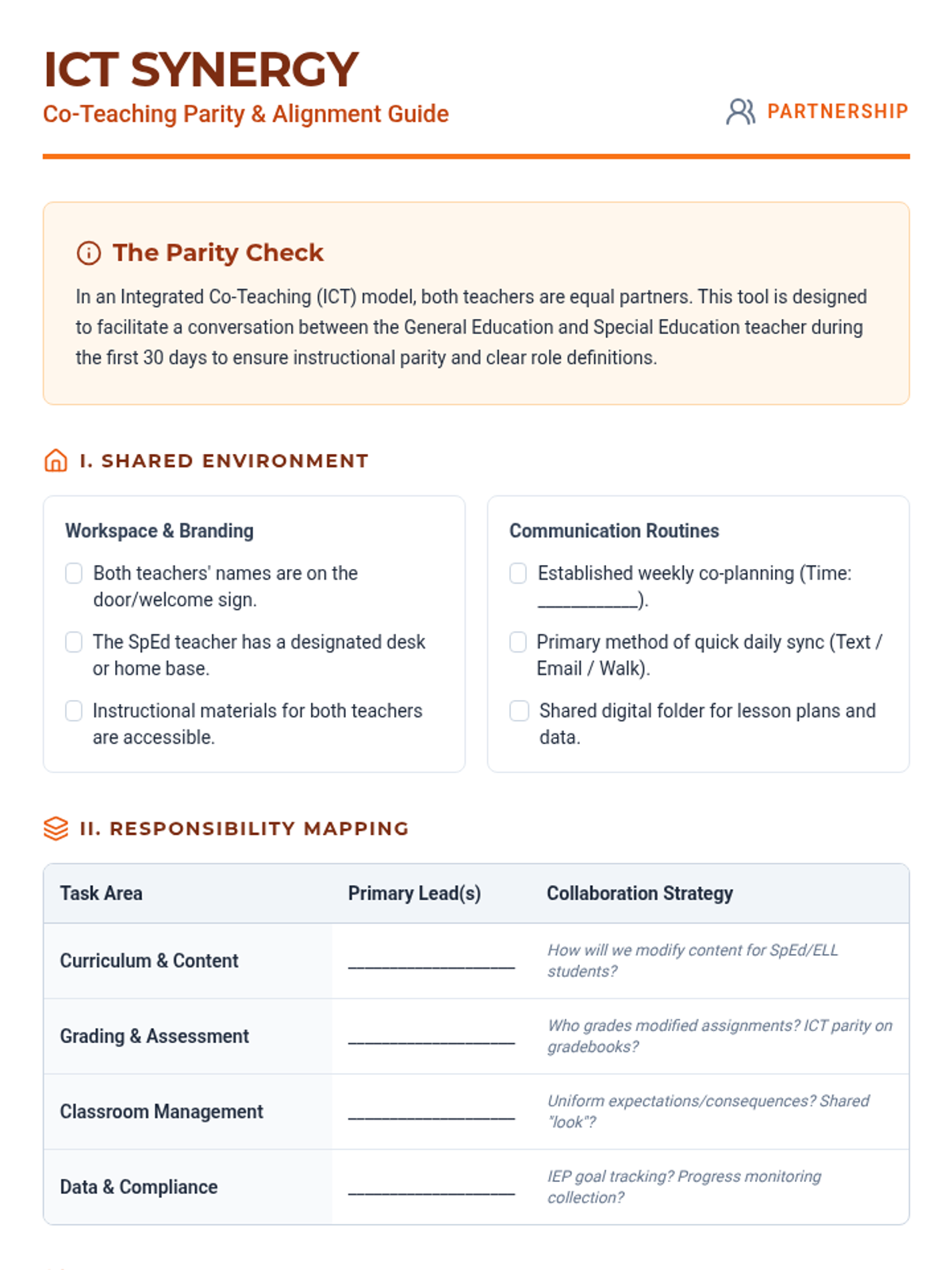
A tool for ICT co-teachers to establish parity, define roles, and select instructional models for their shared high school classroom.
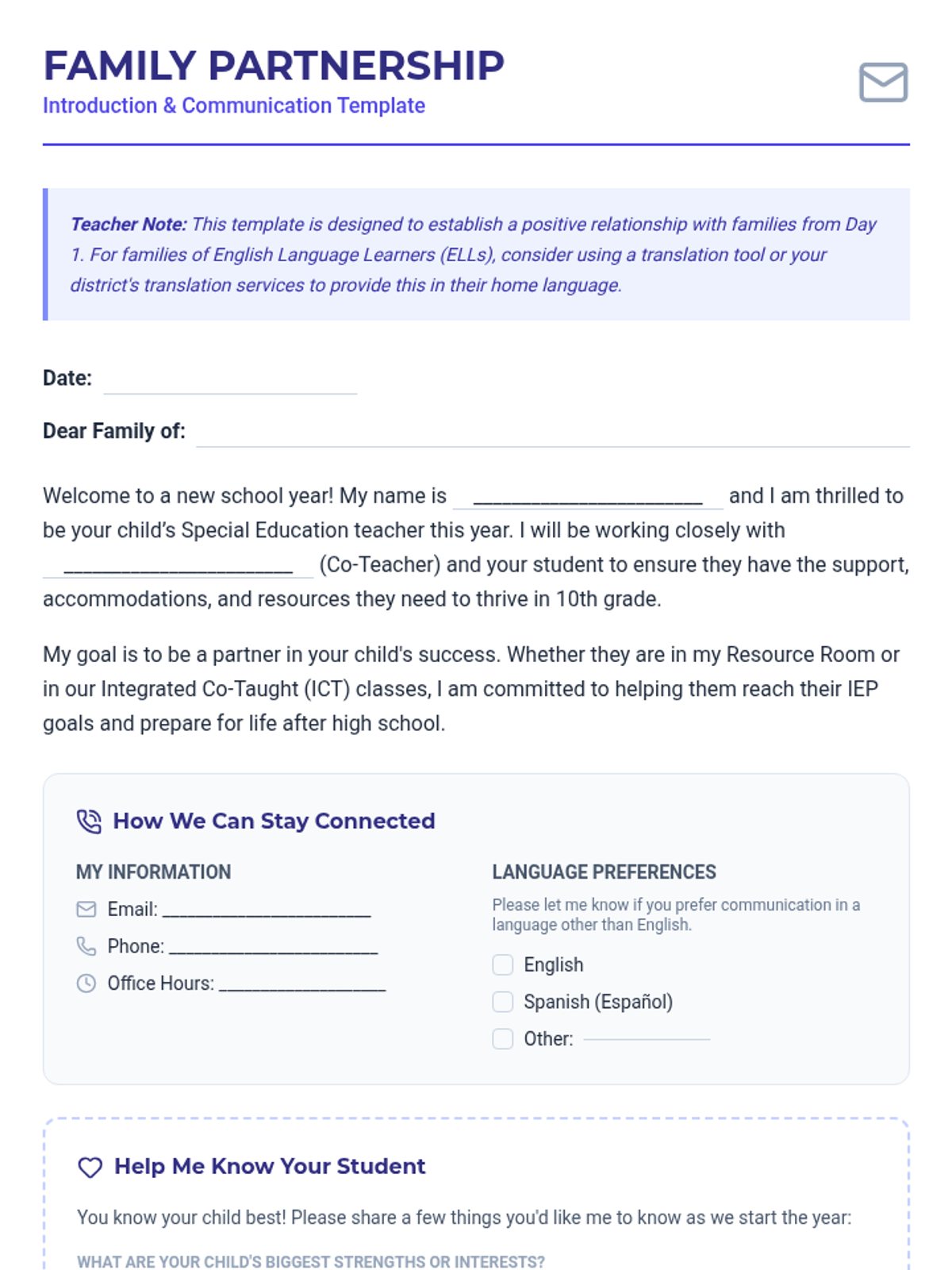
A welcoming introduction letter template for families of high school special education students, including sections for contact preferences and language needs for ELL families.
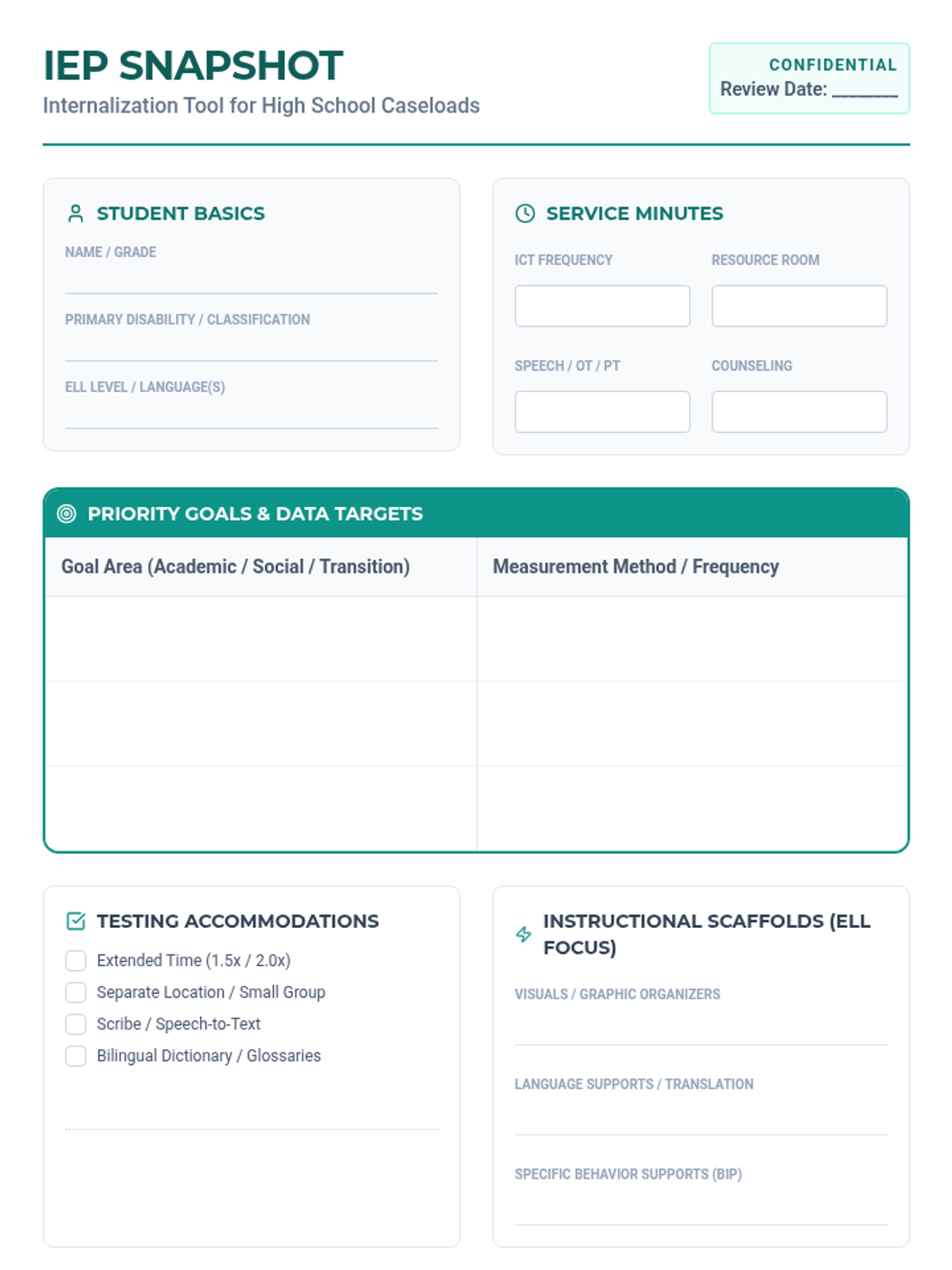
A concise one-page IEP internalization tool designed for high school teachers to distill critical information including accommodations, goals, and ELL-specific supports.
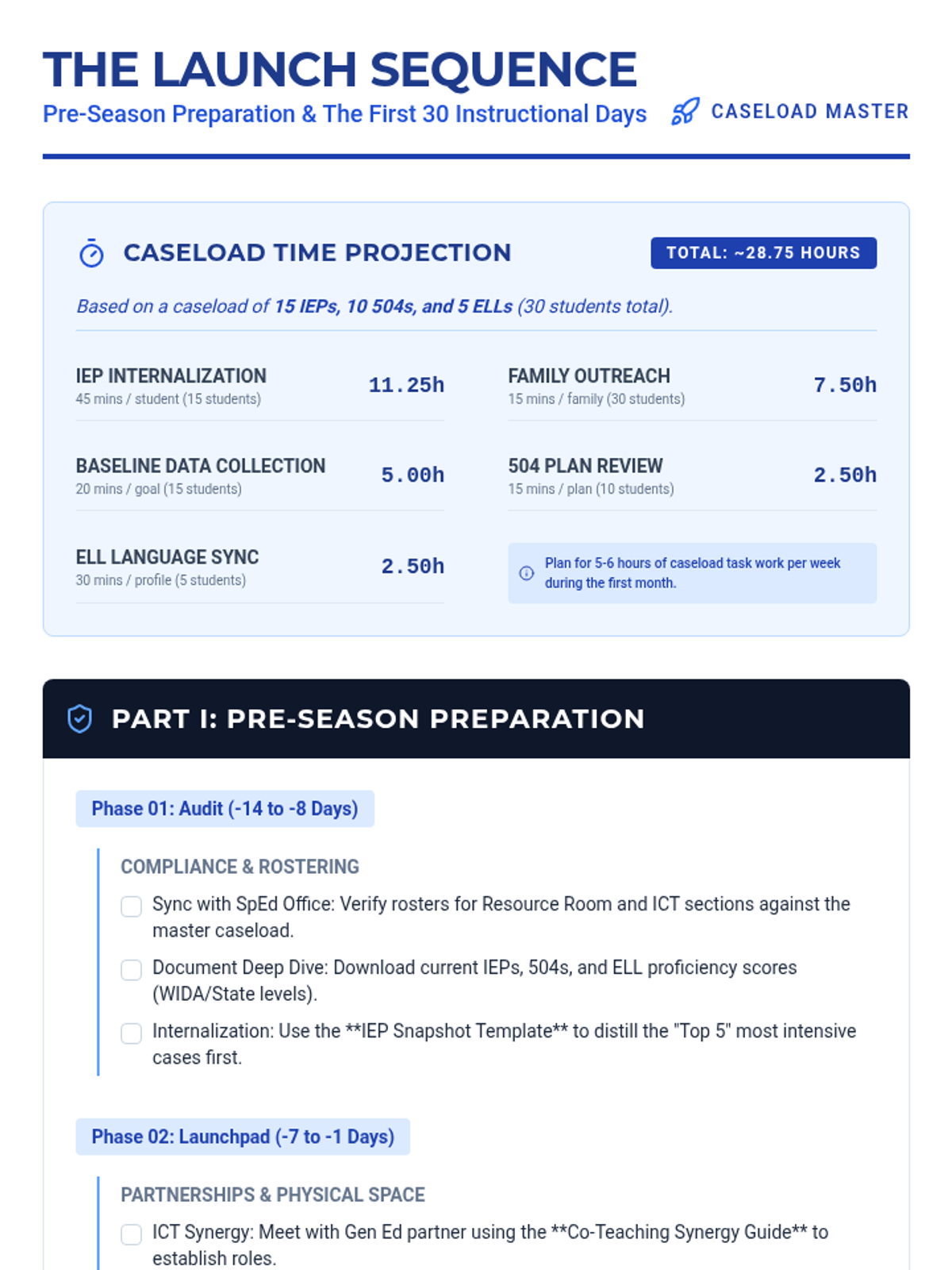
A comprehensive transition timeline for high school special education teachers, covering 2 weeks of pre-season preparation and the first 30 days of the school year. Focuses on caseload management, compliance, and relationship building.
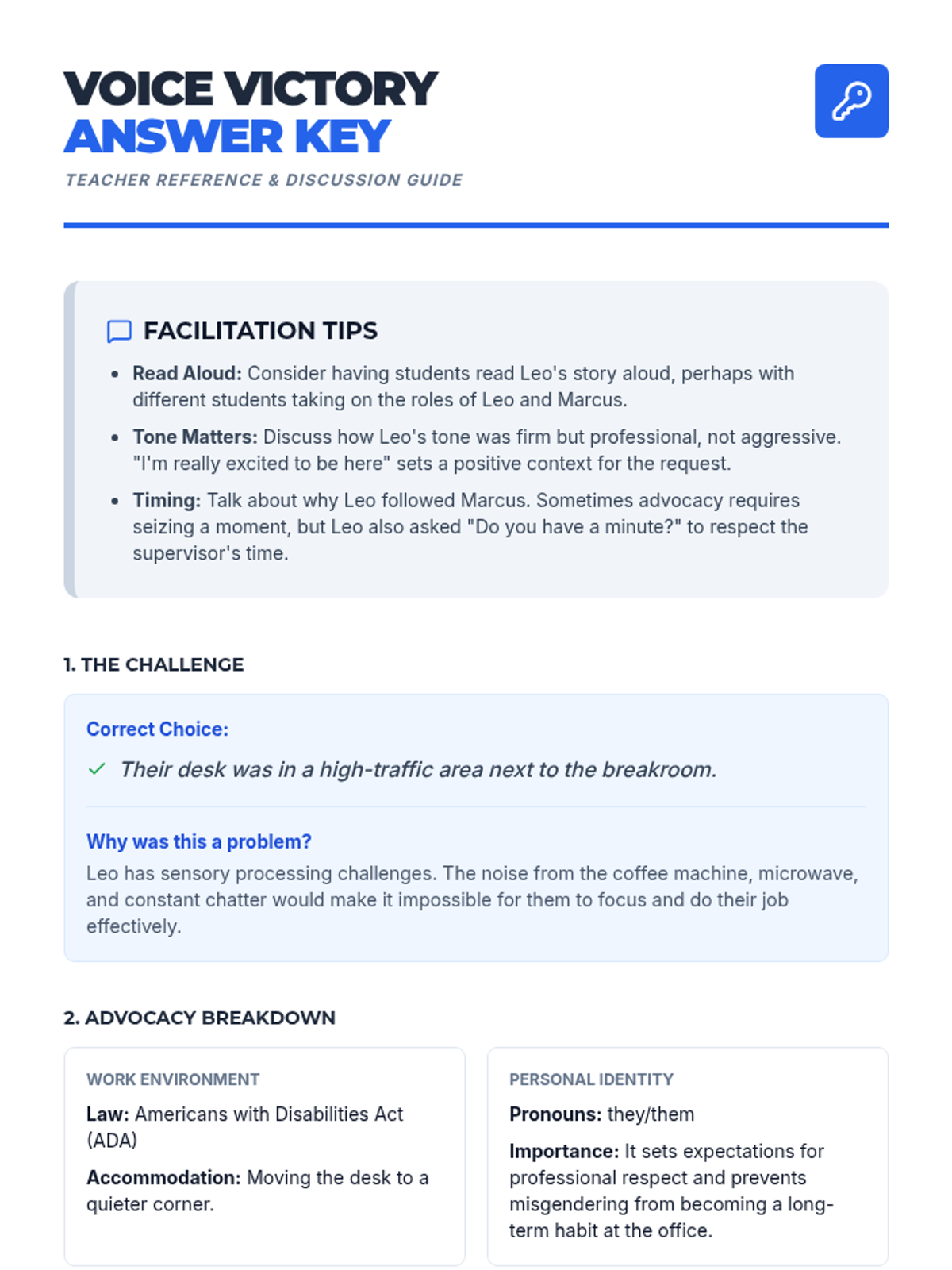
A teacher-facing answer key and discussion guide for the Voice Victory story and worksheet. Includes facilitation tips and example scripts for student advocacy scenarios.
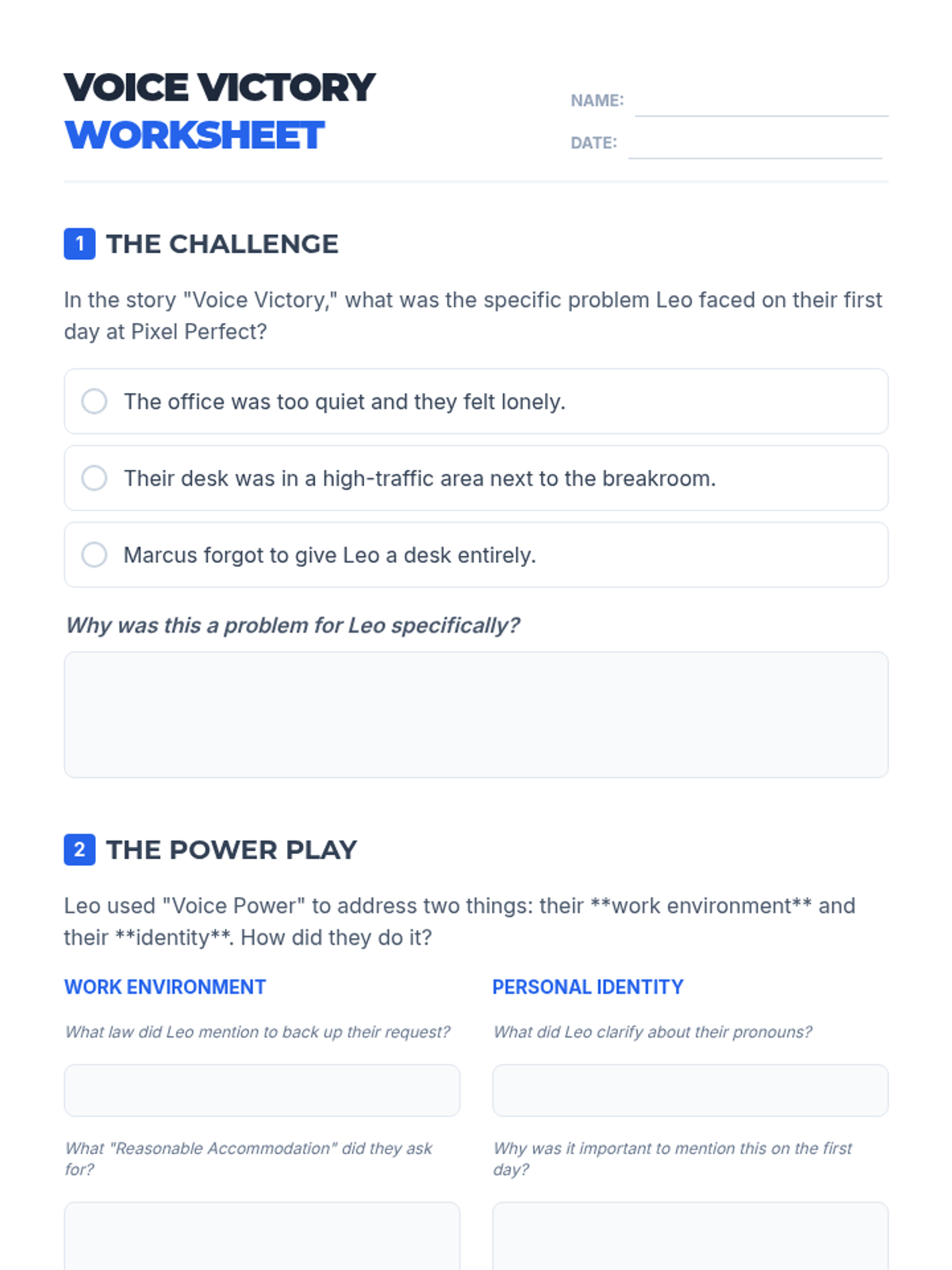
A follow-up worksheet for the Voice Victory story where students analyze Leo's self-advocacy steps and practice scripting their own advocacy statements.
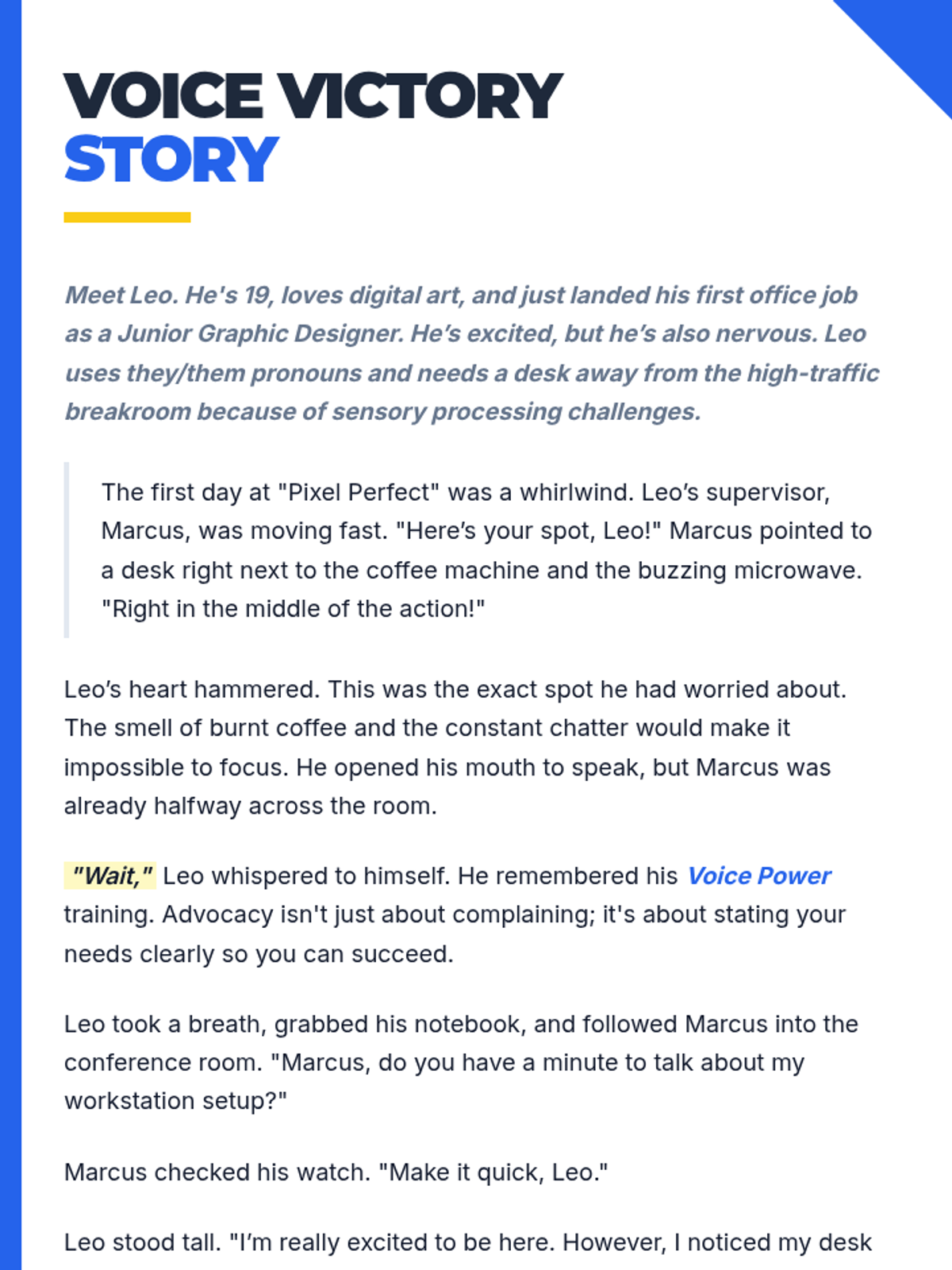
A narrative-driven story about a young adult named Leo who uses self-advocacy skills to request workspace accommodations and correct pronoun usage on his first day of work. The story serves as a relatable example of "Voice Power" in action.
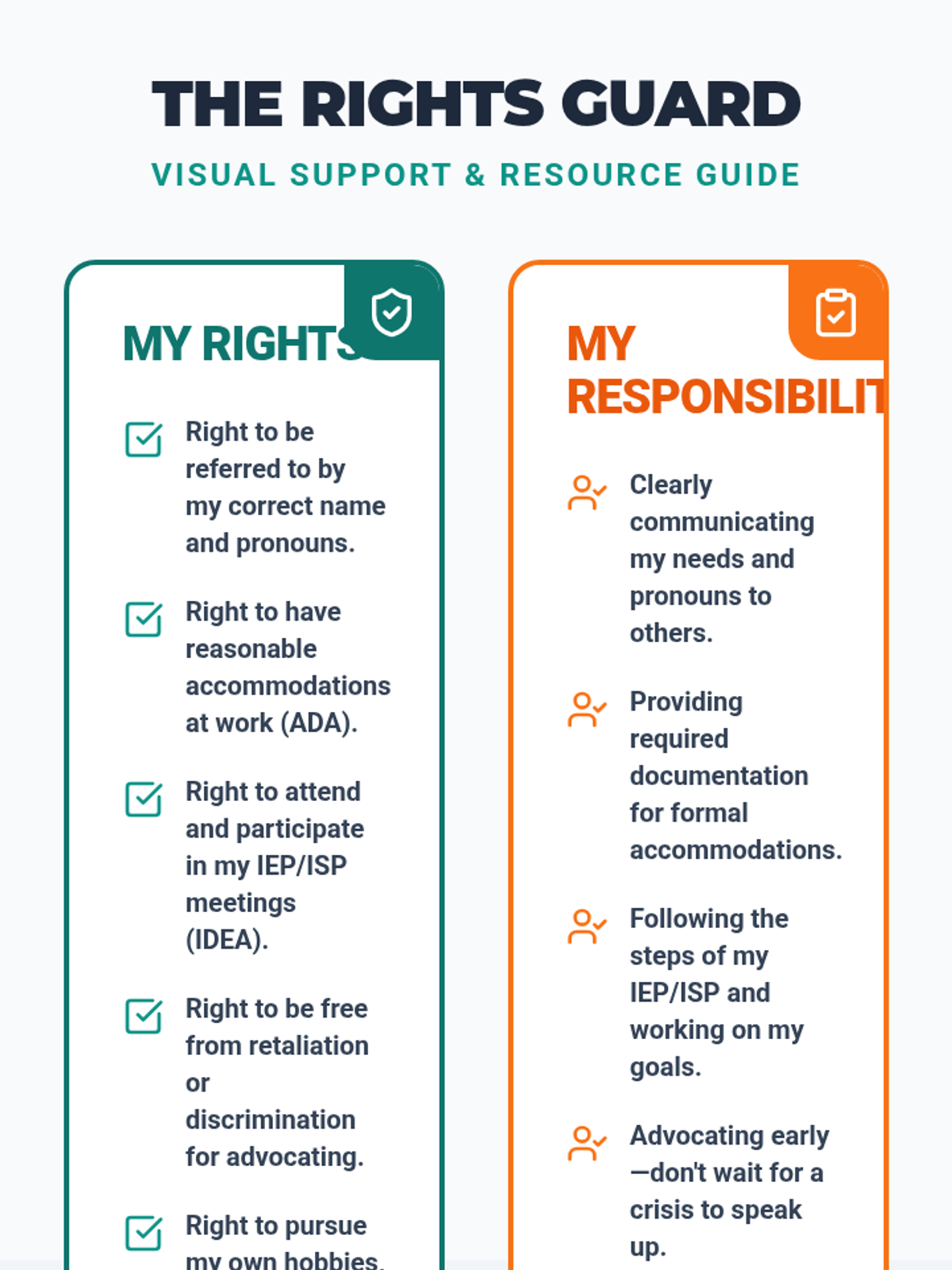
A visual reference guide for Jay's rights and responsibilities. Includes anchor charts for ADA/IDEA rights, a step-by-step reporting guide for retaliation and violations, and a directory of support agencies like the EEOC and P&A systems.