Focuses on the essential mechanics of punctuation and capitalization as 'traffic signals' for reading. Students learn to recognize and apply periods and capital letters to define sentence boundaries.
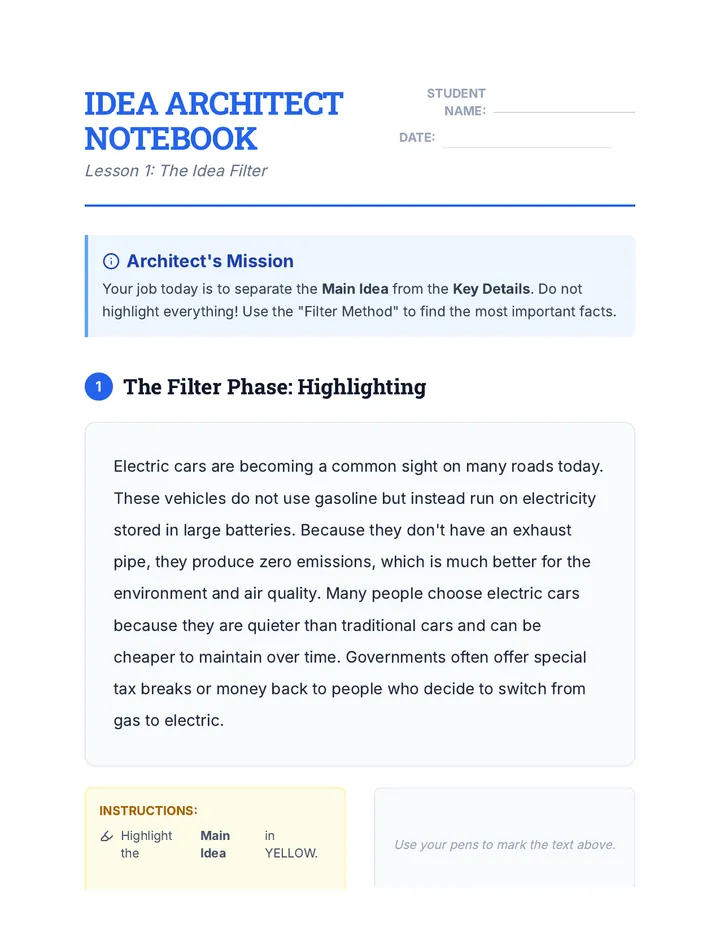
A comprehensive workshop-style unit for 6th Grade ESL students focused on the linguistic mechanics of paraphrasing and synthesizing information. Students move from identifying core concepts to orally retelling information, transforming individual sentences, and finally weaving multiple sources into a single coherent paragraph without plagiarizing.
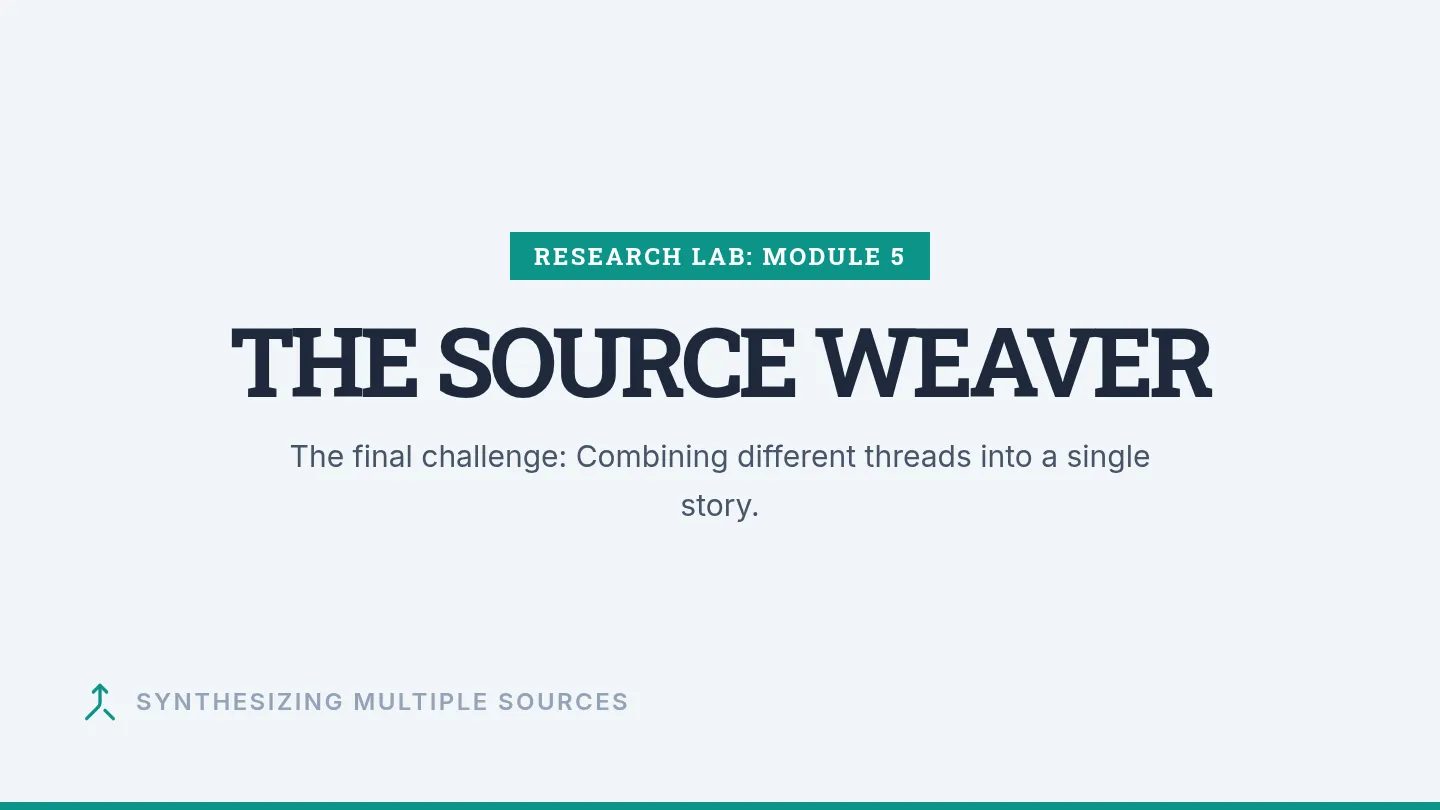
The capstone activity where students combine information from two different sources into a single, logically organized paragraph.
Final assessment for the Search Strategy Academy unit, covering keywords, Boolean operators, database use, and snippet analysis.
A 5-lesson unit for 6th-grade ESL students focused on transforming search habits from natural language questions to strategic keyword and Boolean operator techniques. Students move from basic vocabulary brainstorming to navigating academic databases and skimming snippets for relevance.
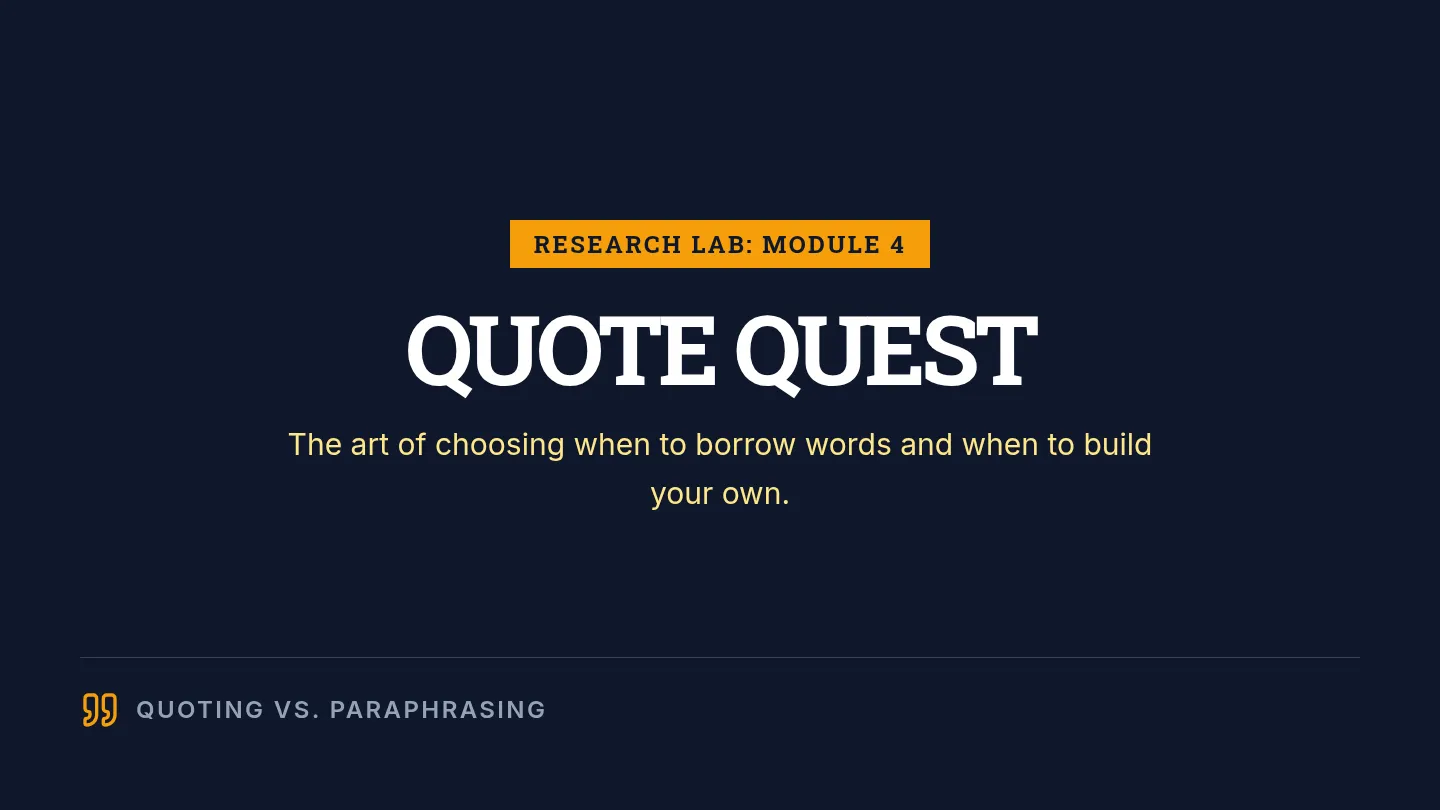
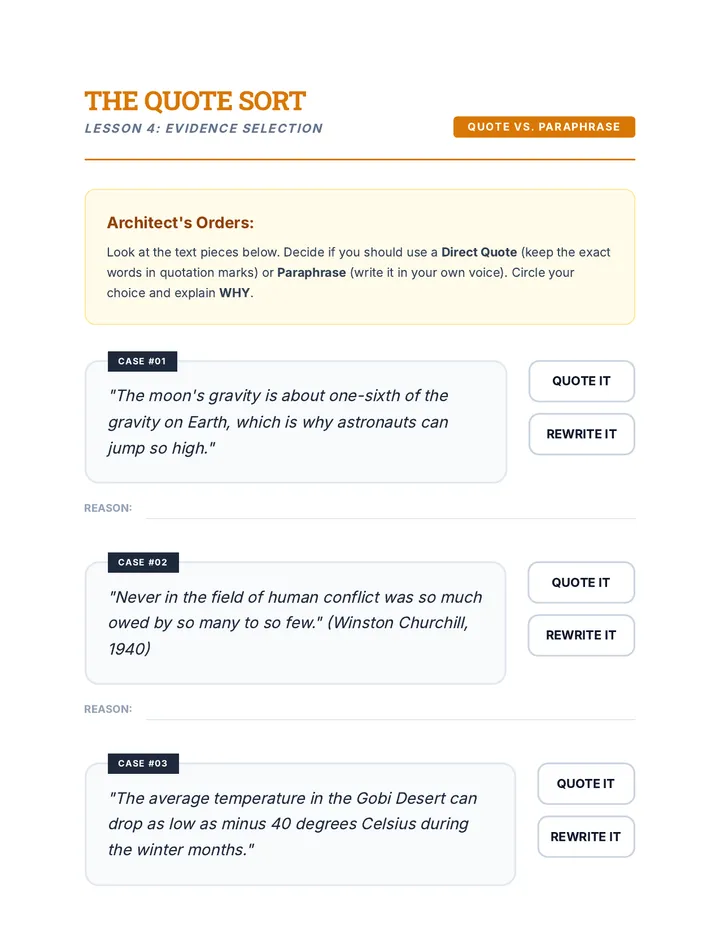
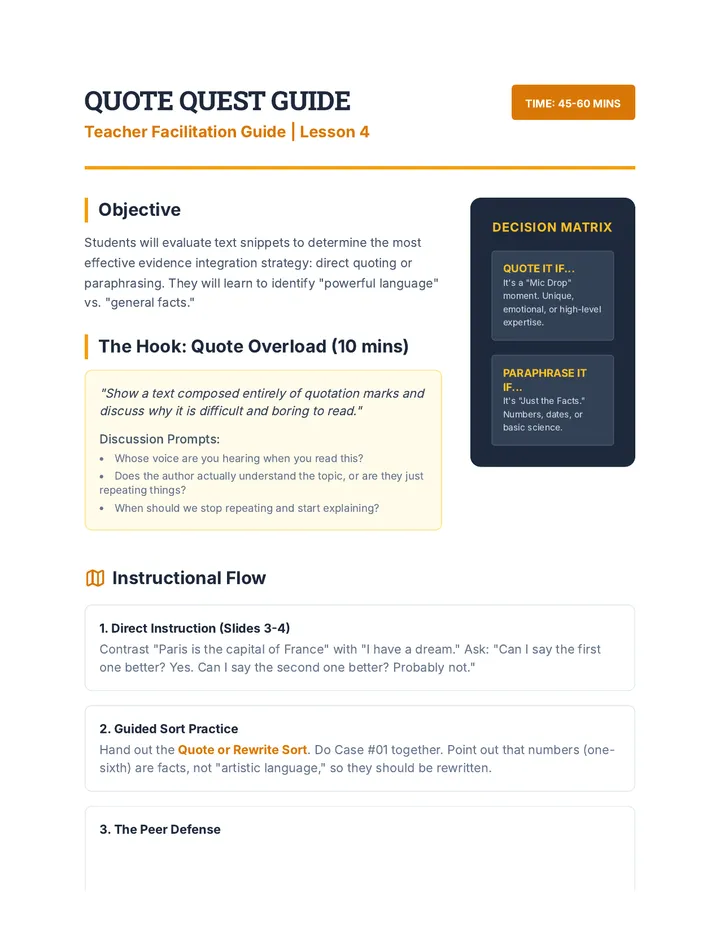
Distinguishes between when to use direct quotes for impact and when to paraphrase for factual clarity.
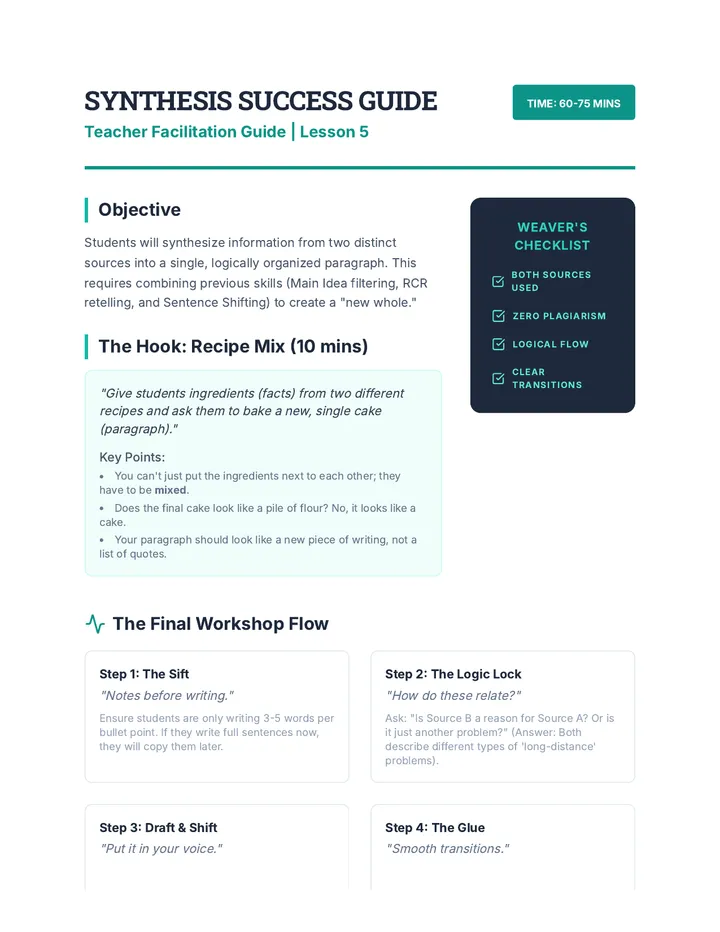
Teacher guide for "The Source Weaver" lesson. It outlines the synthesis process, provides a hook activity, transition words for ESL support, and a sample synthesized paragraph.
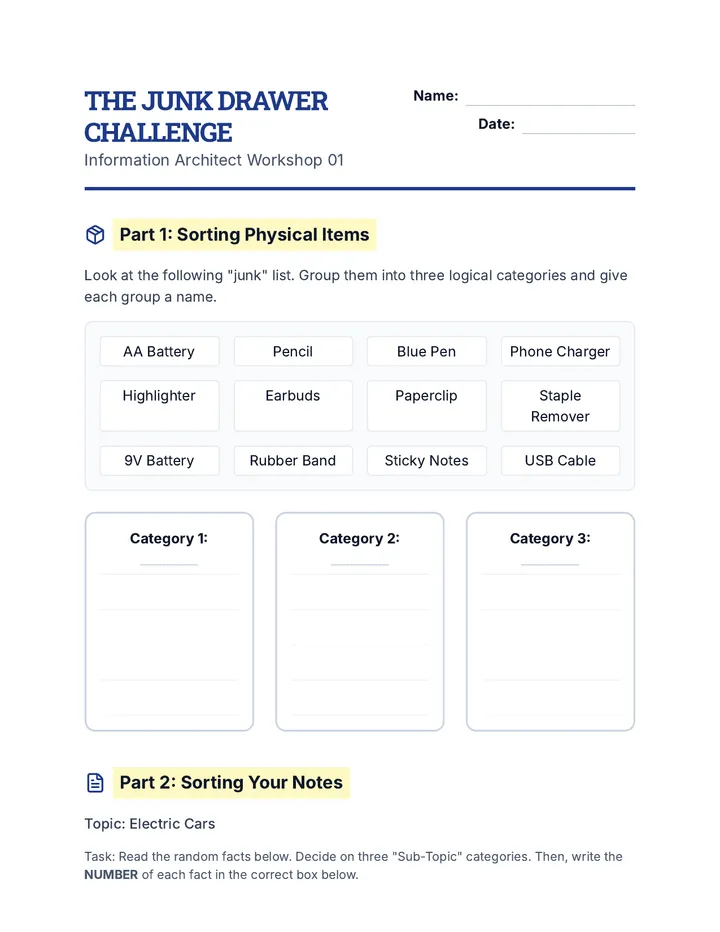
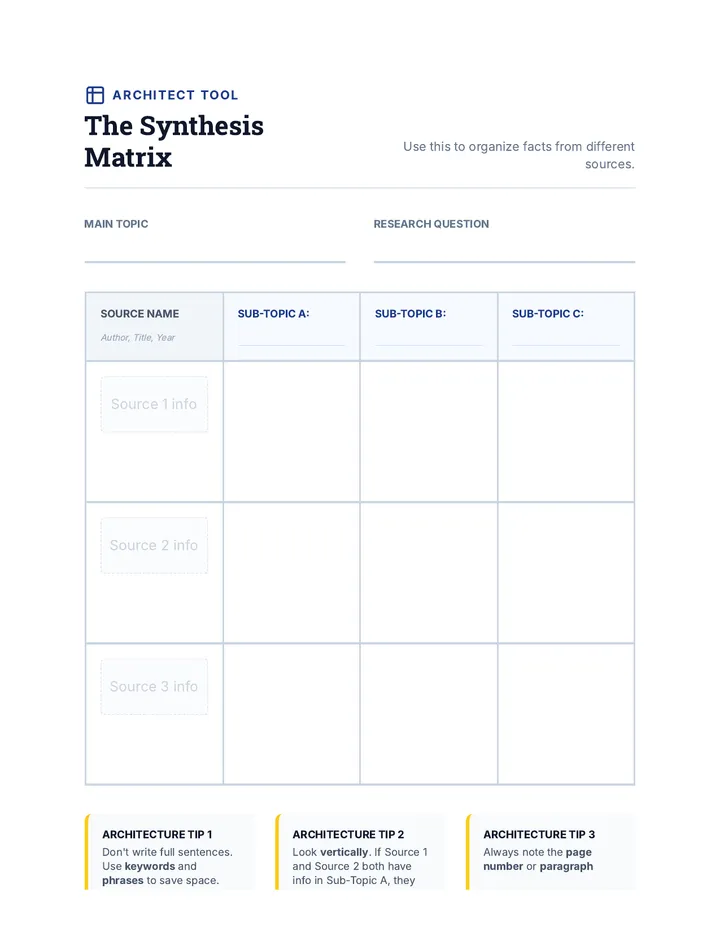
A comprehensive 5-lesson sequence designed for 7th-grade ESL students to master the art of synthesizing information. Students progress from organizing raw research notes to writing sophisticated, cohesive academic paragraphs using evidence from multiple sources.
Guided practice in rewriting sentences using synonyms and grammatical shifts, such as changing active to passive voice, while maintaining original meaning.
Student scavenger hunt log for Lesson 5, where students document their search strings and answers to obscure research questions.
A comprehensive 7th-grade ESL sequence focusing on the ethics of academic integrity, the mechanics of paraphrasing and summarizing, and the technical accuracy of MLA citations. Students transition from understanding intellectual property to performing independent 'plagiarism audits' on research samples.
Focuses on the 'Read, Cover, Recite' method to separate conceptual understanding from the original text's linguistic structure through oral retelling.
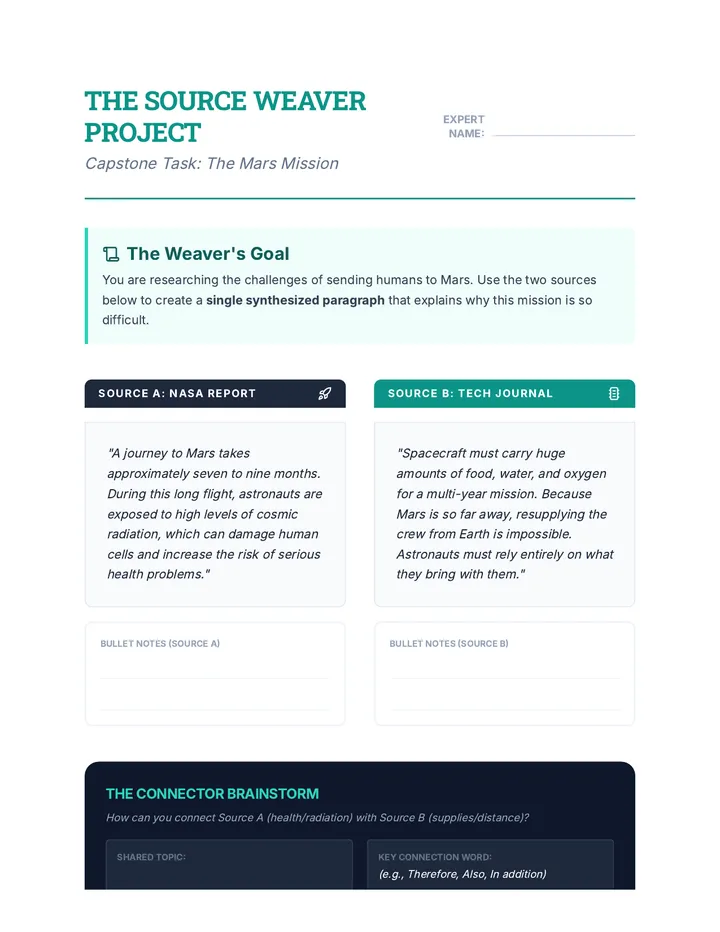
Capstone student project for "The Source Weaver" lesson. Students analyze two short texts about Mars, take notes, and synthesize the information into a single coherent paragraph using their own vocabulary and sentence structures.