Students engage in sentence dissection activities to identify the 'who', 'did what', and 'to whom' in simple academic sentences, establishing foundational syntactic awareness.
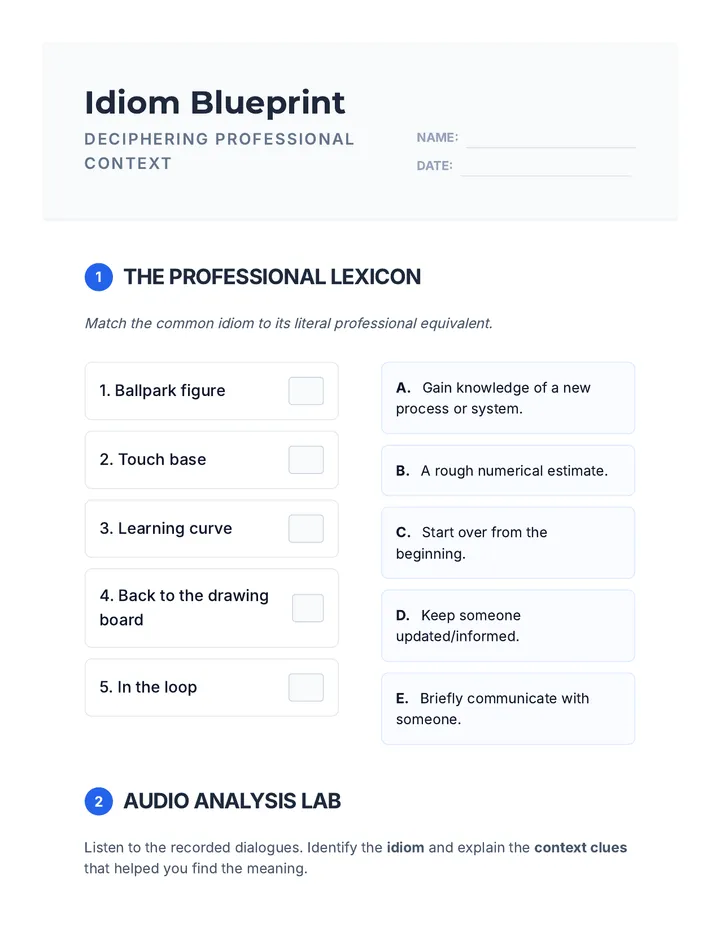
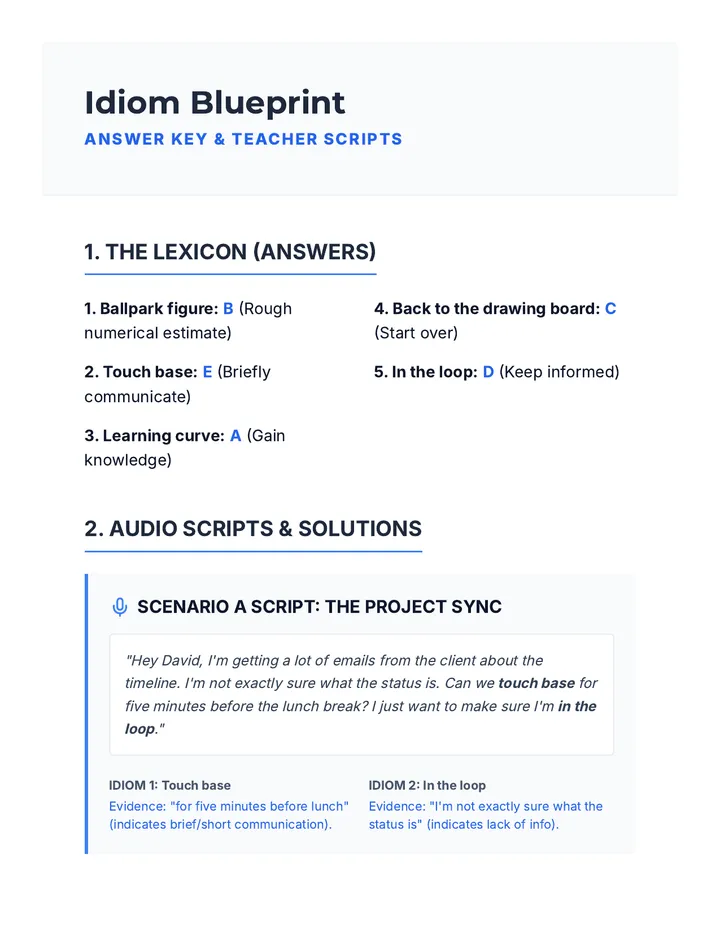
A 5-lesson sequence for graduate students to master idiomatic language, phrasal verbs, and cultural nuances in professional and academic networking environments. Students move from decoding literal meaning to applying figurative language in a high-stakes networking simulation.
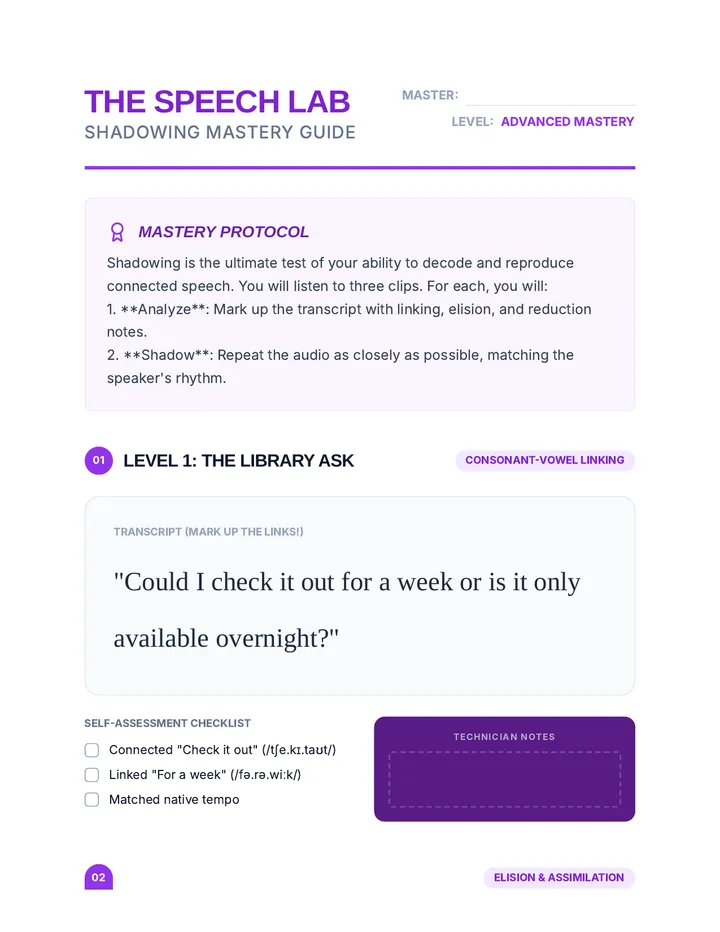
Students engage in a 'shadowing' technique, repeating audio immediately after hearing it to internalize the rhythm and flow of connected speech. This active processing reinforces their ability to predict and process sound streams.
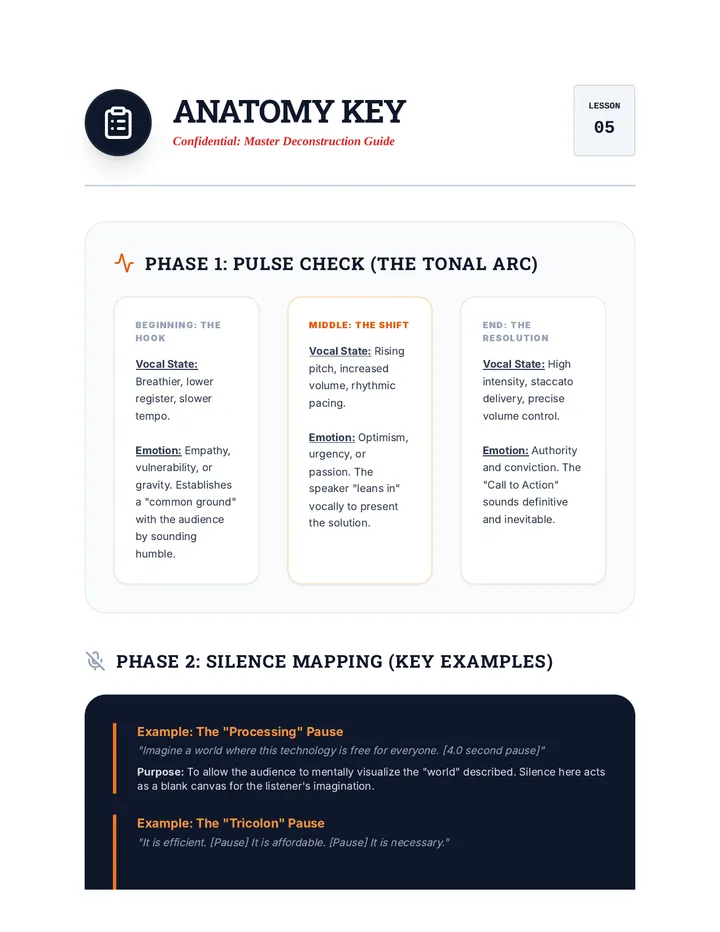
Answer key for the Rhetorical Anatomy worksheet, providing the subtext and implied meaning for the final project's persuasive speech analysis.
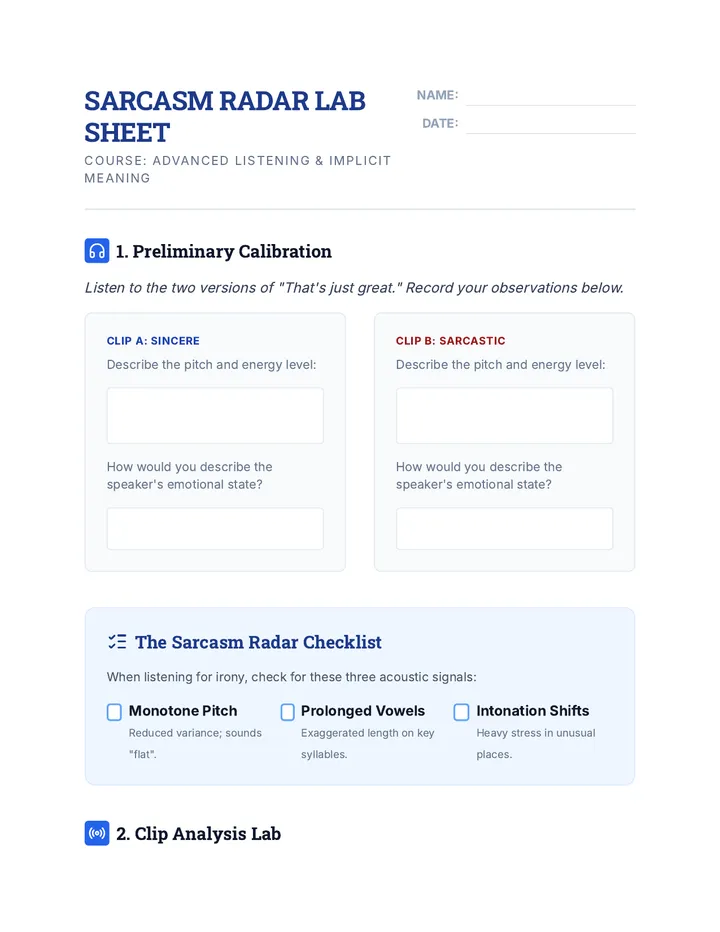
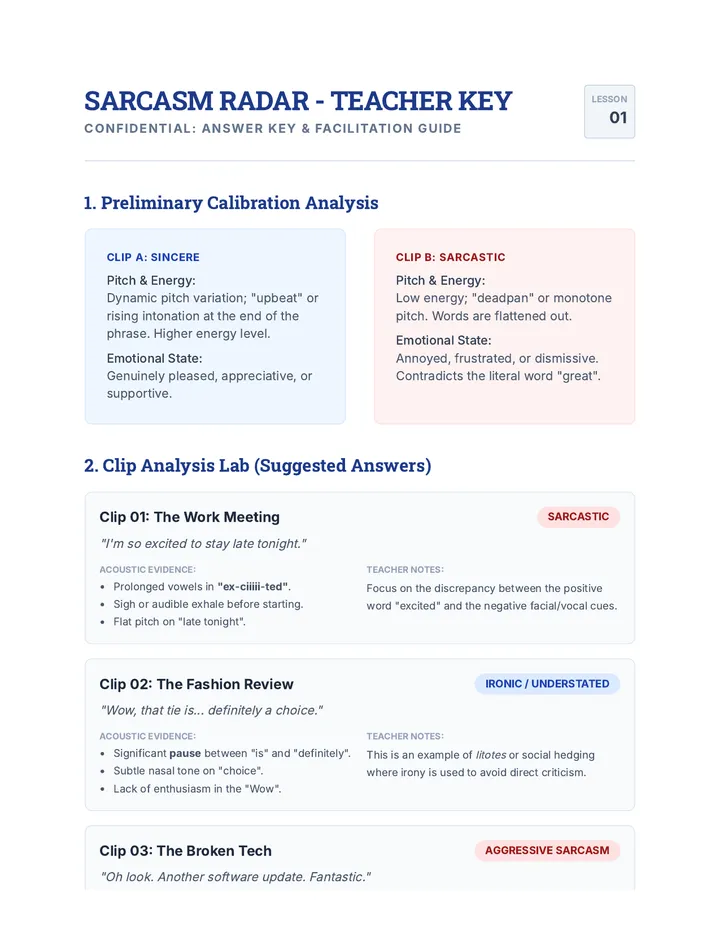
This sequence for graduate ESL students explores the nuances of English beyond literal meaning. Students will master the ability to detect sarcasm, bias, contrastive stress, and professional register, equipping them for complex academic and professional communication.
A high-stakes simulated networking mixer where students must apply their knowledge of idioms, phrasal verbs, and social listening to complete specific "missions."
A rhetorical analysis log for graduate students to deconstruct persuasive speeches by mapping tonal journeys, identifying strategic pauses, and evaluating effectiveness.
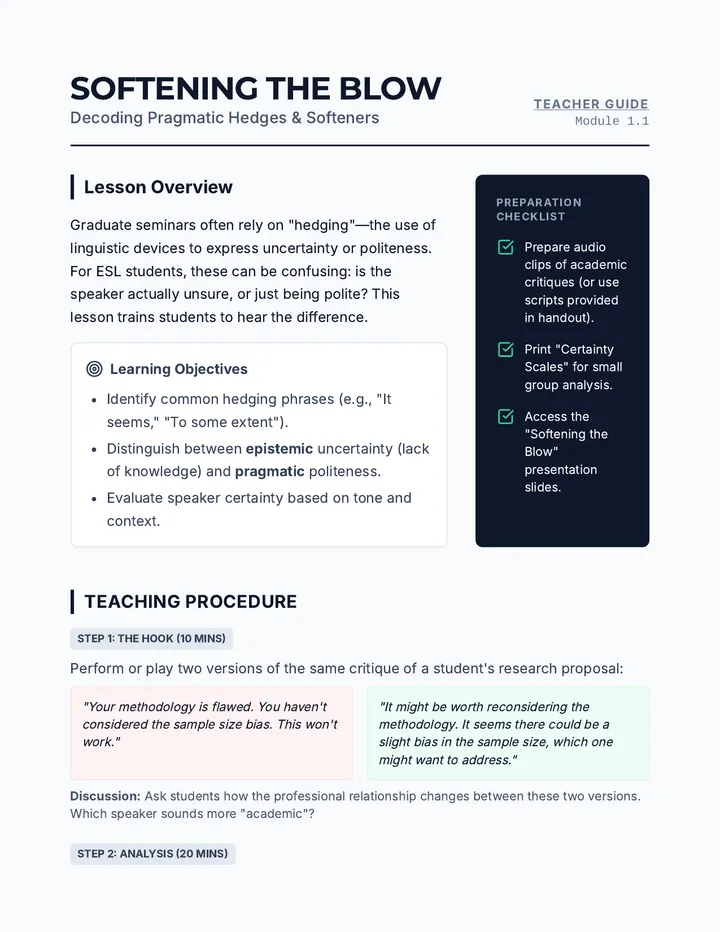
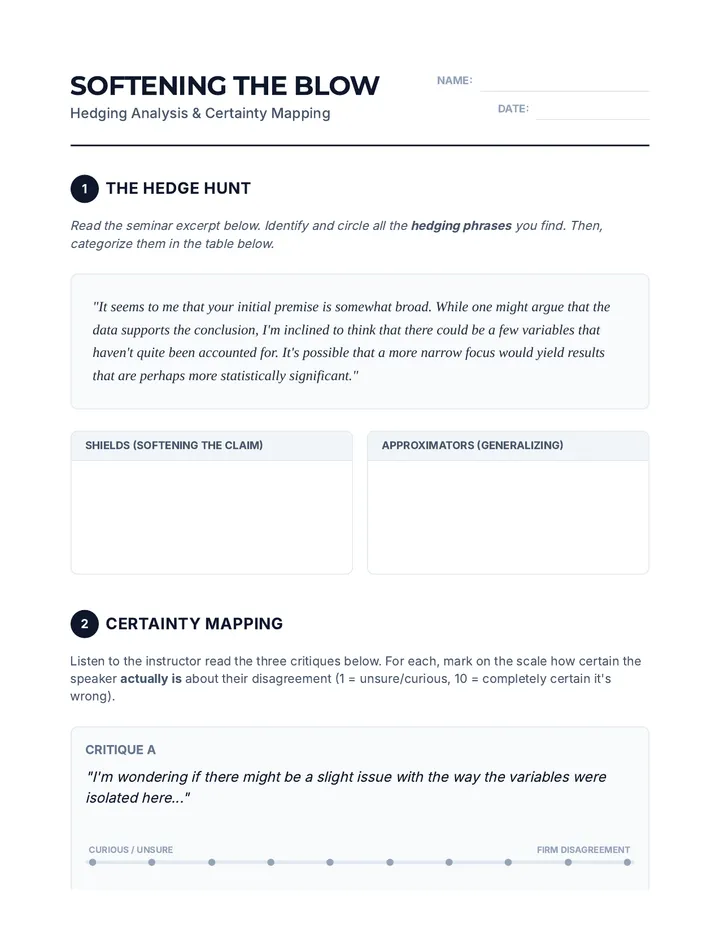
A graduate-level ESL listening sequence focused on the pragmatics of academic discourse. Students learn to navigate the subtleties of seminar discussions by identifying hedging, turn-taking signals, disagreement strategies, and multi-speaker argument threads.
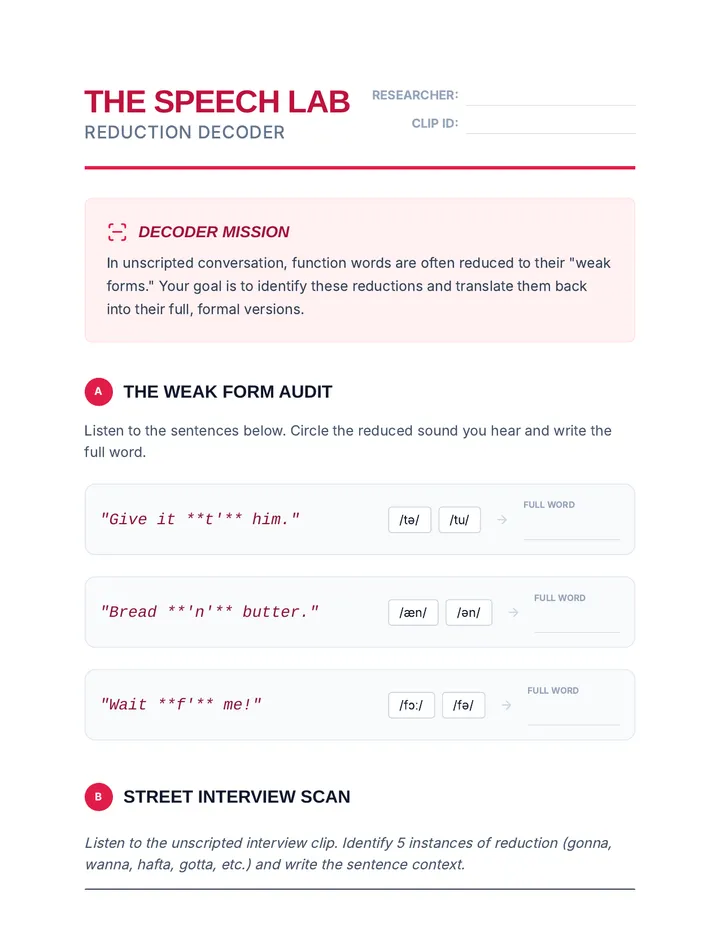
Focusing on function words, this lesson tackles common reductions like 'gonna,' 'wanna,' and weak forms of auxiliary verbs. Students analyze unscripted interviews to catch these reductions in context.
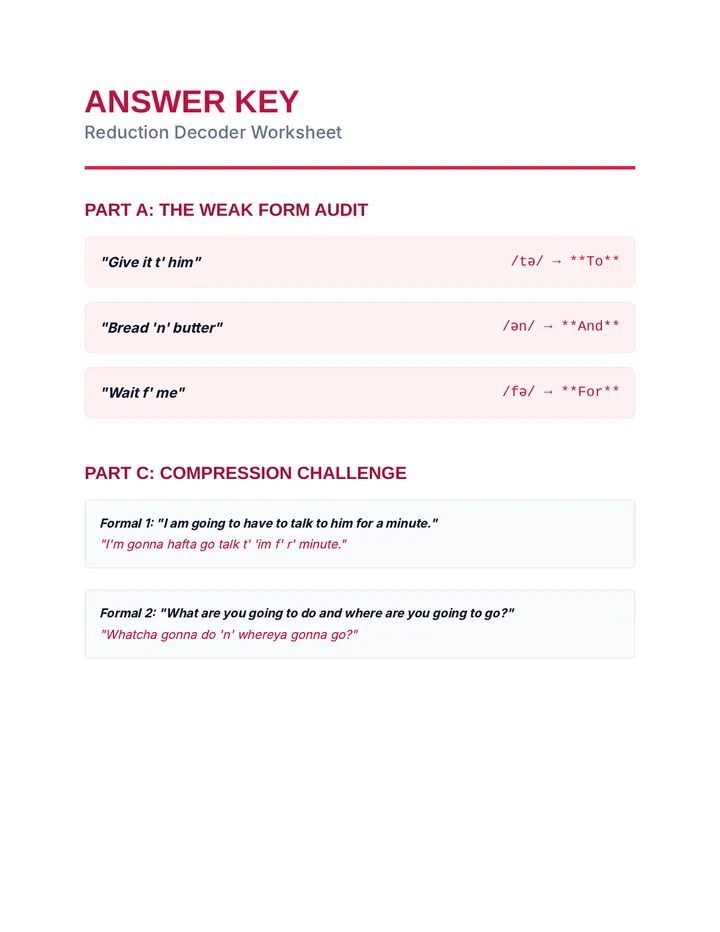
Answer key for the Lesson 4 worksheet on grammatical reductions.