Students analyze emails and notes to infer hidden motives and conflicts between suspects using tone and context clues.
This 5-lesson sequence for 6th-grade ESL students covers the ethical use of information, focusing on intellectual property, MLA citation components, digital tools, and in-text attribution. Students progress from conceptual understanding to creating a mini-bibliography for a personal project.
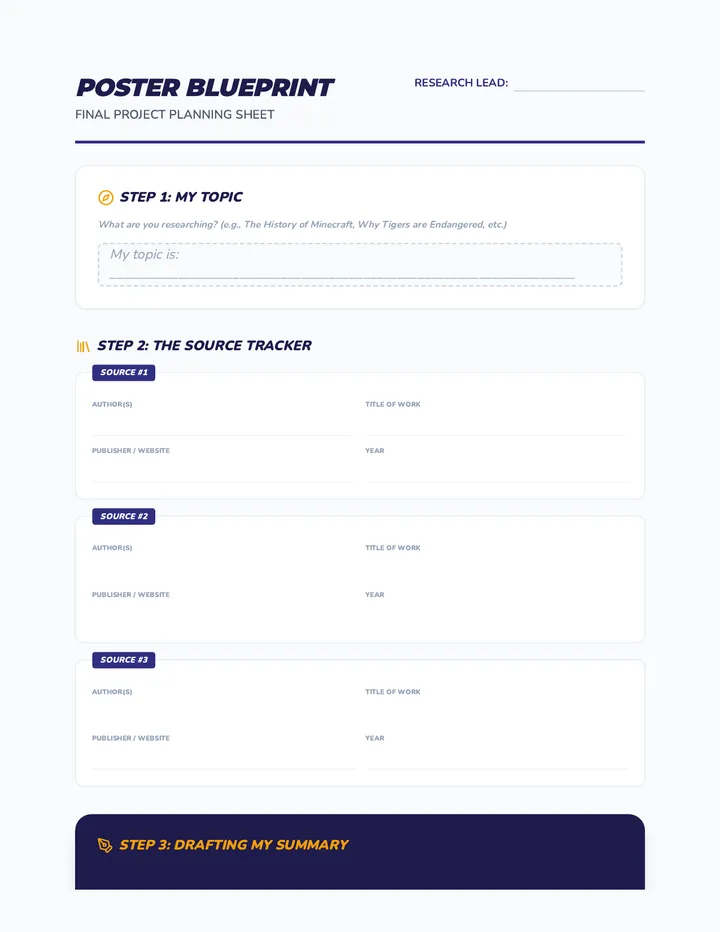
In this final project-based lesson, students synthesize their learning by creating a "Research Credits" poster. They select a topic of interest, find three sources, summarize key information, and produce a perfectly formatted Works Cited section.
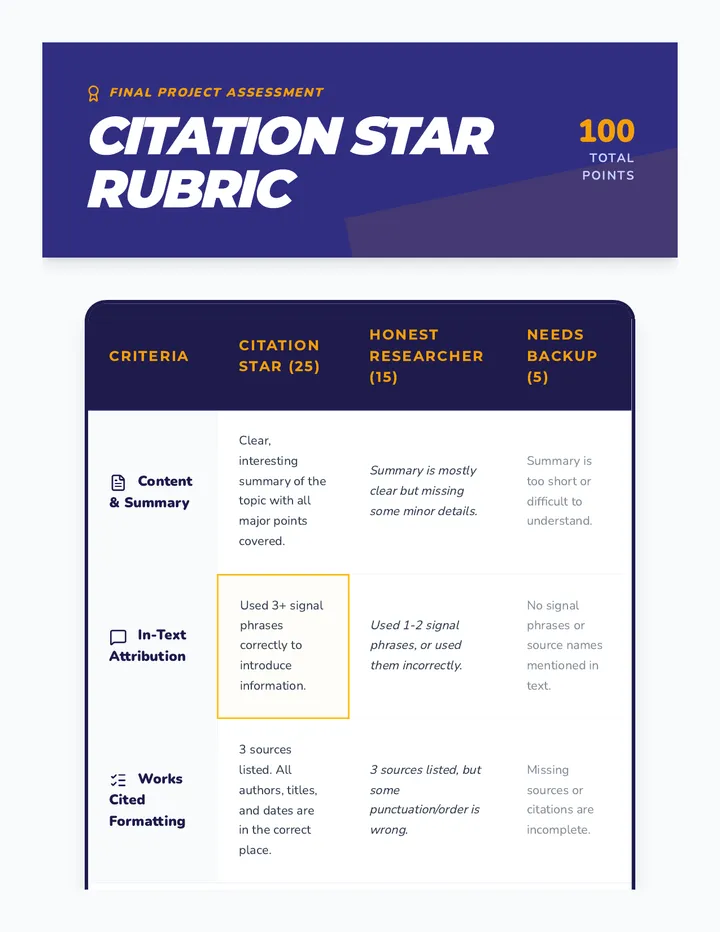
A teacher guide for the The Final Verdict lesson, providing a simulation setup, a scoring rubric for the assessment, and debrief discussion questions.
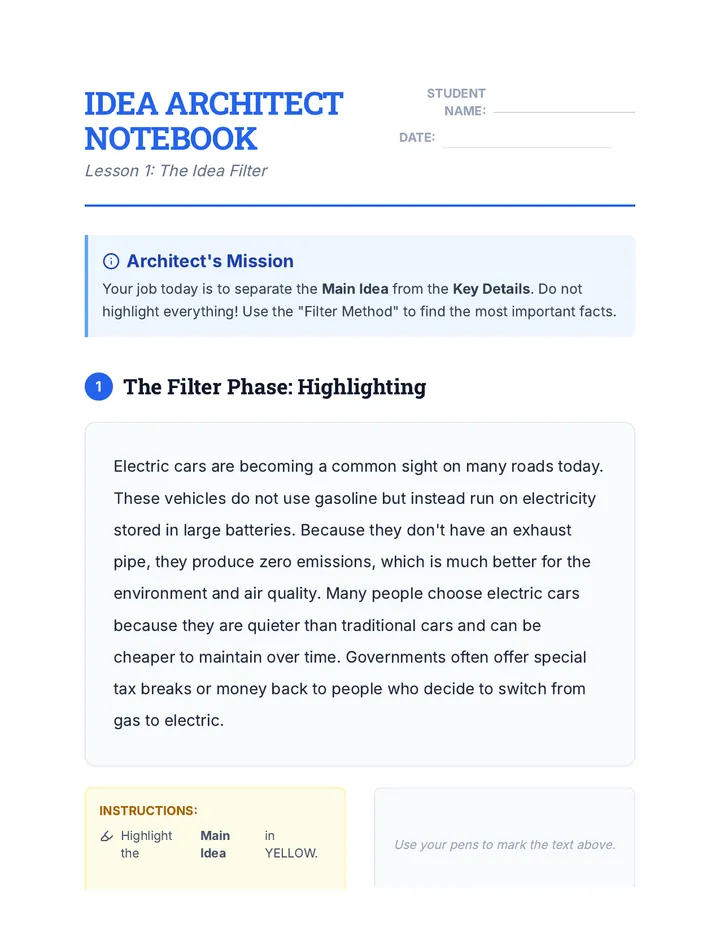
A comprehensive workshop-style unit for 6th Grade ESL students focused on the linguistic mechanics of paraphrasing and synthesizing information. Students move from identifying core concepts to orally retelling information, transforming individual sentences, and finally weaving multiple sources into a single coherent paragraph without plagiarizing.
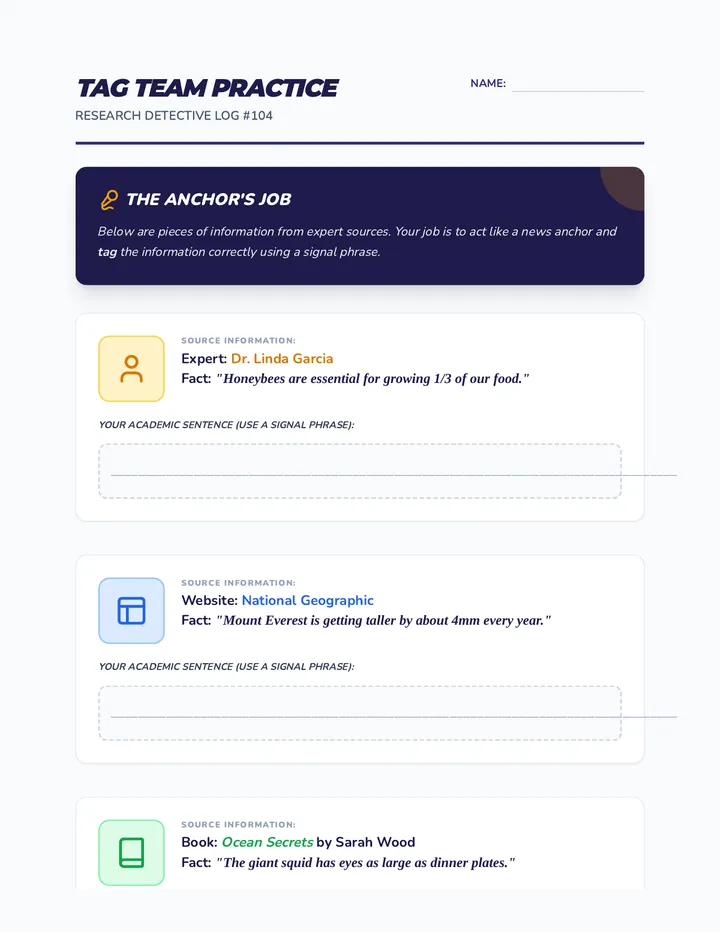
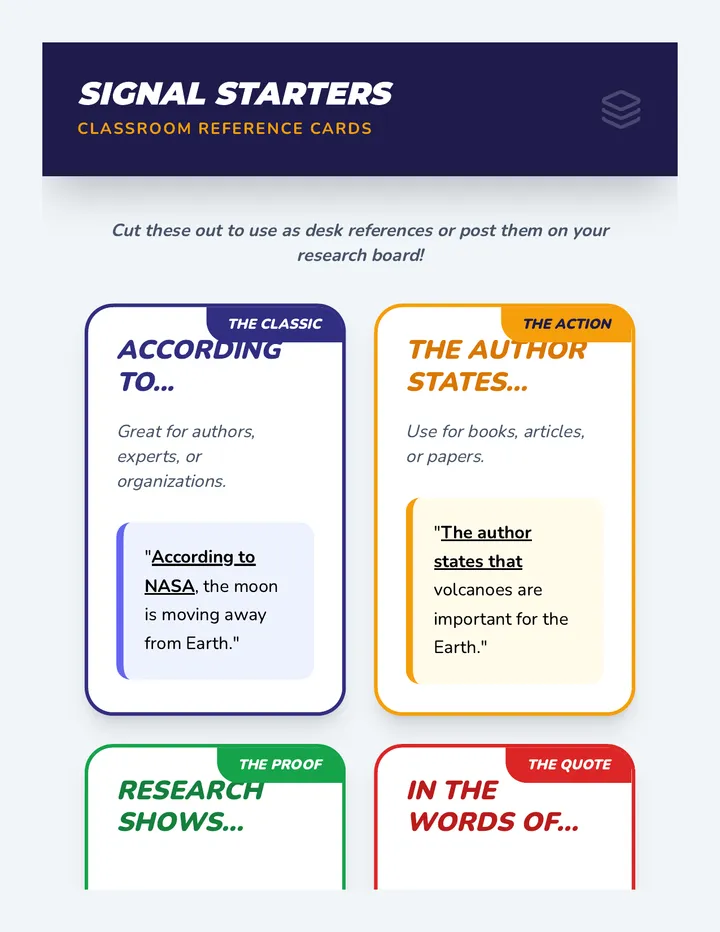
Students learn the mechanics of in-text attribution, practicing how to introduce sources using "signal phrases" (e.g., 'According to...'). They understand how to bridge the gap between their own ideas and those of external experts.
Final assessment for the Search Strategy Academy unit, covering keywords, Boolean operators, database use, and snippet analysis.
A 5-lesson unit for 6th-grade ESL students focused on transforming search habits from natural language questions to strategic keyword and Boolean operator techniques. Students move from basic vocabulary brainstorming to navigating academic databases and skimming snippets for relevance.
Students learn the benefits and risks of using digital citation tools. This lesson focuses on identifying common machine errors, such as capitalization issues and missing data, and emphasizes student accountability for final accuracy.
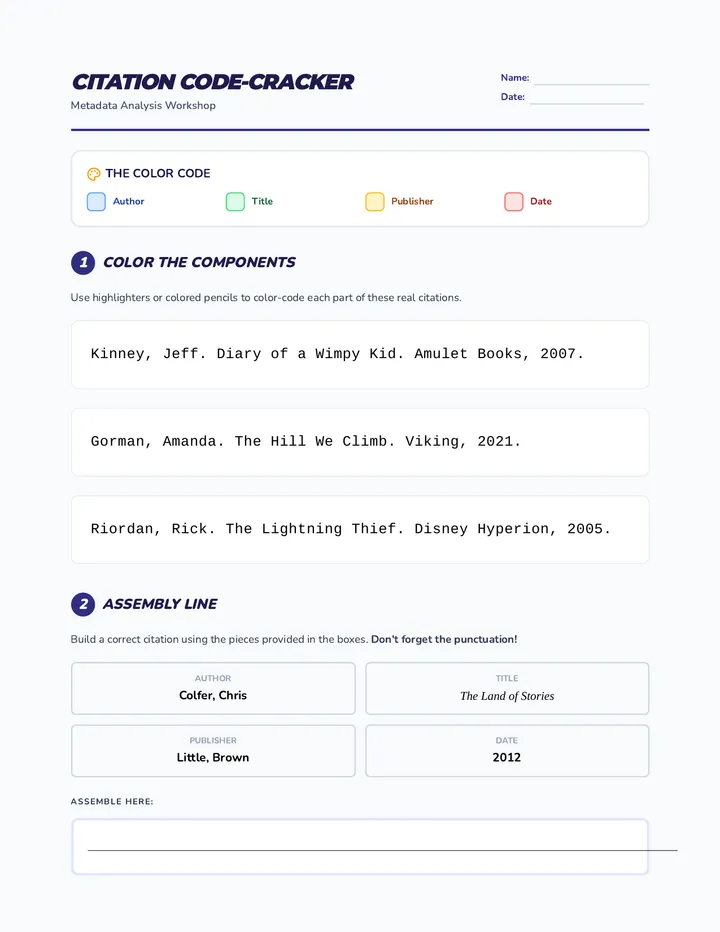
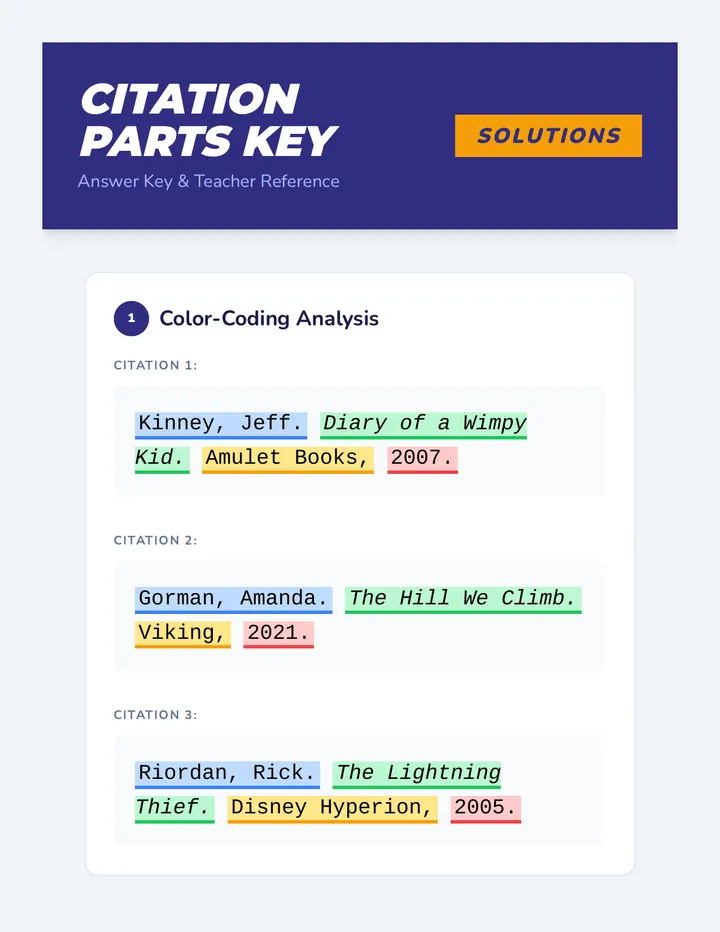
Students learn to identify and format the four core elements of an MLA citation: Author, Title, Publisher, and Date. They use color-coding to demystify the punctuation and structure of citations.