A 5-lesson sequence for 5th graders focusing on human-centered web design, User Experience (UX), and web accessibility. Students explore how to make digital spaces usable for everyone through empathy, analysis, and auditing.
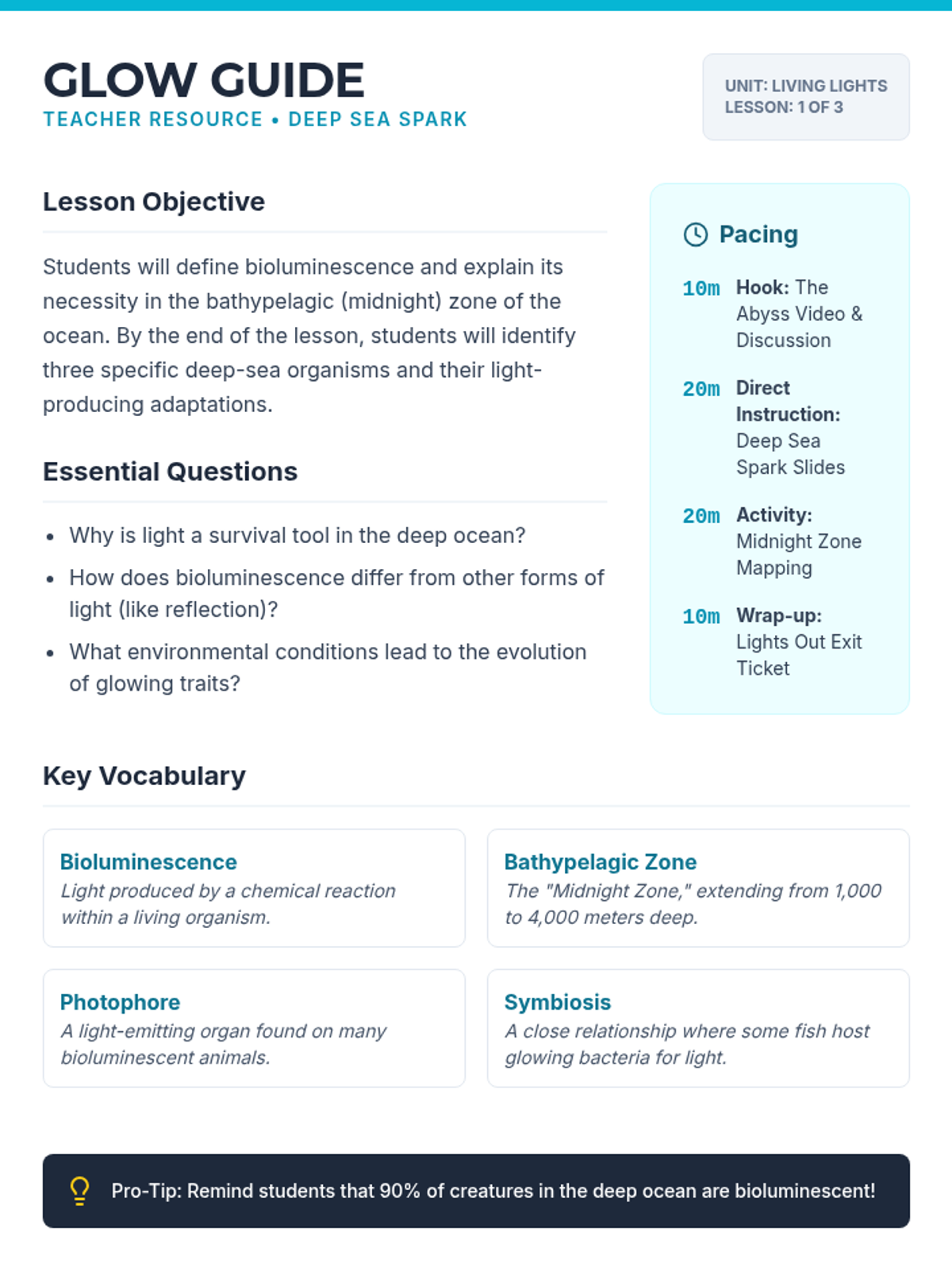
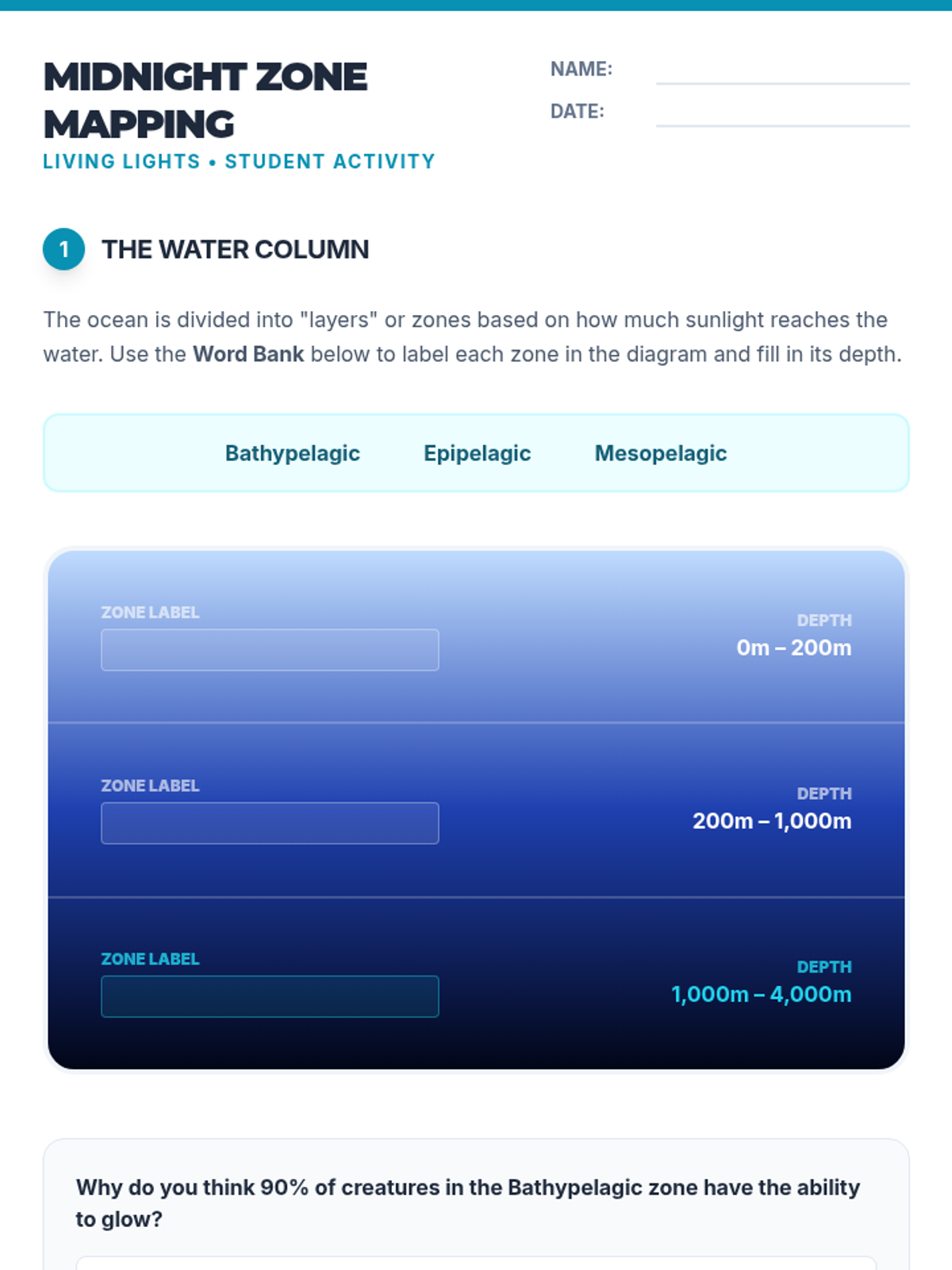
A comprehensive 3-lesson unit exploring the science, chemistry, and purpose of bioluminescence in nature. Students dive into the deep sea, experiment with chemical reactions, and analyze how light is used for survival.
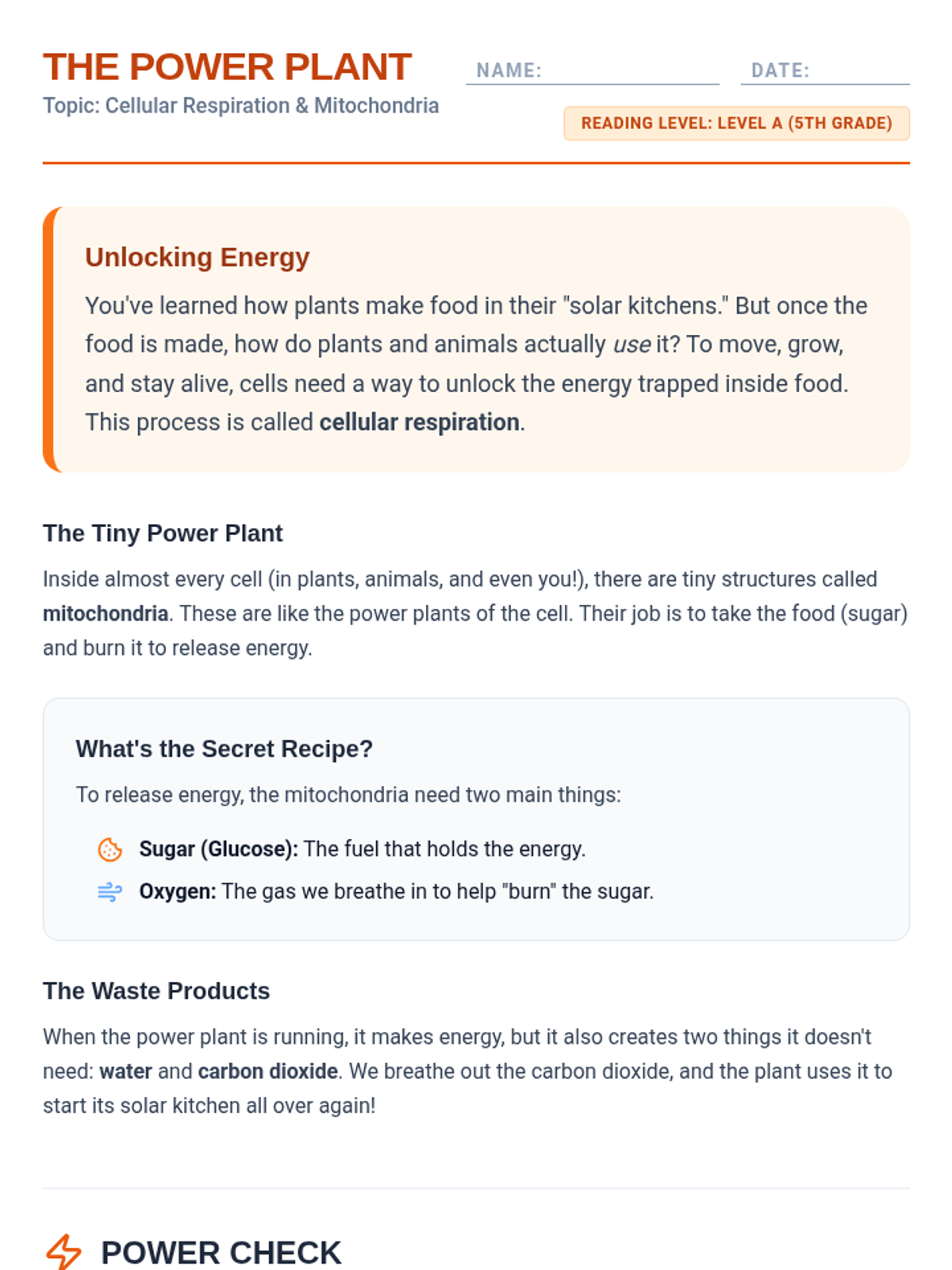
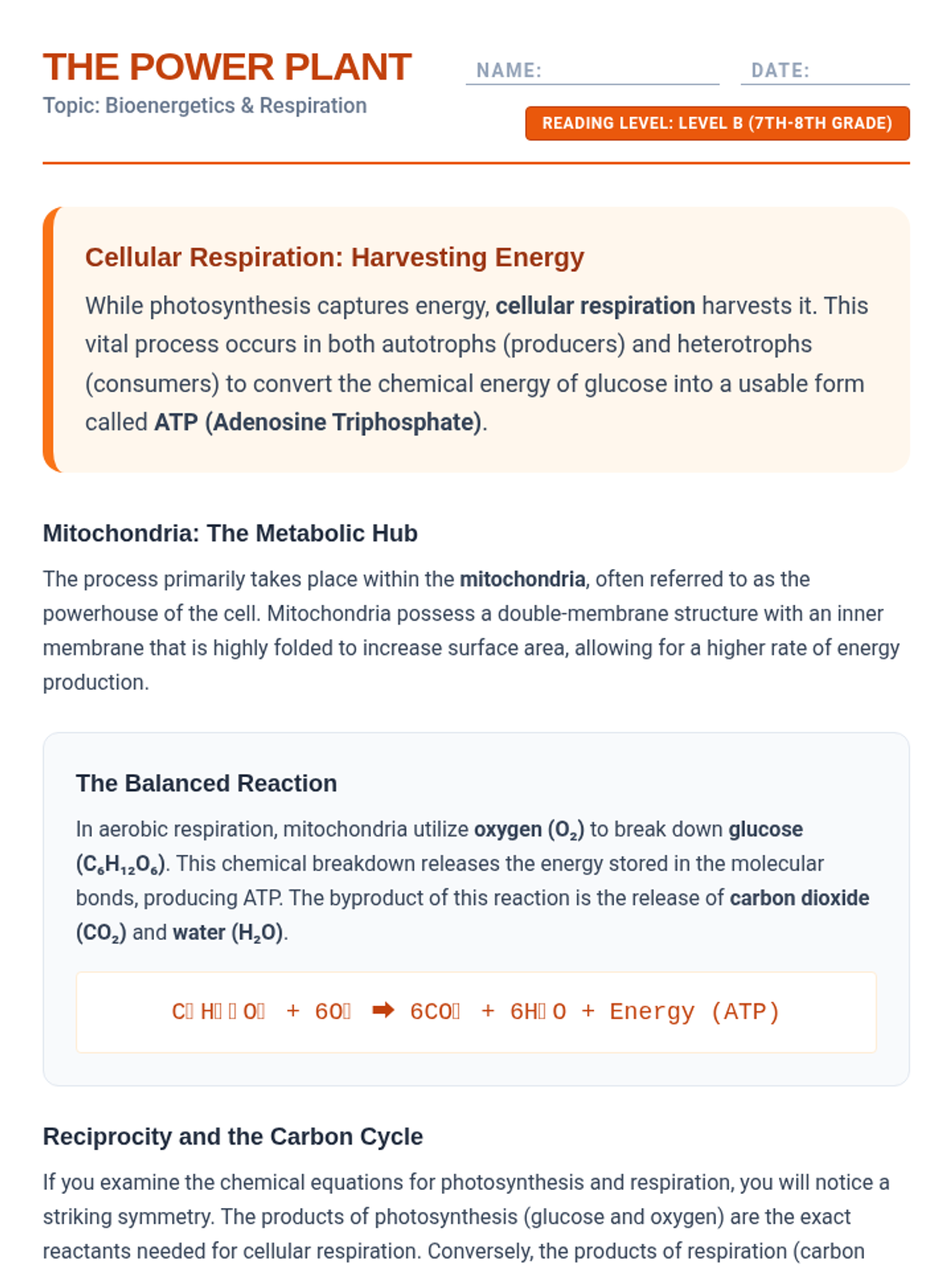
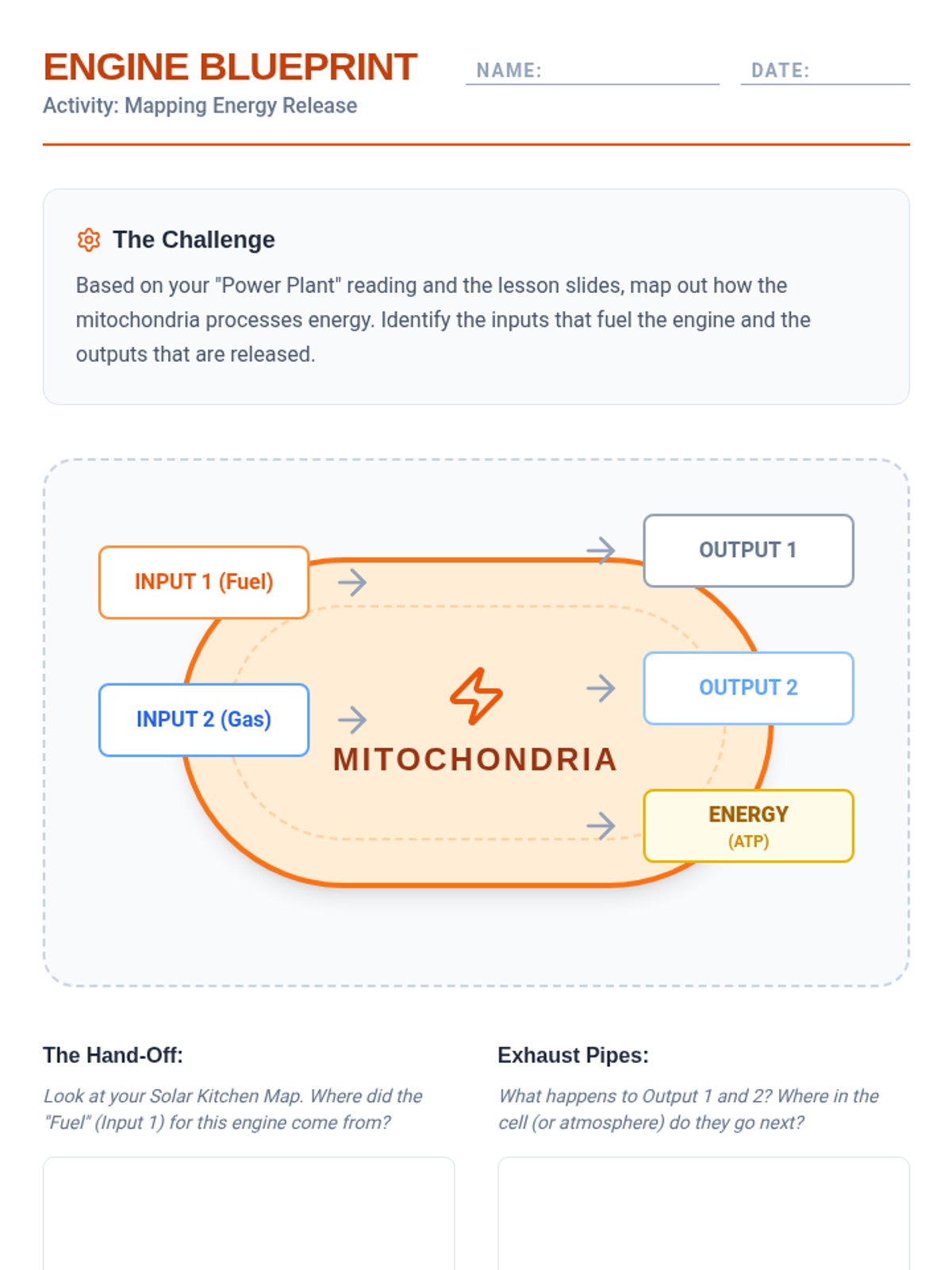
A three-day exploration of the interconnected roles of chloroplasts and mitochondria in cycling matter through ecosystems. Students use a lunar colony hypothetical lab to apply the scientific method to real-world gas exchange scenarios.
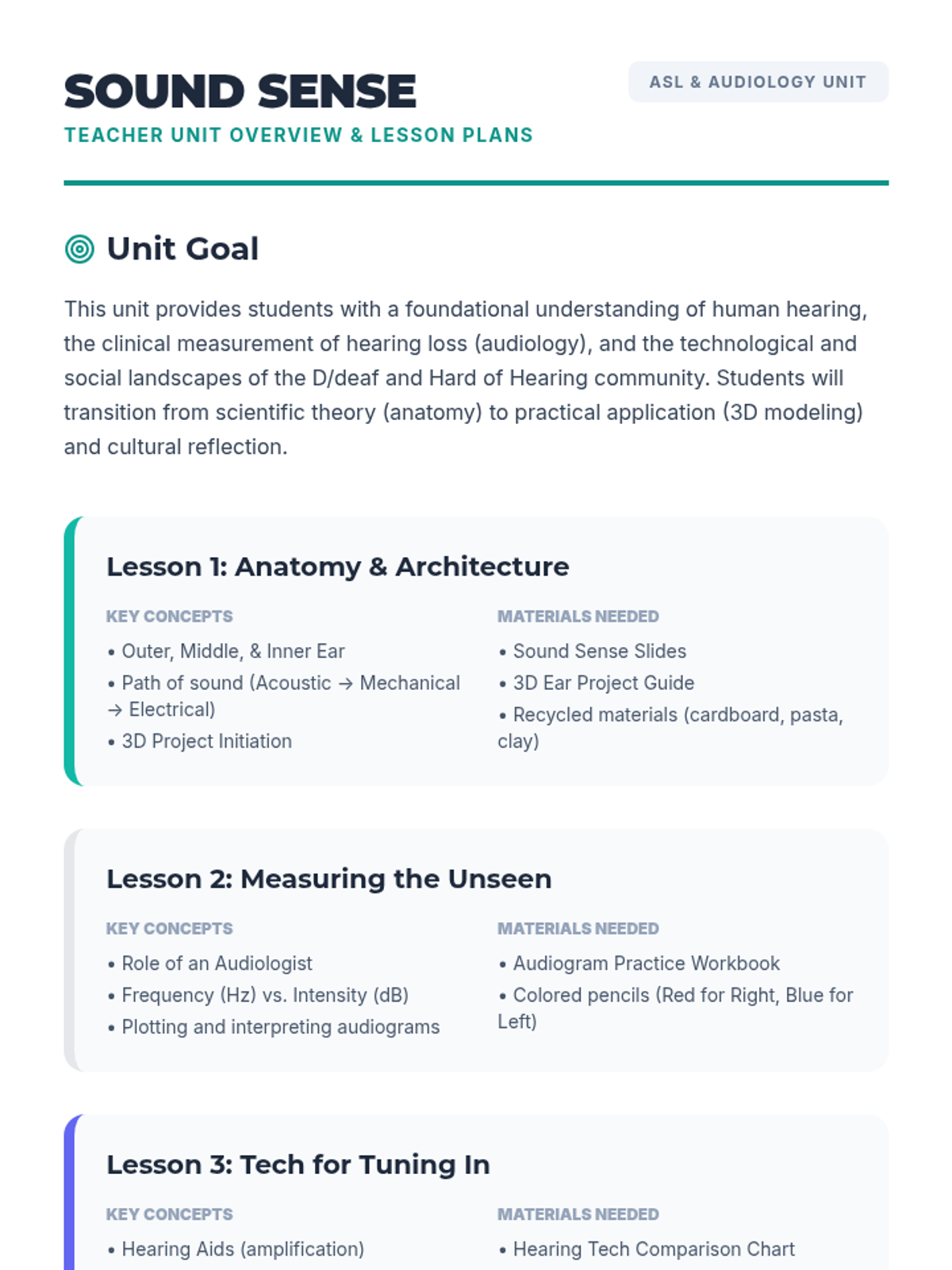
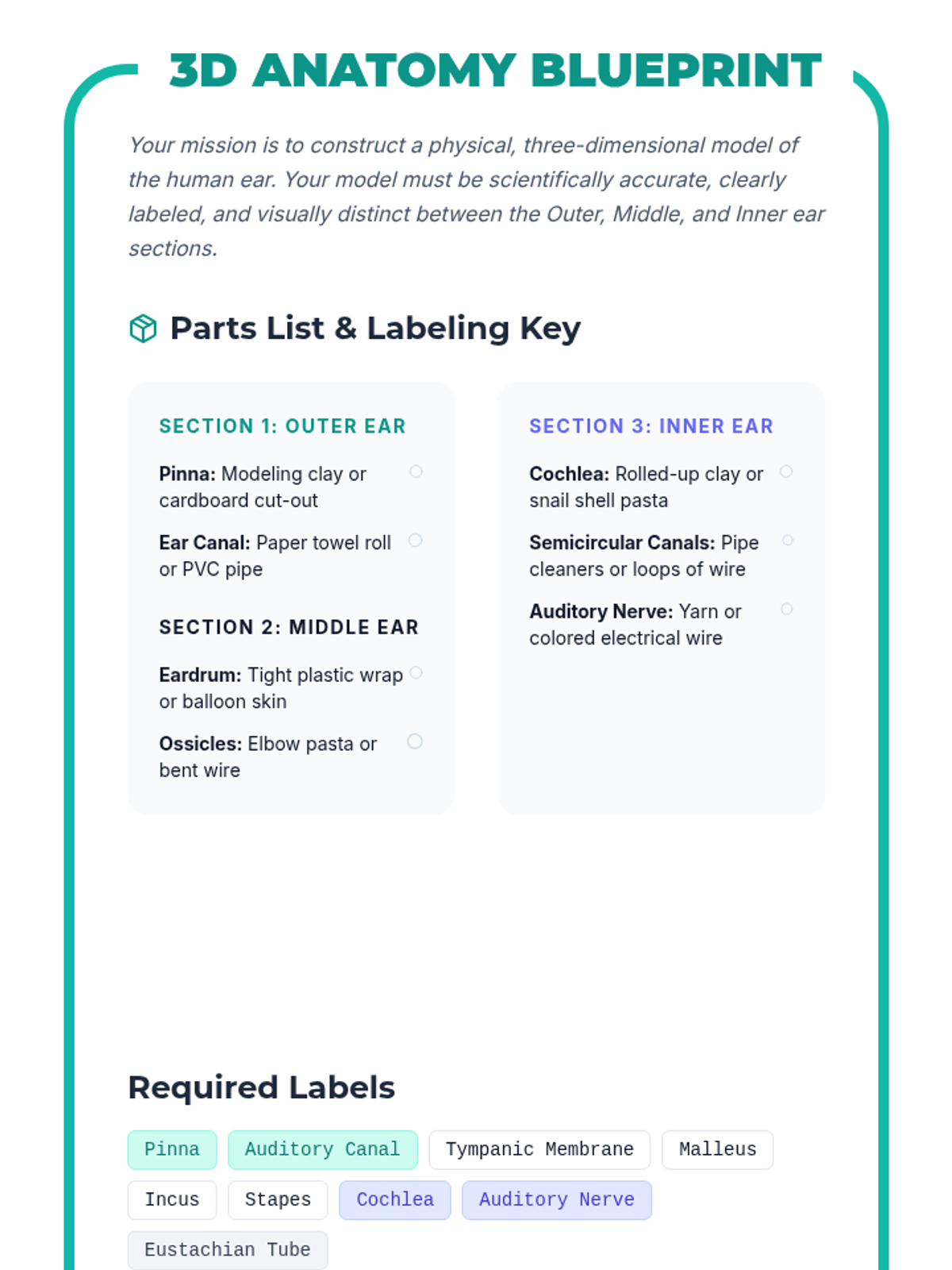
A comprehensive unit exploring the science of hearing, the technology used to assist hearing loss, and the personal impact of being D/deaf or hard of hearing. Students will build a 3D ear model, learn to read audiograms, and understand the difference between hearing aids and cochlear implants.
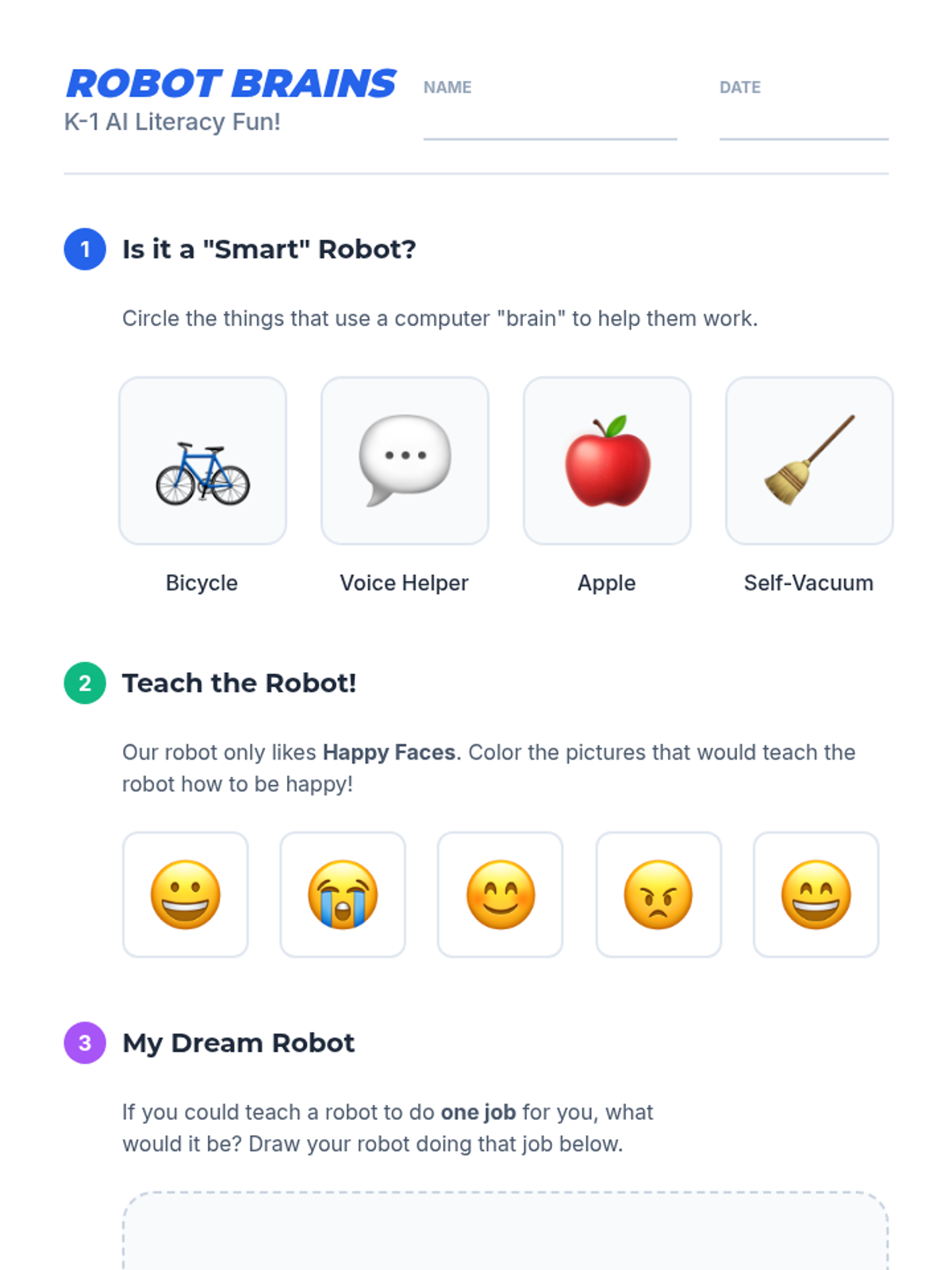
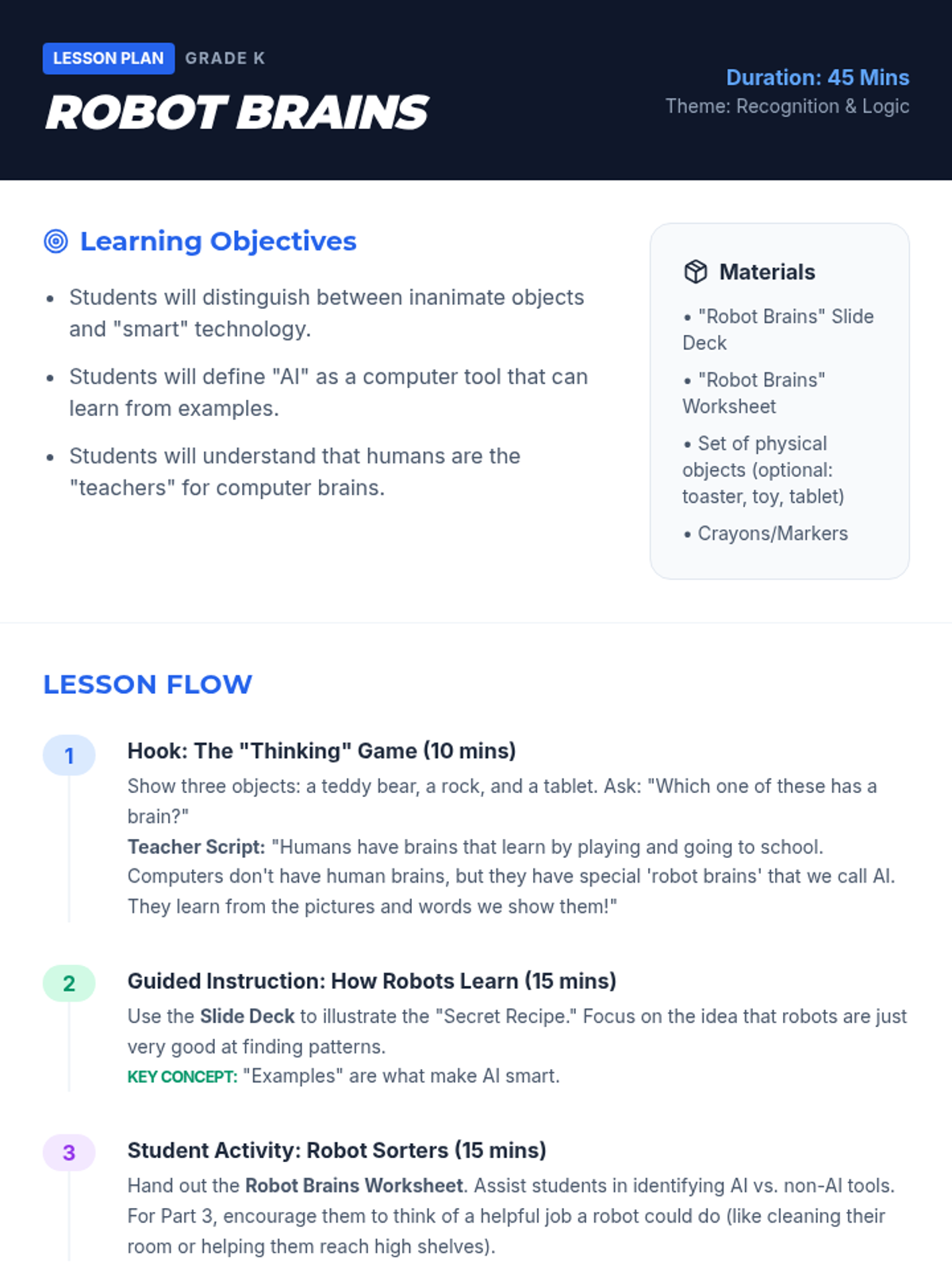
A comprehensive K-12 AI literacy sequence covering the fundamentals of how AI works, machine learning, ethics, social impact, and creative application through age-appropriate lessons.
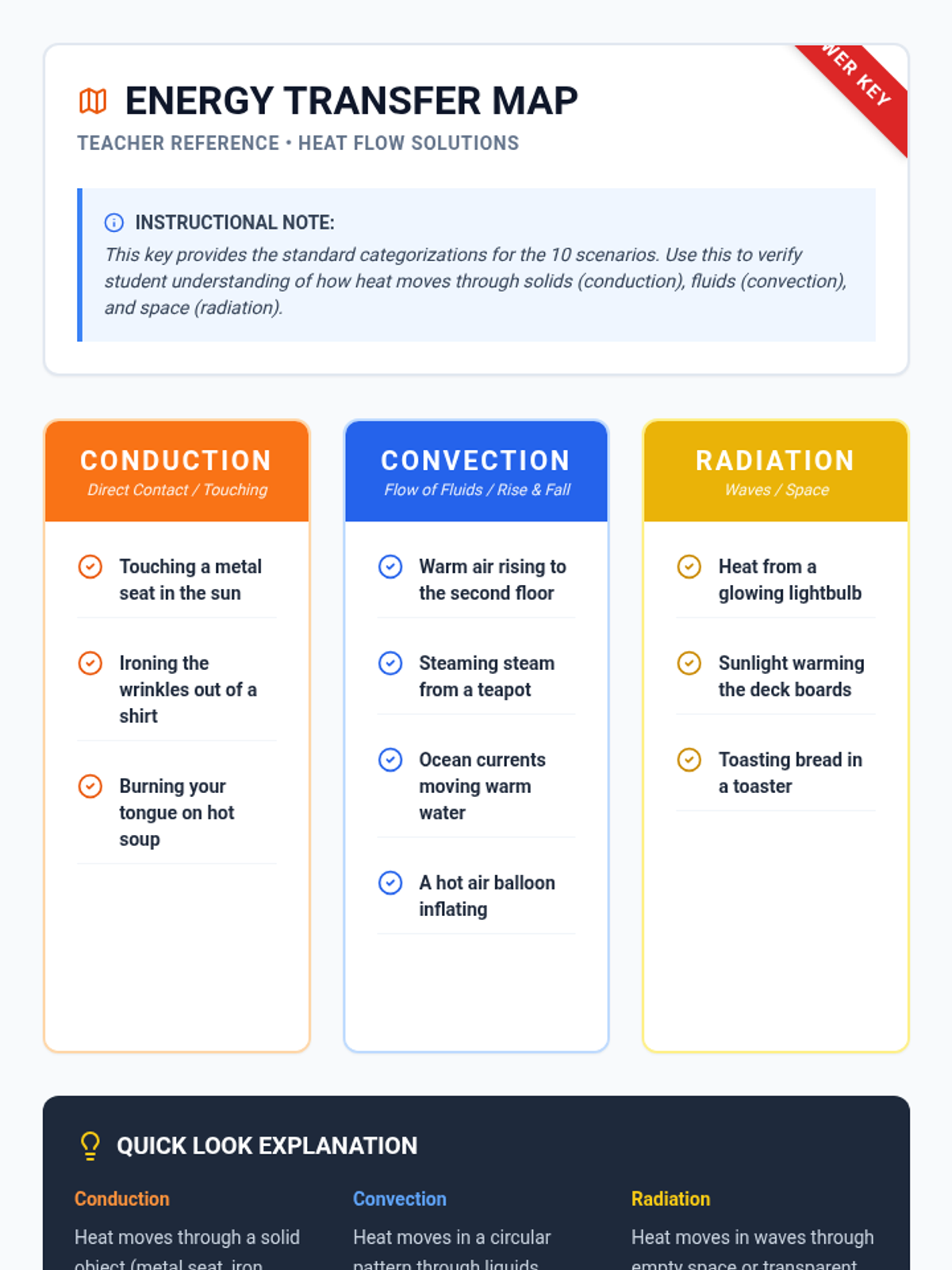
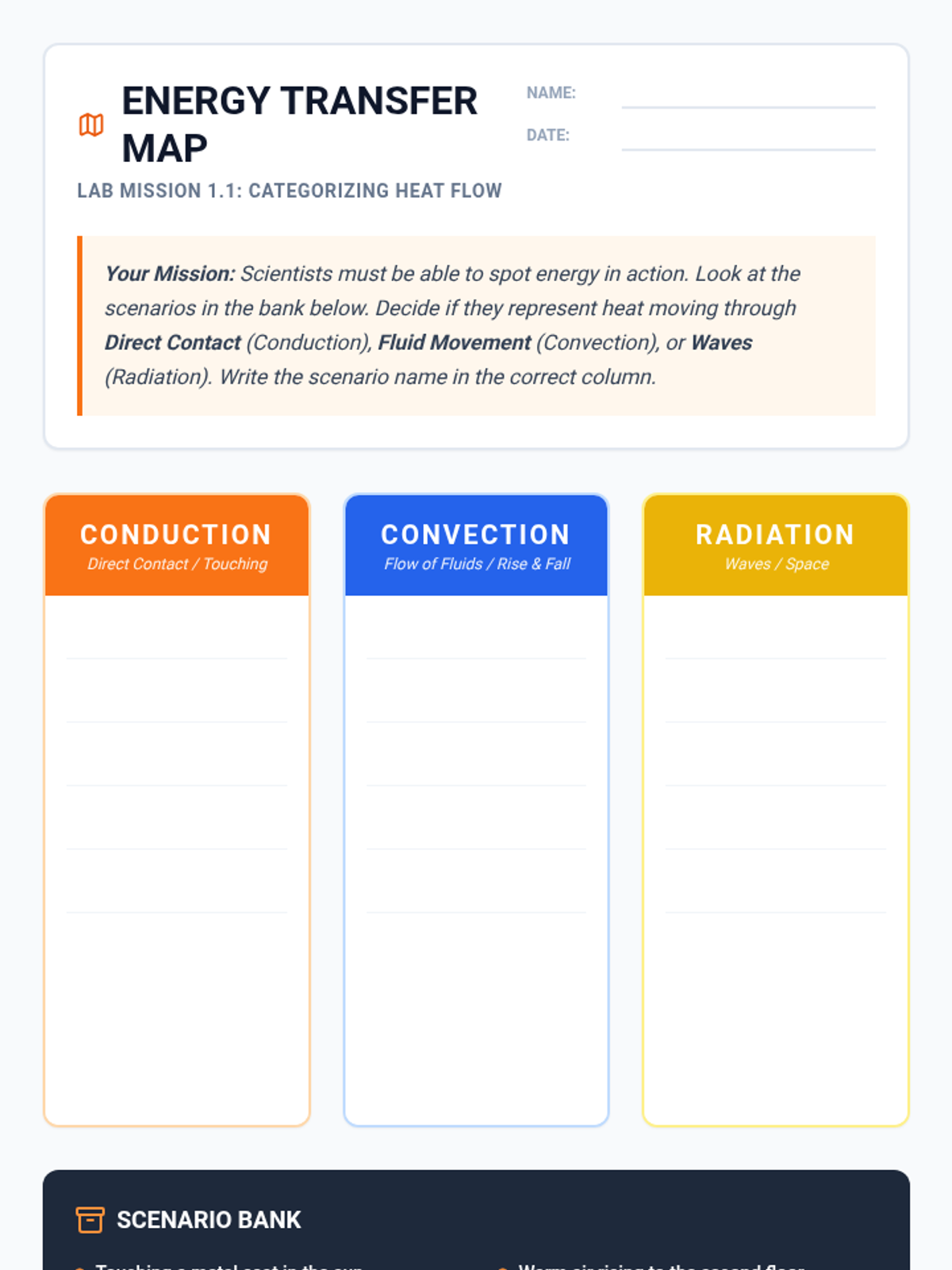
A comprehensive 4-day sequence focusing on the application of thermal energy concepts, including conduction, convection, radiation, and insulation through hands-on labs and real-world analysis.
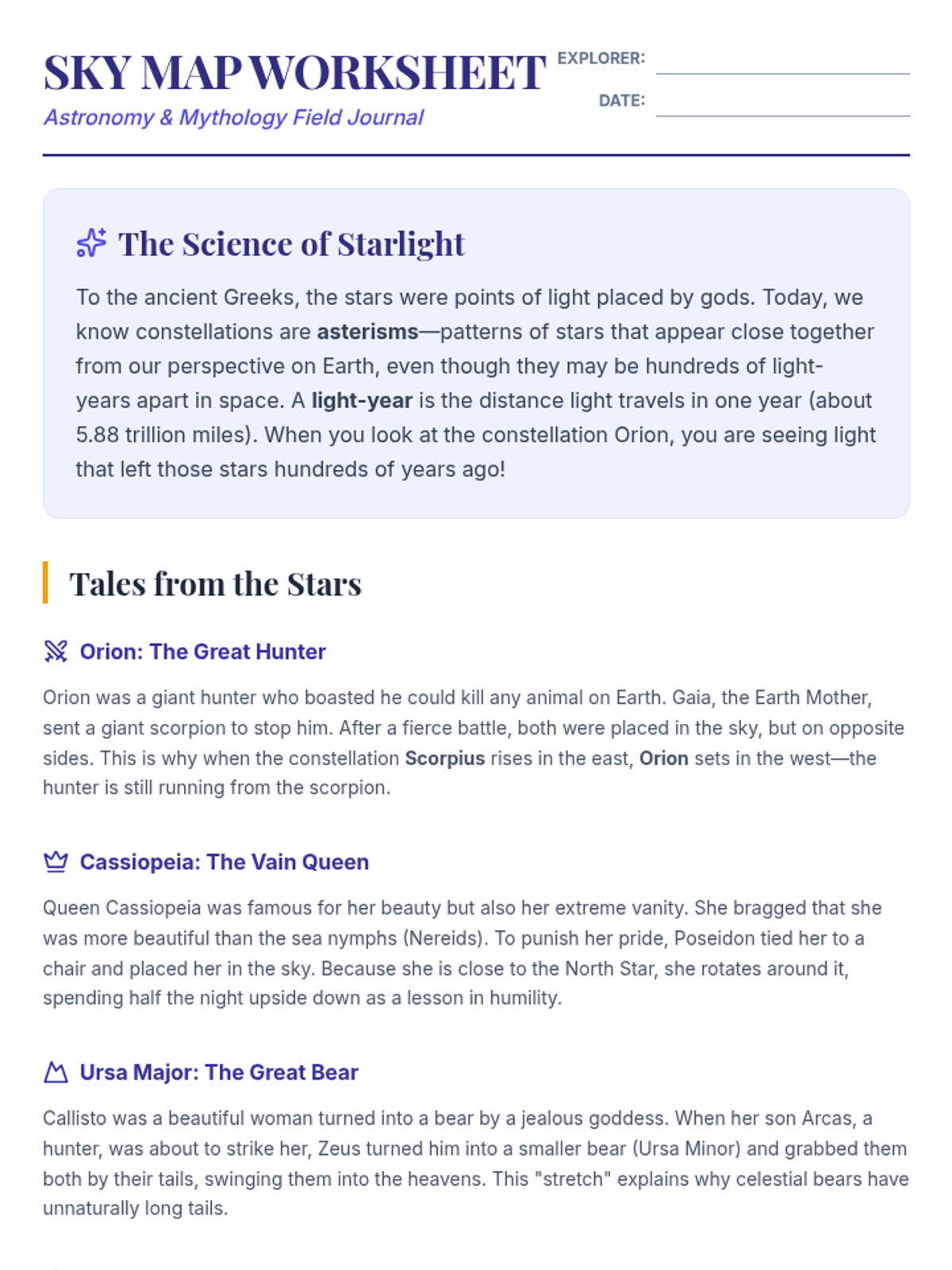
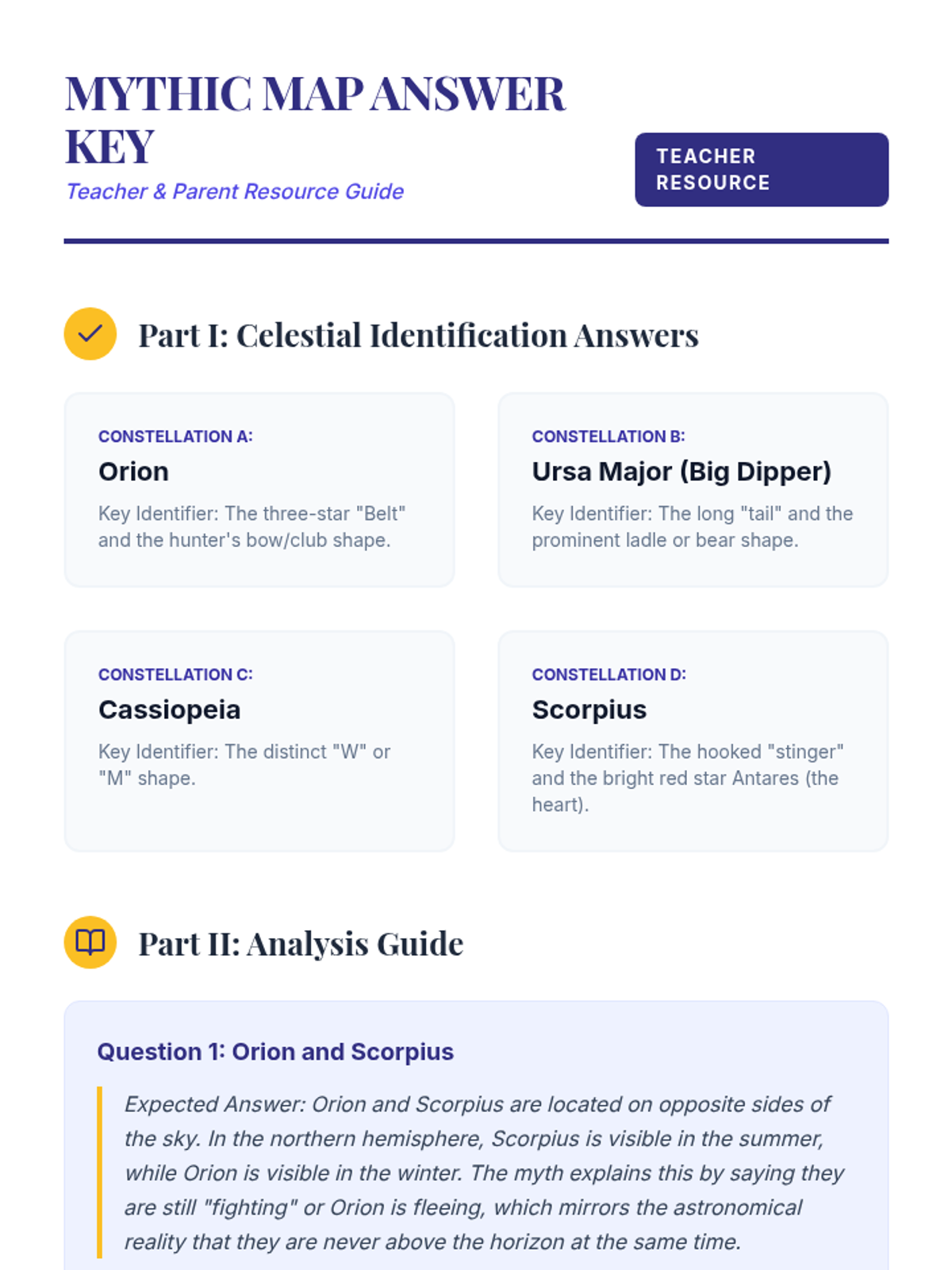
A cross-curricular unit blending astronomy and Greek mythology, exploring how ancient cultures interpreted the night sky and the scientific reality of stars.
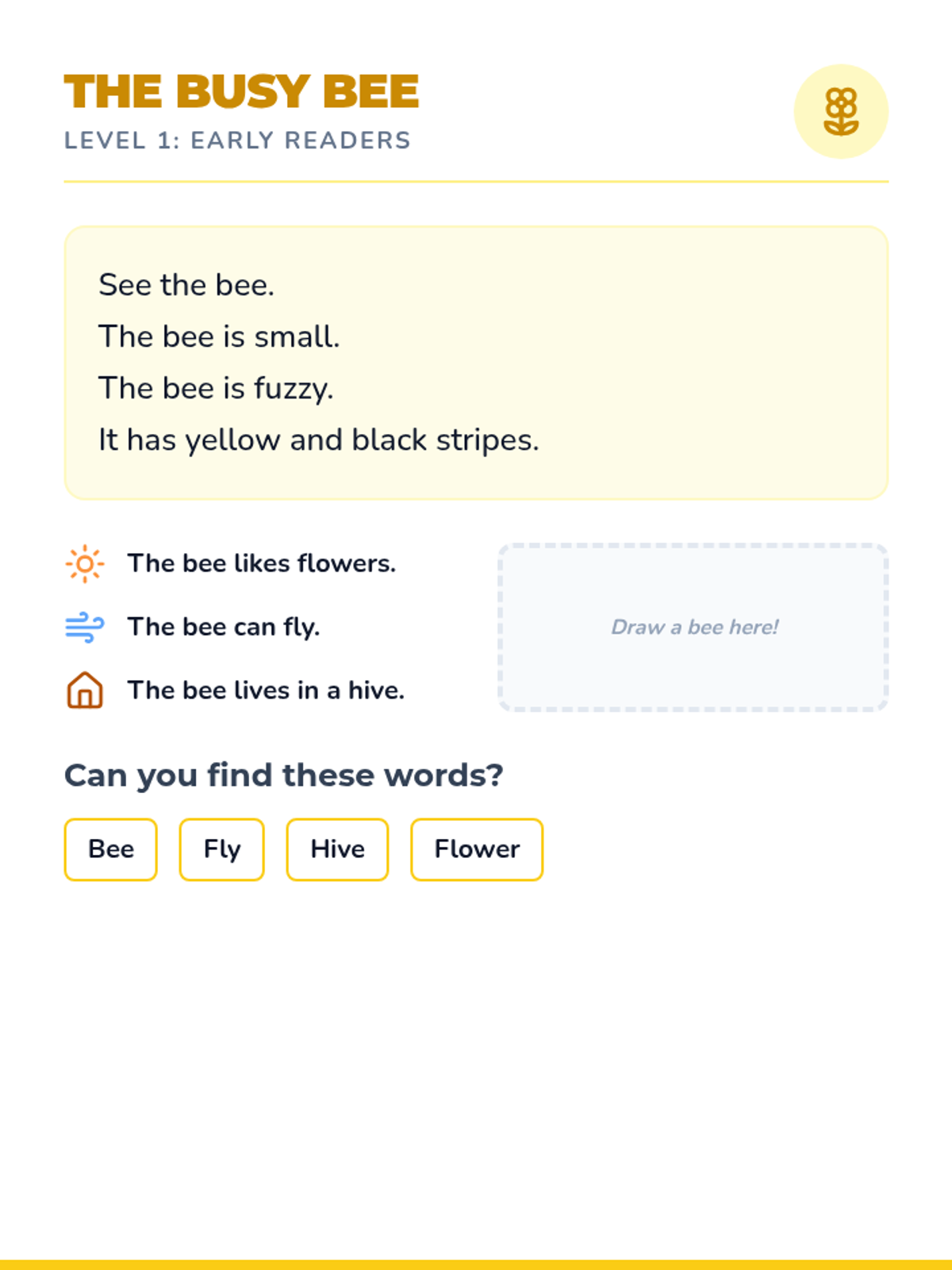
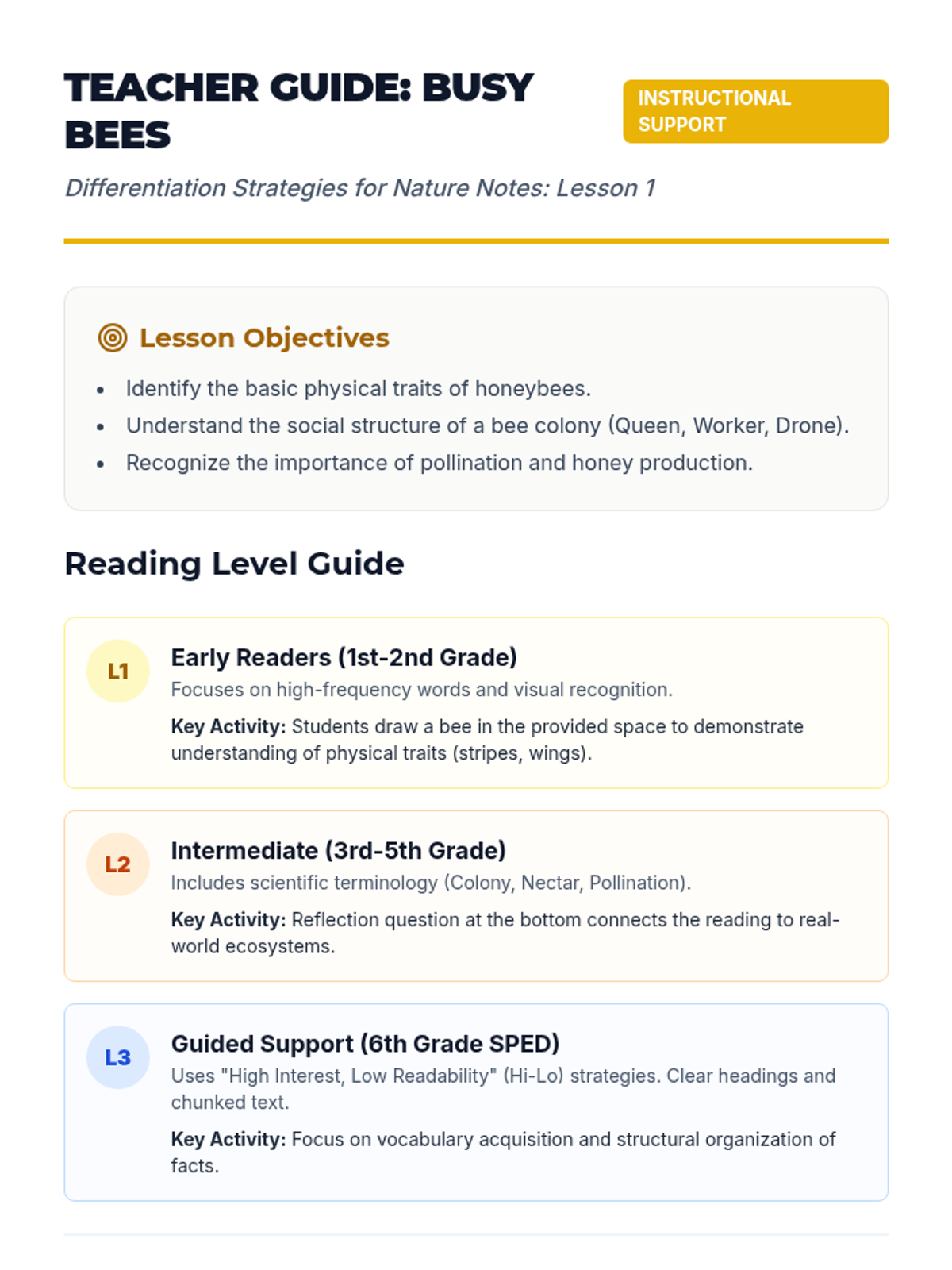
A collection of lessons focused on nature and science, designed with differentiated reading materials for diverse learners including early readers and special education students.
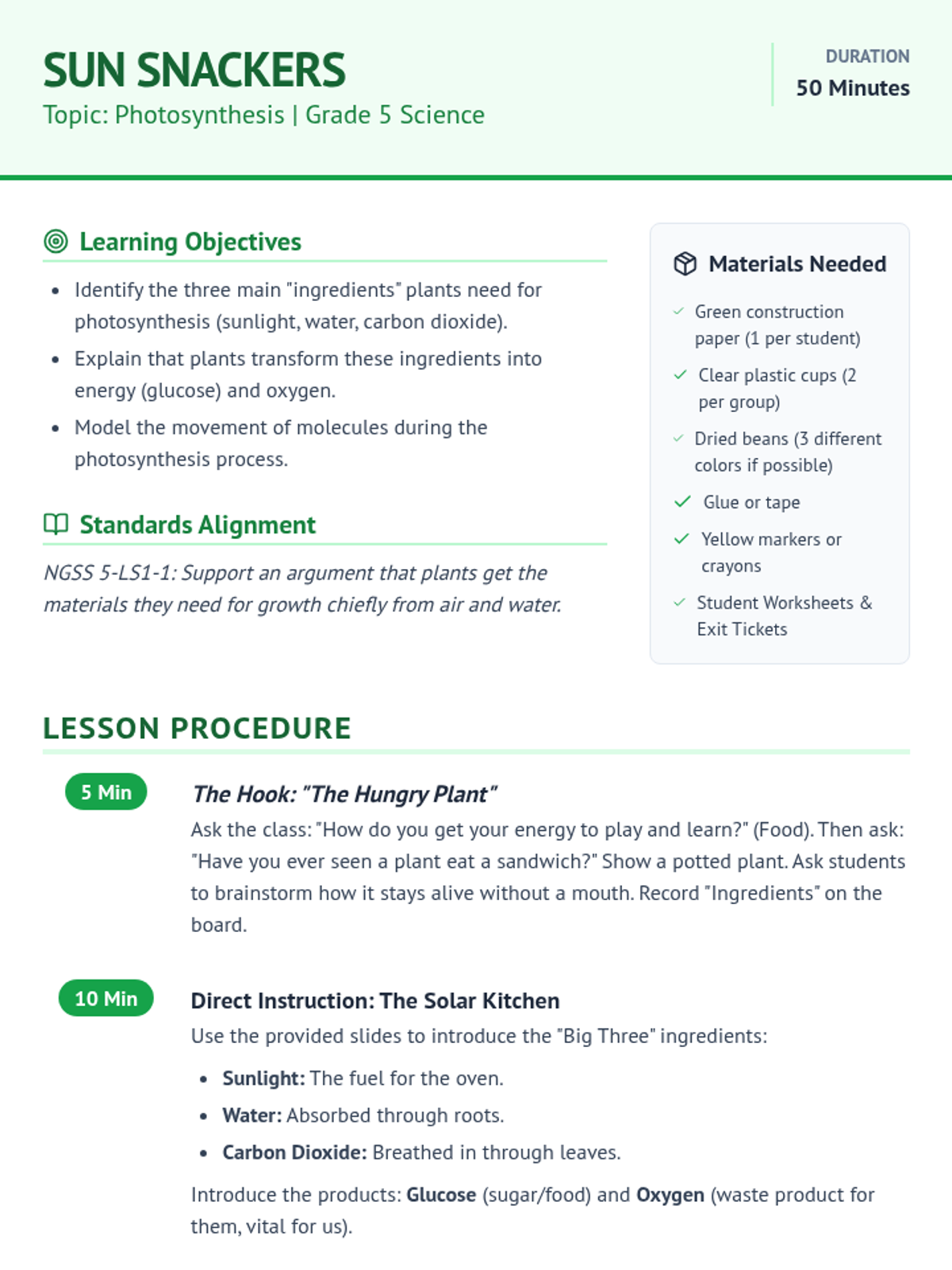
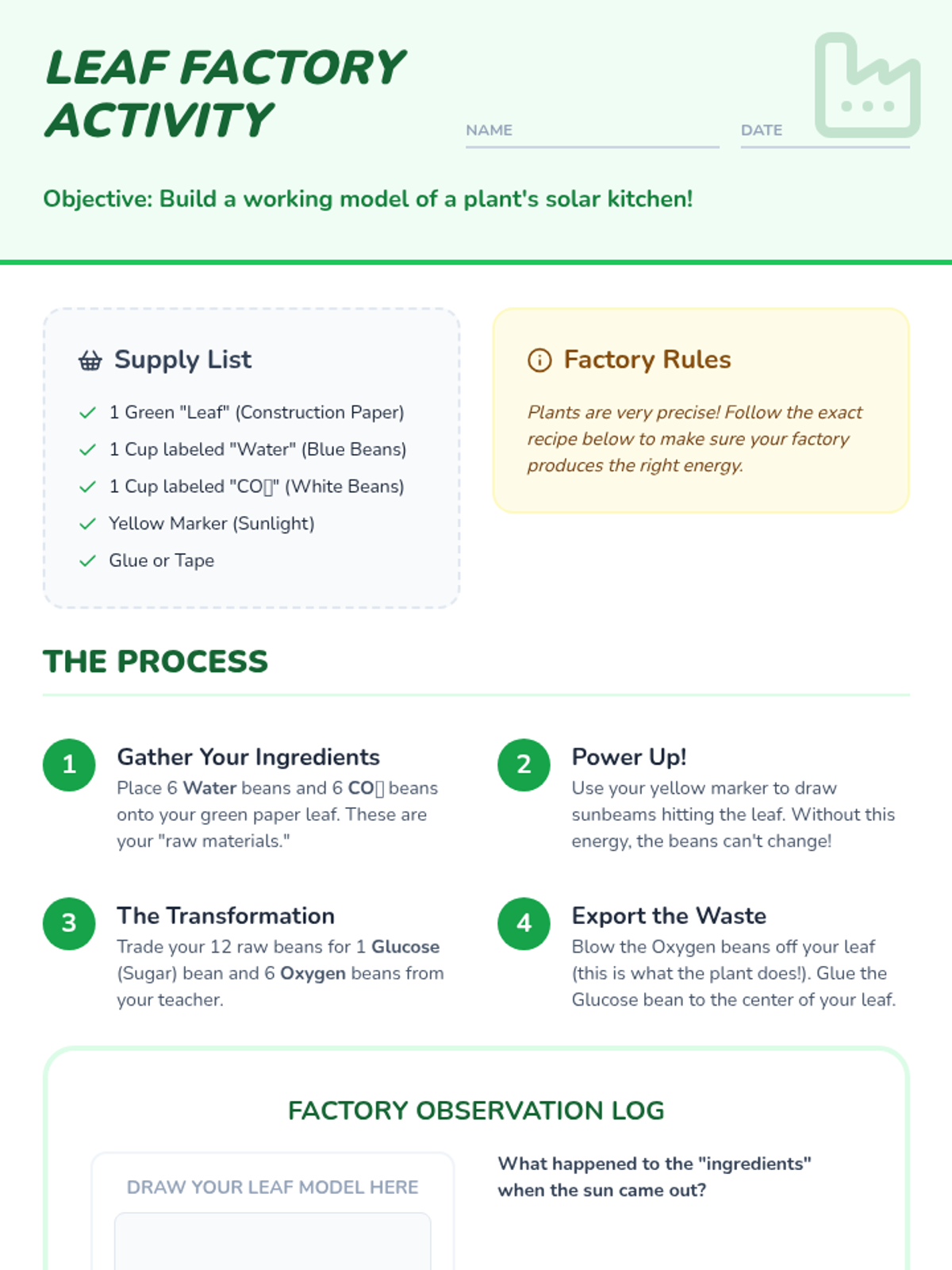
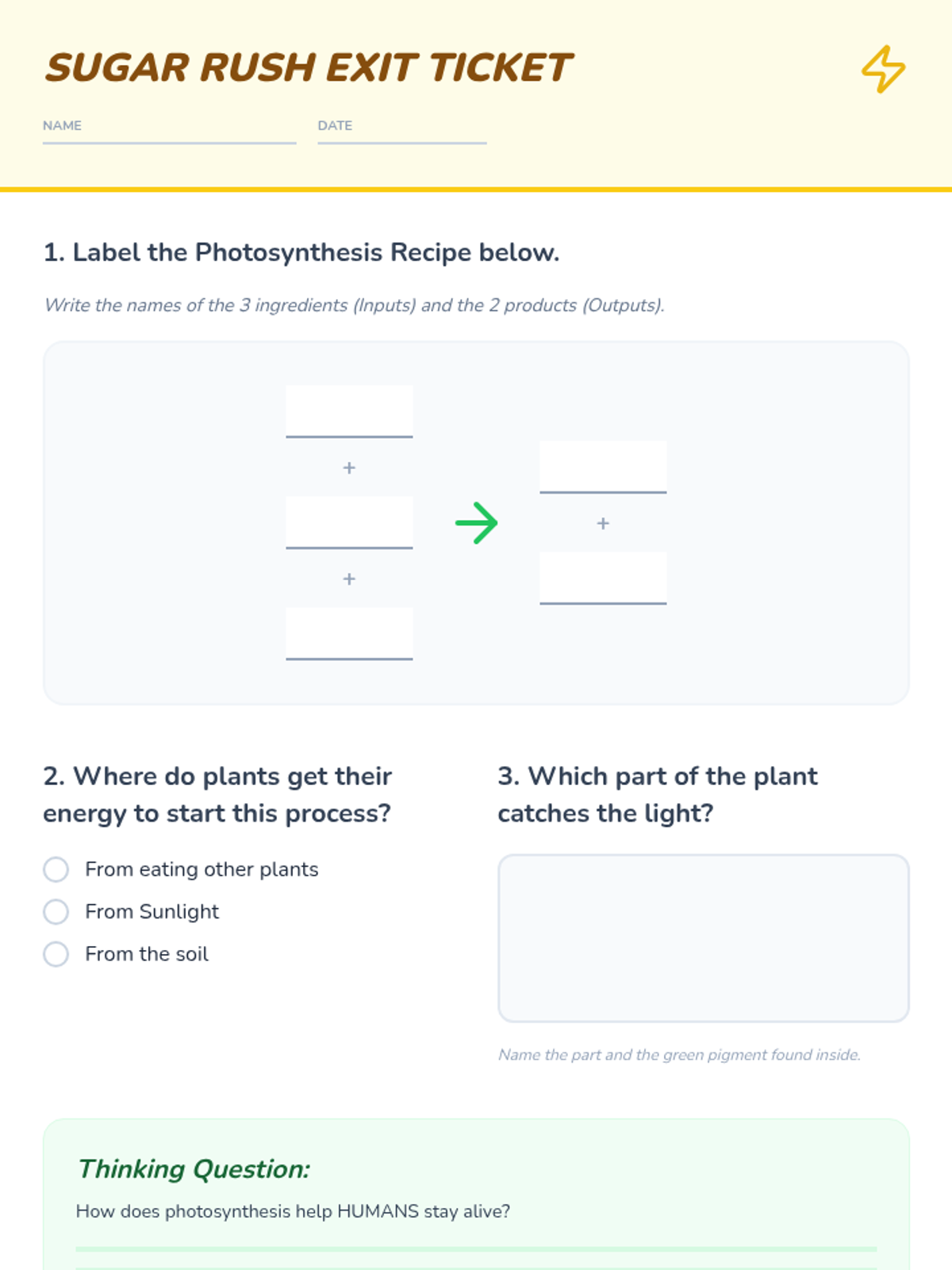
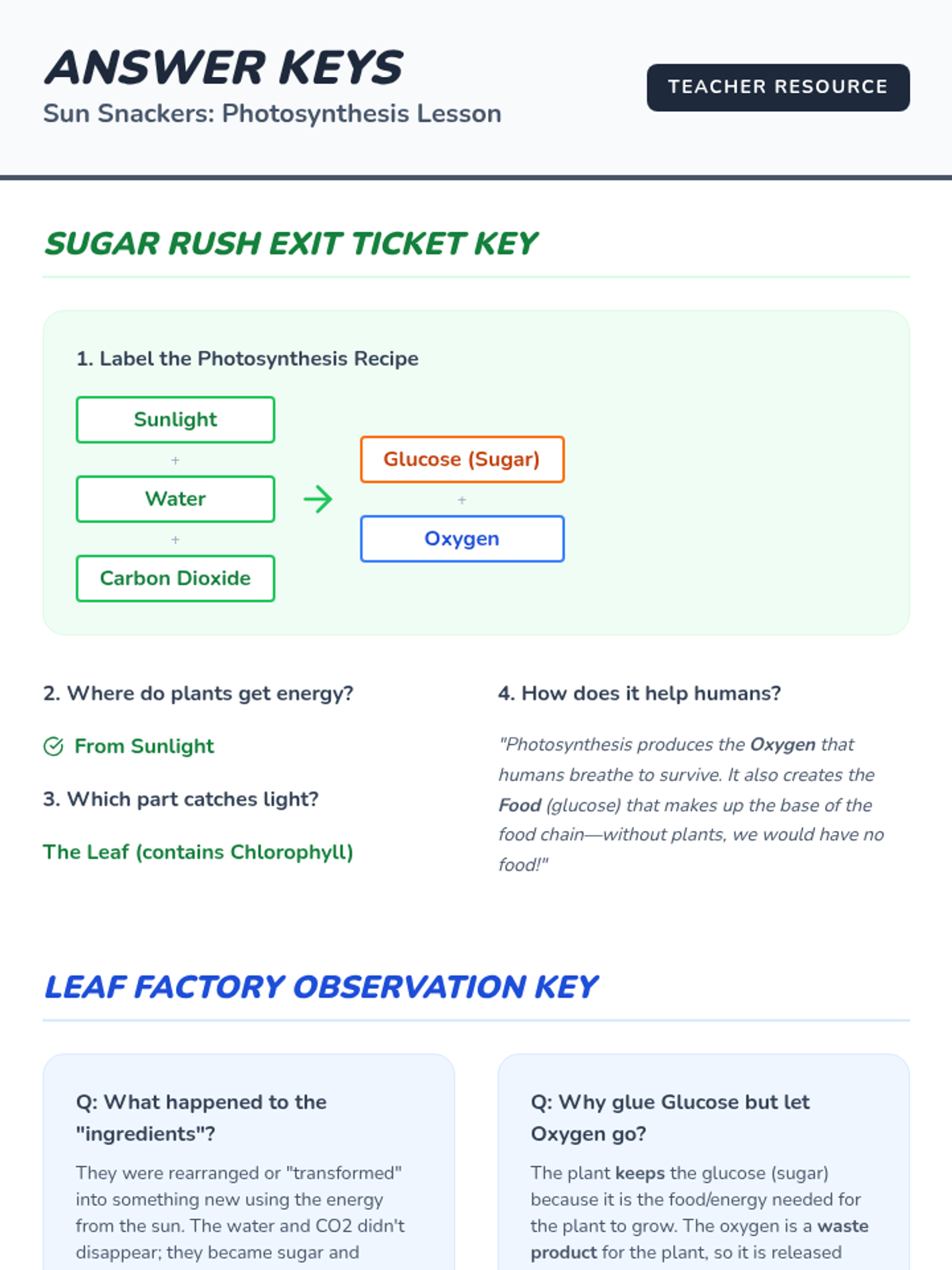
A science unit exploring how energy flows through ecosystems, starting with the primary producers that harness solar energy.
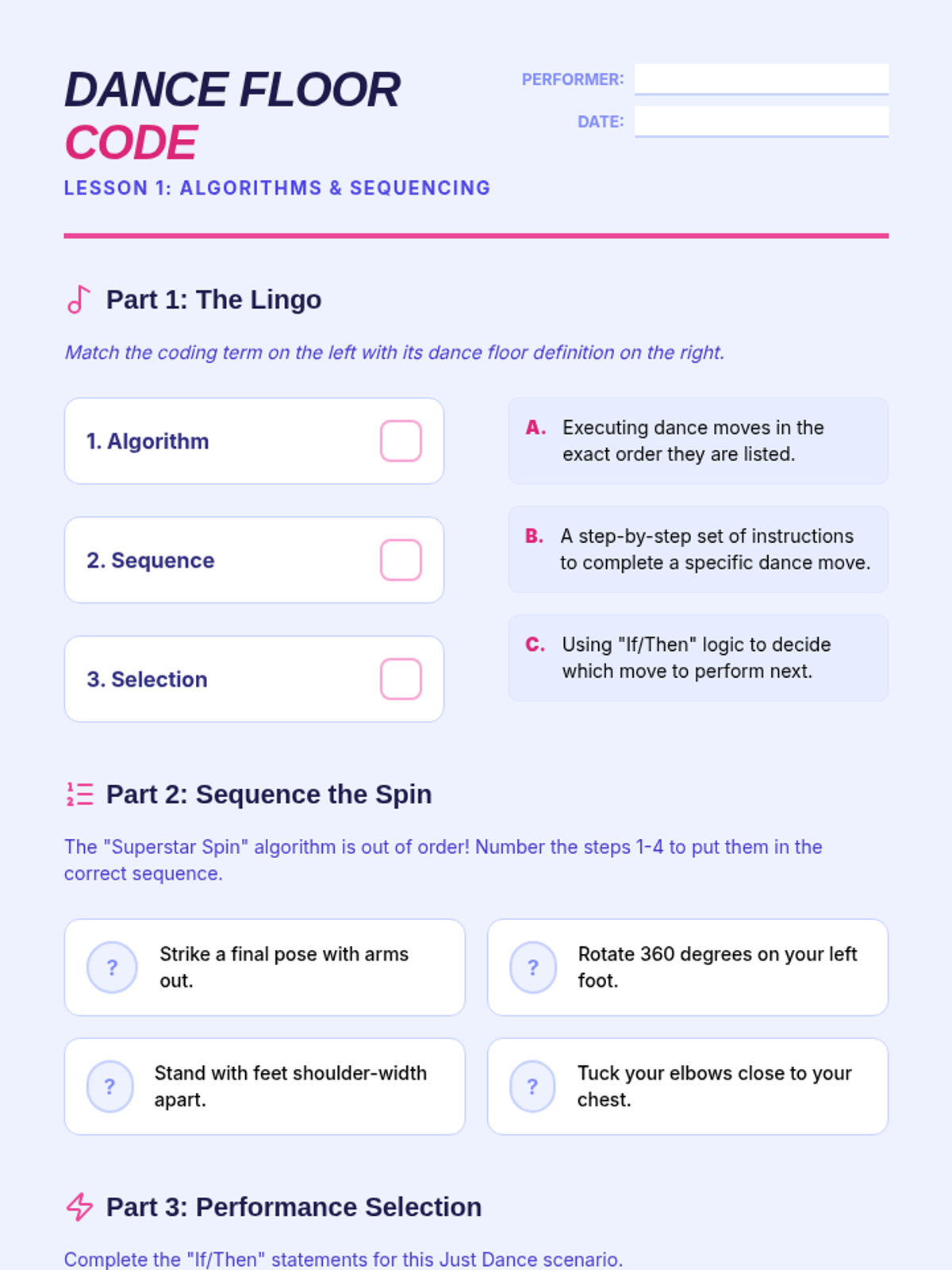
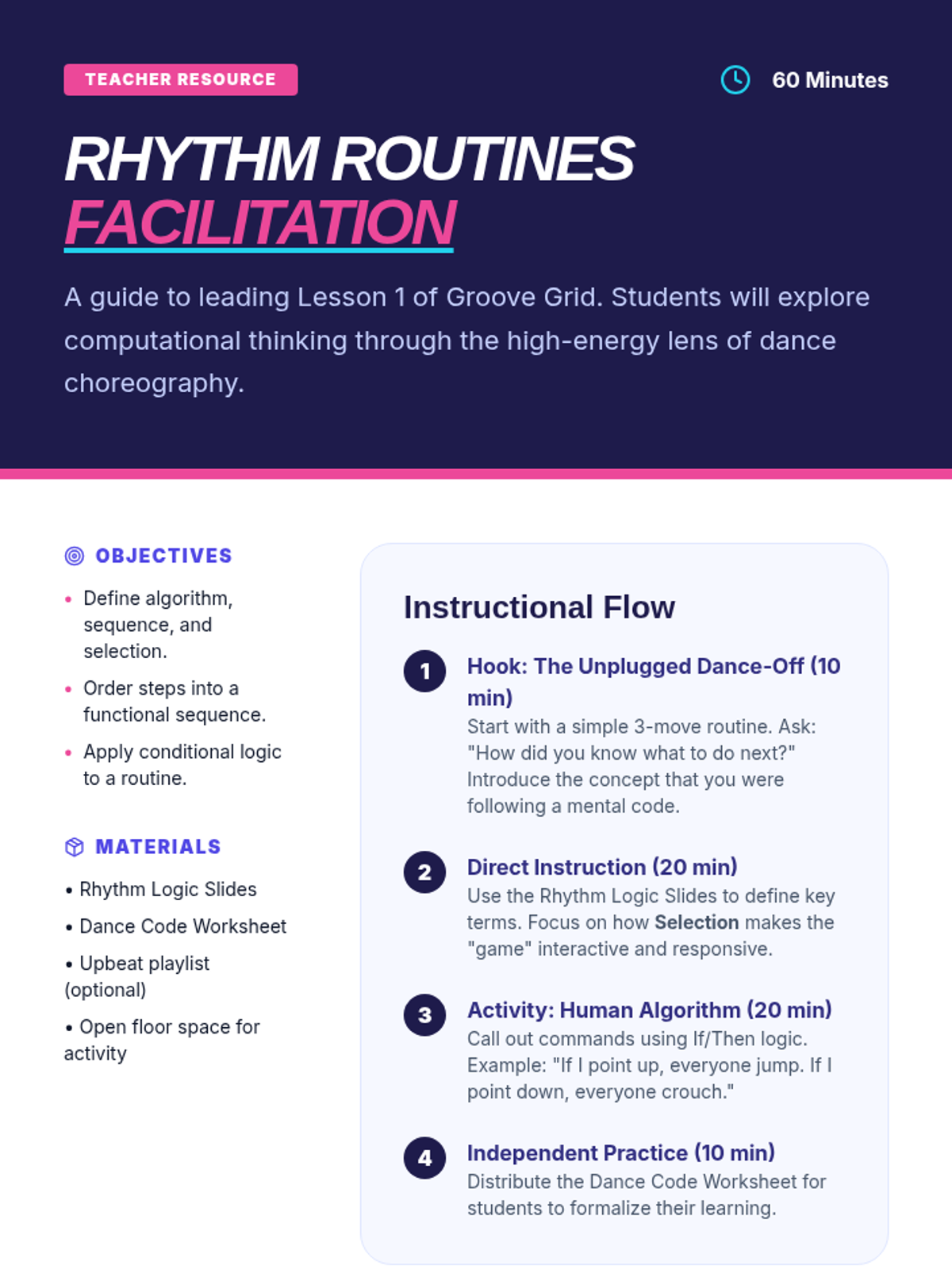
A high-energy introduction to coding concepts using the vibrant world of dance games to teach algorithms, sequencing, variables, and loops.
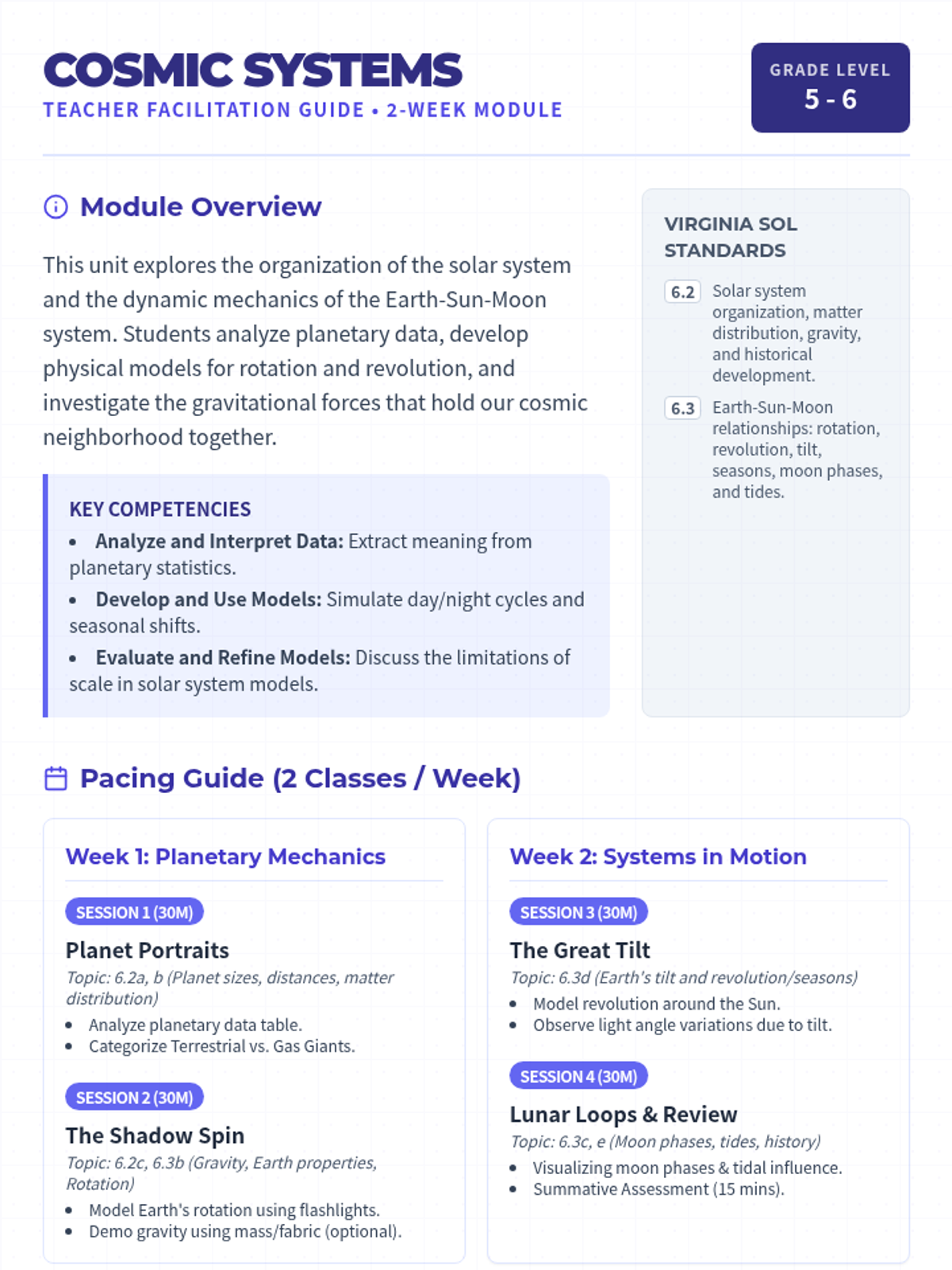
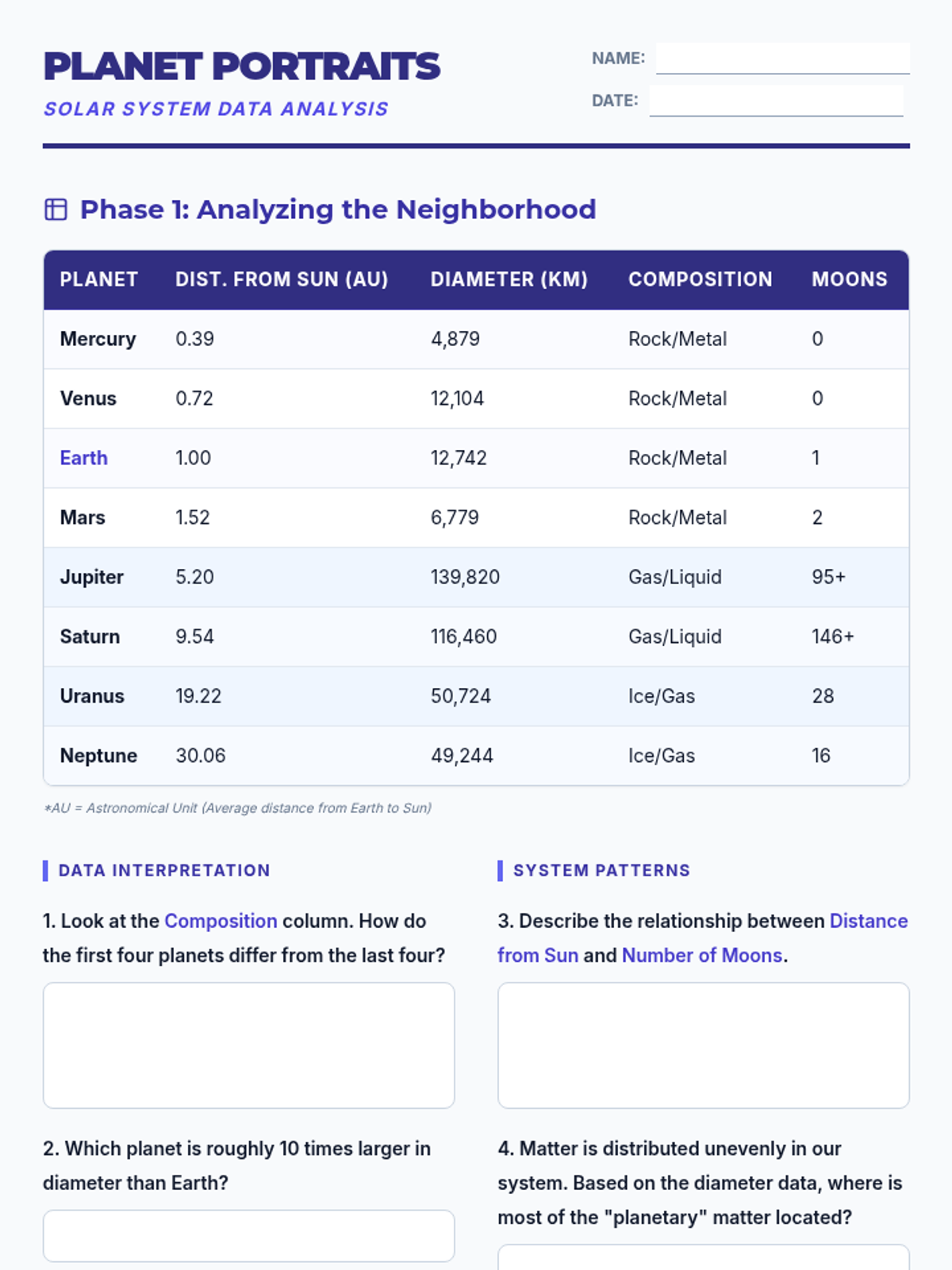
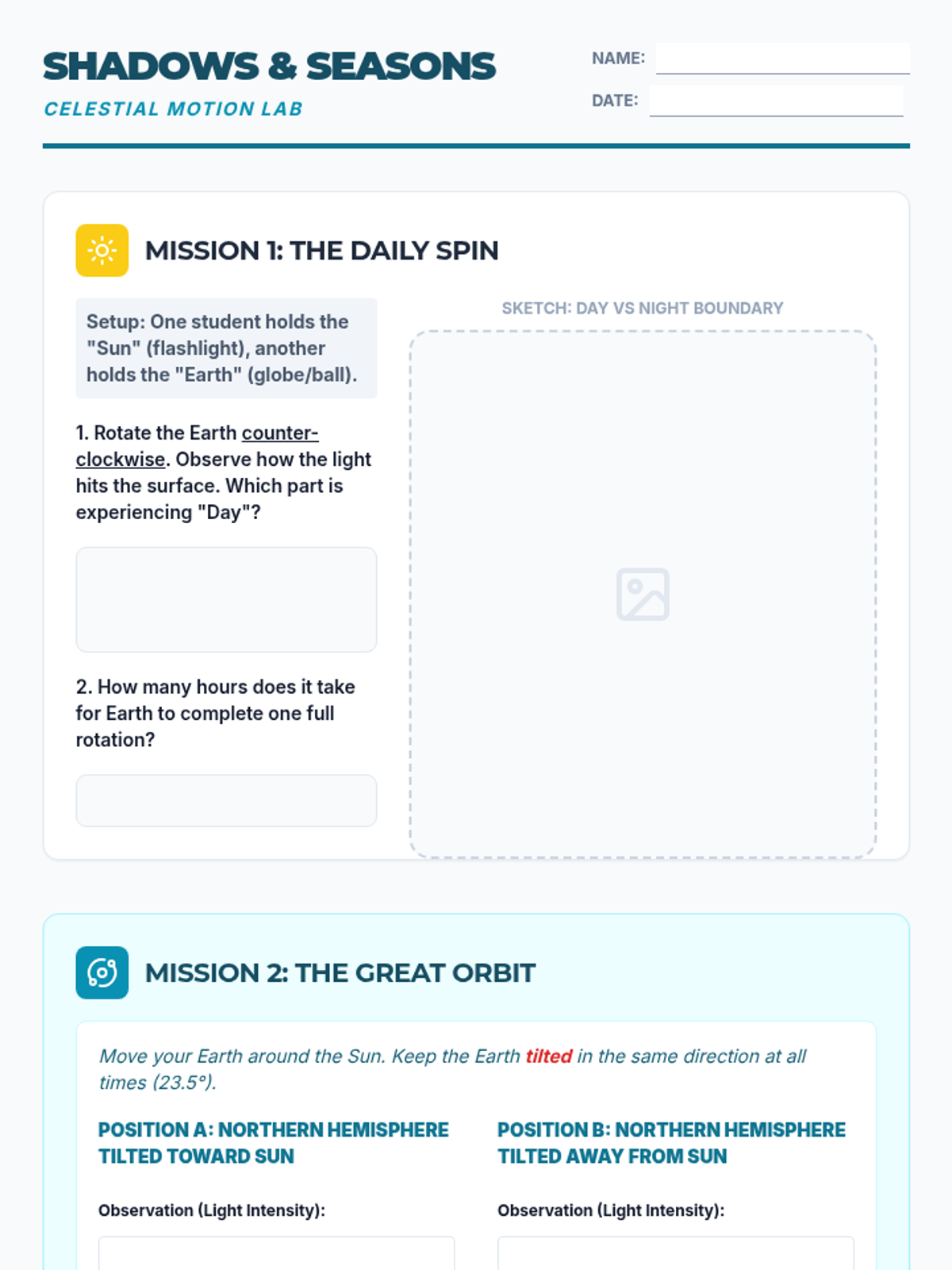
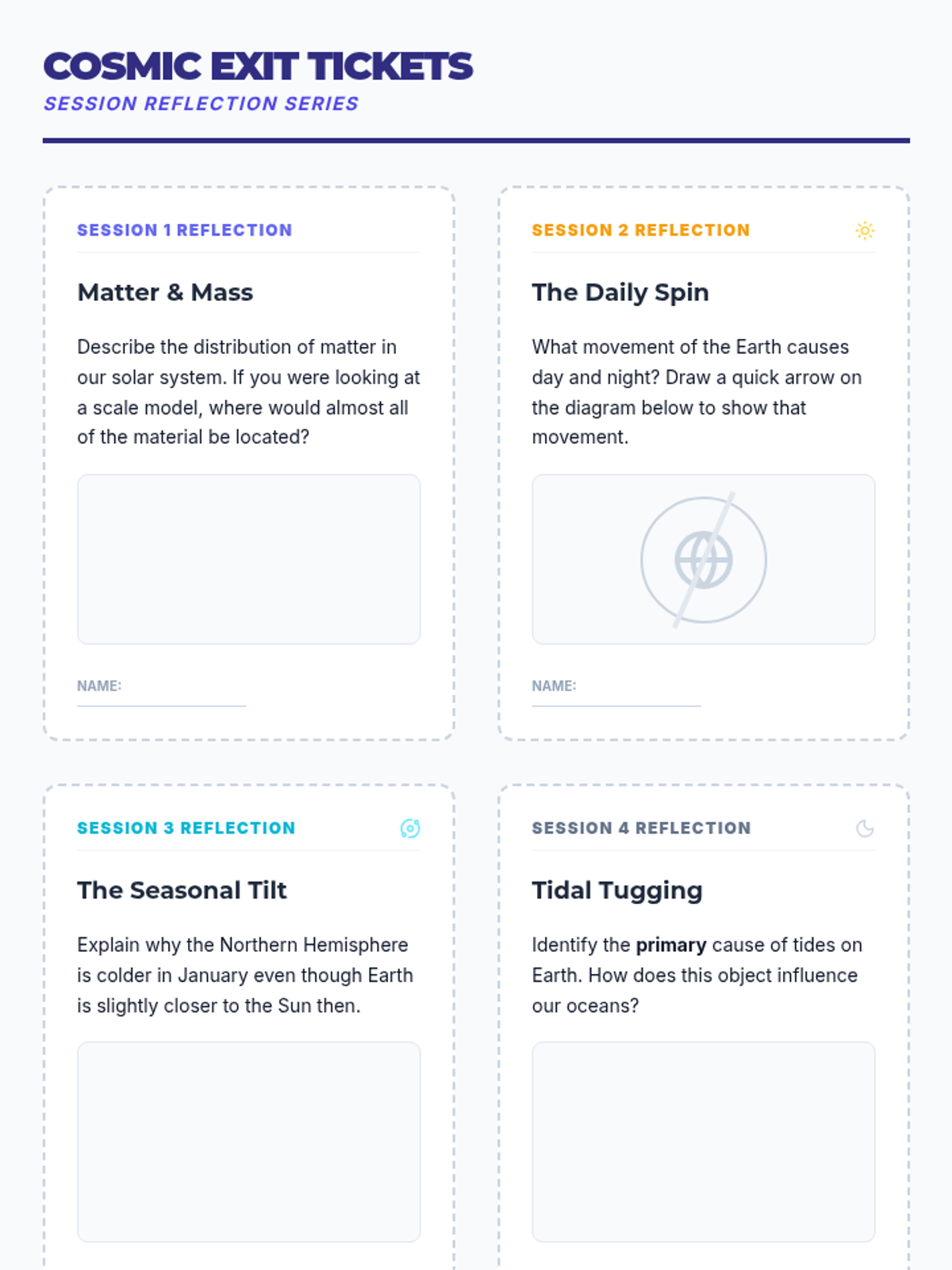
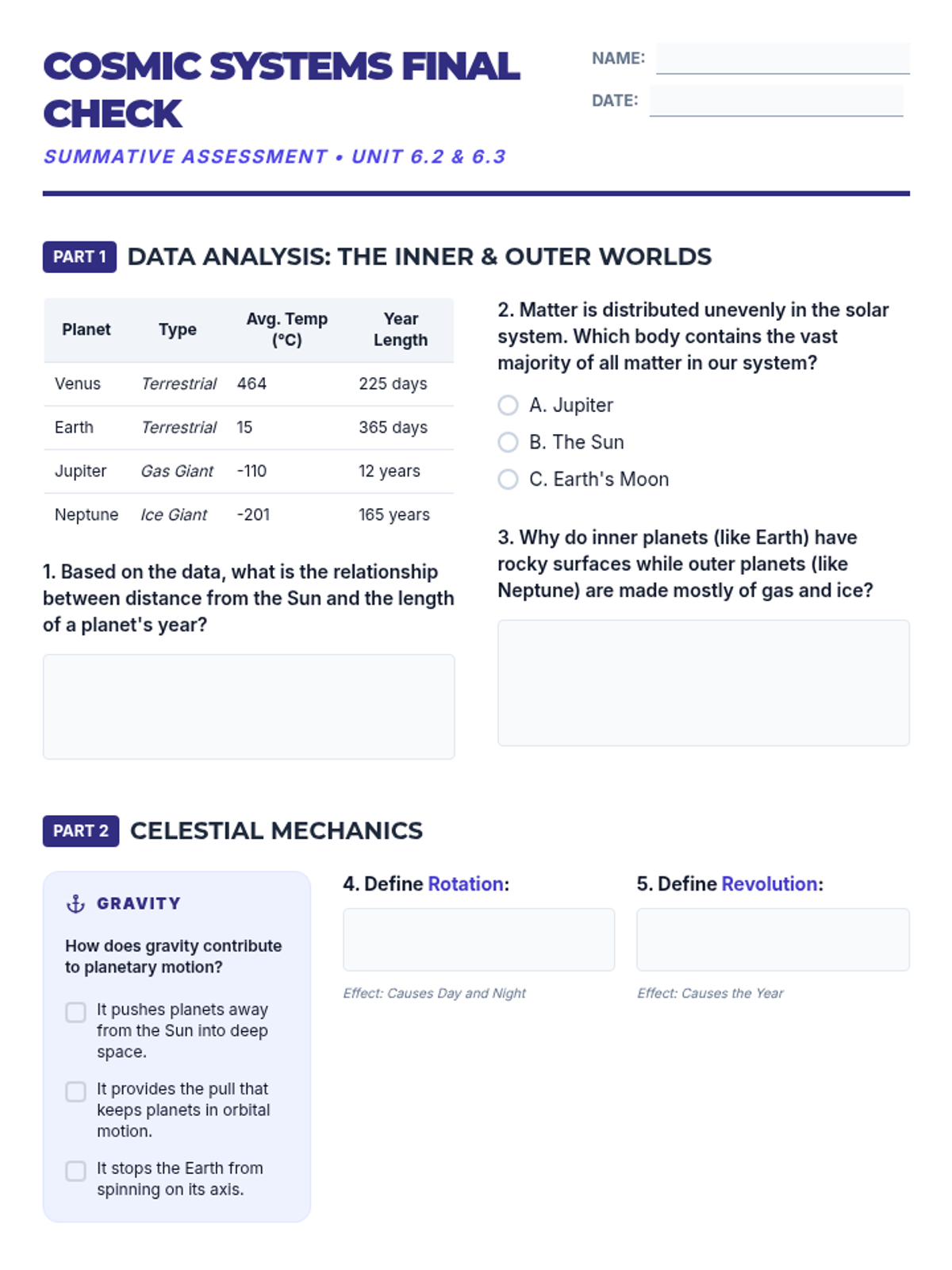
An investigative sequence diving into the mechanics of our solar system, focusing on planetary properties and the dynamic relationships within the Earth-Moon-Sun system.
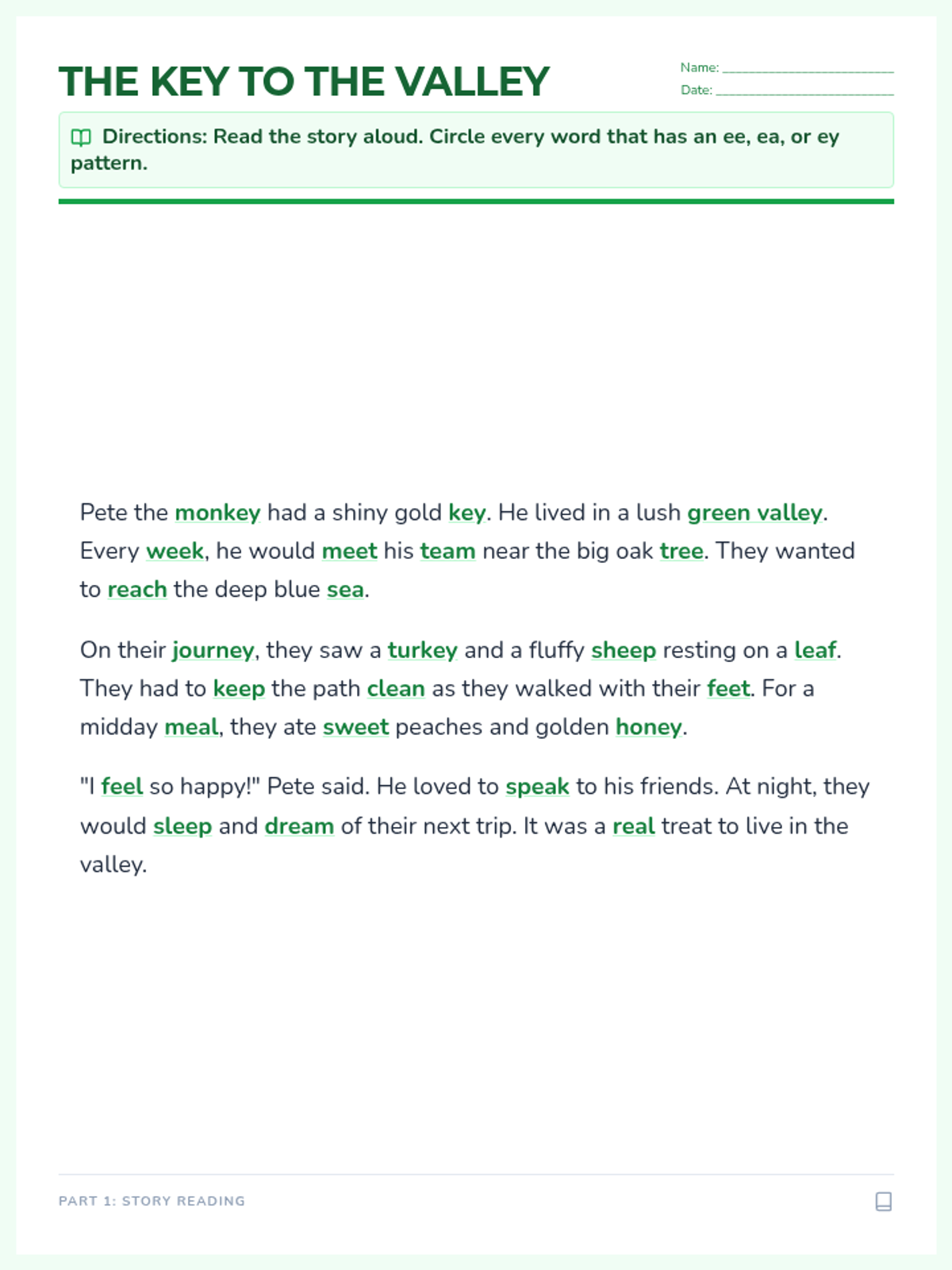
A series of phonics lessons focusing on vowel teams, digraphs, and other phonetic patterns through narrative passages and fluency drills.
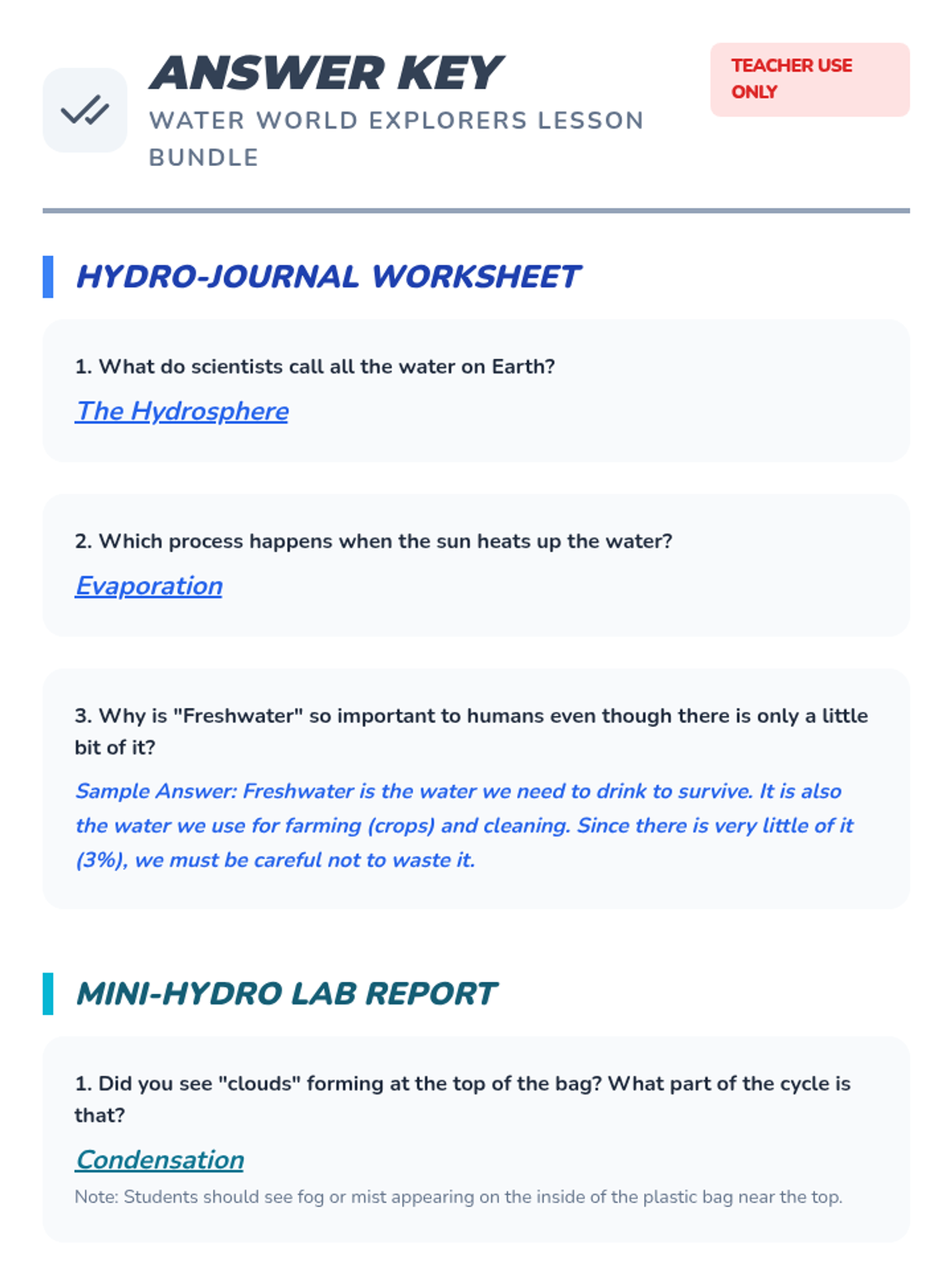
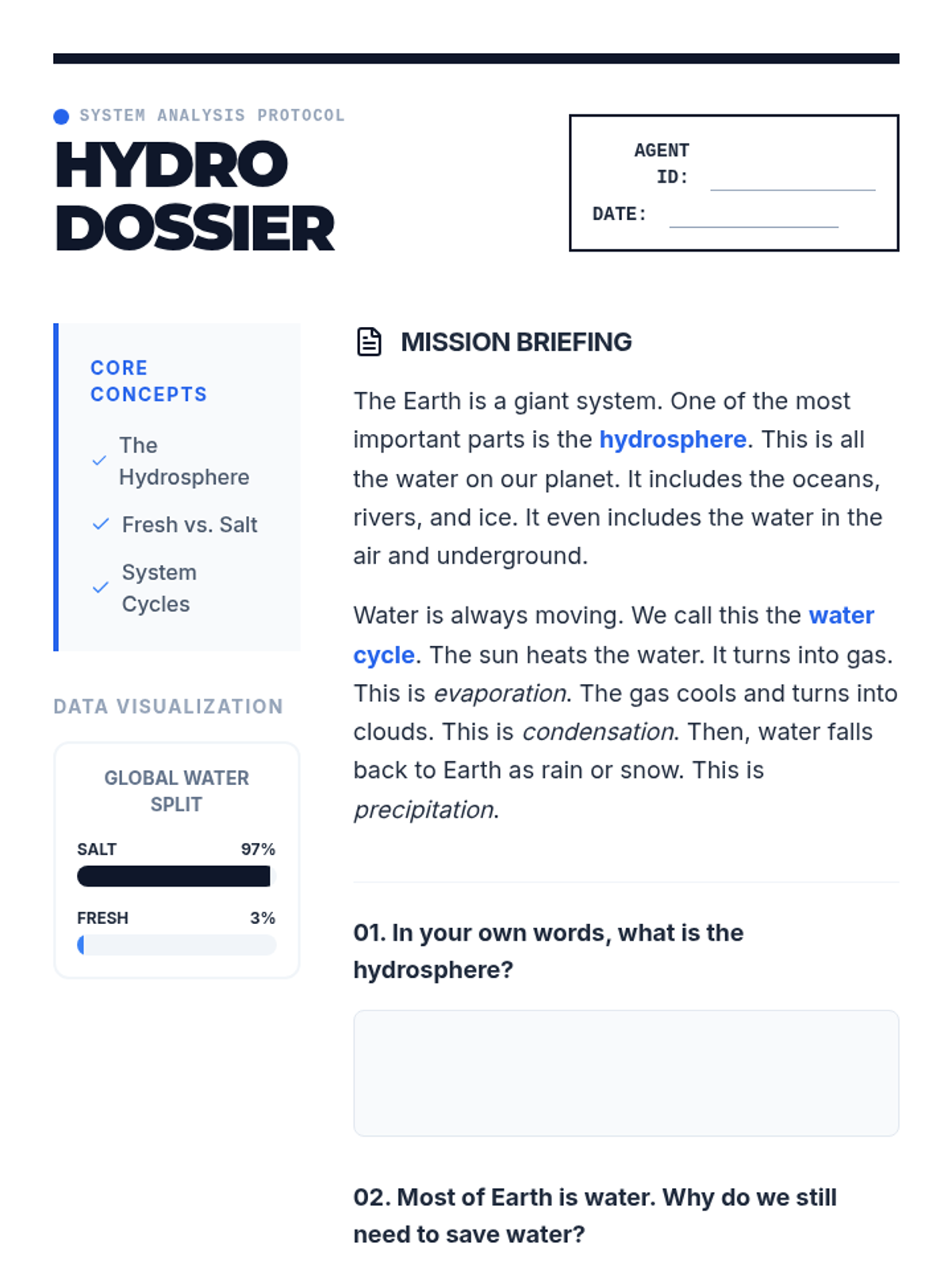
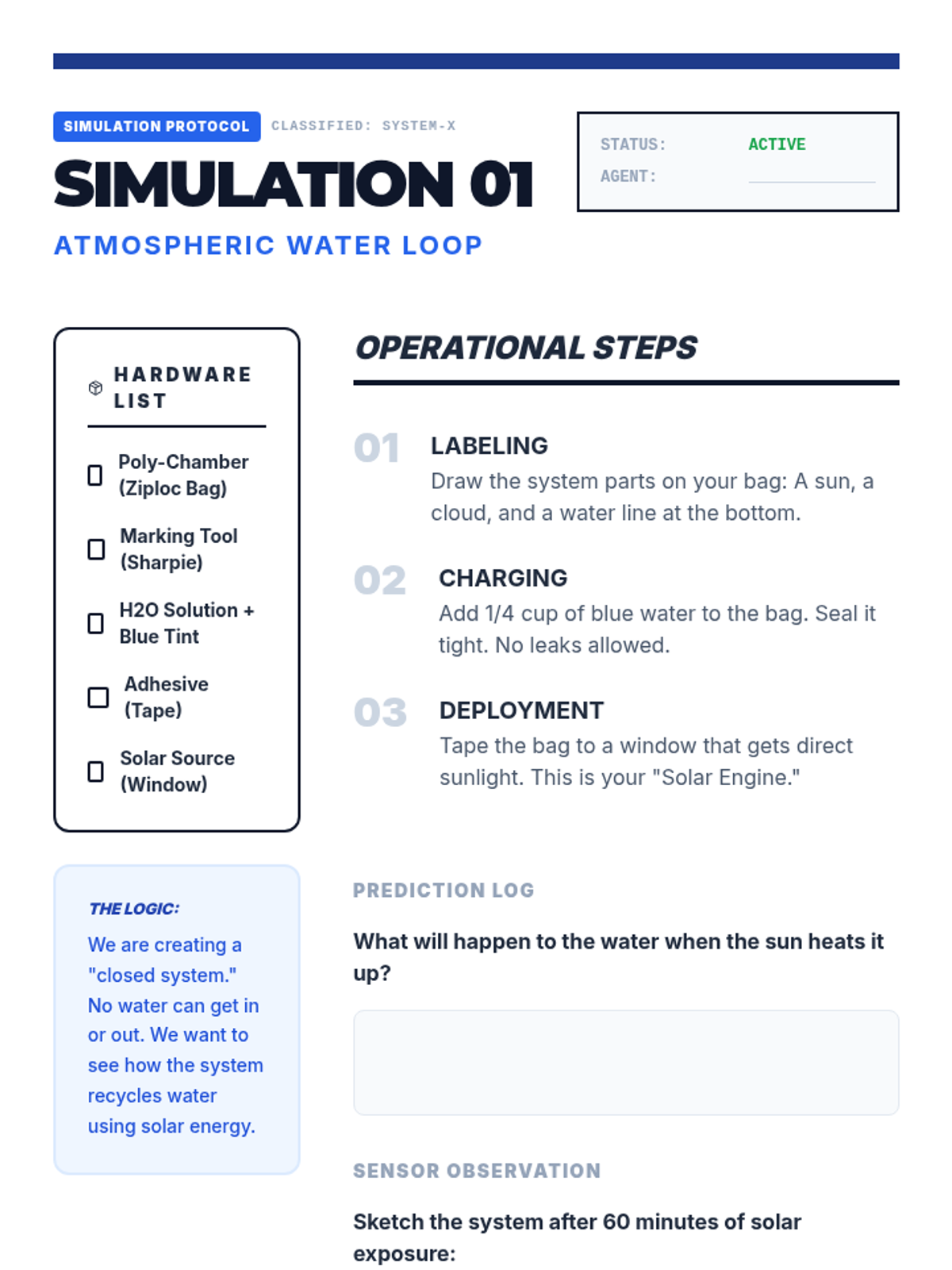
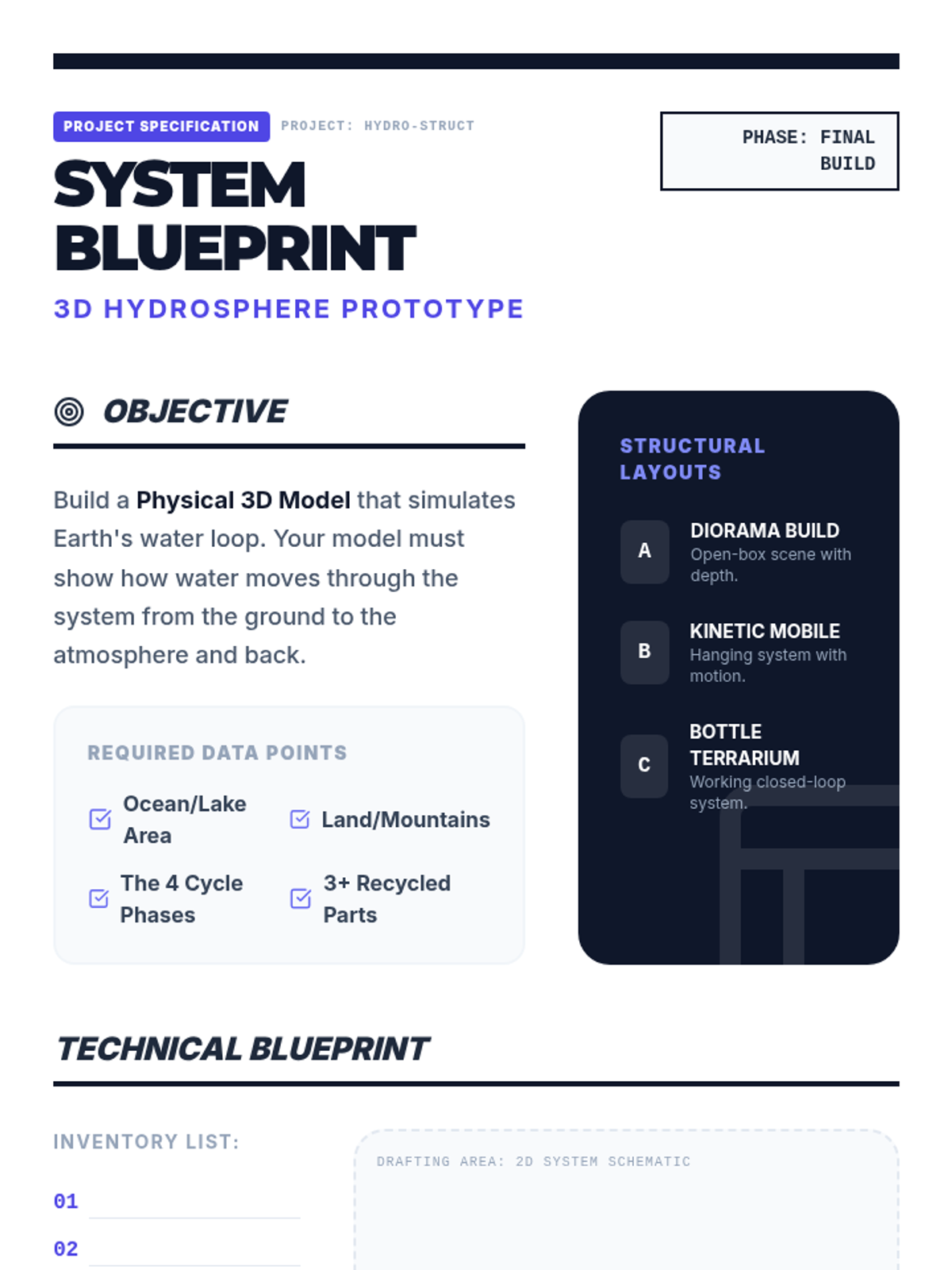
A series of lessons exploring Earth's major systems, starting with the hydrosphere and its impact on the planet's processes.
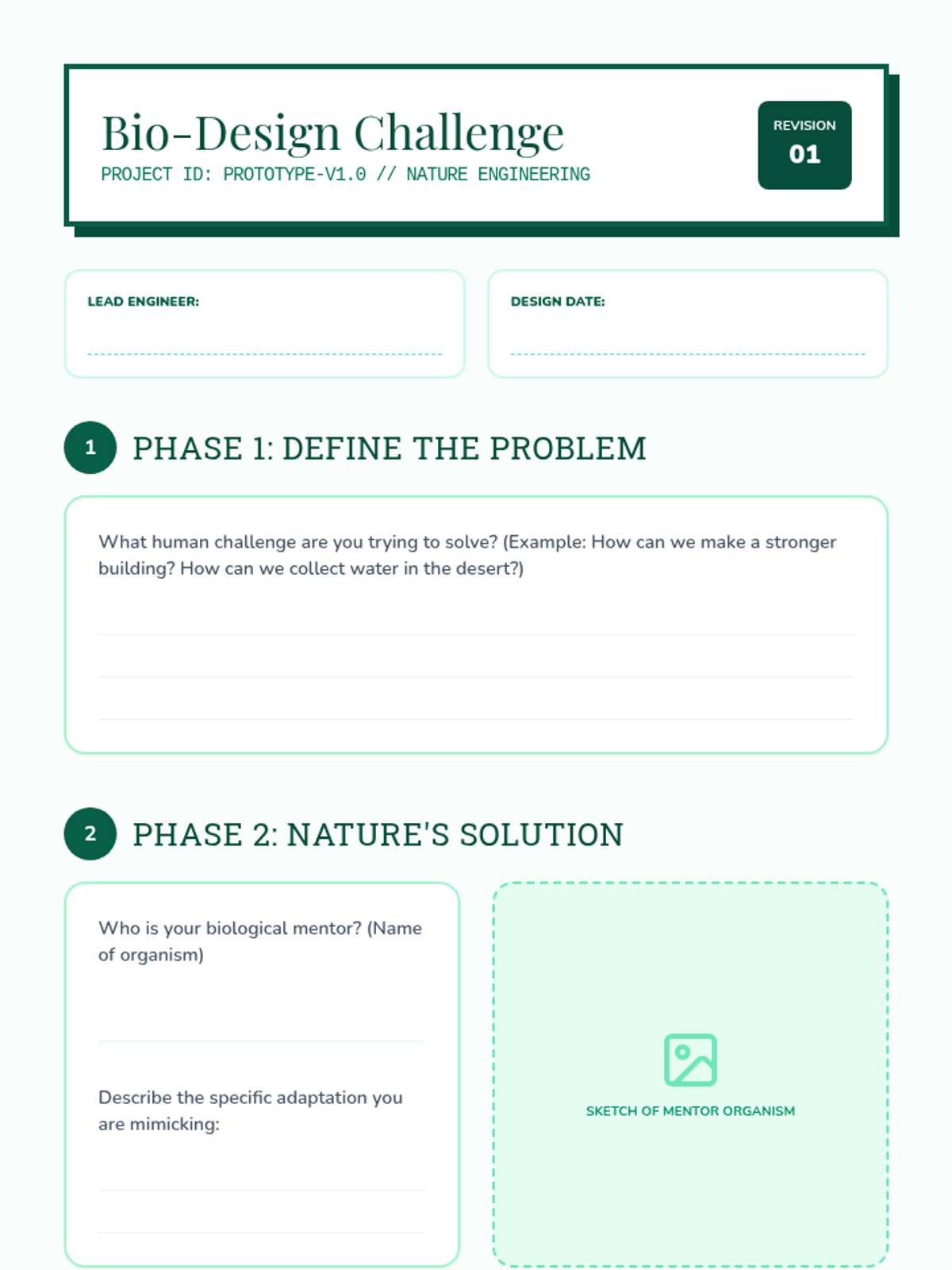
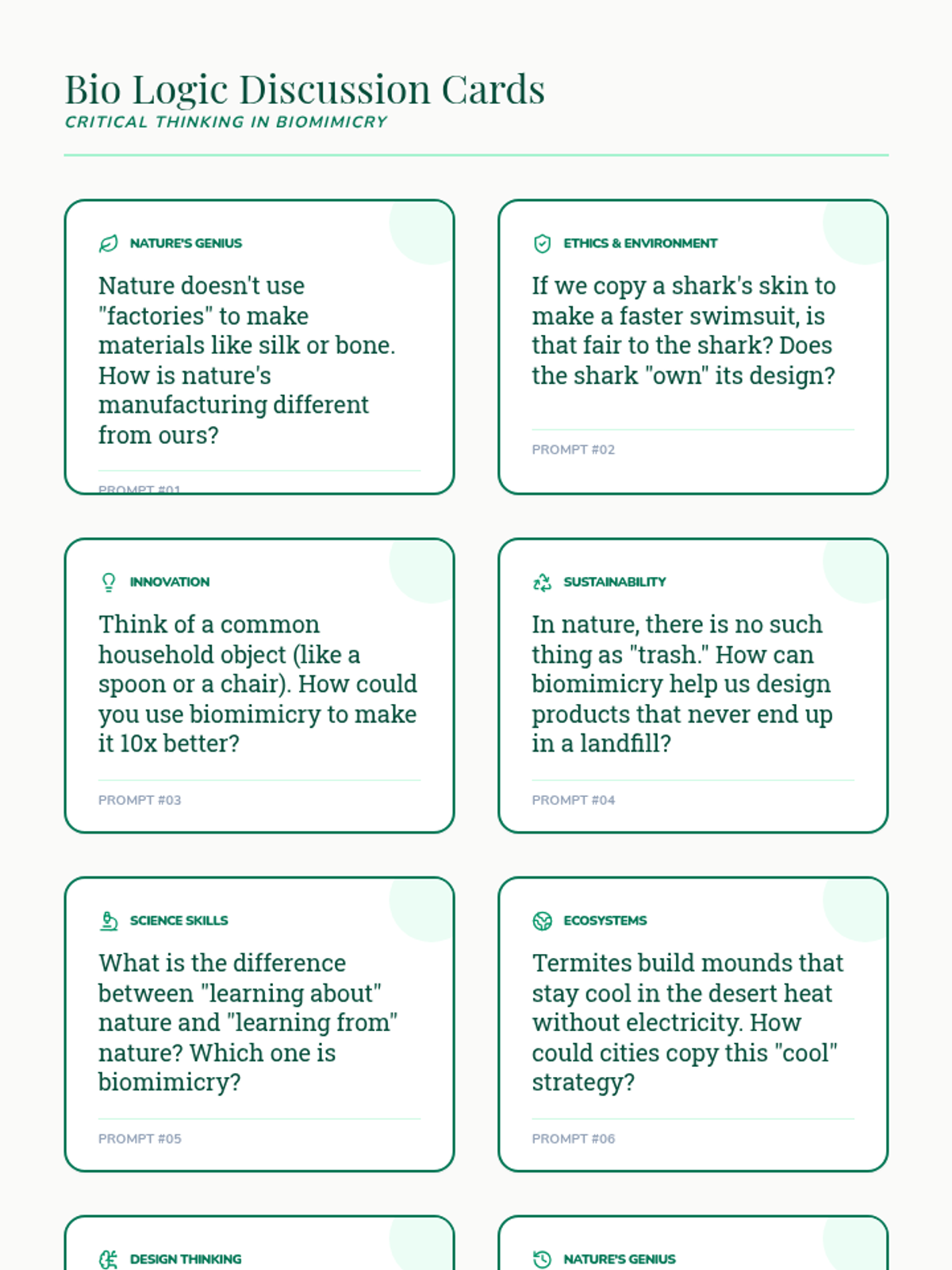
An engineering and biology sequence that teaches students to look to nature for sustainable and efficient design solutions, fostering innovation and biological appreciation.
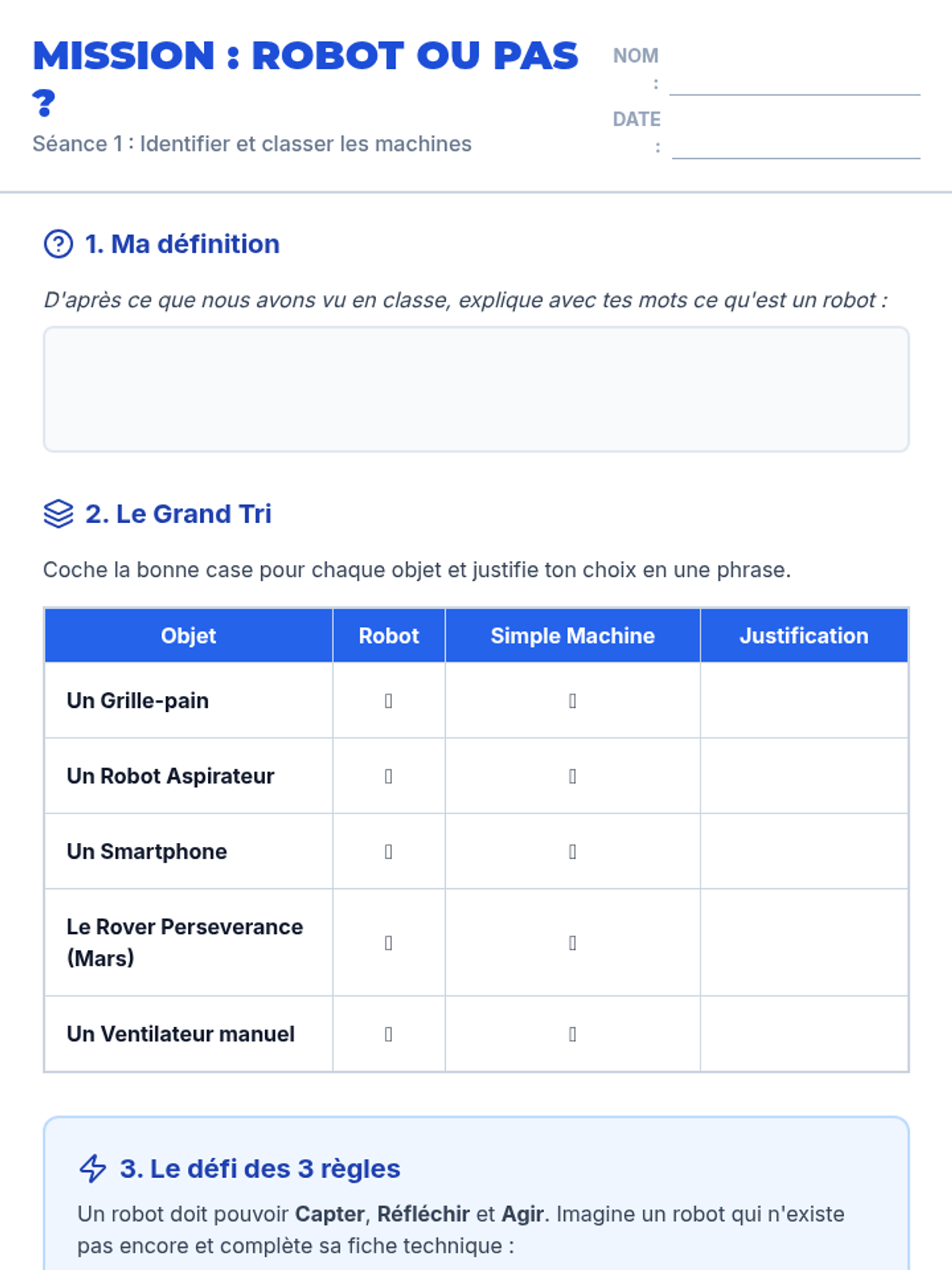
Une séquence d'initiation à la robotique pour le cycle 3 (CM1-CM2), explorant la définition d'un robot, ses composants et les bases de la programmation algorithmique.
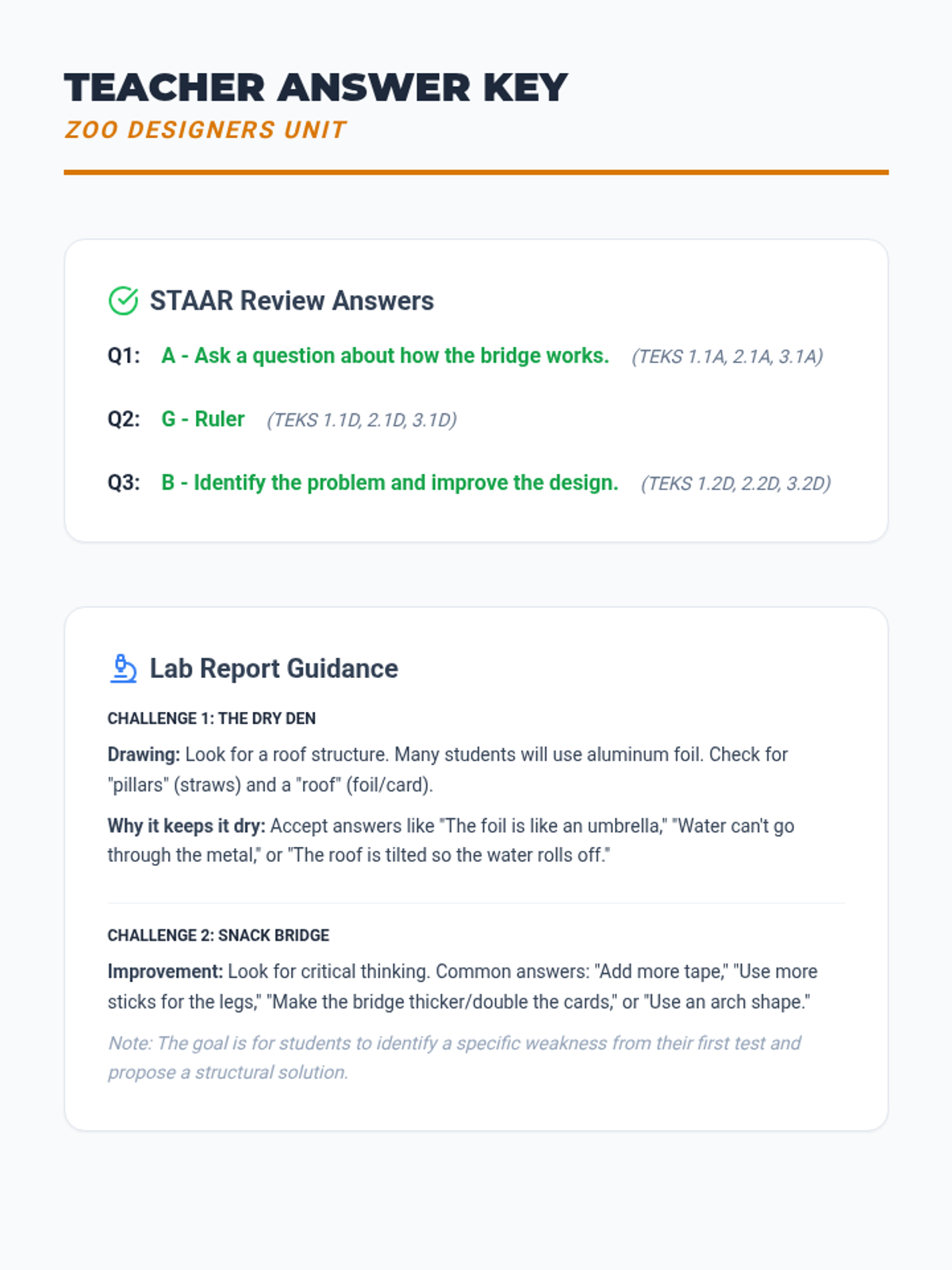
A comprehensive STEM and engineering sequence for elementary students, focusing on the Texas Essential Knowledge and Skills (TEKS) for Scientific and Engineering Practices. Students tackle real-world challenges through prototyping, testing, and data analysis in two distinct thematic units.
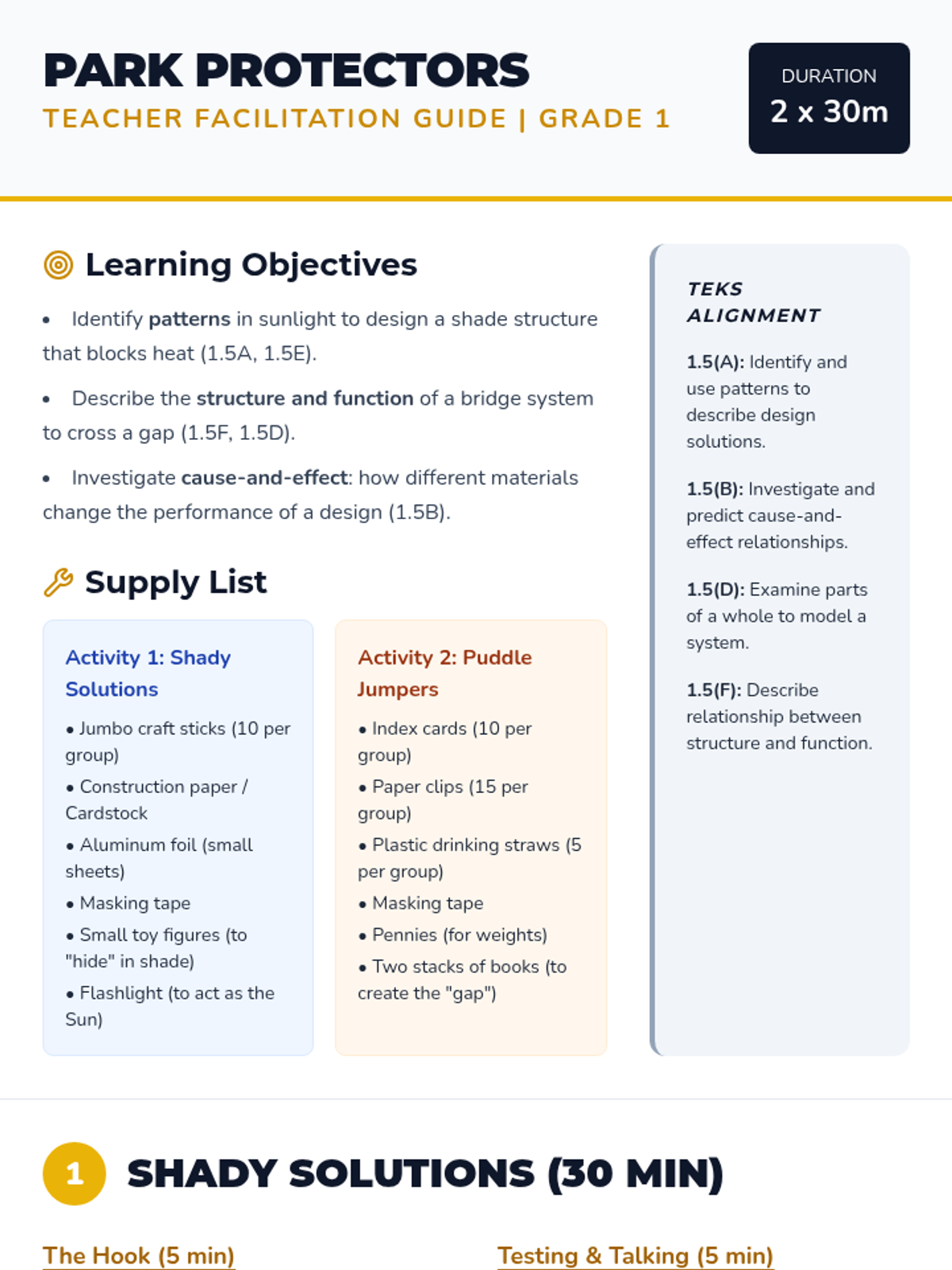
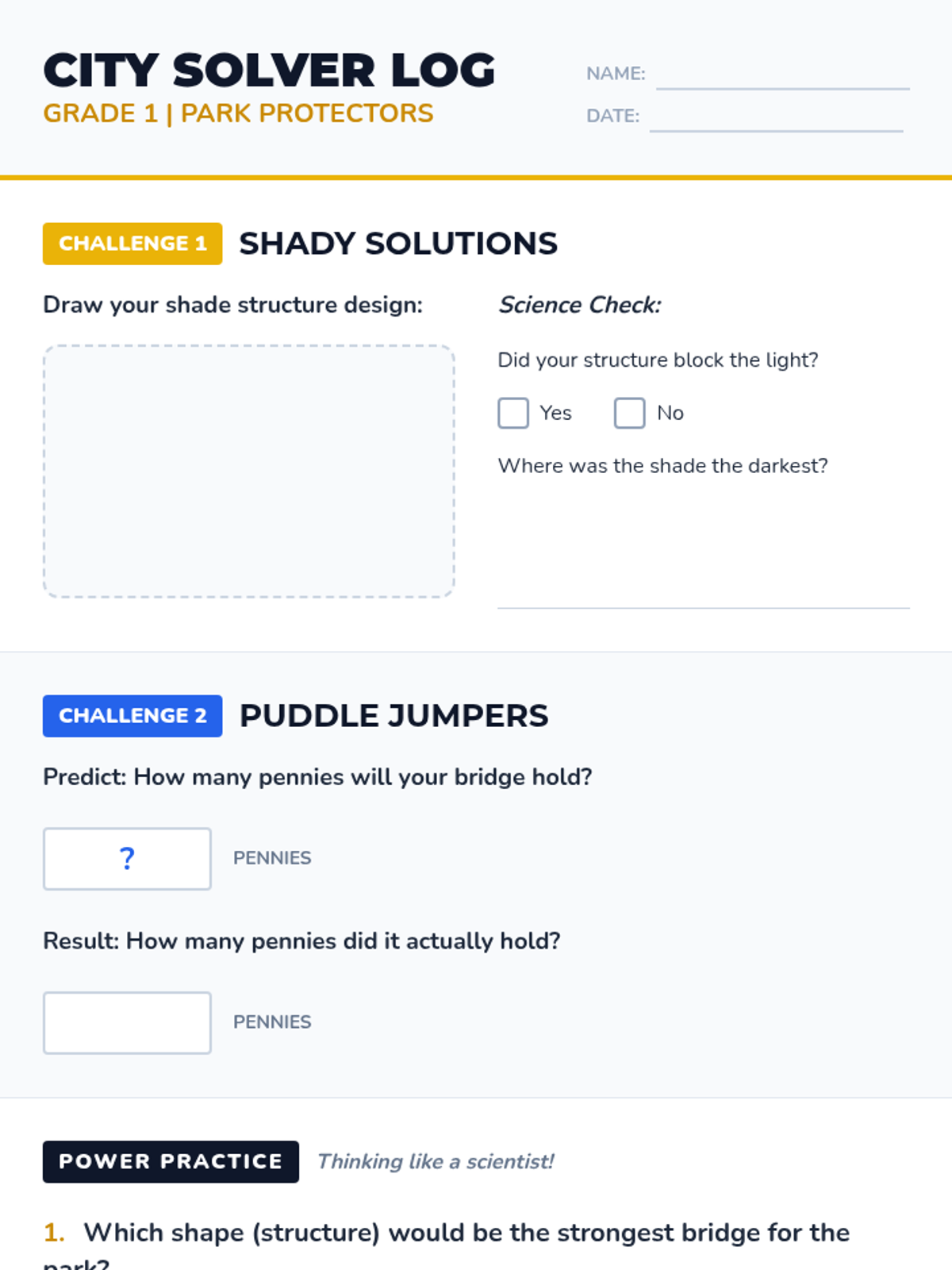
A comprehensive STEM curriculum for grades 1-5 where students solve real-world problems in their community using engineering design and scientific principles. Each grade level features two 30-minute hands-on challenges aligned with TEKS 1.5-5.5.
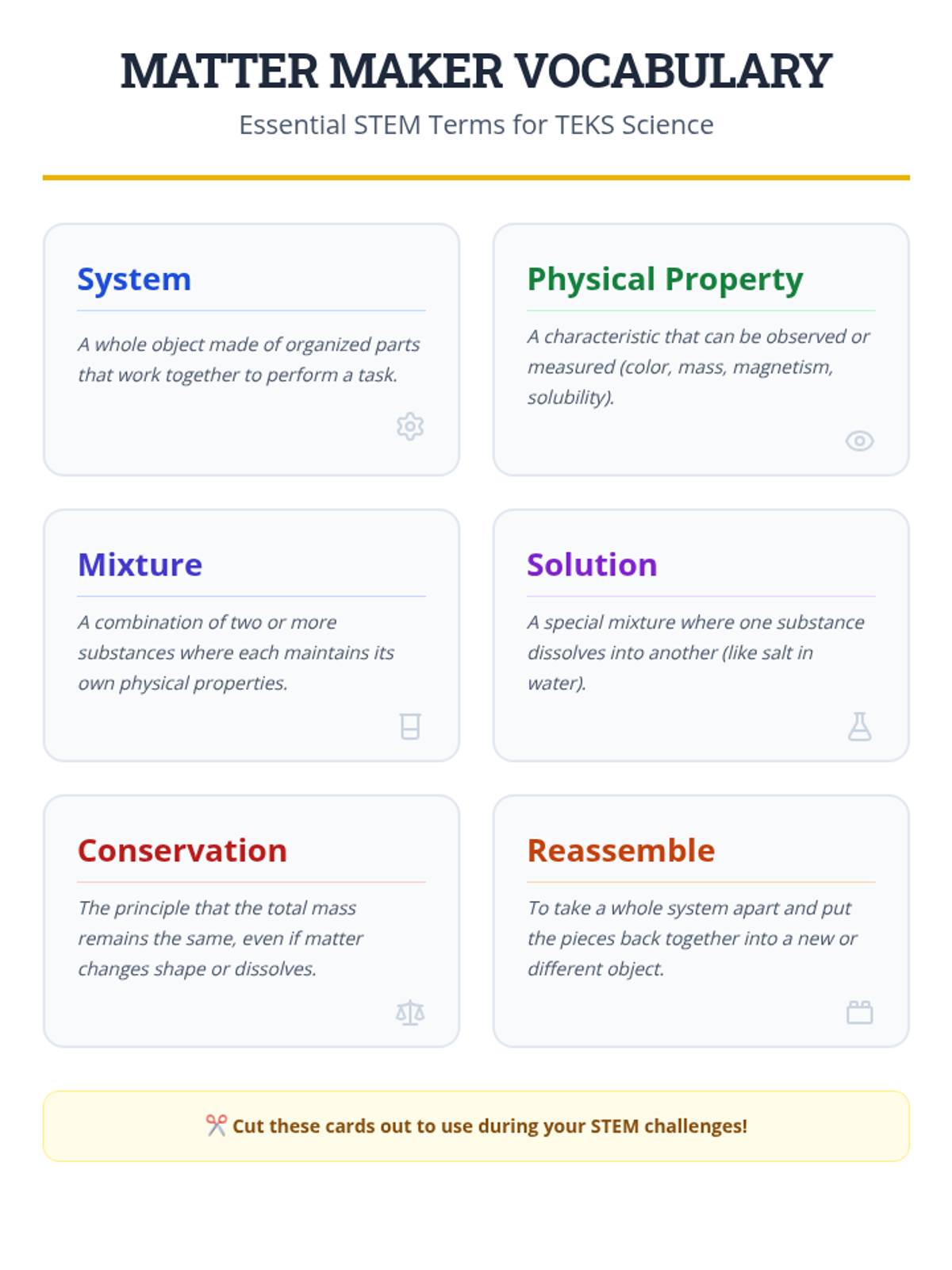
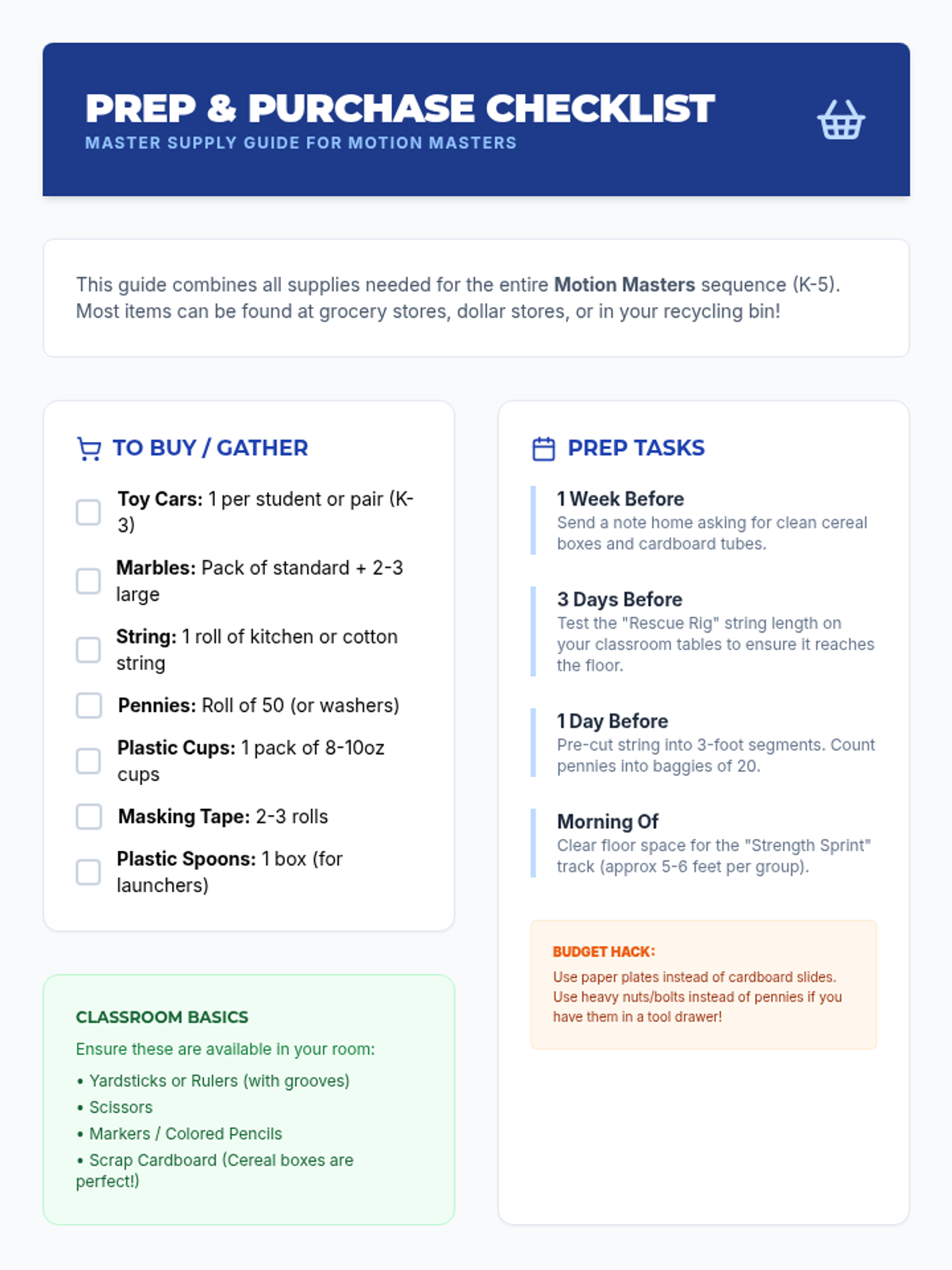
A comprehensive K-5 science journey focused on the Texas Essential Knowledge and Skills (TEKS) for physical properties of matter. Students act as 'Matter Mission' agents to solve real-world problems through hands-on STEM challenges and engineering design.
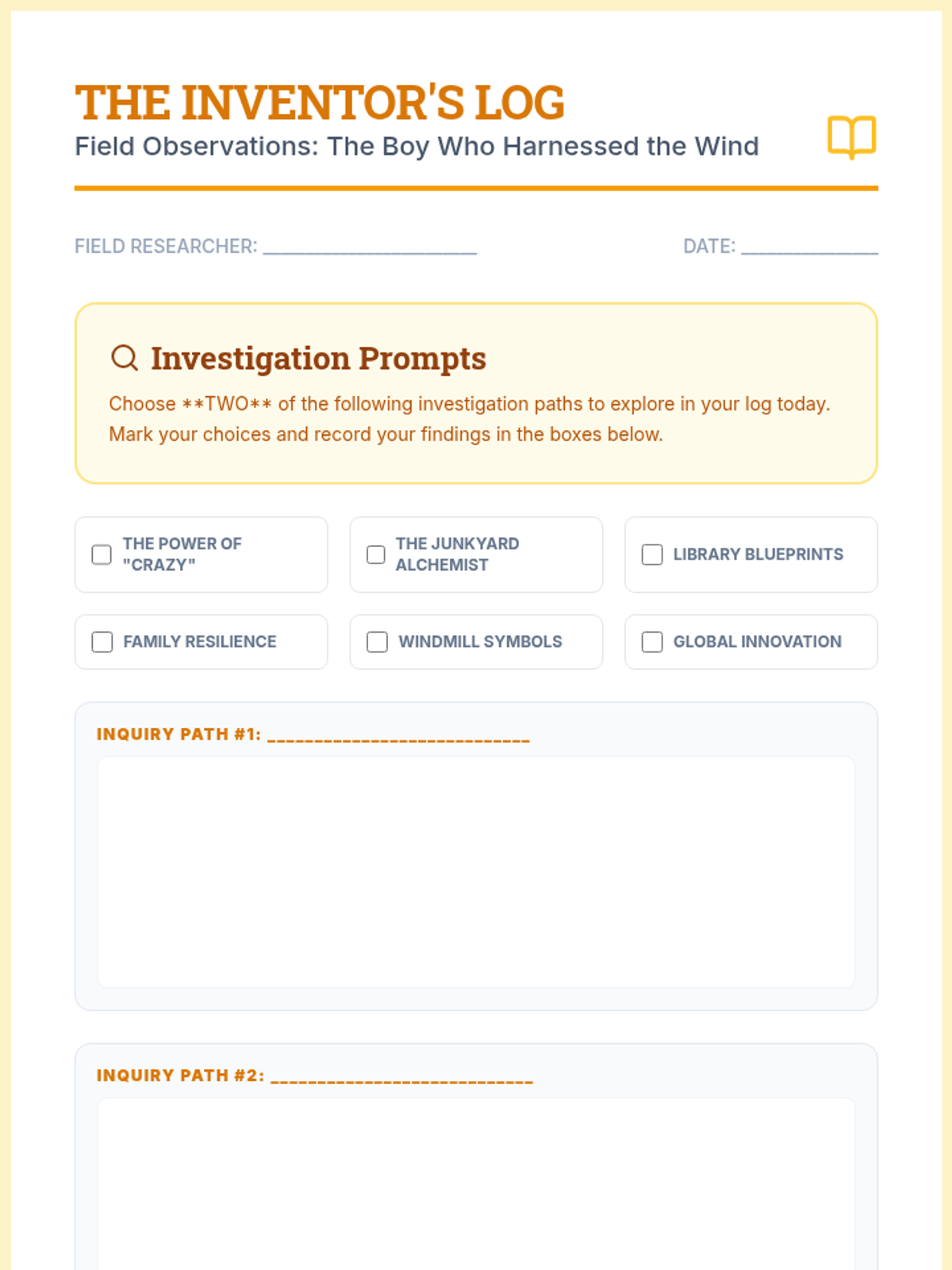
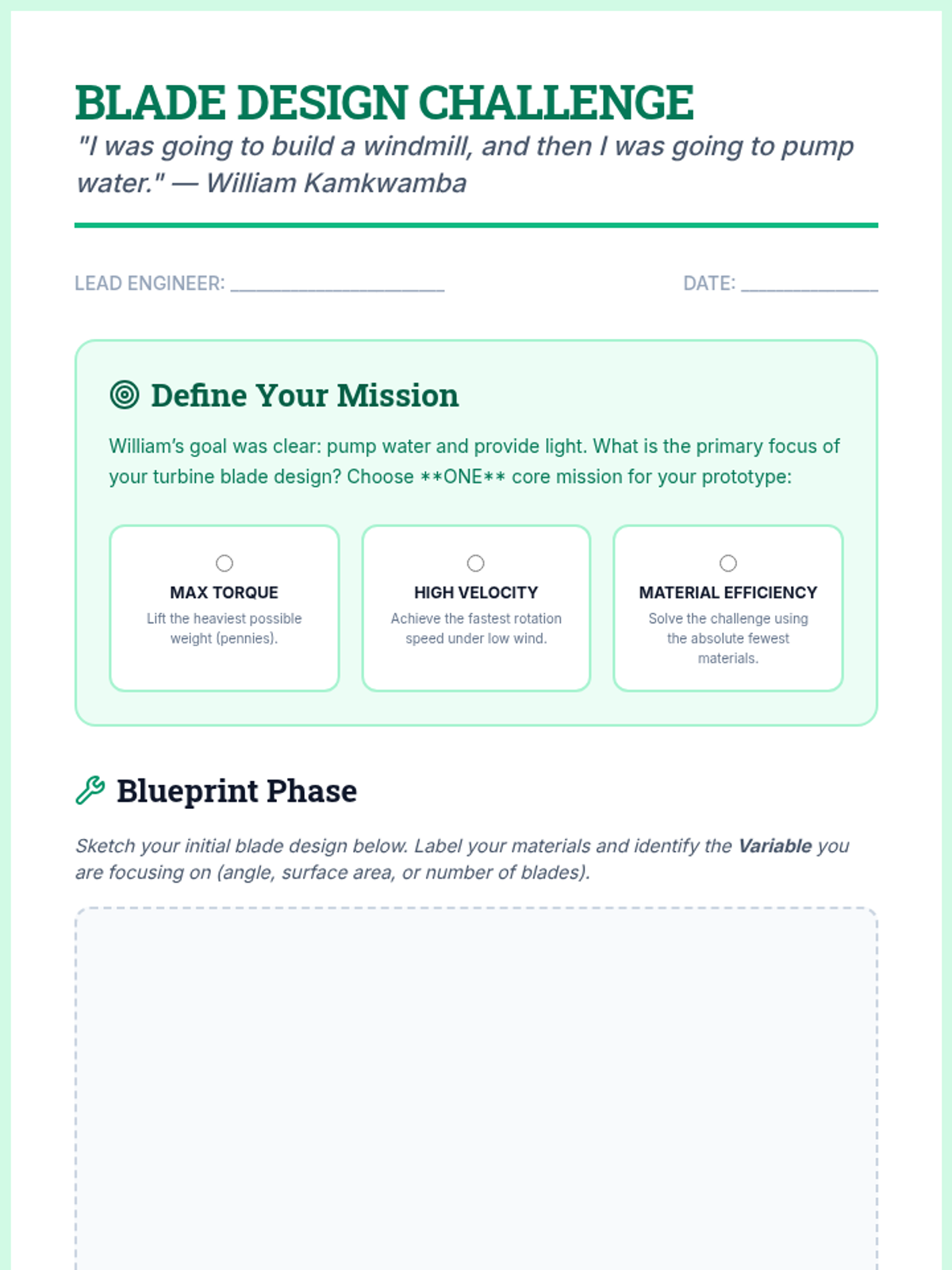
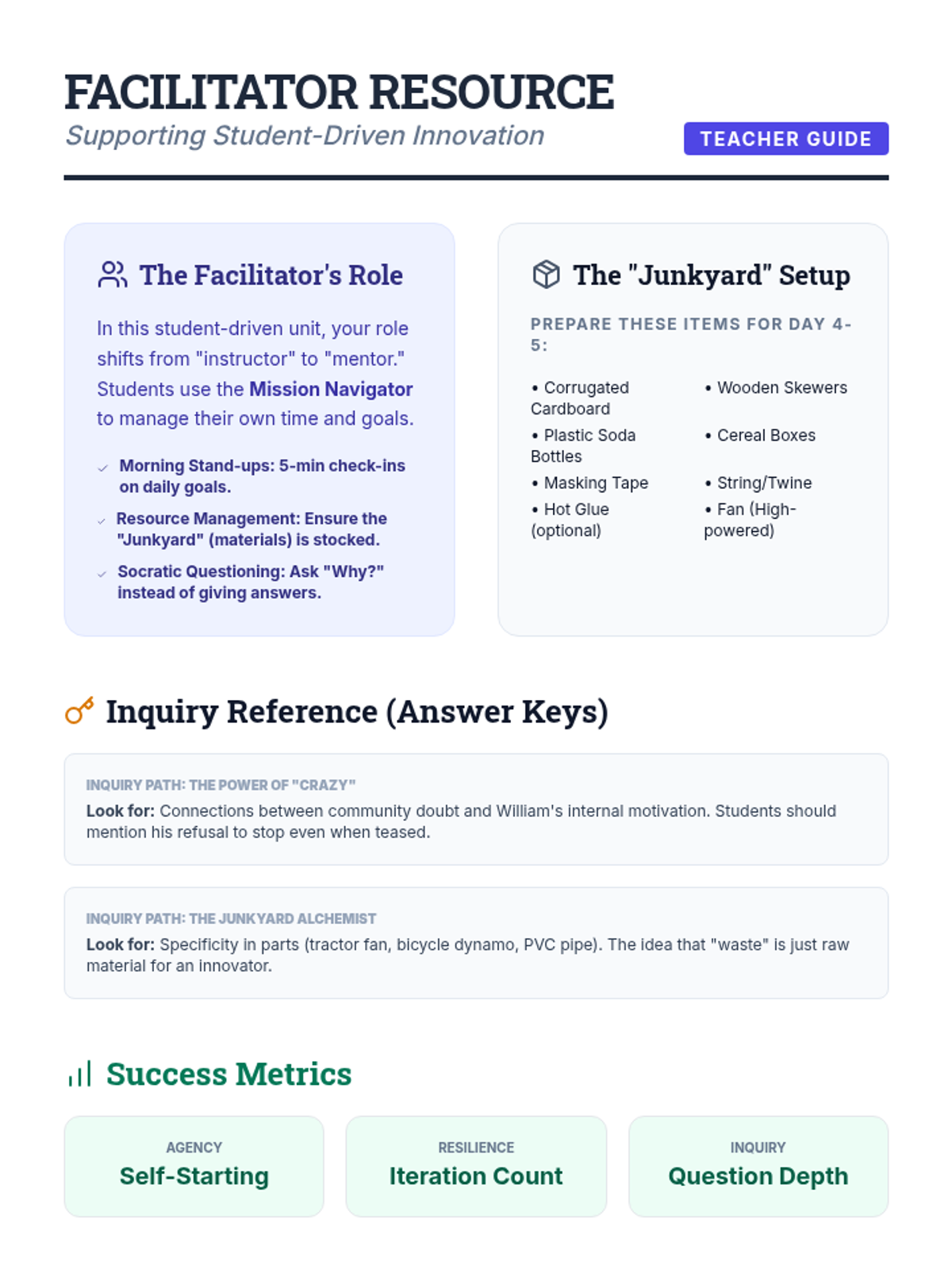
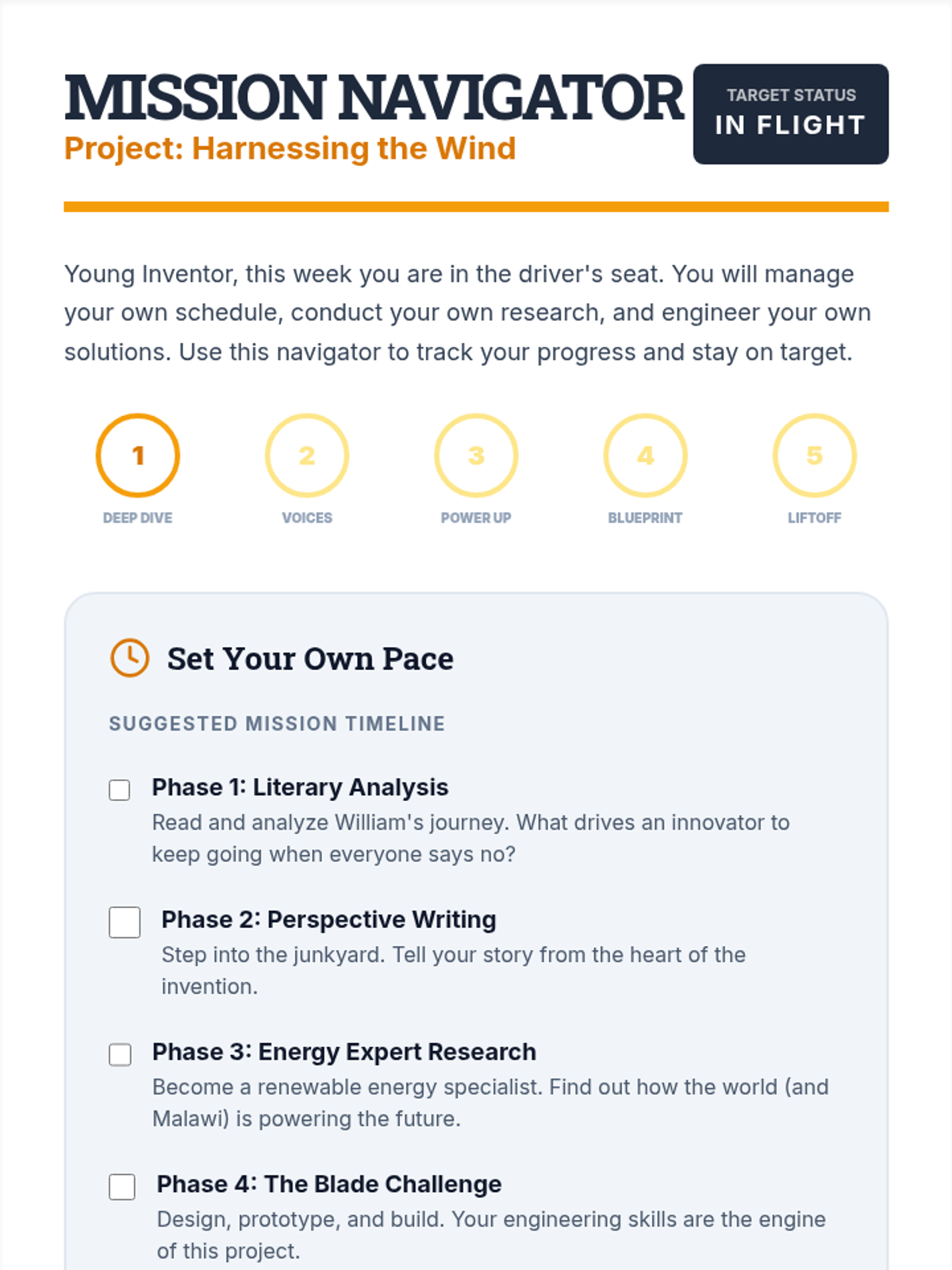
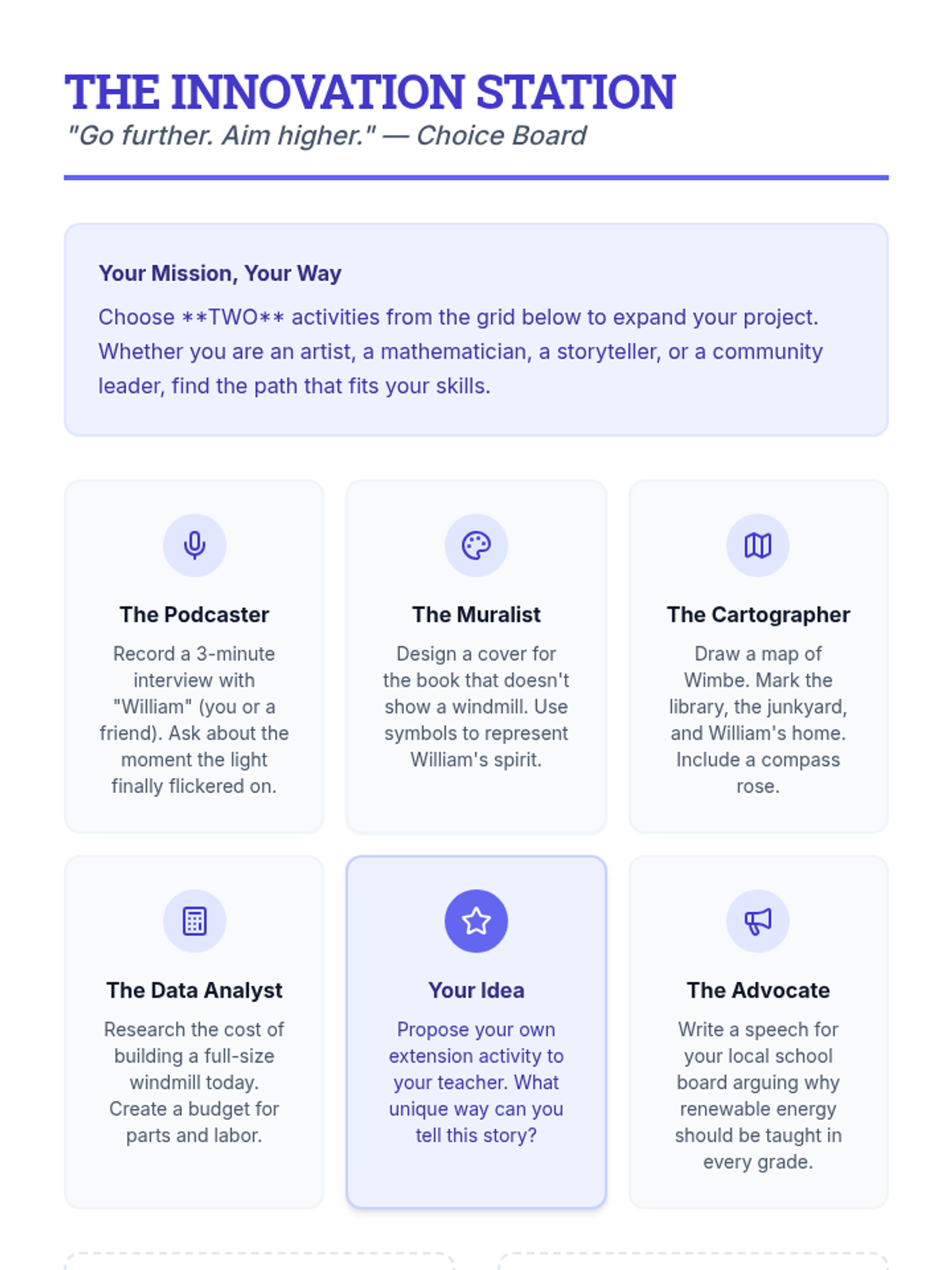
A week-long independent study unit based on 'The Boy Who Harnessed the Wind', guiding students through literary analysis, scientific research, and engineering design.
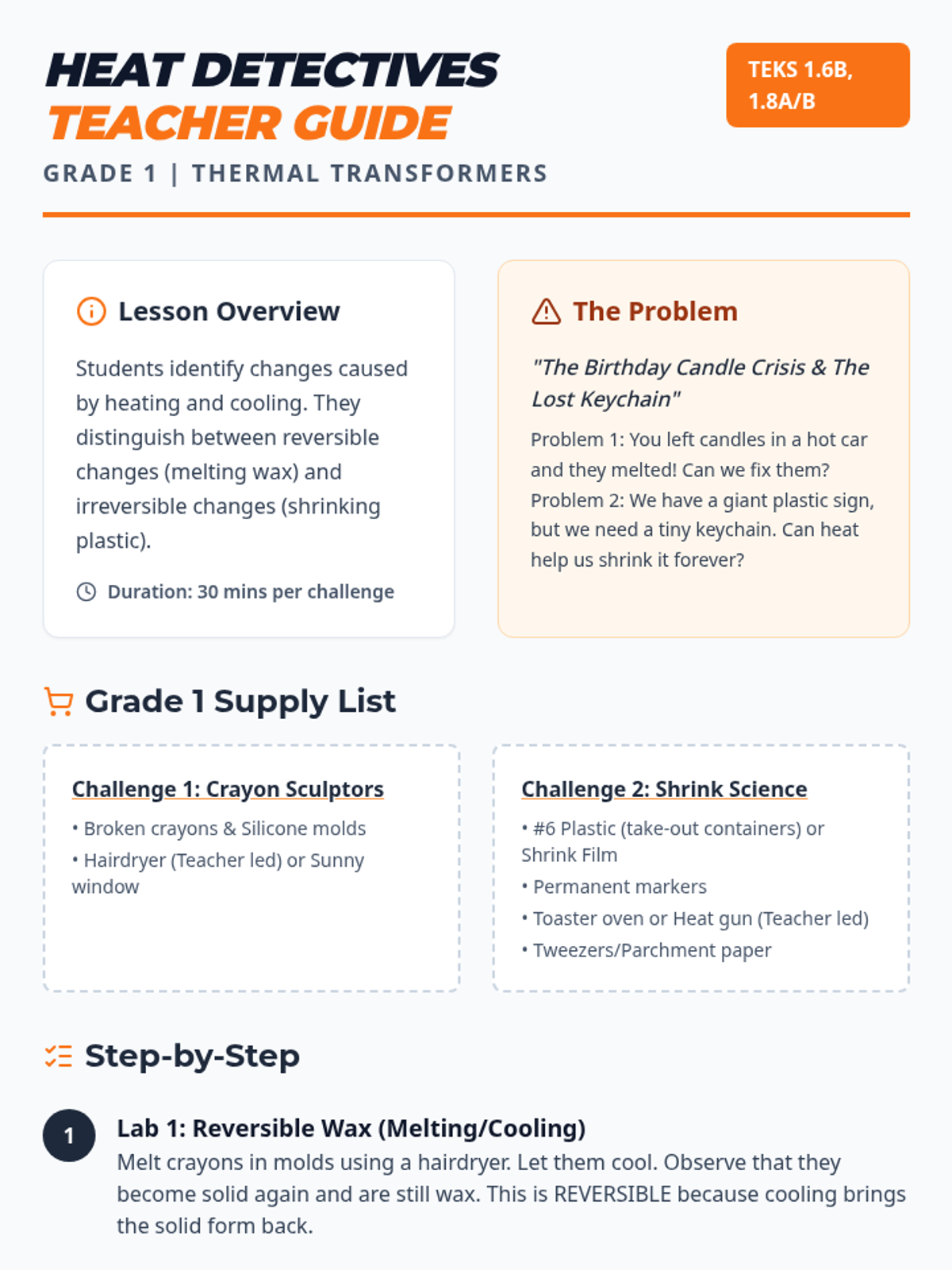
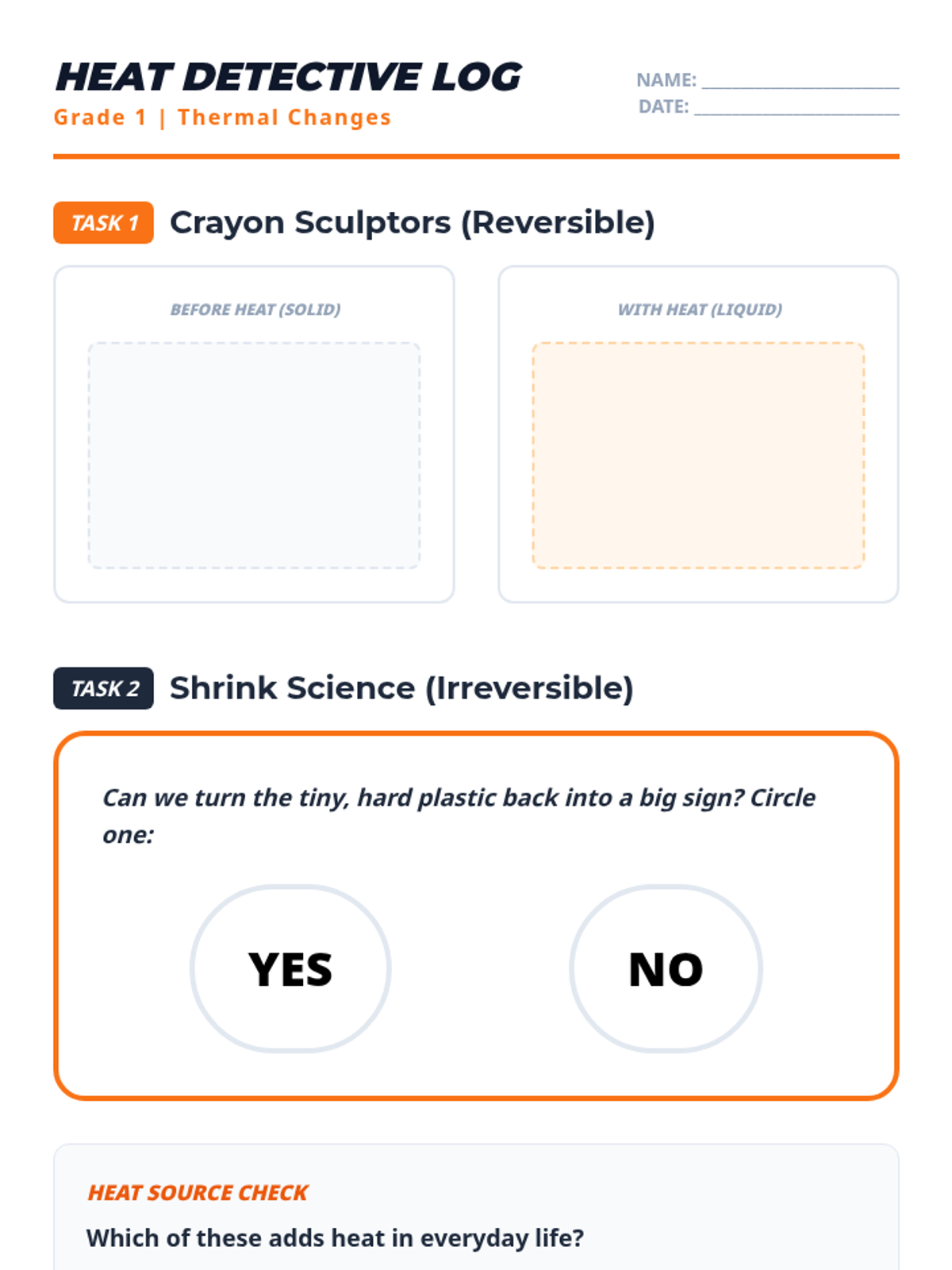
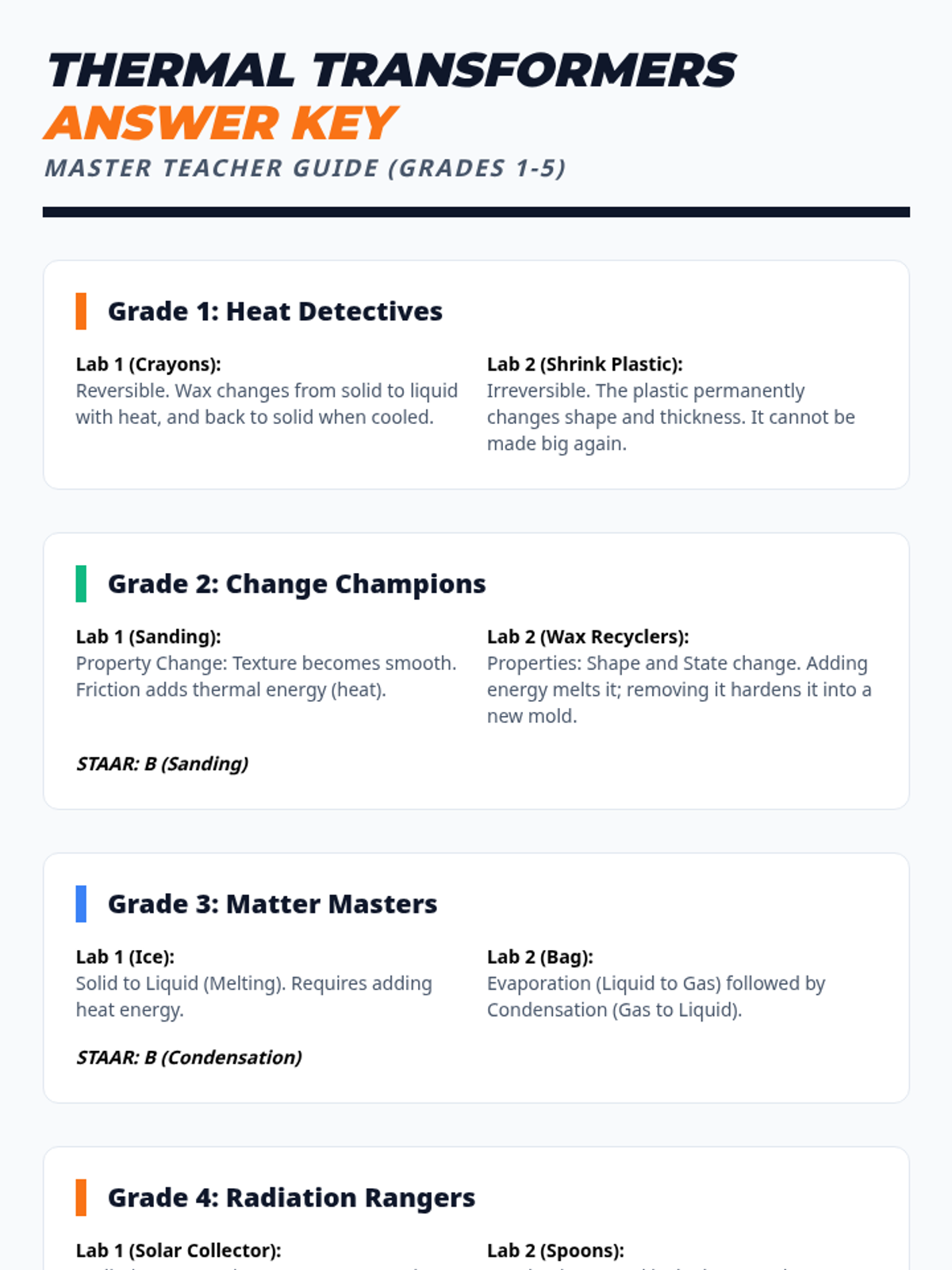
A comprehensive STEM sequence covering thermal energy and matter changes for grades 1-5, featuring engineering challenges and real-world problem-solving aligned with Texas TEKS. Students investigate reversible and non-reversible changes, states of matter, and thermal energy transfer through hands-on experiments.
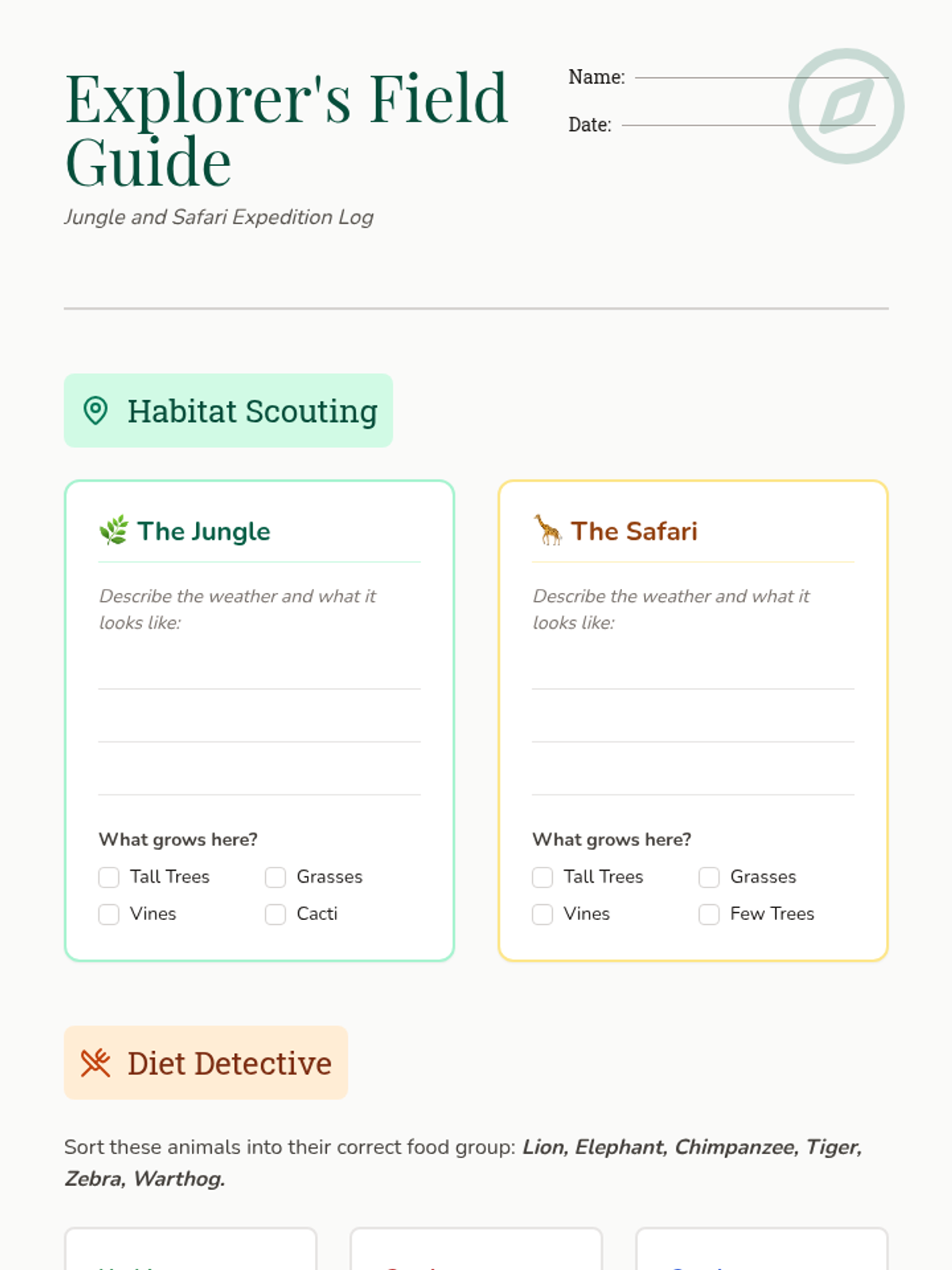
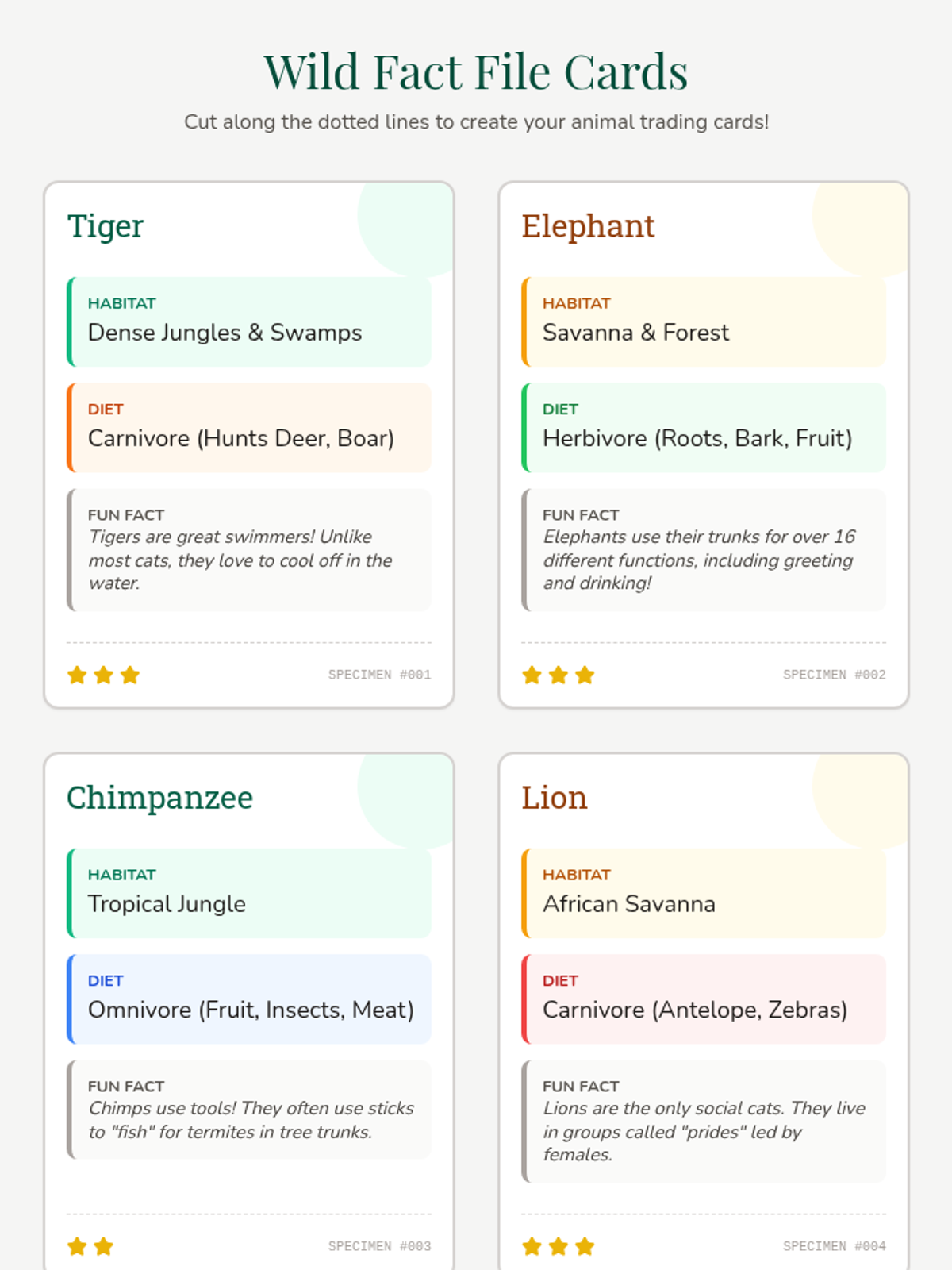
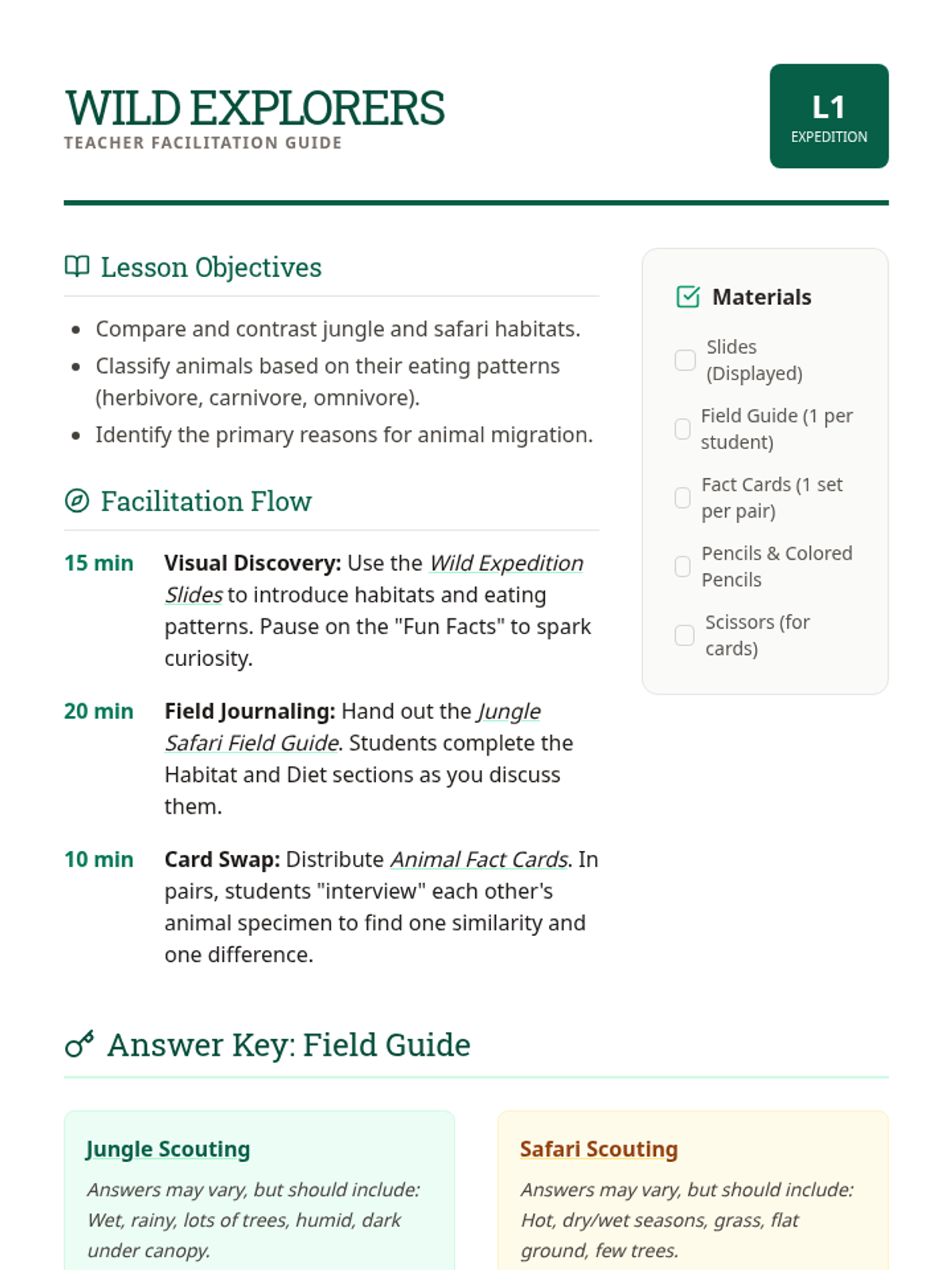
A comprehensive exploration of animals from jungle and safari environments, focusing on their unique adaptations, habitats, and survival strategies.
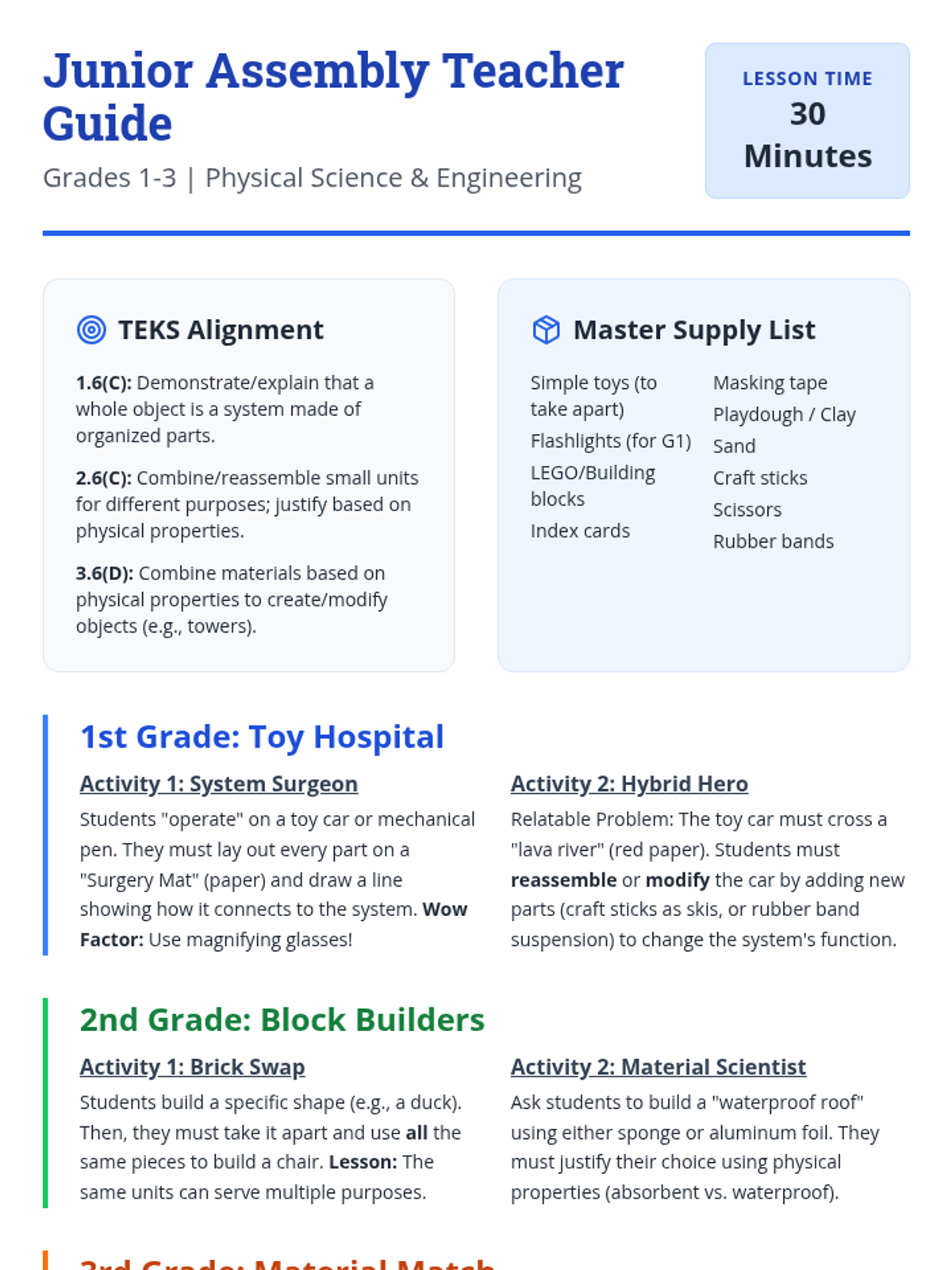
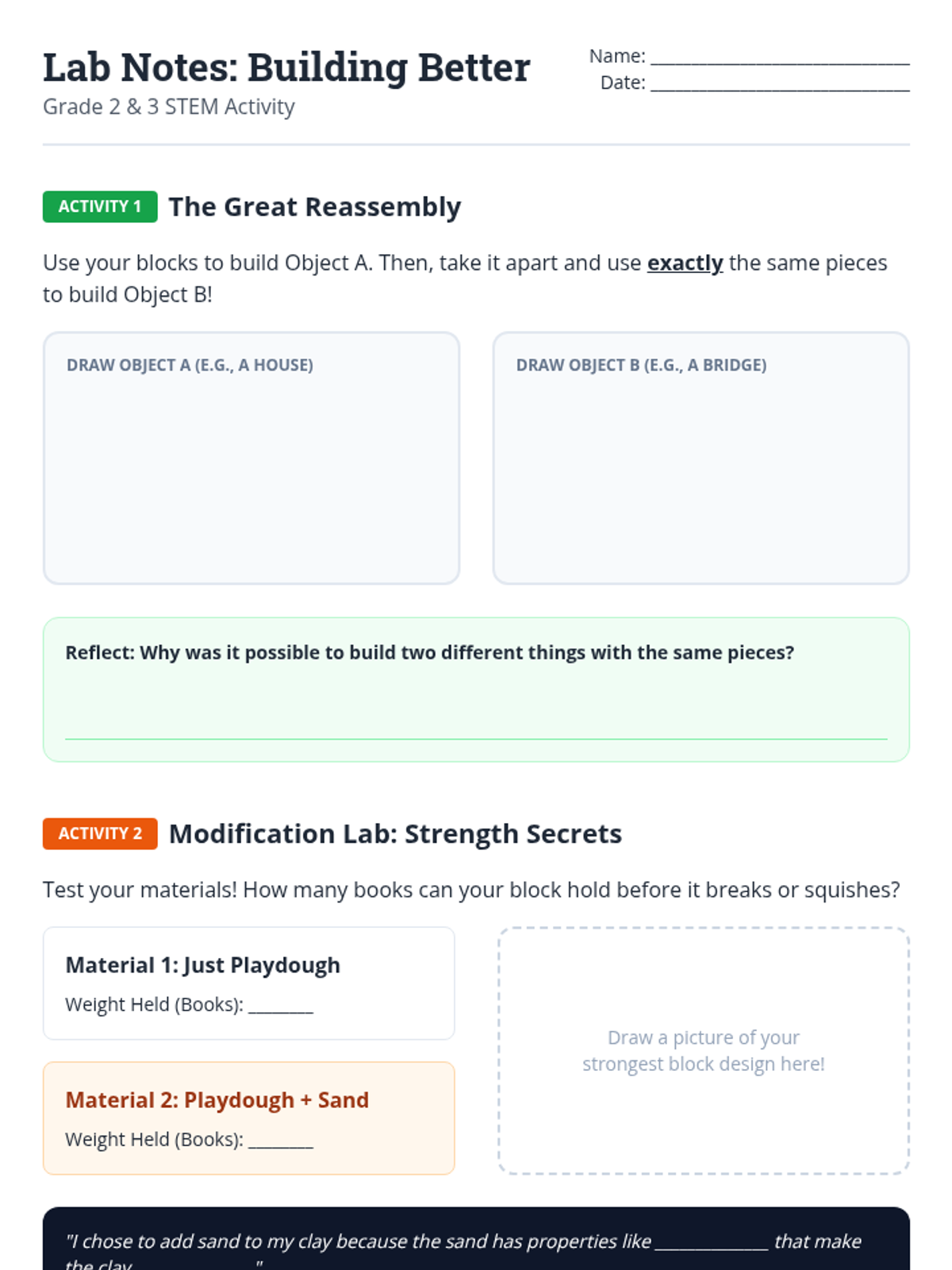
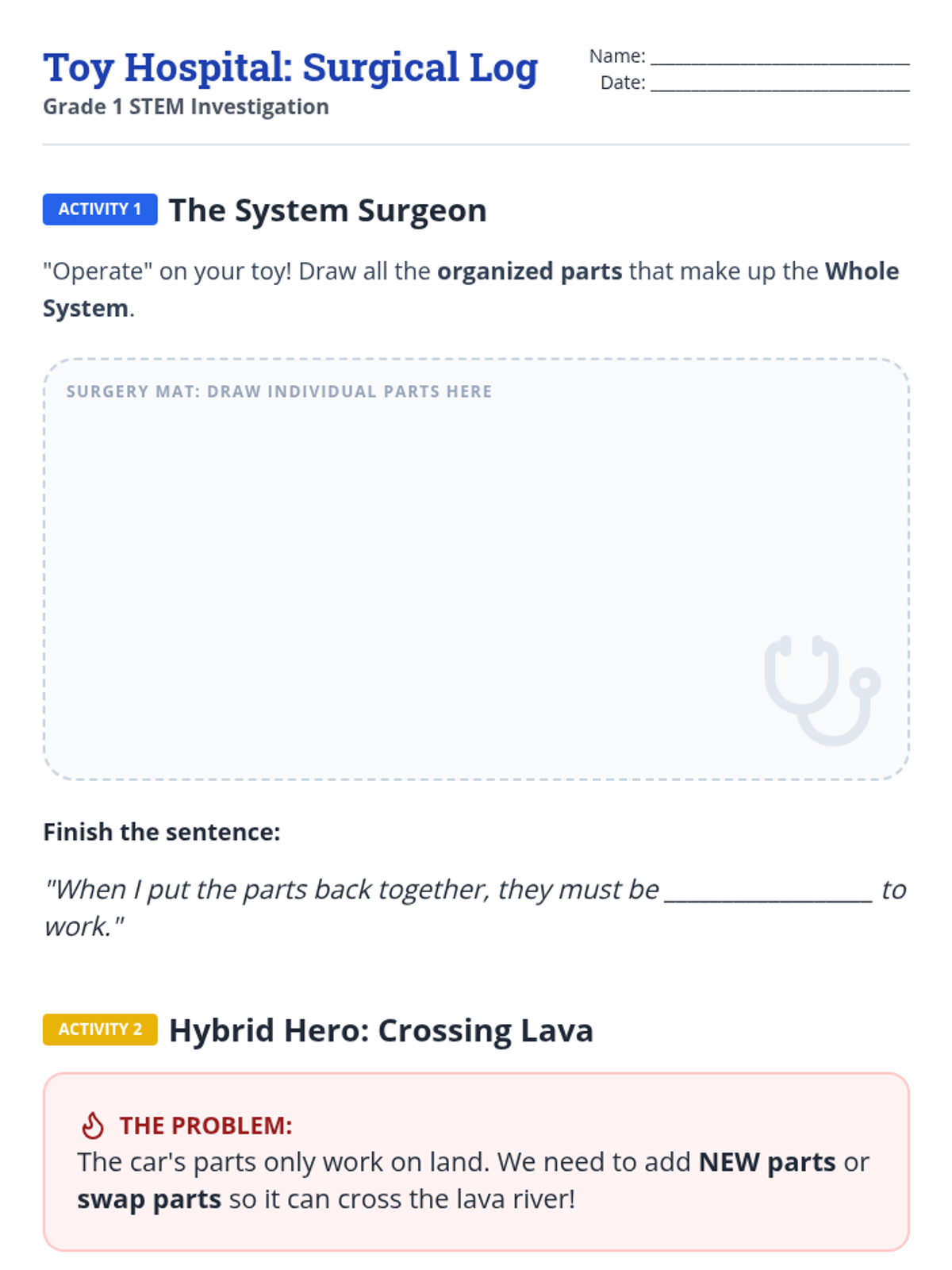
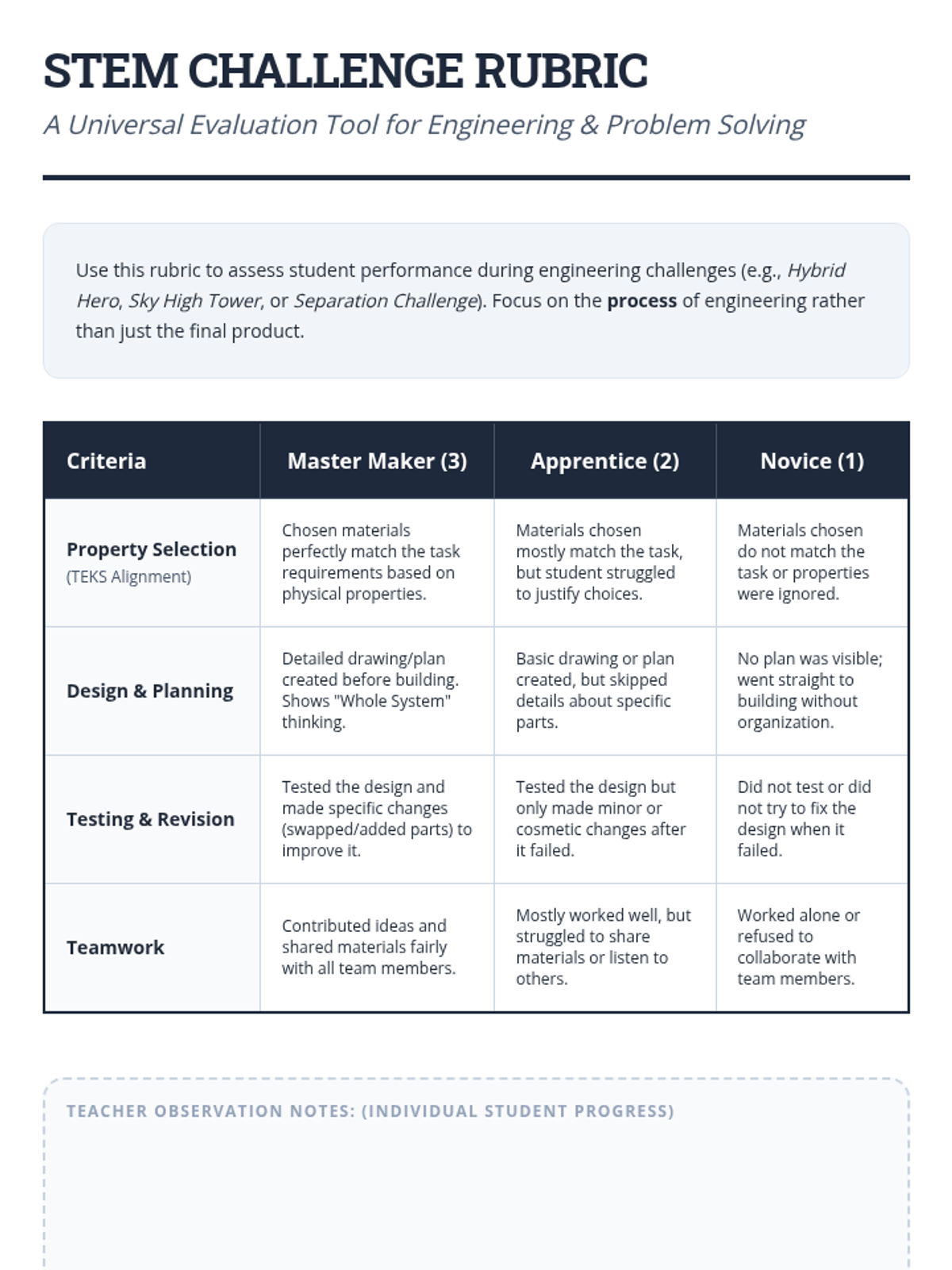
A comprehensive STEM sequence focusing on TEKS-aligned physical science concepts, from system parts in lower elementary to complex mixtures and conservation of matter in upper elementary. Students solve relatable real-world problems through hands-on engineering challenges and laboratory investigations.
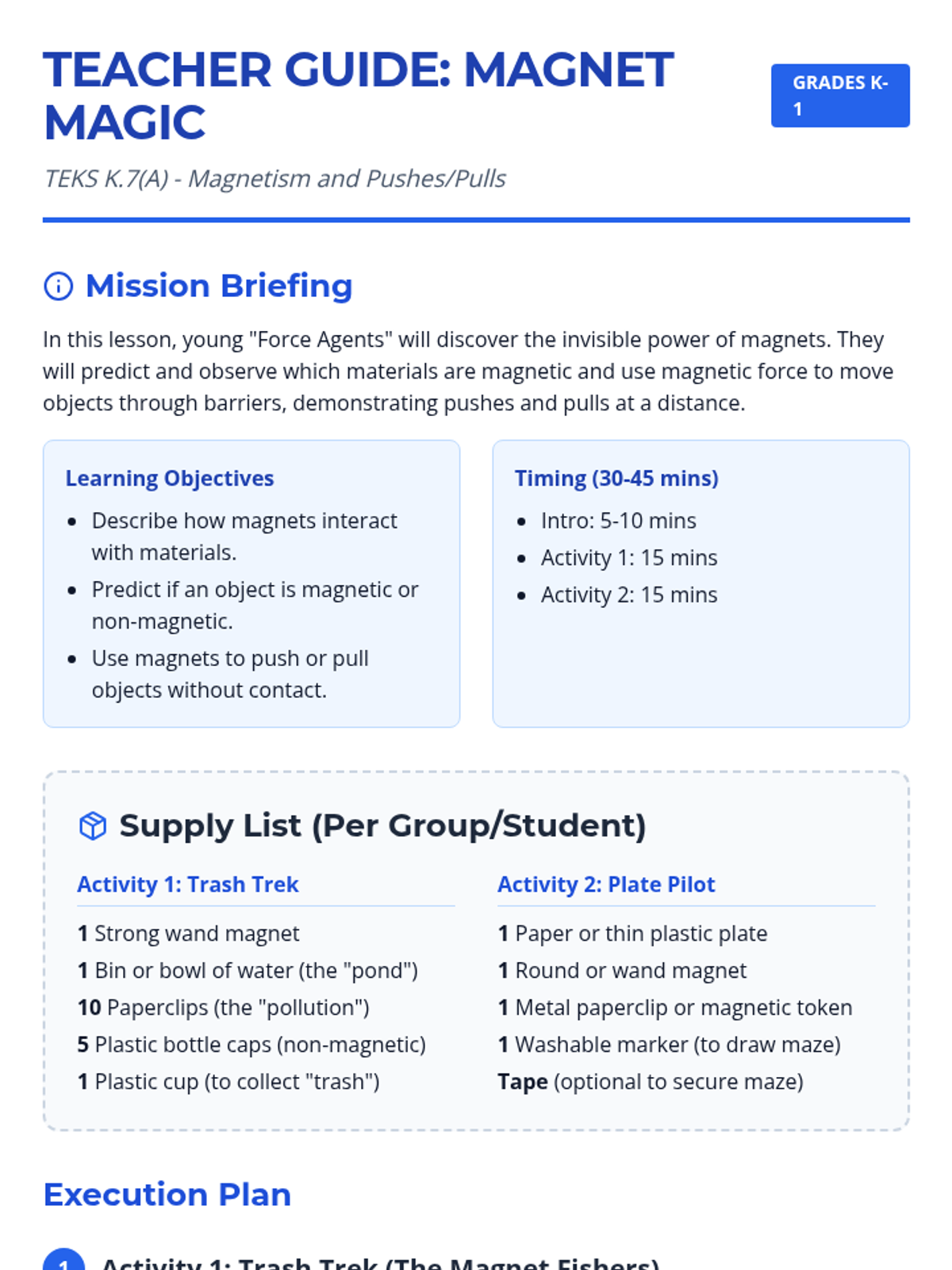
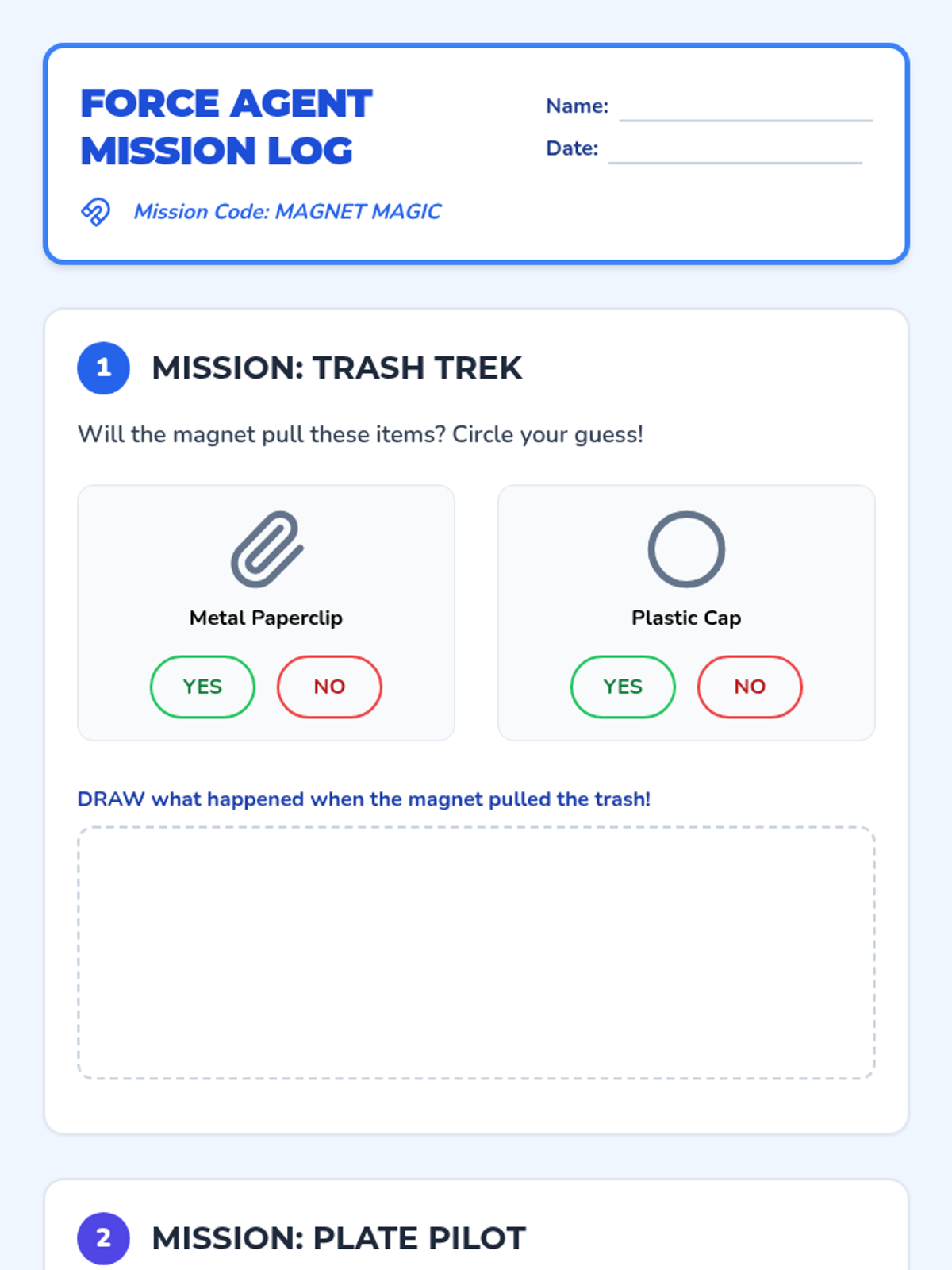
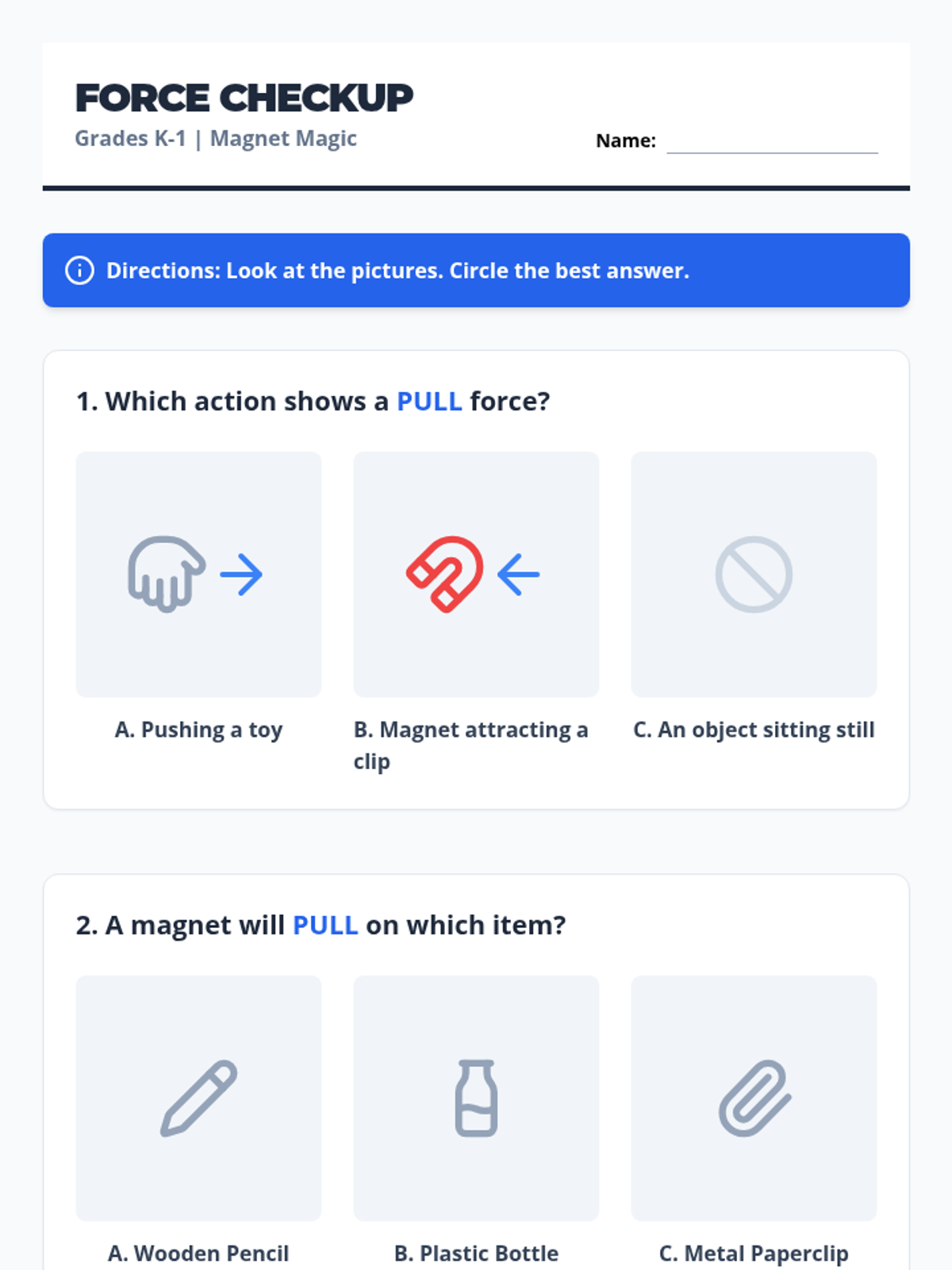
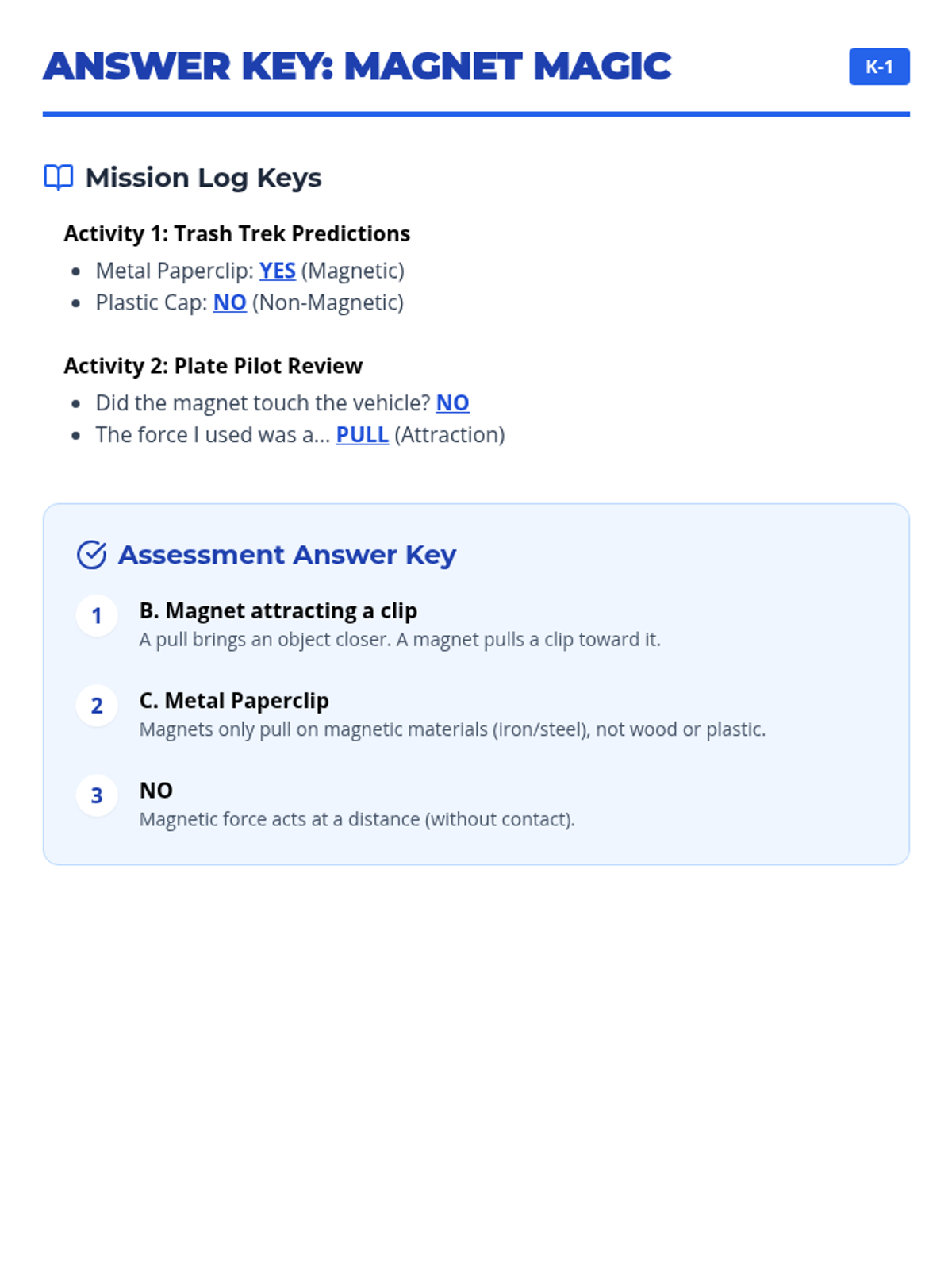
A comprehensive STEM unit exploring the invisible powers of forces, including magnetism, gravity, and friction, through hands-on engineering challenges and scientific investigations aligned with Texas TEKS for Grades K-5.
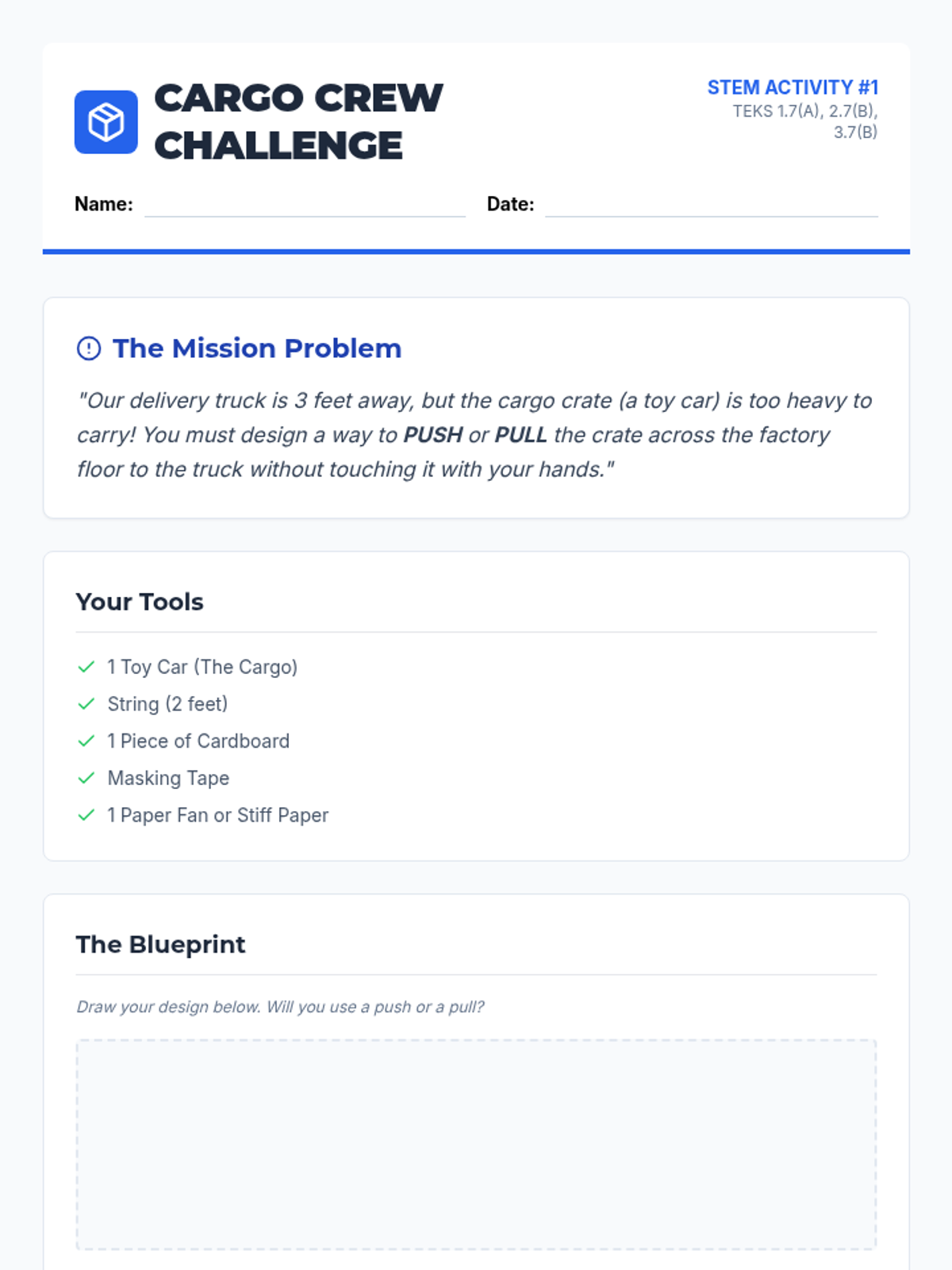
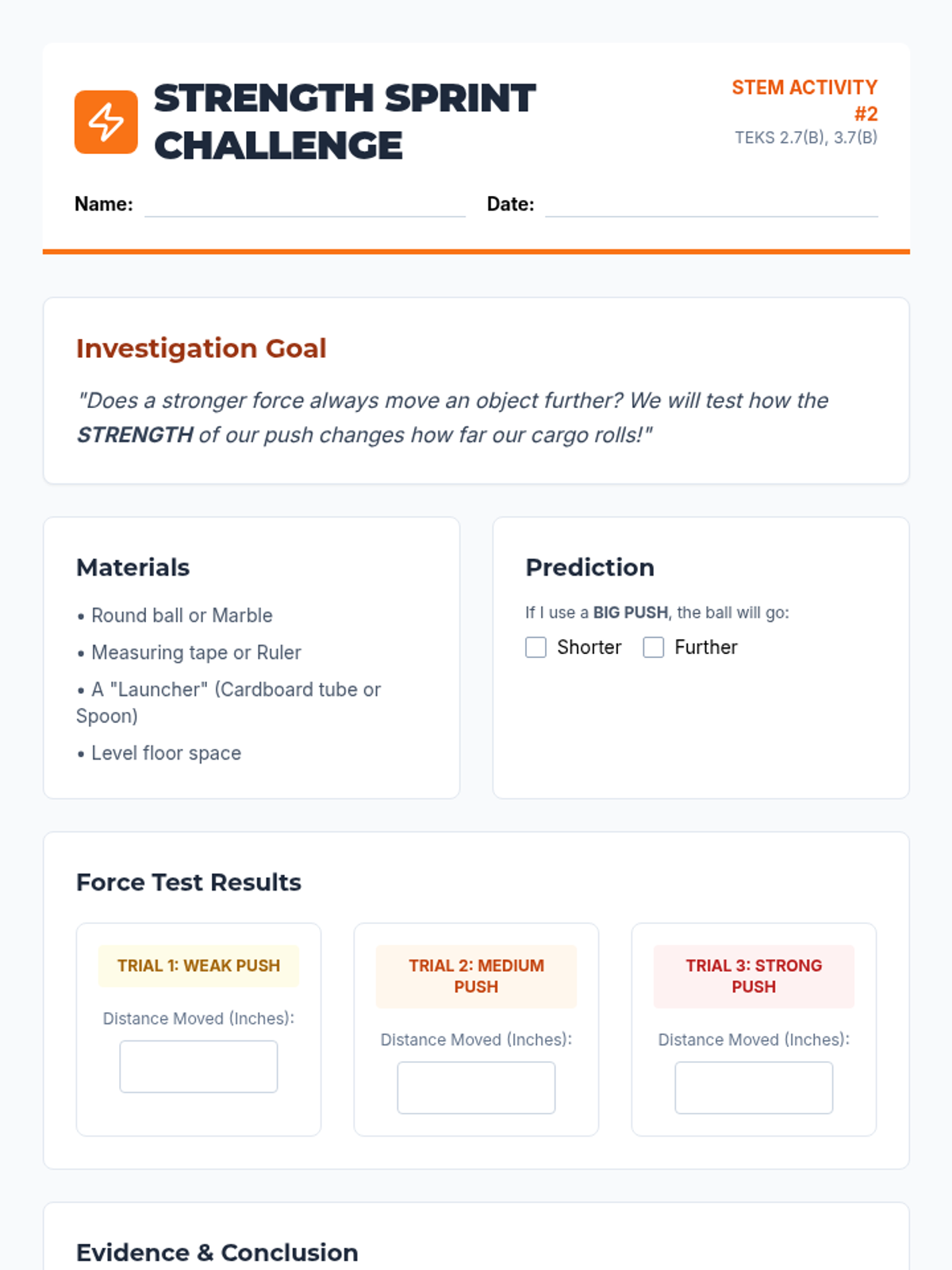
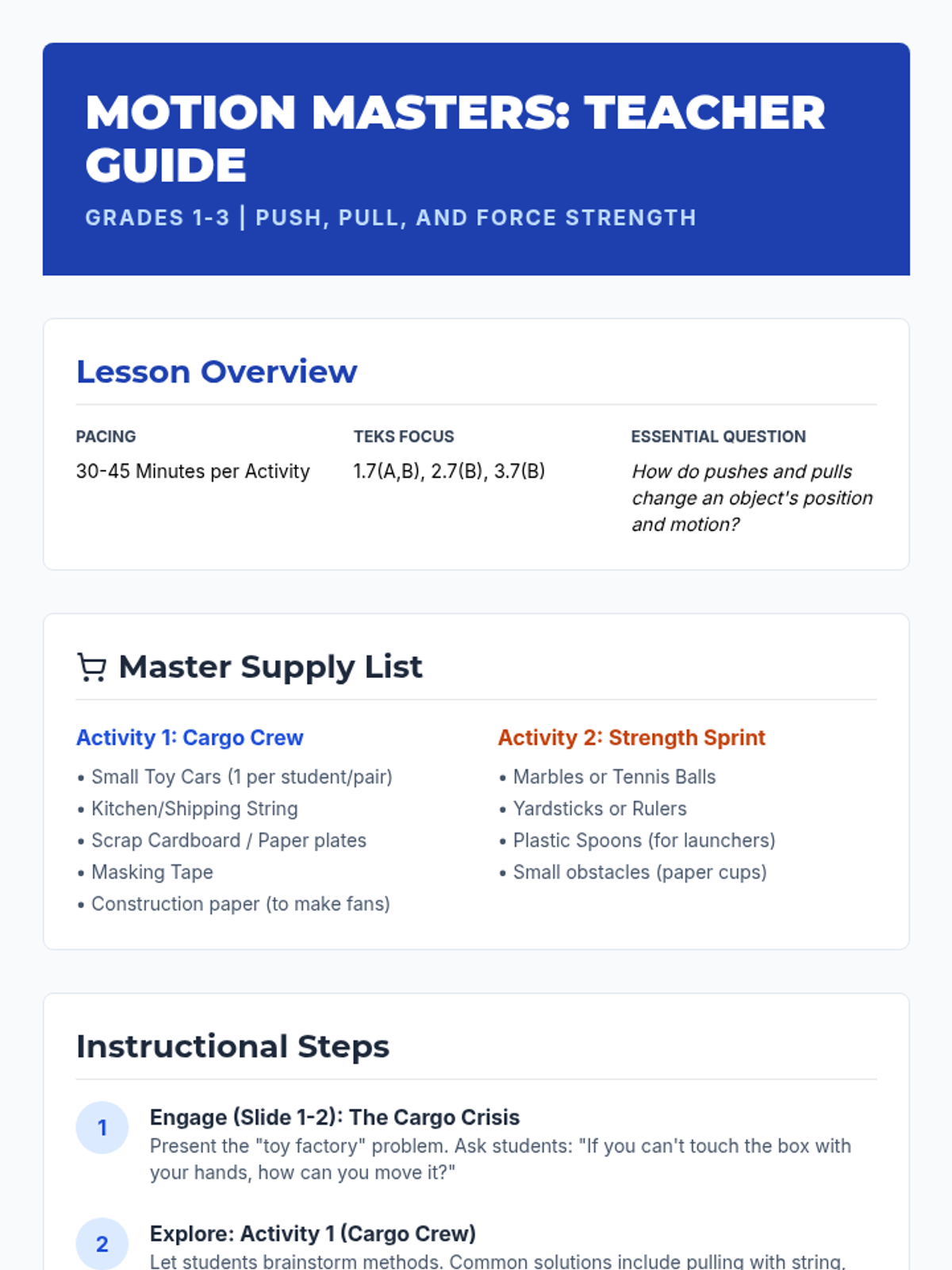
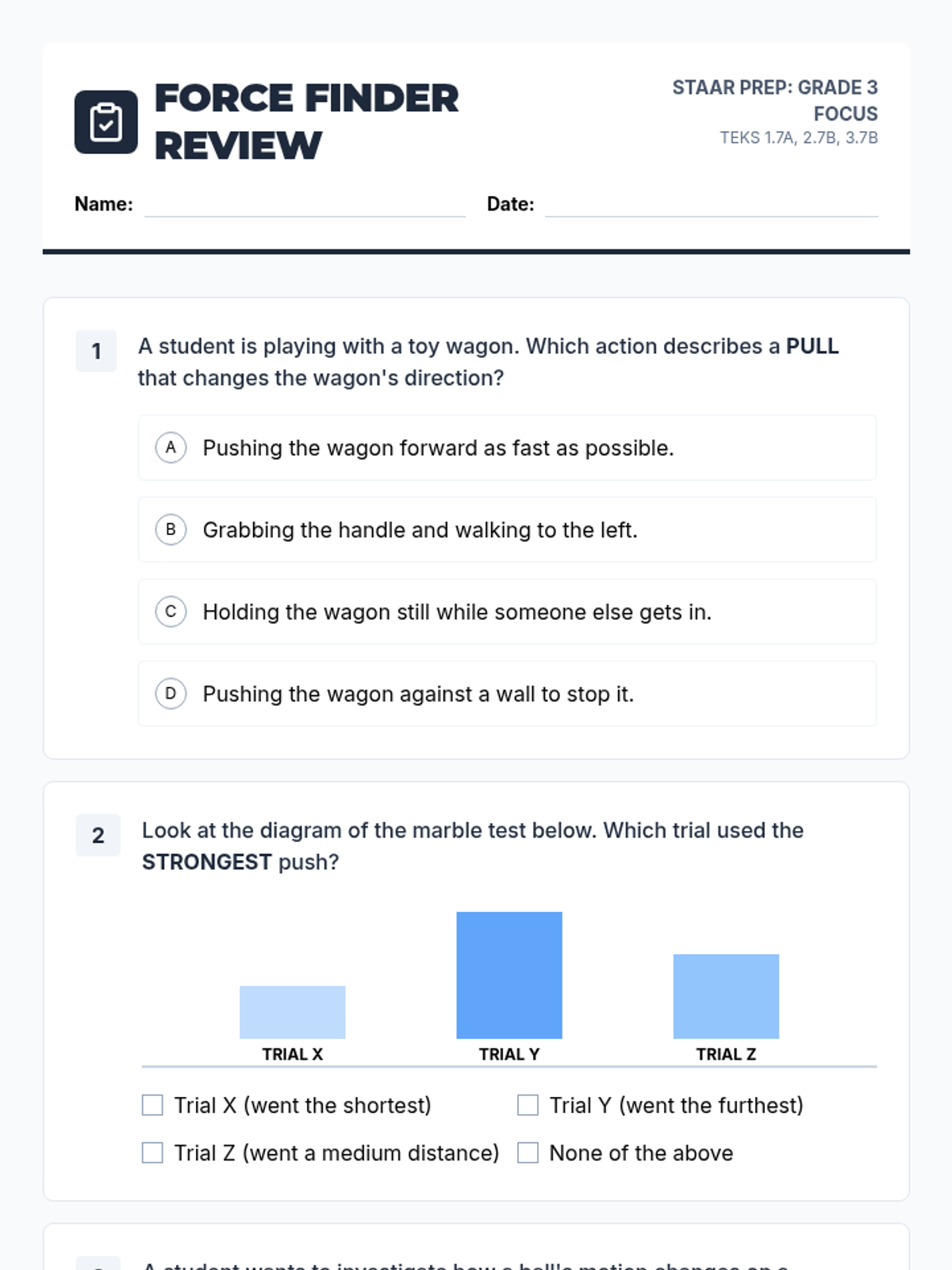
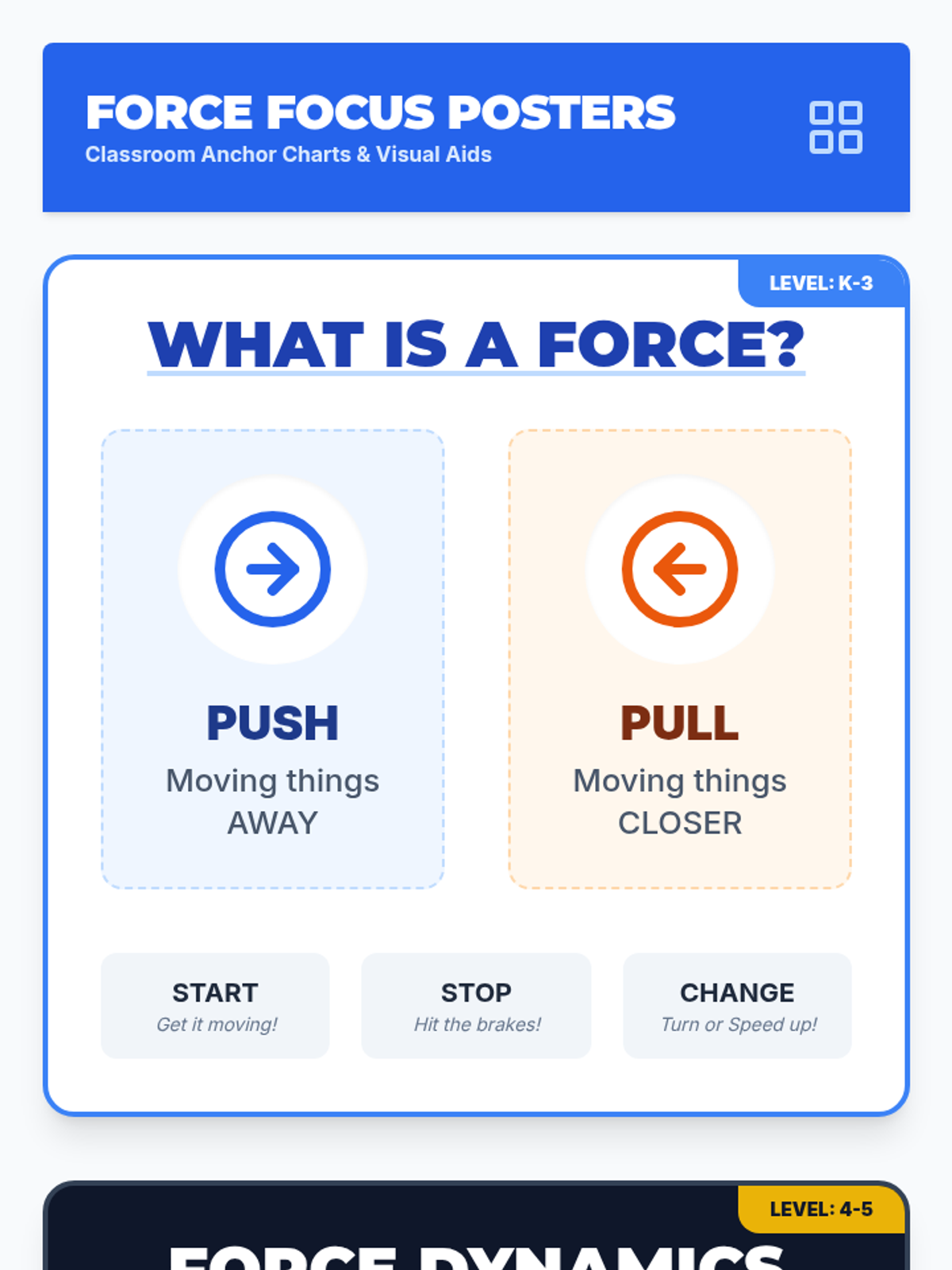
A comprehensive STEM sequence focusing on forces and motion (TEKS 1.7A/B, 2.7B, 3.7B, 5.7A). Students engage in hands-on engineering challenges to understand pushes, pulls, strength of forces, and balanced/unbalanced energy transfer.
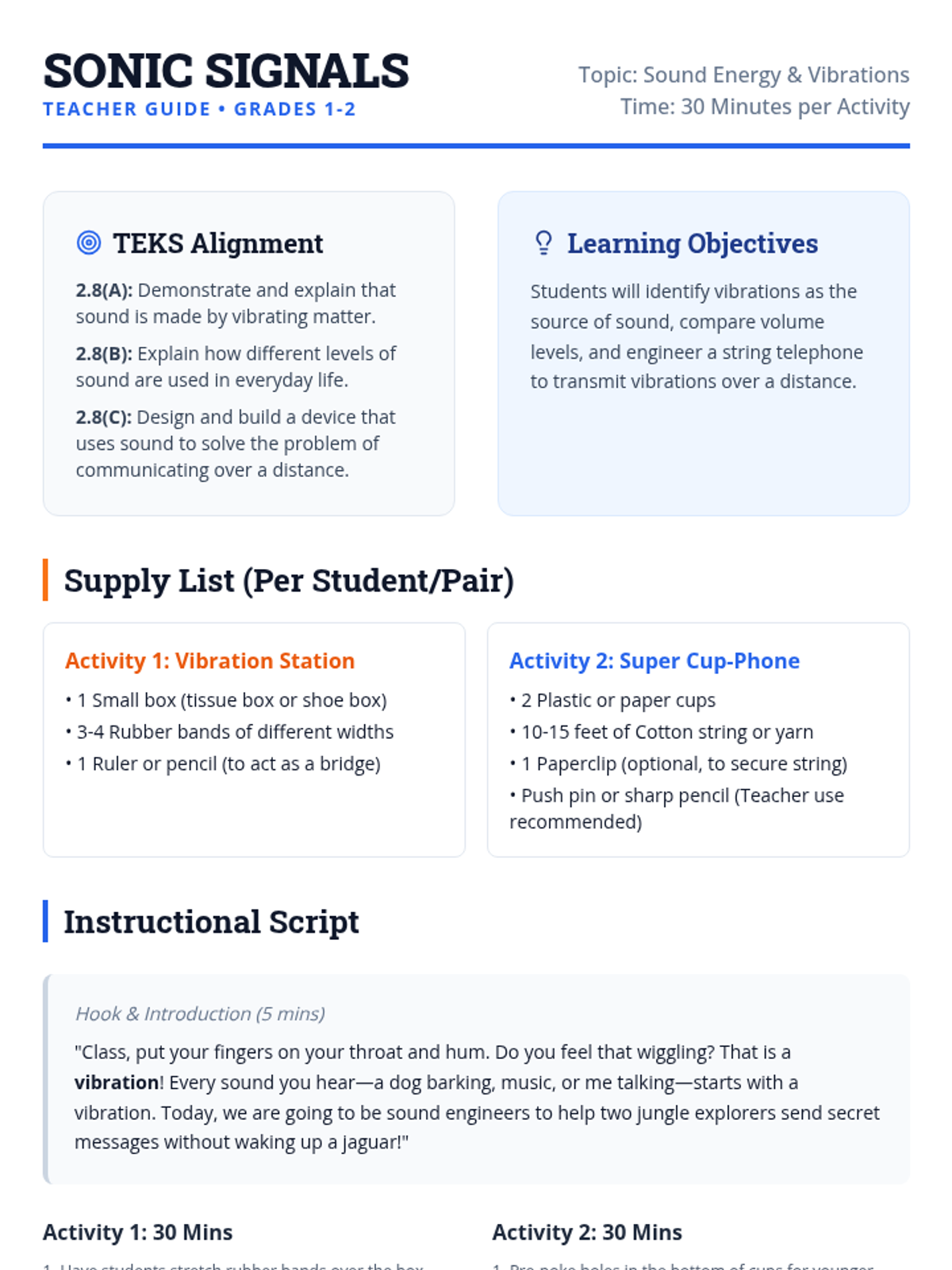
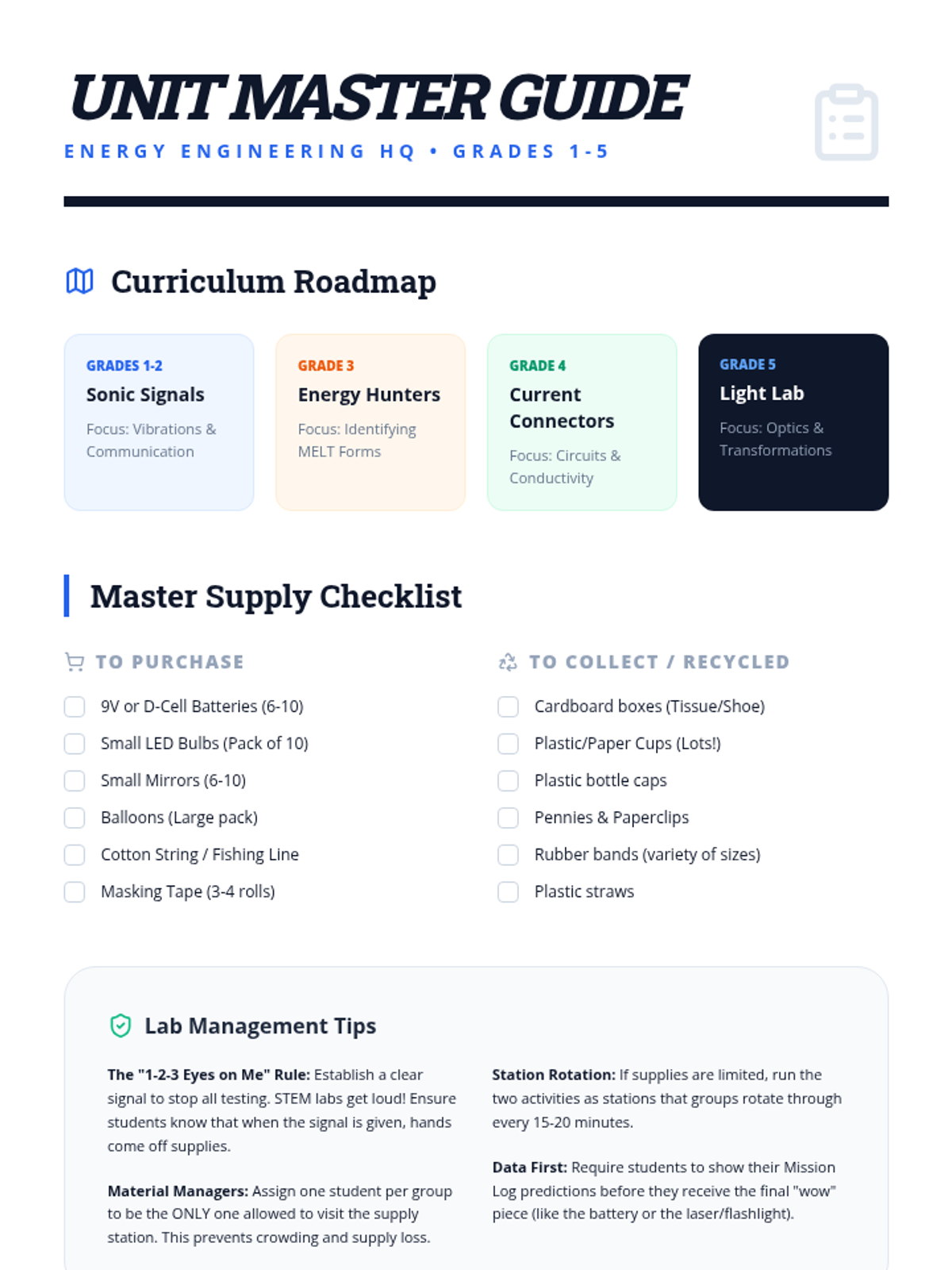
A comprehensive STEM unit for grades 1-5 exploring sound, light, thermal, and electrical energy through hands-on engineering challenges and real-world problem-solving.
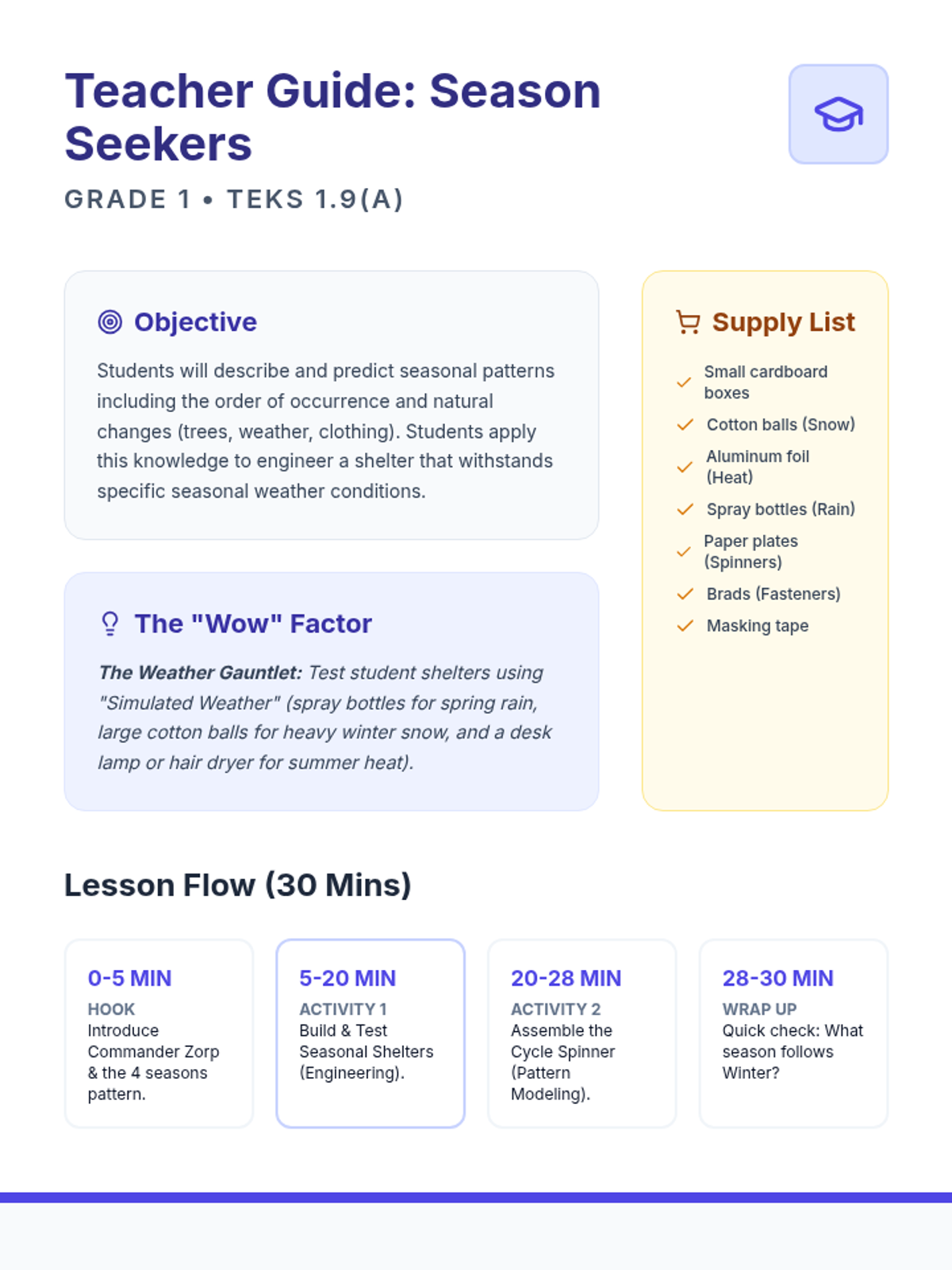
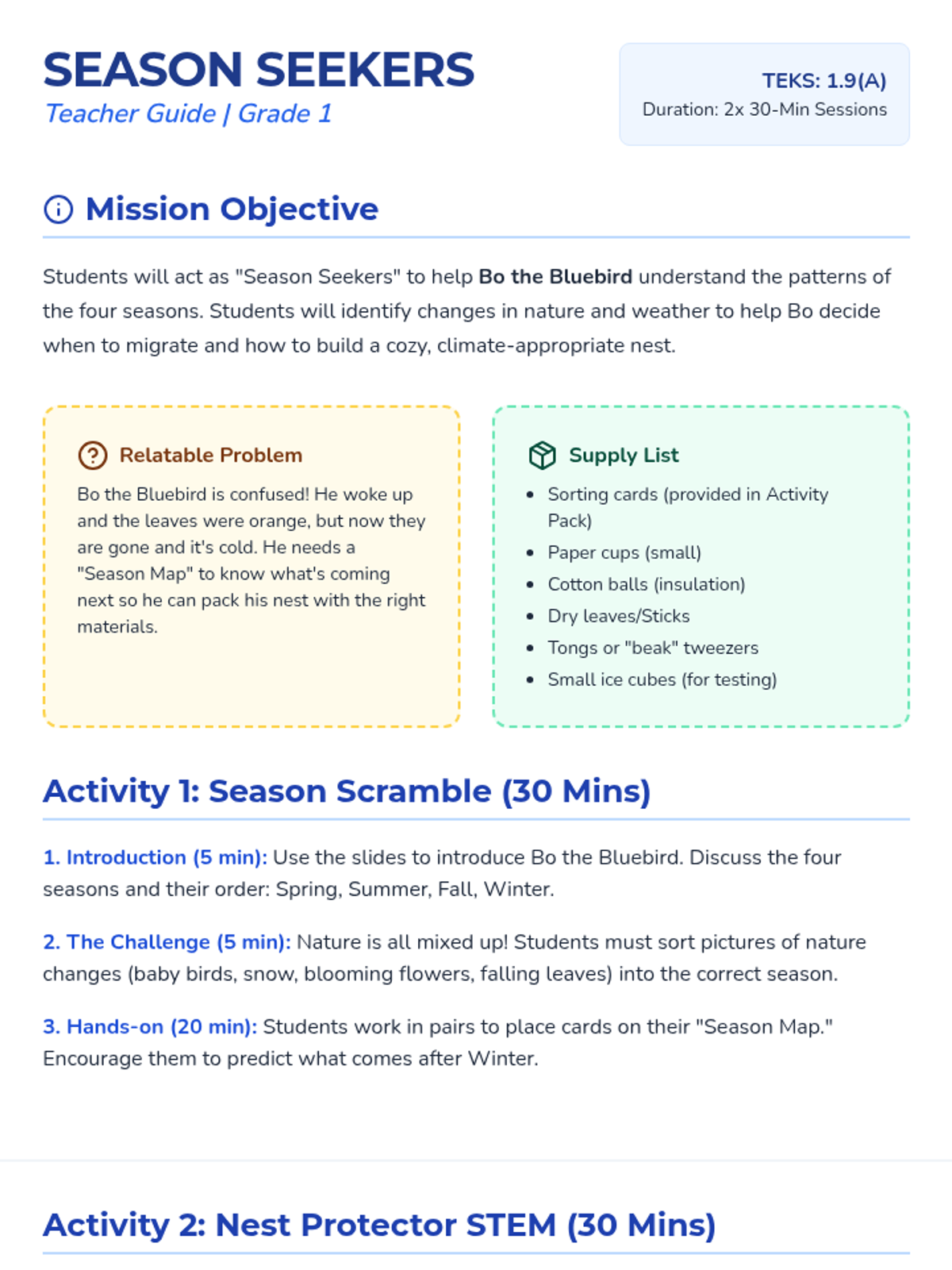
A comprehensive K-5 STEM curriculum covering Texas TEKS for Earth and Space Science. Each grade level features two hands-on engineering challenges, interactive slide decks, and STAAR-aligned assessment tools focusing on seasons, lunar patterns, solar system models, and Earth's rotation.
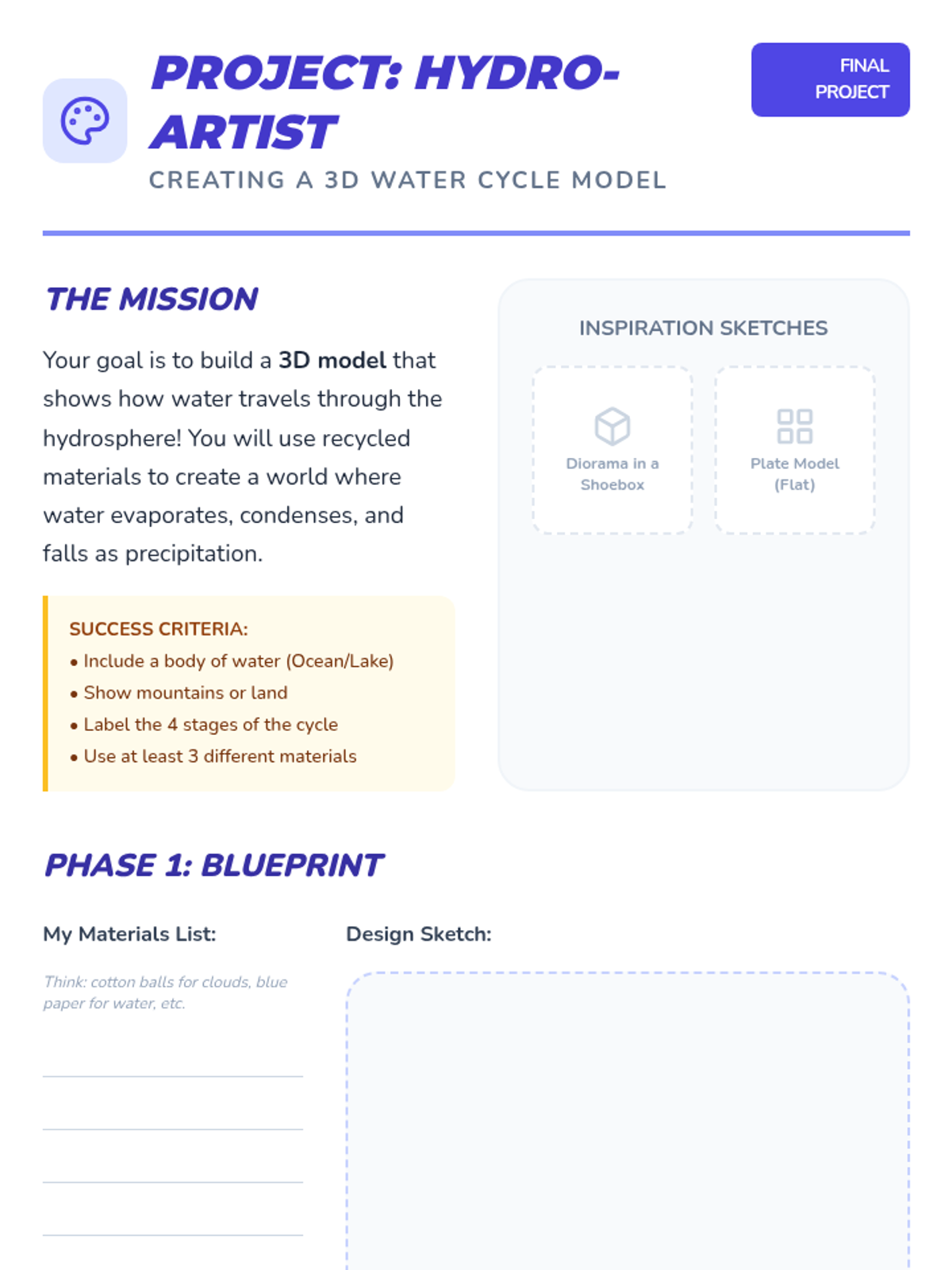
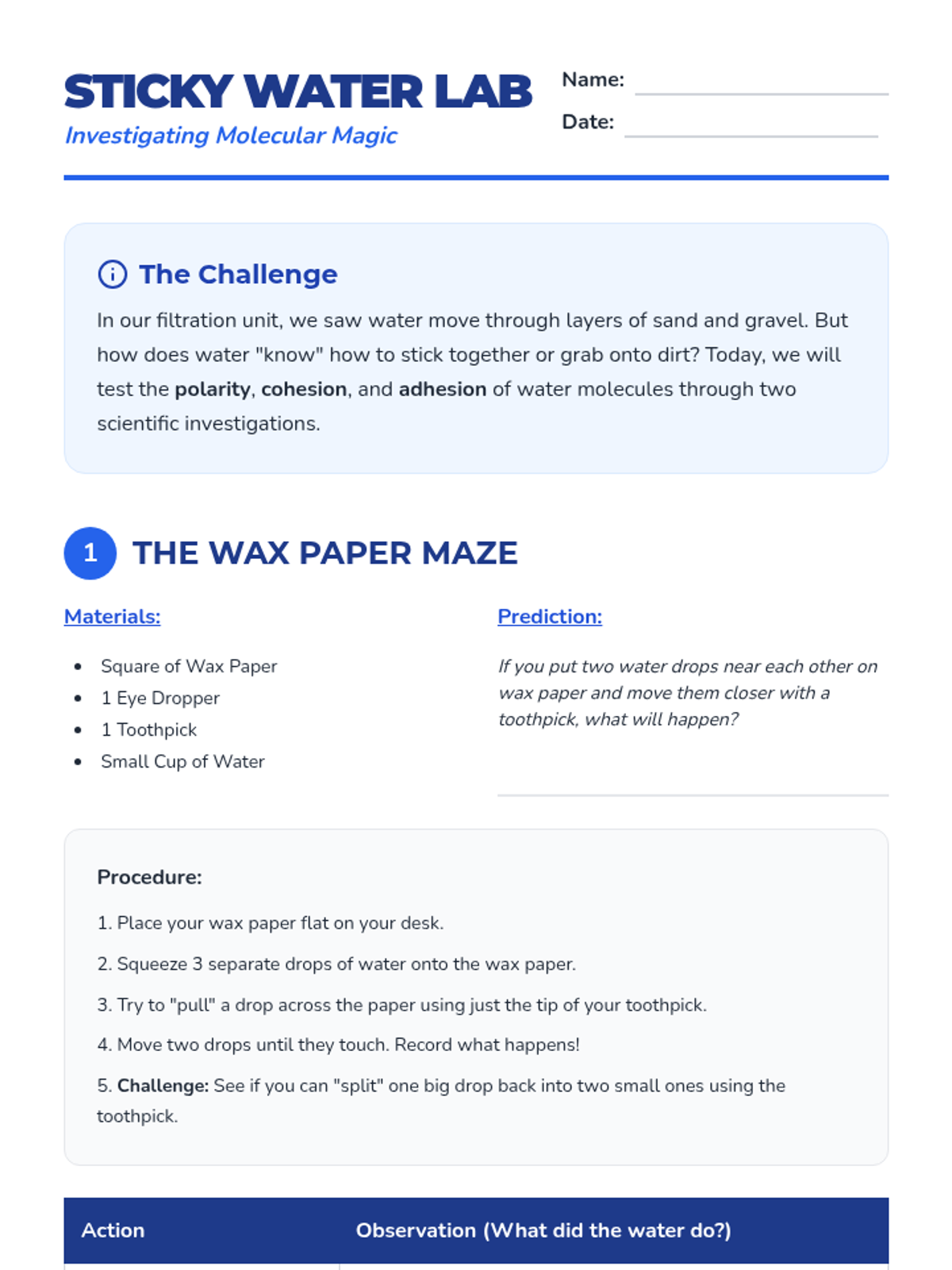
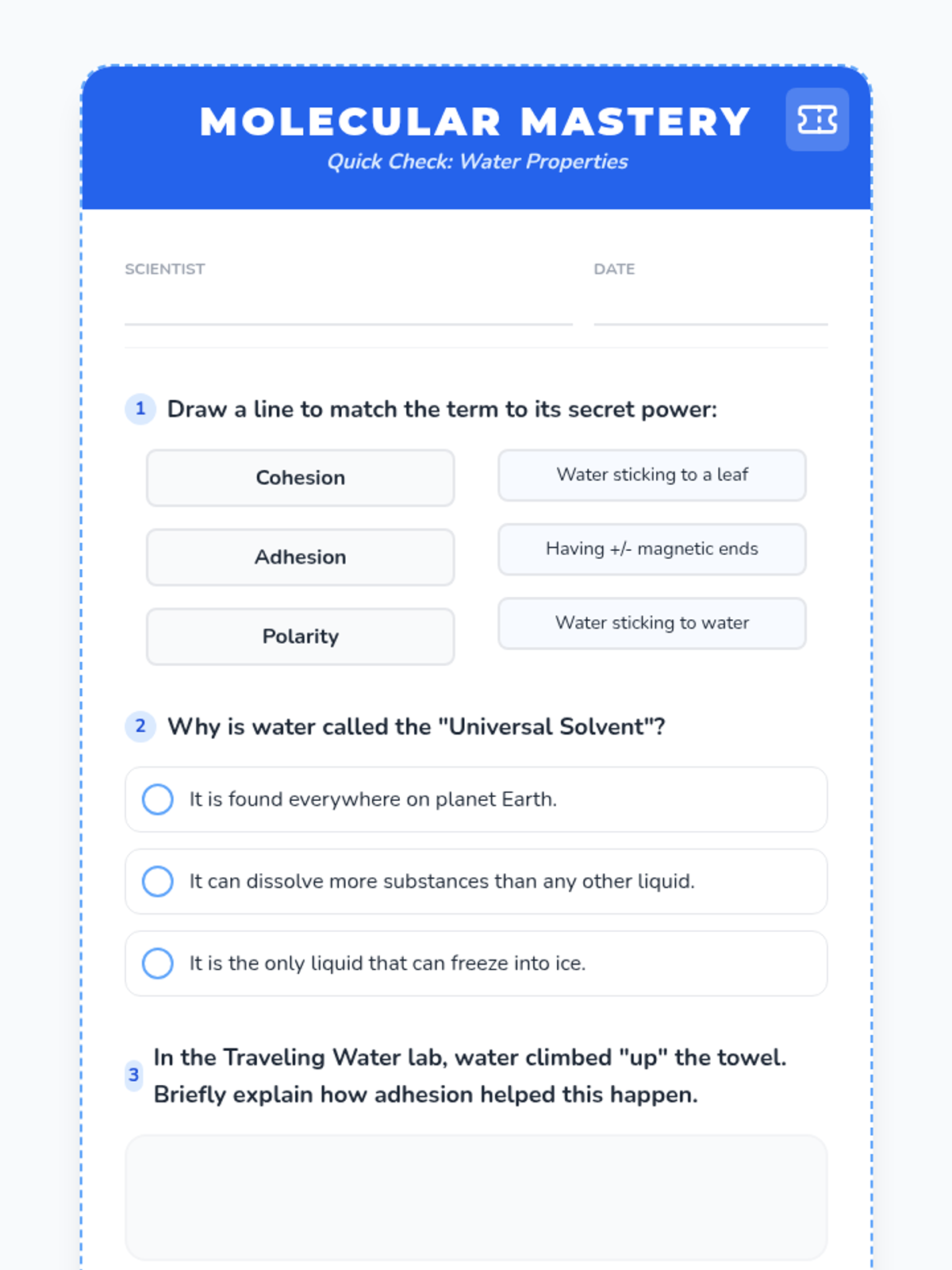
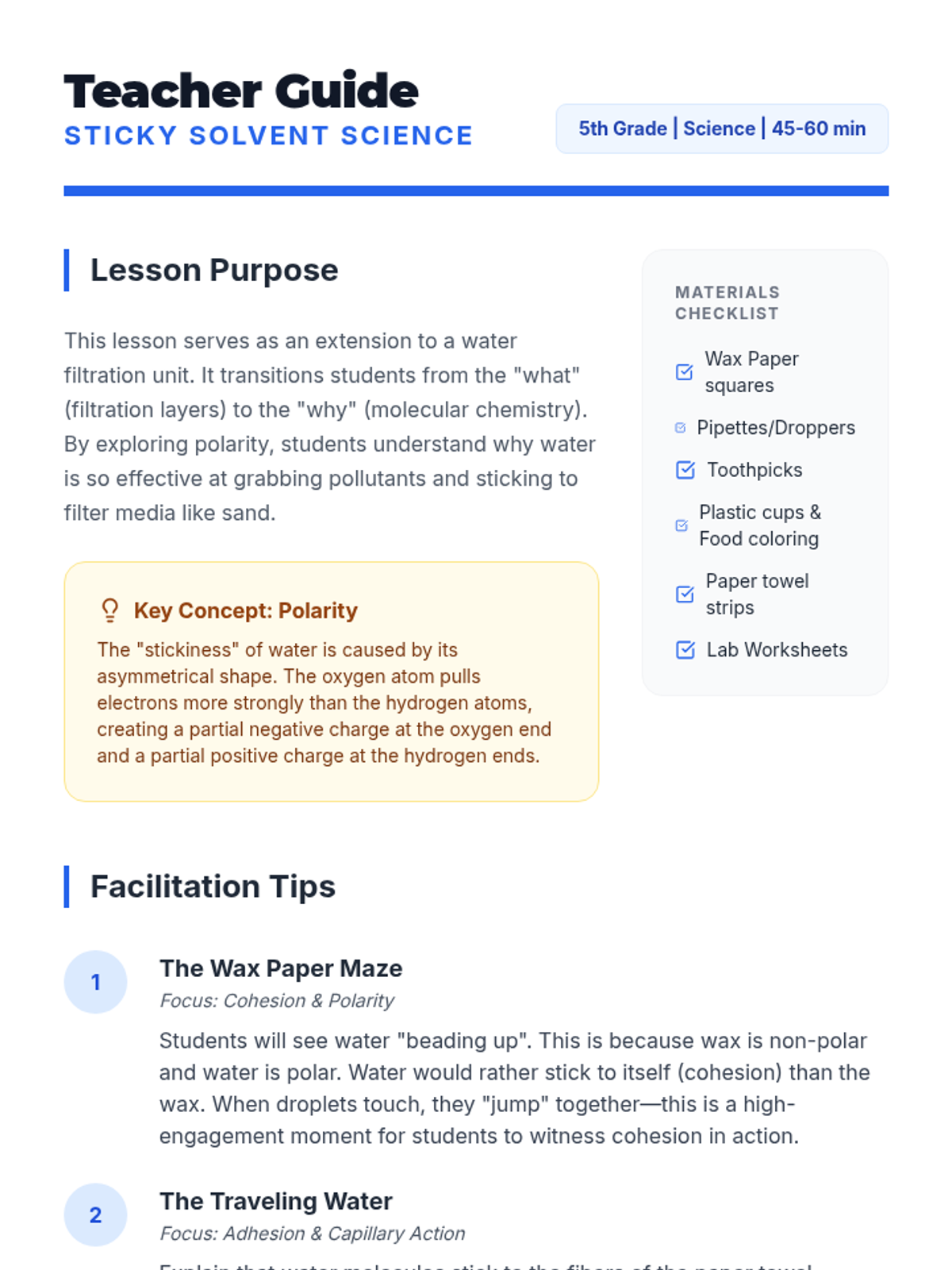
An in-depth exploration of water's unique physical and chemical properties through hands-on experimentation and data analysis, following a water filtration unit.
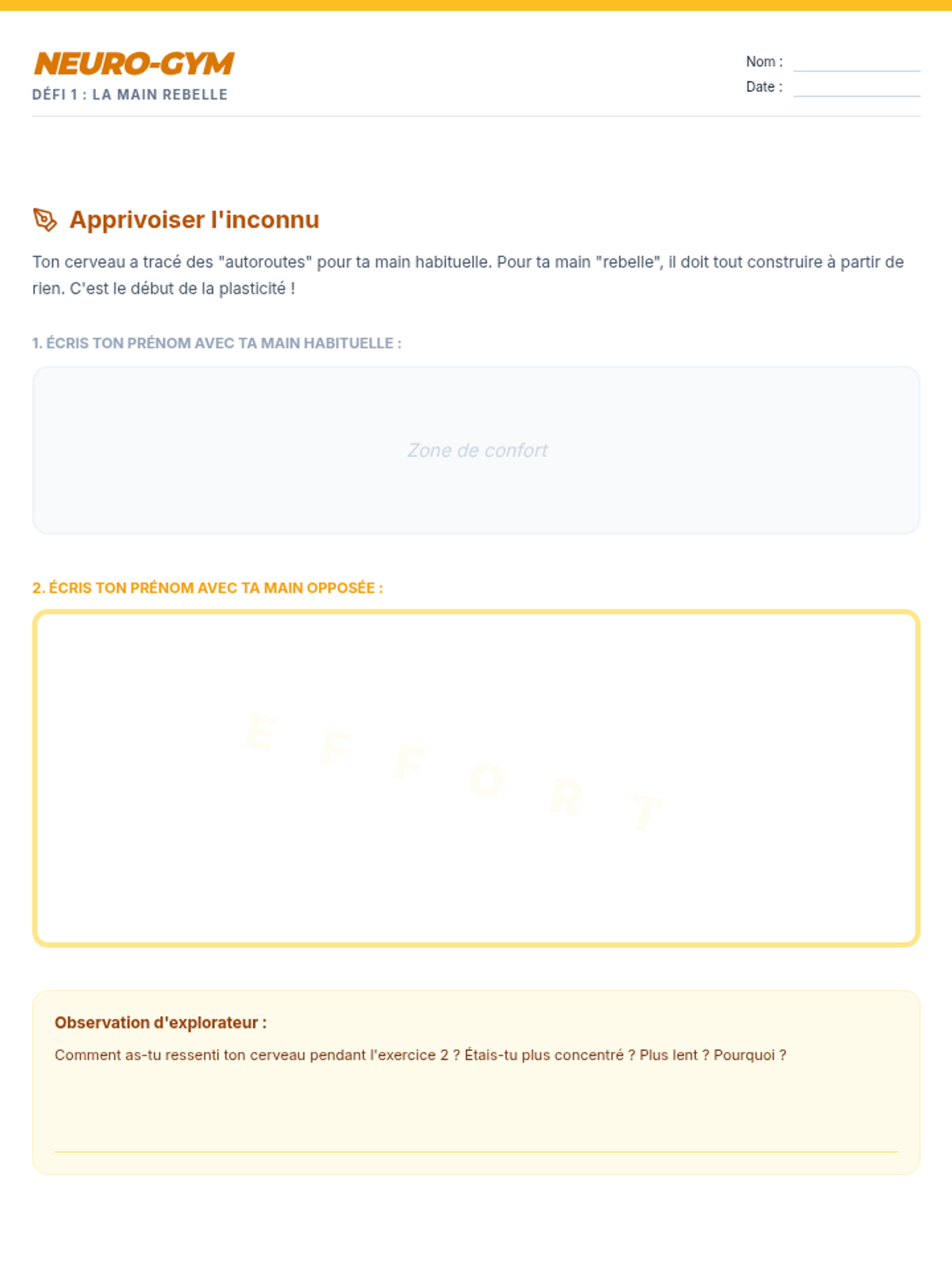
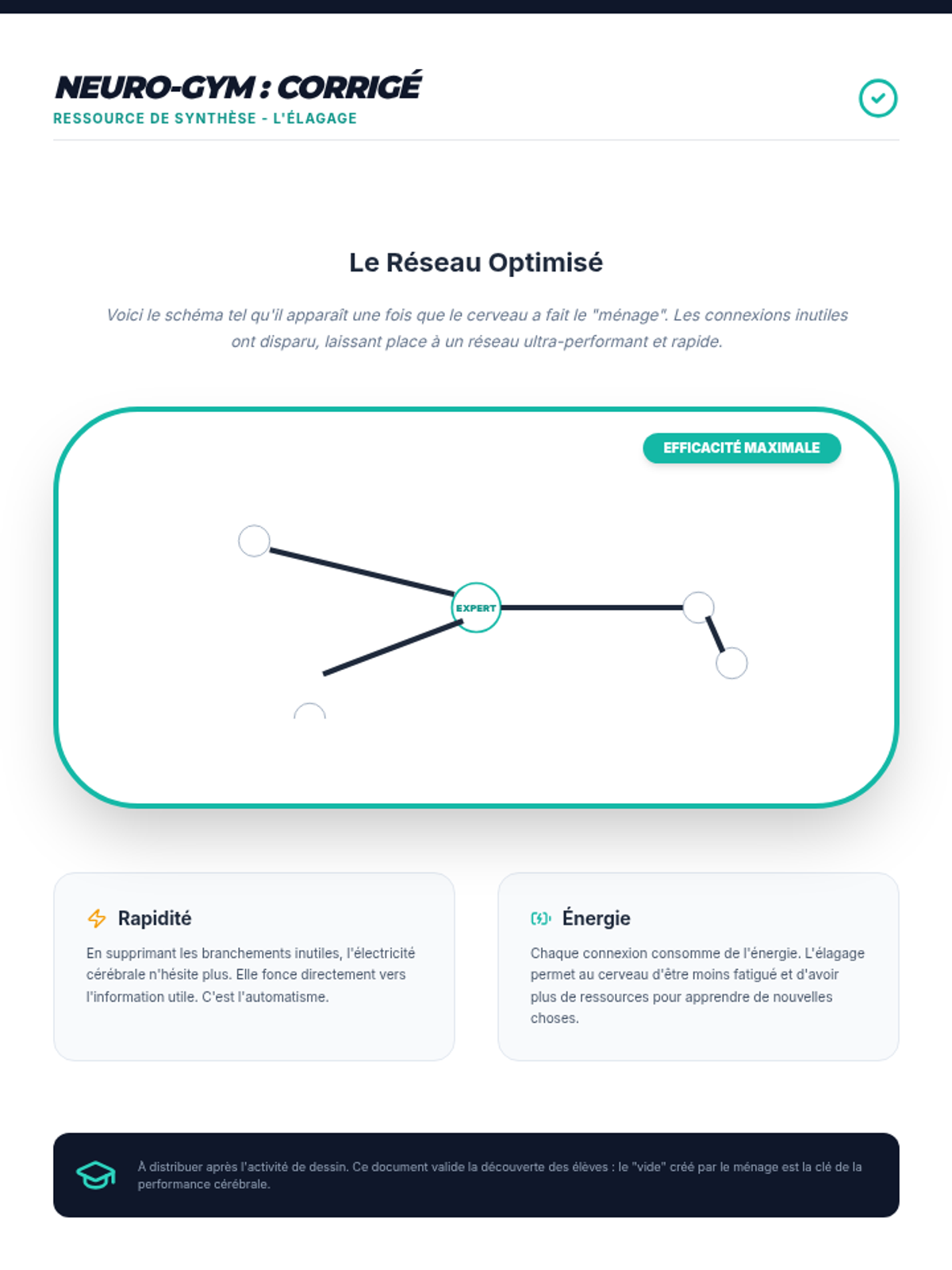
Une séquence immersive pour découvrir les secrets du cerveau humain, sa structure, ses fonctions et son incroyable capacité à apprendre.
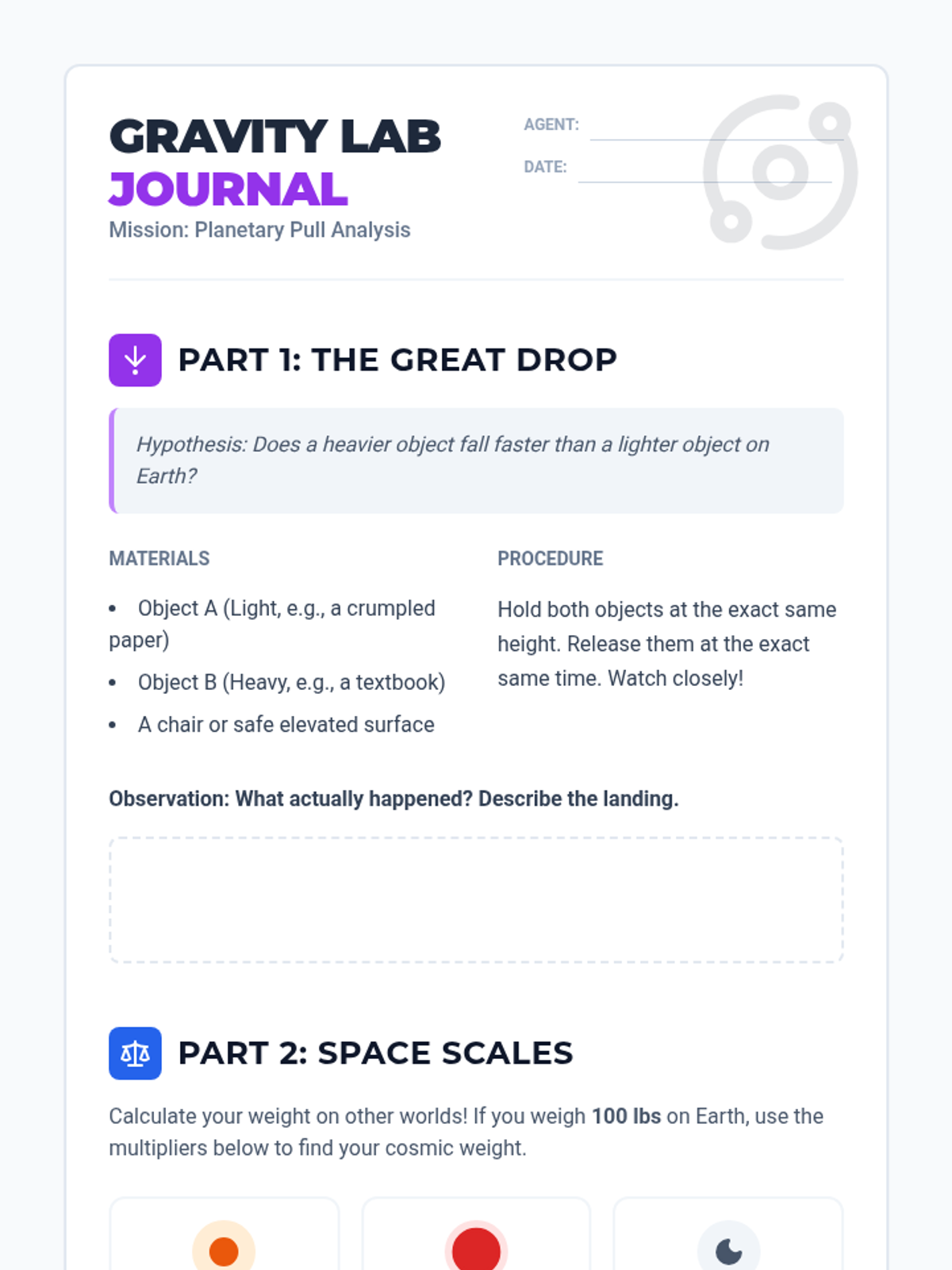
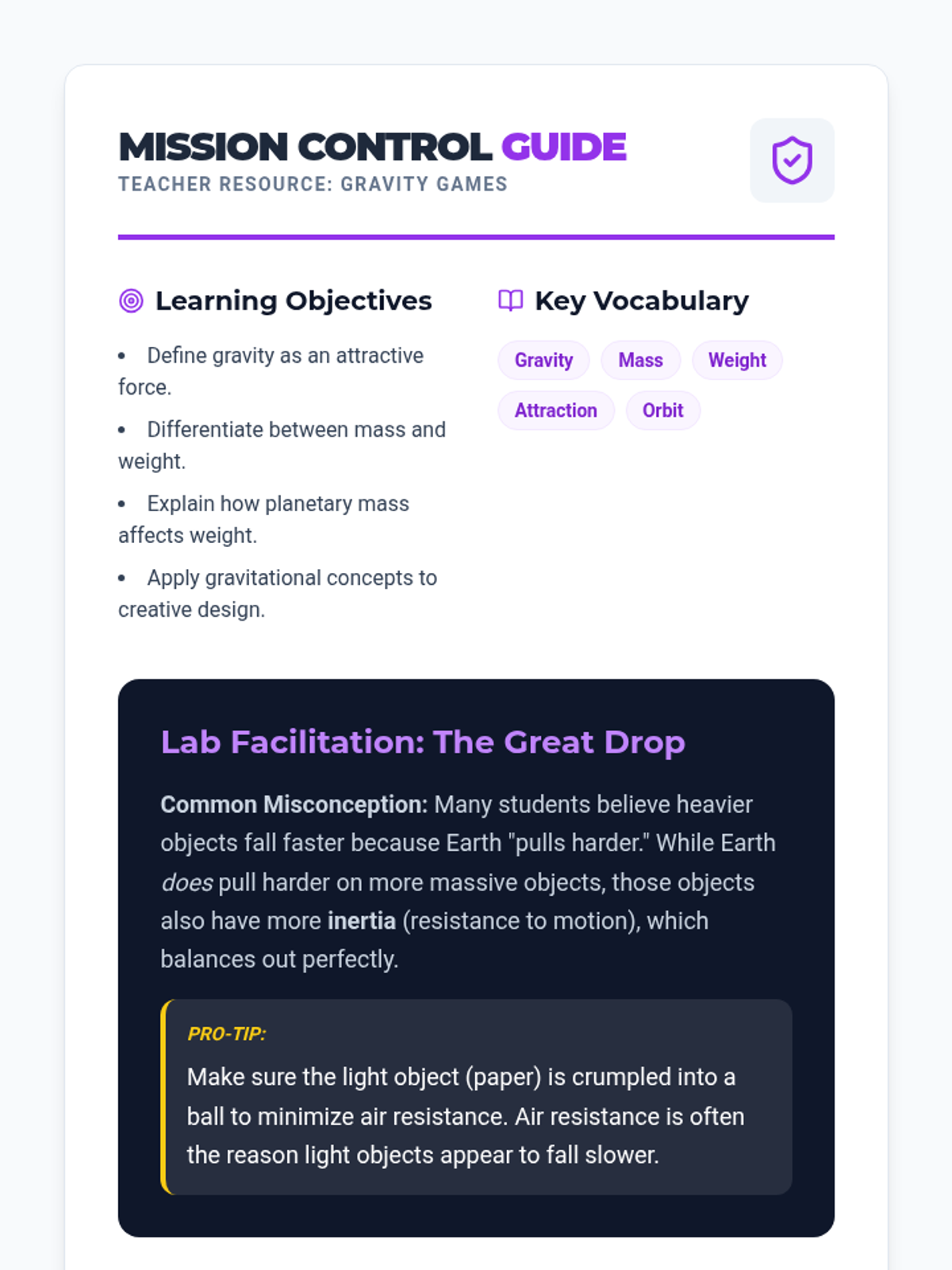
A high-energy exploration of gravity's invisible pull, from dropping everyday objects to calculating weight on distant planets. Students will engage in hands-on observations and creative writing activities to understand how mass and distance govern the universe.
A comprehensive 5-lesson STEM sequence exploring Earth and Space science for grades 1-5, featuring engineering challenges and real-world problem-solving based on Texas TEKS.
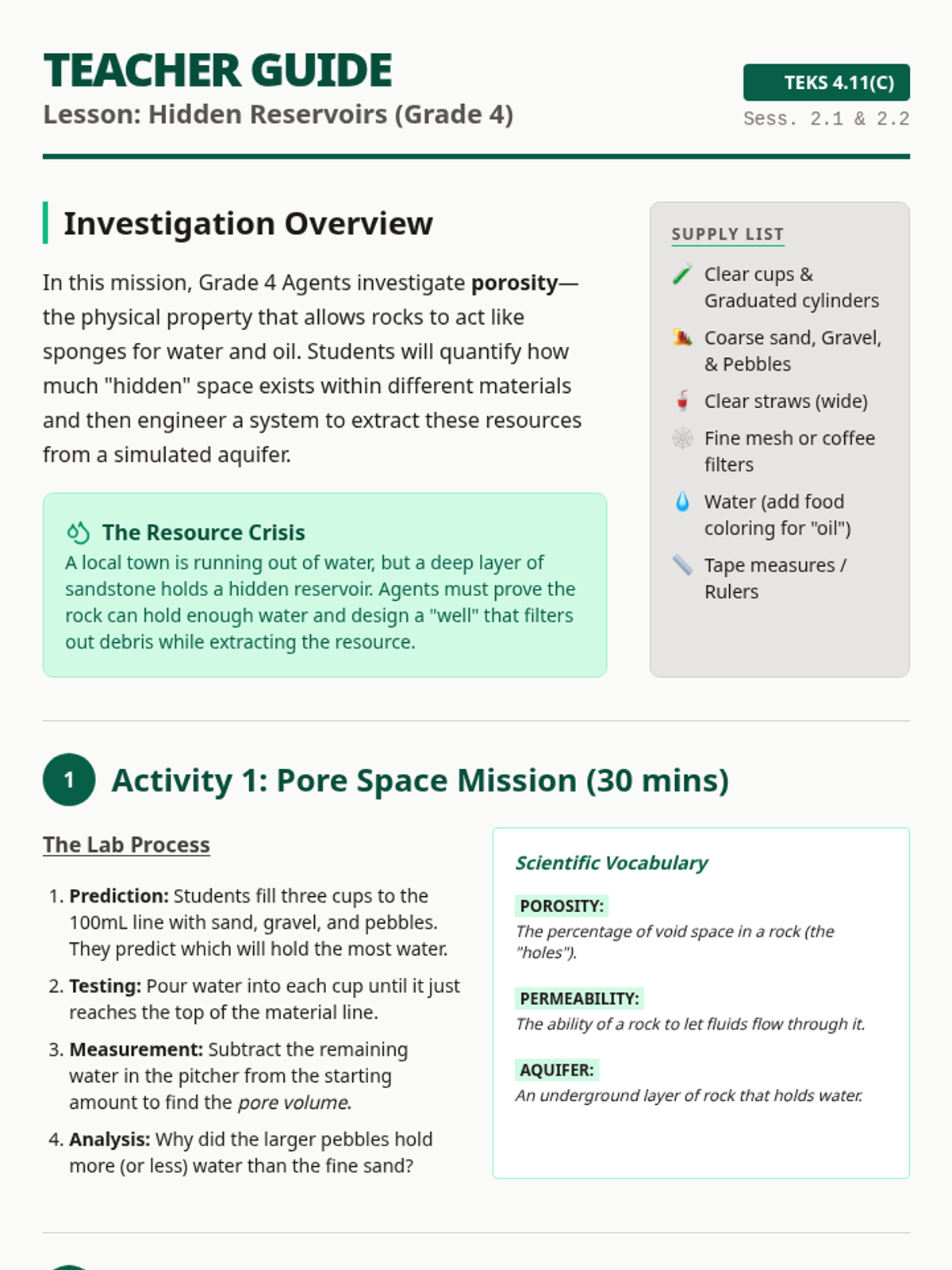
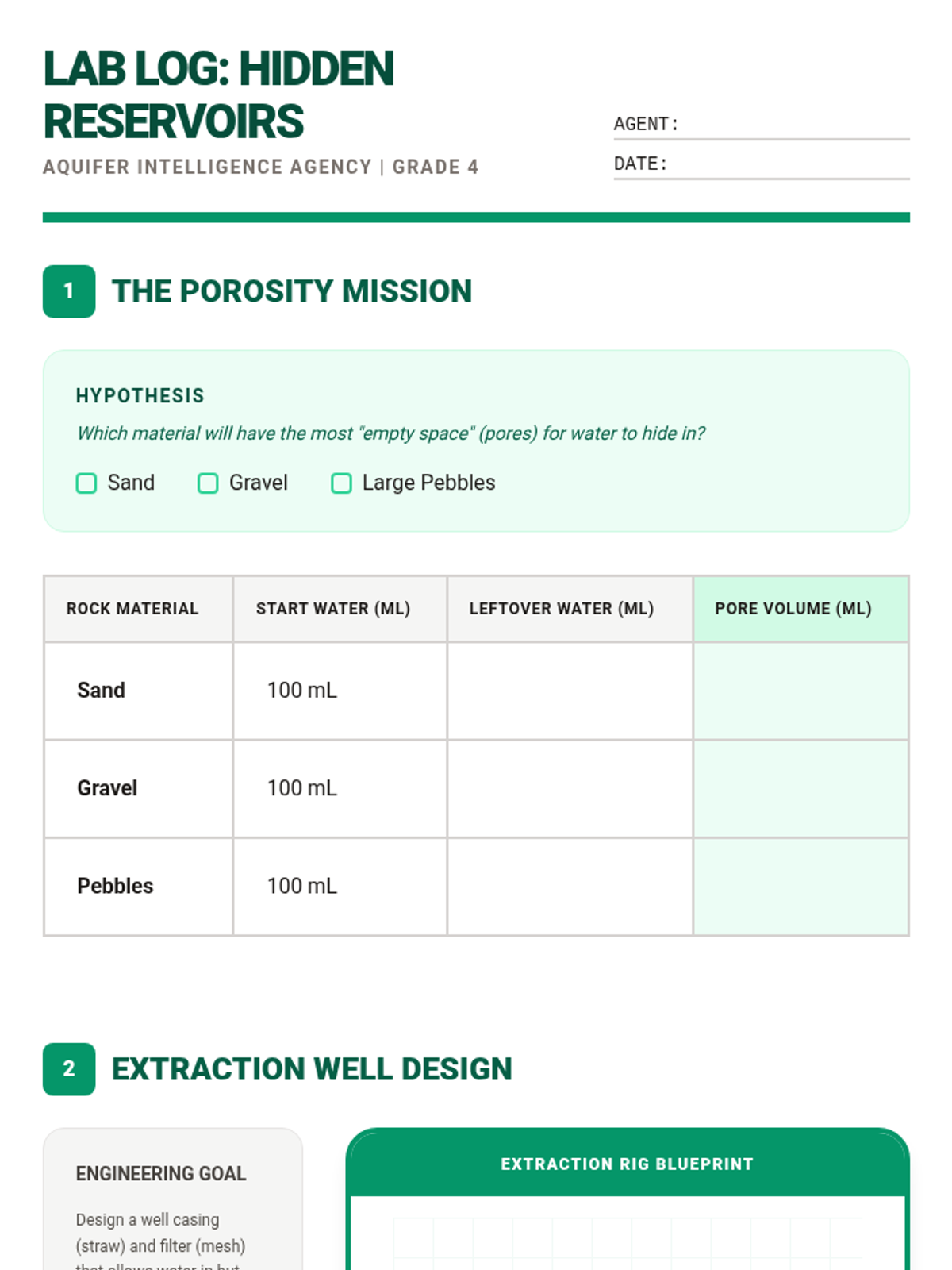
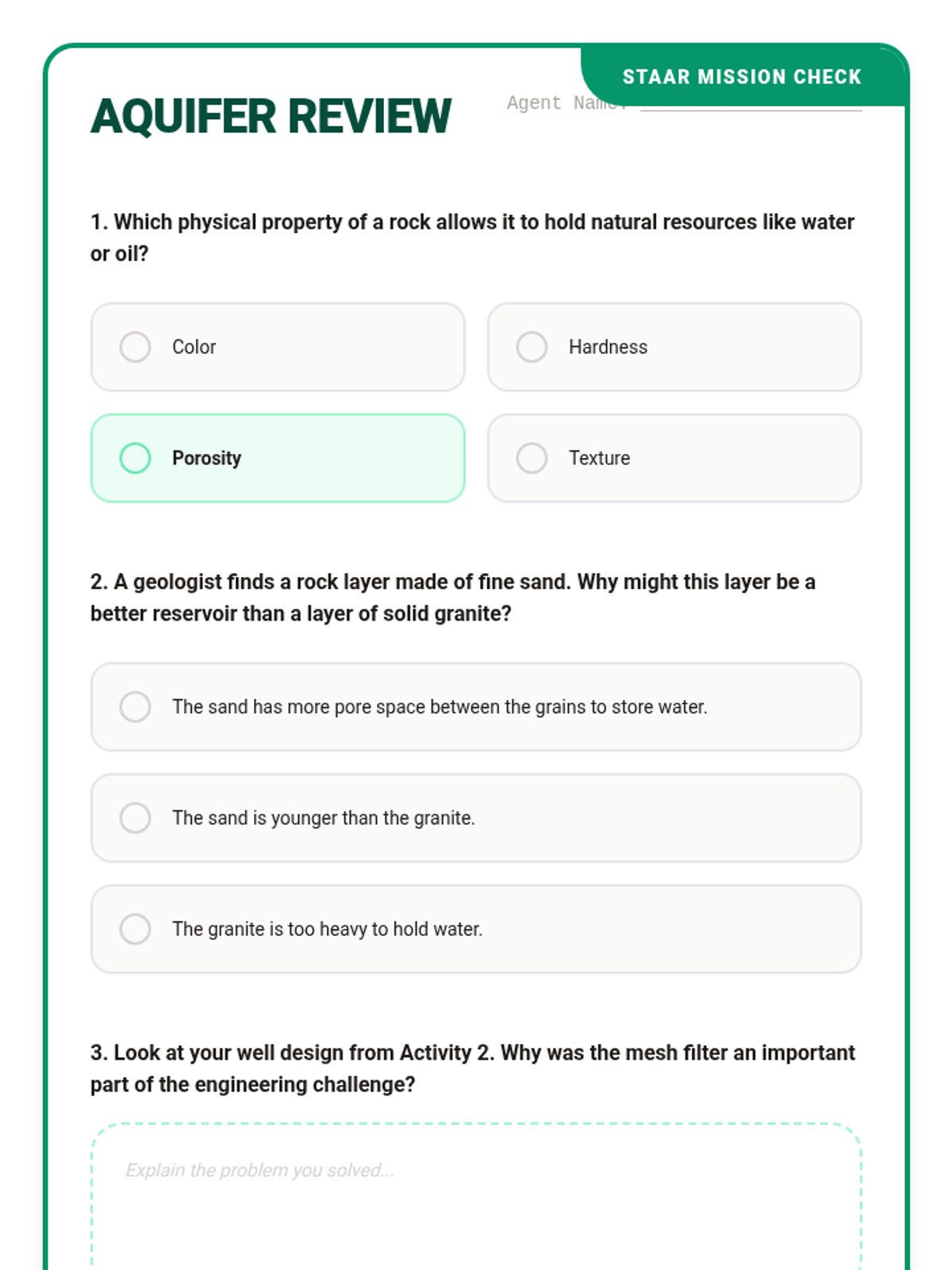
A comprehensive Earth Science STEM unit for Grades 1-5, focusing on rock classification, porosity for resource storage, and the formation of sedimentary rocks and fossil fuels. Students act as Geology Agents to solve real-world engineering challenges while mastering Texas TEKS standards.
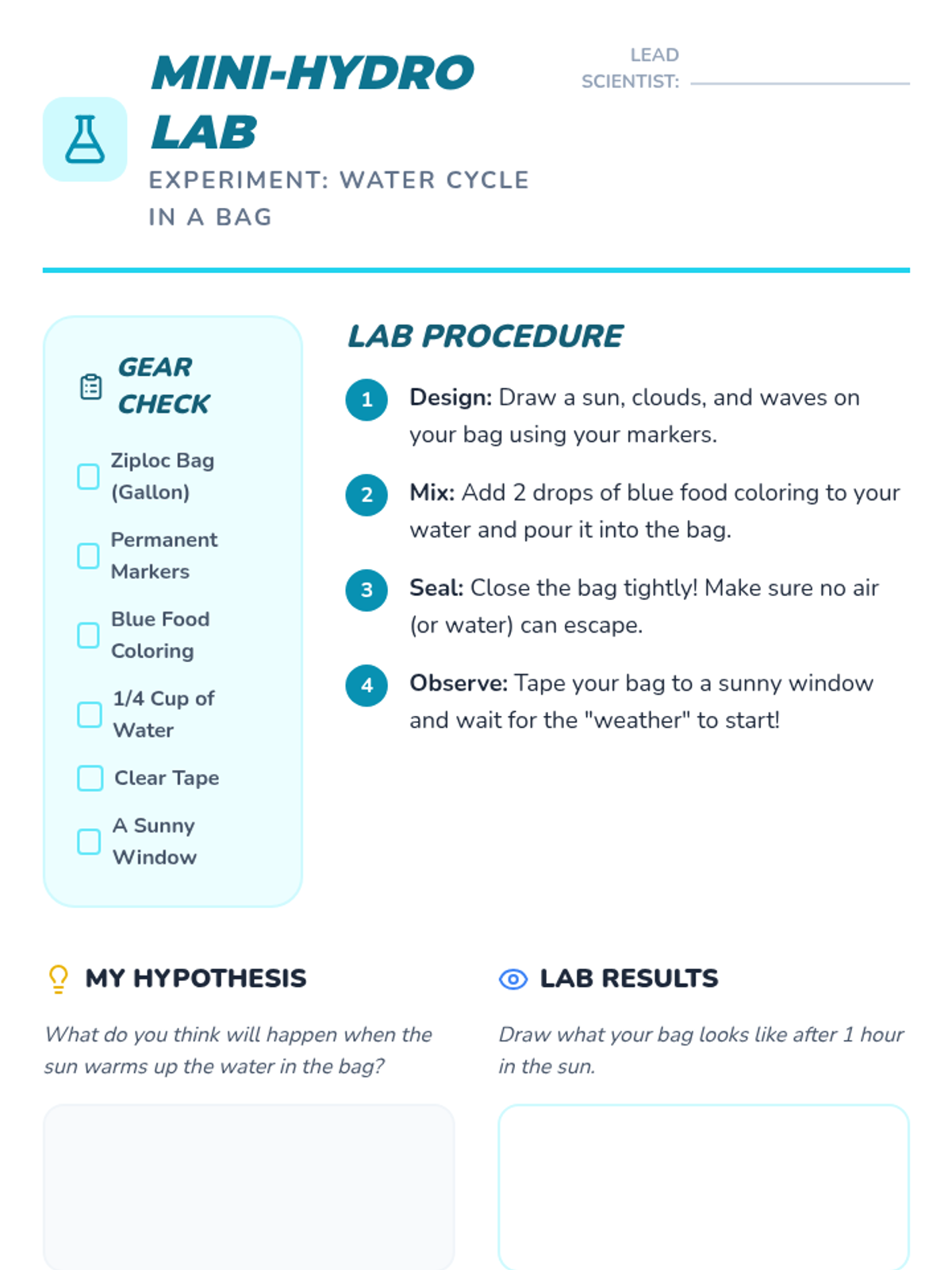
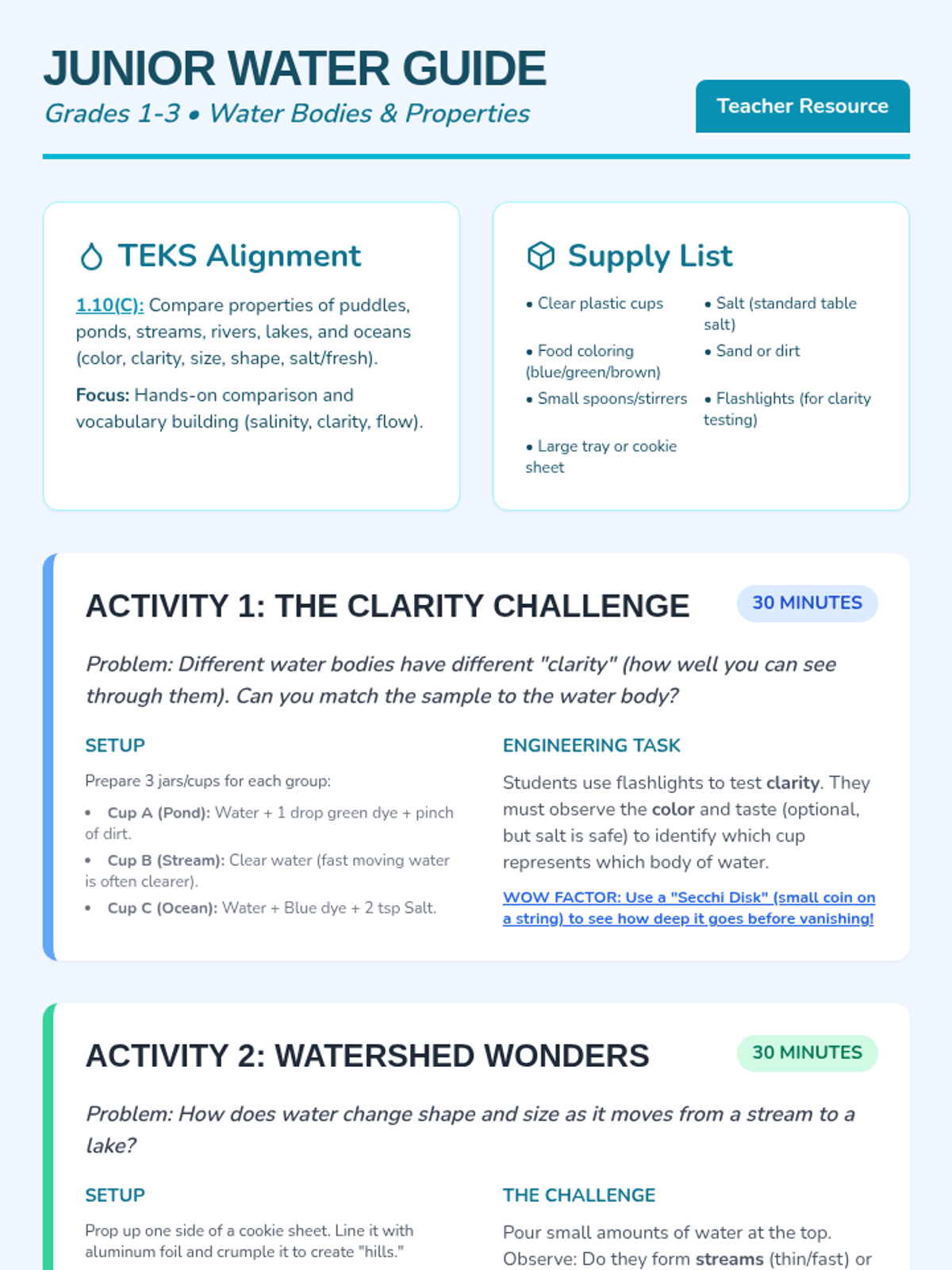
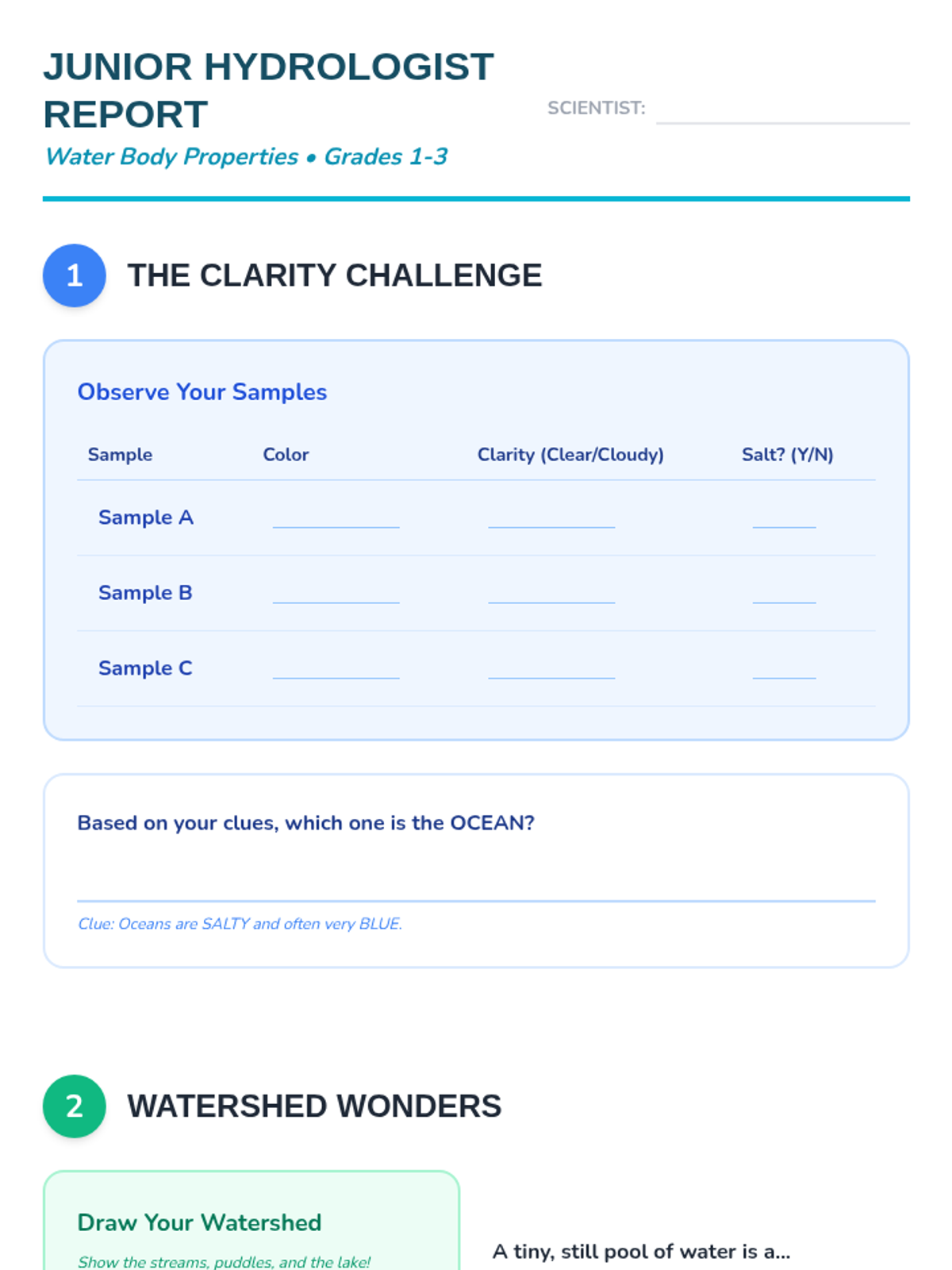
A hydro-focused STEM sequence exploring the properties of water bodies and the mechanics of the water cycle. Students act as 'Water Works' engineers to model everything from backyard puddles to the vast ocean, investigating how the Sun powers Earth's most vital systems.
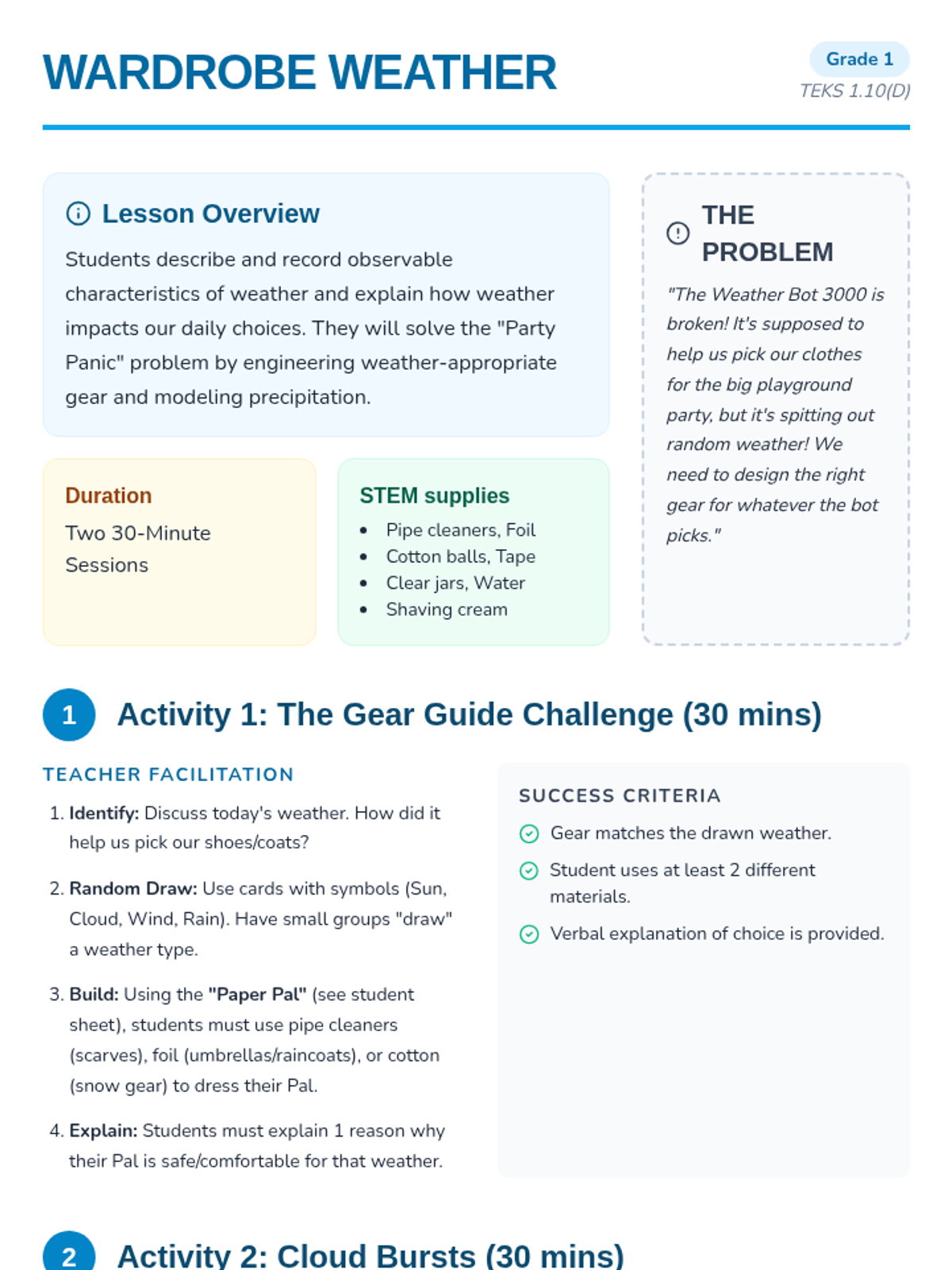
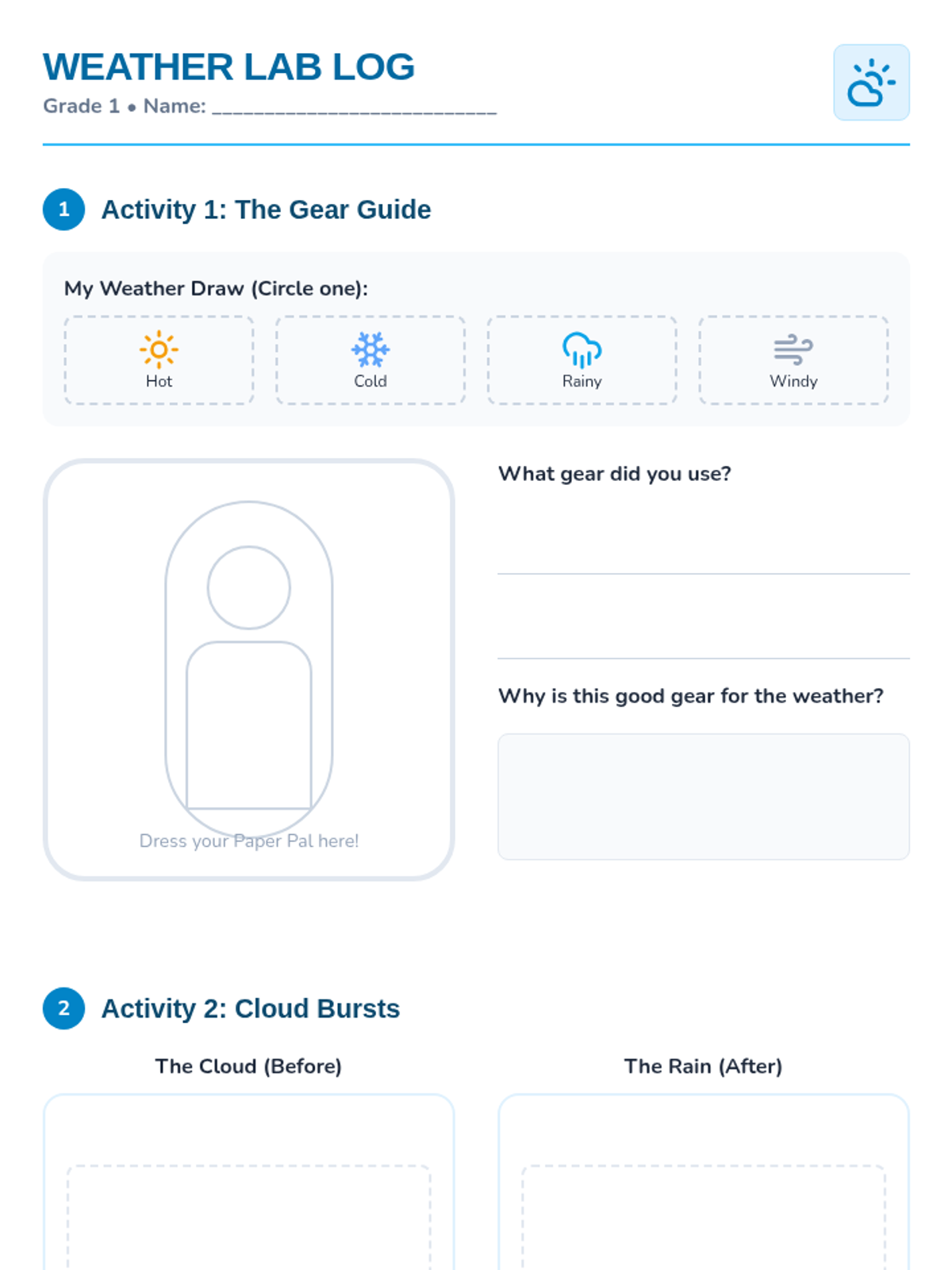
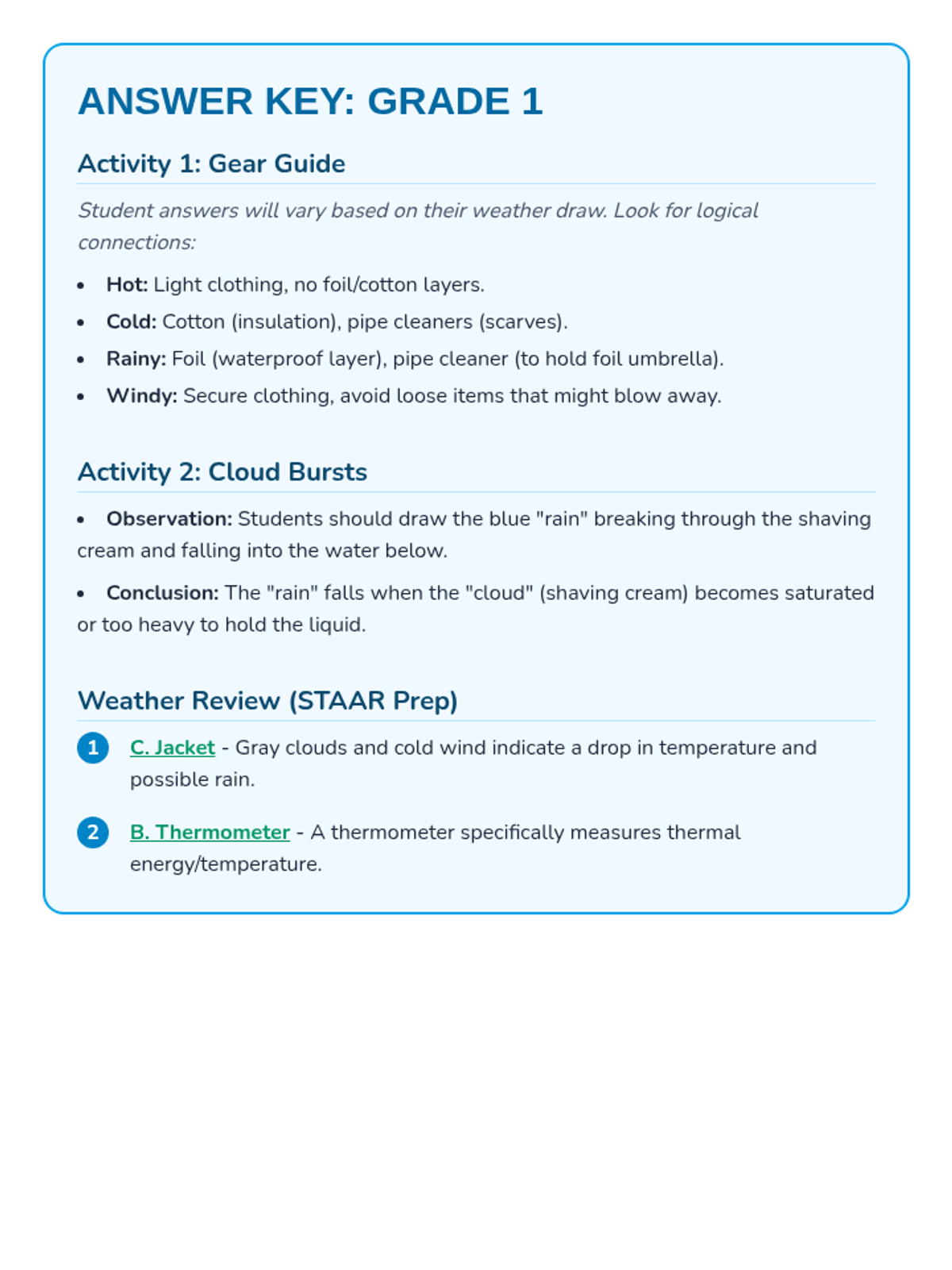
A comprehensive STEM and engineering unit focused on weather and climate TEKS for 1st through 5th grade. Each grade features two 30-minute hands-on activities, engineering challenges, and STAAR-aligned review questions designed to solve real-world weather problems.
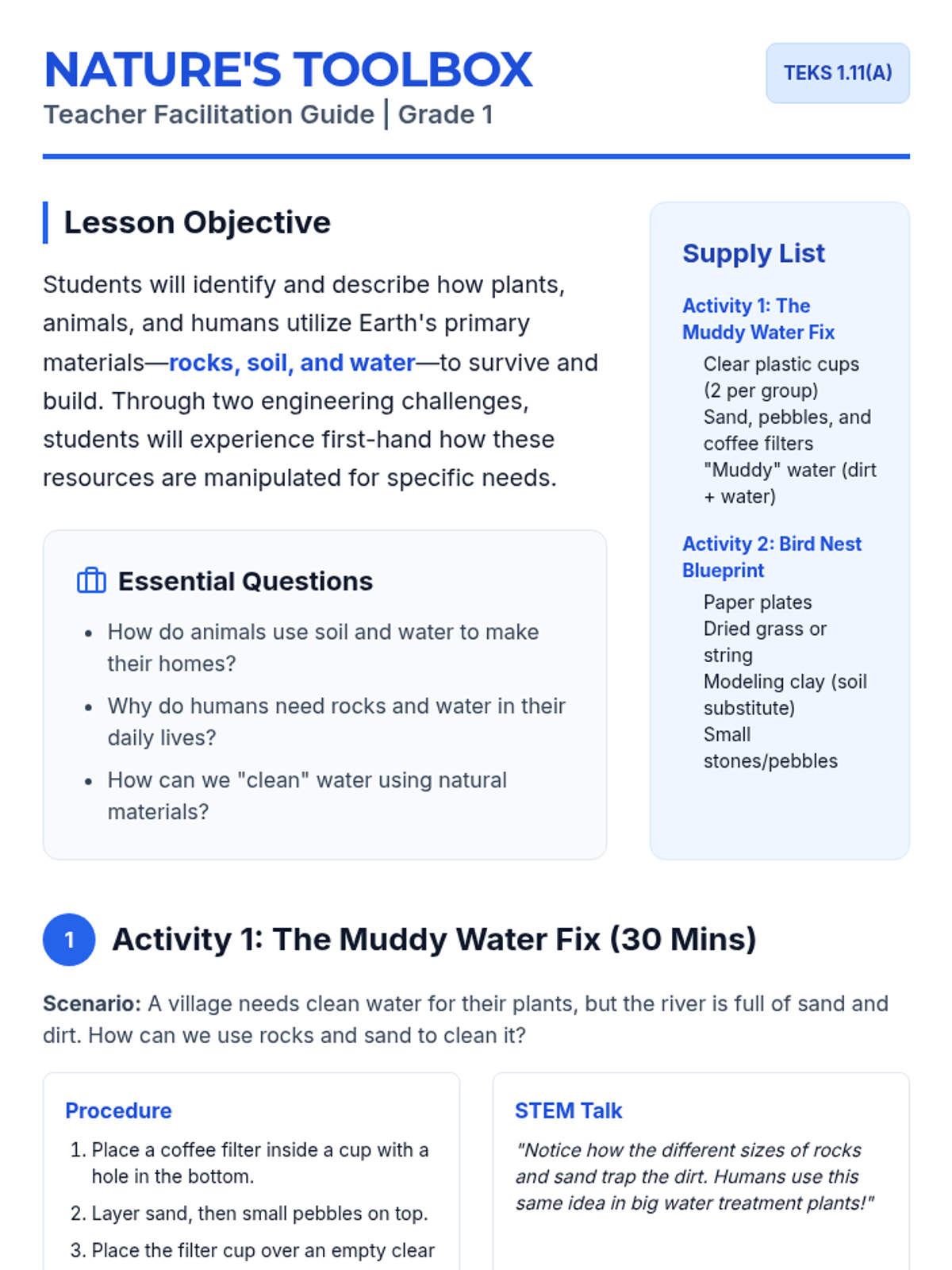
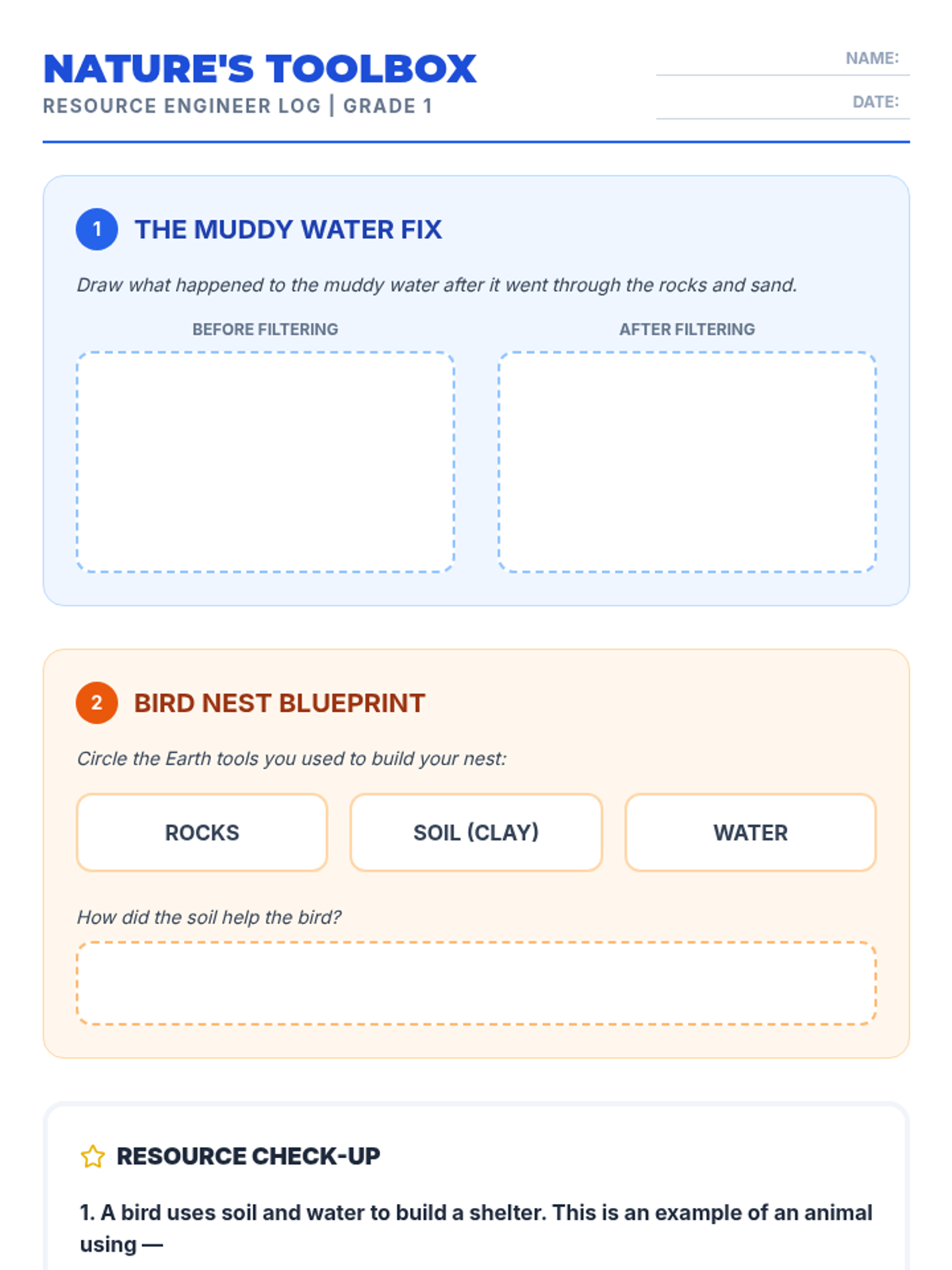
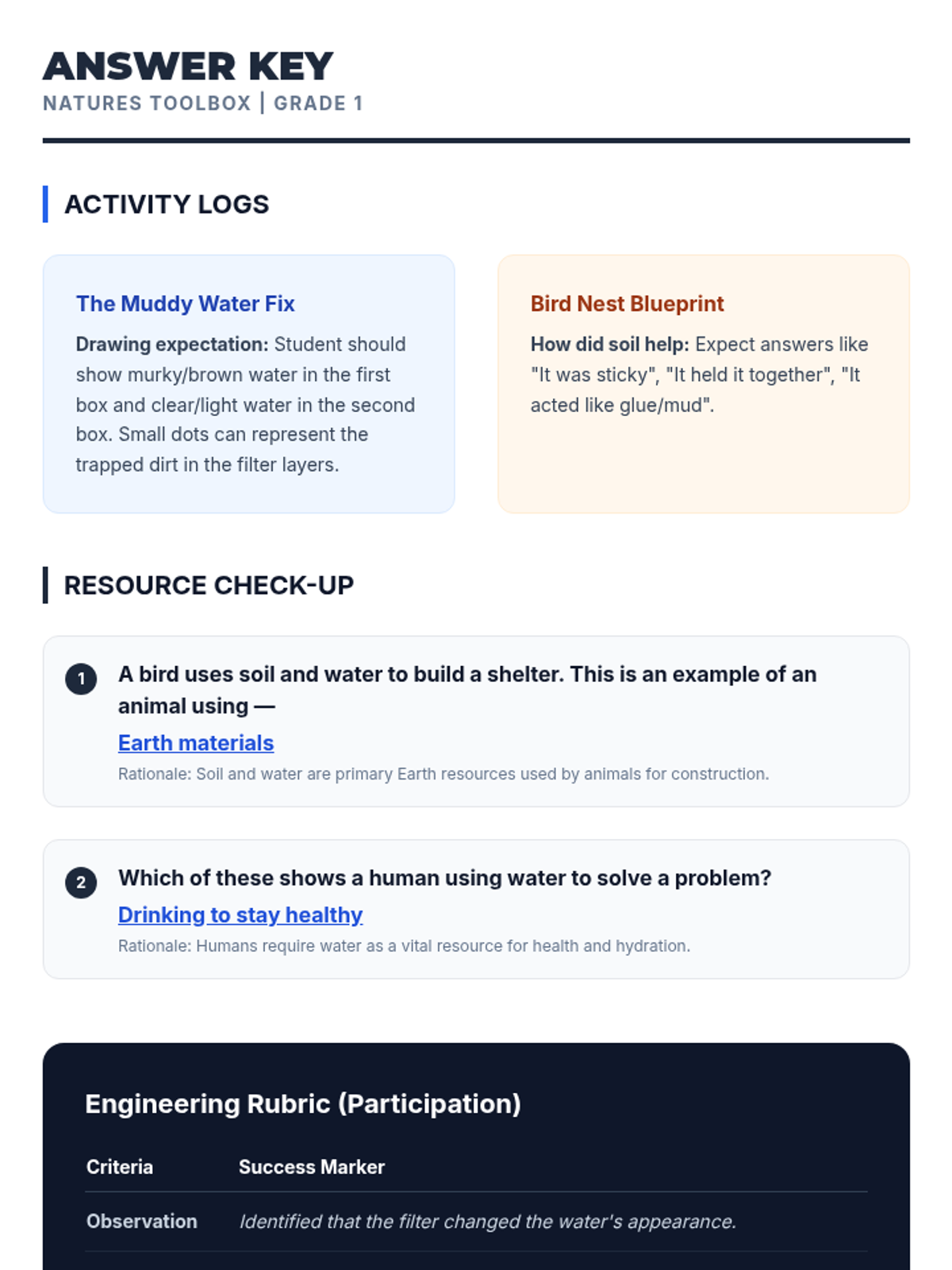
A comprehensive STEM sequence for grades 1-5 exploring Earth's resources, from basic uses and identification to renewable energy and geological processes. Each lesson includes hands-on engineering challenges, visual slides, and teacher support materials aligned with Texas TEKS.
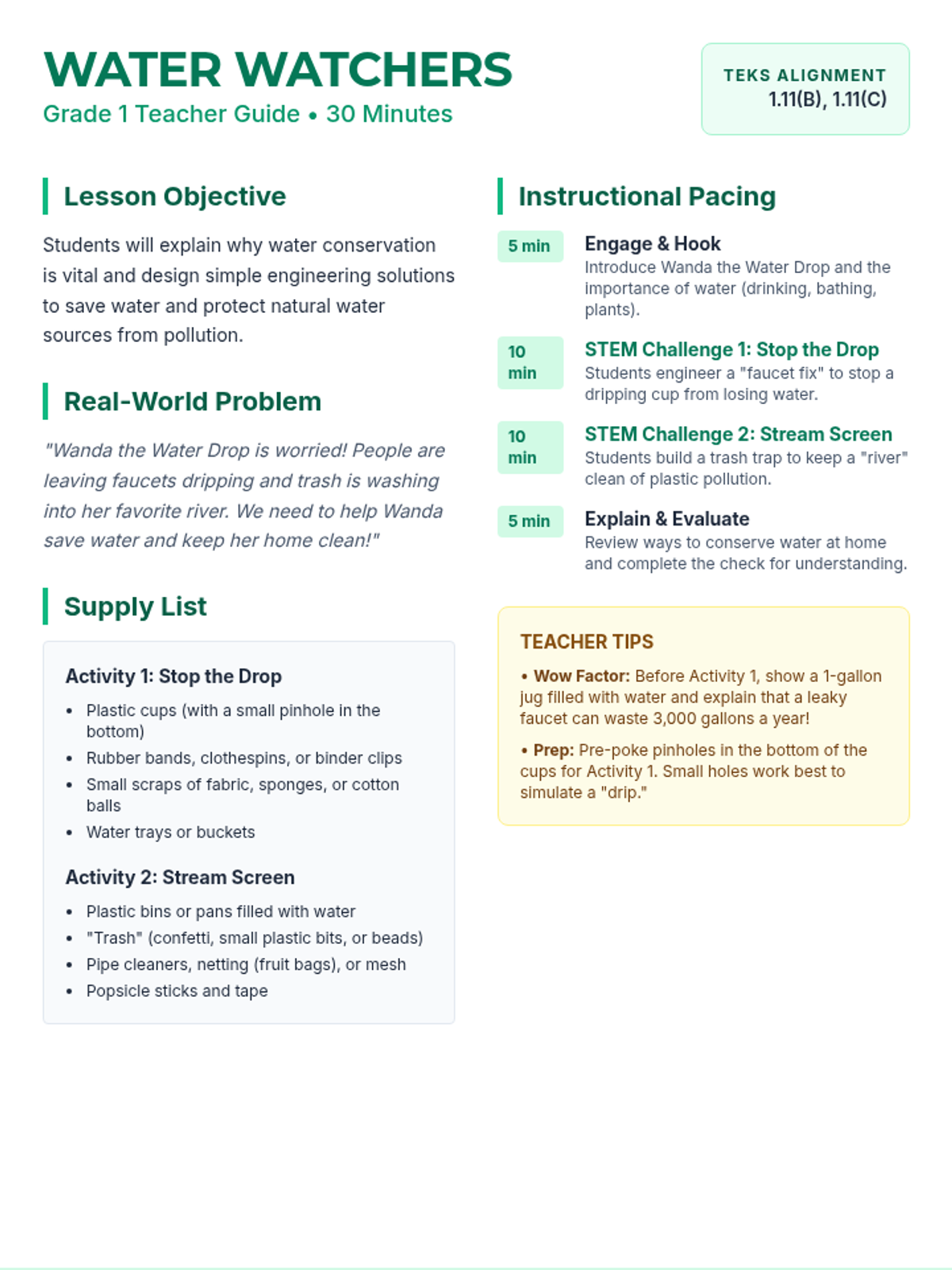
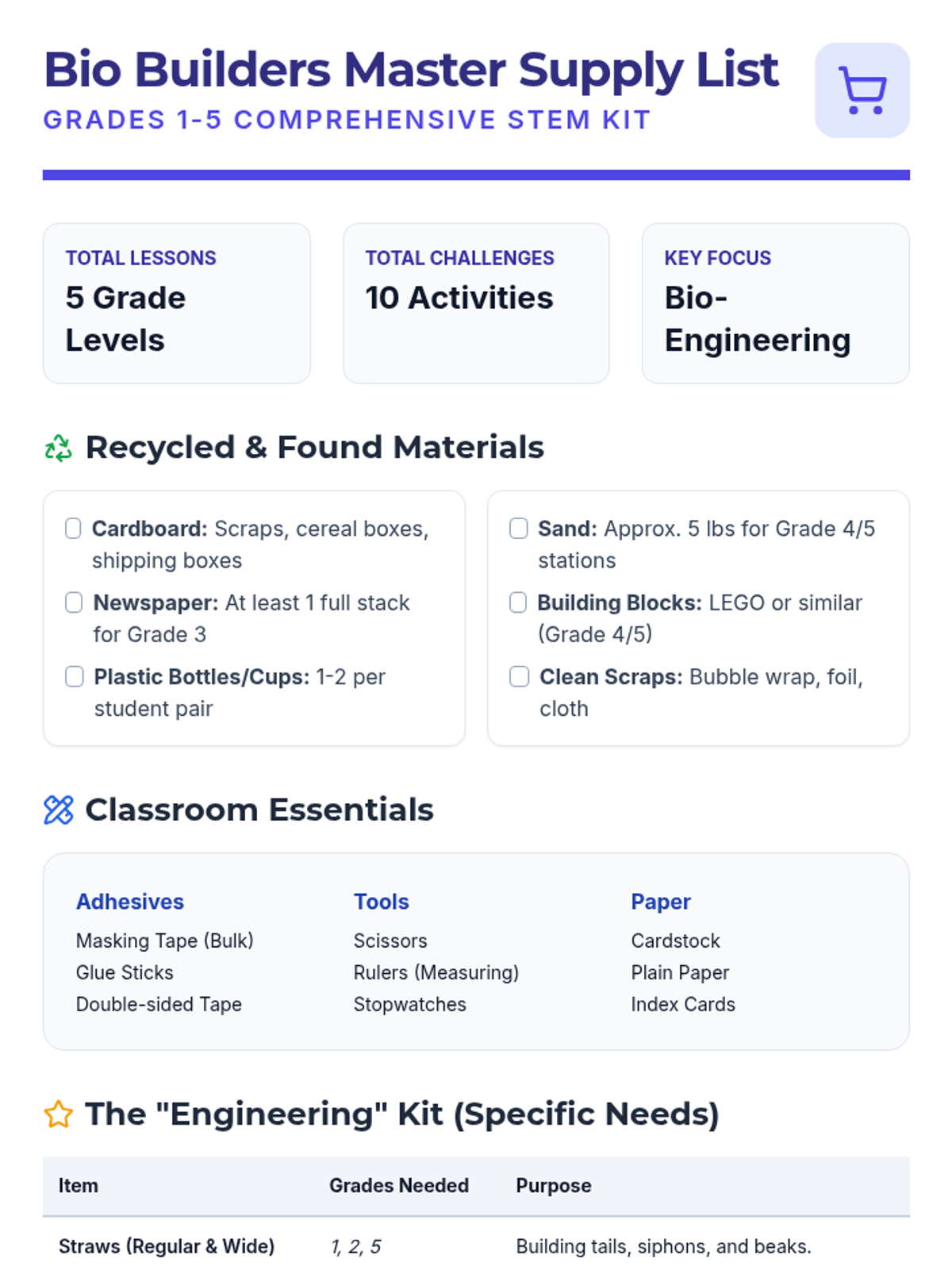
A comprehensive STEM and engineering curriculum for Grades 1-5 focused on conservation, human impact, and sustainable energy solutions. Each grade level includes two hands-on engineering challenges, a visual slide deck, and detailed teacher resources aligned to Texas TEKS standards.
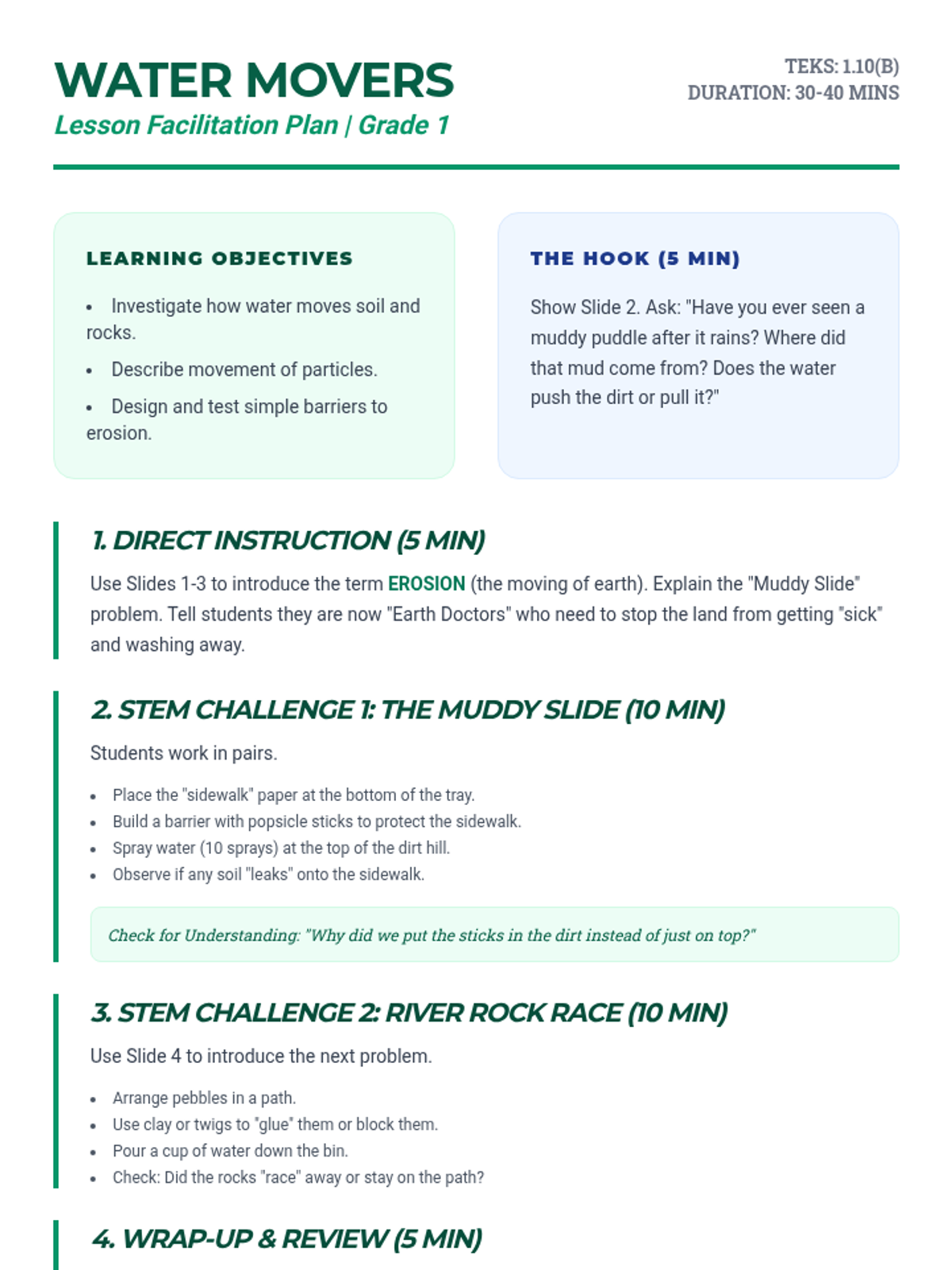
A comprehensive STEM curriculum for grades 1-5 exploring Earth's changes. Each grade level features two hands-on engineering challenges aligned with Texas Essential Knowledge and Skills (TEKS), ranging from water erosion to landform formation. Students solve real-world problems like protecting homes from landslides and designing sand dune barriers.
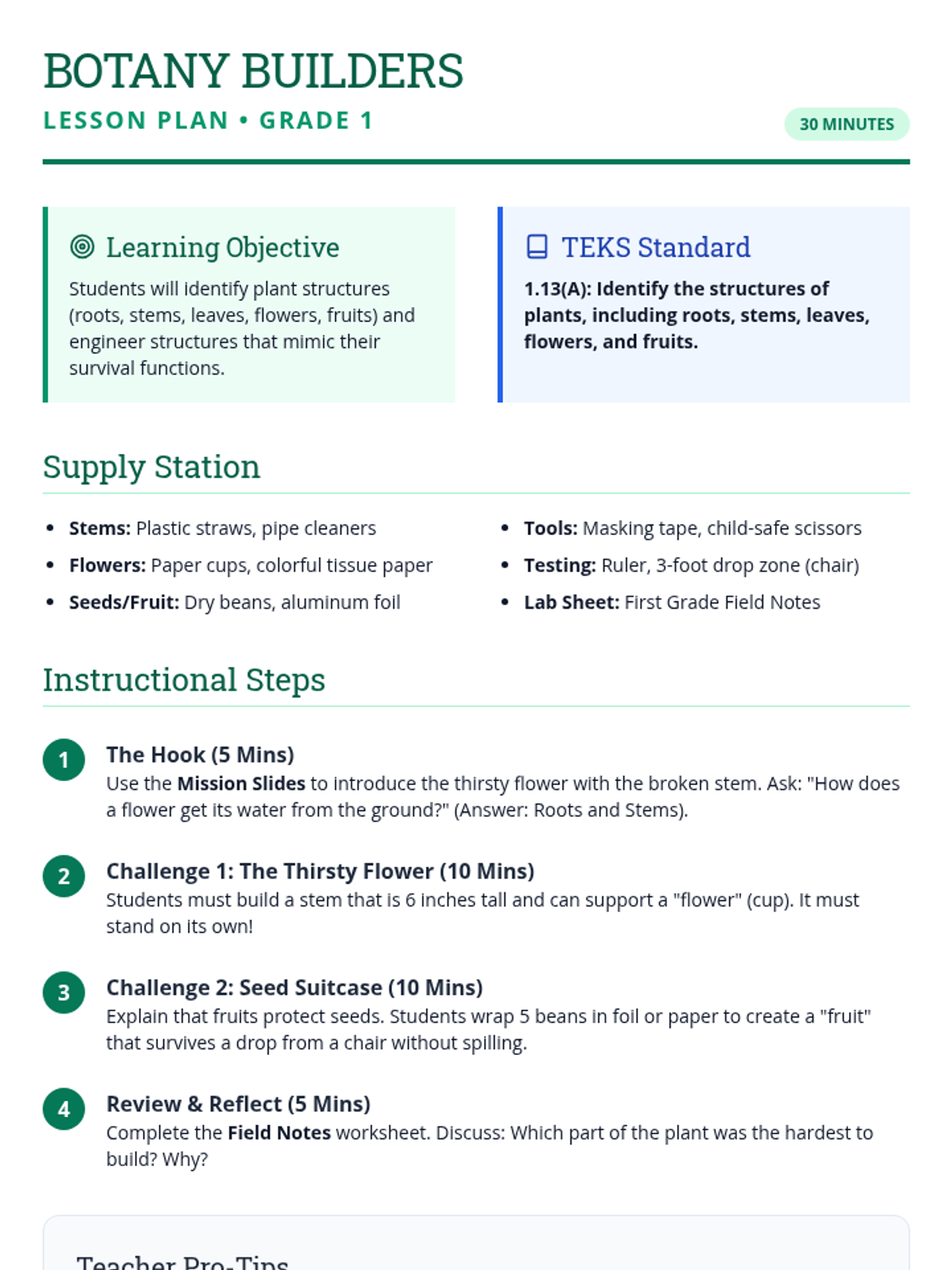
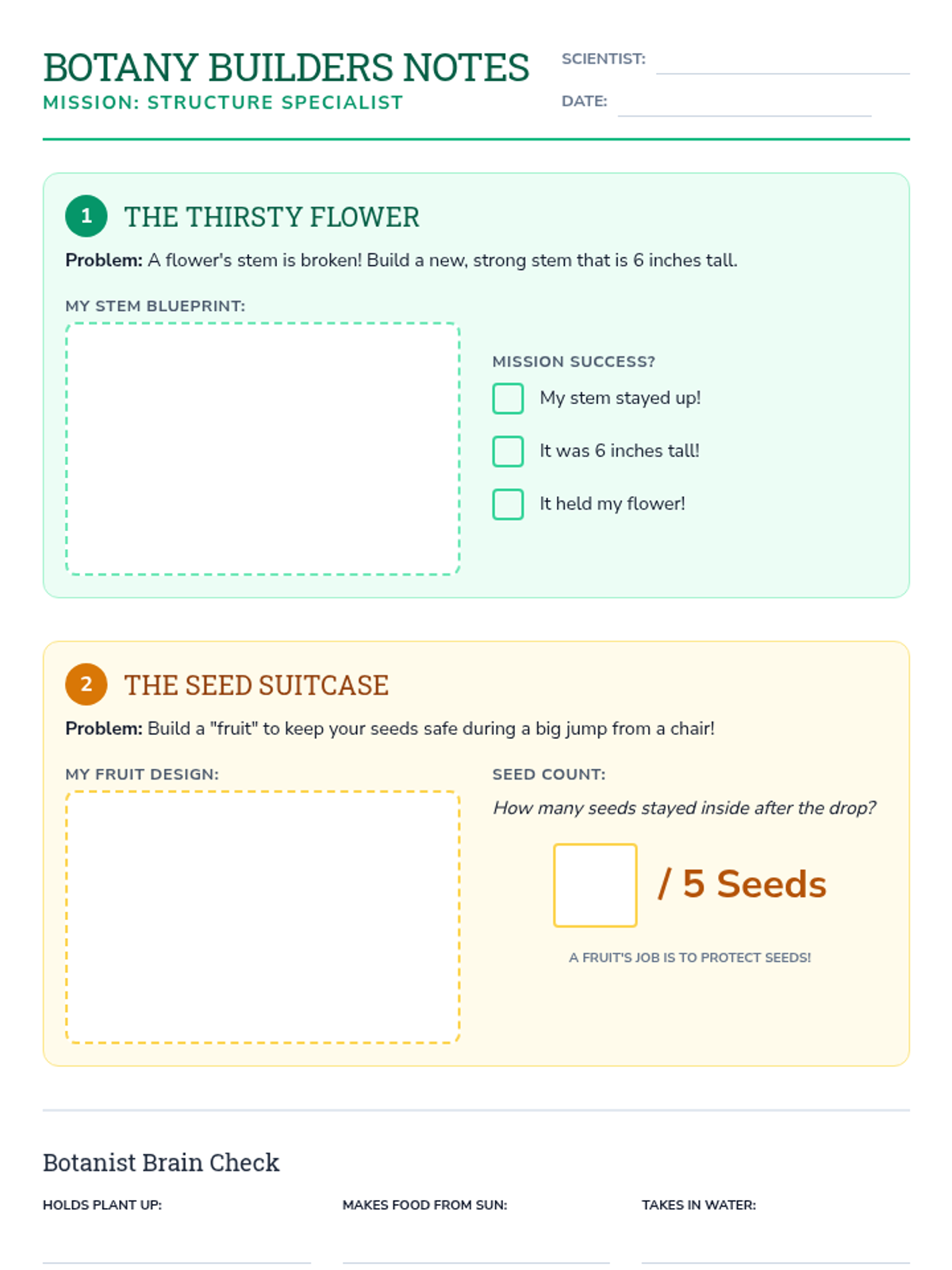
A comprehensive STEM and engineering curriculum for Grades 1-5 focused on plant structures and survival. Students engage in hands-on challenges like building root anchors, waxy leaf shields, and seed dispersal devices to solve real-world botanical problems.
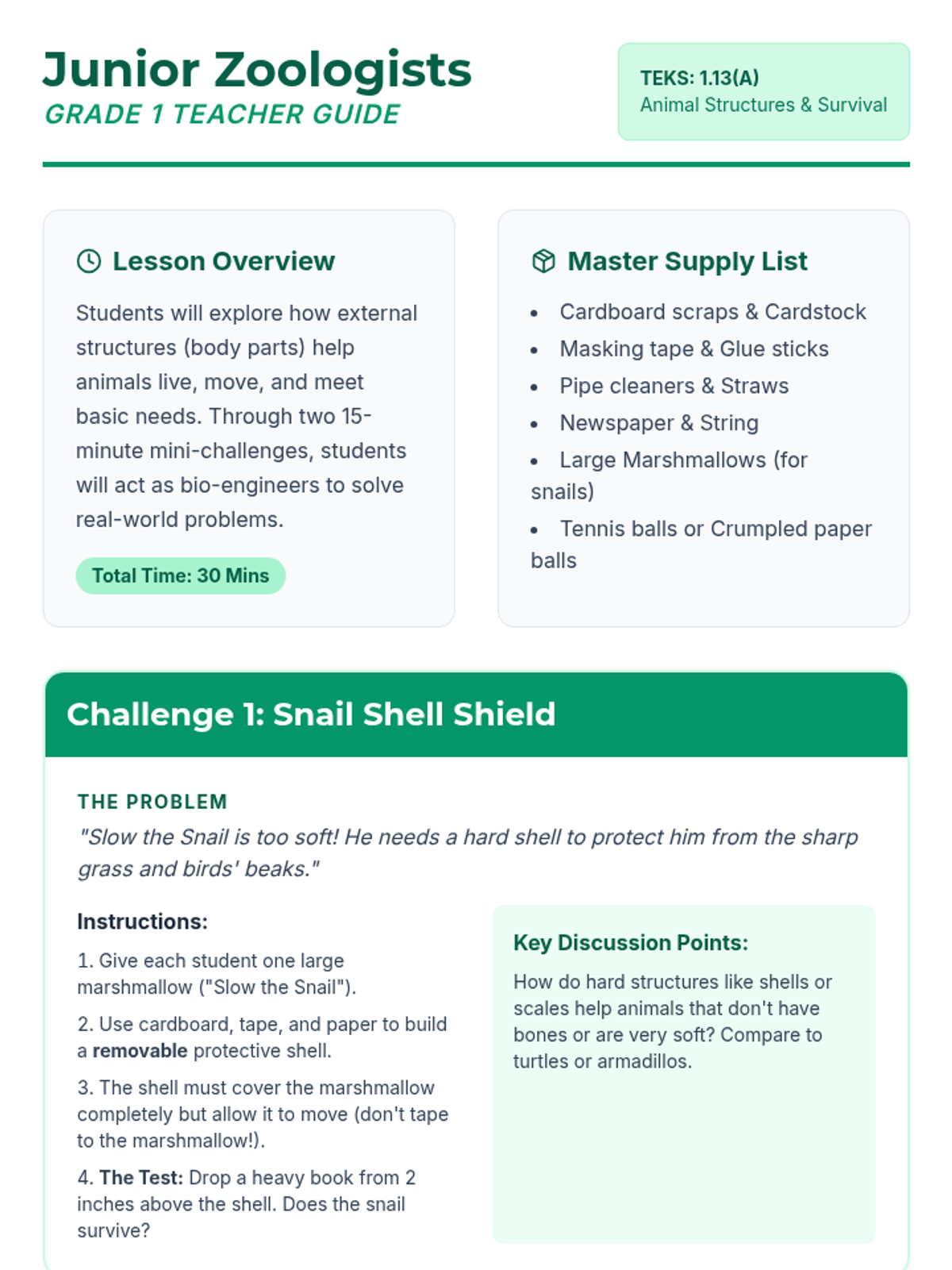
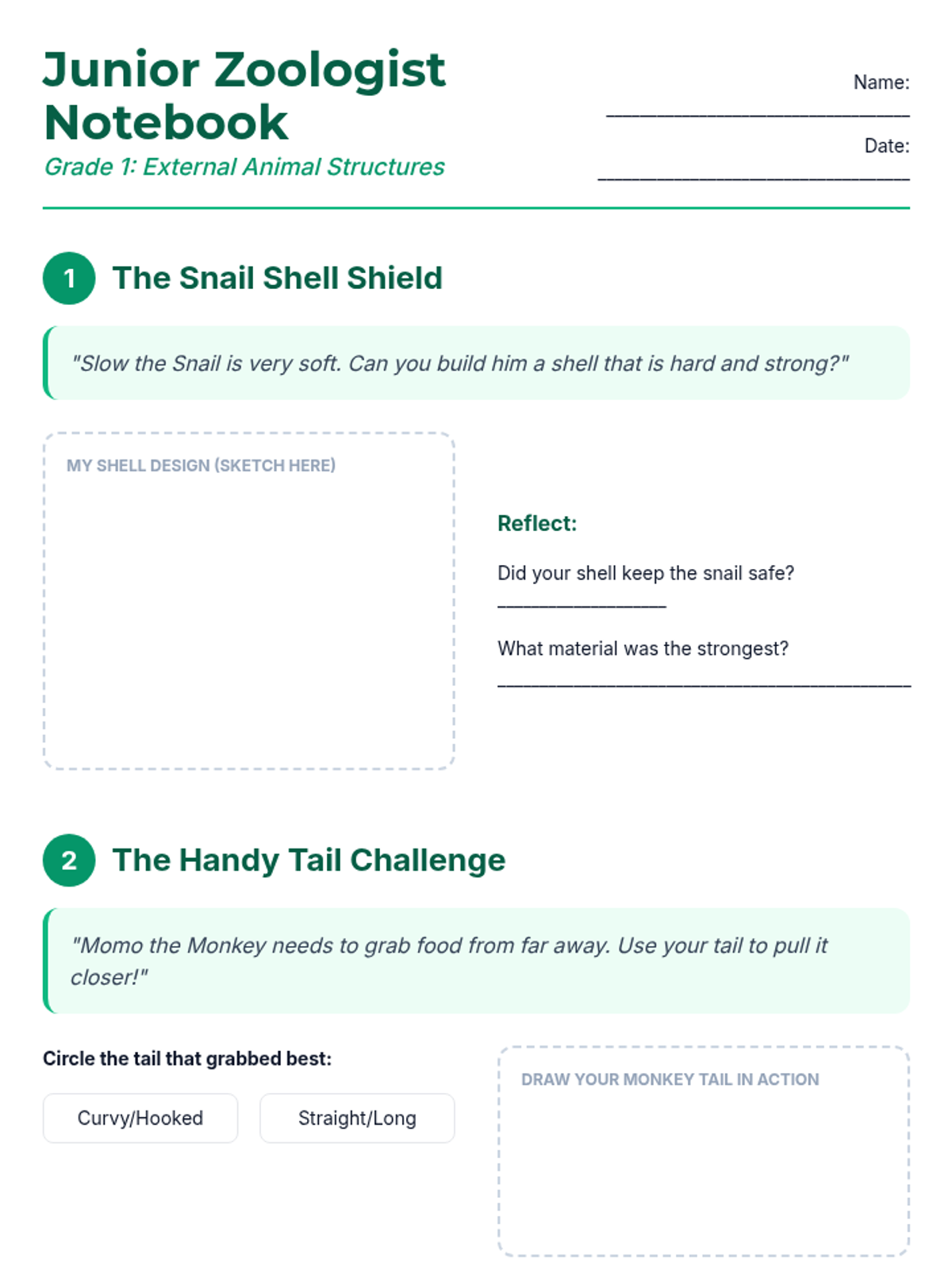
A comprehensive STEM sequence for grades 1-5 focusing on animal structures and functions, aligned with Texas TEKS. Each lesson features two hands-on engineering challenges, detailed teacher guides, and STAAR-aligned review questions.
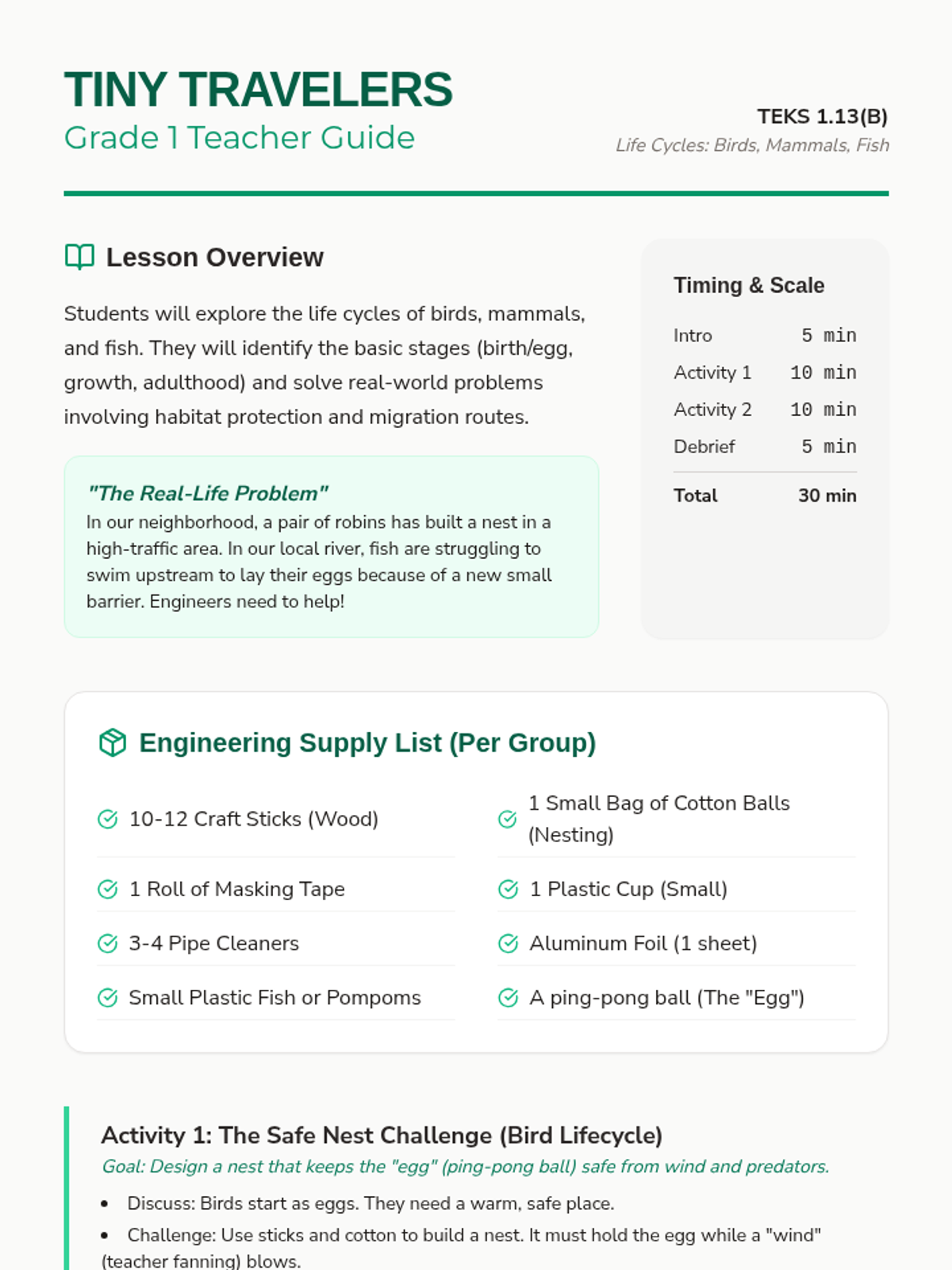
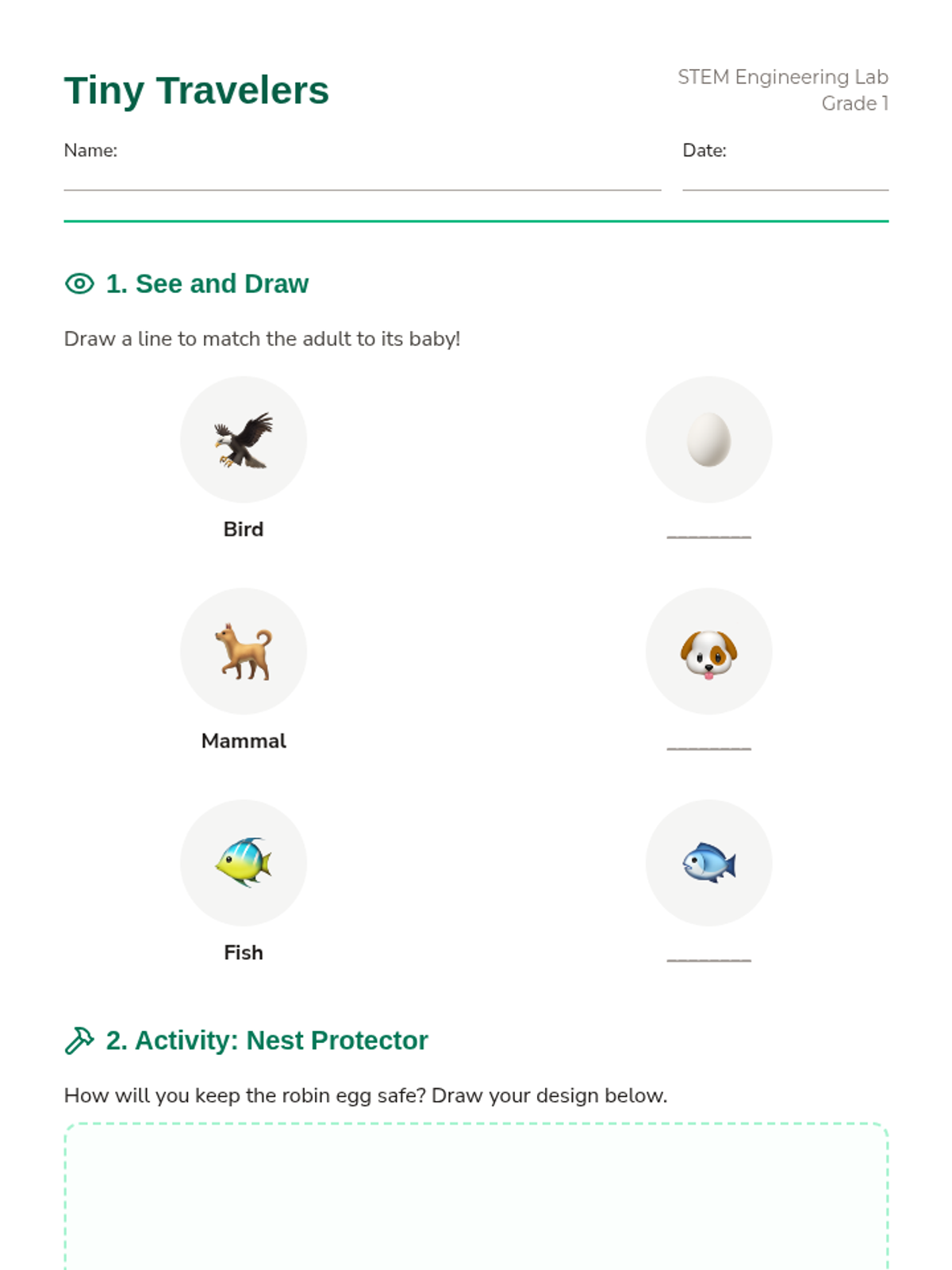
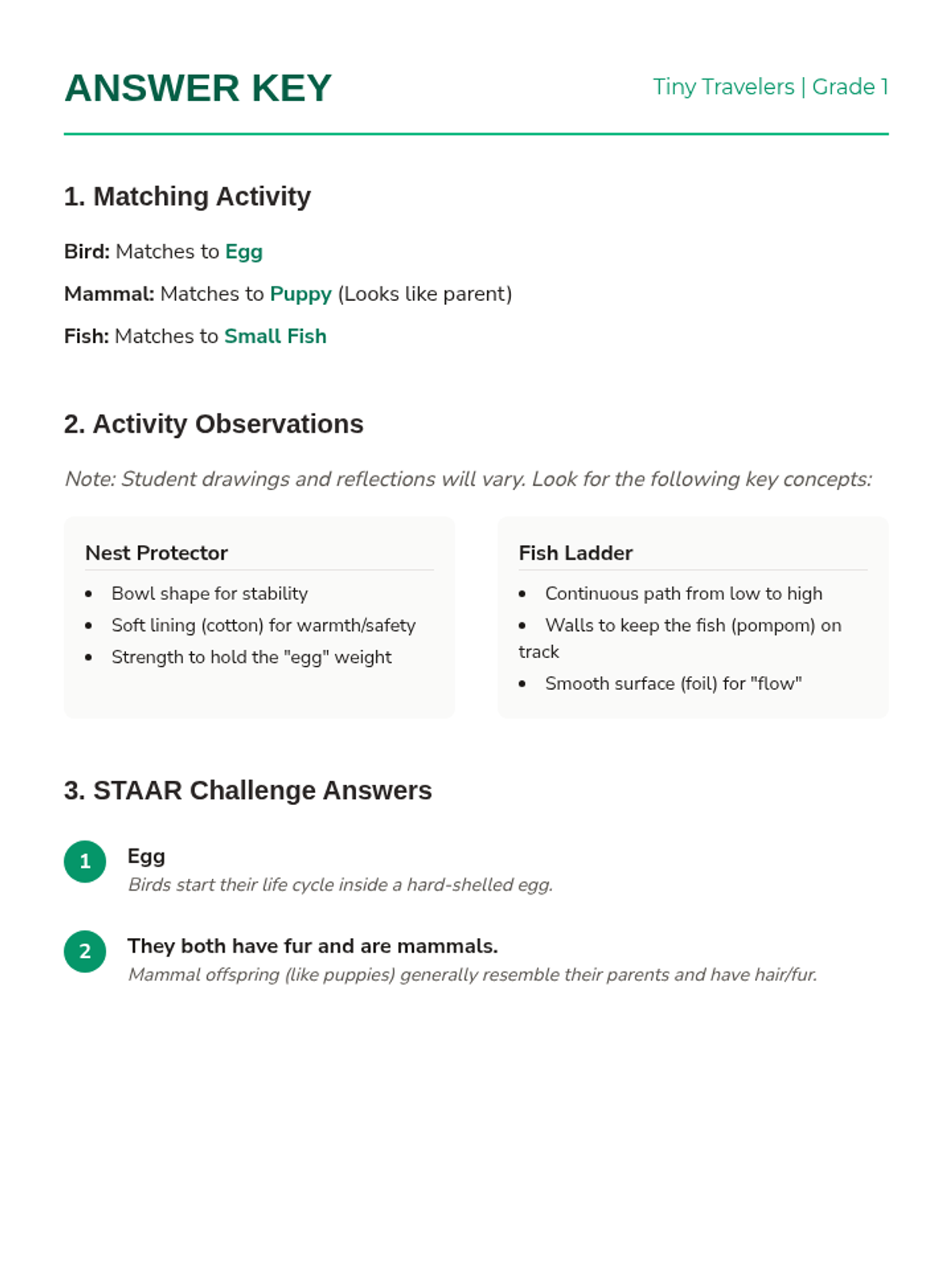
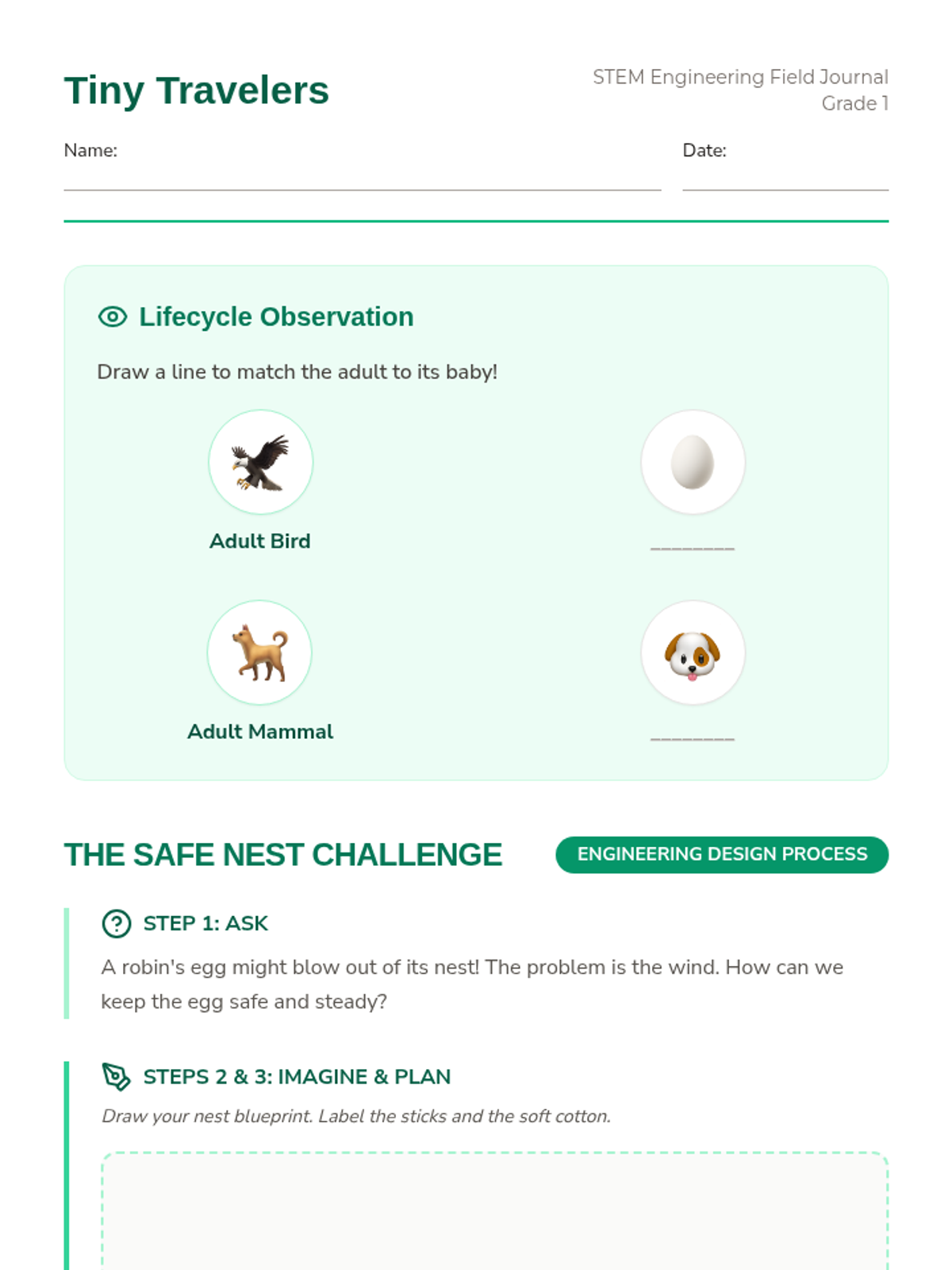
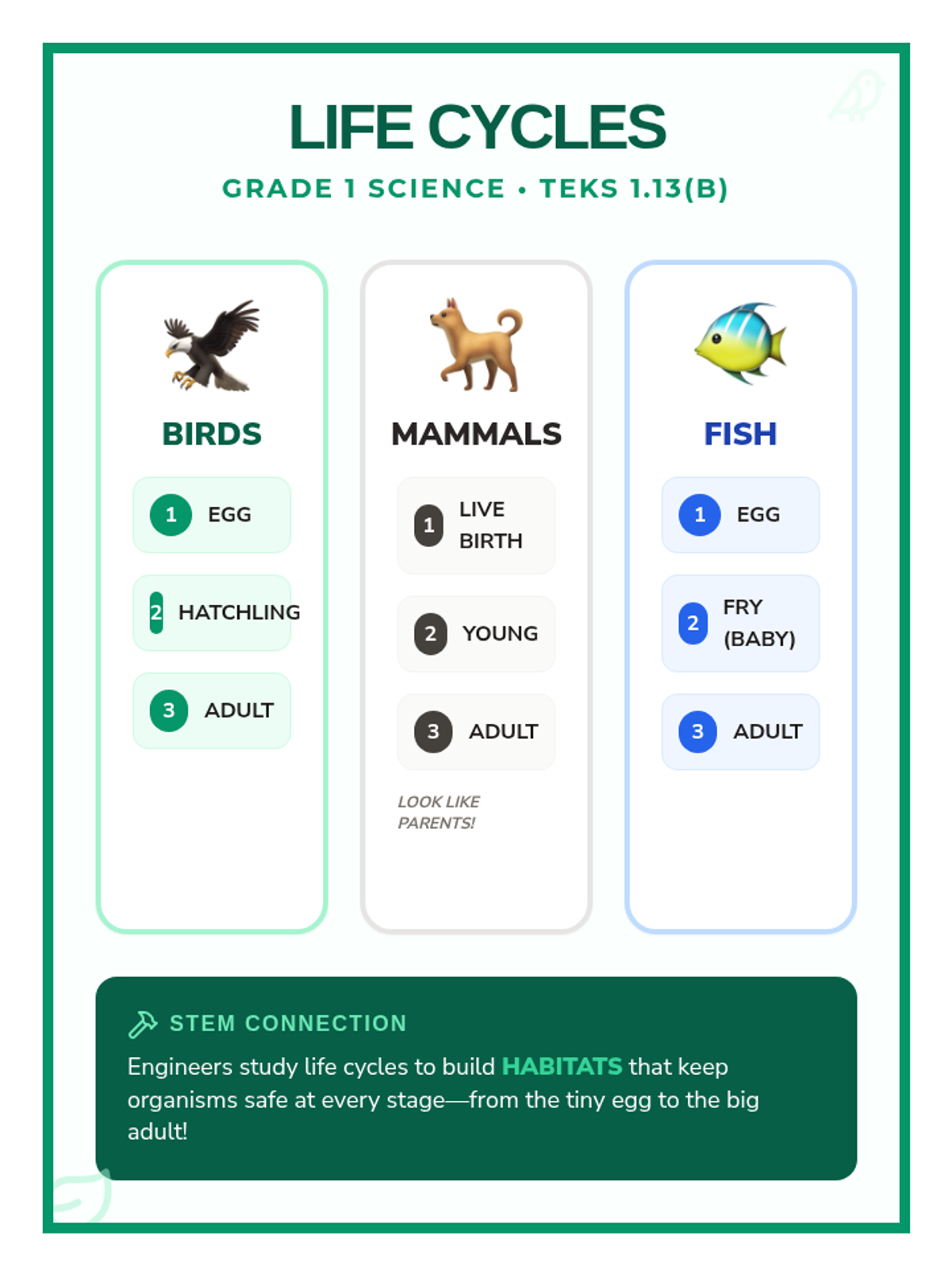
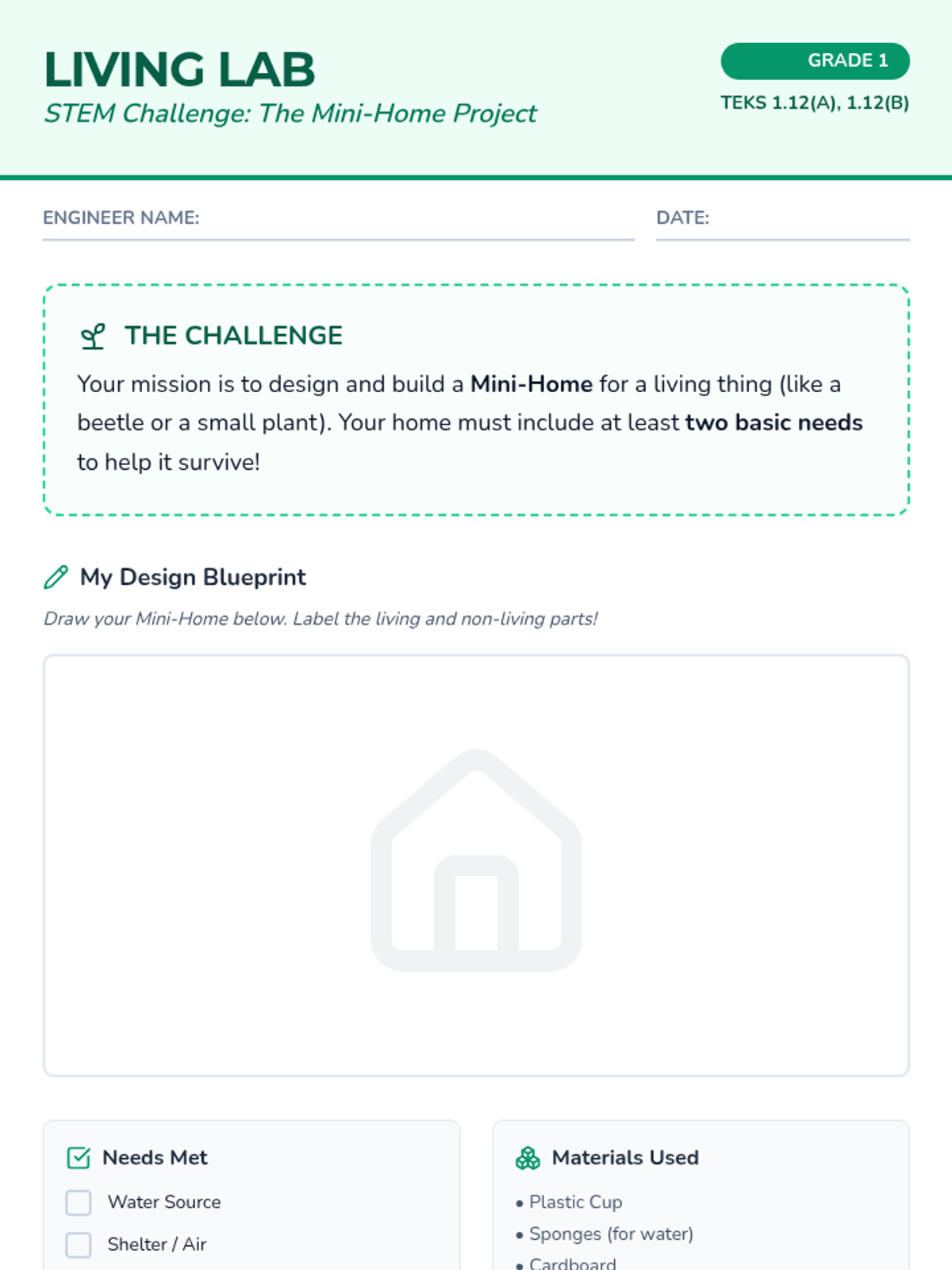
A comprehensive STEM and engineering curriculum for Grades 1-5, aligned with Texas TEKS, focusing on life cycles, plant dependencies, and biological adaptations through hands-on challenges.
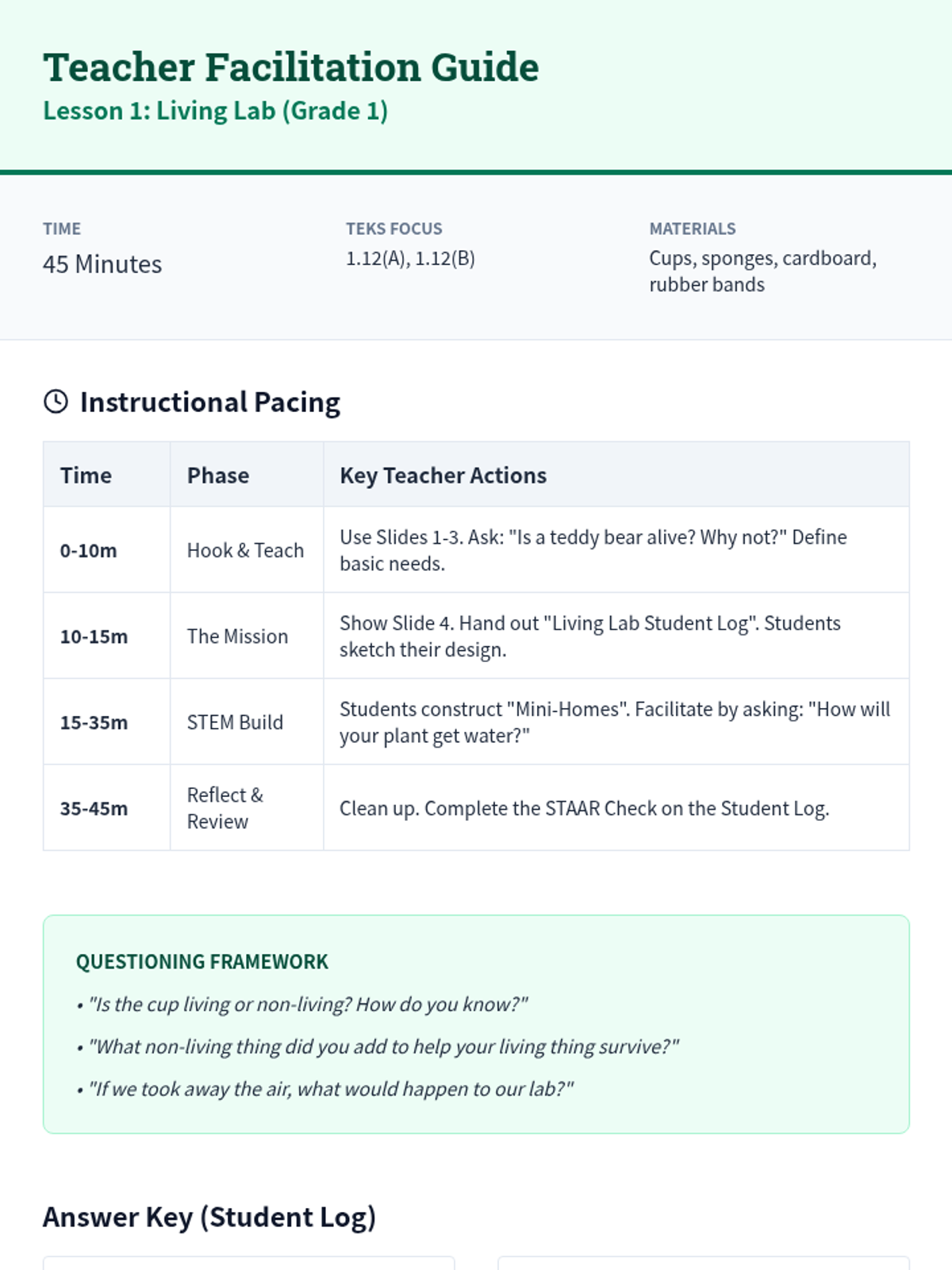
A series of STEM engineering challenges for grades 1-5 focused on the interactions between living things and their environments. Each lesson maps to specific Texas Science TEKS and incorporates simple, non-messy materials to explore biological and environmental concepts.
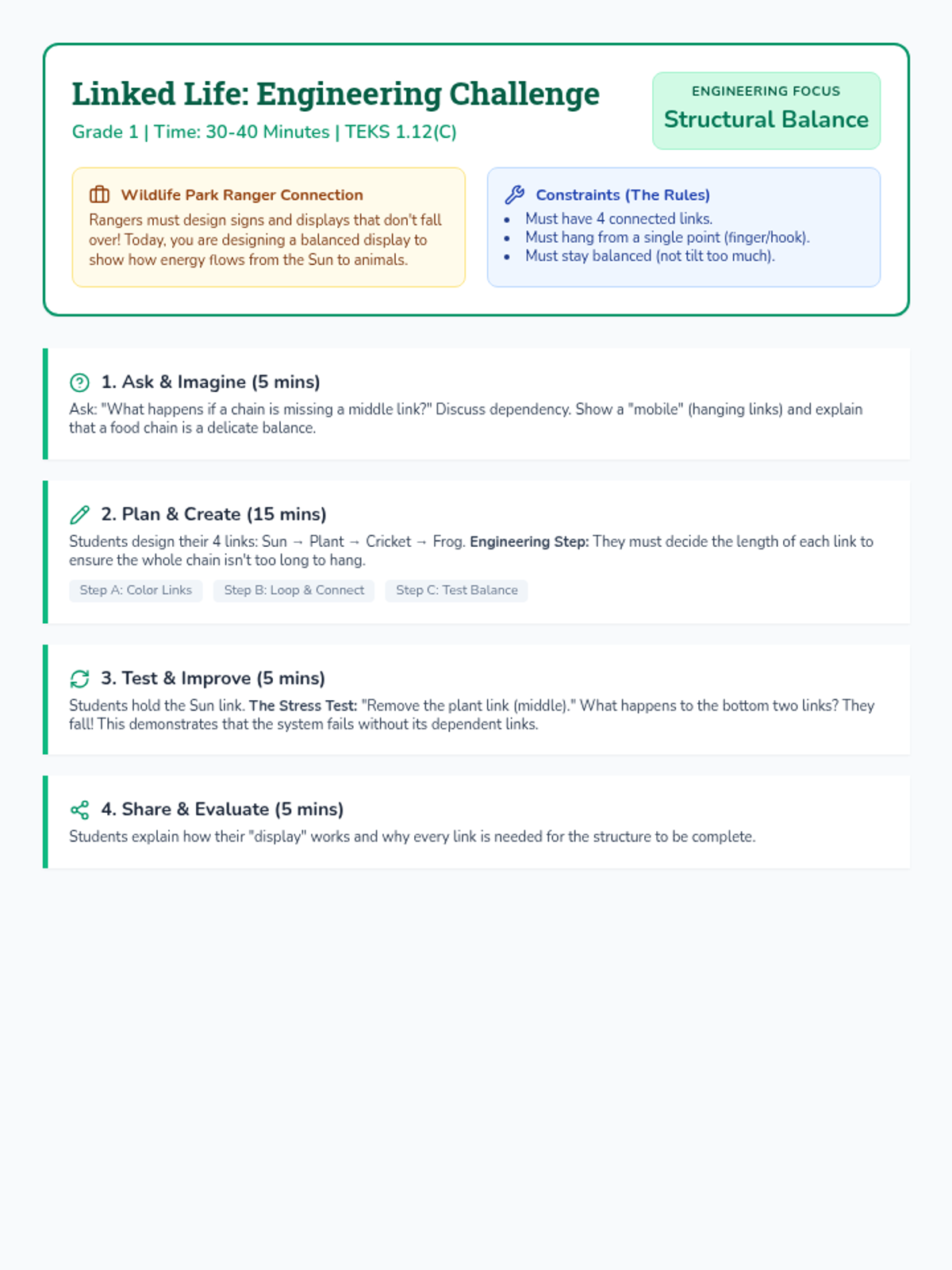
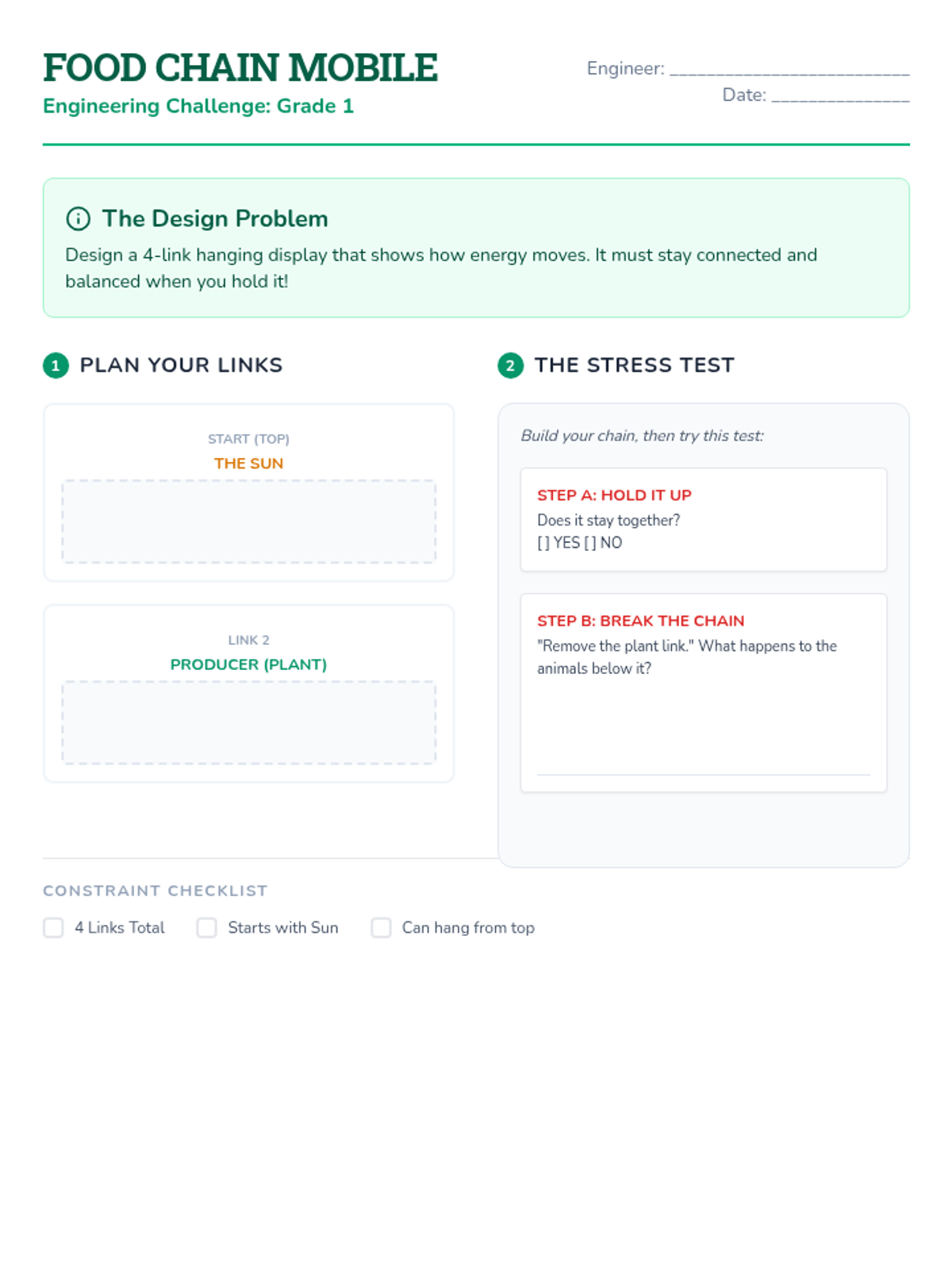
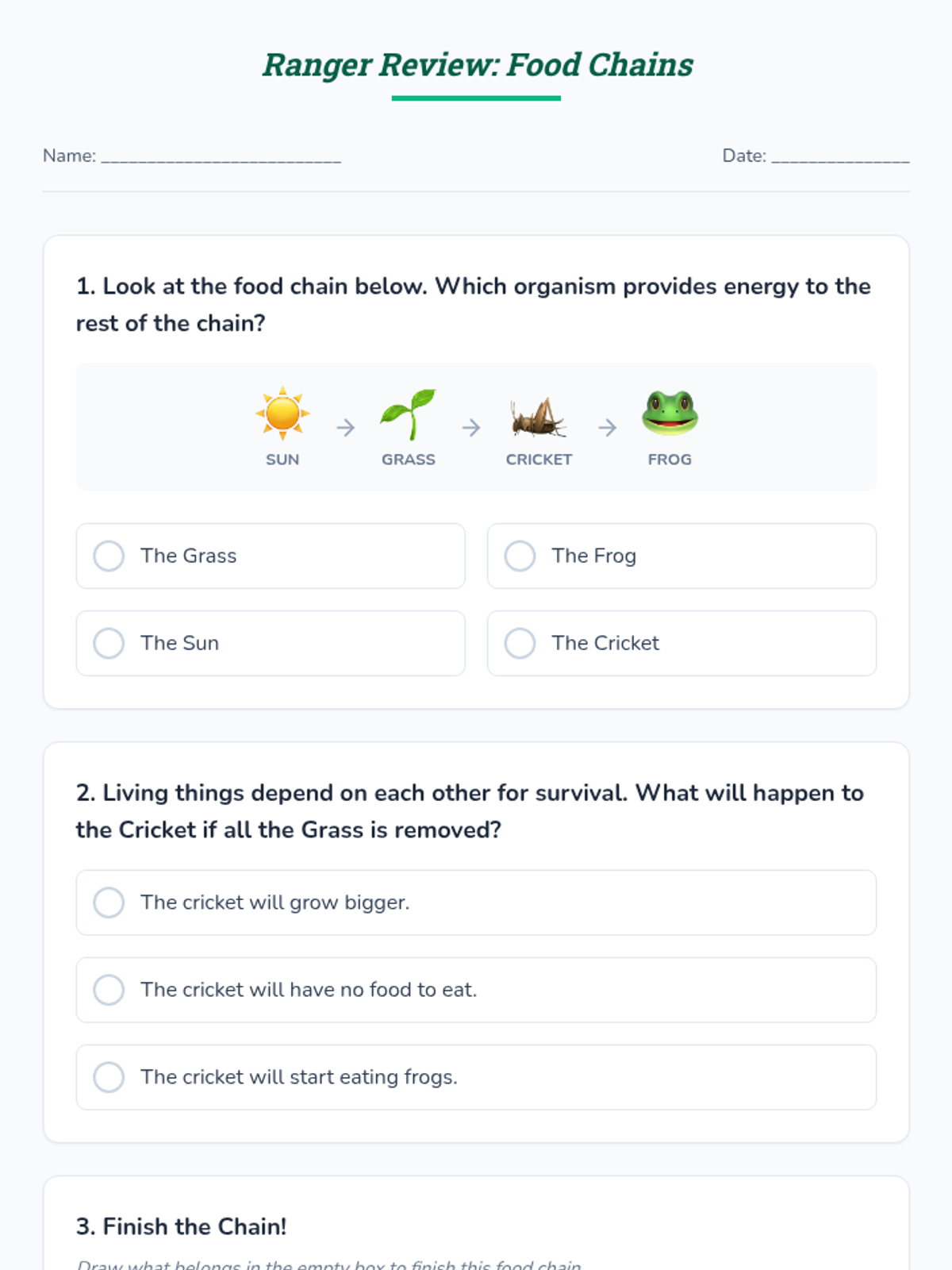
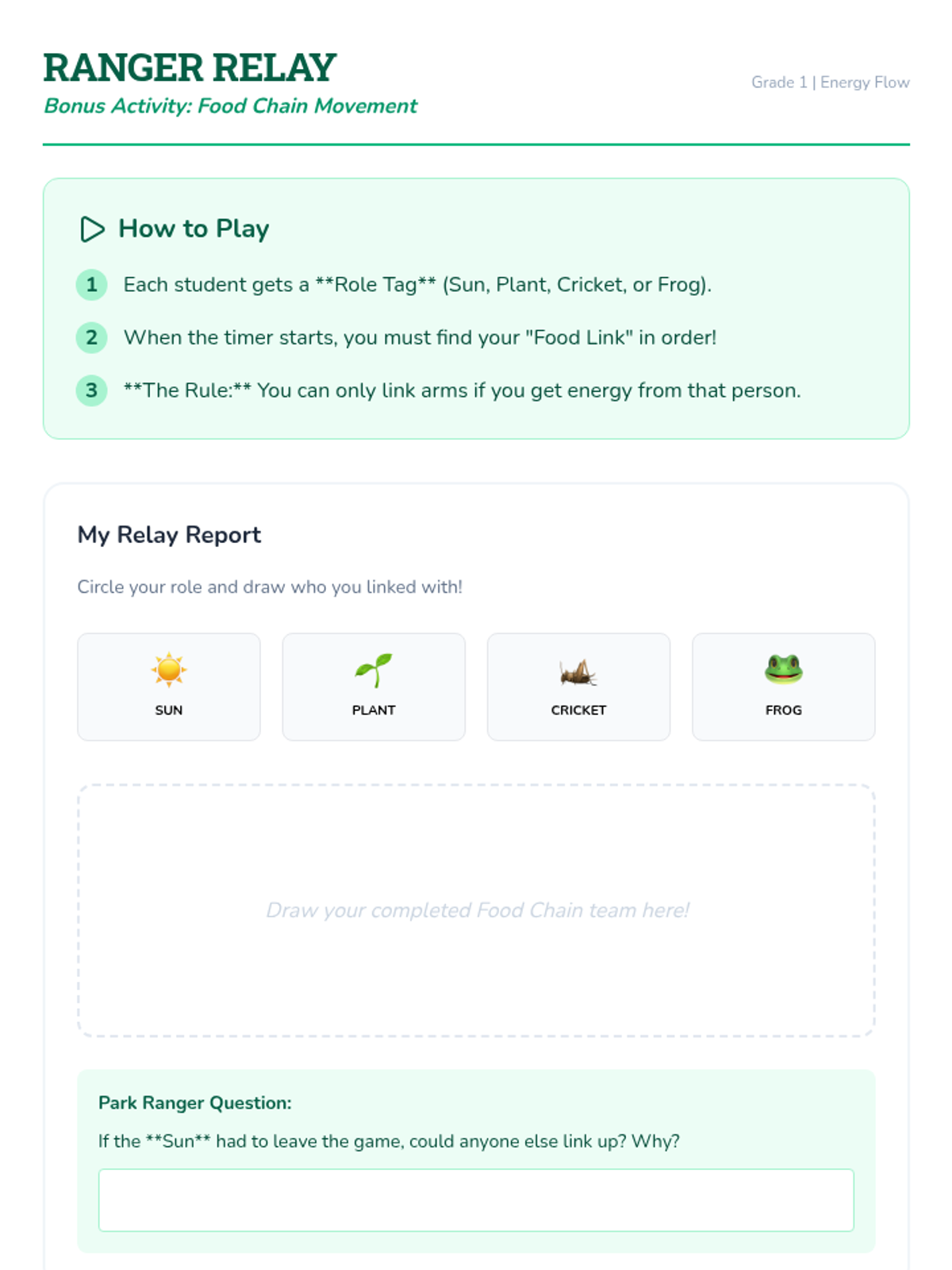
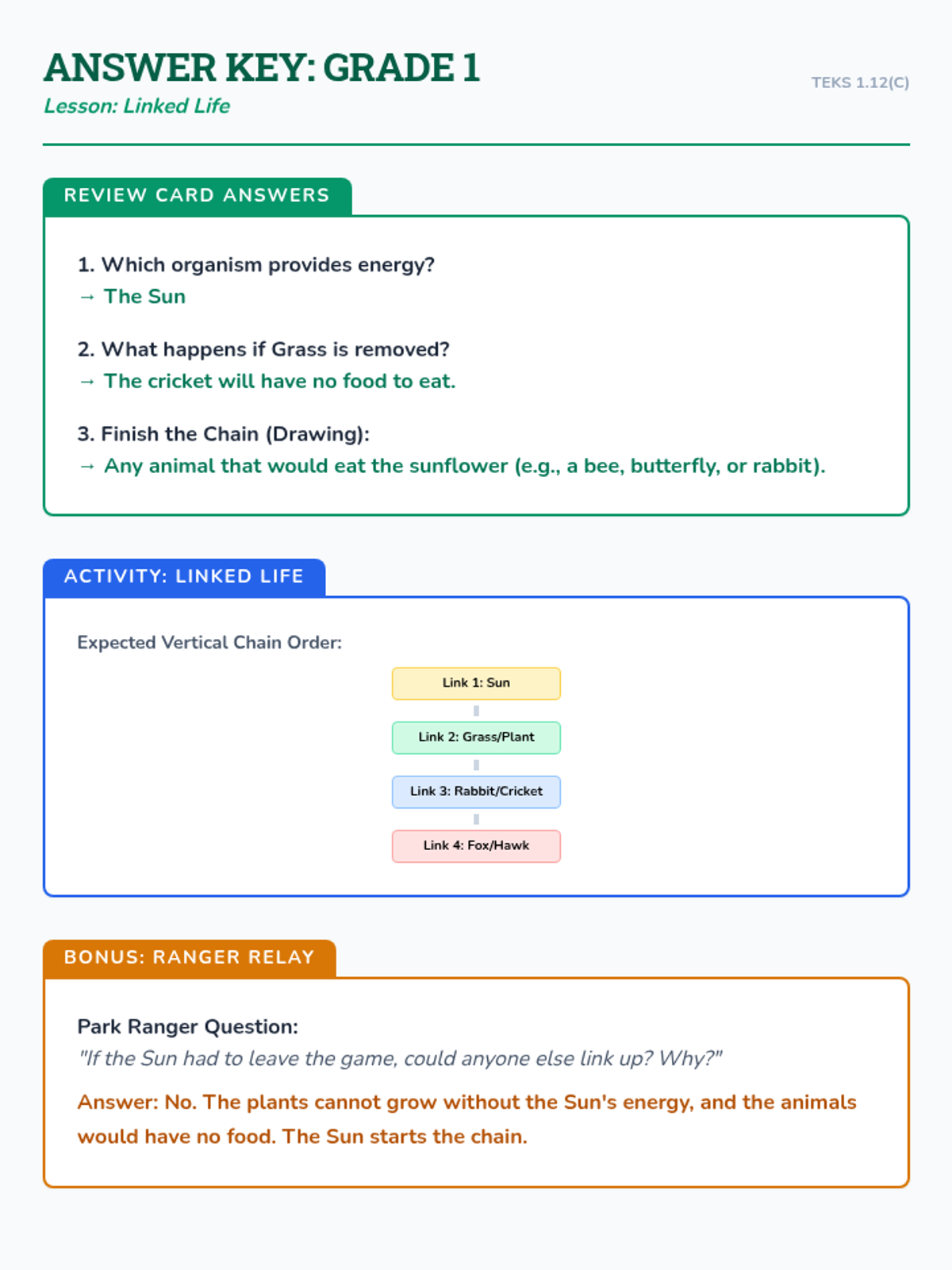
A comprehensive STEM series for grades 1-5 exploring food chains, energy flow, and ecosystem stability through hands-on engineering and design challenges aligned with Texas TEKS.
A comprehensive STEM sequence for grades 1-5 focusing on structural engineering and physics. Students progress from exploring material properties and shapes to designing complex, efficient structures, building their understanding of forces, stability, and the engineering design process.
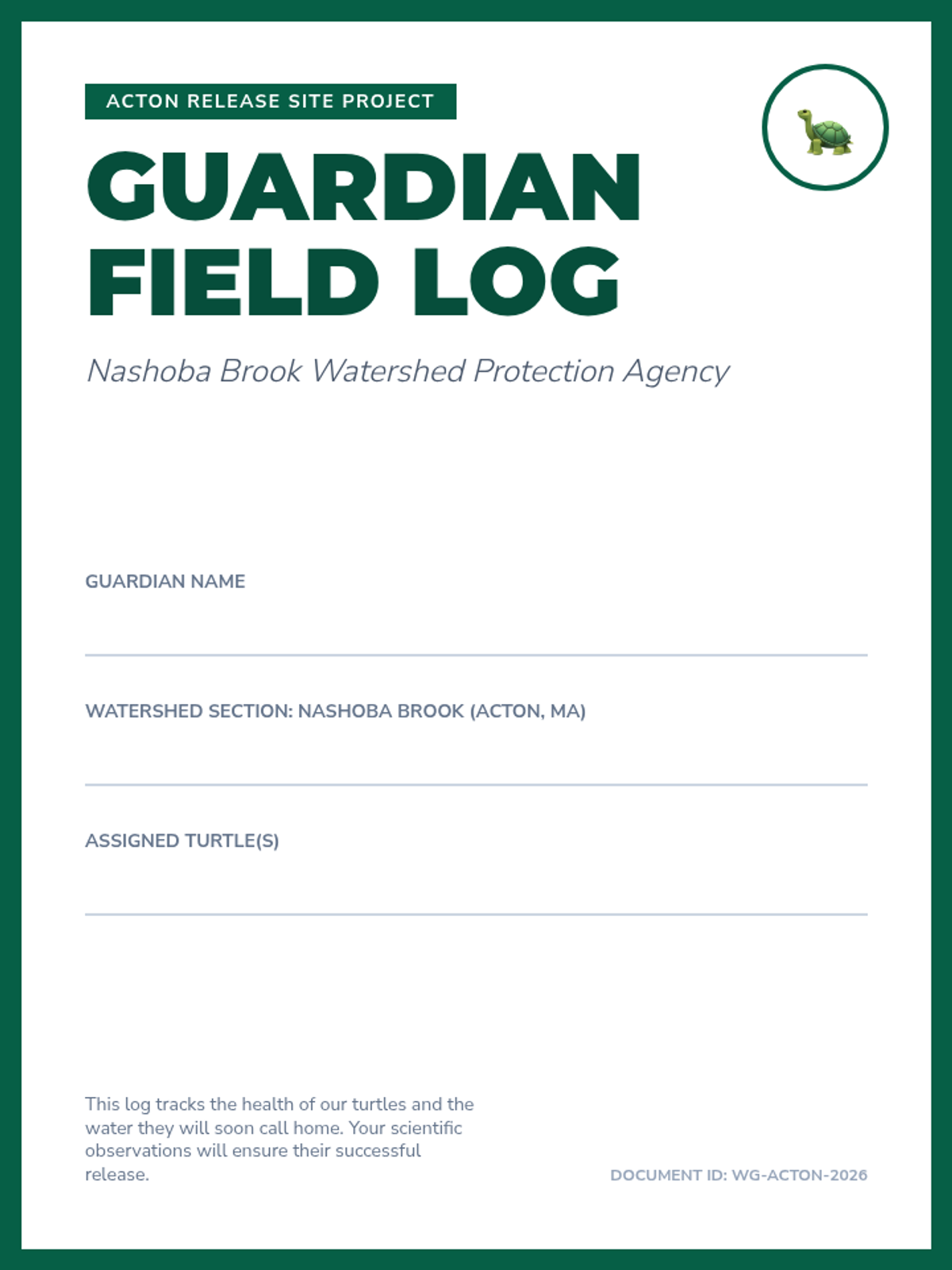
A Grade 5 PBL sequence focused on the hydrosphere and human impact, partnered with Zoo New England. Students investigate the connection between the particulate nature of matter and the survival of fostered endangered turtles in the Nashoba Brook Watershed.
A Gold Standard PBL unit where students investigate Earth's systems and human impact to design a community exhibit for local endangered turtle conservation in the Nashoba Brook watershed. Students explore water distribution, sphere interactions, and engineering design through the lens of protecting their 'headstarted' Blanding's turtles.