A week-long independent study unit based on 'The Boy Who Harnessed the Wind', guiding students through literary analysis, scientific research, and engineering design.
A comprehensive unit focused on environmental stewardship, exploring waste management, conservation, and sustainable living through hands-on activities.
A 3-lesson unit on the water cycle, weather patterns, and global circulation designed for 7th-grade SPED students. This sequence covers the energy drivers of water movement, the interaction of air masses, and the patterns of oceanic and atmospheric circulation with heavy scaffolding and visual supports.
A 10-day project-based learning unit integrating 4th grade Math (multiplication/division) and Science (photosynthesis/life cycles). Students choose between designing a community garden or creating a garden business plan, applying their knowledge of plant systems to real-world calculations.
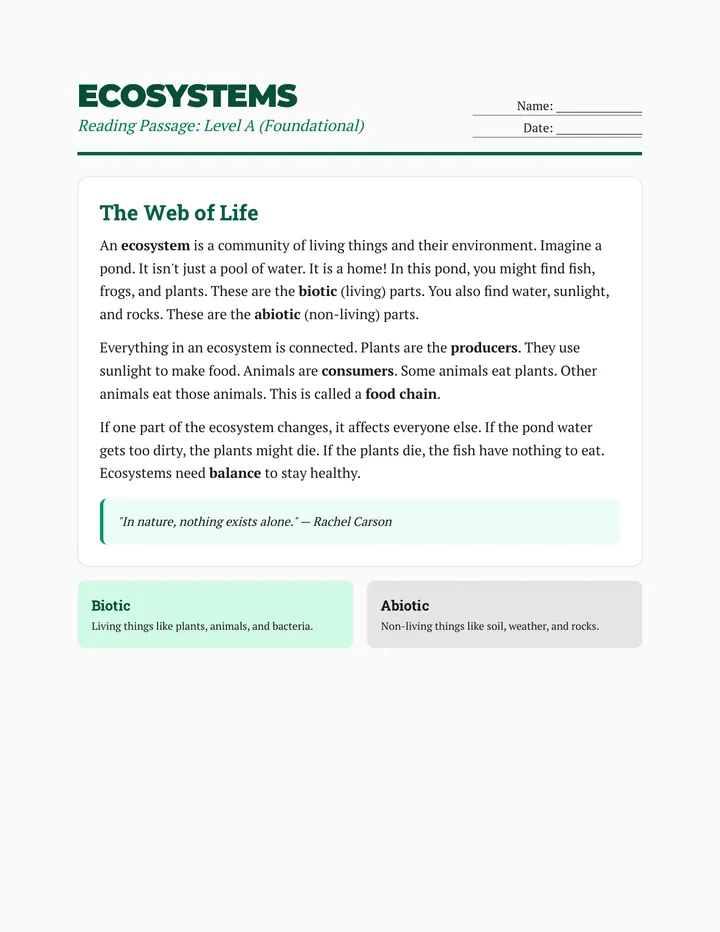
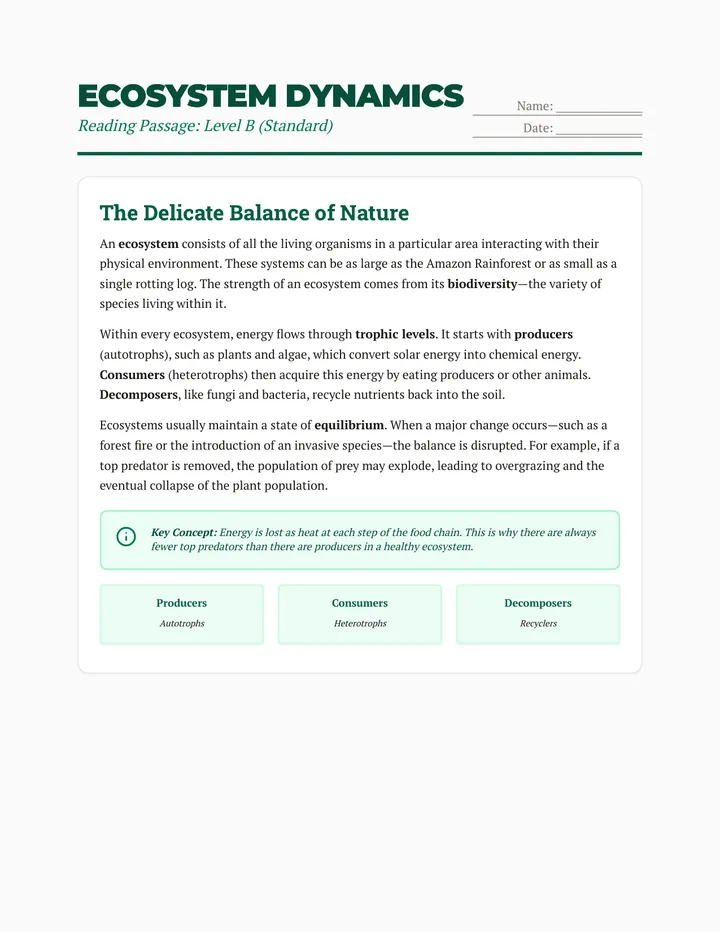
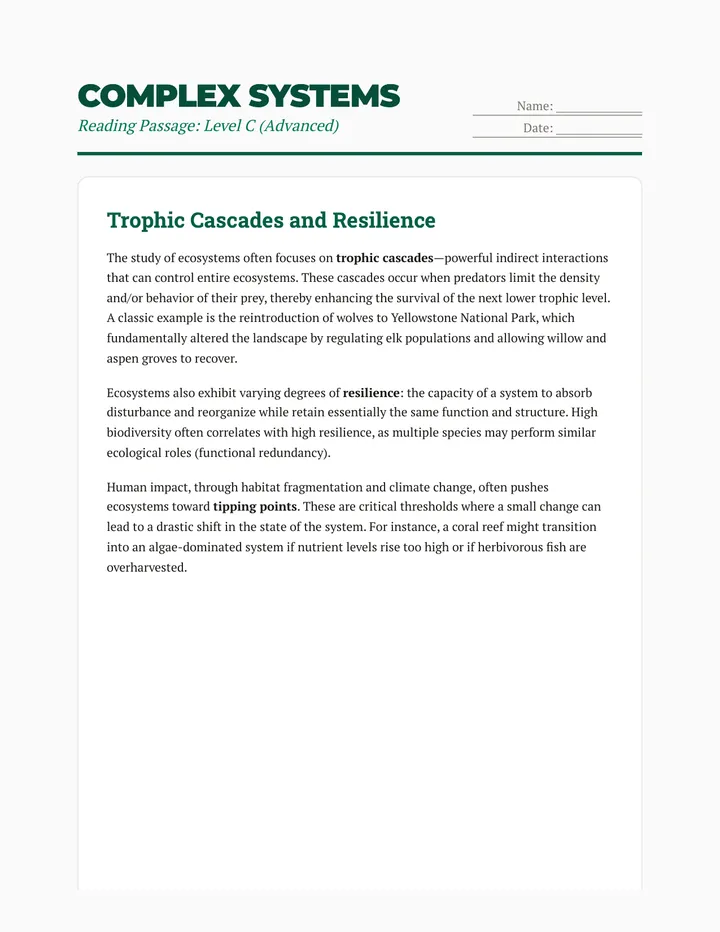
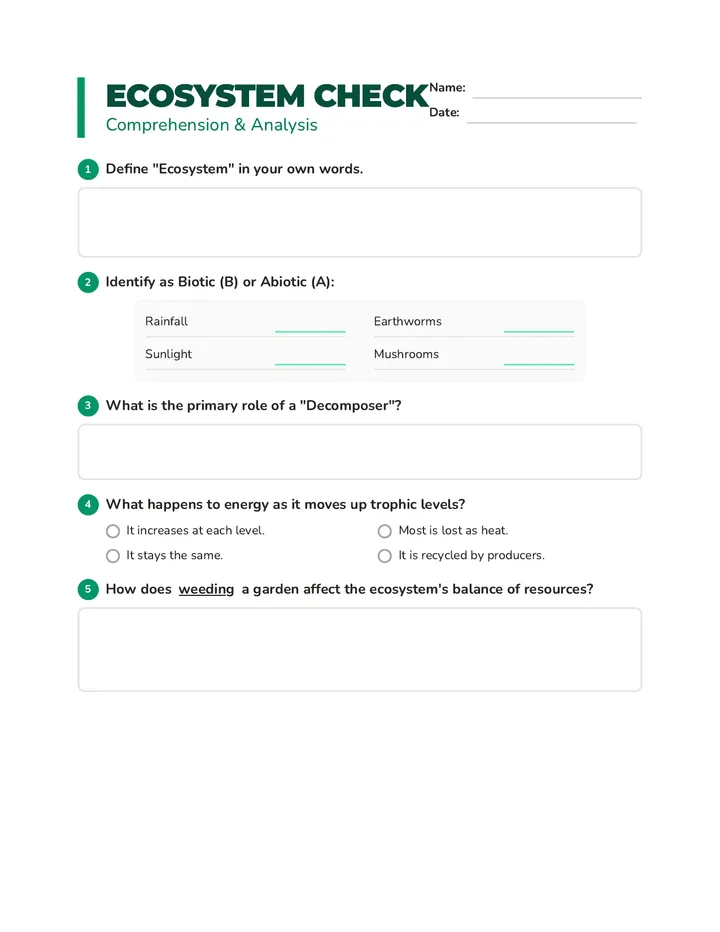
A comprehensive unit for 4th-grade students to explore the flow of energy in ecosystems, the roles of producers and consumers, and the intricate connections within food webs. Students engage in hands-on stations to model energy movement and predict the effects of environmental changes.
A study of the iconic predator-prey relationship between wolves and moose on Isle Royale, exploring population dynamics, carrying capacity, and limiting factors.
A sports-science unit exploring the chemistry of performance and the architecture of the human body. Students investigate energy changes in reactions through the lens of metabolism and injury recovery, and discover how the skeletal system provides the structural foundation for athletic movement.
An ecology-focused sequence exploring population dynamics, ecosystem stability, and the intricate dance between predators and their prey through the famous Isle Royale case study.
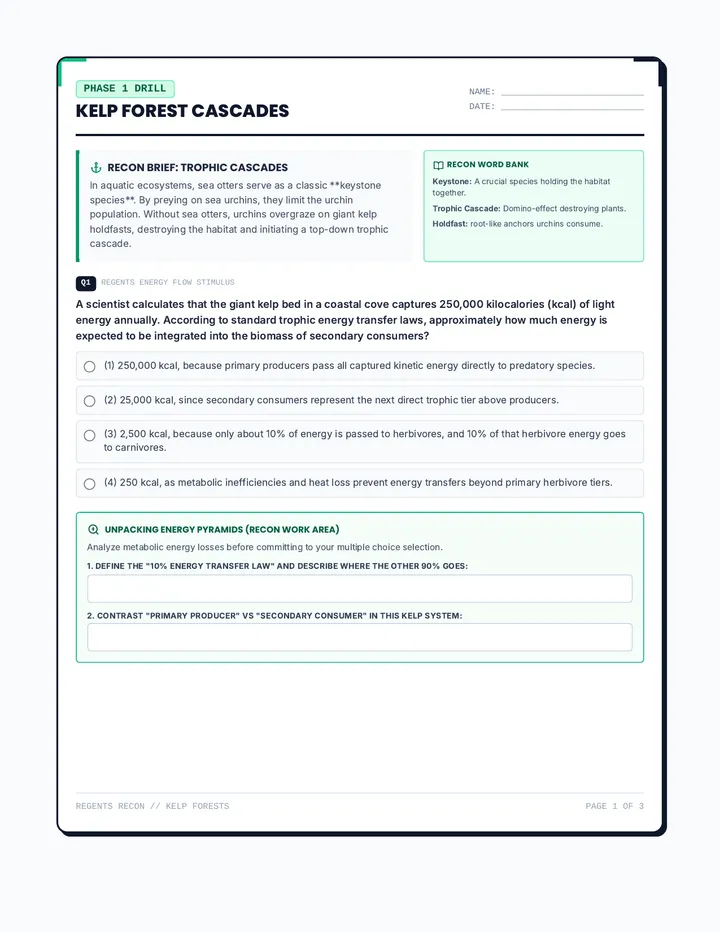
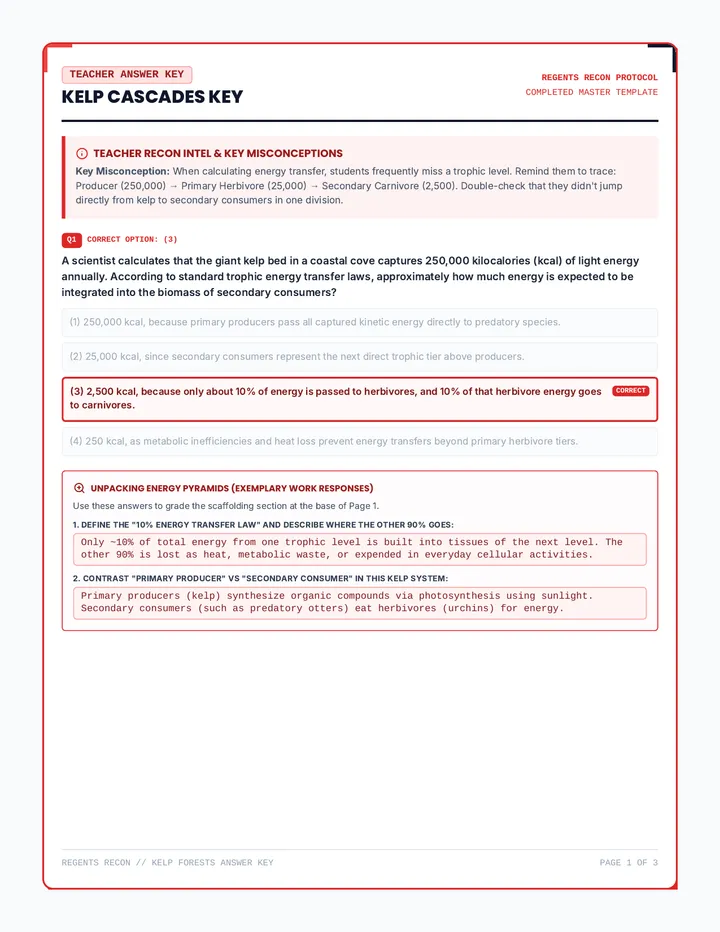
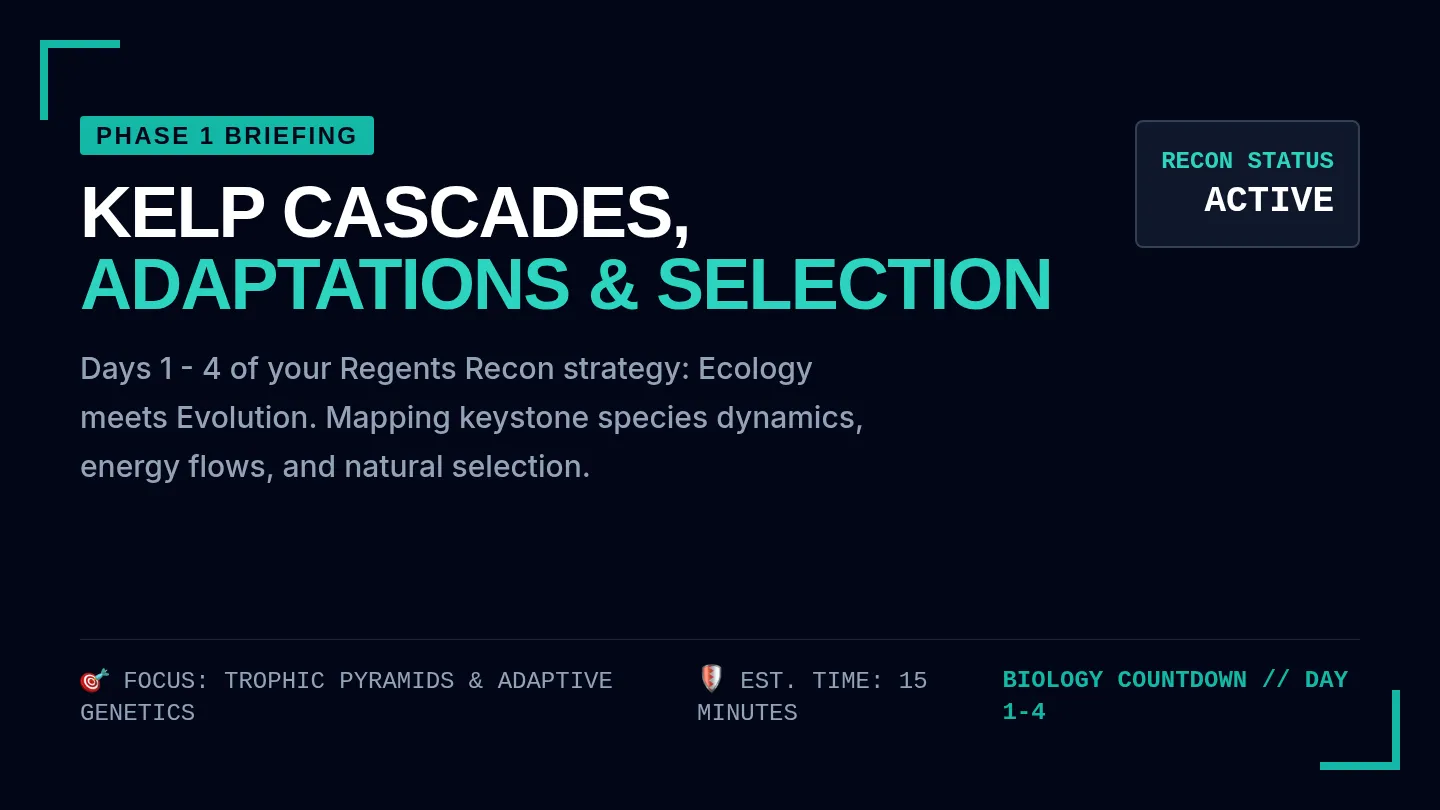
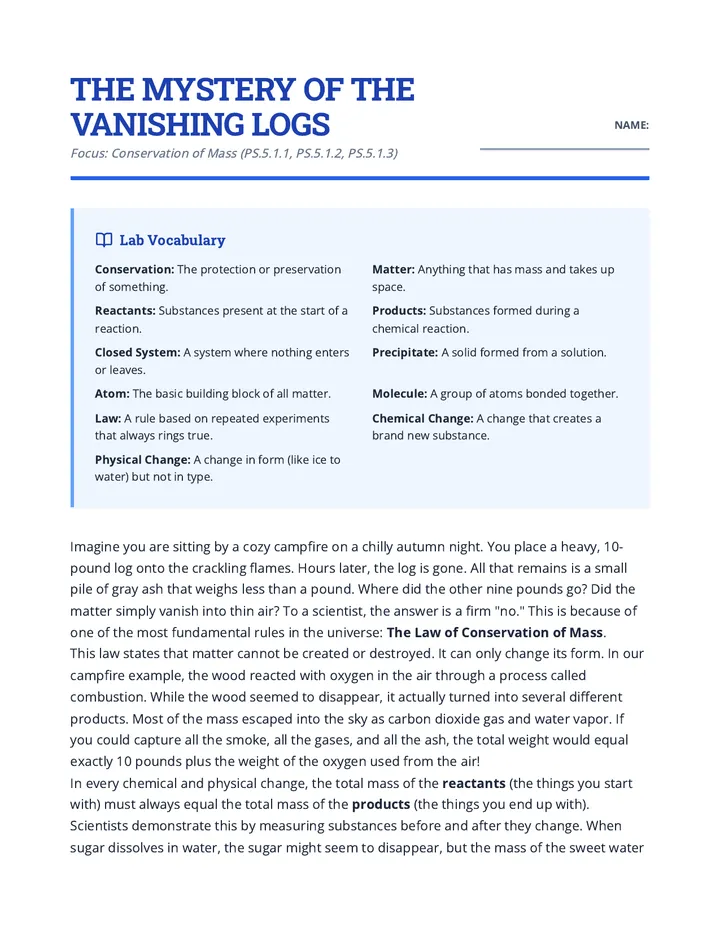
A comprehensive science unit focused on global biomes, adaptations, and ecological relationships, culminating in a creative travel brochure project.
A comprehensive end-of-year review for 5th Grade NGSS science standards, organized by domain to ensure mastery of physical, life, and Earth sciences.
A comprehensive review of all 5th Grade NGSS Science standards, covering matter, ecosystems, Earth systems, and space science through vocabulary practice, graphic organizers, and critical thinking questions.
A celebratory Earth Day sequence focused on environmental stewardship and the interconnectedness of ecosystems, centered around the book 'The Great Kapok Tree' by Lynne Cherry. Students explore the perspectives of various rainforest inhabitants and create a collaborative bulletin board display.
A series of nature-based investigations helping young learners connect with seasonal changes using their senses and scientific observation.
A 3-day introductory unit for Digital Design students, focusing on Project-Based Learning, collaborative teamwork, and the very first steps into Adobe Photoshop. Students will connect classroom learning to workforce readiness through a giant collaborative mural and guided discovery of design tools.
A 5-day comprehensive reading unit that explores the human digestive system while building critical literacy skills like using context clues, sequencing, identifying main ideas, and analyzing cause and effect.
A hands-on forensic science sequence focusing on the collection and analysis of trace evidence, specifically soil and glass fragments, through an outdoor scavenger hunt.
A sequence exploring the mechanics of ocean currents and their role in regulating global climate, based on the SciShow documentary.
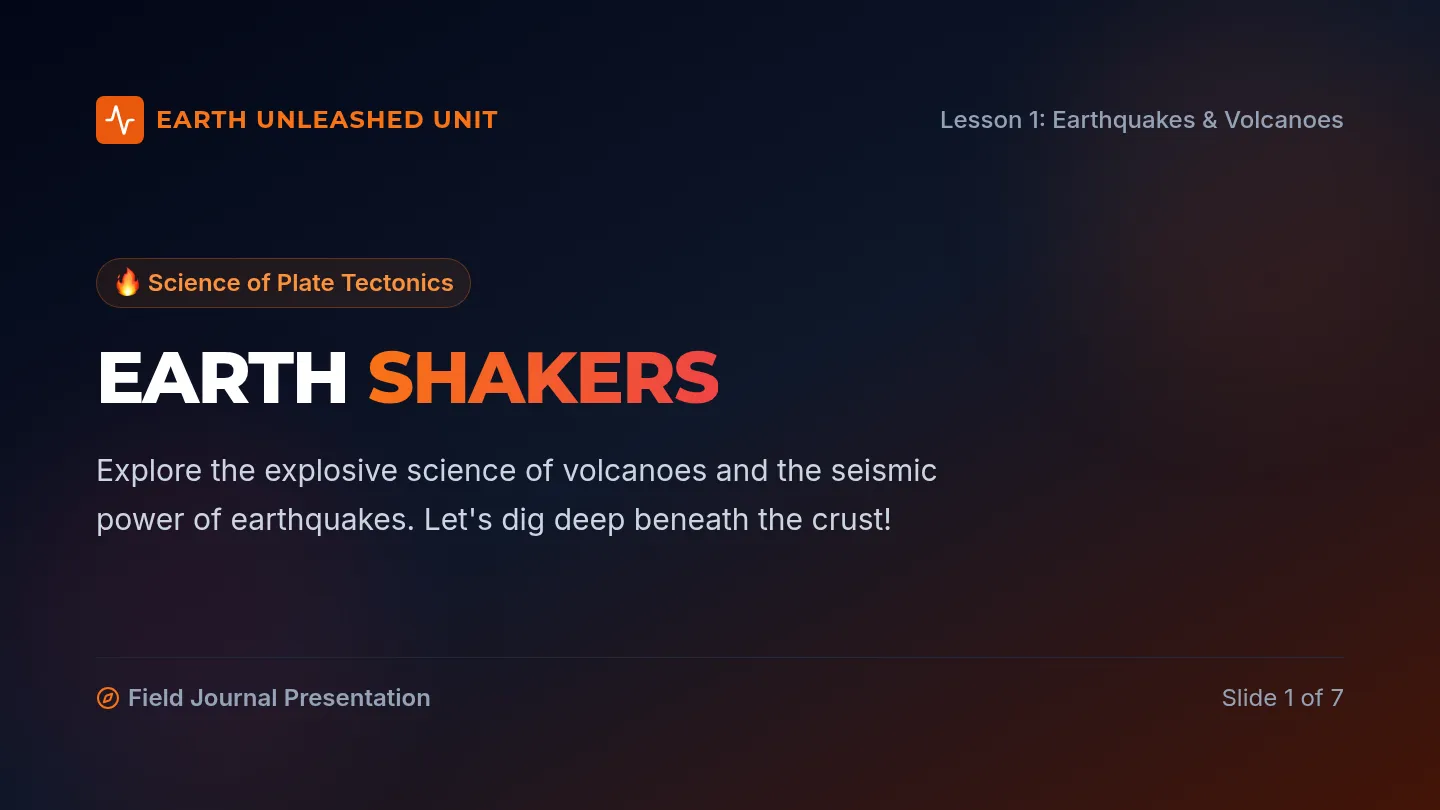
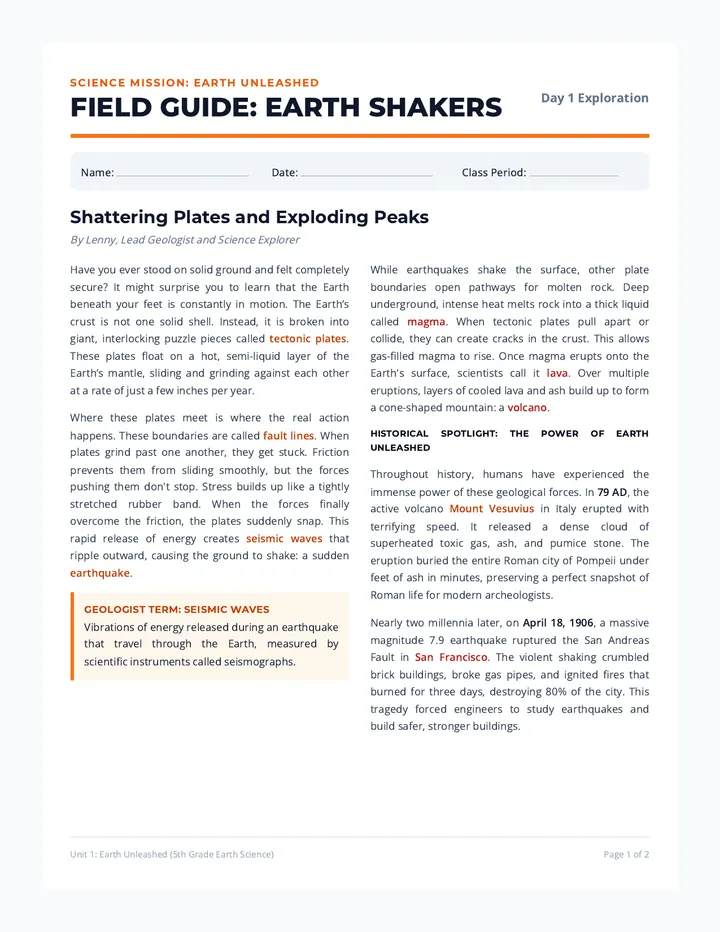
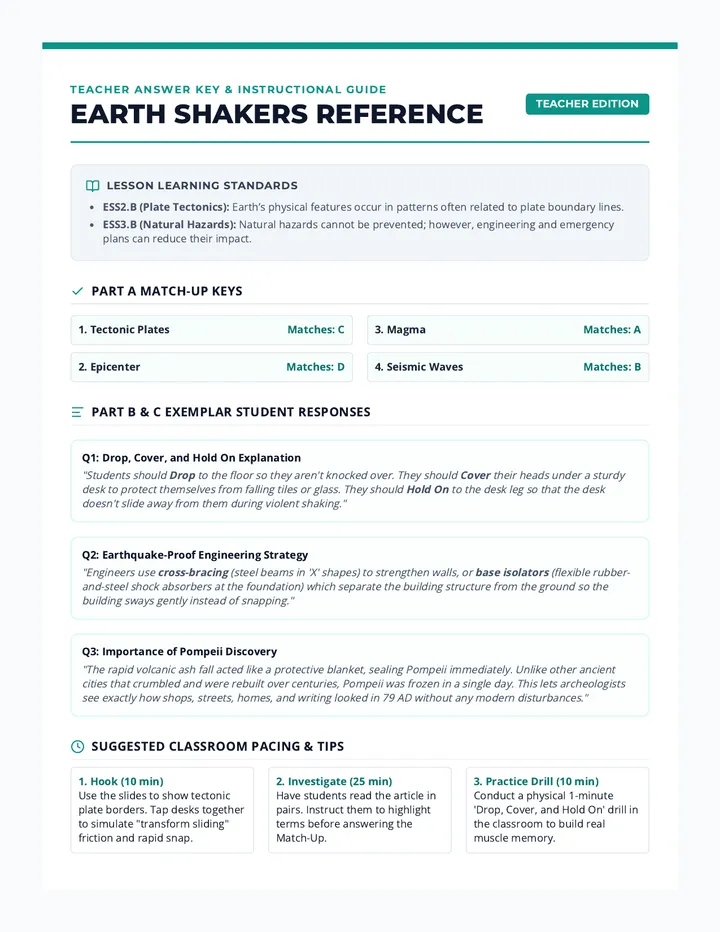
A literary science unit exploring tectonic plates and earthquake mechanics through narrative storytelling and character-driven prose.
A week-long exploration of ecological tolerance, focusing on how plants and animals survive within specific environmental ranges. Students identify key factors, analyze tolerance curves, and apply concepts to real-world environmental shifts.