This sequence uses orthographic mapping (Heart Words) to help 2nd-grade students decode and spell irregular high-frequency words. Students learn to distinguish between decodable parts and 'heart' parts that must be learned by memory.
This sequence targets the analytical skills required to dismantle multiple-choice questions for 7th Grade ESL learners. Students move from understanding the anatomy of a question to identifying common logical fallacies and 'trap' answers, utilizing game-based learning and deductive reasoning.
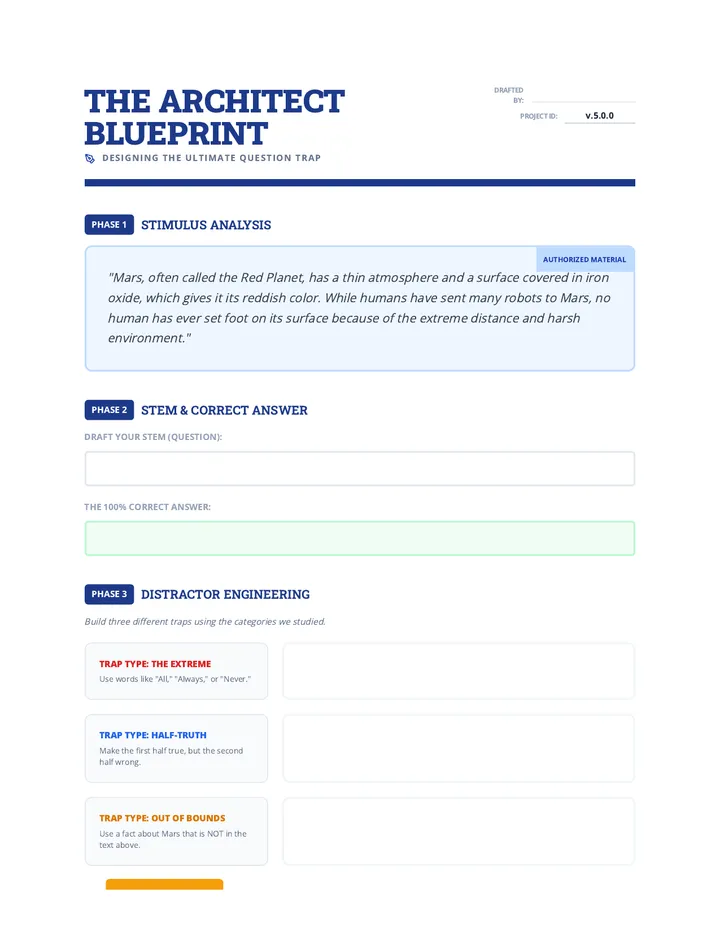
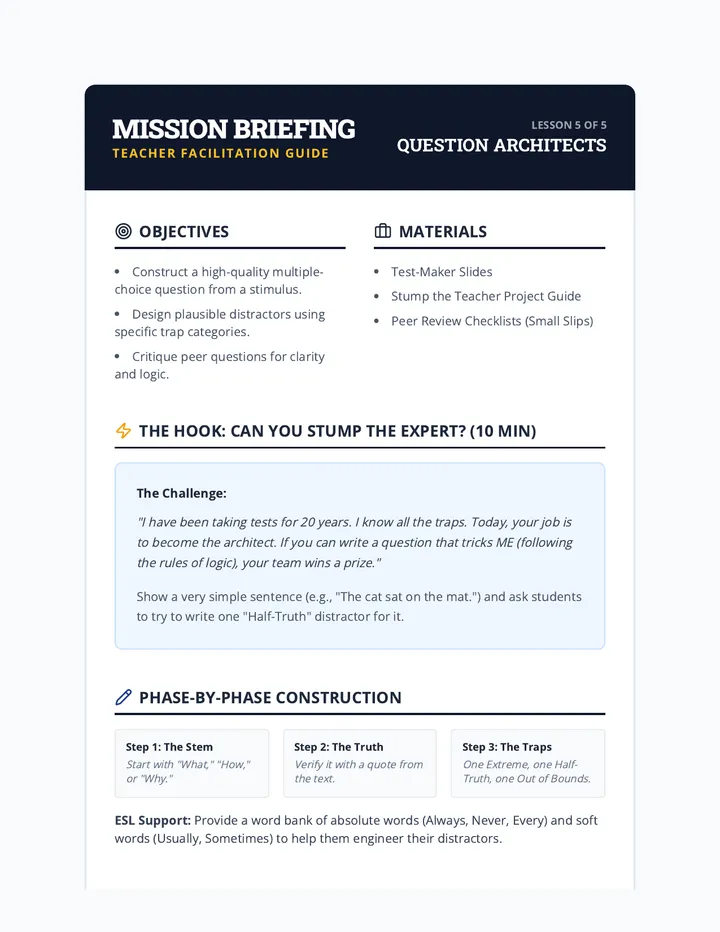
Students switch roles and become the test-makers. They write their own multiple-choice questions based on a shared text, intentionally creating plausible distractors.
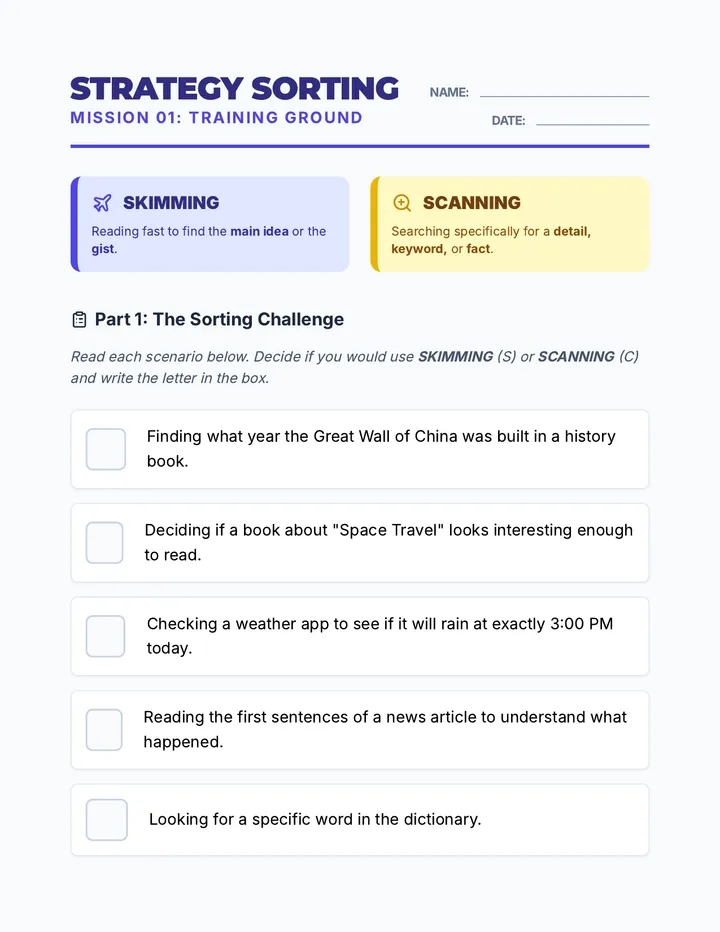
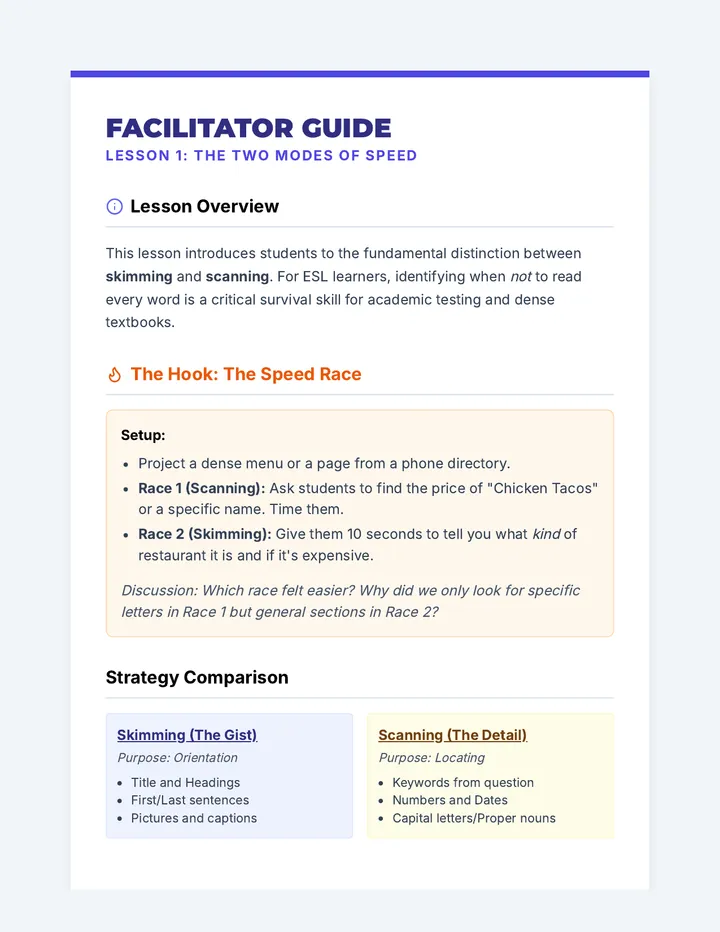
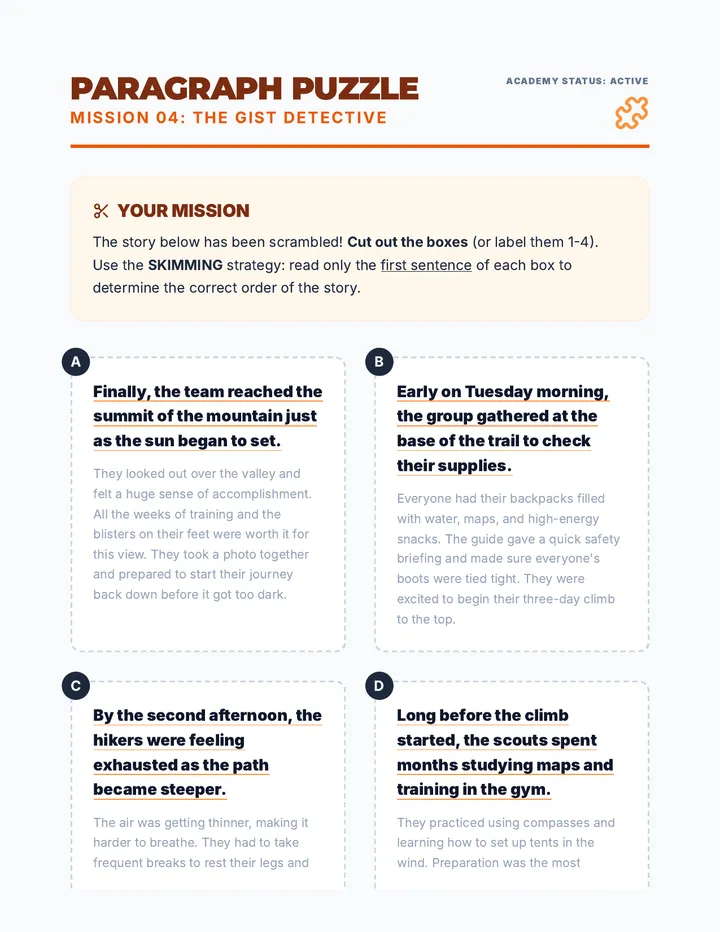
This sequence teaches 6th-grade ESL students the essential test-taking strategies of skimming and scanning. Through a 'Speed Scout' academy theme, students learn to navigate academic texts efficiently, identifying when to look for the 'gist' versus specific details to save time and improve accuracy on standardized tests.
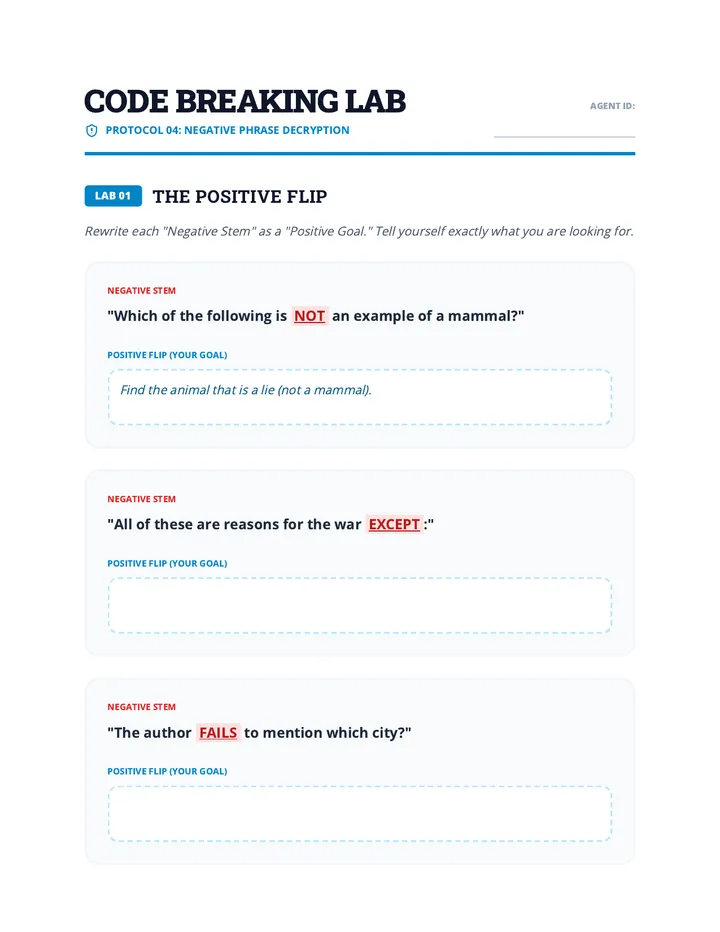
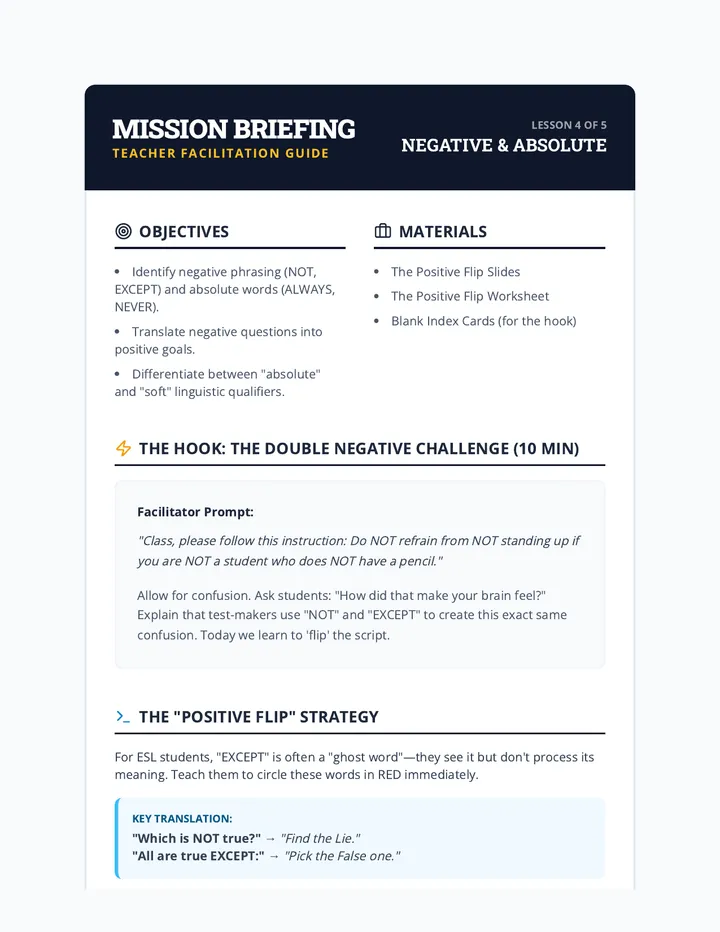
Students specifically target questions using words like 'NOT,' 'EXCEPT,' 'ALWAYS,' or 'NEVER.' They rewrite these questions in positive terms to clarify meaning.
A 2nd-grade ESL sequence focused on academic discourse, teaching students to state opinions, cite evidence, and engage in respectful debate using structured sentence frames.
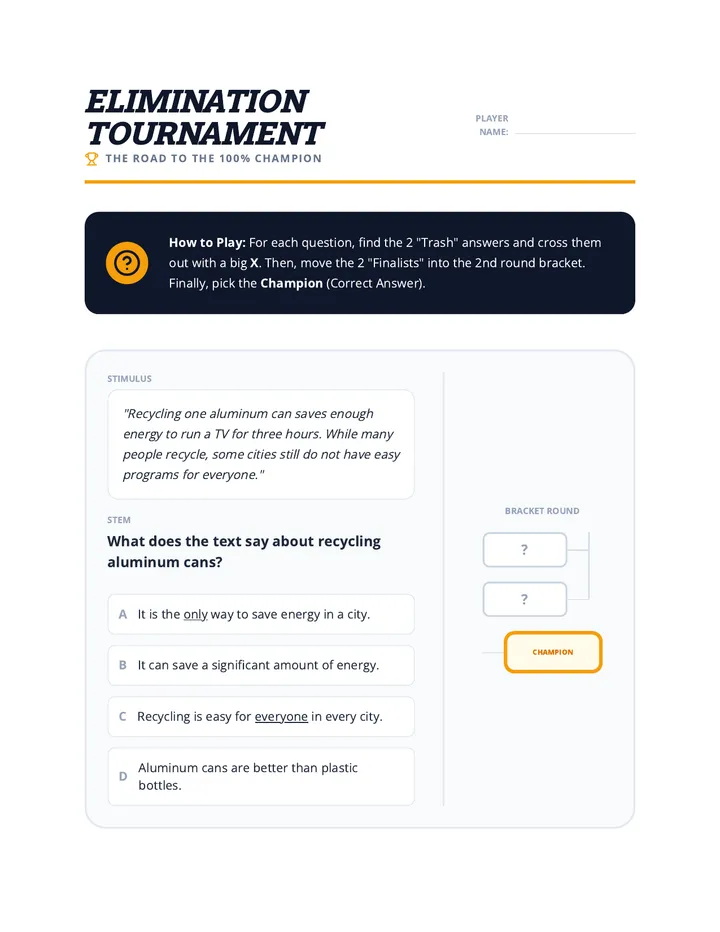
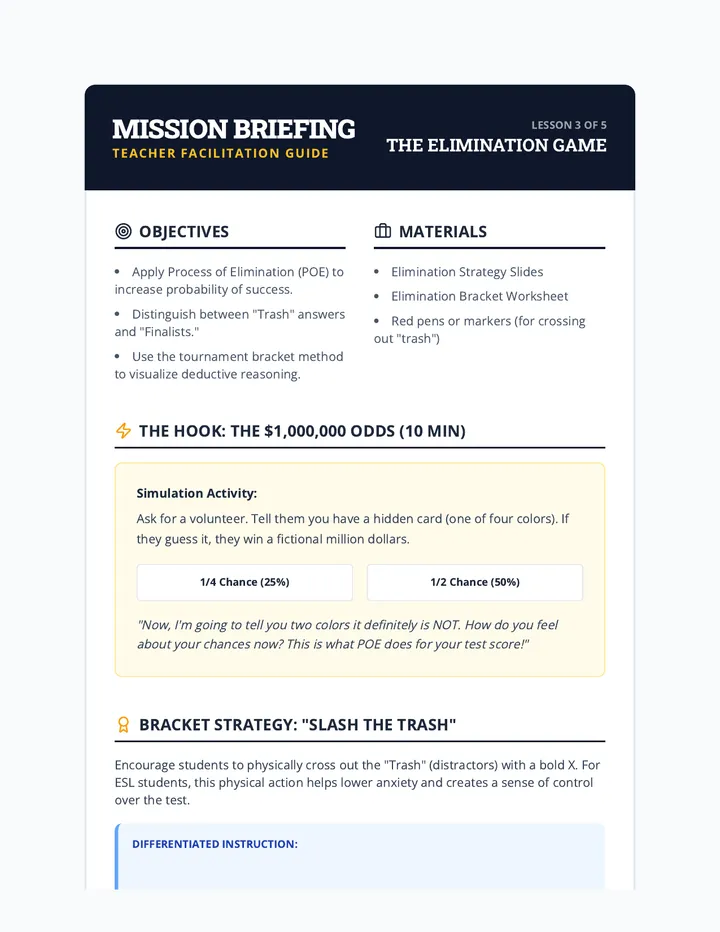
Students practice the physical and mental habit of crossing out clearly wrong answers to increase their probability of success. The lesson focuses on narrowing choices down to two options and using text evidence to make the final selection.
A 5-lesson sequence for 2nd Grade ESL students focusing on the precise academic language needed for scientific observation, classification, and description. Students move from basic sensory adjectives to sophisticated properties of materials and comparative analysis.
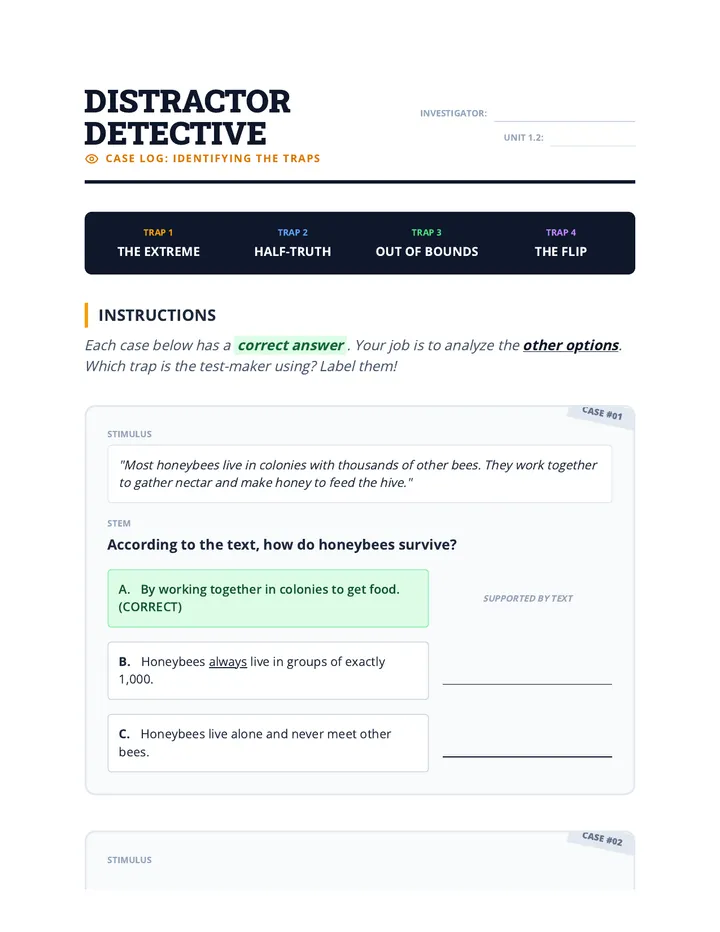
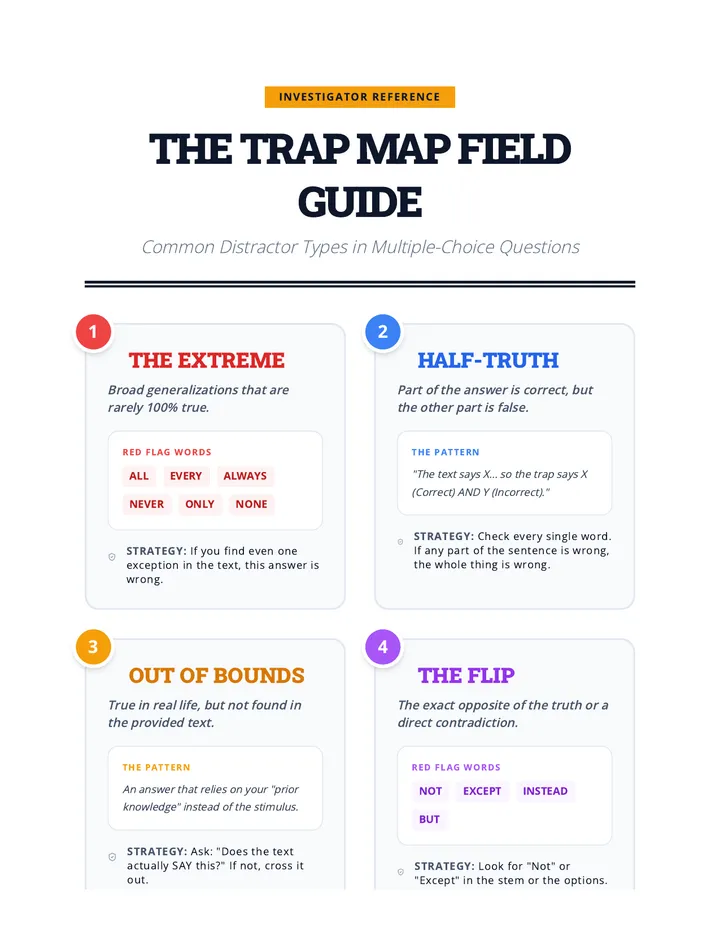
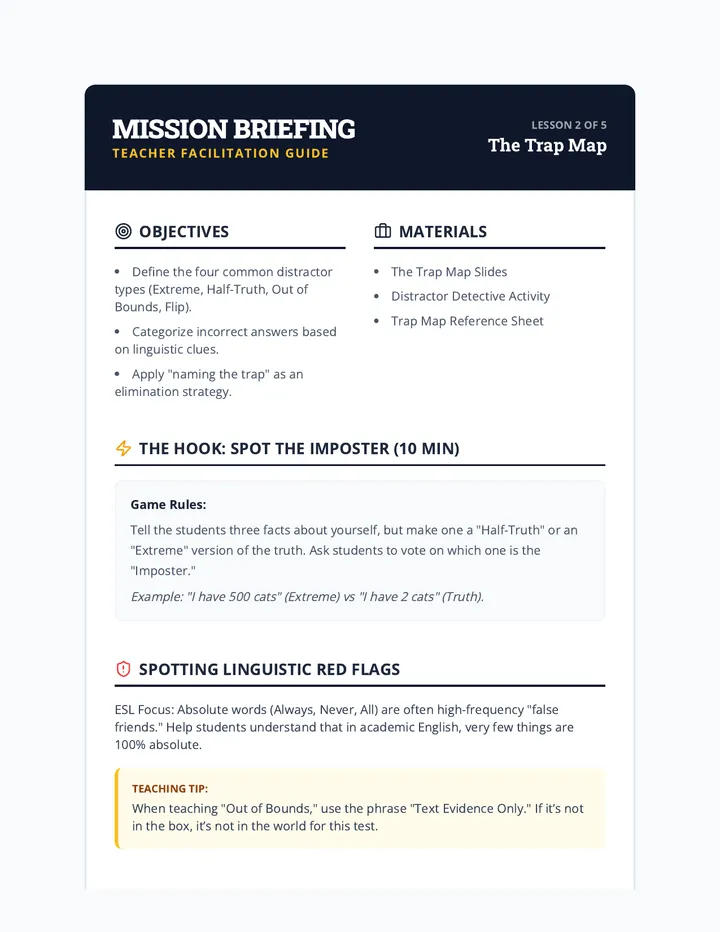
This lesson categorizes common types of wrong answers, such as 'too extreme,' 'partially true,' or 'irrelevant info.' Students label incorrect answers in sample questions with these categories.
A 2nd-grade ESL sequence focused on transition words, past-tense verbs, and comparative language to help students sequence events and describe historical changes. Students move from daily routines to community history and final narrative projects.
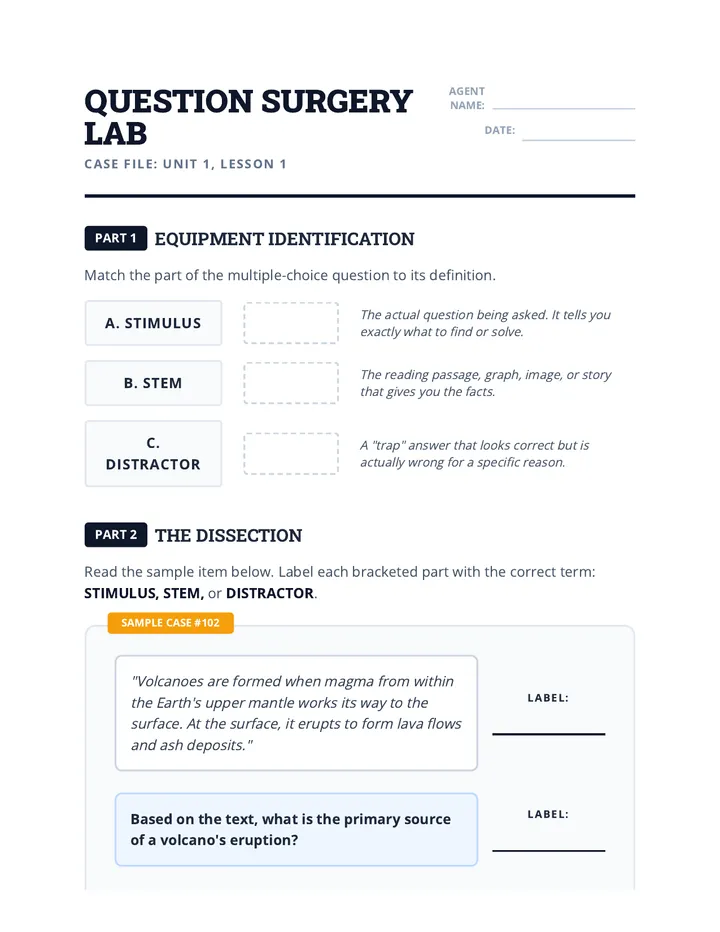
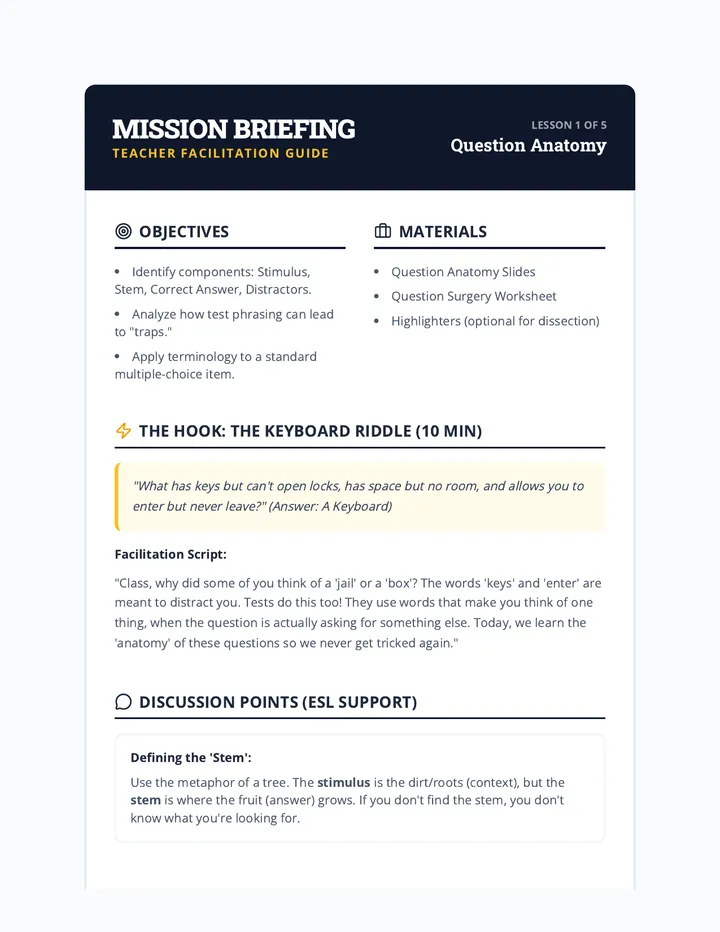
Students break down the components of a test item: the stimulus, the stem (question), the correct answer, and the distractors. They learn to identify what the stem is actually asking before looking at the options.
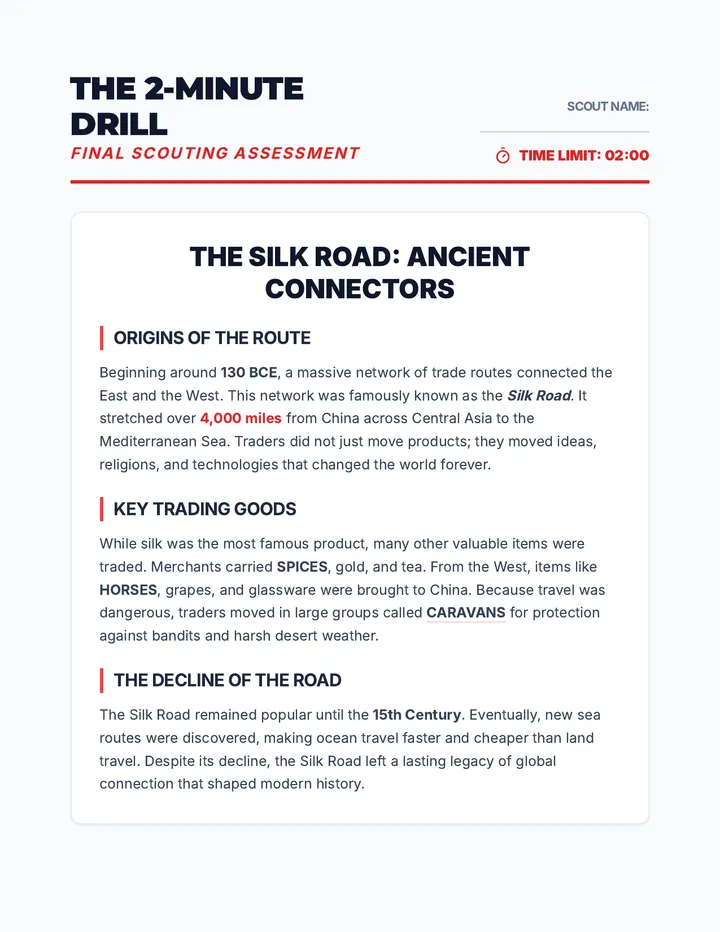
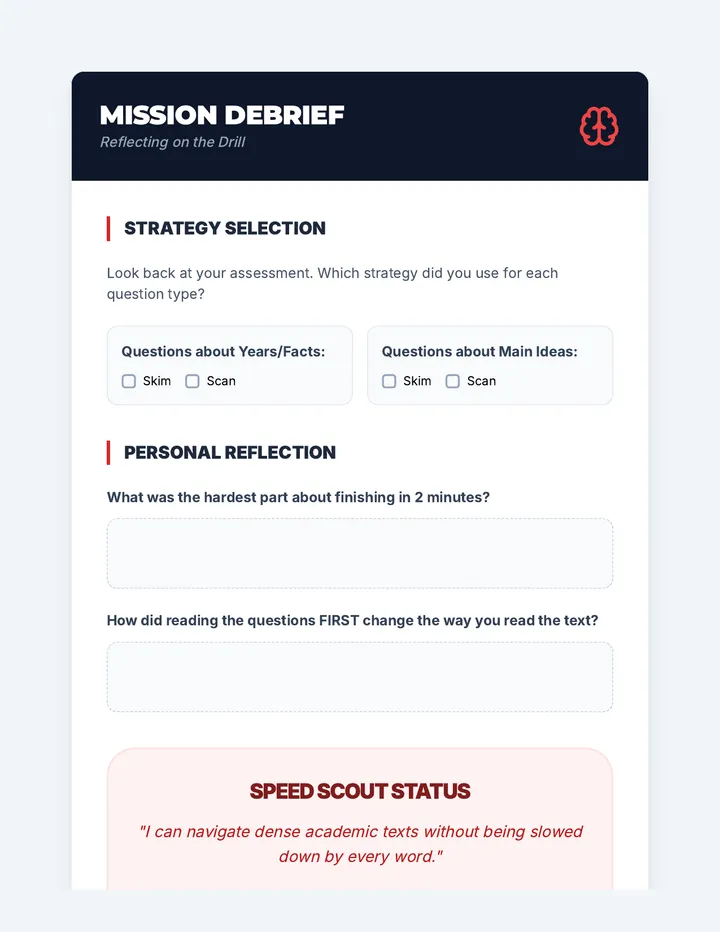
A culminating simulation where students apply their skimming and scanning skills to a timed reading comprehension challenge, followed by a metacognitive reflection.
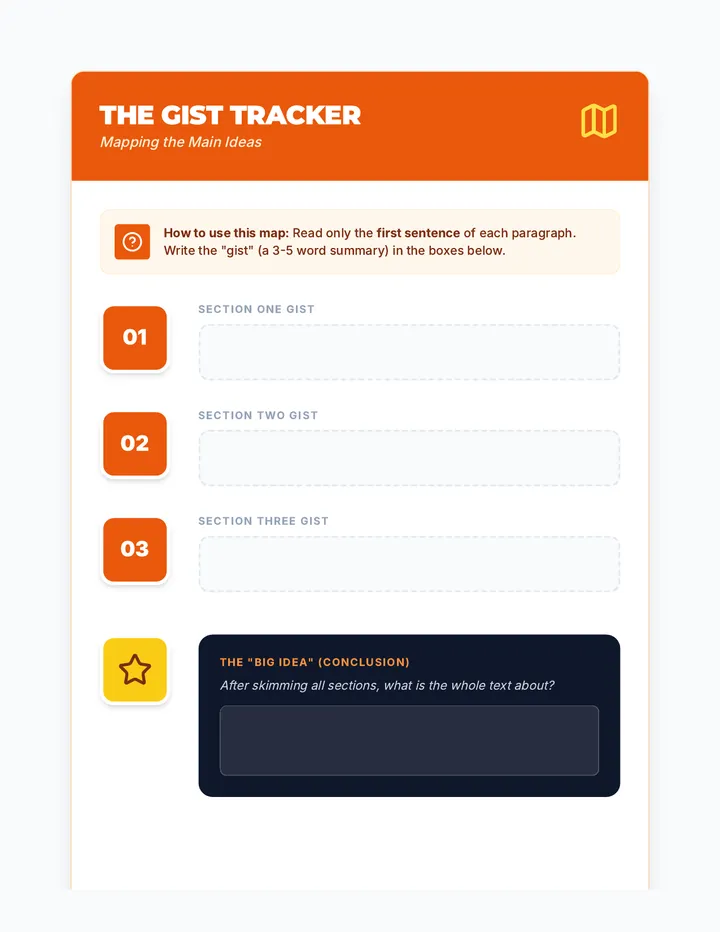
Focuses on the 'first and last' strategy to identify main ideas and topic sentences, allowing students to map out the structure of a text quickly.