A 2nd-grade ESL sequence focused on transition words, past-tense verbs, and comparative language to help students sequence events and describe historical changes. Students move from daily routines to community history and final narrative projects.
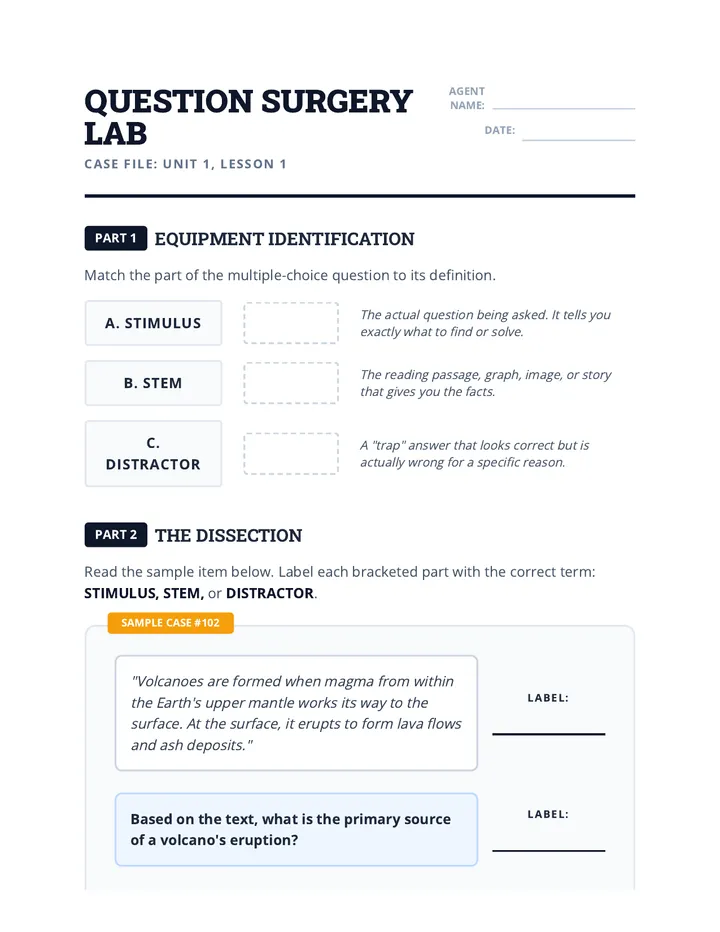
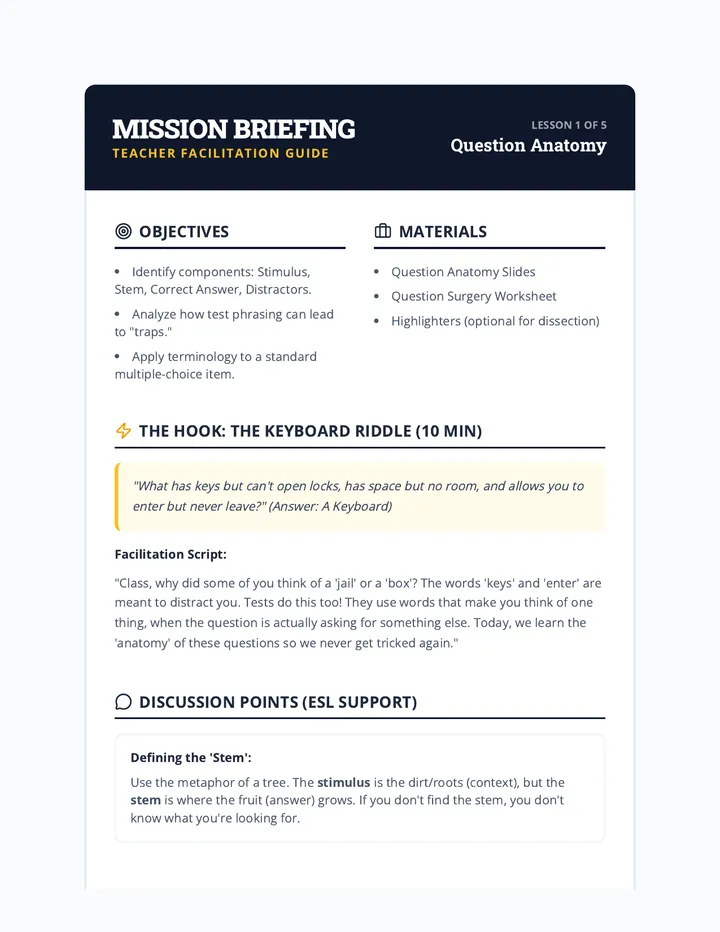
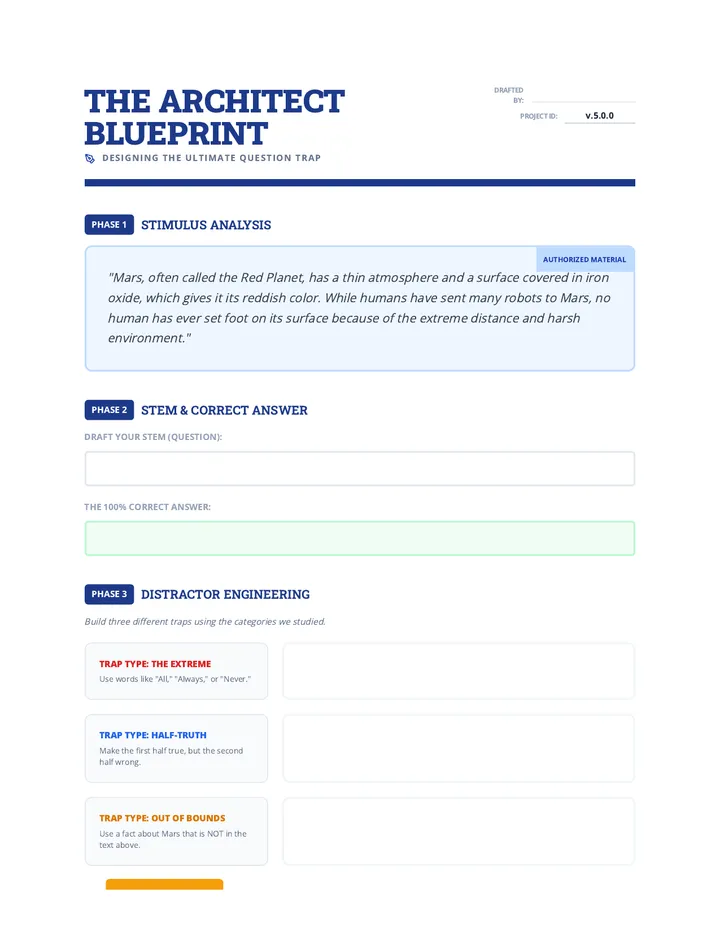
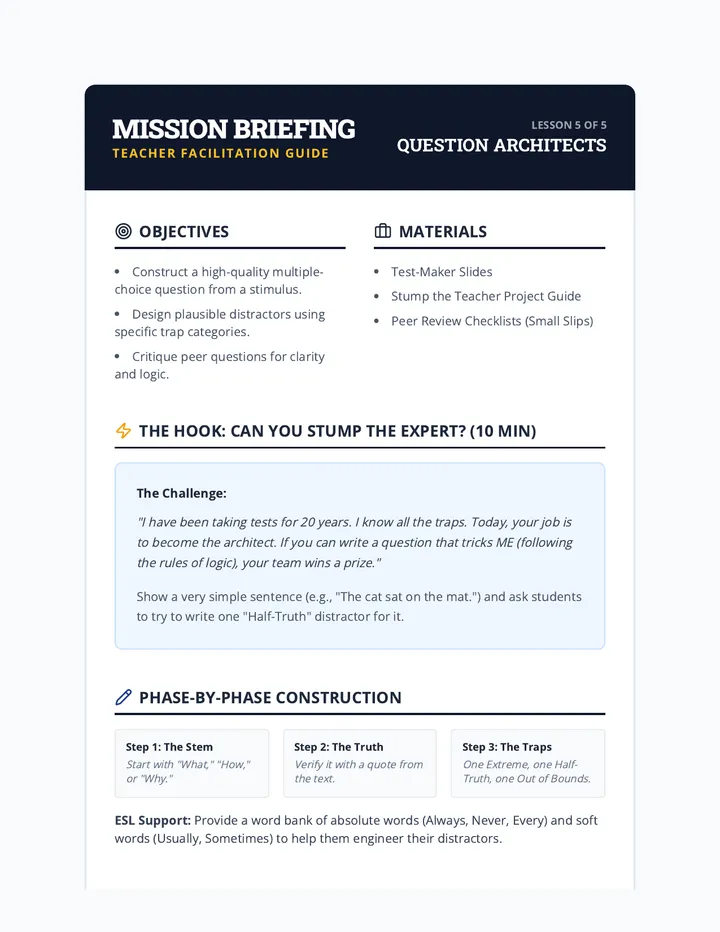
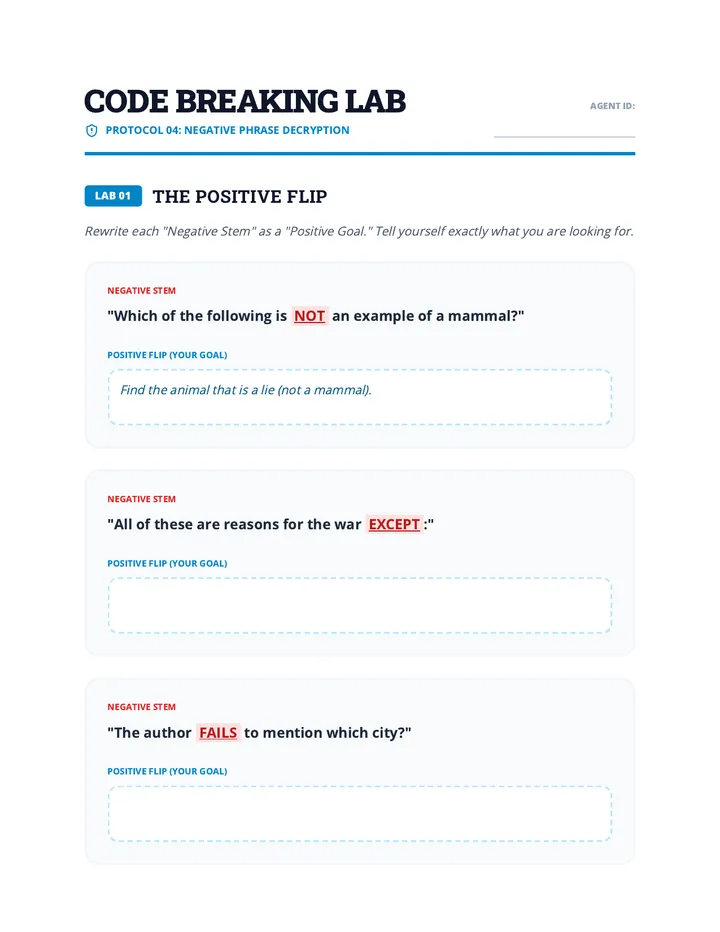
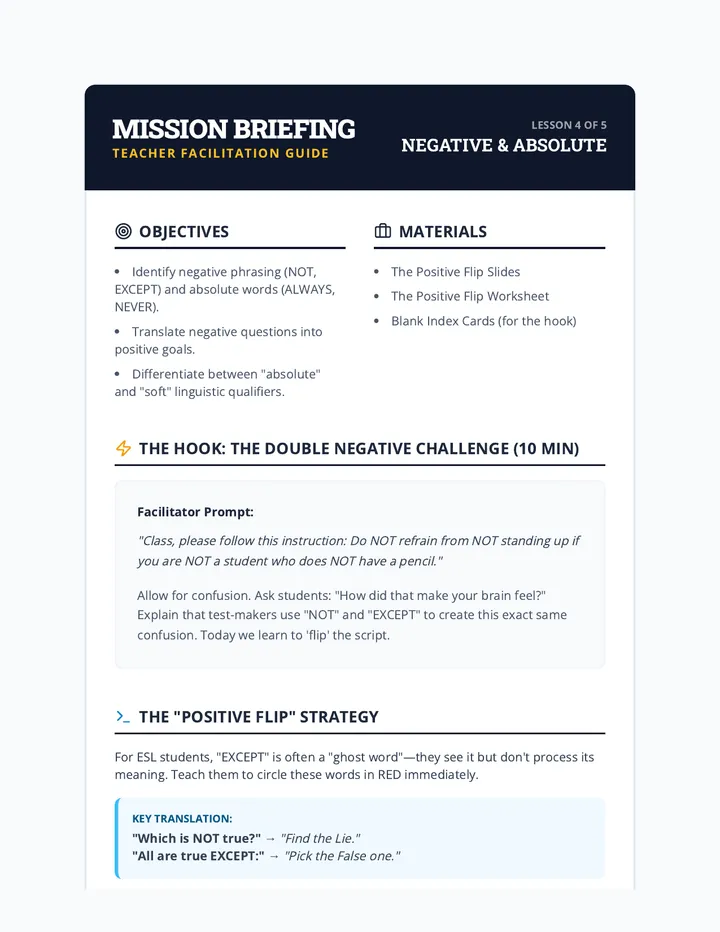
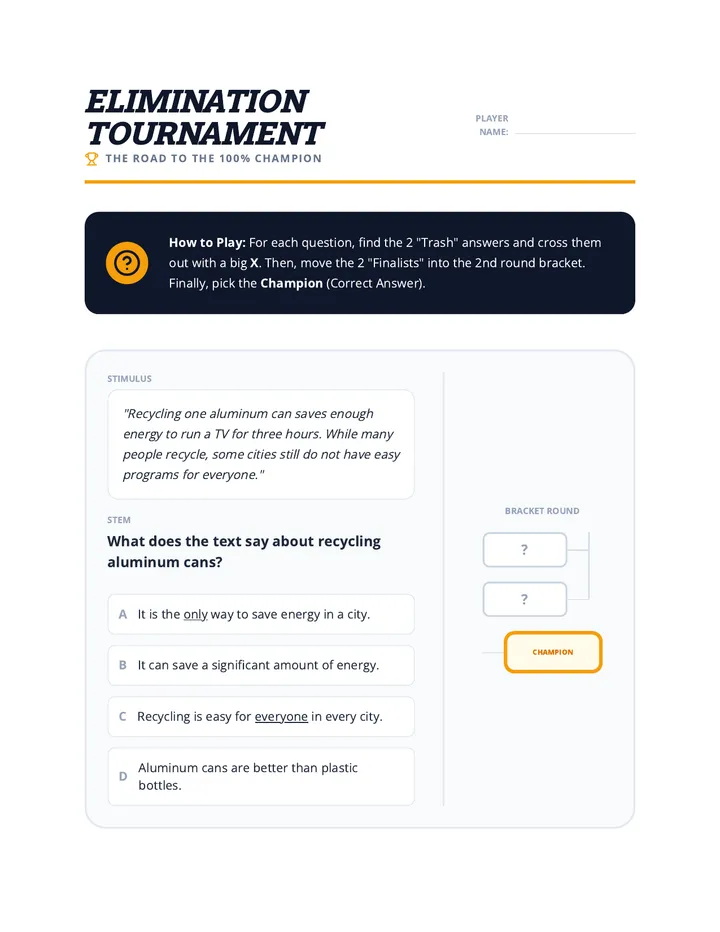
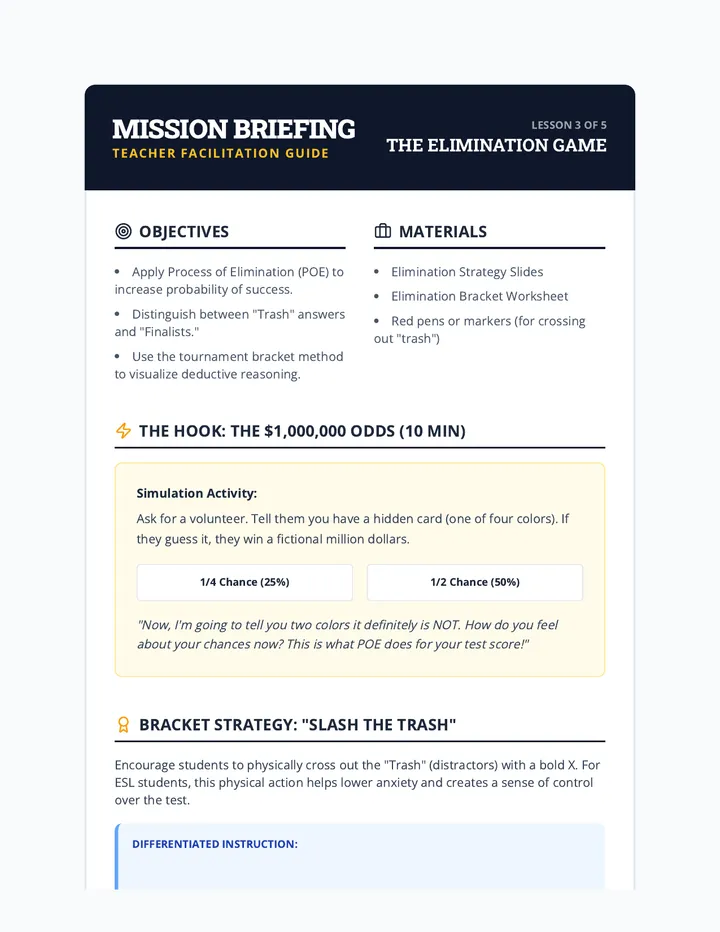
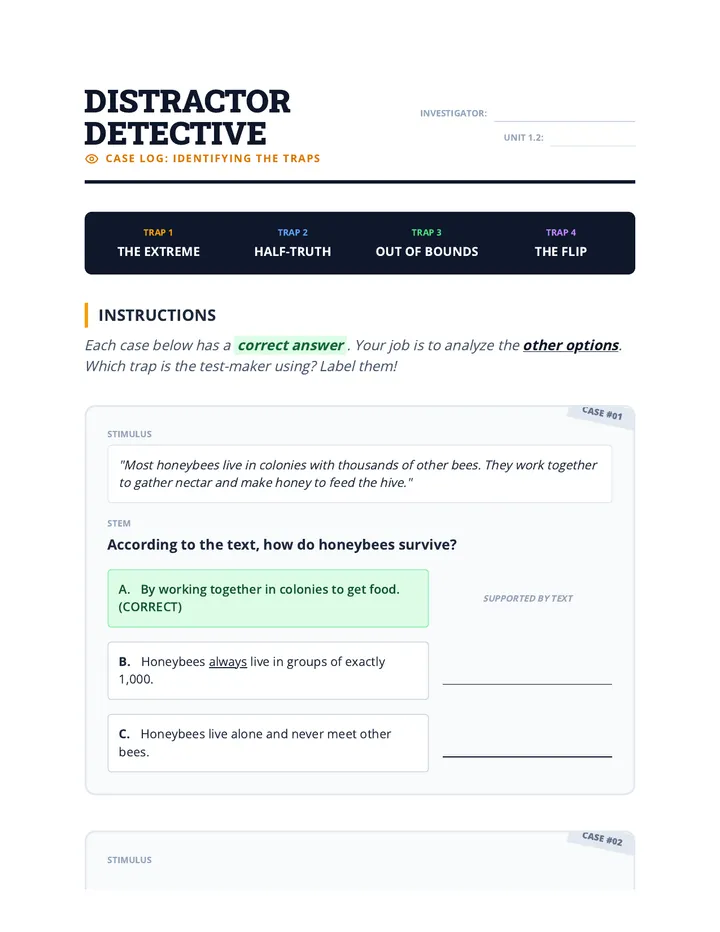
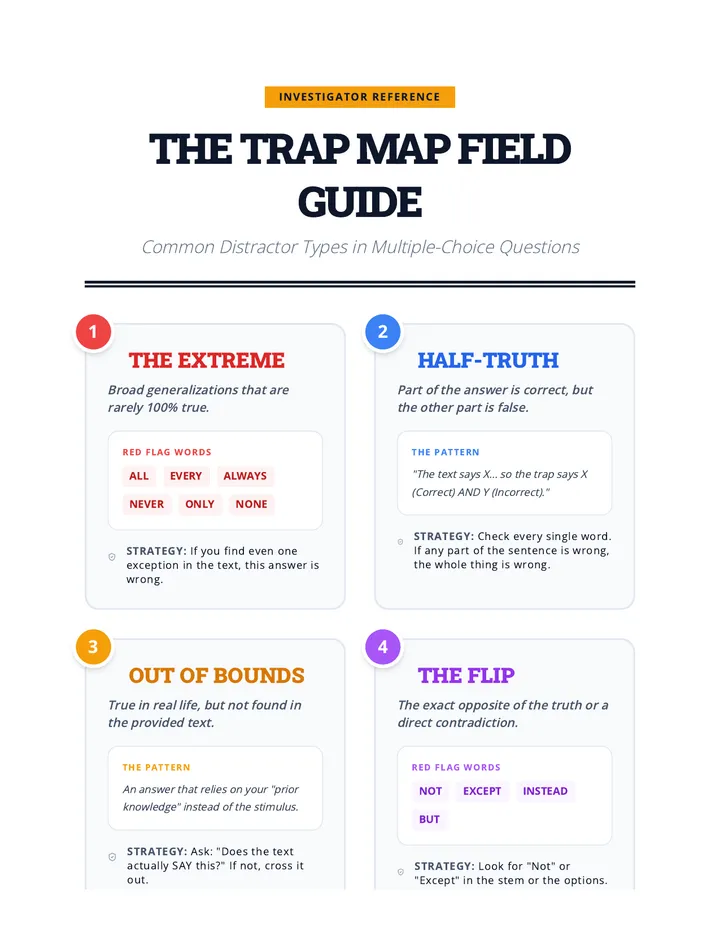
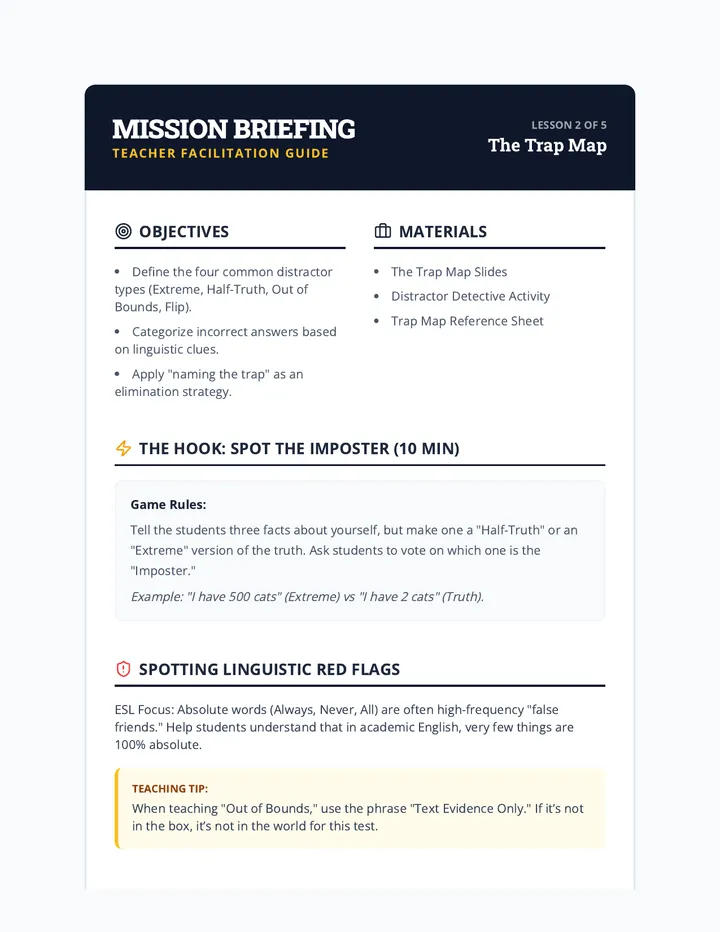
This sequence targets the analytical skills required to dismantle multiple-choice questions for 7th Grade ESL learners. Students move from understanding the anatomy of a question to identifying common logical fallacies and 'trap' answers, utilizing game-based learning and deductive reasoning.
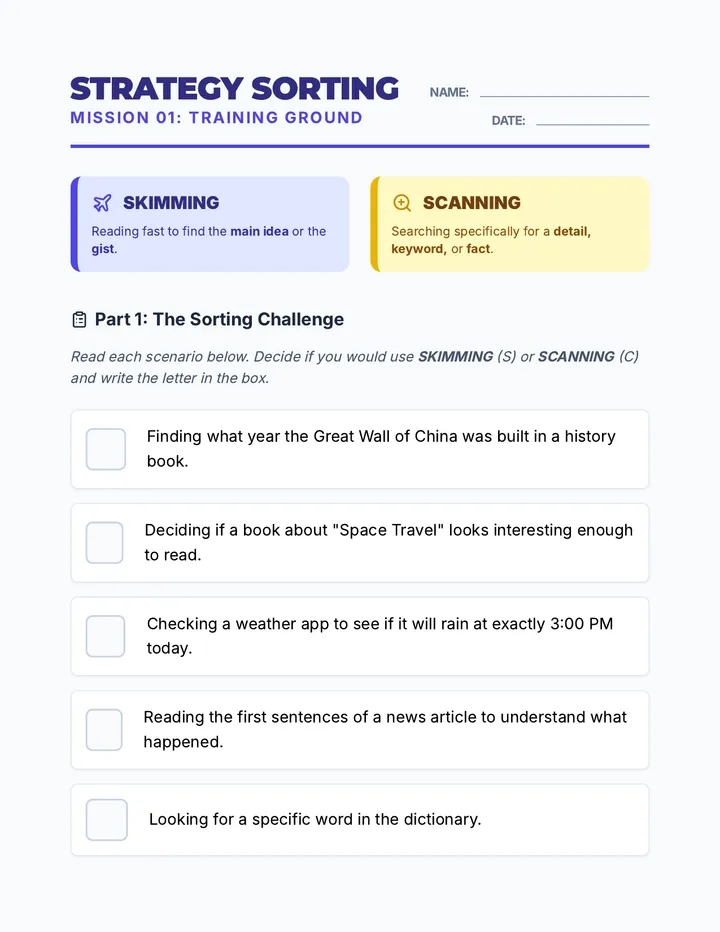
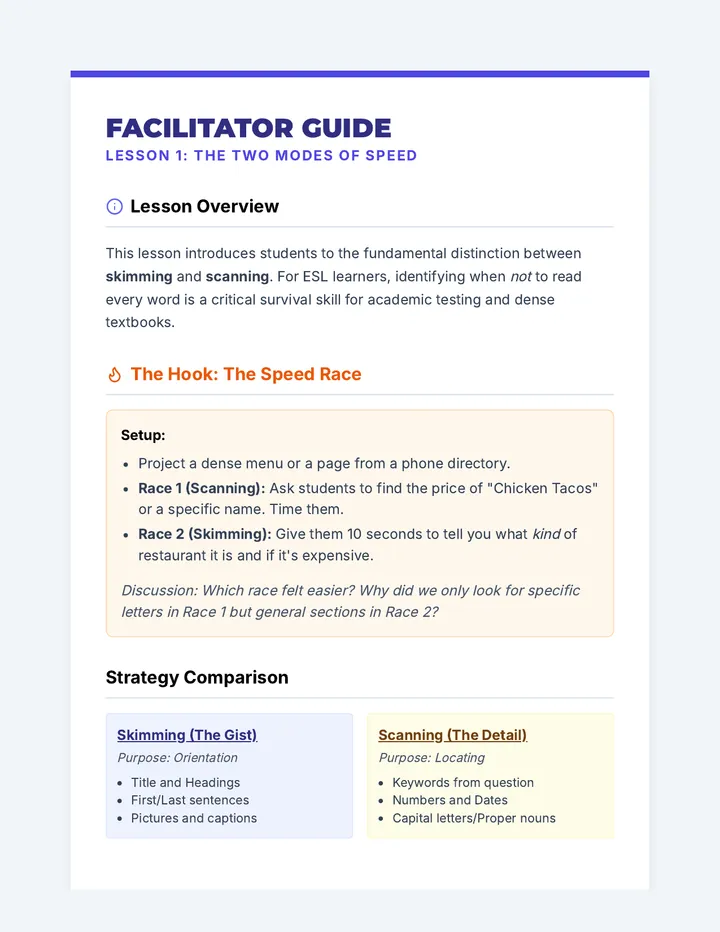
This sequence teaches 6th-grade ESL students the essential test-taking strategies of skimming and scanning. Through a 'Speed Scout' academy theme, students learn to navigate academic texts efficiently, identifying when to look for the 'gist' versus specific details to save time and improve accuracy on standardized tests.
A 2nd-grade ESL sequence focused on academic discourse, teaching students to state opinions, cite evidence, and engage in respectful debate using structured sentence frames.
A 5-lesson sequence for 2nd Grade ESL students focusing on the precise academic language needed for scientific observation, classification, and description. Students move from basic sensory adjectives to sophisticated properties of materials and comparative analysis.
This sequence targets the mathematical vocabulary required for comparing quantities and describing spatial relationships for 2nd grade ESL students. It integrates movement and manipulatives to help students internalize language for math discourse.
A 5-lesson sequence for 2nd Grade ESL students to master academic language for expressing cause-and-effect relationships in science through hands-on inquiry and scaffolded writing.
A multi-sensory, color-coded approach to reading comprehension. Students learn to systematically deconstruct informational texts using a tri-color system: green for main ideas, yellow for supporting details, and red for unknown vocabulary.
A sequence for intermediate ESL students to master complex sentence structures in oral storytelling. Students transition from choppy, simple sentences to fluid narratives using conjunctions, transitions, and relative clauses.
This sequence strengthens sentence complexity by introducing Relative Clauses with 'who', 'which', and 'that'. Students move beyond simple sentences to compound descriptions that identify specific people or objects through games and creative writing.
This sequence utilizes sketching as a concrete scaffold for students who struggle to hold images in their working memory. Known as 'Sketch-to-Stretch,' this approach allows students to externalize their thinking immediately after reading small chunks of text. By drawing what they read, students can self-monitor for understanding; if they cannot draw it, they likely did not comprehend it.
A 2nd-grade sequence designed for students needing academic support to master making inferences. It utilizes the 'Inference Equation' (Text Clues + Schema = Inference) through a detective-themed investigation structure, breaking down complex cognitive processes into manageable steps.
This sequence explores the relationship between articles and noun countability. Students distinguish between count and non-count nouns and learn the rules for using 'a', 'an', 'some', or no article, culminating in a market simulation.
A 5-lesson sequence for 2nd grade students focused on identifying central messages and themes in traditional literature. Students move from distinguishing between a topic and a theme to citing text evidence and comparing themes across cultures.