Introductory slides for Lesson 4, visually explaining how speakers use loaded language and emphatic stress to signal bias.
A comprehensive workshop-style unit for 6th Grade ESL students focused on the linguistic mechanics of paraphrasing and synthesizing information. Students move from identifying core concepts to orally retelling information, transforming individual sentences, and finally weaving multiple sources into a single coherent paragraph without plagiarizing.
The capstone activity where students combine information from two different sources into a single, logically organized paragraph.
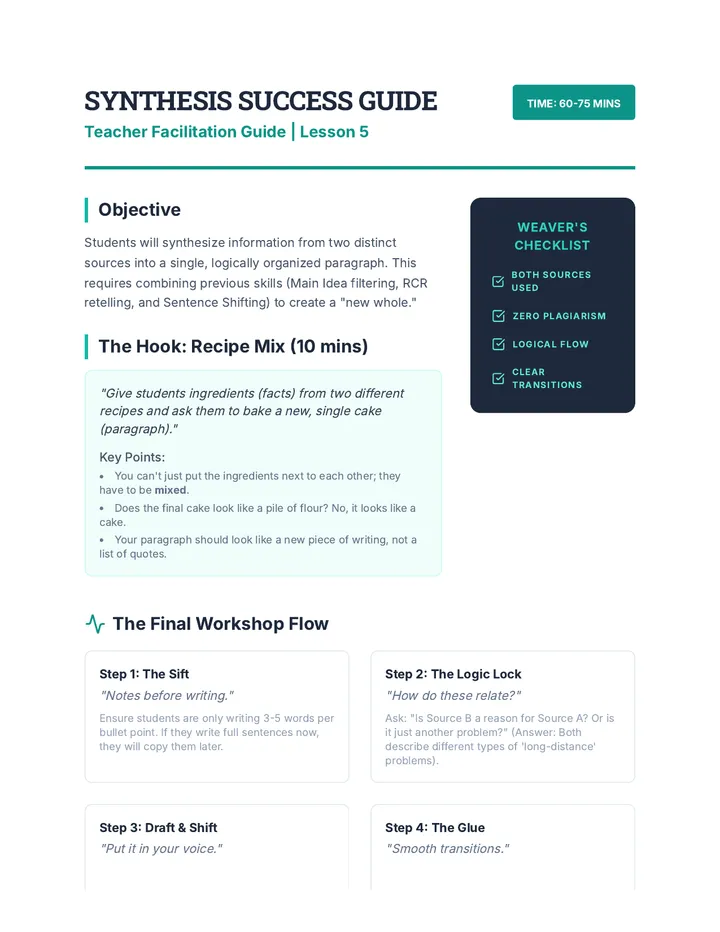
Teacher guide for "The Source Weaver" lesson. It outlines the synthesis process, provides a hook activity, transition words for ESL support, and a sample synthesized paragraph.
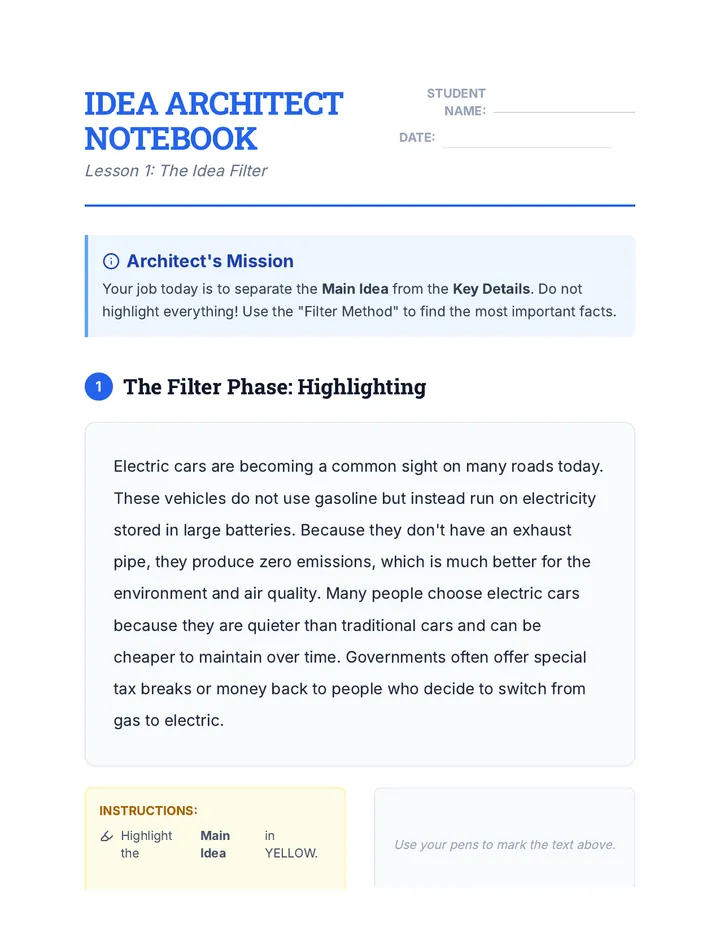
A comprehensive 5-lesson sequence designed for 7th-grade ESL students to master the art of synthesizing information. Students progress from organizing raw research notes to writing sophisticated, cohesive academic paragraphs using evidence from multiple sources.
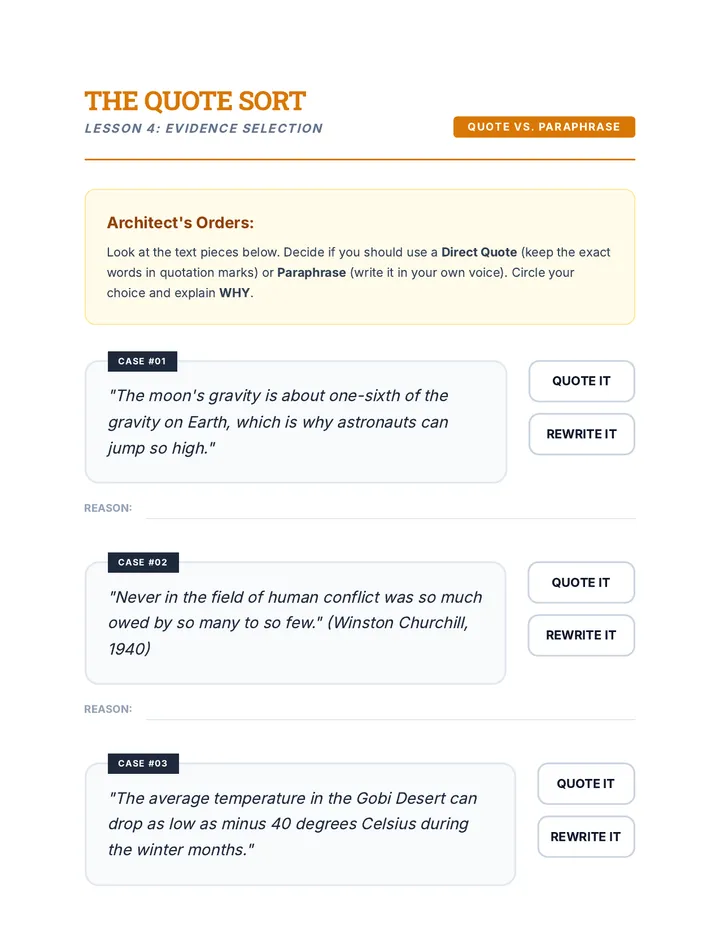
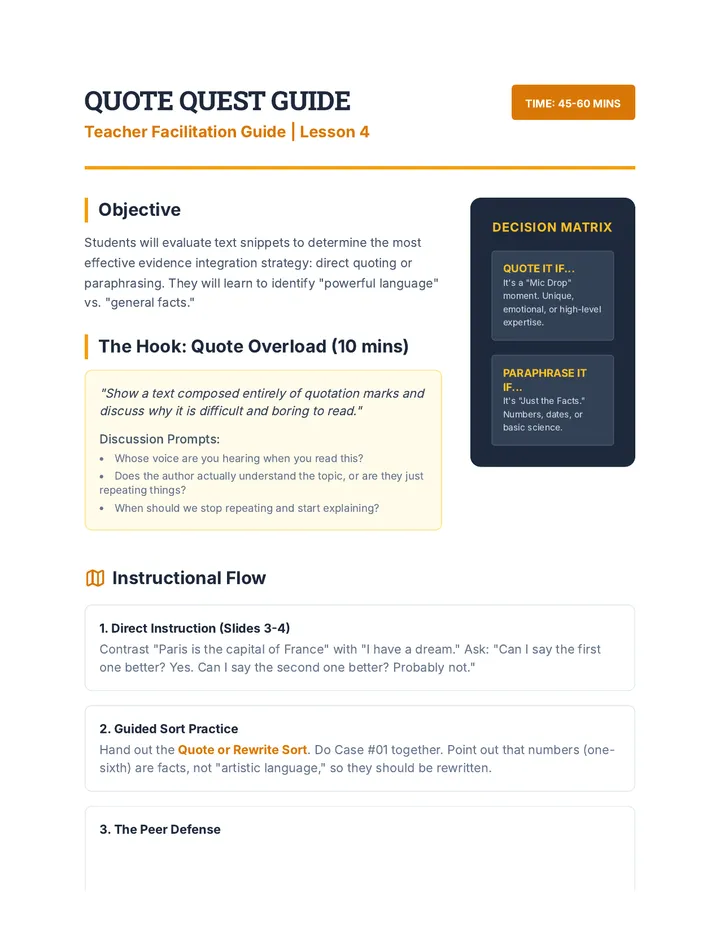
Distinguishes between when to use direct quotes for impact and when to paraphrase for factual clarity.
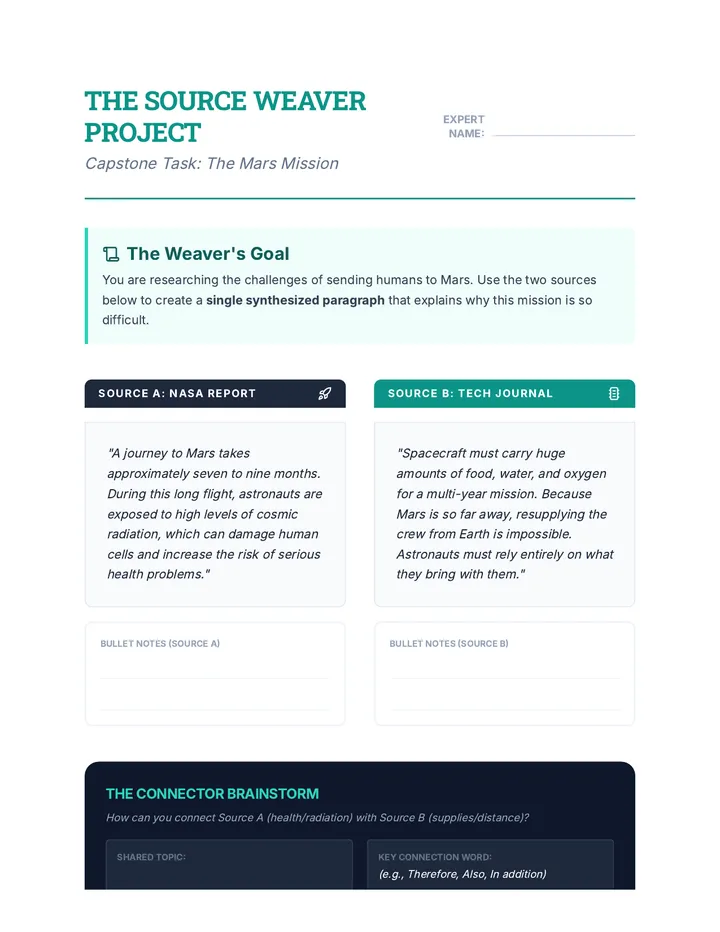
Capstone student project for "The Source Weaver" lesson. Students analyze two short texts about Mars, take notes, and synthesize the information into a single coherent paragraph using their own vocabulary and sentence structures.
A comprehensive sequence for 8th-grade ESL students to master information literacy. Students progress from identifying bias and evaluating source credibility to performing advanced searches and ethically synthesizing research with proper MLA citations.
Guided practice in rewriting sentences using synonyms and grammatical shifts, such as changing active to passive voice, while maintaining original meaning.
Visual slides for "The Source Weaver" lesson. These slides introduce students to the concept of synthesis as connecting ideas from multiple sources to create a new, coherent whole.
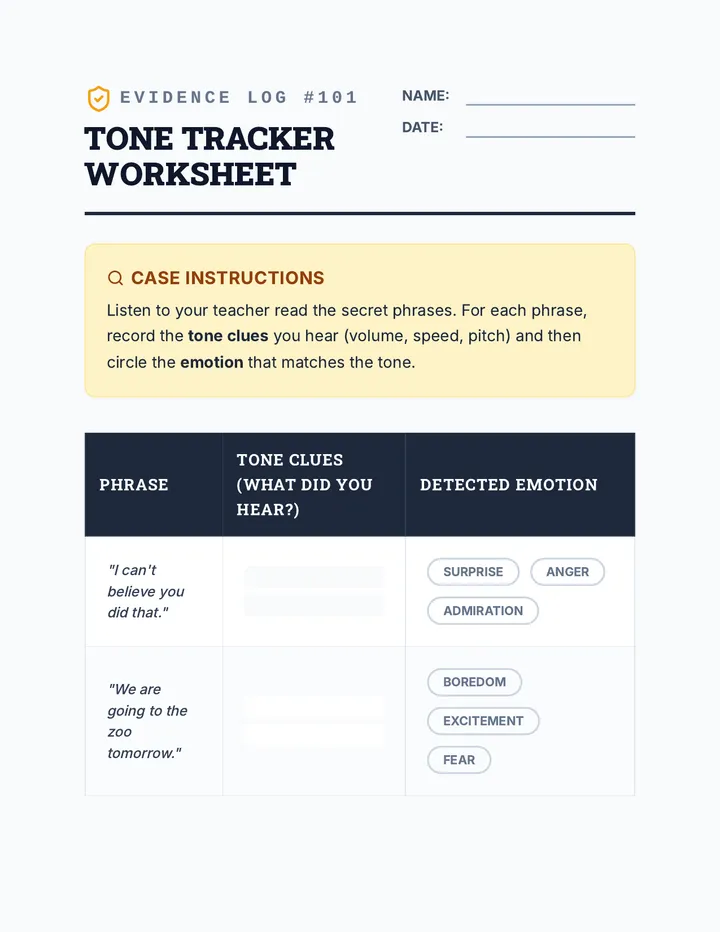
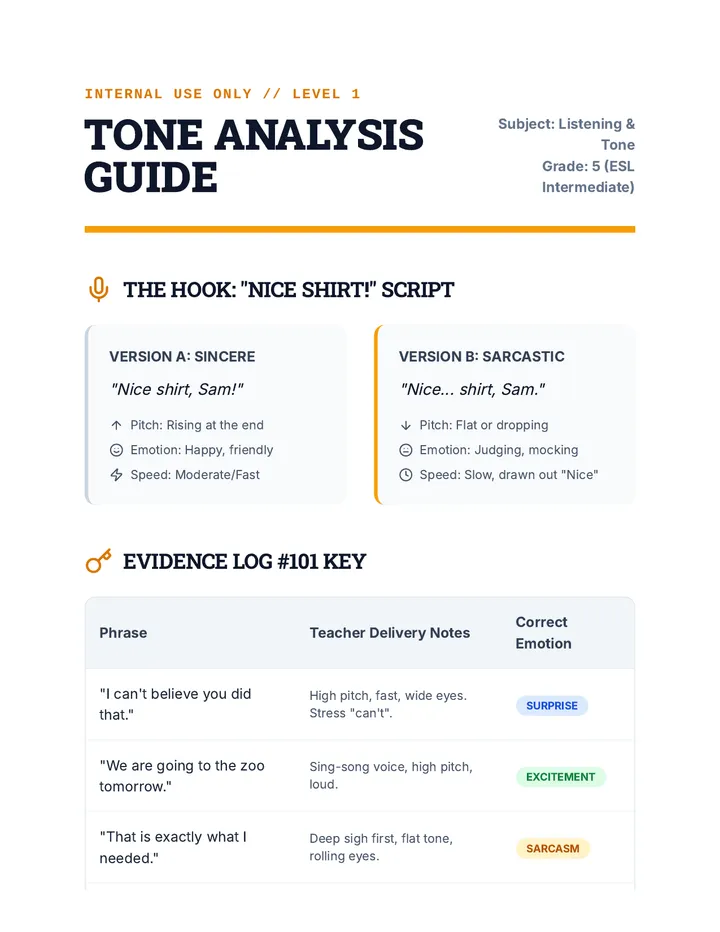
An intermediate ESL sequence where students act as 'communication detectives' to analyze tone, idioms, exaggeration, and speaker intent in spoken English. The sequence culminates in a mystery simulation requiring students to synthesize all listening skills to solve a case.
Focuses on the 'Read, Cover, Recite' method to separate conceptual understanding from the original text's linguistic structure through oral retelling.
Teacher guide for "Quote Quest" lesson. It outlines the decision-making criteria for quoting vs. paraphrasing, provides instructional steps, and includes an answer key for the sorting activity.