Student worksheet for Lesson 3, practicing cause-effect relationship identification with "Story Dominoes" and box-and-arrow organizers.
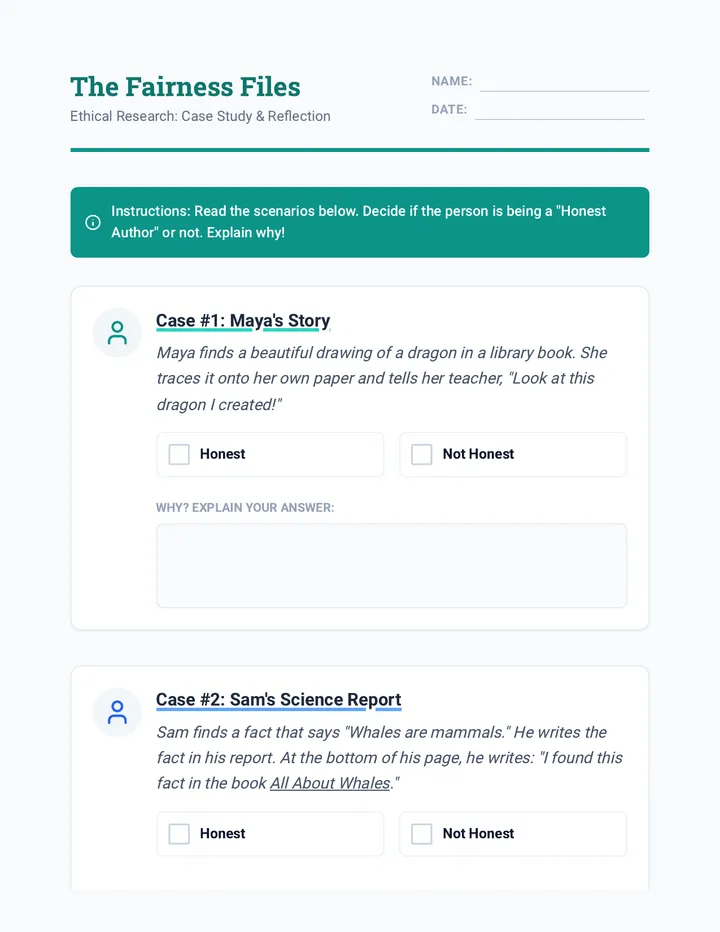
This 3rd-grade ESL sequence teaches students the foundations of academic integrity, focusing on why and how to give credit to authors. Students learn to locate bibliographic information, format simple citations, and synthesize research notes into a final product with a proper source list.
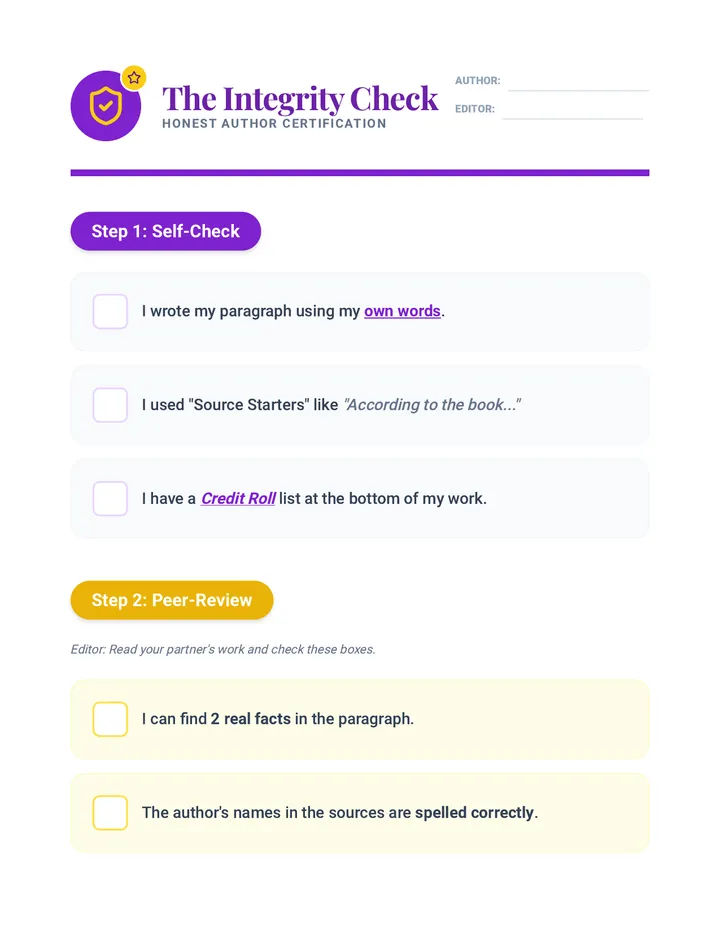
In the final phase, students use an 'Integrity Checklist' to peer-review their work for originality, accuracy, and proper sourcing.
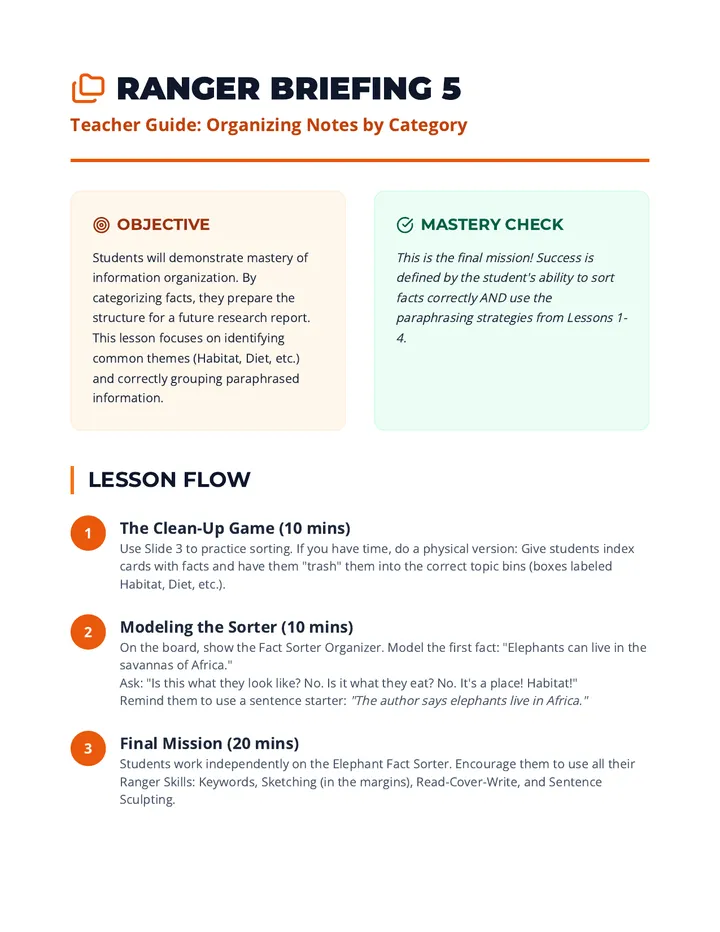
Teacher guide for Lesson 5. Features category sorting challenges, instructional tips for using graphic organizers, and a summary of the Research Ranger sequence.
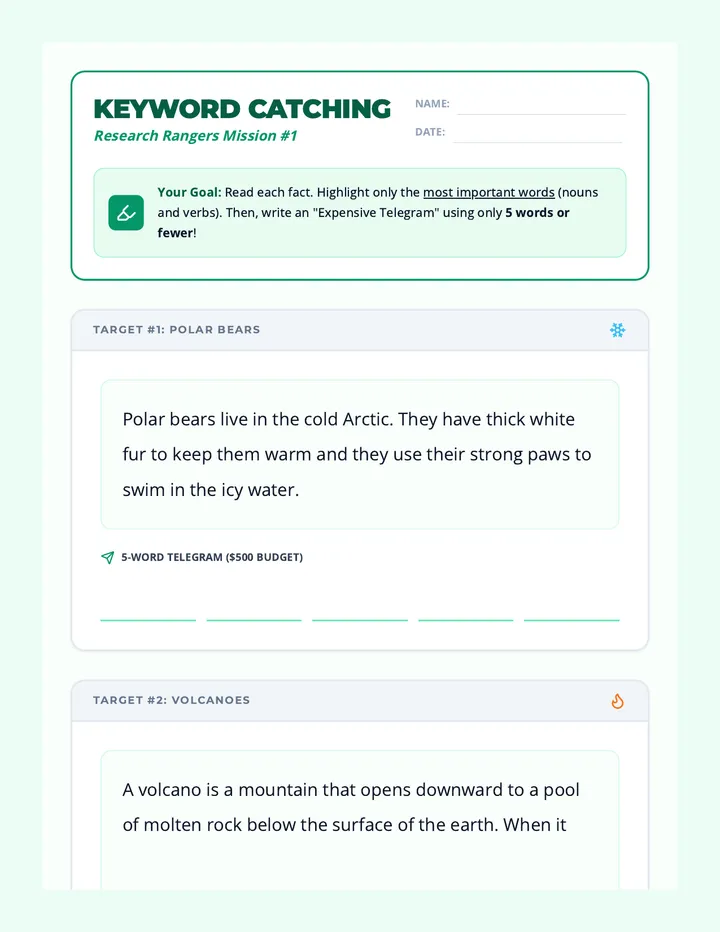
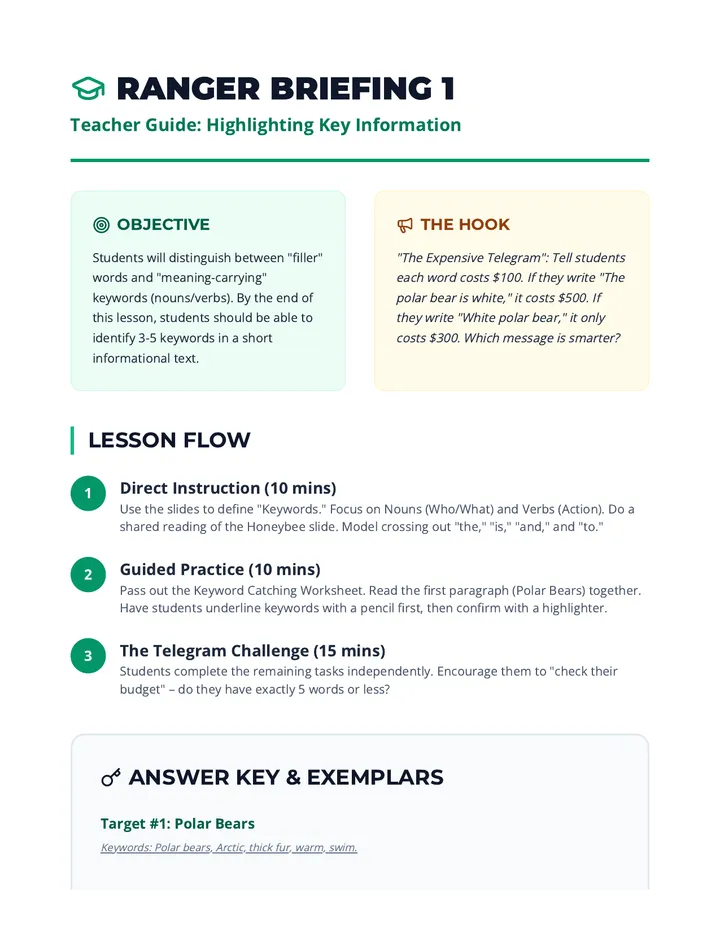
A workshop-style workshop sequence for 3rd grade ESL students focusing on note-taking and paraphrasing. Students learn to extract information without plagiarizing using strategies like keyword highlighting, visual sketching, and the 'Read-Cover-Write' method.
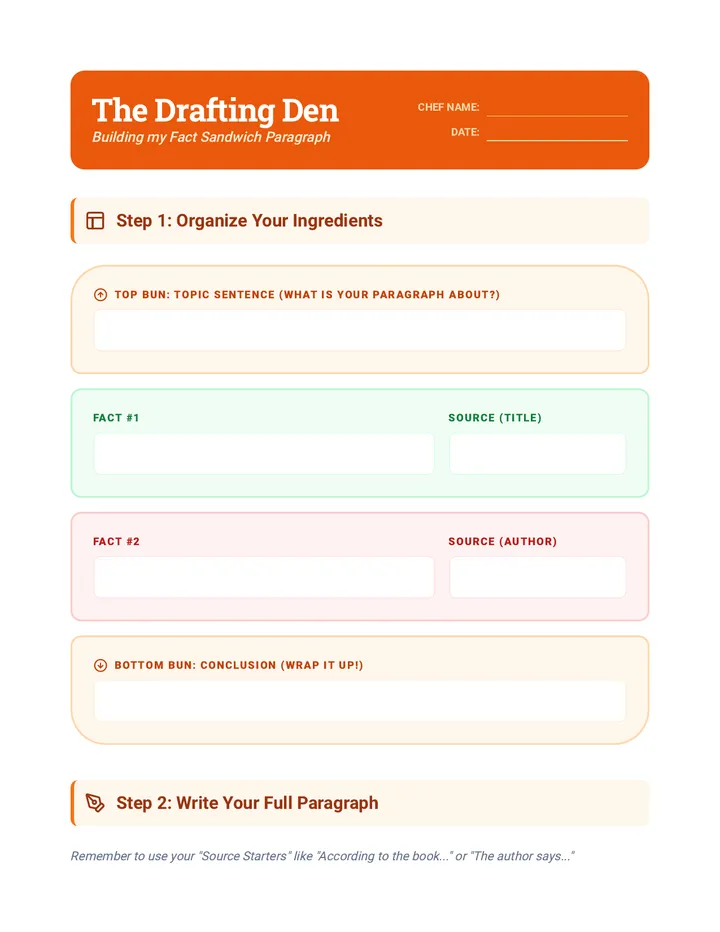
Students combine their research notes into a logical paragraph, using a 'Fact Sandwich' structure to organize their thoughts.
Printable 'Lead Detective' badges to be awarded to students upon completion of the Information Detectives sequence.
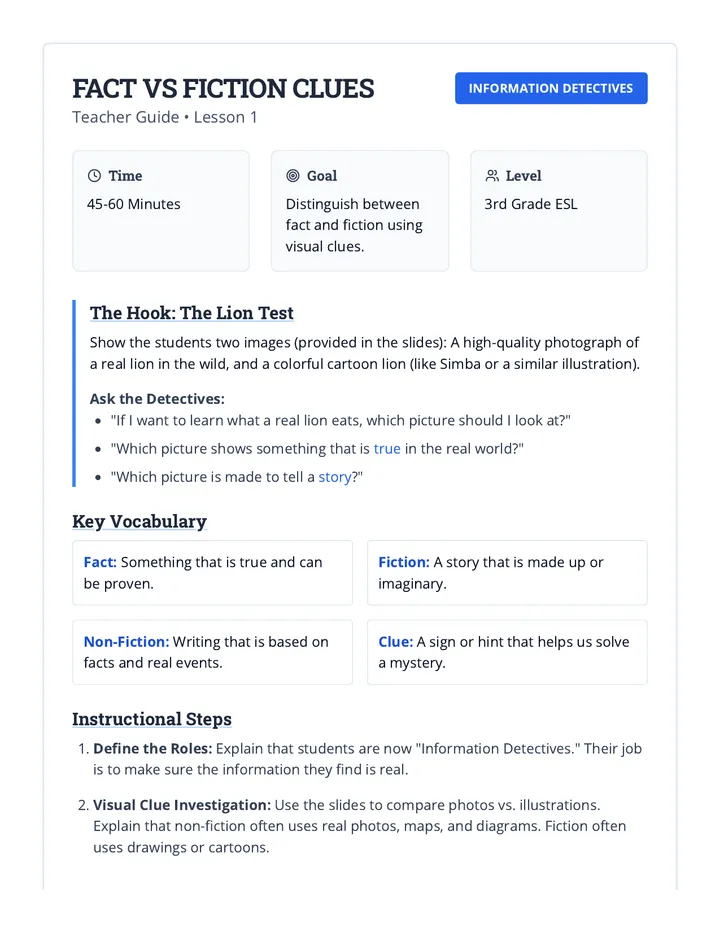
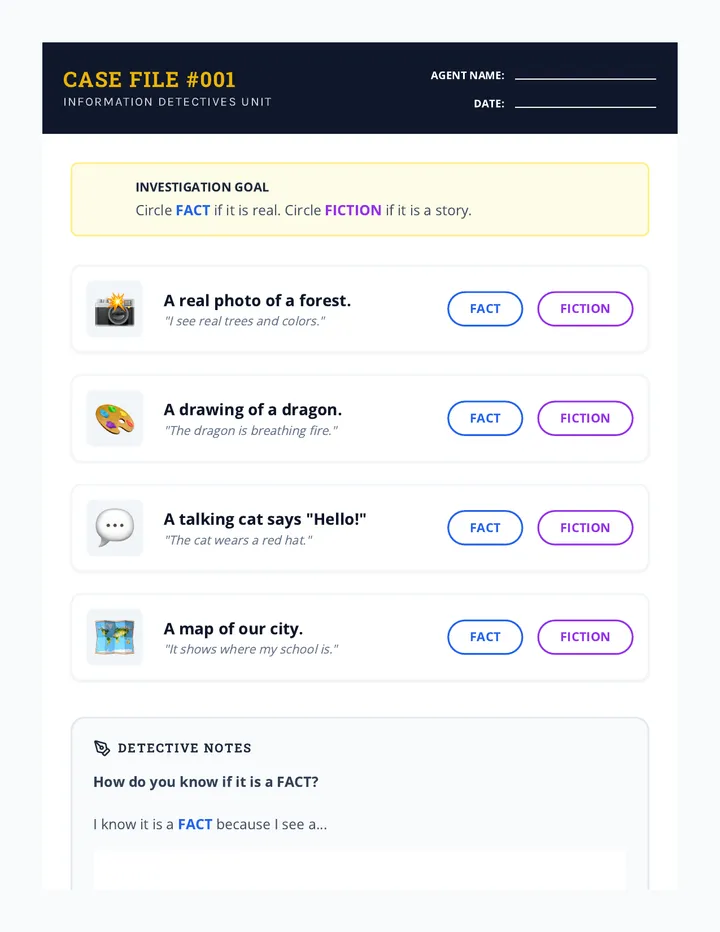
A 5-lesson sequence for 3rd-grade ESL students to learn the basics of source credibility and fact-checking through the lens of 'Information Detectives'. Students learn to distinguish fact from fiction, identify authors, recognize advertisements, and cross-check information.
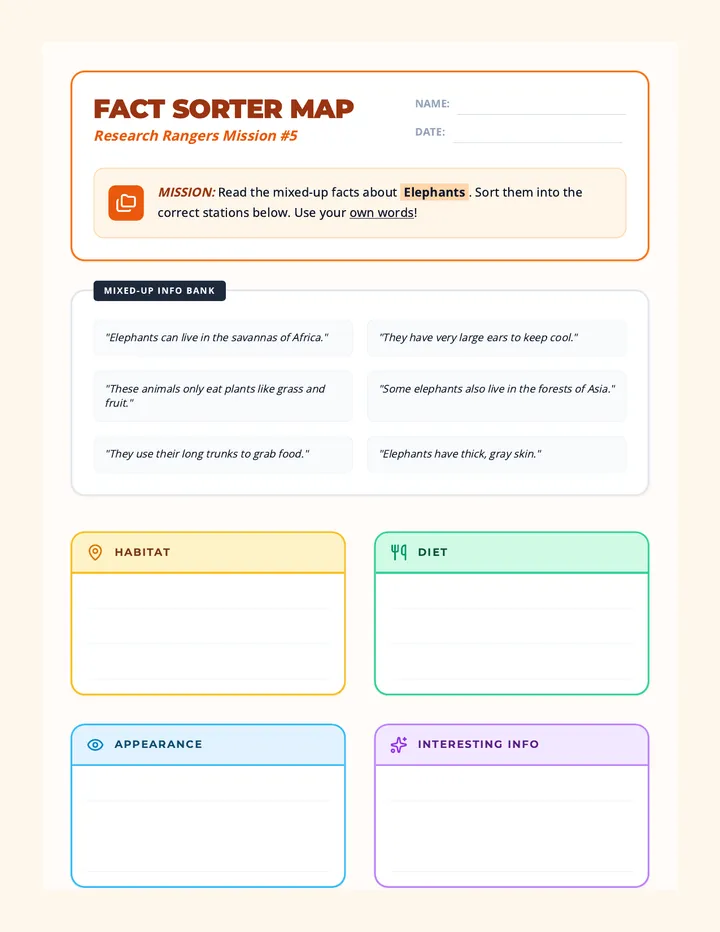
Students organize loose facts into logical categories using a graphic organizer. They learn to group information by topic to prepare for structured writing.
A student graphic organizer for sorting informational facts into categories (Habitat, Diet, Appearance, Interesting Info). Features a bank of elephant facts for sorting practice.