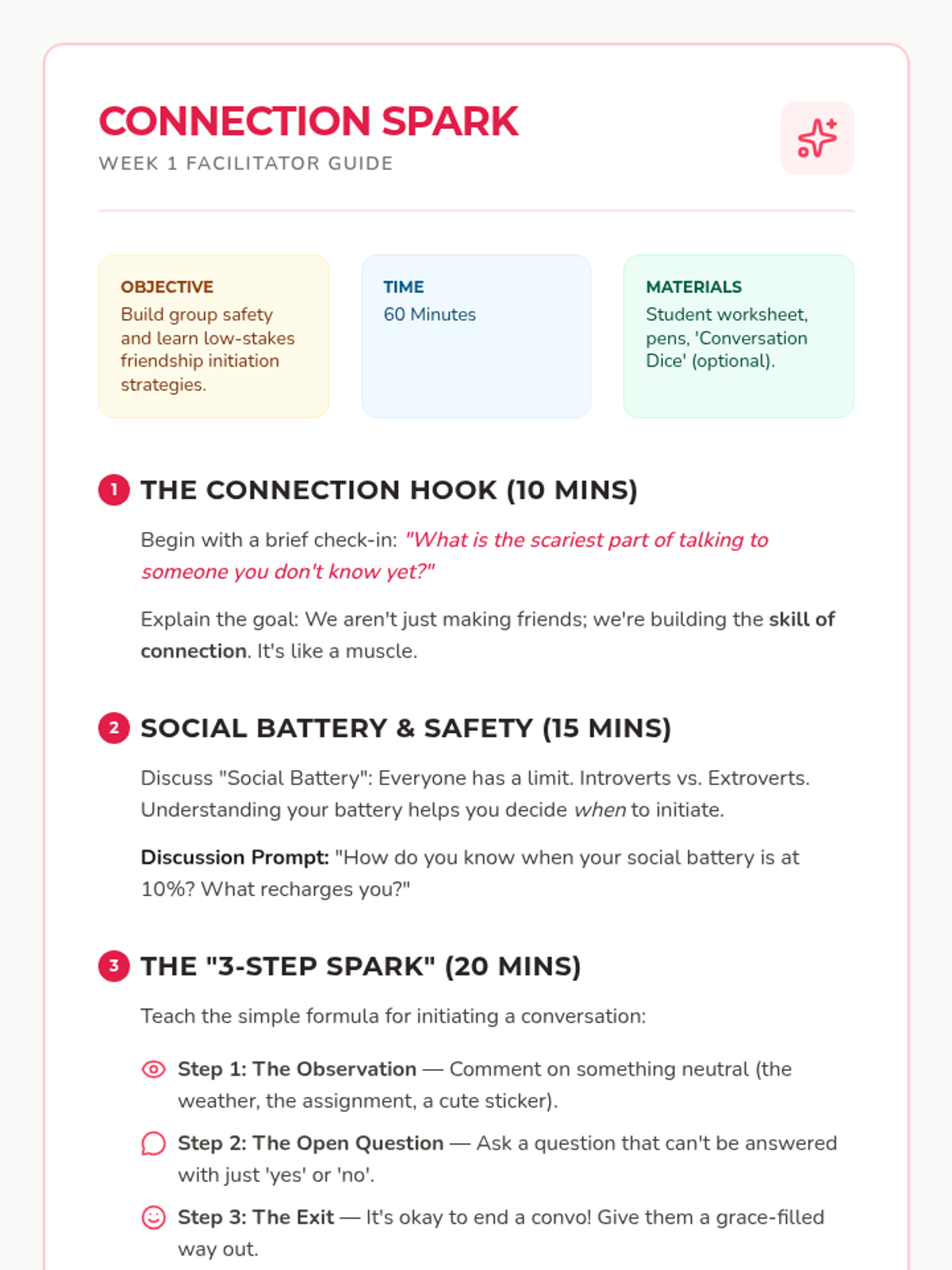
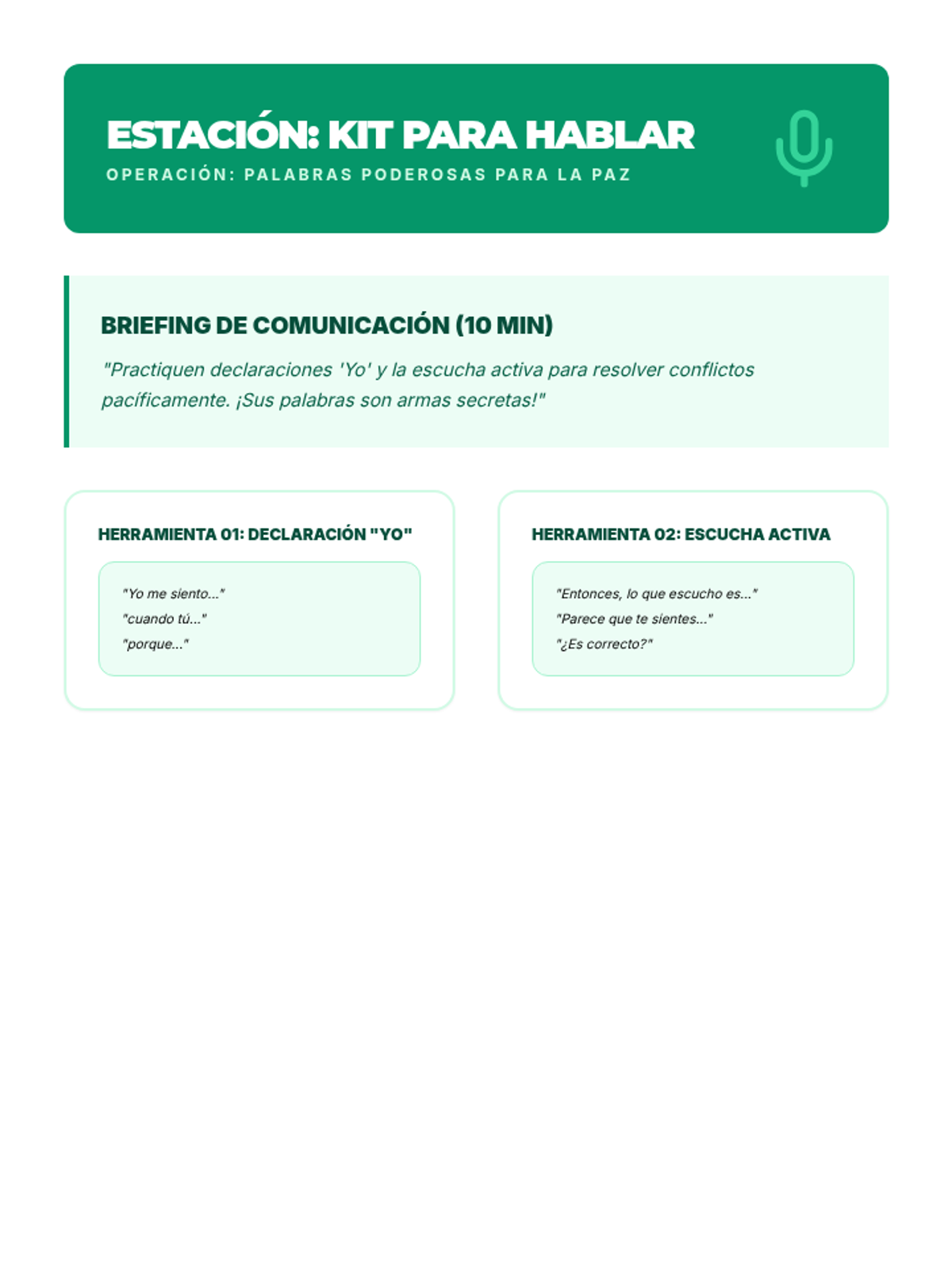
Active listening, assertive expression, and boundary-setting strategies for interpersonal success. Develops proficiency in conflict mediation, cooperative teamwork, and the cultivation of healthy romantic and platonic connections.
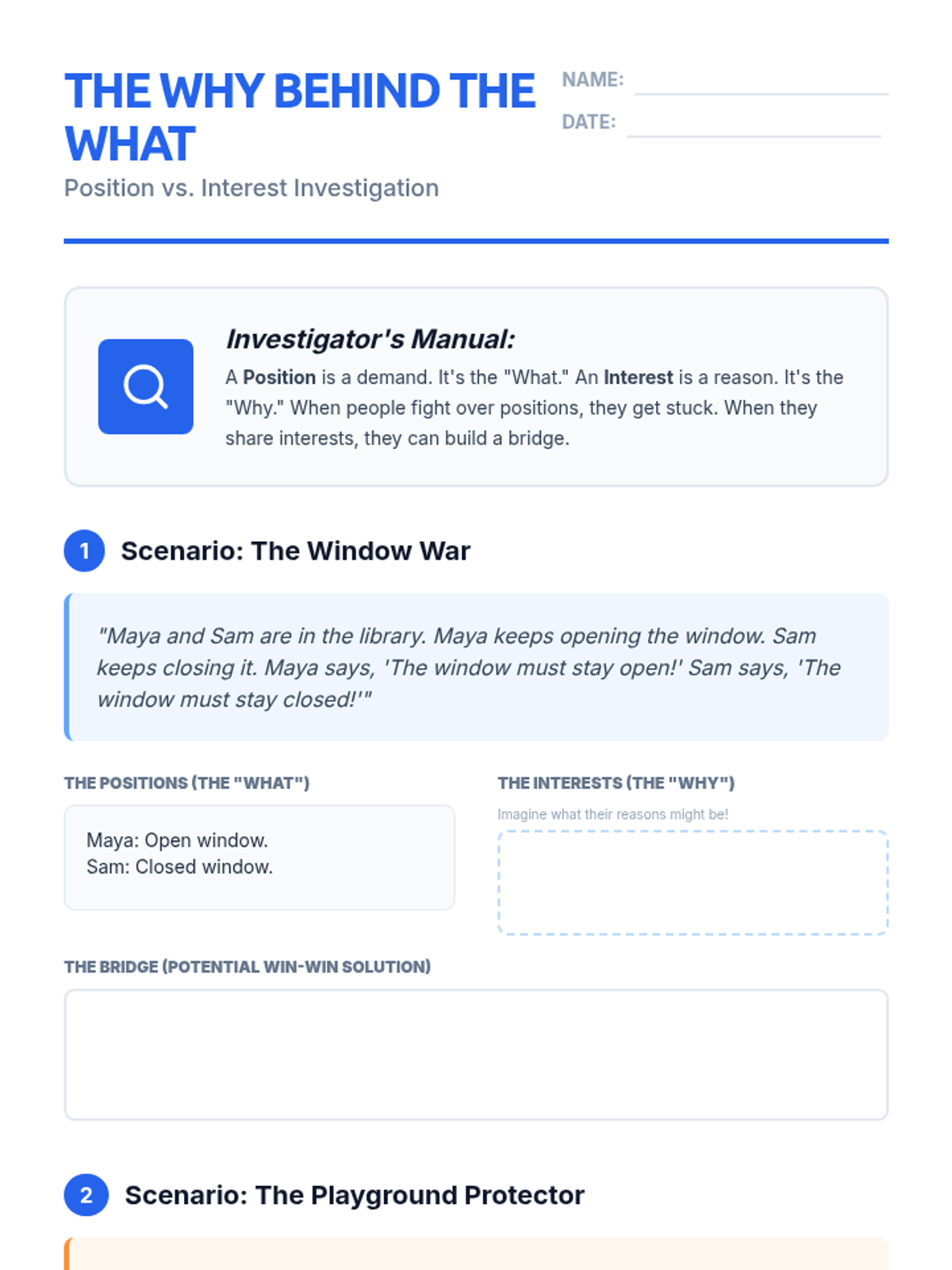
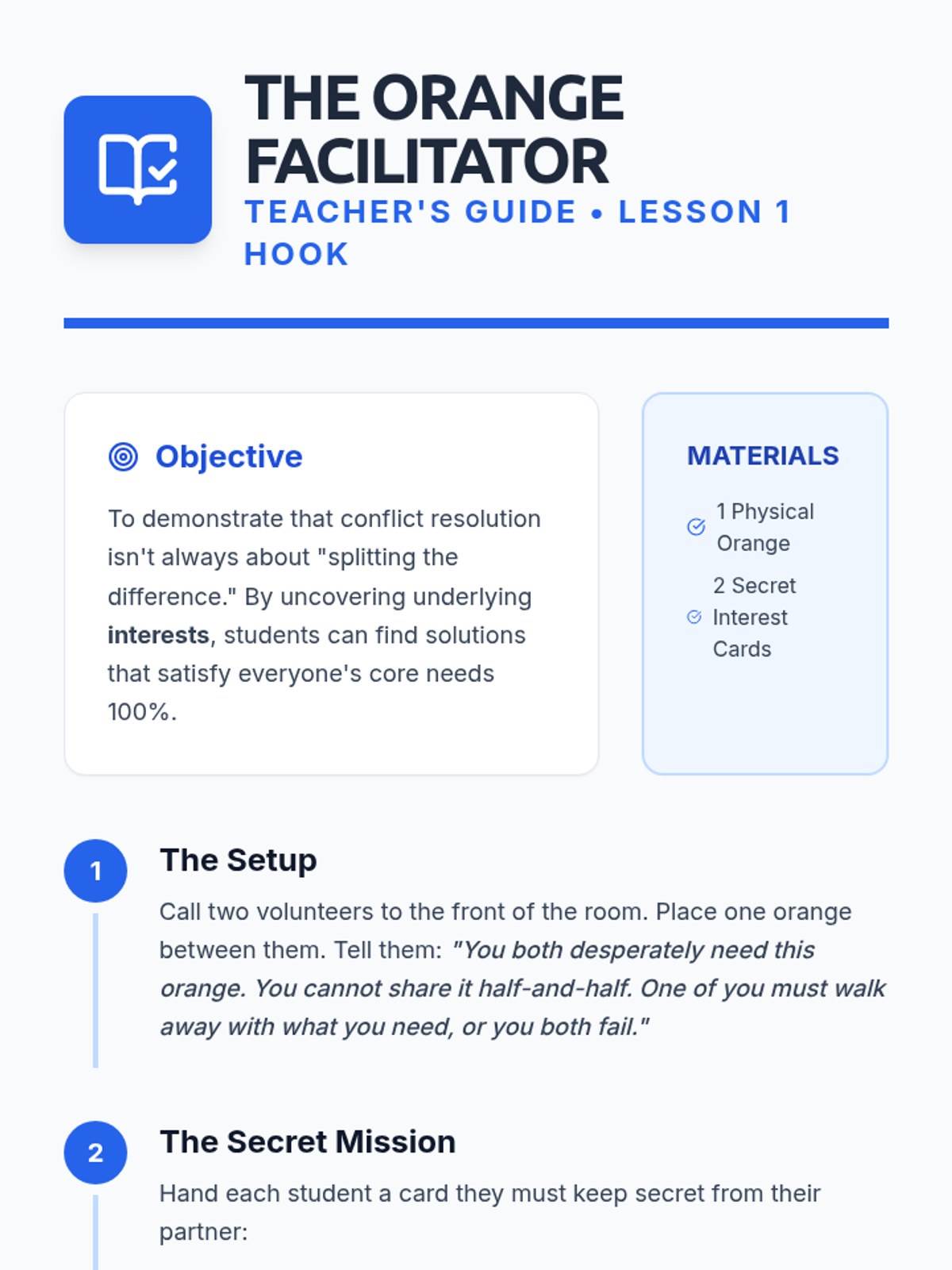
A 5-lesson sequence for 6th graders focusing on Interests-Based Negotiation. Students move from rigid positions to understanding underlying needs, brainstorming creative solutions, and evaluating fairness, culminating in a complex negotiation simulation.
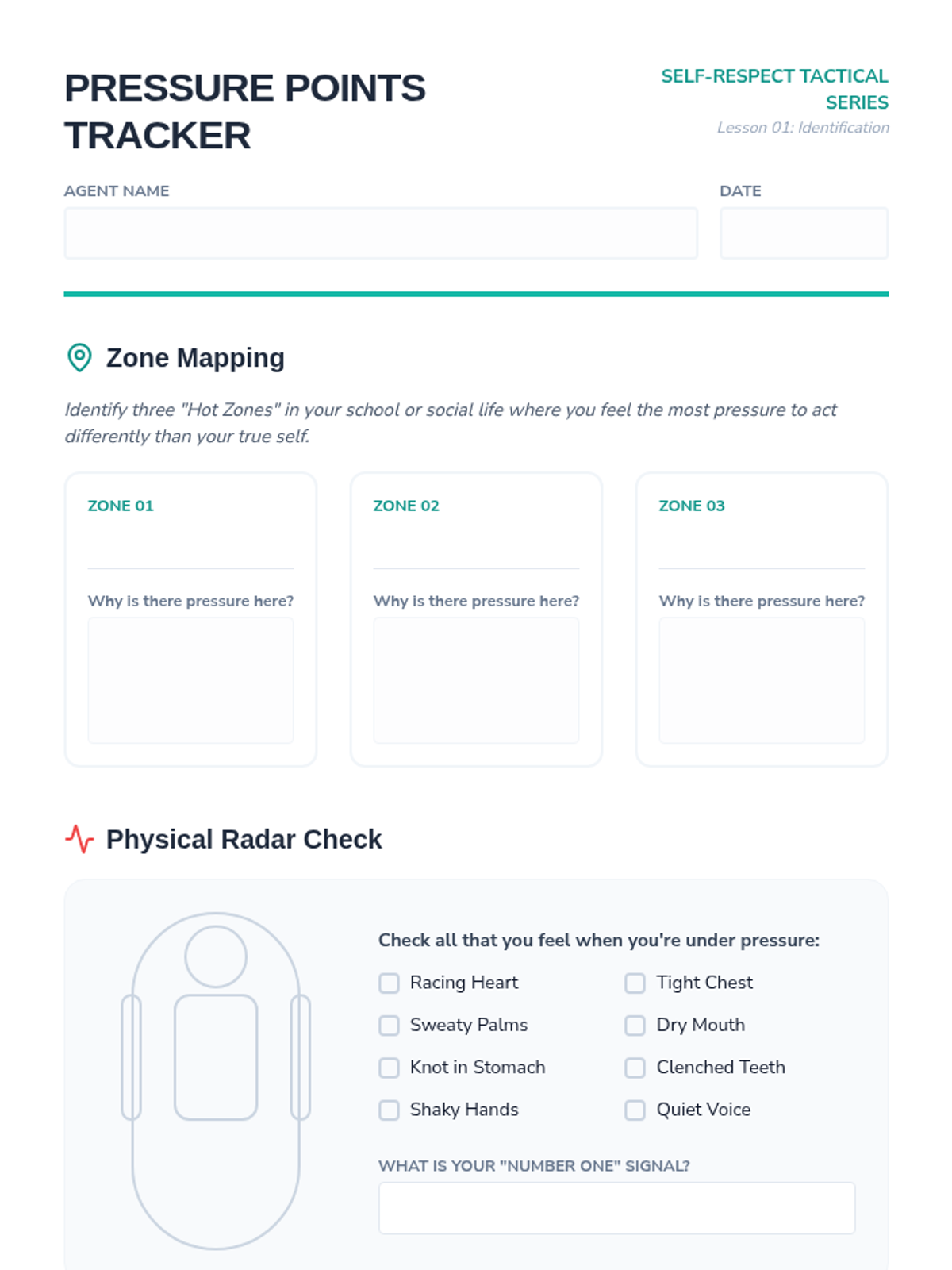
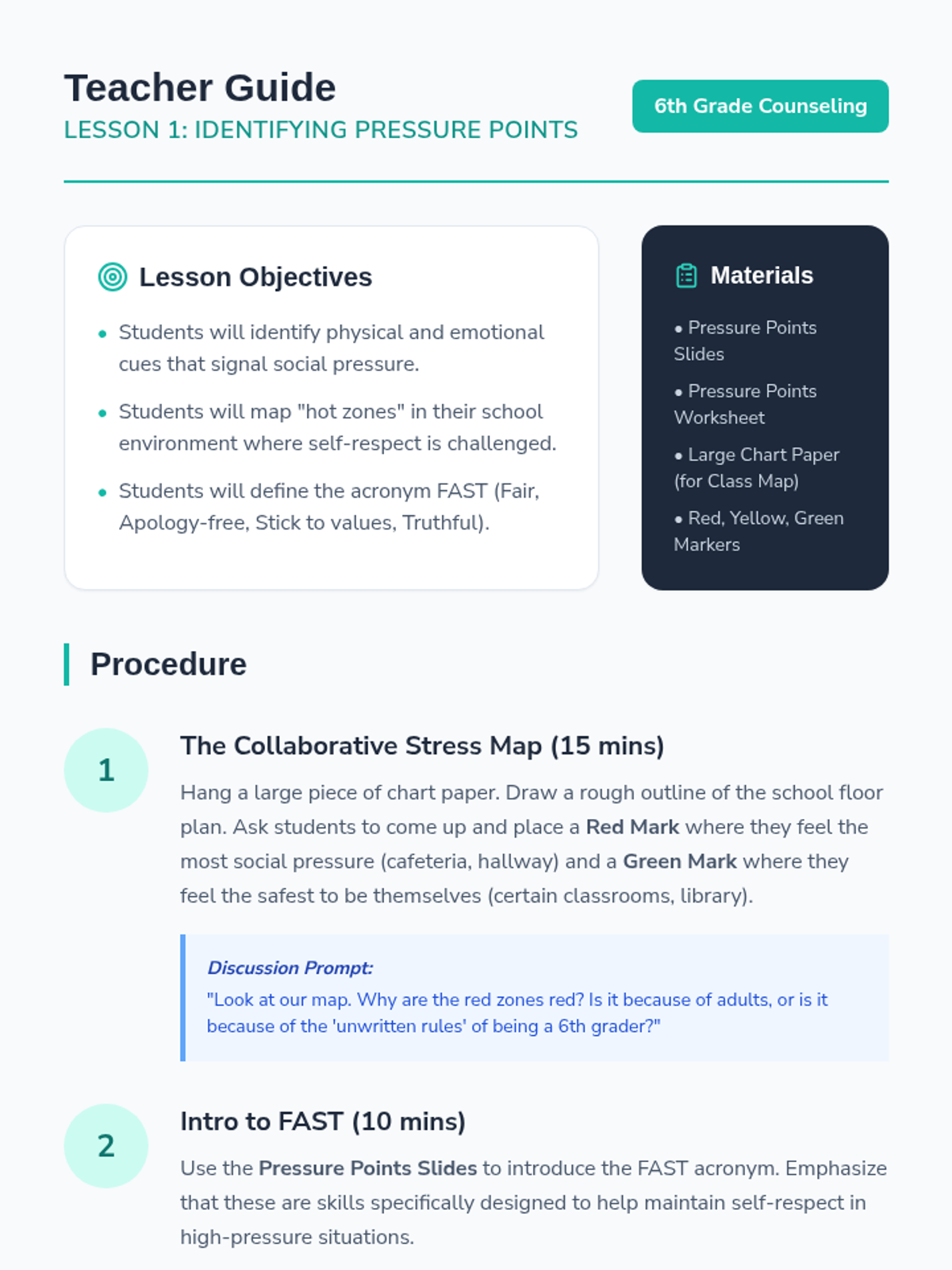
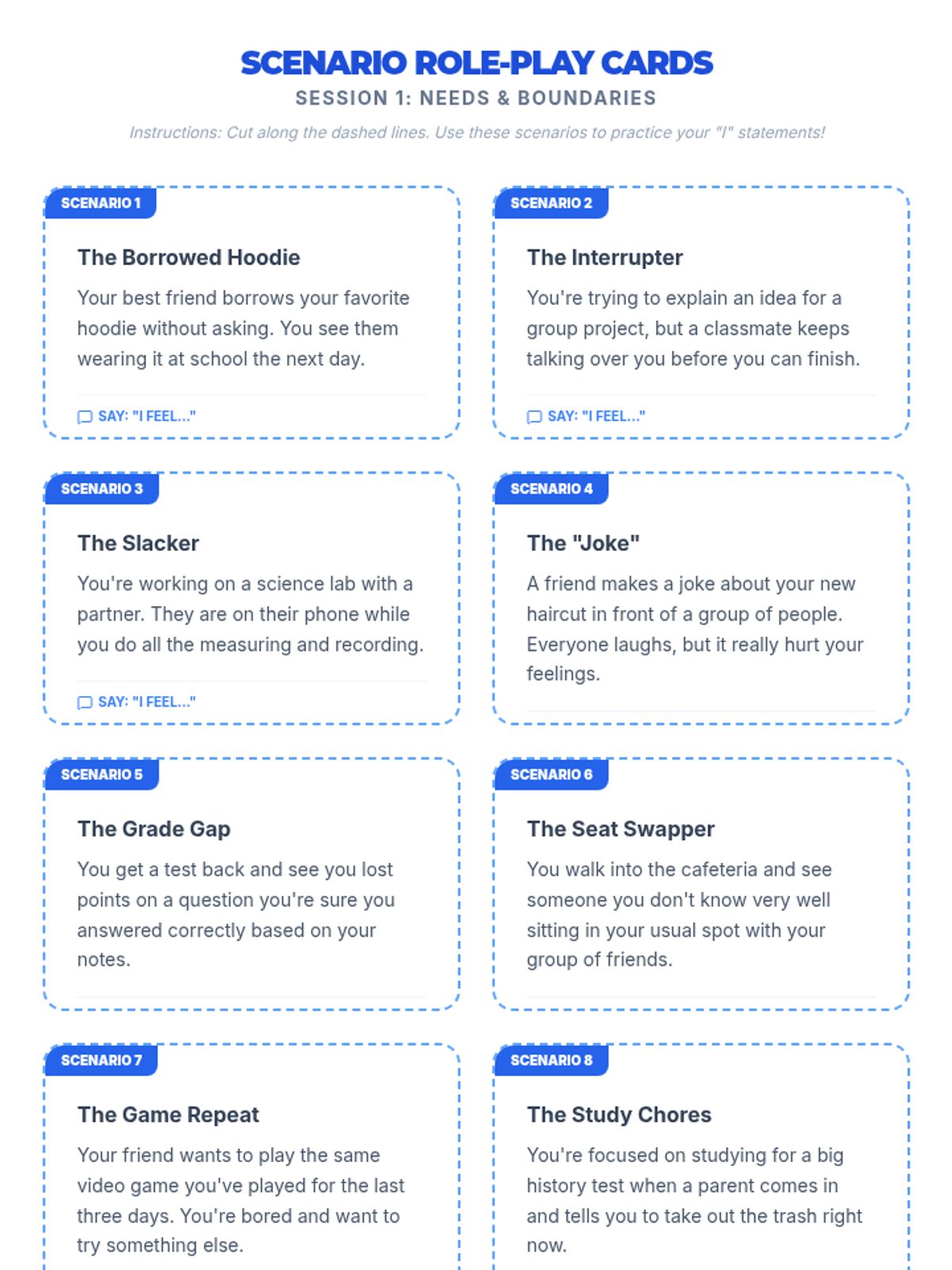
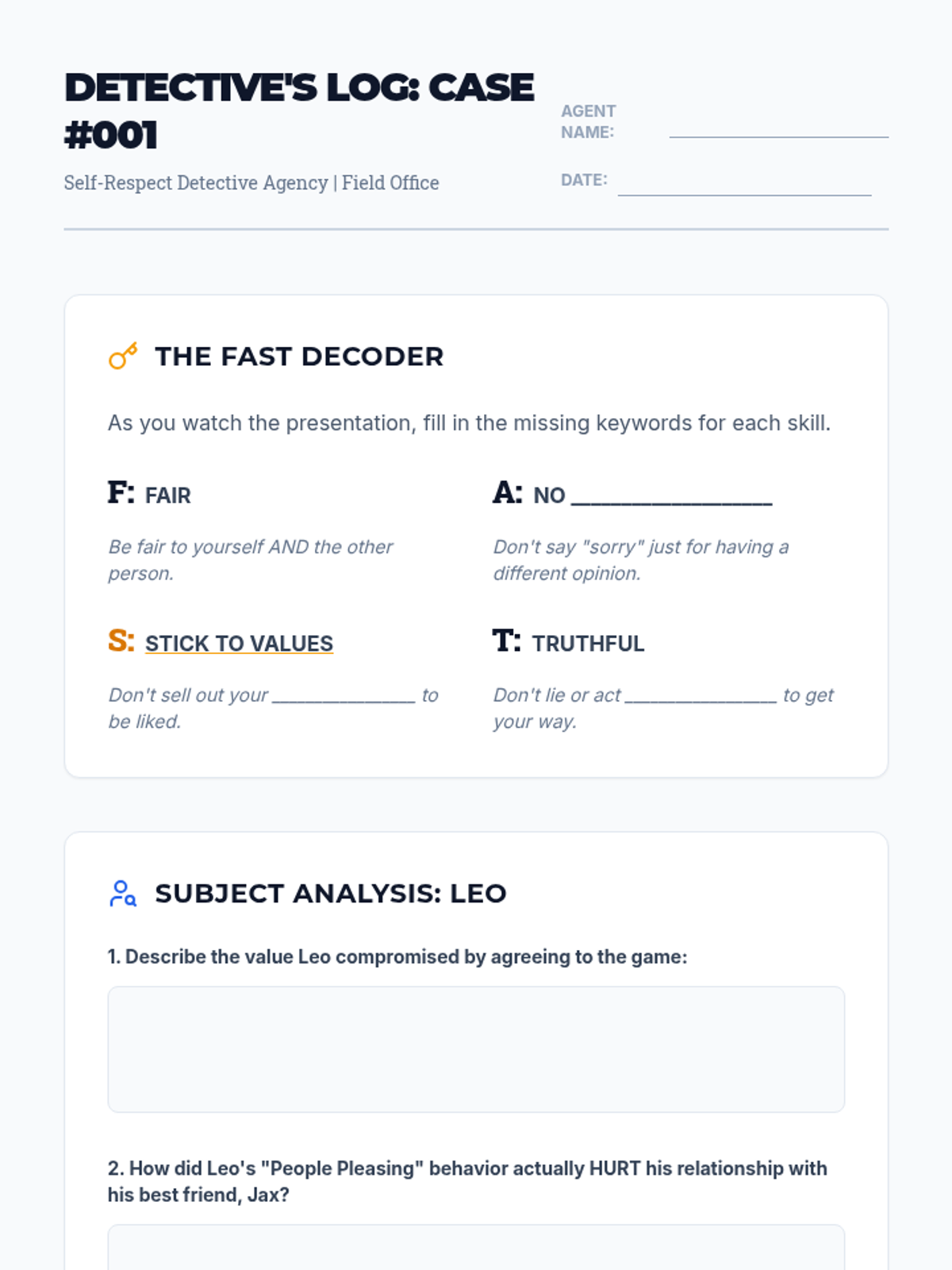
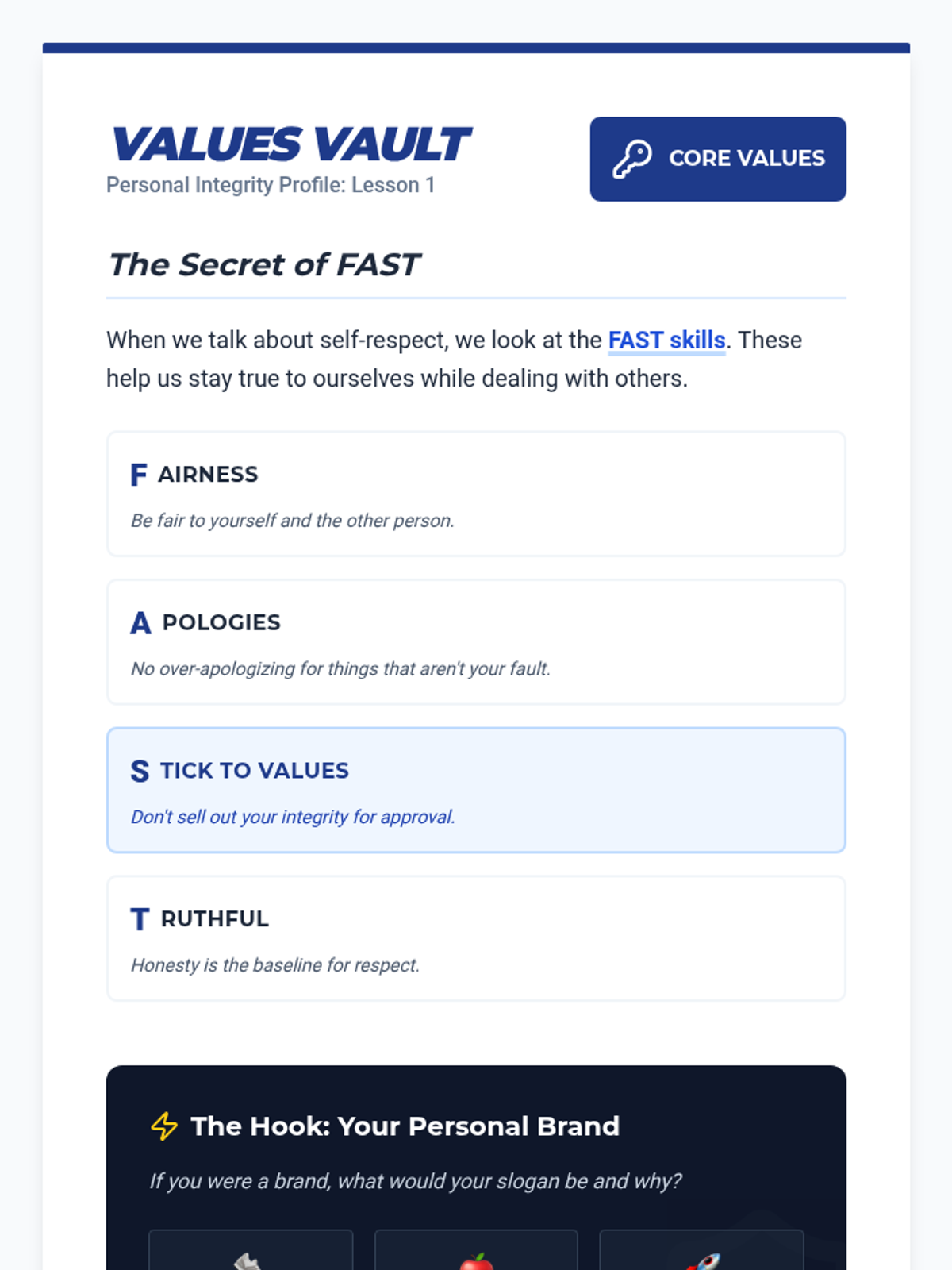
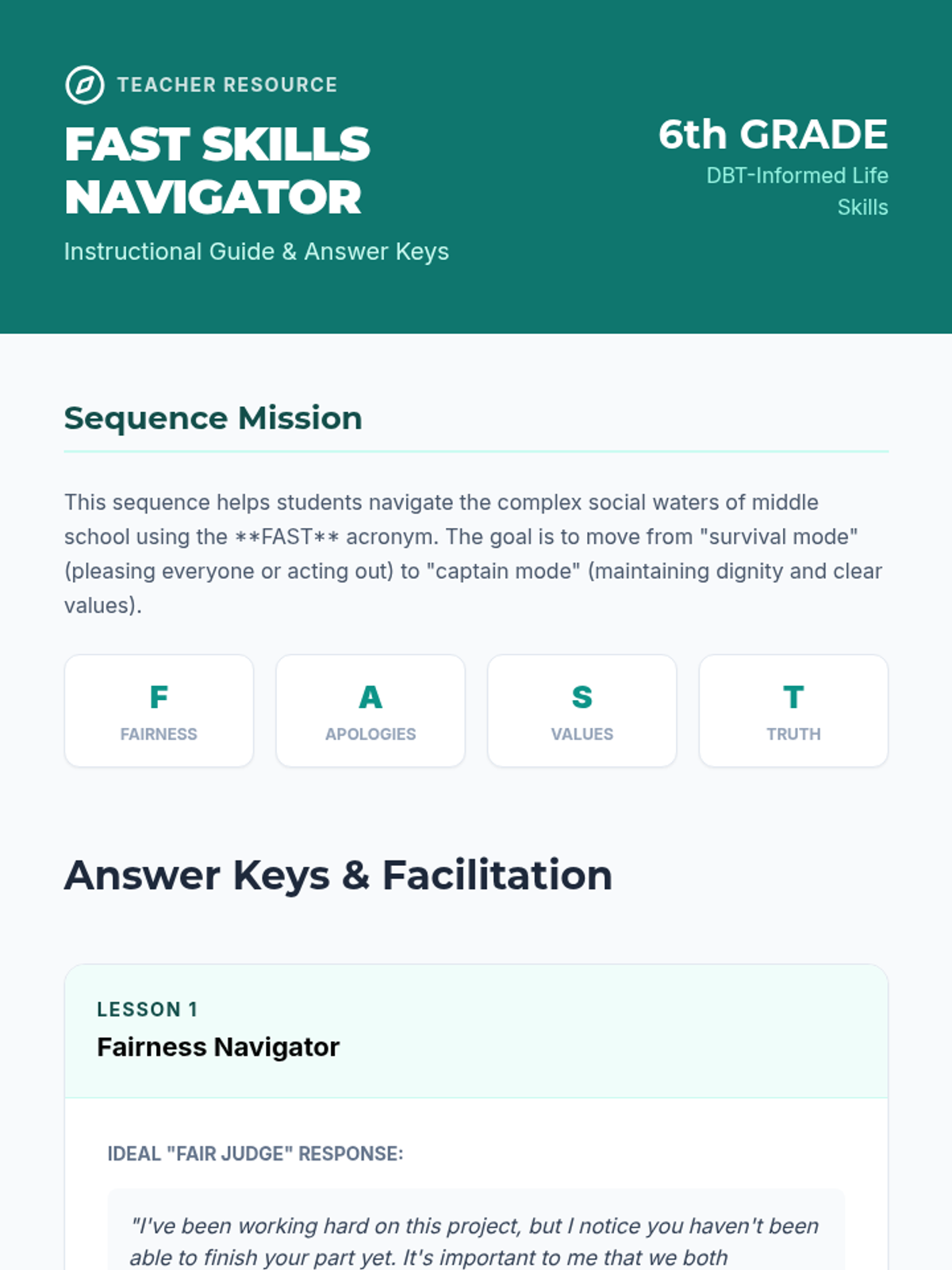
A simulation-heavy sequence teaching 6th graders to use DBT FAST skills (Fair, Apology-free, Stick to values, Truthful) to maintain self-respect during social challenges. Students engage in role-play and real-world scenarios to build integrity and refusal skills.
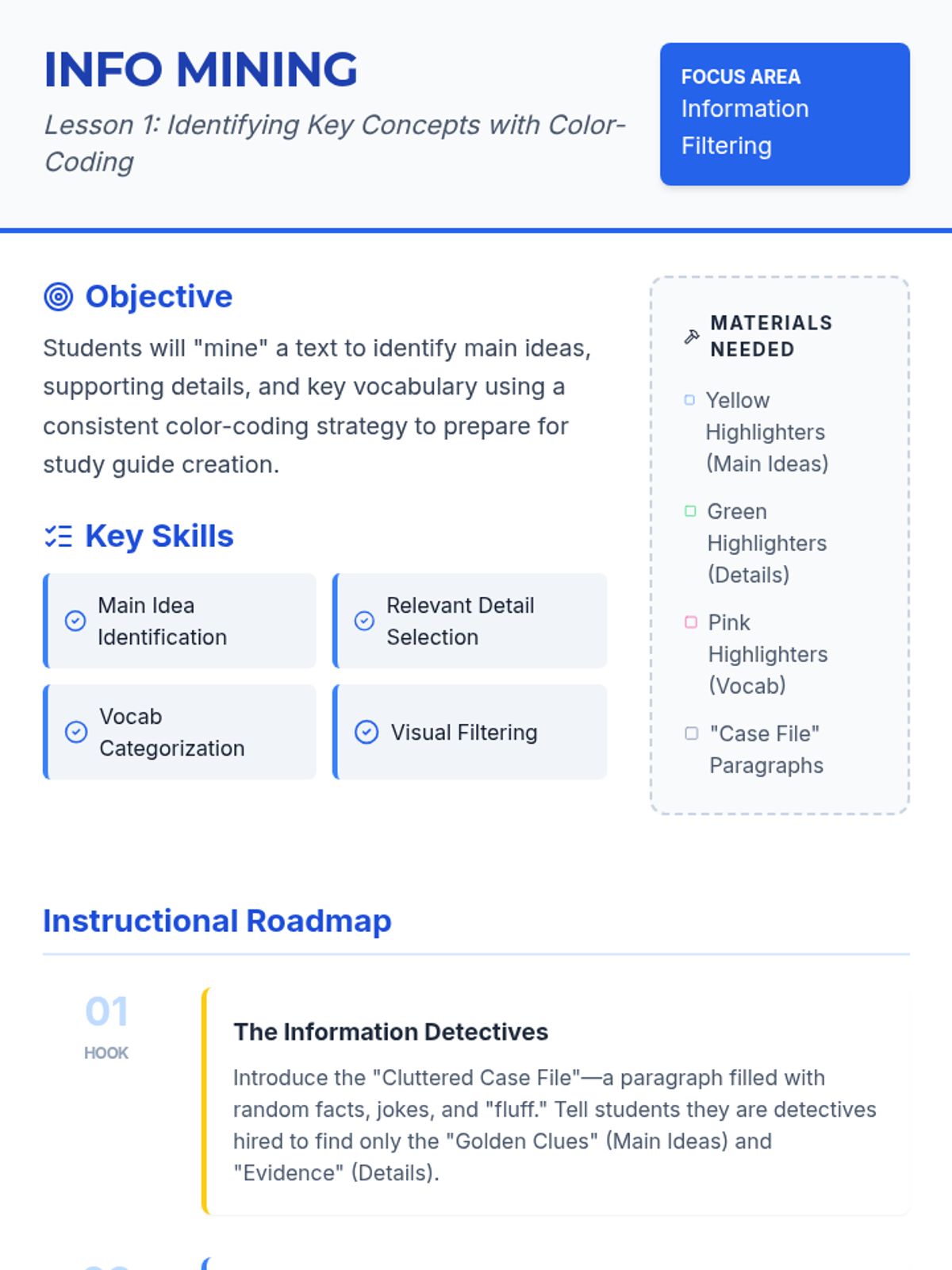
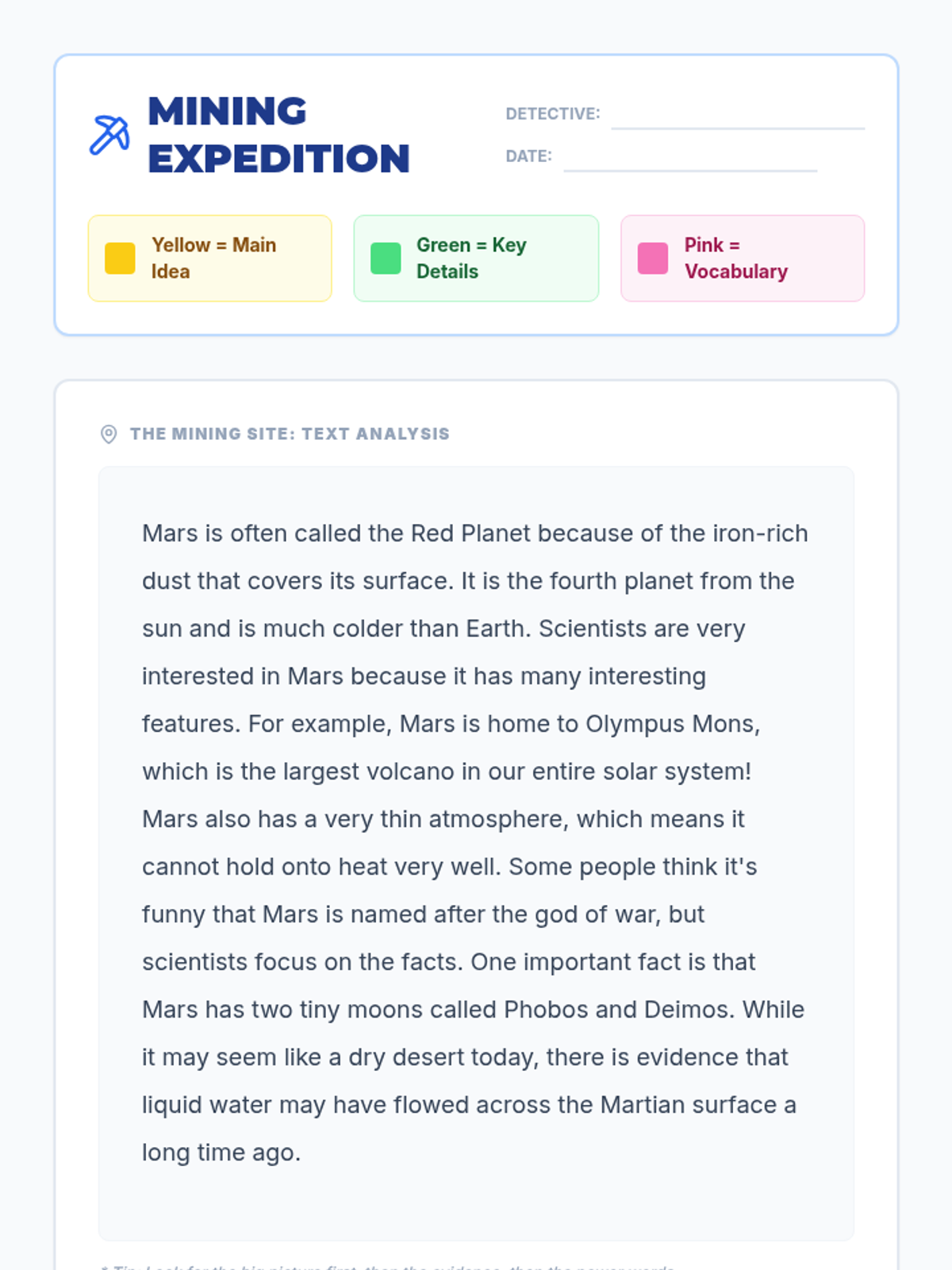
A sequence focused on helping students transform passive reading into active, visual study tools. Students learn color-coding, concept mapping, foldable creation, and comparison charting to organize and retain information.
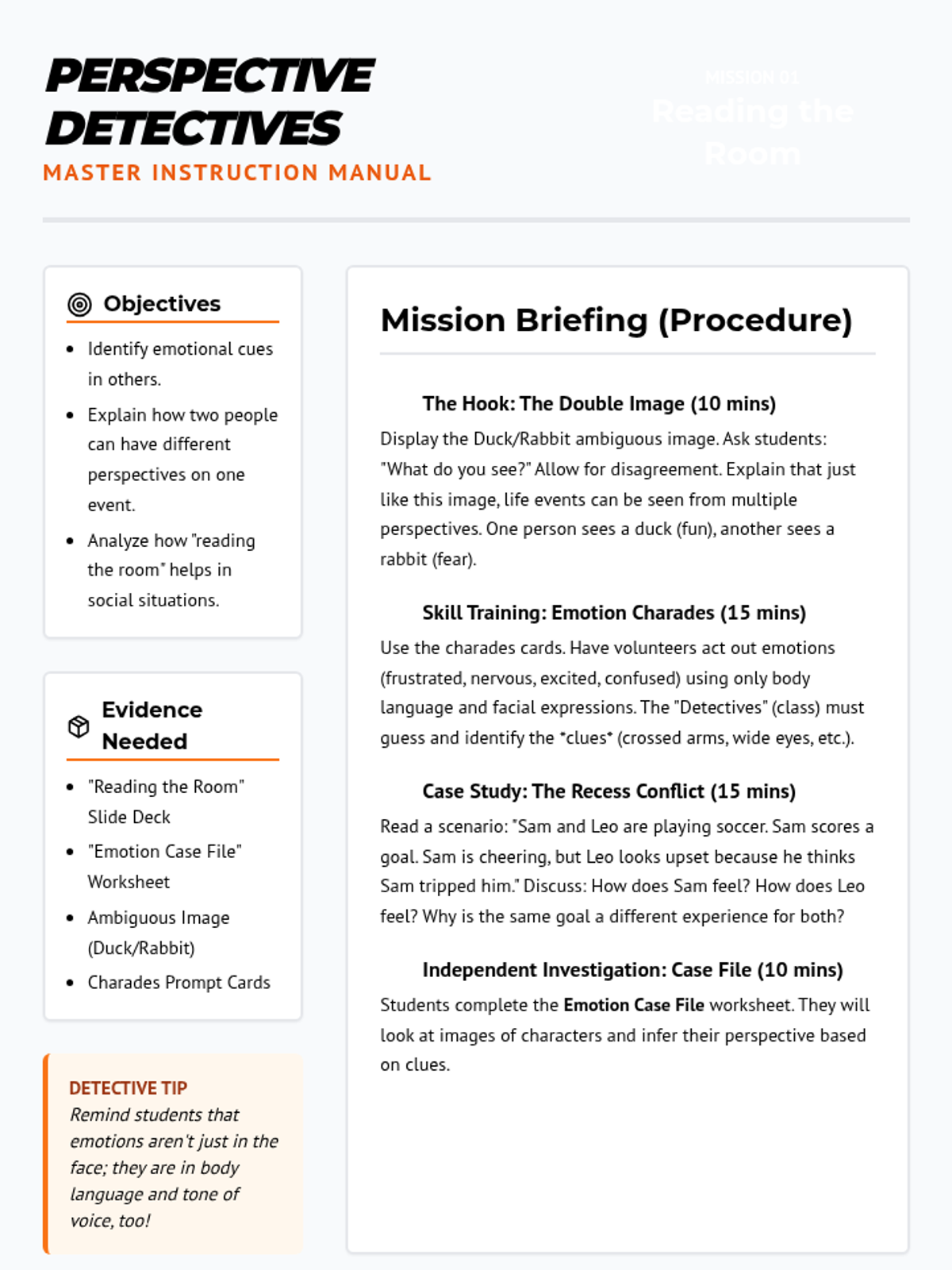
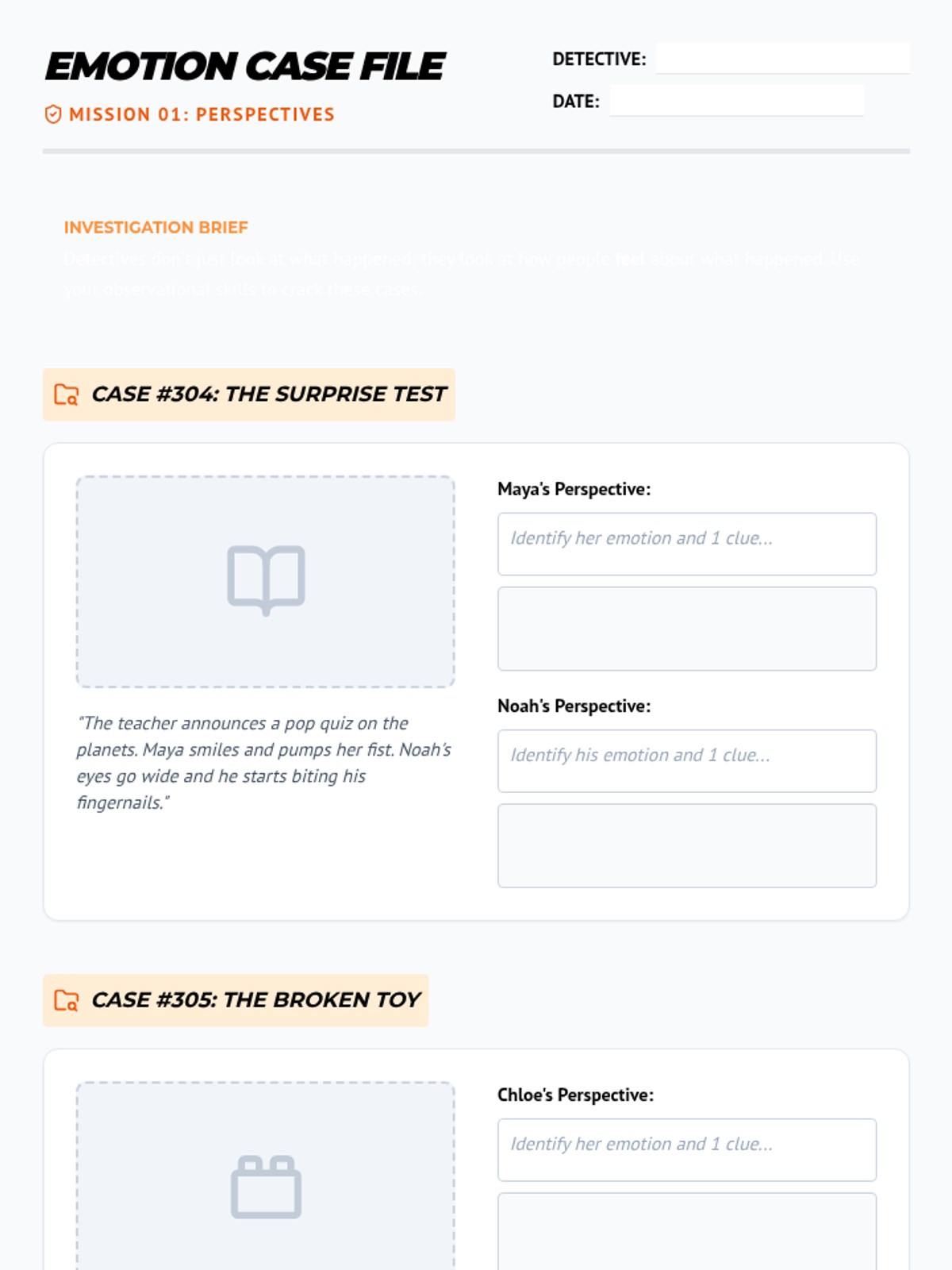
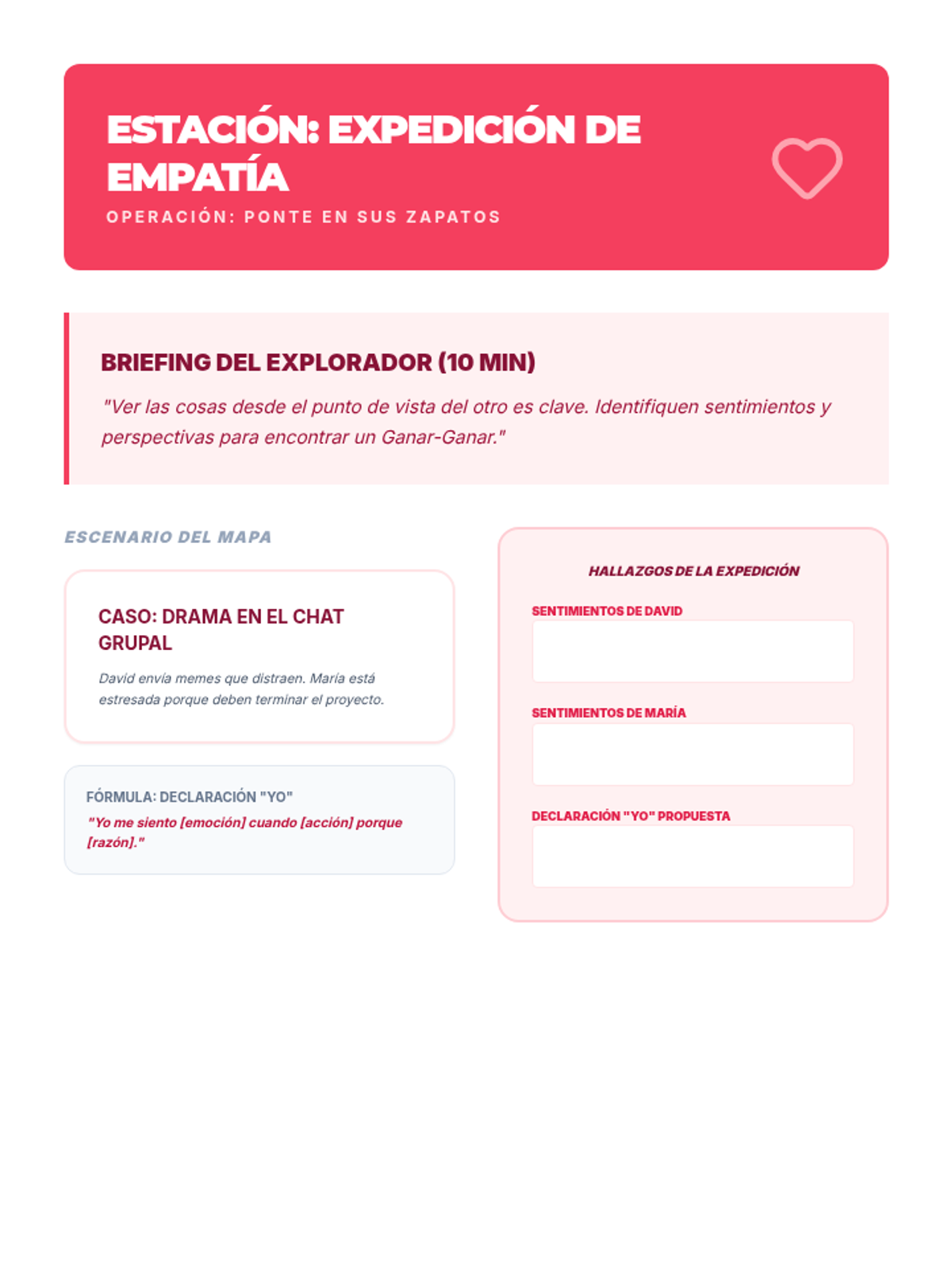
A sequence focused on developing empathy, emotional intelligence, and perspective-taking through a 'Perspective Detectives' theme. Students engage in games, simulations, and skill-building activities to understand the complexity of identities and challenge biases.
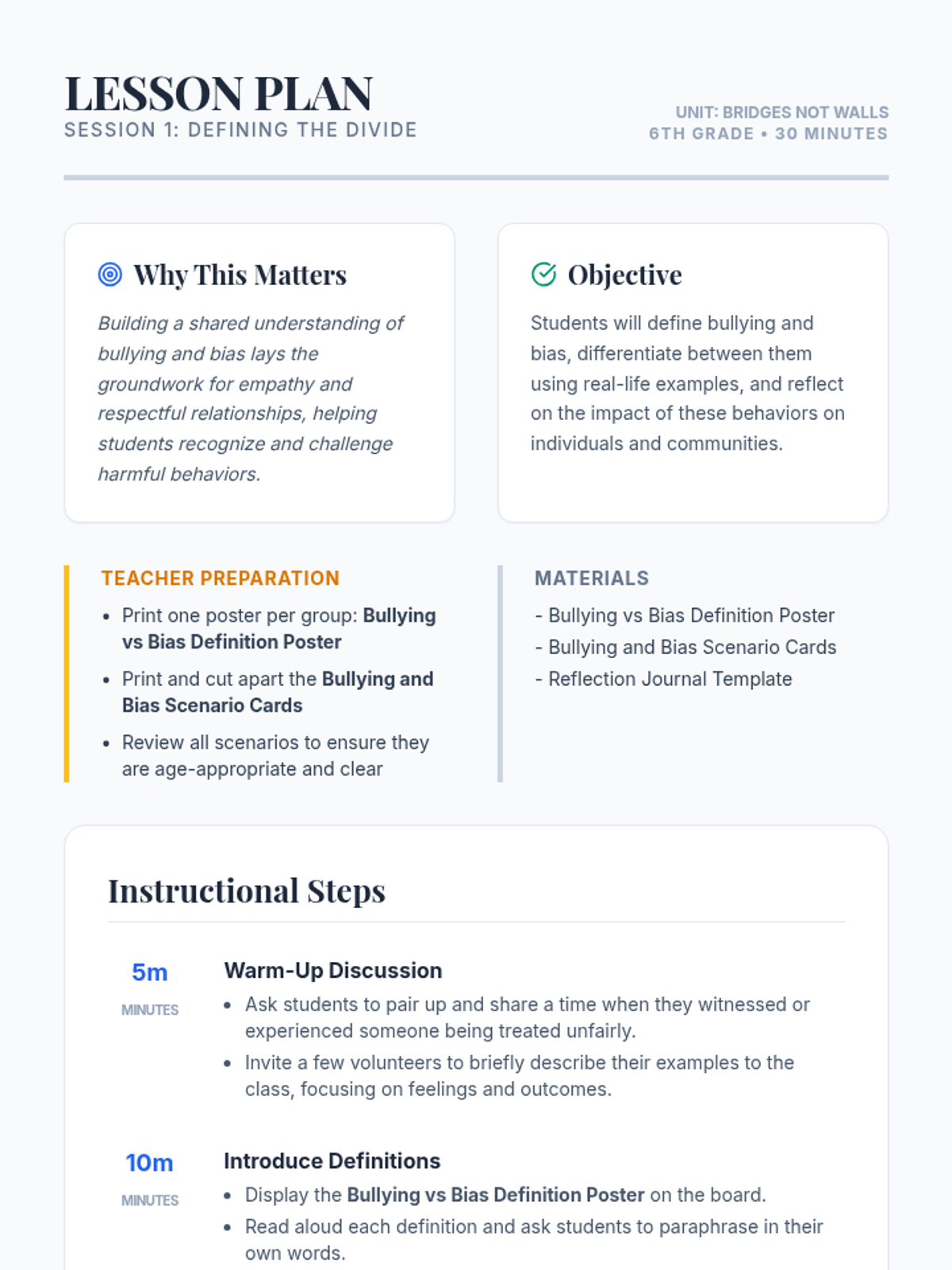
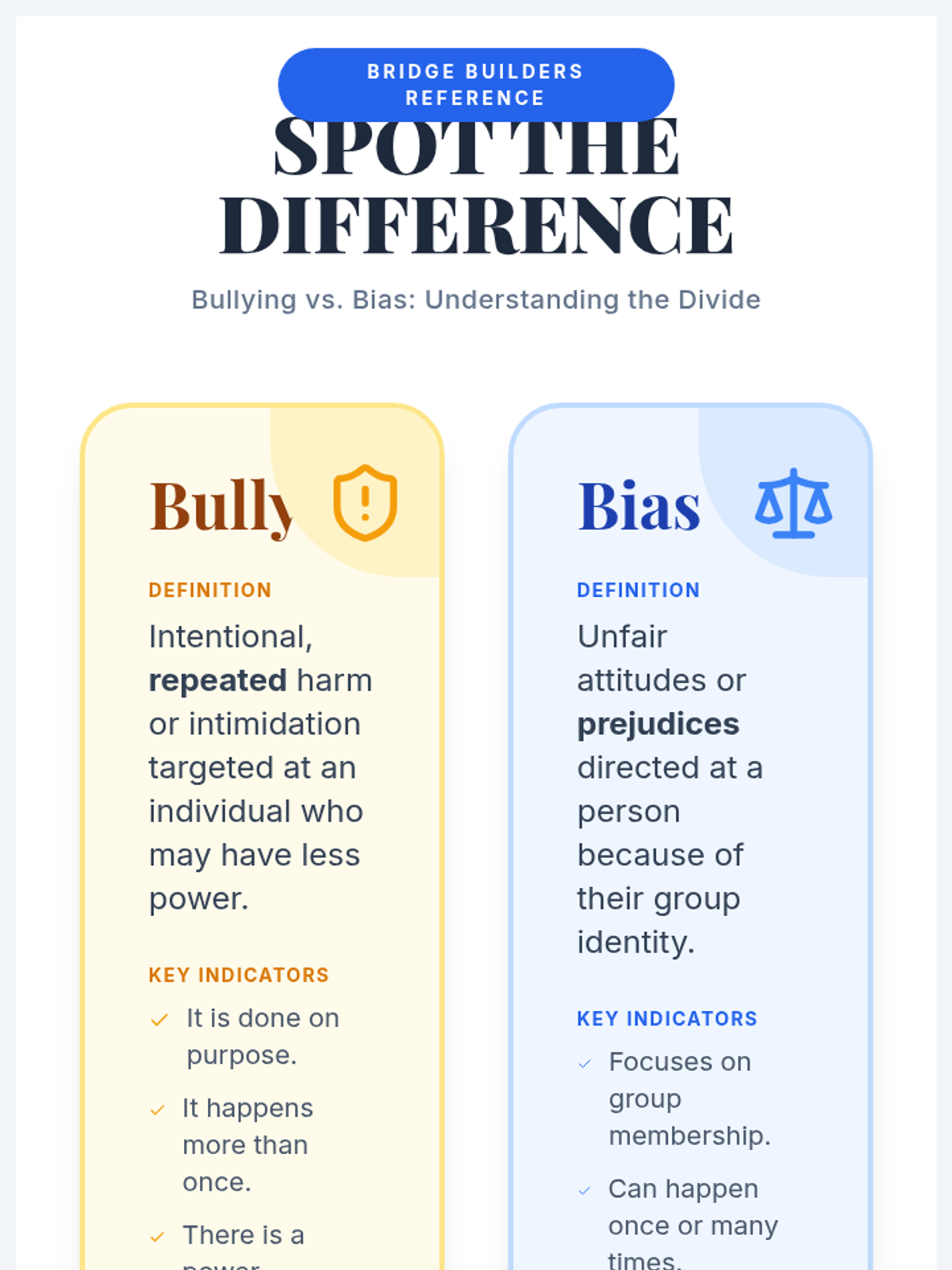
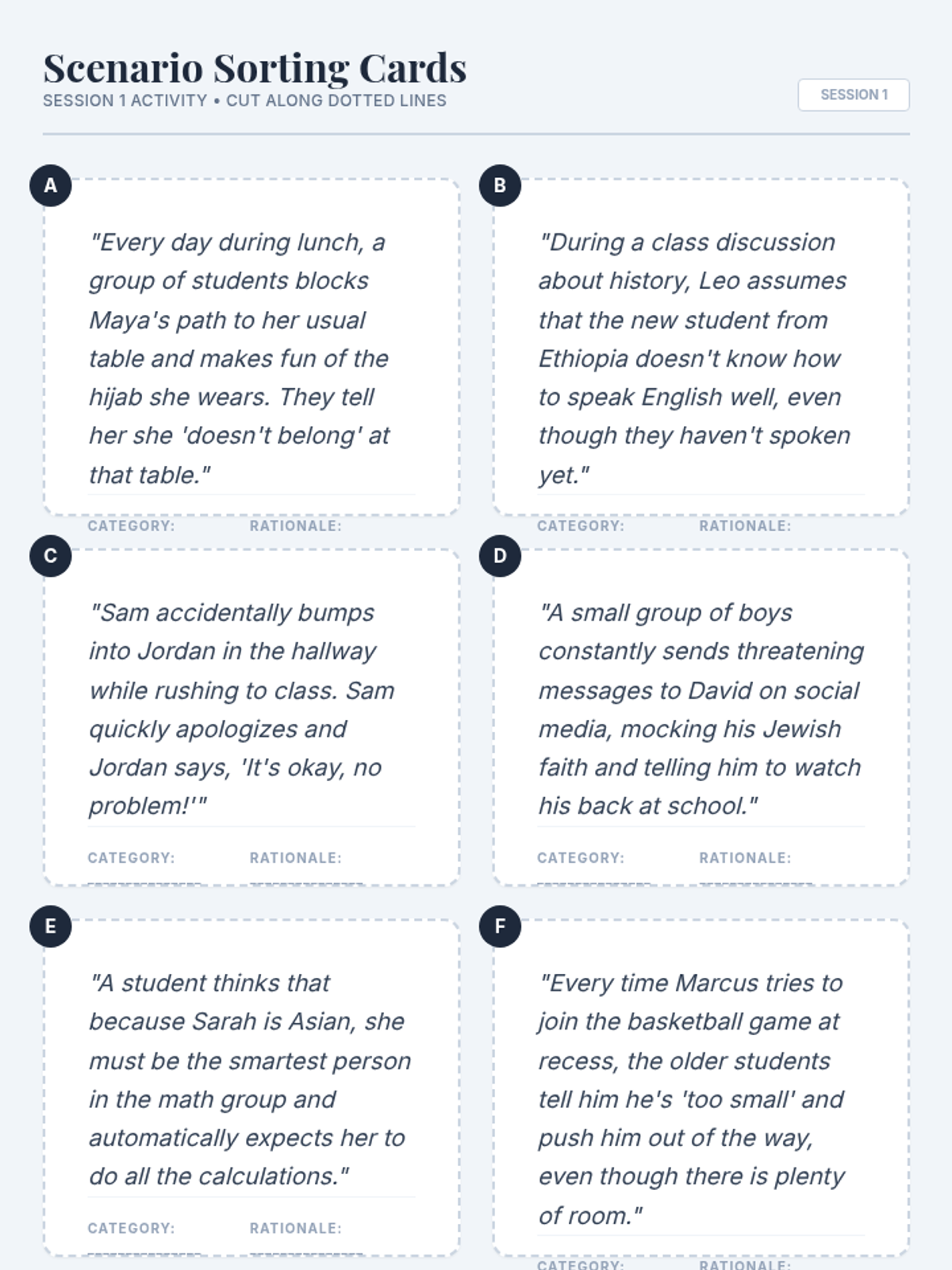
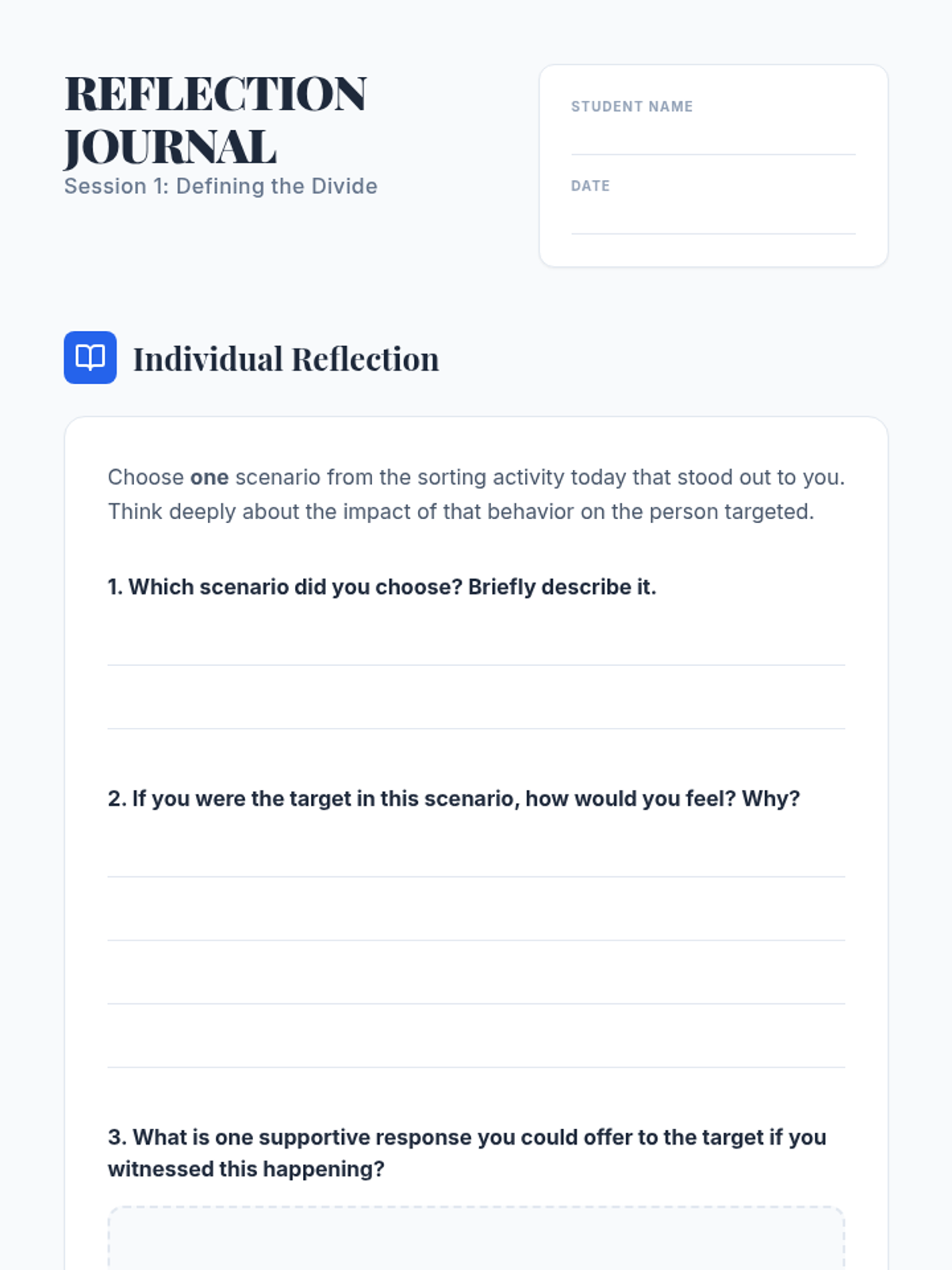
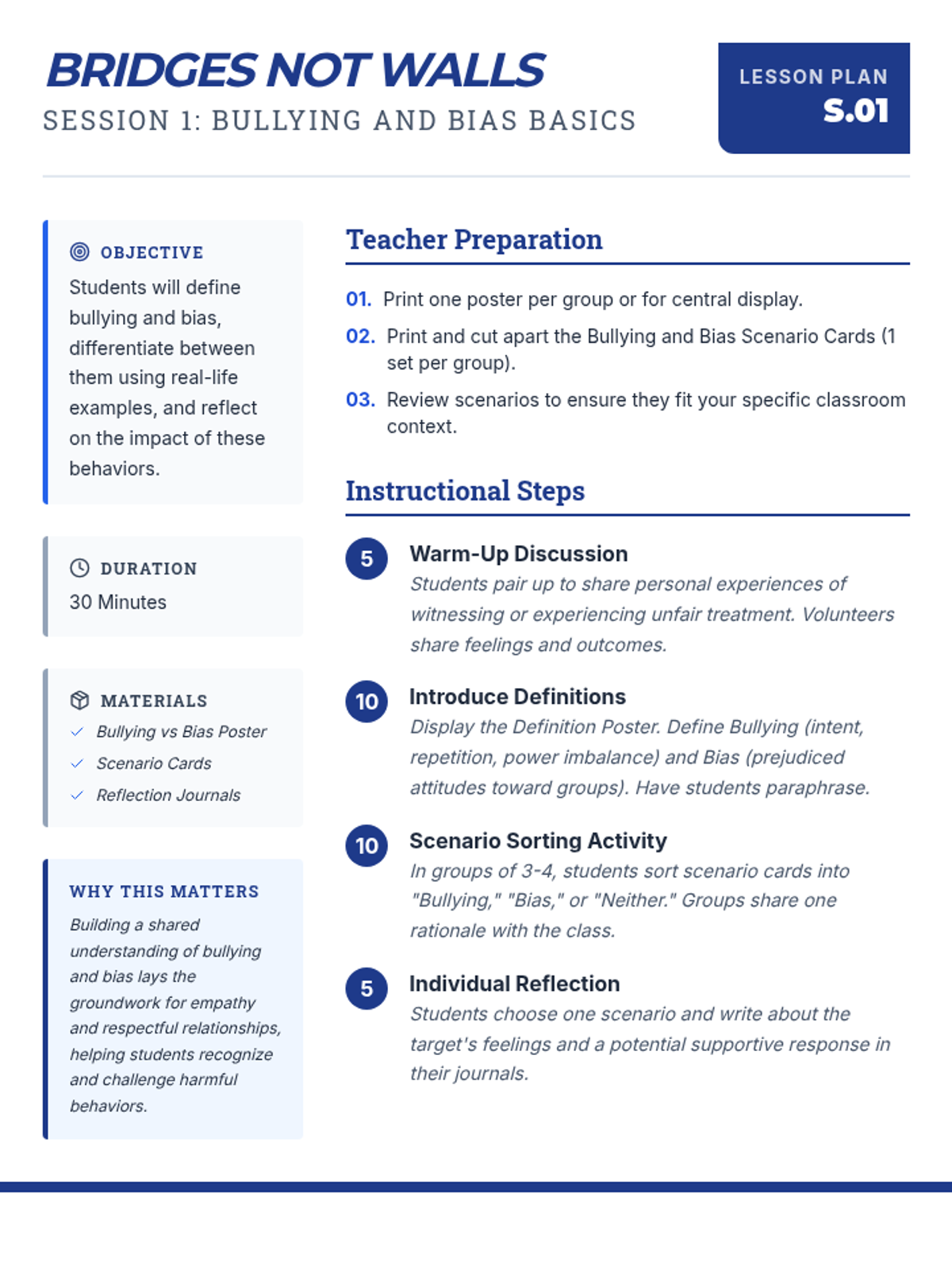
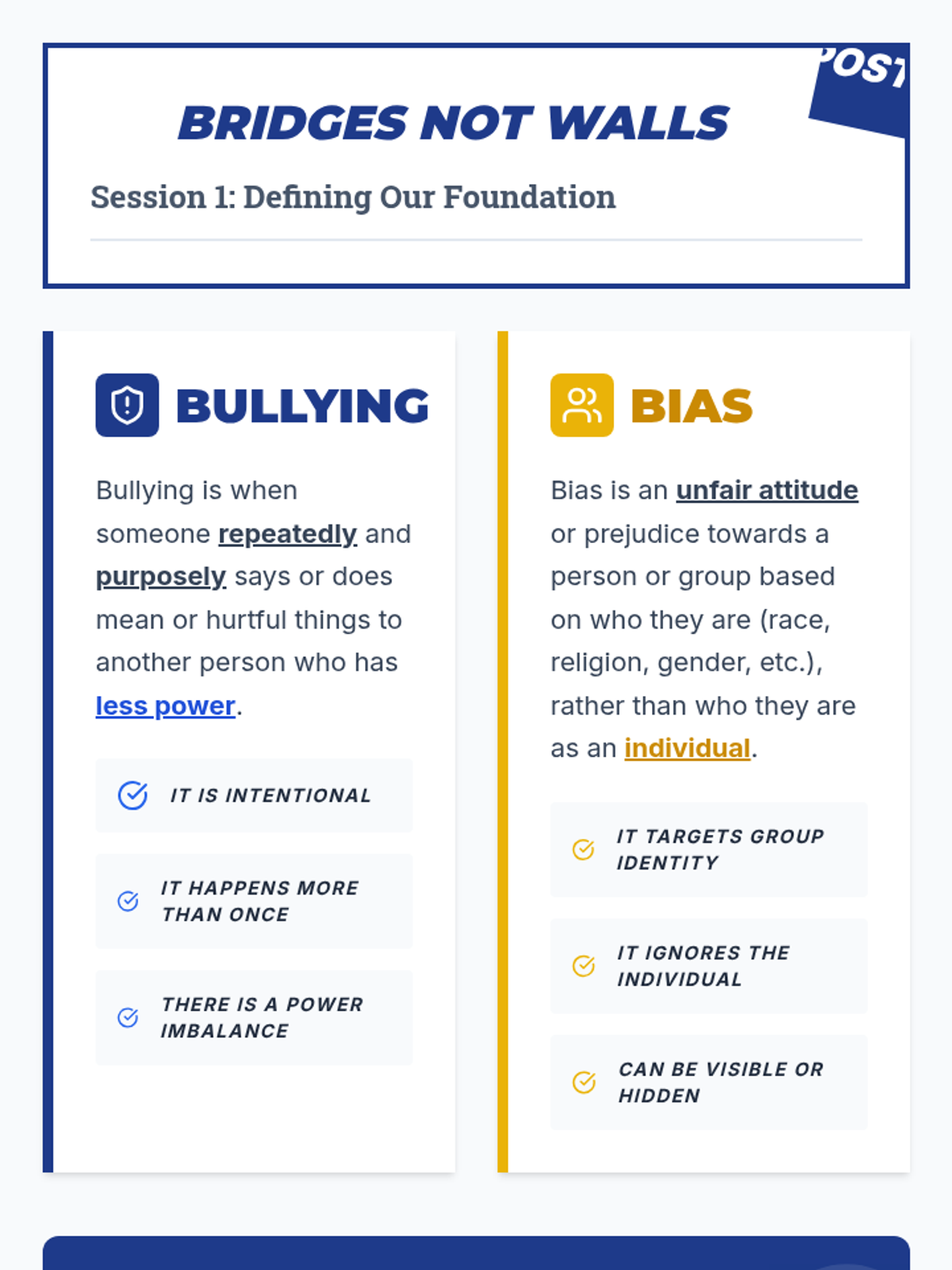
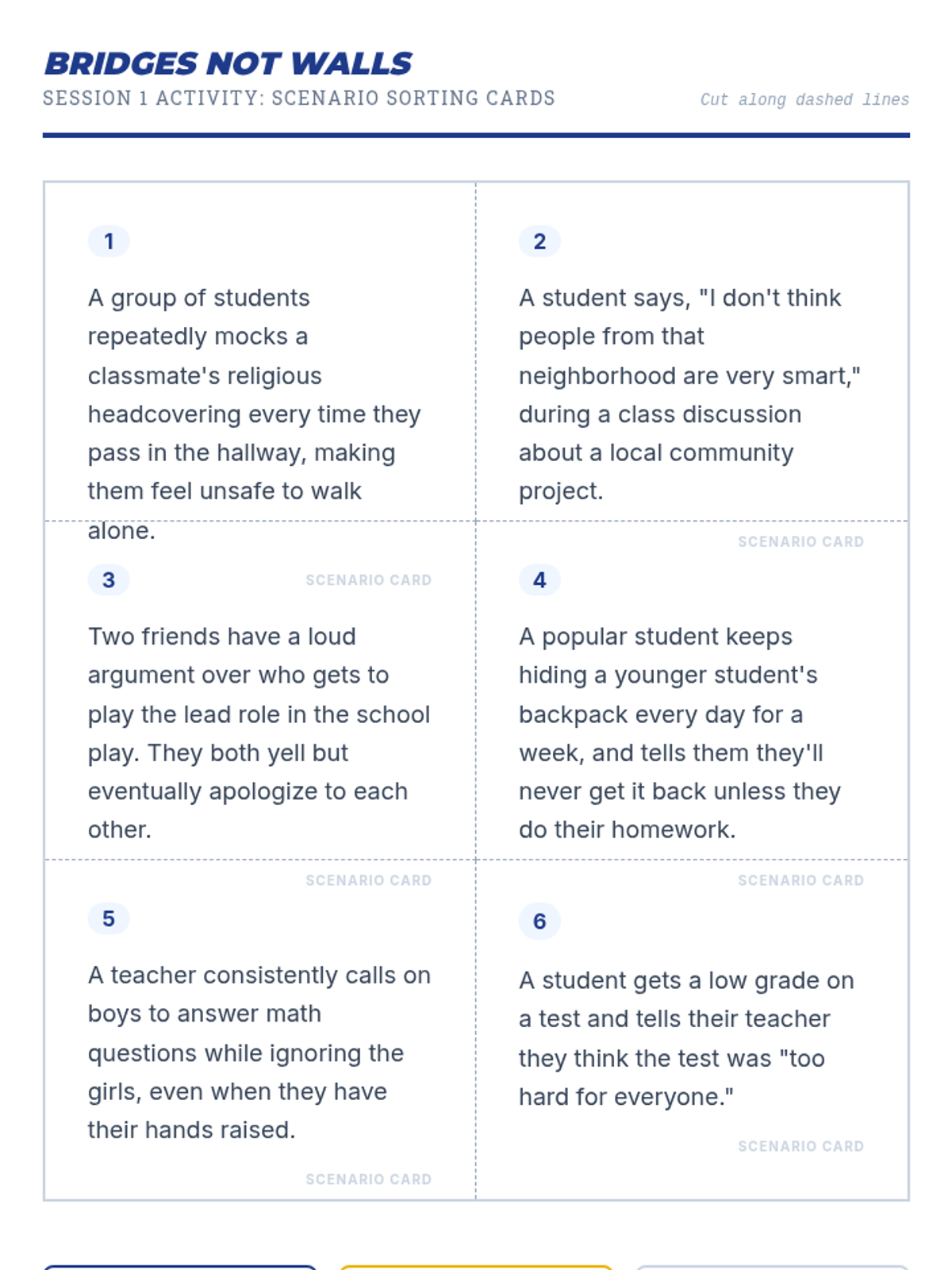
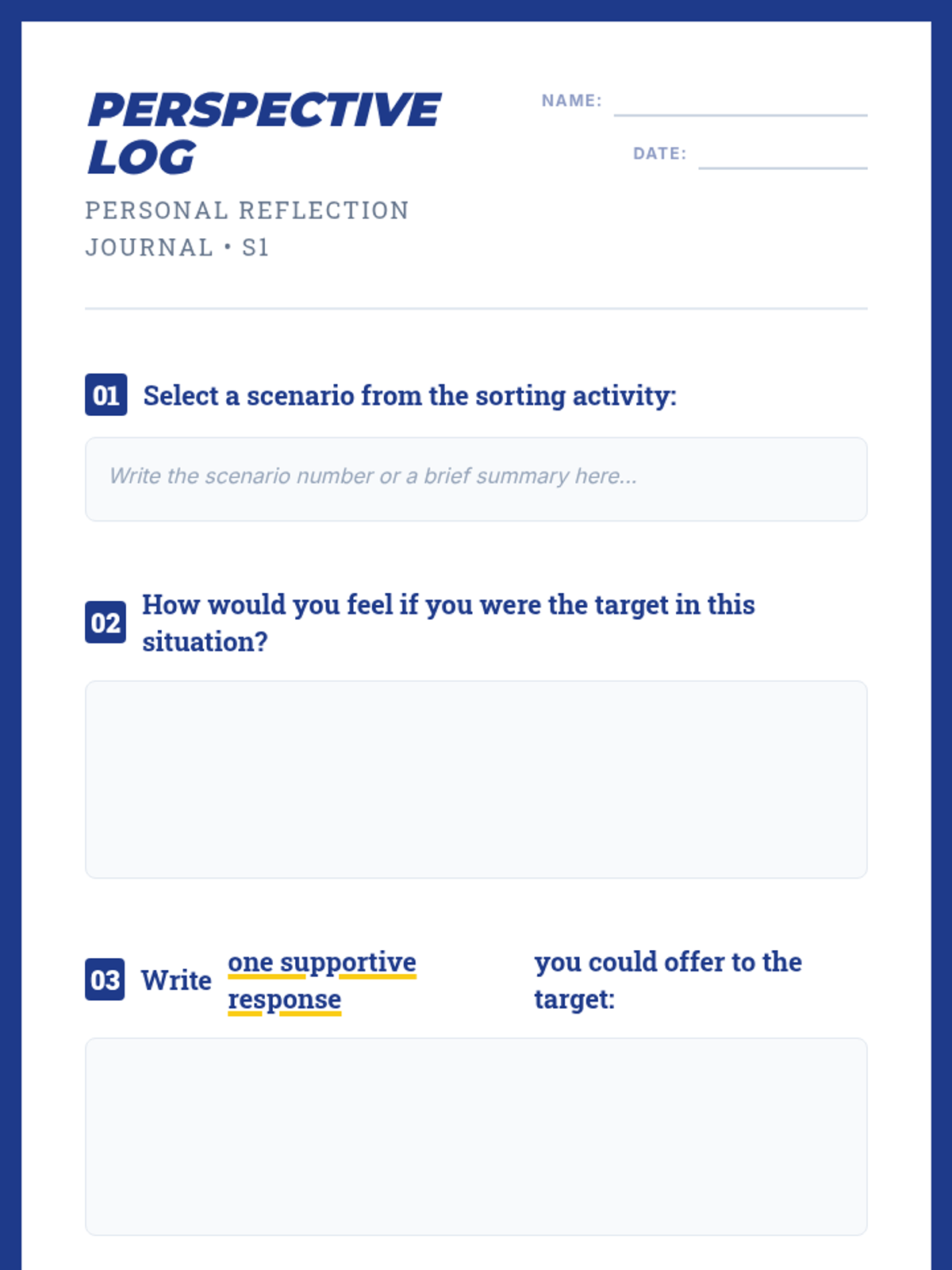
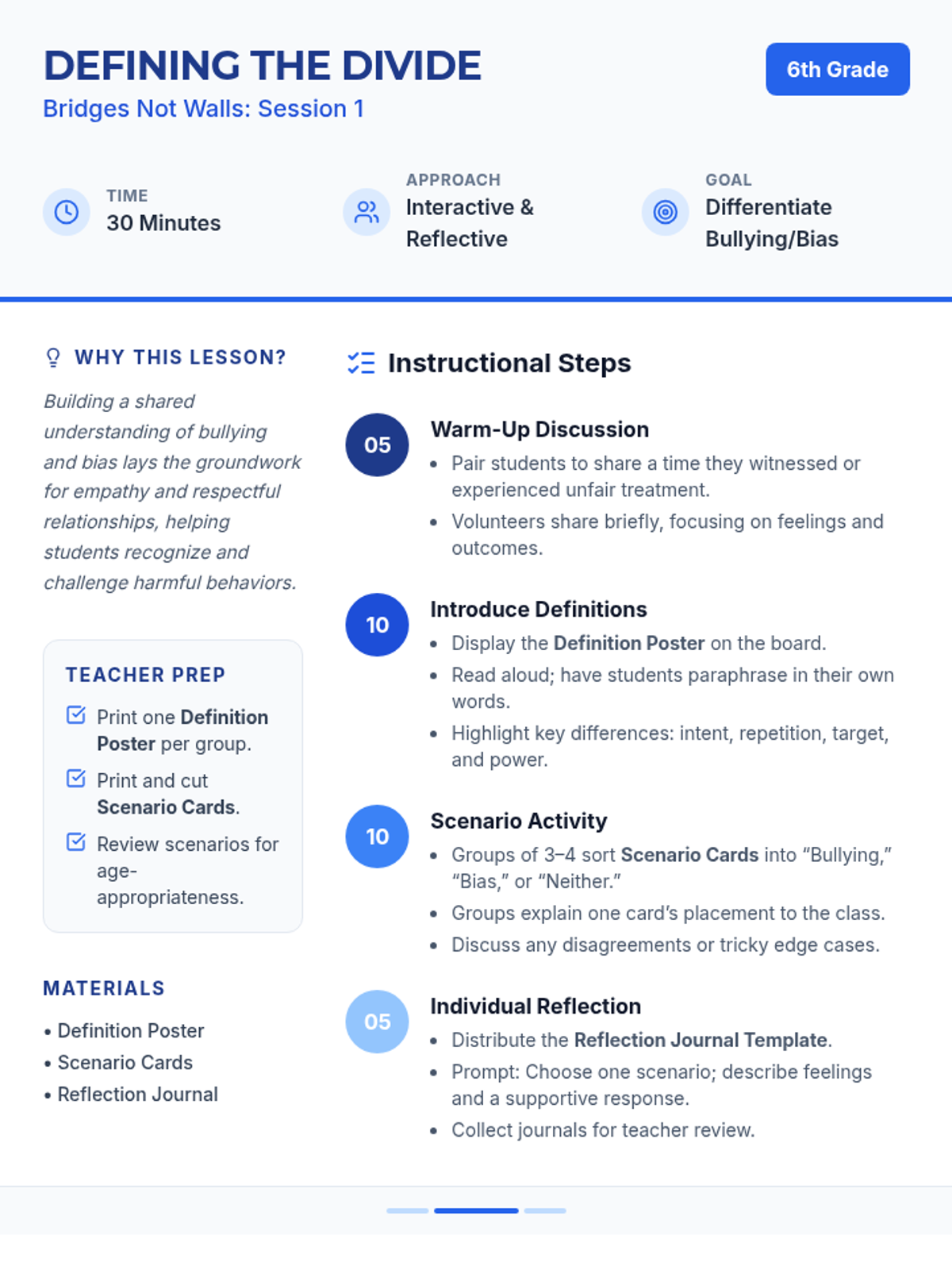
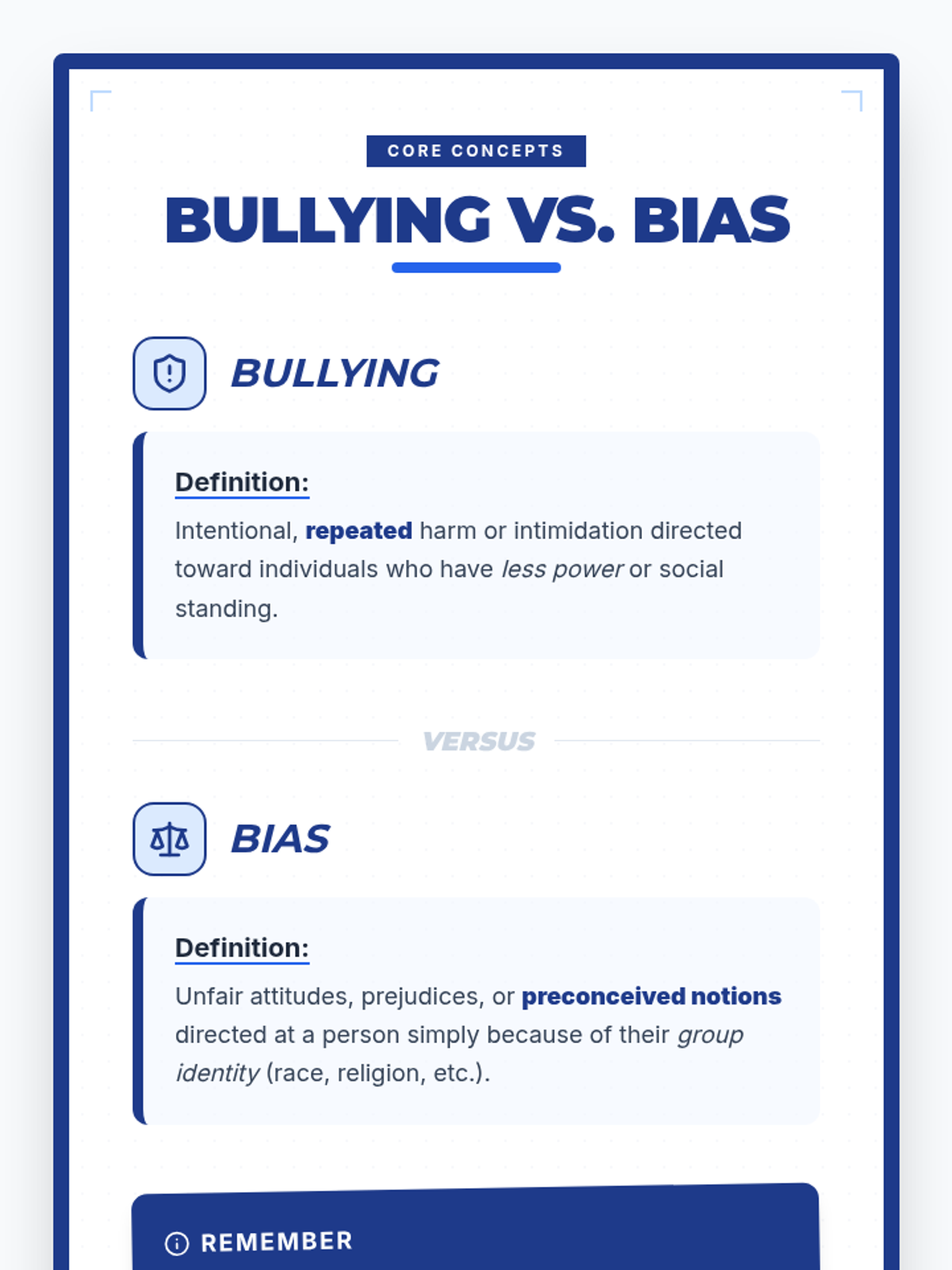
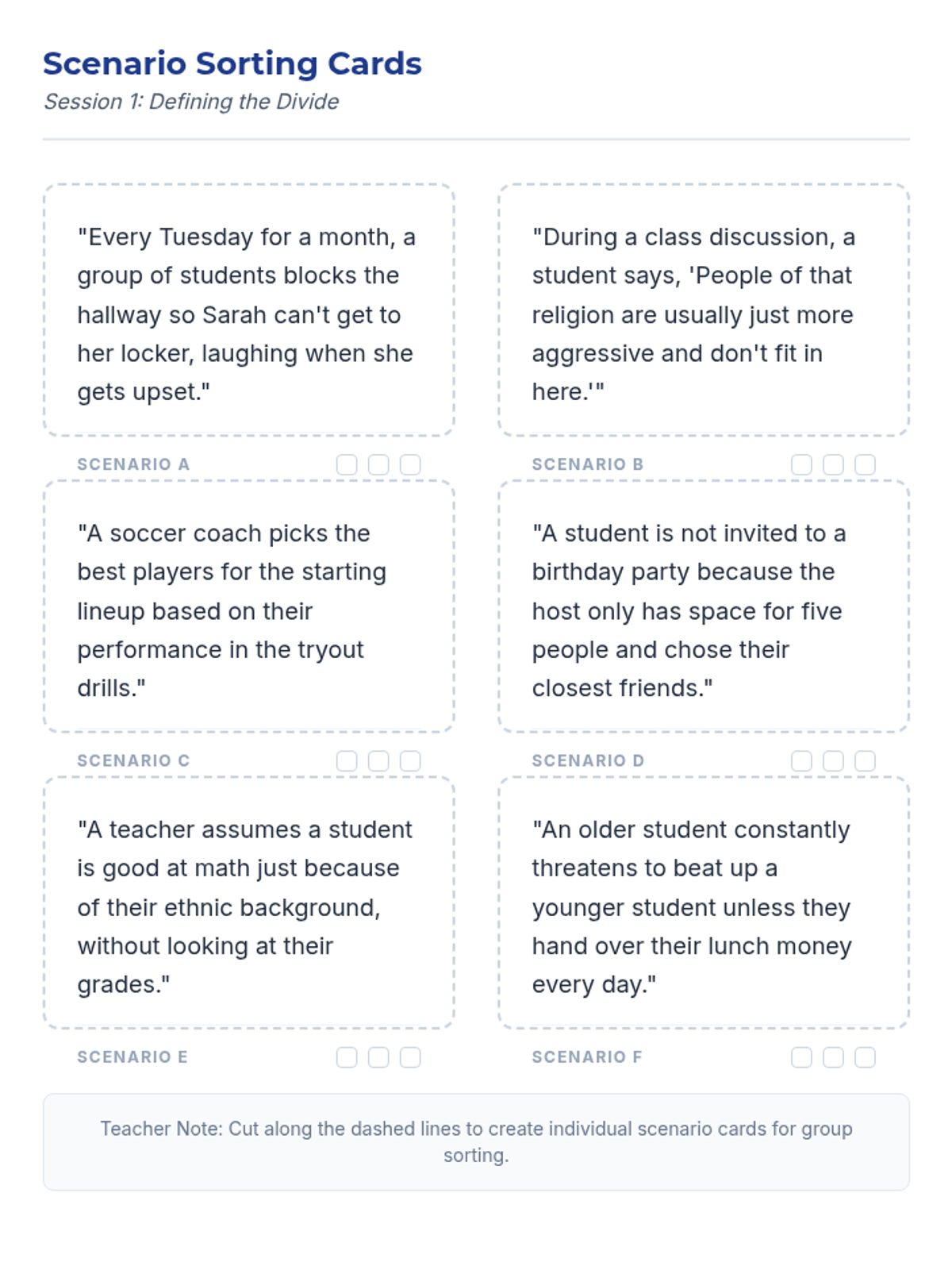
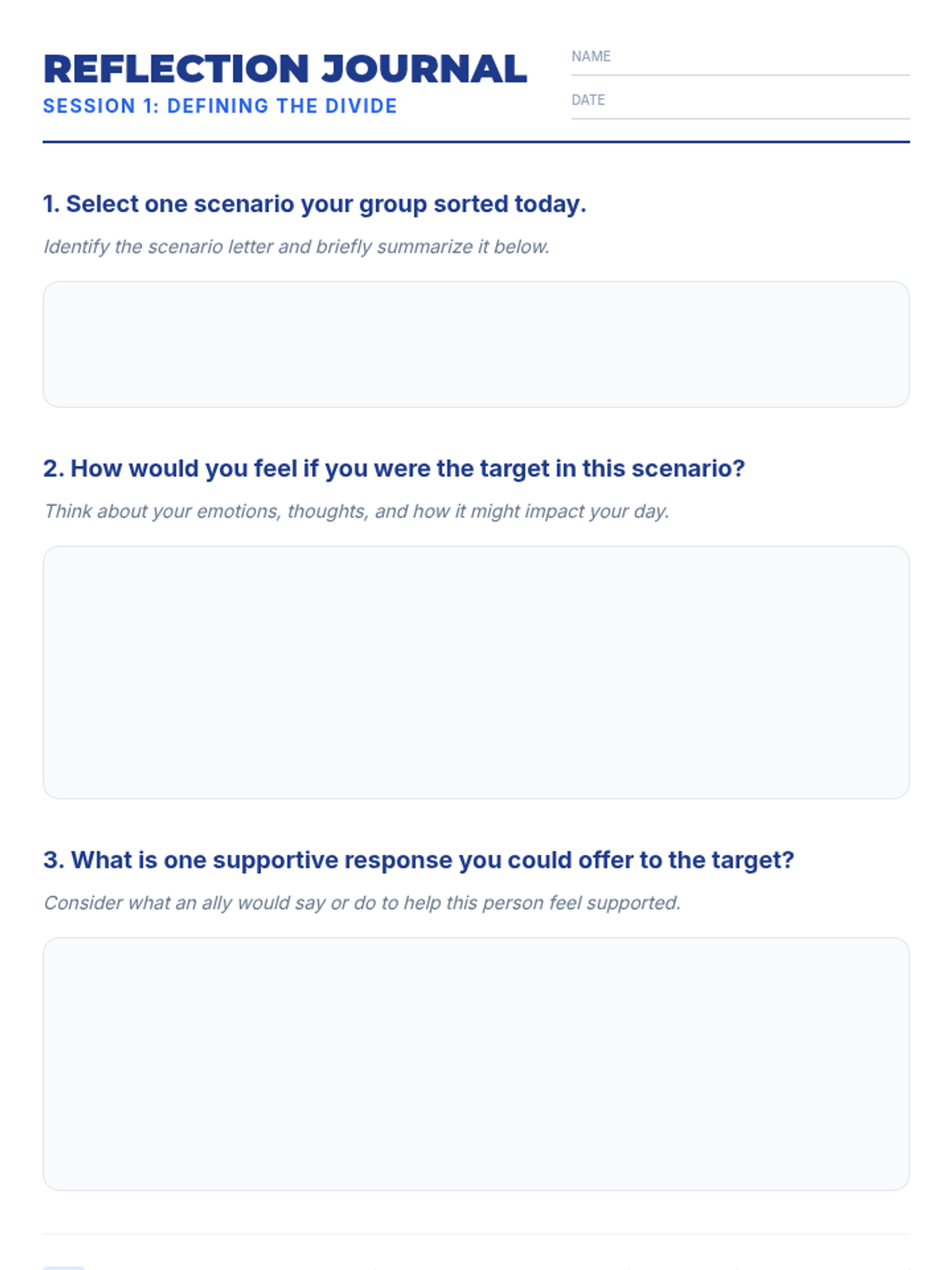
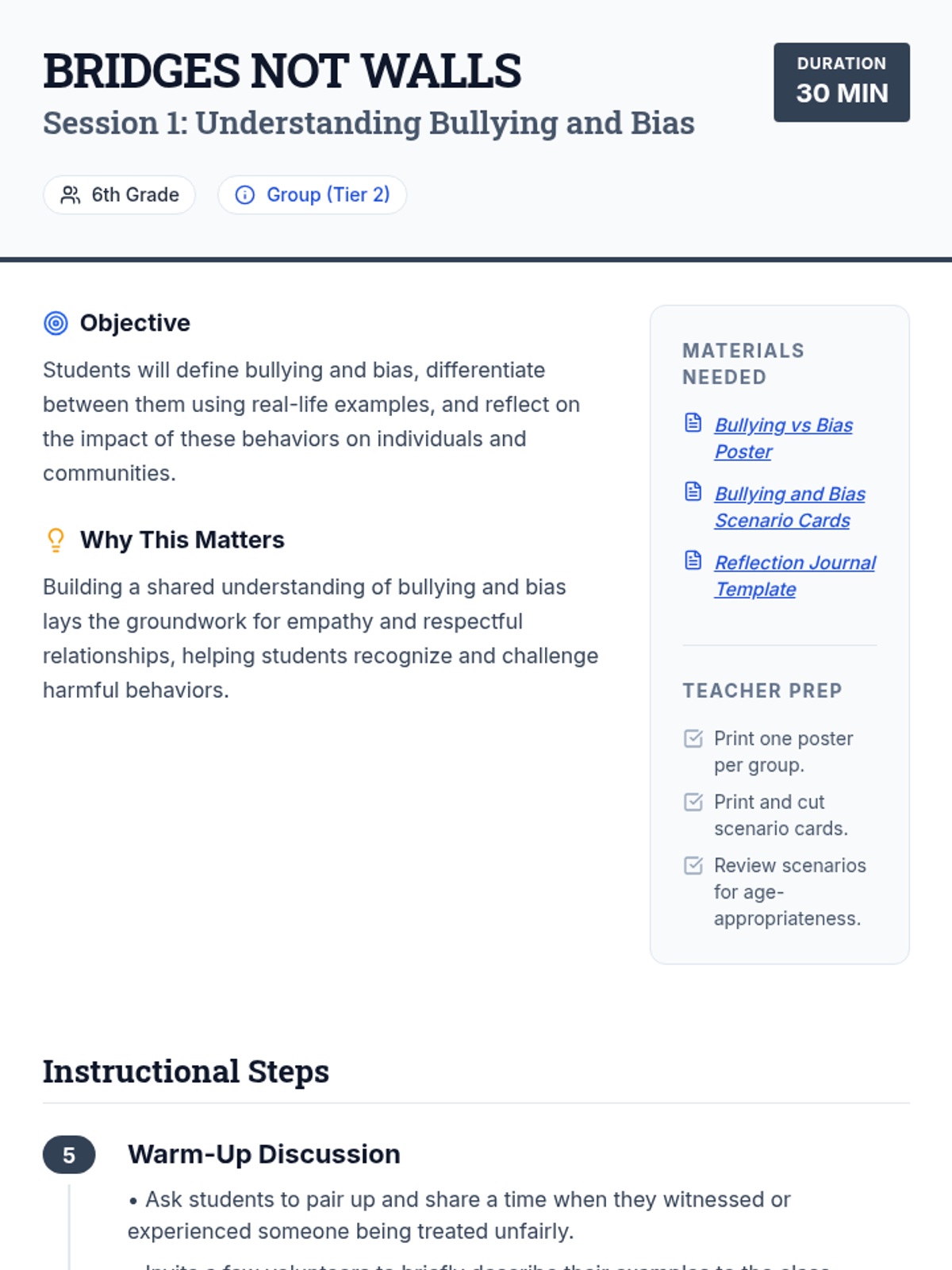
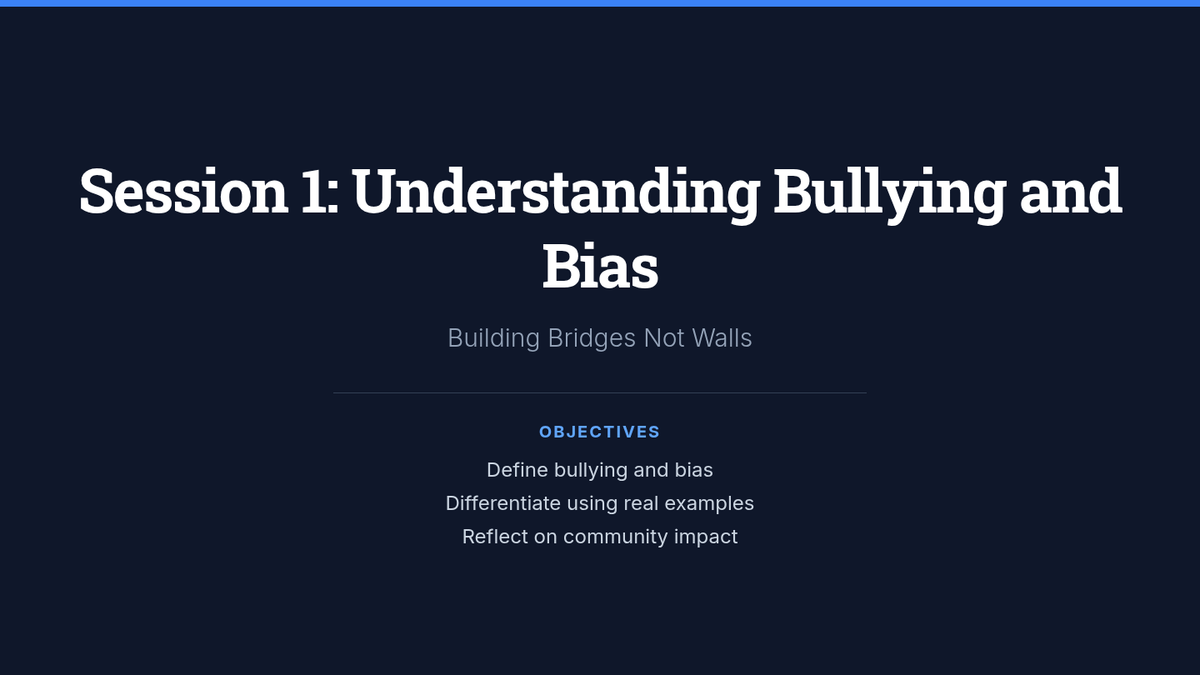
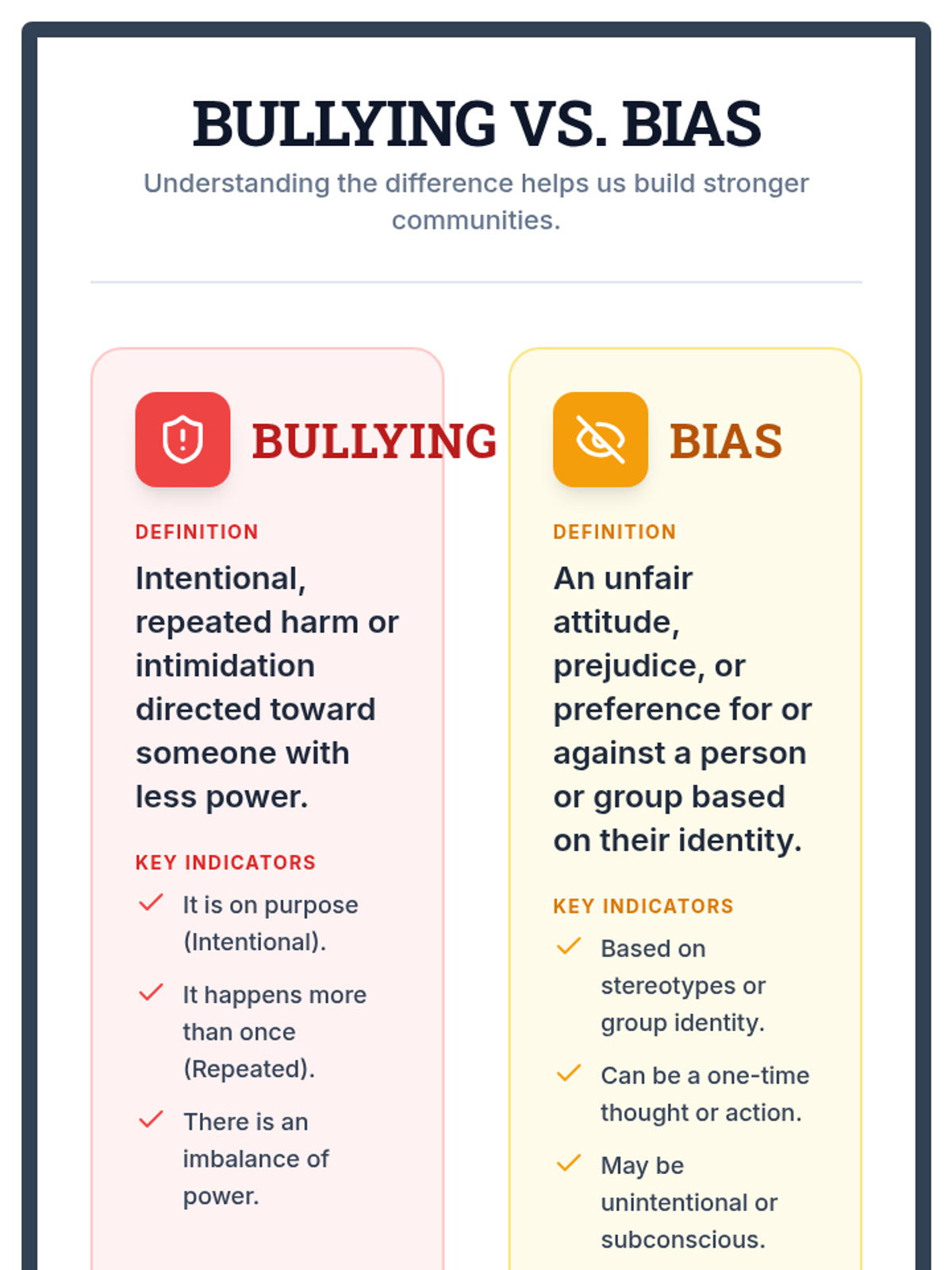
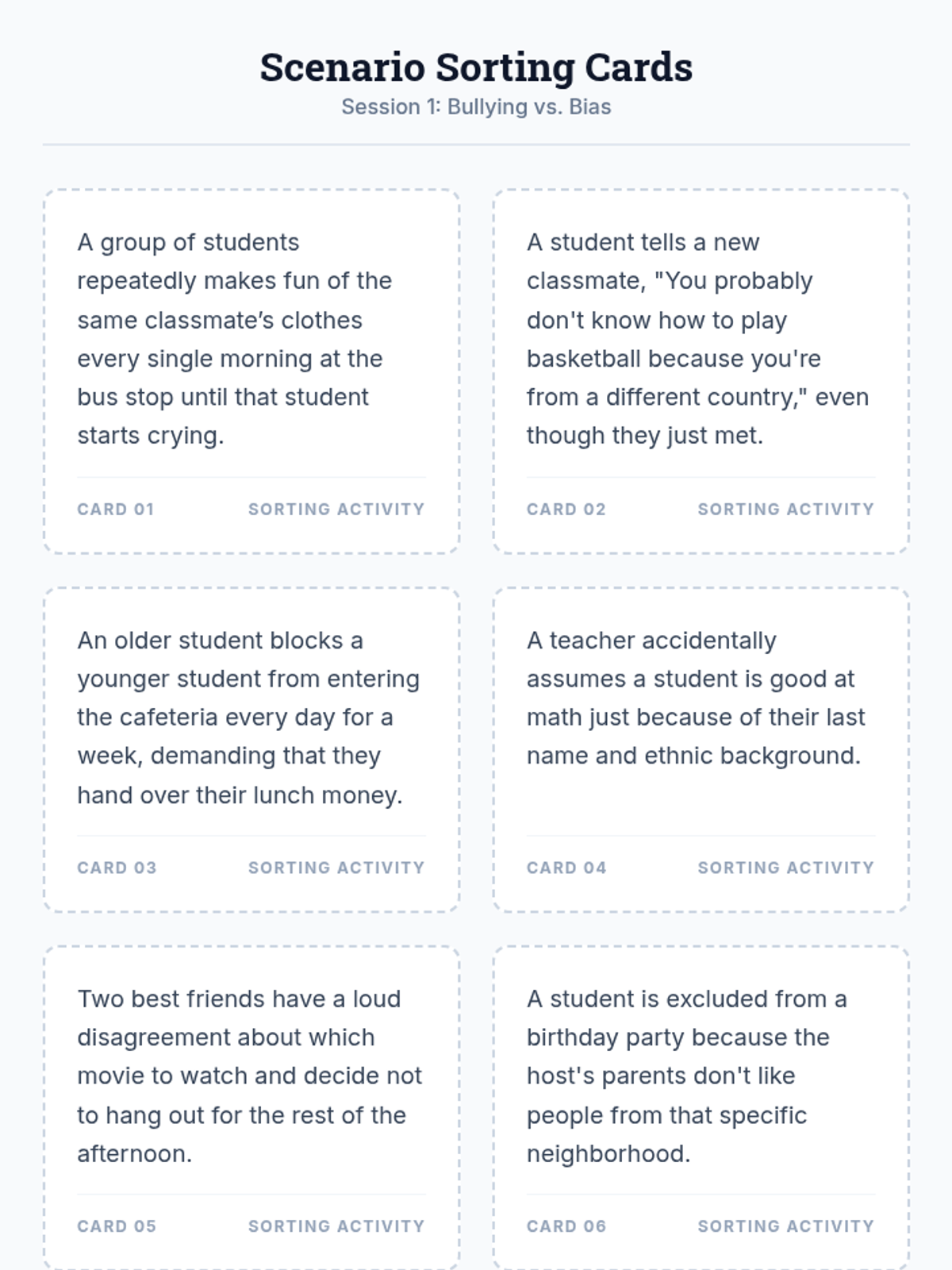
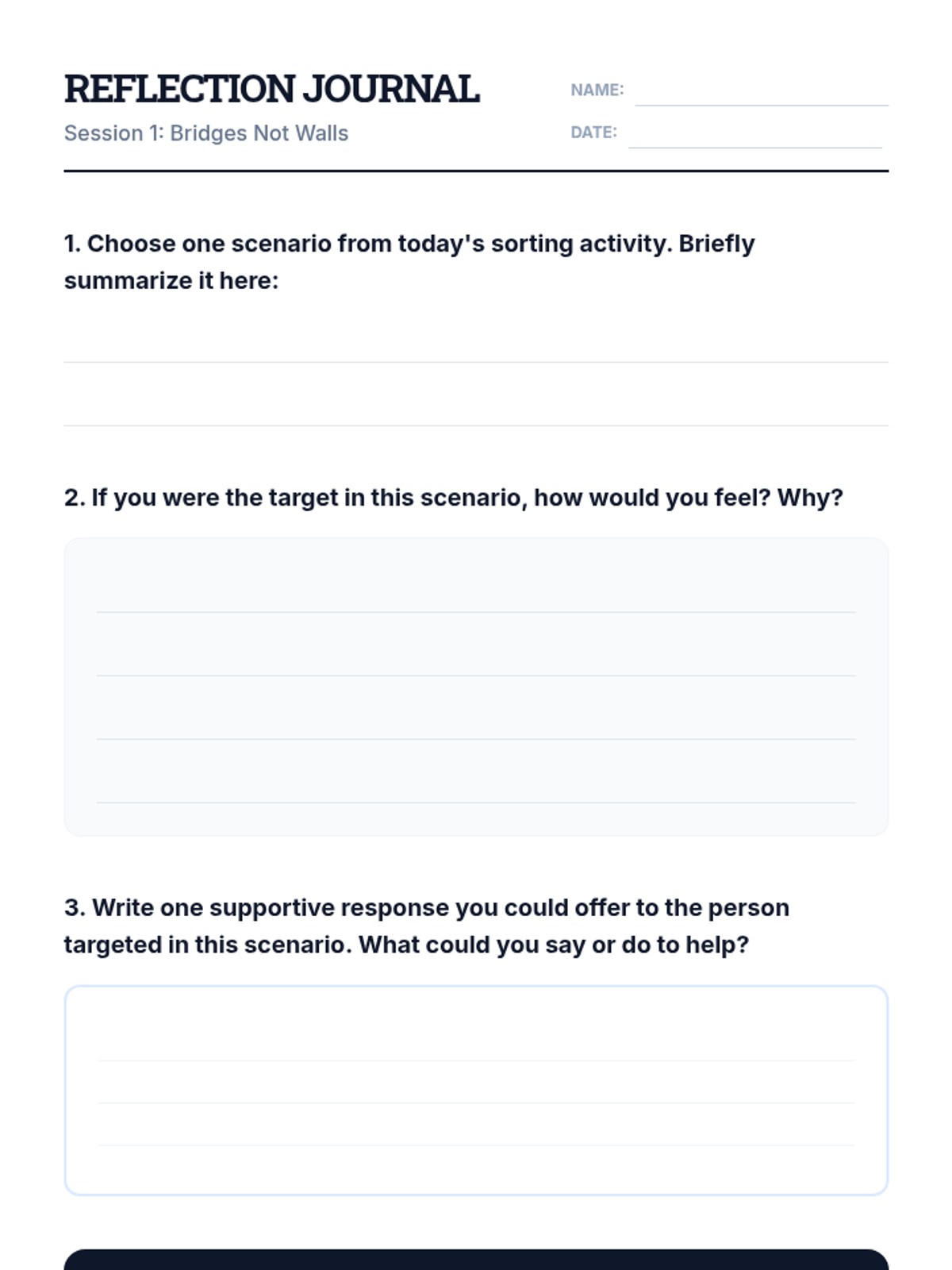
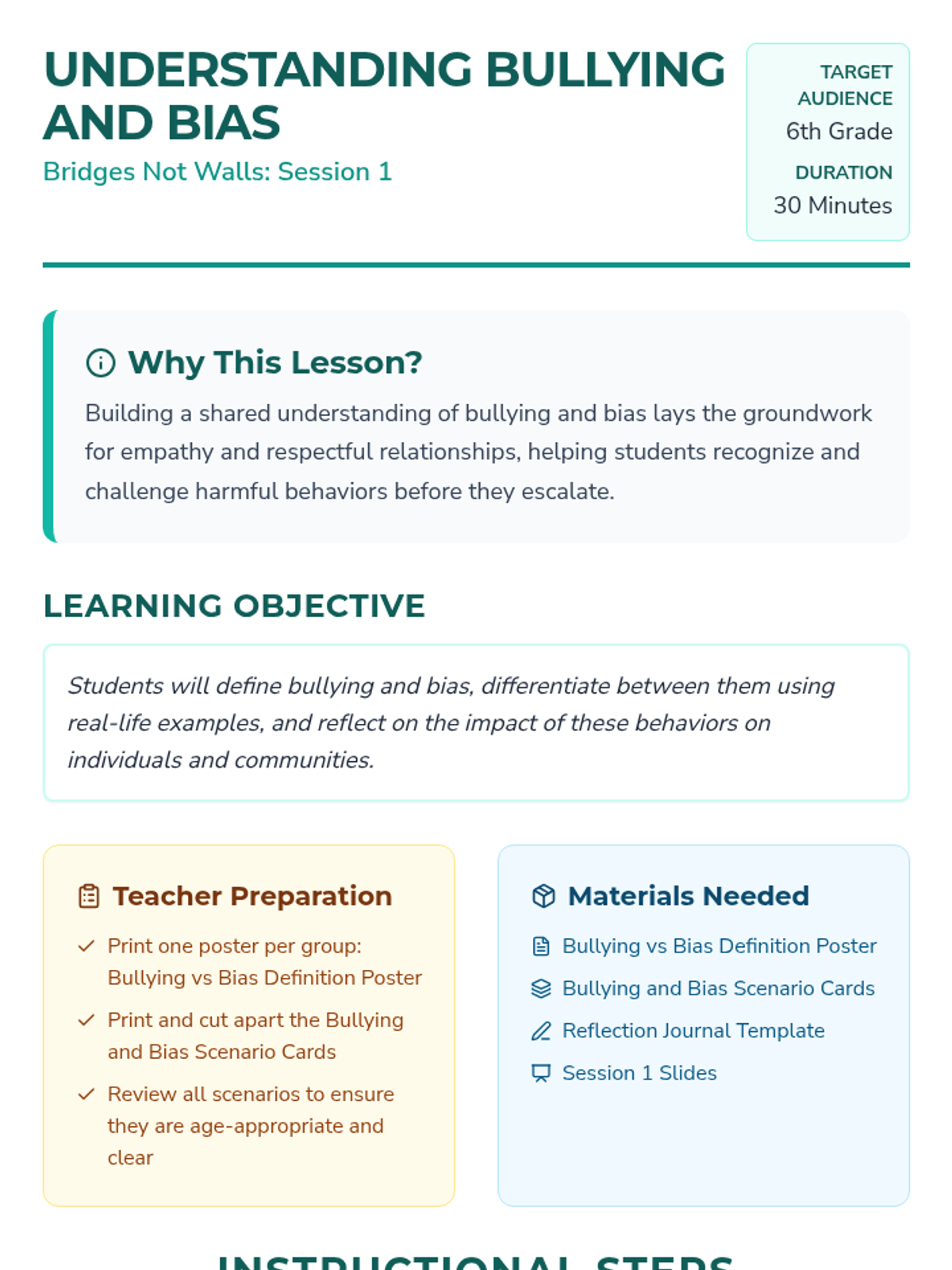
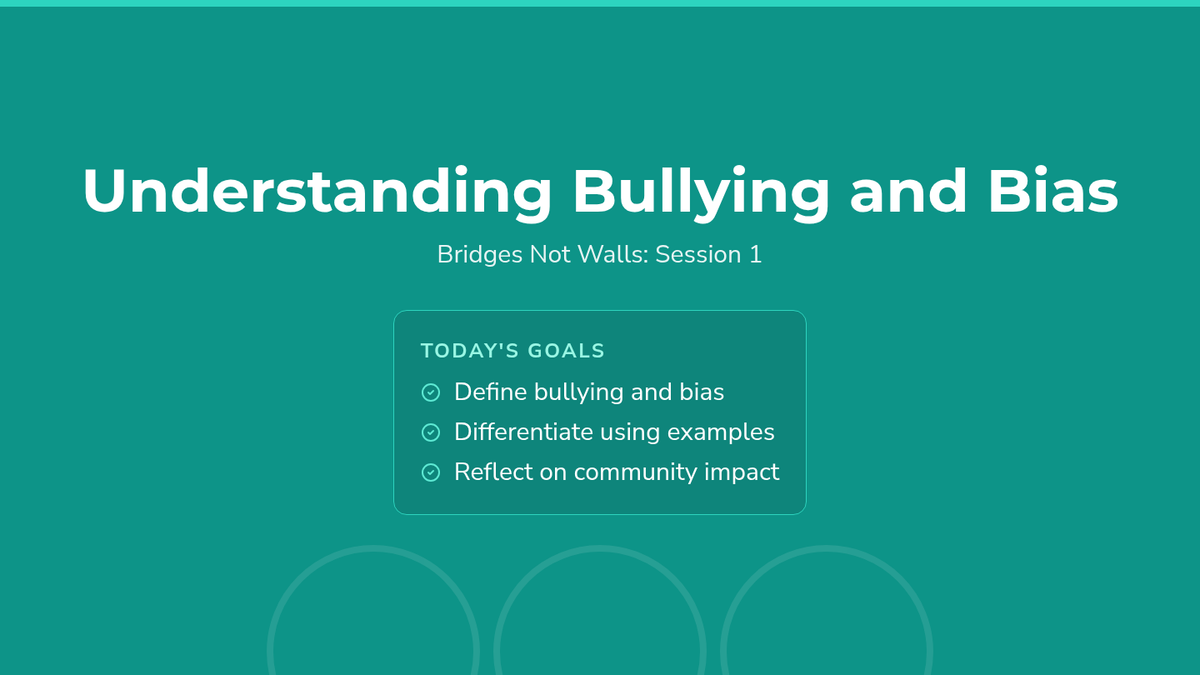
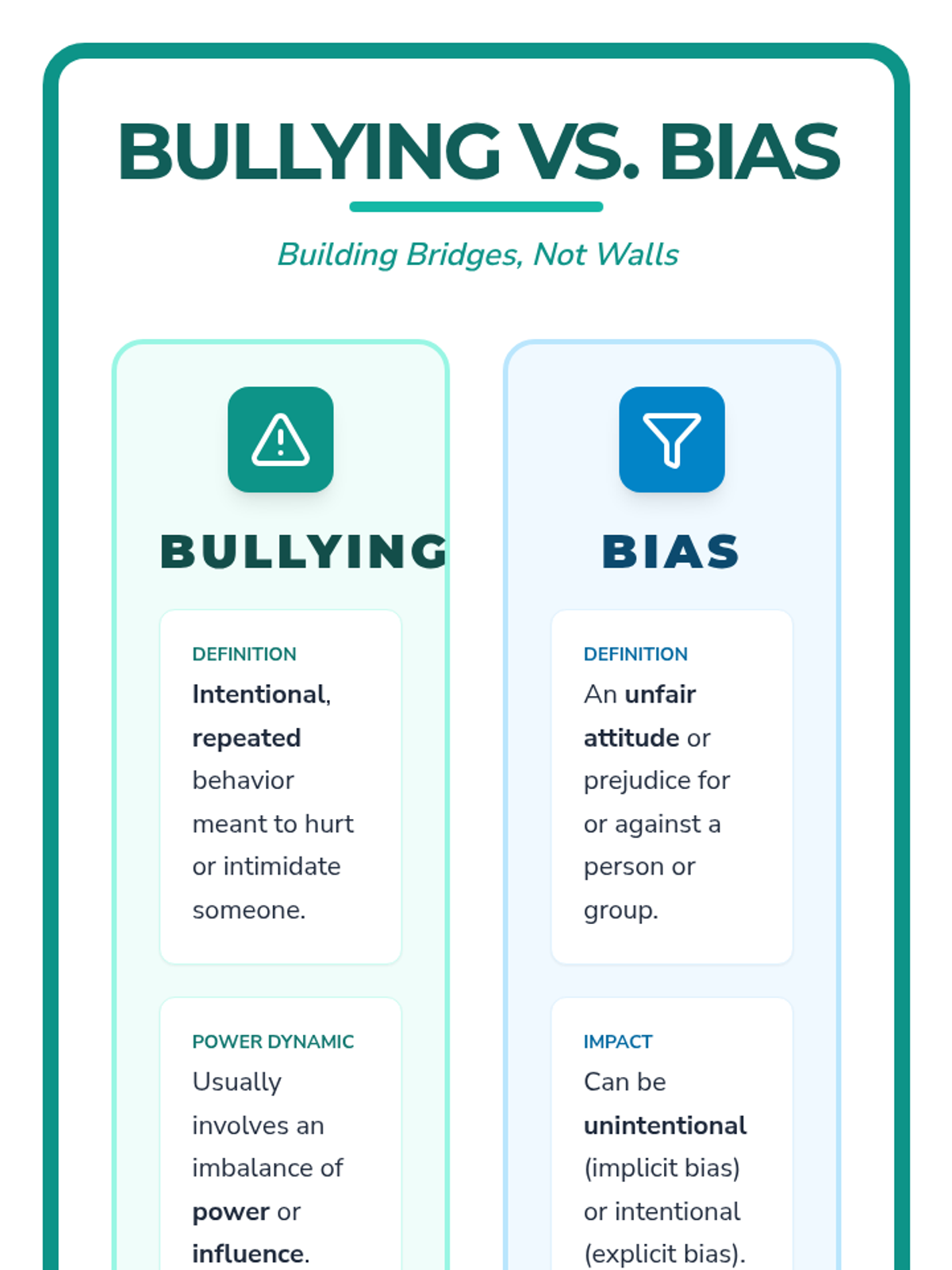
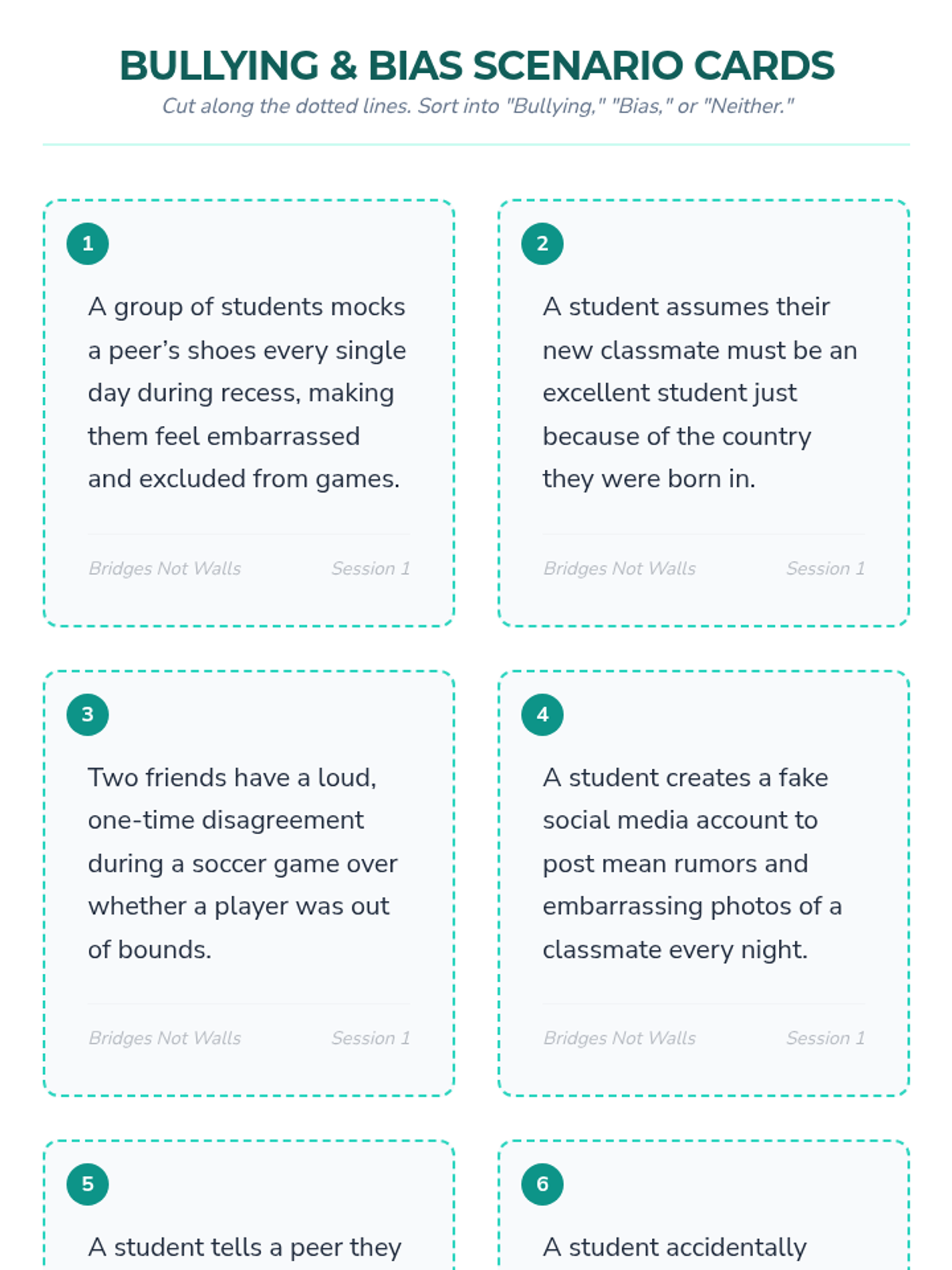
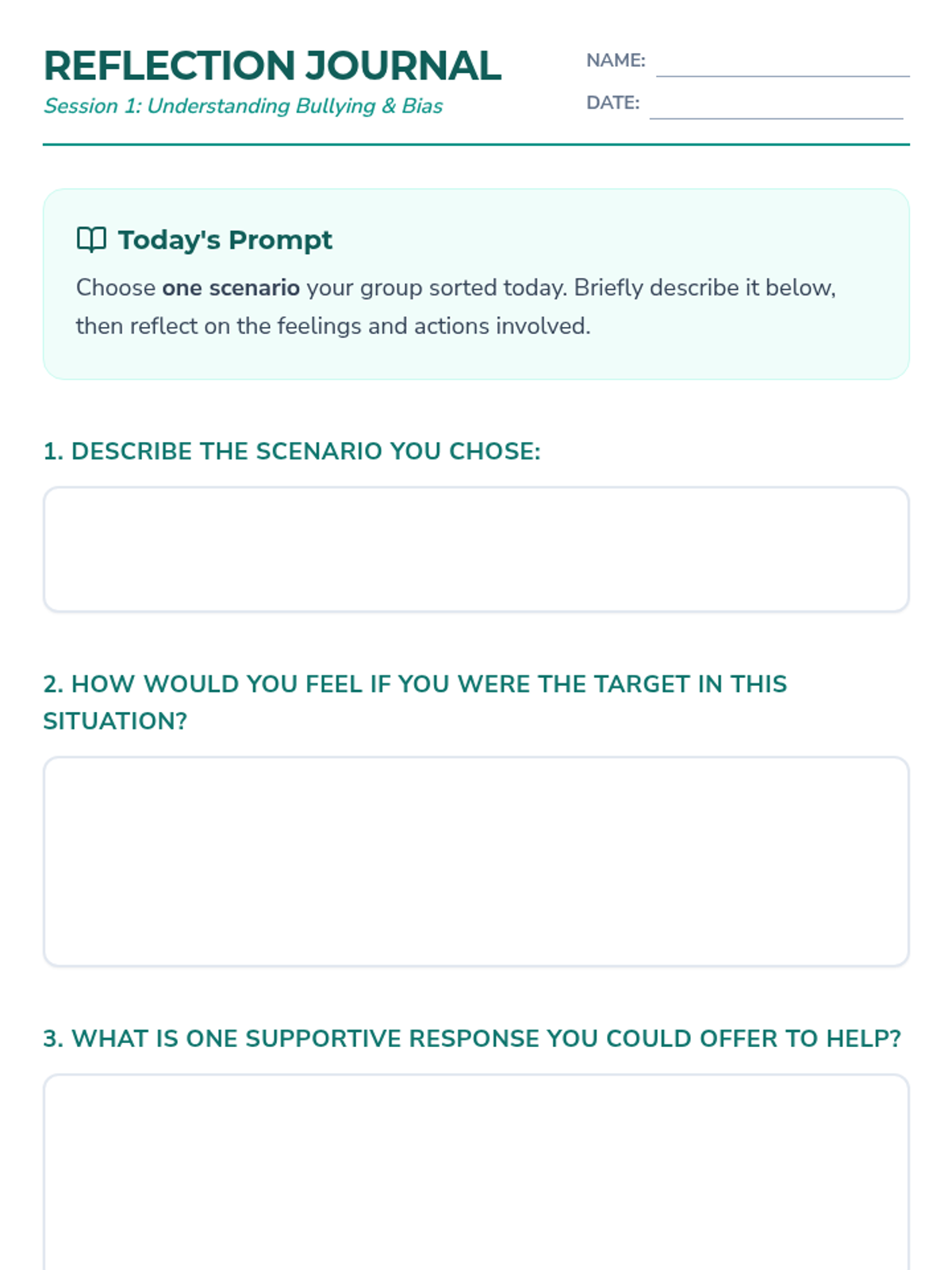
A six-session unit for 6th graders to explore empathy, diversity, and restorative practices after incidents of bullying tied to religion and race. Students learn to identify bias, practice healthy communication, and build inclusive communities.
In this six-session unit, 6th graders explore empathy, diversity, and restorative practices after incidents of bullying tied to religion and race. Students will learn to identify bias, practice healthy communication, and build inclusive communities, culminating in a restorative project presentation.
A six-session unit for 6th graders focusing on empathy, bias recognition, communication, and restorative practices to build an inclusive community. Students move from defining harm to actively planning restorative projects.
A six-session unit for 6th graders focusing on empathy, diversity, and restorative practices following incidents of bullying. Students learn to recognize bias, practice healthy communication, and build inclusive communities through a culminating restorative project.
A six-session restorative unit for 6th graders focusing on empathy, bias recognition, and building inclusive communities through restorative practices and active communication.
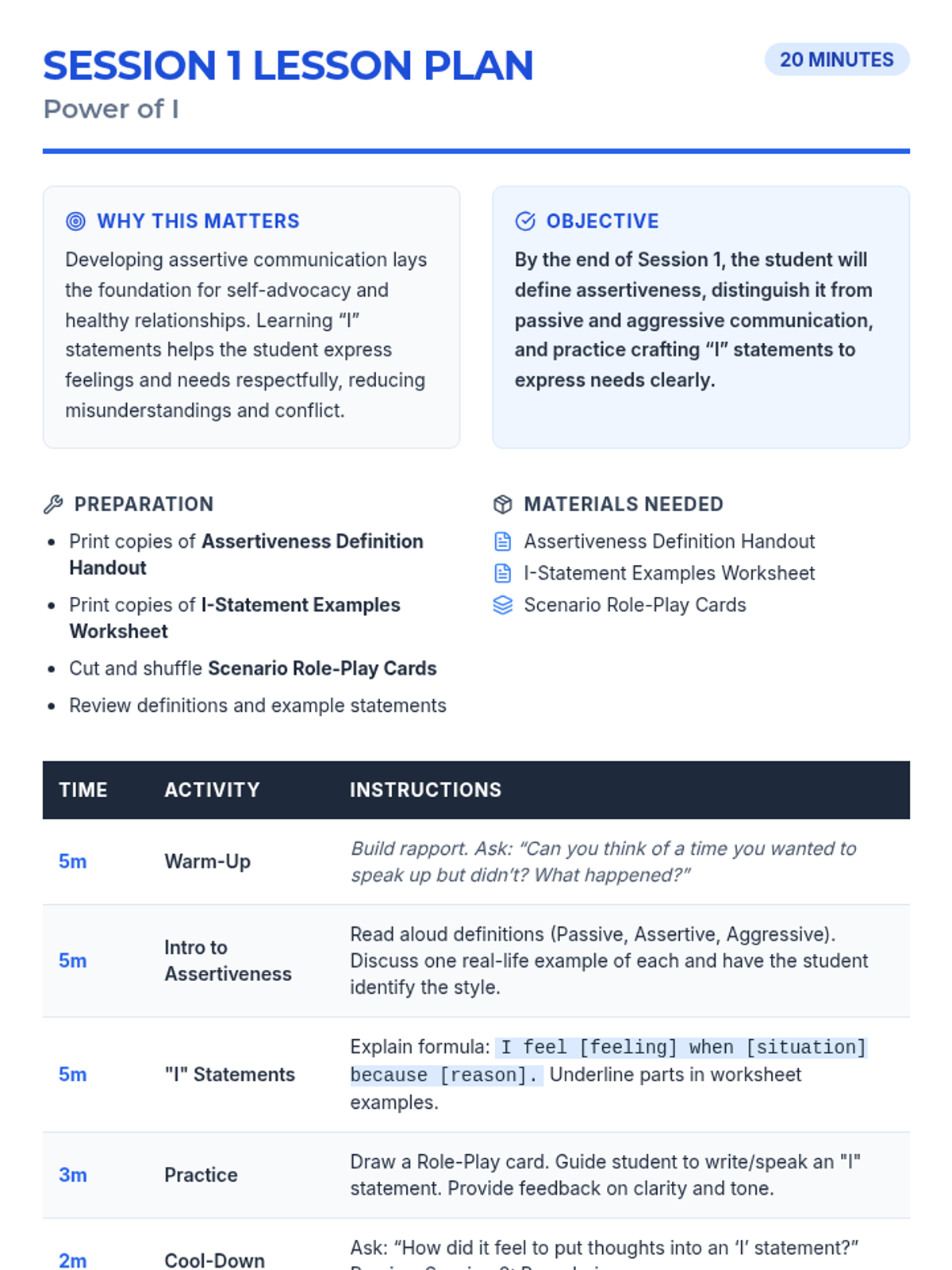
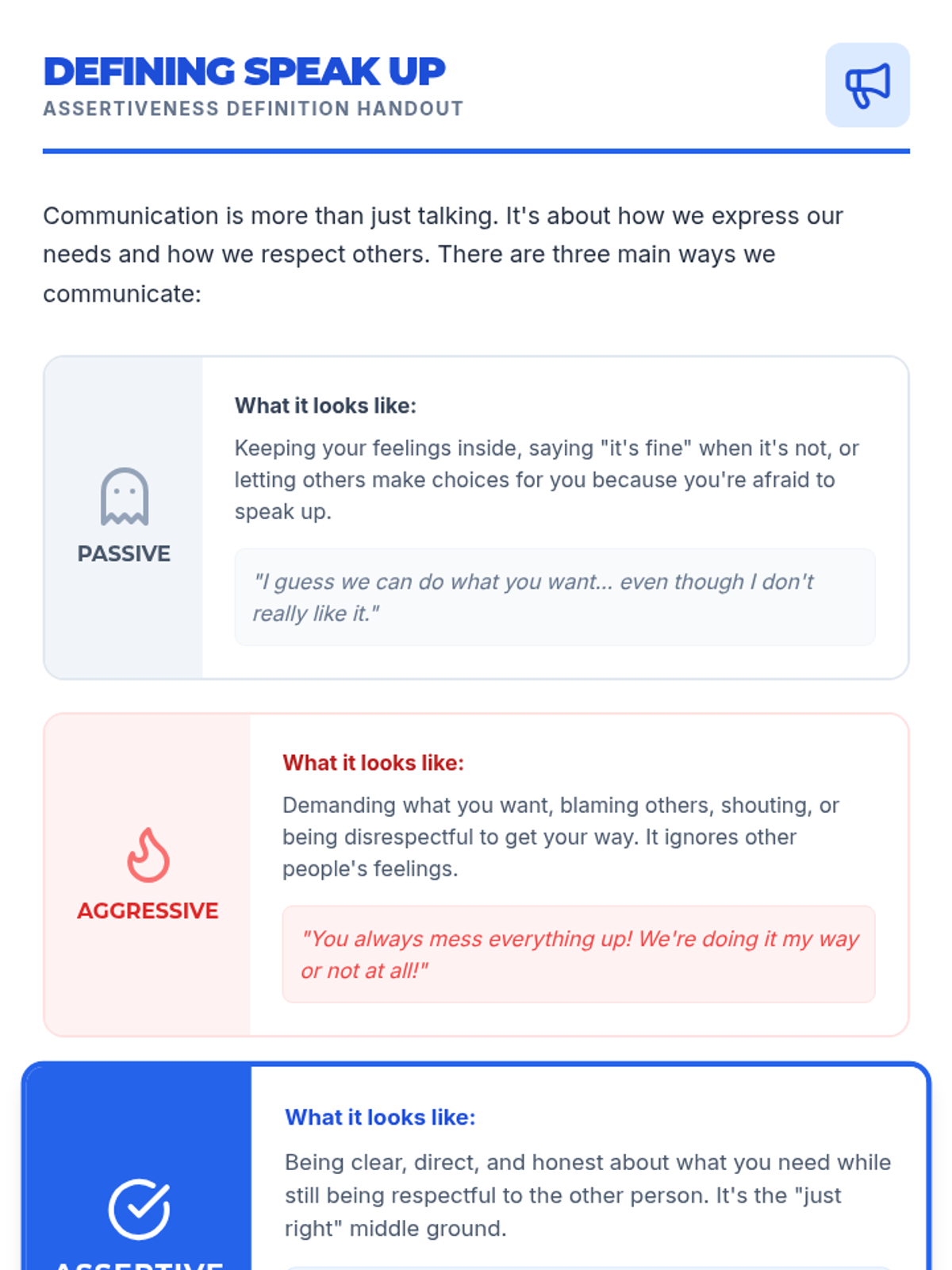
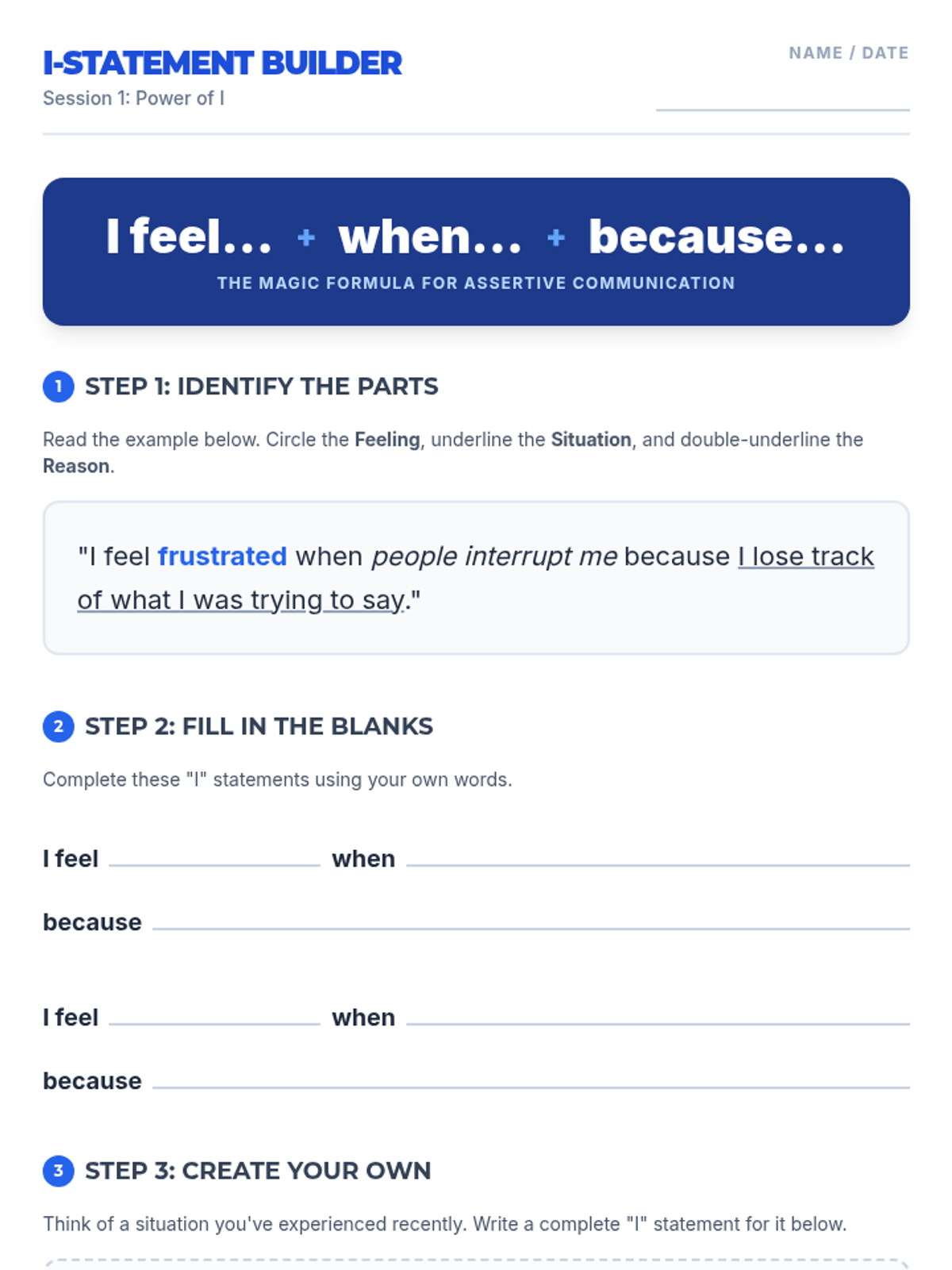
A 5-session intensive for middle school students to develop assertive communication skills, focusing on I-statements, boundaries, refusals, and long-term maintenance.
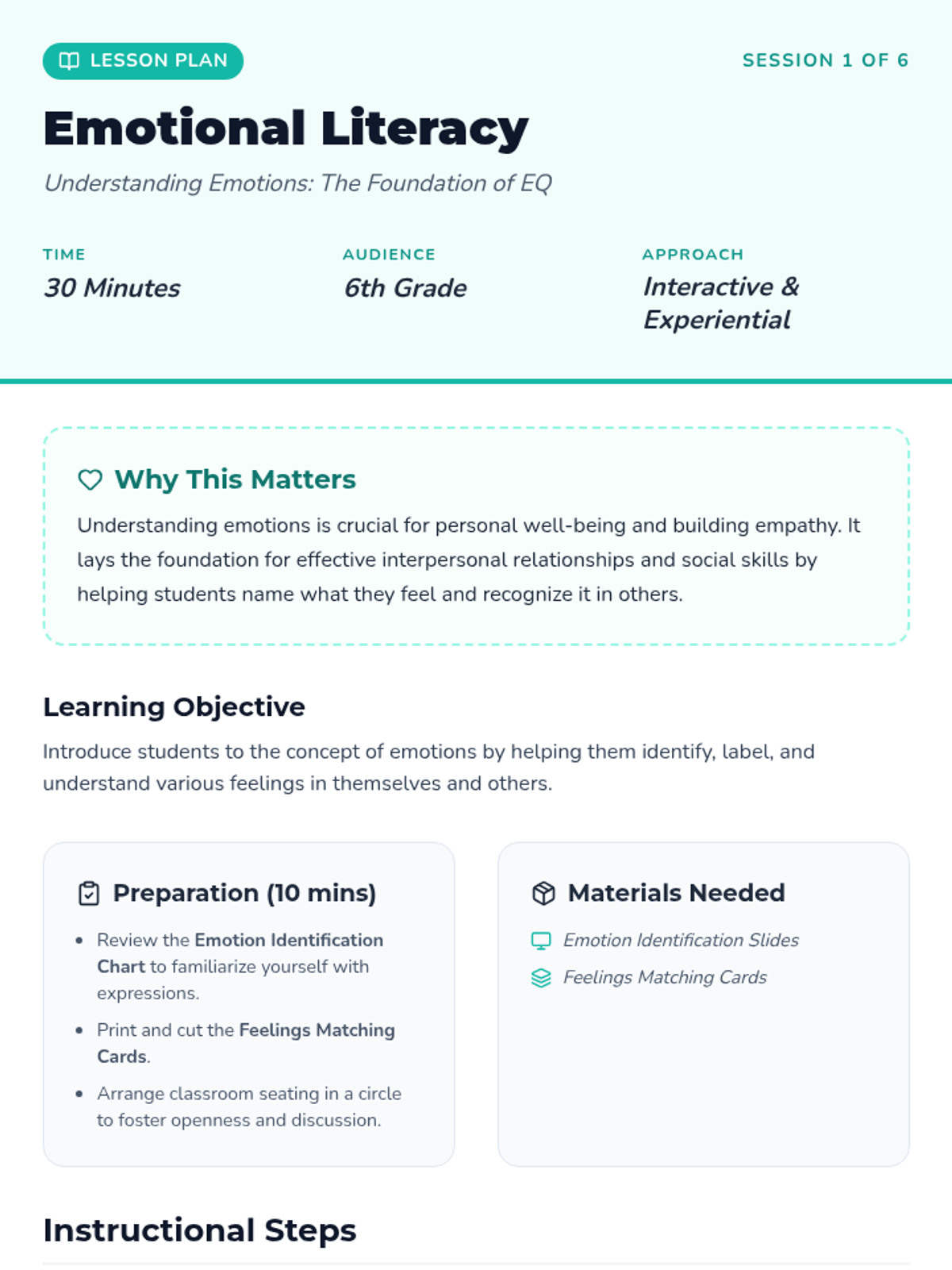
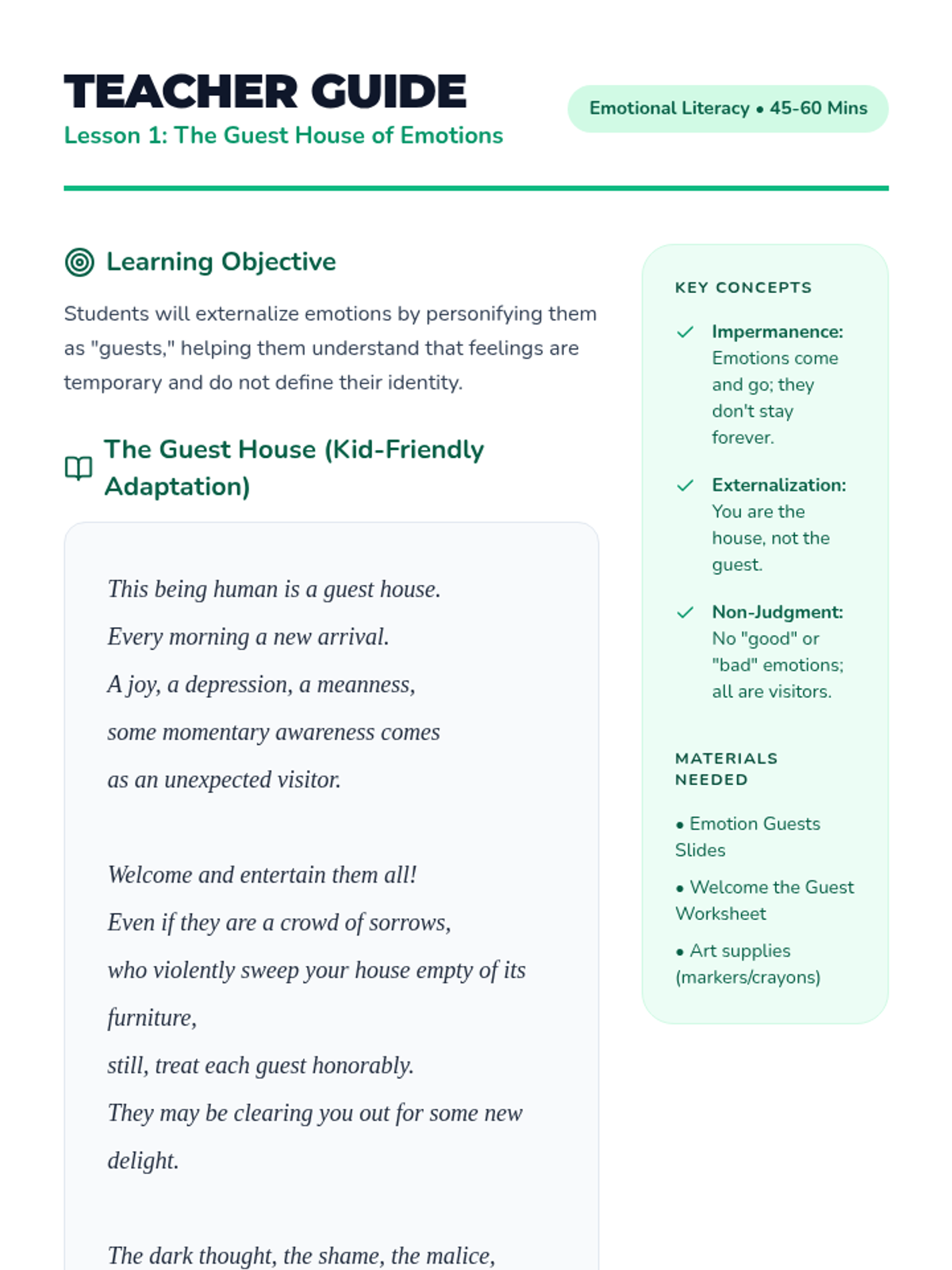
A comprehensive 6-session sequence designed for 6th graders to develop core emotional intelligence skills, including emotional literacy, communication, problem-solving, time management, resilience, and goal setting.
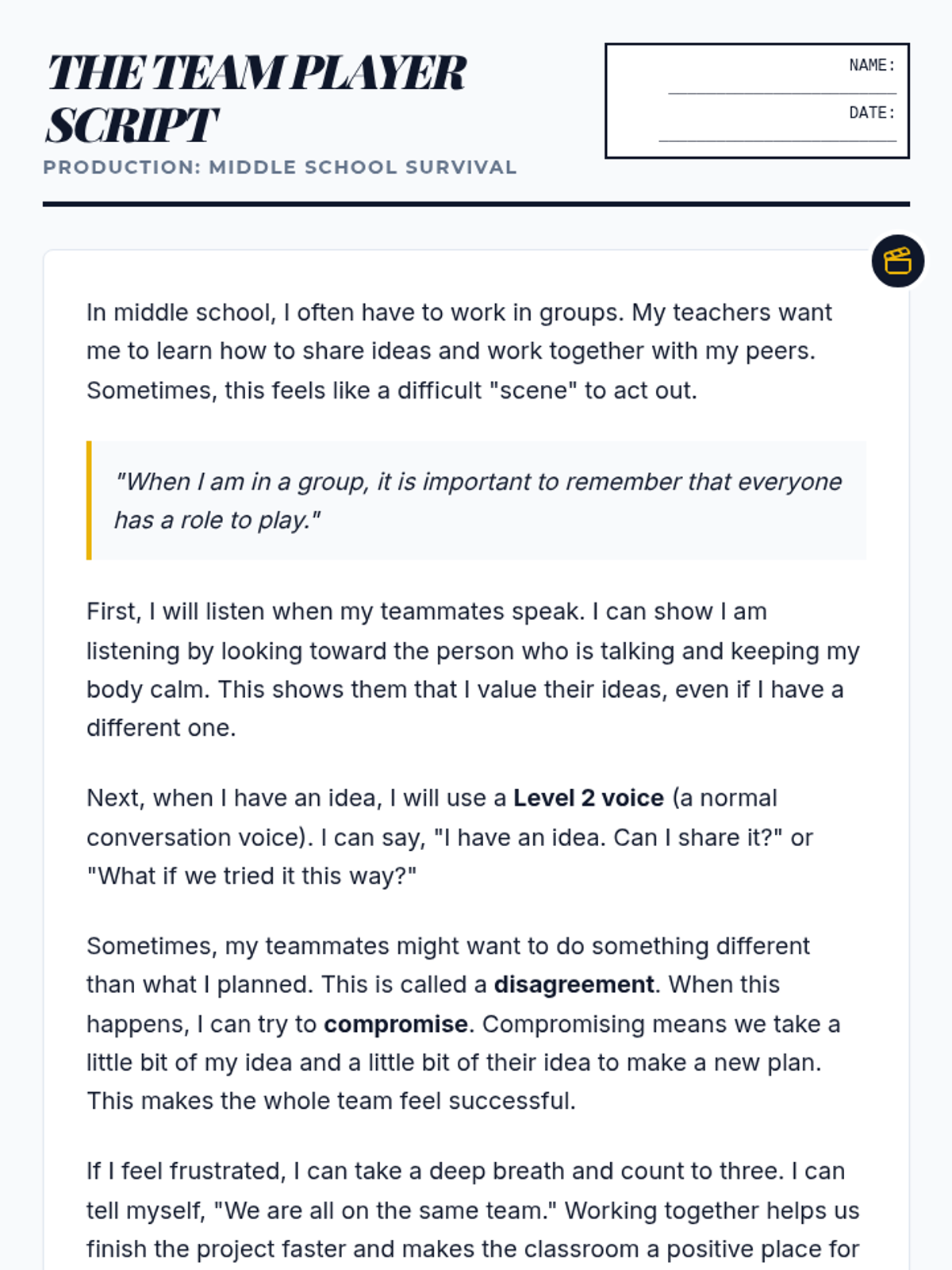
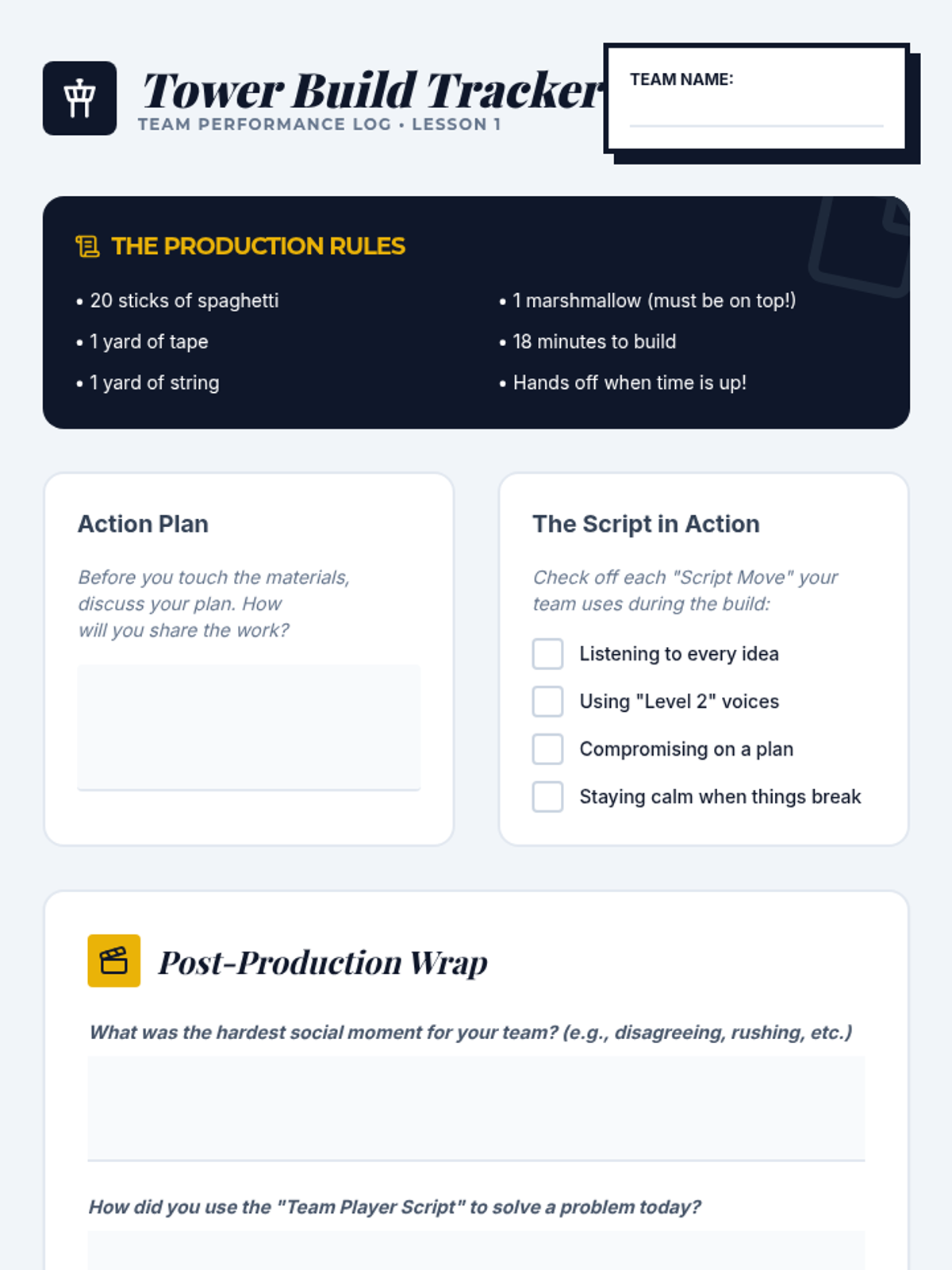
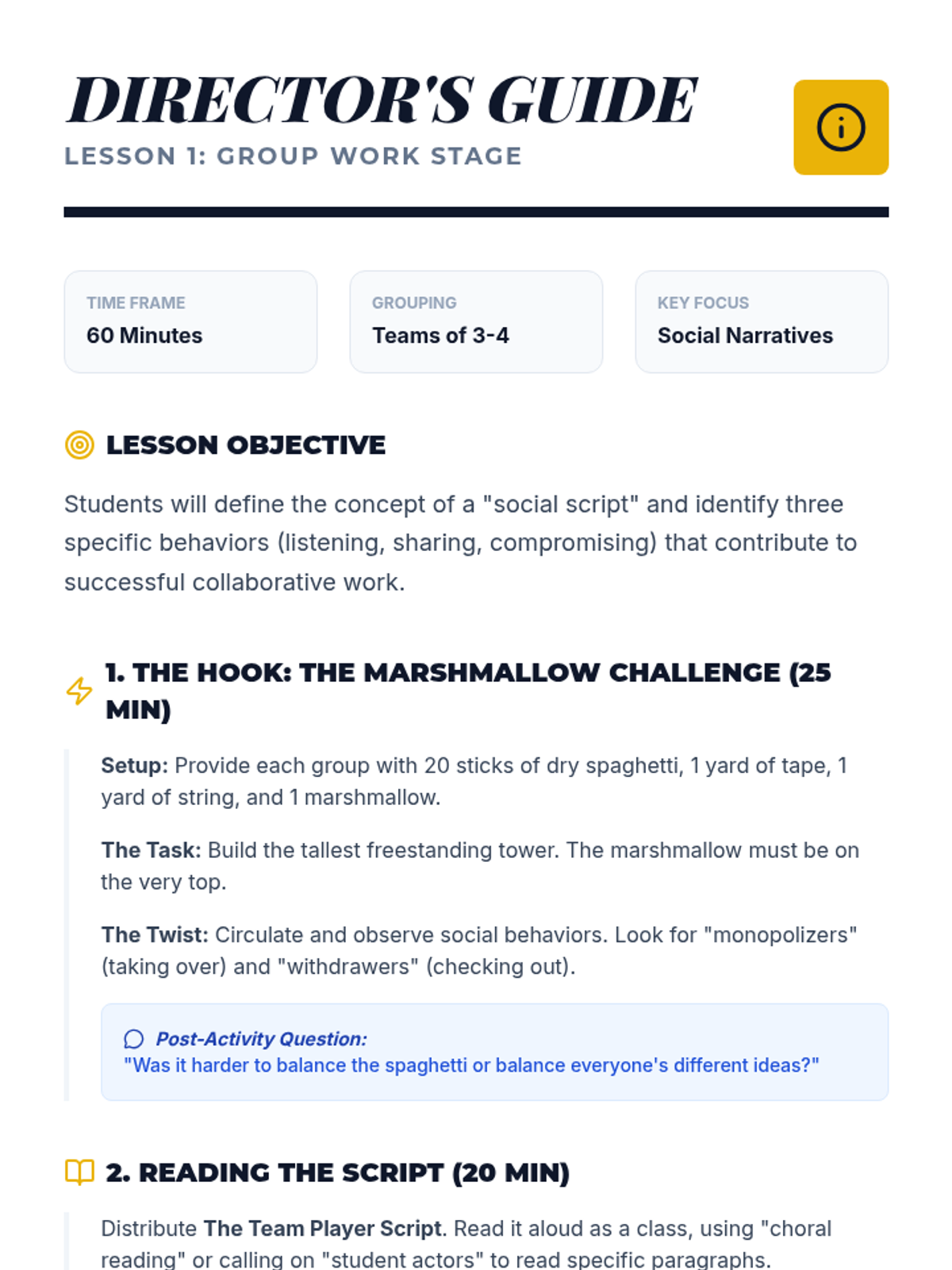
A comprehensive 6th-grade sequence focused on understanding and applying social narratives (Social Stories) to common middle school interactions like group work, sarcasm, conflict, and personal space through a "Director's Cut" cinematic theme.
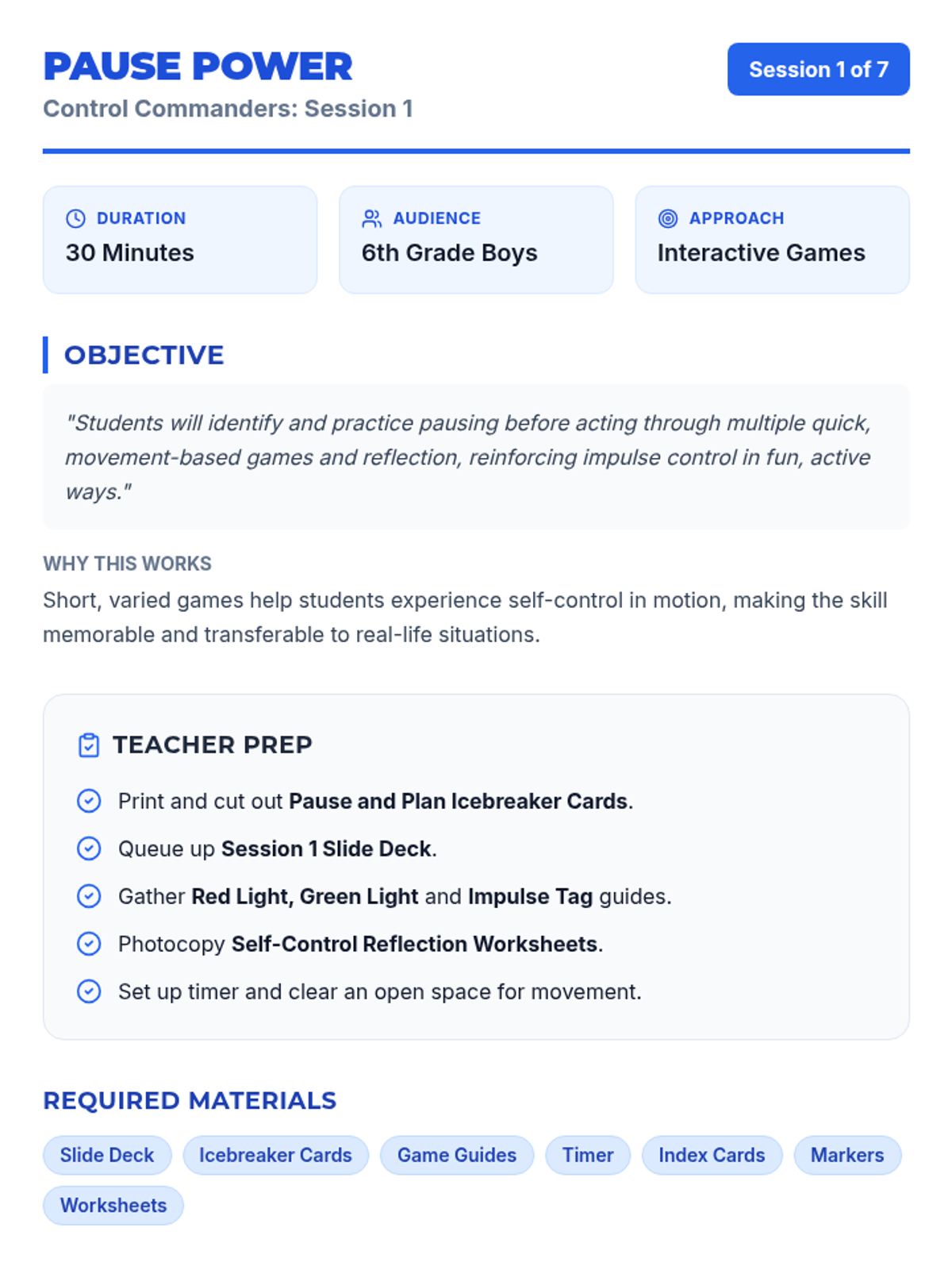
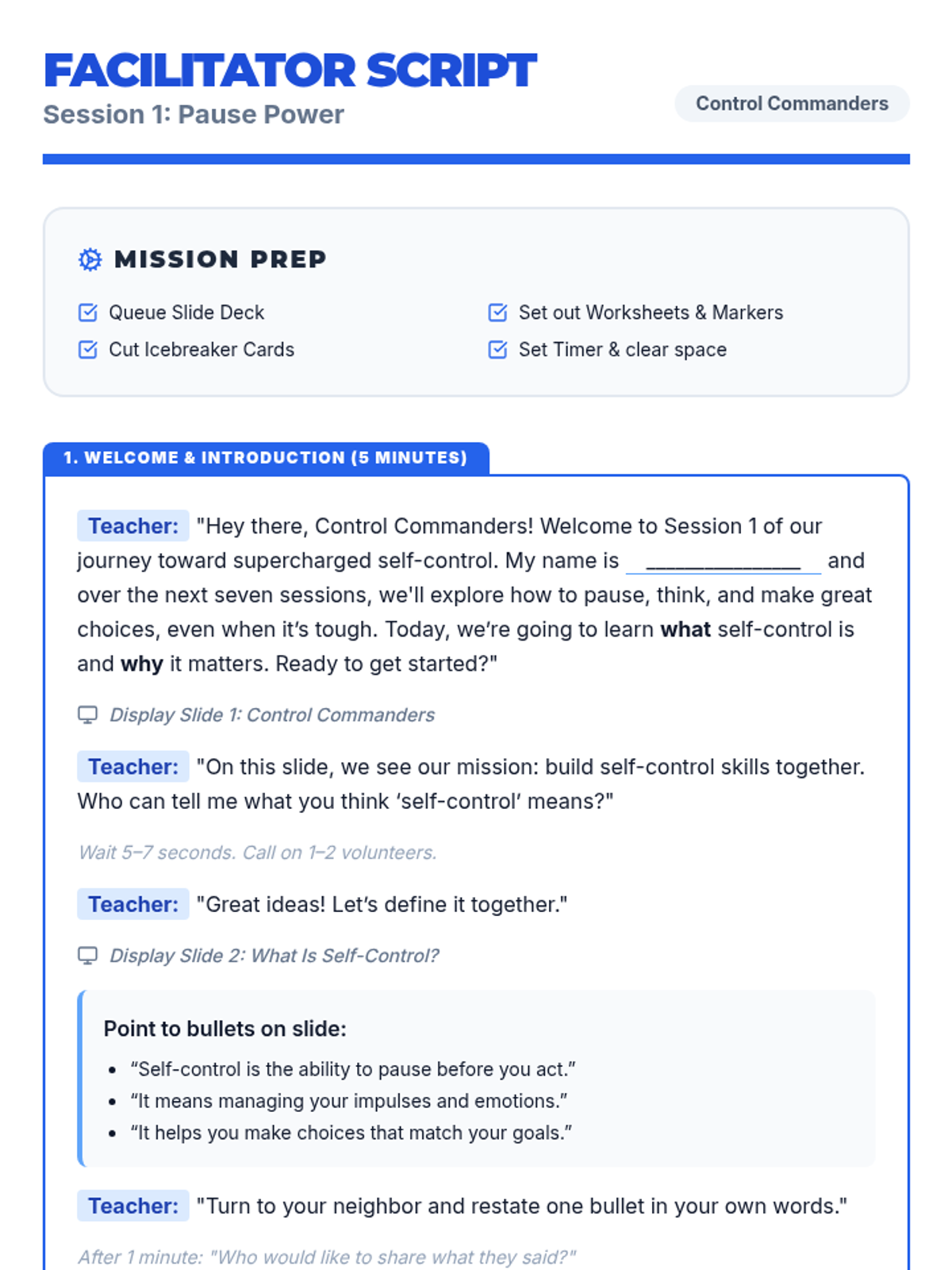
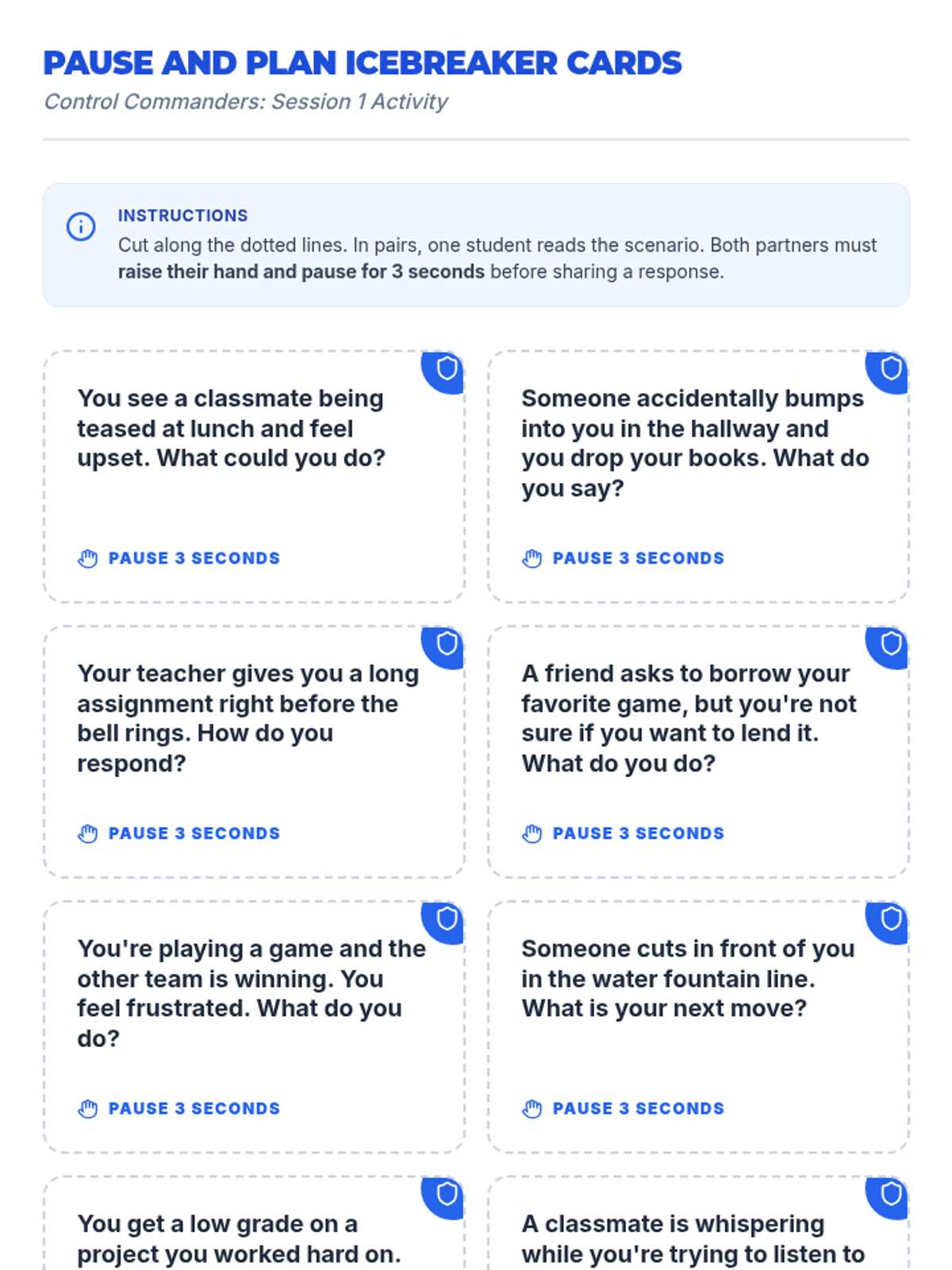
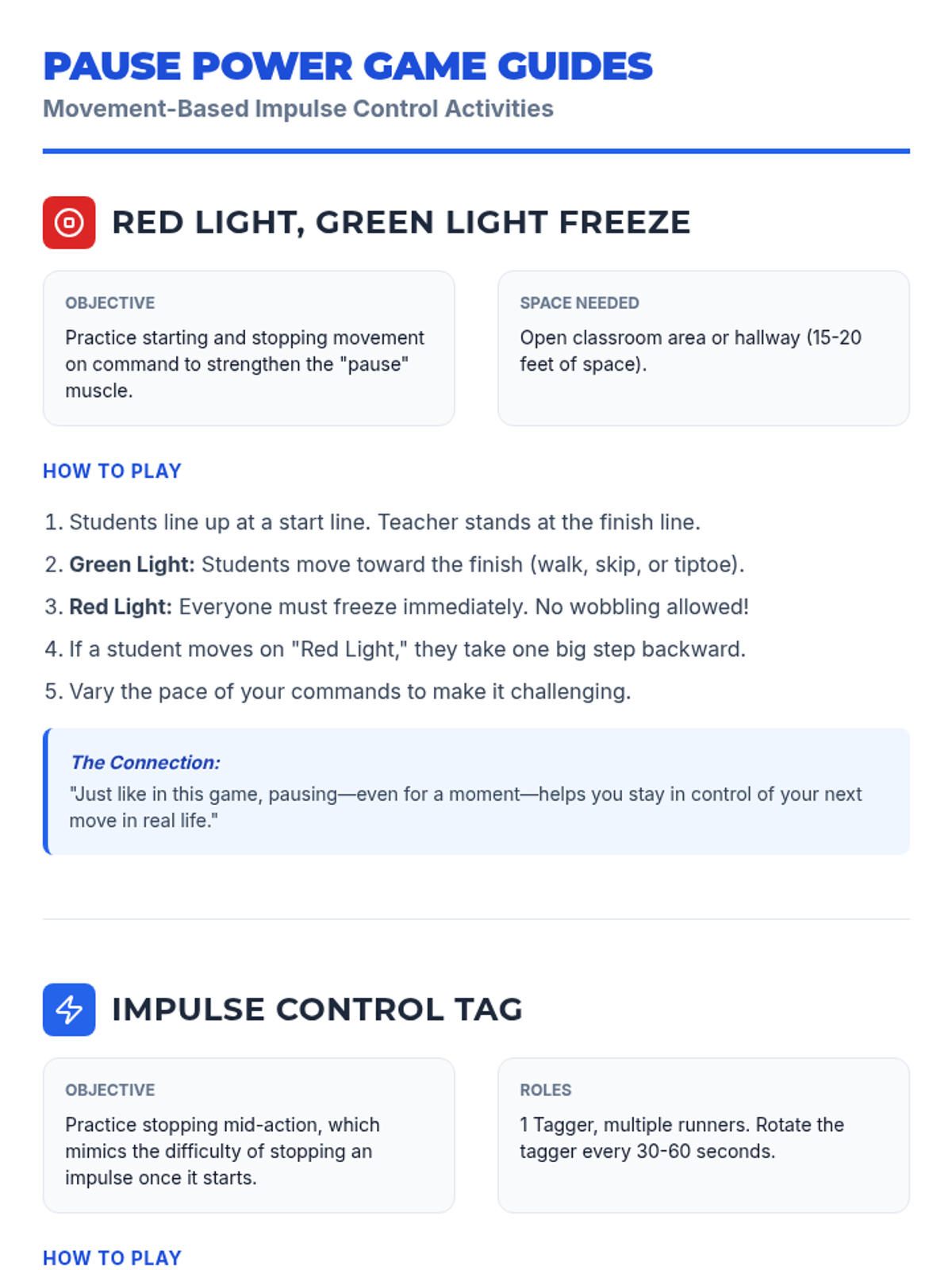
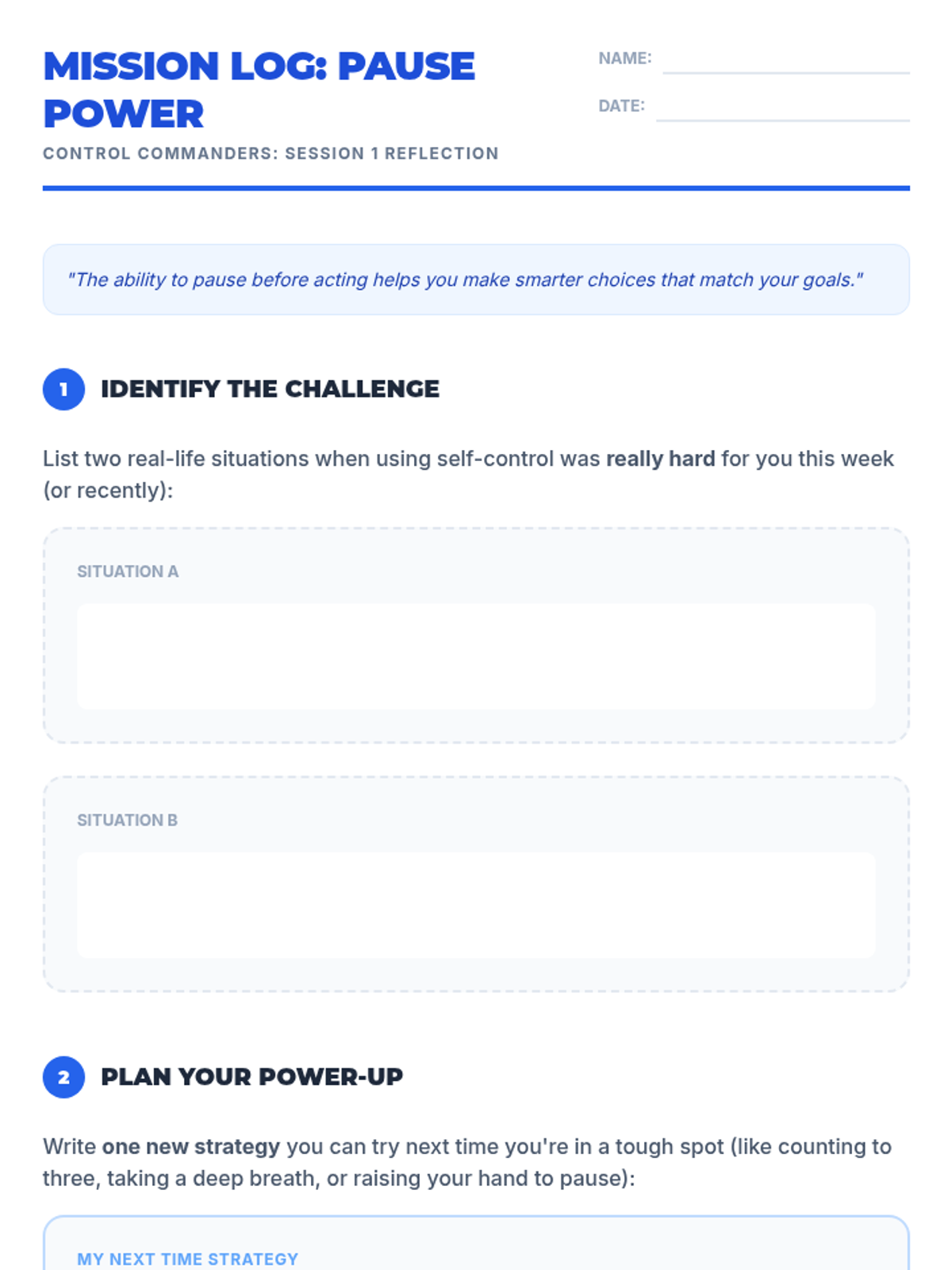
A 7-session Tier 2 group counseling program for 6th grade boys designed to build self-control, emotional regulation, teamwork, and responsible decision-making through active, game-based learning.
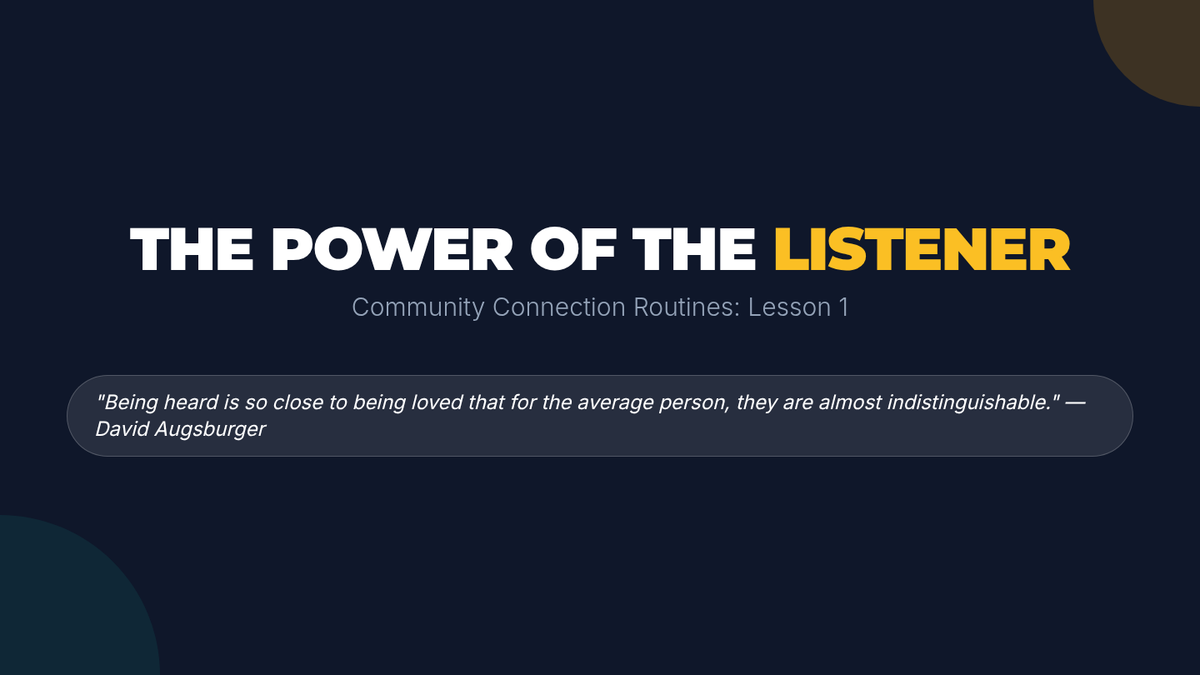
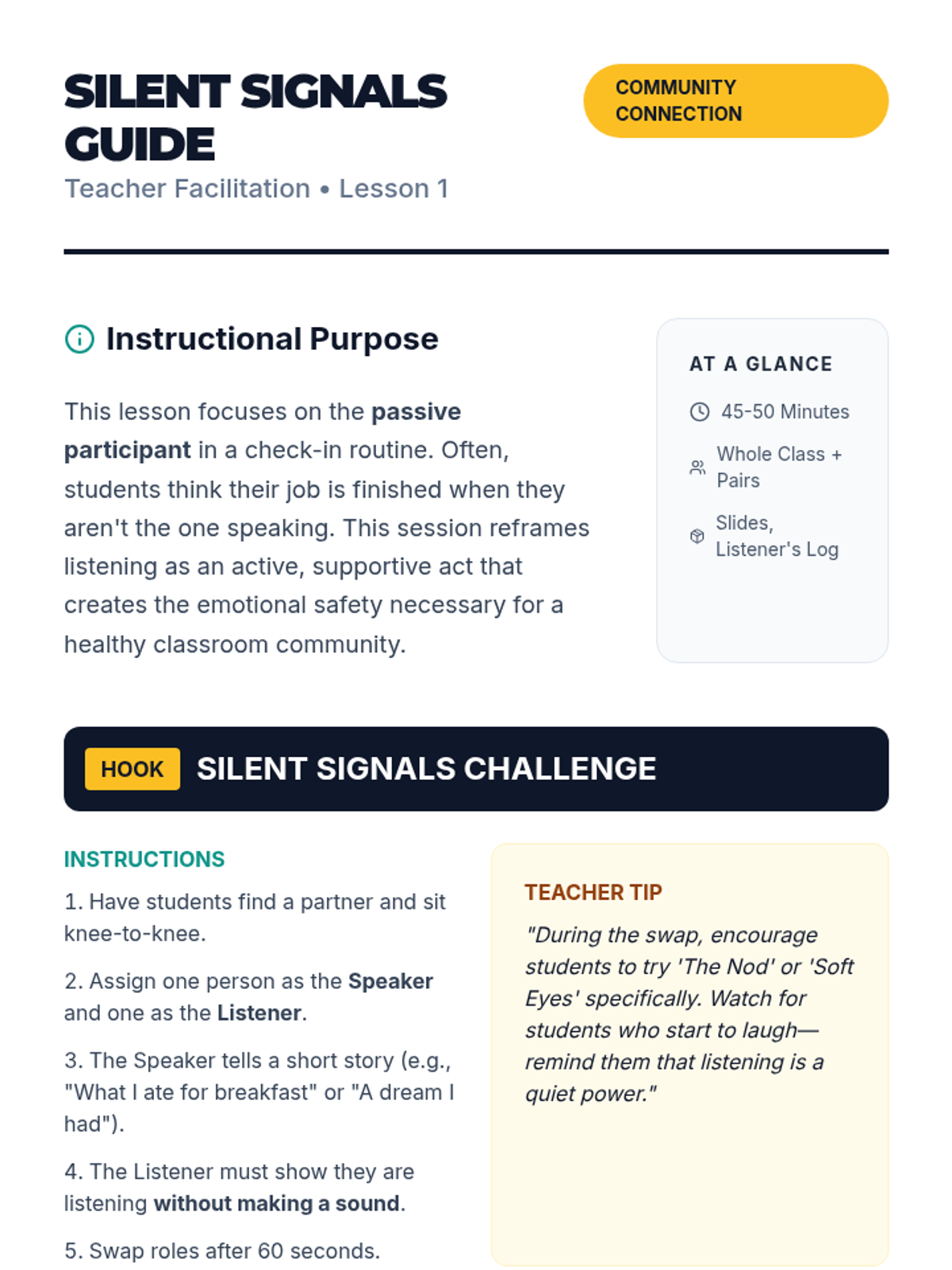
A 5th-grade sequence focused on building a supportive classroom community through daily check-in routines. Students learn active listening, empathy, healthy boundaries, collaborative problem-solving, and celebrating peer successes.
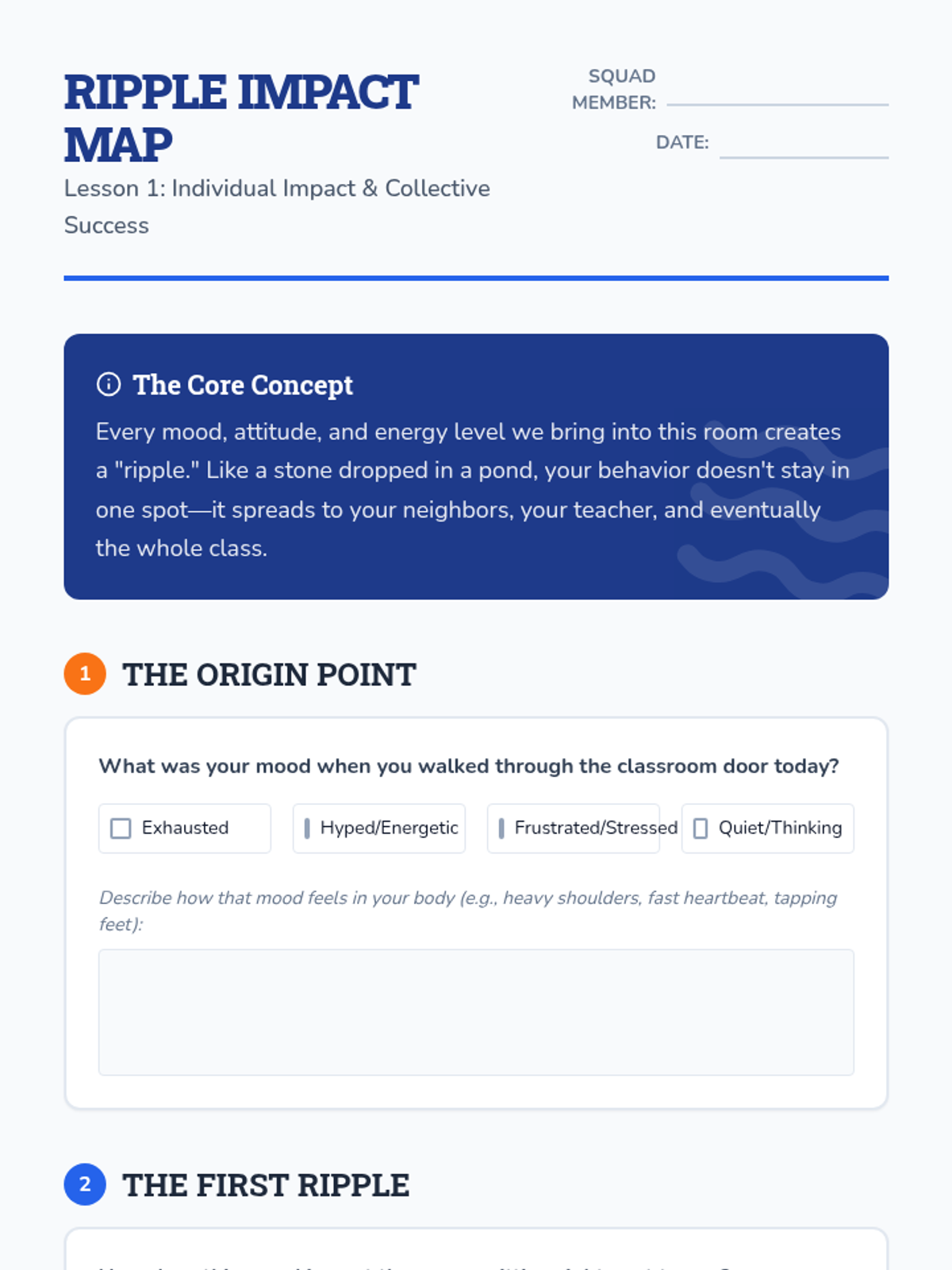
This sequence teaches 6th-grade students how to participate in and facilitate daily community check-in circles. It focuses on the impact of individual behavior on the group, active listening skills, establishing safety norms, and peer-led facilitation to build a culture of accountability and support.
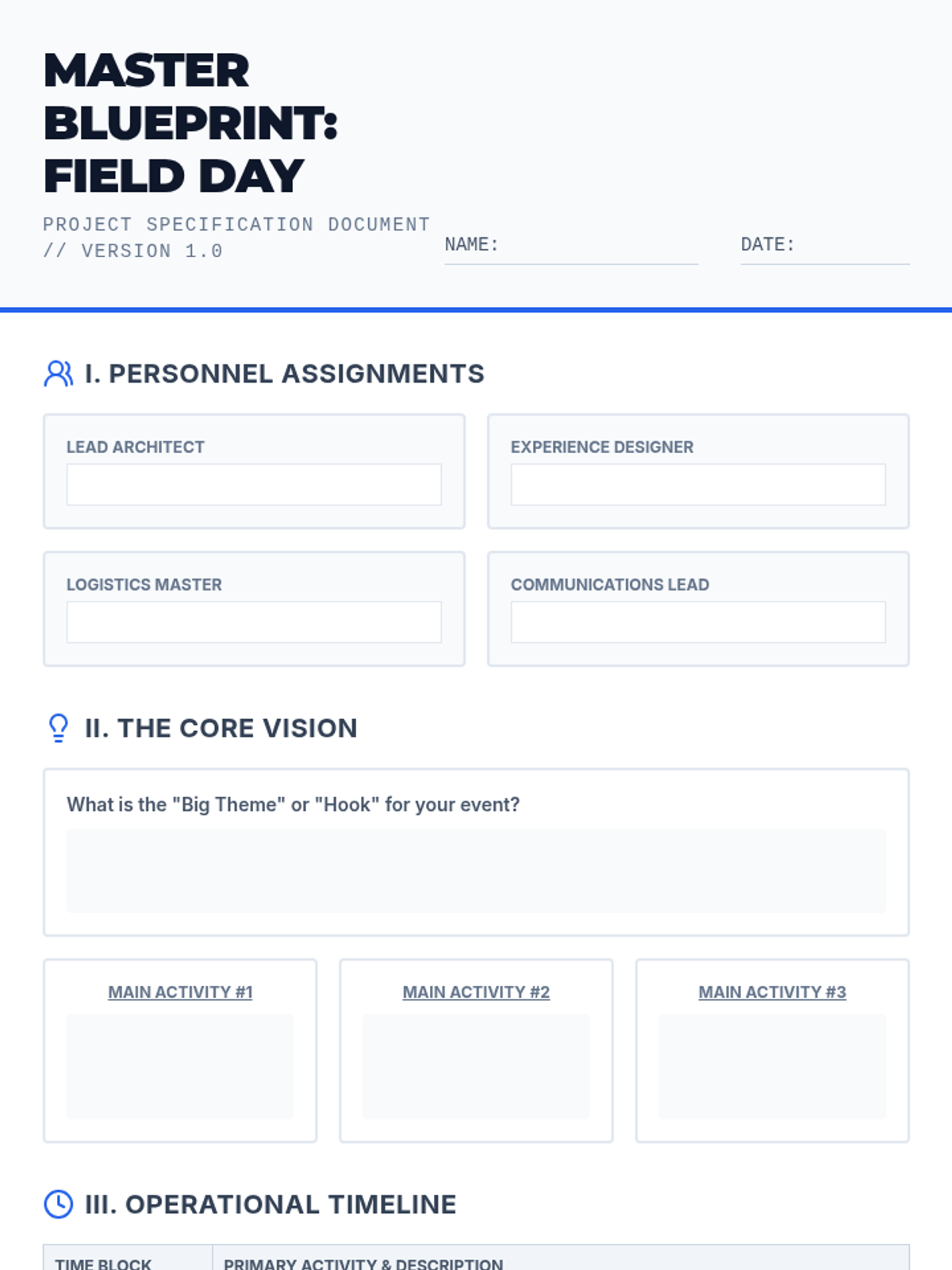
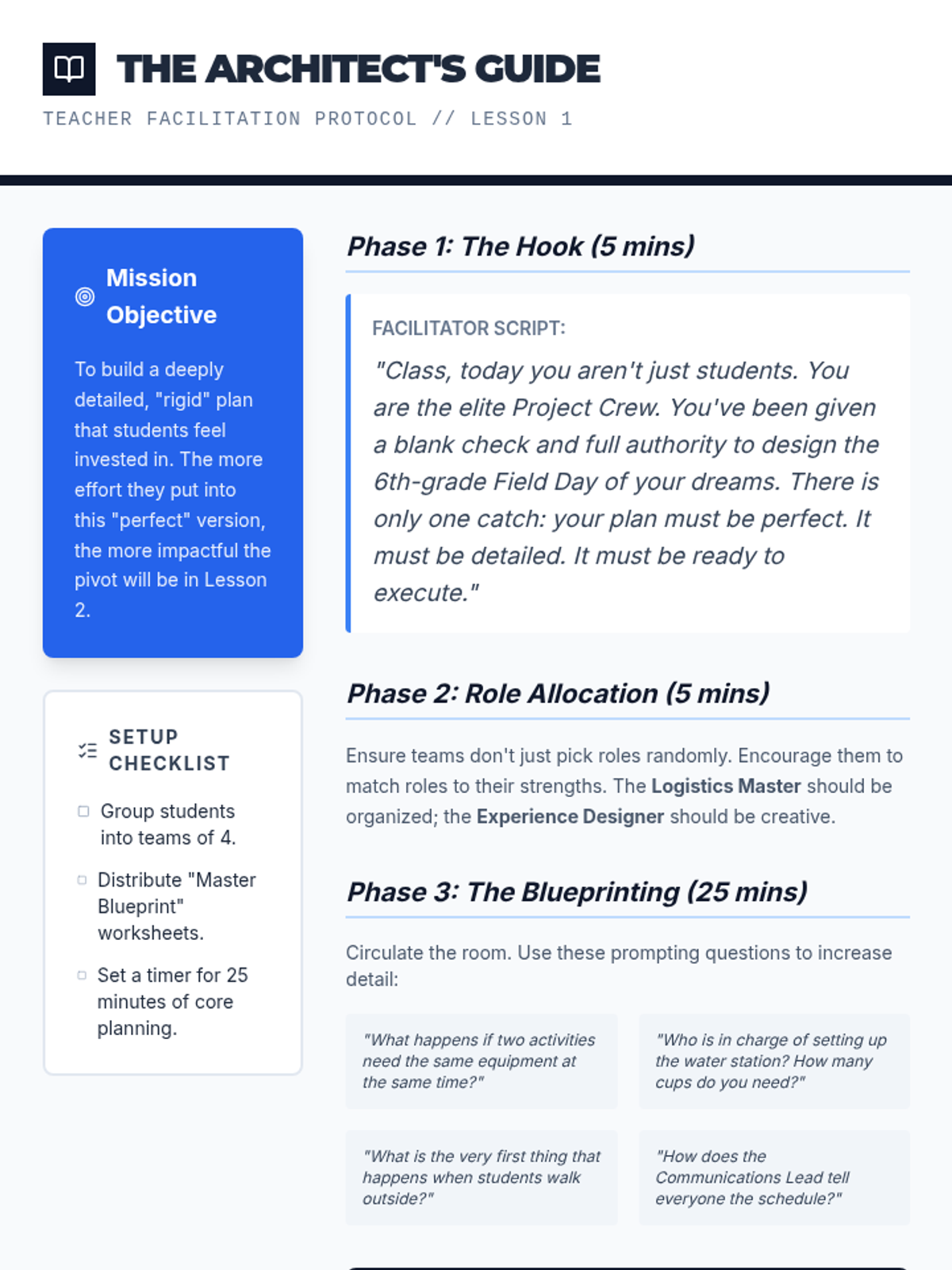
A simulation-based sequence where 6th-grade students learn adaptability and flexibility by designing a school event that faces sudden, disruptive 'wildcard' obstacles. Students practice strategic planning, emotional regulation, creative problem-solving, and professional communication as they pivot their plans in real-time.
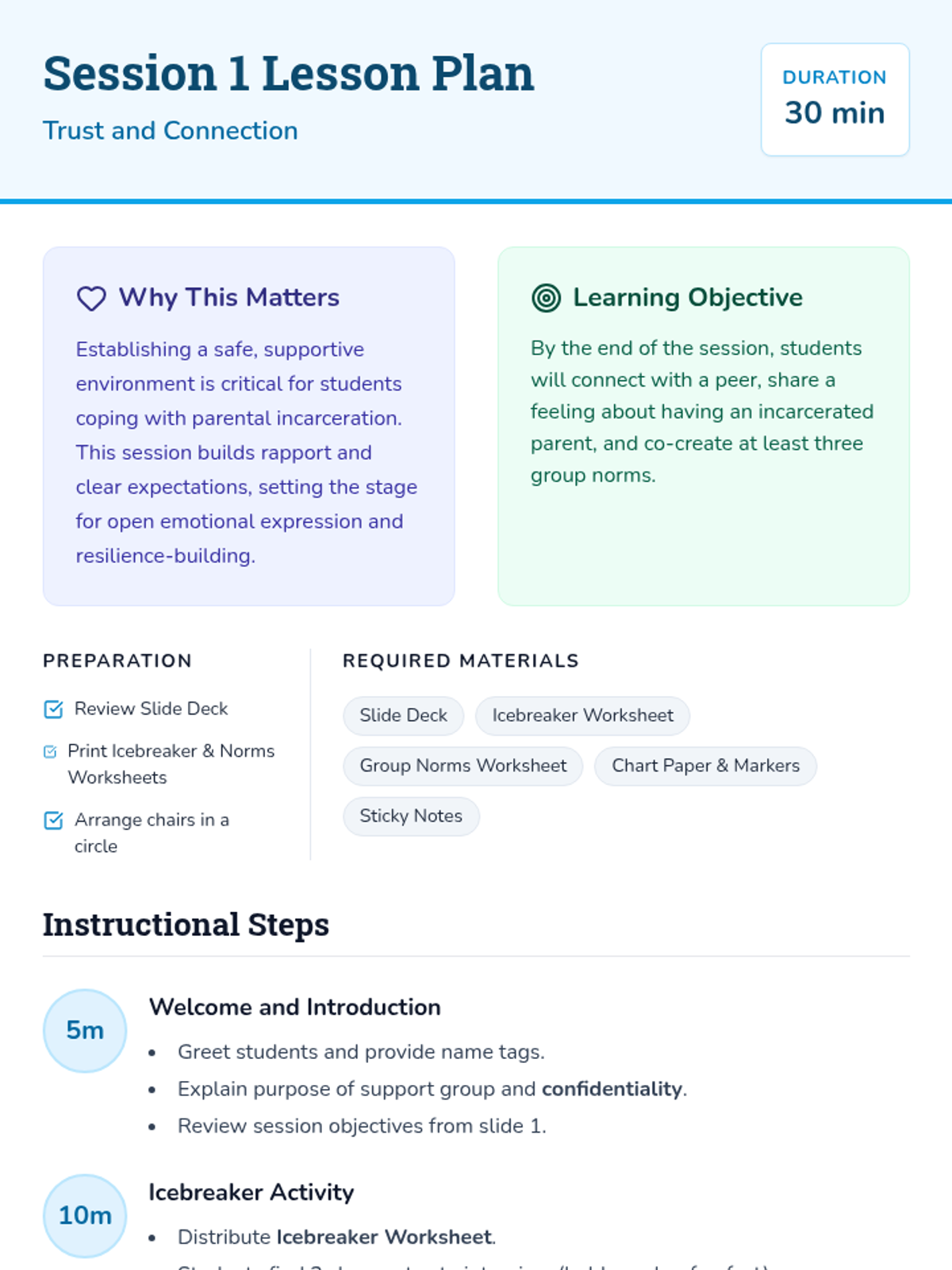
A 4-session small group counseling sequence for middle school students navigating the challenges of parental incarceration, focusing on emotional awareness, coping skills, and resilience.
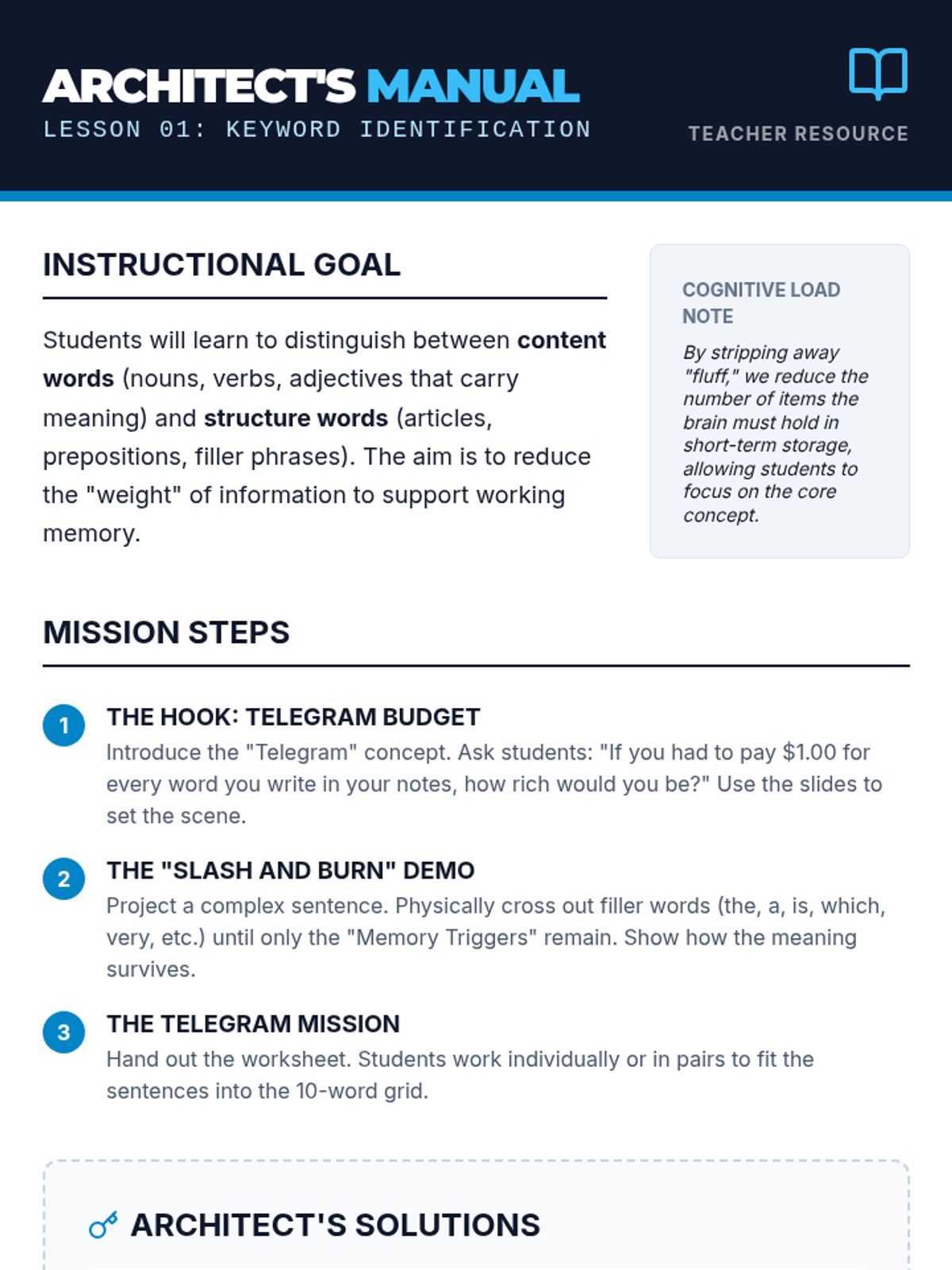
A specialized sequence for 6th-grade students focusing on reducing cognitive load through effective note review, summarization, and paraphrasing. Students learn to become 'Info Architects,' stripping away unnecessary 'fluff' to identify core concepts and strengthen working memory.
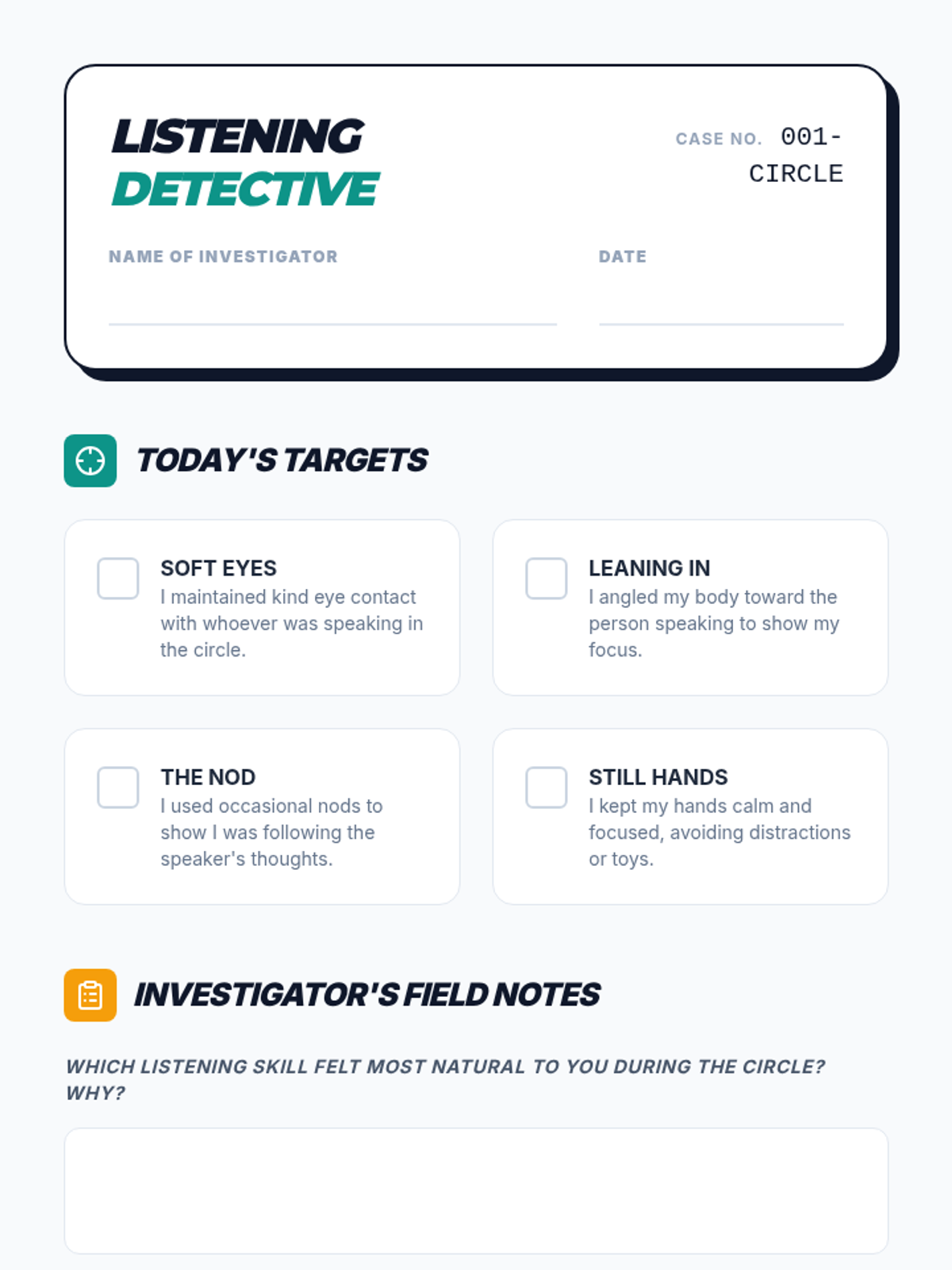
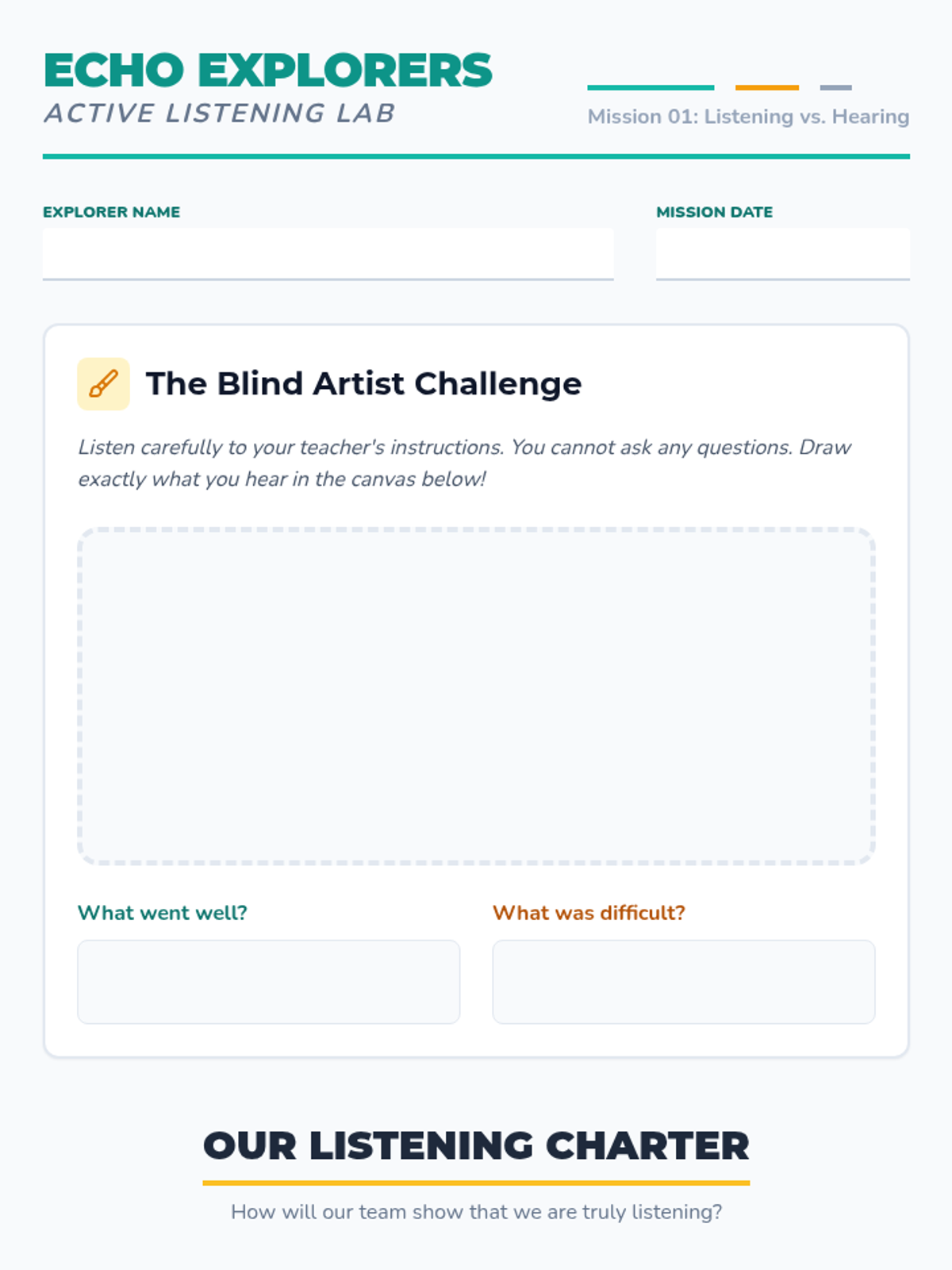
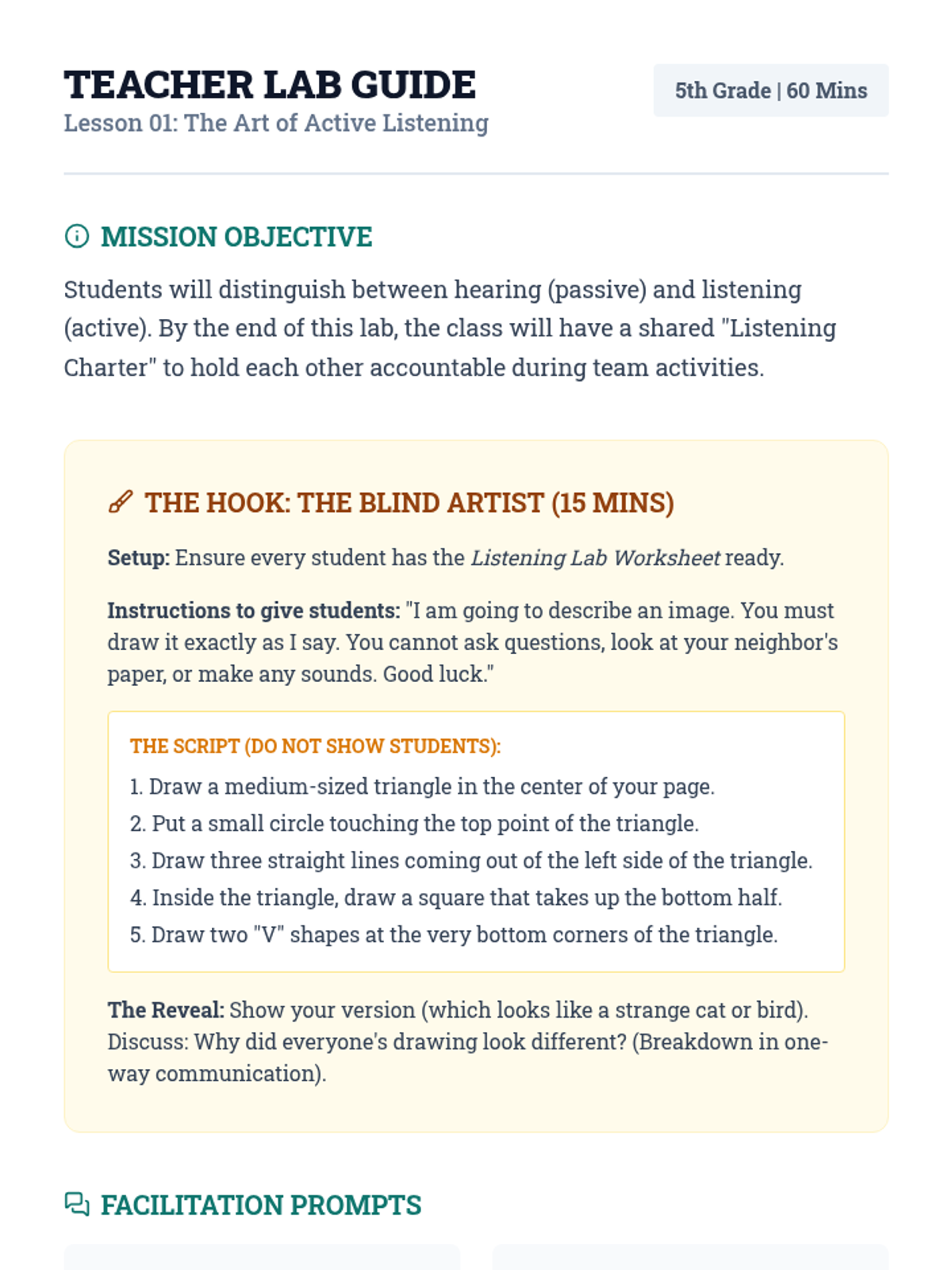
This sequence builds foundational communication skills for effective teamwork, focusing on active listening, paraphrasing, nonverbal cues, and collaborative dialogue. Students progress from individual listening skills to facilitating group problem-solving through a workshop-based approach.
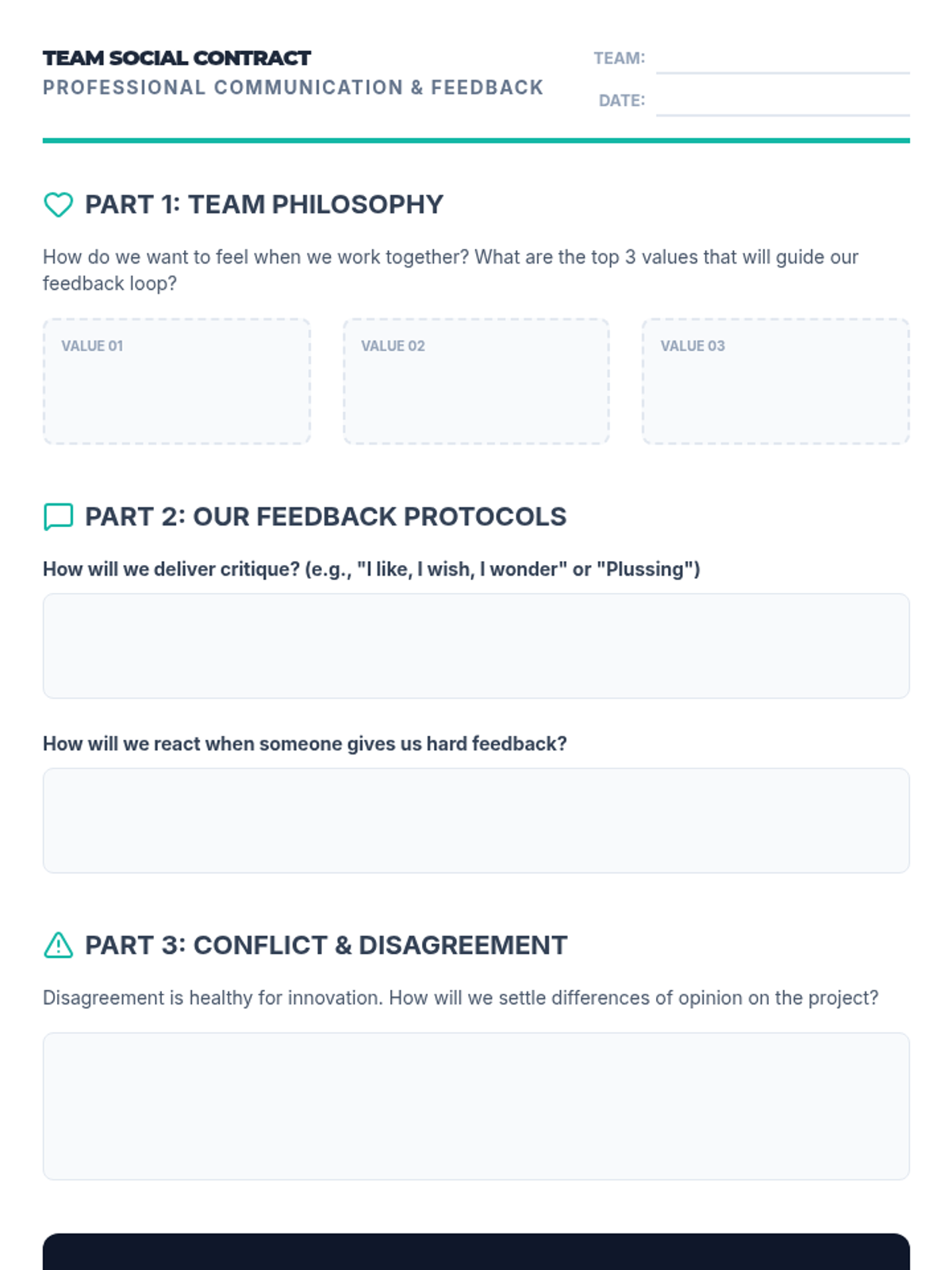
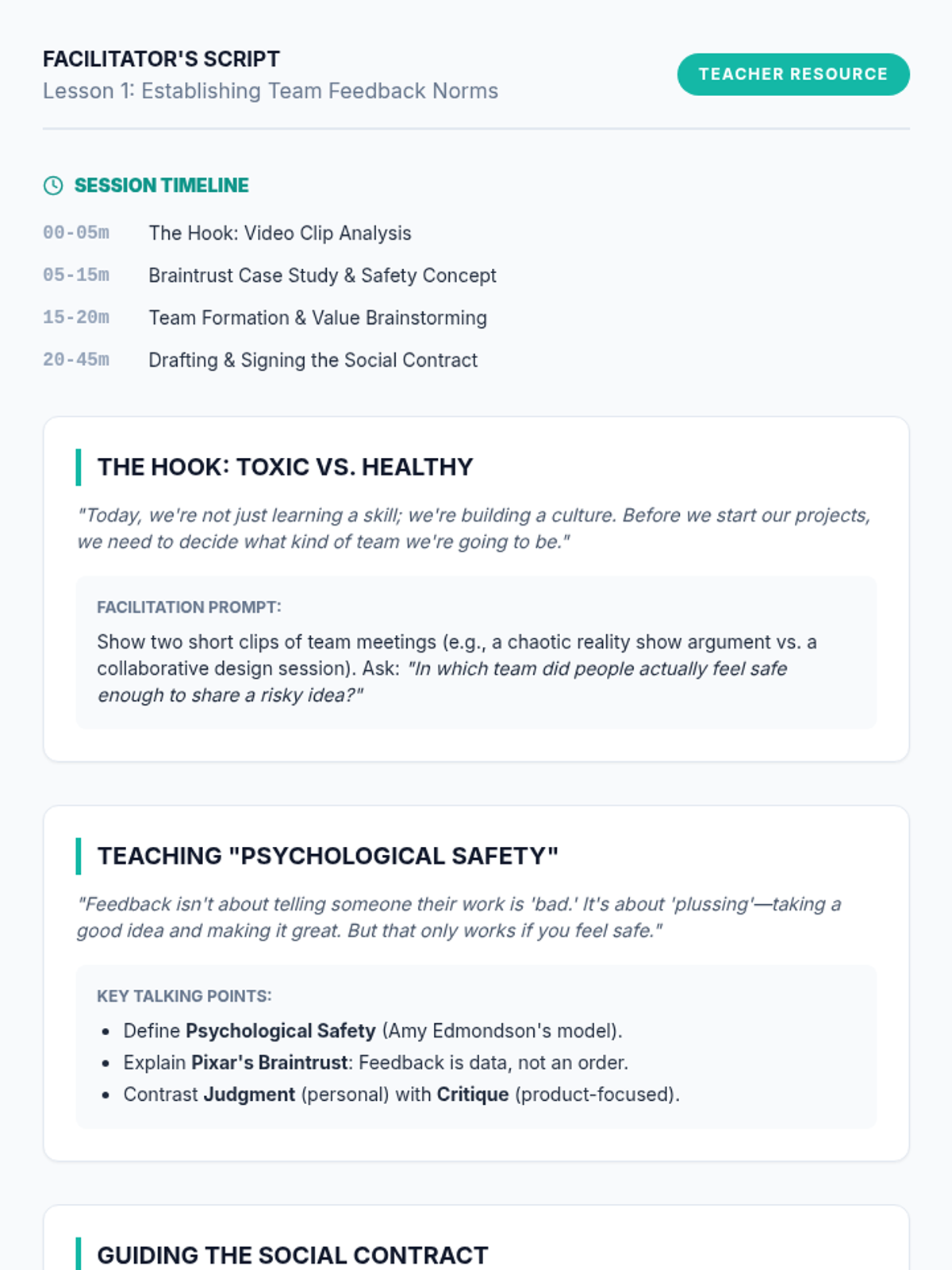
This project-based sequence teaches students the iterative cycle of constructive feedback within a collaborative design environment. Students develop social contracts, engage in rapid prototyping, observe fishbowl critiques, and document their growth through change logs and retrospectives.
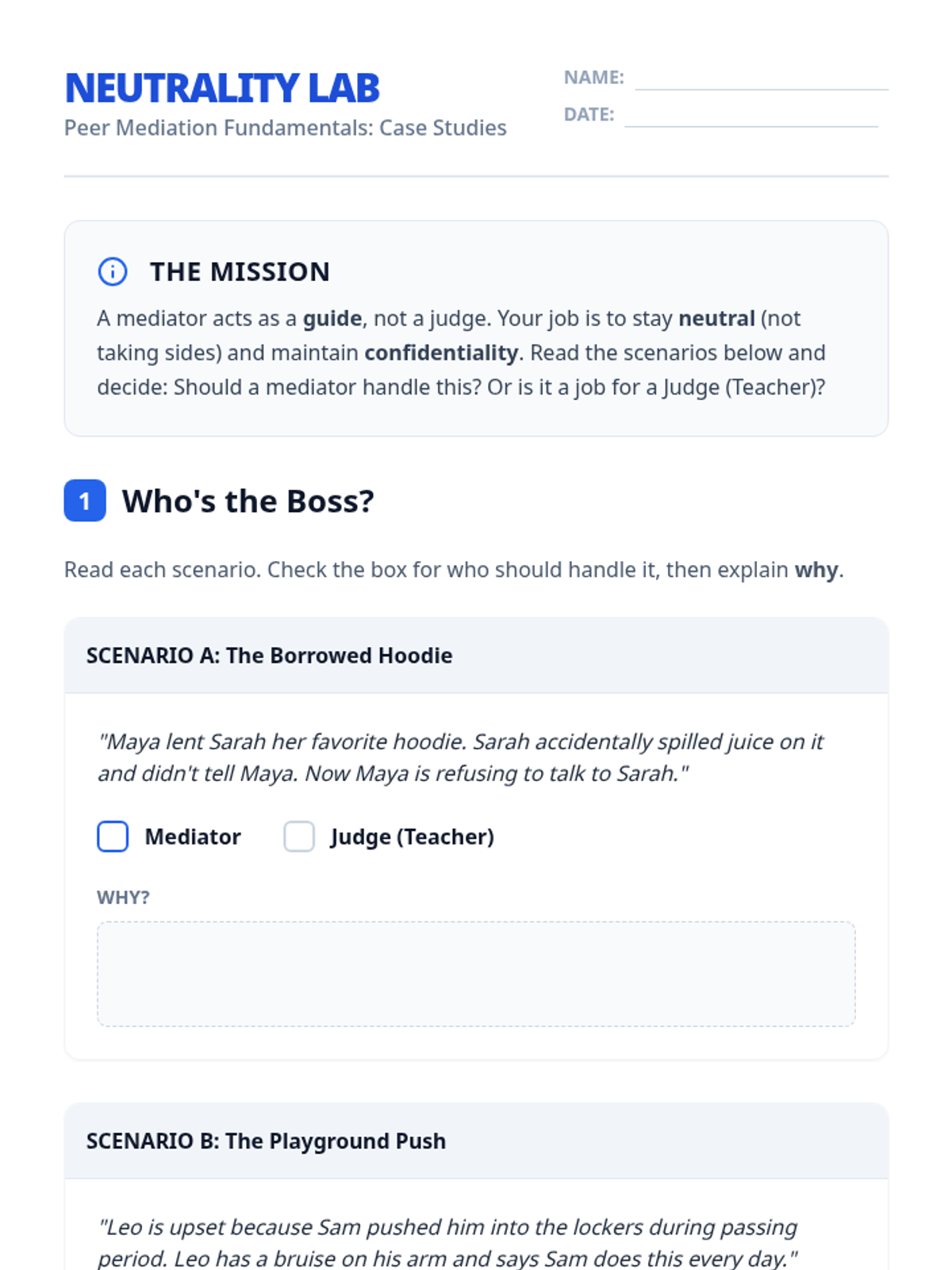
This sequence empowers students to act as third-party neutrals, introducing the specific structure and skills of Peer Mediation. Students learn the distinct phases of a mediation session, the importance of neutrality, and how to facilitate dialogue without taking sides.
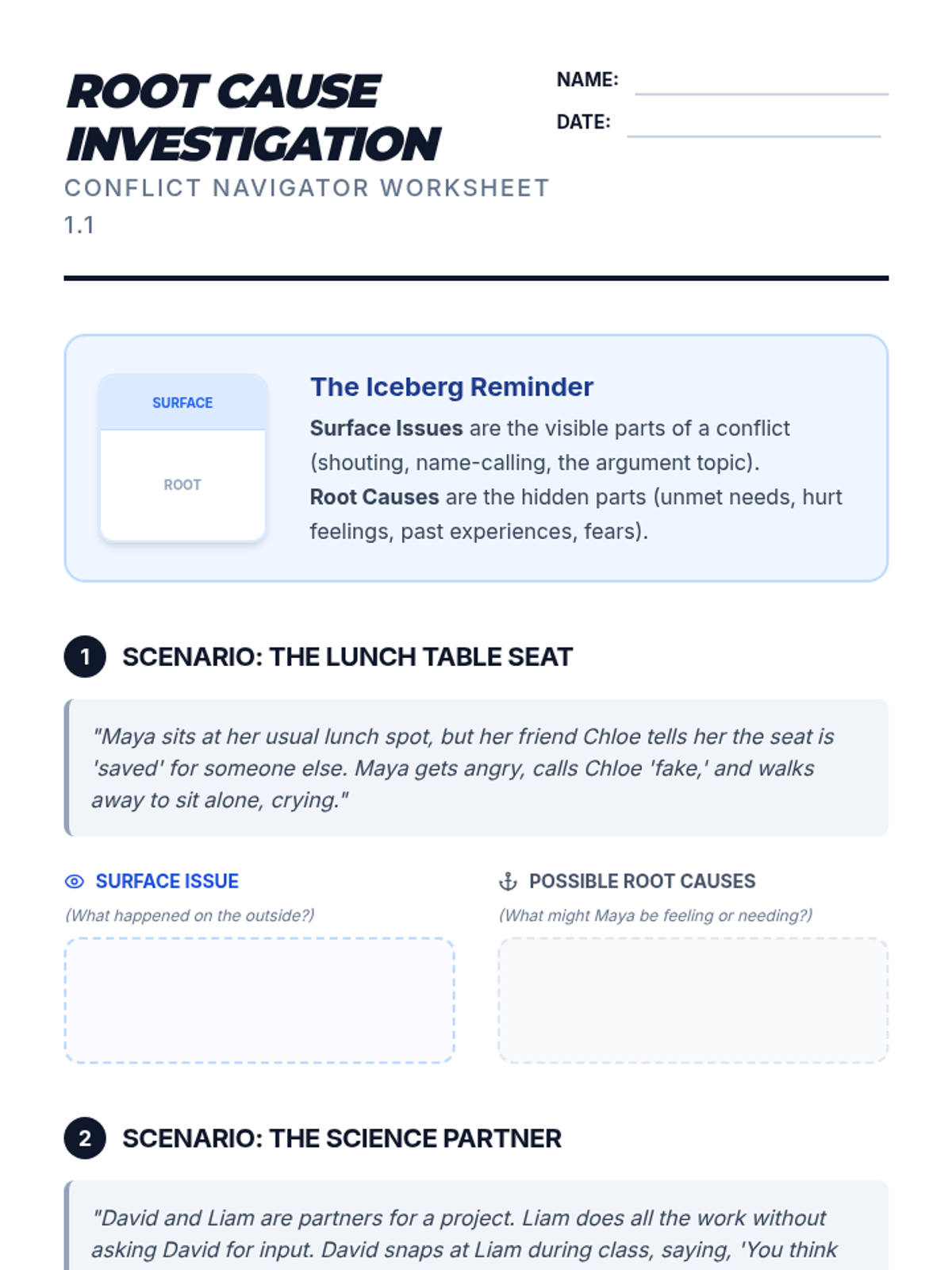
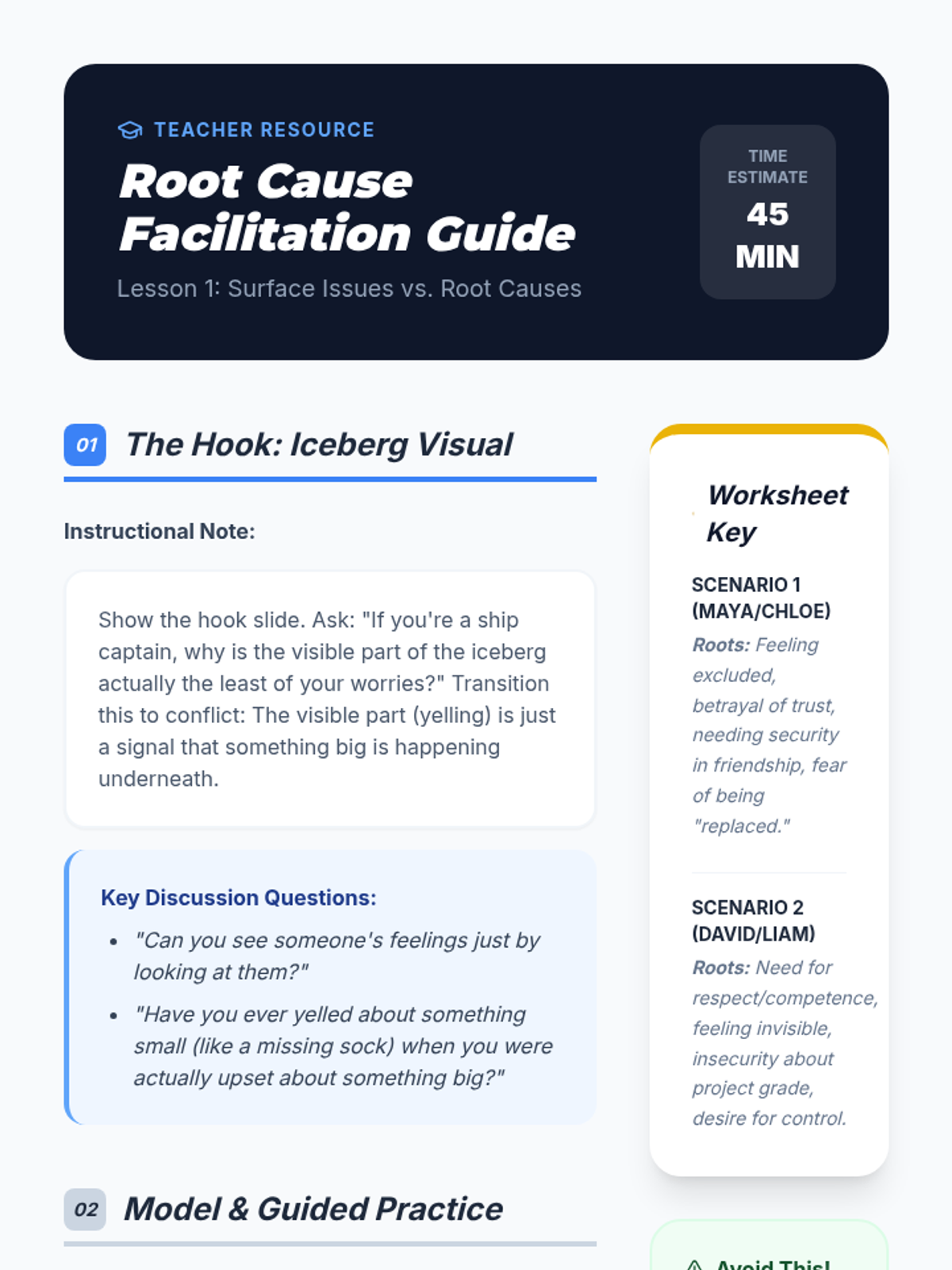
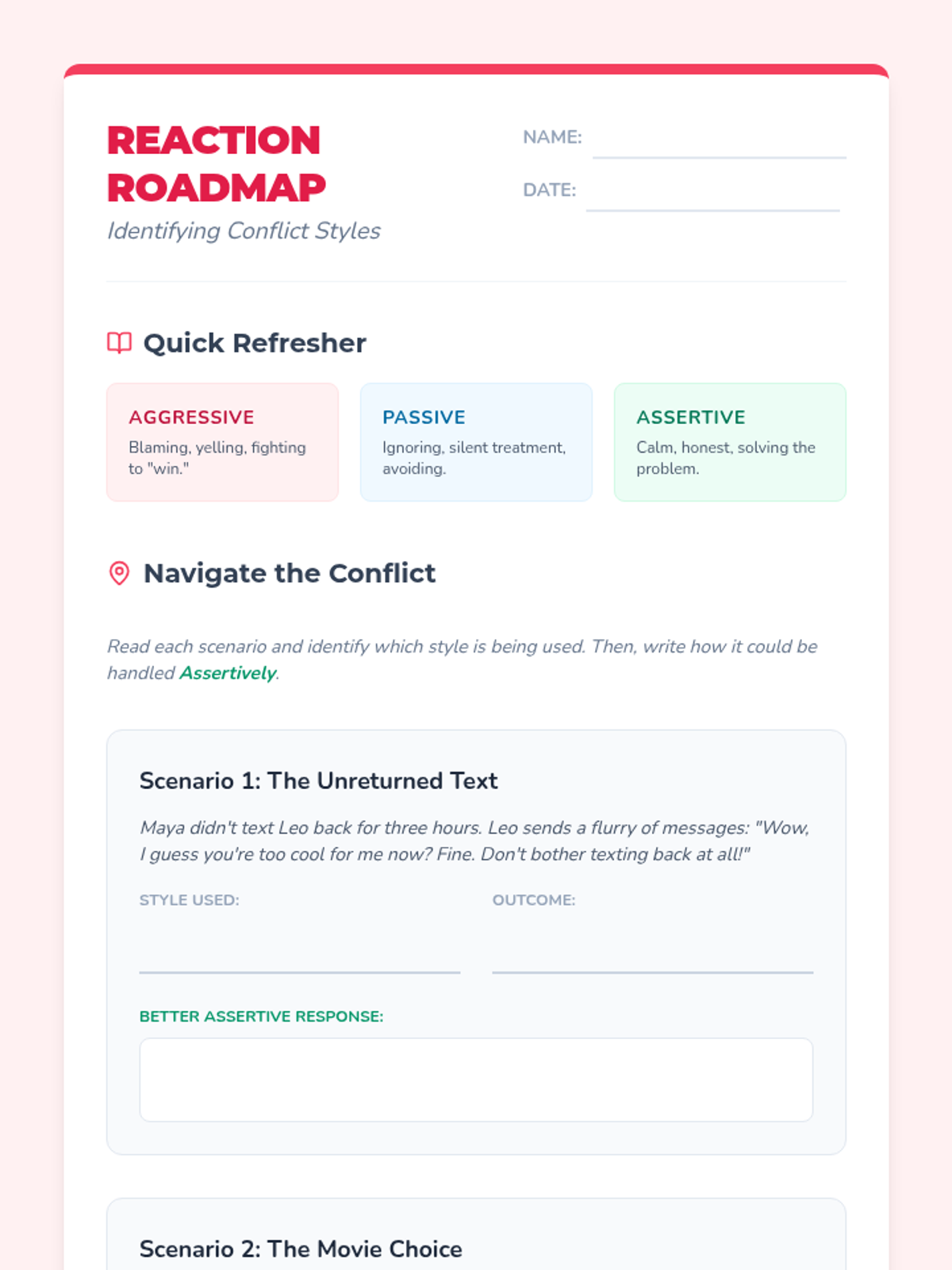
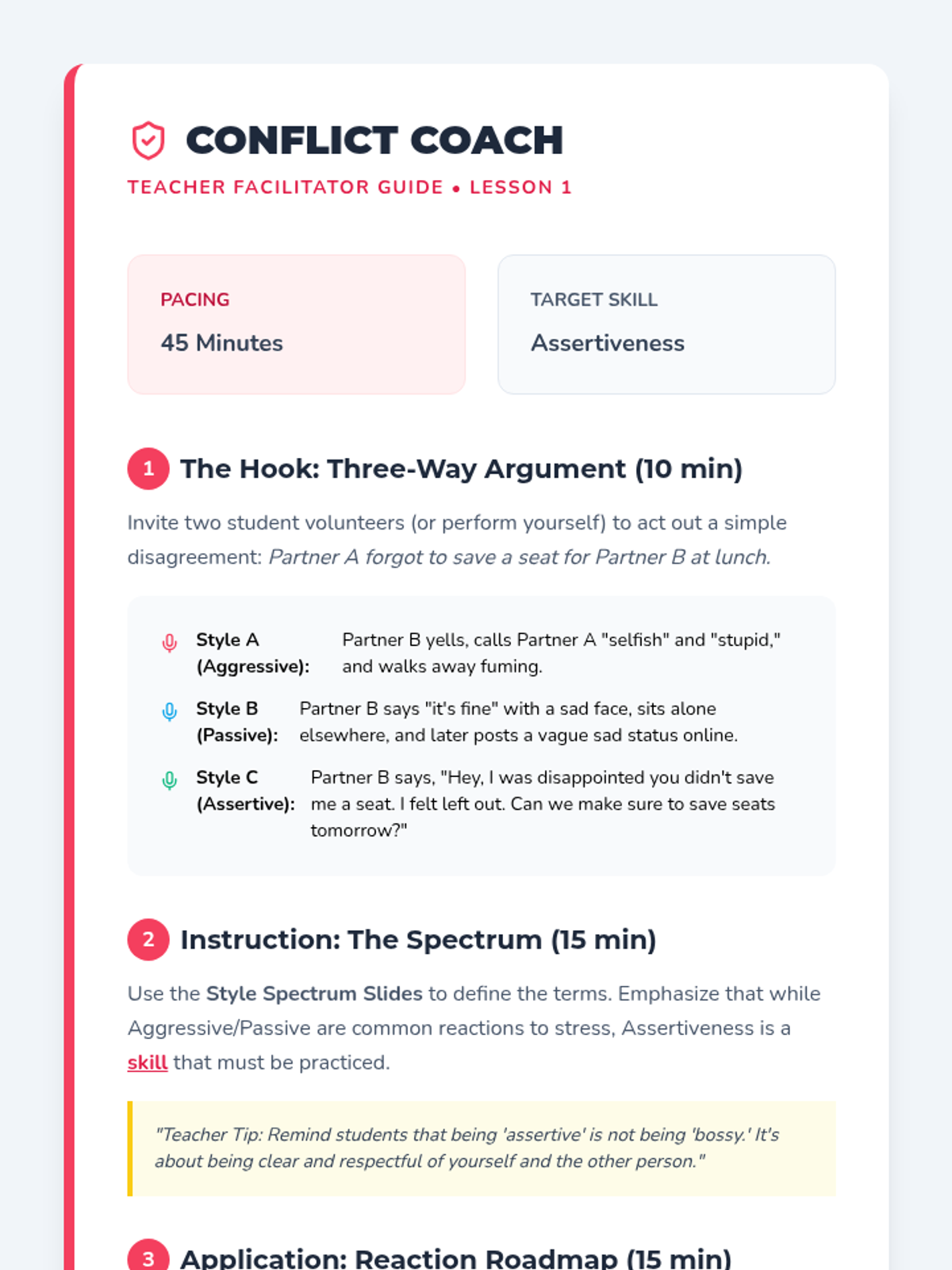
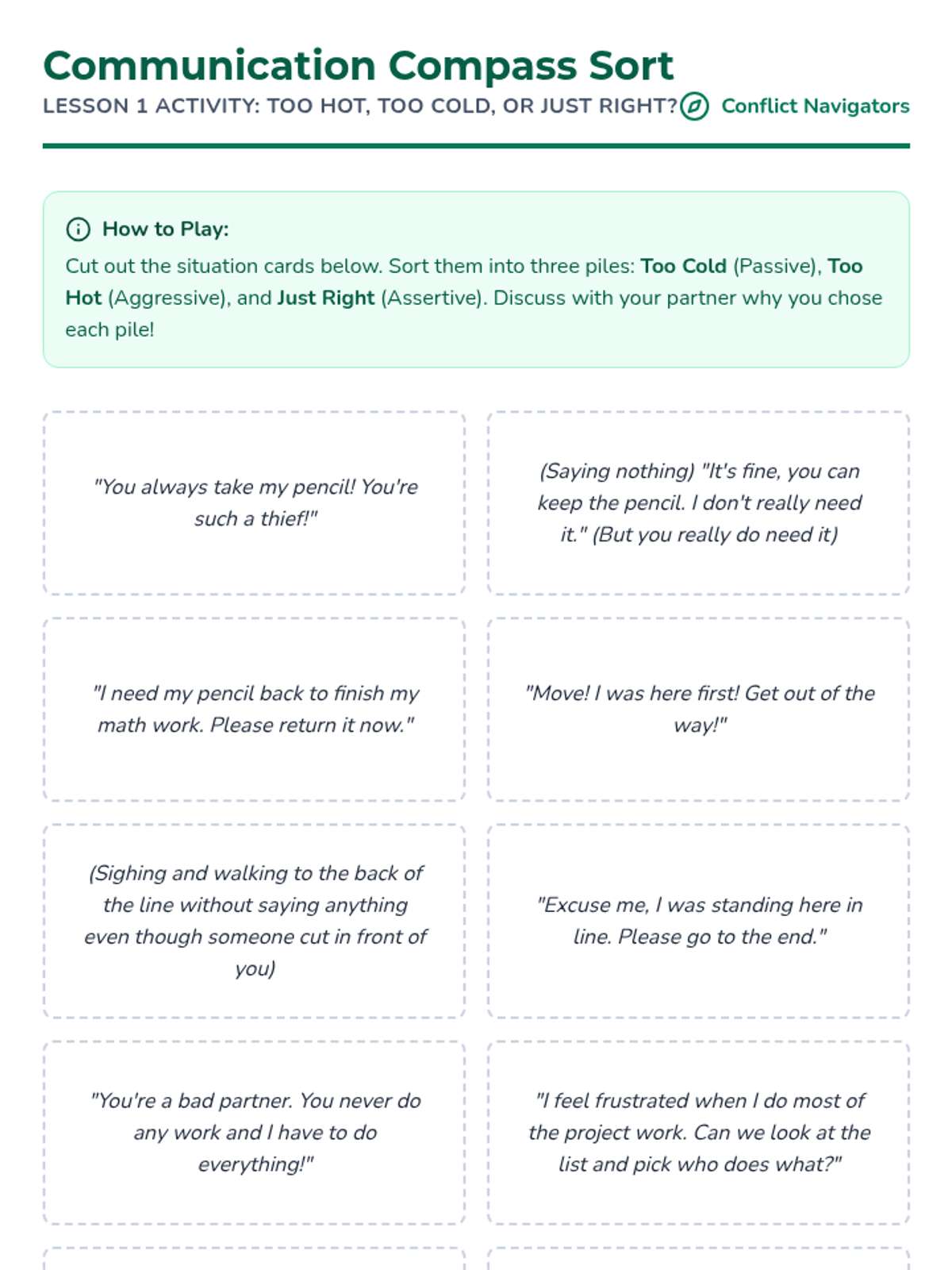
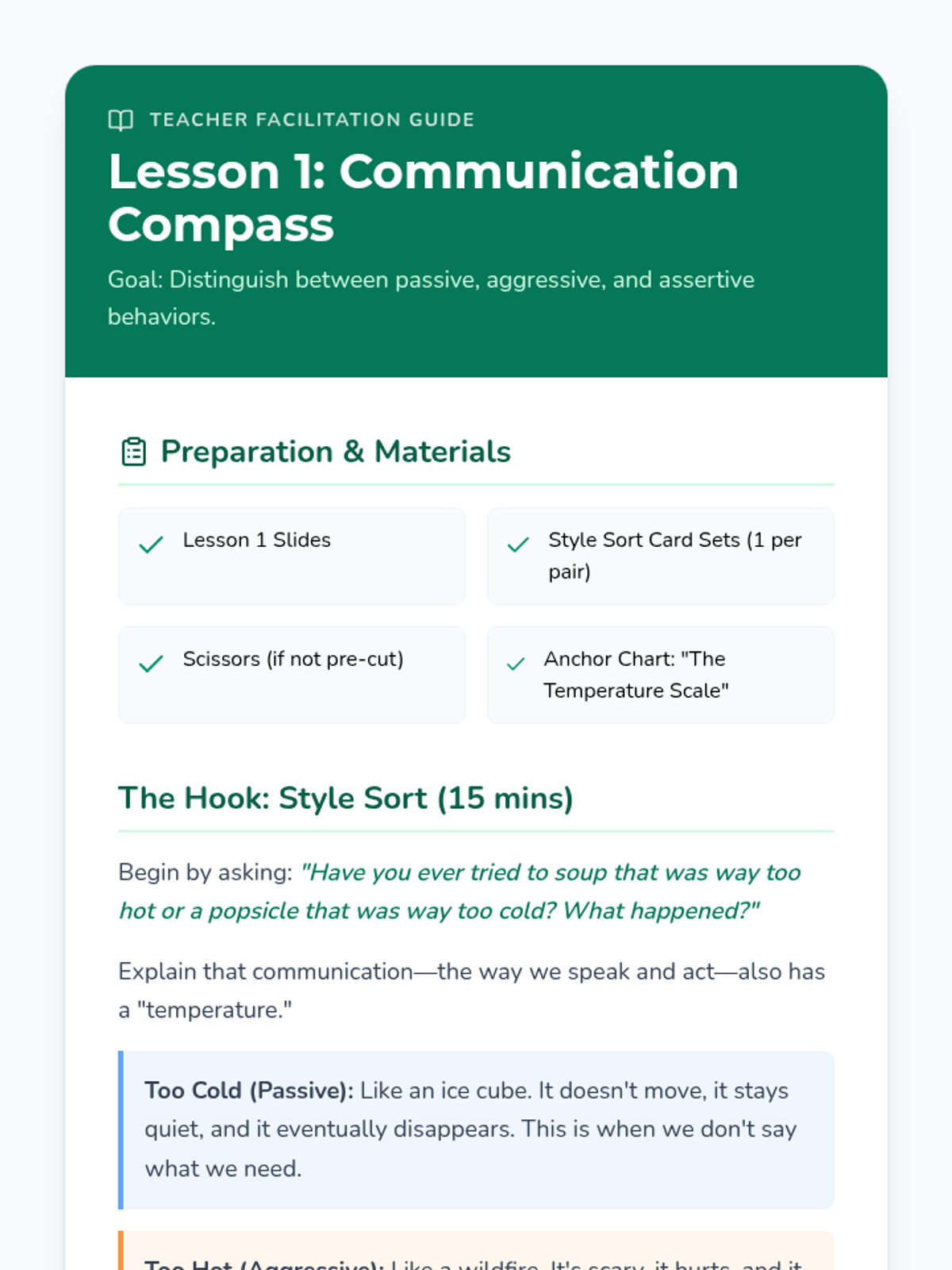
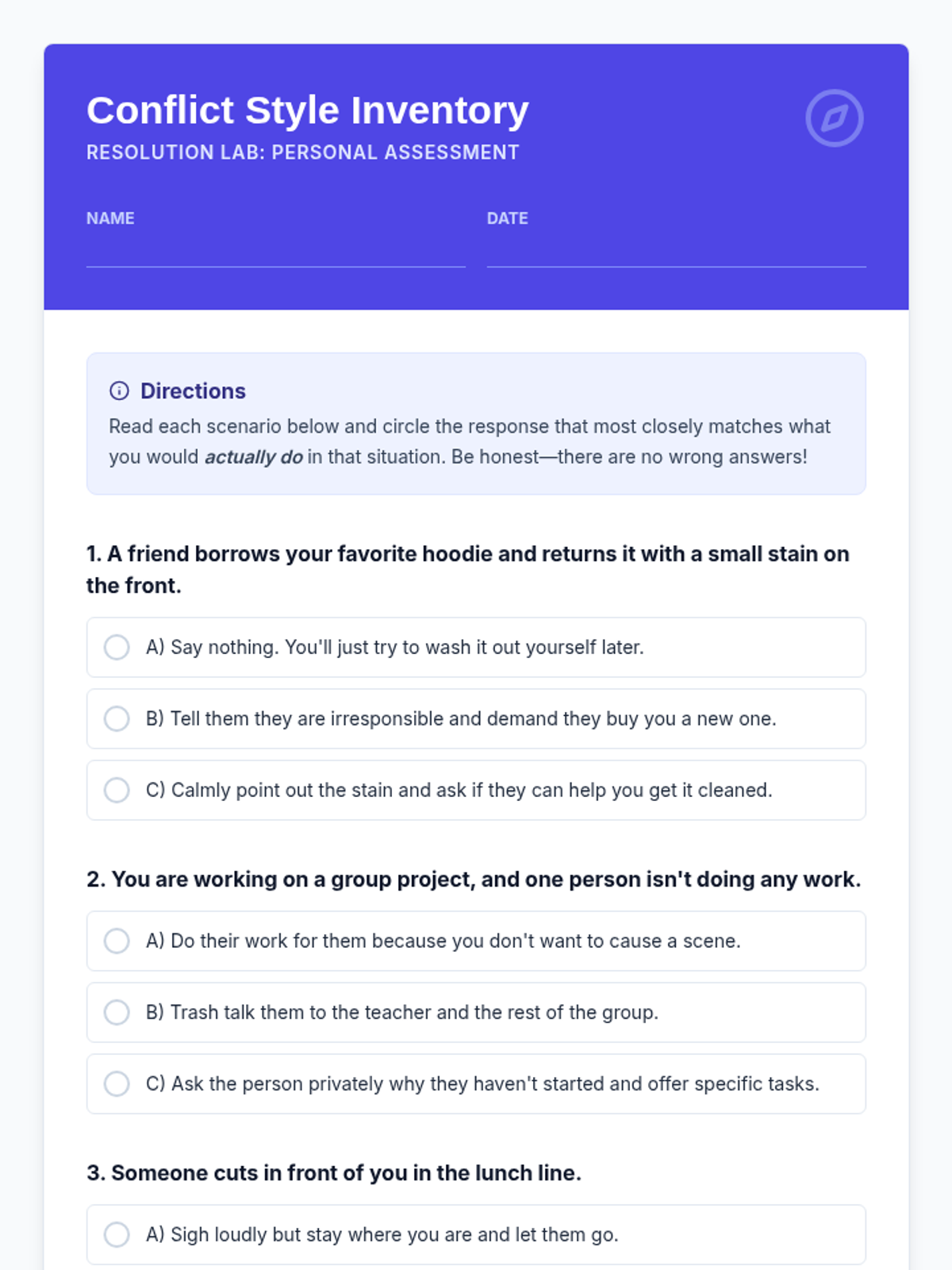
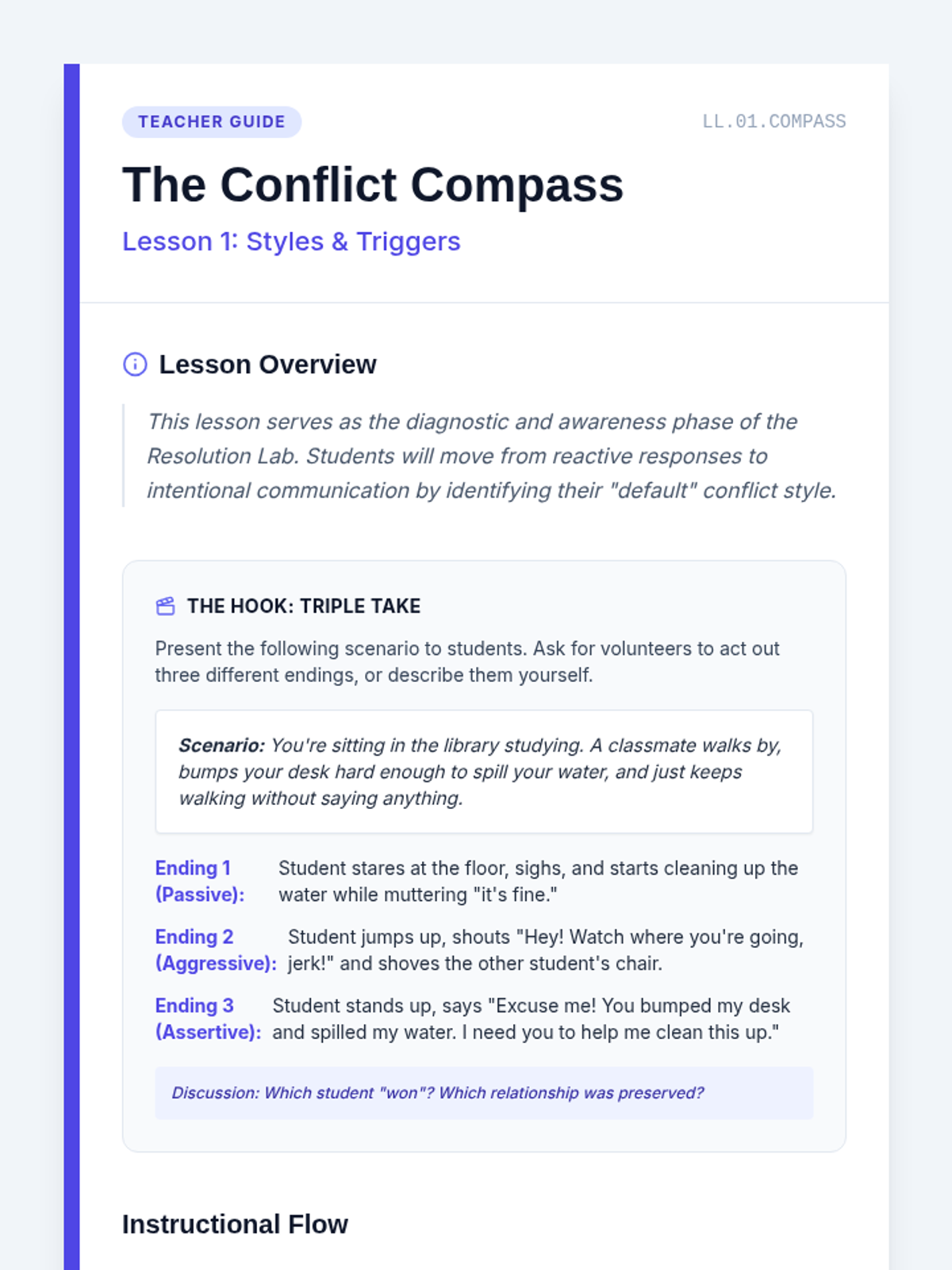
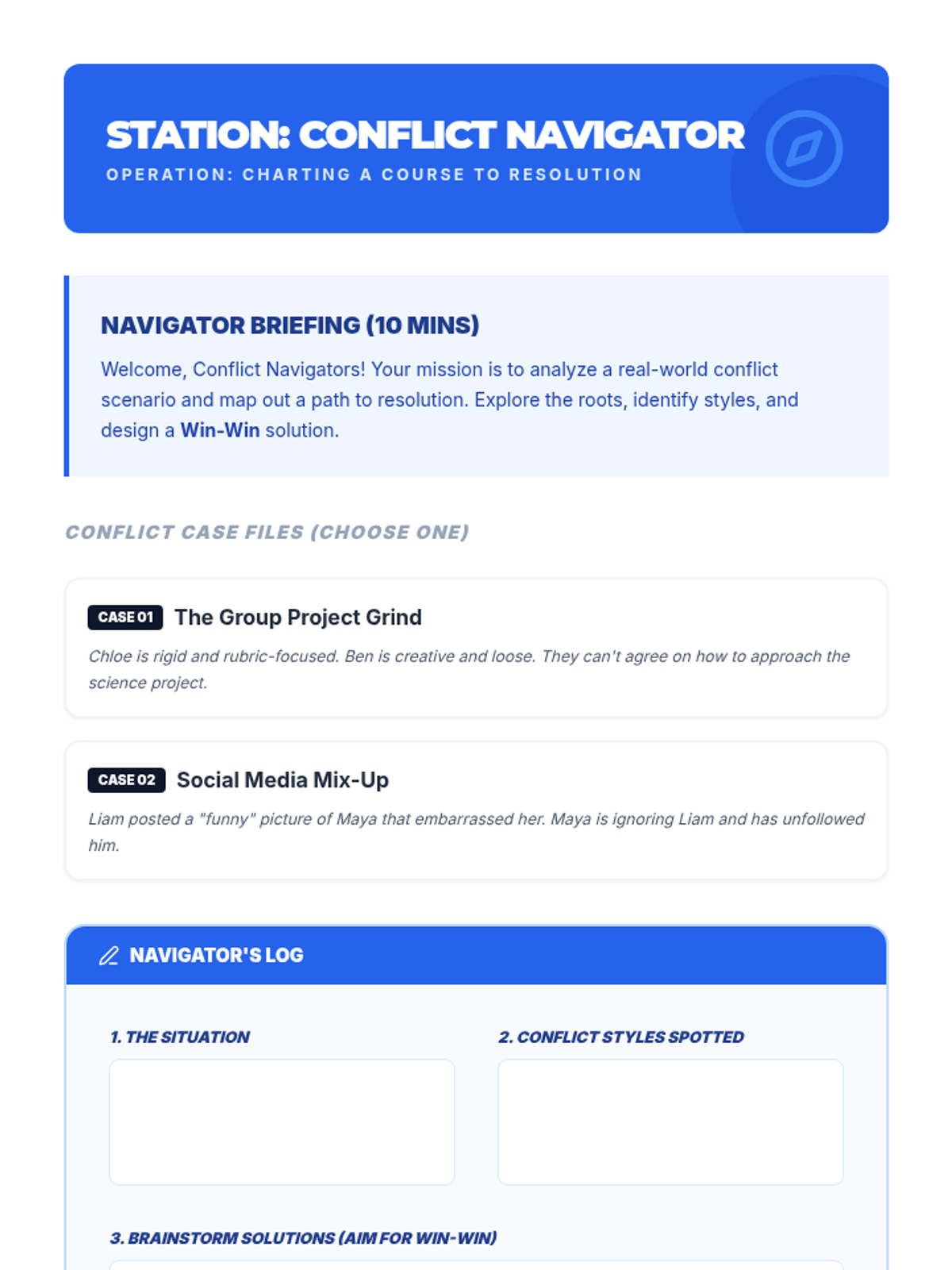
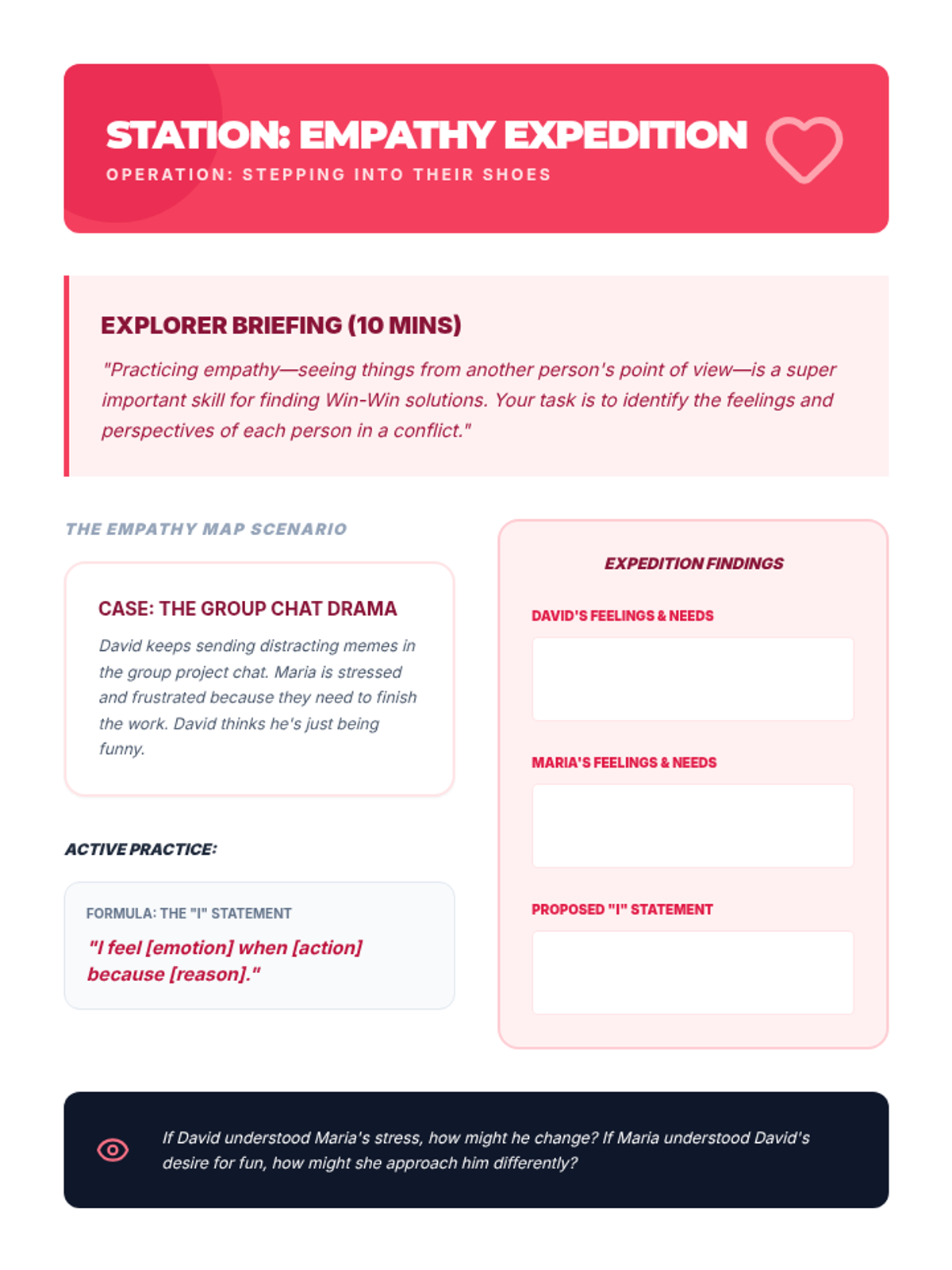
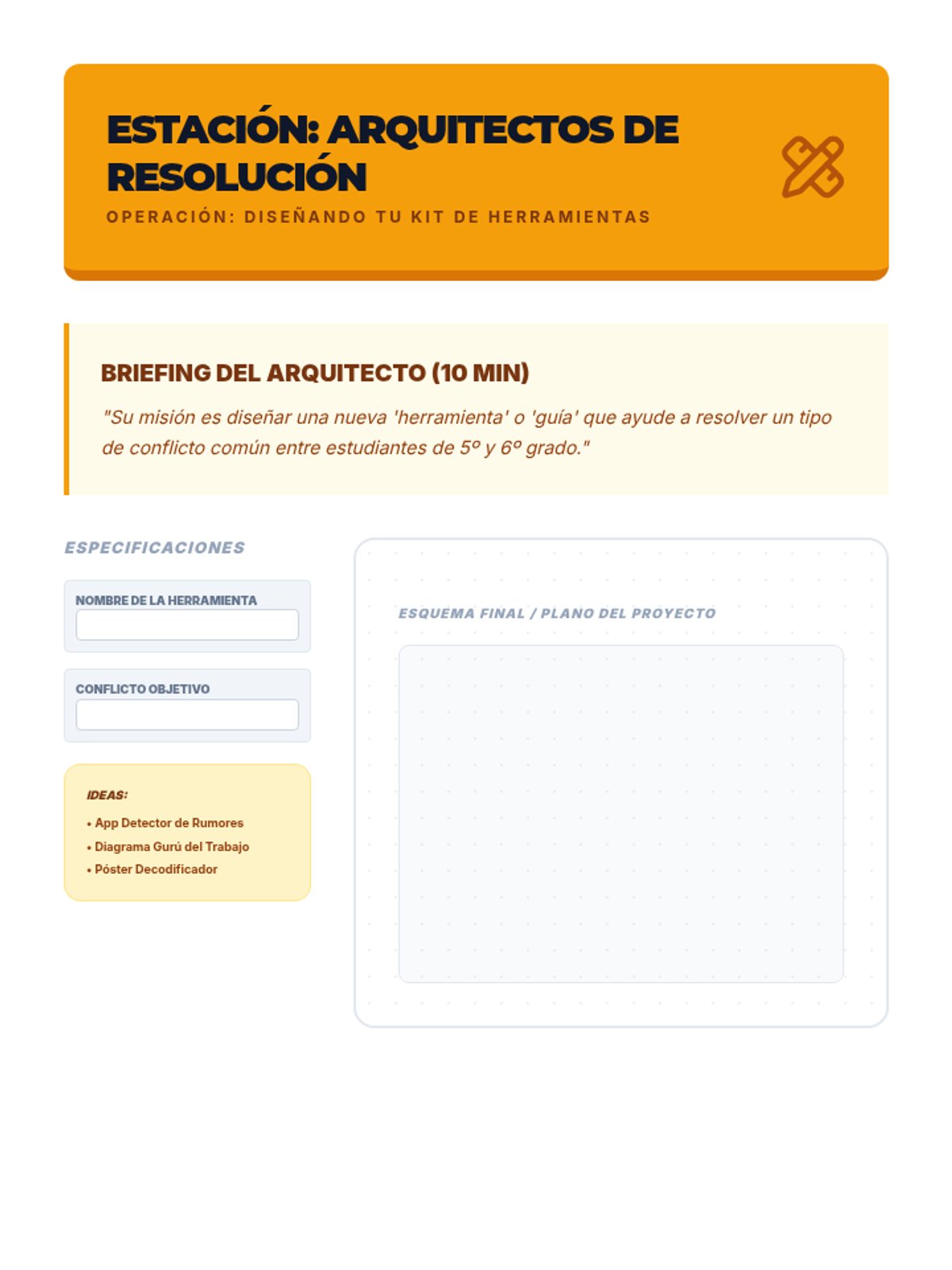
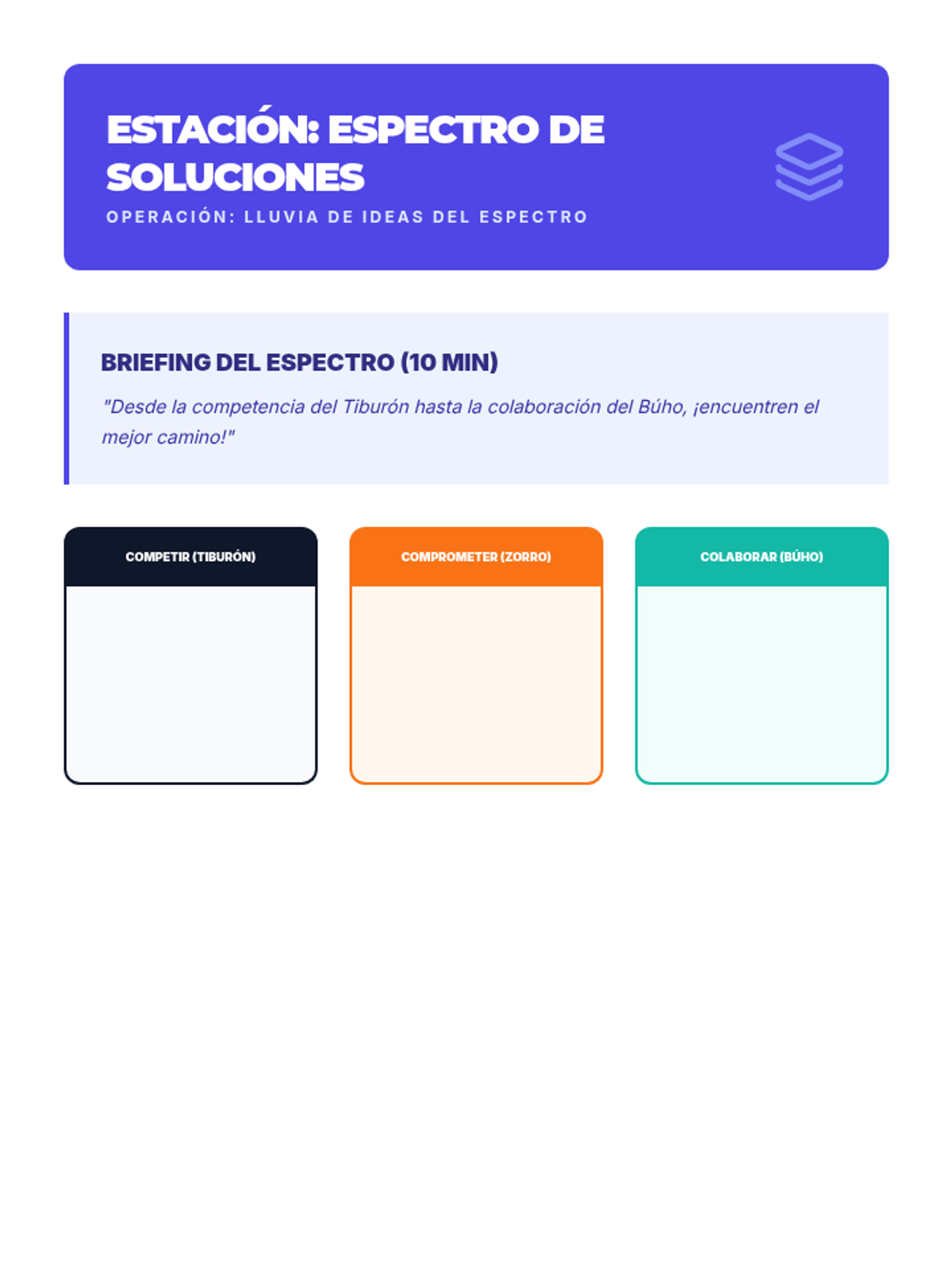
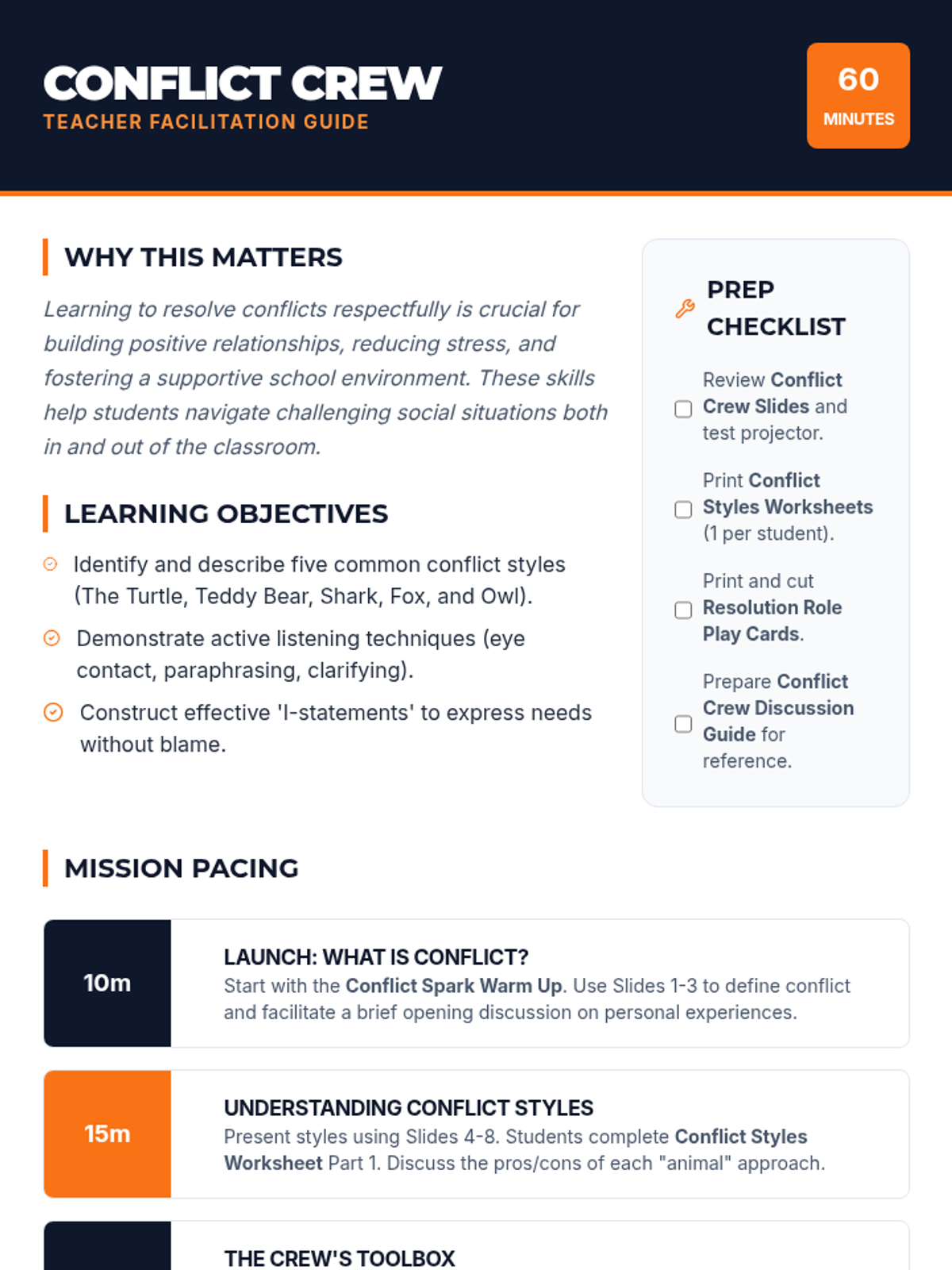
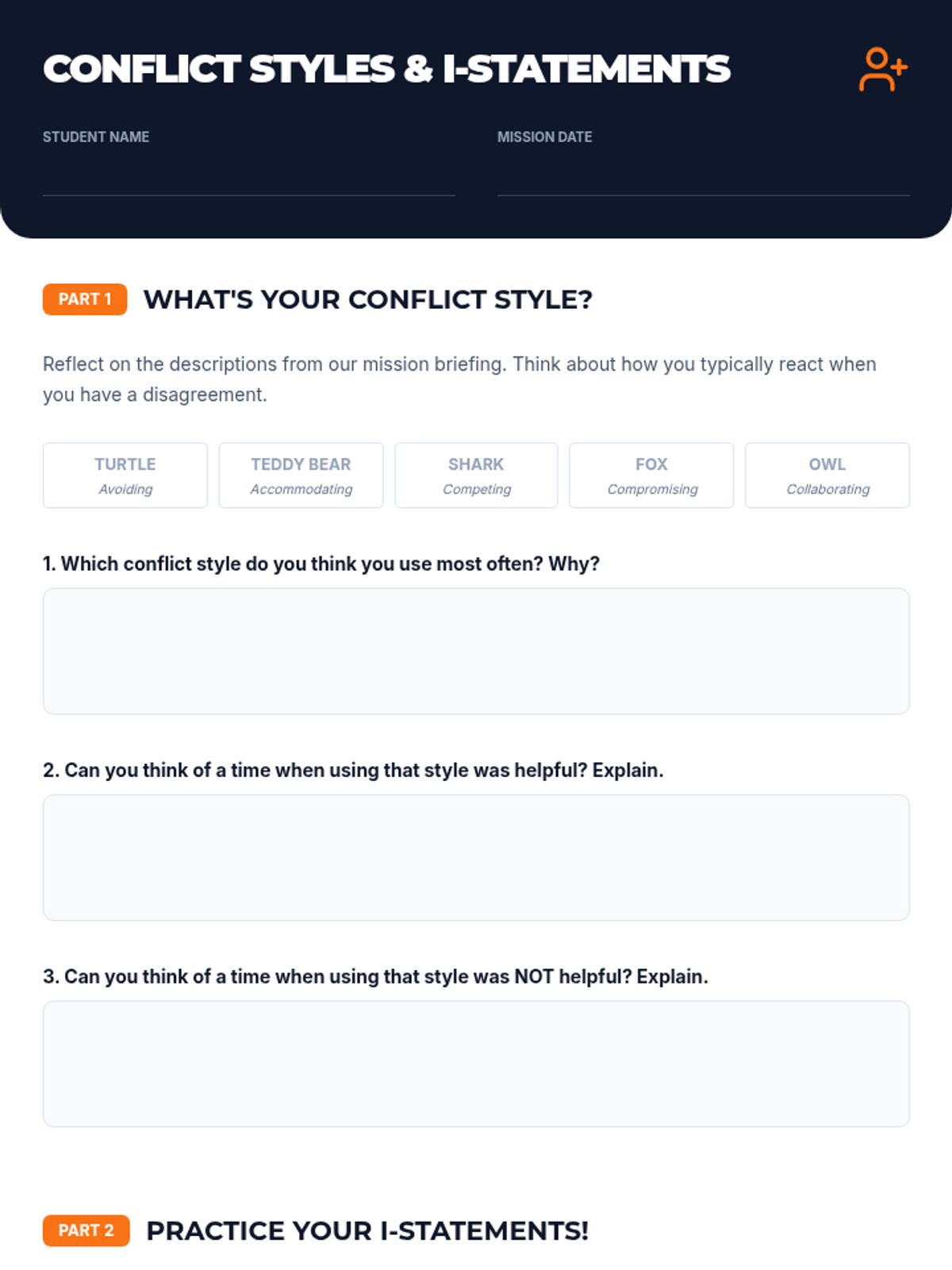
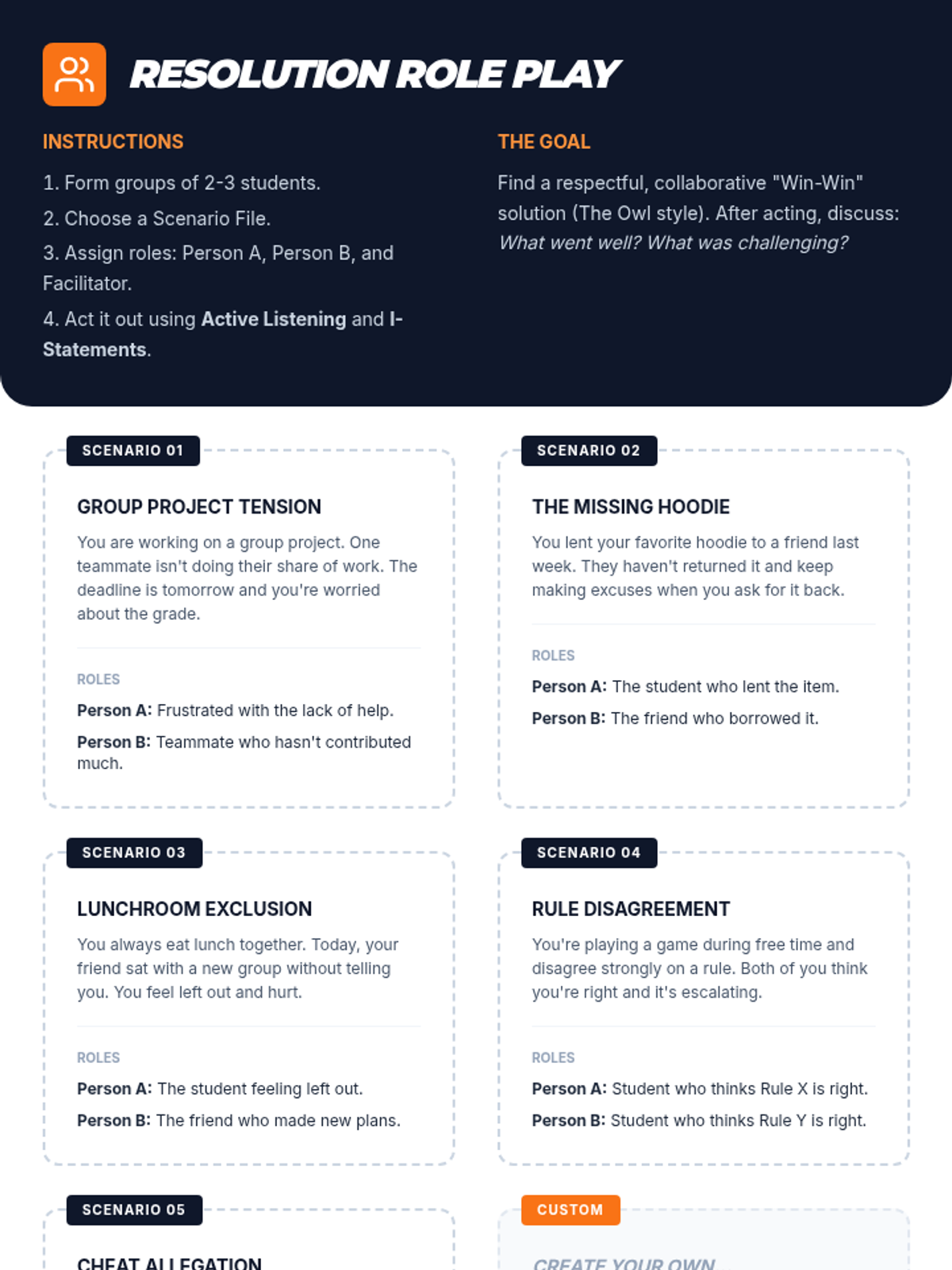
A comprehensive 6th-grade sequence on conflict navigation, teaching students to identify root causes, recognize personal conflict styles, practice perspective-taking, understand escalation, and diagnose complex disputes.
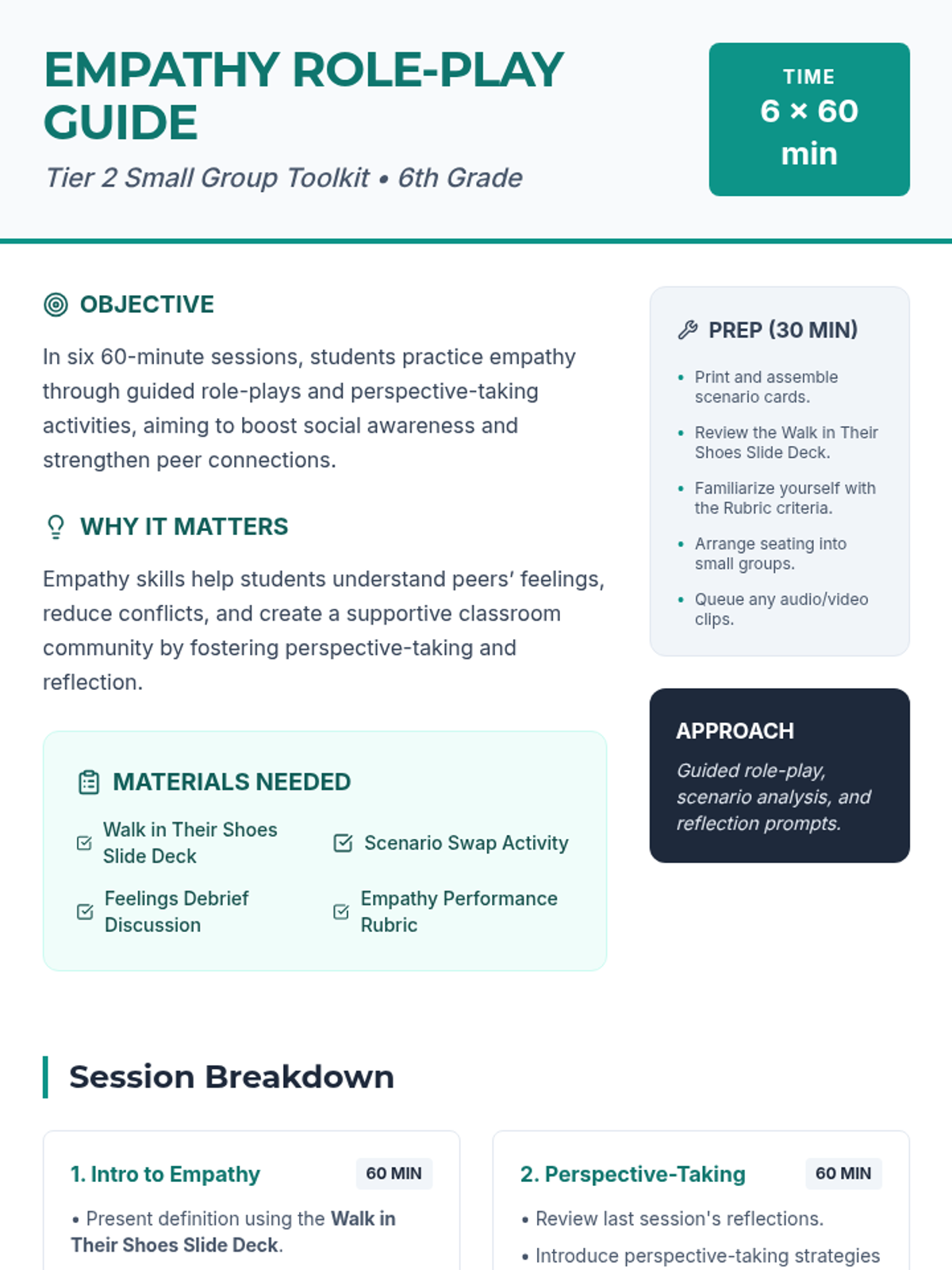
A comprehensive Tier 2 small-group toolkit for 6th graders to develop social awareness and peer connection through role-play and perspective-taking across six sessions.
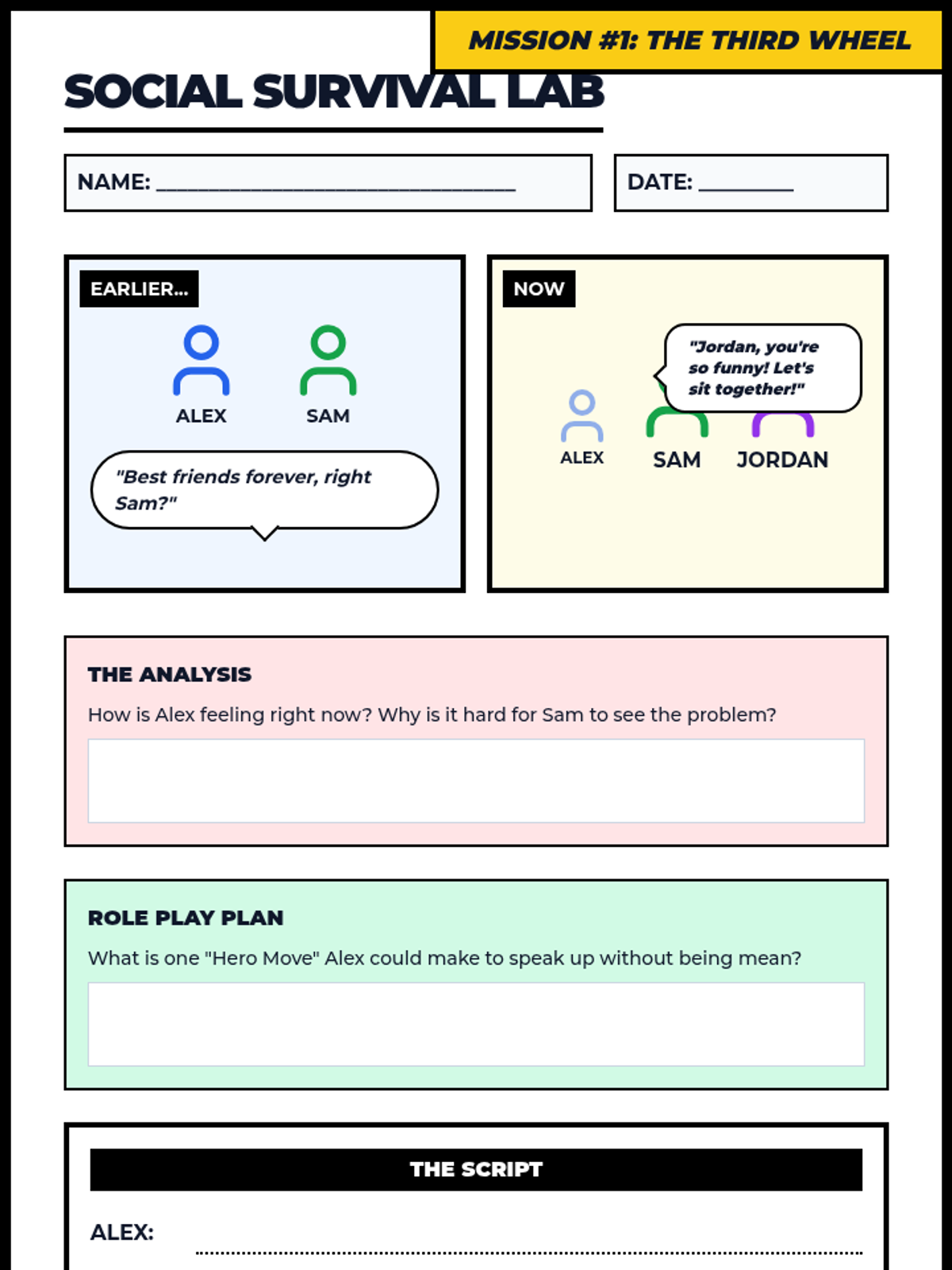
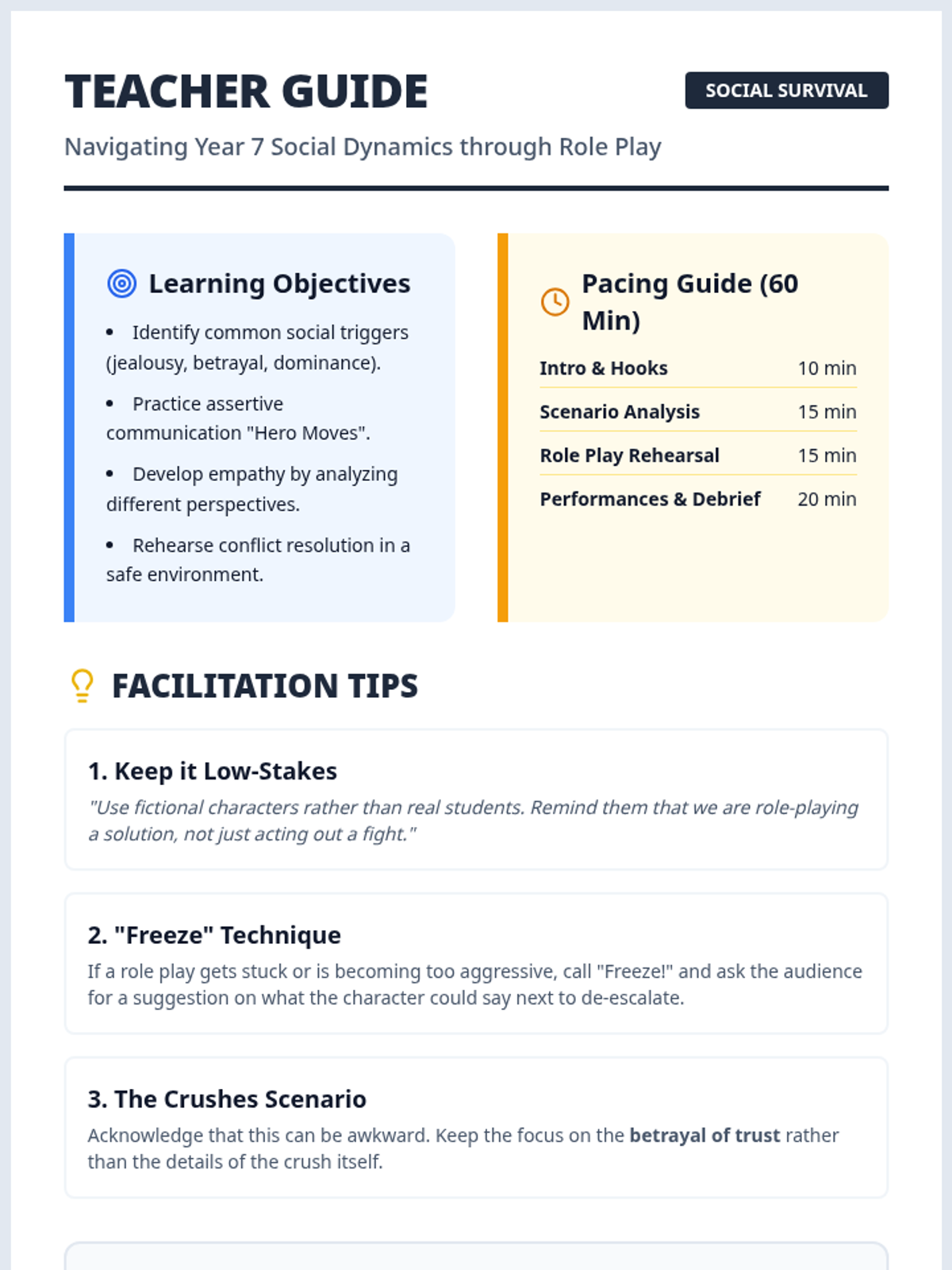
A series of lessons designed to help Year 7 students transition into the social complexities of secondary school, covering friendship, identity, and communication.
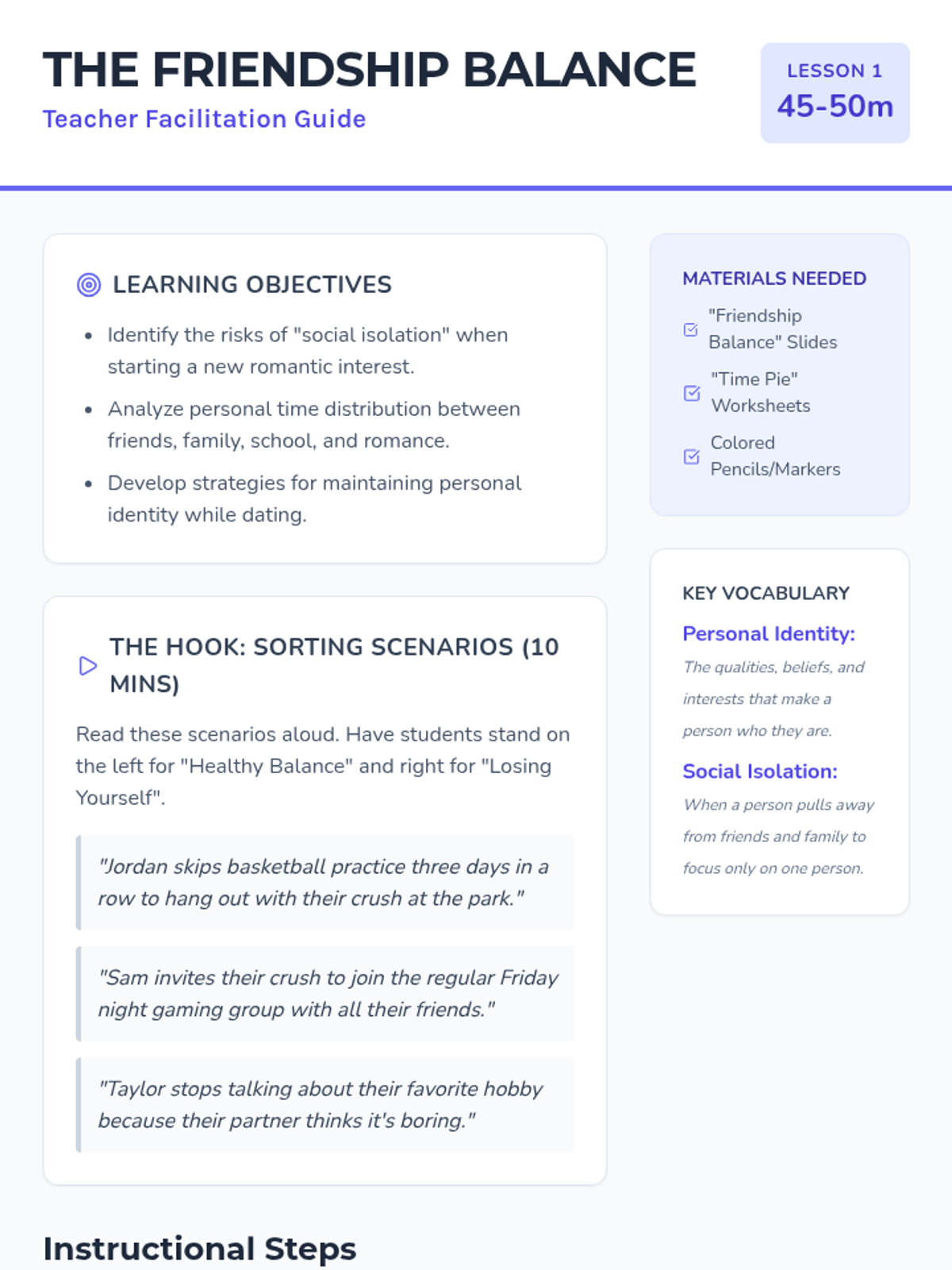
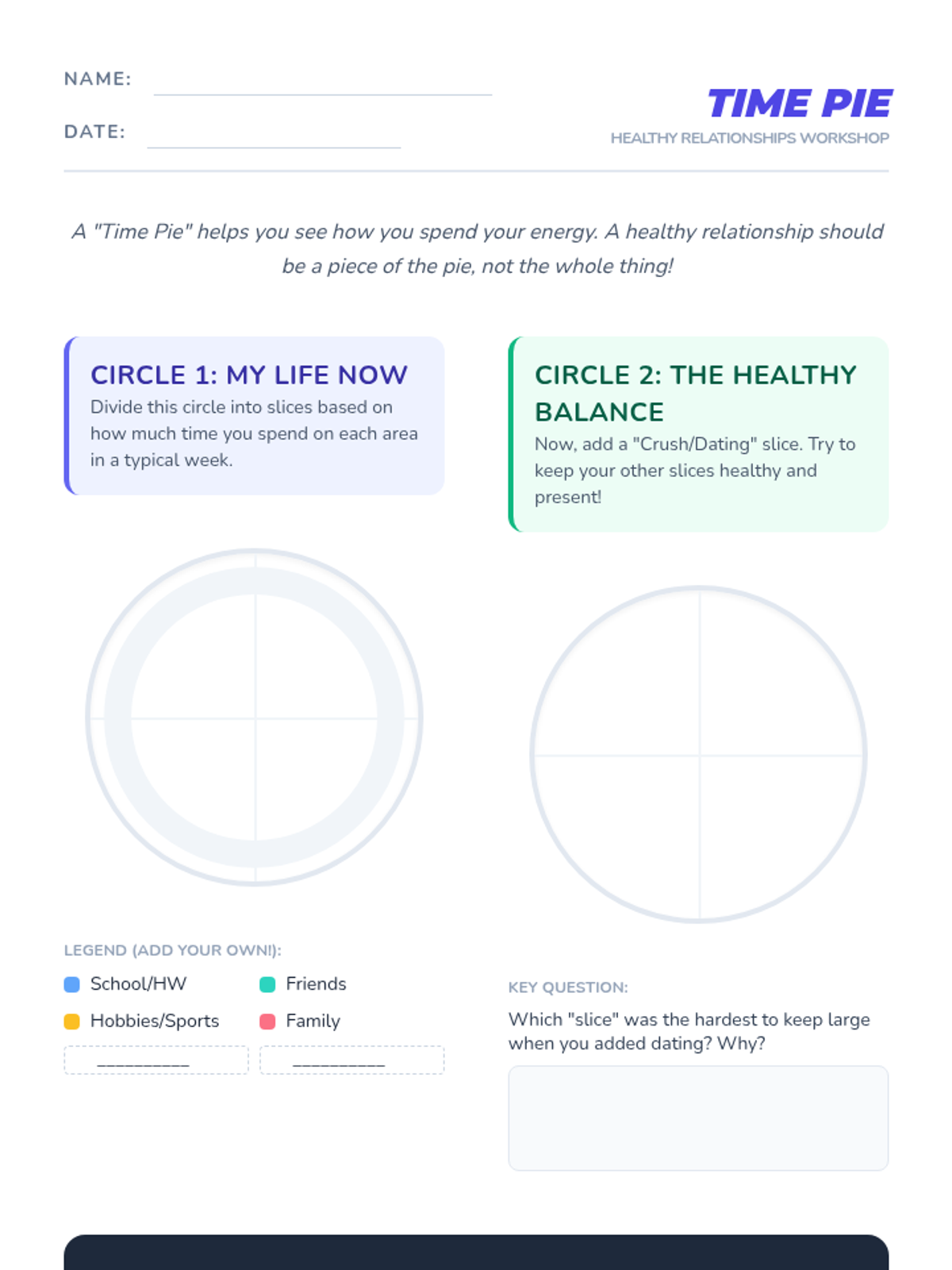
This project-based sequence explores emotional safety and decision-making in relationships. Students learn to balance friendships with romantic interests, trust their intuition, build resilience through rejection, and advocate for equality in their connections, culminating in a personal 'Relationship Rights' zine.
A comprehensive 6th-grade sequence focused on developing healthy communication and conflict resolution skills in early romantic relationships. Students learn to identify conflict styles, use 'I' statements, de-escalate drama, practice active listening, and deliver meaningful apologies.
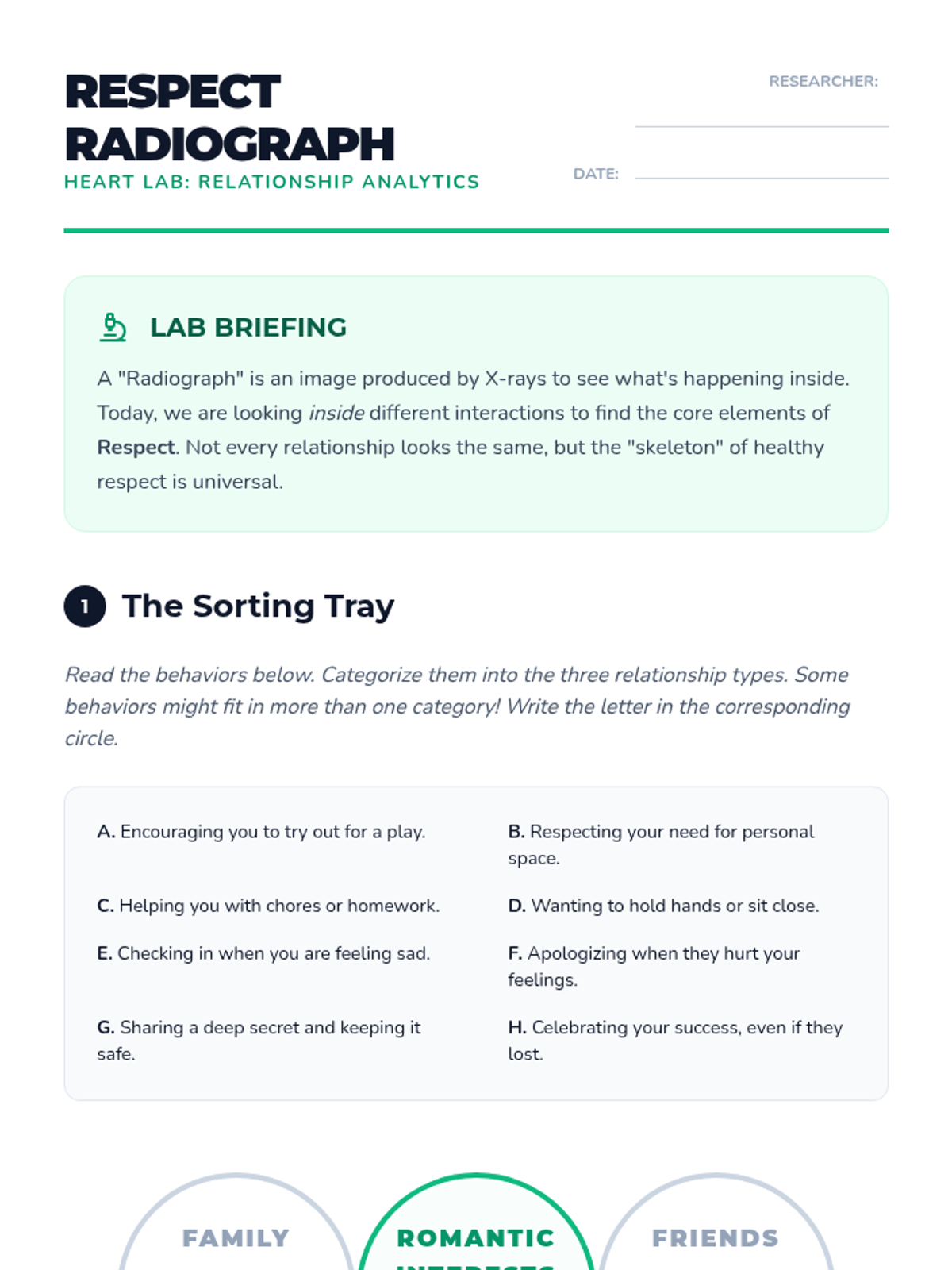
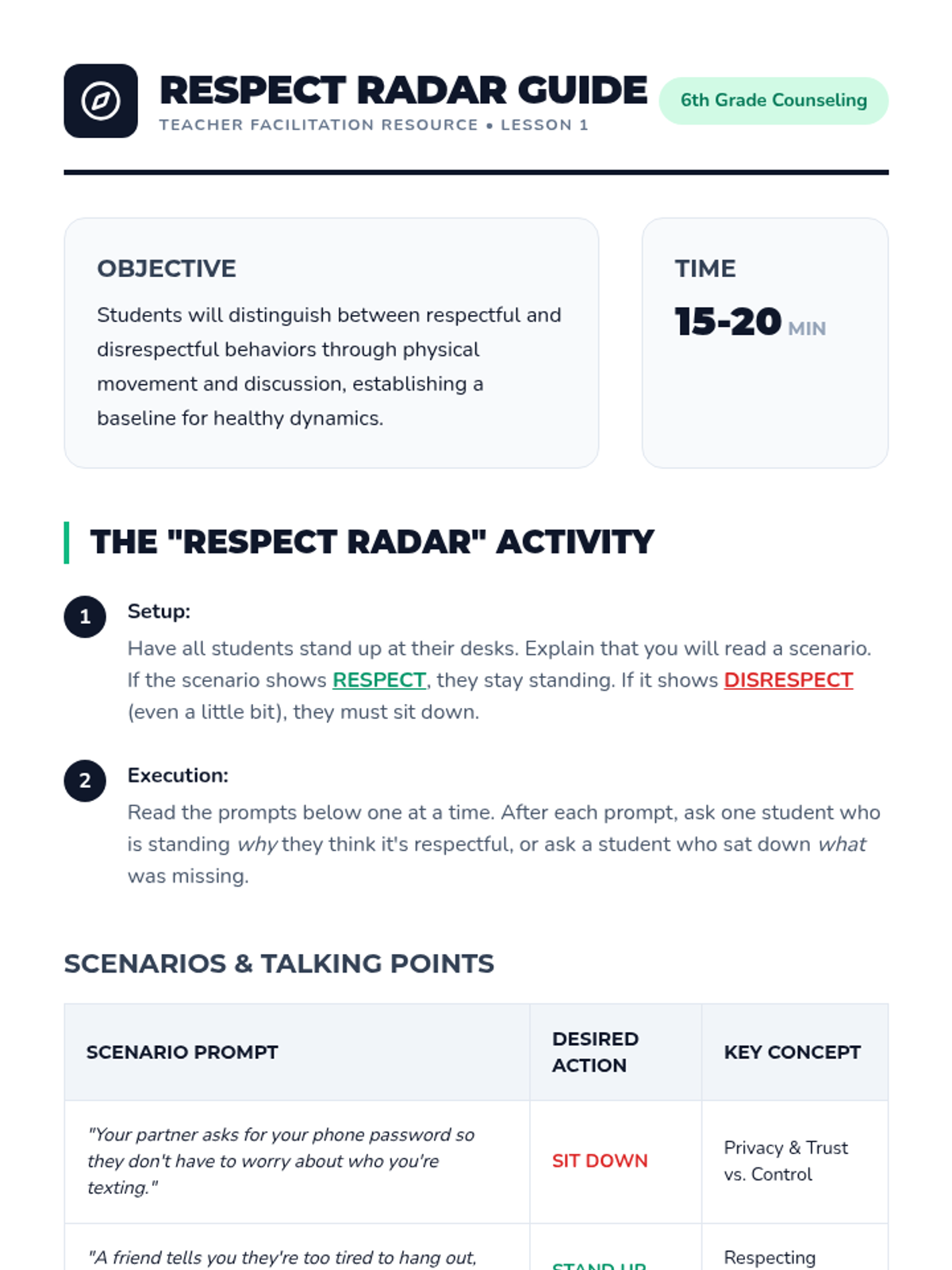
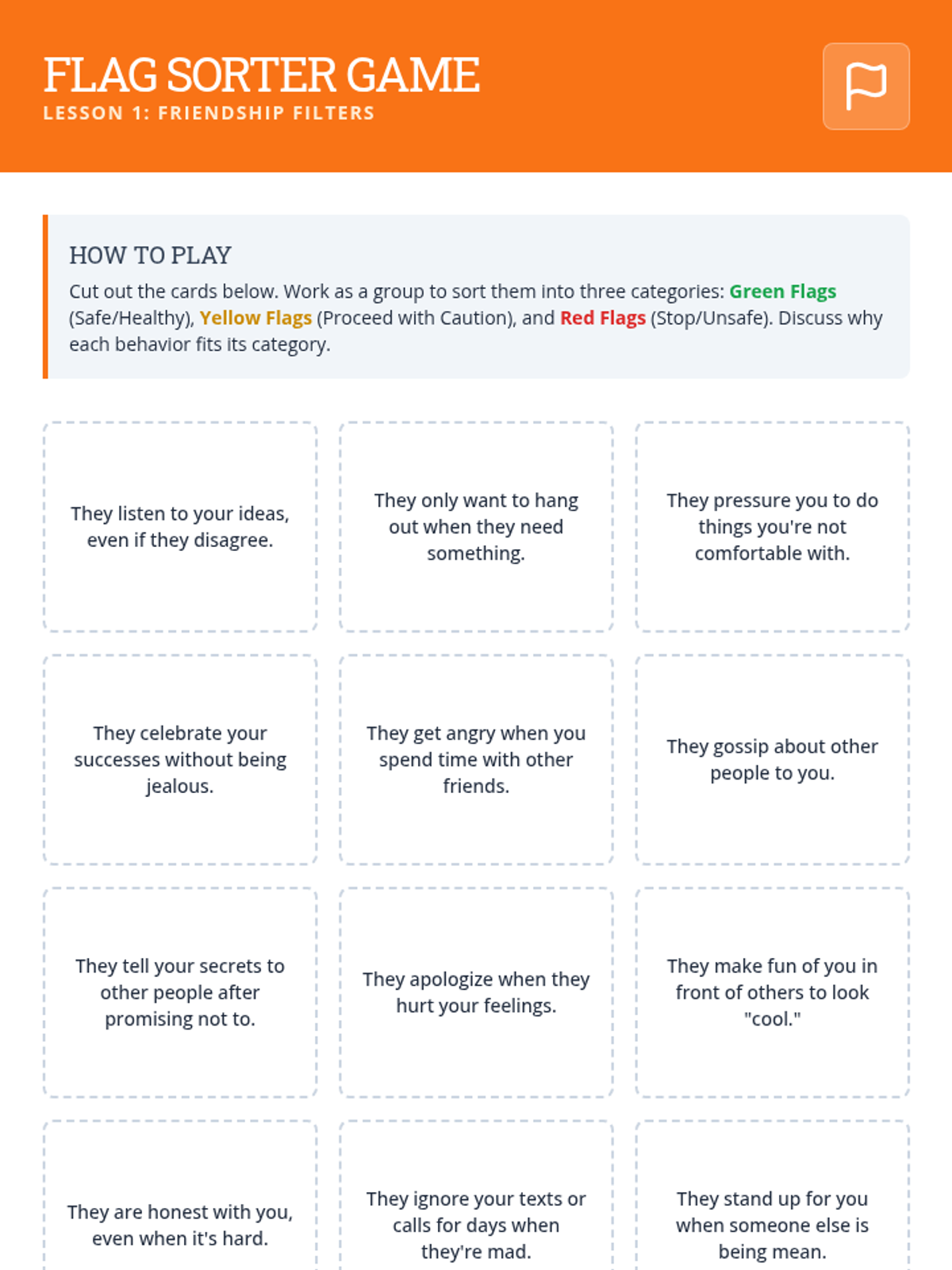
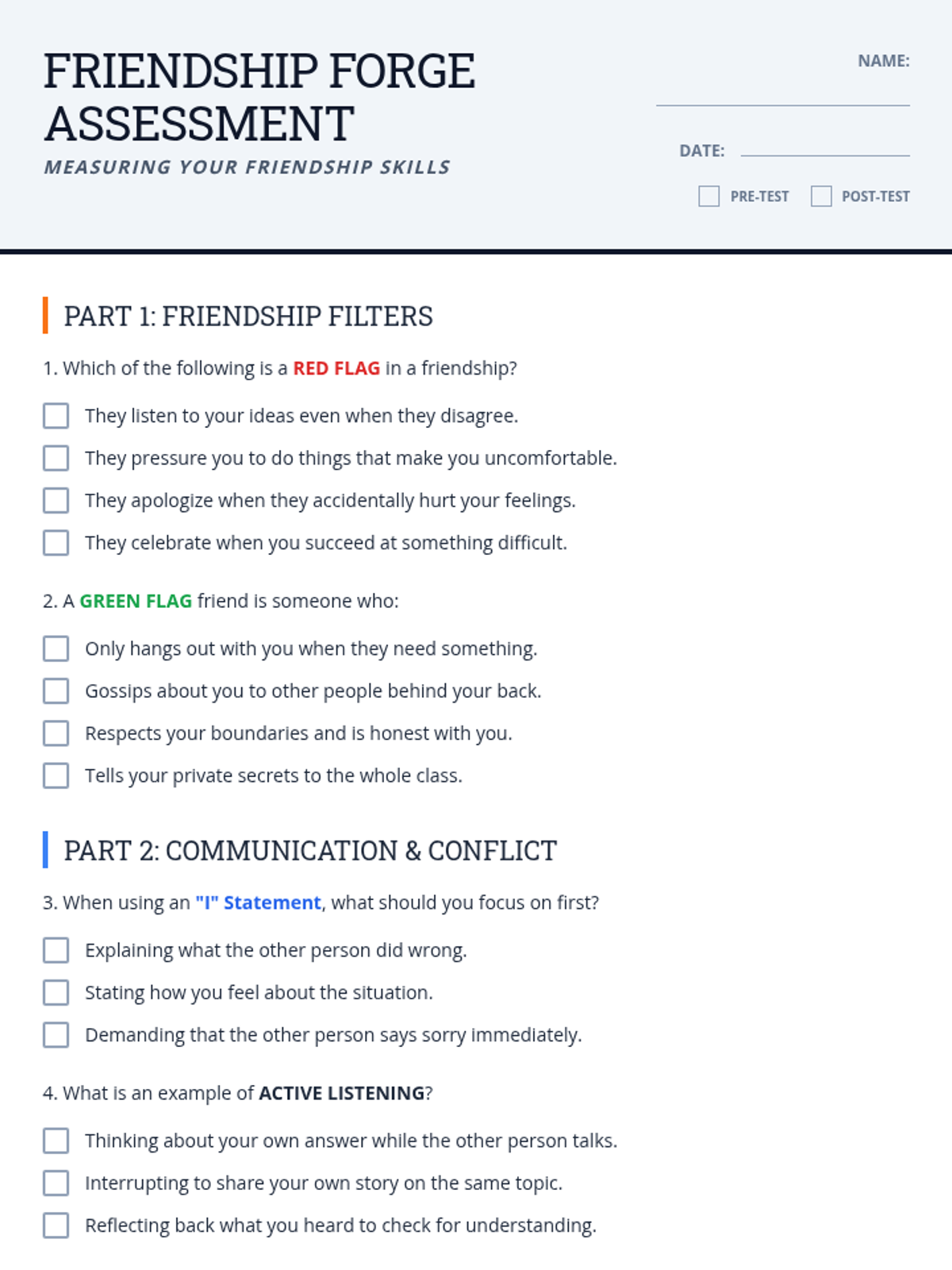
A 5-lesson sequence for 6th graders to identify and cultivate healthy relationship dynamics by distinguishing between 'green flags' (positive indicators) and 'red flags' (warning signs). Students move from defining respect to analyzing media and creating their own relationship health guides.
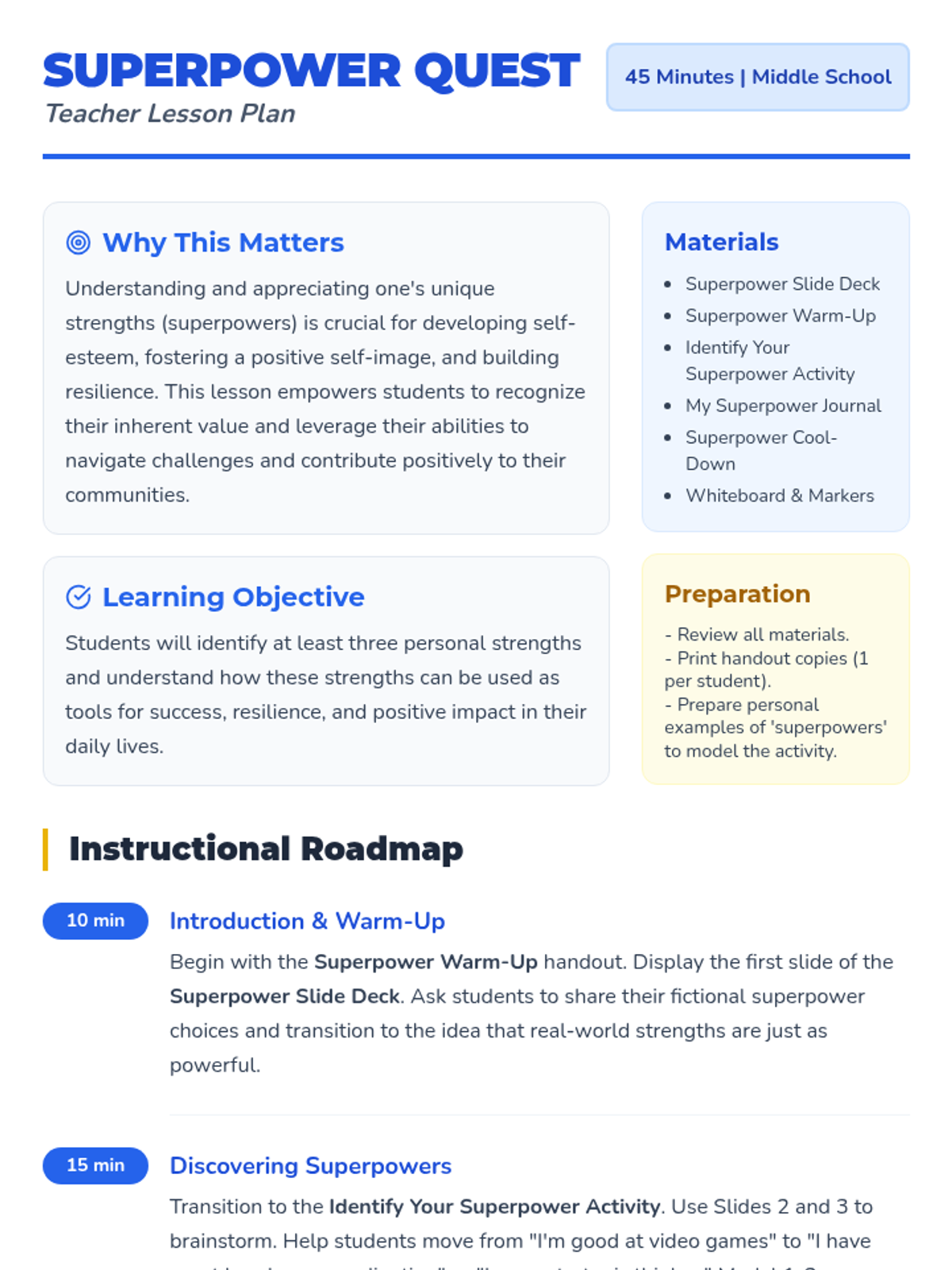
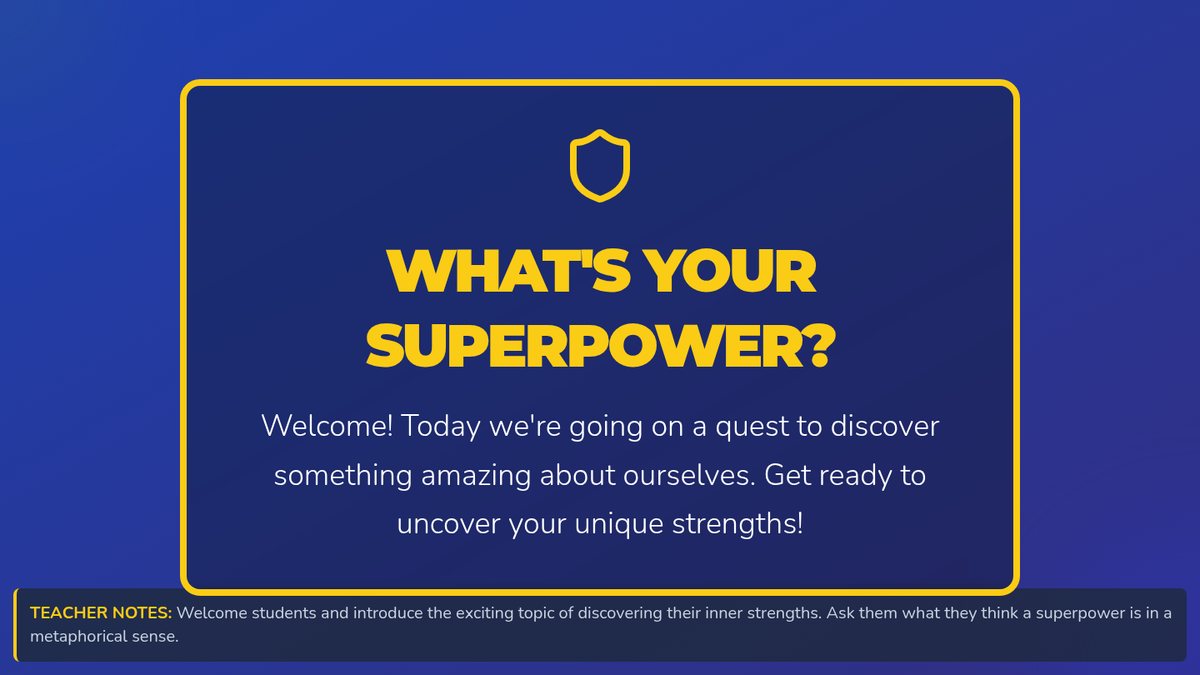
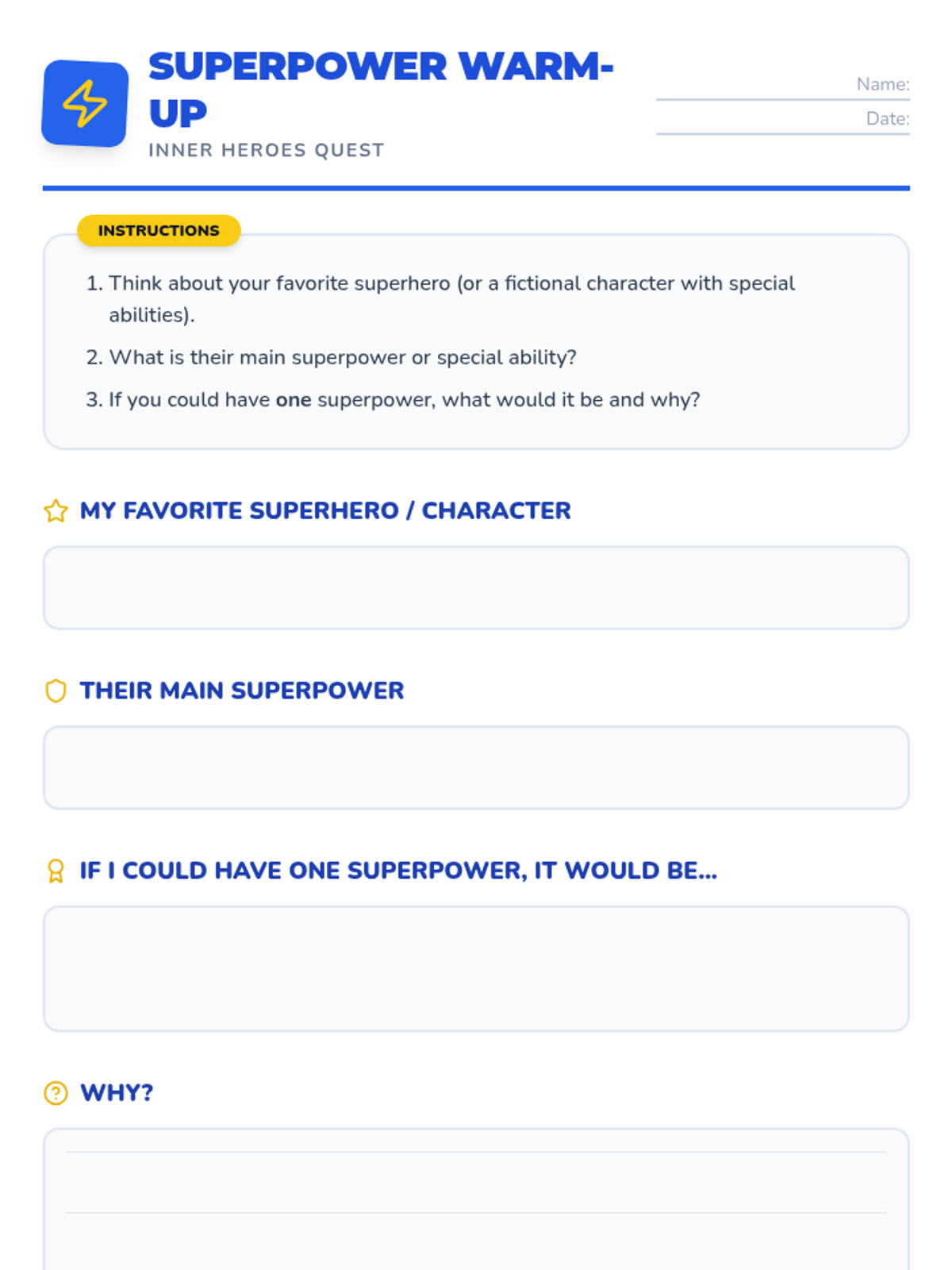
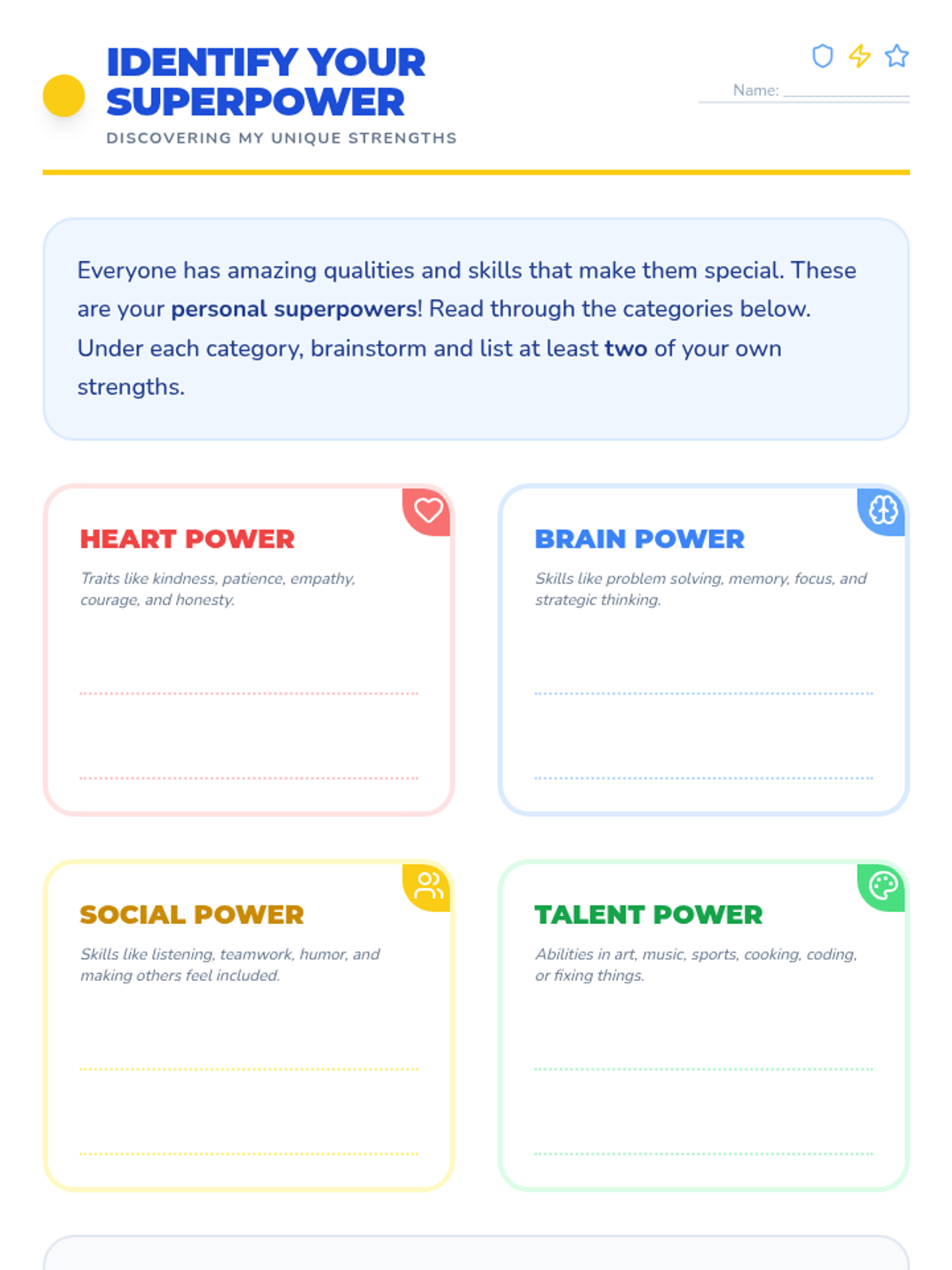
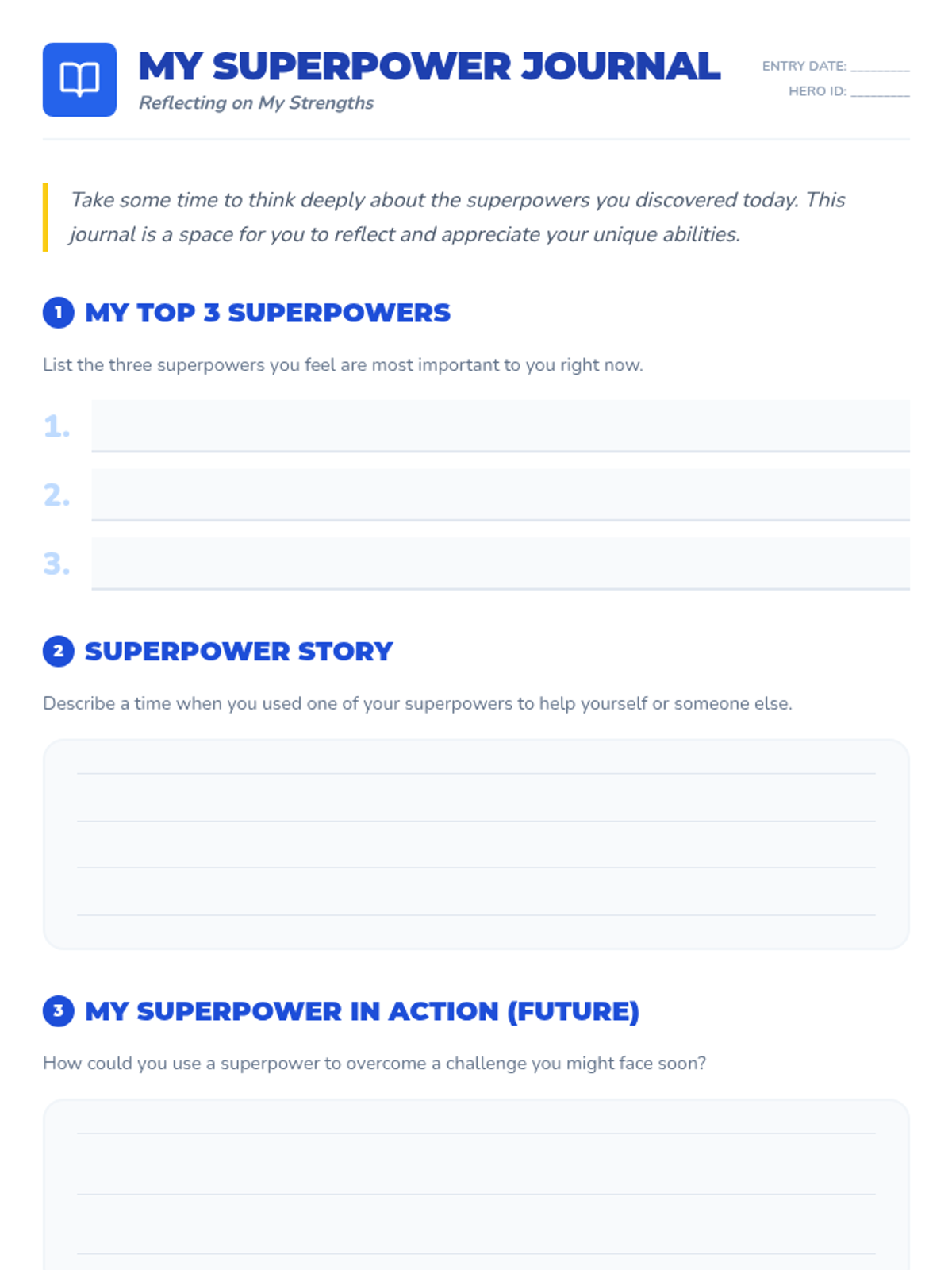
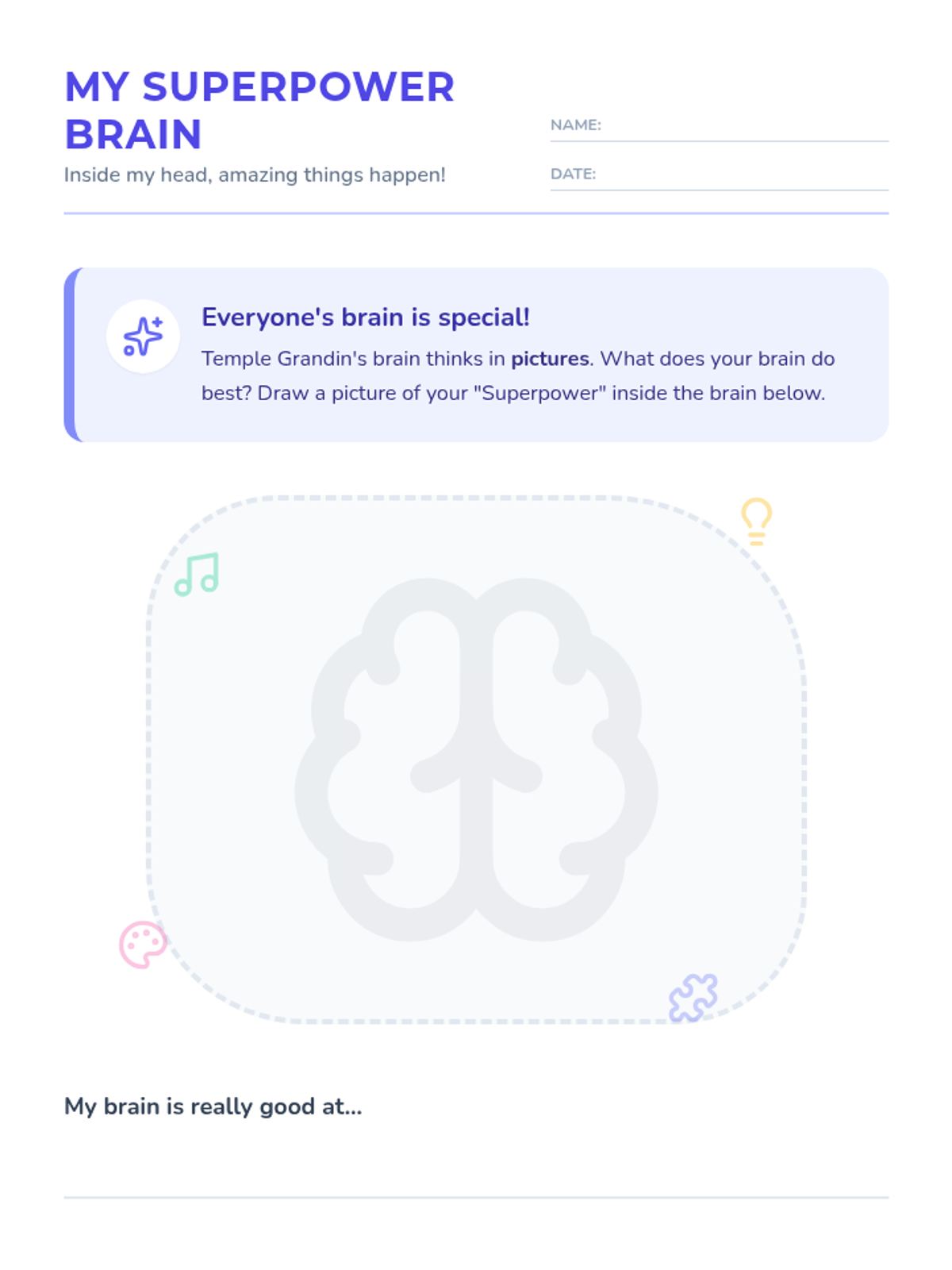
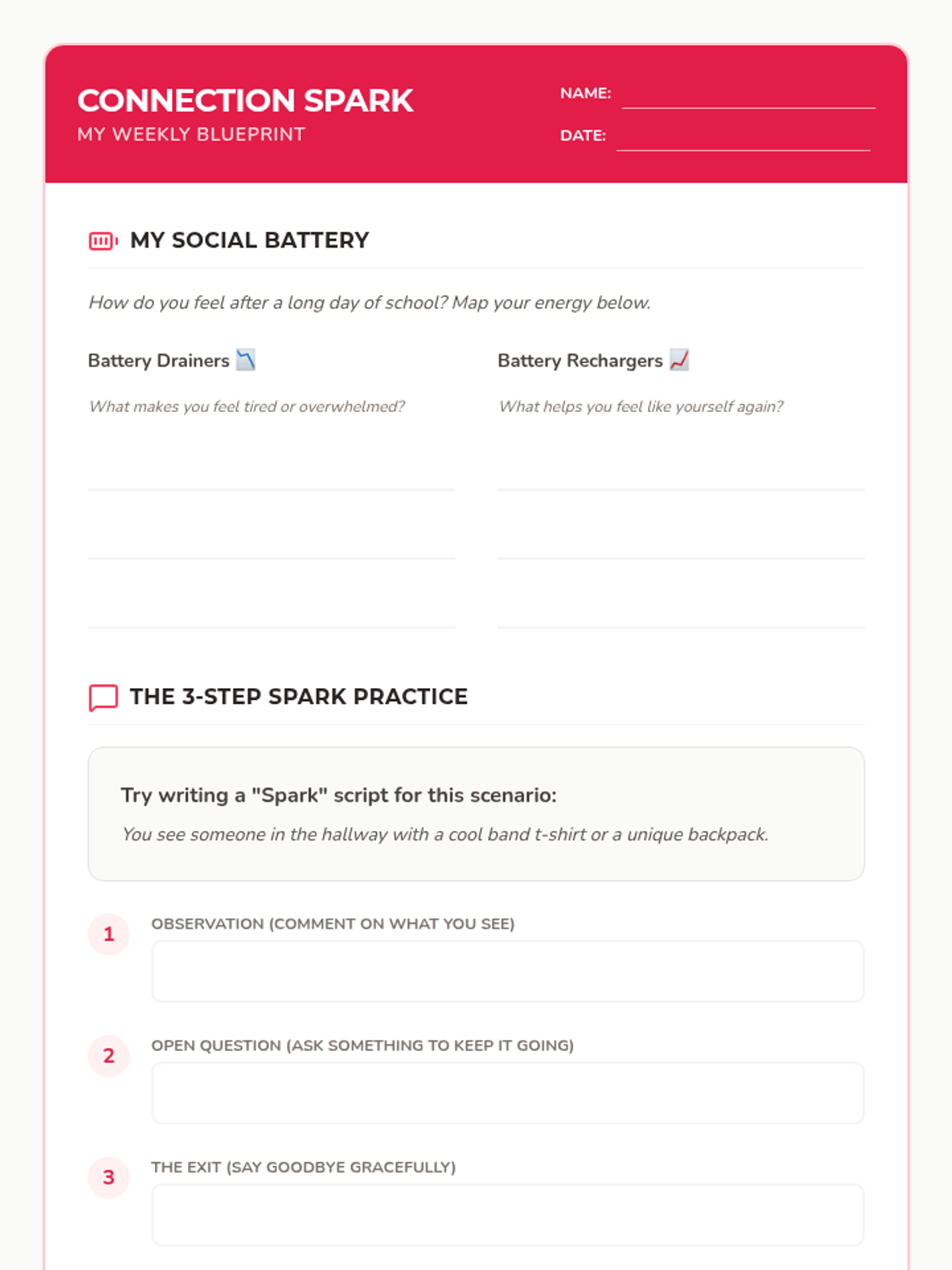
A sequence focused on self-discovery and social health, helping students identify their inner strengths and navigate social boundaries with confidence.
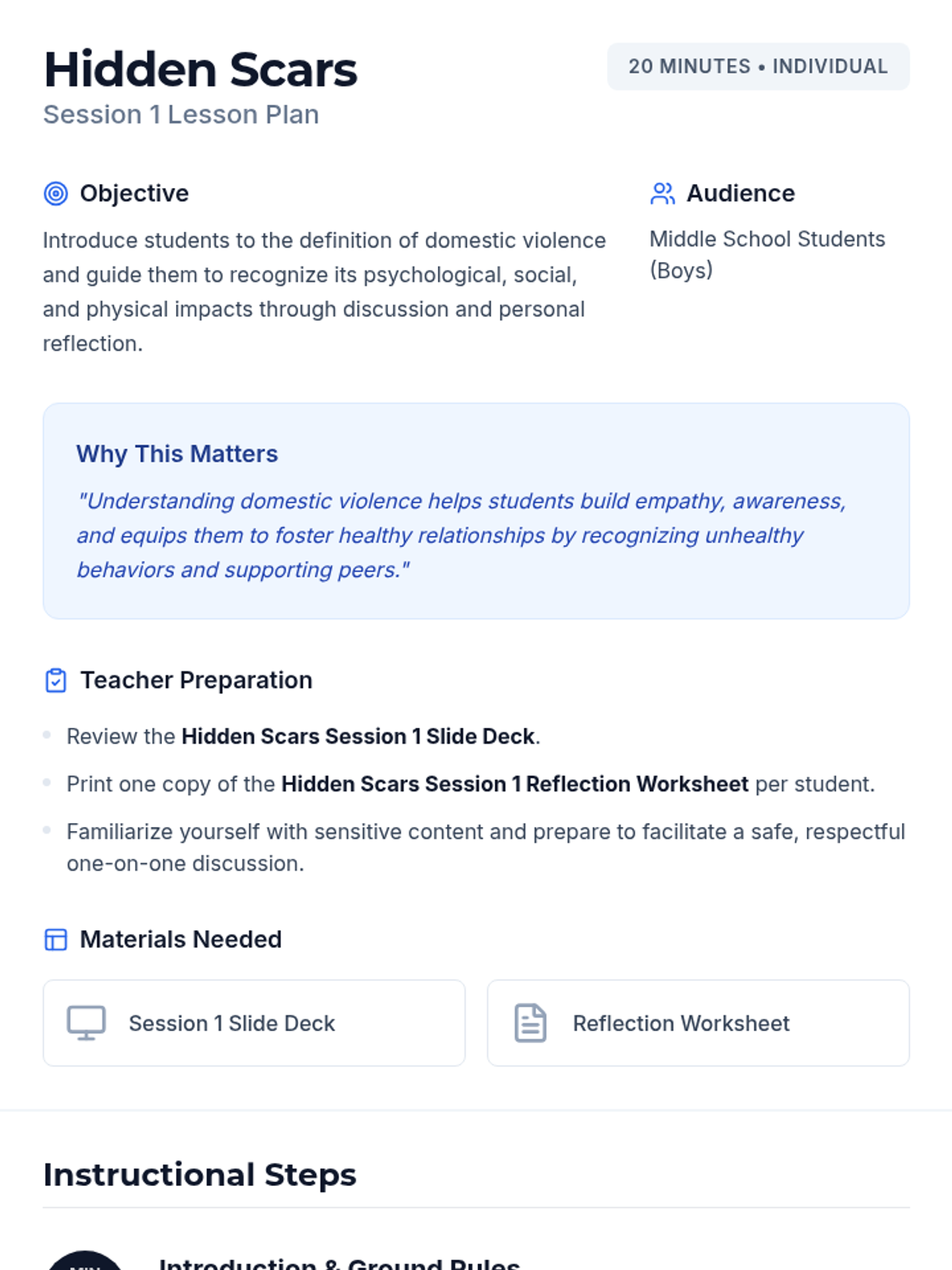
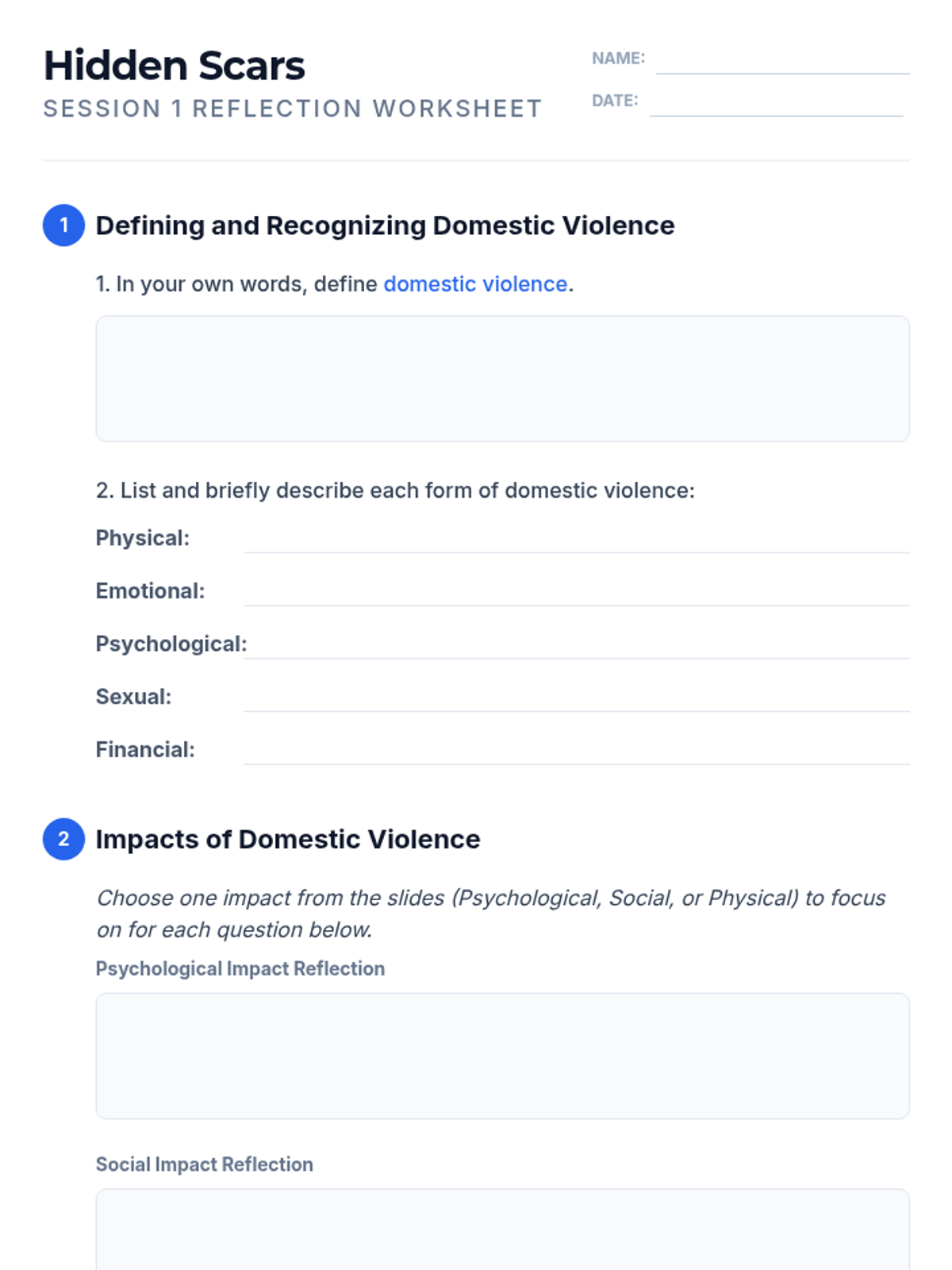
A two-session sequence for middle school boys exploring the psychological, social, and physical impacts of domestic violence while building healthy relationship skills and coping strategies.
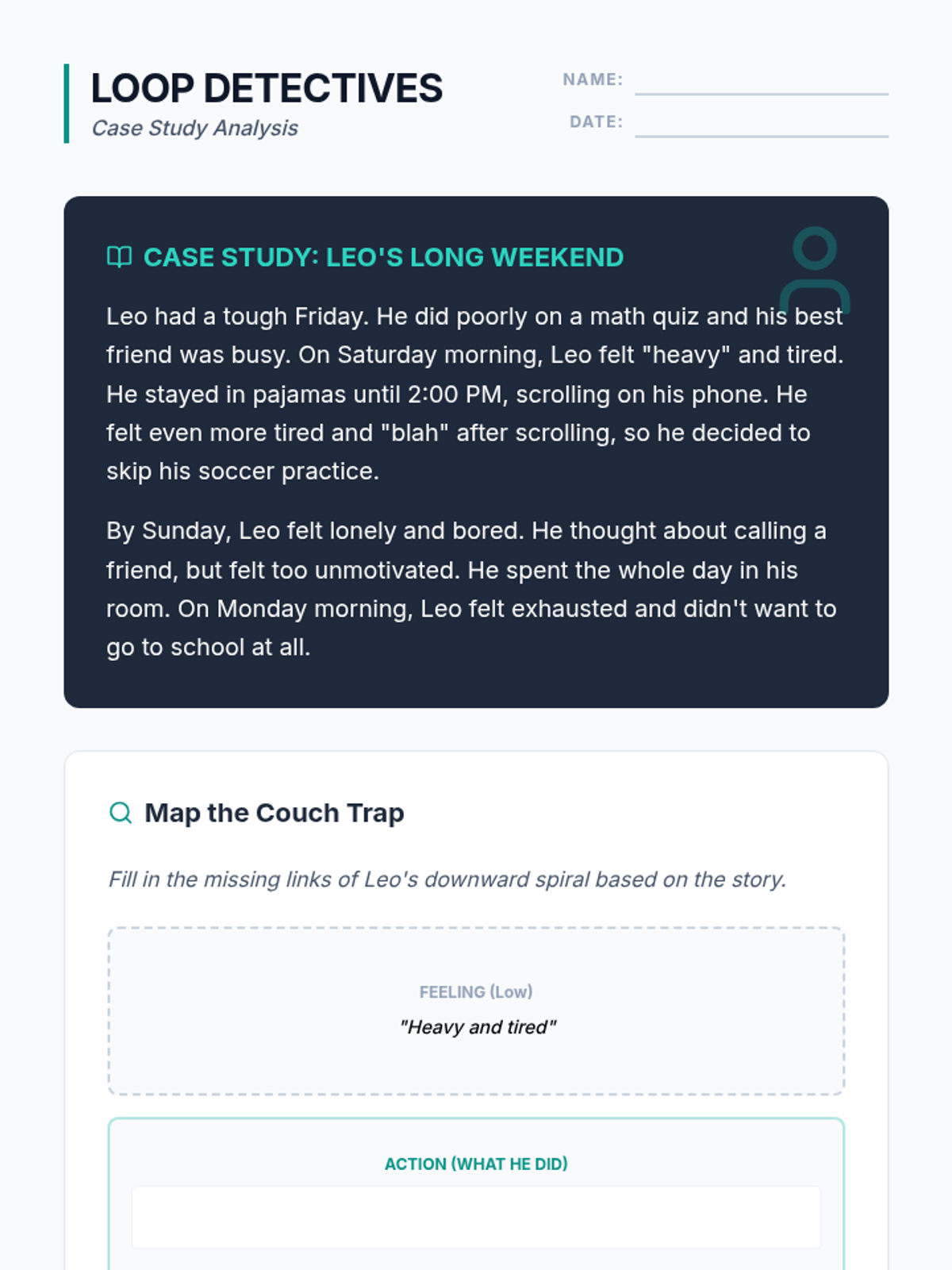
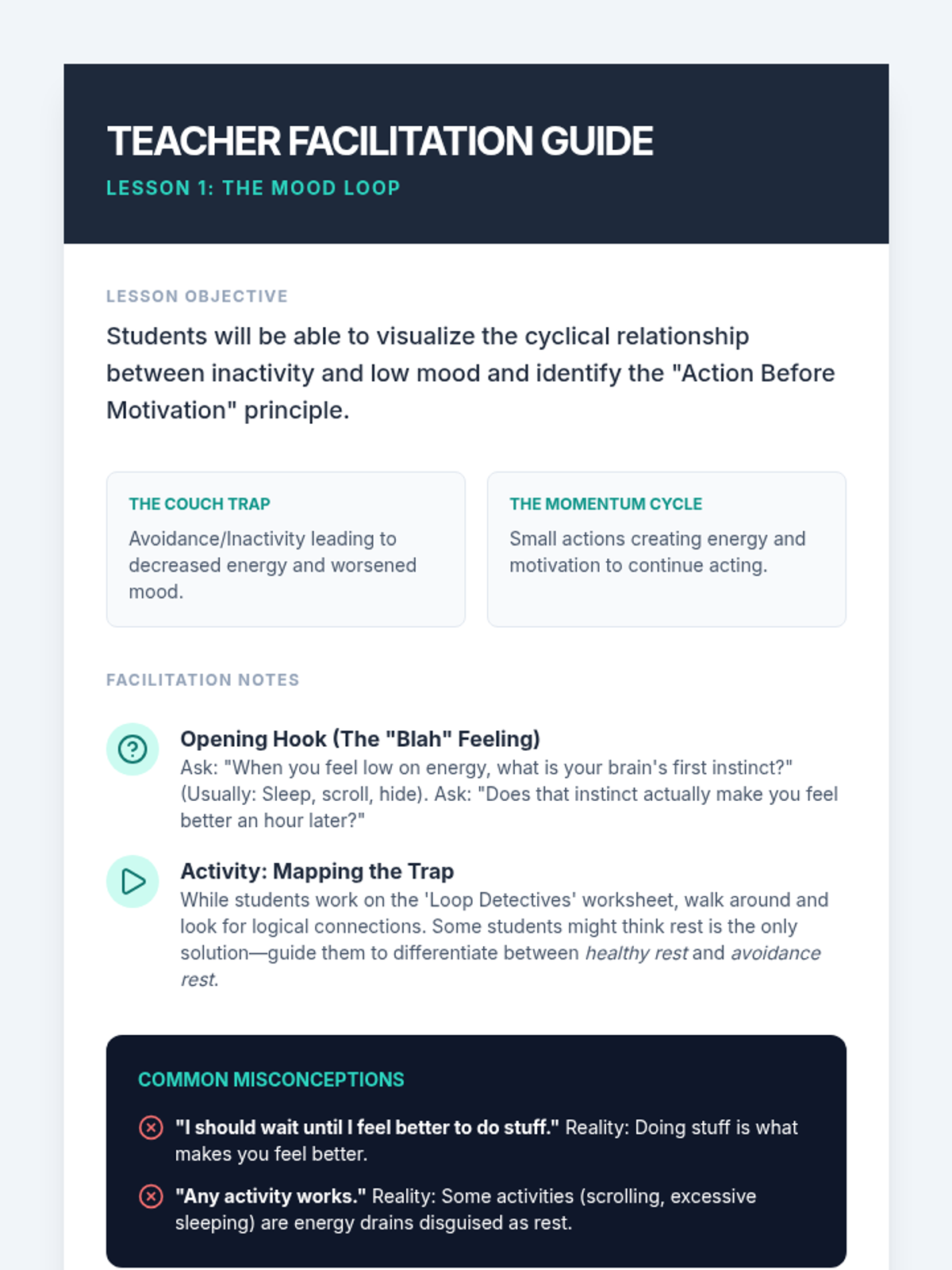
A comprehensive sequence for 6th graders to understand and apply behavioral activation. Students learn how their actions impact their emotions, track their energy levels, brainstorm nourishing activities, and create a sustainable weekly schedule to improve their mental well-being.
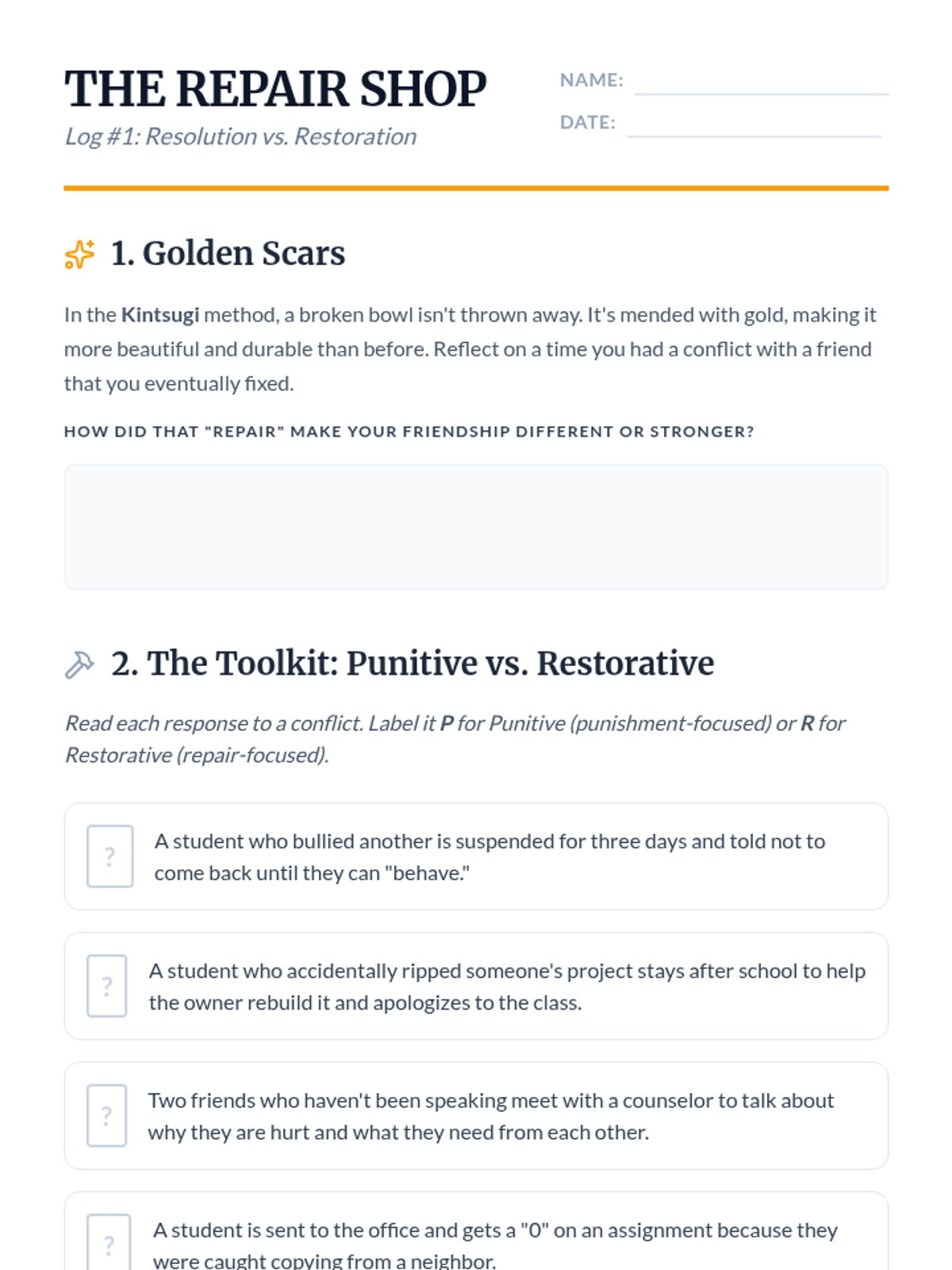
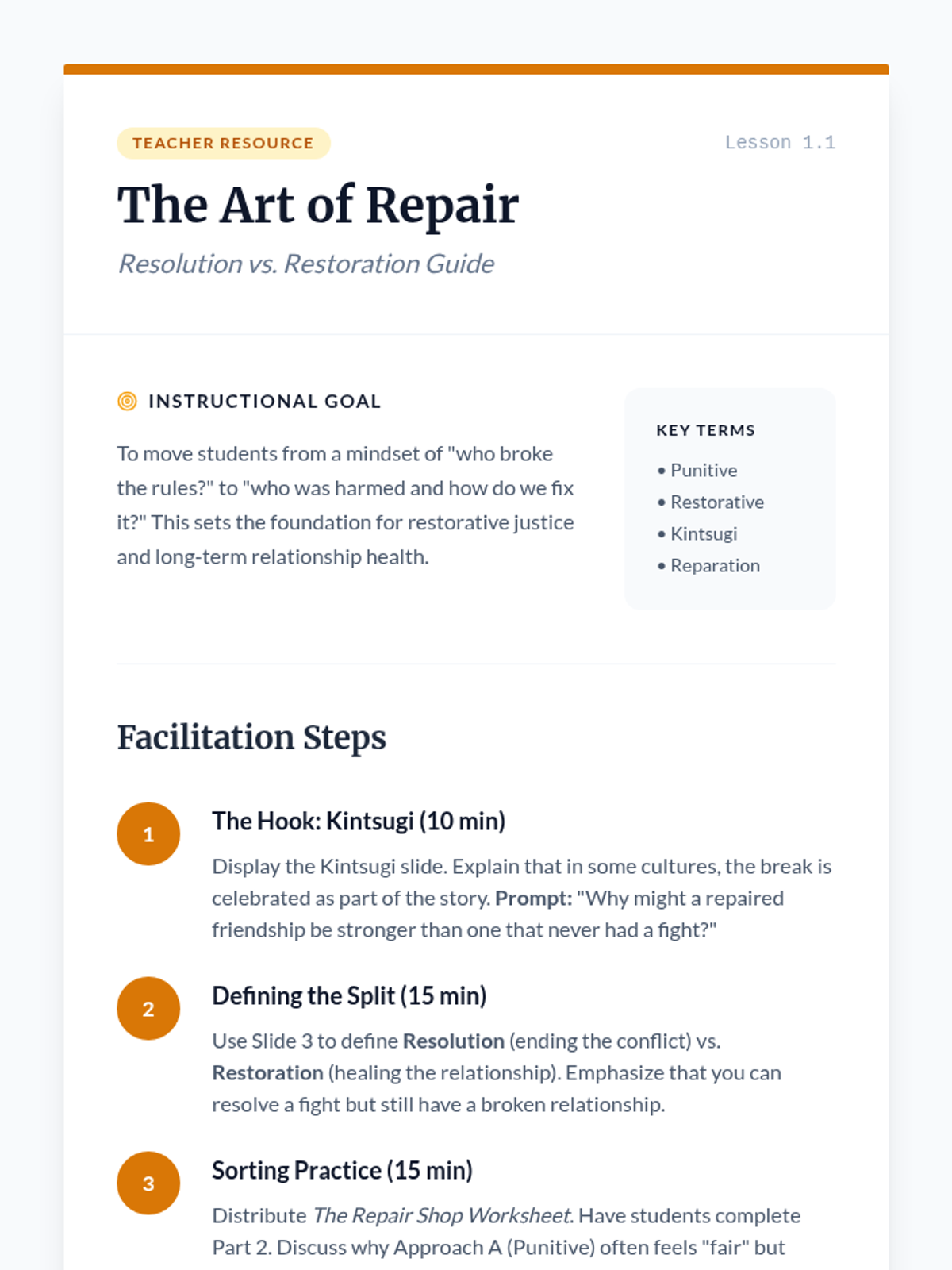
A 5-lesson sequence for 6th graders focusing on the aftermath of conflict: restoration, genuine apologies, sustainable agreements, and rebuilding trust. Students move beyond just 'stopping a fight' to actively repairing relationships and creating long-term peace.
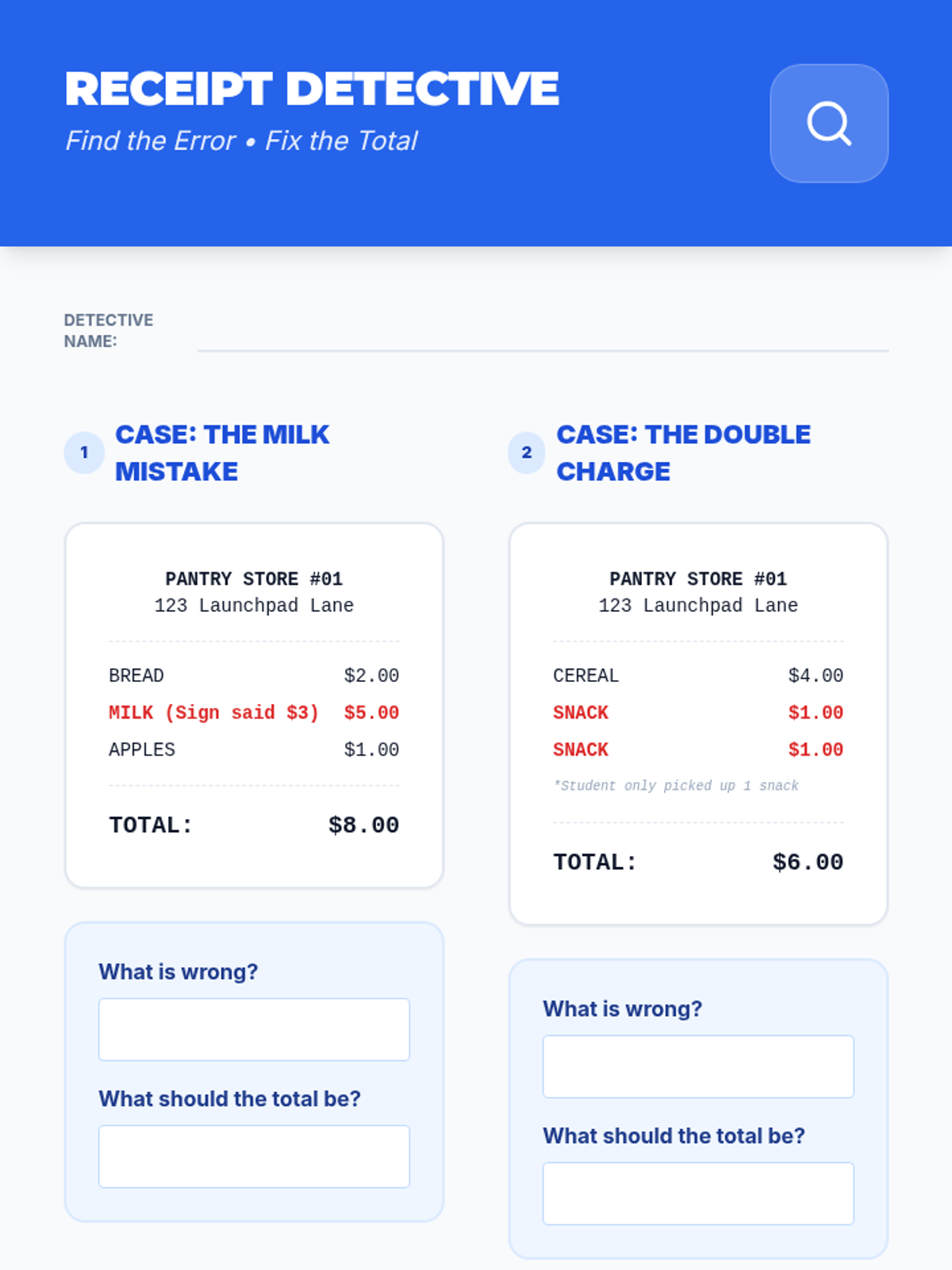
A 5-lesson sequence for 6th-grade students using a detective-themed case study approach to learn FAST skills for self-respect. Students analyze characters, forensics transcripts, and historical figures to master the art of standing up for themselves with integrity.
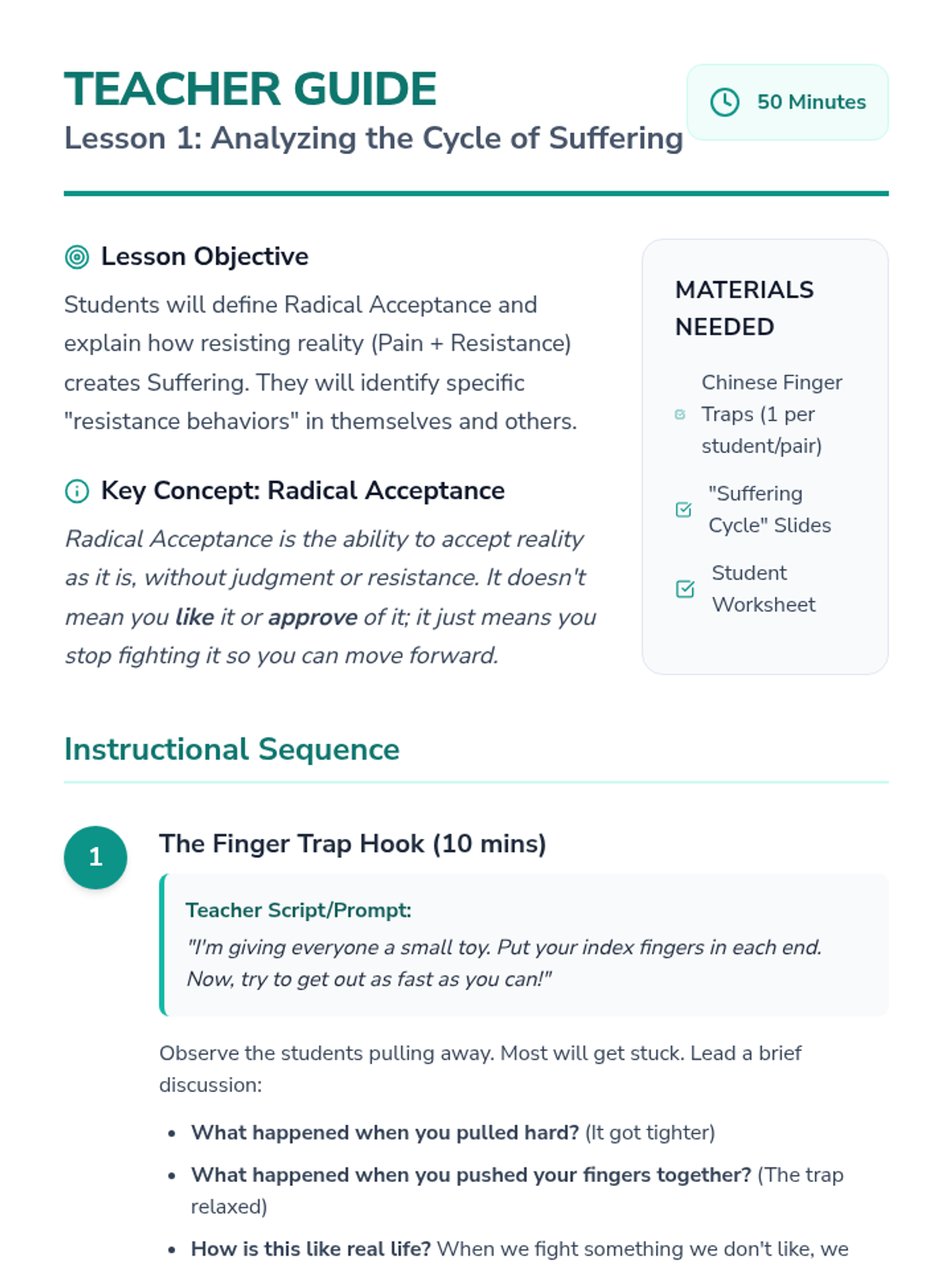
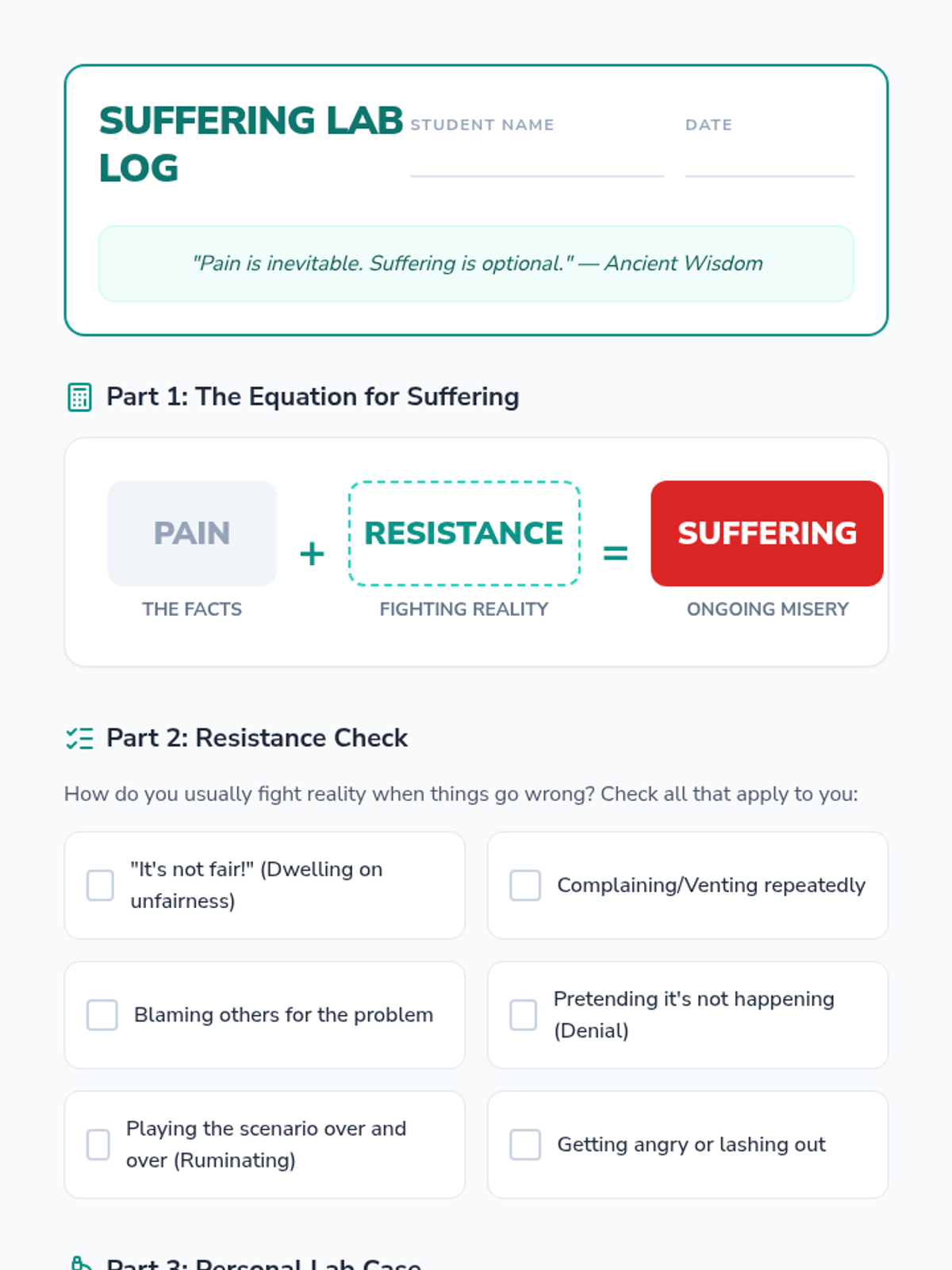
This middle school sequence focuses on building distress tolerance through Radical Acceptance. Students move from understanding the 'Cycle of Suffering' to practicing resilience in academic and social scenarios, ultimately learning to pivot from disappointment to proactive problem-solving.
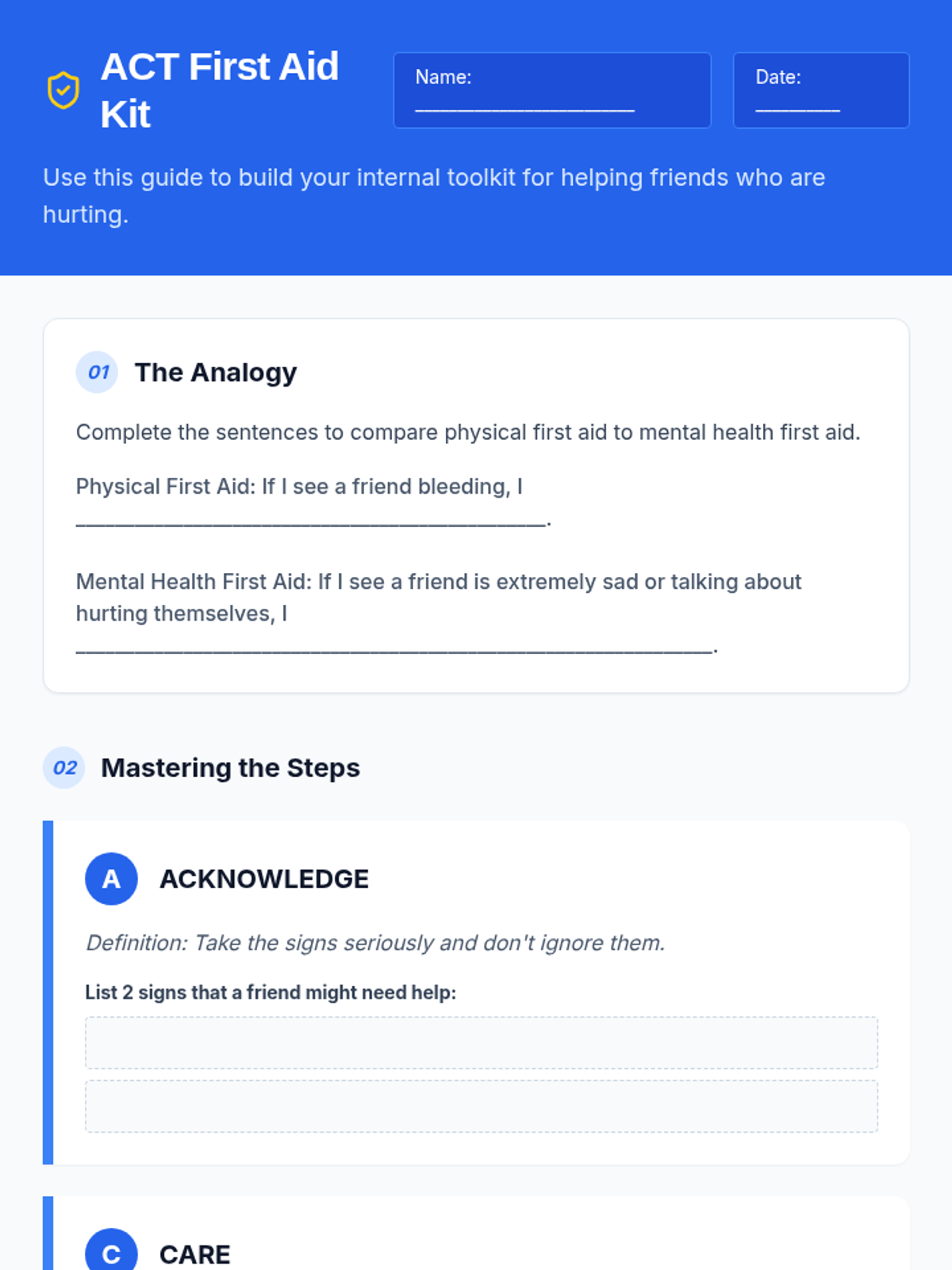
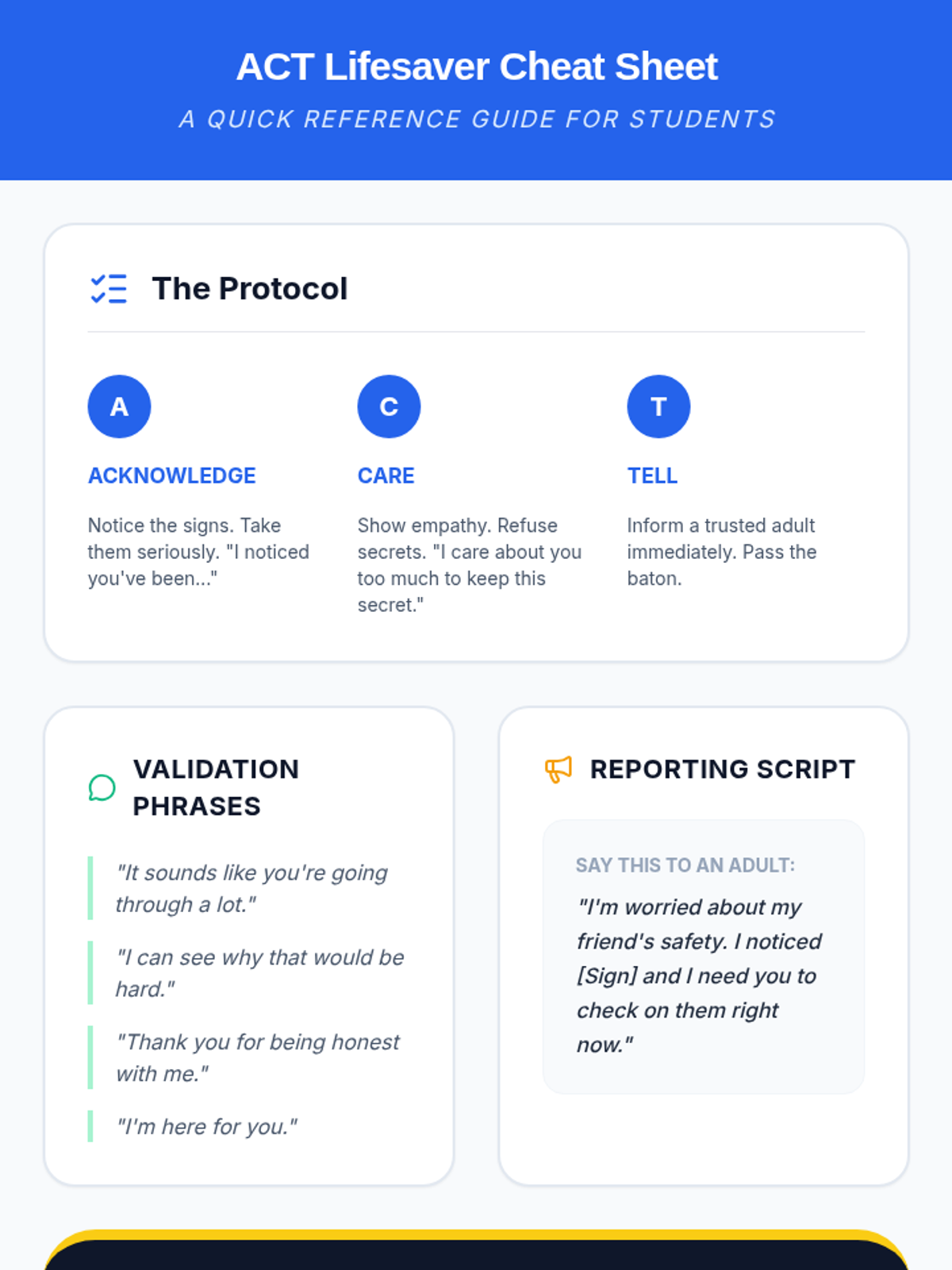
A comprehensive sequence for 6th-grade students on the A.C.T. (Acknowledge, Care, Tell) intervention model for suicide prevention. Students learn to identify warning signs, communicate empathy, and connect peers to trusted adults.
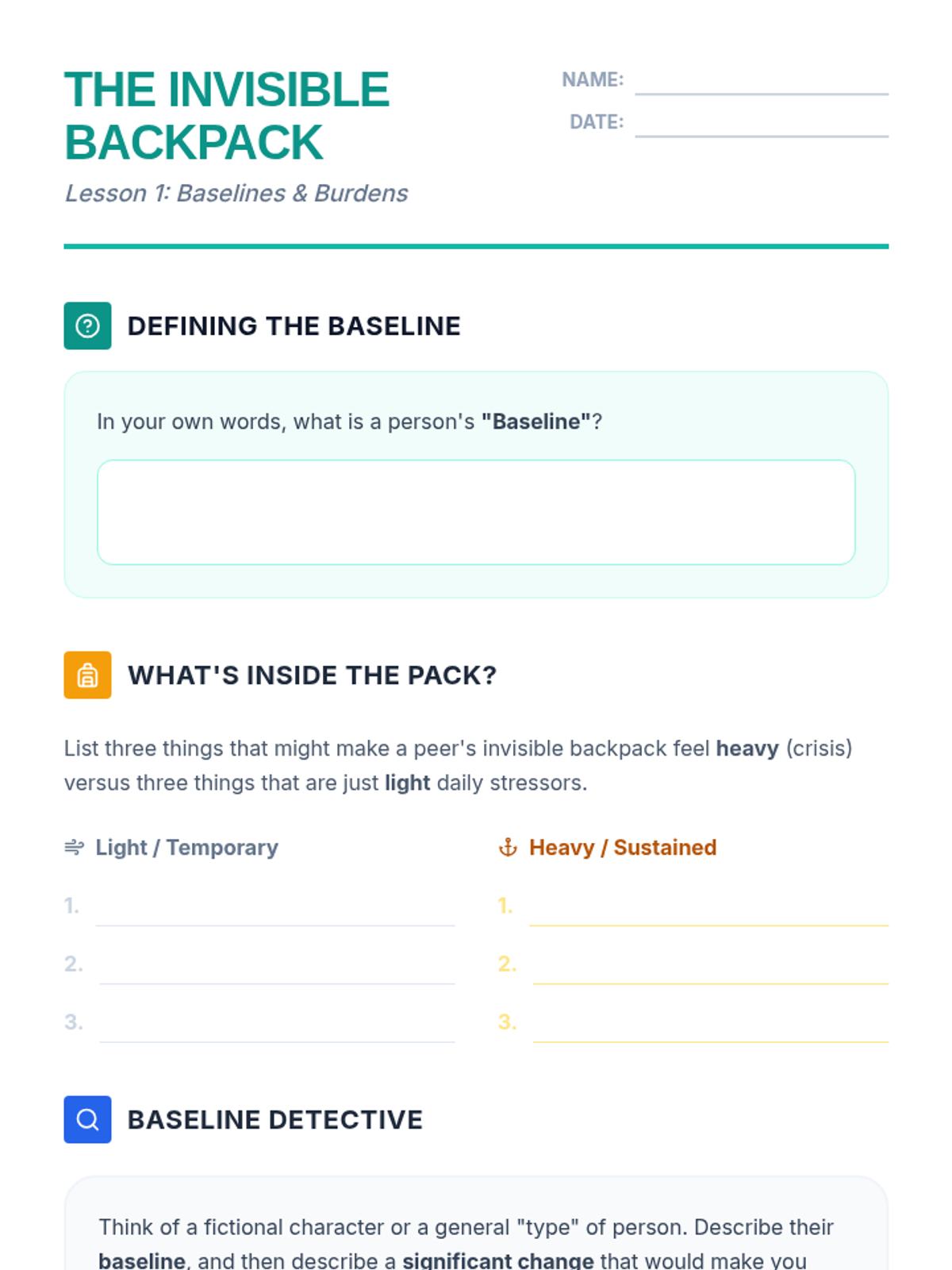
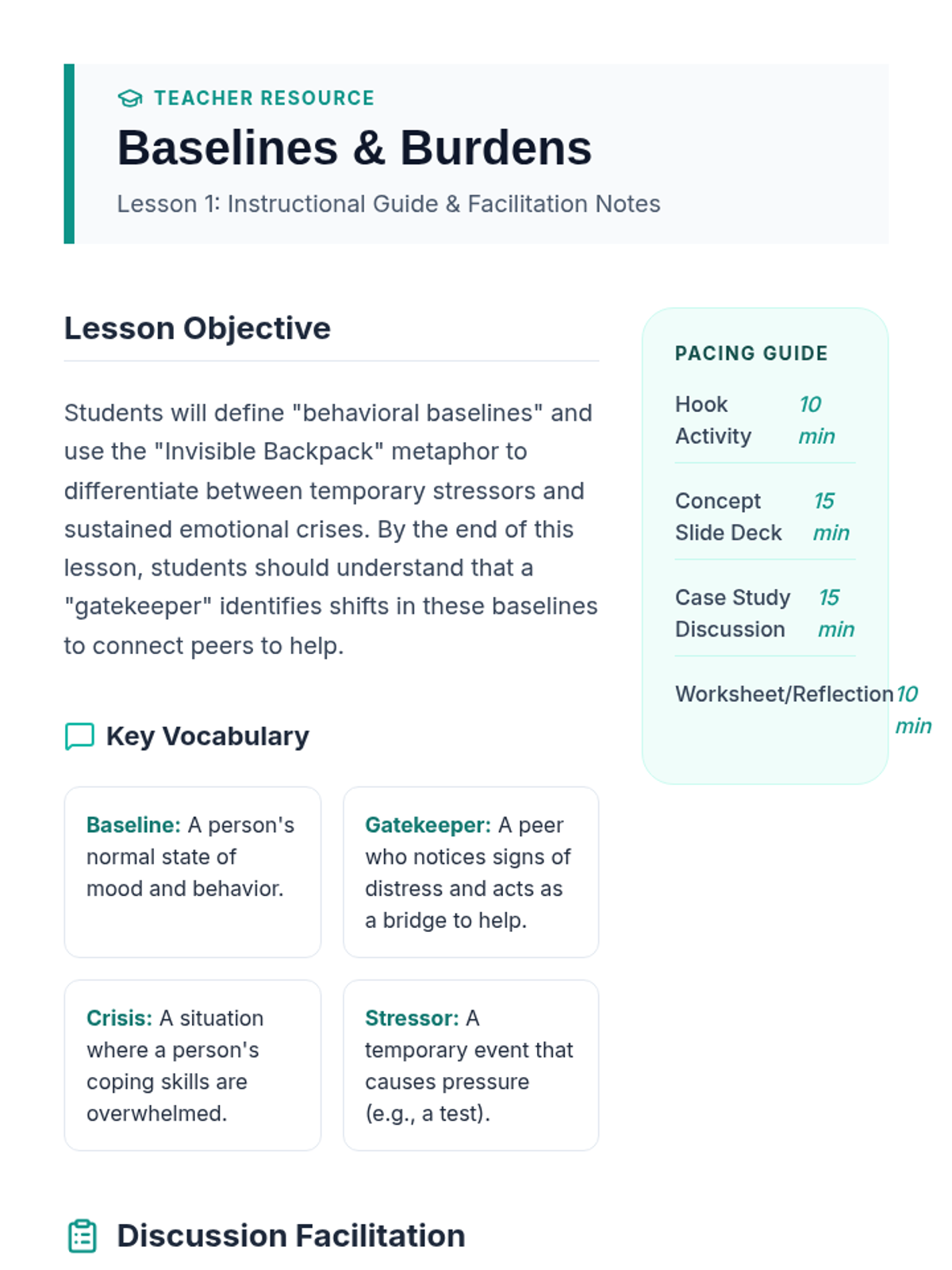
This 6th-grade sequence empowers students to become effective peer gatekeepers by teaching them how to recognize signs of distress, use the Acknowledge, Care, Tell (A.C.T.) framework, and overcome social barriers to reporting. Students will move from identifying emotional baselines to mapping out their personal safety networks of trusted adults.
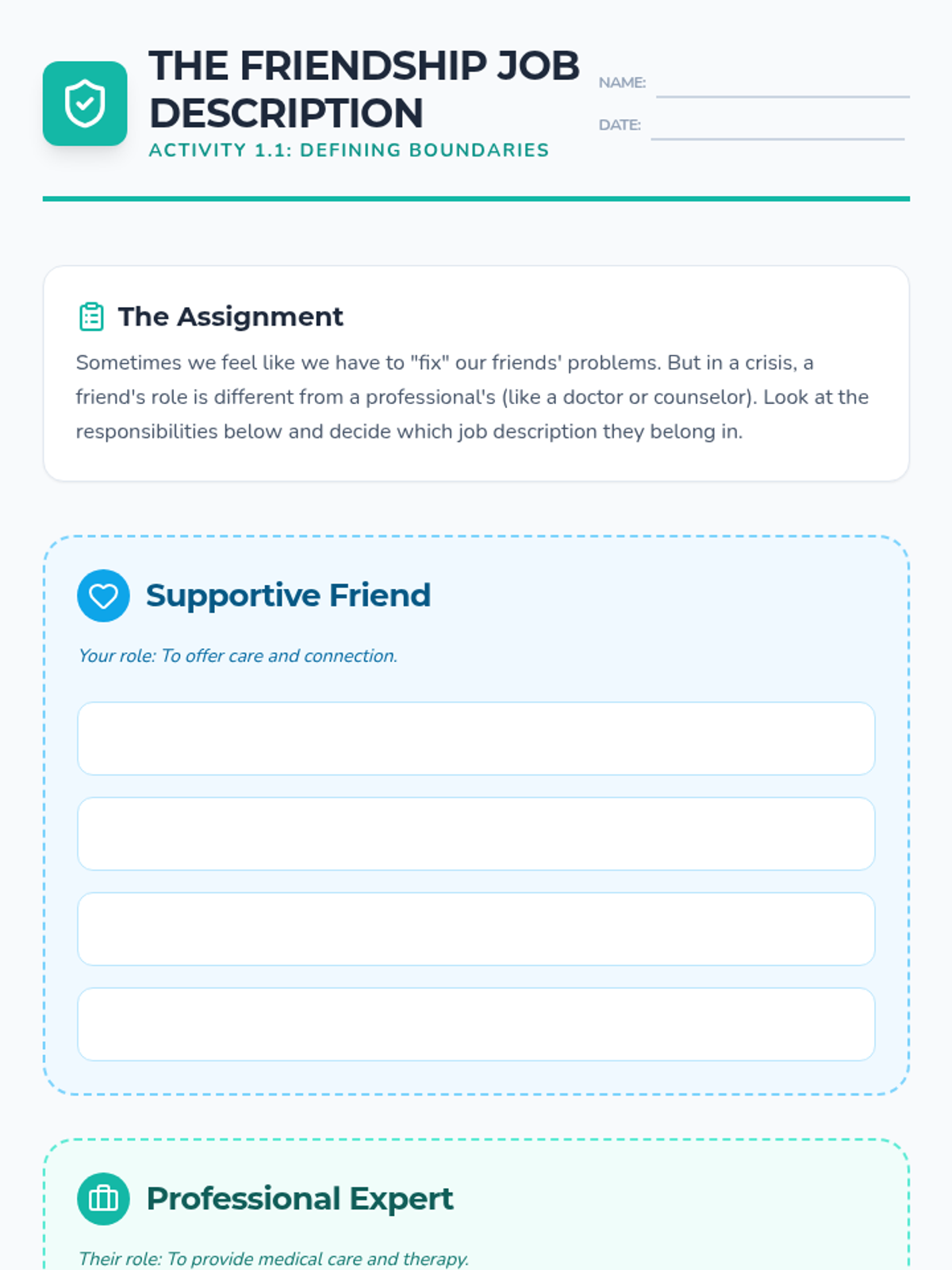
A comprehensive sequence for 6th graders to develop communication skills for peer mental health support. Students learn to distinguish their role from professionals, use the ACT (Acknowledge, Care, Tell) model, and navigate reporting concerns to trusted adults through simulations and role-play.
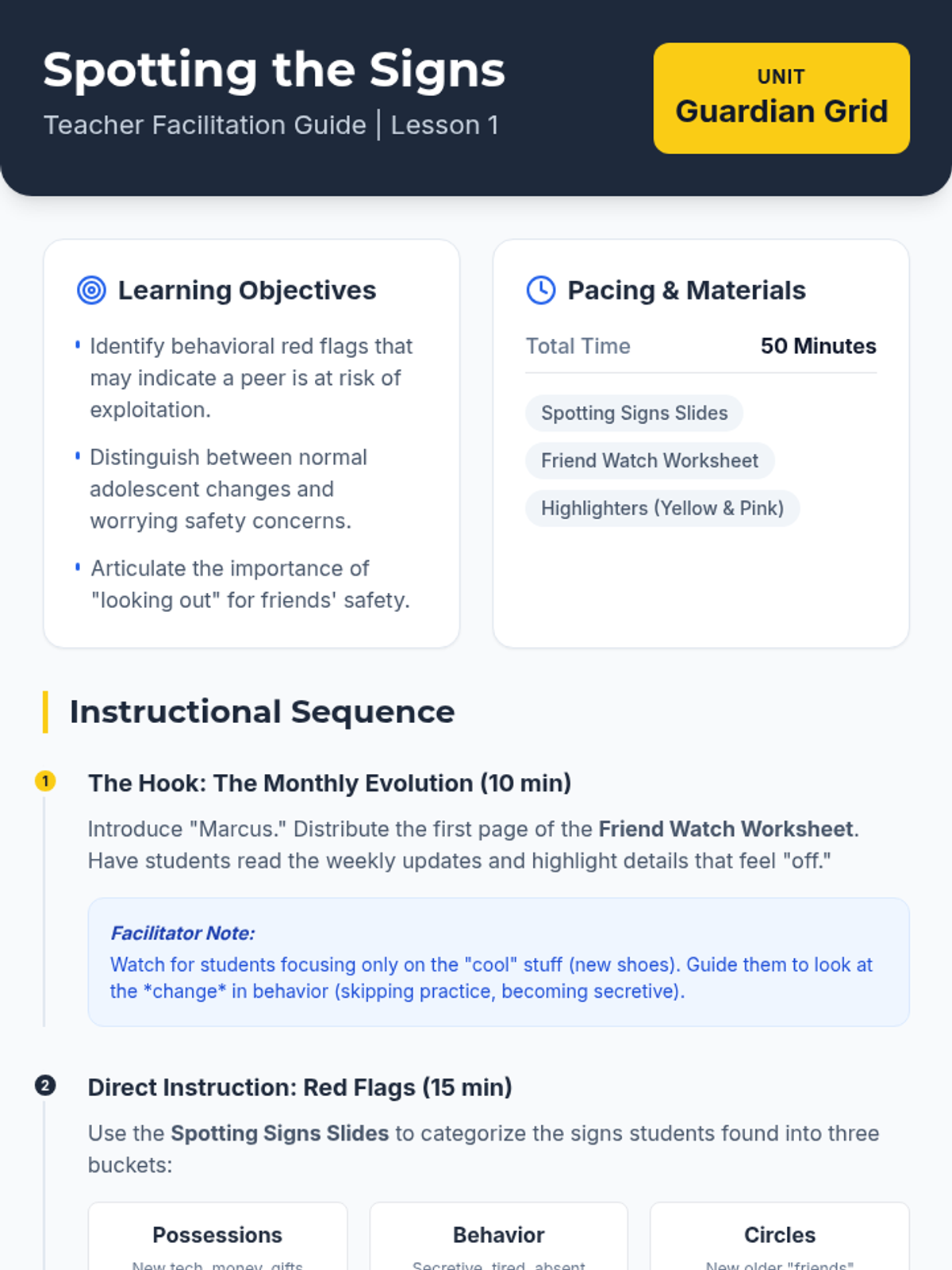
A comprehensive unit for 6th graders focusing on identifying signs of exploitation, overcoming reporting barriers, and navigating safety resources to protect themselves and their peers.
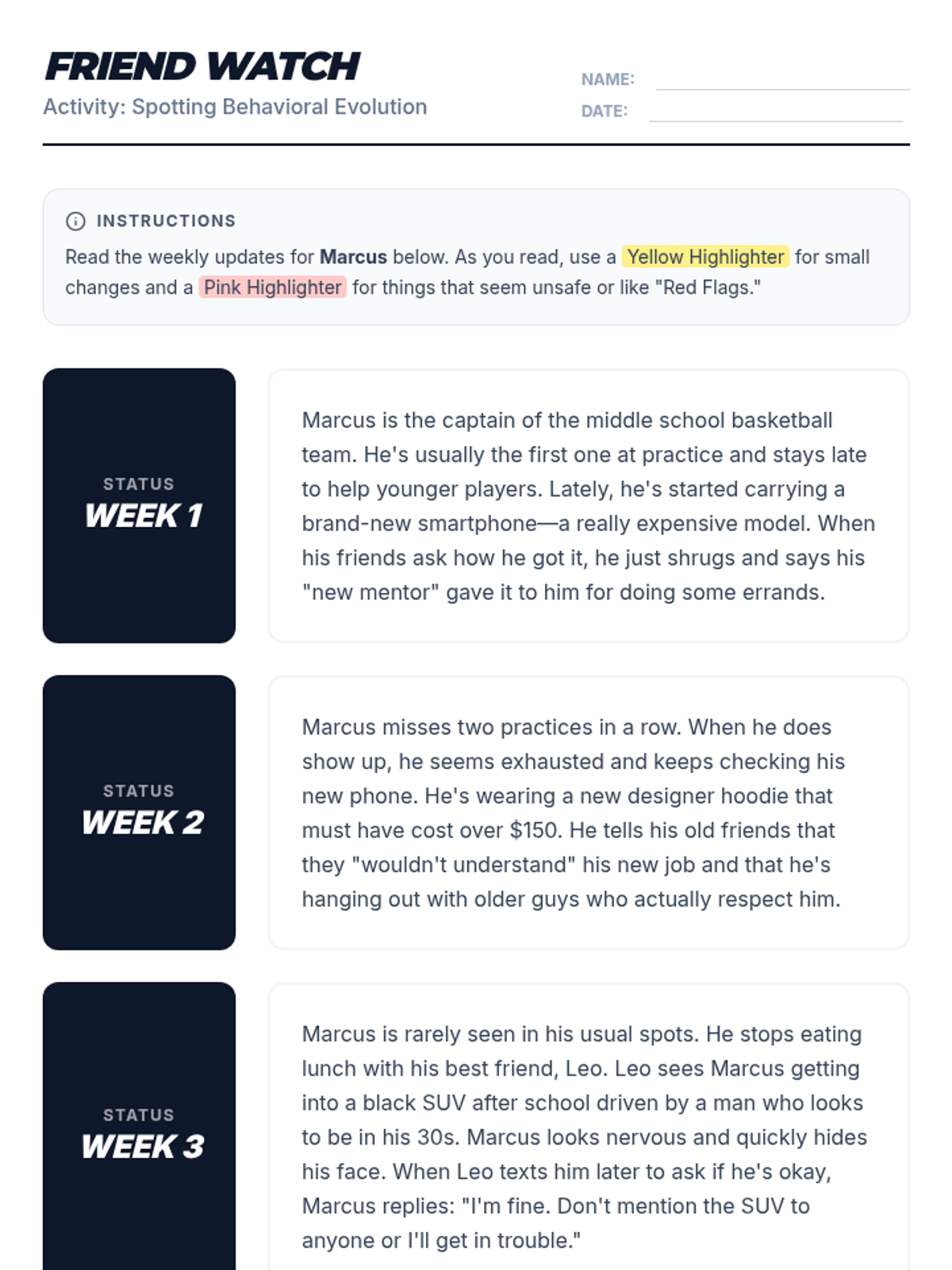
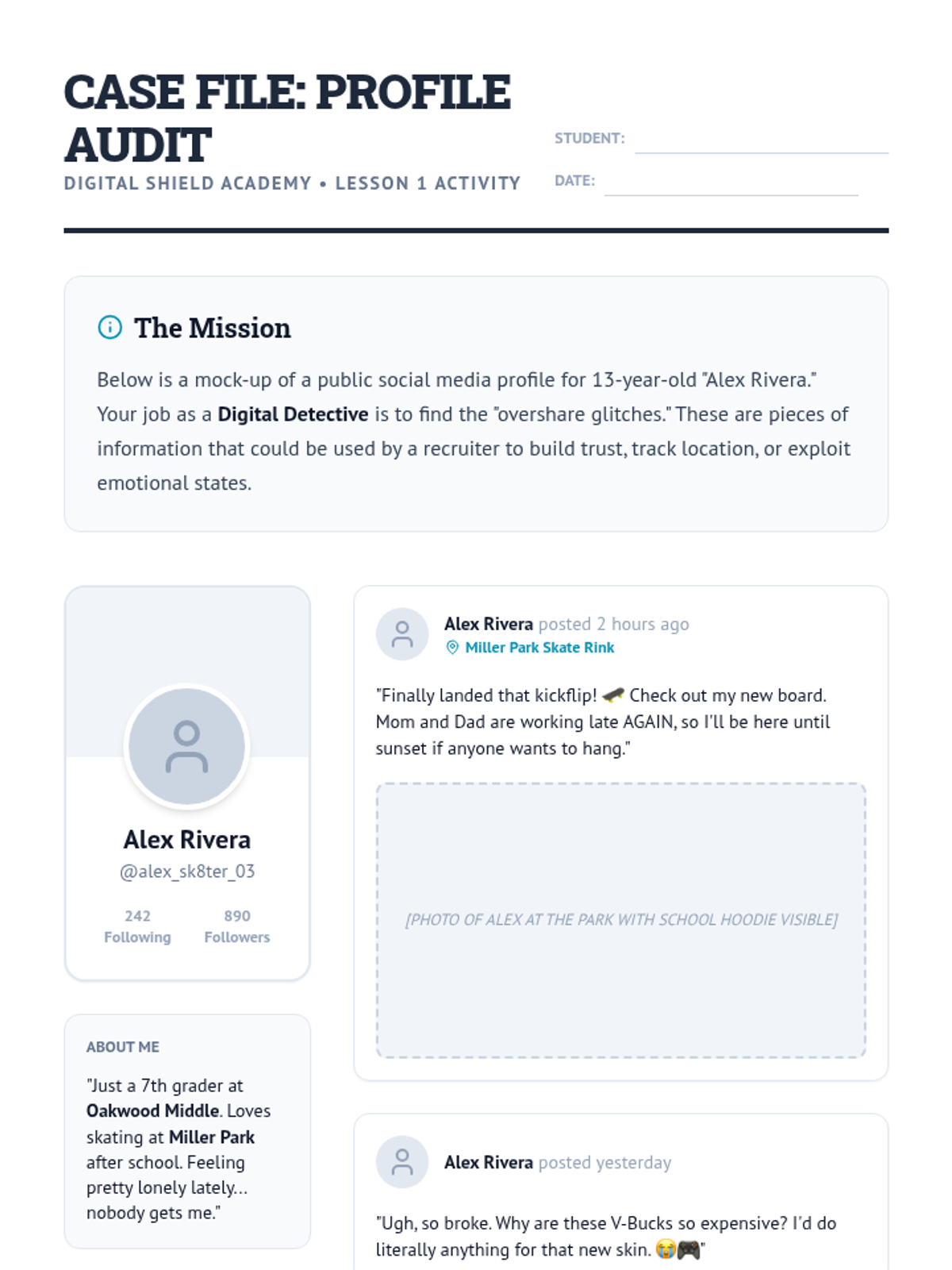
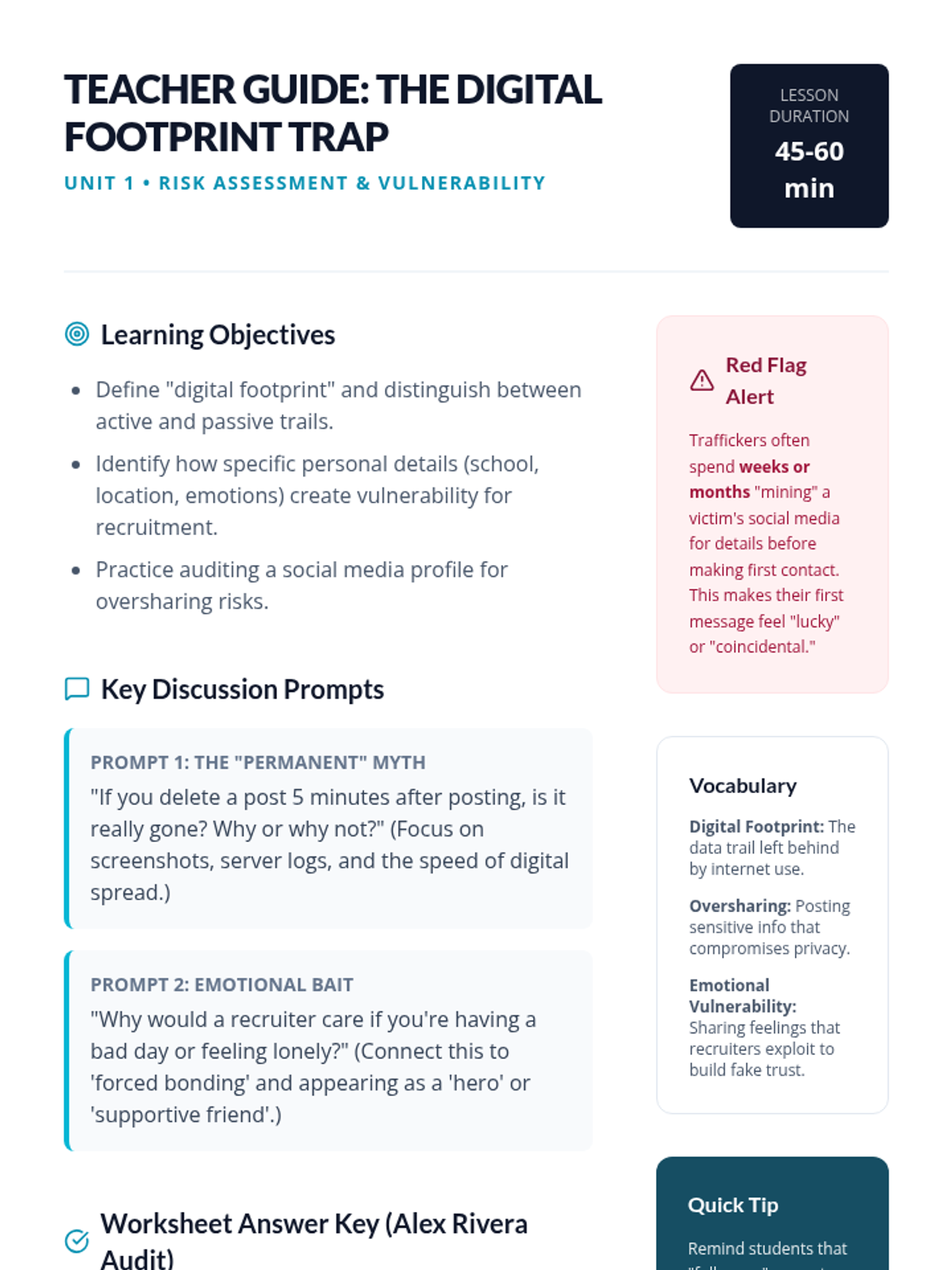
A 5-lesson sequence for 6th graders focusing on identifying online recruitment tactics, understanding digital footprints, and implementing privacy shields to prevent exploitation and trafficking.
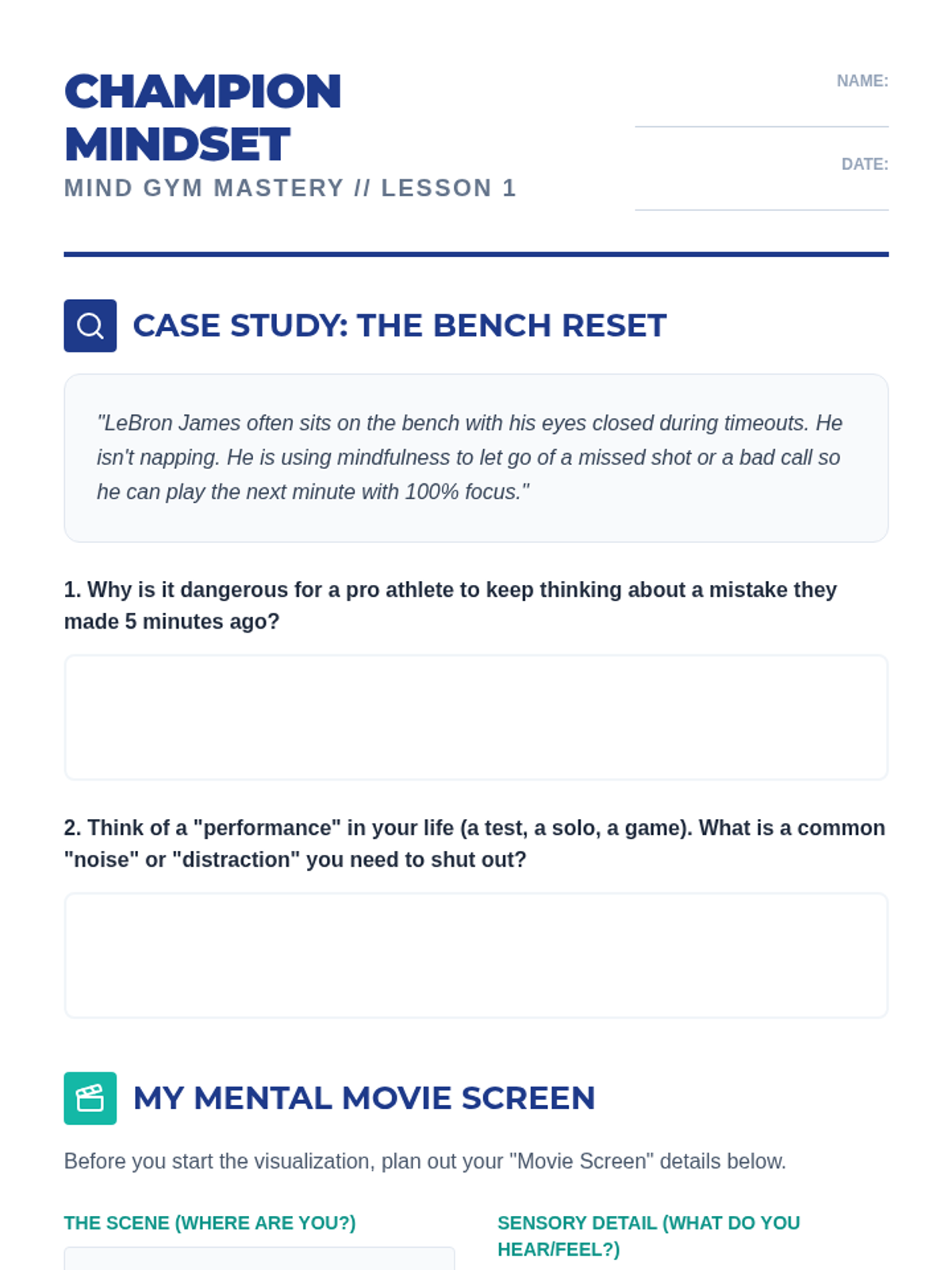
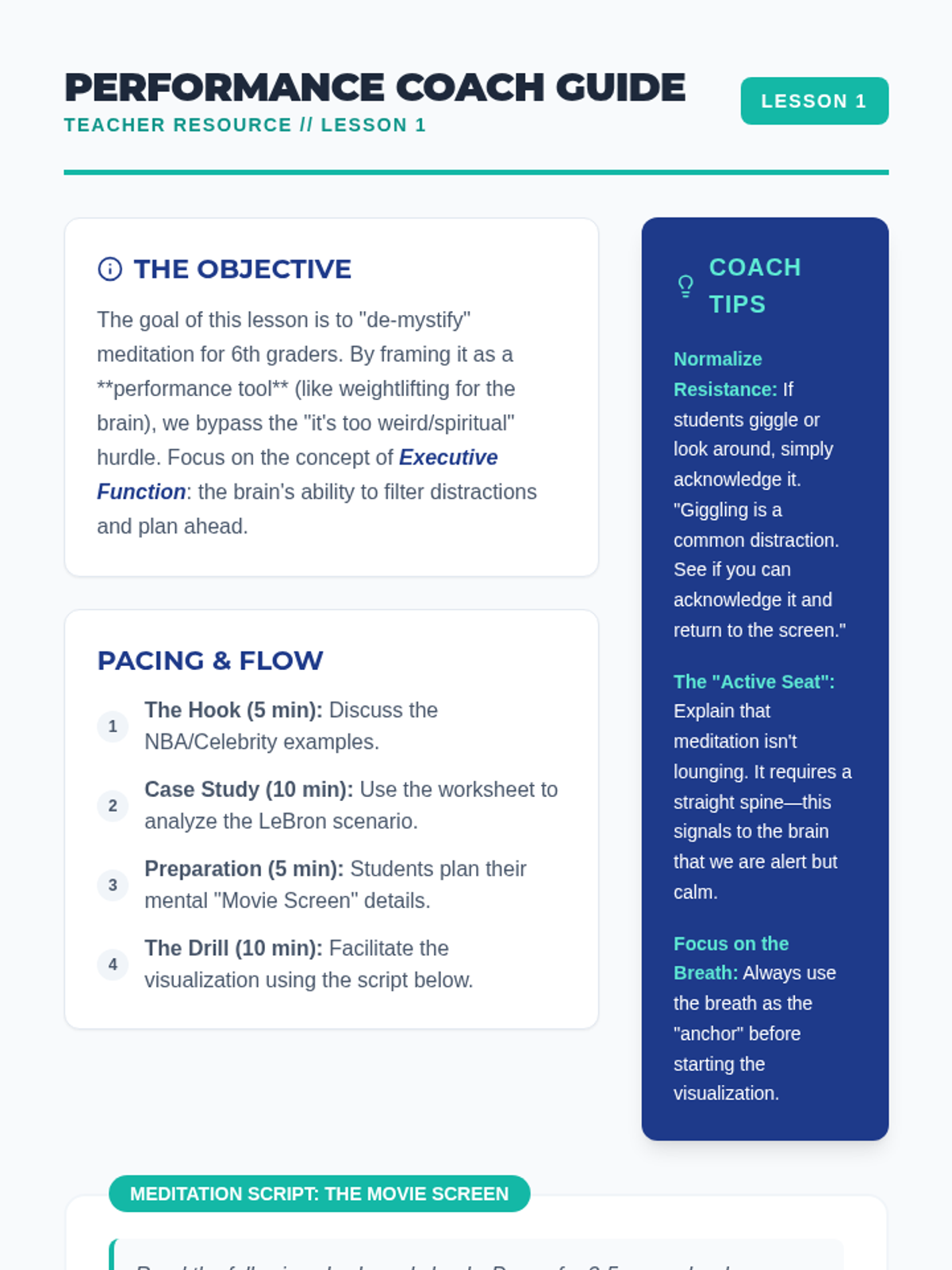
This middle school sequence reframes meditation as a 'performance tool' for academic and social success. Students explore case studies of peak performers, learn the STOP technique for impulse control, develop grounding strategies for test anxiety, and practice empathy through Loving-Kindness meditation, culminating in a real-world scenario challenge.
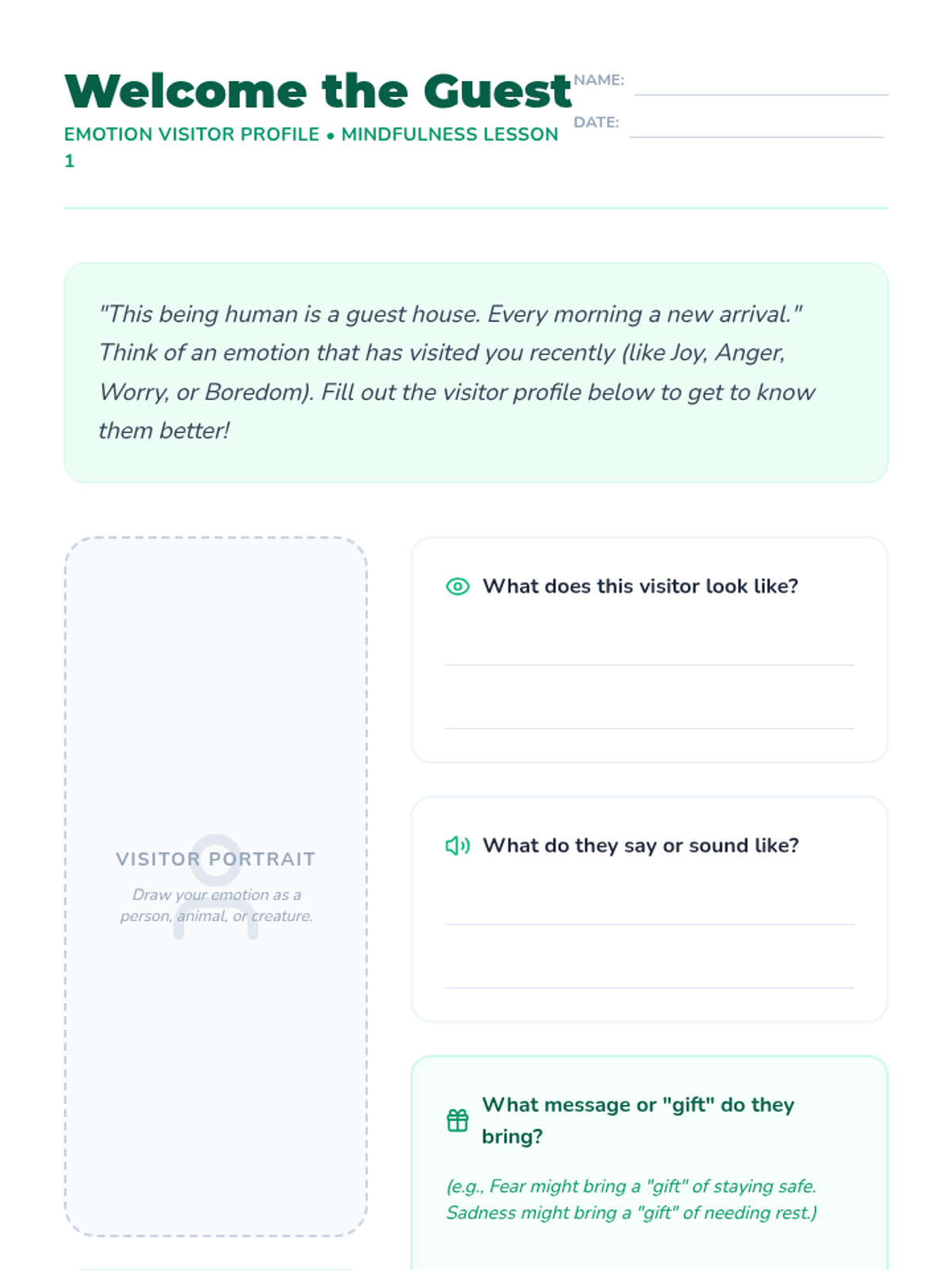
This sequence focuses on emotional intelligence and self-compassion through a case study approach. Students analyze hypothetical scenarios involving disappointment, anger, or anxiety, and apply mindfulness techniques to navigate them, shifting from reacting impulsively to responding thoughtfully.
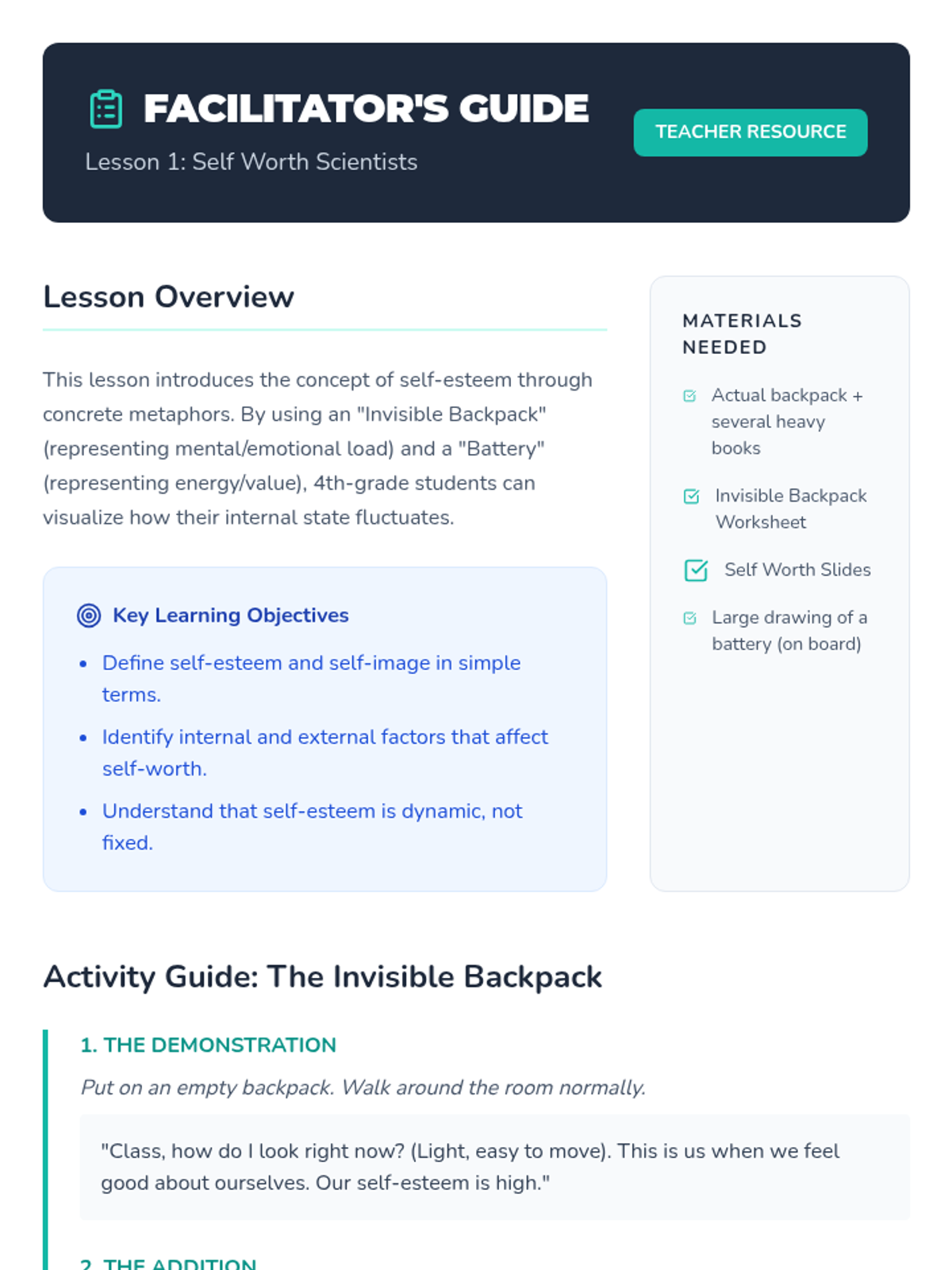
This sequence utilizes inquiry and case studies to examine the formation of self-esteem and the impact of external feedback. Students analyze sources of self-worth, critique media messages, and develop a personal toolkit of resilience strategies.
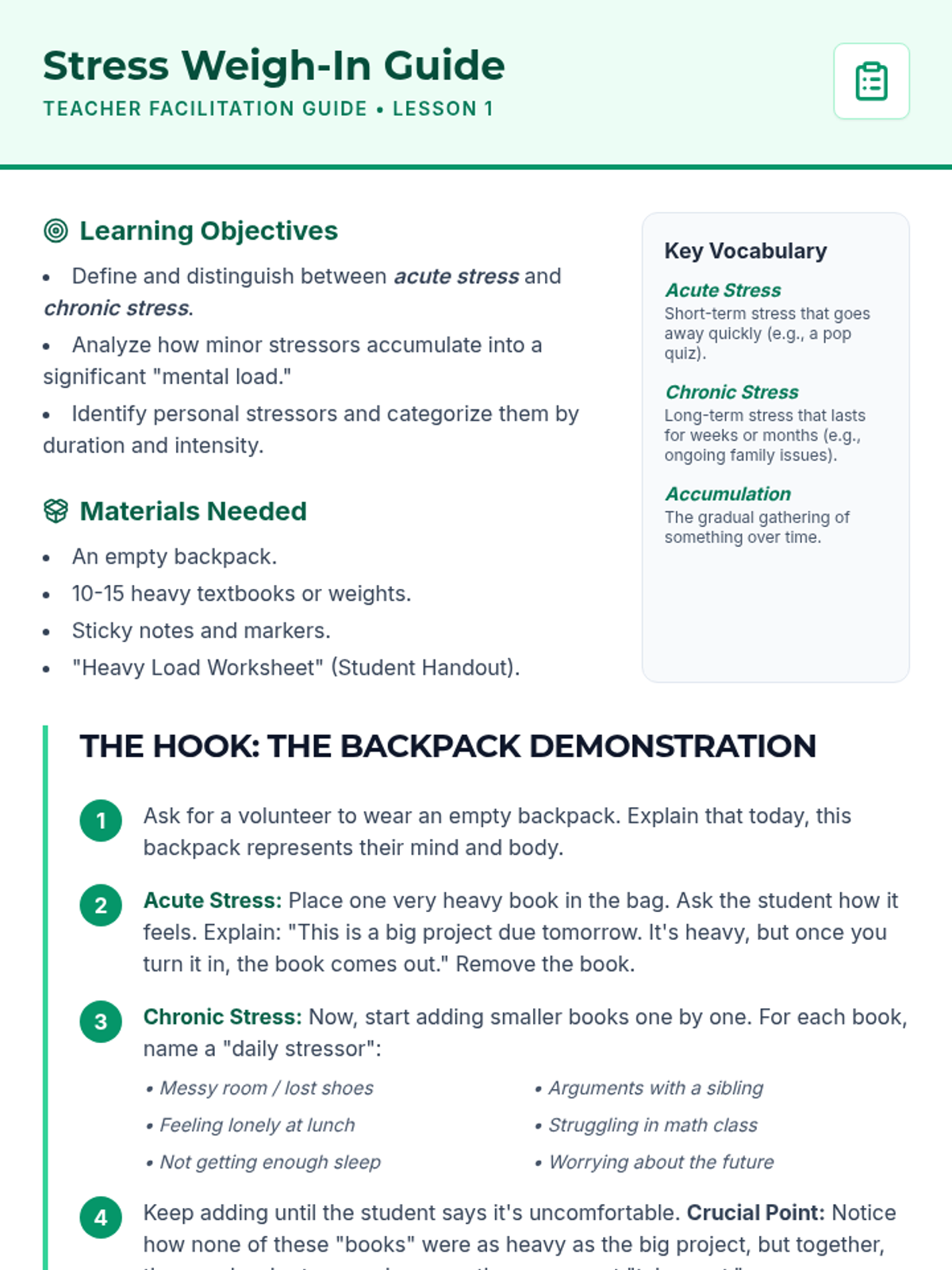
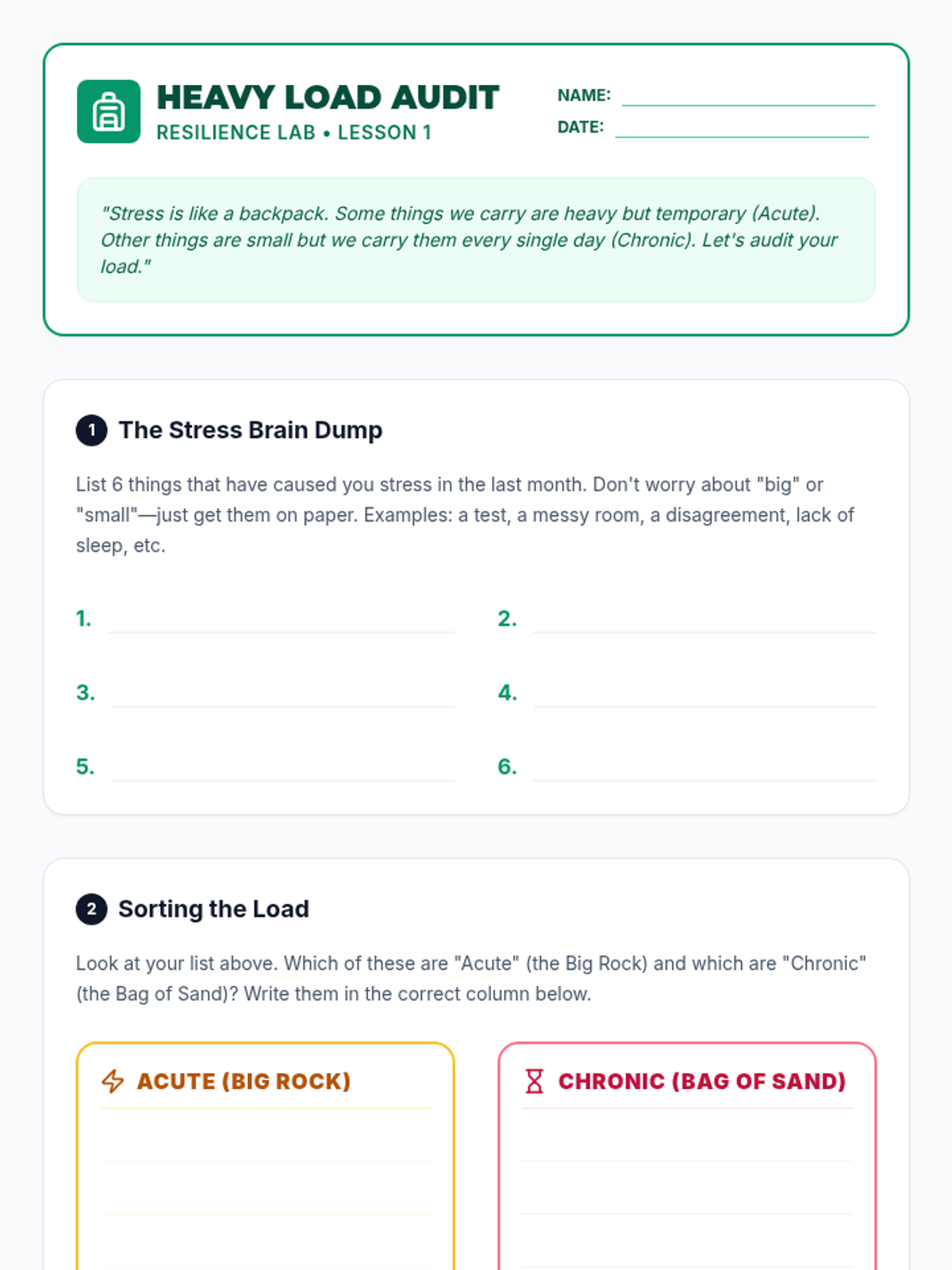
This sequence explores the differences between acute and chronic stress, examines the impact of lifestyle habits on resilience, and culminates in students designing sustainable coping strategies for a balanced life.
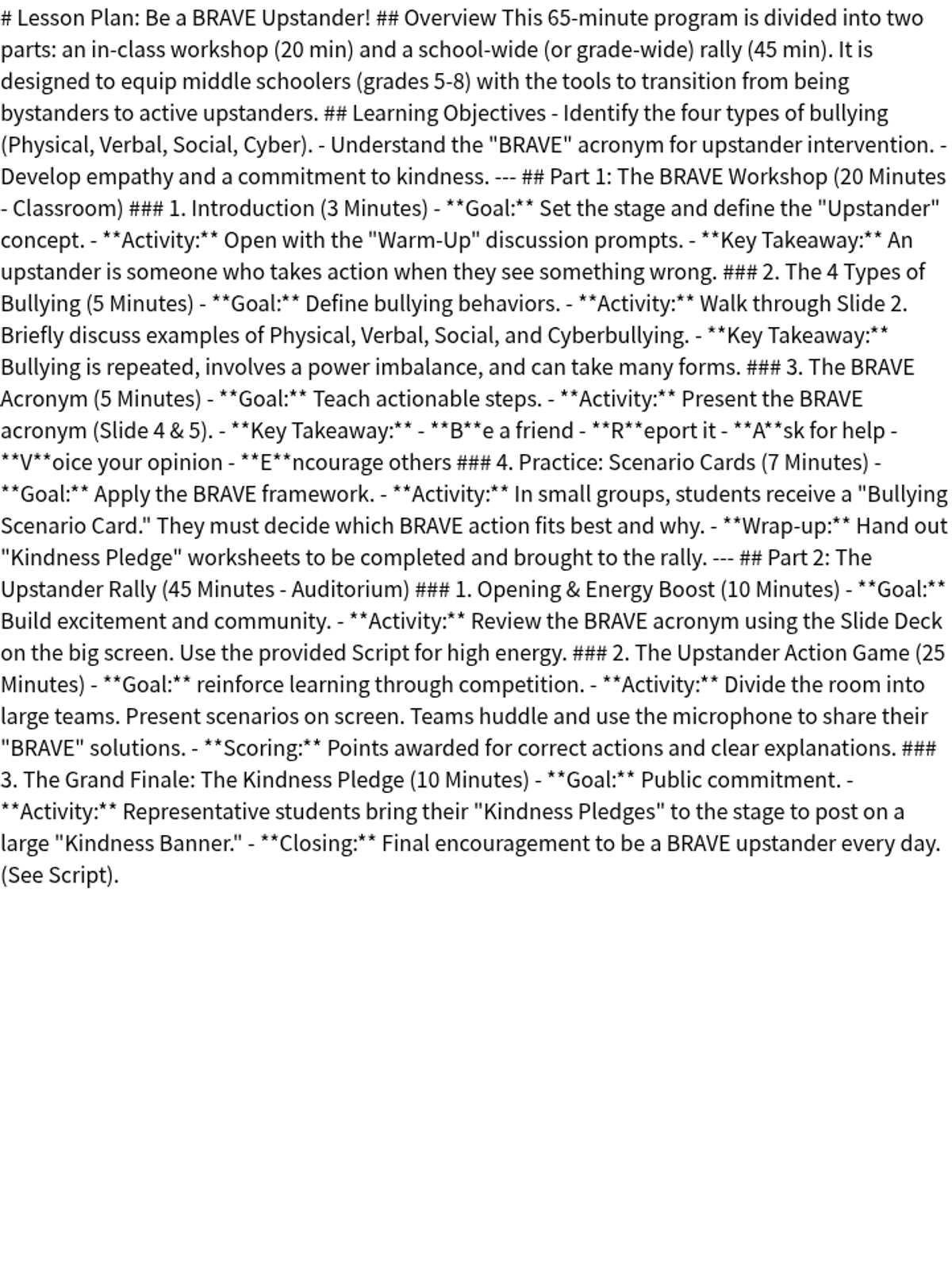
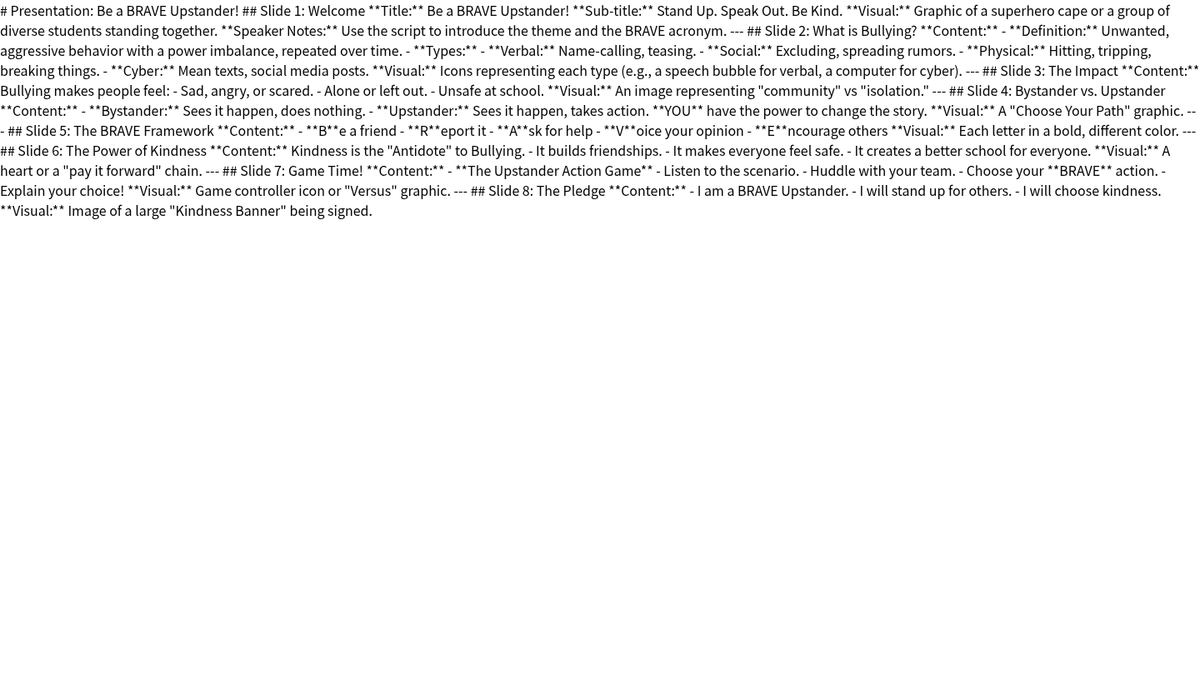
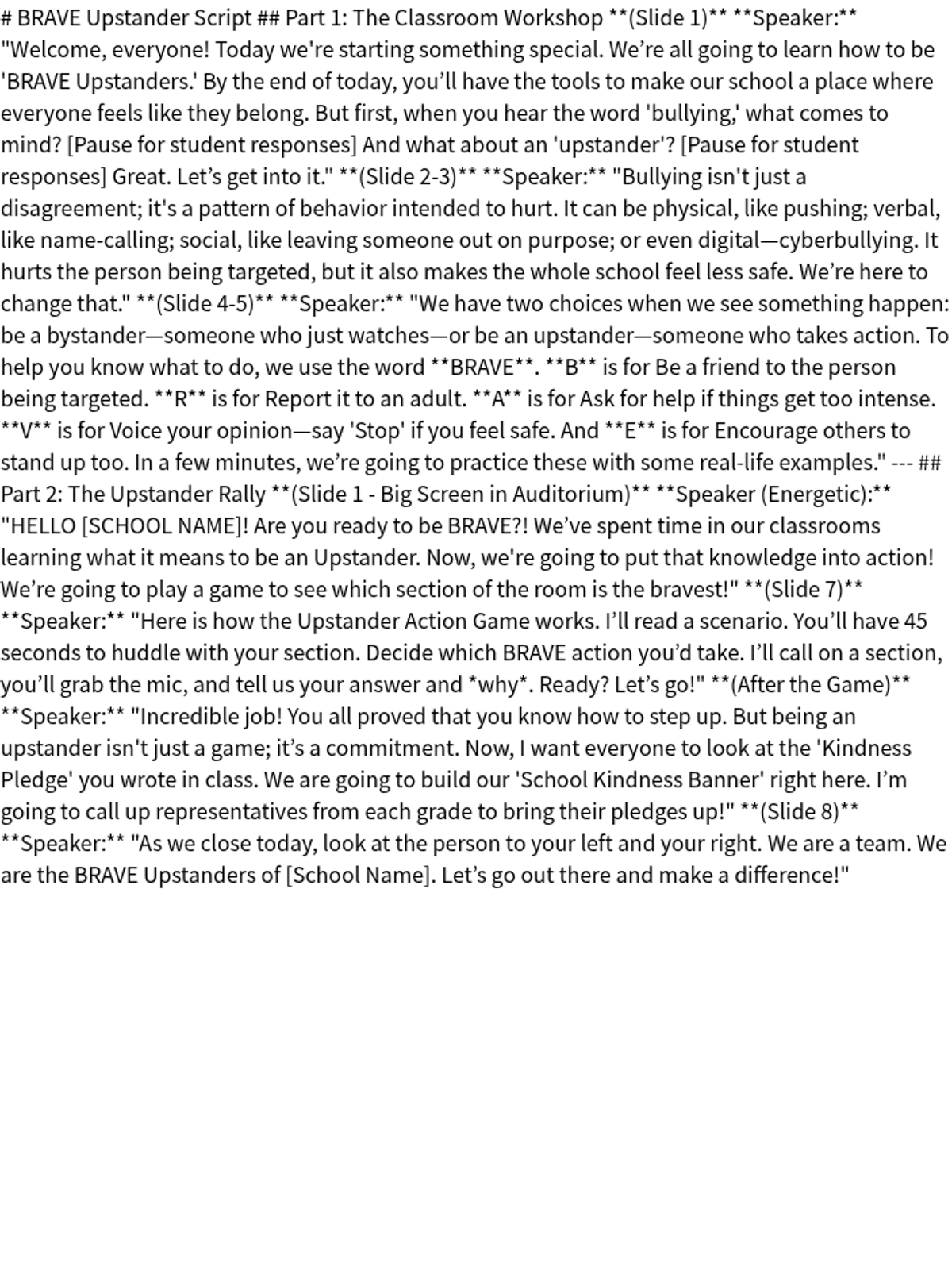
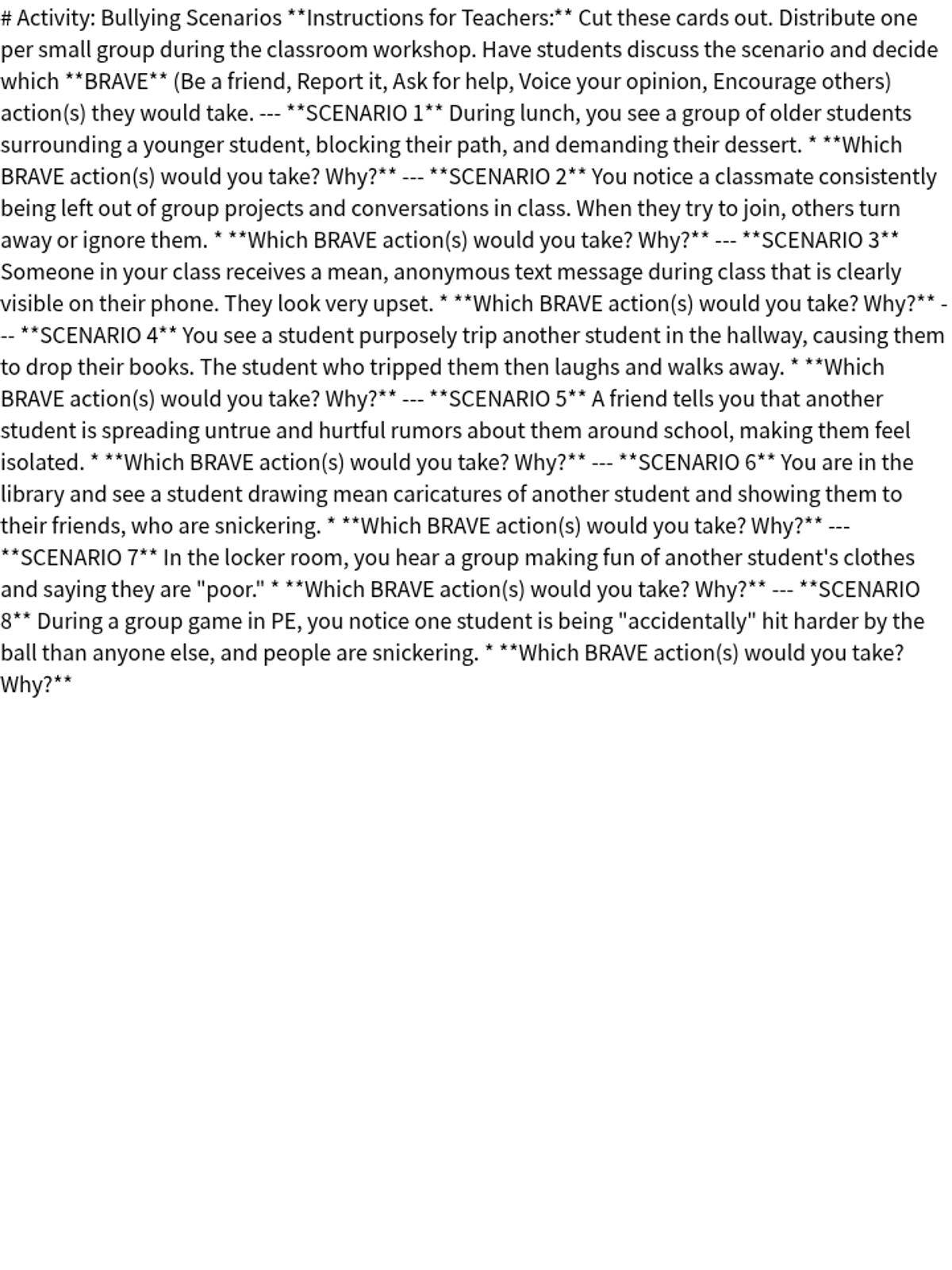
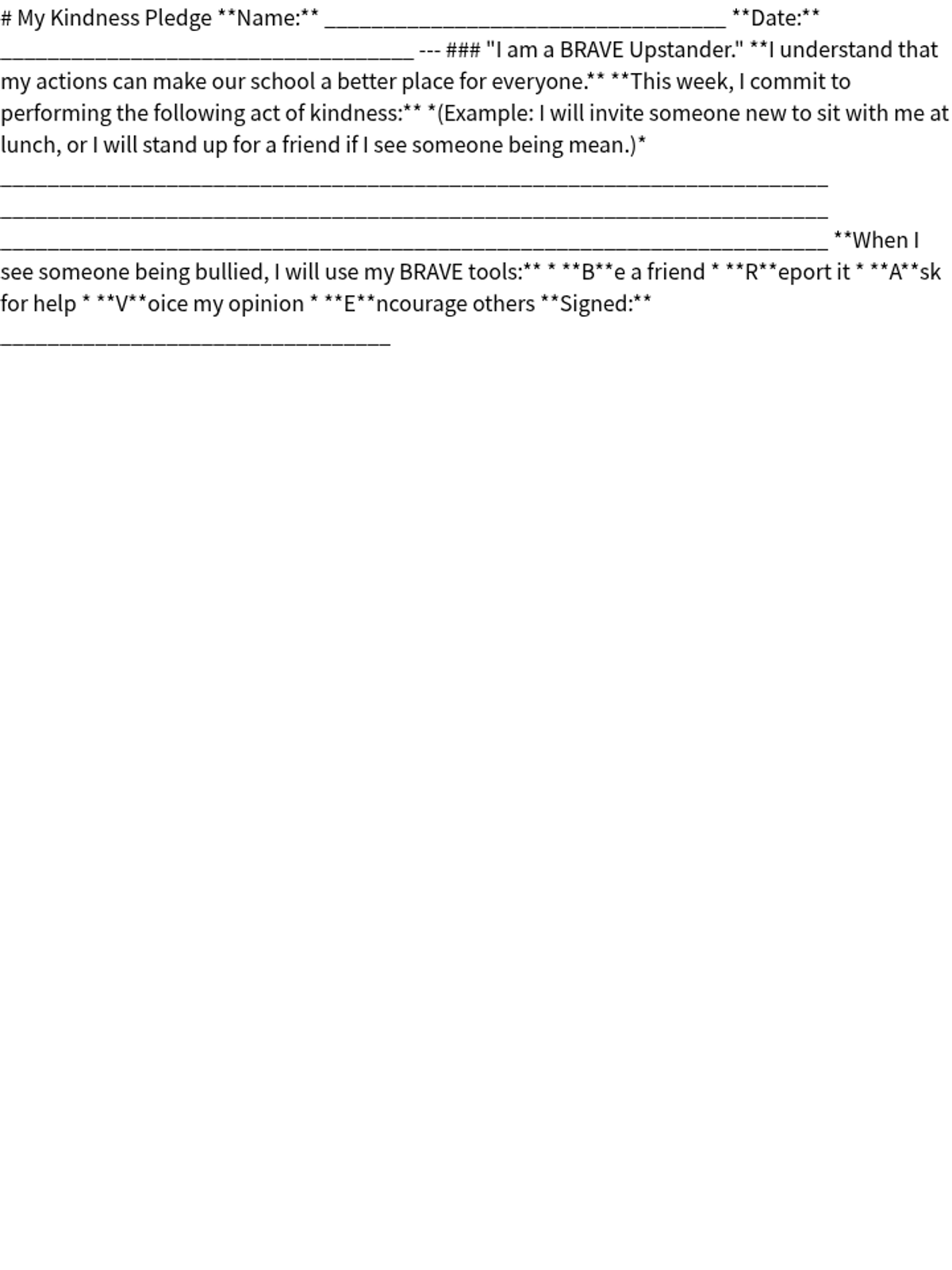
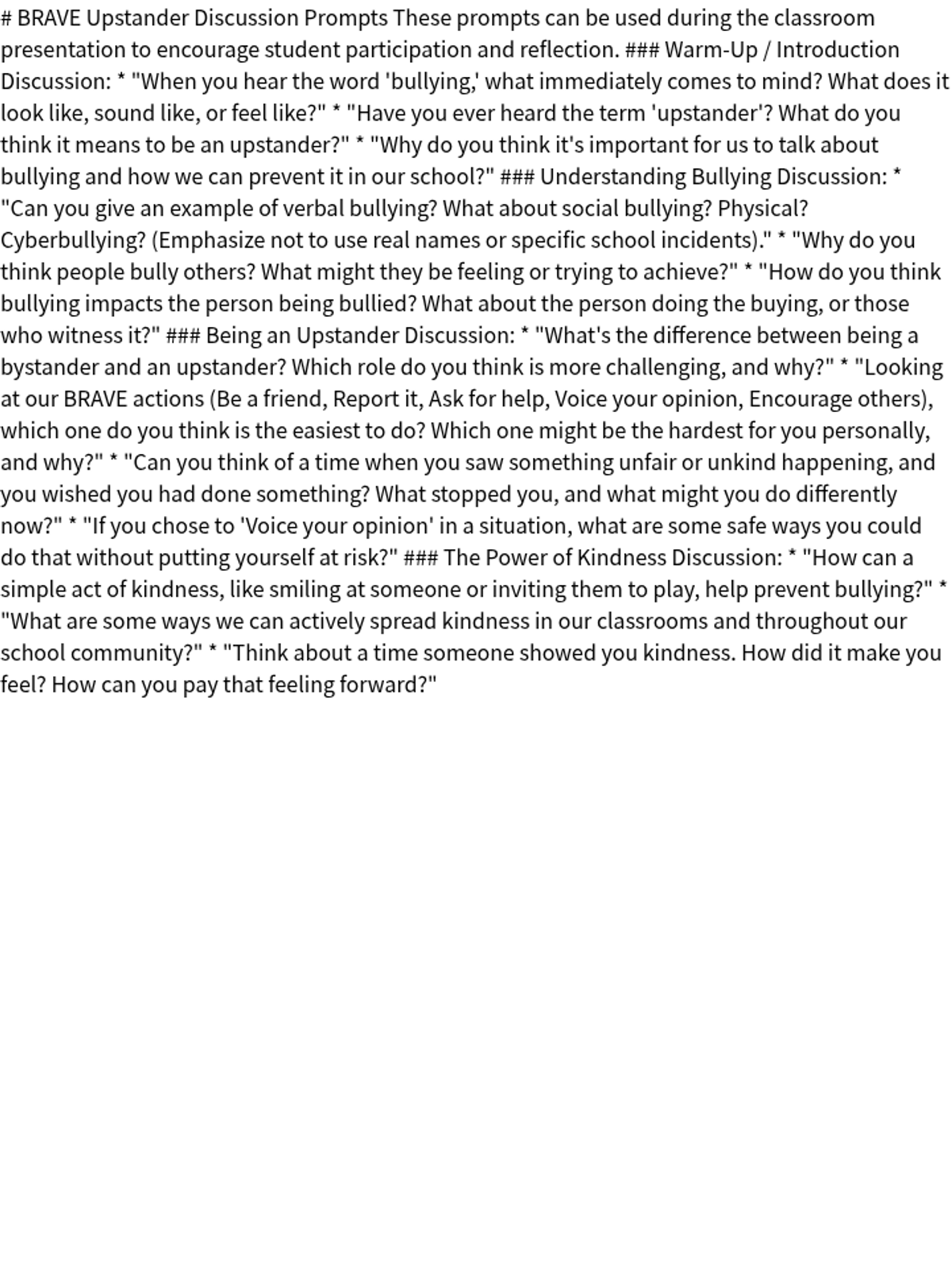
A comprehensive 65-minute educational experience for middle schoolers (grades 5-8). It consists of two parts: a 20-minute classroom presentation/workshop and a 45-minute "Upstander Rally" in an auditorium setting. The program teaches students how to recognize bullying and empowers them to intervene using the BRAVE framework (Be a friend, Report it, Ask for help, Voice your opinion, Encourage others).
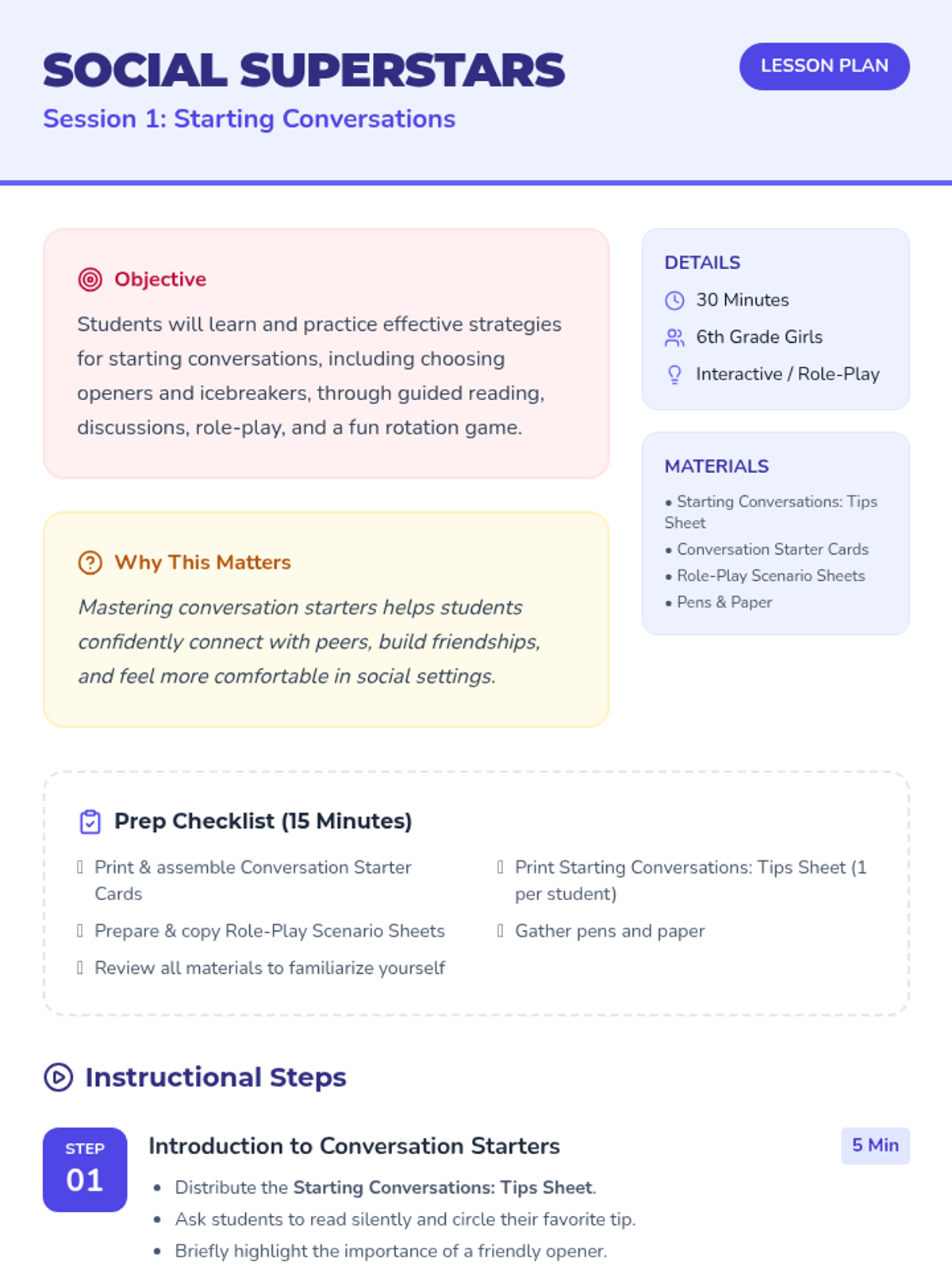
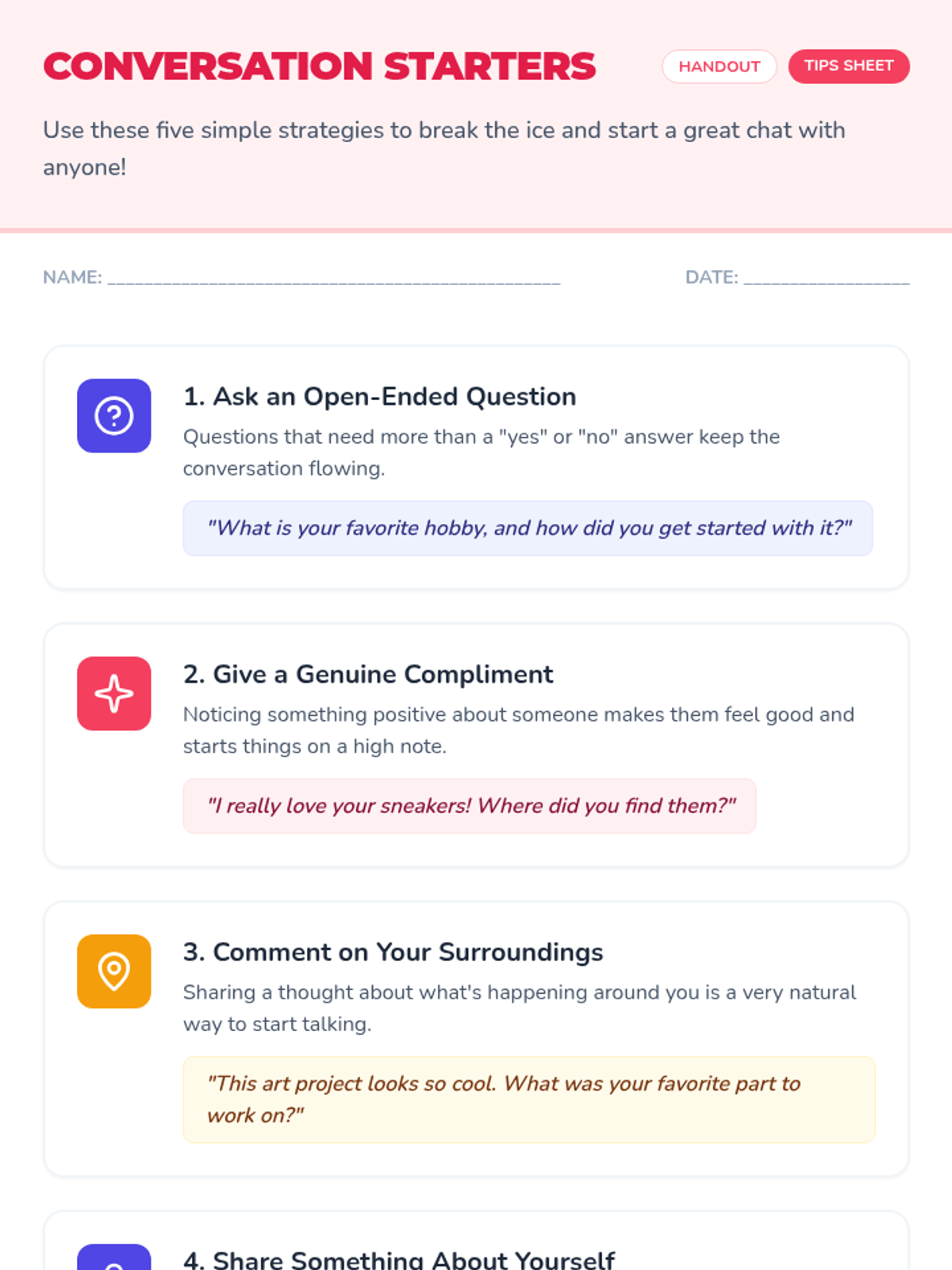
A 6-session social skills course for 6th-grade girls focused on building confidence in conversations, active listening, empathy, and conflict resolution through interactive practice.
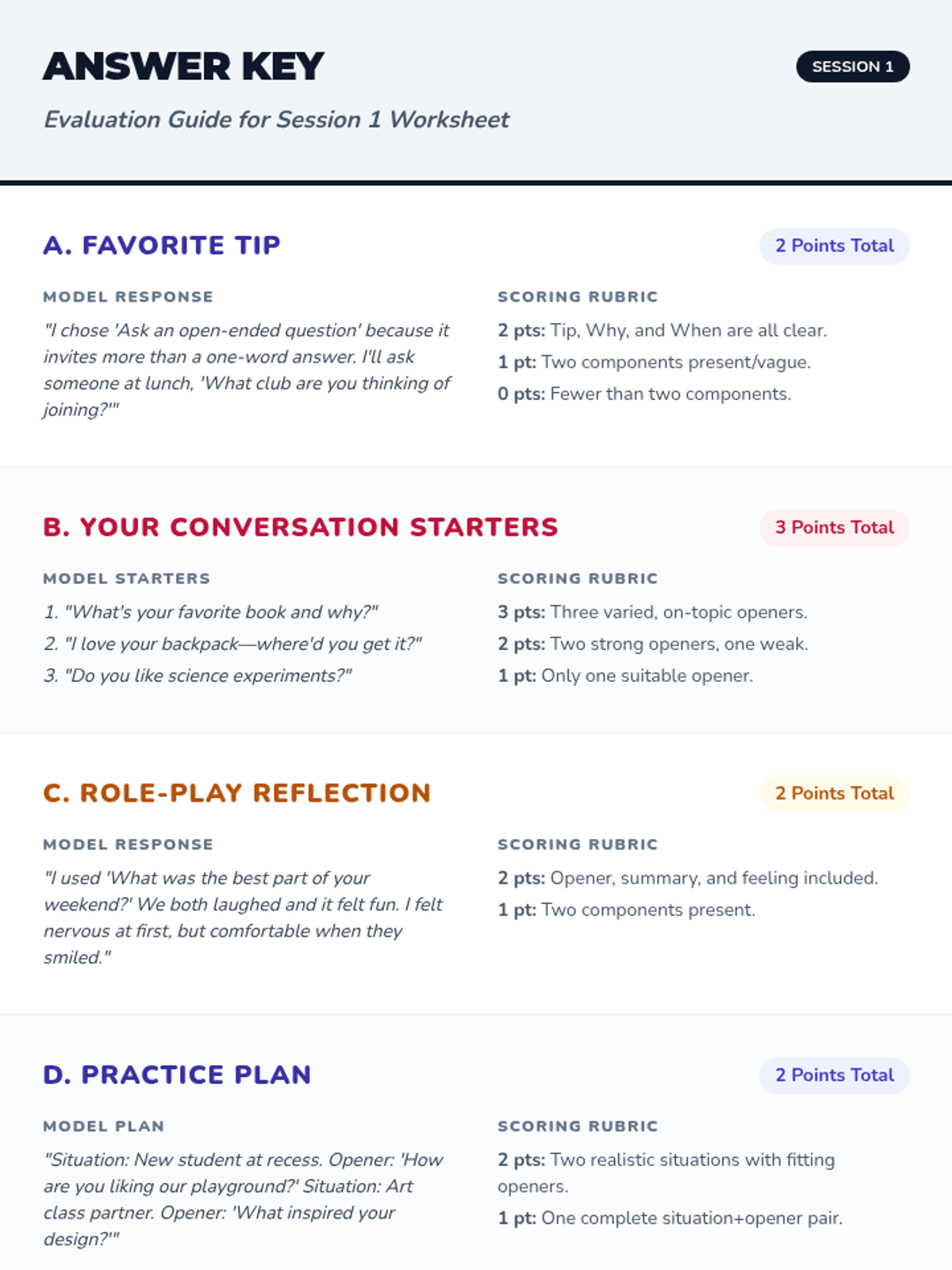
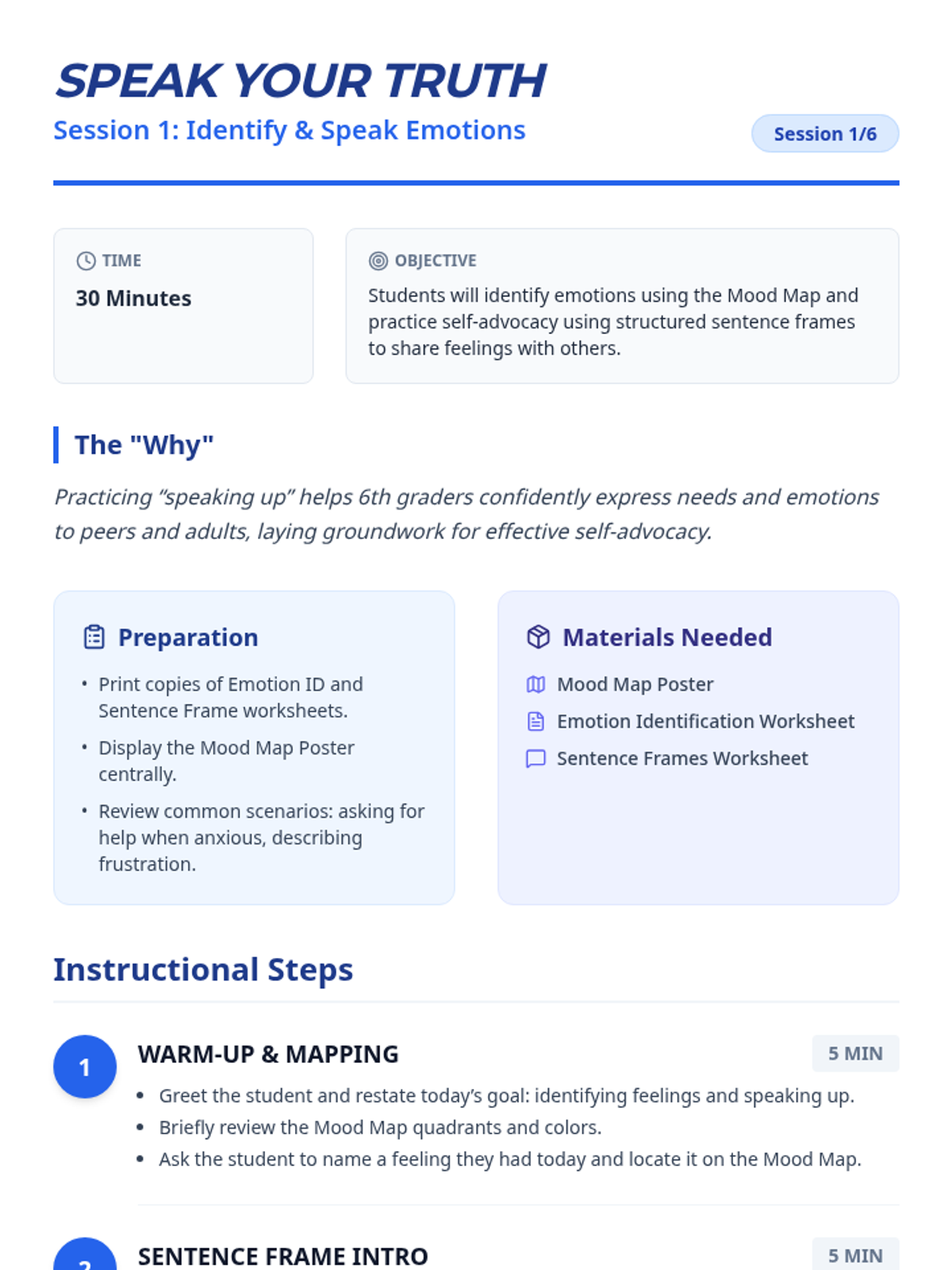
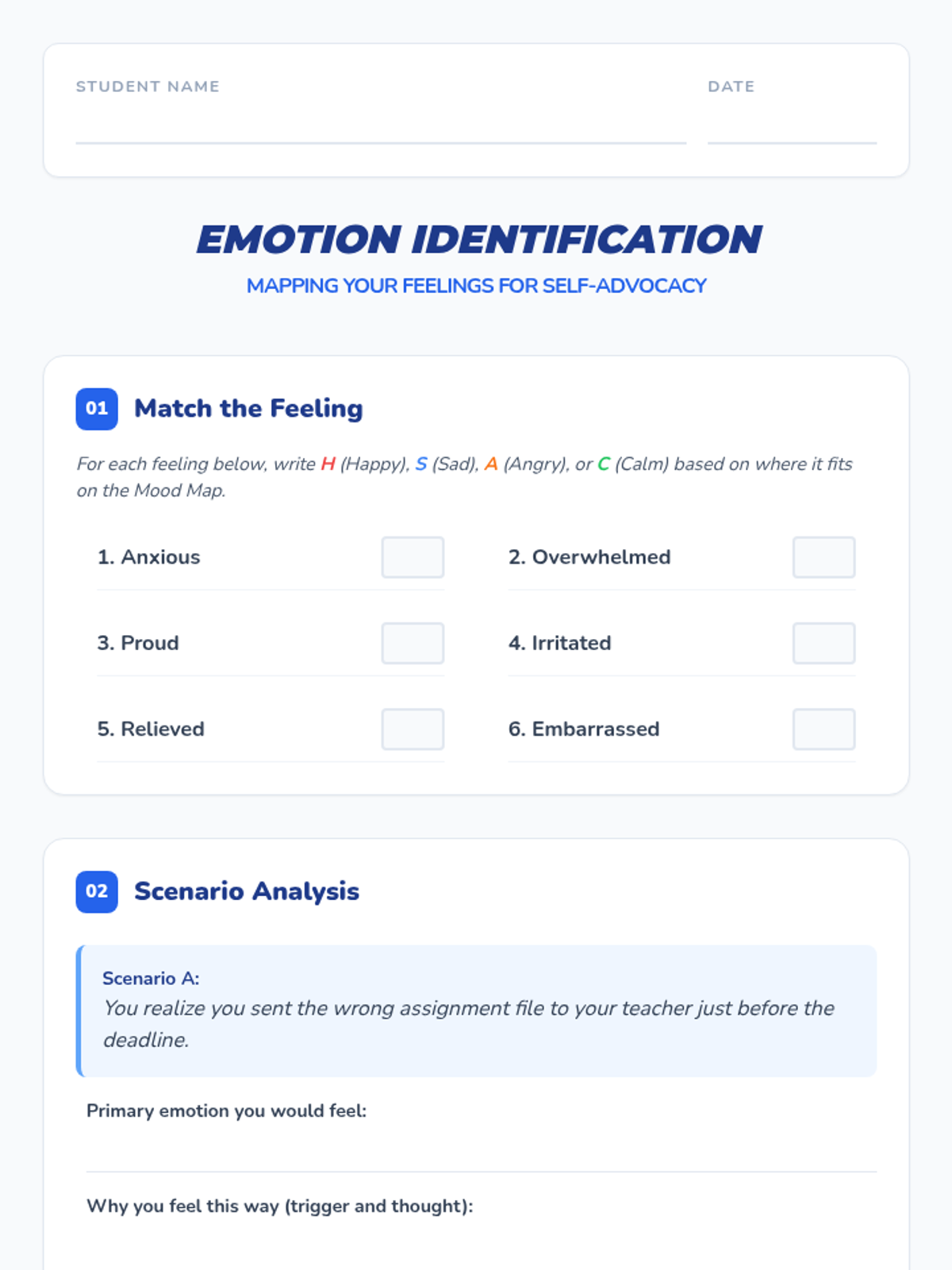
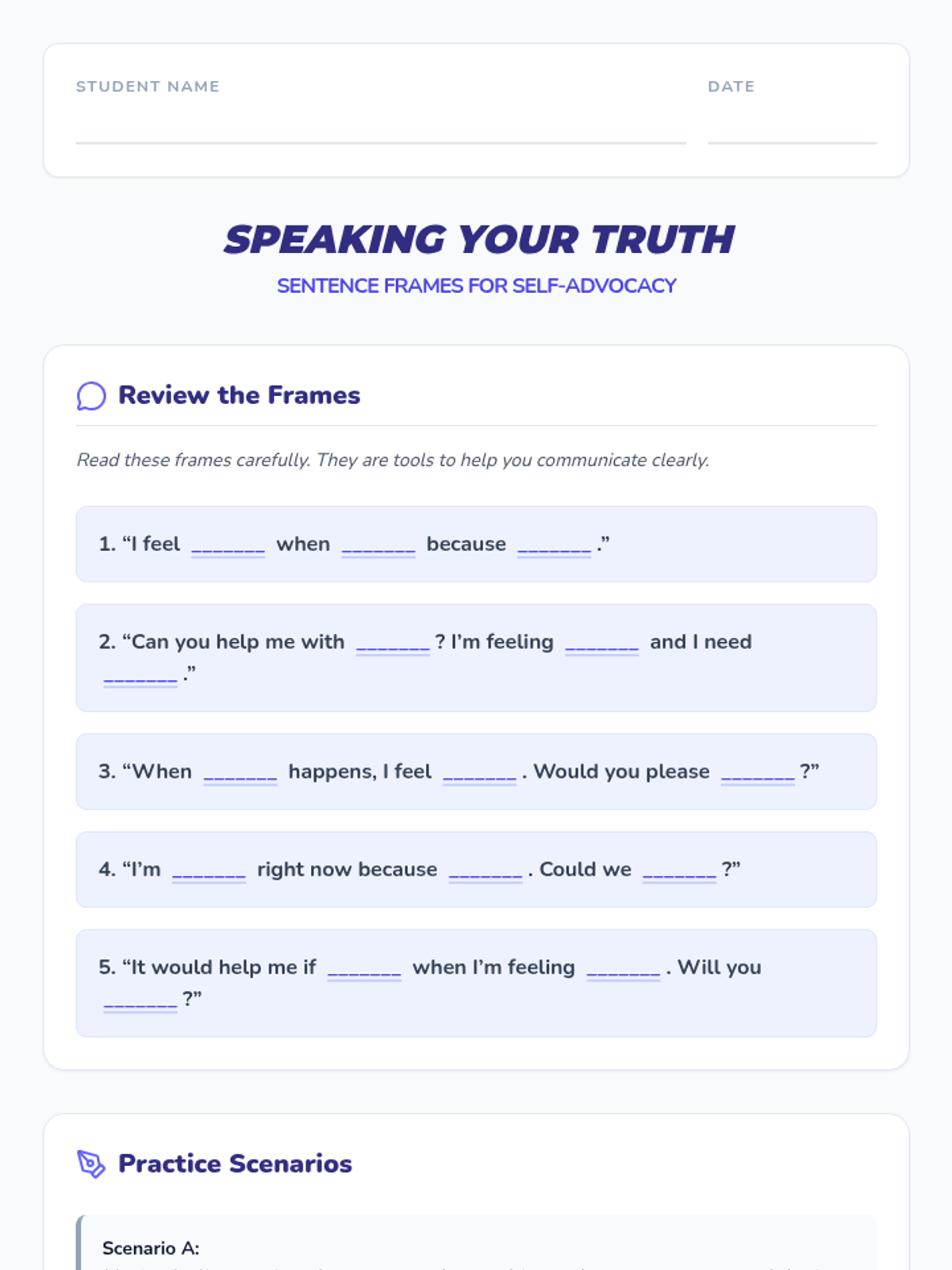
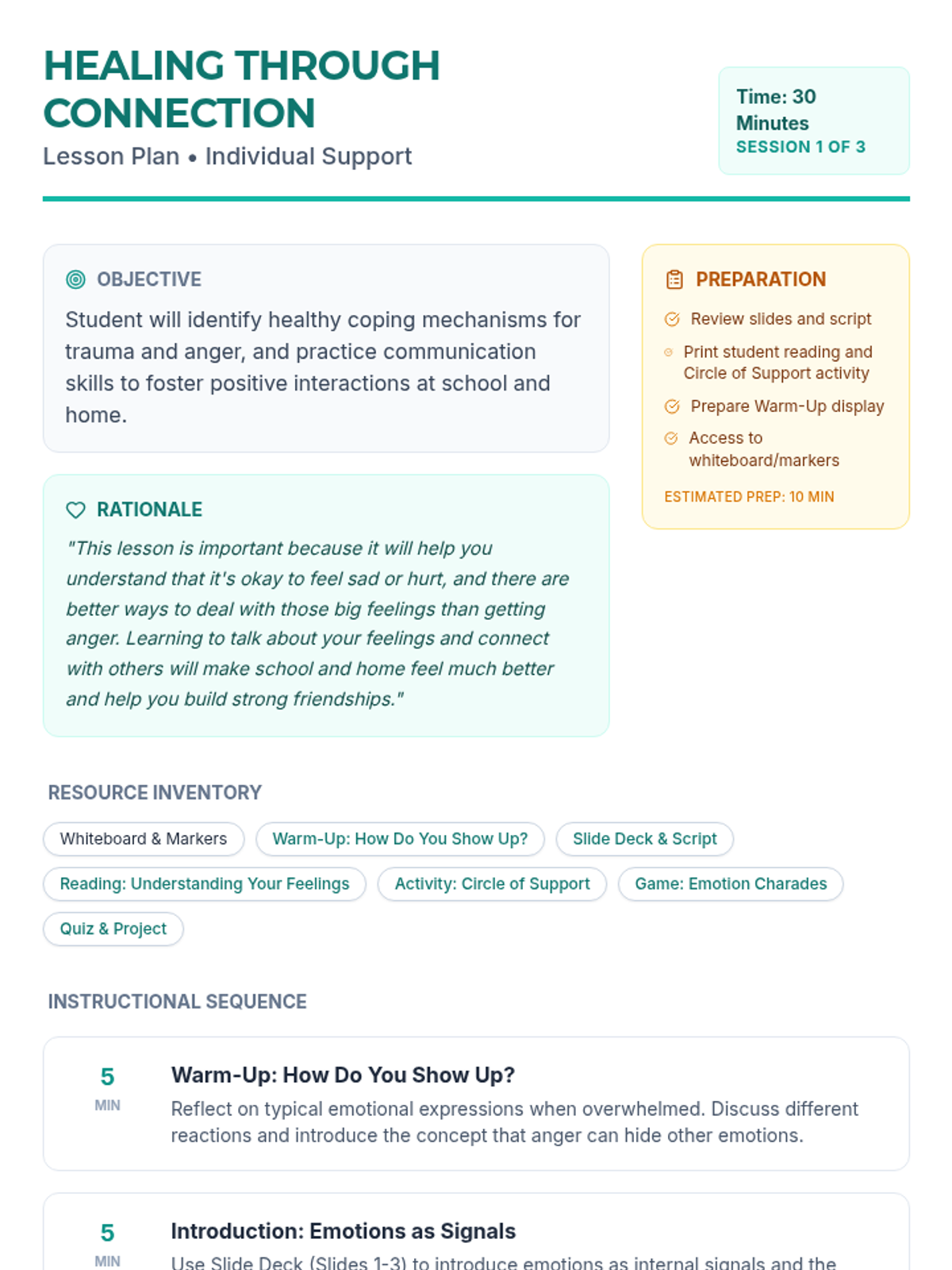
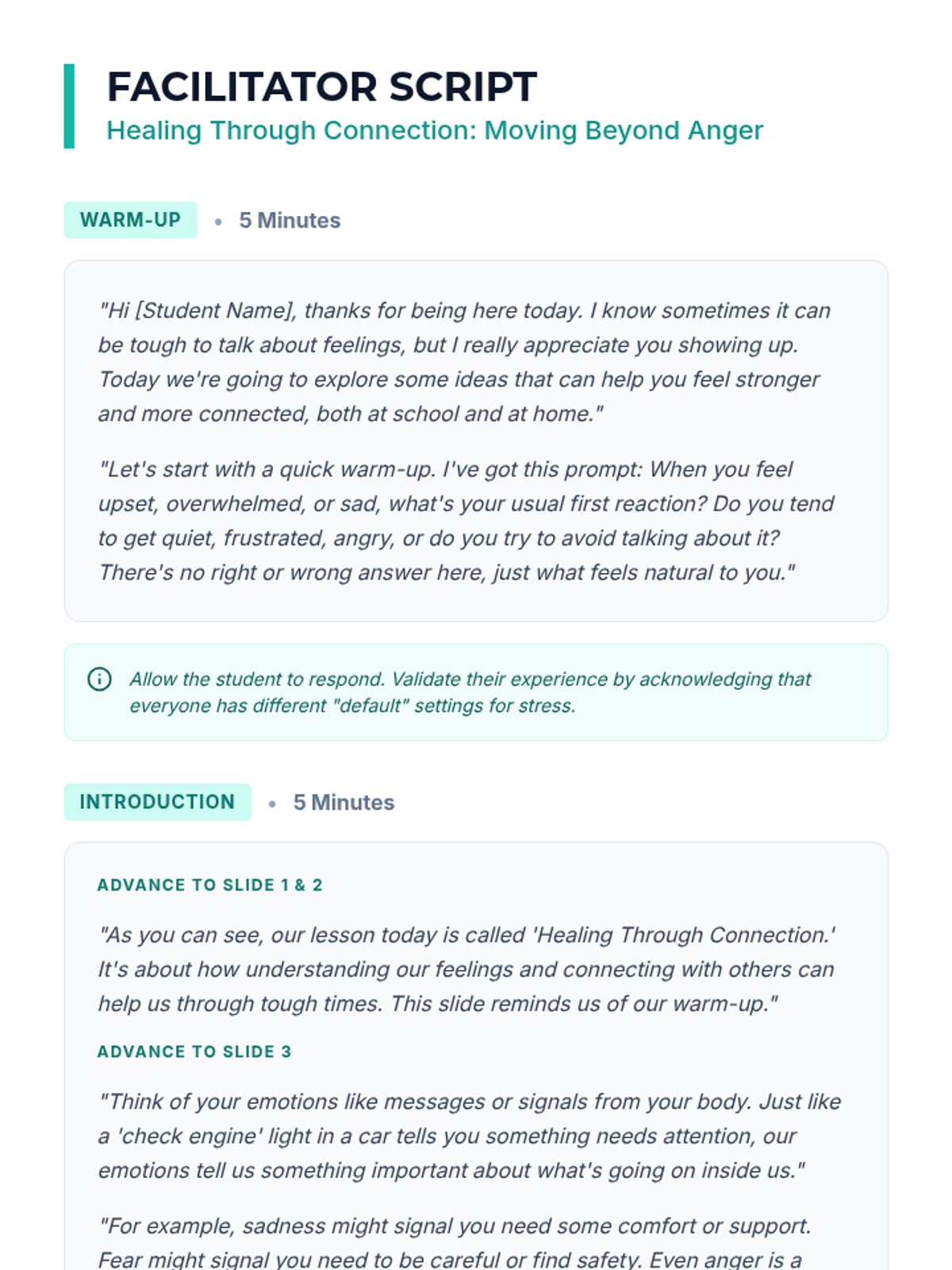
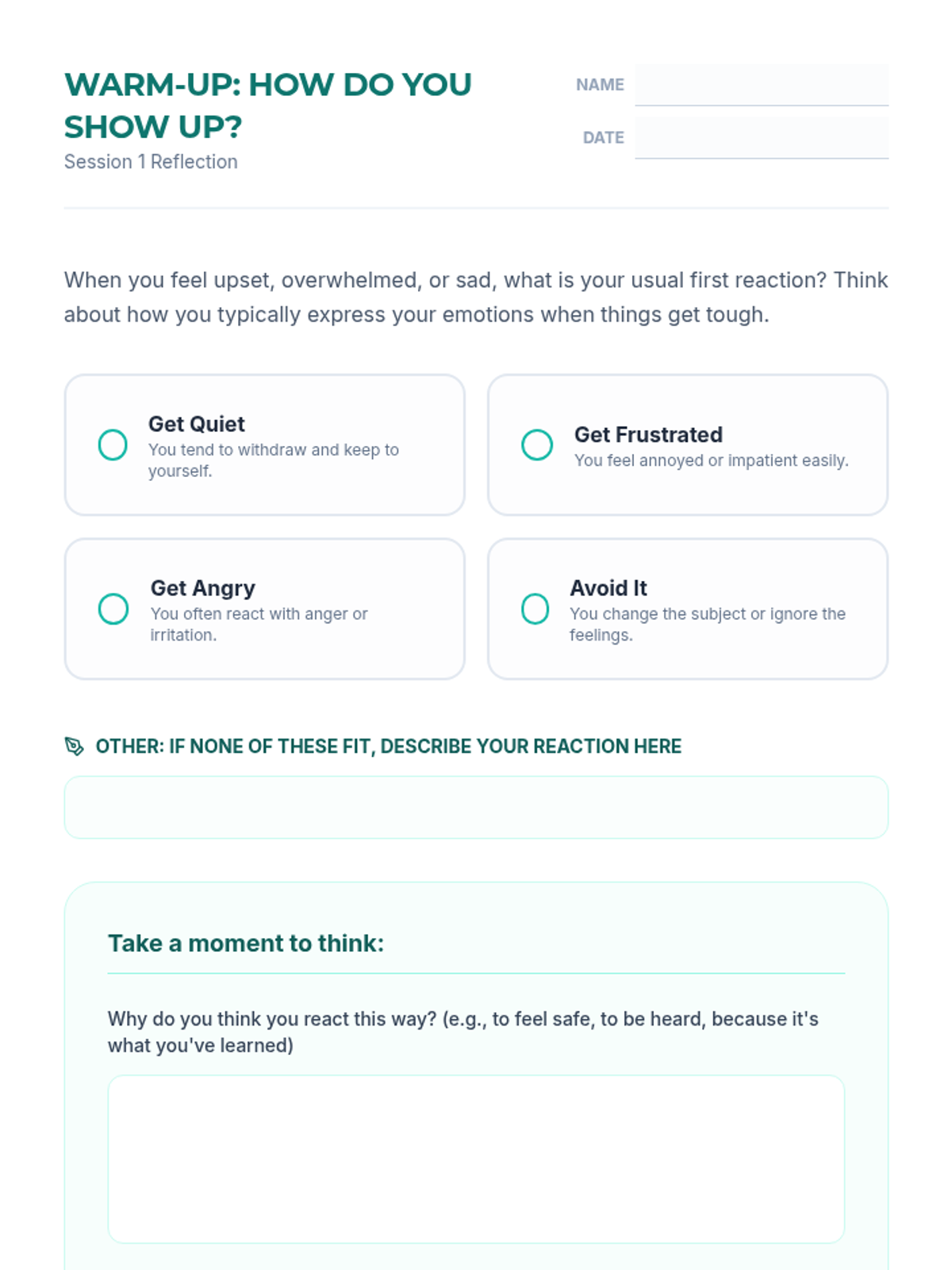
A comprehensive 6-session sequence for 6th-grade students to develop self-advocacy, emotional identification, and coping strategies within an individual social work setting. Each 30-minute session builds confidence through structured practice, role-play, and personalized toolkits.
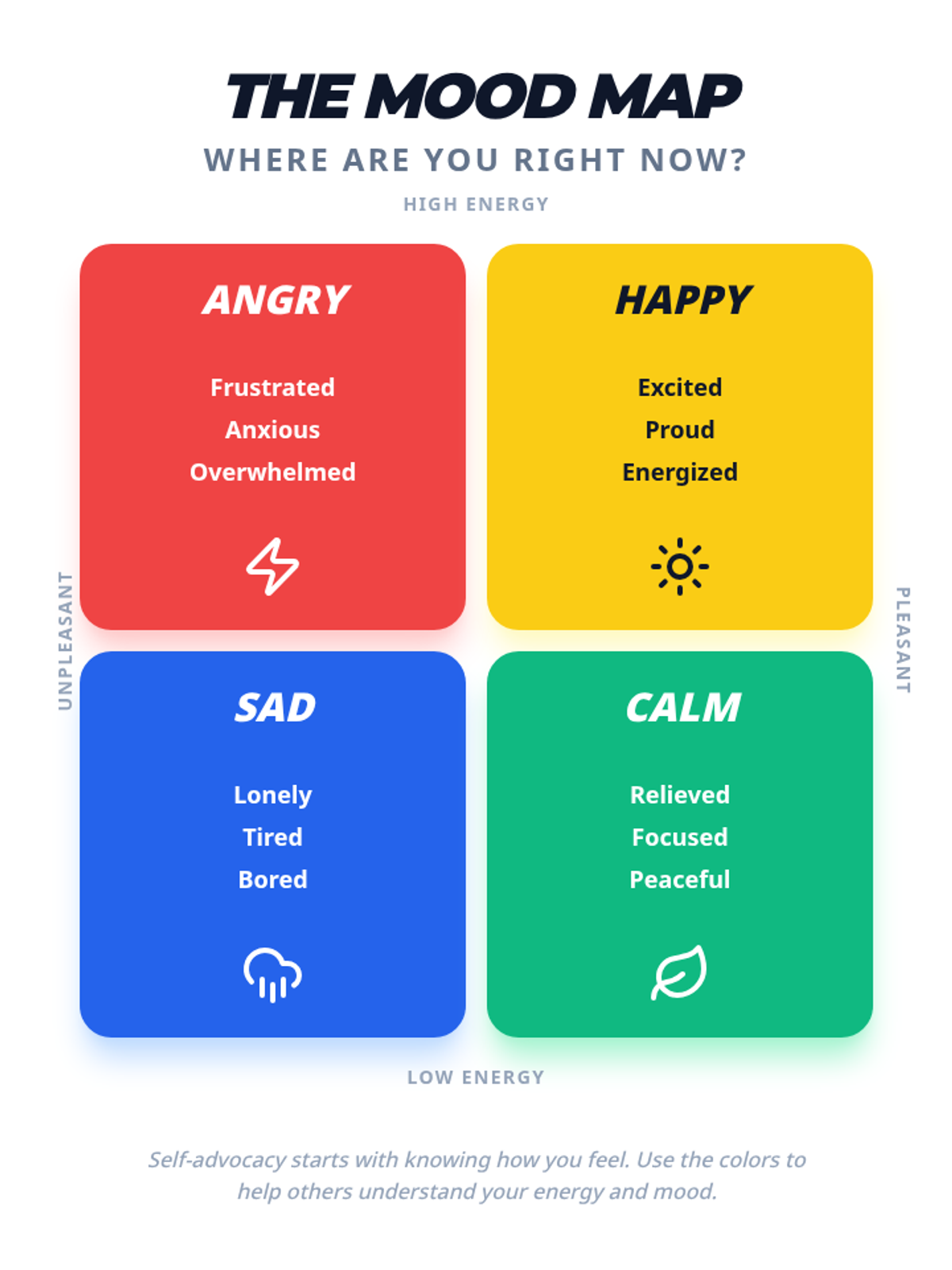
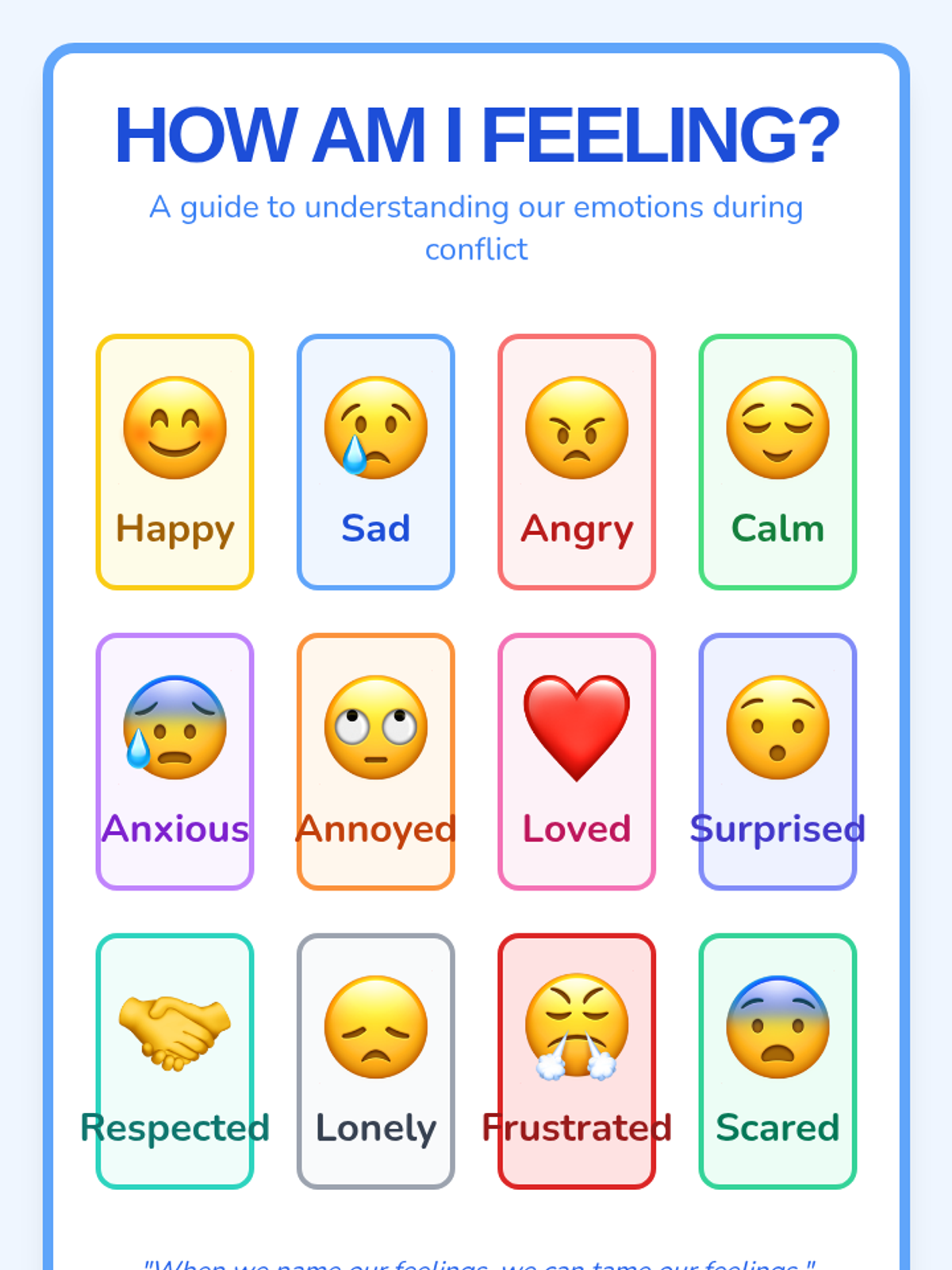
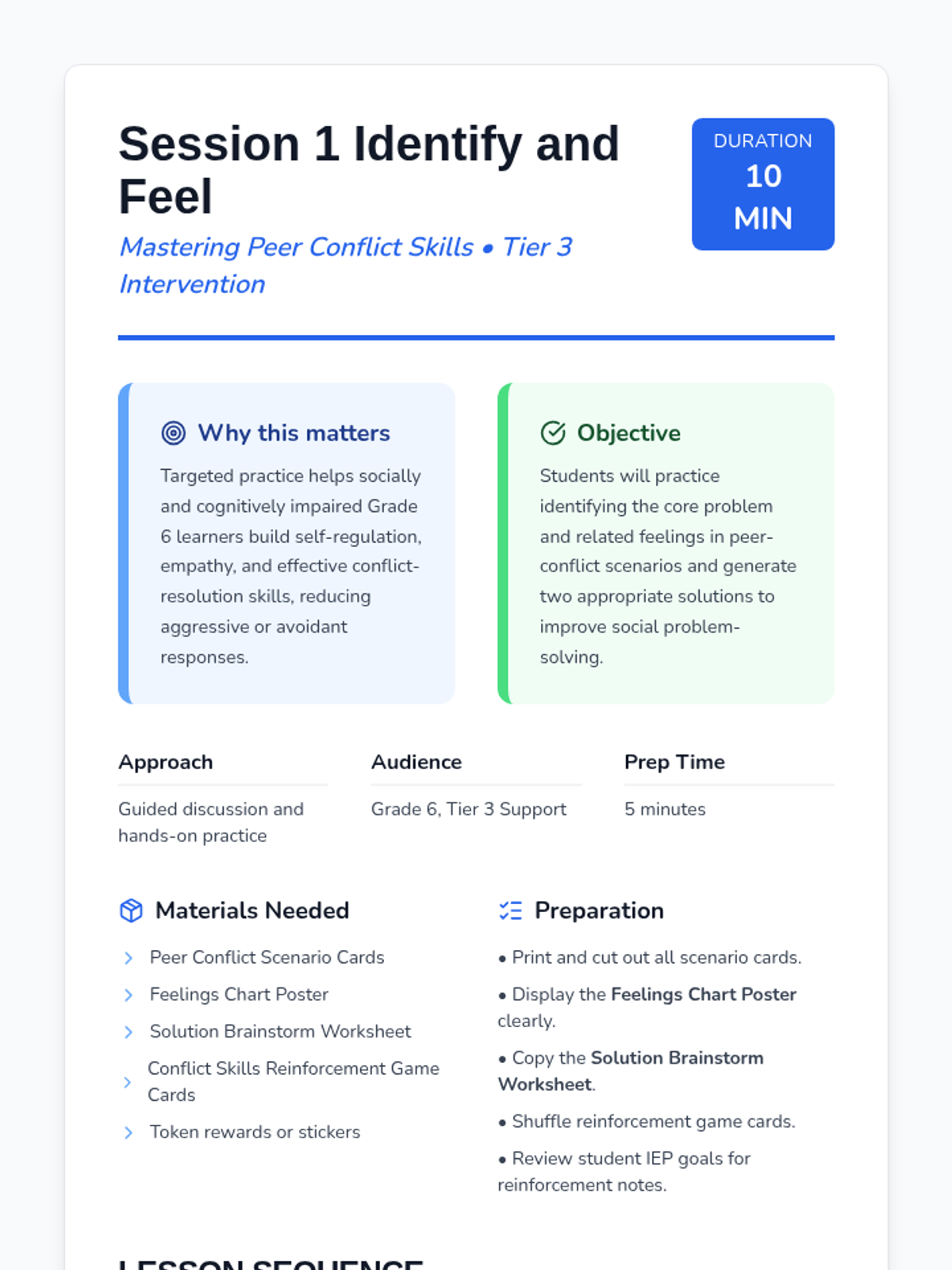
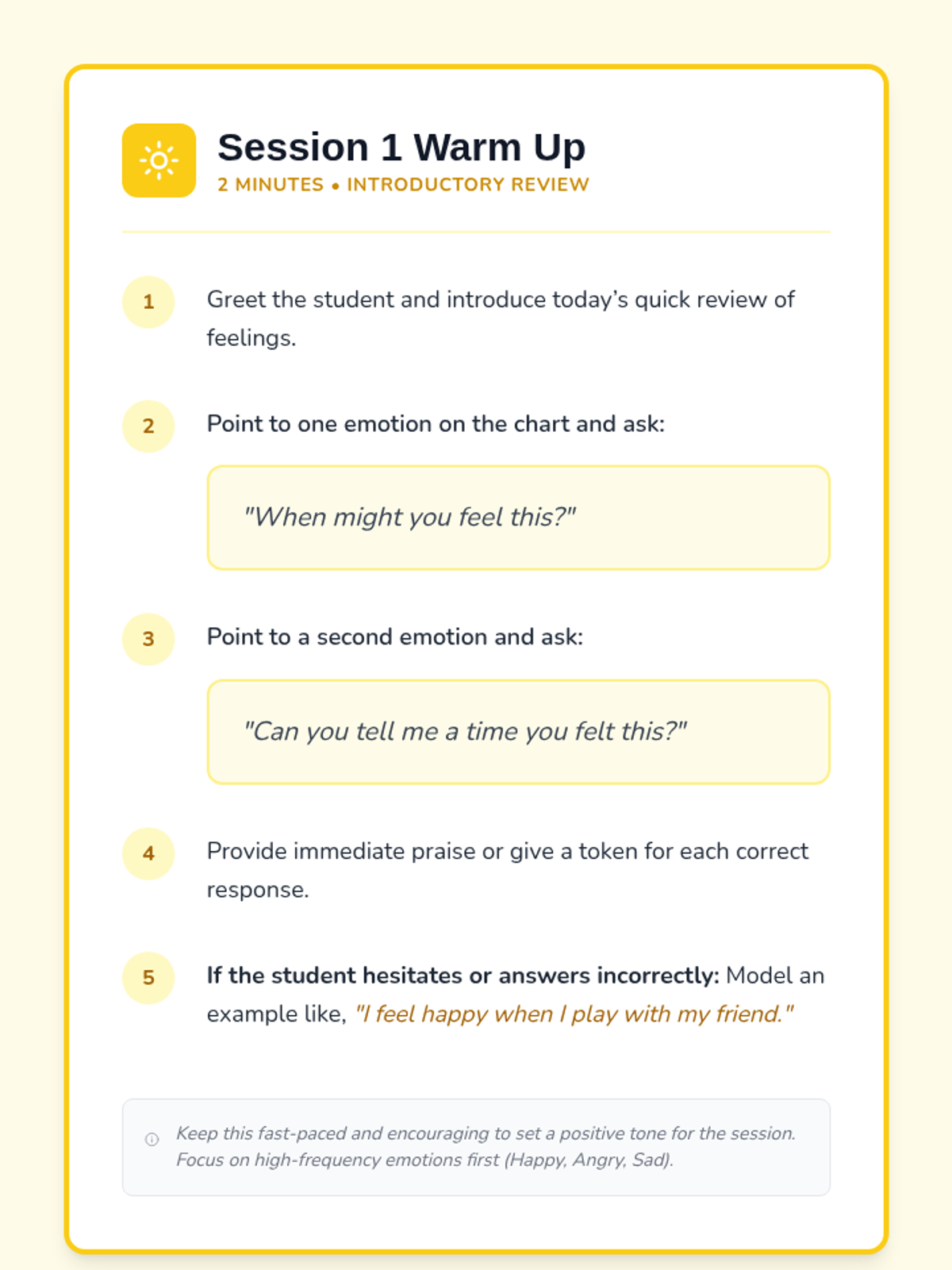
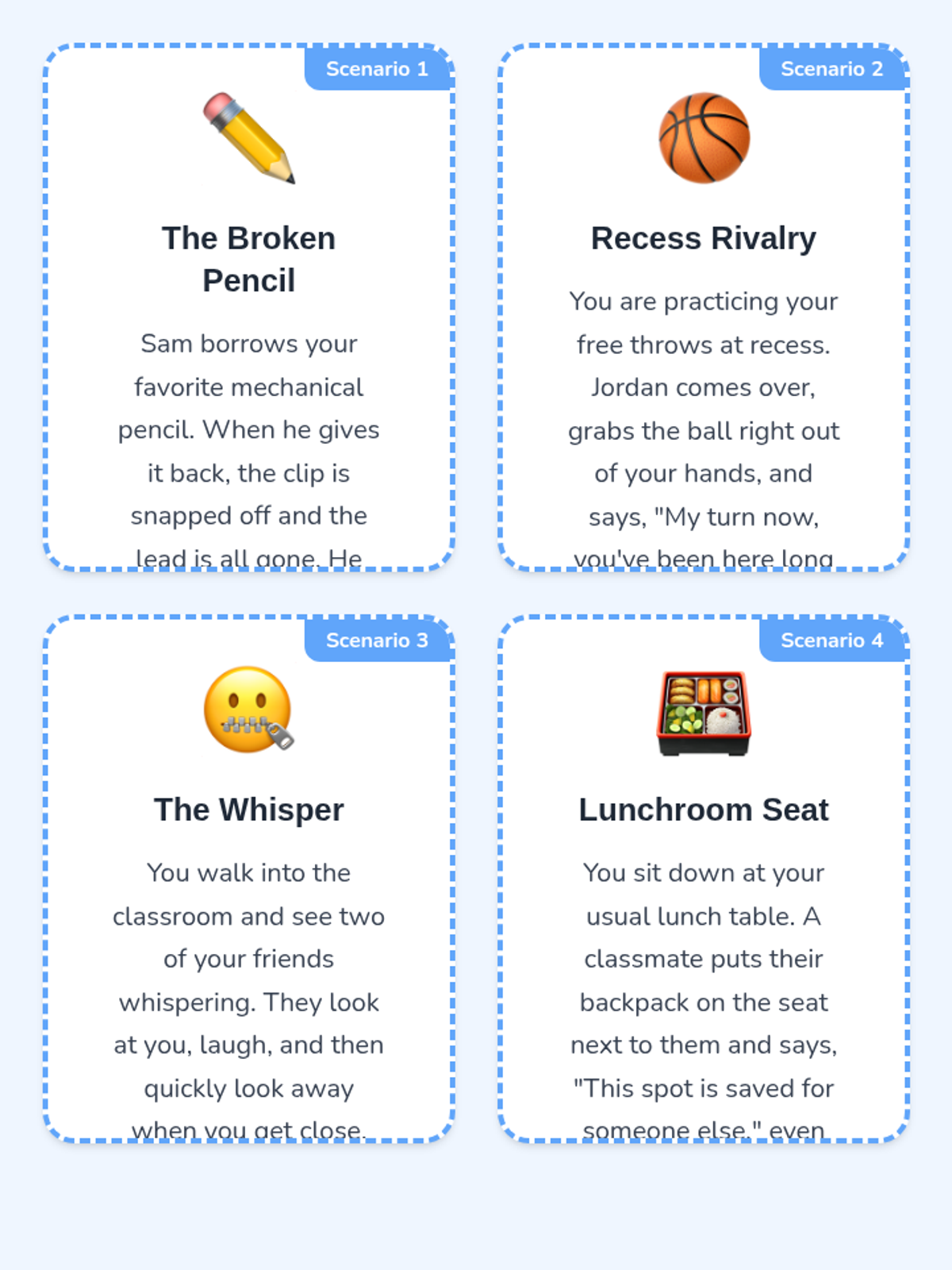
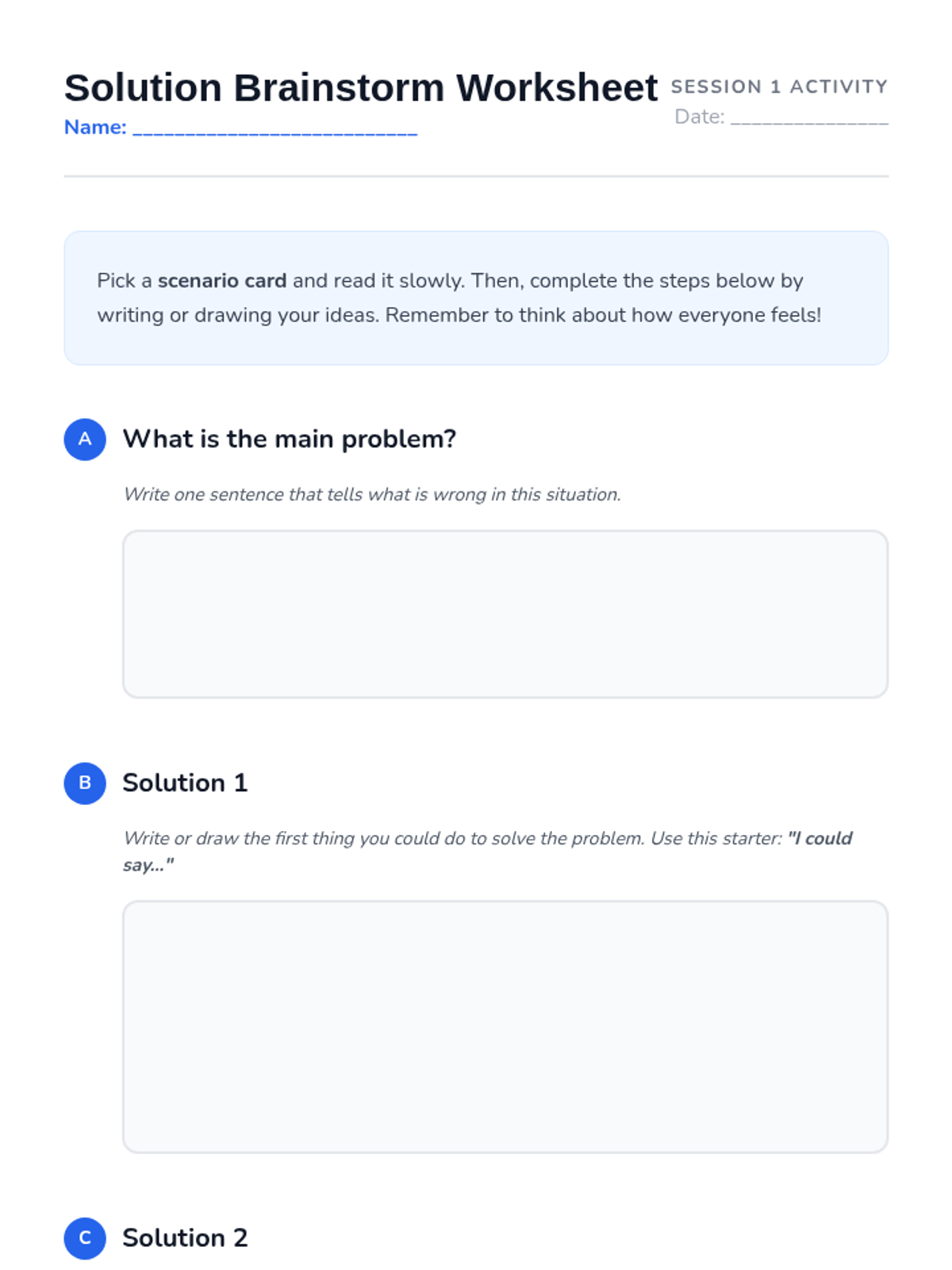
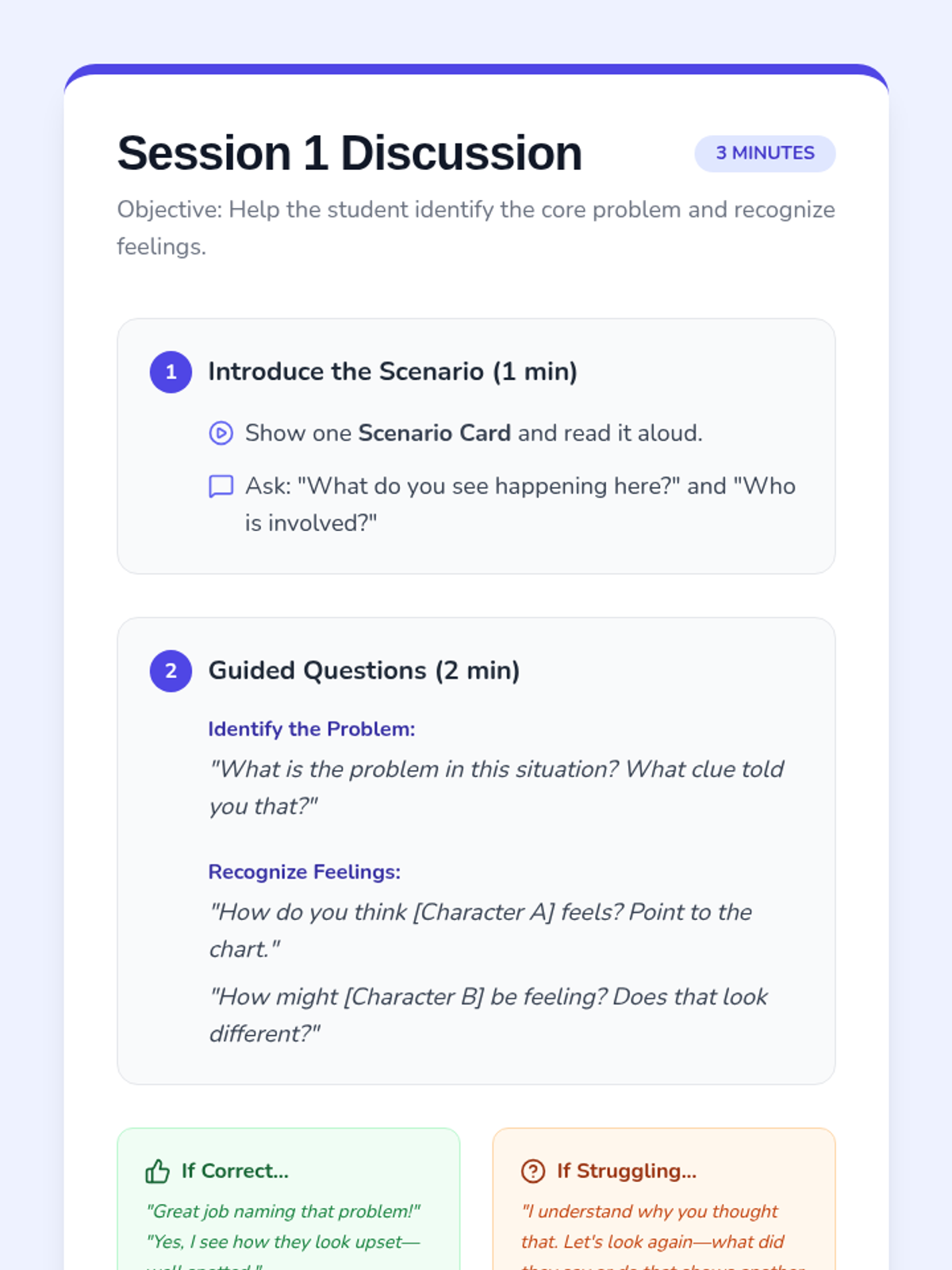
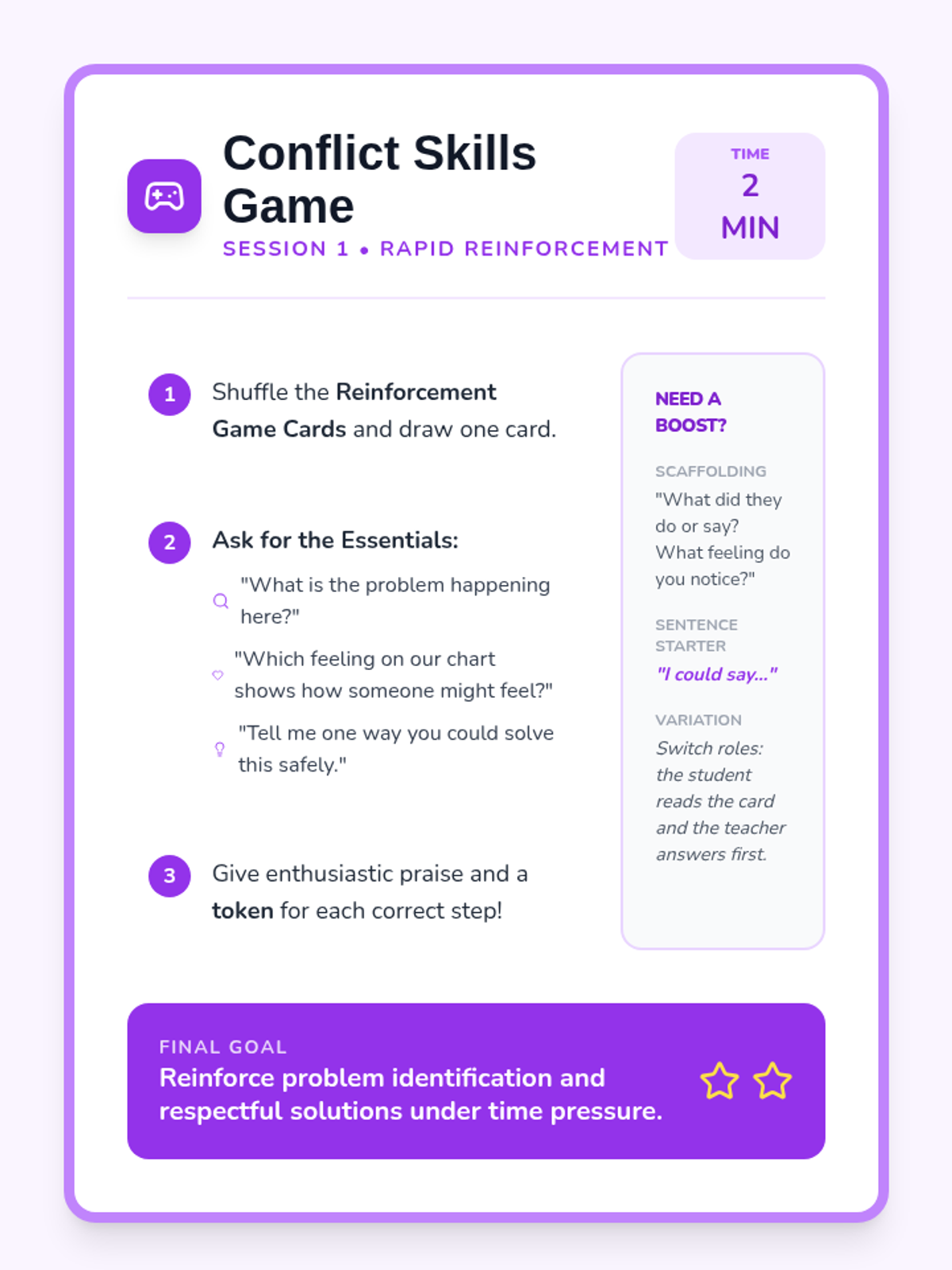
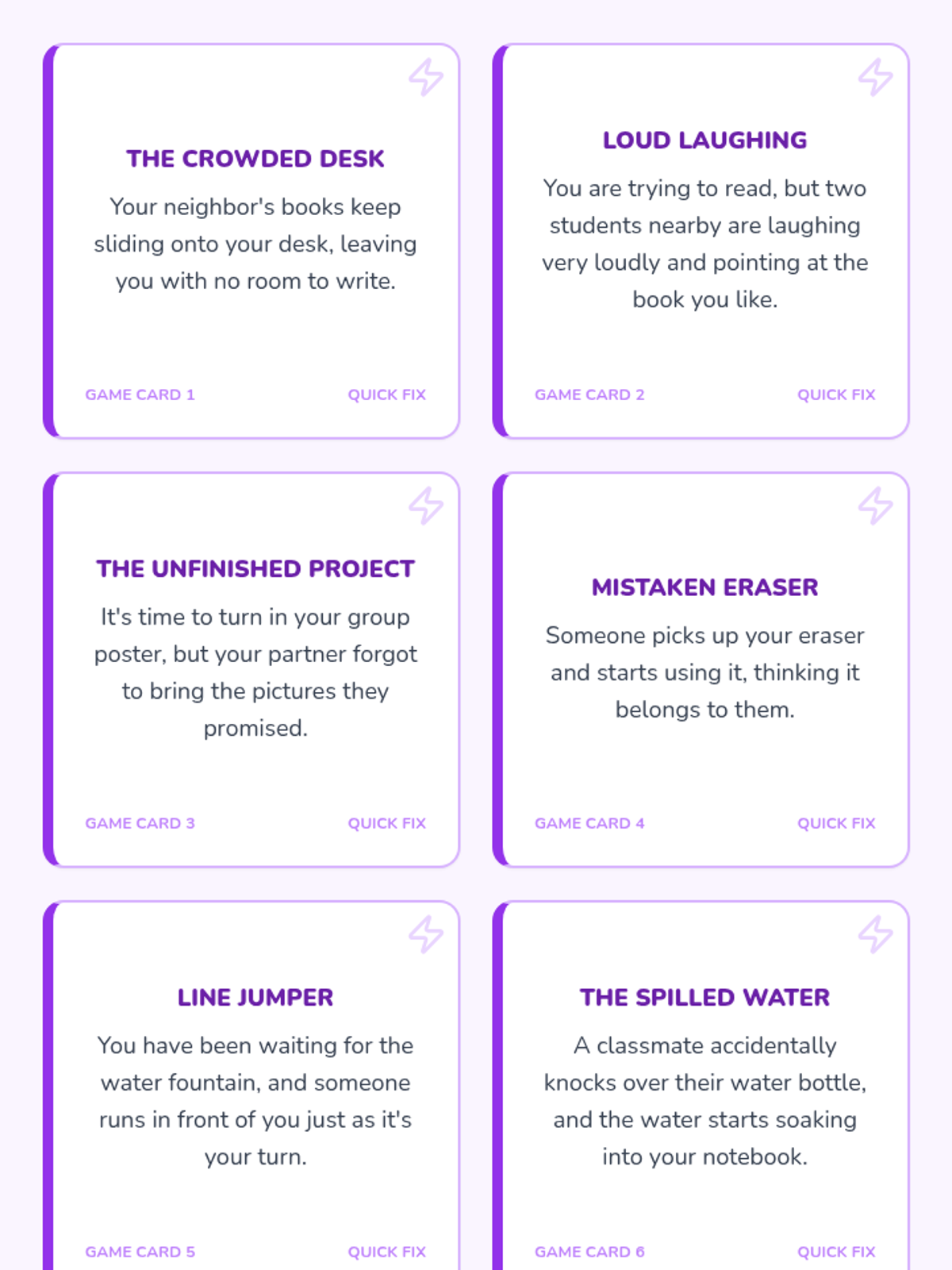
A 3-session, 10-minute individualized Tier 3 intervention for Grade 6 learners. Students develop conflict-resolution skills by identifying problems, recognizing emotions, and generating respectful solutions in peer-conflict scenarios.
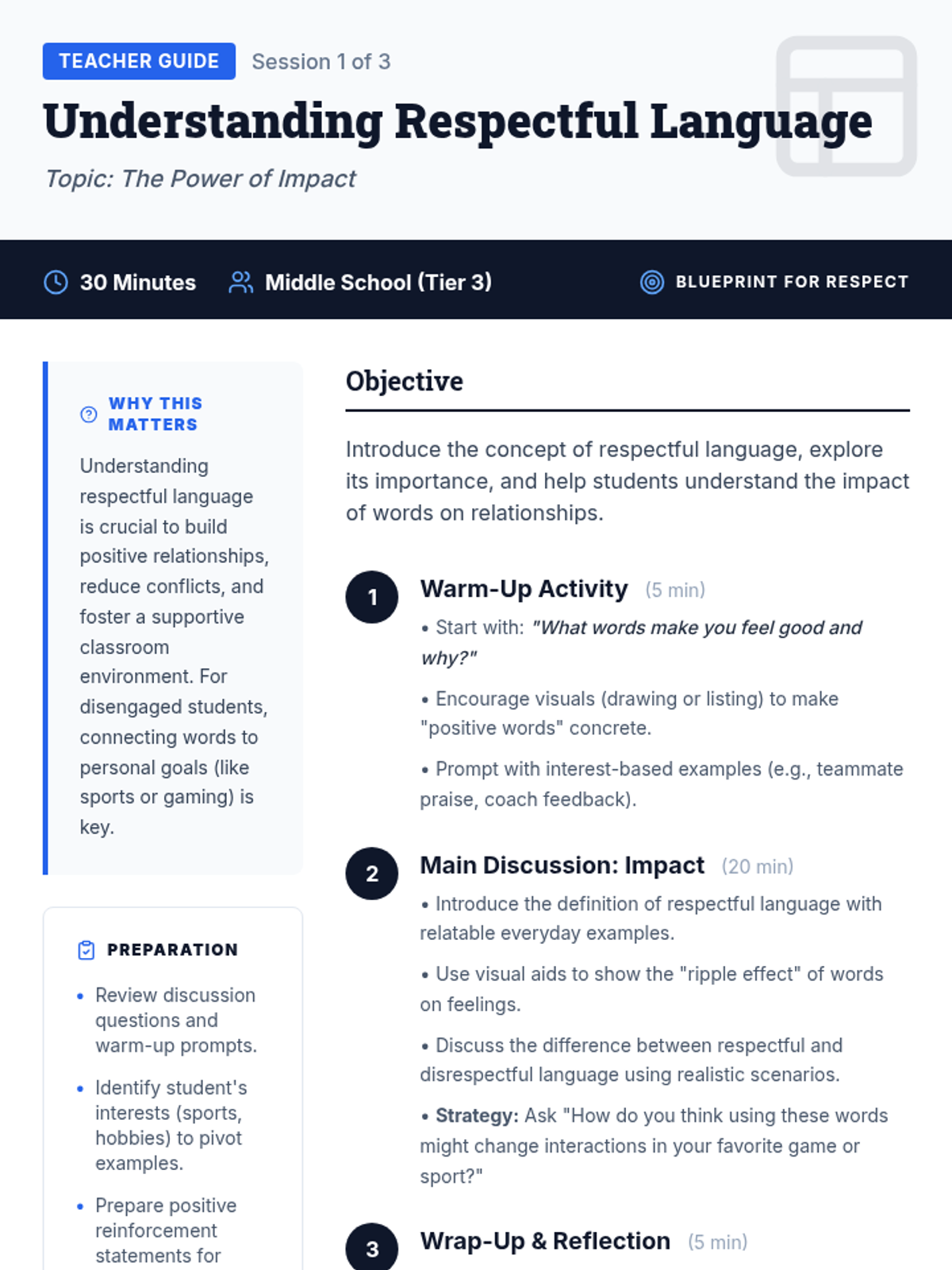
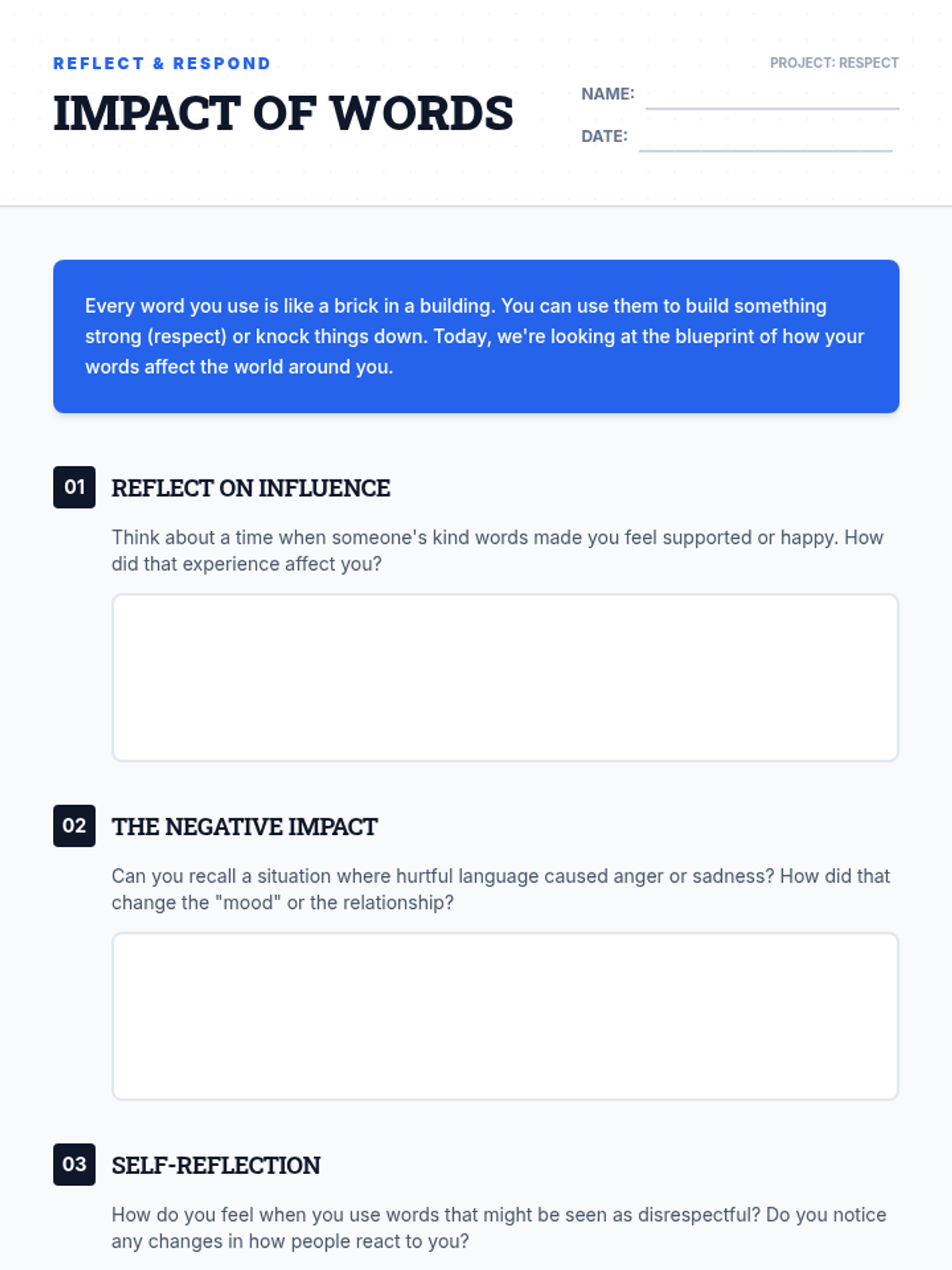
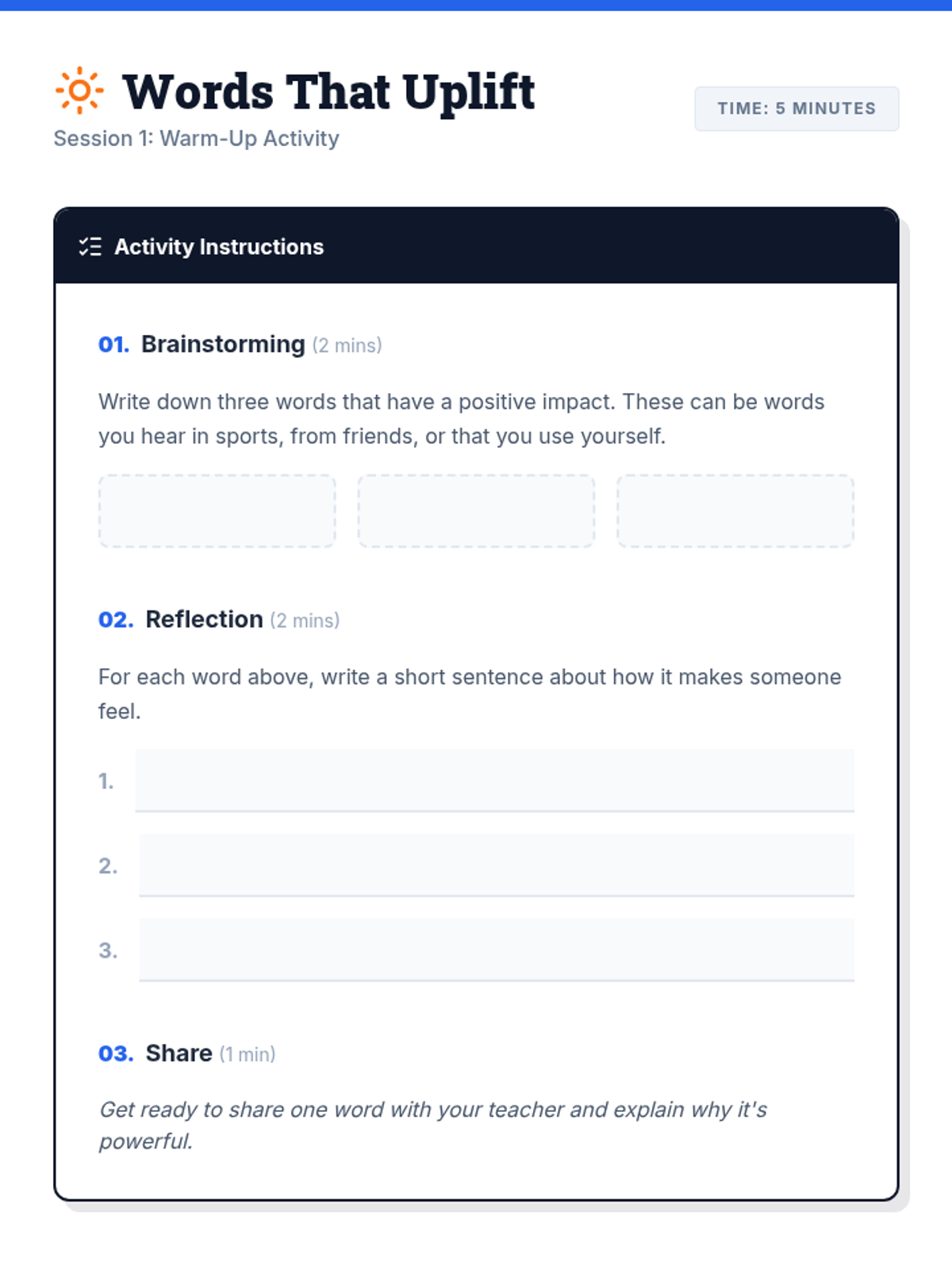
A three-session Tier 3 intervention sequence for middle school students focusing on the power of words, respectful communication, and personal growth in interpersonal interactions.
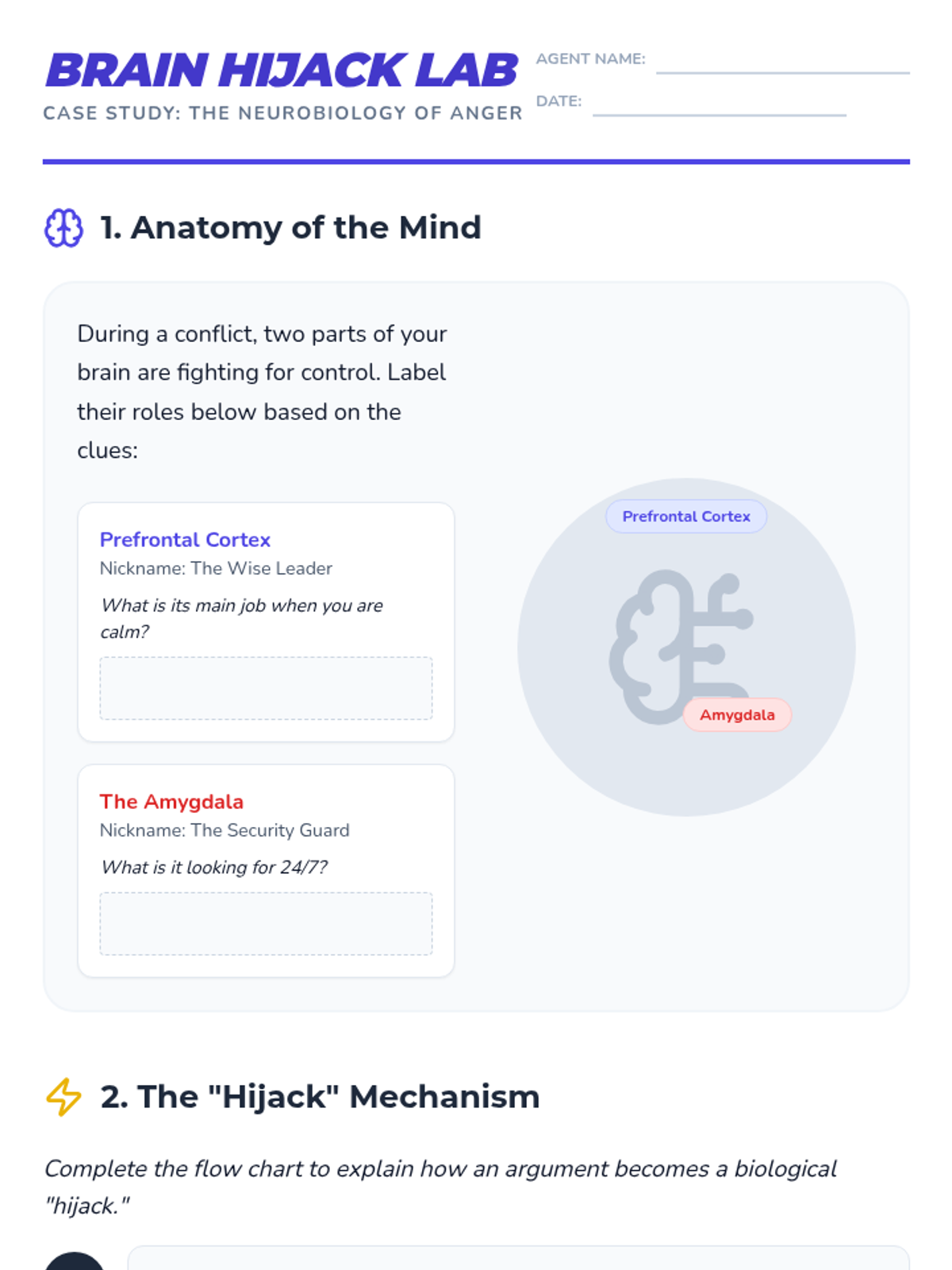
A 5-lesson sequence for 6th graders on emotional regulation and de-escalation during conflict. Students learn the science of the 'amygdala hijack', identify personal triggers, practice calming strategies, and learn to de-escalate peer conflicts.
A project-based sequence for 6th graders to develop self-respect using FAST skills. Students explore personal values, digital authenticity, boundaries, and assertive communication to create a comprehensive 'Personal Code of Conduct' manifesto.
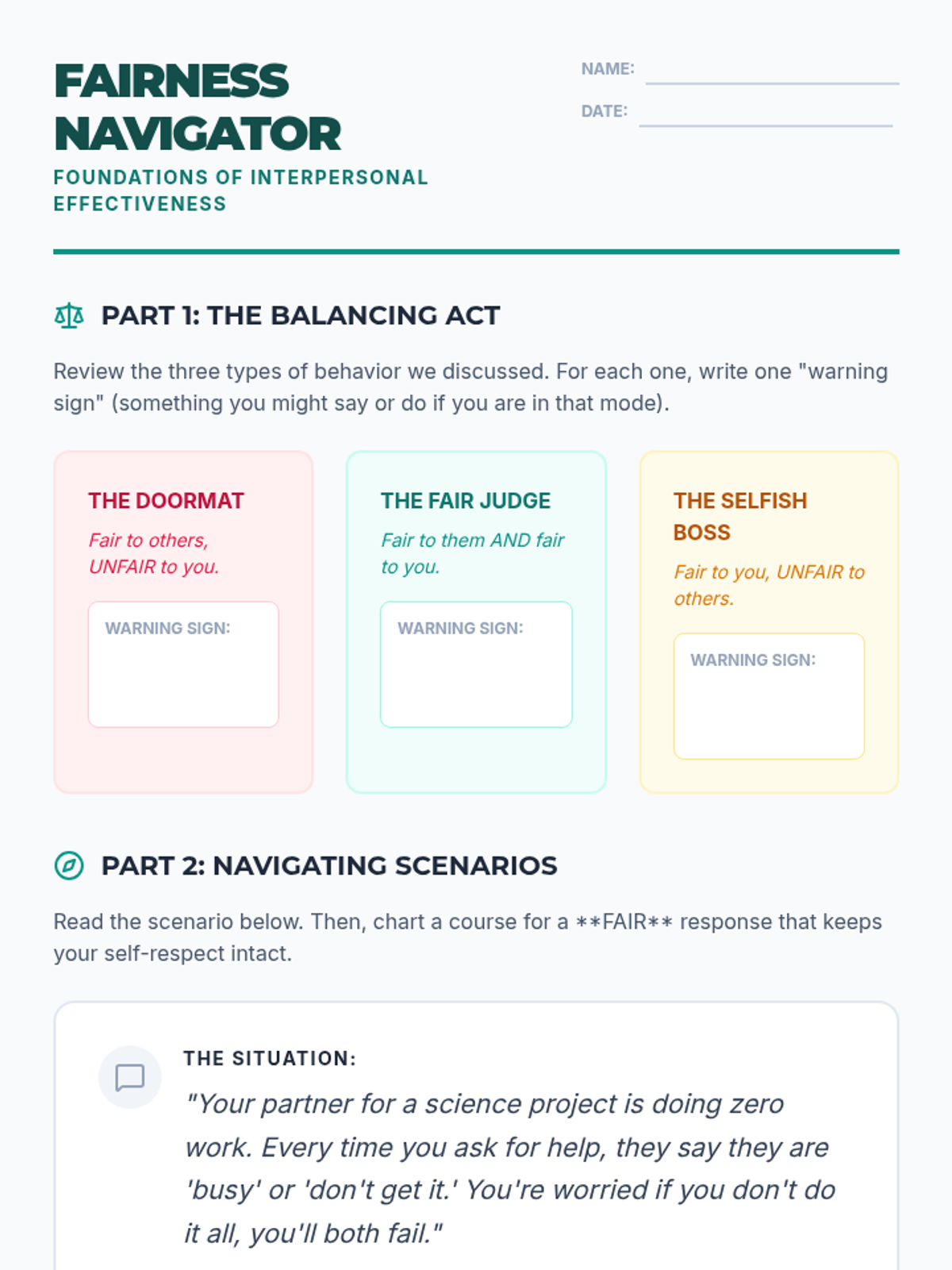
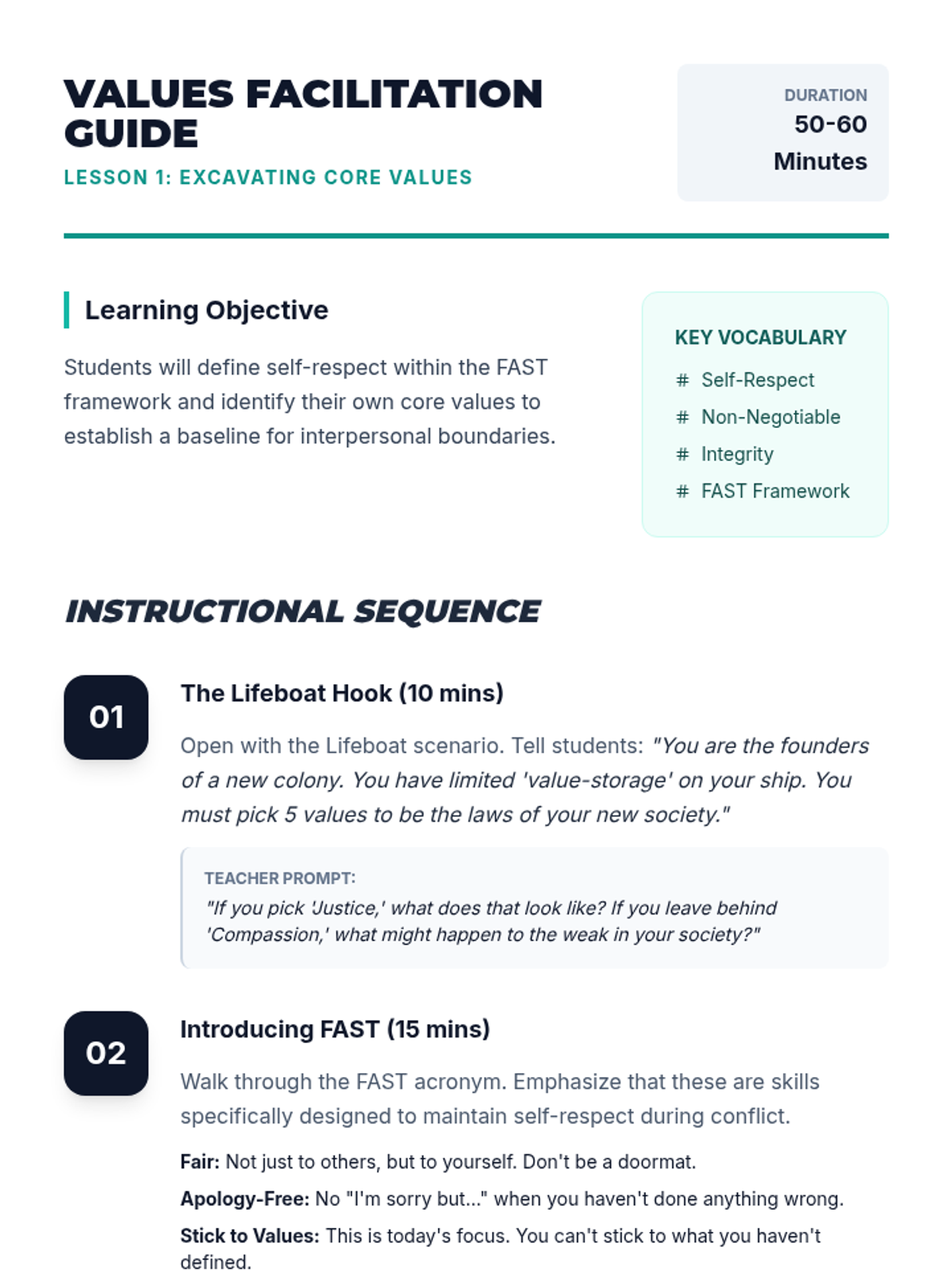
This sequence introduces 6th-grade students to the DBT FAST acronym (Fairness, Apologies, Sticking to values, and Truthfulness). Students explore how to maintain self-respect in social interactions by balancing their needs with those of others without compromising their integrity.
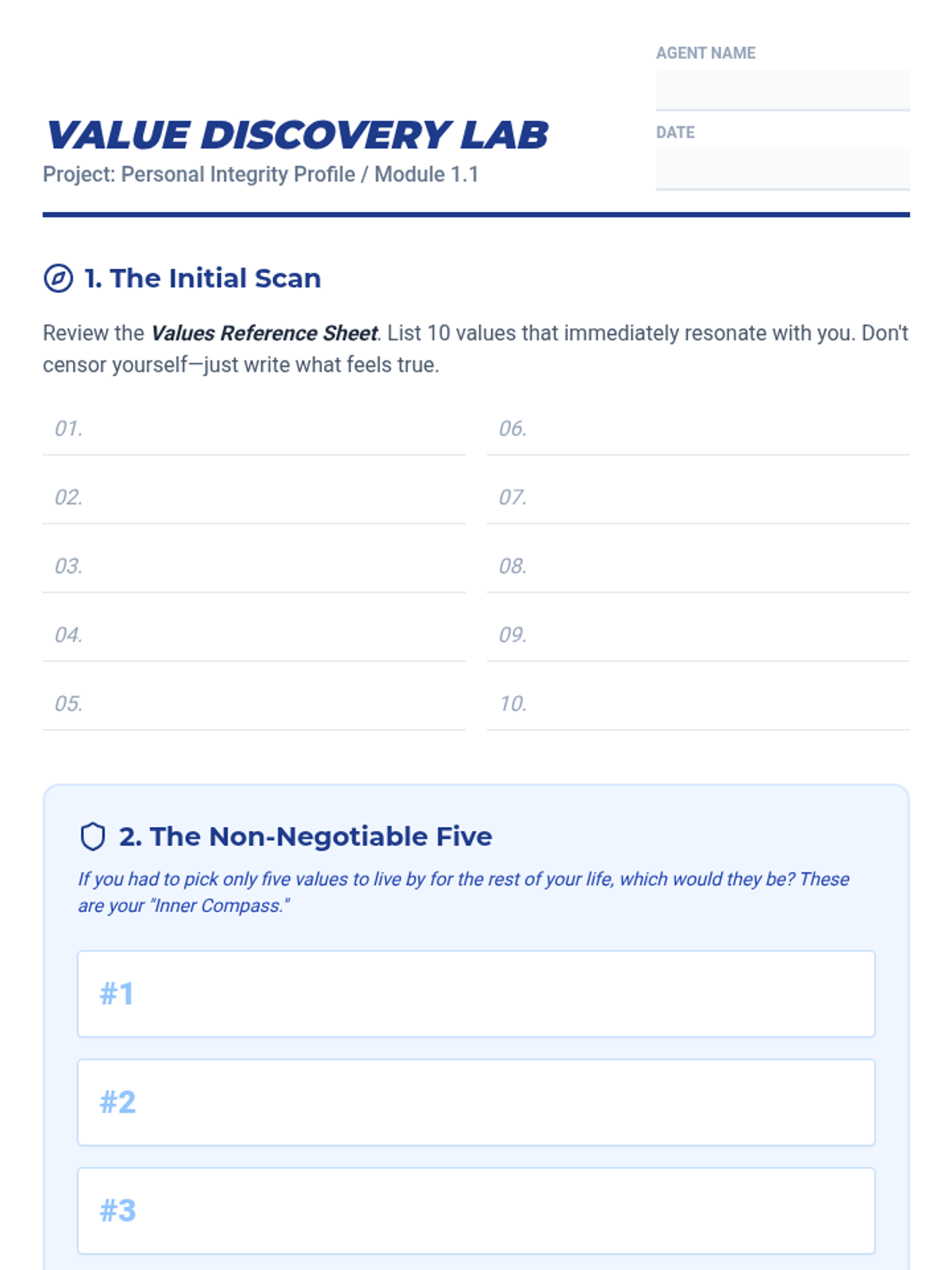
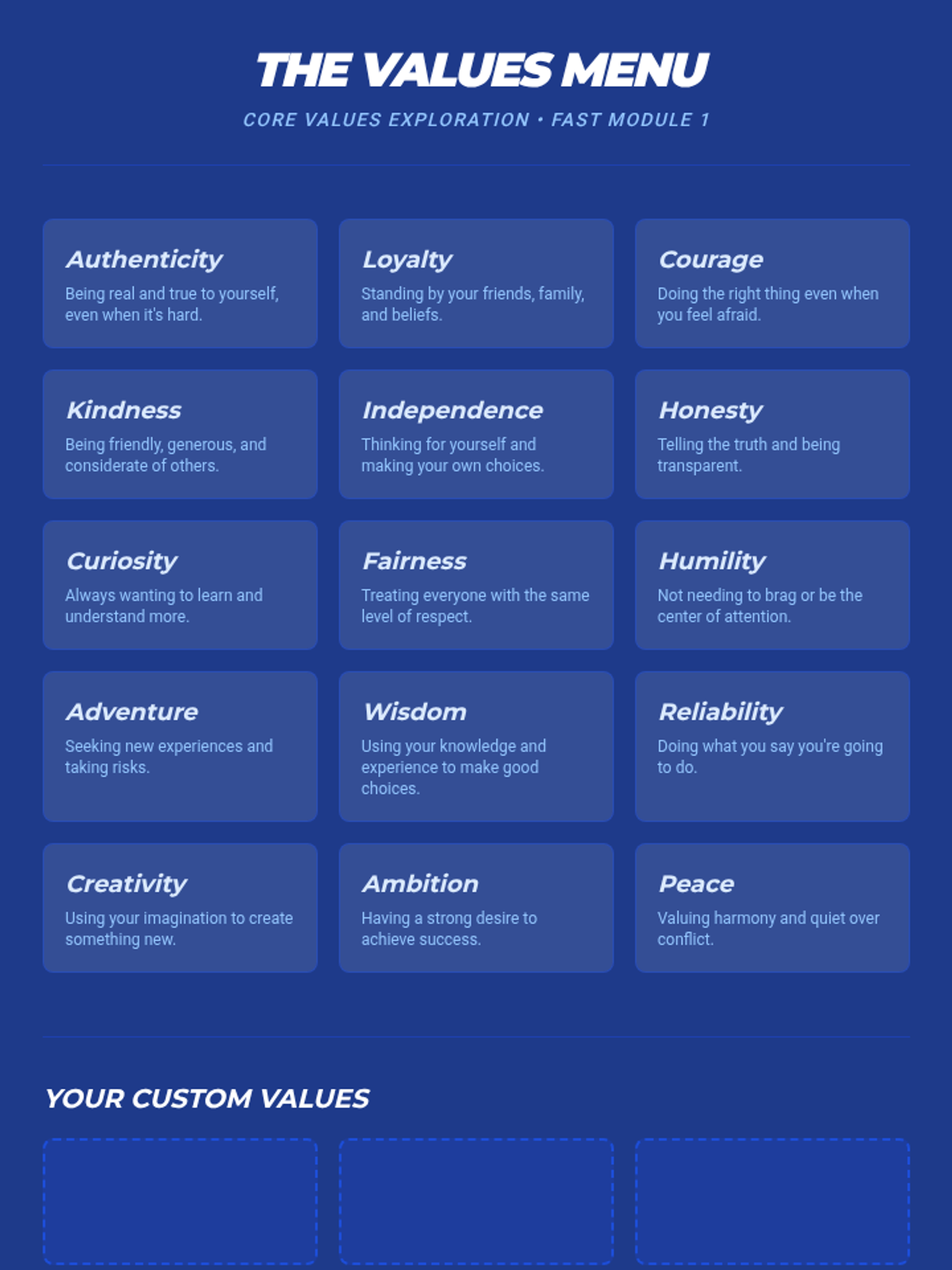
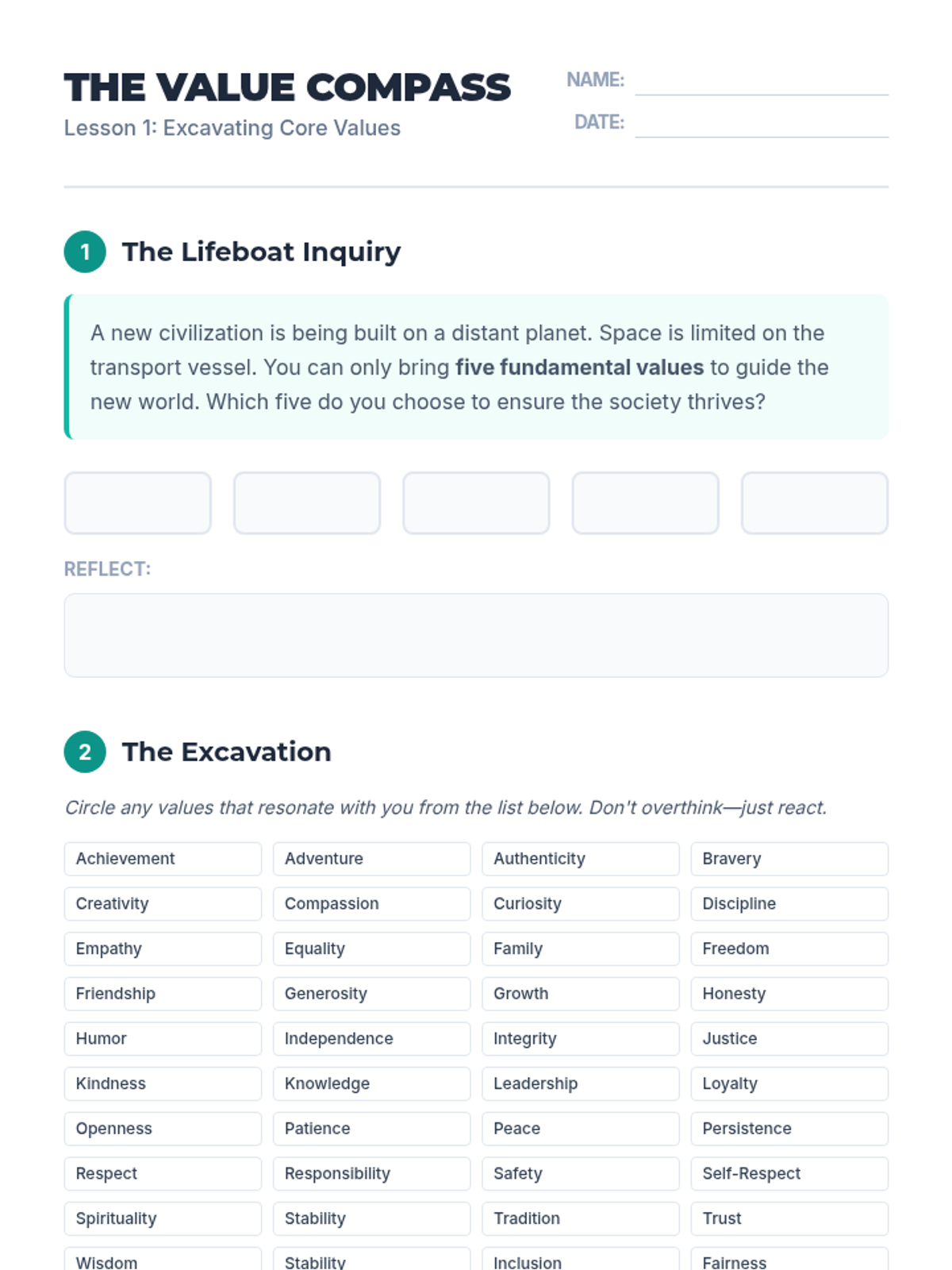
This inquiry and project-based sequence focuses deeply on the 'Stick to Values' aspect of FAST, positing that one cannot defend values they haven't defined. Students bridge abstract values with concrete communication skills, teaching them how to articulate their stances without judgment or apology.
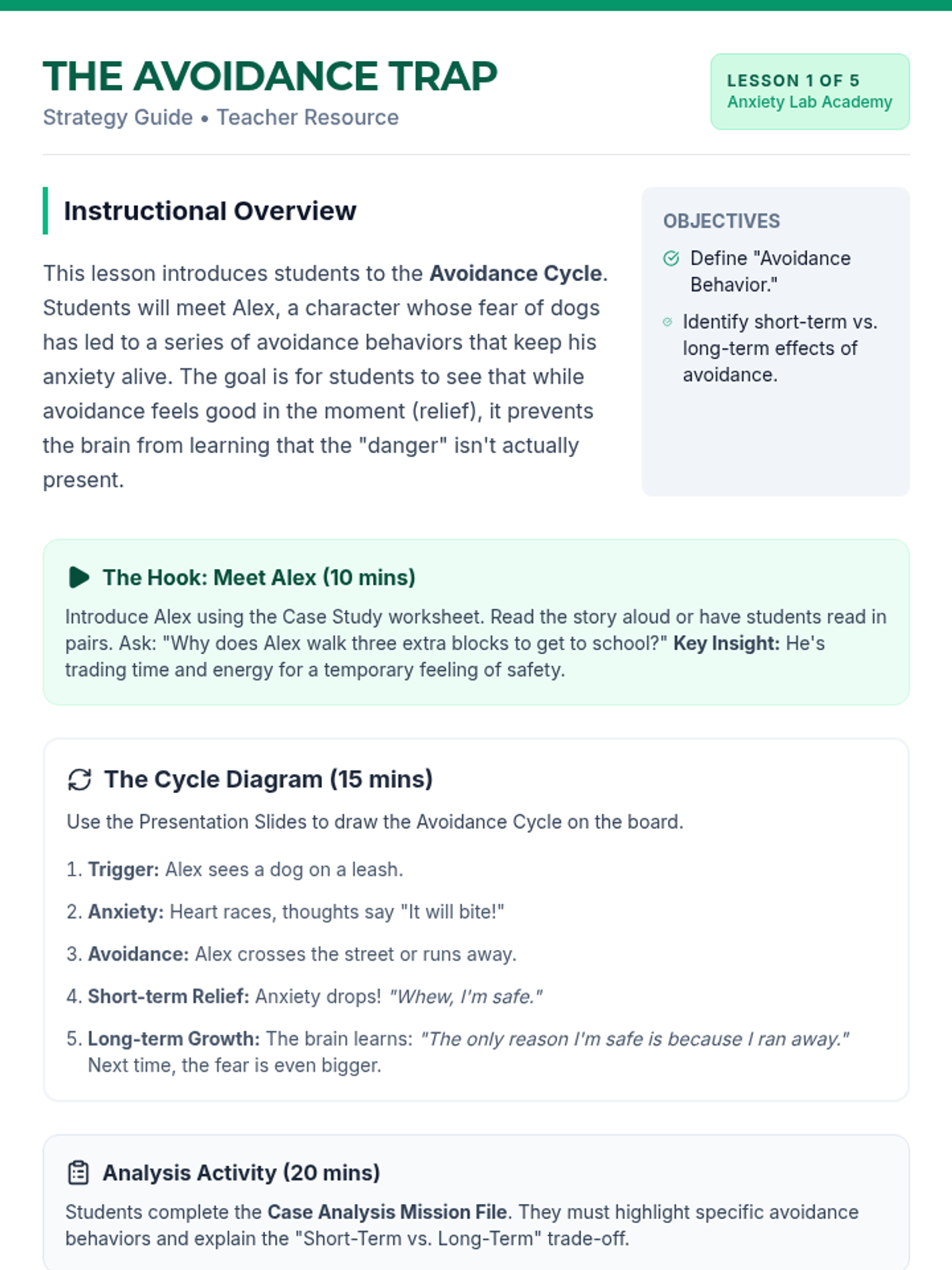
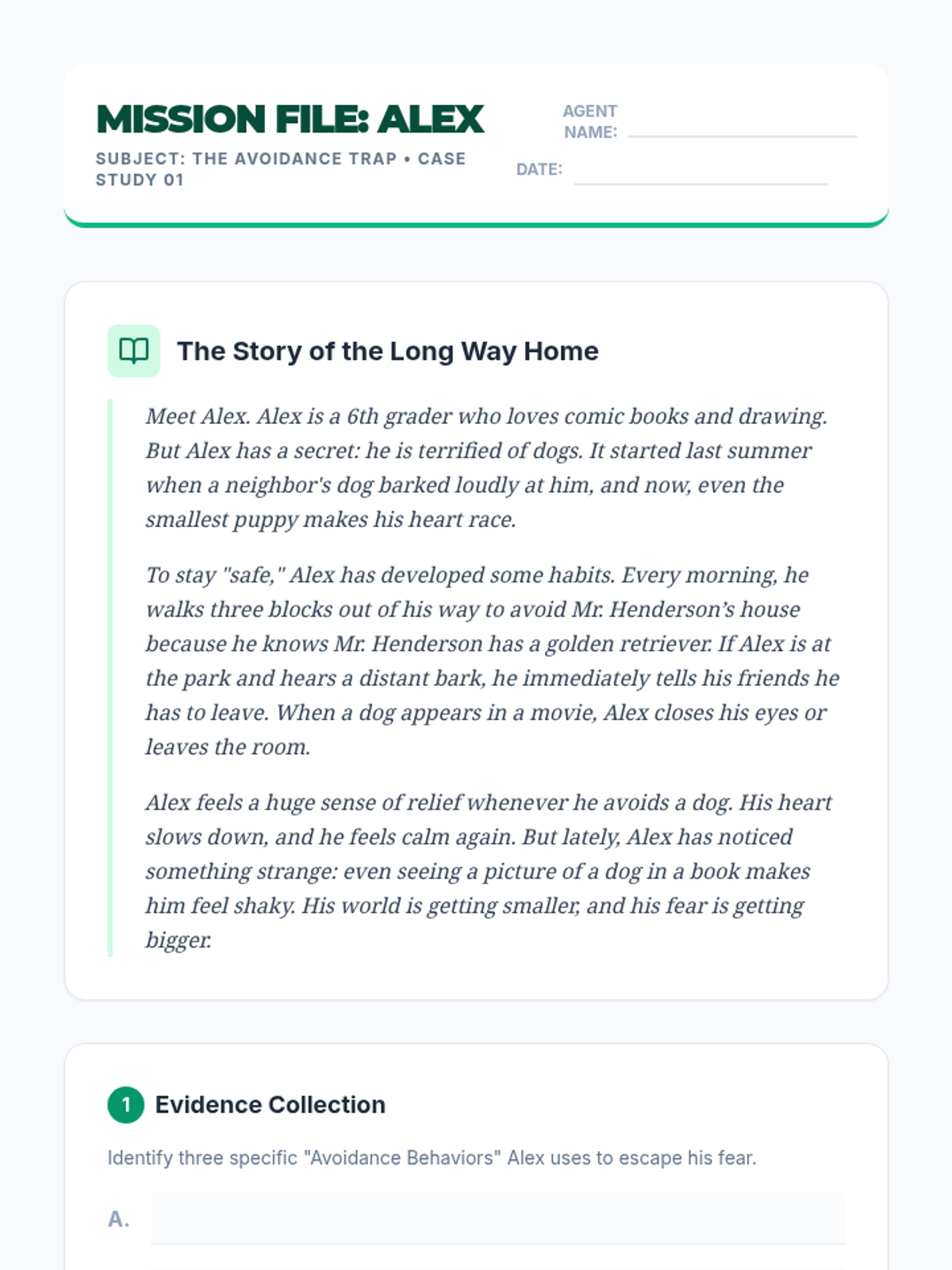
A project-based unit where 6th-grade students act as 'Anxiety Coaches' for fictional characters. They learn to identify avoidance behaviors, use the SUDS scale, and design gradual exposure hierarchies to help characters overcome fears safely.
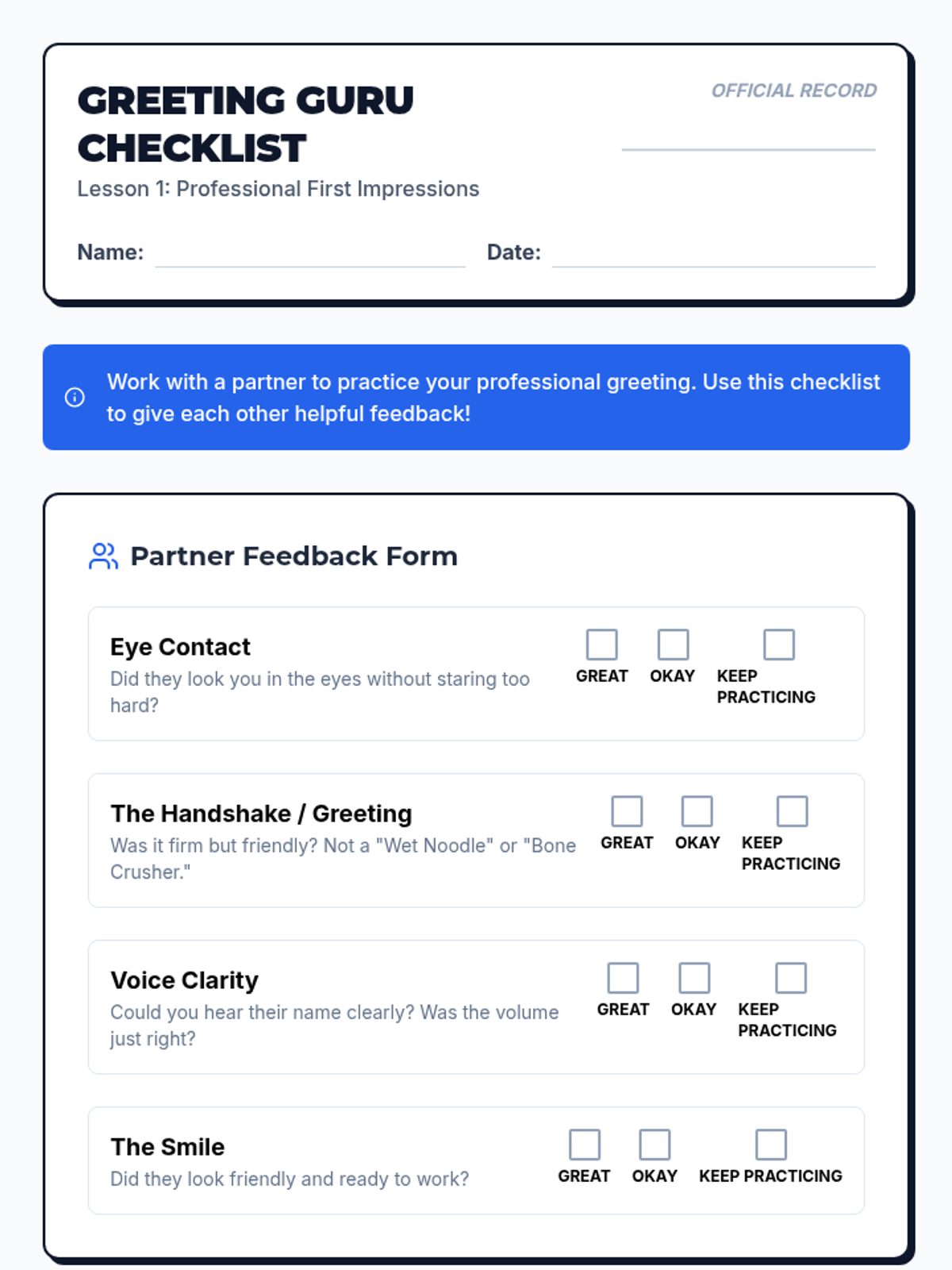
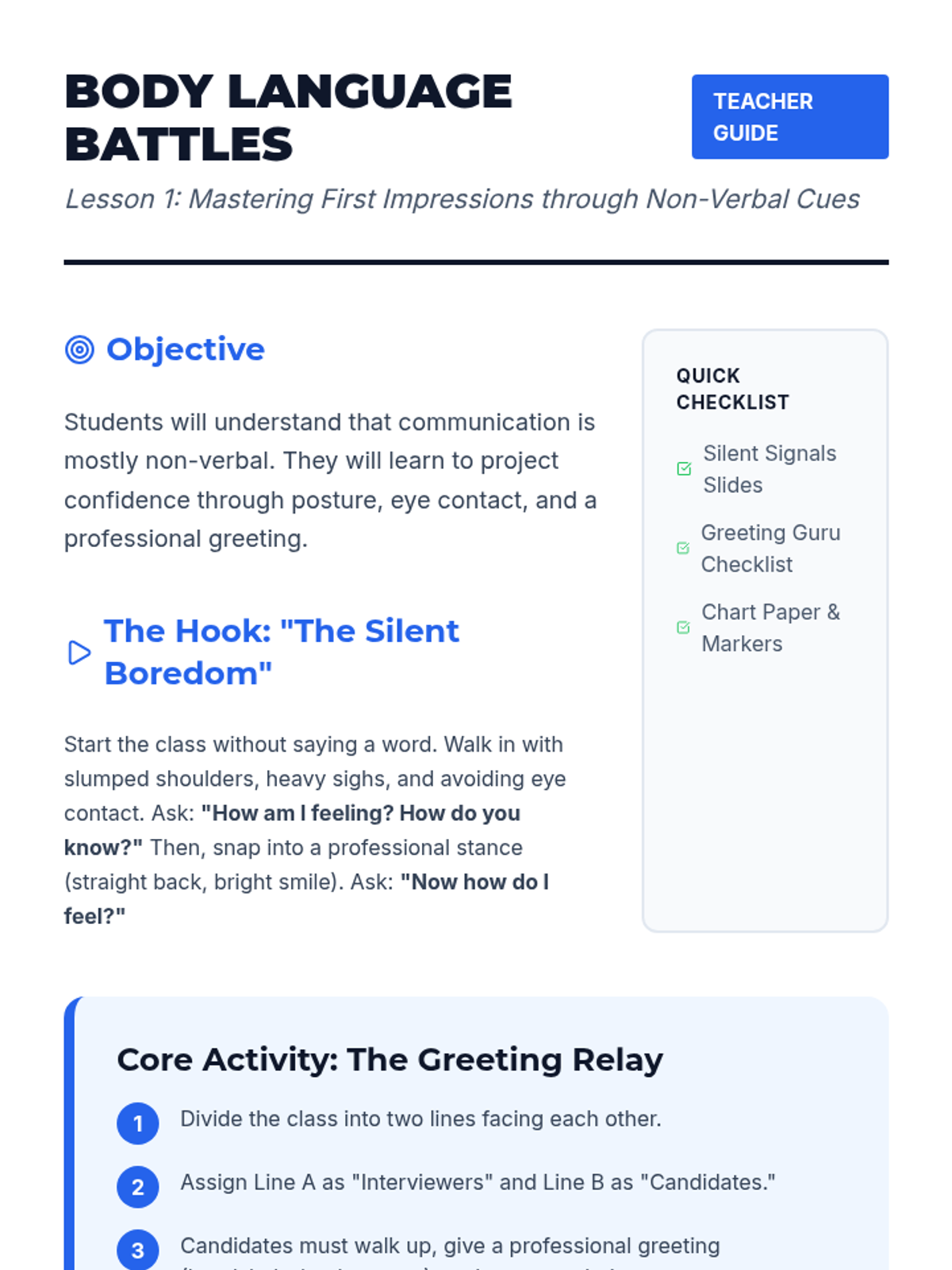
A comprehensive unit on professional communication, interview skills, and workplace etiquette. Students master non-verbal cues, the STAR response method, active listening, and professional follow-ups to prepare for classroom job simulations.
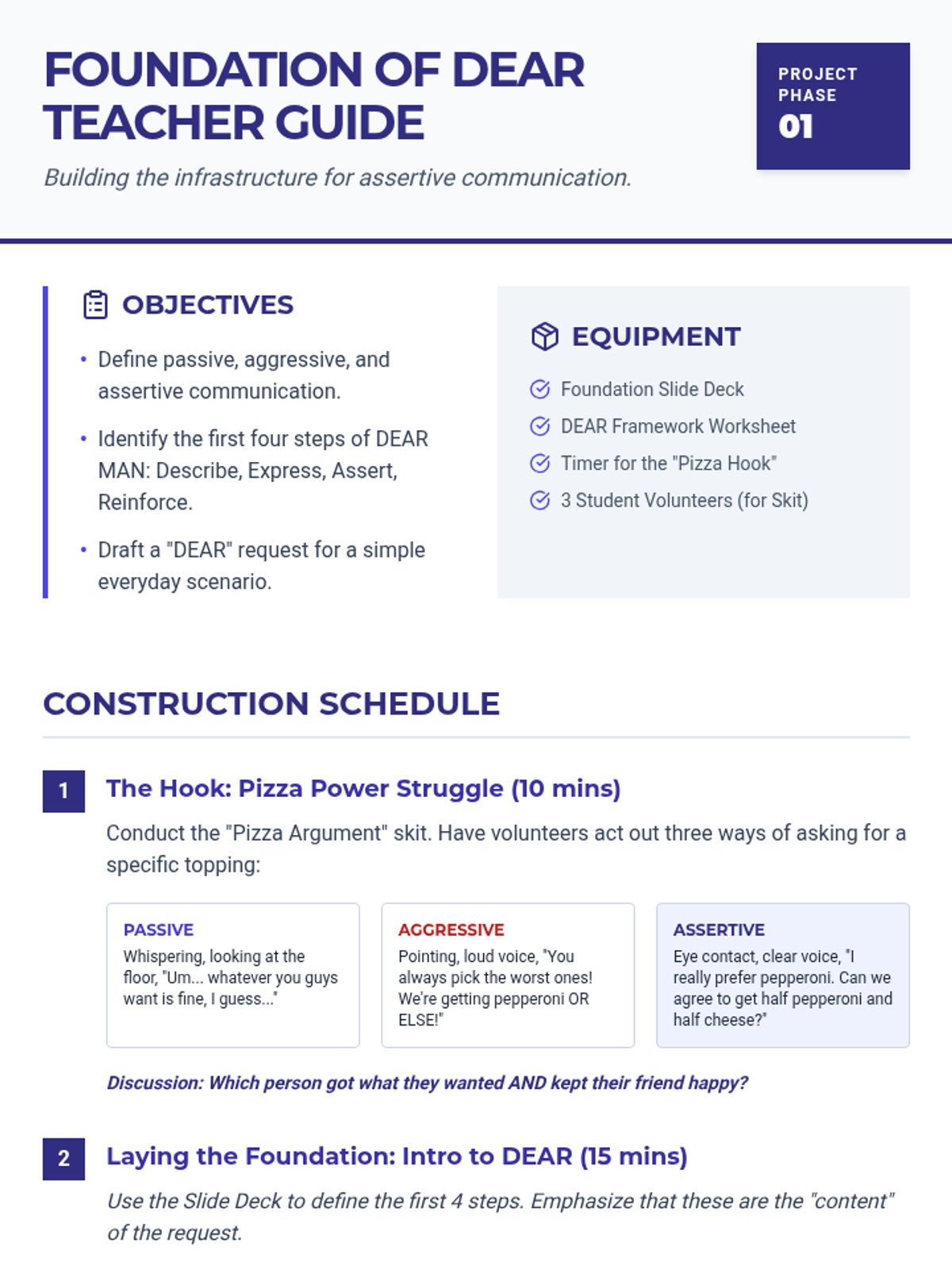
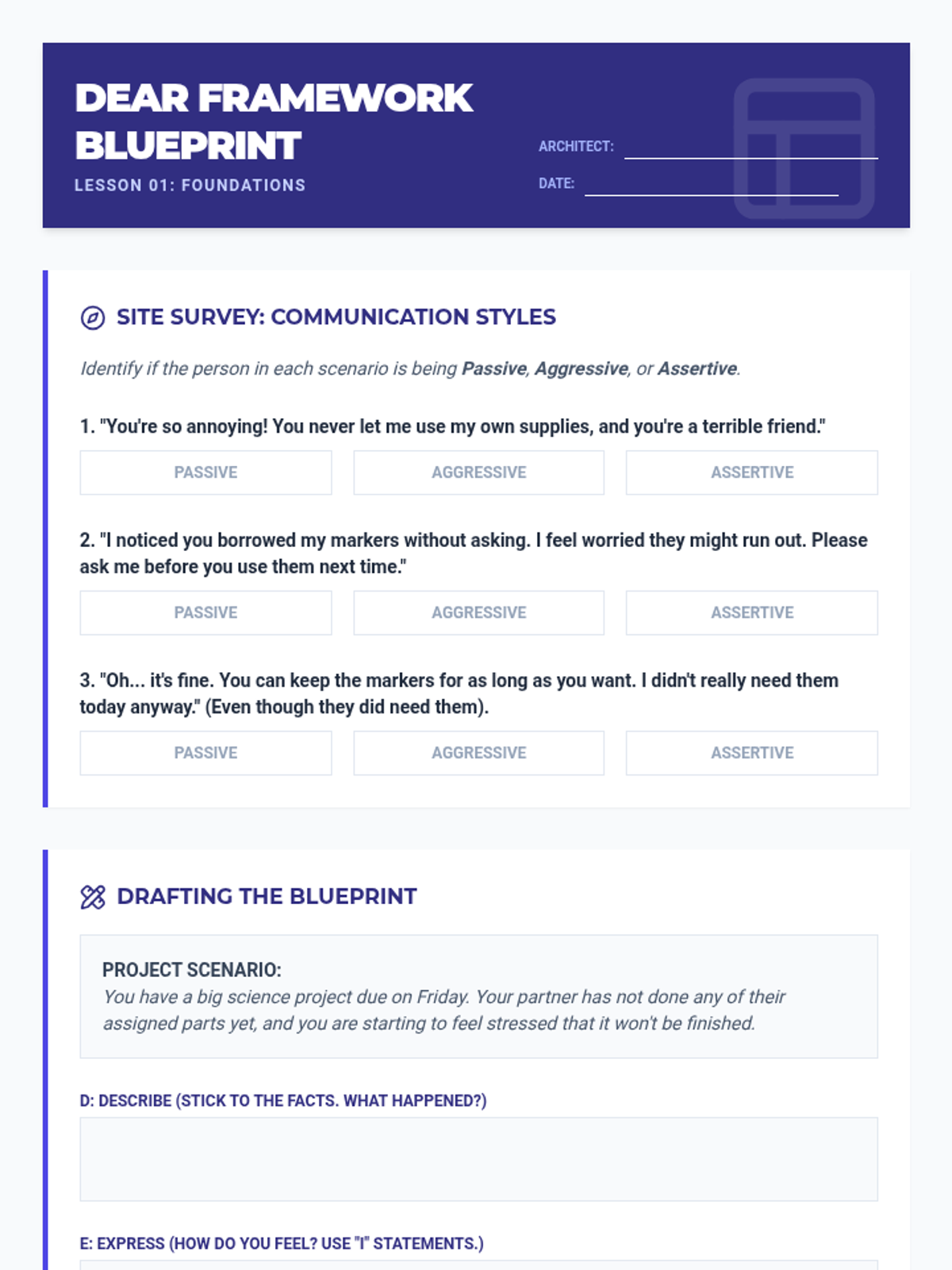
A comprehensive 5-lesson unit for 6th graders on the DBT DEAR MAN framework, teaching assertive communication, boundary setting, and negotiation skills through architectural-themed 'blueprints' for social success.
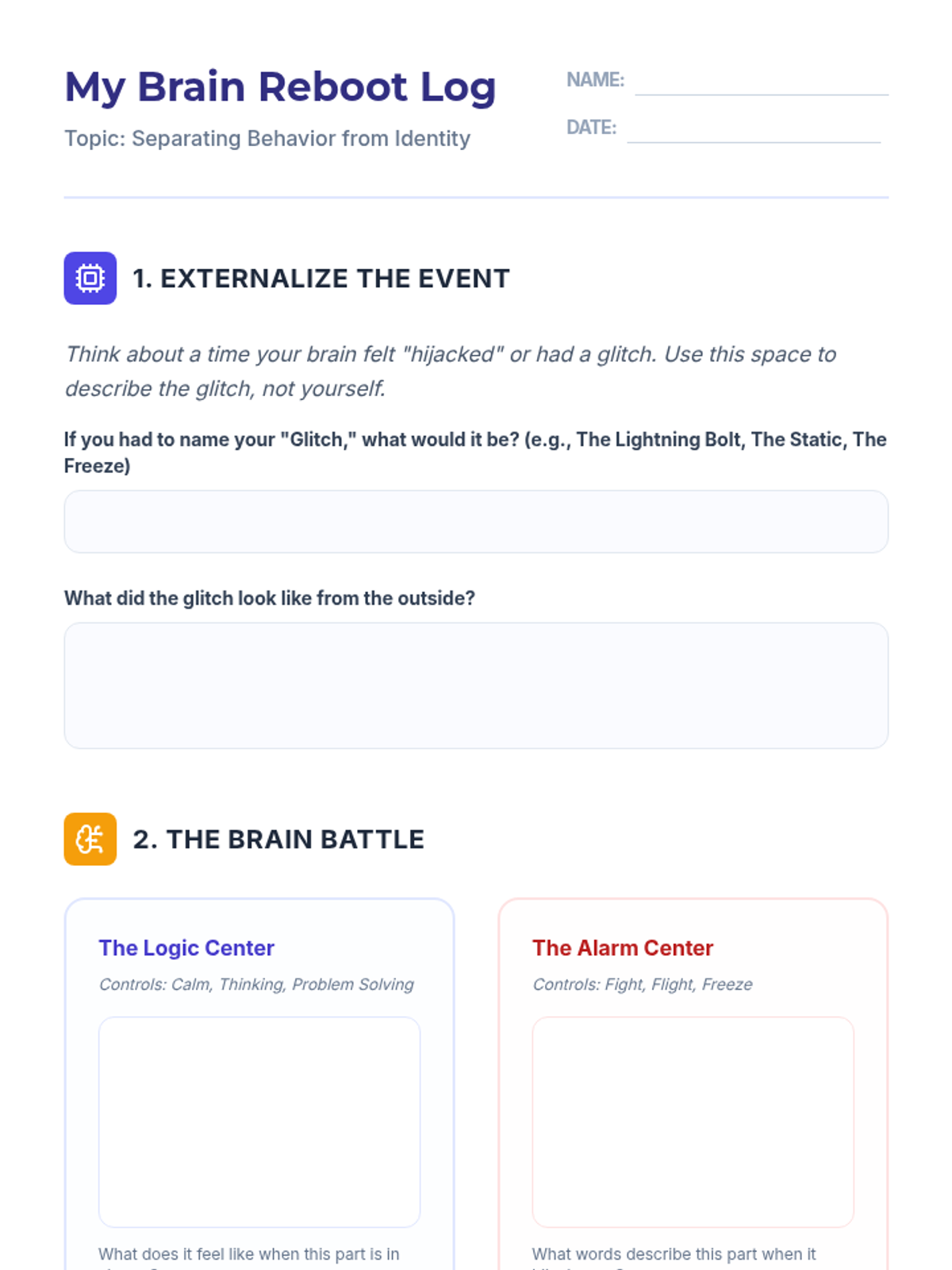
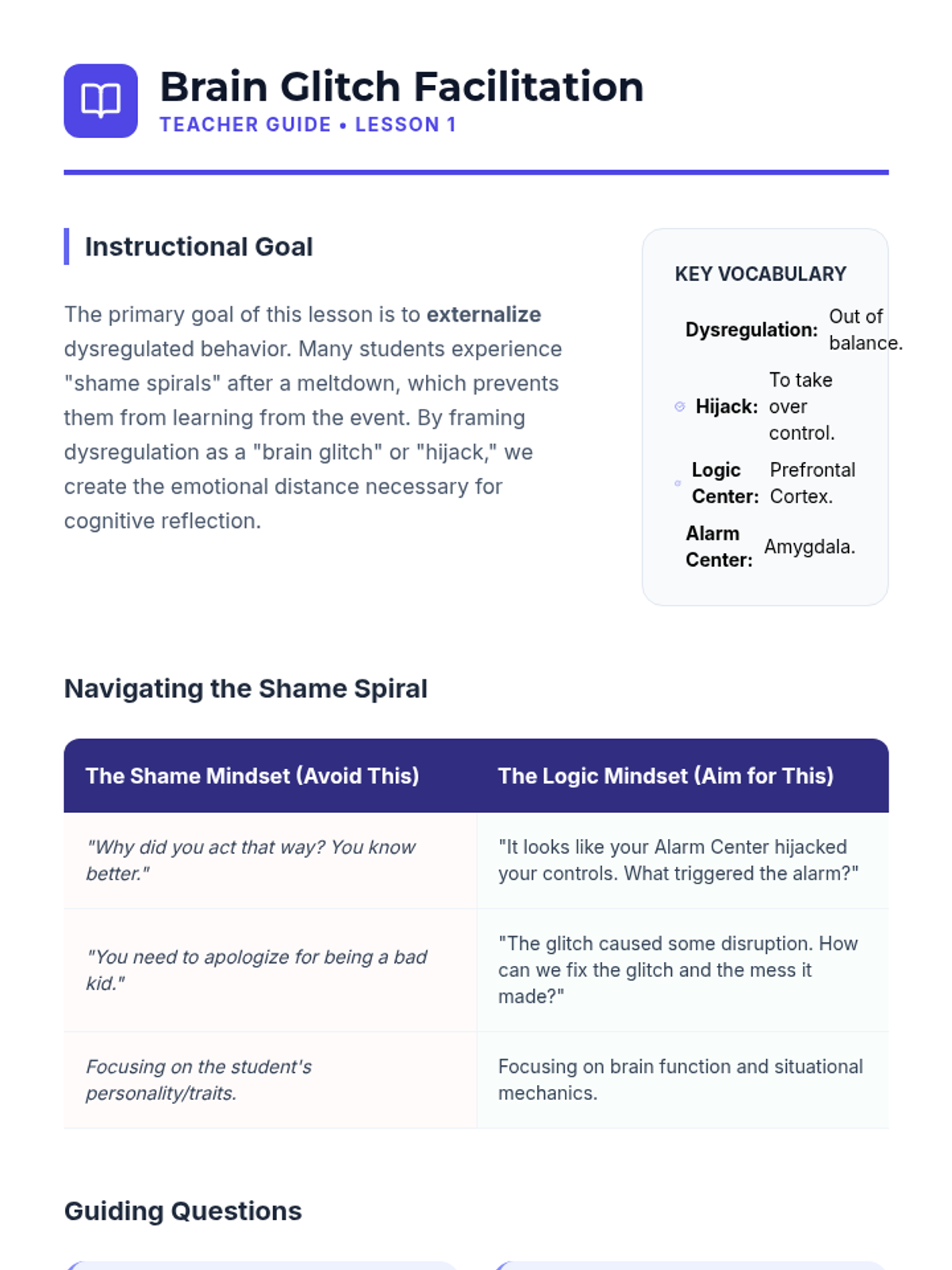
A 5-lesson sequence for 5th-grade students focused on post-dysregulation recovery. This series helps students move from shame to logic by externalizing behaviors, analyzing event timelines, practicing restorative apologies, and planning for future success.
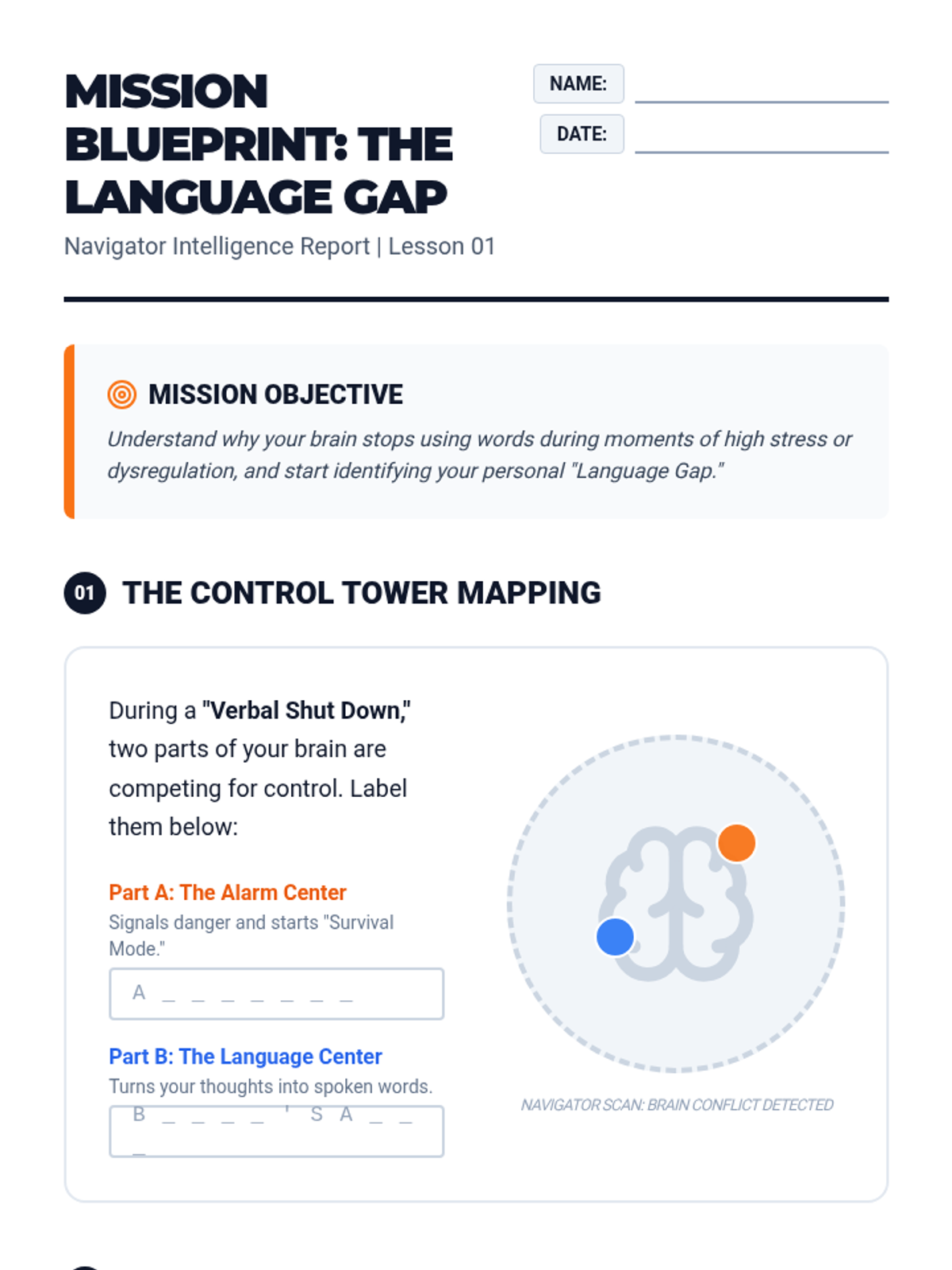
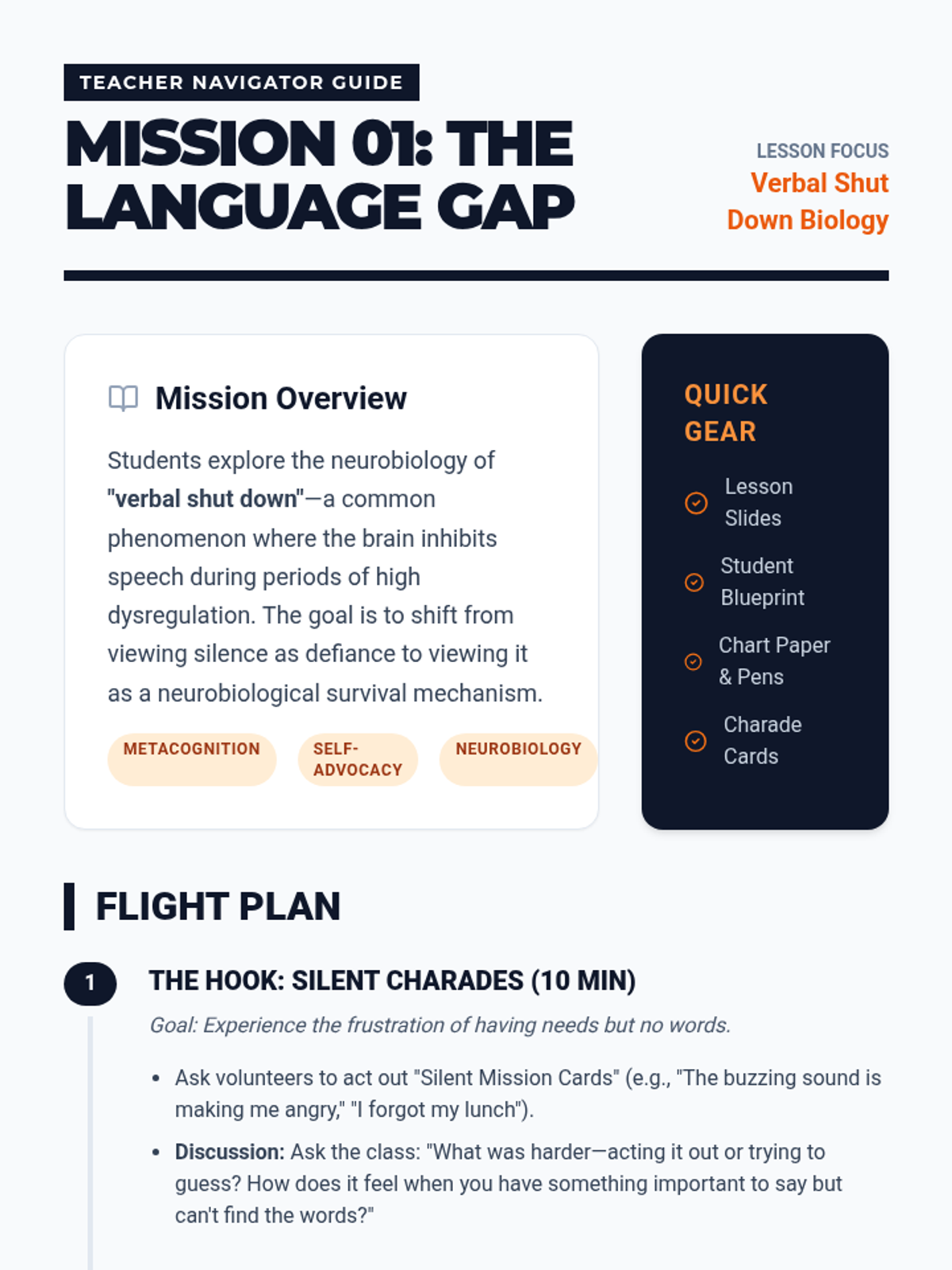
A 5-lesson sequence for 6th-grade students focusing on neurobiological awareness of dysregulation, non-verbal communication systems, co-regulation techniques, and restorative practices for re-entering social environments. Students develop a 'Navigator' mindset to manage emotional turbulence and maintain relationships.
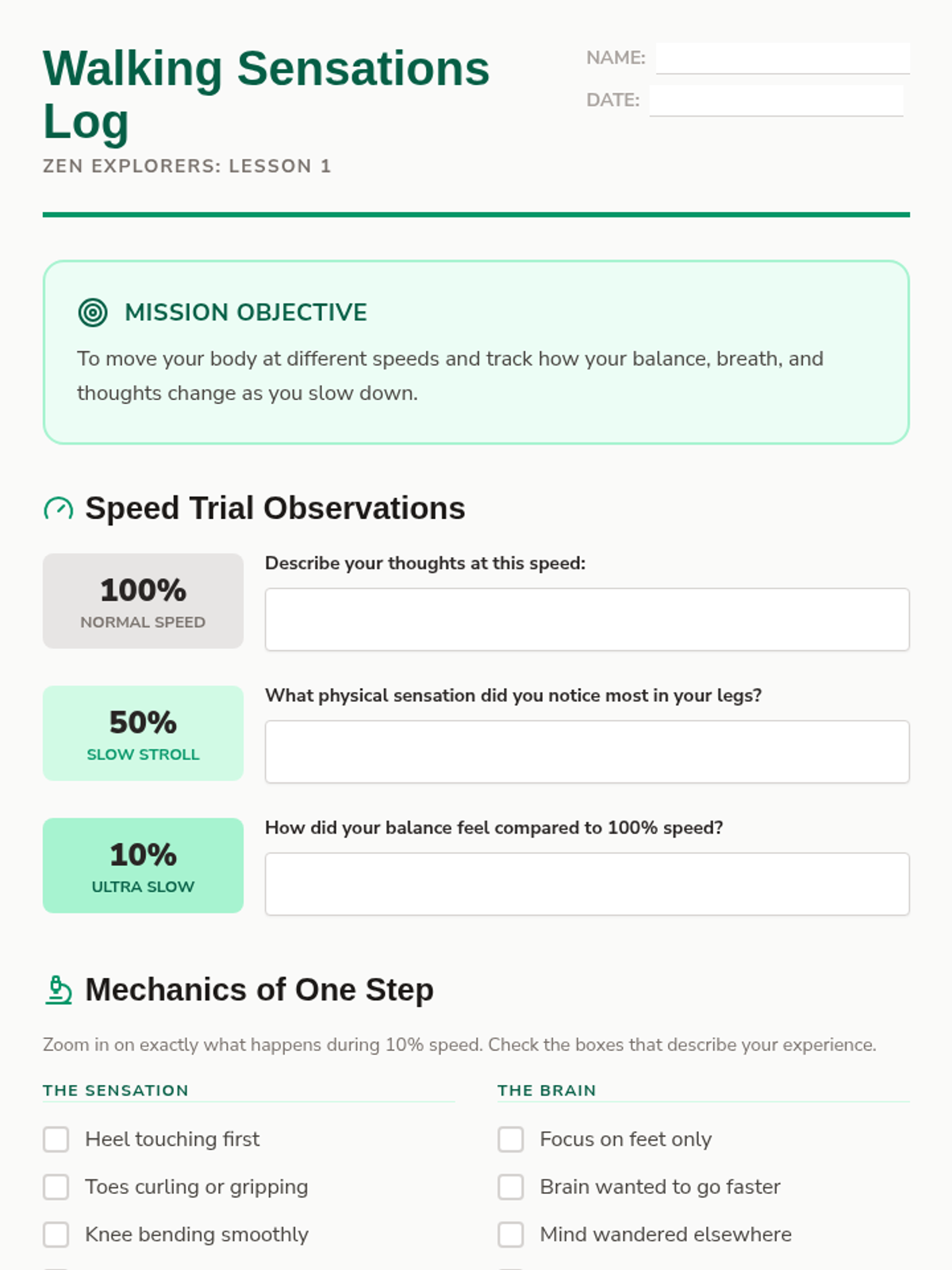
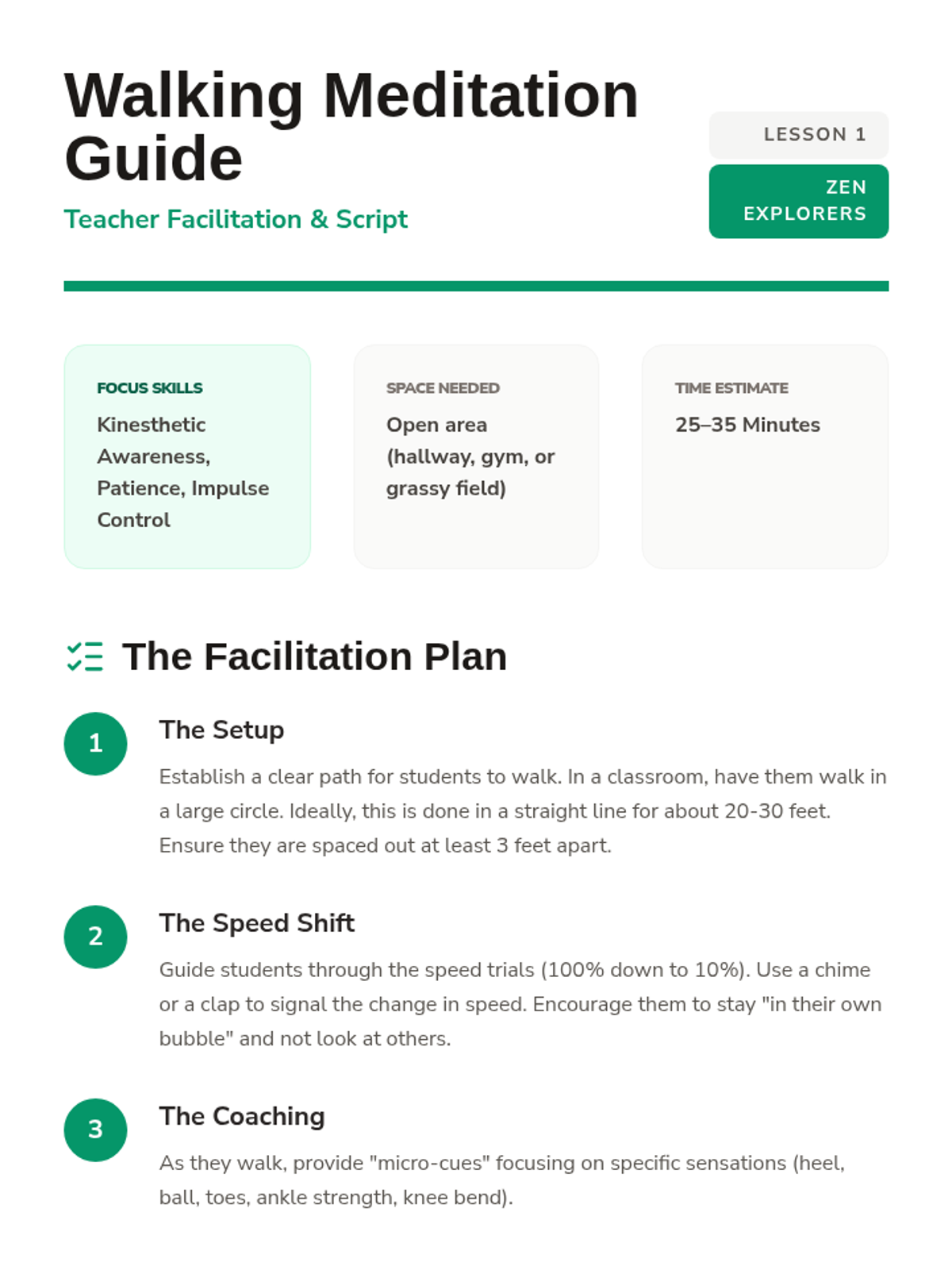
This sequence teaches 6th-grade students how to apply mindfulness to their everyday lives through movement, sensory awareness, and social interaction. Students will transition from quiet meditation to active, real-world mindfulness practices.
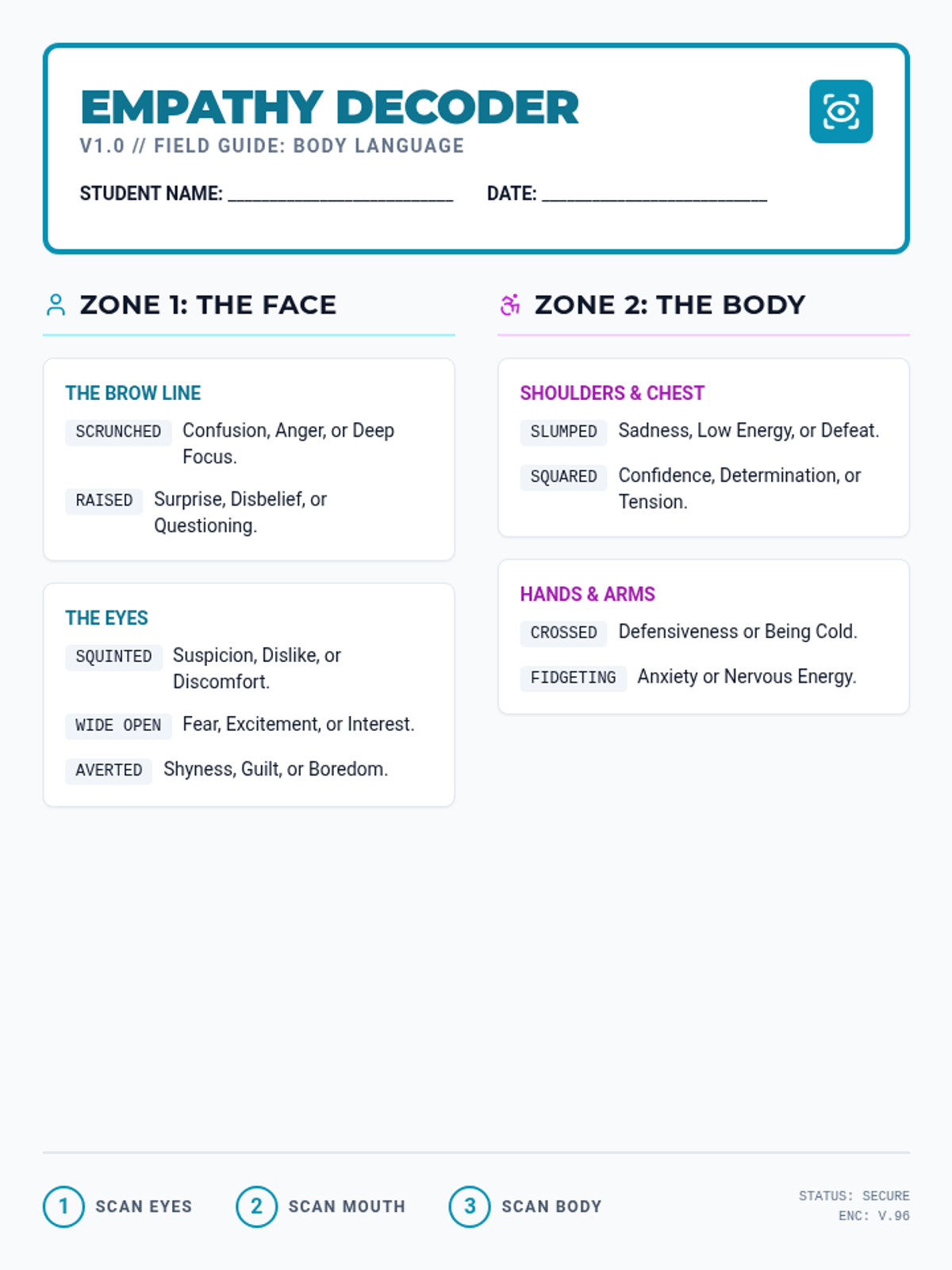
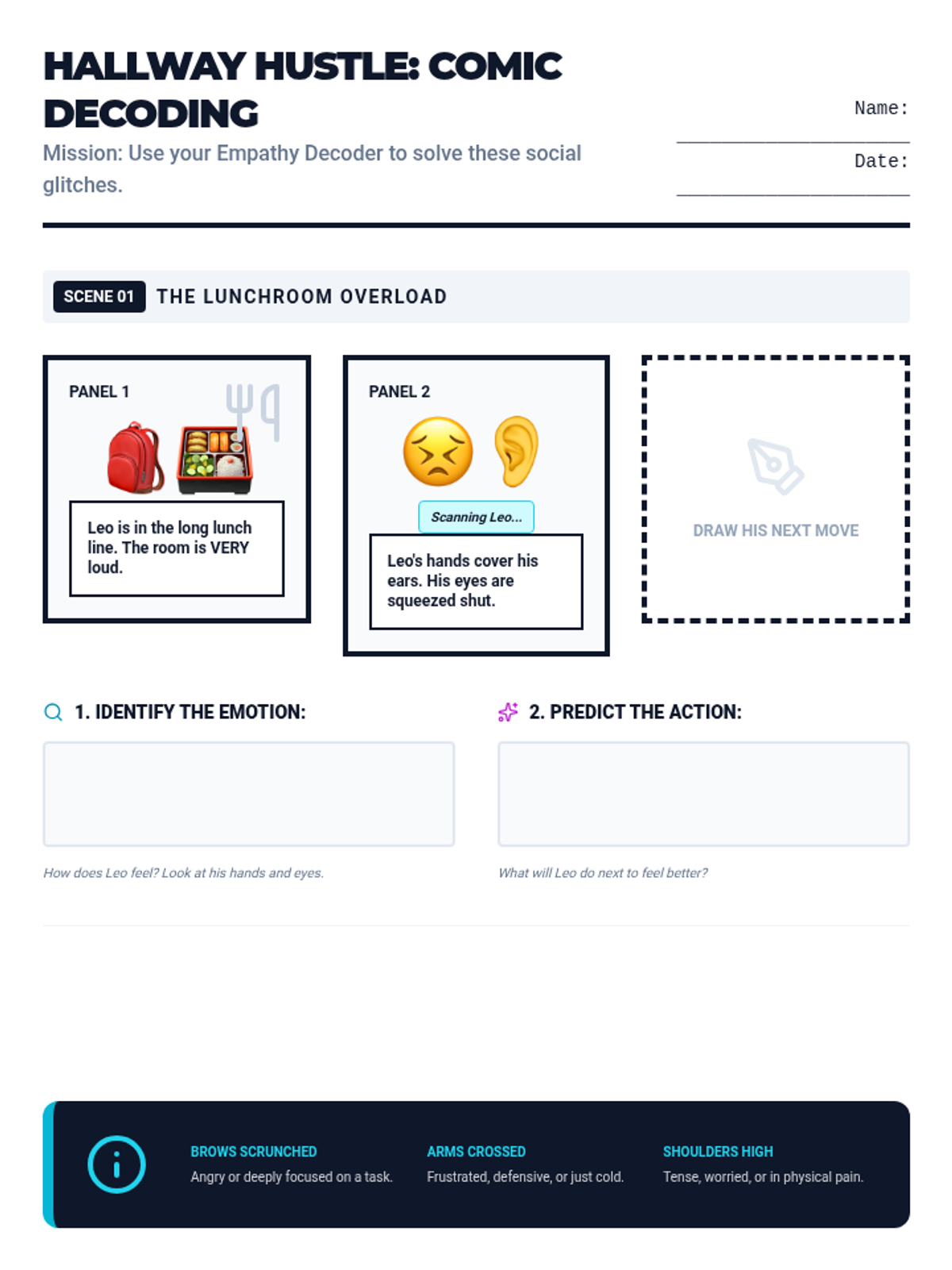
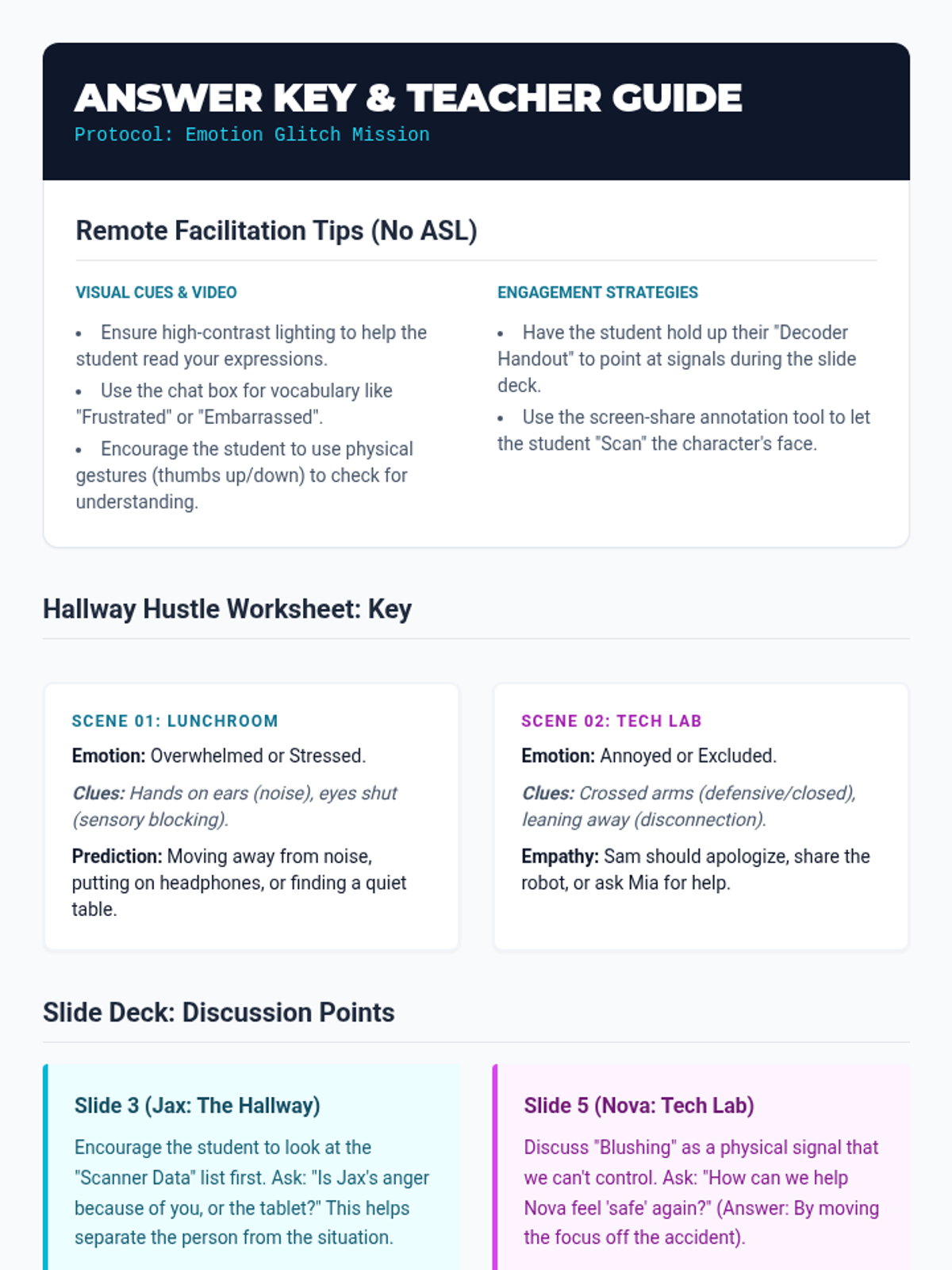
A narrative-driven social work unit for DHH students focusing on non-verbal communication and emotion recognition. Set in a futuristic 'cyber-school' environment to mirror the interactive style of Deafverse.
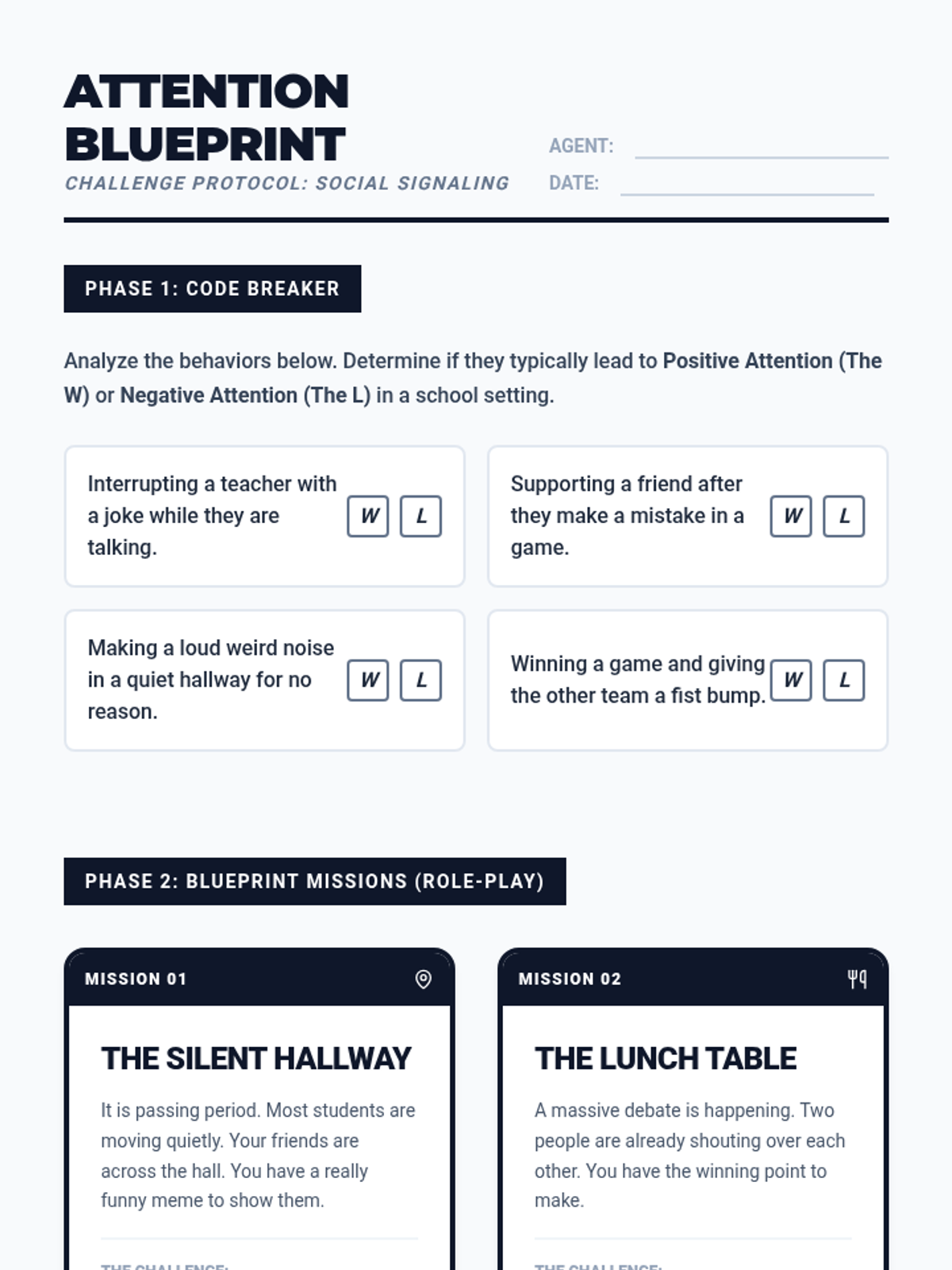
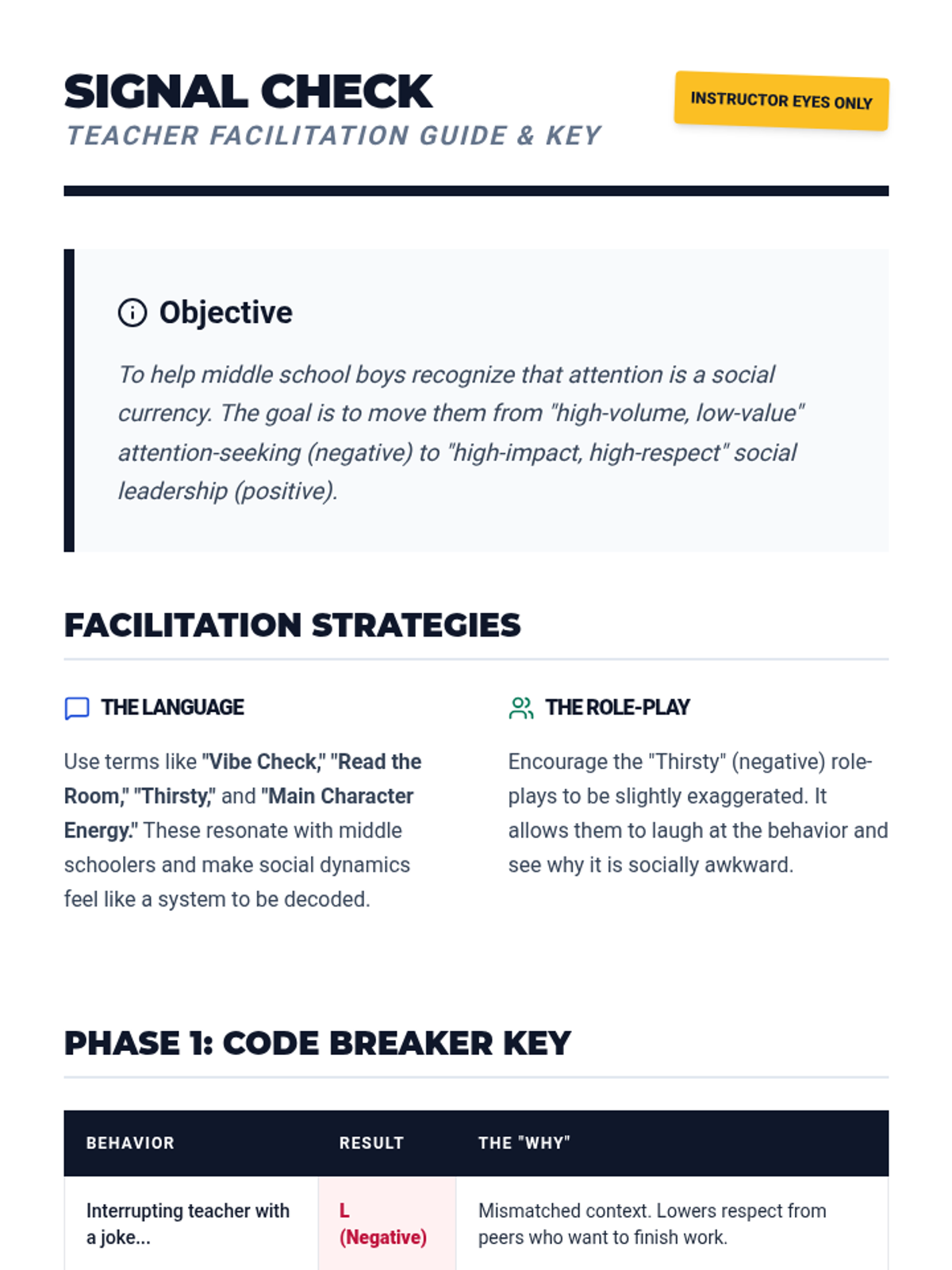
A unit focused on helping middle school boys navigate social dynamics, specifically focusing on how to gain positive attention through appropriate behavior, timing, and reading social contexts.
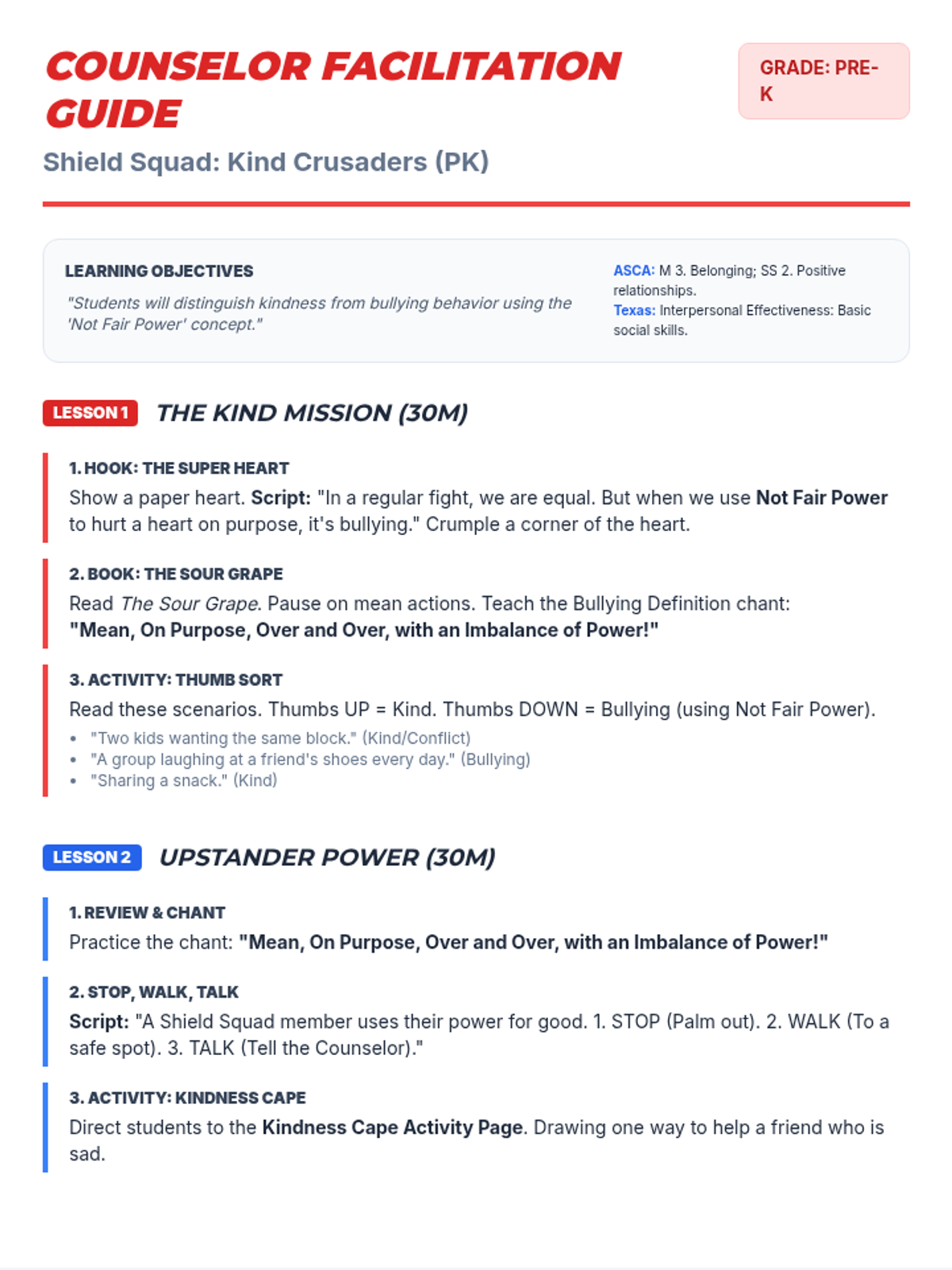
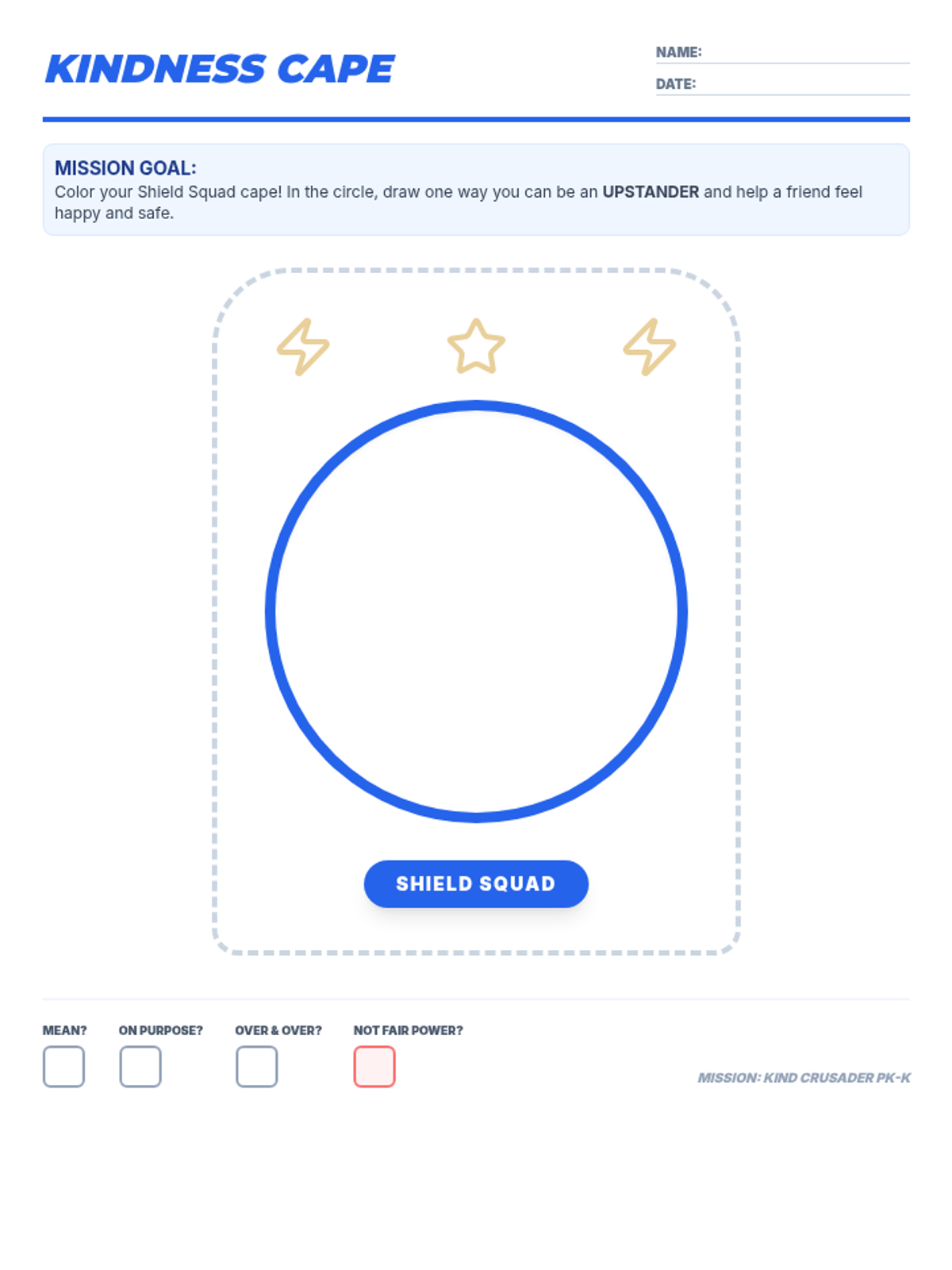
A comprehensive bullying prevention curriculum for PK-6 students, featuring two distinct 30-minute sessions for every individual grade level. The program uses mentor texts by Kathryn Otoshi, Trudy Ludwig, Julia Cook, and others to scaffold concepts of power imbalance, upstander strategies, and school culture change.
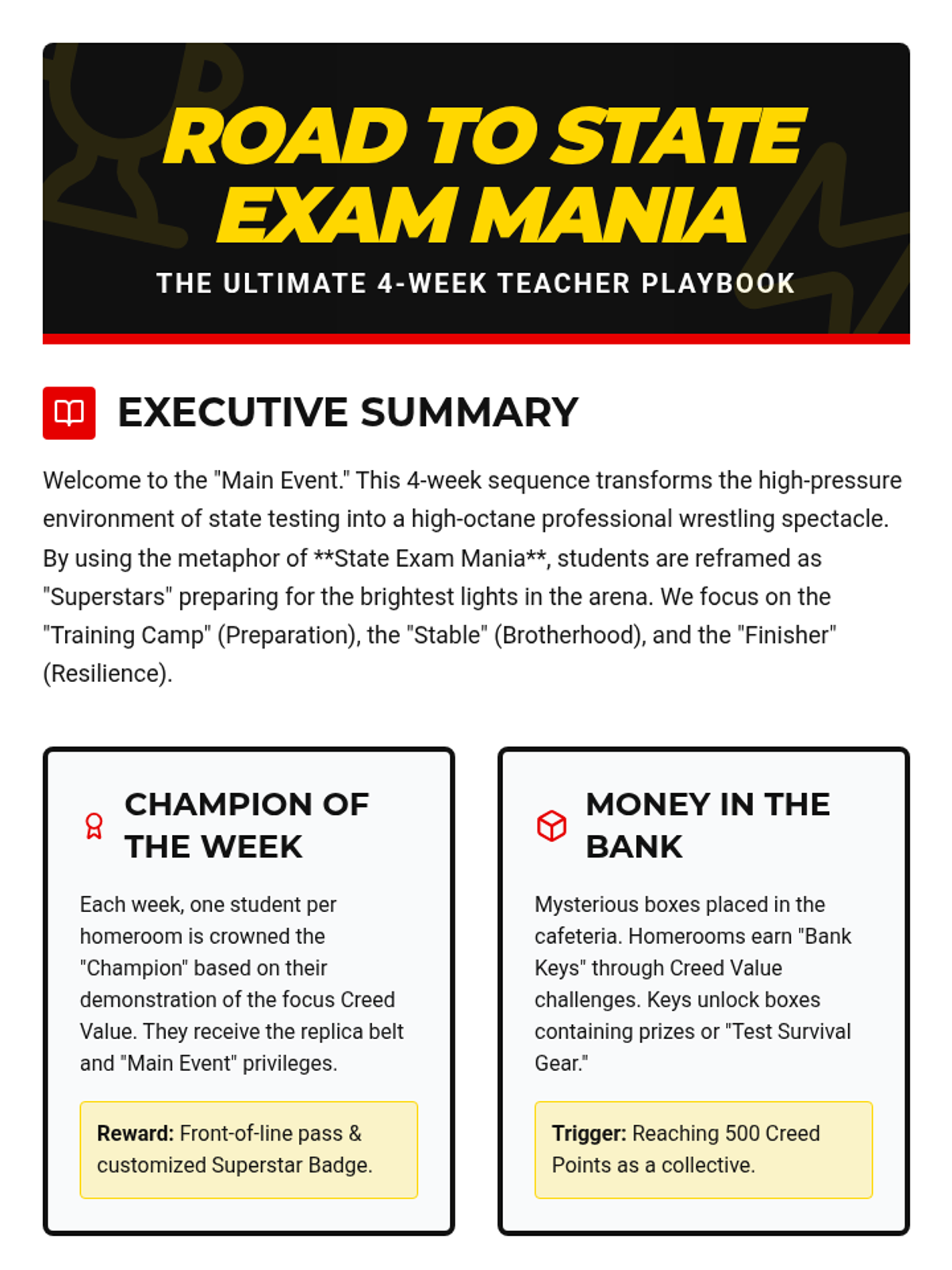
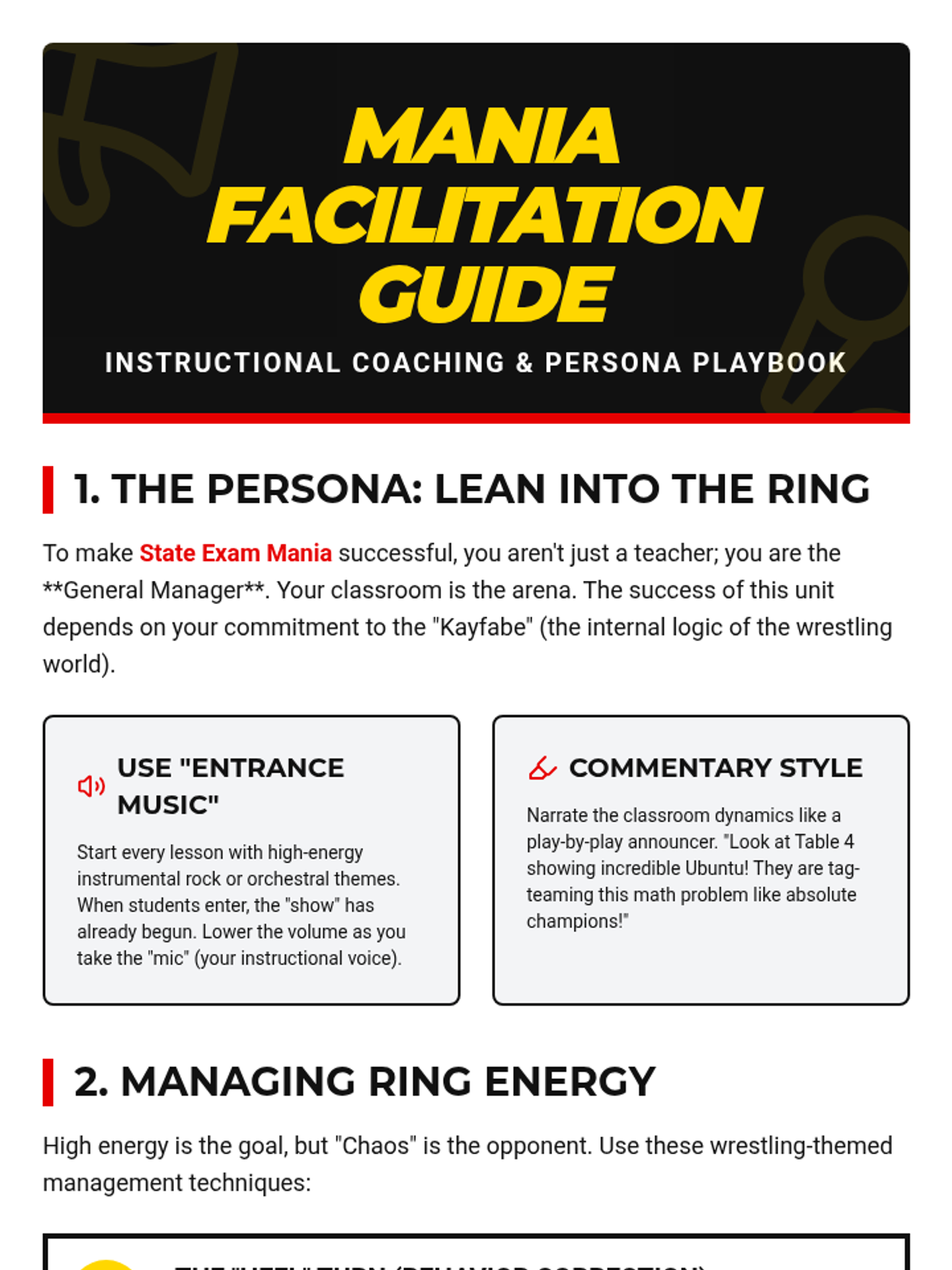
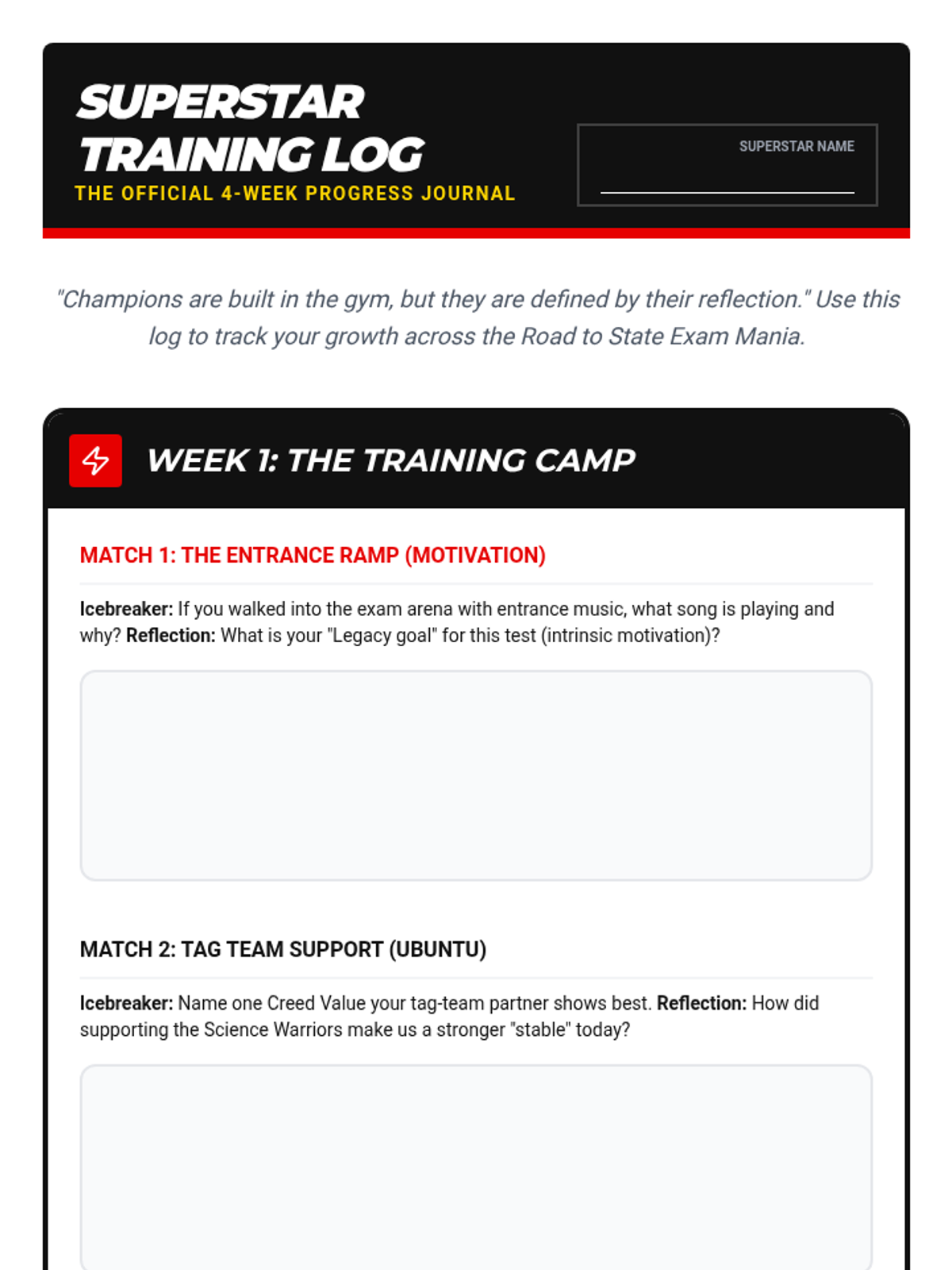
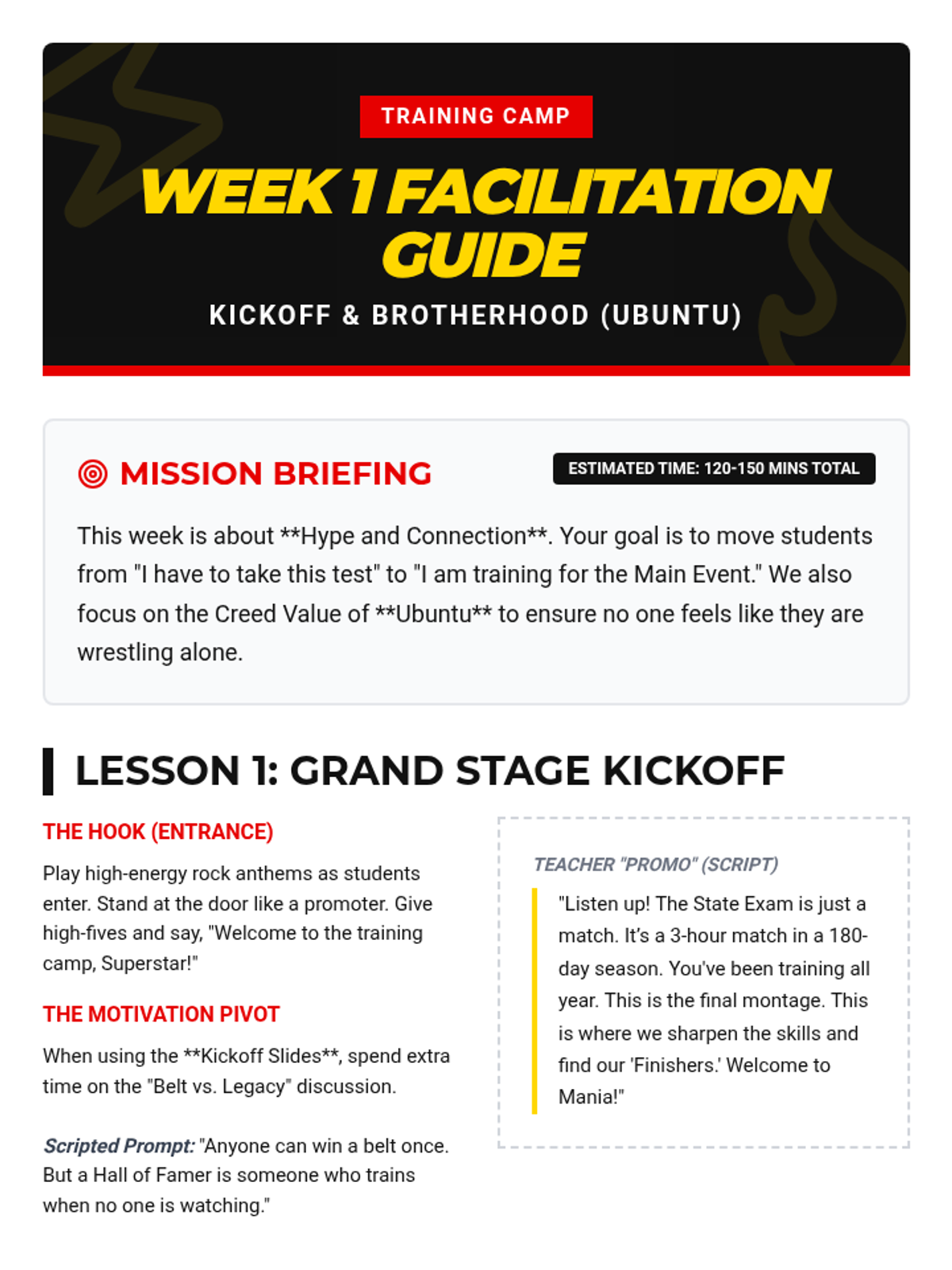
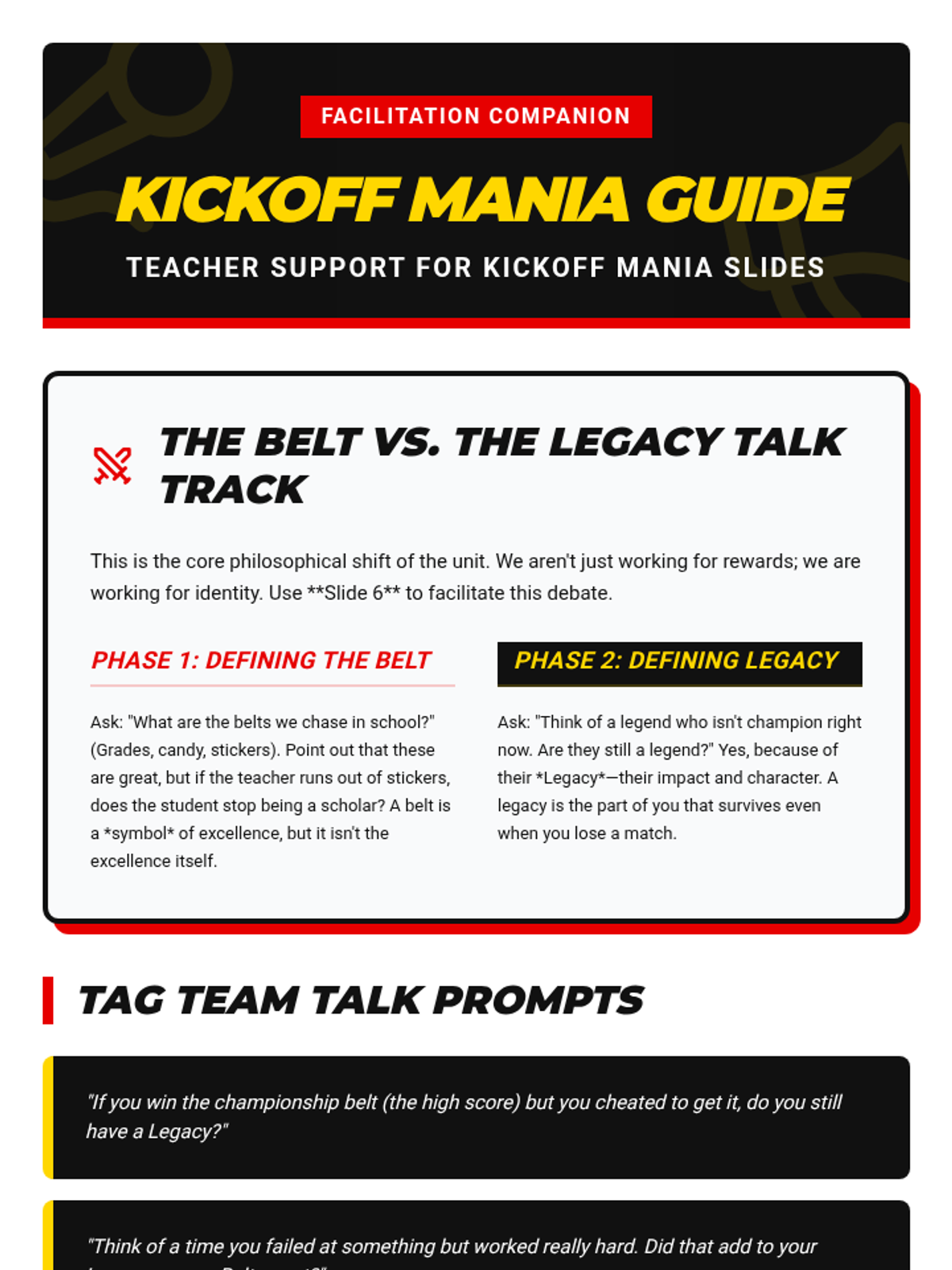
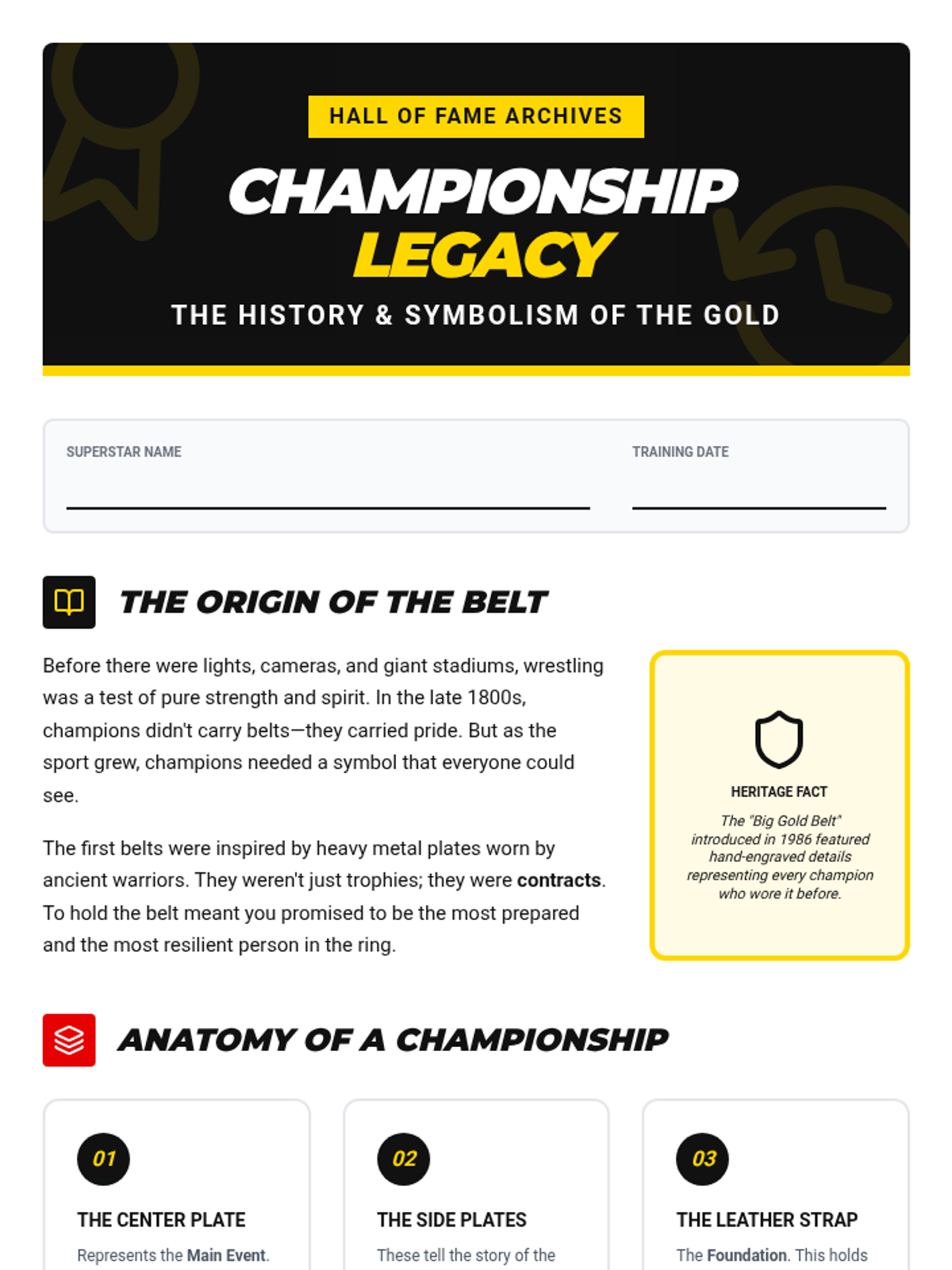
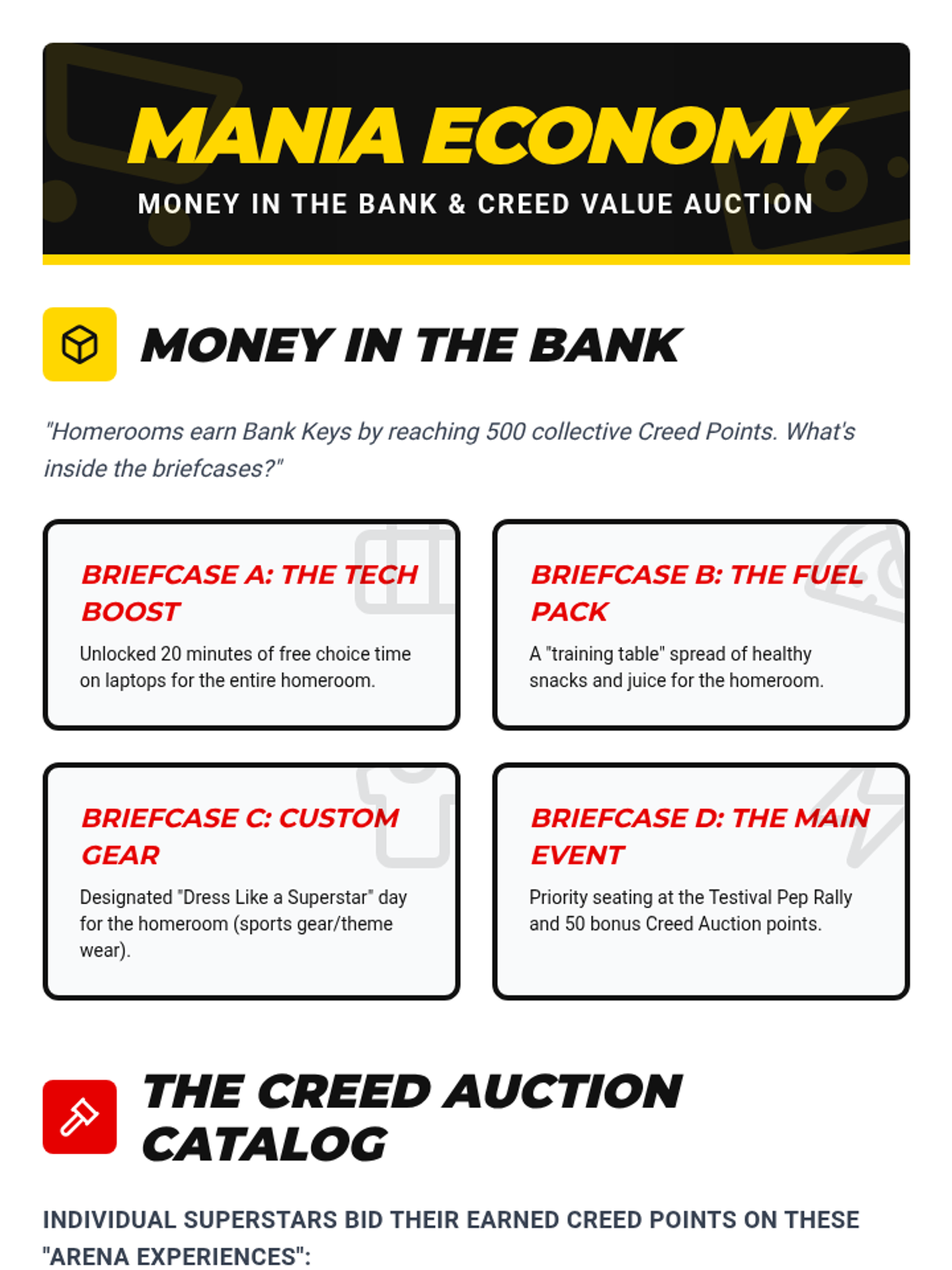
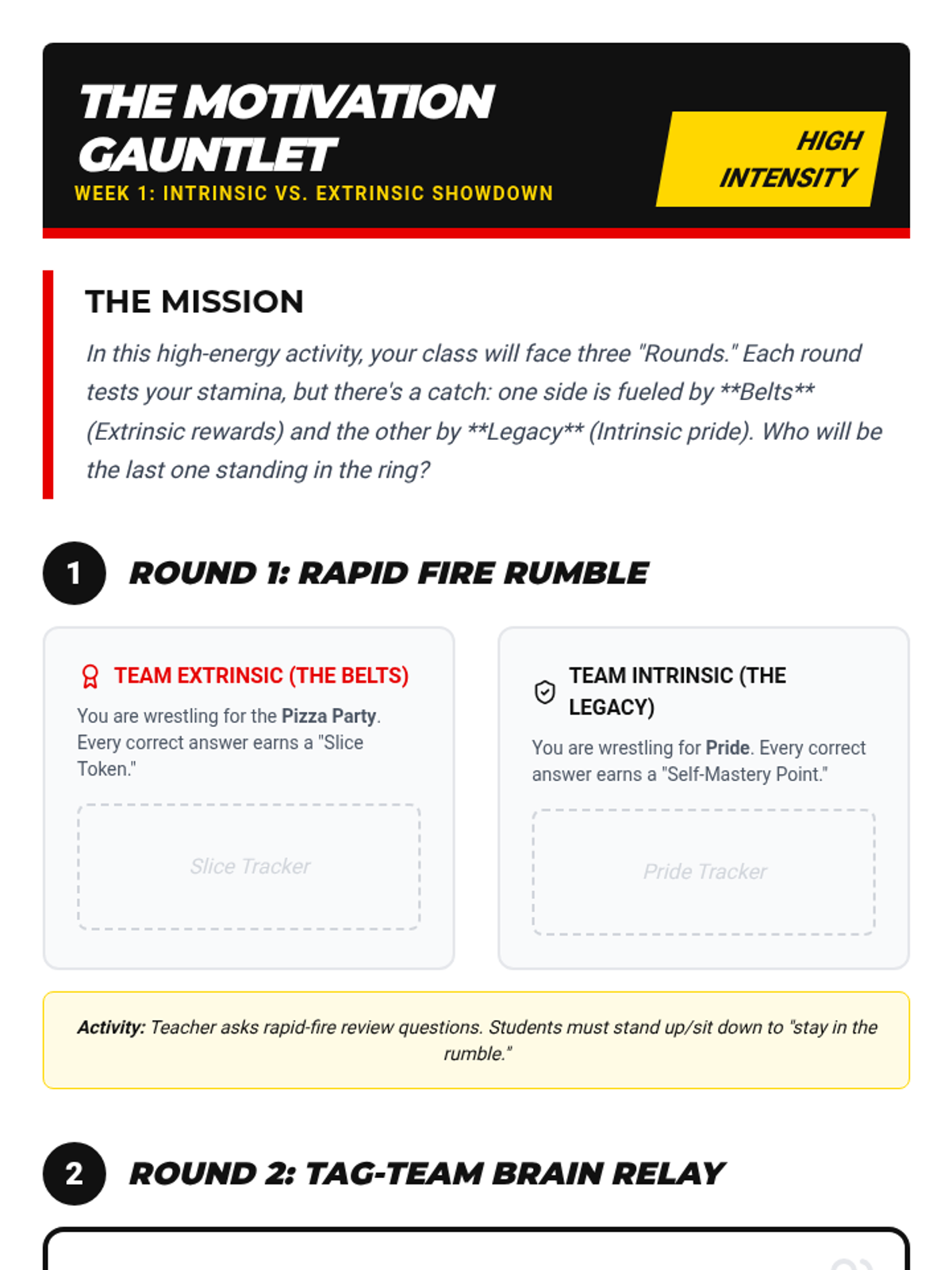
A 4-week socio-emotional learning sequence using professional wrestling as a metaphor for state exam preparation, focusing on motivation, resilience, and brotherhood.
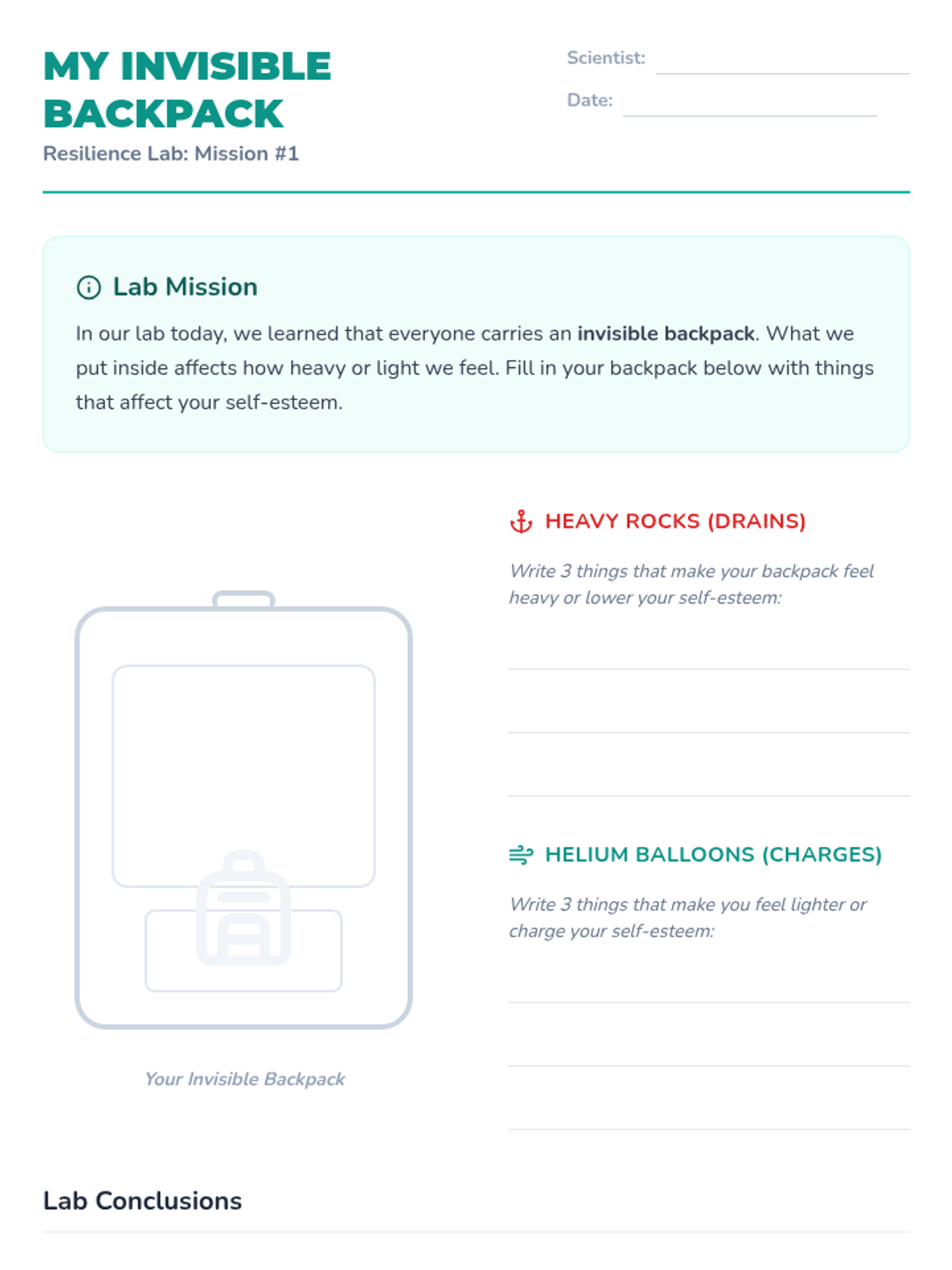
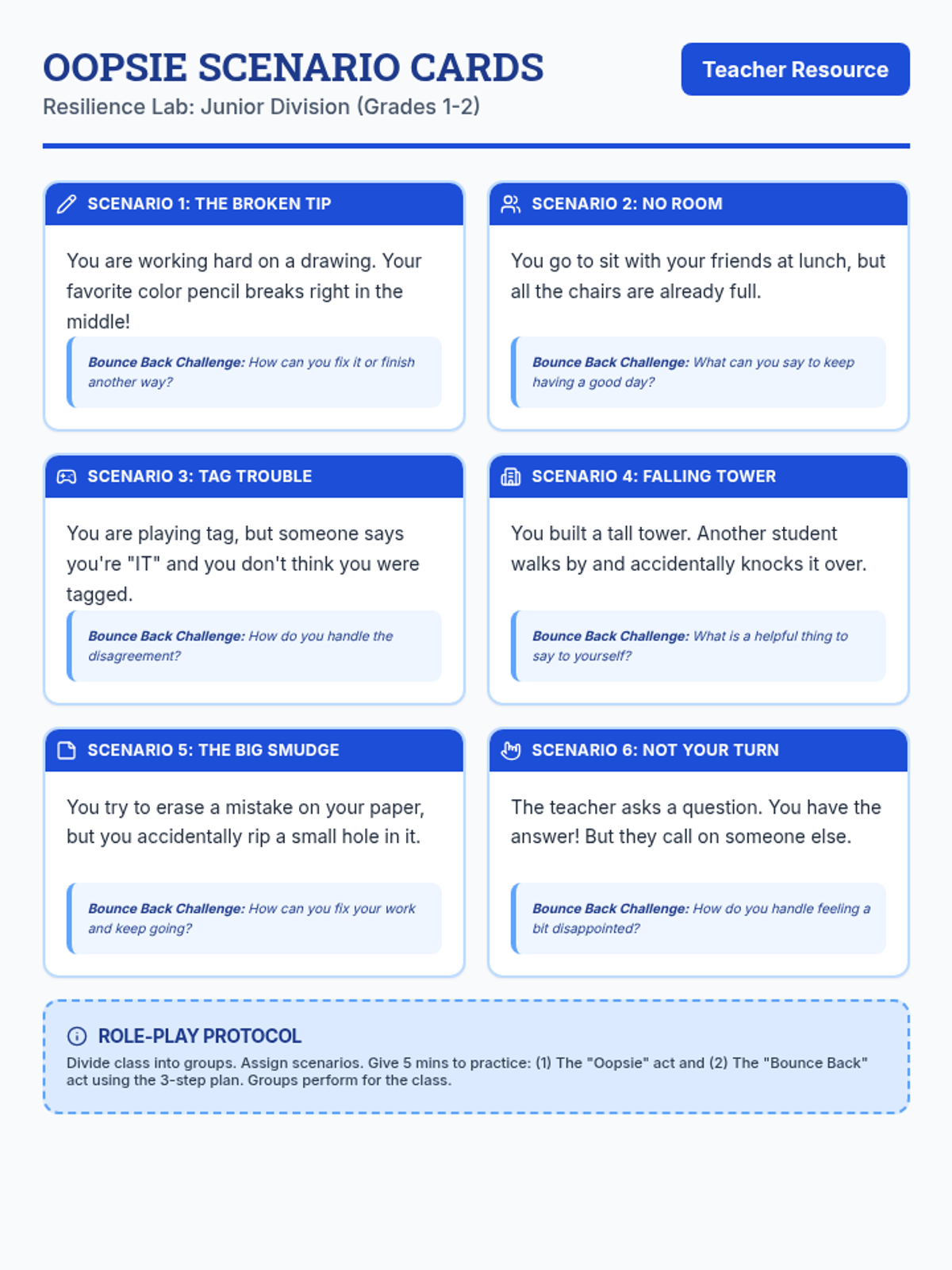
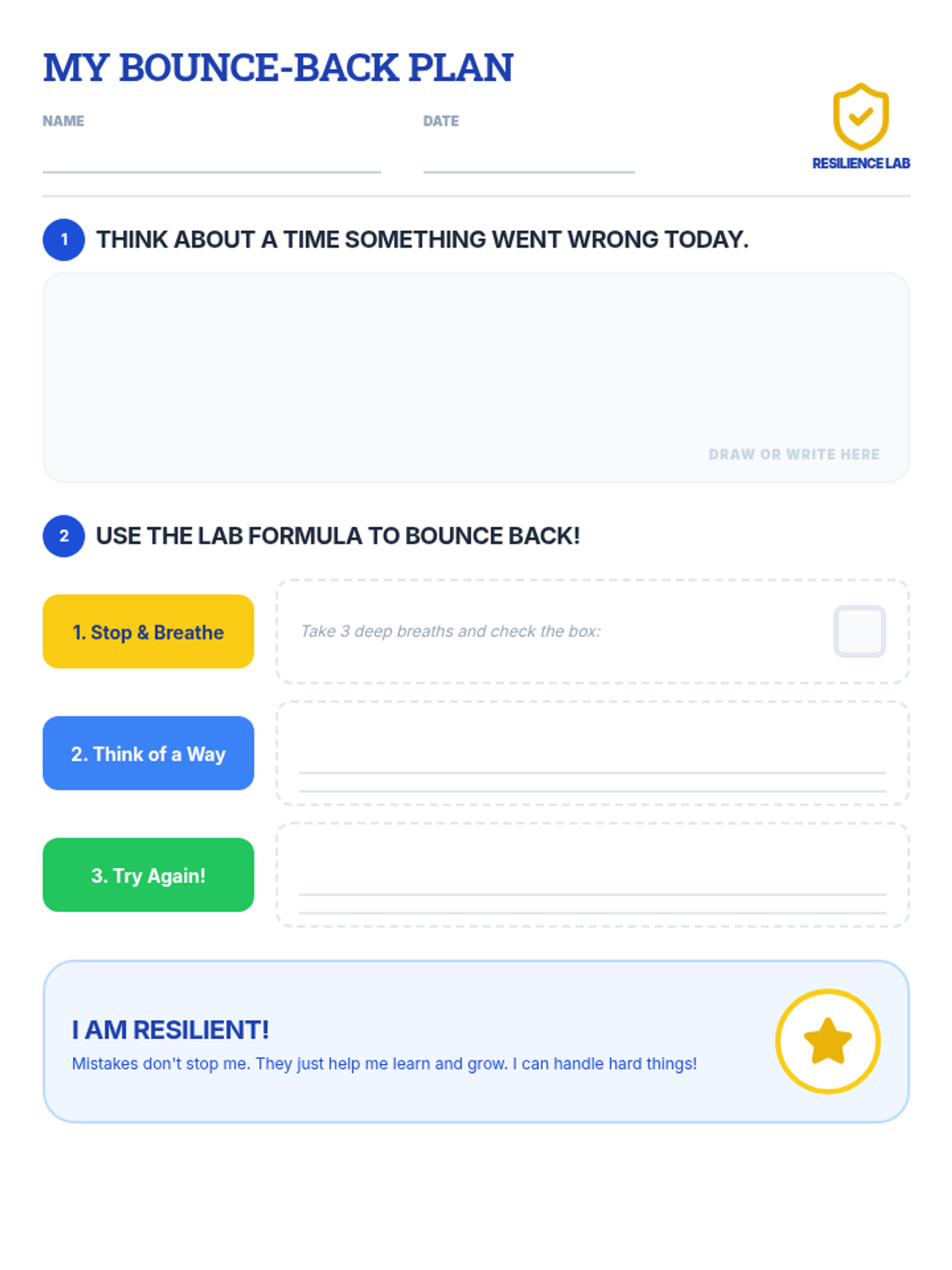
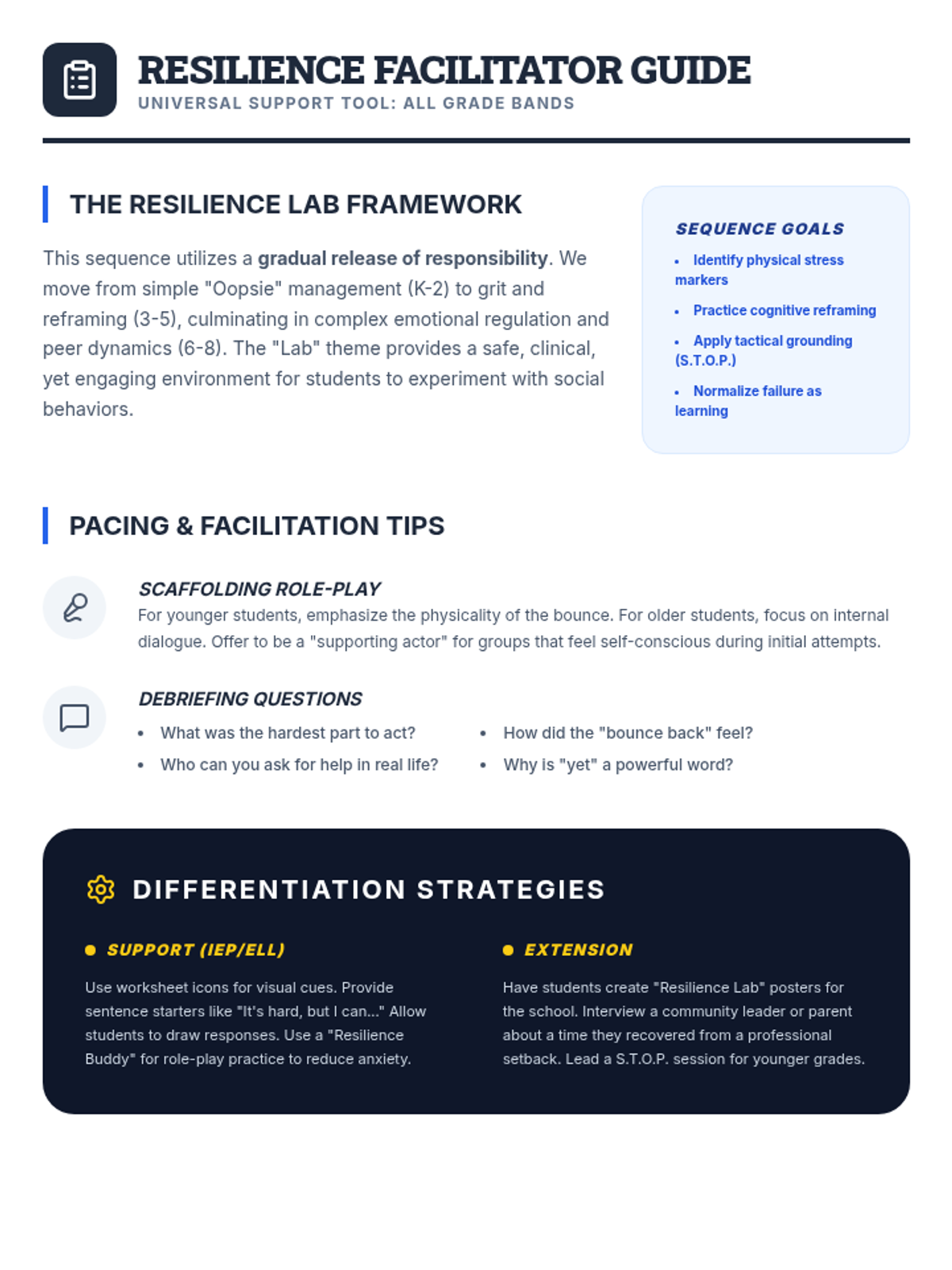
A comprehensive sequence on building resilience across three grade bands (1st-2nd, 3rd-5th, and 6th-8th), using the 'Resilience Lab' theme to teach students how to navigate setbacks and grow through challenges.
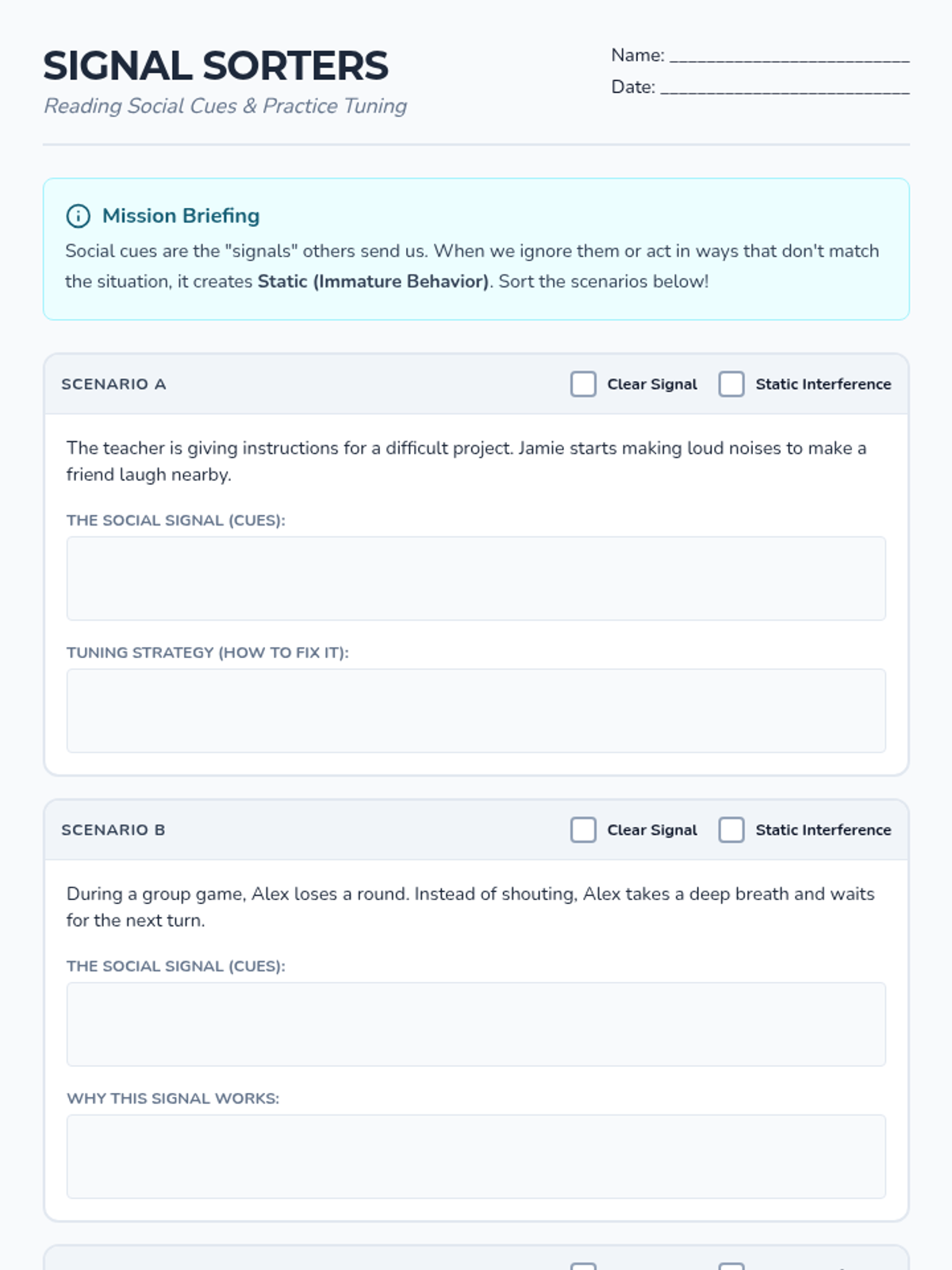
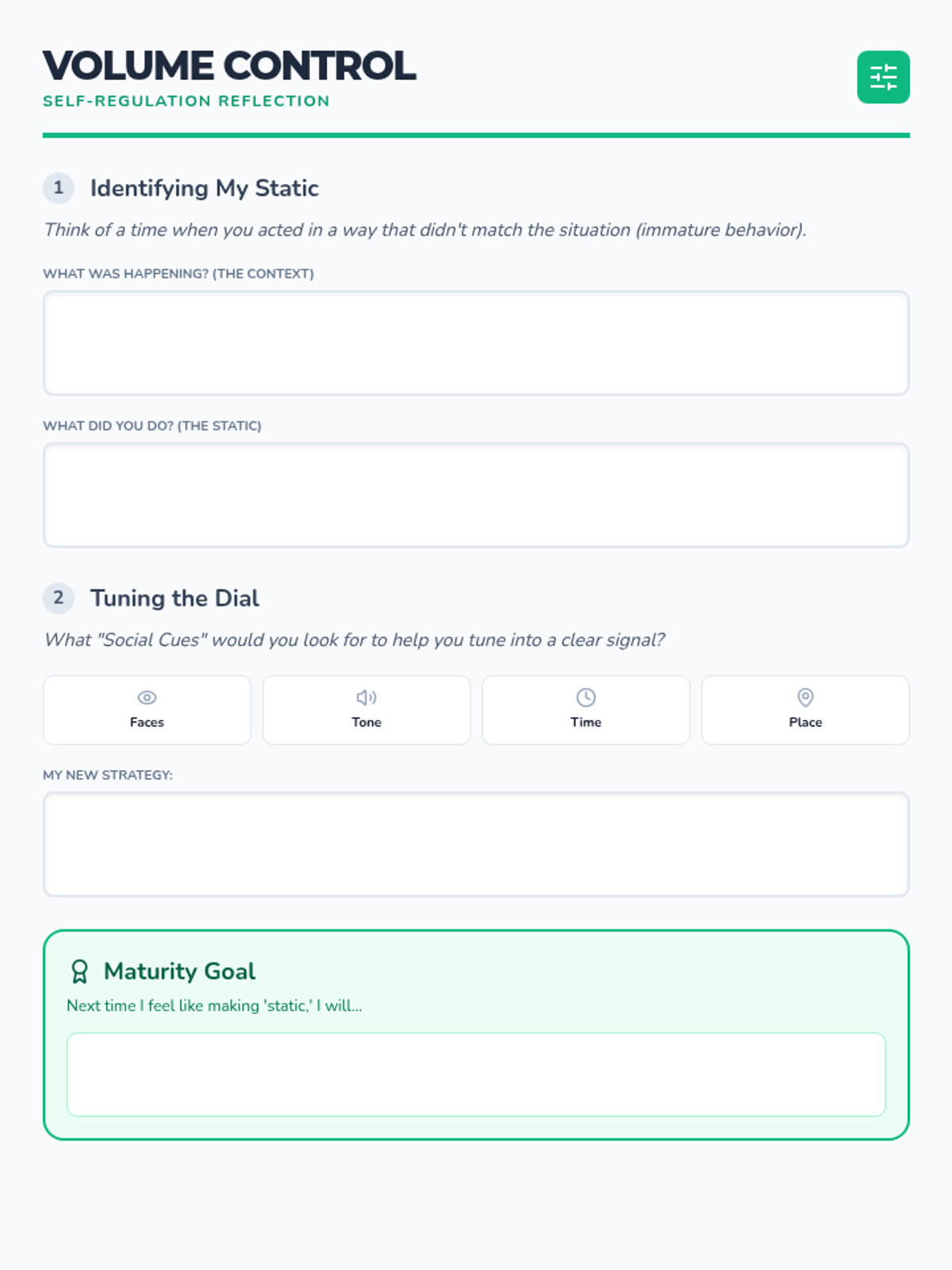
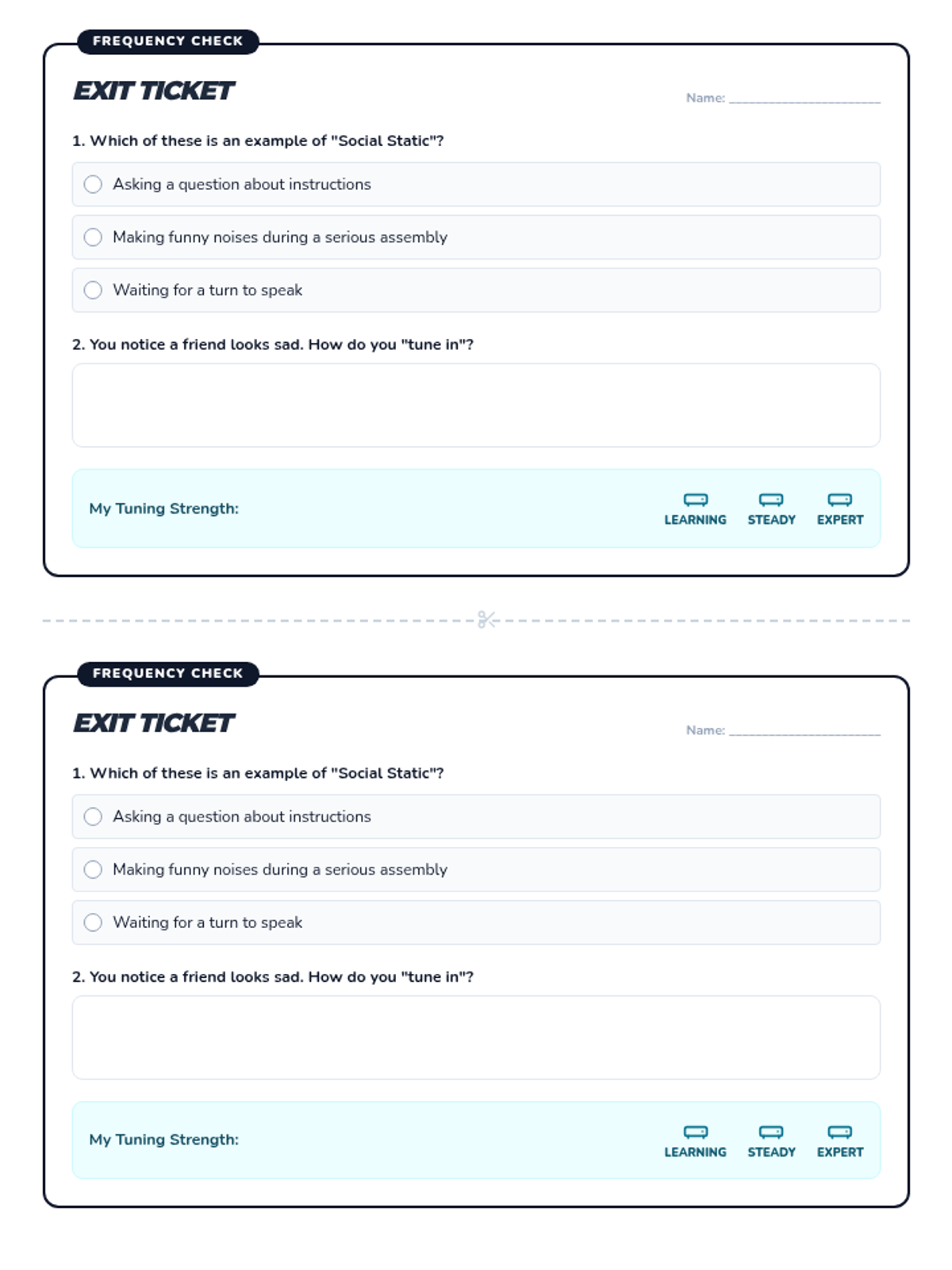
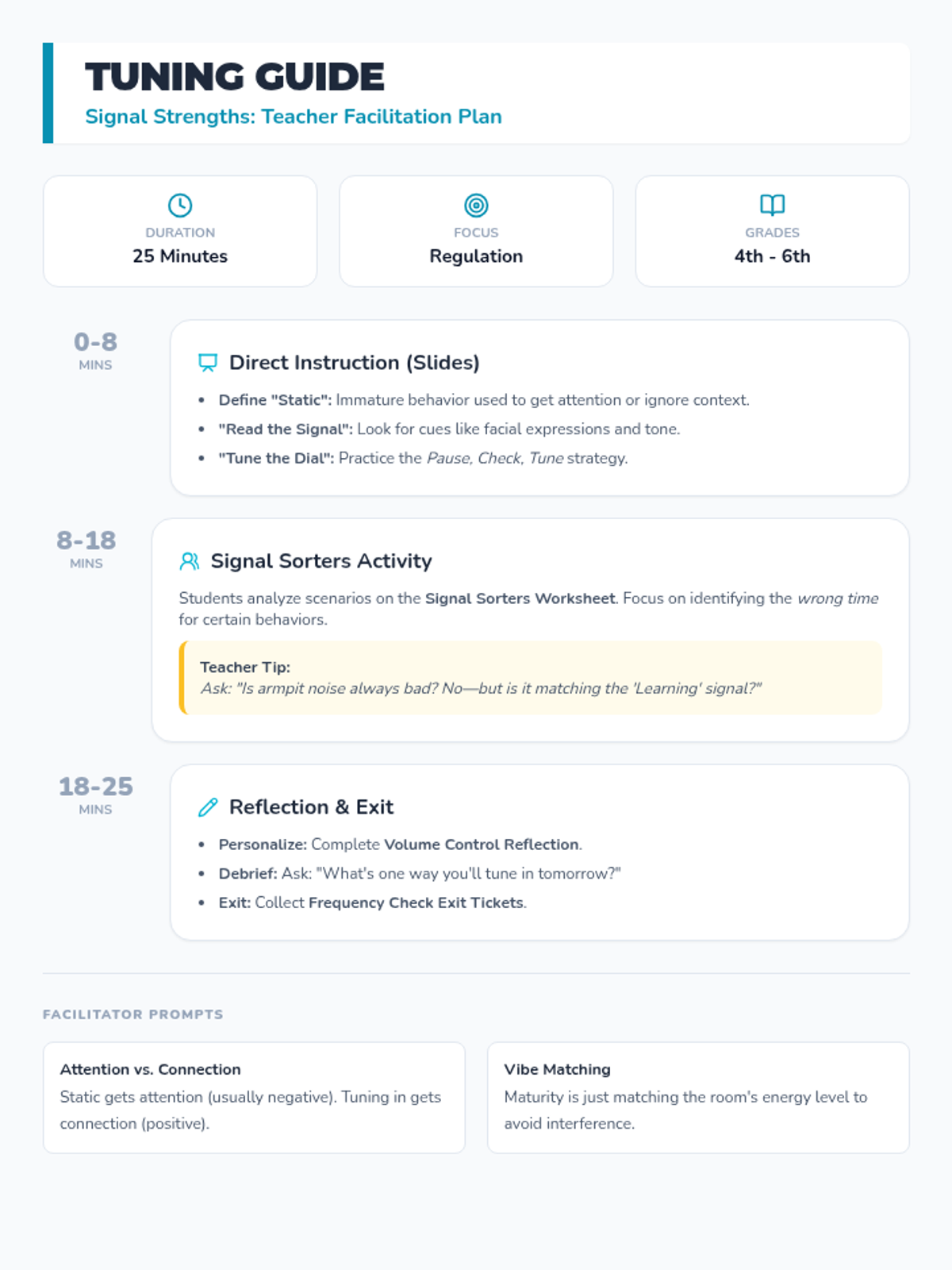
A series of lessons designed to improve social-emotional intelligence through the metaphor of radio signals and frequencies, focusing on social cues and self-regulation.
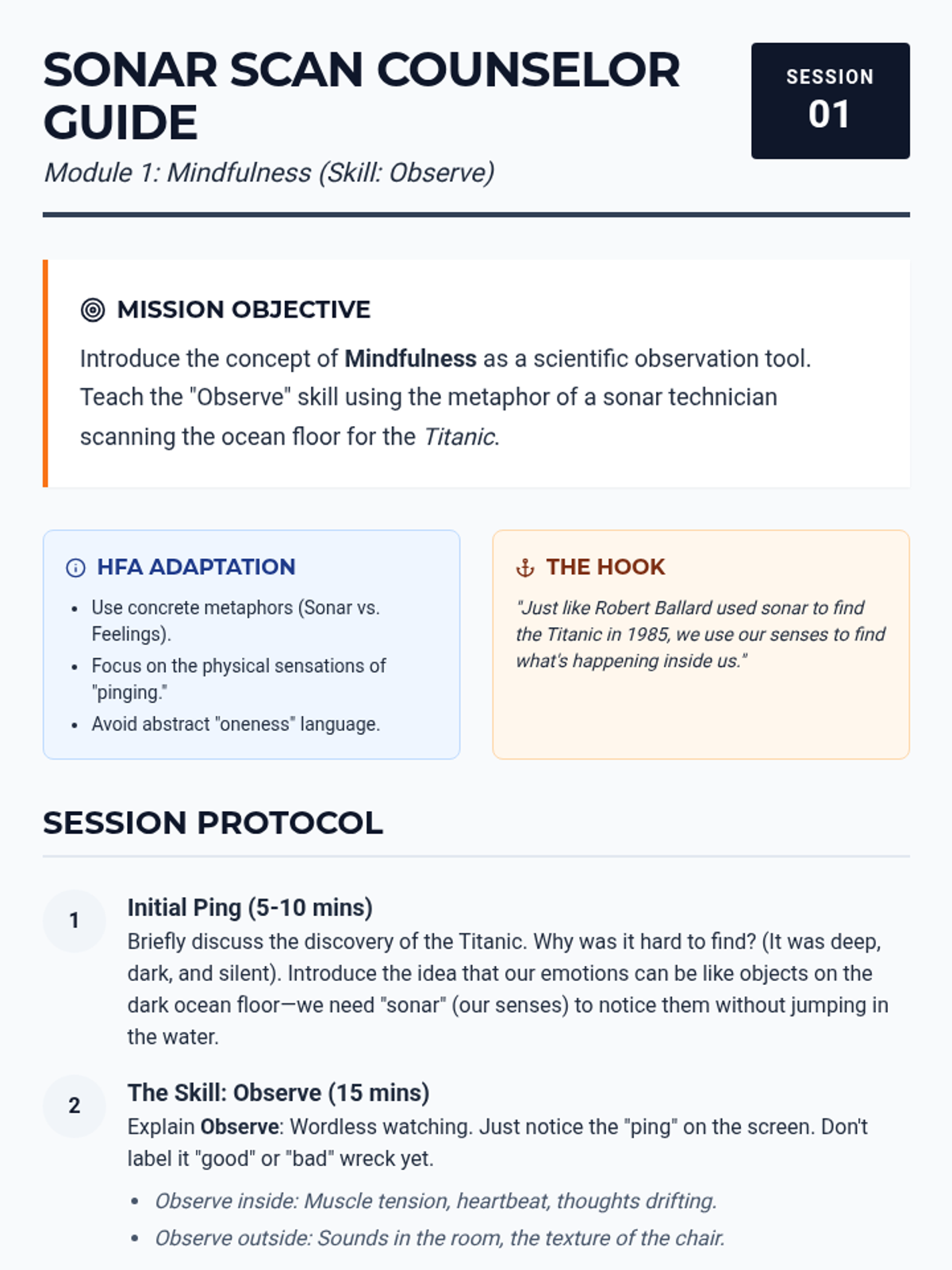
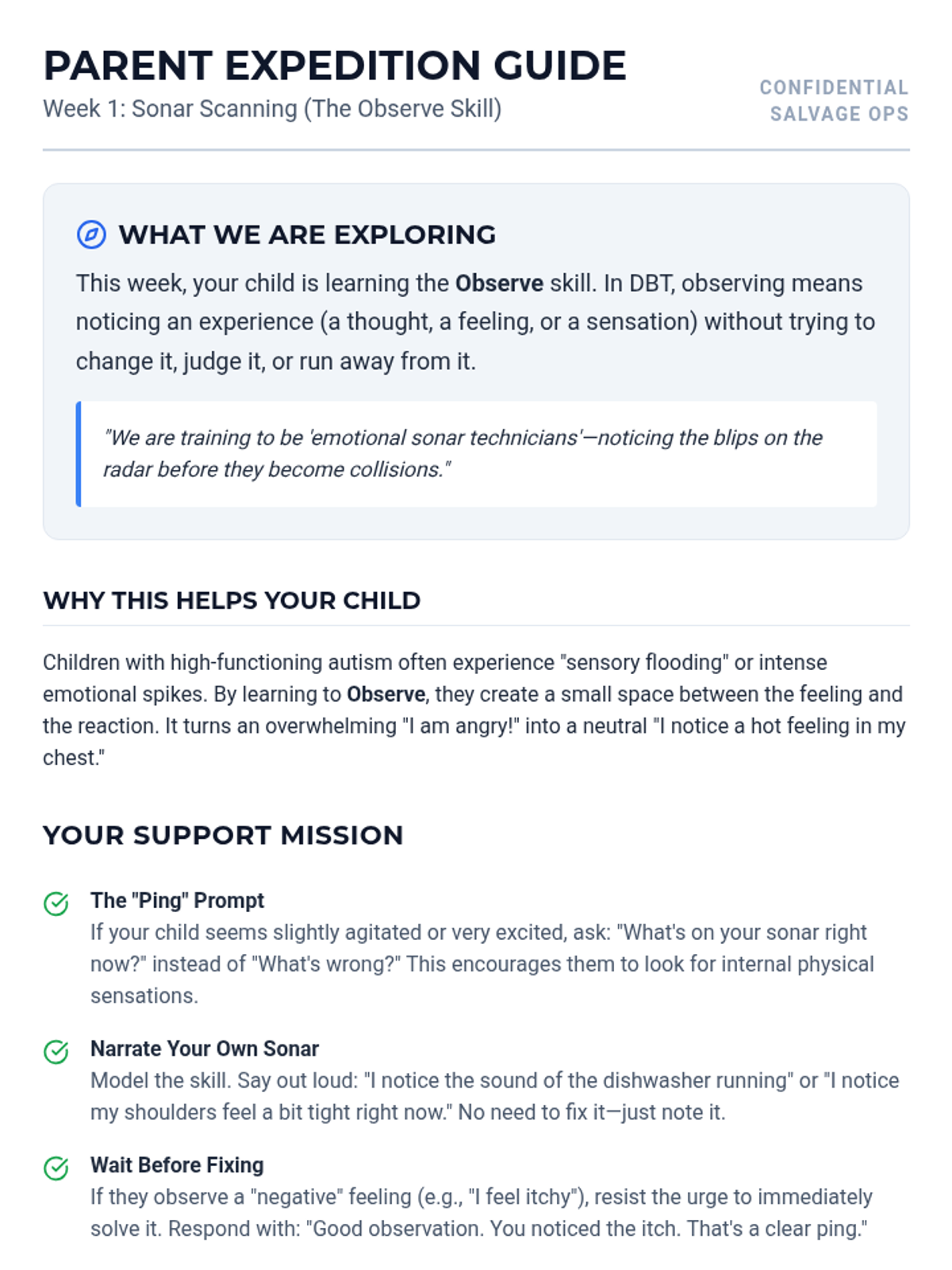
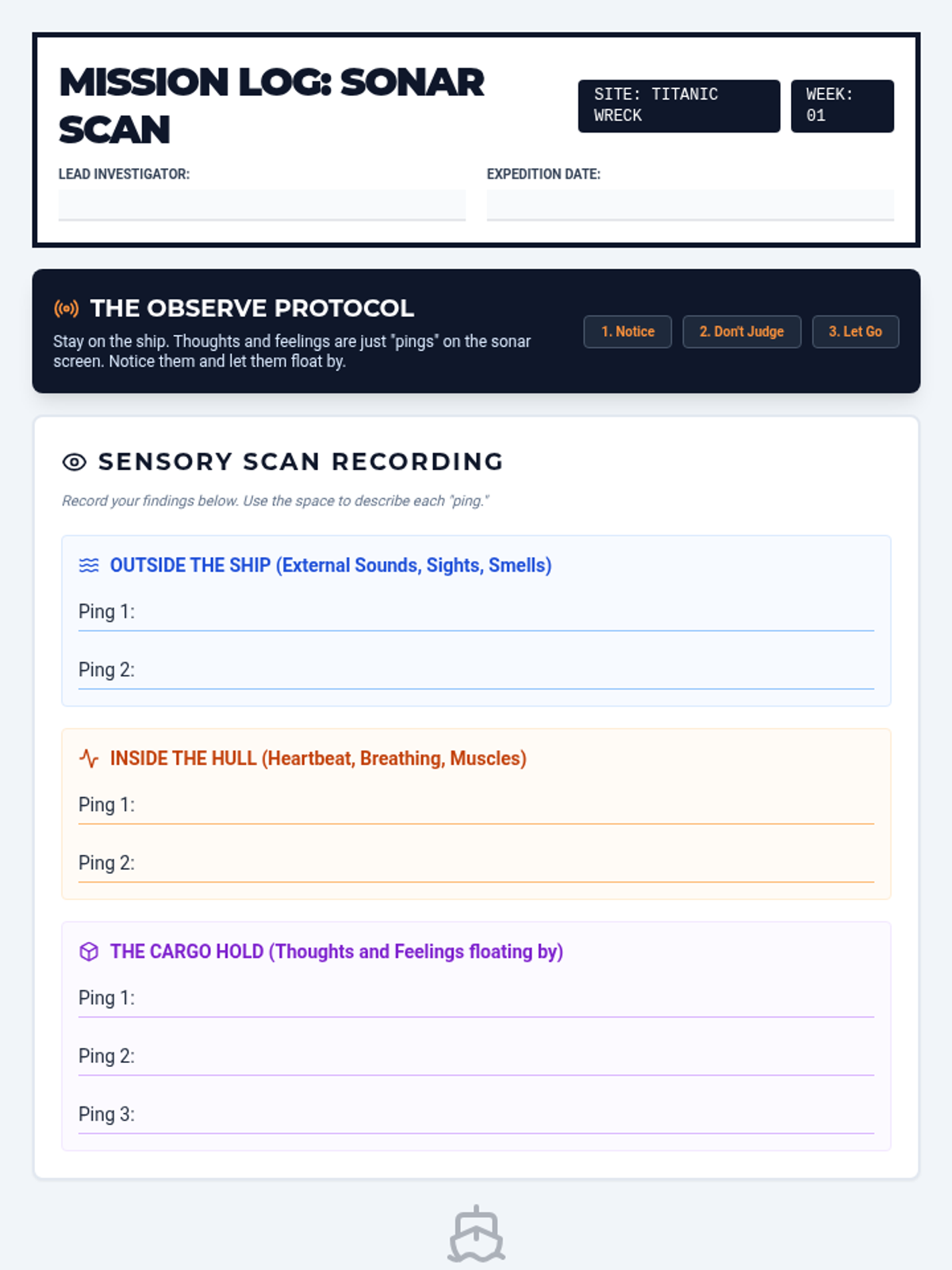
A comprehensive 16-week DBT program adapted for children with high-functioning autism, using shipwrecks and plane crashes as high-interest metaphors for emotional regulation, mindfulness, and distress tolerance. Each week includes a counselor guide, parent guide, and client worksheet themed around historical salvage and survival missions.
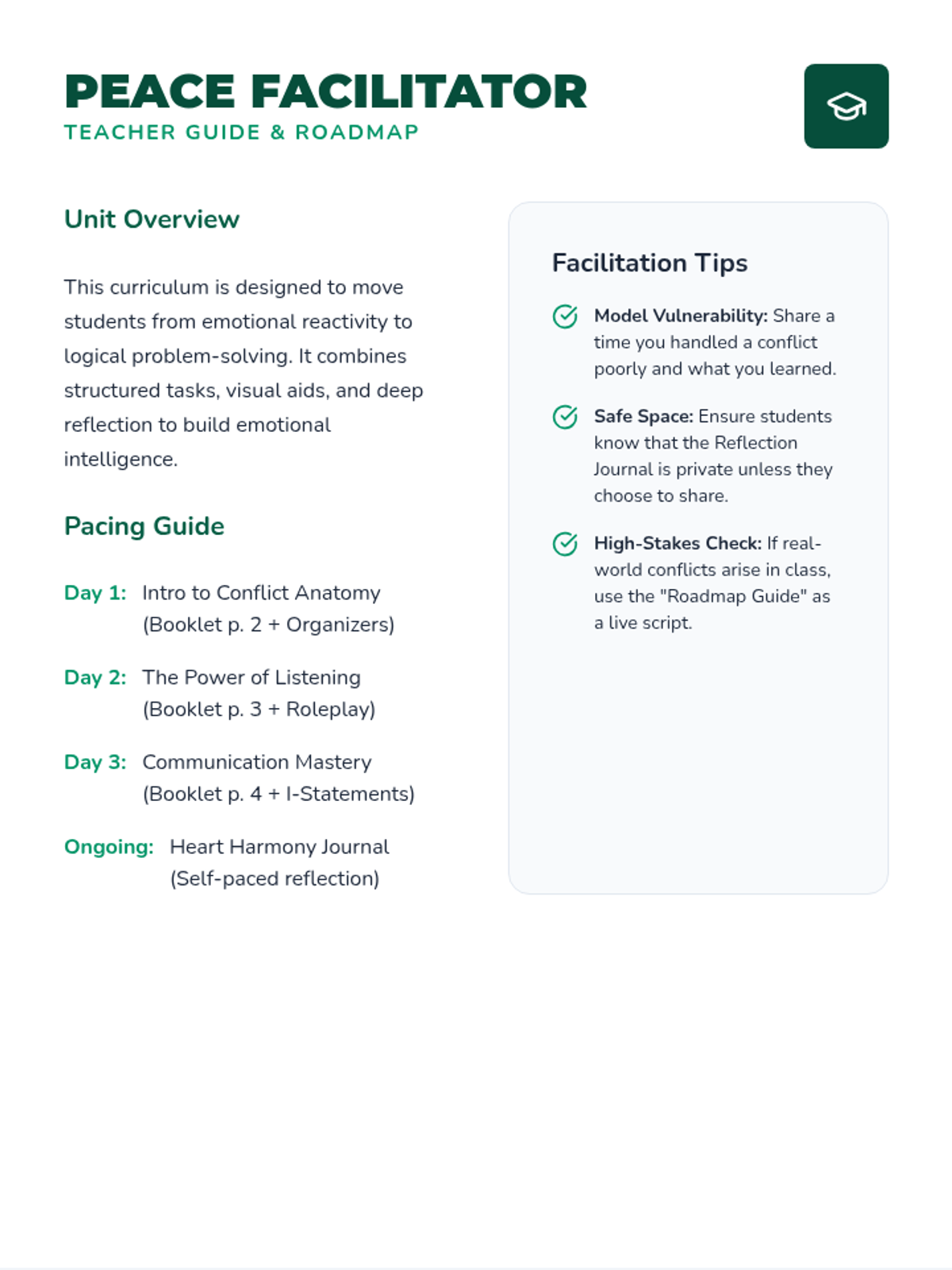
A comprehensive curriculum designed to teach students the essential skills of conflict resolution, de-escalation, and empathetic communication through hands-on tasks and self-reflection.
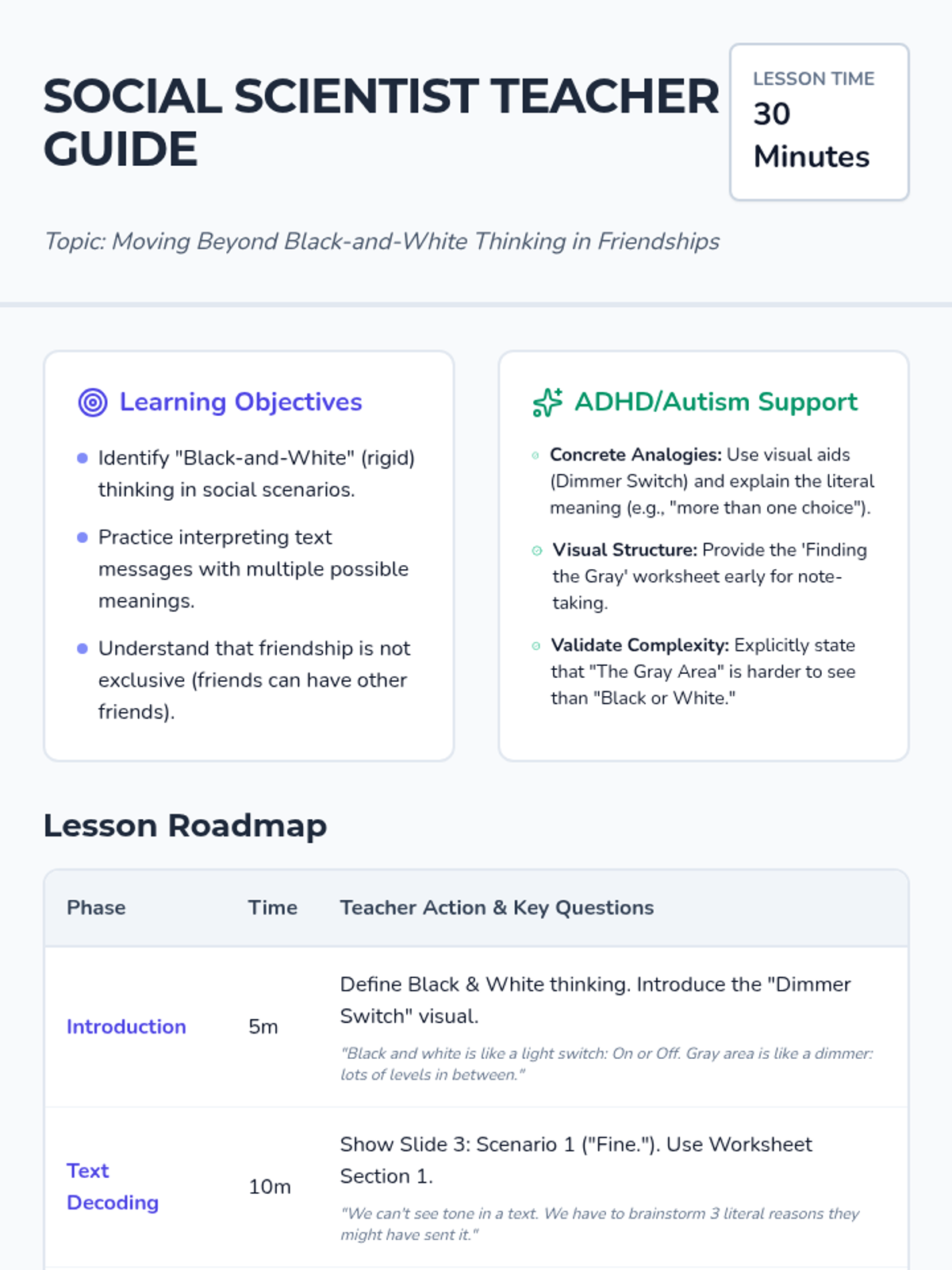
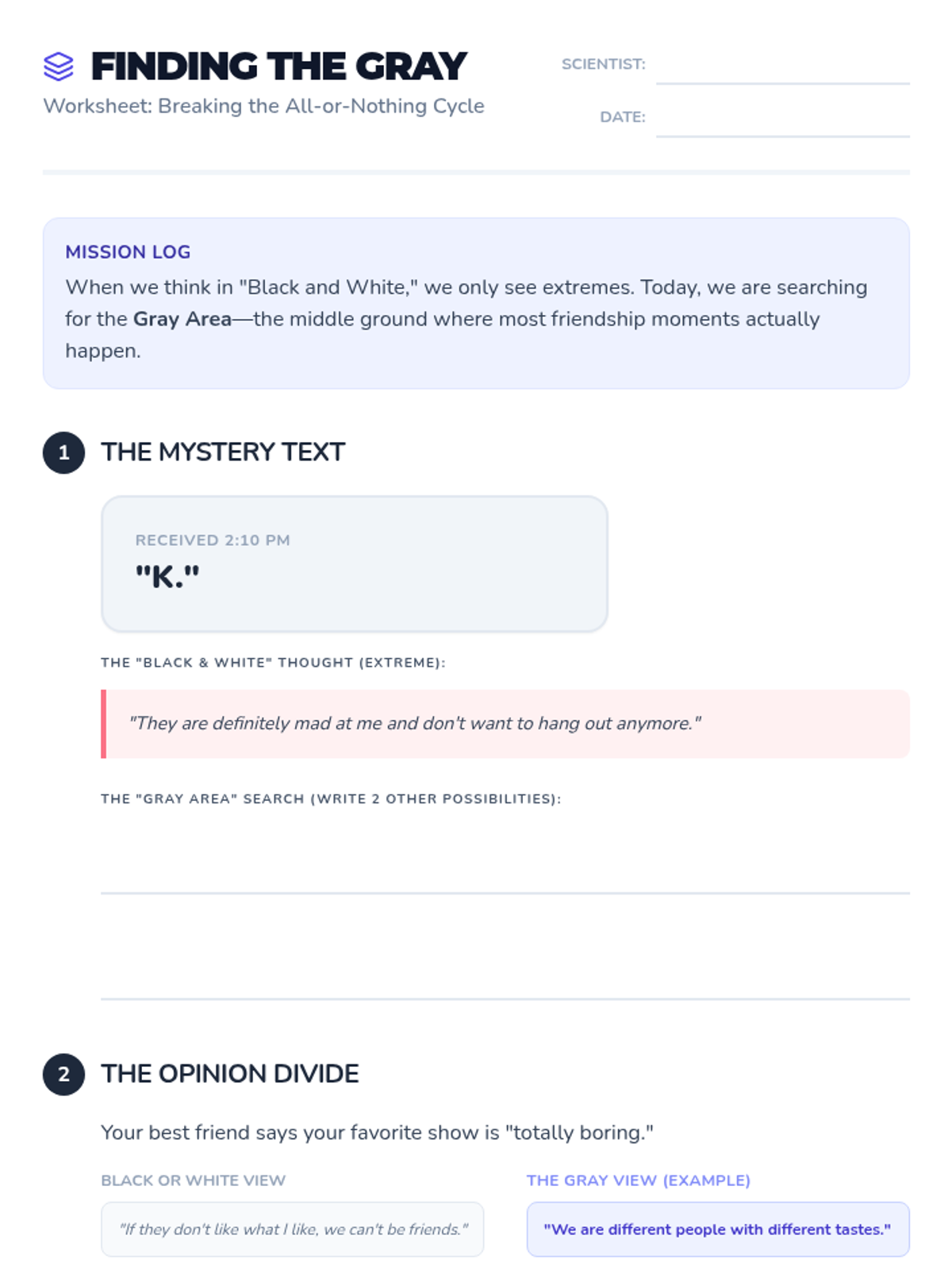
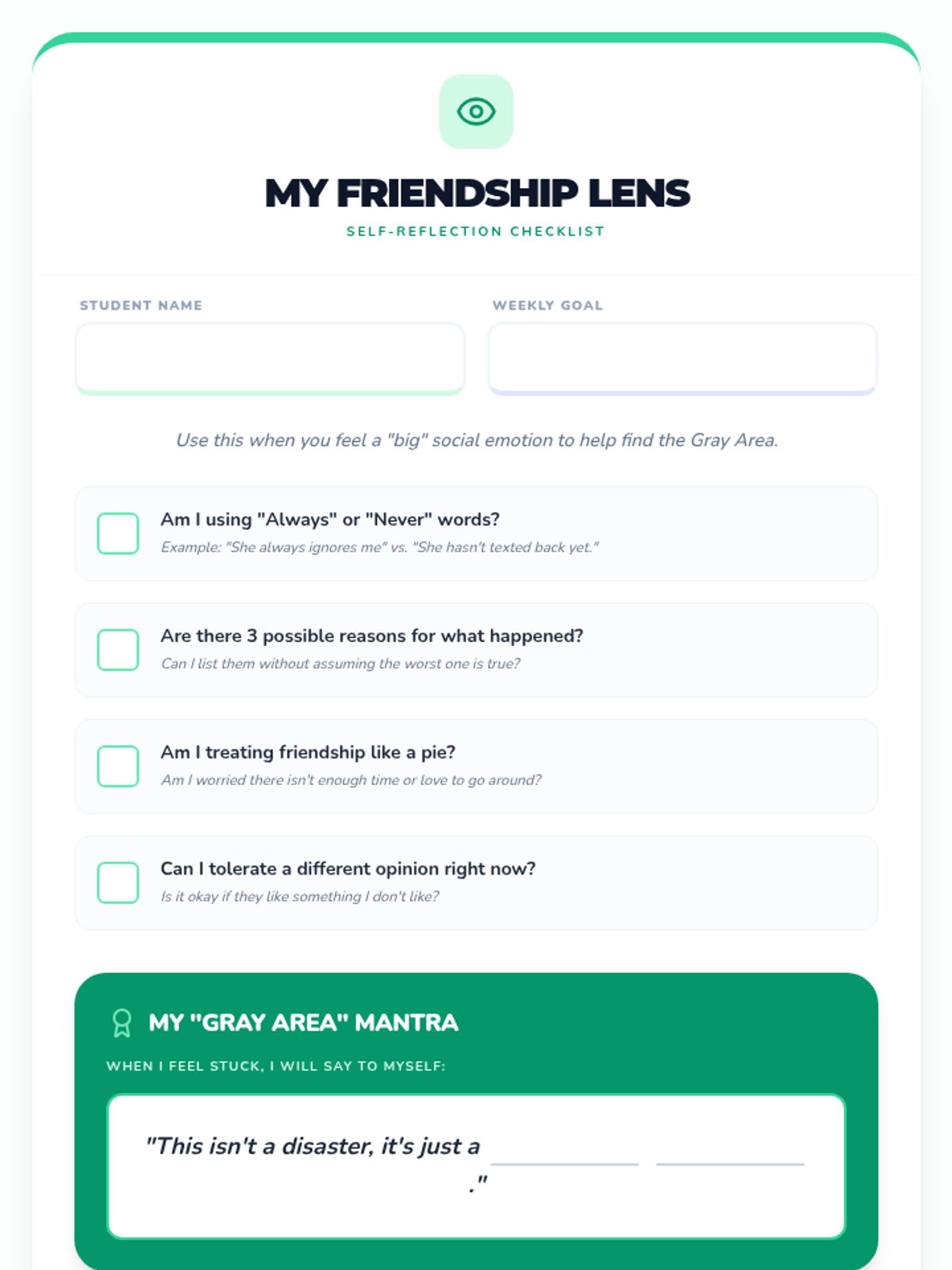
A social-emotional learning sequence focused on helping students with ADHD and Autism navigate complex friendship dynamics and move beyond black-and-white thinking.
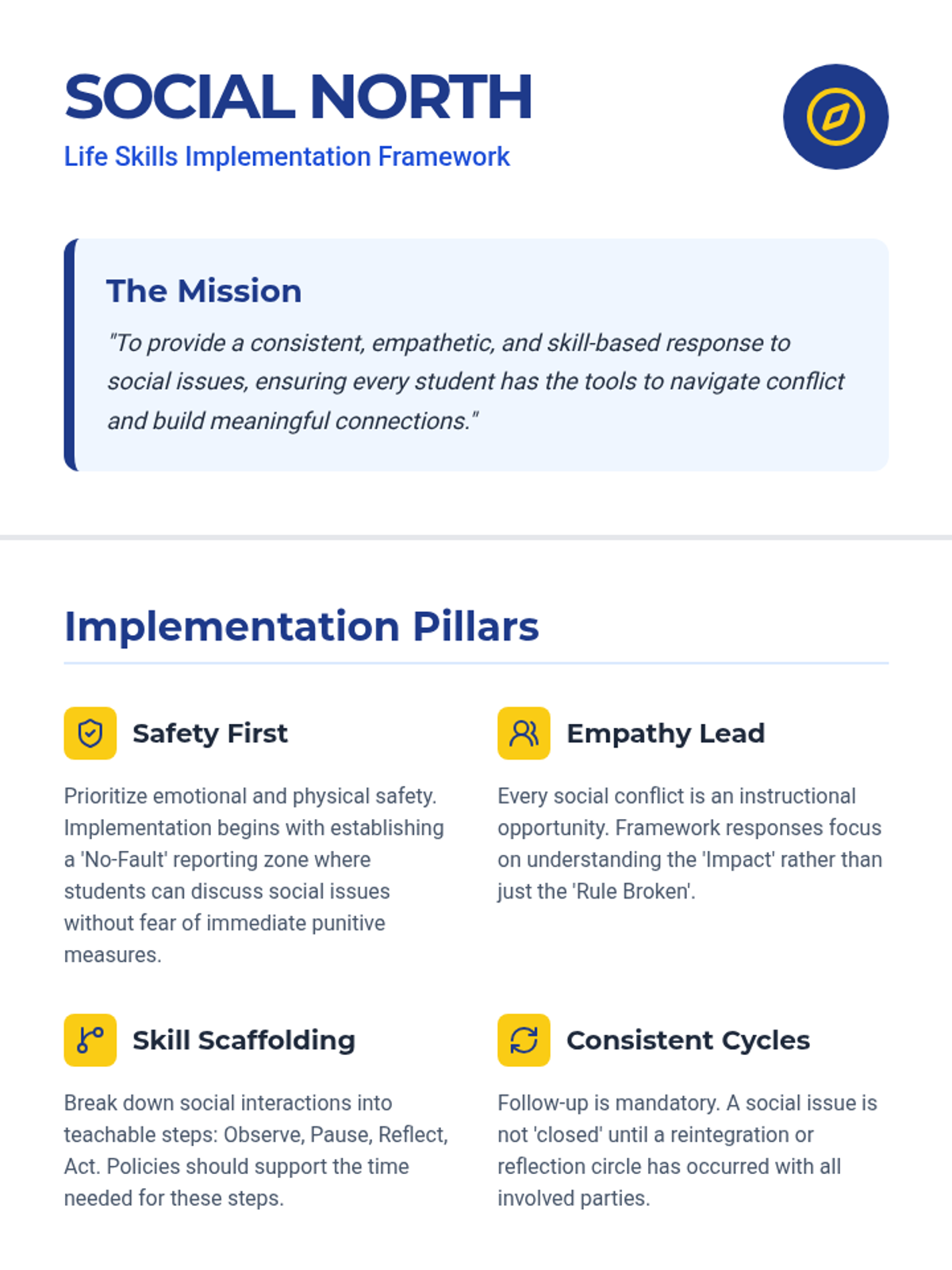
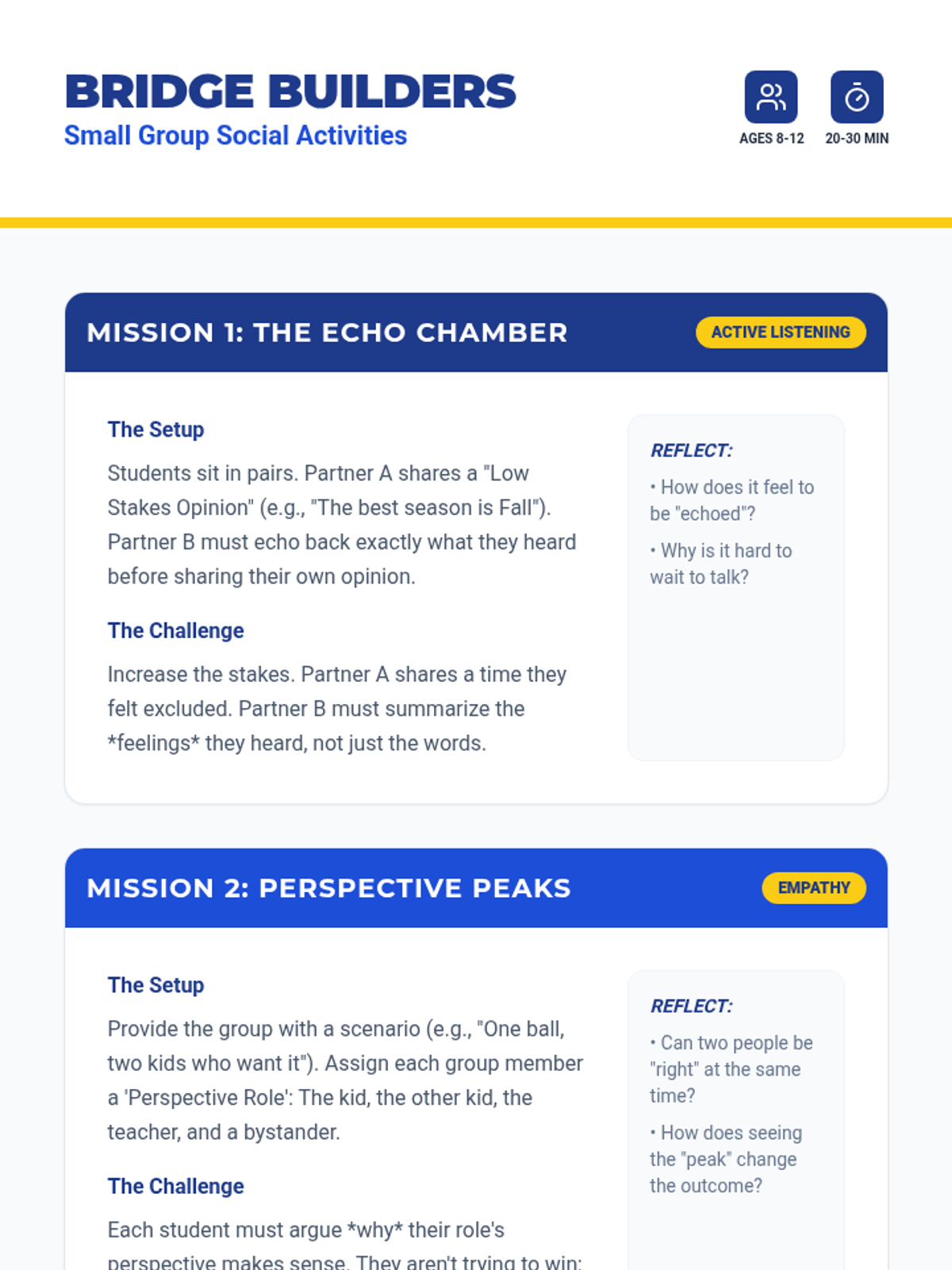
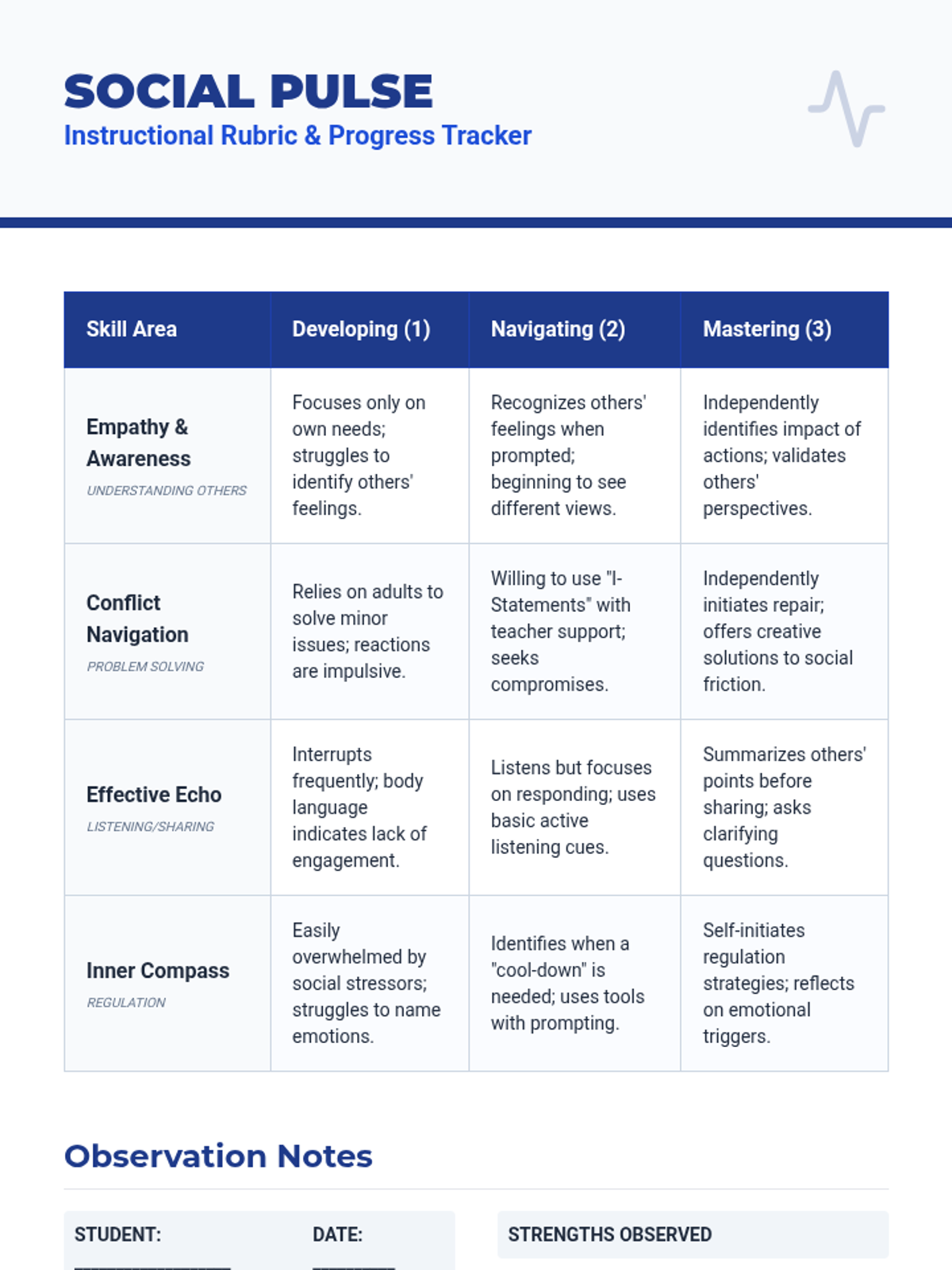
A comprehensive program for implementing life skills and social navigation within an educational setting, focusing on conflict resolution, empathy, and effective communication.
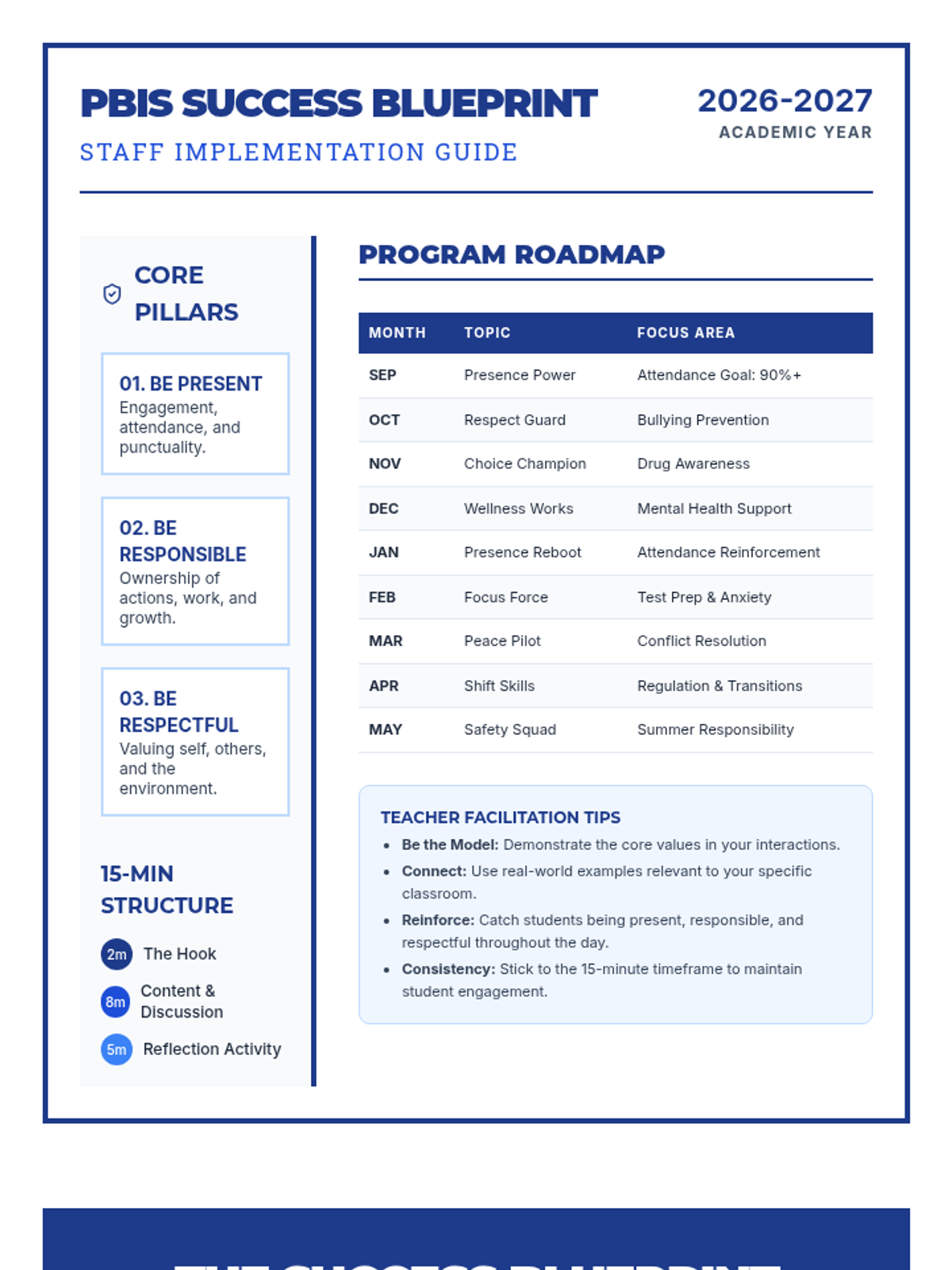
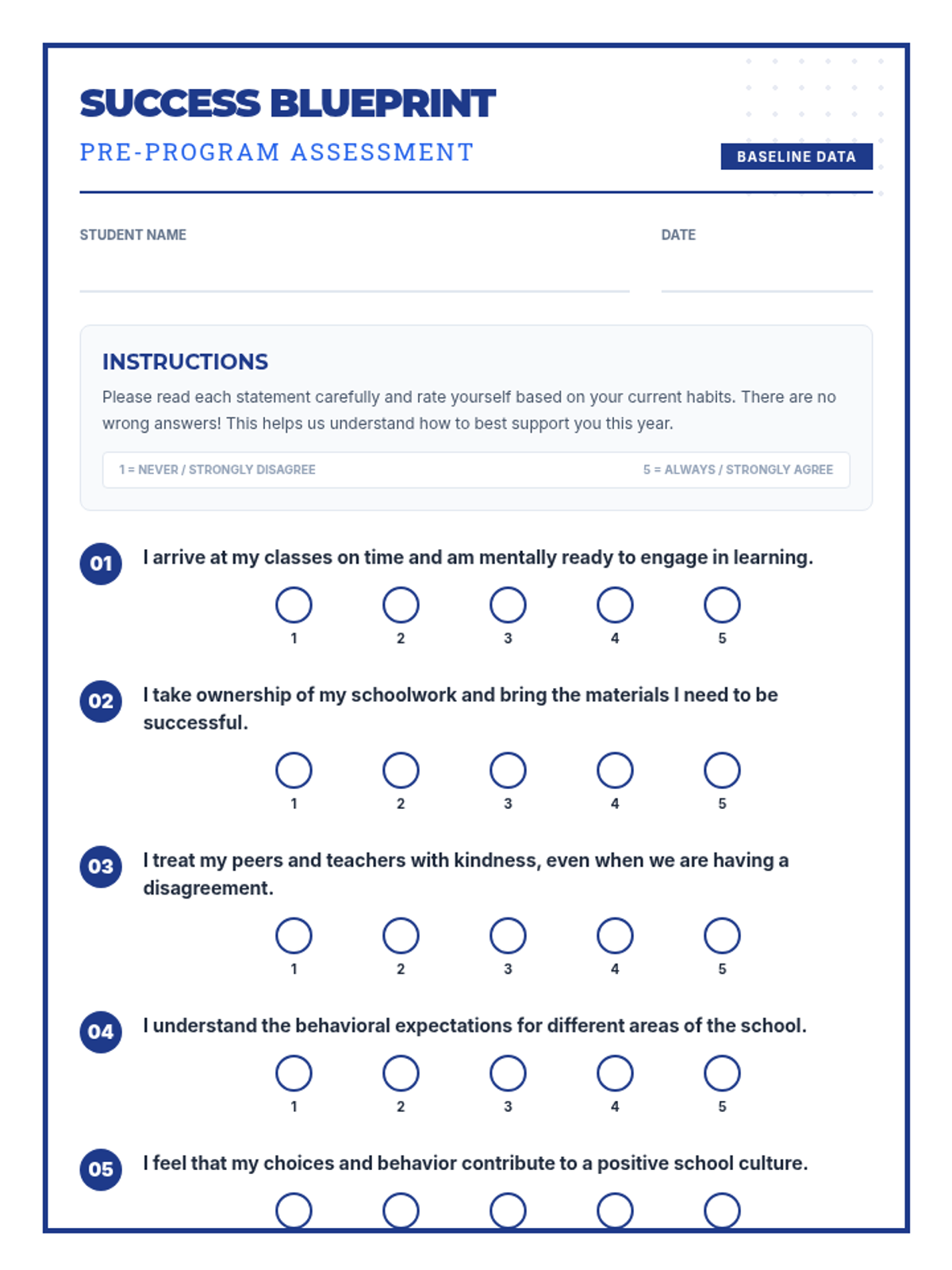
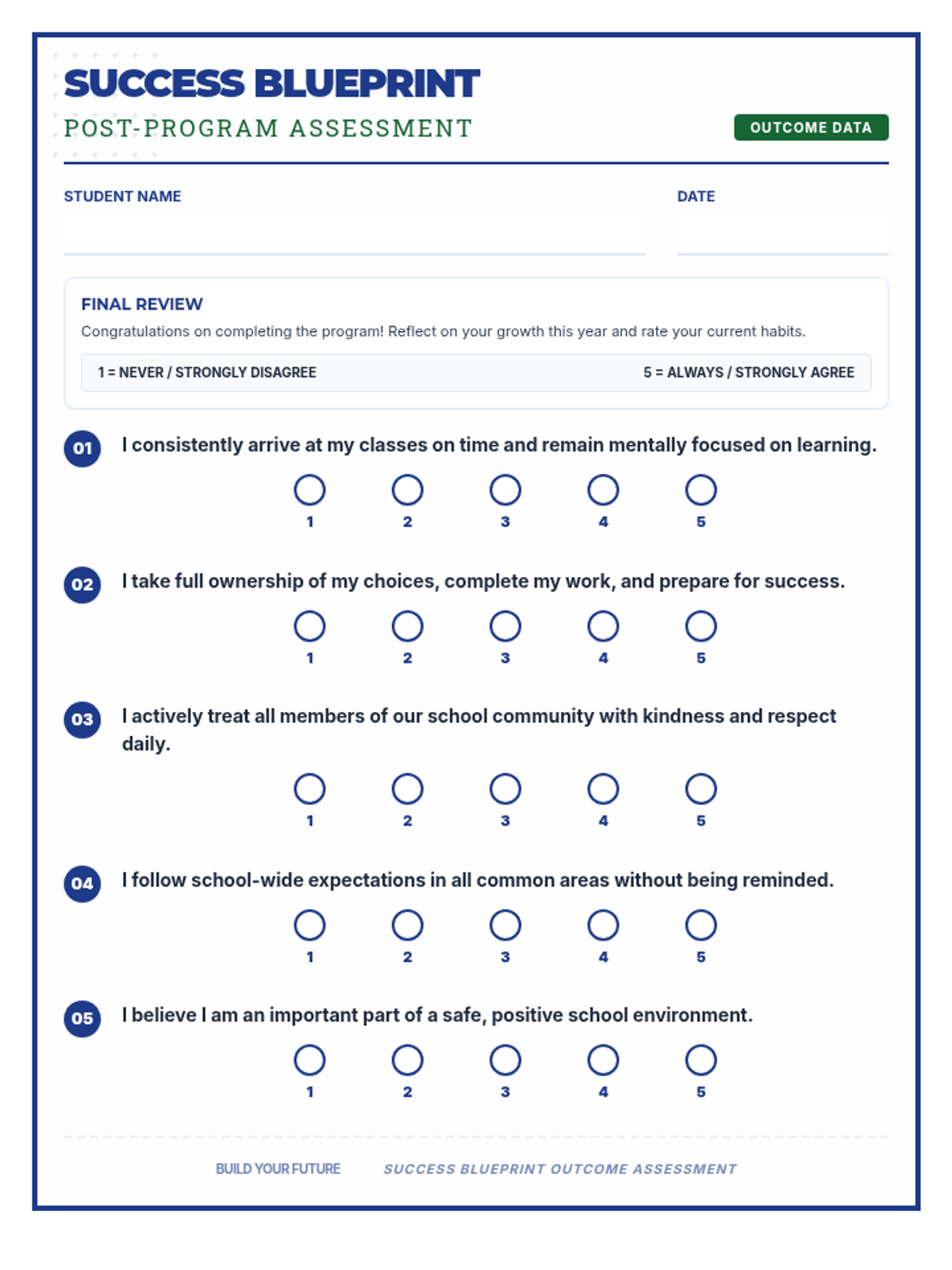
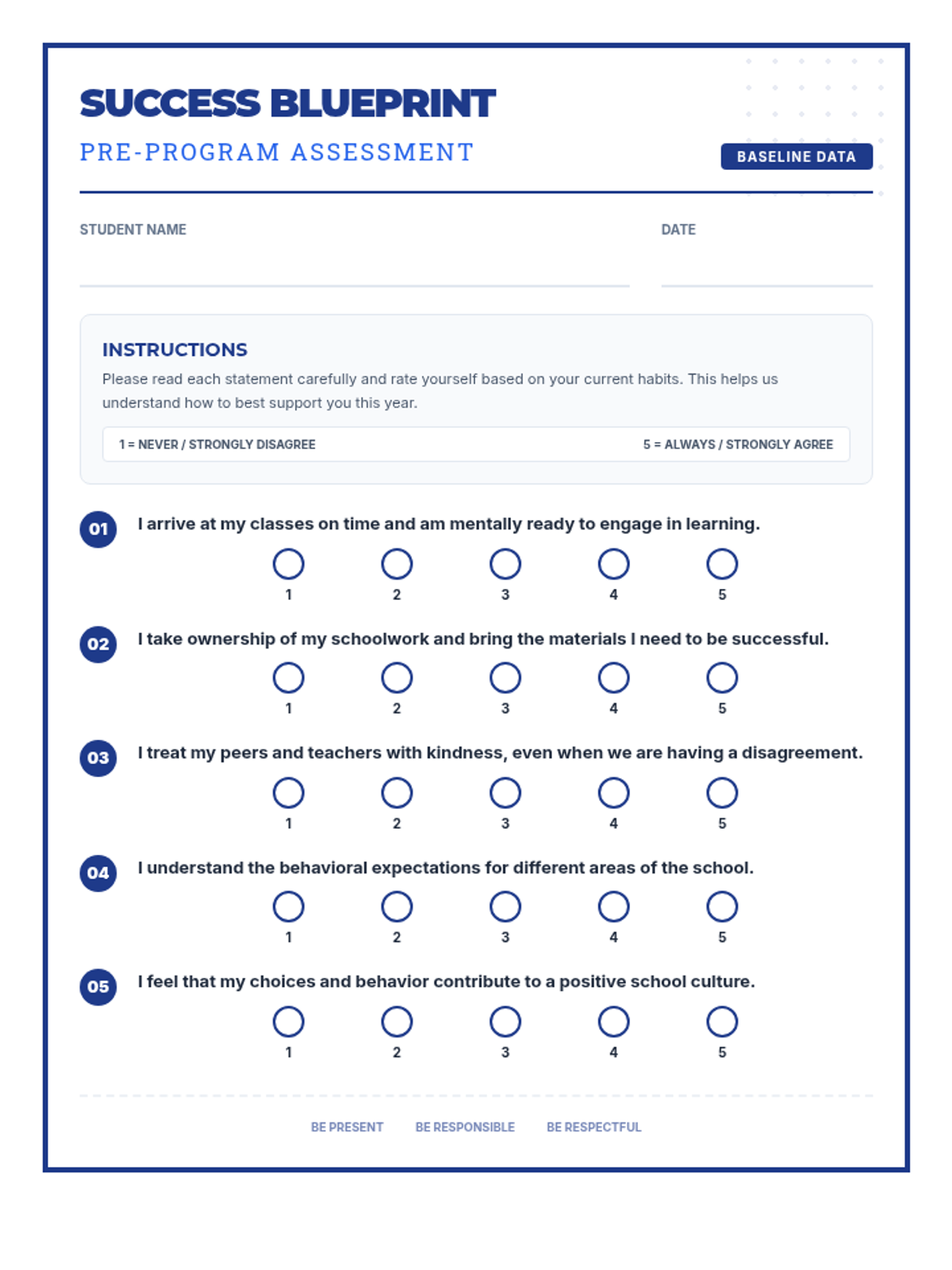
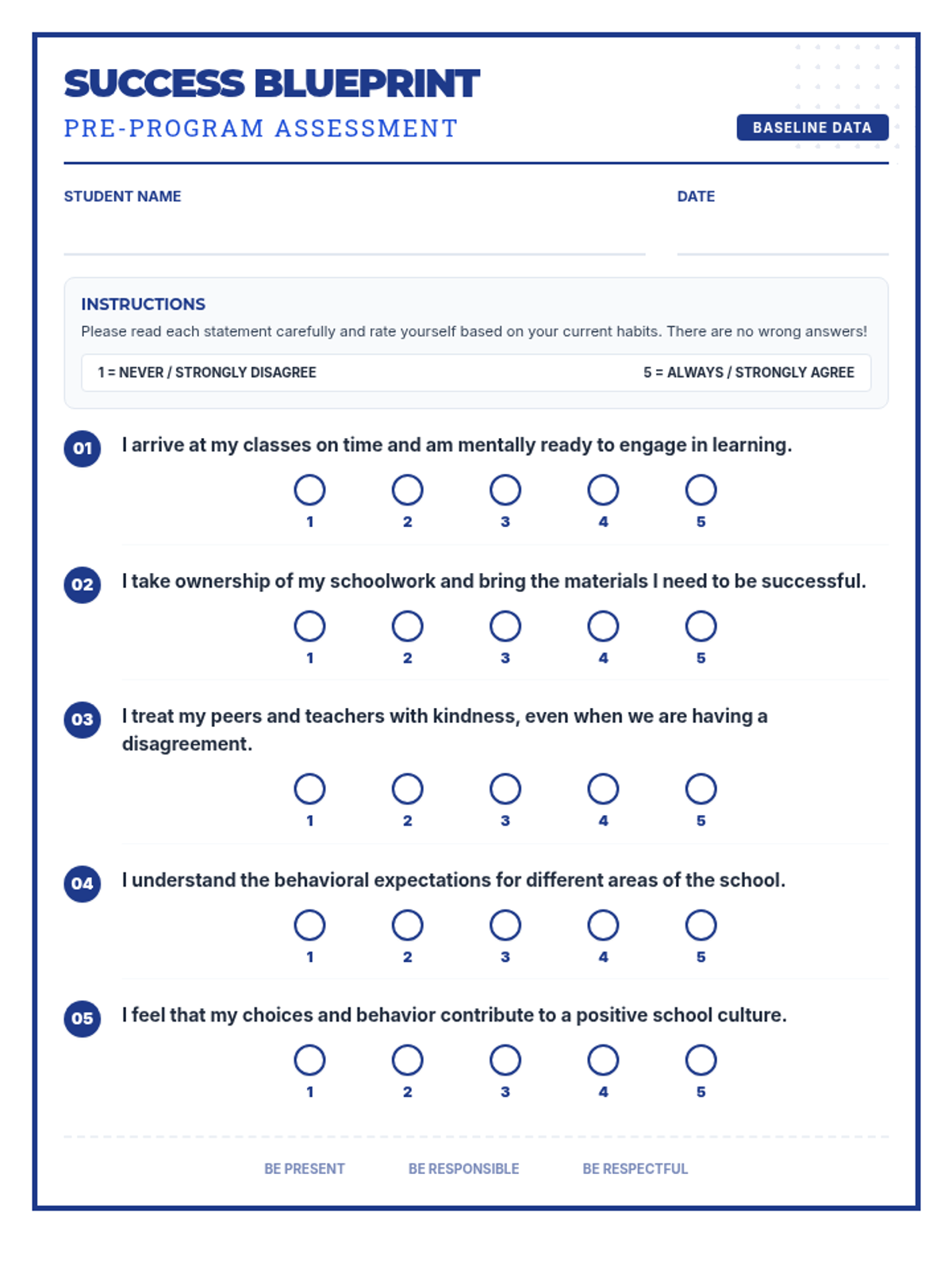
A comprehensive PBIS implementation program for middle schoolers, focusing on Being Present, Responsible, and Respectful through monthly 15-minute lessons.
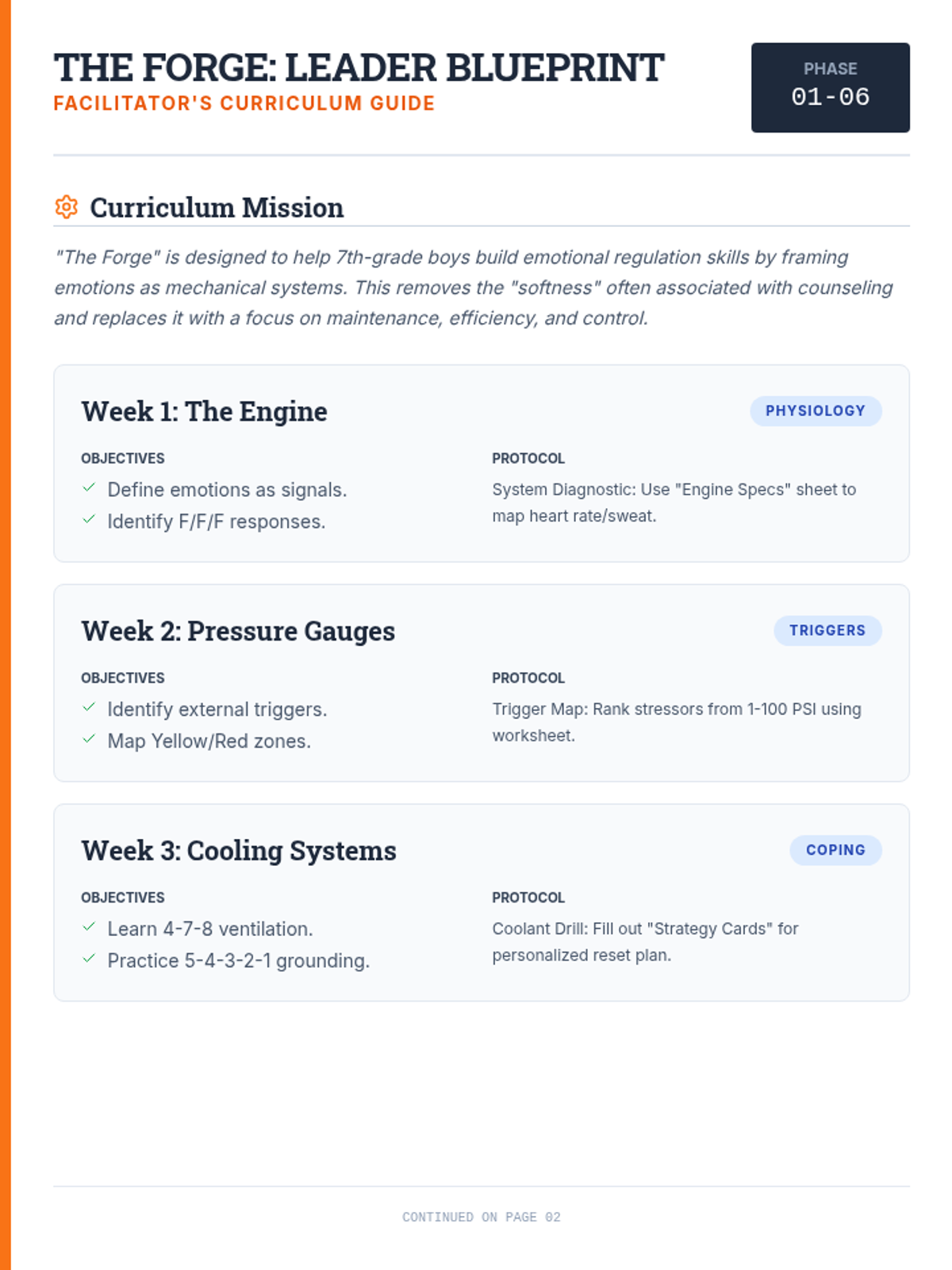
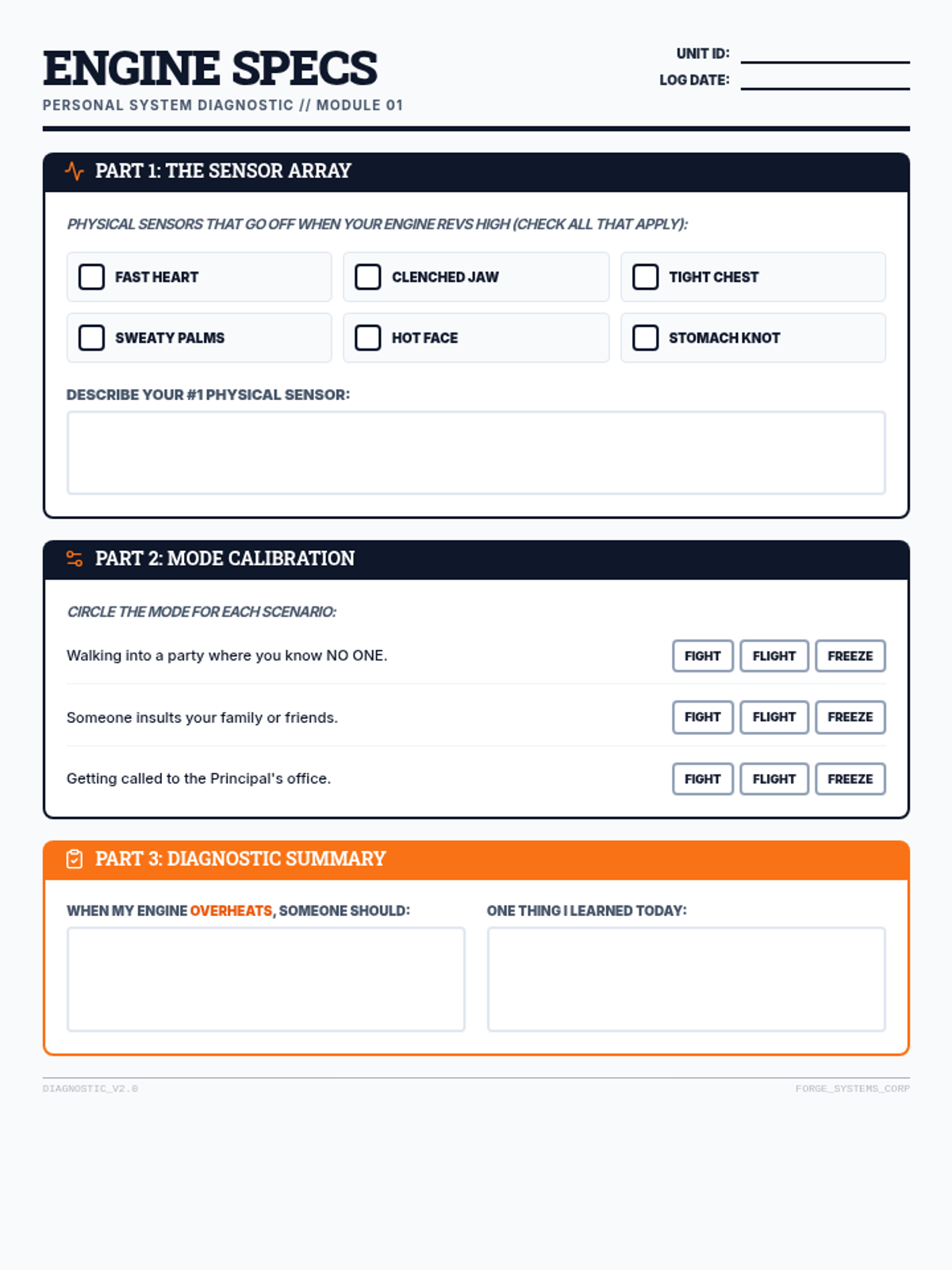
A 6-week emotional regulation curriculum designed specifically for middle school boys, using an industrial/engineering theme to explore physiology, triggers, and coping strategies.
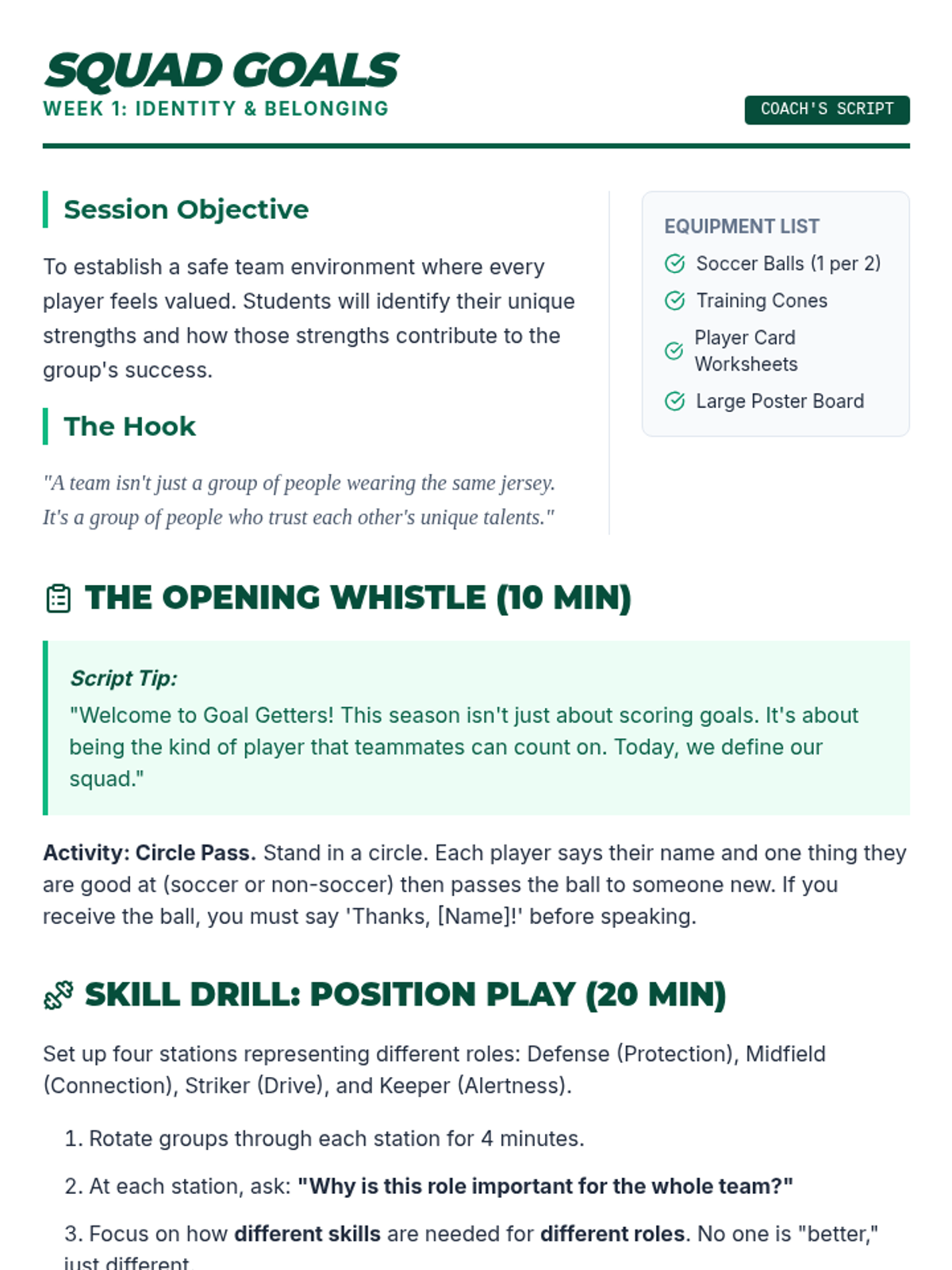
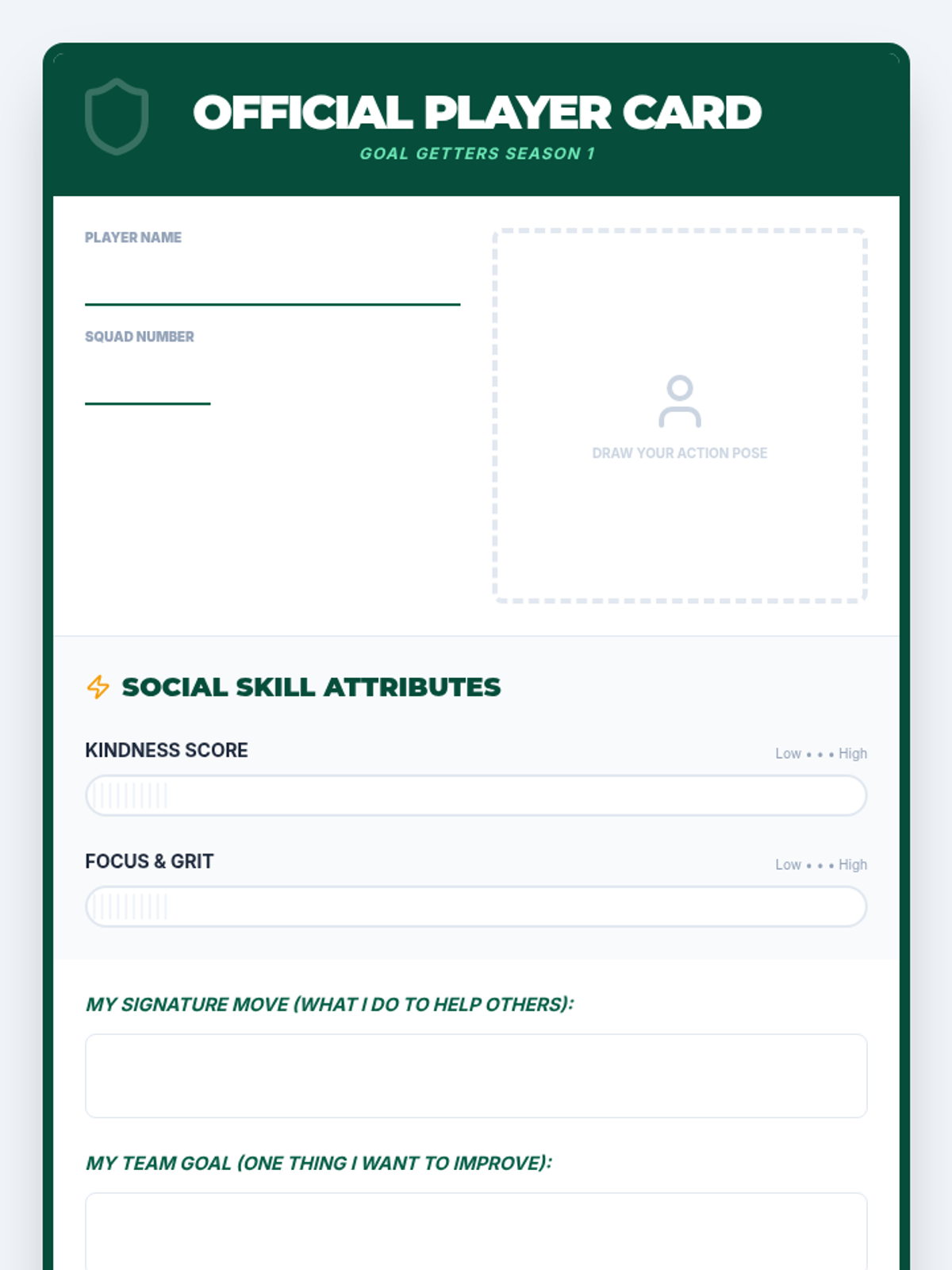
An 8-week soccer-themed social-emotional learning curriculum designed to improve self-esteem, peer relationships, emotional regulation, and conflict resolution through on-field drills and classroom reflection.
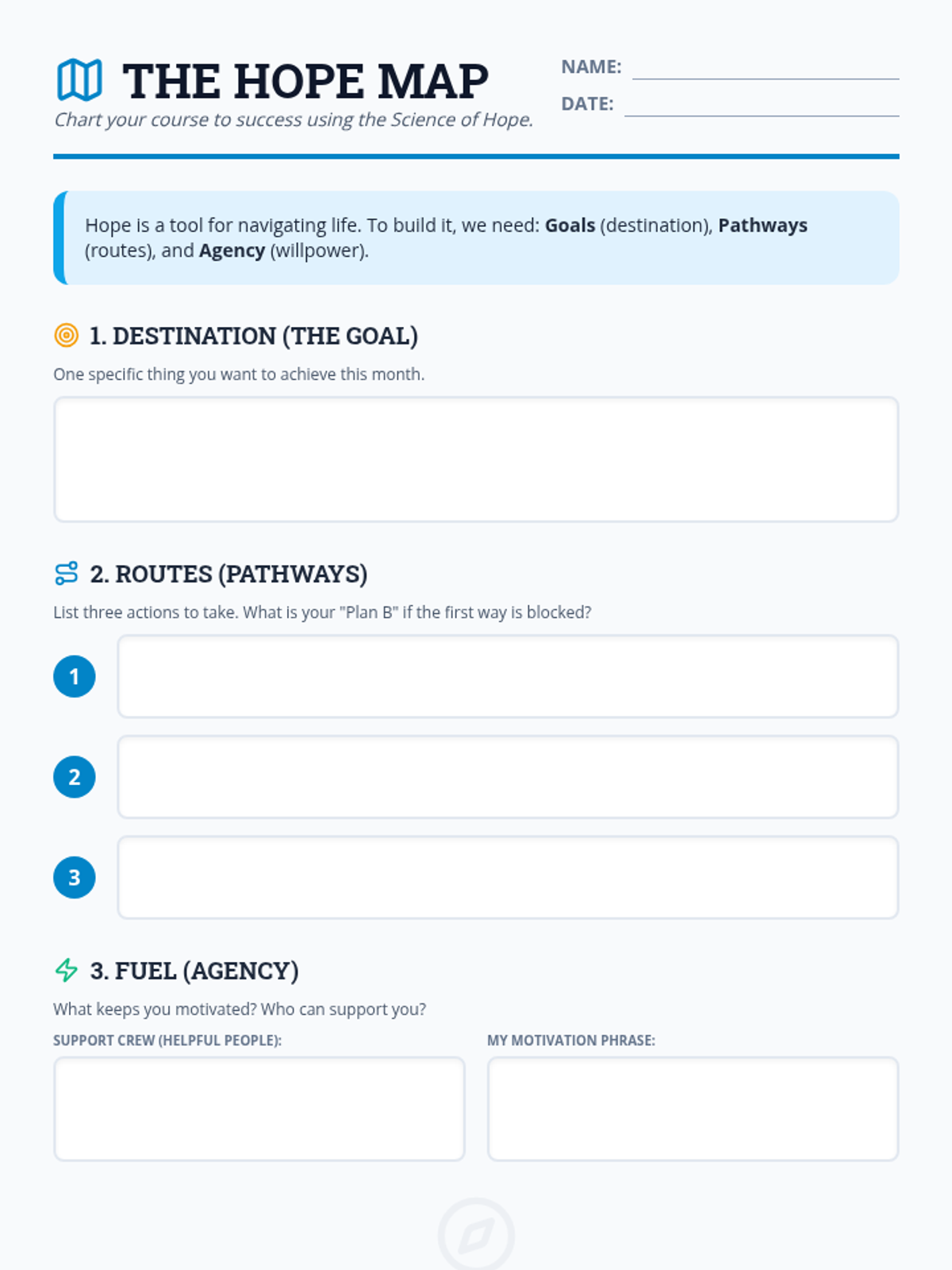
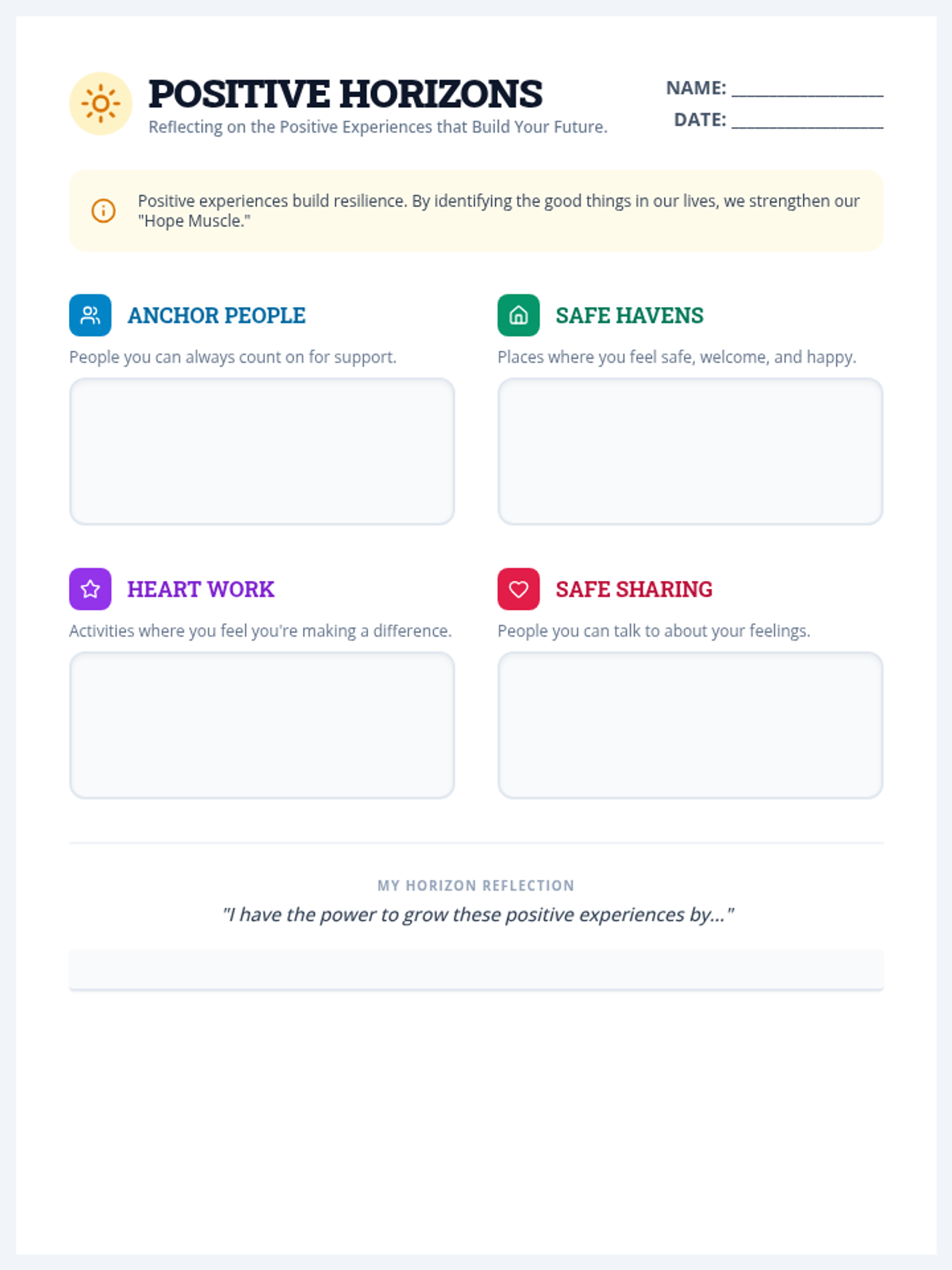
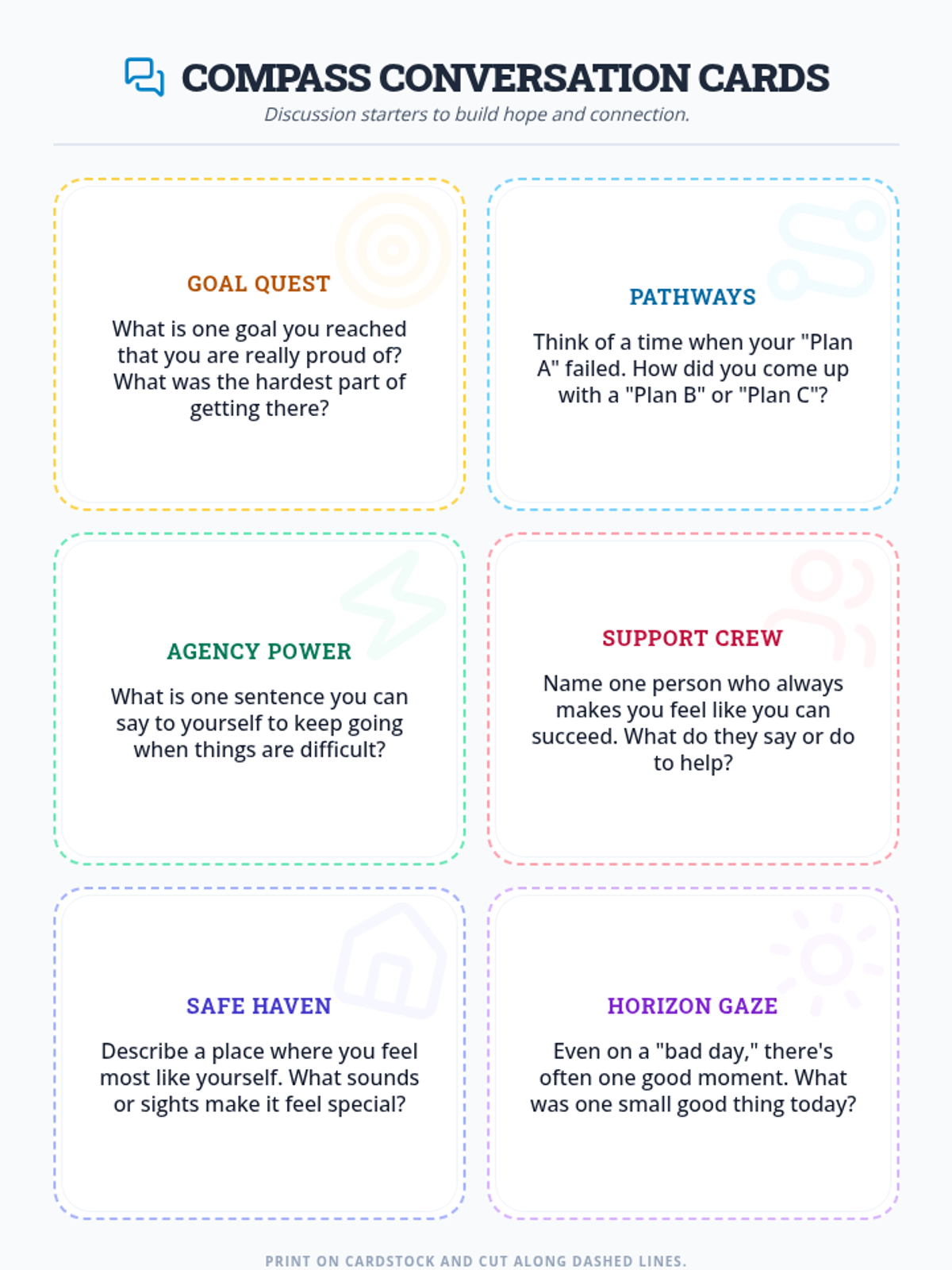
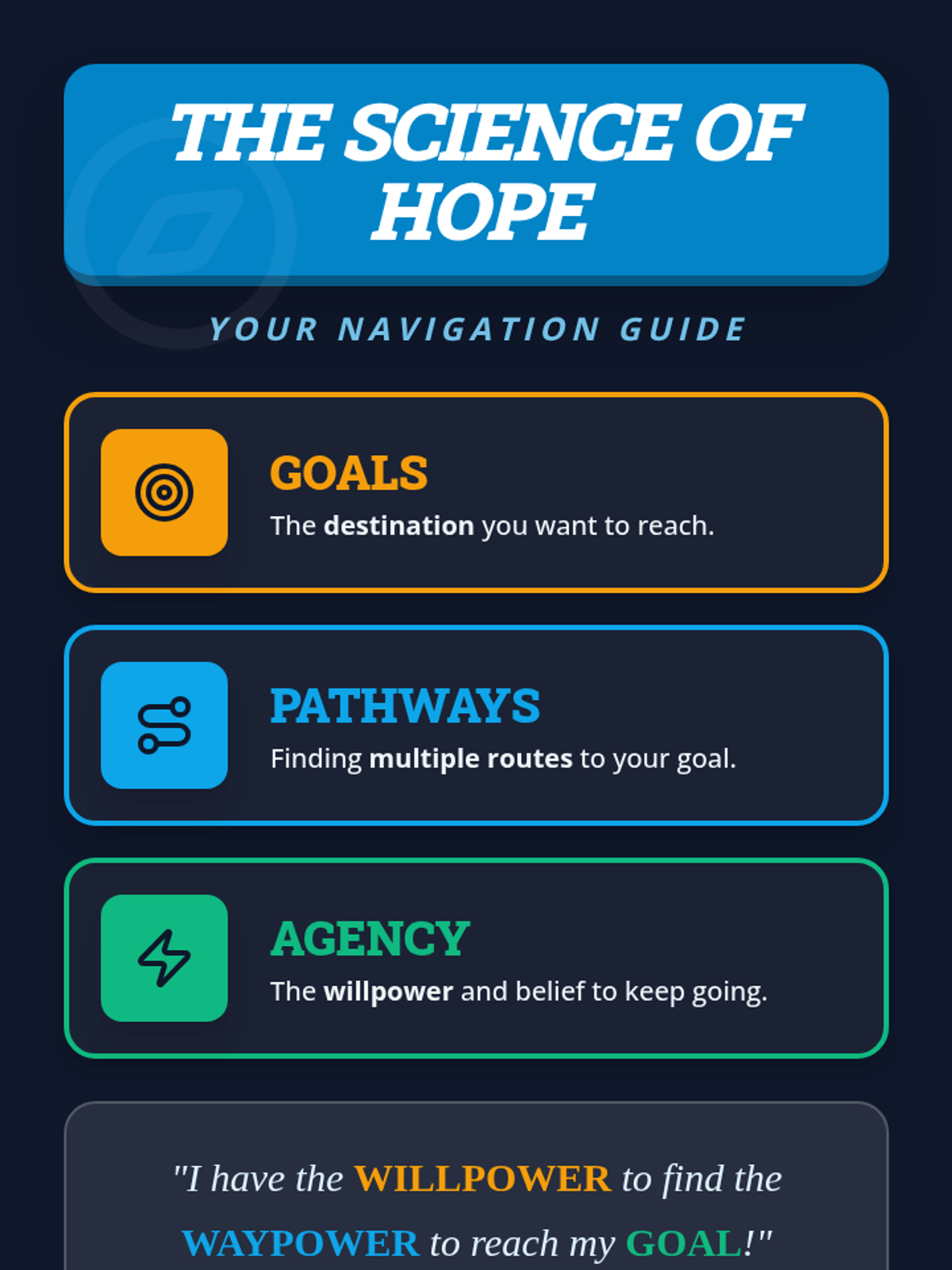
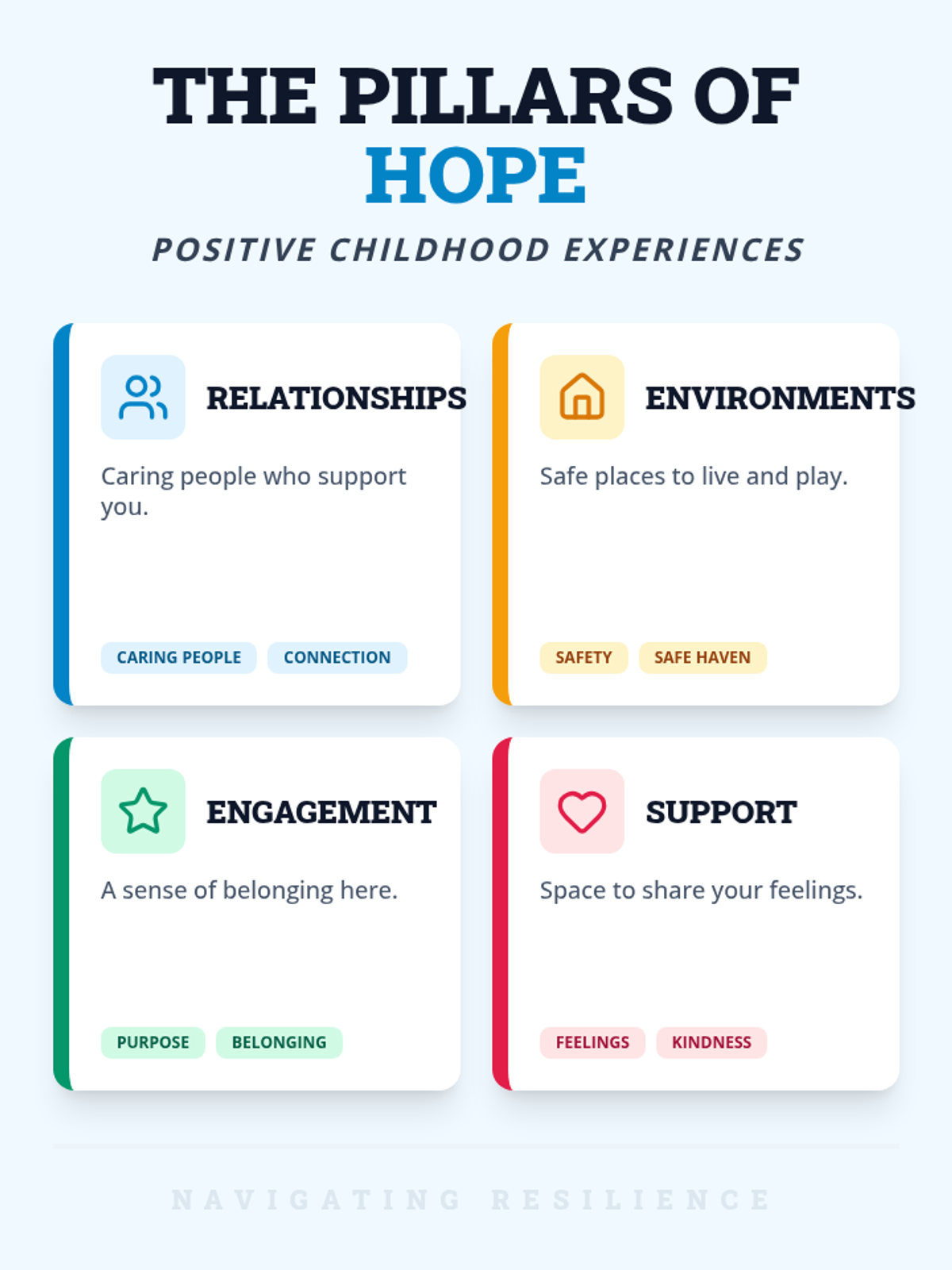
A comprehensive unit focused on building psychological hope through the Science of Hope (Goals, Pathways, Agency) and the HOPE framework (Healthy Outcomes from Positive Experiences). This sequence empowers students to set meaningful goals, identify ways to achieve them, and recognize the positive resources in their lives.
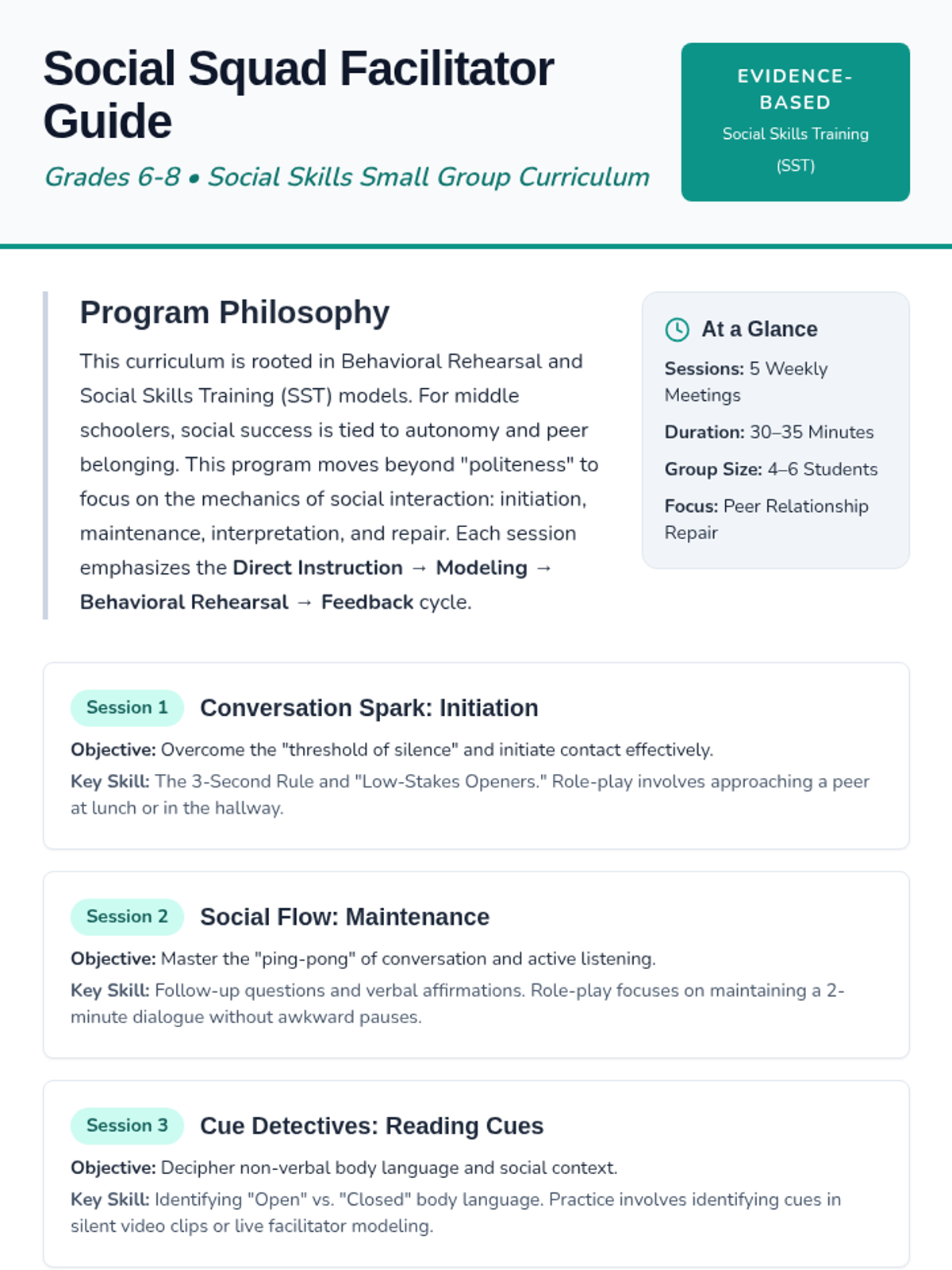
A 5-session small-group counseling program for middle school students to improve social skills, peer relationship management, and emotional resilience through behavioral rehearsal and role-play.
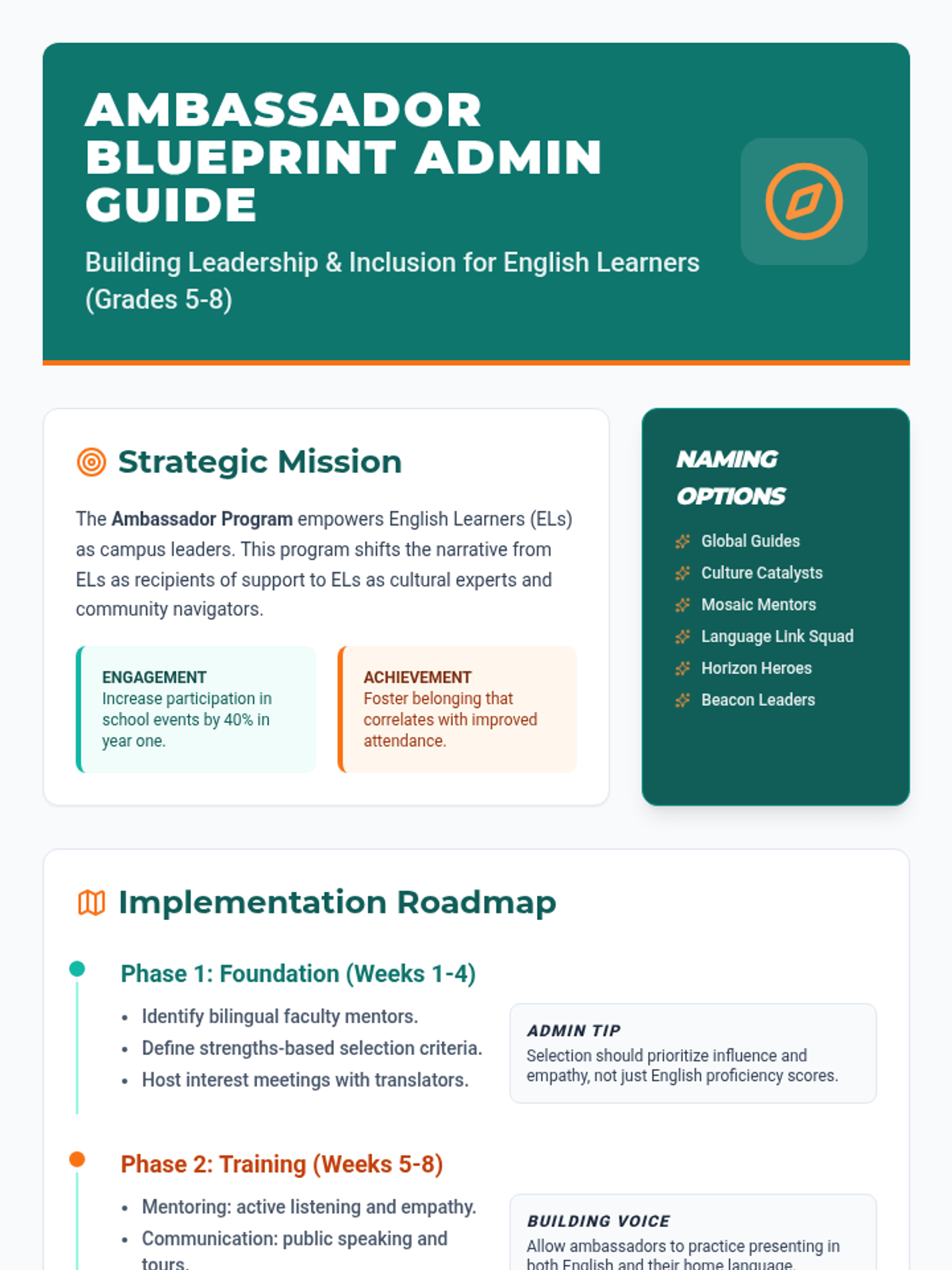
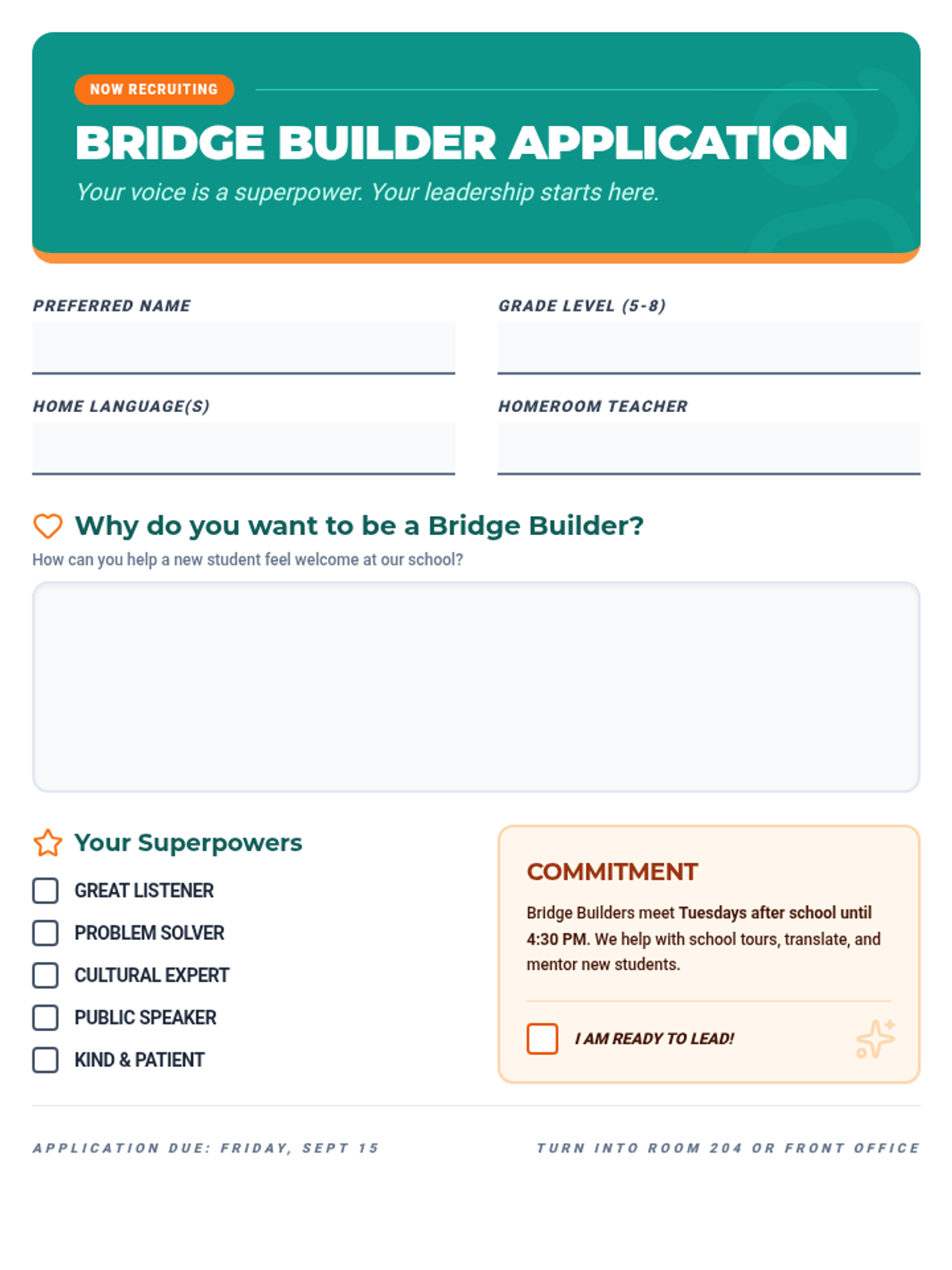
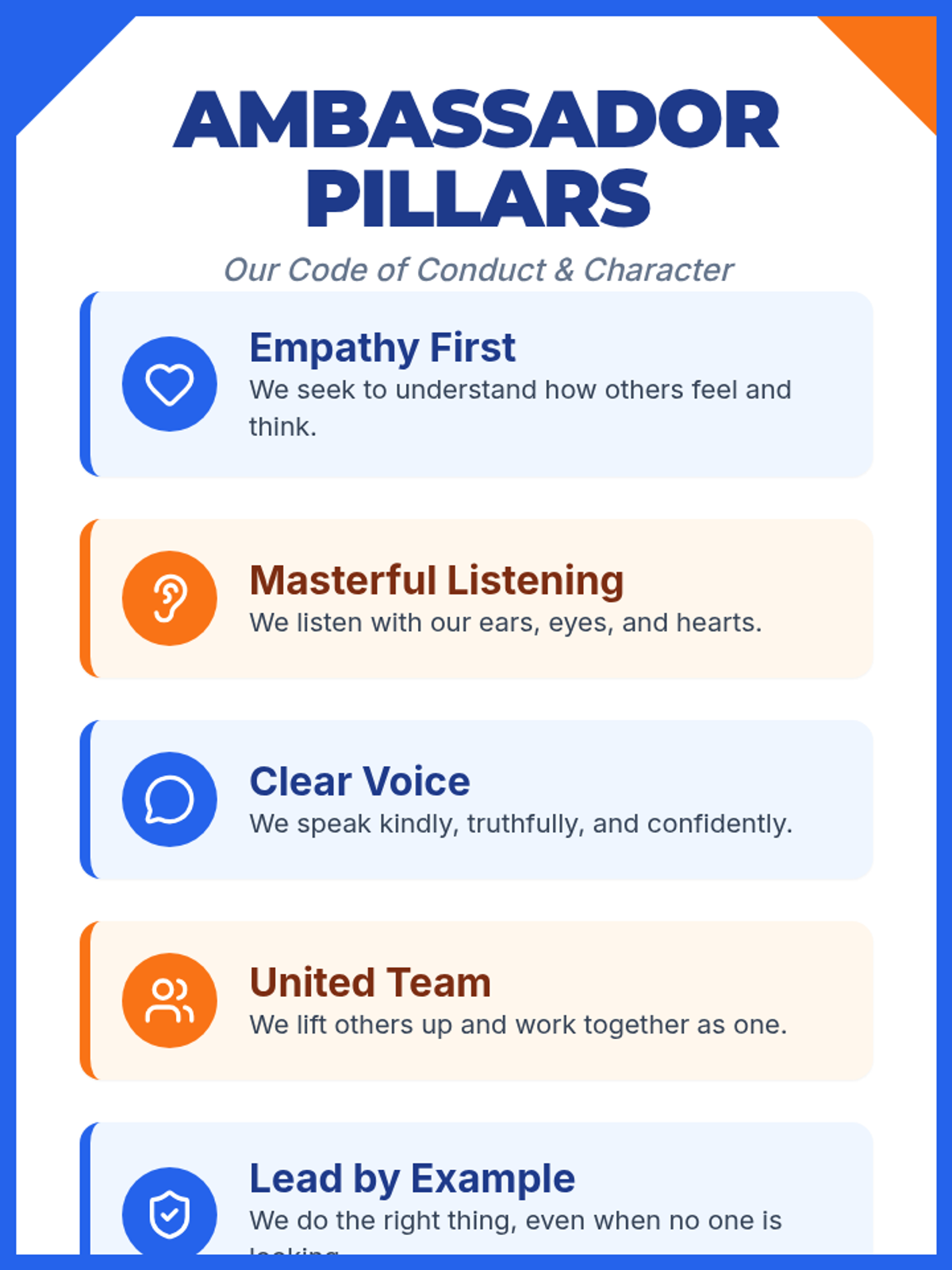
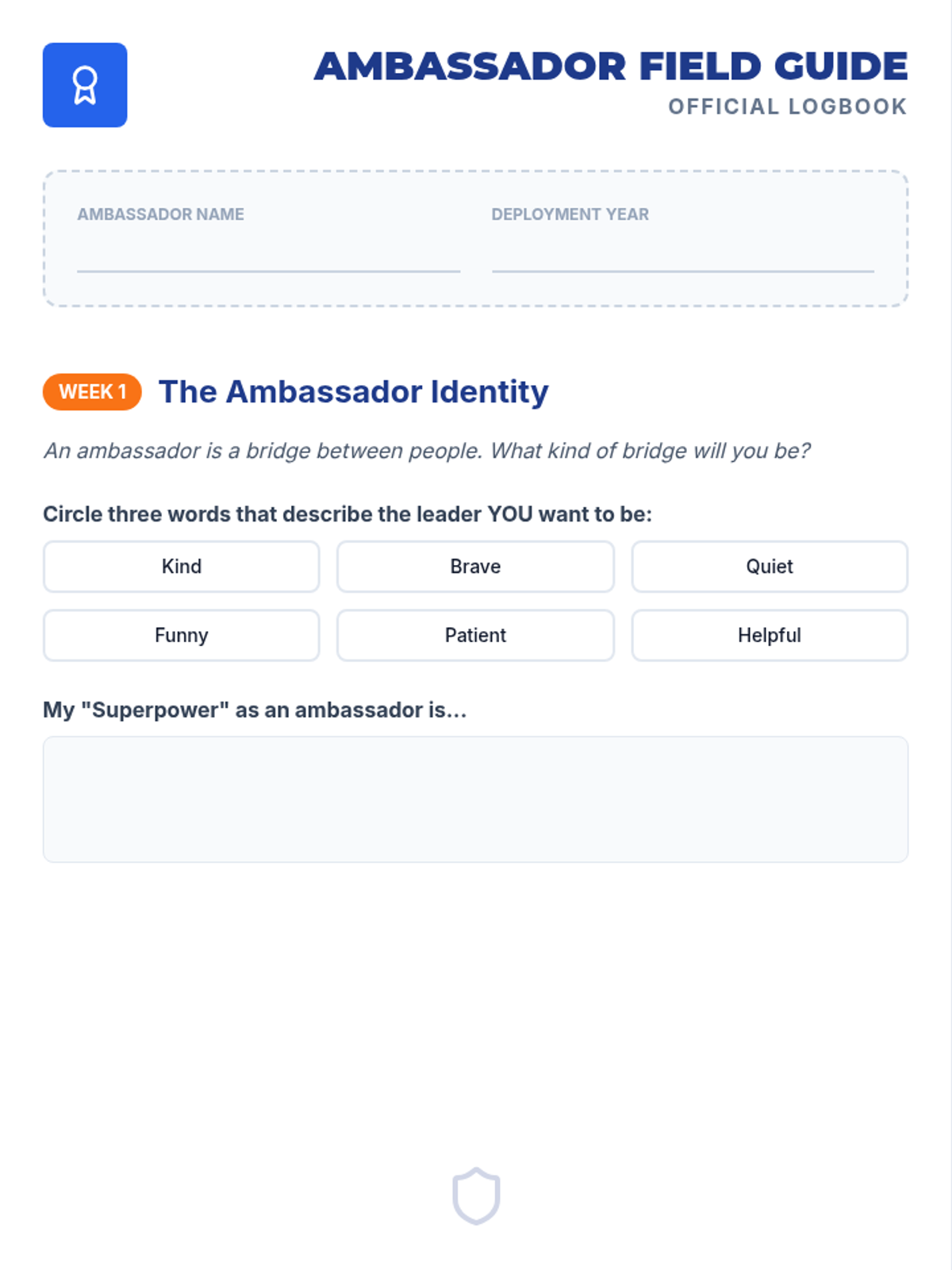
A comprehensive program framework designed to empower English learners in grades 5-8 as school ambassadors, fostering leadership, peer mentoring, and a supportive campus culture.
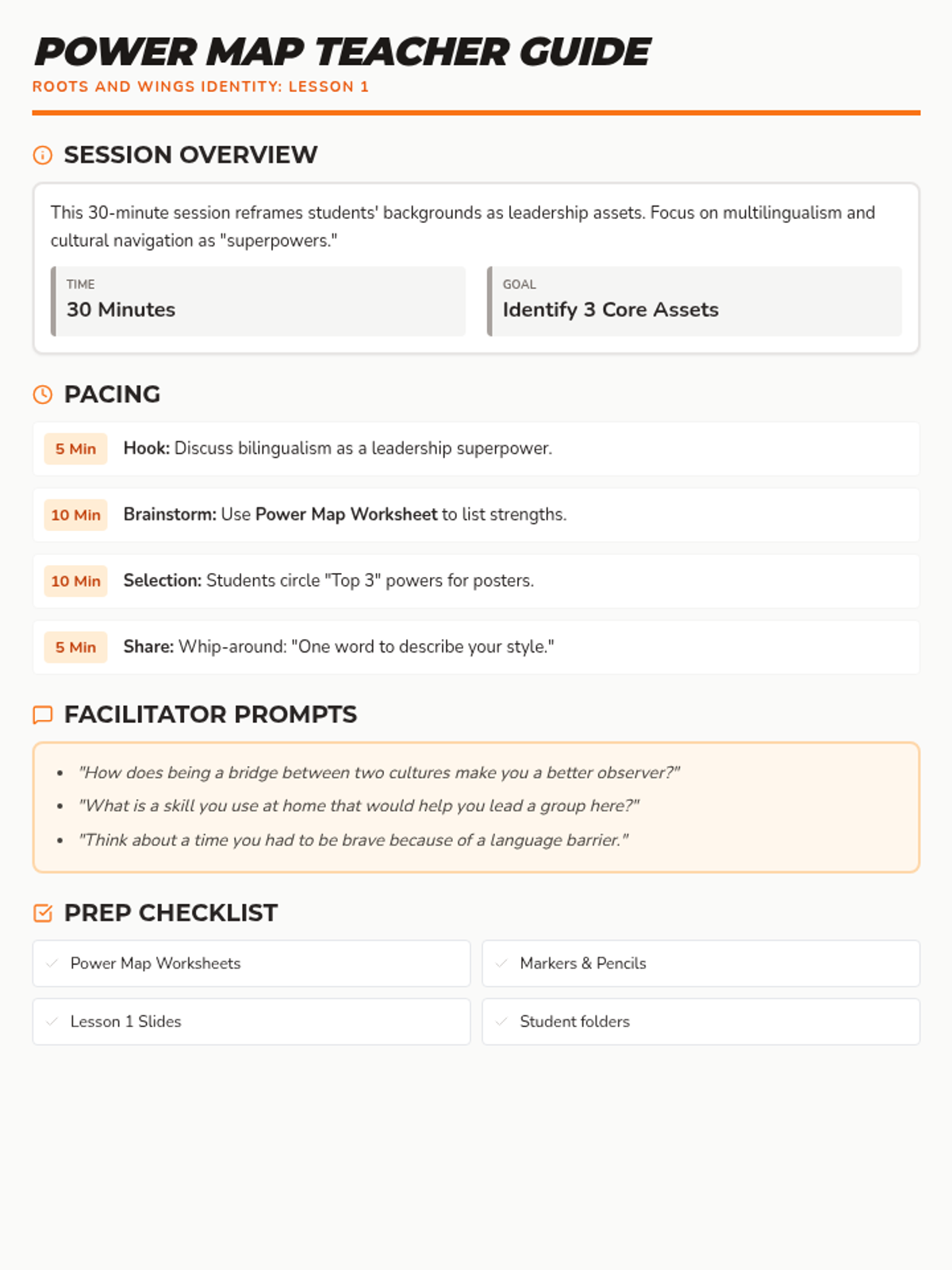
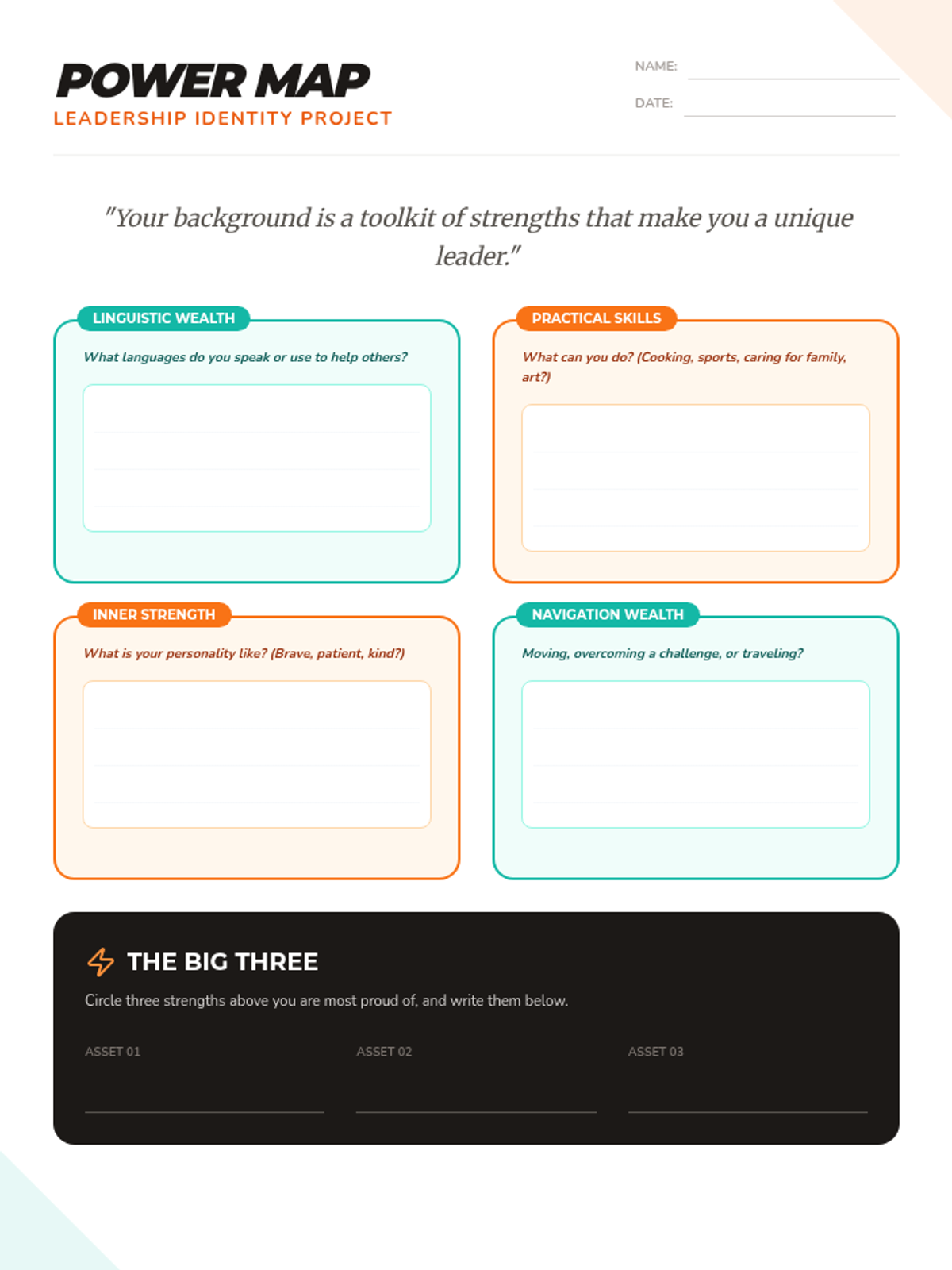
A four-week leadership sequence for English Learners to explore their cultural assets and linguistic strengths, culminating in the creation of personalized visual identity posters. This asset-based program focuses on 'Cultural Wealth' and leadership through a lens of diversity and pride.
A social-emotional learning series focused on developing core interpersonal skills, moving from individual friendship building to collaborative teamwork and community responsibility.
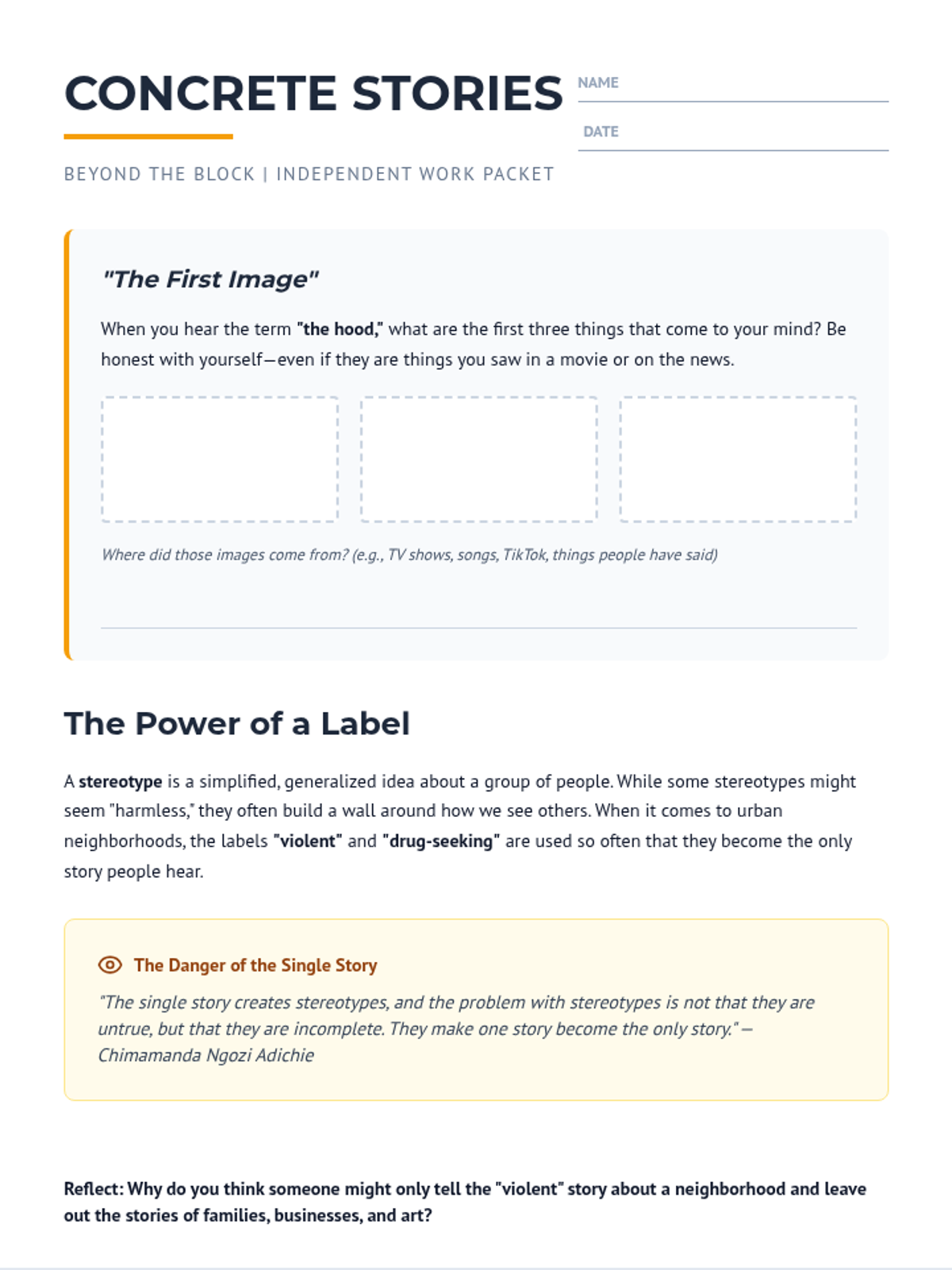
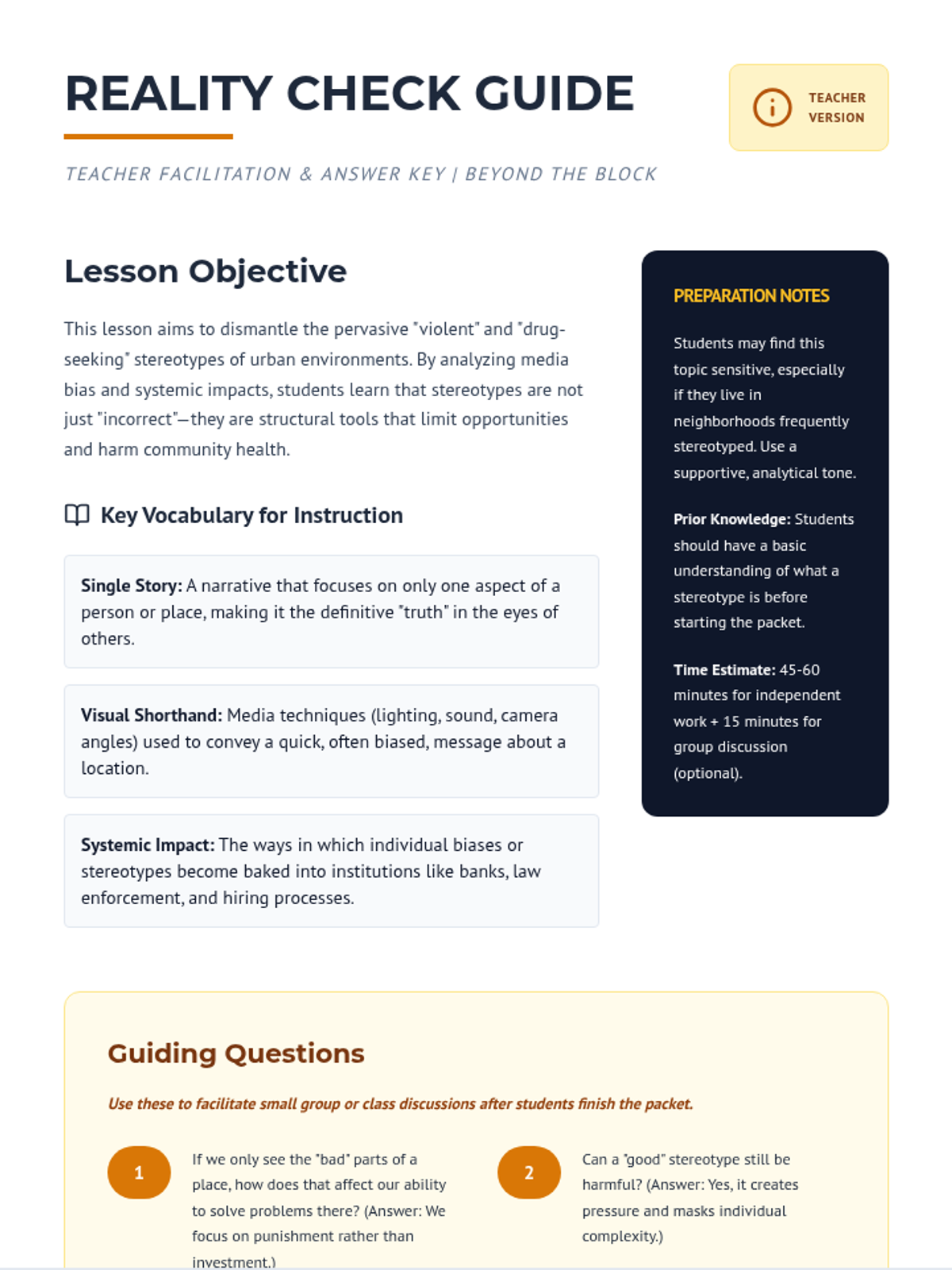
This unit explores how stories, stereotypes, and communication shape our perception of communities and each other, moving from external media narratives to personal responsibility in social interactions.
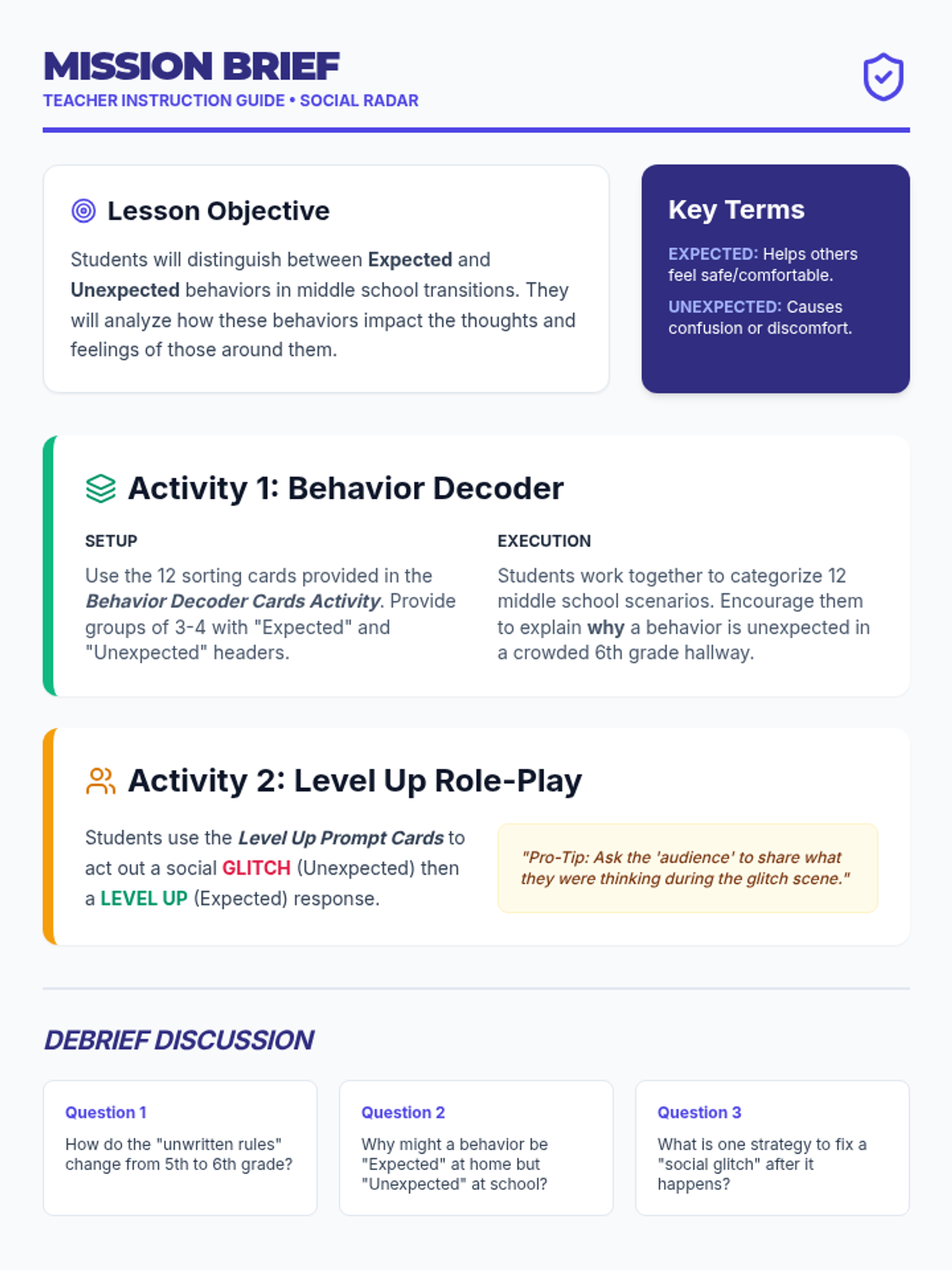
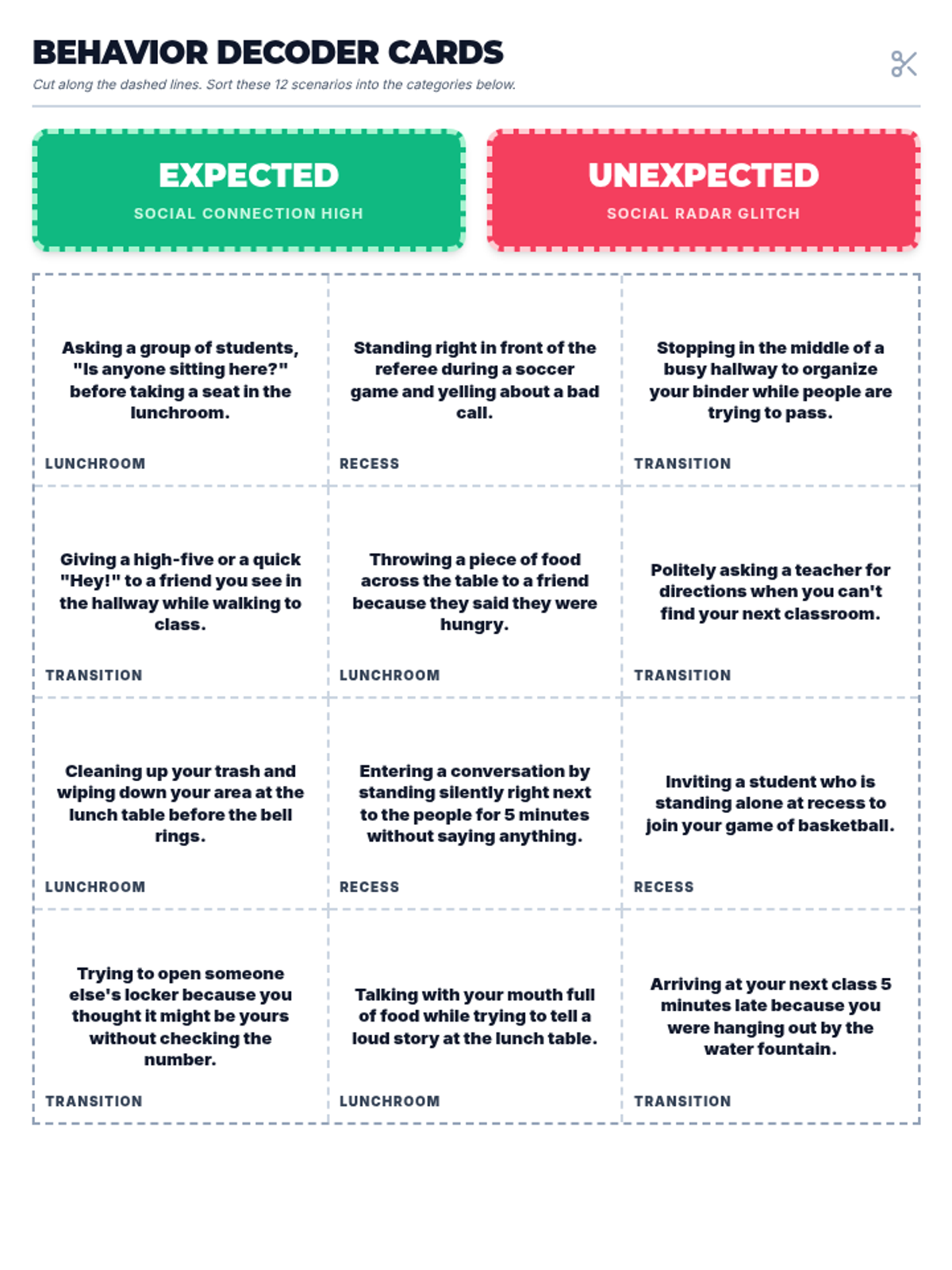
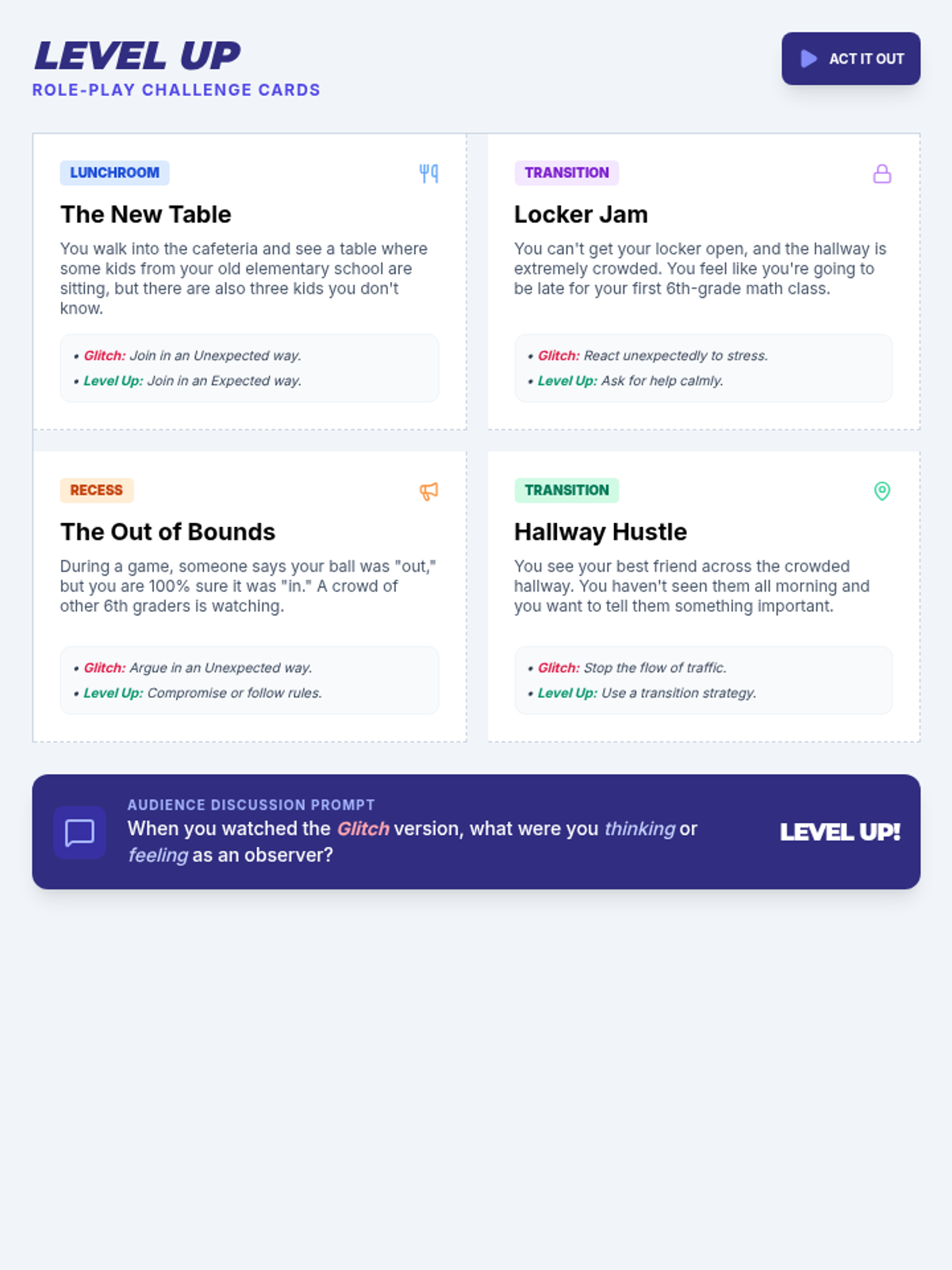
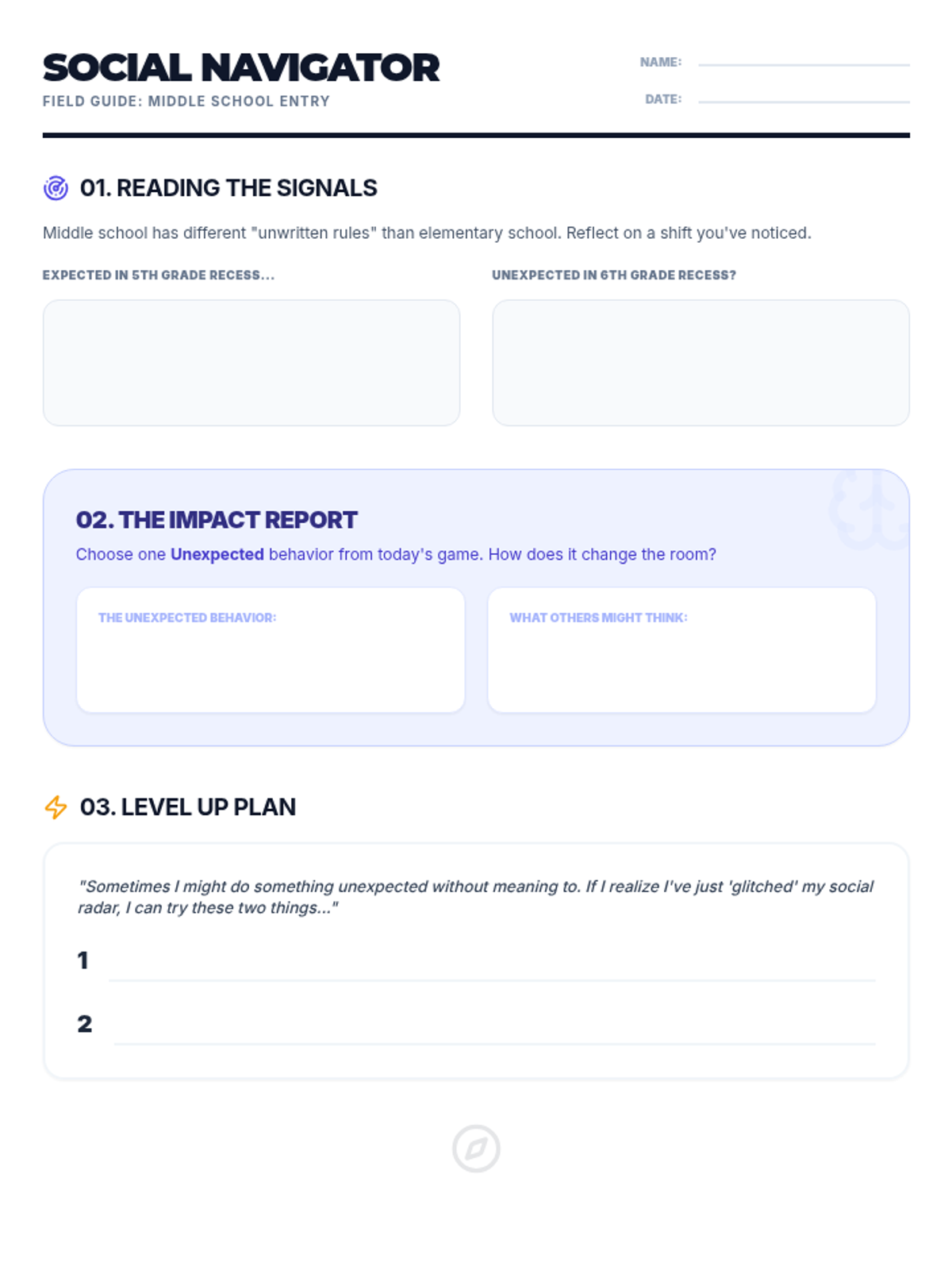
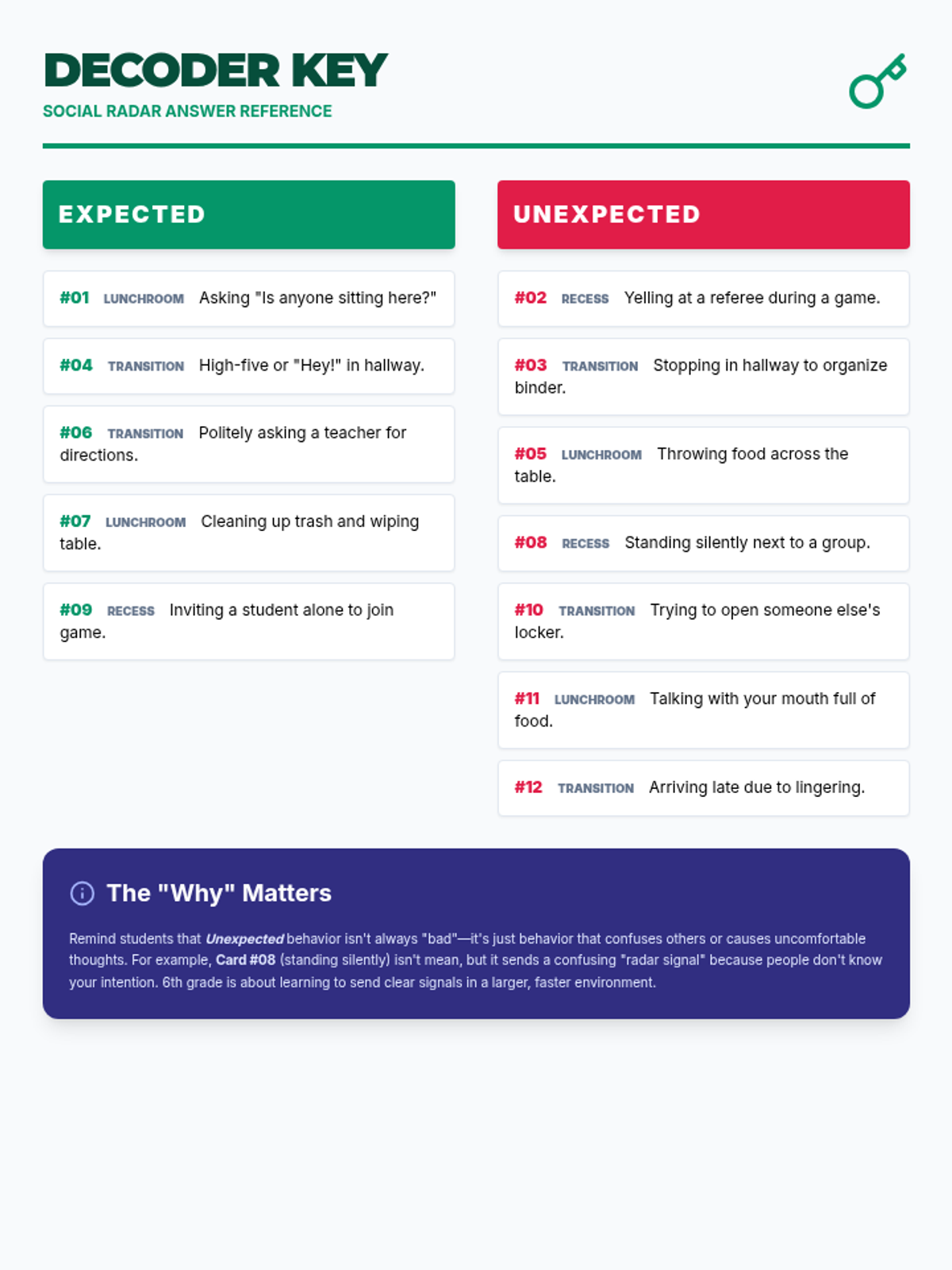
A sequence designed for rising 6th graders to navigate the social complexities of middle school by identifying expected and unexpected behaviors in the lunchroom, at recess, and during the school transition.
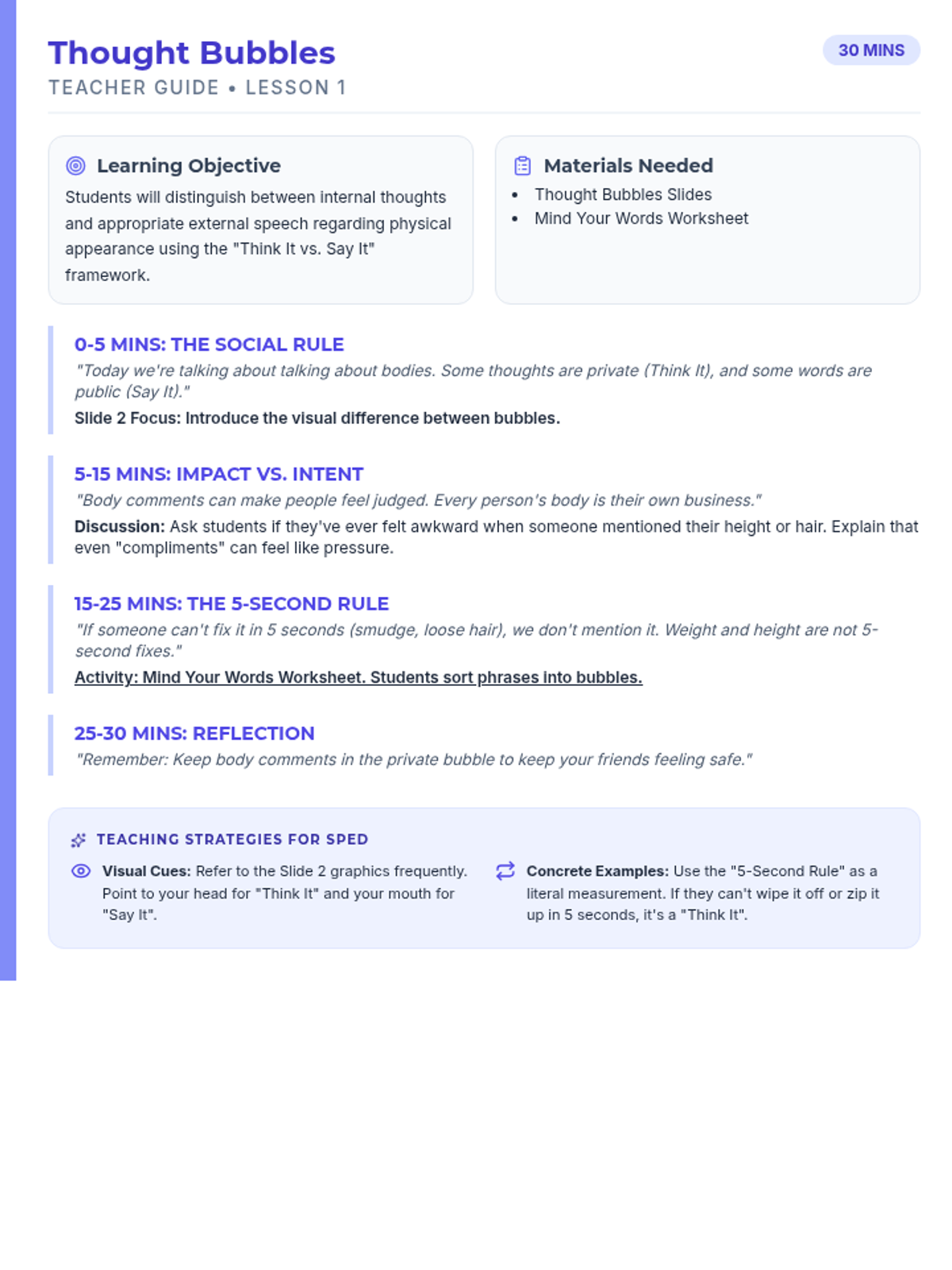
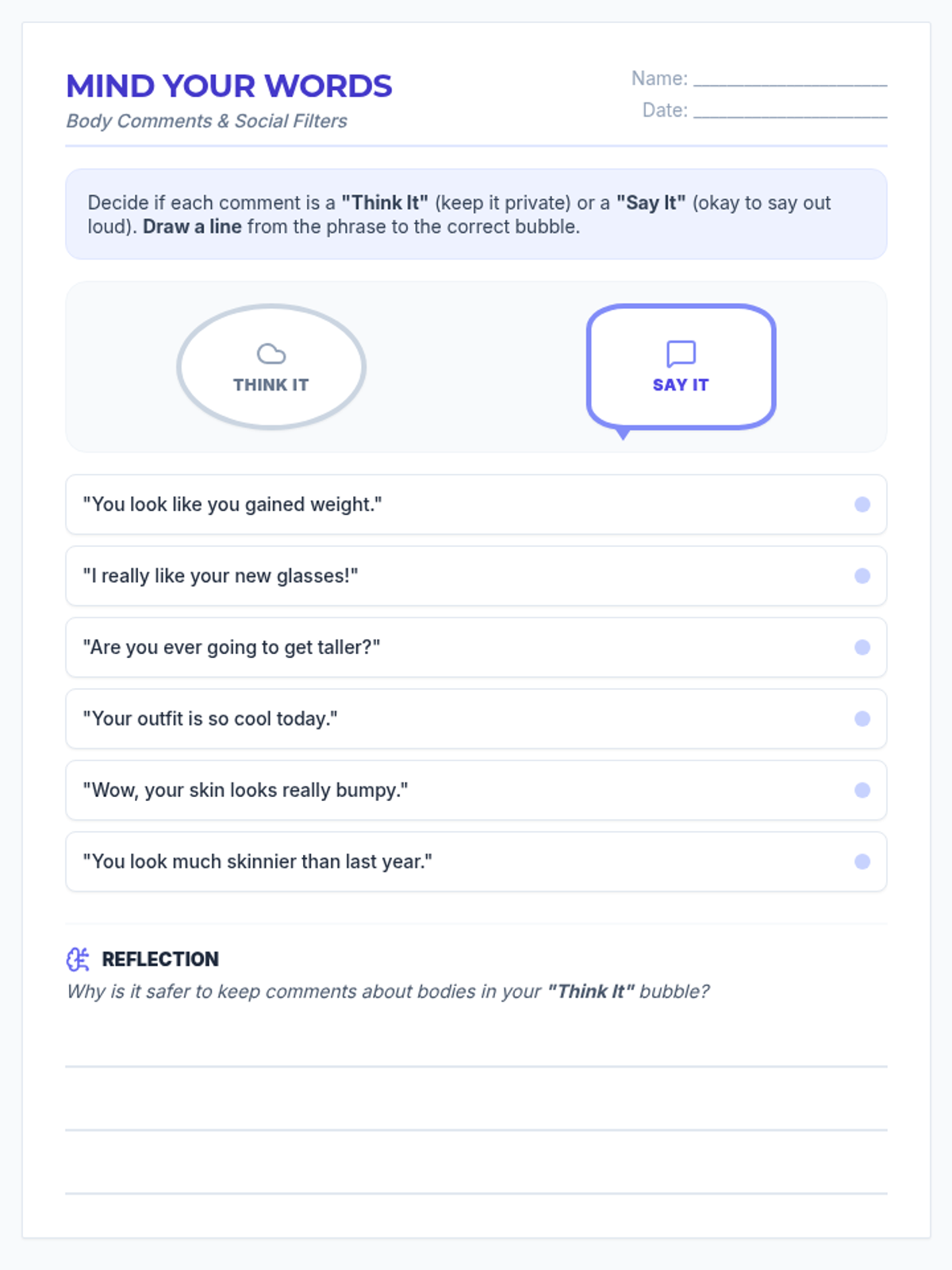
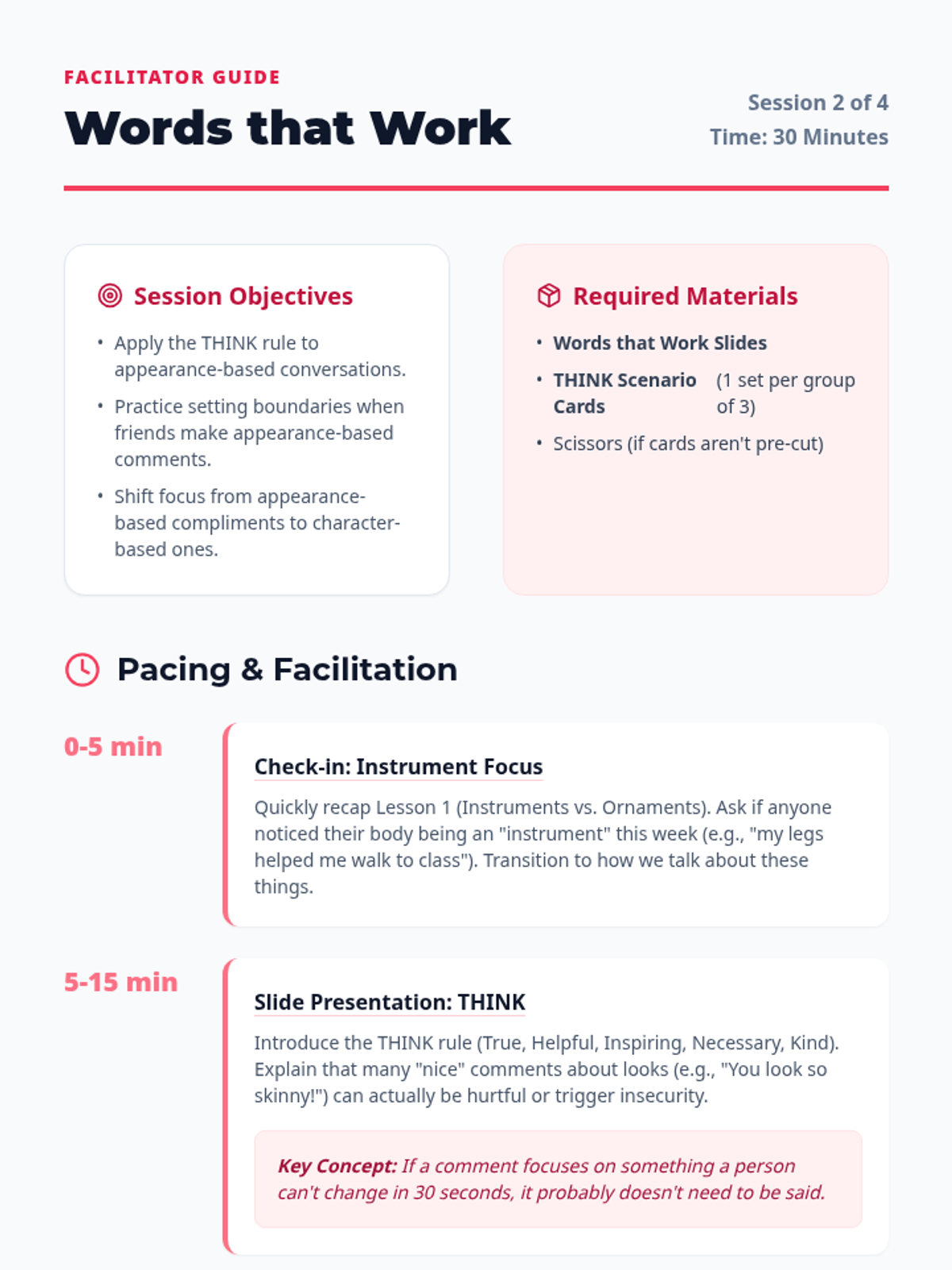
A two-part social skills sequence designed for 6th-grade girls focusing on navigating conversations about physical appearance and weight with empathy and social awareness.
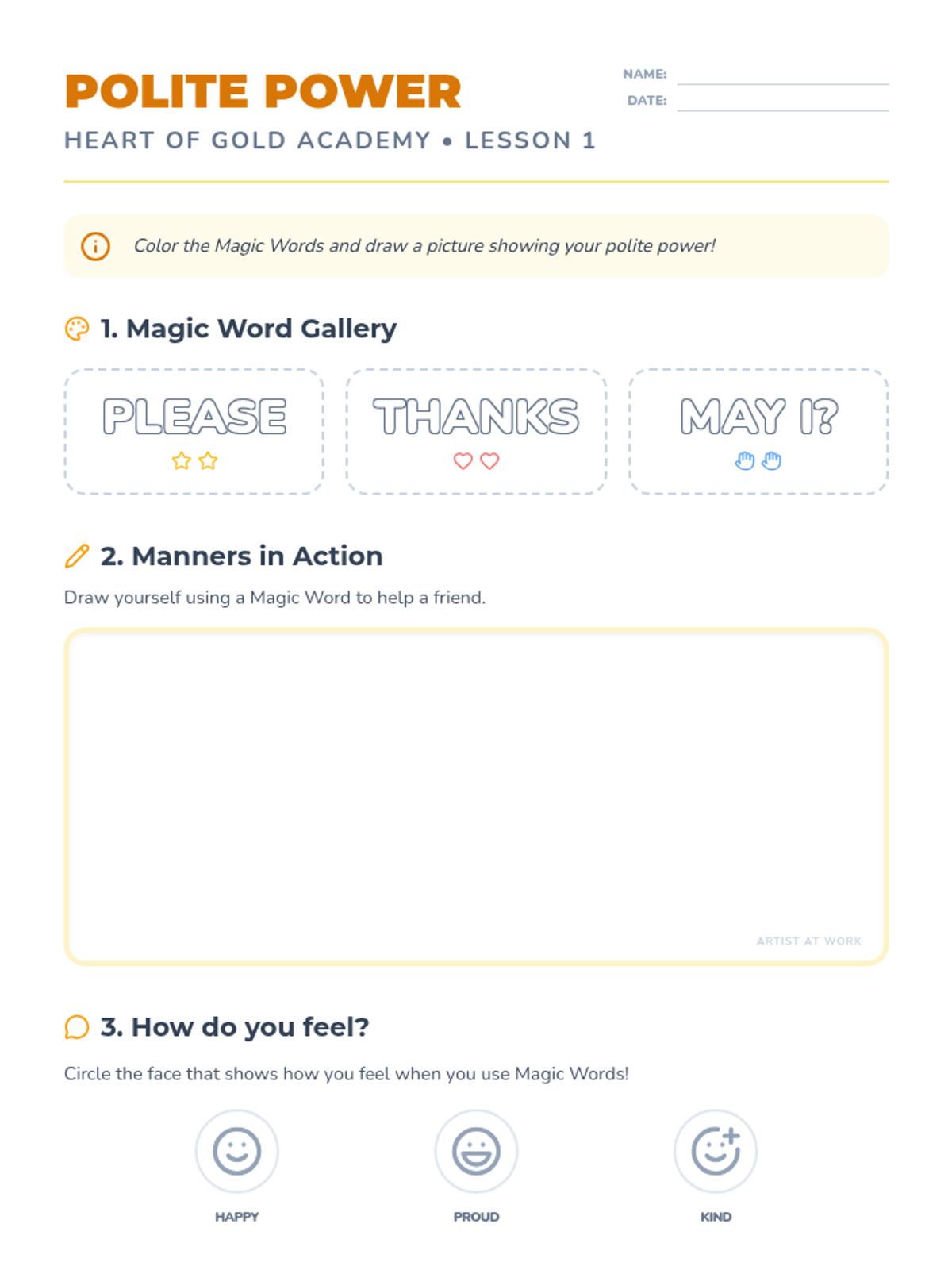
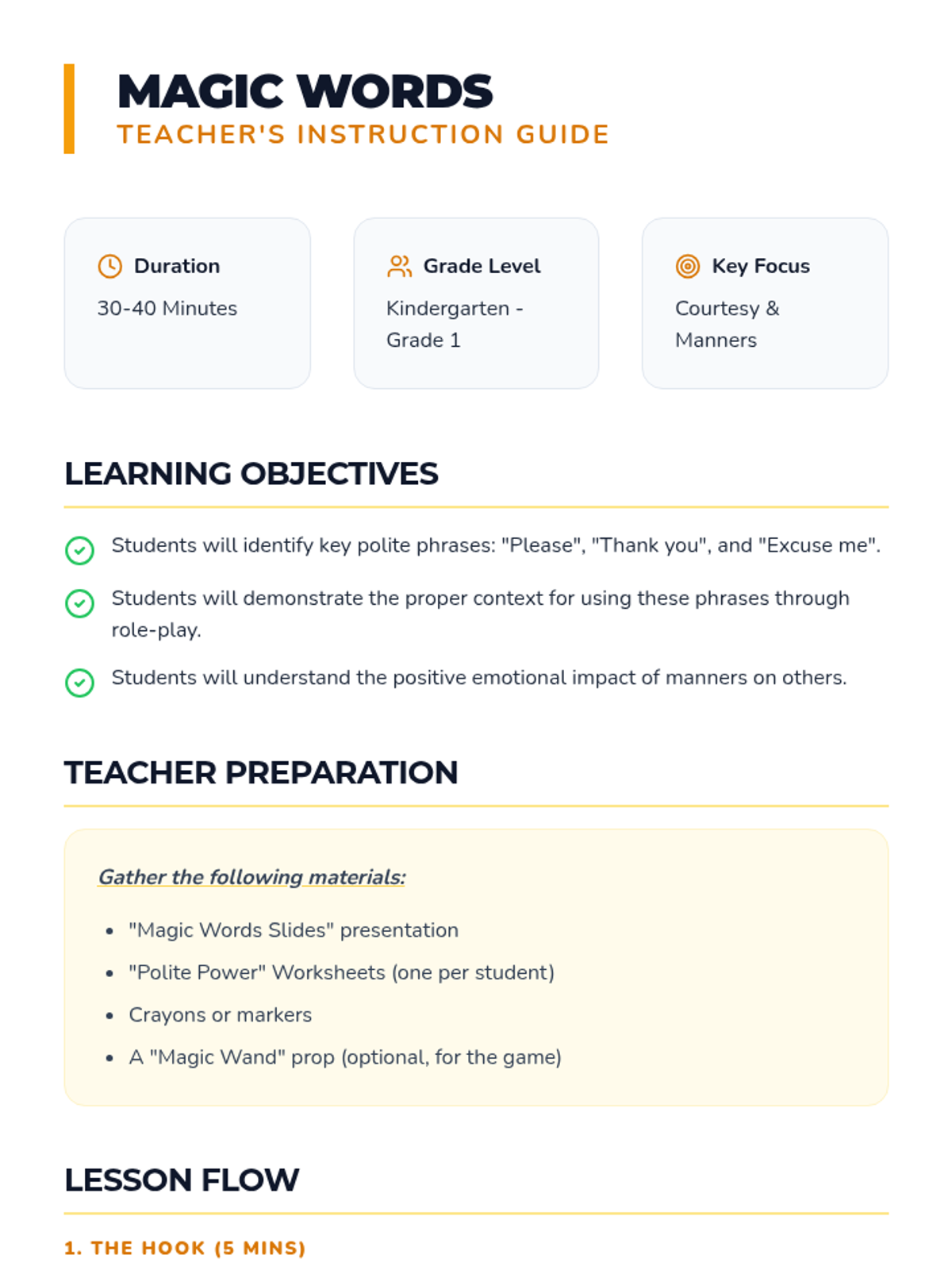
A comprehensive social-emotional learning sequence focused on building a foundation of courtesy, loyalty, manners, and respect across all grade levels. Students progress from basic polite interactions to complex social integrity.
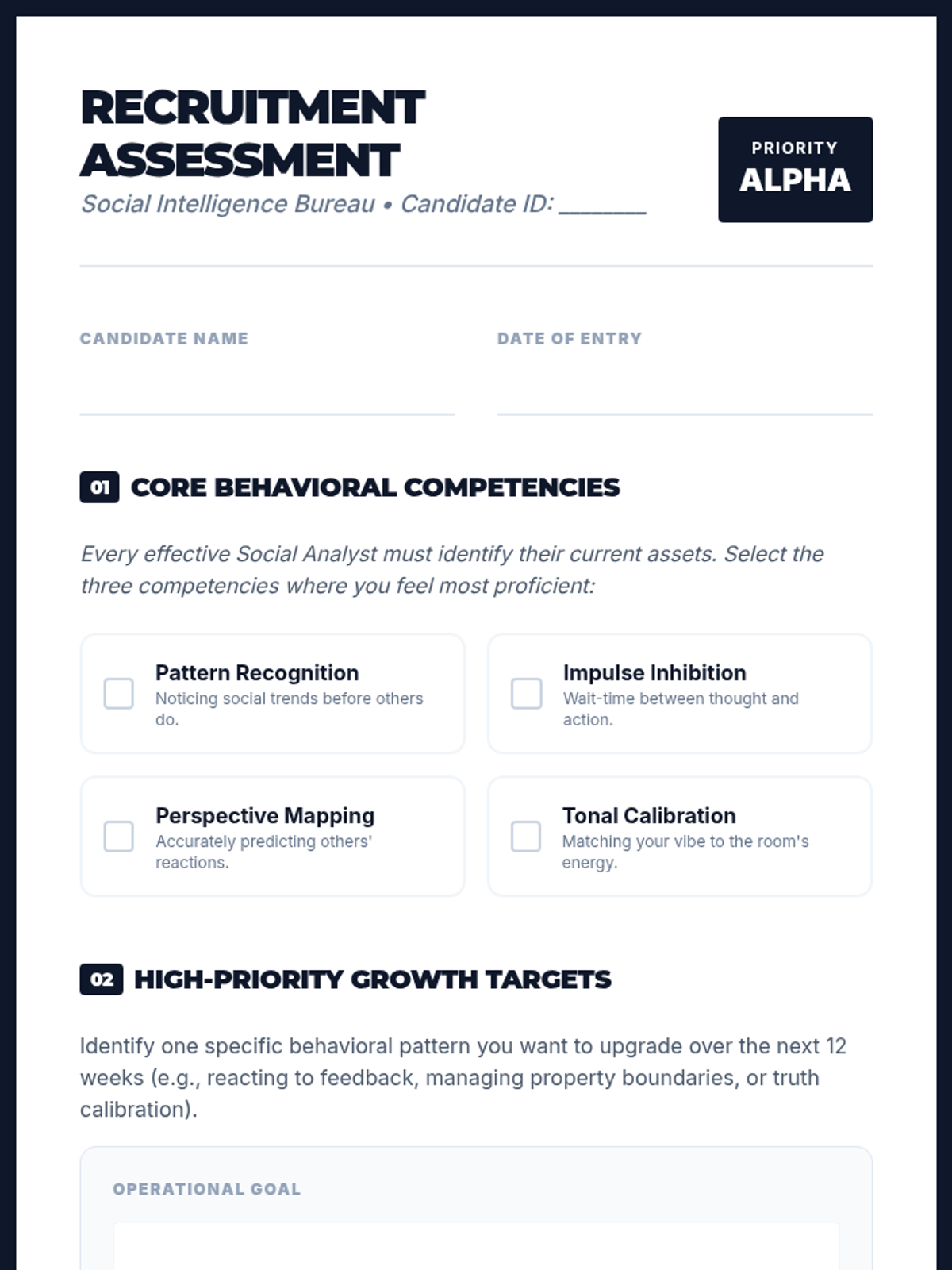
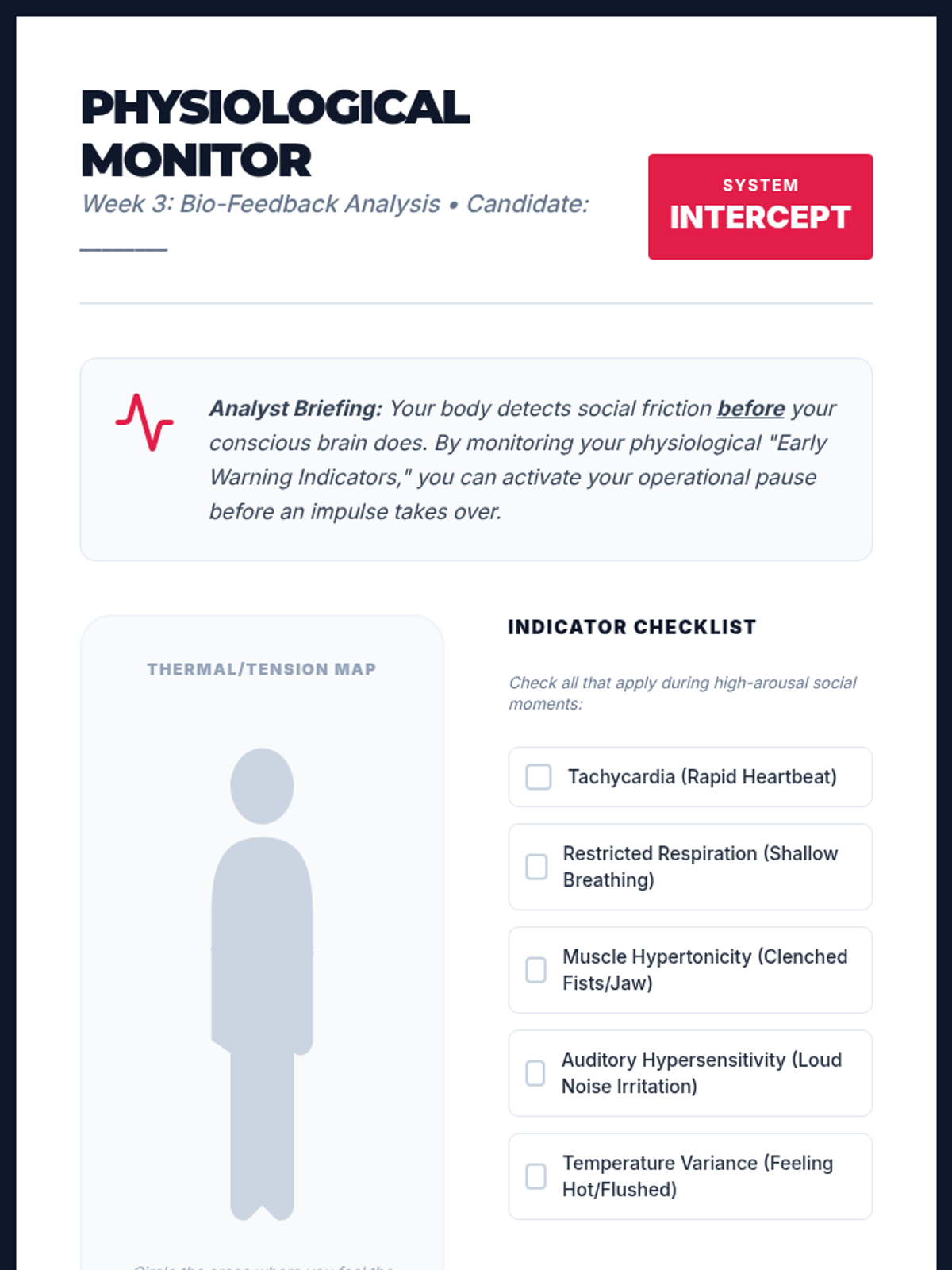
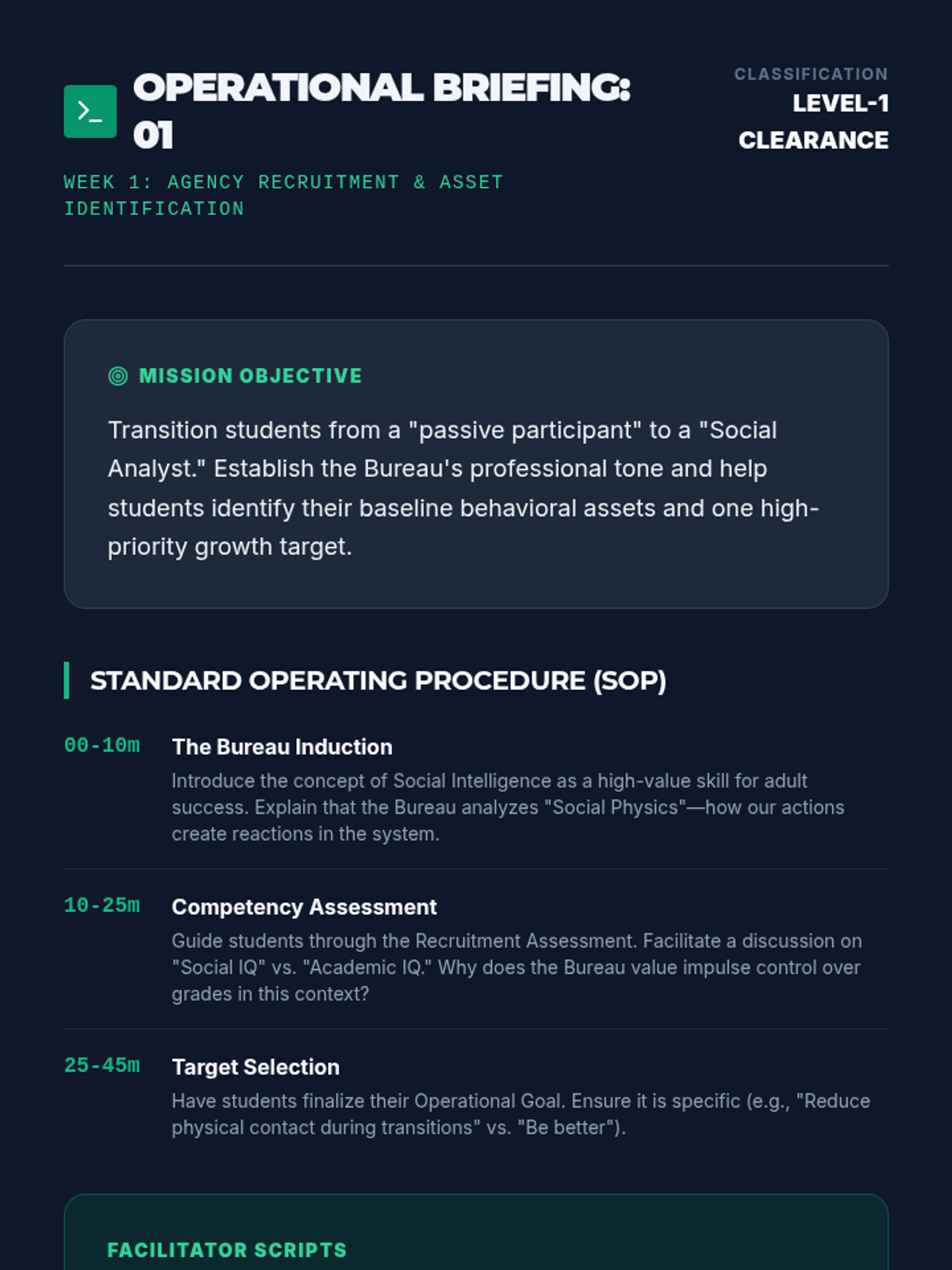
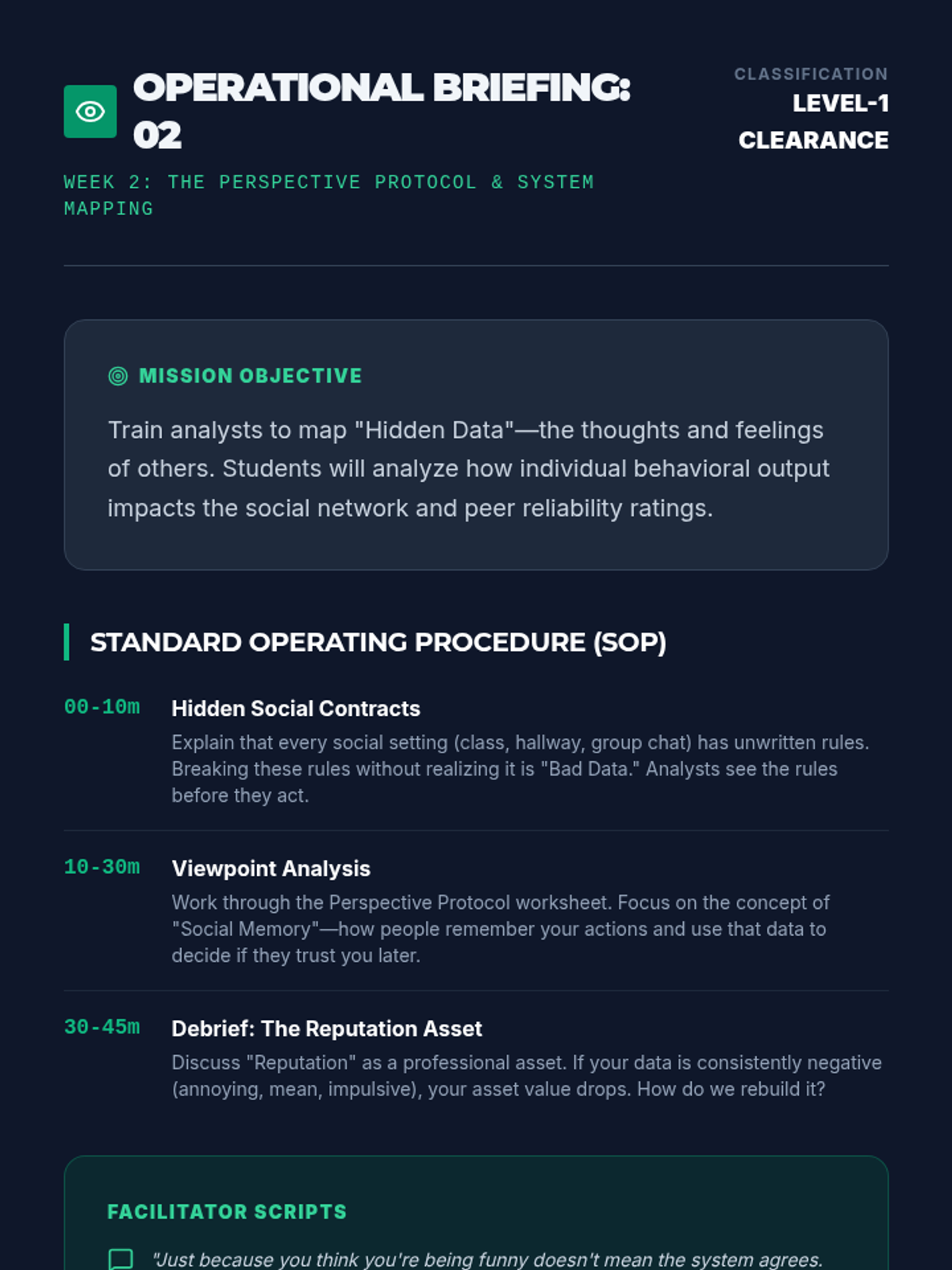
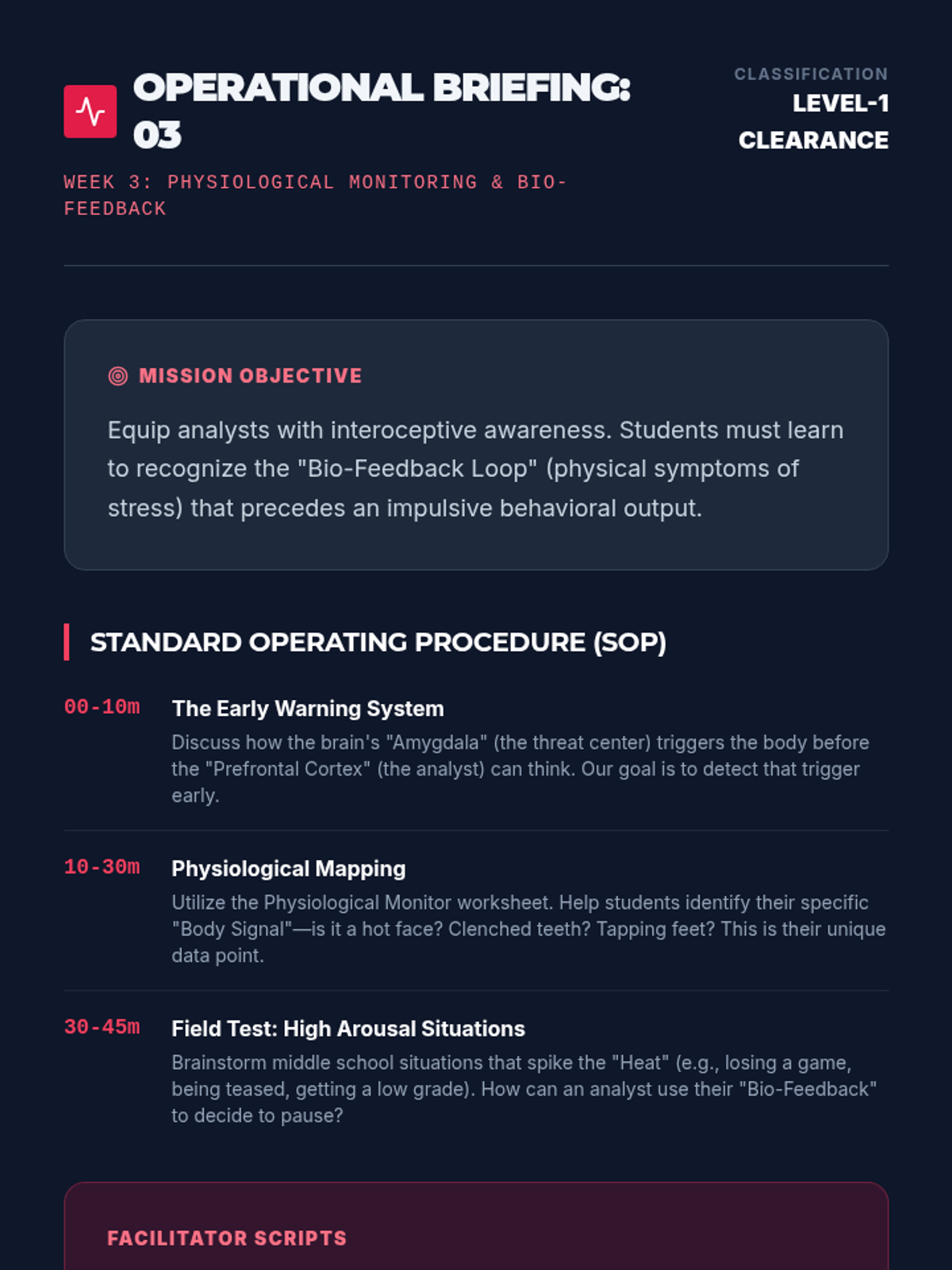
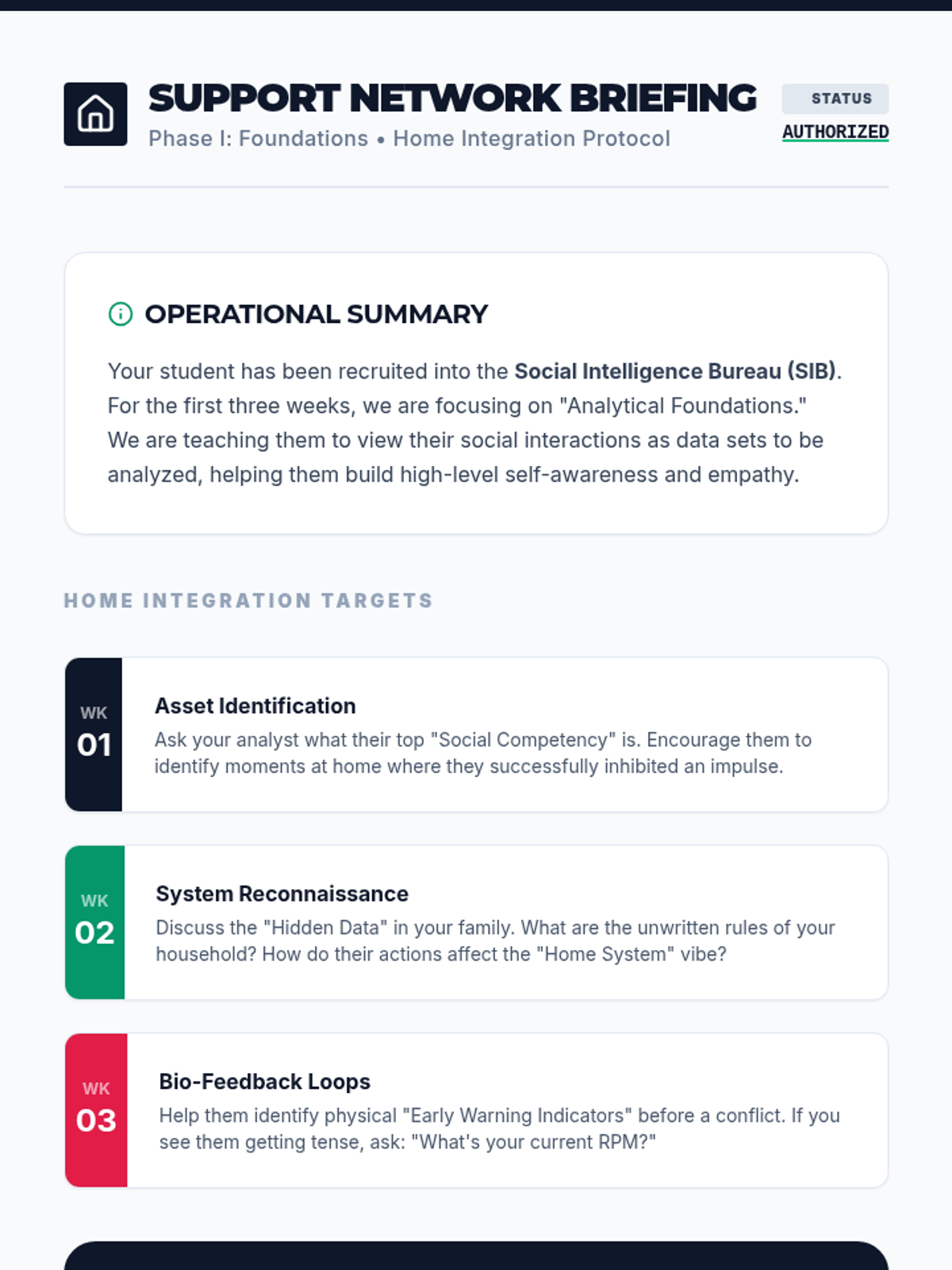
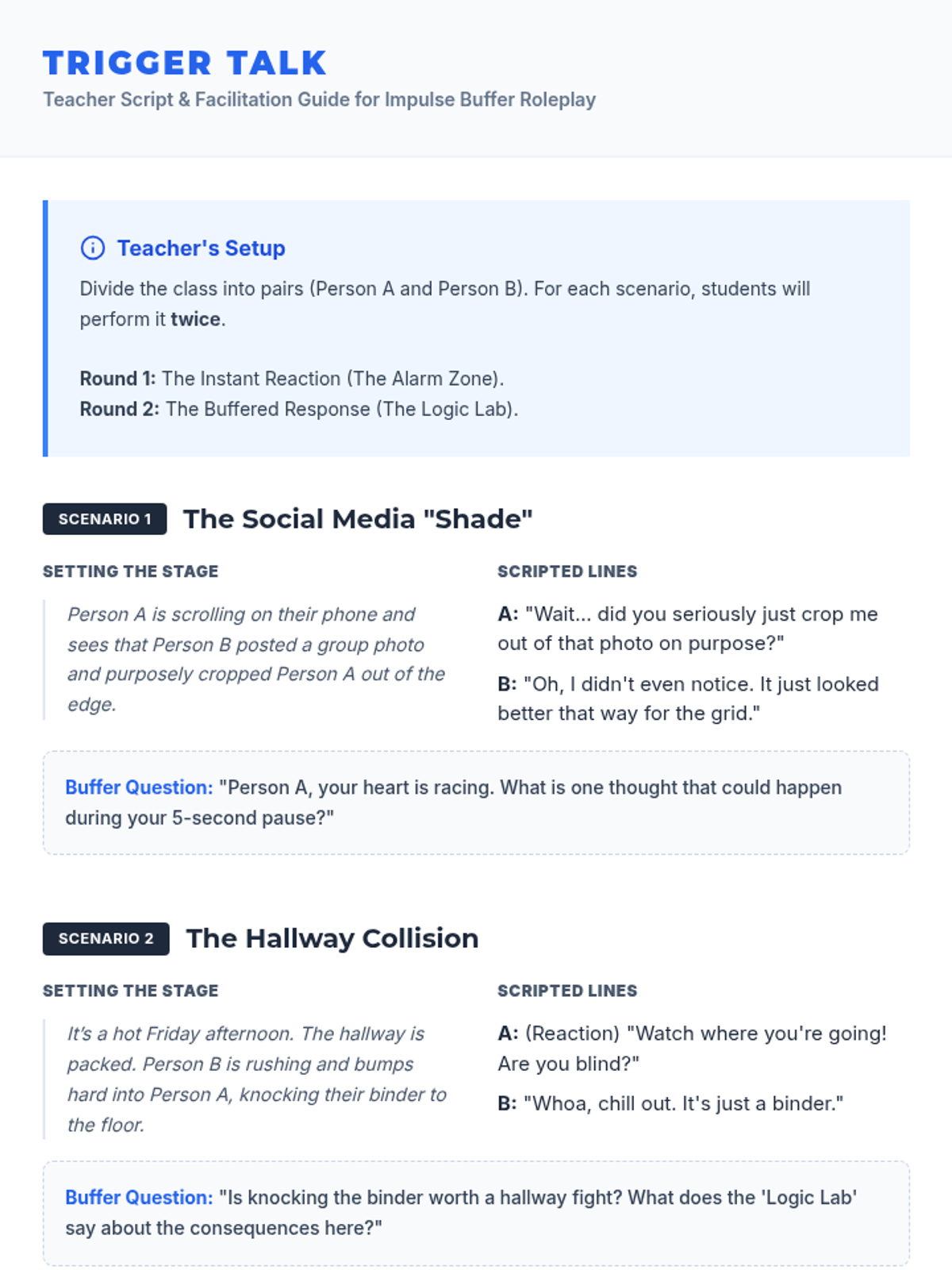
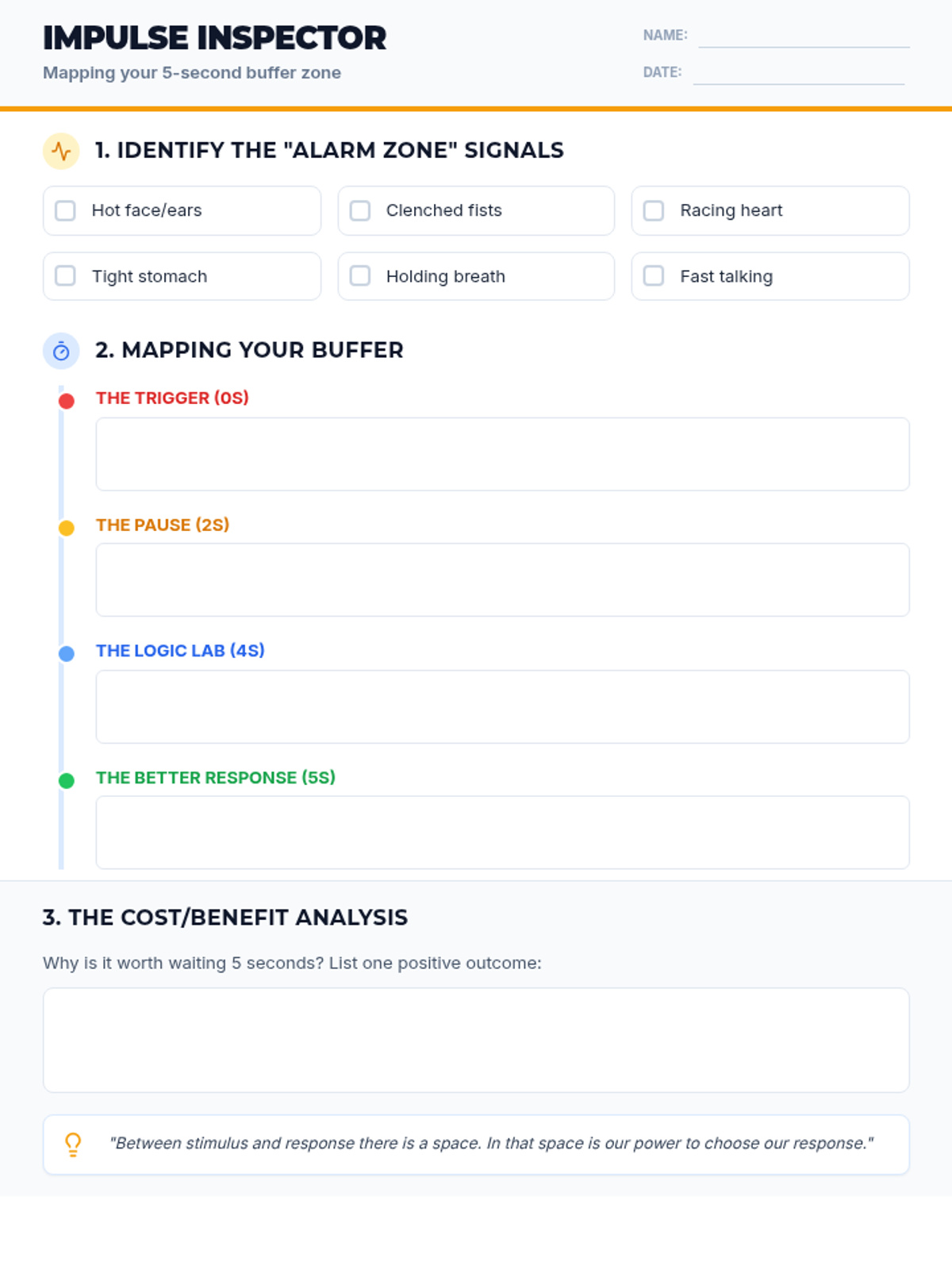
A 12-week sophisticated intervention for middle schoolers (ages 10-13) to master impulse control, emotional intelligence, and interpersonal trust using a behavioral analysis framework.
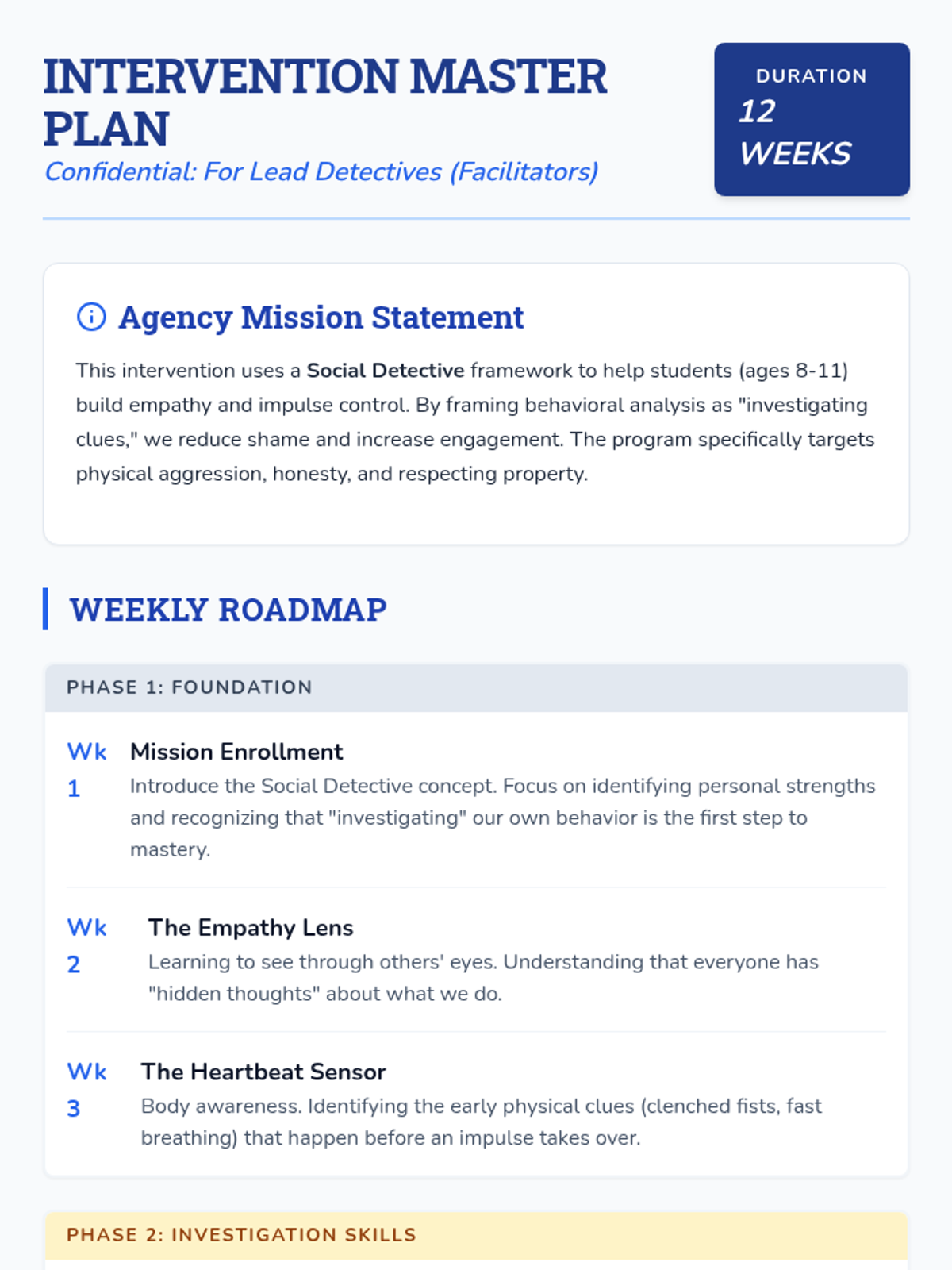
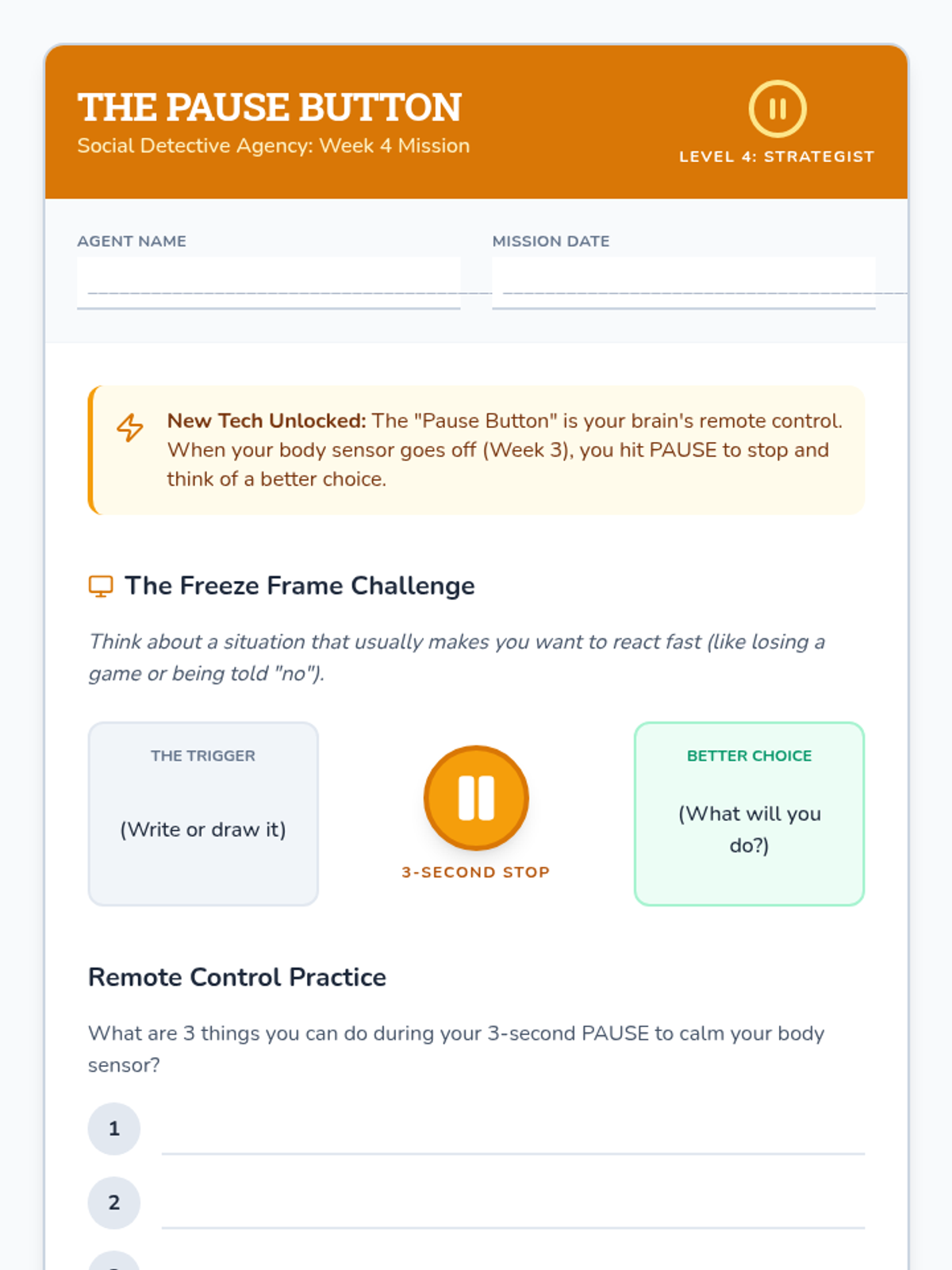
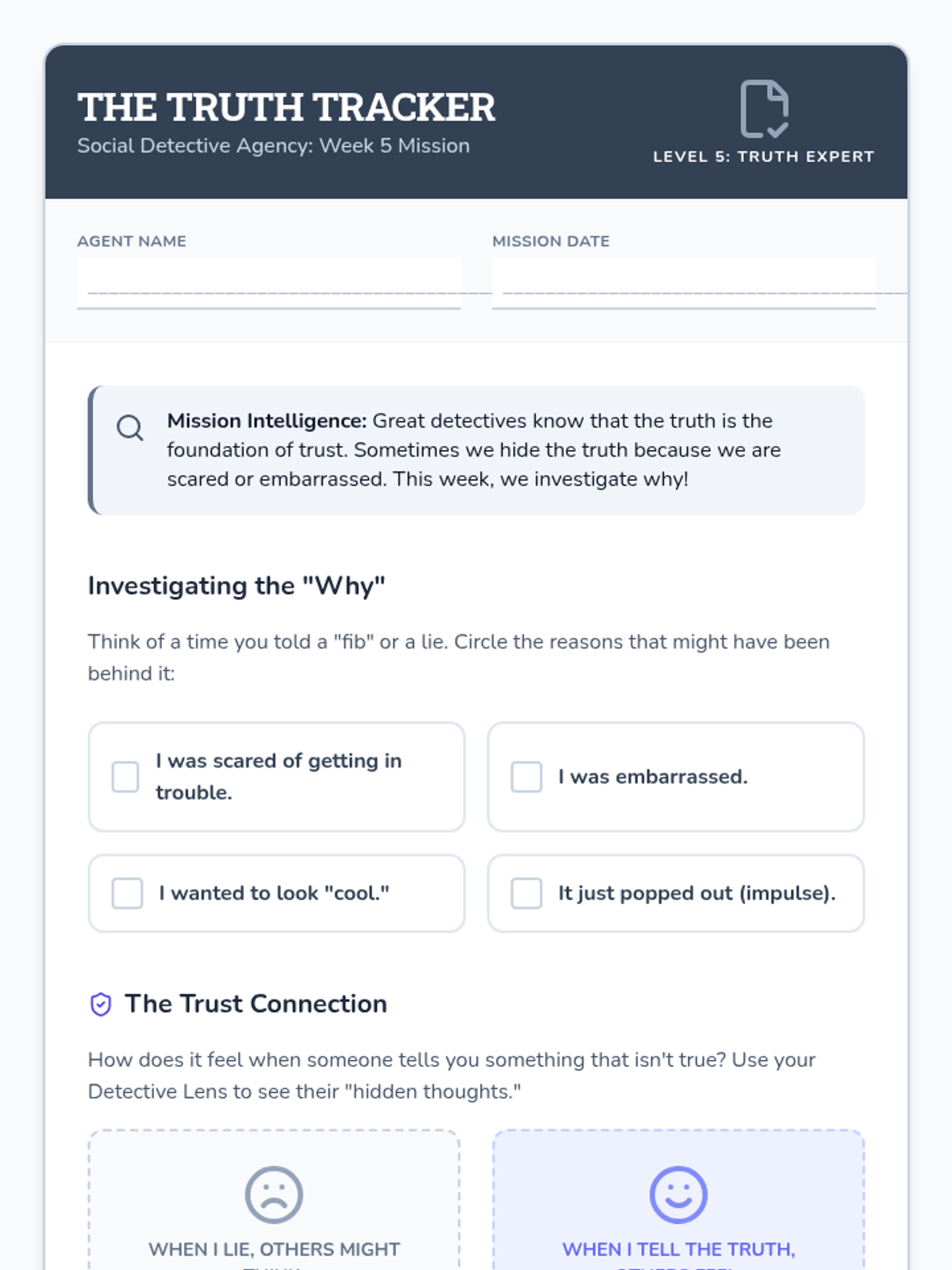
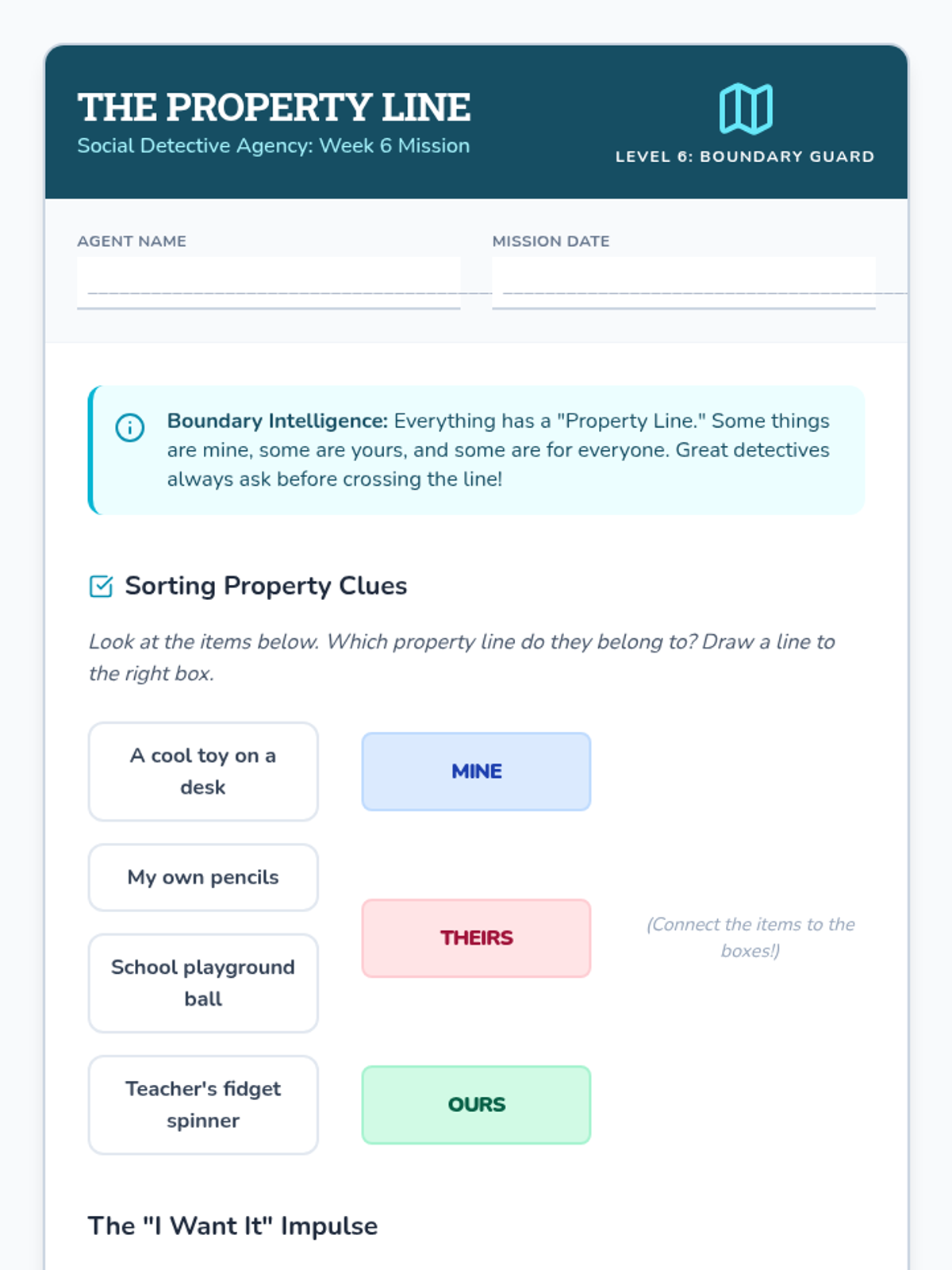
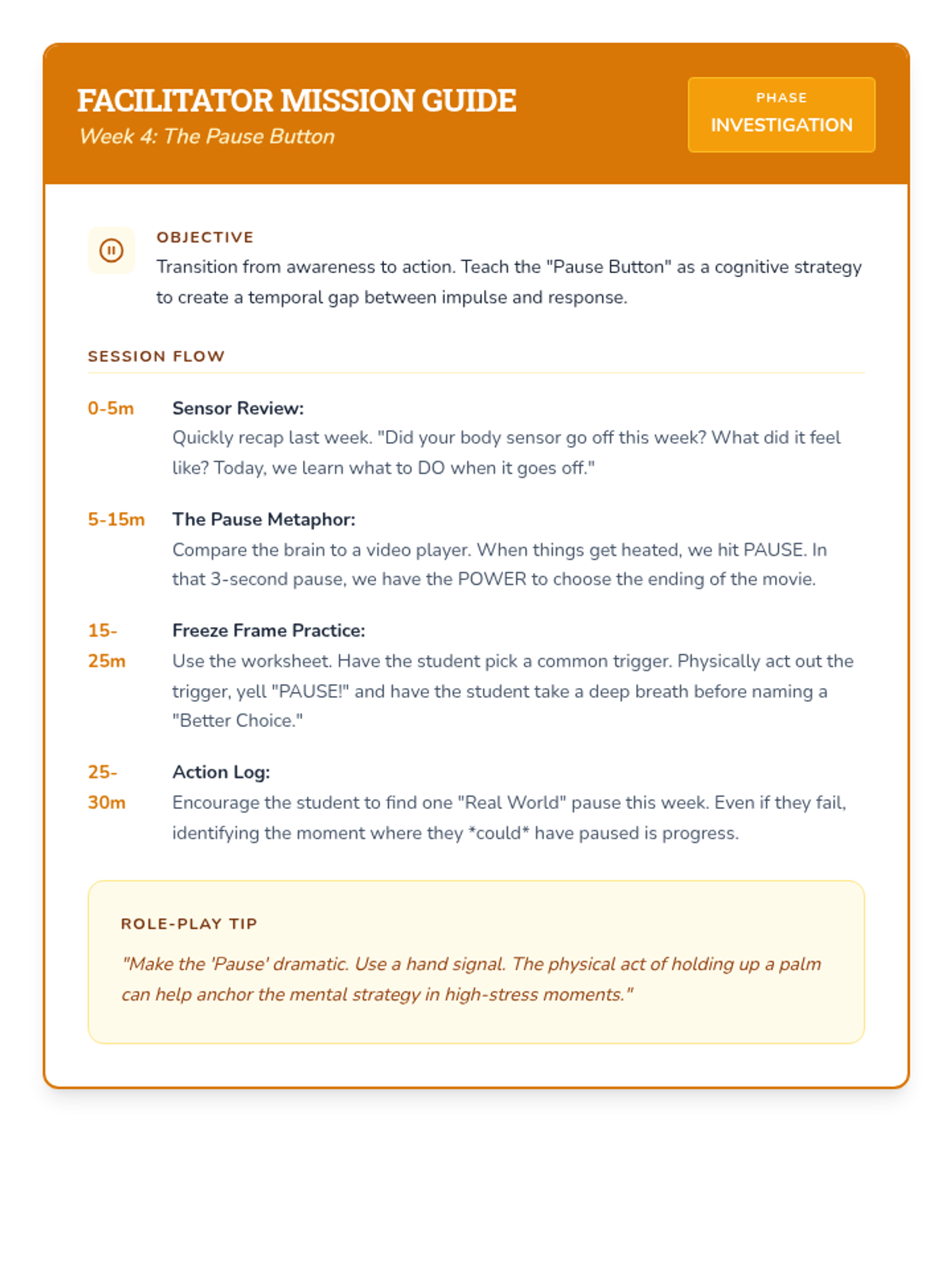
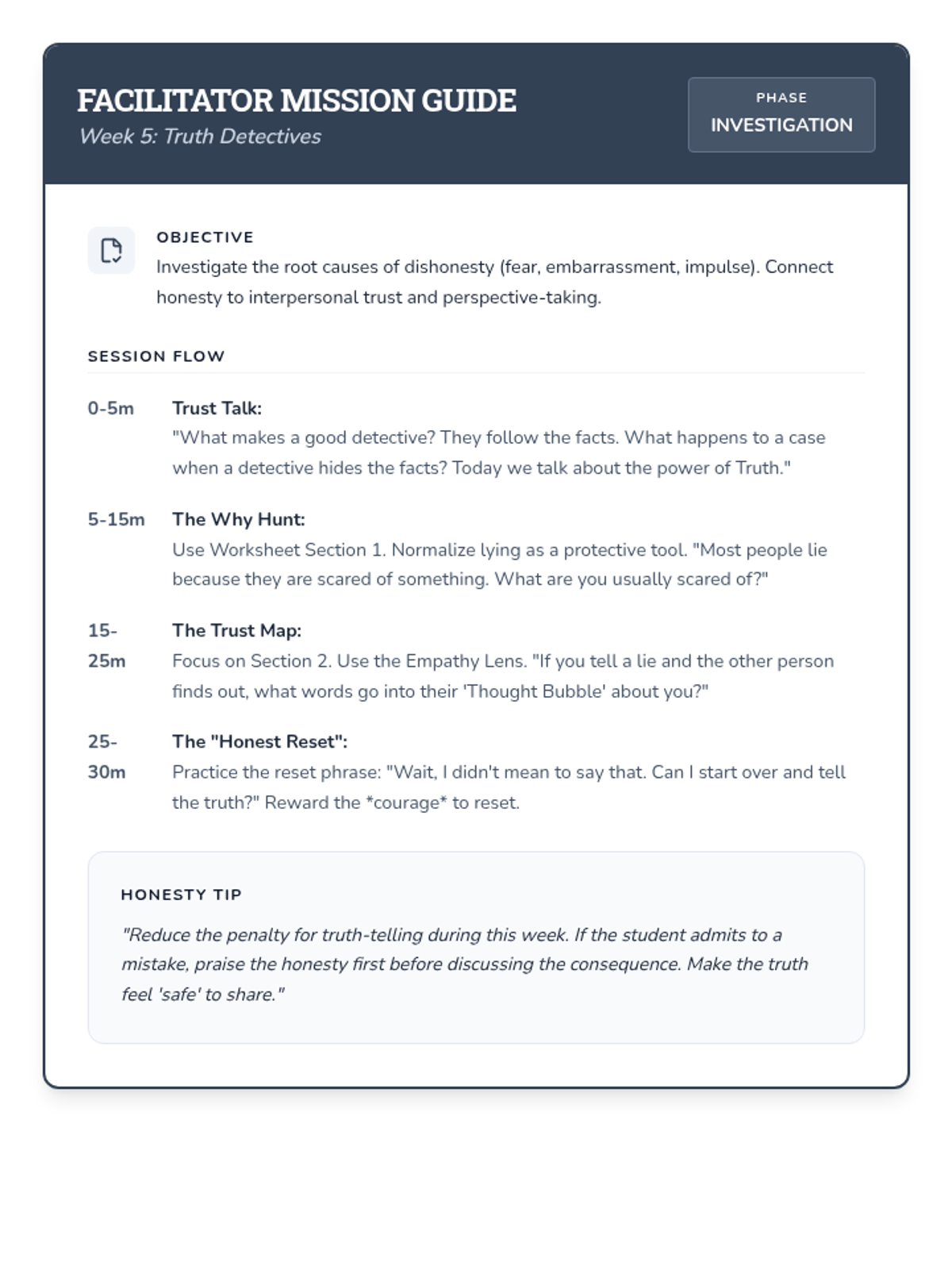
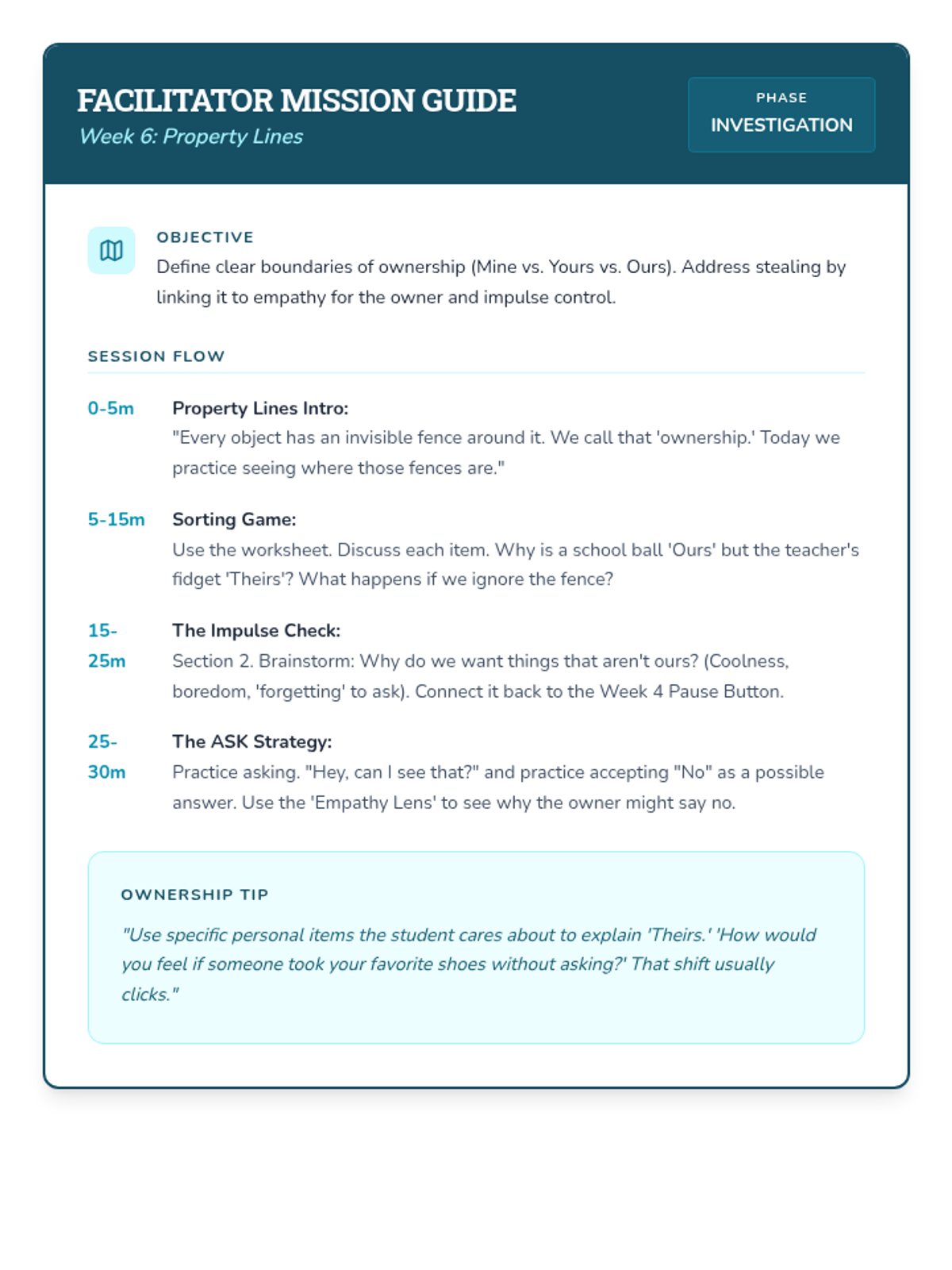
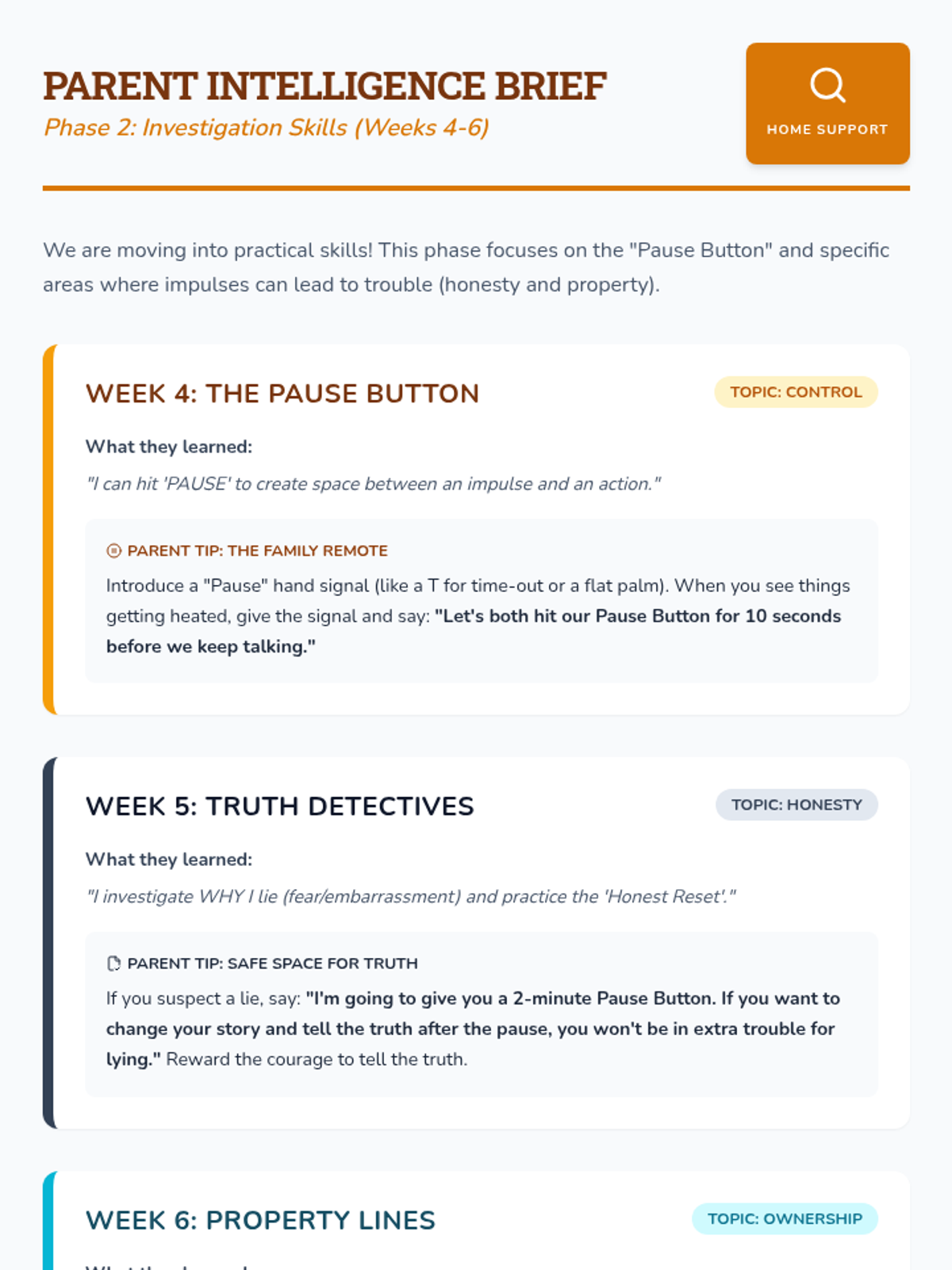
A 12-week comprehensive intervention plan designed for children to improve impulse control and empathy through a "Social Detective" investigative theme.
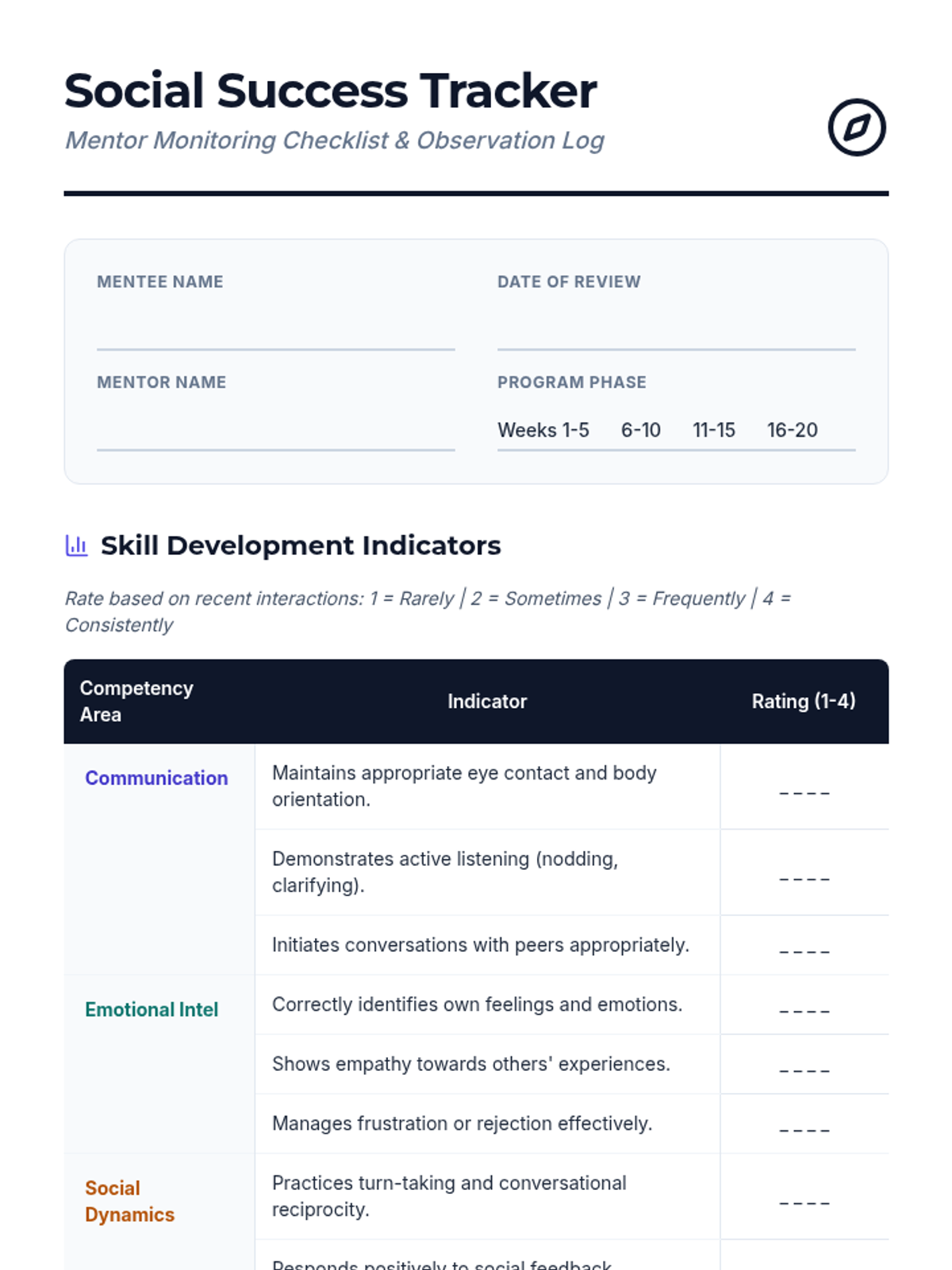
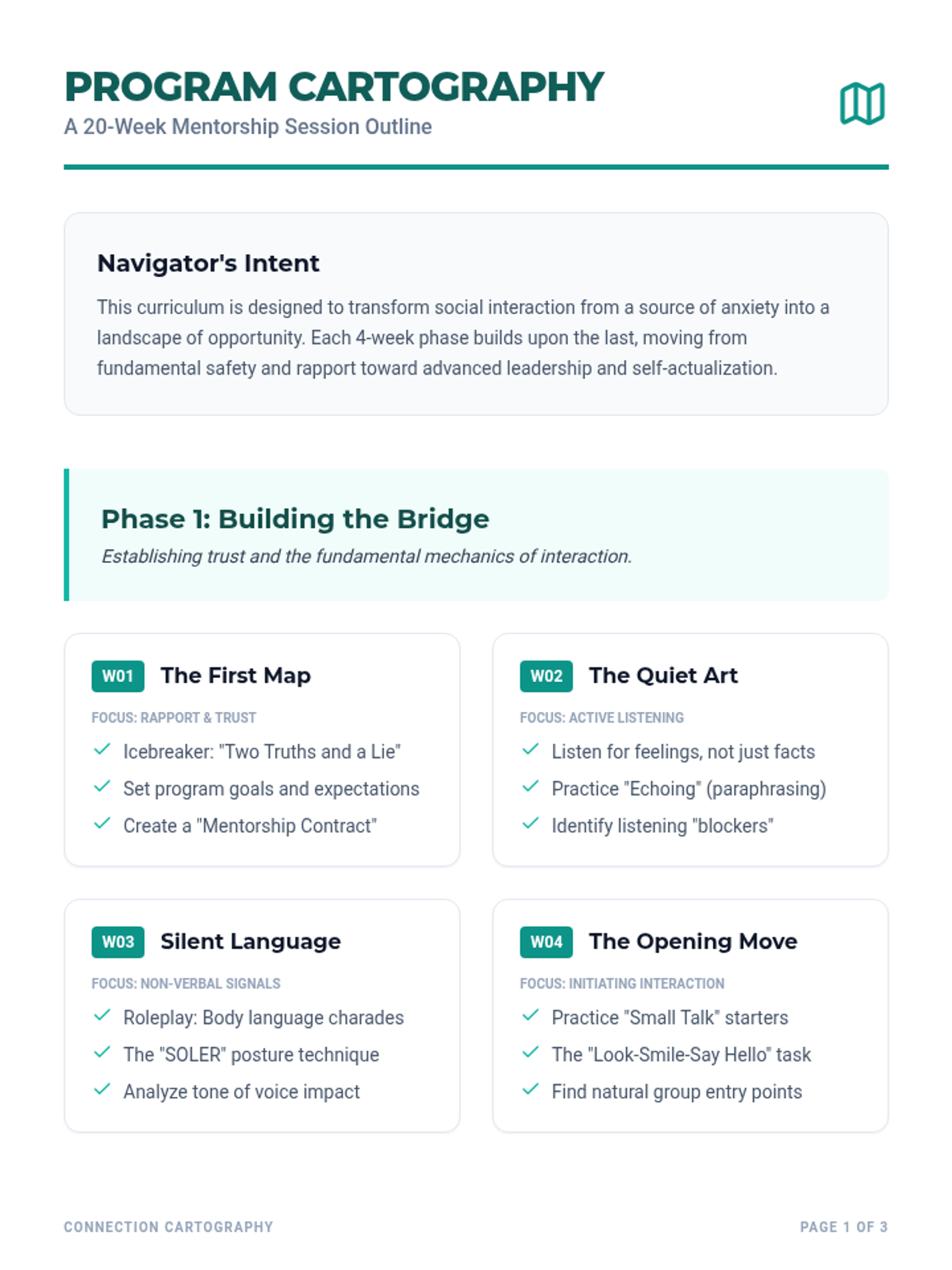
A comprehensive 20-week mentorship program designed to help students navigate social environments, build meaningful friendships, and master communication.
A 2-session social skills group for 6th-grade girls focused on body neutrality, media literacy, and respectful interpersonal communication regarding physical appearance.
A comprehensive series of 30-minute lessons tailored for different grade levels (K-10) to foster understanding, empathy, and advocacy regarding autism and neurodiversity. Each lesson uses age-appropriate literature to ground the conversation.
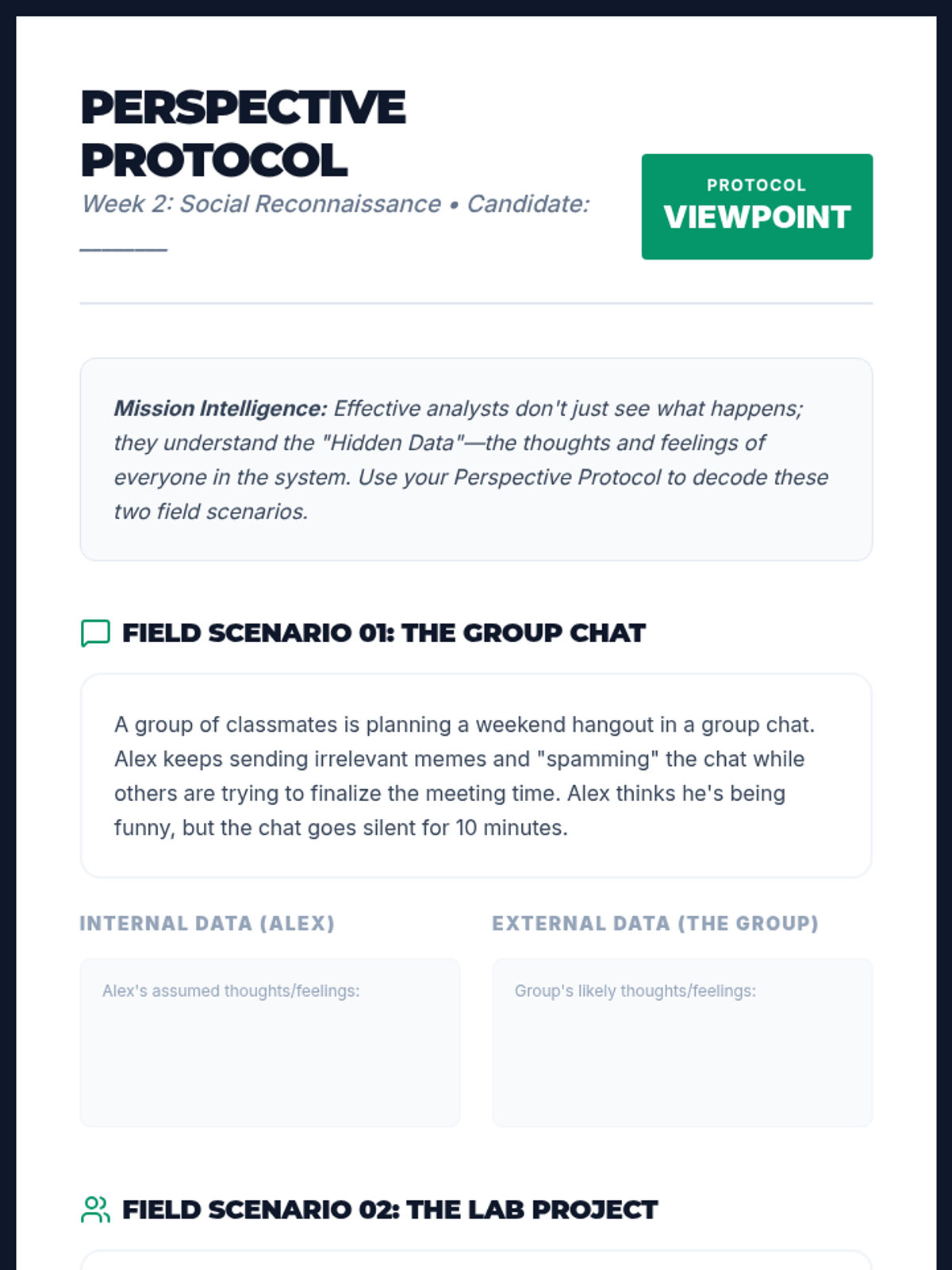
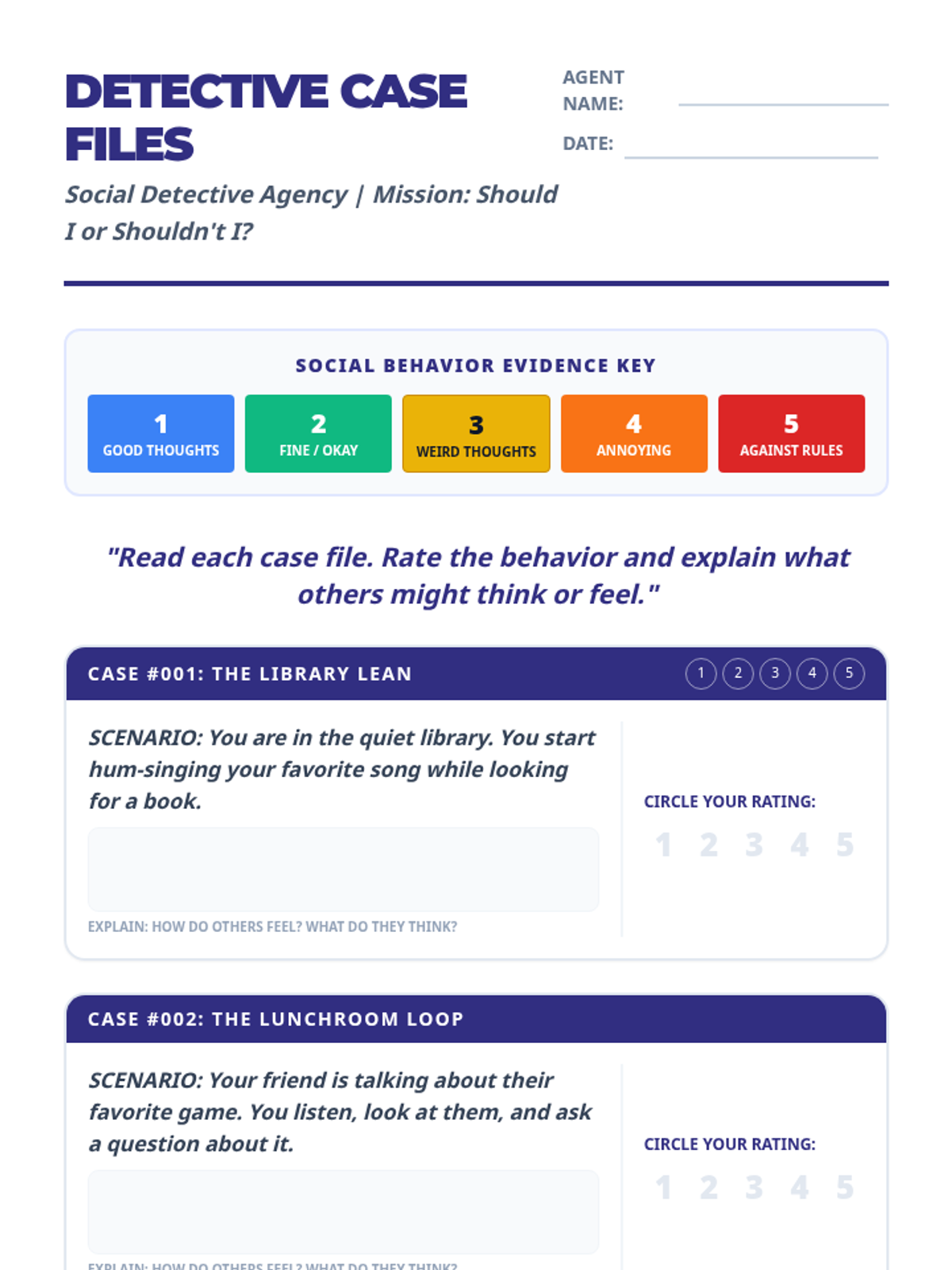
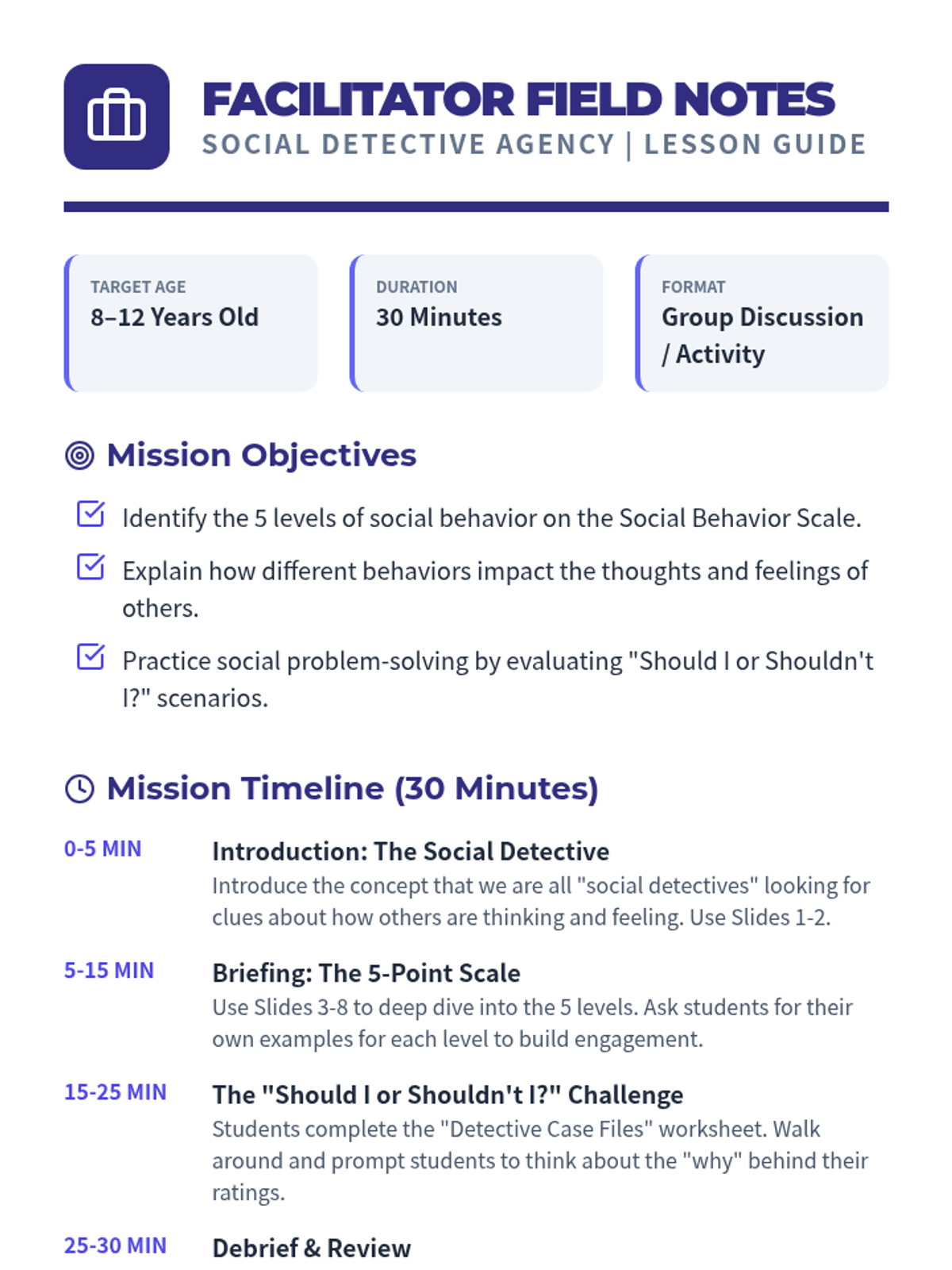
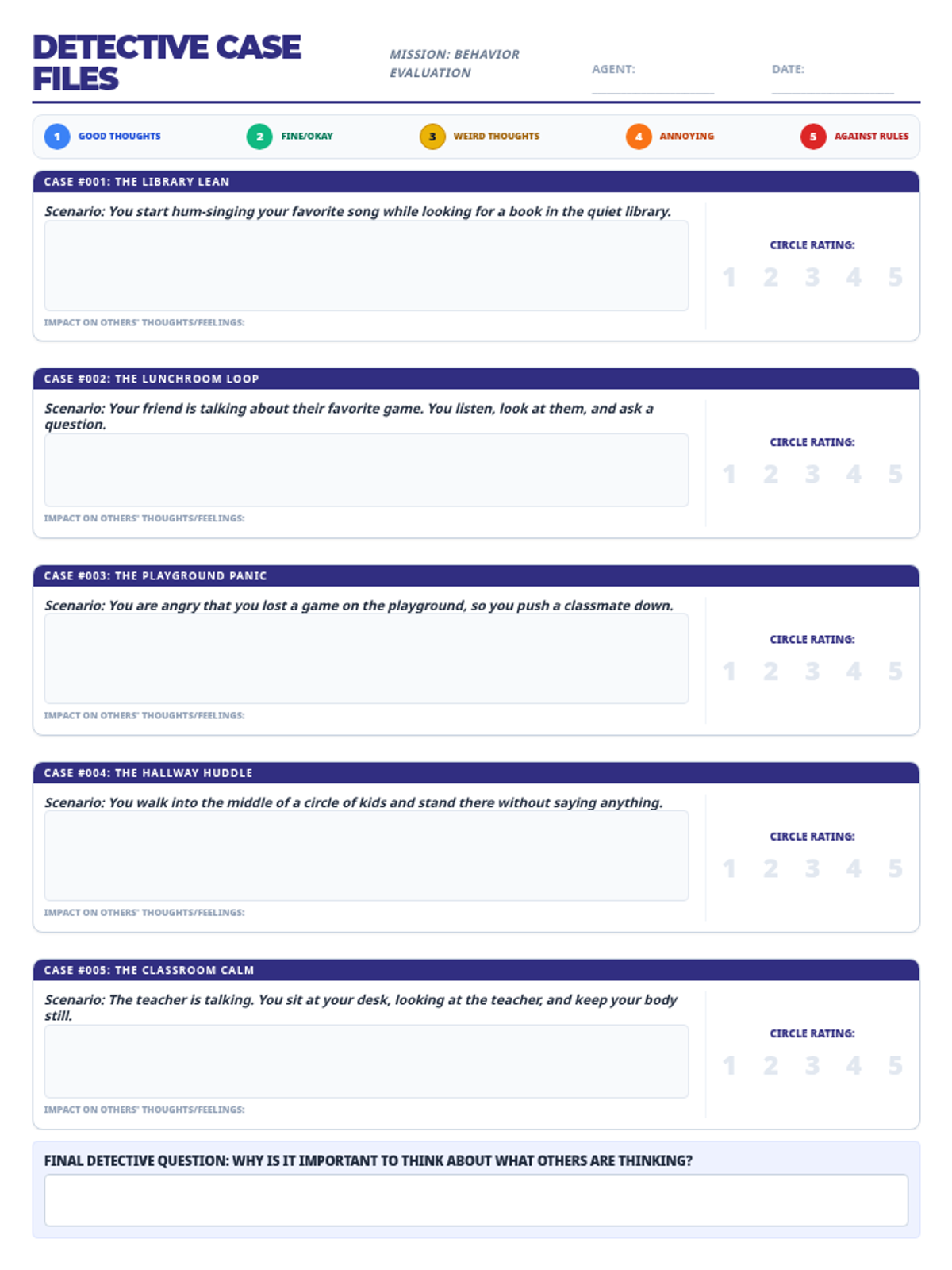
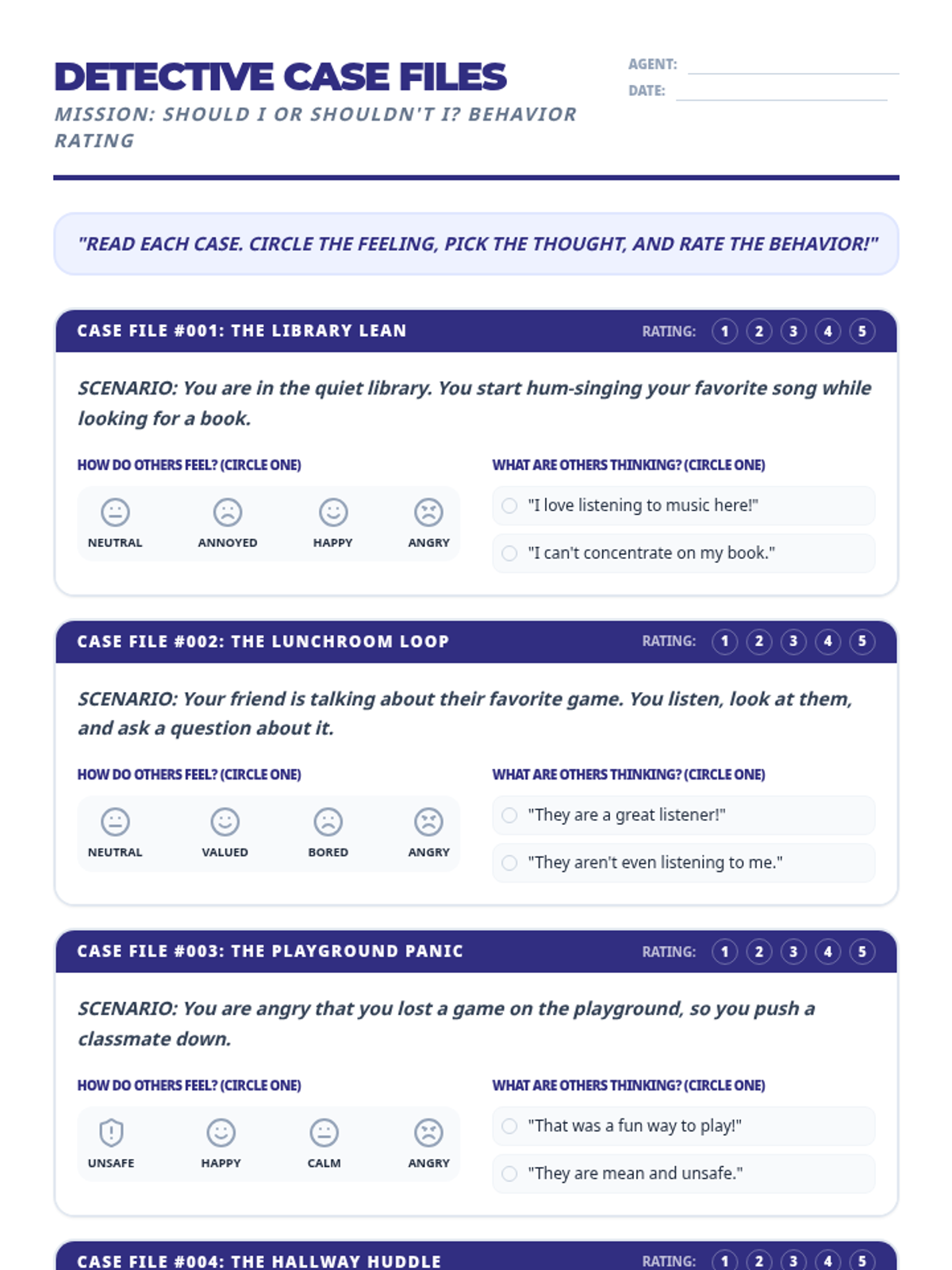
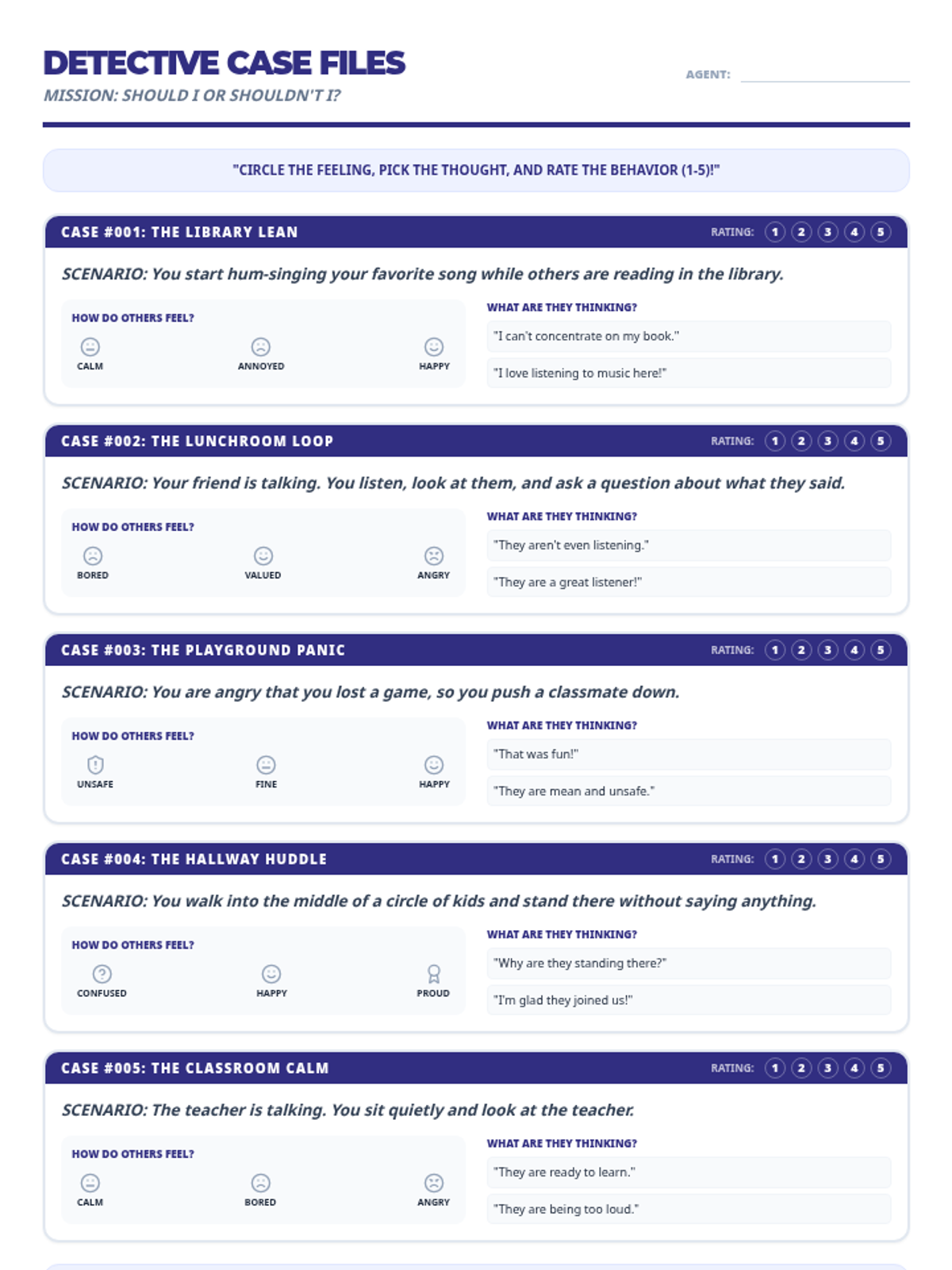
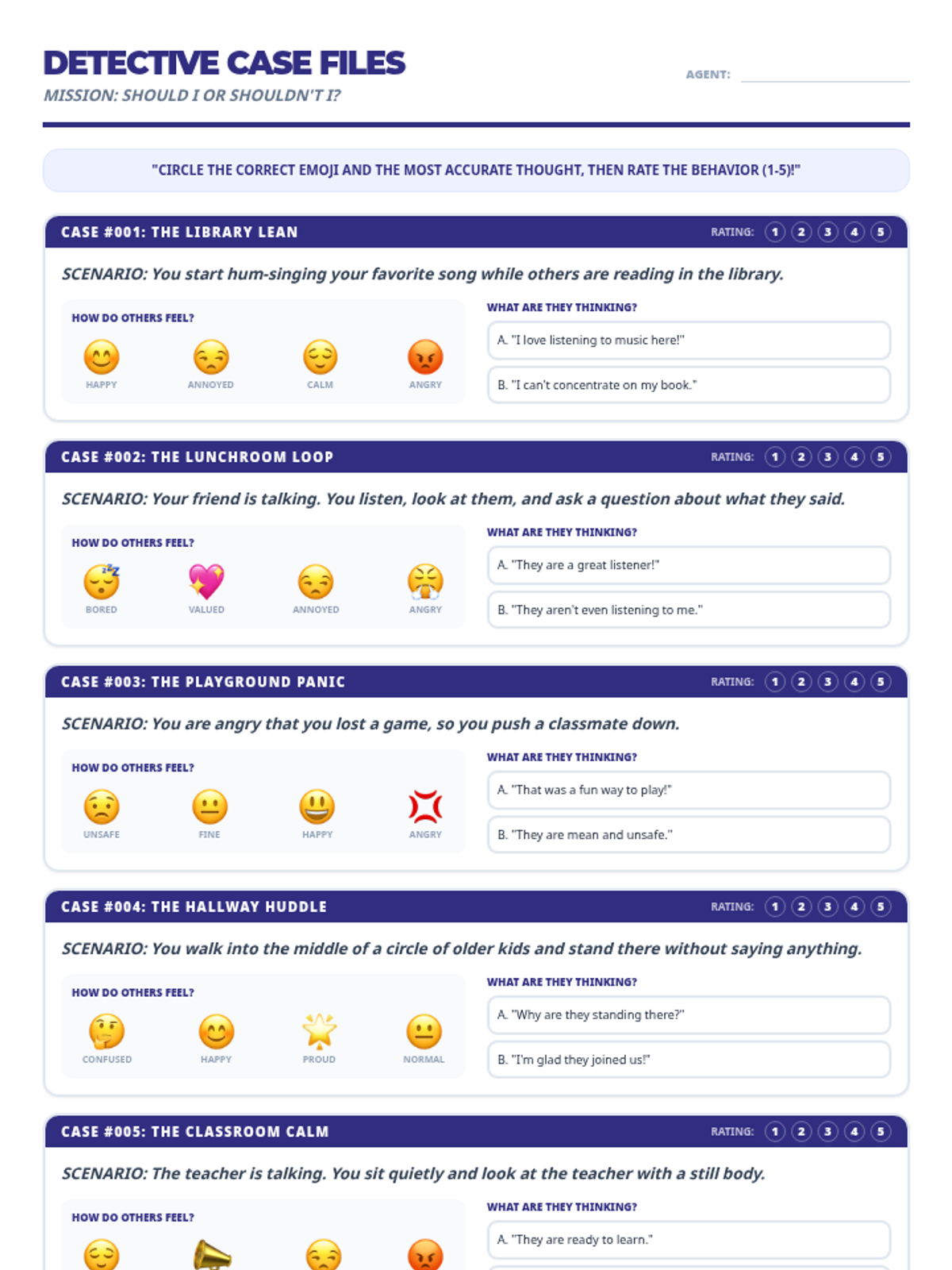
A comprehensive unit on social thinking skills, using a detective agency theme to teach behavior evaluation, social problem solving, and behavior mapping.
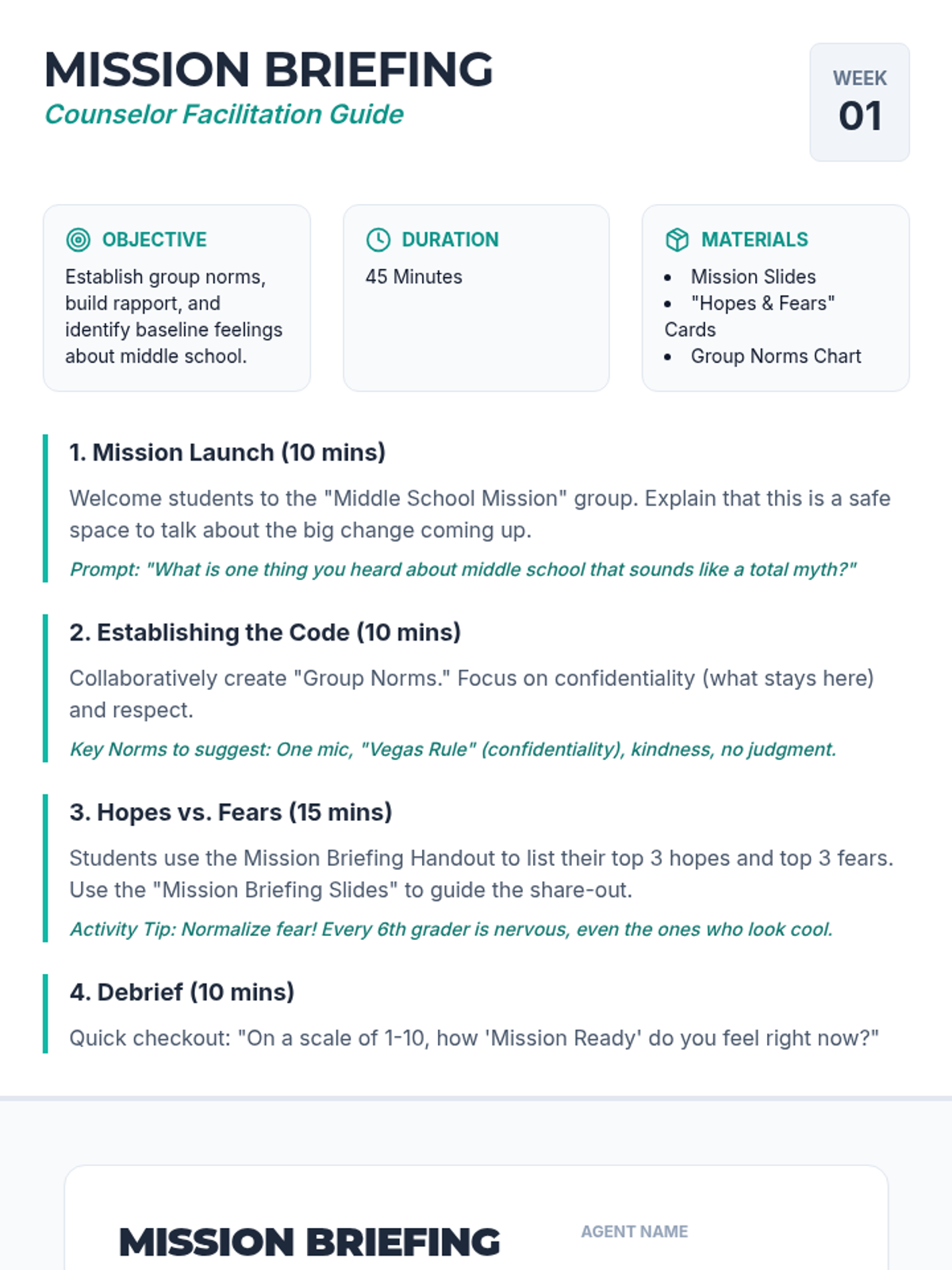
A 6-week small group counseling curriculum designed to help 6th graders transition smoothly to middle school, covering logistics, organization, social dynamics, and stress management.
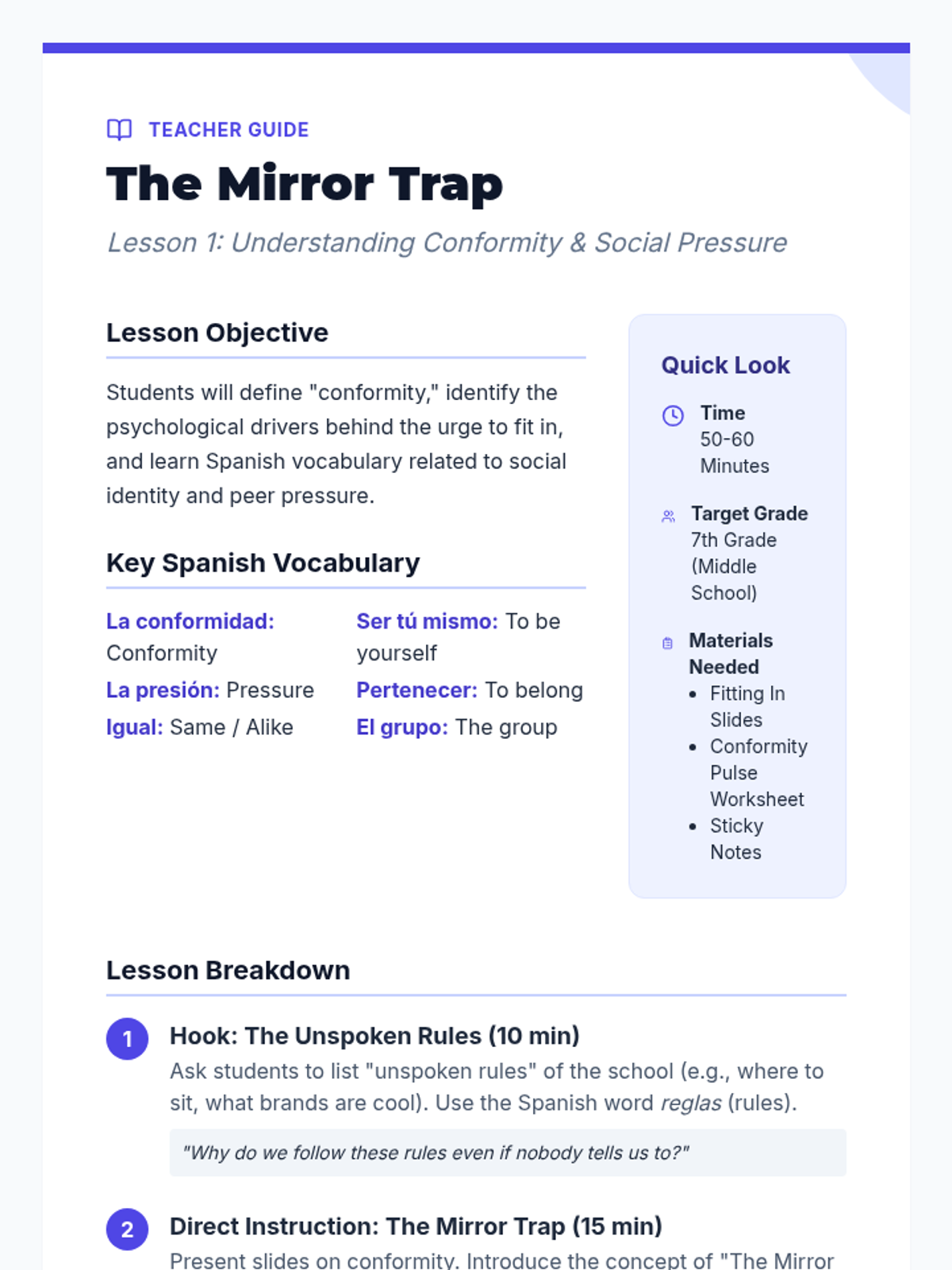
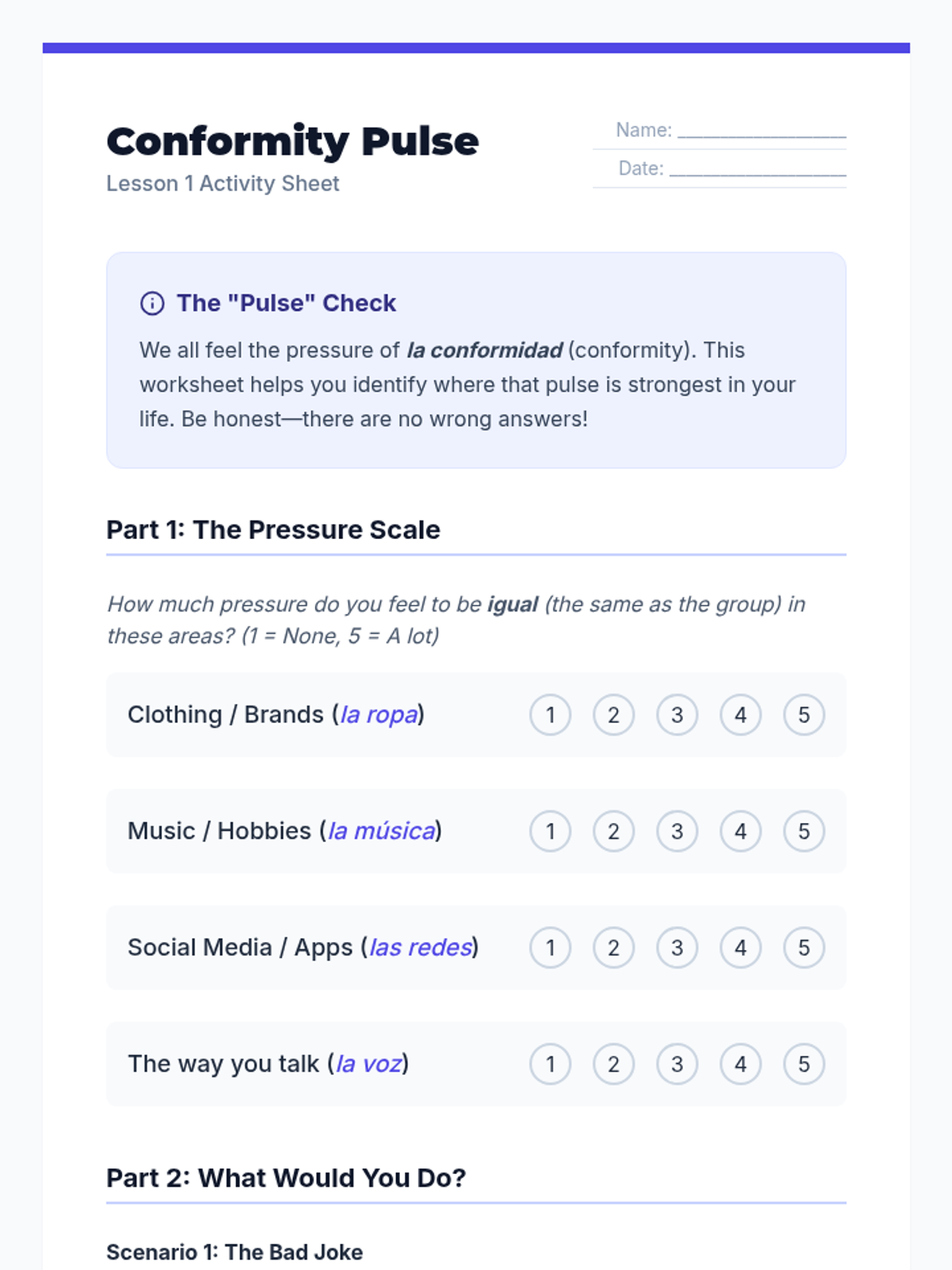
A two-lesson curriculum for middle schoolers exploring the concepts of conformity and the beauty of individual differences, integrating Spanish vocabulary to build self-acceptance and tolerance.
A comprehensive six-week empowerment program for middle school girls focused on building self-confidence, identifying healthy friendship patterns, navigating social hierarchies, and developing self-advocacy skills.
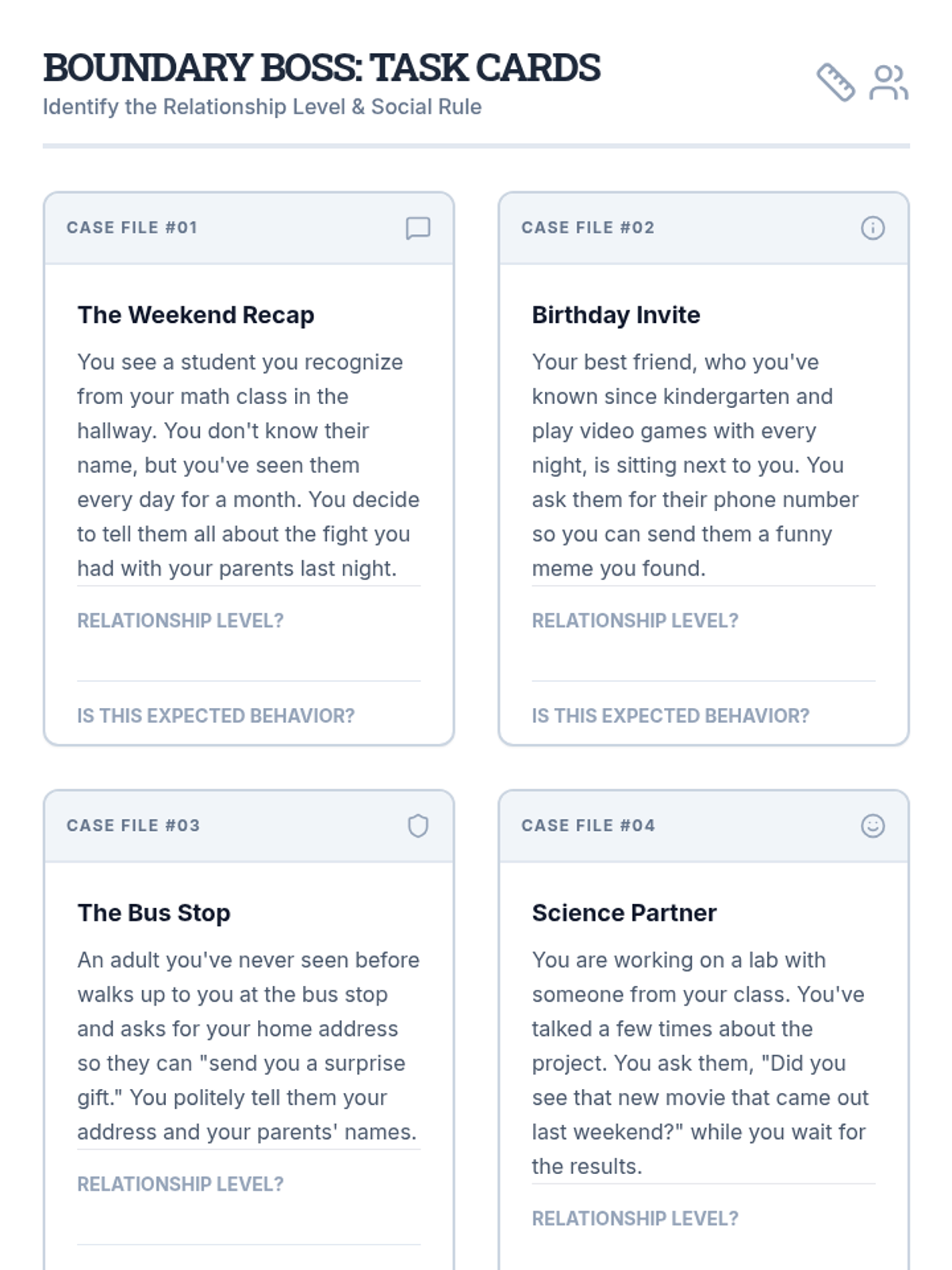
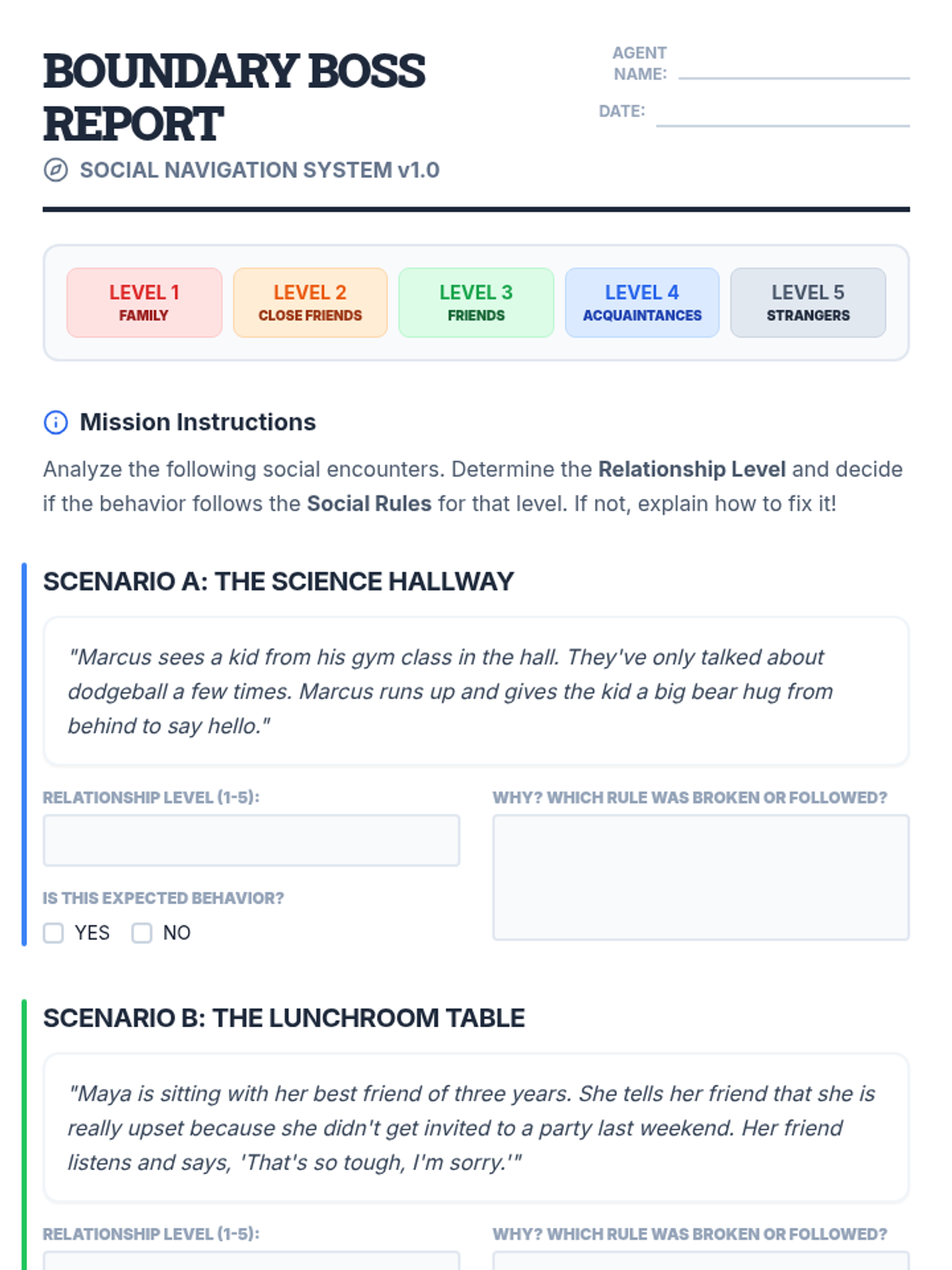
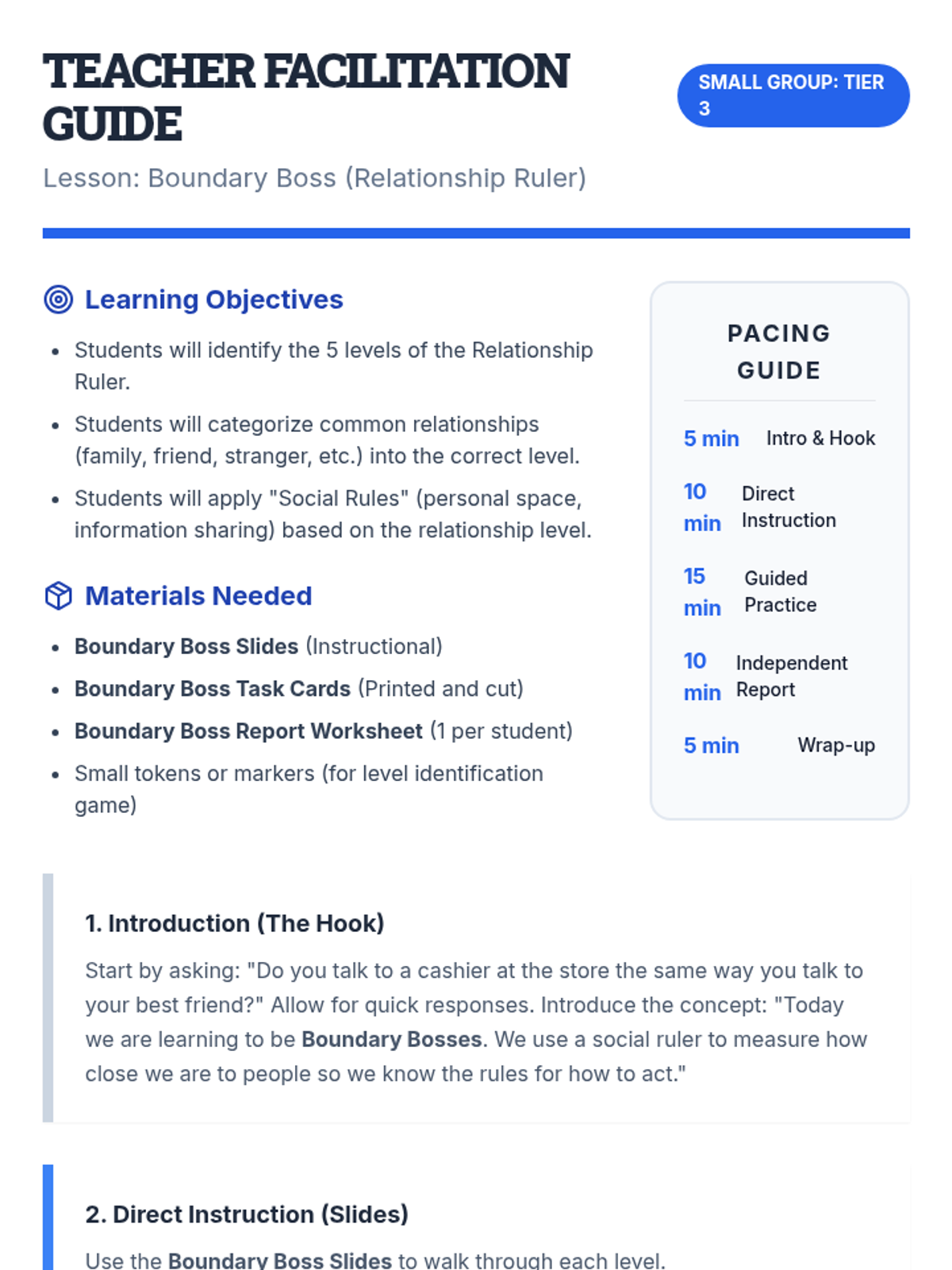
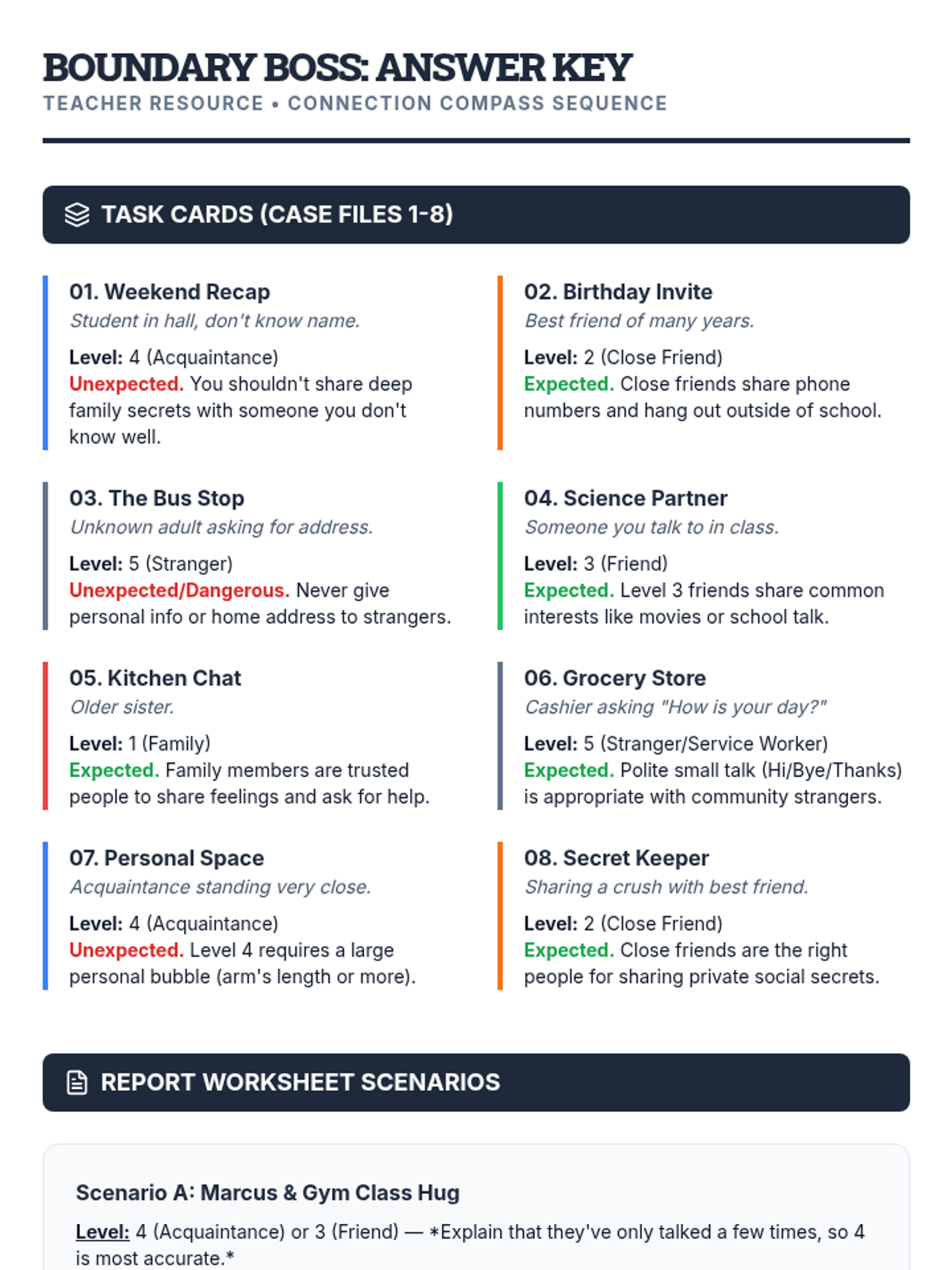
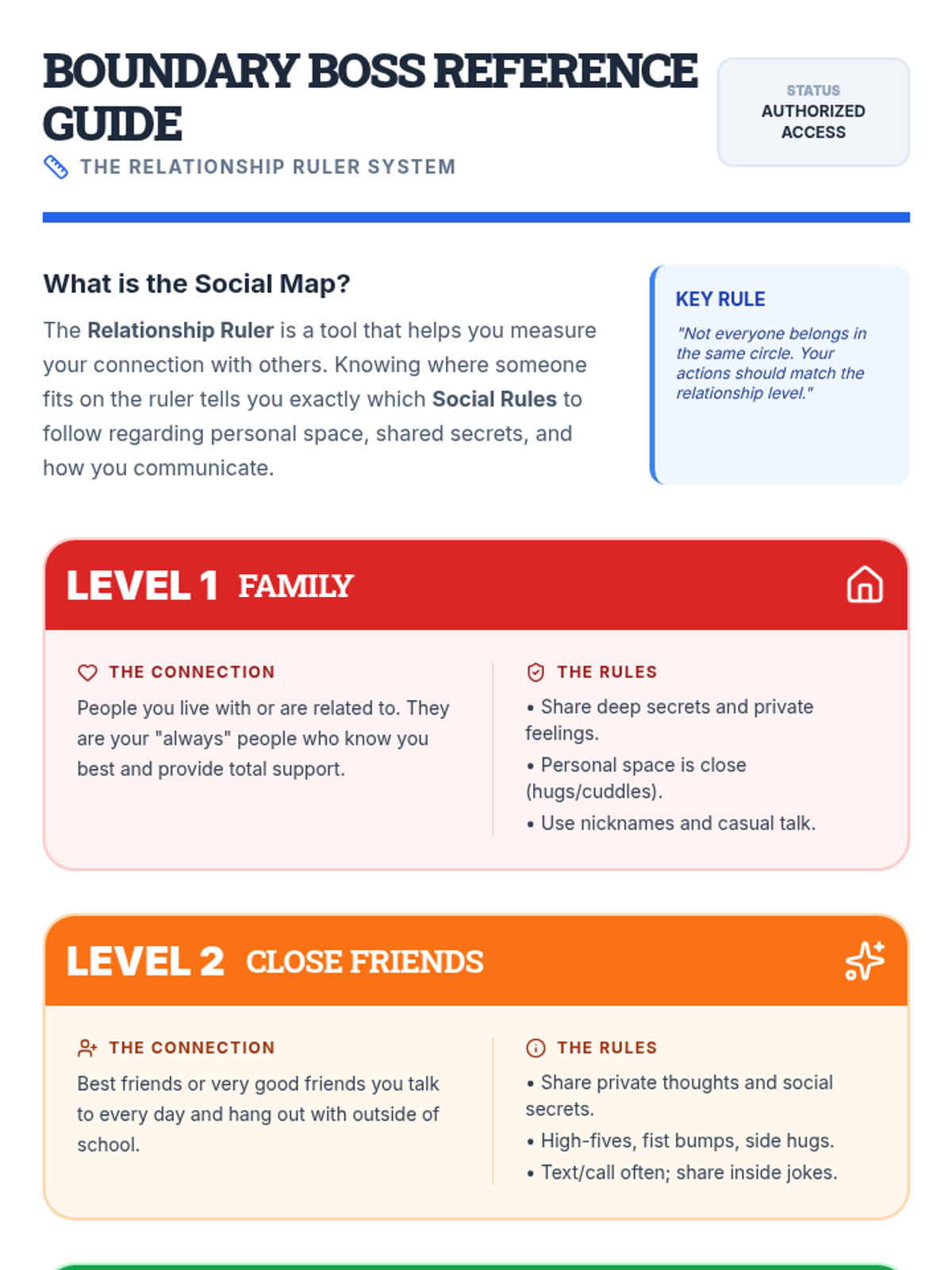
A series of lessons designed to help students navigate the complexities of social interactions, boundaries, and relationship levels.
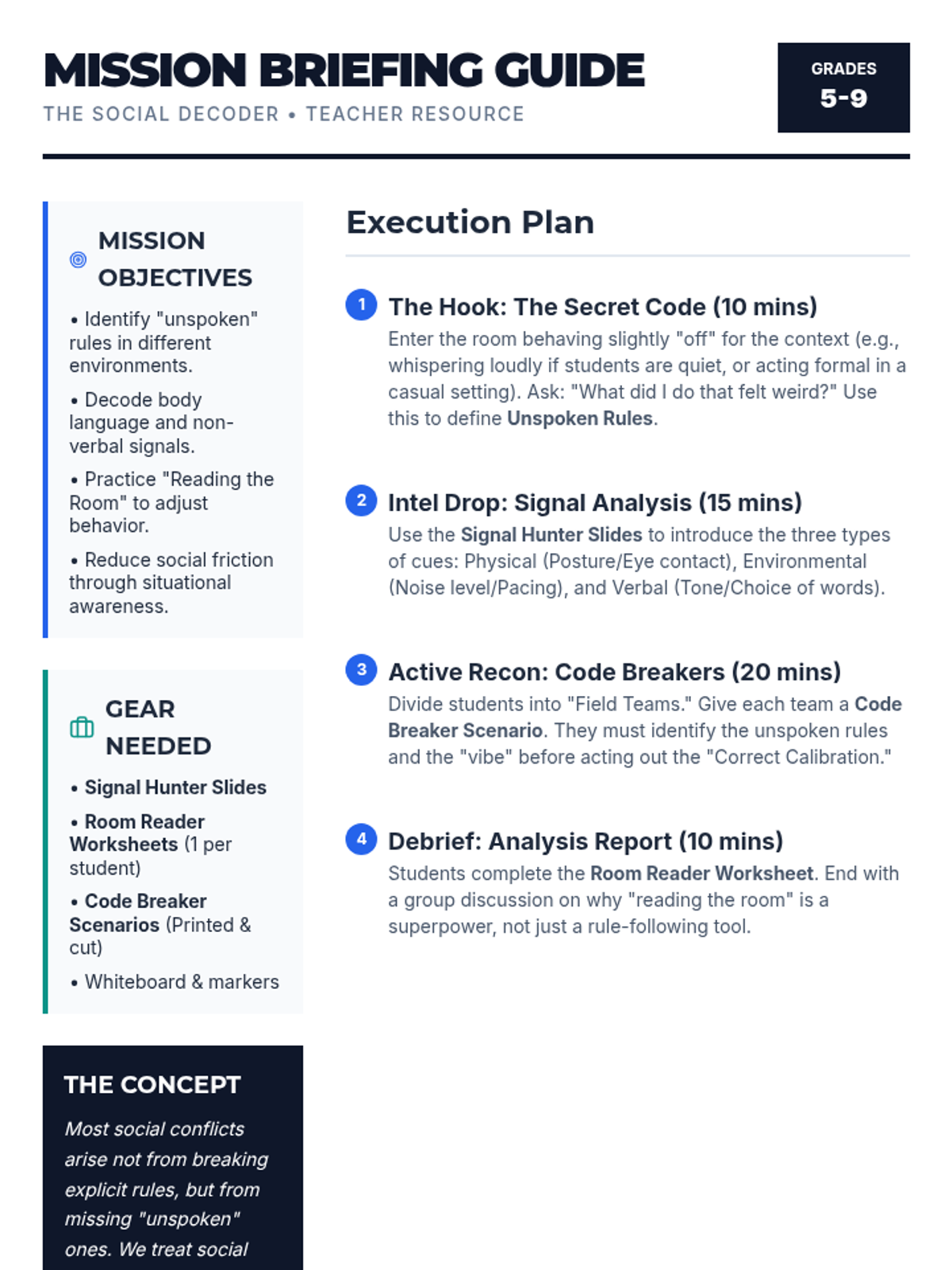
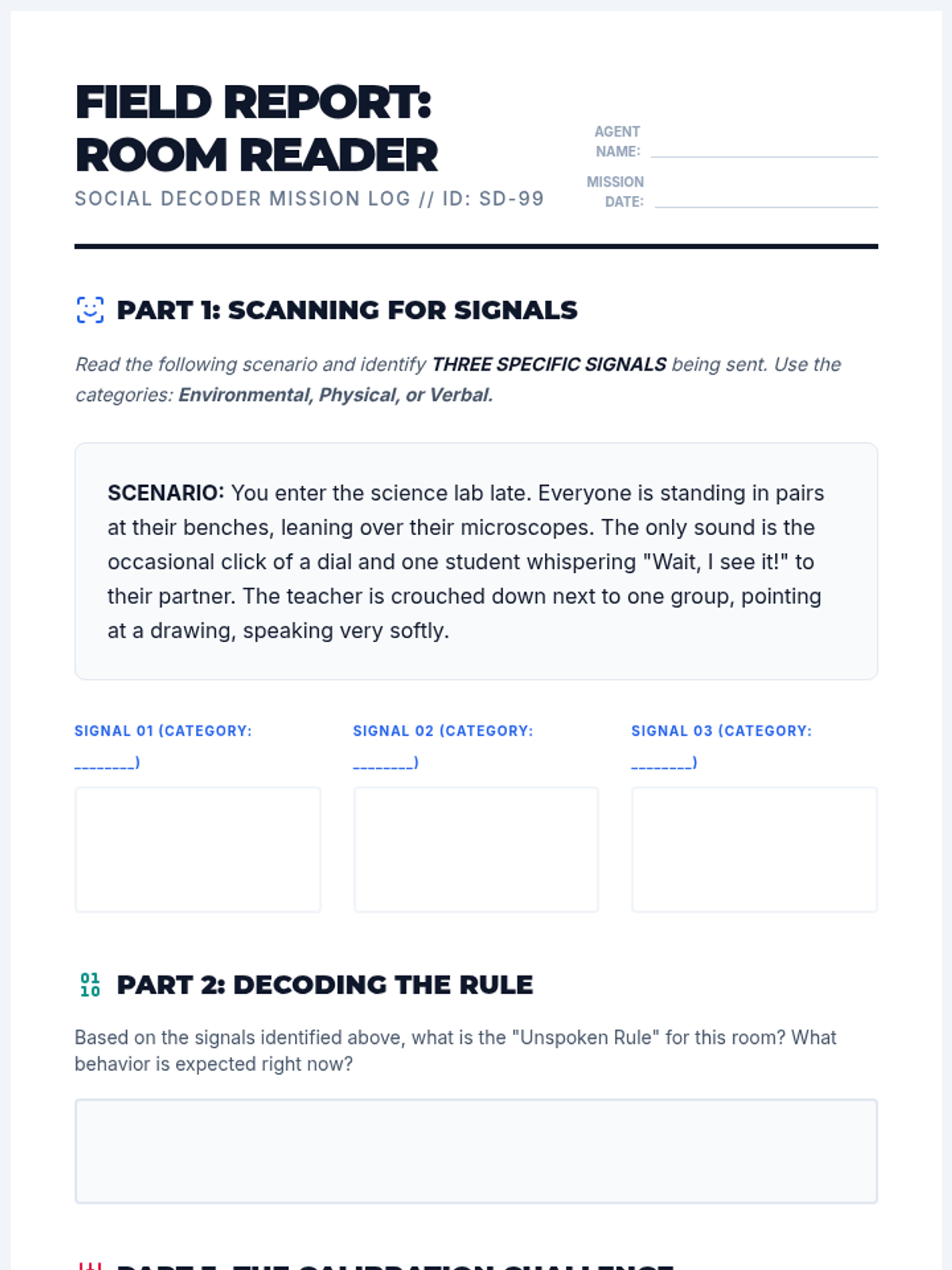
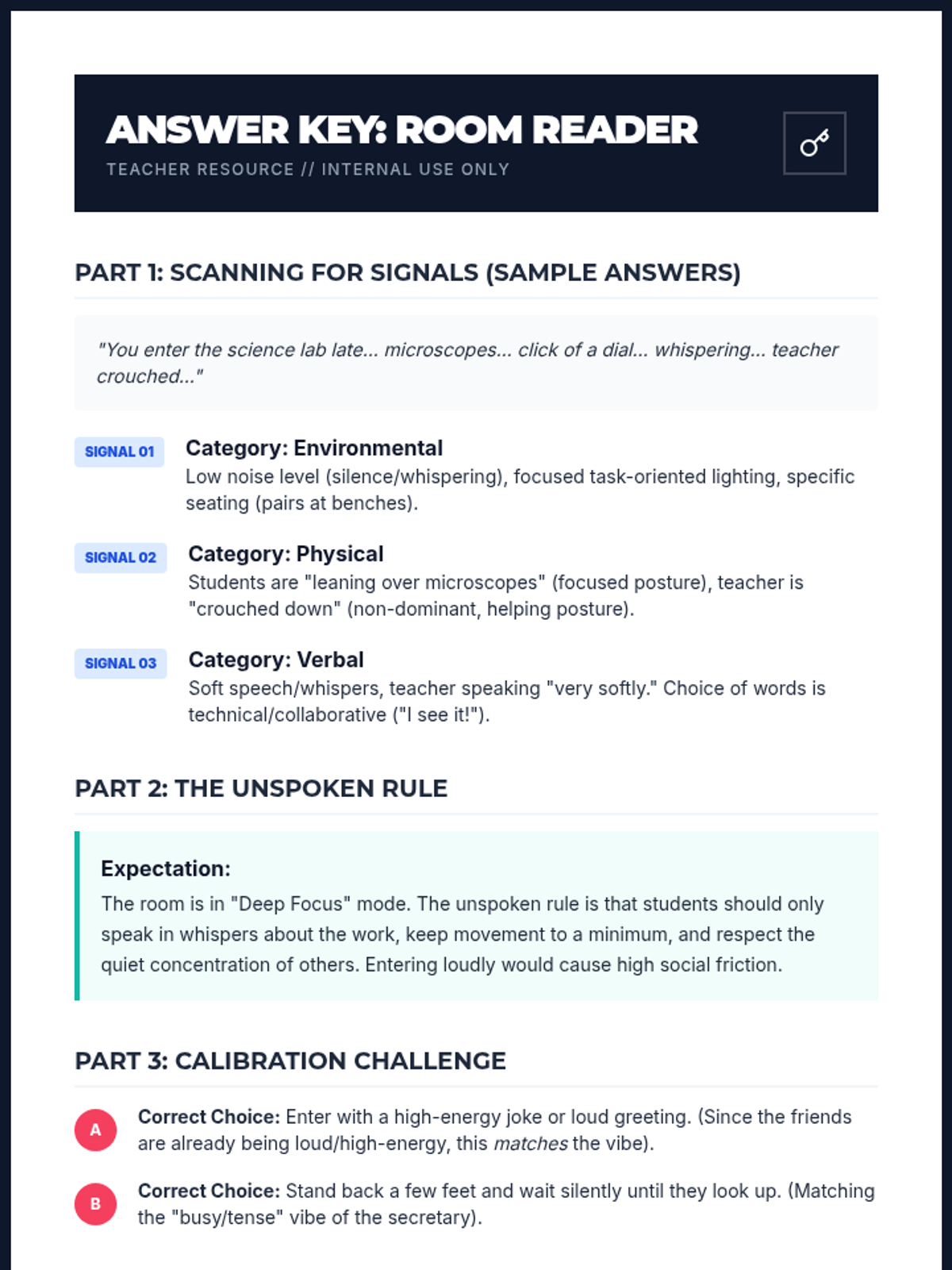
A curriculum designed to help middle and early high school students master the art of situational awareness. By explicitly teaching how to 'read the room' and interpret subtle social cues, this sequence reduces social friction and helps students navigate complex classroom and peer environments with confidence.
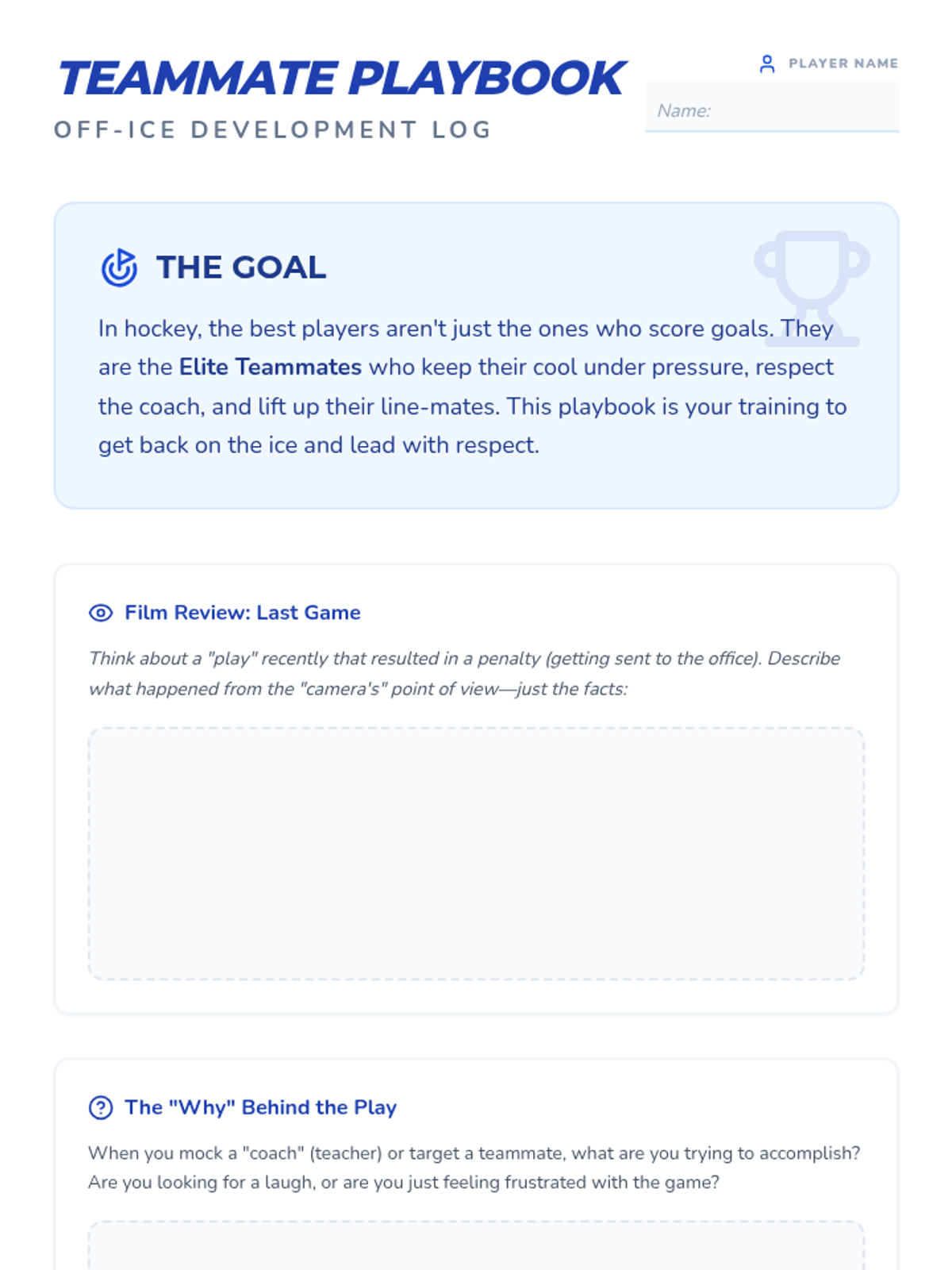
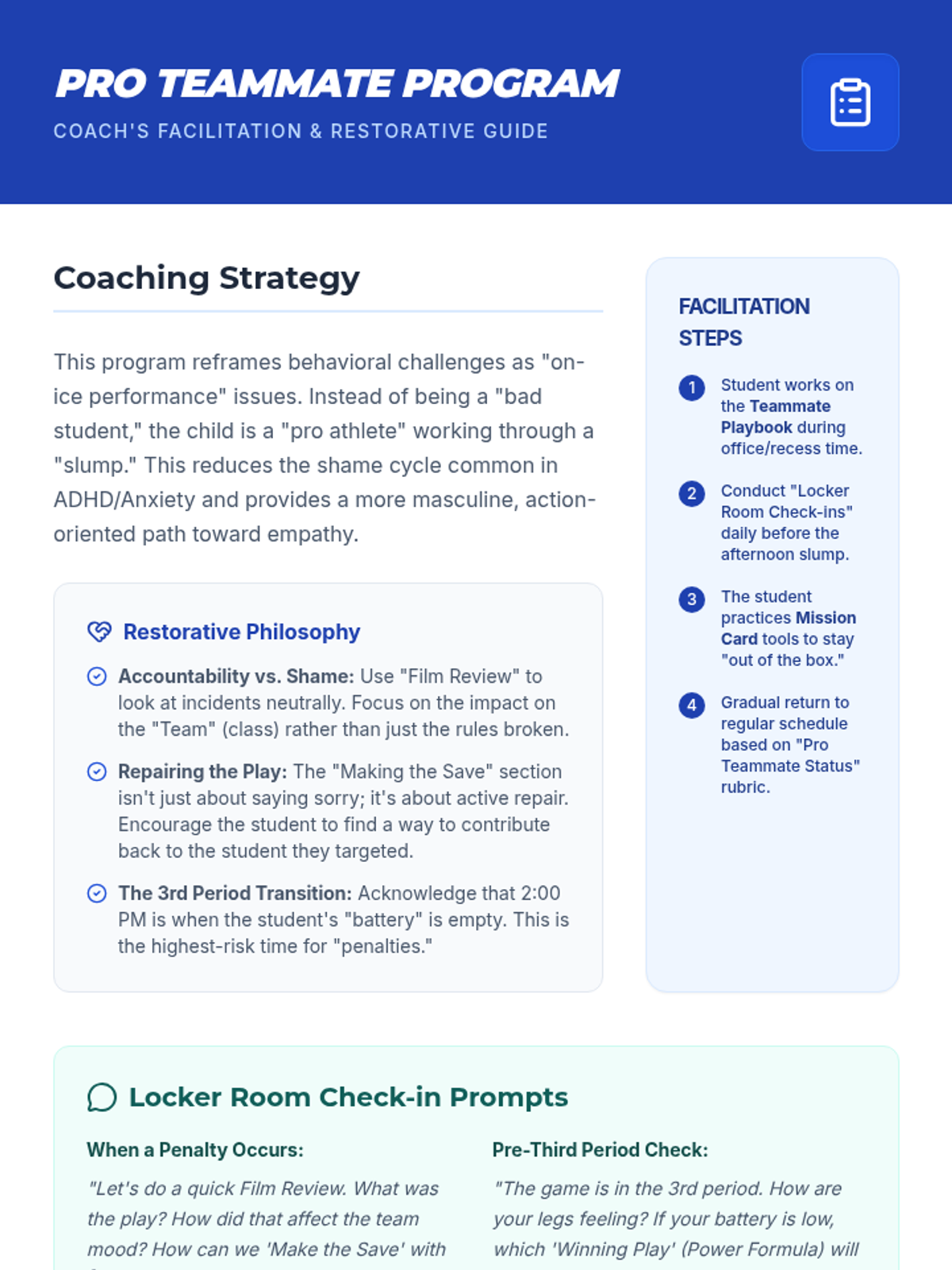
A sports-themed personal growth program focused on improving student behavior, empathy, and communication through the lens of being a 'Pro Teammate.'
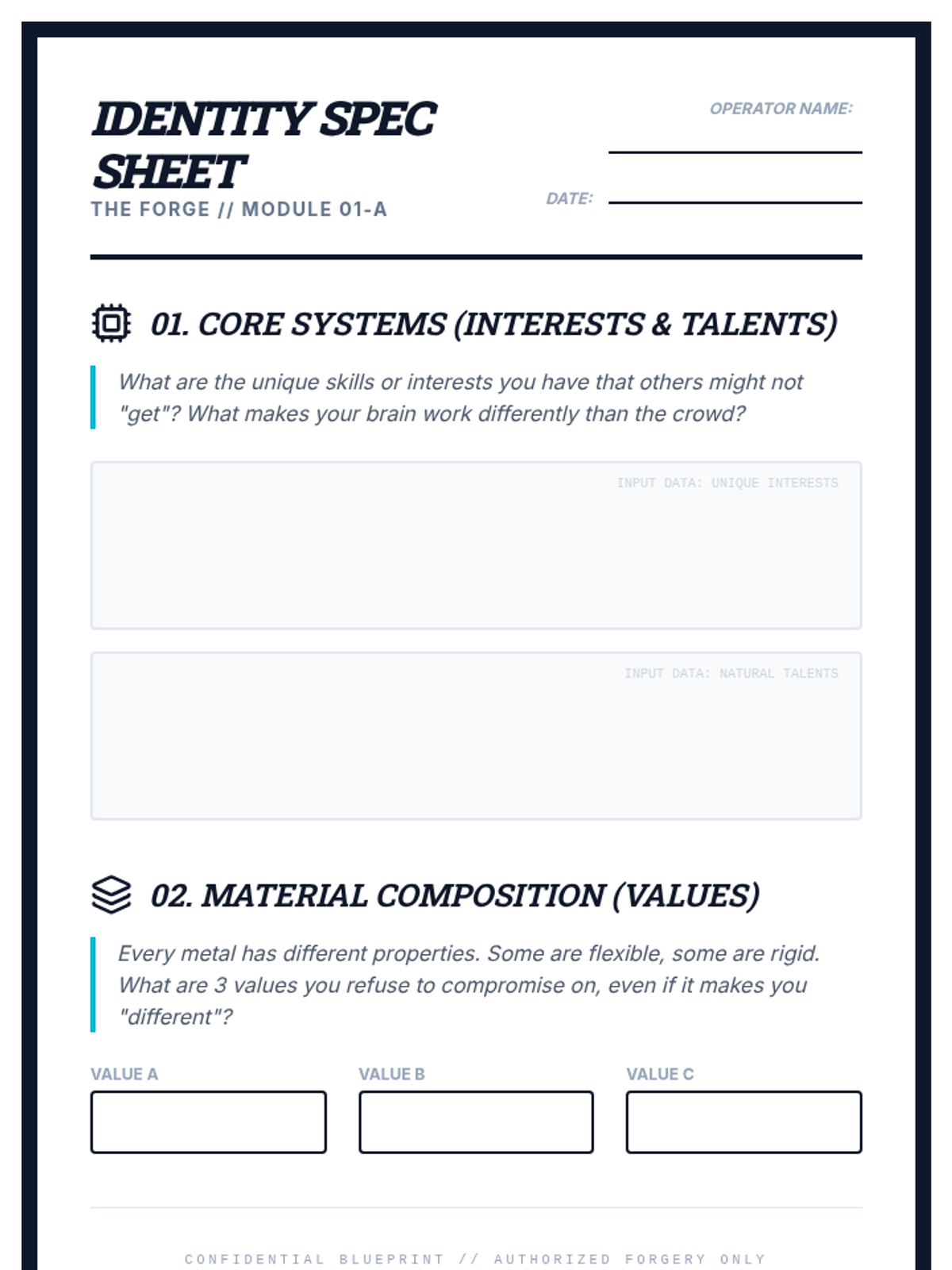
A multi-session workshop series designed for male students to explore identity, emotional intelligence, and social acceptance through the metaphor of industrial design and forging. Students move from understanding their unique 'specifications' to navigating social pressures and finally collaborating on a community-building project.
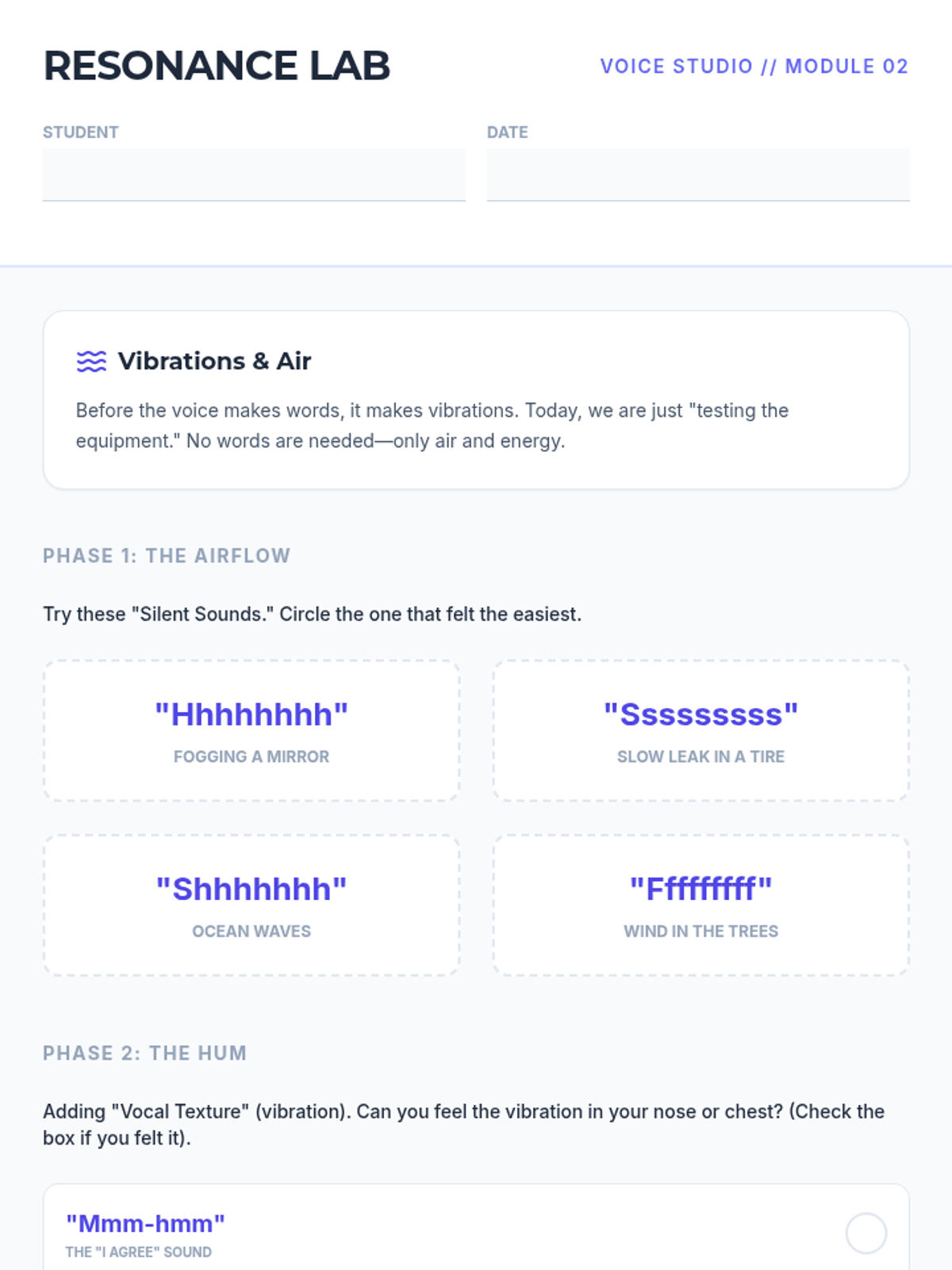
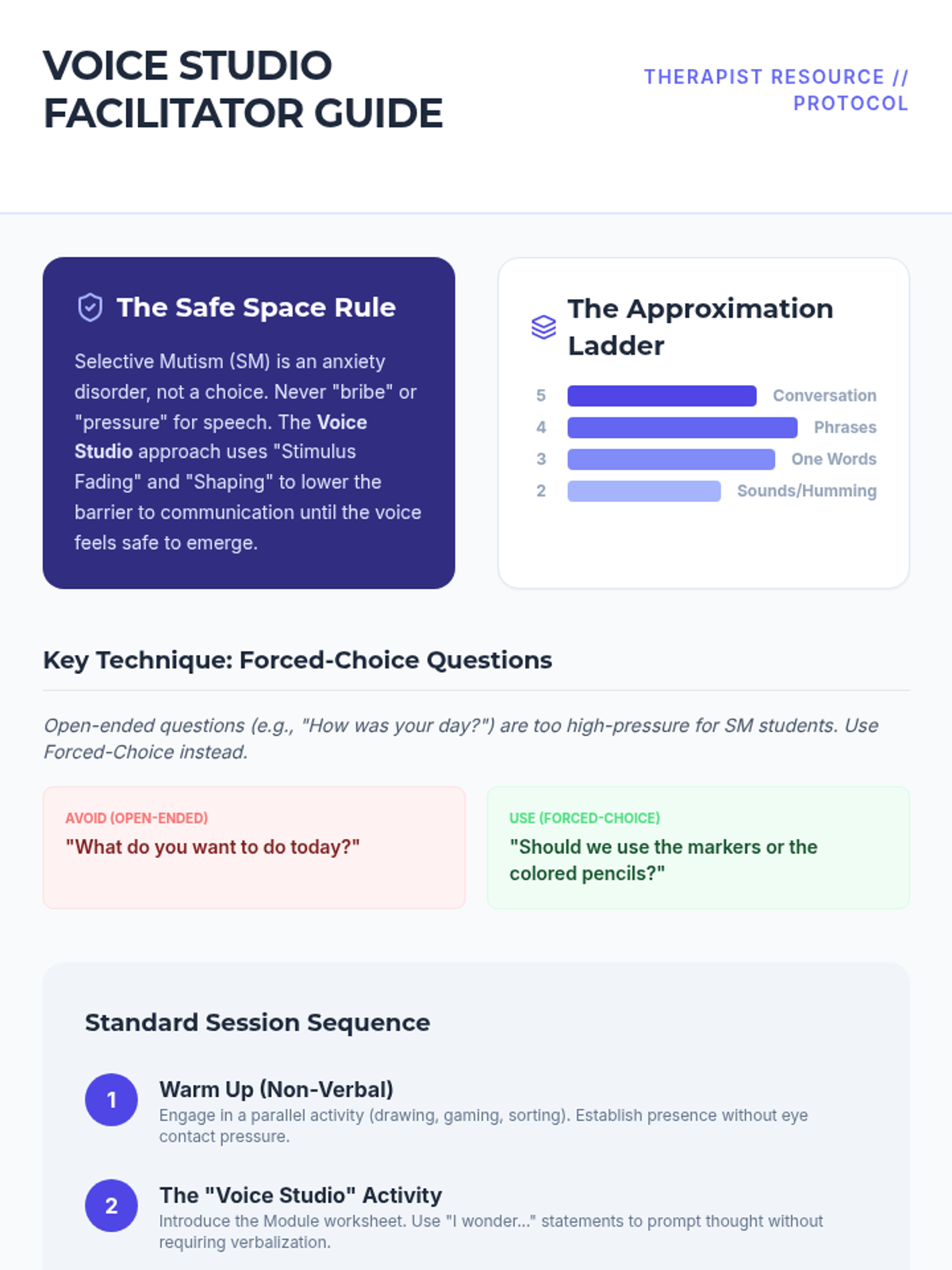
A gentle, evidence-based communication program for teens with Selective Mutism. It uses behavioral shaping and approximations to move from non-verbal rapport to functional vocalization in a low-pressure 1:1 environment.
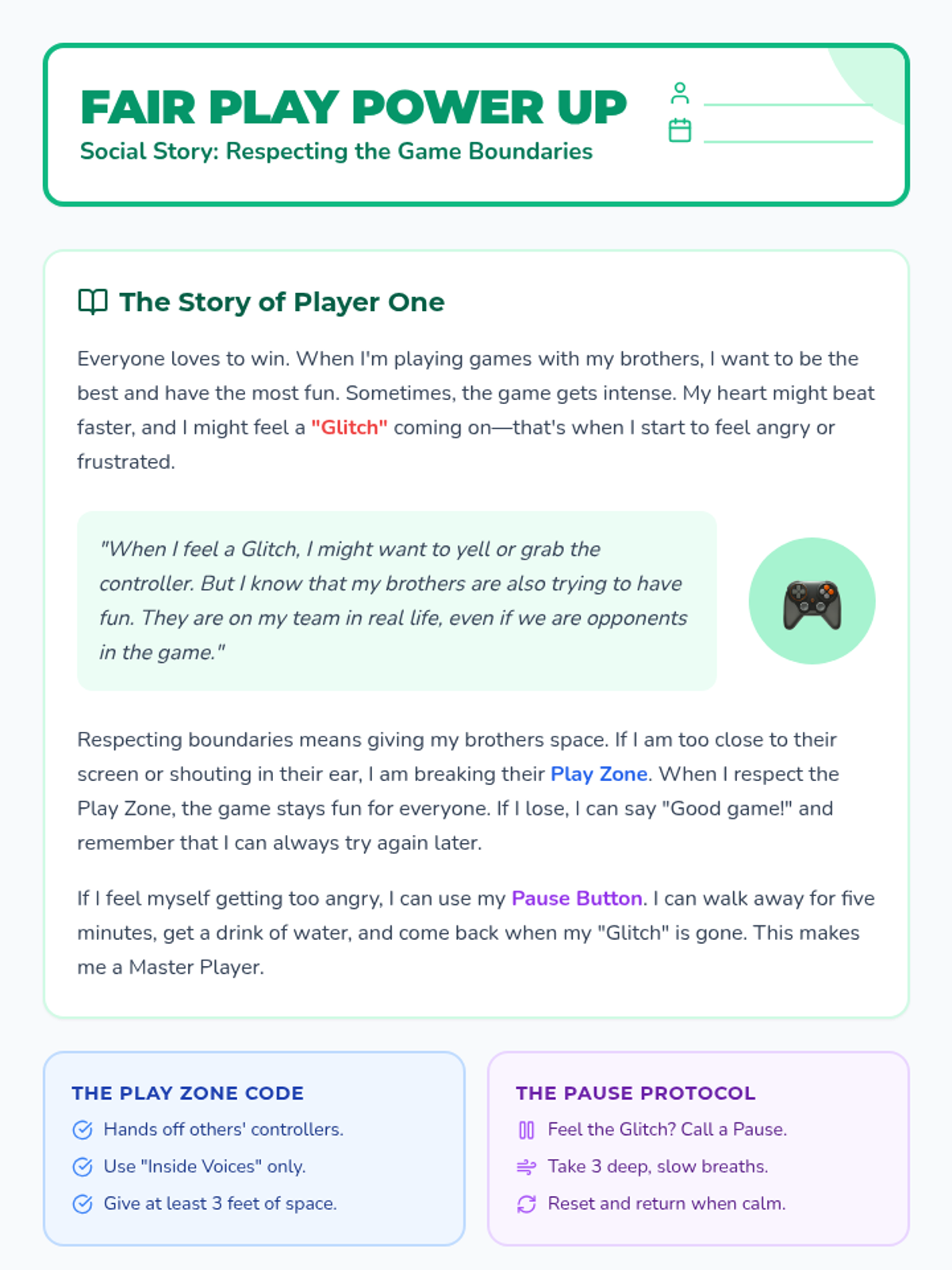
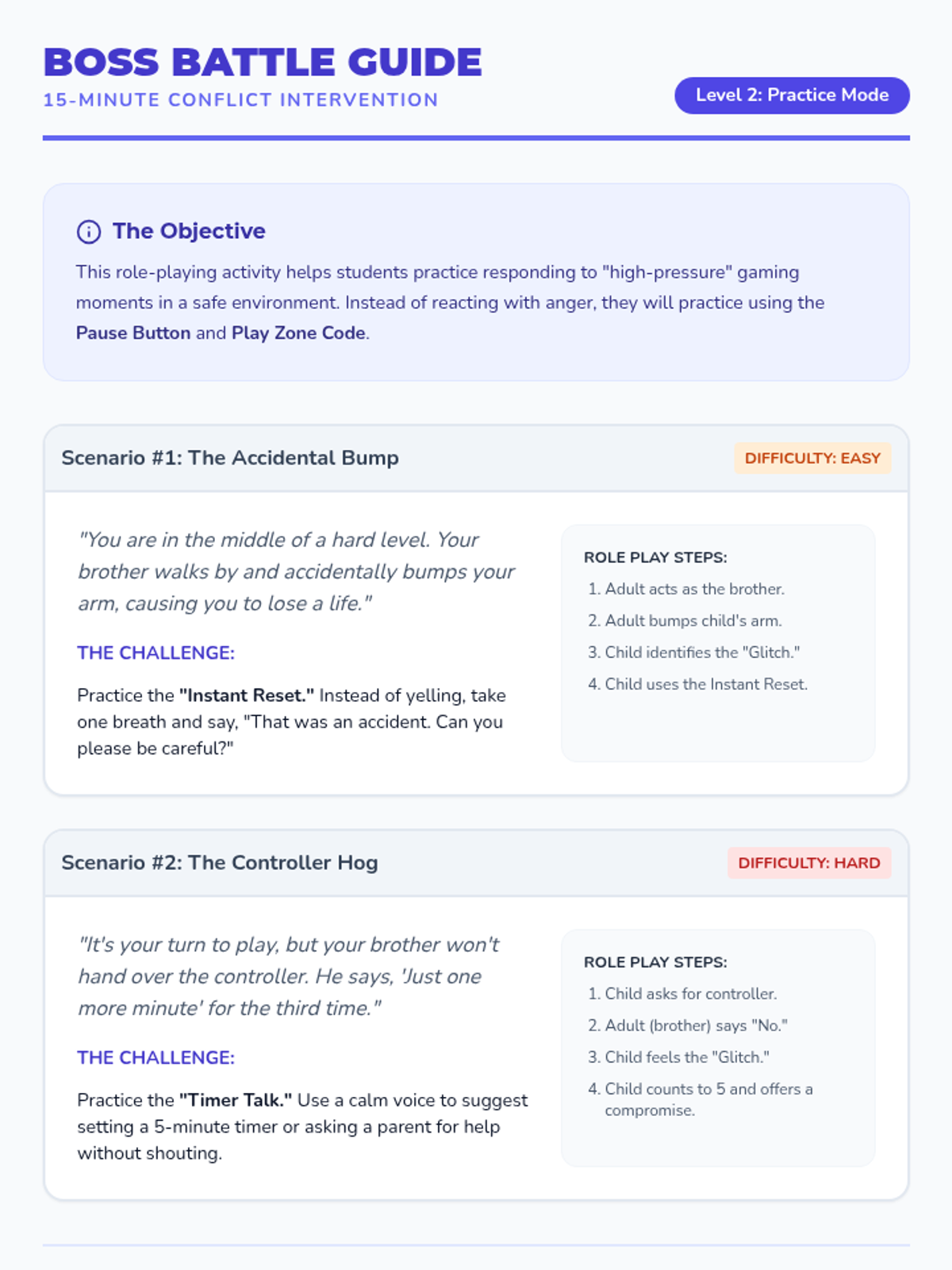
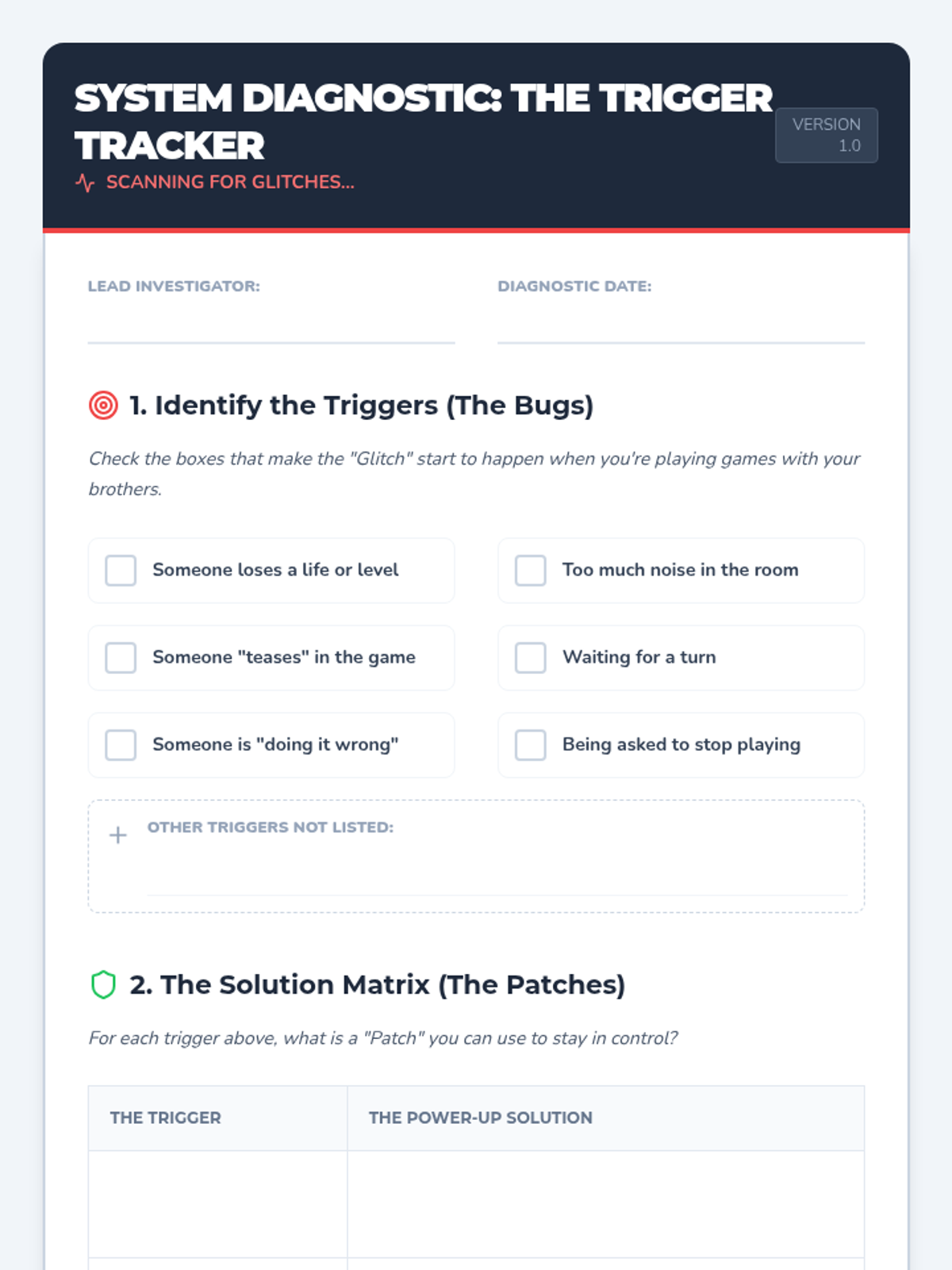
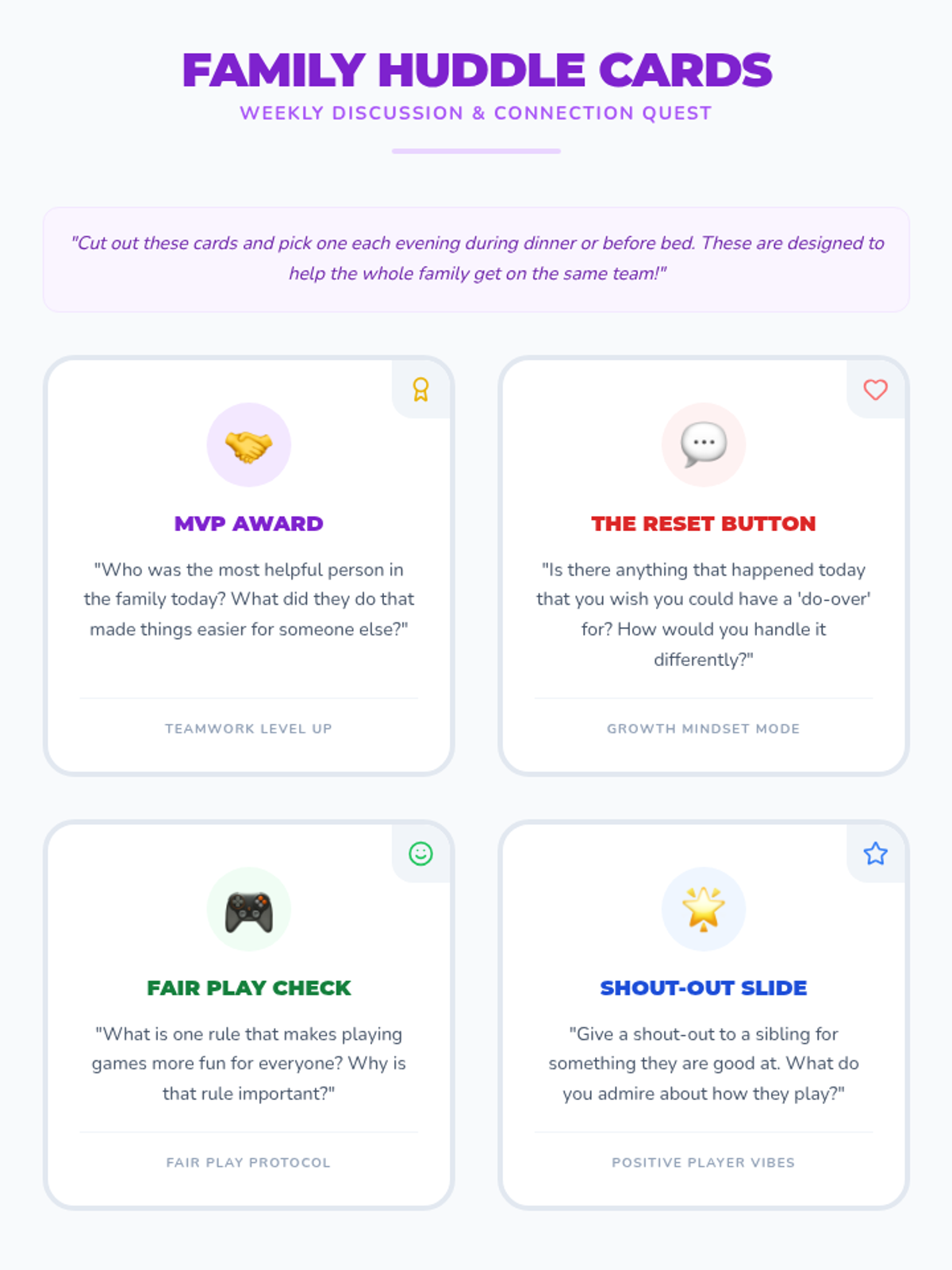
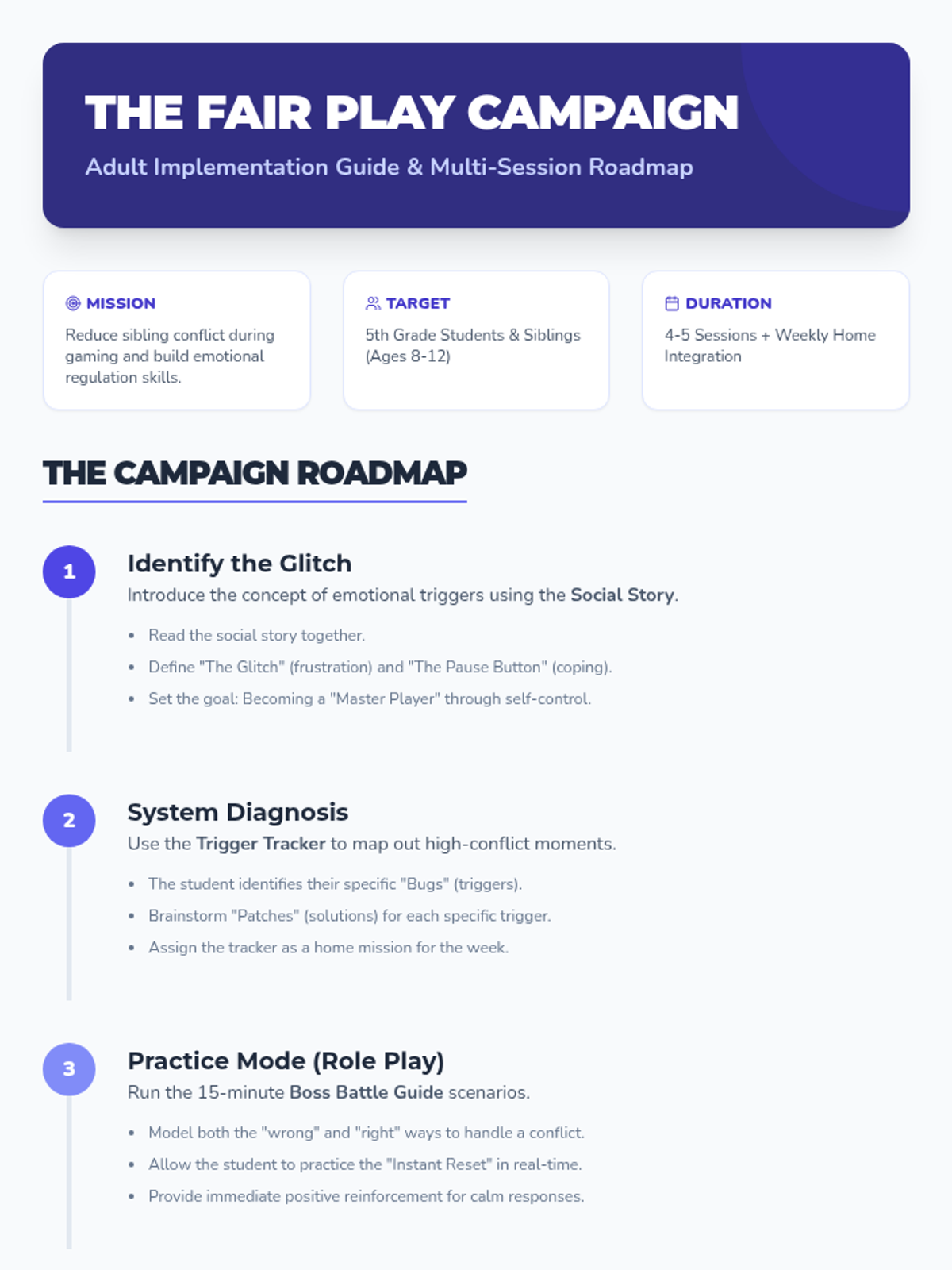
A series of resources designed to help siblings resolve conflicts during gaming, focus on emotional regulation, and build respectful play habits. This sequence moves from identifying triggers to practicing real-time solutions and fostering family-wide communication.
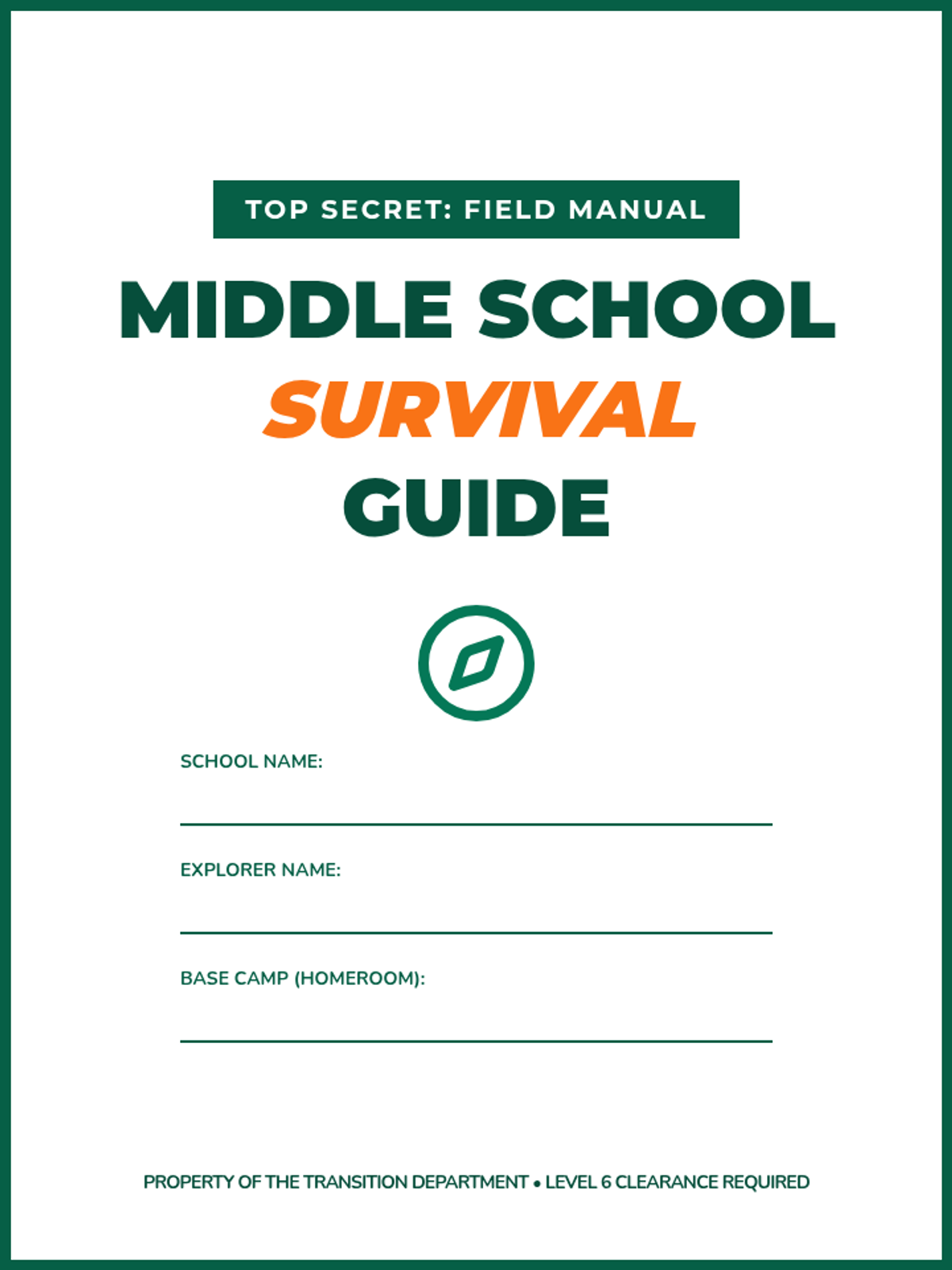
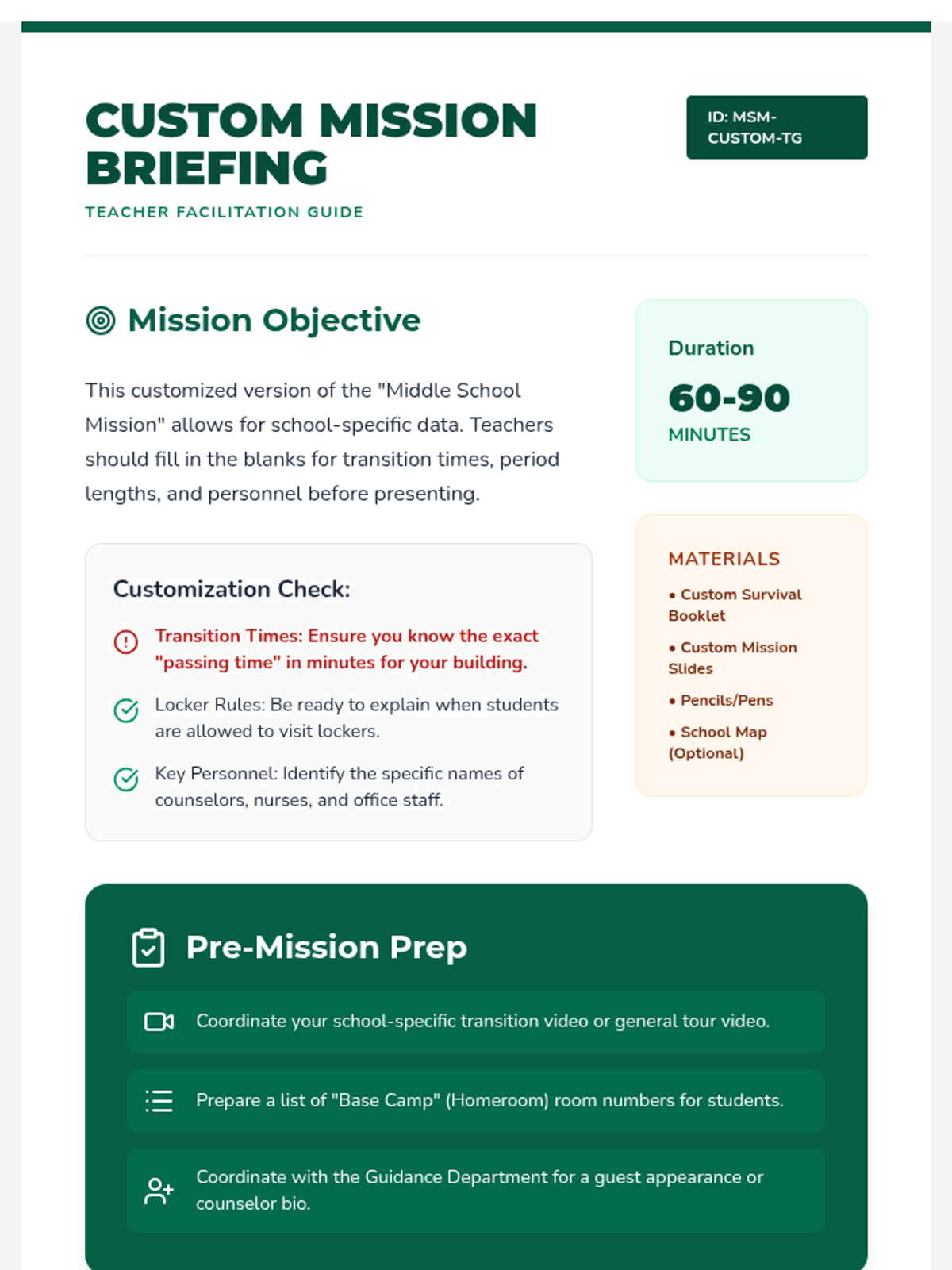
A comprehensive program to support students transitioning from elementary to middle school, featuring both general guidance and school-specific customization options.
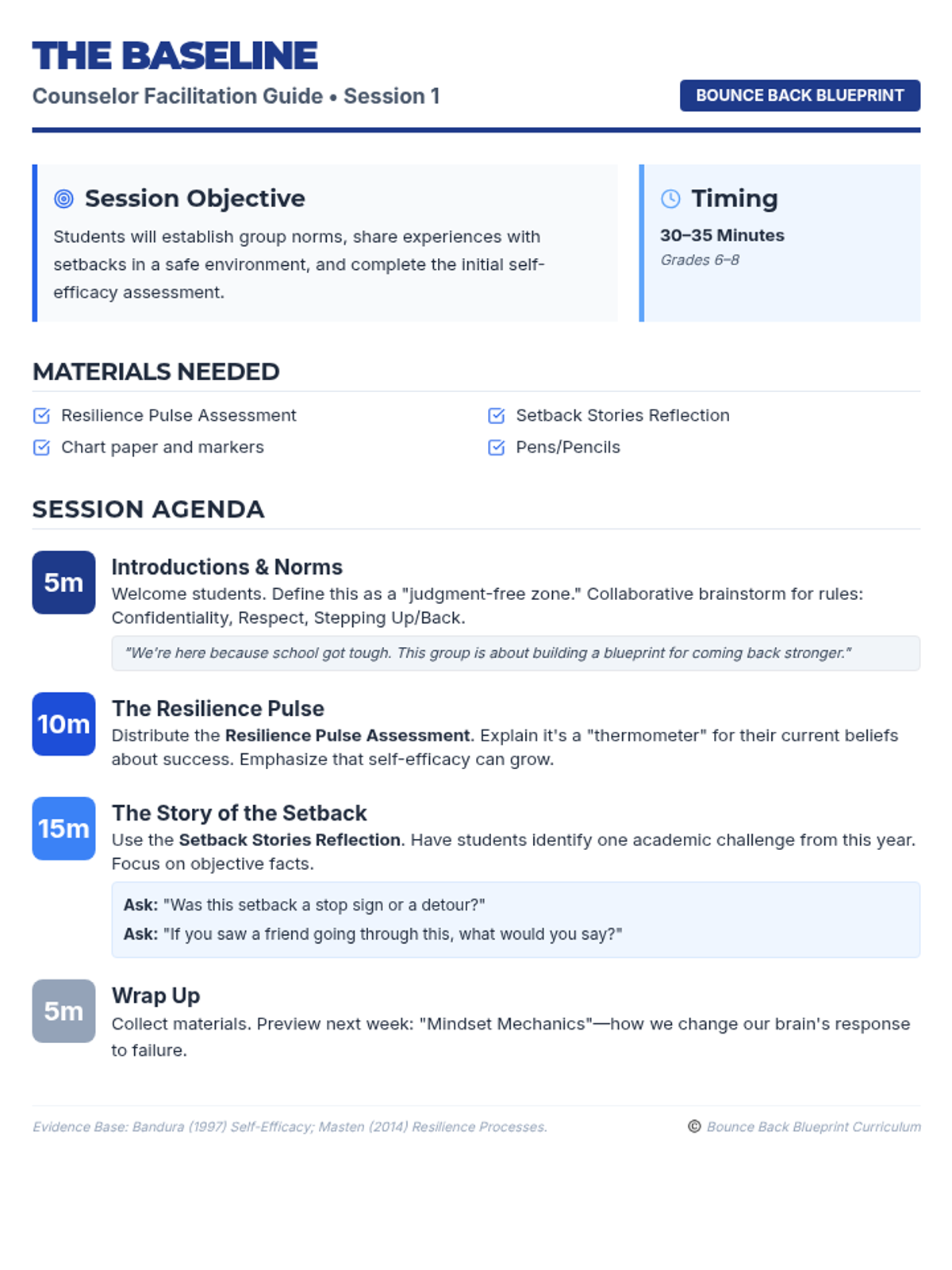
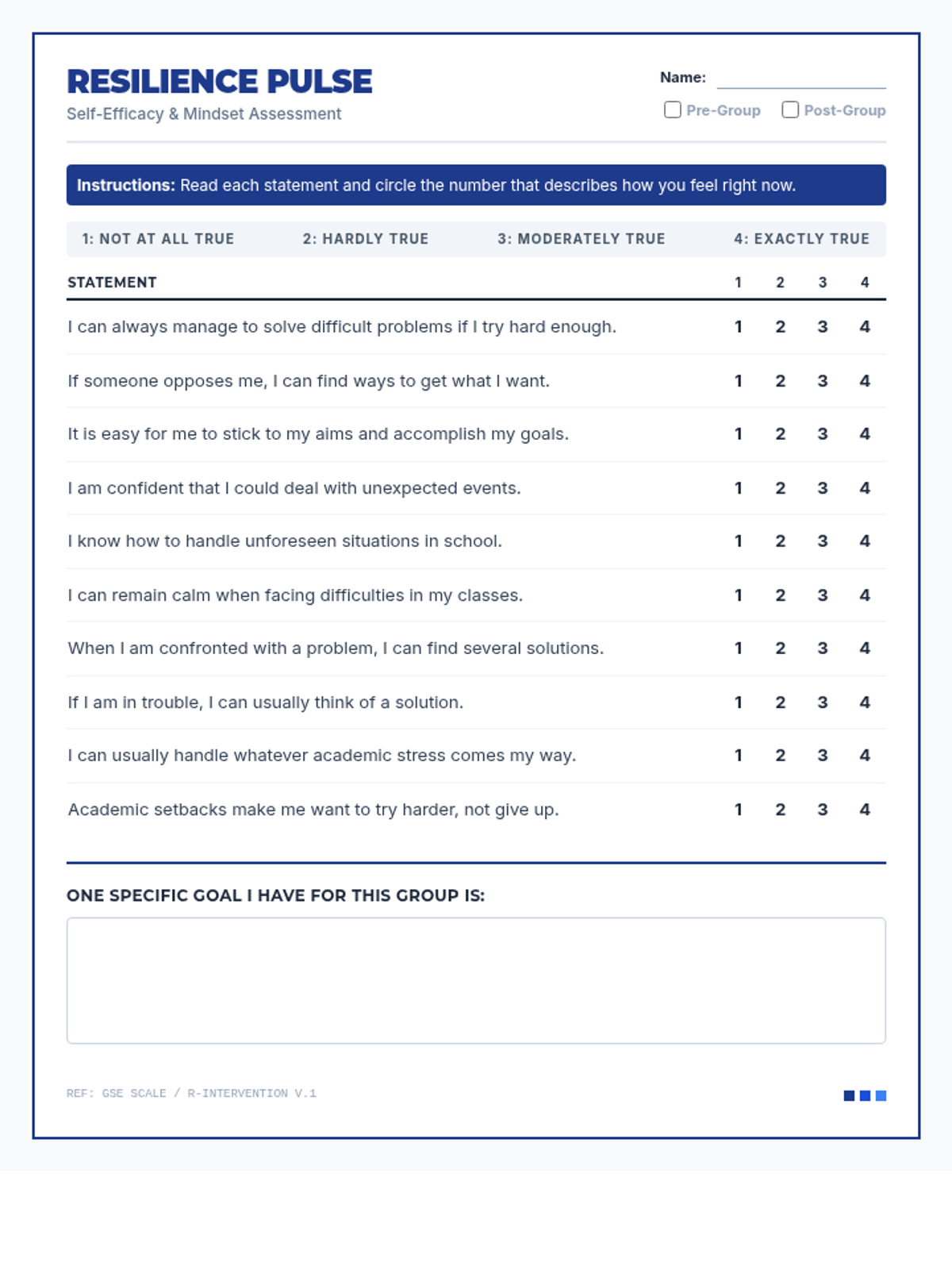
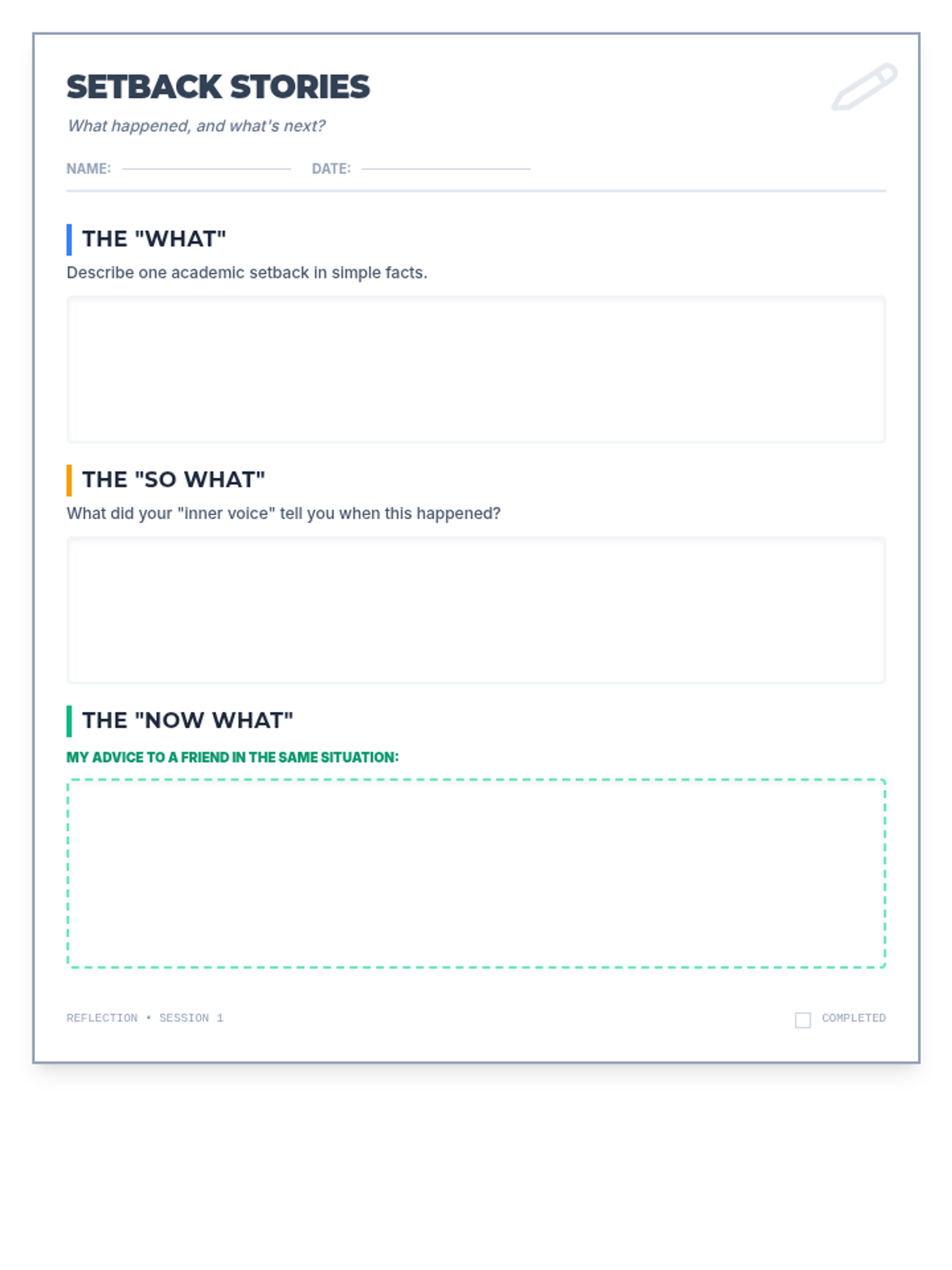
A 4-session small-group counseling intervention designed for middle school students to build resilience after academic setbacks, focusing on growth mindset, identity separation, and action planning.
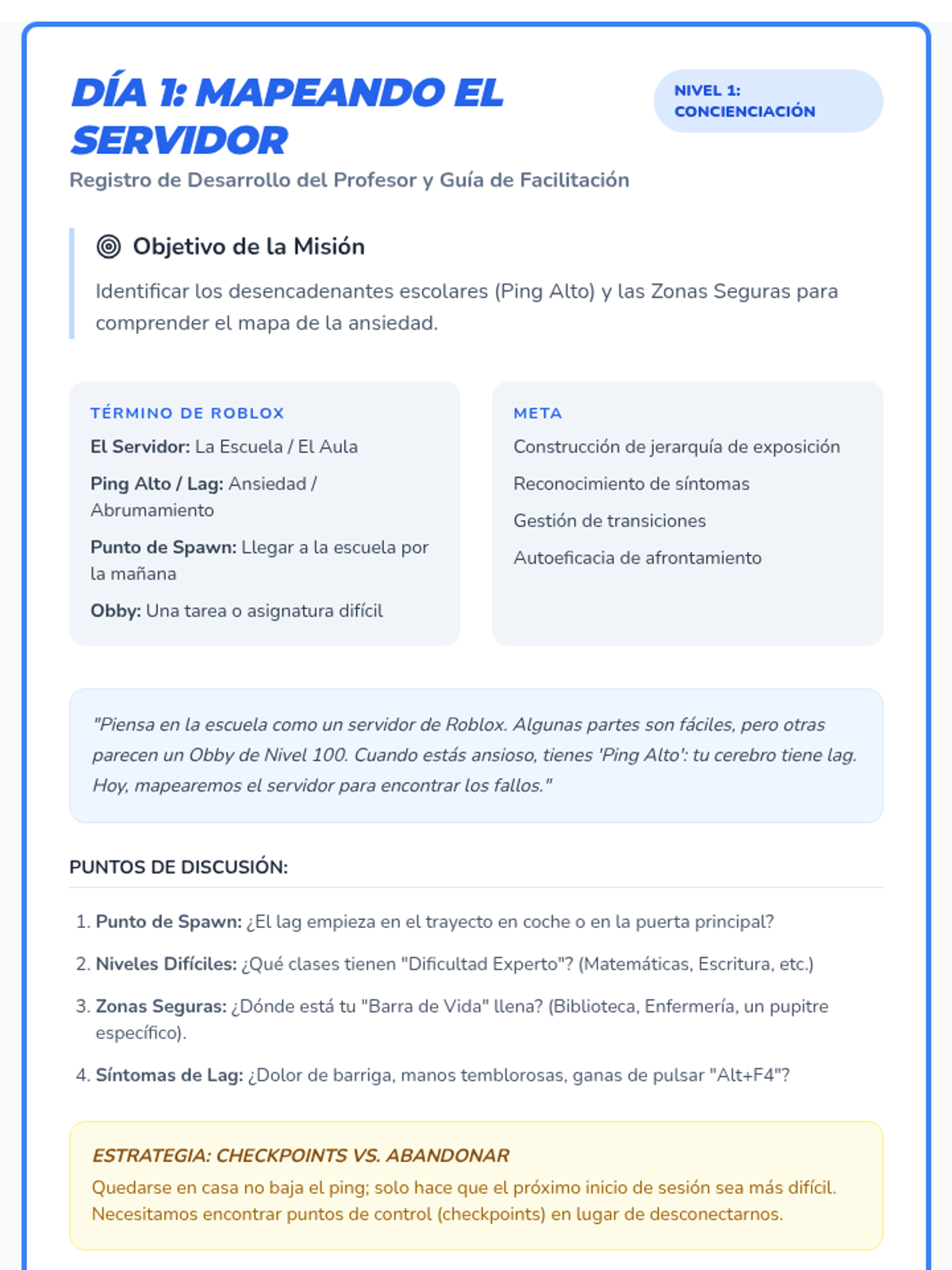
A 5-day intervention program for school-avoidant students, using Roblox-inspired mechanics to address anxiety, perfectionism, and teacher engagement.
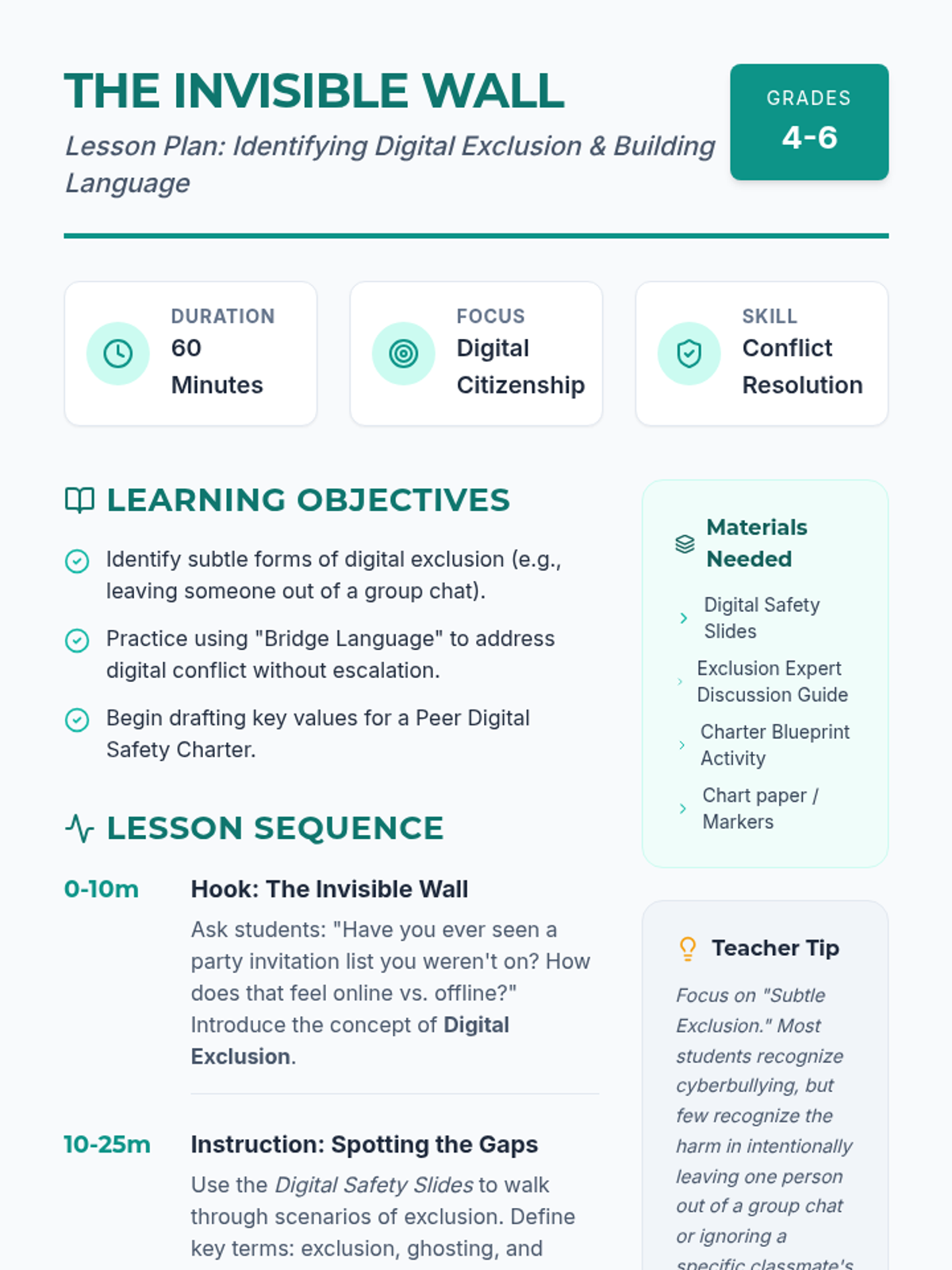
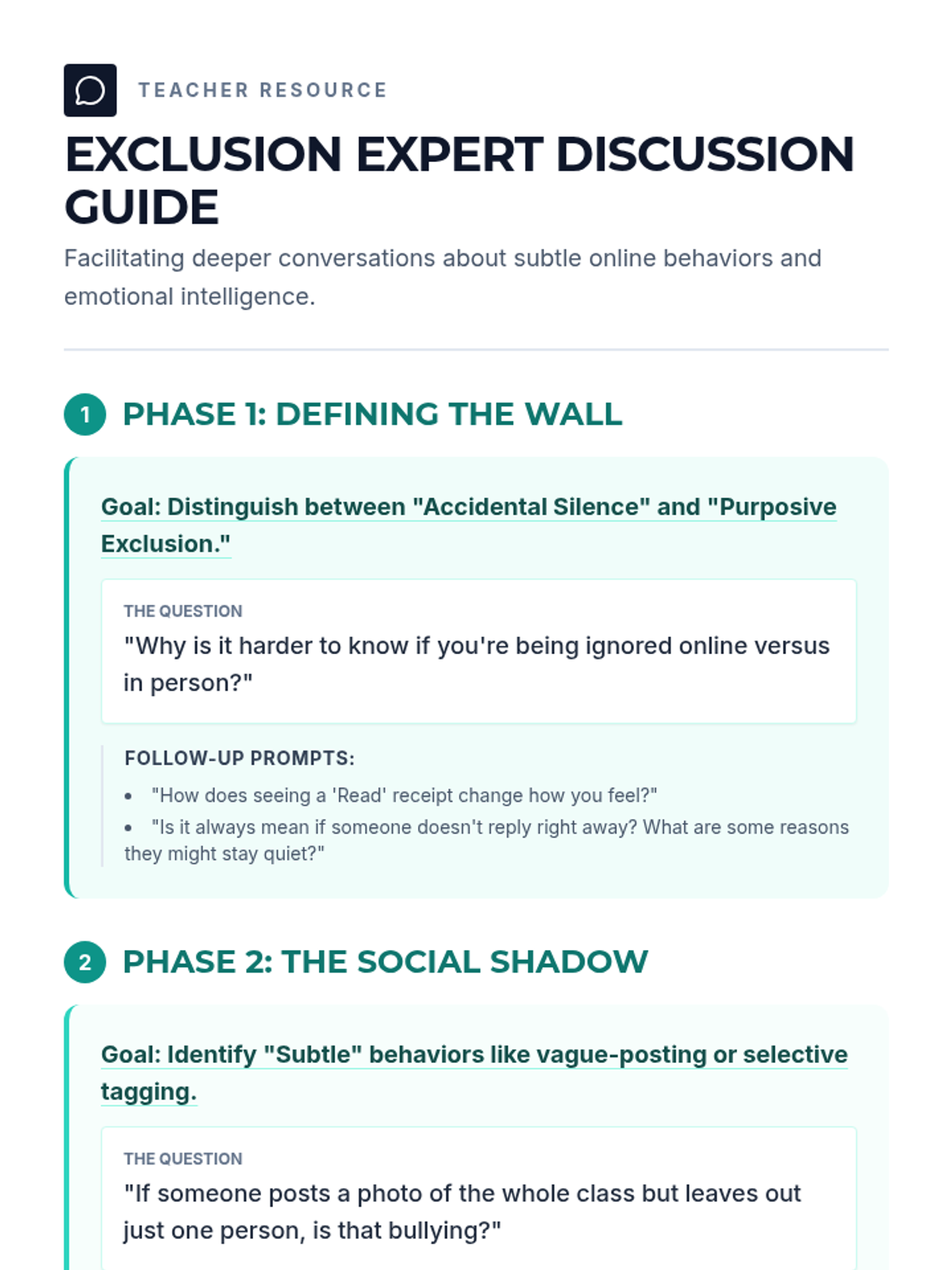
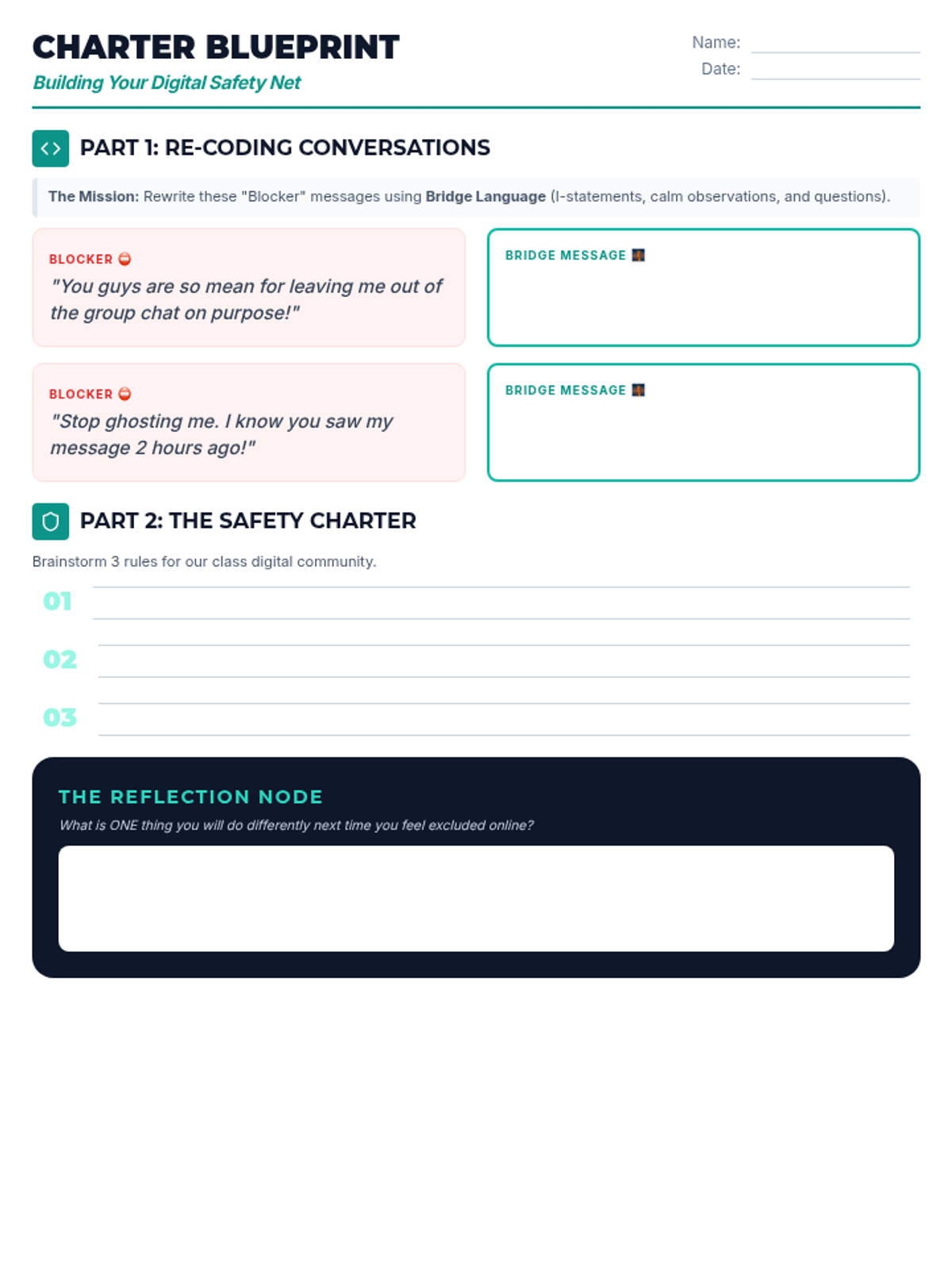
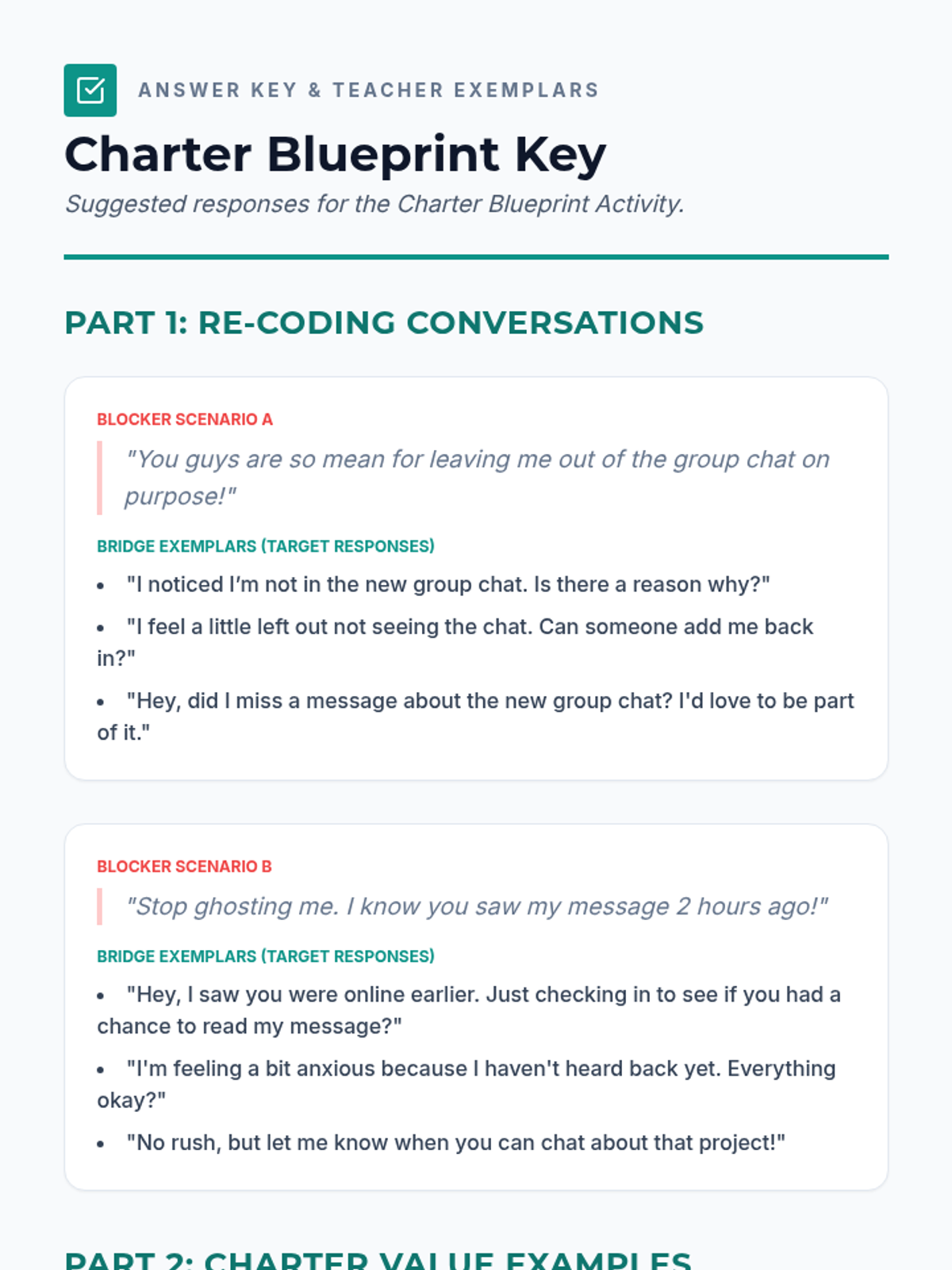
A comprehensive unit for grades 4-6 on responsible digital communication, identifying online exclusion, and developing a peer-led safety charter to manage digital conflicts.
A high-impact SEL unit for middle school students, using a vintage sports 'Legacy League' theme. Over five lessons, students learn to 'Flip the Script' on impulsive reactions, negative self-talk, and social conflicts to build a lasting positive legacy.
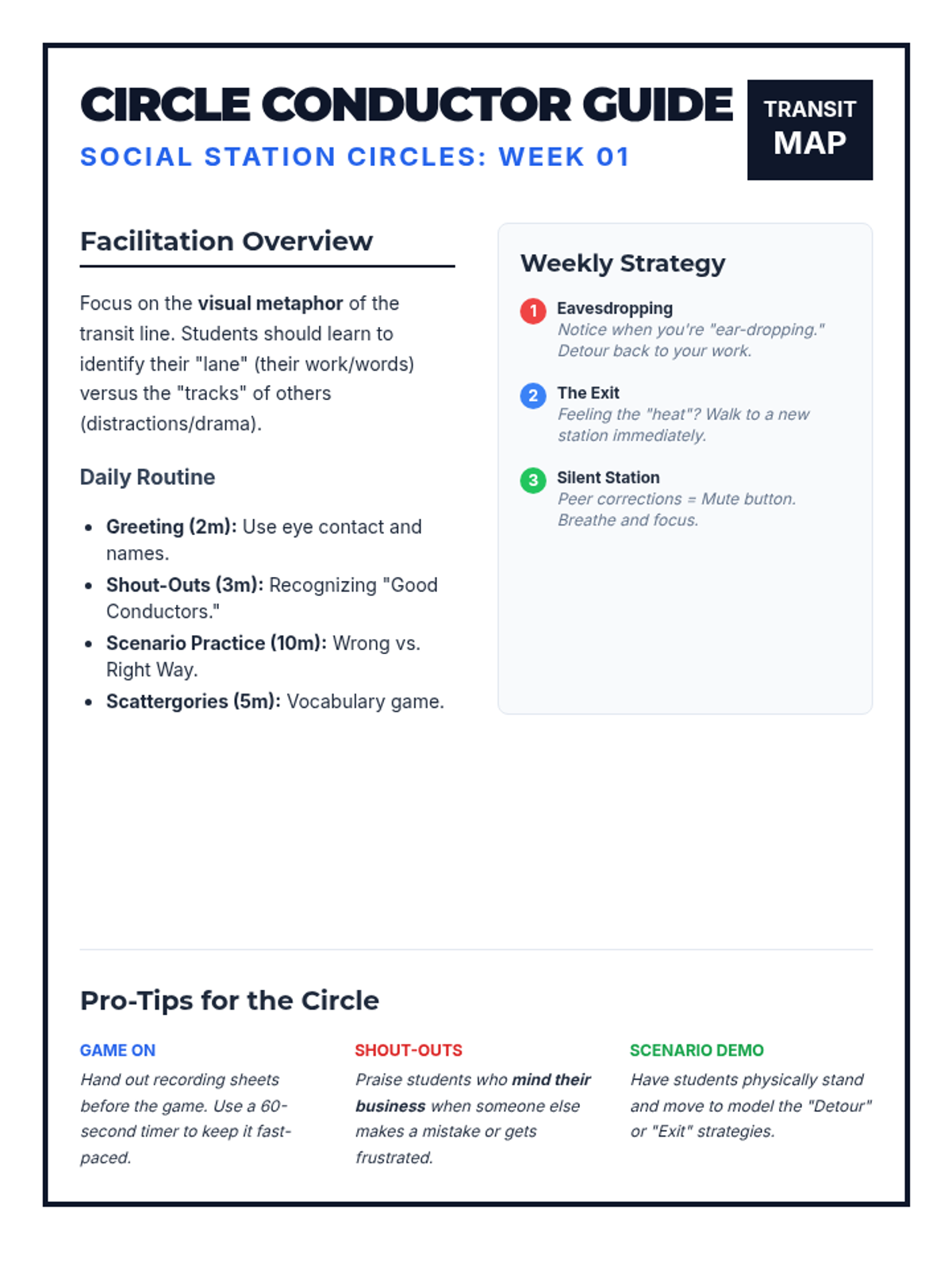
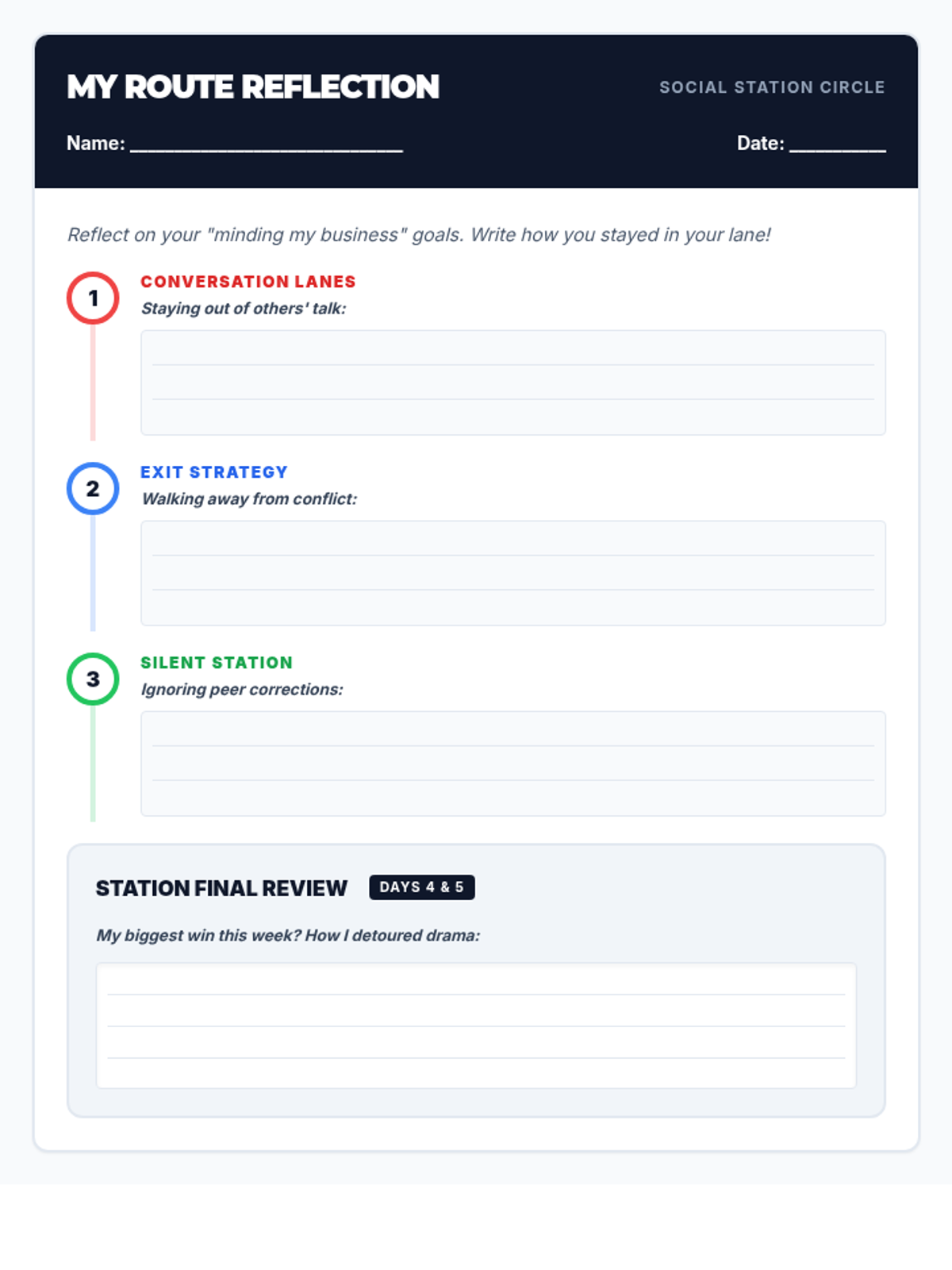
A week-long series of community circle meetings focused on 'minding your business' social skills through transit-themed discussions, scenarios, and school-related Scattergories.
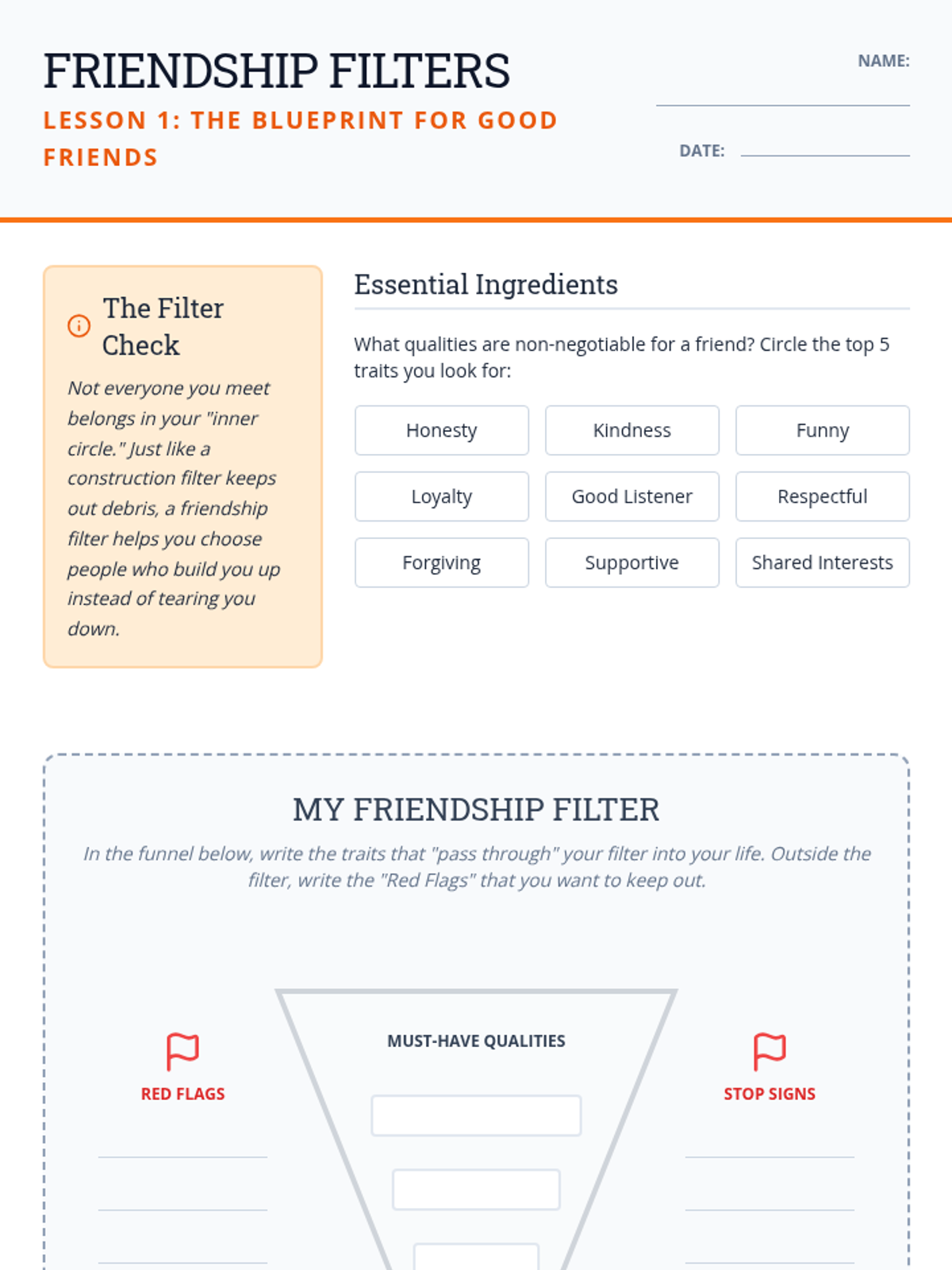
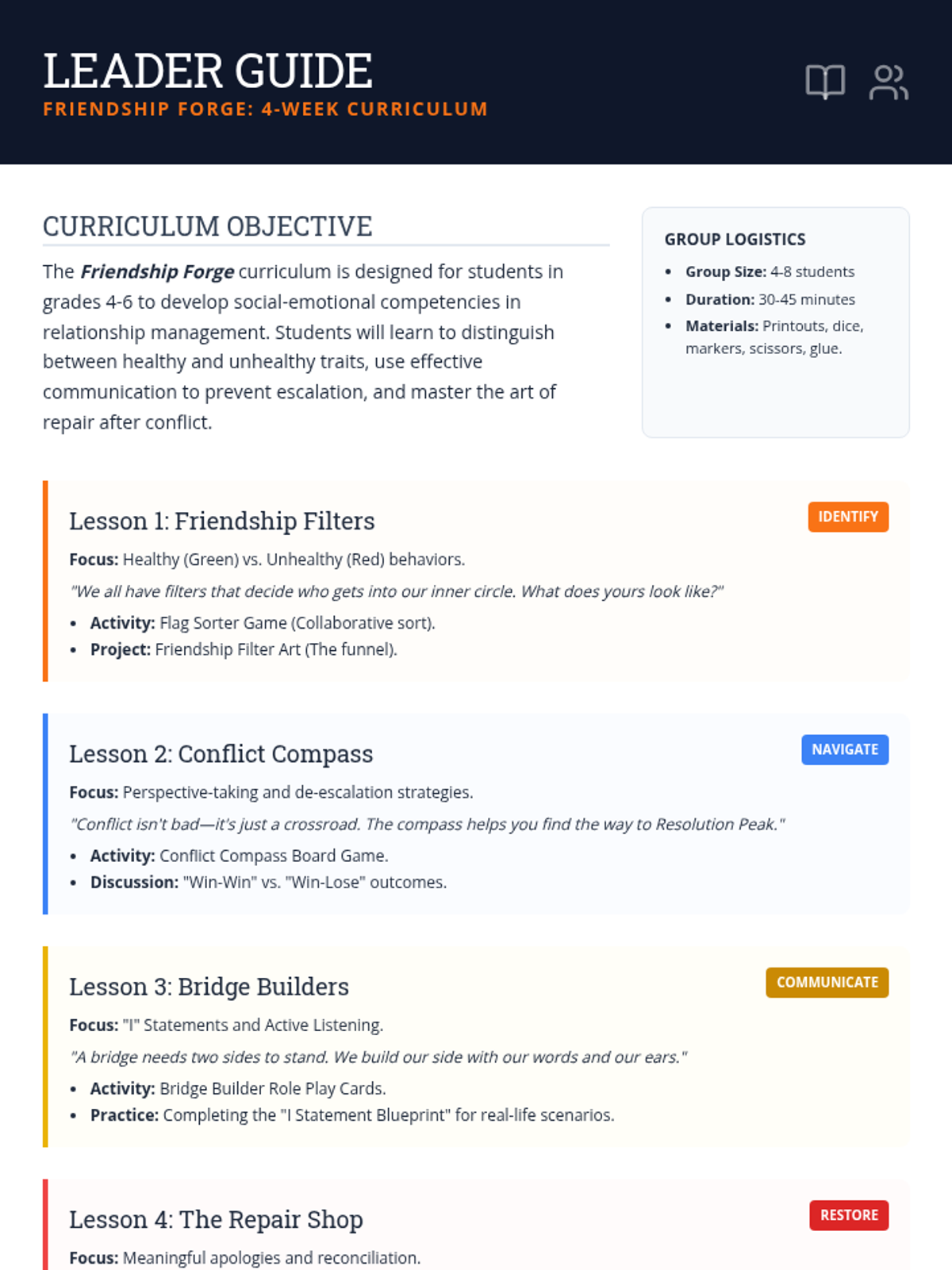
A 4-lesson counseling curriculum for upper elementary students focused on navigating the complexities of friendship, identifying healthy traits, and resolving conflicts with empathy and skill.
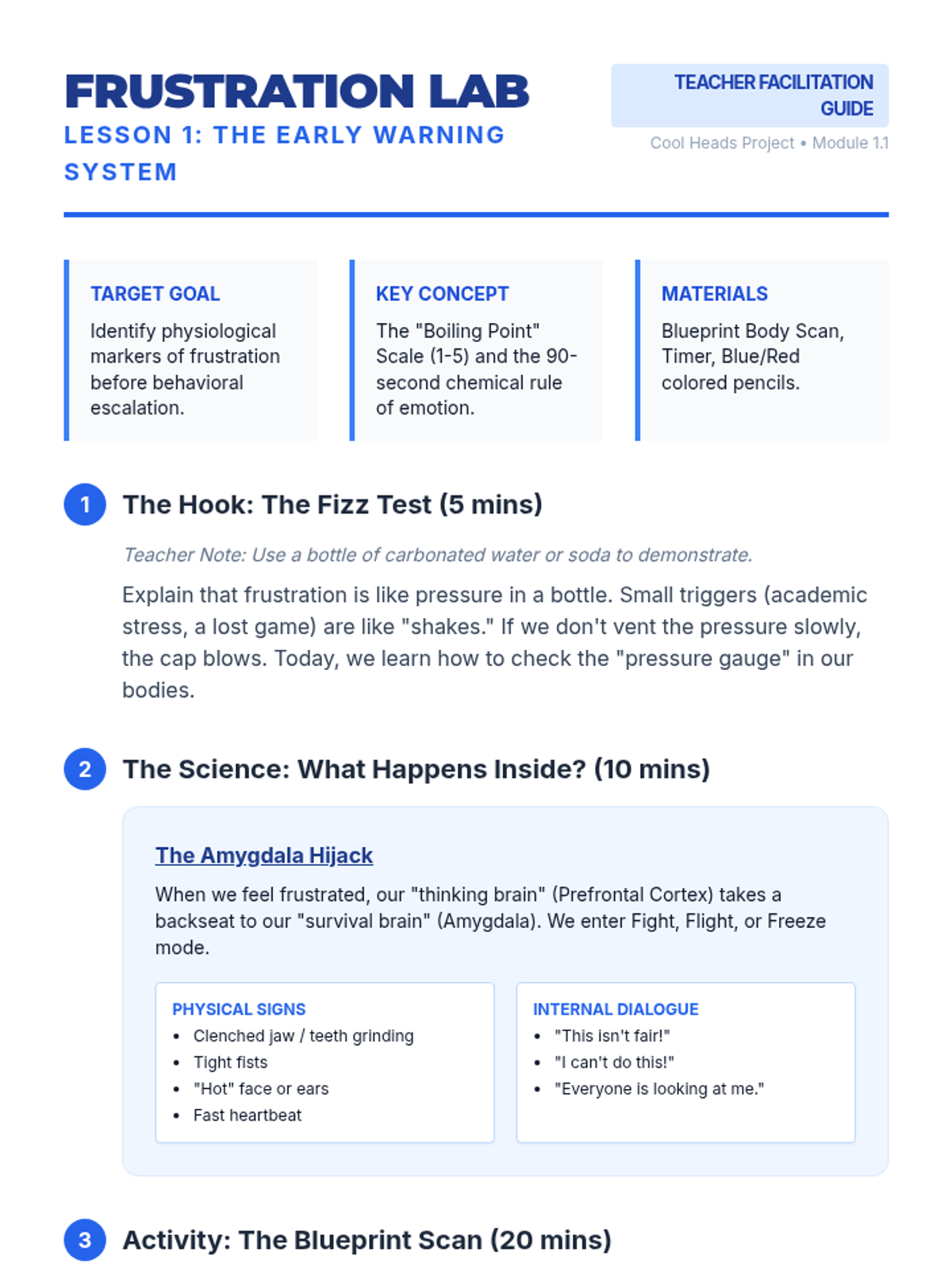
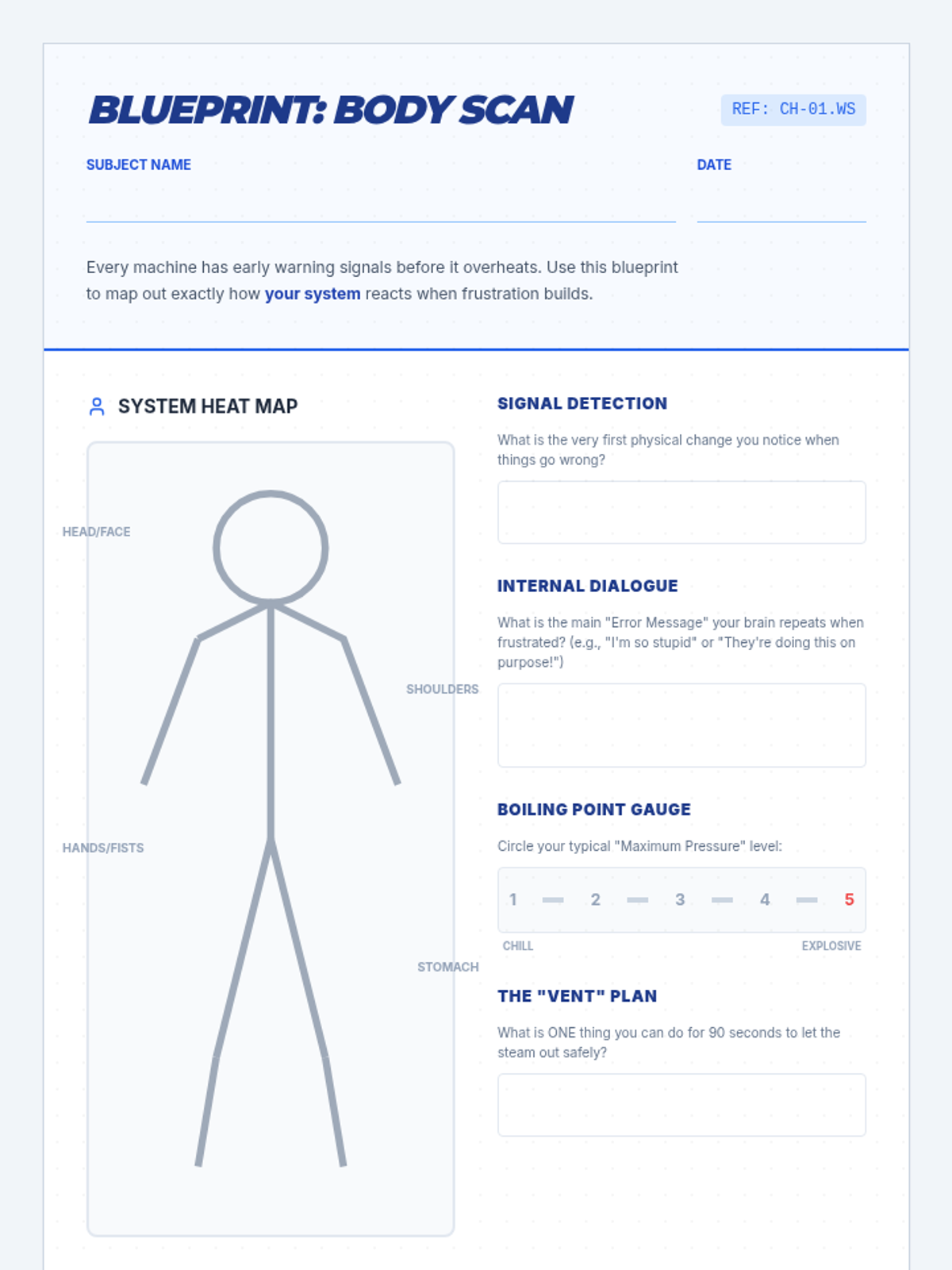
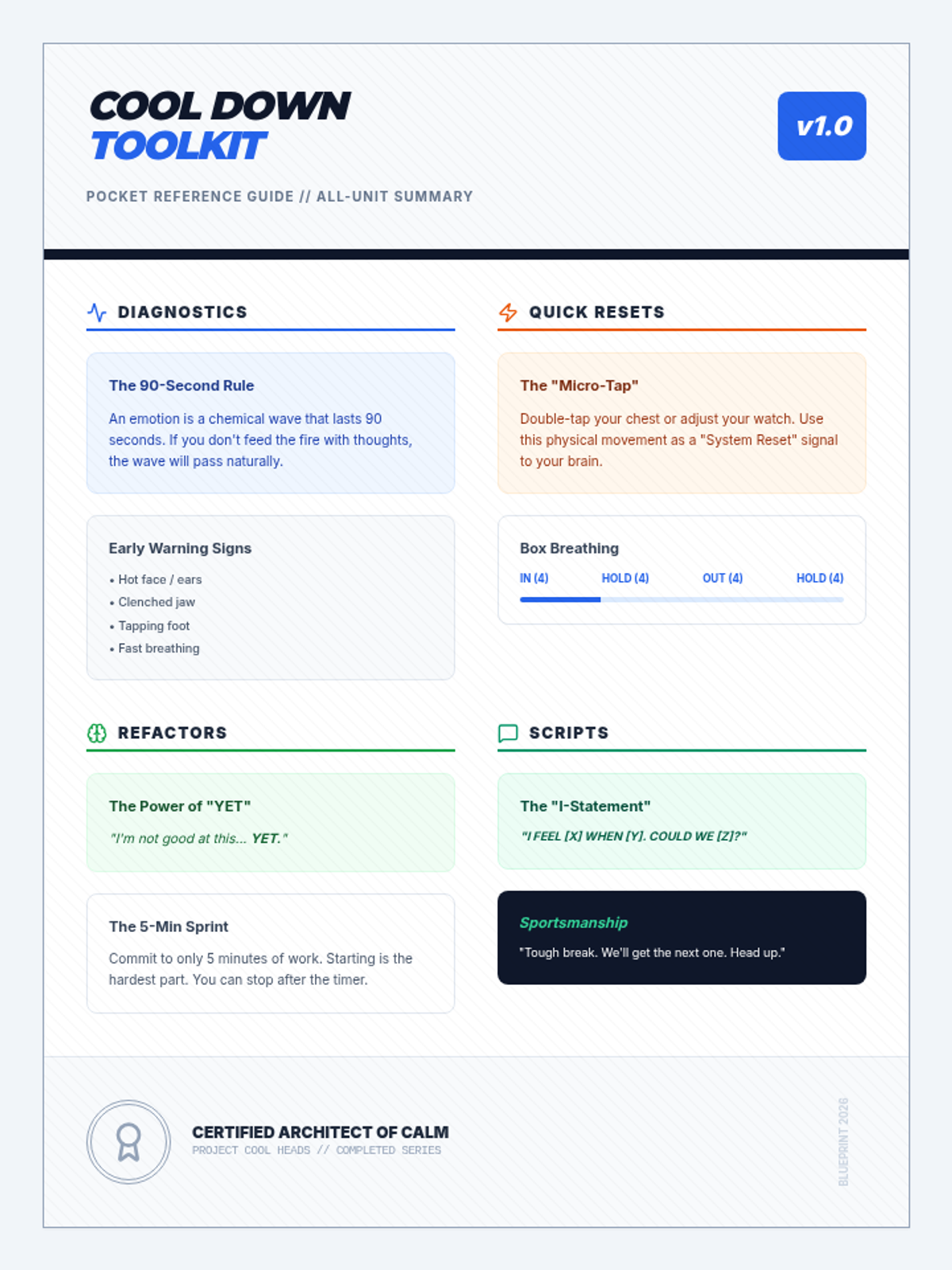
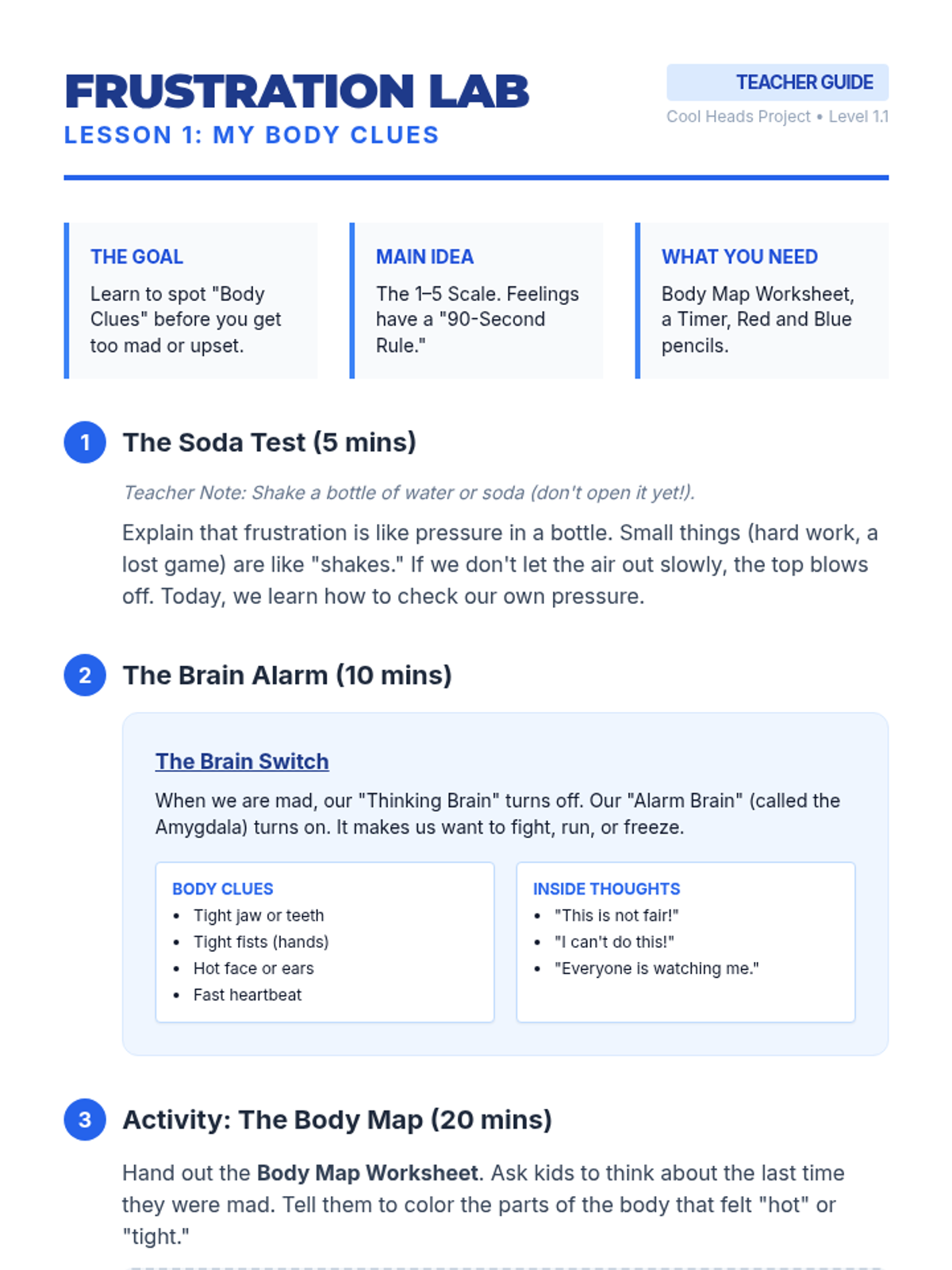
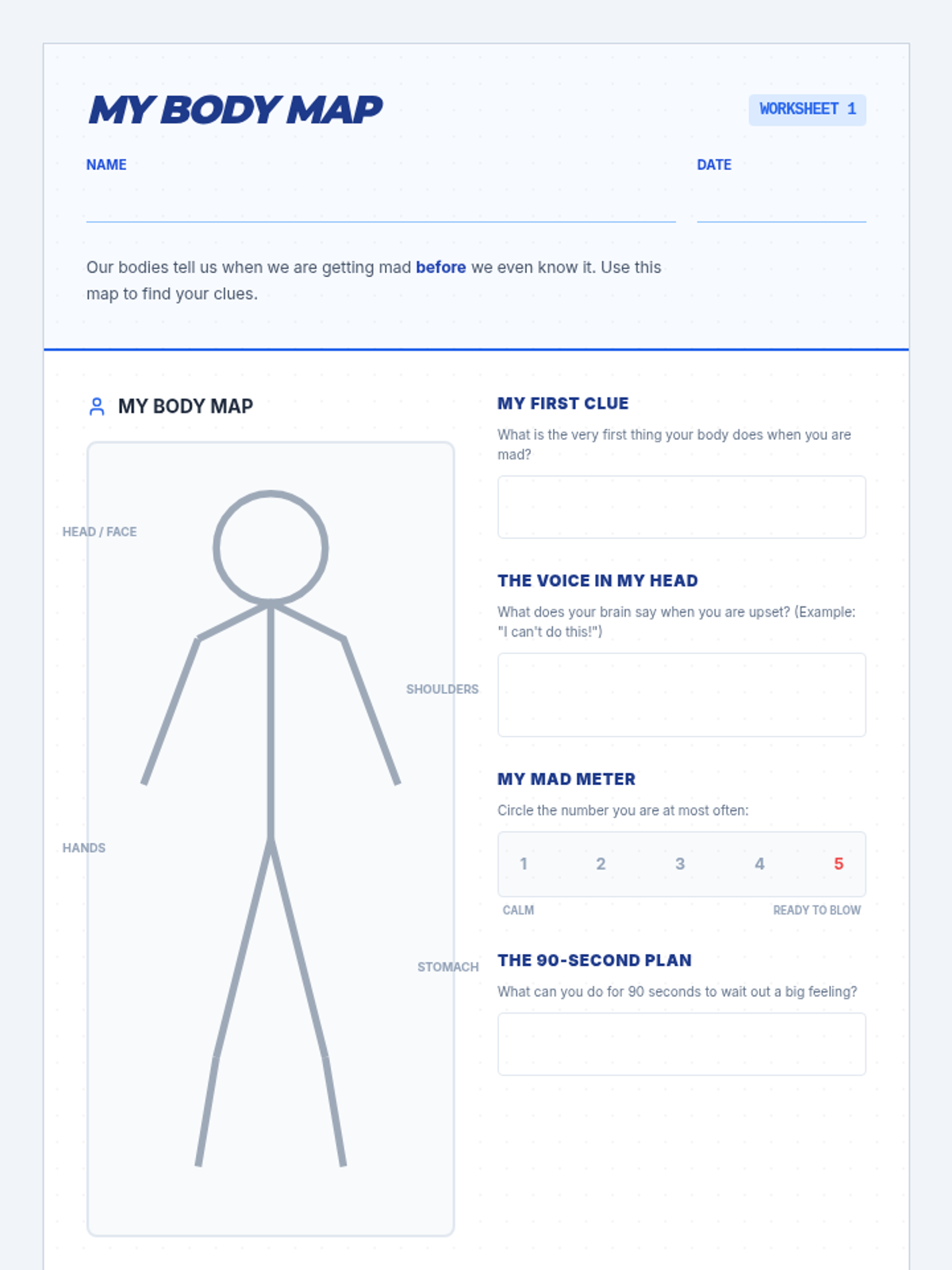
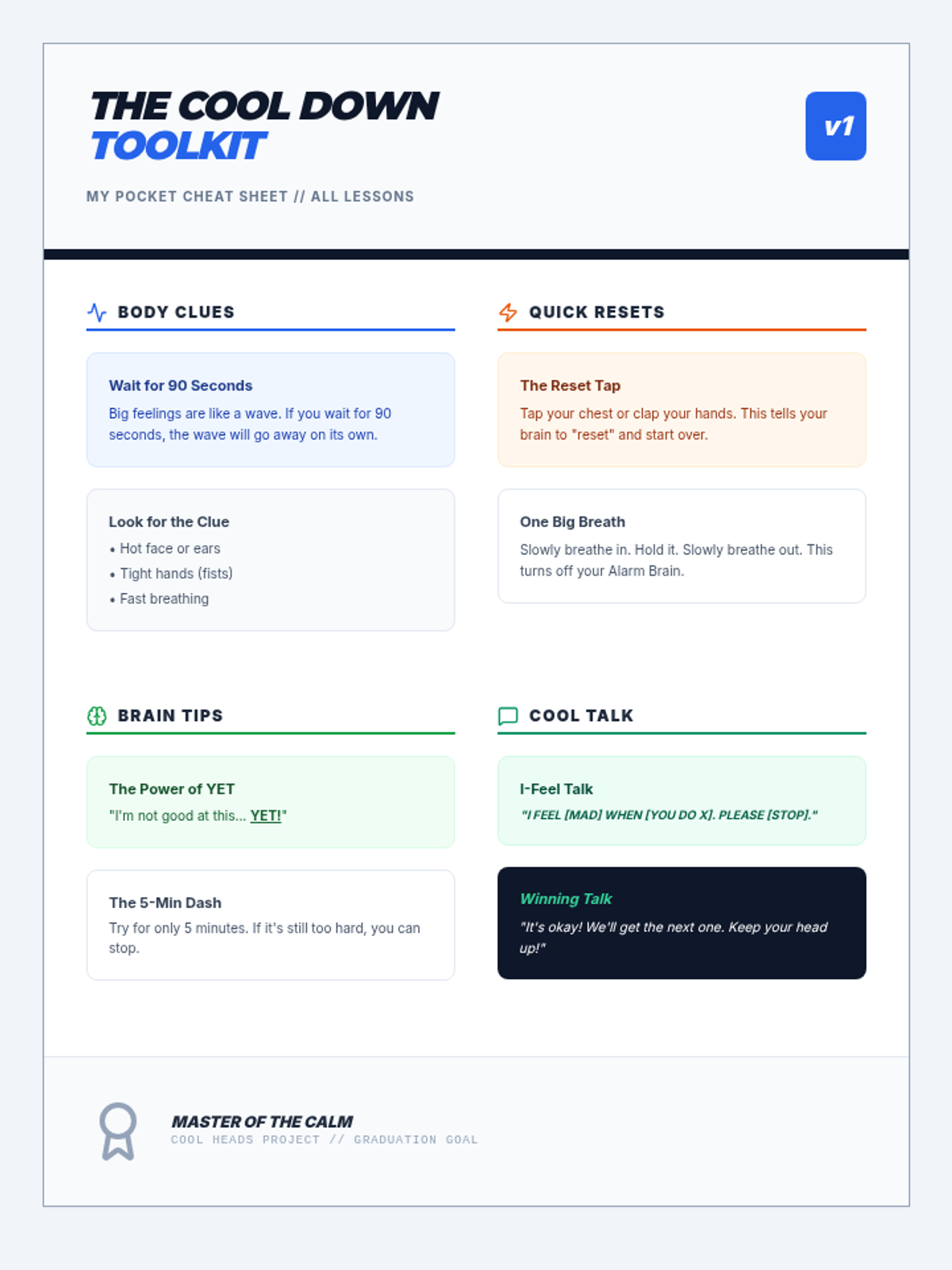
A 4-week small group series for 6th graders focused on identifying frustration triggers and implementing healthy coping strategies for academic, athletic, and home-based stress.
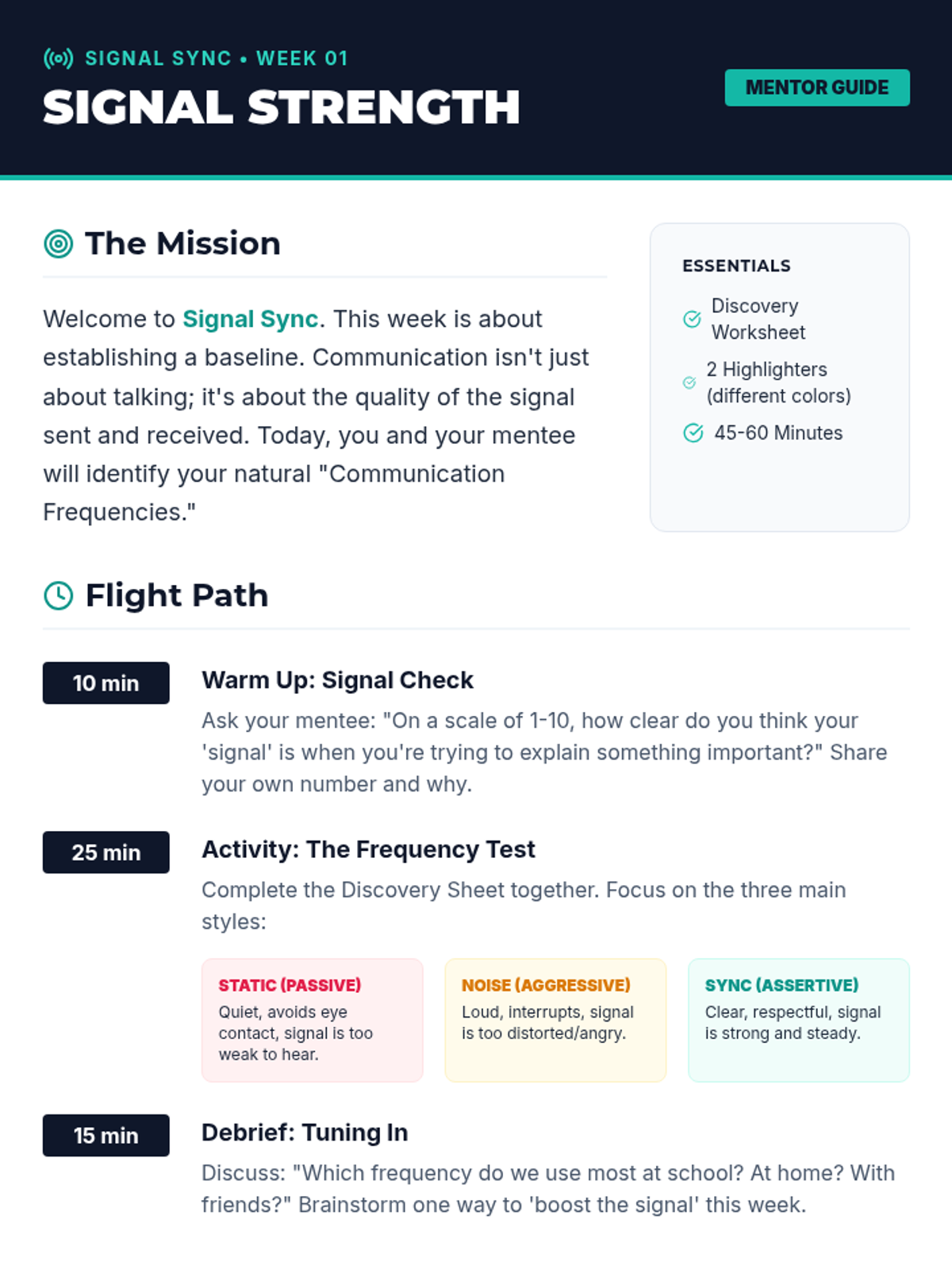
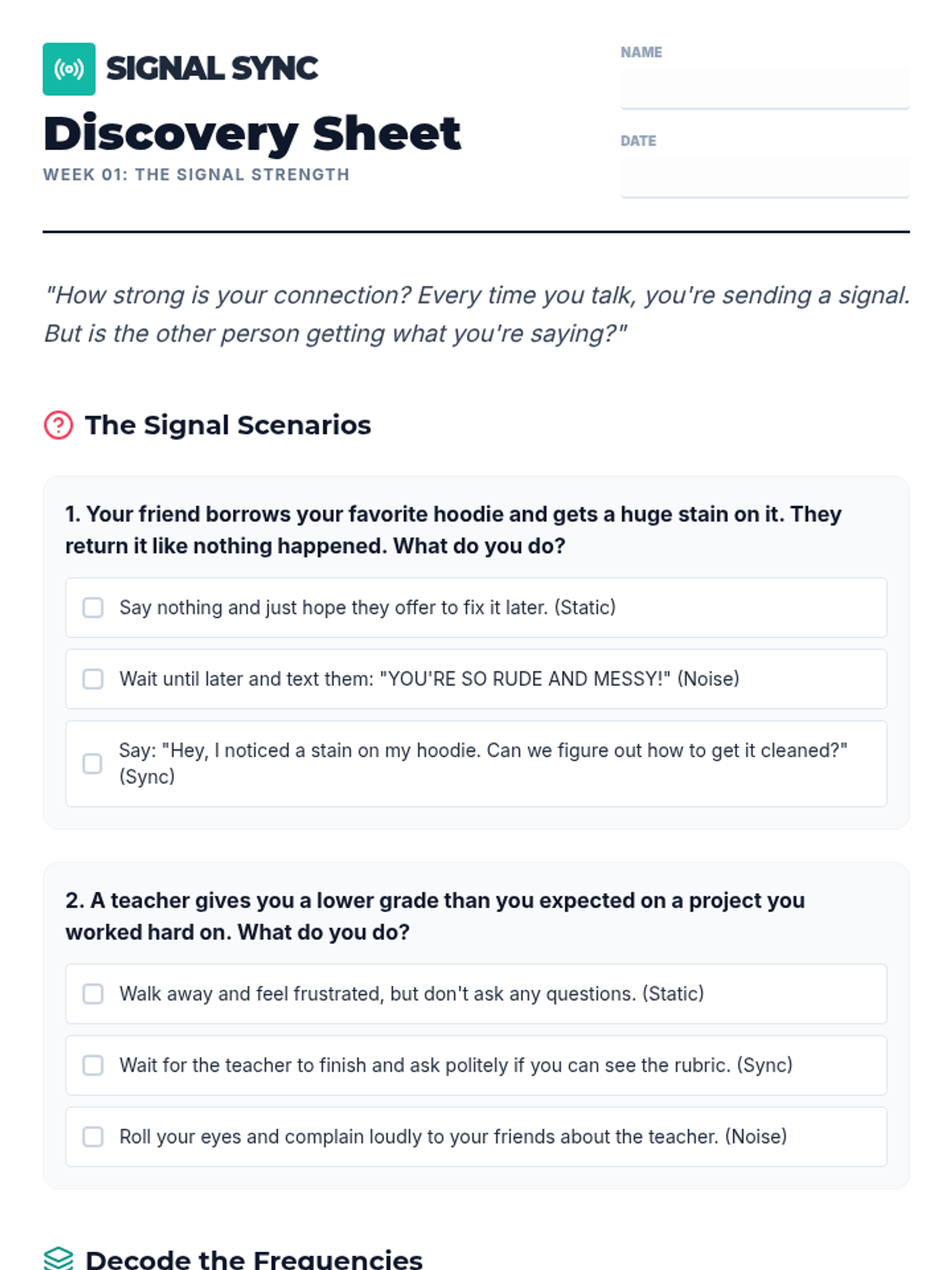
A 10-week comprehensive curriculum for mentors and mentees focusing on building effective communication habits and mastering conflict resolution through the 'Signal Sync' framework.
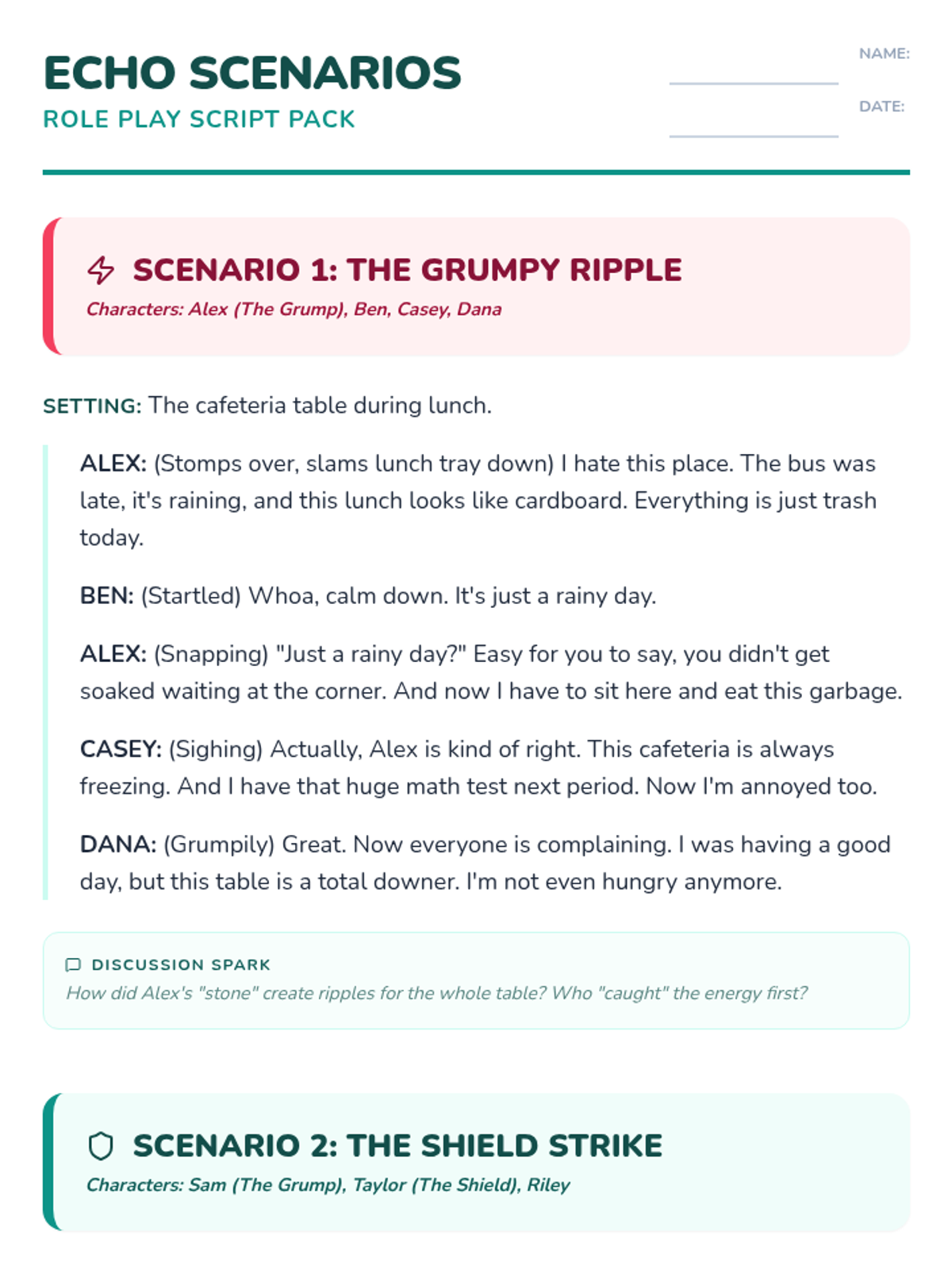
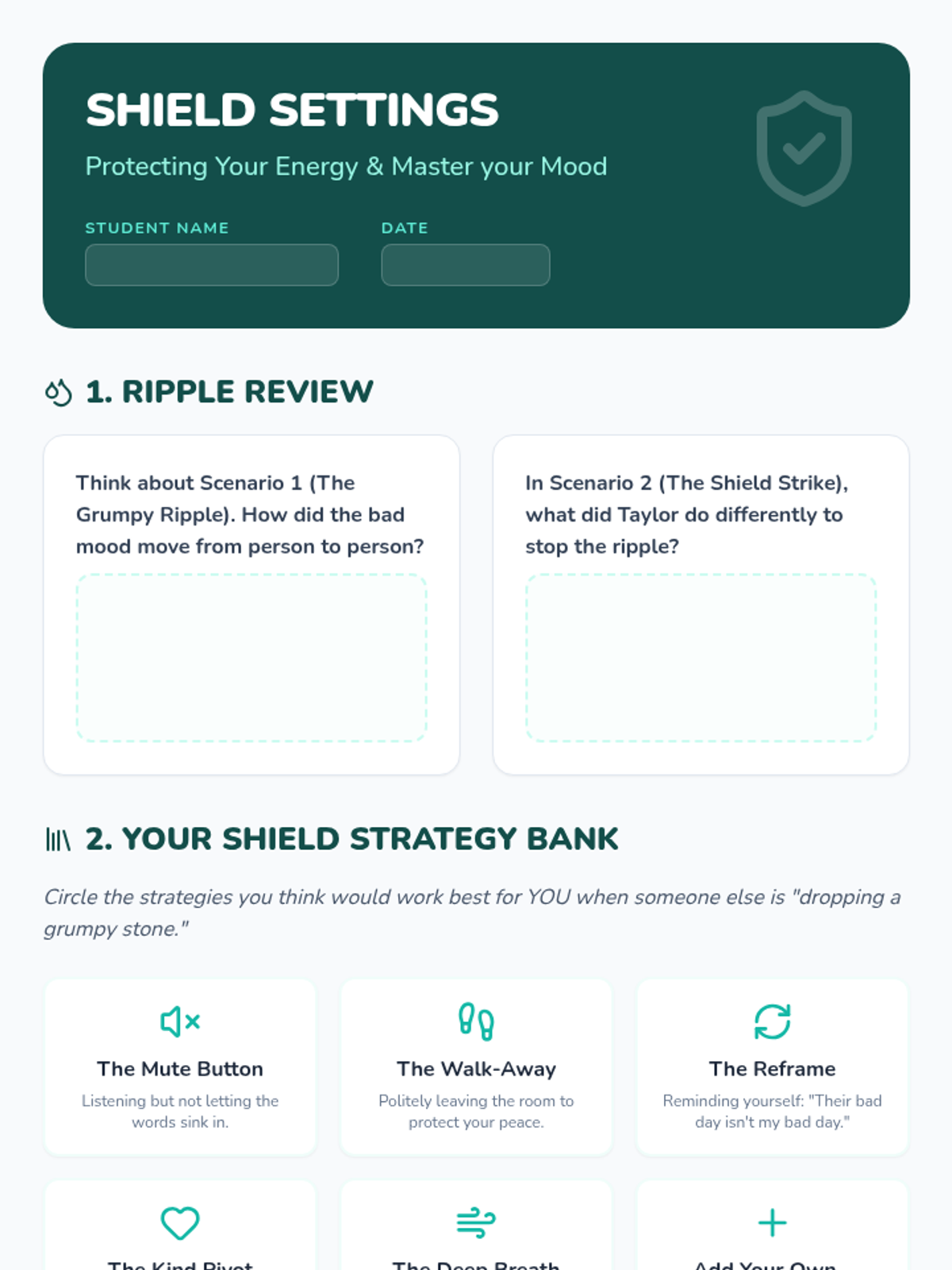
A series of social-emotional learning lessons designed to help students master emotional regulation and interpersonal dynamics. This sequence focuses on the invisible ways emotions move through a group and how individuals can maintain their own emotional equilibrium.
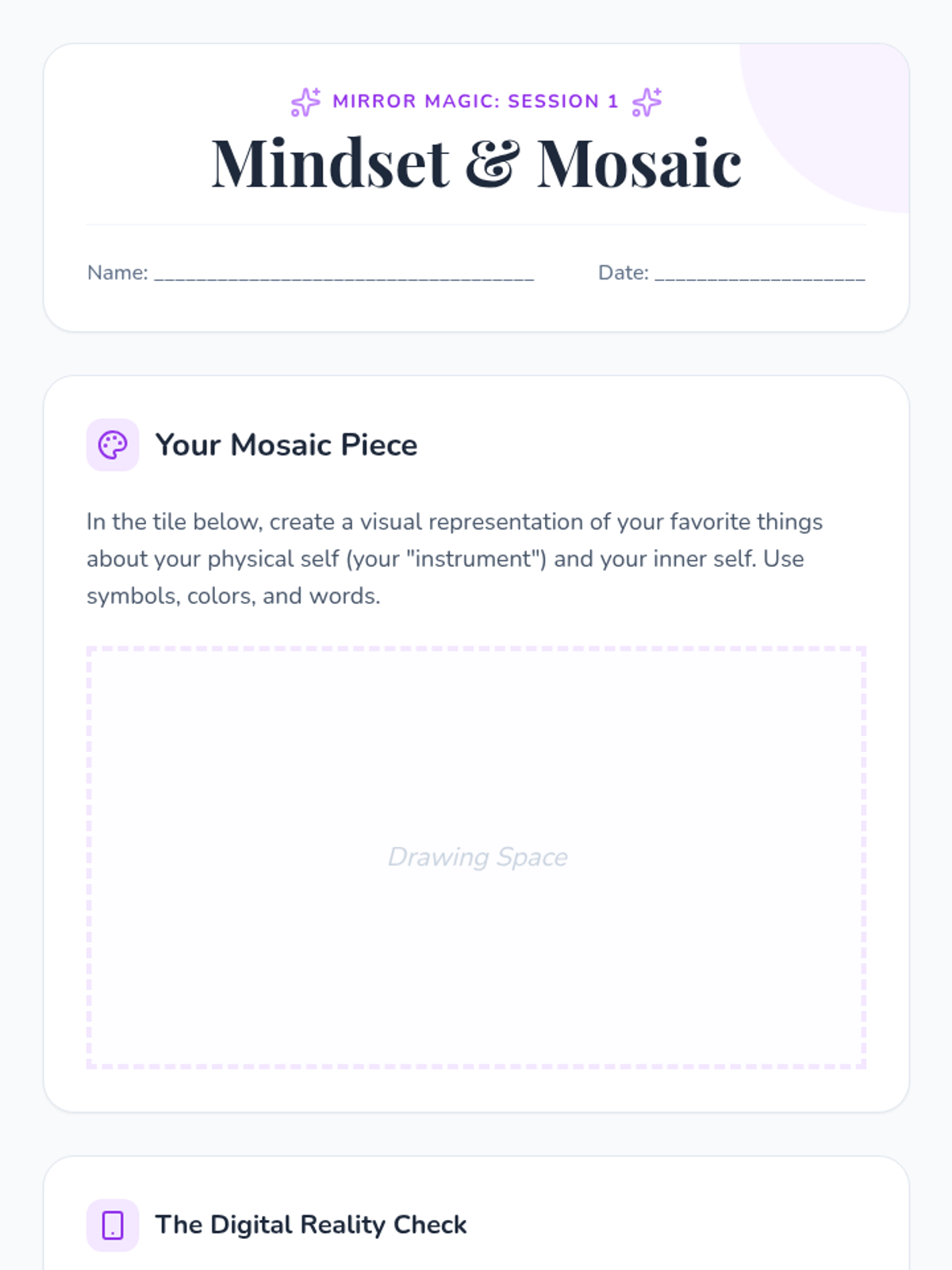
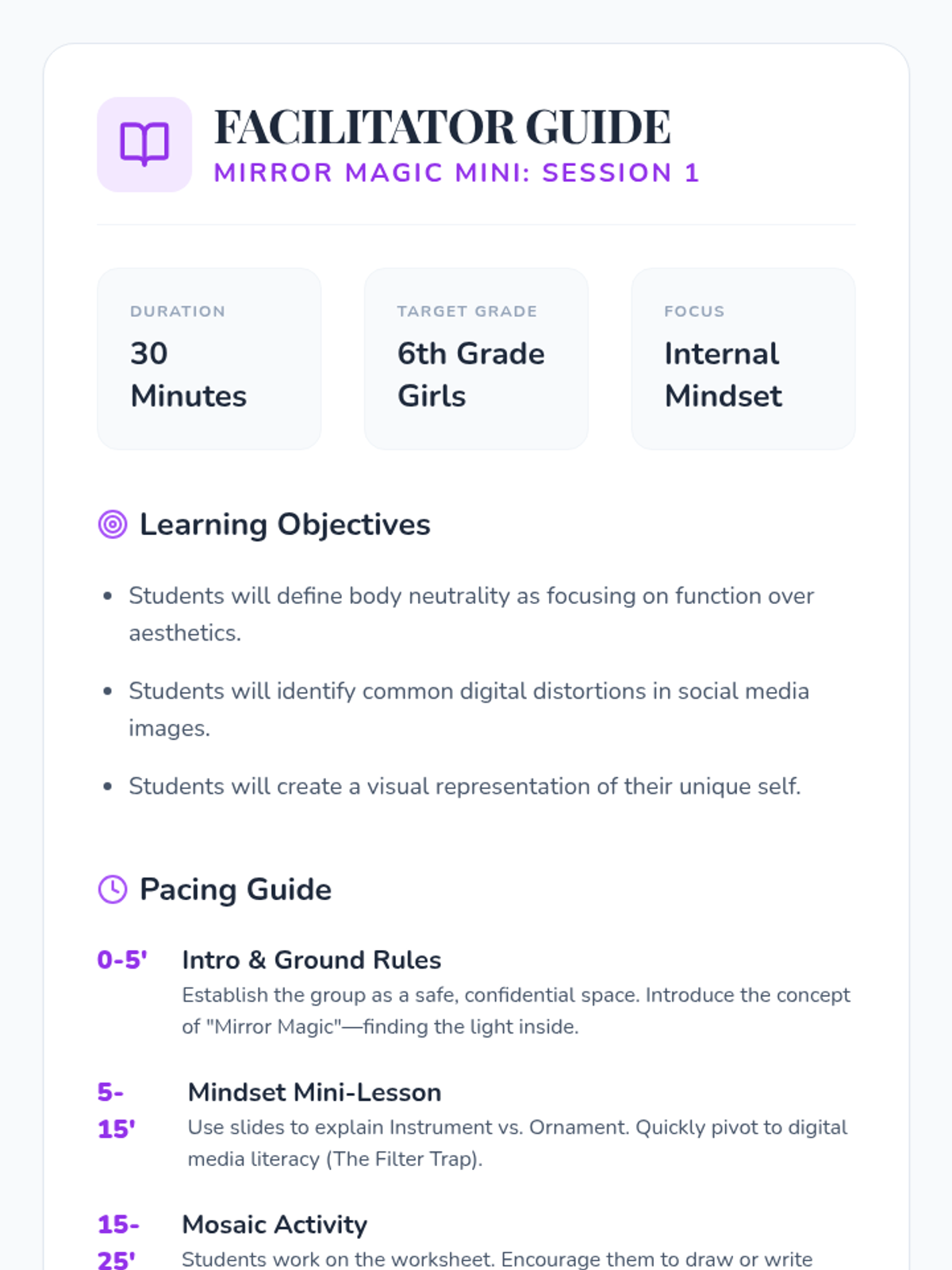
A 4-session social skills group for 6th-grade girls focused on body neutrality, media literacy, digital authenticity, and internal self-compassion. This sequence helps students transition from seeing themselves as "objects to be viewed" to "subjects who experience the world."
A series of social-emotional learning lessons for 6th graders focused on navigating complex social dynamics, including peer pressure and the impact of gossip.
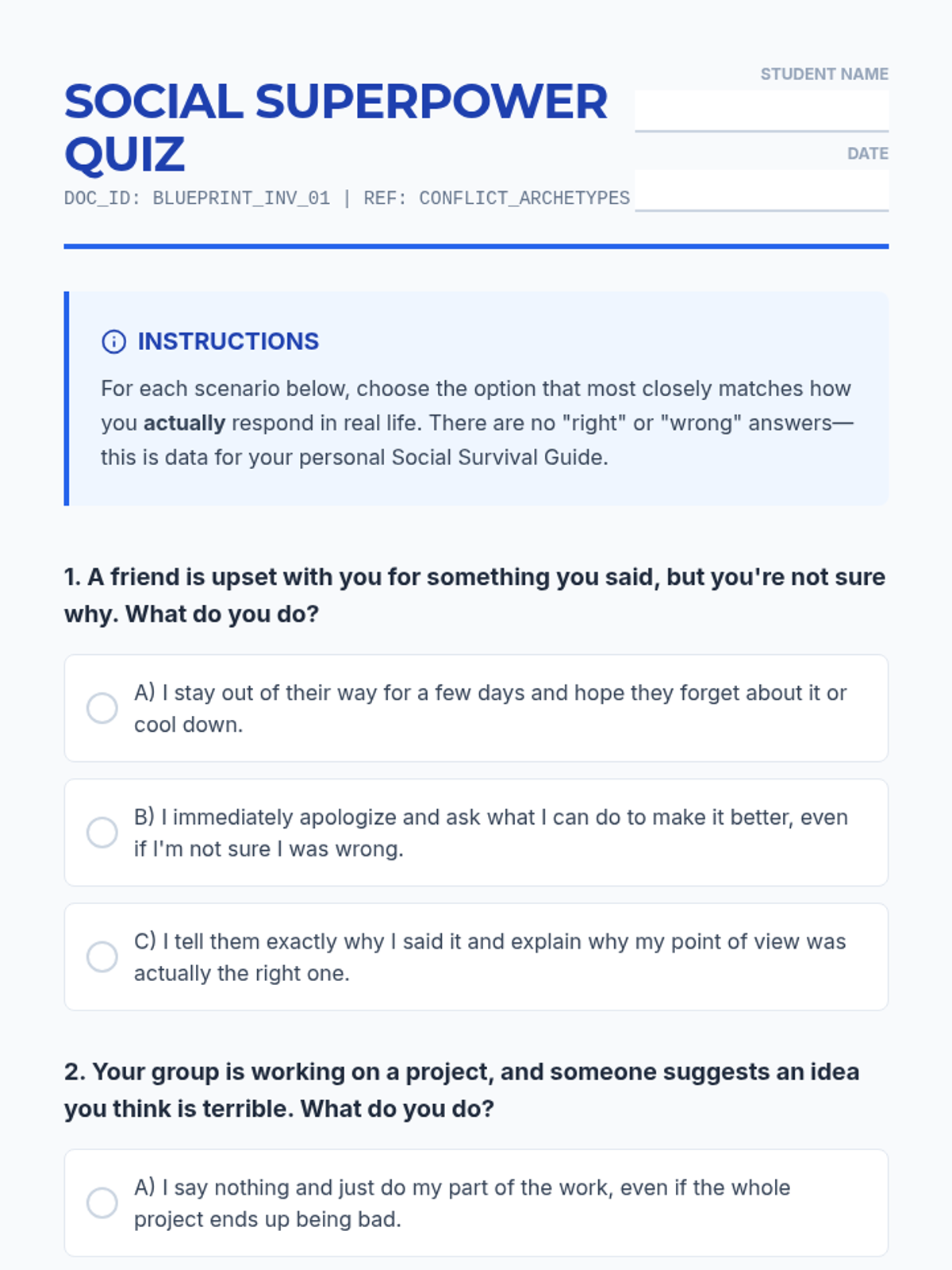
A project-based sequence where 7th-grade students analyze their social styles, past successes, and preferred strategies to build a personalized 'Social Survival Guide' for navigating conflict.
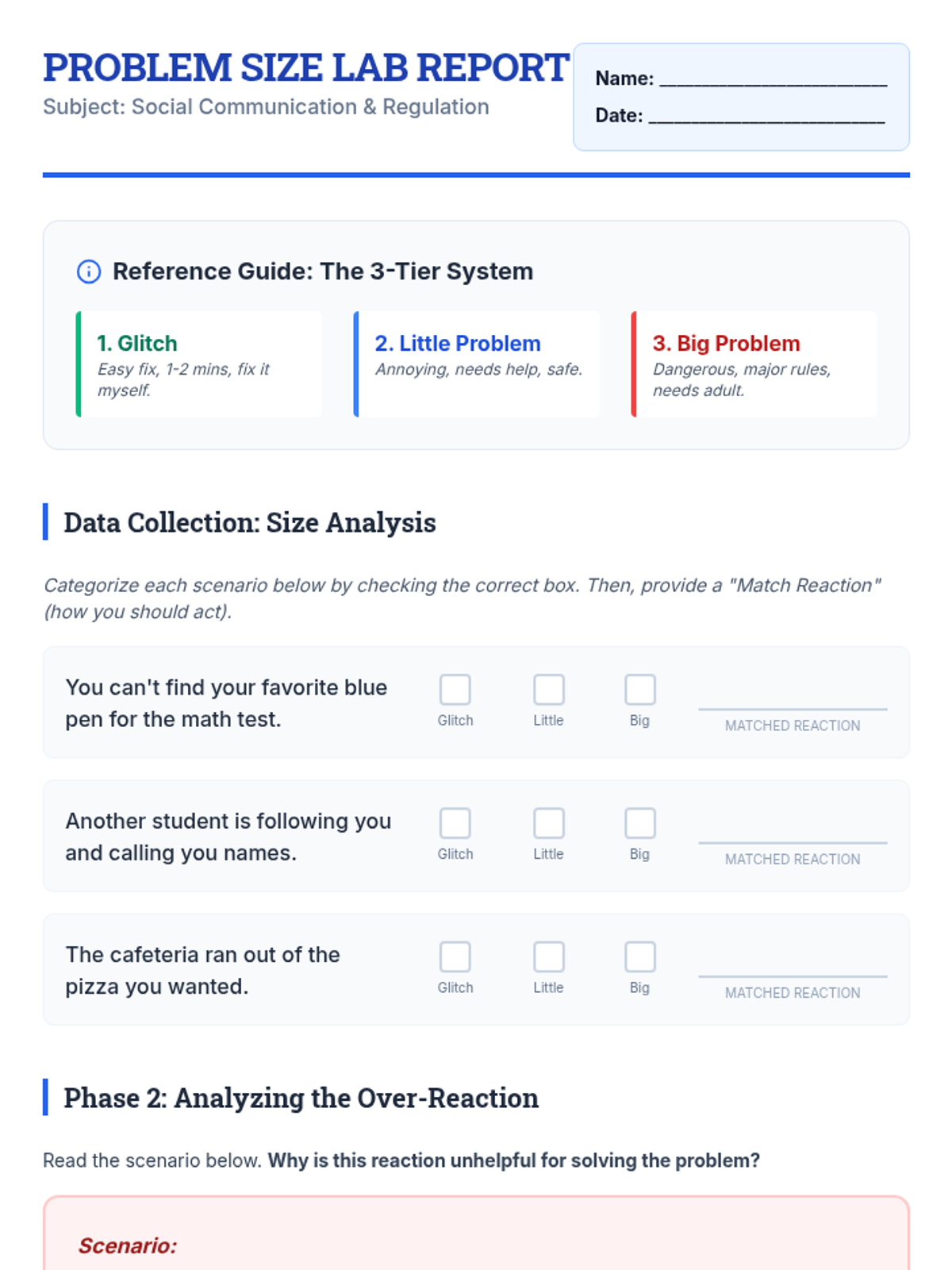
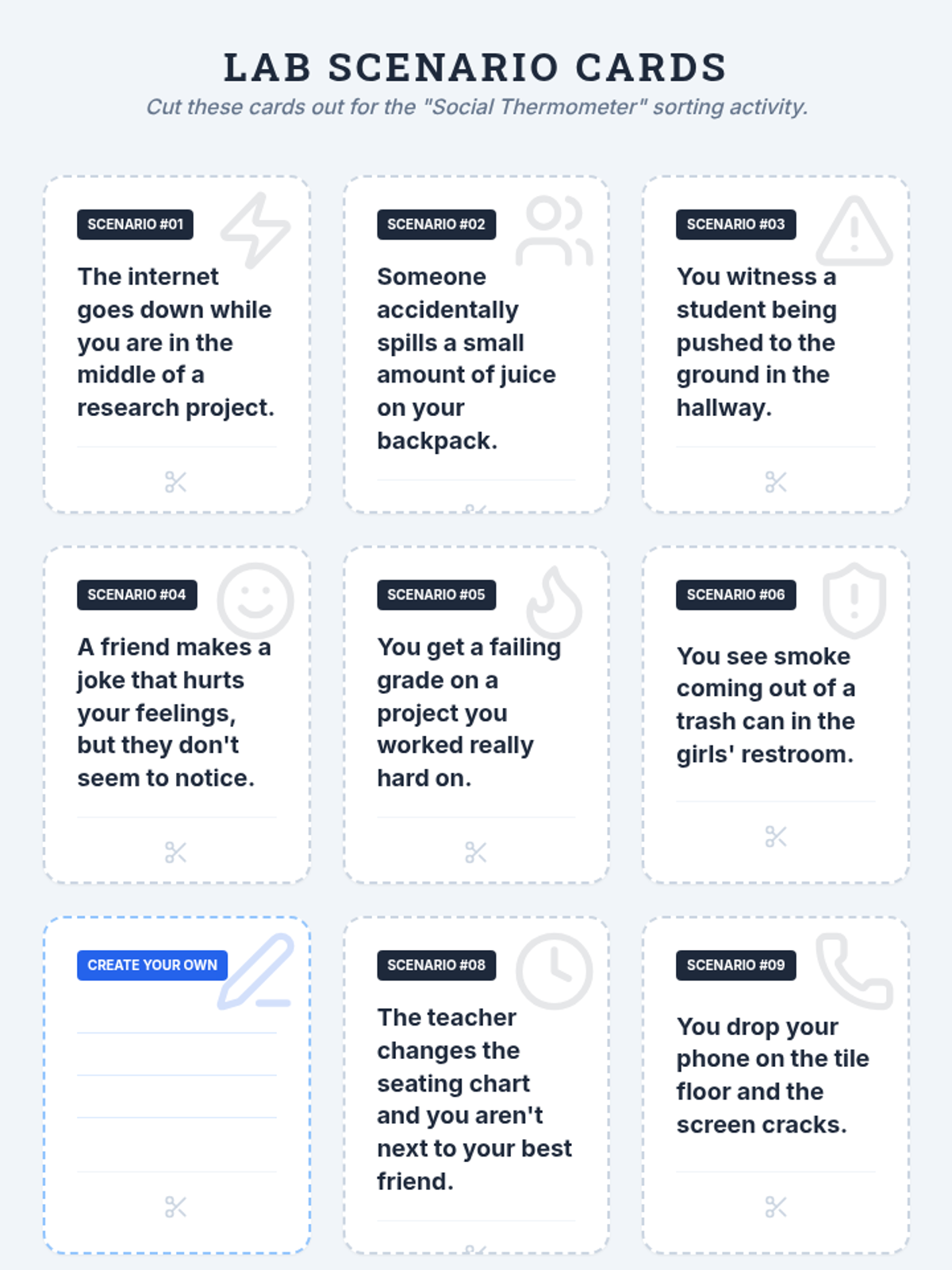
A comprehensive 5-lesson unit for 7th grade students focusing on social problem-solving. This sequence guides students from identifying the size of a conflict to objectively defining facts, brainstorming diverse solutions, and selecting the most assertive and effective response.
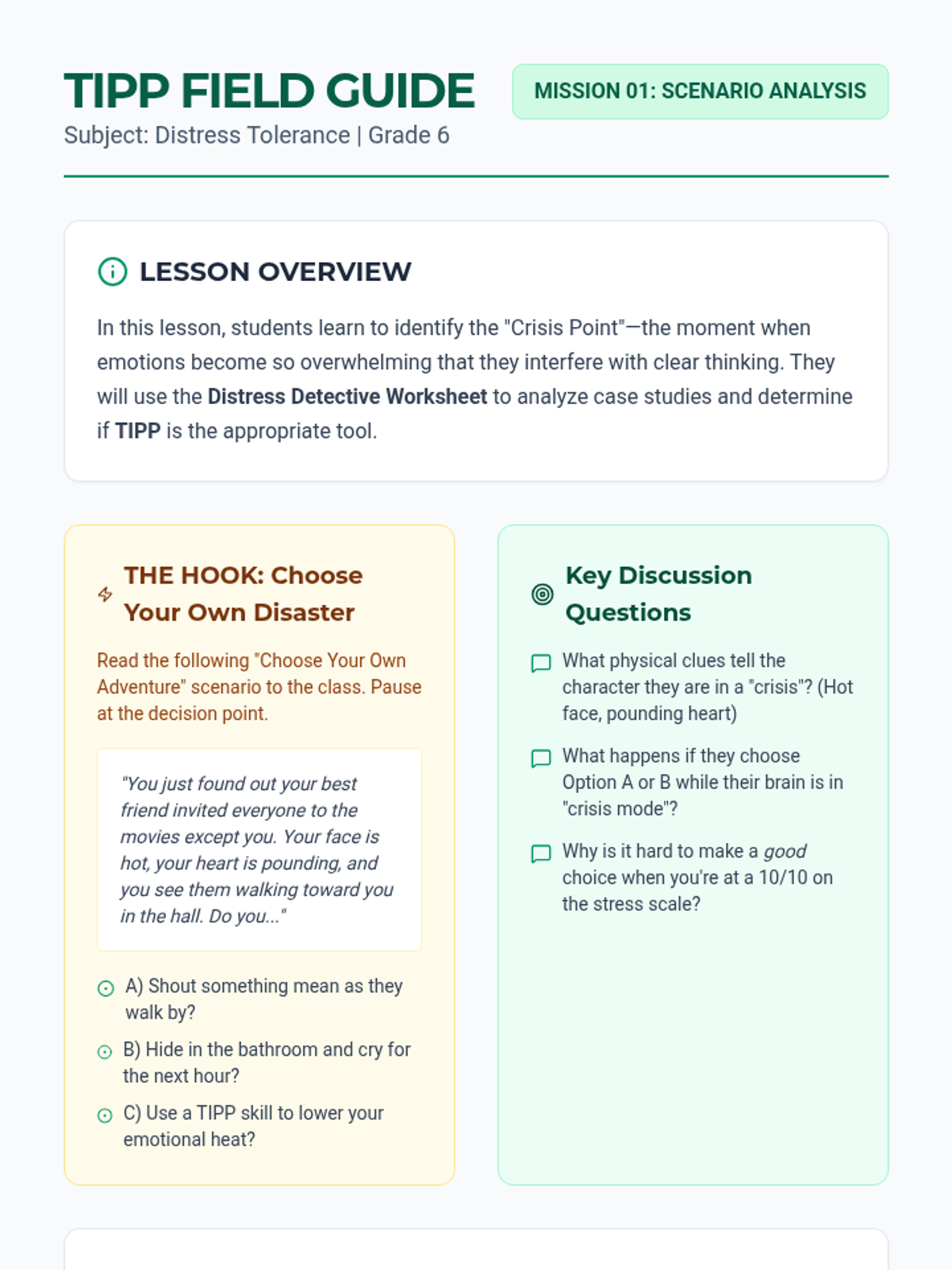
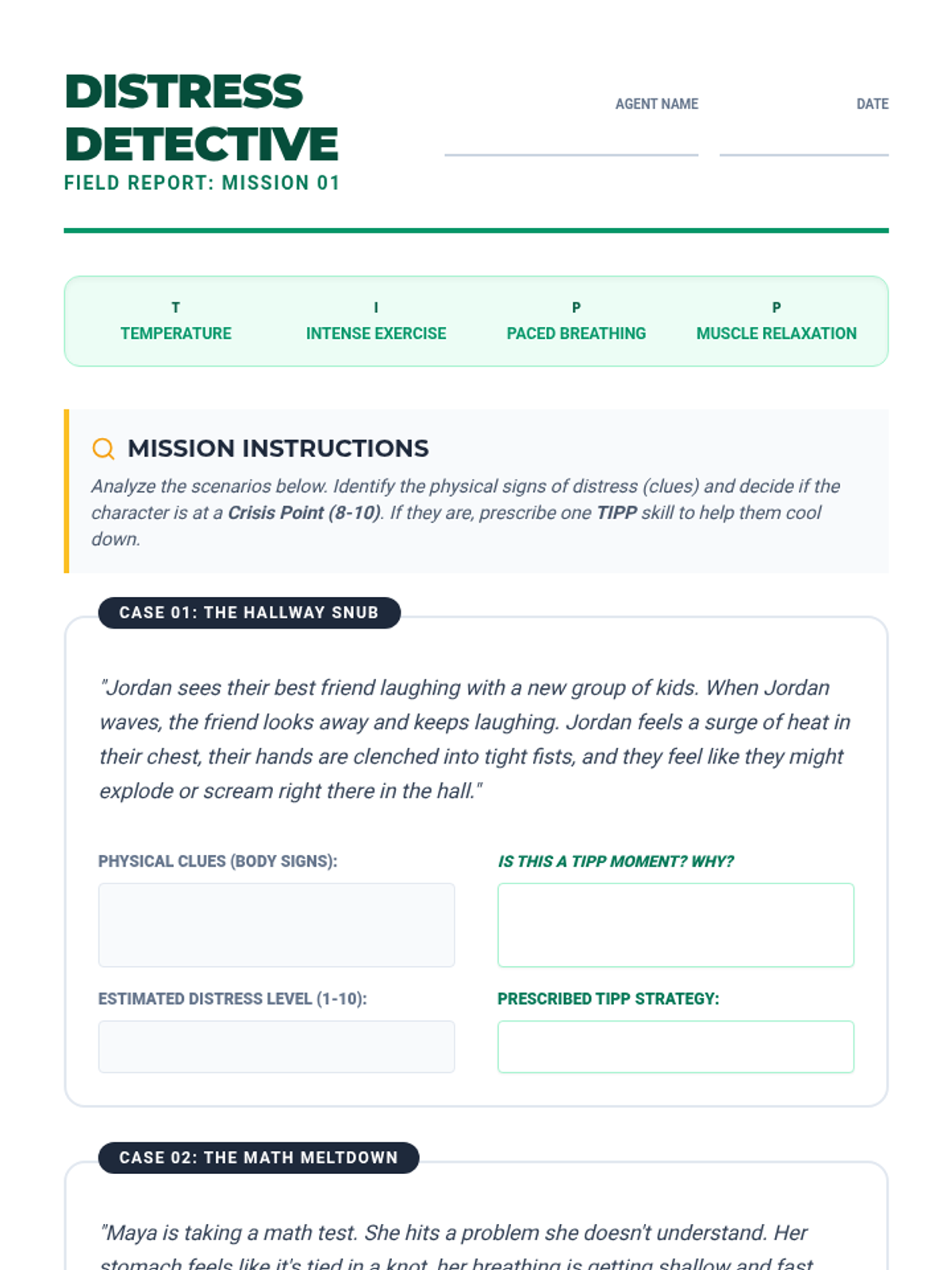
A 5-lesson unit for 6th graders to apply TIPP crisis survival skills (Temperature, Intense Exercise, Paced Breathing, Paired Muscle Relaxation) to real-world social and academic stressors. Students move from analyzing scenarios to simulated practice and peer consulting.
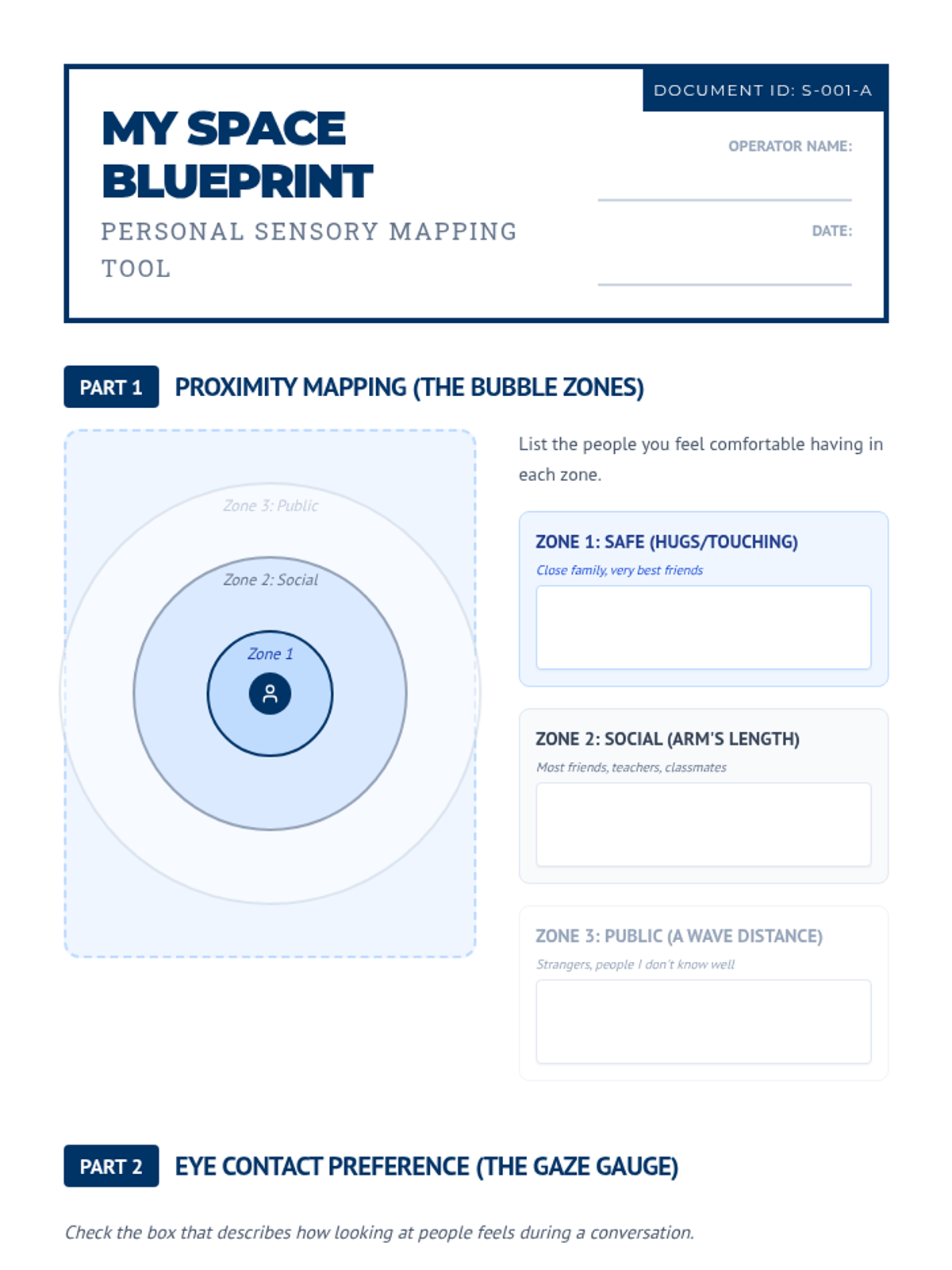
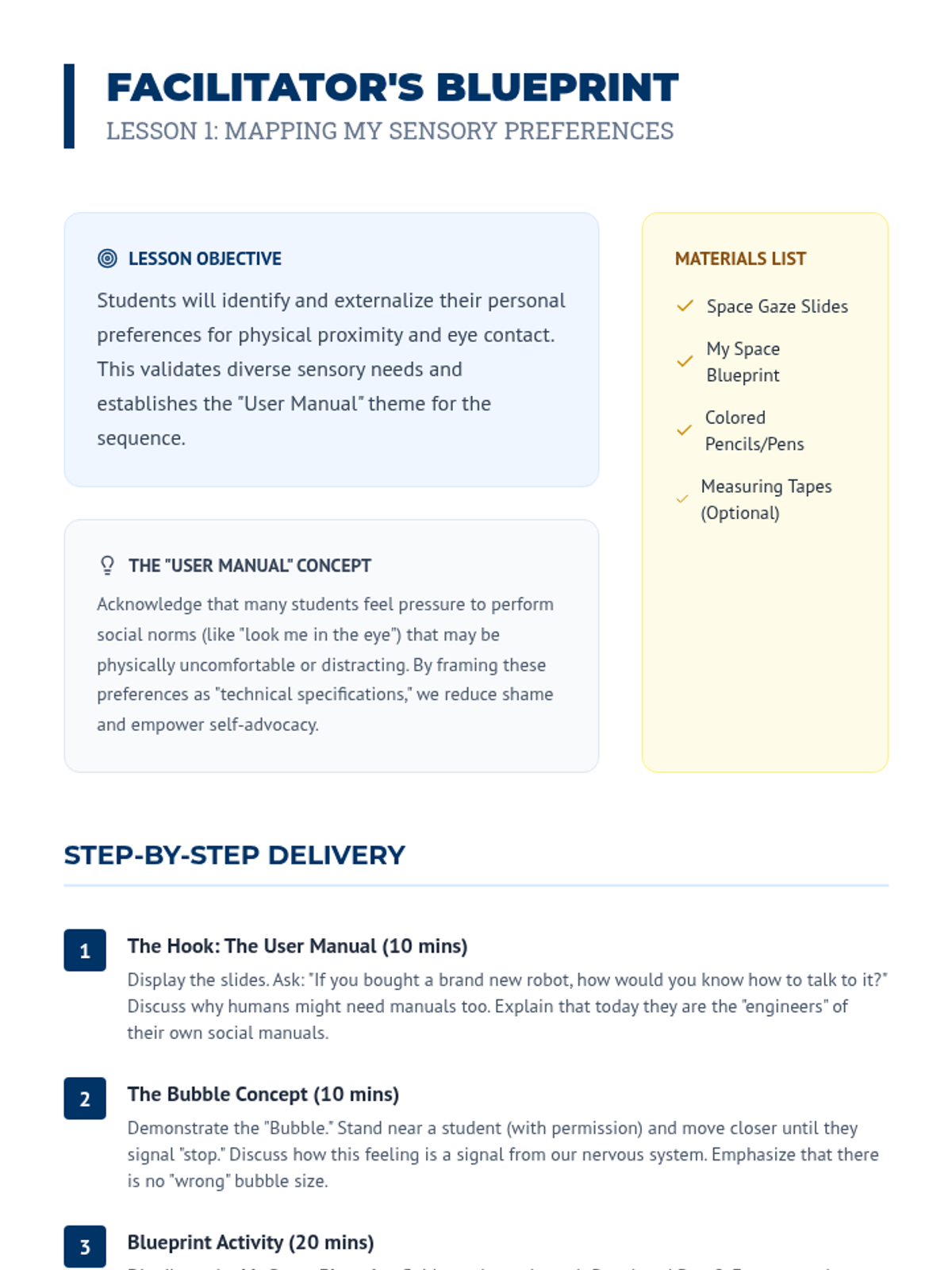
A neurodiversity-affirming sequence for 6th graders to explore their personal space needs and eye contact preferences. Students learn to advocate for their own boundaries while respecting the diverse sensory and cultural needs of others through a 'User Manual' theme.
A comprehensive 5-lesson sequence for 4th Grade students focused on developing assertive communication and conflict resolution skills. Students transition from aggressive or passive behaviors to assertive alternatives through interactive games, 'I-statement' practice, and restorative relationship repair.
A comprehensive 7th-grade sequence focused on building interpersonal conflict resolution and de-escalation skills. Students progress from identifying personal styles to mastering active listening, 'I' statements, and emotional regulation, concluding with simulated negotiations for real-world peer scenarios.
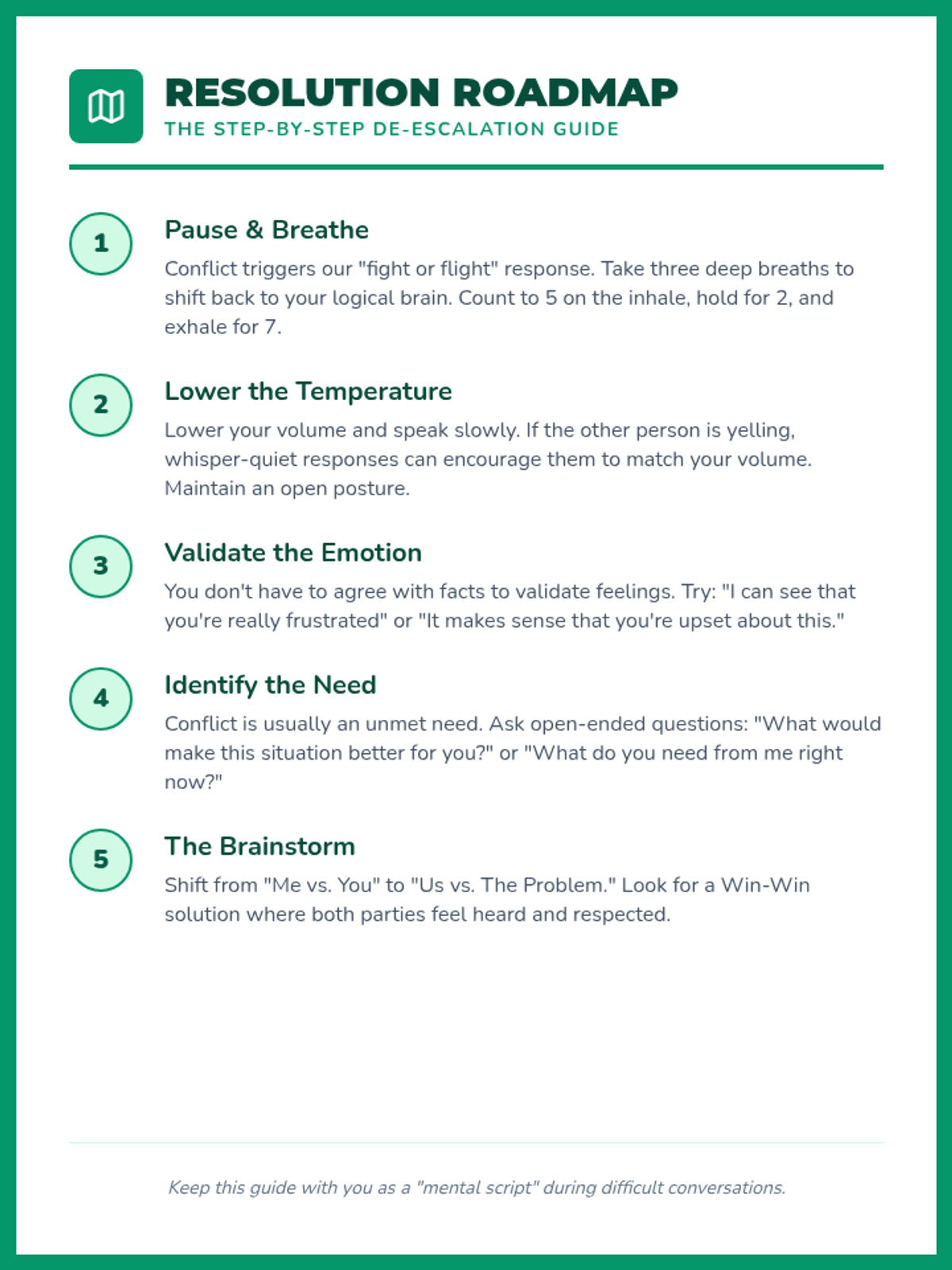
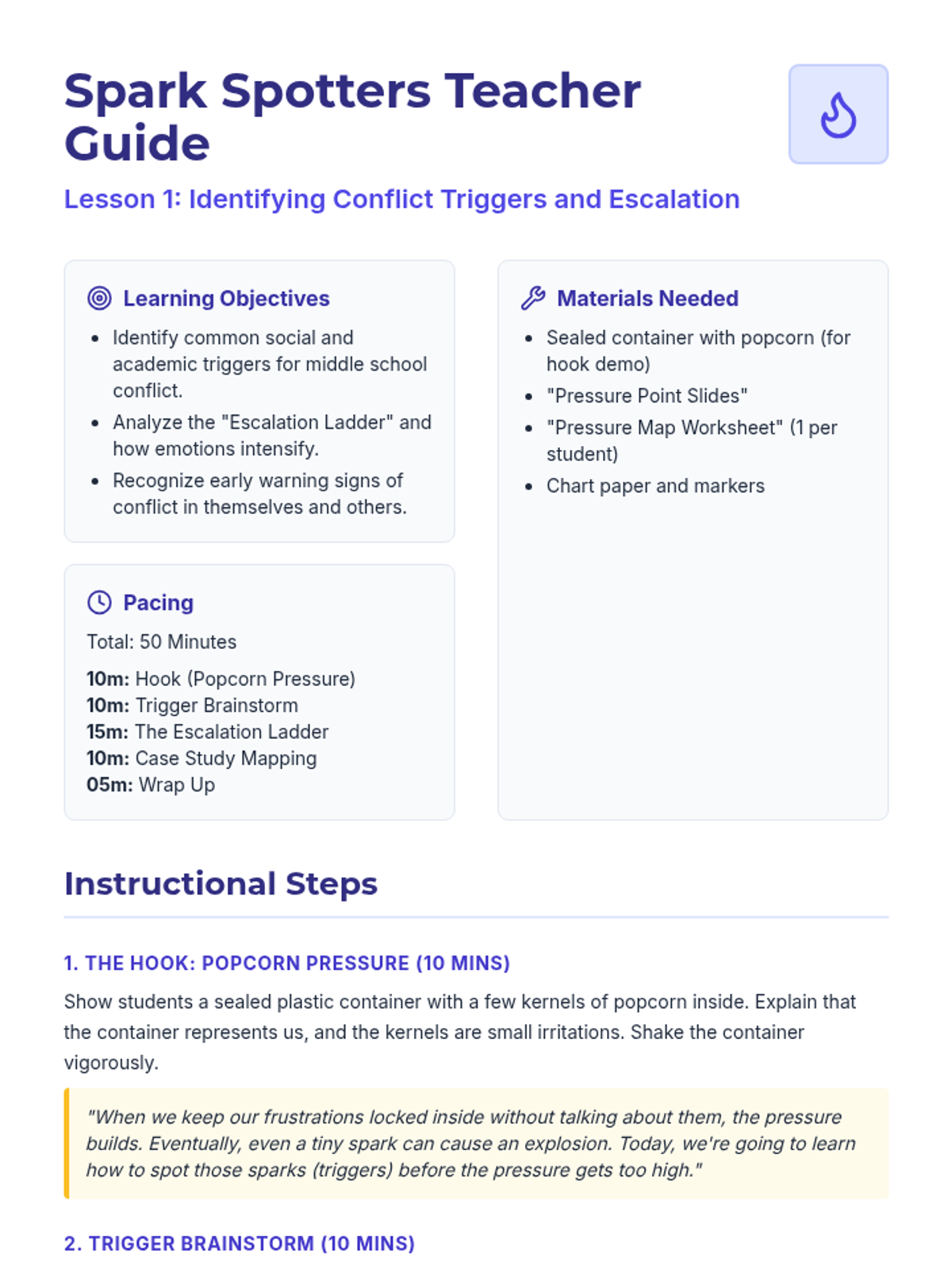
A comprehensive 5-lesson sequence for 6th-grade students on conflict resolution, covering triggers, escalation, active listening, assertive communication, and negotiation. Students will build a practical toolkit for managing interpersonal disputes peacefully and effectively.
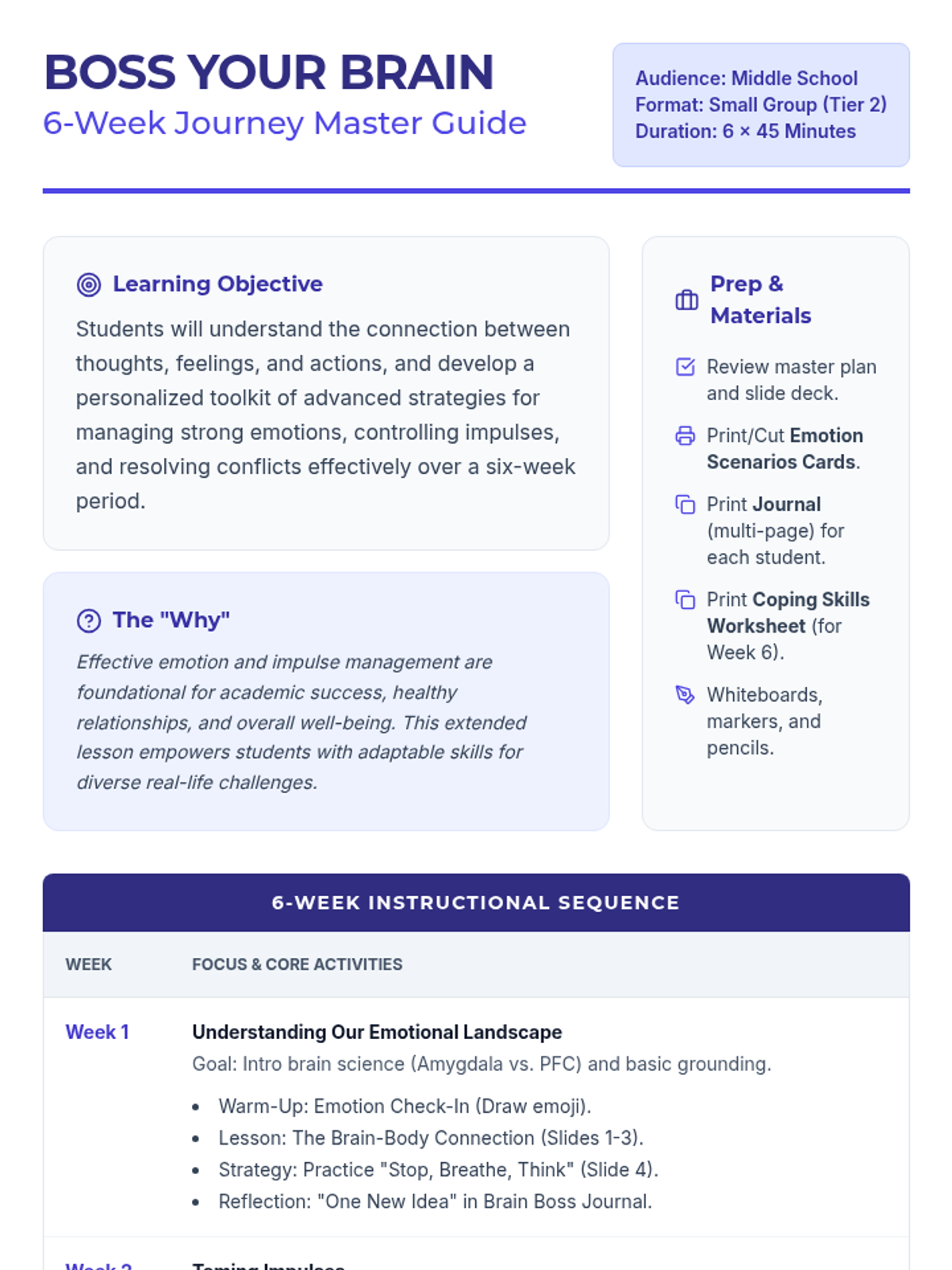
A 6-week journey for middle school students to master emotion management, impulse control, and resilience.
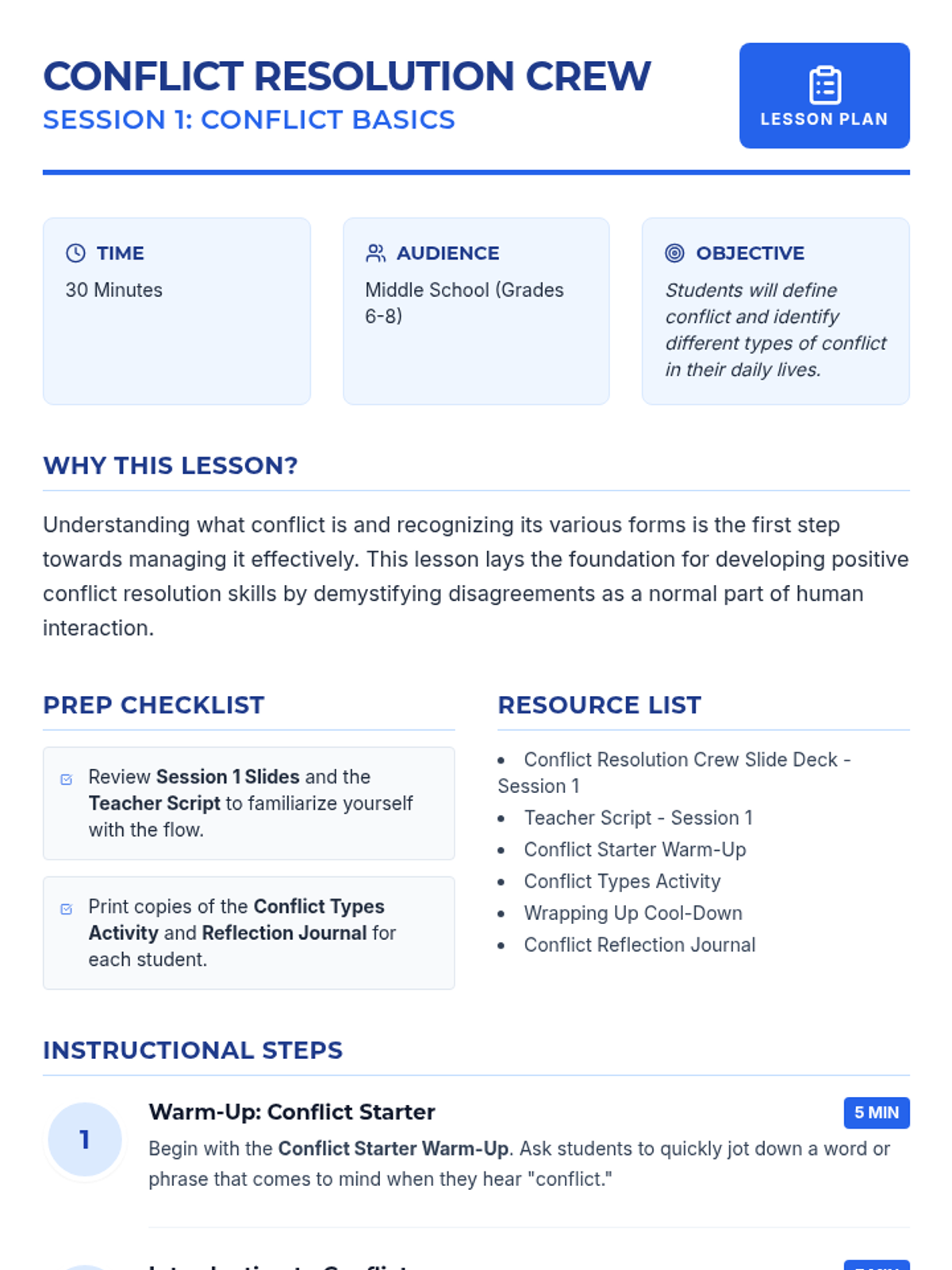
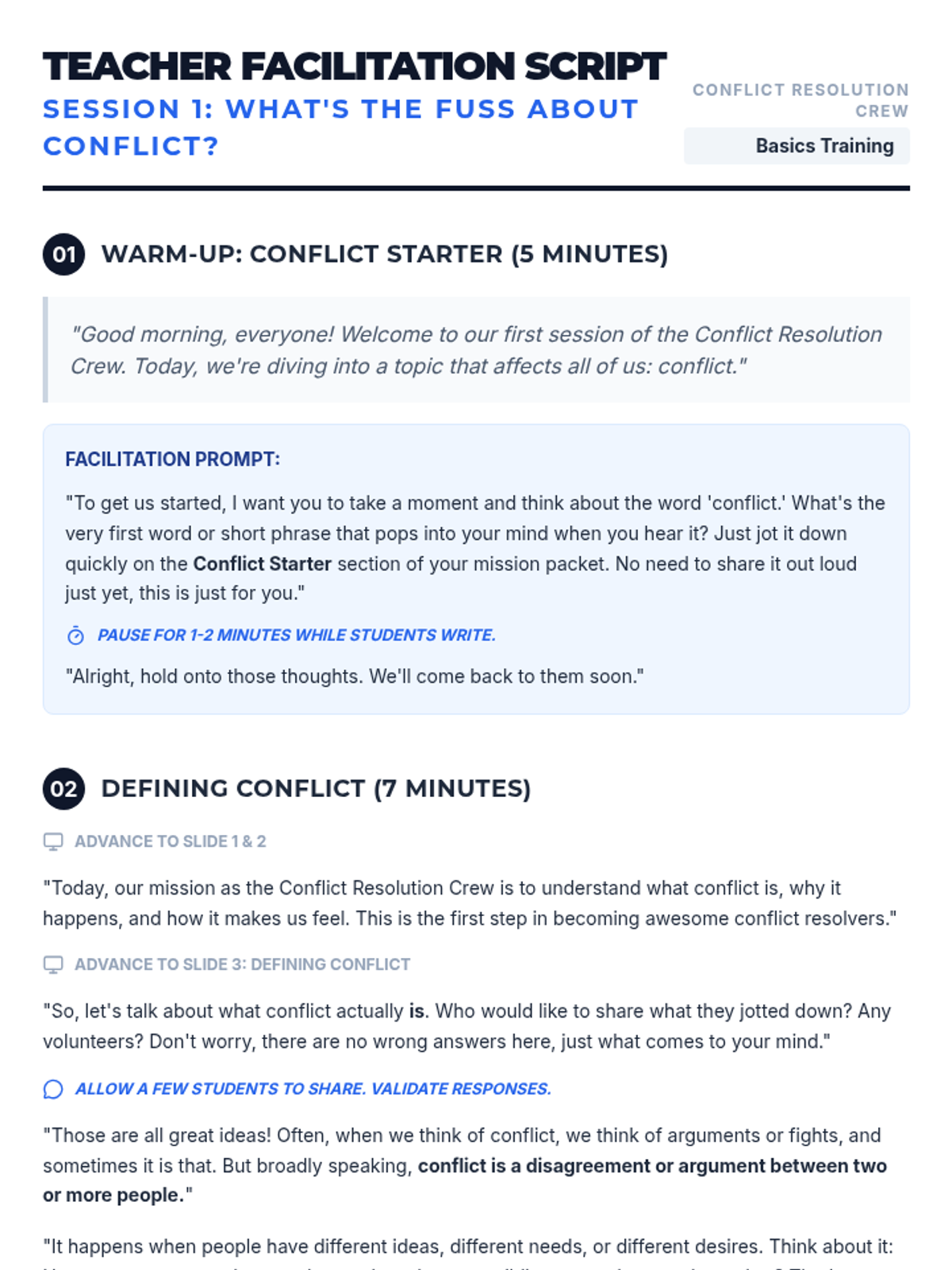
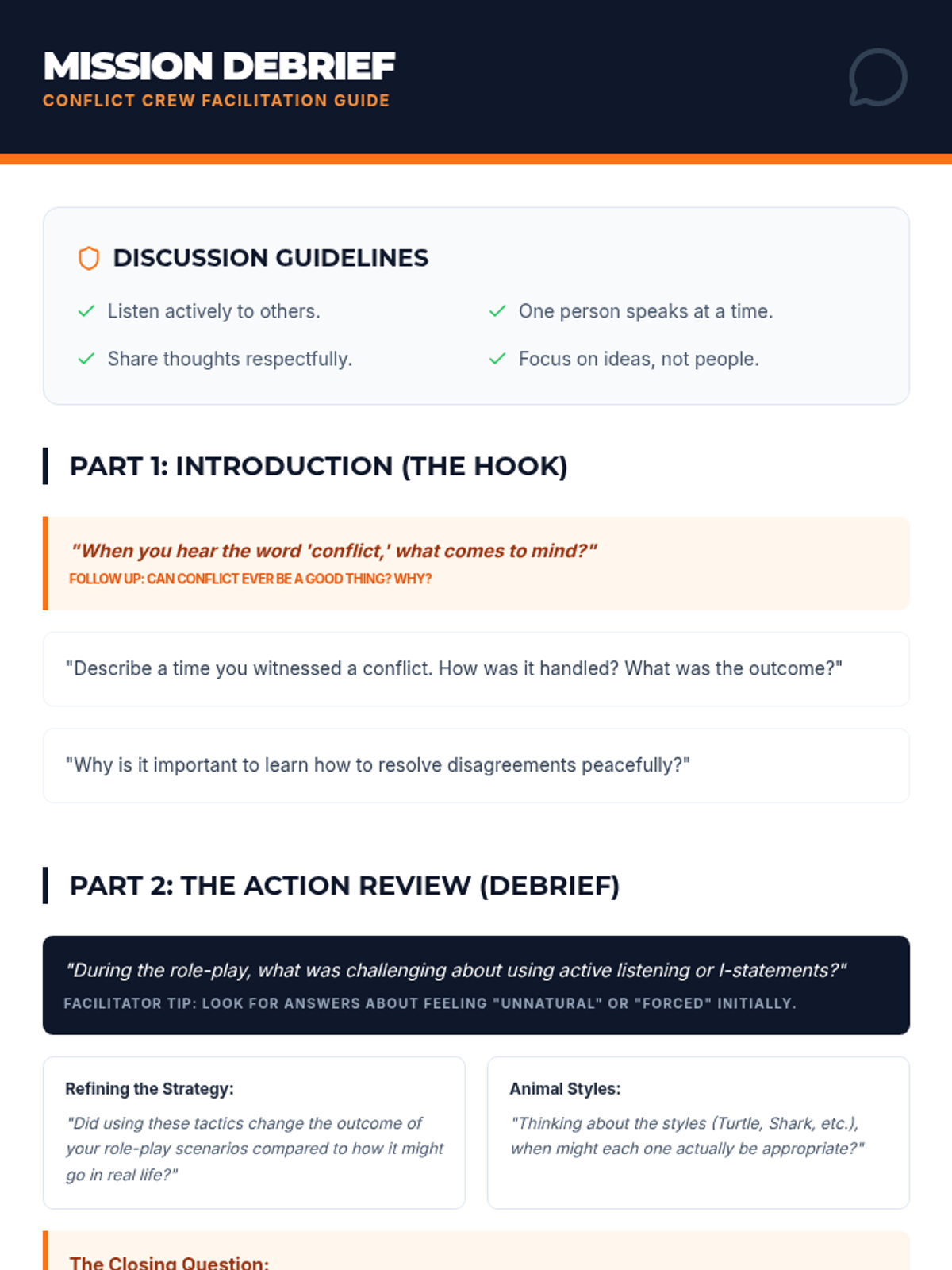
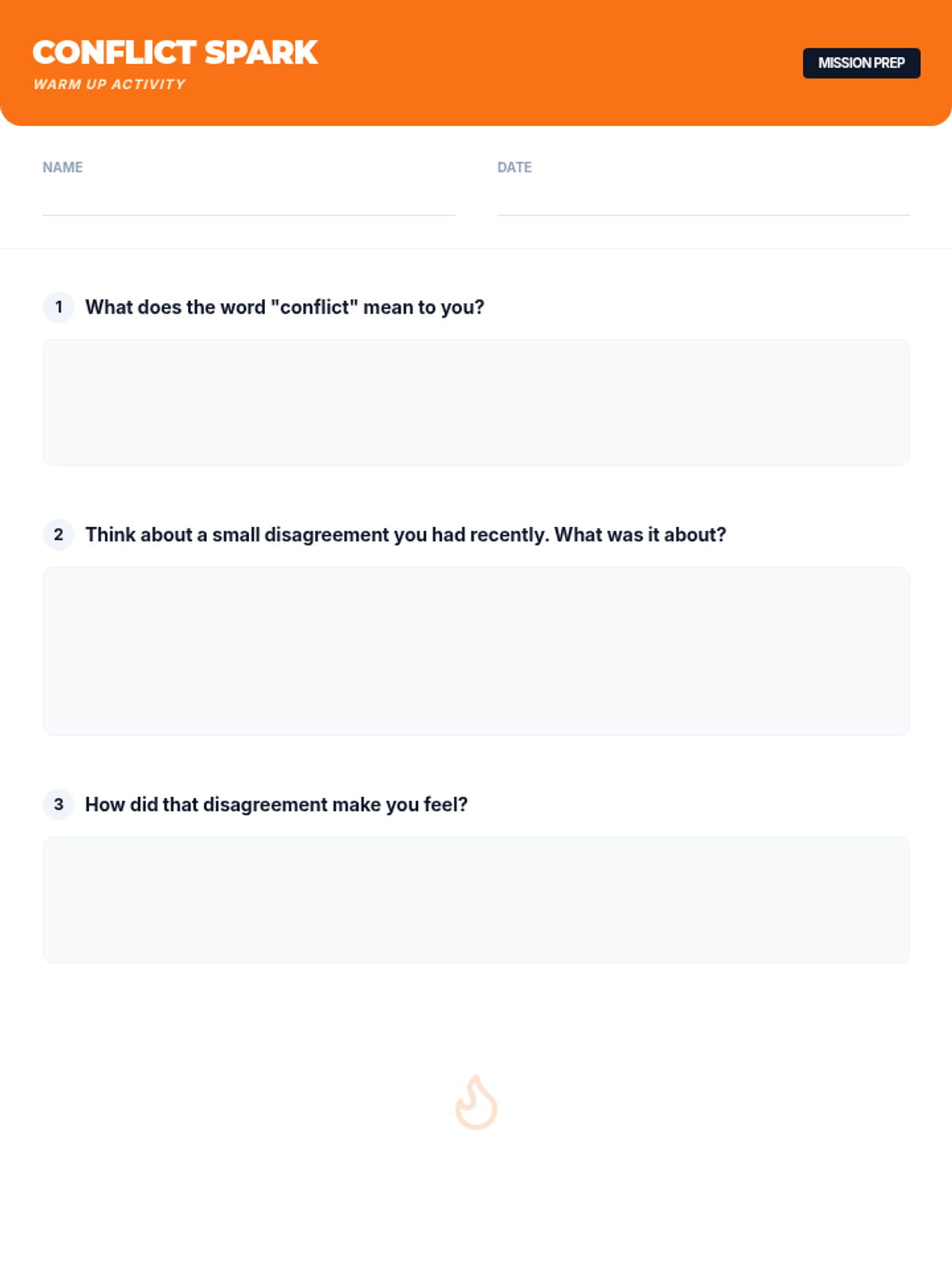
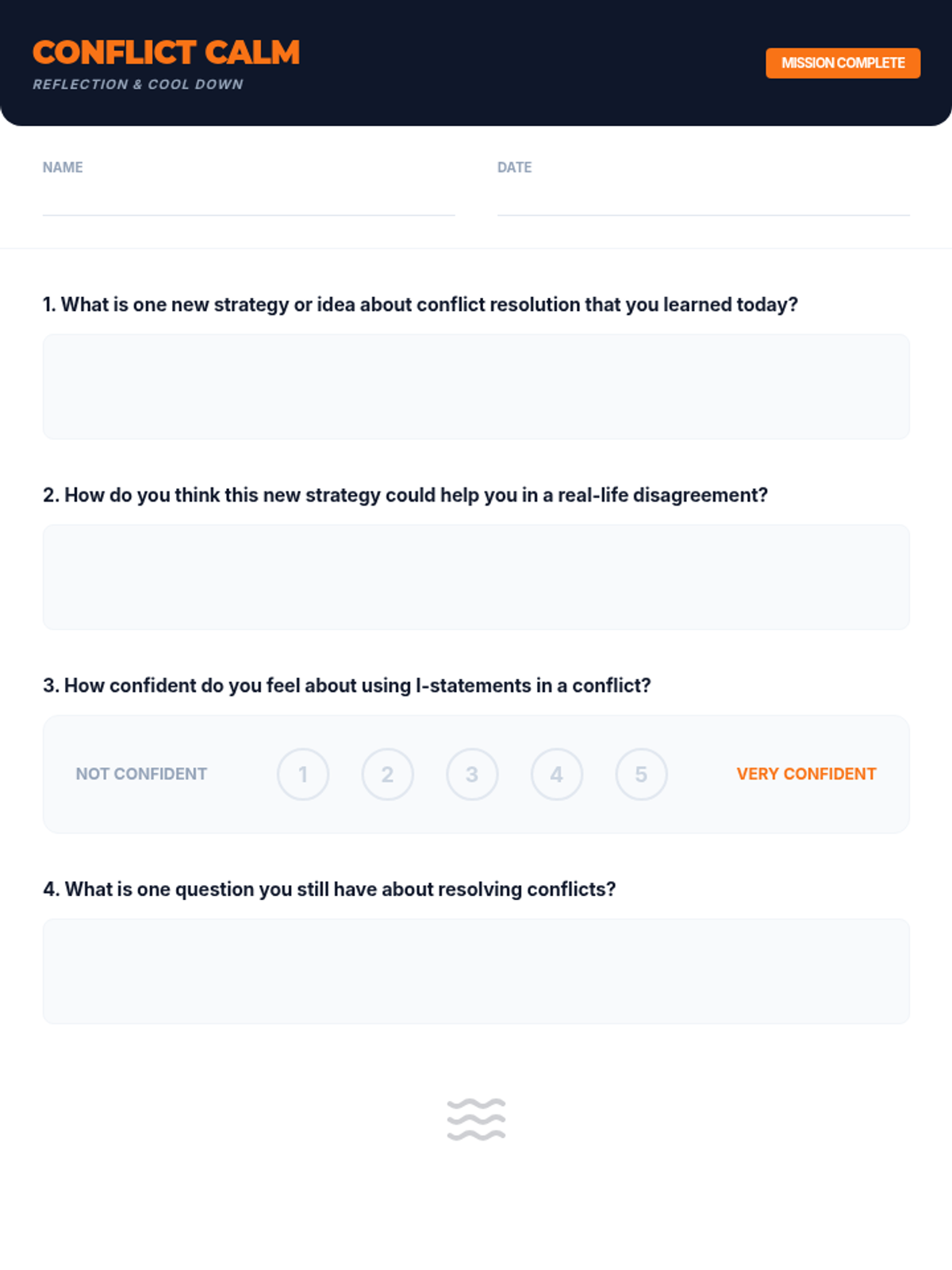
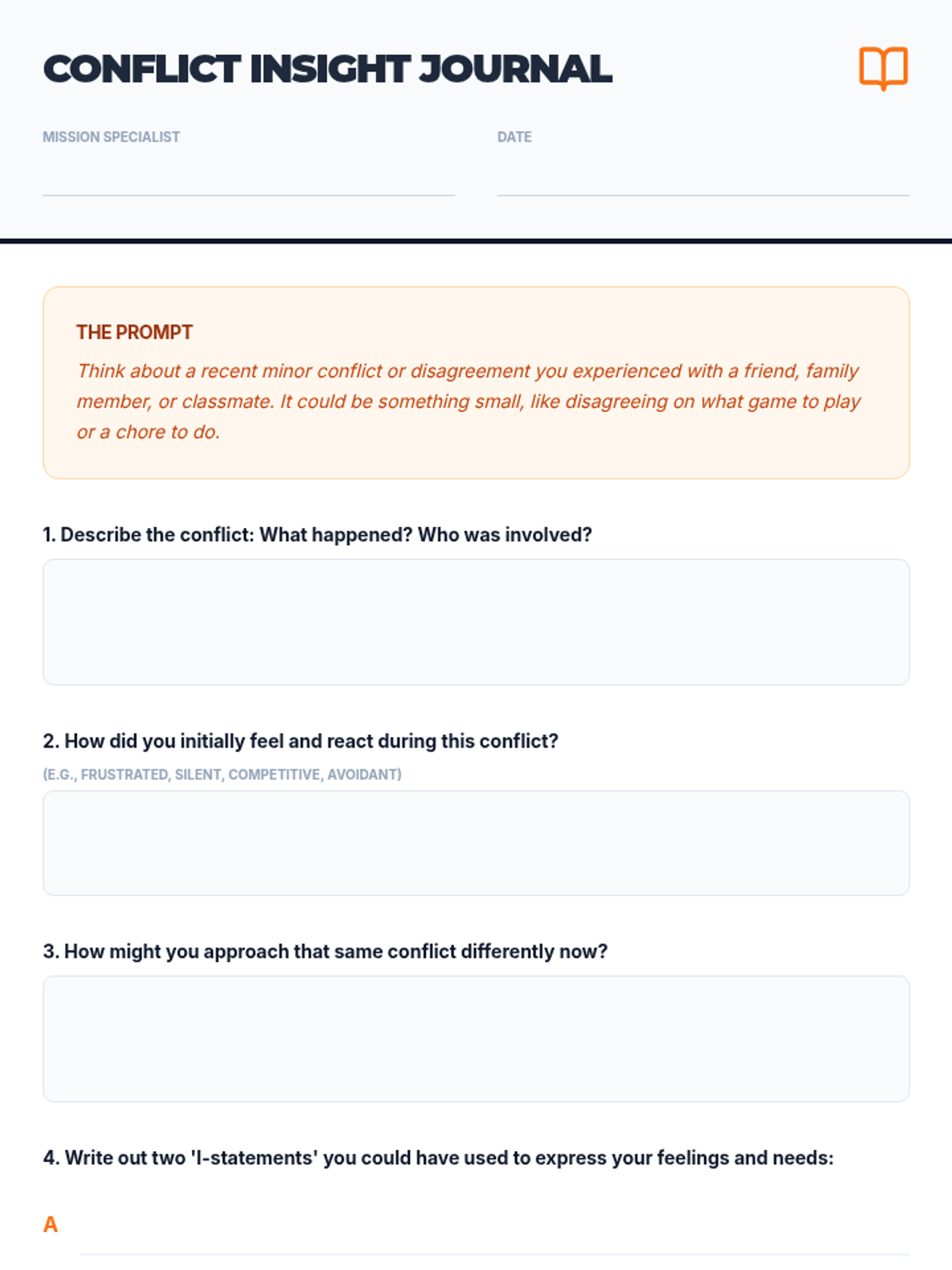
This 6-session series teaches middle school students essential conflict resolution skills, helping them navigate disagreements peacefully and build stronger relationships. Each session is designed for 30 minutes and is suitable for a whole-class setting, promoting a positive classroom environment.
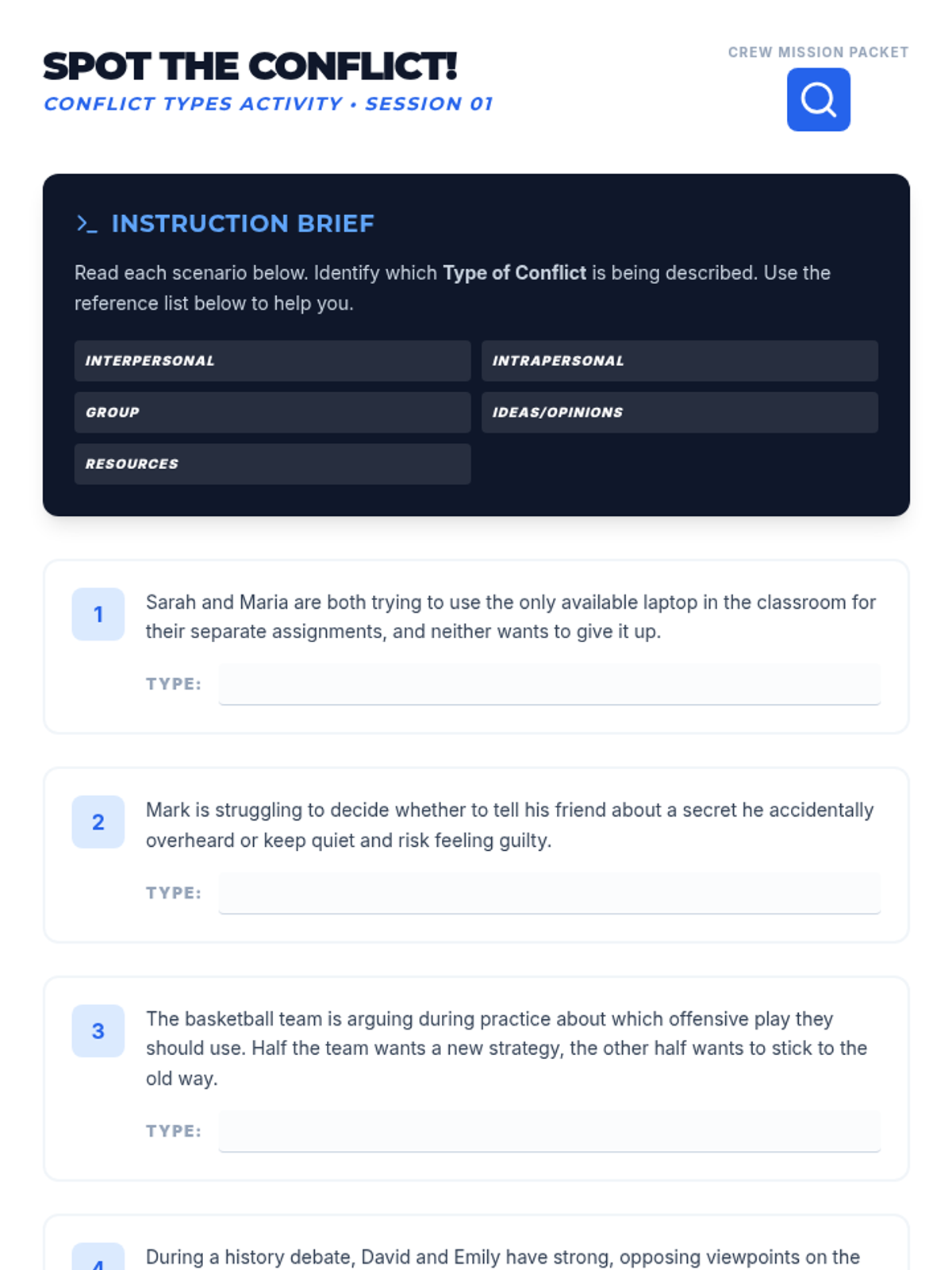
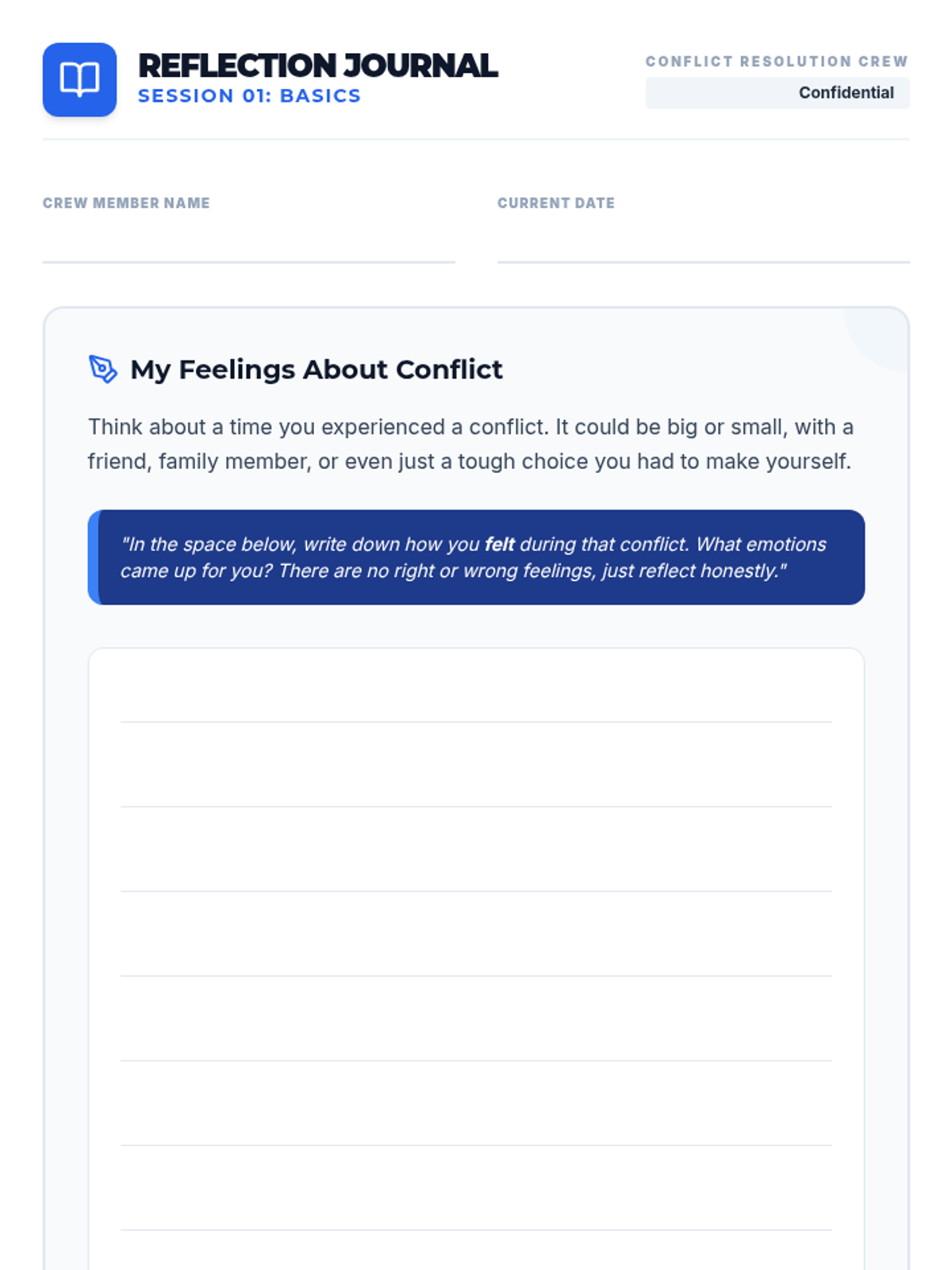
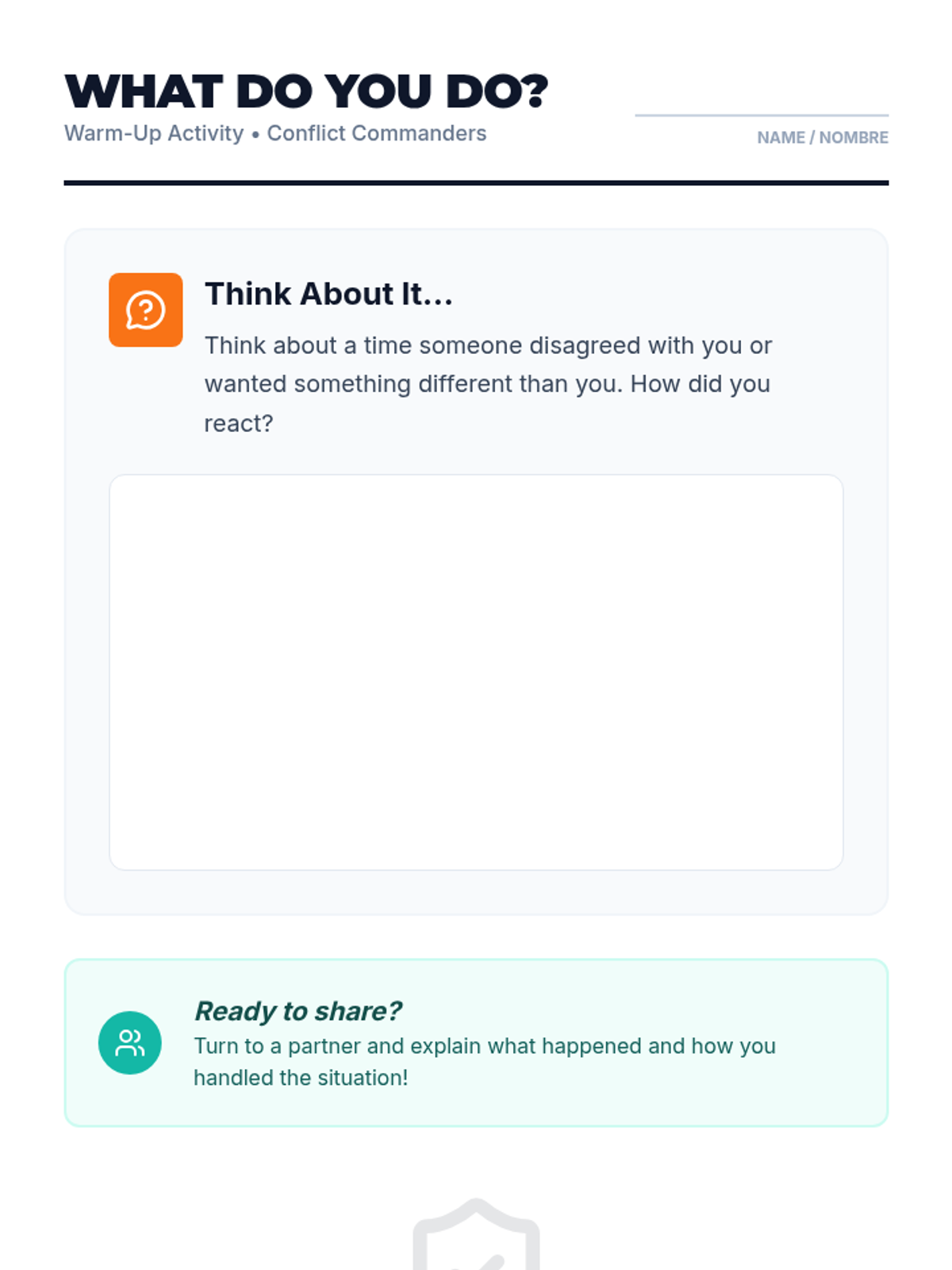
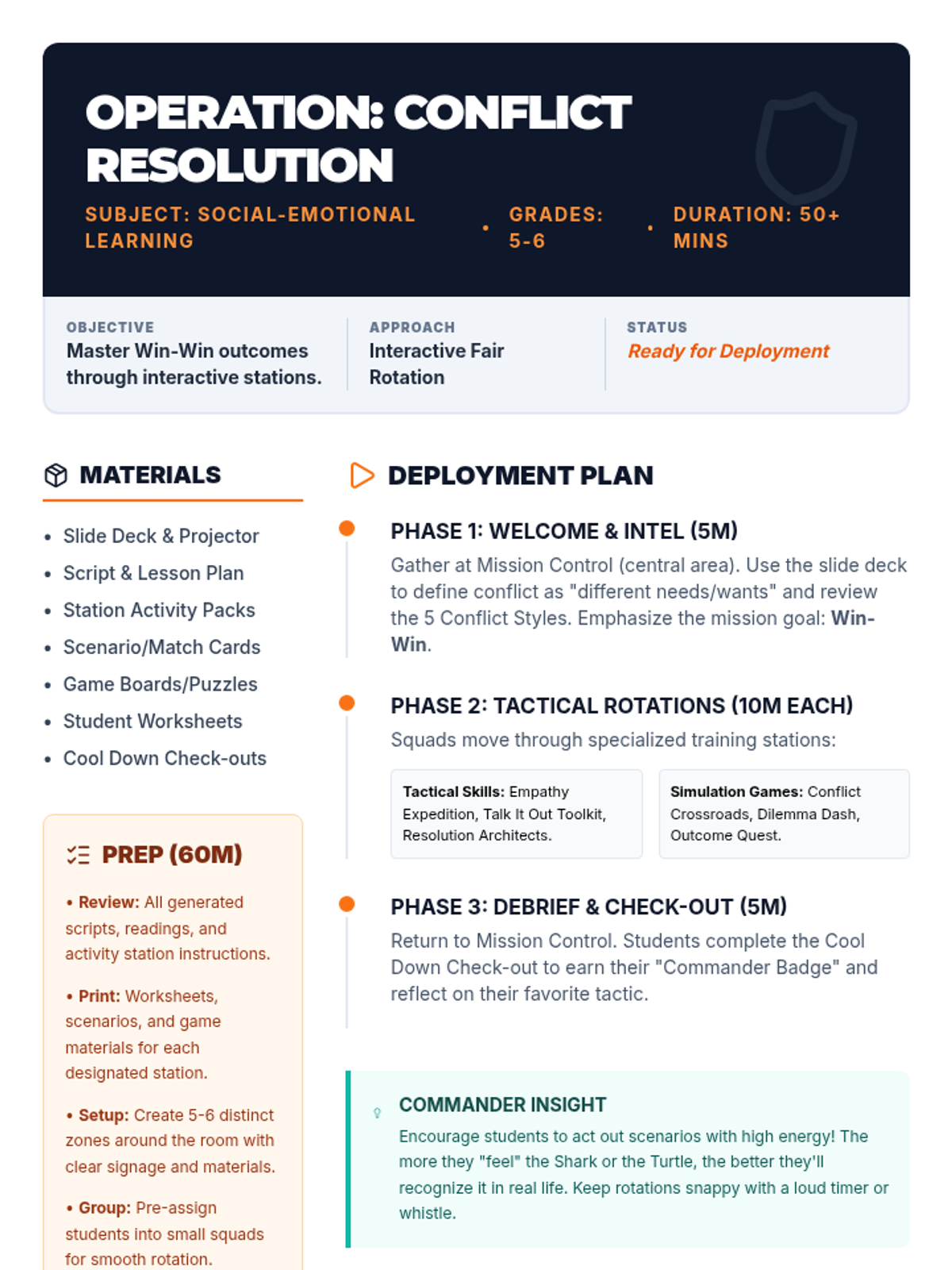
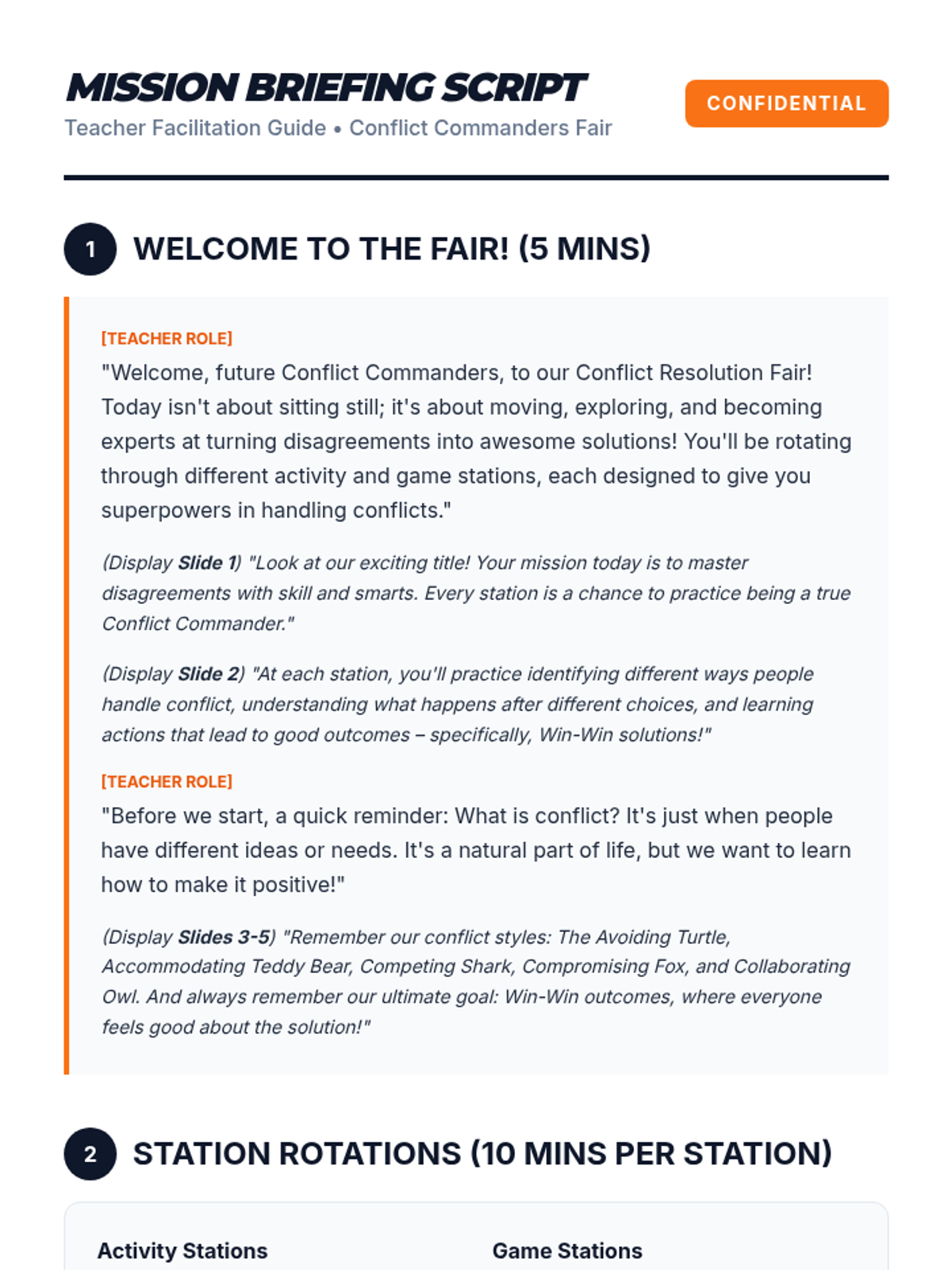
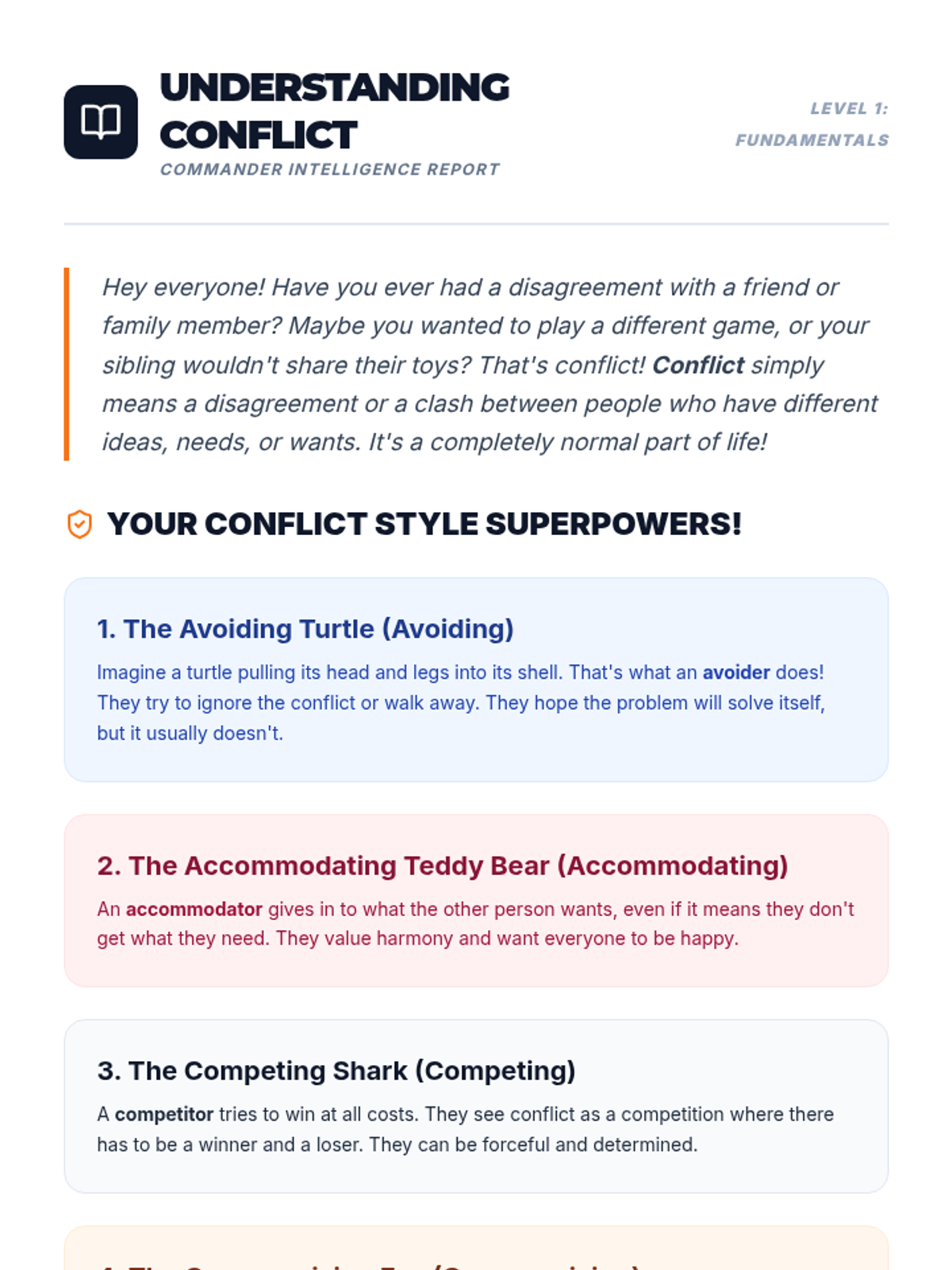
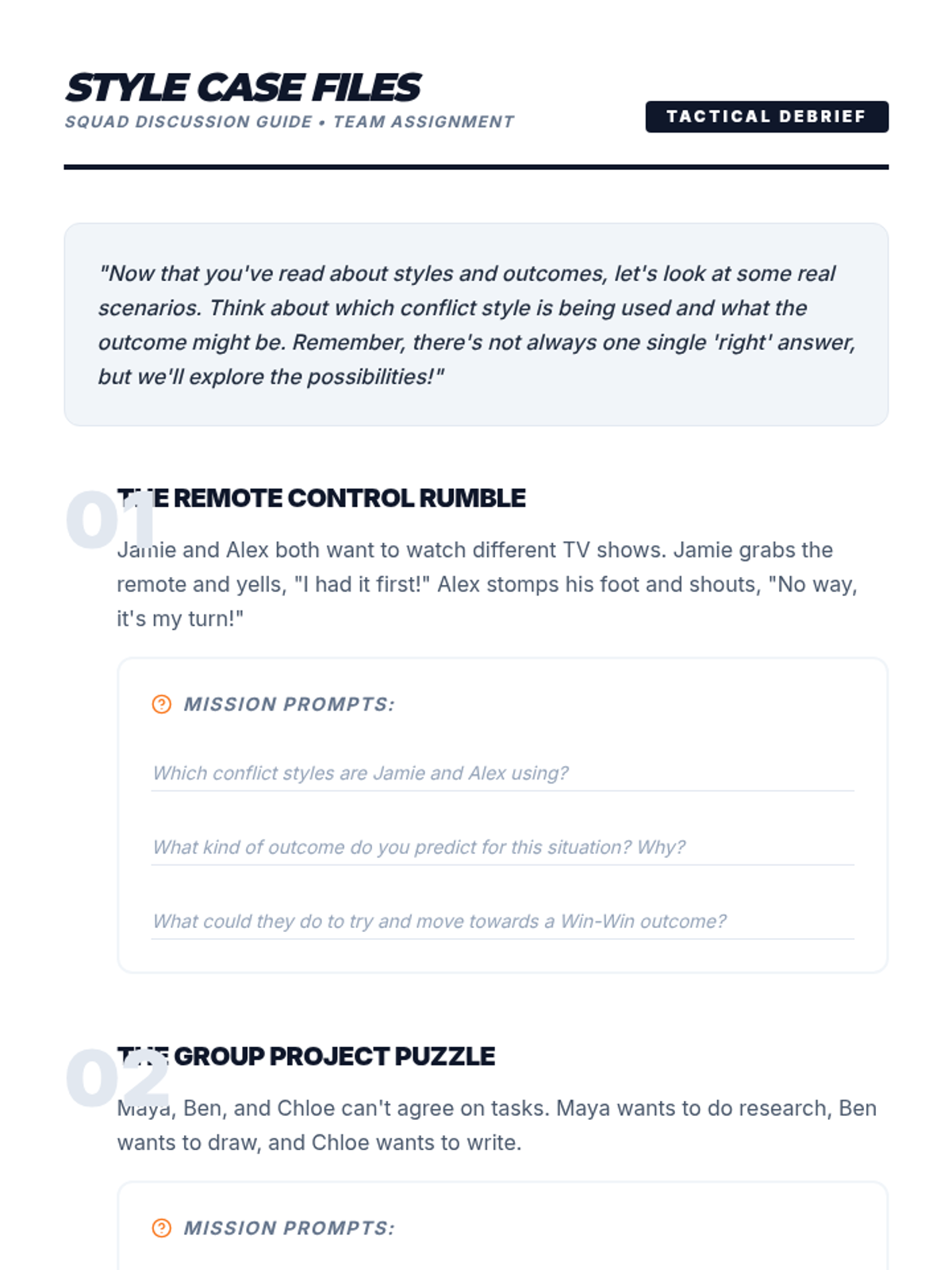
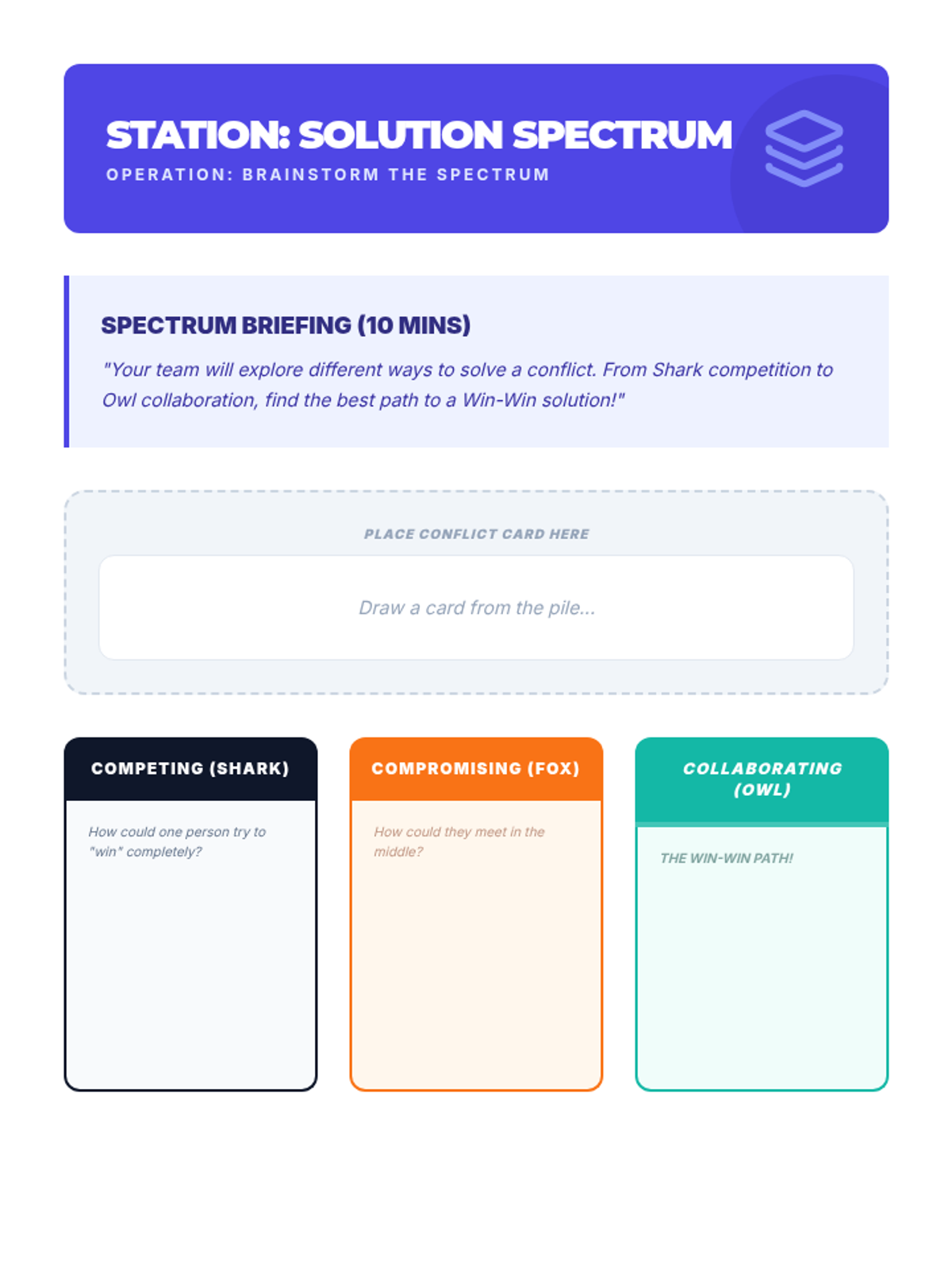
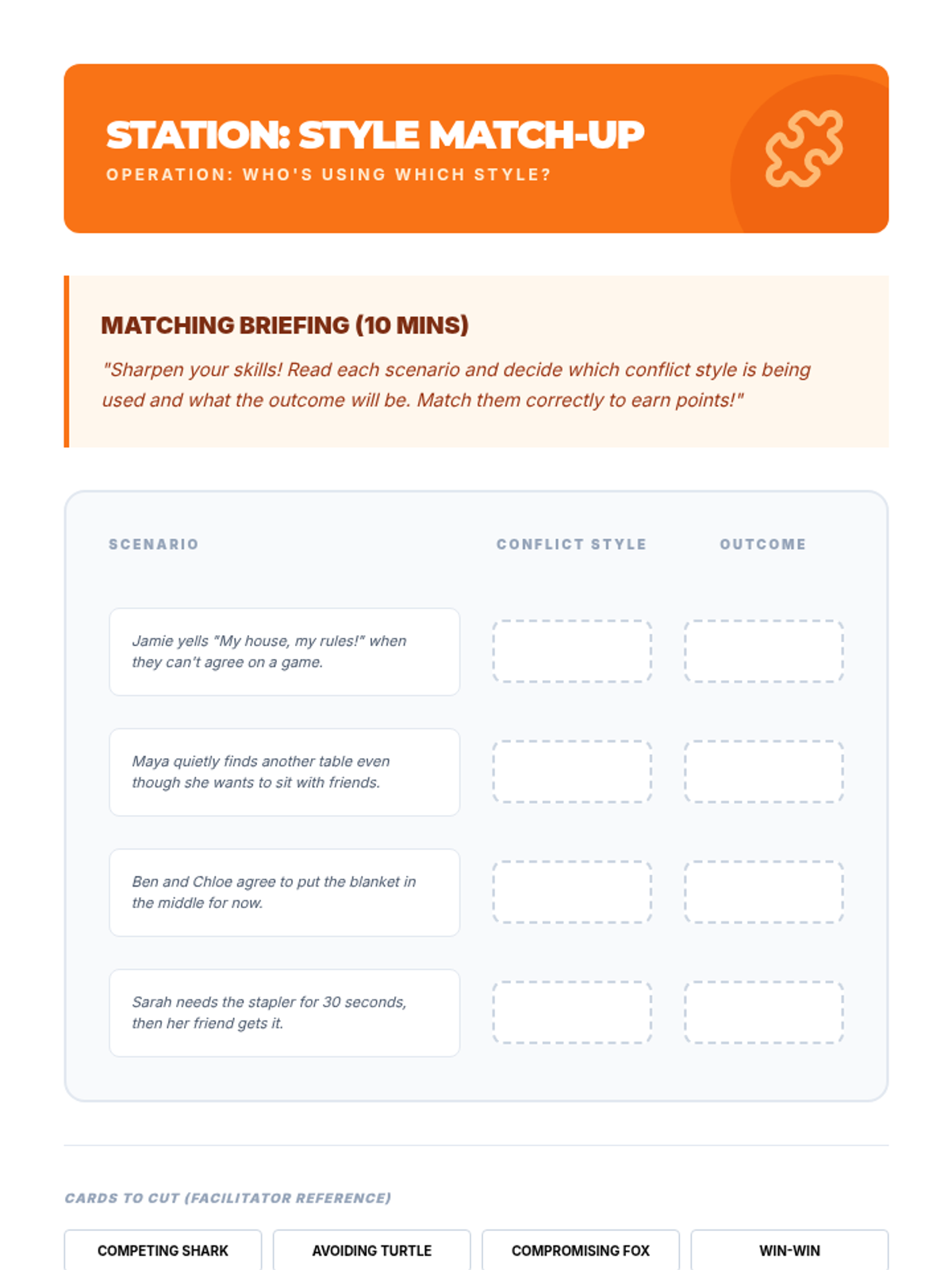
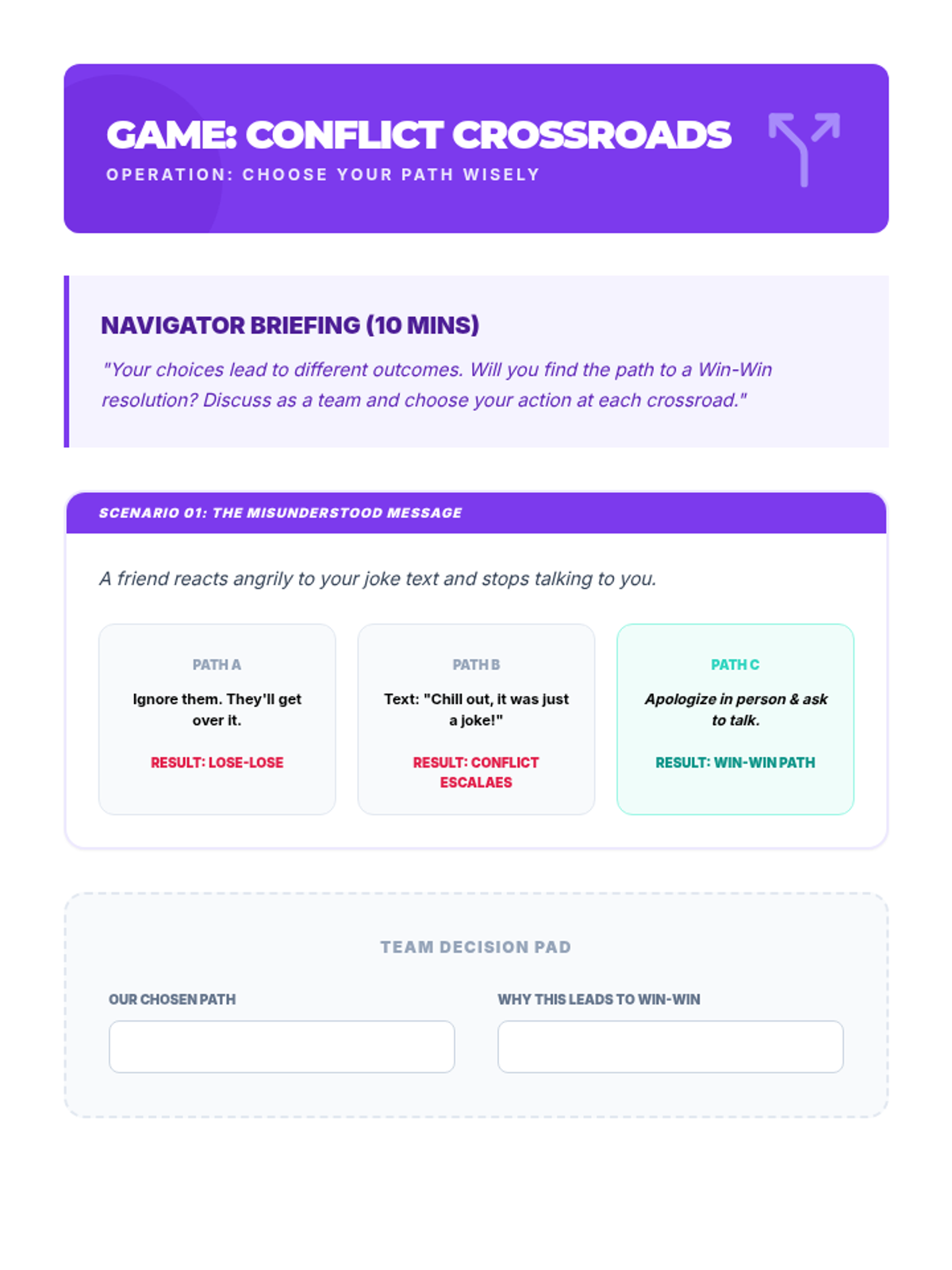
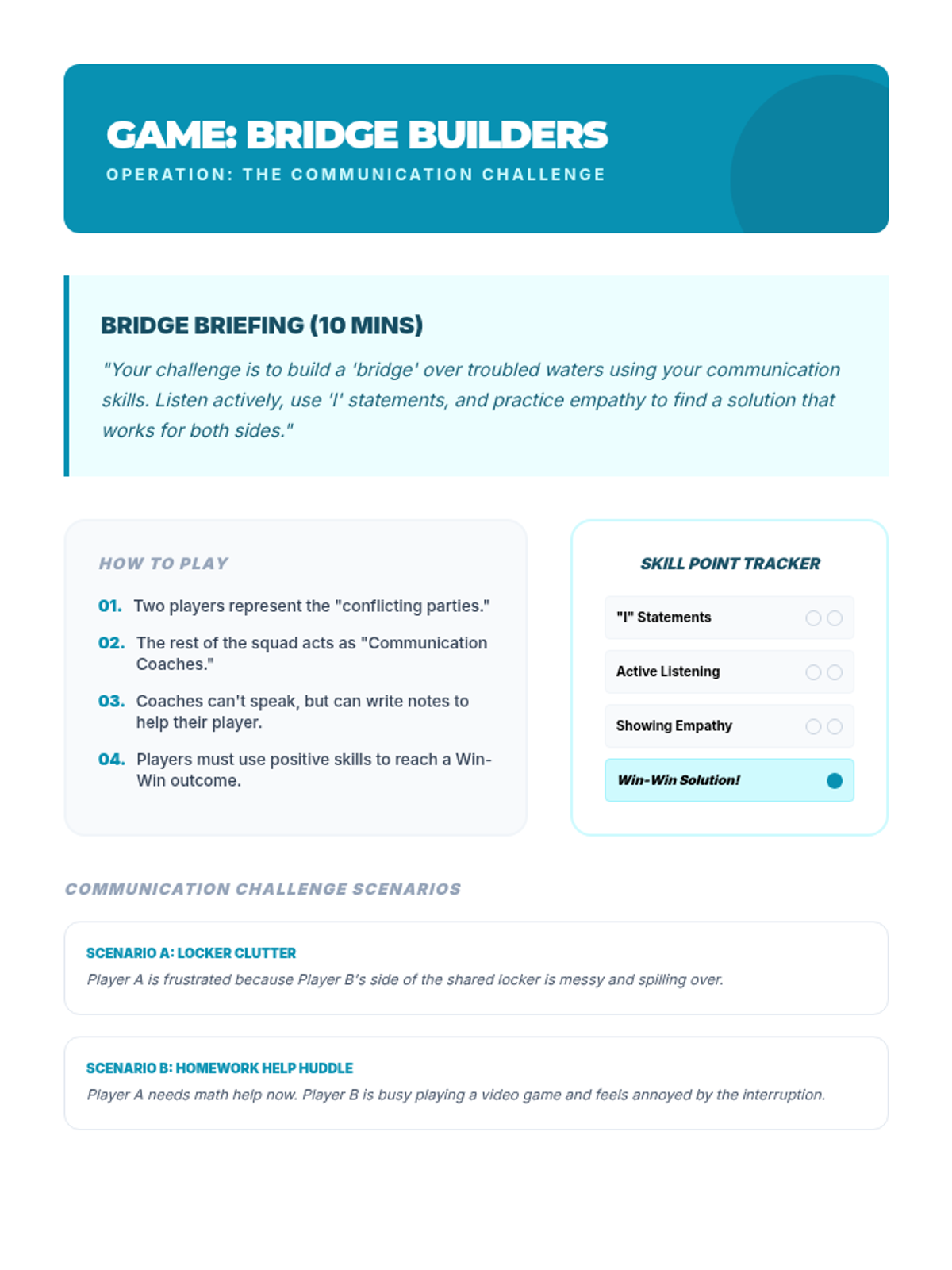
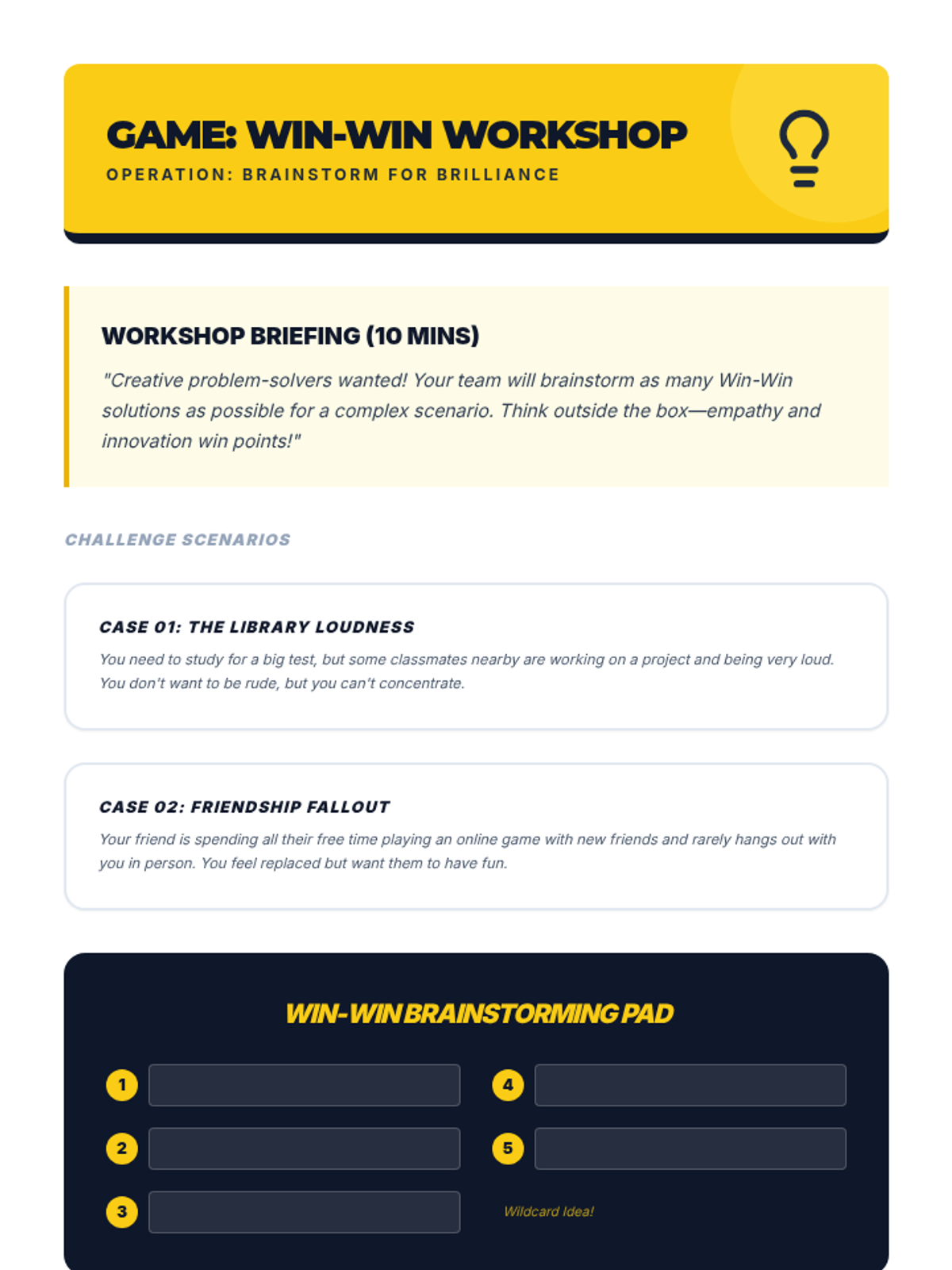
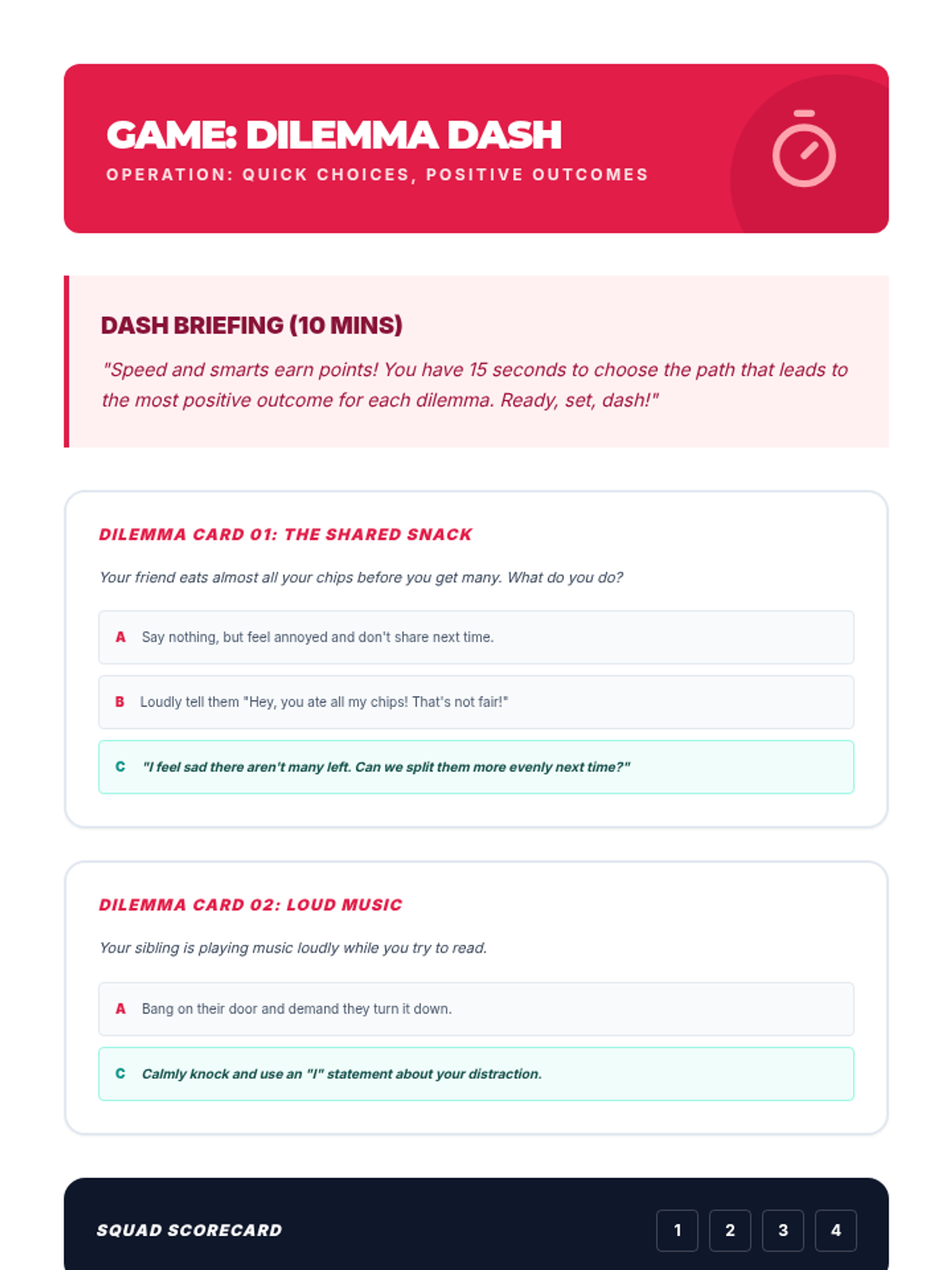
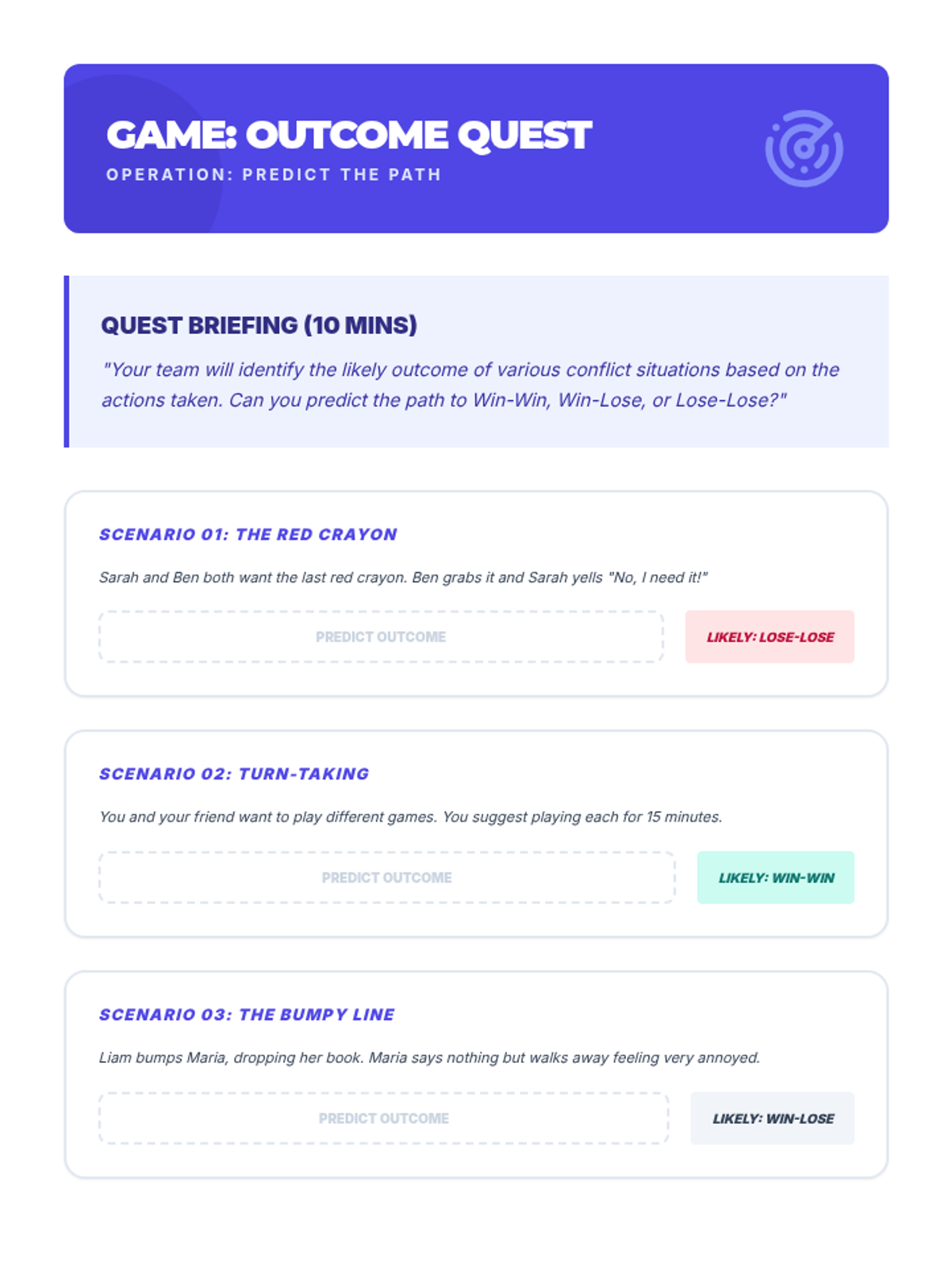
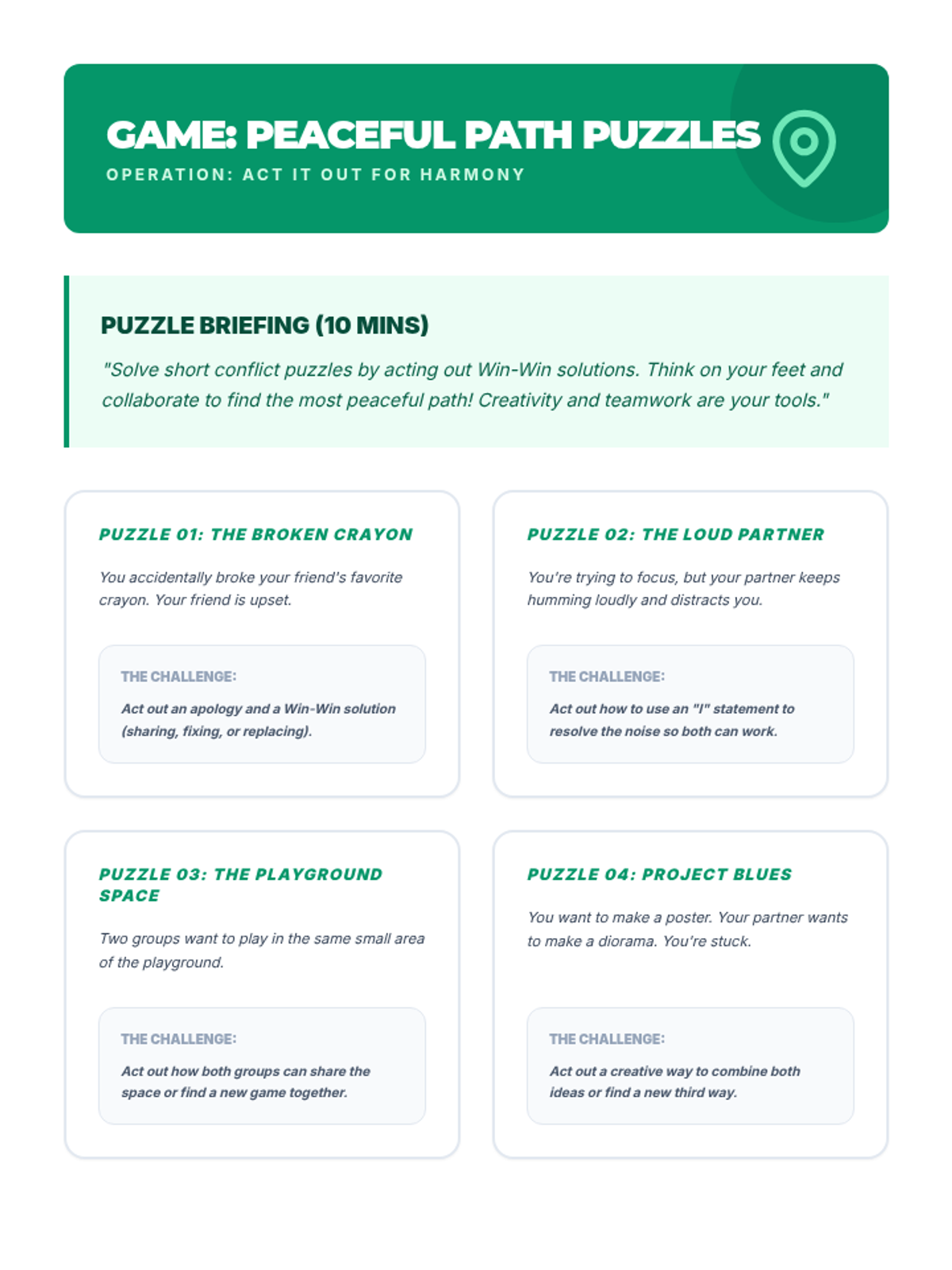
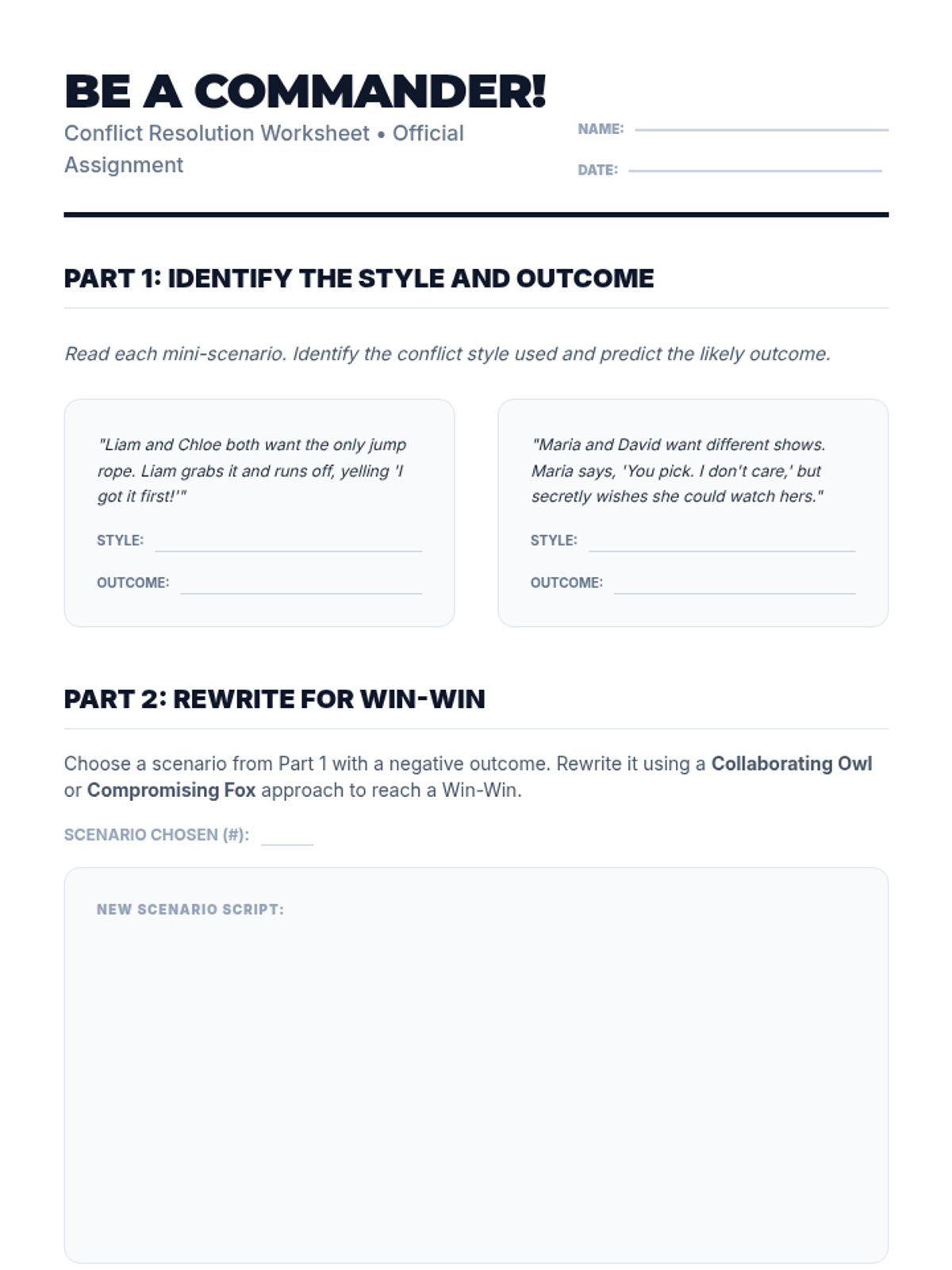
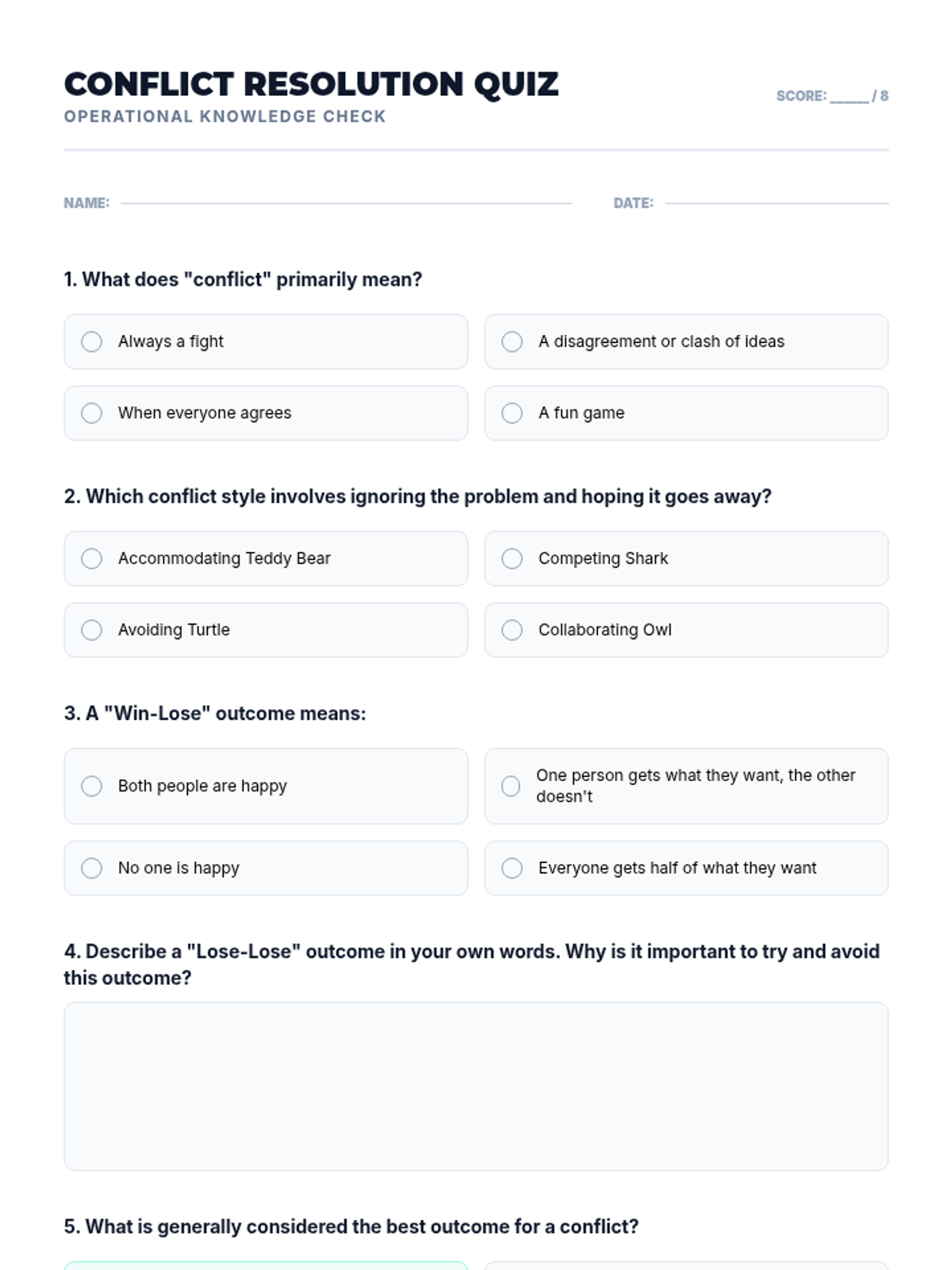
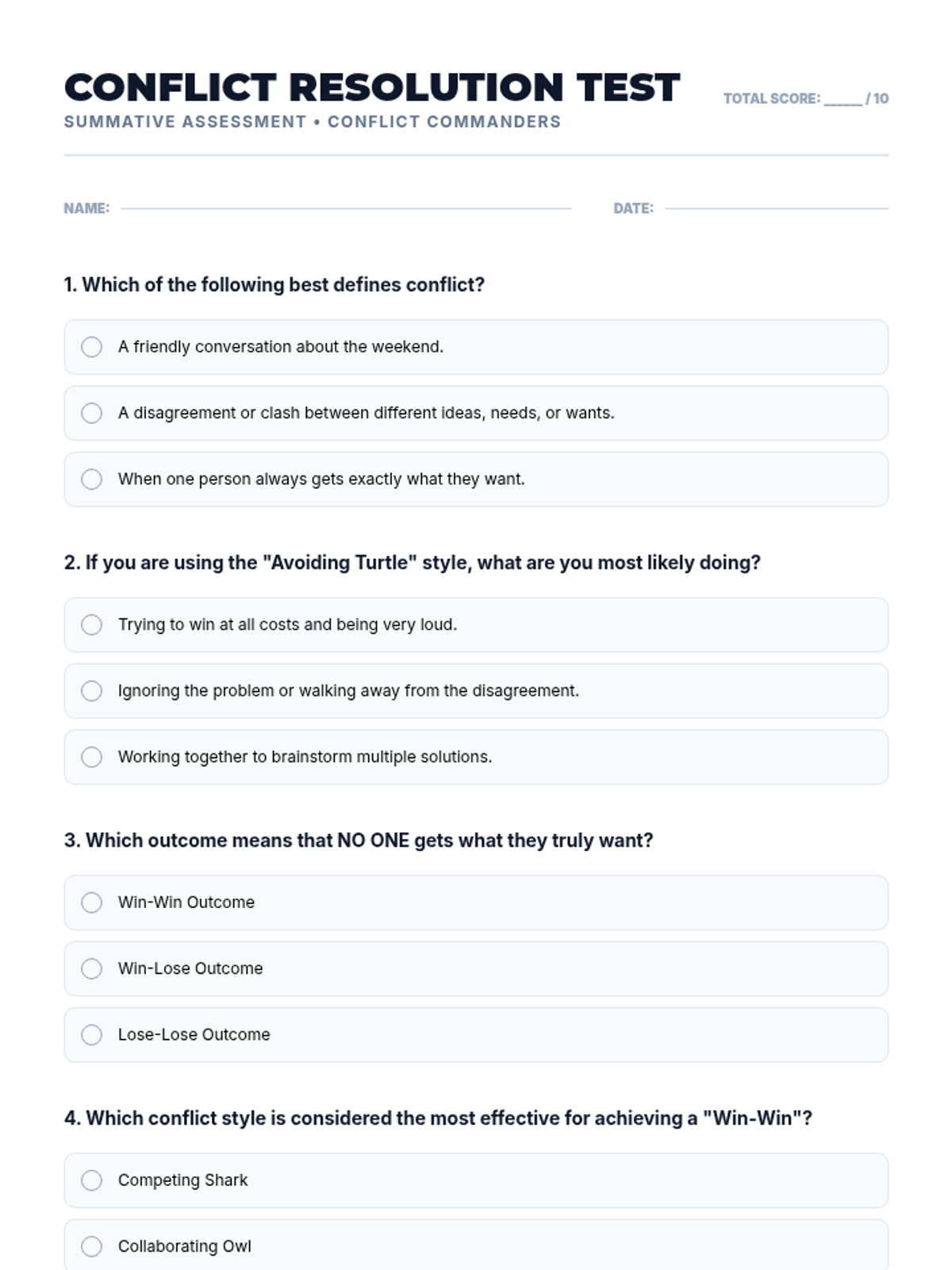
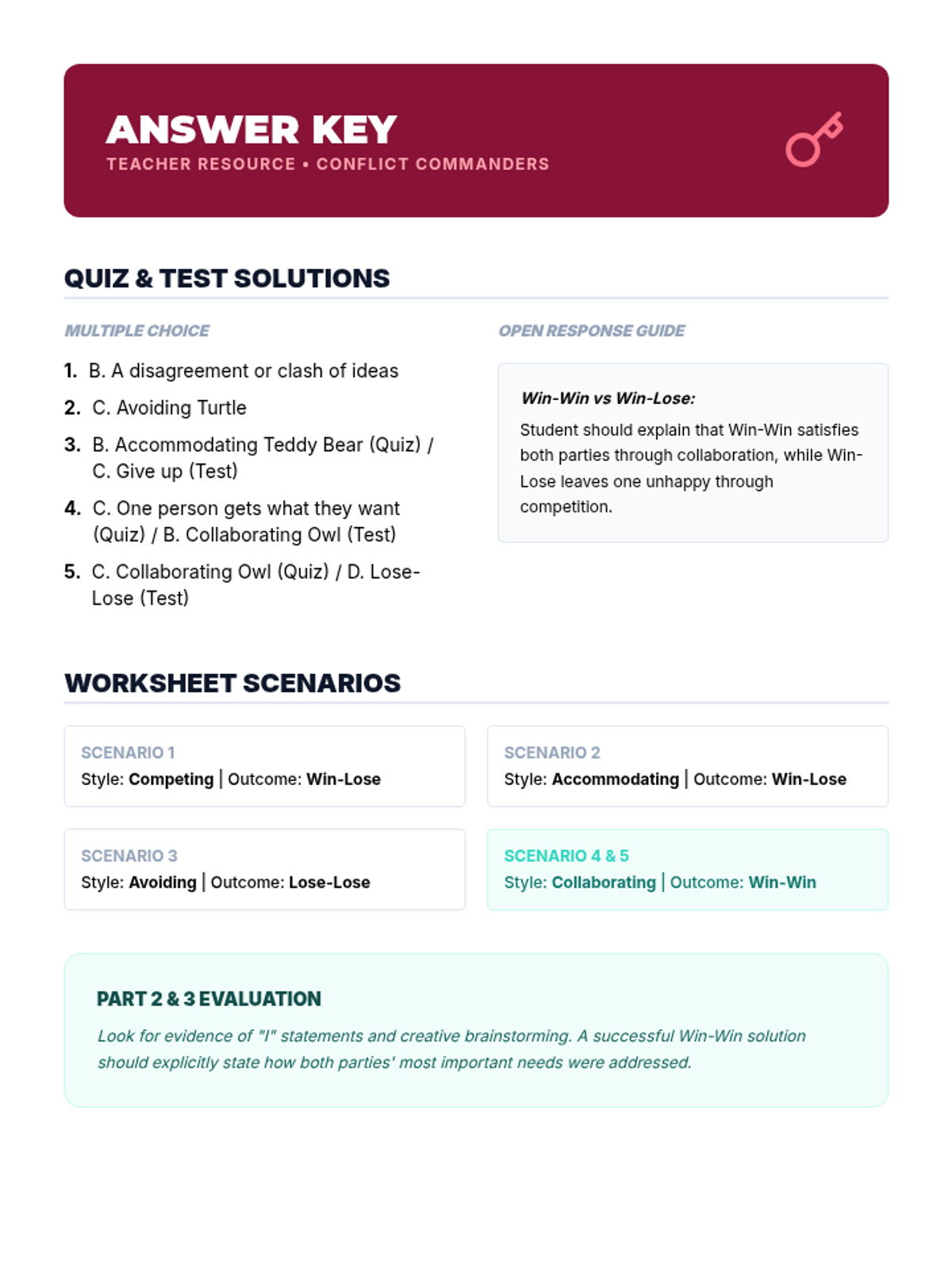
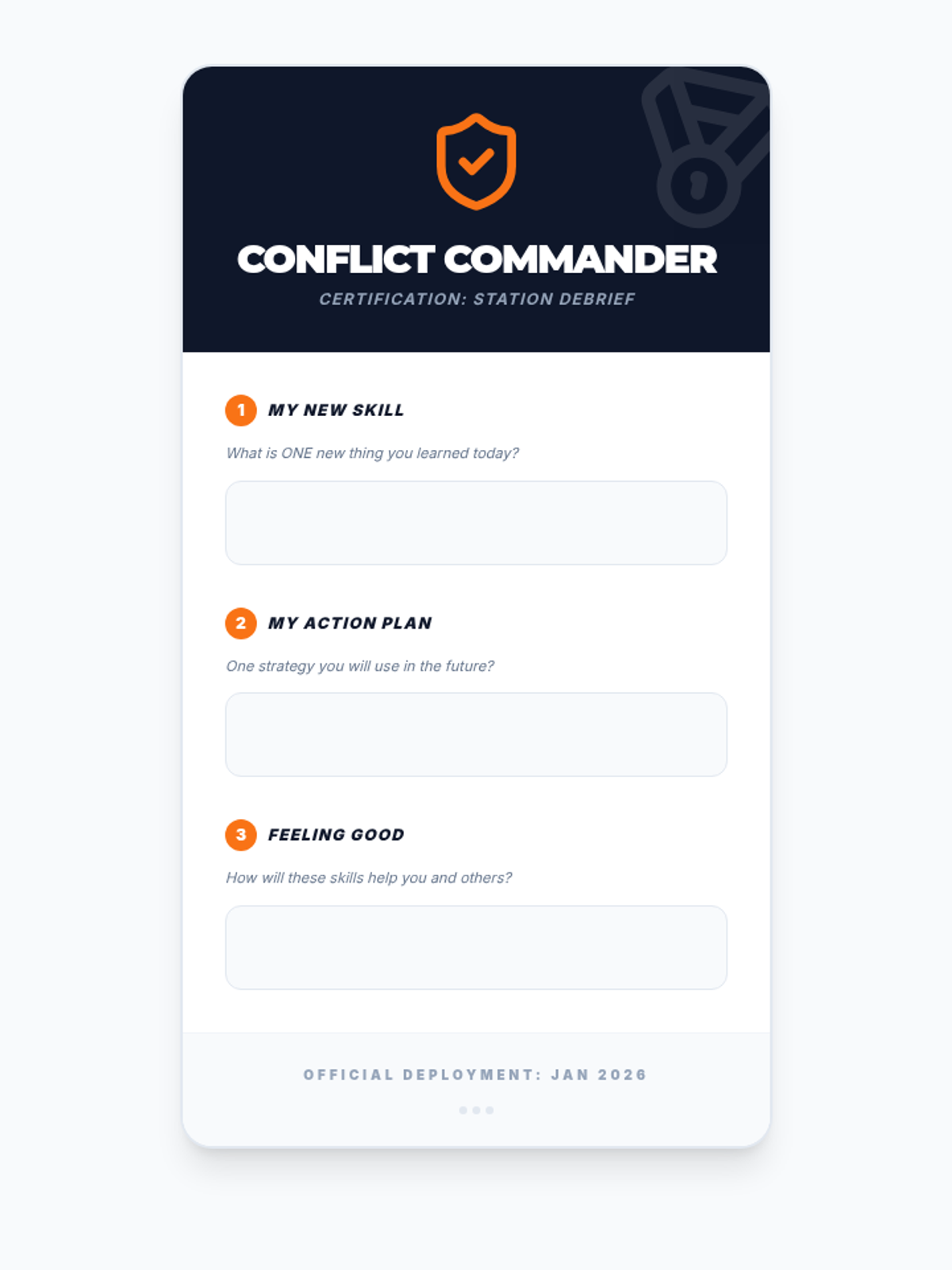
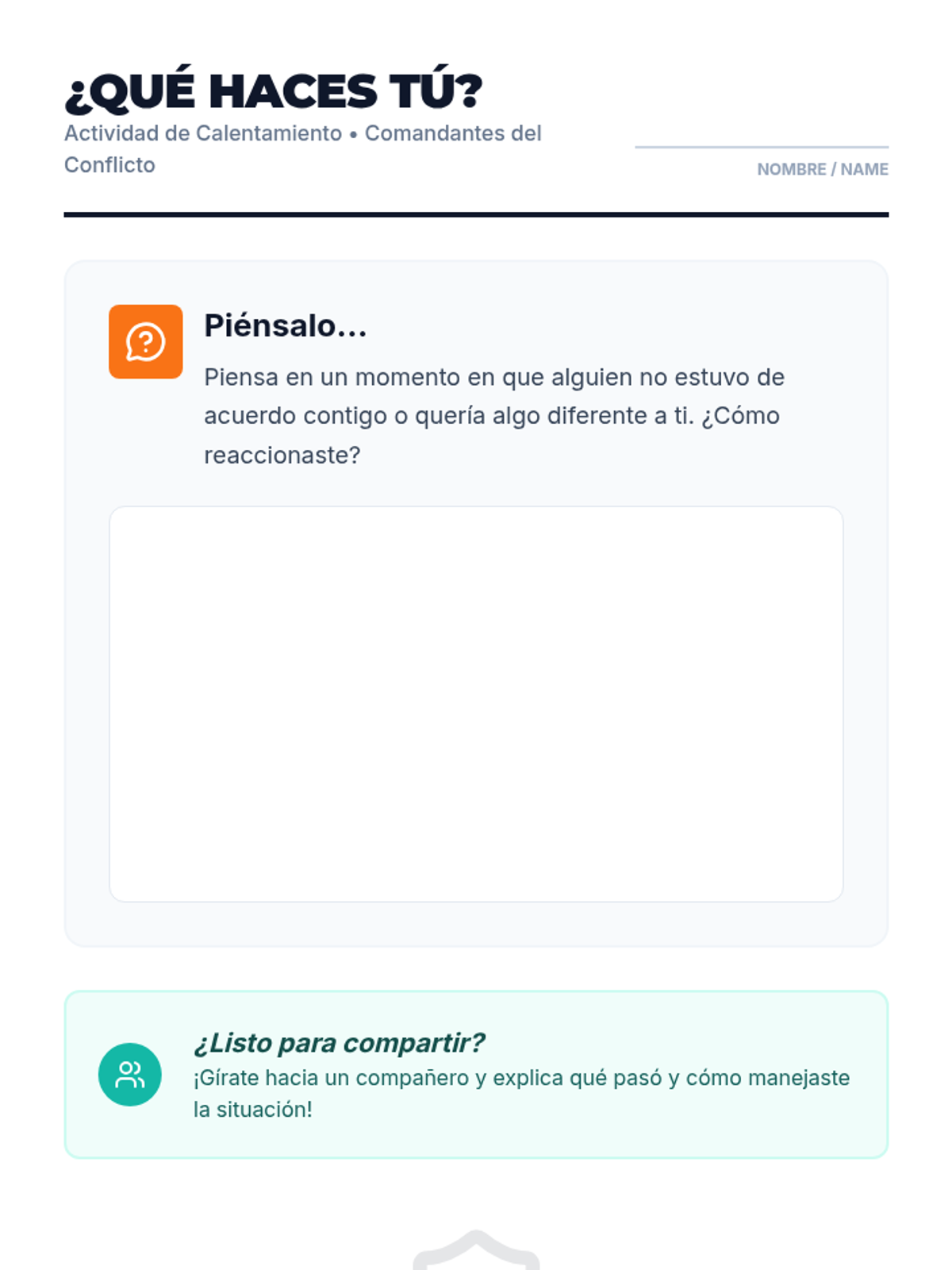
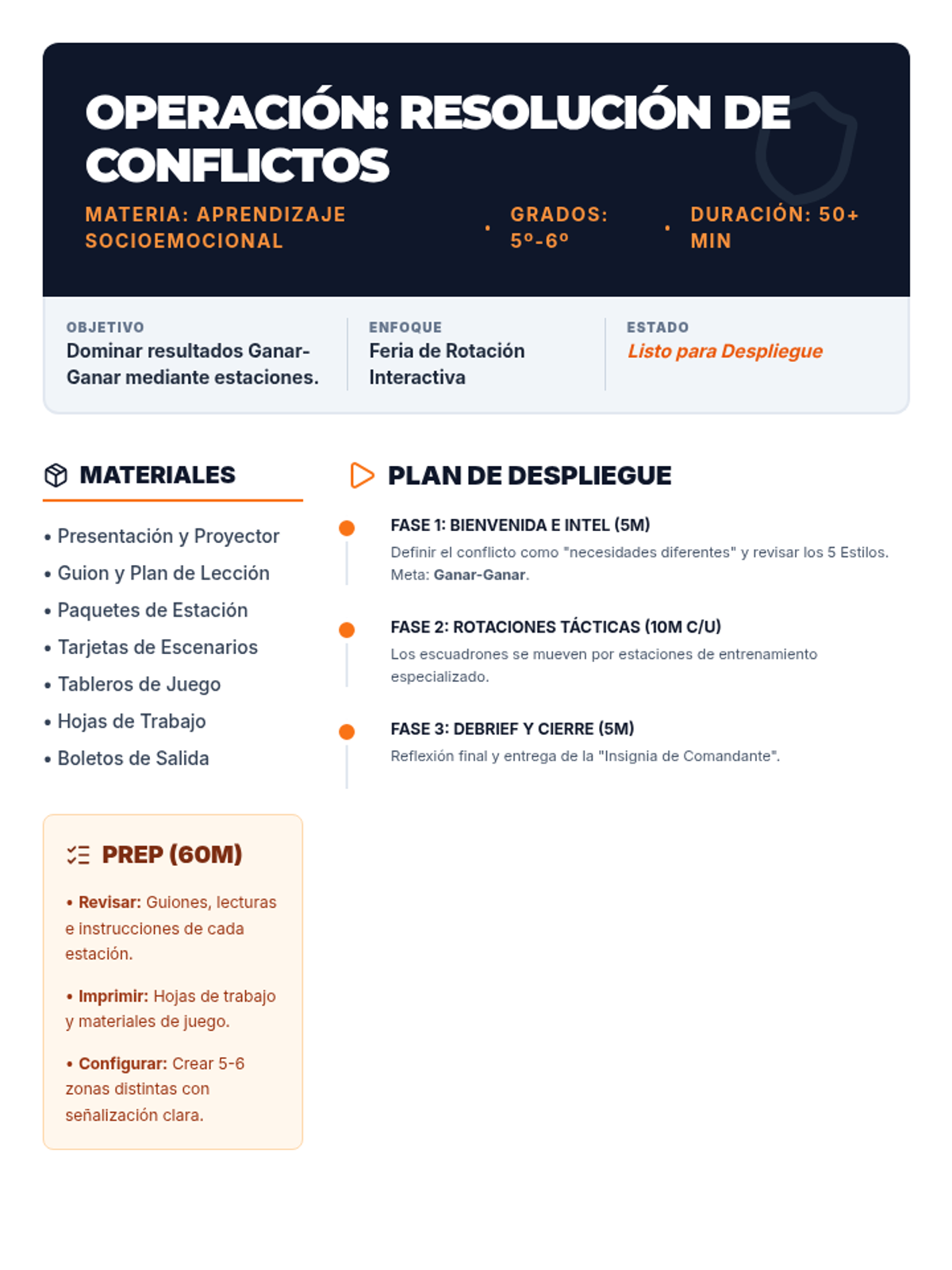
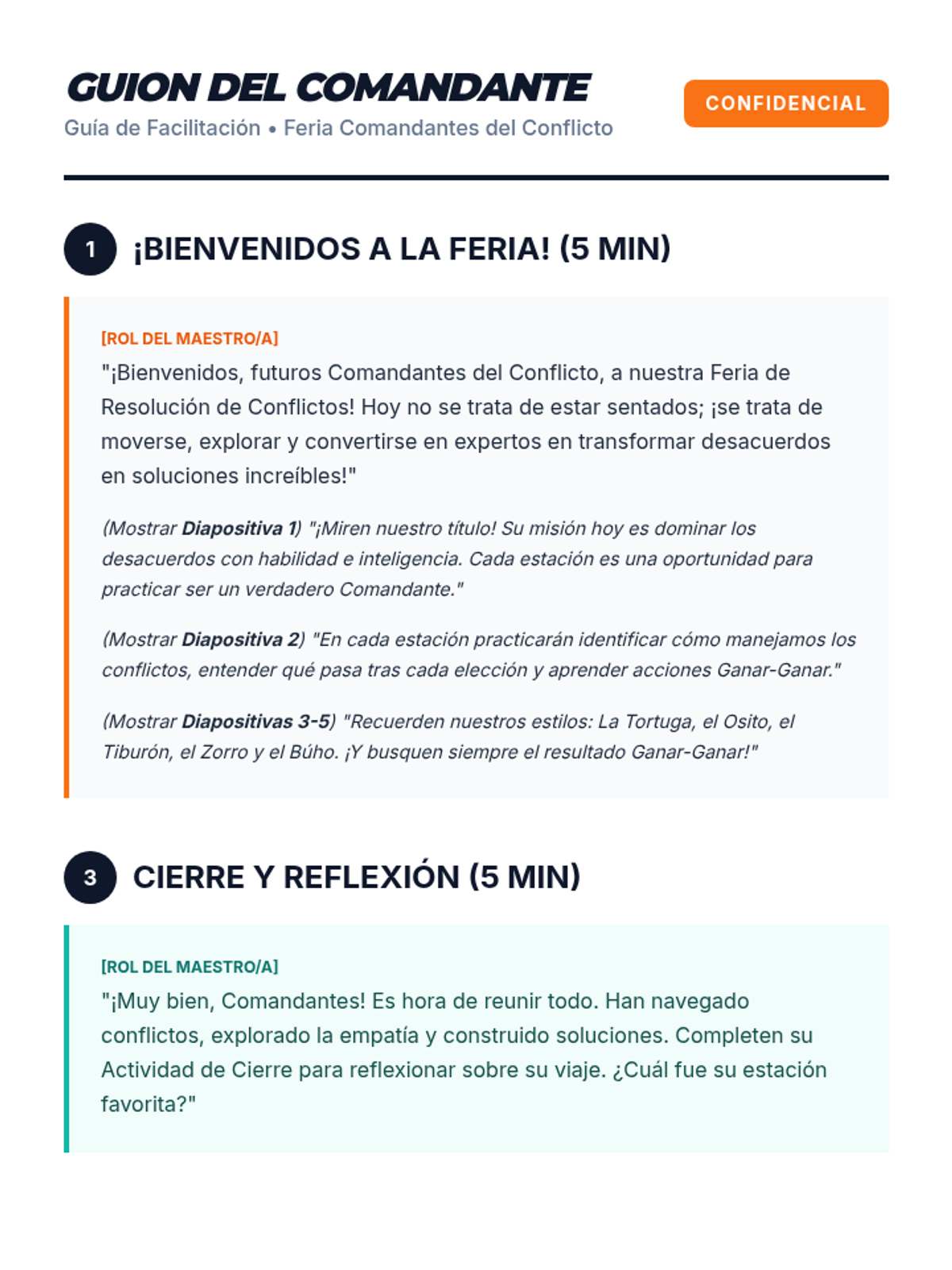
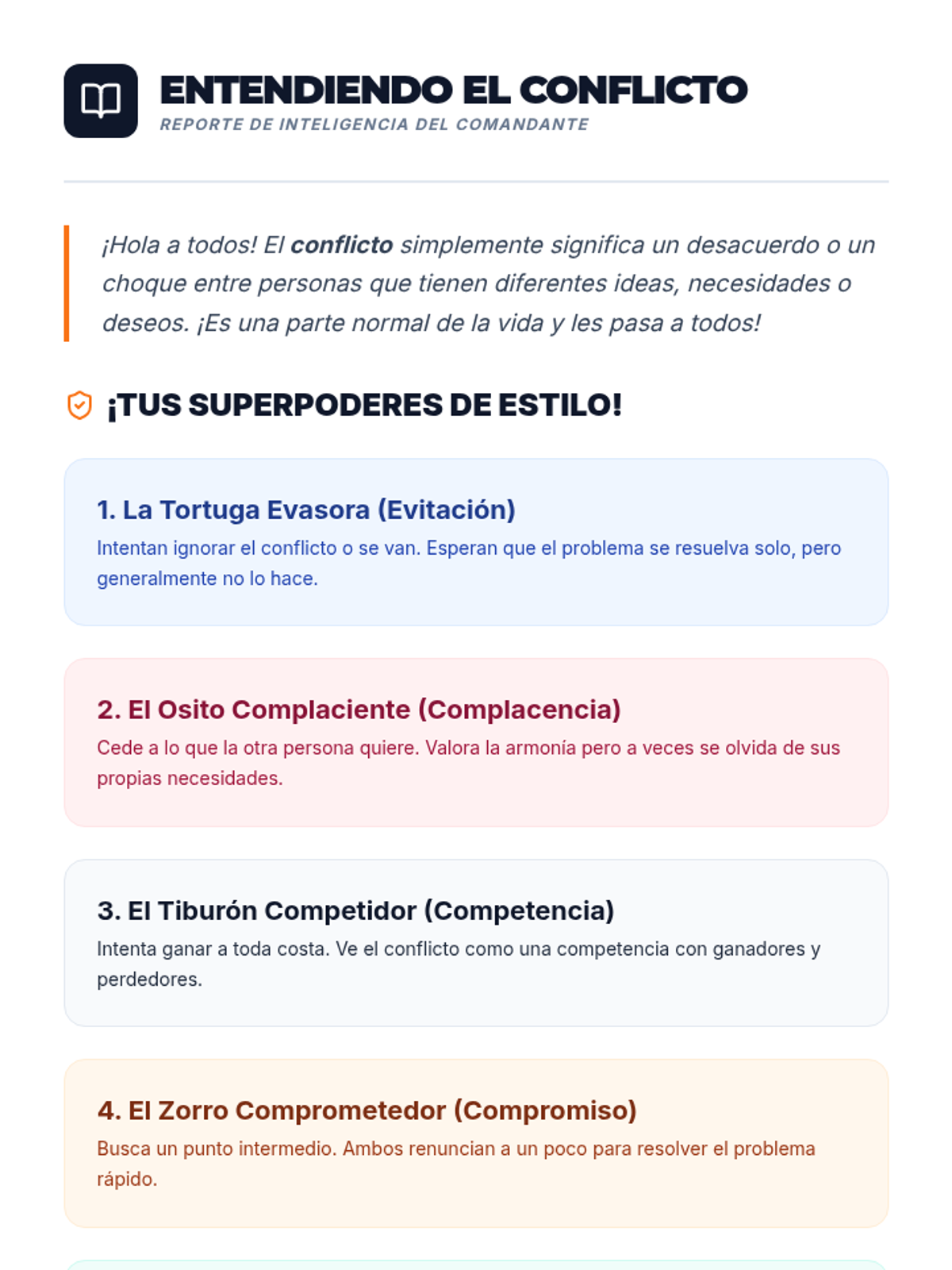
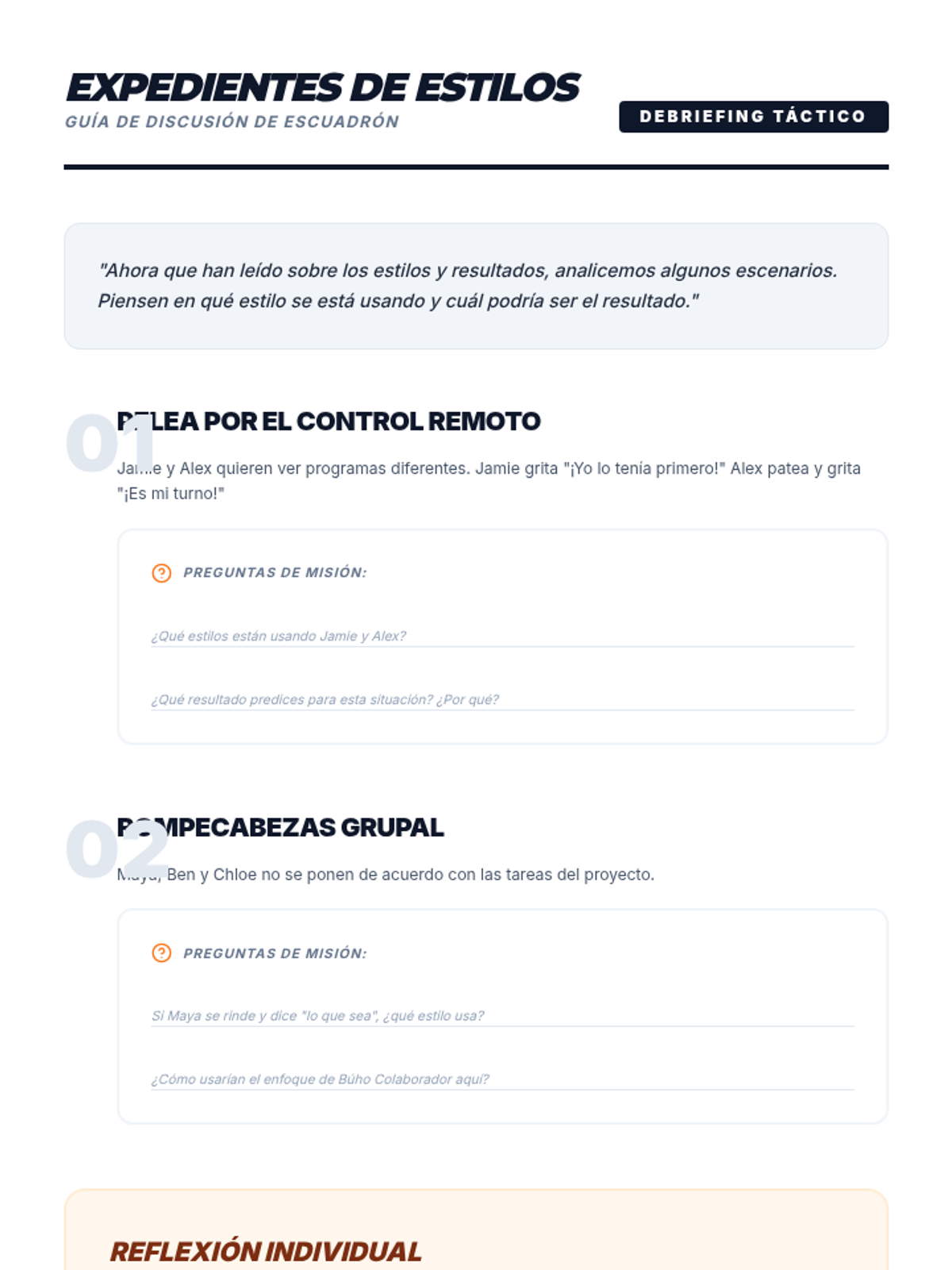
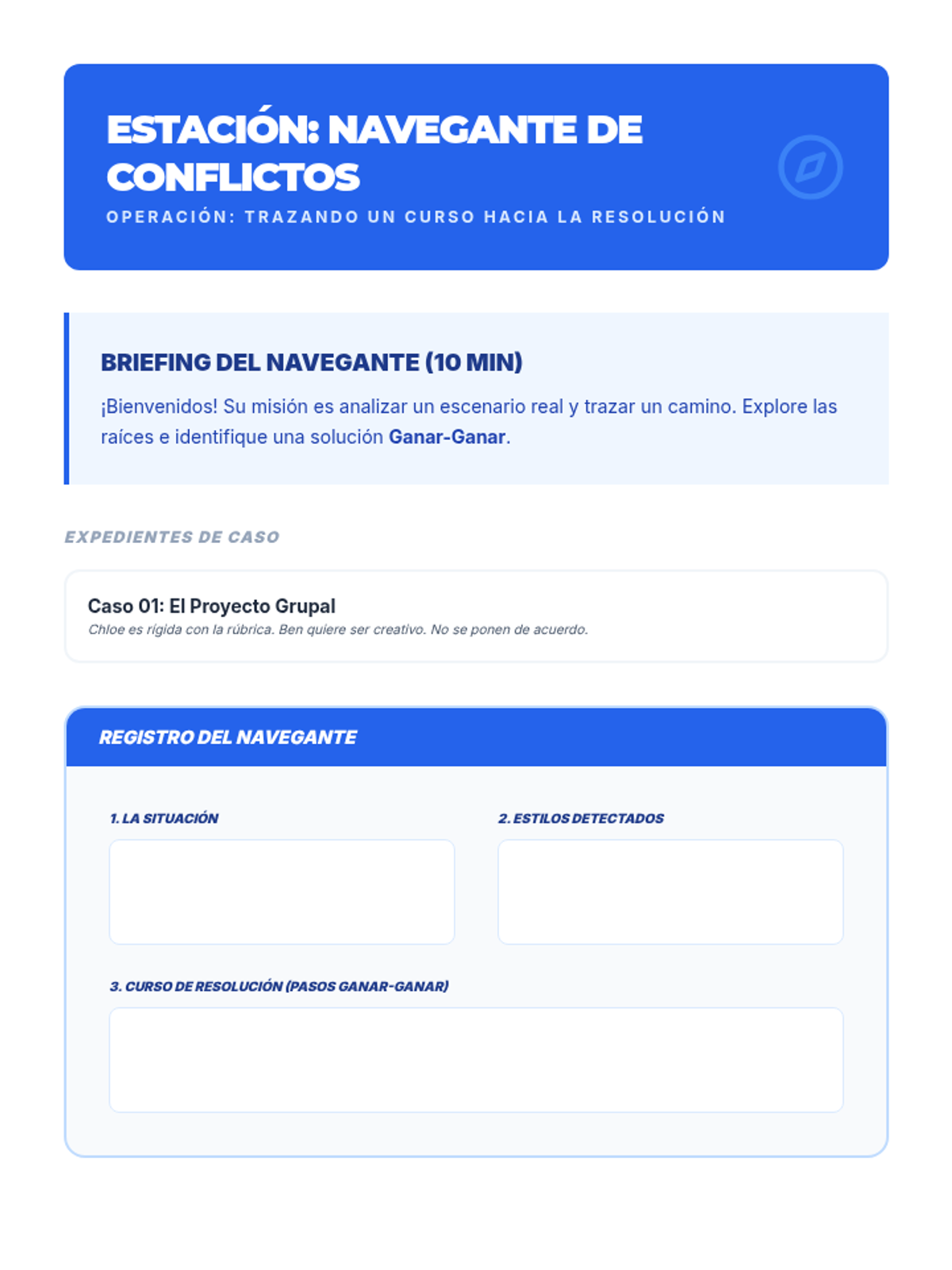
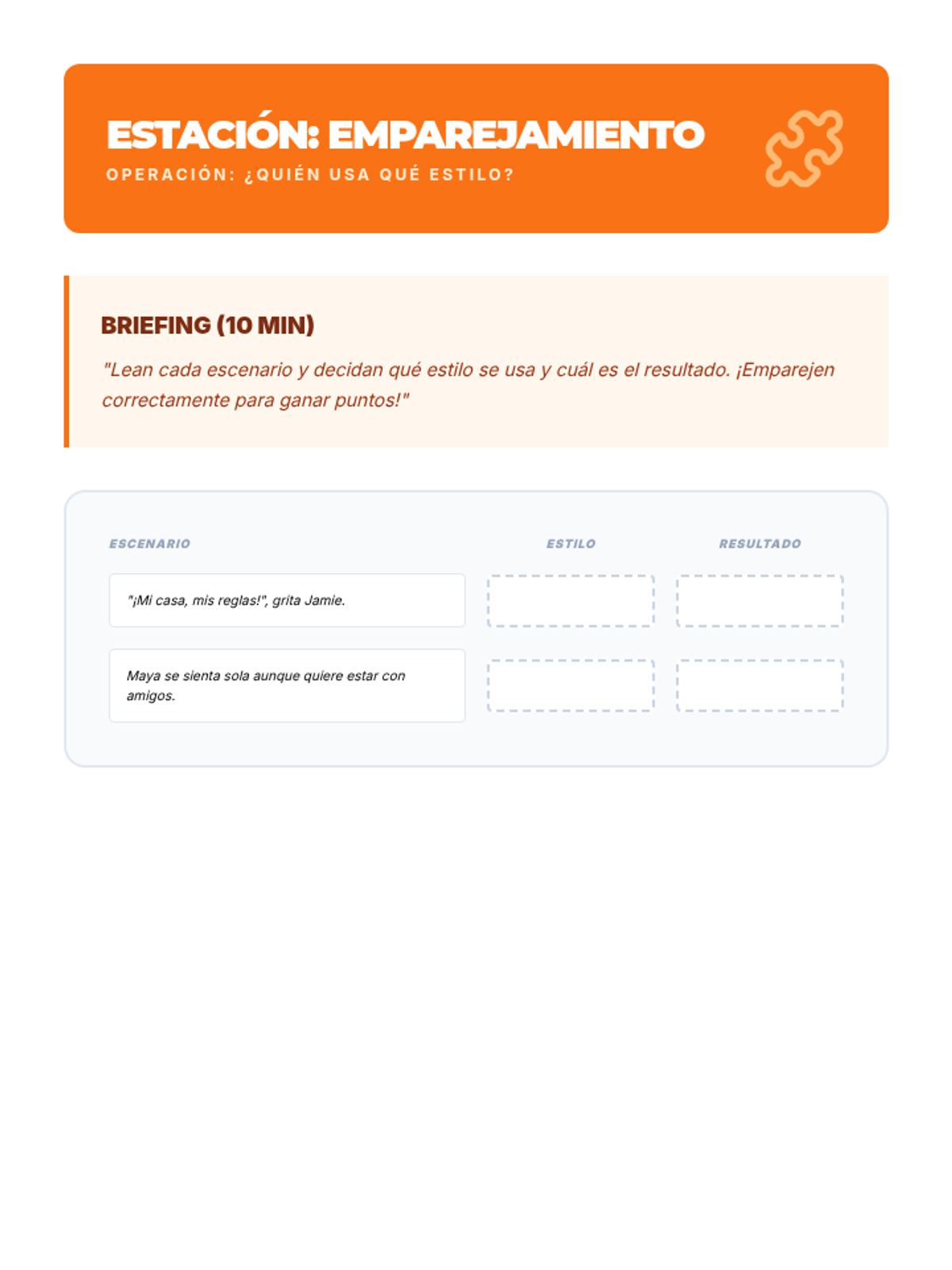
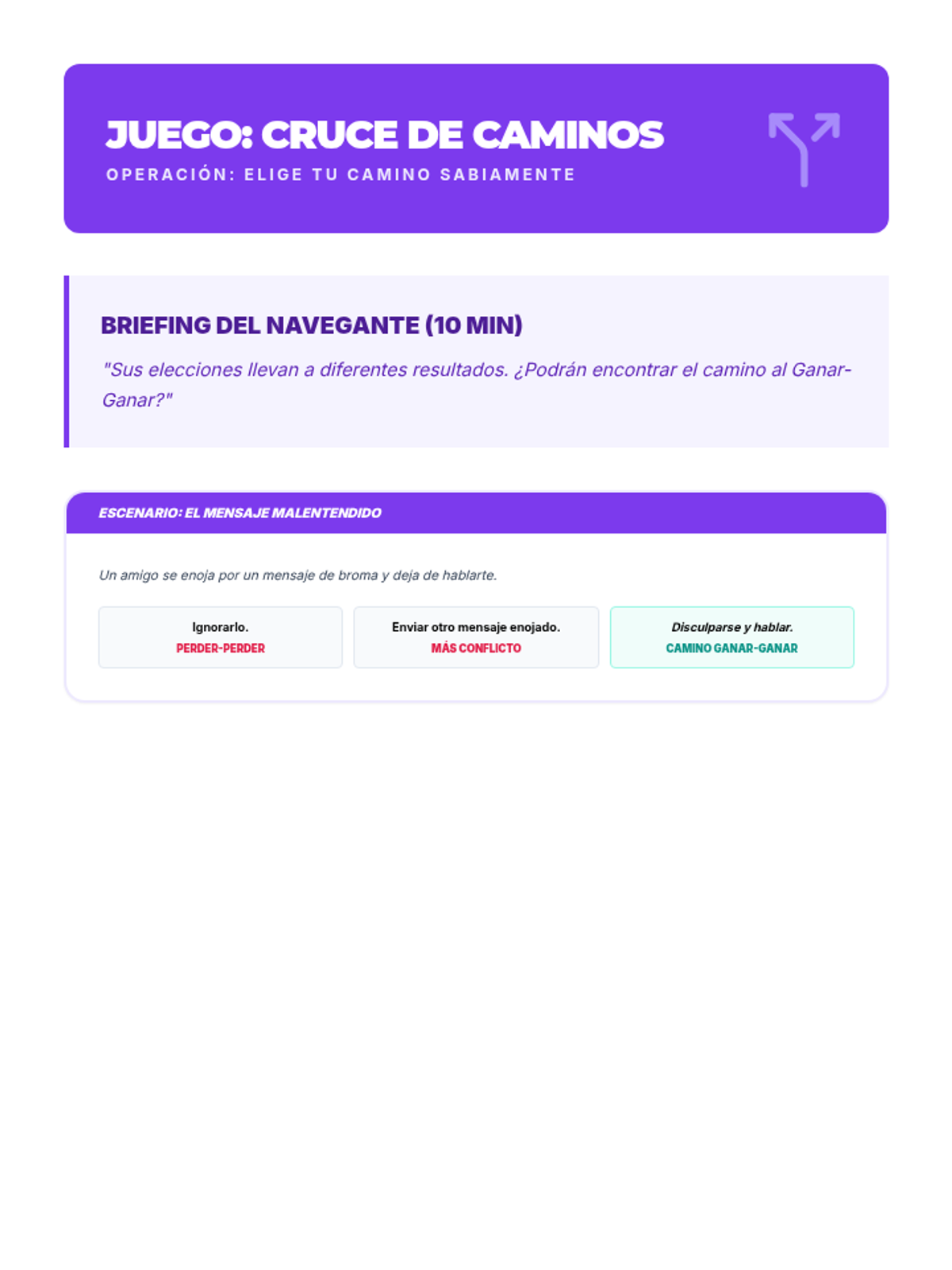
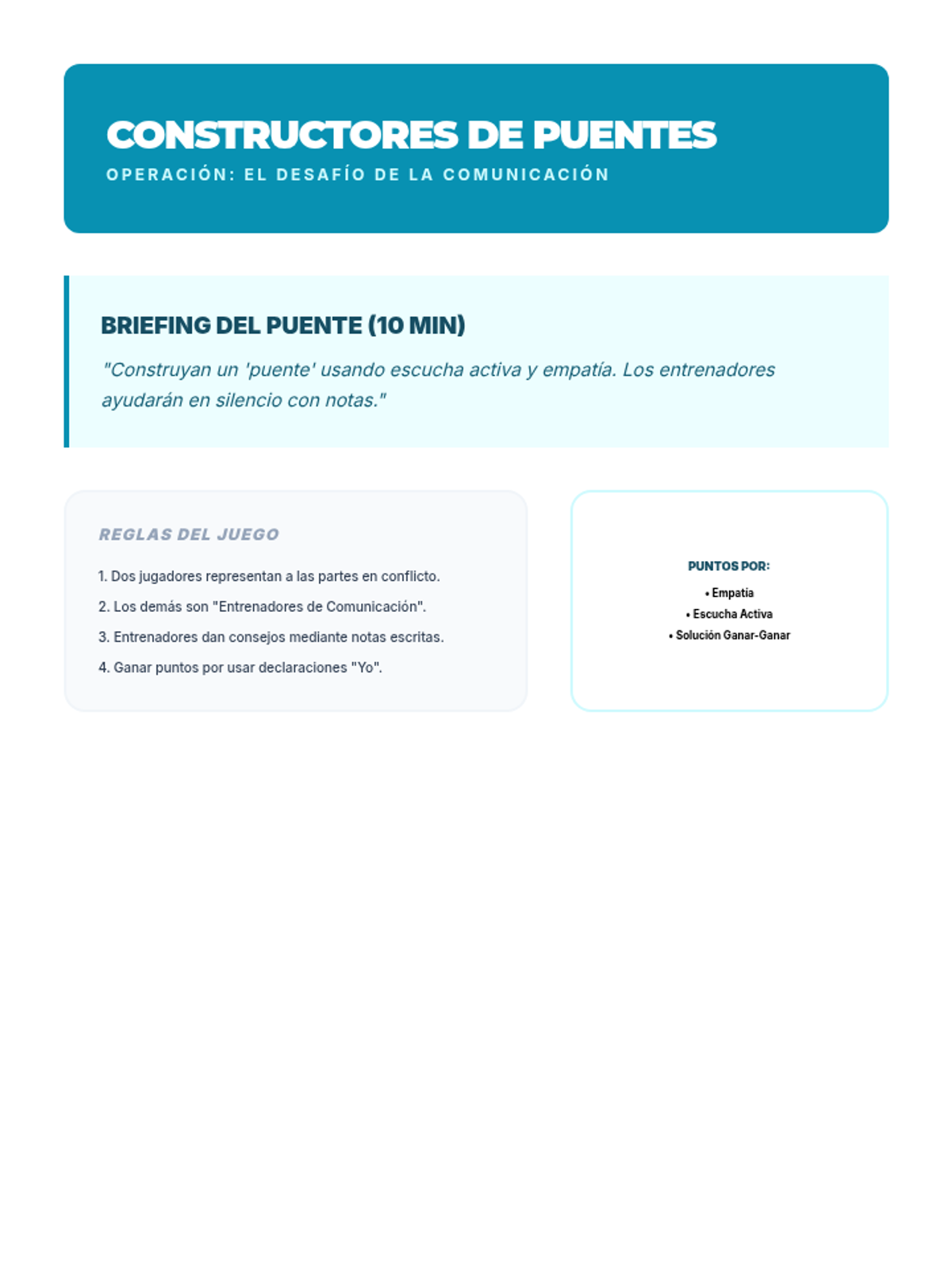
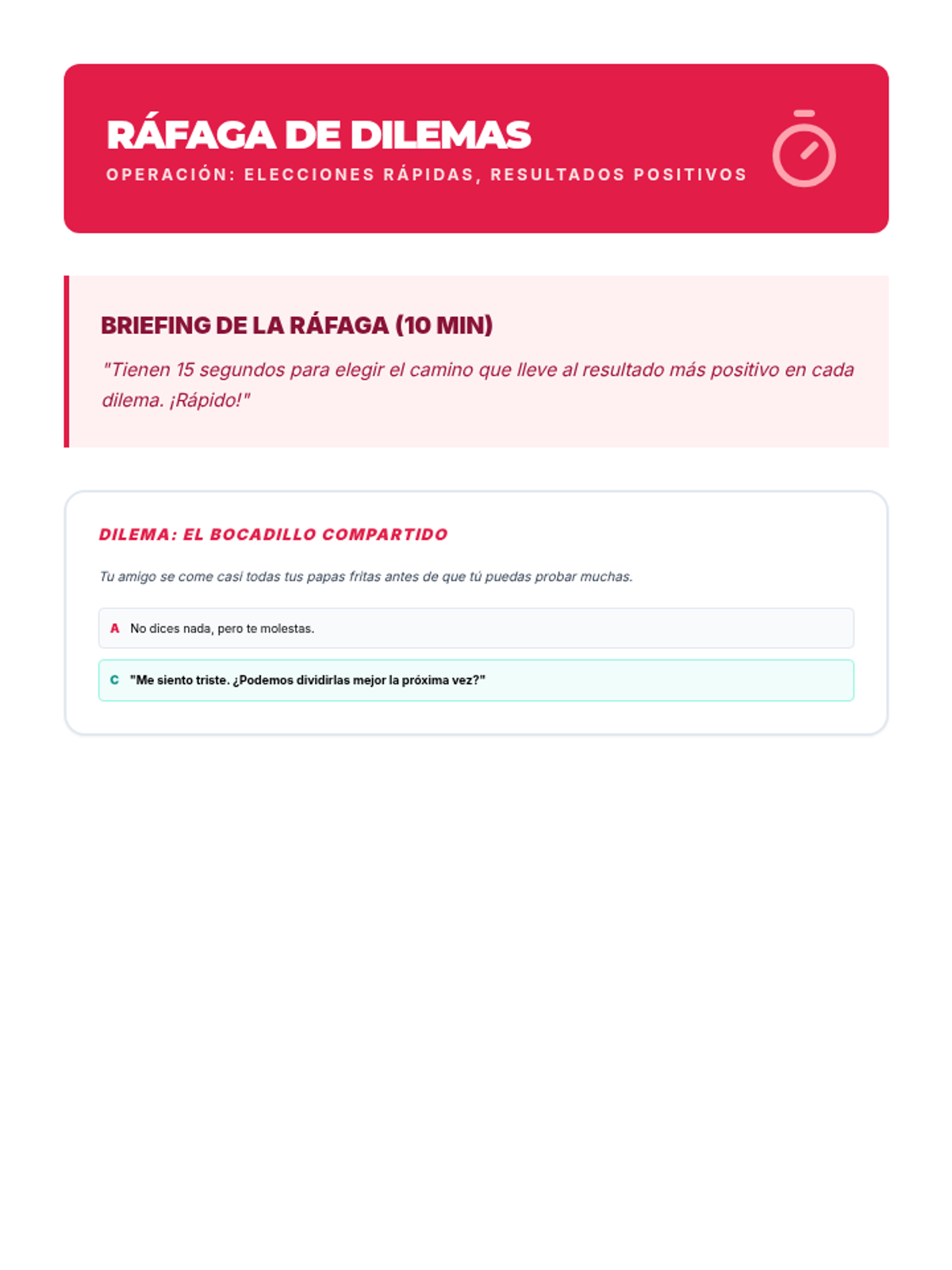
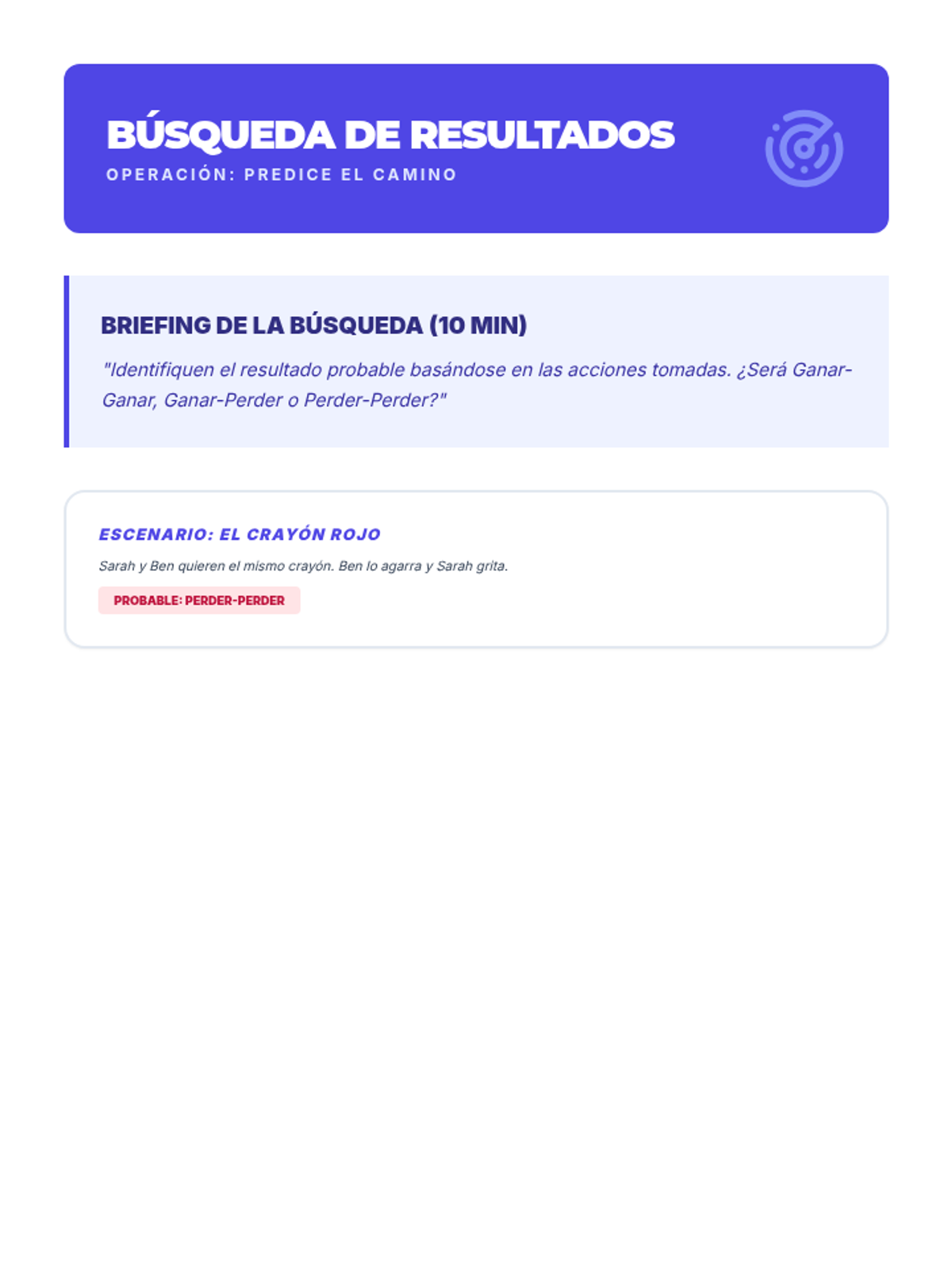
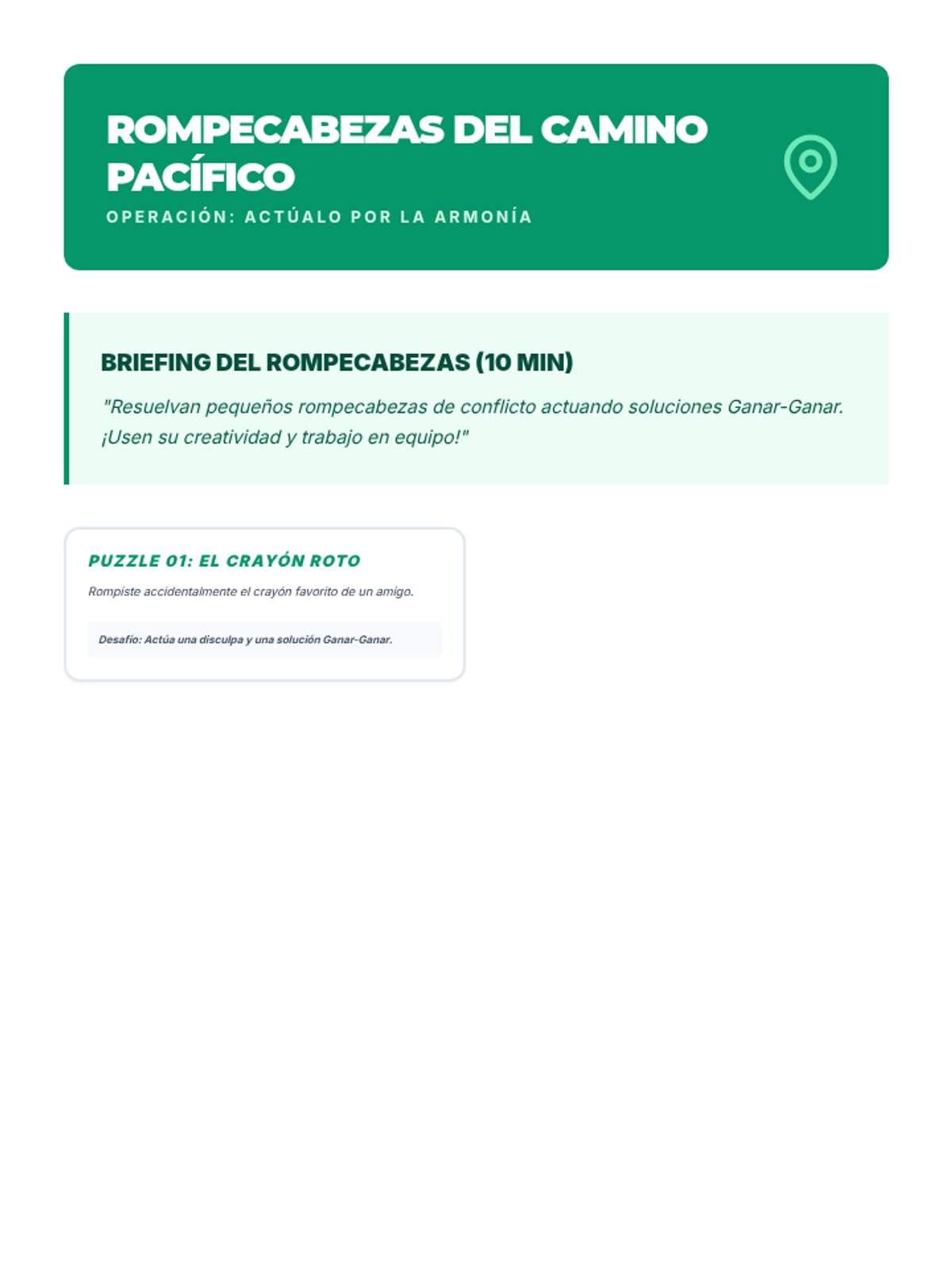
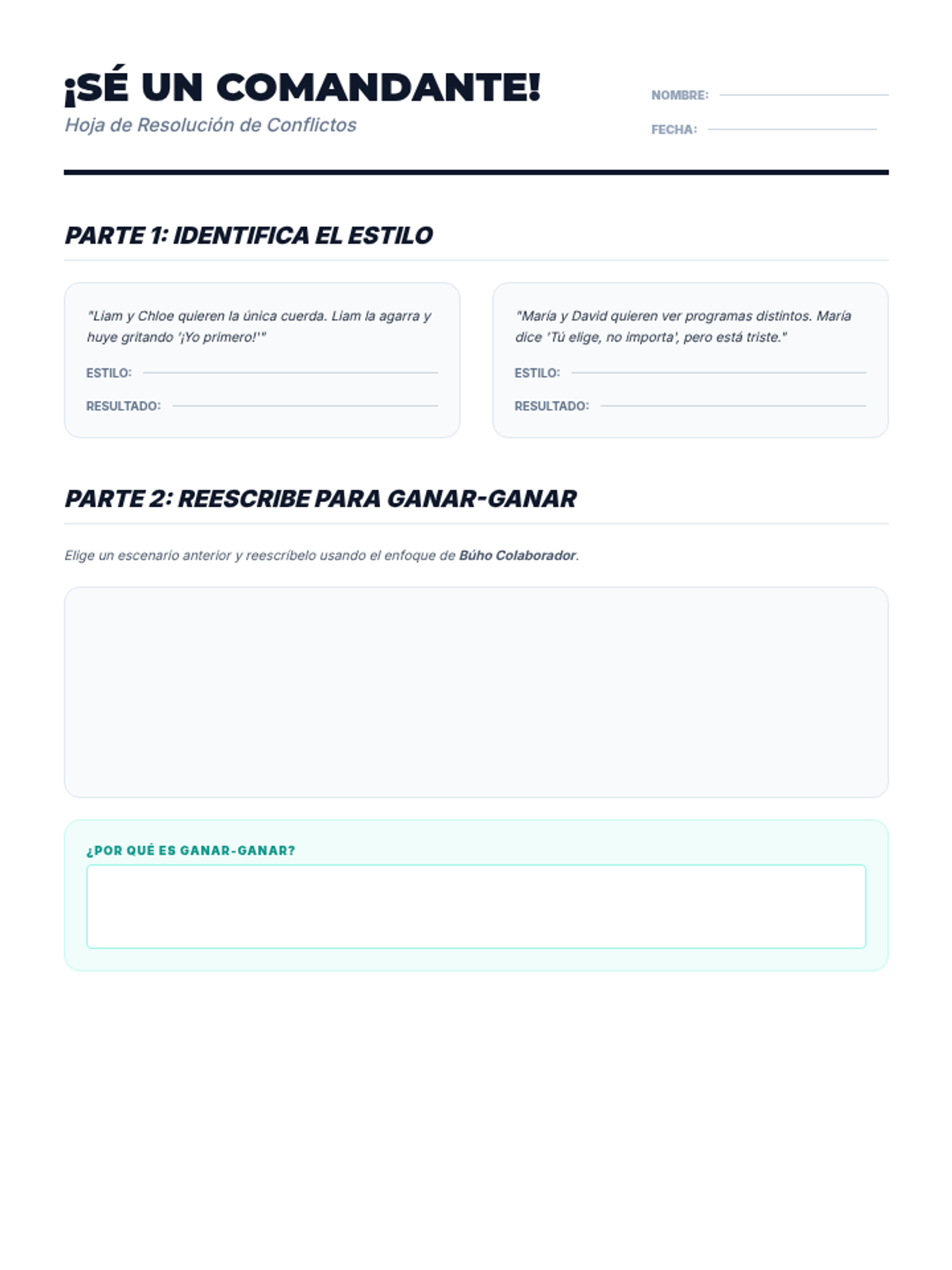
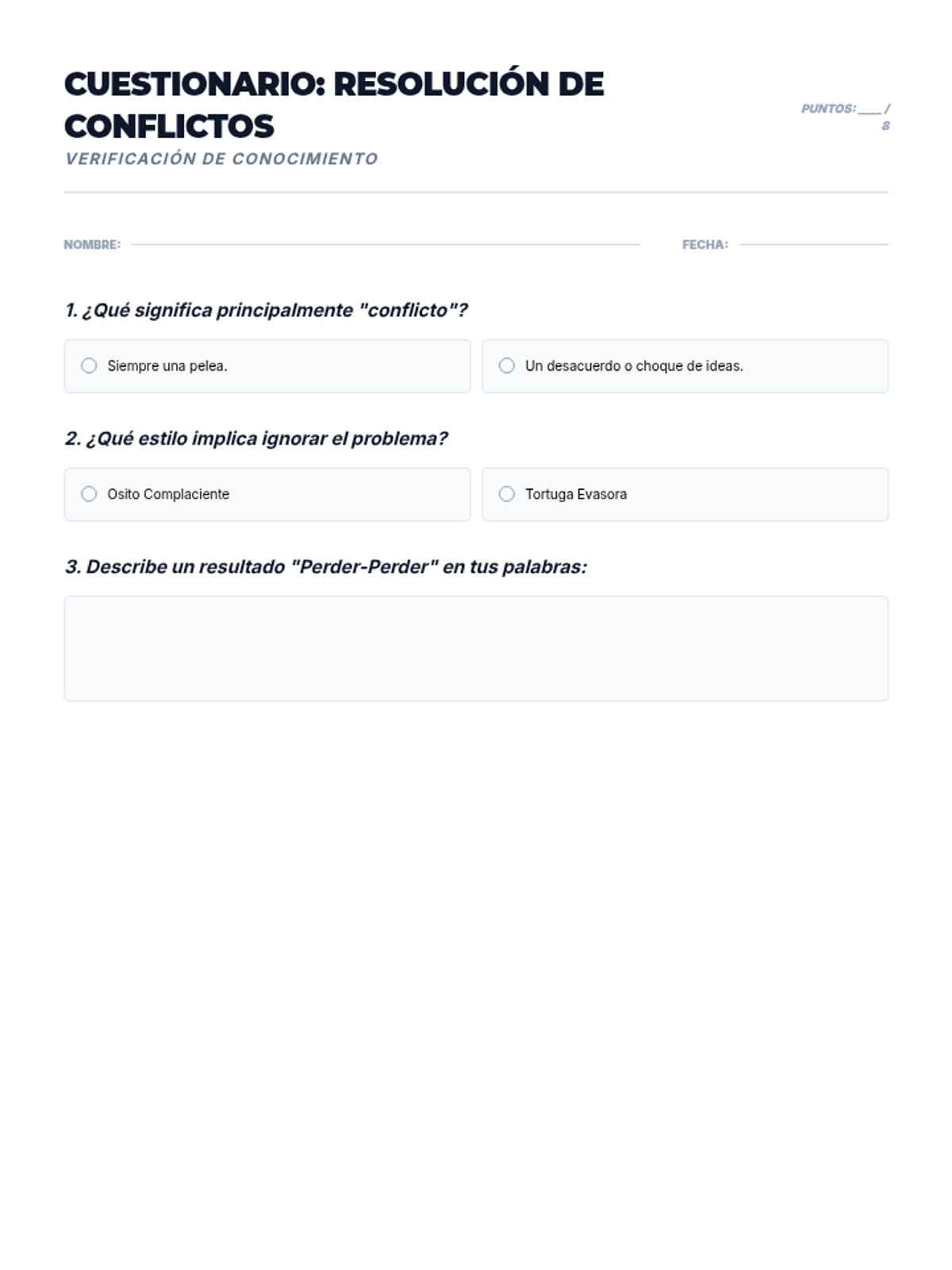
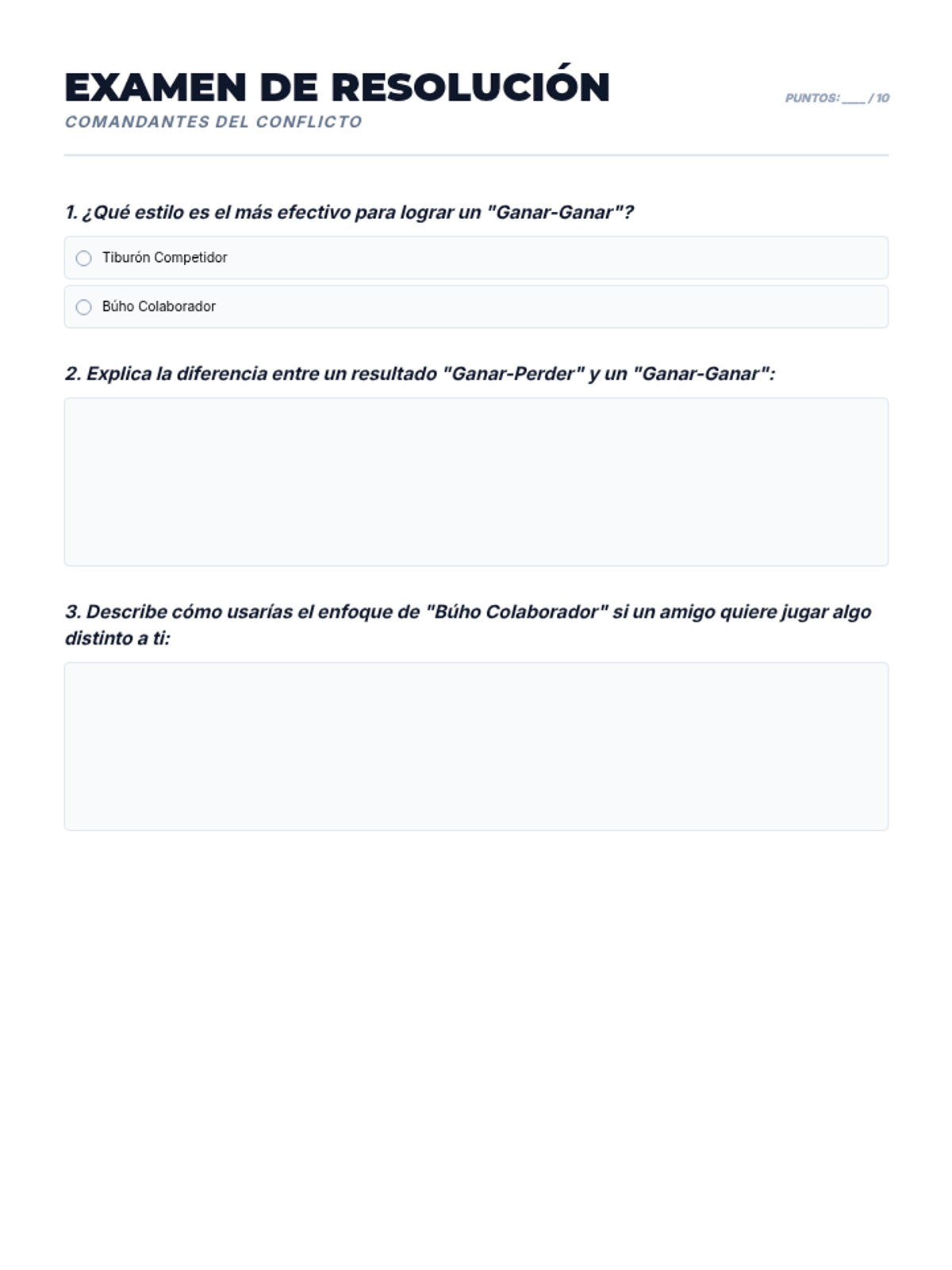
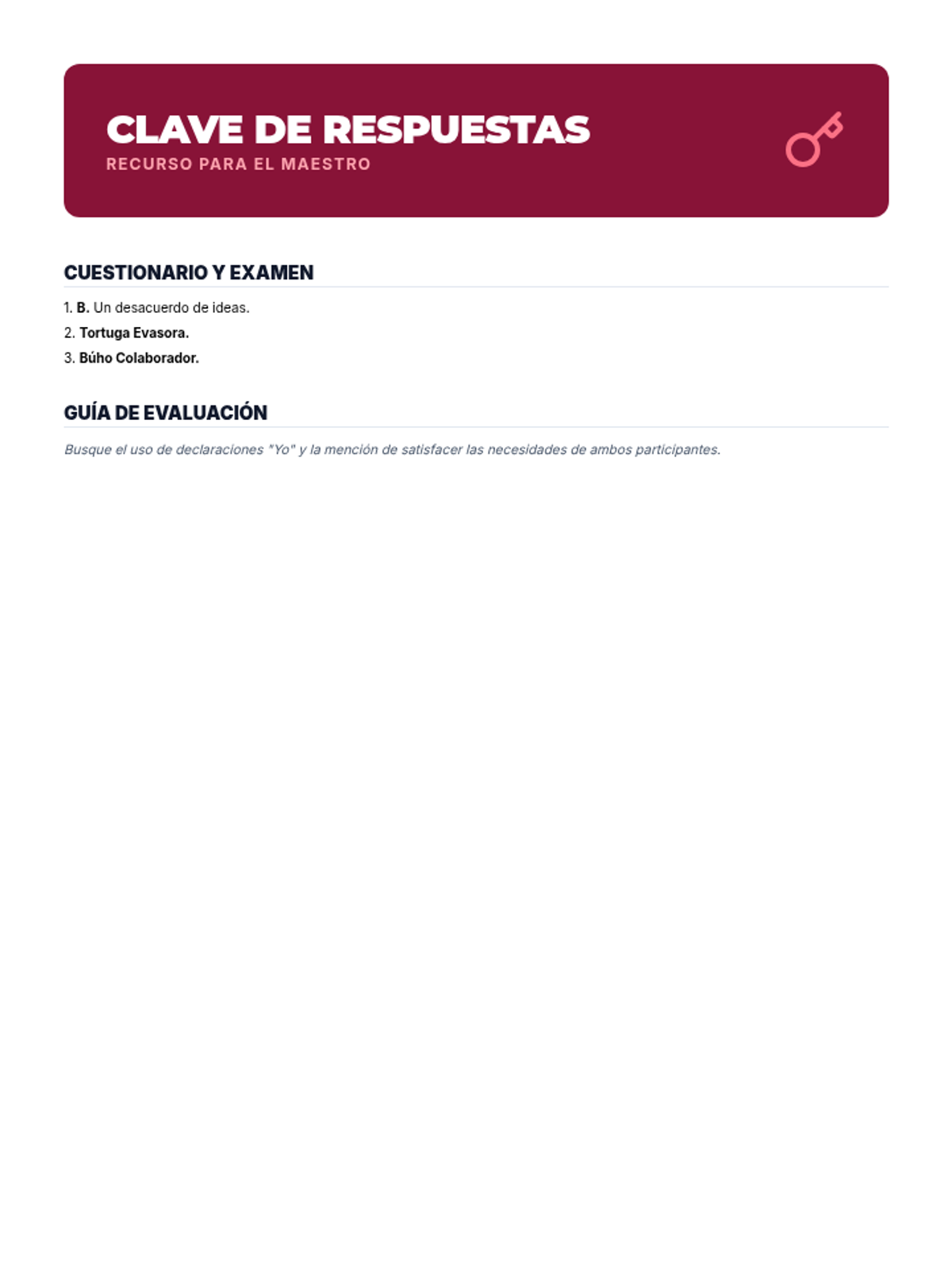
A comprehensive 50-minute classroom lesson (formatted as an interactive fair) that teaches 5th and 6th-grade students to identify conflict styles, predict outcomes, and use Win-Win strategies. Includes a full suite of bilingual (English/Spanish) materials including slide decks, activities, games, and assessments.
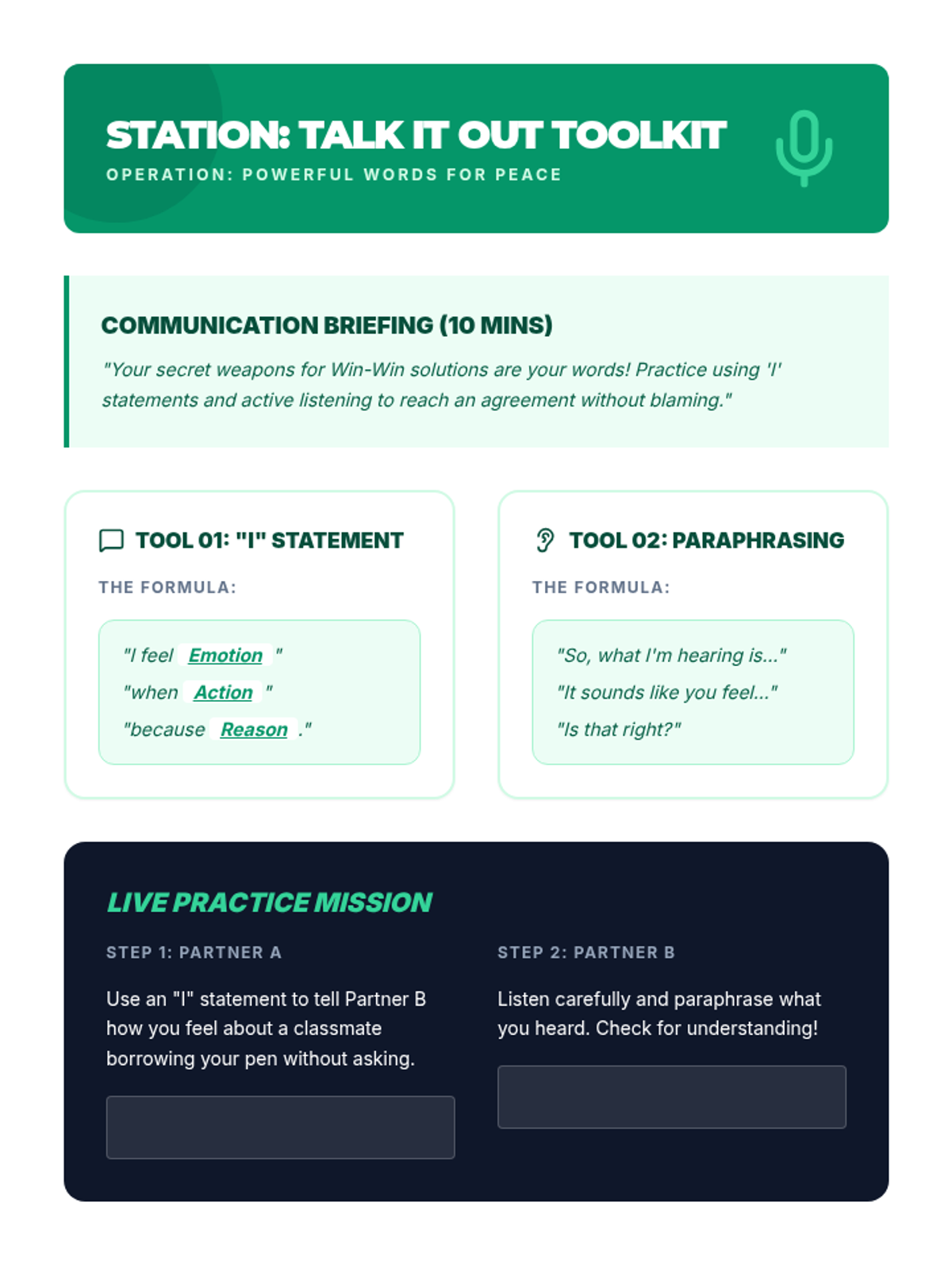
A comprehensive lesson sequence for middle schoolers focused on developing healthy conflict resolution skills through active listening, I-statements, and collaborative problem-solving.
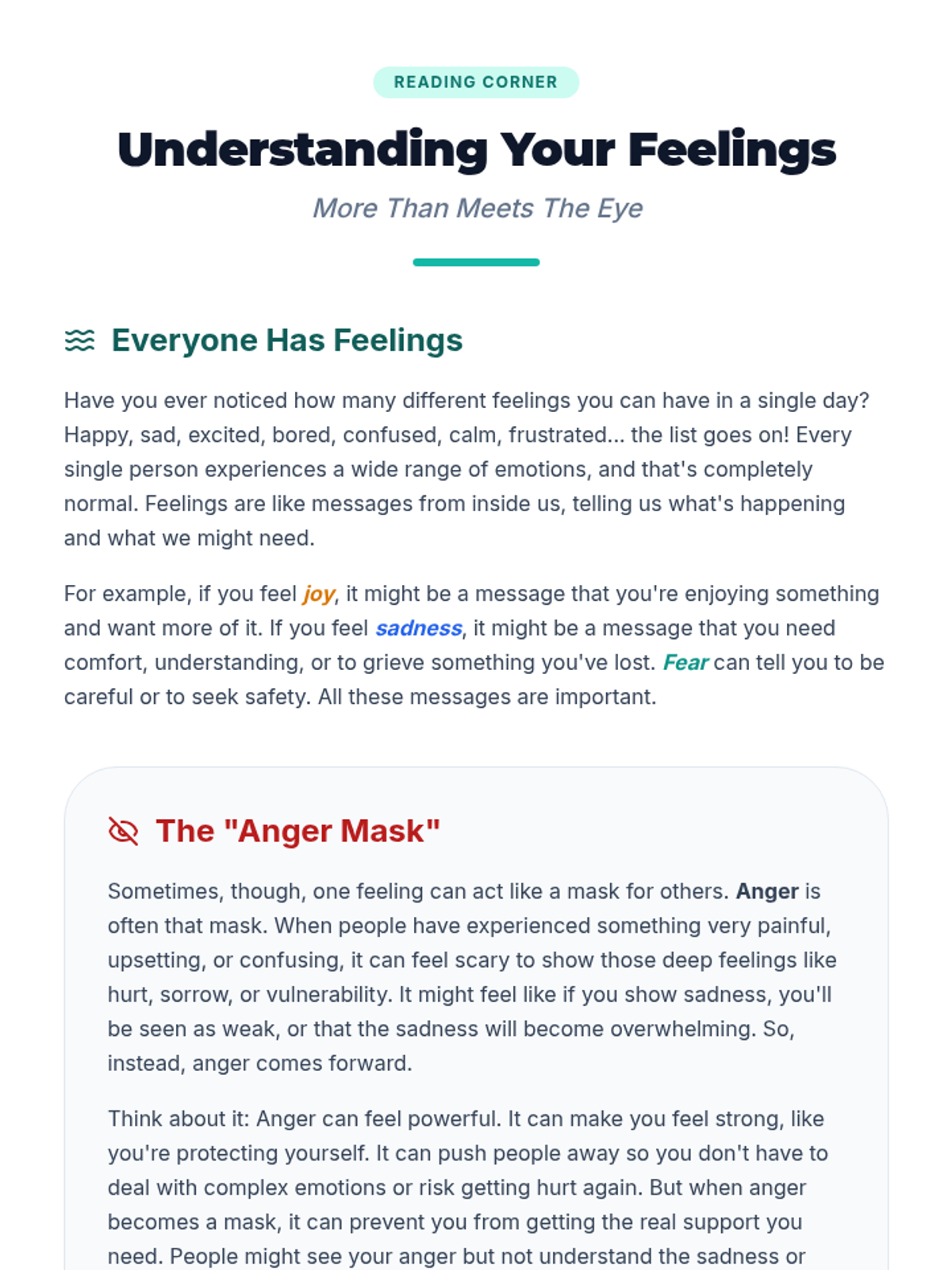
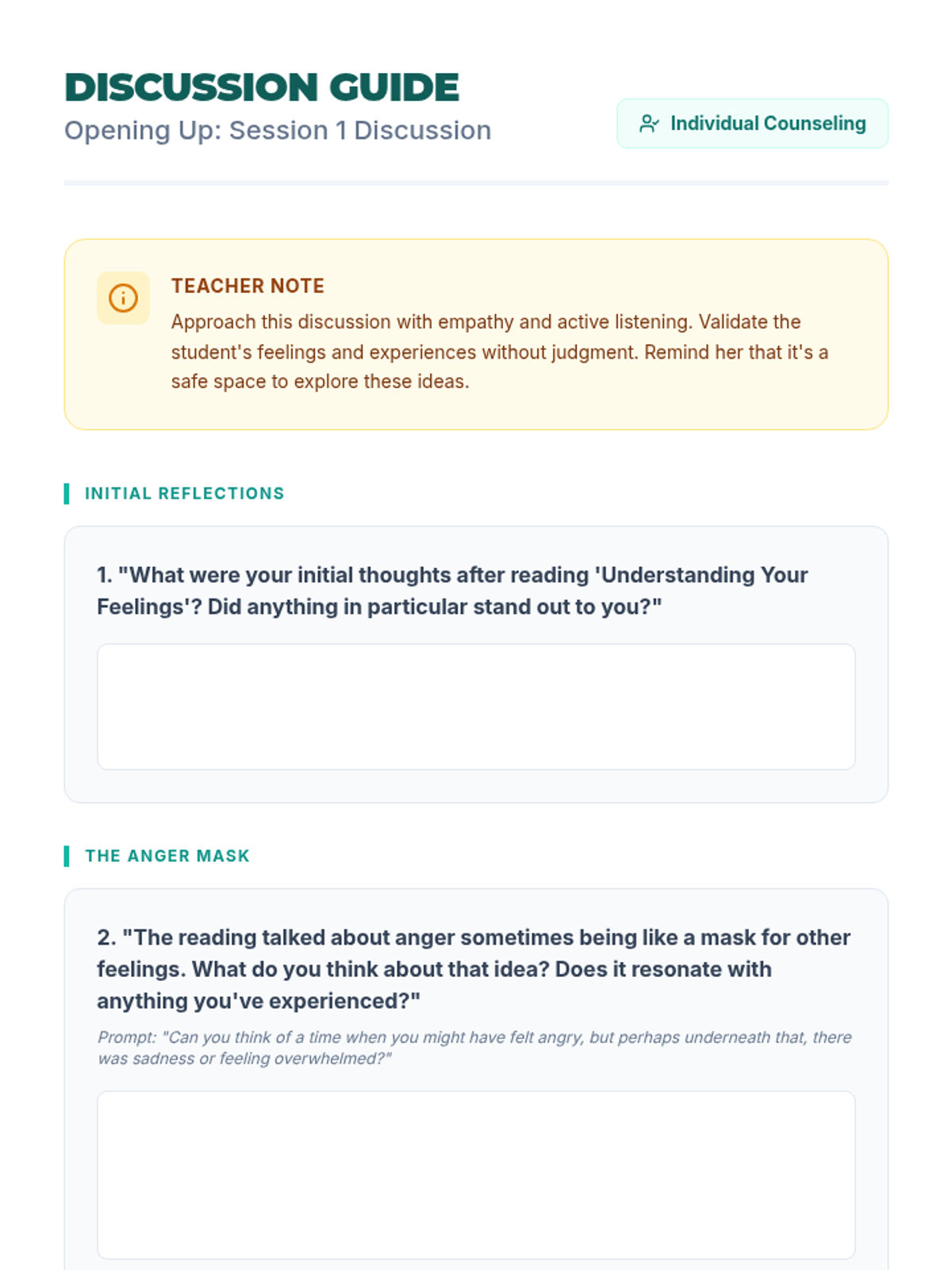
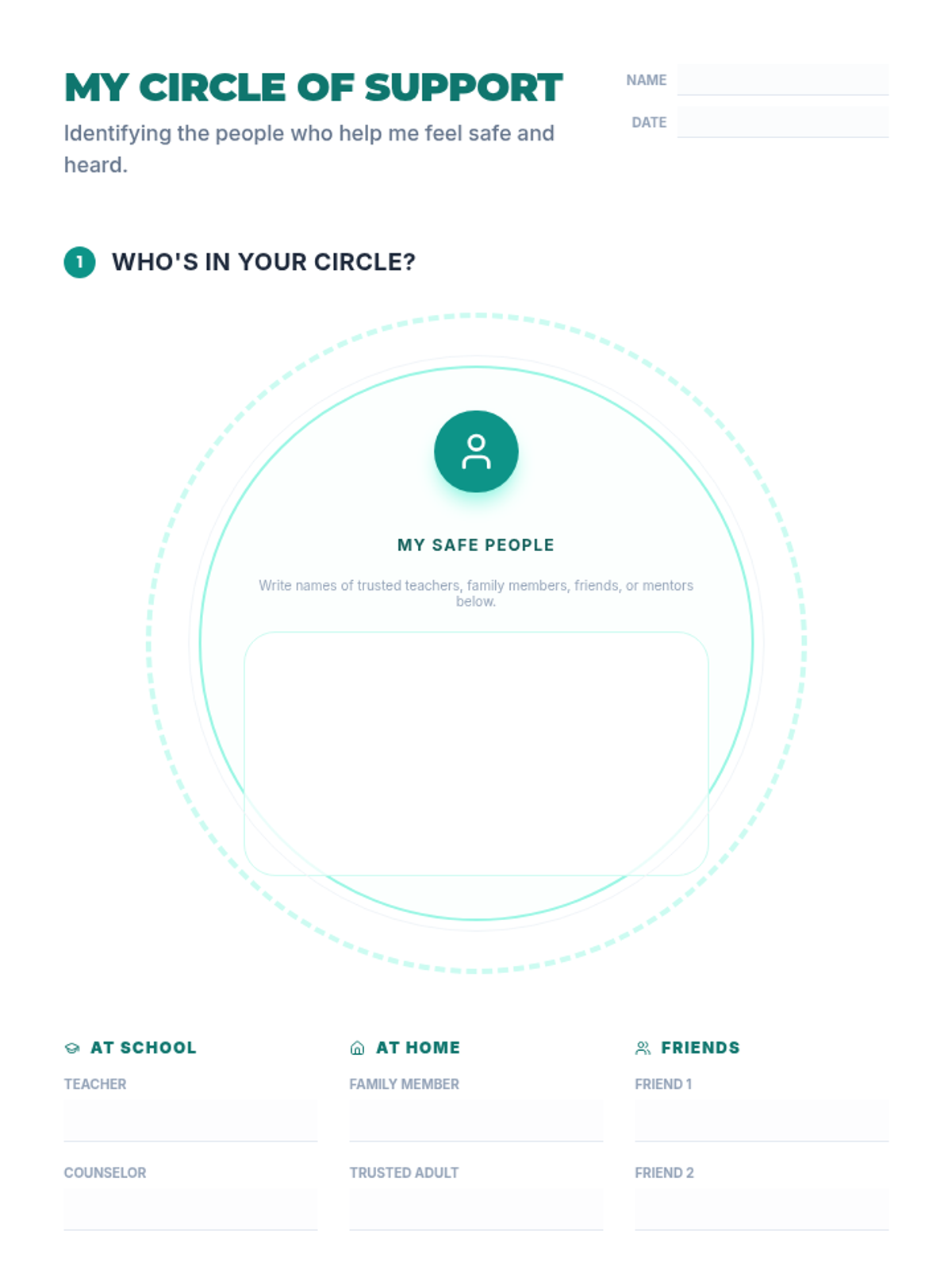
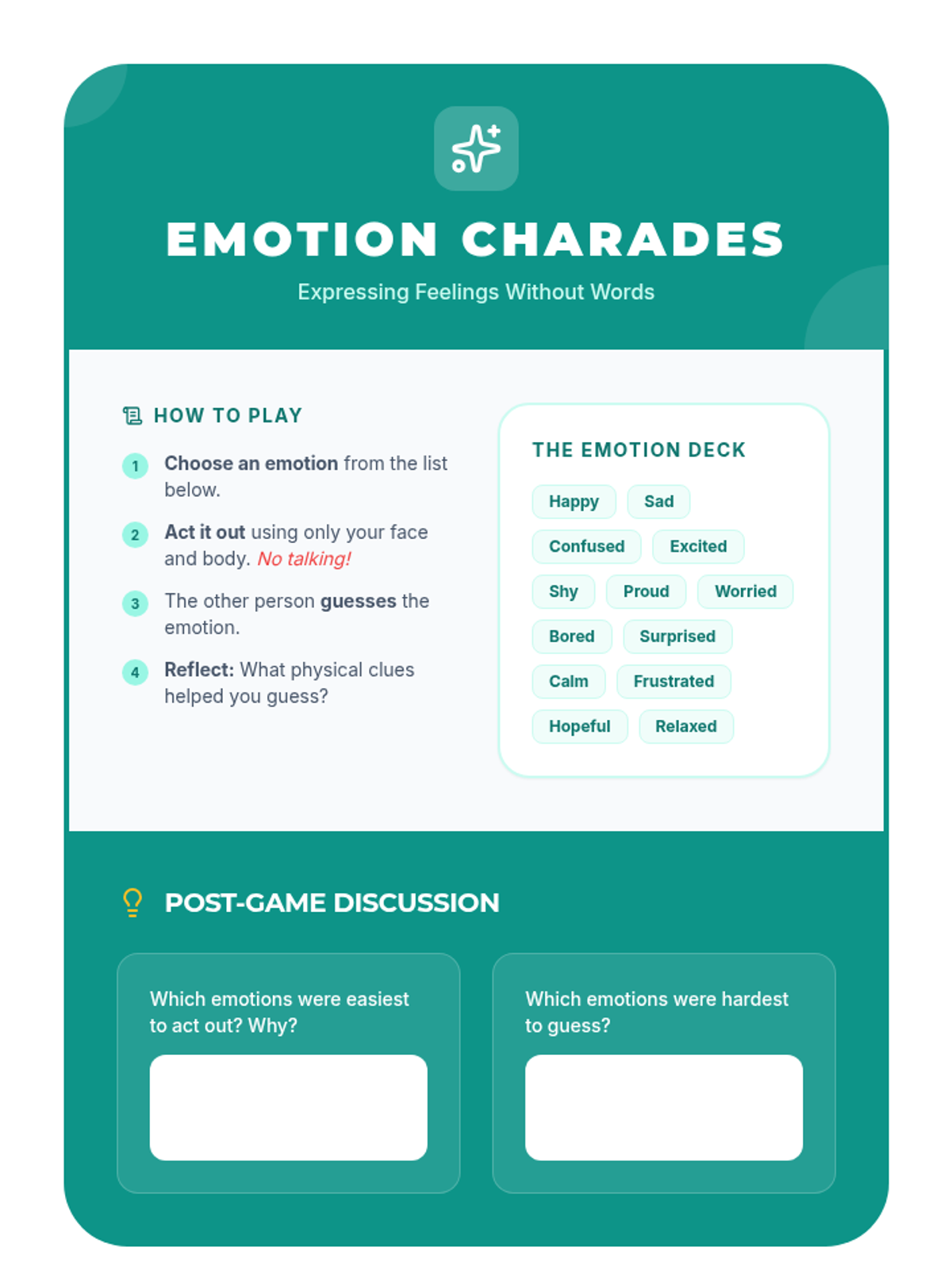
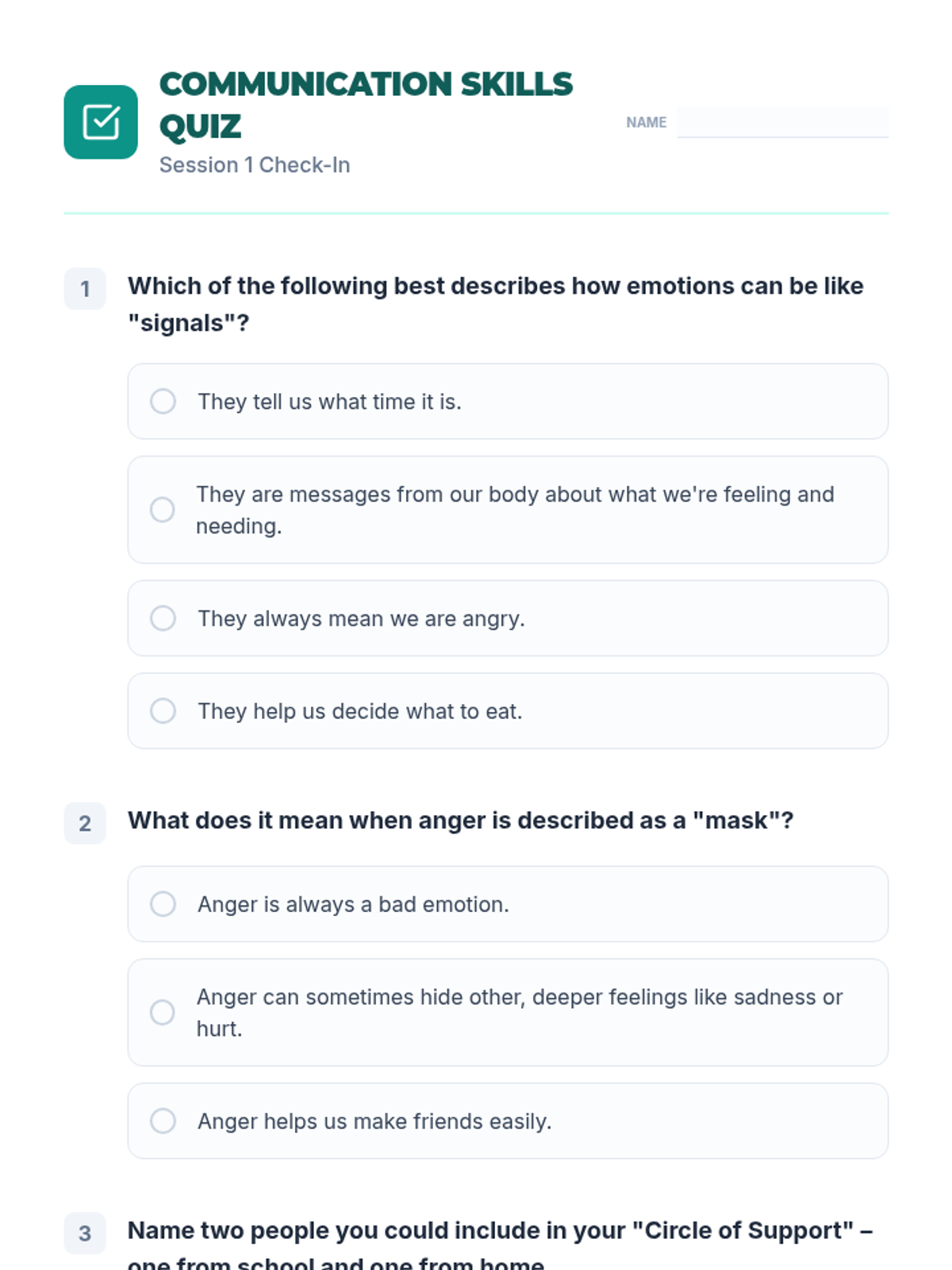
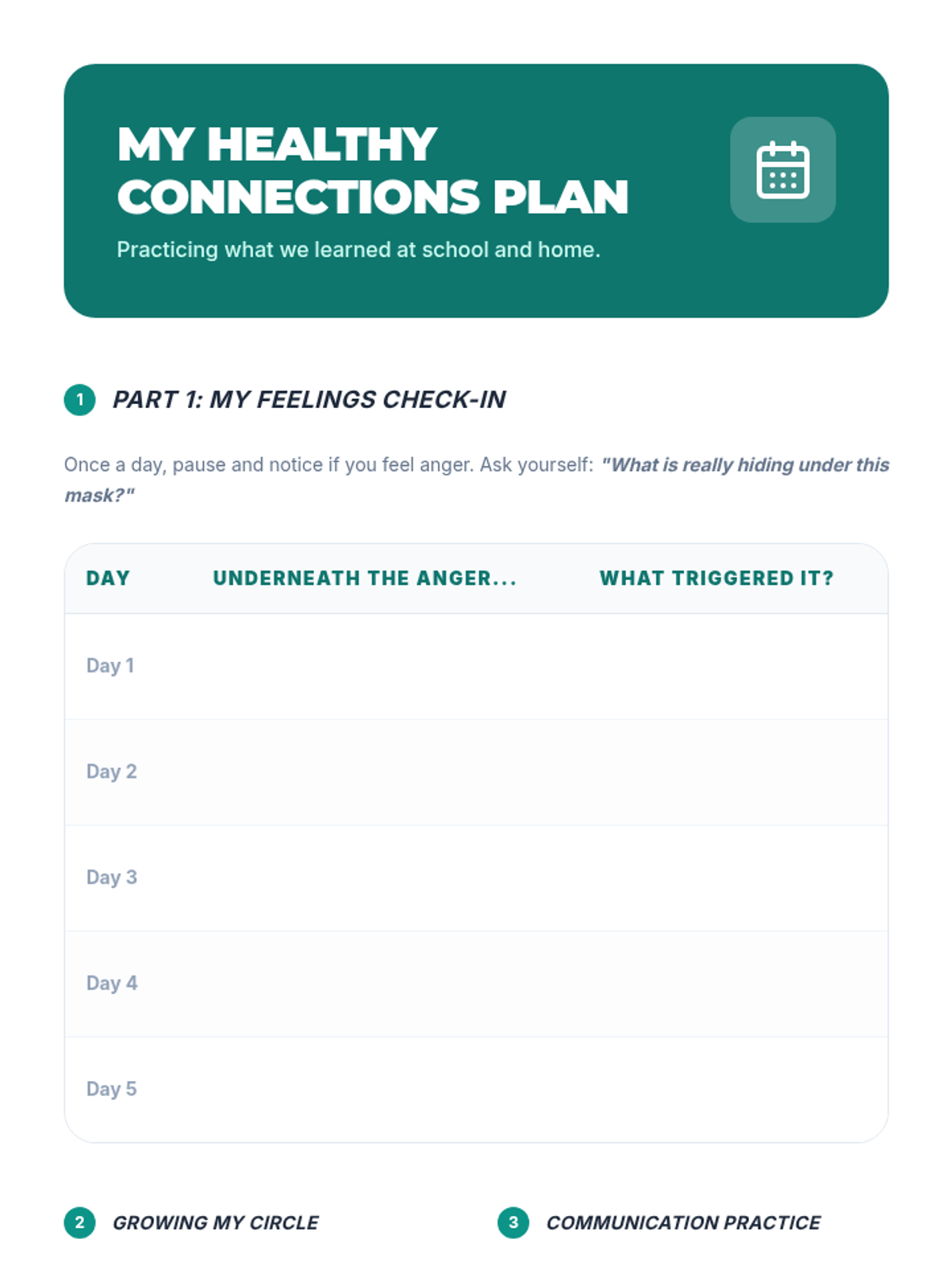
A three-session individual counseling sequence for middle school students to explore emotional regulation, coping strategies, and conflict resolution. Students learn to identify 'anger masks,' build support circles, and master active listening and negotiation skills.
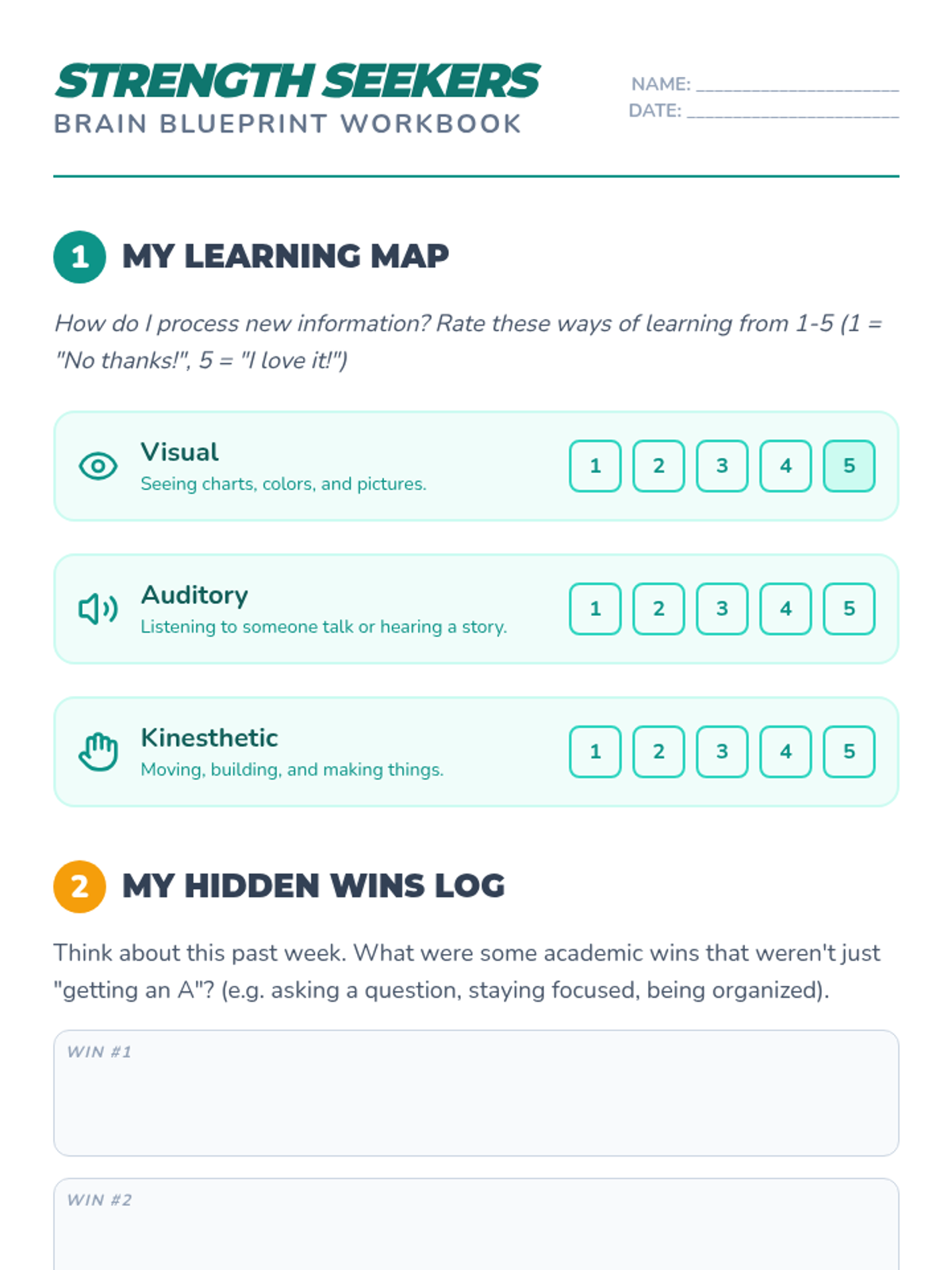
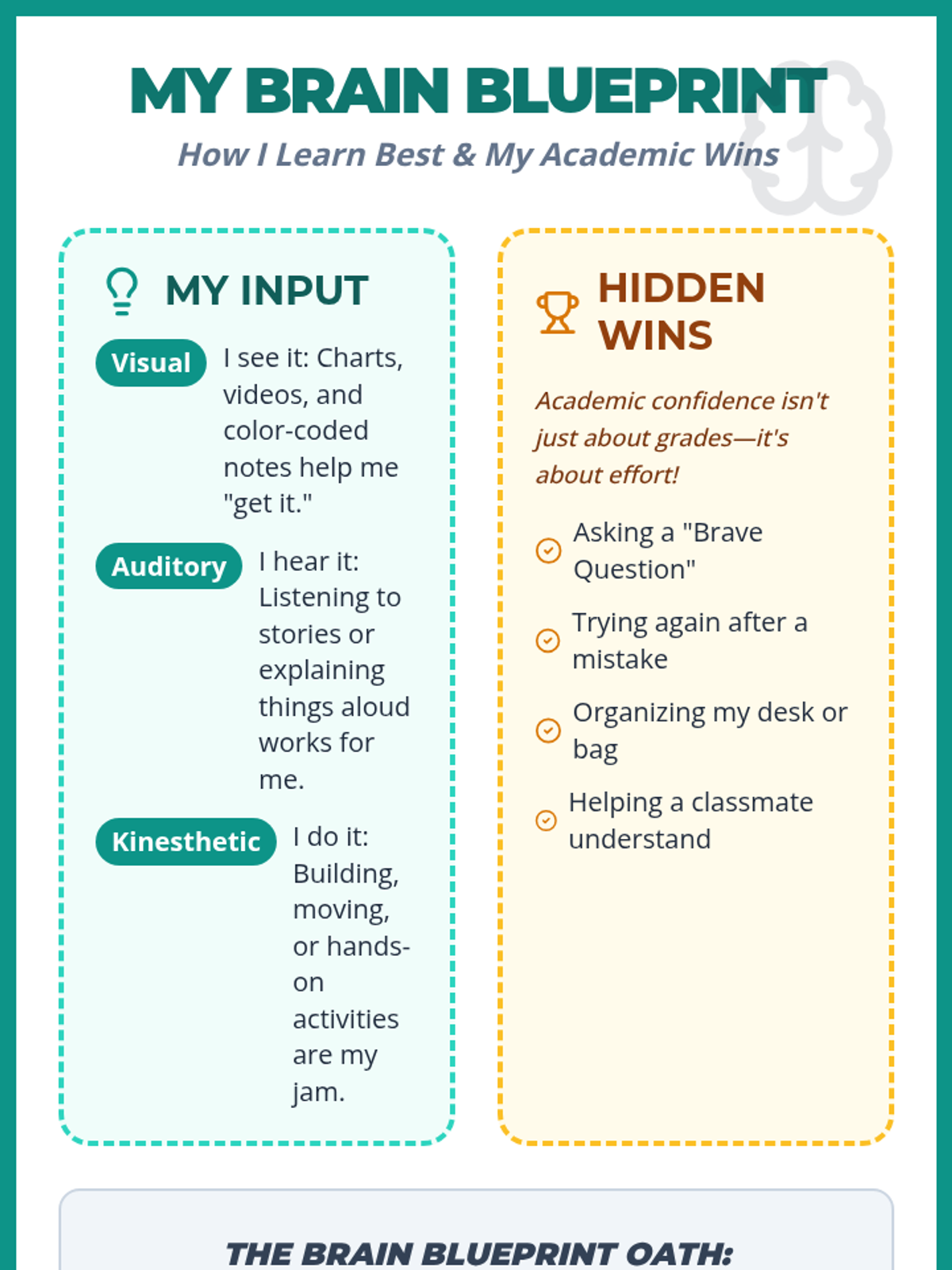
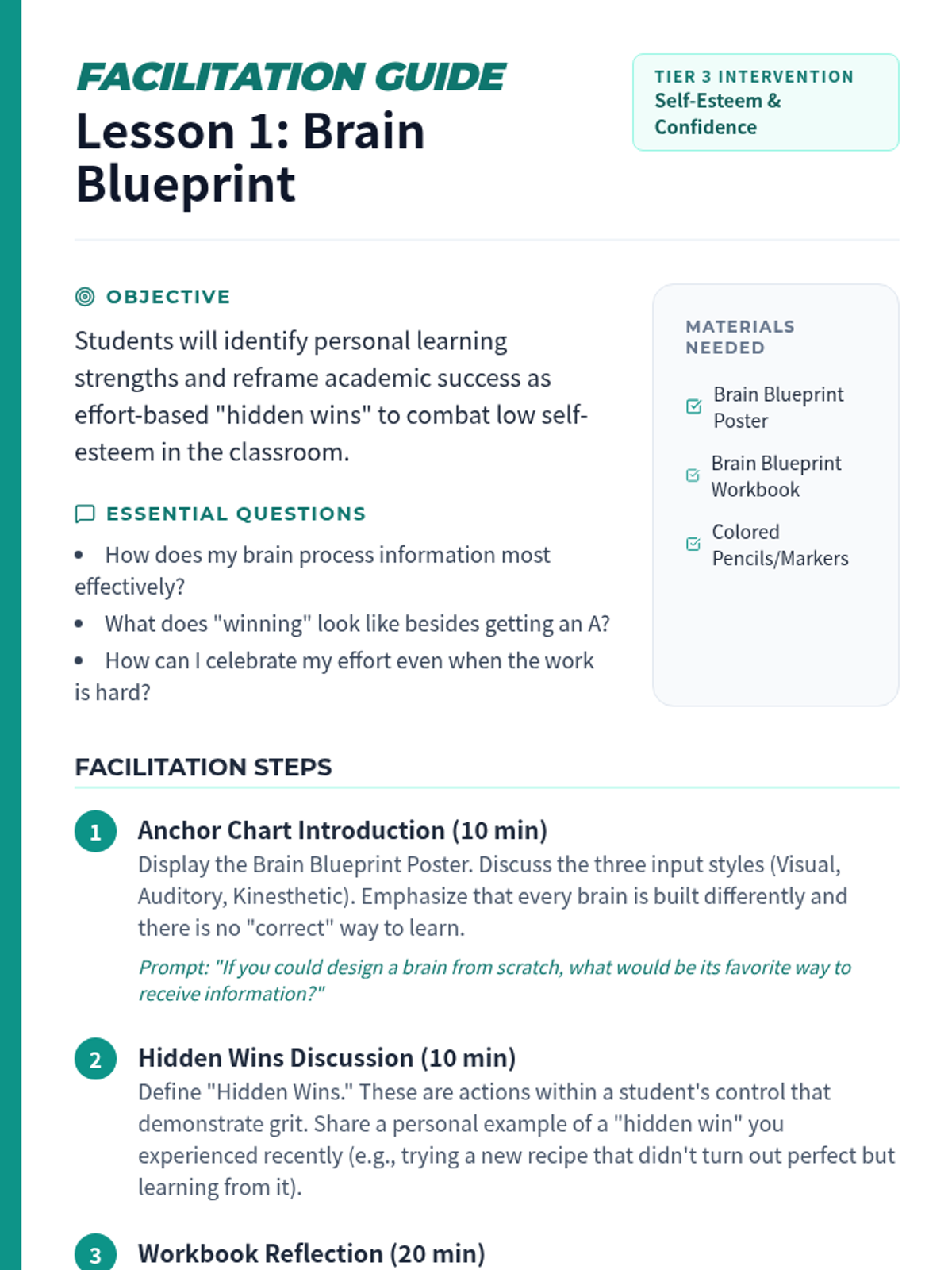
A Tier 3 intervention sequence designed for 6th graders to build academic confidence and social belonging through strength identification and application.
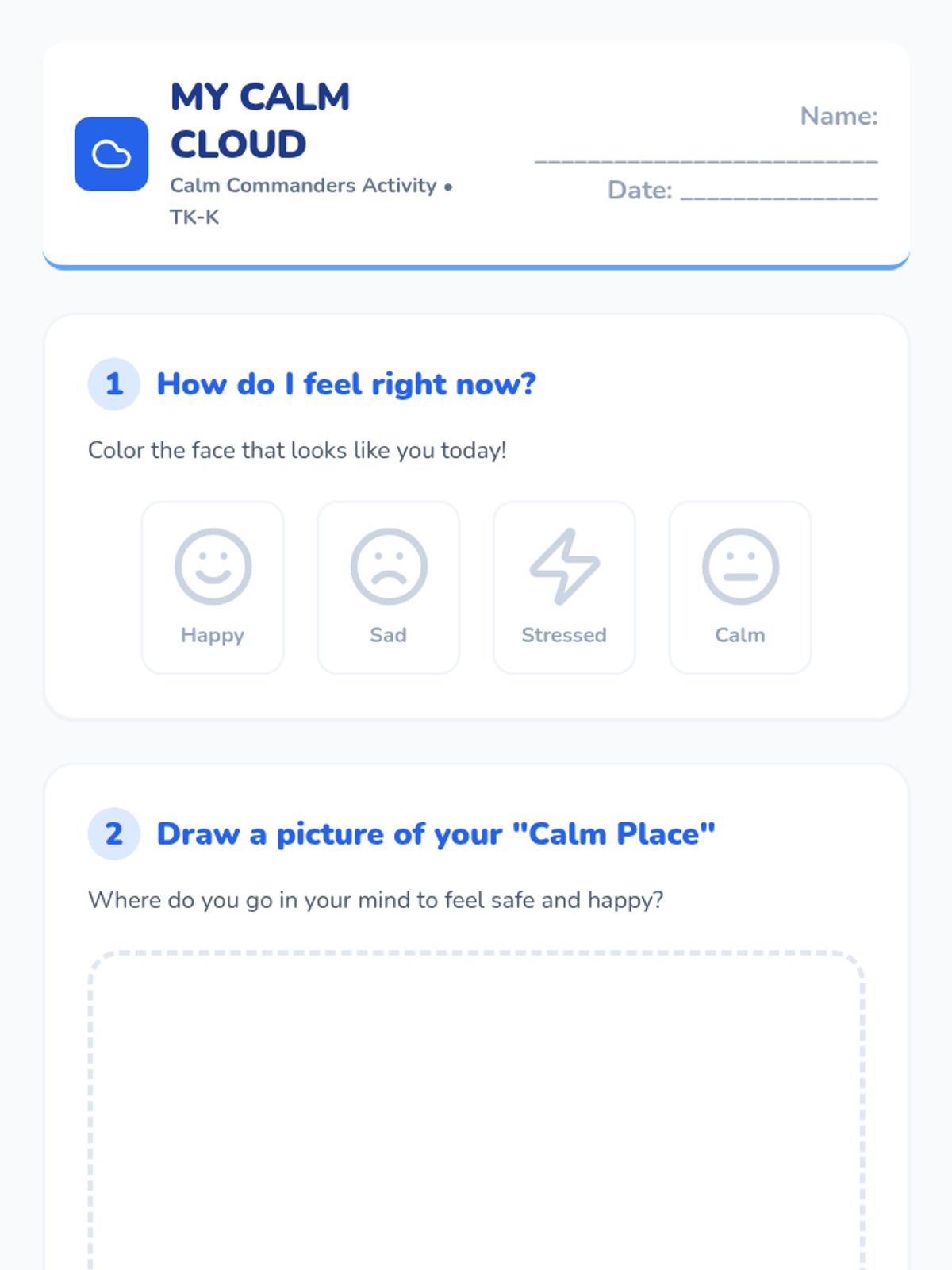
A comprehensive stress management series for TK-6th grade students, including a specialized 1st/2nd combo lesson. Each lesson focuses on identifying stressors, physical responses, and both proactive and reactive coping strategies through counselor-led presentations and interactive student worksheets.
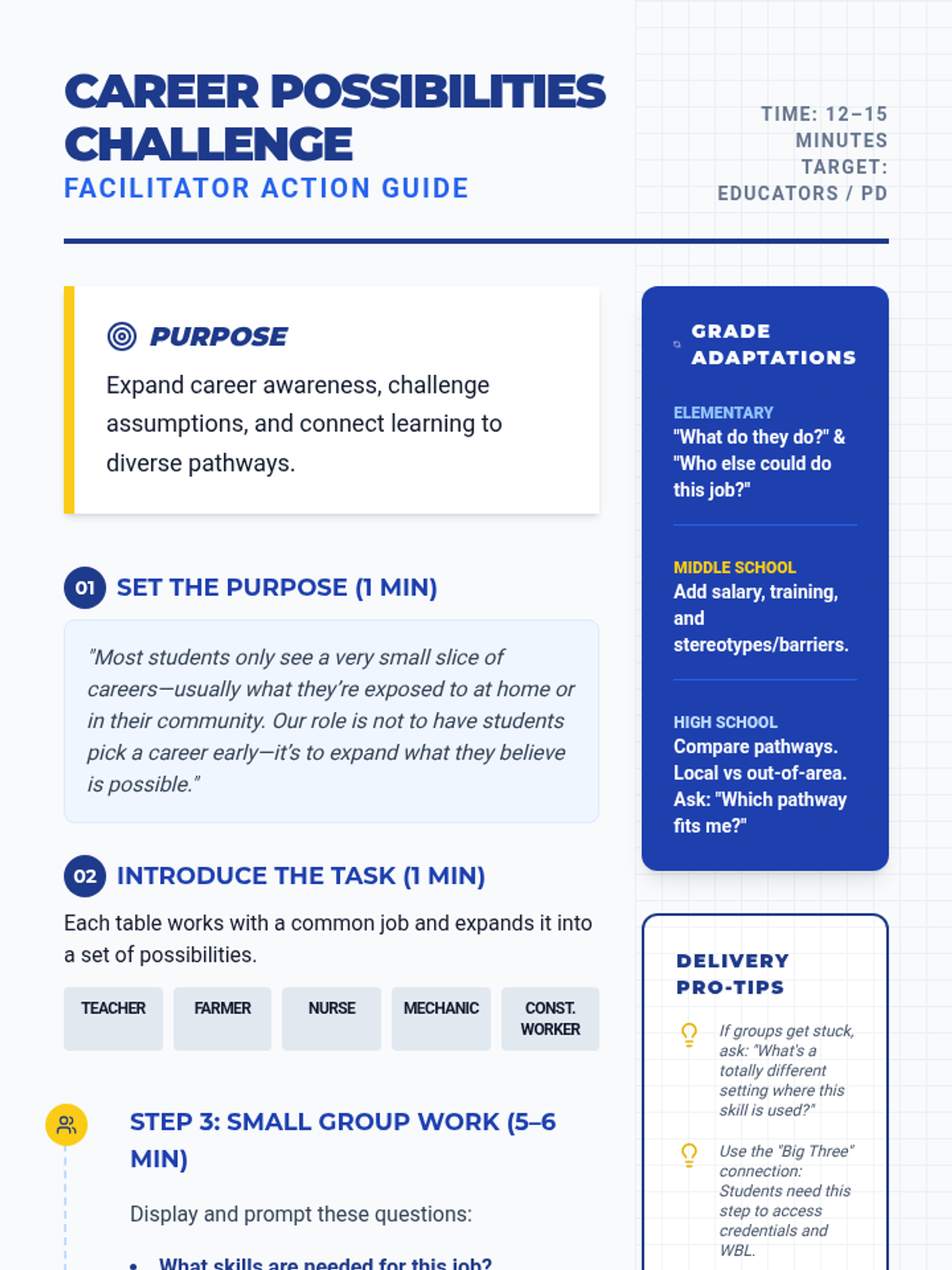
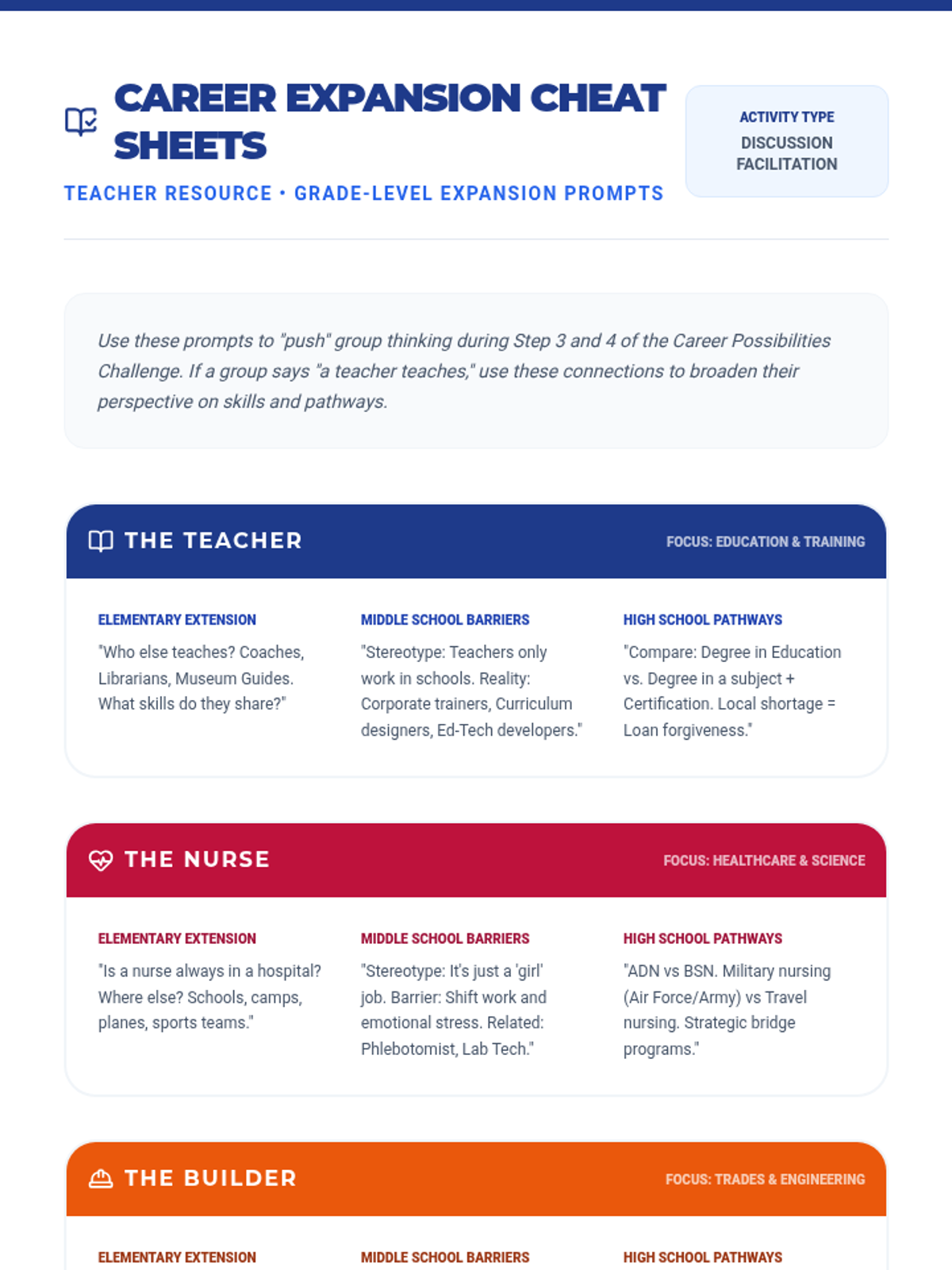
A comprehensive professional development and classroom activity suite designed to expand career awareness across K-12. Educators learn to facilitate the 'Career Possibilities Challenge,' while students engage in grade-appropriate tasks to map skills, pathways, and overcome stereotypes.
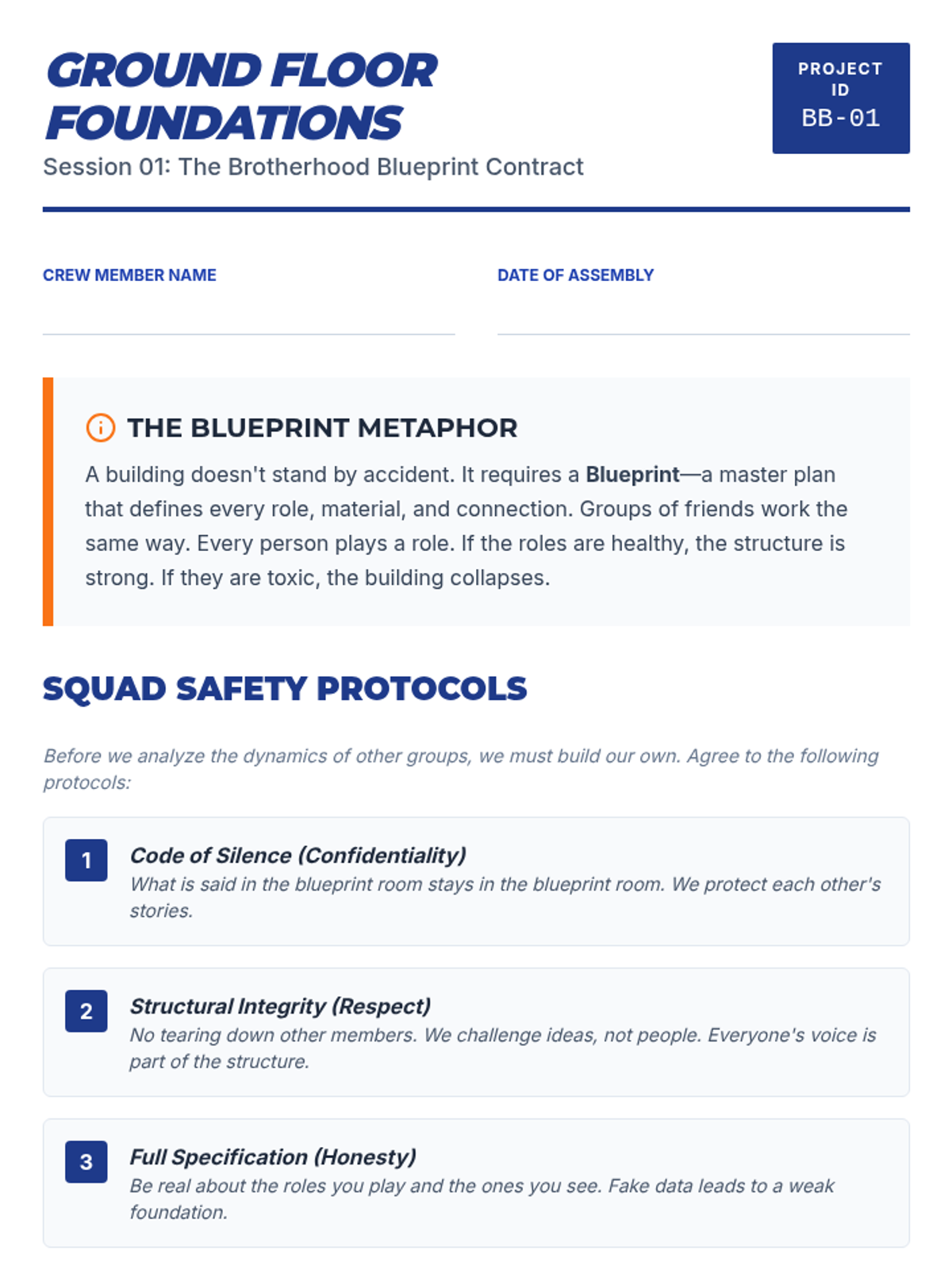
A 30-session group counseling curriculum for adolescent males focusing on social roles, group dynamics, and developing healthy friendship patterns. Through the metaphor of an architectural blueprint, students analyze leadership, support roles, and the difference between positive and negative group influences.
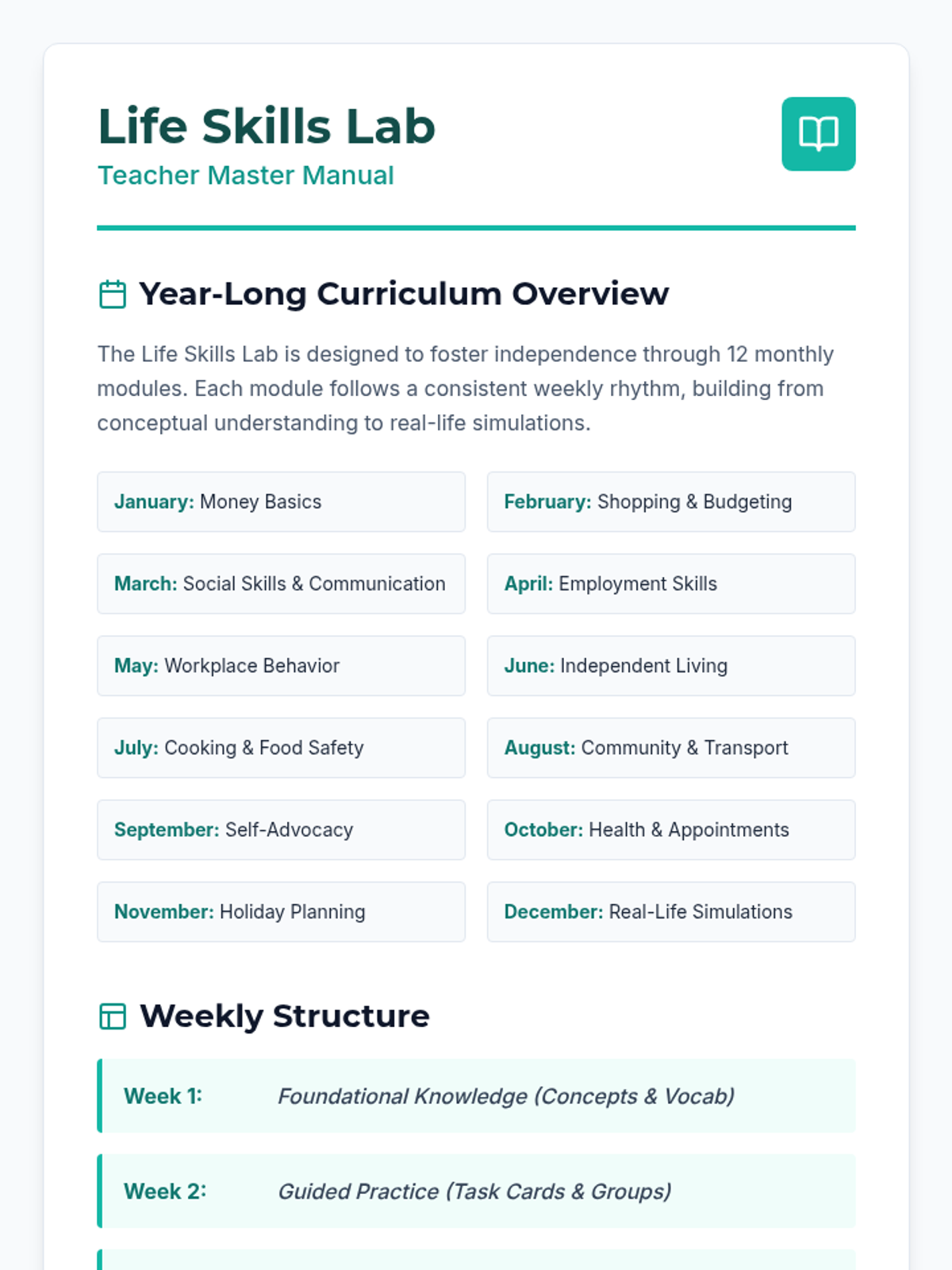
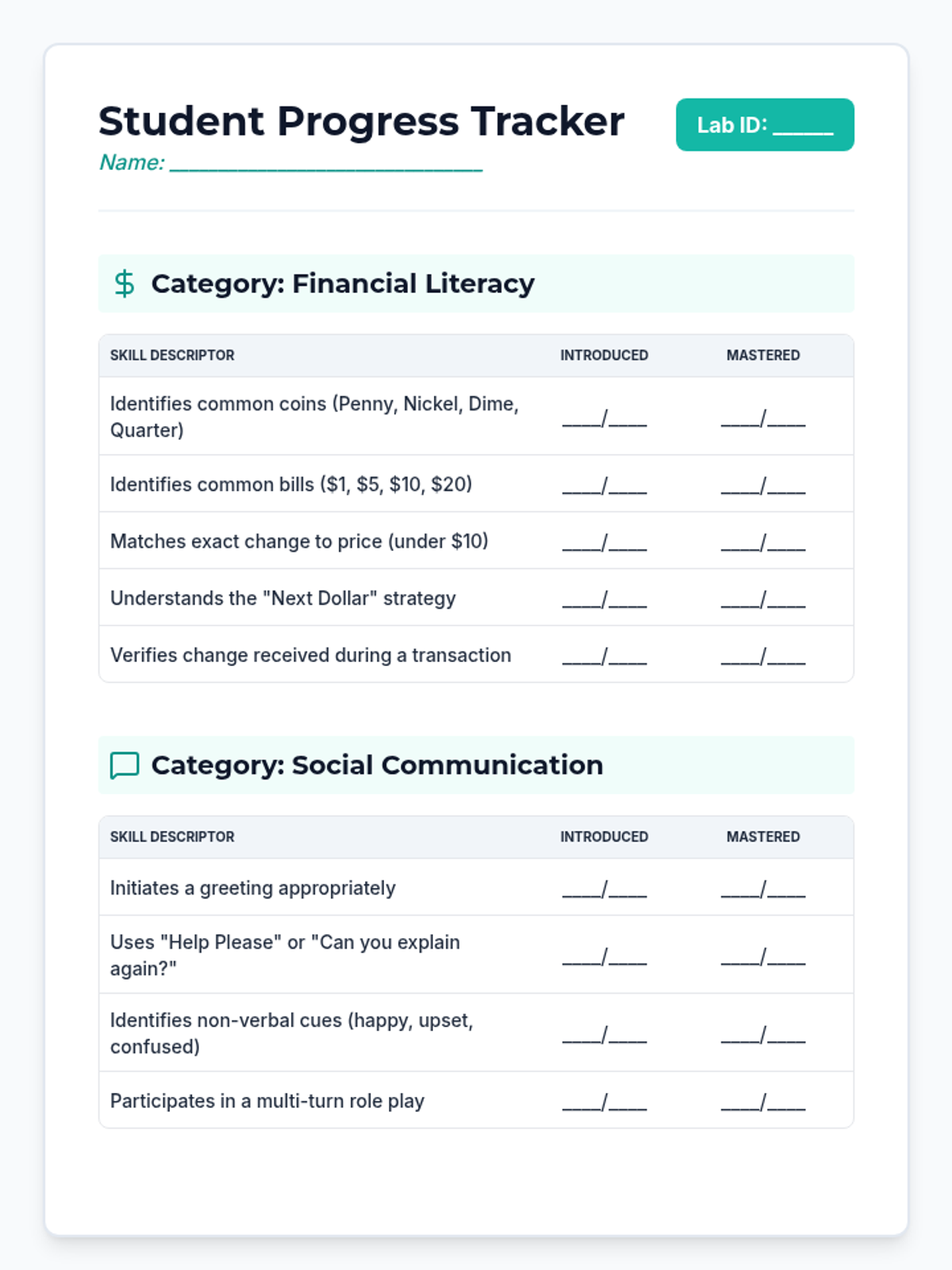
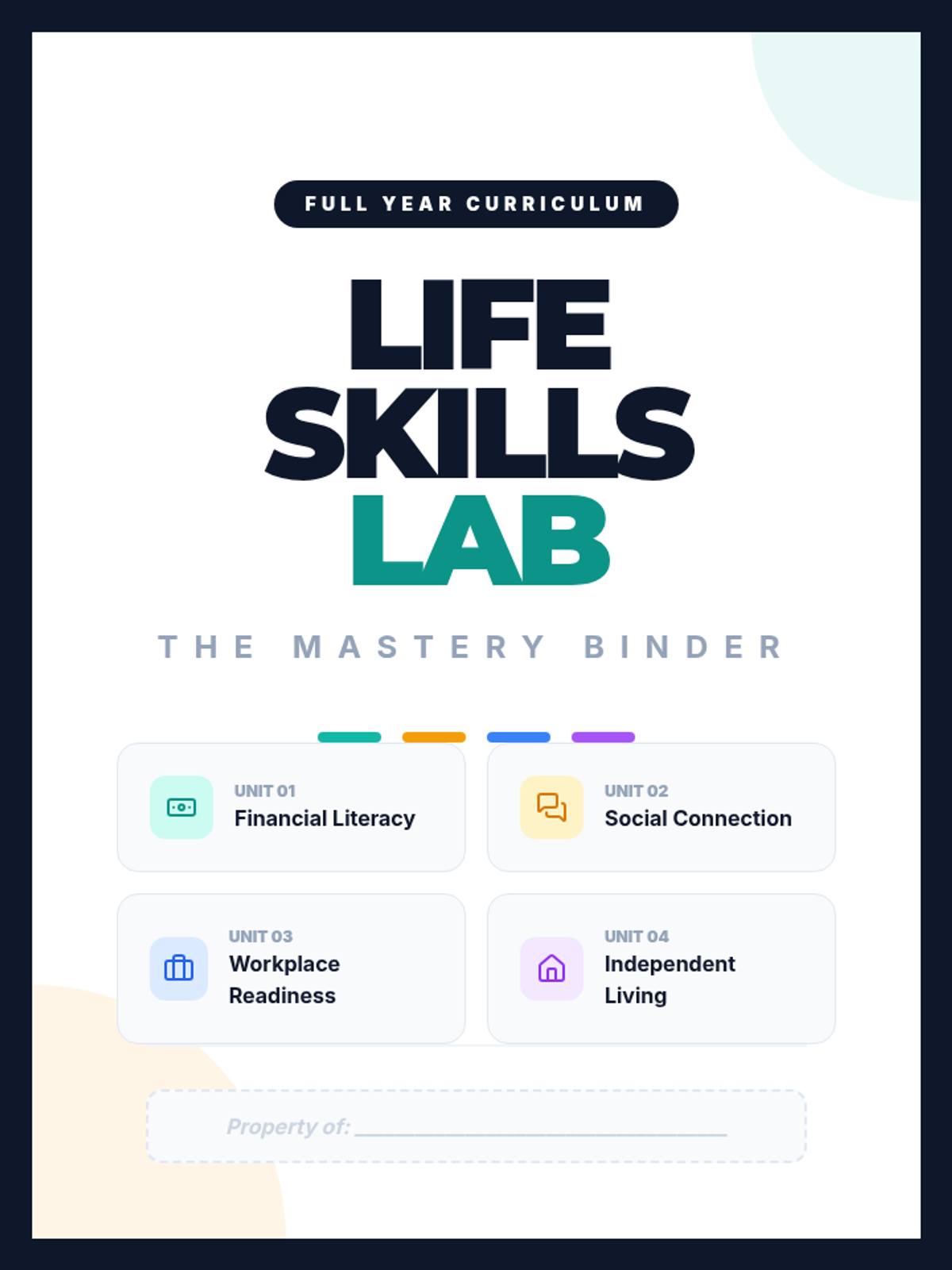
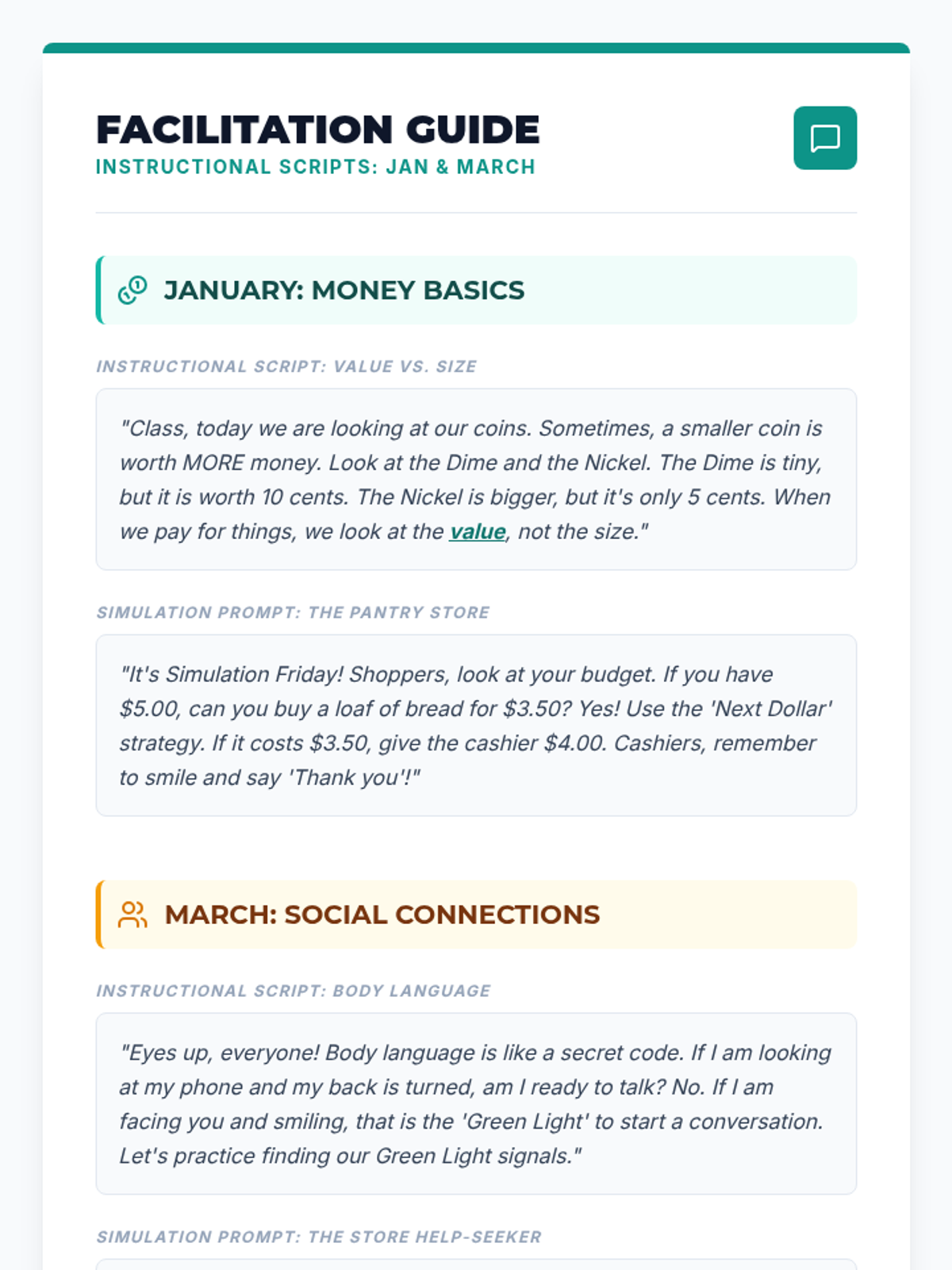
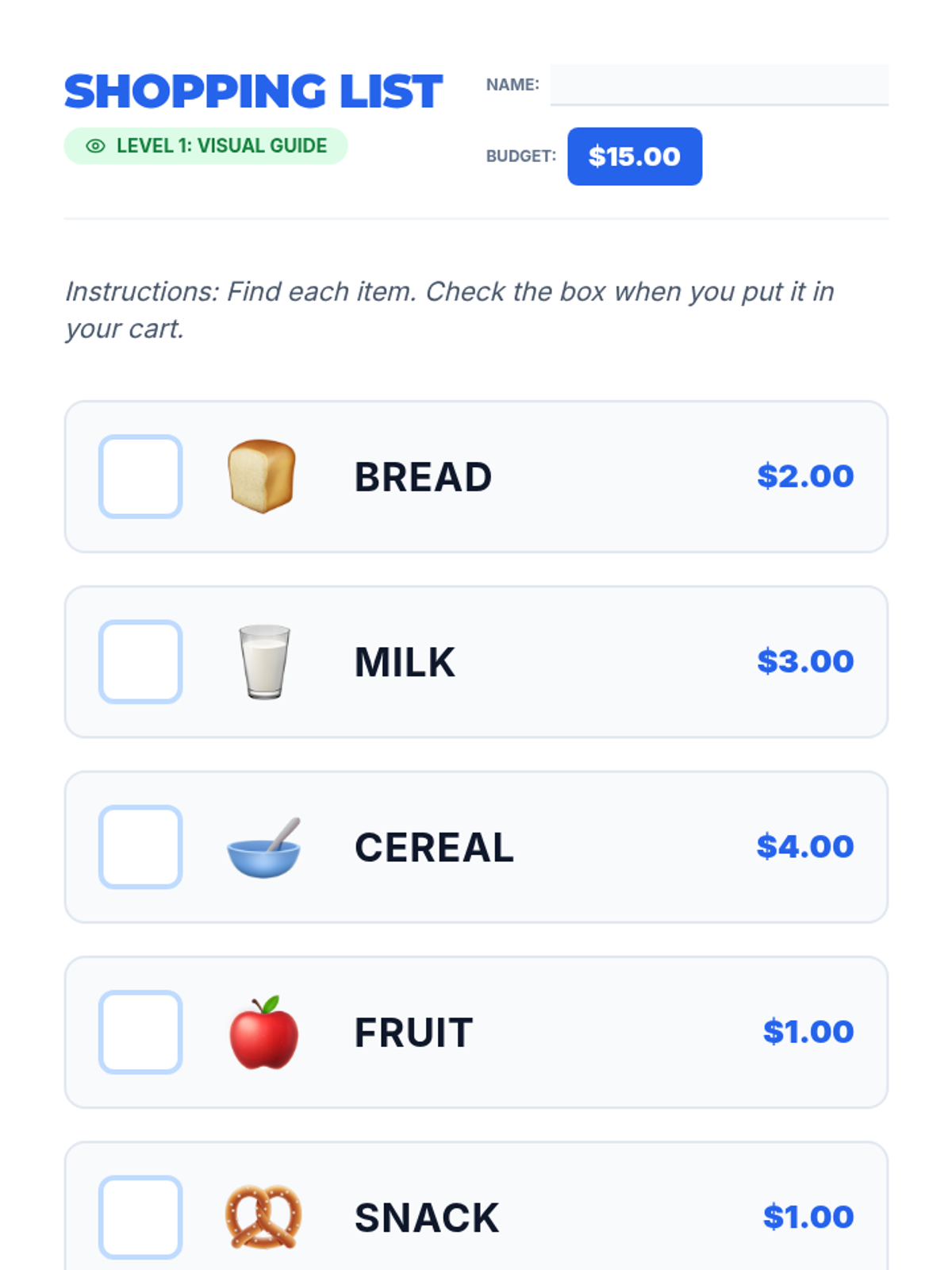
A comprehensive year-long curriculum designed to empower students with essential life skills for independence, focusing on financial literacy, social communication, and real-world simulations.
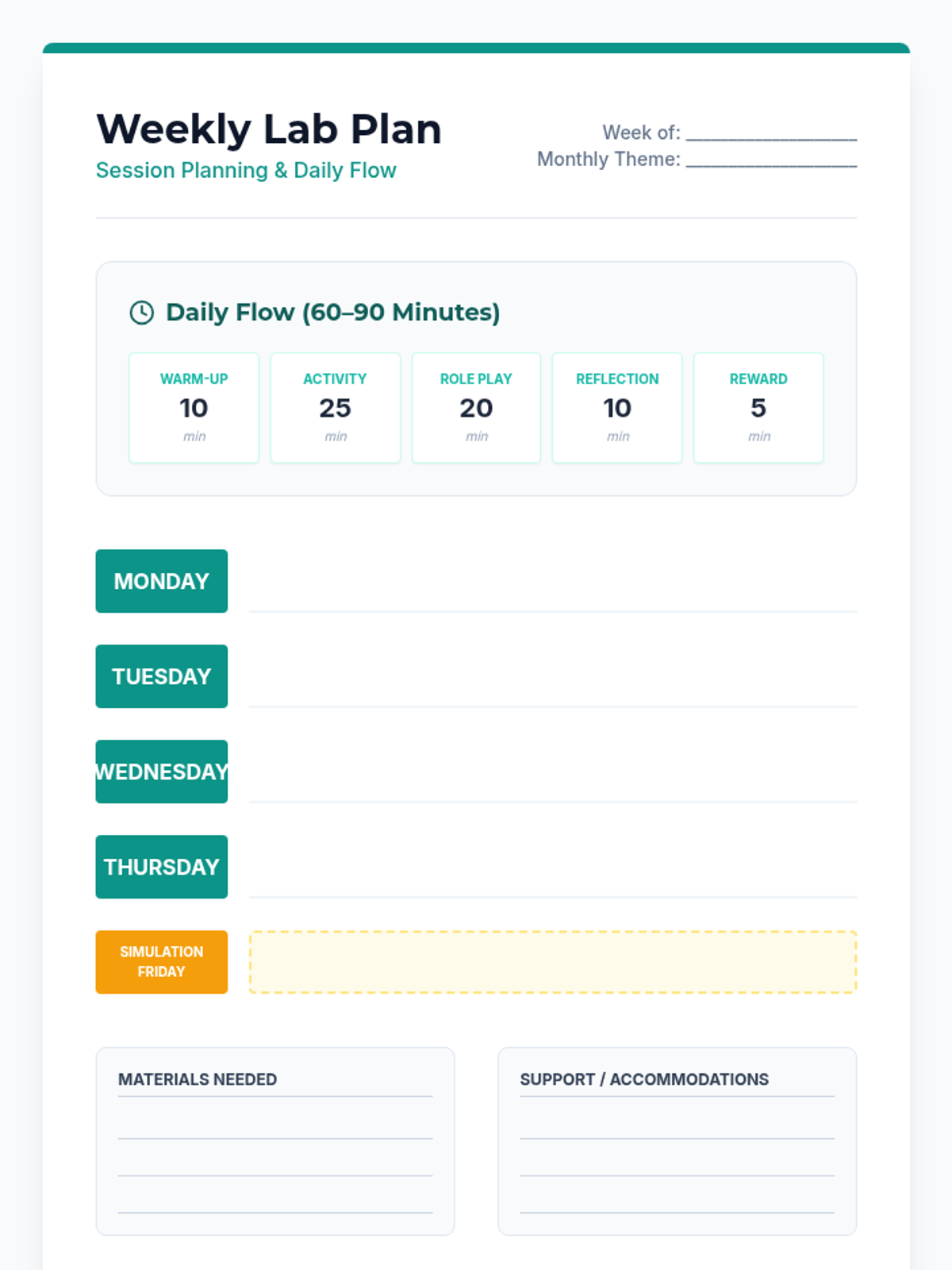
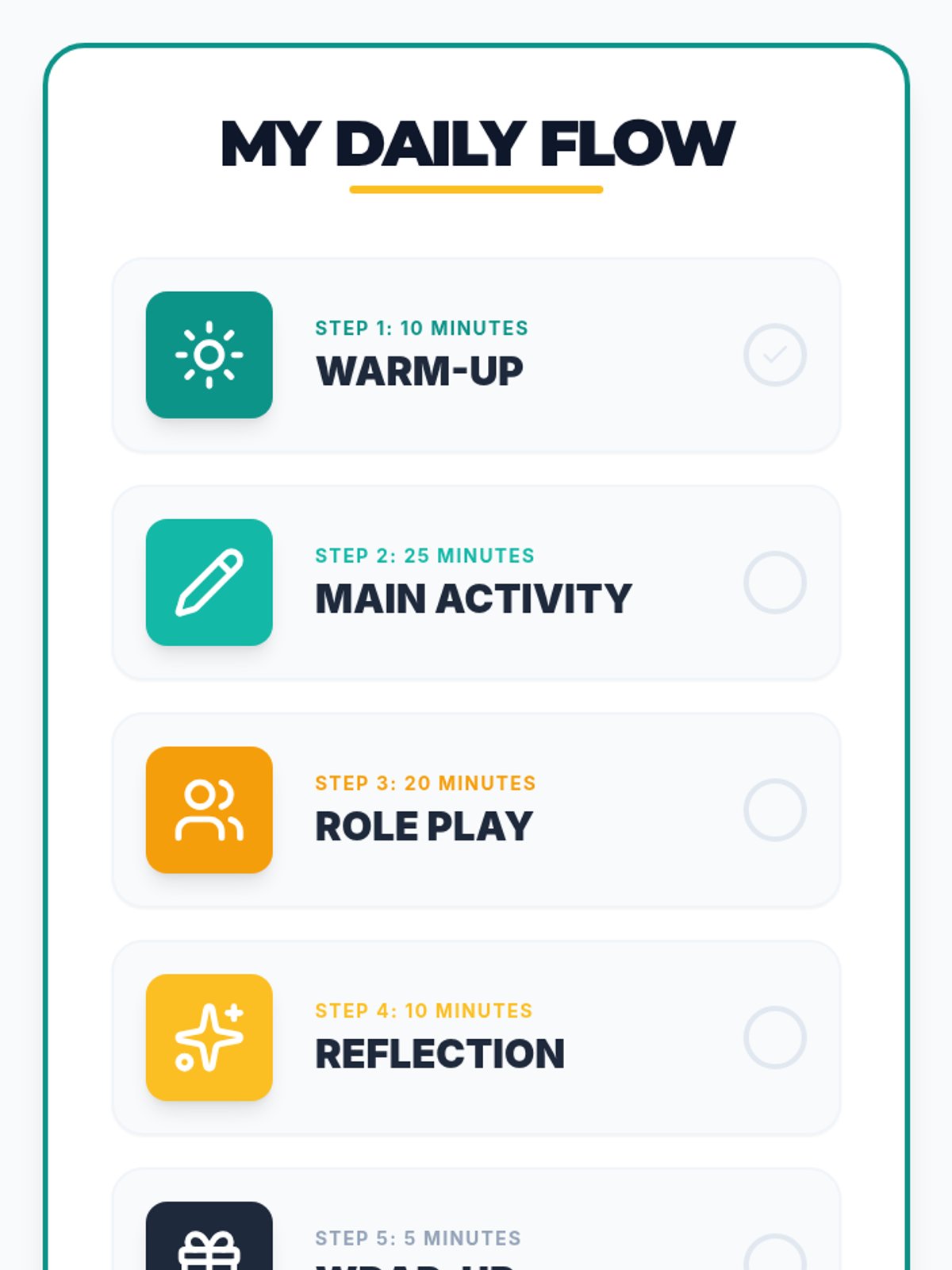
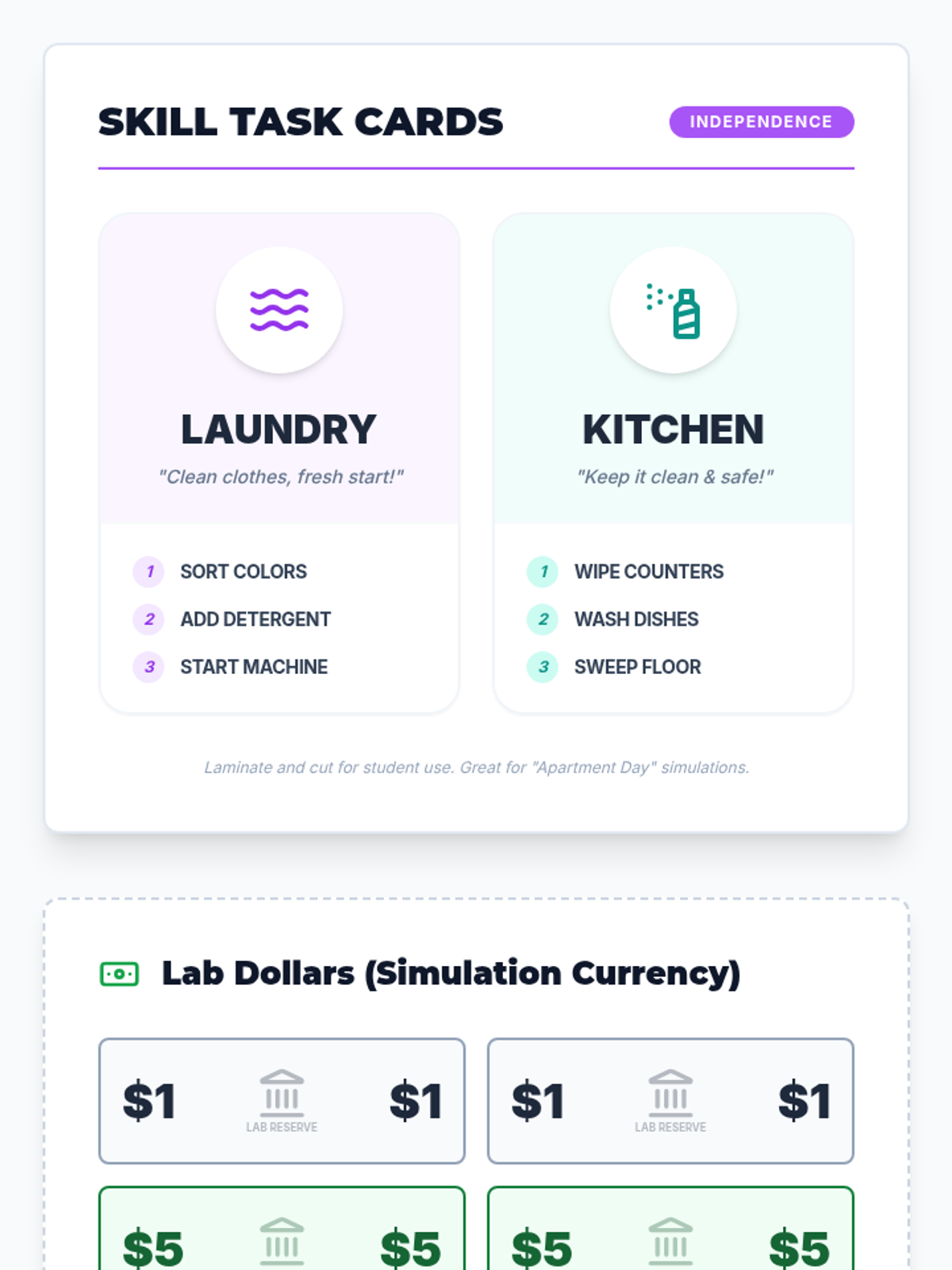
A full-month curriculum focused on developing independence through real-world simulations, role-playing, and practical application of functional life skills.
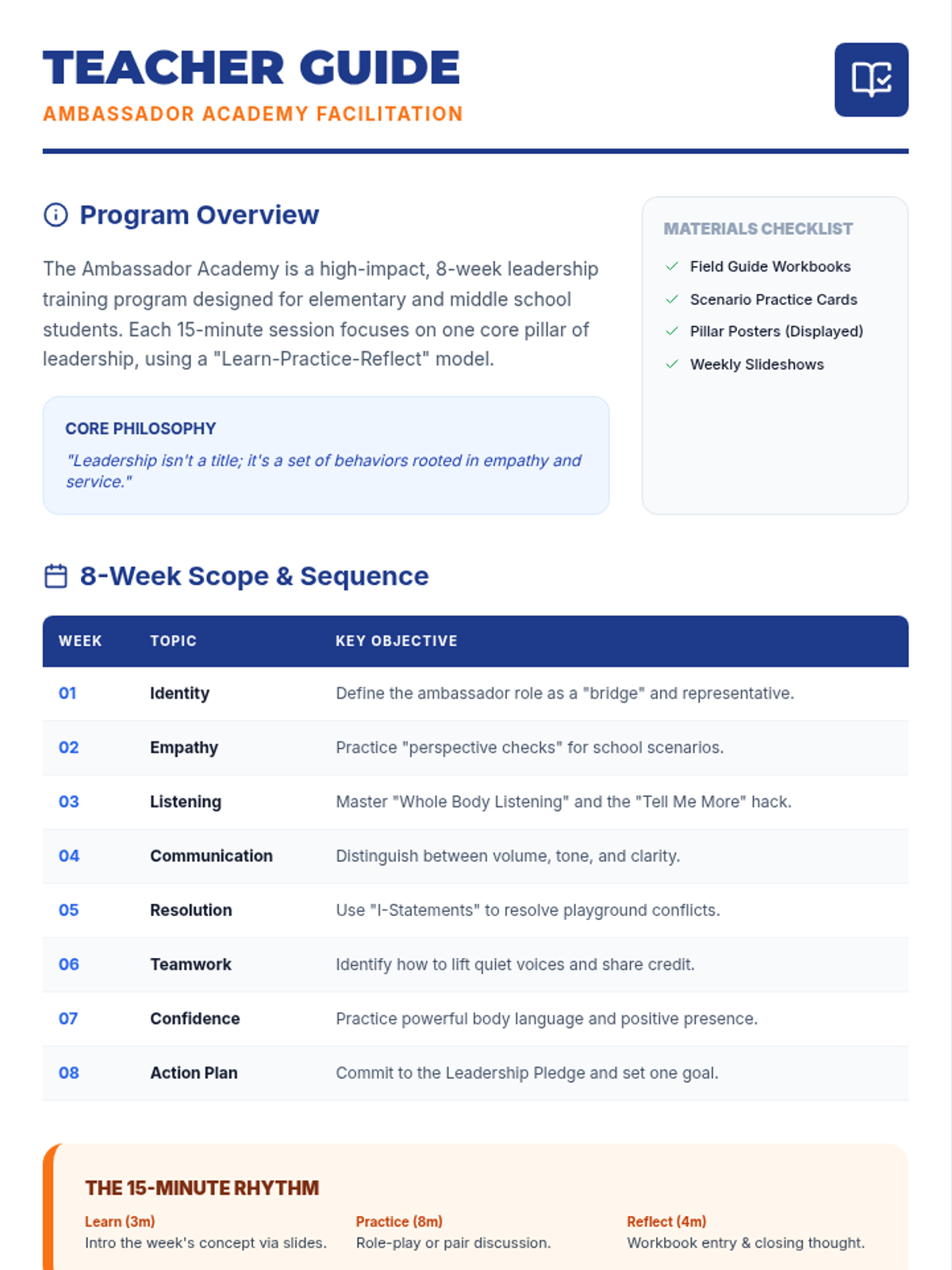
An 8-week leadership training program for school ambassadors, focusing on empathy, communication, and active listening through short, high-impact sessions.
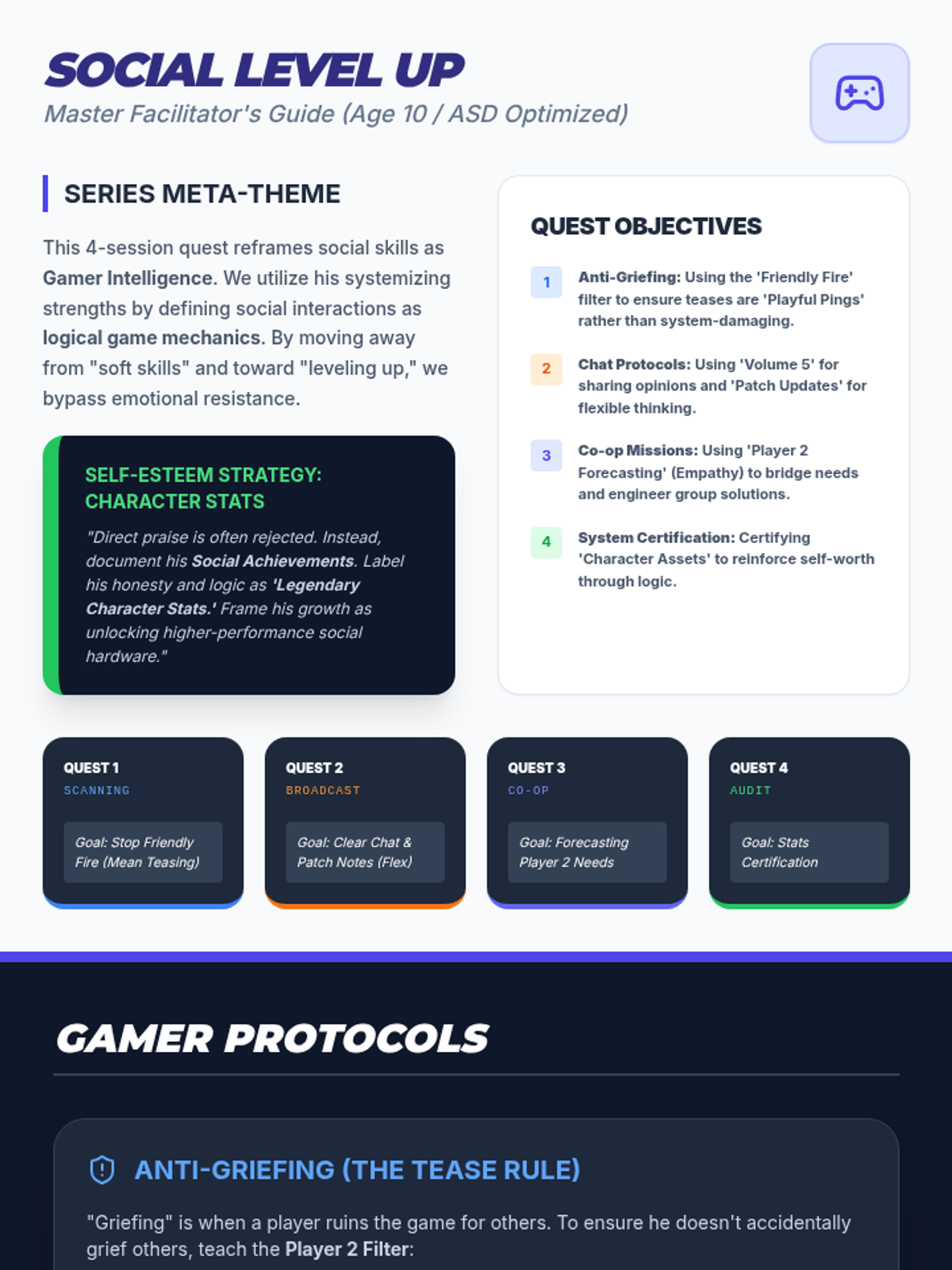
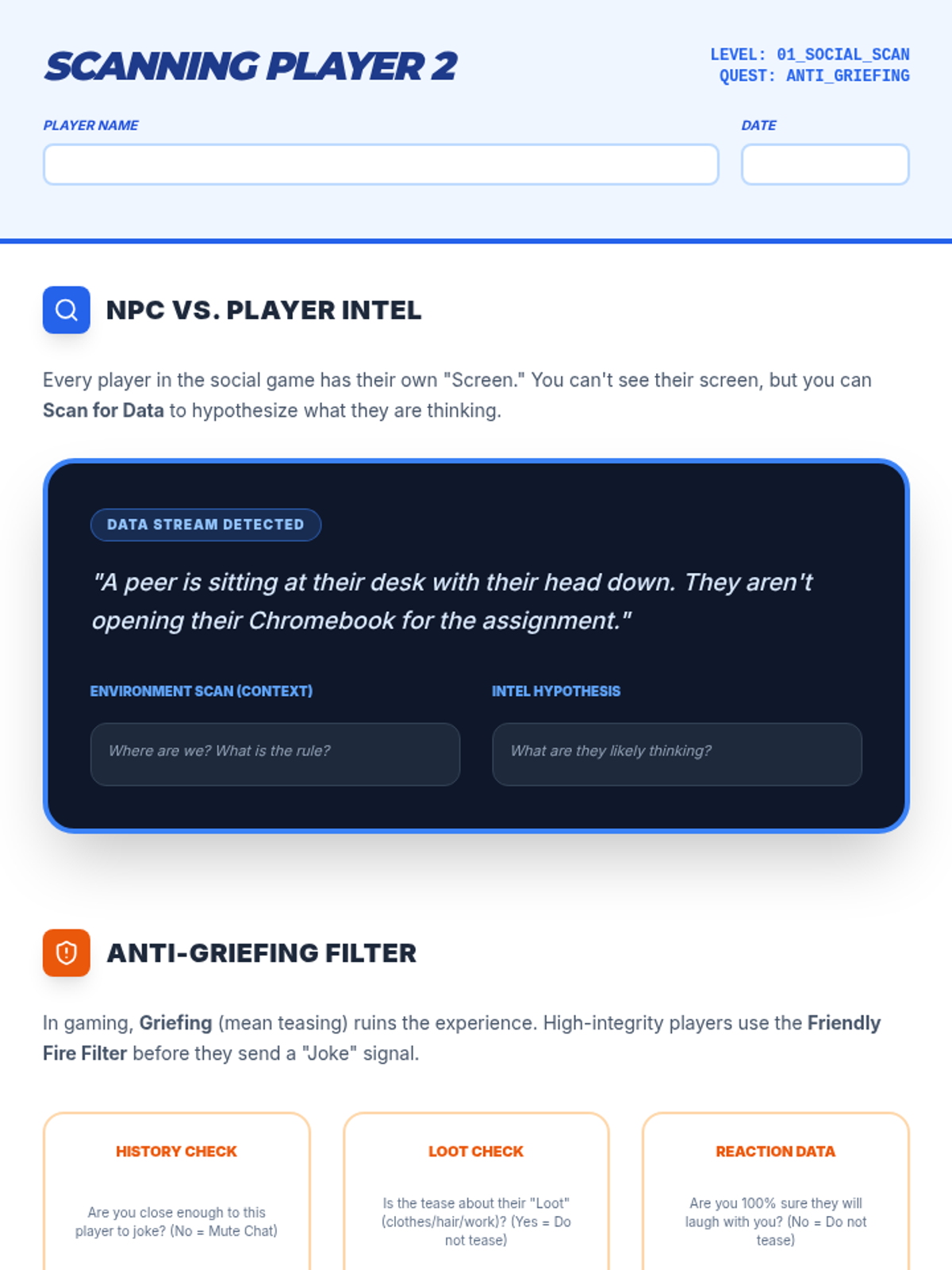
A four-session counseling series for 10-year-old students resistant to traditional self-esteem work. It uses a 'Social Level Up' video game metaphor to master salient social skills: anti-griefing (preventing mean teasing), chat protocols (opinions/flexibility), and co-op forecasting (empathy/solutions).
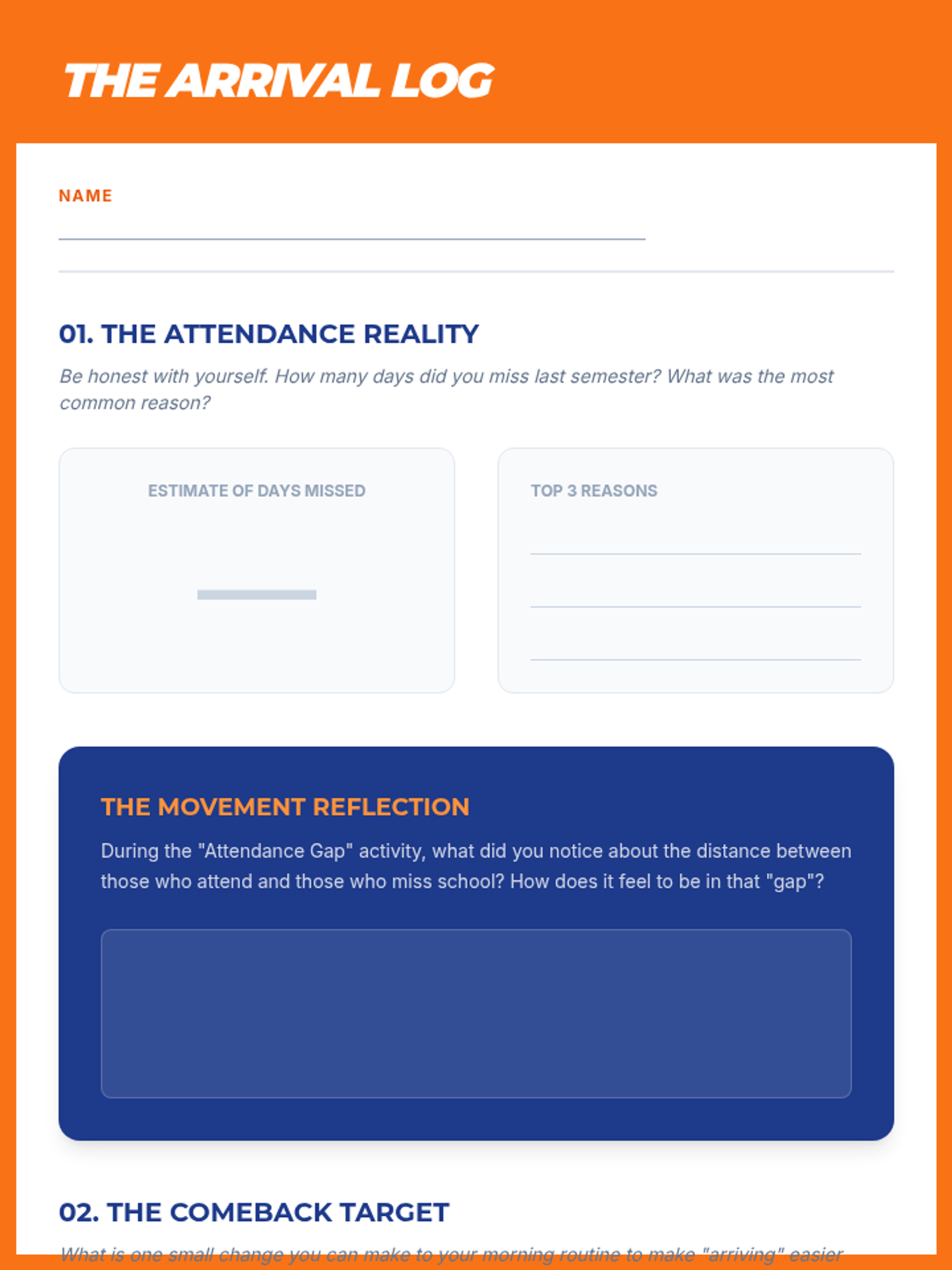
A 6-week academic intervention program for middle schoolers, focusing on attendance, organization, study skills, and self-advocacy through movement-based learning and reflective practice.
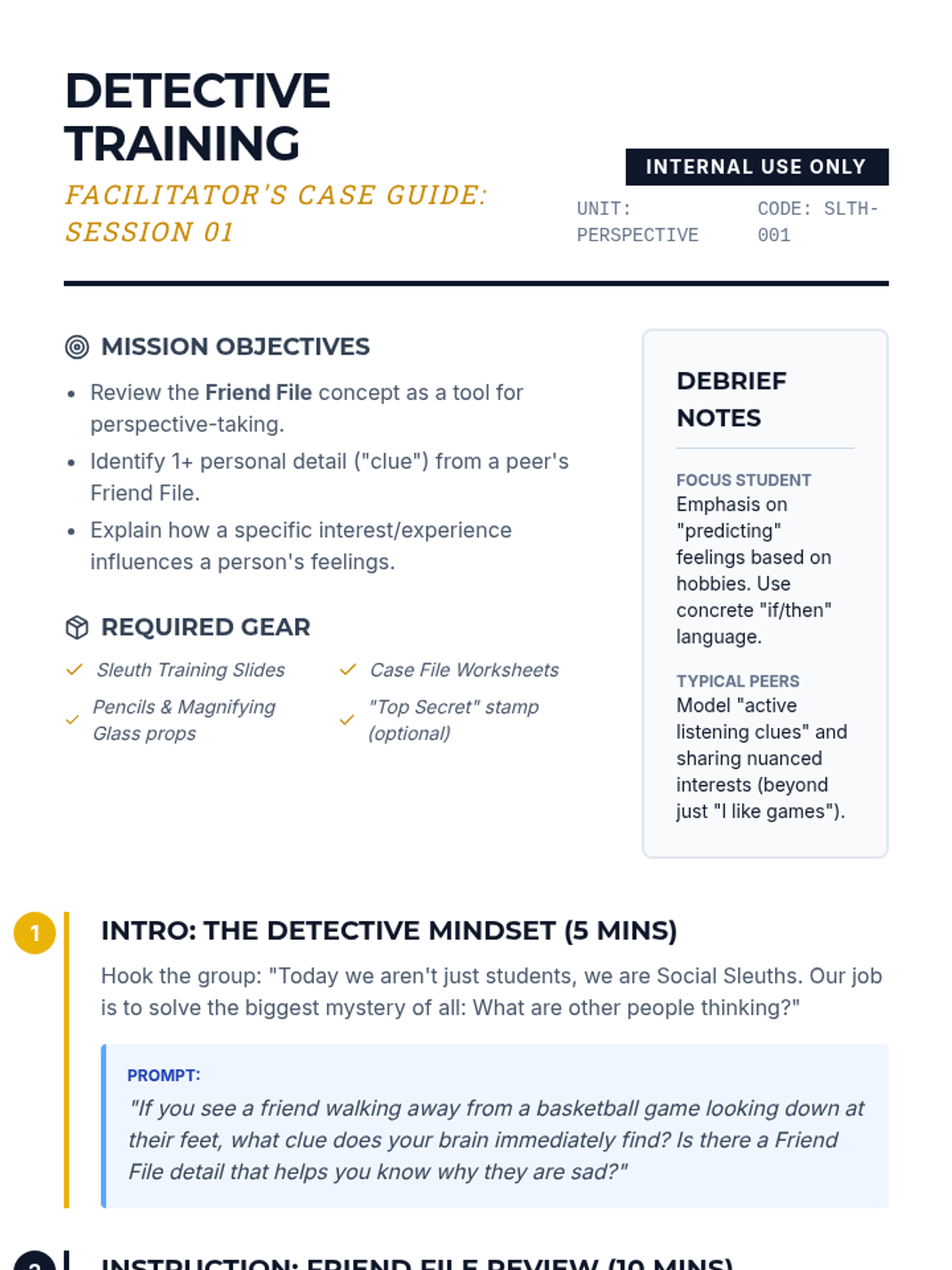
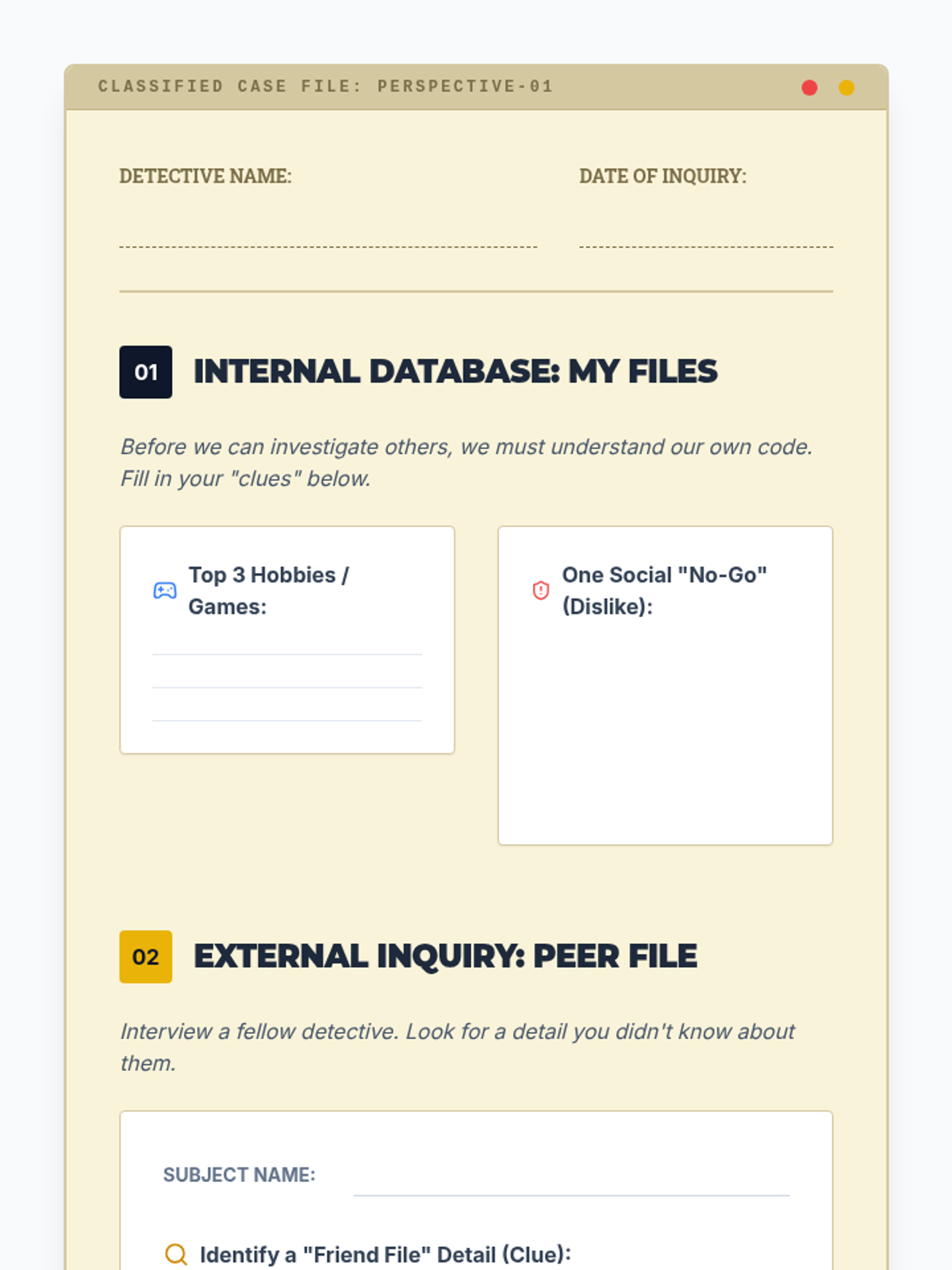
A 6-session counseling sequence focused on social perspective-taking using the 'Social Sleuths' framework. Students learn to use 'Friend Files' to identify perspectives and solve social problems in sports, gaming, schoolwork, and lunchroom contexts.
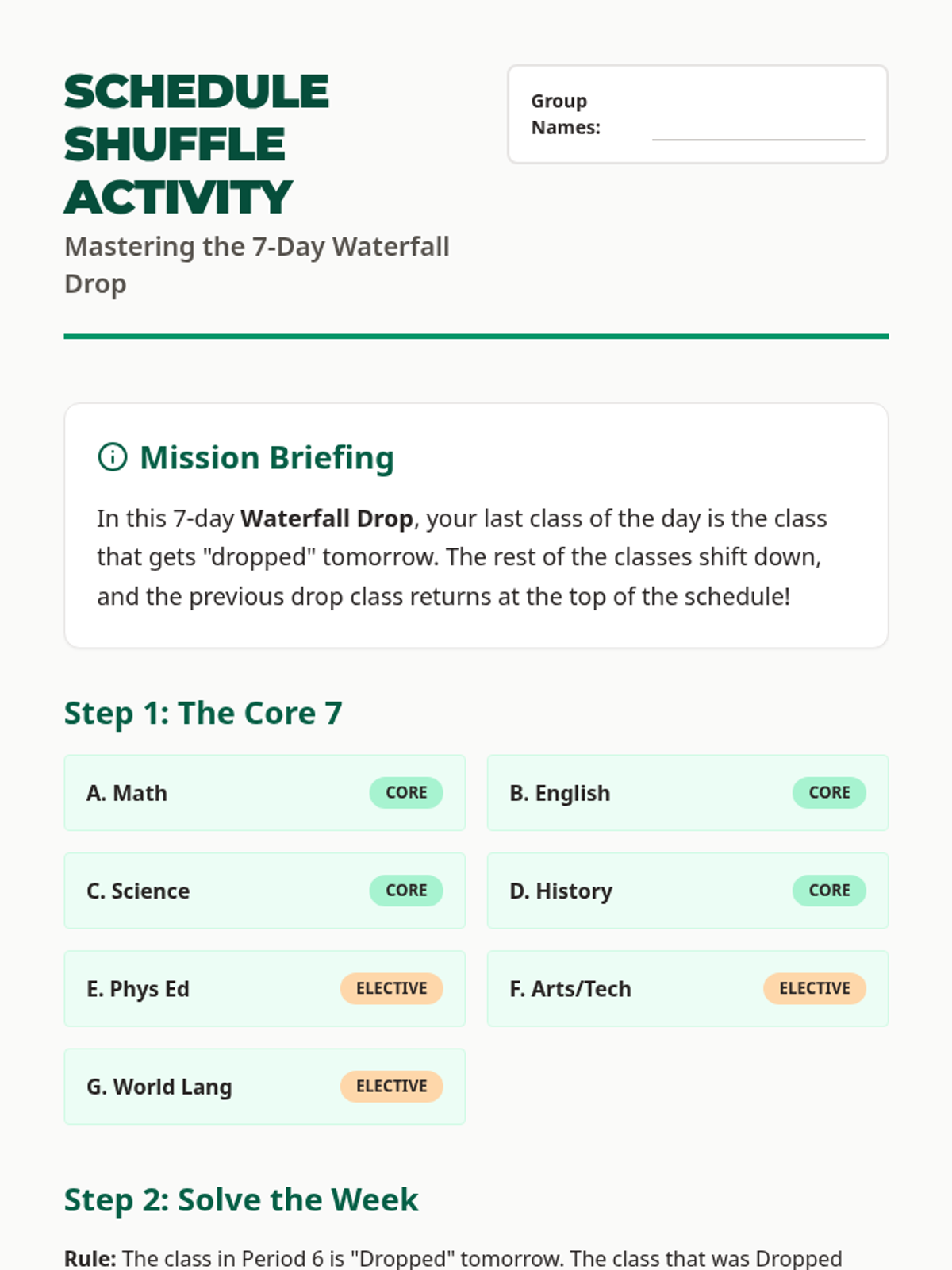
A short unit designed to help rising 7th graders transition to middle school by understanding the shift in teacher dynamics, scheduling complexities, and the social-emotional skills needed to navigate diverse classroom environments.
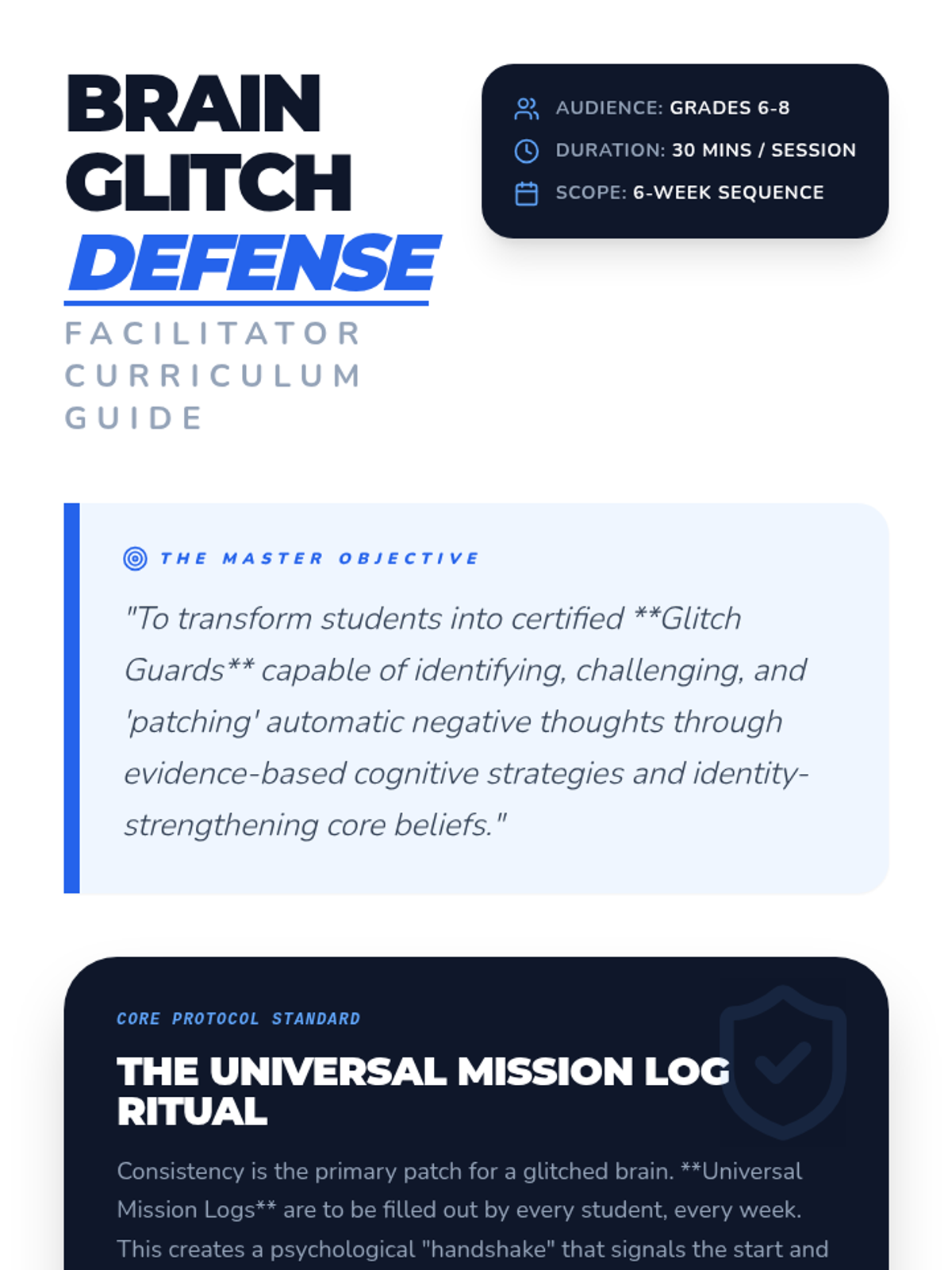
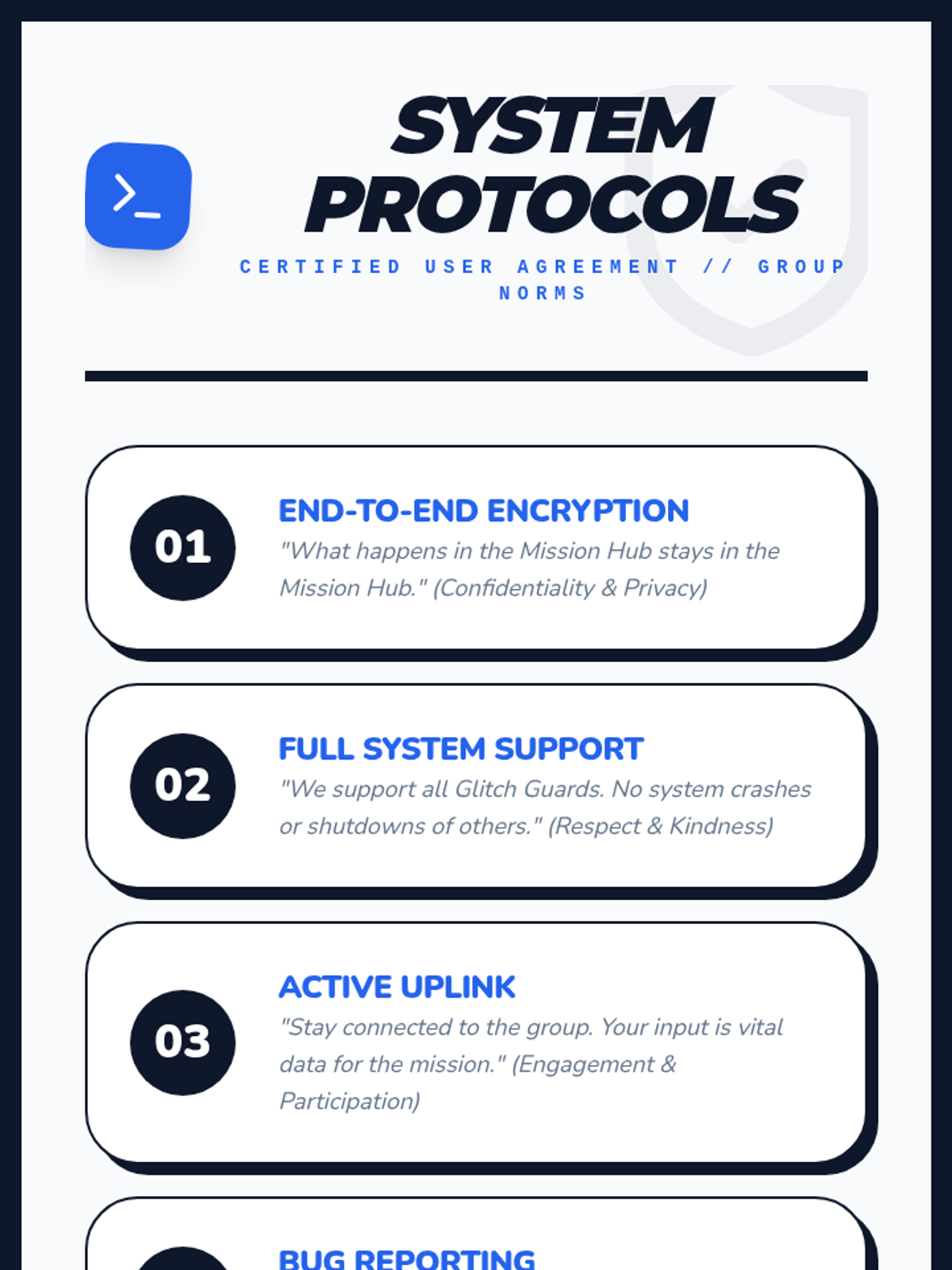
A comprehensive 6-week gamified counseling curriculum for middle schoolers. It uses a 'cyber-defense' theme to help students identify, challenge, and 'patch' cognitive distortions (brain glitches) through interactive games, scenario-based learning, and cognitive-behavioral techniques.