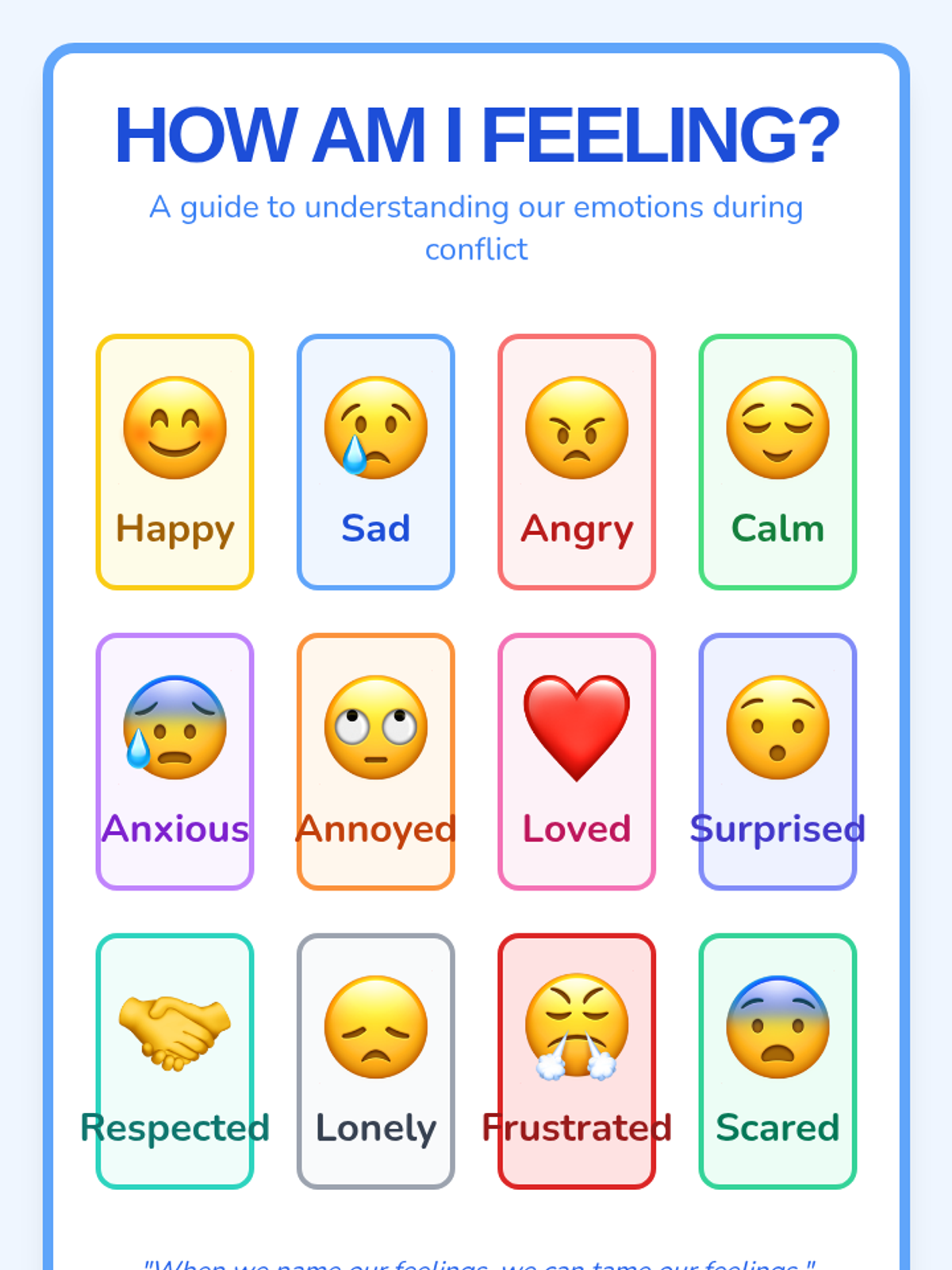
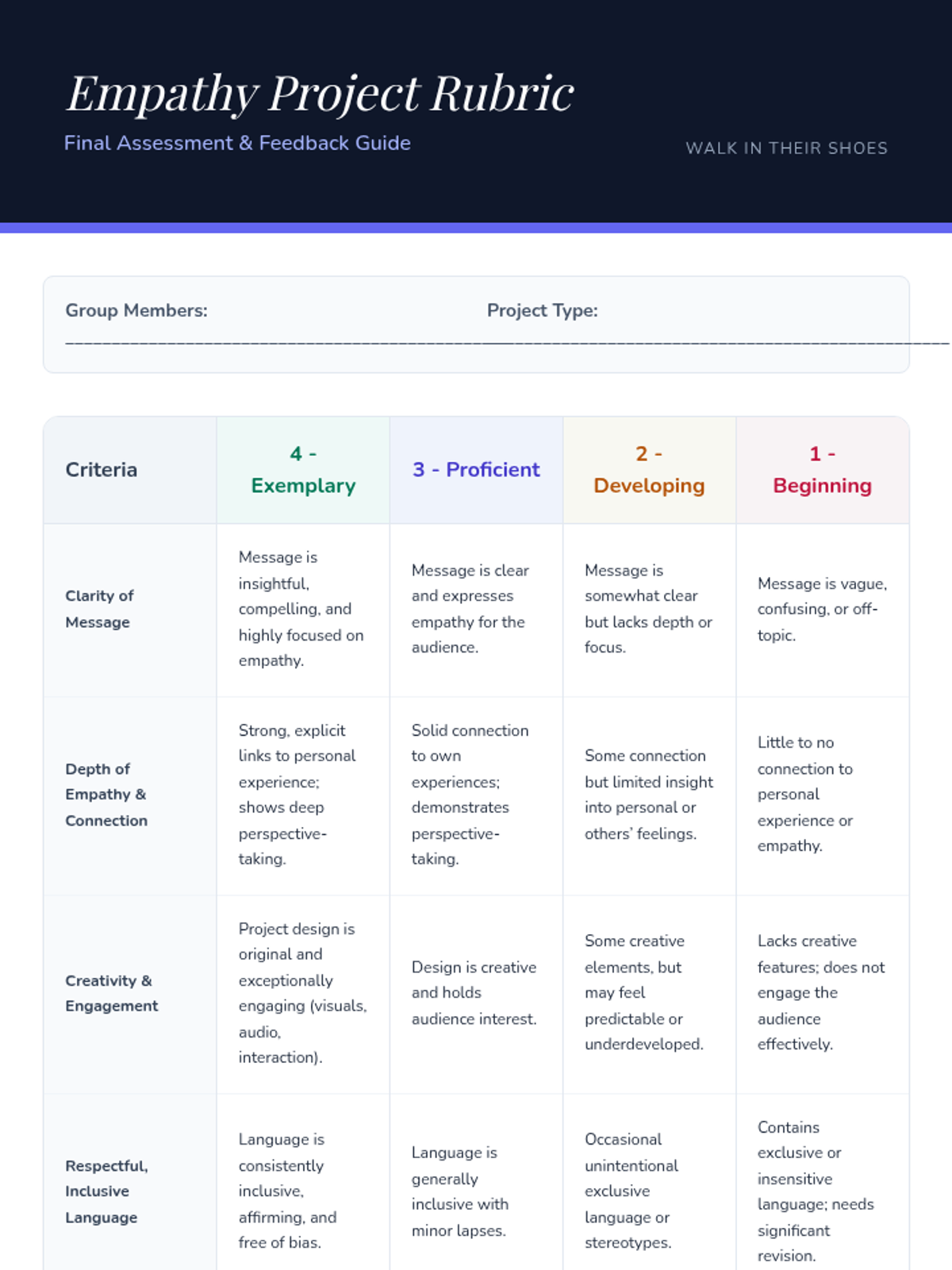
Empathetic skill development through emotion recognition, cultural diversity appreciation, and bias confrontation. Targets multi-perspective analysis to support respectful interactions and complex social responses.
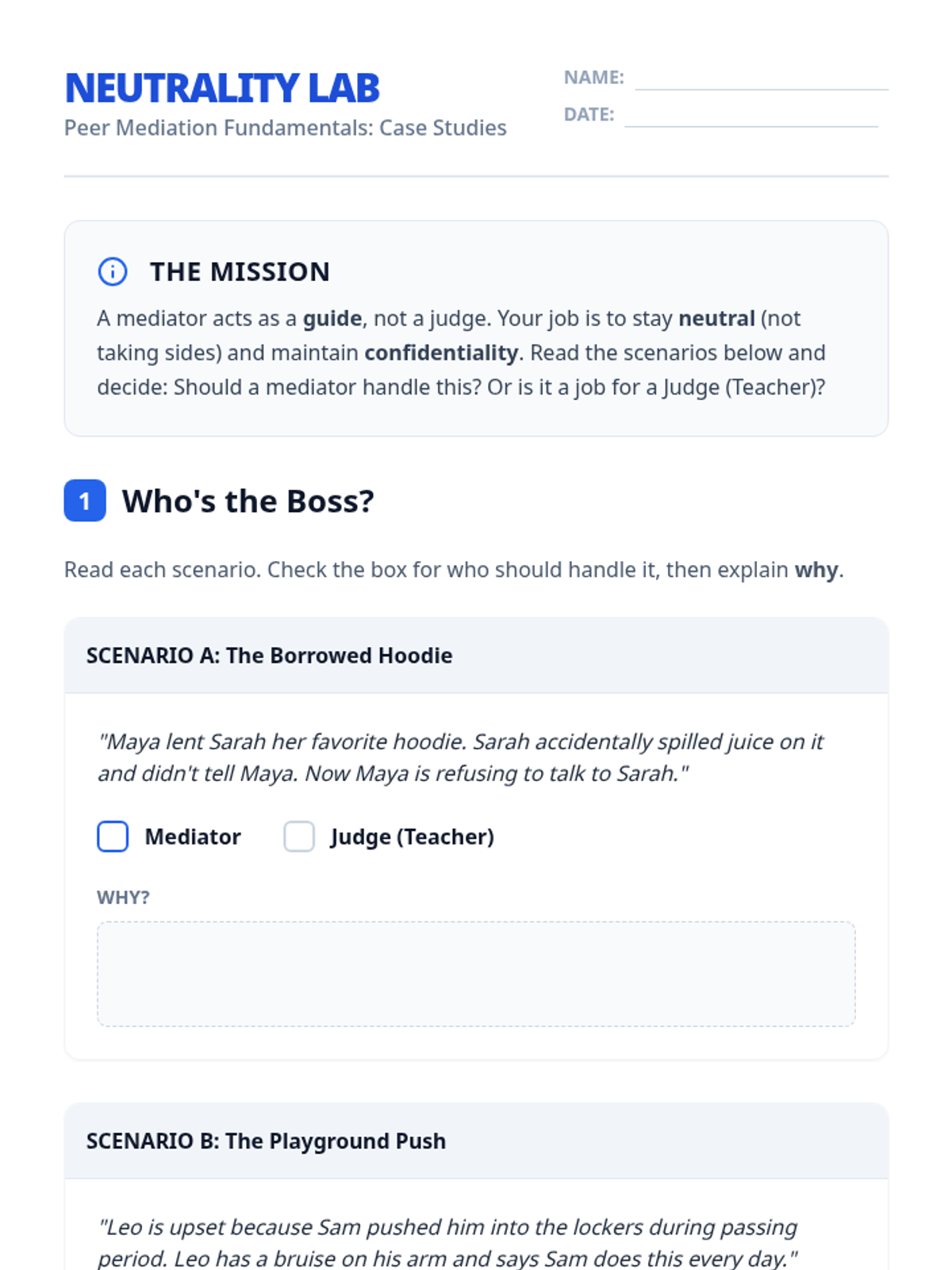
This sequence empowers students to act as third-party neutrals, introducing the specific structure and skills of Peer Mediation. Students learn the distinct phases of a mediation session, the importance of neutrality, and how to facilitate dialogue without taking sides.
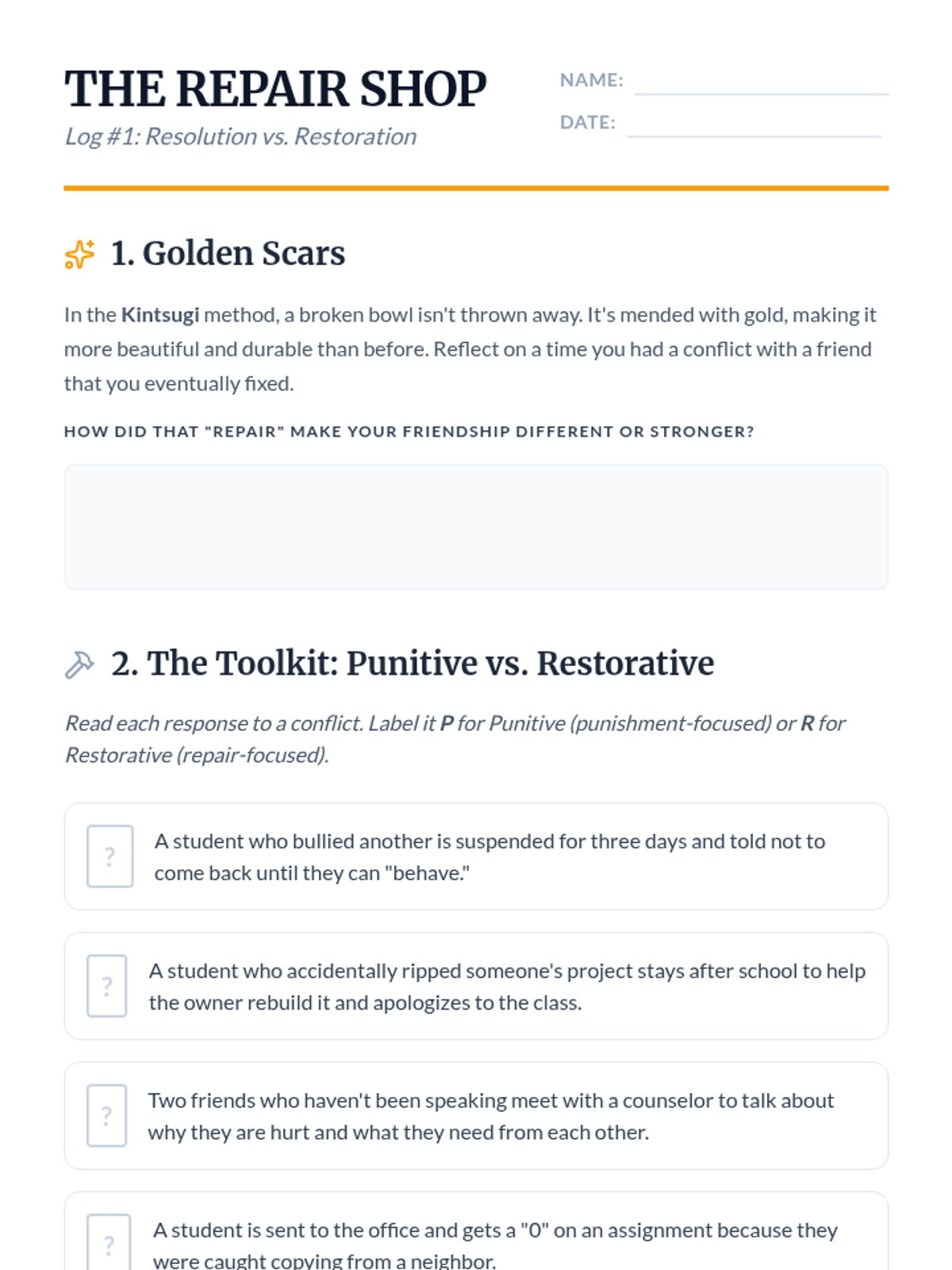
A 5-lesson sequence for 6th graders focusing on the aftermath of conflict: restoration, genuine apologies, sustainable agreements, and rebuilding trust. Students move beyond just 'stopping a fight' to actively repairing relationships and creating long-term peace.
A comprehensive 6th-grade sequence on conflict navigation, teaching students to identify root causes, recognize personal conflict styles, practice perspective-taking, understand escalation, and diagnose complex disputes.
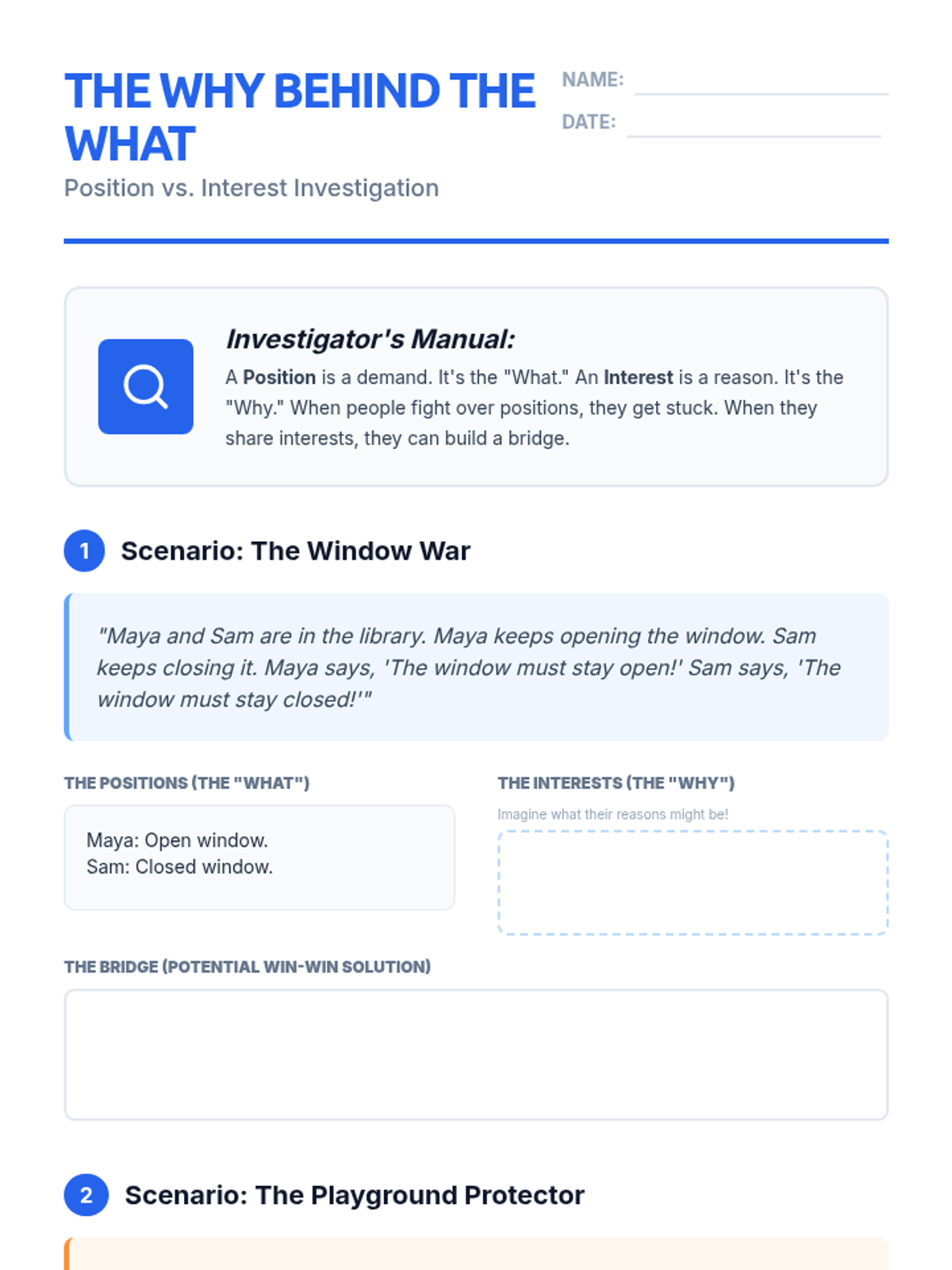
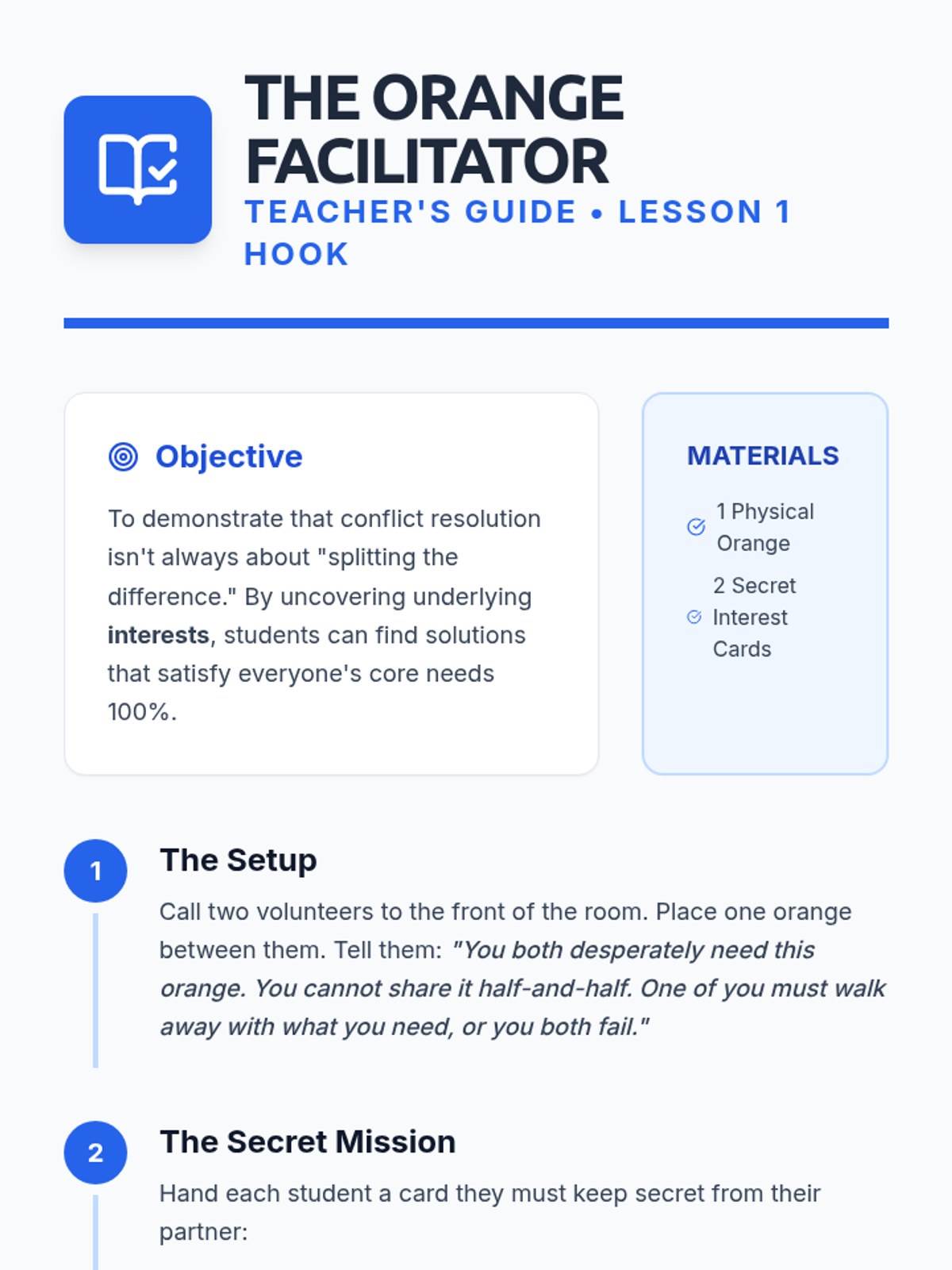
A 5-lesson sequence for 6th graders focusing on Interests-Based Negotiation. Students move from rigid positions to understanding underlying needs, brainstorming creative solutions, and evaluating fairness, culminating in a complex negotiation simulation.
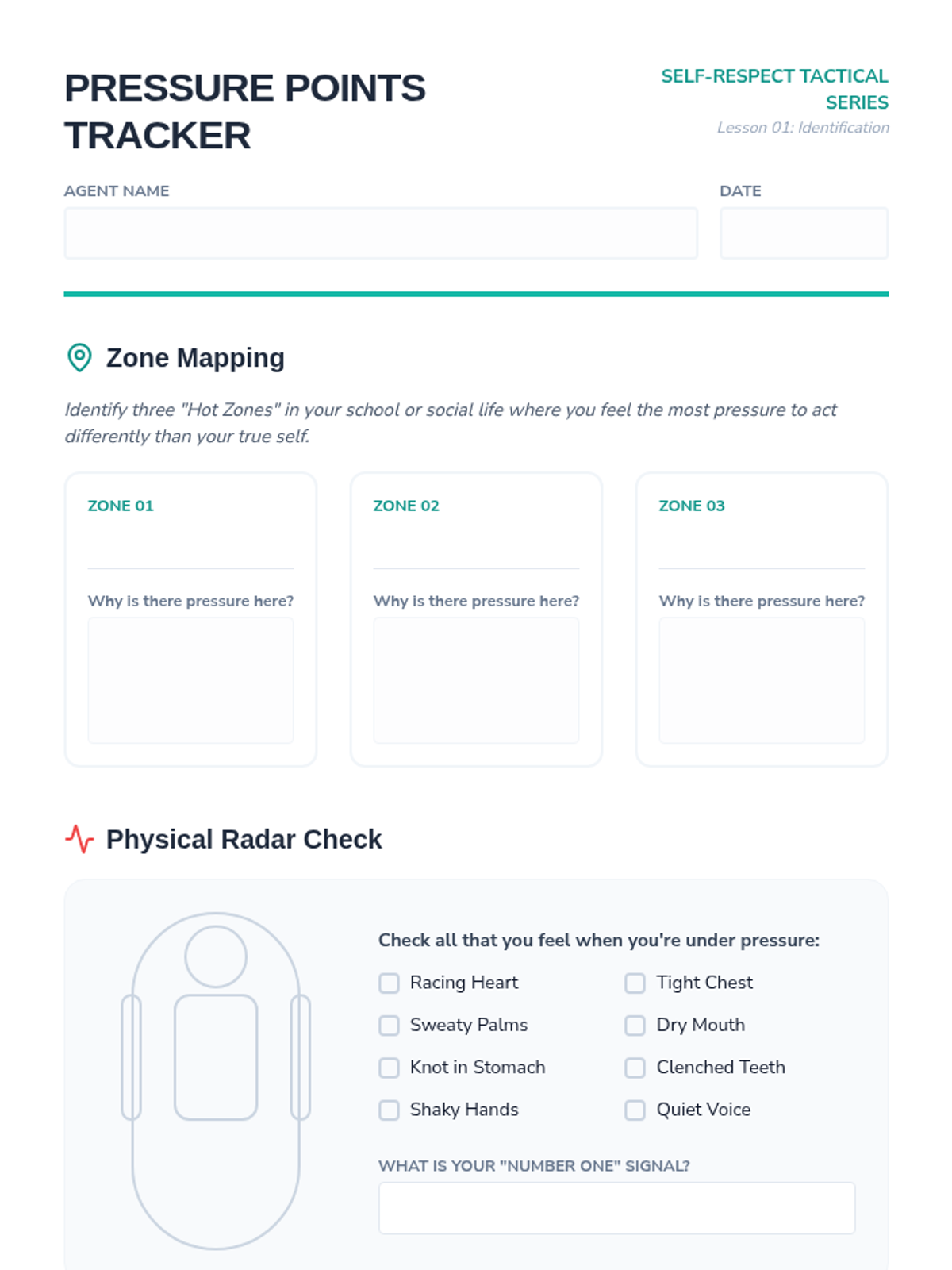
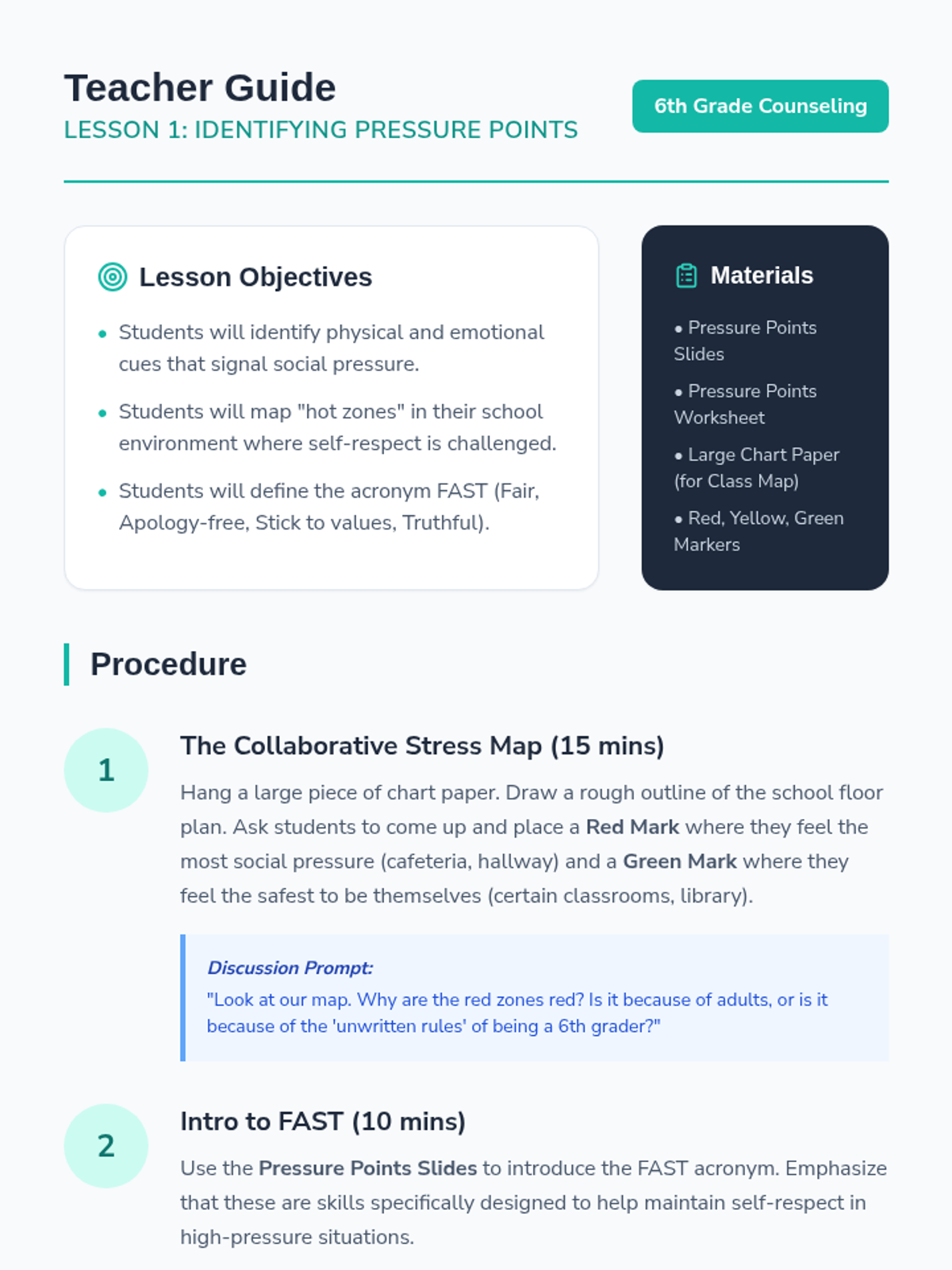
A simulation-heavy sequence teaching 6th graders to use DBT FAST skills (Fair, Apology-free, Stick to values, Truthful) to maintain self-respect during social challenges. Students engage in role-play and real-world scenarios to build integrity and refusal skills.
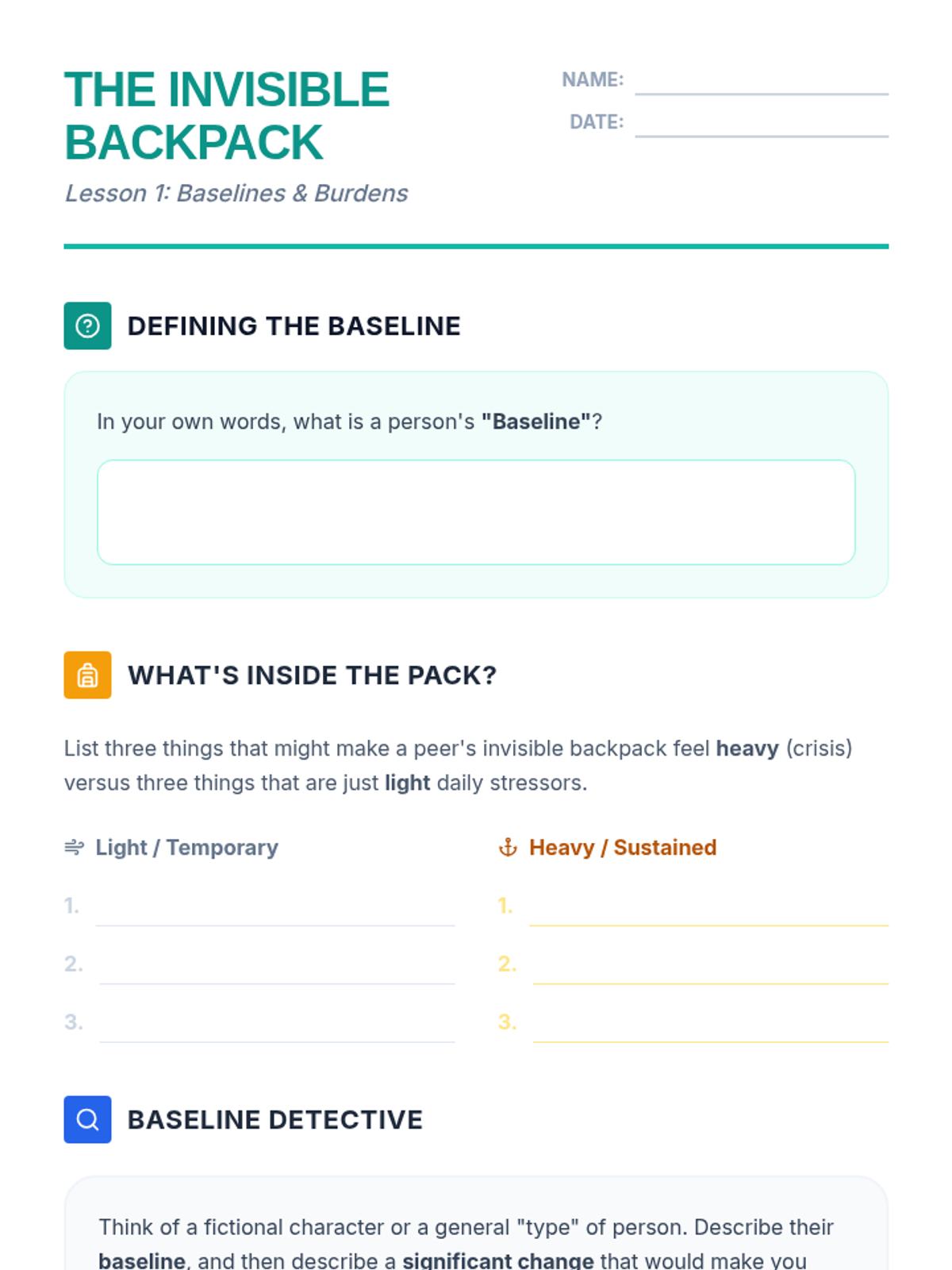
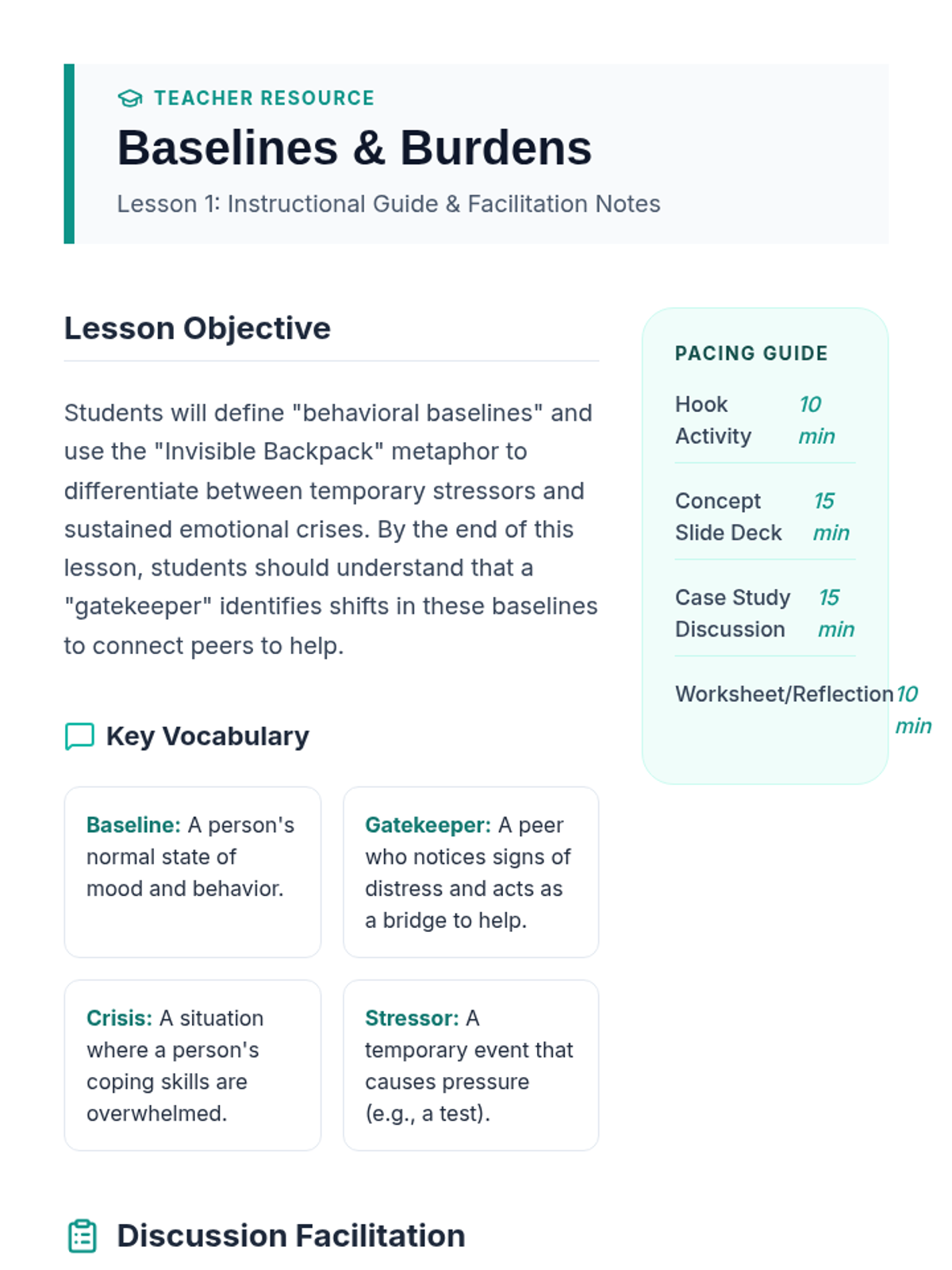
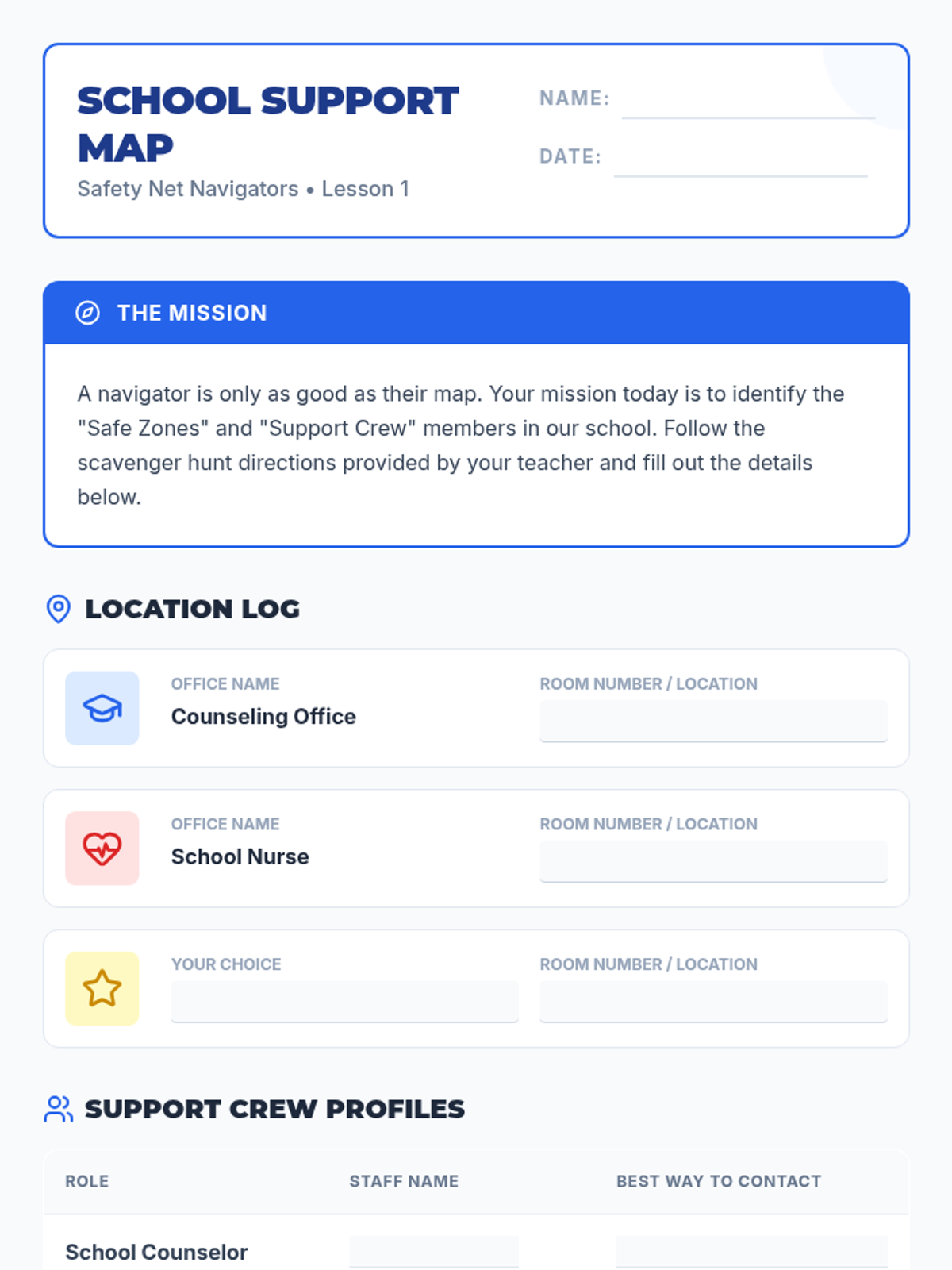
This 6th-grade sequence empowers students to become effective peer gatekeepers by teaching them how to recognize signs of distress, use the Acknowledge, Care, Tell (A.C.T.) framework, and overcome social barriers to reporting. Students will move from identifying emotional baselines to mapping out their personal safety networks of trusted adults.
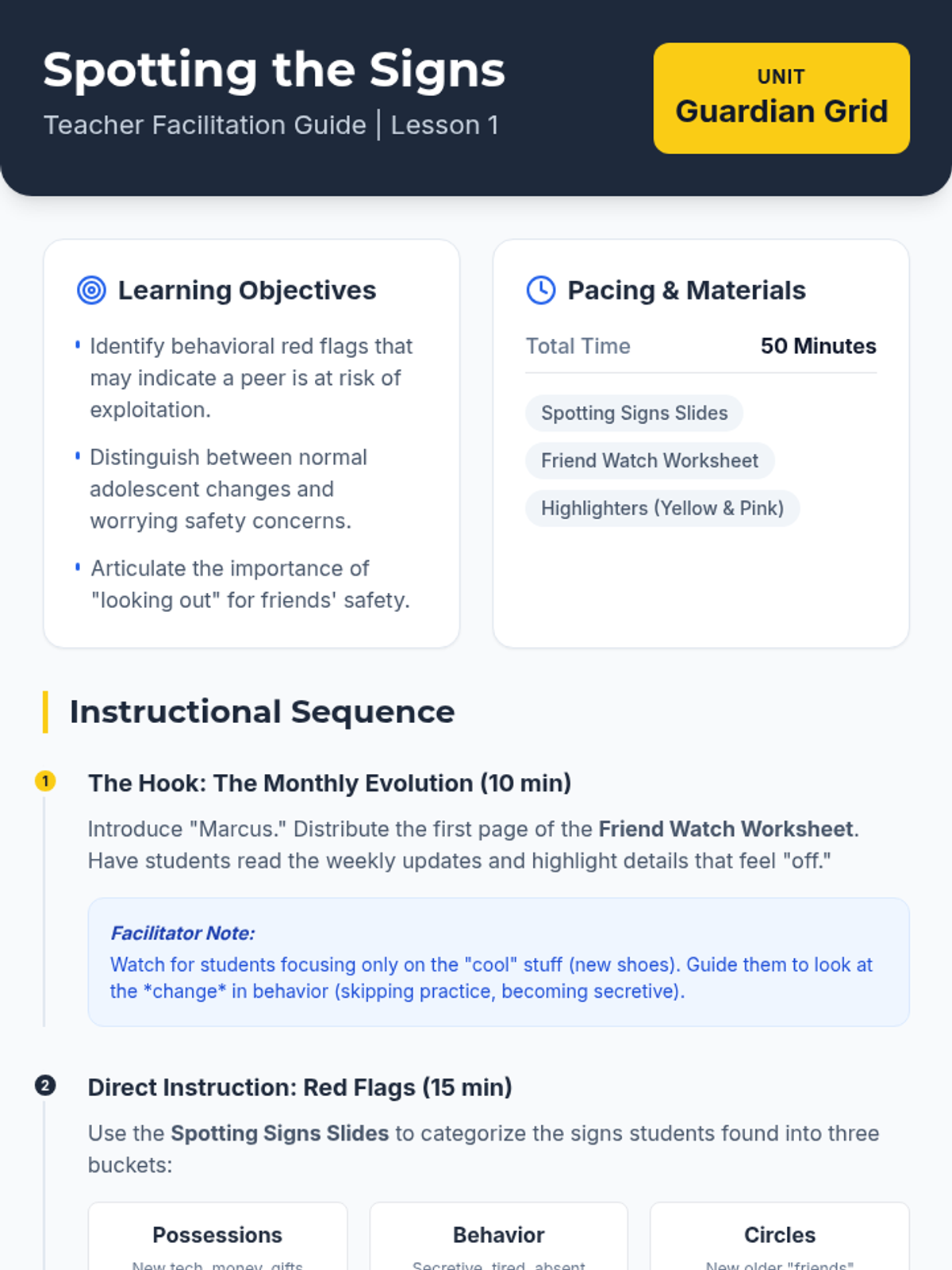
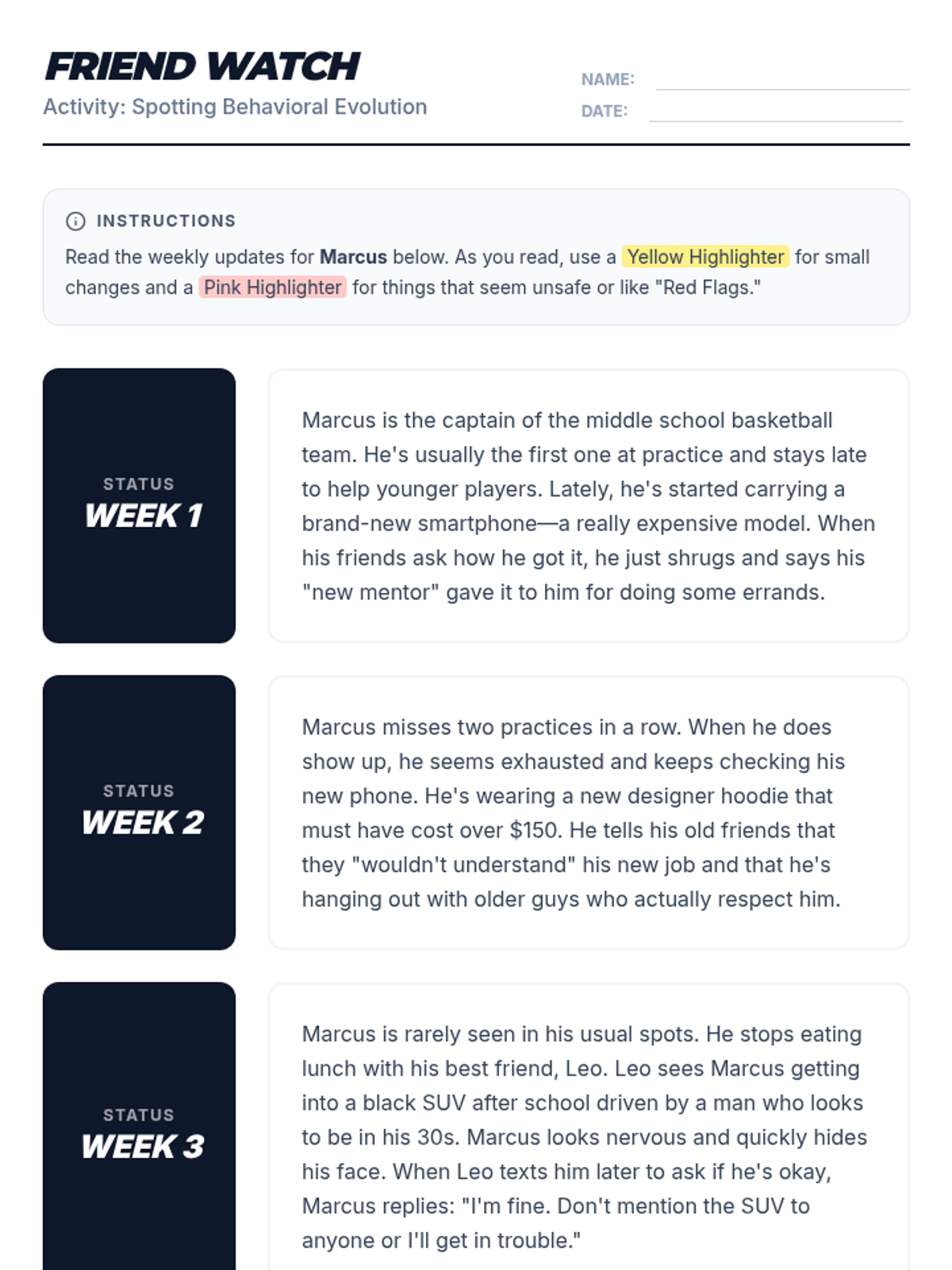
A comprehensive unit for 6th graders focusing on identifying signs of exploitation, overcoming reporting barriers, and navigating safety resources to protect themselves and their peers.
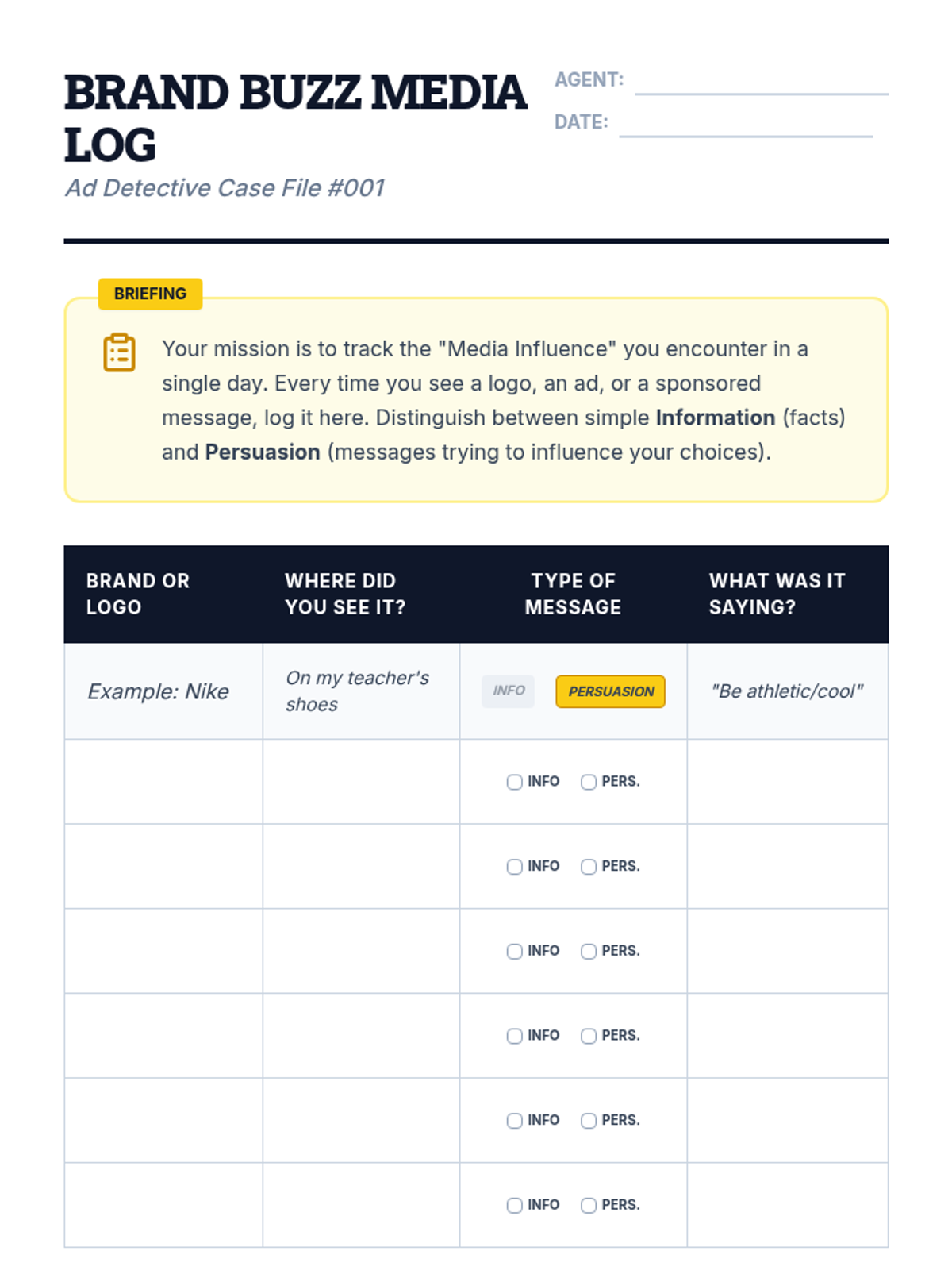
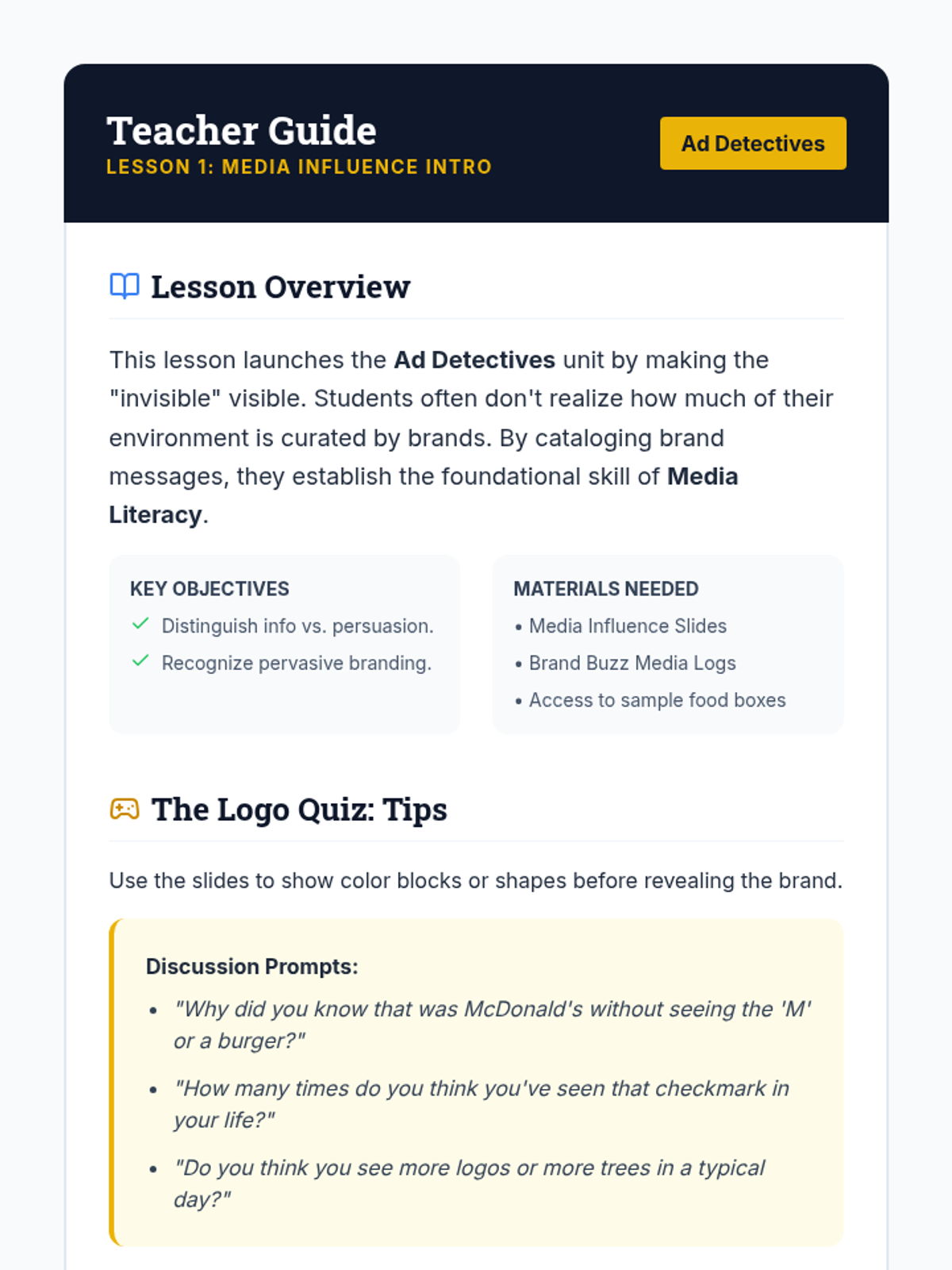
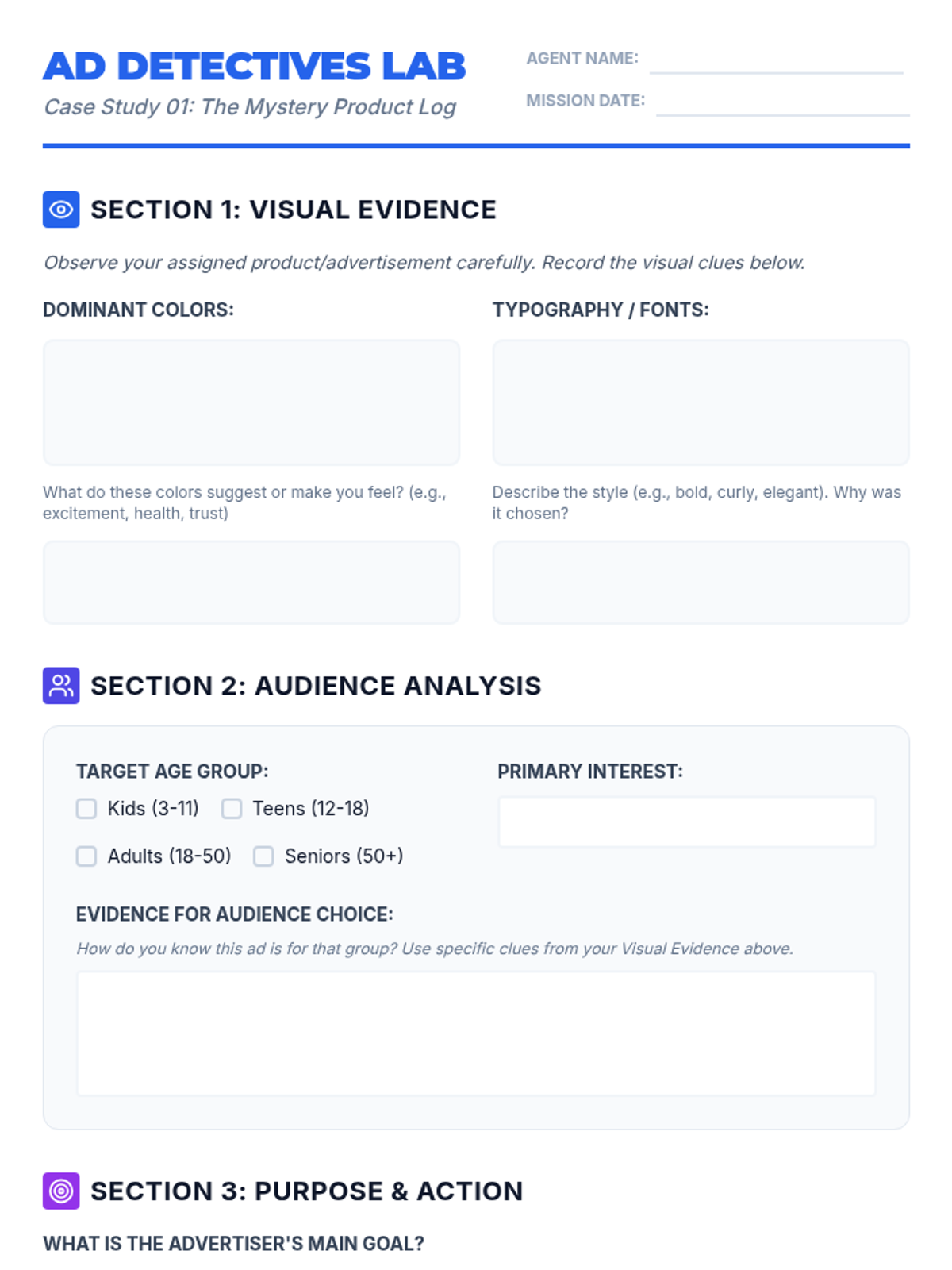
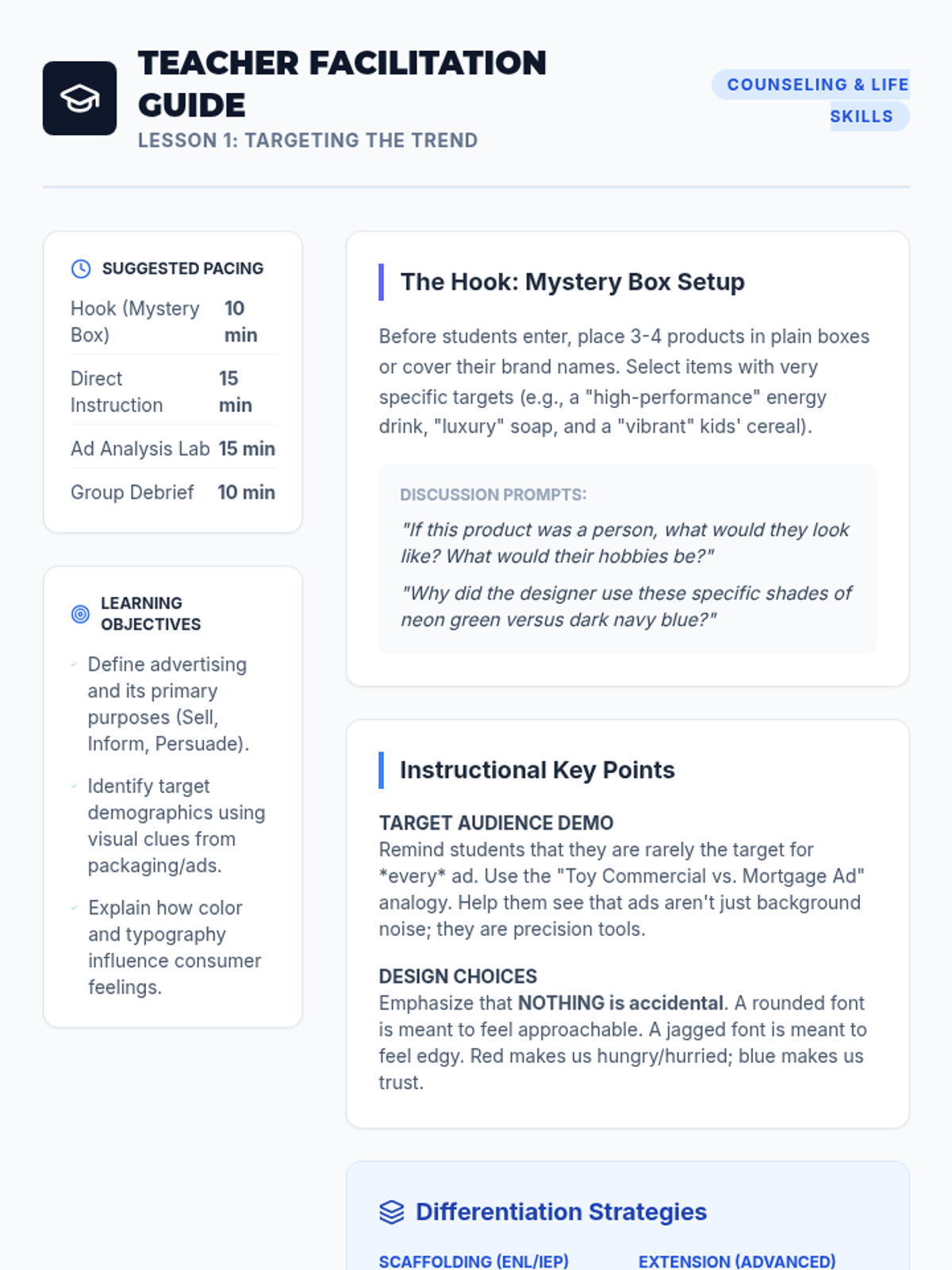
Students investigate the persuasive strategies used in commercials and print advertisements to understand how marketers influence consumer choices. The sequence covers advertising purpose, visual/auditory techniques, branding through logos and slogans, target audiences, and ethical advertising.
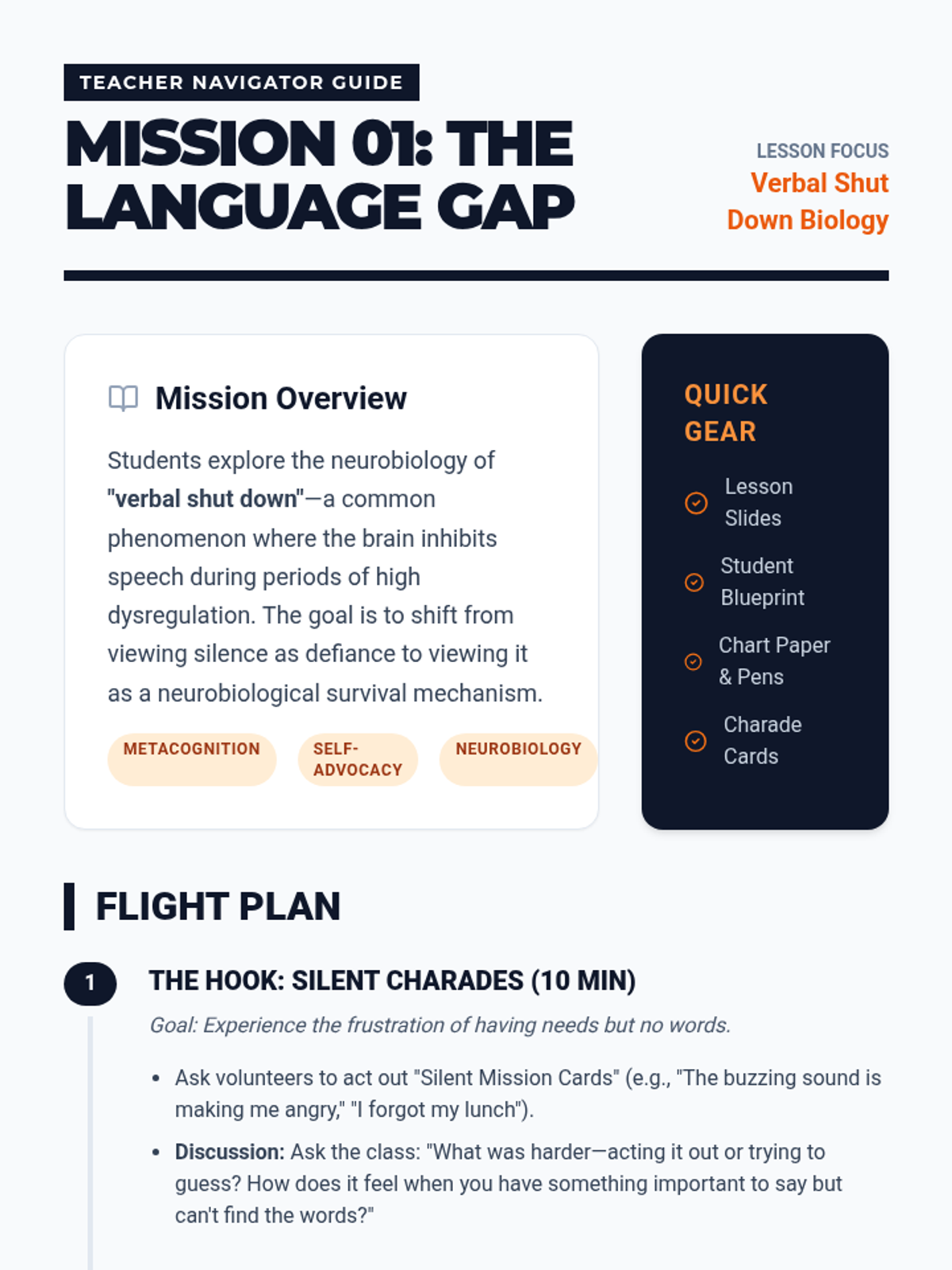
A 5-lesson sequence for 6th-grade students focusing on neurobiological awareness of dysregulation, non-verbal communication systems, co-regulation techniques, and restorative practices for re-entering social environments. Students develop a 'Navigator' mindset to manage emotional turbulence and maintain relationships.
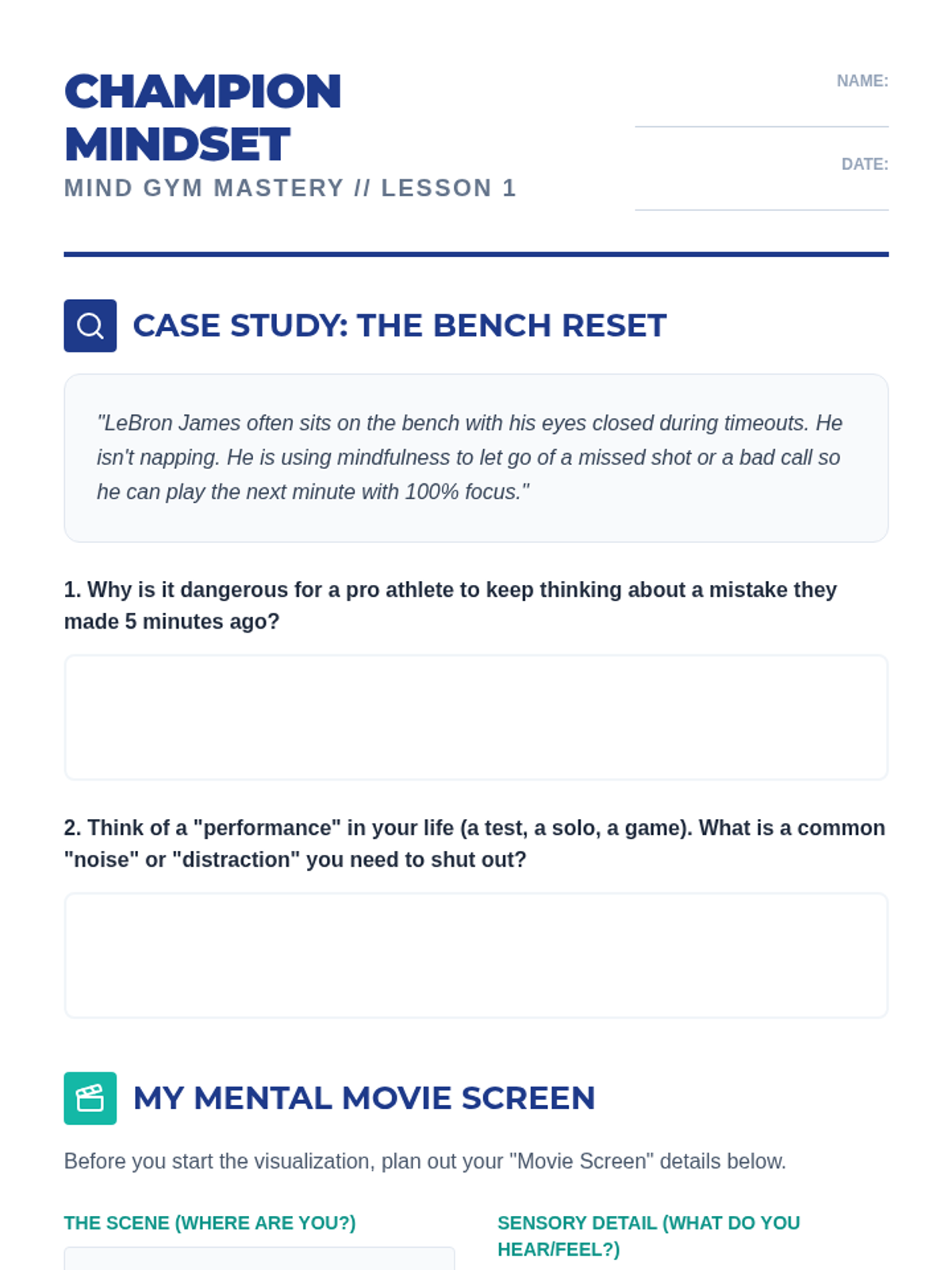
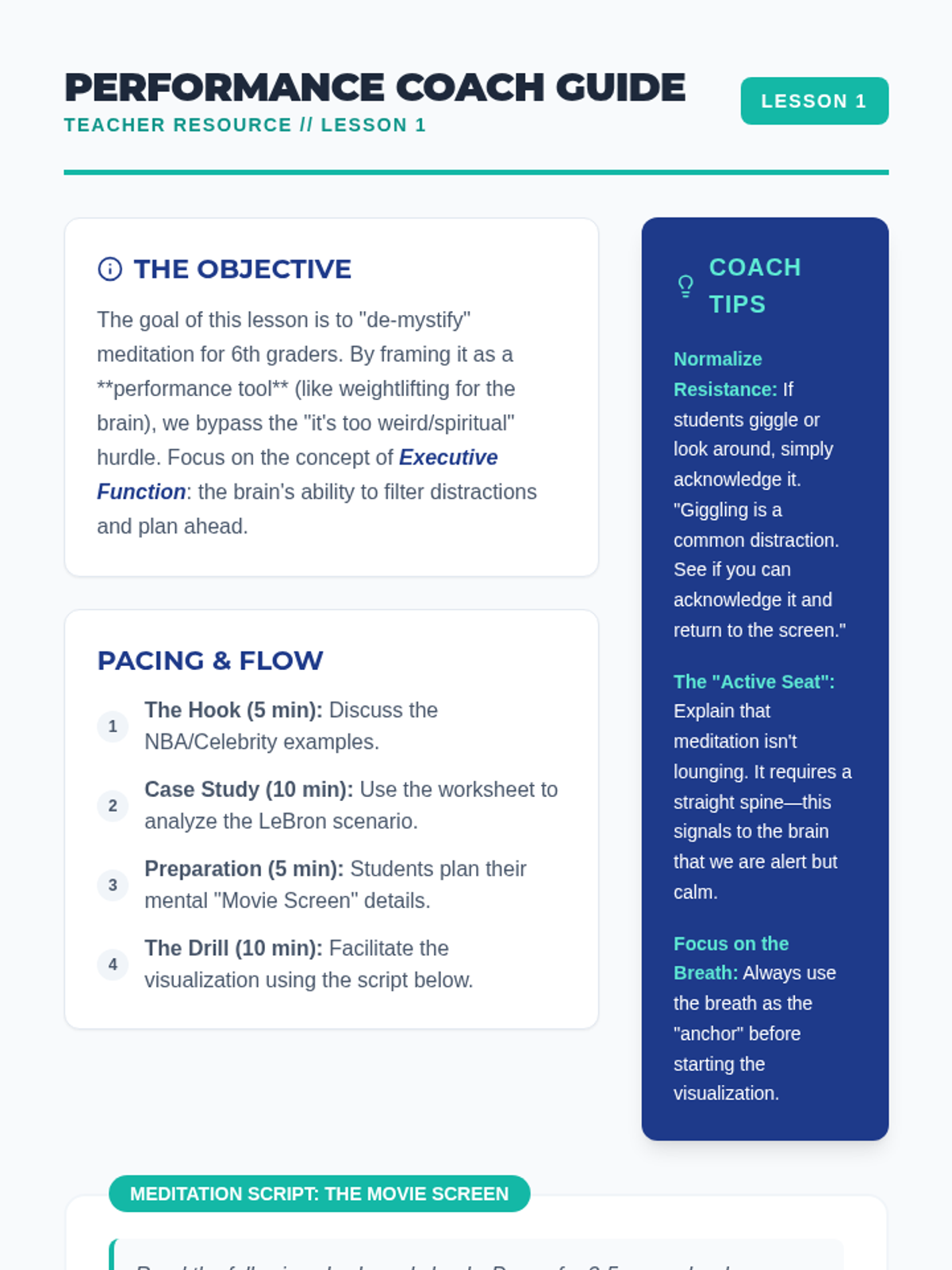
This middle school sequence reframes meditation as a 'performance tool' for academic and social success. Students explore case studies of peak performers, learn the STOP technique for impulse control, develop grounding strategies for test anxiety, and practice empathy through Loving-Kindness meditation, culminating in a real-world scenario challenge.
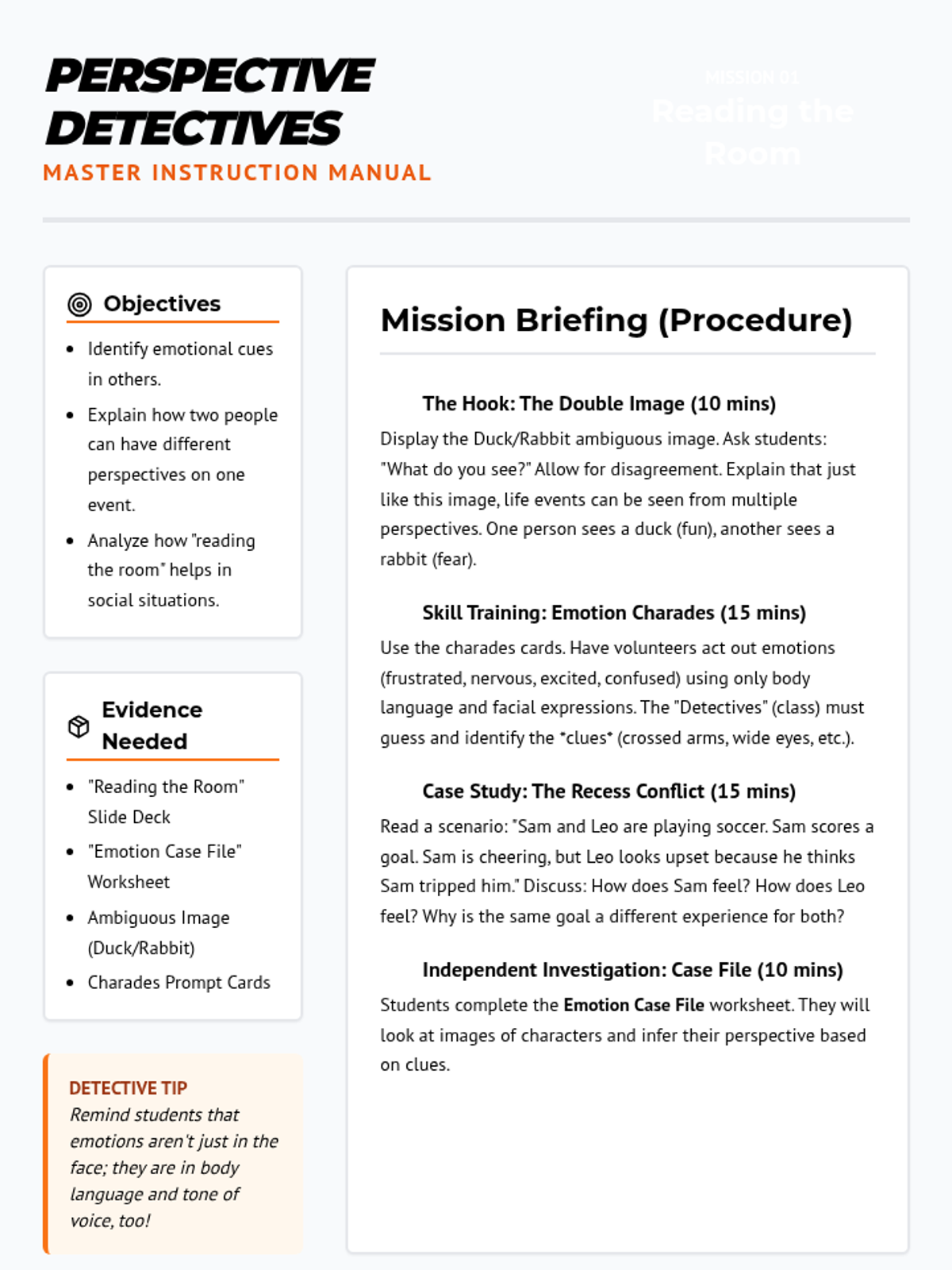
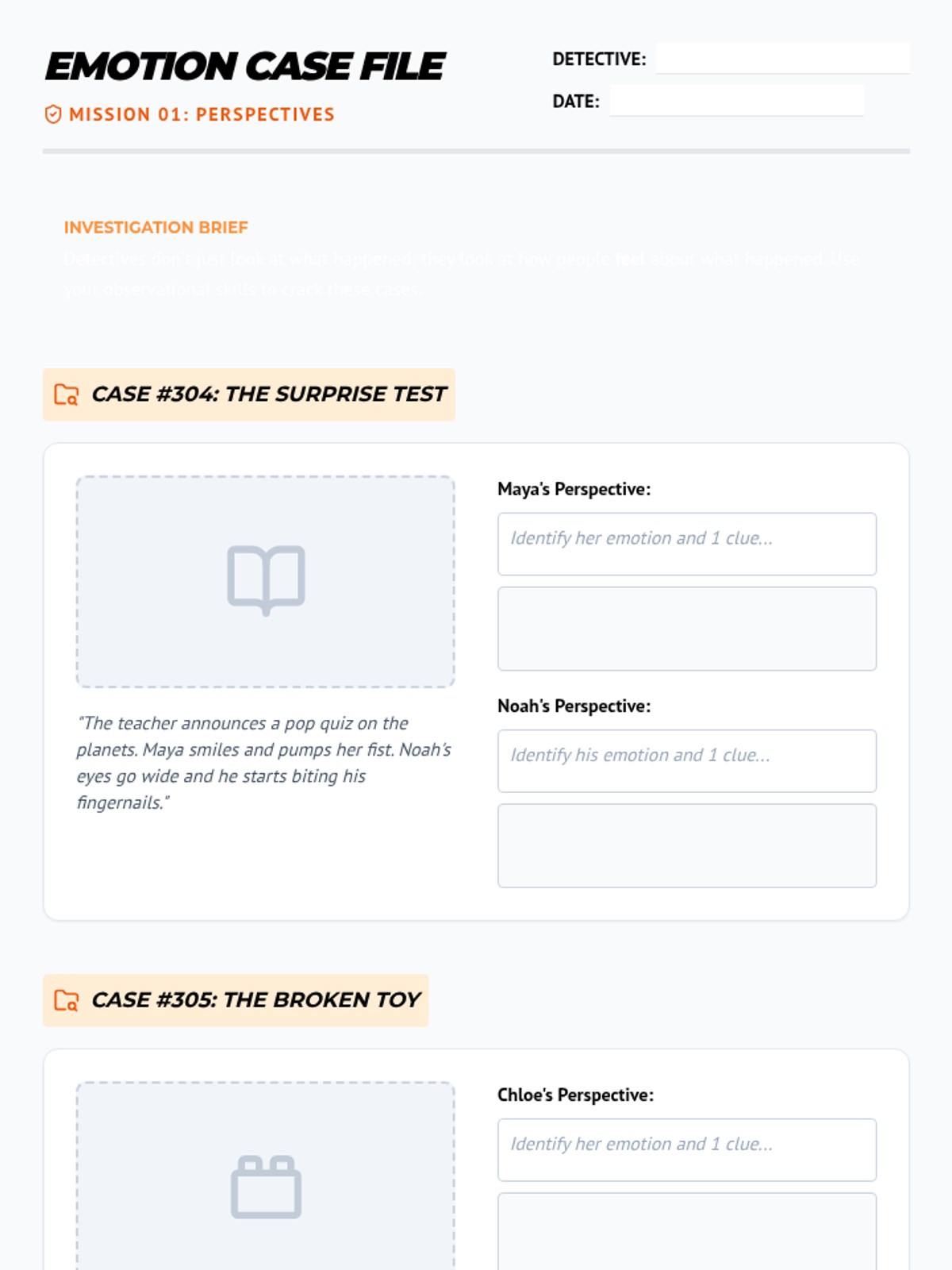
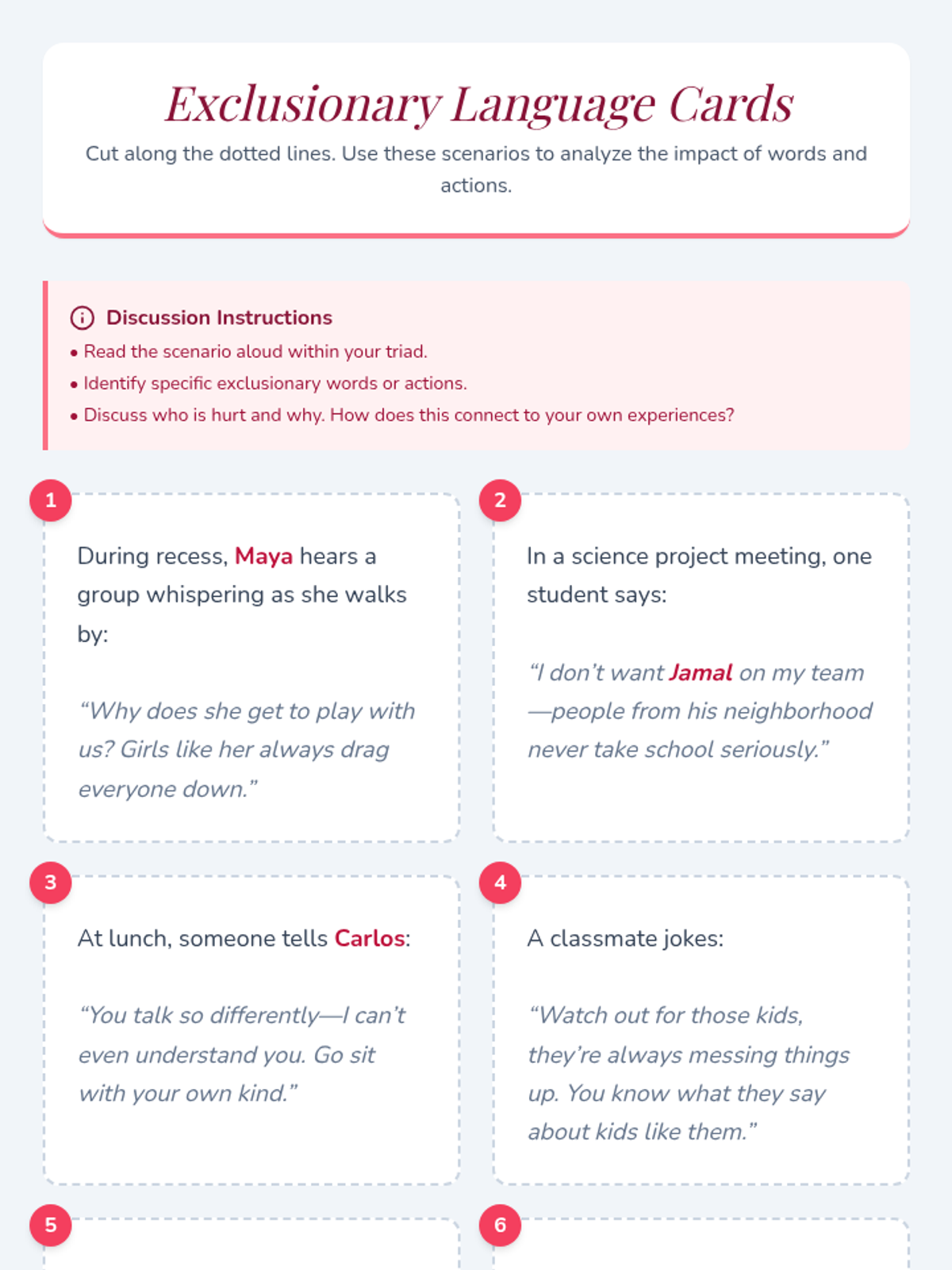
A sequence focused on developing empathy, emotional intelligence, and perspective-taking through a 'Perspective Detectives' theme. Students engage in games, simulations, and skill-building activities to understand the complexity of identities and challenge biases.
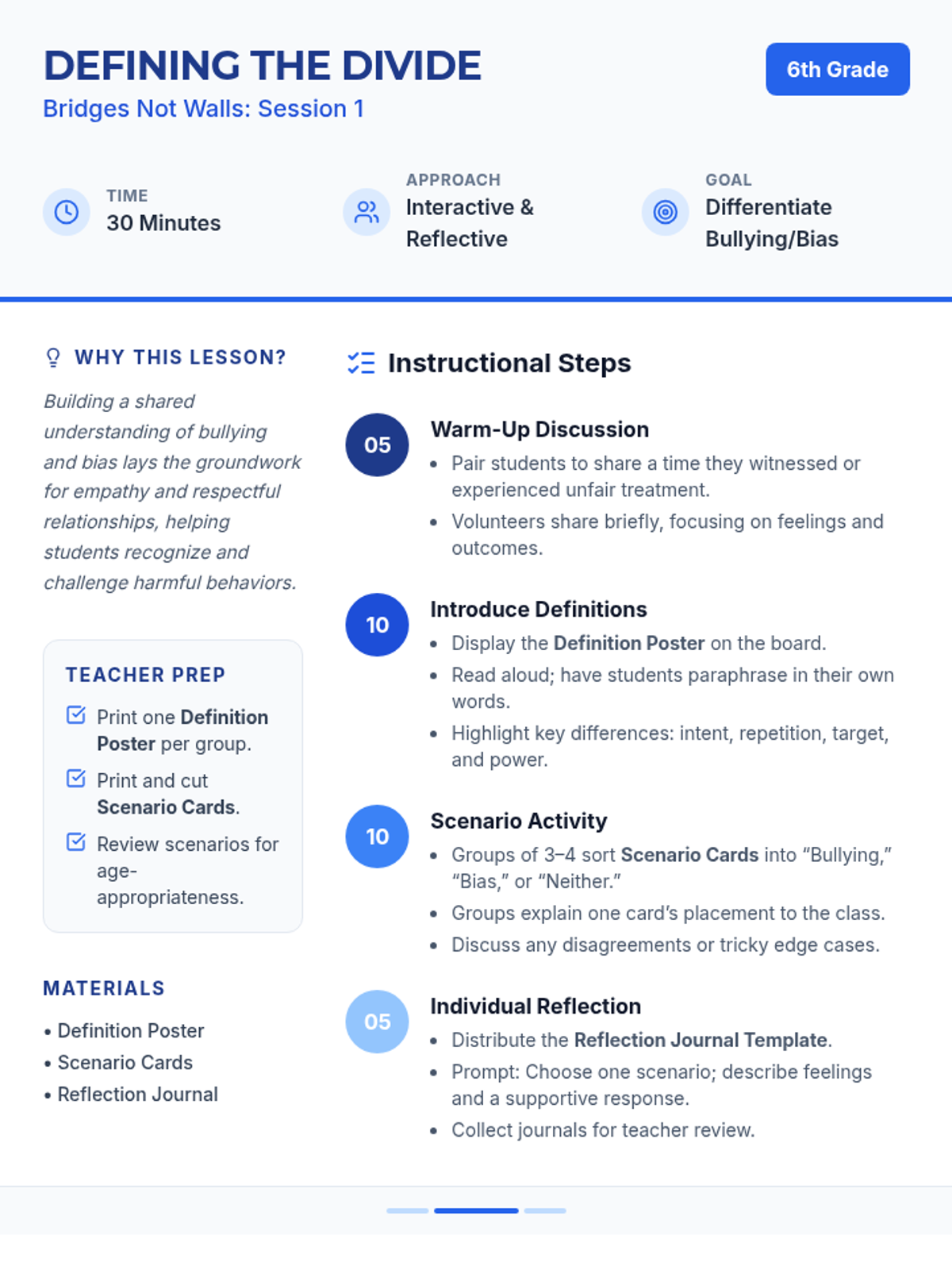
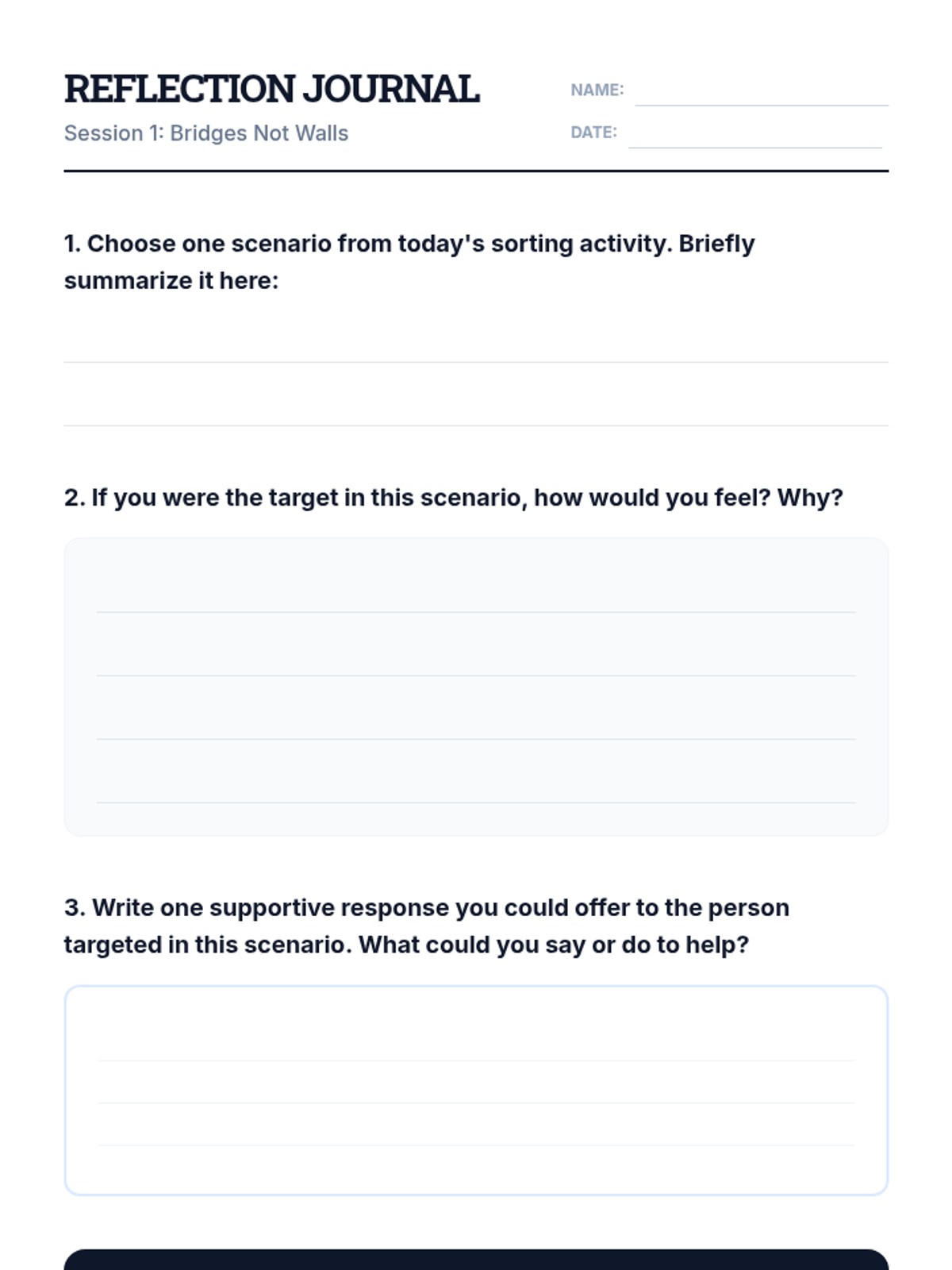
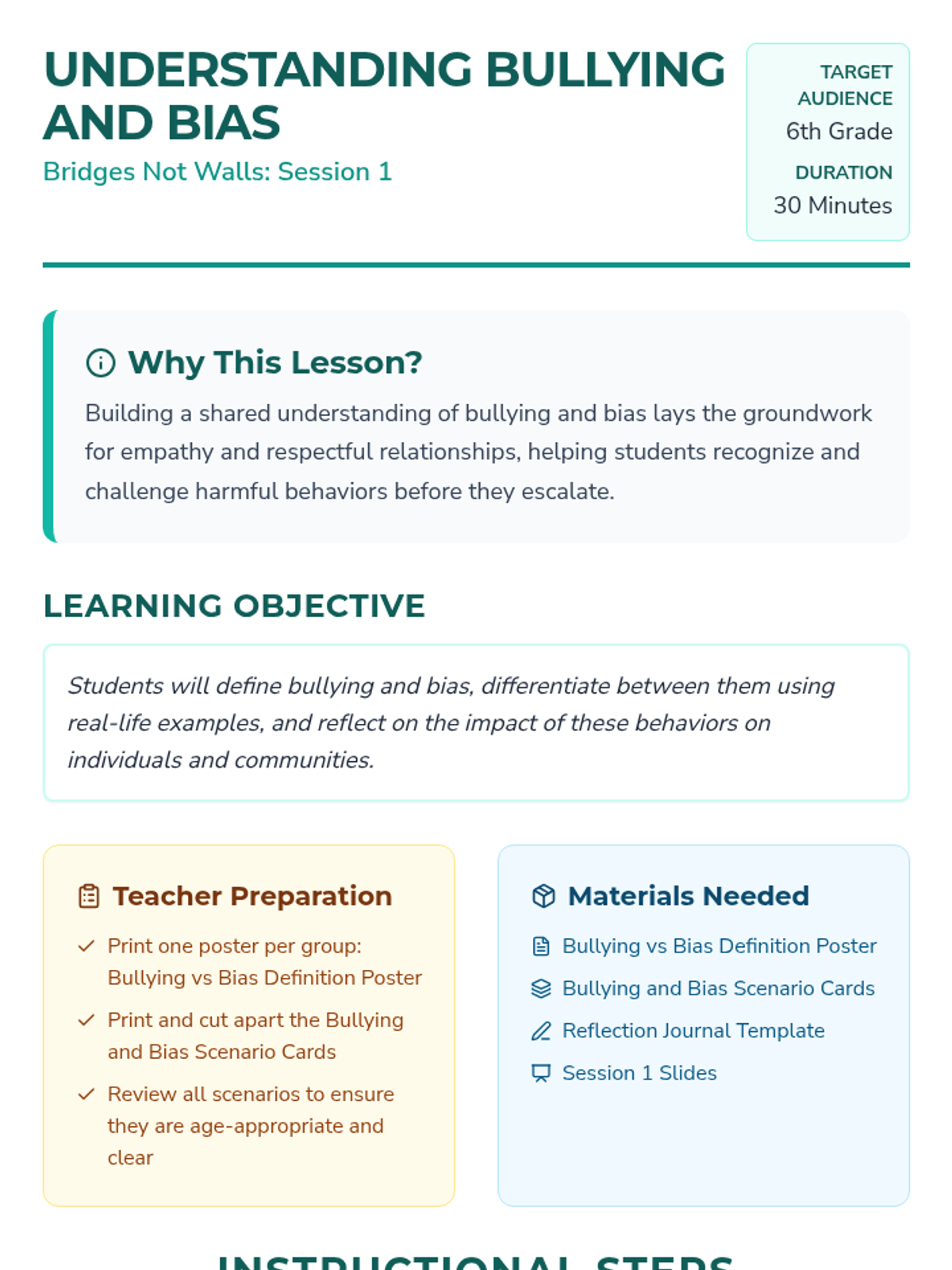
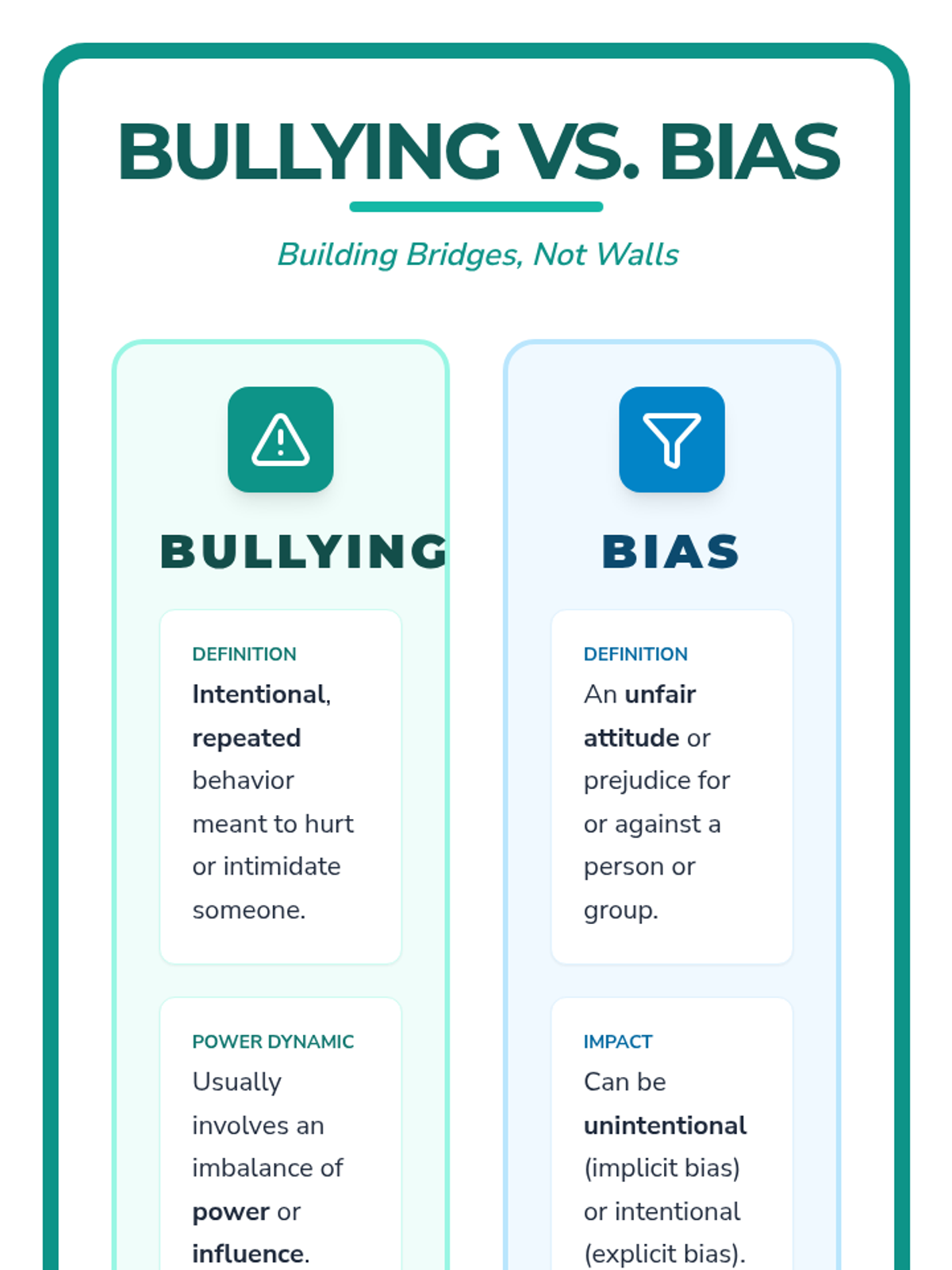
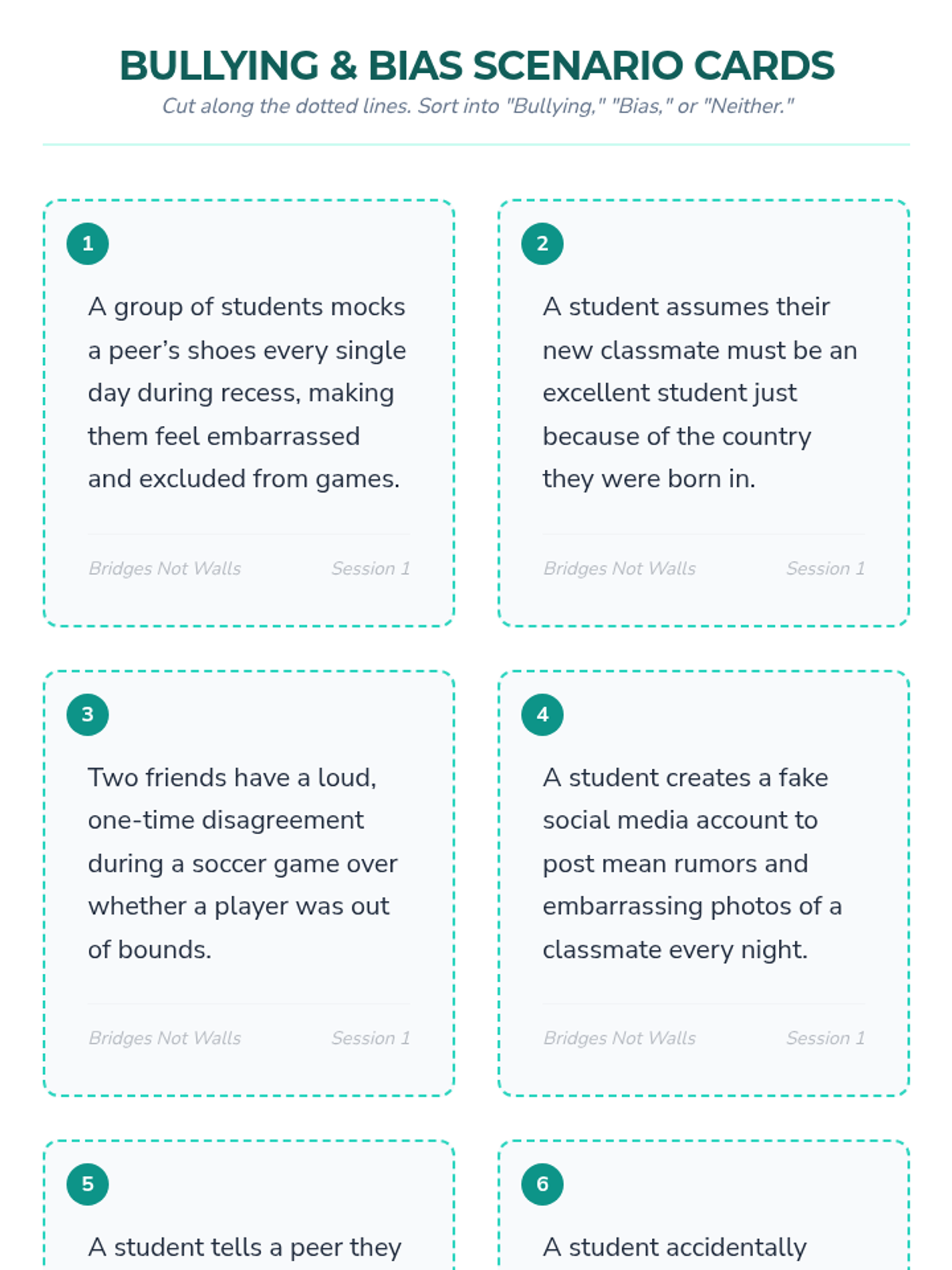
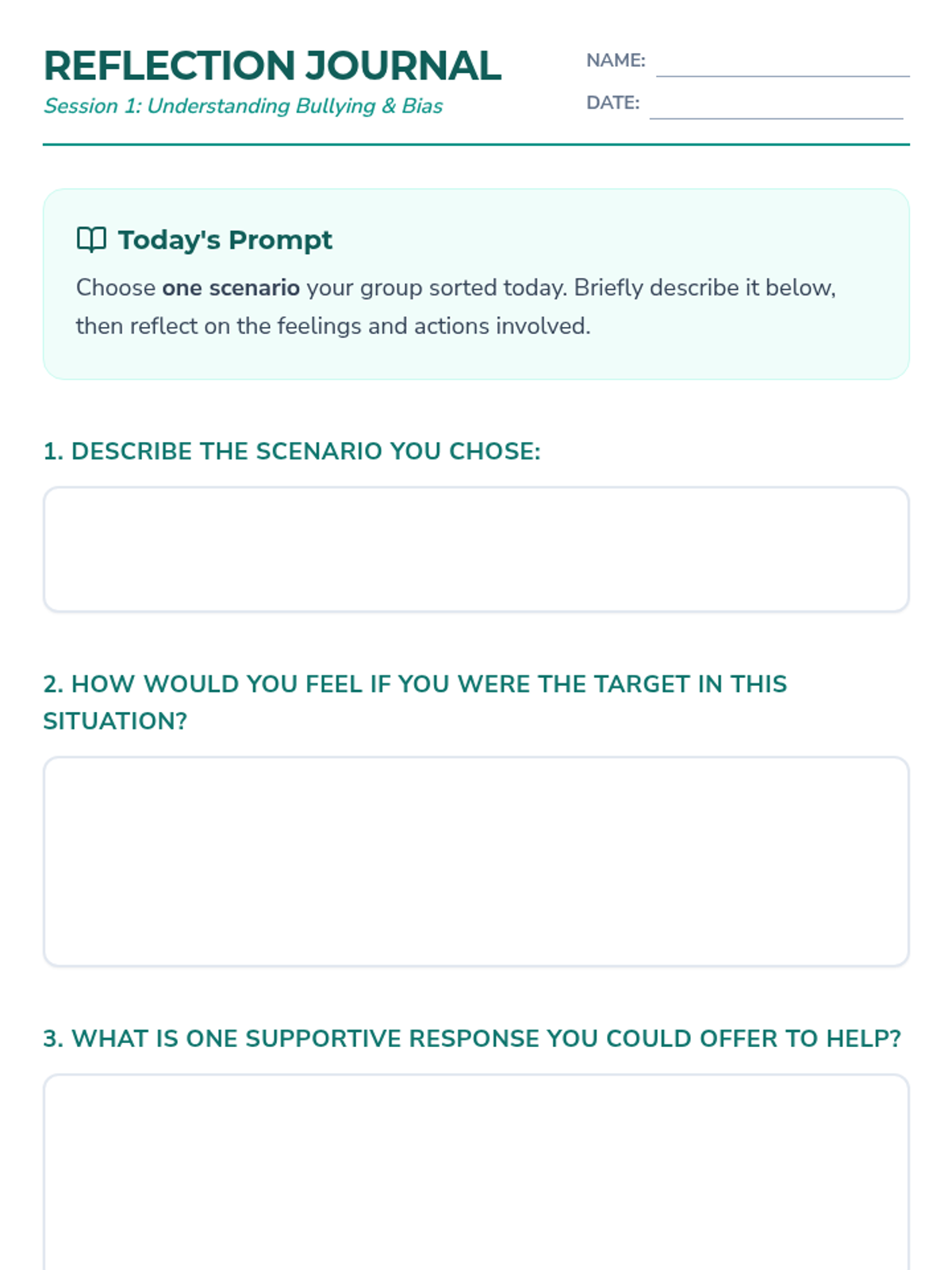
A six-session unit for 6th graders focusing on empathy, bias recognition, communication, and restorative practices to build an inclusive community. Students move from defining harm to actively planning restorative projects.
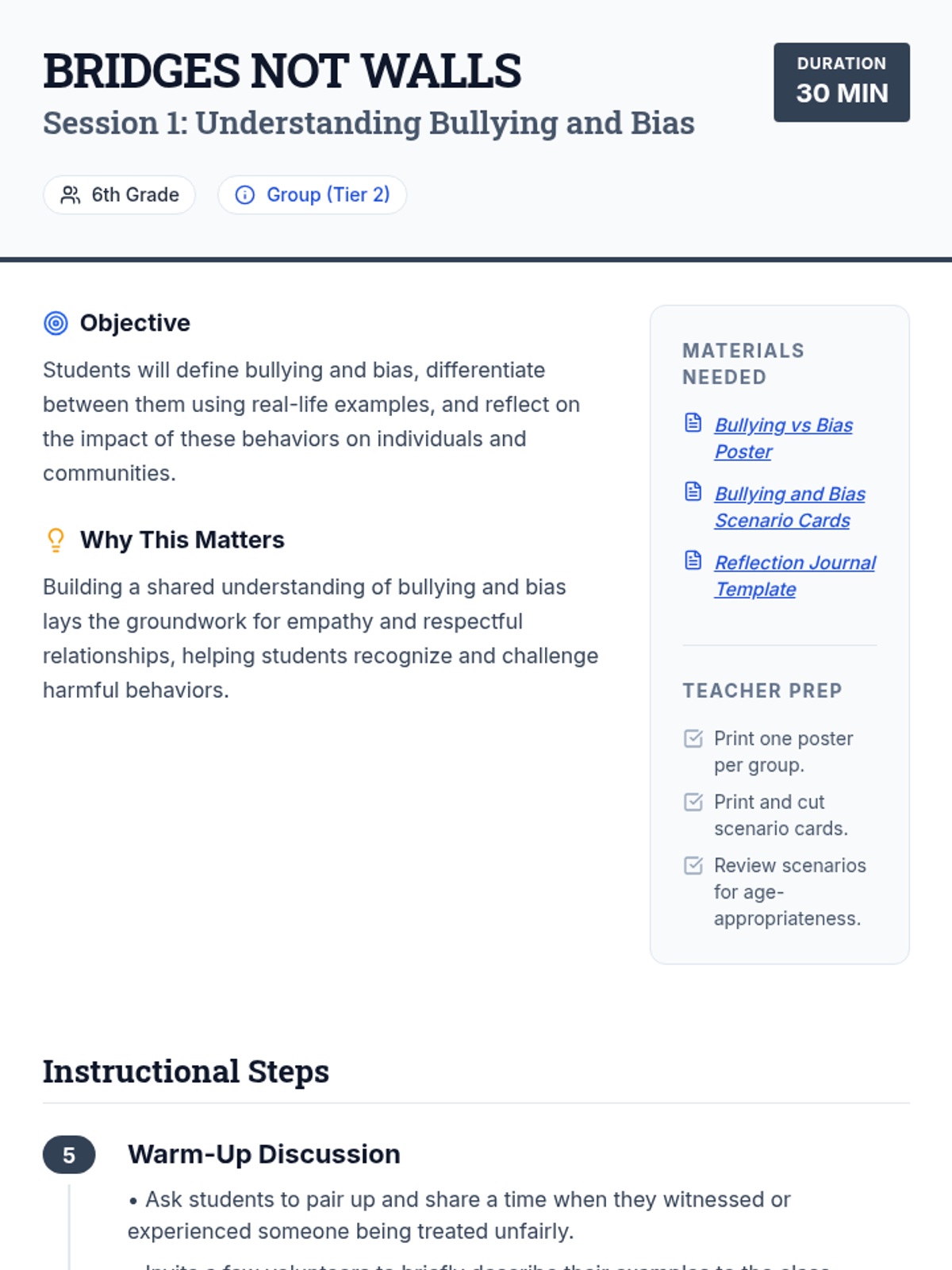
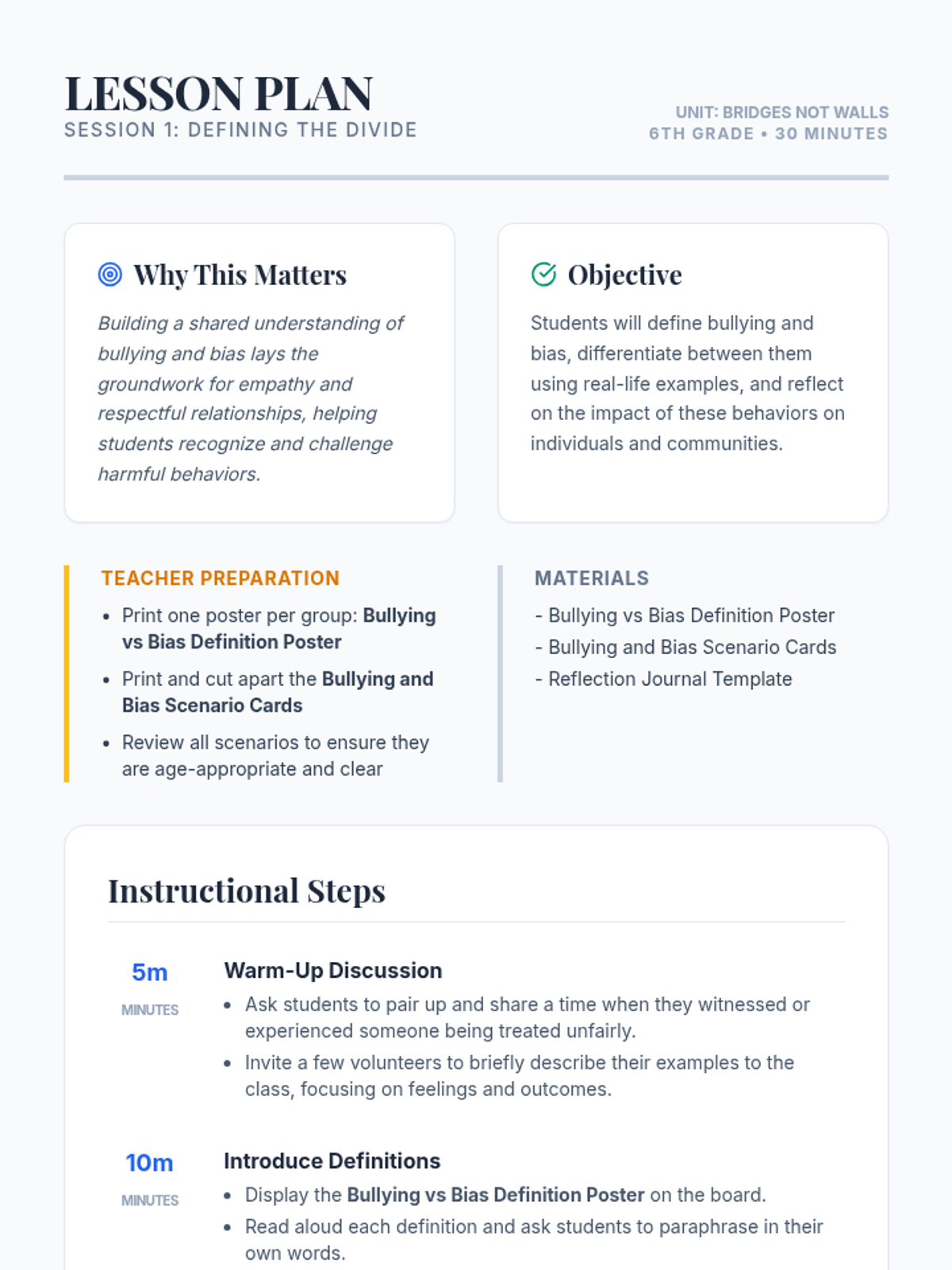
A six-session unit for 6th graders focusing on empathy, diversity, and restorative practices following incidents of bullying. Students learn to recognize bias, practice healthy communication, and build inclusive communities through a culminating restorative project.
A six-session restorative unit for 6th graders focusing on empathy, bias recognition, and building inclusive communities through restorative practices and active communication.
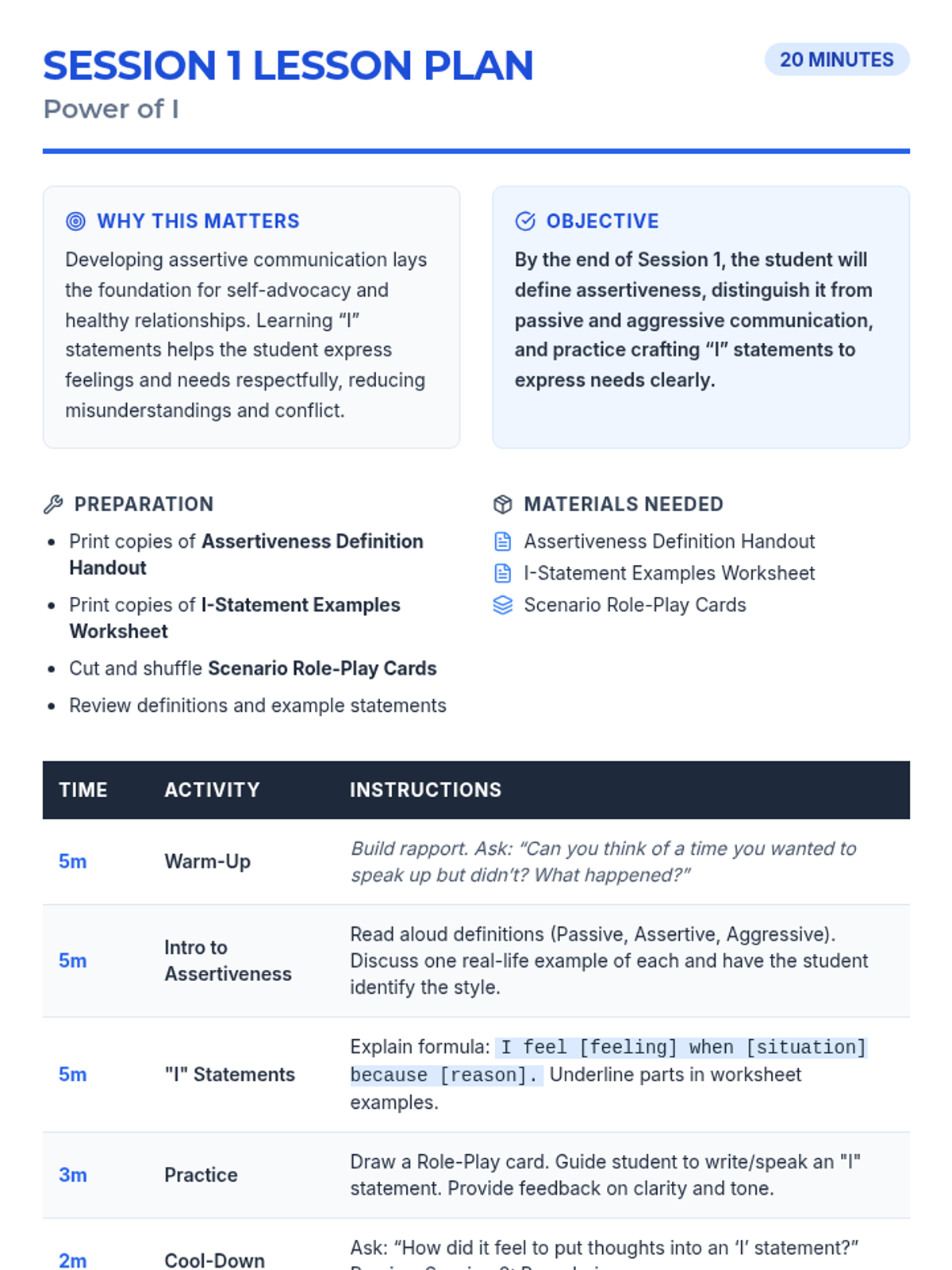
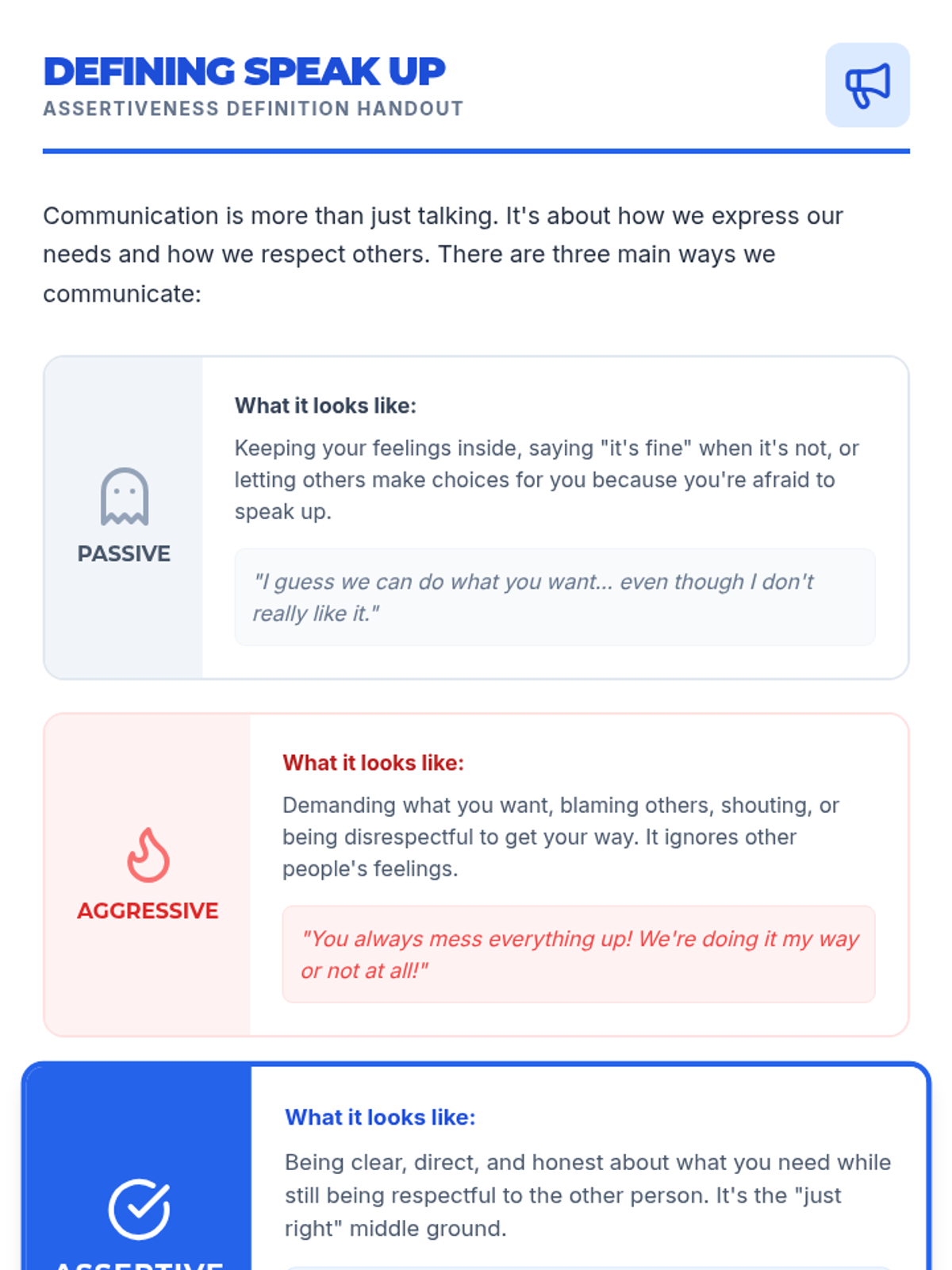
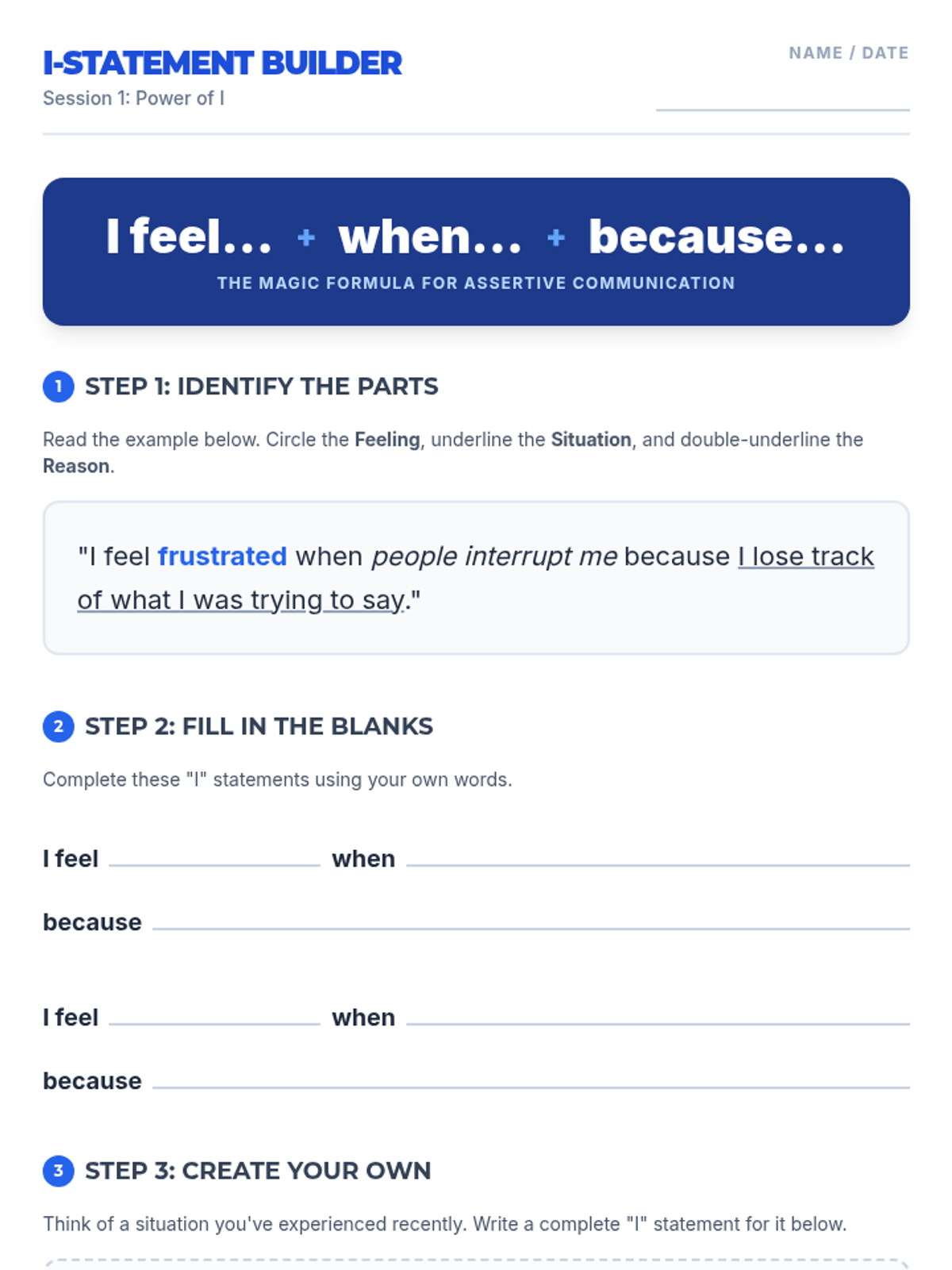
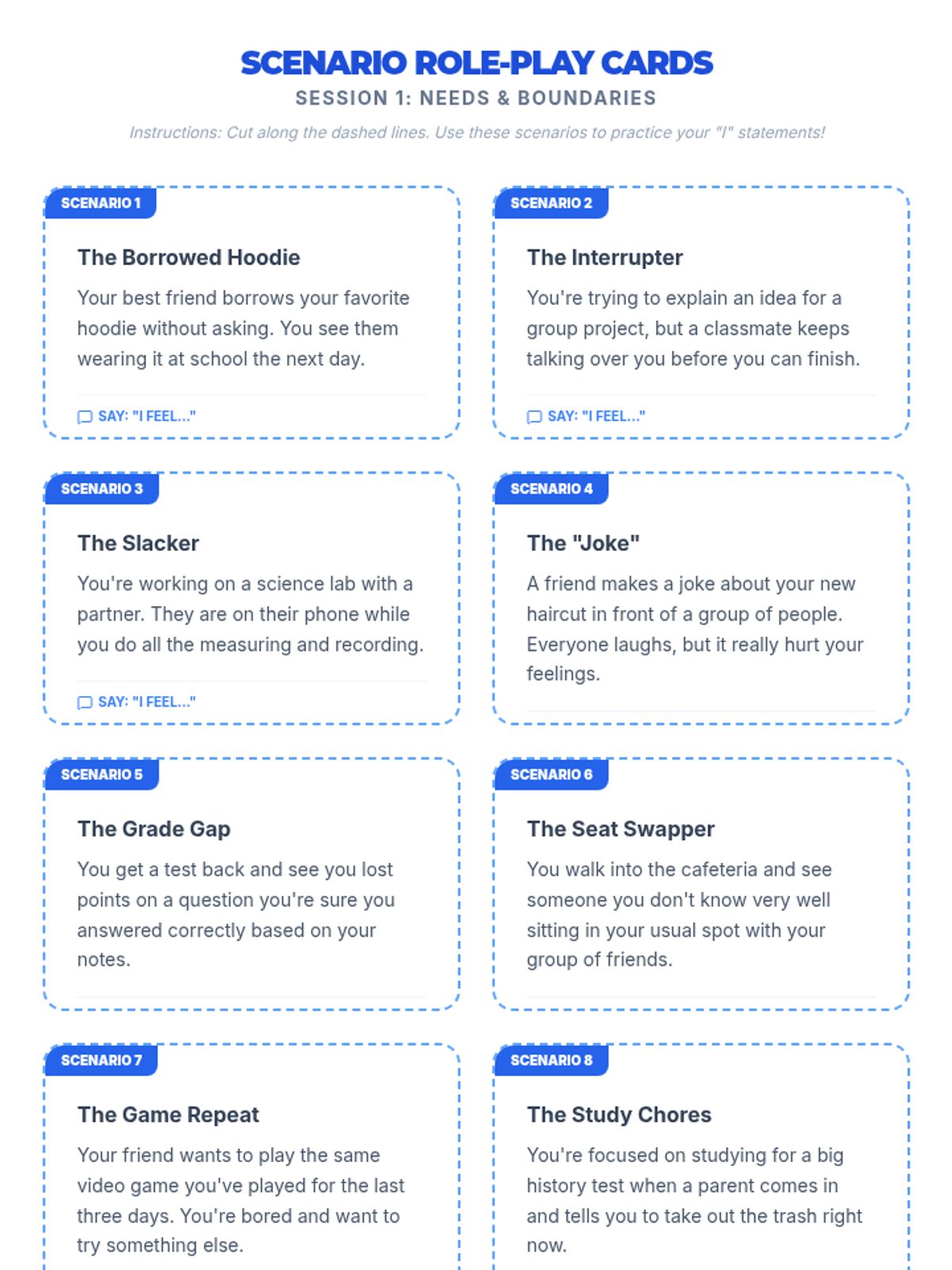
A 5-session intensive for middle school students to develop assertive communication skills, focusing on I-statements, boundaries, refusals, and long-term maintenance.
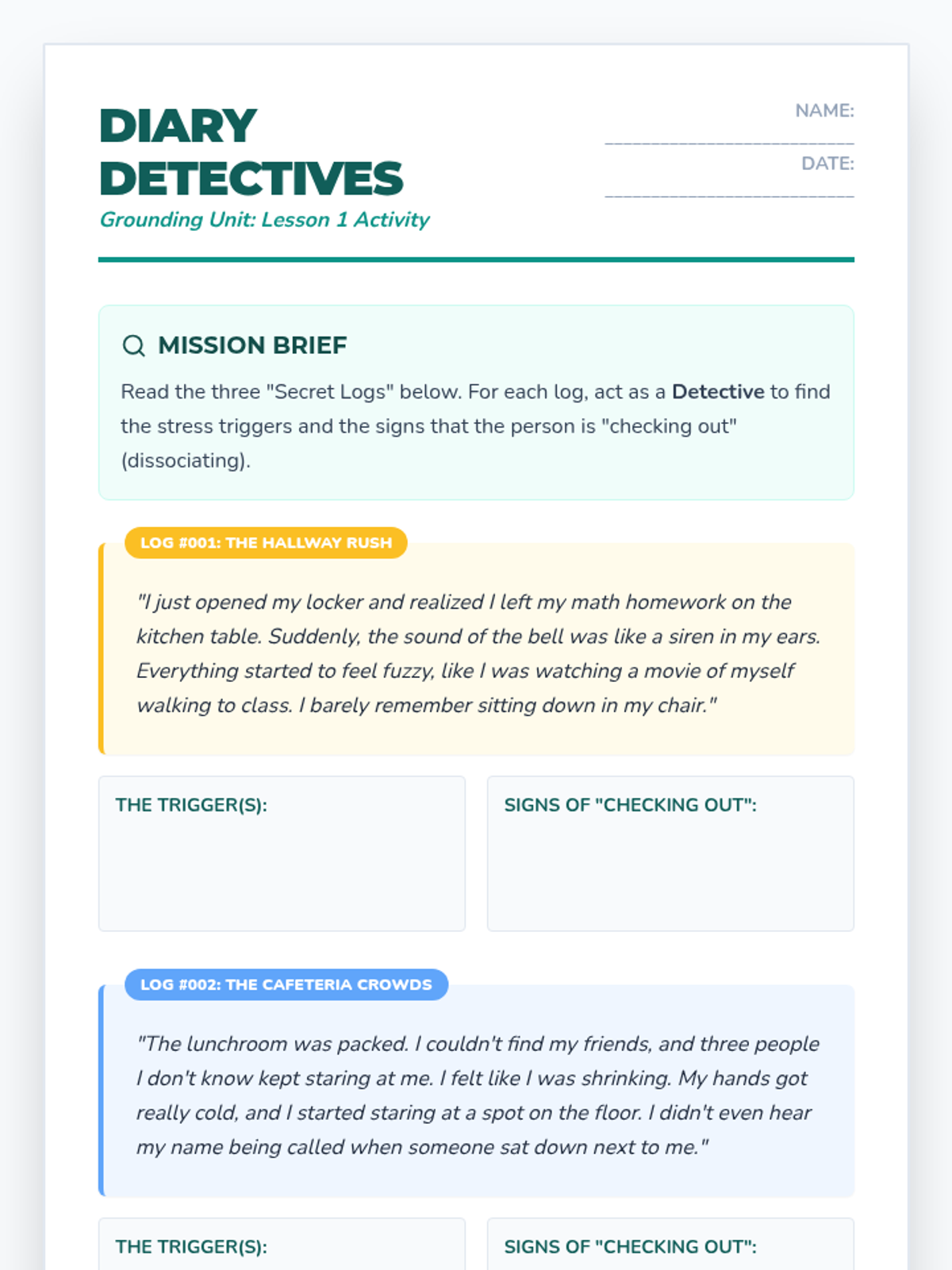
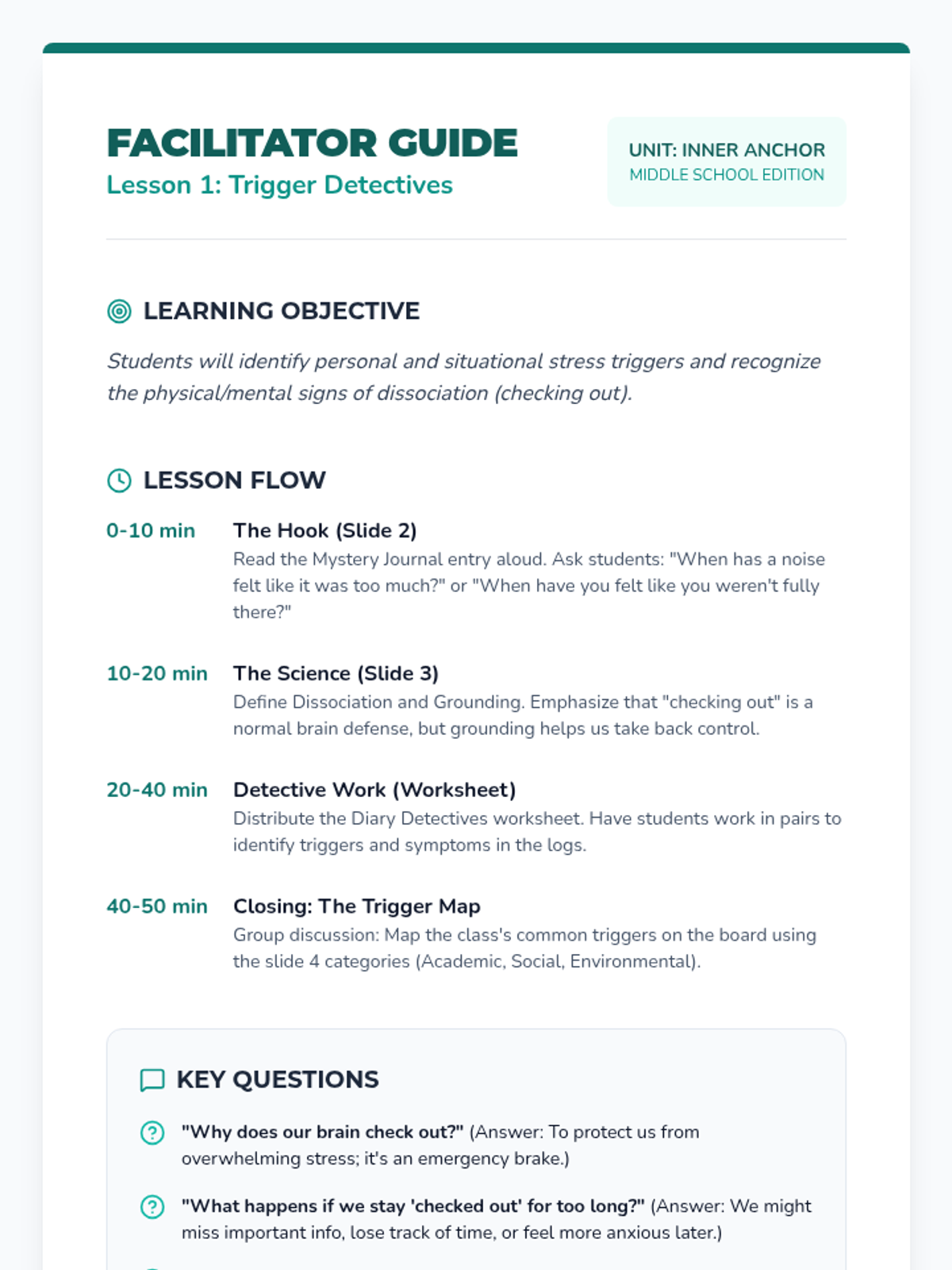
A comprehensive 5-lesson unit helping middle schoolers identify stressors and apply specific grounding techniques to academic, social, and digital contexts through simulation and case studies.
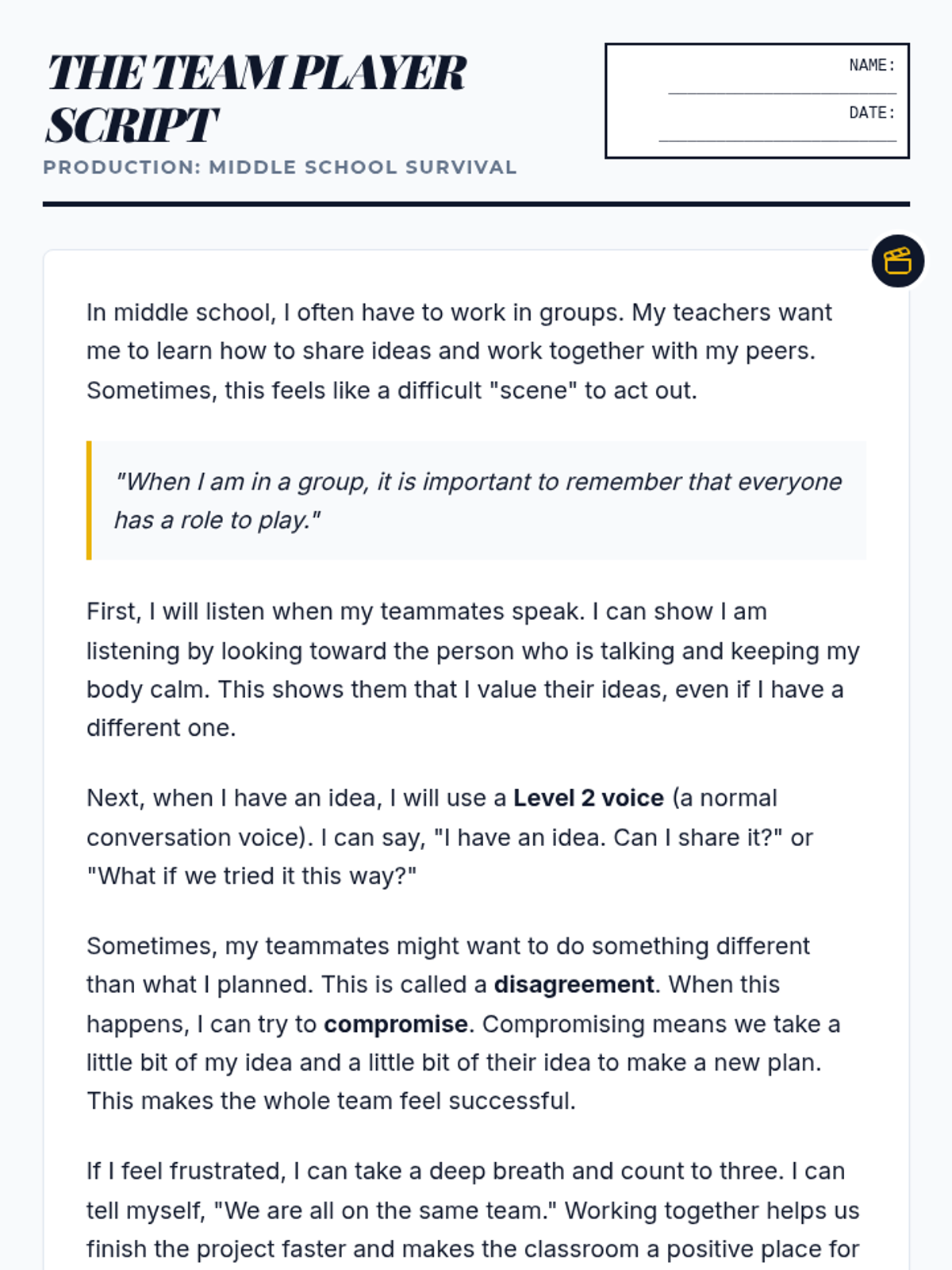
A comprehensive 6th-grade sequence focused on understanding and applying social narratives (Social Stories) to common middle school interactions like group work, sarcasm, conflict, and personal space through a "Director's Cut" cinematic theme.
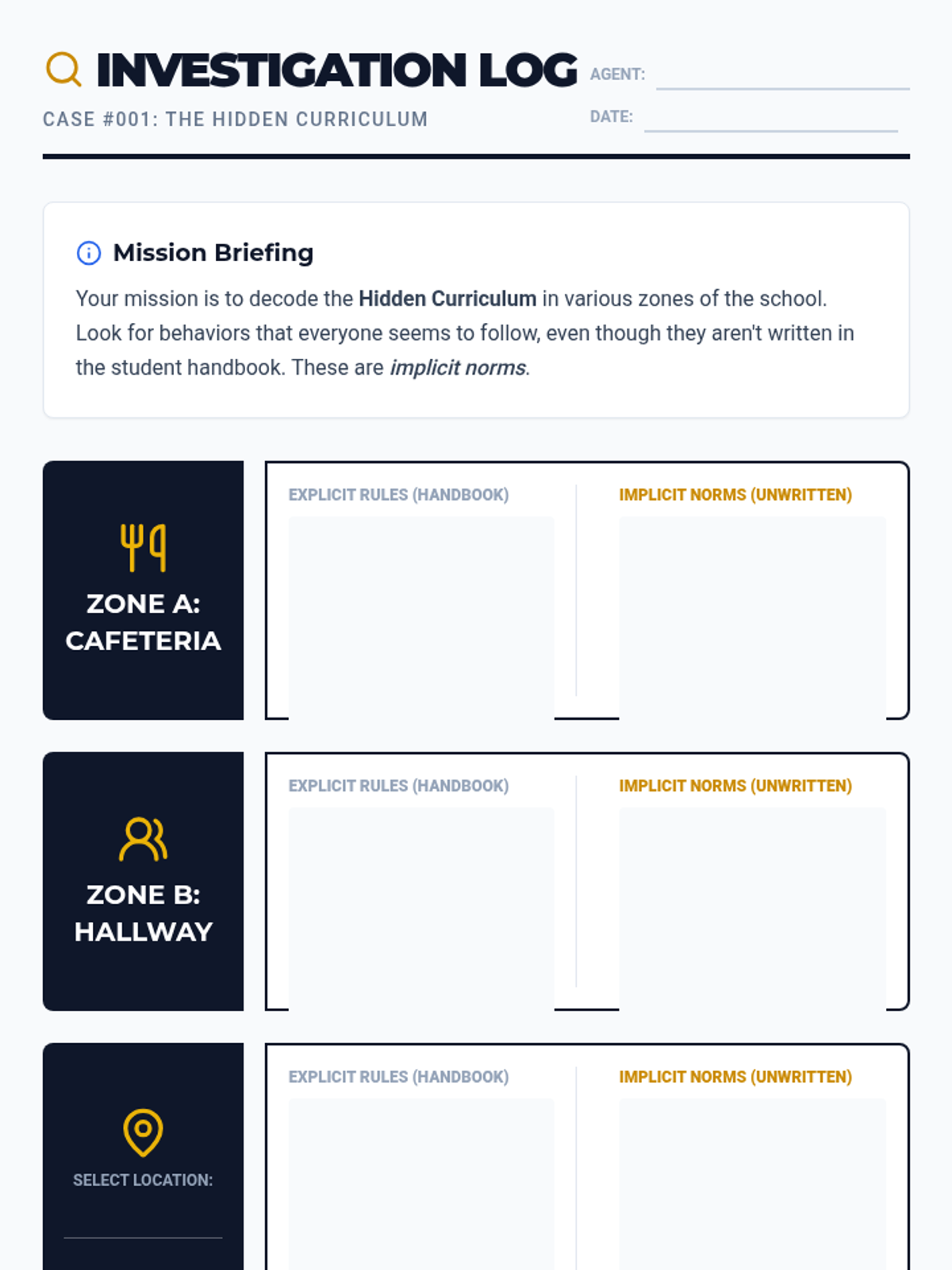
This inquiry-based sequence guides 6th-grade students through decoding the 'hidden curriculum' of middle school social environments. Students observe social cues, identify unwritten rules, explore perspectives, and analyze social narratives to understand the 'why' behind social expectations.
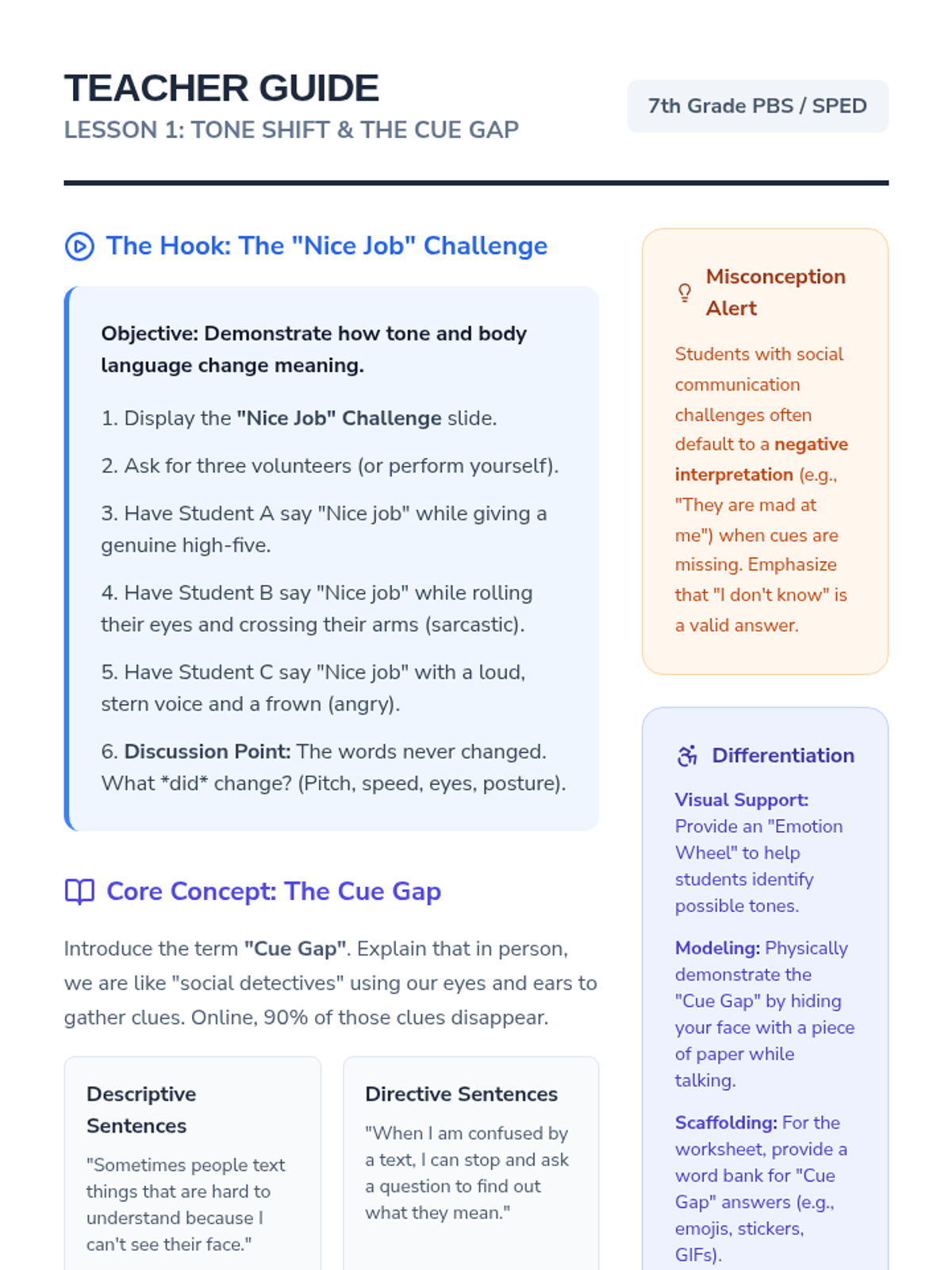
A comprehensive unit for middle school students to decode the 'hidden curriculum' of social interactions. Students learn to analyze, deconstruct, and critique social narratives using a 'Social Detective' framework, focusing on descriptive, perspective, and directive elements.
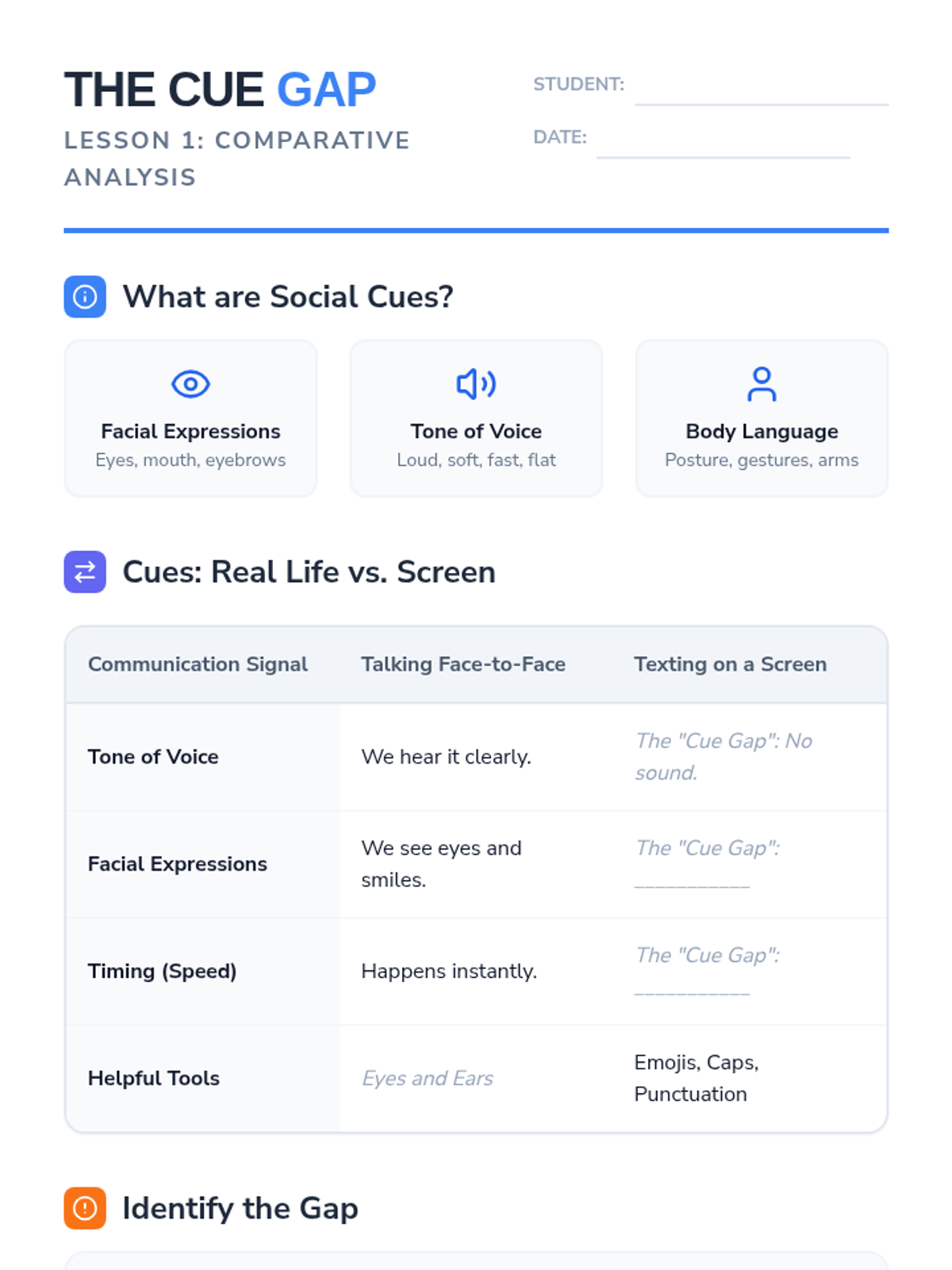
A 5-lesson sequence designed for 7th-grade students to translate social narrative techniques to digital communication. Students explore non-verbal cues, texting etiquette, impulse control, and gaming sportsmanship to build a personalized 'Digital Etiquette Guide'.
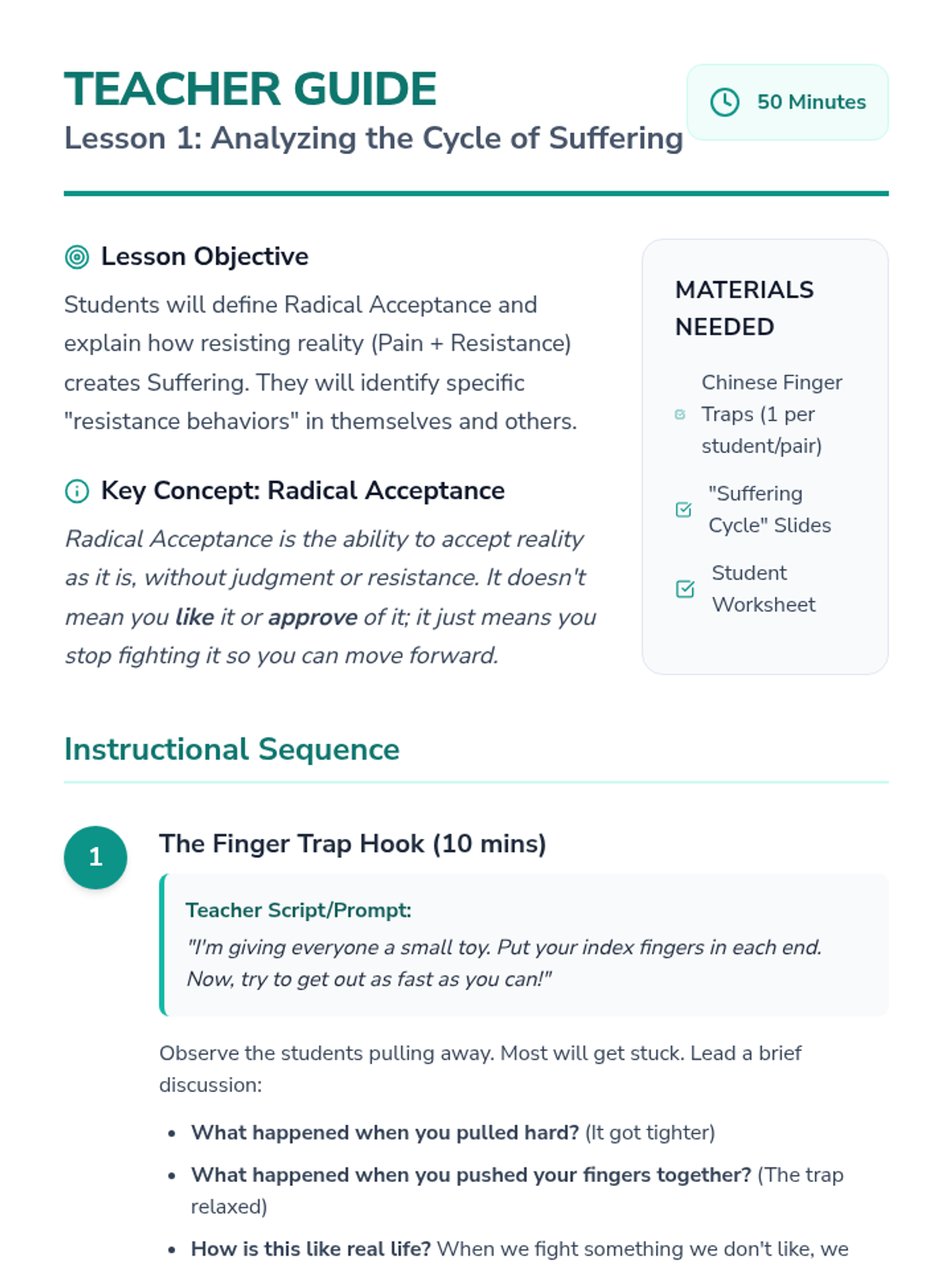
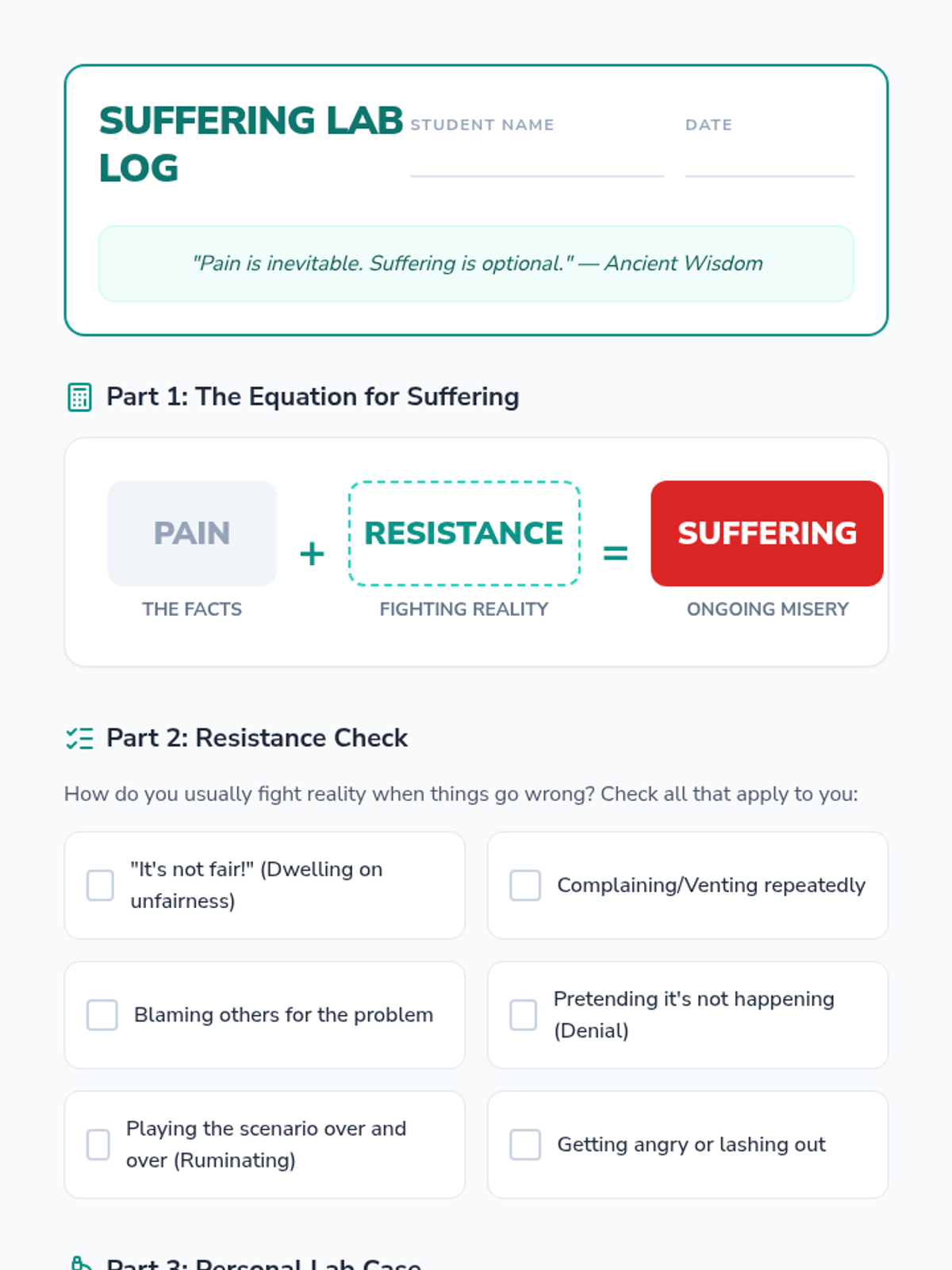
This middle school sequence focuses on building distress tolerance through Radical Acceptance. Students move from understanding the 'Cycle of Suffering' to practicing resilience in academic and social scenarios, ultimately learning to pivot from disappointment to proactive problem-solving.
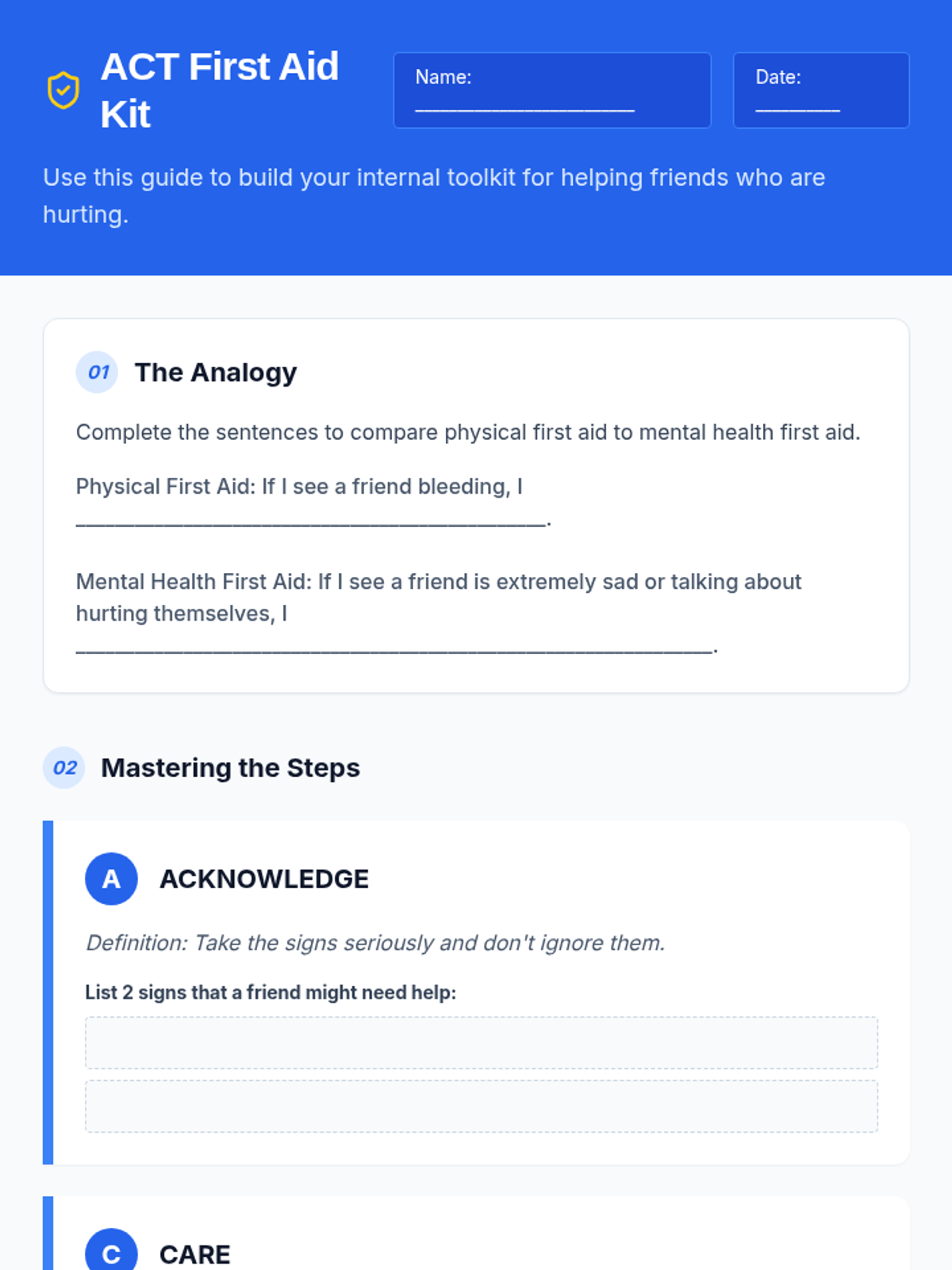
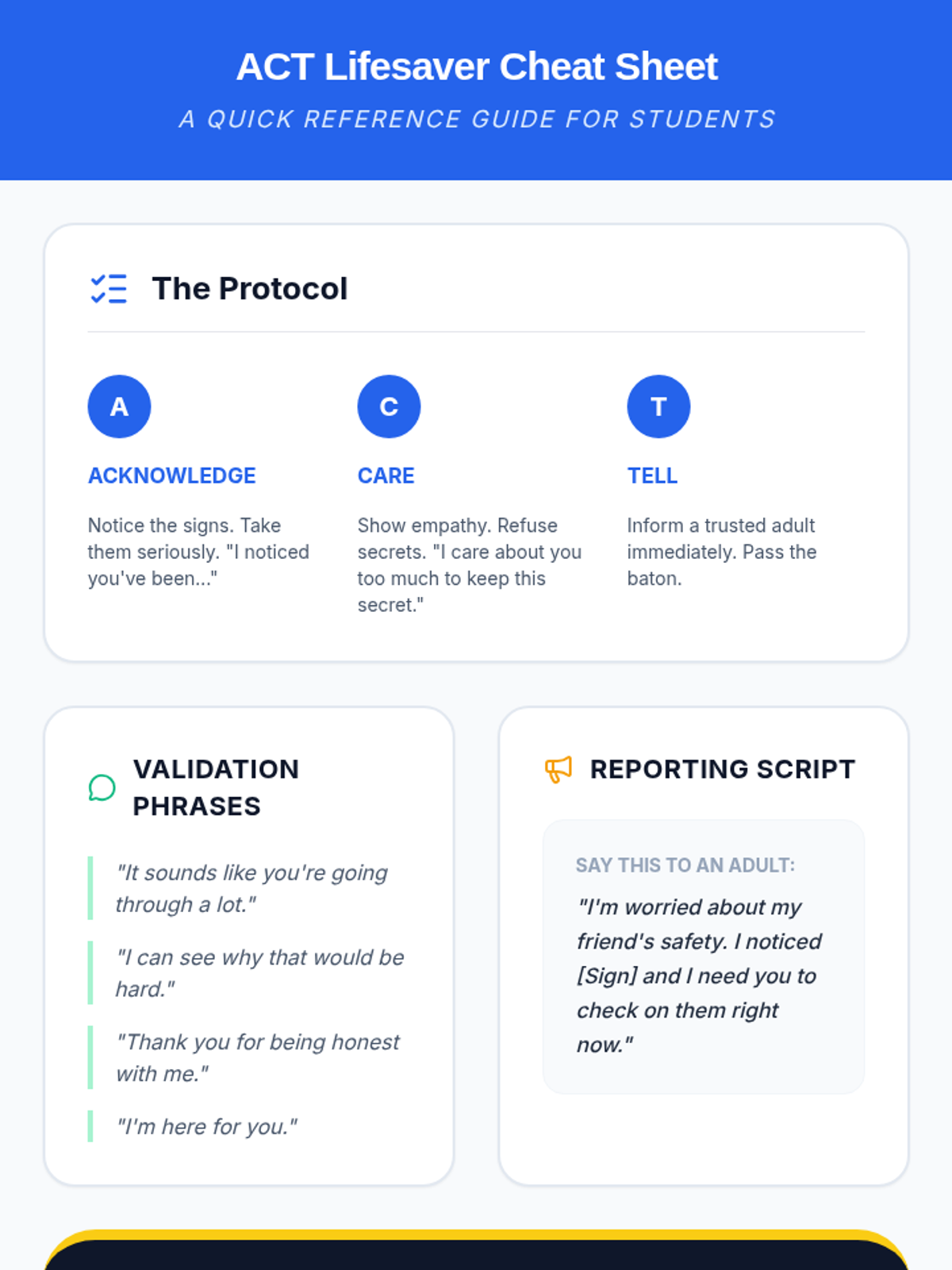
A comprehensive sequence for 6th-grade students on the A.C.T. (Acknowledge, Care, Tell) intervention model for suicide prevention. Students learn to identify warning signs, communicate empathy, and connect peers to trusted adults.
A comprehensive sequence for 6th graders to develop communication skills for peer mental health support. Students learn to distinguish their role from professionals, use the ACT (Acknowledge, Care, Tell) model, and navigate reporting concerns to trusted adults through simulations and role-play.
A project-based unit where 6th-grade students explore school, community, and national mental health resources. Students learn to navigate help-seeking pathways and conclude by creating resource materials for their school community.
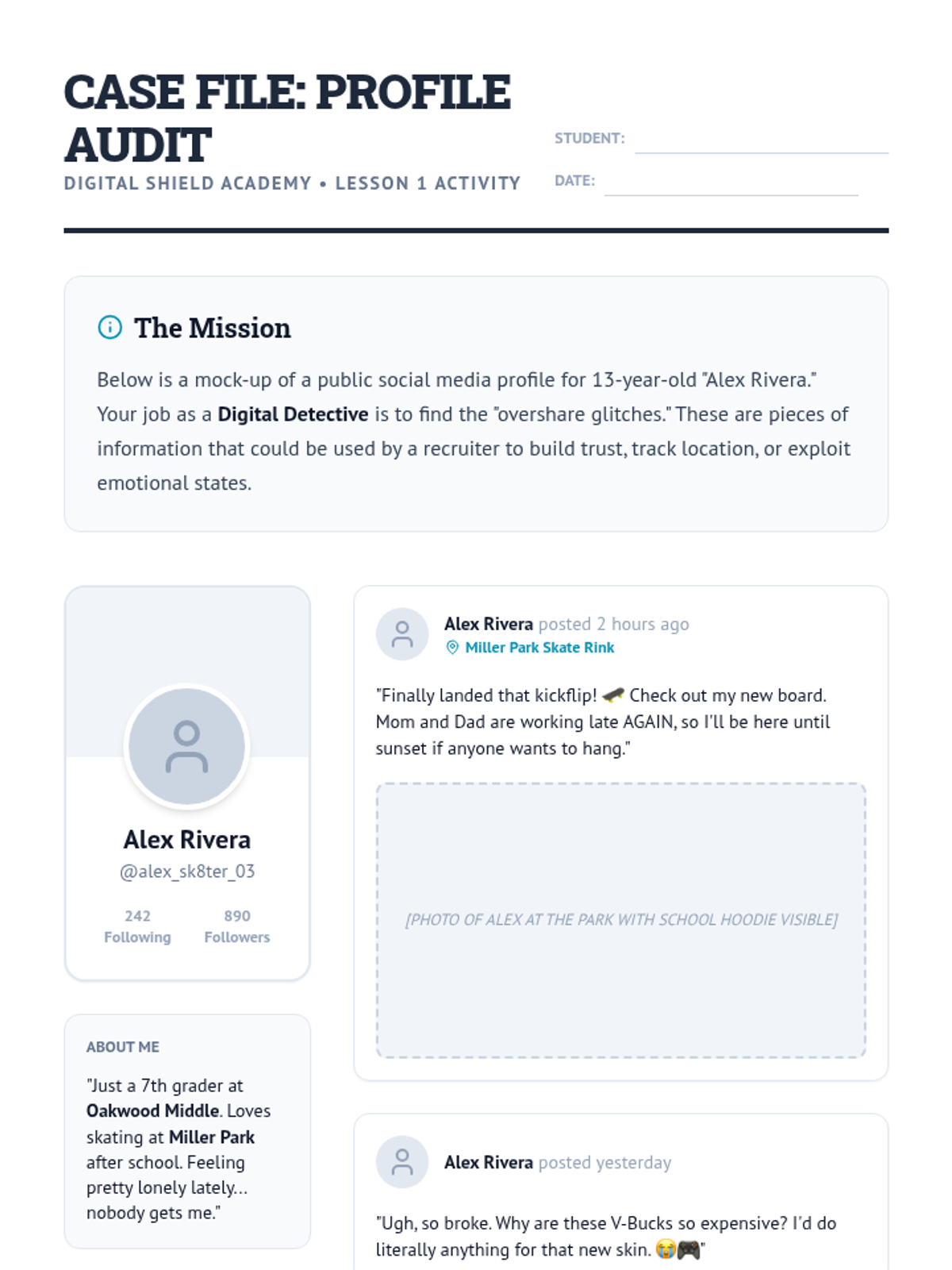
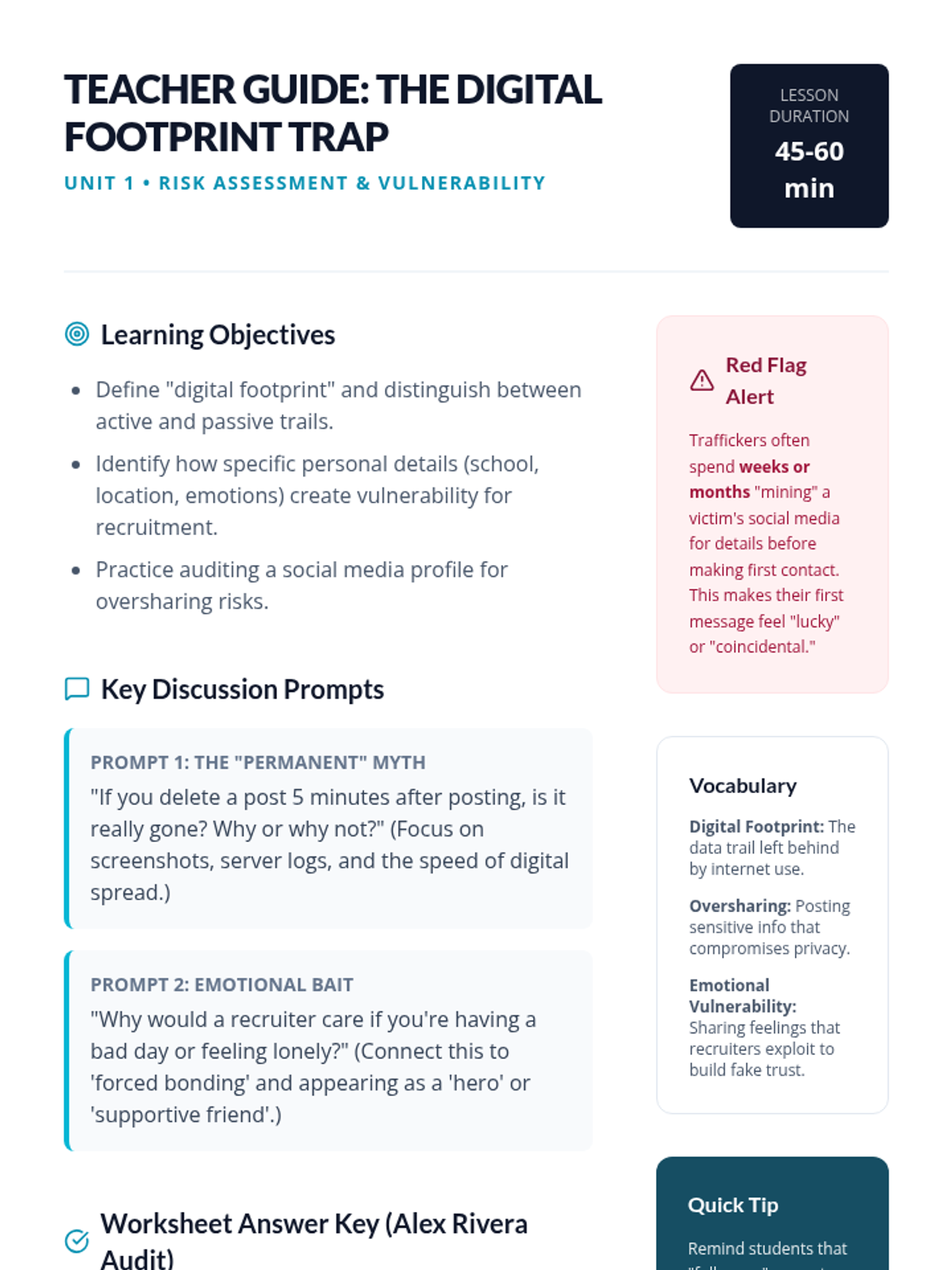
A 5-lesson sequence for 6th graders focusing on identifying online recruitment tactics, understanding digital footprints, and implementing privacy shields to prevent exploitation and trafficking.
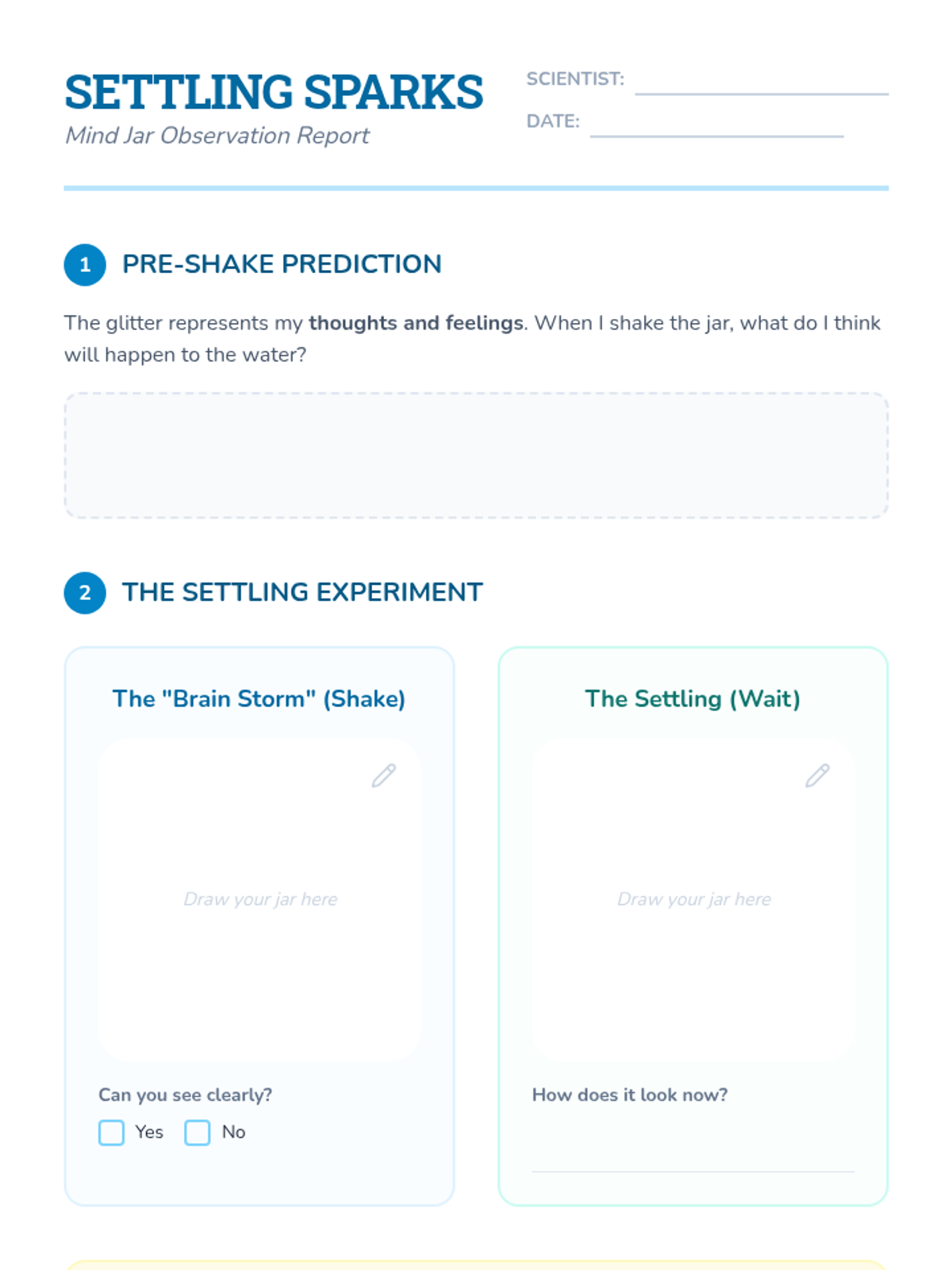
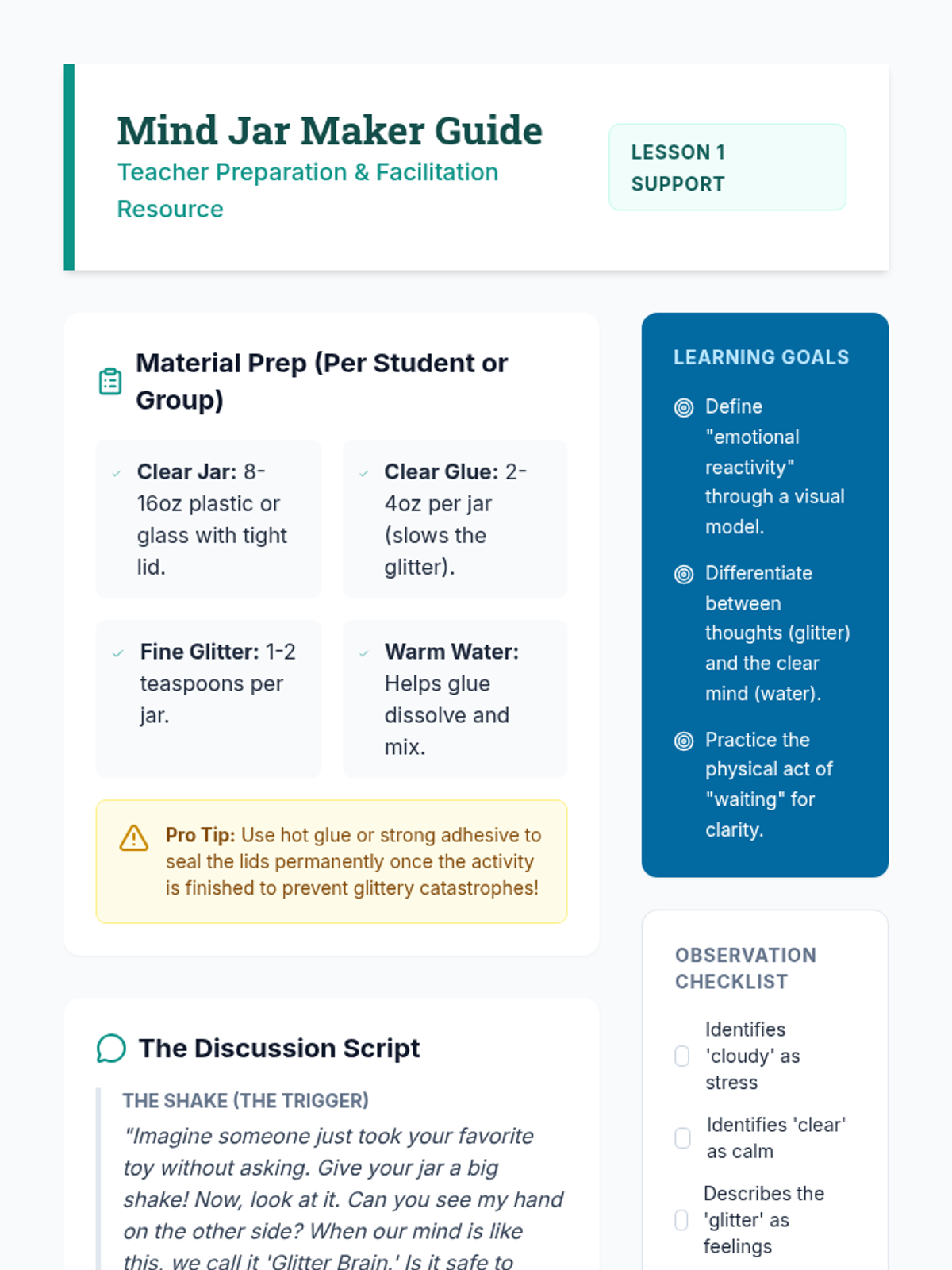
A 3rd-grade mindfulness sequence exploring emotional regulation through metaphors like mind jars, weather reporting, and visualization to help students widen the gap between triggers and reactions.
This sequence focuses on emotional intelligence and self-compassion through a case study approach. Students analyze hypothetical scenarios involving disappointment, anger, or anxiety, and apply mindfulness techniques to navigate them, shifting from reacting impulsively to responding thoughtfully.
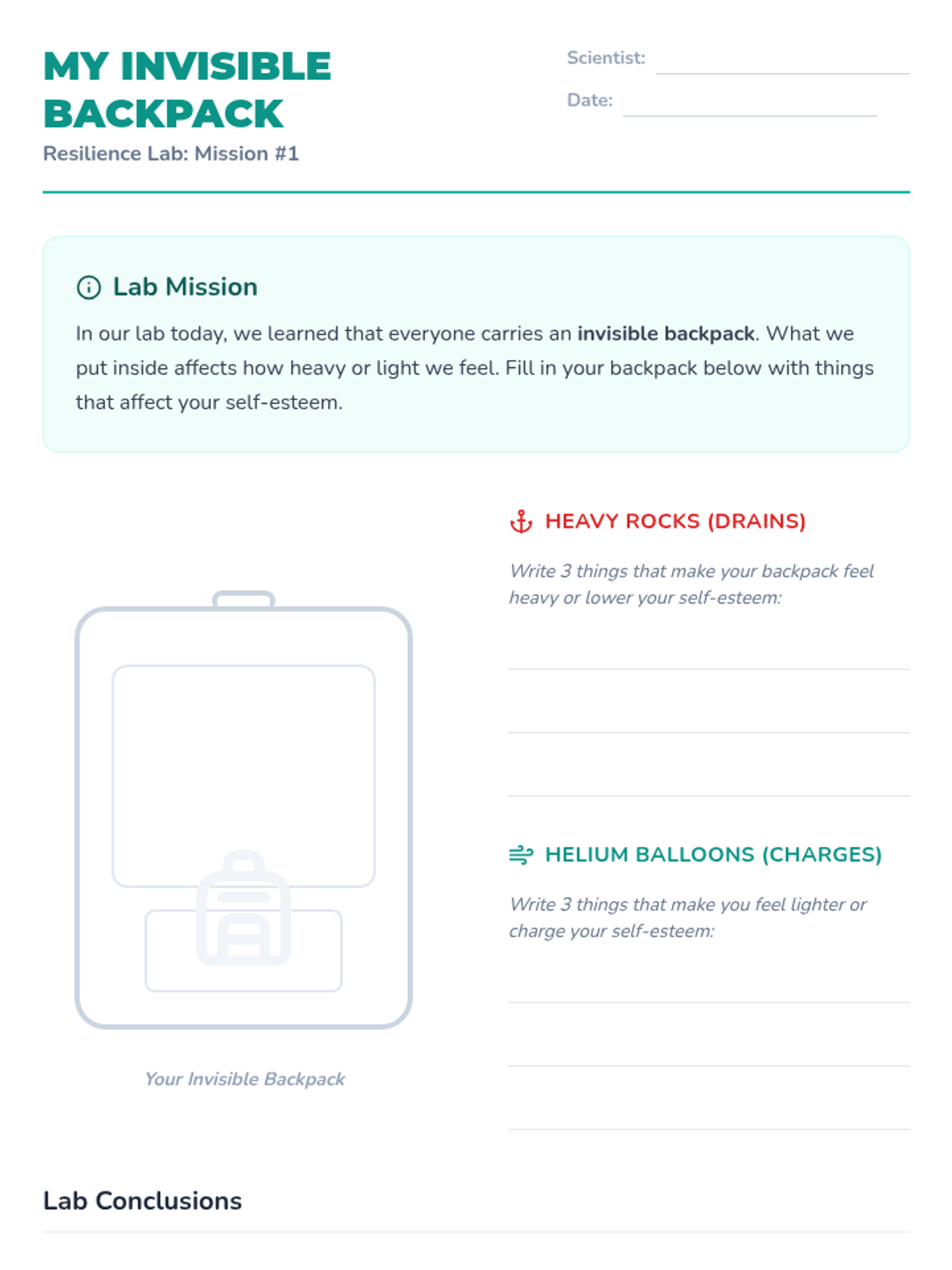
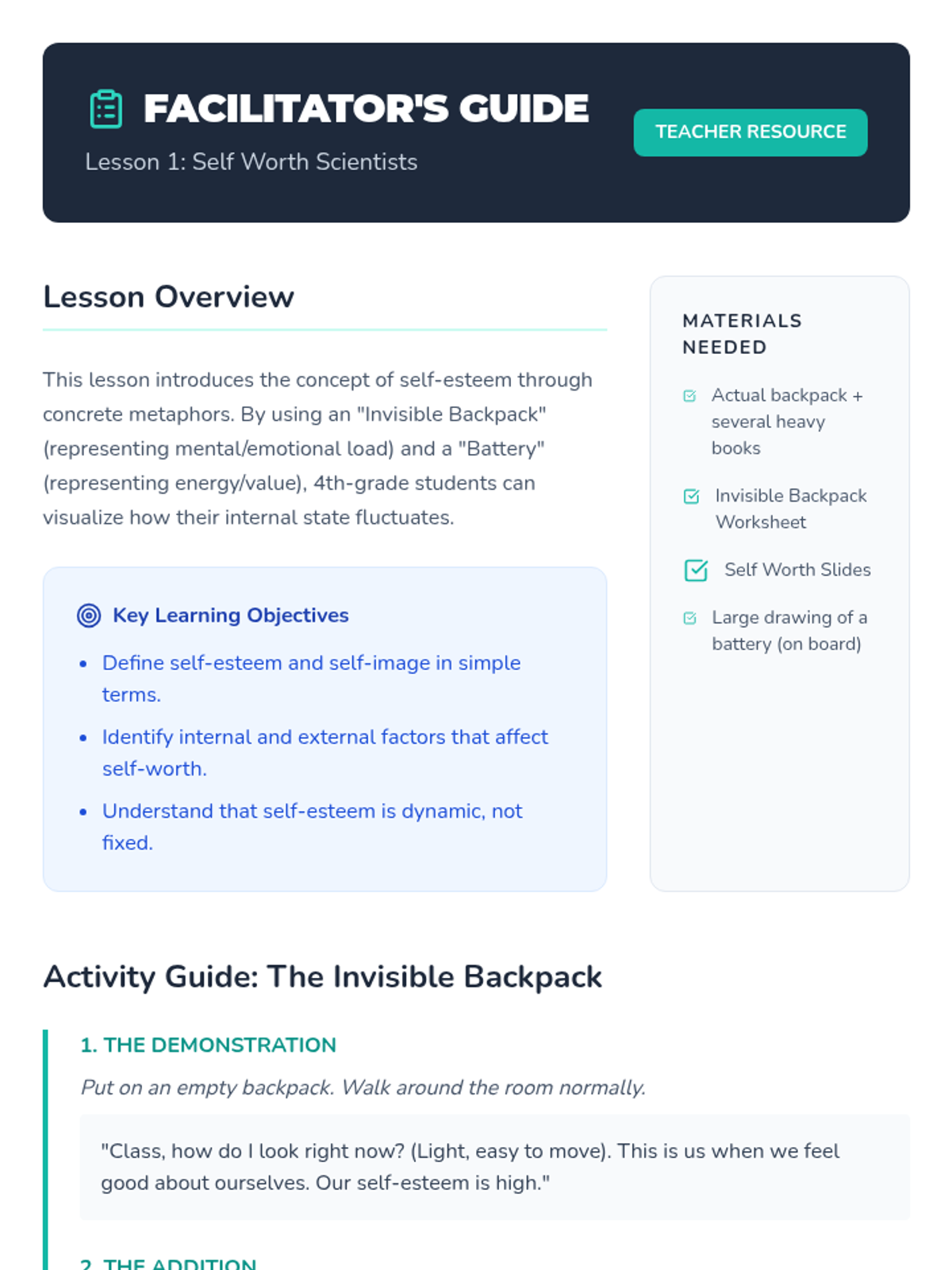
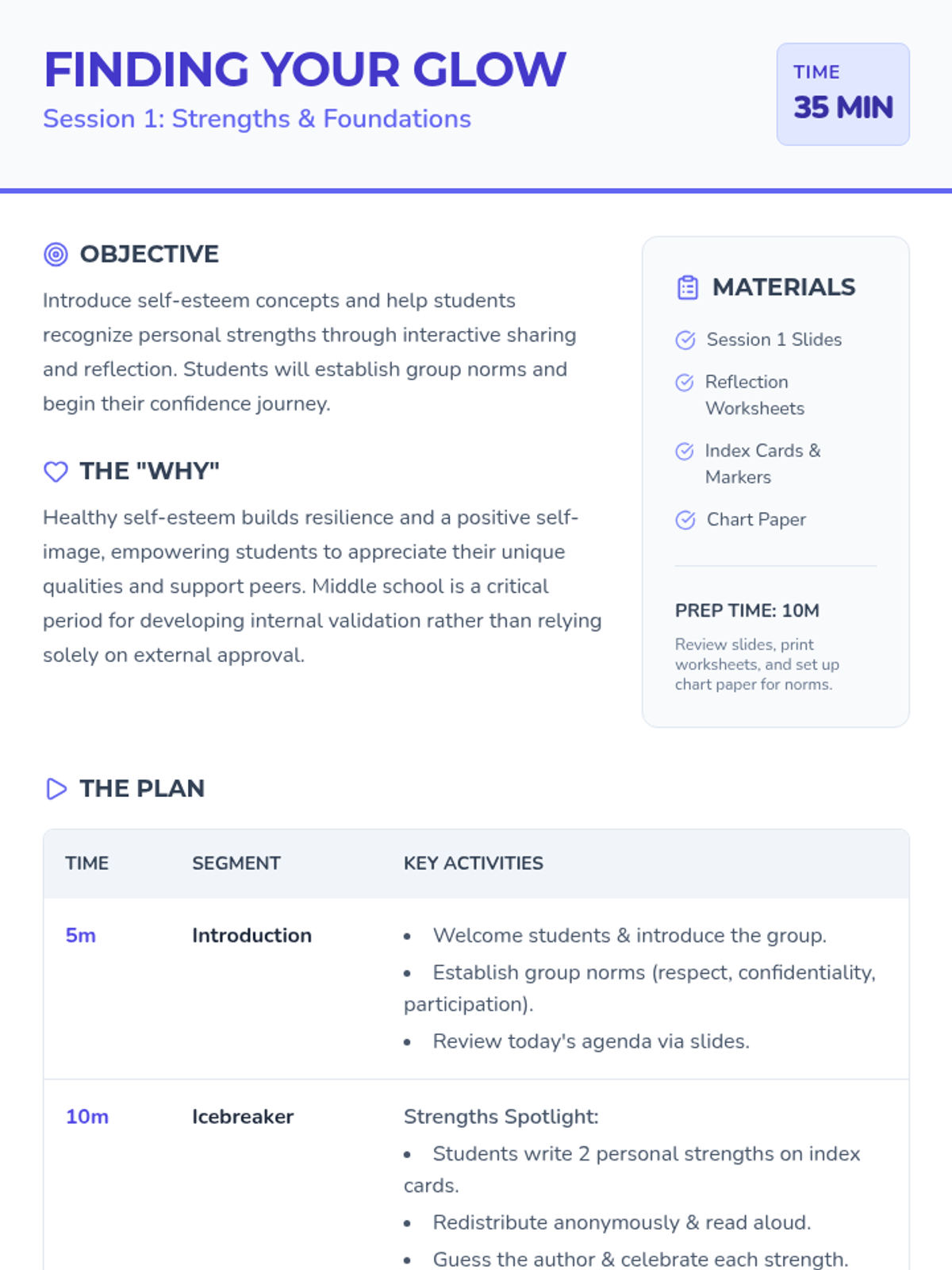
This sequence utilizes inquiry and case studies to examine the formation of self-esteem and the impact of external feedback. Students analyze sources of self-worth, critique media messages, and develop a personal toolkit of resilience strategies.
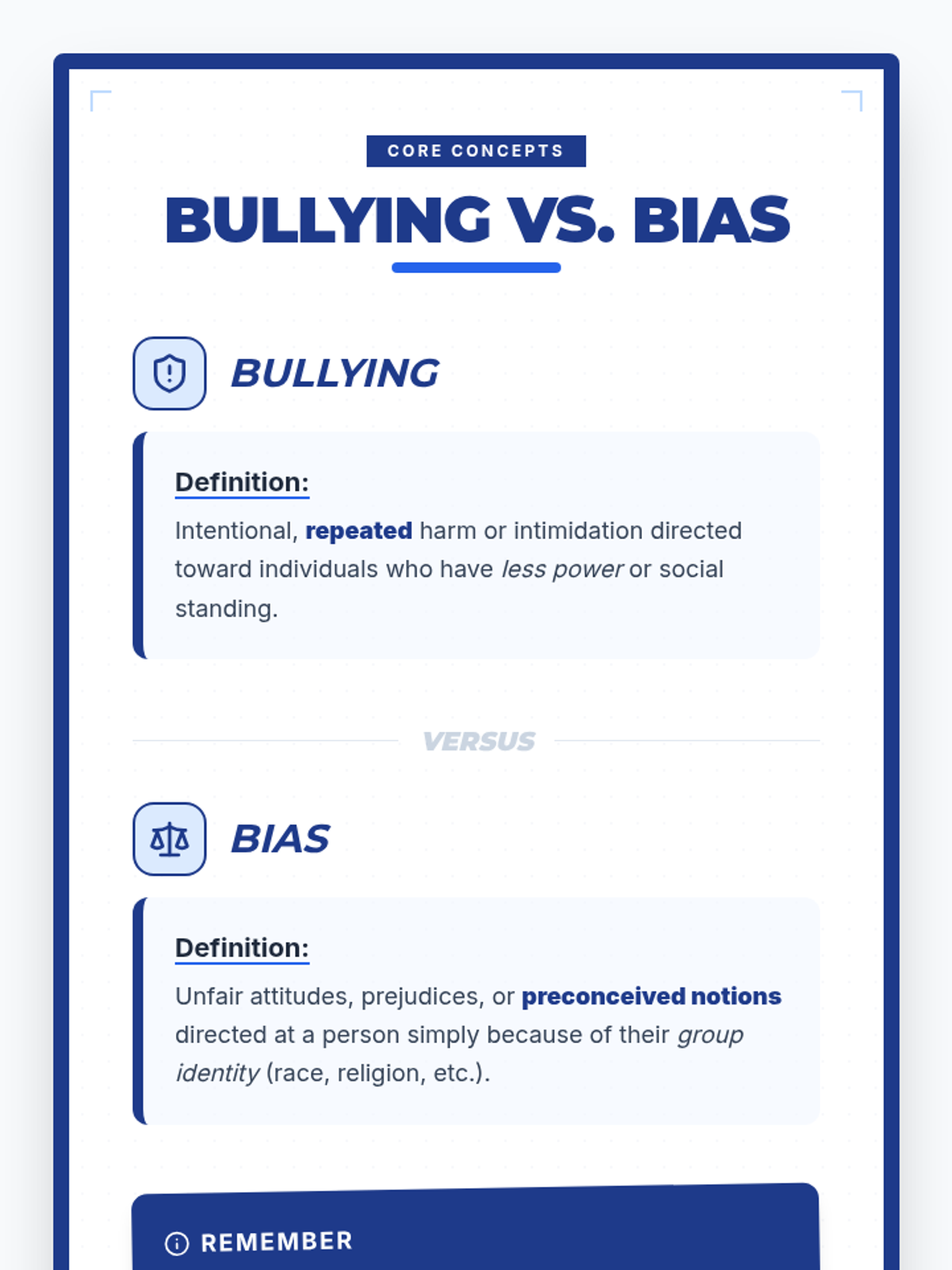
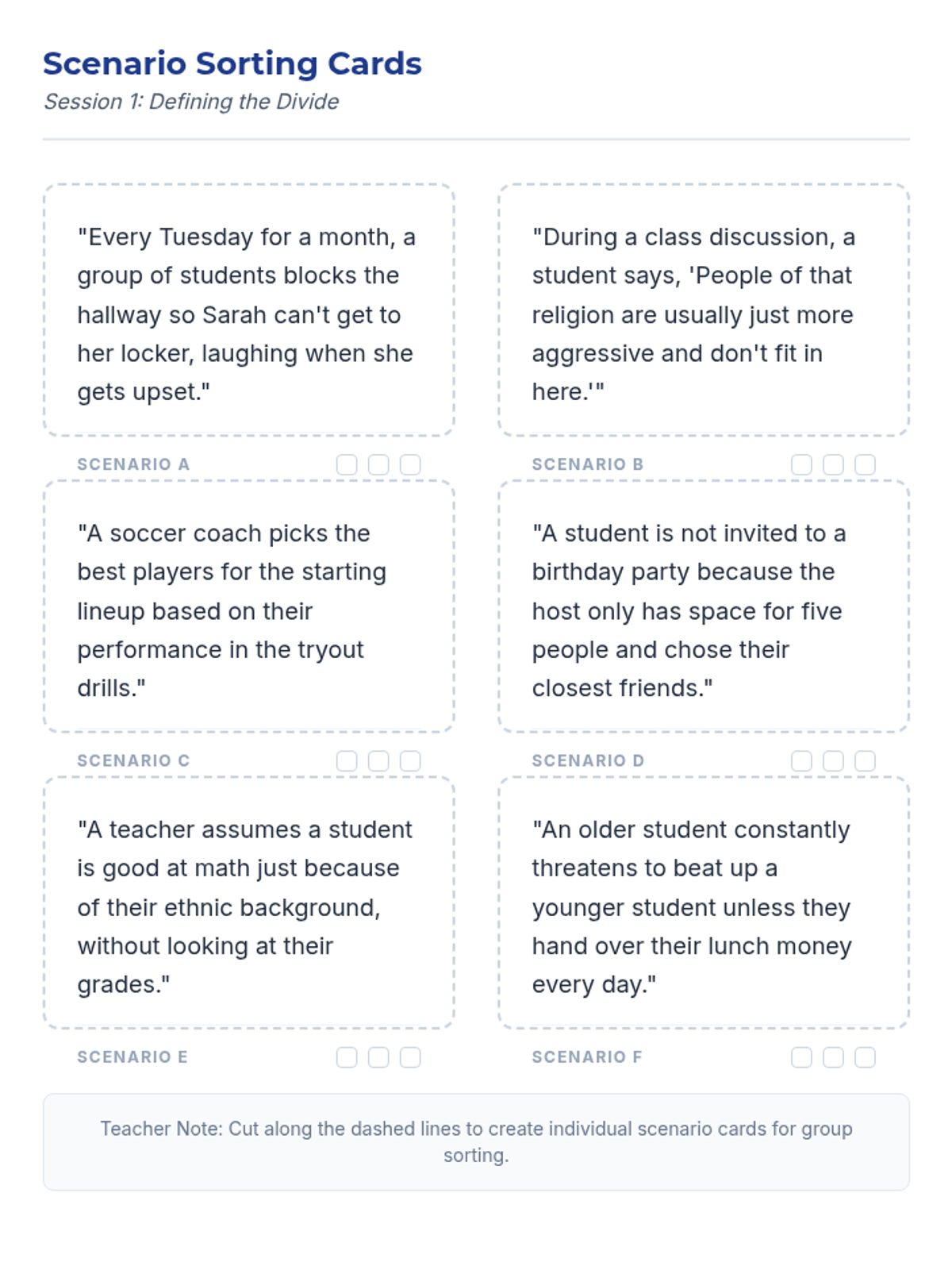
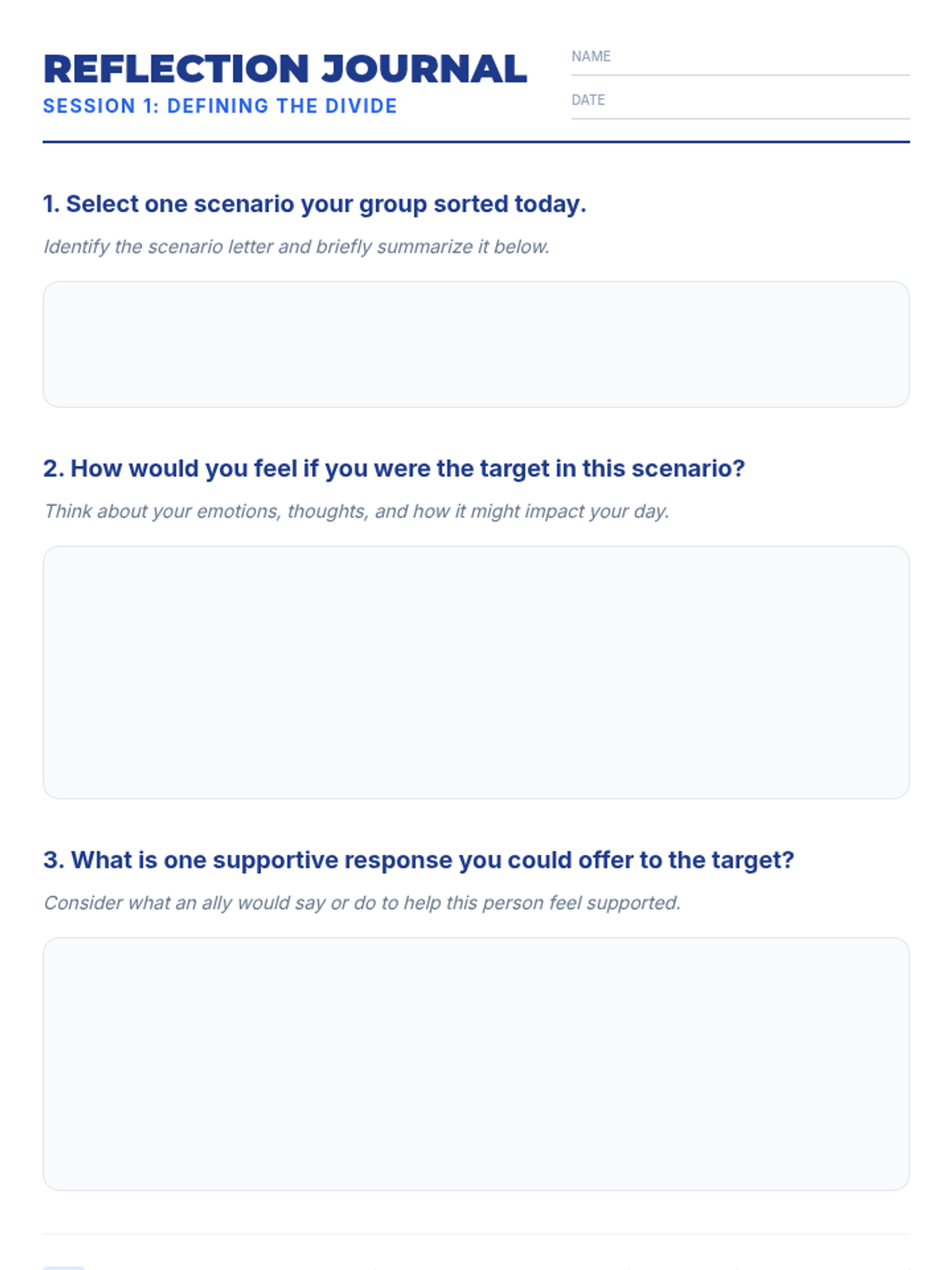
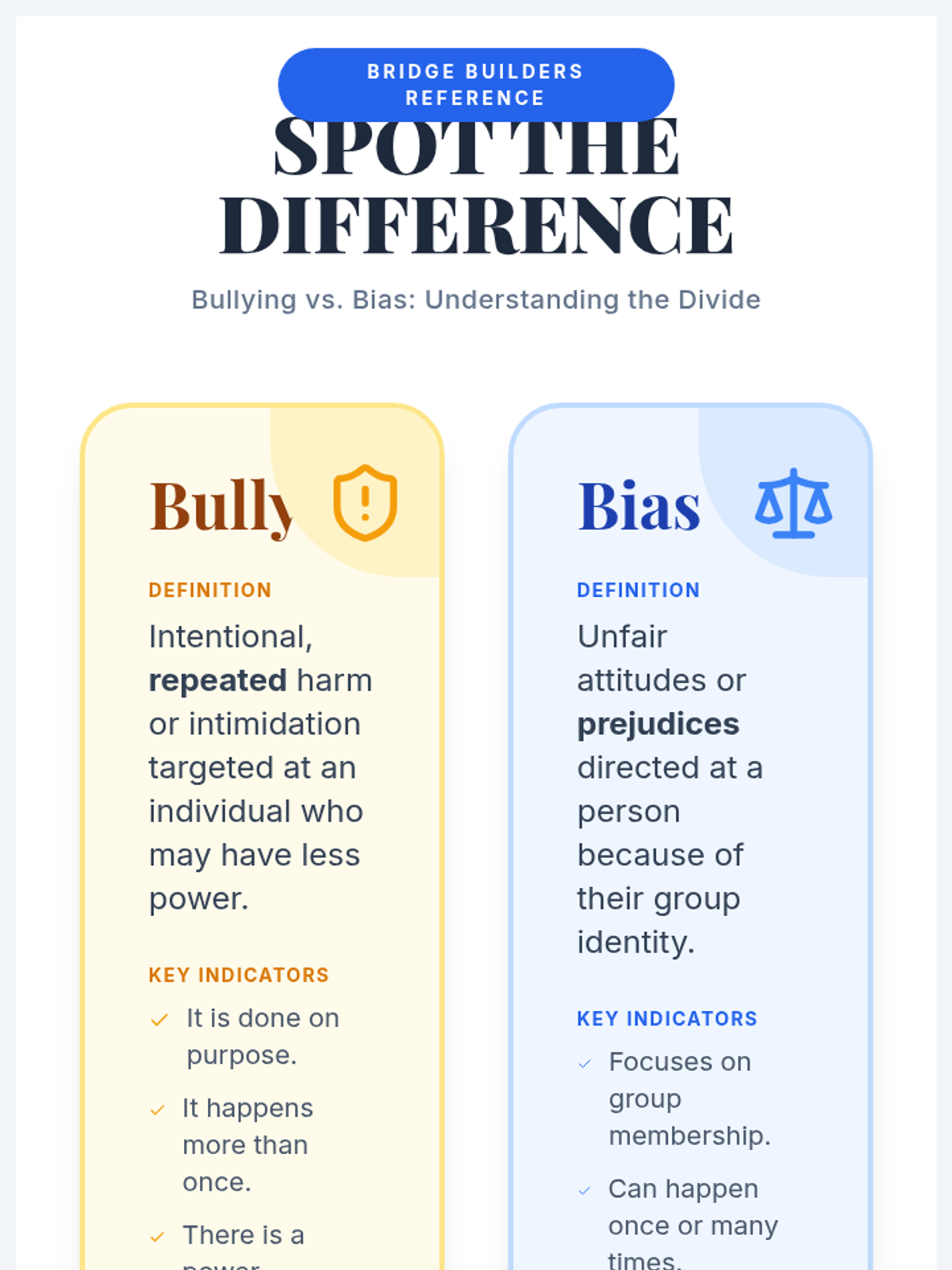
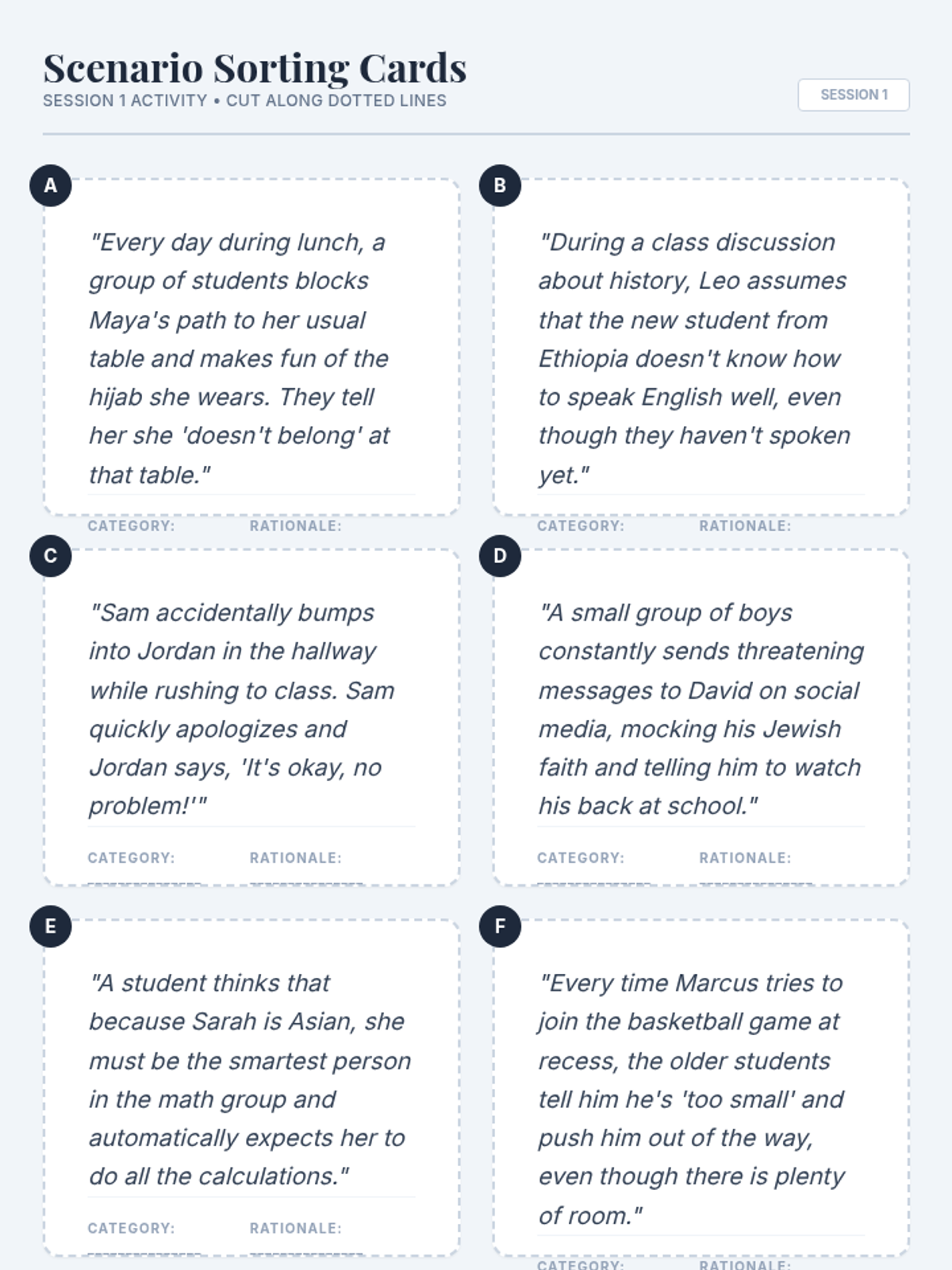
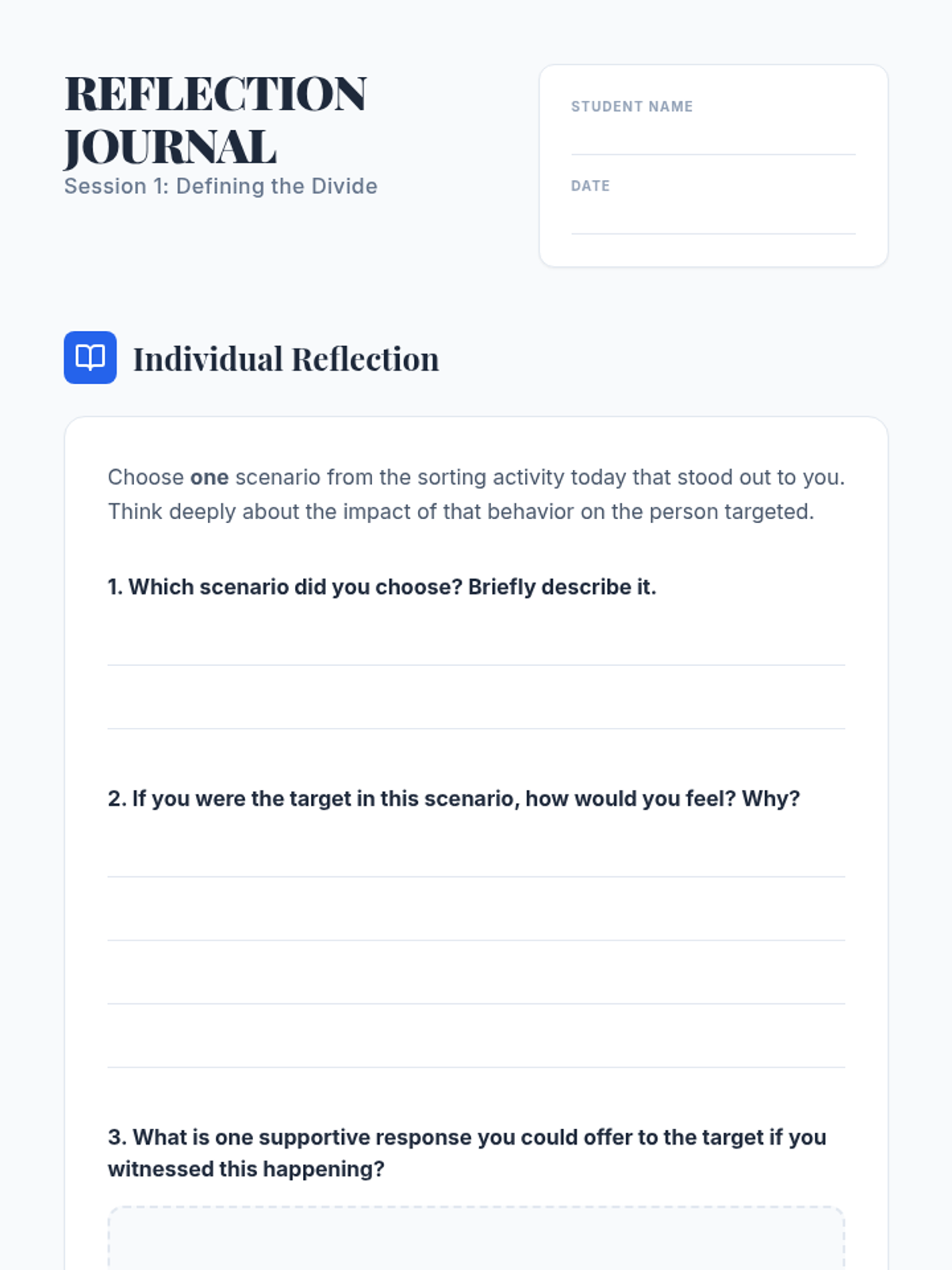
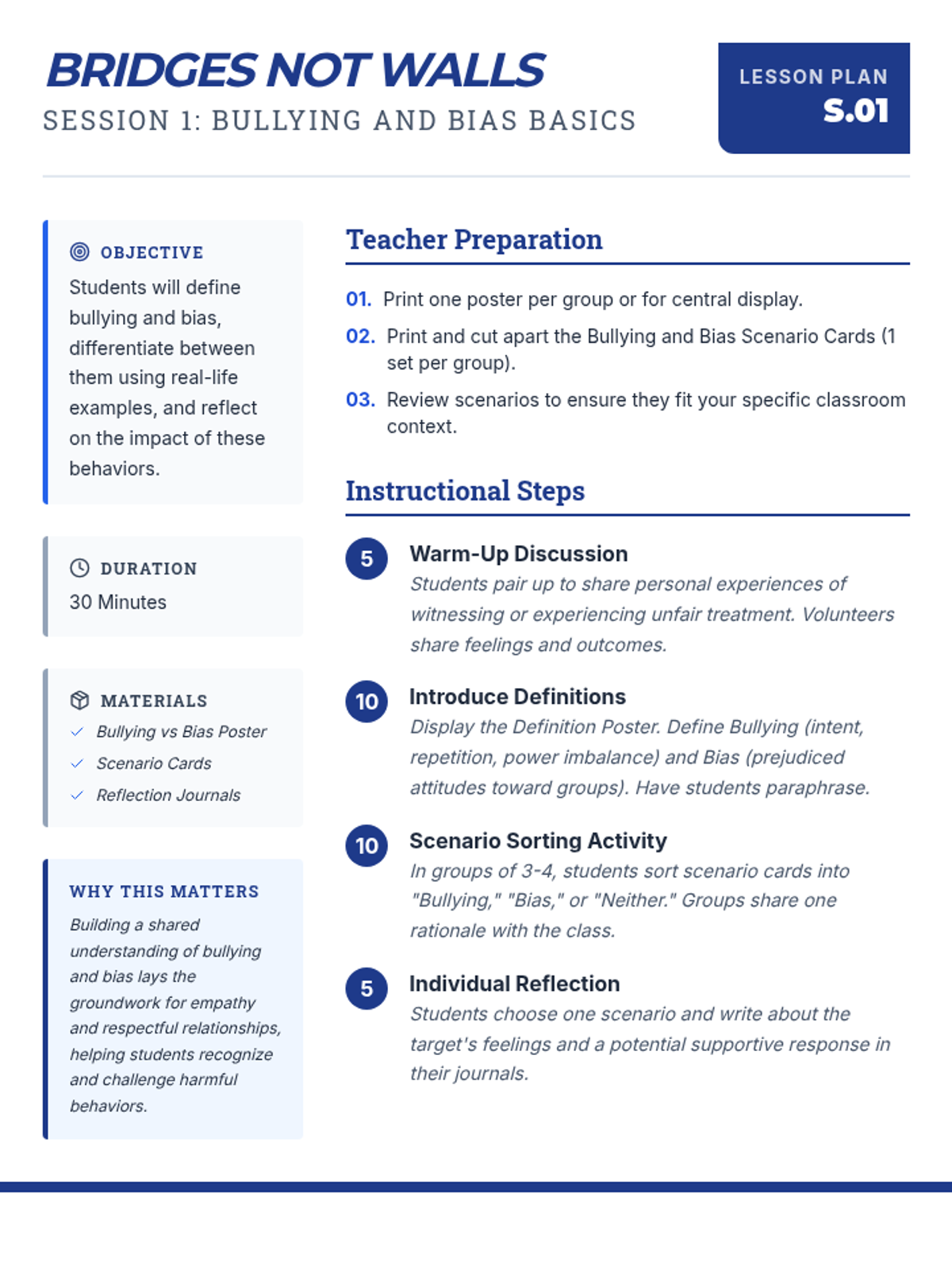
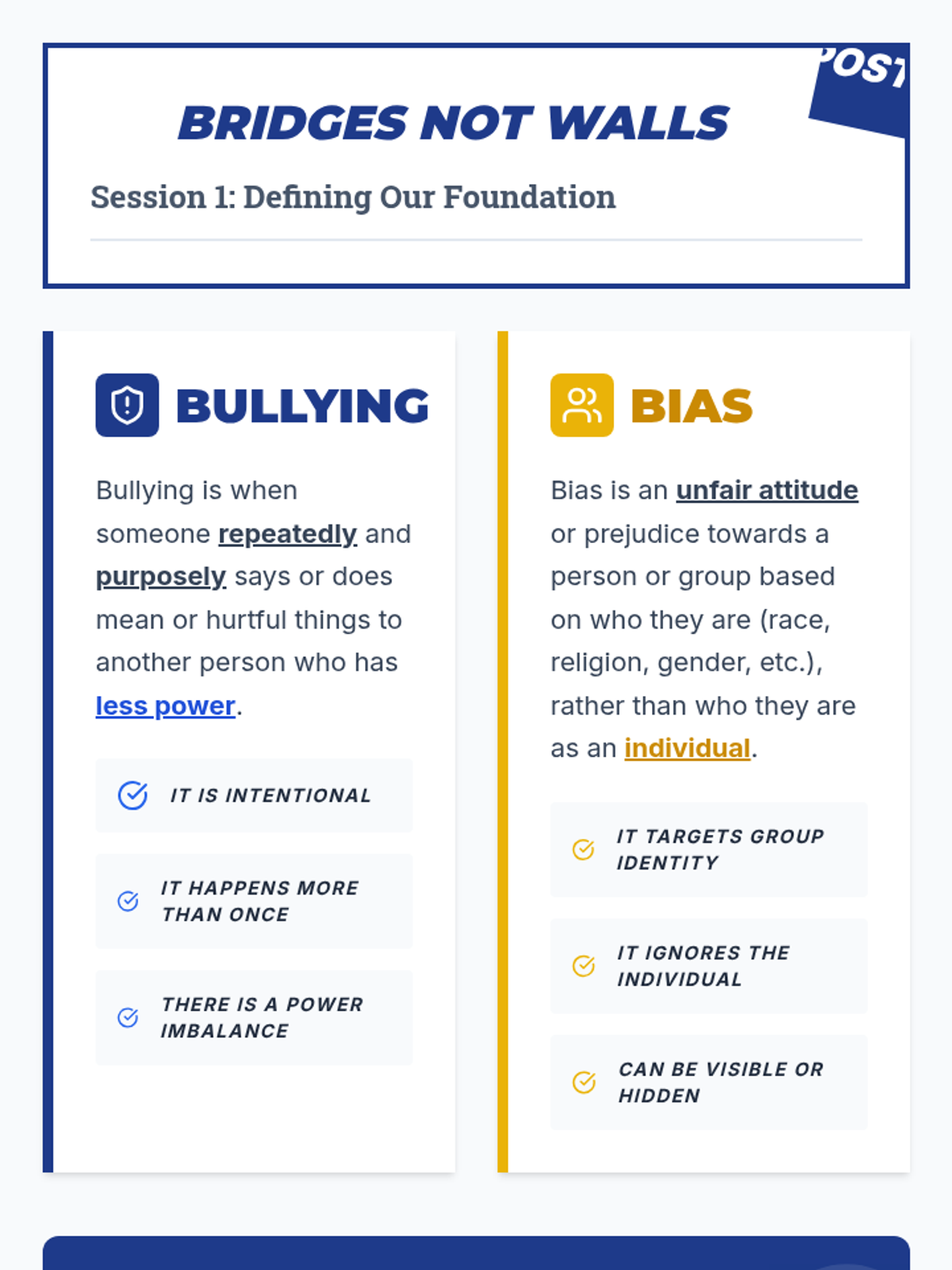
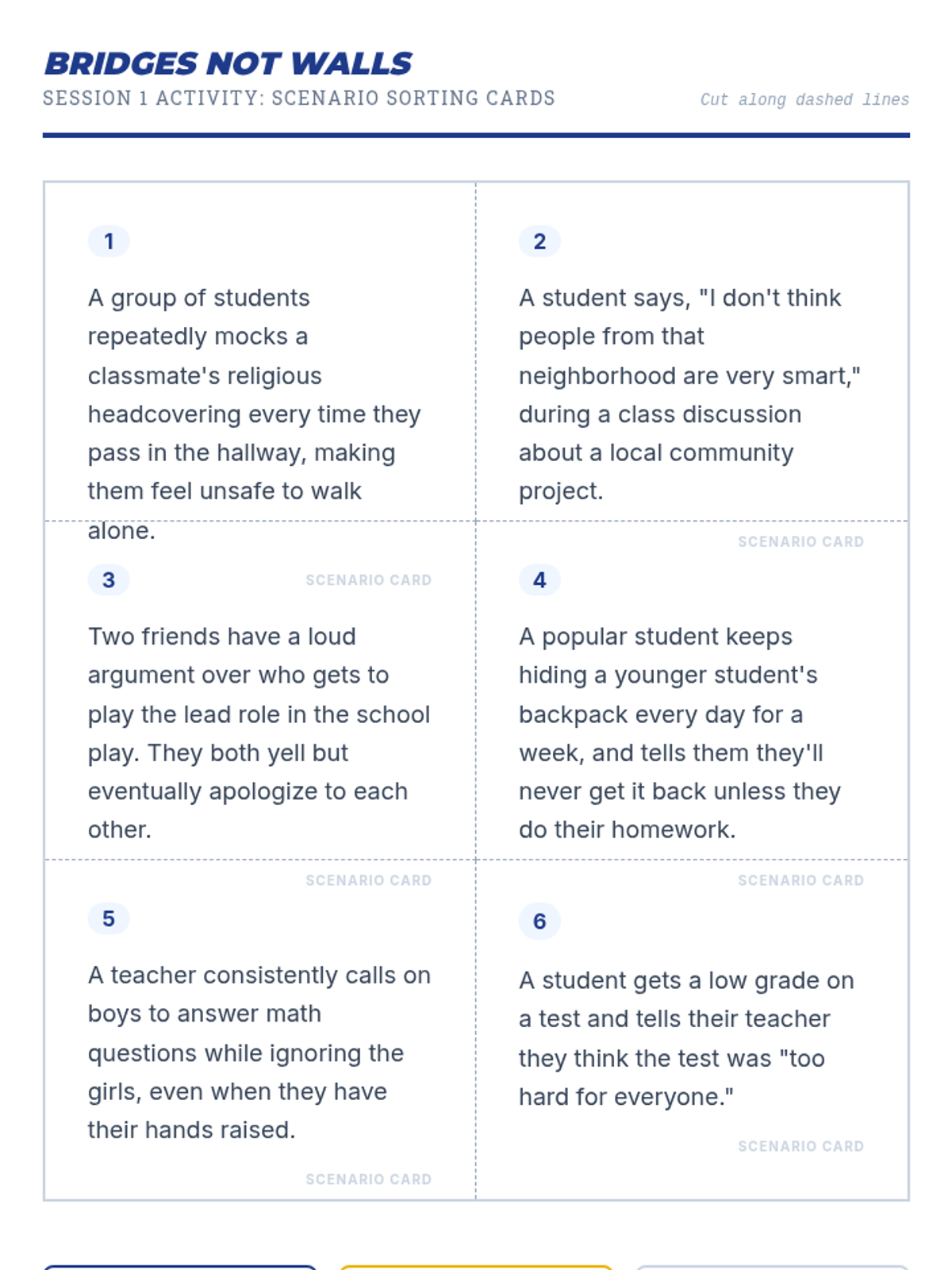
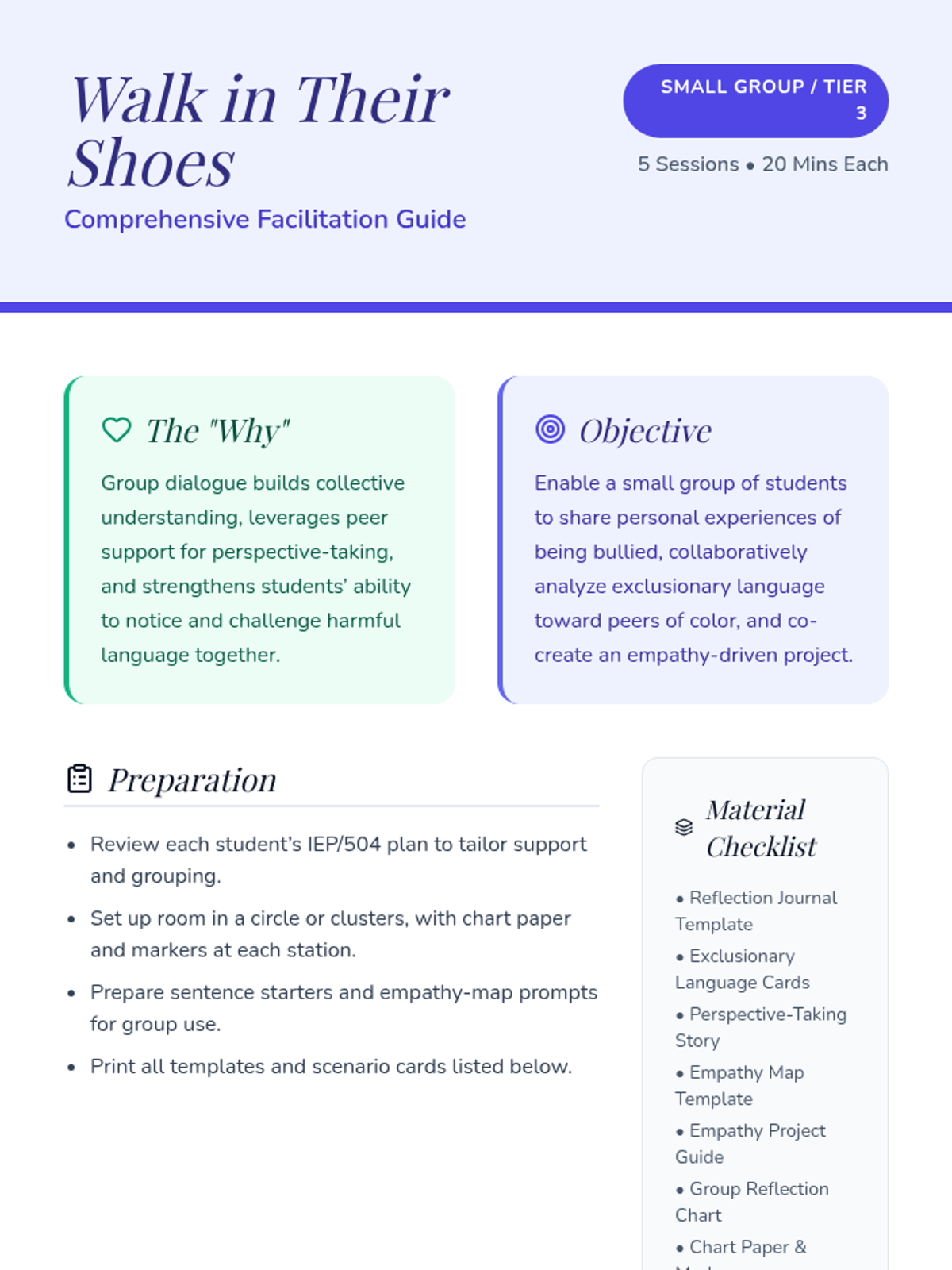
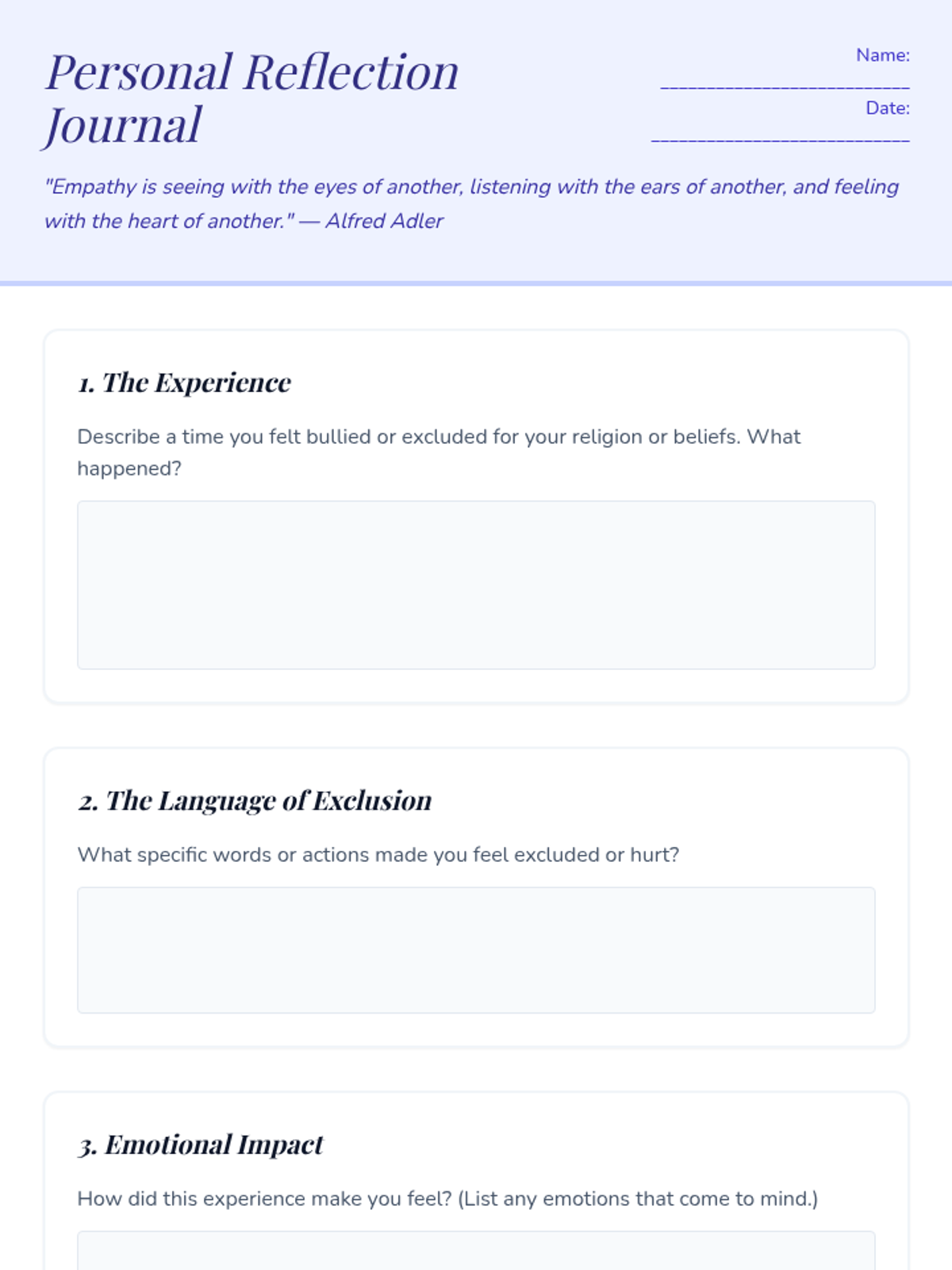
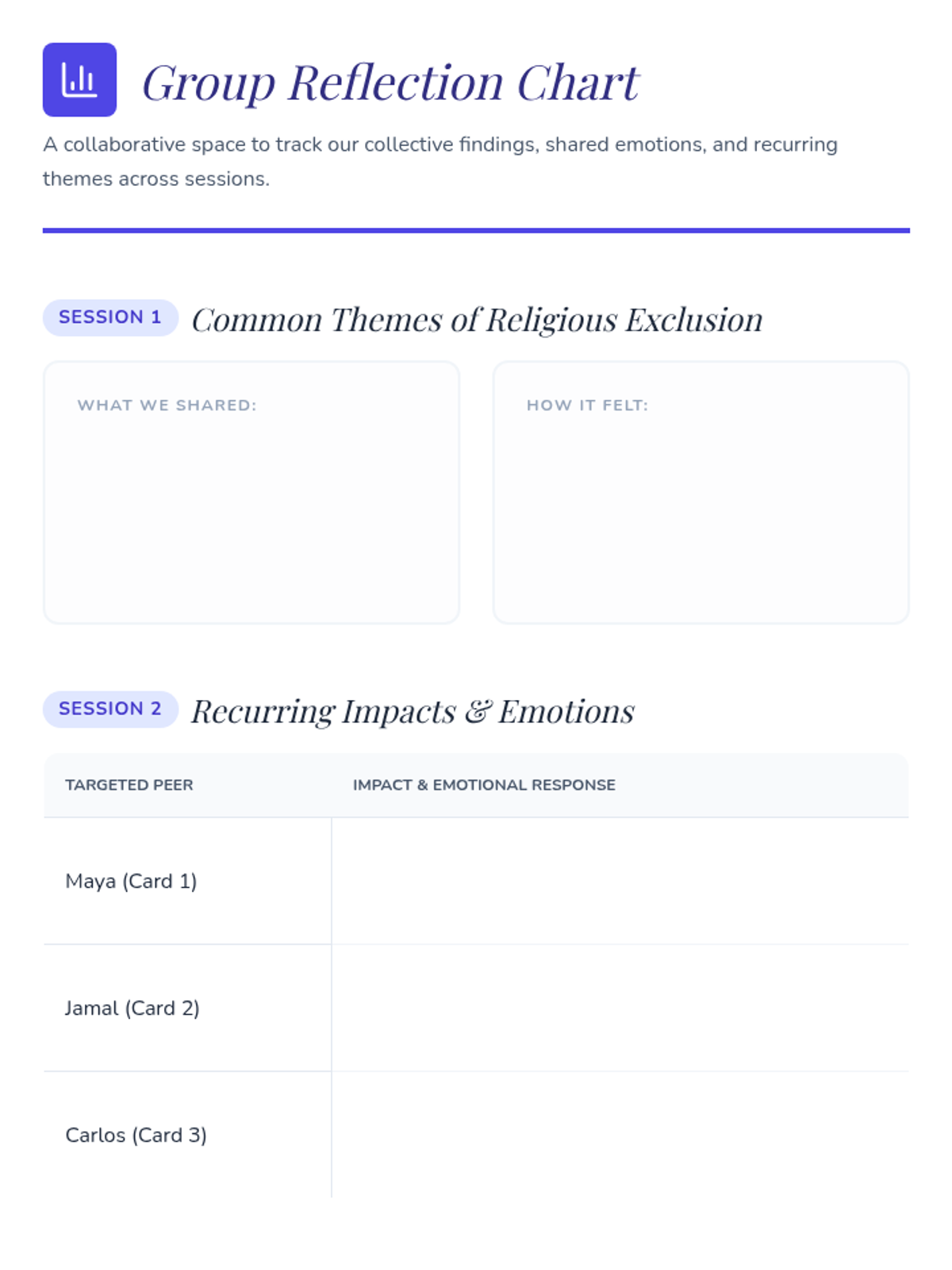
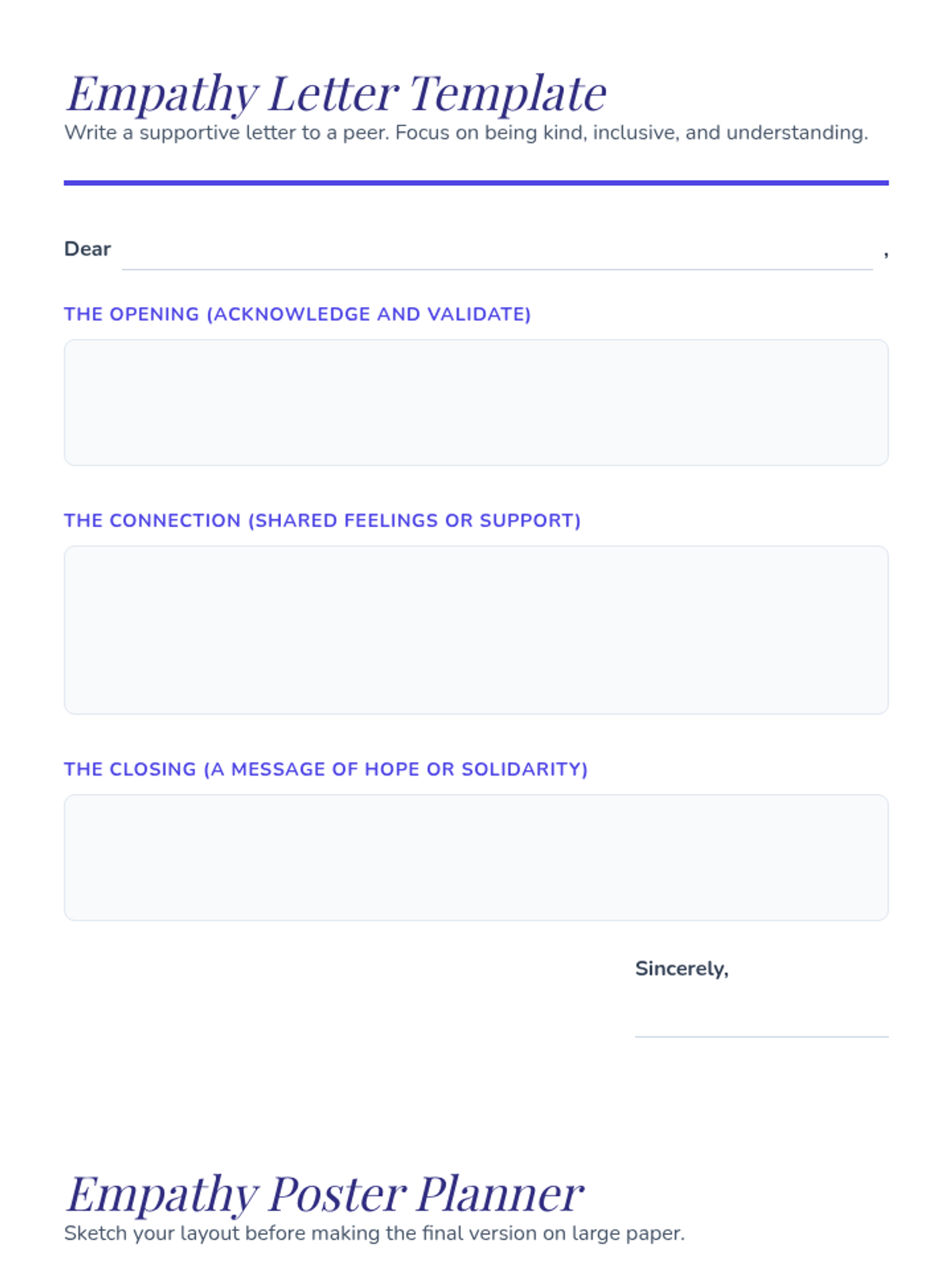
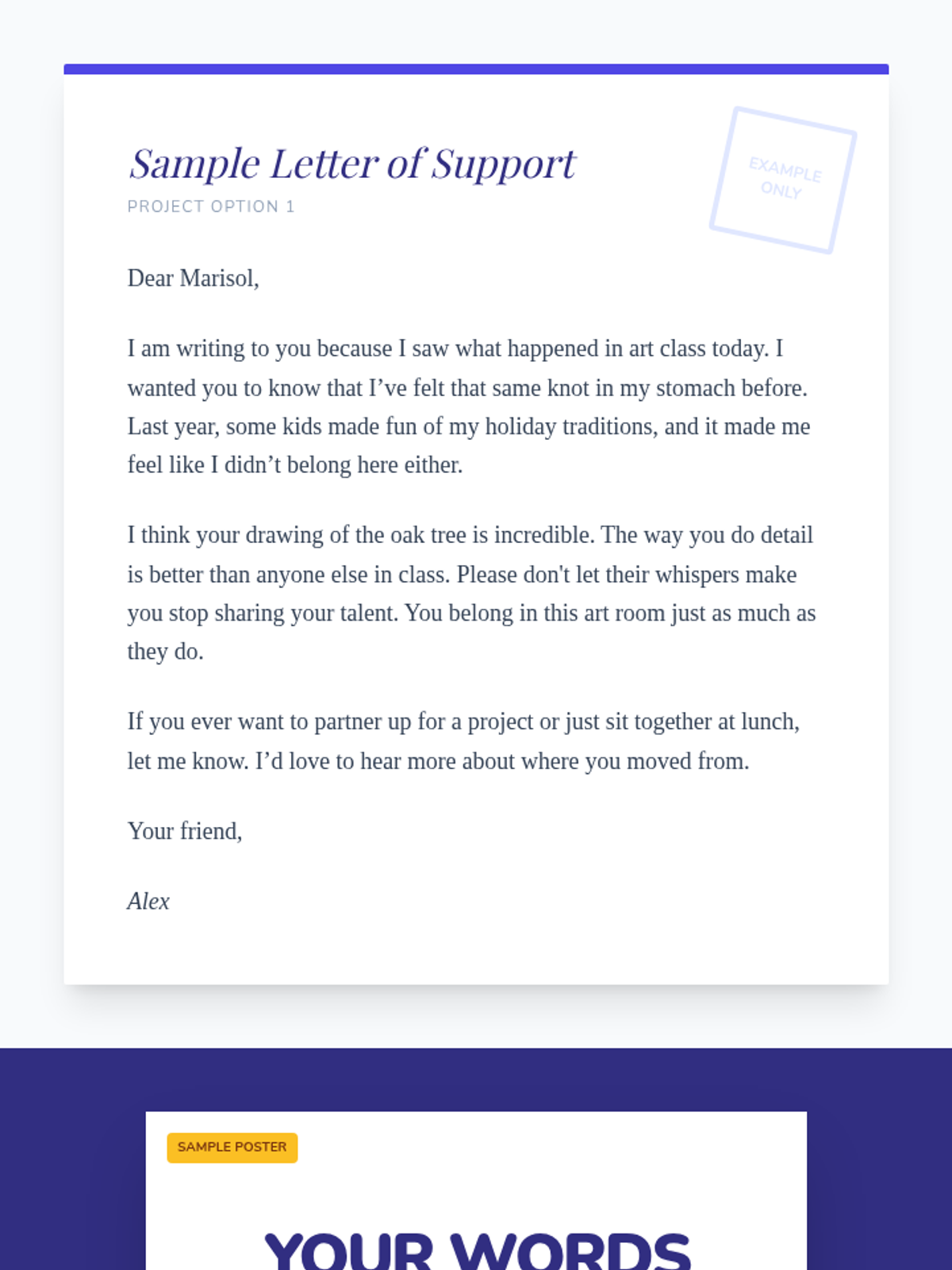
A six-session unit for 6th graders to explore empathy, diversity, and restorative practices after incidents of bullying tied to religion and race. Students learn to identify bias, practice healthy communication, and build inclusive communities.
In this six-session unit, 6th graders explore empathy, diversity, and restorative practices after incidents of bullying tied to religion and race. Students will learn to identify bias, practice healthy communication, and build inclusive communities, culminating in a restorative project presentation.
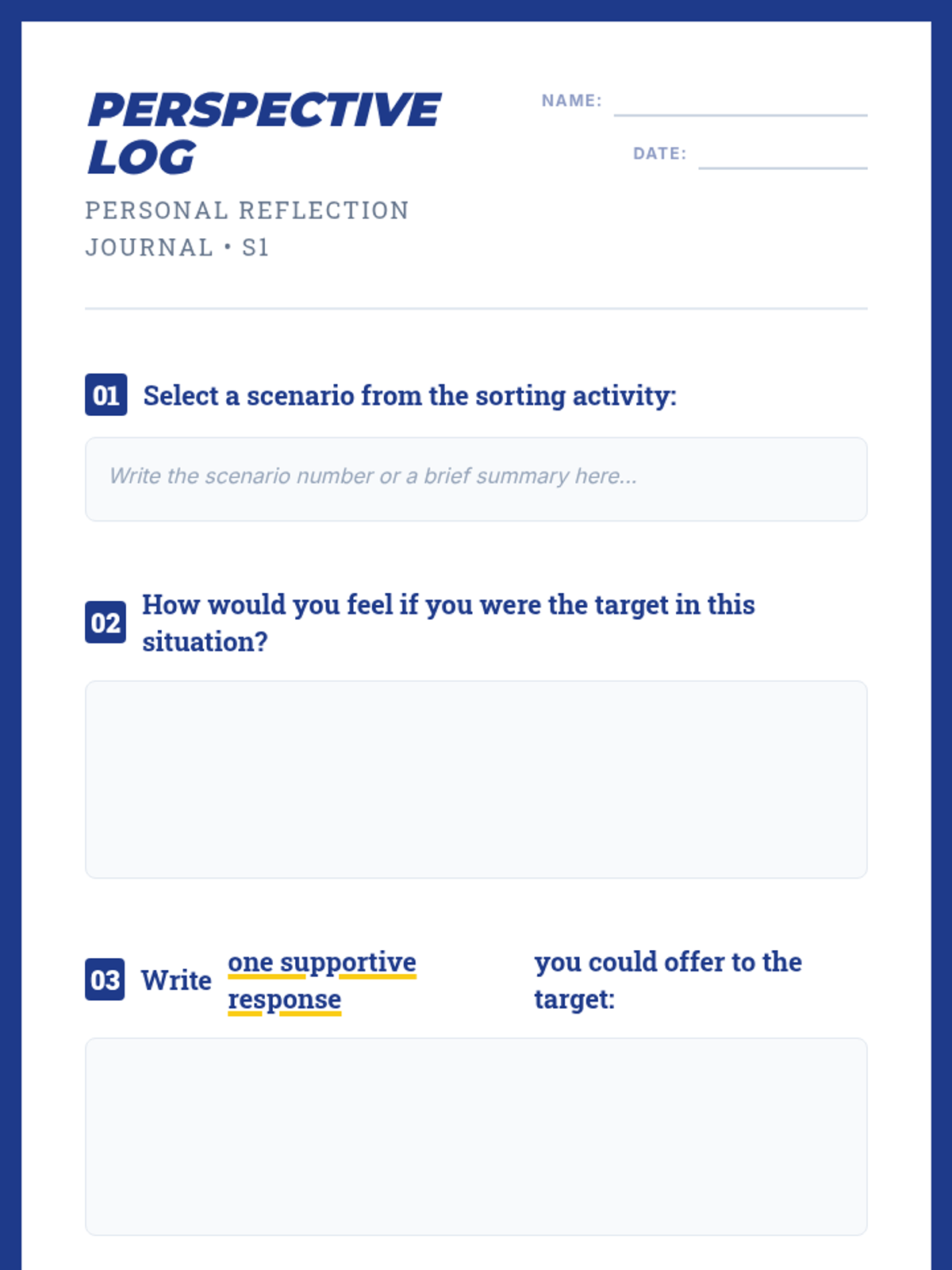
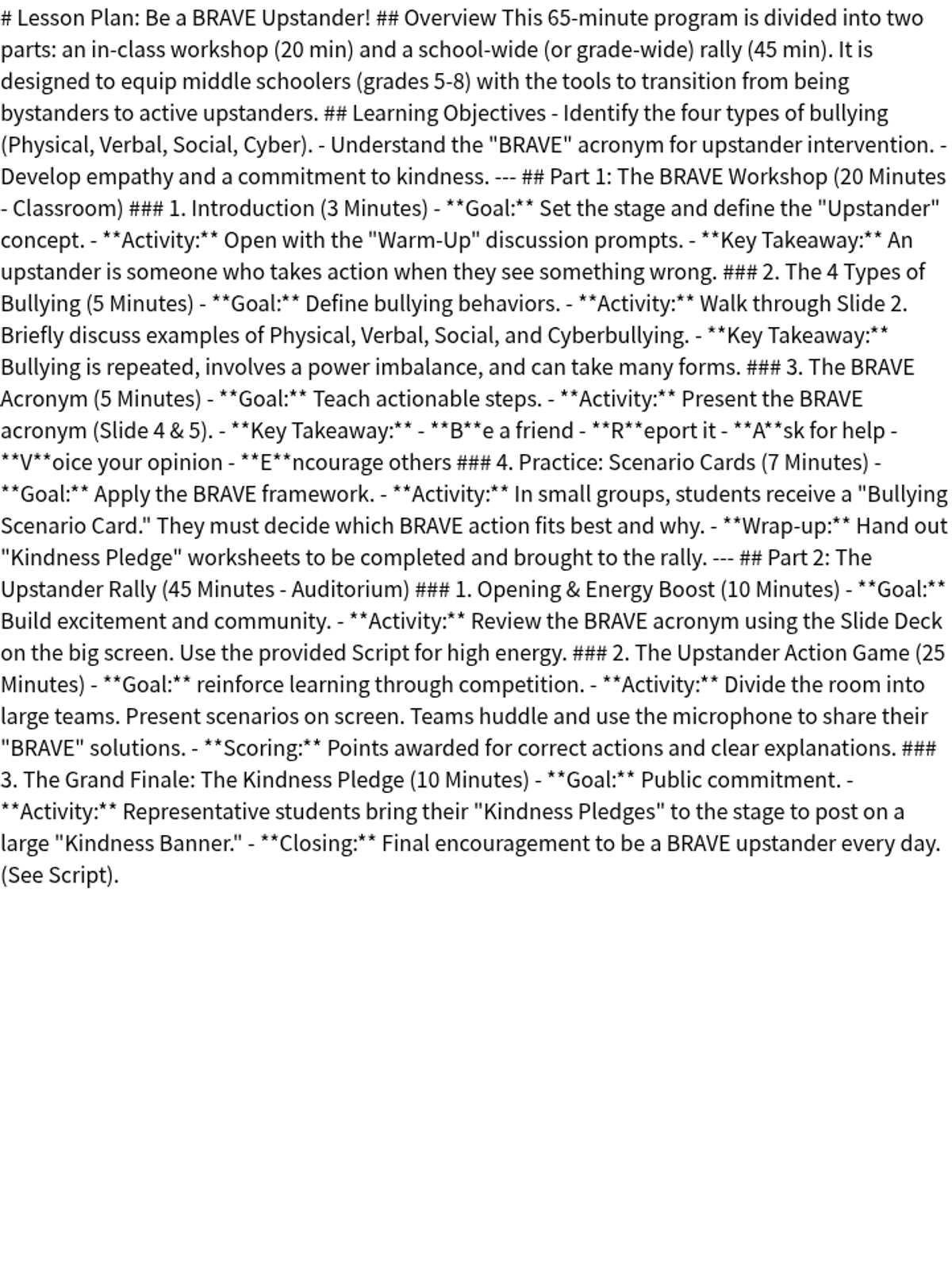
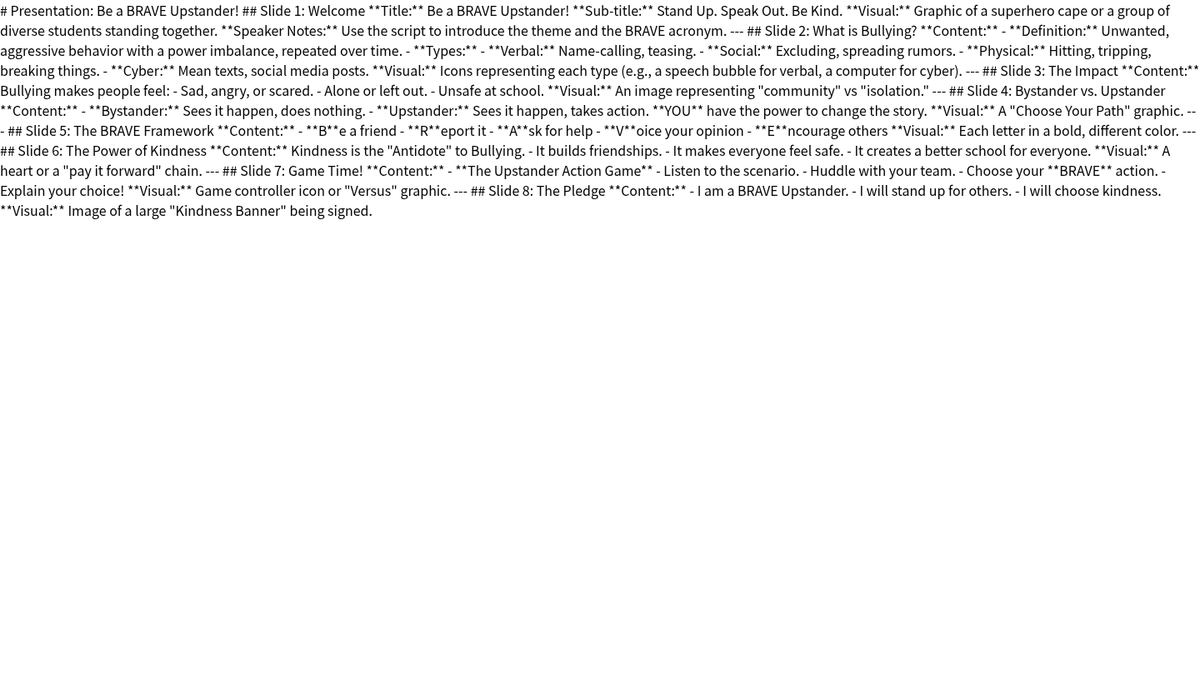
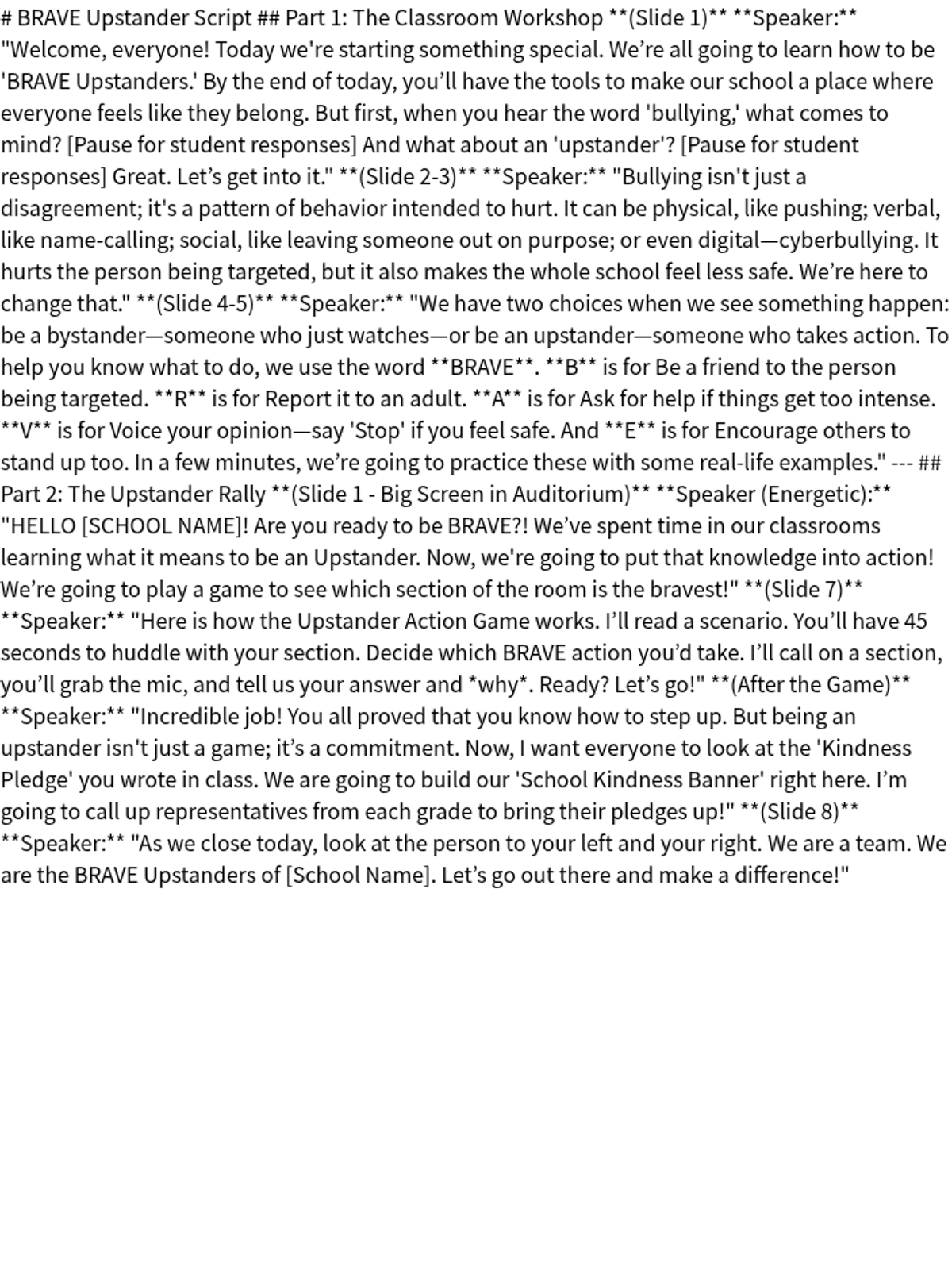
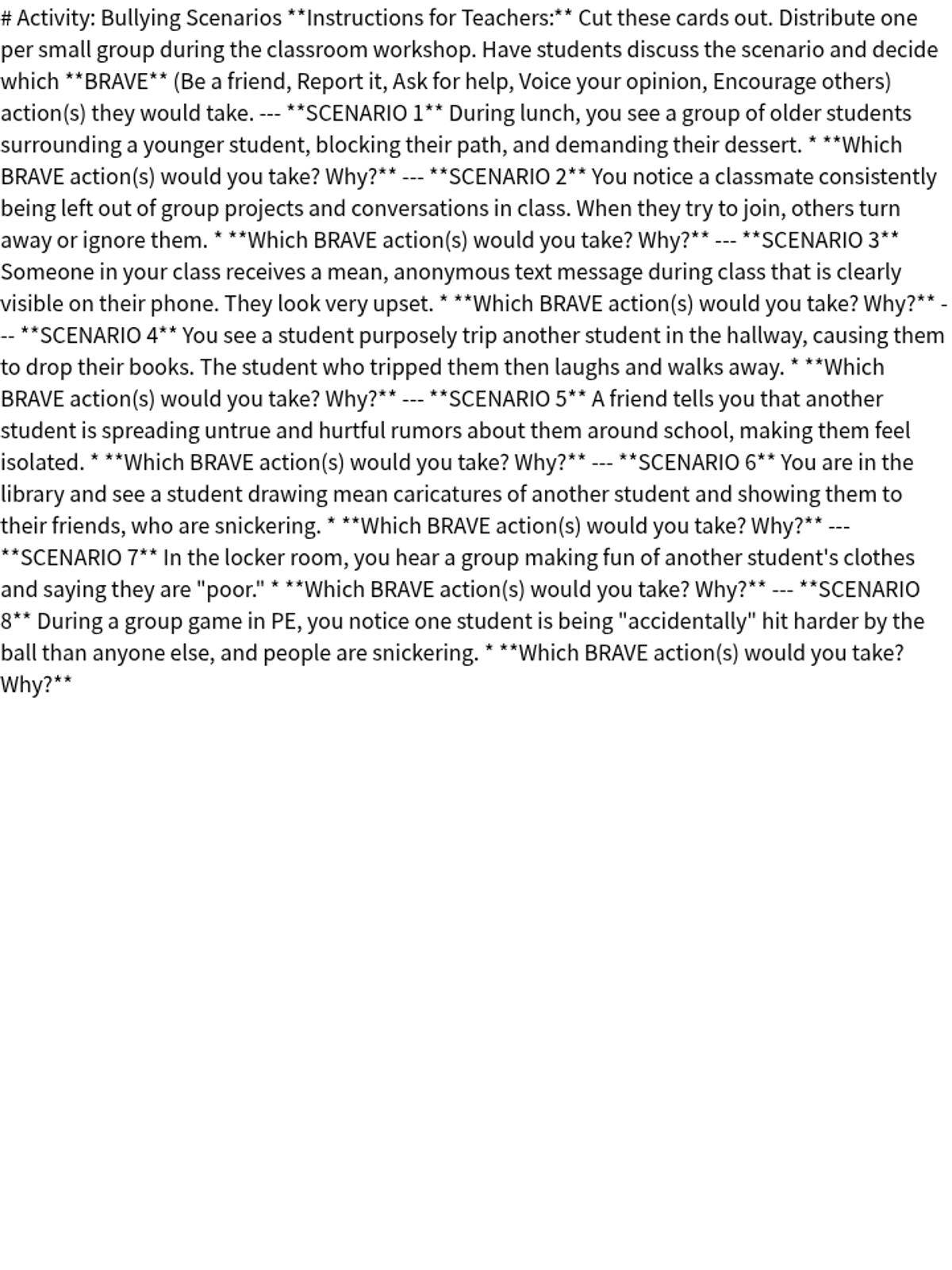
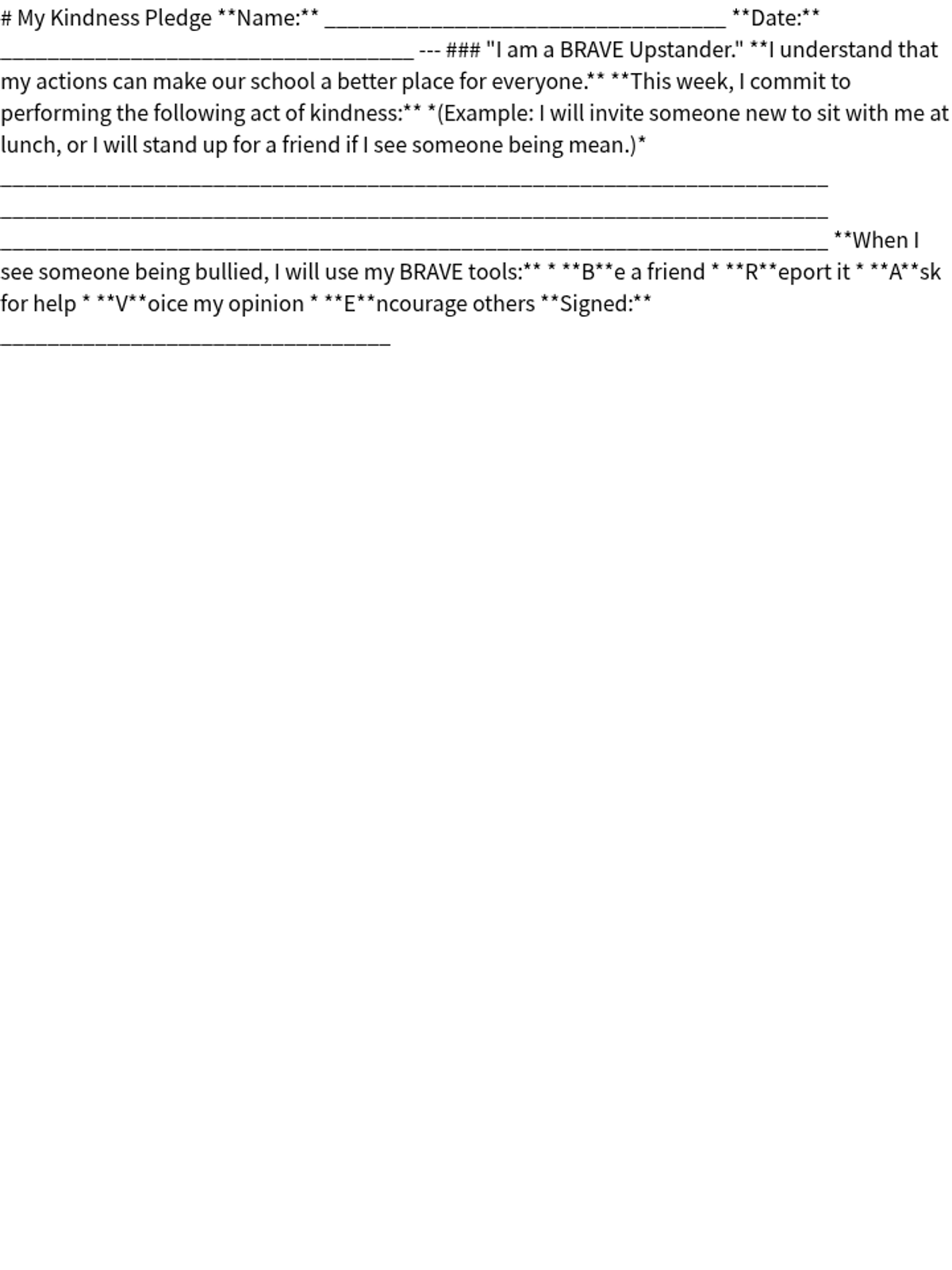
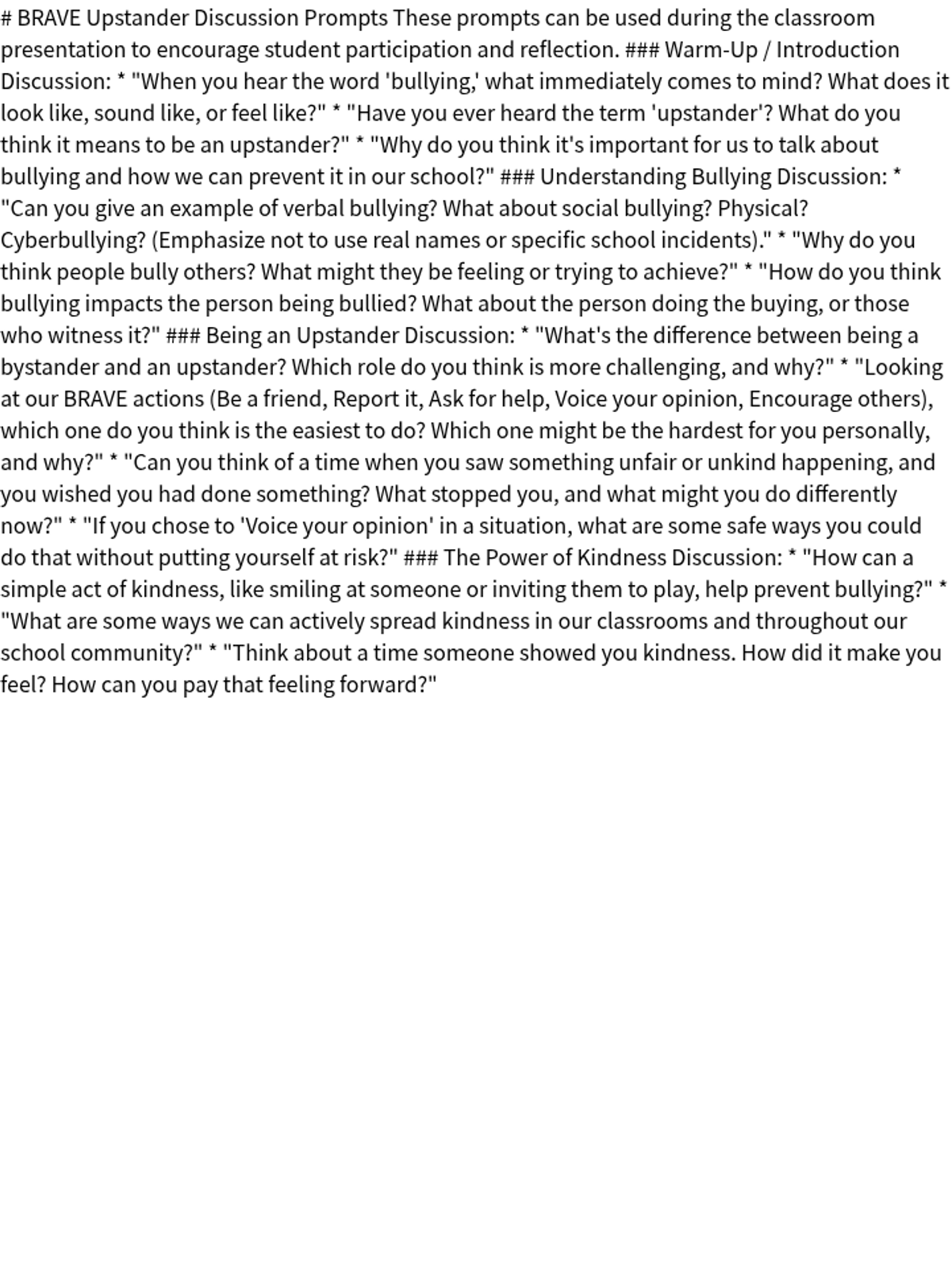
A comprehensive 65-minute educational experience for middle schoolers (grades 5-8). It consists of two parts: a 20-minute classroom presentation/workshop and a 45-minute "Upstander Rally" in an auditorium setting. The program teaches students how to recognize bullying and empowers them to intervene using the BRAVE framework (Be a friend, Report it, Ask for help, Voice your opinion, Encourage others).
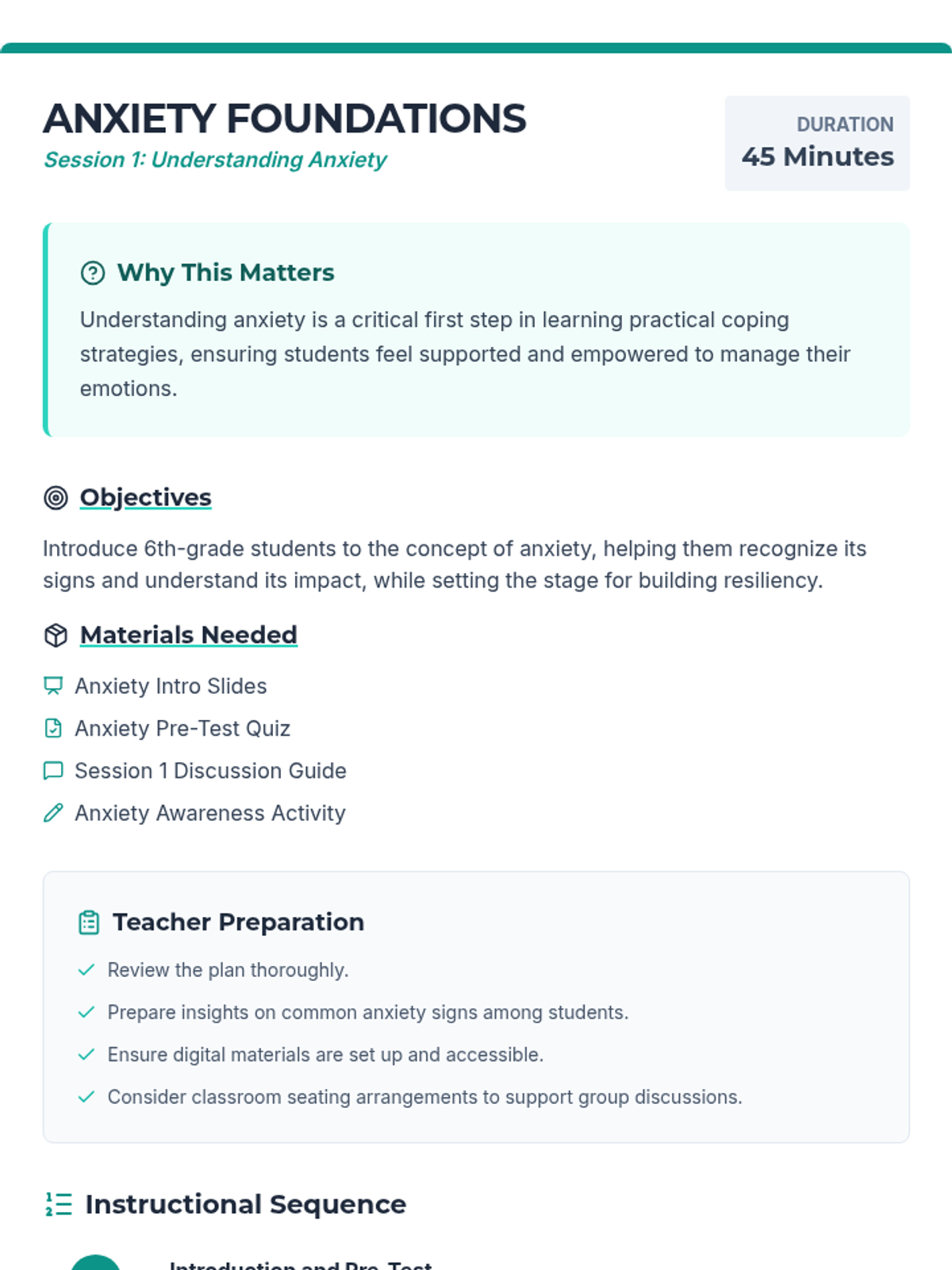
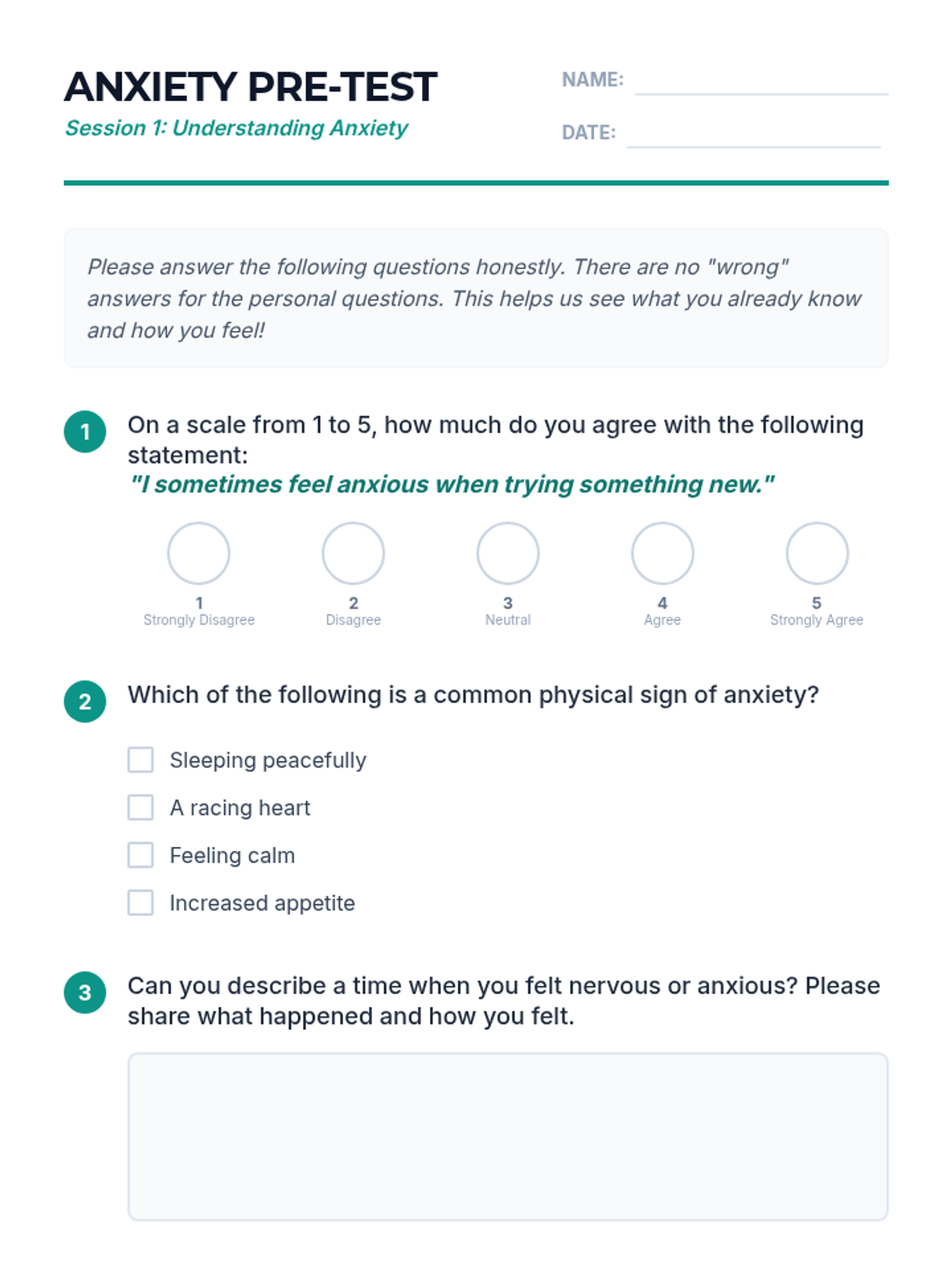
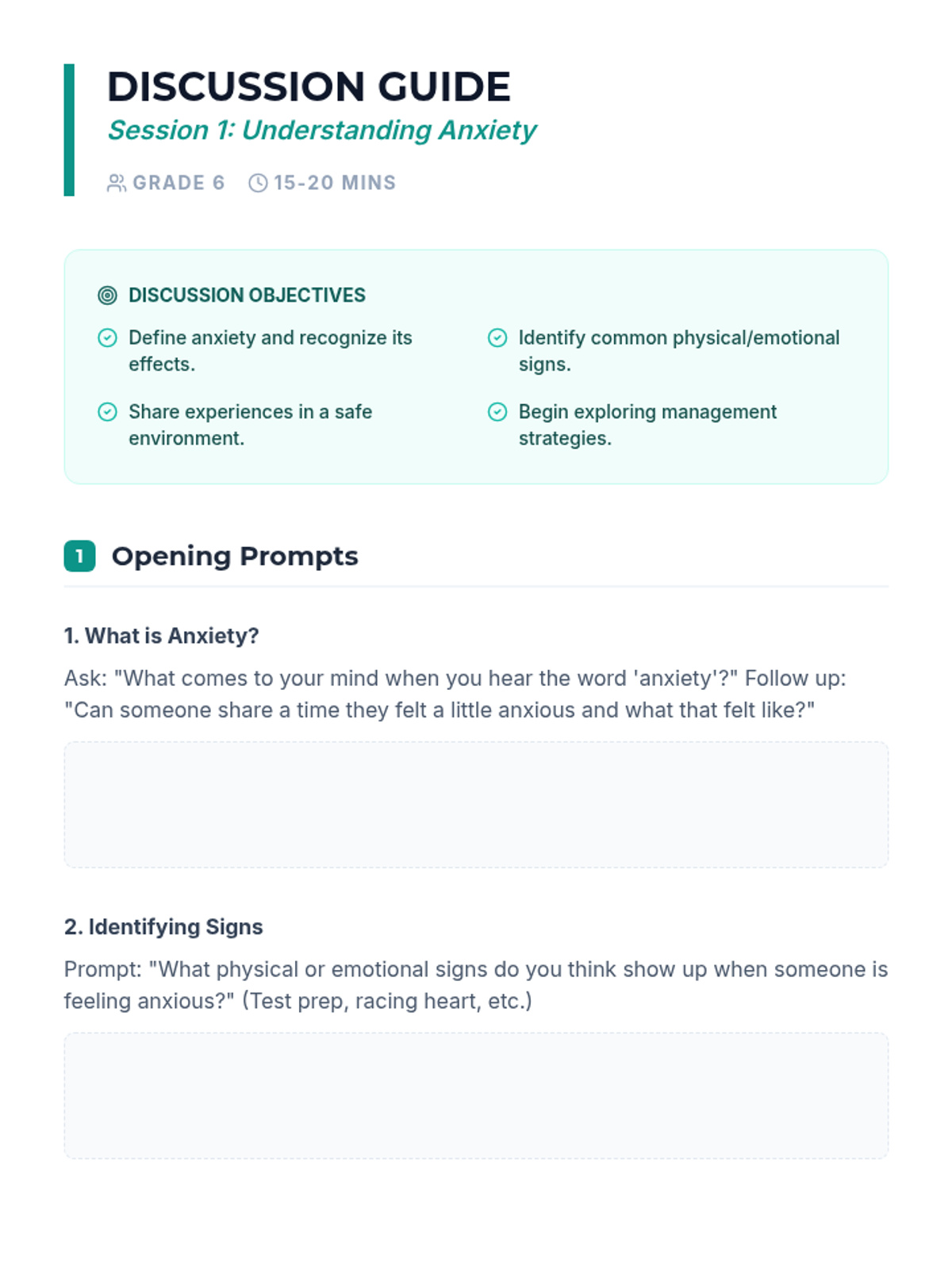
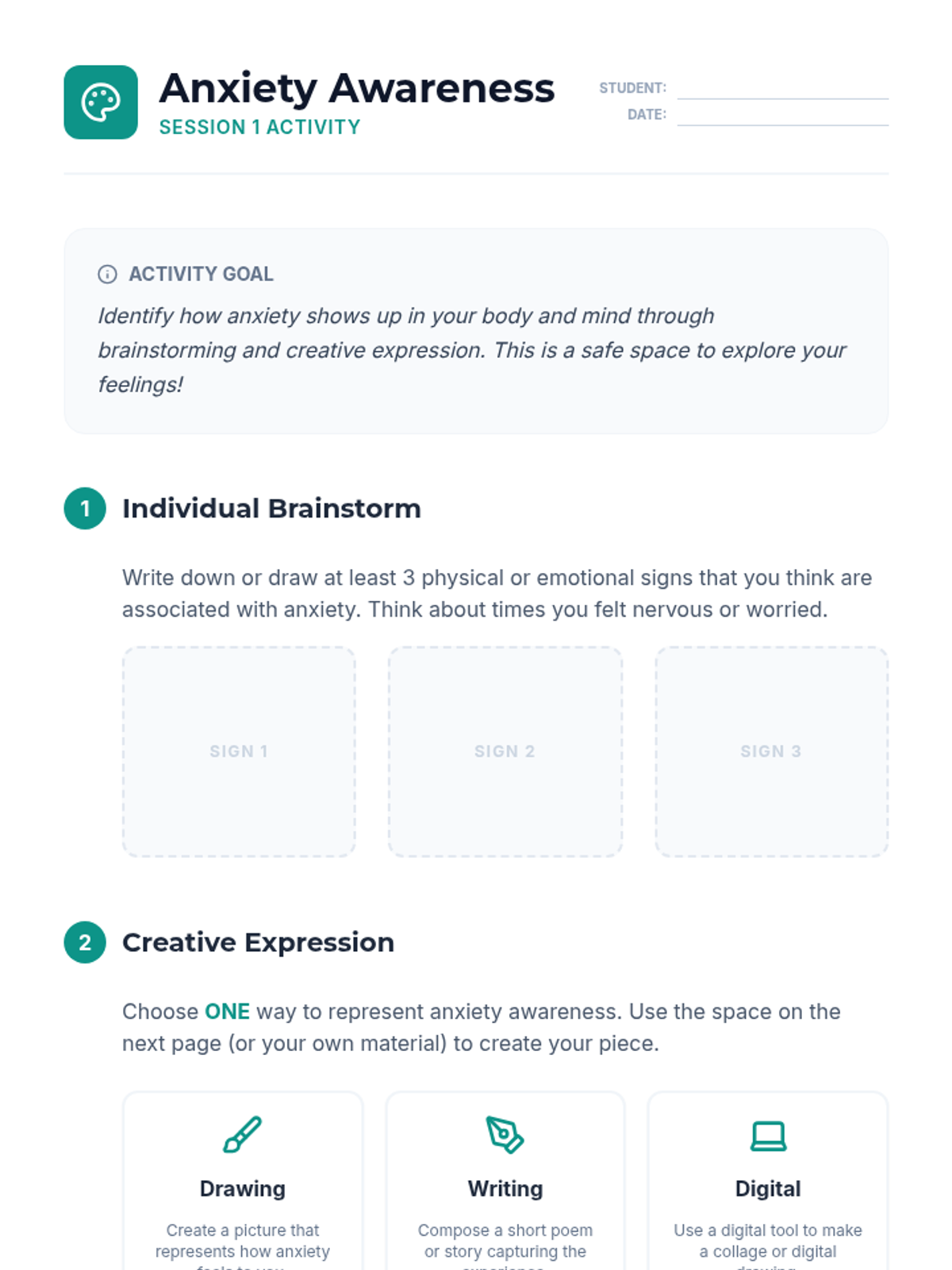
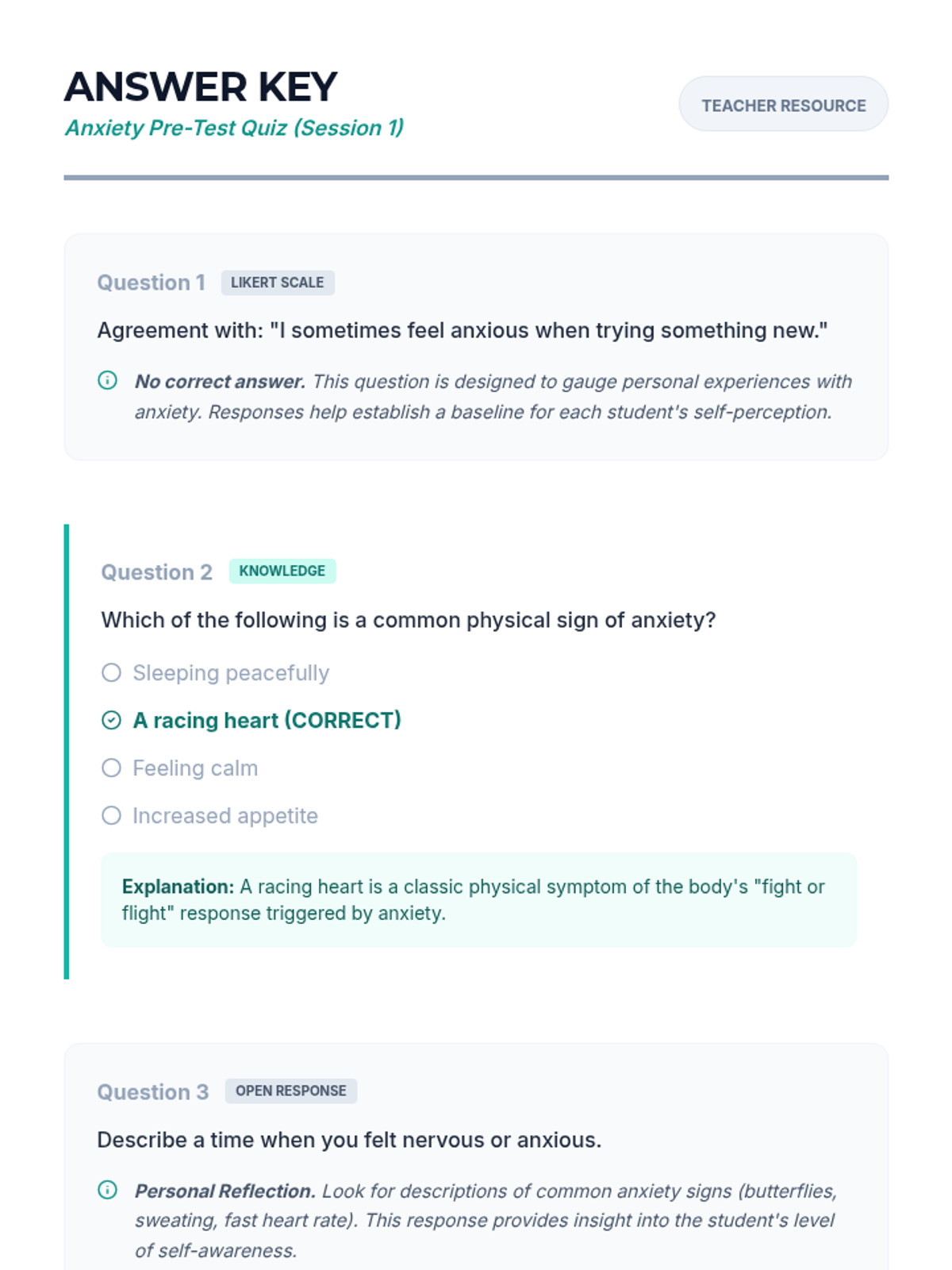
A comprehensive 6-session series for 6th-grade students to understand anxiety, master coping techniques, and build long-term resilience through interactive activities and self-reflection.
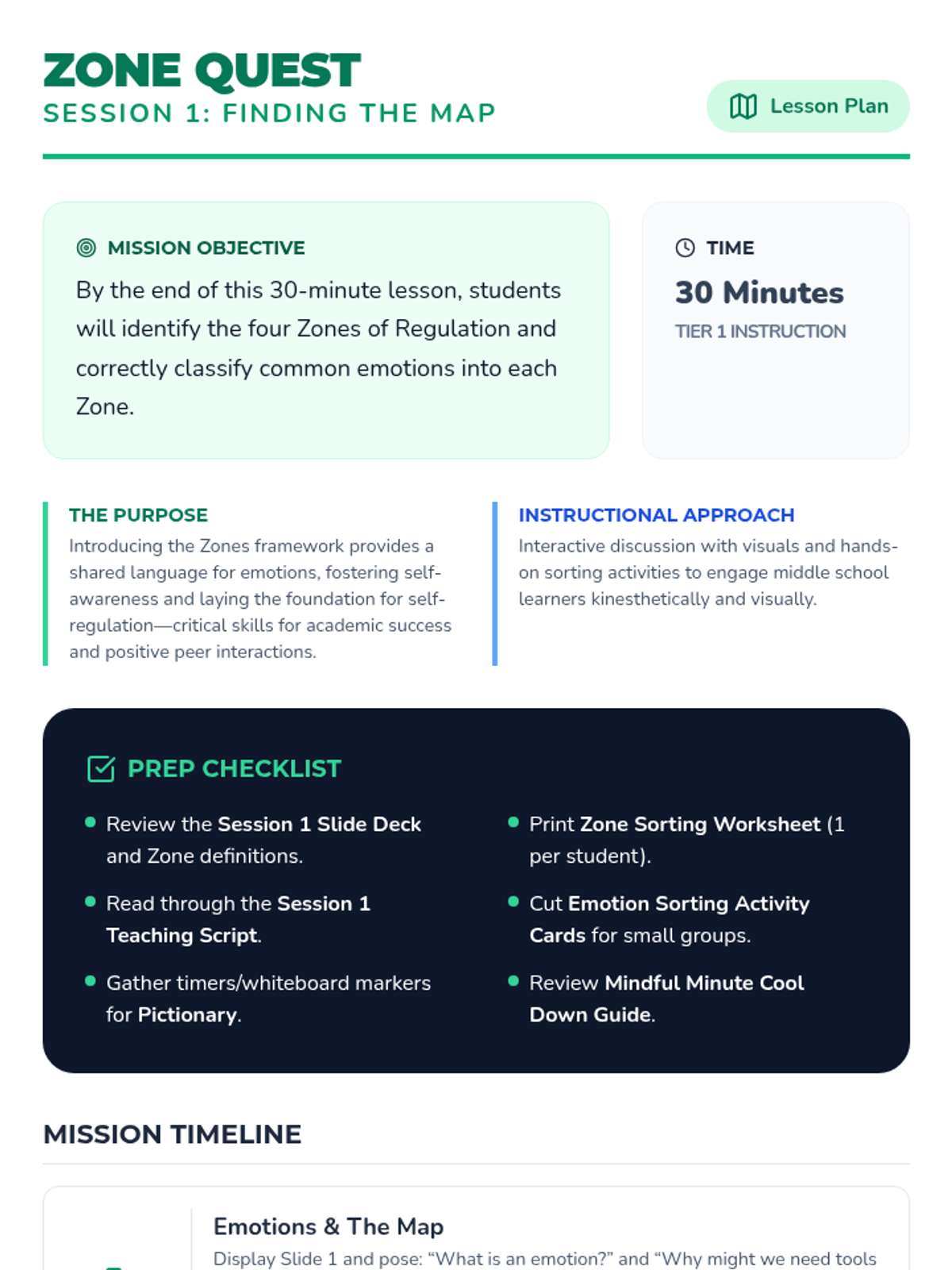
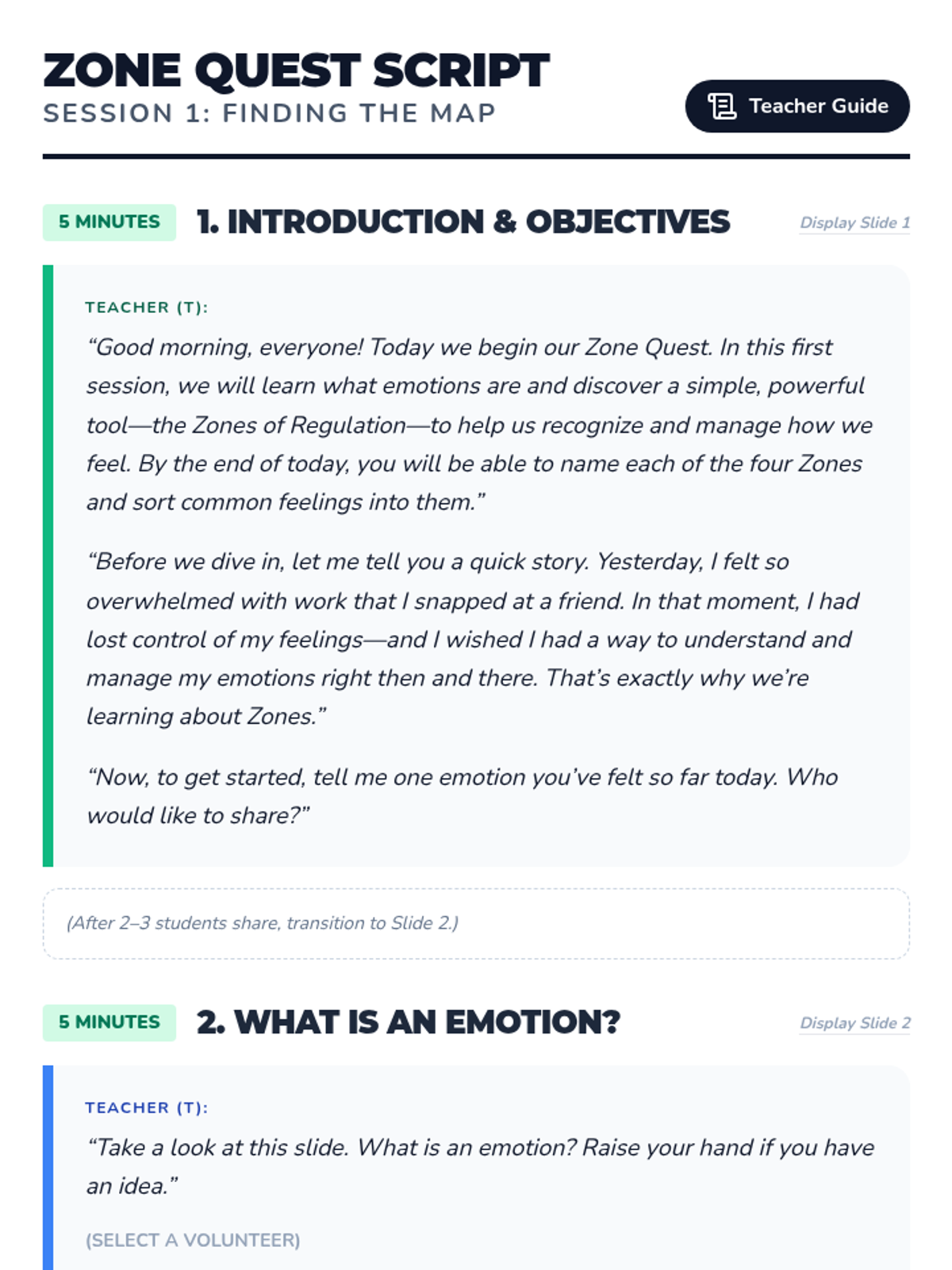
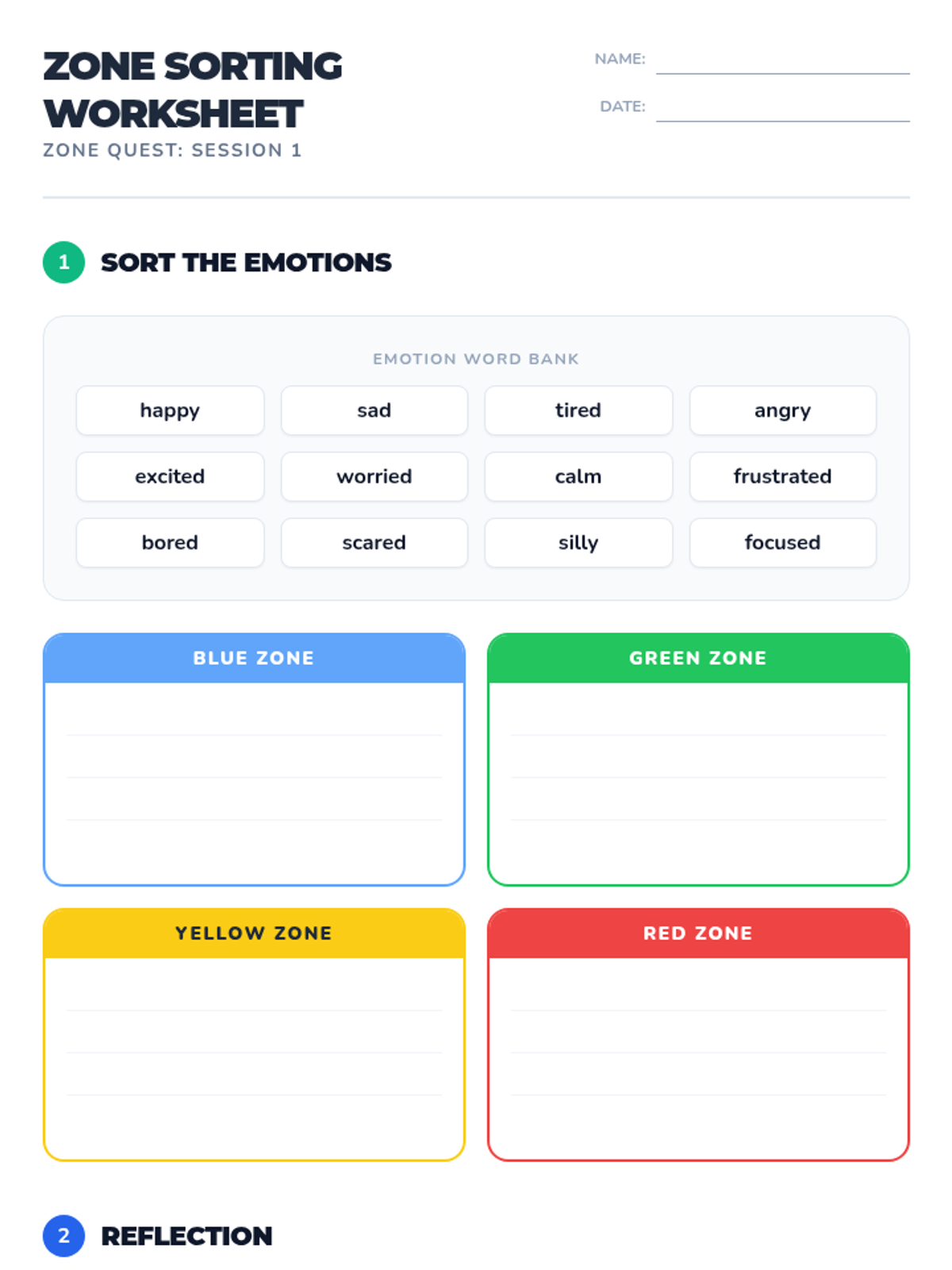
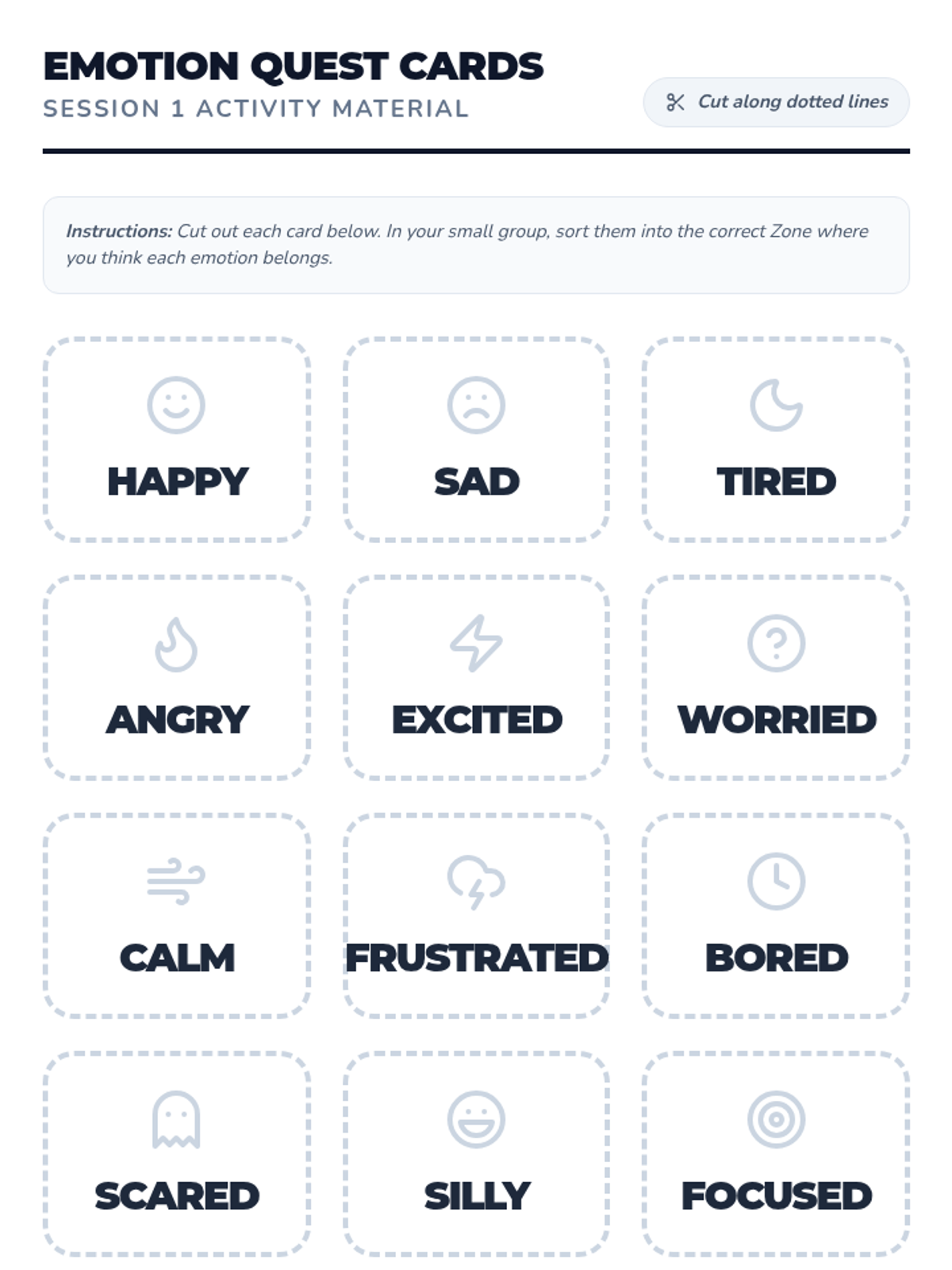
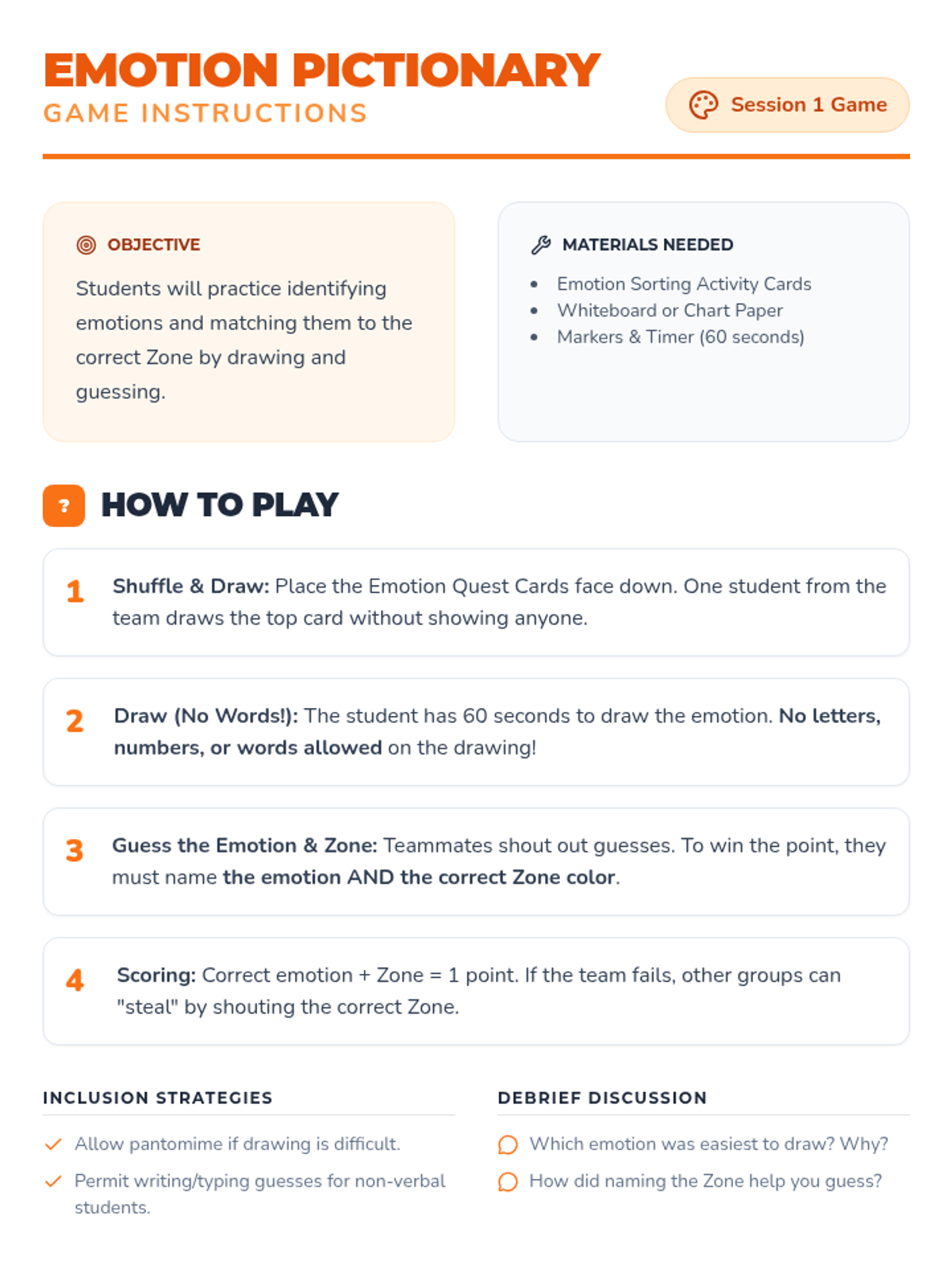
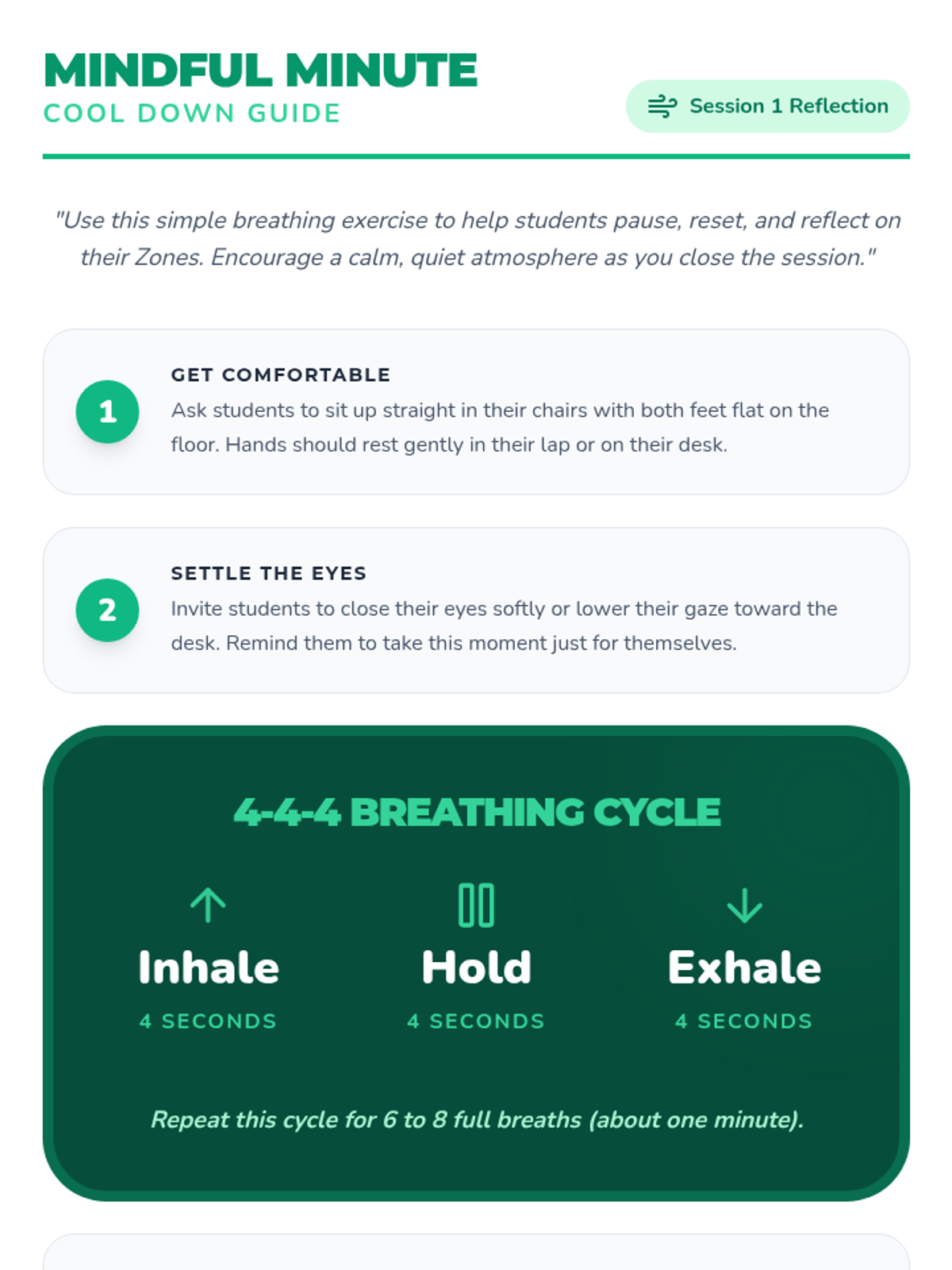
A 3-session Social-Emotional Learning sequence for middle schoolers to identify, understand, and manage emotions using the Zones of Regulation framework. Students move from basic identification to mastering specific self-regulation strategies and creating a personal action plan.
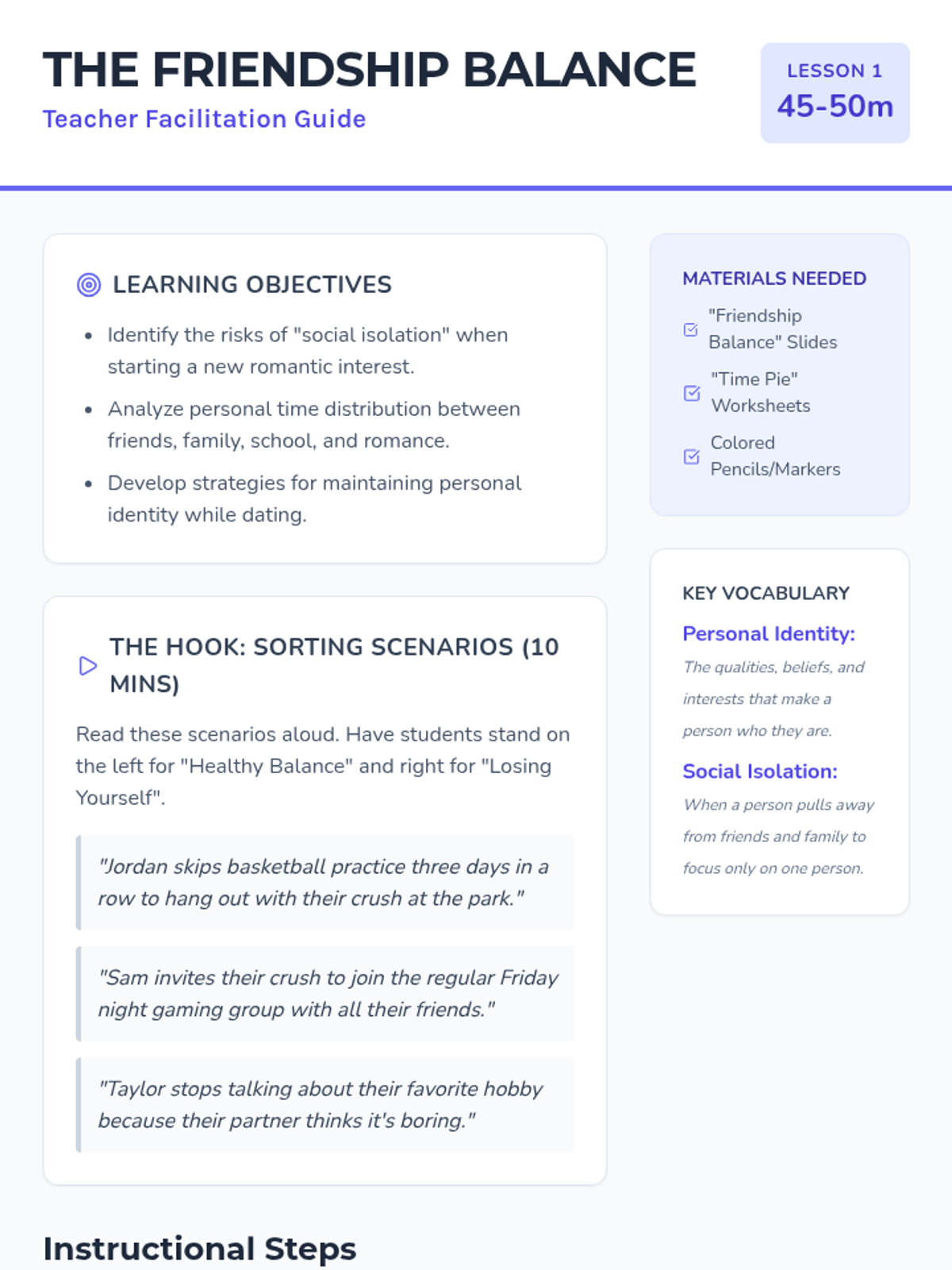
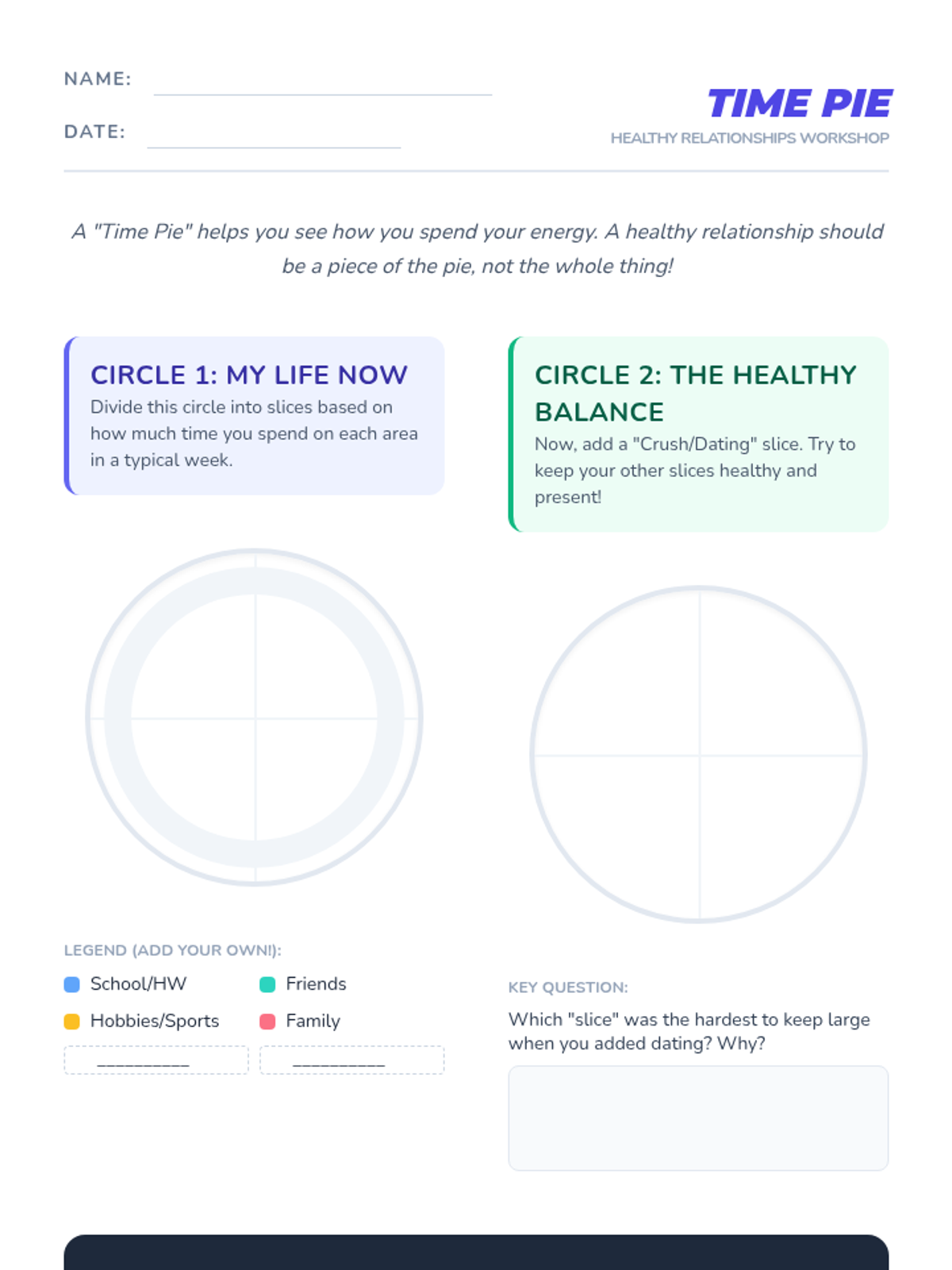
This project-based sequence explores emotional safety and decision-making in relationships. Students learn to balance friendships with romantic interests, trust their intuition, build resilience through rejection, and advocate for equality in their connections, culminating in a personal 'Relationship Rights' zine.
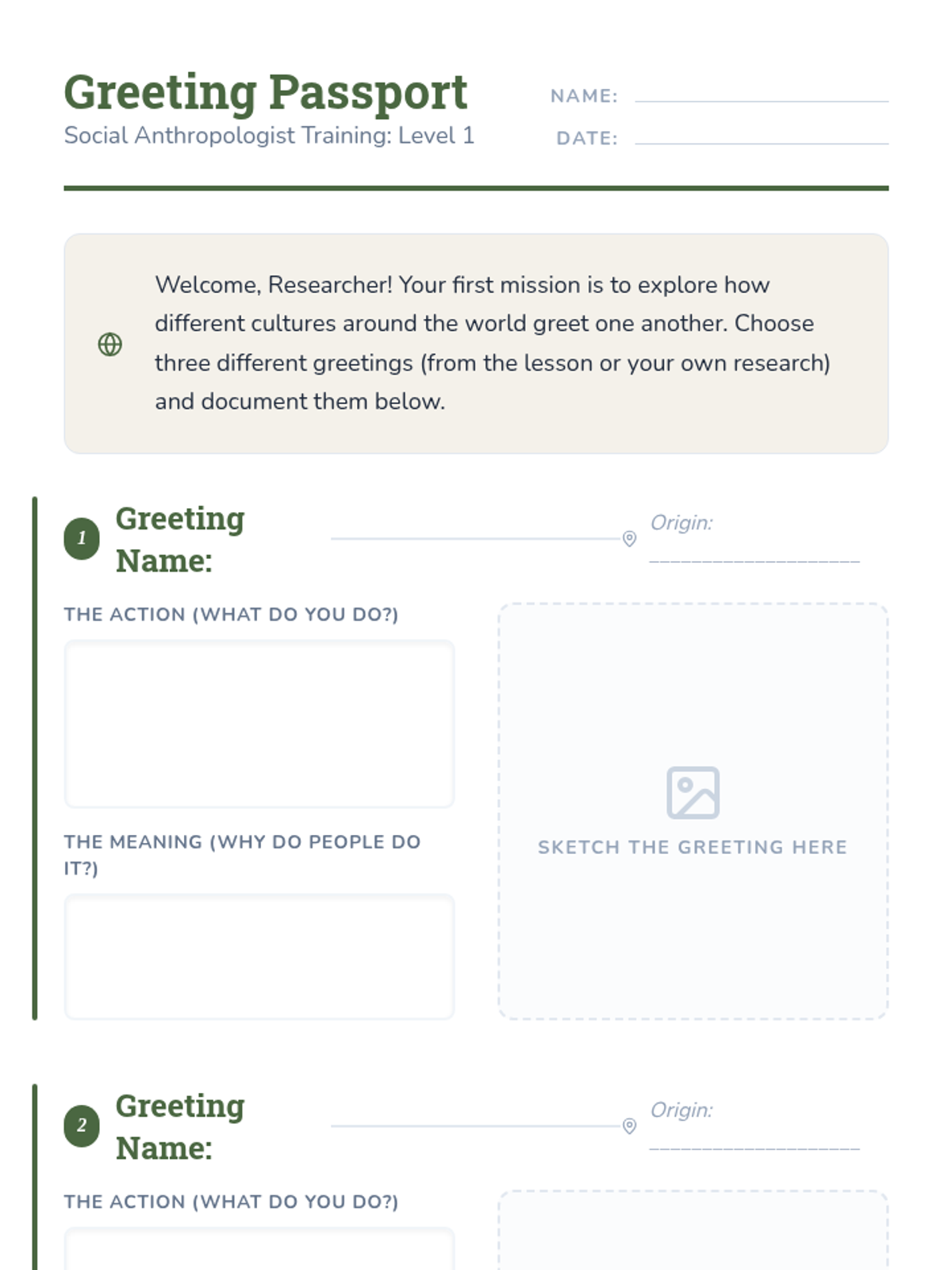
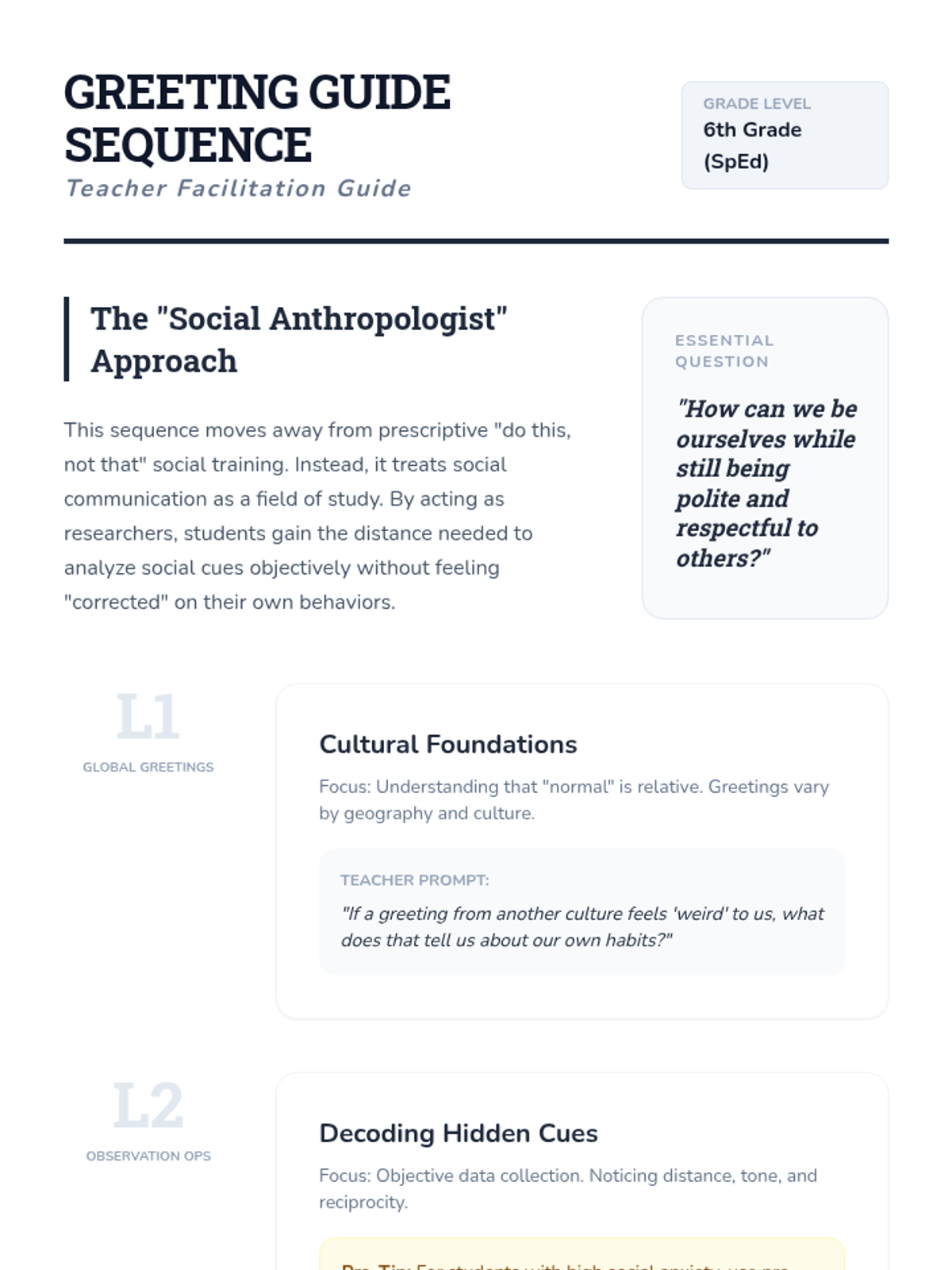
A project-based sequence for 6th graders to explore cultural greeting norms, observe social interactions, and develop their own authentic social communication style. Students act as 'social anthropologists' to create a survival guide for navigating middle school greetings.
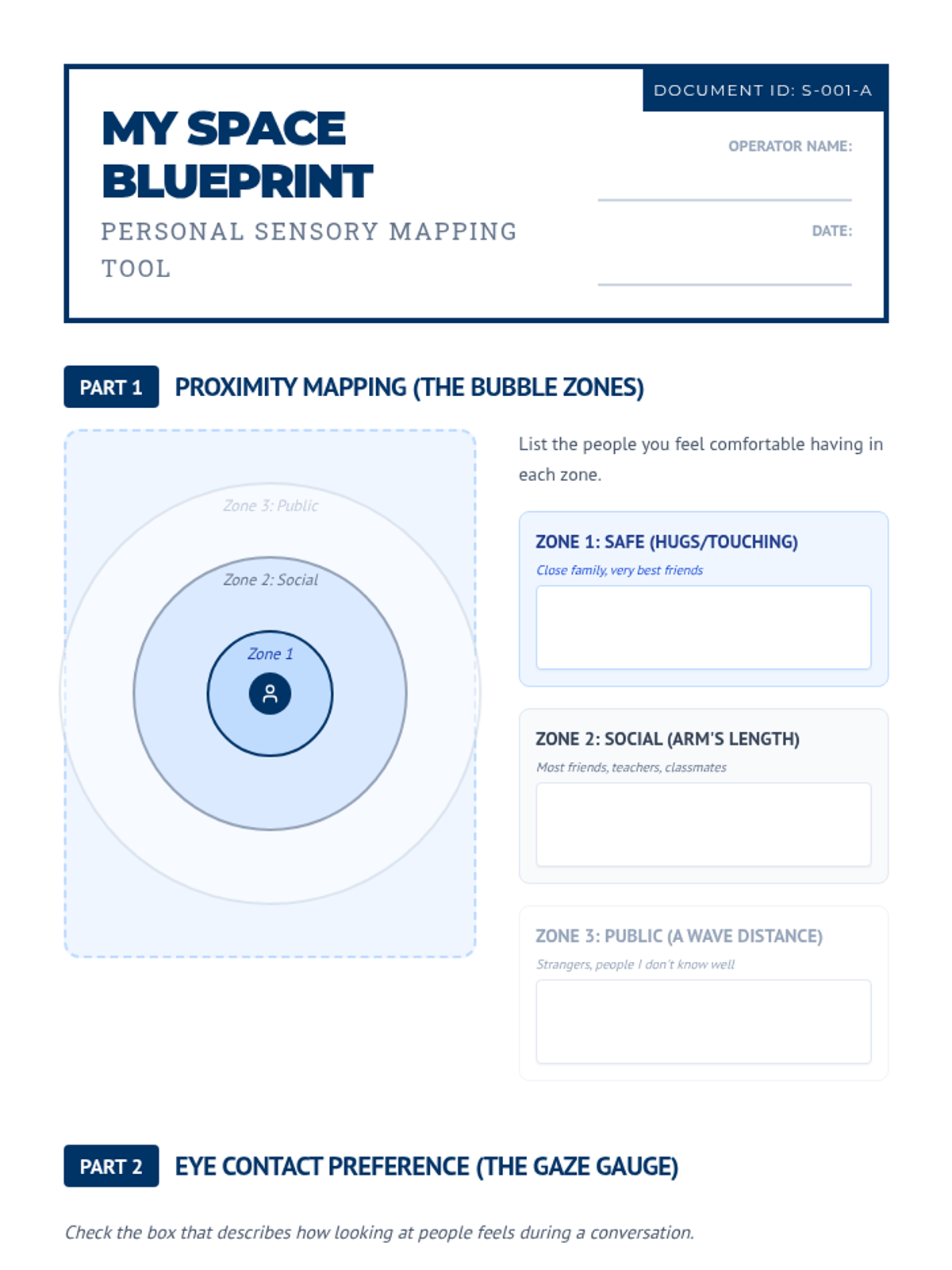
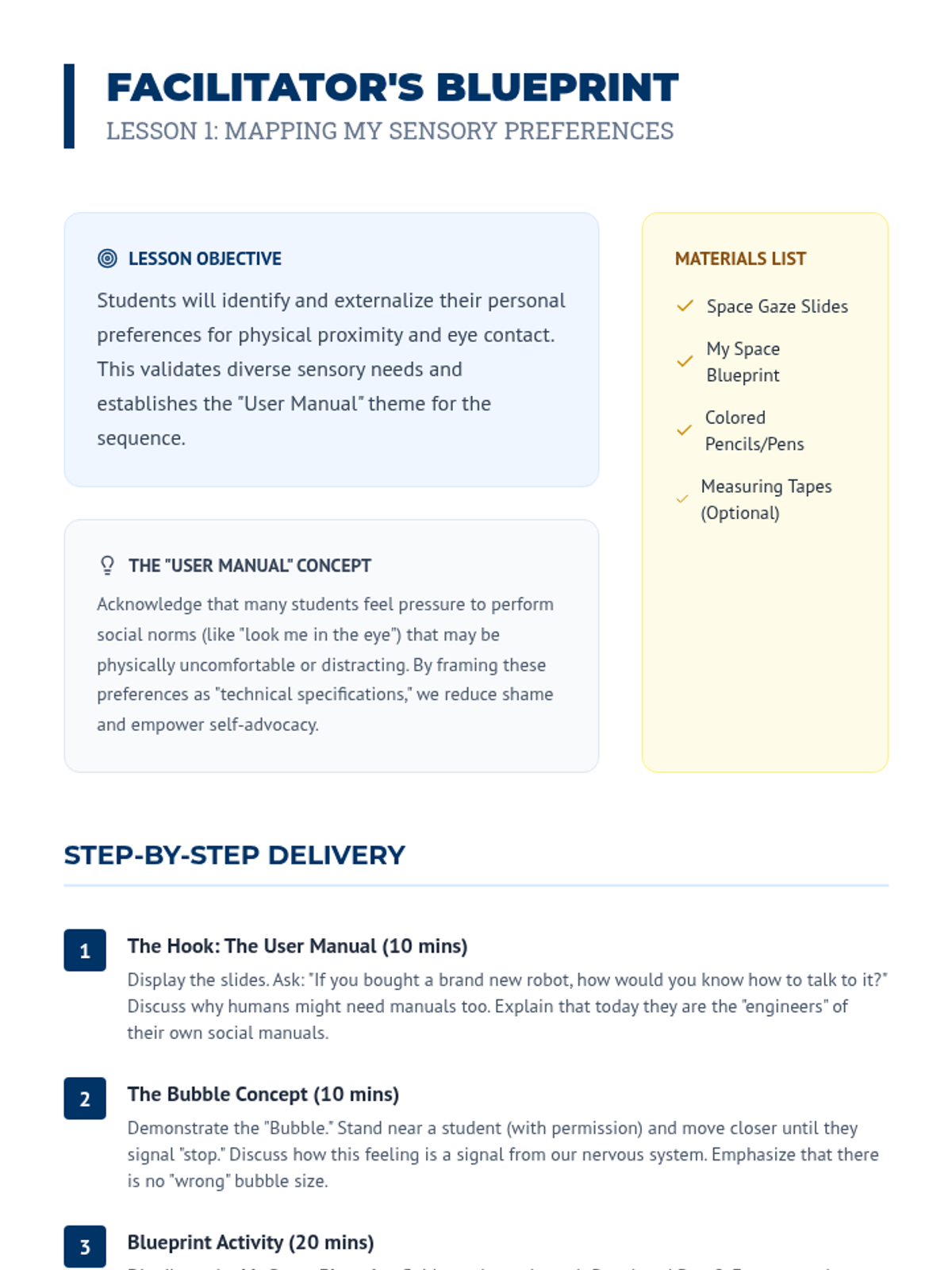
A neurodiversity-affirming sequence for 6th graders to explore their personal space needs and eye contact preferences. Students learn to advocate for their own boundaries while respecting the diverse sensory and cultural needs of others through a 'User Manual' theme.
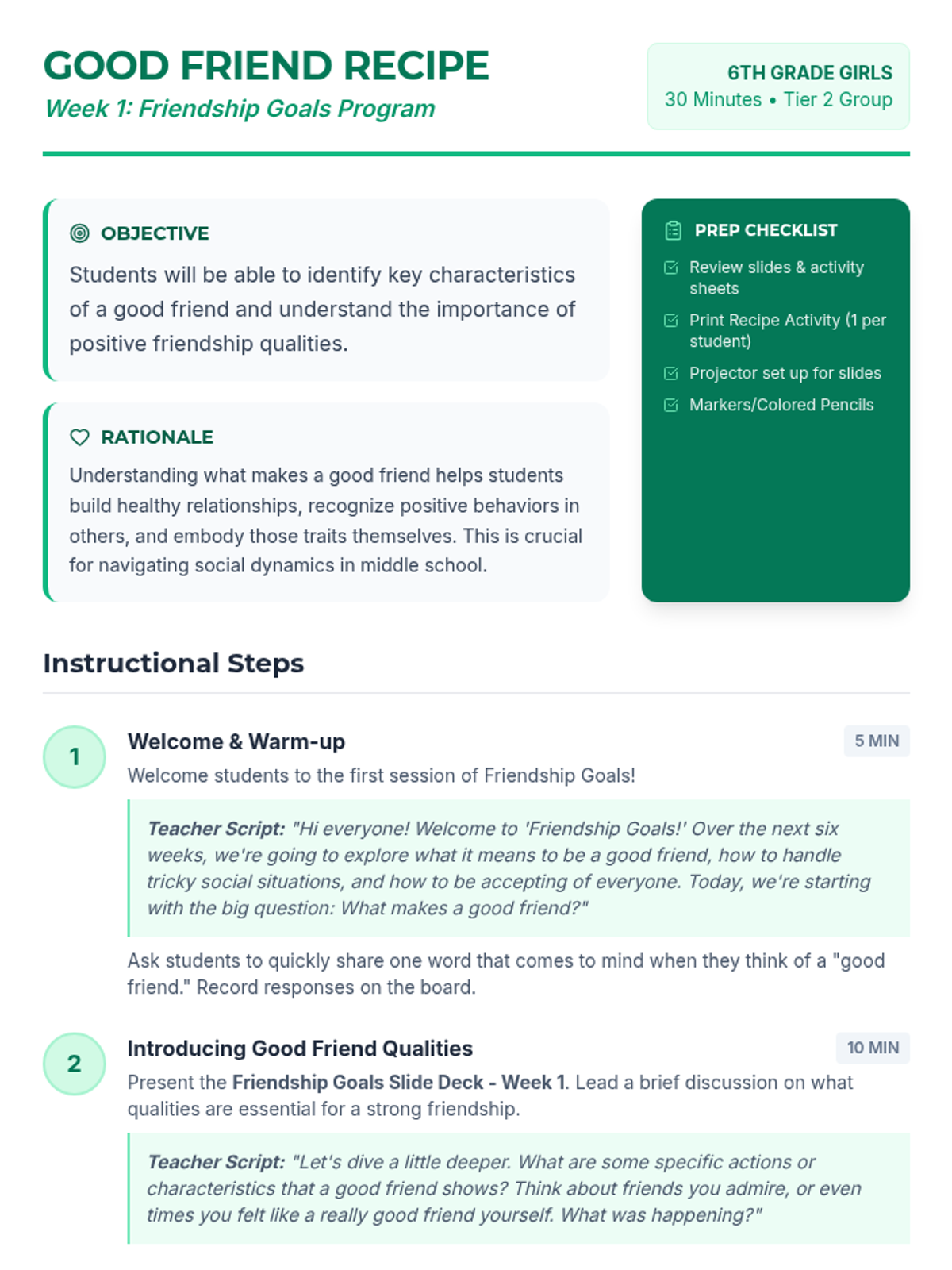
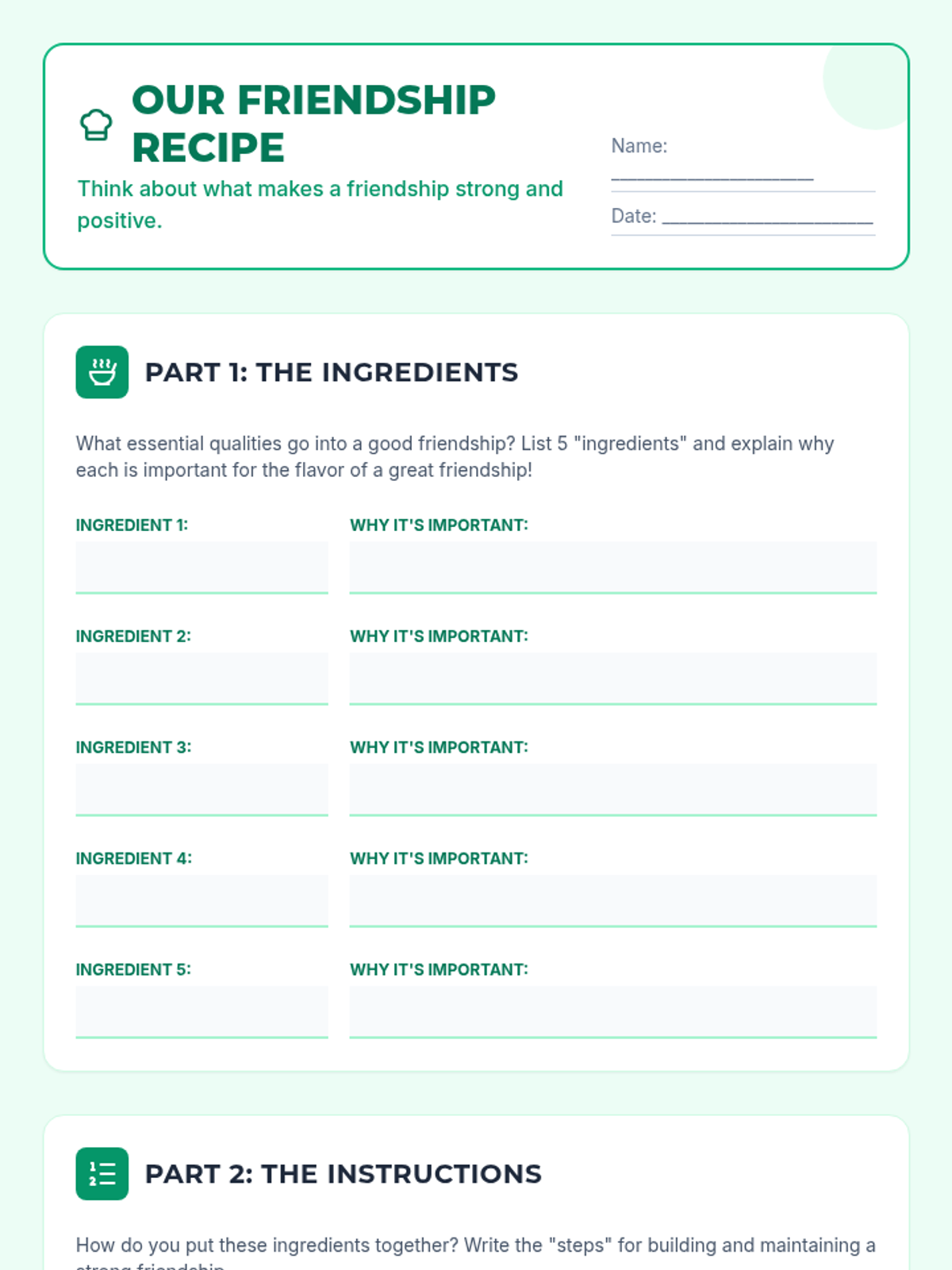
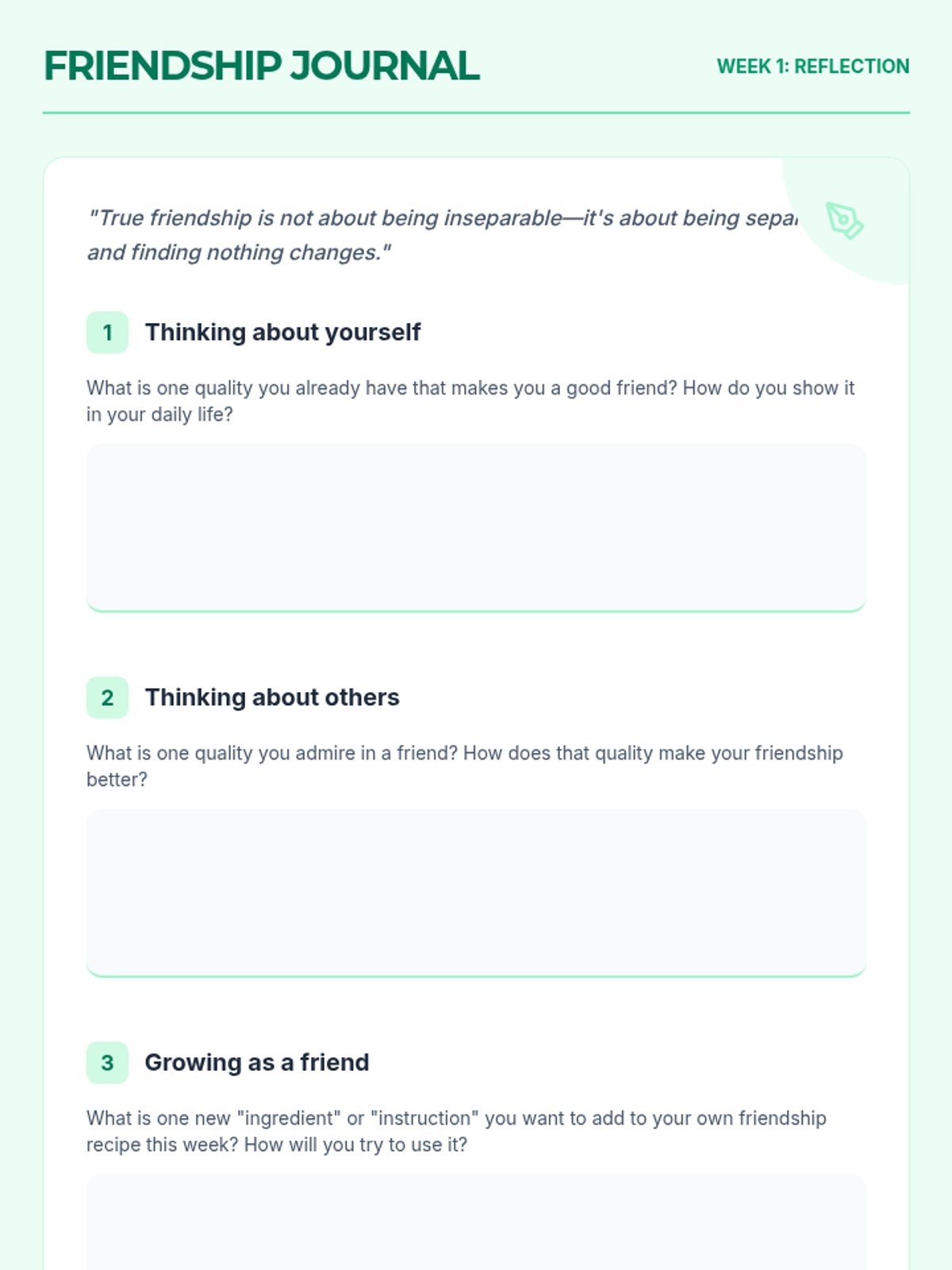
A 6-week social-emotional learning program for 6th-grade girls focused on building healthy friendships, resolving conflicts, practicing empathy, and setting boundaries.
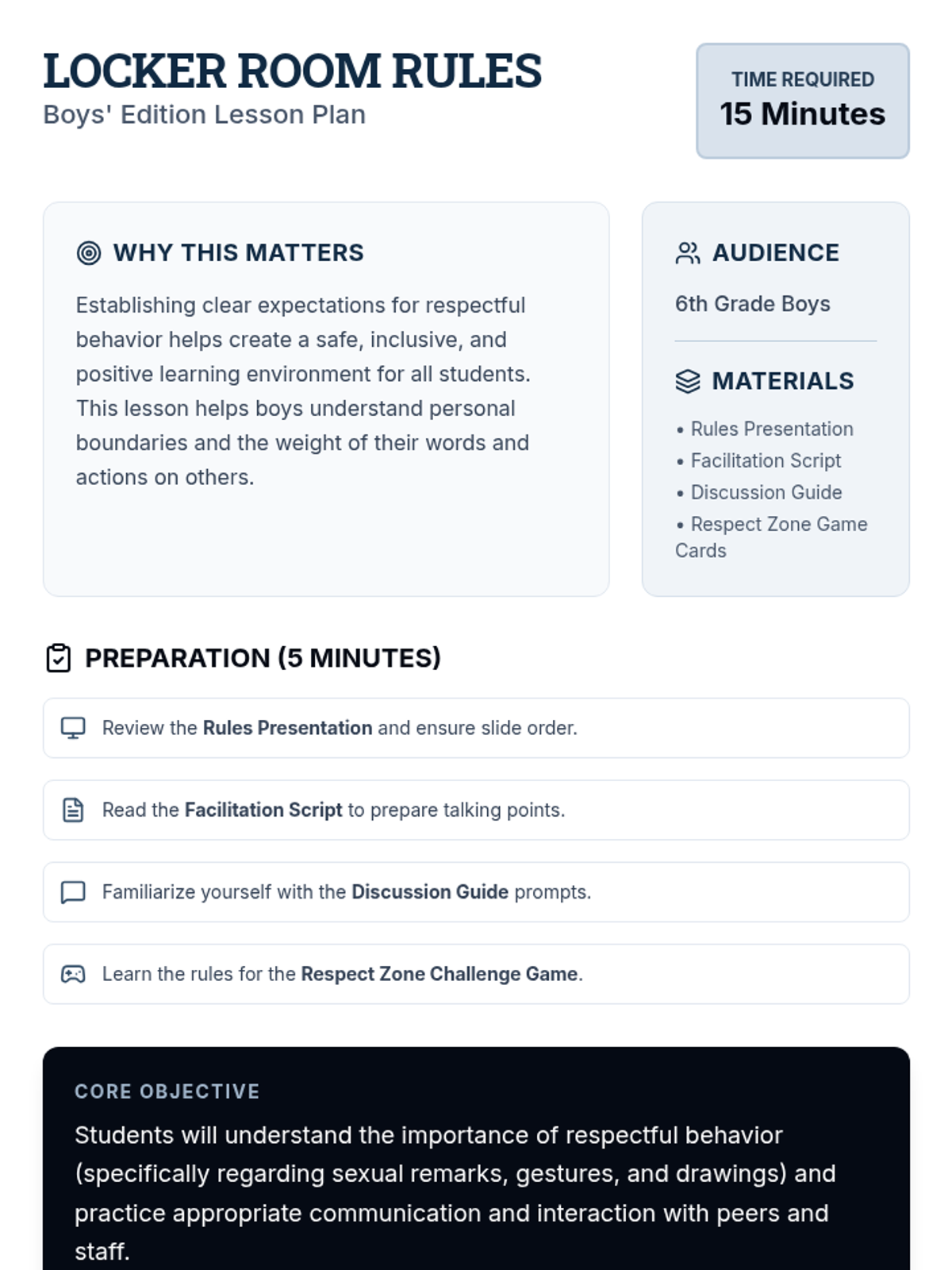
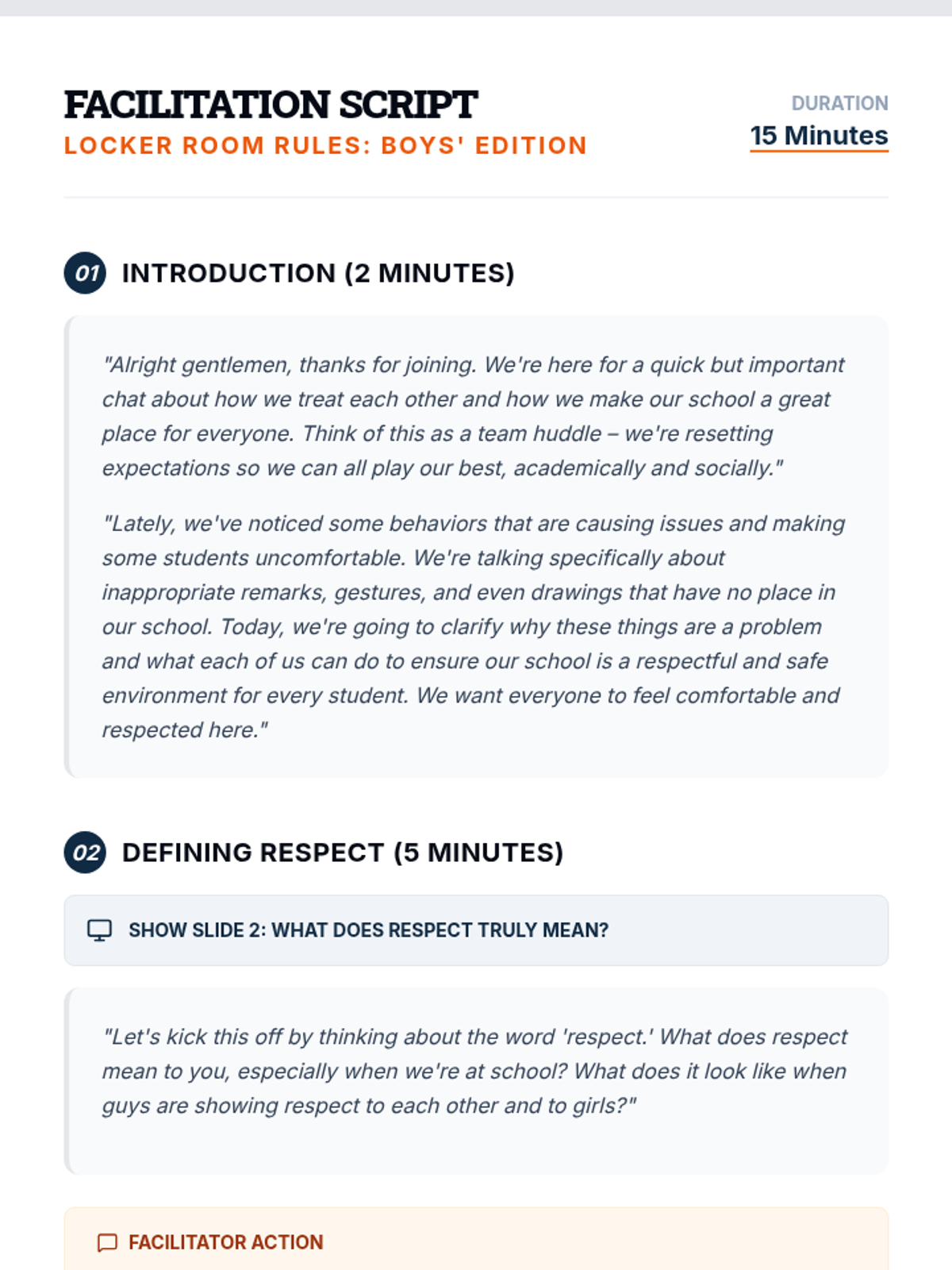
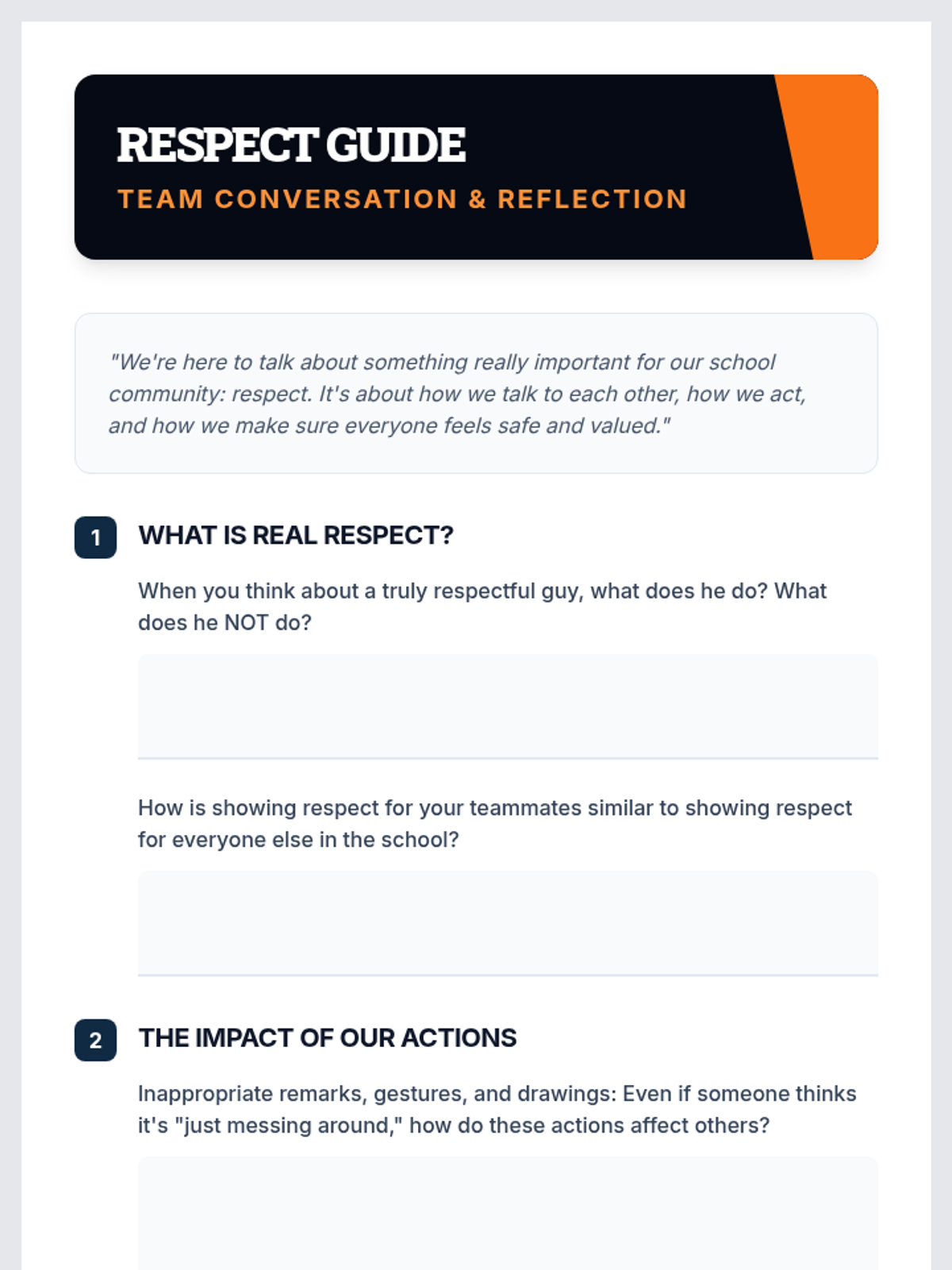
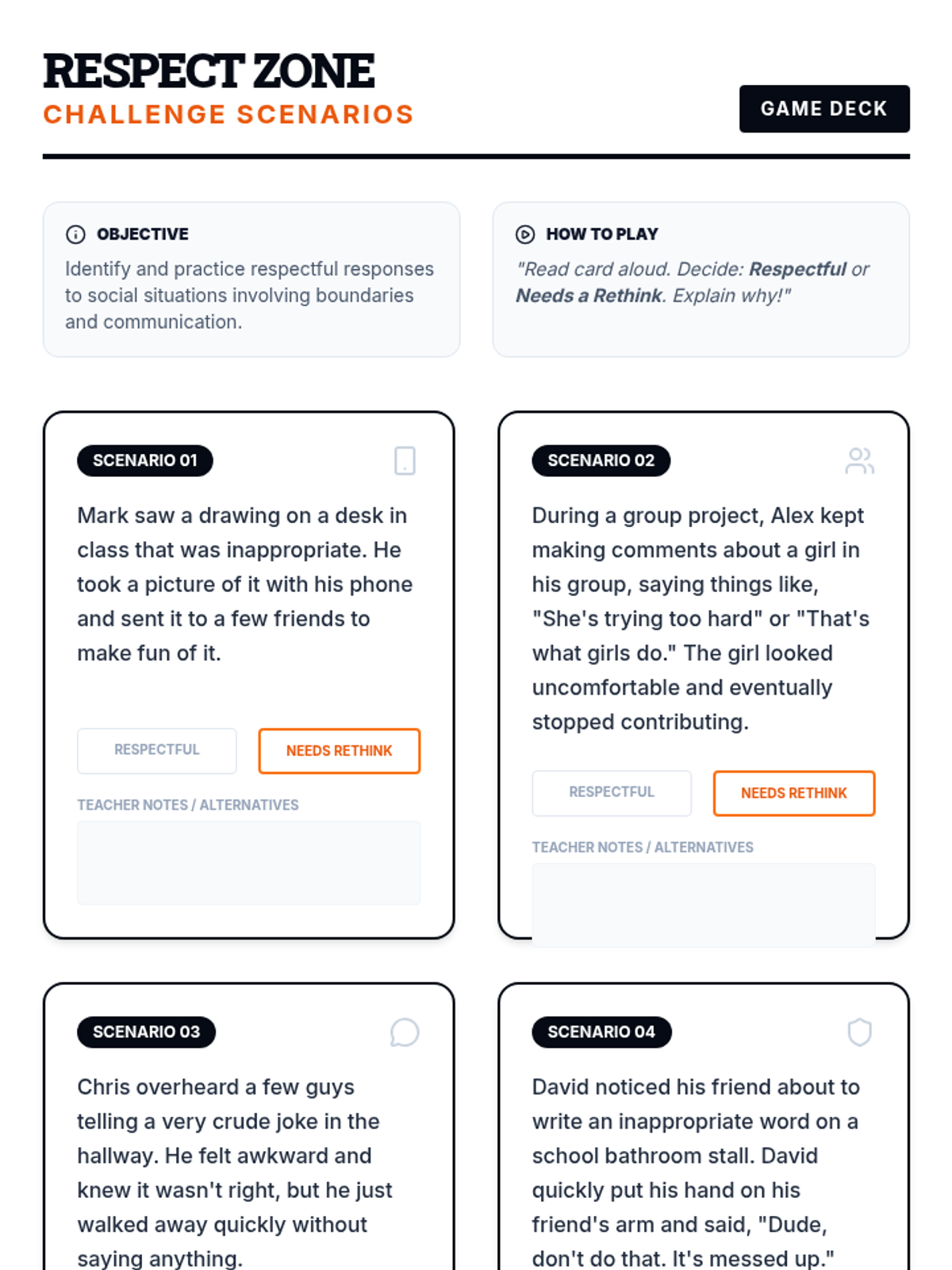
A behavior reset sequence for 6th-grade students to address personal boundaries, appropriate communication, and respectful school interactions through gender-specific sessions.
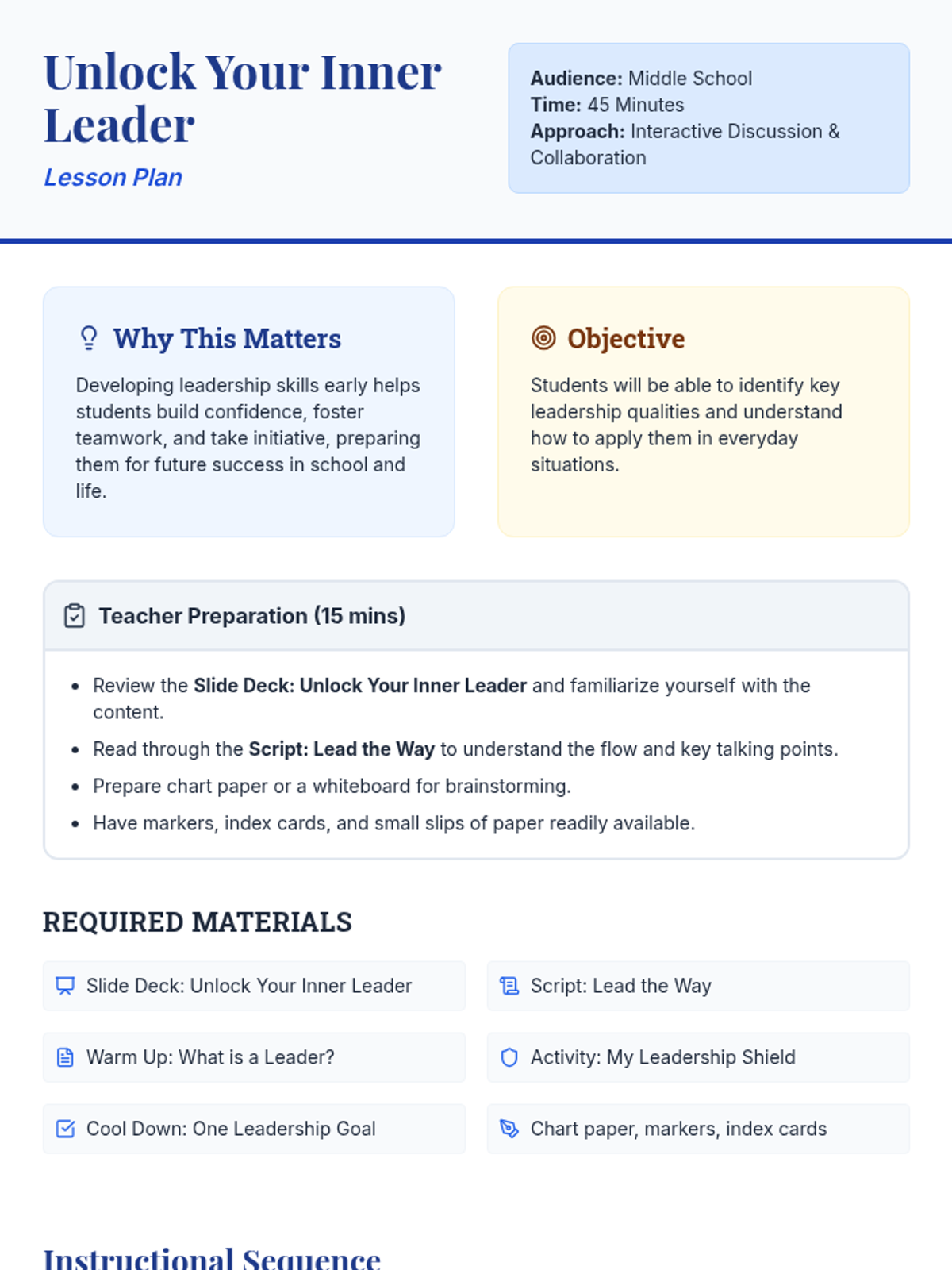
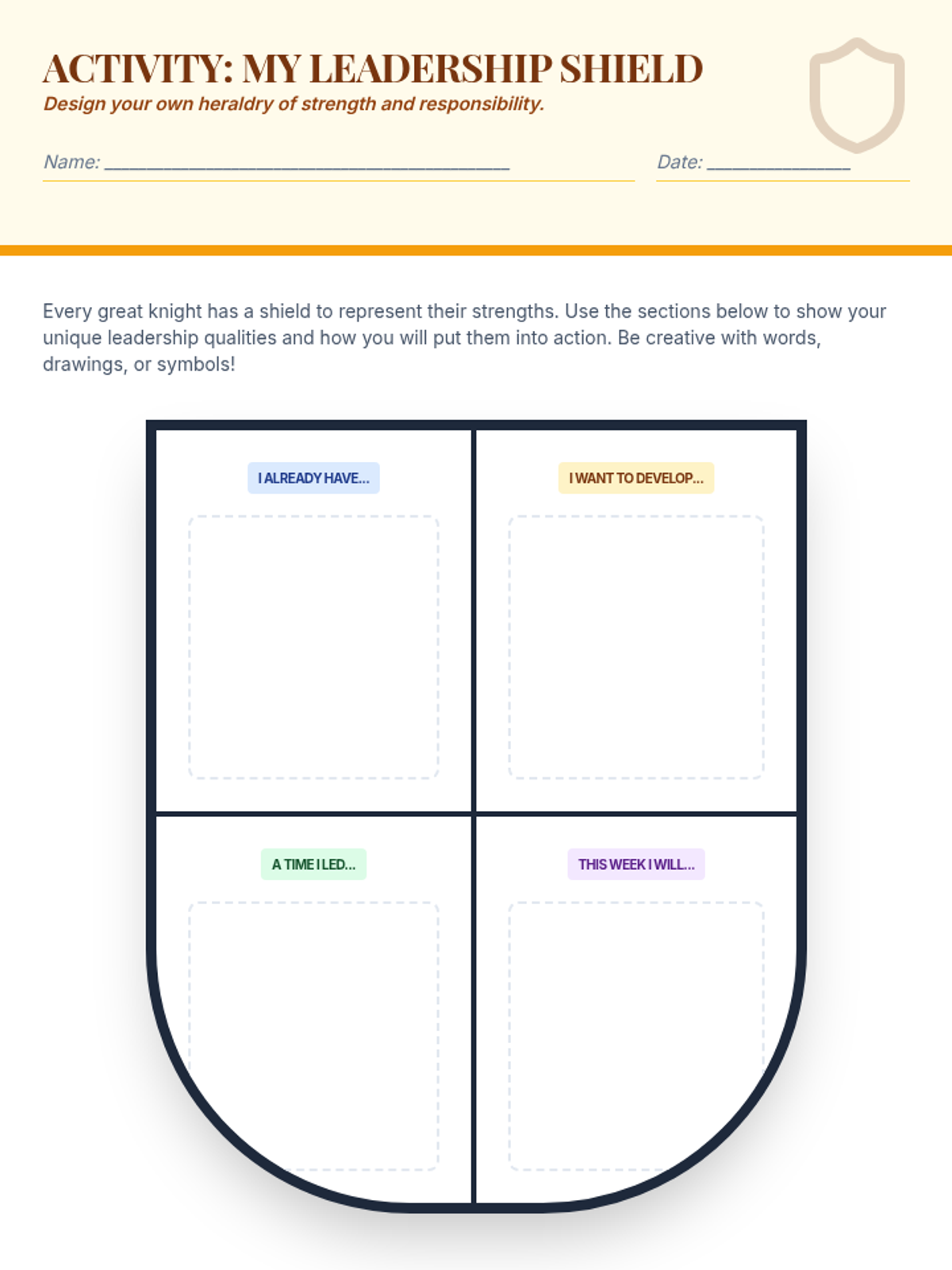
This character-building sequence guides students through discovering their leadership potential and practicing humility. It includes tailored lessons for middle school and elementary levels, using a 'shield' motif to represent personal growth and strength.
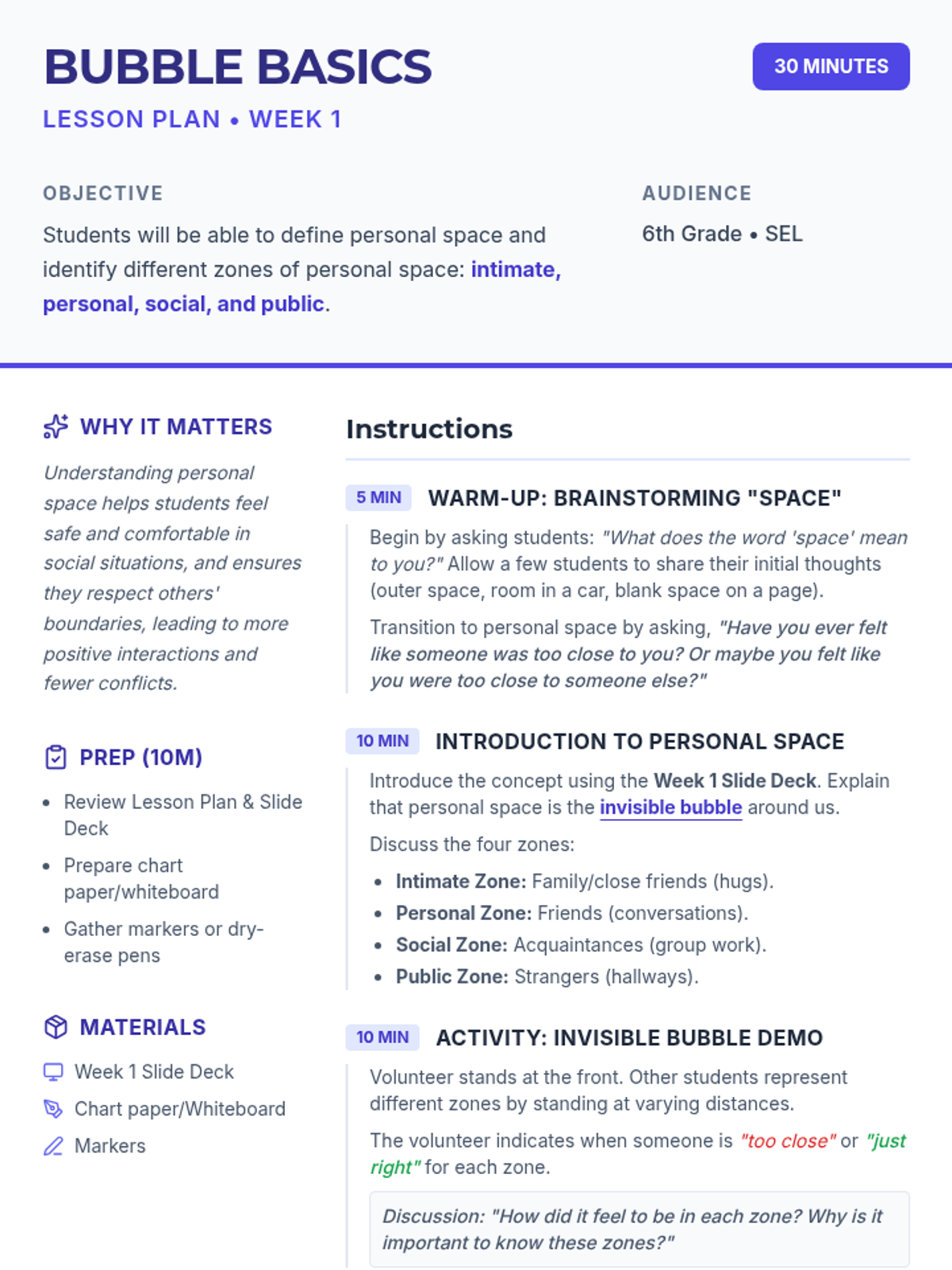
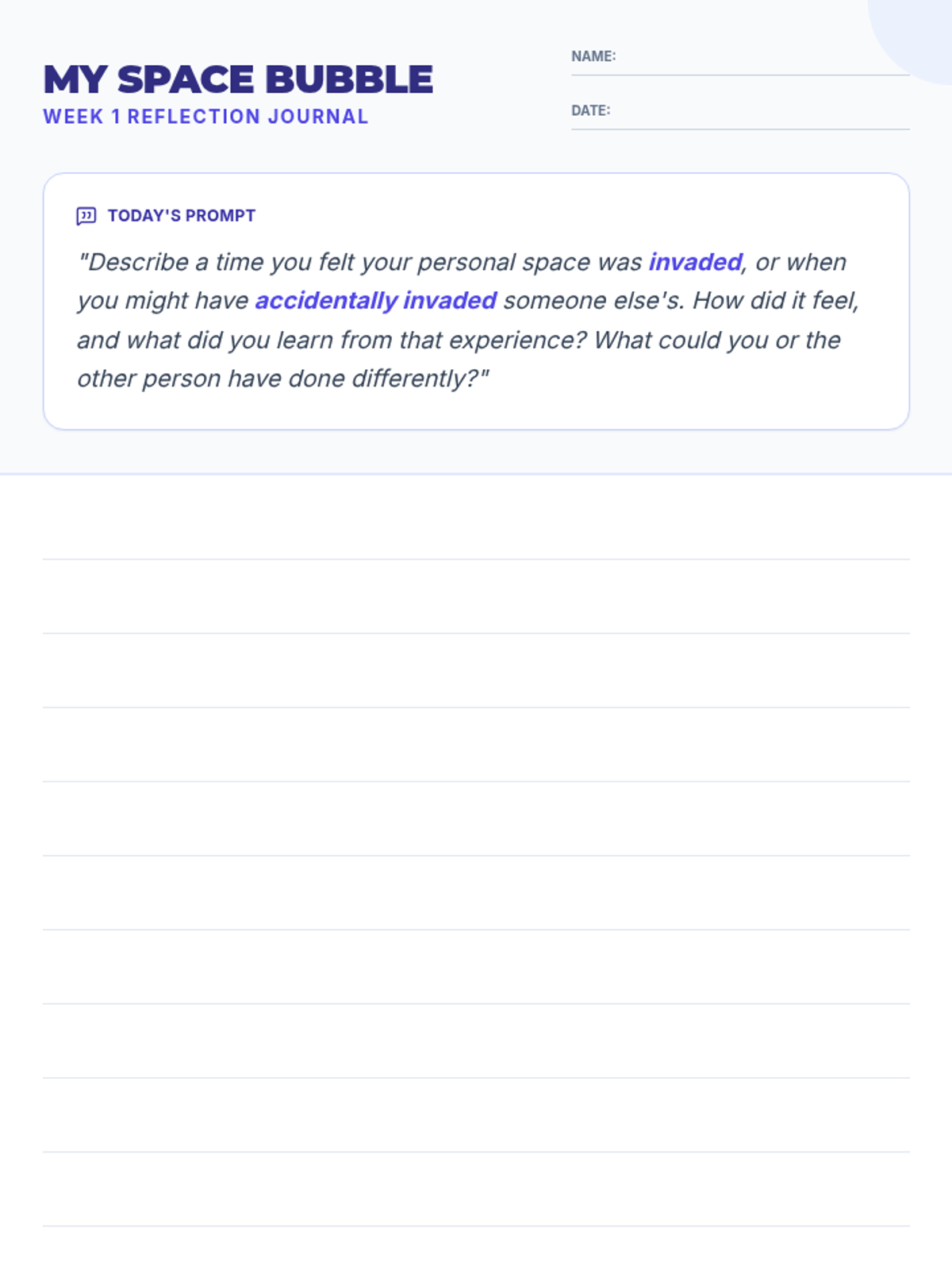
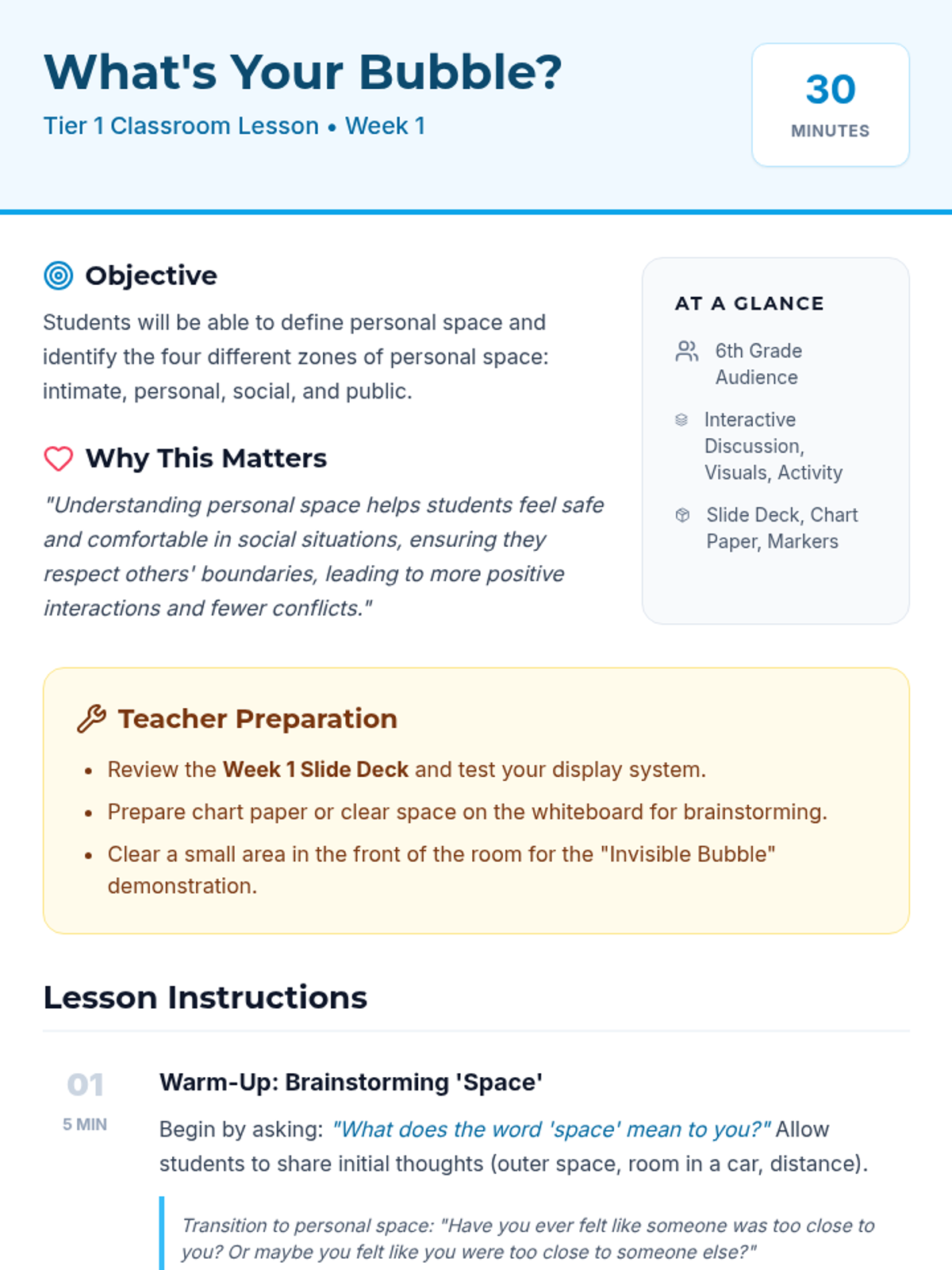
A 3-week social-emotional learning unit for 6th graders focused on understanding, communicating, and respecting personal space boundaries. Students explore the concept of "invisible bubbles," learn to read social cues, and develop empathy for diverse spatial needs.
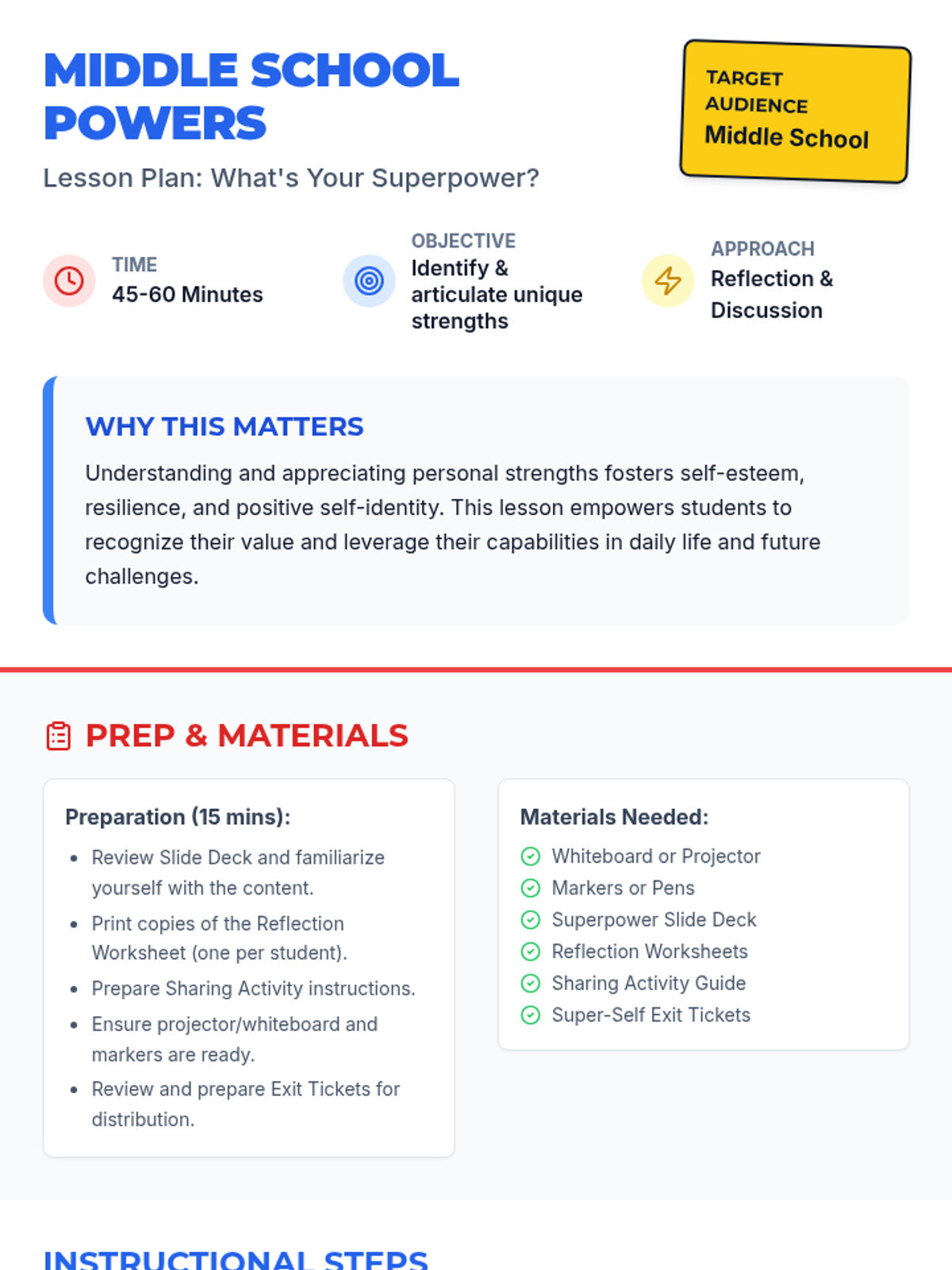
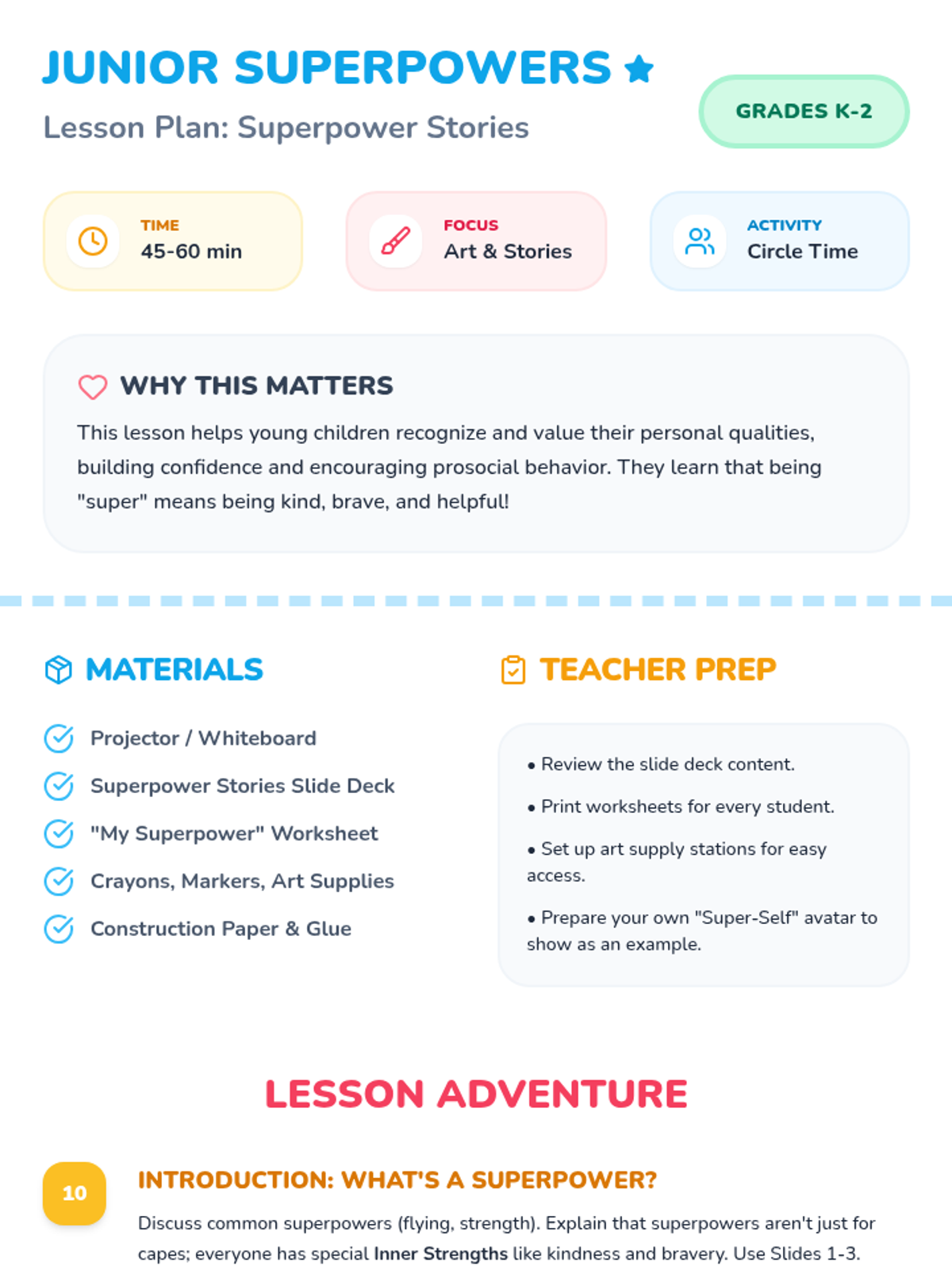
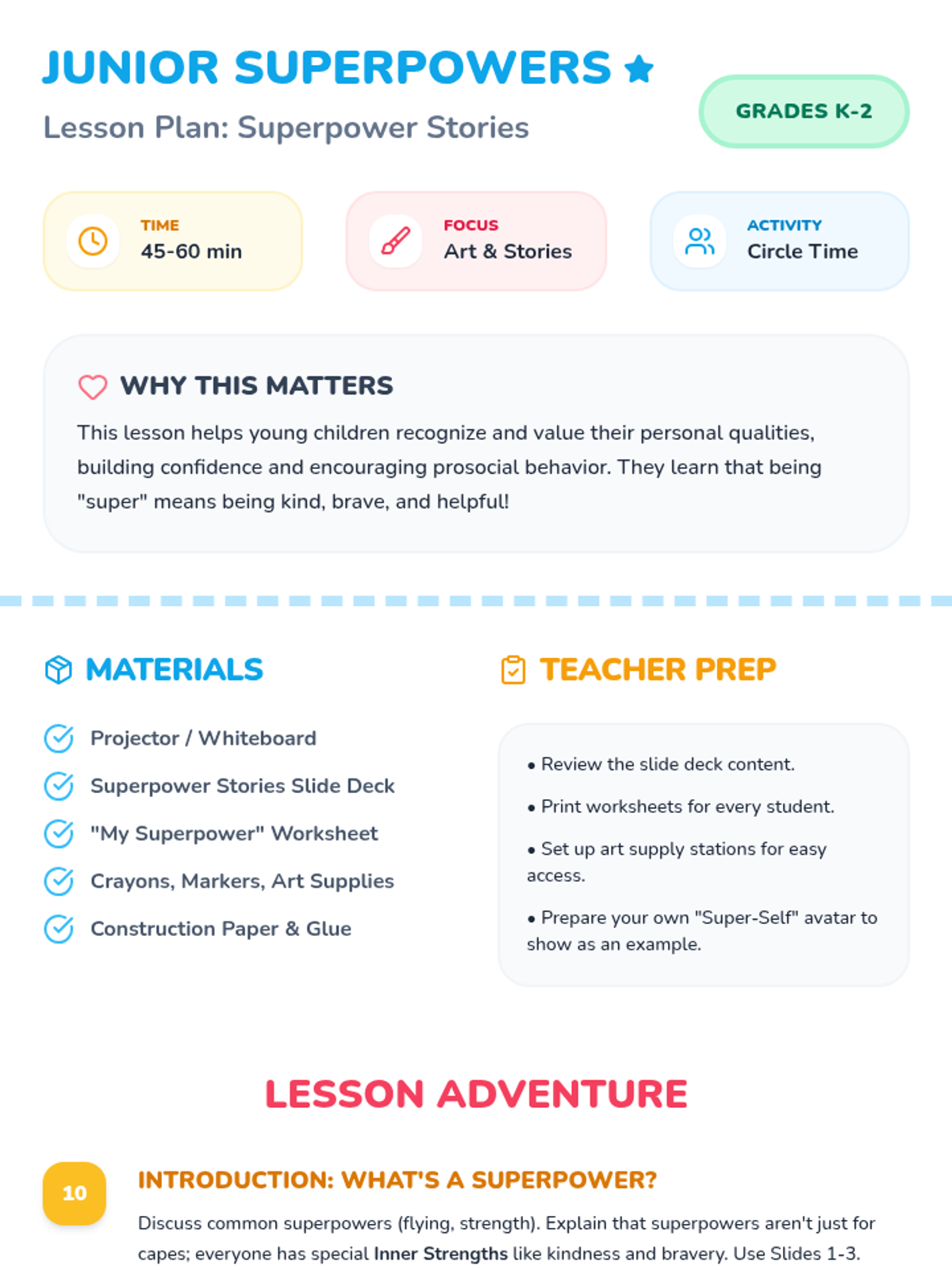
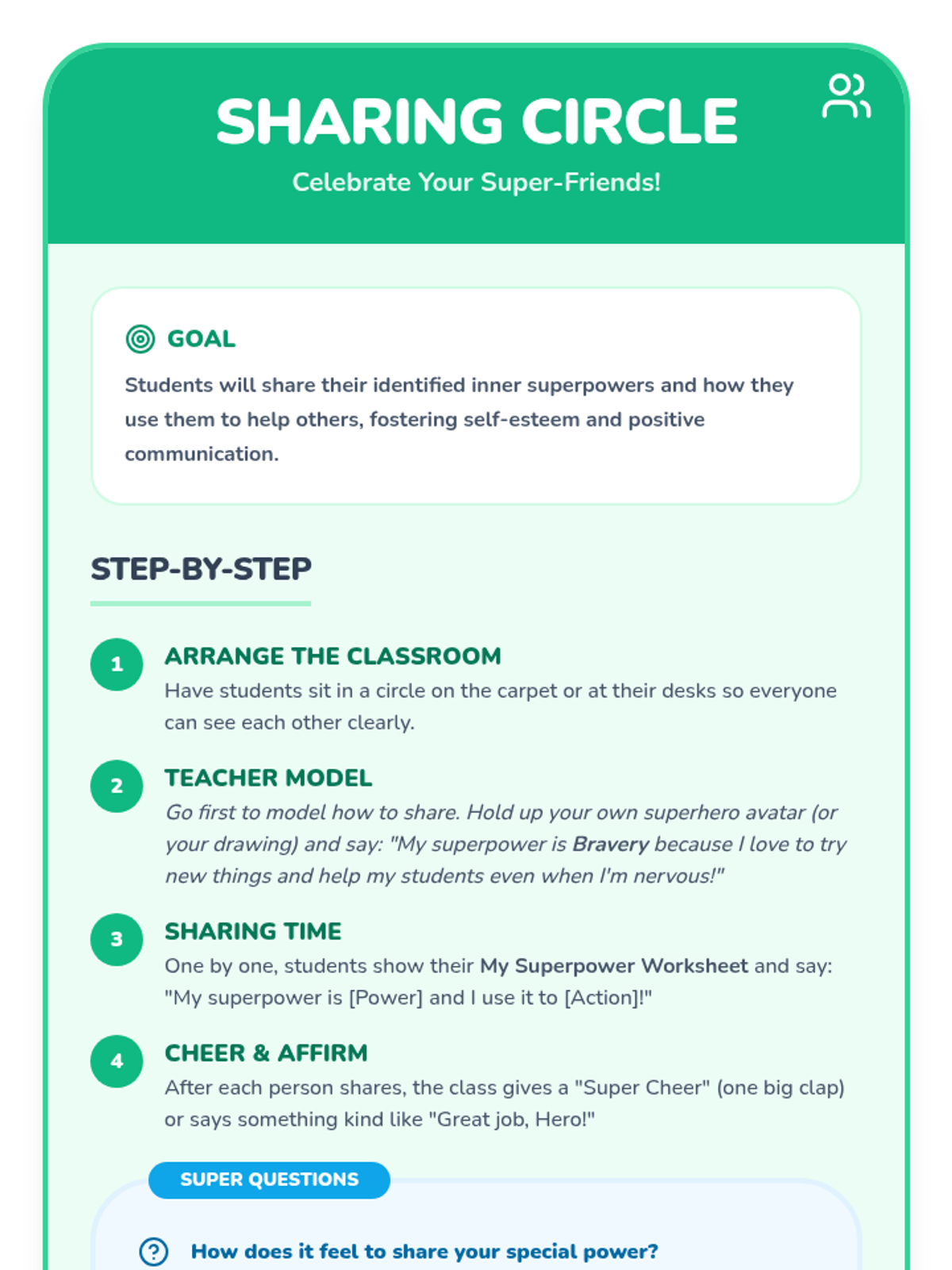
A sequence of lessons designed for different grade levels (K-2 and Middle School) to help students discover their inner strengths and "superpowers."
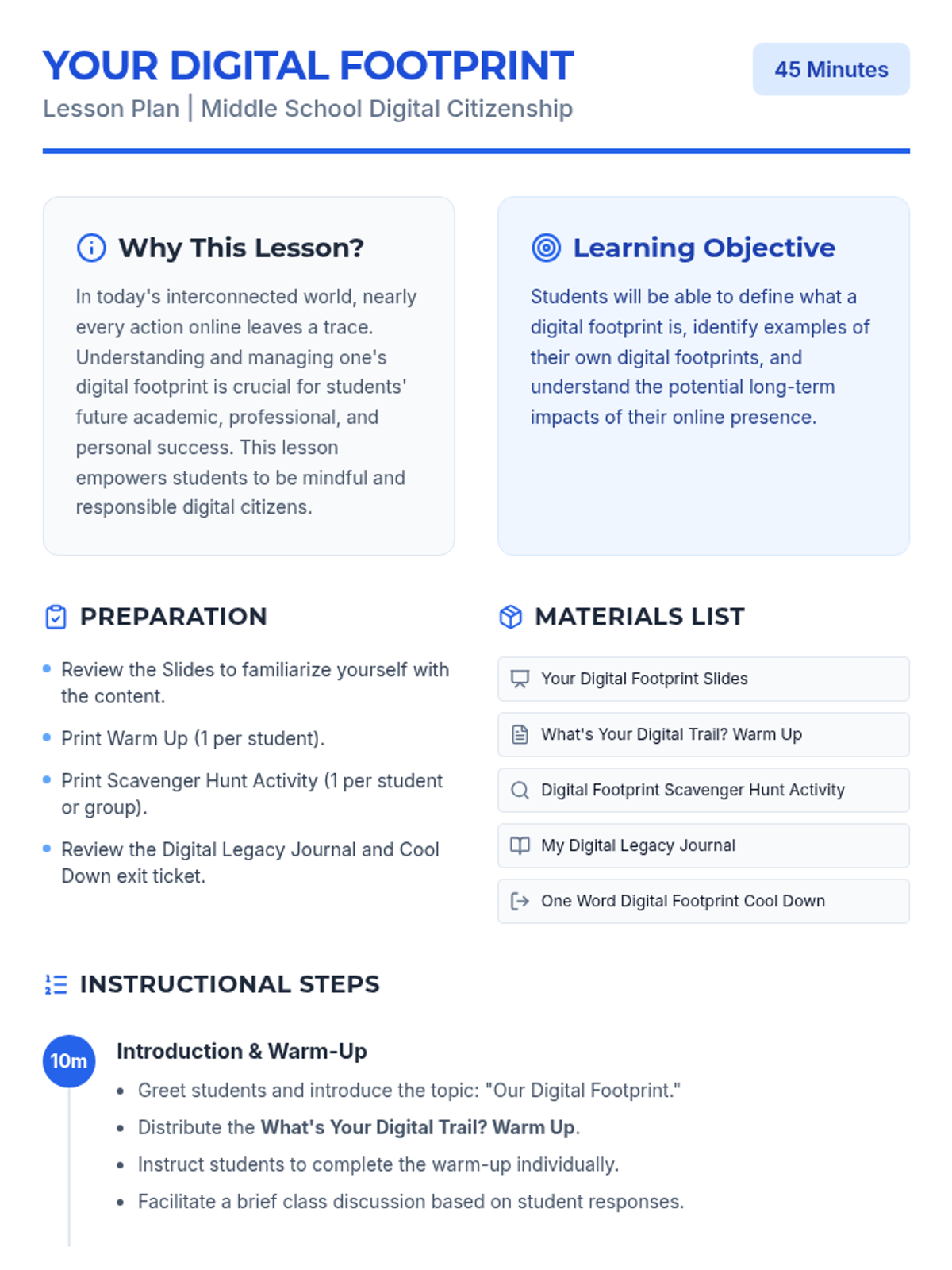
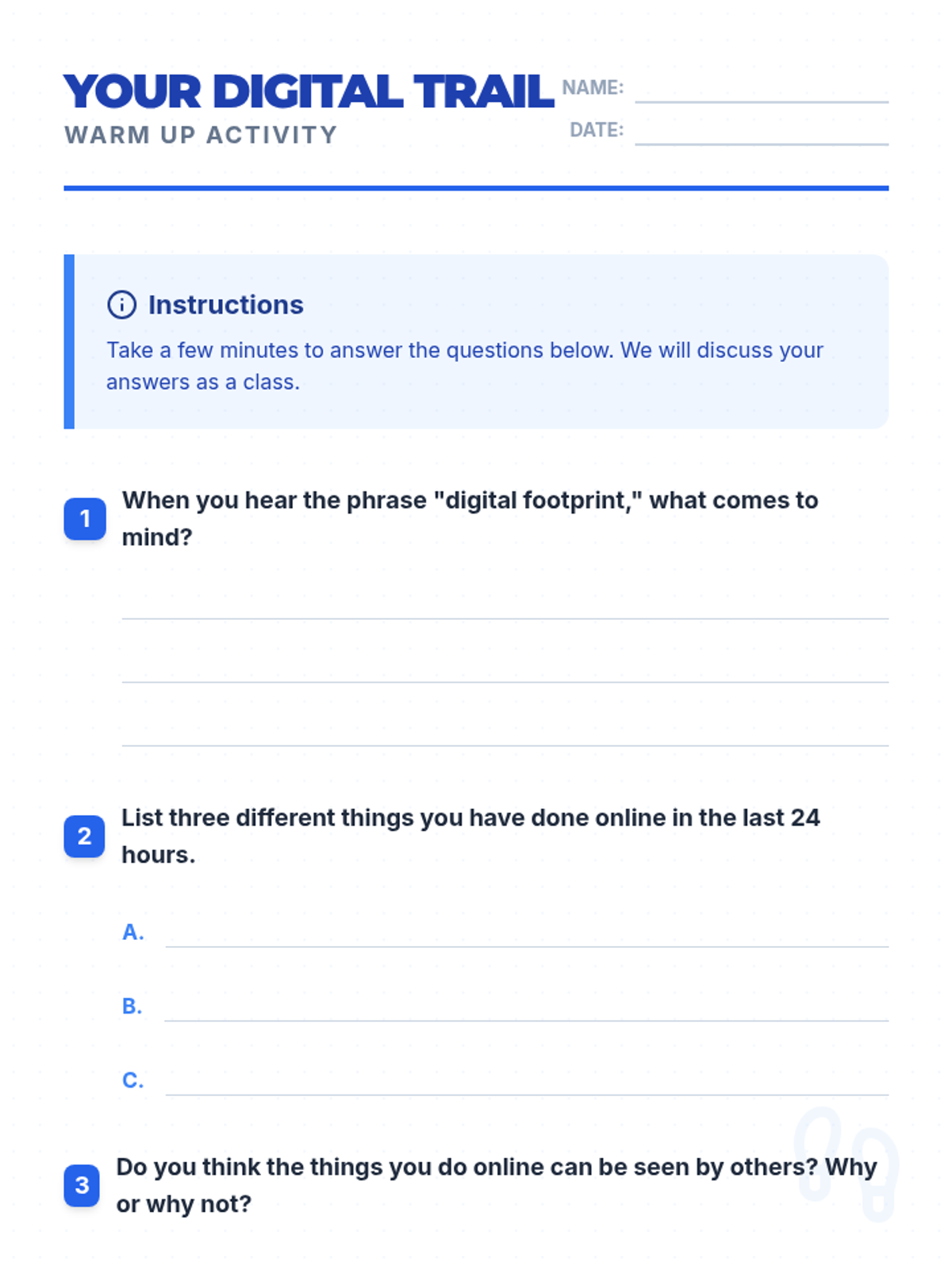
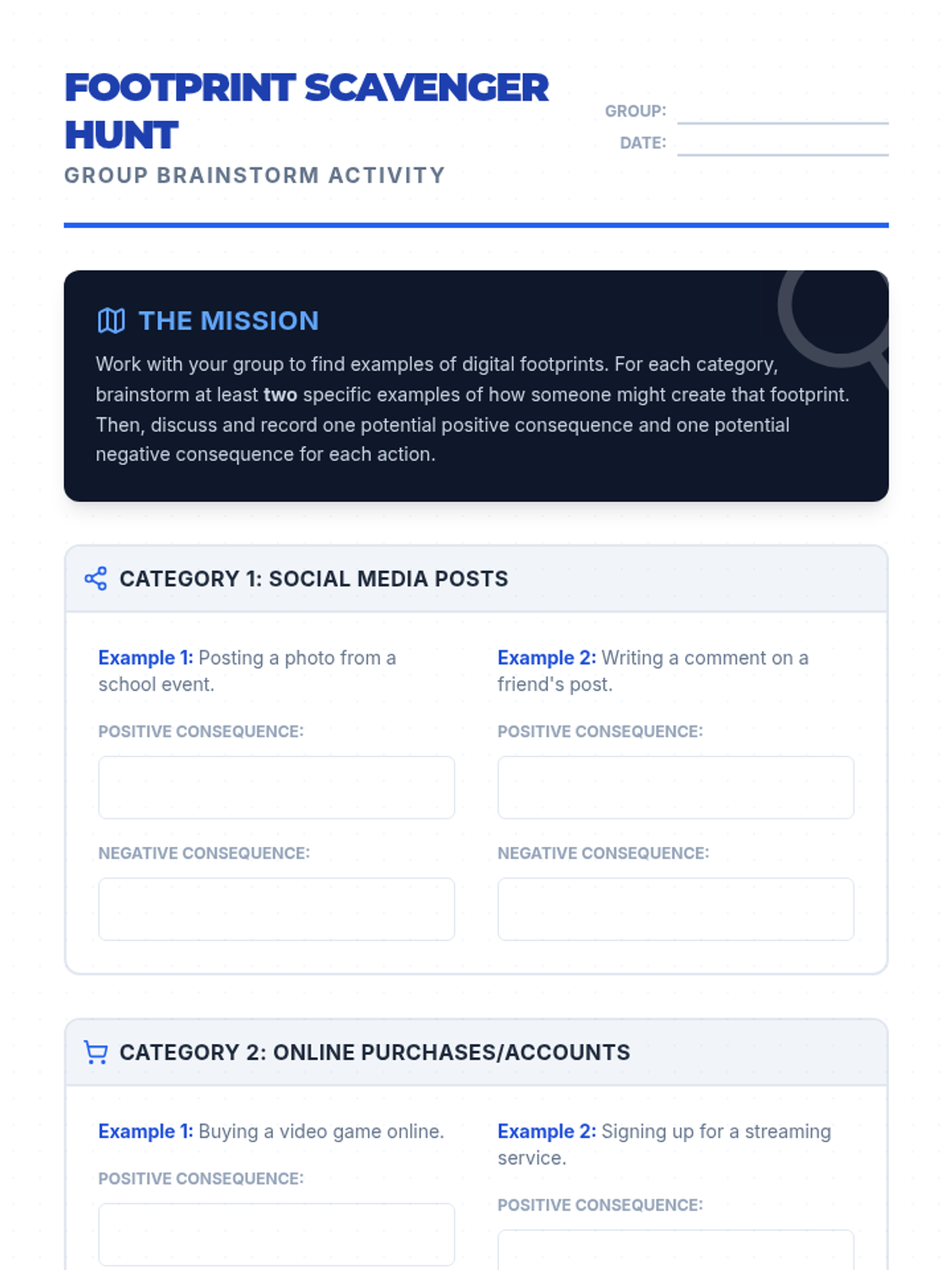
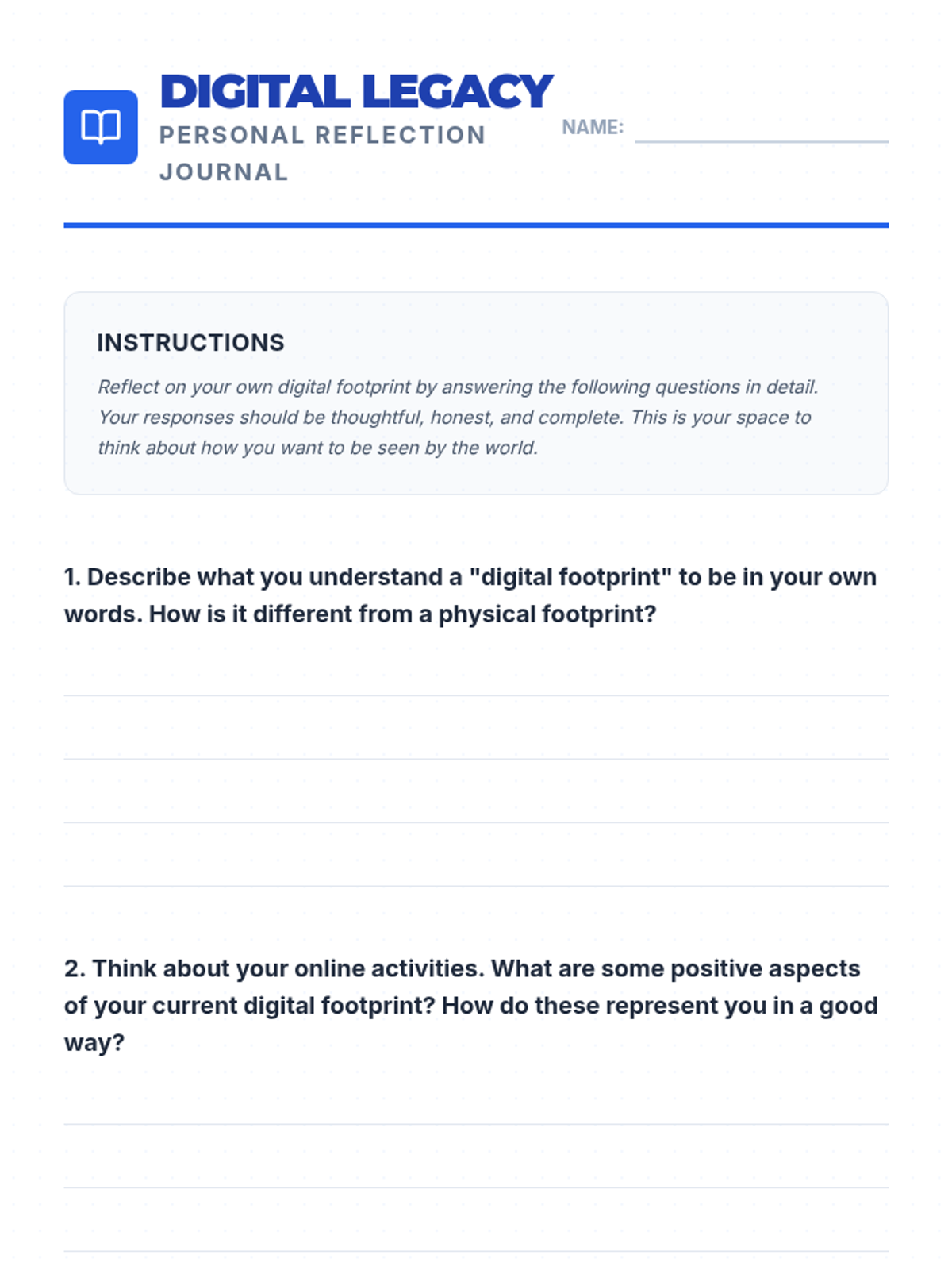
A two-part series designed for middle school students to develop a positive online presence and recognize their internal value. Students explore the concept of a digital footprint and then transition into identifying their unique personal strengths.
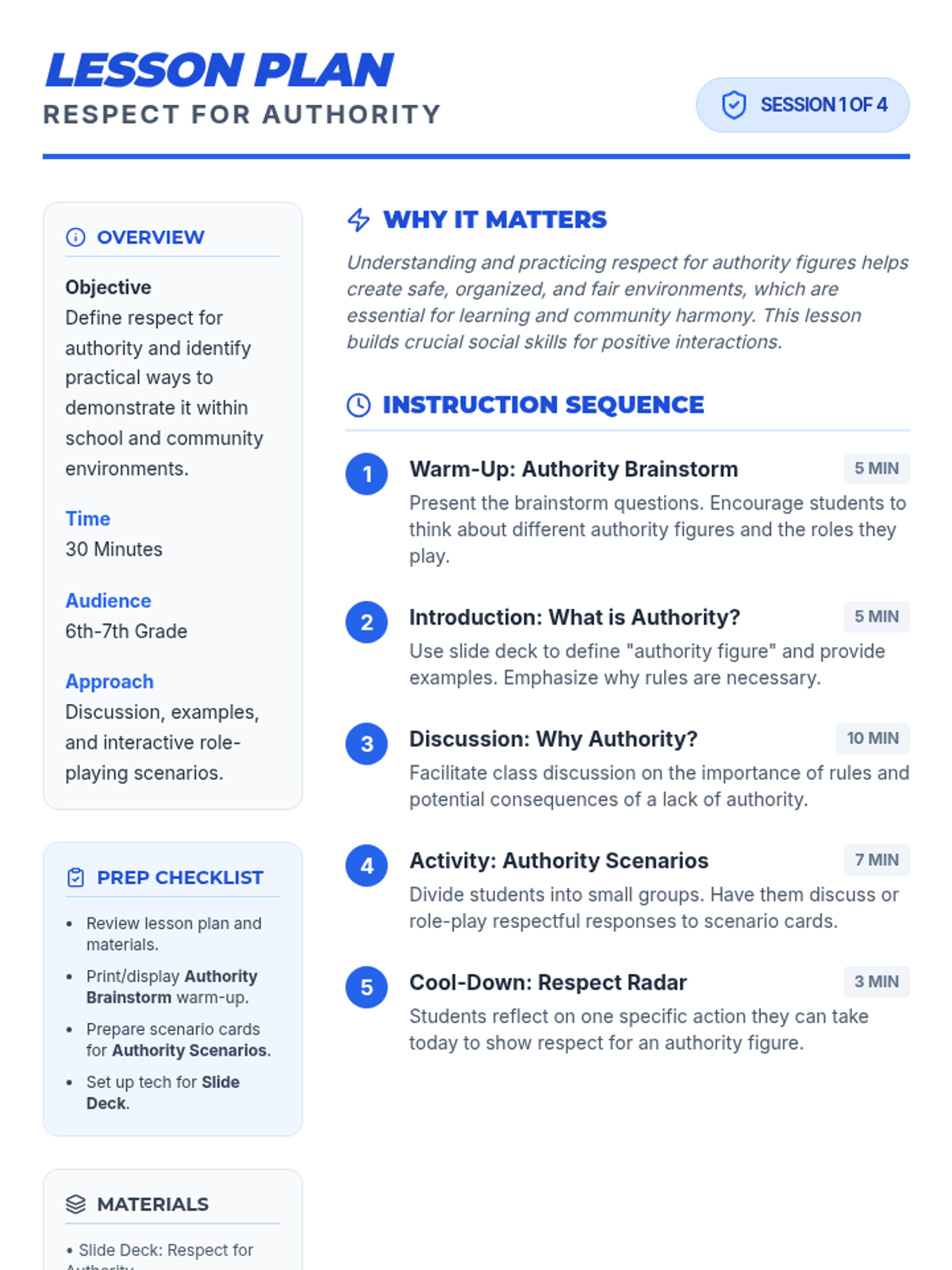
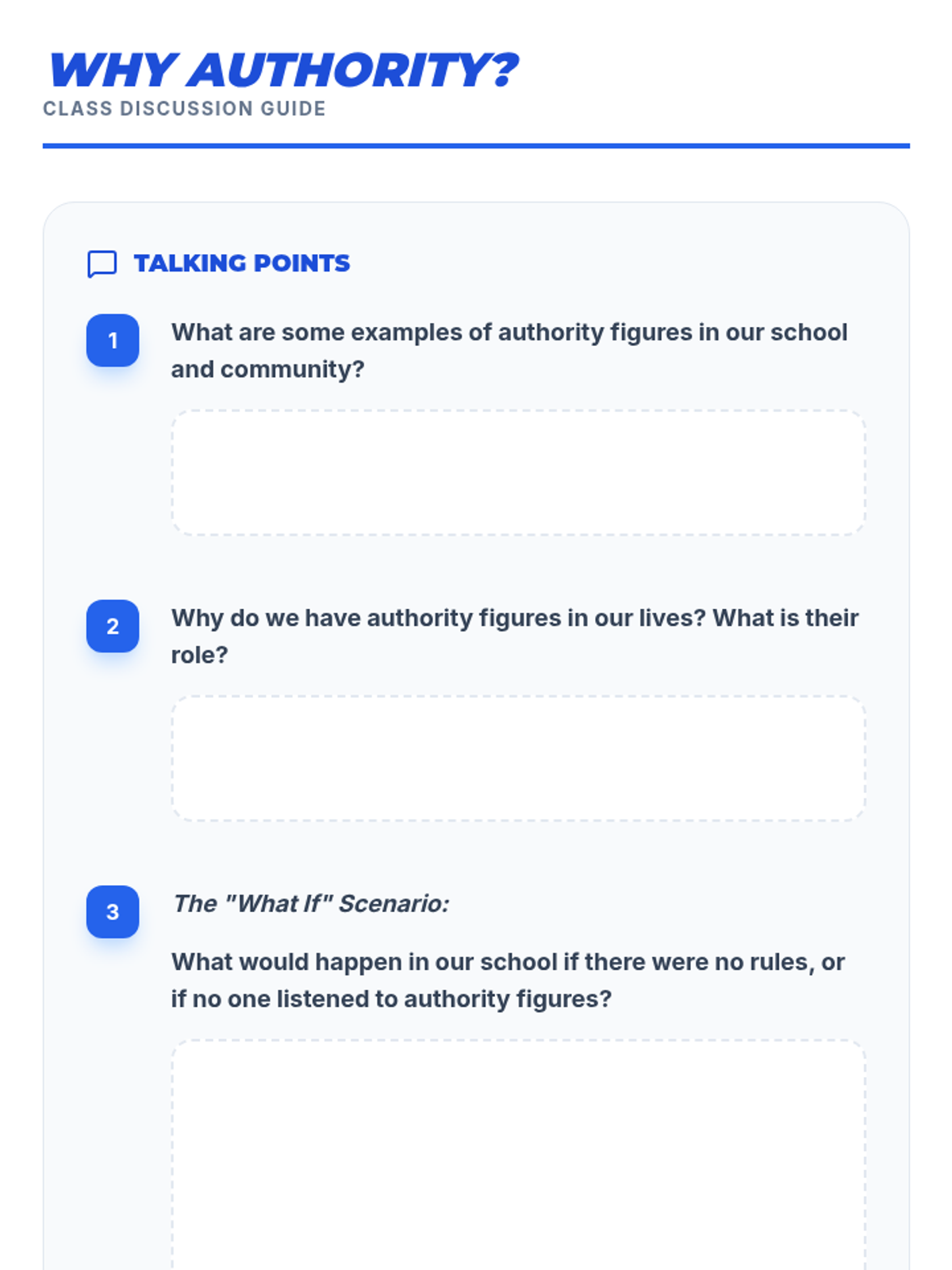
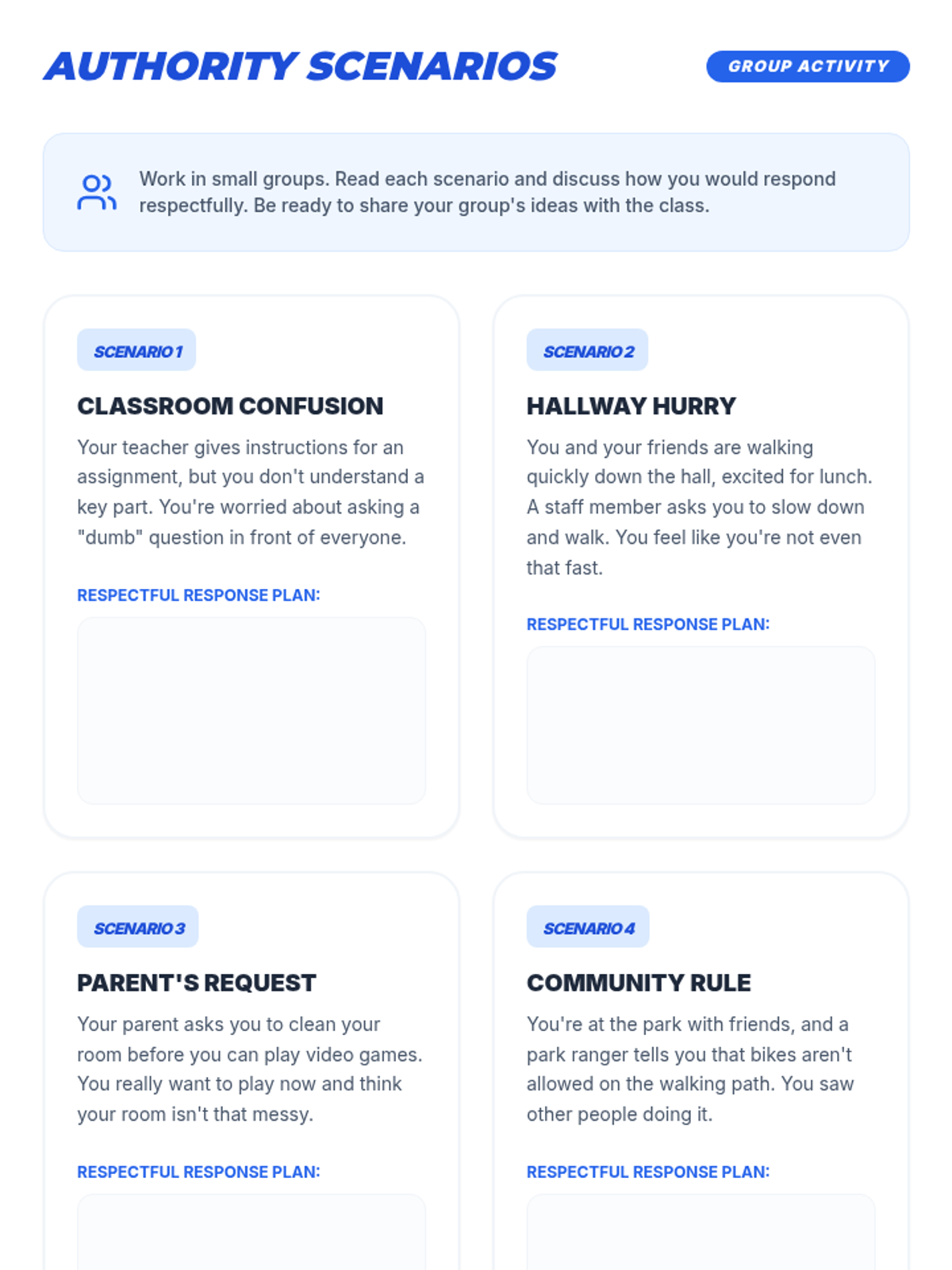
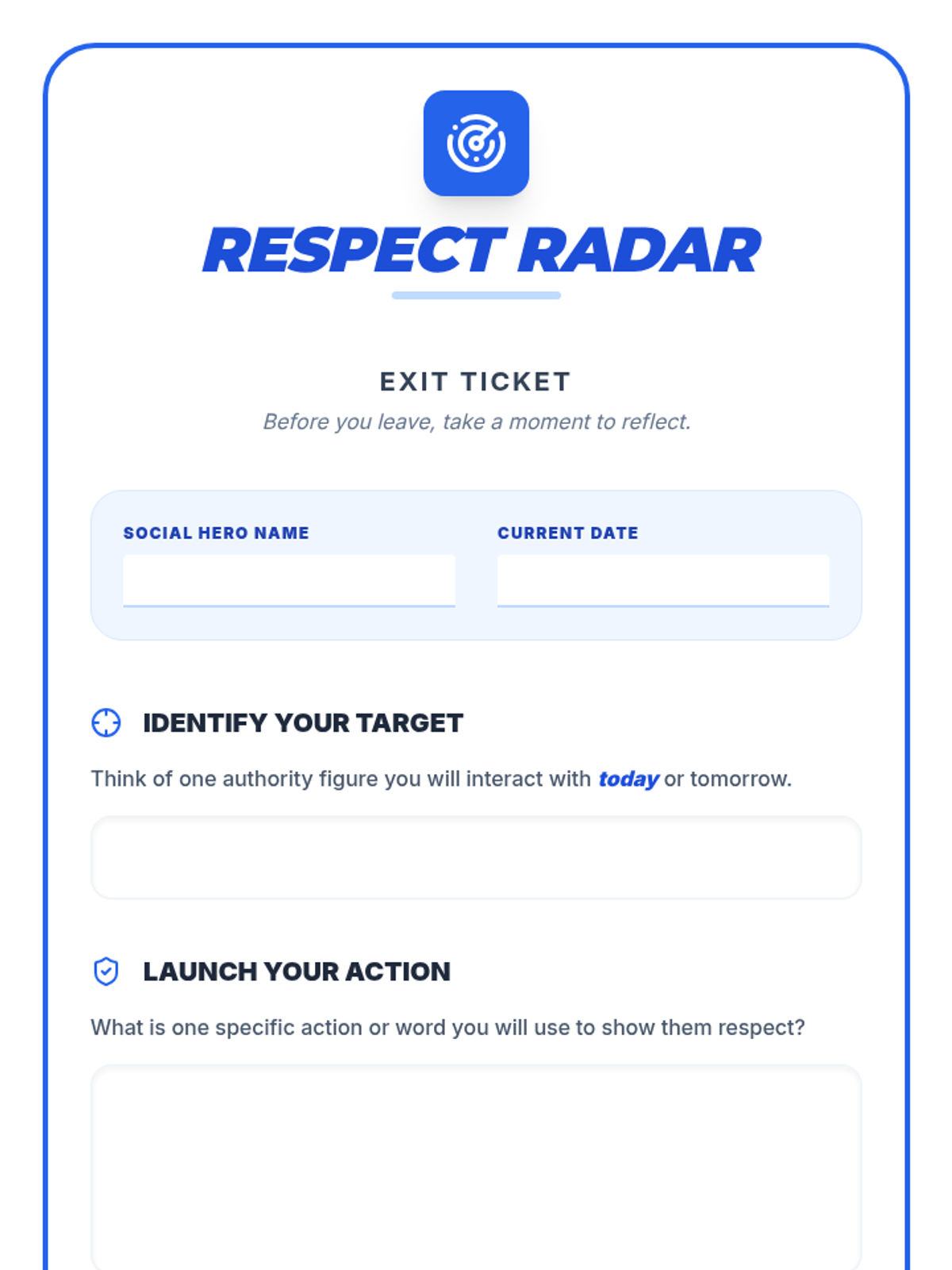
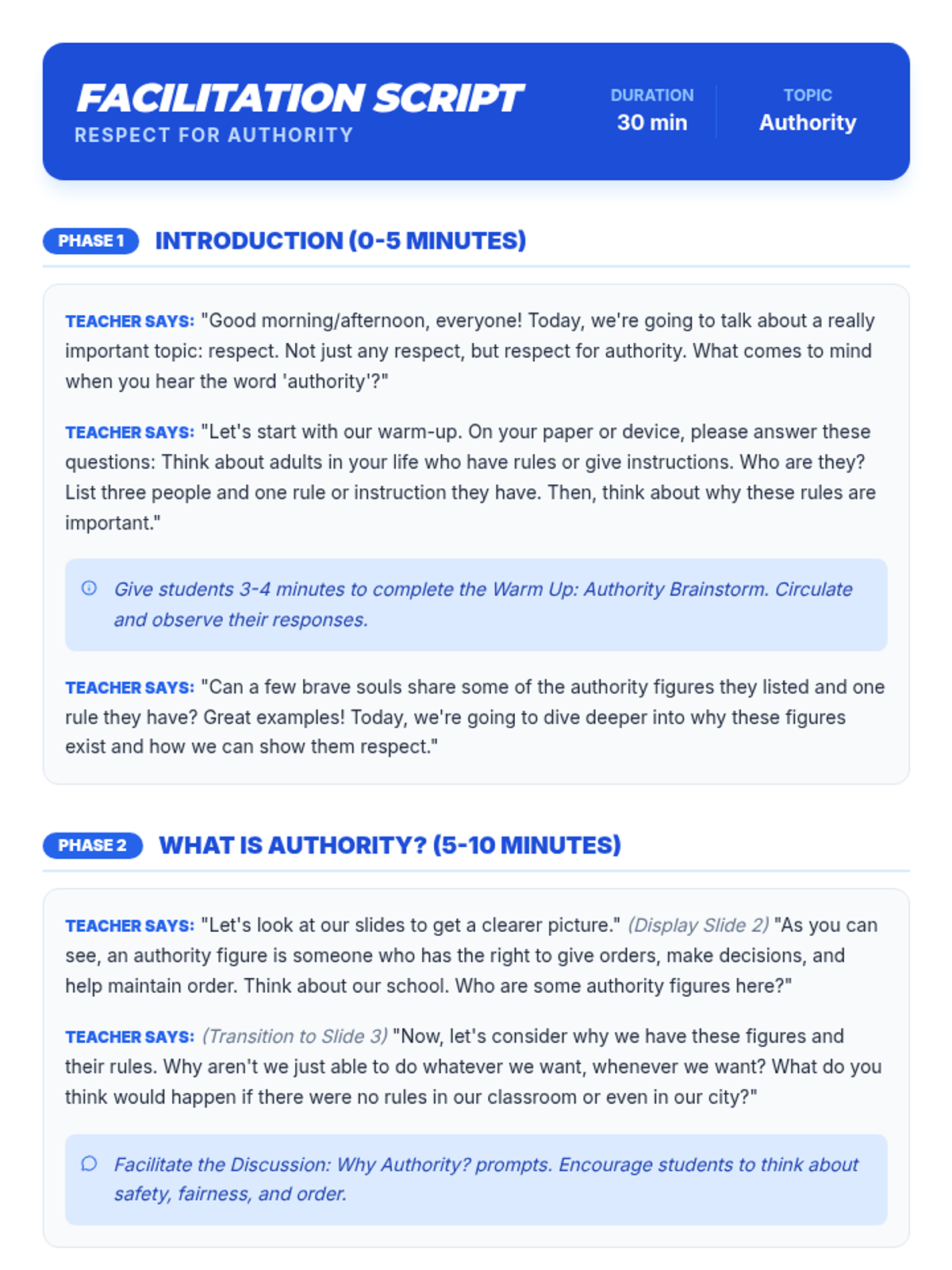
A four-part series for 6th and 7th graders that explores respect across four key contexts: authority, parents, peers, and self. Students develop social-emotional skills through discussion, reflection, and interactive scenarios.
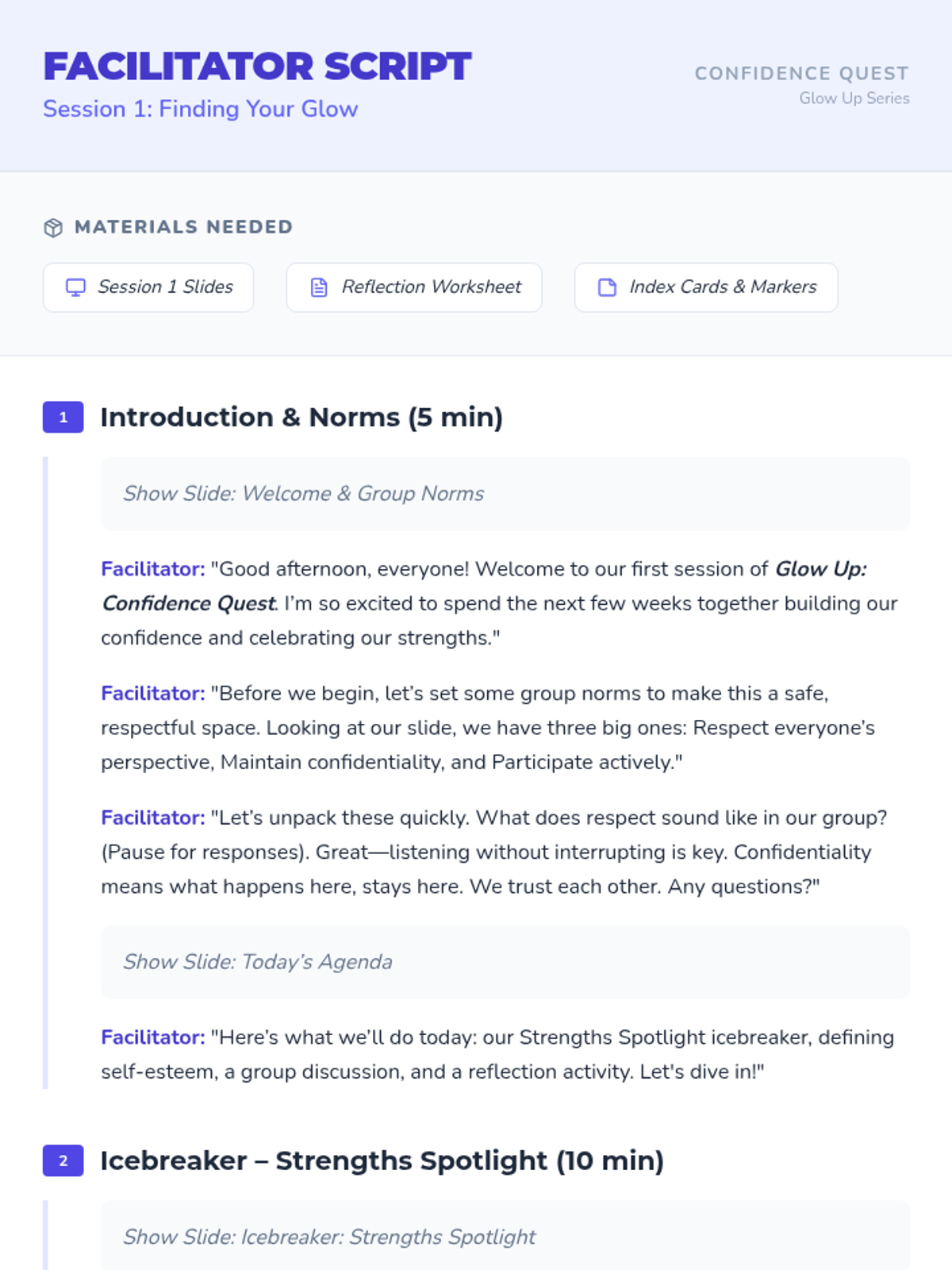
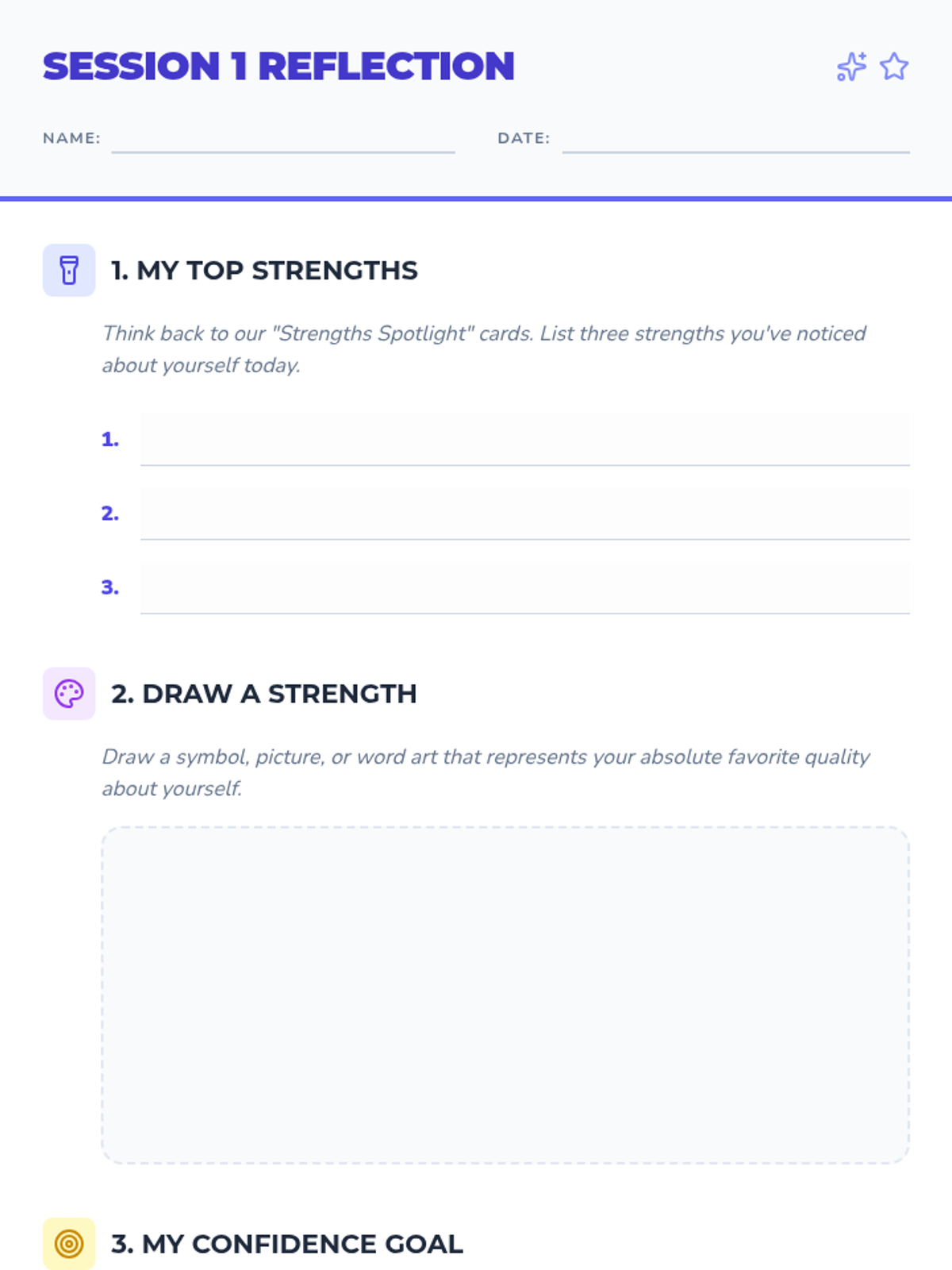
A 6-session self-esteem group for middle school girls focused on building confidence, recognizing strengths, and fostering a positive self-image through interactive discussions and reflective activities.
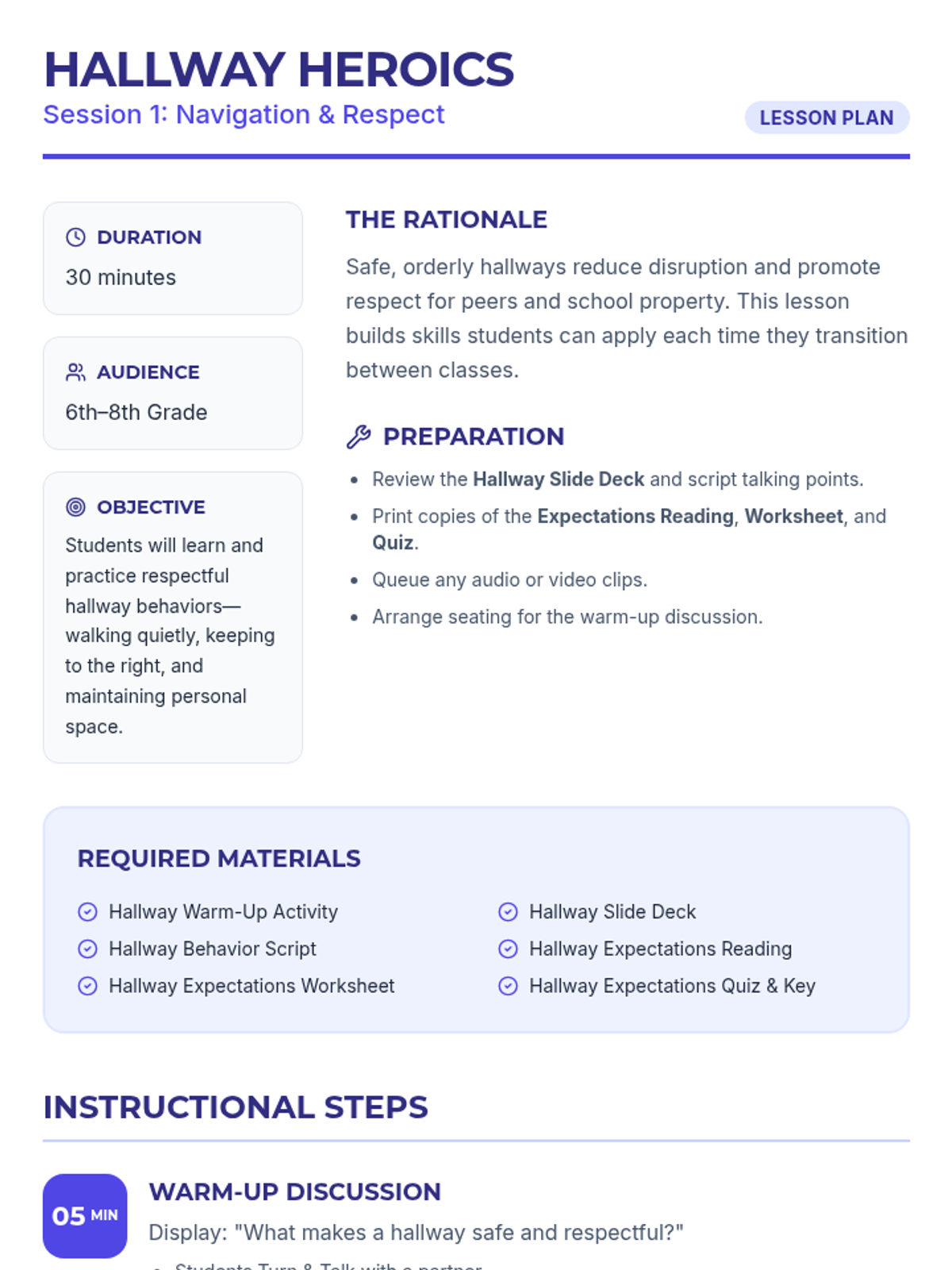
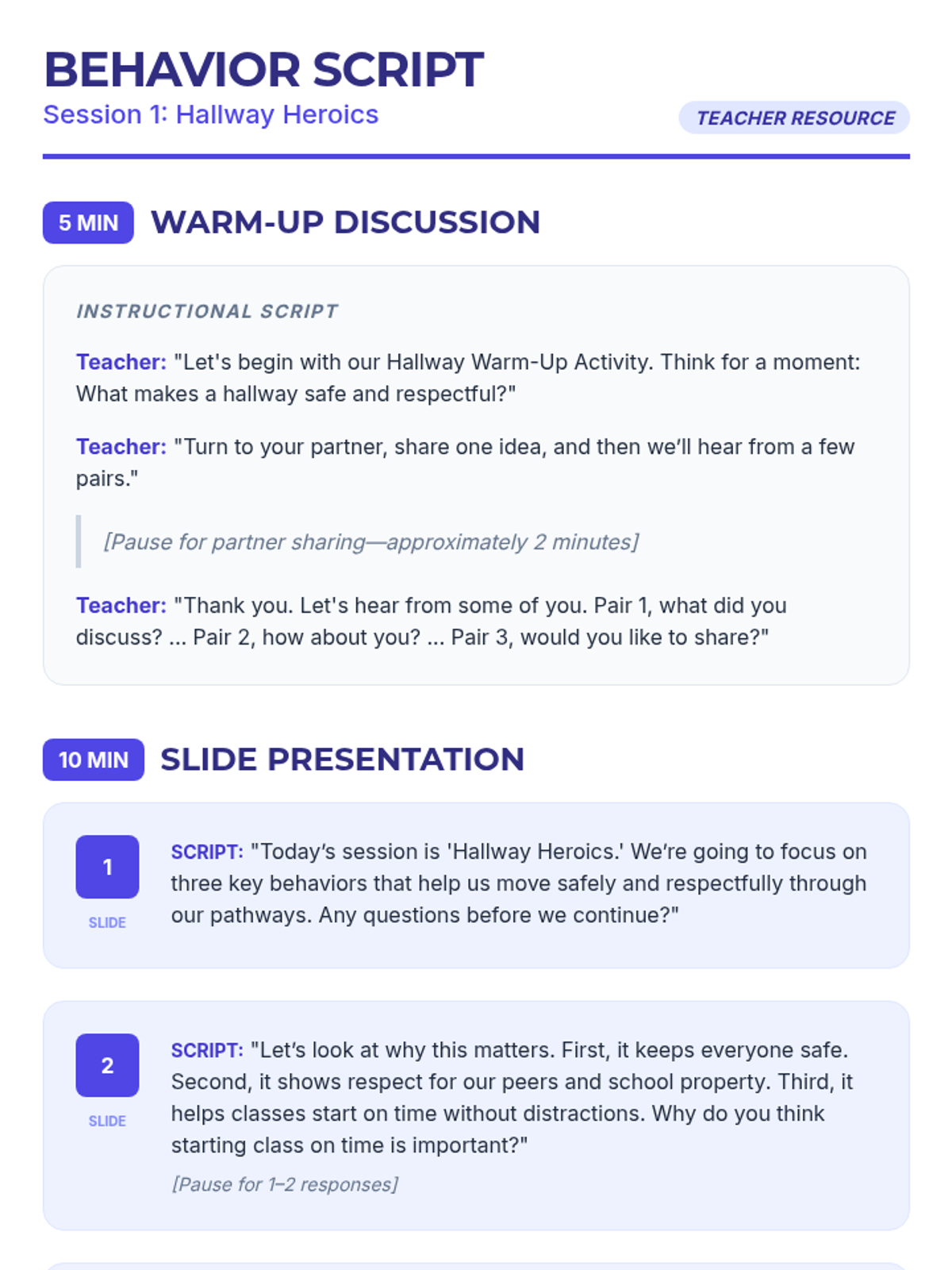
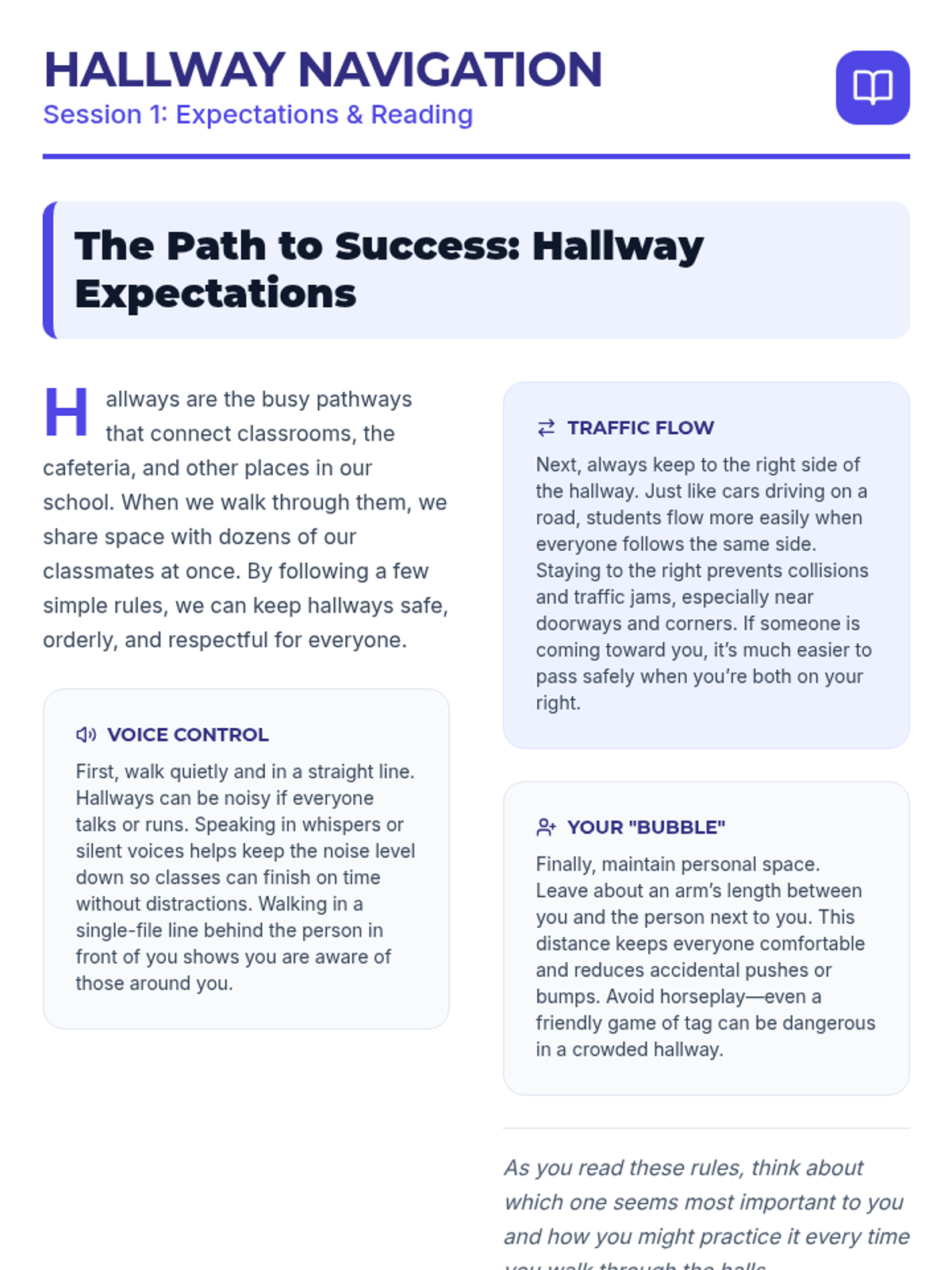
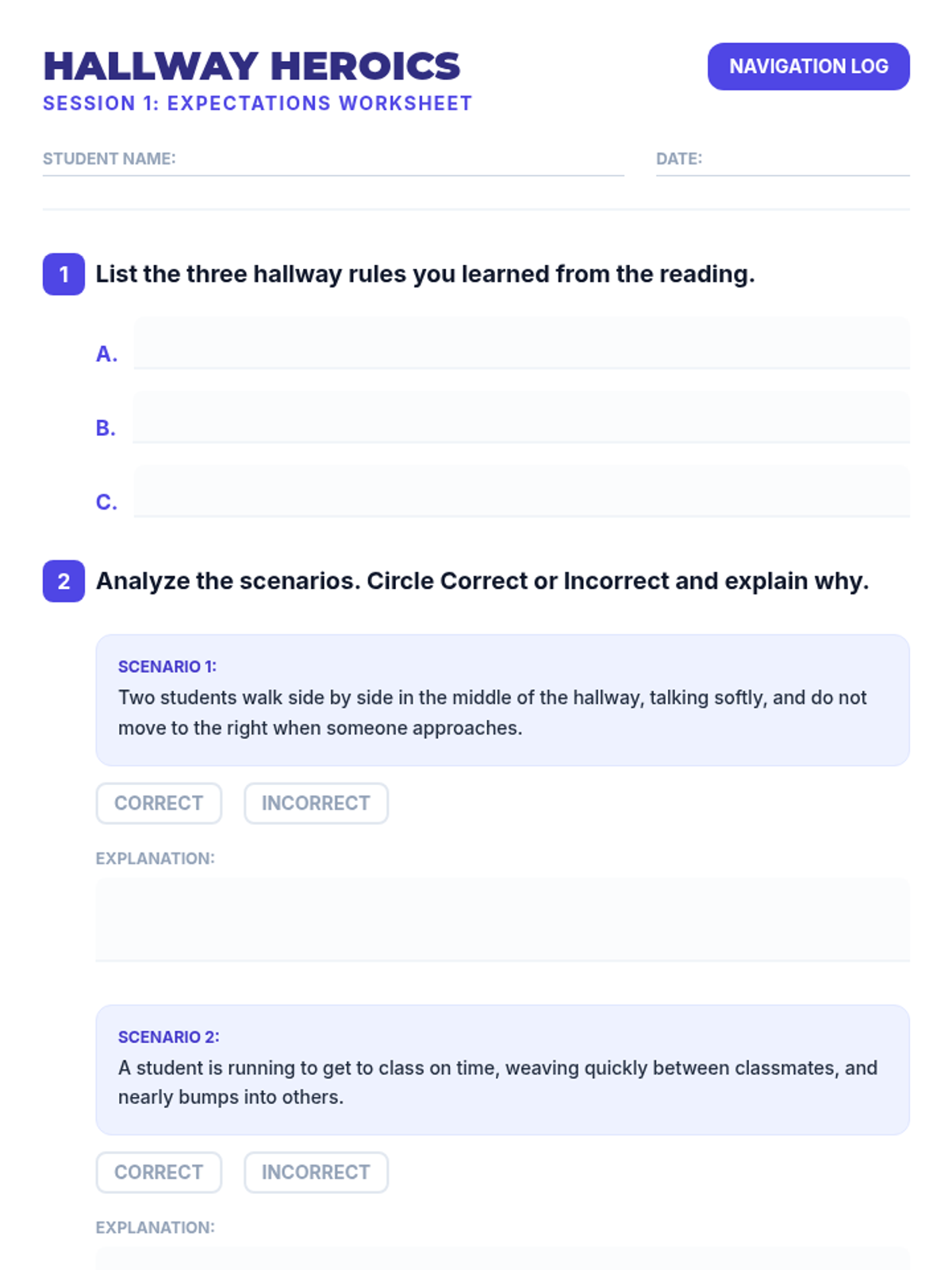
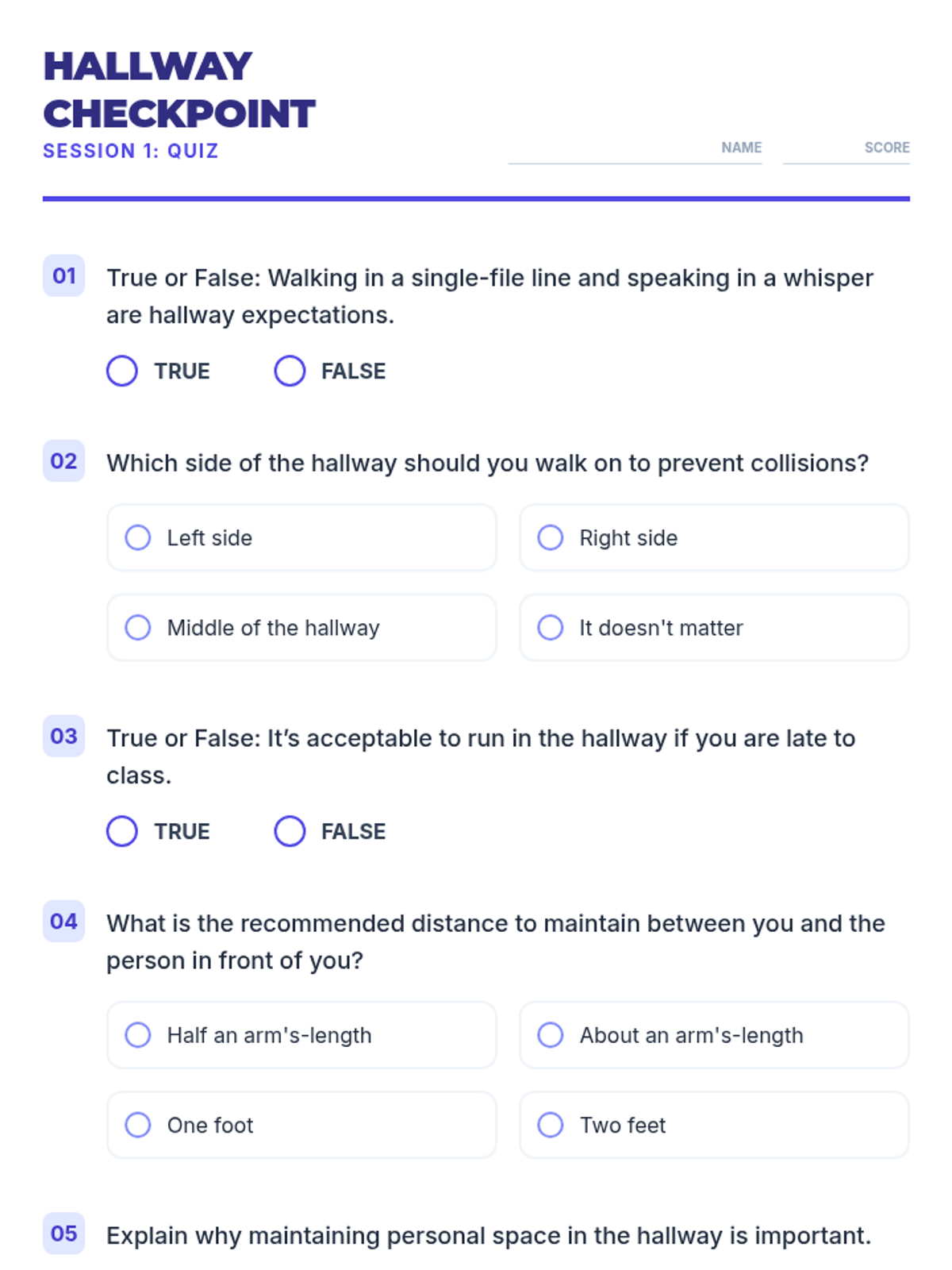
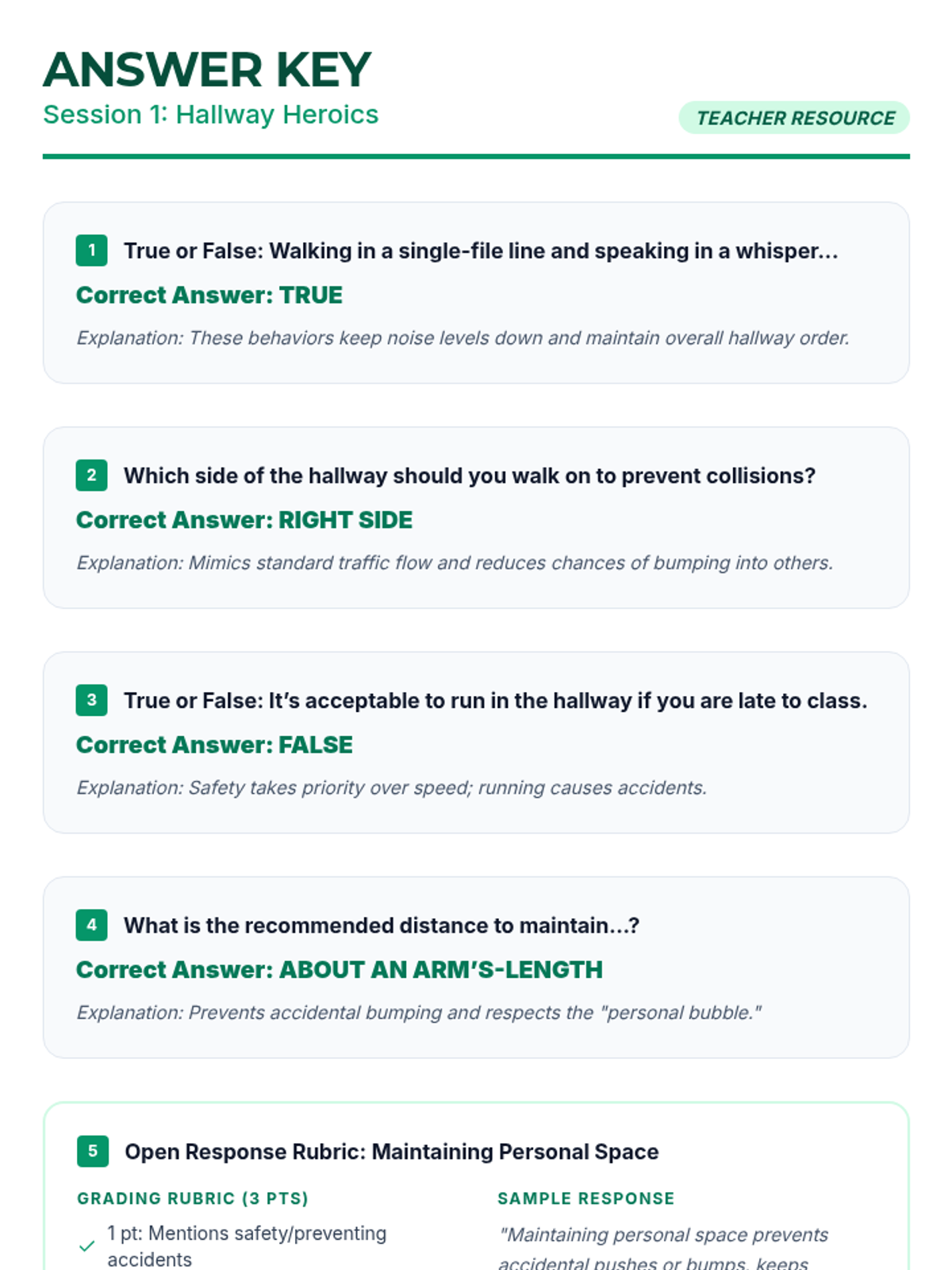
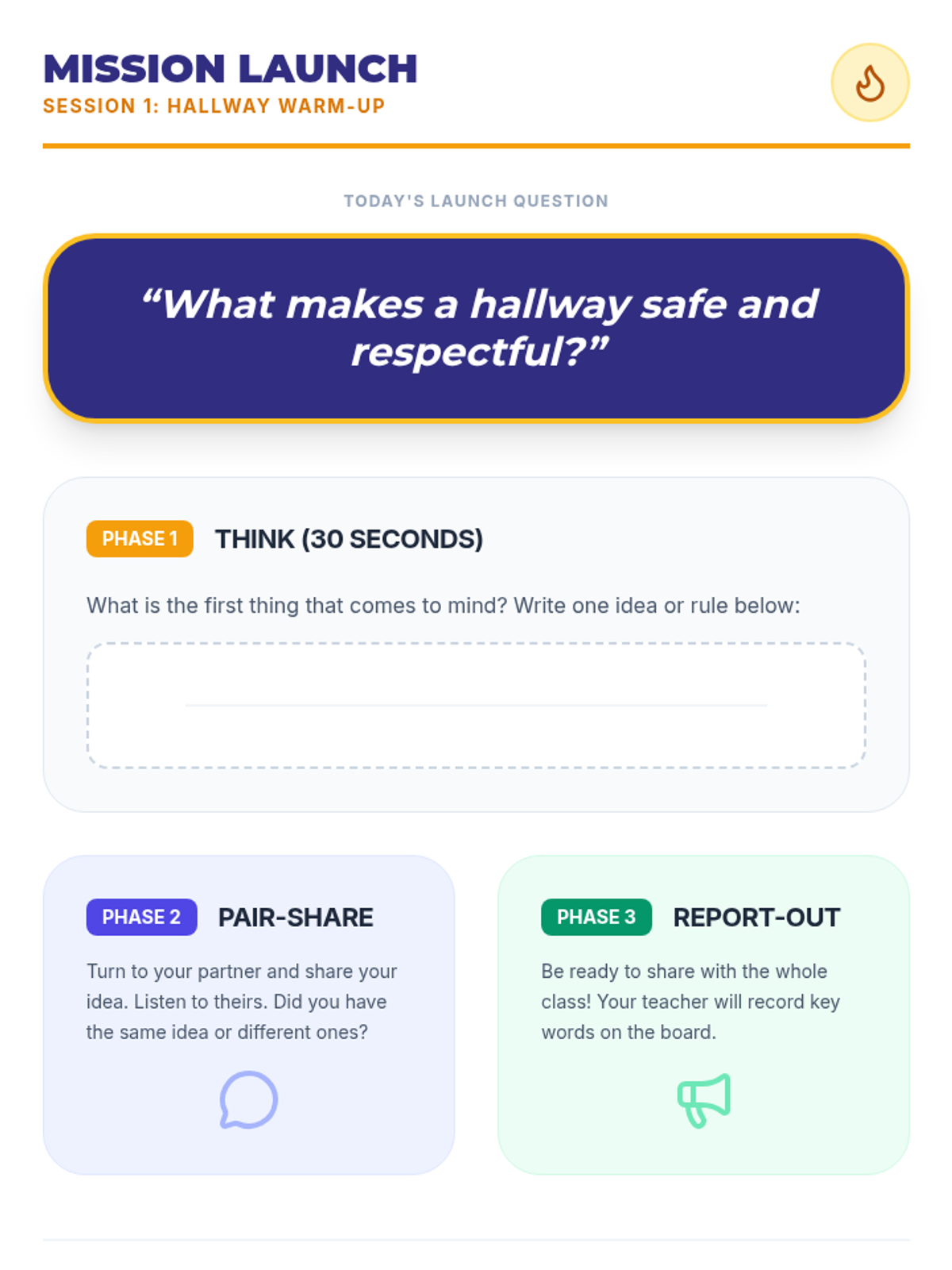
A three-session social-emotional learning series for middle schoolers focusing on school-wide behavior expectations in the hallway, cafeteria, and playground. Students learn to navigate common spaces with respect, safety, and responsibility through interactive discussions, reading, and practice.
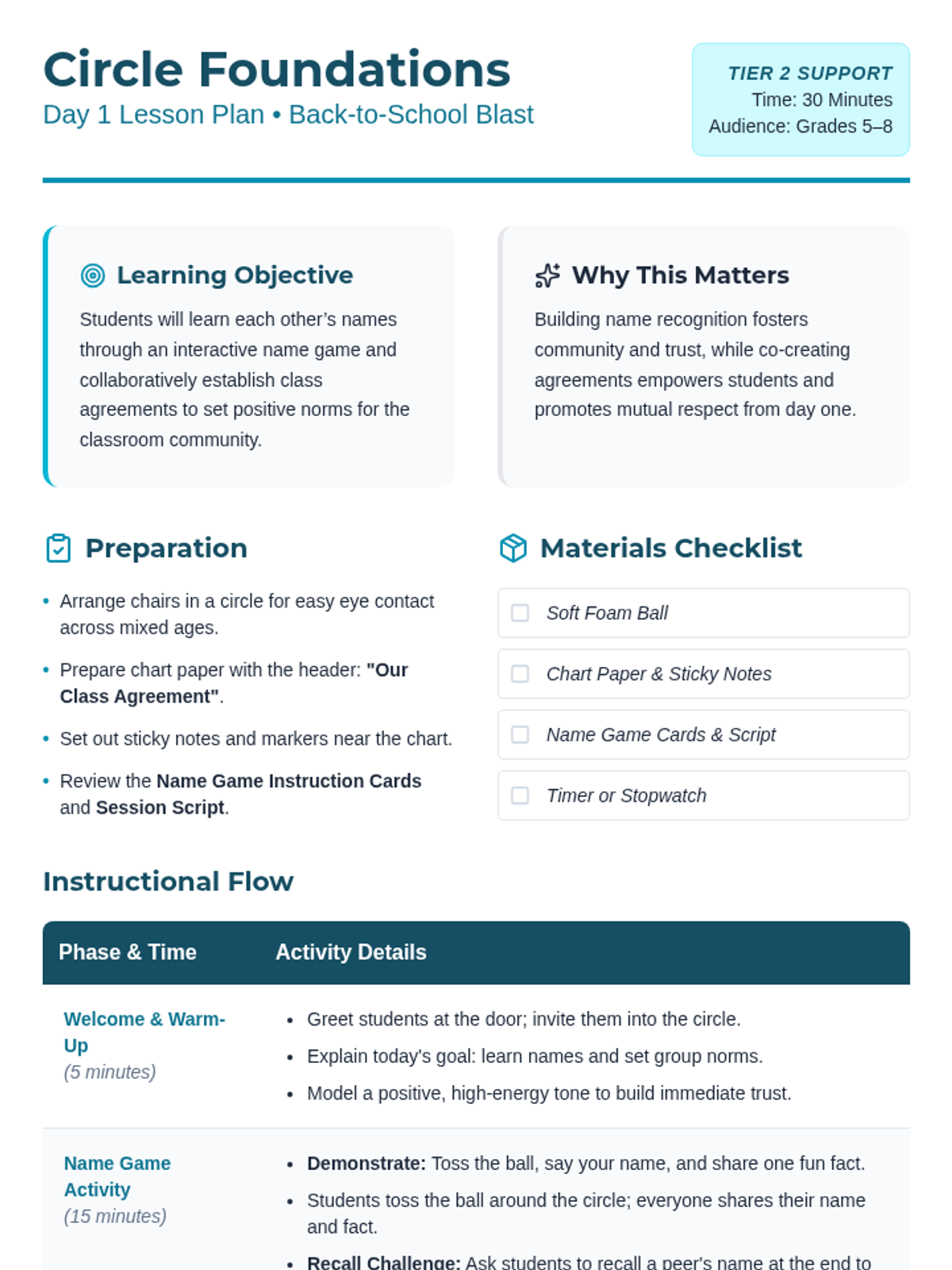
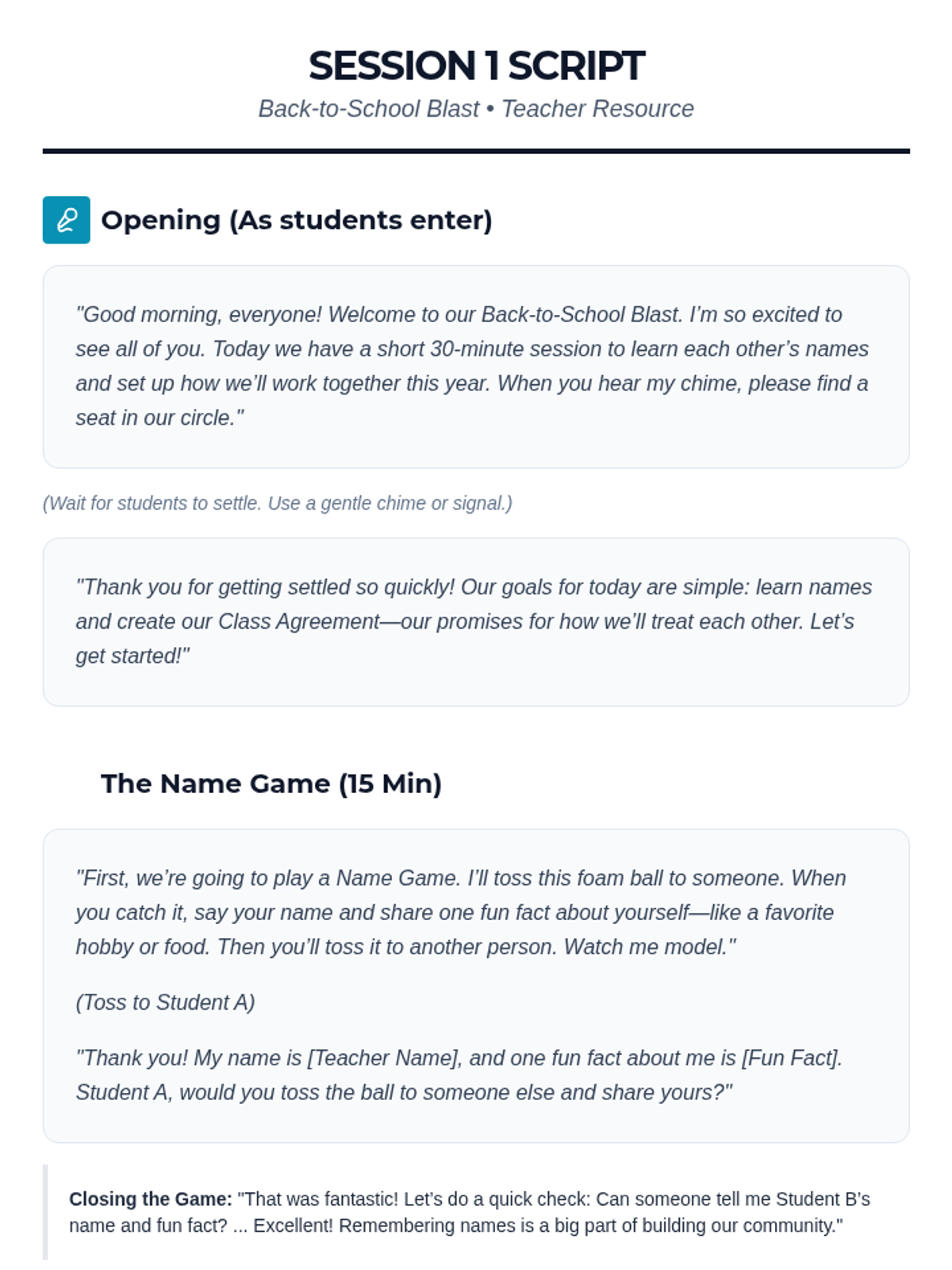
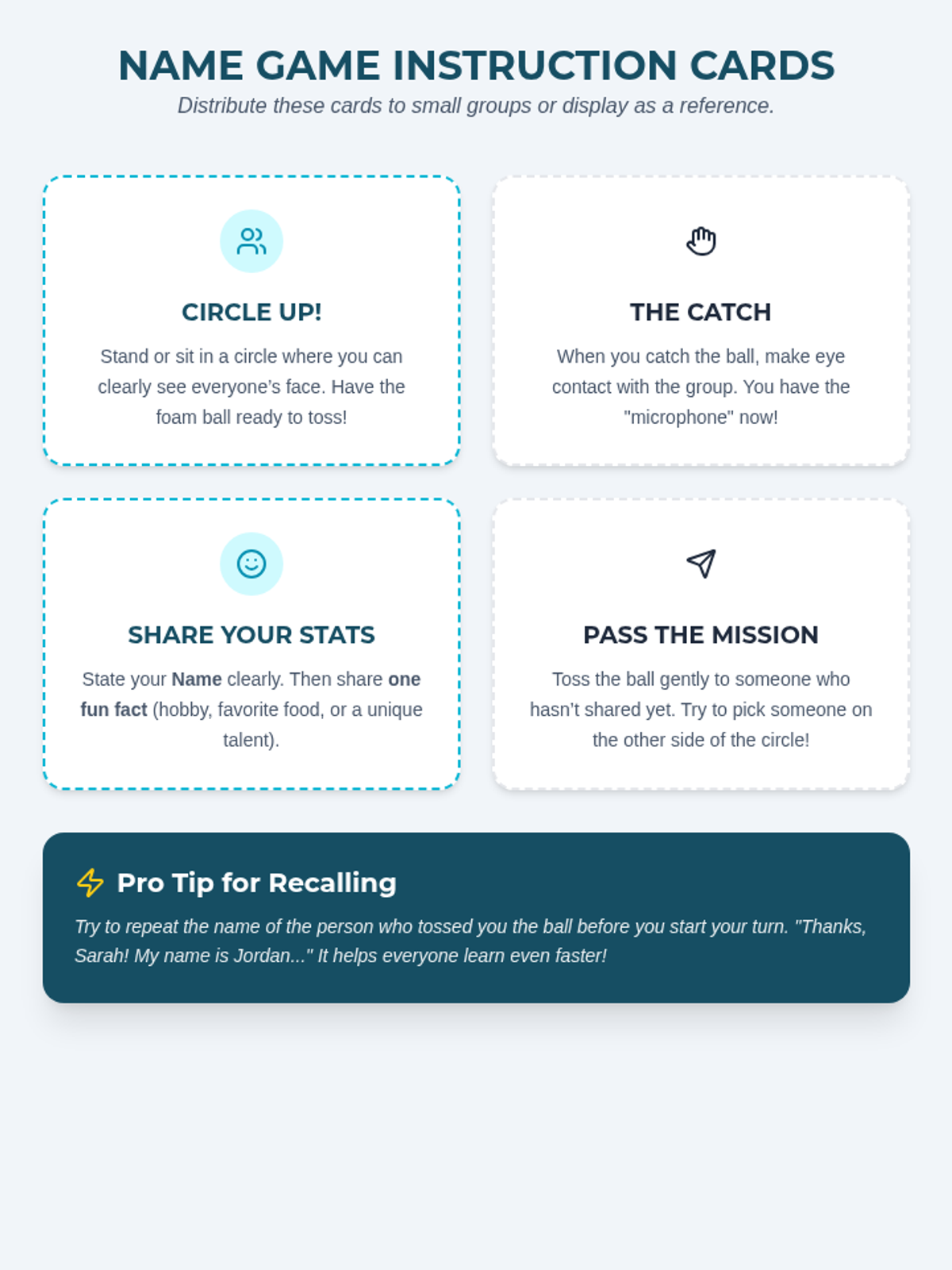
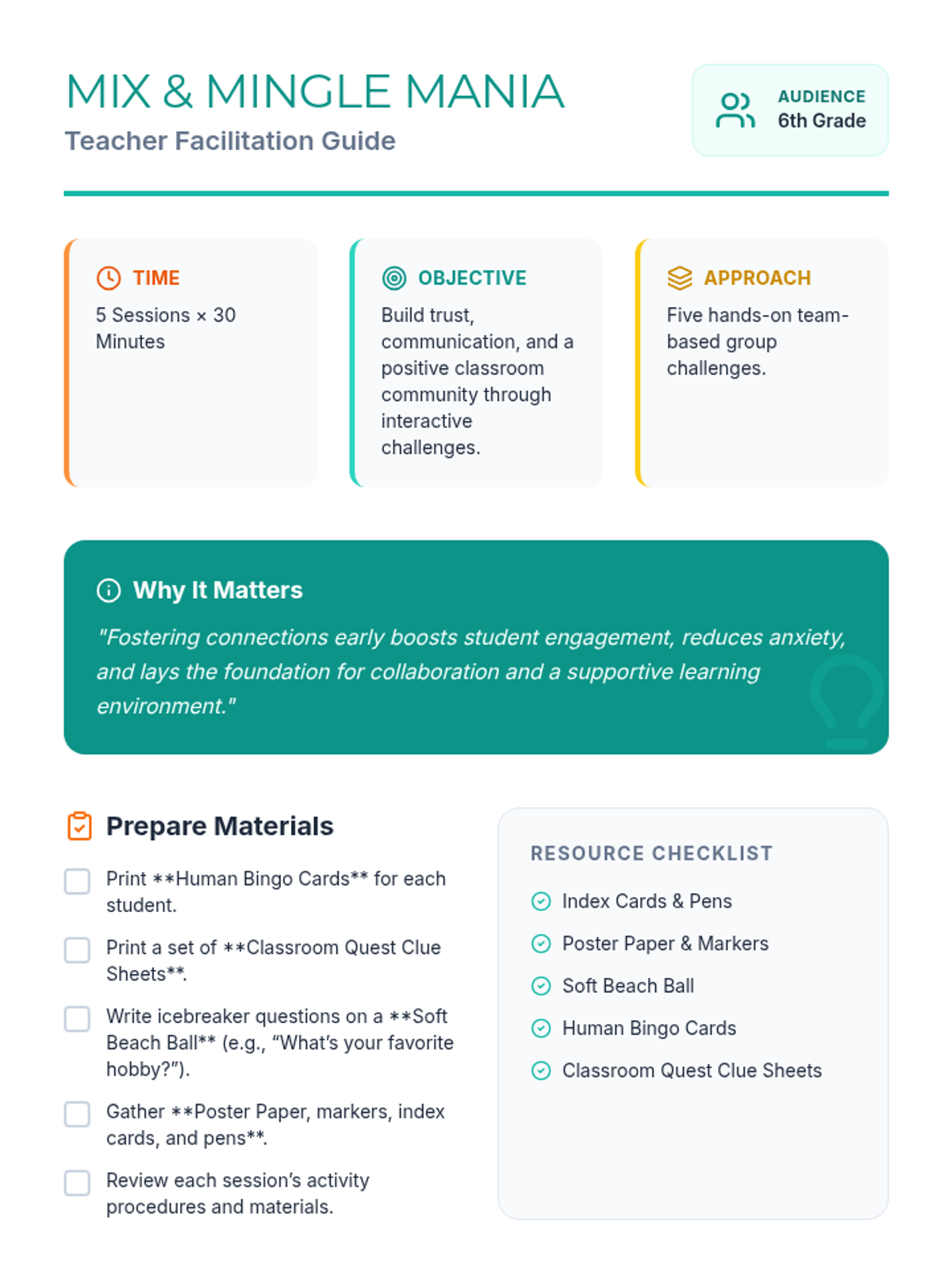
A 5-day series of 30-minute icebreaker sessions for middle schoolers to build rapport, communication, and a positive classroom atmosphere through Tier 2 group supports.
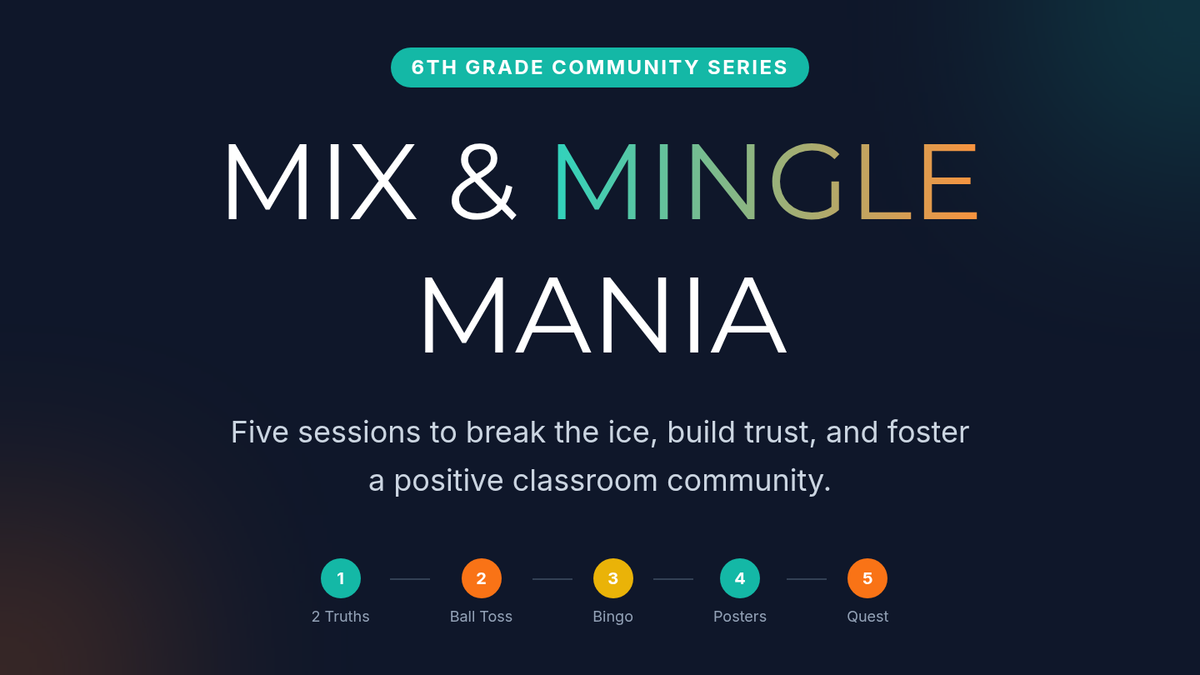
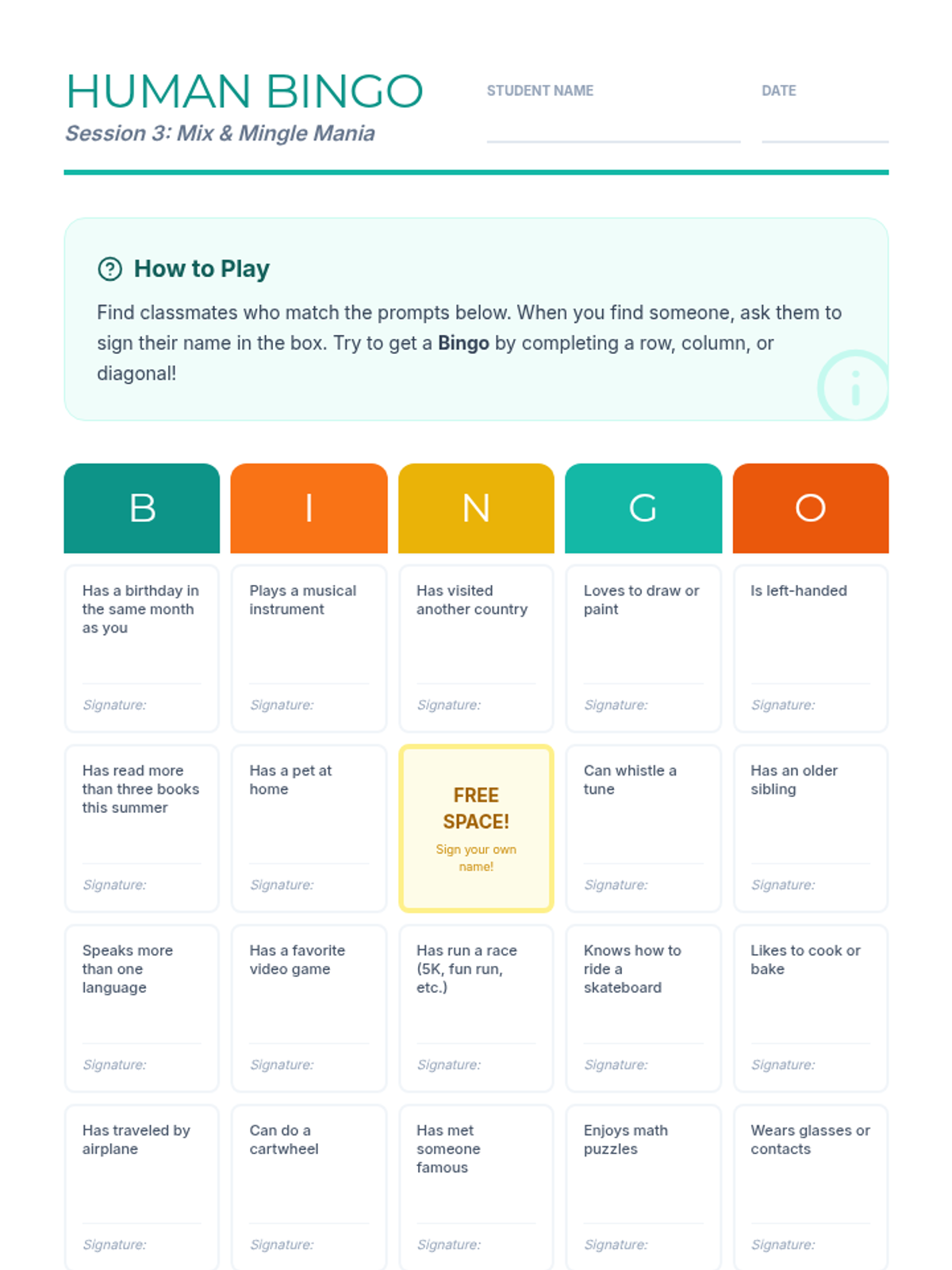
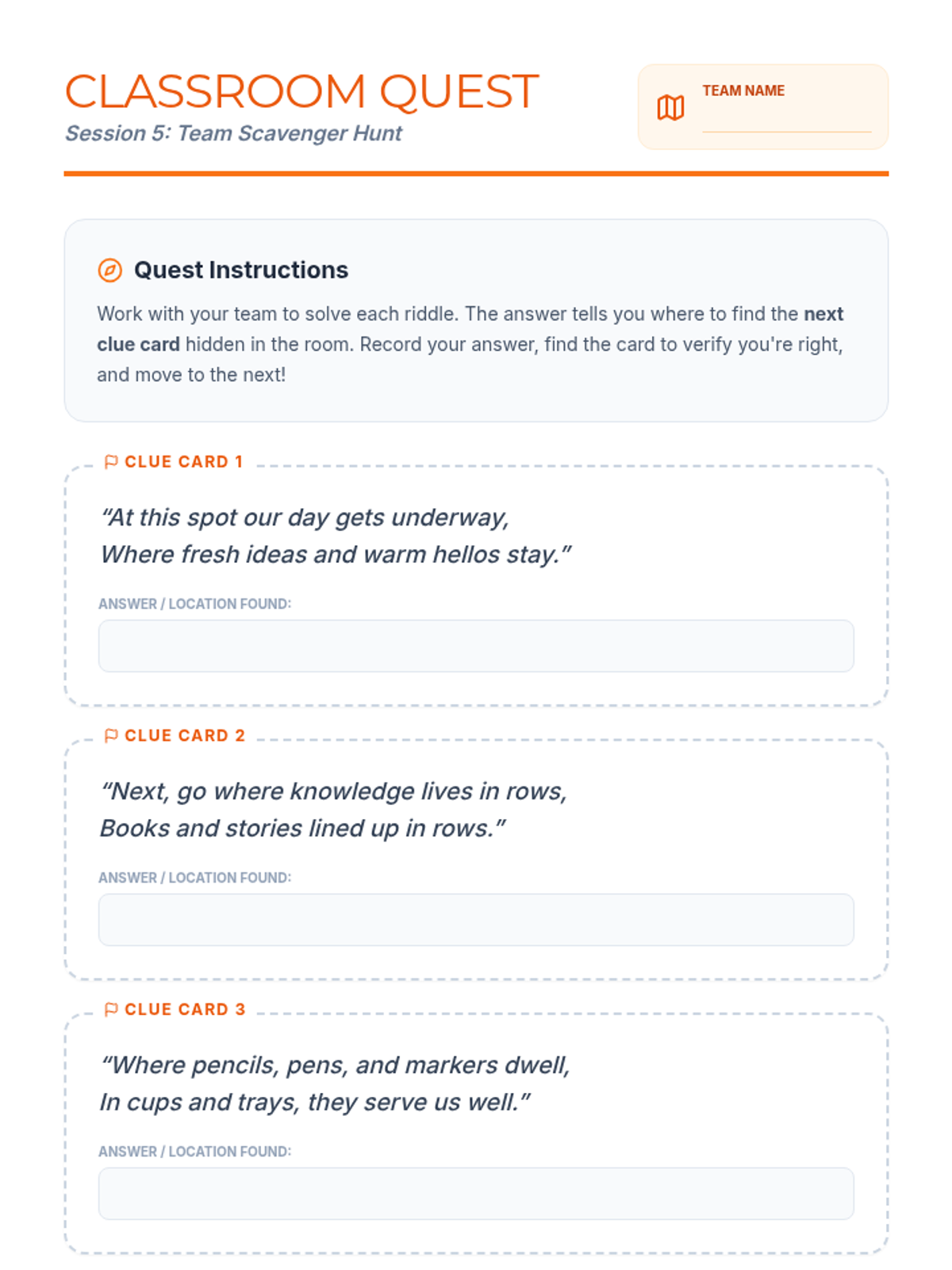
A five-session icebreaker series for 6th-grade students designed to build community, trust, and collaboration through interactive team challenges.
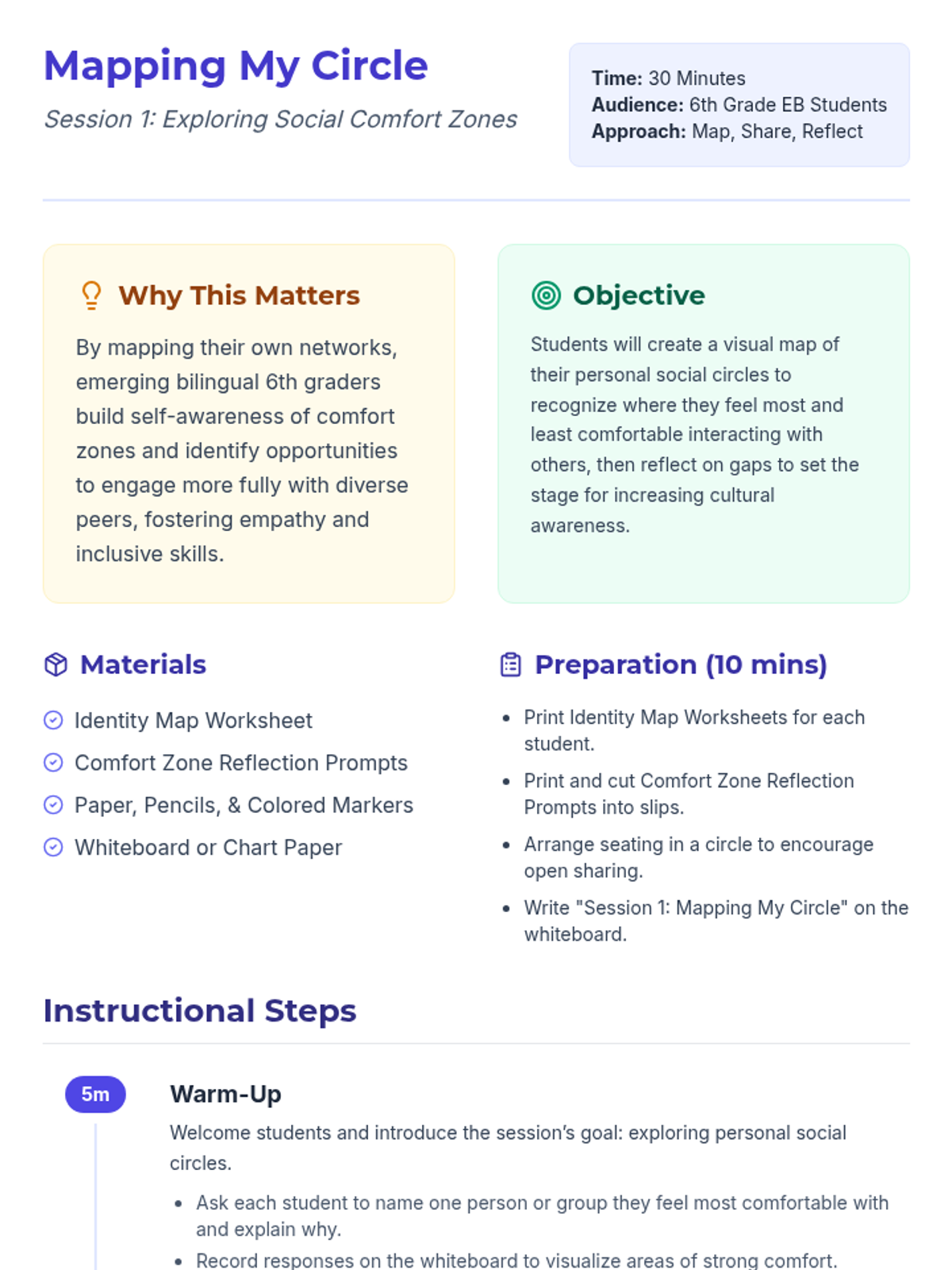
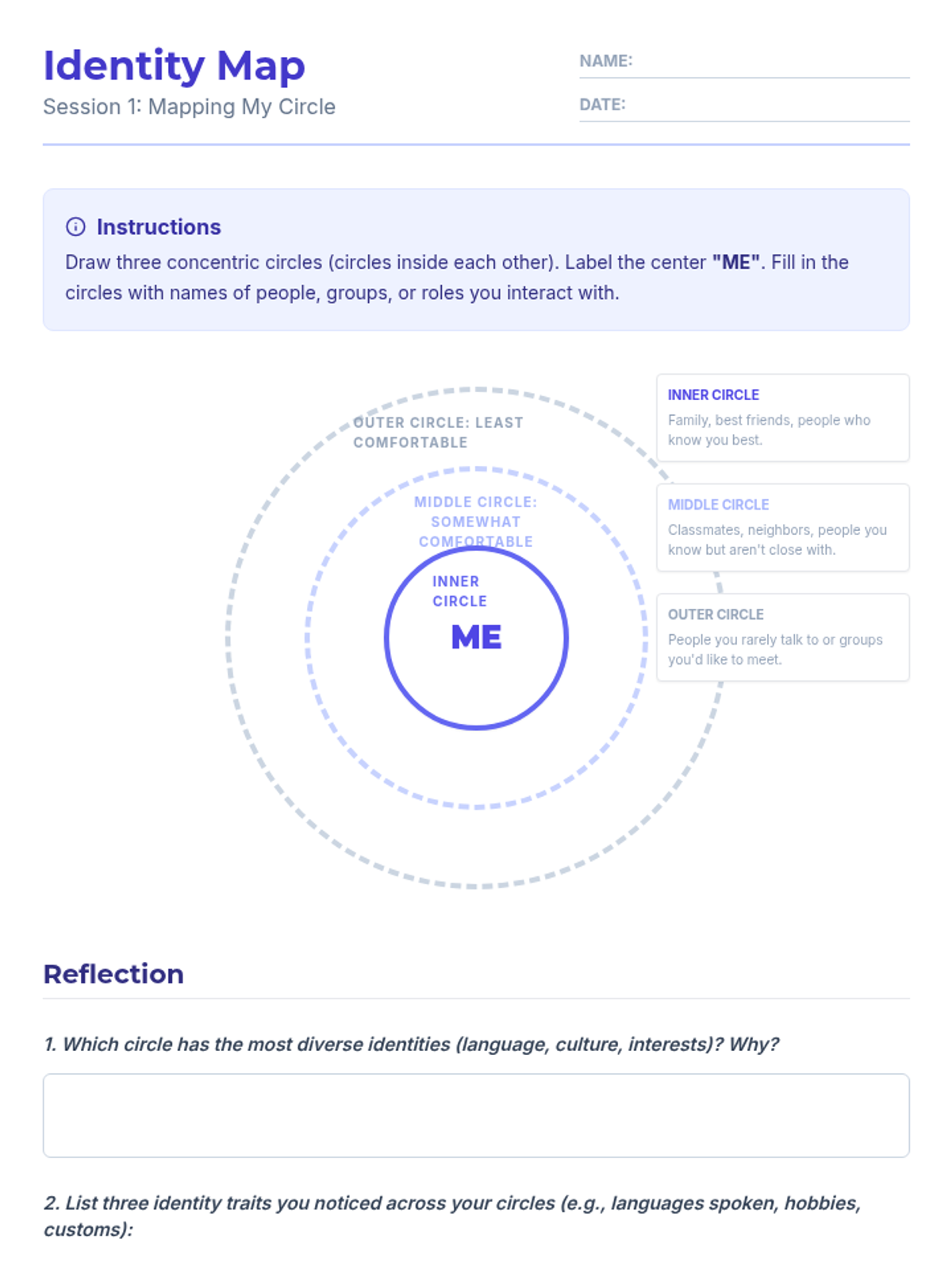
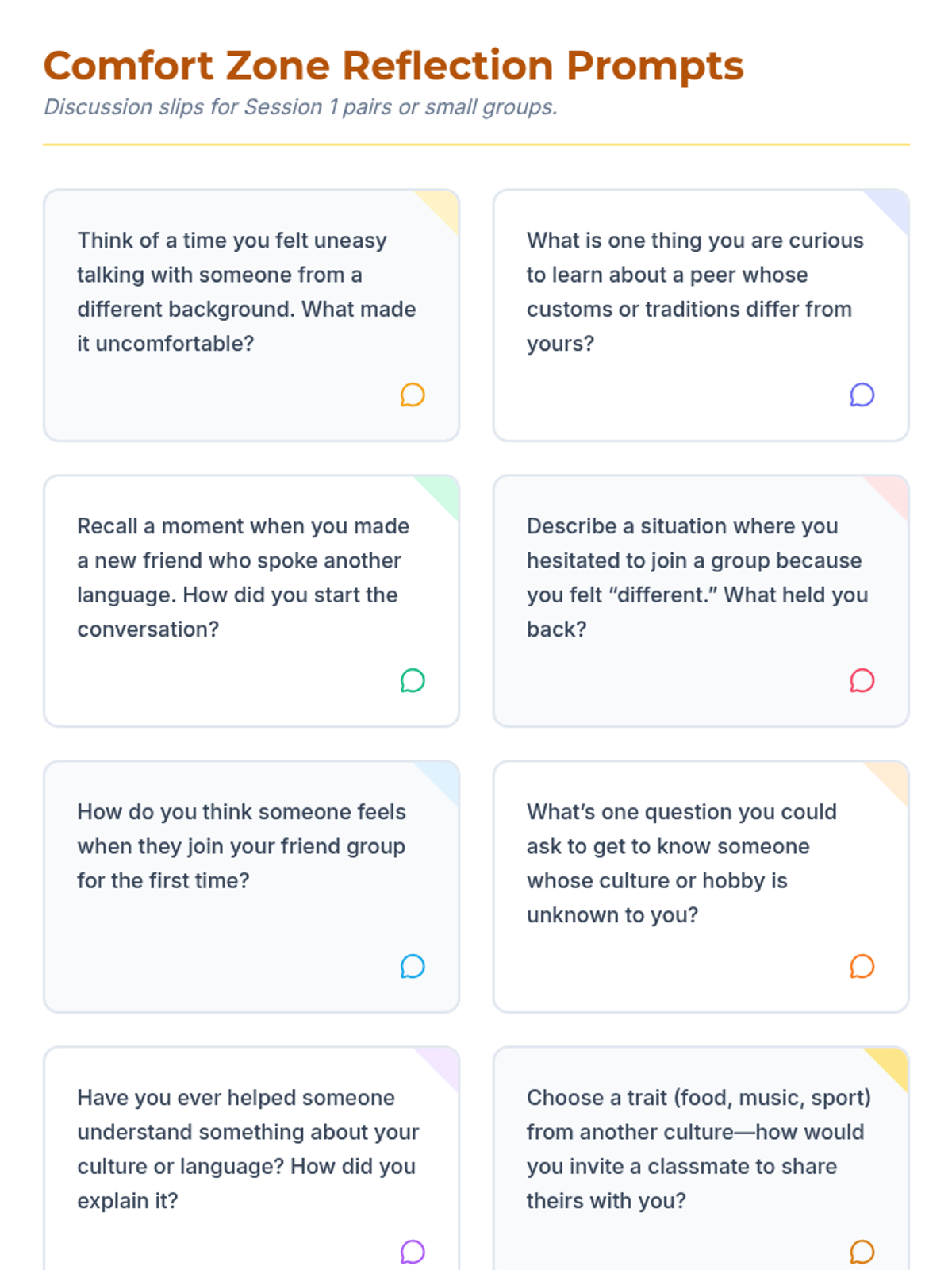
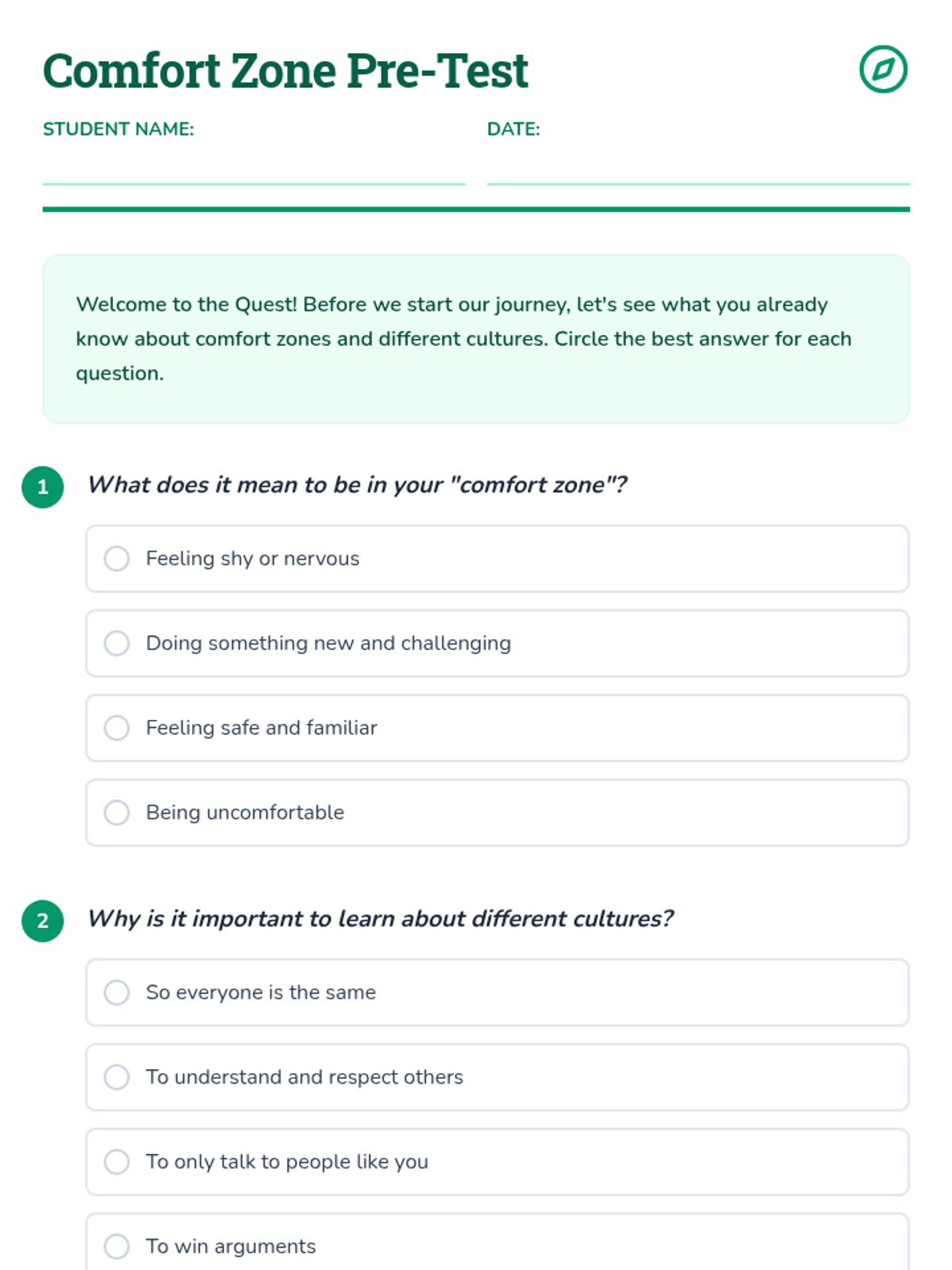
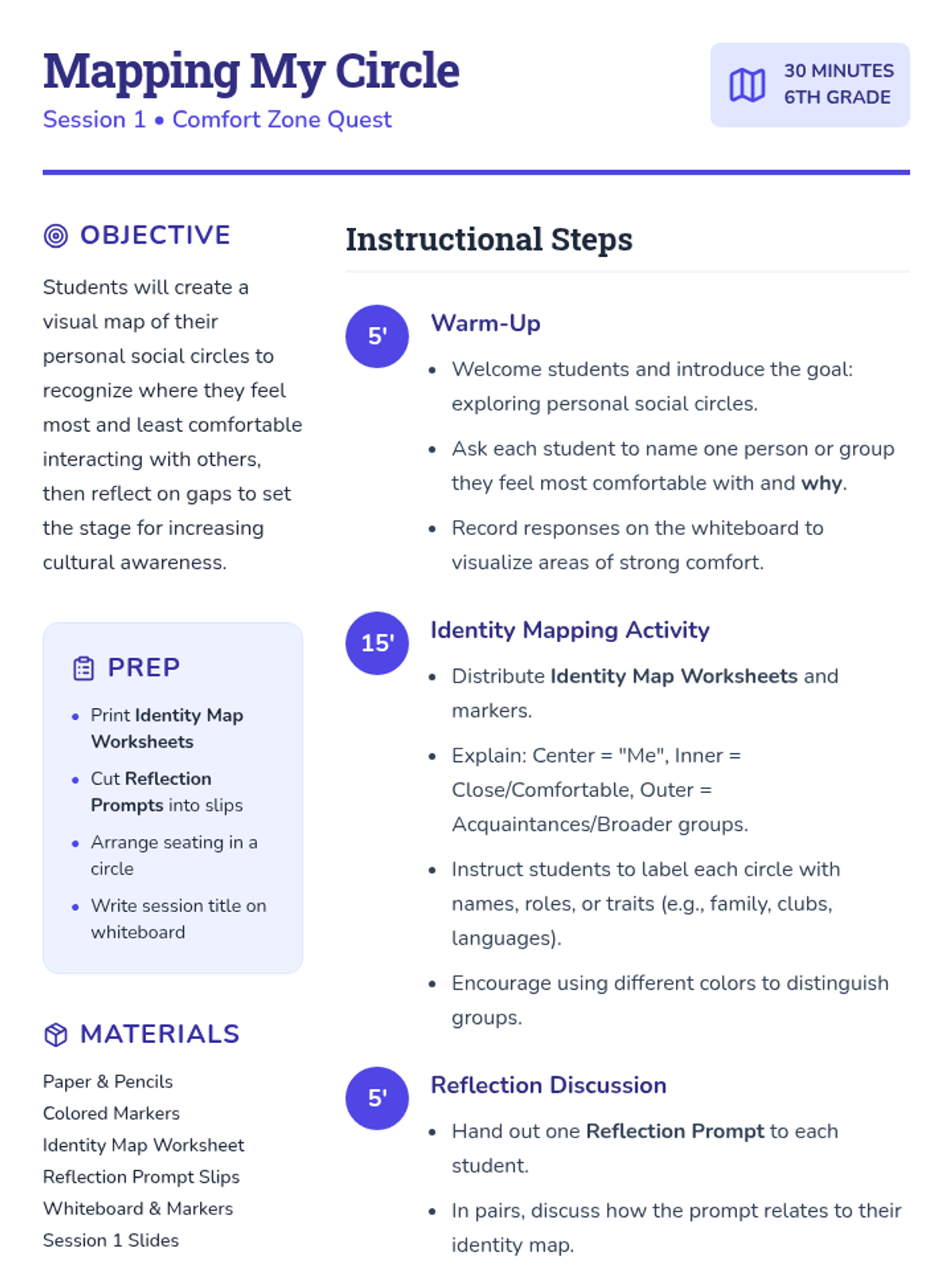
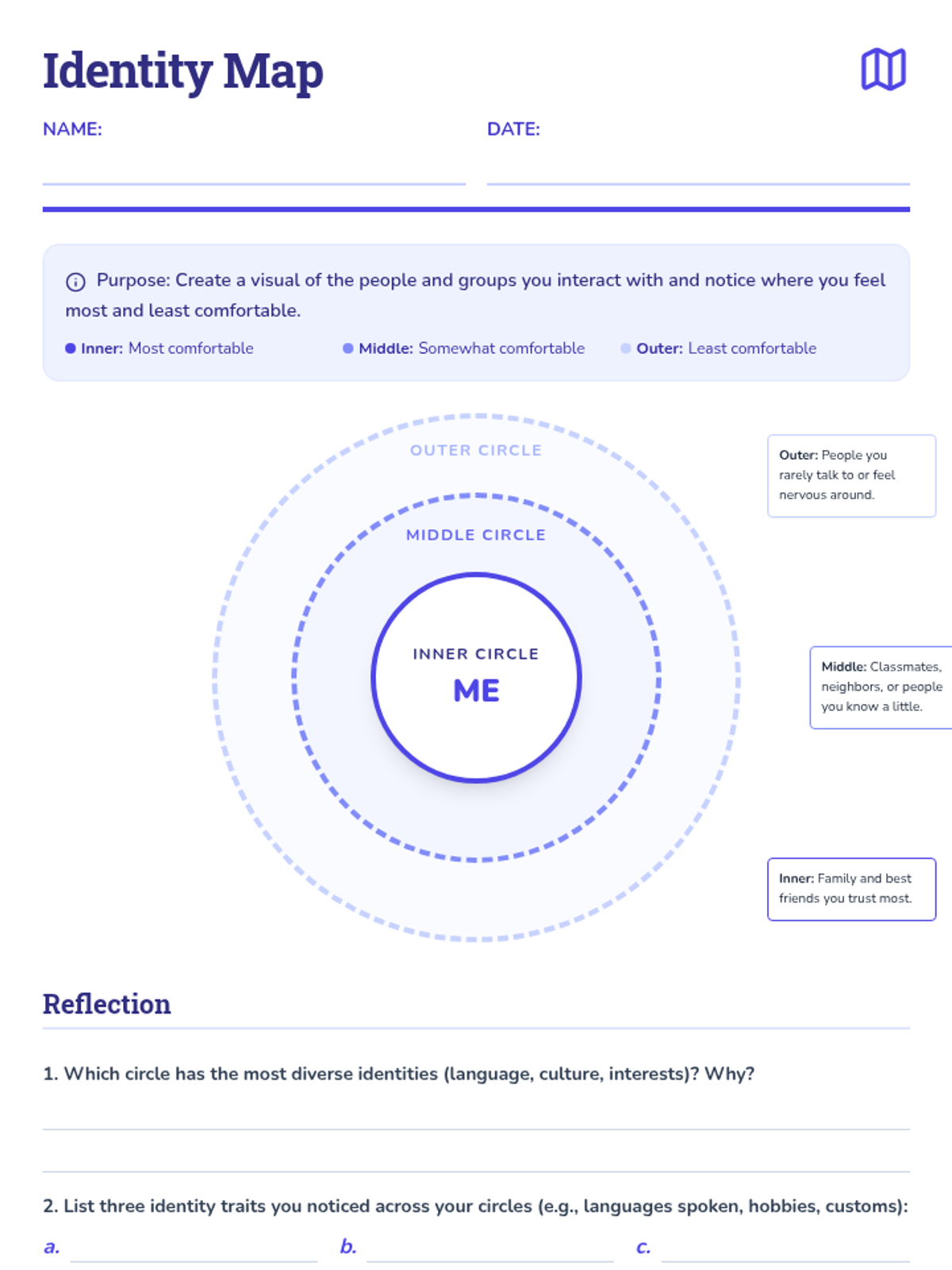
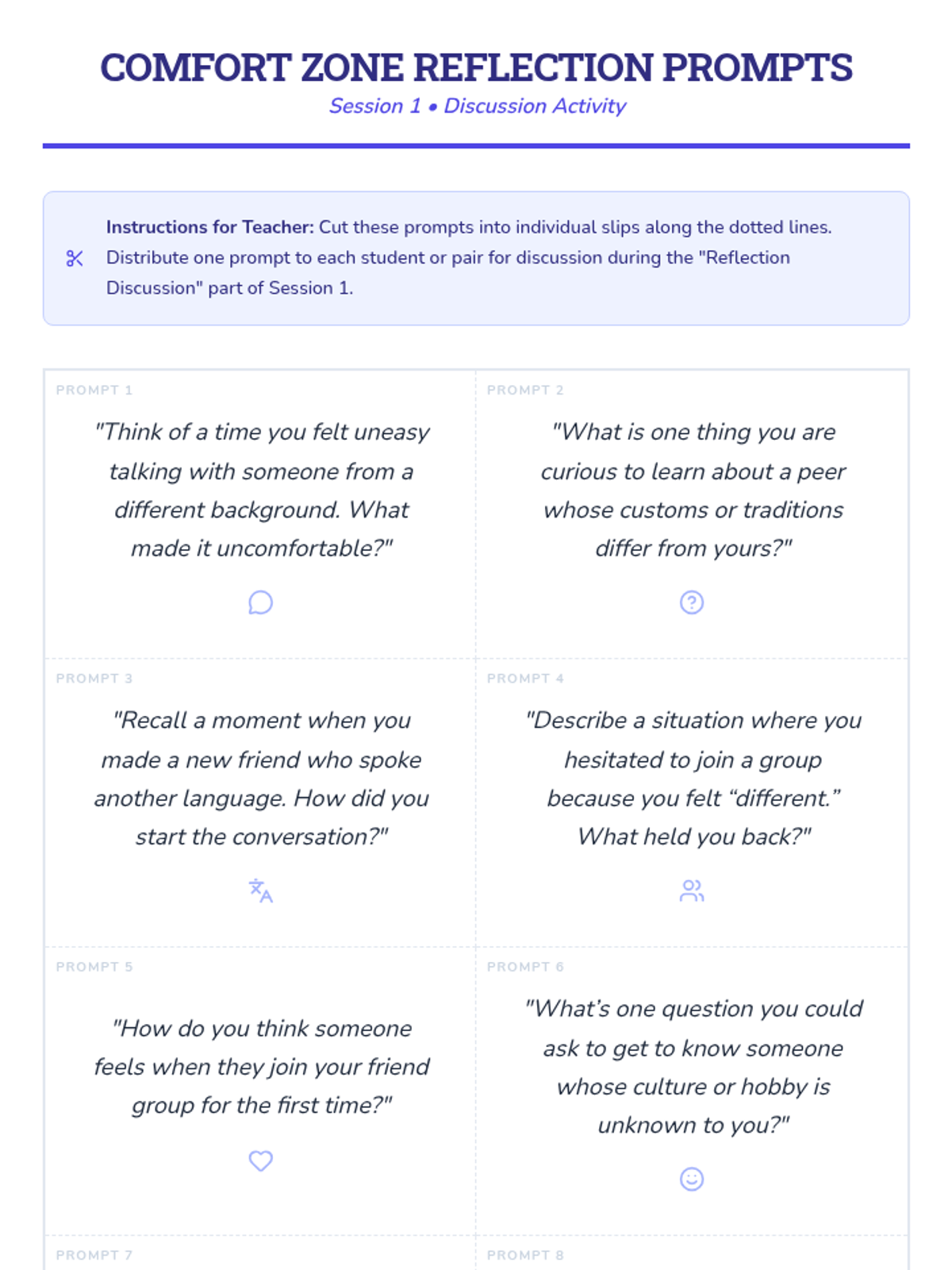
A six-session small-group unit for 6th grade emerging bilingual students to explore comfort levels, build empathy, and improve communication skills through collaborative activities. This sequence focuses on identity mapping, cultural traditions, and communication styles.
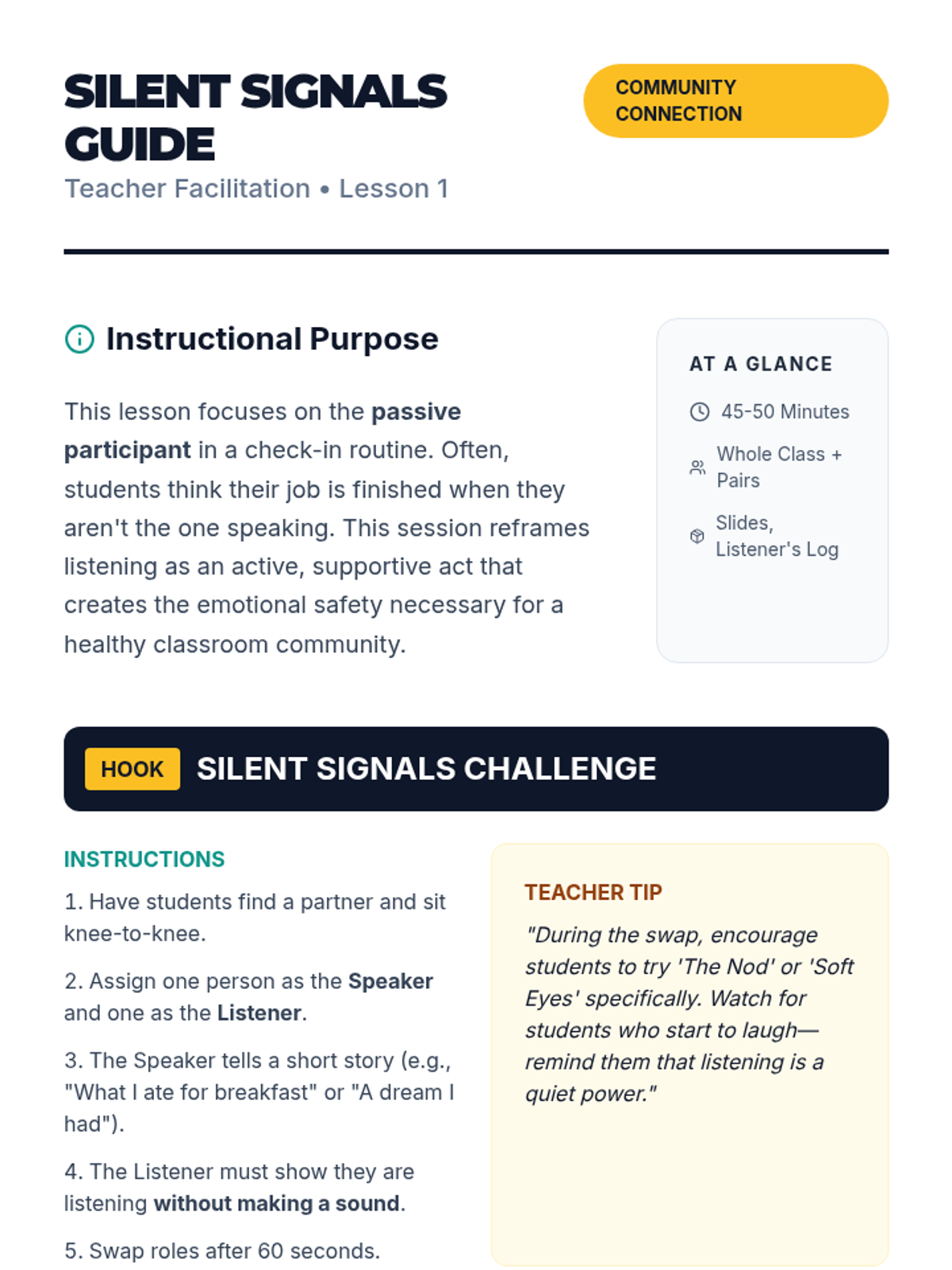
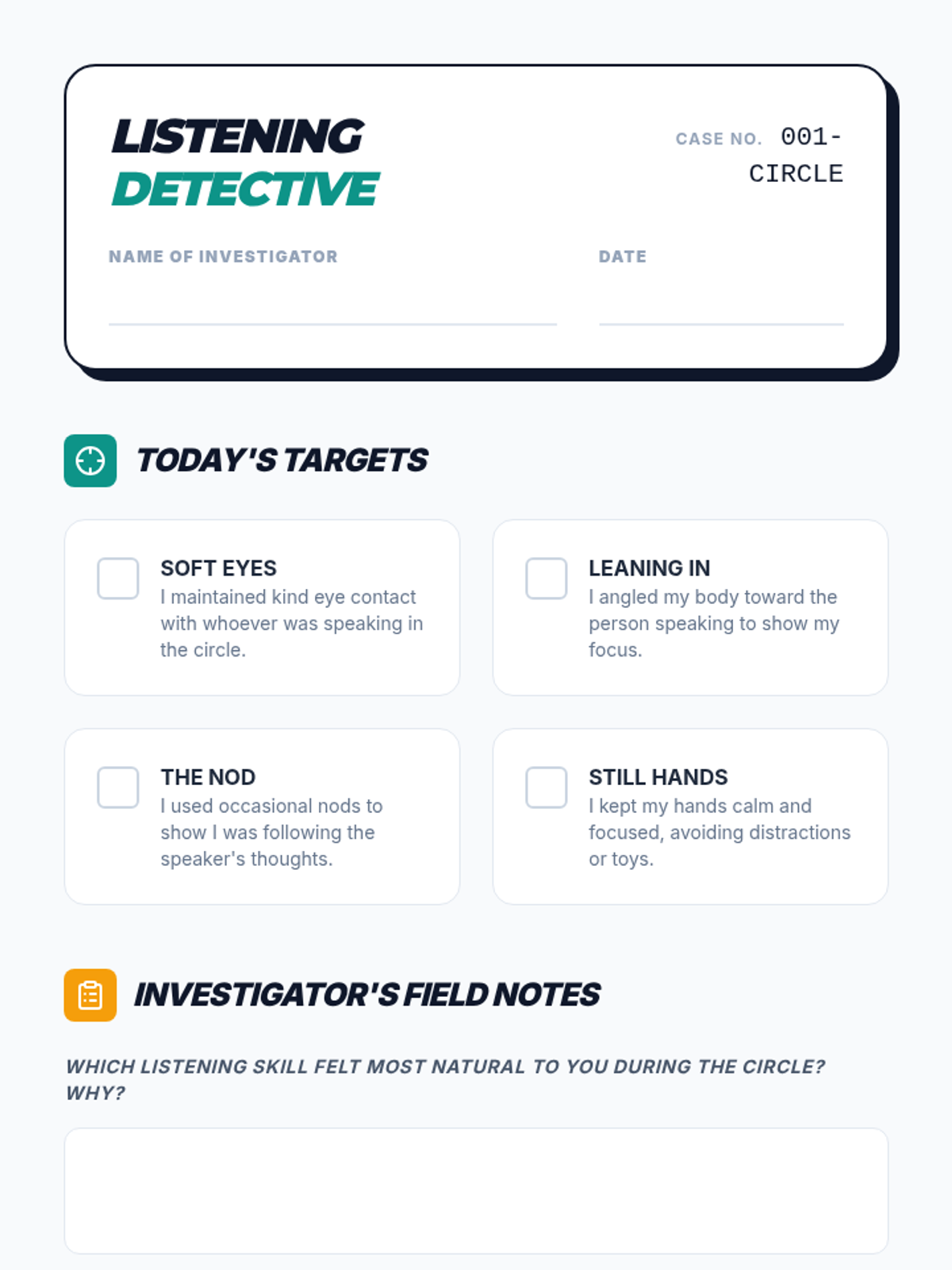
A 5th-grade sequence focused on building a supportive classroom community through daily check-in routines. Students learn active listening, empathy, healthy boundaries, collaborative problem-solving, and celebrating peer successes.
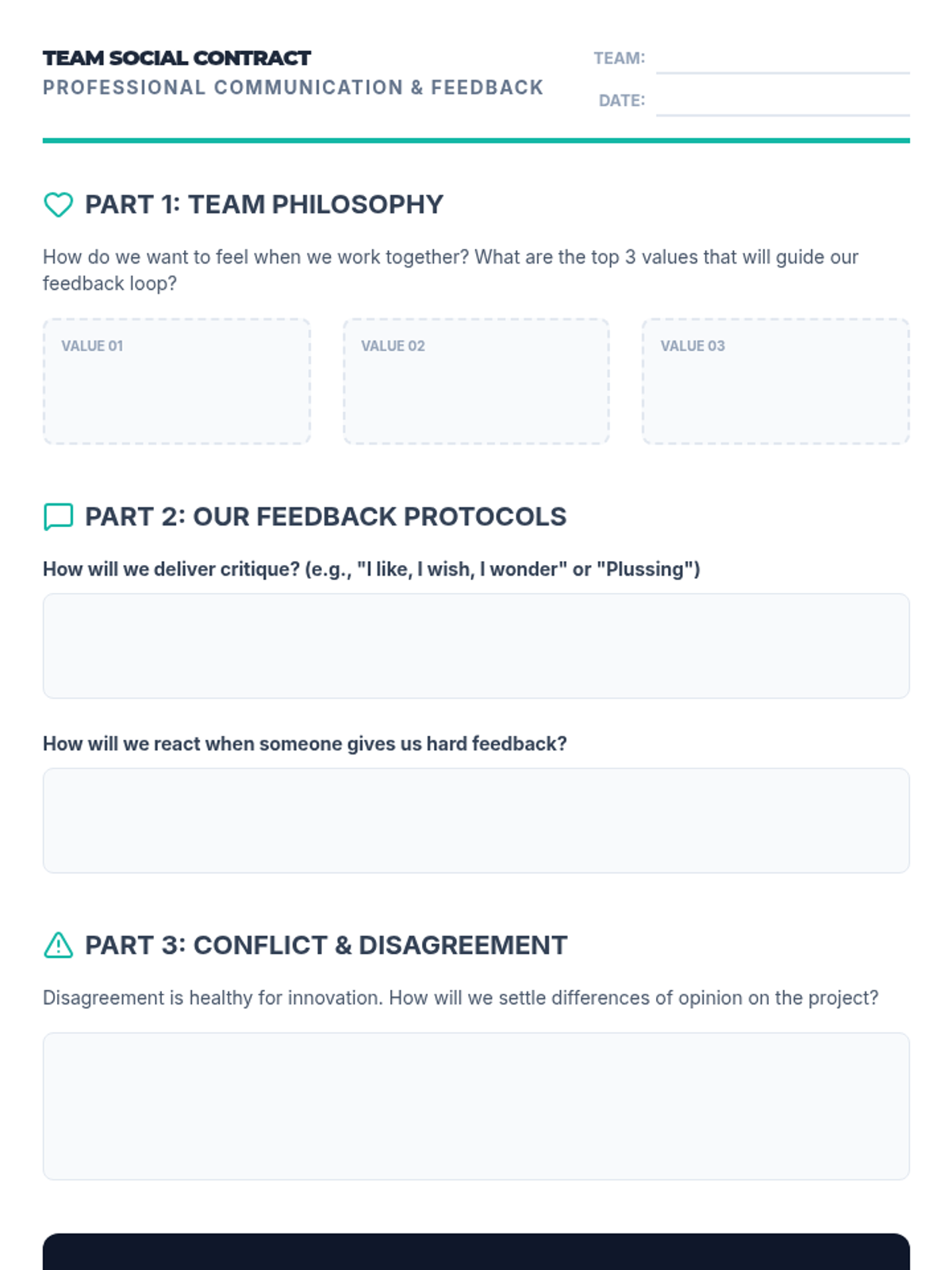
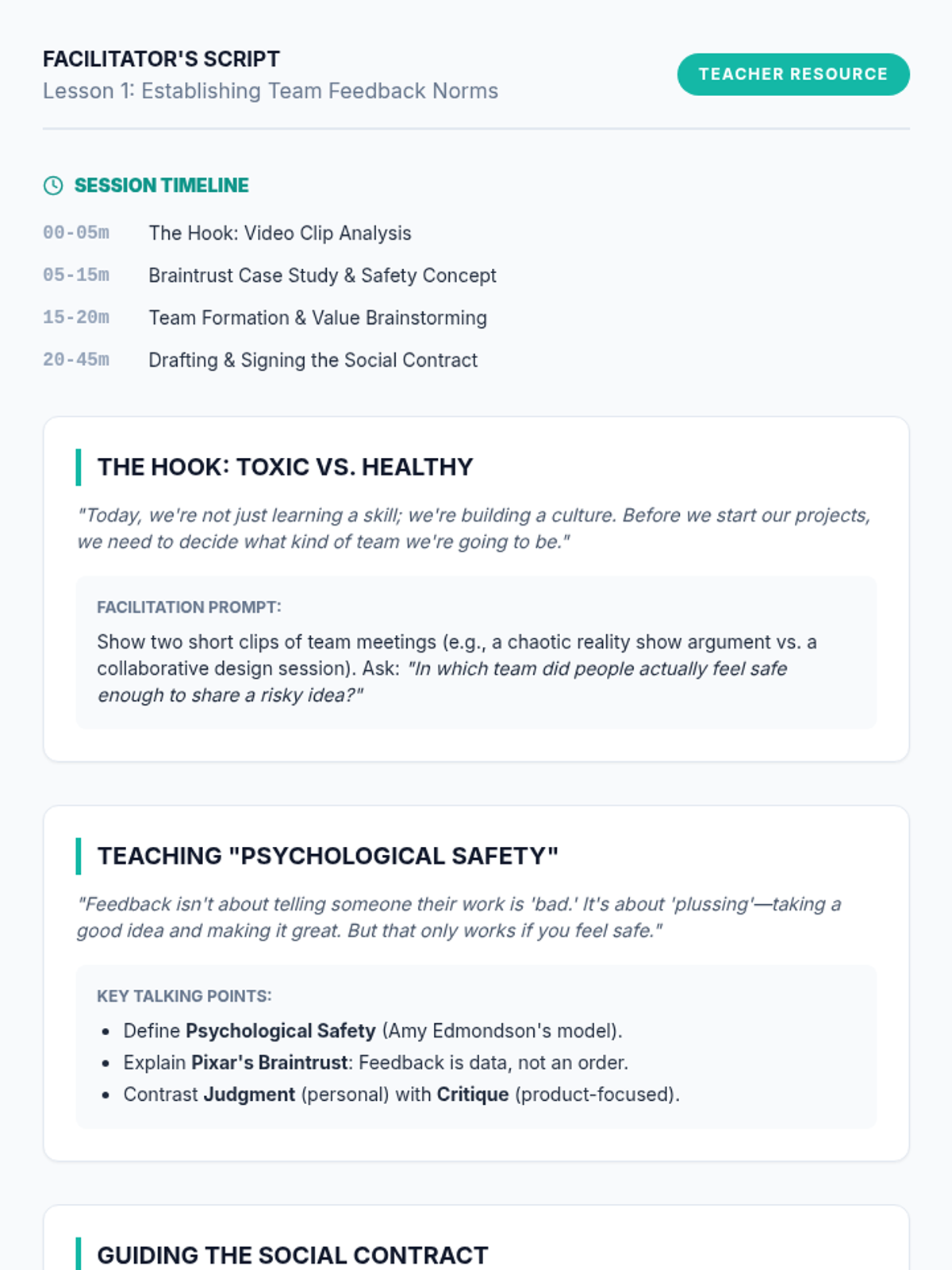
This project-based sequence teaches students the iterative cycle of constructive feedback within a collaborative design environment. Students develop social contracts, engage in rapid prototyping, observe fishbowl critiques, and document their growth through change logs and retrospectives.
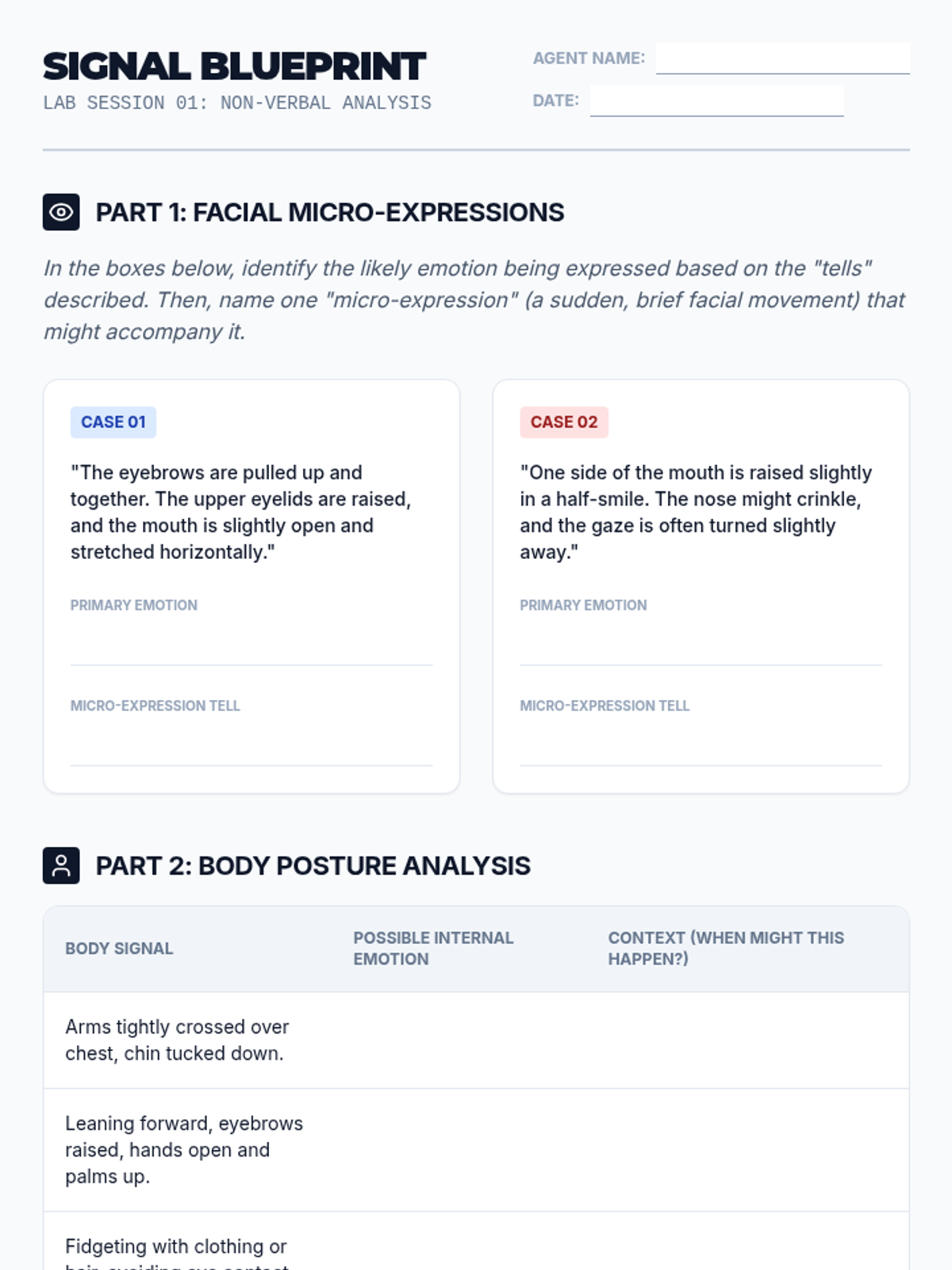
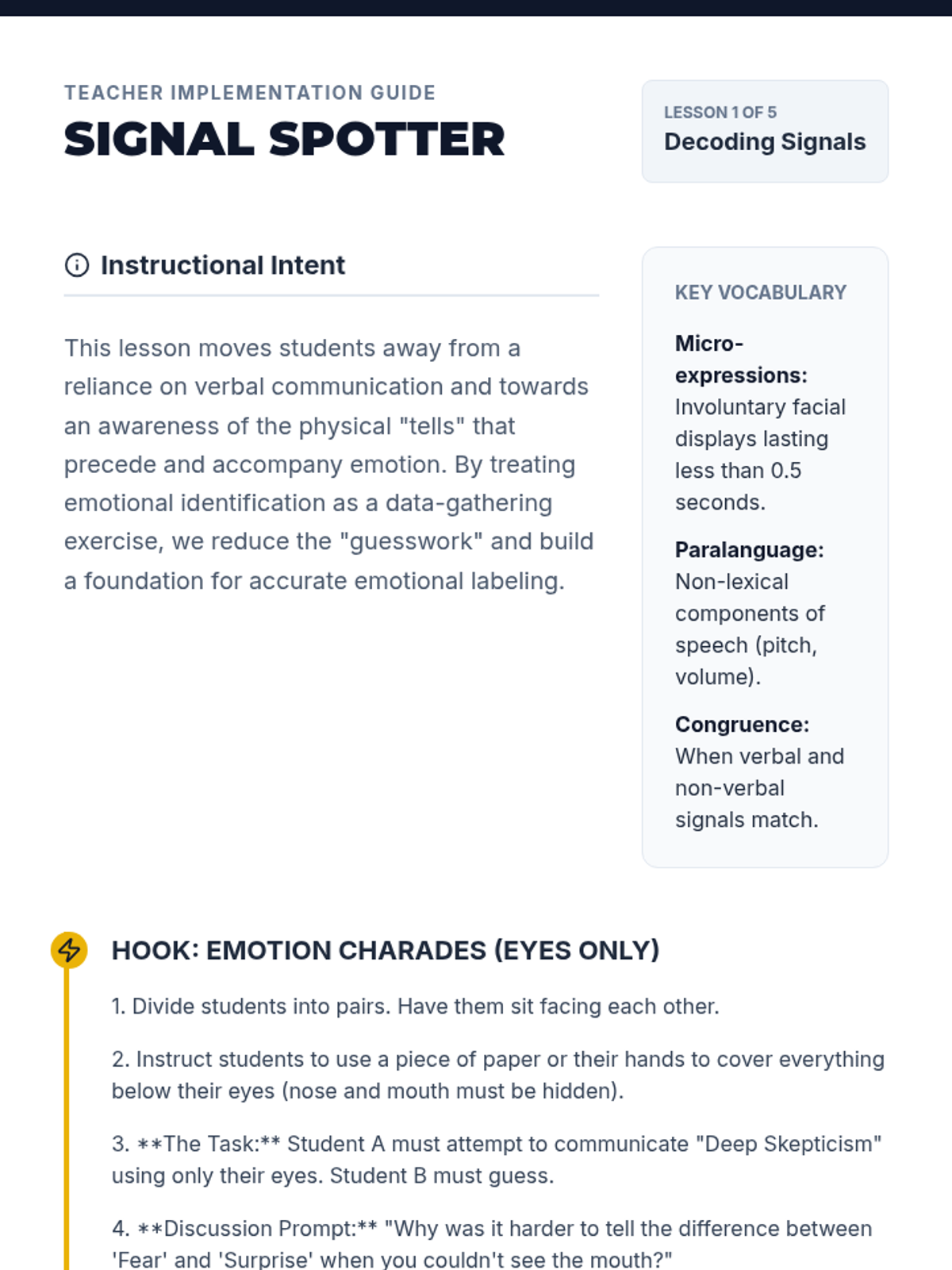
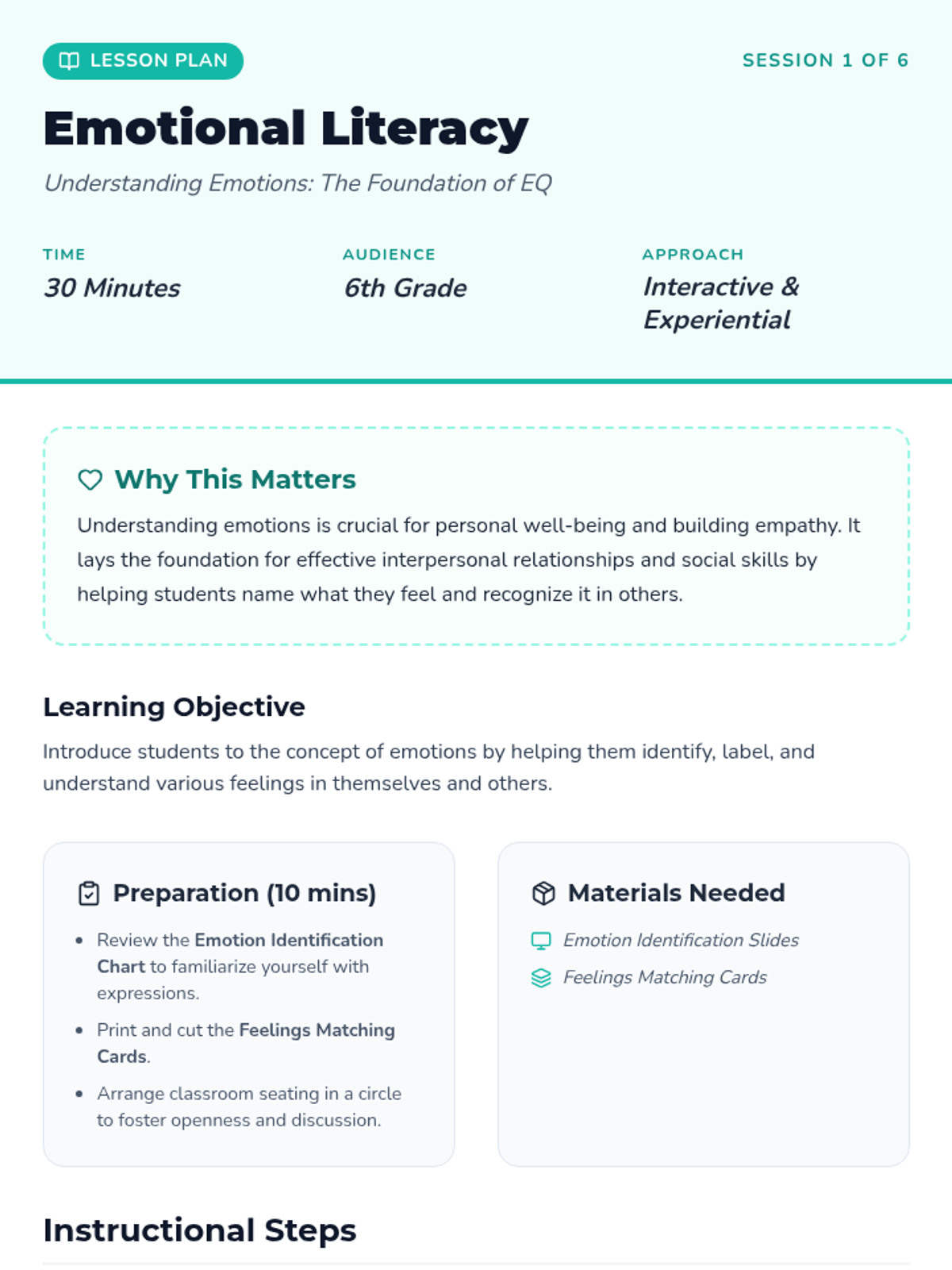
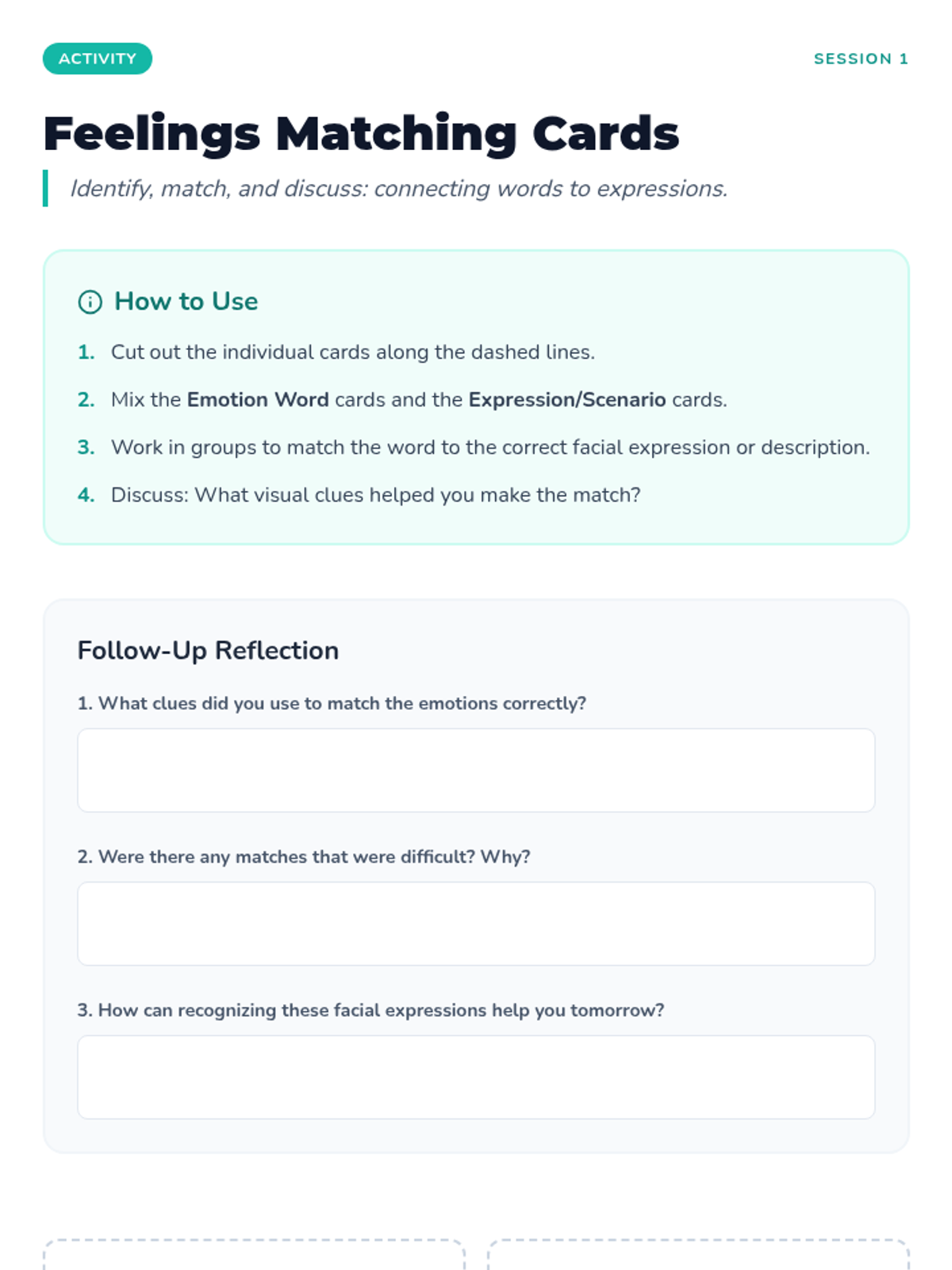
This sequence explores how accurately labeling emotions in oneself and others improves social connections and conflict resolution. Students will advance from identifying non-verbal cues to applying complex emotional literacy in real-world simulations.
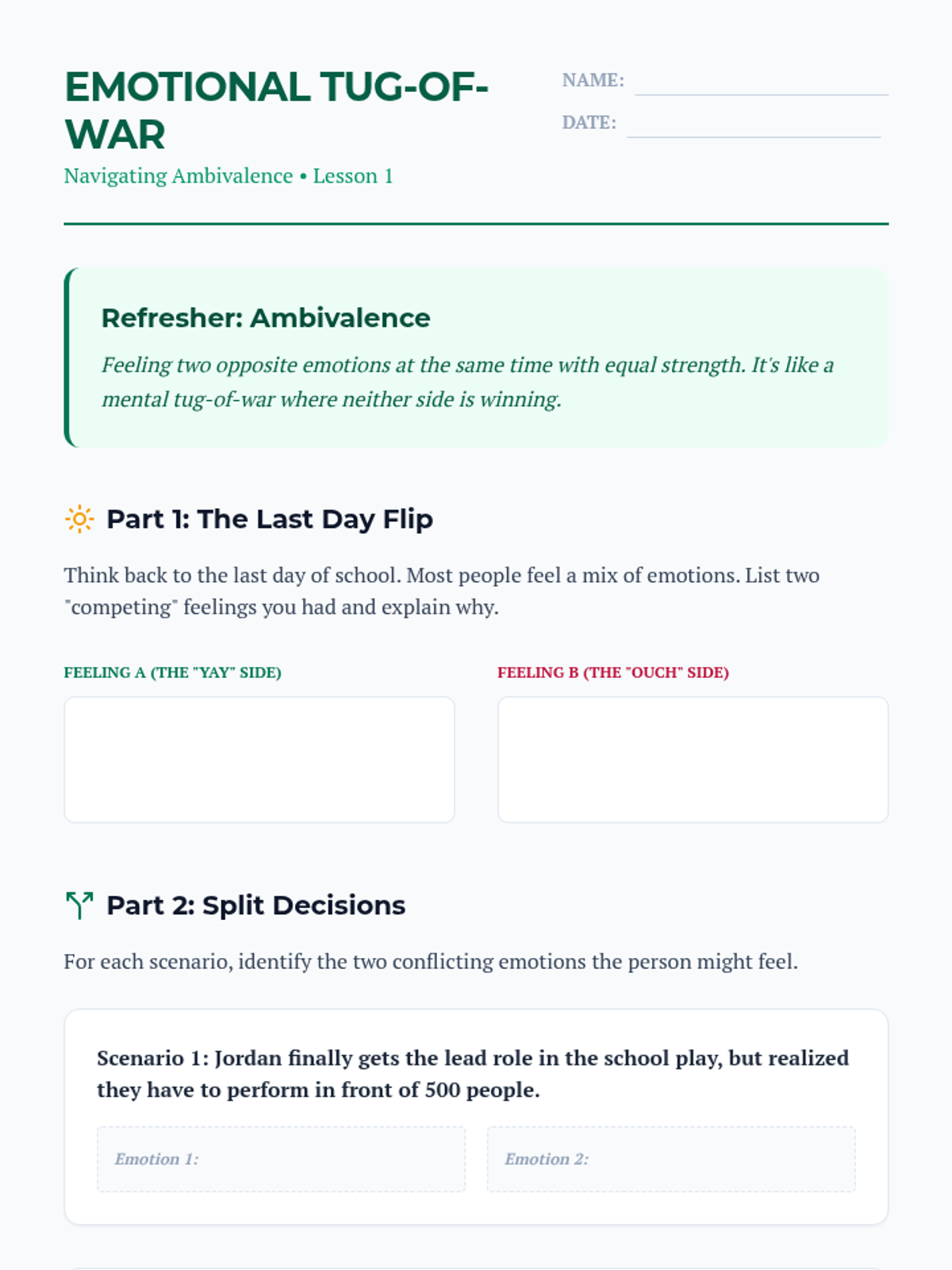
This sequence guides 6th-grade students through the complexity of mixed emotions, focusing on ambivalence, nostalgia, social conflict, and emotional mapping to help them navigate the transition into early adolescence.
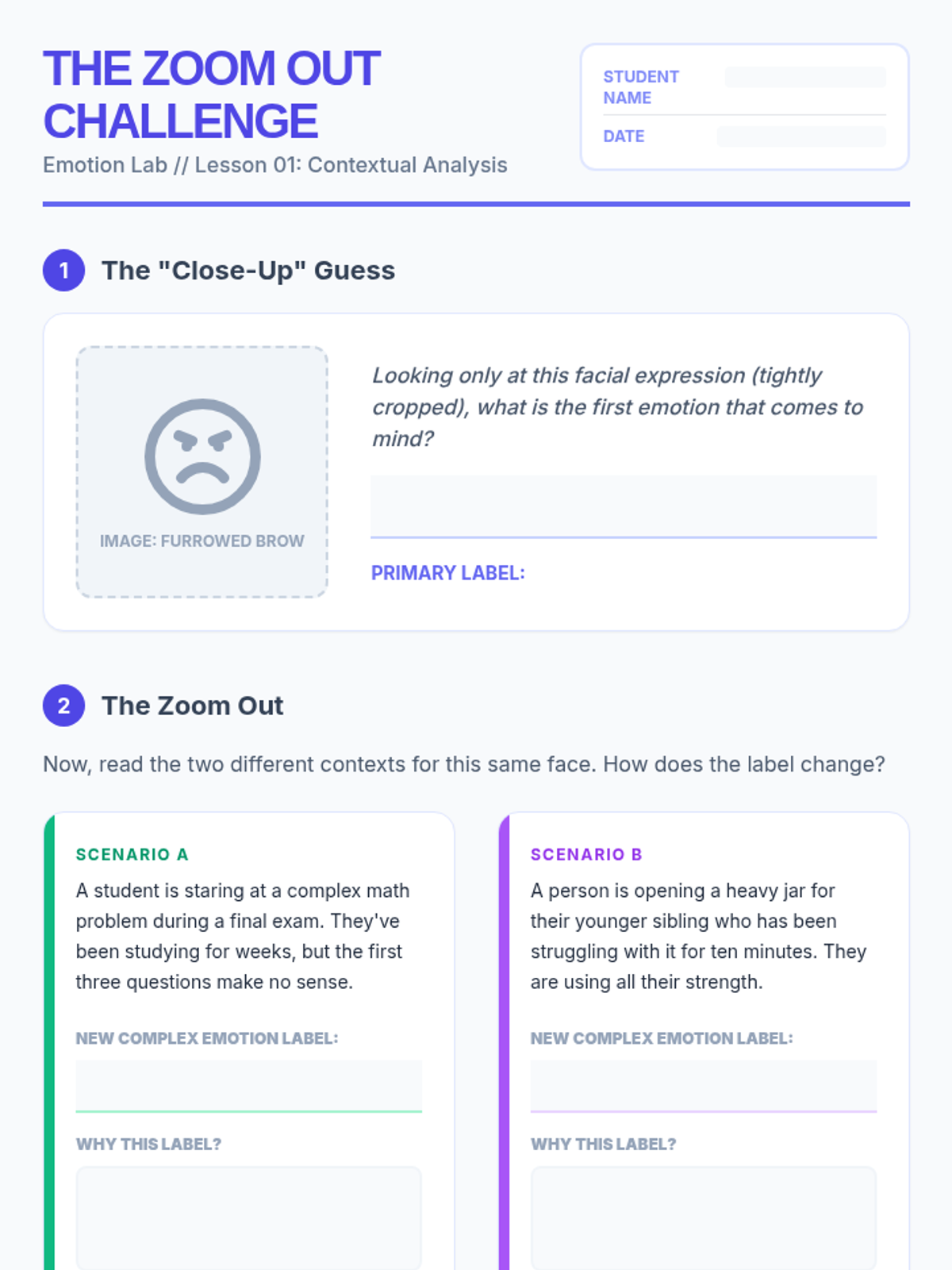
A project-based unit exploring how context and digital platforms influence emotional expression and interpretation. Students learn to label complex emotions in media and online interactions, culminating in a peer-to-peer digital empathy guide.
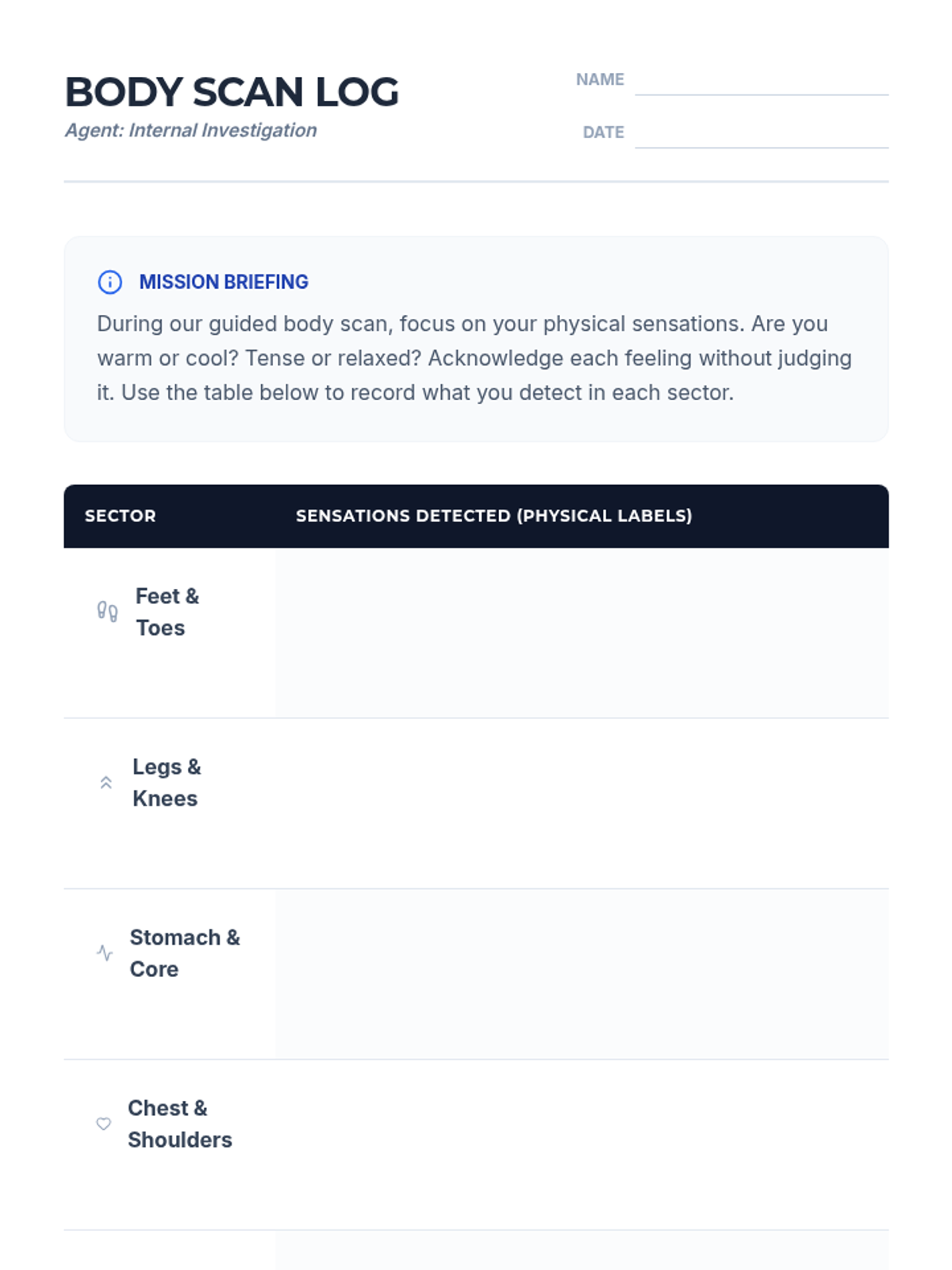
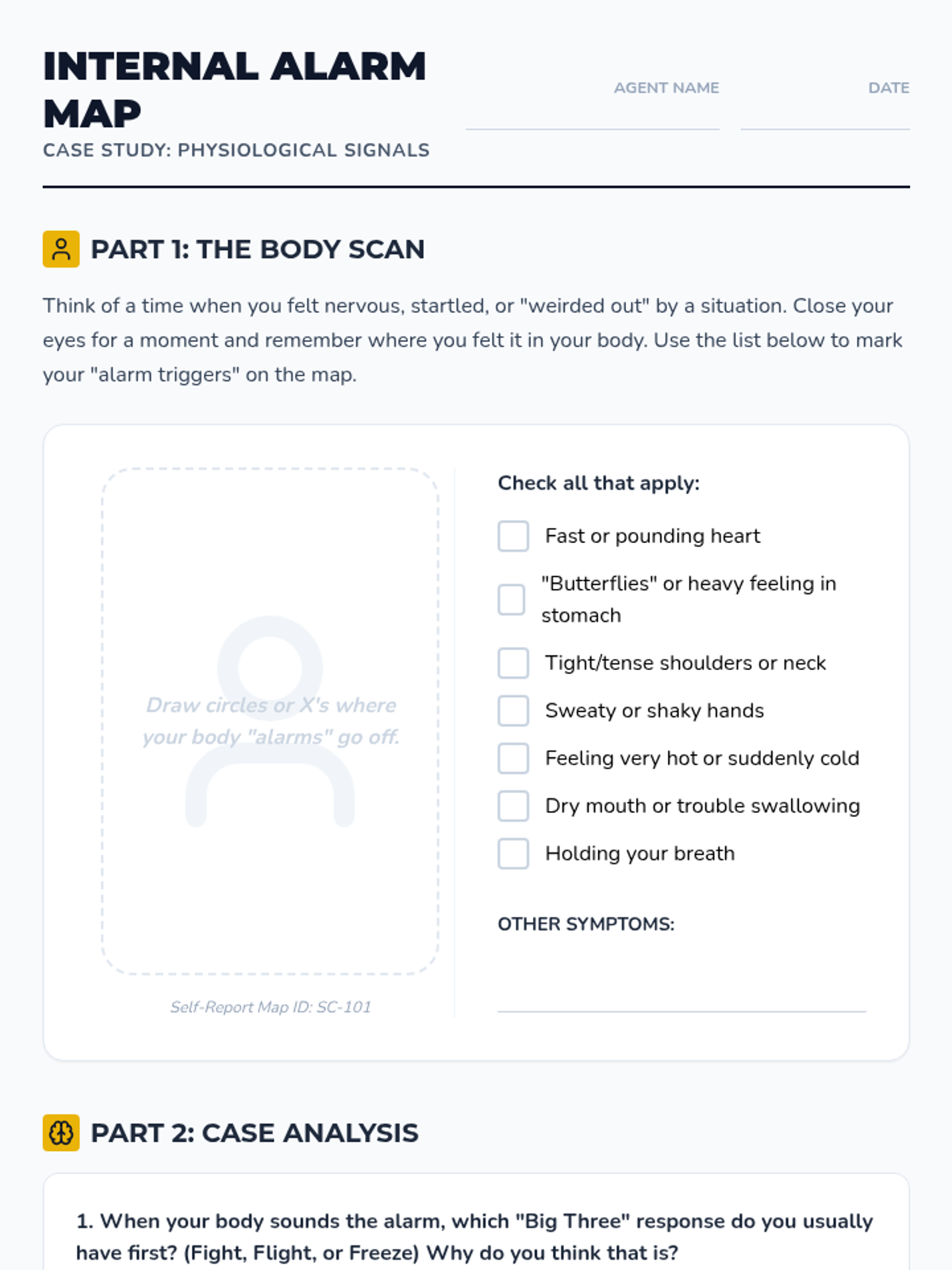
This sequence explores the somatic connection to emotions, helping 6th-grade students identify complex feelings by recognizing physiological signals. Students will learn the concept of interoception, map stress responses, differentiate between similar physical sensations, and create a personal somatic dictionary for self-regulation.
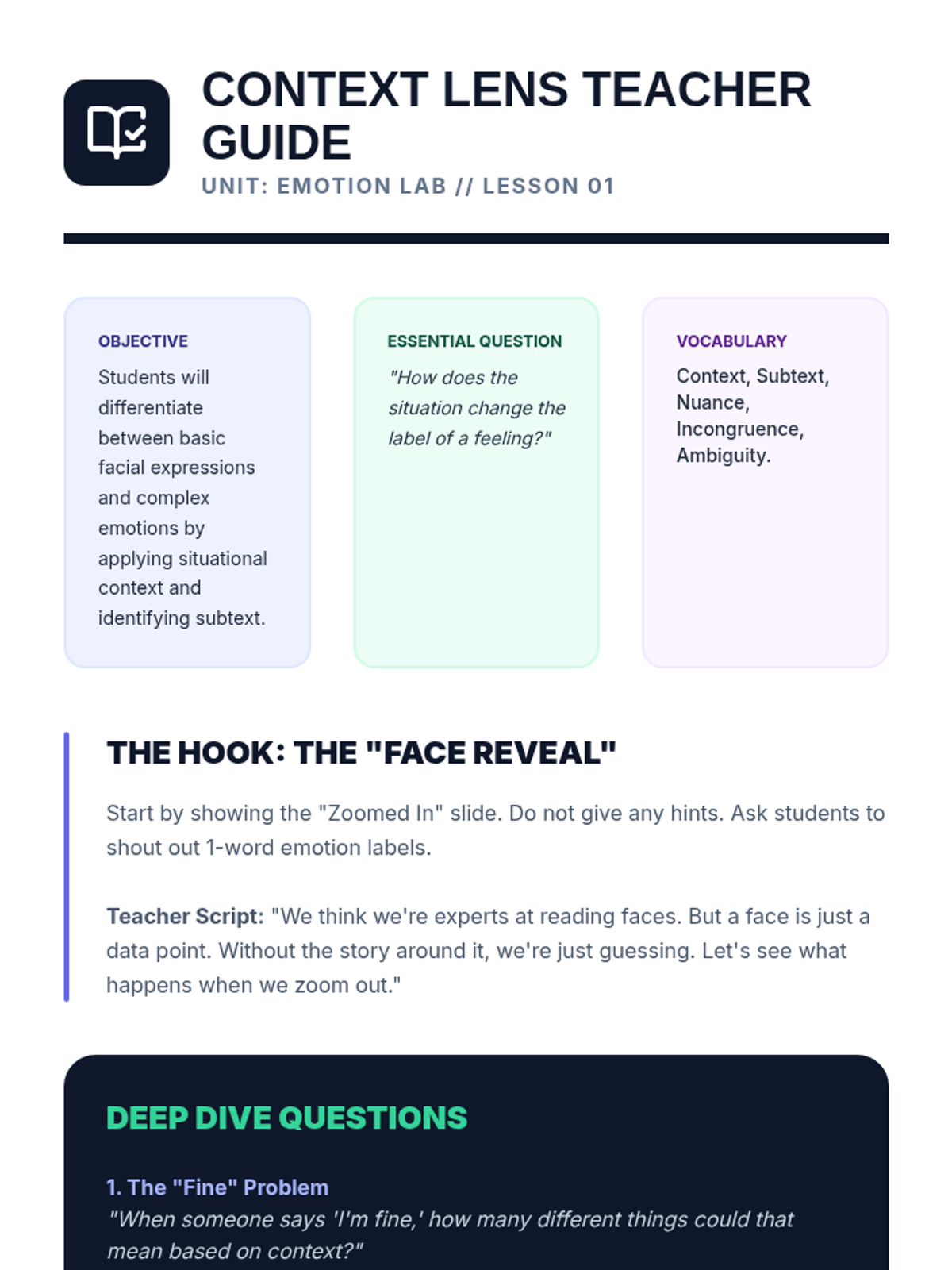
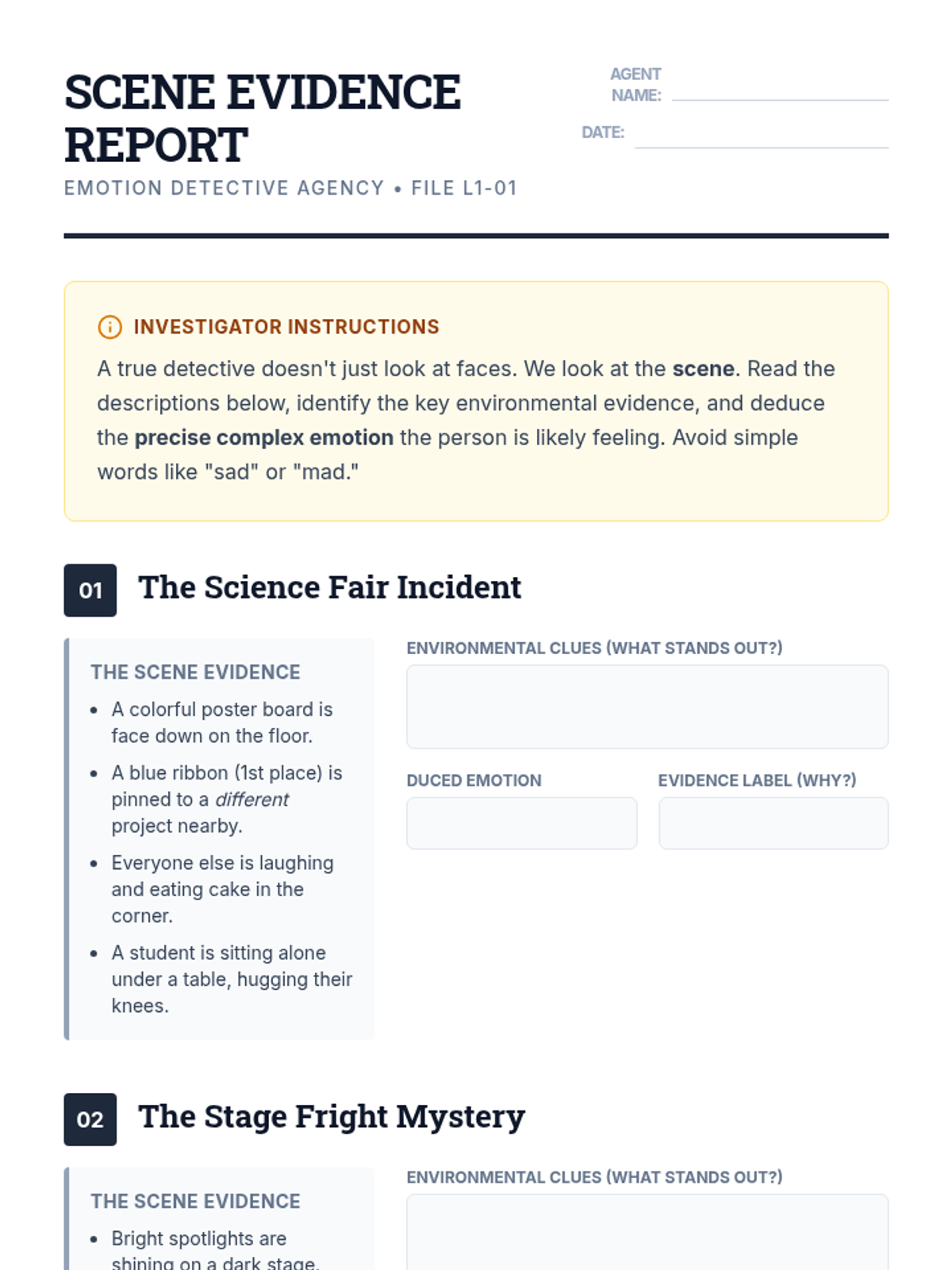
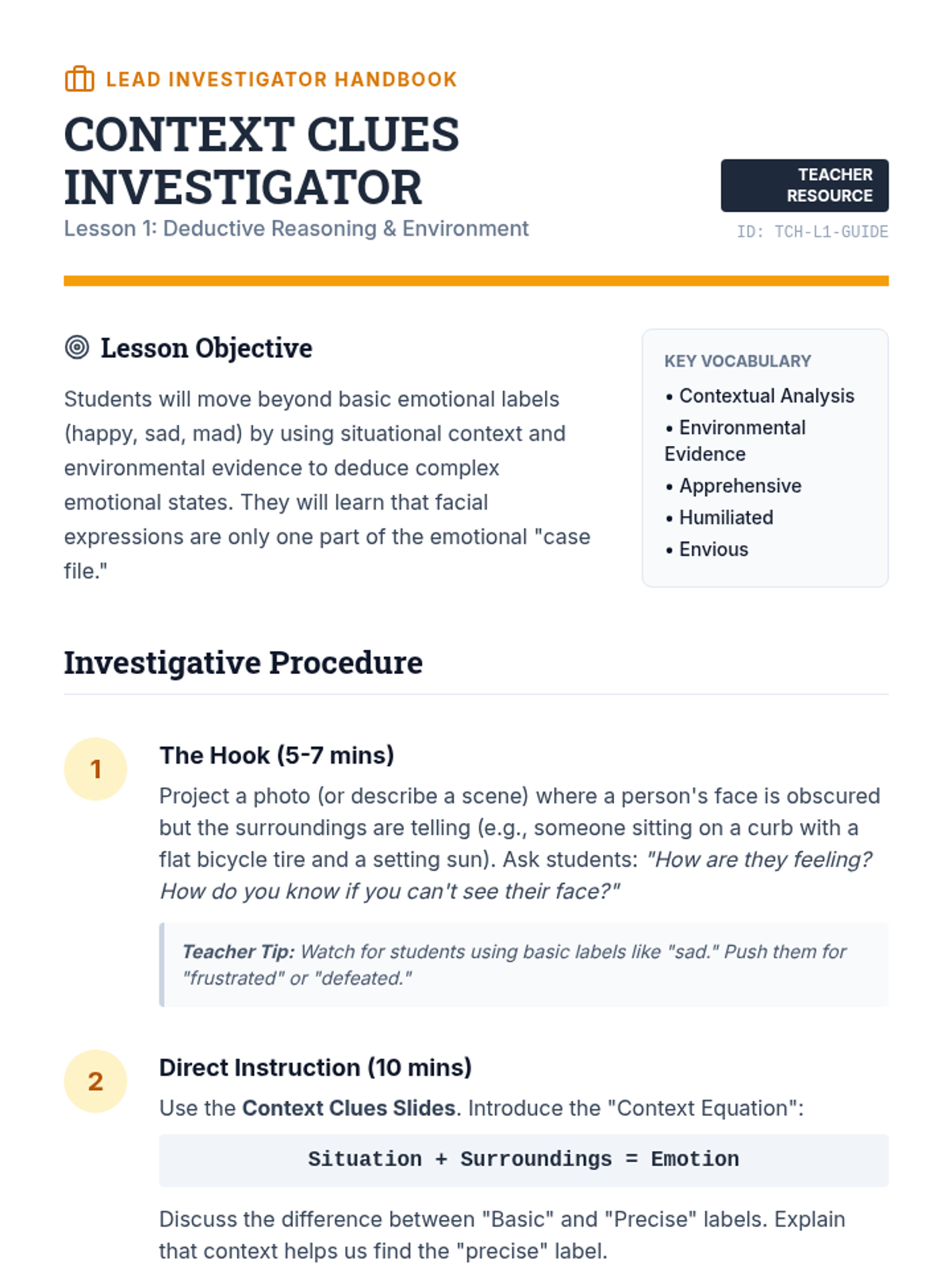
A 5th-grade social-emotional learning unit that transforms students into 'Emotion Detectives.' Students learn to use external context, tone of voice, and body language to accurately identify complex emotions, moving beyond basic labels like 'happy' or 'sad'.
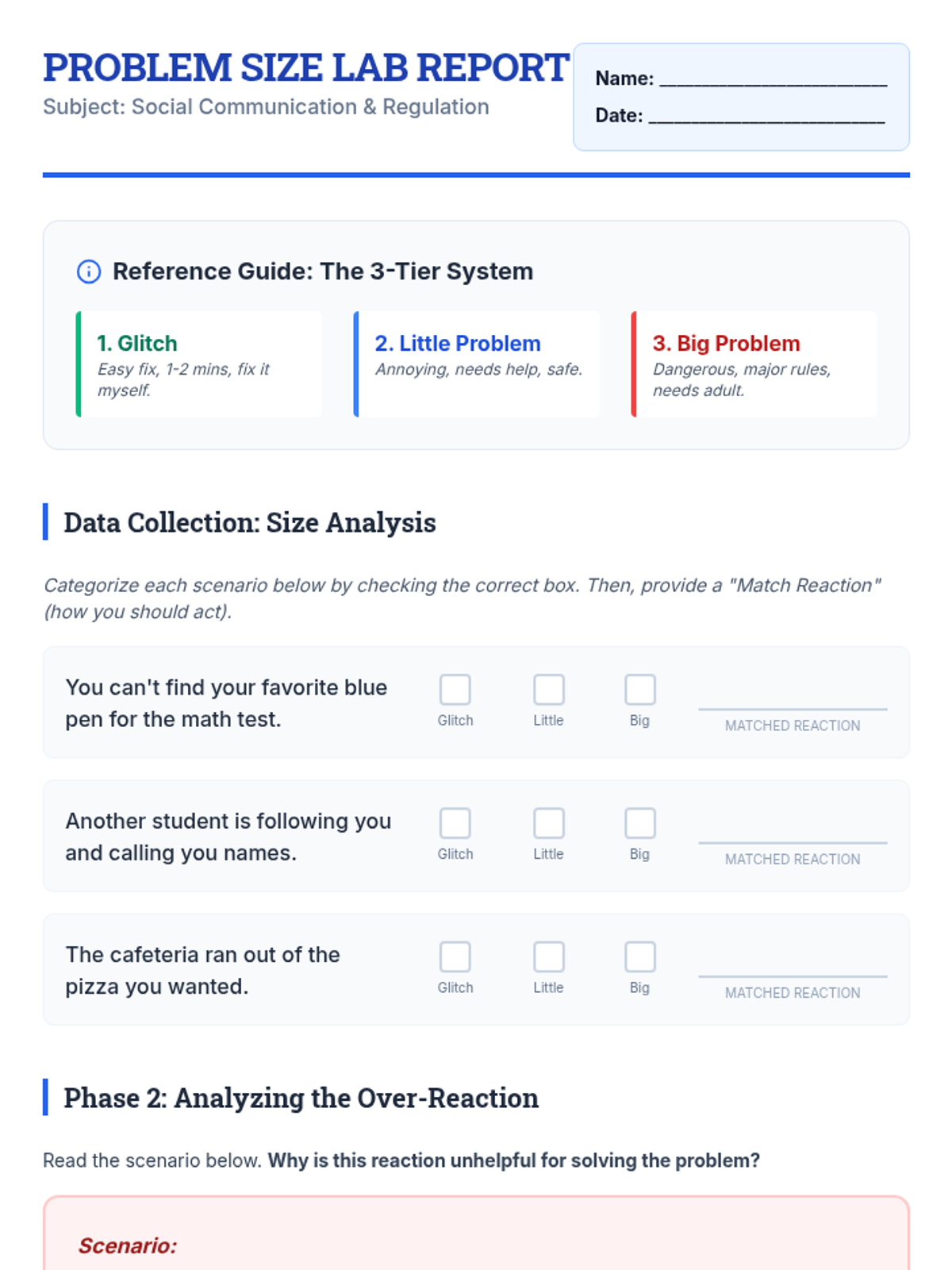
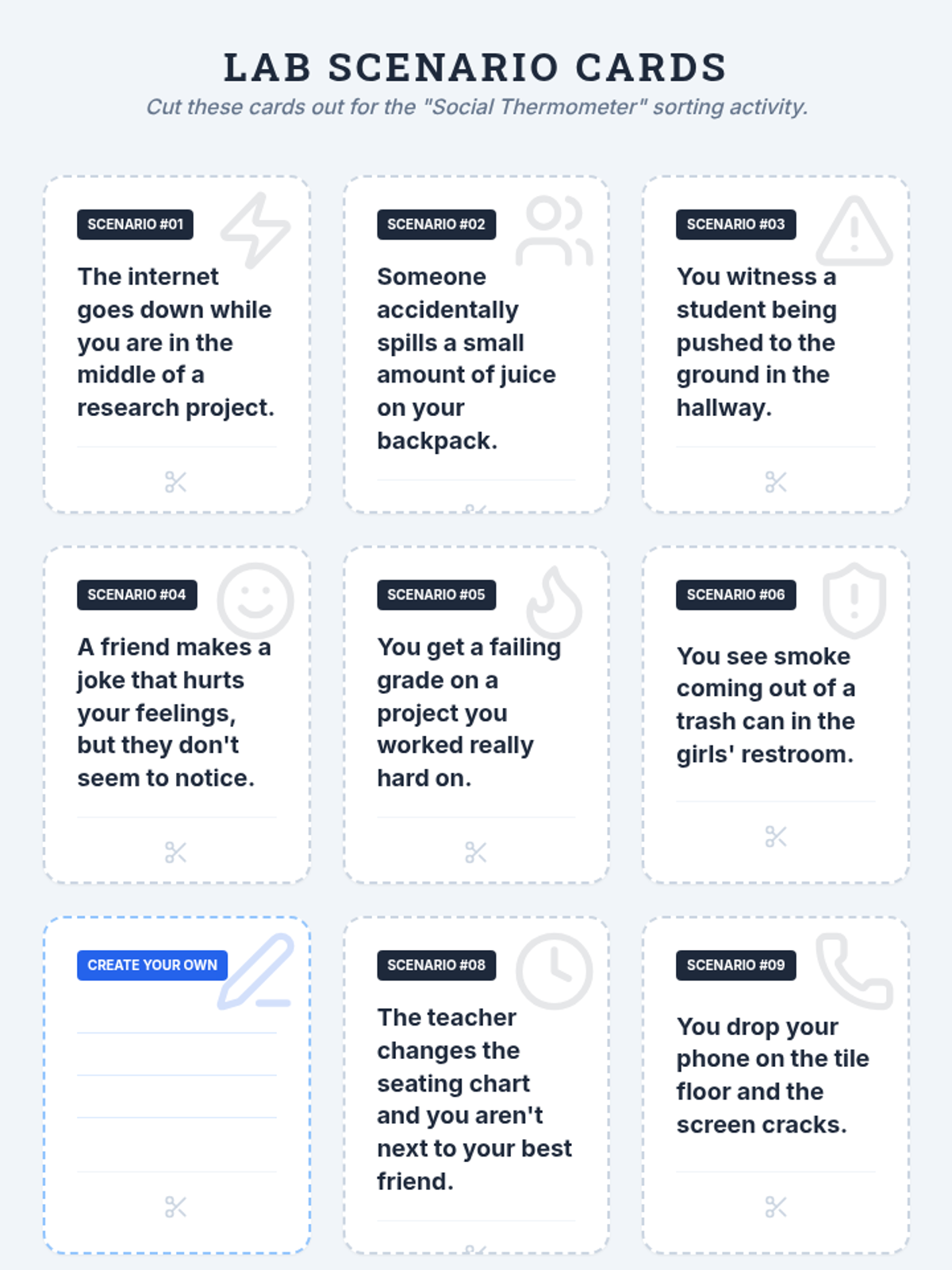
A comprehensive 5-lesson unit for 7th grade students focusing on social problem-solving. This sequence guides students from identifying the size of a conflict to objectively defining facts, brainstorming diverse solutions, and selecting the most assertive and effective response.
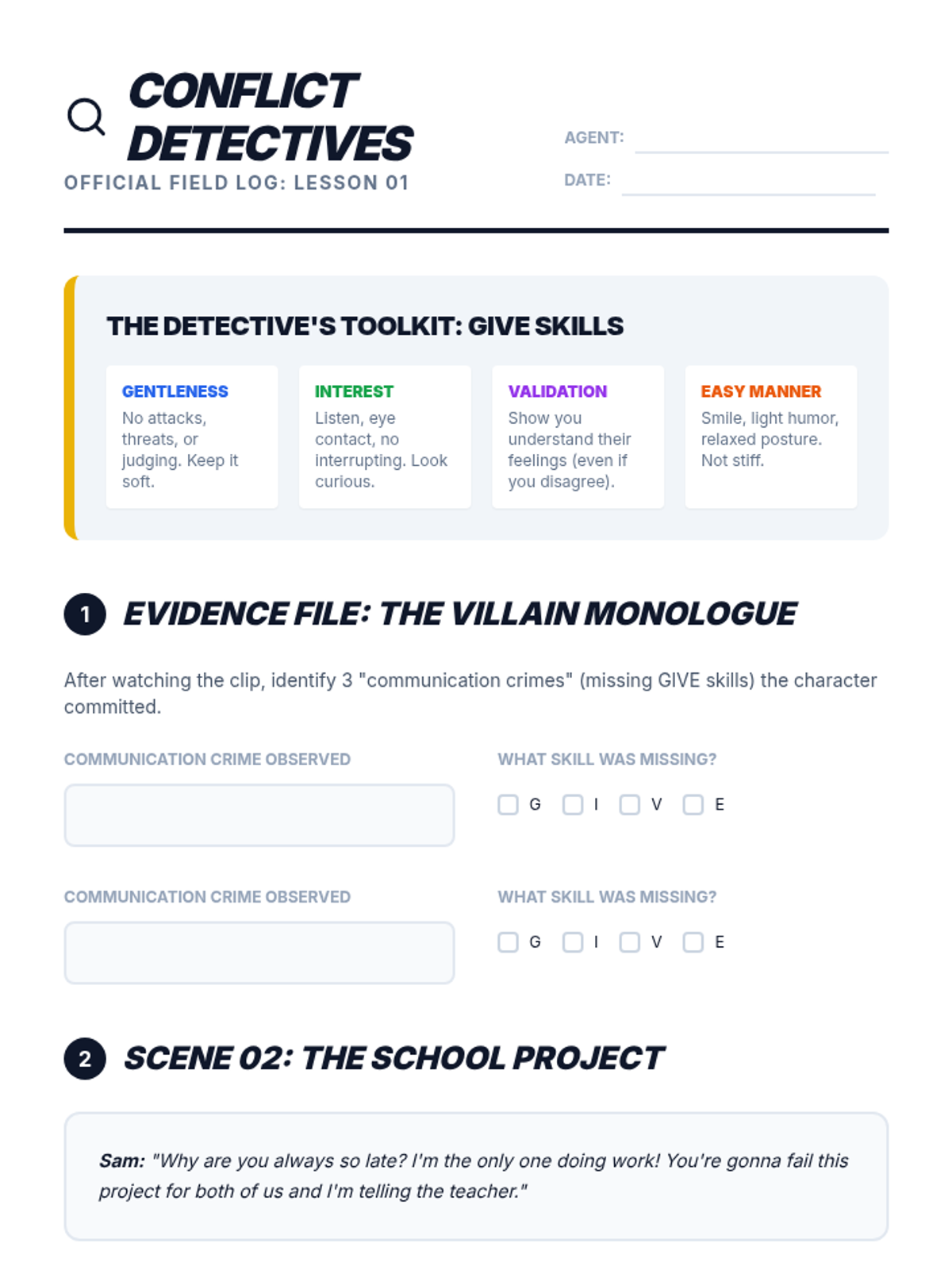
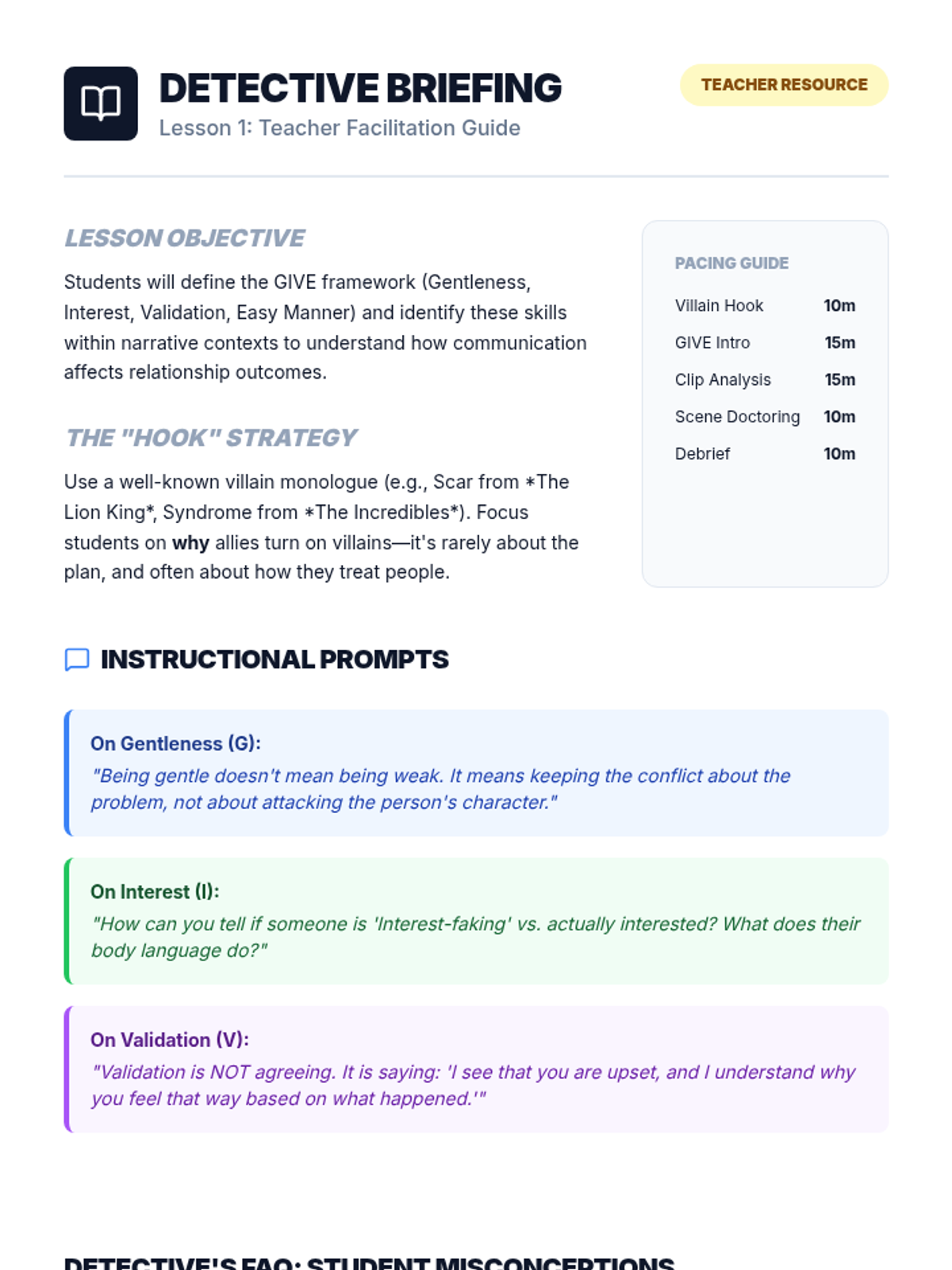
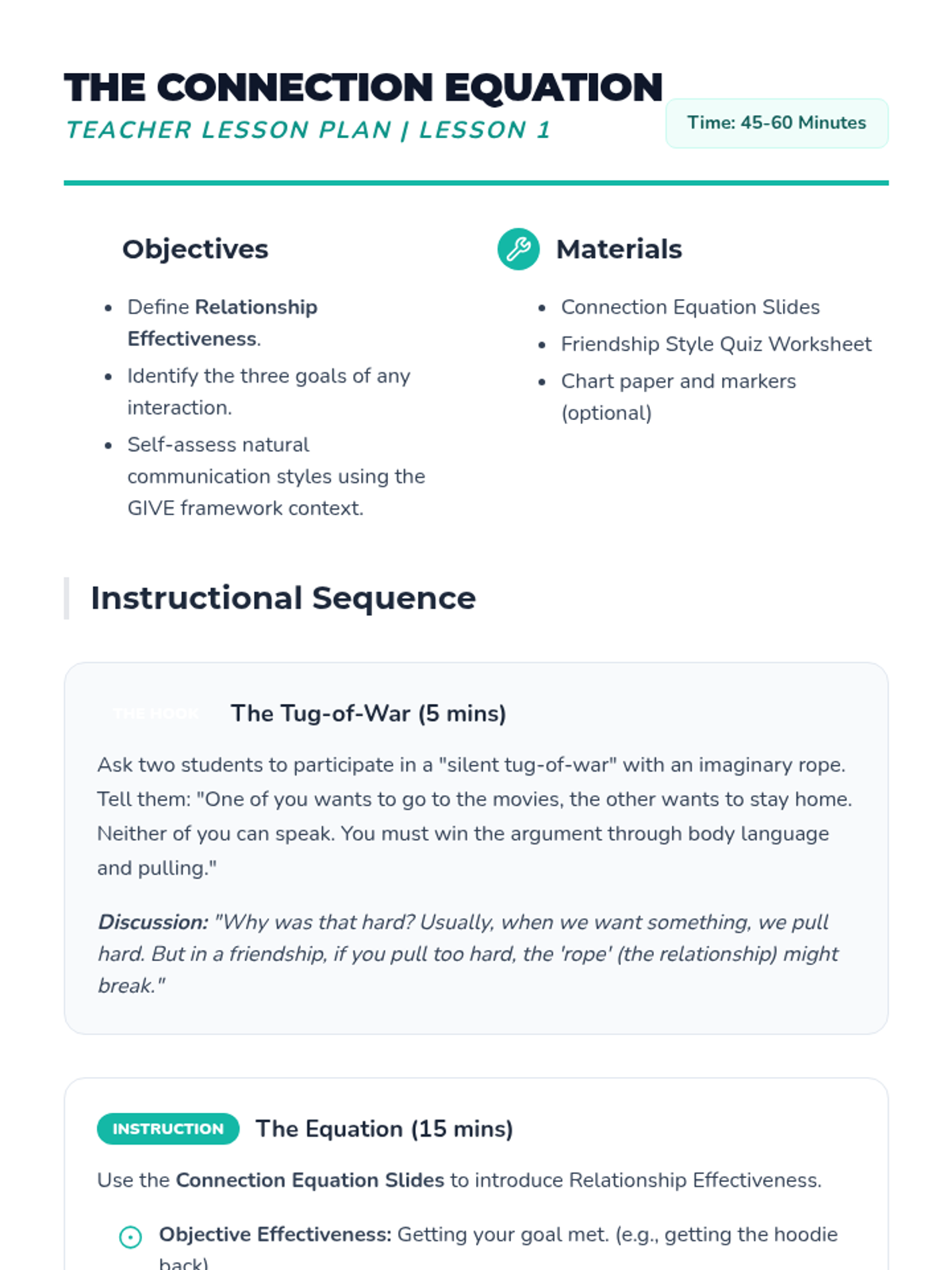
A 6th-grade sequence where students act as 'Communication Detectives' to analyze and apply DBT GIVE skills (Gentleness, Interest, Validation, Easy manner) within literature, history, and film to understand how communication shapes outcomes.
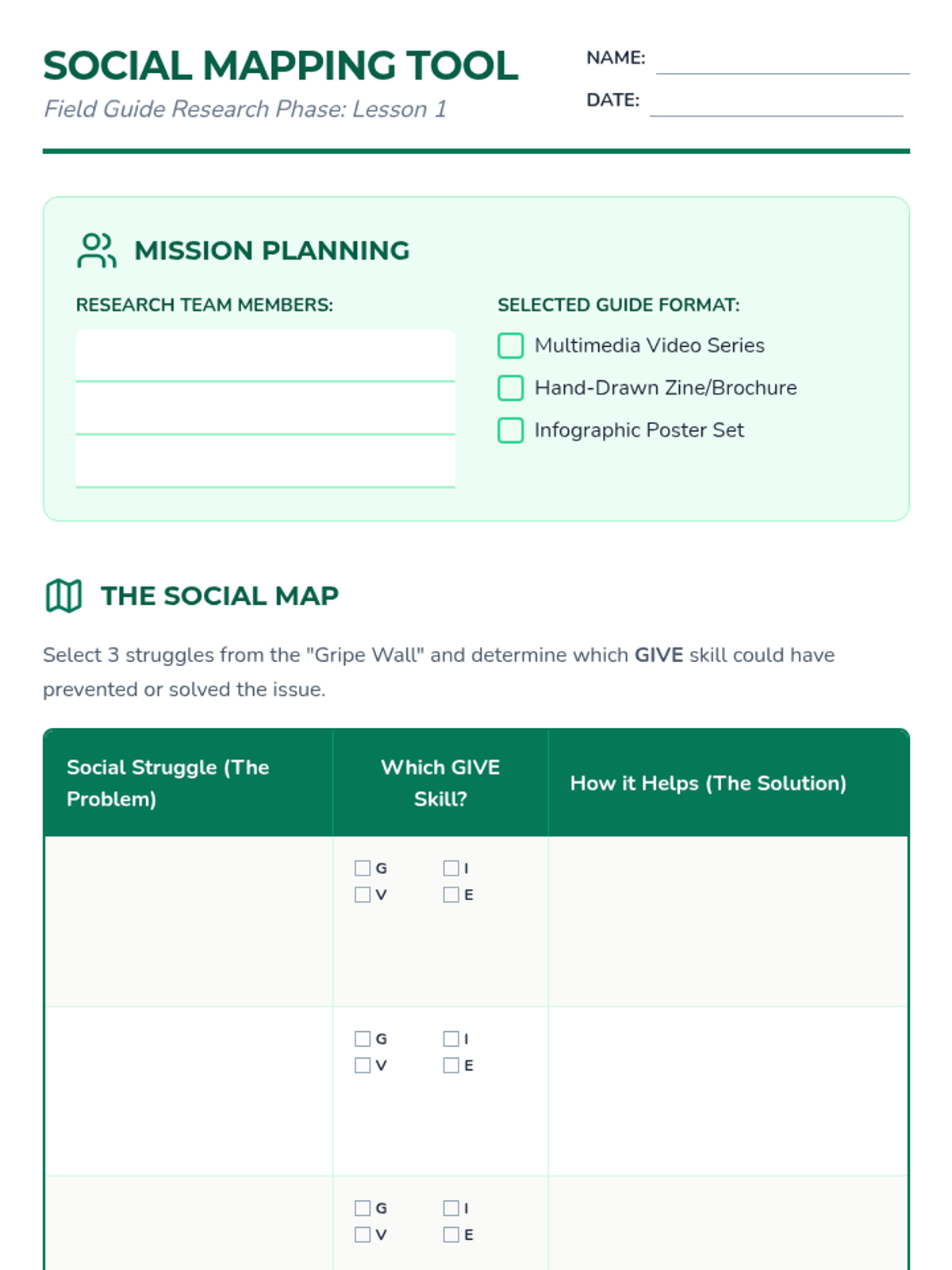
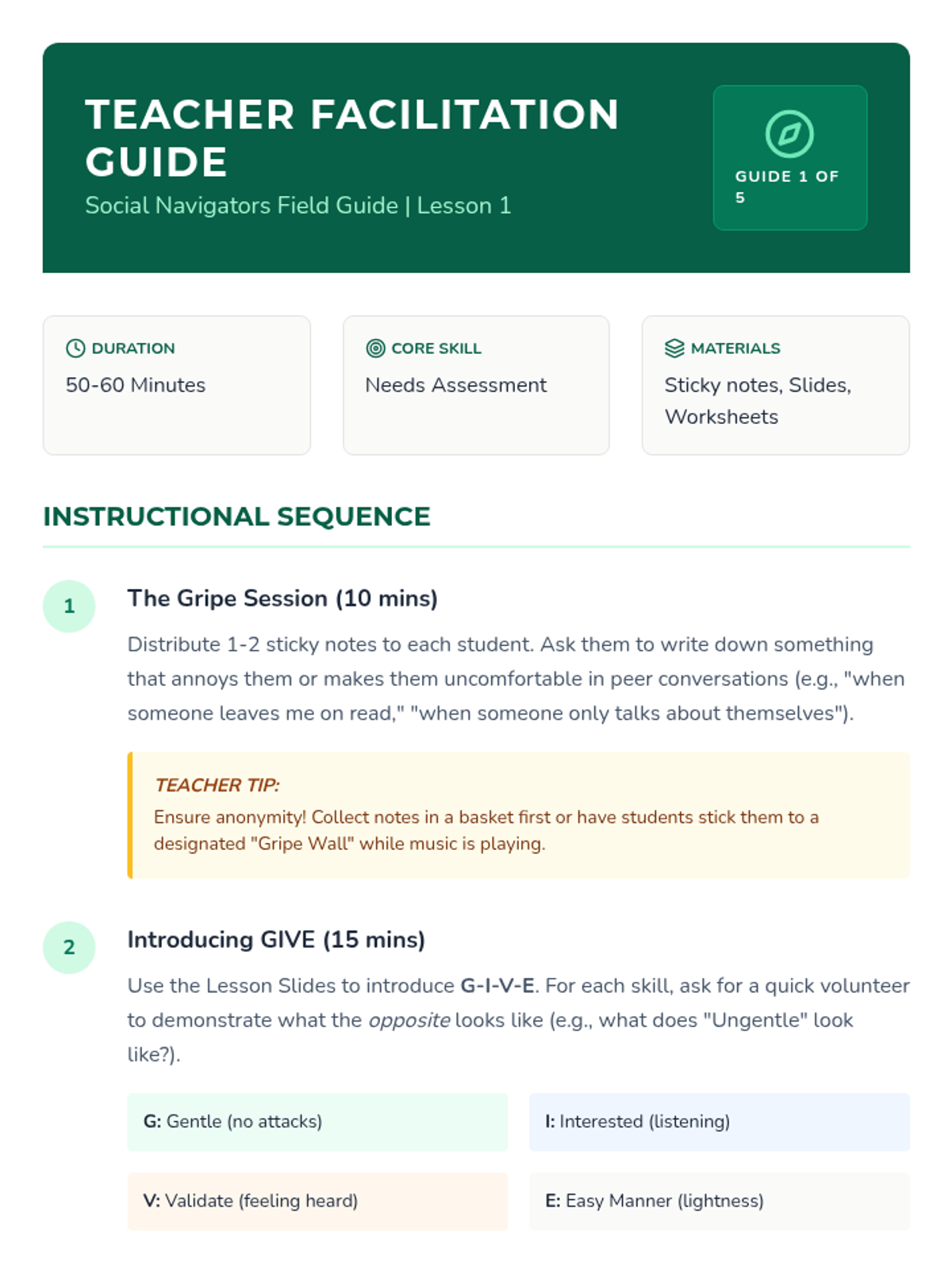
A project-based sequence where 6th-grade students research relationship pitfalls and create a 'Field Guide to Middle School Friendships' using the GIVE skills (Gentle, Interested, Validate, Easy Manner). Students synthesize DBT interpersonal effectiveness skills into peer-to-peer teaching tools like zines, videos, or posters.
A comprehensive sequence for 6th graders to master the GIVE framework for healthy relationships, covering Gentle, Interested, Validate, and Easy manner skills through hands-on practice and reflection.
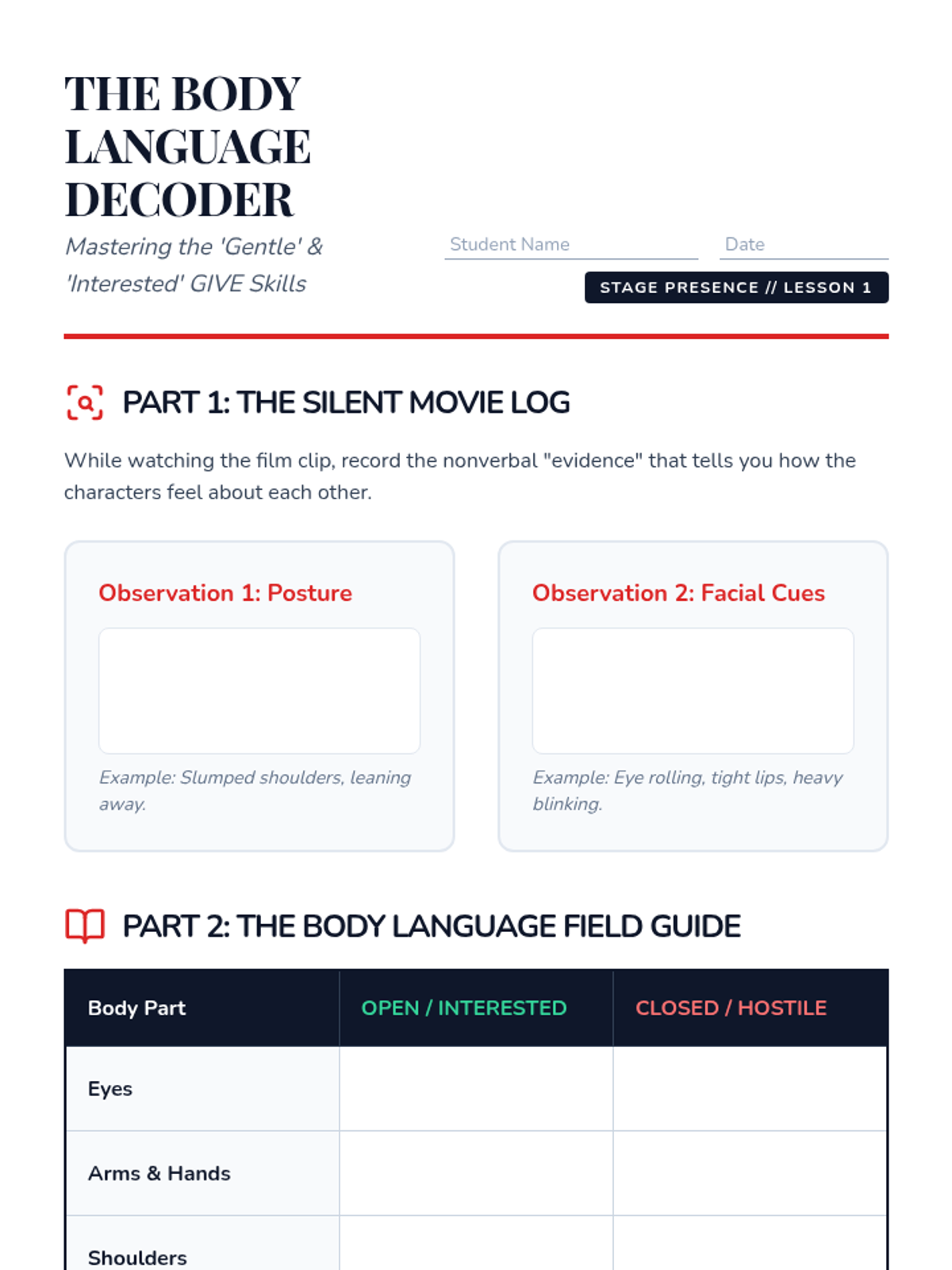
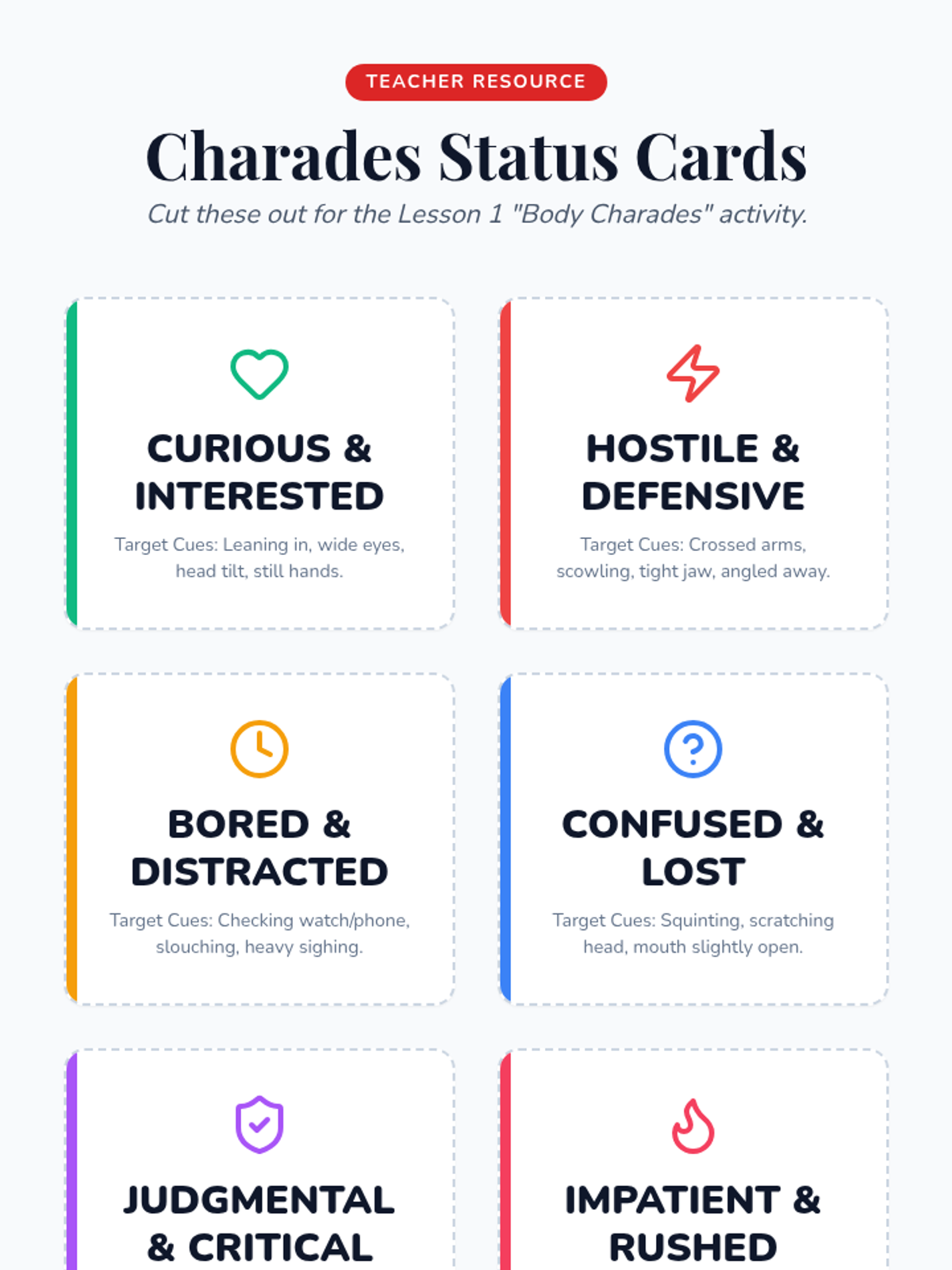
A 5-lesson sequence using theater arts and improv to master the nonverbal and tonal aspects of GIVE skills for healthy relationships. Students move from theatrical expressions to subtle social interactions to gain control over their social presence.
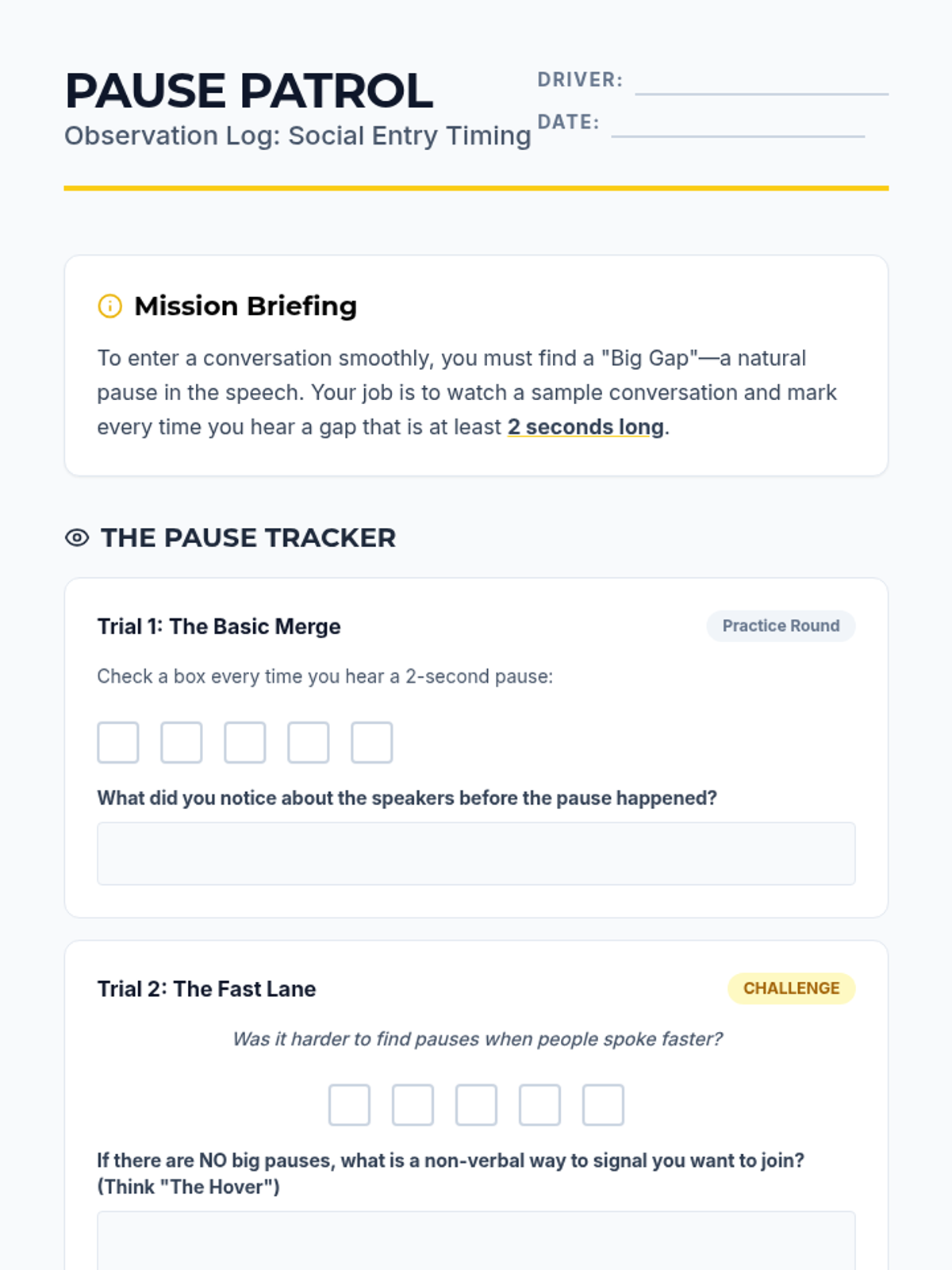
A game-based social communication sequence for 6th-grade students focusing on the timing, mechanics, and physical aspects of social entry and greetings. Using a 'highway merging' metaphor, students learn to identify social pauses, engage in reciprocal rallies, and master physical greeting conventions.
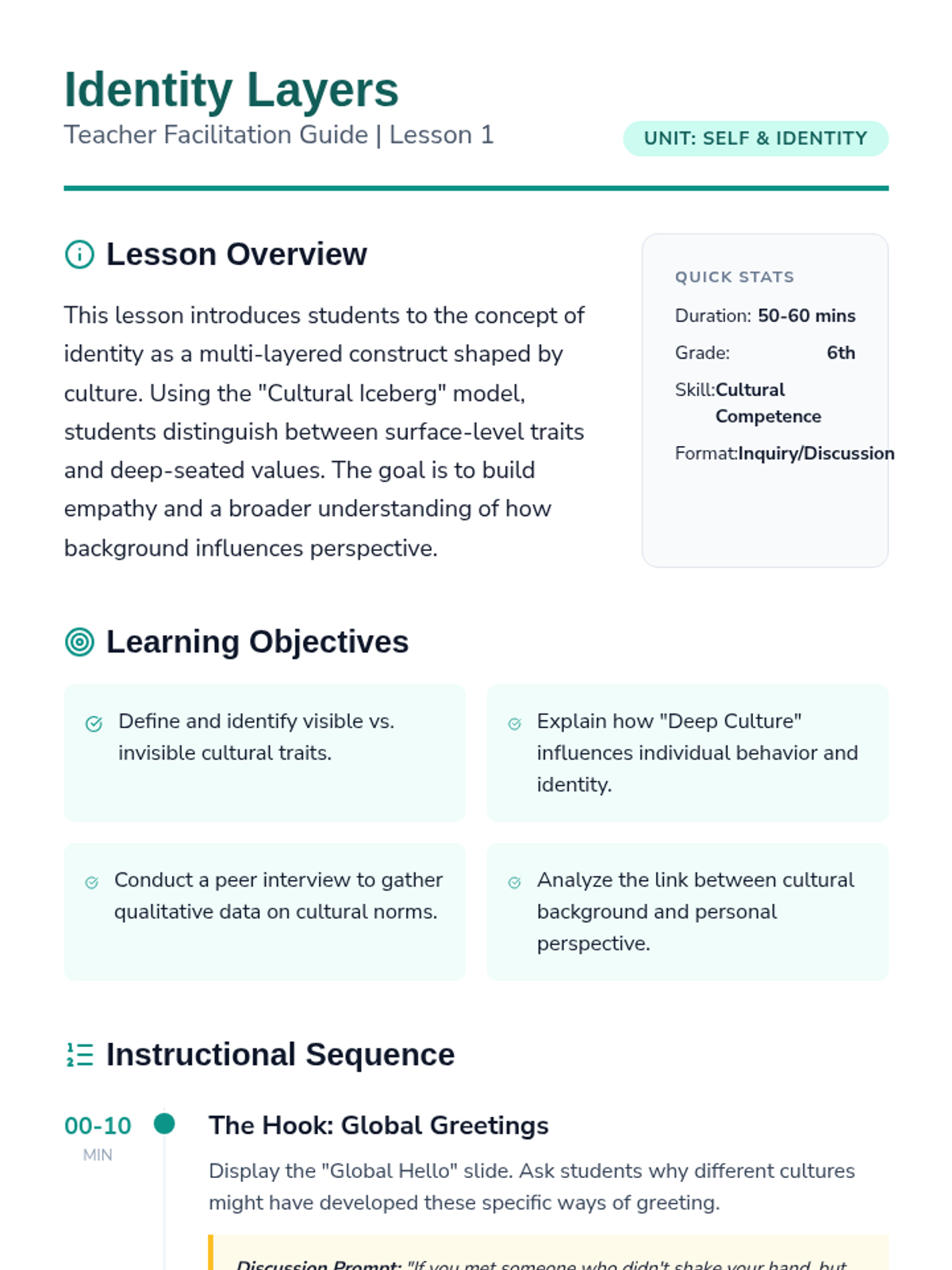
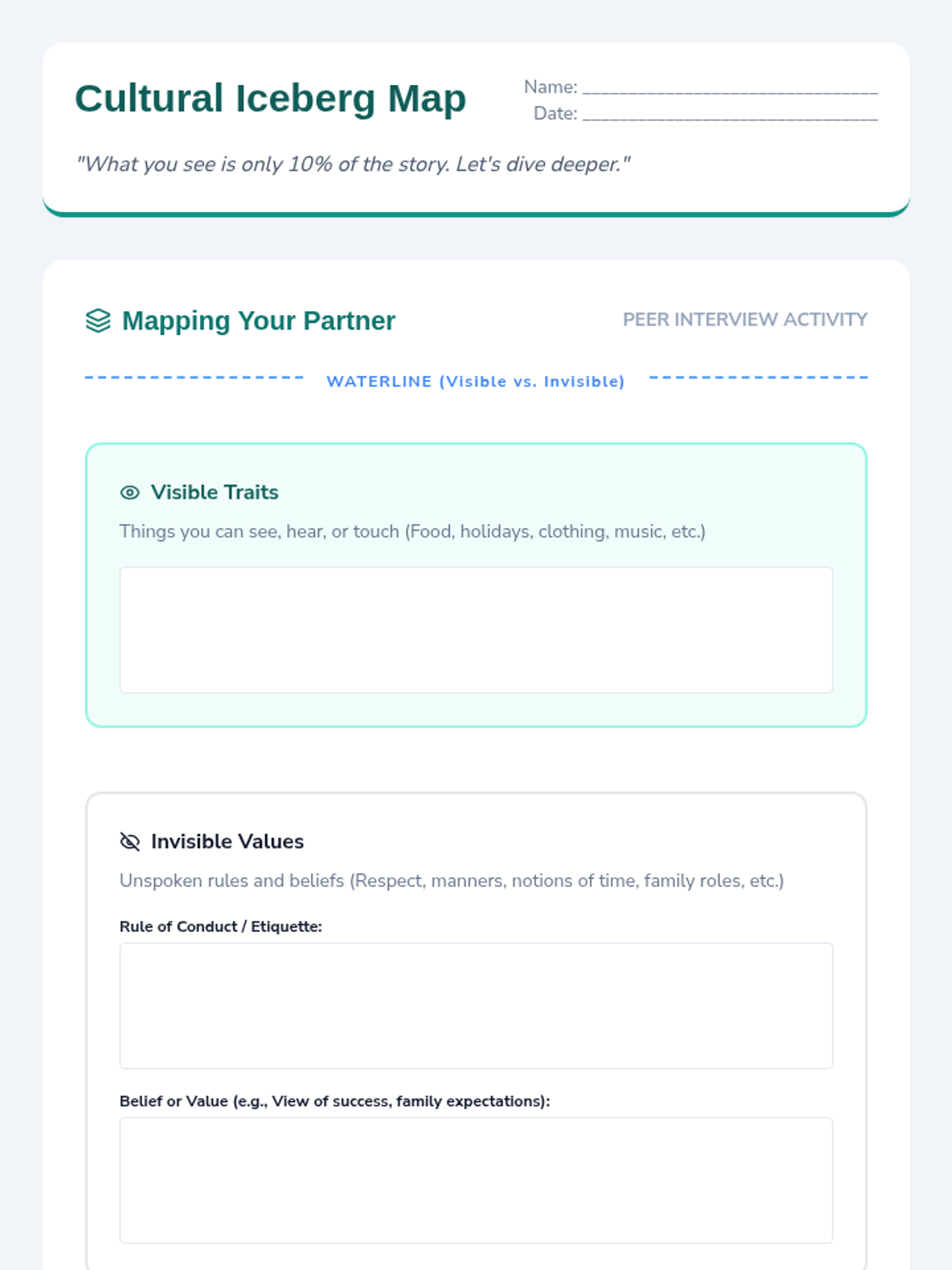
A project-based unit exploring how culture, media, and technology influence 6th graders' self-perception. Students analyze stereotypes, digital curation, and the 'Cultural Iceberg' before creating a 'Dual Identity' project.
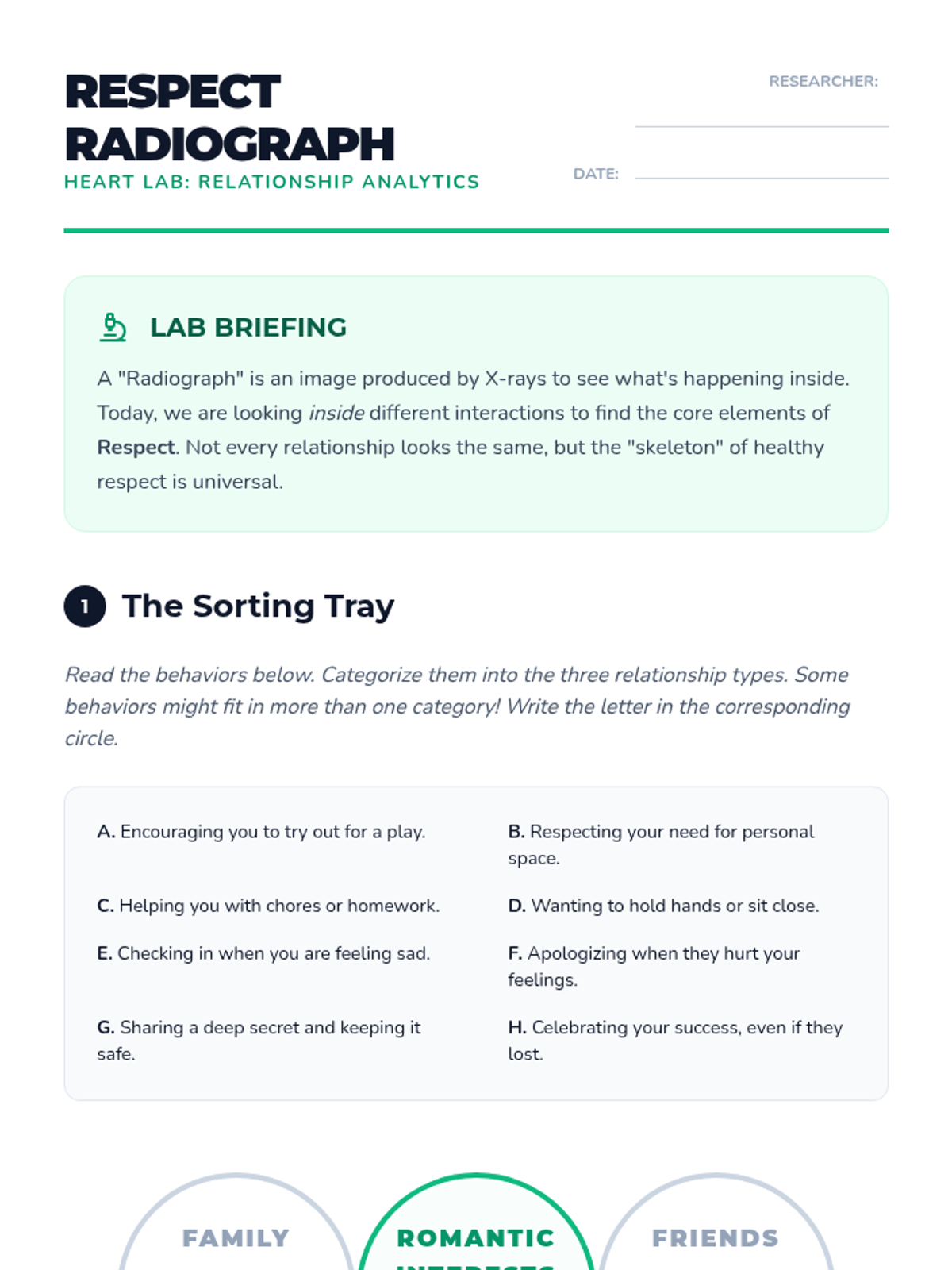
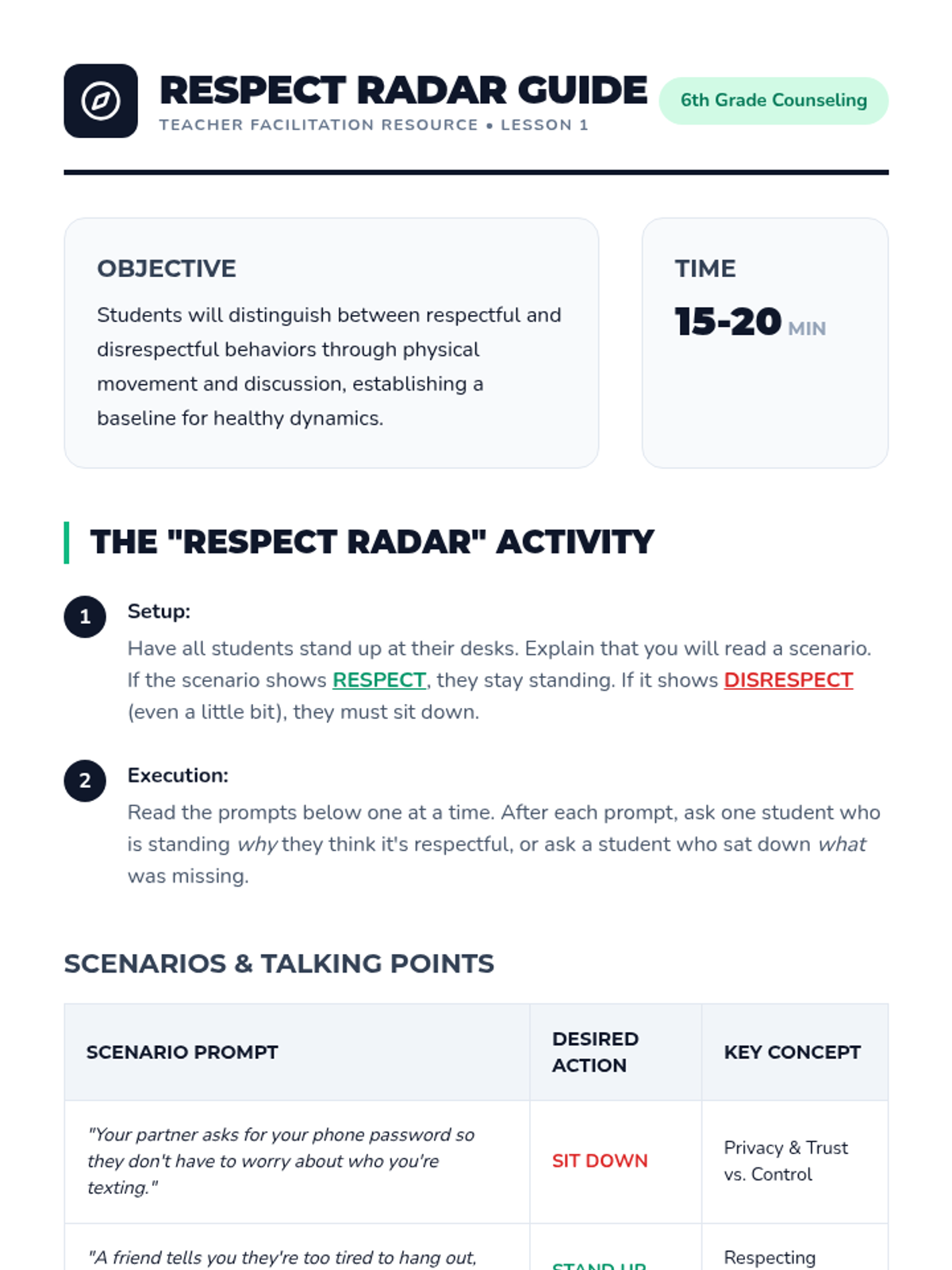
A 5-lesson sequence for 6th graders to identify and cultivate healthy relationship dynamics by distinguishing between 'green flags' (positive indicators) and 'red flags' (warning signs). Students move from defining respect to analyzing media and creating their own relationship health guides.
Students develop critical media literacy skills by deconstructing advertisements to understand how companies influence consumer behavior. They learn to identify common advertising techniques, understand target demographics, and recognize visual staging tactics used to manipulate consumer perception.
A comprehensive 6th-grade media literacy sequence that teaches students how to deconstruct advertising techniques, analyze influencer culture, and distinguish between facts and persuasive claims. Students develop critical consumer skills to navigate the modern media landscape.
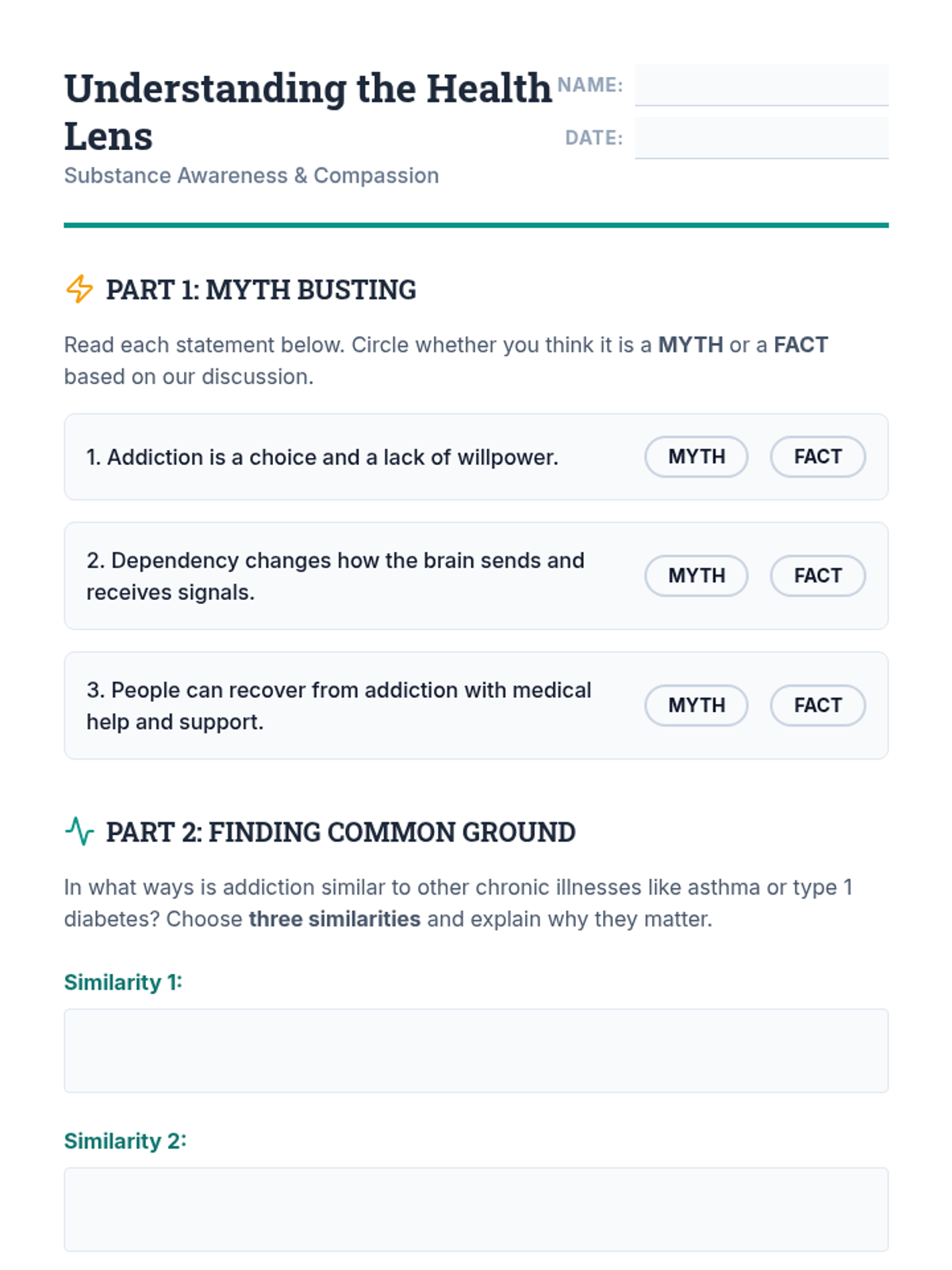
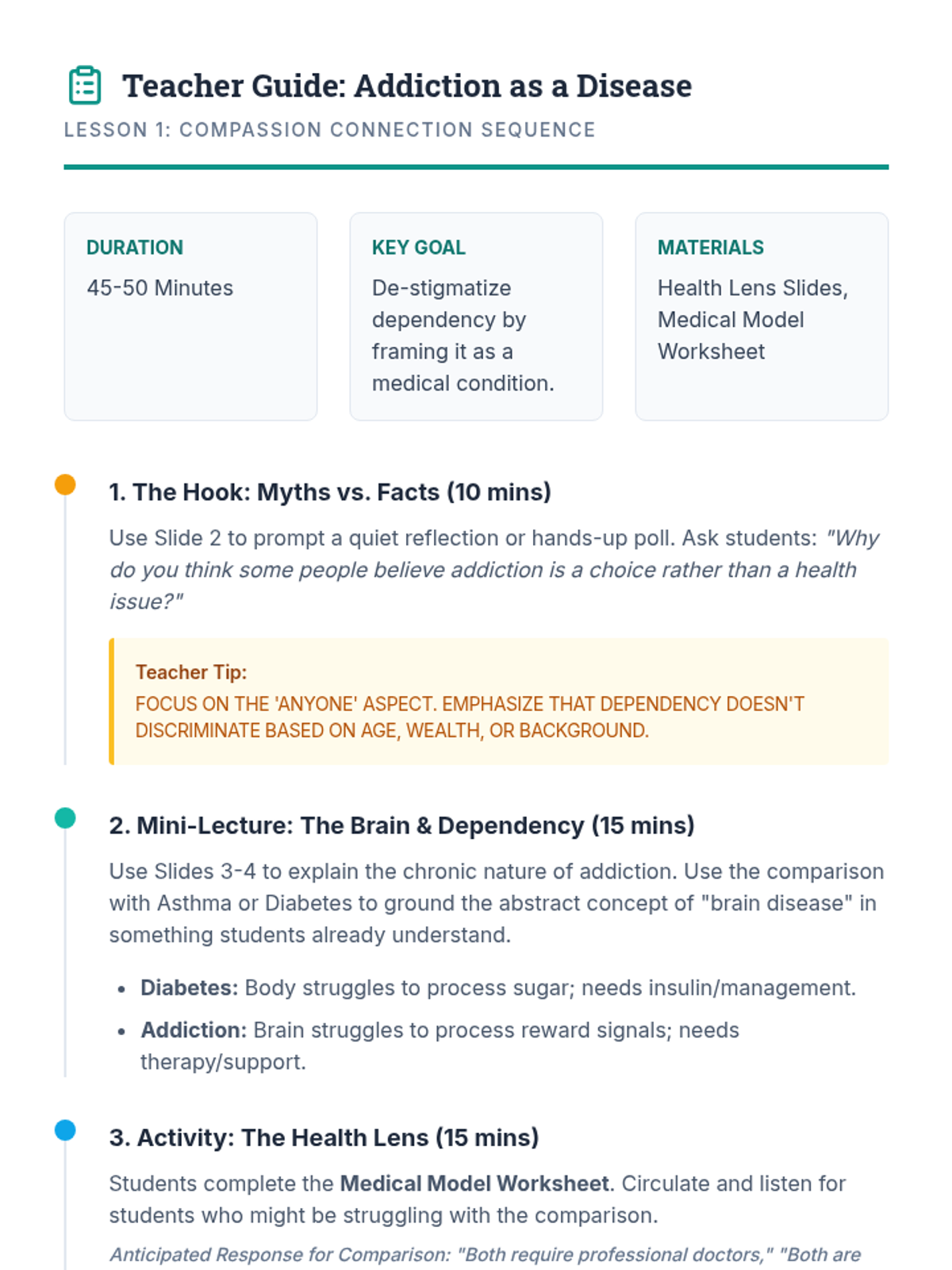
This 5-lesson sequence for 6th graders explores opioid addiction through a behavioral health lens. It focuses on de-stigmatizing addiction by framing it as a treatable disease, identifying behavioral warning signs, and developing empathetic communication skills to support those in need.
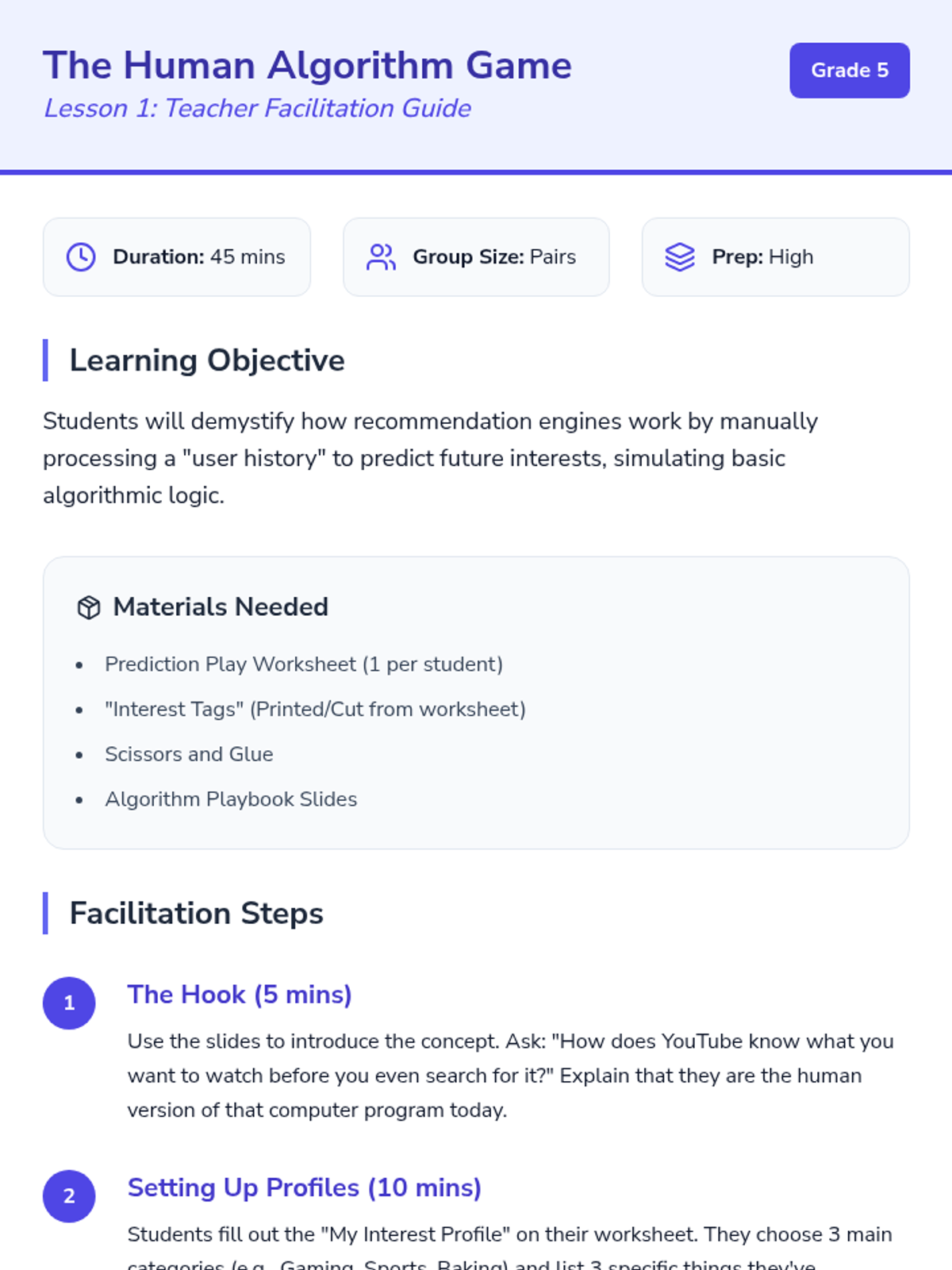
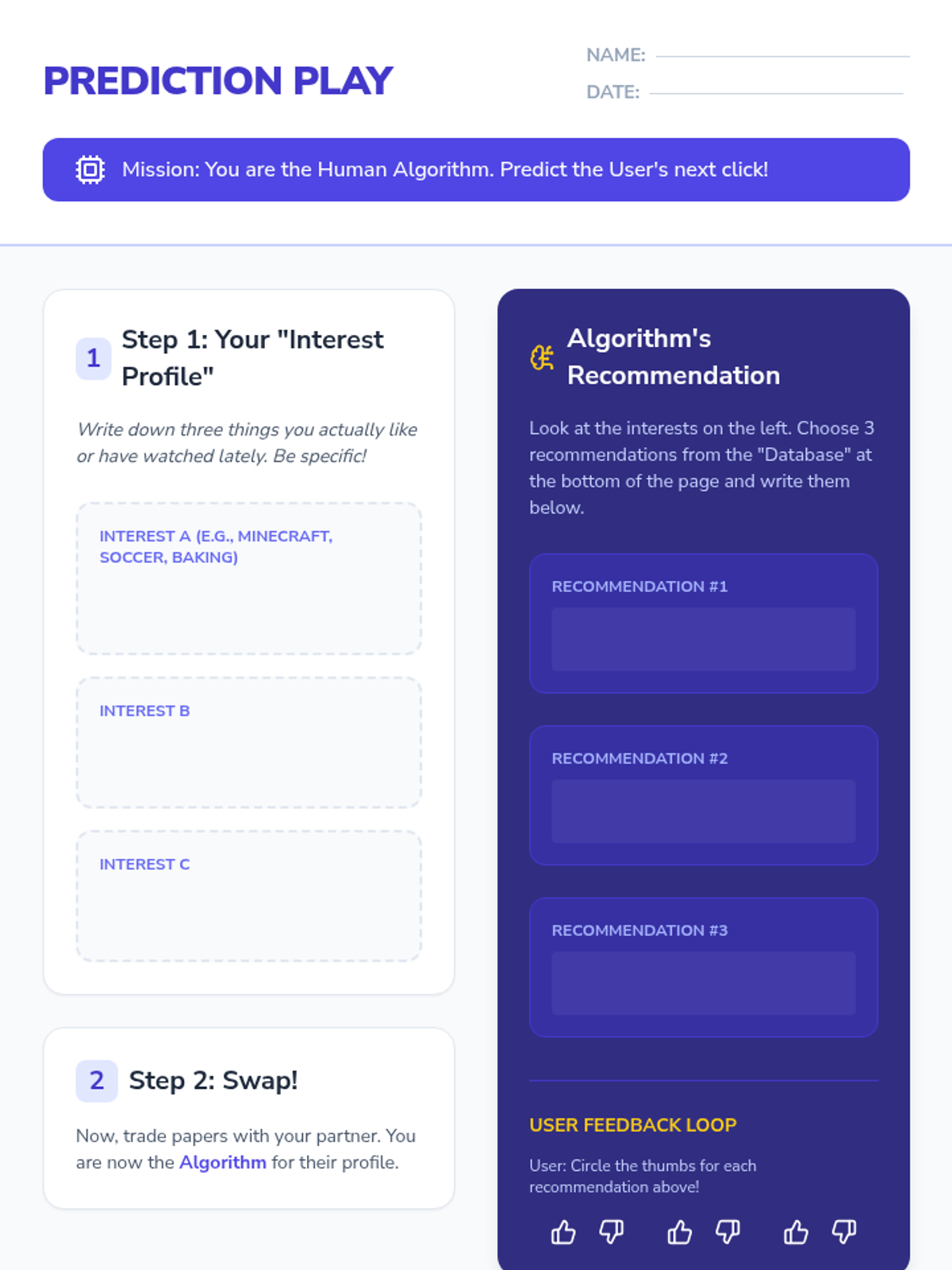
This sequence examines the invisible algorithms that curate content on video platforms and social media. Students investigate the 'attention economy' and how algorithms predict user preferences to keep them engaged. By analyzing their own experiences and simulated feeds, they identify how recommendation engines can create 'filter bubbles.' The learning arc moves from understanding the mechanism of recommendation to evaluating its impact on critical thinking and exposure to new ideas.
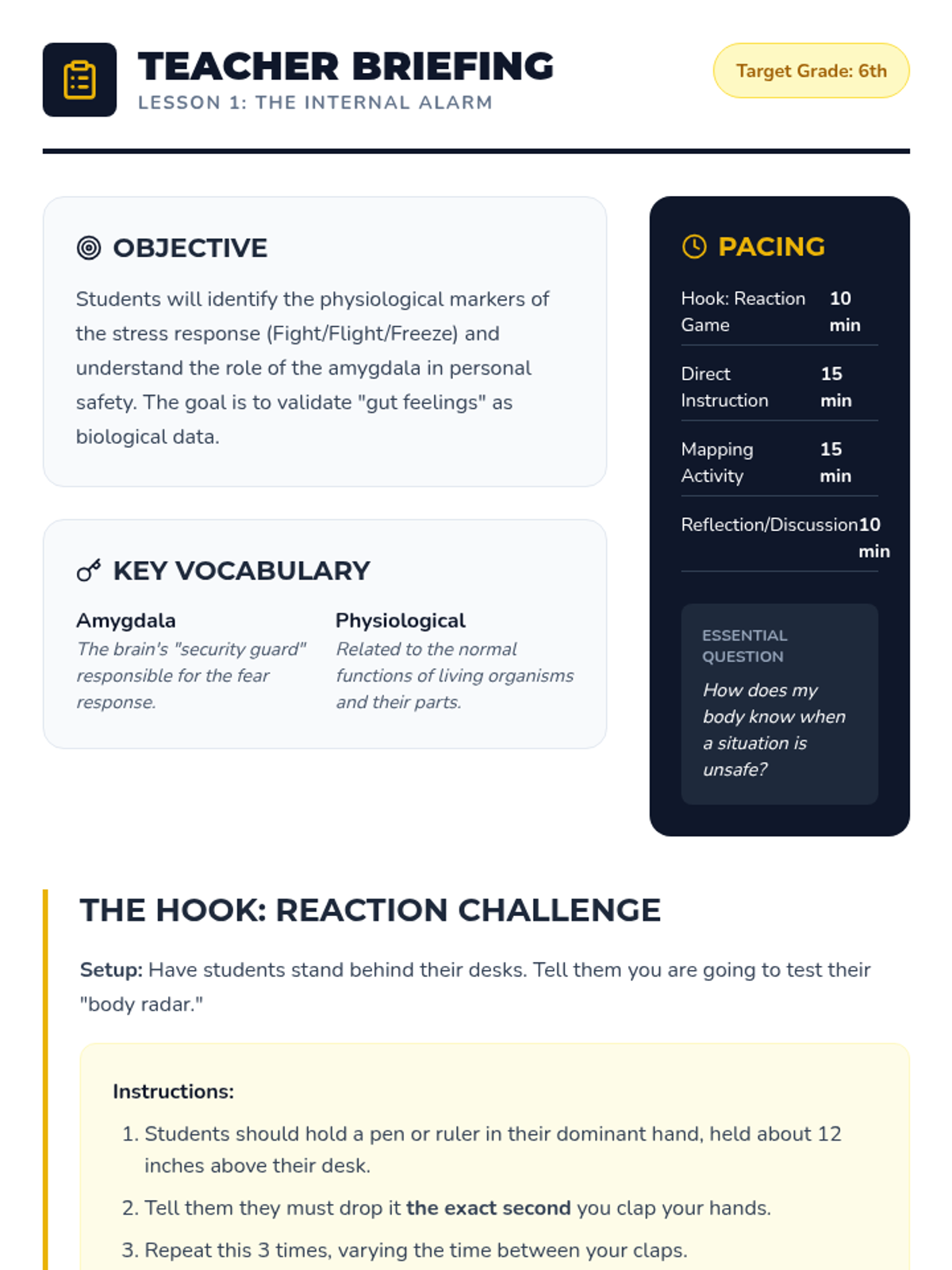
This sequence guides 6th-grade students through identifying and responding to unsafe situations in physical and digital environments. Students explore physiological stress responses, situational awareness, social manipulation, digital red flags, and assertive exit strategies.
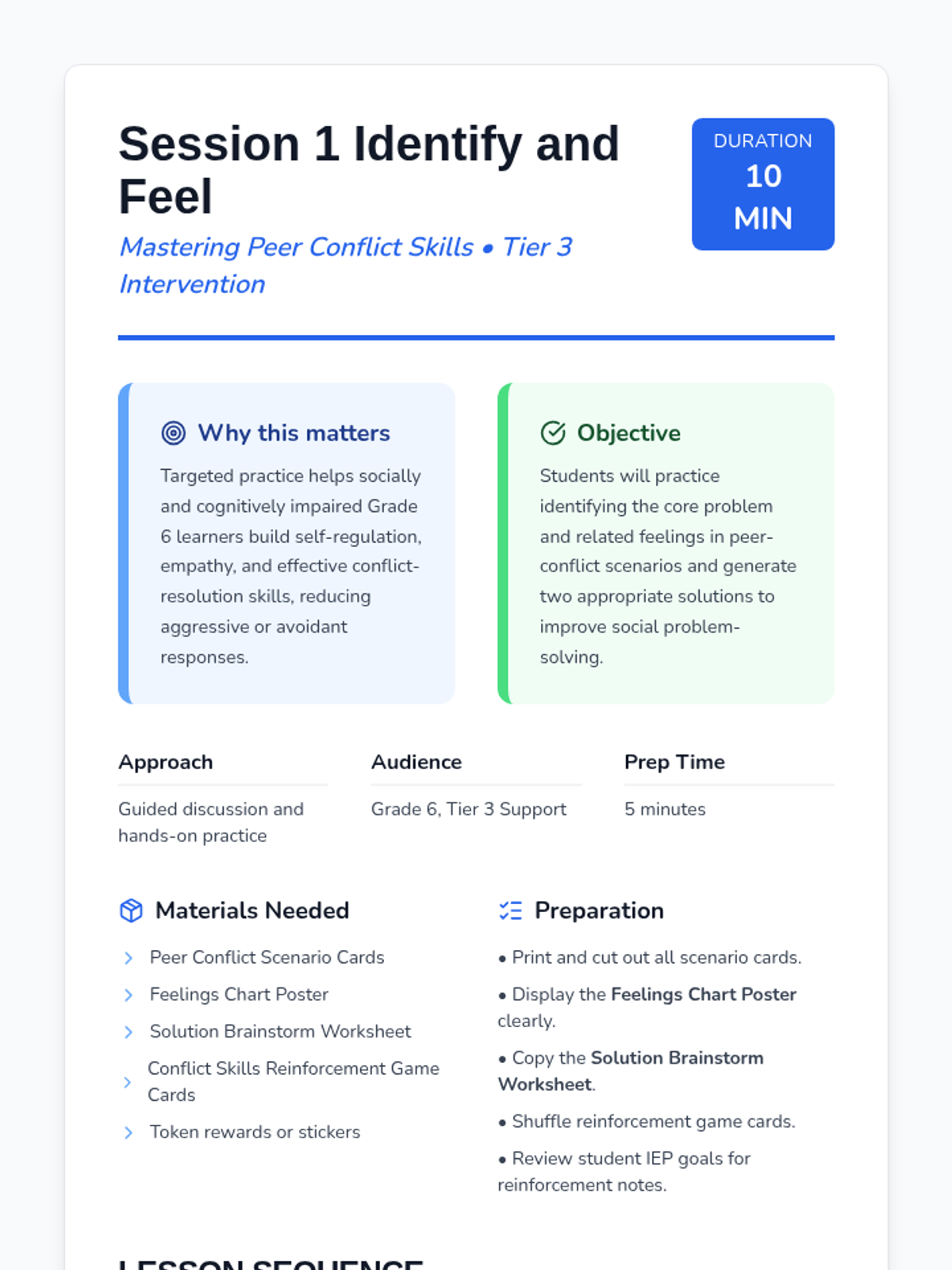
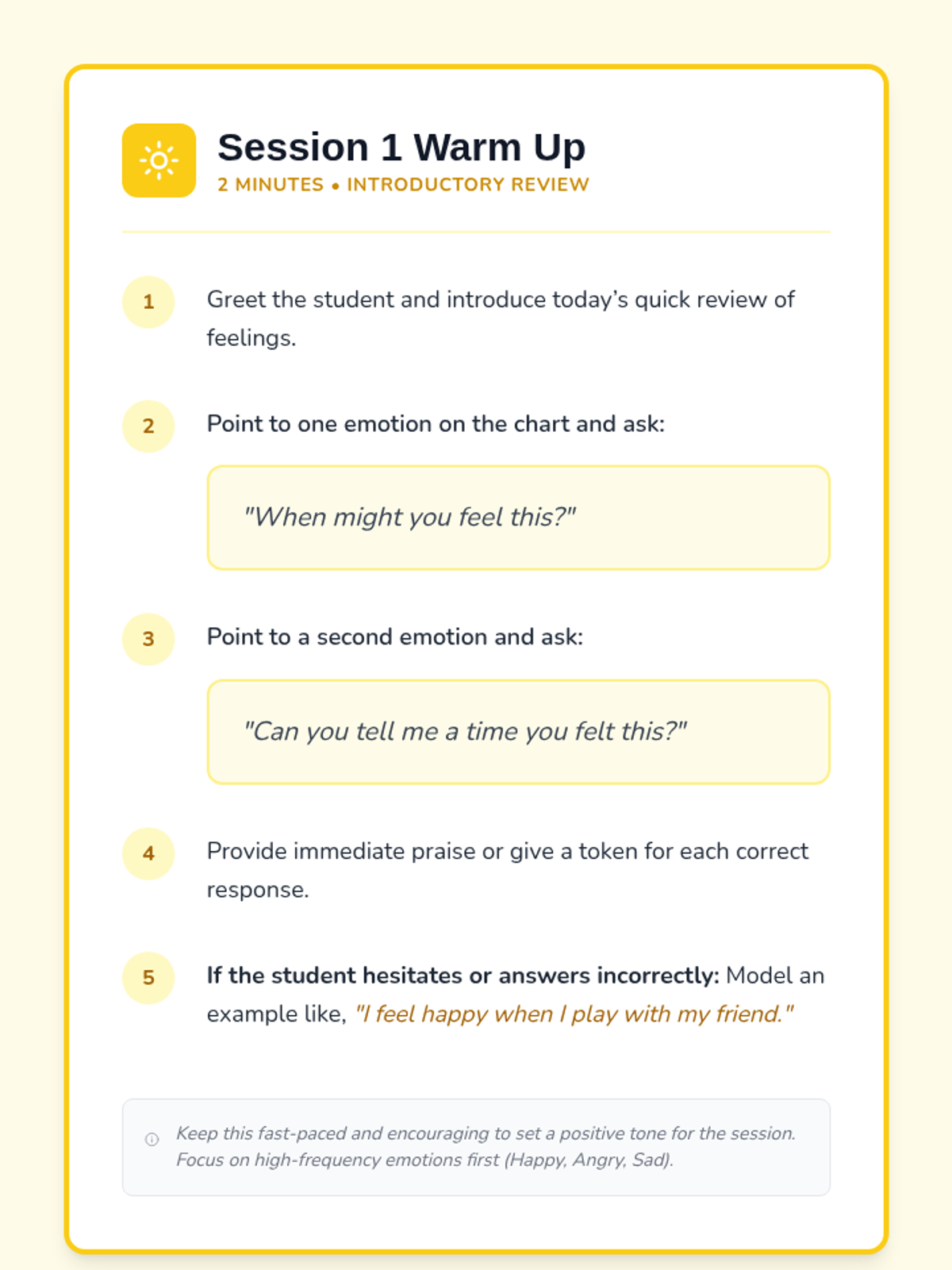
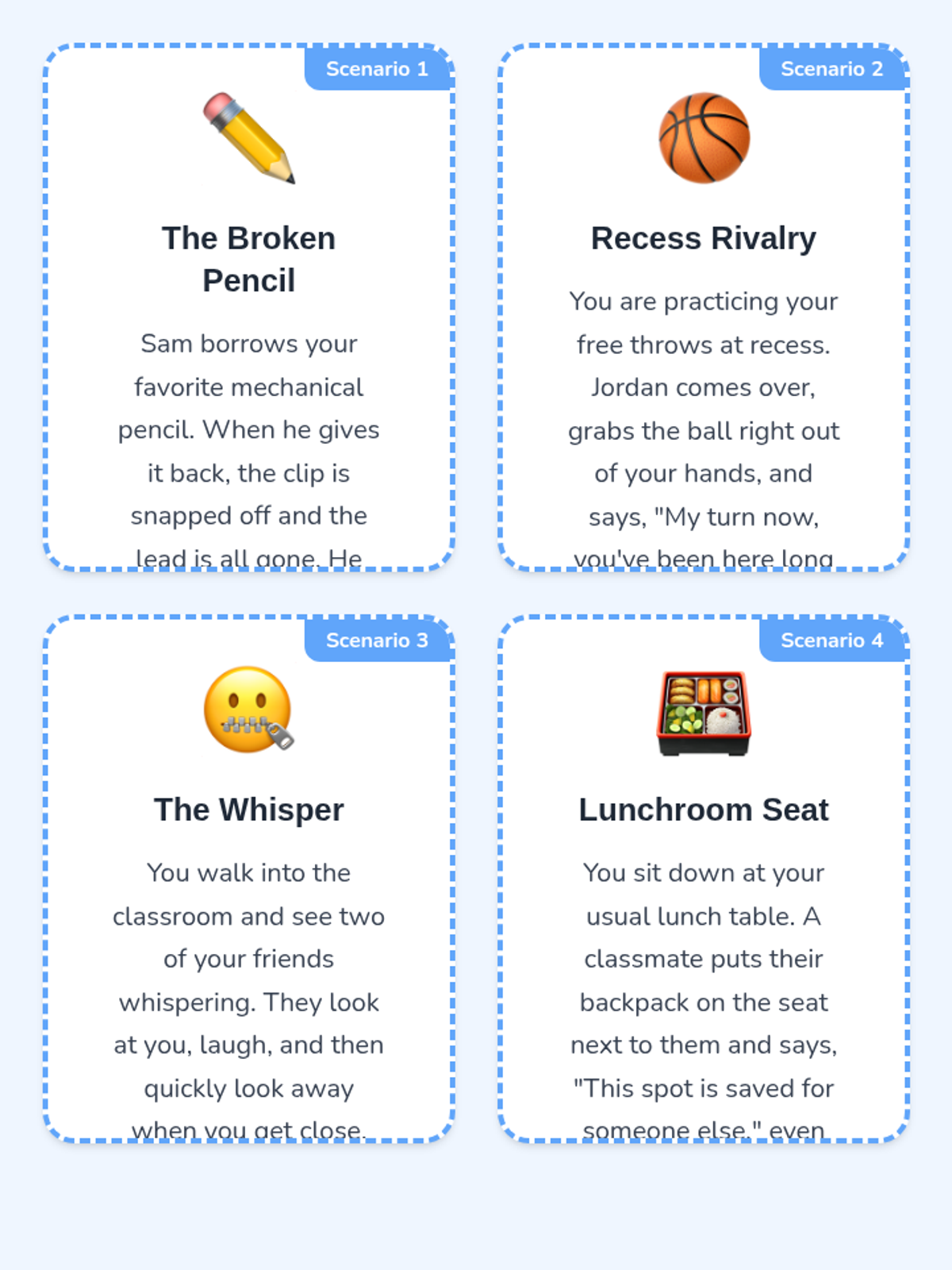
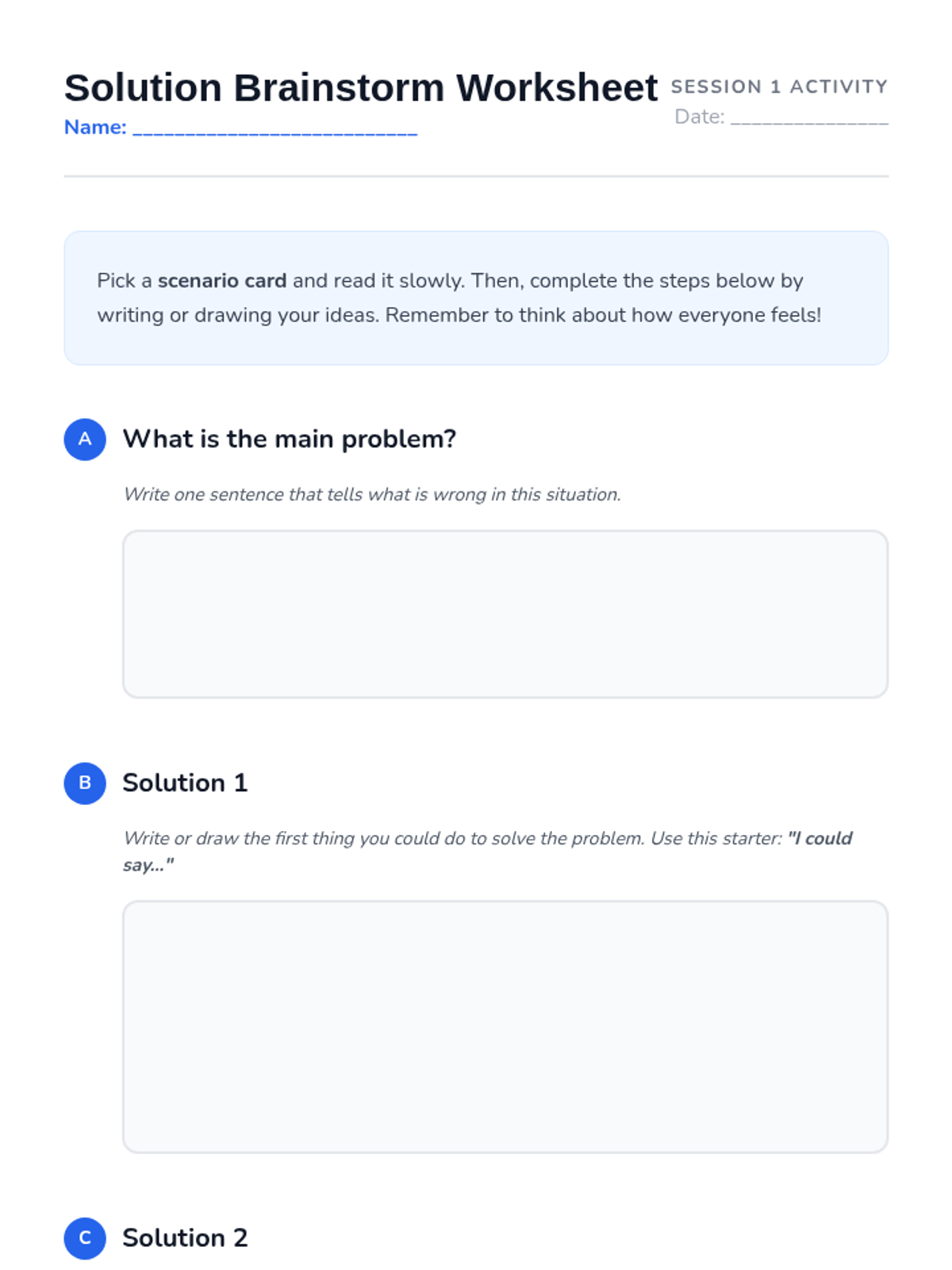
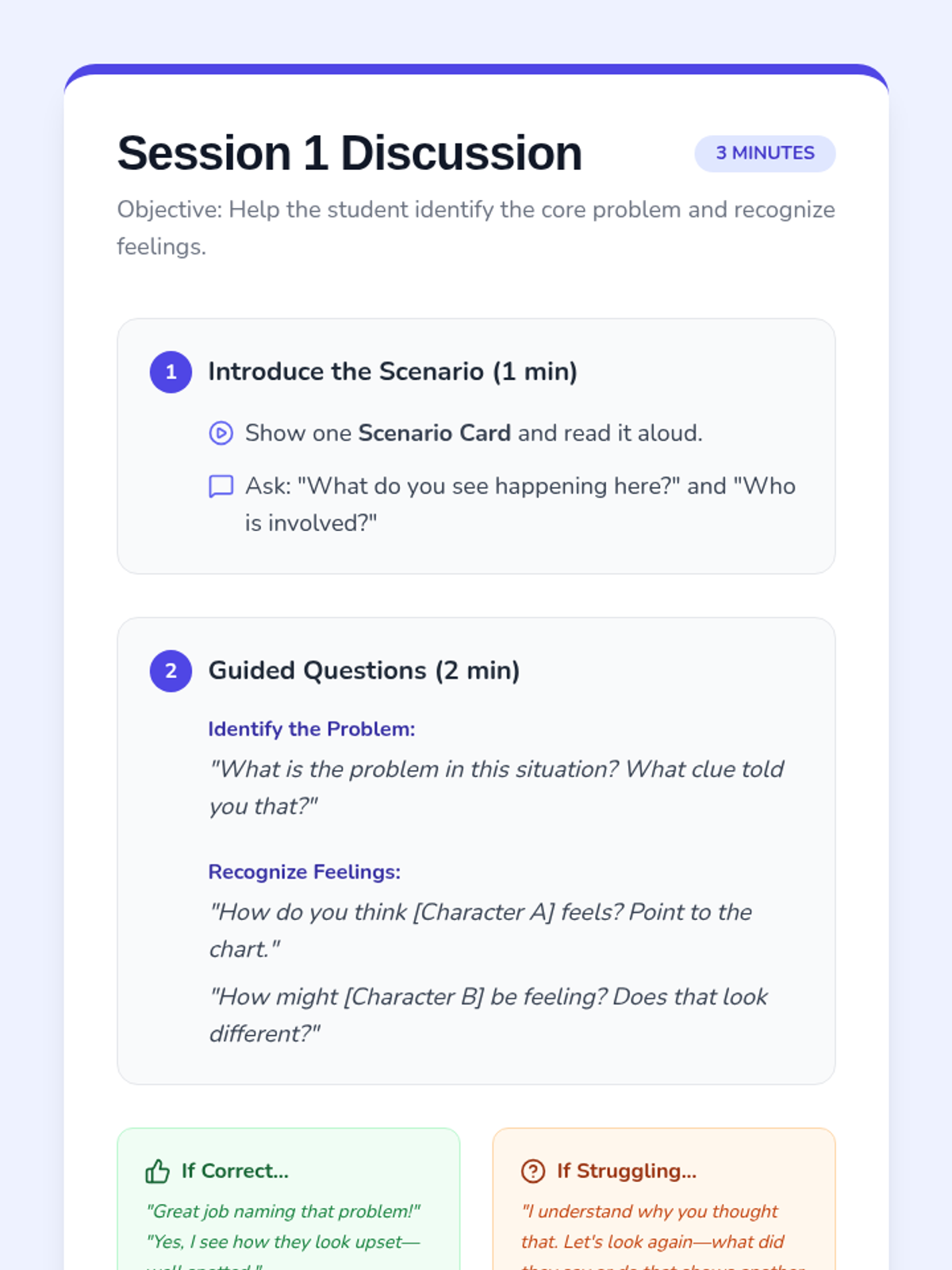
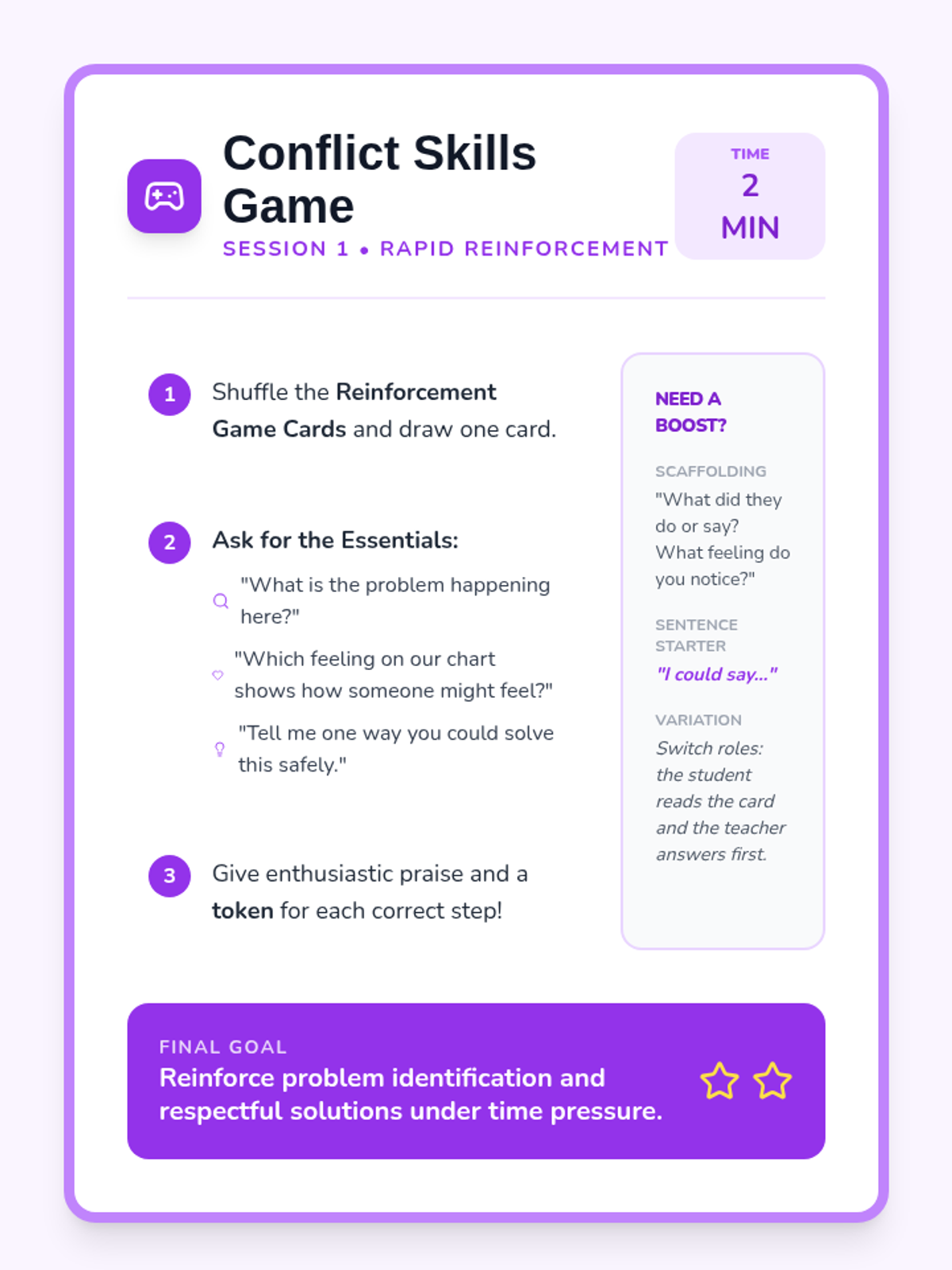
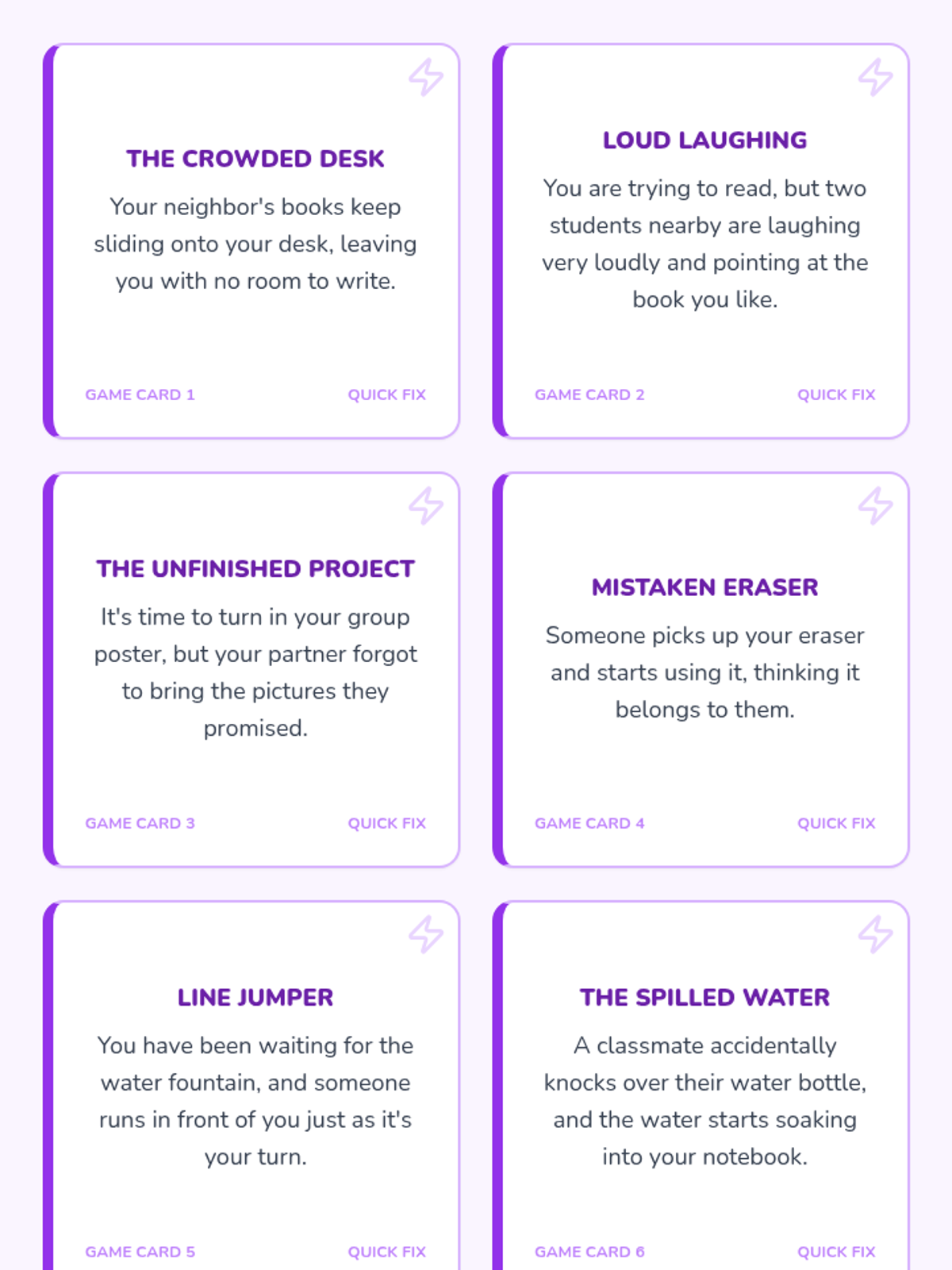
A 3-session, 10-minute individualized Tier 3 intervention for Grade 6 learners. Students develop conflict-resolution skills by identifying problems, recognizing emotions, and generating respectful solutions in peer-conflict scenarios.
A comprehensive 6-session sequence designed for 6th graders to develop core emotional intelligence skills, including emotional literacy, communication, problem-solving, time management, resilience, and goal setting.
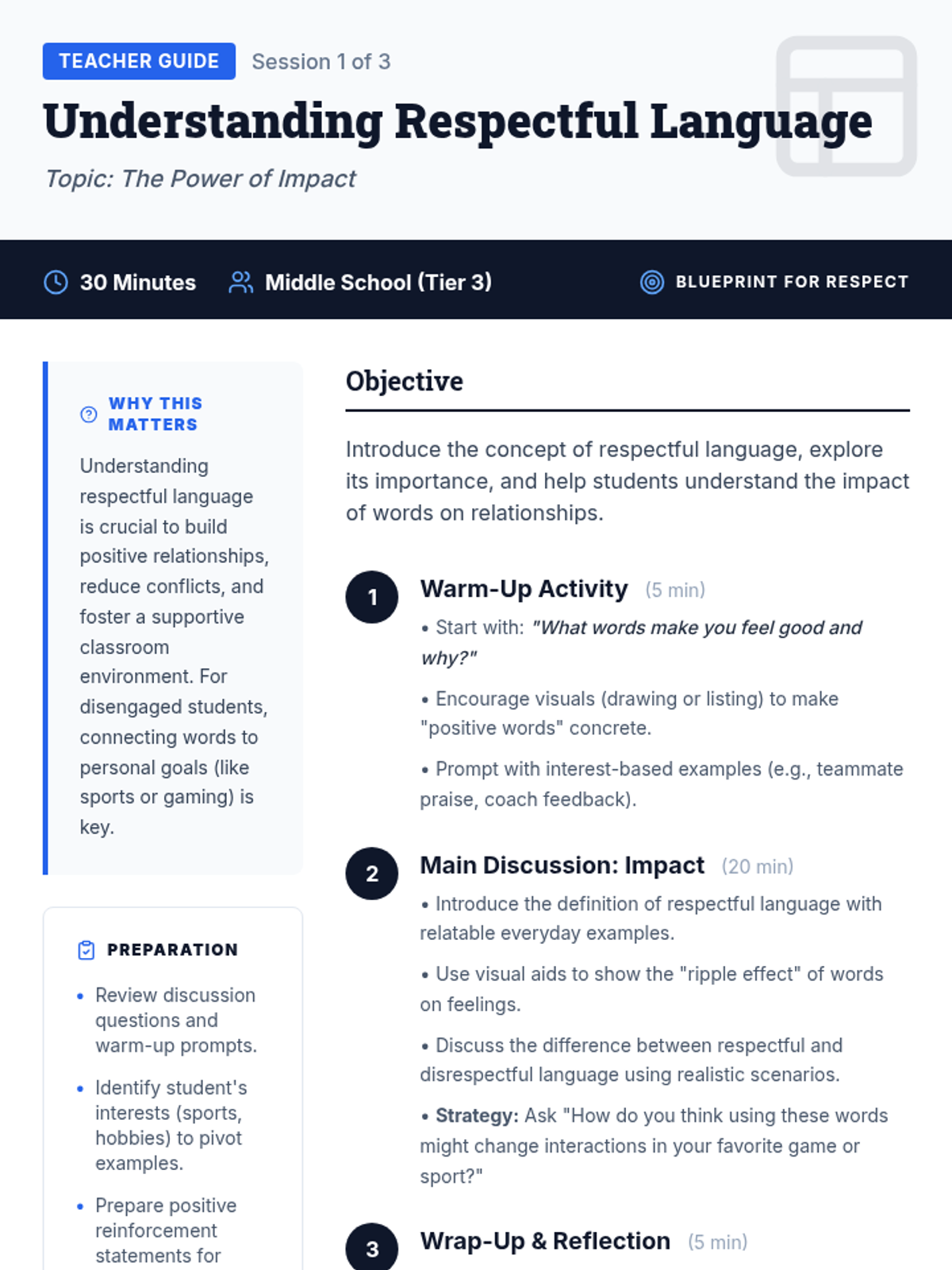
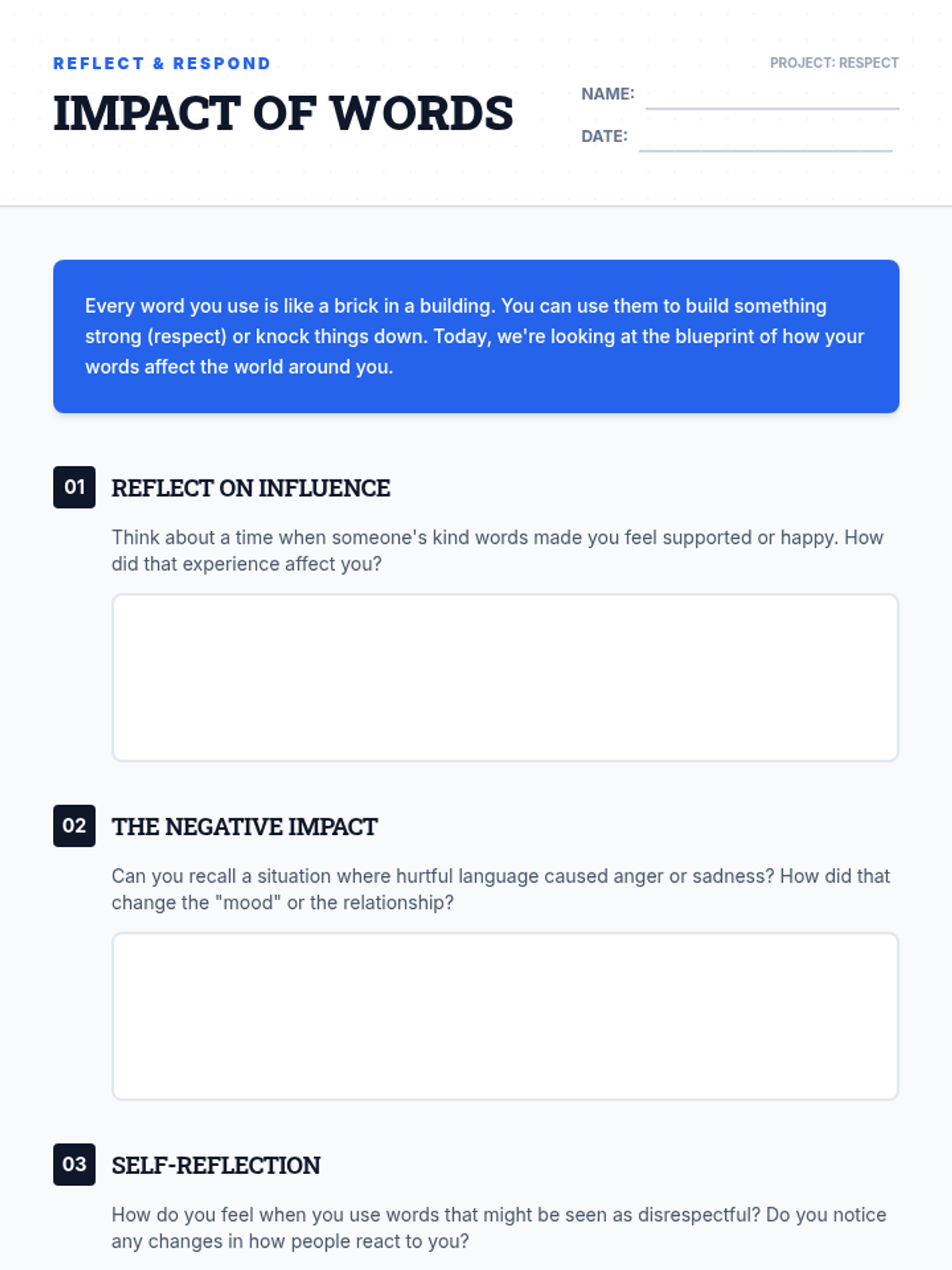
A three-session Tier 3 intervention sequence for middle school students focusing on the power of words, respectful communication, and personal growth in interpersonal interactions.
A 3-week unit for 6th-grade students focused on understanding personal space, recognizing boundaries, and practicing empathy through interactive lessons and reflection.
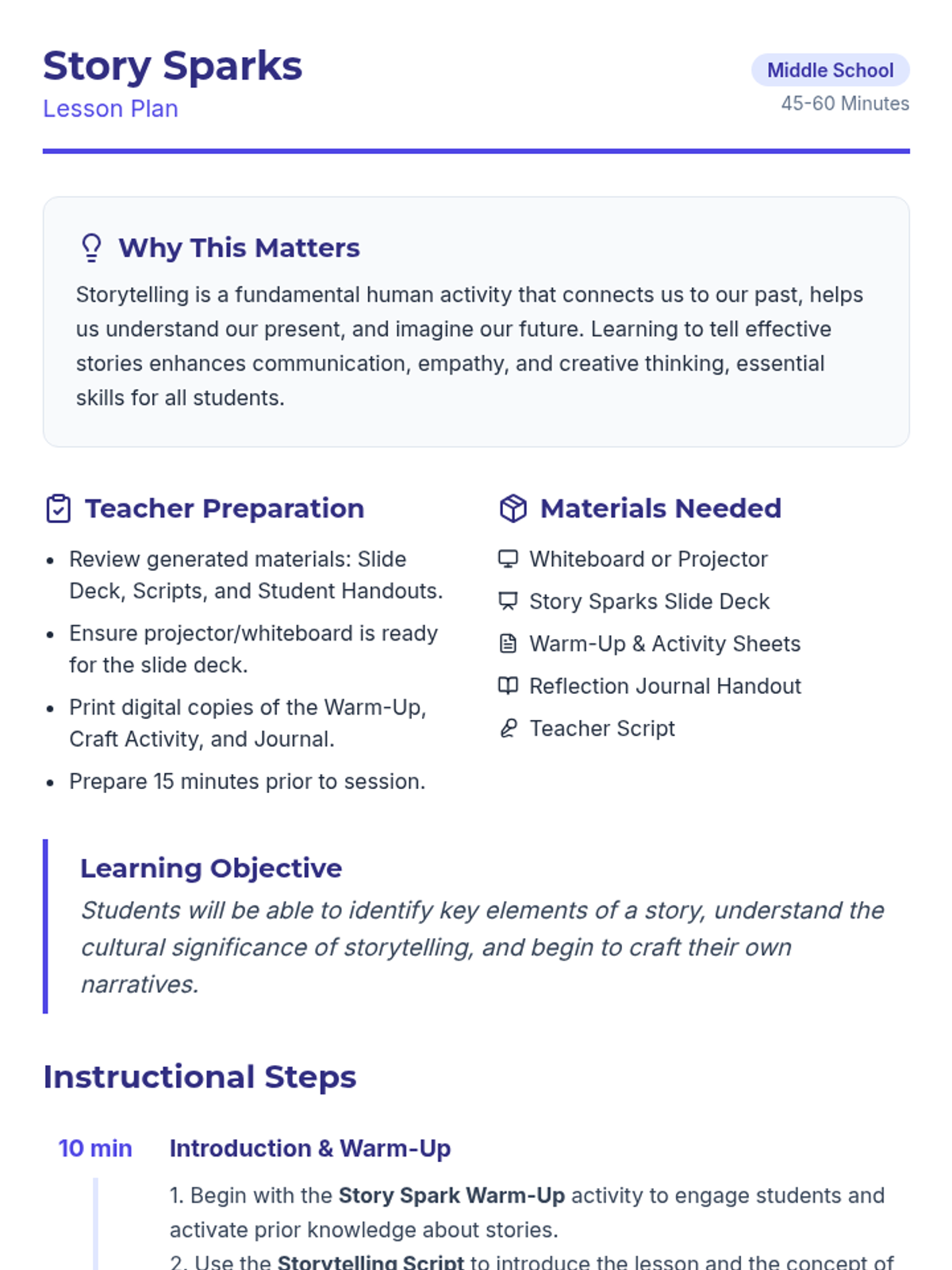
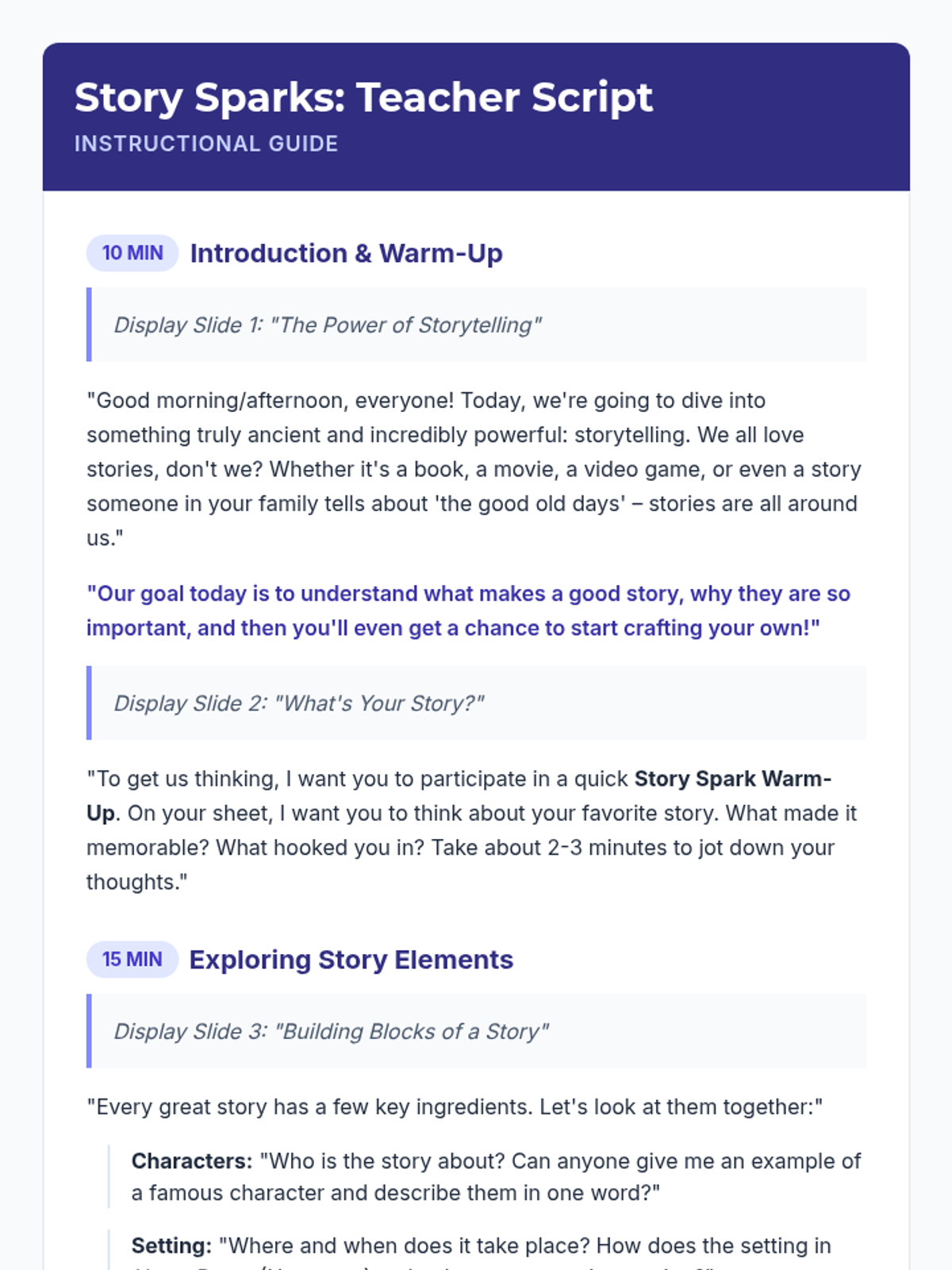
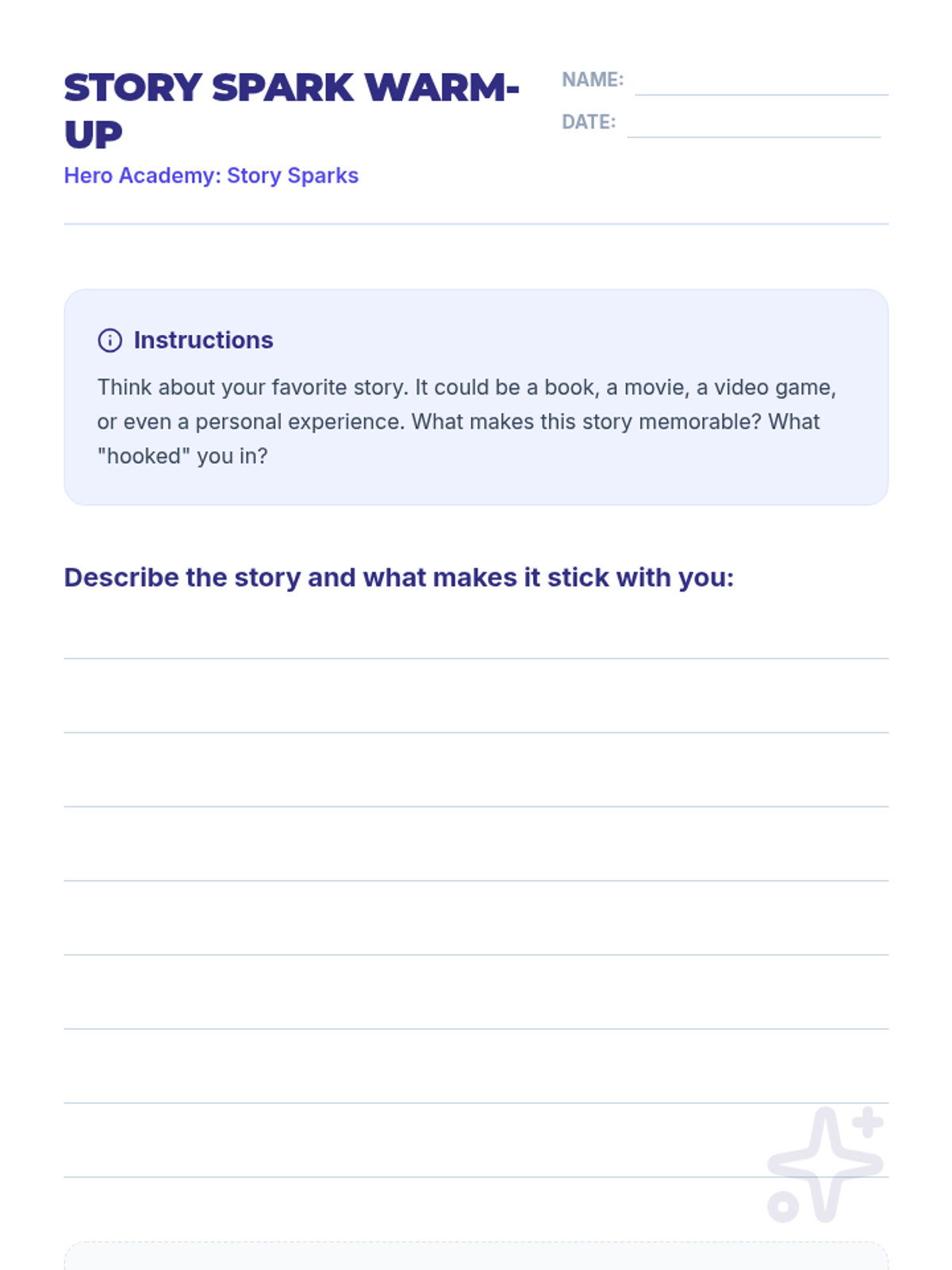
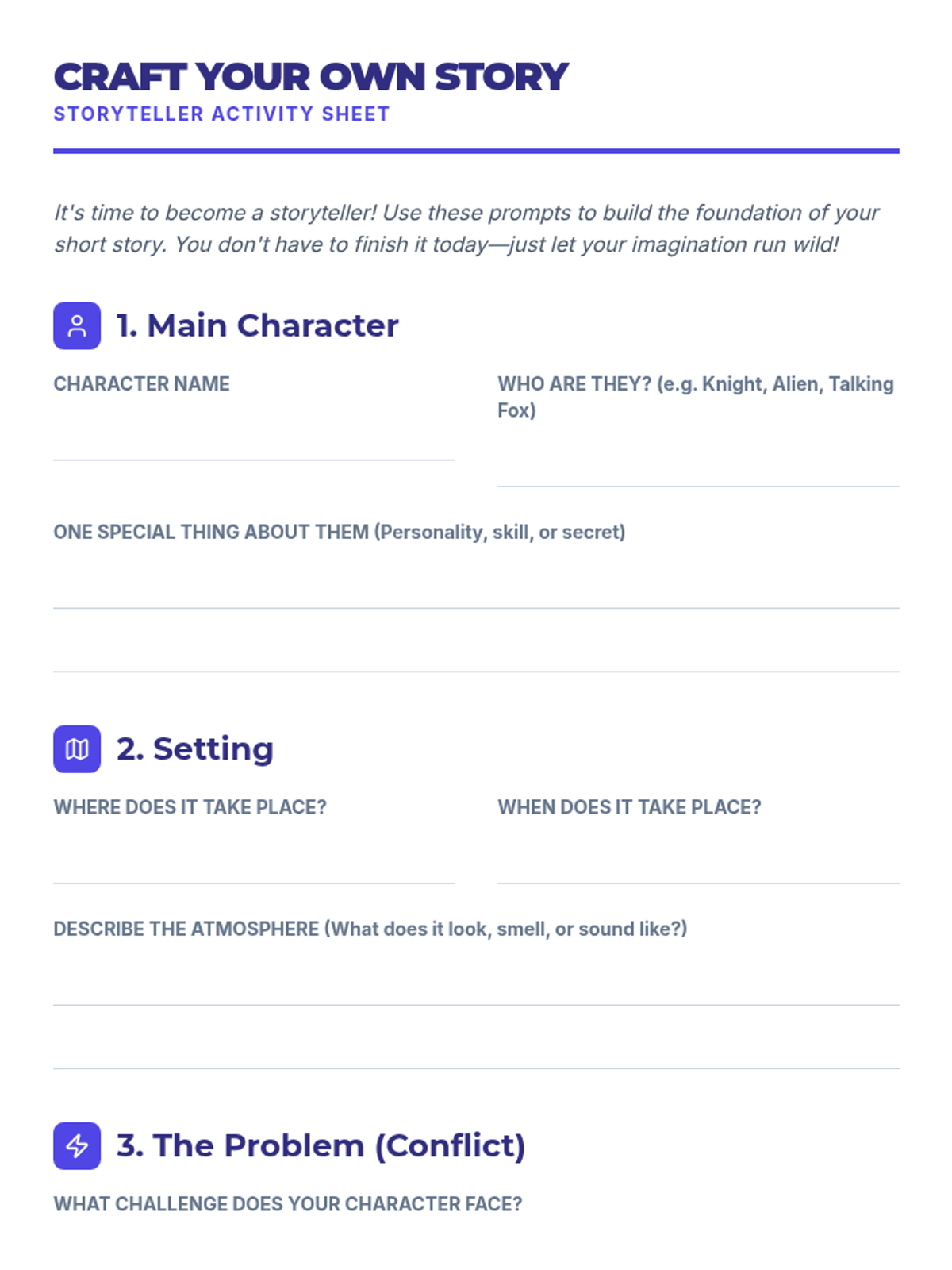
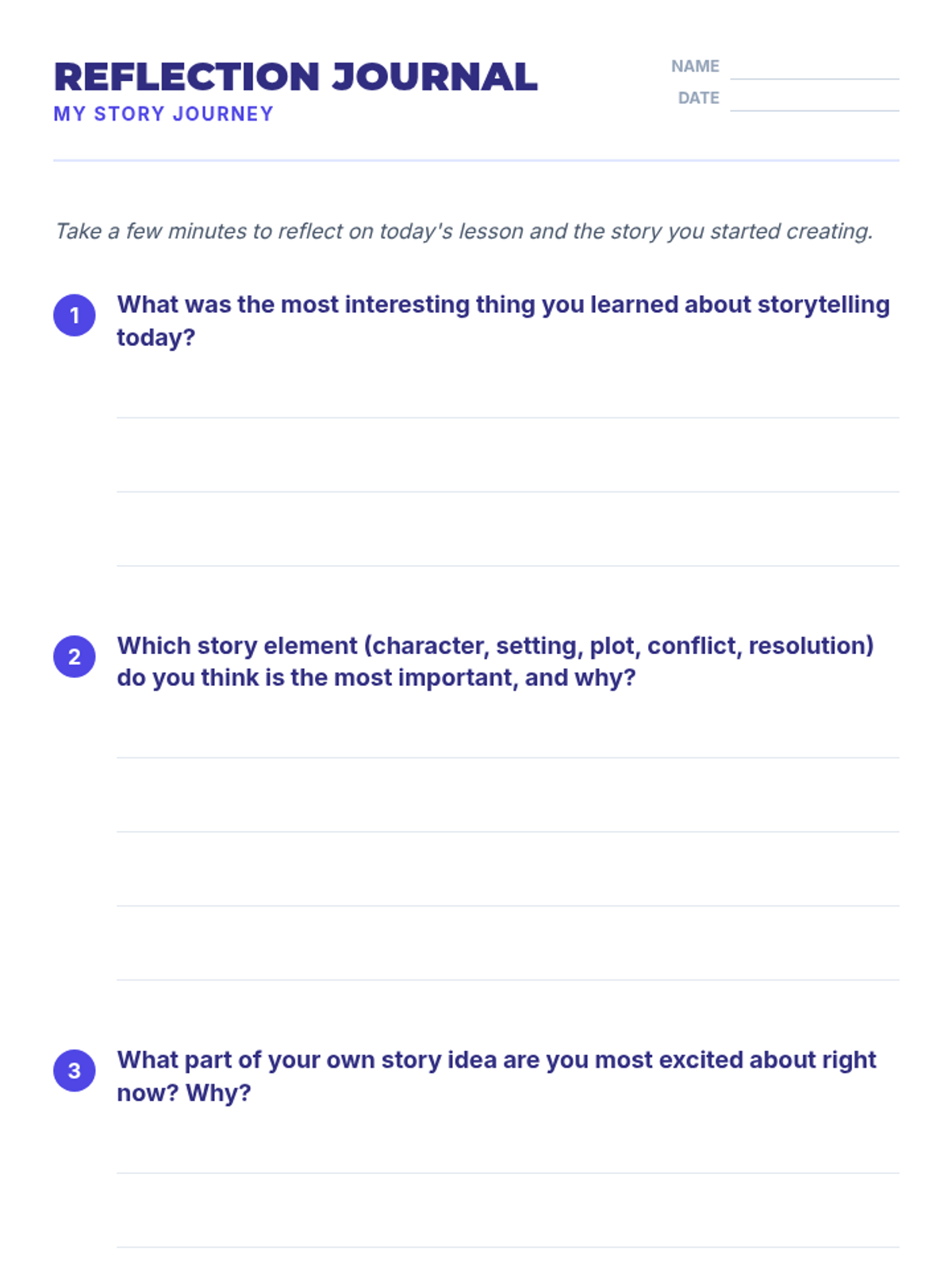
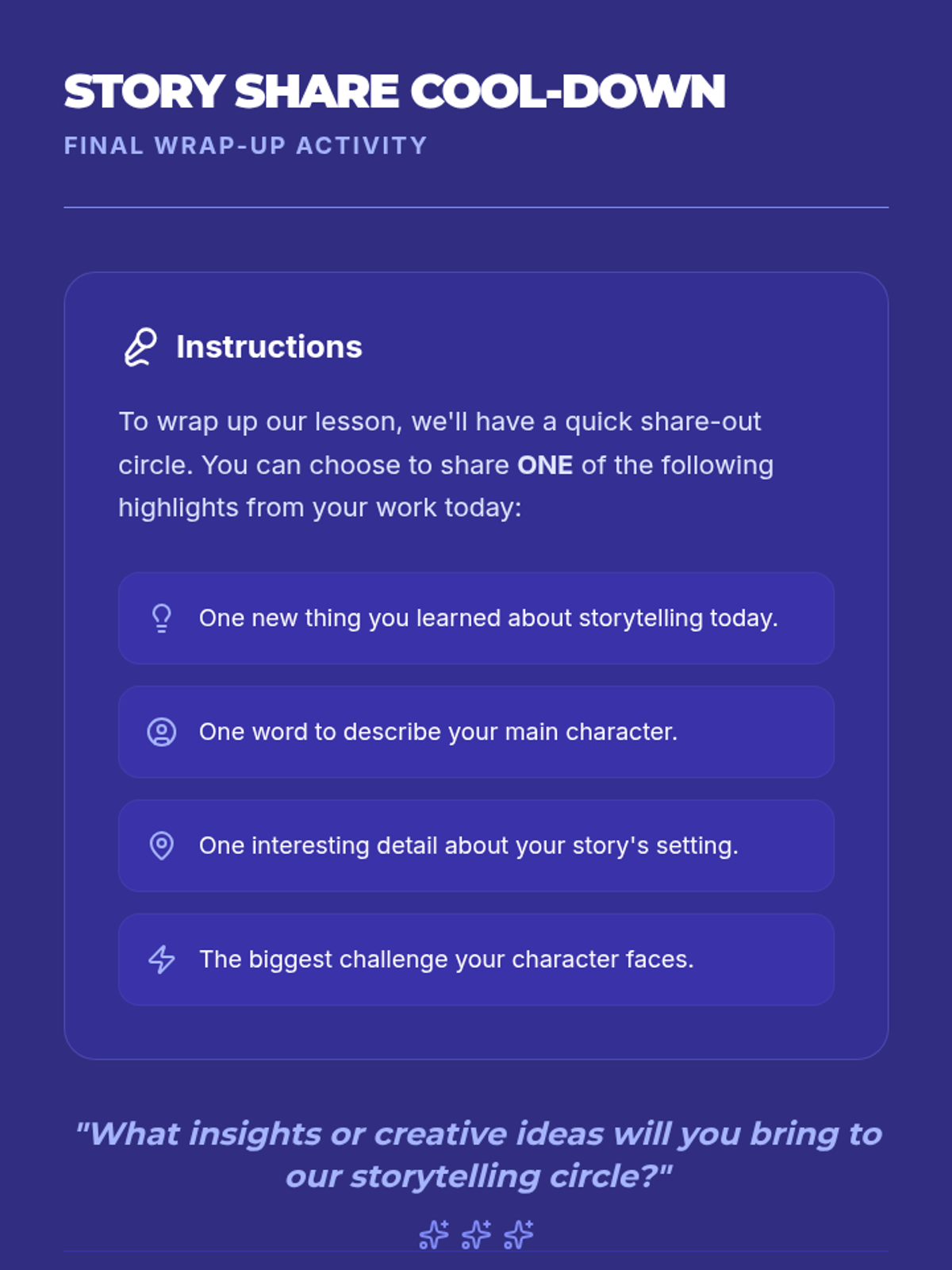
A comprehensive collection of lessons designed to empower students with the skills of storytelling and self-regulation. Through these sessions, students will learn to craft compelling narratives and master the art of self-control.
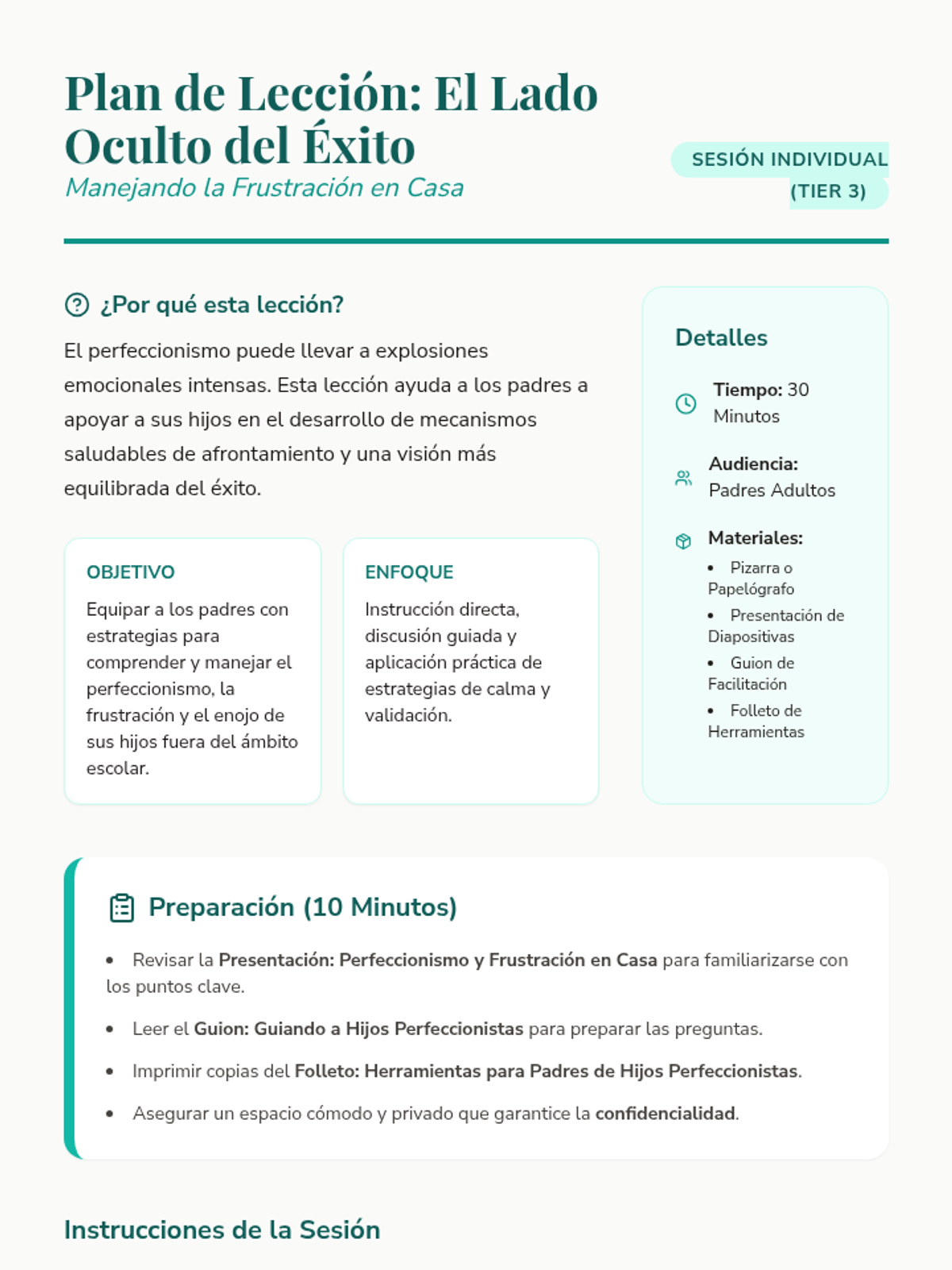
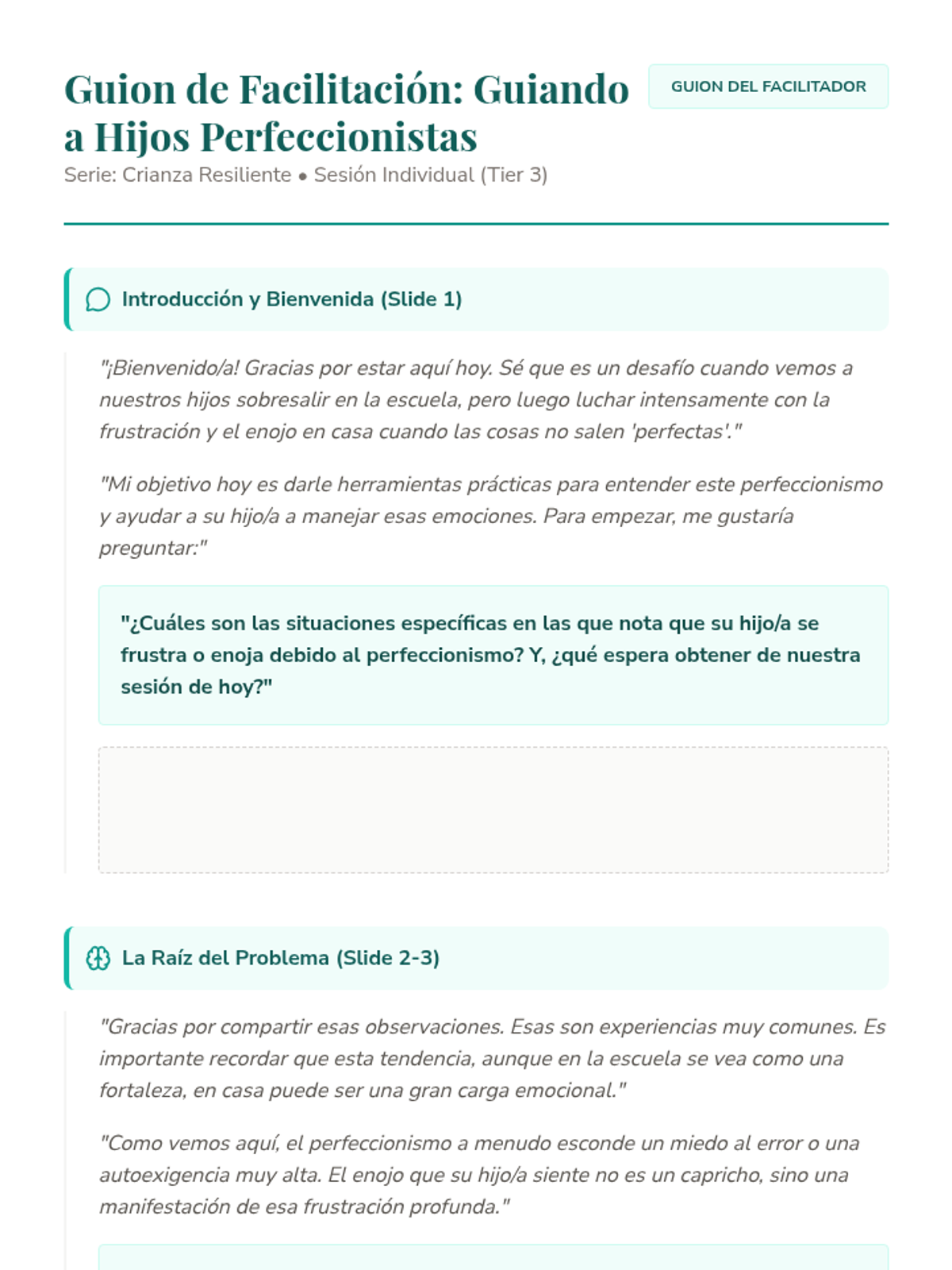
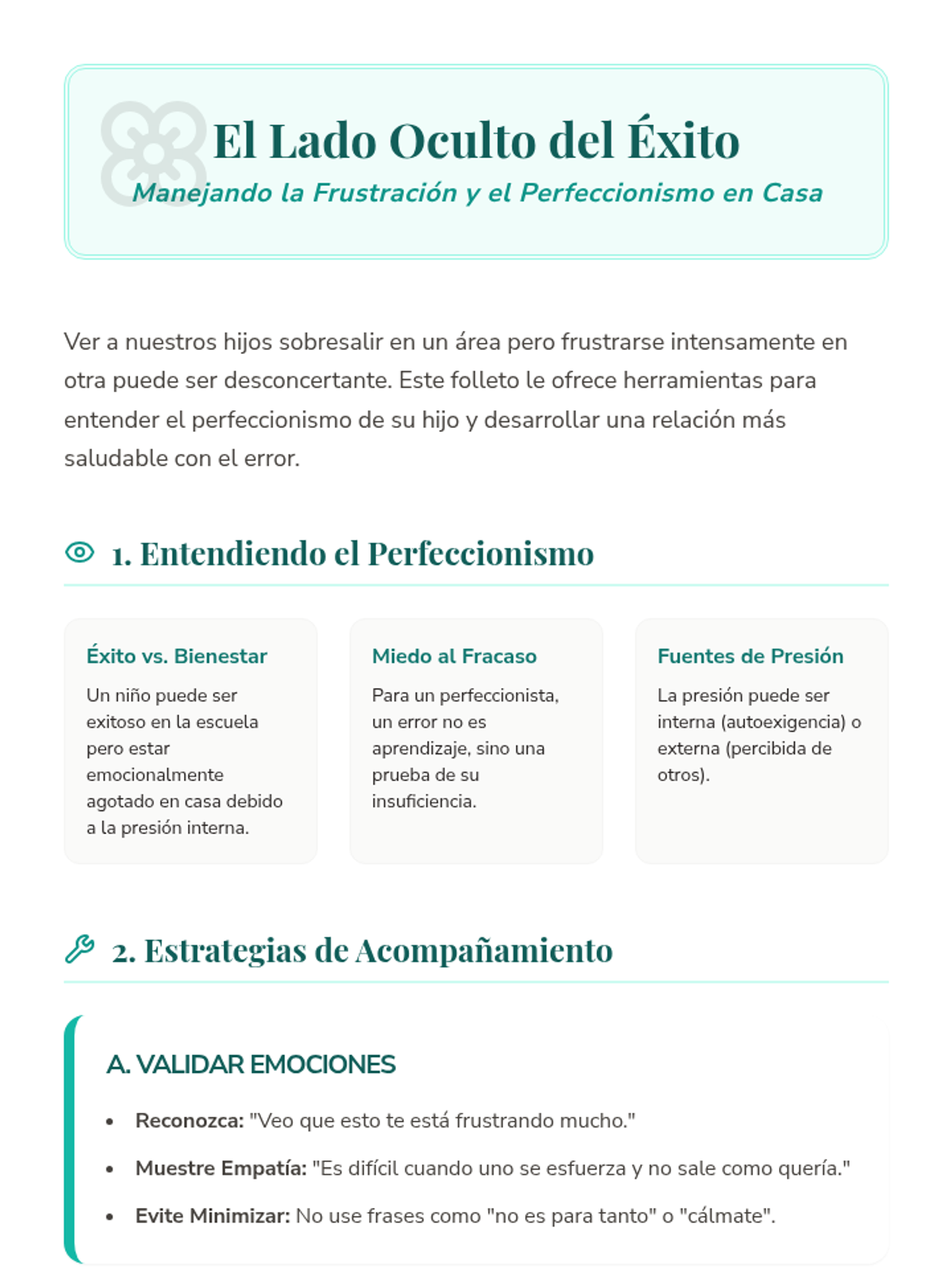
Una serie de sesiones de apoyo individual para padres que enfrentan desafíos específicos en la crianza, desde el perfeccionismo y el TDAH hasta la inmigración y el autocuidado. Cada lección proporciona herramientas prácticas y un espacio de validación emocional.
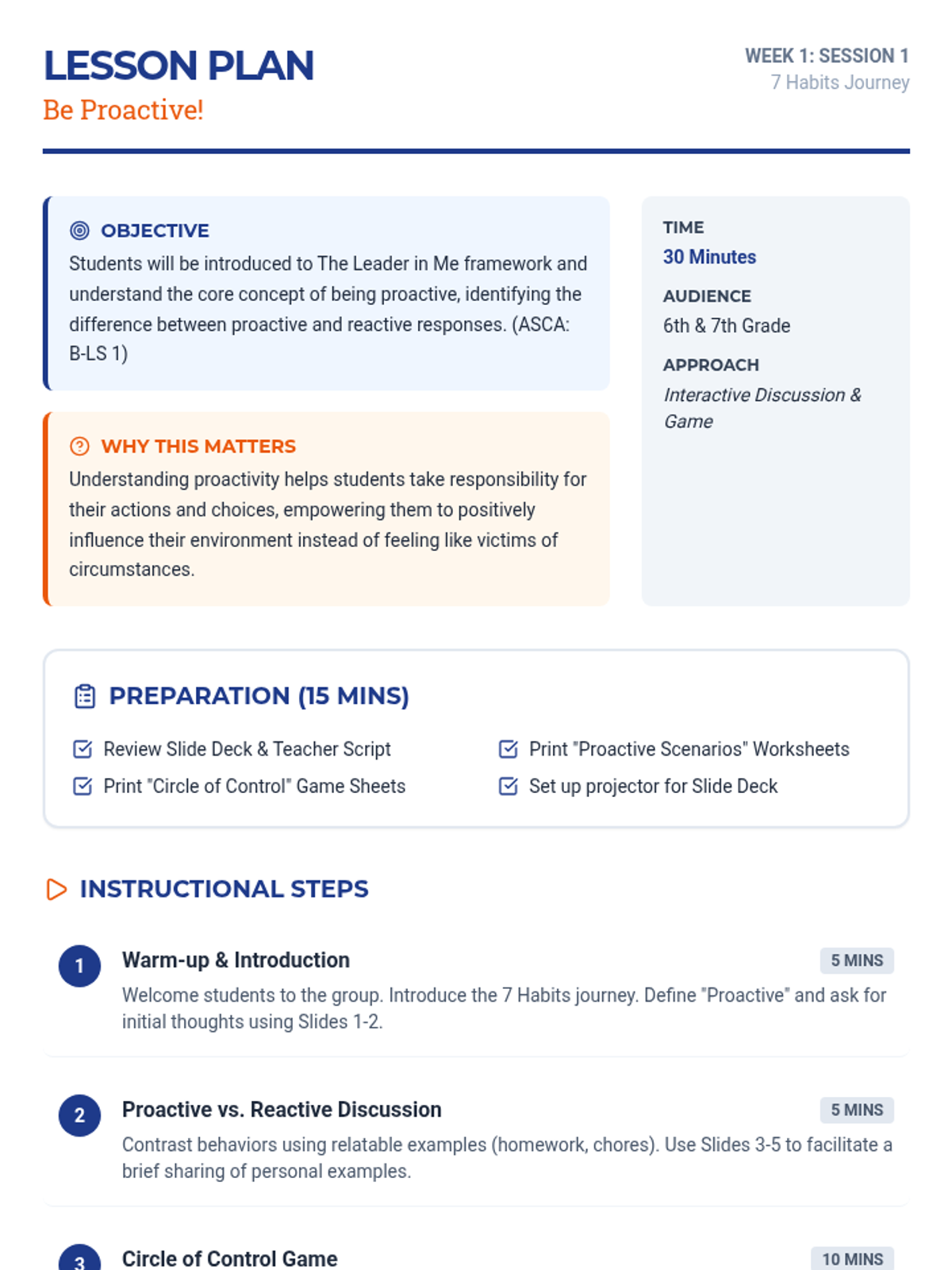
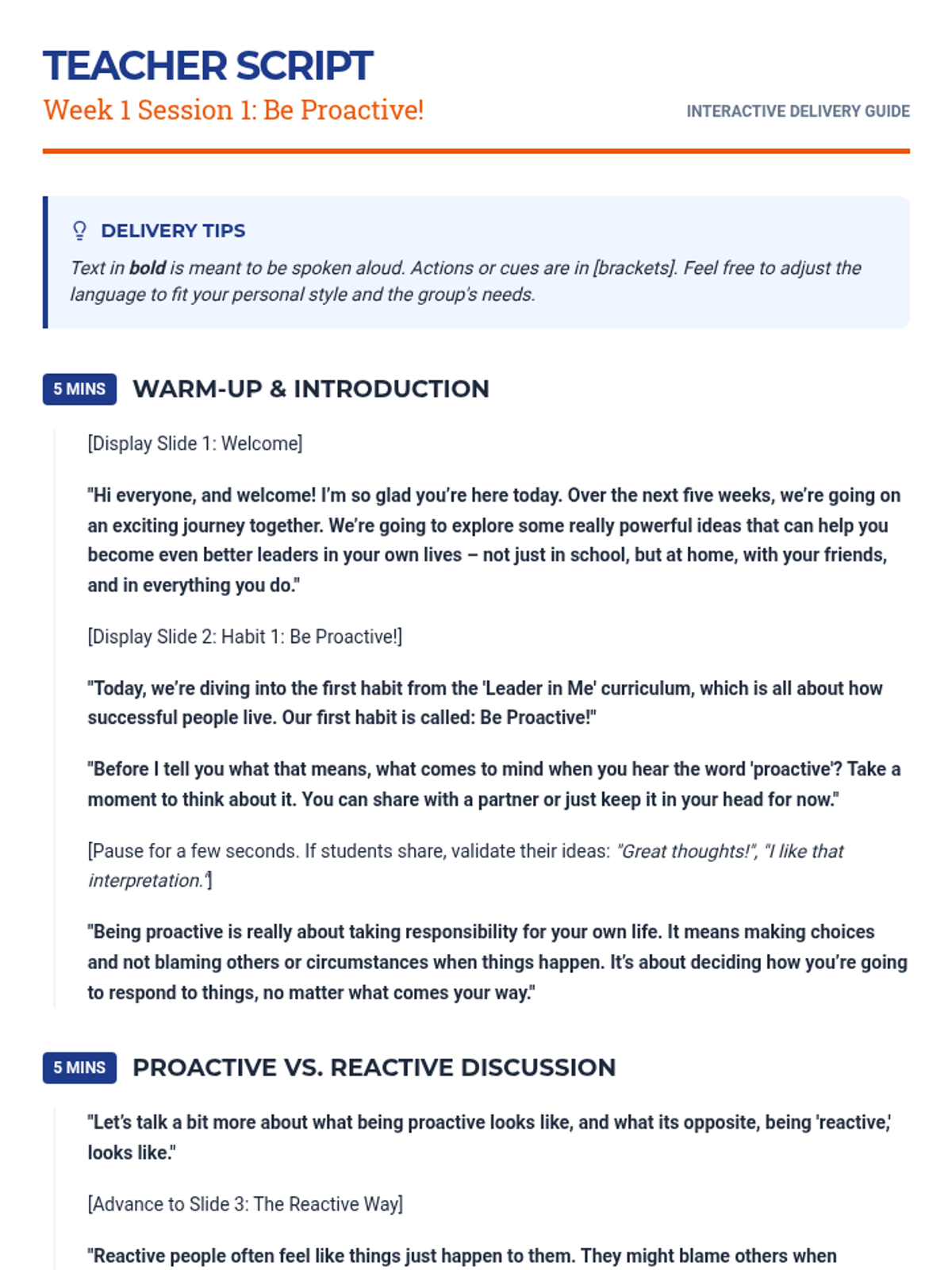
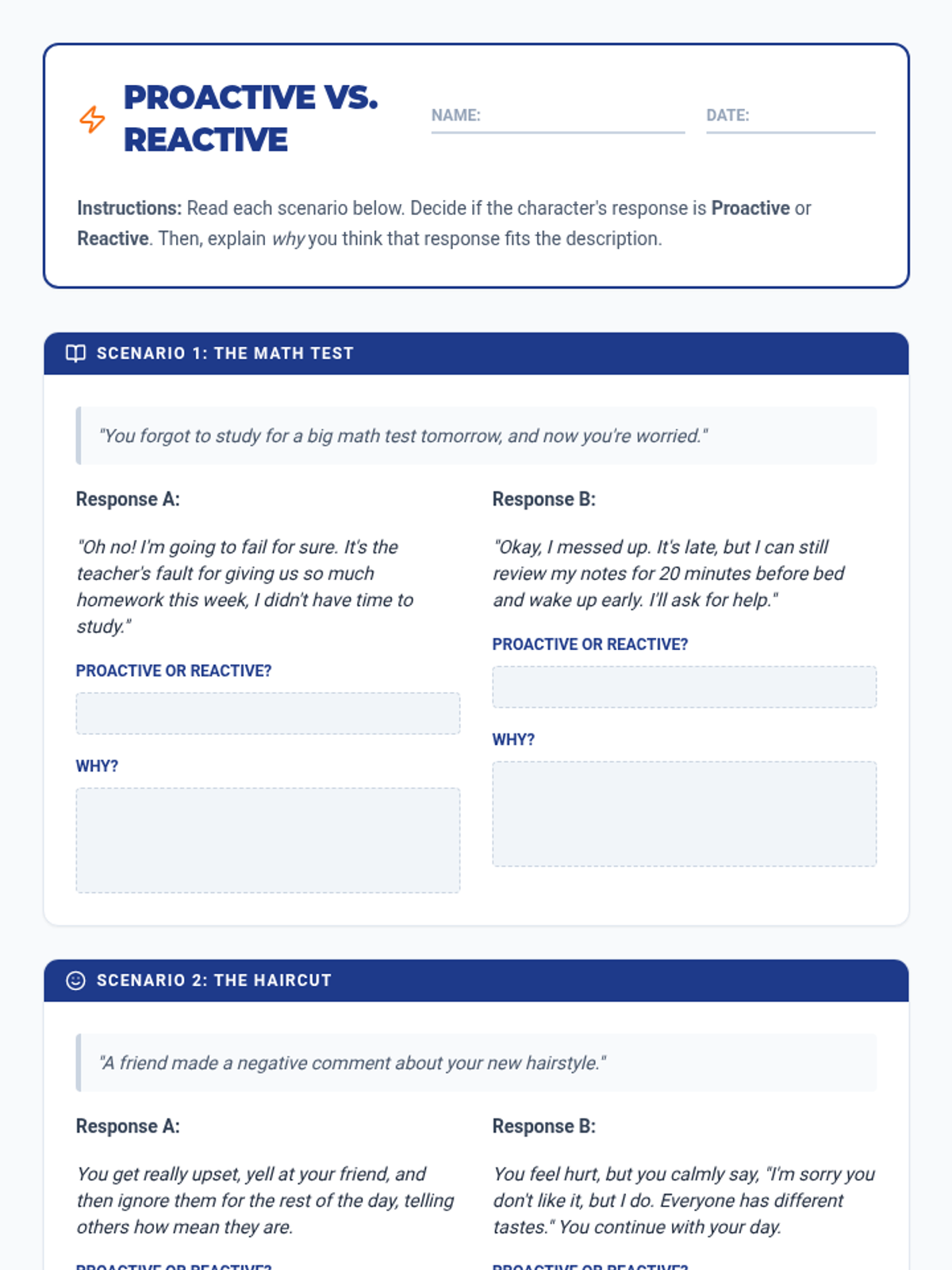
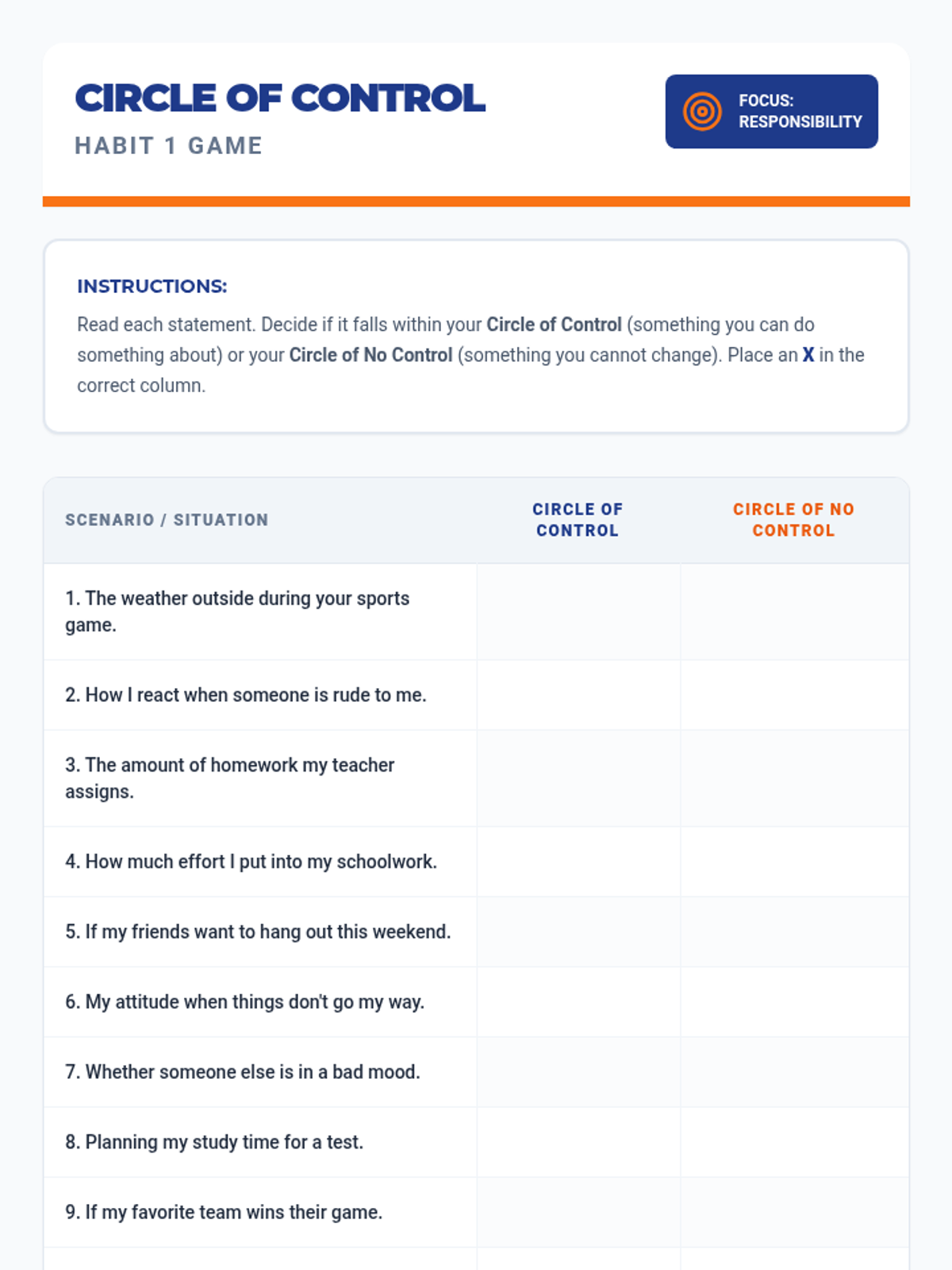
A 5-week, small-group intervention series for middle schoolers based on the Leader in Me framework, focusing on the 7 Habits of Highly Effective Teens through interactive lessons, games, and reflections.
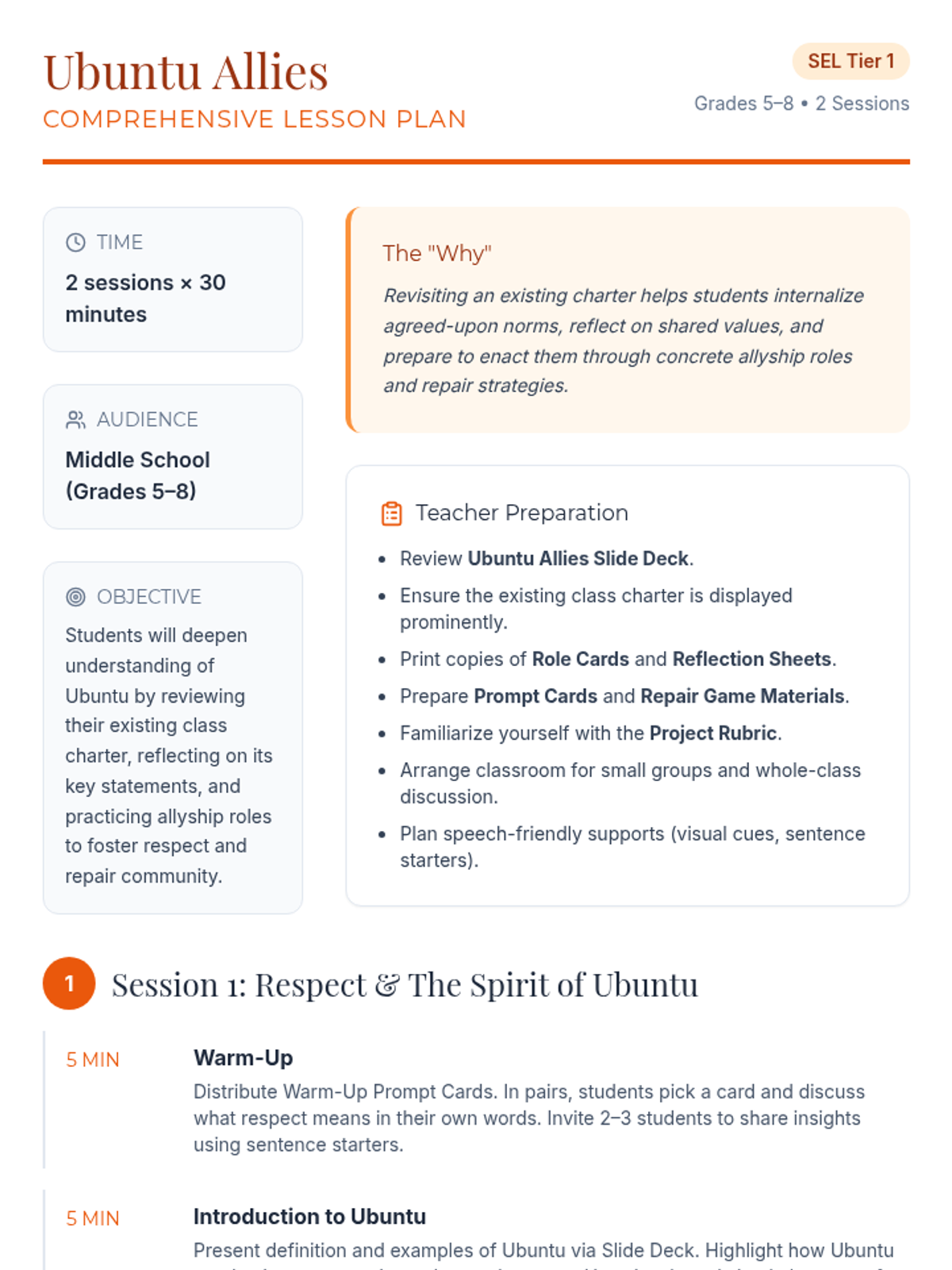
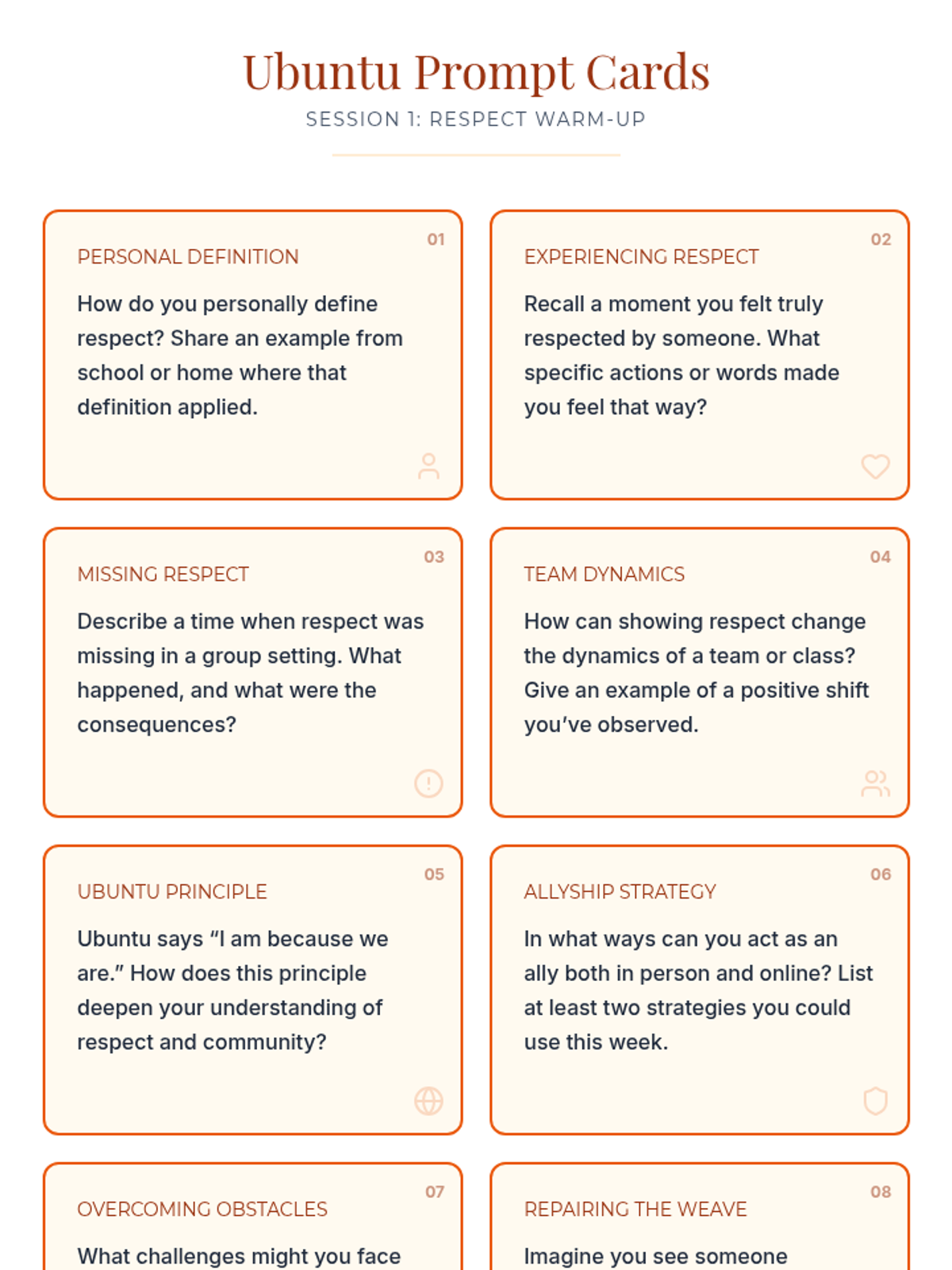
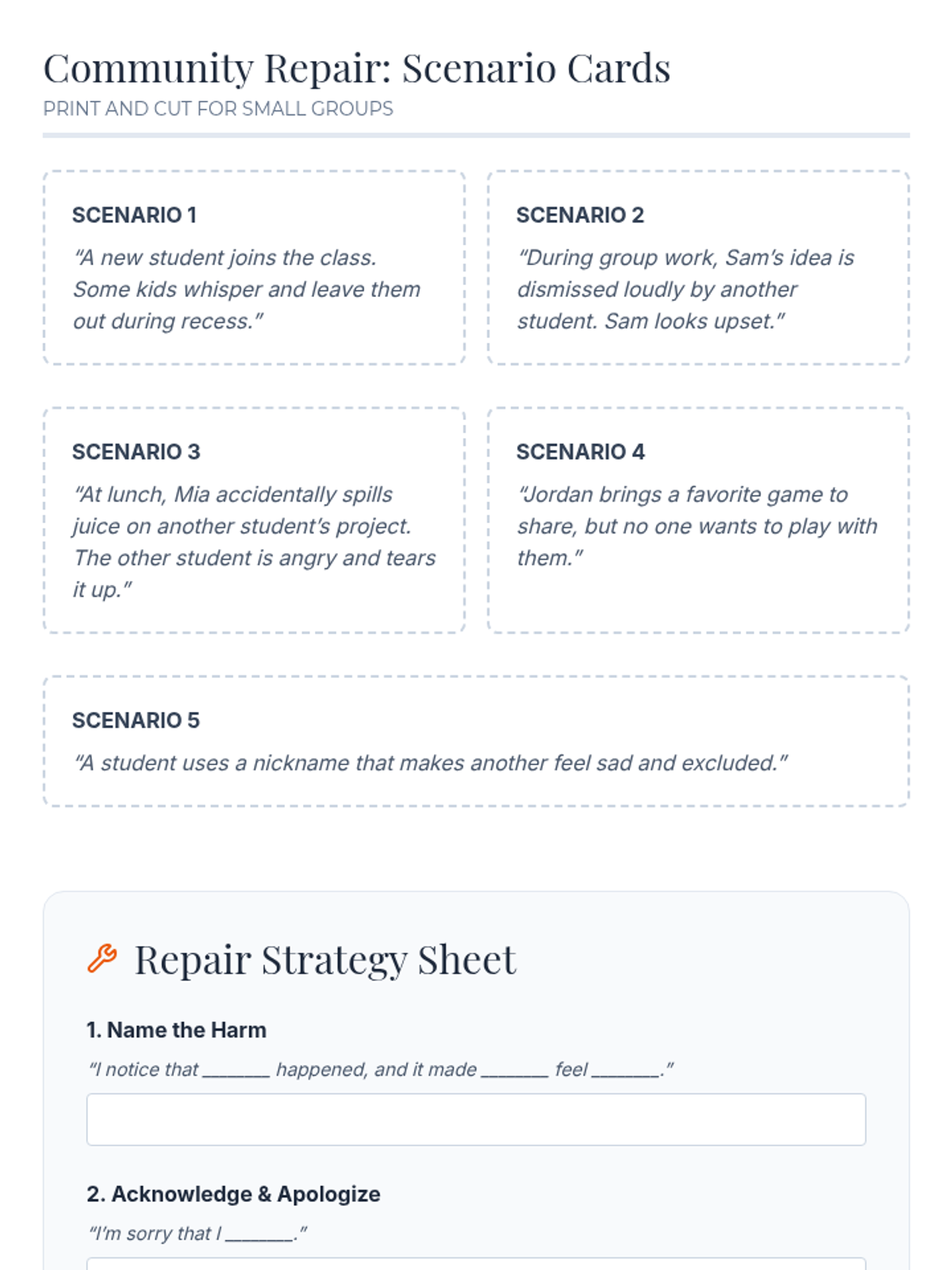
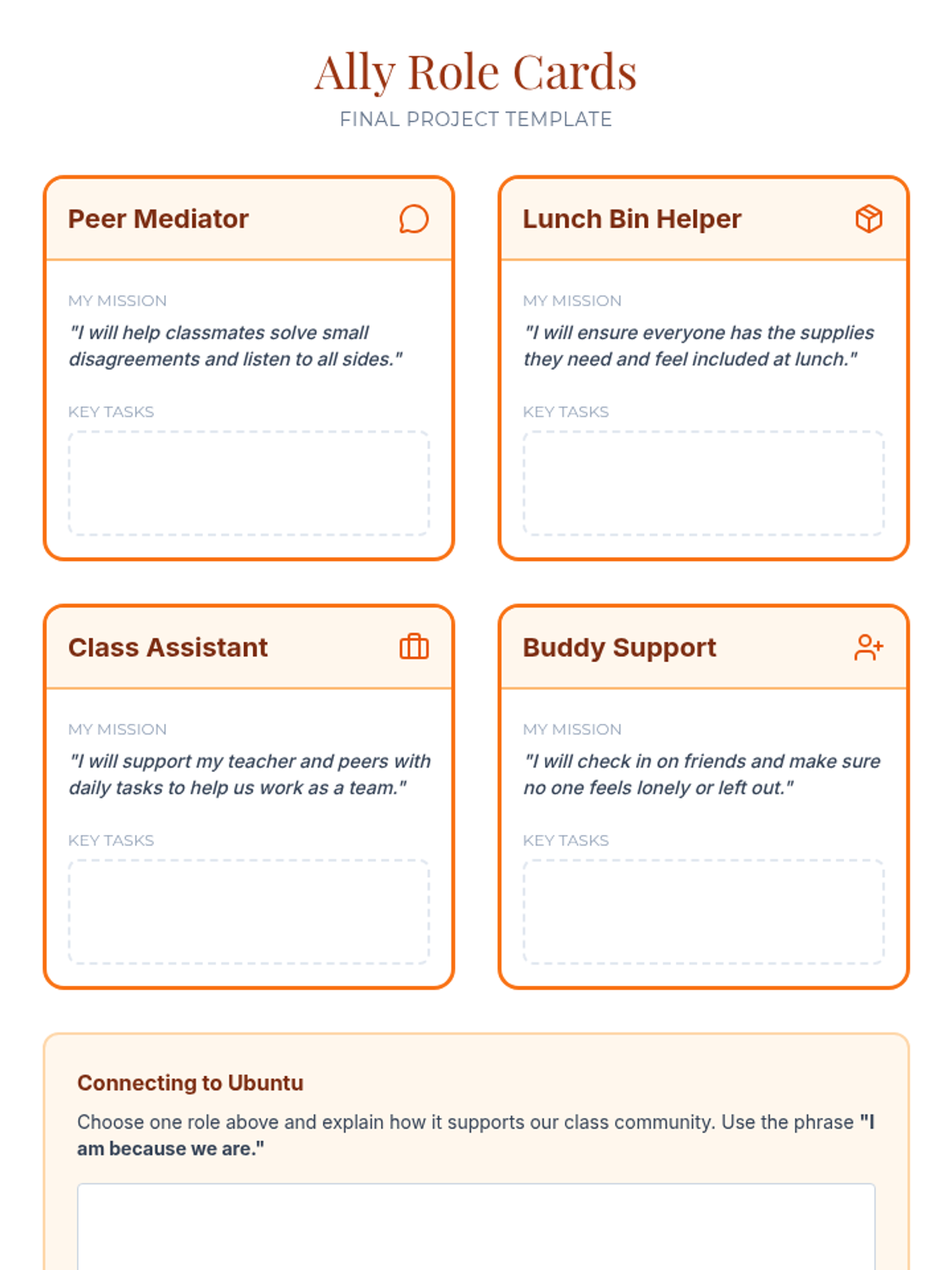
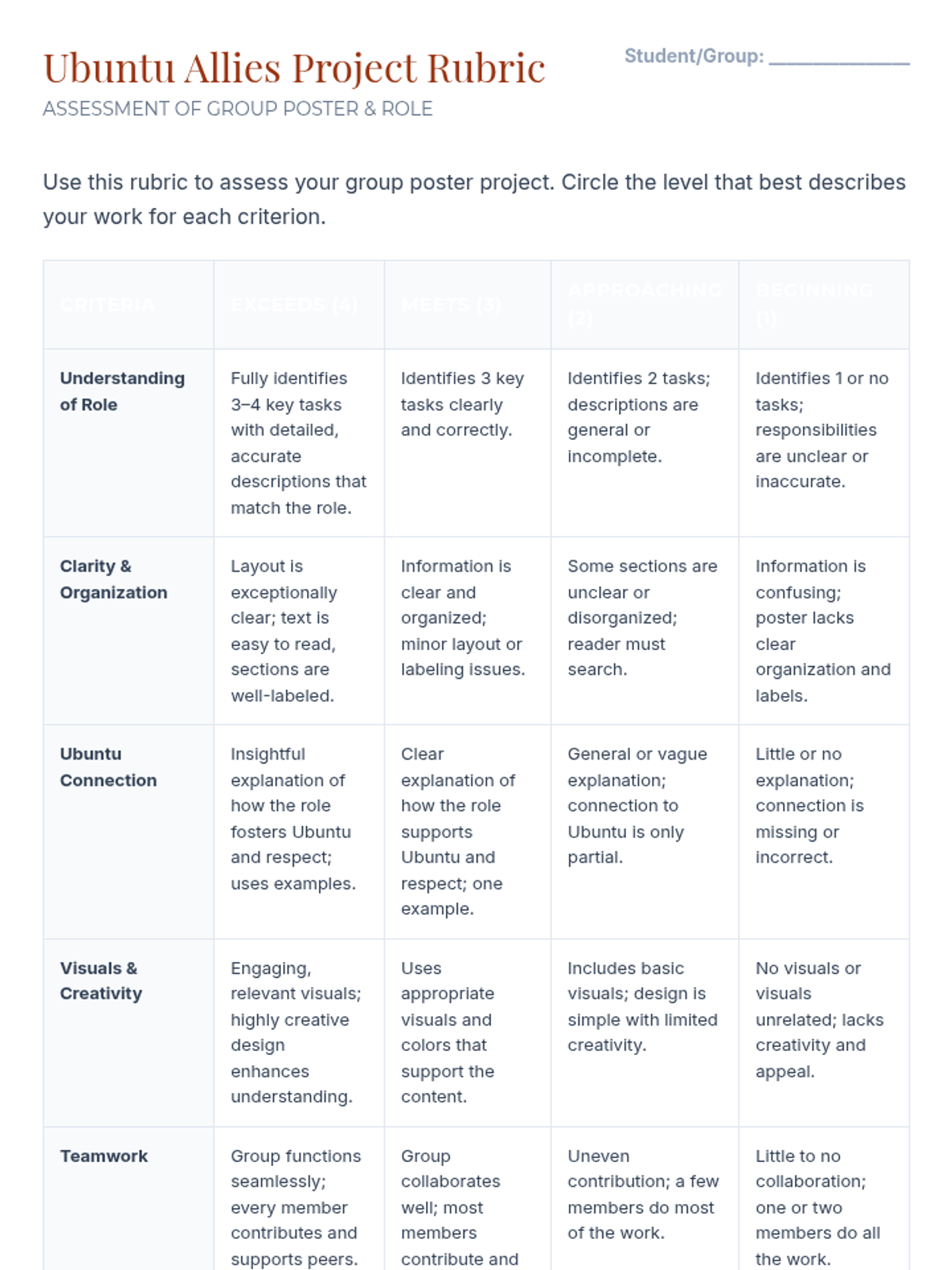
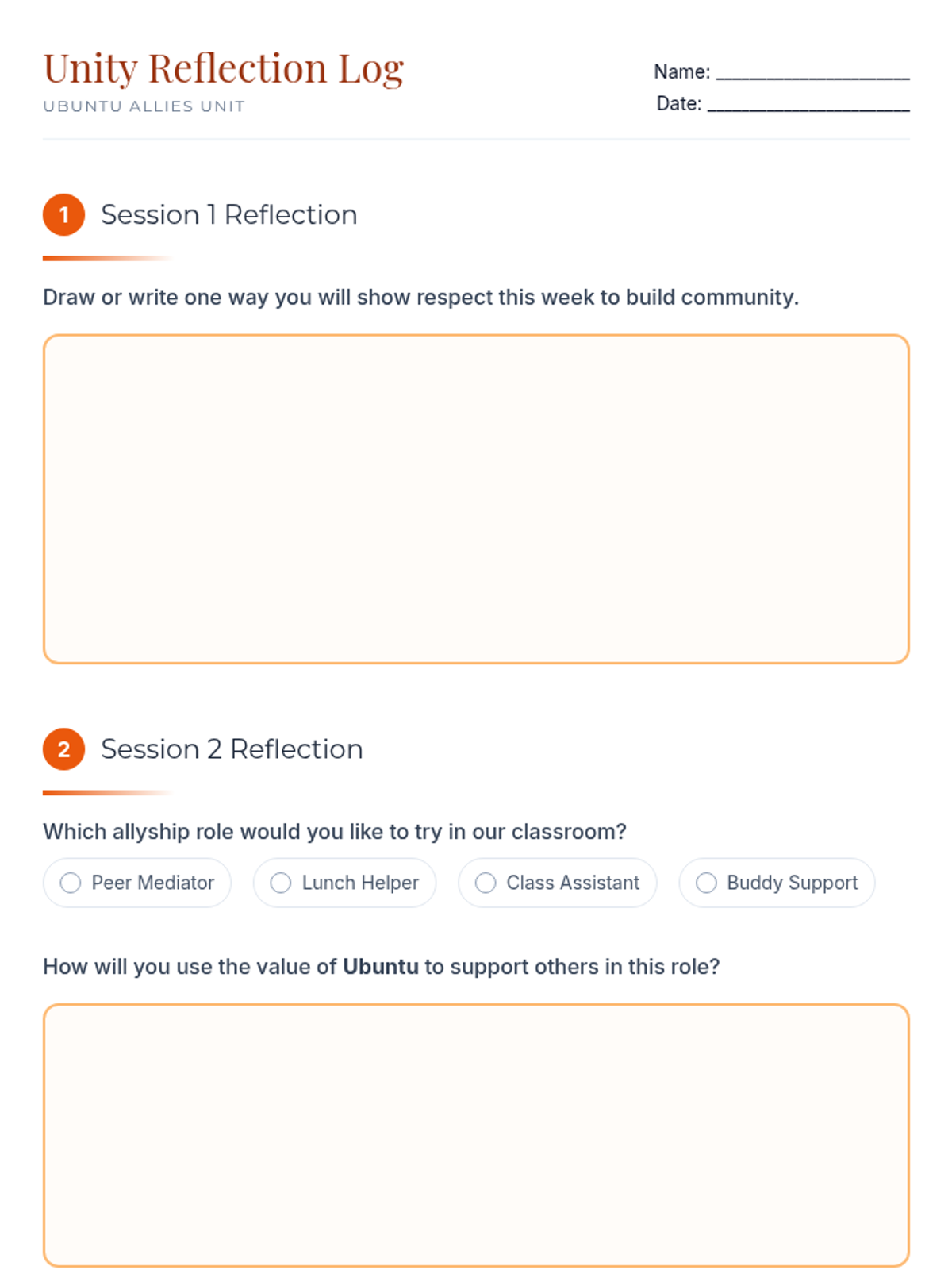
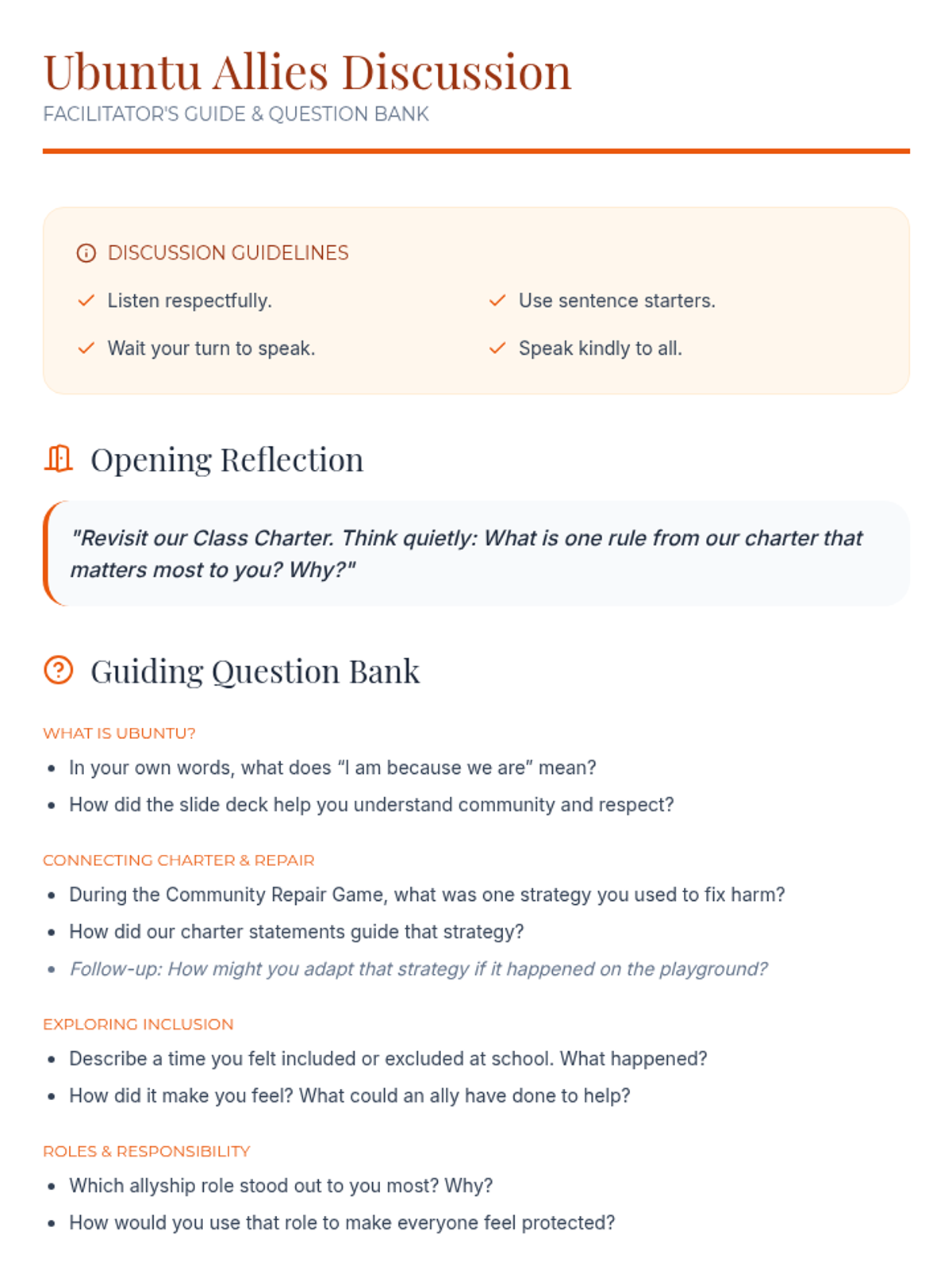
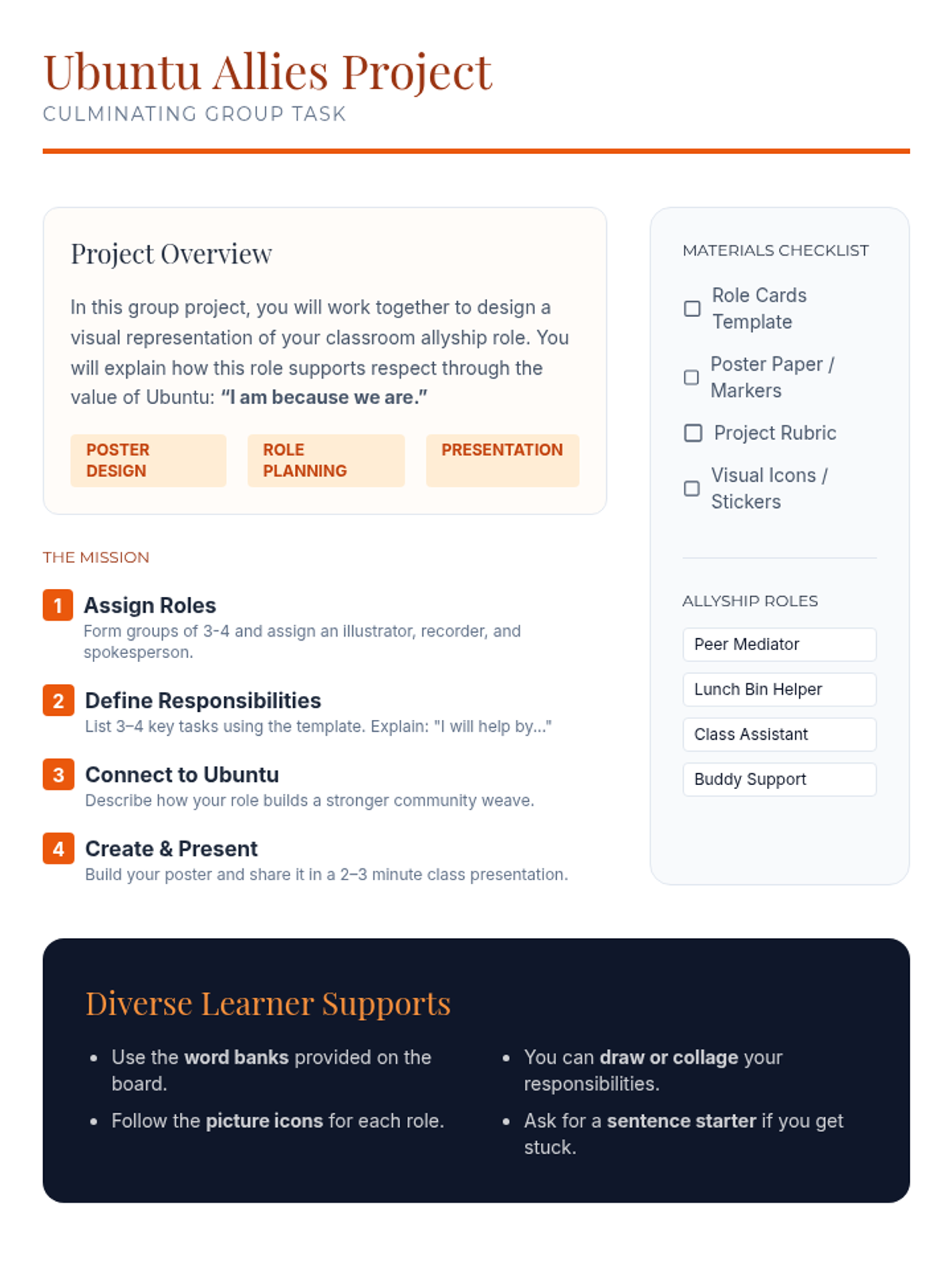
A two-session unit for middle school students exploring the African value of Ubuntu. Students build community, practice respect through a class charter, and learn to repair harm using specific allyship roles.
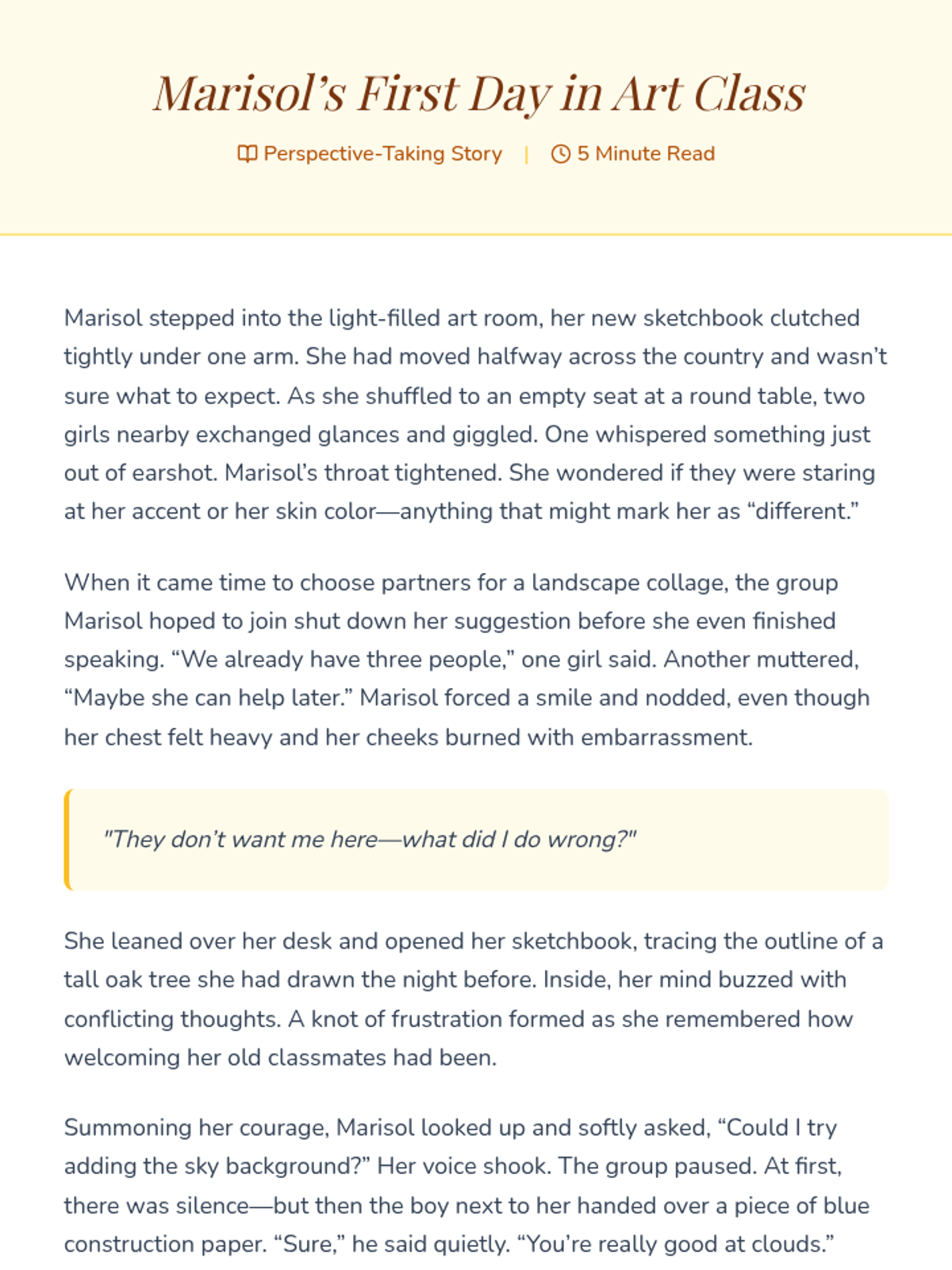
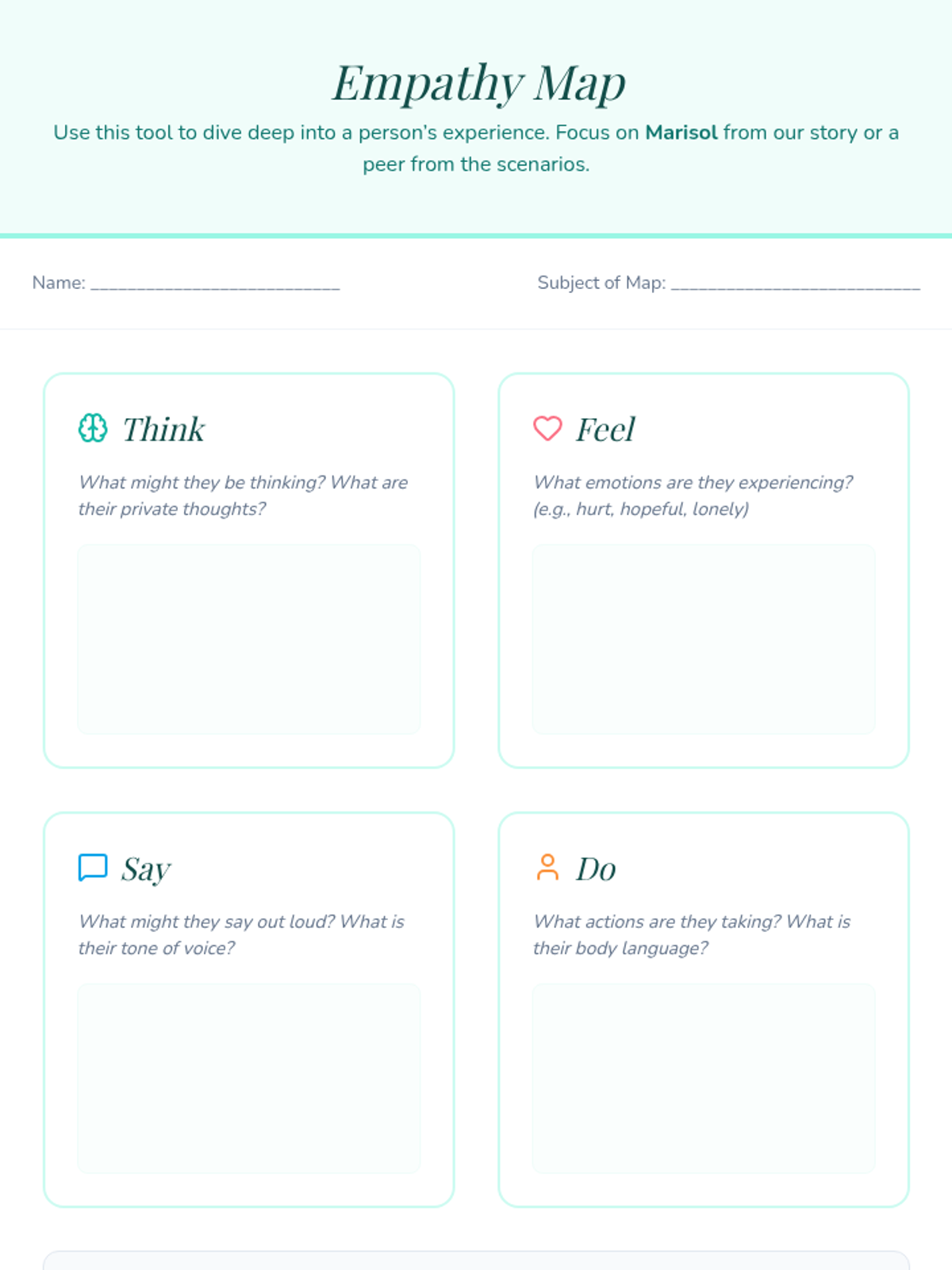
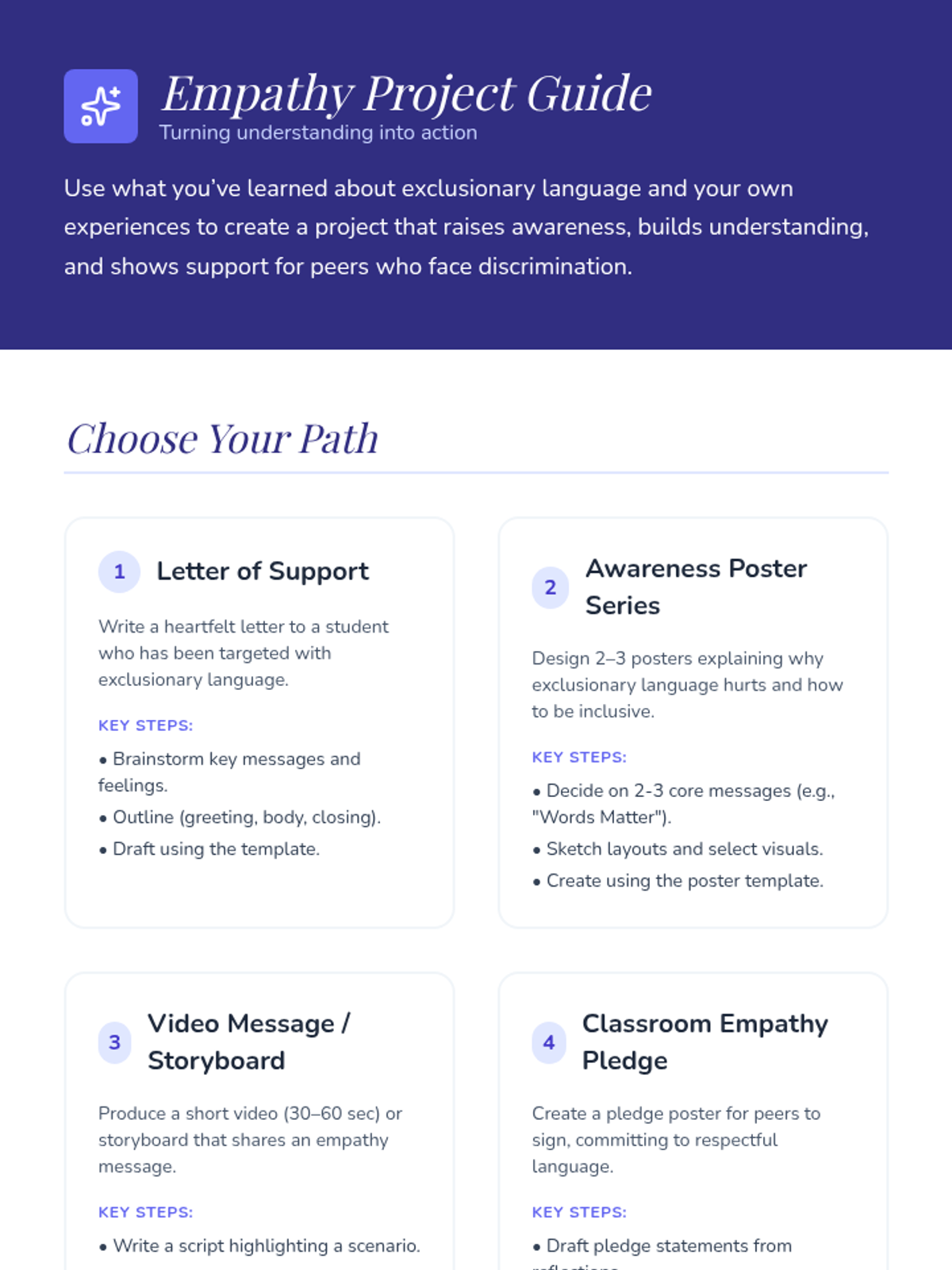
A series of lessons focused on developing empathy, perspective-taking, and active inclusion in middle school students by leveraging shared experiences of exclusion.
A six-session unit for 6th grade emerging bilingual students to explore comfort zones, cultural awareness, and communication skills through collaborative activities.